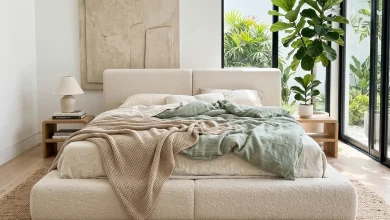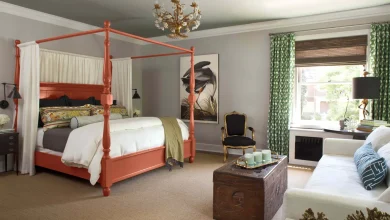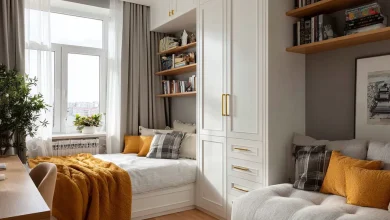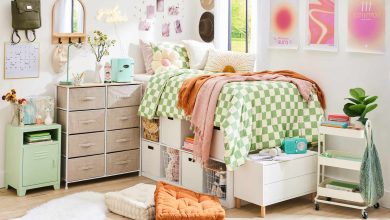

That feeling when you find the moody bedroom pin that just clicks? It’s part magic, part perfect design formula. But turning that pin into your reality can feel like a huge leap. We get it. That’s why we’ve filtered through hundreds of spaces to bring you 25 of the most inspiring, achievable moody bedroom ideas out there. These looks prove that dark and dramatic can also mean cozy, romantic, and deeply personal. And stay until the end—we break down the most common mistakes that can ruin these looks. 📌 Save this to Pinterest for later—you’ll want to revisit these ideas.
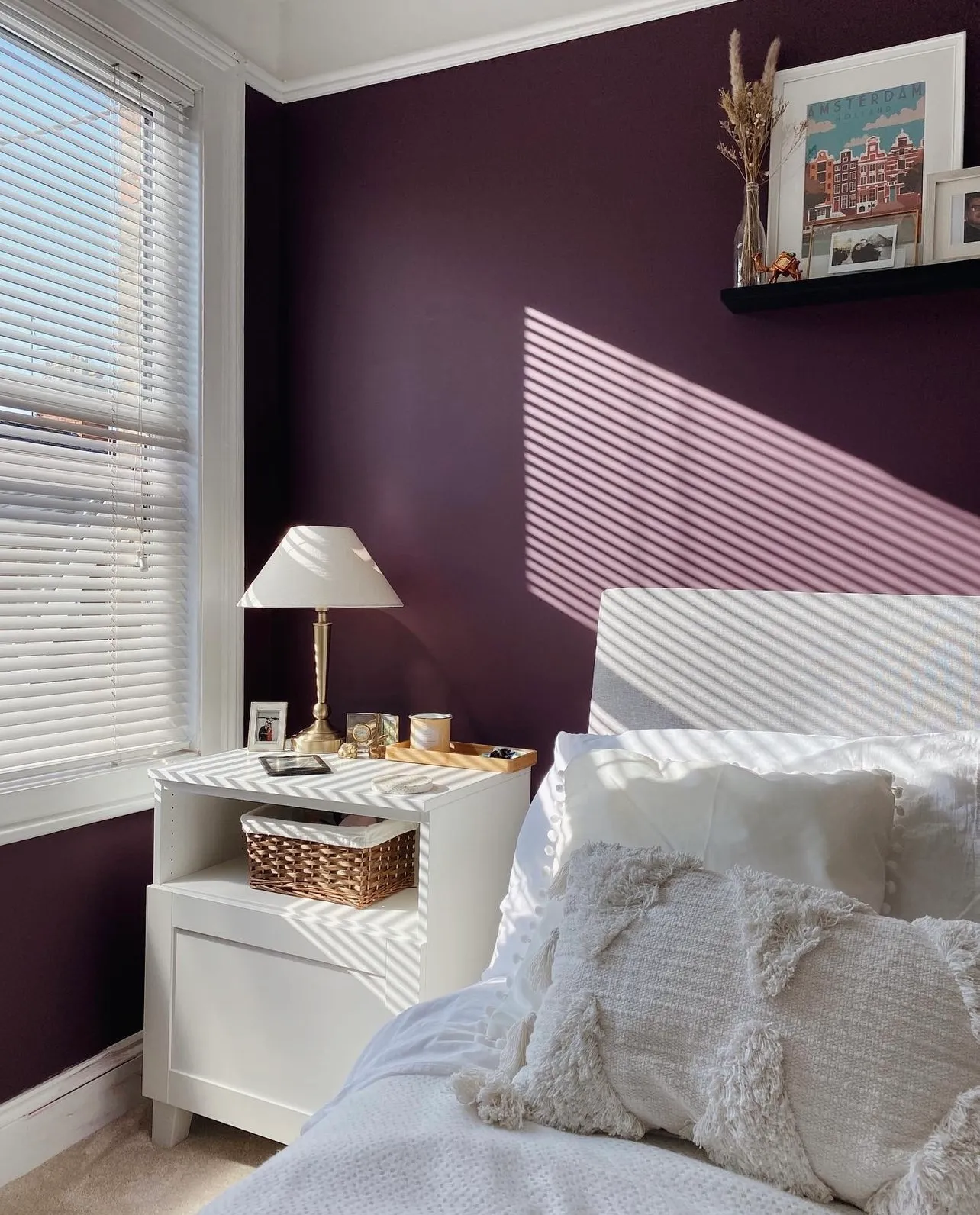
1. Deep Purple Walls with Sun-Striped White Accents
The single most important element here is the unapologetic use of deep purple on the walls. Without it, the room is just a pleasant space with white furniture. The bold color choice is the entire foundation of the mood. It transforms the room from a simple bedroom into a personal sanctuary. The white elements, like the headboard and bedding, pop because of the dark backdrop, but the purple is what gives the room its soul and serene character.
|
📋 Copy HEX 🔗 Share |
This design succeeds by mastering contrast. It’s not just about dark versus light; it’s about the hard, clean lines of the white window blinds and floating shelf against the soft, enveloping feel of the purple walls. The sunlight streaming through the blinds creates a dynamic pattern that adds visual interest and prevents the dark color from feeling flat. Finally, the small touches of gold in the lamp and natural wood tones in the tray add just enough warmth to make the cool palette feel inviting.
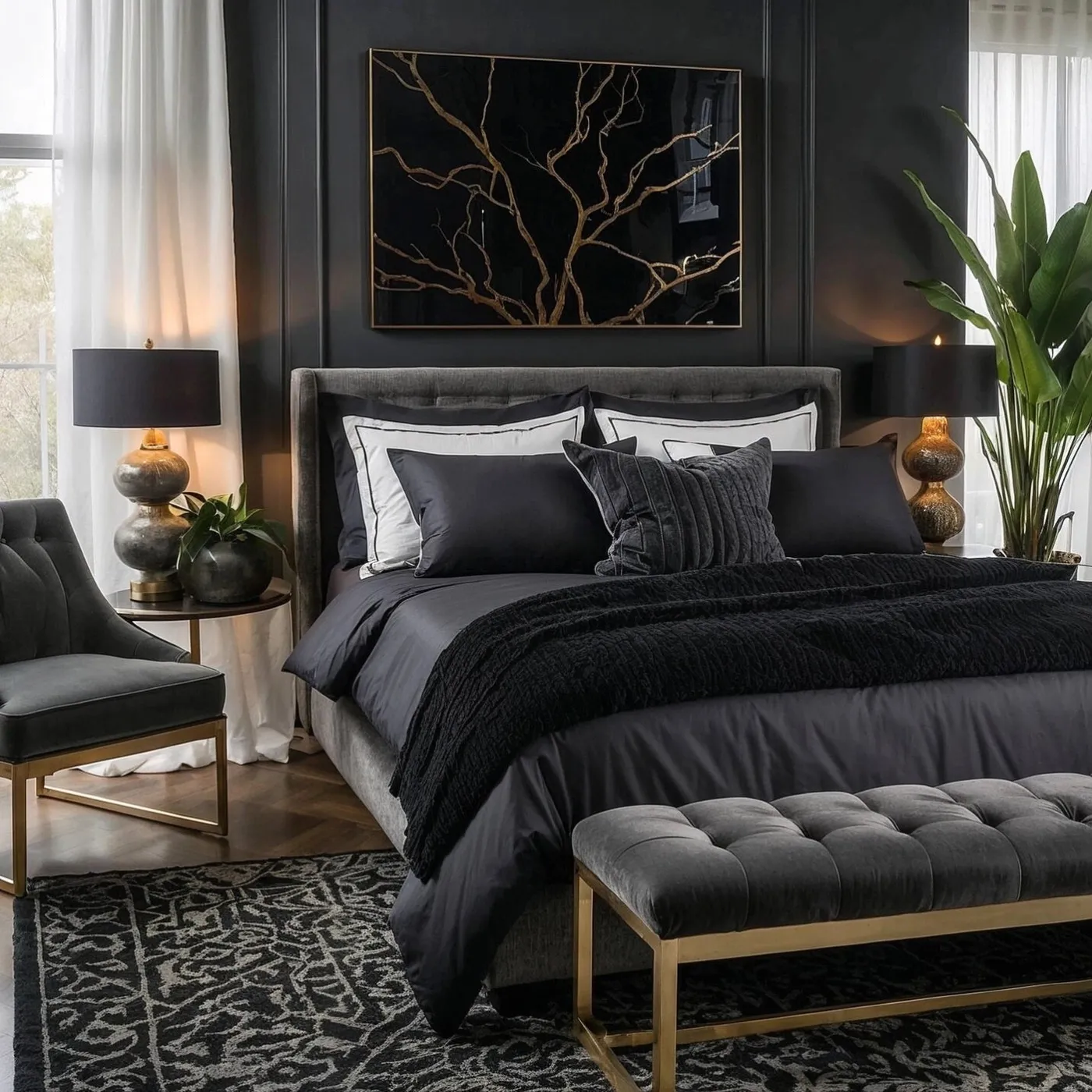
2. Sophisticated Gray Paneling with Luxurious Gold Accents
When using a dark, monochromatic palette, texture is your best friend. Notice how the paneled walls, upholstered velvet bed, and patterned rug are all in shades of gray and black? To prevent this from looking flat, designers introduce varied textures that catch light differently. If your walls are matte, opt for a headboard with a subtle sheen like velvet. If the bedding is simple, add a rug with a distinct pattern. This creates depth without adding more color.
|
📋 Copy HEX 🔗 Share |
Think of this room as a simple equation: 60% deep neutrals (dark gray walls, black bedding) + 30% soft textures (upholstered bed, sheer curtains, rug) + 10% metallic warmth (gold lamps and art frames). The formula is solid. You could easily swap the gray for a deep navy or forest green and trade the gold for brushed nickel or bronze. As long as you maintain that 60/30/10 ratio, you’ll achieve the same sophisticated, balanced feel you see here. It’s a more refined look than the raw texture in Idea #5.
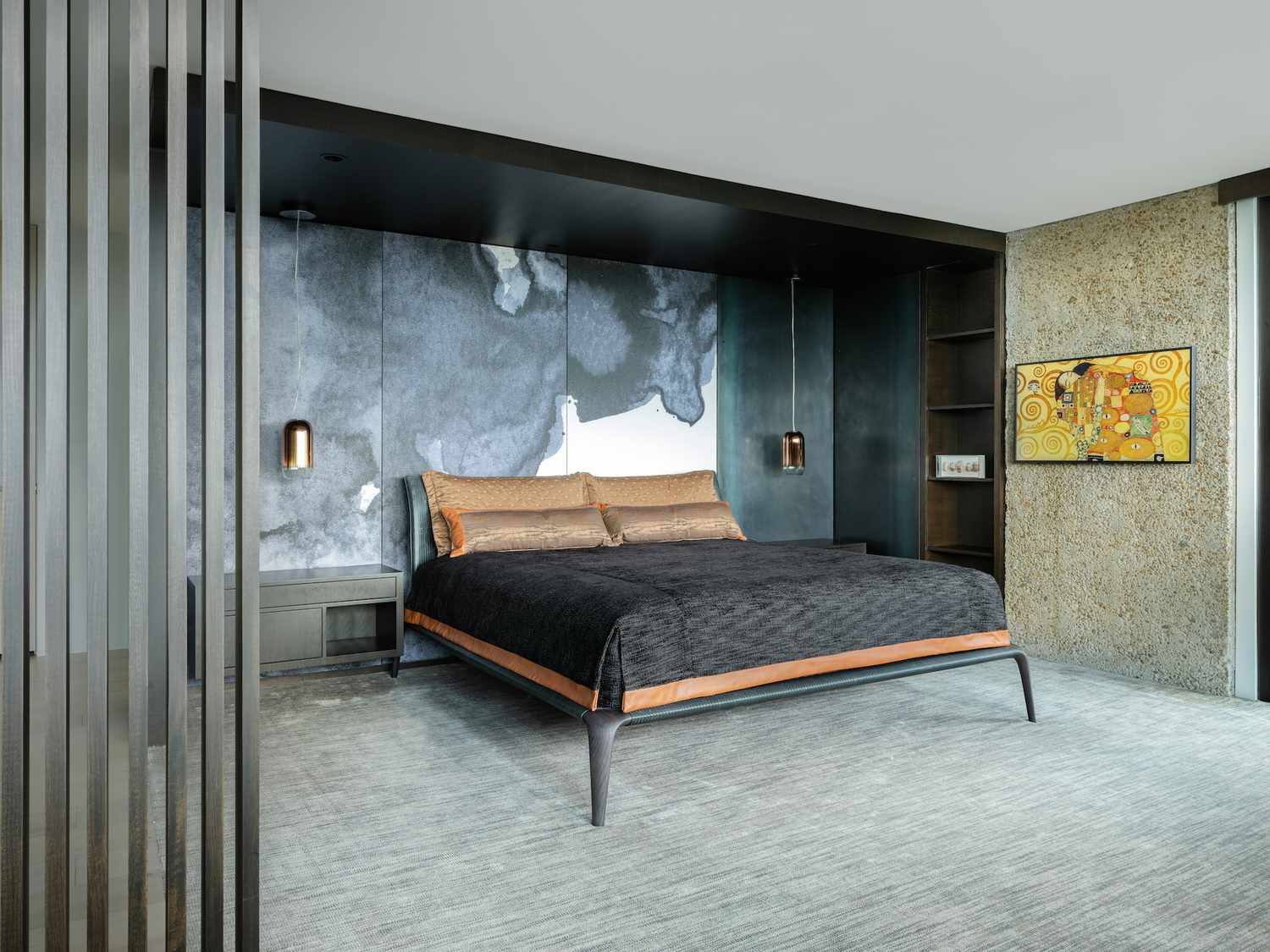
3. Abstract Wall Artistry with Concrete and Warm Lighting
That incredible abstract wall treatment is a showstopper, but it’s also a major commitment. A feature like this isn’t just paint; it’s often a custom plaster or microcement application that can be costly and requires a skilled artisan. It also dictates the entire room’s decor. If you change your mind in a few years, removing or covering it is a significant project. Before you fall in love, be sure this is a long-term relationship, not just a fleeting design crush.
|
📋 Copy HEX 🔗 Share |
Textured walls, especially rough concrete or plaster finishes, are dust magnets. Unlike a smooth painted wall you can quickly wipe down, these surfaces require a bit more care. You’ll need to use a soft brush attachment on your vacuum cleaner to gently remove dust from the crevices every month or so. Spot cleaning can also be tricky, as harsh chemicals can discolor the finish. It’s a trade-off: you get incredible depth and character, but you lose the easy-peasy maintenance of a simple eggshell paint.
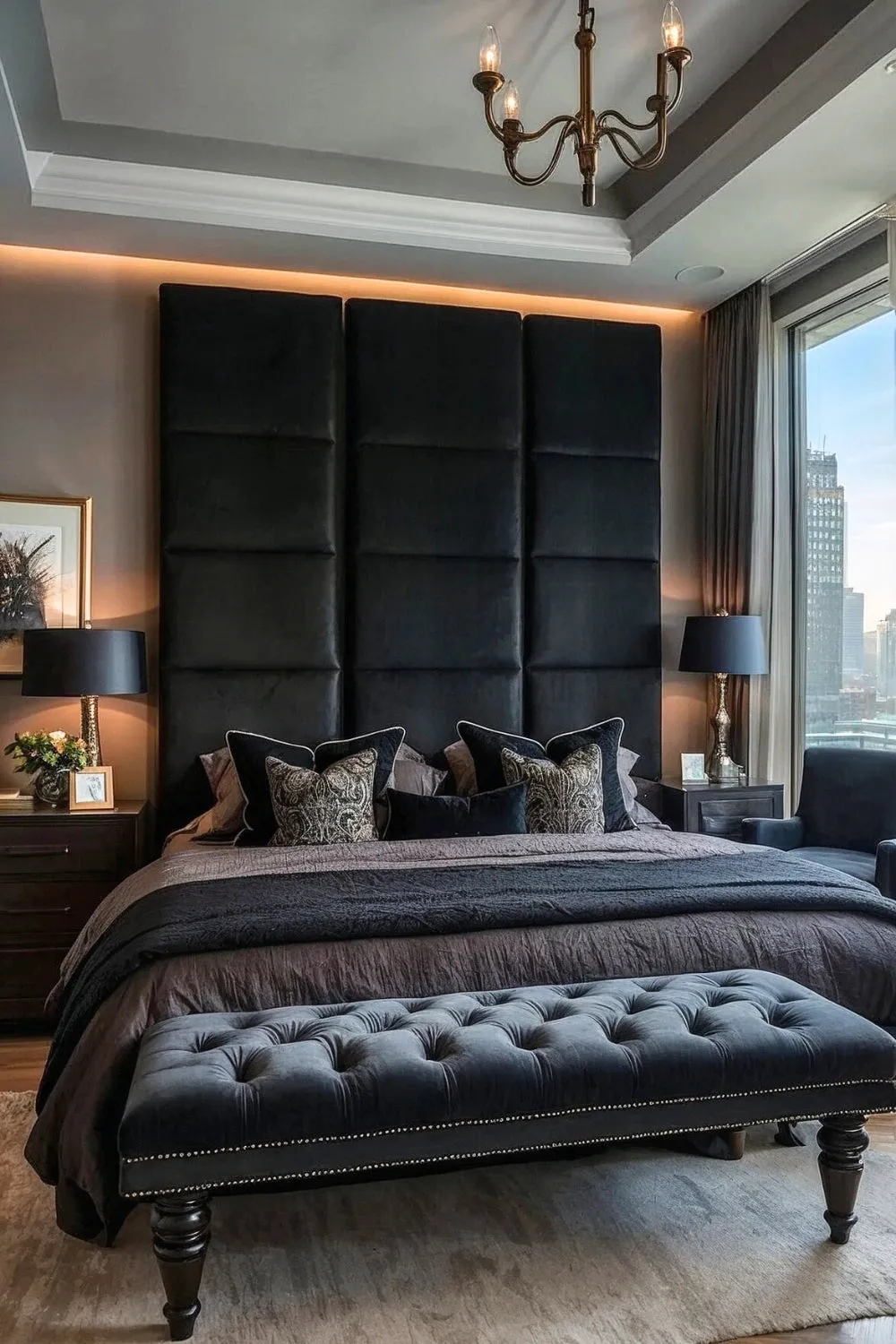
4. Dramatic Upholstered Headboard with a Sweeping City View
A custom, floor-to-ceiling upholstered headboard can run into the thousands. To get this dramatic look for less, search for a standard-sized but extra-tall black velvet headboard (around $300-$500). Then, paint the wall behind it the exact same color. From most angles, the headboard will appear to blend into the wall, creating the illusion of a single, massive piece. You can also DIY a headboard using plywood, foam, and velvet fabric for under $200 with a little weekend effort.
|
📋 Copy HEX 🔗 Share |
This look is all about grand proportions. To pull off a headboard and bench combination this substantial, you need a room that’s at least 14 feet by 14 feet with ceilings of 9 feet or higher. In a smaller room, the tall headboard would feel overwhelming, and the bench would obstruct traffic flow. The floor-to-ceiling window also helps balance the dark, heavy furniture by flooding the space with light and providing a sense of openness. If your room is smaller, opt for a standard-height headboard and skip the bench.
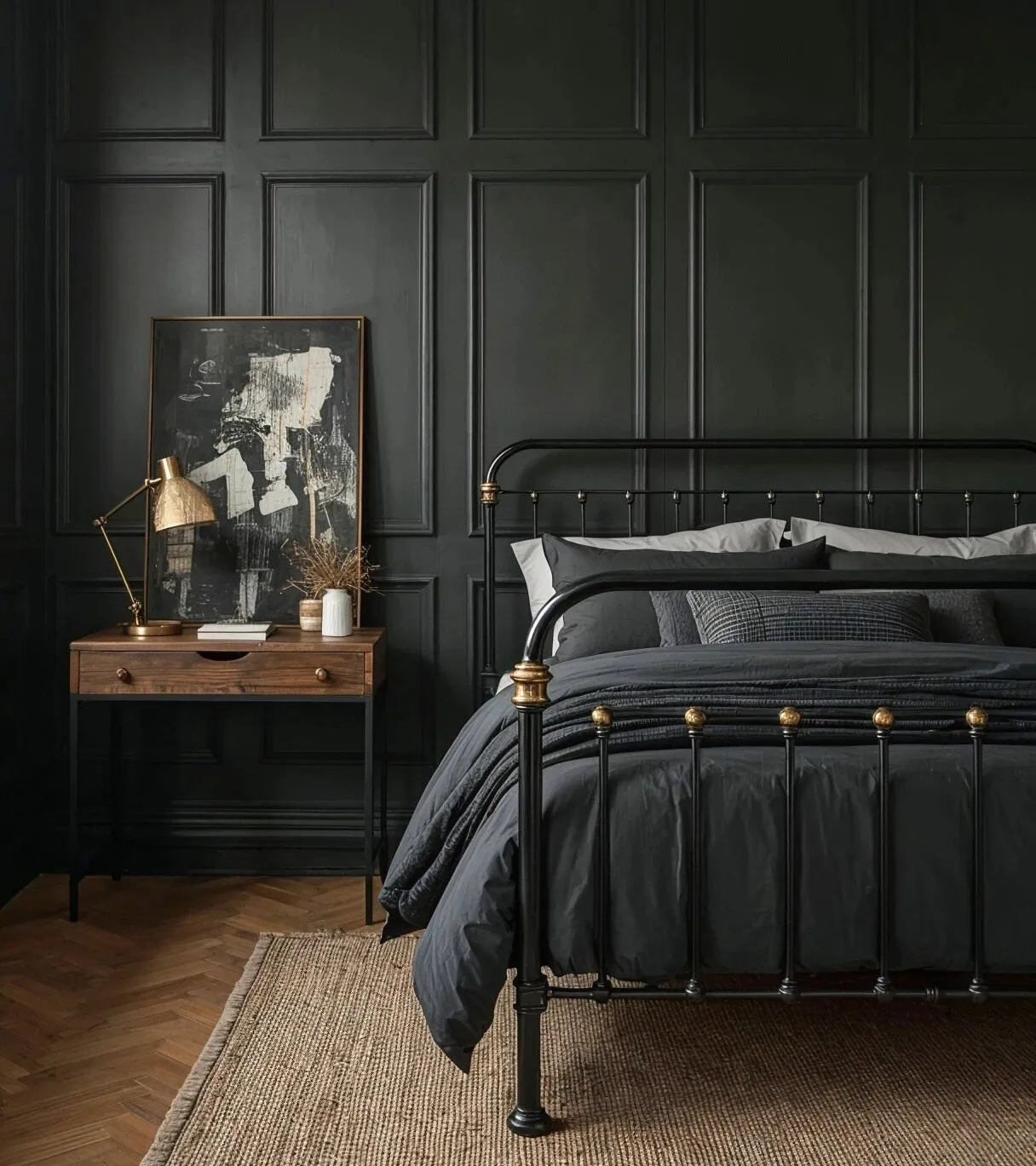
5. Charcoal Paneled Walls and a Classic Iron Bed
Recreating this structured, moody look is more accessible than you might think. The key is in the architectural details and the mix of materials.
- Wall Treatment: DIY wall paneling materials (MDF boards, adhesive, paint) can range from $200 to $500.
- Main Furniture: A black metal bed frame is a great budget find ($300 – $700). The wooden nightstand could be $150 – $400.
- Lighting: A stylish brass table lamp can be found for $75 – $200.
- Textiles & Decor: Bedding, pillows, and artwork could total $200 – $450.
- Total: $925 – $2,250
Budget alternative: Find a similar bed frame on Facebook Marketplace and use peel-and-stick wallpaper in a dark paneling pattern.
|
📋 Copy HEX 🔗 Share |
This room feels so satisfying because of its perfect balance of textures and shapes. The rigid, geometric lines of the wall paneling and metal bed frame provide a strong structure. This is then softened by the organic elements: the warm grain of the wooden nightstand, the subtle texture of the woven rug, and the soft bedding. The small, strategic use of aged brass on the lamp and bed frame introduces a warm metallic glow that prevents the charcoal and black from feeling too cold or stark. It’s a masterclass in layering.
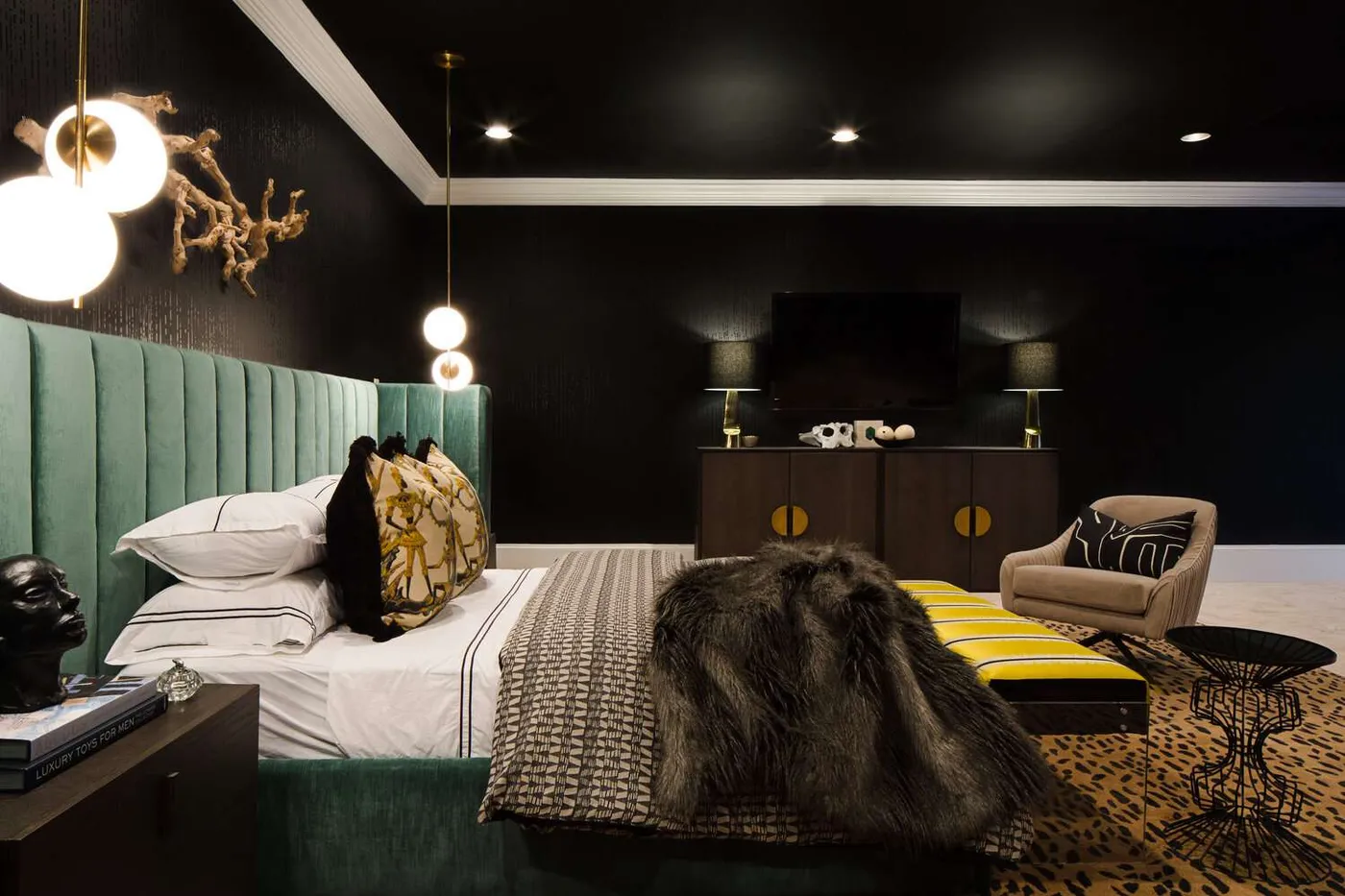
6. Teal Velvet Headboard Against Dark Textured Wallpaper
It’s all about that tall, teal velvet headboard. Take it away, and you have a stylish but somewhat generic dark room. The headboard introduces a jolt of saturated color and a luxurious, touchable texture that instantly elevates the entire space. Its channel-tufted design adds verticality, drawing the eye up and making the ceiling feel higher. It’s the confident, statement piece that serves as the anchor for all the other dramatic elements, like the brass lights and leopard-print rug.
|
📋 Copy HEX 🔗 Share |
This look is a perfect example of the ‘Dopamine Decor’ trend, which is all about using color, pattern, and texture to create a space that makes you feel genuinely happy and energized. After years of minimalist, neutral-toned interiors, people are craving personality and boldness. The combination of deep teal, rich black, gleaming brass, and a touch of animal print is expressive and unapologetically glamorous. It’s a move away from safe choices and toward creating a home that reflects a unique and confident personal style.
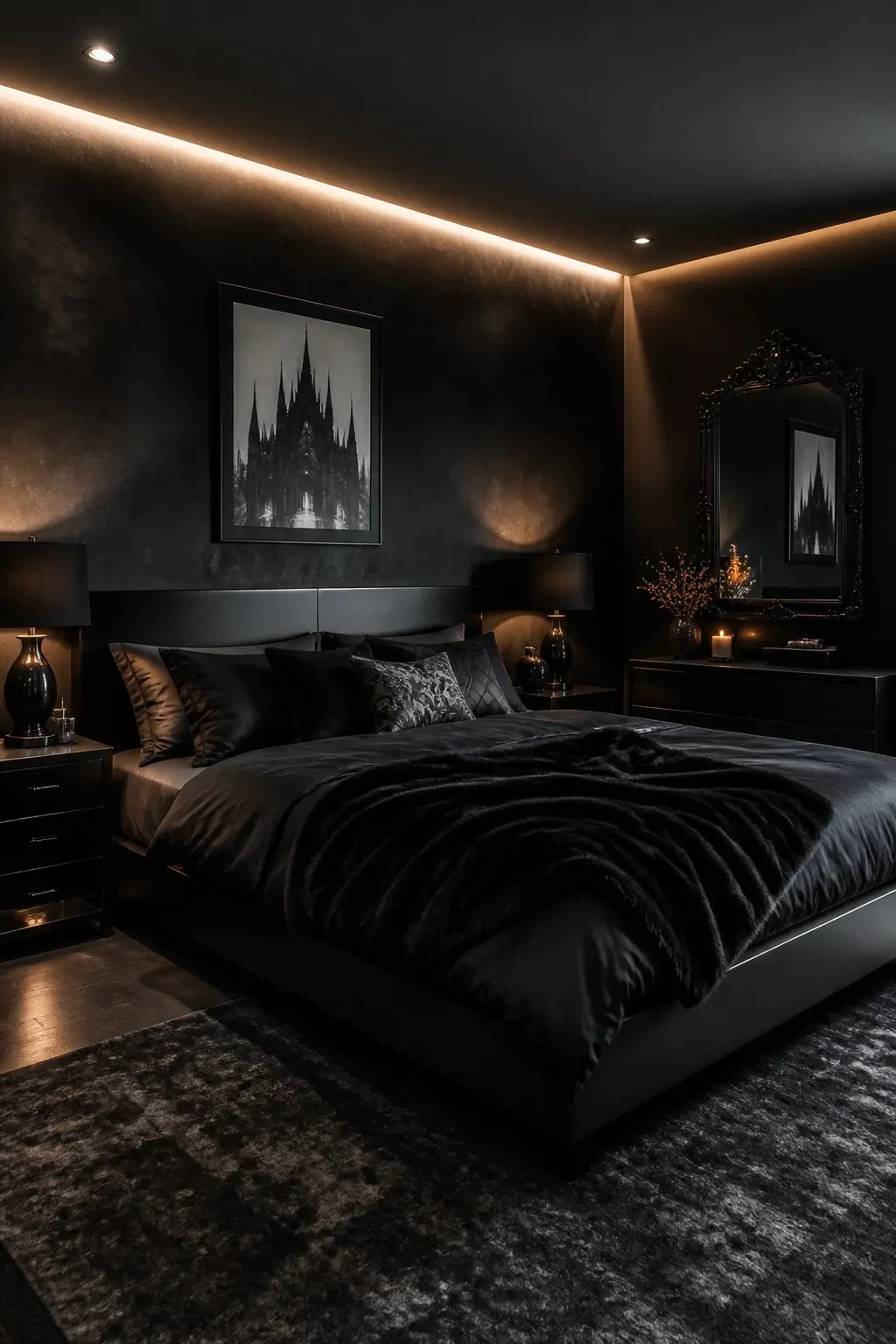
7. Intimate All-Black Room with Warm Perimeter Lighting
Installing perimeter LED strip lighting is a surprisingly manageable DIY project that adds major impact. Here’s a quick guide:
|
📋 Copy HEX 🔗 Share |
- Plan Your Layout: Decide where you want the lights. A channel recessed into a dropped ceiling provides the most professional look. Measure the total length needed.
- Purchase a Kit: Buy an LED strip light kit that includes the light strip, a power supply, and a controller/dimmer. Opt for a ‘warm white’ color temperature (around 2700K).
- Install the Channel: Attach the aluminum channel (which helps diffuse light and dissipate heat) to the ceiling or wall.
- Adhere the Strip: Peel the backing off the LED strip and press it firmly into the channel.
- Connect Power: Connect the strip to the controller and the controller to the power supply. Plug it in and test. This part might require an electrician if you’re hardwiring it.
Time: 3-5 hours. Cost: $100-$300.
An all-black room can feel incredibly chic and cocooning, but it can also show every single speck of dust, scuff mark, and pet hair. Matte black walls are particularly notorious for being difficult to clean without leaving shiny spots or streaks. And glossy black furniture? Fingerprint city. If you have kids, pets, or just aren’t a fan of constant dusting and wiping, this look requires real commitment. The payoff is huge, but so is the upkeep. For a similar but more forgiving look, consider a very deep charcoal gray, which can be just as dramatic. Compare this to the lighter mood in Idea #23.
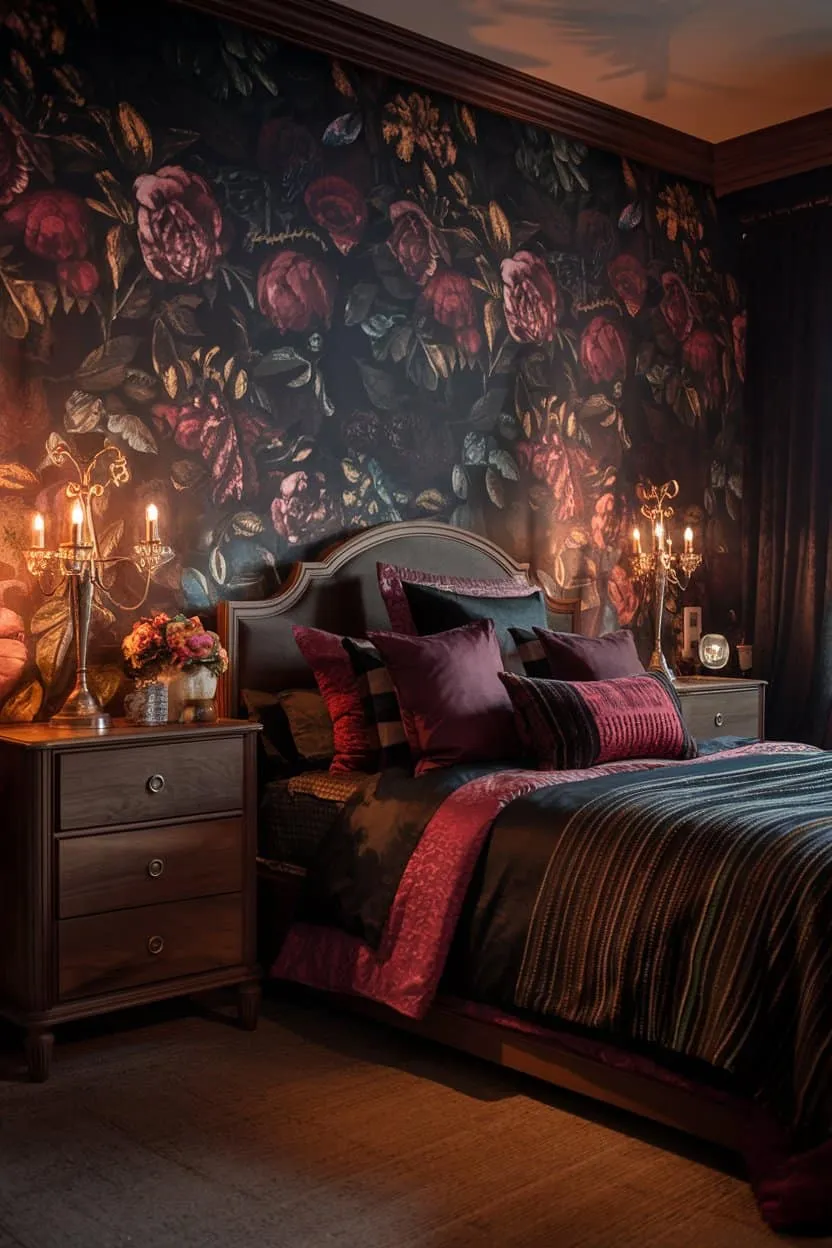
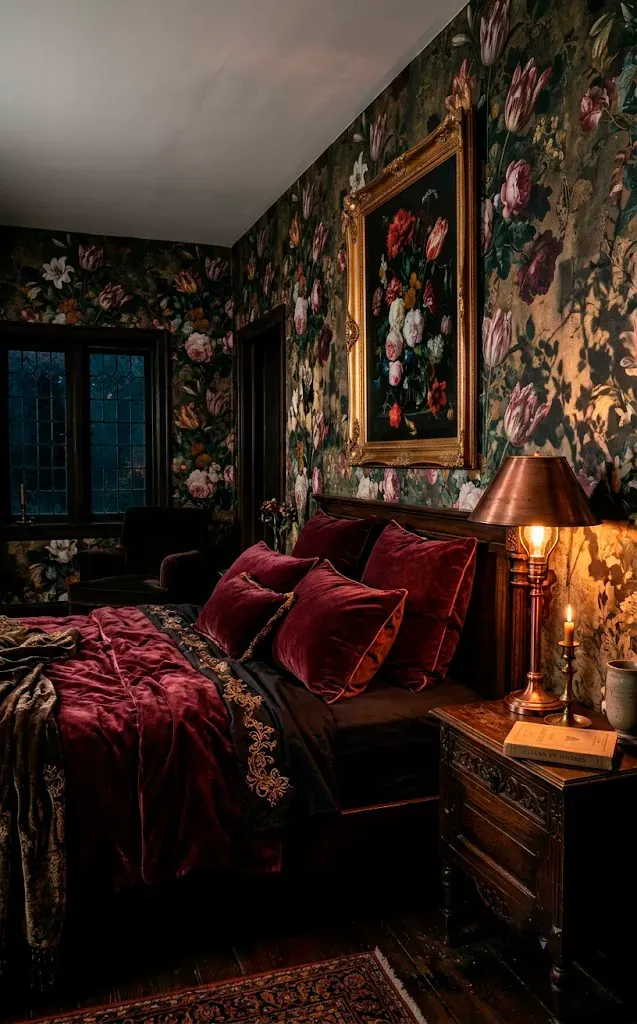
8. Romantic Dark Floral Wallpaper with Ornate Gold Candelabras
When using a large-scale, busy wallpaper pattern, ground the space by pulling the darkest and most saturated colors from the paper and using them for your solid textiles. Here, the deep red of the blooms is mirrored in the bedding, and the black background is repeated in other accents. This creates a cohesive, intentional look that feels layered and rich, rather than chaotic. The solid colors give your eye a place to rest amidst the beautiful complexity of the floral pattern.
|
📋 Copy HEX 🔗 Share |
That dark floral wallpaper is stunning, but be warned: it’s a very specific and powerful style statement. This isn’t a neutral backdrop you can easily change up with new pillows. This is the main character. If your taste evolves quickly, you might find yourself feeling ‘stuck’ with this look sooner than you’d like. High-quality wallpaper is also an investment in both materials and installation, so be sure you’re ready to love it for at least 5-7 years. A less permanent alternative could be a large tapestry or framed print with a similar vibe, which you can see in the more modern take in Idea #10.
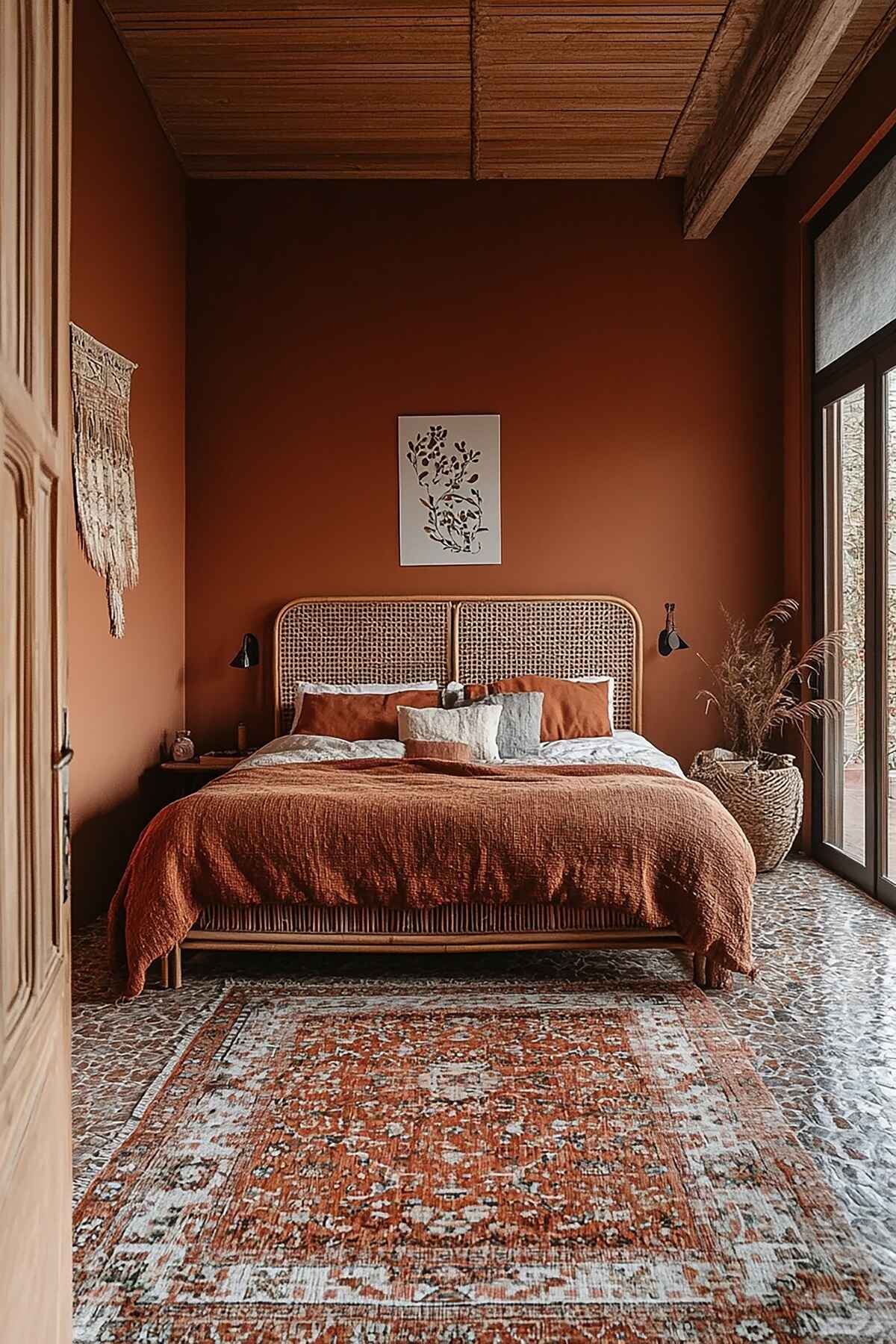
9. Earthy Terracotta Walls with a Woven Rattan Bed
You don’t need to spend a fortune to get this warm, organic vibe. Start with paint: a gallon of terracotta-colored paint is about $50-$70. For the bed, look on Facebook Marketplace or at stores like IKEA and Target for rattan or woven headboards, which can often be found for under $300. Instead of a pricey area rug, consider a large, flatweave jute or sisal rug ($150-$250) for a similar natural texture. Black wall sconces can be found for as little as $40 a pair online. The whole look can be achieved for under $600 if you’re savvy.
|
📋 Copy HEX 🔗 Share |
This room feels so calming because it relies on a monochromatic color scheme executed with varied textures. The walls, bedspread, and rug are all within the same terracotta family, but they all feel different to the eye and hand. The matte paint on the walls, the woven texture of the rattan headboard, the subtle pattern on the rug, and the crinkle of the bedspread all work together to create a rich, layered experience. The black sconces provide a sharp, modern point of contrast that keeps the warm tones from feeling muddy.
10. Lush Floral Wallpaper Paired with Rich Red Velvet
Creating that perfectly layered, ‘artfully undone’ bed is a skill. Here’s how to get this rich, textured look:
|
📋 Copy HEX 🔗 Share |
- Start with a Base: Use a simple fitted and flat sheet in a neutral color that complements your palette.
- Add the Main Layer: Place your main duvet or comforter. In this case, it’s a dark, simple piece.
- Fold in the Color: Fold a rich, colorful comforter or quilt (like this deep red velvet one) in thirds and lay it across the bottom half of the bed.
- Pillow Power: Prop two standard sleeping pillows against the headboard. In front of them, place two large decorative pillows (the red velvet ones here). Finish with one or two smaller accent pillows.
- The Final Touch: Casually drape a textured throw blanket, like the dark one with gold embroidery, across a corner.
Time: 5 minutes. Cost of new textiles: $200-$600.
Before you commit to a dark, patterned wallpaper, it’s crucial to test it in your actual space. Here’s a quick checklist:
- Order a Large Sample: Don’t rely on a tiny website swatch. Get at least a 2’x2′ sample.
- Check it in All Lights: Tape the sample to the wall and observe it in the morning, afternoon, and at night with your lamps on. Colors can shift dramatically.
- Consider the Room’s Scale: Does the pattern’s scale feel right for your room size? A huge pattern can overwhelm a tiny room.
- Plan Your Walls: Decide if you’re doing one accent wall or all four. An all-over application is a much bigger commitment visually and financially.
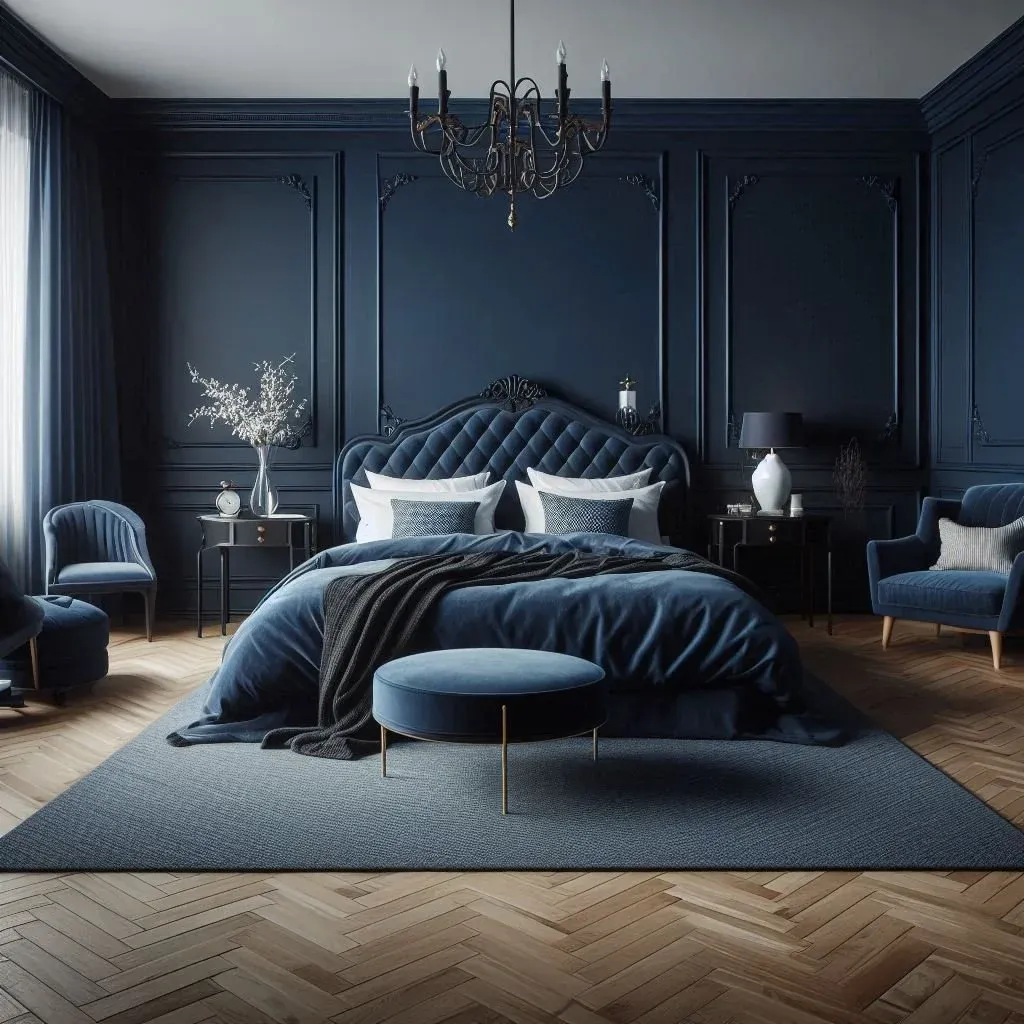
11. Classic Navy Paneling and Matching Velvet Textiles
The power of this room comes from its fearless commitment to a single color: navy blue. It’s on the paneled walls, the tufted headboard, the velvet bedding, and even the accent chairs. This tone-on-tone approach, known as color drenching, creates an incredibly immersive and sophisticated experience. By varying the textures—matte walls, soft velvet, a plush rug—the single color feels dynamic and luxurious, not flat or boring. It’s a bold choice that pays off in elegance. You can see a more restrained version of this in Idea #12.
|
📋 Copy HEX 🔗 Share |
This space perfectly captures the New Traditional or Modern Regency trend. It takes classic elements like detailed wall paneling, tufted velvet, and herringbone floors and updates them with a bold, modern monochromatic color scheme. It feels both timeless and completely current. This look has staying power because it’s rooted in classic design principles, but the dramatic color makes it feel fresh and personal. It’s less about fleeting fads and more about a confident, enduring style.
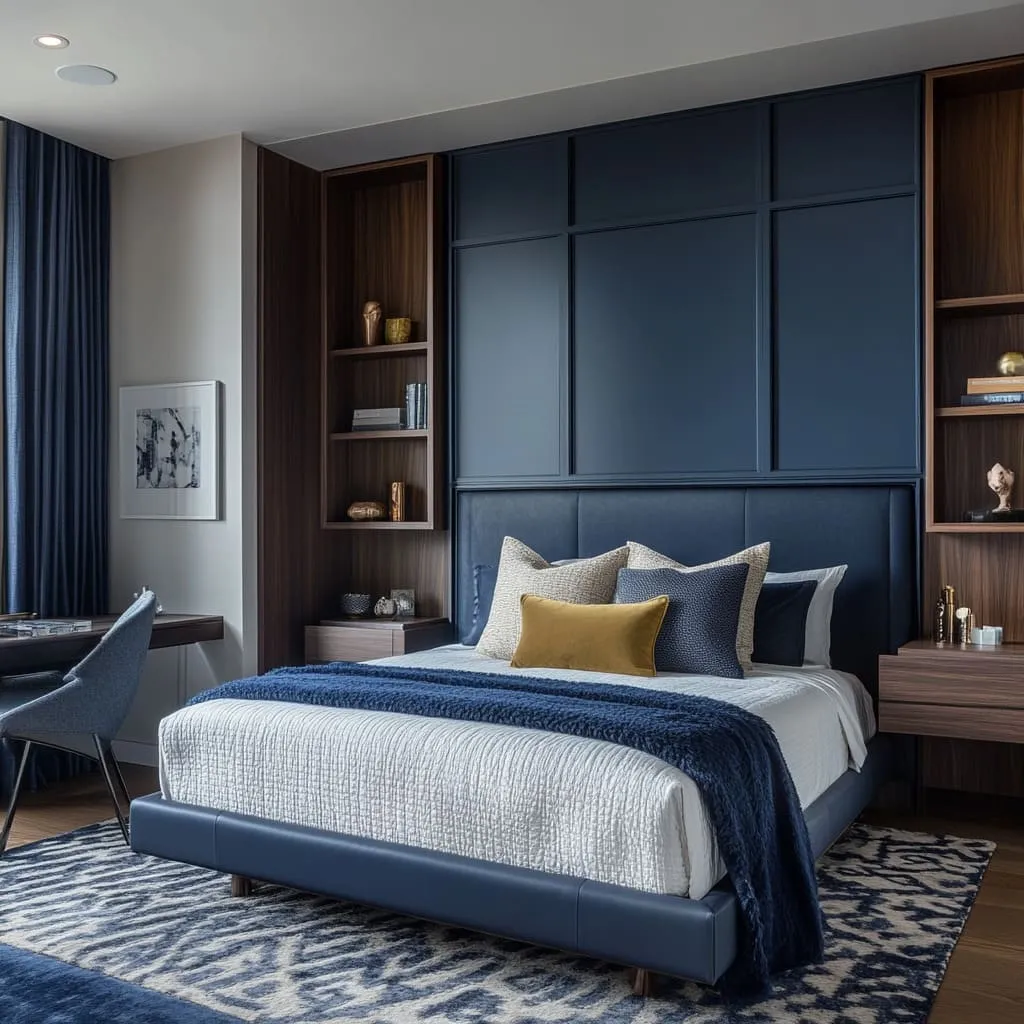
12. Tailored Navy Accent Wall with Integrated Wood Shelving
The visual recipe for this room is about balance and warmth. It breaks down to roughly 50% calming navy blue (accent wall, bed frame, rug), 30% warm wood tones (shelving, desk), and 20% crisp white and neutrals (bedding, ceiling, rug details). That small pop of mustard yellow on the pillow is the 1% spice that brings it all to life. You could swap the navy for a deep green and the wood for a lighter oak, and the formula would still create that same tailored, sophisticated feel.
|
📋 Copy HEX 🔗 Share |
Integrated shelving and a paneled accent wall work best in a room with generous proportions. To avoid feeling cramped, you’d want a bedroom that’s at least 12 feet wide to accommodate the bed and two flanking shelving units comfortably. Ceiling height should be at least 8 feet, but 9 feet or more would be ideal to really let that vertical paneling shine. This is a fantastic solution for adding storage and architectural interest to a standard builder-grade room, making it feel more custom and high-end.
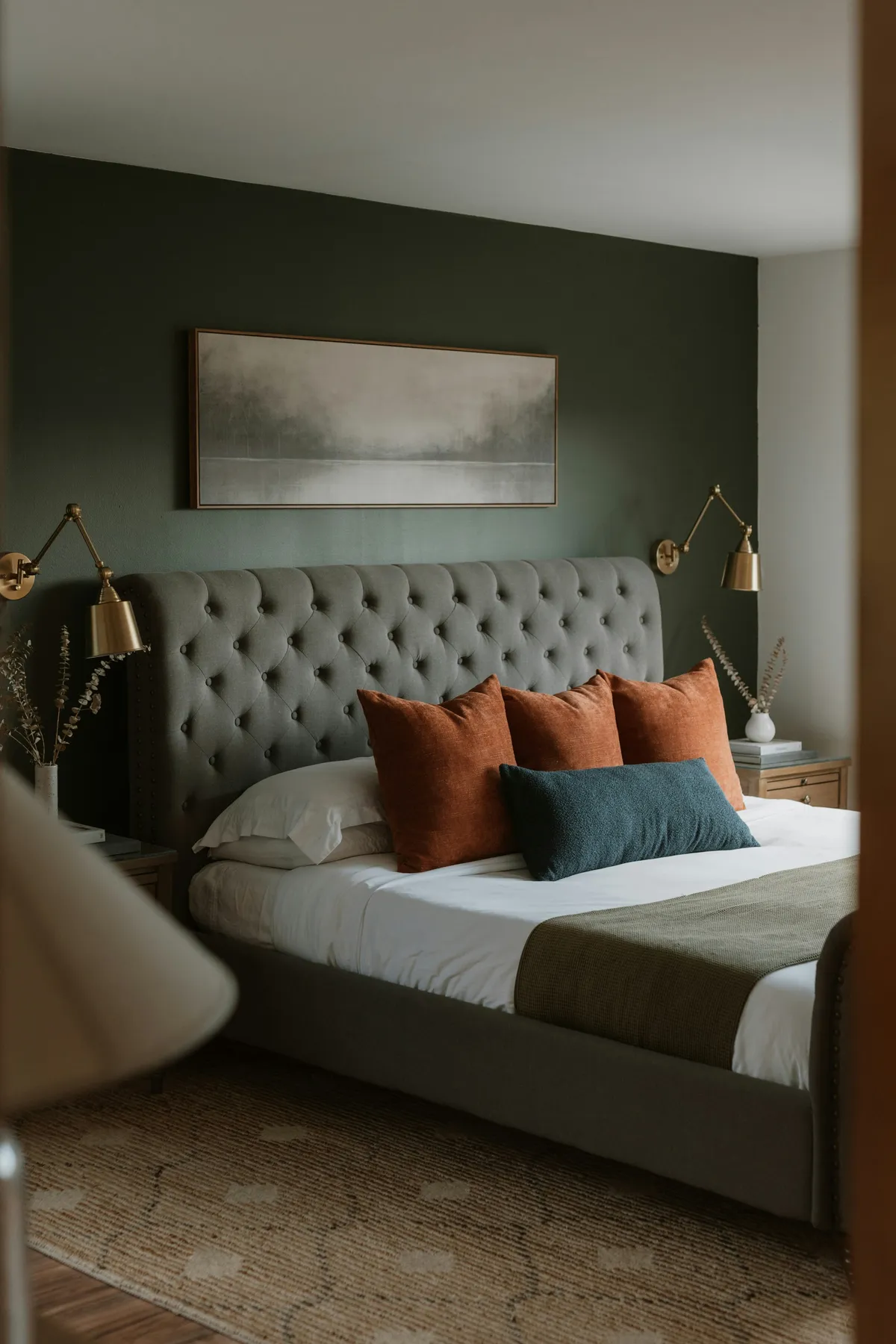
13. Olive Green Accent Wall with Pops of Terracotta and Teal
When using an articulating wall sconce next to a bed, mount it so the bottom of the shade is about 50-60 inches from the floor. The center of the backplate should be 6-12 inches out from the side of the headboard. This placement ensures the light is high enough that you won’t bump your head, but low enough to provide focused light for reading in bed without illuminating the entire room. The articulating arm gives you the flexibility to direct the light exactly where you need it.
|
📋 Copy HEX 🔗 Share |
This design works because it expertly uses a triadic color scheme—colors that are evenly spaced on the color wheel. The deep olive green, rich terracotta orange, and hint of deep teal create a vibrant yet harmonious palette. The scheme is grounded by large expanses of white and light grey, which act as a neutral canvas and prevent the colors from competing with each other. The warm brass of the sconces acts as a metallic neutral, tying everything together with a touch of sophisticated warmth.
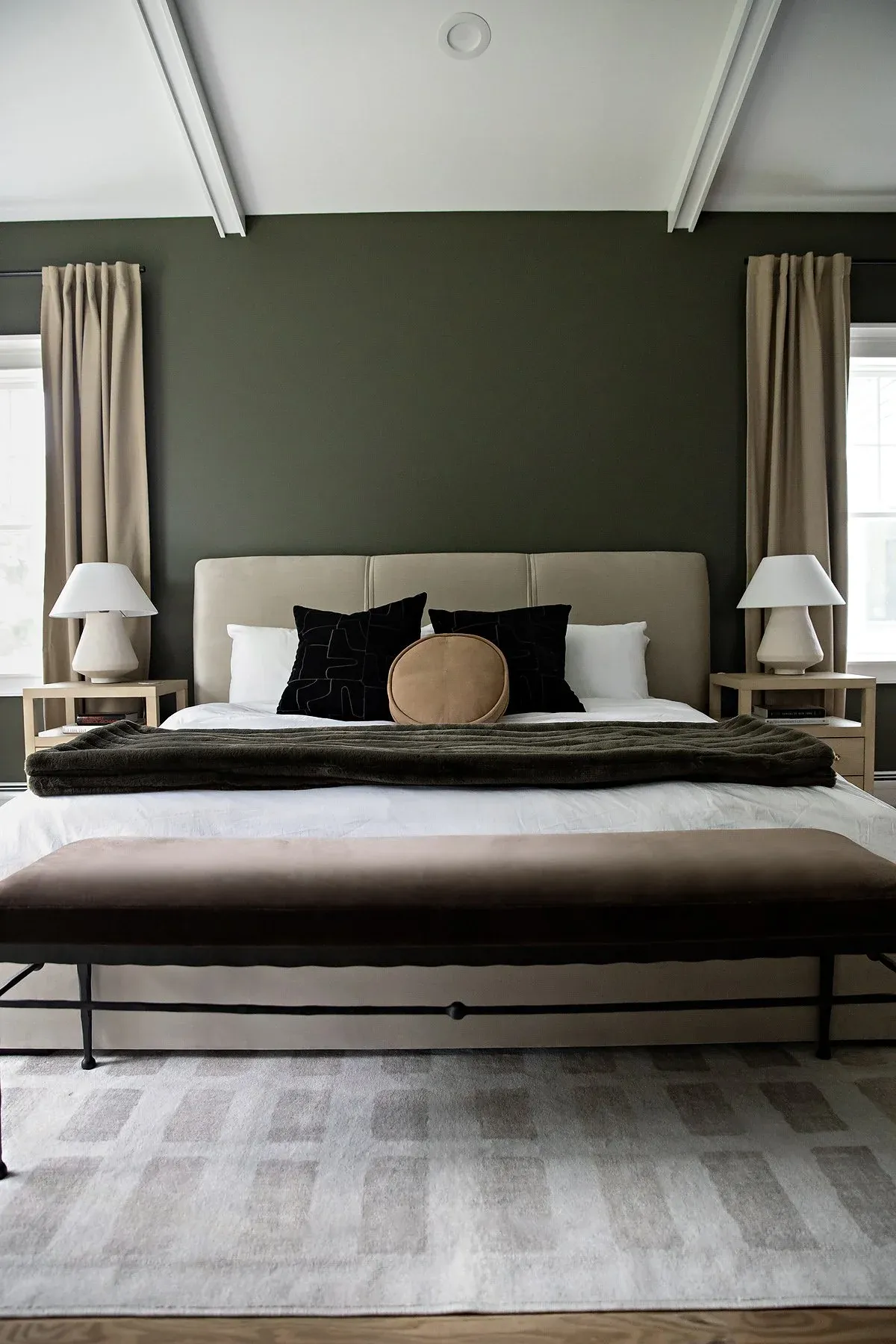
14. Dark Green Wall Under a Sloped, Beamed Ceiling
A dark accent wall can be transformative, but it’s wise to check a few things first. A dark color will absorb light, so this works best on a wall that receives ample natural light or where you plan to have excellent artificial lighting.
- Light Source: Is the wall opposite a window? That’s an ideal scenario.
- Ceiling Height: In a room with low ceilings, a dark wall can sometimes make it feel lower. The white sloped ceiling here prevents that.
- Existing Furniture: Does your current furniture (like the beige headboard here) contrast well with the green? If not, are you prepared to change it?
- Paint Finish: Choose a matte or eggshell finish. A higher gloss will show every imperfection on the wall.
|
📋 Copy HEX 🔗 Share |
Achieving this sophisticated, natural look is all about layering key pieces. The accent wall is the biggest statement, but the other elements build the cozy atmosphere.
- Paint: One gallon of high-quality dark green paint will run you $60 – $90.
- Main Furniture: An upholstered headboard ($250 – $600) and a velvet bench ($200 – $450) set the tone.
- Lighting & Drapery: A pair of ceramic lamps ($150 – $300) and light tan curtains ($100 – $250).
- Textiles: Bedding, throw, and a patterned area rug will be the final layer ($300 – $700).
- Total: $1,060 – $2,390
Budget alternative: Paint a feature wall and find a similar velvet bench at a home goods store or on sale online.
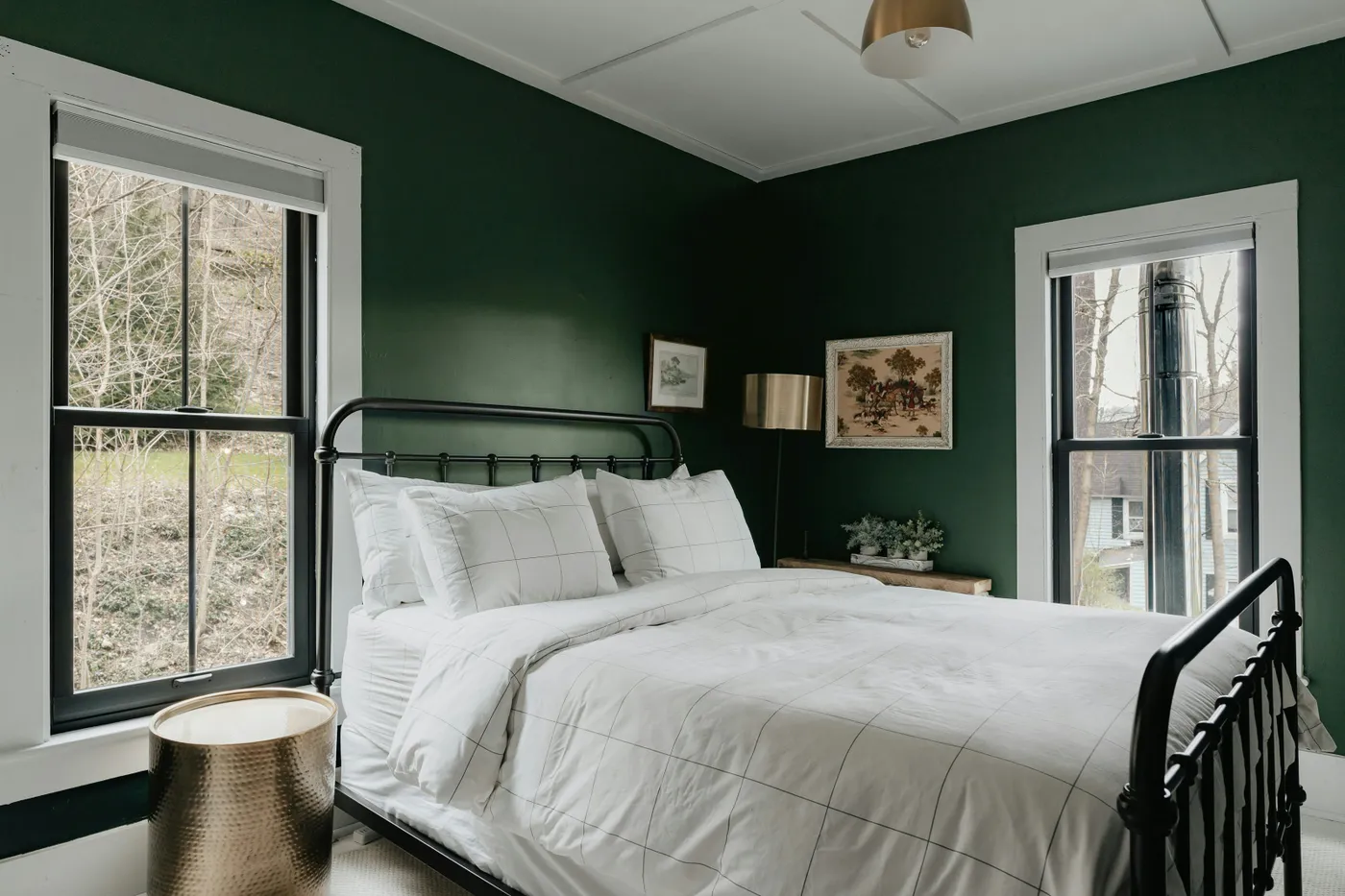
15. Forest Green Walls with an Iron Bed and Brass Accents
This high-contrast, slightly vintage look can be done on a serious budget. A simple black iron bed frame is one of the most affordable styles, often available for $200-$400. The grid-patterned duvet is a classic you can find at places like IKEA or Target for under $80. For the side table, skip the pricey brass drum and look for a small, round wood table at a thrift store. A can of metallic brass spray paint ($10) can give it a similar glam look. The biggest expense is the paint, which is still one of the cheapest ways to transform a room!
|
📋 Copy HEX 🔗 Share |
The antique brass accents are what truly make this room sing. Without the hammered side table and ribbed floor lamp, the space would be a nice but fairly standard combination of dark green, black, and white. The brass introduces a warm, glowing element with a vintage-inspired texture. It bridges the gap between the cool green walls and the crisp white bedding, adding a layer of sophistication and a hint of glamour that feels both timeless and collected.
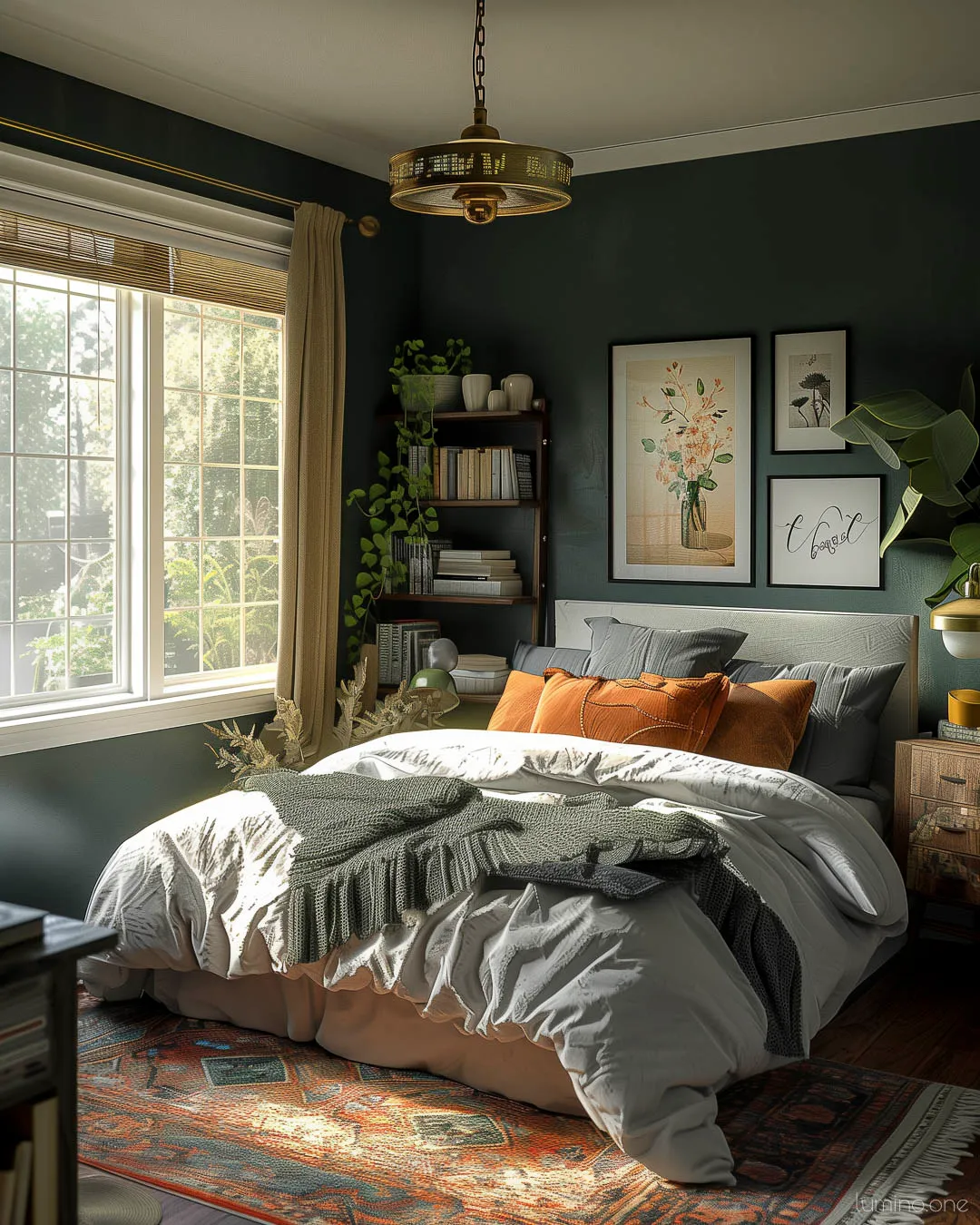
16. Cozy Dark Green Room with a Chunky Knit Throw
A chunky knit blanket is the definition of cozy, but they can be incredibly delicate. The open, loose weave is prone to snagging on jewelry, buttons, or even pet claws. They also tend to stretch out over time and can be very heavy and difficult to wash (many are hand-wash or dry-clean only). Think of it more as a beautiful, decorative top layer for your bed rather than a durable, everyday blanket you can curl up with on the sofa. If you need something more practical, look at a tightly woven wool or faux-cashmere throw instead. See another natural-textured room in Idea #17.
|
📋 Copy HEX 🔗 Share |
Styling a bookshelf is an art form that balances books, plants, and objects. Here’s how to get this curated look:
- Start with Books: Arrange your books in varied ways. Some stand vertically, while others are stacked horizontally to act as risers for other objects.
- Add Greenery: Place a few small-to-medium-sized plants on different shelves. Potted plants with trailing vines are especially great for adding life and movement.
- Incorporate Objects: Layer in a few personal or decorative objects of different heights and shapes. Think small vases, framed photos, or interesting trinkets.
- Leave Breathing Room: Don’t cram every inch of the shelf. Negative space is important—it allows each item to be seen and appreciated.
Time: 1 hour. Cost: Uses existing items, plus $20-$60 for new plants.
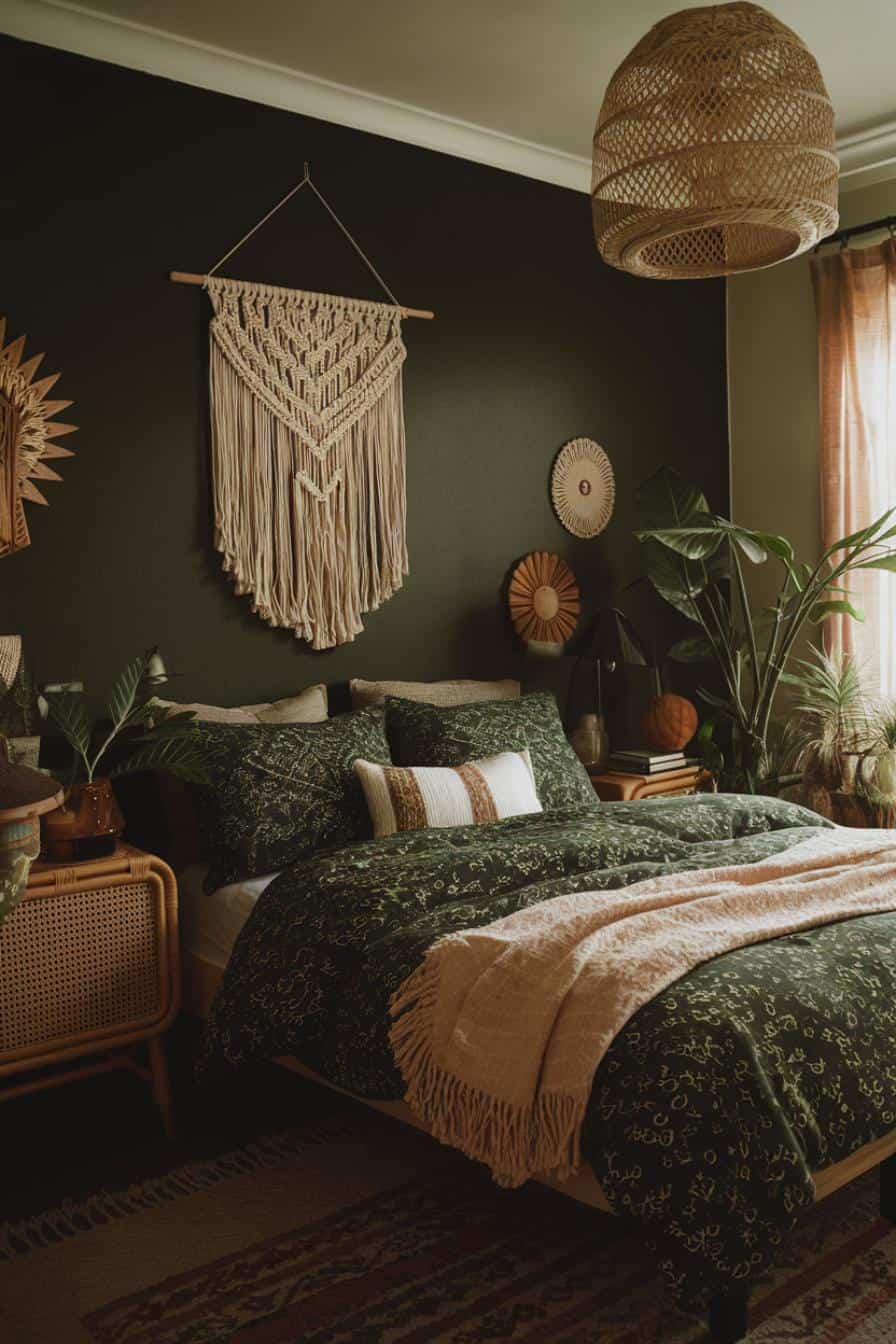
17. Olive Green Walls with Macrame, Rattan, and Natural Textures
This earthy, bohemian room is a study in texture. The formula is: 40% deep, matte color (the olive green walls and bedding) + 50% natural, woven textures (rattan light, macrame hanging, wood furniture) + 10% living elements (the lush green plants). The key is that the color palette is actually very simple—mostly greens and creams. The interest comes from the interplay of all the different materials. You could swap the green for a deep navy or terracotta and it would work just as well, as long as you keep the heavy emphasis on natural textures.
|
📋 Copy HEX 🔗 Share |
Rattan, macrame, and other natural fiber decor items bring incredible warmth and texture, but they do require specific care. Rattan can dry out and become brittle over time, so it benefits from a light wipe-down with a damp cloth every few months. Macrame wall hangings can collect a lot of dust; take them outside and give them a good shake, or use a lint roller or the upholstery attachment on your vacuum (on a low setting) to clean them. Be gentle, as the fibers can snag easily.
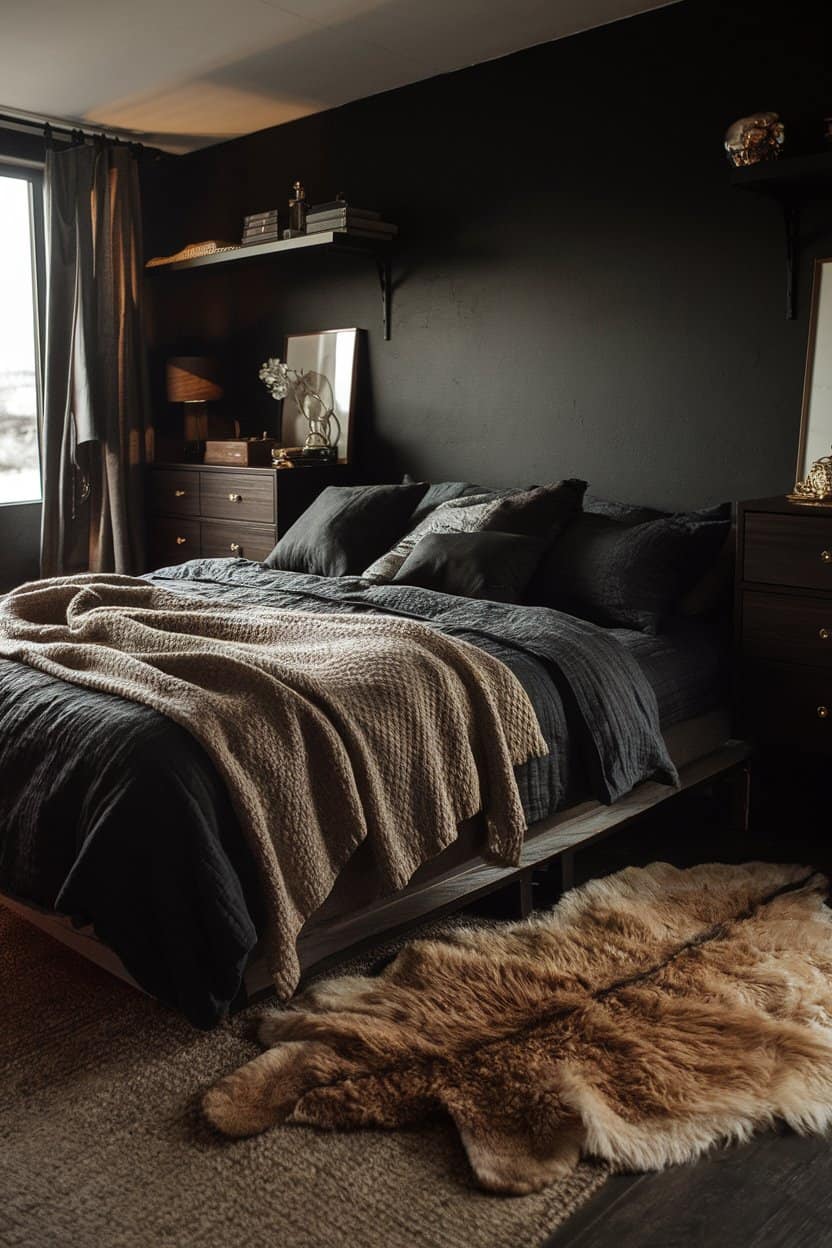
18. Enveloping Charcoal Walls with a Fluffy Faux Fur Rug
The single element holding this entire moody look together is the layered texture. If you take away the thick beige throw, the faux fur rug, and the subtle grain of the dark wood nightstands, you’re left with a very stark, flat black room. It’s the contrast between the dark, matte walls and the soft, fluffy, and warm-toned textiles that creates the inviting, cozy feeling. The textures are doing all the heavy lifting to make the space feel like a hug, not a cave.
|
📋 Copy HEX 🔗 Share |
This room works because it follows a fundamental design principle: balance. The visual weight of the dark charcoal walls and bedding is perfectly counterbalanced by the light-colored, high-texture rug and throw blanket. The warmth of the wood furniture and the golden glow of the lamp also provide a necessary thermal balance to the cool gray and black tones. This push-and-pull between dark and light, hard and soft, cool and warm is what creates a dynamic and comfortable space.
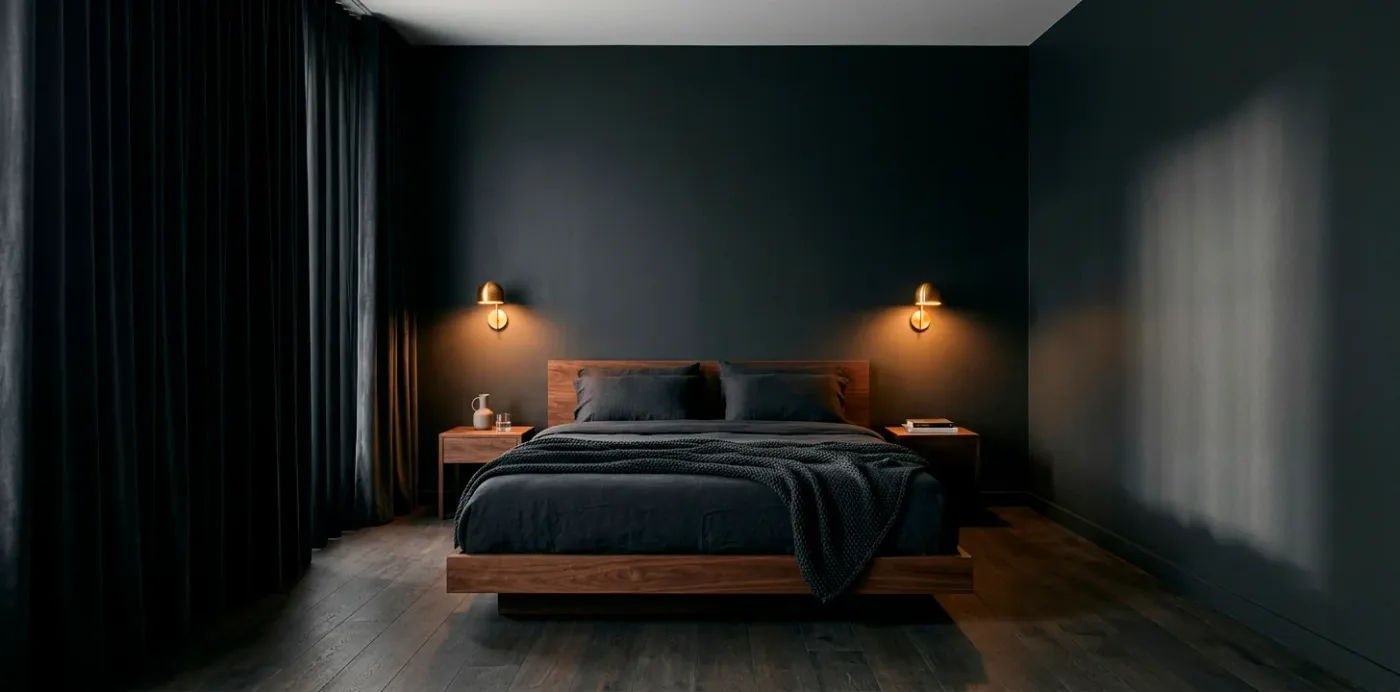
19. Minimalist Floating Wood Bed in a Dark Gray Room
To make a dark room feel intimate rather than oppressive, use multiple sources of soft, low-level light. Instead of a bright overhead fixture, this room relies on two wall sconces with a warm glow. This technique, called light layering, creates pools of light that highlight specific areas (like the nightstands) and let other areas fall into shadow. Always install dimmers on your bedroom lights. This gives you full control over the mood, allowing you to go from bright and functional to soft and cozy with a simple adjustment.
|
📋 Copy HEX 🔗 Share |
A floating bed frame is a great choice for making a room feel larger and more open, as it shows more floor space. This minimalist look works best in rooms that are at least 10 feet by 12 feet, allowing for adequate walking space around the bed. To pull off the floor-to-ceiling curtains, you’ll need at least an 8-foot ceiling. The key is to mount the curtain rod as high and wide as possible—at least 4-6 inches above and to the sides of the window frame—to create the illusion of a larger window and a taller room.
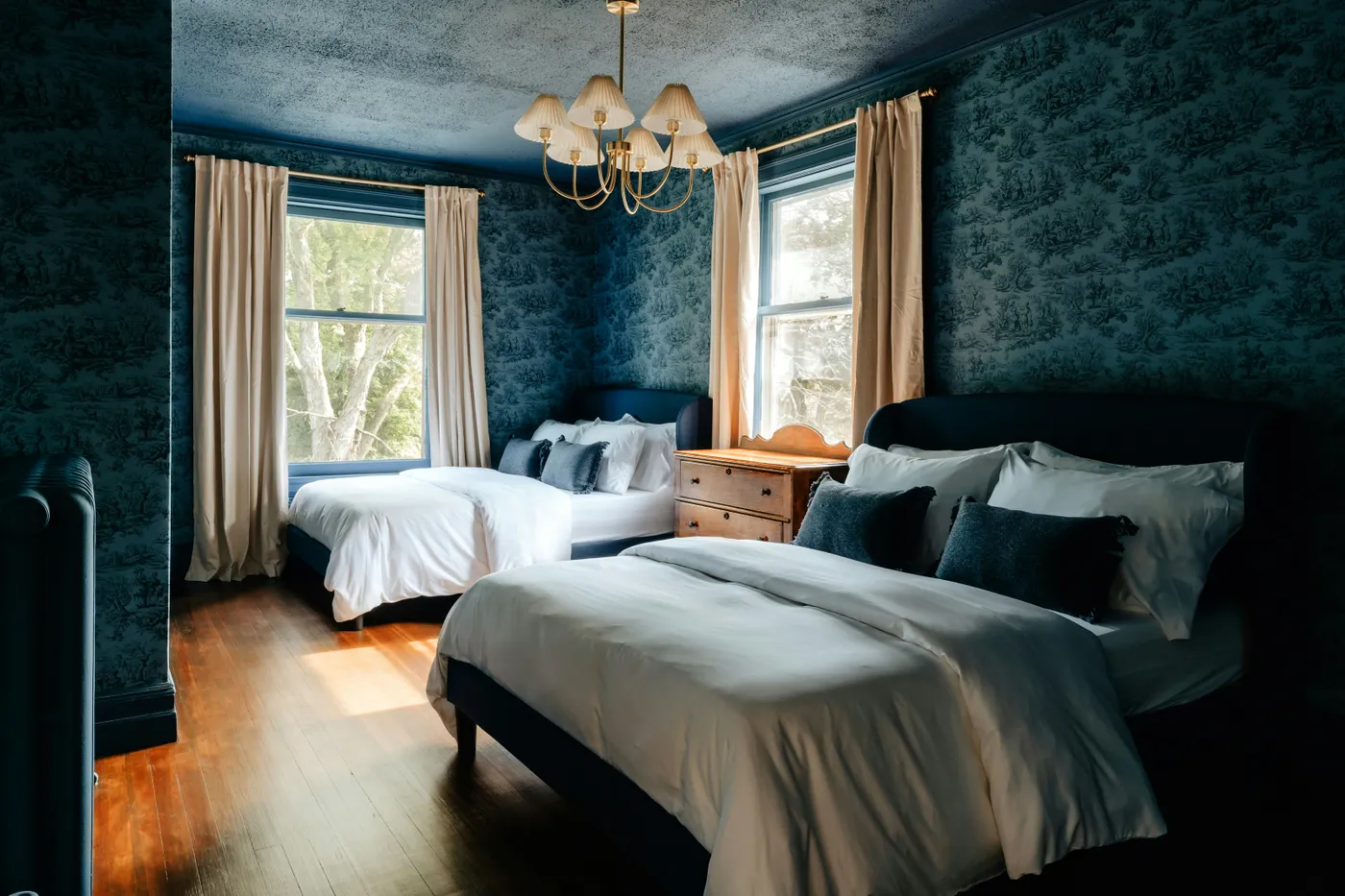
20. Classic Dark Blue Toile Wallpaper with Crisp White Bedding
This is a fantastic example of the Coastal Grandmother aesthetic’s moodier, more sophisticated cousin. While the original trend leans heavily on light blues, whites, and linens, this room takes the same classic, comfortable principles—timeless patterns (toile), natural materials (wood furniture), and a sense of layered history—and dips them in a deep, inky blue. It feels established, cozy, and effortlessly chic, proving that traditional design can feel fresh and modern when executed with a bold color choice.
|
📋 Copy HEX 🔗 Share |
Wallpaper can be a splurge, especially for a whole room. To get this classic toile look for less, consider a feature wall behind the bed instead of all four walls. This can cut your wallpaper cost by 60-75%. Another great option is to search for removable toile wallpaper or peel-and-stick versions, which are often more affordable and DIY-friendly. For the furniture, hunt for a vintage wooden chest of drawers at a thrift store or on Facebook Marketplace—they have more character and are usually a fraction of the price of new.
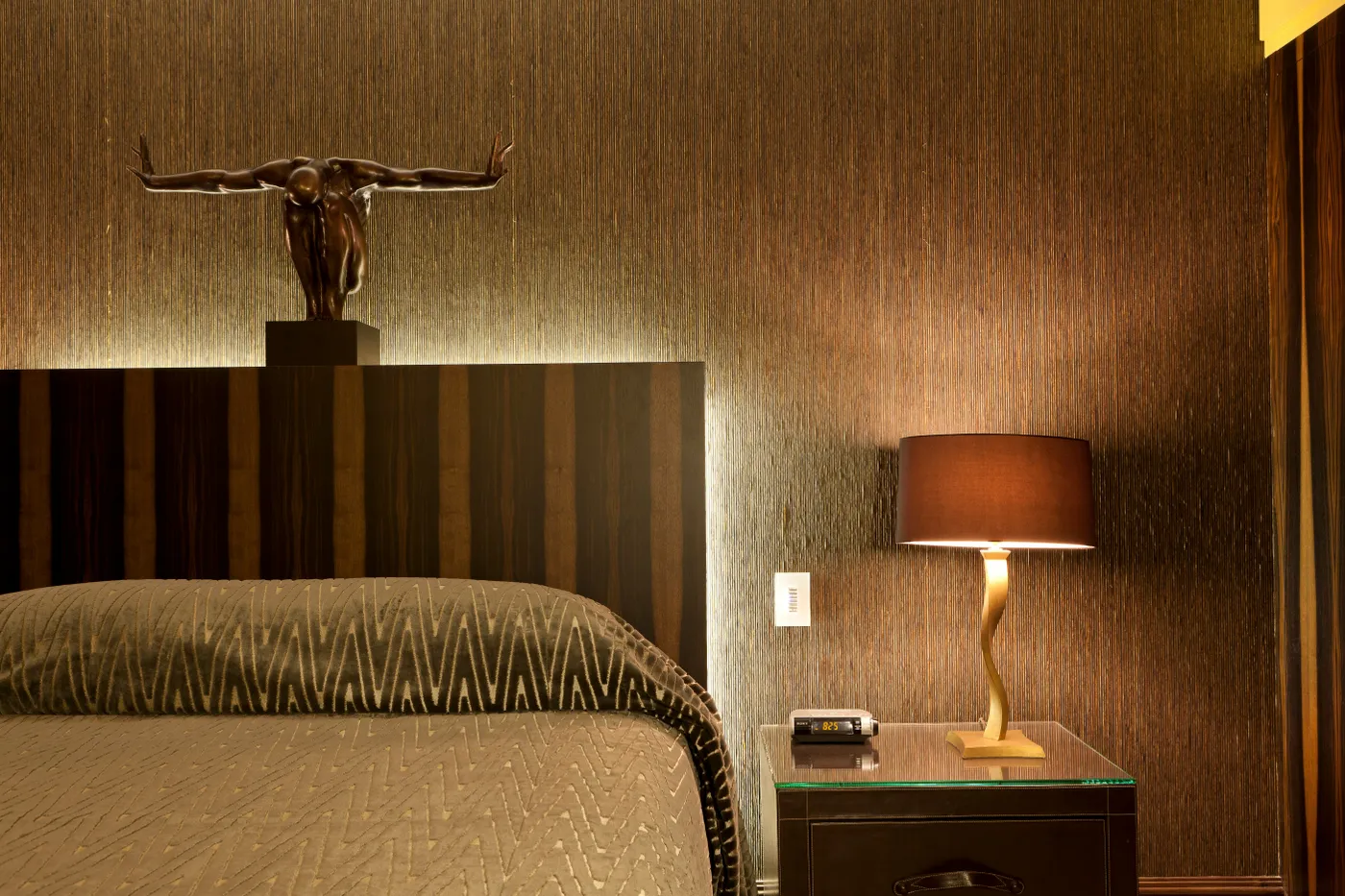
21. Dark Wood Headboard Against Textured Gold Wallpaper
The hidden uplighting behind the headboard is the secret ingredient that makes this room feel so opulent and inviting. It’s a classic hotel design trick that you can easily replicate. The light washes up the textured gold wallpaper, highlighting its shimmer and creating a soft, ambient glow. This indirect light is far more flattering and relaxing than a harsh overhead light, and it turns the headboard and wall into a unified, dramatic focal point. Without it, the effect would be much flatter.
|
📋 Copy HEX 🔗 Share |
You can create a luxe uplighting effect behind your own headboard with a simple LED light strip. Here’s how:
- Choose Your Light: Purchase a dimmable, warm-white (2700K-3000K) LED tape light kit online or at a hardware store.
- Prep the Surface: Clean the back of your headboard to ensure the adhesive will stick.
- Attach the Strip: Peel the backing from the LED strip and apply it along the top edge of the back of your headboard, about an inch from the edge.
- Manage the Cord: Run the power cord down the back of the headboard where it’s least visible. You can use small clips to keep it tidy.
- Plug and Glow: Plug it into a nearby outlet (preferably one controlled by a wall switch) and enjoy the ambiance.
Time: 20 minutes. Cost: $25 – $60.
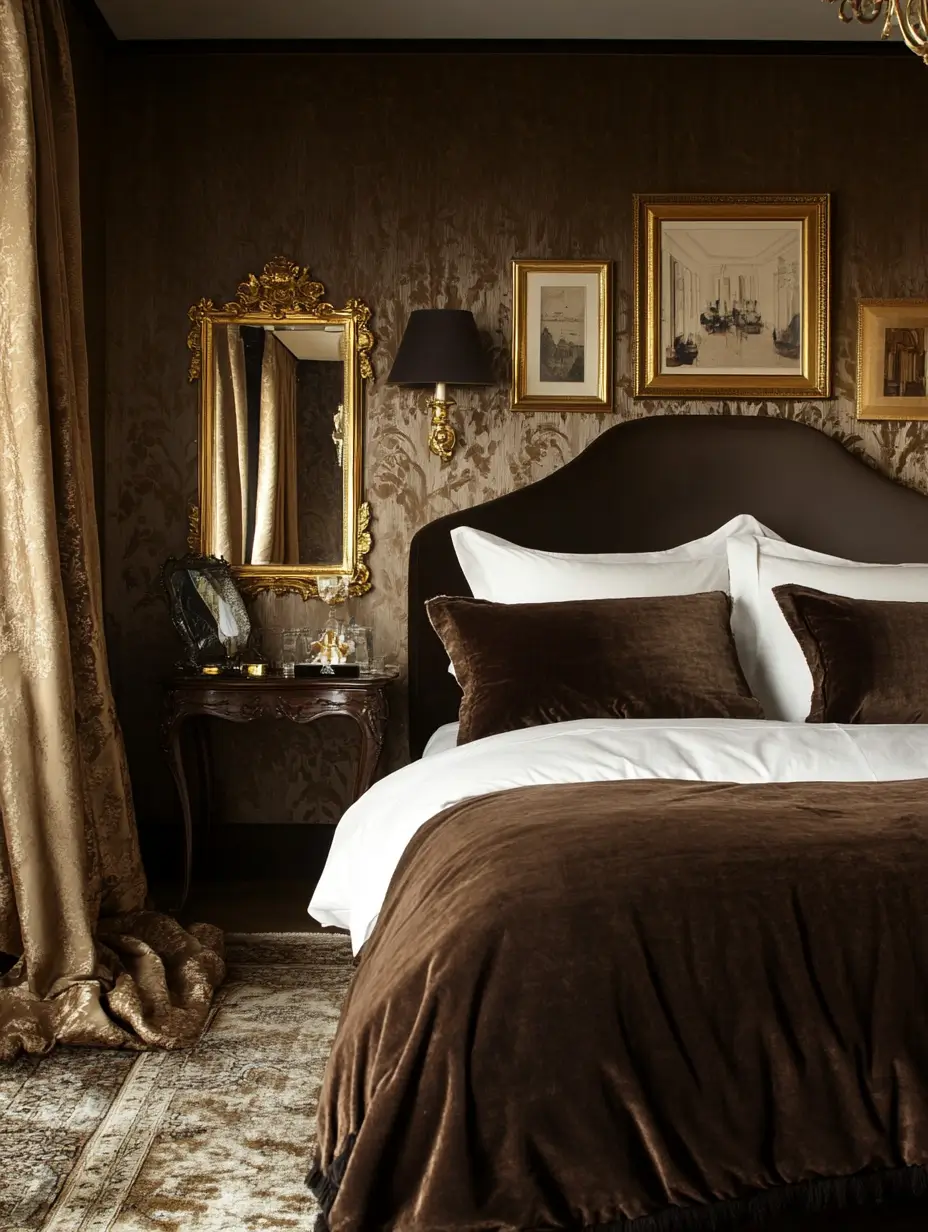
22. Opulent Brown Velvet and Ornate Gold Framed Mirrors
This luxurious, classic look is built on rich materials and ornate details. The investment pieces are the wallpaper and the velvet bedding, which set the opulent tone.
- Wallpaper: High-quality damask wallpaper can be costly. For an average bedroom wall, expect to spend $300 – $800+ on materials.
- Furniture: A carved wood bedside table could be a vintage find ($150) or a new reproduction ($400+).
- Bedding: A full set of dark brown velvet bedding with fringe details will likely run $250 – $500.
- Decor: Ornate gold frames are key. You can find these at thrift stores for cheap, or new from $80 – $300 each.
- Total: $880 – $2,300+
Budget alternative: Create a similar effect with damask wall stencils and dark brown paint.
|
📋 Copy HEX 🔗 Share |
This is a maximalist’s dream, but it’s not a style for the faint of heart. A room with this much pattern, texture, and dark color can easily feel overwhelming and claustrophobic if it doesn’t have enough natural light or high ceilings to balance it out. The multitude of ornate gold frames and dark furniture requires diligent dusting to keep it from looking dingy. This is a high-commitment, high-maintenance look that works best when you are all in on the dramatic, opulent aesthetic.
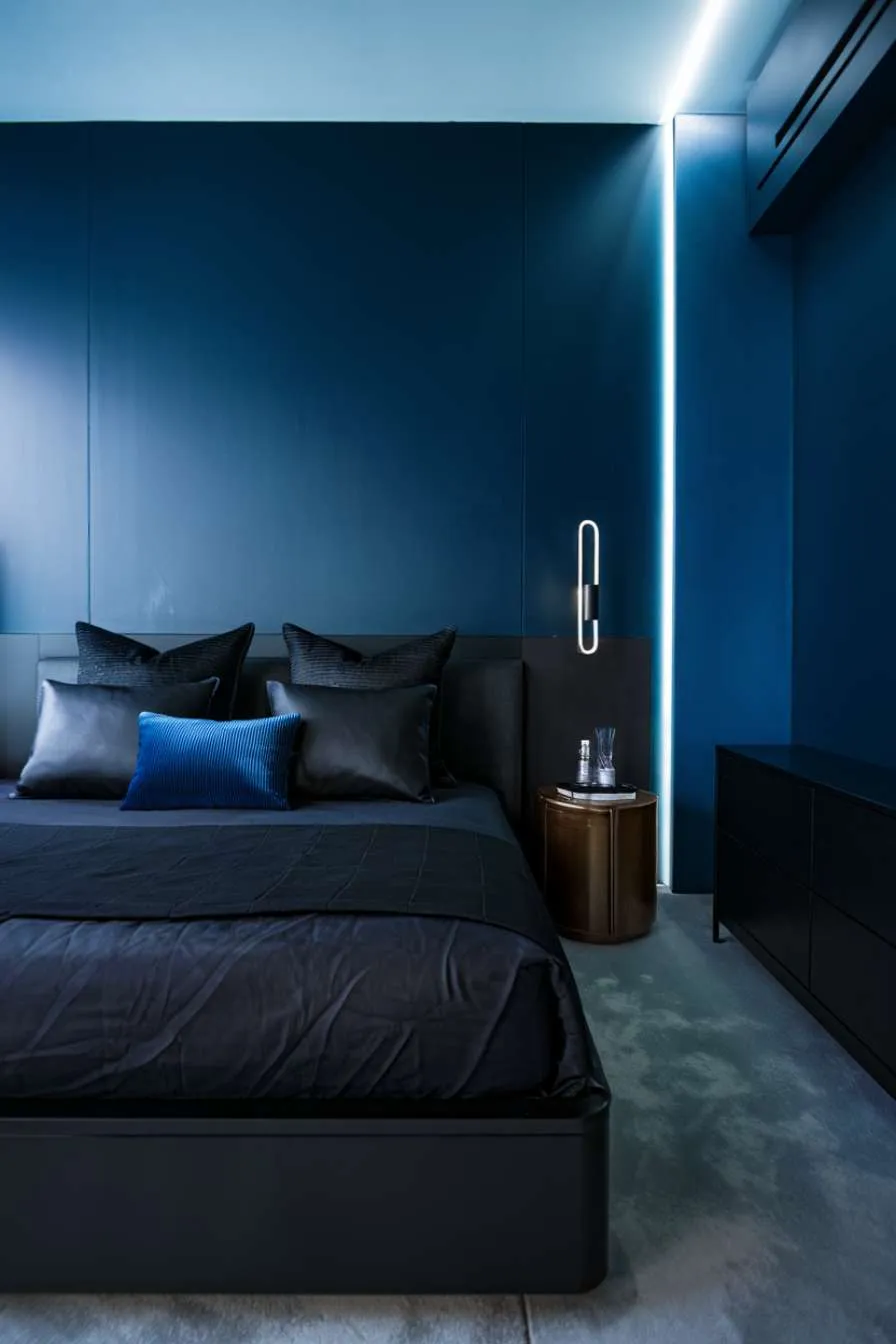
23. Modern Navy Room with a Striking Vertical Light Bar
This room’s modern, serene vibe comes from a simple but effective formula: 70% deep, cool tones (the navy blue walls and bedding) + 20% varied textures (mottled rug, assorted pillows) + 10% sharp, contrasting elements (the bright white light bar and metallic bronze table). The extreme minimalism of the lighting fixture is what makes it feel so contemporary. It acts as a piece of functional sculpture against the dark, soft backdrop. This same formula would work with charcoal gray walls and a silver table.
|
📋 Copy HEX 🔗 Share |
When your primary light source is a design feature like this vertical LED bar, it’s crucial to supplement it with other, warmer light sources. The LED bar provides a cool, ambient glow, but you’ll still need task lighting for reading or finding things. This room would benefit from a small, warm-toned lamp on the side table or a directional reading light mounted on the wall. The goal is to have options: the dramatic feature light for mood, and a softer, more functional light for everyday use. Notice the very different lighting approach in Idea #7.
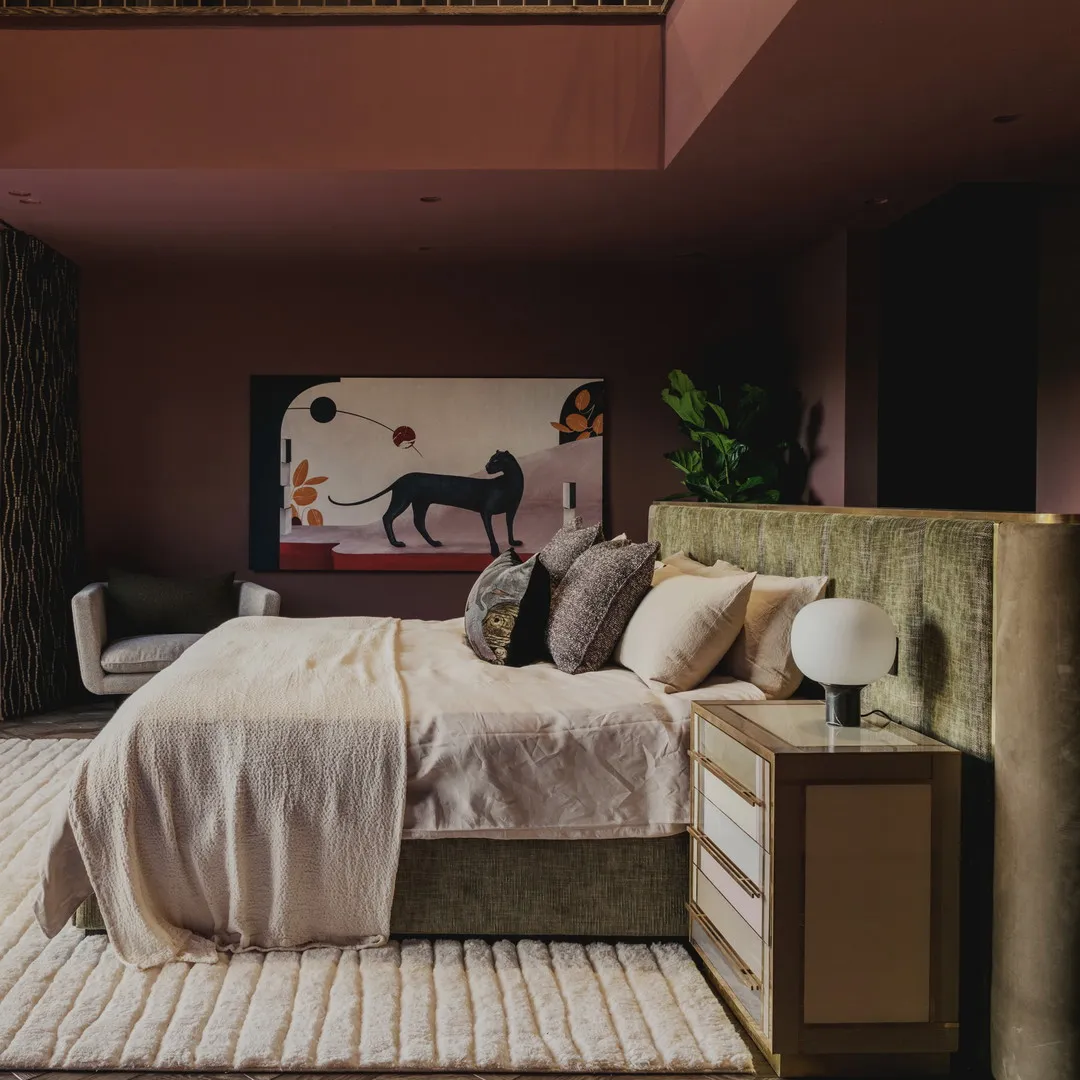
24. Deep Plum Walls Paired with an Olive Green Bed
This unlikely color combination of deep plum and olive green is so successful because they are both complex, sophisticated jewel tones. They have a similar level of saturation and depth, so neither one overpowers the other. They create a rich, layered effect that feels daring and unique. The large expanse of cream on the rug and bedding provides a crucial neutral ground, giving the eye a place to rest and preventing the two strong colors from clashing. The pops of brass add a final touch of warmth and luxury.
|
📋 Copy HEX 🔗 Share |
Pairing two bold, unconventional colors like plum and olive is a high-risk, high-reward design choice. Before you start painting, you absolutely must test these colors together in your space.
- Get Paint Swatches AND Fabric Samples: You need to see the actual bed fabric next to the actual paint color.
- Live With It: Tape large paint swatches on the wall behind where the bed will go, and drape the fabric sample over some pillows. Look at them for several days, in all different lighting conditions.
- Find a Bridge: Ensure you have a ‘bridging’ neutral, like the cream rug here, to connect the two colors and provide balance.
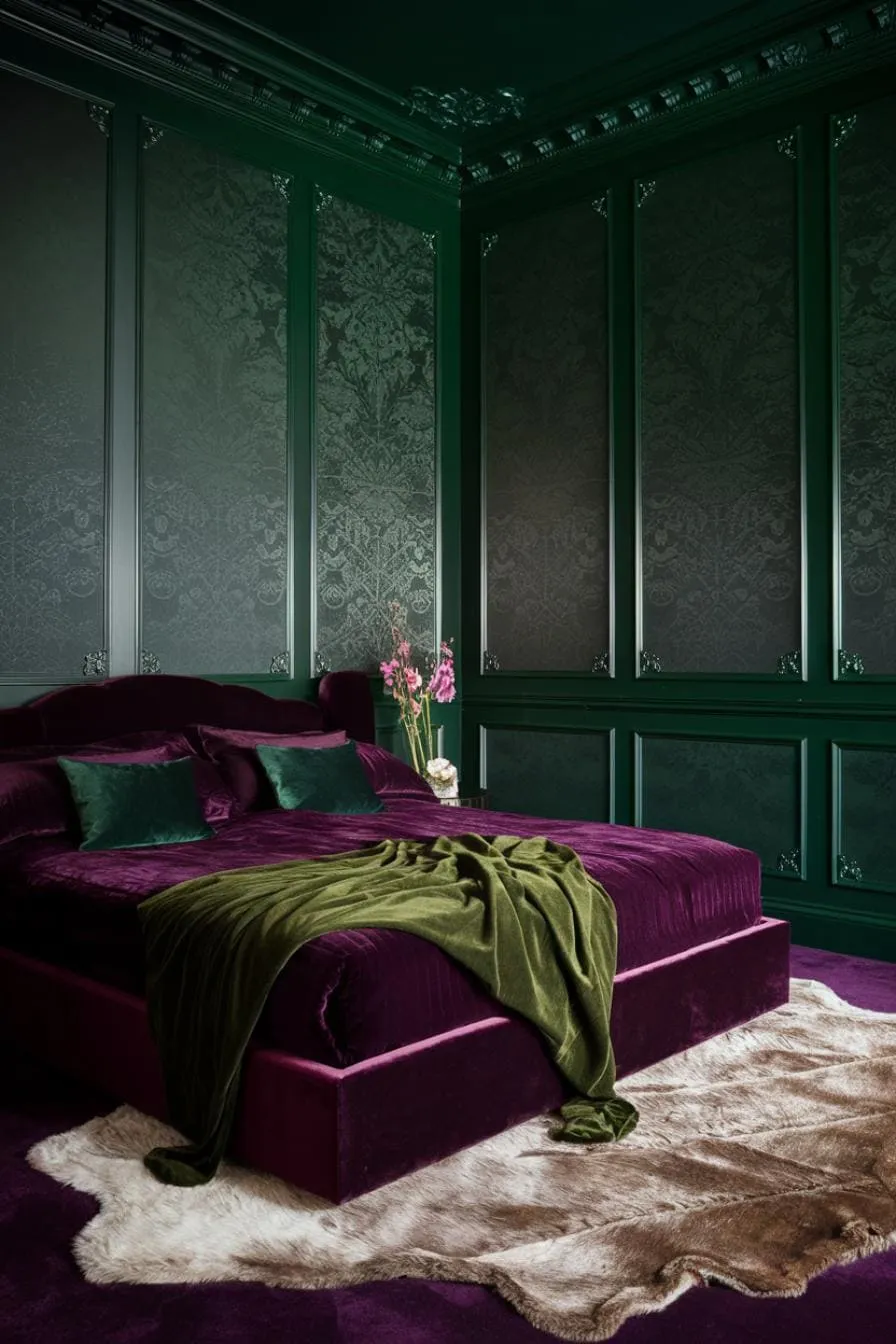
25. Emerald Green Paneling and a Sumptuous Purple Velvet Bed
A design with this level of opulence and detail—ornate paneling, patterned wallpaper inserts, and heavy velvet furniture—demands a room with grand proportions. This look is best suited for a large primary bedroom, at least 15 by 17 feet, with high ceilings (10 feet or more). In a smaller space, the dark colors, intricate paneling, and plush textures would feel incredibly heavy and claustrophobic, losing their luxurious effect and instead just feeling cramped. This is a look that needs room to breathe to be fully appreciated. Compare with the more adaptable teal velvet in Idea #6.
|
📋 Copy HEX 🔗 Share |
While undeniably stunning, this room is the antithesis of ‘low maintenance.’ Deep purple carpet will show every piece of lint and requires frequent vacuuming. Ornate wall paneling has countless ledges and crevices that are magnets for dust. And velvet, especially a deep-colored velvet bed, needs to be vacuumed with an upholstery attachment regularly to keep it looking lush and prevent dust from settling into the pile. This is a commitment to a certain lifestyle, one that involves a regular and thorough cleaning routine.
Your Moody Sanctuary Awaits
Creating a dark and dramatic bedroom is all about embracing color, layering textures, and controlling the light to craft a space that feels like a personal retreat. We hope these ideas have sparked your imagination and given you the confidence to go bold. Now, which one are you pinning first?