
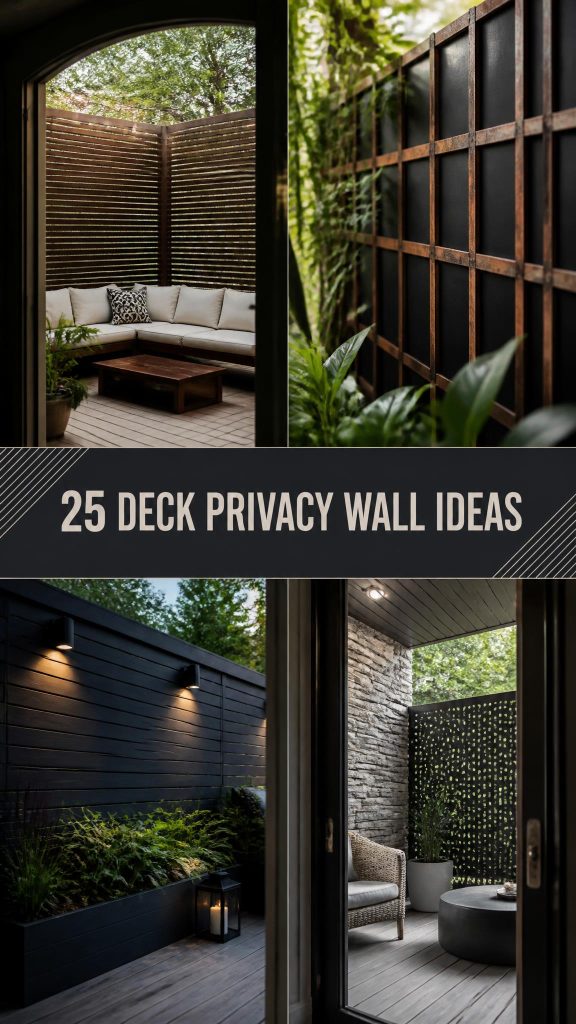
You know that feeling when you finally find the deck privacy wall that looks exactly right for your space, only to realize you have no idea how to actually make it happen? We’ve all been there, lost in a sea of saved pins. This isn’t just another gallery of pretty pictures; it’s a real-world guide to what’s possible. We spent serious time browsing Trex, Wayfair, and Home Depot to bring you only what’s worth your attention this year. Inside, you’ll find 25 curated ideas covering the most popular styles: modern horizontal slats, lush green walls, and decorative metal screens. And stay until the end—we break down the most common mistakes that can ruin these looks. 📌 Save this to Pinterest for later—you’ll want to revisit these ideas.
1. Frame a Modern Dining Space with a Horizontal Slat Screen
This design succeeds by creating a ‘room’ outdoors. The tall, wood-look privacy screen acts as a feature wall, defining the dining area and making it feel intentional and secluded. The use of black metal for the screen’s frame, the dining set, and the deck railings creates a strong, cohesive visual rhythm. This repetition of a single accent material makes the entire space feel polished and professionally designed, tying disparate elements together with a common thread.
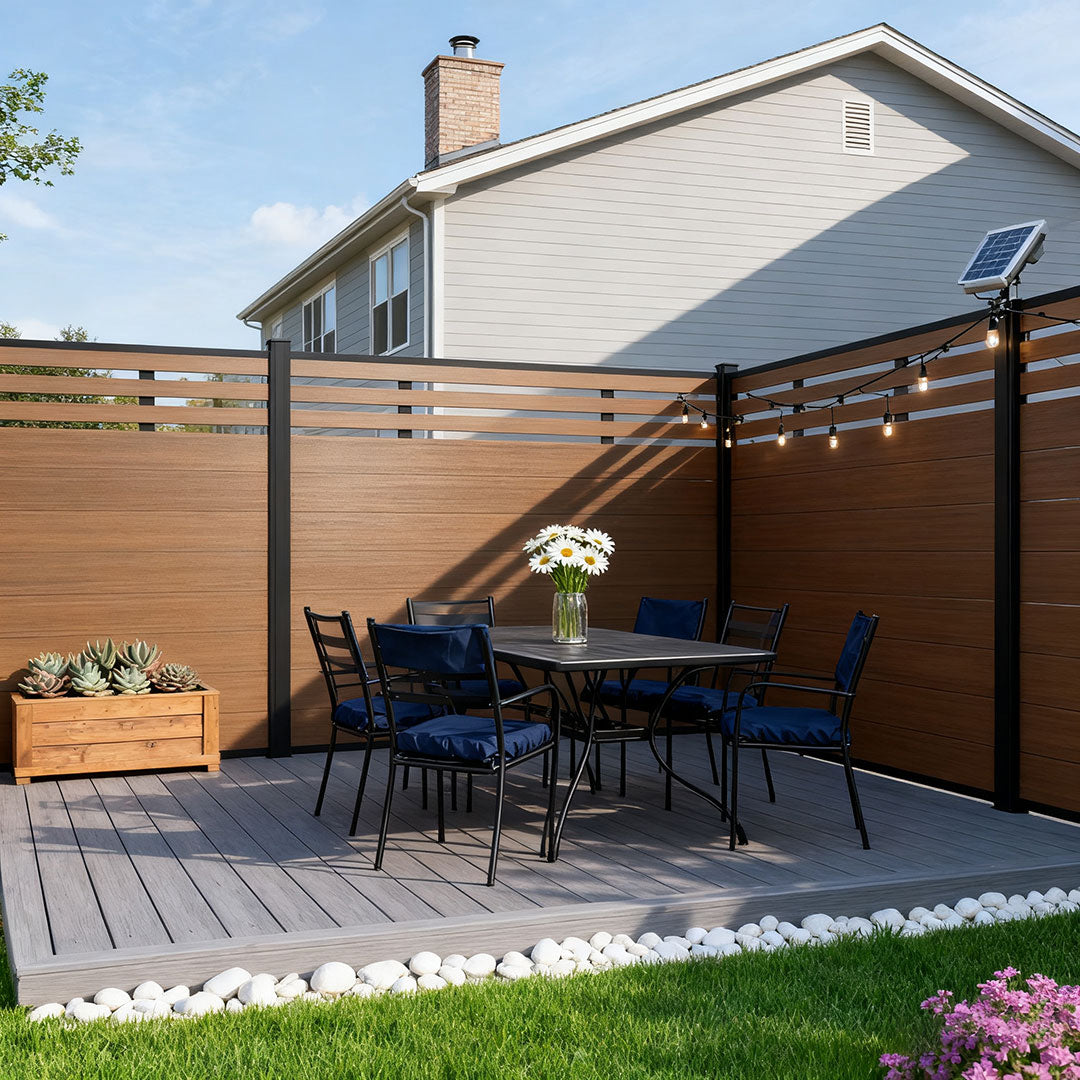
You can achieve this polished look without the custom build price tag. Start by sourcing pre-made privacy panels from a big-box store or online—expect to pay around $150-$300 per panel. For the dining set, skip the designer brands and head to Target or Wayfair, where a similar six-person metal set can be found for $400-$700. Finish the vibe with solar-powered string lights from Amazon for under $40. You’ll get the same intimate, modern dining experience for a fraction of the cost.
2. Get Instant Greenery with a Faux Hedge Privacy Screen
Let’s be honest about artificial hedges: quality varies wildly. Cheaper options can look plasticky and fade to an unappealing blue-green hue in direct sunlight within a season or two. Higher-quality, UV-stabilized panels are a significant investment upfront but are crucial for a convincing and long-lasting look. Also, consider your climate. In very windy areas, these large, flat surfaces can act like a sail, so you’ll need to ensure the supporting frame is incredibly robust and well-anchored to prevent damage.
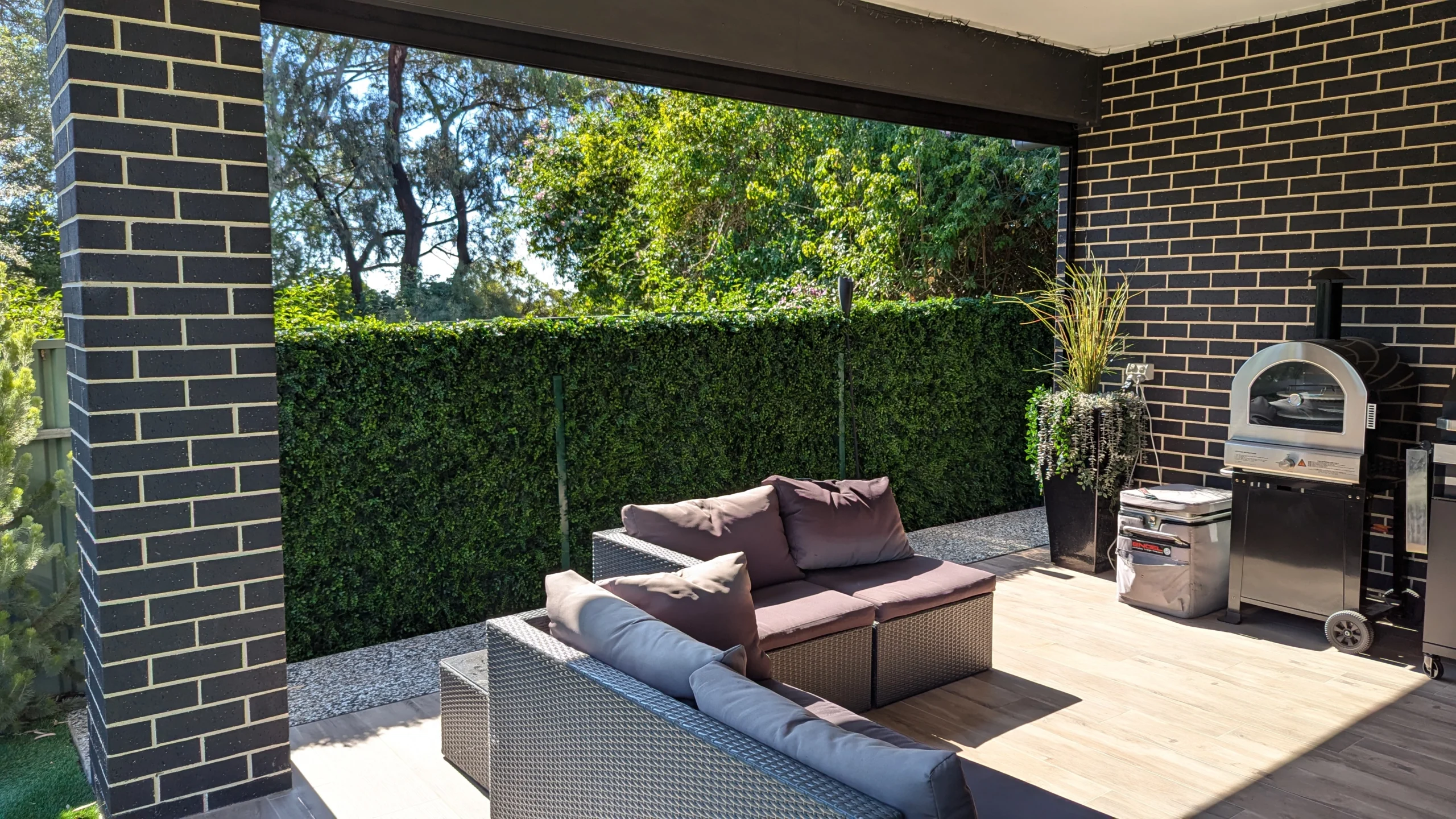
To make a faux hedge wall look more realistic, it’s all about breaking up the uniformity. Don’t just install a flat green rectangle. Layer real potted plants in front of it at varying heights. A tall, slender planter with a spiky dracaena or a cluster of smaller pots with ferns and grasses at the base will trick the eye. This adds genuine depth, texture, and life, making the artificial backdrop feel like a lush, integrated part of the garden.
3. Coordinate Your Deck with a Dark Louvered Privacy Wall
This look follows a simple but effective formula: 60% dominant wood tone + 30% neutral texture + 10% black metal accent. The warm brown of the louvered wall and deck creates a unified, enveloping feel. The gray wicker of the seating provides a soft, textural contrast, preventing the wood from feeling overwhelming. Finally, the slim black metal railings and screen posts add a crisp, graphic outline that defines the space. You could swap the gray wicker for a light beige or cream and still maintain the same balanced feel.
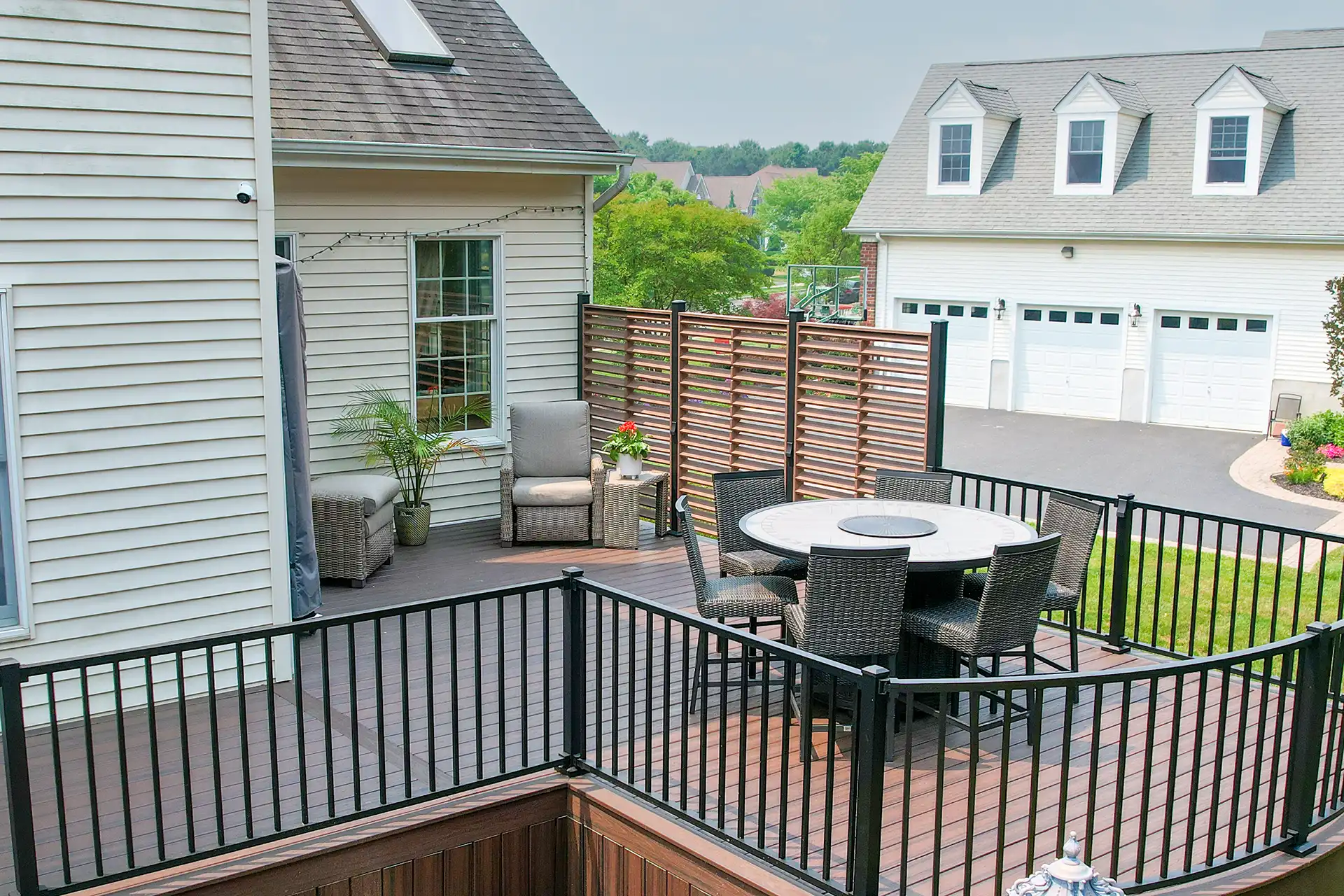
A full-height privacy wall like this works best on a deck that is at least 12×12 feet. Anything smaller and the dark, tall wall can feel imposing and shrink the perceived space. It’s ideal for second-story decks or elevated platforms where privacy from neighbors is a primary concern. The key is to have enough floor space for both lounge and dining areas, so the wall feels like a backdrop rather than a barrier. For smaller spaces, consider the shorter, planter-focused design in Idea #6.
4. The Minimalist’s Take on the Horizontal Slat Wall
The single element that makes this design work is its simplicity. There are no competing materials, no decorative flourishes, just the clean repetition of warm wood-toned slats and stark black posts. Removing the black metal supports and using wood instead would soften the look too much, losing the sharp, modern contrast. The black posts are the architectural punctuation that gives the screen its graphic power and structure. It’s a testament to the idea that you don’t need complexity to make a strong statement.
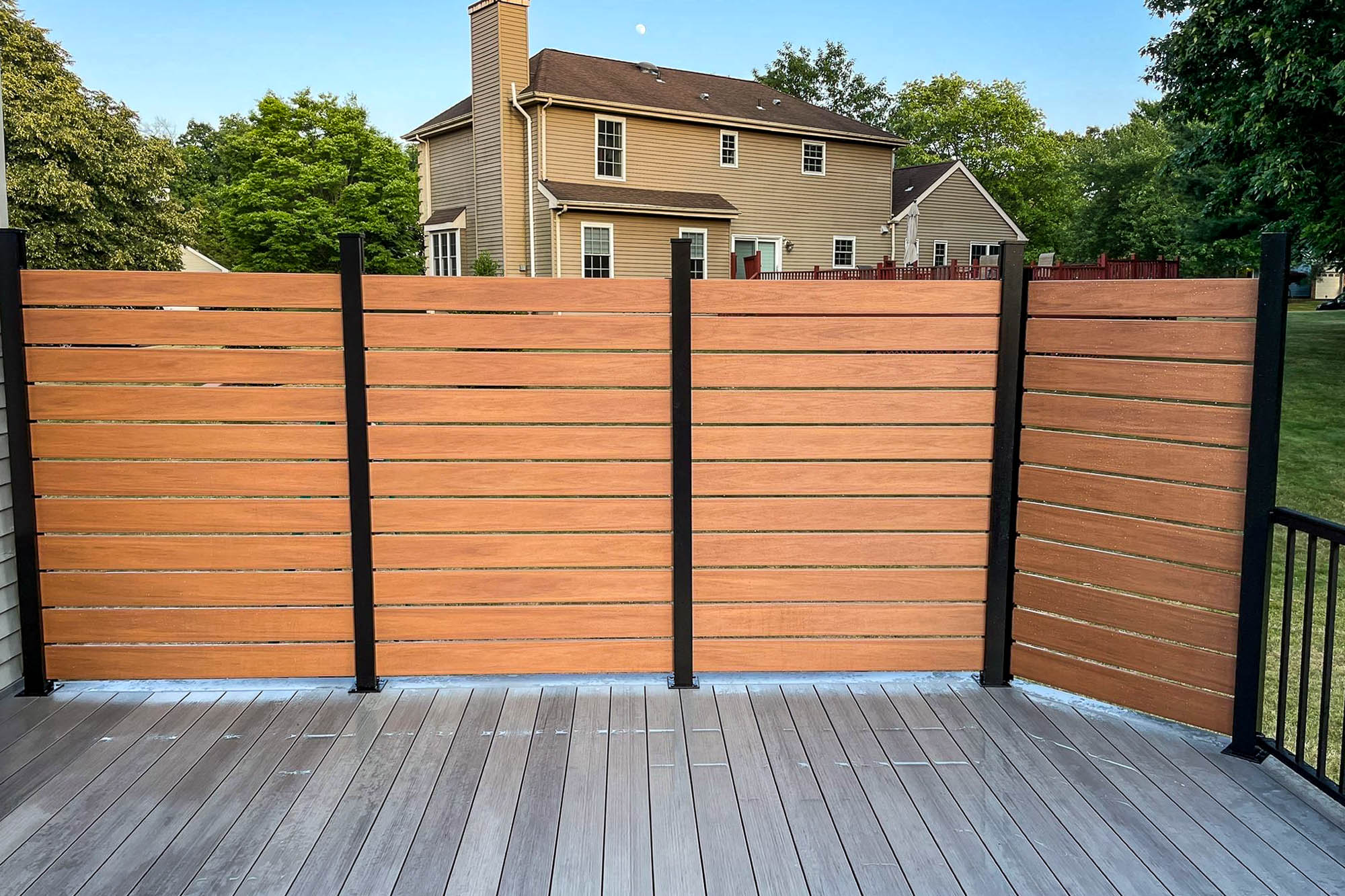
While beautiful, a natural wood screen requires commitment. To keep this warm brown tone, you’ll need to clean and re-stain or re-seal it every 1-3 years, depending on your climate and sun exposure. The annual cost is low (under $100 for supplies), but the labor is real. If you skip this, the wood will naturally weather to a silvery gray, which can also be beautiful but is a different aesthetic. For a zero-maintenance alternative, use wood-look composite boards (like Trex) instead of real wood—they’ll hold their color for years with just occasional washing.
5. Enclose a Rooftop Lounge with Louvered Wood Panels
Creating a luxurious rooftop escape like this requires a significant investment, with the structure itself being the main cost.
- Main Furniture (Sectional & Fire Pit): $4,000 – $9,000
- Structure (Pergola & Privacy Walls): $8,000 – $20,000+
- Textiles (Cushions, Rugs): $500 – $1,500
- Accessories (Lighting, Solar Panels): $1,000 – $3,000
- TOTAL: $13,500 – $33,500+
Budget alternative: Use modular outdoor seating from IKEA, a standalone propane fire pit, and pre-fabricated privacy screens instead of a custom pergola to get a similar vibe for around 40% of the cost.
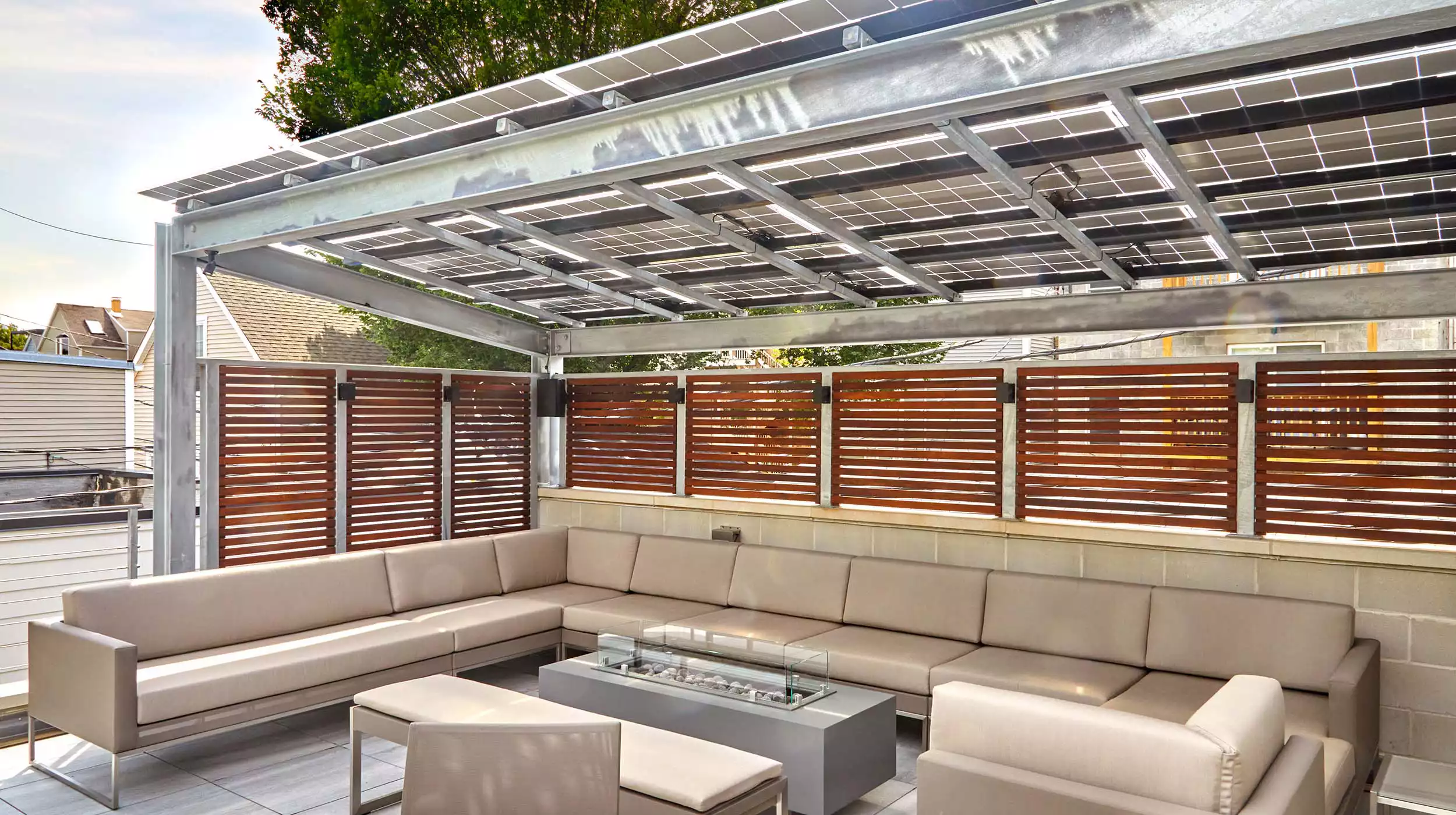
The concept of the ‘outdoor room’ has exploded in popularity, and this design is a perfect example of why. As our homes become our sanctuaries, we’re looking to extend our living space outward. This isn’t just a patio; it’s a fully functional lounge with walls (the screens), a ceiling (the pergola), and a hearth (the fire pit). The integration of solar panels speaks to a growing desire for sustainable, off-grid features that add function, not just form. It’s a trend about maximizing every square foot of property with style and comfort.
6. Accessorize a Light Wood Slat Wall with Hanging Planters
Adding hanging planters to a slatted wall is a quick project that adds major charm. Time: 30 minutes. Cost: $50-$100.
- First, choose your planters. Look for small, lightweight pots with a built-in hook or a flat back for easy mounting.
- Select your plants. Shallow-rooted succulents, trailing ivy, or small herbs work best.
- Fill the planters with potting mix and your chosen plants.
- Measure and mark where you want each planter to hang on the wall. An asymmetrical, staggered arrangement often looks more natural than a straight line.
- Simply hook the planters over the wooden slats. For heavier pots or in windy locations, add a small S-hook or zip tie for extra security.
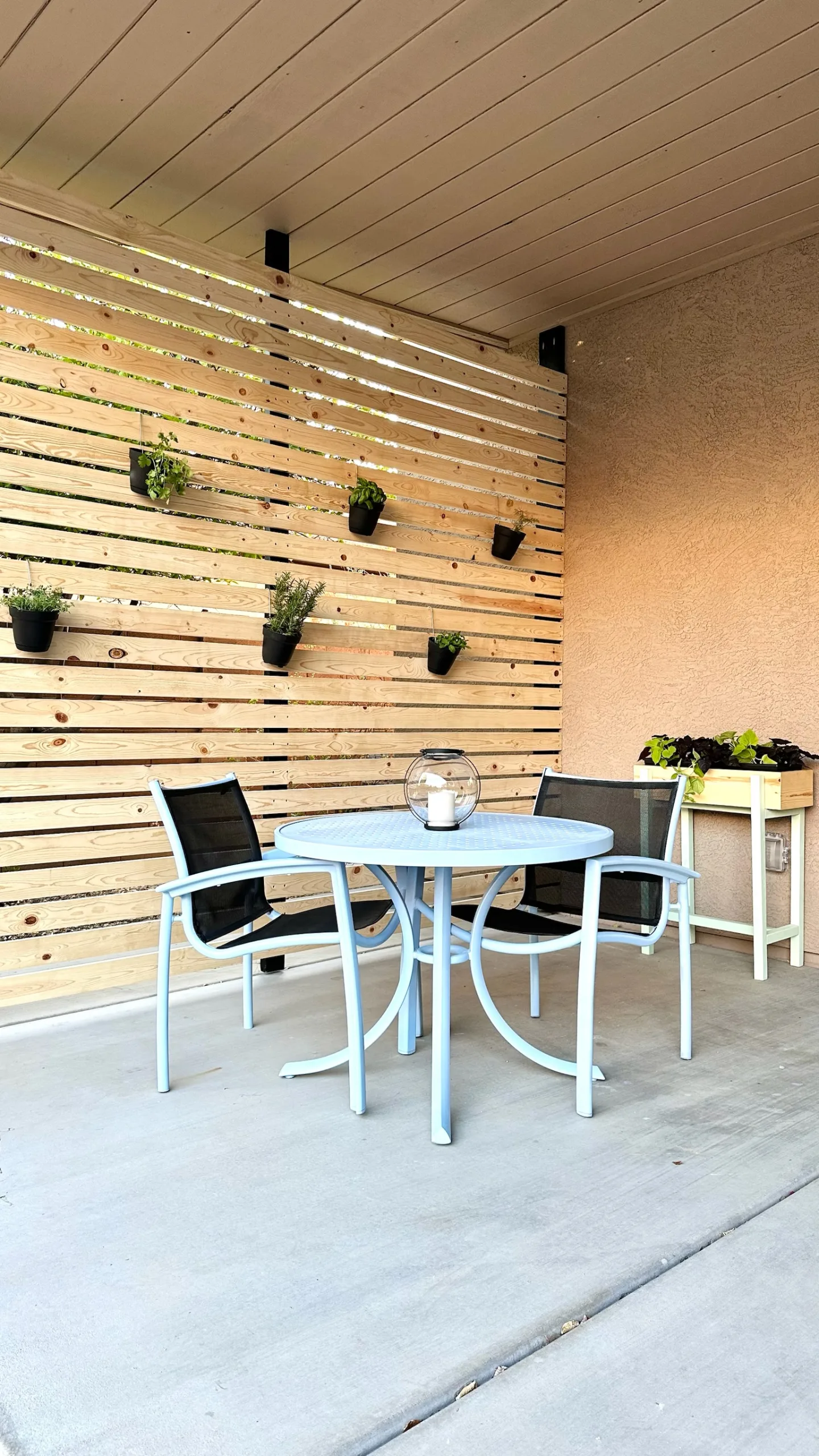
This composition is all about the delightful interplay between rigid structure and organic life. The clean, repeating lines of the horizontal light wood slats provide a perfect geometric grid. The small black planters and the soft greenery introduce gentle curves and a touch of wildness that breaks up the monotony. The light blue of the bistro set adds a pop of cool color that complements the warm wood, creating a balanced and inviting scene that feels both modern and charmingly personal.
7. Go Bold by the Pool with White Geometric Privacy Screens
When using statement screens with a repetitive pattern, the magic is in the multiples. Using just one of these white geometric panels would look lonely and temporary. Installing a series of three or more creates an intentional architectural feature. For maximum impact, maintain about 6-12 inches of space between each panel. This creates dynamic shadow play and allows glimpses of what’s behind, making the wall feel more like a sculptural element than a solid barrier. Compare this effect to the solid metal screens in Idea #14.
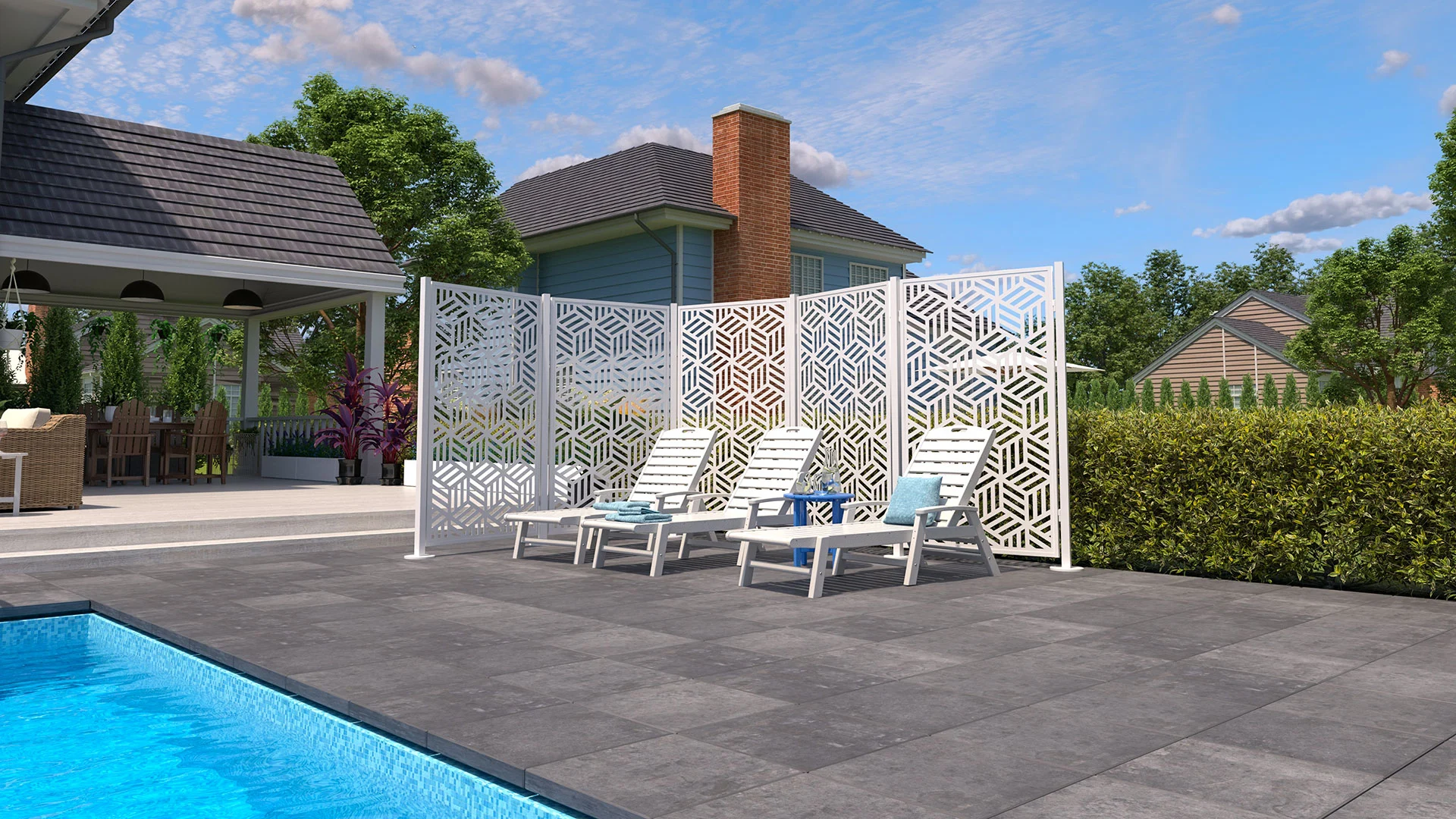
White looks stunning by a pool, but it is a high-maintenance choice. It will show every speck of dirt, dust, and splashback from the pool or garden. Those intricate geometric cutouts are also a magnet for cobwebs and debris. Plan on hosing them down every few weeks and giving them a more thorough scrub with a soft brush a couple of times a season to keep them looking crisp and clean. If you’re not up for the upkeep, a similar screen in a darker color like charcoal or black will be much more forgiving.
8. Create a Cozy Nook with Dark Horizontal Privacy Walls
This enclosed feeling is perfect for creating an intimate corner on a larger deck. To pull this off, you need a space that’s at least 8×8 feet. This provides enough room for a high-top bistro set or a pair of lounge chairs without feeling cramped by the dark walls. A ceiling height of at least 8 feet for the wall itself is ideal to ensure privacy without making the space feel like a box. This high-walled, small-footprint approach is a great solution for townhome or condo balconies where you are in close proximity to neighbors.
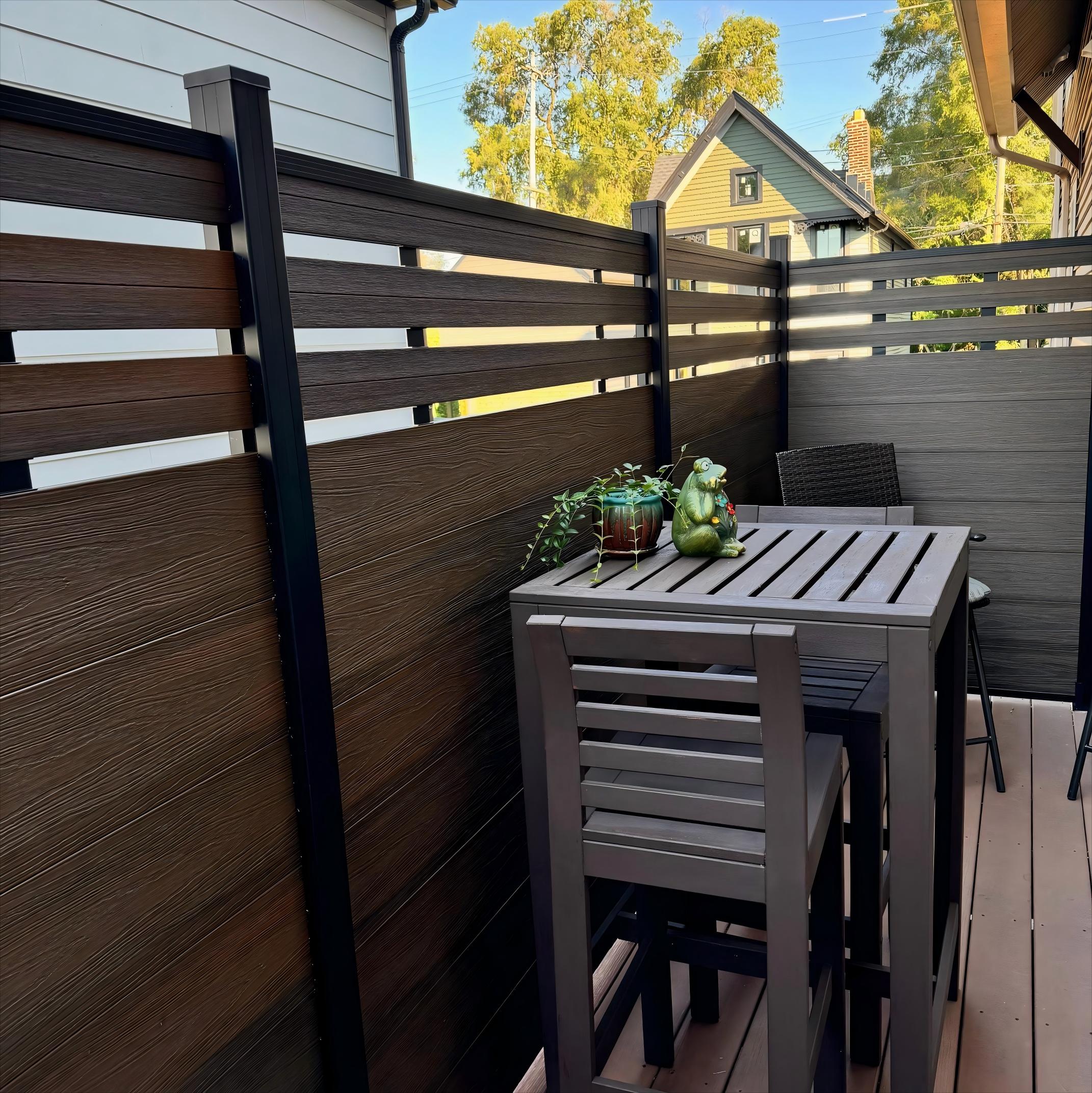
What makes this little corner feel special is the personality injected through decor. The space is structurally simple—a dark wall and a wood table. But the addition of the quirky ceramic frog and the trailing potted plant gives it life and a sense of humor. Without these small, personal touches, the area would be stylish but sterile. It’s a reminder that even in modern, structured designs, it’s the little bits of ‘you’ that make a space feel like a home.
9. Layer Decorative Metal Scrollwork Over a Wood Fence
This sophisticated look is a study in layering textures within a tight color palette. The formula is approximately 50% dark vertical wood, 30% fine-lined evergreen texture, and 20% decorative metal. The solid, dark wood fence provides a grounding backdrop. The tall, slim arborvitae trees add verticality and soft, natural texture. The black metal screens are the jewelry—their abstract, curved lines offer a graphic punch that contrasts beautifully with the straight lines of the fence and the soft texture of the foliage. It’s a masterful mix of hard and soft, natural and man-made.
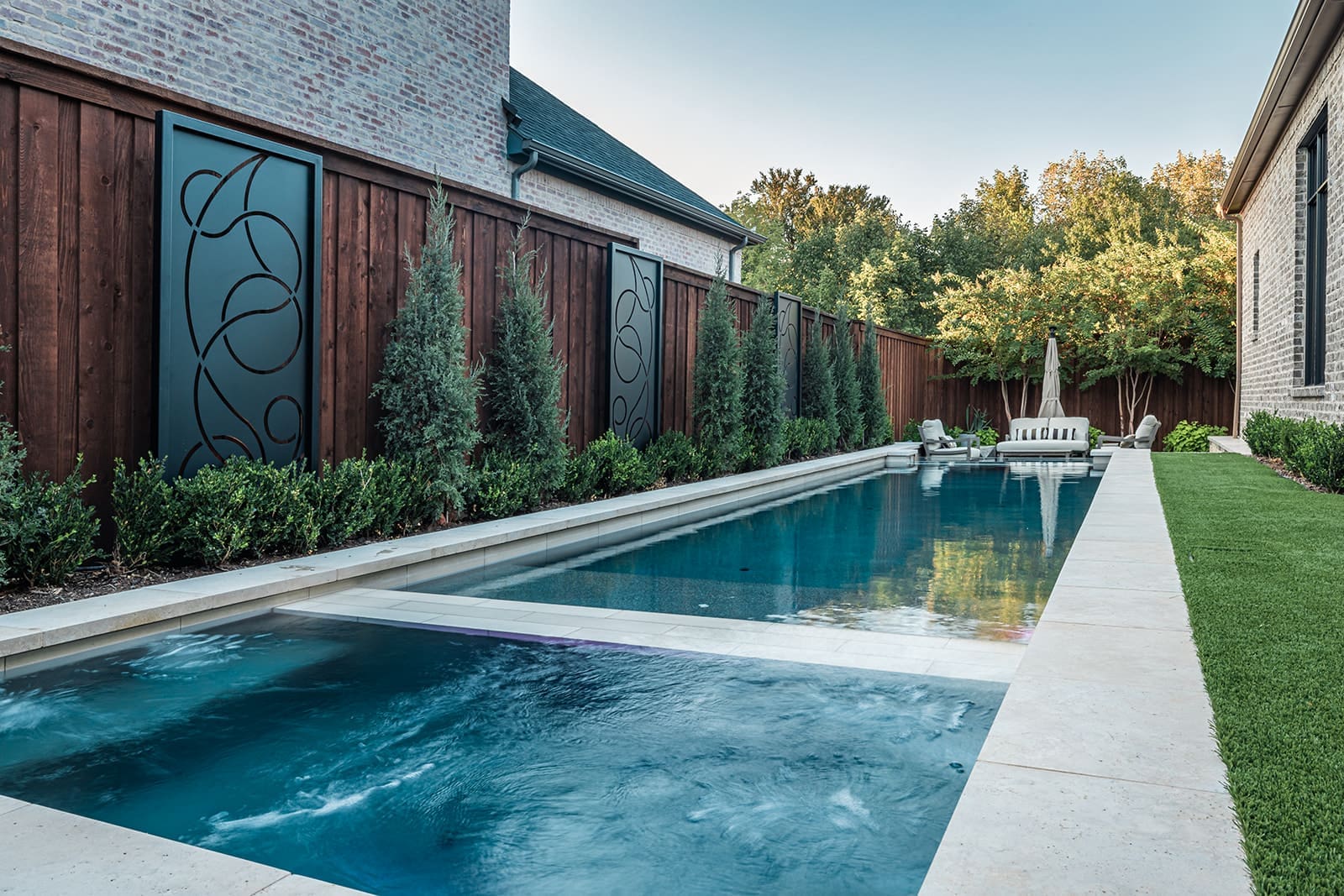
The success of this design lies in its use of repetition and rhythm. The decorative metal panels are not just placed once; they are repeated down the length of the fence, creating a predictable and calming pattern for the eye to follow. This is reinforced by the repetition of the tall, slender evergreen trees. This rhythmic placement of elements turns a simple privacy fence along a lap pool into a dynamic and intentional design feature, leading the eye gracefully from one end of the space to the other.
10. Define a Serene Corner with a Natural Wood Slat Fence
This space feels so calming because of its strict adherence to a simple, clean geometry. The horizontal lines of the wood slat fence are echoed in the horizontal lines of the grey deck boards and the paneled exterior wall. This creates a harmonious, unified backdrop. The black rocking chairs introduce gentle curves, providing a soft counterpoint to the scene’s otherwise linear nature. The limited palette of natural wood, cool grey, and black keeps the focus on form and texture. It’s a very peaceful composition.
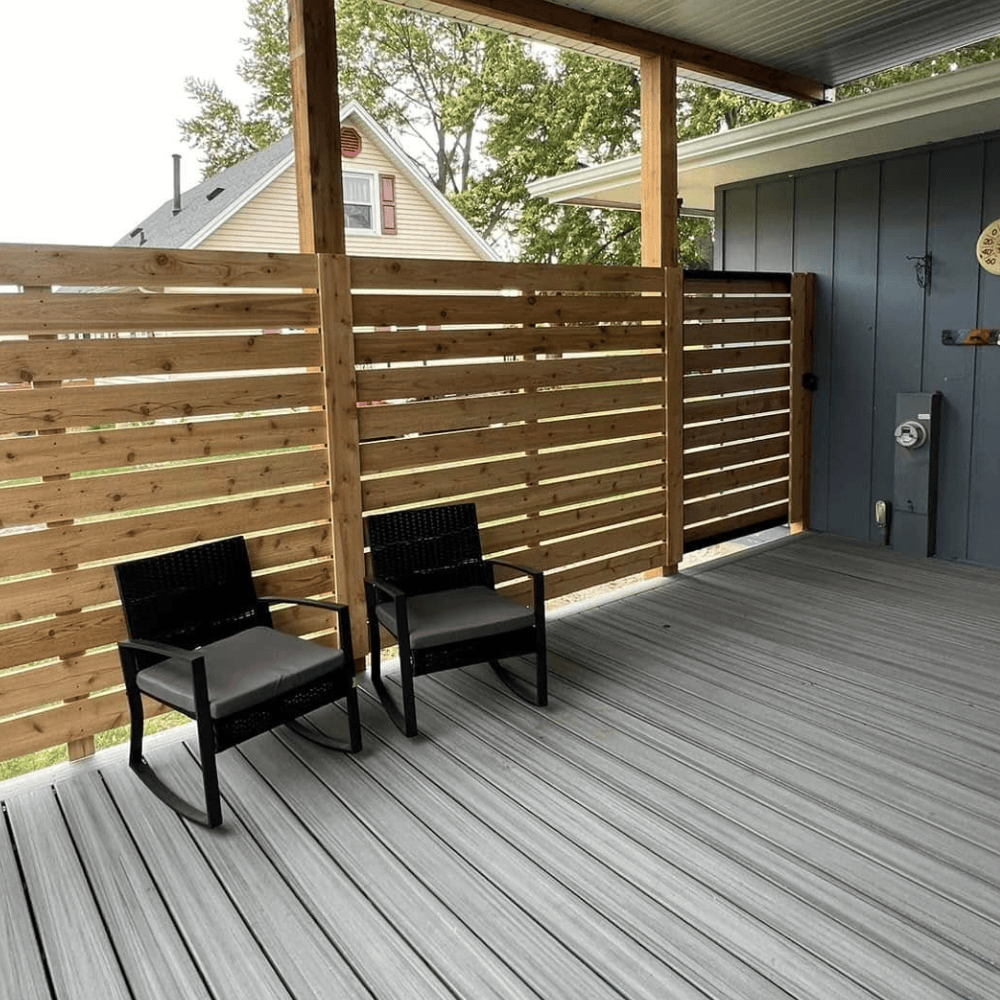
You don’t need custom carpentry for this serene look. You can build a similar fence using standard pressure-treated 1×6 boards from Home Depot and 4×4 posts. For the chairs, look for classic black wood or metal rockers on Facebook Marketplace, which often go for under $100 for a pair. A coat of exterior black paint will make them look brand new. This brings the core elements of the look well within a modest budget. Compare the simplicity here to the more complex built-in seating of Idea #21.
11. Achieve a Tropical Vibe with a Woven Bamboo Screen
There’s a huge trend right now towards ‘resort-style living’ at home, and this woven bamboo screen is a perfect example. People are craving a sense of escape, and materials with a tropical or bohemian feel are an easy way to get there. Bamboo, with its natural texture and warmth, instantly makes a space feel more relaxed and vacation-like. It’s a move away from sterile modernism towards something more organic, tactile, and transportive. It suggests a story and a connection to nature, which is something we’re all looking for.
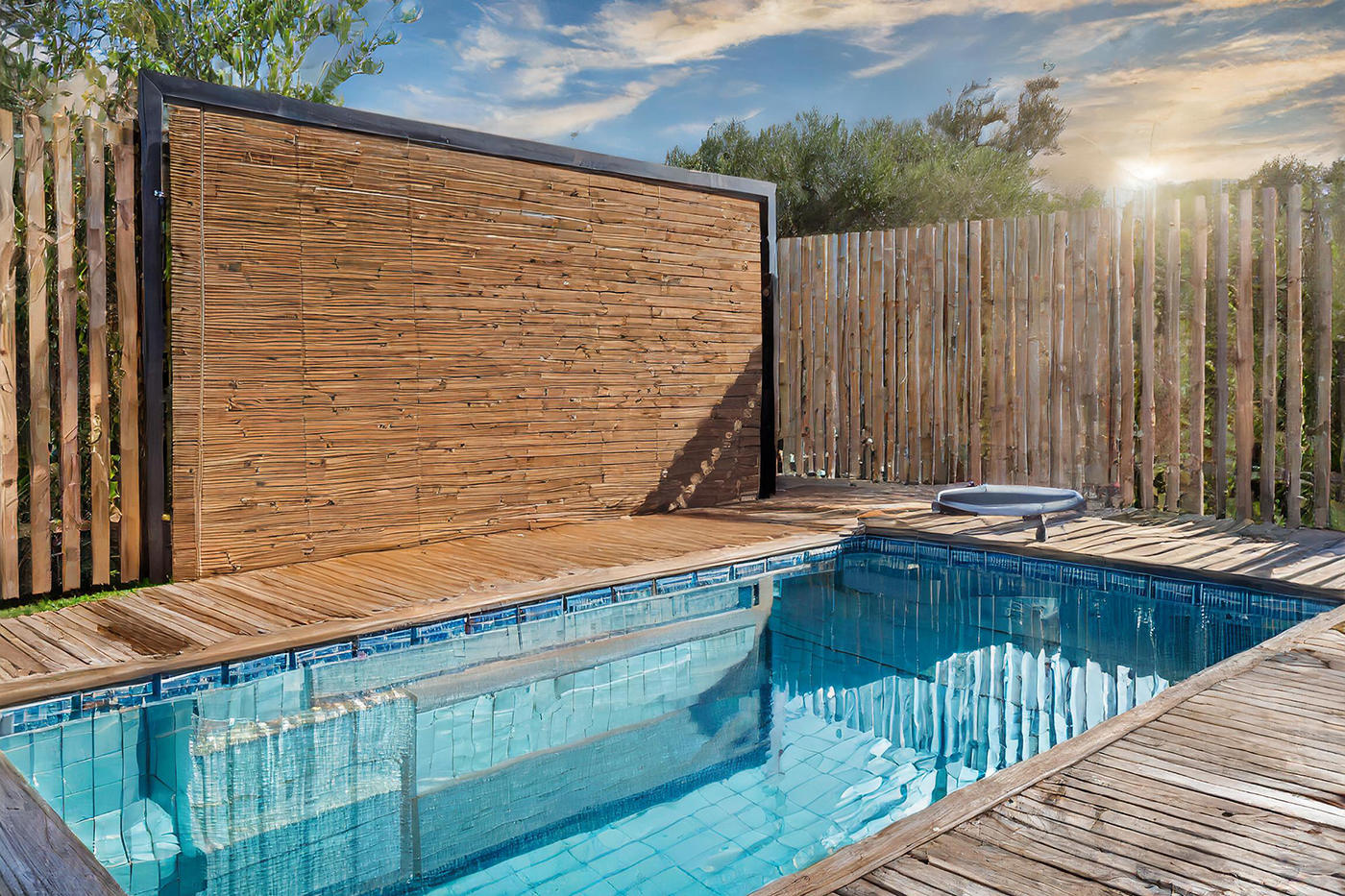
When working with highly textural materials like woven bamboo and vertical wooden poles, the key is to not overdo it. The screen is the star of the show. Keep the other elements simple. Notice how the decking is a simple, clean-lined wood slat and the screen’s frame is a slim, unobtrusive dark metal. If you were to add heavily patterned tiles or ornate furniture, the space would quickly become visually chaotic. Let the beautiful, natural texture of the bamboo have its moment.
12. Create a Lush Retreat with an Artificial Green Wall
A high-quality artificial living wall can be surprisingly heavy, especially a large one. Before you commit, you must confirm that the wall or fence you plan to mount it on can handle the weight. A flimsy, older fence might sag or even collapse over time under the load, especially after a heavy rain or in windy conditions. You may need to reinforce your existing structure with additional posts or supports before installation, so factor that potential work and cost into your plan from the beginning.
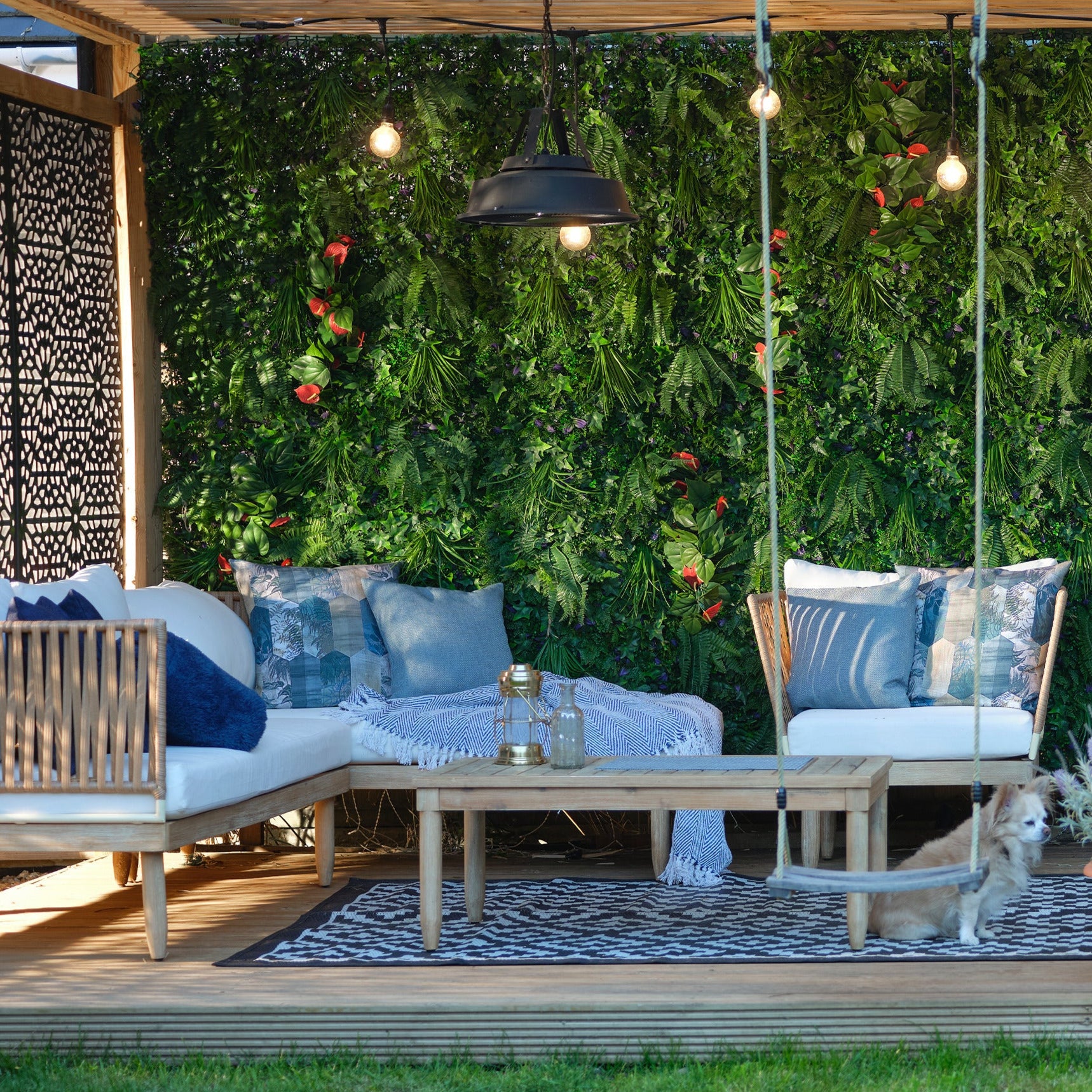
Before you dive into creating this lush green hideaway, run through this quick checklist:
- Measure Your Wall: Double-check the height and width to ensure you order the correct number of faux foliage panels. Always order 10% extra for trimming and mistakes.
- Check Your Sun Exposure: Even the best panels can fade over many years. Is the wall in brutal, all-day sun? If so, investing in the highest UV-rated product you can afford is non-negotiable.
- Plan for a Frame: The panels need something to attach to. Are you mounting directly to a fence, or will you need to build a simple wooden or metal grid first?
13. Screen Your Hot Tub with a Modern Gray Slat Wall
This type of targeted privacy screen is perfect for smaller patios or specific zones. The wall only needs to be slightly taller than the hot tub itself—typically 5-6 feet high—and just wide enough to block the primary line of sight from neighbors. This is a brilliant solution for a space as small as 10×10 feet, where a full-perimeter fence would feel overwhelming. The key is strategic placement. Sit in your hot tub and see exactly which angles feel exposed, then place the screen there. It solves the problem without enclosing the entire yard.
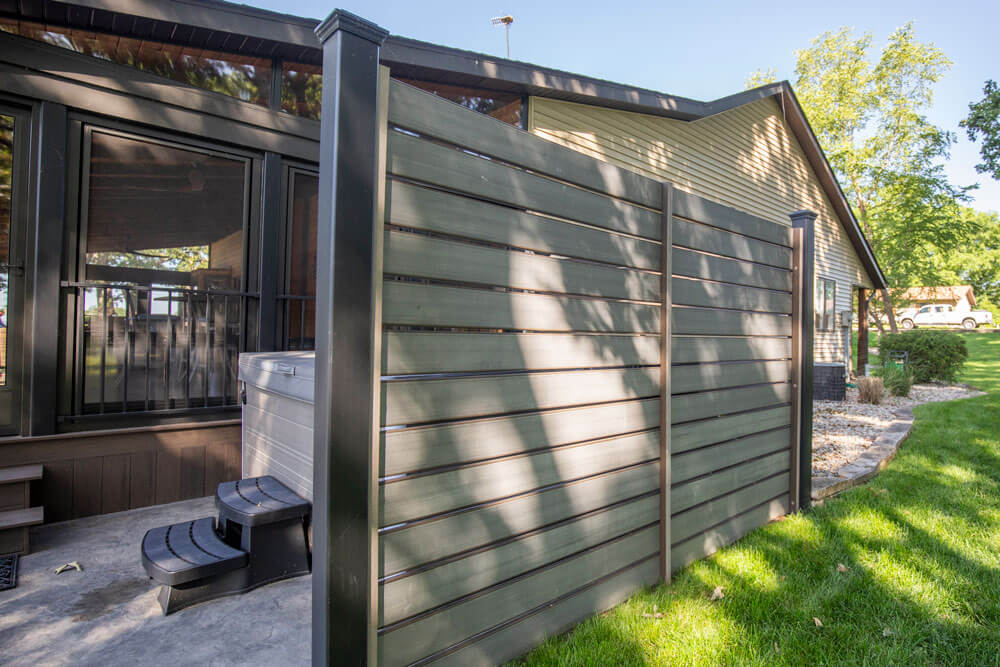
The most important element here is the choice of material. Using composite wood-look slats in a modern gray color elevates this from a simple fence to a deliberate design feature. The cool gray tone feels contemporary and clean, and its weather-resistant nature means it will continue to look sharp next to the hot tub without warping or fading from moisture and sun. Using regular pressure-treated wood would have created a much more rustic, and less polished, final look.
14. Incorporate a Tropical Look with Black Metal Palm Leaf Screens
The power of this design comes from its bold, graphic contrast. The matte black of the metal screens creates a dramatic silhouette against any backdrop, whether it’s a light-colored house siding or the open sky. The palm leaf cutout pattern introduces an organic, playful shape that softens the industrial feel of the metal. This juxtaposition of a natural motif rendered in a stark, modern material is what makes the screen so visually compelling. It’s both elegant and fun. Compare the dark, moody feel here to the bright, airy look of the white screens in Idea #7.
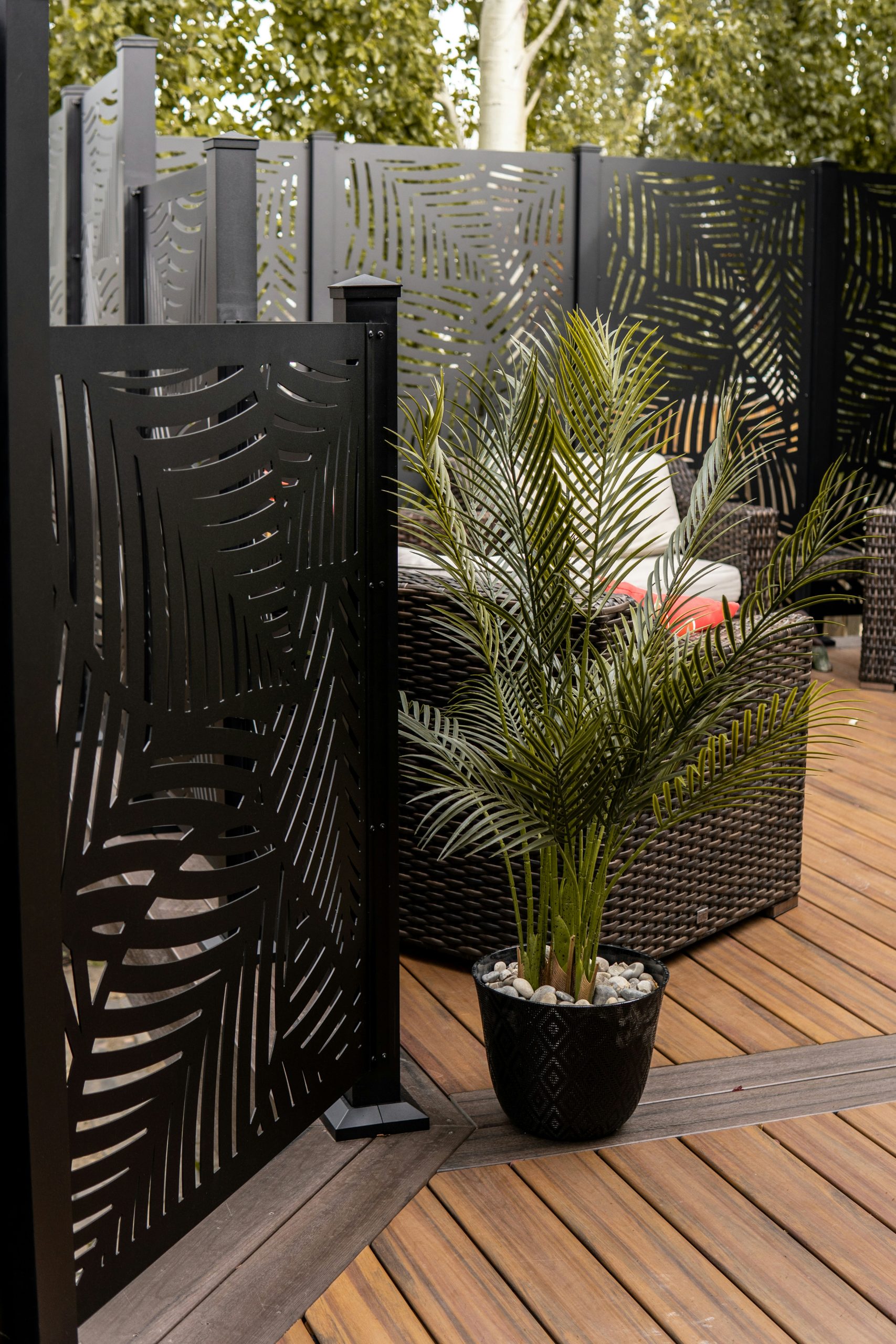
While custom laser-cut panels can be pricey, you can find stock-pattern metal privacy screens at stores like Home Depot or online retailers like Wayfair for a more accessible price, often between $200-$400 per panel. To get a similar feel for even less, consider using black-painted wooden lattice panels and training a real climbing vine to create an organic pattern. A potted palm, which you can find for under $50 at most garden centers, is the key finishing touch to nail the tropical mood.
15. Use a Two-Tone Woven Panel for Graphic Contrast
This look is a masterclass in high-contrast simplicity. The formula is 50% crisp white structure + 50% dark woven texture. The thick white vinyl posts and rails create a bold, clean frame that makes the intricate black woven infill pop. The surrounding neutral elements—concrete pavers and brown gravel—act as a quiet backdrop, ensuring the fence remains the undisputed focal point. You could flip the colors (black frame, white weave) for a more dramatic, moody effect while keeping the same powerful graphic balance.
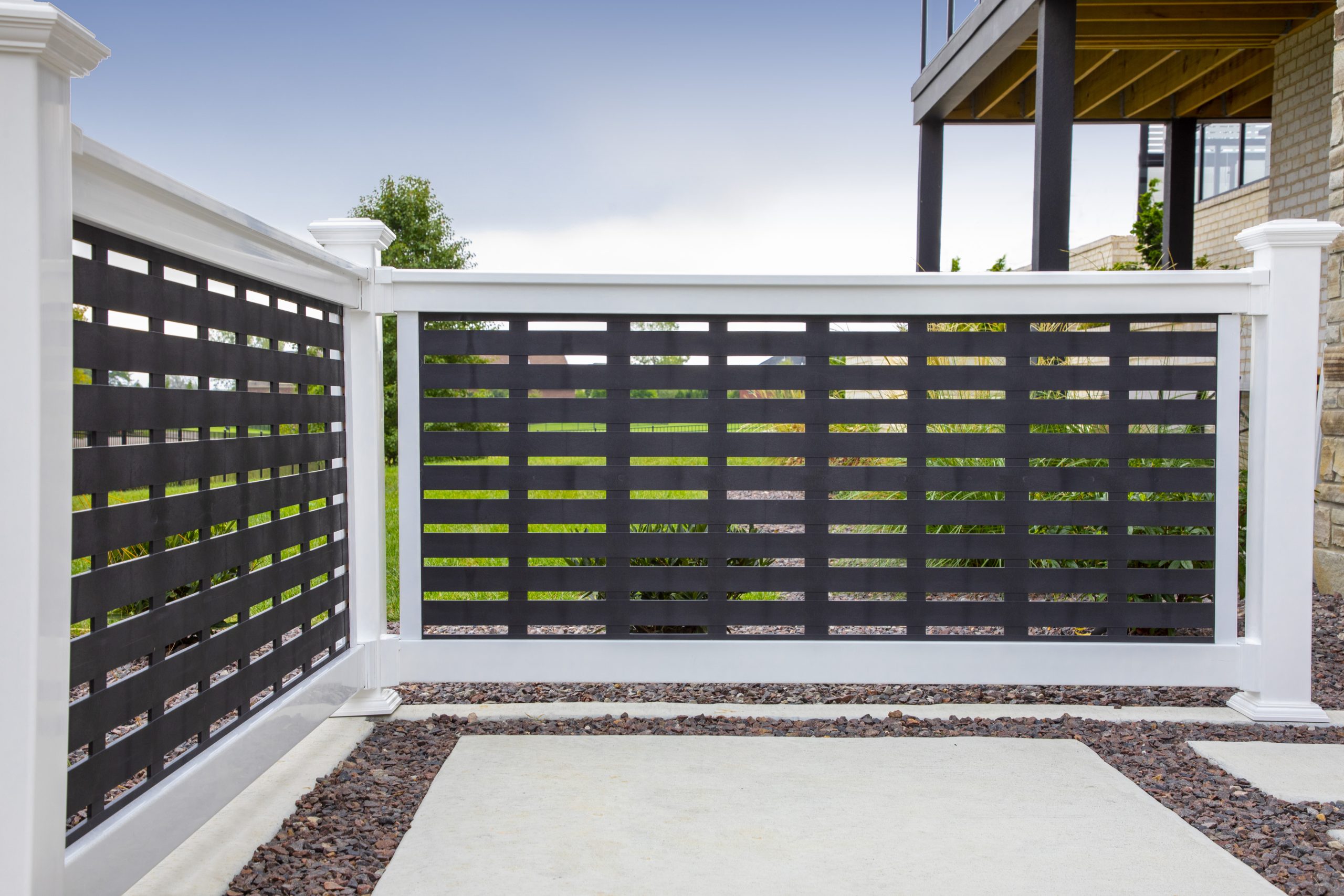
When using a pre-fabricated privacy system like this, the secret to a high-end look is in the installation details. Ensure your posts are perfectly plumb (vertically straight) and that the rails are perfectly level. Even a slight angle will be immediately obvious and look amateurish. Use a post level for accuracy. Spending the extra time to get these structural elements right will make the entire project look clean, professional, and intentional. This is not a step to rush.
16. Build in Function with a Vertical Slat Wall and Bench
A built-in bench makes a privacy wall work harder. Here’s a simplified approach to building one. Time: 4-6 hours. Cost: $150-$300.
- First, build the privacy wall itself, ensuring your vertical posts are securely anchored.
- Create the bench frame by attaching horizontal 2×4 supports to the wall posts at your desired seat height (typically 16-18 inches).
- Add front support legs for the bench frame, spacing them every 4-5 feet for stability.
- Cut your bench-top boards (2x6s are a good choice) to length.
- Space the bench-top boards about 1/4 inch apart to allow for drainage and wood movement.
- Secure the boards to the frame from underneath for a clean, screw-free surface.
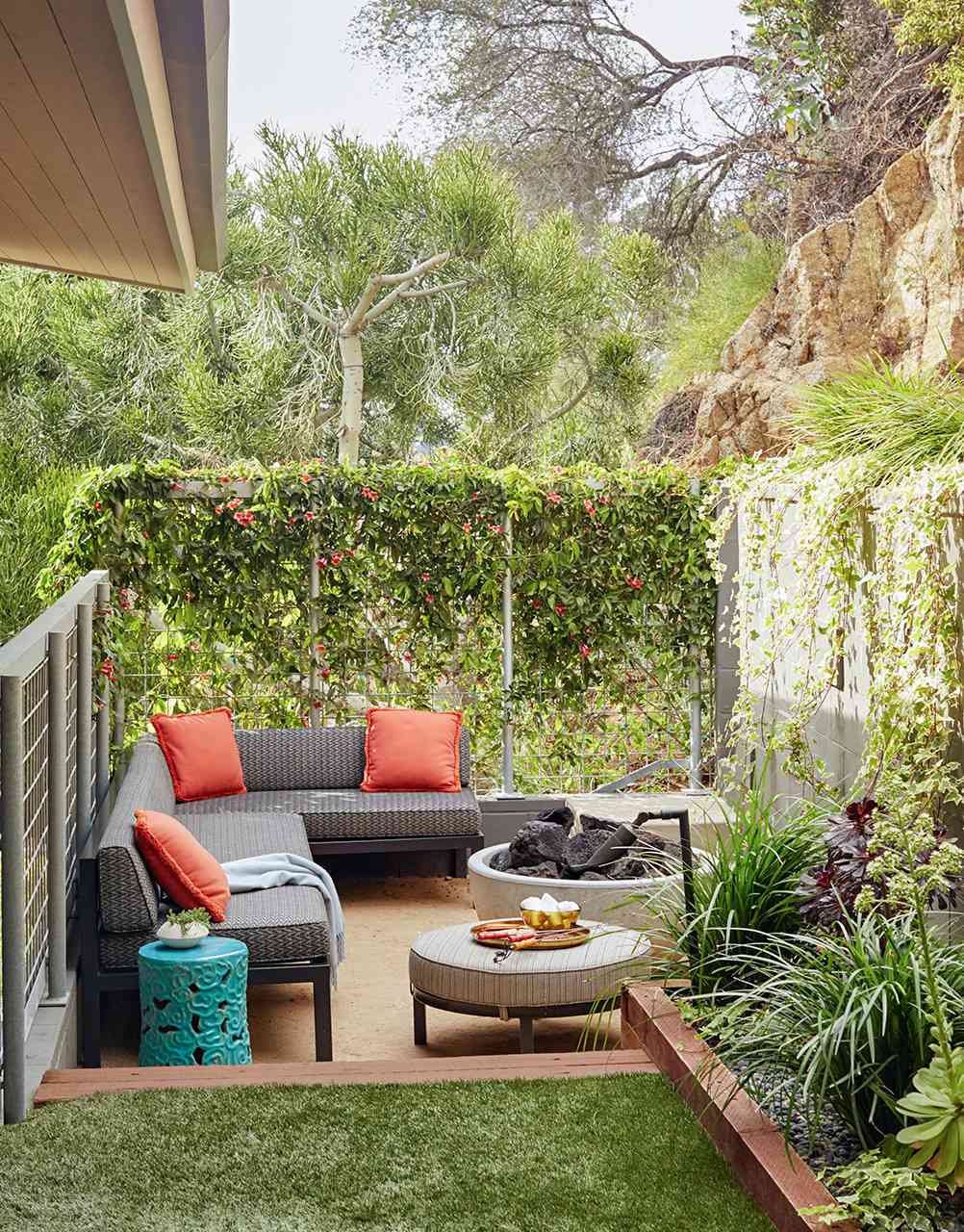
This design is so successful because it integrates form and function seamlessly. The privacy wall isn’t just a barrier; it’s also the backrest and support for the built-in bench. This multi-purpose approach is a hallmark of smart, modern design. The use of vertical slats, instead of the more common horizontal, draws the eye upward and makes the space feel taller. The warm wood tones used for both the wall and the bench create a cohesive, custom-built look that feels both architectural and inviting.
17. Go Fully Vertical with a Pocket-Planted Living Wall
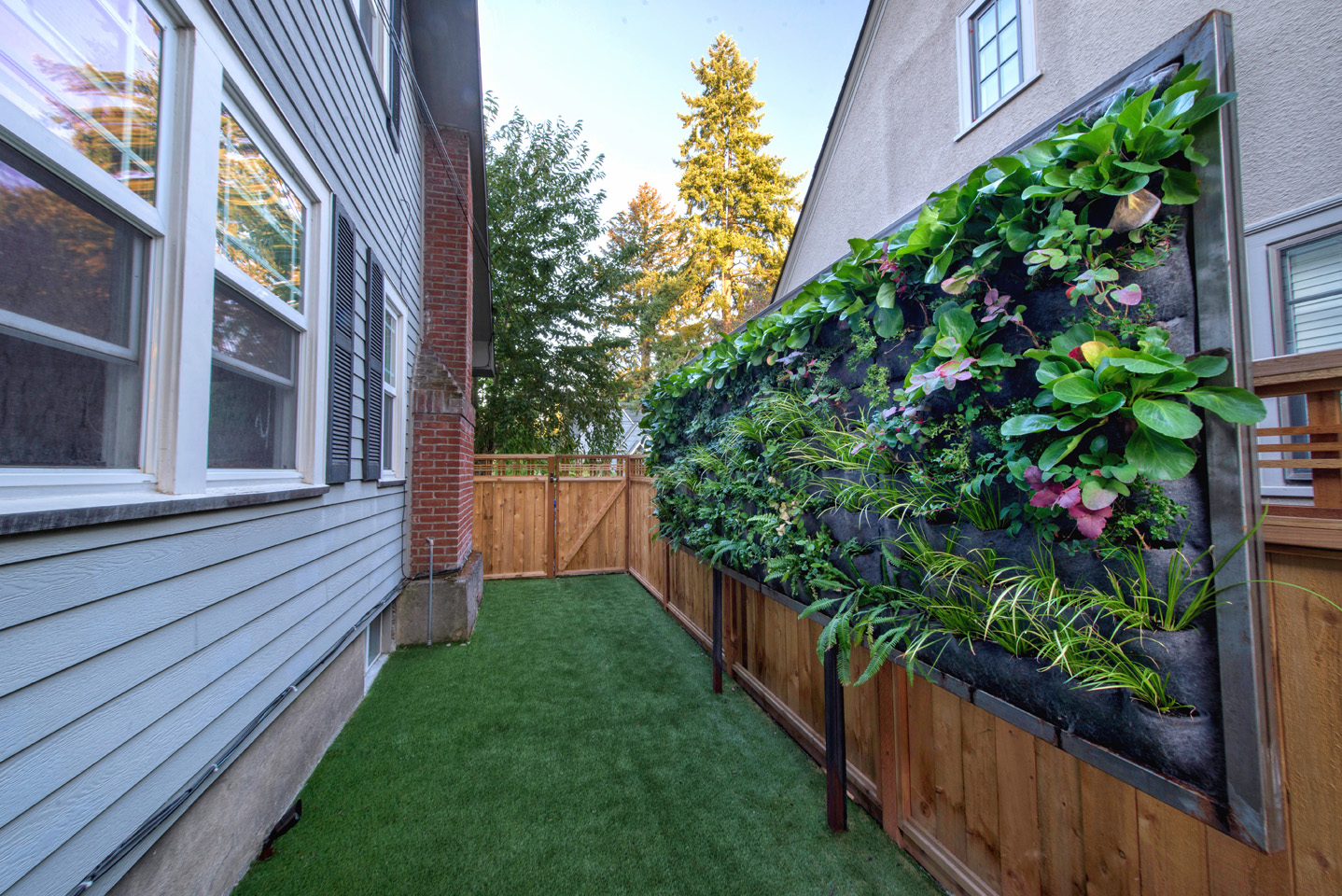
A real living wall is a significant gardening commitment. Unlike the faux version in Idea #12, this requires regular watering—potentially daily in hot, sunny weather. The small pockets dry out quickly. You’ll also need to fertilize periodically and replace plants that don’t thrive. Be prepared for some trial and error to find what grows best in your specific microclimate. Pests can also be an issue. An integrated drip irrigation system on a timer is highly recommended to reduce the daily maintenance burden.
|
📋 Copy HEX 🔗 Share |
Living walls are incredibly versatile and can work in even the tightest of spaces. They are an ideal privacy solution for narrow side yards, small balconies, or light wells where you don’t have the ground space for traditional planters. This specific setup, mounted on an existing fence, could fit in a passage as narrow as 3-4 feet wide. The key is verticality—it draws the eye up and away from the limited footprint on the ground, making the small space feel lush and expansive rather than confined.
18. Create Rhythm with a Two-Tone Horizontal Slat Fence
When designing a two-tone fence like this, the proportion of the color bands is critical. A good rule of thumb is the 60/30/10 principle, but applied to the pattern. Here, it’s roughly 70% primary color (the warm wood) and 30% accent color (the charcoal gray). This creates a balanced rhythm that feels intentional. Avoid a 50/50 split, which can look busy and create a jarring ‘striped’ effect. The thinner accent bands provide visual relief without competing with the main wood tone.
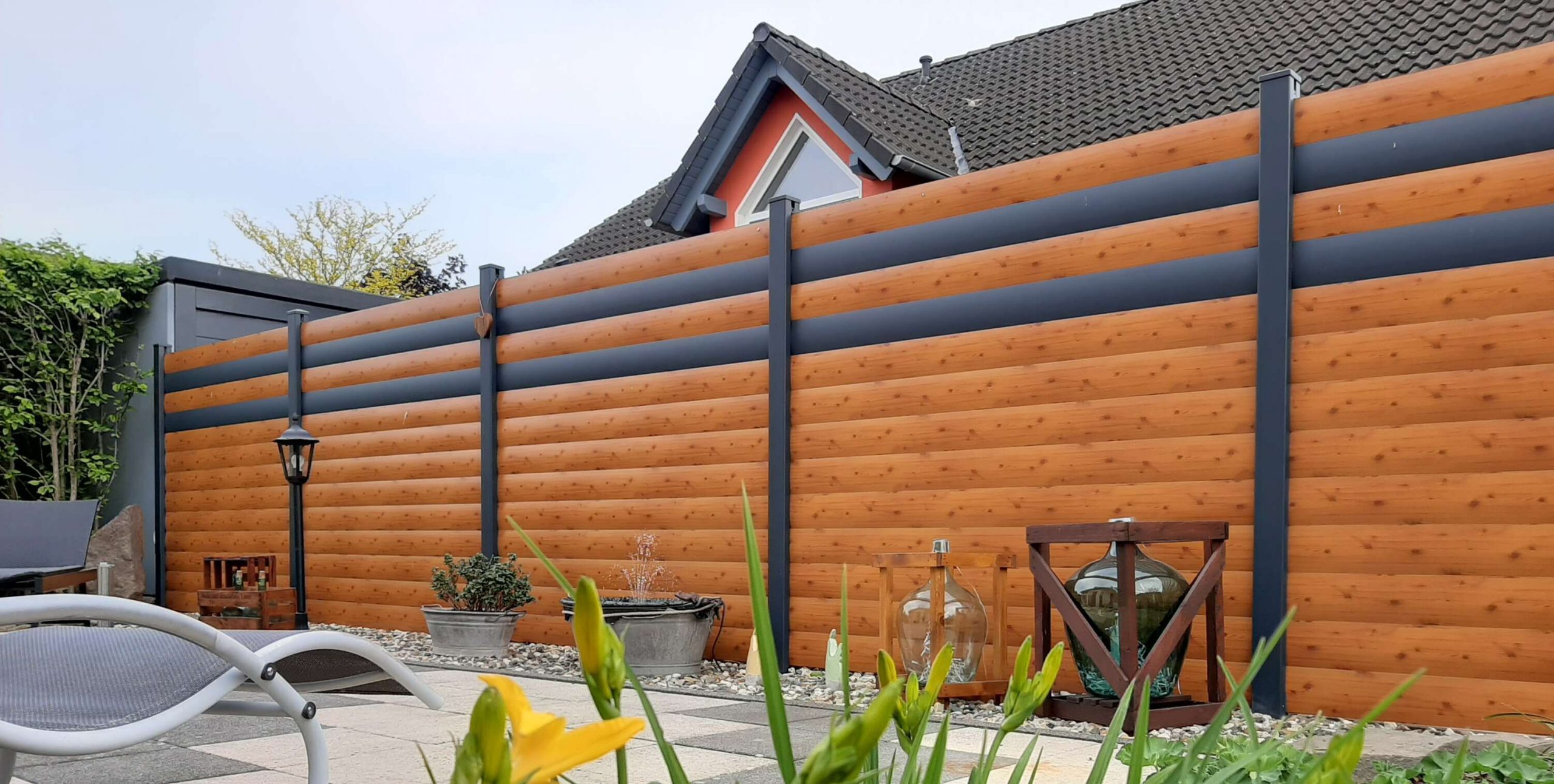
that truly elevates this fence is the discipline in its color palette. The design commits fully to just three colors: warm wood, charcoal gray, and black. The vertical posts are black, perfectly matching the house’s window frames (not pictured) or other architectural details. The charcoal bands are a softer echo of that black. This strict color cohesion is what makes the fence look like a sophisticated, architectural element rather than a simple backyard project. It demonstrates restraint and a clear design vision.
19. Create a Cool, Modern Poolside with a Grey Slat Fence
A dark-colored privacy fence like this beautiful slate grey one can absorb a tremendous amount of heat. On a hot, sunny day, the surface can become too hot to comfortably touch. More importantly, it will radiate that heat back into your patio area, making the space feel significantly warmer. If your deck or patio is in full, direct sun all afternoon, a dark fence might create an uncomfortably hot microclimate. A lighter color, like the white in Idea #7, would reflect heat instead of absorbing it.
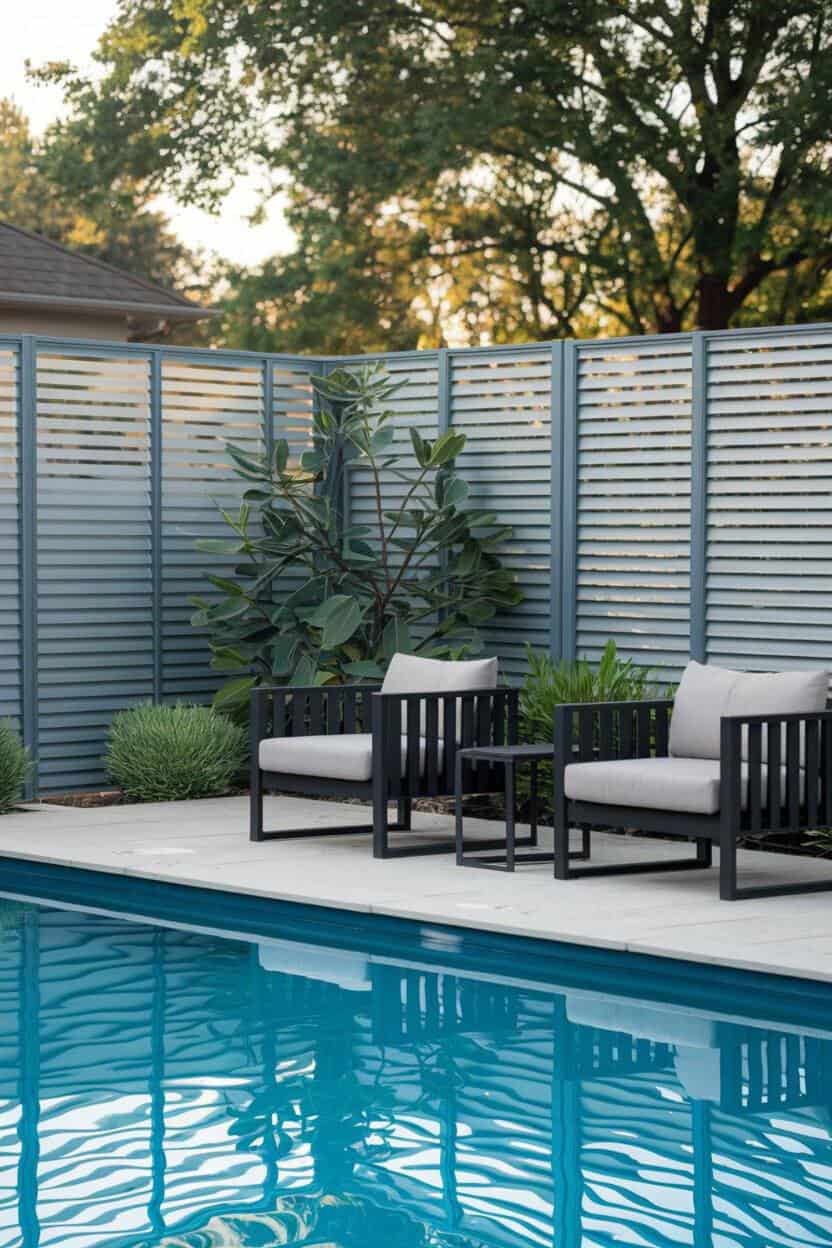
This poolside area feels so serene and luxurious due to its sophisticated, monochromatic color scheme. The grey of the privacy fence panels is echoed in the light gray cushions of the armchairs and the paved stone deck. This creates a cohesive and calming visual foundation. The black frames of the chairs and side table provide a sharp, graphic contrast that punctuates the space, while the vibrant blue of the pool and the deep green of the potted plants act as perfect, cool-toned natural accents.
20. Combine Wood Slats and a Concrete Bench for a Cozy Fire Pit Nook
This is a high-impact, custom-look project that involves several trades or advanced DIY skills. Here’s a rough estimate:
- Wood Slat Wall (Materials & Labor): $2,500 – $6,000
- Built-in Concrete Block Bench: $1,000 – $3,500
- Concrete Fire Pit Table: $1,500 – $4,000
- Lighting (Wall-mount & String): $400 – $1,200
- Textiles (Custom Cushions, Pillows): $800 – $2,000
- TOTAL: $6,200 – $16,700+
Budget alternative: Use pre-made wood fence panels, purchase a modular outdoor sectional instead of a built-in bench, and opt for a more affordable metal fire pit.
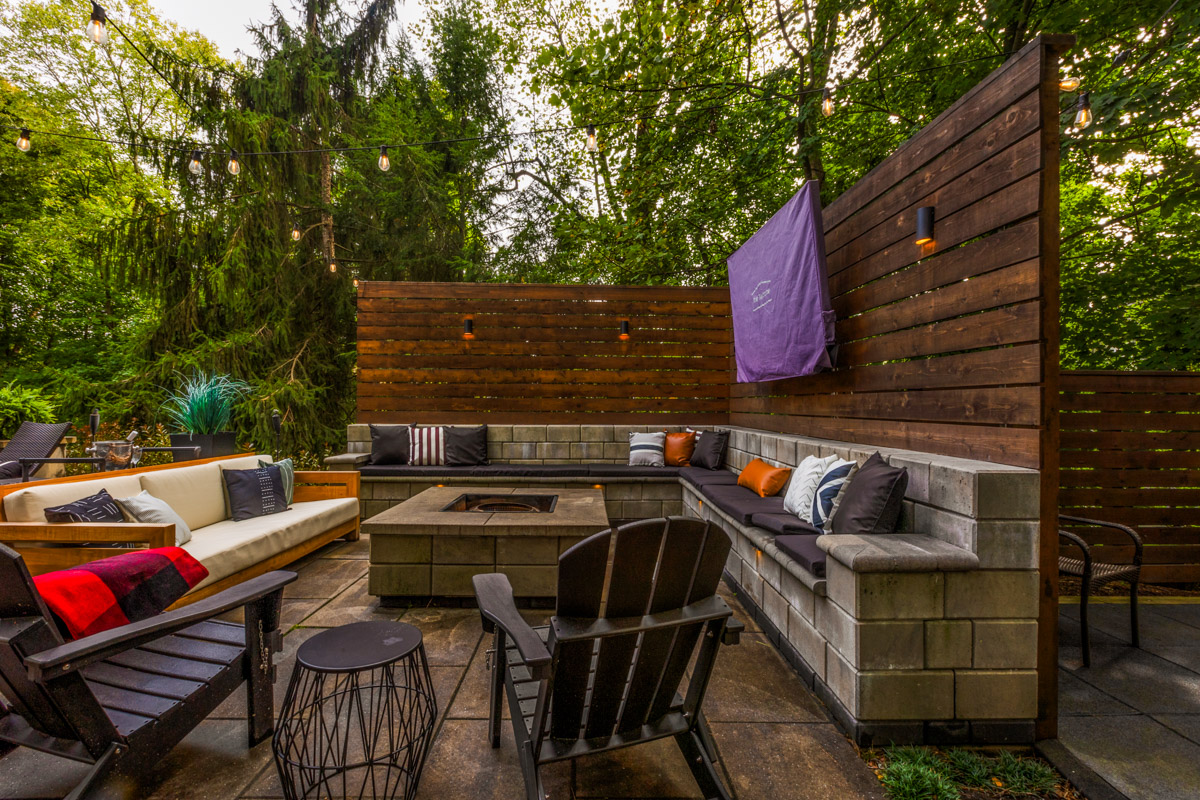
This space feels so inviting because it expertly mixes warm and cool materials. The dark-stained horizontal wood wall brings a natural warmth and texture that feels cozy and enclosing. The grey concrete of the built-in bench and fire pit provides a cool, solid, and modern counterpoint. This textural and temperature contrast is what gives the nook its depth and sophistication. The softness of the cushions and the glow of the fire and string lights complete the picture, making it the ultimate cozy outdoor living room.
21. Integrate Planters and Trellises into a Dark Gray Wall
When integrating multiple elements like planters and trellises into a single wall, the key is to create a sense of order. Don’t place them randomly. Here, the design wisely aligns the wooden trellises directly above the stacked stone planter boxes. This creates a strong vertical line and a clear visual connection between the two elements. It feels intentional and architectural. If the trellises were offset from the planters, the whole composition would feel cluttered and far less impactful.
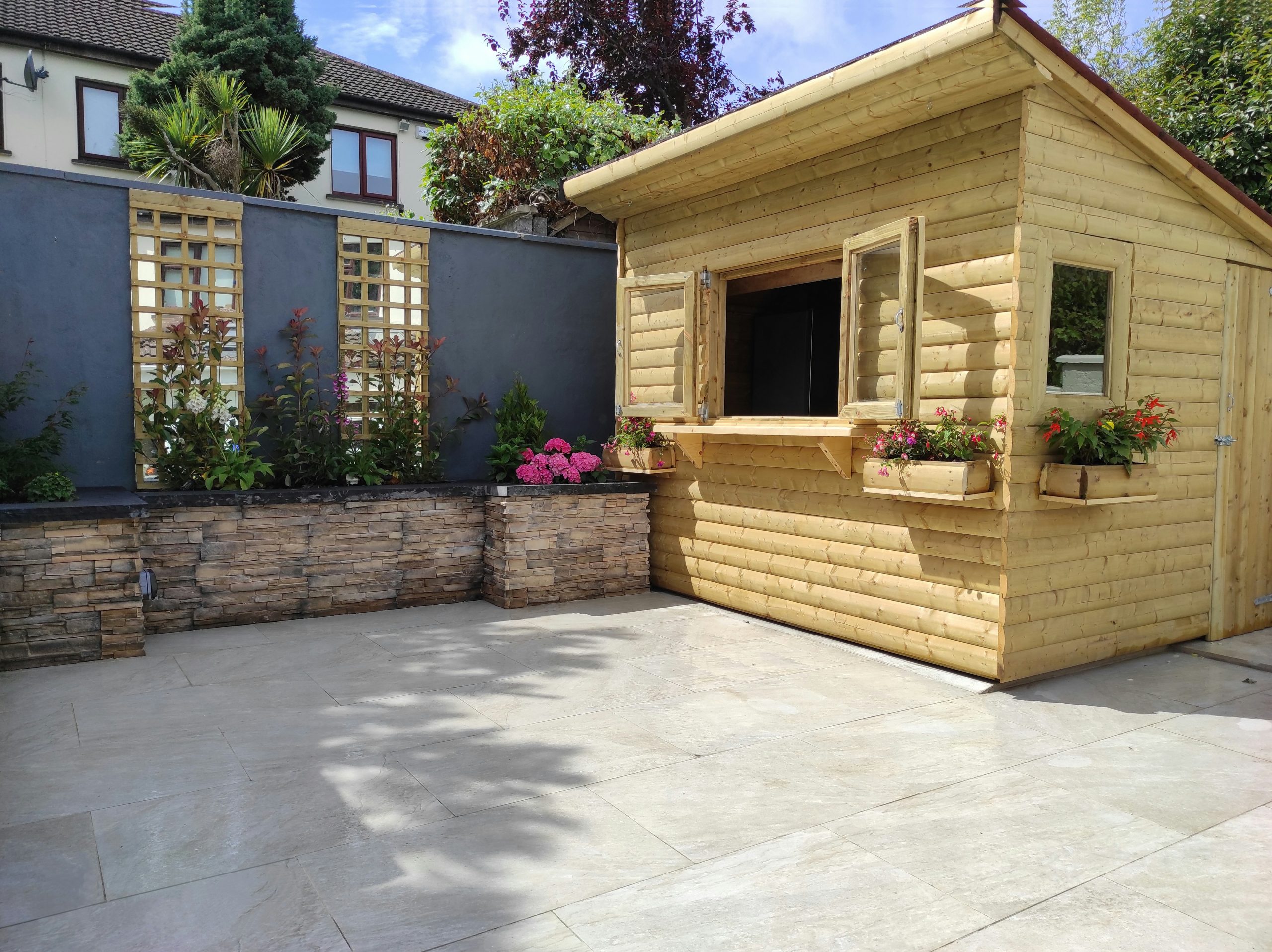
This design is a brilliant example of ‘functional layering’. The dark gray wall serves as the primary privacy layer. The stacked stone planter base adds a second layer of rustic texture and dimension. The natural wood trellises provide a third layer, introducing a warm material and a grid for climbing plants. Finally, the plants themselves add the fourth, living layer of color and organic form. Each layer has a purpose and contributes to a final result that is rich, complex, and visually stunning.
22. Frame a Pool Area with a Pergola and Lattice Panels
A substantial pergola structure like this is best suited for larger backyards where it won’t overwhelm the space. You’ll need a minimum area of about 15×15 feet for the structure itself, plus at least 4-5 feet of clearance on all sides to avoid it feeling crammed against a house or property line. It’s an excellent choice for defining a specific zone, like the area around a pool or a large outdoor dining space. The open roof keeps it from feeling as heavy as a solid cover, maintaining a sense of openness.
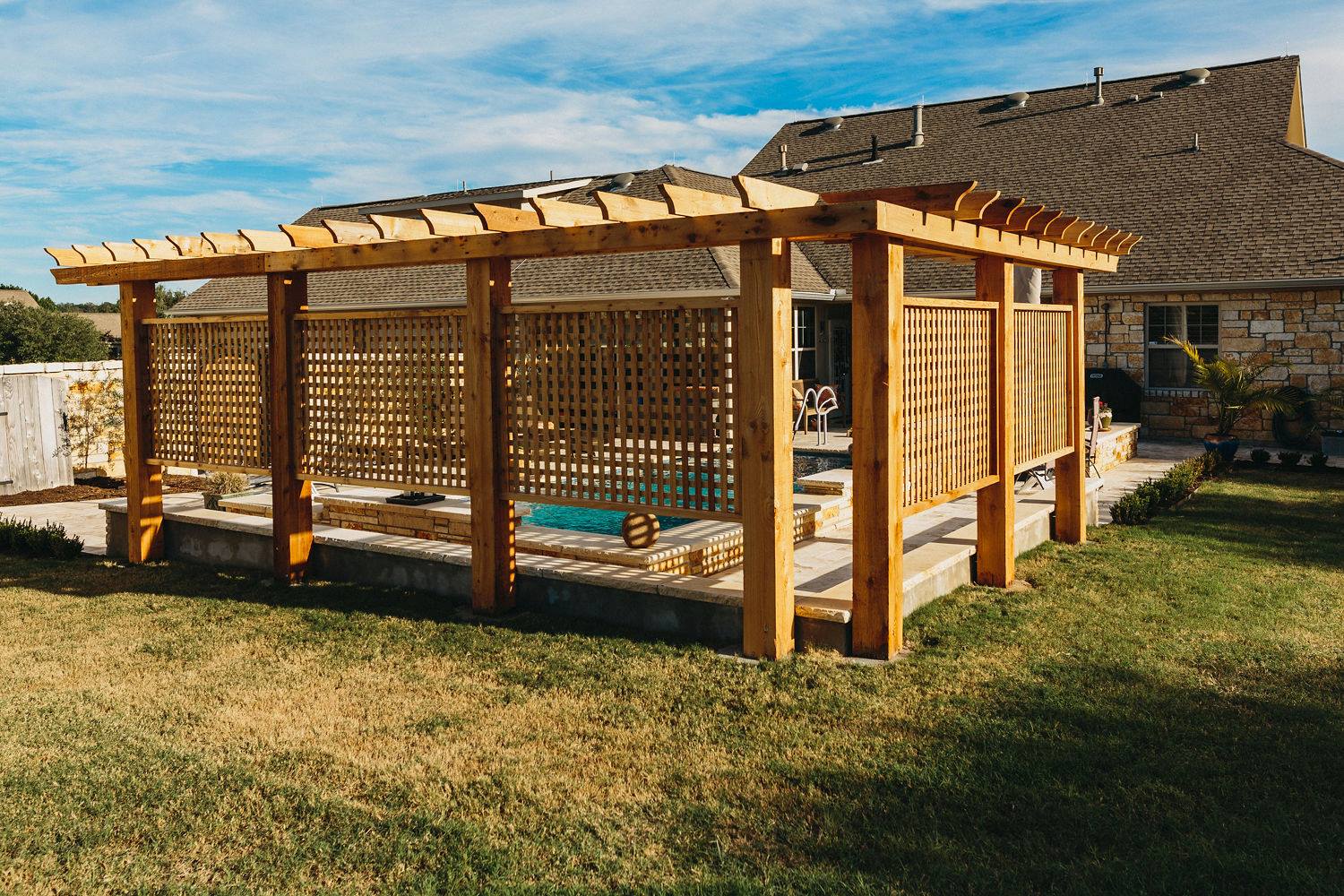
While beautiful, lattice panels offer more ‘perceived’ privacy than actual privacy. The open grid design breaks up the line of sight but doesn’t completely block it. From a distance or at an angle, people can still see through. It’s great for creating a sense of enclosure and filtering light, but if your goal is 100% visual blockage from a close neighbor, you’ll want to consider a solid fence or screen, like the one shown in Idea #3. For even more privacy, you can encourage climbing vines to cover the lattice over time.
23. Unify a Multilevel Deck with a Charcoal Horizontal Fence
The single most important element making this expansive deck cohesive is the continuous charcoal-gray privacy fence. By wrapping the entire perimeter of the multi-tiered space in the same material and style, the design creates a unified visual boundary. This makes the different levels feel connected and part of a single, grand design. If different railing or fence styles were used on each level, the space would feel disjointed and choppy. The fence is the thread that ties it all together.
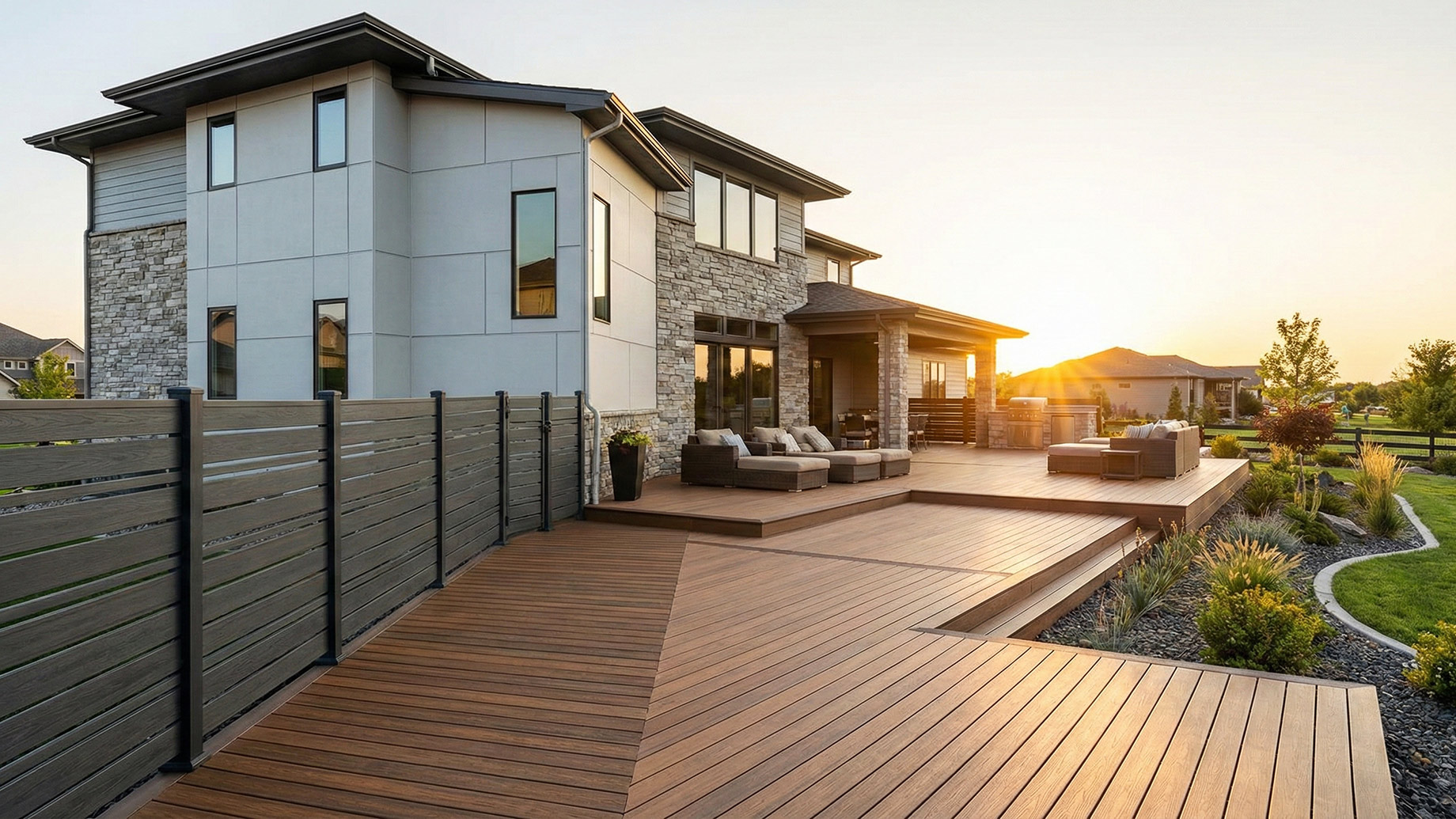
Outdoor living spaces are increasingly being designed with the same sophistication as interiors, and this multilevel deck is a prime example. The trend is moving beyond a simple square deck off the back door. Instead, we’re seeing complex, zoned spaces that accommodate different activities—lounging, dining, sunbathing. The use of high-end materials like composite decking, stone veneer, and sleek metal fences reflects a desire for durable, low-maintenance luxury that extends the home’s architecture into the landscape.
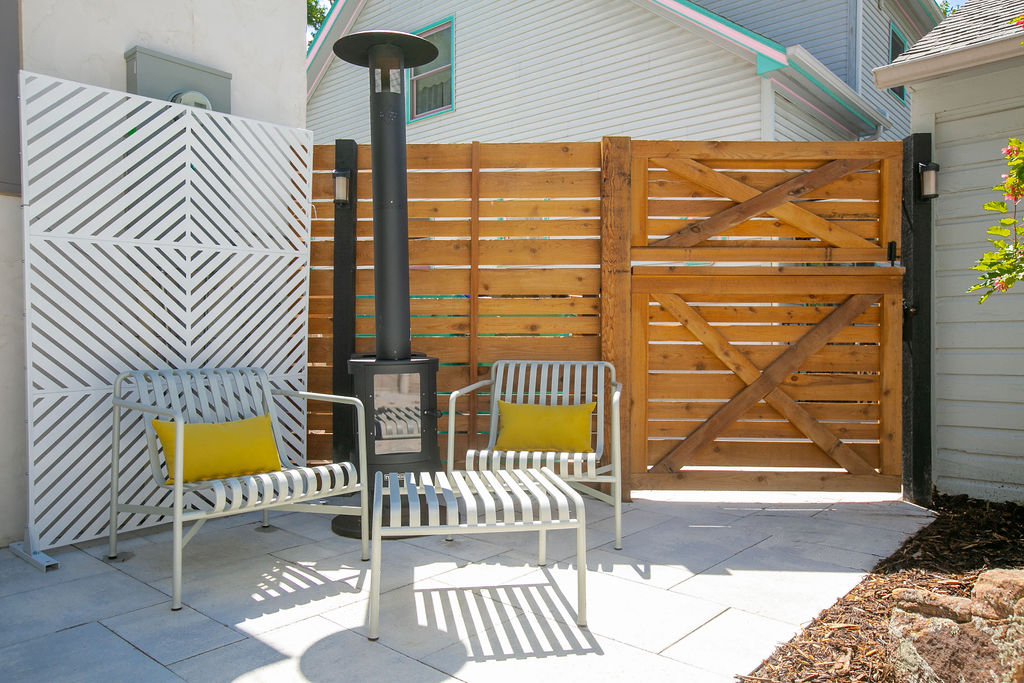
24. Mix Materials with a Geometric Screen and Wood Slat Fence
This design succeeds by confidently pairing two completely different privacy solutions. The crisp, white geometric screen acts as a bold, artistic focal point, while the warm, horizontal wood fence provides a more traditional, grounding backdrop. The key is that they don’t fight for attention. The white screen is clearly the ‘star’ and is used sparingly, while the wood fence covers the larger area. This contrast in material and pattern creates a dynamic, custom look that feels curated and personal. It’s a much more interesting approach than using a single material throughout.
|
📋 Copy HEX 🔗 Share |
The visual recipe here is about balance: 60% warm natural texture (the wood fence) + 20% bold graphic element (the white screen) + 10% cool metal tones (the grey chairs) + 10% vibrant color pop (the yellow pillows). This formula ensures the space feels grounded and warm, but with enough modern and colorful accents to keep it feeling fresh and exciting. You could swap the yellow for another bright color like turquoise or orange and maintain the same energetic balance.
25. Go Architectural with Metal Screens and Integrated Planters
When using privacy screens with integrated planters, think like a landscape designer. Don’t just fill them with a single type of plant. Create a ‘thriller, filler, spiller’ combination. Use a tall, upright plant as the ‘thriller’ (like a grass or small shrub), mounding plants as the ‘filler’ (like coleus or petunias), and a trailing plant as the ‘spiller’ to cascade over the edge (like sweet potato vine or ivy). This creates a lush, multi-dimensional look that feels professional and full.
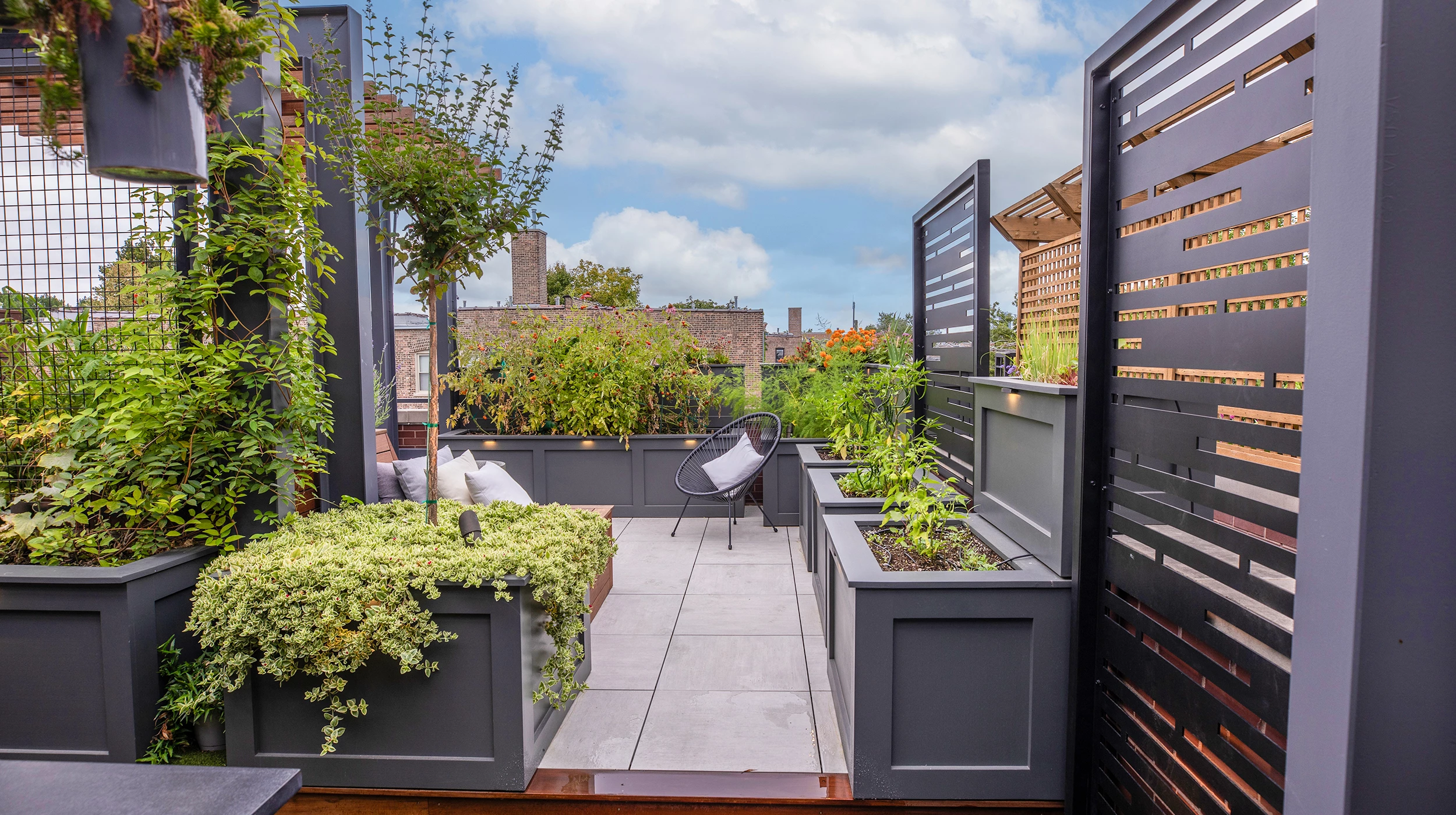
Powder-coated metal screens like these are incredibly durable and low-maintenance, requiring little more than an occasional wipe-down. However, the integrated planters introduce a different reality. Metal planters can get very hot in direct sun, potentially cooking the roots of your plants. They also don’t retain moisture as well as terracotta or plastic. You’ll need to water more frequently and may want to consider using a plastic liner inside the metal planter to help insulate the soil from extreme temperature swings. Choosing heat-tolerant plants is essential for success.
Your Private Oasis Awaits
A great privacy wall does more than just block a view—it defines your space and sets the mood for your entire outdoor experience. Whether you’re drawn to sleek modern lines or a lush wall of green, the right choice can transform your deck from a simple platform into a true extension of your home. Now that you’re armed with inspiration, go ahead and start planning your perfect backyard retreat. Pin your favorites and make it happen!