24 Jaw-Dropping Playroom Ideas That Will Transform Your Home into a Kid’s Paradise

You know that feeling when you’ve scrolled past a hundred playroom photos, and then you finally see the one that feels just right? That’s what this guide is all about. After filtering through hundreds of designs from places like IKEA, Crate & Kids, and West Elm, we narrowed it down to the 24 ideas that actually deliver. Inside, you’ll find everything from Montessori-inspired nooks to full-blown indoor playgrounds, broken down with real-world advice. For 2026, the trend is all about creating flexible, imaginative spaces that grow with your kids, and we’re here to show you how. 📌 Save this to Pinterest for later—you’ll want to revisit these ideas.
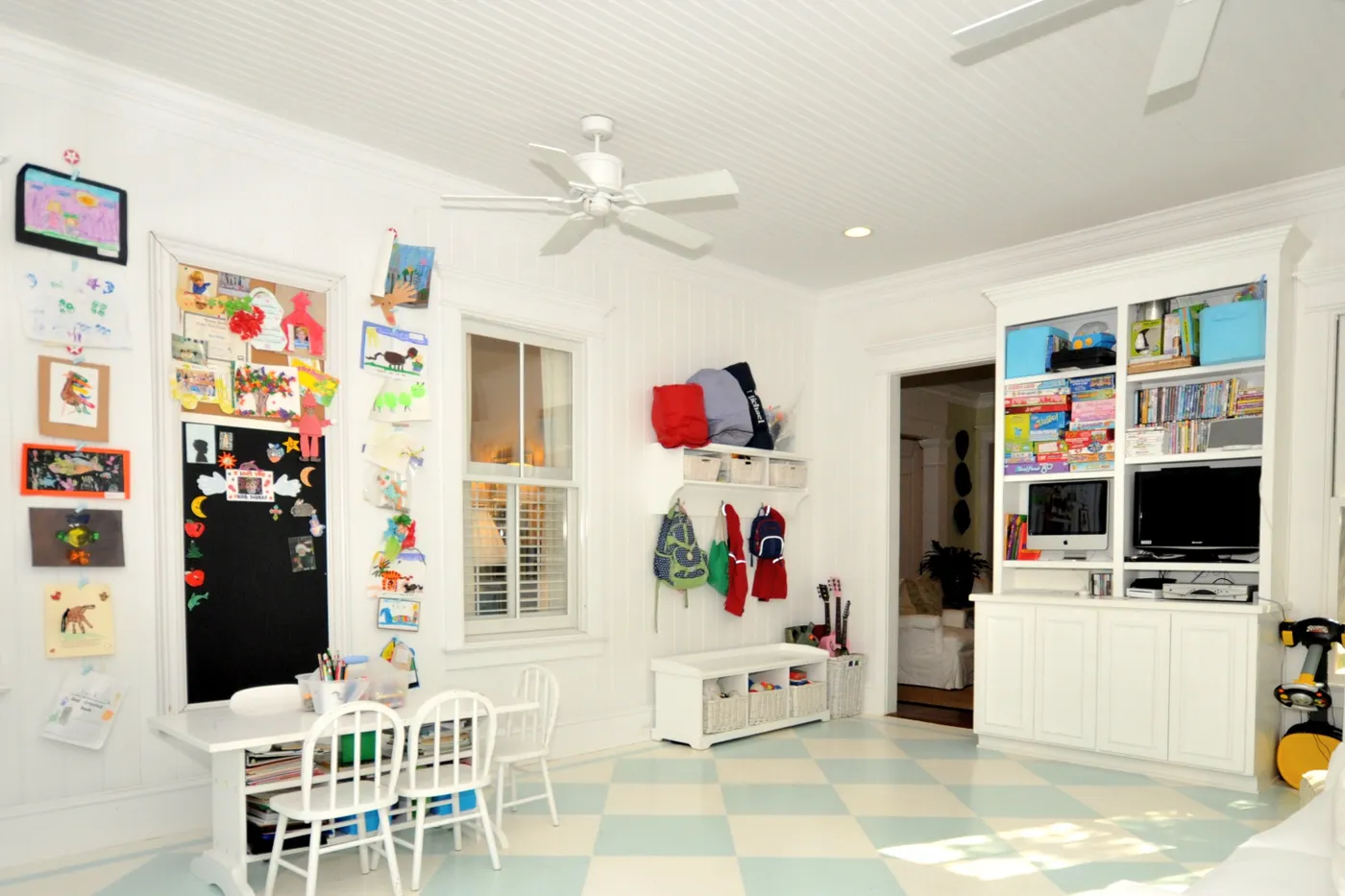
1. Classic Beadboard Playroom with a Blue Checkered Floor
This look is pure magic because it perfectly balances timeless design with playful energy. The white beadboard walls and custom built-ins provide a clean, traditional backdrop that feels incredibly organized and grown-up. But then, that light blue and white checkered floor comes in and says, Hey, let’s have some fun! It’s this contrast that keeps the room from feeling sterile. The dedicated chalkboard and cork board walls also add a layer of interactive, creative texture that is both practical and stylish.
|
📋 Copy HEX 🔗 Share |
A design with such strong elements, like extensive built-ins and a bold patterned floor, really sings in a medium to large room—think 150 square feet or more. You need enough space to let the floor pattern breathe and to walk around the craft table comfortably. In a smaller room, a full checkered floor might feel overwhelming. To get a similar vibe in a tighter space, consider using a large checkered area rug to define a play zone and opt for floating shelves instead of floor-to-ceiling built-ins.
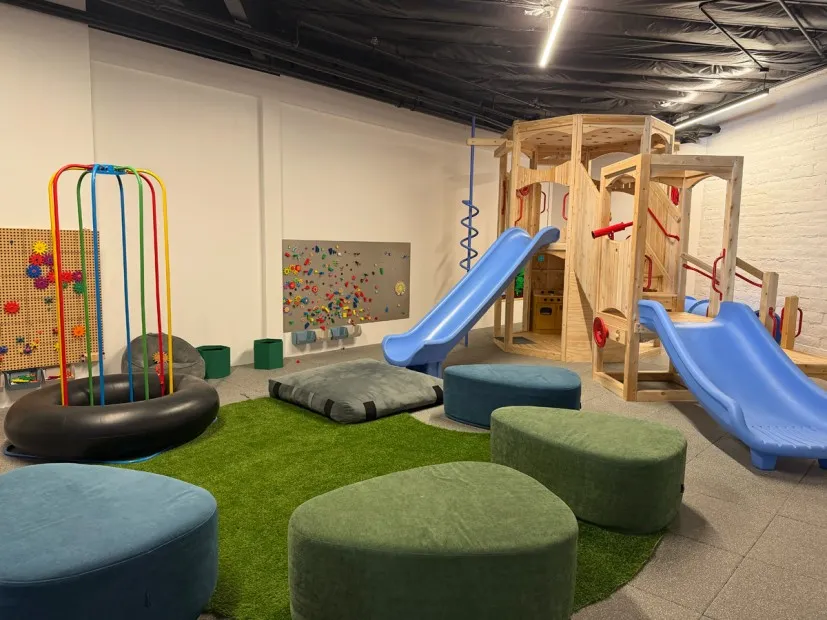
2. Indoor Adventure Zone with Slides and Soft Play
The absolute game-changer here is the combination of textures underfoot. It’s not just one type of flooring; it’s a landscape. You have the practical, soft grey tiles for general play, but then there’s that surprising patch of artificial turf. This single element transforms a corner of the room into an imaginative outdoor space indoors. It mentally separates the ‘active’ zone from the rest of the room and provides a unique sensory experience. Without that patch of green, the room would still be fun, but it wouldn’t have that spark of unexpected nature.
|
📋 Copy HEX 🔗 Share |
Let’s be honest: a play structure of this size is a commitment. It dominates the room, and while it’s amazing for toddlers and young kids, its appeal has a shelf life. By age 8 or 9, they might be over the little slides. Disassembling and removing a large wooden structure like this isn’t a simple weekend task. Before you invest, really think about your family’s long-term plans for the space and whether you’re prepared for the ‘what’s next’ phase in a few years.
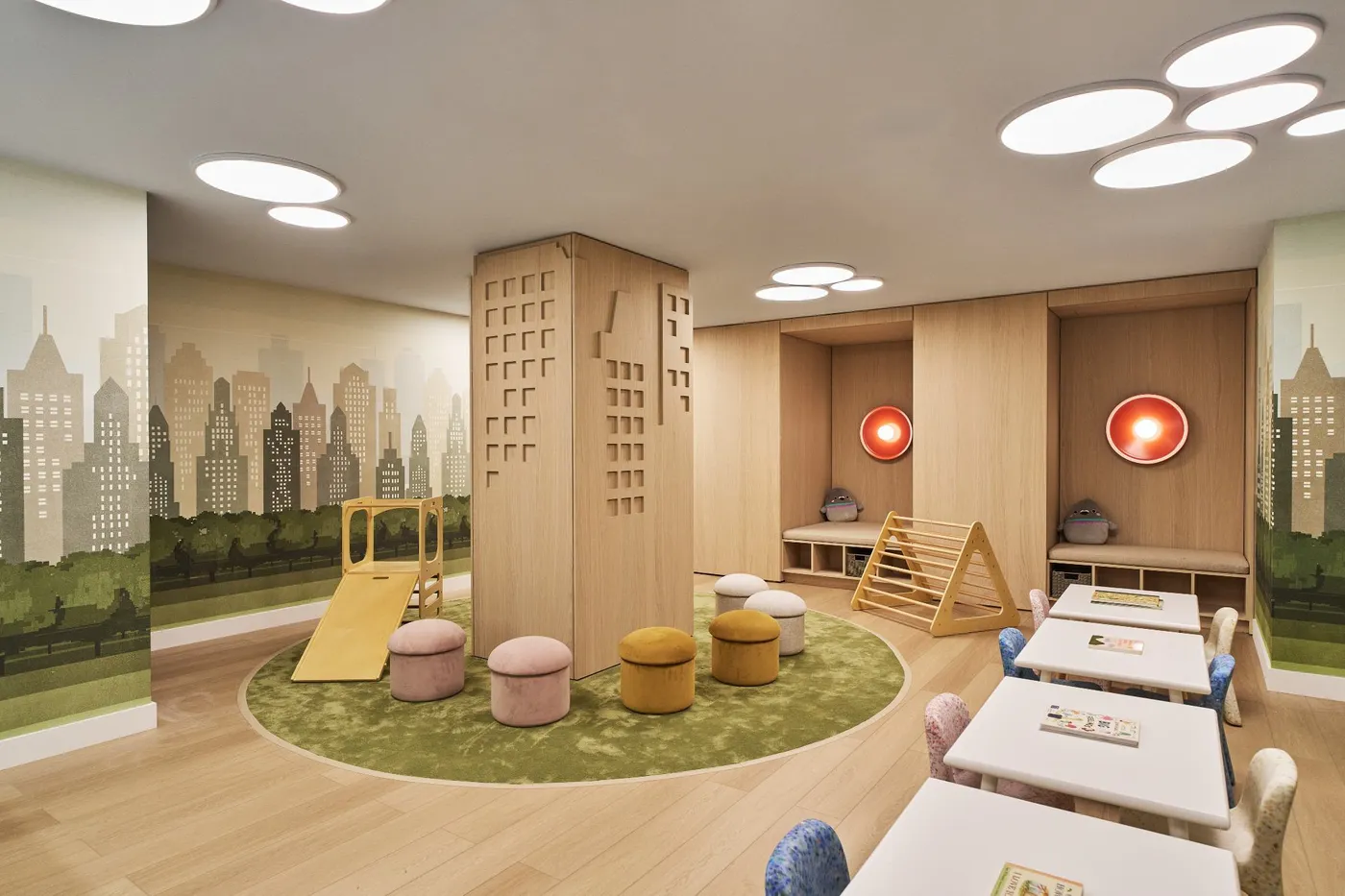
3. Urban Park Vibe with a Cityscape Mural and Wood Structures
When using a large-scale mural, prevent it from overwhelming the space by using physical structures to break it up. Notice how the light wood paneling and building-shaped dividers are placed in front of the cityscape wallpaper. This creates layers and depth, making the mural feel like a true background rather than just a flat image on a wall. It adds a 3D quality that makes the entire room more immersive. For best results, ensure your wooden structures are at least 12-18 inches away from the mural wall.
|
📋 Copy HEX 🔗 Share |
This room’s visual formula is about creating a soft, immersive world. It’s roughly 50% neutral background (the light wood and pale sage green walls), 30% graphic element (the cityscape mural), and 20% soft accents (the circular green rug and poufs in pink and mustard). You could easily change the theme by swapping the mural for a forest or jungle scene and adjusting the accent colors to deep greens and blues. The key is keeping the wood tones light and the primary background color soft to support the graphic feature.
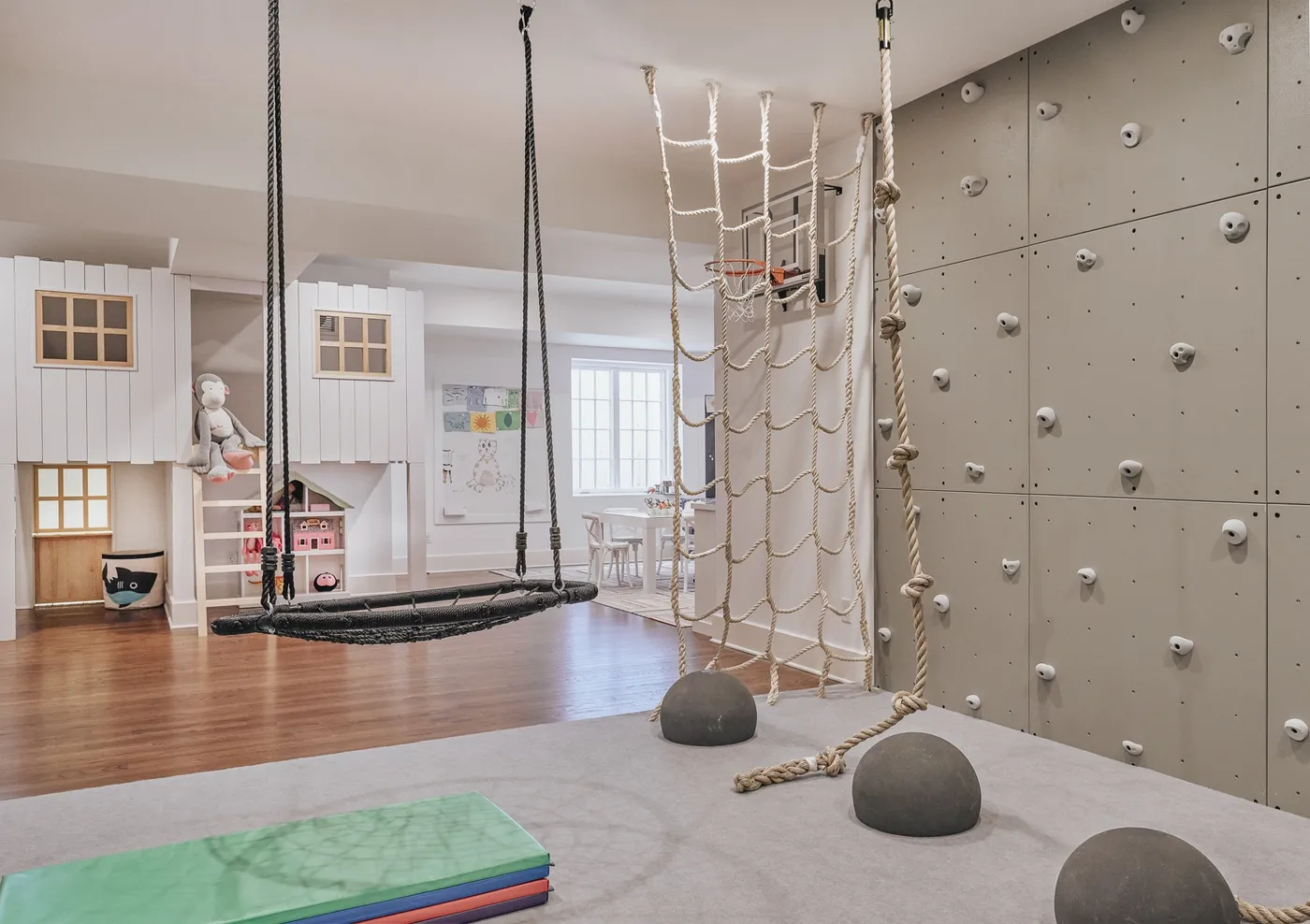
4. Modern Activity Room with a Climbing Wall and Cargo Net
An integrated climbing zone like this can be pricey. To get this look for less, focus on DIY-friendly elements. You can buy climbing holds online for about $40-$80 a set and install them directly onto a reinforced wall section. Instead of a custom cargo net, look for pre-made playground nets, which can be found for around $100-$200. For the flooring, skip the custom padding and use a set of thick, interlocking gym mats from Amazon or Walmart ($50-$100). You get the same active, adventurous spirit for a fraction of the custom-built cost.
|
📋 Copy HEX 🔗 Share |
That beautiful gray padded flooring is fantastic for safety, but it requires specific care. It’s not something you can deep clean with a standard carpet cleaner. Most padded gym floors need to be wiped down regularly with a pH-neutral cleaner to prevent material breakdown and discoloration. Be aware that dark-soled shoes can leave scuff marks that are very difficult to remove. The climbing holds will also need periodic tightening and wiping down, as they can accumulate grime from hands and feet. Plan on a monthly wipe-down and a bolt check every six months.
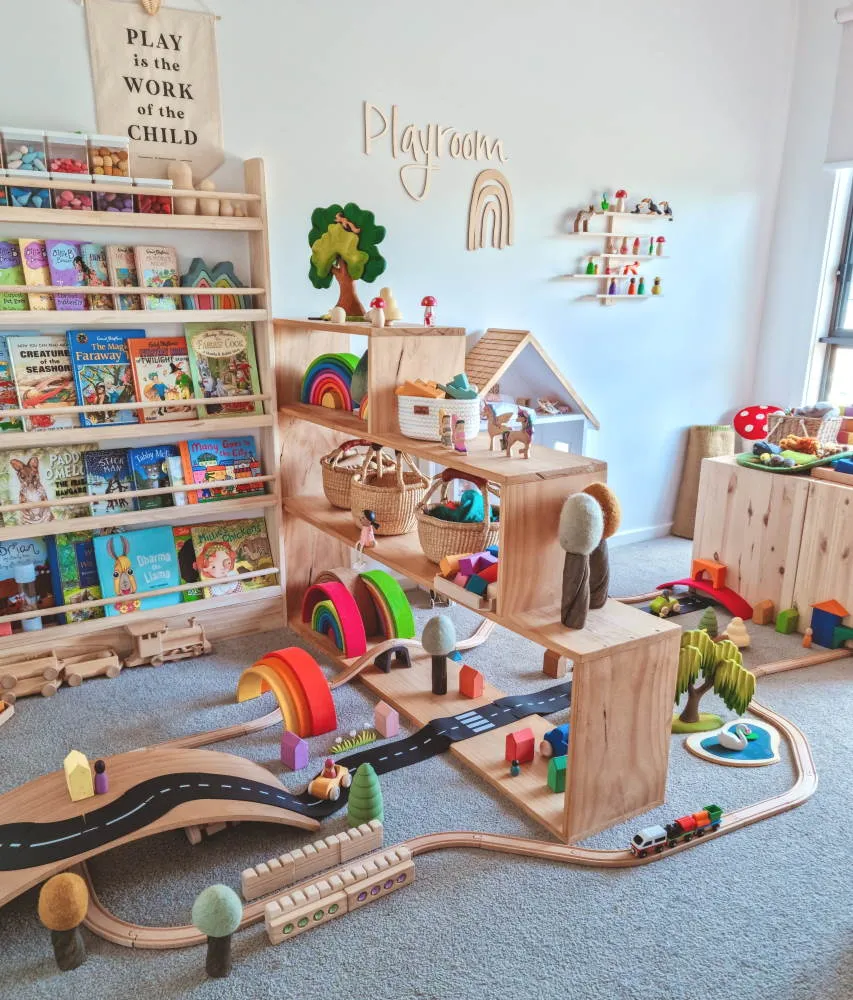
5. Neutral Montessori Space with Natural Wood Shelving
This room feels so calm and inviting because of the principle of repetition and rhythm. The consistent use of natural light wood across the bookshelf, shelving unit, and even the tiny cars on the train track creates a cohesive, harmonious look. This repetition is soothing to the eye. Furthermore, the low-profile furniture and forward-facing book displays are placed at a child’s eye level, which empowers them to make their own choices and access their things independently—a core tenet of Montessori design that just plain works.
|
📋 Copy HEX 🔗 Share |
Before you commit to this beautifully organized, open-shelf look, take a moment for a reality check. Here’s what to consider:
- Toy Inventory: Do you have toys that are aesthetically pleasing enough to be on display? This look works best with wooden or coordinating toy sets.
- Your Tidiness Tolerance: Open shelves require regular tidying to look good. If you prefer to hide the mess, you might be happier with closed cabinets or bins.
- Wall Space: Measure your walls. You need a significant clear wall to accommodate both a bookshelf and a separate shelving unit without it feeling cramped.
6. Bright Playroom with Modular Wood Storage and an Activity Table
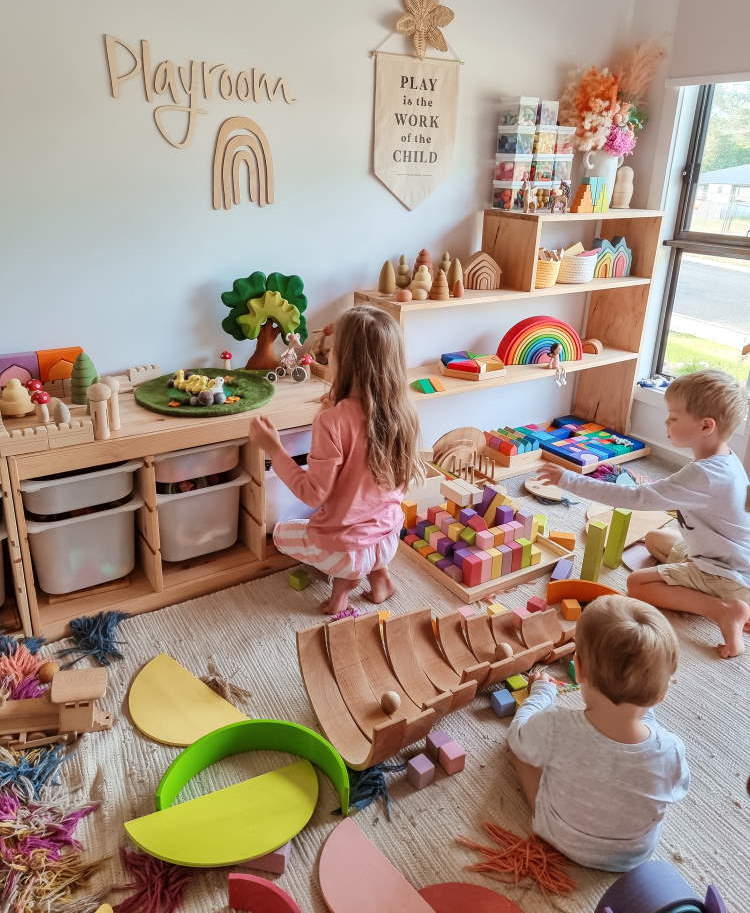
Want to create that floating wooden Playroom sign? It’s easier than it looks. Here’s a quick guide:
- Purchase pre-made wooden letters from a craft store (approx. $3-$5 per letter).
- Lightly sand any rough edges and wipe clean. Choose your finish: leave them natural, apply a light stain, or paint them.
- Apply 2-3 pieces of heavy-duty double-sided mounting tape to the back of each letter.
- Use a laser level and a pencil to mark a perfectly straight guideline on your wall.
- Peel the backing from the tape and press each letter firmly onto the wall along your guideline. It’s a 30-minute project that makes a huge impact!
|
📋 Copy HEX 🔗 Share |
There’s a reason this light-wood-and-white aesthetic, often associated with the Montessori method, is all over Pinterest. Parents are increasingly seeking to create calm, beautiful, and non-overstimulating environments for their kids. This trend is a direct reaction against the loud, plastic-heavy playrooms of the past. It’s about choosing sustainable materials and thoughtfully designed toys that encourage open-ended play. It has real staying power because it’s rooted in a philosophy of child development, not just a fleeting visual style. Compare this with the similar, but more toy-focused version in Idea #4.
7. Montessori-Style Shelving with a Patterned Terracotta Rug
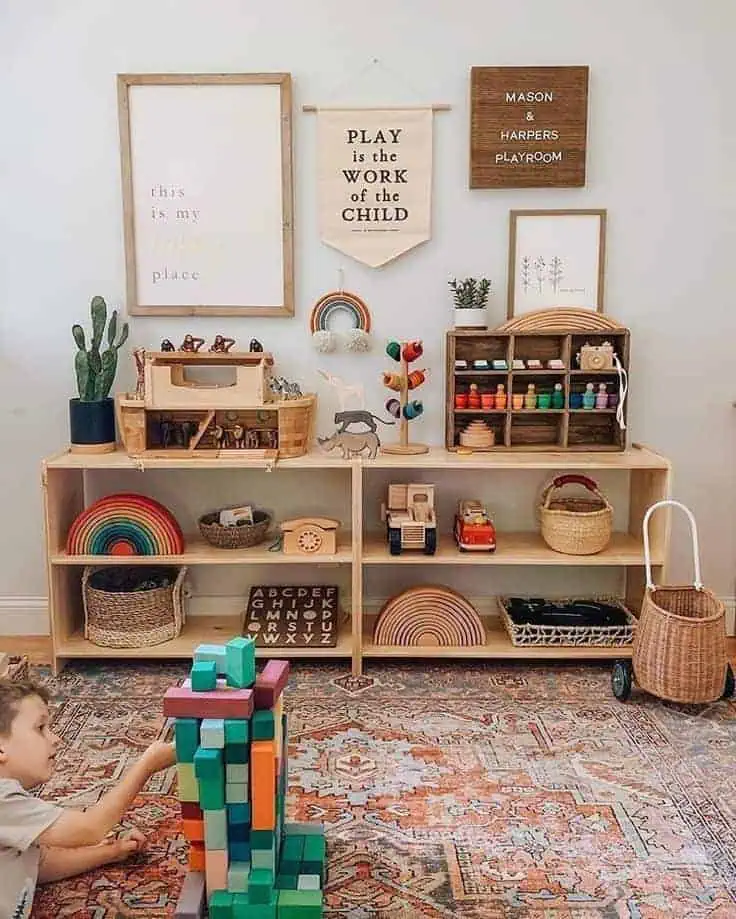
The patterned area rug is the undeniable heart of this room. While the light wood shelving and curated toys are beautiful, they are neutral. The rug brings in personality, warmth, and a sophisticated color palette with its terracotta and rust tones. It grounds the entire space, defines the primary play area, and prevents the room from feeling like a classroom or a catalog photo. Remove the rug, and you lose 90% of the room’s character and warmth. It’s the element that bridges the gap between the child’s space and the beautiful room.
|
📋 Copy HEX 🔗 Share |
When styling open shelves for a playroom, use a mix of vertical and horizontal arrangements. Notice how some books are stacked flat, while others stand upright. Toys are grouped in baskets, while some larger items stand alone. This variation creates visual interest and rhythm. A good rule of thumb is the 2/3 rule: fill shelves about two-thirds of the way. This leaves some breathing room, making the display feel curated and intentional rather than cluttered and overwhelming.
8. Cozy Sensory Playroom with a Light Table and Natural Wood
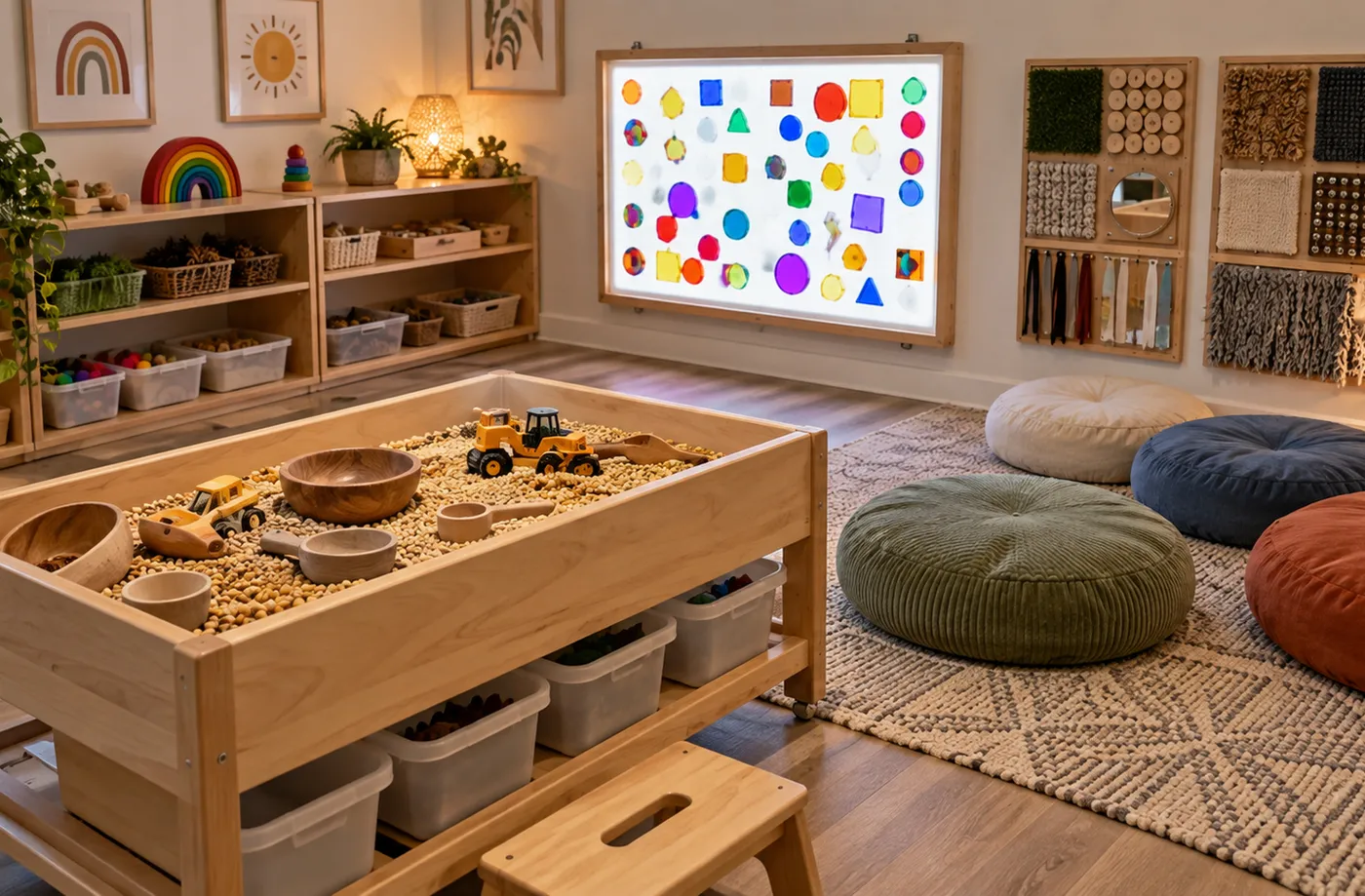
This space is successful because it prioritizes sensory engagement over pure aesthetics. The design uses a variety of textures—the woven rug, the smooth wood, the different materials on the sensory boards—to create a rich, tactile environment. The color palette is also brilliant. By keeping the main elements (walls, floor, furniture) neutral and calm, the pops of color from the light board and cushions become focal points of interest, drawing a child in to explore without overwhelming their senses. It’s a masterful blend of calm and stimulation. If you’re looking for a more active setup, check out the options in Idea #10.
|
📋 Copy HEX 🔗 Share |
A sensory table filled with sand, beans, or water is an incredible tool for learning and play. It is also, without a doubt, a magnet for messes. No matter how careful your child is, the filler material will end up on the floor. The key to sanity is containment. Place a large, washable mat or a plastic tablecloth underneath the table to make cleanup easier. Also, establish a ‘keep it in the table’ rule from day one. It won’t be perfect, but it will help!
9. Airy Playroom with Warm Orange Abstract Wall Decals
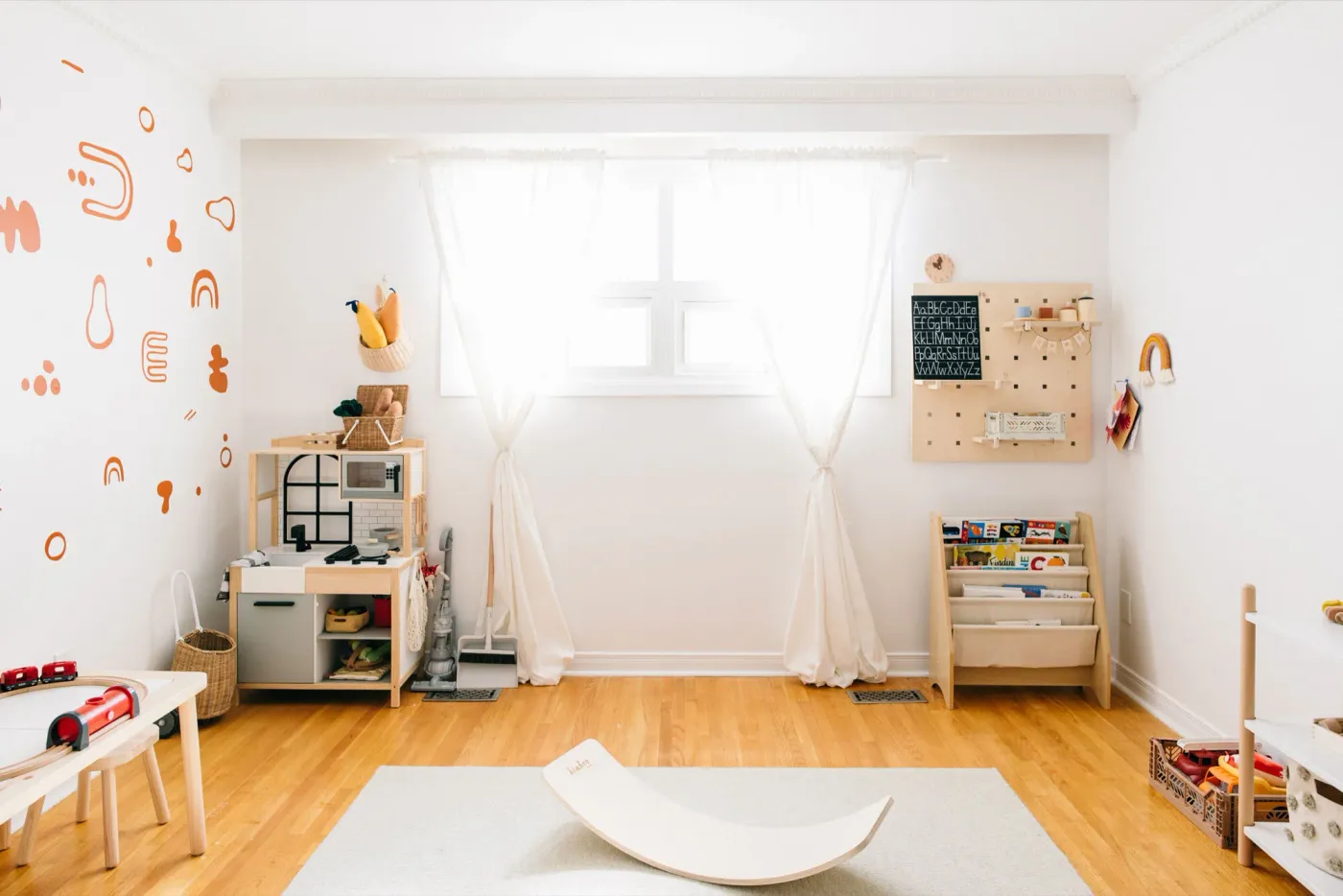
This room’s formula is all about minimalist warmth. It’s approximately 70% neutral base (white walls, light wood floors and furniture), 20% soft texture (the light gray rug), and 10% bold graphic accent (the orange wall decals). The high percentage of white and wood keeps it feeling bright and airy, while that small pop of a warm, abstract shape adds personality and fun without committing to a full accent wall. You could easily swap the orange for a sage green or dusty blue to completely change the mood while keeping the same balanced feel.
|
📋 Copy HEX 🔗 Share |
The light wood Scandi-style furniture is beautiful but can be expensive. You can get this exact vibe on a shoestring budget. IKEA’s LÄTT children’s table and chairs set is a classic for around $40. For the book display, look for their FLISAT wall storage or even simple picture ledges. For the pegboard, IKEA’s SKÅDIS series is a dead ringer. A can of chalk paint can transform any small cabinet into a play kitchen. All in, you could replicate the core furniture pieces for under $150.
10. Light Green Playroom with a Large Wooden Pegboard
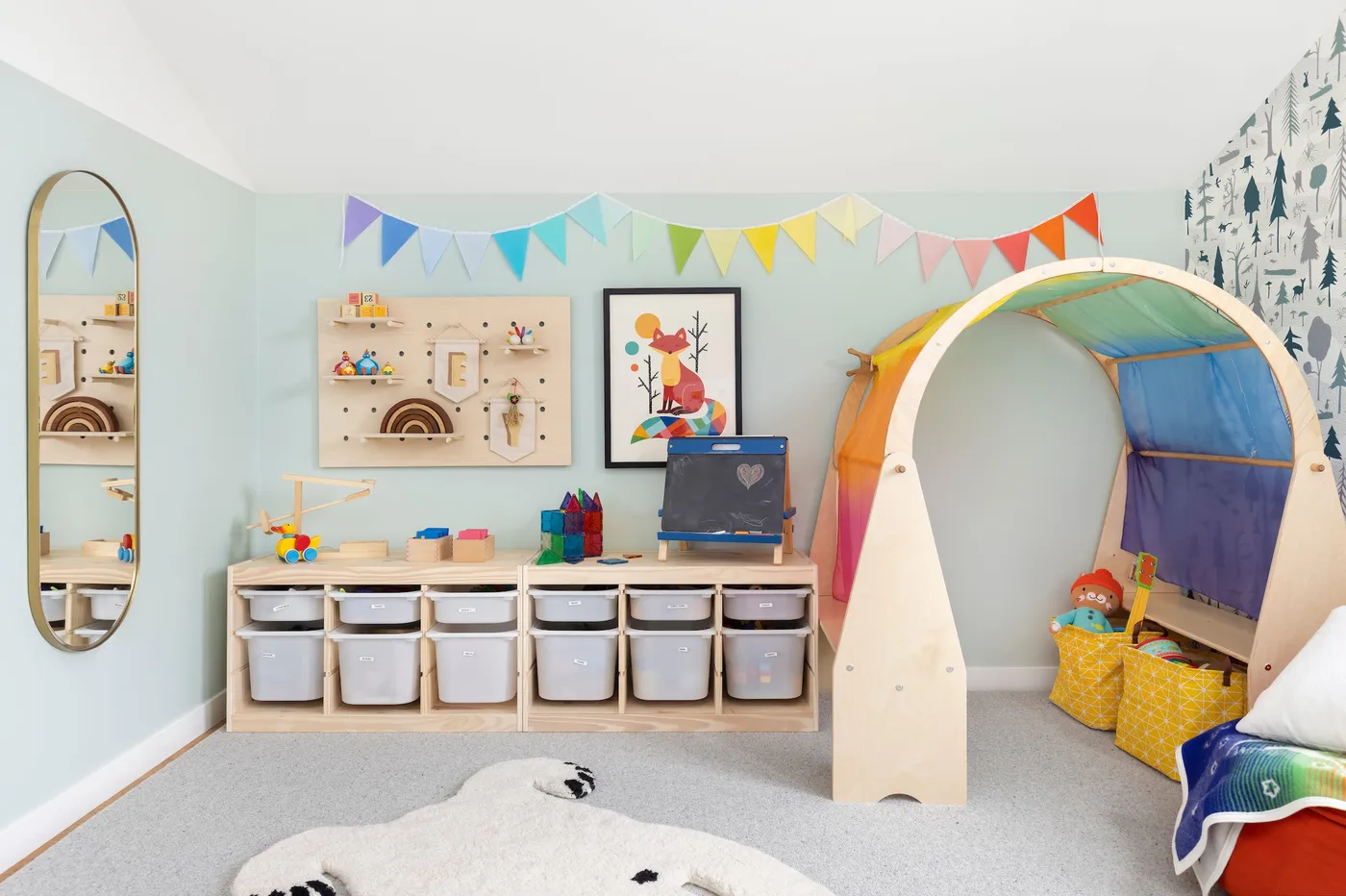
The star of this show is undoubtedly the oversized wooden pegboard. It’s a brilliant, versatile element that serves as storage, display, and a constantly evolving art piece. It lifts toys off the floor, turning them into decoration. Unlike fixed shelves, a pegboard is completely customizable; you can move the shelves and pegs around as the child’s toys and interests change. It’s a dynamic, functional focal point that is far more interesting than a standard bookcase and provides a beautiful textural contrast to the painted green walls.
|
📋 Copy HEX 🔗 Share |
Installing a large pegboard is a straightforward DIY project. Here’s how:
- Purchase a 4’x8′ sheet of 1/4″ or 1/2″ pegboard and have it cut to your desired size at the hardware store.
- To create space for the hooks, you need to mount it off the wall. Create a frame on the back of the pegboard using 1×2 lumber.
- Locate the studs in your wall using a stud finder. Mark their positions.
- Lift the pegboard into place and, drilling through the board and the wood frame, secure it to the wall studs with long screws.
- Now you can add your hooks, shelves, and baskets! The project should take about 2 hours and cost under $75.
11. Sun-Filled Playroom with a Geometric Rug and Climbing Dome
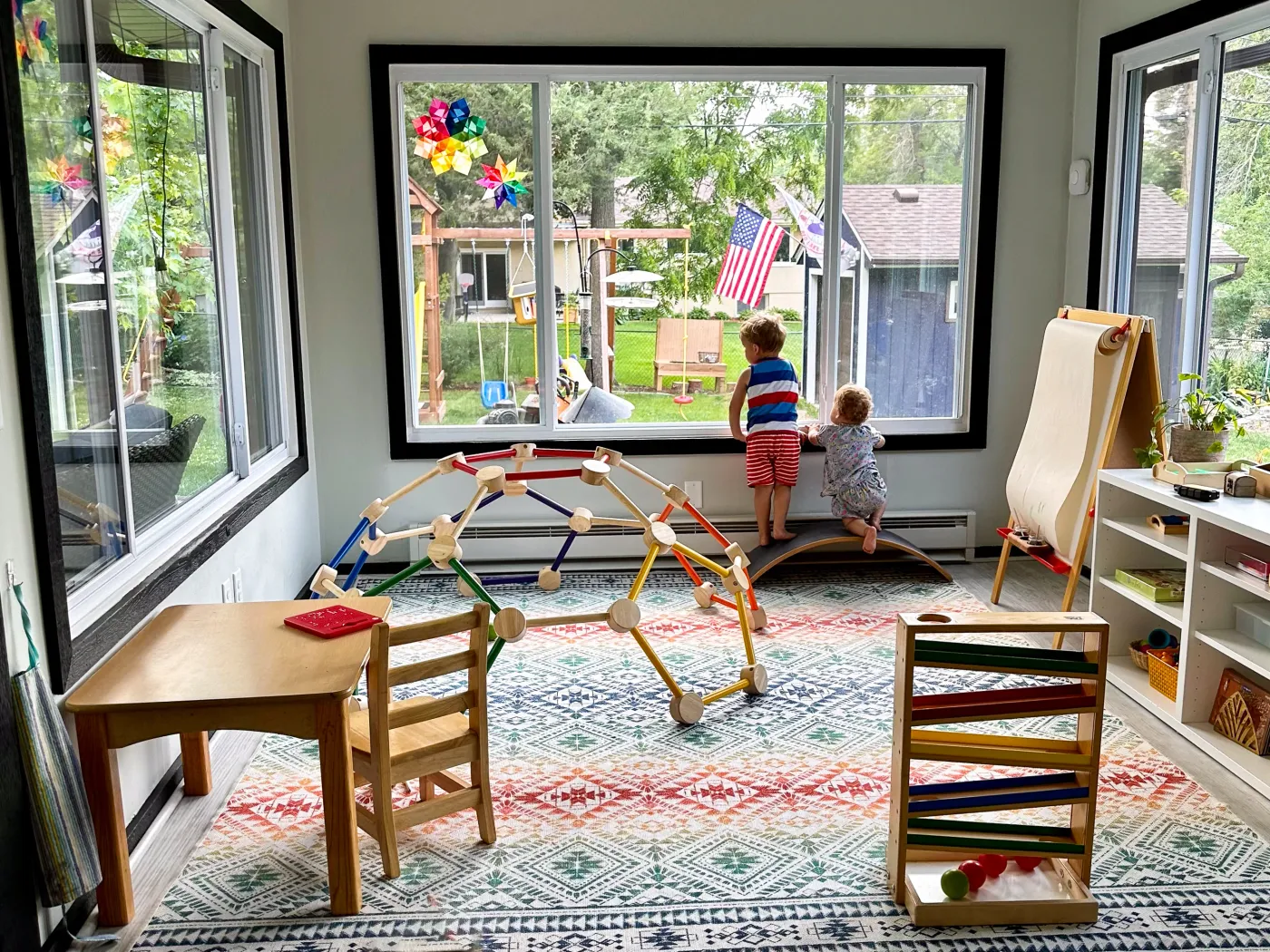
This room works because it expertly balances active play elements with a clean, modern aesthetic. The large black-framed windows provide a strong architectural foundation, while the colorful geometric rug adds a huge dose of energy and defines the main play zone. The furniture and storage are kept to simple, clean lines in white and light wood, which prevents the space from looking chaotic despite the variety of colorful toys and the large climbing dome. It feels both stimulating and uncluttered at the same time.
|
📋 Copy HEX 🔗 Share |
This setup, with its mix of a seating area, art station, and a large climbing dome, is ideal for a square or slightly rectangular room of at least 12′ x 12′ (144 sq ft). A climbing dome alone typically needs a clear radius of about 5-6 feet around it for safe play. If your room is long and narrow, you might struggle to fit the dome without creating an awkward traffic flow. In that case, consider a wall-mounted climbing feature instead, like the one seen in Idea #3, to save precious floor space.
12. Whimsical Playroom with Cheerful Sun and Flower Wall Graphics
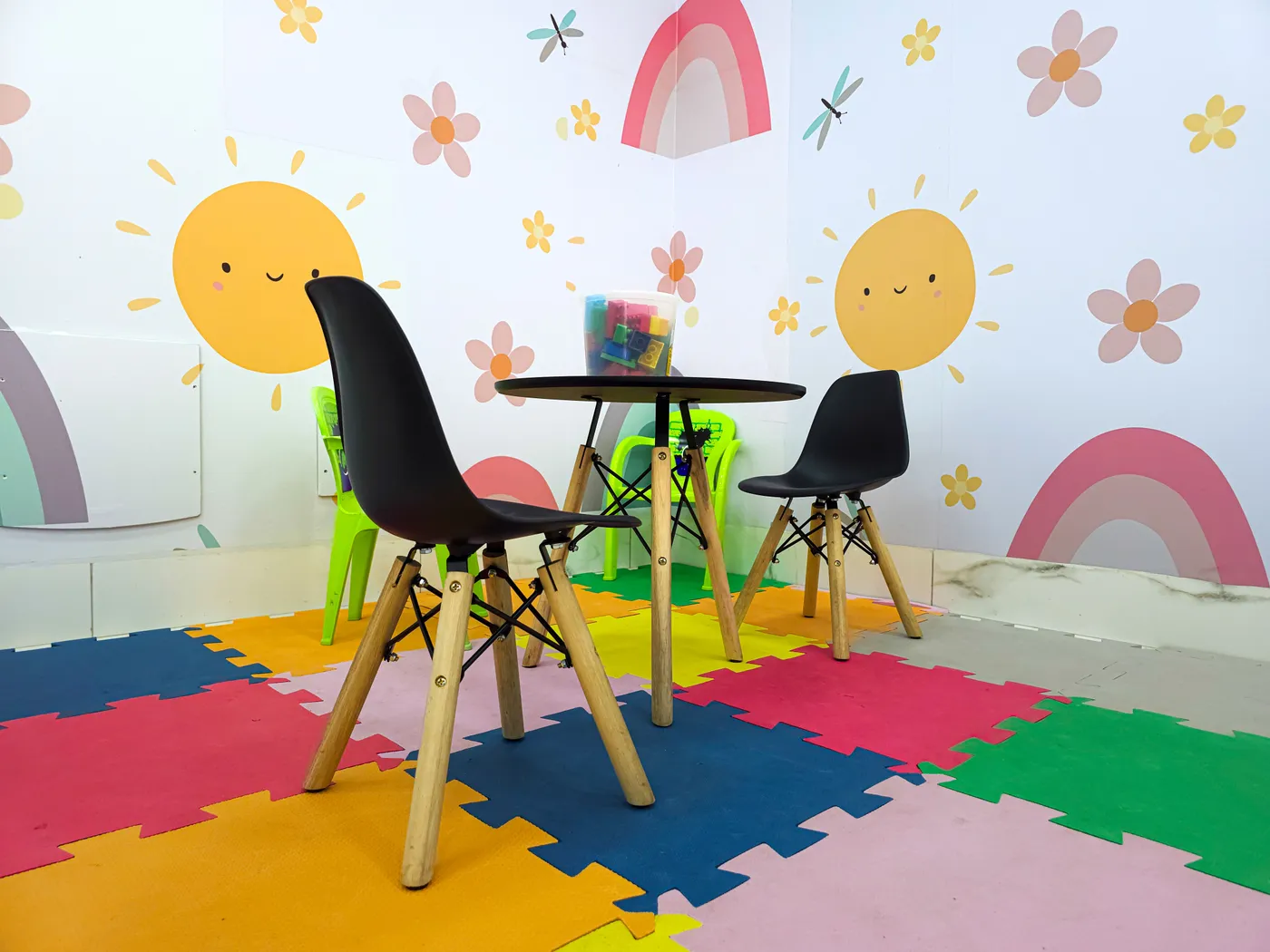
The formula here is pure, unapologetic fun. It’s 60% neutral canvas (white walls), 30% vibrant color splash (the interlocking foam floor mats), and 10% bold graphic personality (the sun, rainbow, and flower decals). This balance is key. Because the walls are mostly white, the large-scale graphics feel whimsical and charming rather than overwhelming. The floor provides a soft landing and a riot of color, while the simple, modern furniture in black and wood tones acts as a sophisticated counterpoint. It’s a recipe for a happy space.
|
📋 Copy HEX 🔗 Share |
Those colorful interlocking foam mats are a parent’s best friend for safety and comfort, but be warned: they are a crumb and dust trap. The seams between the tiles collect everything. You’ll need to pull them apart and vacuum underneath at least once a month to prevent a buildup of grime. Also, lighter colors (like yellow and white) can show dirt easily and may stain from spills like juice or paint if not cleaned up immediately. They’re fantastic, but they do add a specific chore to your cleaning routine.
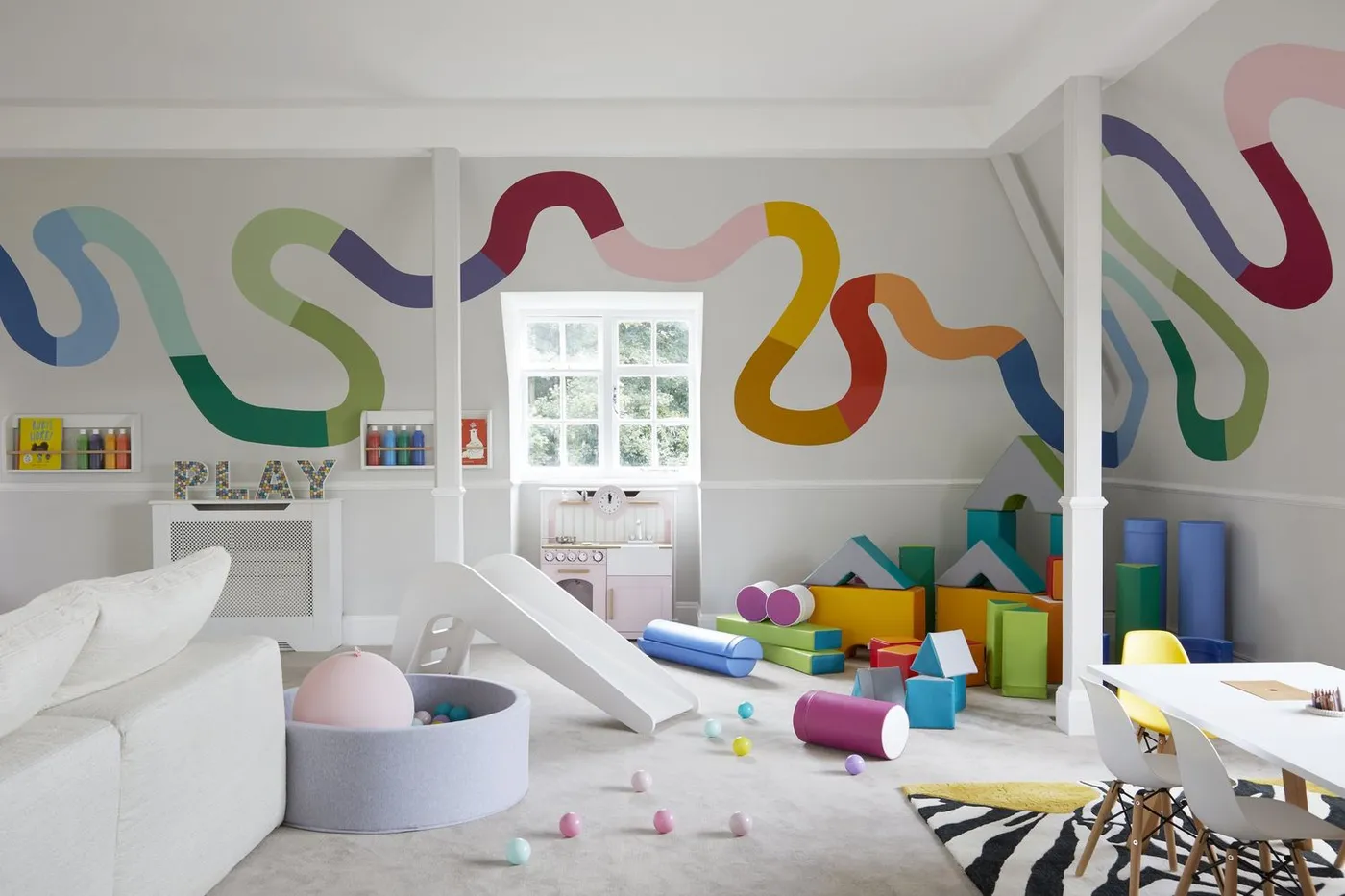
13. Spacious Playroom with a Flowing Geometric Wall Mural
Without question, the one thing that makes this room spectacular is the large-scale, free-flowing geometric mural. It’s an art installation that doubles as a playroom backdrop. It sets the entire tone for the space—energetic, creative, and completely unique. The soft play blocks and slide are fun, but you can find those anywhere. The mural, with its custom colors and sweeping lines, transforms four plain walls into a dynamic environment. It proves that you don’t need to fill a room with things for it to feel full of life; sometimes, the walls are all you need.
|
📋 Copy HEX 🔗 Share |
When you have a very bold, multi-colored wall feature like this mural, keep your large furniture pieces neutral. Notice how the children’s slide, the main dining table, and most of the soft play blocks are white or light gray. This allows the mural to be the star without competing for attention. You can then pull accent colors from the mural for smaller items, like the yellow chair and the colorful balls in the ball pit, to create a cohesive look that feels vibrant but not chaotic.
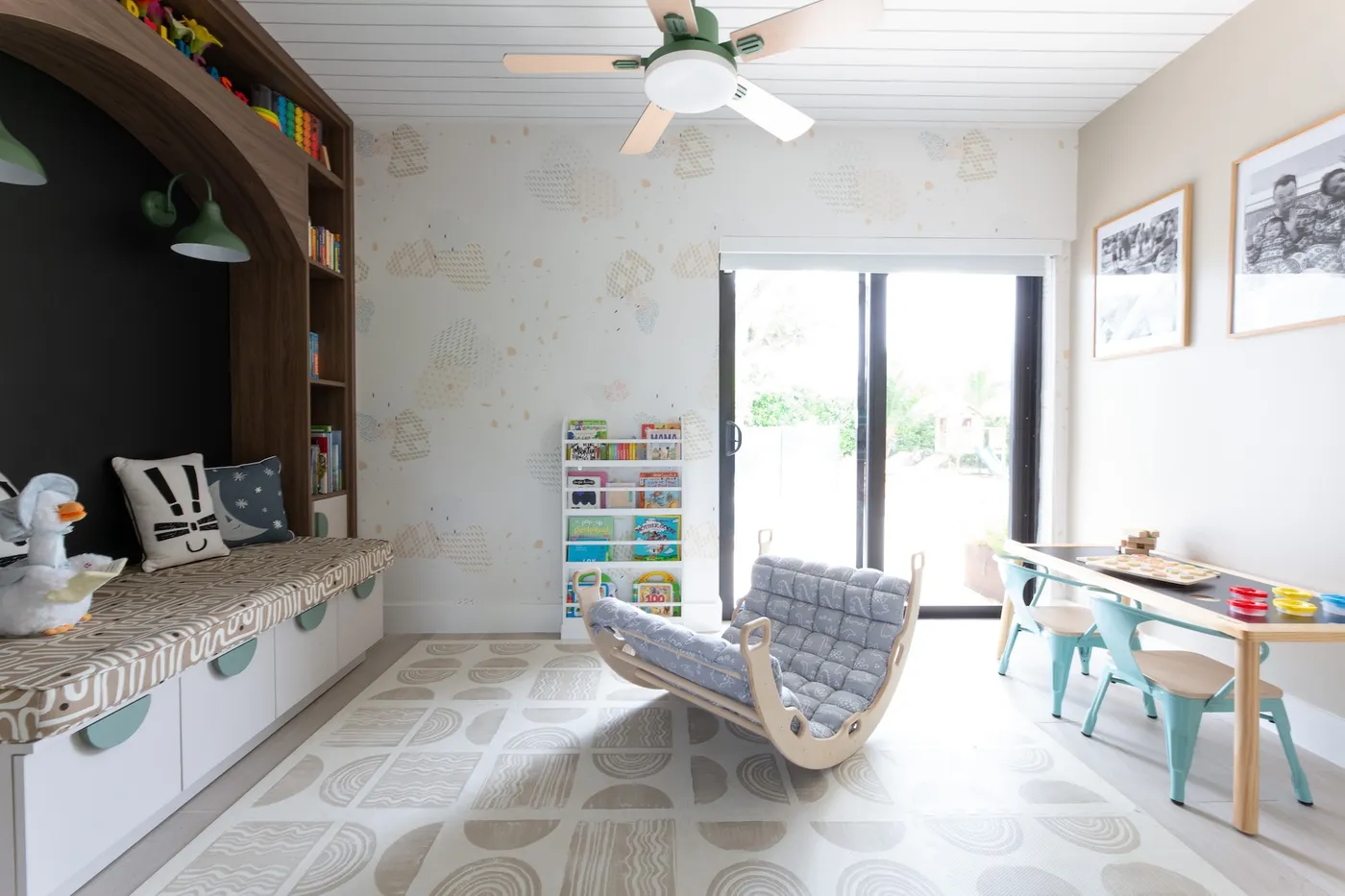
14. Bright Playroom with a Built-in Reading Nook and Blue Chairs
Creating a cozy and functional playroom like this involves a mix of custom and retail pieces. Here’s a potential cost outline:
- Main Furniture (Built-in nook, table, chairs): $2,500 – $6,000
- Lighting (Sconces, ceiling fan): $400 – $900
- Textiles (Rug, bench cushion): $300 – $800
- Decor/Accessories (Bookshelf, rocker): $200 – $500
- Wall Treatment (Wallpaper/Paint): $300 – $1,000
- TOTAL: $3,700 – $9,200
Budget alternative: Recreate the nook with two tall IKEA BILLY bookcases and a KALLAX unit between them for a bench ($300). Find a similar table set on Wayfair ($150) and a rug from Target ($200) for a total look under $1,000.
|
📋 Copy HEX 🔗 Share |
Before you fall in love with a built-in reading nook, there are a few practical things to check. First, measure the intended wall. Do you have at least 6-8 feet of uninterrupted space? Second, check for outlets and vents. You’ll need to plan for an electrician to move them, which adds to the cost. Finally, assess your light. A nook feels coziest on a wall that doesn’t get harsh direct sunlight, or you can control it with good window treatments, like the black-framed doors here.
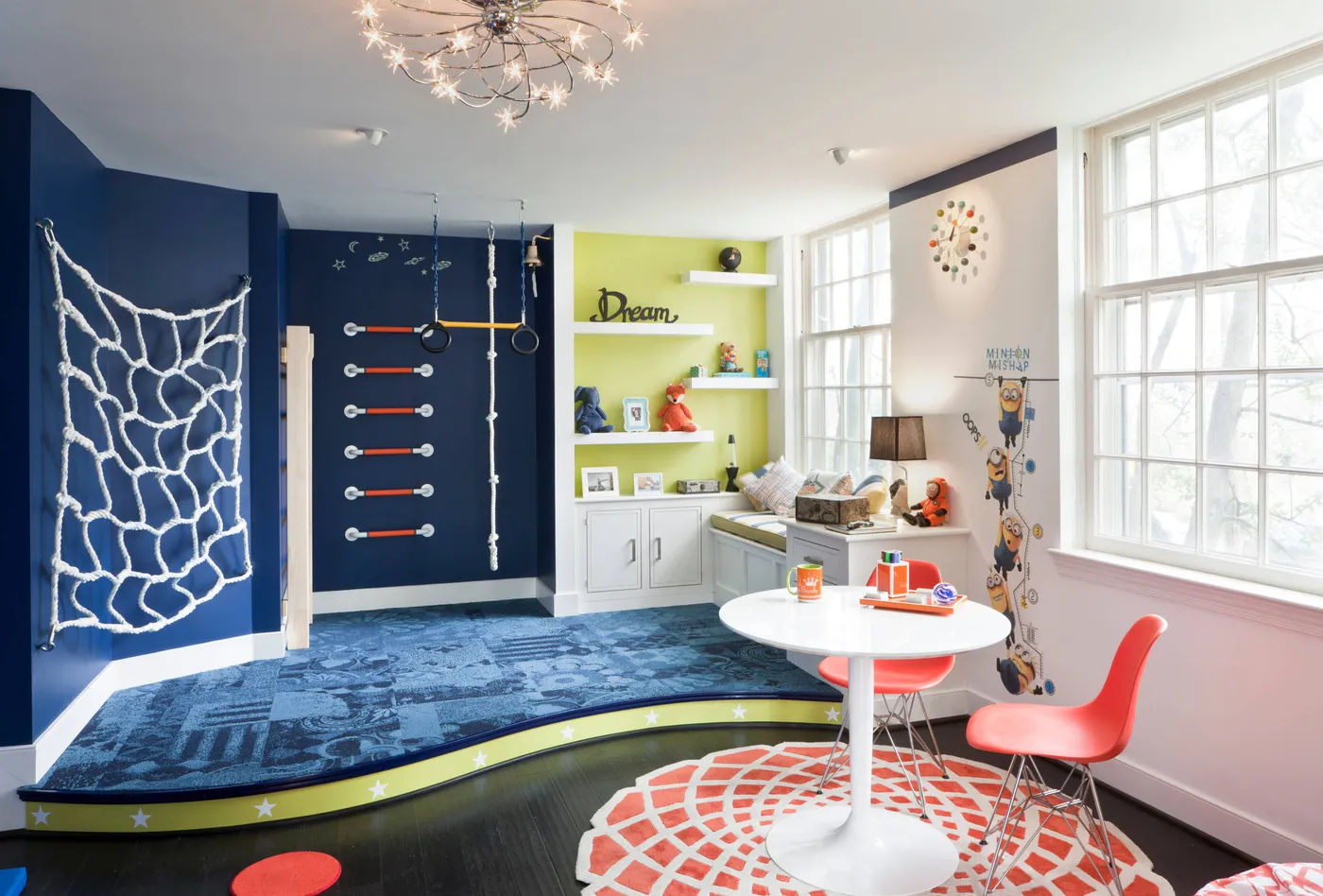
15. Multi-Zone Playroom with Climbing Wall and Green Accent
This room is a masterclass in zoning. It brilliantly uses color to define different areas and functions. The dark blue wall clearly signals active zone, housing the climbing net and bars. The bright lime green wall designates the creative/quiet zone with its window seat and shelves for books or art supplies. The white walls provide a neutral break between these vibrant areas. This color-blocking strategy makes the room feel organized and intentional, allowing multiple activities to coexist harmoniously in one space without feeling jumbled.
|
📋 Copy HEX 🔗 Share |
A multi-zone concept like this demands a fairly large room, ideally 200 square feet or more. Each zone needs its own footprint to feel distinct. The climbing wall area needs clearance for safe use, the table and chairs need space to be pulled out, and the window seat needs to feel like a destination, not a walkway. This is a great solution for a finished basement or a large bonus room. For a smaller room, try a two-zone approach, like the simpler setup in Idea #20, to avoid feeling cramped.
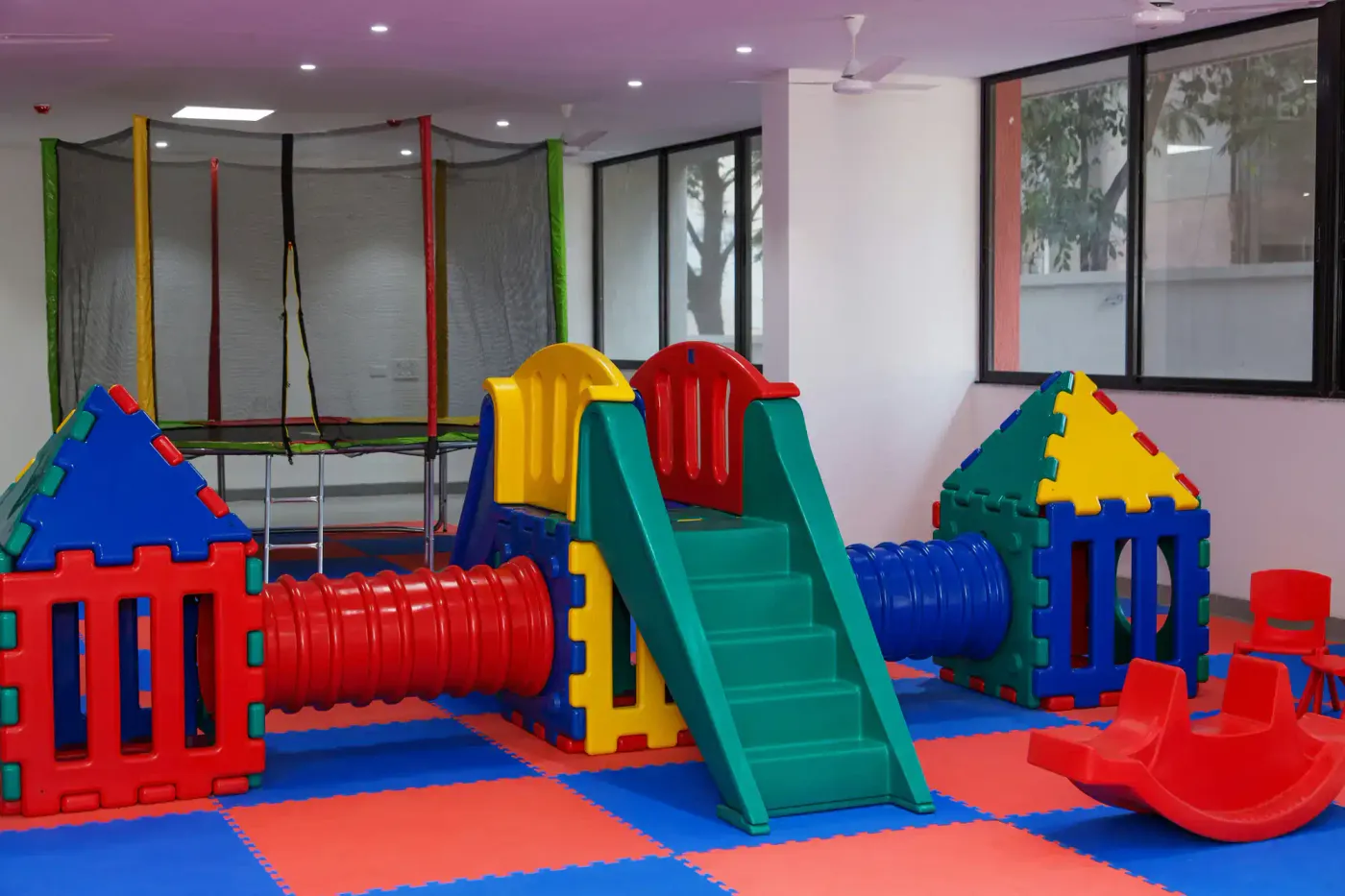
16. Vibrant Indoor Playground with a Modular Structure
A full commercial-grade play structure like this costs thousands. To create a similar high-energy vibe for less, think modular and separate. You can buy individual soft play climbing blocks, tunnels, and small slides from companies like ECR4Kids or on Amazon for a few hundred dollars each. Combine these with a small, affordable trampoline ($100-$200) and colorful foam floor mats ($50-$100). You’ll spend under $1,000 and get a flexible setup you can reconfigure or sell piece by piece as your kids grow.
|
📋 Copy HEX 🔗 Share |
Plastic play structures and foam floors are durable, but they need regular cleaning to stay sanitary. The plastic tunnels and slides should be wiped down weekly with a disinfectant cleaner, paying close attention to seams where germs can hide. The foam mats are notorious for trapping dirt in their interlocking edges; they should be taken apart and vacuumed underneath monthly. The biggest challenge is often the static electricity buildup on plastic slides, which attracts dust and hair like a magnet. A quick wipe with a dryer sheet can help reduce static cling.
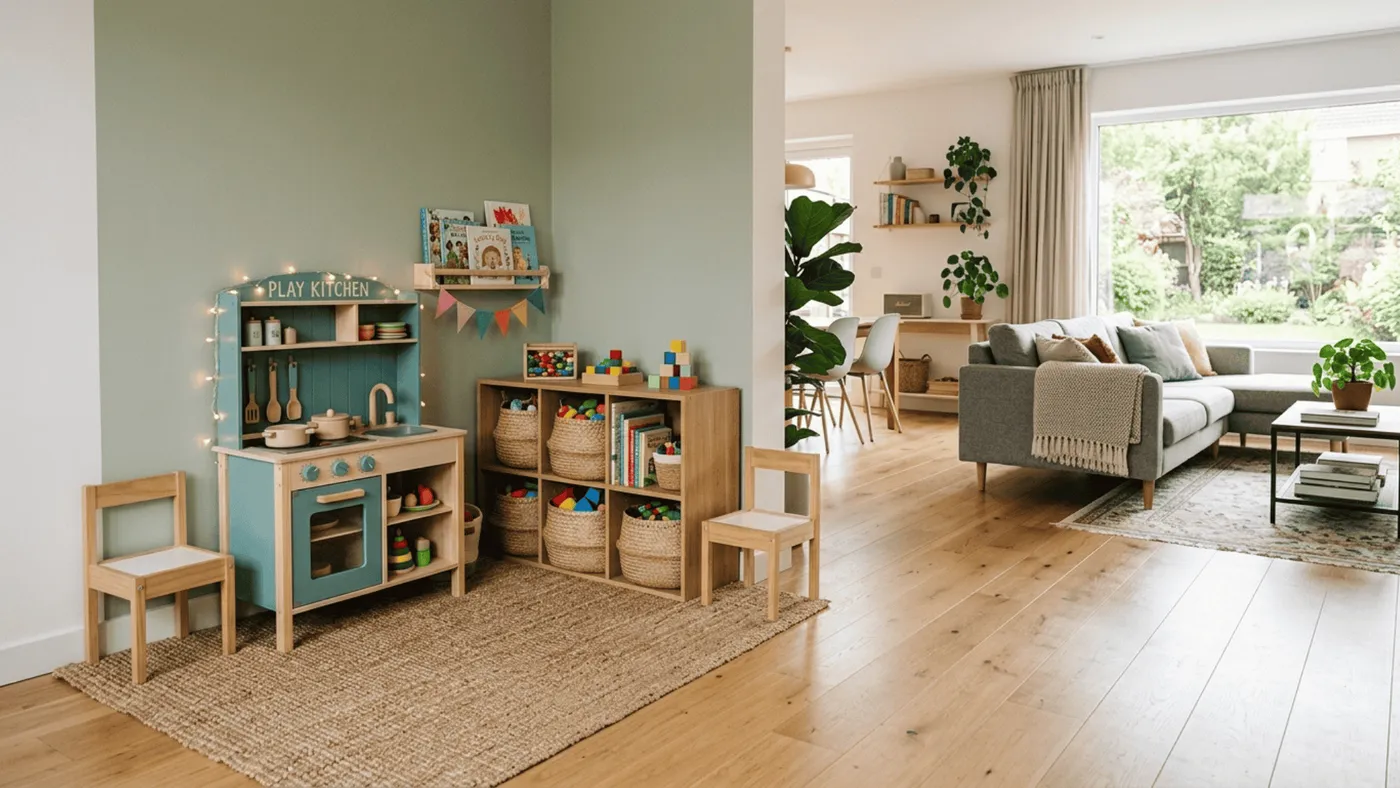
17. Calm Sage Green Play Corner with a Wood Kitchen
This corner’s serene feel comes from a beautiful balance of color and texture. The formula is roughly 50% calming color (the sage green walls), 30% natural texture (the light wood furniture, jute rug, and woven baskets), and 20% clean neutral (the white of the modular unit frame). The pop of teal on the play kitchen adds a focal point without disrupting the overall tranquility. This recipe is perfect for integrating a play area into a living room or family room, as the palette is sophisticated and not overtly kiddy. Contrast this with the bolder green wall in Idea #14.
|
📋 Copy HEX 🔗 Share |
To make a play corner feel intentional and not like a pile of clutter, anchor it with a rug. Even a small 3’x5′ rug, like the natural fiber one used here, defines the space as a dedicated zone. It creates a visual boundary that separates the play area from the rest of the room. This simple trick makes the arrangement look purposeful and tidy, even when toys are out. Choose a rug that complements the room’s main decor to ensure it feels cohesive.
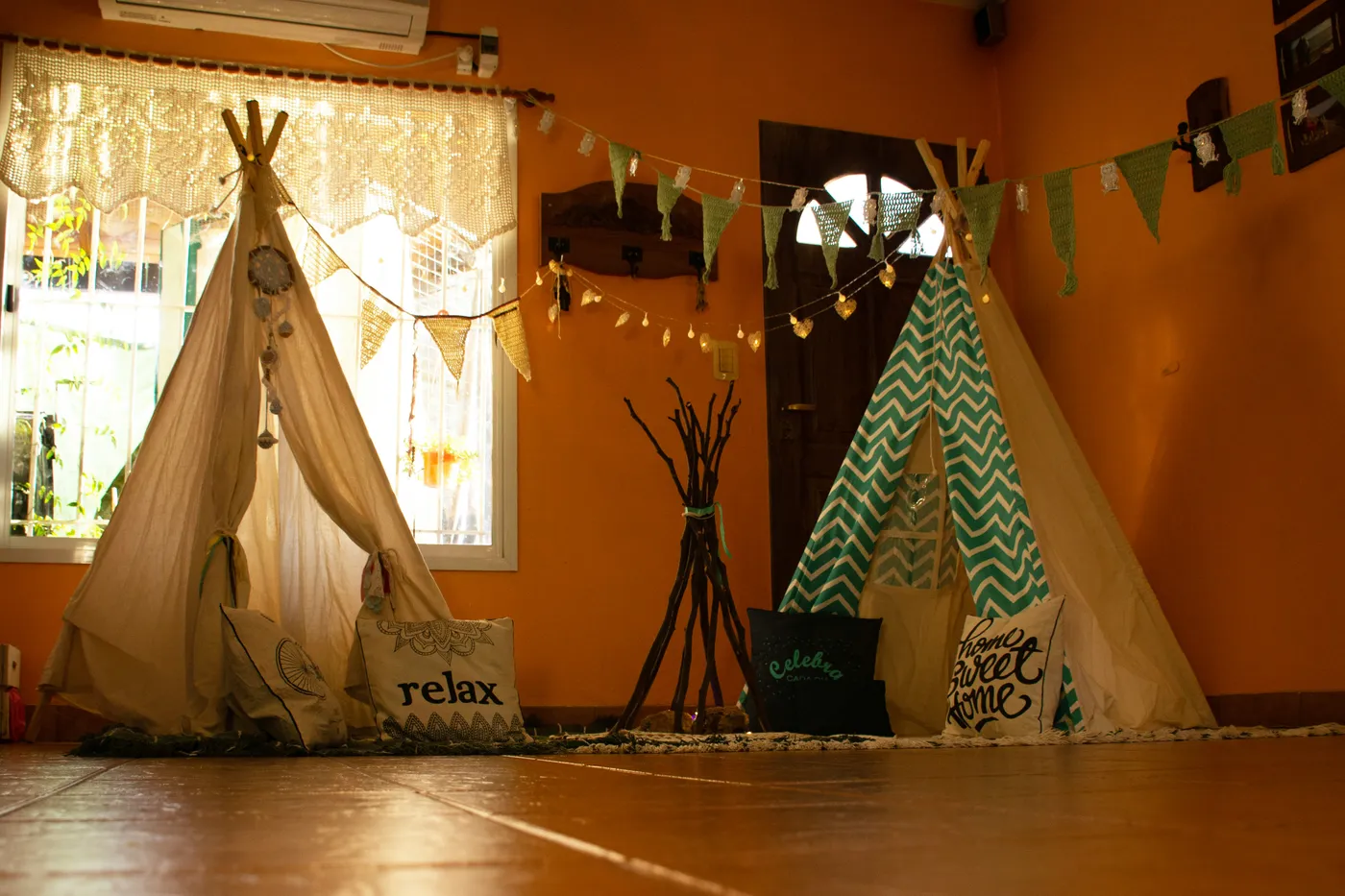
18. Bohemian Playroom with Twin Teepees and Fairy Lights
The single most important element creating the magical, cozy vibe in this room is the lighting. Specifically, it’s the warm, whimsical glow from the string lights. The warm orange walls are a great start, but without the fairy lights and heart-shaped lights draped over the teepees and walls, the room would feel much flatter. This layered, soft lighting is what transforms the space from a simple playroom into an enchanting hideaway. It’s an inexpensive addition that delivers a huge emotional and atmospheric impact.
|
📋 Copy HEX 🔗 Share |
Creating that cute crochet bunting is a fun weekend project. Here’s a quick guide:
- Gather your materials: cotton yarn in your desired colors, a crochet hook (size H/5mm is good for worsted weight yarn), and scissors.
- Create the flags: Crochet 10-15 triangles. A basic pattern is to chain 15, then single crochet across, decreasing one stitch at the start of each row until you have a point.
- Create the string: Chain a long strand, at least 6-7 feet long. Don’t cut the yarn.
- Attach the flags: Without breaking the yarn, single crochet across the top edge of each triangle to attach it to the long chain, leaving a small space between each one.
- Finish off, weave in ends, and it’s ready to hang! Cost: Under $15. Time: 3-4 hours.
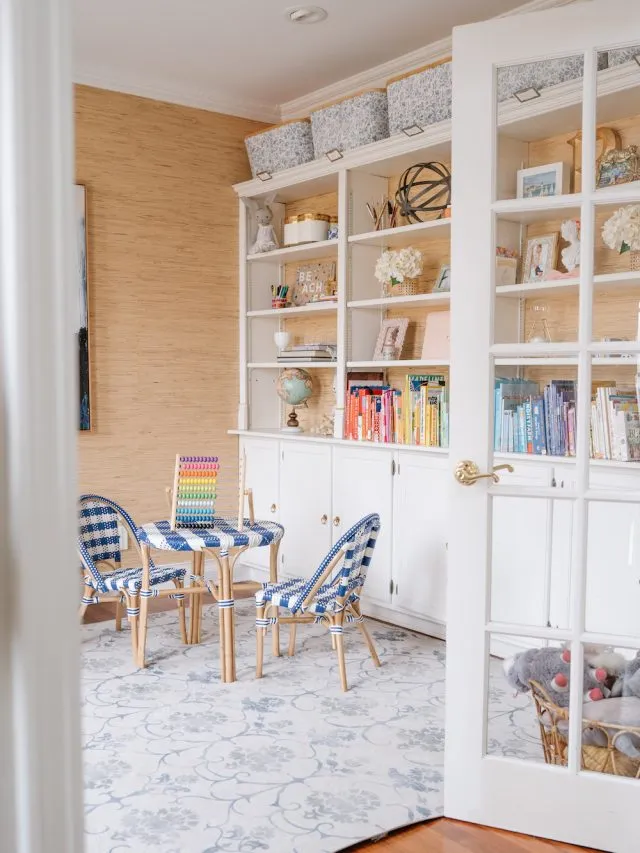
19. Chic Playroom with Natural Fiber Wallpaper and Gingham Chairs
The Grandmillennial trend is making its way into kids’ spaces, and this room is a perfect example. We’re seeing a return to more traditional, layered patterns and textures as a reaction against years of stark minimalism. The woven grasscloth wallpaper, the blue and white gingham, and the floral-patterned rug all feel classic and a bit nostalgic. It’s a move toward creating rooms with warmth, character, and a sense of history, proving that a playroom can be sophisticated and playful at the same time.
|
📋 Copy HEX 🔗 Share |
Natural fiber wallpaper, like the gorgeous grasscloth used here, adds incredible texture and warmth to a room. However, it’s not the most practical choice for a high-traffic playroom. It can be delicate, difficult to clean (you can’t just wipe it with a wet cloth), and can show water marks permanently. A stray crayon mark or a juice splash could spell disaster. If you love the look but have young, messy kids, consider a vinyl look-alike wallpaper that offers a similar textured appearance with far more durability.
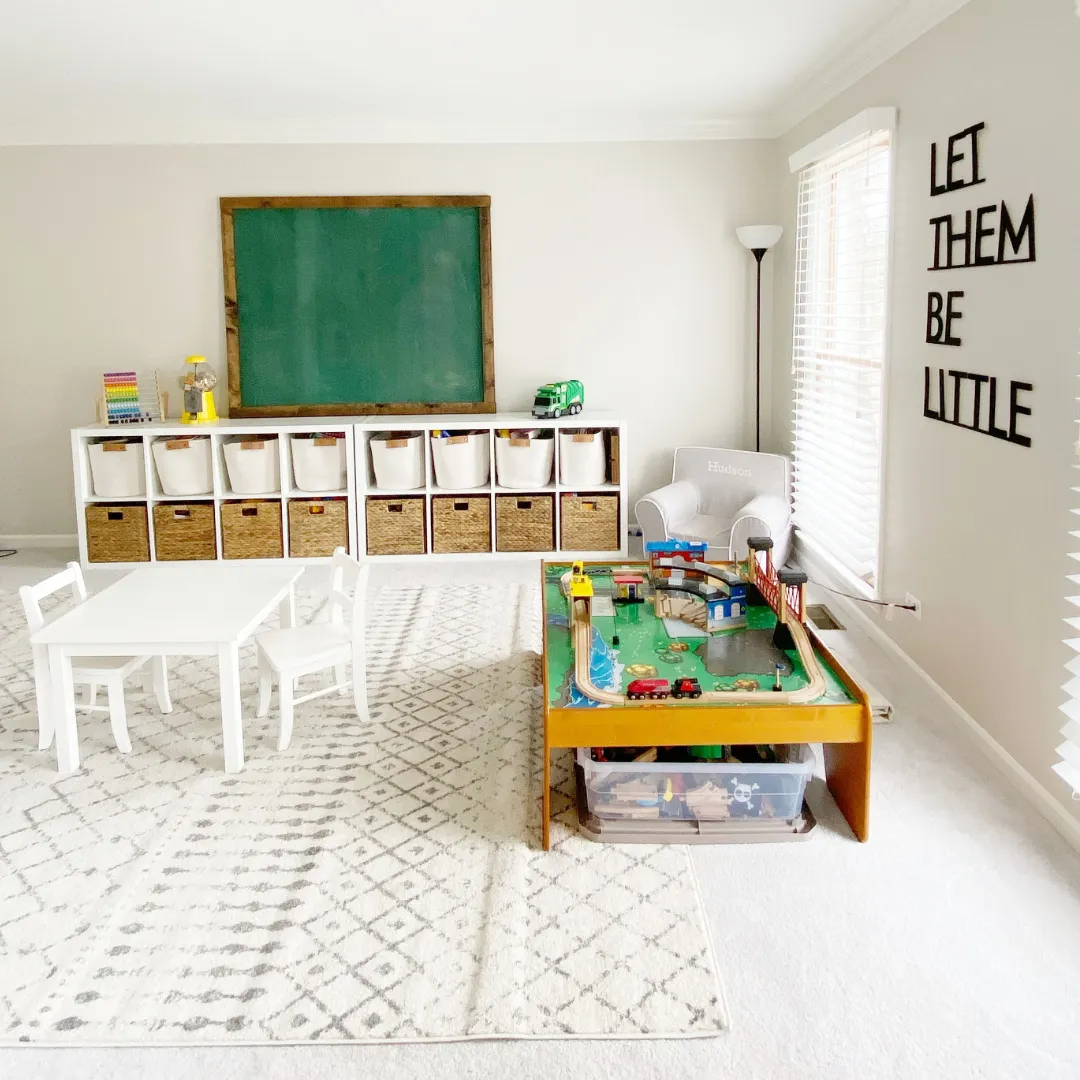
20. Organized Gray and White Playroom with a Large Chalkboard
This clean and organized look is highly achievable with budget-friendly retail pieces. Here’s an estimated breakdown:
- Main Furniture (Cube storage, table/chairs): $250 – $600 (Think IKEA Kallax)
- Activity Furniture (Train table, armchair): $200 – $500
- Textiles (Rug): $150 – $400
- Decor/Accessories (Chalkboard, wall letters): $100 – $300
- Storage Bins (Fabric and wicker): $100 – $250
- TOTAL: $800 – $2,050
Budget alternative: Source the train table and kid’s armchair from Facebook Marketplace ($50-$100 for both). Use chalkboard paint on the wall instead of a framed board ($20). This entire look can easily be achieved for under $500.
|
📋 Copy HEX 🔗 Share |
When using cube storage, mixing up the bin materials is a designer trick to avoid a monotonous look. Notice how this unit combines clean white fabric bins with the natural texture of wicker baskets. This simple swap adds depth, warmth, and visual interest to an otherwise basic piece of furniture. It makes the affordable storage unit look more custom and expensive. Aim for a 50/50 or 60/40 split between the two materials for the best effect.
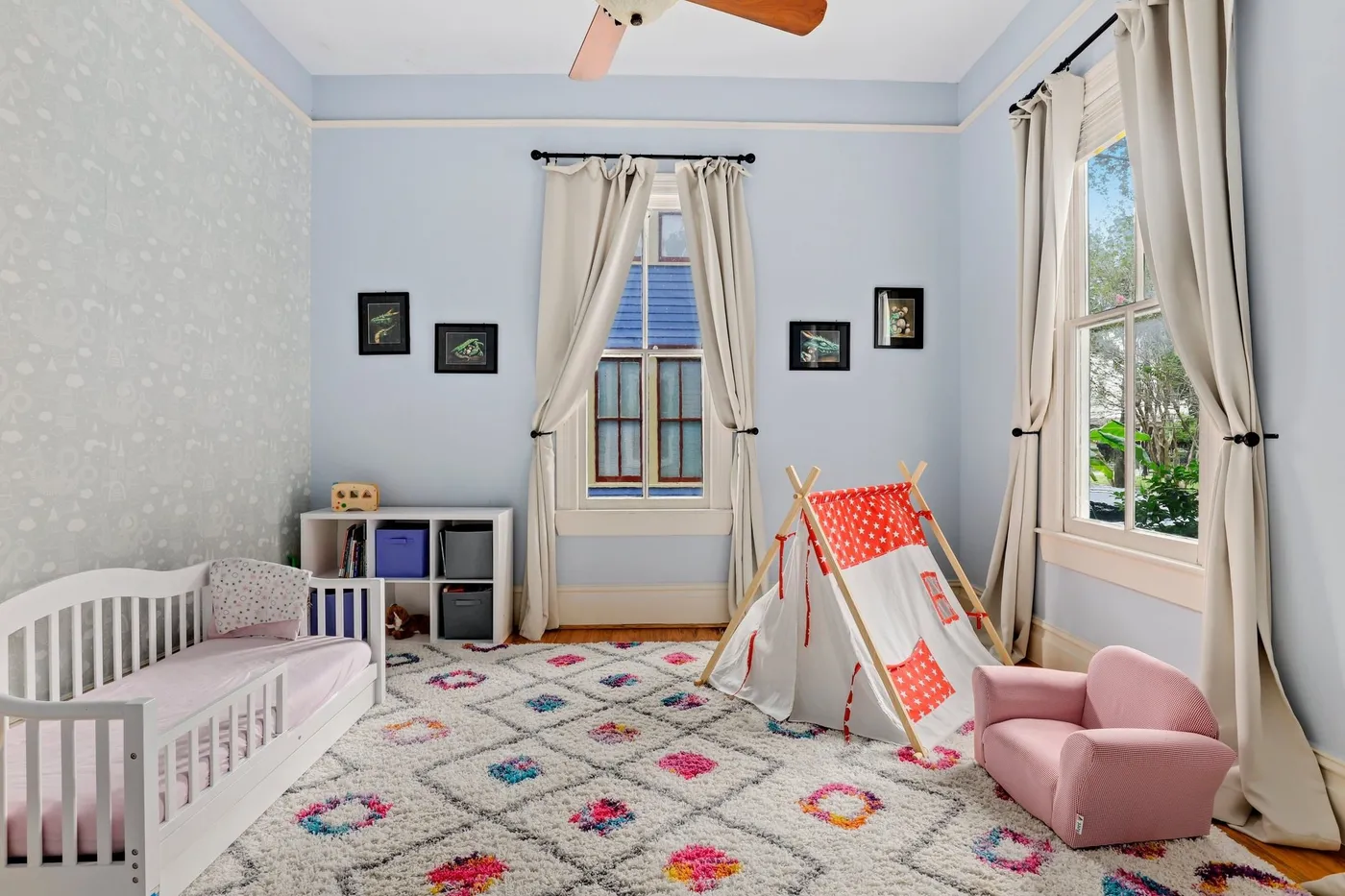
21. Whimsical Light Blue Playroom with a Colorful Shag Rug
This room’s sweet, dreamy formula is about layering soft elements. It’s 50% soft color (the light blue walls), 30% plush texture (the shaggy rug and pink bedding), and 20% clean white structure (the toddler bed and storage unit). The patterned wallpaper and play tent act as whimsical accents within this framework. You could change the wall color to a pale lilac or mint green and swap the rug’s accent colors, and the room would retain its gentle, playful essence. The key is the dominance of soft colors and textures.
|
📋 Copy HEX 🔗 Share |
That beautiful, plush shag rug looks like a dream to play on, but it requires serious upkeep. High-pile rugs are magnets for crumbs, small toy pieces (hello, Legos), and dust. You’ll need a vacuum with excellent suction and a beater bar you can adjust for high pile. Even then, you’ll have to regularly take it outside to shake it out thoroughly. Spills will need to be spot-cleaned immediately to prevent them from seeping deep into the long fibers. It’s gorgeous, but it’s not a low-maintenance choice.
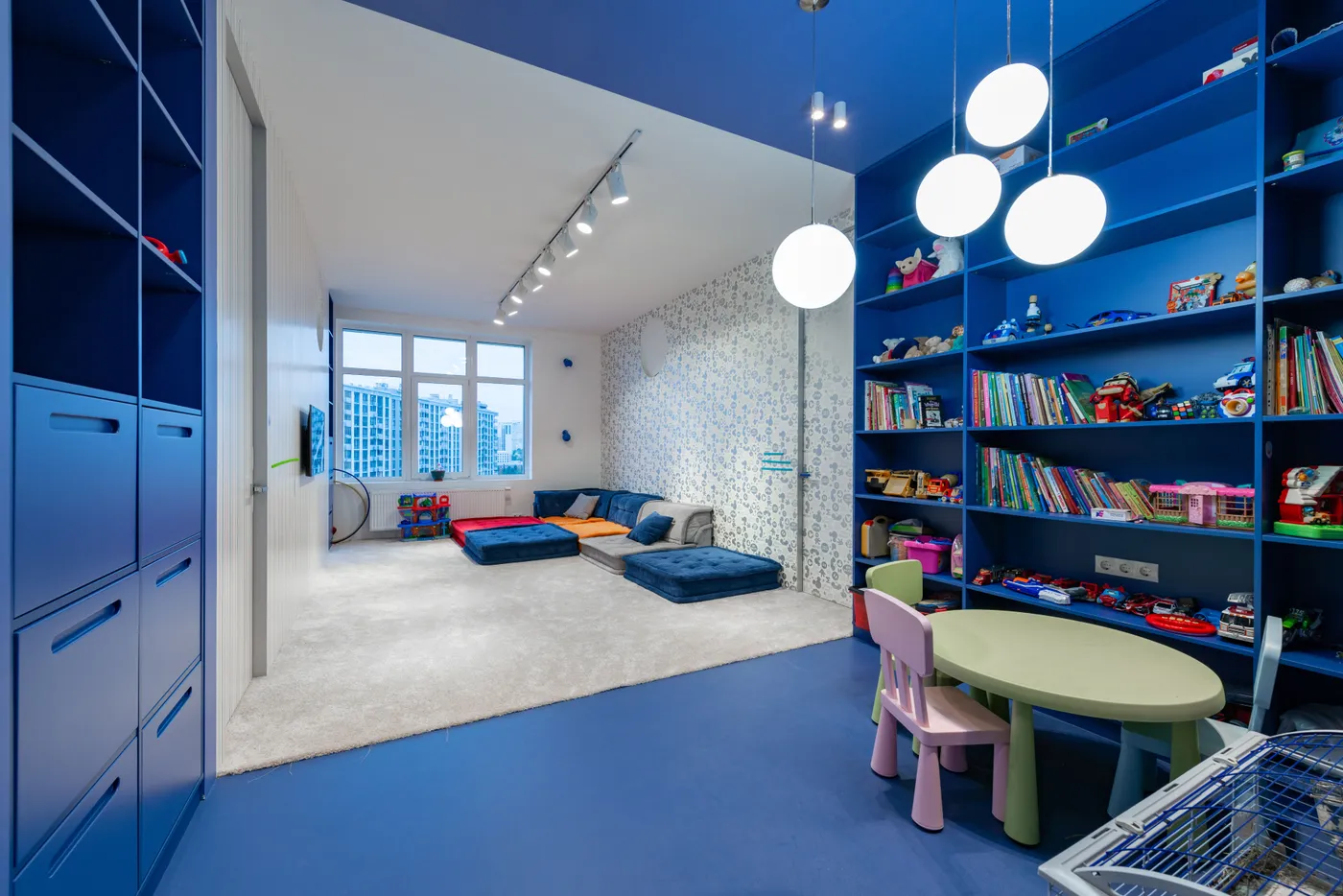
22. Modern Playroom with a Bold Blue Ceiling and Floor
The single most daring and defining choice here is the color drenching in vibrant blue. Painting the floor, the extensive built-in shelving, and the ceiling all in the same bold hue is a powerful design move. It creates an immersive, cocoon-like effect that is incredibly dynamic. The white walls act as a visual break, preventing the blue from being overwhelming, but it’s the commitment to using one color on multiple surfaces that gives this room its unforgettable character. This is a bold alternative to the classic built-ins seen in Idea #0.
|
📋 Copy HEX 🔗 Share |
Thinking about painting your floor? It’s a fantastic, high-impact look, but there are crucial prep steps you can’t skip.
- Identify Your Floor Material: Is it wood, concrete, or vinyl? The type of primer and paint you need depends entirely on the surface.
- Serious Prep Work: The floor must be impeccably clean, degreased, and likely sanded or etched for the paint to adhere properly. Skipping this will lead to peeling and chipping.
- Choose the Right Paint: You must use a dedicated floor paint with an epoxy or polyurethane base designed to withstand foot traffic. Standard wall paint will not hold up.
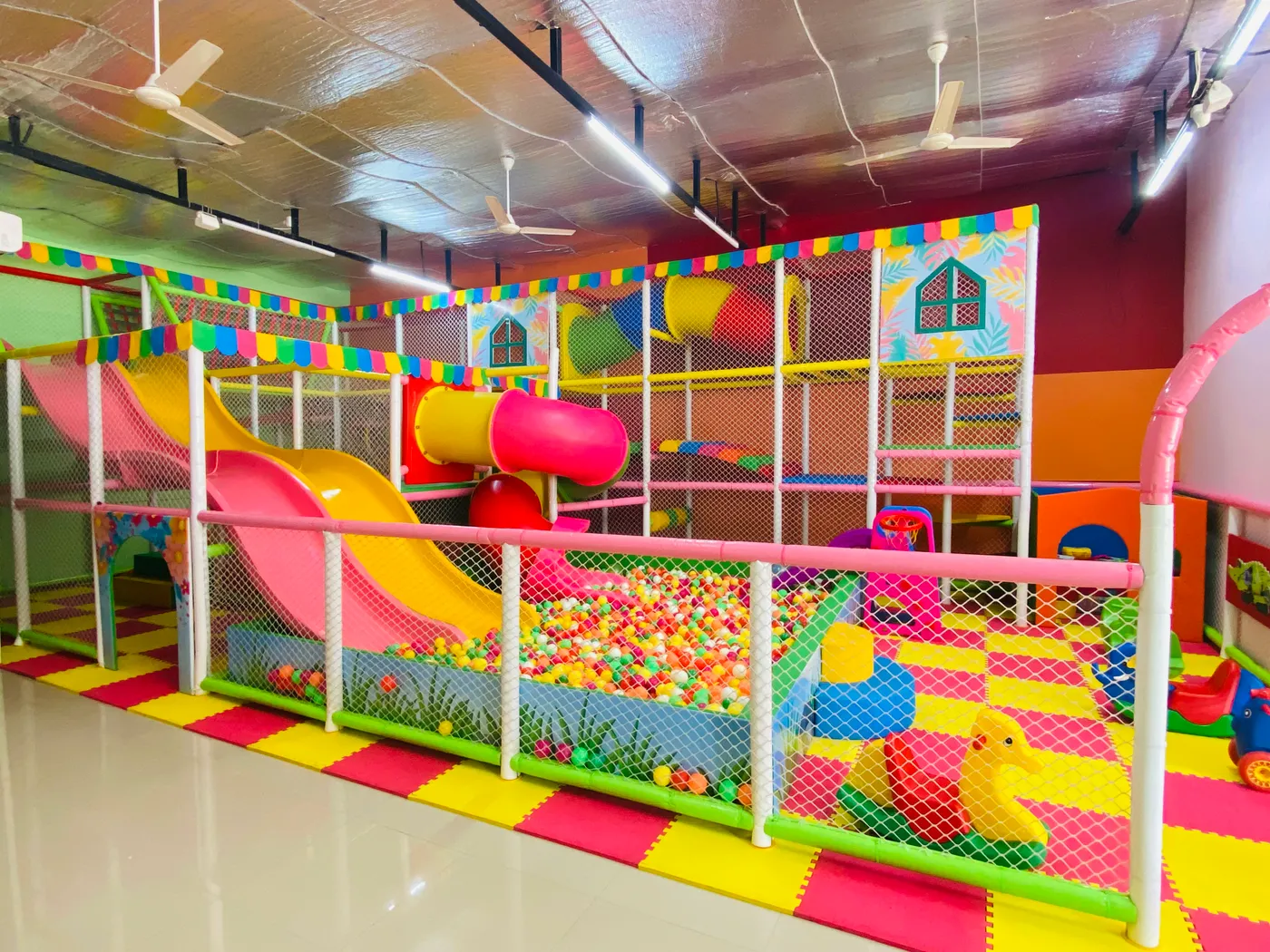
23. Indoor Soft Play Zone with Pink and Yellow Slides
A full play structure like this is a massive investment. You can capture the same energy for a home setting by curating a collection of smaller soft play pieces. Look for foam climbing block sets on Amazon or at specialty toy stores (around $200-$400). Add a standalone plastic slide ($100-$150) and a fabric ball pit ($80-$120). Finish with interlocking foam floor mats ($50-$100). For under $700, you can create a fantastic, reconfigurable soft play zone that gives you 80% of the fun without needing a commercial space or a five-figure budget.
|
📋 Copy HEX 🔗 Share |
This kind of multi-level play structure requires significant vertical space. You’ll need a minimum ceiling height of 10-12 feet to accommodate the upper levels and ensure there’s enough clearance for kids to play safely without hitting their heads. This makes it a perfect fit for a garage conversion, a walk-out basement with high ceilings, or a commercial space. It is generally not suitable for a standard 8-foot ceiling spare bedroom. If you have lower ceilings, consider a sprawling ground-level setup like in Idea #23.
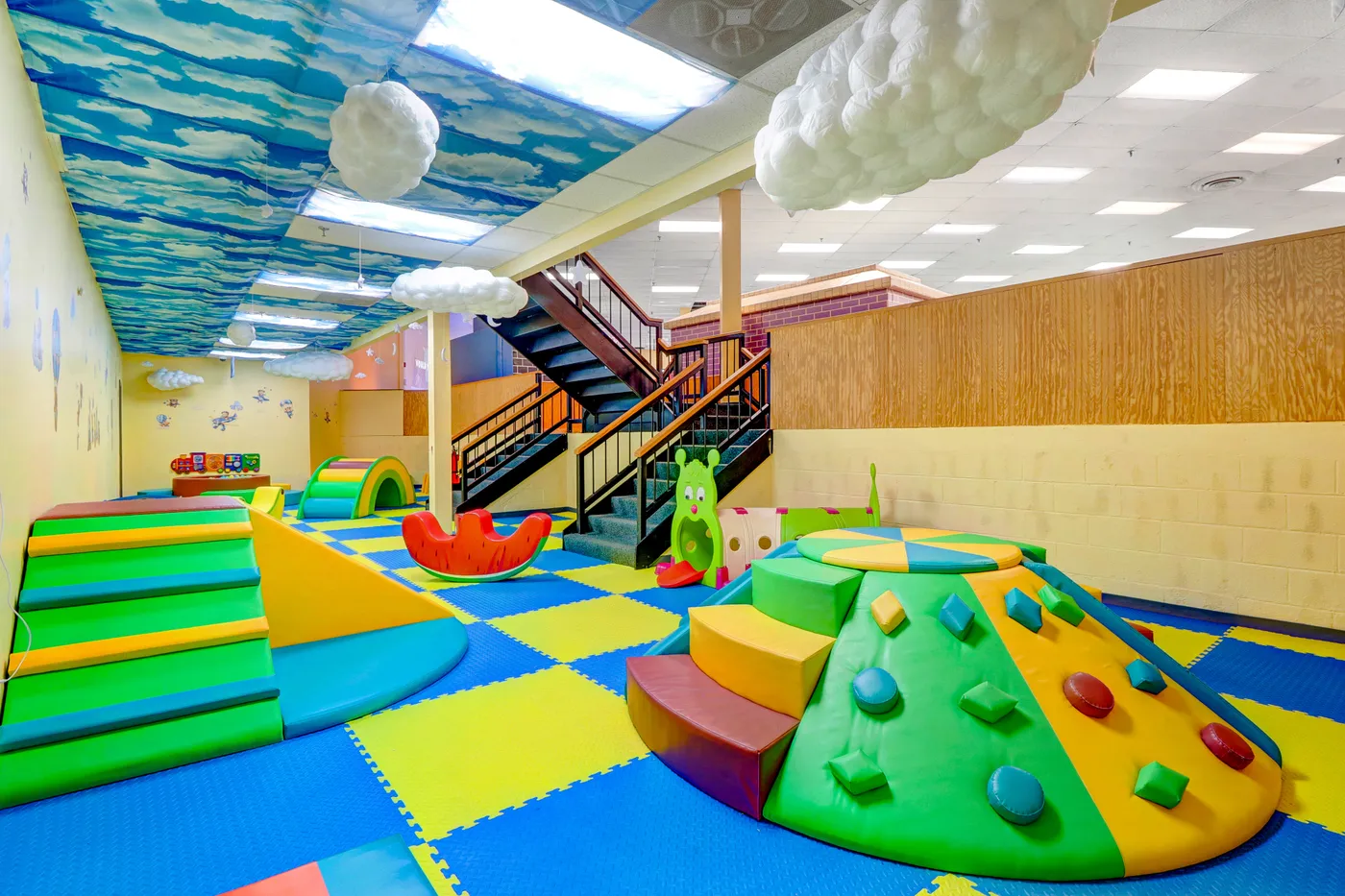
24. Imaginative Play Area with a Sky Ceiling and Soft Tiles
Creating a cloud-painted ceiling is a magical DIY that sets an amazing tone. Here’s the simple version:
- Paint your entire ceiling a base color of sky blue. Let it dry completely.
- Pour some white paint onto a paper plate. Use a sea sponge to dab the white paint in loose, irregular cloud shapes. Don’t try to be perfect!
- While the white paint is still wet, use a clean, dry paintbrush to lightly feather and blend the edges of the clouds into the blue background. This softens the look.
- Repeat across the ceiling, varying the size and shape of your clouds. For extra magic, hang some pre-made cloud decorations. Time: 4-5 hours. Cost: Under $100.
|
📋 Copy HEX 🔗 Share |
Playrooms like this one reflect a growing trend in child development called schematic play. Designers and parents are creating environments that support kids’ innate behavioral patterns—like climbing, sliding, and rolling. Instead of just providing toys, the room itself becomes the plaything. This focus on large motor skills and imaginative, unstructured play is a response to our increasingly digital world, offering kids a physical, sensory-rich space to explore and learn through movement. It’s a trend with deep roots in educational theory.
Time to Build Their Dream Space
Remember, the goal isn’t to replicate one of these photos exactly, but to steal the ideas that spark joy for your family. The perfect playroom is a personal one—a place that supports imagination, creativity, and a little bit of happy mess. Take these concepts, mix in your own kids’ personalities, and start creating. And don’t forget to save your absolute favorites to your Pinterest board for when you’re ready to begin!