
White oak cabinets bring warmth without weight. Their light grain reads clean but not cold, which is why they keep showing up in kitchens that want to feel both current and settled.
This roundup walks through 31 versions of that look, from flat-panel to fluted, showing you how different finishes, hardware, and countertop pairings shift the mood without losing the wood.
White Oak Cabinets Paired with a Wood Range Hood
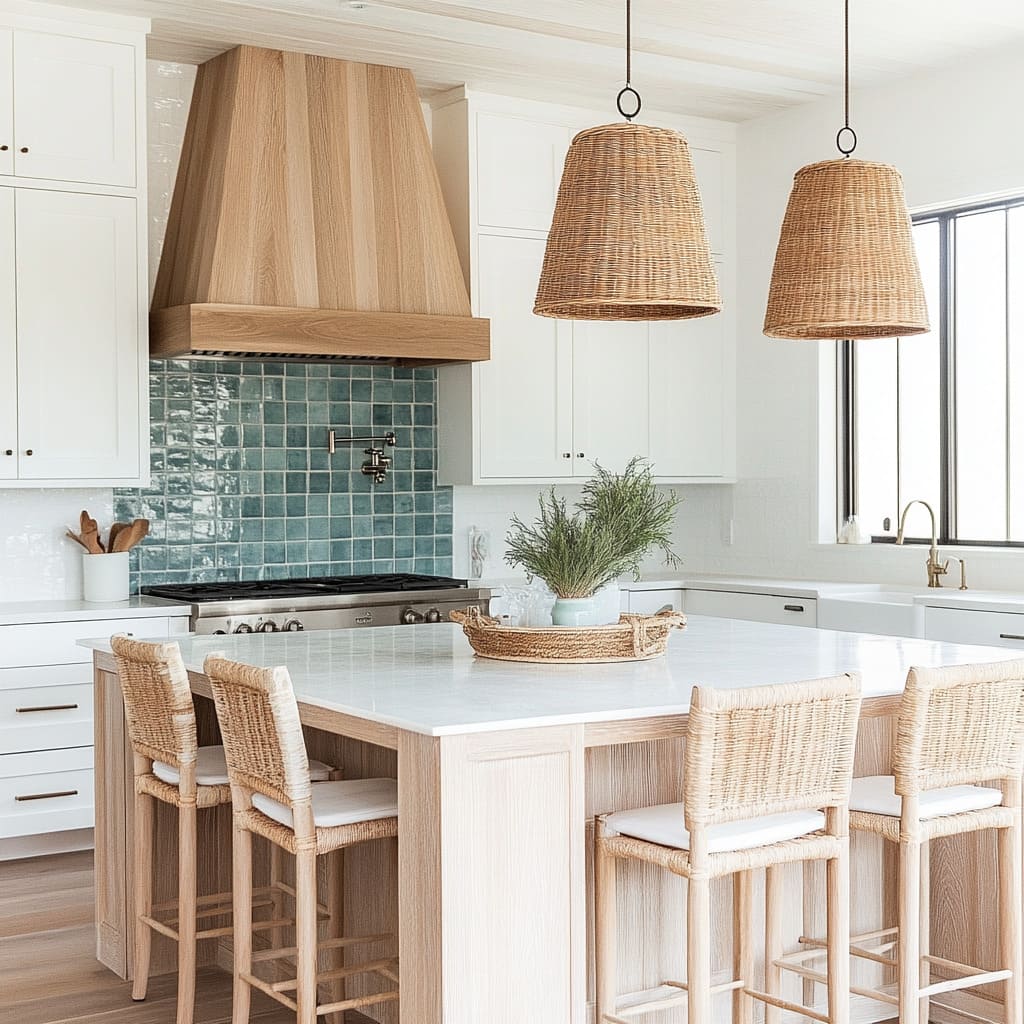
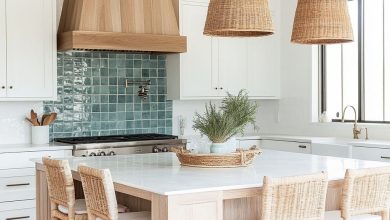
A wood range hood that matches the white oak cabinets pulls this modern coastal kitchen into a single calm line. The cabinets sit light and warm against white marble counters and a pale blue tile backsplash, while rattan bar stools add a casual, beachside note. Keeping the perimeter simple lets the island with seating become the natural gathering spot. The rule: match the hood material to the cabinet finish so the vertical mass reads as one piece, not two competing elements. Pendant lights hung low over the island reinforce the work zone without blocking sight lines.
Seamless Light Oak Cabinets with Waterfall Countertops
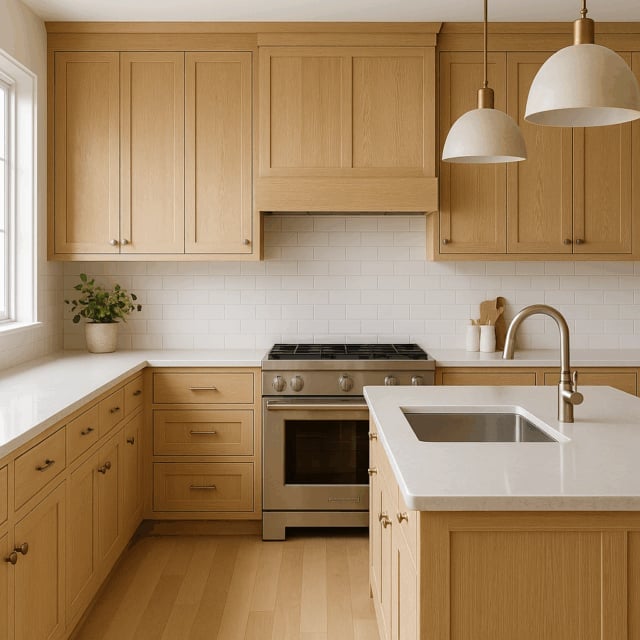
This kitchen makes its point with one continuous gesture: light oak cabinets that run without visible breaks, topped by white quartz waterfall countertops that drop straight down the island ends. The palette stays tight, white, light oak, gray, so the wood grain does the talking. Stainless steel appliances and simple bar stools ground the space. A practical take: when cabinets and countertops share a similar tone, the room feels bigger because the eye travels horizontally without a hard color stop. Pendant lights with clean glass shades repeat the vertical line of the waterfall edge without competing.
Custom White Oak Cabinets with a Marble Island
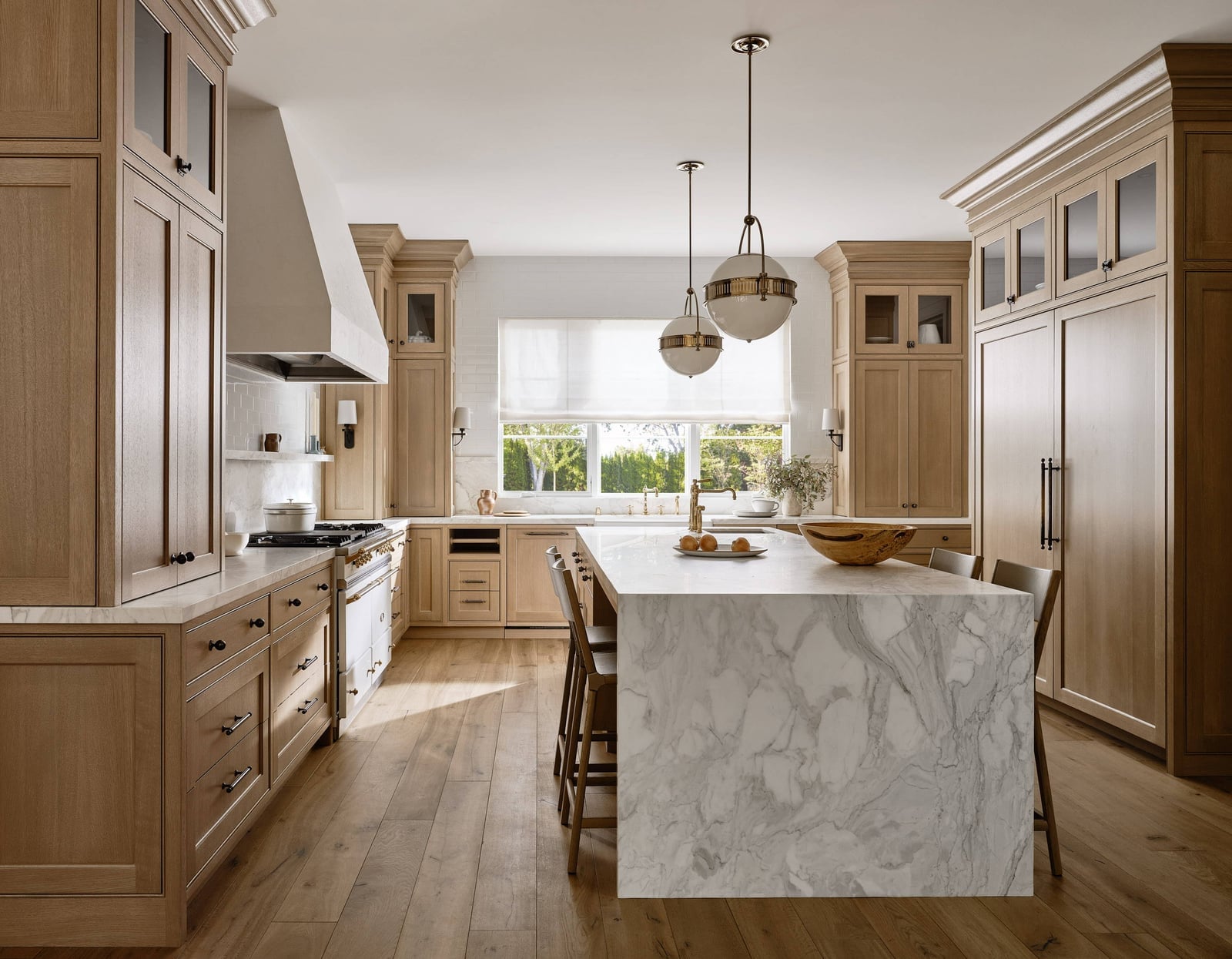
What makes a marble island worth the investment when you already have wood cabinets? The contrast. Custom white oak cabinets wrap the perimeter in a warm, even tone, while the island steps forward in veined marble that catches overhead pendants and recessed lights. The relationship is simple: wood recedes, stone anchors. An open-plan layout like this one lets the island act as a visual pivot between the cooking zone and the living area beyond. A decor principle that applies here: when mixing two dominant materials, give each a clear job. The marble holds the center. The oak frames everything else. Natural light from nearby windows softens the transition.
Modern White Oak Shaker Cabinets with Brass Hardware
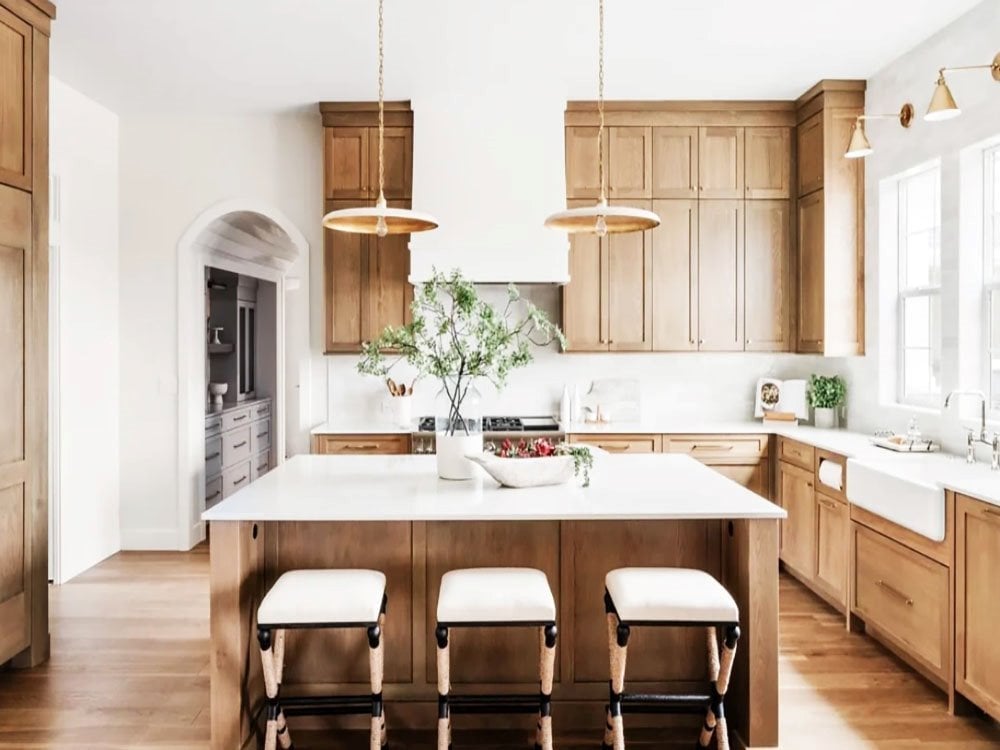
White oak shaker cabinets with brass hardware read as modern rather than rustic because the marble island keeps the palette cool and polished. The wood stays warm and flat-fronted, while the brass pulls a warm metallic line across each door. Natural light from large windows hits the marble first and bounces, softening the wood grain. A useful lighting principle: brass hardware works best when it catches light from a nearby window or pendant, so position task lights where they graze the cabinet fronts rather than hitting them straight on. This keeps the metal from looking too shiny and lets the wood stay the main event.
Fluted White Oak Cabinets with Integrated Appliances
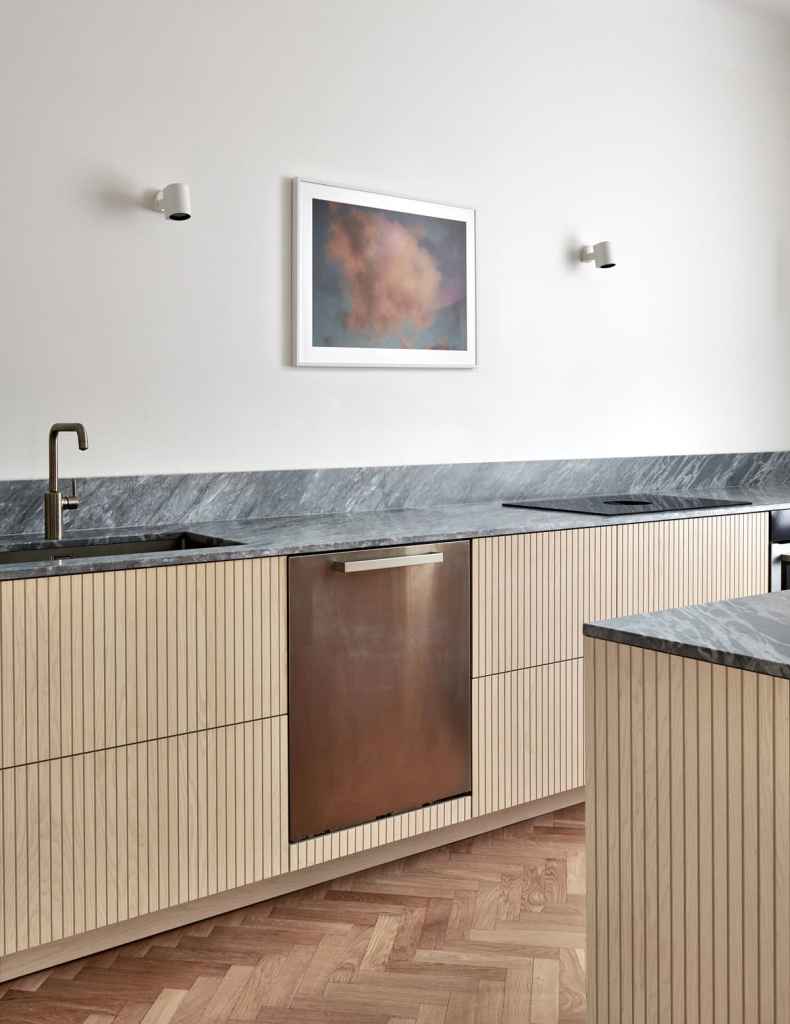
Fluted cabinets work best when nothing interrupts the vertical grooves. Integrated appliances disappear behind matching fluted panels, so the kitchen becomes a single textured surface. The marble countertop sits clean and uncluttered, letting the ribbed wood carry the visual weight. Under-cabinet lighting aimed upward grazes the flutes and throws soft shadow lines, which adds depth without needing extra hardware or decor. This setup suits someone who wants storage that looks like architecture. Keep the island clear of small appliances to preserve the linear effect.
Scandinavian Kitchen with Frosted Glass Oak Cabinets
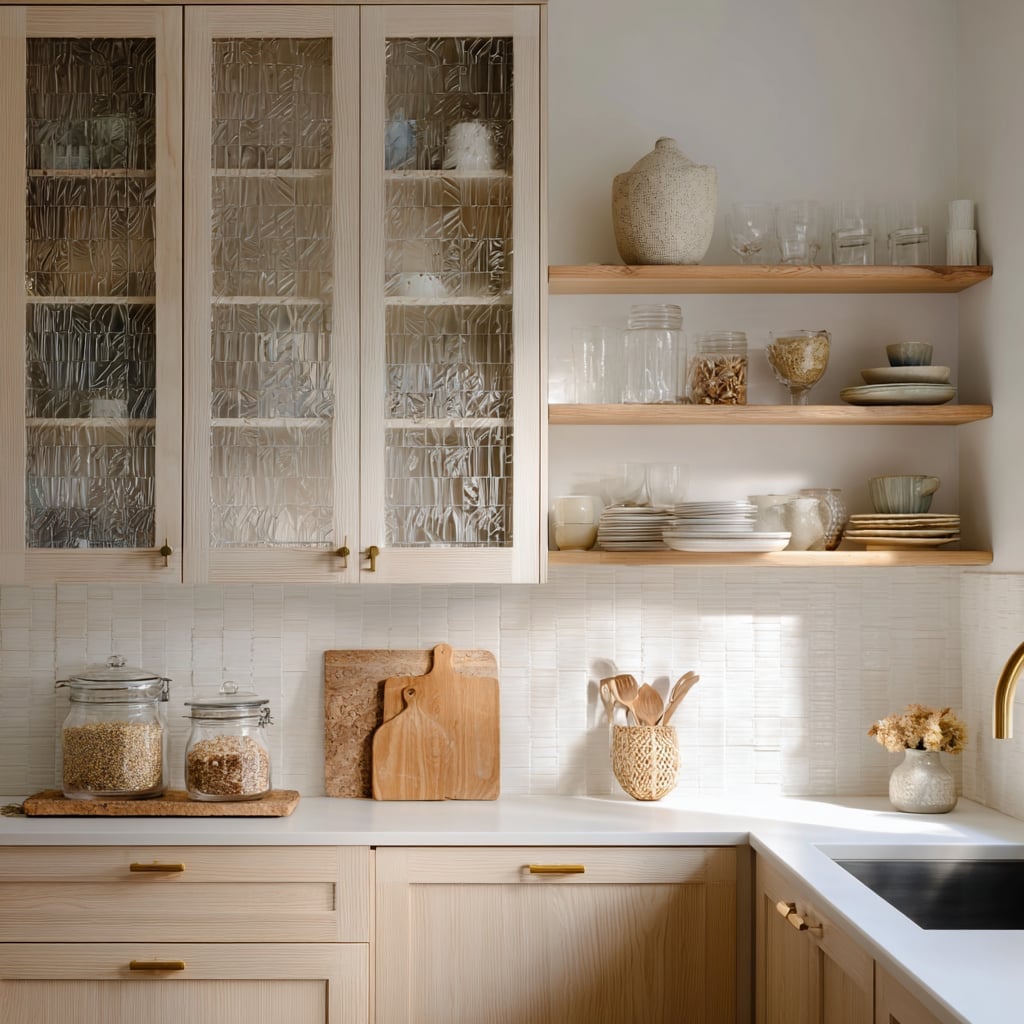
A solid slab door feels safe. Frosted glass is the slightly braver cousin. It keeps the Scandi lightness while hiding the coffee mugs you did not stack perfectly. The frosted panels catch daylight and bounce it around the corner layout. Open shelving above repeats the same oak tone, so the eye travels, not stops. If full glass fronts feel too exposed for your kitchen habits, this is the middle ground. The cabinet fronts still read as wood, and the glass adds a layer that a solid door cannot. It is a quieter version of the same idea.
Farmhouse Kitchen with a Prominent Wood Hutch
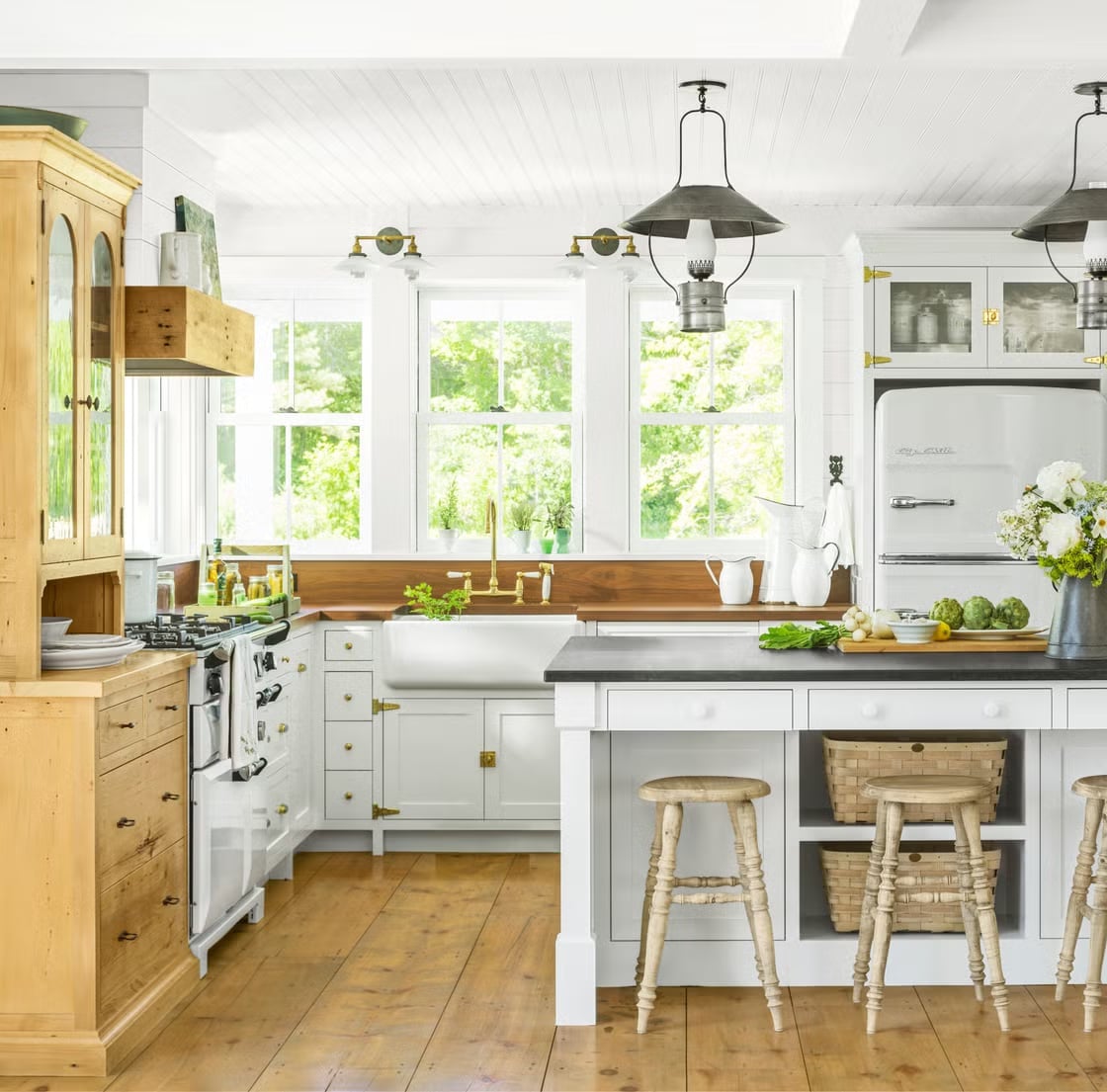
The tall wood hutch acts as the anchor. It rises above the white range and farmhouse sink, drawing the eye up in a galley layout that could otherwise feel like a tunnel. The wood tones sit against black metal accents and ceramic pieces on the open shelves. For a renter, a hutch like this is movable storage that does not require new cabinetry. It adds the farmhouse weight without a permanent build. The island below keeps the prep zone separate from the display, so the hutch stays a backdrop, not a catchall.
Light Wood Oak Cabinetry with Integrated Refrigerator
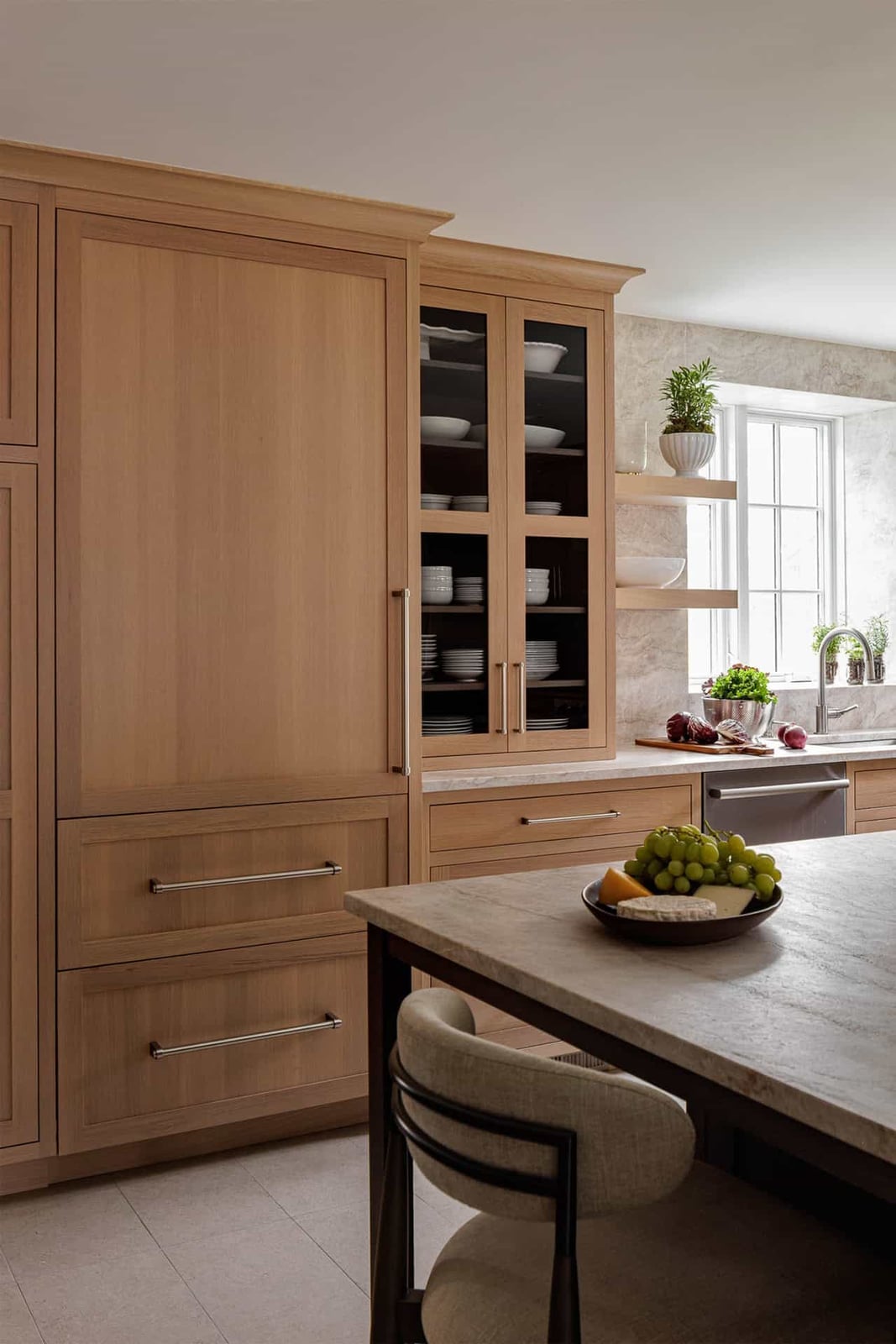
This is the cleanest version of the light oak kitchen. The integrated refrigerator sits inside a run of tall cabinets, so the whole wall reads as one continuous surface. The oak grain carries across without interruption, and the marble countertop on the island adds a pale, cool contrast. Recessed lighting keeps the ceiling flat, letting the wood tones do the work. The takeaway is straightforward: when you hide the appliance behind a panel that matches the cabinets, the room looks larger than it is. There is no visual break to signal where the kitchen ends and the fridge begins.
Rift Cut White Oak Cabinets and Waterfall Island
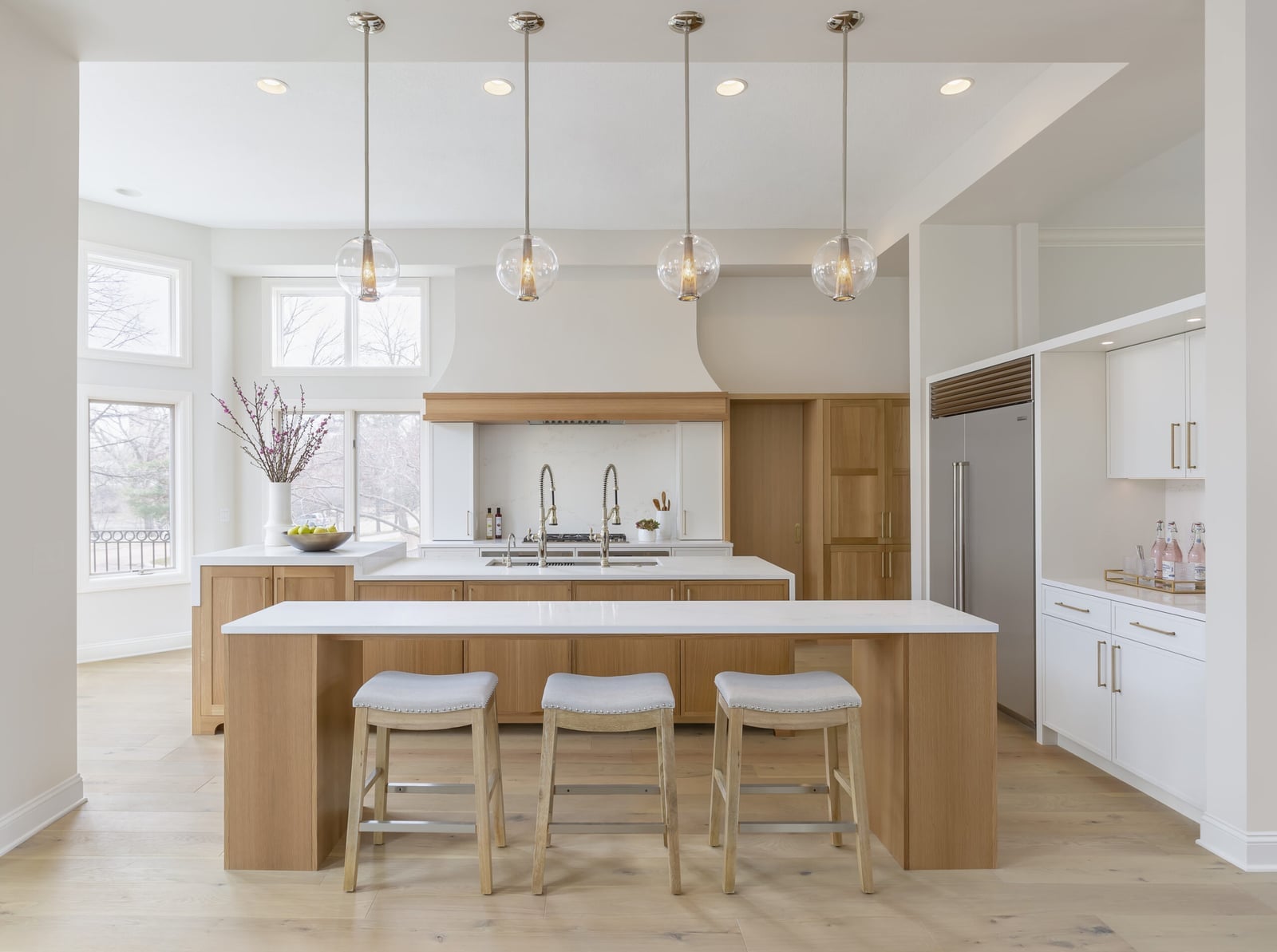
What makes rift cut white oak different from plain oak? The grain runs straight, with almost no curve or knot. That straight line matters when you have a large island with a waterfall edge. The quartz top drops down the side, and the oak cabinet faces below it match that vertical line. The consistency in the wood pattern keeps the island from looking busy. Pendant lights above add a third vertical line. The result is a kitchen where every major element points the same direction, and the eye follows the clean lines from floor to ceiling.
Light Oak Cabinets with Glass Fronts and Marble Countertops
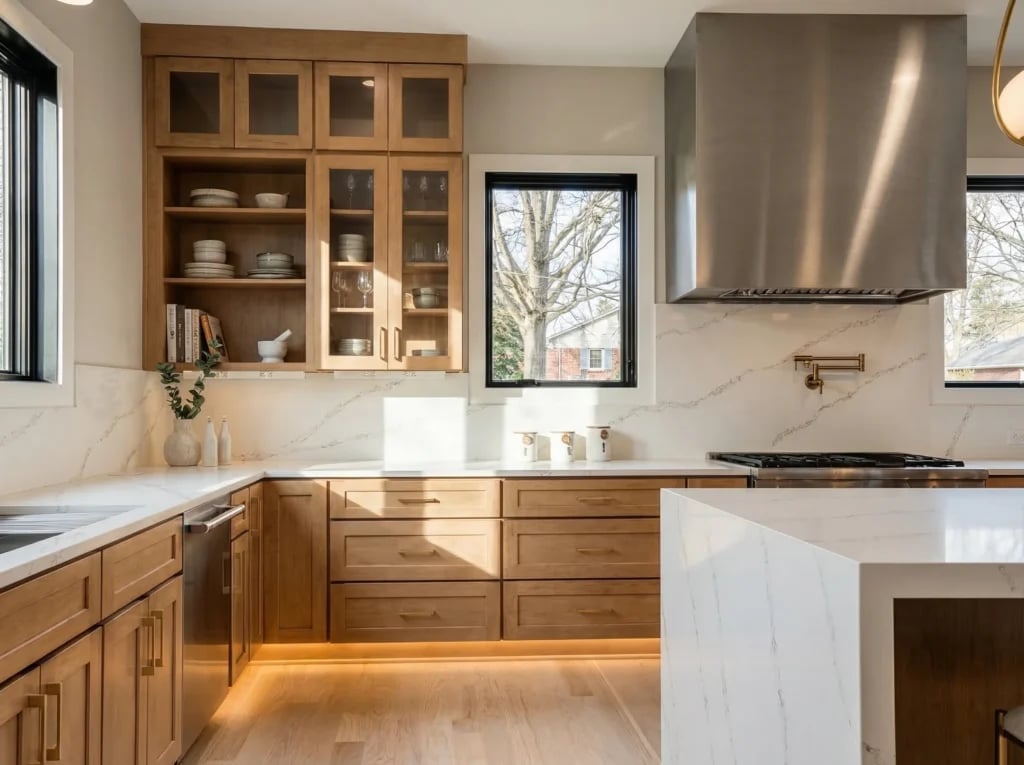
Glass fronts on the upper cabinets break up the wood run. Instead of a solid wall of oak, you get a rhythm: wood, glass, wood, glass. The marble countertops are pale with subtle veining, so they do not compete with the glass reflections. Under cabinet lighting sits below the glass fronts and casts a glow on the marble. The layout is L-shaped with an island, so the glass fronts work best on the run opposite the island, where you want the room to feel open rather than enclosed.
Long Runs of Light Oak Veneer Cabinets in a Modern Scandi Kitchen
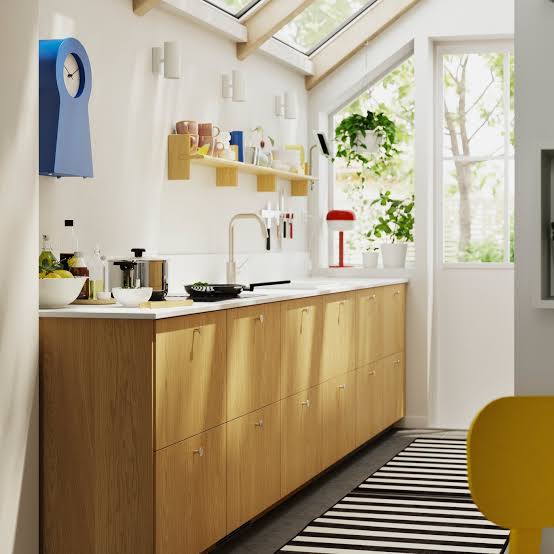
In open-plan spaces, treat cabinet runs as a single visual line, not a series of boxes. Light oak veneer cabinets stretch across the main wall, their horizontal grain reinforcing the length of the room. The Scandi approach keeps the palette restrained: pale wood, white surfaces, and little else. A central island breaks the line without interrupting it, and the pendant lights hang low enough to define the work zone. The veneer finish means the grain stays consistent across the run, which matters more in a linear layout than in a smaller kitchen.
Flat-Panel White Oak Cabinets with Under-Cabinet Lighting
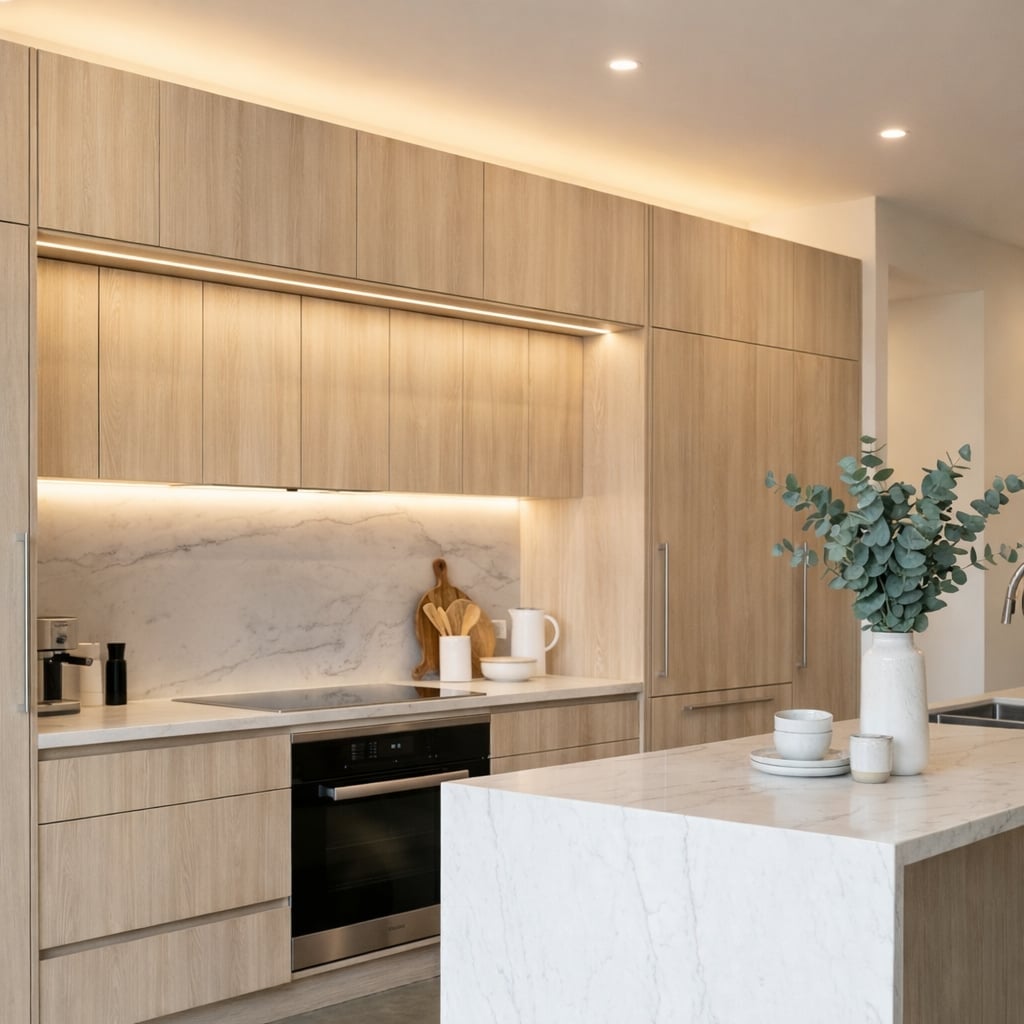
Flat-panel cabinets can feel stark next to a marble island if the lighting is wrong. The difference here is under-cabinet lighting running the full length of the upper cabinets. It washes the countertop in a warm glow that softens the white oak and the stone. The recessed ceiling lights handle general illumination, but the under-cabinet strips make the work surface usable and the wood grain visible.
A close alternative would be relying on pendants alone, which cast shadows on the counter. By adding dedicated task lighting, the flat-panel doors stay clean and simple while the space feels warm not clinical. Integrated appliances behind the same flat fronts keep the line uninterrupted.
Two-Tone White Oak and Dark Island Cabinetry
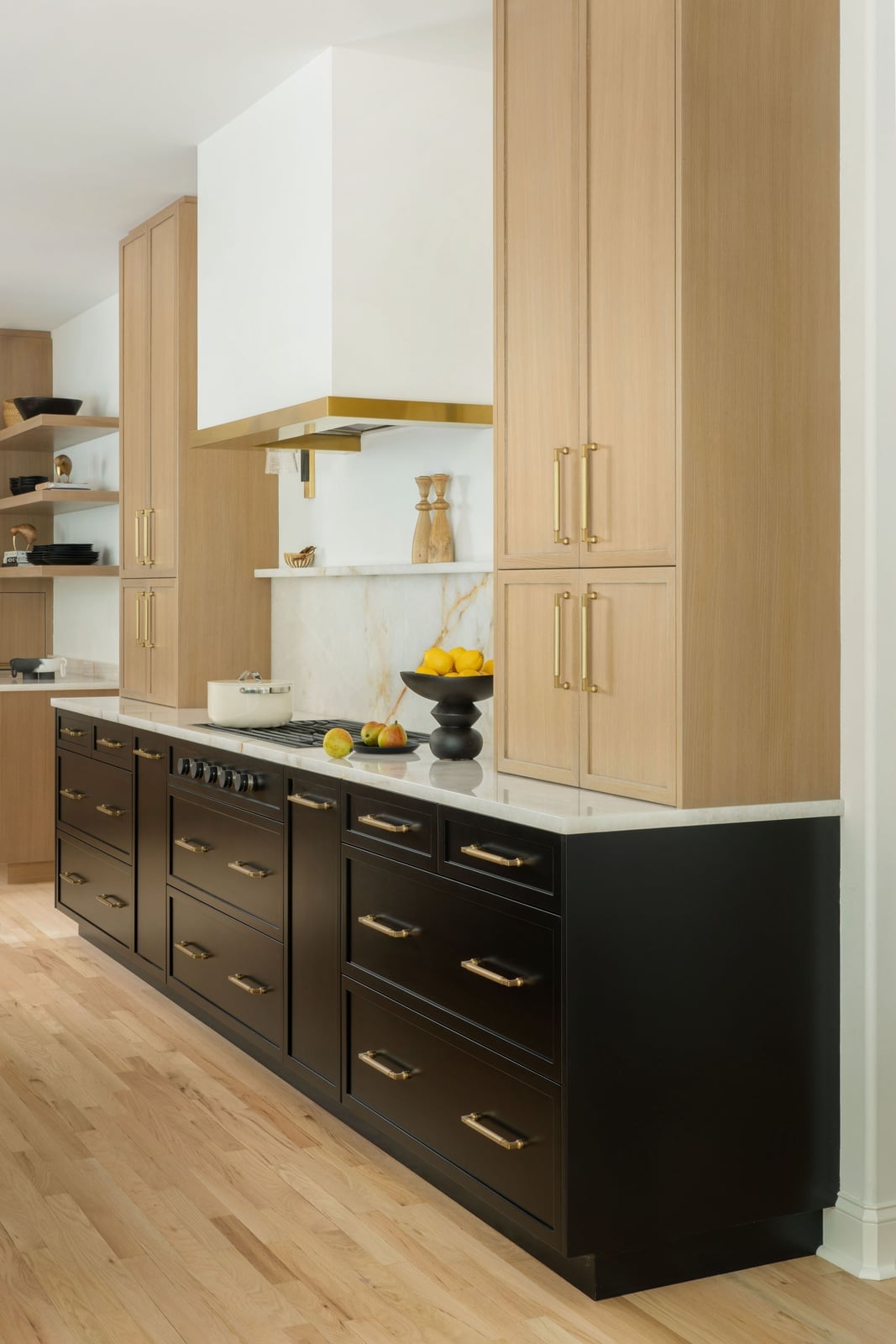
The two-tone treatment here is precise: light oak cabinets on the perimeter, a dark island with gold hardware, and a marble countertop that bridges the two. The dark island anchors the room. The gold hardware on the island pulls the eye to the center, while the perimeter cabinets stay hardware-free. This balance works because the dark tone is concentrated on one piece.
Transitional White Oak Cabinets with Detailed Fronts
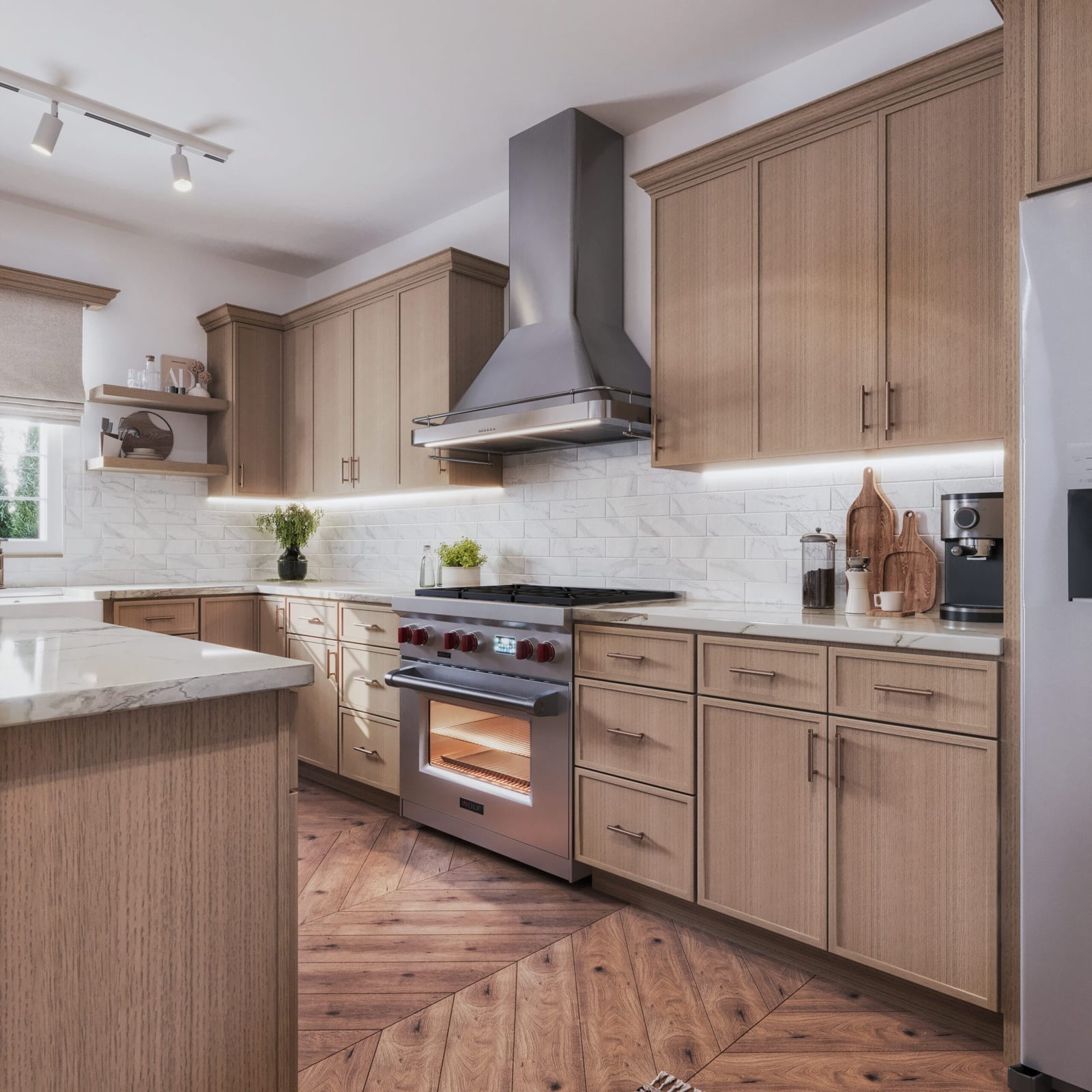
Transitional white oak cabinets with detailed fronts split the difference between traditional and modern. The doors carry a slight inset panel, which adds shadow lines without the weight of full raised-panel detailing. Under-cabinet lighting picks up those shadows and gives the wood a layered look. The marble backsplash and countertop keep the surface calm, so the cabinet fronts are the main event. Pendants above the island provide focused light, but the real task lighting comes from the strips below the uppers. For renters, a peel-and-stick wood veneer on existing flat doors can mimic the effect without replacing cabinetry.
Modern Kitchen with a Wood-Clad Island and Oak Cabinetry
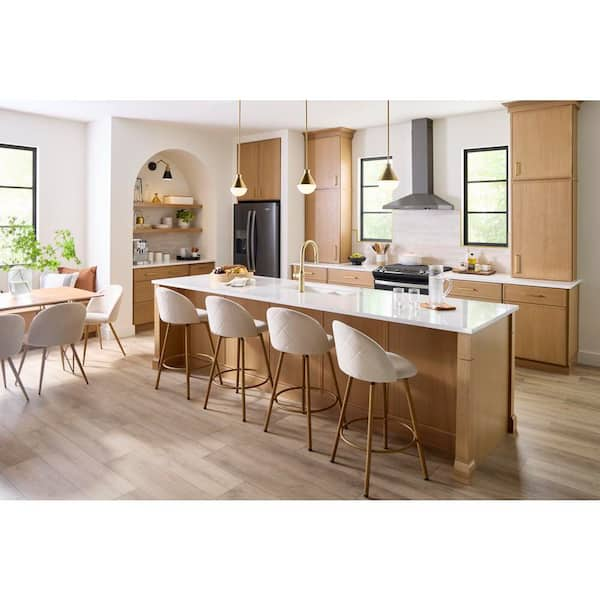
A large island can be treated as furniture rather than an extension of the cabinetry. Here, the island is clad in wood, matching the oak cabinets but reading as a separate piece. The quartz countertop on the island stays white, which prevents the wood from overwhelming the room. Gold bar stools add a metallic note that breaks up the warm tones.
Perimeter cabinets run floor to ceiling on the back wall, maximizing storage without adding visual bulk. The open-plan layout means the island doubles as a room divider, so the wood cladding on the island side facing the living area creates a natural transition. Pendant lights hang directly over the island, leaving the perimeter cabinets in softer light. The mix of wood finishes works because the undertones are consistent, so the island and cabinets feel related rather than mismatched.
Sleek Frameless White Oak Cabinets with Marble Backsplash
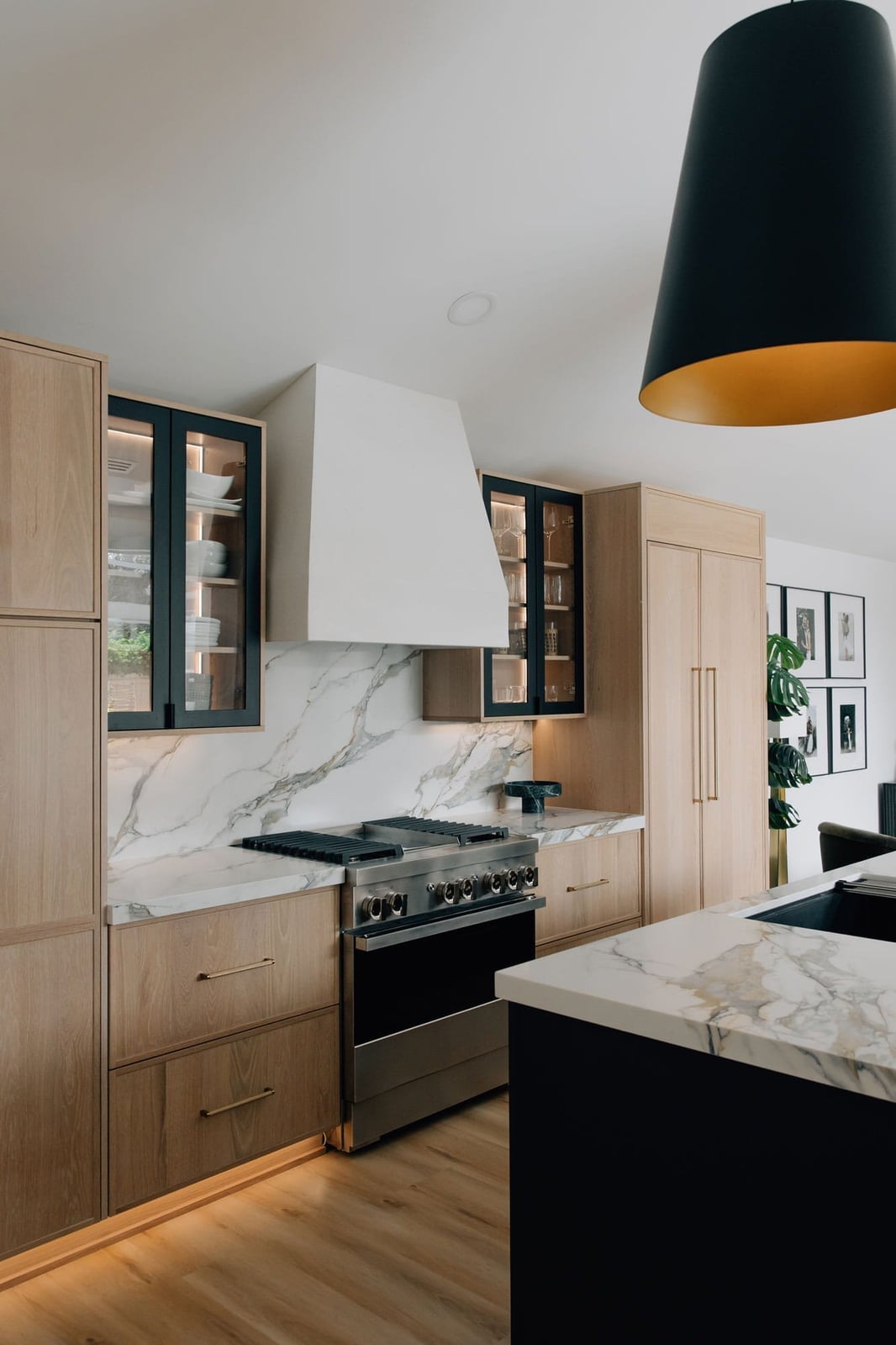
Frameless cabinets mean no face frame between the doors, so the grain carries across the whole run without interruption. The marble backsplash behind the range picks up the gray veining, and the glass upper cabinets break up the wood so the wall does not feel like one solid block. Under-cabinet lighting keeps the counter bright without a pendant getting in the way of the view. The clean line from counter to backsplash to cabinet face is the main event here, and the marble is the one surface that asks for a gentle cleaner and a seal every year or two.
Extensive Light Wood Oak Cabinetry with Marble Countertops
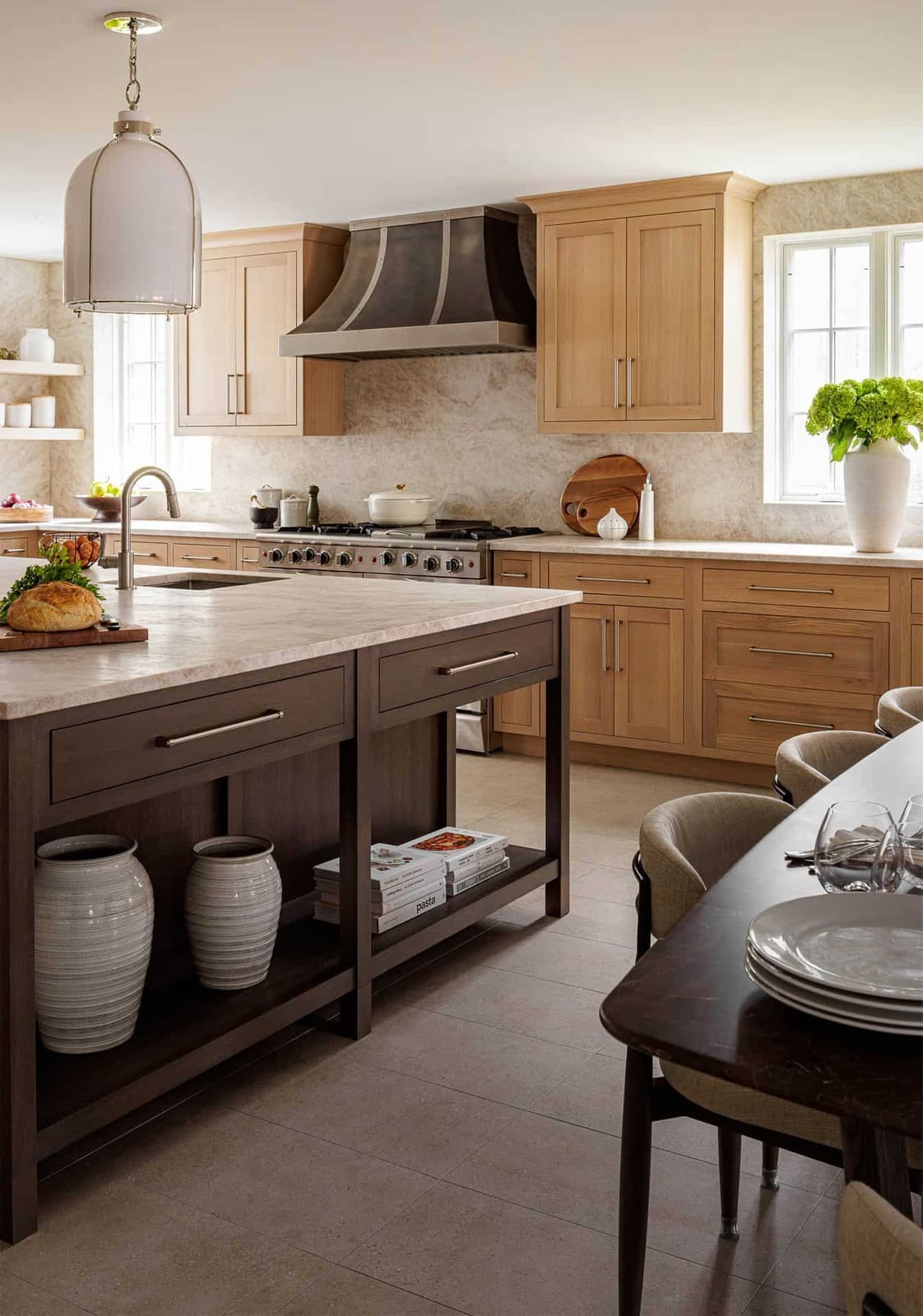
In a kitchen with this much cabinetry, the light oak runs from the perimeter to the island, and the marble countertops sit on top like a separate layer. The metal hardware is subtle enough to stay quiet, and the recessed lighting spreads evenly so no corner goes dark. For a renter, the same effect comes from peel-and-stick wood veneer on existing cabinets and a solid white laminate counter. The look changes, but the logic of keeping the top surface distinct from the wood stays the same.
White Oak Flat-Panel Cabinets with Dark Range Hood
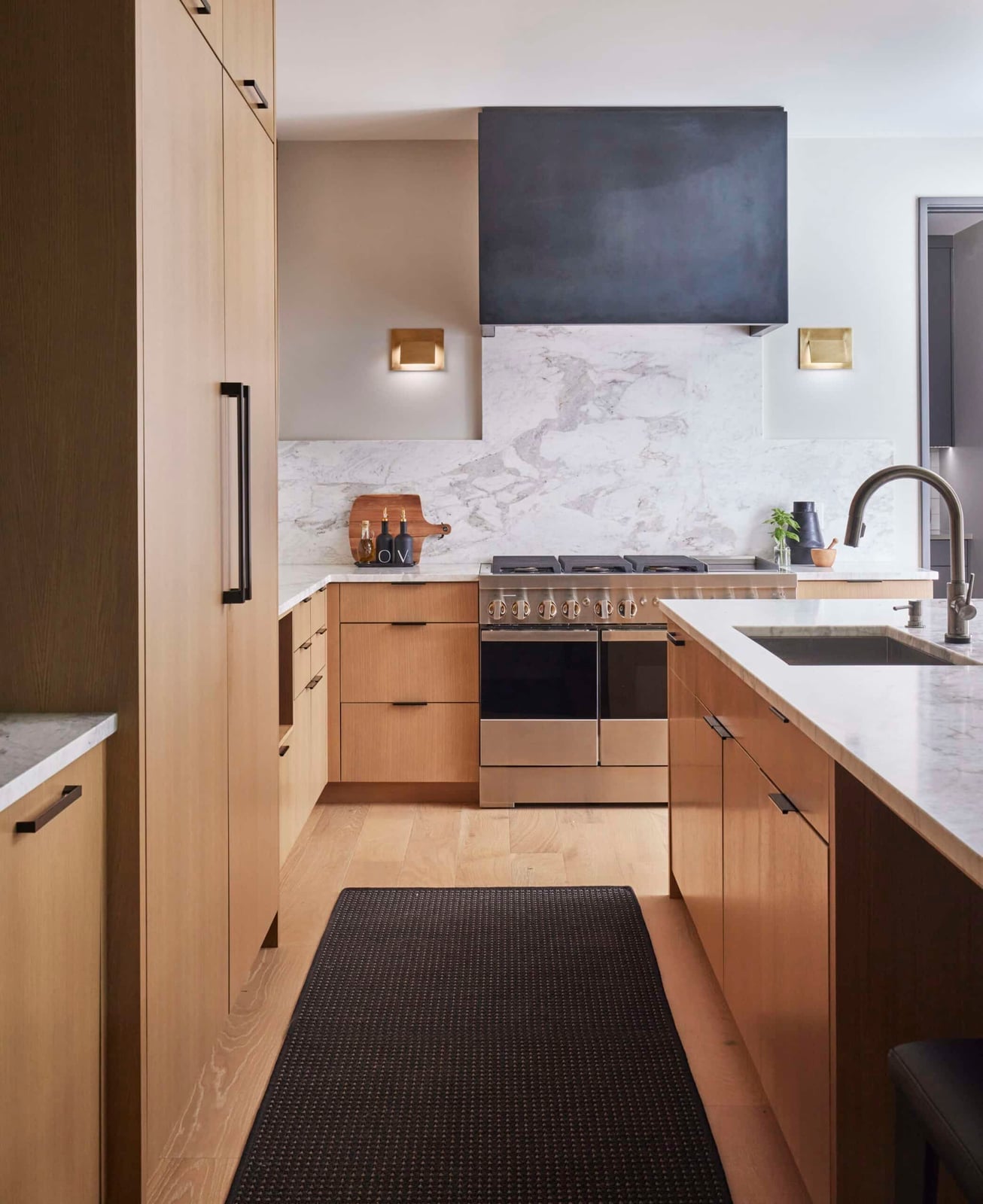
A flat-panel cabinet and a dark range hood sound like opposite ends of the spectrum, but the contrast is what makes the kitchen feel intentional. The white oak stays quiet and neutral, and the black hood becomes the focal point without any extra effort. The marble backsplash behind the range ties the two together because it has both light and dark veining.
The island repeats the same flat-panel oak, so the hood looks like a sculptural object. The sconces on either side of the hood add a warm glow that keeps the black from feeling harsh at night. If the range hood were the same wood as the cabinets, the whole wall would blur together. The dark finish provides a clear visual anchor.
White Oak Cabinets with a Marble Range Hood
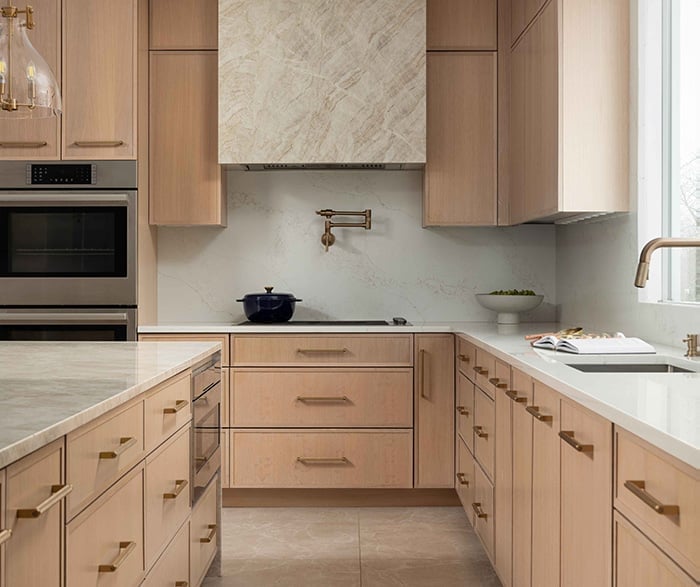
The marble range hood is not just a surface. It is a slab that wraps the entire chimney, so the veining flows vertically instead of lying flat on a counter. The white oak cabinets around it stay simple and let the stone do the talking. The brass hardware on the cabinets and the pendant lights share a warm tone that keeps the marble from feeling cold. The tile backsplash is a neutral field, so the hood and the cabinets are the only two materials that compete for attention. The marble needs sealing, but it is one piece, so the upkeep is simpler than a full backsplash of small tiles.
White Oak Cabinets with Glass-Front Upper Cabinets
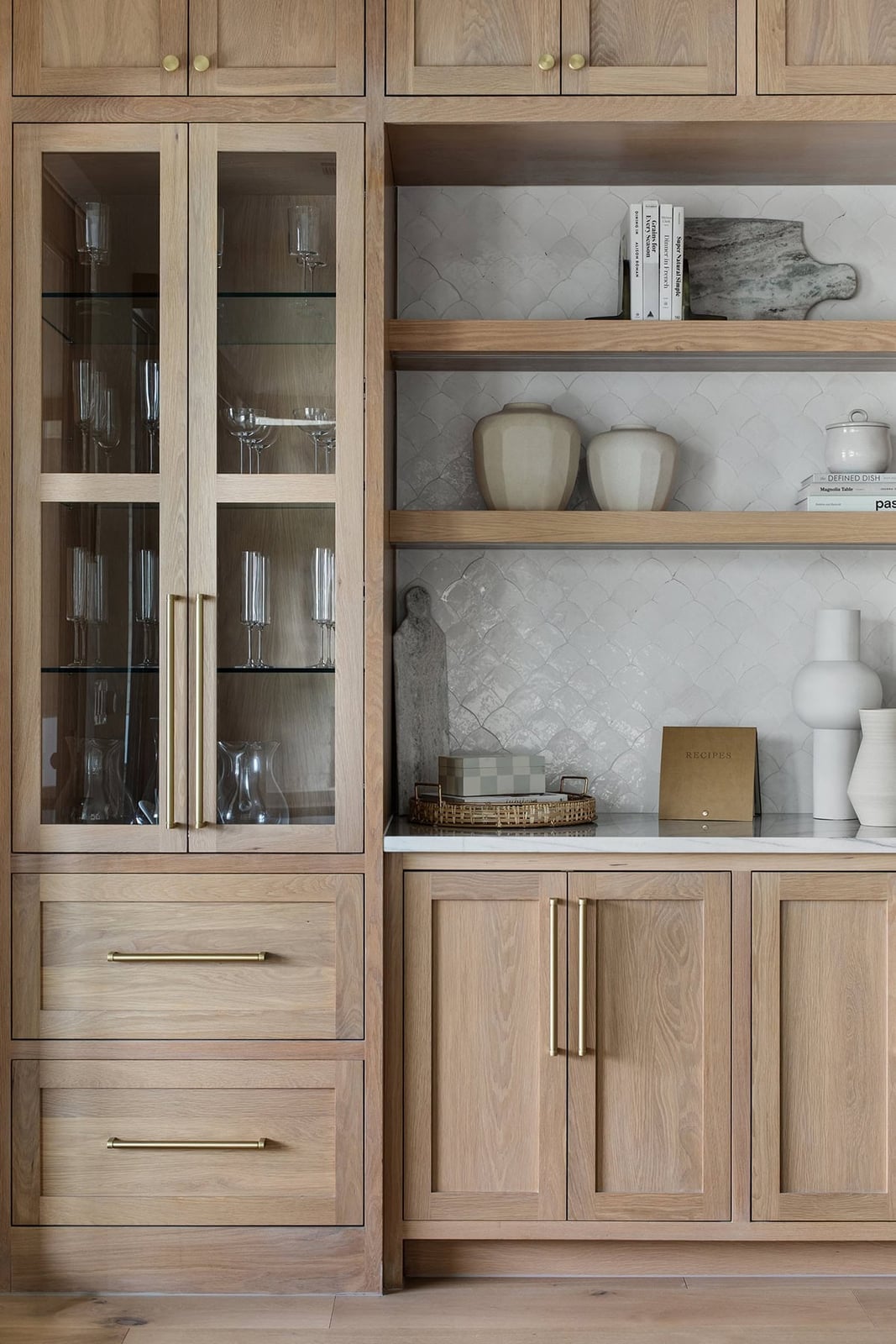
Glass-front upper cabinets are a storage trade-off: you gain visual lightness but lose the ability to hide mismatched items. The white oak frames keep the glass from feeling too delicate, and the brass hardware adds a warm glint that softens the transparency. The marble counter and backsplash stay neutral so the eye goes straight to what is inside the glass. For the look to work, the items on those shelves need to earn their spot, matching white dishes or a stack of glass jars. If the contents are random, the whole kitchen feels busy. The lower cabinets stay solid wood, so there is still plenty of hidden storage.
Scandinavian Kitchen with Light Wood Cabinets and Herringbone Floor
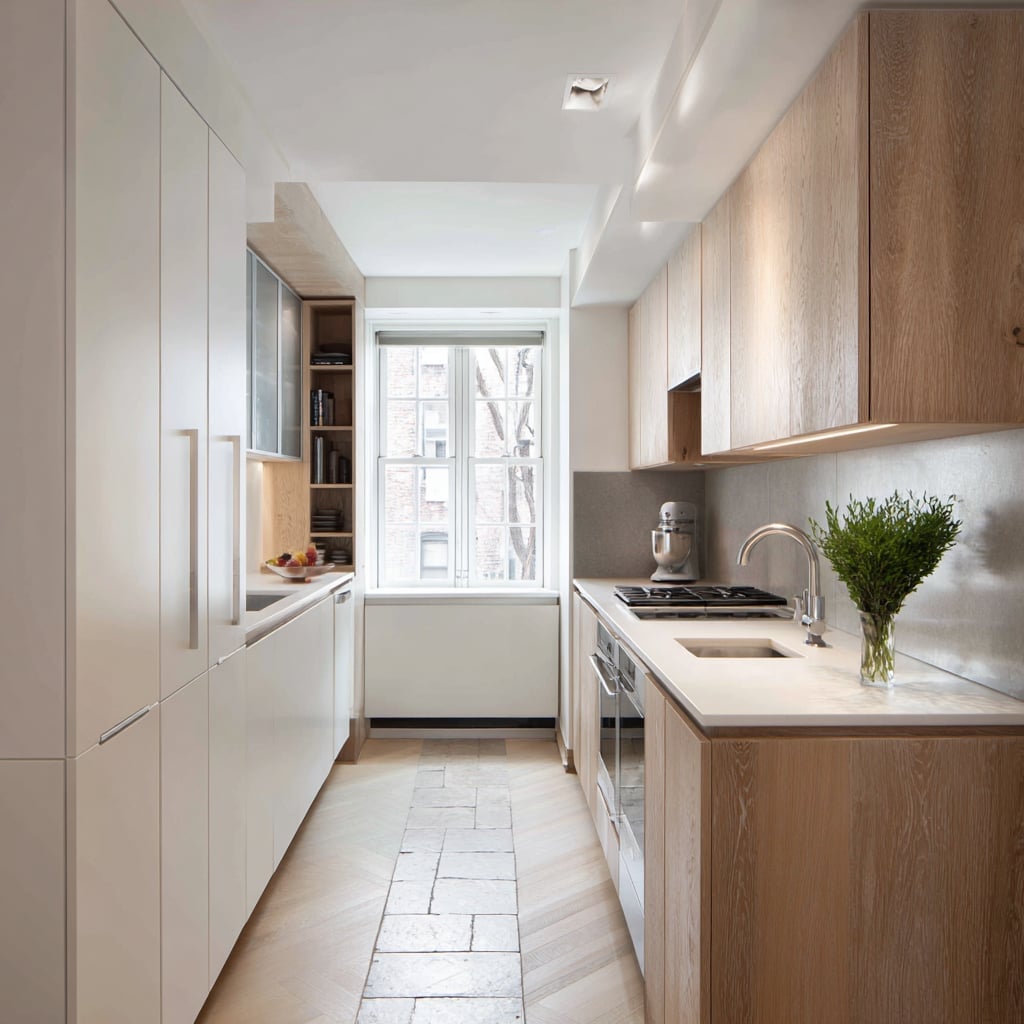
A galley kitchen with light wood cabinets and a herringbone floor is a practical way to make a compact room feel larger. The vertical grain of the cabinets draws the eye up, while the angled pattern of the floor adds visual interest without crowding the space. White countertops and minimalist fixtures keep the focus on the wood tones. Recessed lights and natural light from a window keep the room bright and open. Integrated appliances help the cabinets form a continuous surface, which is key in a smaller layout. The herringbone floor adds pattern, so the cabinets can stay simple and clean.
Modern Farmhouse White Oak Cabinets with Marble Backsplash
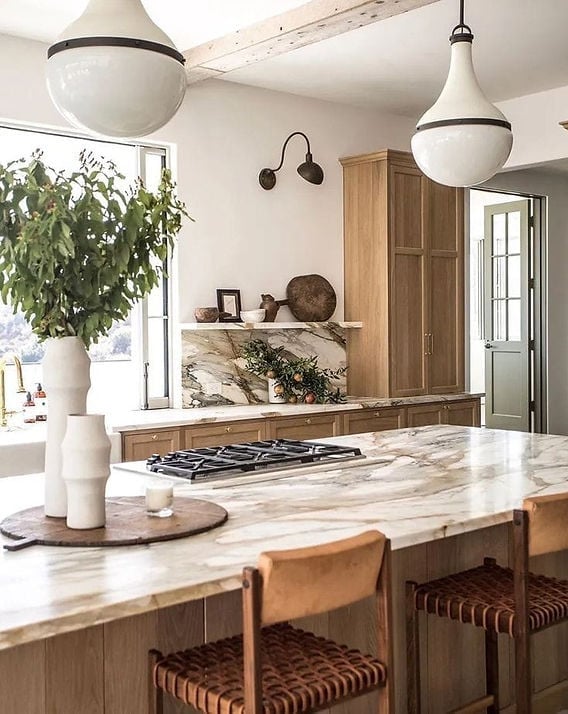
A large marble backsplash runs behind shaker-style white oak cabinets, giving this modern farmhouse kitchen a polished center point. The marble carries gray veining that echoes the wood grain of the oak, so the two materials feel connected. A large island sits at the center of the room, with pendant lights hanging above it to define the work zone. Window light softens the white marble and warm wood tones. The backsplash covers most of the wall, which means fewer grout lines to clean than a tile alternative.
Light Oak Cabinetry with White Quartz Countertops and Island
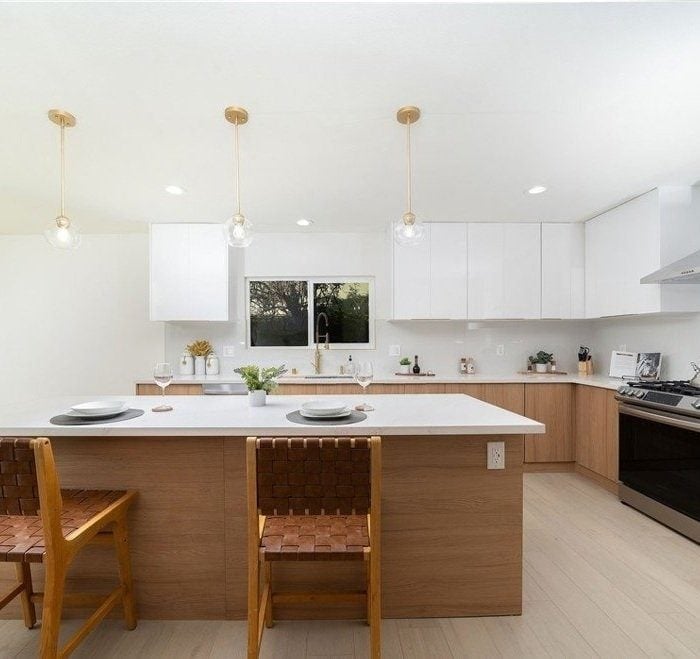
Light oak cabinetry paired with white quartz countertops is a palette that works because the warm wood keeps the white from feeling cold. The quartz on the island and perimeter counters reflects natural light from the windows, while the oak adds texture and depth. Pendant lights hung above the island provide task lighting and break up the horizontal line of the cabinets. This combination suits a kitchen that gets a lot of natural light, since the white surfaces can bounce it around the room. The oak grain introduces enough variation to keep the space from looking flat.
Light Oak Cabinets with a Large Stainless Steel Range Hood
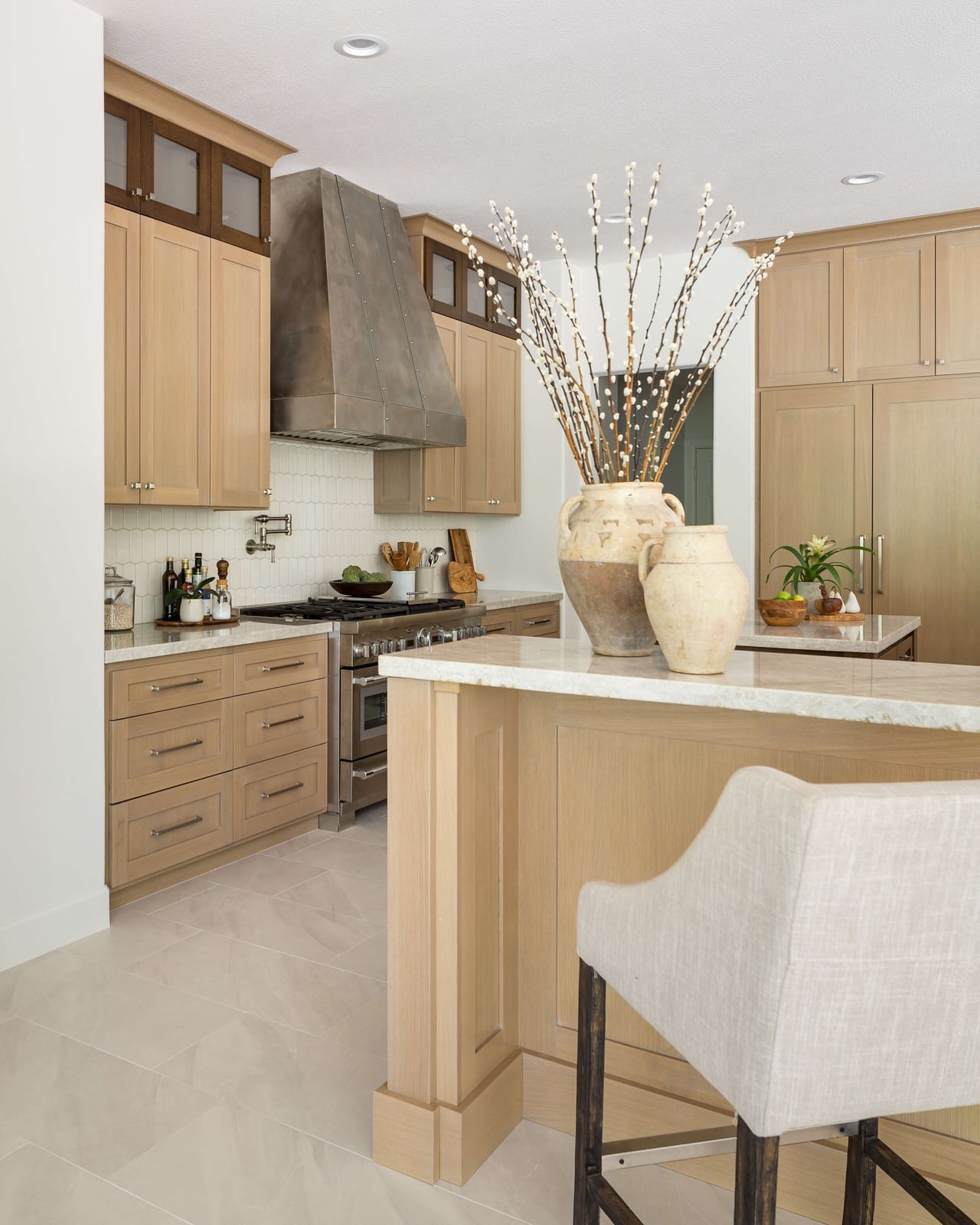
Unlike a wood-clad hood that blends in with the cabinets, a large stainless steel range hood stands out against light oak cabinetry. This setup works when you want the range area to be a focal point rather than hiding it. The metal hood reflects light from recessed cans and under-cabinet strips, which helps illuminate the cooking surface below. In this island-and-galley layout, the hood anchors the perimeter while the island provides prep space. Marble countertops add a soft white surface that balances the warm oak and cool steel. The contrast between the wood and metal is deliberate, so the two materials don’t compete.
Modern White Oak Cabinets with Vertical Wood Grain
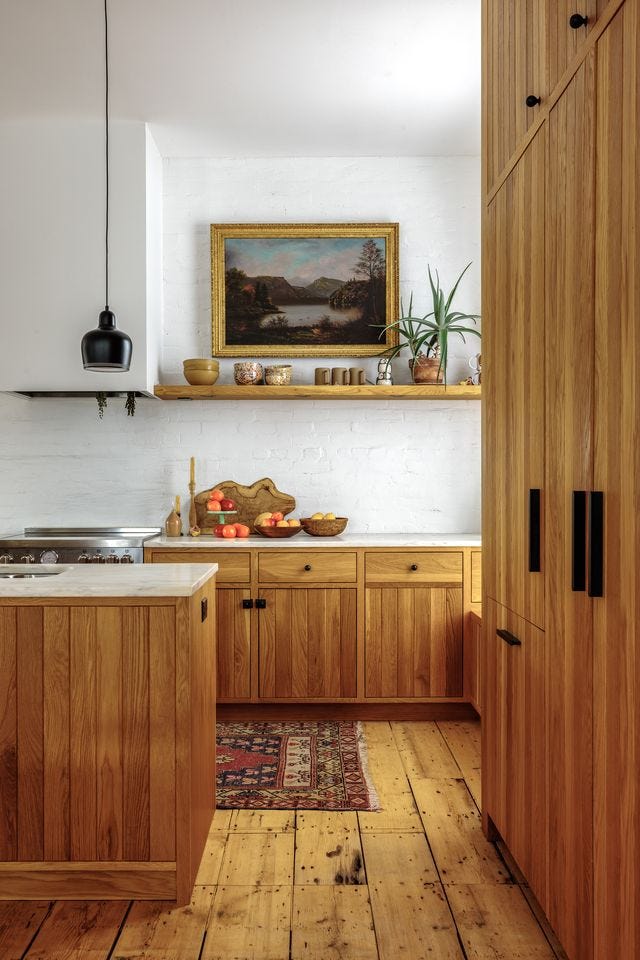
The vertical wood grain on these white oak cabinets runs from floor to ceiling, which makes the ceiling feel higher than it is. A brick backsplash adds a rough texture that contrasts with the smooth cabinet fronts, while a marble countertop provides a polished surface for prep work. A single pendant light hangs over the sink area, and natural light from a nearby window keeps the room bright. The vertical lines on the cabinets are the main design move here, so the rest of the finishes stay neutral to let that grain stand out. An artwork on the wall adds a personal touch without distracting from the wood.
Farmhouse Kitchen with White Oak Cabinets and Farmhouse Sink
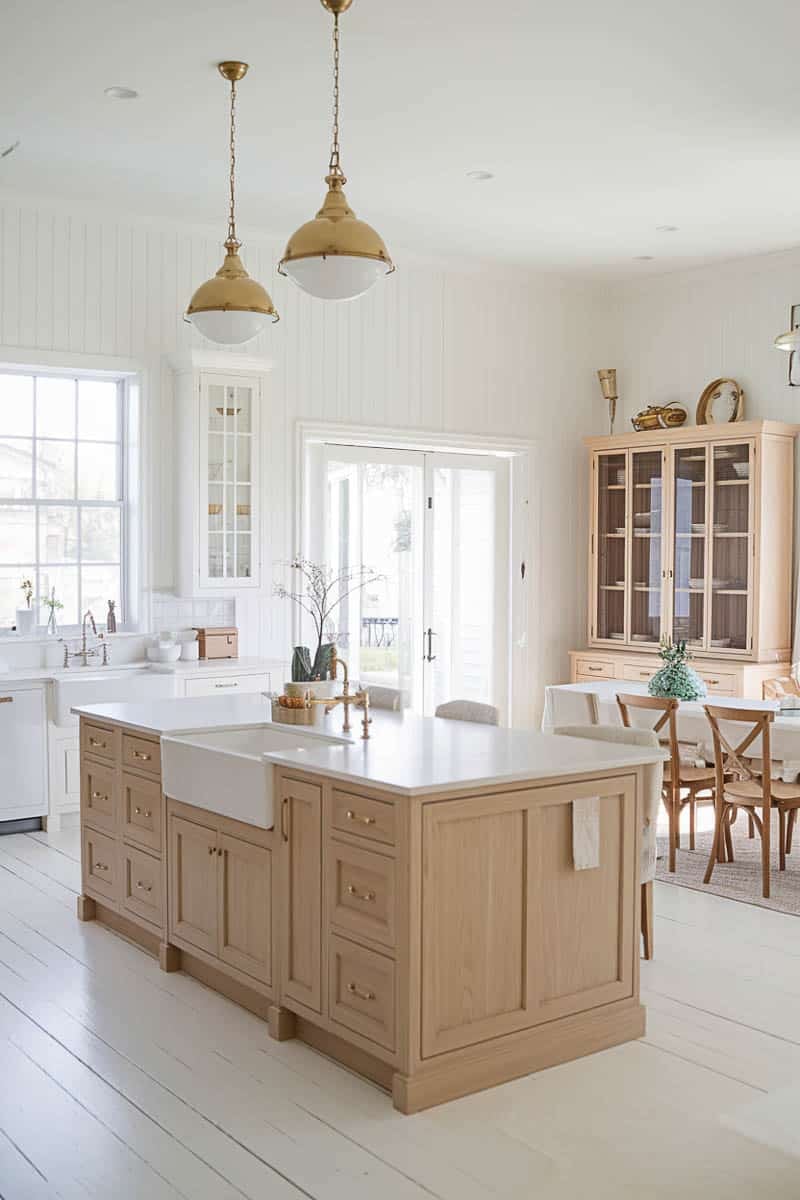
With a farmhouse sink as the focal point, the white oak cabinets lean into their natural surroundings rather than fighting for attention. The wood tones find company in the island and open glass-front uppers, where the visible dishware becomes part of the palette. White perimeter cabinetry keeps the look grounded, and pendant lights above the island add task lighting without crowding the sightline. The trick is letting the sink’s apron front set the tone while the oak grain fills in the warmth.
Modern Rustic Kitchen with Natural Wood and Black Oak Cabinets
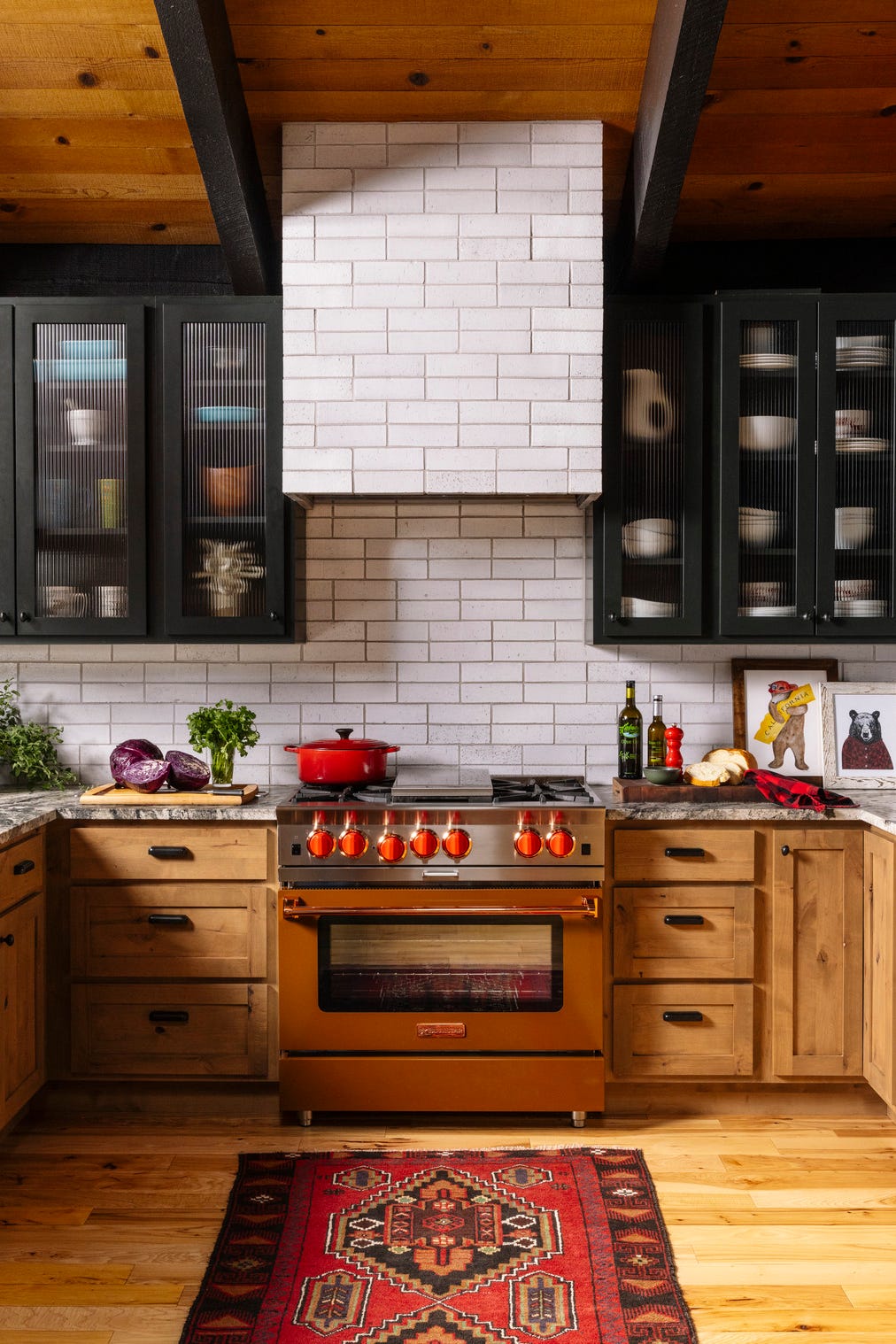
A practical rule for mixing dark and light oak in the same kitchen is to let one finish anchor the room and the other accent it. Here, black oak cabinets frame the cooking zone while natural wood cabinets balance the perimeter, creating contrast without competition.
The orange range pulls the eye toward the center, proving that a single warm accent can keep a dark-and-light palette from feeling flat. A textured rug underfoot softens the transition between the two wood tones. Overhead pendant and recessed lighting help both finishes read clearly rather than blending into one muddy mass.
White Oak Cabinets with Black Hardware and Textured Tile
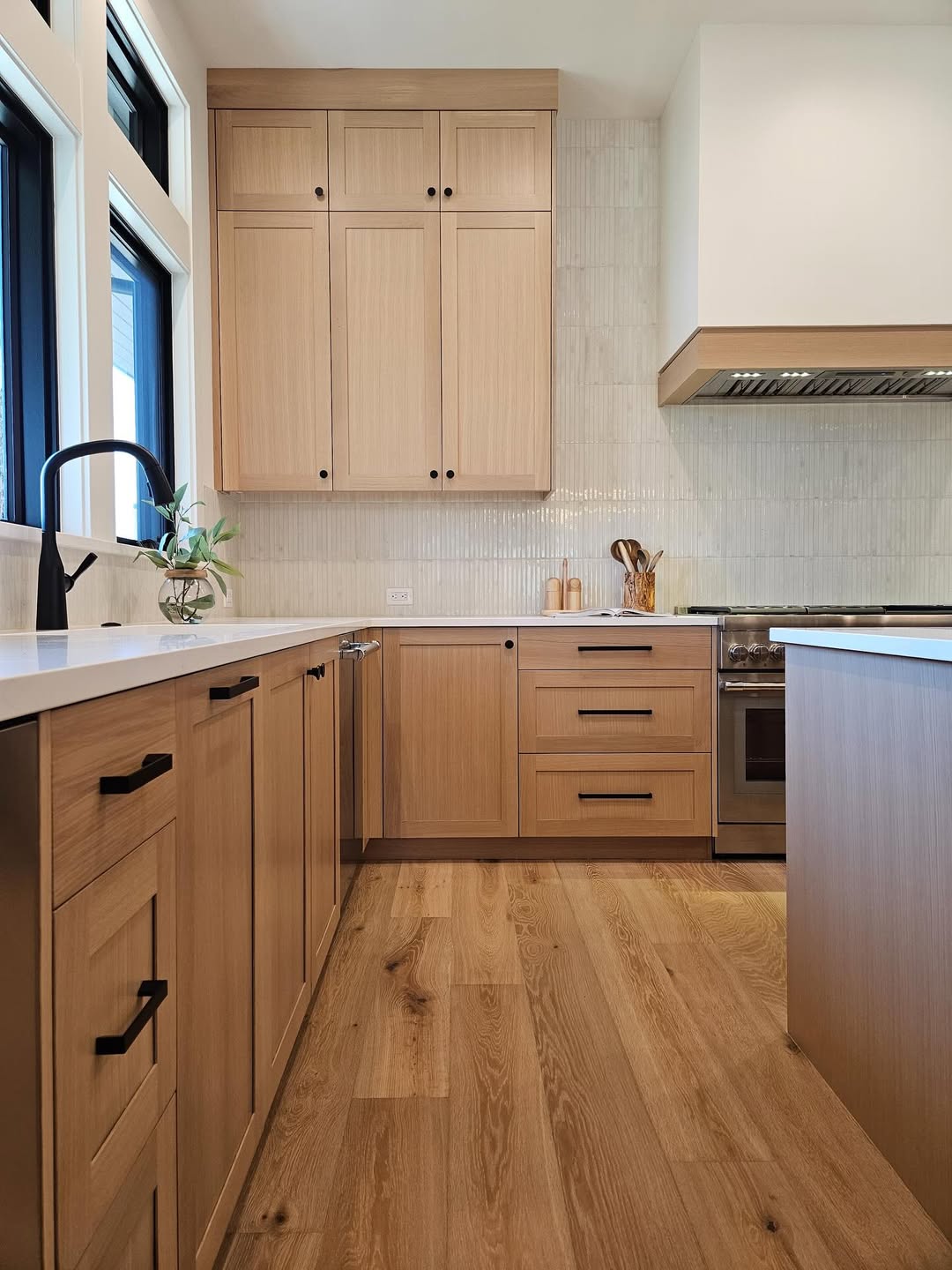
The white oak cabinets stay flat and quiet so the black hardware and textured backsplash tile can carry the visual weight. Black pulls on every drawer and door create a rhythm across the run of cabinets, while the tile adds depth alongside the wood grain. Recessed overhead fixtures keep the contrast sharp, and the island offers a landing zone for prep or serving.
Transitional Oak Cabinetry with Integrated Refrigerator
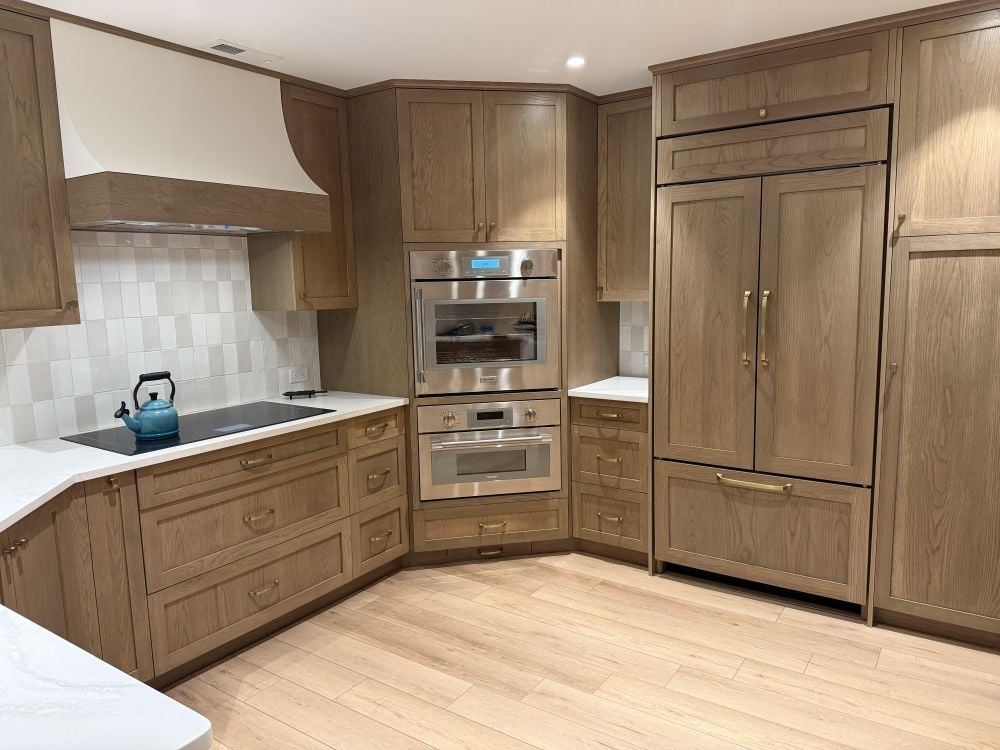
The integrated refrigerator disappears behind an oak panel, extending the cabinetry line without interruption. This setup suits anyone who wants a built-in look without custom sizing, since standard panel-ready fridges accept full-overlay doors. The quartz countertop and backsplash in light gray keep the oak warm without adding visual clutter, and the corner layout tucks the fridge out of the main pathway. Recessed lighting provides even coverage, and the open counter space near the sink gives meal prep a clear zone.
Modern Kitchen with White Oak Cabinets and Dark Gray Range Hood
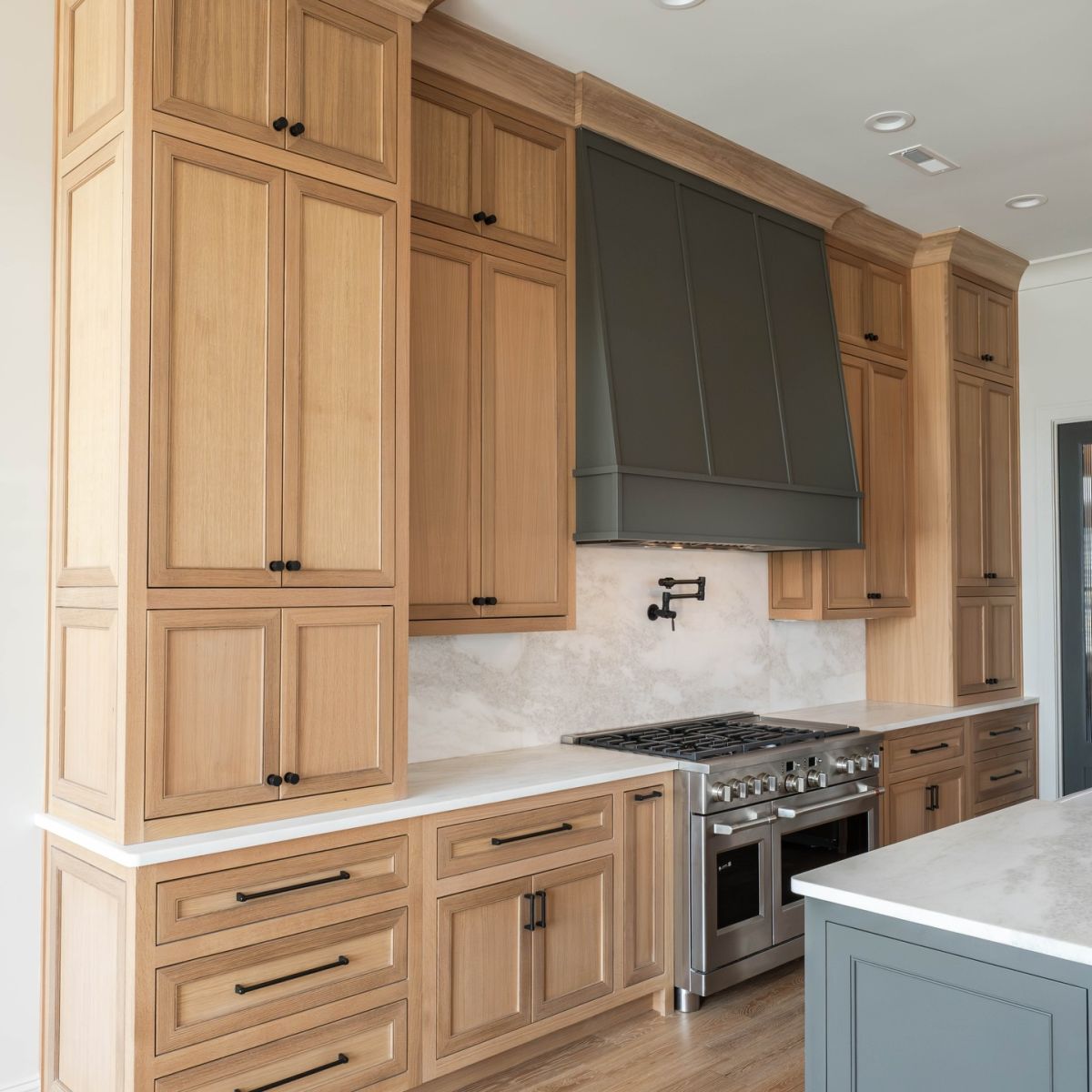
Where a stainless hood might disappear against white oak cabinets, a dark gray range hood stakes out its own territory. It sits above the range as a deliberate counterpoint to the warm wood, giving the kitchen a focal point that does not rely on the island.
The marble countertop and backsplash keep the palette light and reflective, so the cabinets stay readable rather than heavy. Pendant lights over the island repeat the gray note in a softer way. The white oak cabinets run along the perimeter, and the island repeats the wood tone to keep the space cohesive.
Natural Wood Shaker Cabinets with Large White Quartz Island
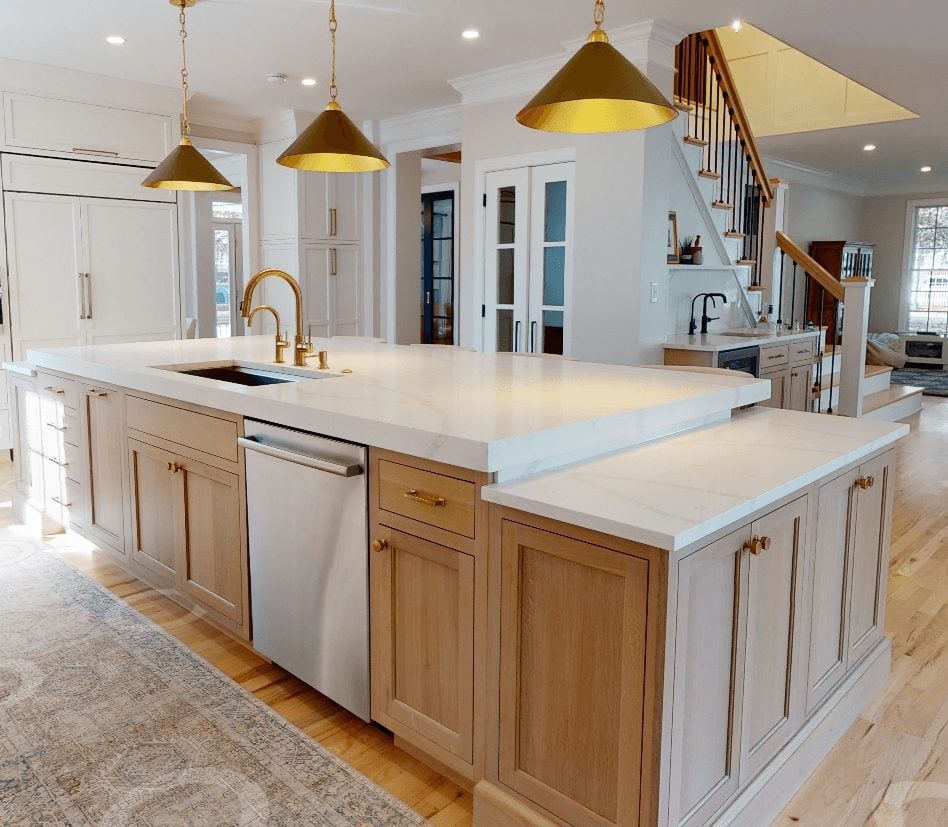
A kitchen this roomy asks for a layout that doesn’t waste a single foot of the open plan. The large white quartz island becomes the natural center, with enough surface for prep, casual meals, and a spot to set down groceries. Brass pendant lights hang above it, drawing the eye down and breaking up all that white. The shaker cabinets in natural wood warm up the whole equation, so the island never feels too cold or clinical. It is a straightforward modern farmhouse trick: give the biggest piece the lightest finish, then let the wood anchor the perimeter.
Final Thoughts
White oak cabinets reward a light touch. Seal the wood with a matte lacquer to resist moisture and grease, and wipe surfaces with a damp cloth rather than harsh cleaners. In humid climates, check your USDA zone before choosing an open-grain finish. The best kitchens pair wood with materials that let its grain speak quart, marble, brass, black hardware. Keep the palette simple and the storage front and center. That is the quiet strength of white oak: it holds the room together without needing to shout.