
The kitchen island is the hardest working piece of furniture in most homes. It is a prep station, a gathering spot, and the visual anchor of the room all at once. This collection of 31 kitchen island ideas shows how different shapes, materials, and colors can change the way the space feels and functions.
From floating wood designs to curved tile bases, each photo focuses on the island itself and keeps the surrounding kitchen simple and supportive. The goal is to show real options that fit different layouts and tastes without overwhelming the room.
Floating Wood Island with Stone Countertop
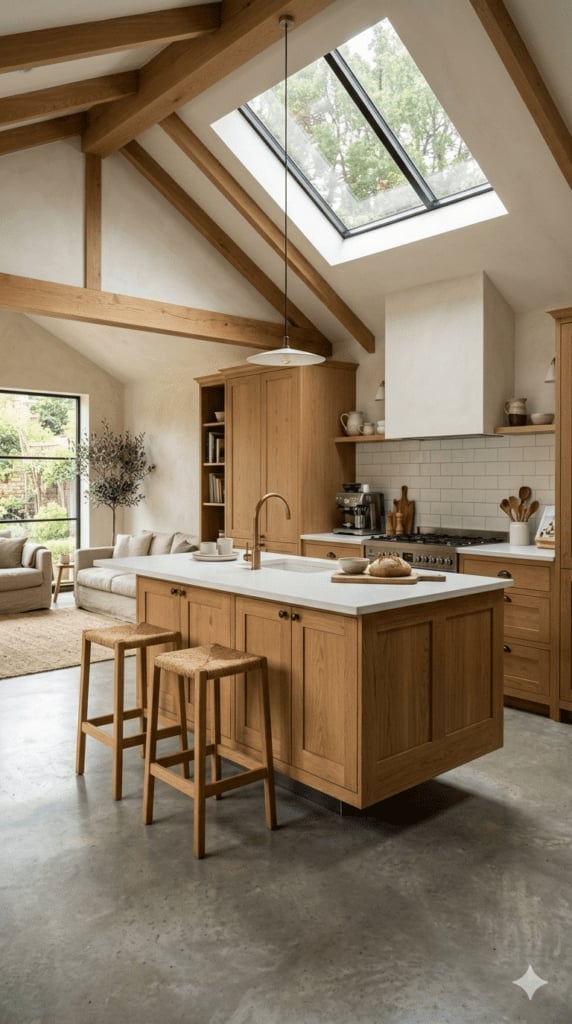
A kitchen island that floats rather than sits on a solid base changes how the whole room breathes. This one uses a wood body with a stone countertop, and the gap underneath lets the floor tile run through without interruption. The result is a lighter feel even with a substantial surface. The wood brings warmth, the stone adds a cool, practical work zone, and the contrast keeps the look from blending into all-white cabinetry. Recessed lighting above keeps the focus on the island itself, not on shadows or fixtures.
Teal Fluted Island with Glass Countertop
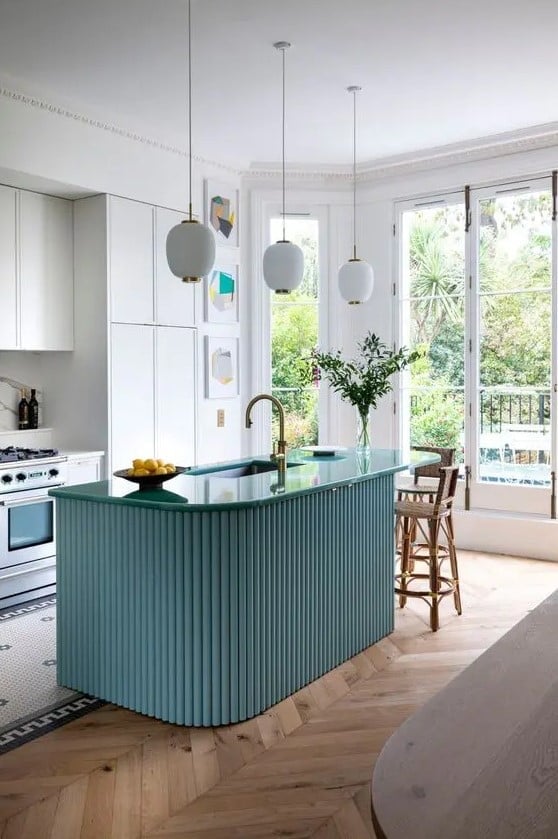
A teal fluted island is a move that says this kitchen knows what it likes. The vertical grooves add texture and a bit of old-world detail, but the color keeps it firmly modern. A glass countertop on top is the unexpected part. It lets the fluted surface show through while giving you a smooth, easy-to-clean work surface. White cabinets and wood tones keep the teal from feeling like too much. The fluting defines the look, and the glass top is what breaks it from being just another painted island.
Round Marble Island with Textured Metal Base
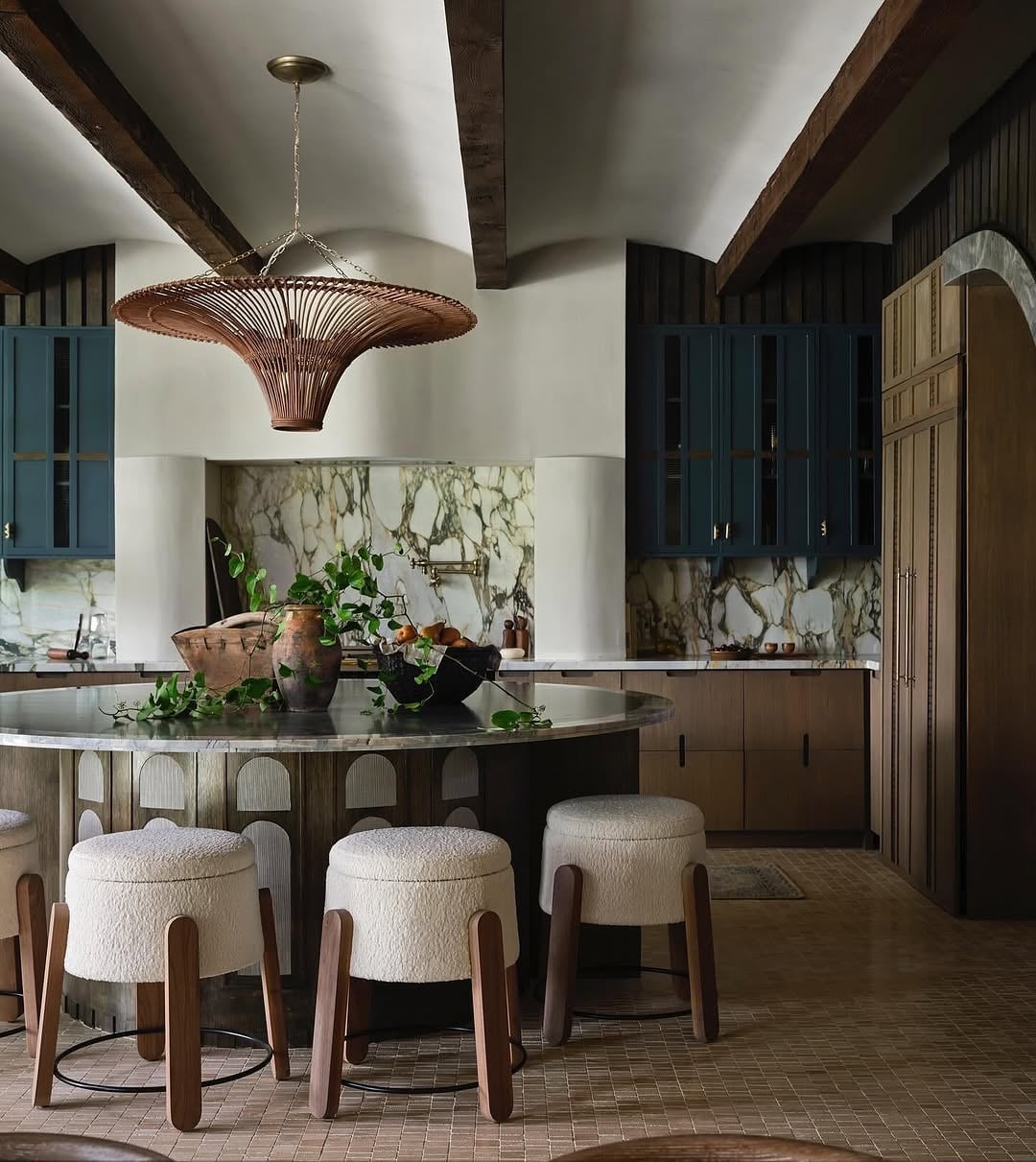
Can a round island work in a kitchen that is not open-plan? It depends on traffic flow, but the shape itself solves a few problems. A round marble island with a textured metal base has no sharp corners, which makes moving around it easier in a busy space. The marble top is the showpiece, and the metal base keeps it from feeling top-heavy or overly formal.
The dark teal cabinets and wood beams in this kitchen give the marble a place to shine without competing. The ornate pendant light above matches the scale of the island, too small and it would look lost, too large and it would crowd the marble. The mix of textures, smooth stone against a textured base, is what keeps the look from being just another marble slab.
Dark Blue Island with Wood Countertop in Farmhouse Kitchen
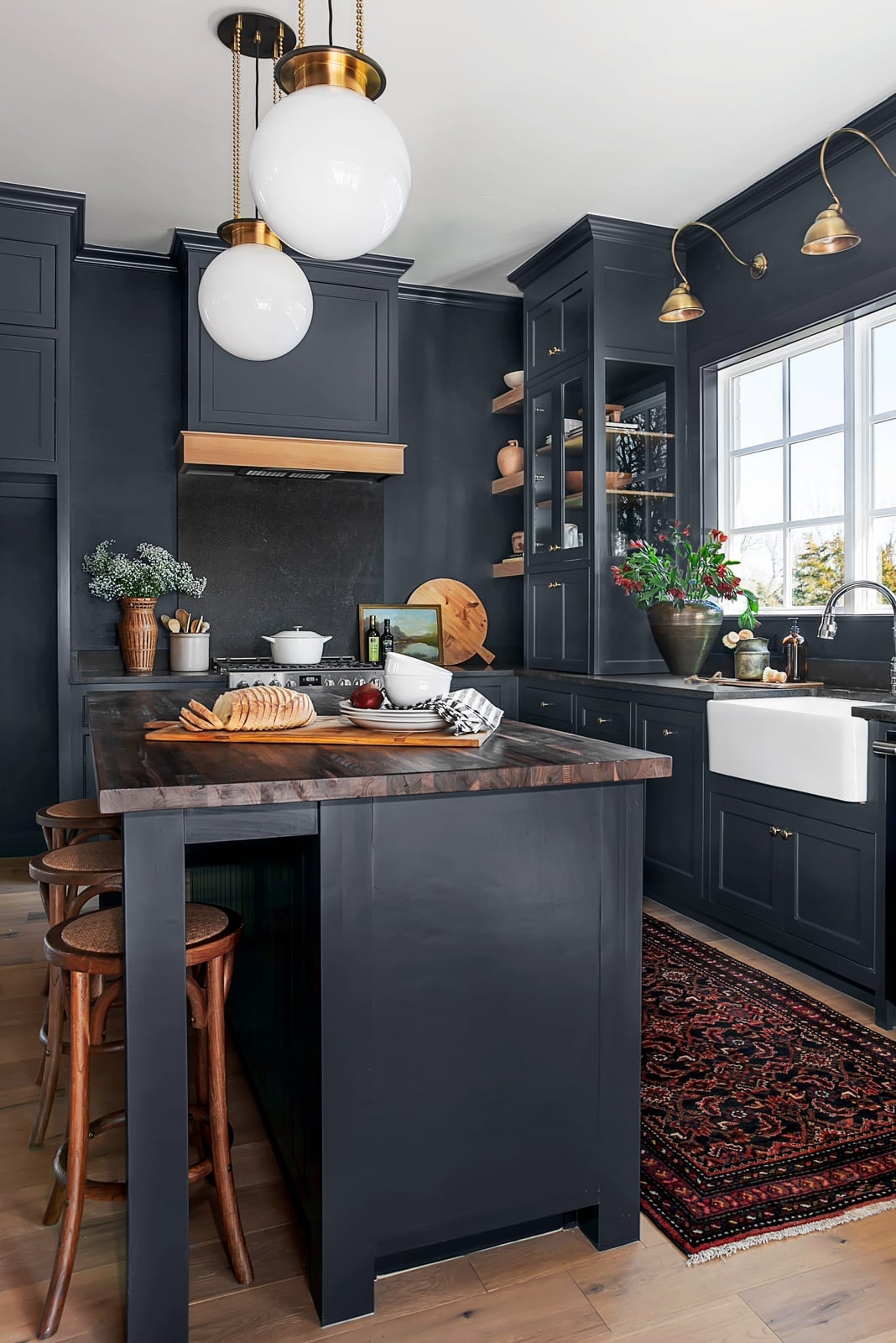
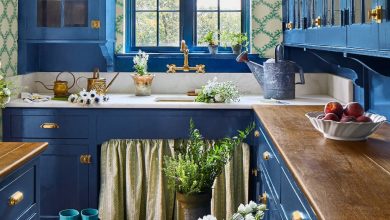
A dark blue island with a wood countertop brings depth to a farmhouse kitchen without going full rustic. The wood top is warmer than stone and softer under elbows at breakfast, while the dark blue base anchors the room. Brass hardware and a farmhouse sink on the perimeter tie the traditional details together. The palette here is the trick: dark blue and wood are a natural pair, and the brass adds just enough shine to keep the look from feeling heavy. White walls and natural light keep the whole room from going too dark.
Marble Clad Island with Waterfall Edges
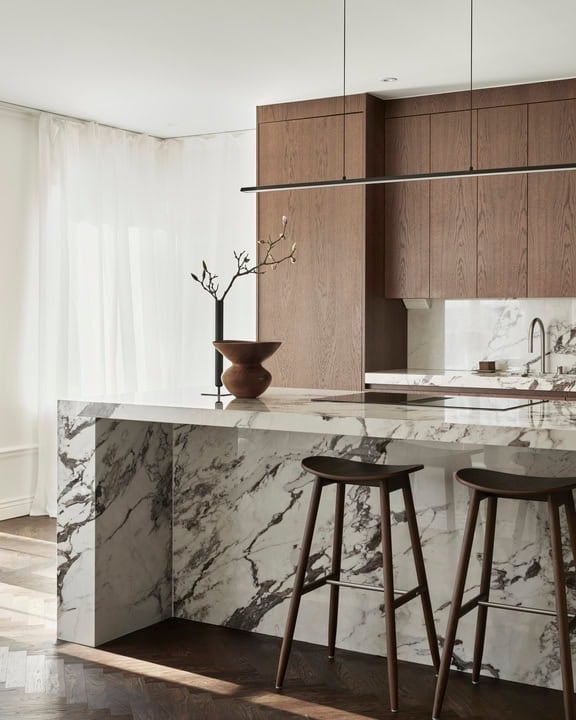
Marble in a kitchen shows every spill and fingerprint, especially on a large surface. A marble clad island with waterfall edges is a high impact choice, and the veining becomes the main event. The wood cabinetry behind it keeps the room grounded, and the bar stools add a casual note. A linear pendant light above matches the clean lines of the island. The marble here is not just a countertop. It wraps down the sides, which means the pattern reads as a single piece. The wood tones break the cool gray and white, keeping the kitchen from feeling like a showroom.
Ornate Wooden Island with Open Shelving
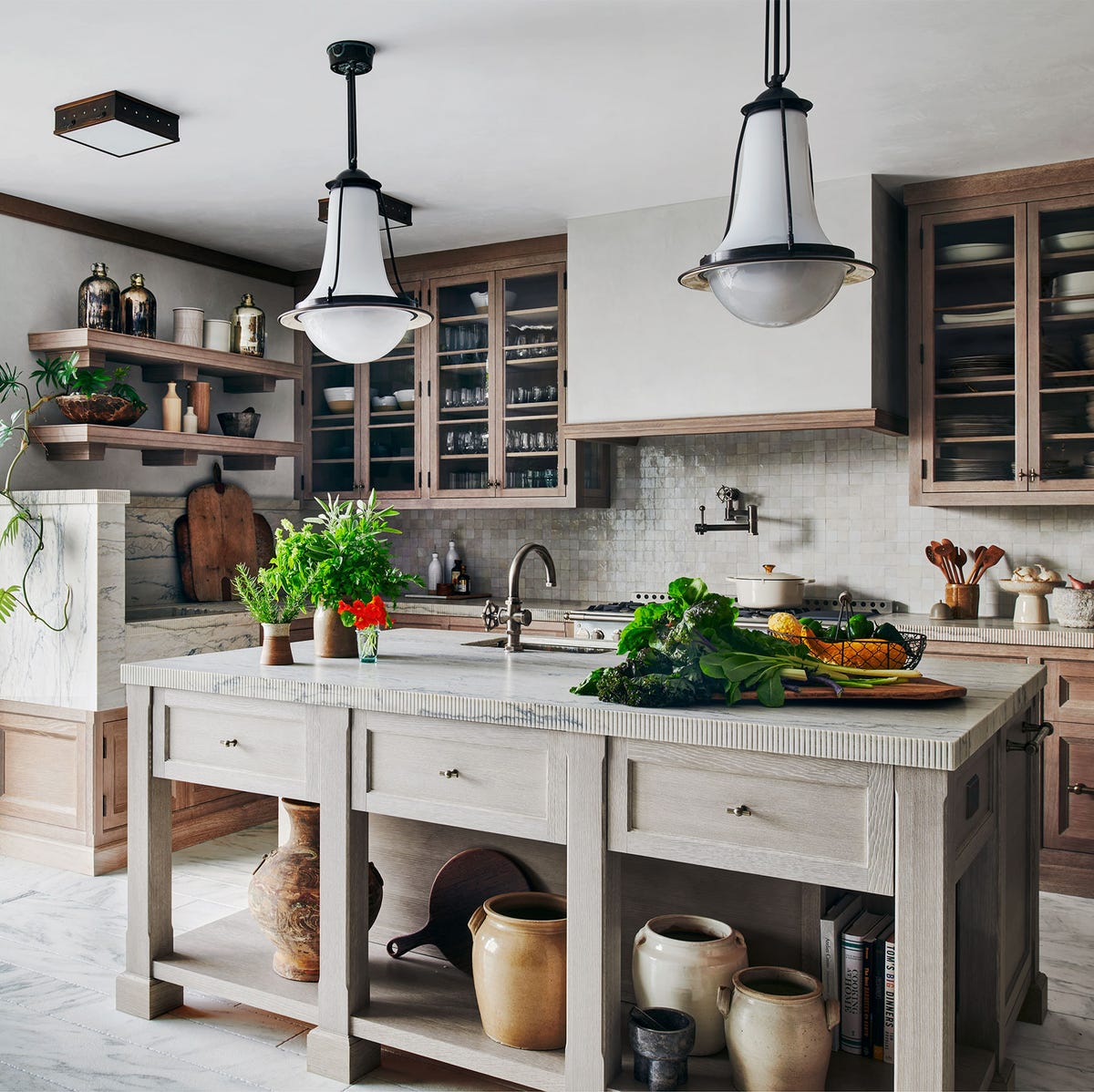
A solid wood island with a carved base and open shelves holds a certain weight that a painted island, however charming, just does not carry. The natural grain and the visible joinery become the decoration, so you can skip the hardware and let the wood speak. Glass-front upper cabinets above the island repeat the transparency of the open shelves below, which keeps the wall from feeling heavy. The shelves work best for things you reach for daily, mixing bowls, a few stoneware plates, rather than a full pantry. If your kitchen reads as too cream or too gray, this is the piece that adds the warmth without needing a drop of paint.
Butcher Block Island in Rustic Farmhouse Kitchen
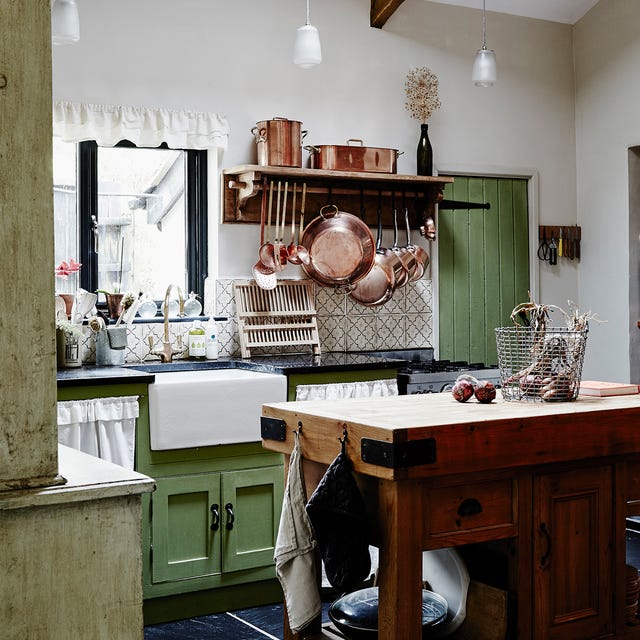
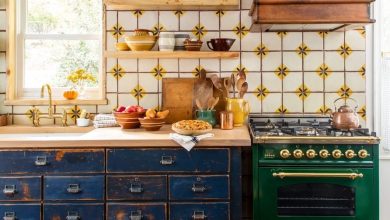
A large butcher block island with a thick edge sits squarely in front of a farmhouse sink and a range, and the copper pots hanging above are not just for show. The wood top takes the daily abuse that marble would wince at, hot pans, knife marks, a spilled glass of wine. For a renter, a freestanding butcher block cart with a similar profile and a copper pot rack on a tension rod can give you the same sturdy, warm center without a single permanent change.
Modern Teal Island with Fluted Detail
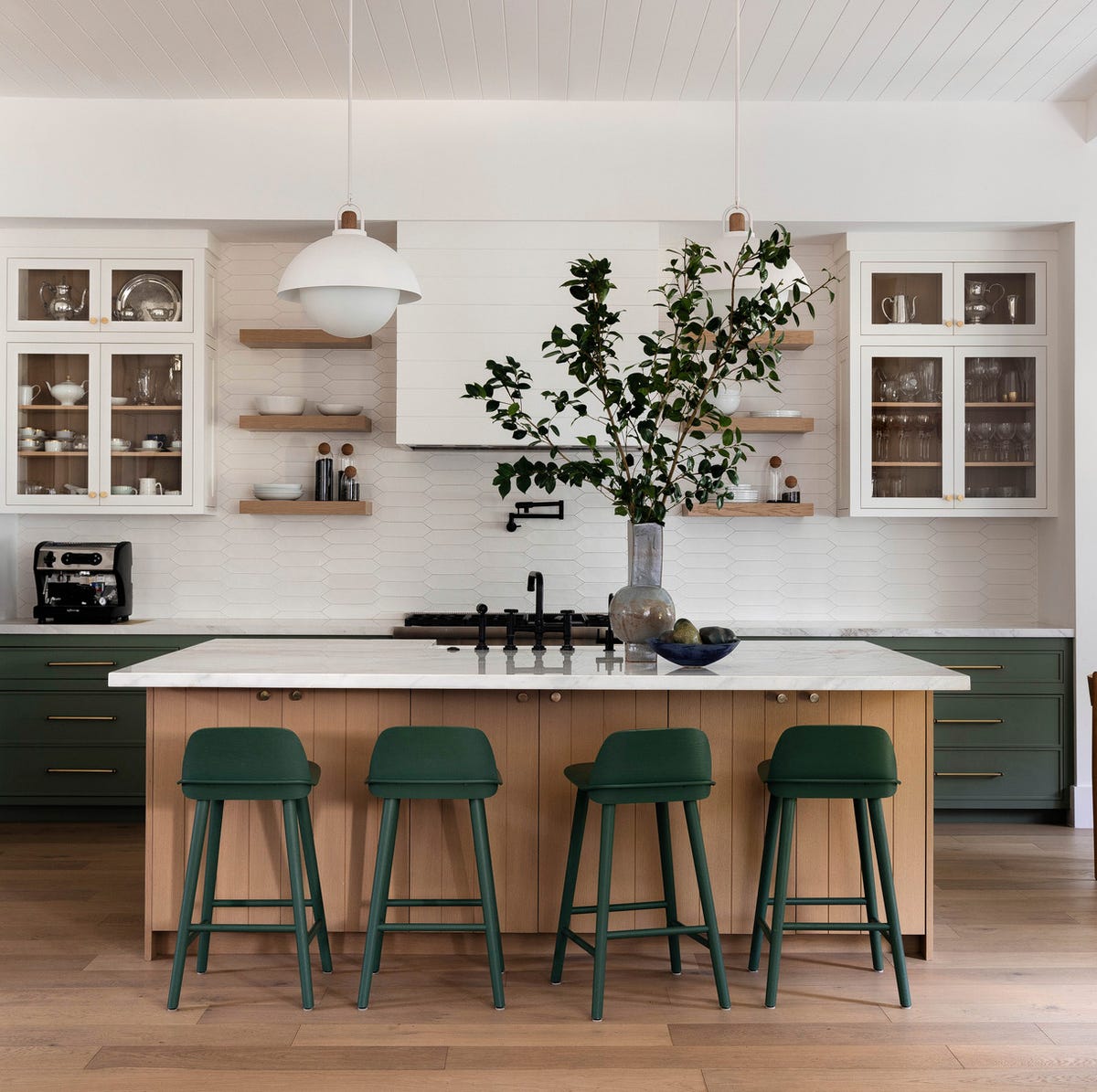
This teal island with a fluted front panel defines the room without raising its voice. The vertical grooves add texture that is architectural, and the pale wood countertop and white cabinetry around it let that color breathe. A teal this saturated works best when you limit it to one large object, an island, a hutch, a single wall of cabinets, and keep everything else in neutrals. The fluting catches light from the windows and shifts throughout the day, which is why the island never feels flat, even in a mostly white kitchen.
Traditional Island with Paneled Base and Dark Wood Top
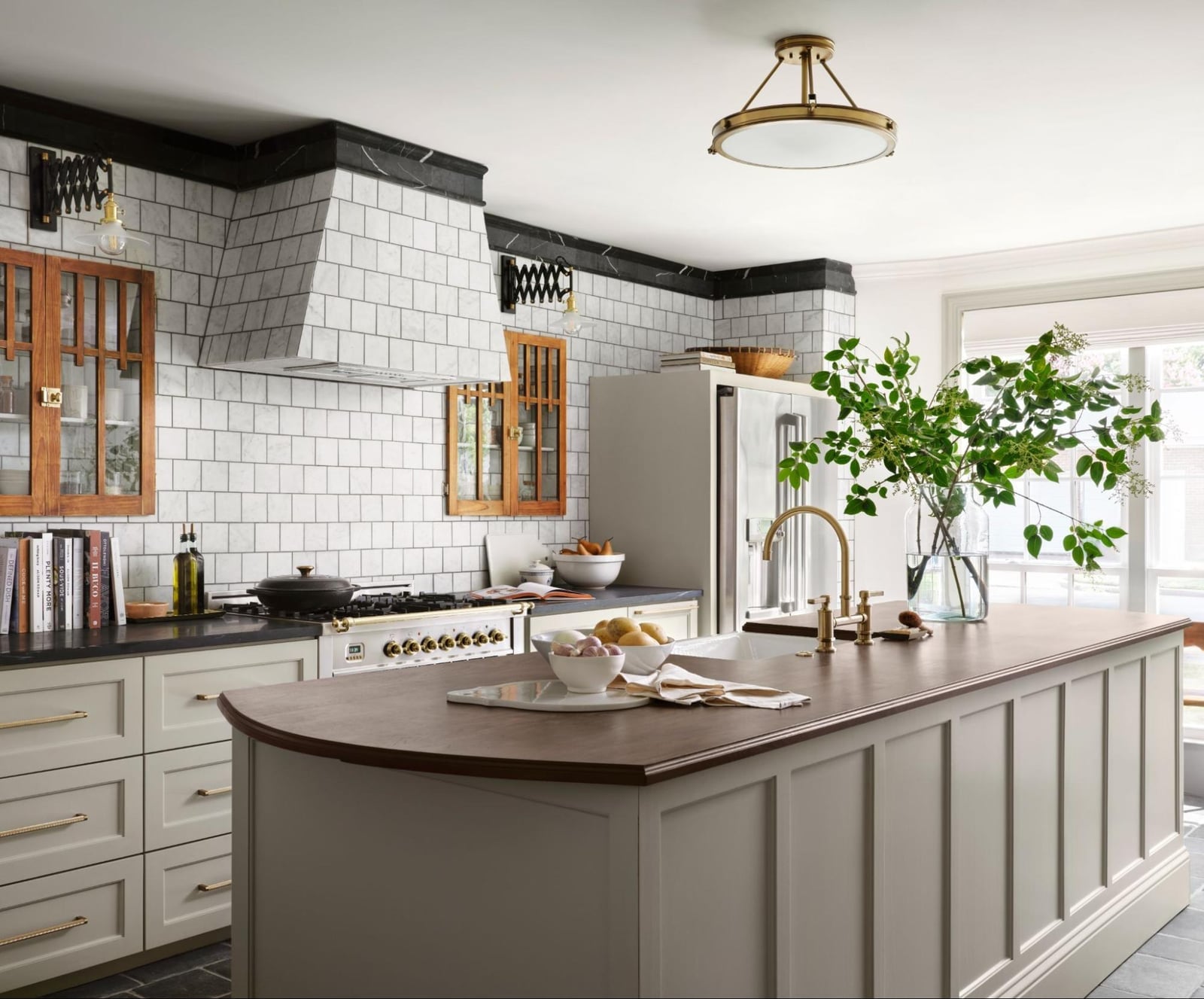
Can a kitchen island this large still feel balanced in a room with high ceilings and a lot of cabinets? Yes, when the base is paneled in a way that echoes the cabinetry and the top is a dark wood slab that anchors the whole setup. The cream subway tile backsplash and brass fixtures keep the palette light enough that the island does not dominate the room. A traditional island works because its proportions match the scale of the kitchen. A piece this substantial needs a ceiling height of at least nine feet and enough floor space to allow a full four-foot walkway on all sides. The marble countertop on the perimeter adds a polished surface for pastry work, while the wood top on the island gives you a forgiving spot for breakfast and homework.
Central Green Island with Drawers in Farmhouse Kitchen
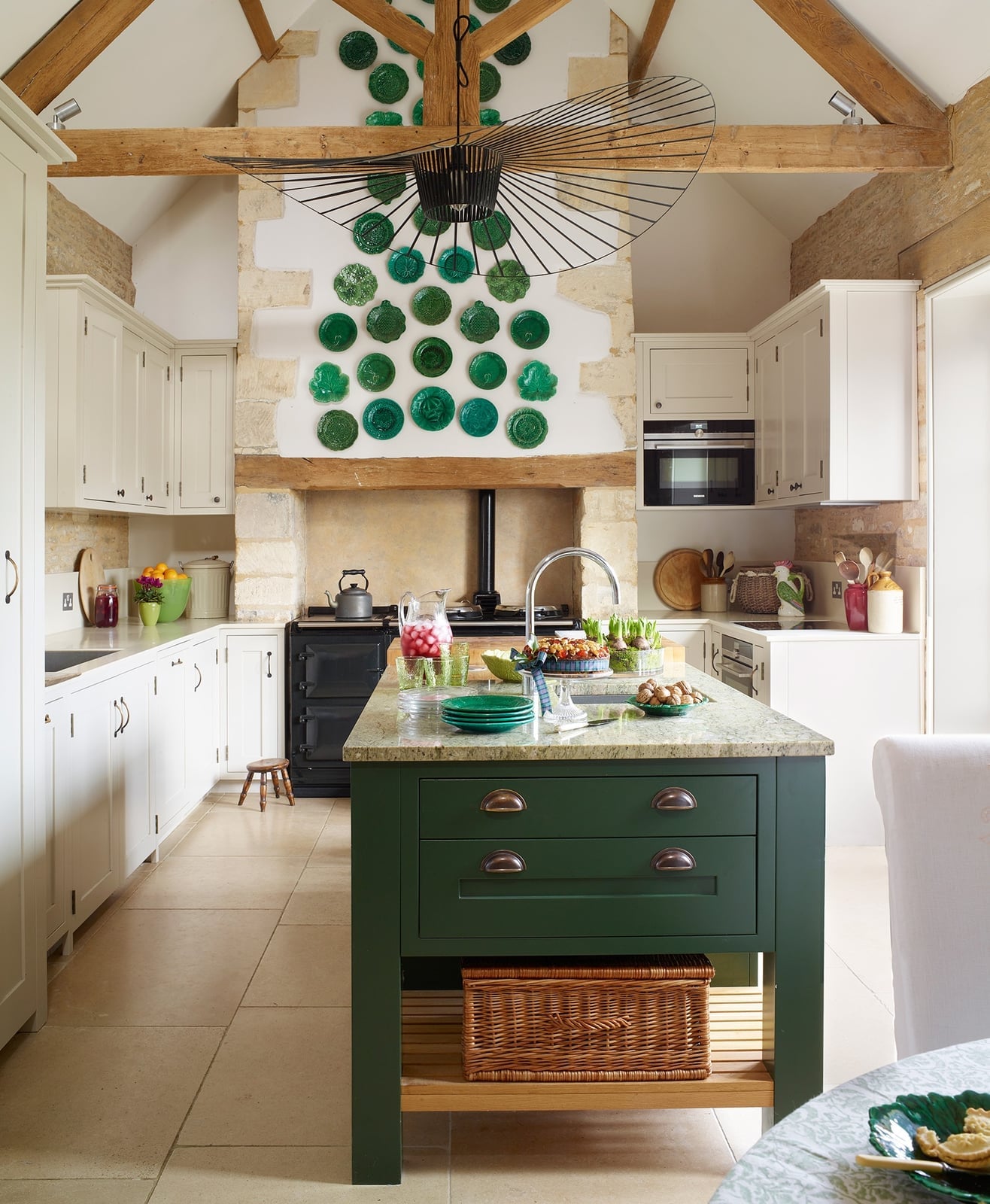
A green island with deep drawers anchors a kitchen with a stone fireplace and a range cooker. Drawers hold pots and lids better than cabinets do, because you can see everything at a glance without crouching. The muted sage green looks neutral next to cream walls and stone, making the island the focal point. A decorative plate wall above adds a personal touch that balances all that straight cabinetry.
Island with Integrated Banquette Seating
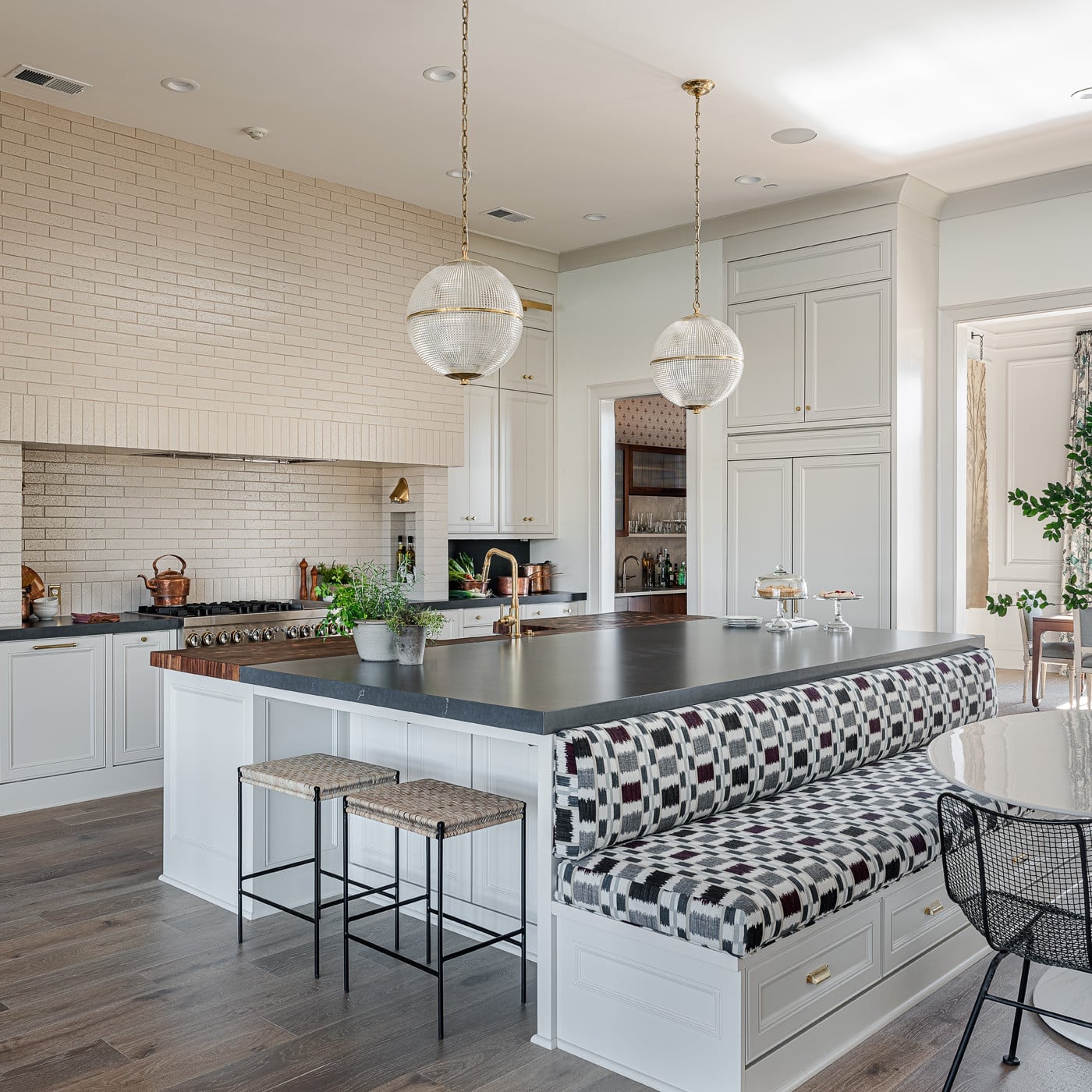
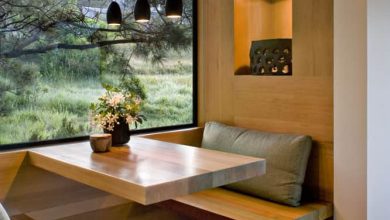
The trick to an island with banquette seating is to treat the bench as part of the island’s footprint, not an afterthought. In this modern kitchen, the large island extends into a built-in banquette, creating a continuous line from prep zone to dining spot. The gray and white palette keeps the combined form from feeling heavy, while patterned fabric on the bench adds texture without clutter. Pendant lights hang directly over the seating area, which reinforces that the banquette is a destination, not a squeeze. For a layout like this, allow at least 36 inches of walkway behind the stools so the room still flows when someone is seated.
Cream-Toned Island with Stone Accent Walls
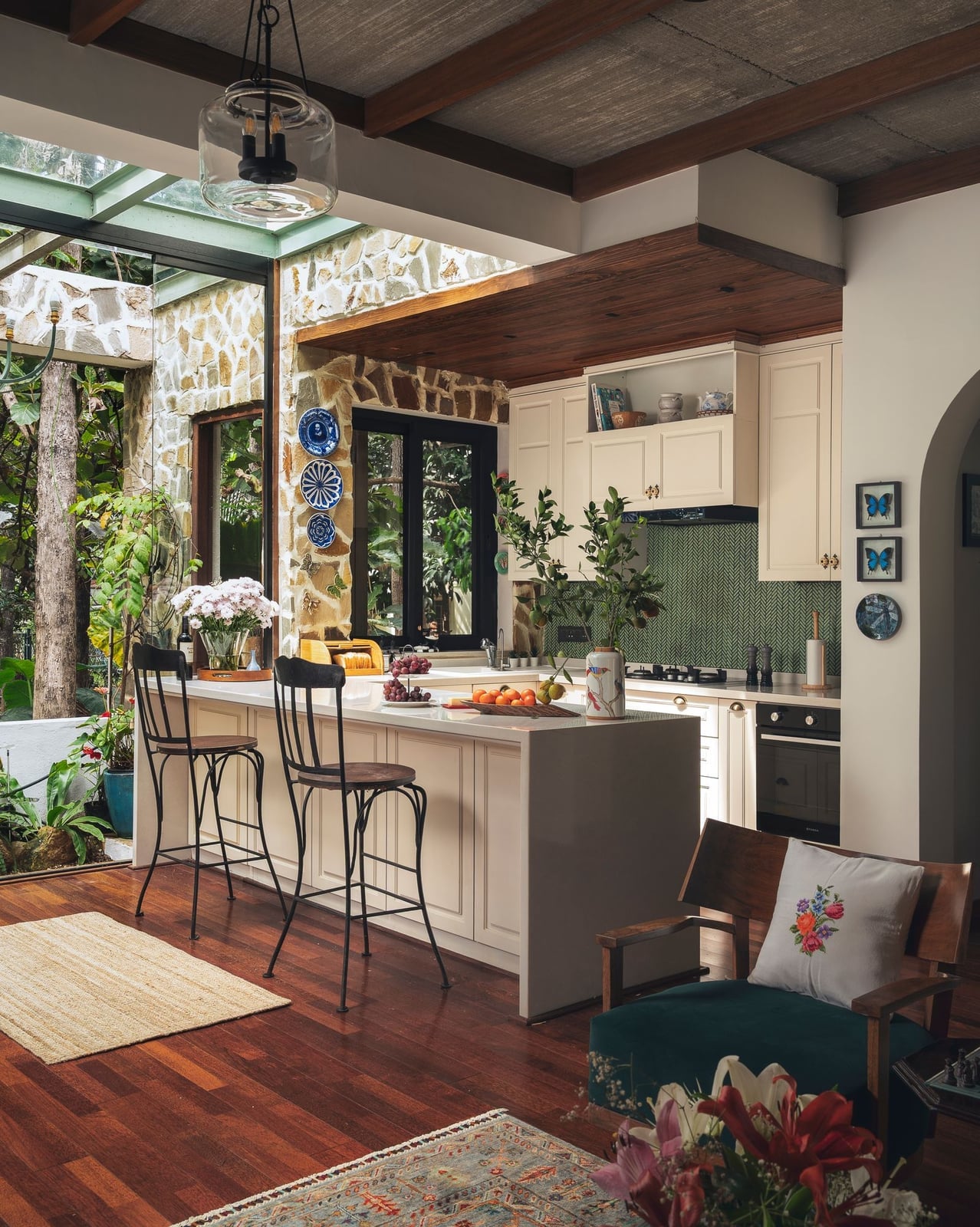
A cream island can hold its own next to a stone accent wall when the stone is a warm, neutral blend. The island’s wood base and cream finish pick up the same earthy undertones as the stacked stone, so the wall becomes a backdrop. A skylight and windows flood the room with natural light, which keeps the cream from turning flat and helps the stone texture cast soft shadows. The pendant light over the island adds a focused glow for tasks. To match the stone’s warmth to the island’s palette, ask your designer for: a wood top or brass hardware if your stone wall leans cool.
Dark Green Island with Marble Countertop and Brass Hardware
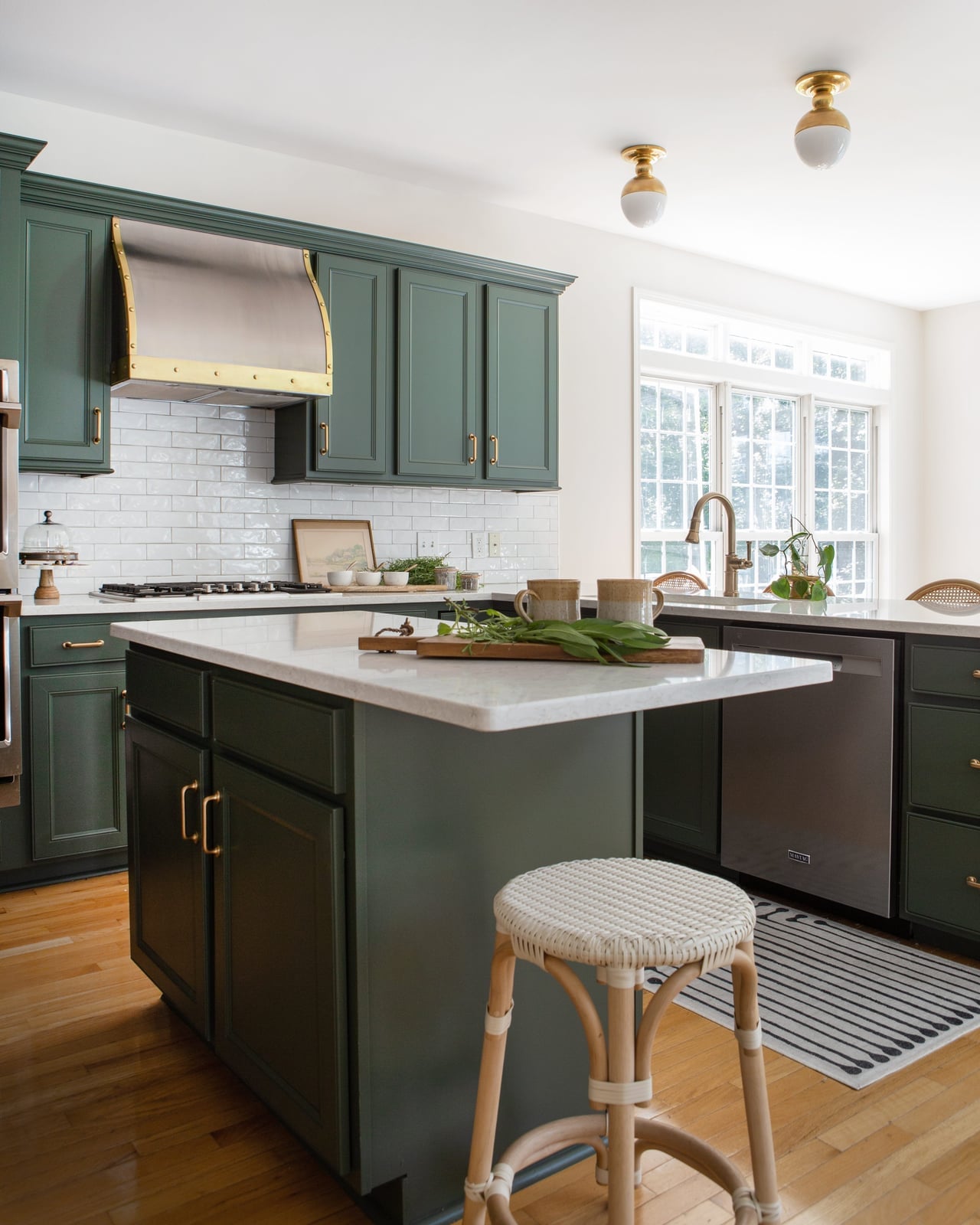
The dark green base of this island is deep enough to function as a neutral, letting the white marble countertop and brass hardware stand out. Marble on a dark cabinet creates contrast that makes the veining visible from across the room, while brass pulls add a warm glint. White stools keep the seating from weighing down the palette, and natural light from nearby windows keeps the green from going flat. This is a palette that works because each material has a clear job: the wood base grounds, the marble reflects, and the brass connects them.
Light Wood Island with Marble Top and Green Cabinetry
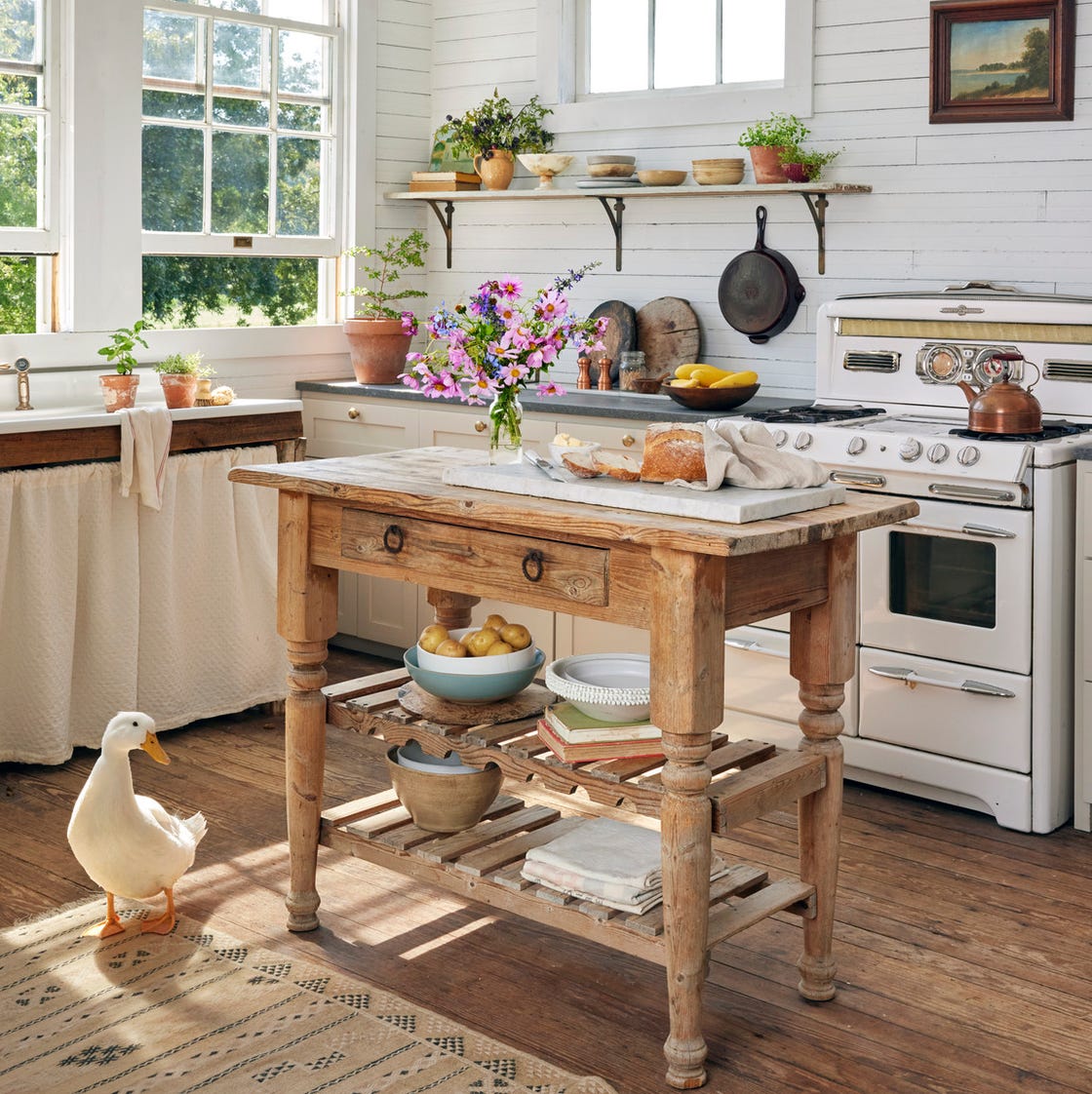
A light wood island paired with green perimeter cabinets is a farmhouse palette that avoids the usual white-on-white trap. The wood brings warmth, the marble top adds a refined surface, and the green cabinets give the room a focal point that isn’t the island itself. Pendant lights over the island cast light across the marble, which bounces it into the green cabinets. The key is letting the island stay lighter than the perimeter so the eye moves around the space. If your kitchen gets limited natural light, choose a wood tone with golden undertones.
Vibrant Red Island with Open Shelving
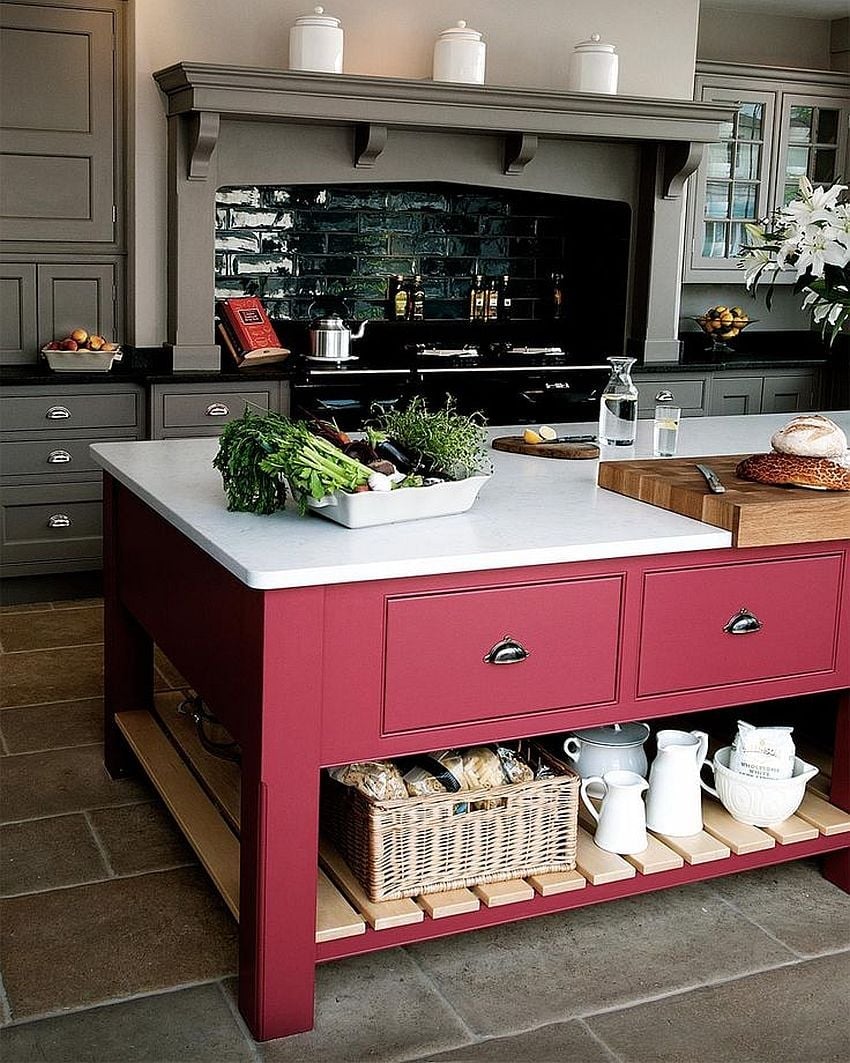
A practical rule for open shelving on a bold island is to keep the display sparse so the color remains the hero. In this traditional eclectic kitchen, the red island anchors the room, and the open shelves hold just a few pieces that echo the gray and white palette from the perimeter. The red could easily overwhelm, but the neutral cabinets and tile floor give it room to breathe. Overhead lighting hits the shelves directly, so what you store there becomes part of the decor, not clutter. If you are renting, a red island can be a furniture piece on casters that rolls in and out, leaving the original kitchen untouched. The shelves work best for everyday items like mixing bowls or cookbooks that you use often enough to keep them dust-free.
Expansive Marble Island with Dark Wood Base
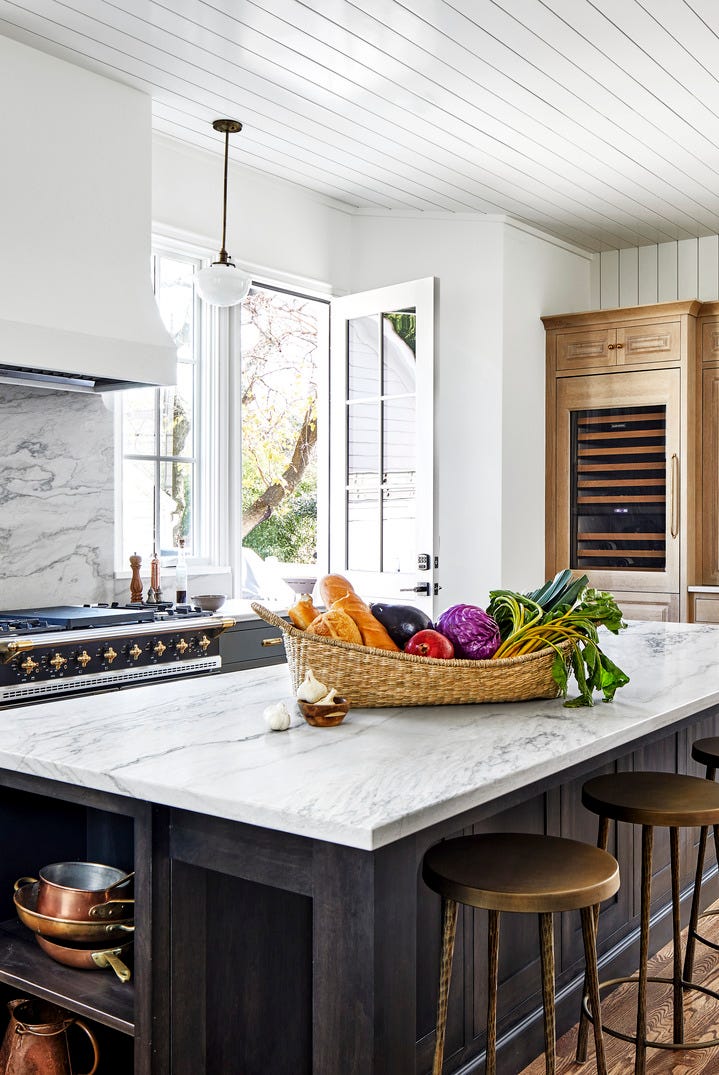
Scale is the point here, and the point is generous. A large marble island in white and gray sits on a dark wood base with brass hardware, making the island feel grounded. The dark base anchors the stone so the whole piece looks substantial. Pendant lights above define the island’s zone without clashing with the surrounding cabinets. For an element this size, keep the counter clear of small appliances to let the marble and the dark base do their work.
White Marble Island with Waterfall Edge and Leather Stools
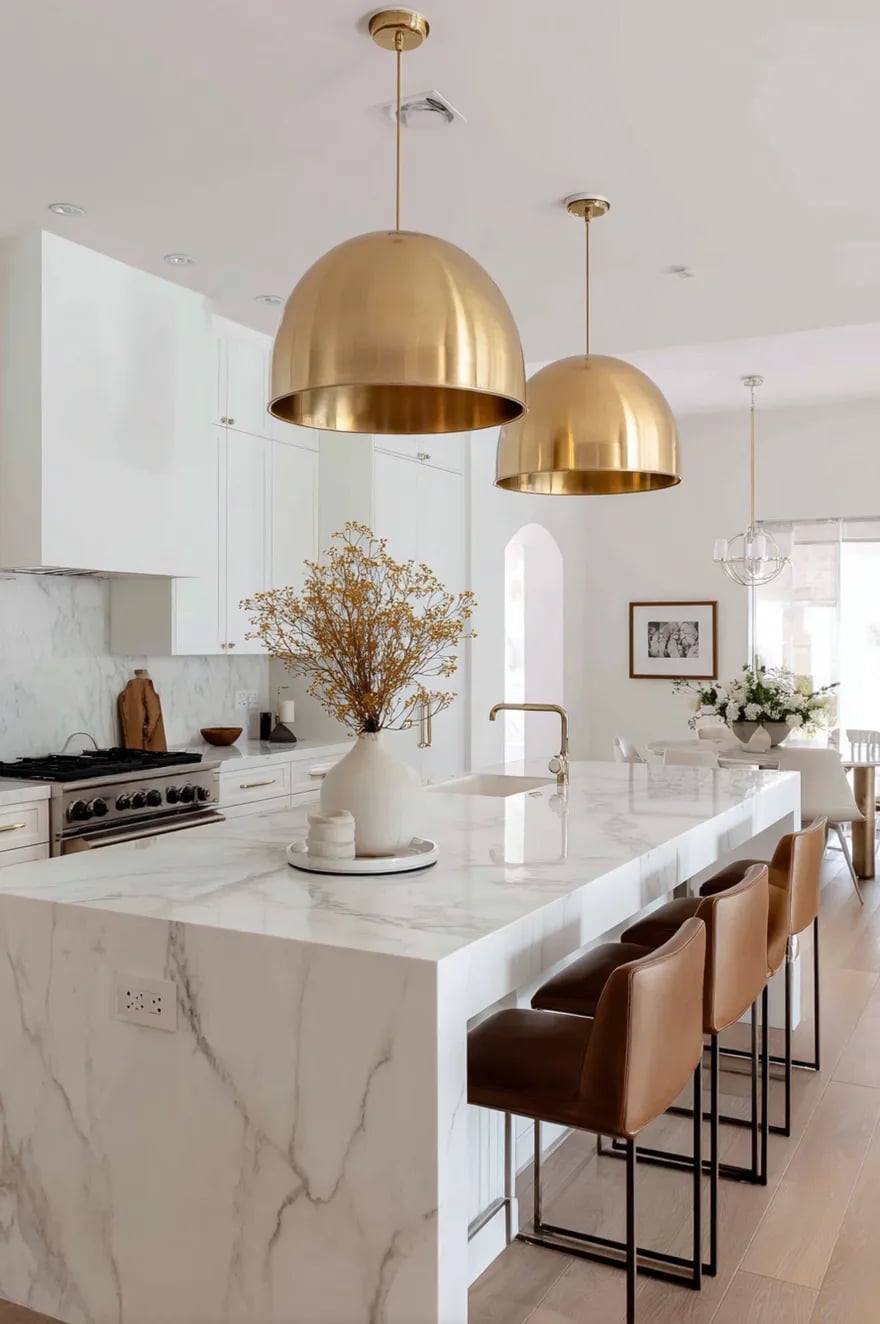
A practical rule for any kitchen is to pair high-impact materials with pieces that can handle daily use. The white marble here wraps all the way down in a waterfall edge, and the island sits under oversized brass pendant lights. Leather stools in a warm brown bring in texture that won’t scratch the way metal can. For a renter, a marble-look butcher block or quartz countertop with a waterfall edge can be ordered as a freestanding piece and removed later. The leather stools stay neutral against the stone and are easy to move to another room.
Wooden Island with Textured Stone Wall
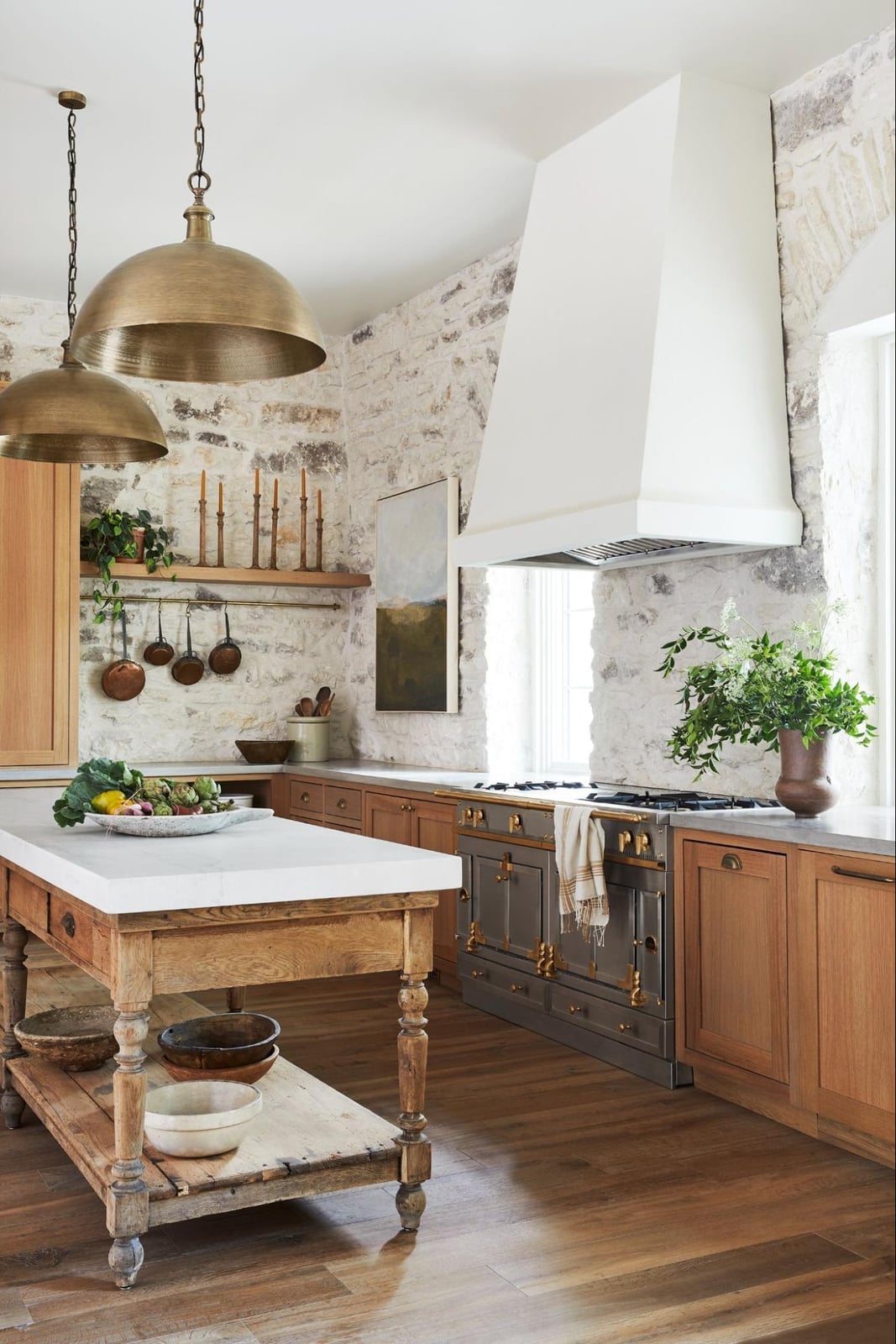
Rustic industrial can lean too rough or too polished, but this kitchen lands between them. The wooden island has a natural wood tone that feels warm, and it faces a textured stone wall that wraps the space in gray and white tones. Large brass pendant lights hang above the island, and an industrial range hood keeps the kitchen functional.
The stone wall is the defining texture here. Without it, the wood island and metal hood could read as plain. The stone adds depth without needing extra decor. Open shelving on the island keeps daily dishes close, and the surrounding cabinets in white balance the heavier materials.
Compact Island for Small Kitchens
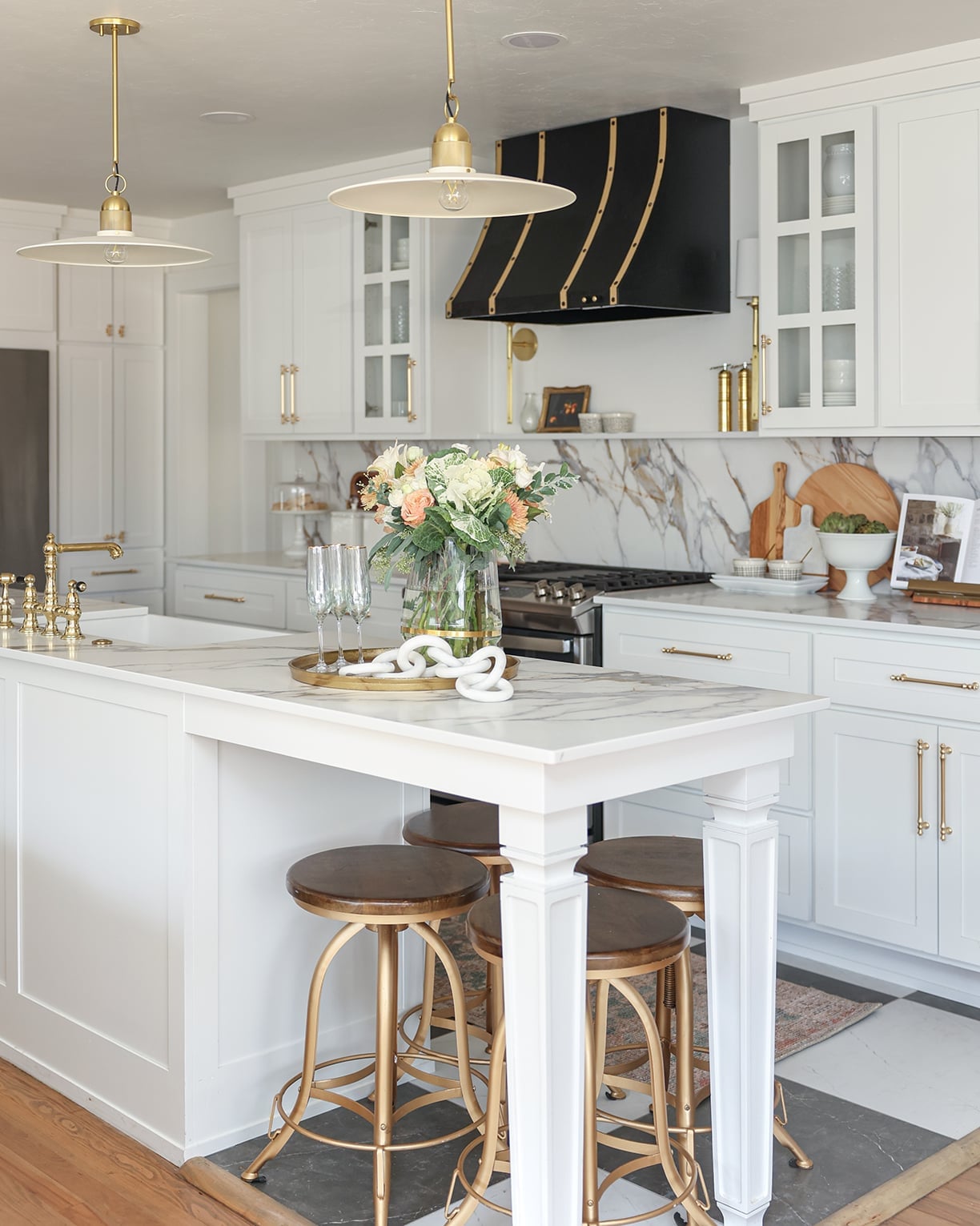
A small island with seating can make a compact kitchen feel more open if the proportions are right. This one uses a wood top with a stone or tile base, and the stools tuck completely under the overhang when not in use. The light wood keeps the piece from weighing down the room, and the white cabinetry around it keeps the palette airy. Overhead lighting is enough to define the island without a separate fixture. For a narrow kitchen, a slim island at counter height works better than a deeper one with bar stools.
Curved Tiled Island Base
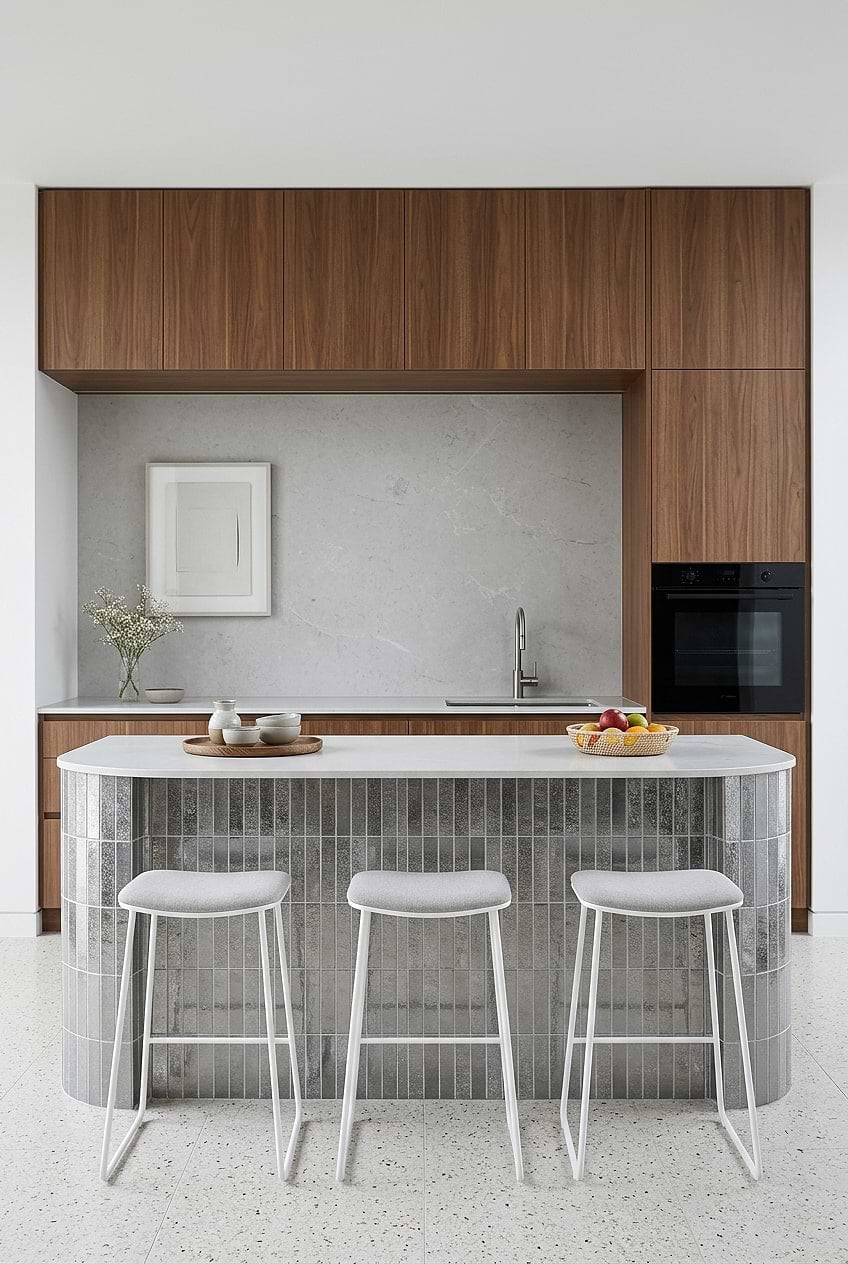
This island breaks the straight-line rule and it works. The base is curved and covered in tile, with a wood countertop that follows the same shape. Stools sit around the curve, making the seating feel more social than a straight row. The palette stays in wood, gray, and white so the curved shape is the main event. Overhead pendant lights echo the curve without matching it exactly. A tiled base like this needs a smooth grout line that is easy to wipe down. For a rental, a curved freestanding island with a solid base can give the same effect without altering the floor.
Light Gray Island with Seating in Modern Farmhouse Kitchen
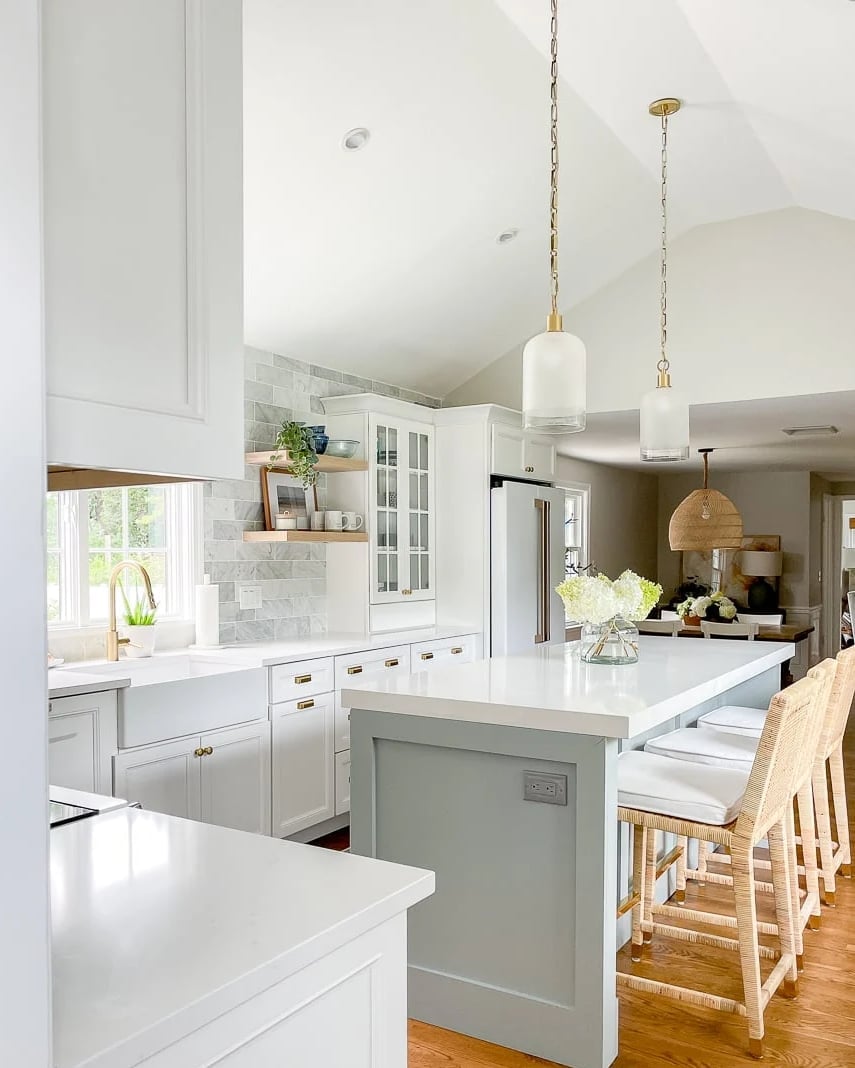
A light gray island keeps a modern farmhouse kitchen from feeling too sweet. The pale tone bridges white cabinets and wood accents without committing to either. Here the island sits in a roomy layout with a farmhouse sink and a range nearby, letting the gray act as a neutral anchor. Natural light and simple pendant fixtures keep the look airy rather than heavy. The palette works because the white walls and wood floors let the gray hold its own without competing. If your kitchen leans toward warm wood tones, a gray with a slight taupe undertone will feel more intentional than a cool battleship shade.
Blue Island with Open Shelving for Ingredient Storage
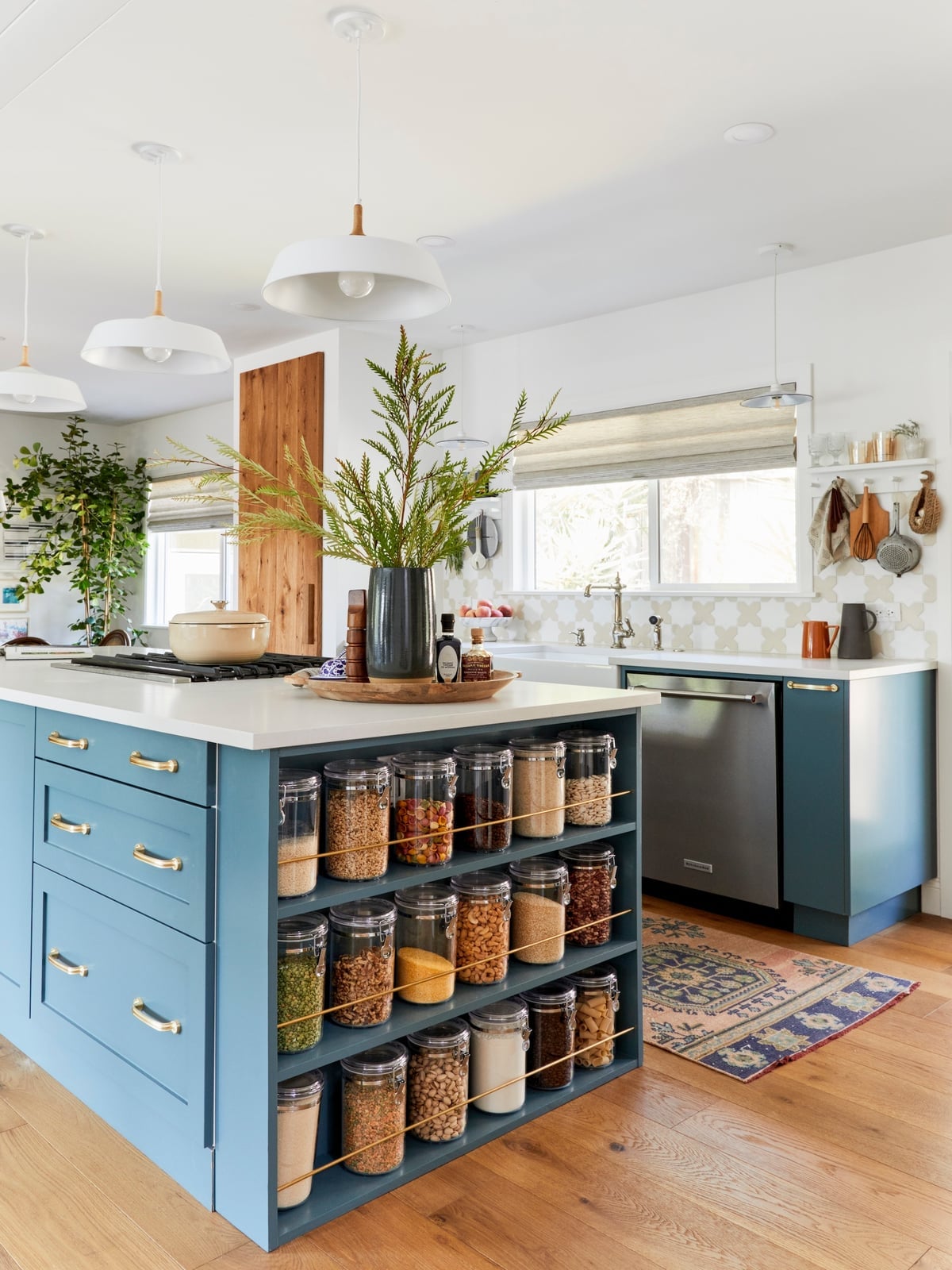
This blue island uses open shelving to turn everyday ingredients into part of the decor. Glass jars of dry goods sit on the shelves, making the storage feel curated. The white marble countertop and brass pendant lights keep the look polished, while the blue base adds a dose of color that stops the kitchen from feeling all-white. Open shelving works best when you commit to keeping items organized and within a limited palette. Stick to clear or matching containers, and group similar items so the display looks like intentional storage.
Dark Wood Island with Marble Top in Transitional Kitchen
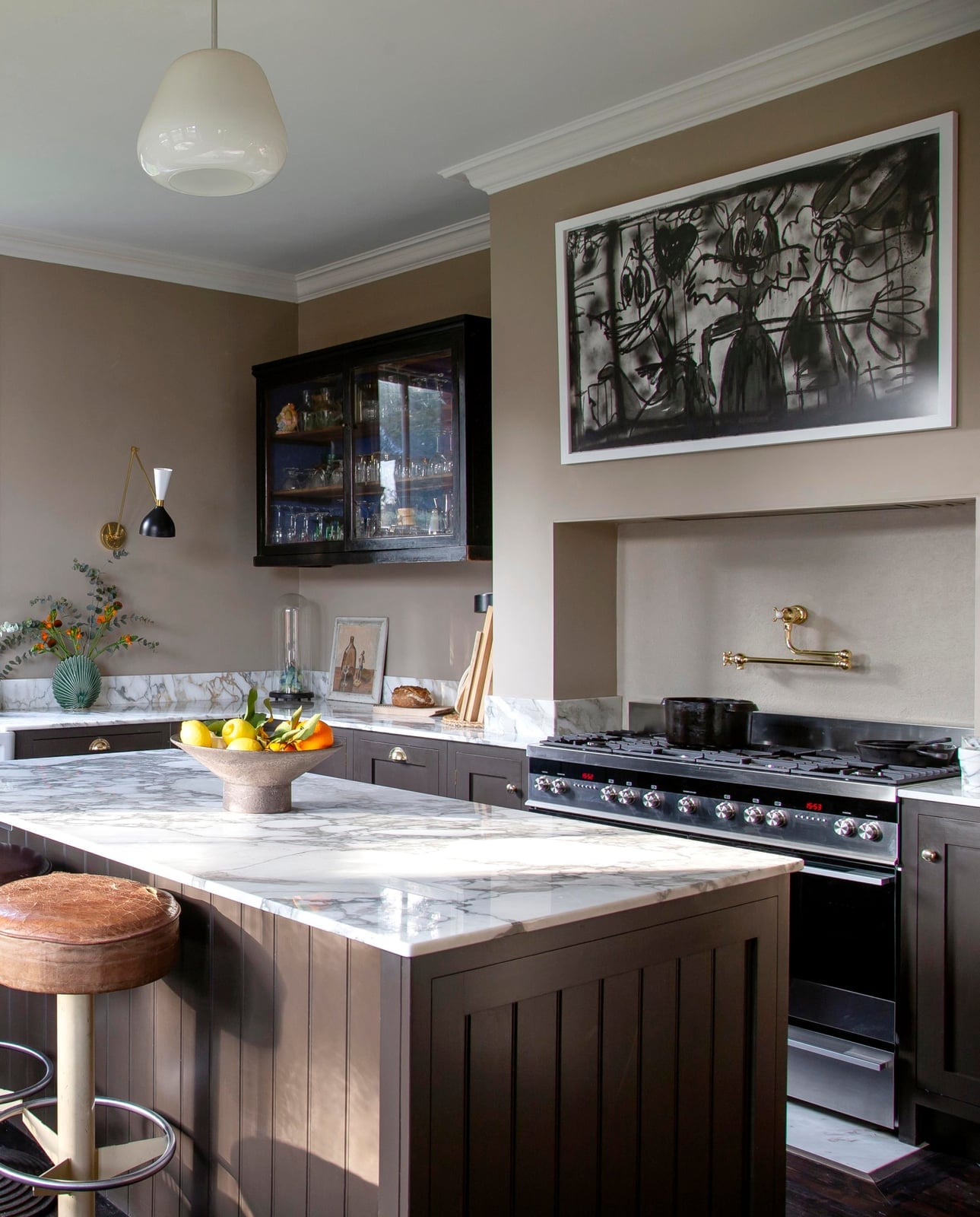
Pairing a substantial base with a lighter top is a common approach in transitional kitchens. This dark wood island with a marble countertop follows that method. The rich brown base grounds the space, while the white marble reflects natural light from the window and the wall sconce above. A leather stool adds texture, and the large abstract artwork above the range pulls the eye across the room. The contrast between the dark wood and the marble is the main focus. A cream or black accent in the decor keeps the look cohesive without needing more colors.
Curved Light Wood Island with White Cabinetry
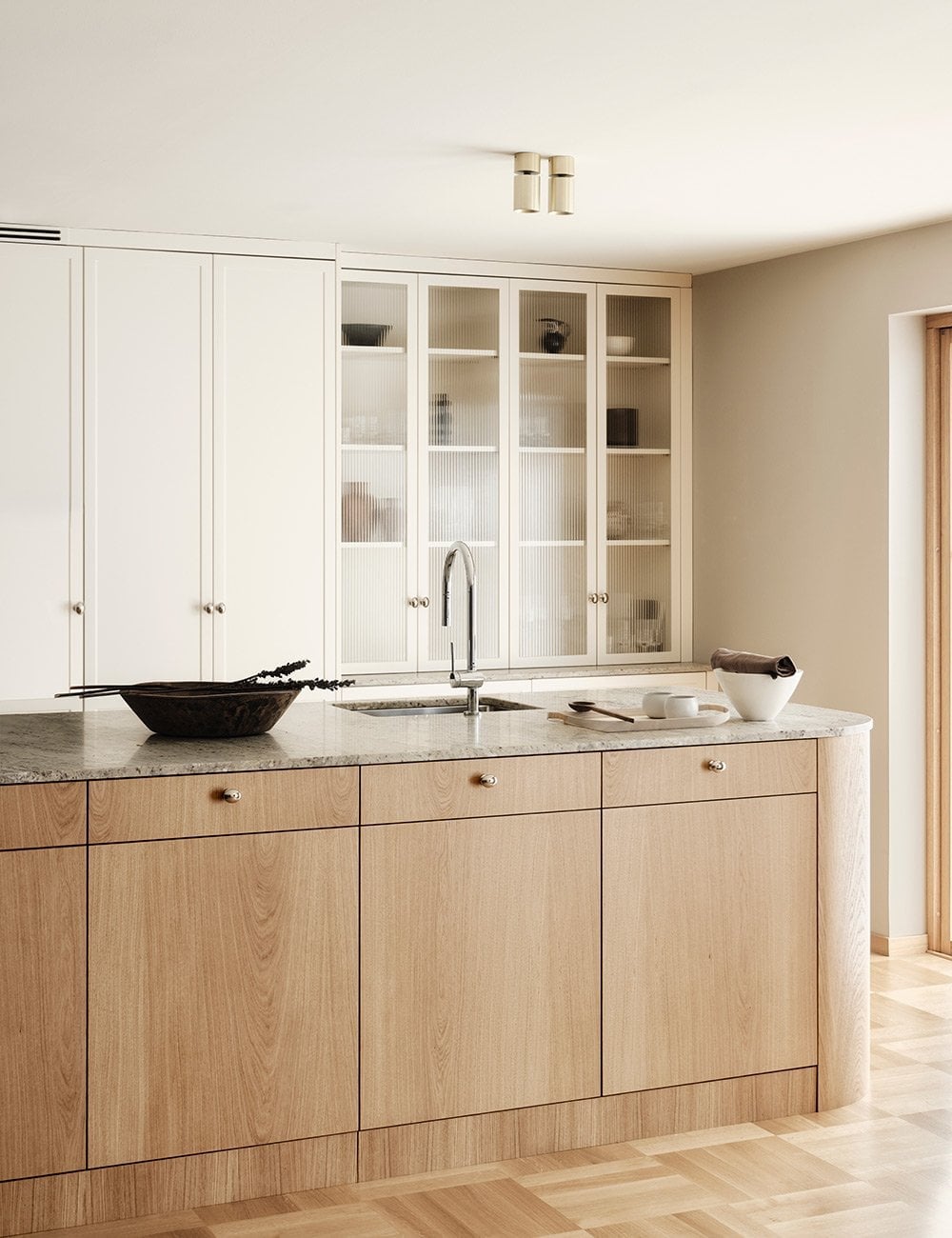
A straight island is the safe choice, but a curved one changes how you move through the kitchen. This light wood island with a gentle curve softens the path around it, making the open plan feel more fluid rather than boxed in. The white cabinets and glass-front uppers keep the perimeter light, so the island stays as the focal point. The curved shape also means you get more linear feet of counter space along the outer edge without making the footprint feel bigger. If you are considering a curved island, measure the clearance on all sides carefully. A curve needs extra room to feel generous rather than cramped.
Light Wood Island with Marble Countertop and Minimalist Cabinets
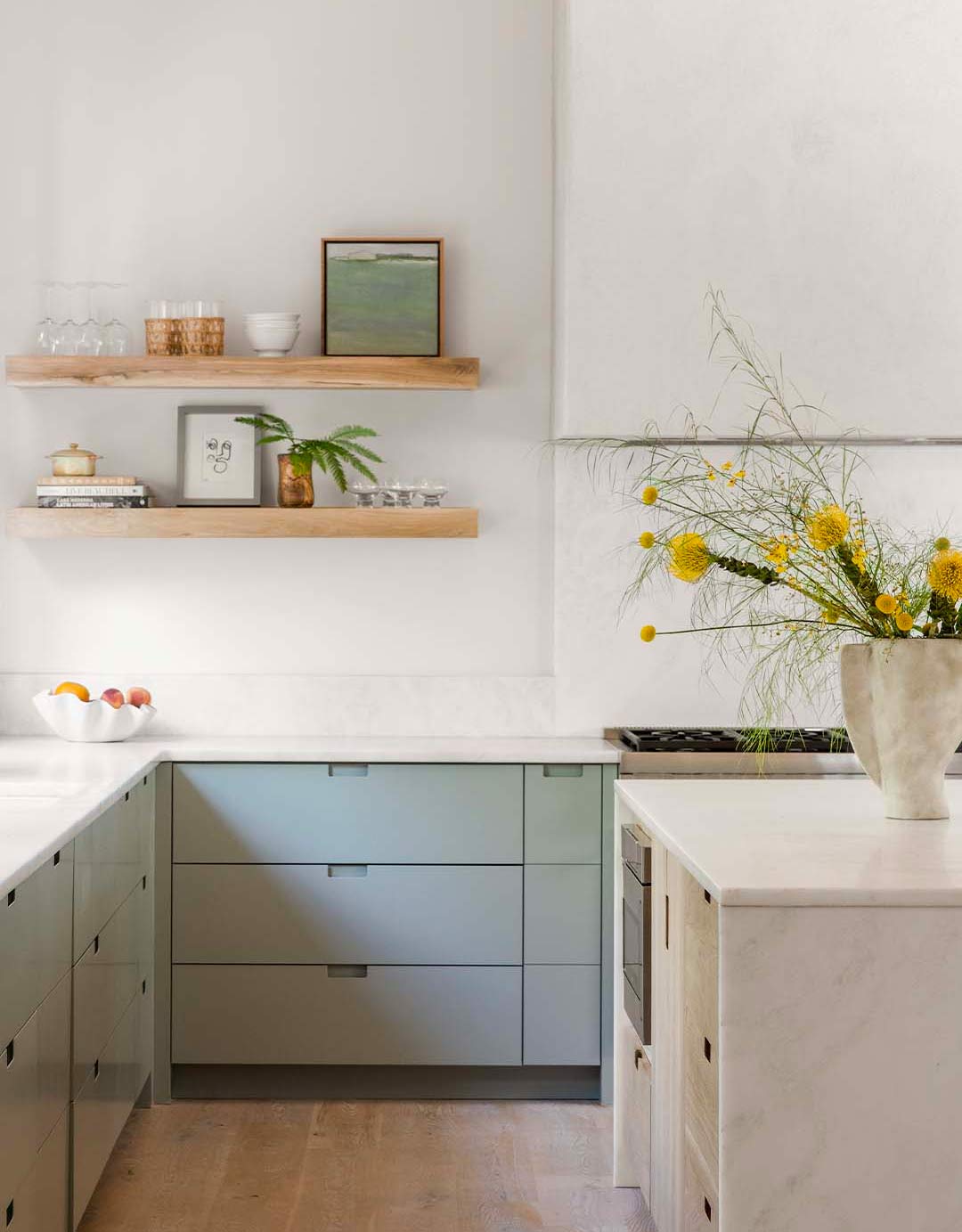
The light wood island here pairs with a white marble countertop and minimalist cabinets for a clean, modern look. The wood grain adds warmth without the weight of a darker stain, and the marble keeps the surface feeling crisp. The open plan layout and natural light let the materials speak for themselves. A metal stool or two can add a subtle contrast without introducing a third color. This combination works best in kitchens where the perimeter cabinets stay simple and unadorned, letting the island provide the visual interest through texture rather than ornament.
Large Island with Green Upholstered Stools
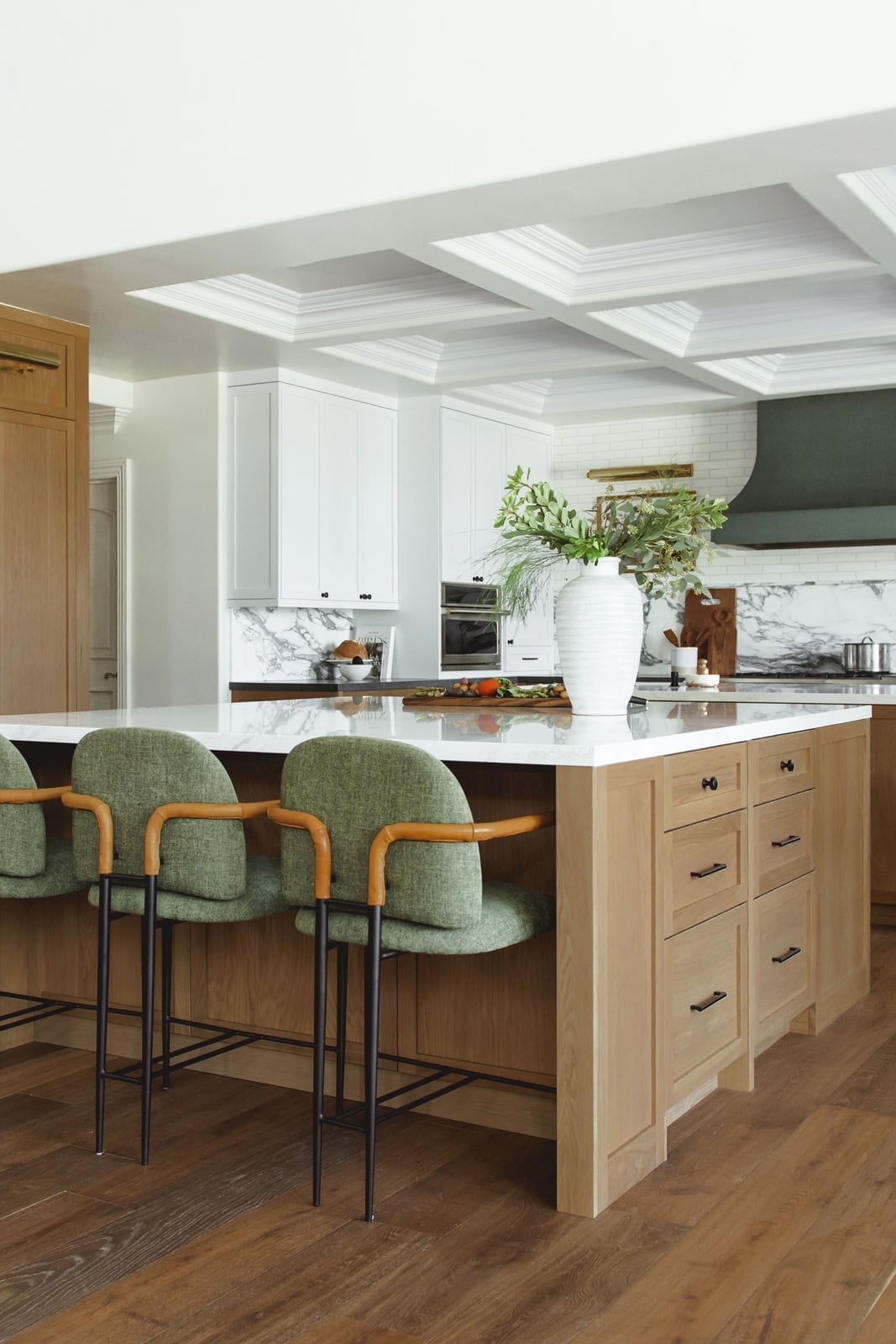
This island takes center stage, and the green upholstered stools do the work of making it feel anchored rather than just big. The wood base reads as furniture, not cabinetry, so the whole piece lands closer to a statement table than a standard prep station. Marble on top and a coffered ceiling above push the room toward modern luxury, but the soft green fabric on the stools keeps it from turning cold. For anyone working with a spacious layout, this is a reminder that a large island needs seating that adds a color layer rather than blending in.
Coral Island with Colorful Pendant Lights
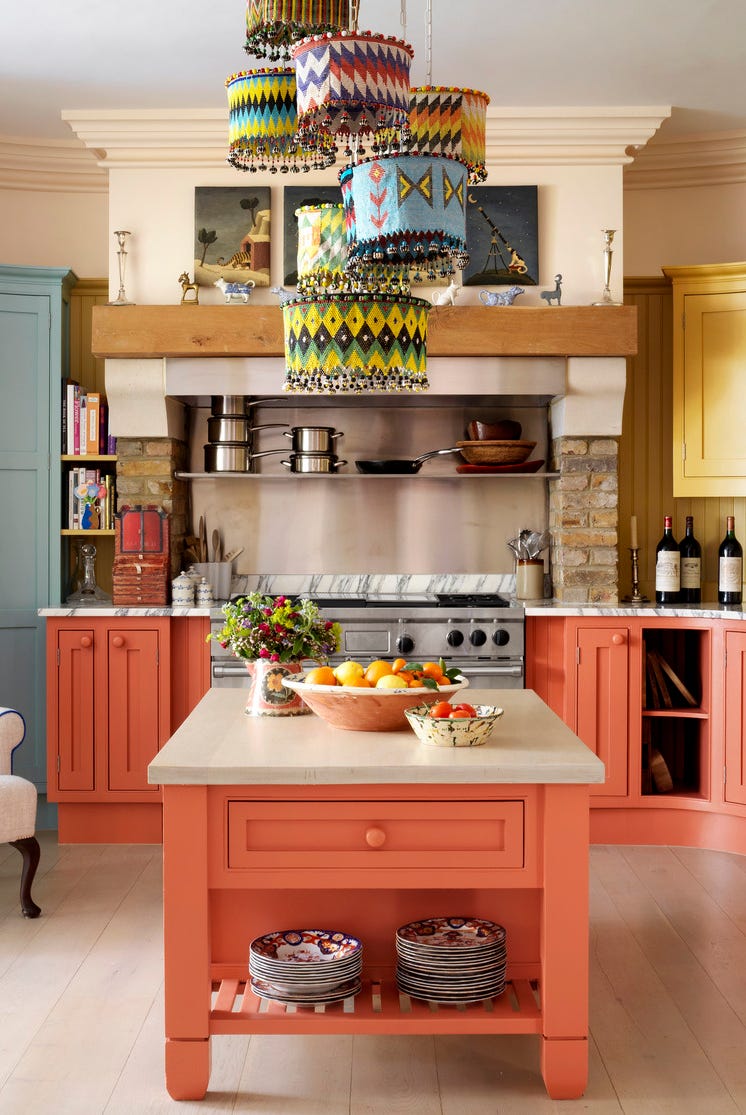
A coral kitchen island anchors this room because the pendant lights above pick up the same warm coral note. The brick range hood and blue cabinetry already bring strong color, but the island still feels central. That repetition keeps the palette from feeling chaotic. Renters can borrow the logic without painting cabinetry: swap in a coral island on casters or a large cutting board in a warm red tone, then match it with a single colorful pendant or a fabric shade. The key is limiting the bold hues to two connected spots so the room looks deliberate.
Central Island with Brass Pendant Lights
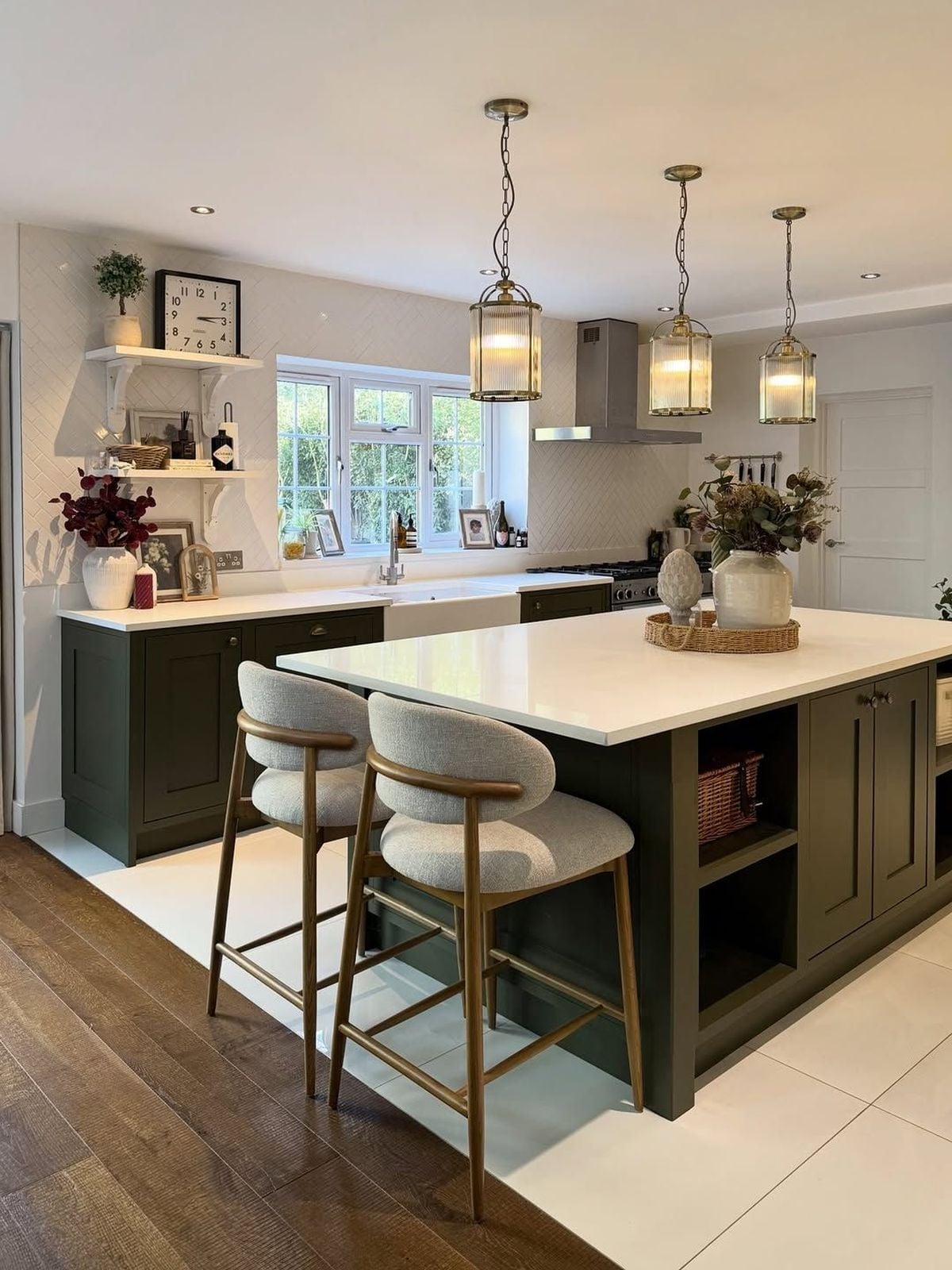
Three brass pendant lights hang in a row above the island, and that repeat pattern is what gives this layout its balance. The dark green cabinetry and white marble countertop provide a calm backdrop, so the warm metal finish reads as the focal point without competing. A central island with this much counter space benefits from lighting that defines the zone rather than flooding the whole room. Brass pendants set at a consistent height create a clear work and gathering area, which is useful whether the island sees prep work or casual meals.
Teal Island with Pink Velvet Stools and Patterned Ceiling
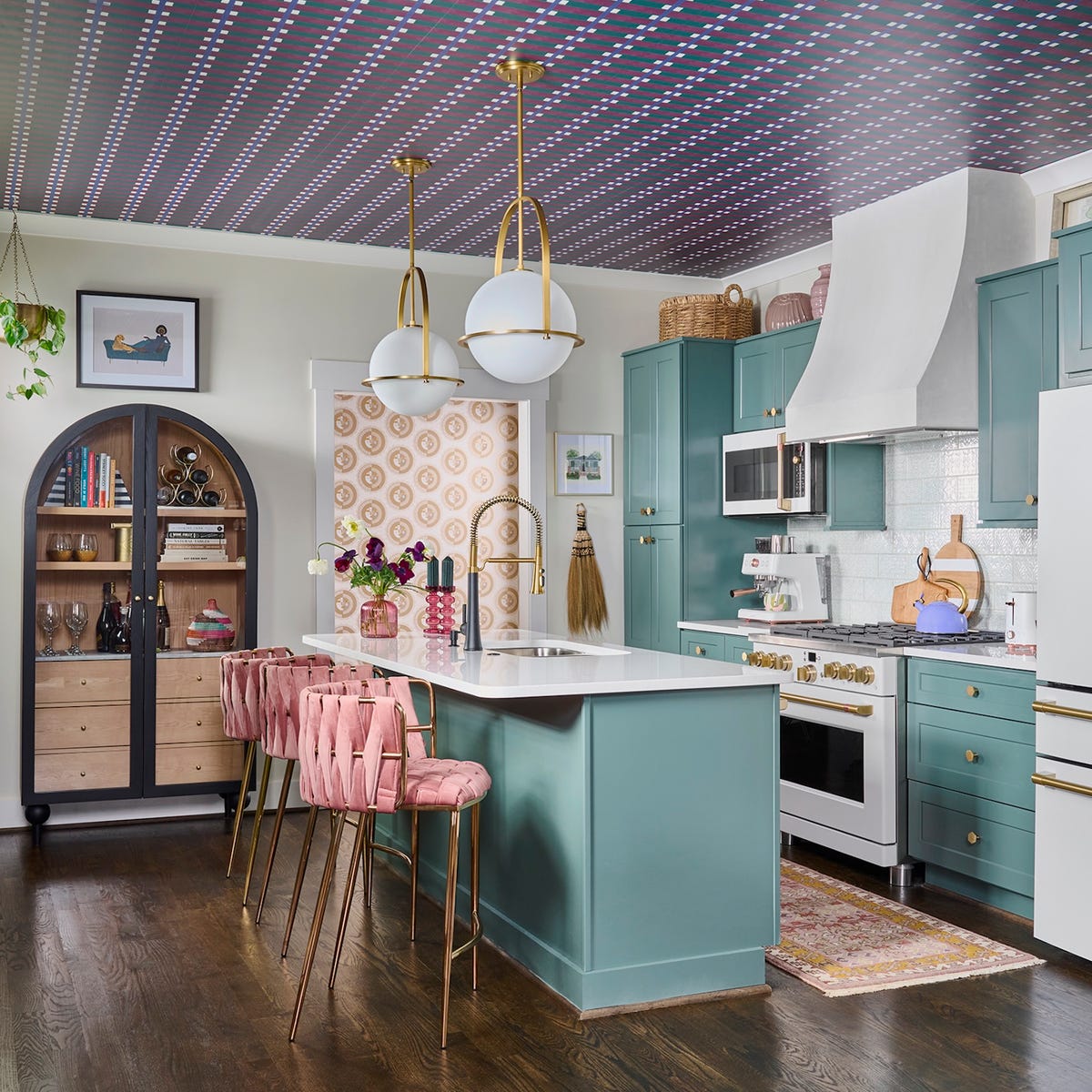
Teal and pink are the obvious draw here, but the patterned ceiling is what makes the combination work. The island base reads as a solid block of color, so the pink velvet stools add contrast without fighting for attention. A patterned ceiling above ties the whole composition together by repeating the palette in a softer, dispersed way. For anyone considering a bold island color, this setup shows that introducing a second unexpected hue through seating keeps the look layered rather than flat. The ceiling pattern acts as the bridge that connects both colors.
White Island with Sage Green Cabinets and Rattan Stools
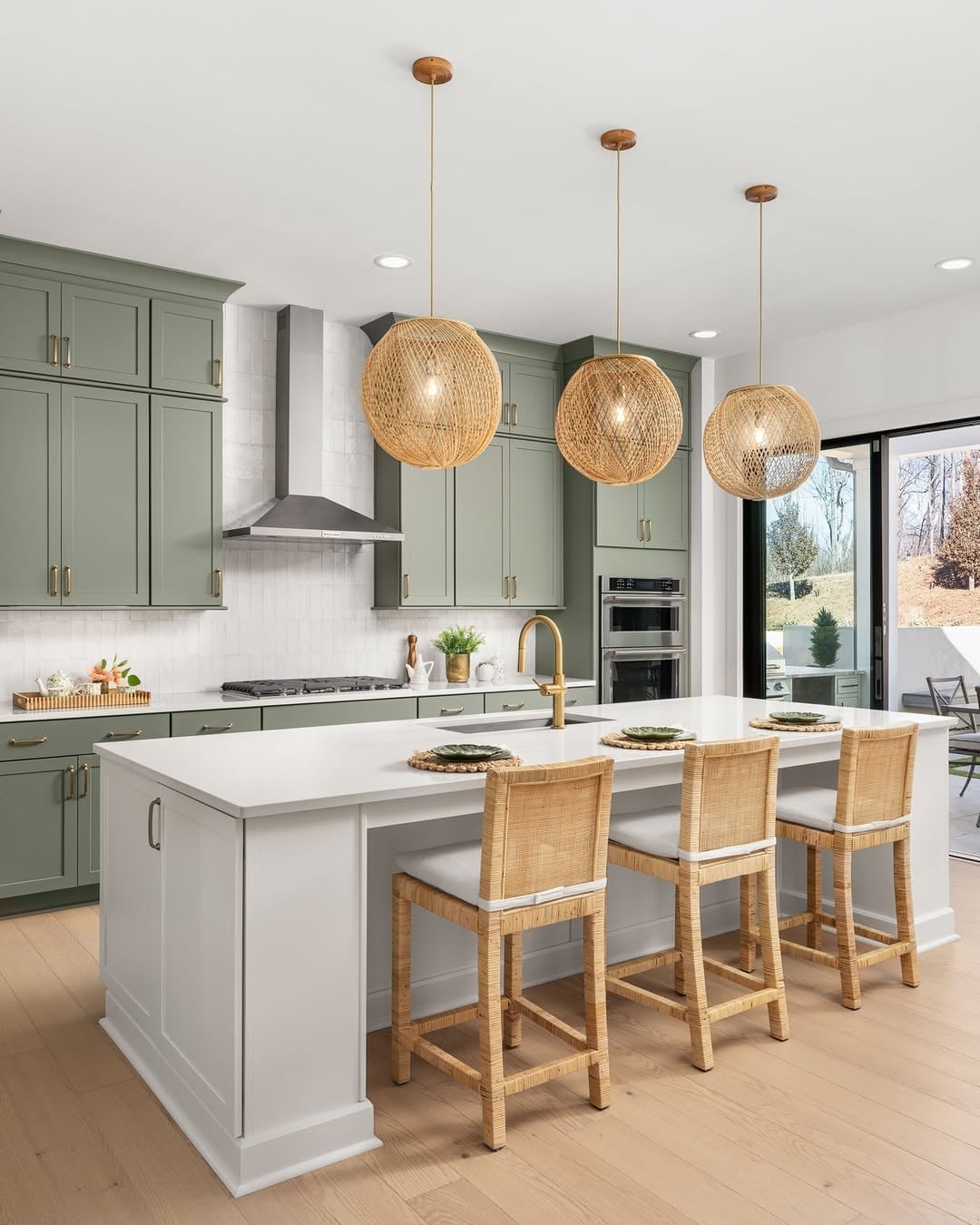
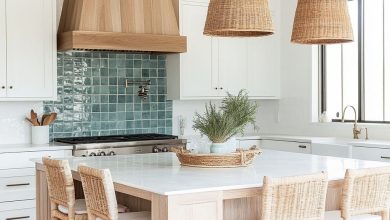
A white island can feel like a placeholder in an open plan, but pairing it with sage green cabinets and rattan stools gives it a reason to exist. The white surface keeps the work zone clean and neutral, while the green cabinetry adds the color that defines the room. Rattan stools introduce texture without adding weight, which matters when the island is the lightest element in the palette. For kitchens with open sight lines, this balance prevents the island from disappearing into the floor or competing with the perimeter. It stays useful without demanding attention.
Granite-Topped Island with Built-in Cooktop
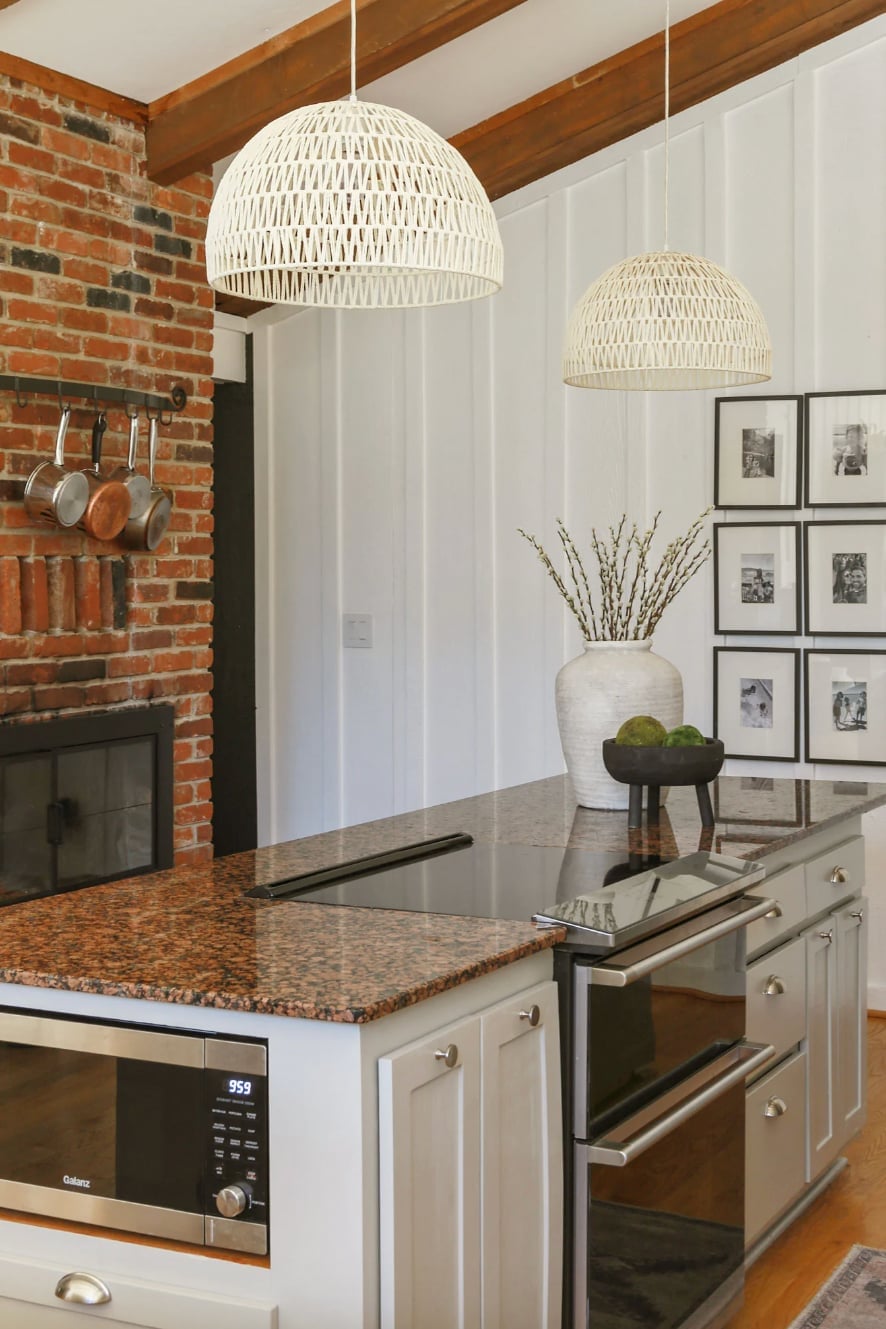
A granite-topped island with a built-in cooktop changes how a kitchen works because it puts the cooking action right in the middle of the room. In this traditional space, the island sits opposite a brick fireplace on the perimeter, so the layout gives you a clear front and back: prep and cook on the island, then turn to the fireplace for warmth or display. White cabinetry and gray tones keep the brick red from feeling heavy, while pendant lights and natural light balance the darker granite. This setup suits someone who cooks often and wants to face the room instead of a wall.
Final Thoughts
A well-chosen kitchen island does more than fill empty floor space. It can anchor the room, add storage, and create a natural gathering spot for cooking or chatting. The options here show how material, shape, and color each play a part. Marble tops bring durability and a polished look, while wood counters warm up a farmhouse kitchen. Floating designs open up the floor, and fluted details add texture without clutter. Pay attention to how you use your kitchen daily. The best island fits your routines, not just a catalog page. Keep the surrounding cabinets and counters simple so the island stays the hero. With the right choice, your kitchen gains both function and personality.