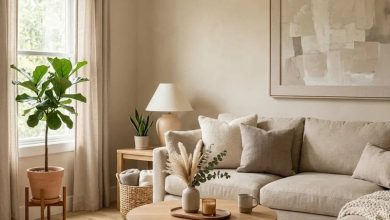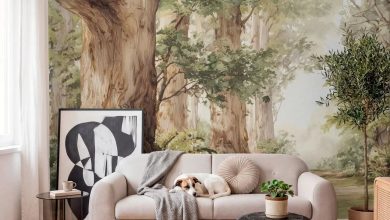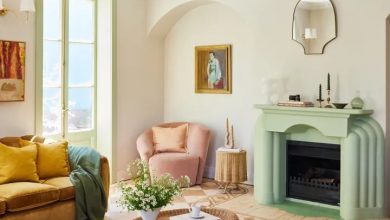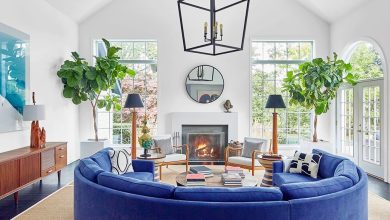

A Japandi living room is where Japanese restraint meets Scandinavian warmth. It is a space that feels calm without feeling empty, and cozy without turning cluttered. If that balance has been tricky to strike in your own home, this collection of 38 ideas should help. Each one focuses on a different piece or detail, from sofas and coffee tables to walls, lighting, and layout.
These are practical, room-sized approaches you can adapt to your own space, whether you are styling a corner or reworking an entire open plan. Expect natural materials, soft curves, and a neutral backdrop with the occasional deeper color. You will finish with a clear sense of how to build a Japandi look that actually lives well.
Embrace Soft Textures with a Cream Corduroy Armchair
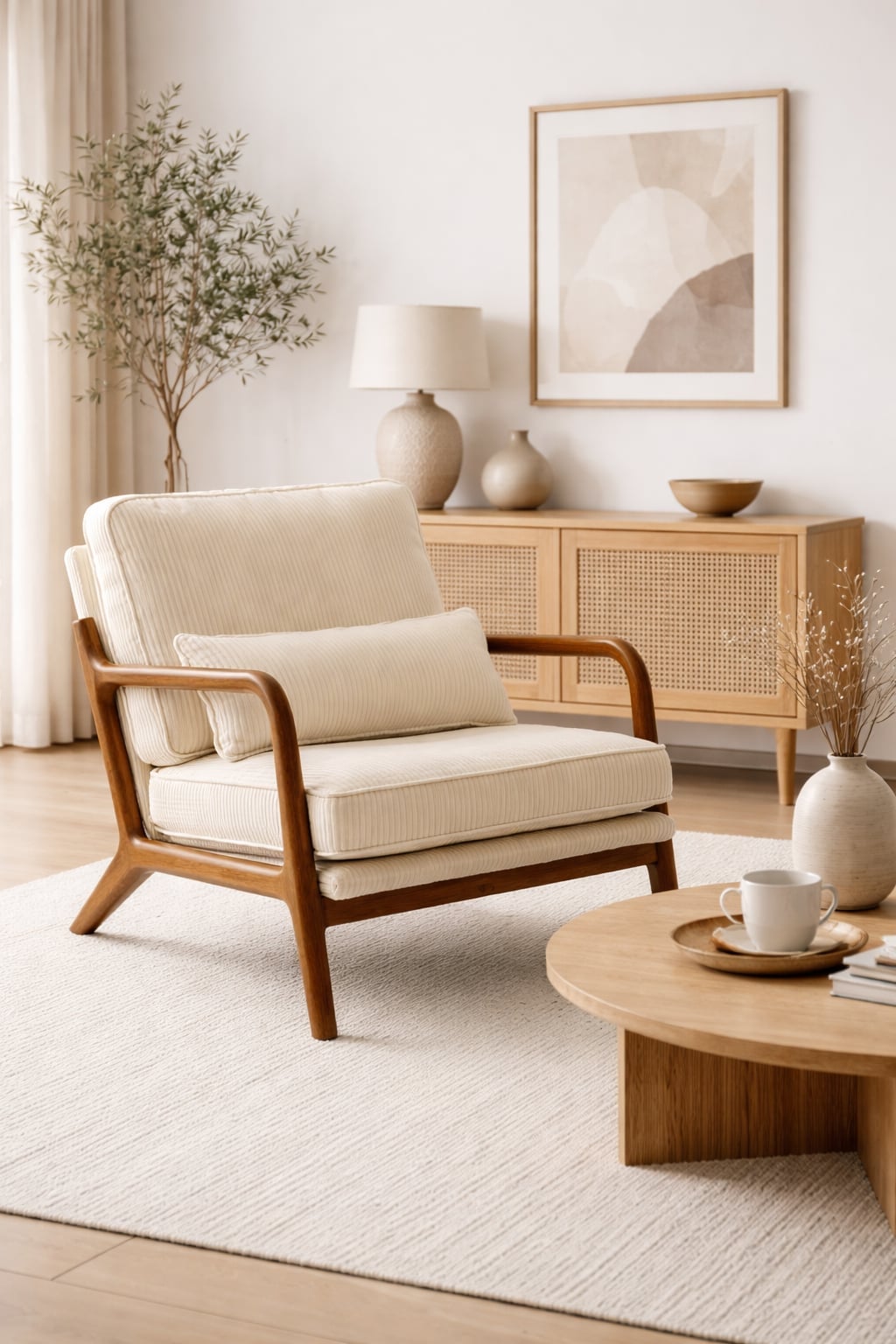
A cream corduroy armchair brings a soft, tactile element to a room that often leans on smooth surfaces and clean lines. The vertical ribbing adds subtle visual rhythm without breaking the calm. Paired with a round coffee table and a sideboard in light wood, the chair becomes the main attraction in a seating area that feels roomy and uncluttered. Natural light from the window and a warm table lamp keep the palette of cream, beige, and white from going flat. The takeaway: one textured piece can anchor a Japandi living room without needing a second pattern to balance it.
Create an Airy Atmosphere with a Large Cream Sectional Sofa
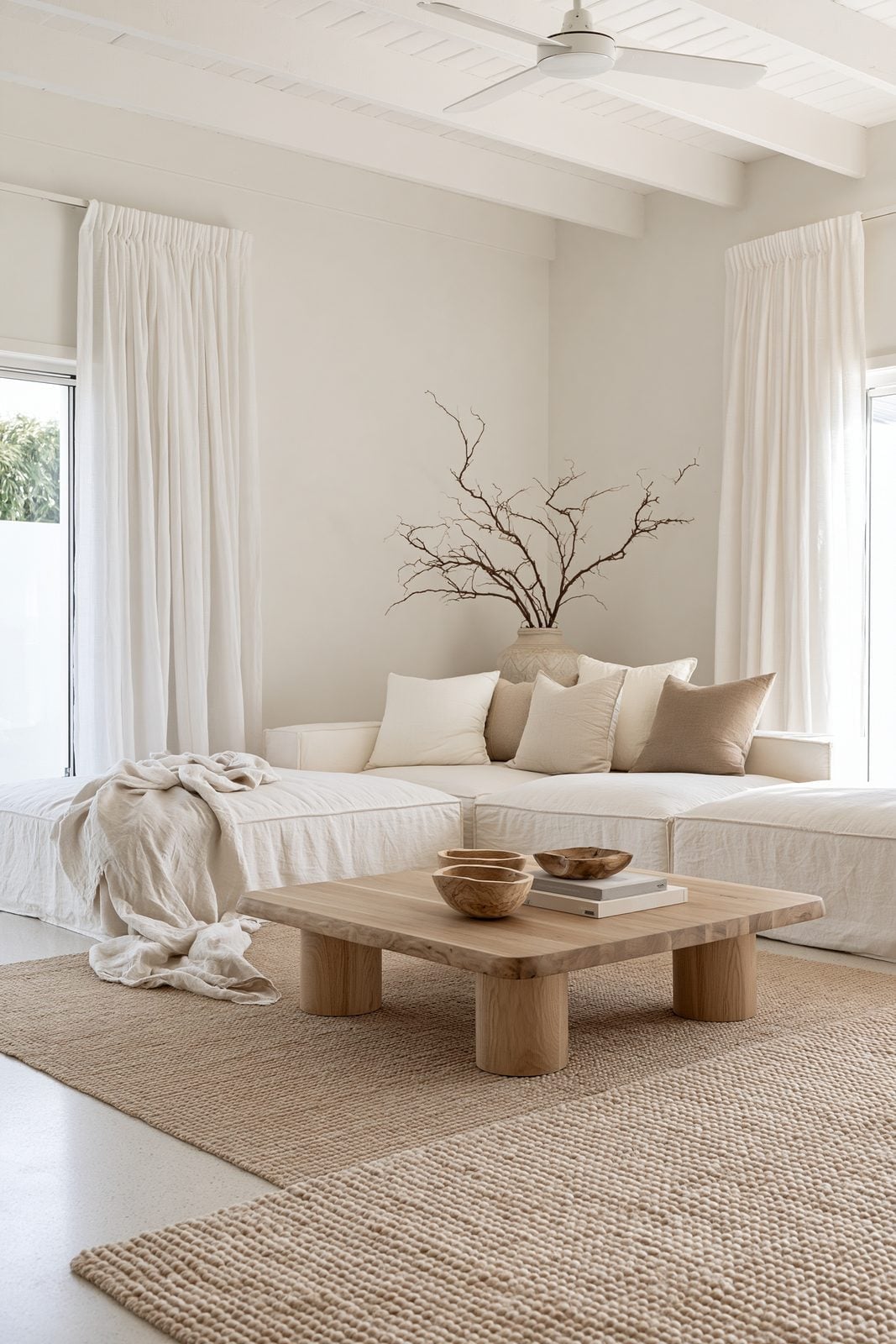
A large cream sectional sofa can define a seating area without making it feel crowded. In this room, the sofa sits on a jute rug and faces a substantial wooden coffee table, with natural light from windows keeping the space open. The linen fabric and neutral tones let the wood grain and rug texture carry the visual weight. Scale matters here: the oversized coffee table matches the sofa’s length, so the layout stays balanced rather than top-heavy. A Japandi living room benefits from furniture that fills the floor plan without touching every wall.
Incorporate Sculptural Elements with a Curved Armchair
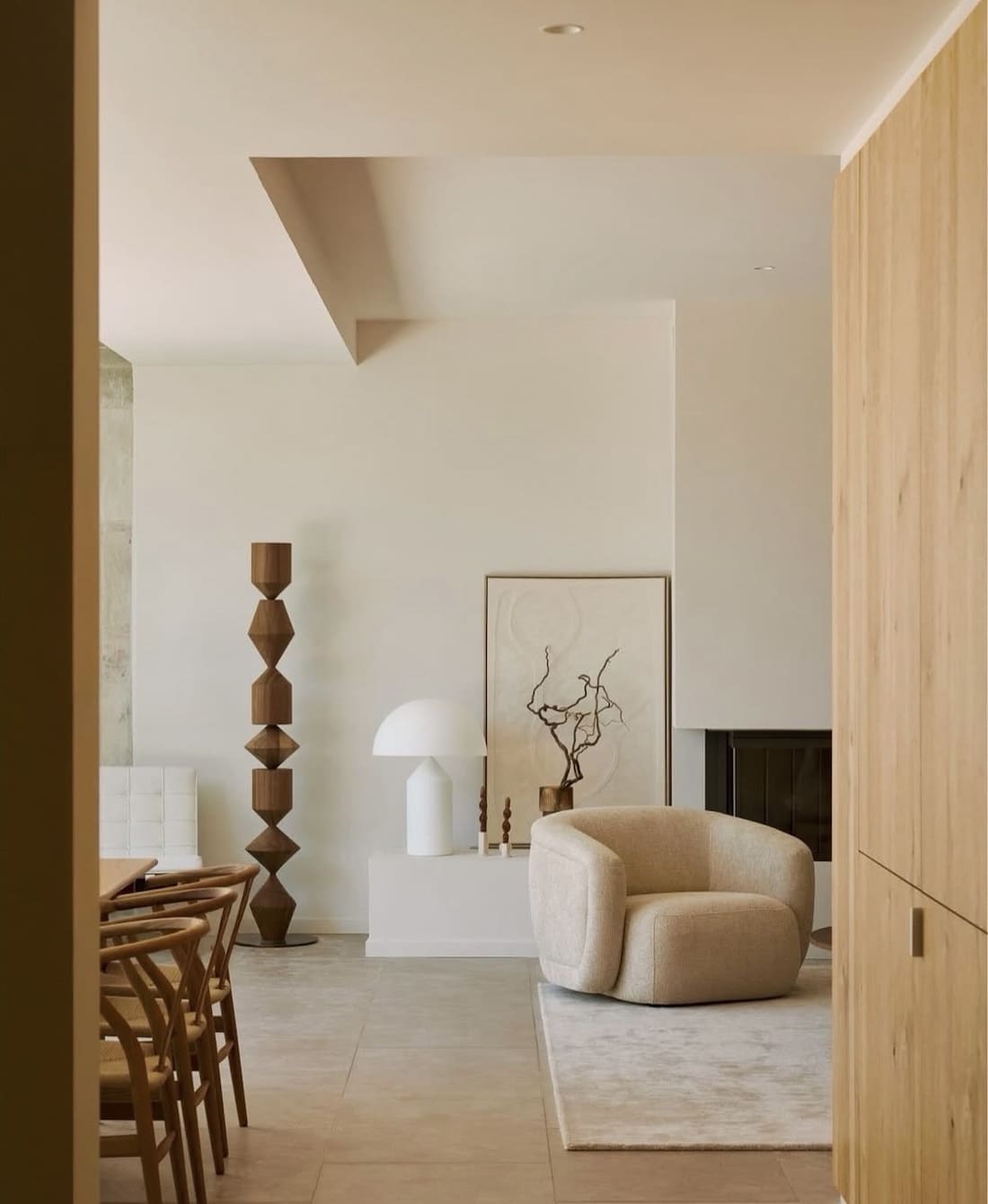
How do you add a focal point without adding clutter? A curved armchair in bouclé does the job by drawing attention through shape rather than color. Placed in a corner with a sculptural wooden floor decoration nearby, it creates a vignette that feels intentional, not staged. Neutral cream and beige tones keep the look calm, while the armchair’s rounded form contrasts with the straight lines of a floor lamp and a minimalist table lamp. The room stays open, with ambient light from the lamps and natural light softening the edges. The principle: one sculptural piece can define a corner without needing extra furniture to support it.
Achieve Serenity with a Low-Profile Sofa and Natural Light
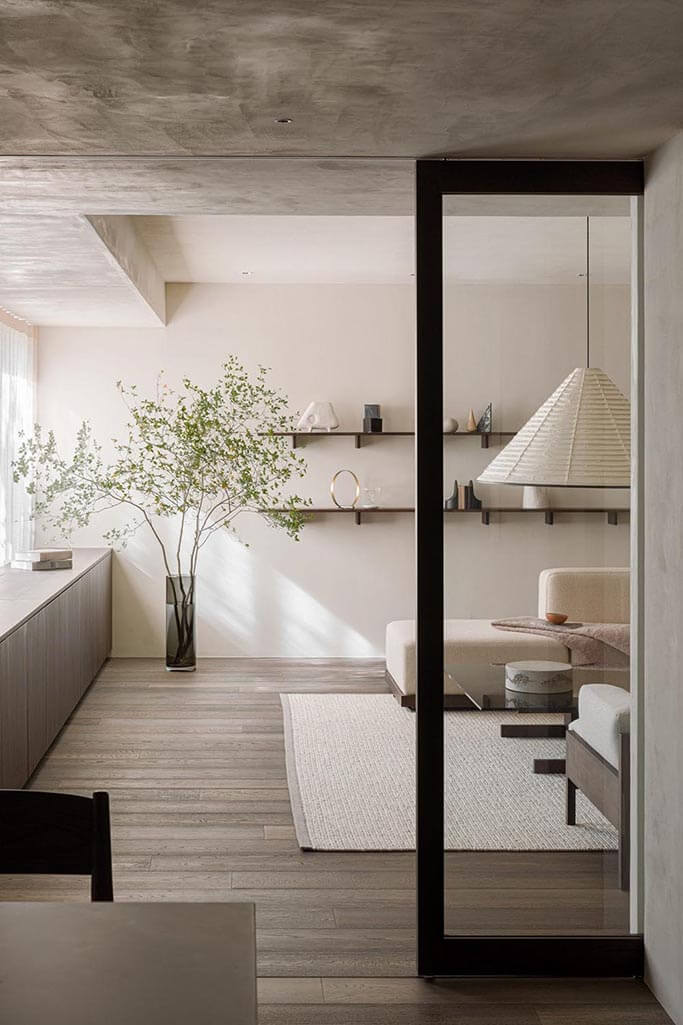
A low-profile sofa changes how a room breathes. In this Japandi living room, the sofa sits low to the ground, letting natural light travel across the space without interruption. A round coffee table and a textured rug sit in front, while a floor lamp adds a warm glow for evenings. The neutral beige and wood tones keep the palette simple, so the eye moves through the room without stopping at any one piece. Low furniture works well in open-plan layouts because it keeps the sightline clear and the atmosphere calm.
Design a Japandi Media Wall with Wood Slats and Stone
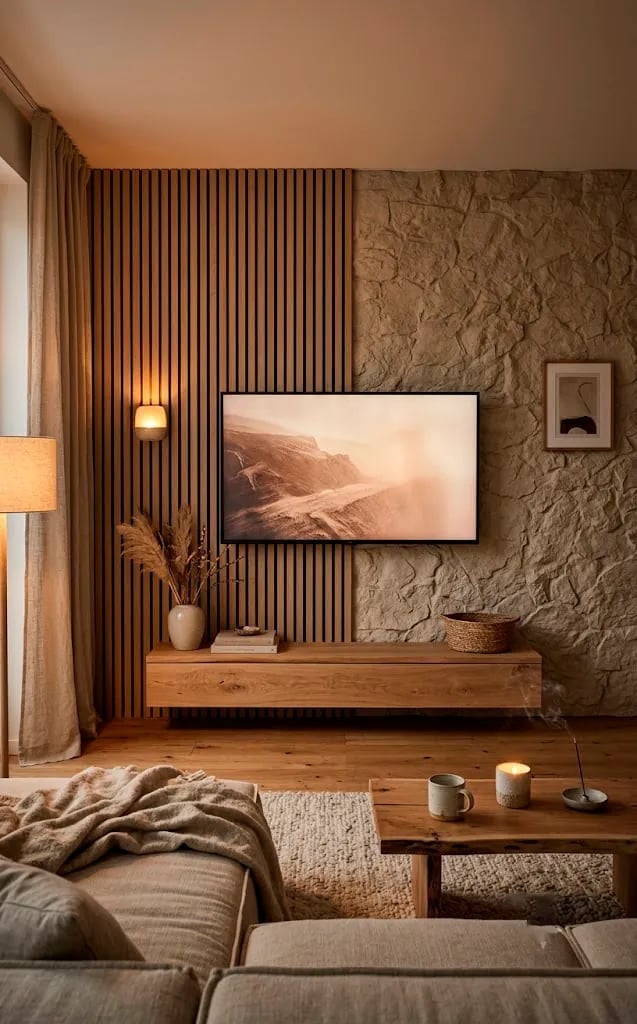
Combine warm wood slats with a textured stone surface for a Japandi media wall. Vertical wood slats frame the TV, while a floating media console sits below against a stone backdrop. A wall sconce and a floor lamp add layered light to keep the stone gray and beige palette from feeling cold. The slats add vertical interest without competing with the screen, and the stone introduces a natural texture that balances the wood. A dried grass accent reinforces the organic feel.
Layer Textures with a Jute Rug Under a Coffee Table
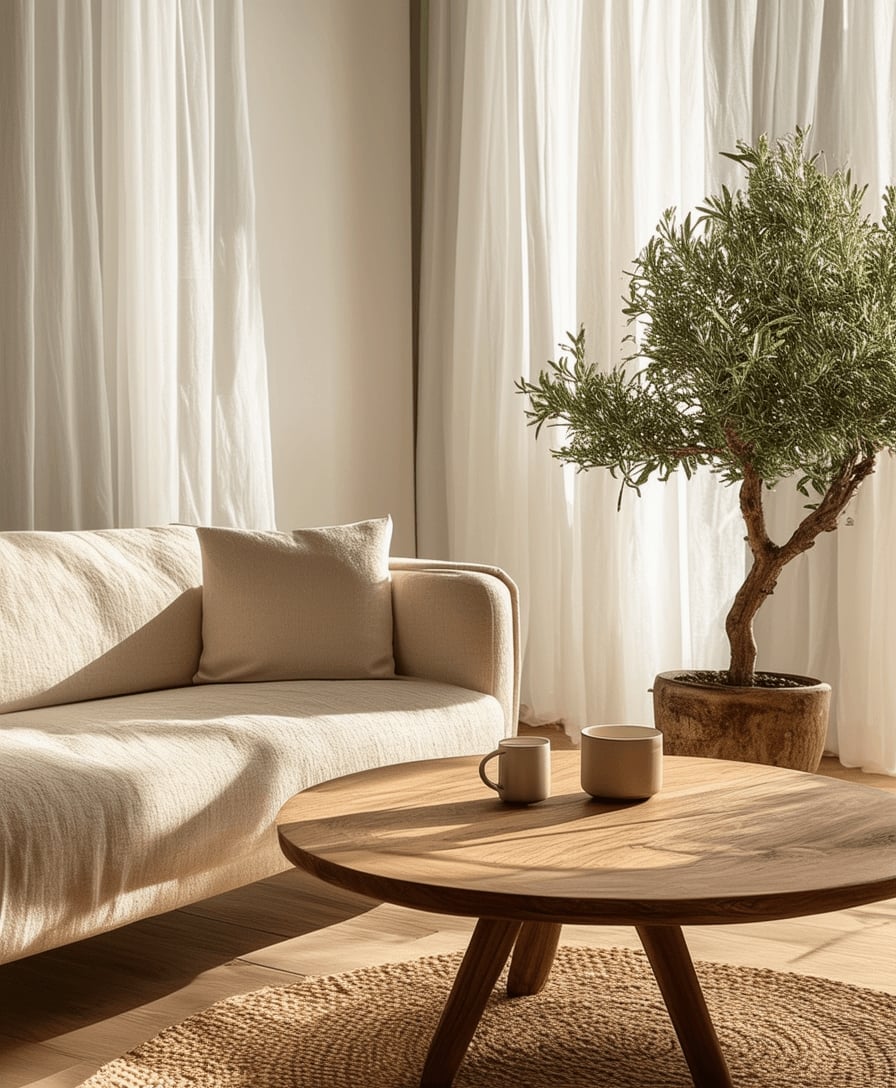
A flat-weave wool rug might be the default for a Japandi living room, but jute brings a different kind of warmth. The natural fiber adds a coarse, organic layer underfoot that contrasts with the smooth fabric of a curved sofa and the polished surface of a round wood coffee table. A potted tree nearby reinforces the indoor-outdoor connection that makes this style feel grounded.
In this room, the jute rug anchors the conversation zone without competing with the soft beige and cream palette. The key is scale: the rug should extend past the coffee table legs by at least a foot on each side so the seating still feels connected. If you rent, jute is a low-commitment way to add texture since it rolls up and moves with you.
Opt for Soft Curves with a Bouclé Sofa
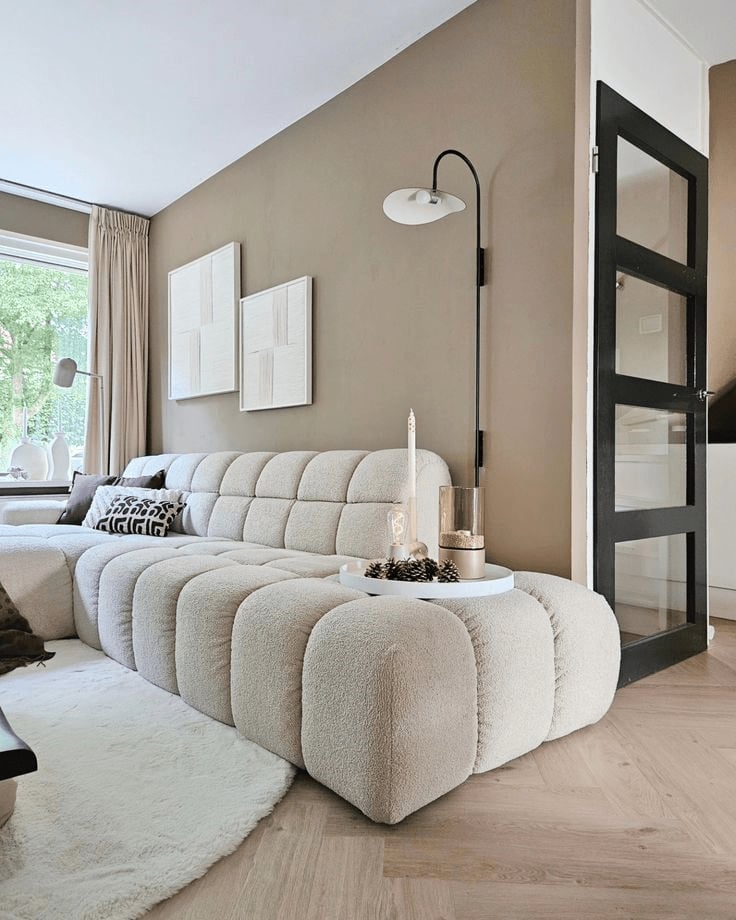
A bouclé sofa with a curved silhouette does more than just soften the lines of a Japandi living room. The nubby fabric catches light differently than smooth linen or cotton, giving the piece a subtle depth that changes throughout the day. Paired with a slim wood side table and a wall lamp, the sofa becomes the focal point without needing a bold color. The taupe and cream palette keeps the look calm, while the rounded shape breaks up the straight lines typical of the style. For renters, a curved sofa is a single statement piece that defines the room without permanent changes.
Maximize Warmth with Extensive Warm Wood Paneling
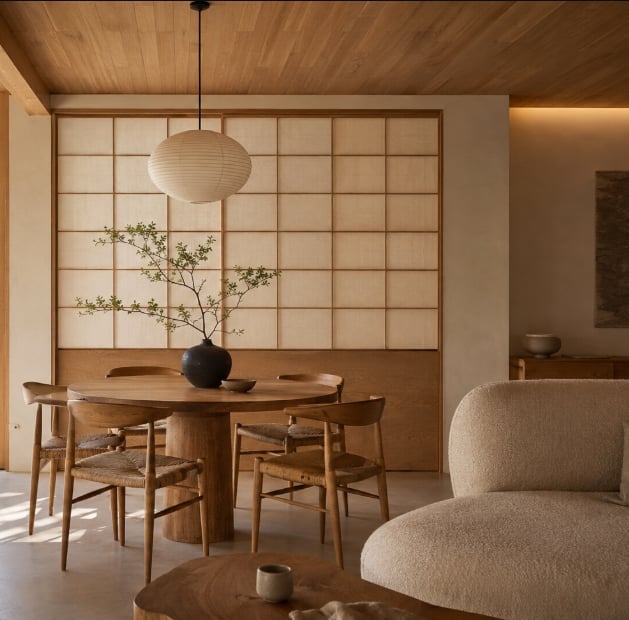
This room goes all in on warm wood paneling, and it works because the rest of the palette stays restrained. Floor-to-ceiling wood on the walls and built-in shelving creates a cocooning effect that cream linen upholstery and a stone coffee table balance out. The natural light and pendant lights keep the space from feeling too dark, while the wood tones unify the sofa, armchair, and shelving into one cohesive look. The takeaway is that warm wood paneling can make a large room feel intimate rather than cavernous, as long as you keep the furniture light in color and the accessories minimal.
Create a Cozy Corner with a Light Wood Cabinet and Lamp
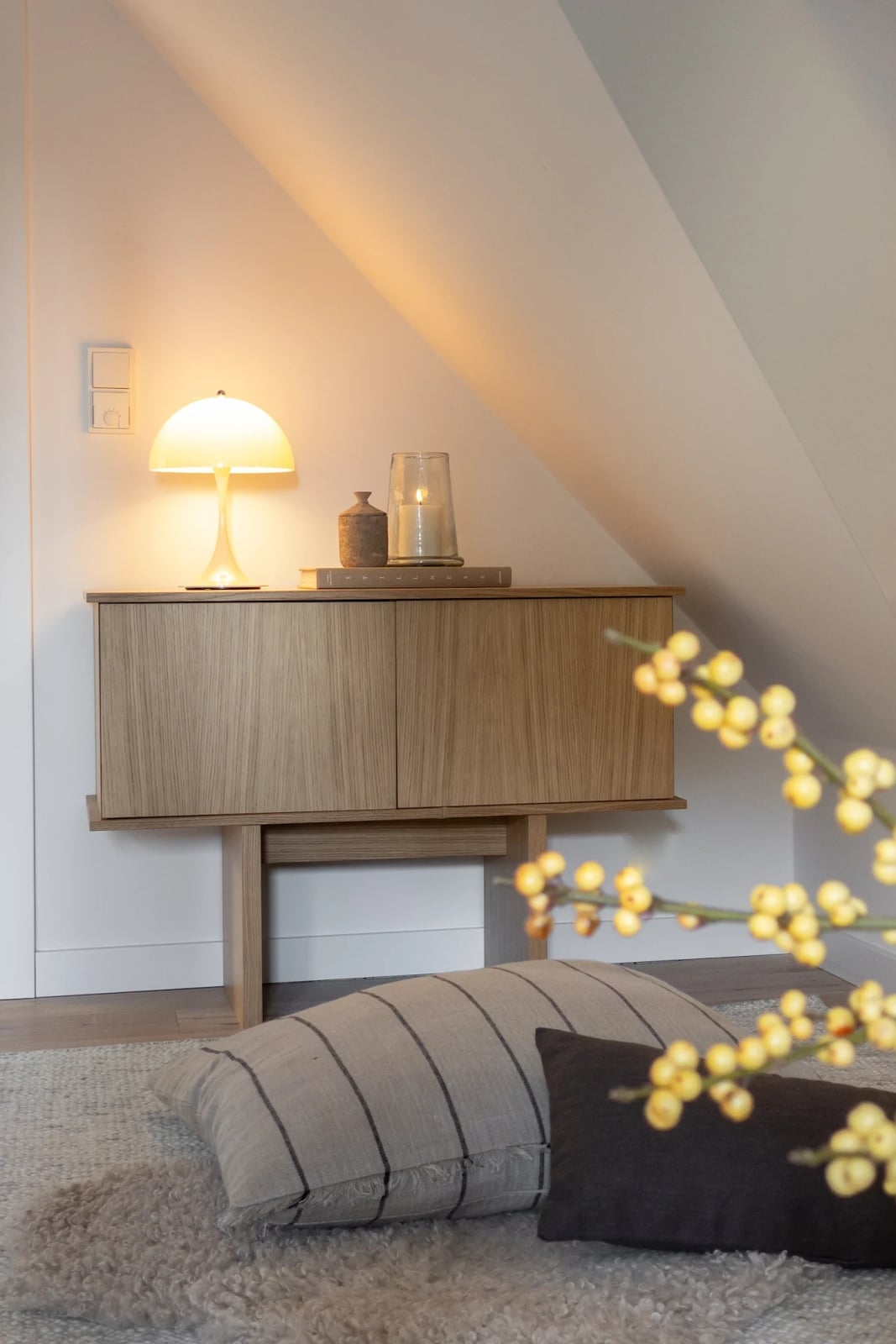
A corner vignette can become a destination with a light wood cabinet and a ceramic table lamp. The key is choosing a cabinet with enough visual weight to anchor the corner without overwhelming it. In this setup, the warm ambient glow from the lamp highlights the pale wood grain and the yellow-toned decorative accents on the shelves.
For a corner that actually gets used, keep the cabinet low and the lamp tall. That vertical line makes a compact space feel larger. The ceramic base of the lamp adds a tactile contrast to the smooth wood, and the soft light gives the corner a clear purpose. It is a simple arrangement that defines a small area.
Highlight Architectural Features with Arched Doorways
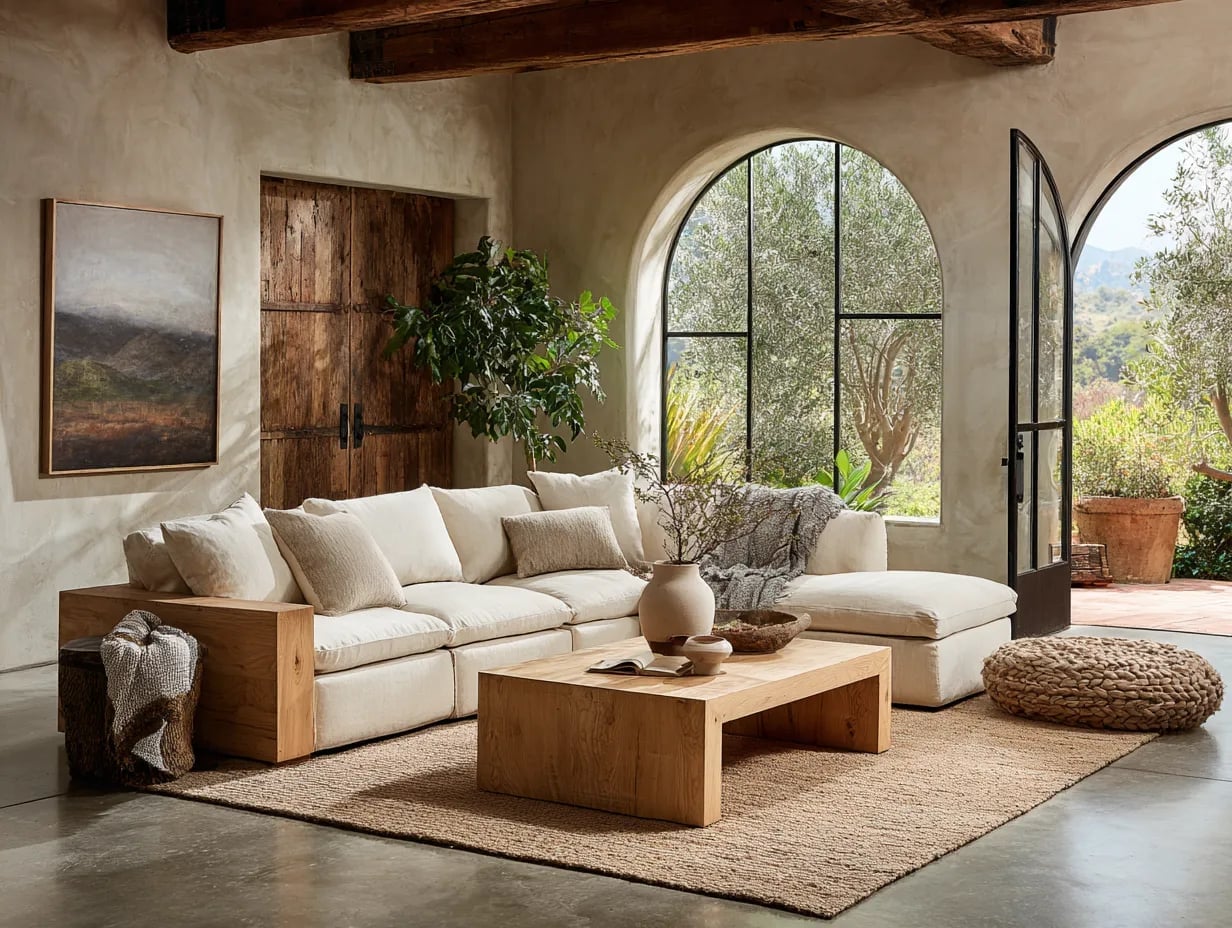
Arched doorways are a natural fit for Japandi because they introduce a soft, sculptural line without adding clutter. In this room, the arched openings frame the view from a large linen sectional to the rest of the home, making the layout feel open yet defined. A chunky wood coffee table and a woven pouf keep the furniture grounded and rustic, so the architecture does not read as too refined. Natural light floods in through arched windows, reinforcing the indoor-outdoor connection. If your home has arched doorways, let them lead the layout: arrange your seating so the arches are visible from the main sitting area.
Integrate a Modern Steel Staircase in an Open-Plan Space
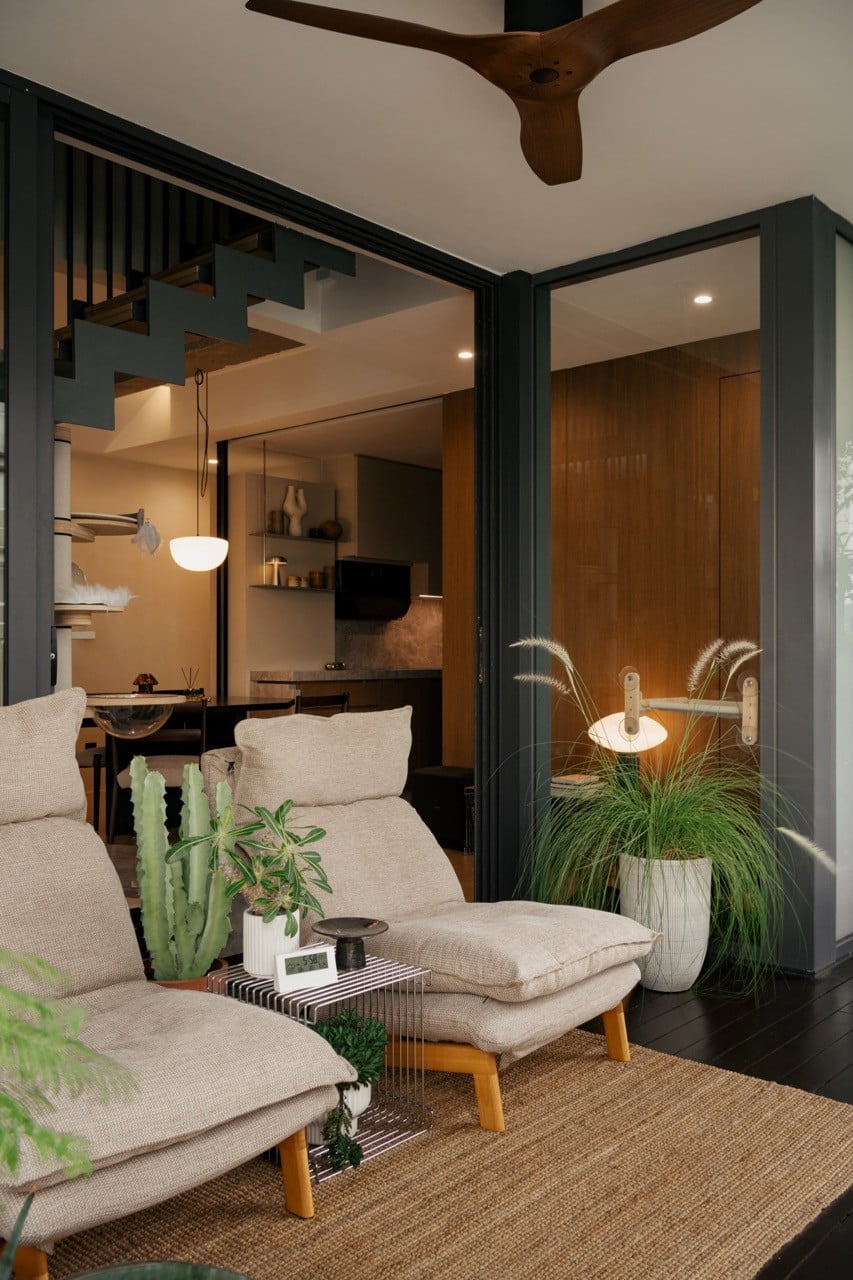
In an open-plan room, a staircase is a layout anchor. The steel structure here, with its clean lines and dark finish, cuts a sharp silhouette against the warm wood floor and pale walls. A neutral sofa and chairs sit nearby, letting the staircase act as the room’s spine without blocking sightlines. Natural light from the glass doors wraps around the metal, softening its industrial edge. The lesson: when a vertical element dominates a shared space, keep the seating low and the palette restrained so the architecture leads the room, not the furniture.
Add Natural Texture with a Cane Armchair and Jute Rug
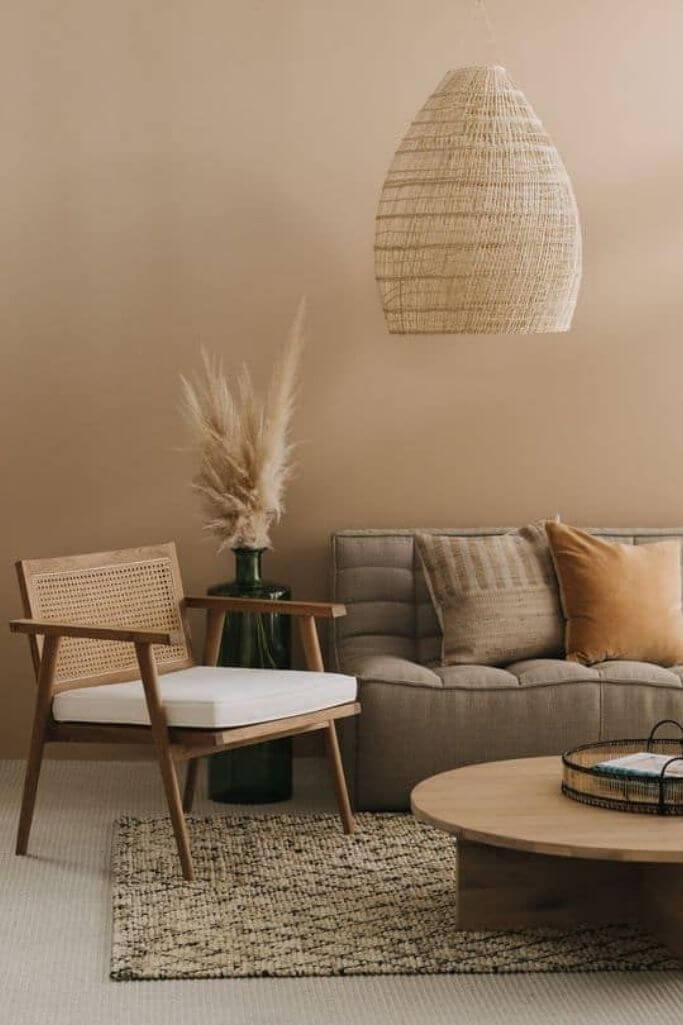
A cane armchair might read as purely coastal in another setting, but here it fits into a japandi living room through contrast. The chair’s open weave sits next to a textured fabric sofa, while a jute rug underfoot adds a coarse layer that breaks up the smooth wood floor. The palette stays within beige, brown, and a hint of terracotta, so the natural materials do the work of adding depth without needing pattern. A large woven pendant light overhead echoes the armchair’s handmade feel. The trick is to let one piece lean lighter in texture so the room breathes.
For the same balance, pair a rattan or cane chair with a substantial sofa in a solid neutral. The jute rug anchors both pieces and keeps the look grounded. If the cane feels too casual, swap it for a wood-frame chair with a linen seat. The room’s warmth comes from the mix of textures, not from matching every finish.
Feature a Fluted Coffee Table for Subtle Detail
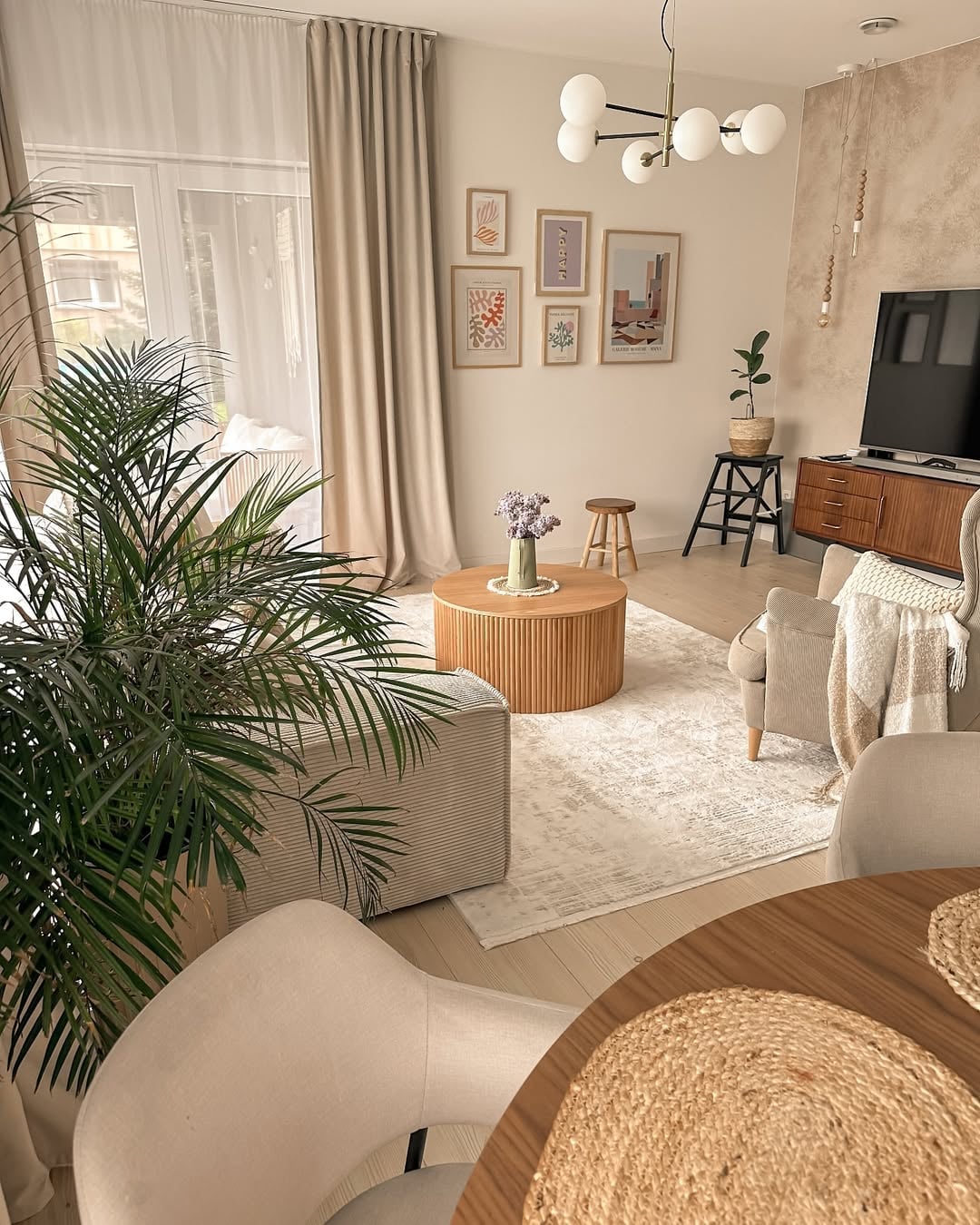
A round coffee table with a fluted surface catches the eye without shouting. The vertical grooves add a quiet rhythm that breaks up the solid forms of a sofa and armchair. In this room, the table’s light wood tone blends with the sideboard and plant pot, while the textured plaster wall behind it adds another layer of depth. Natural light from nearby windows picks up the ridges, giving the piece a slight shadow line. For a similar effect, choose one furniture item with carved or grooved detailing and let the rest stay plain. That single textured piece becomes the room’s quiet anchor.
Style a Coffee Table with Natural Elements and Metallic Accents
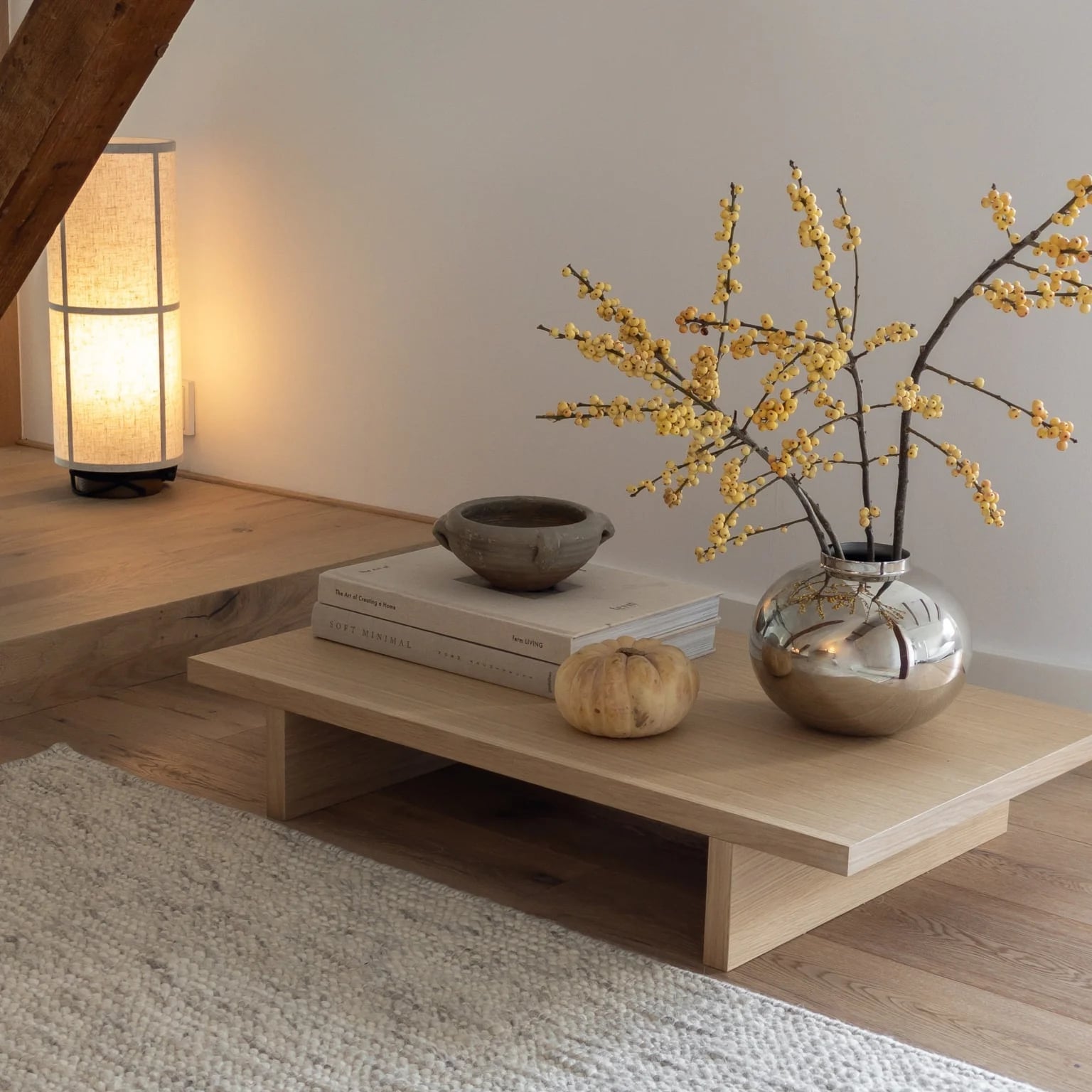
A coffee table vignette works best when it mixes natural and reflective surfaces. Here, a low wooden table holds a stack of books, a ceramic vase, and a silver vase with yellow branches. The metallic accent catches the ambient light from a nearby floor lamp, while the branches add height and organic shape. The books ground the arrangement with their solid, matte covers. The rule is to limit the vignette to three or four objects, vary the heights, and include one piece with a shine. That small metallic detail lifts the whole tableau without making it feel staged.
Incorporate Integrated Side Tables for Functionality
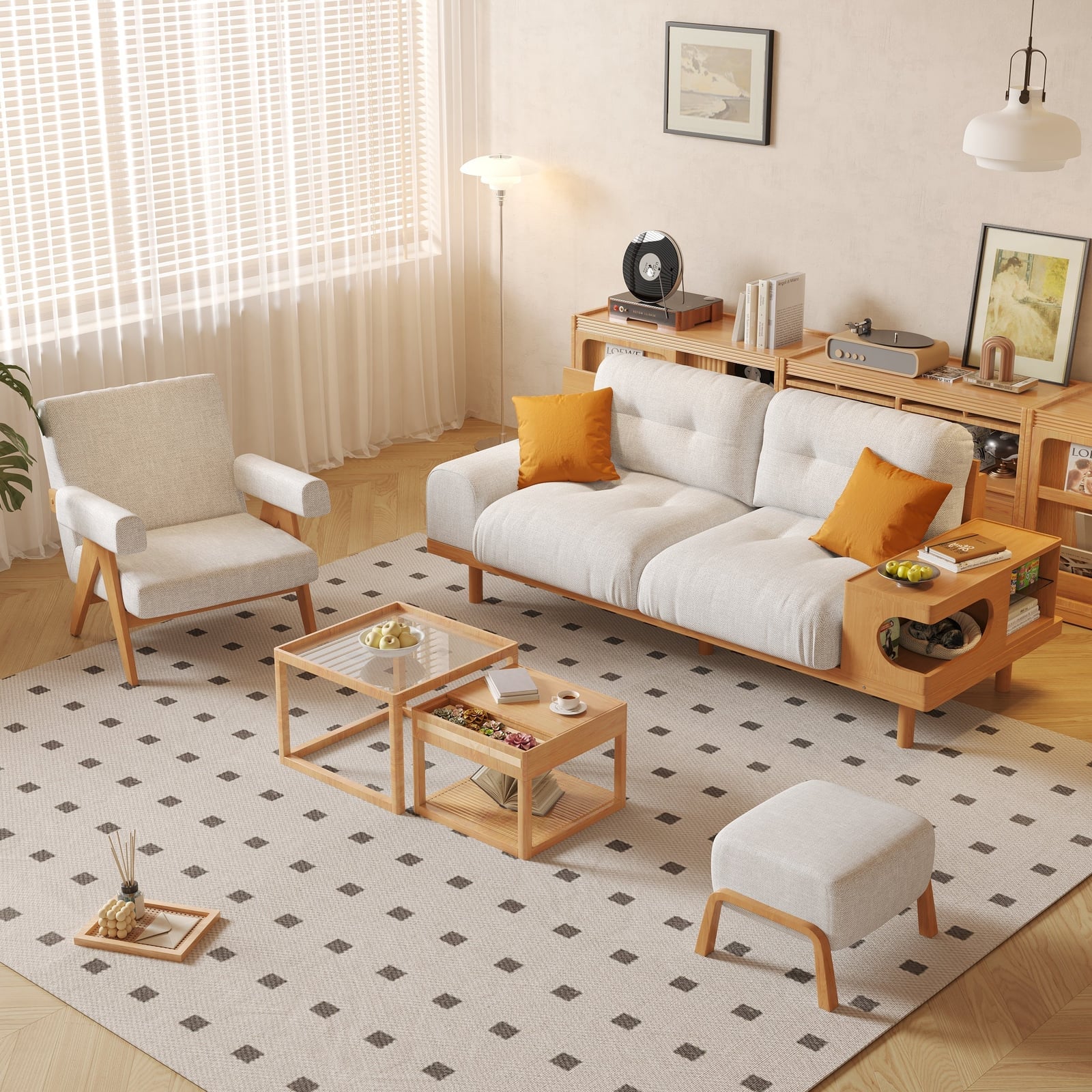
In a japandi living room, storage often hides in plain sight. A sofa with built-in side tables offers a clean line without extra furniture. The integrated tables sit flush with the armrests, providing a spot for a drink or a book without adding clutter. In this room, the sofa faces a coffee table, with an armchair off to one side and an ottoman nearby. Natural light from the window and a floor lamp keep the space bright, while the sofa’s linen upholstery and wood trim tie into the rattan and wood pieces around it.
For a similar setup, look for a sofa with a solid, flat arm wide enough to hold a mug or a lamp. If the sofa lacks that feature, a slim C-table or a low stool beside the seat can do the same job. The goal is to keep the floor clear and the surfaces minimal. With the side tables built in, you skip the need for a separate end table, which opens up the room for better flow.
Choose a Unique Stone Coffee Table for a Natural Statement
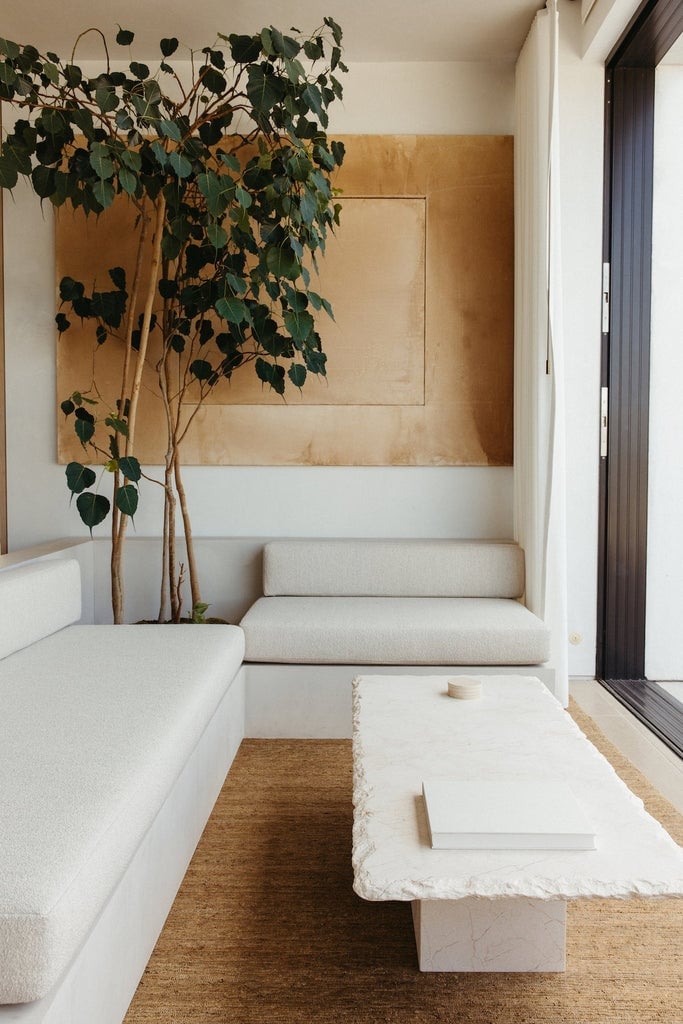
A stone coffee table brings a raw, natural weight that a wood version can’t match. In this room, the low-slung sofa in soft bouclé and the jute rug keep the textures grounded, while the stone top adds a cool, solid counterpoint to all that warmth. The key is letting the stone sit as its own shape rather than forcing it into a standard rectangle. A stone coffee table works best when the surrounding furniture stays low and simple, so the material speaks without clutter.
Add a Pop of Color with a Deep Teal Curved Sofa
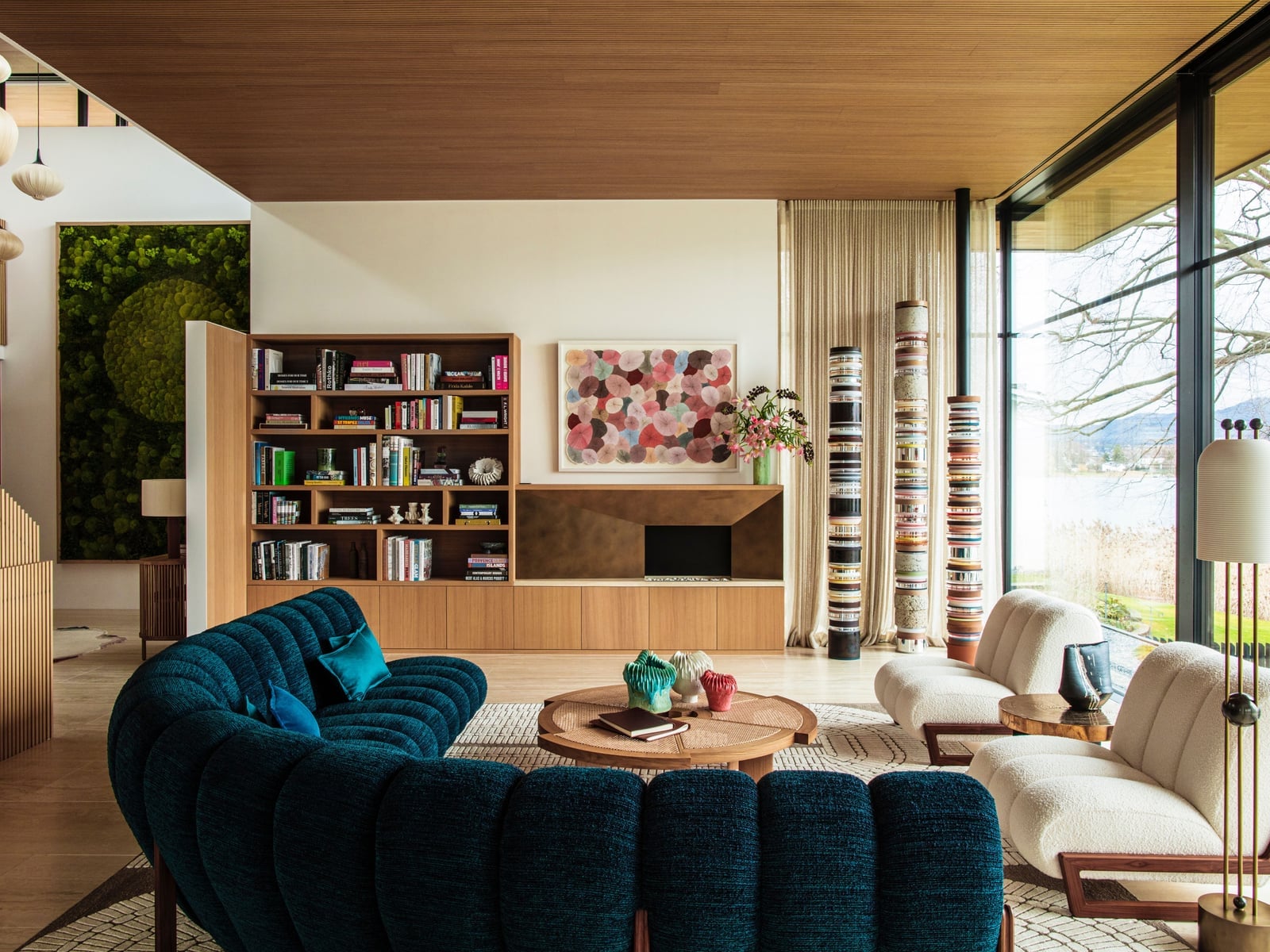
To add color in a Japandi living room, pick one saturated piece and let the rest stay neutral. Here, a deep teal curved sofa becomes the whole room’s energy, while the boucle armchairs and wooden bookshelf keep the palette calm. The curve of the sofa softens the boldness. If you rent, this is a swap that moves with you. Paint the walls a warm cream and pull in wood tones through shelving or a side table. The color stays on the sofa, not the walls, making it easy to change when you want a new direction.
Use Light Wood Furniture for a Bright Aesthetic
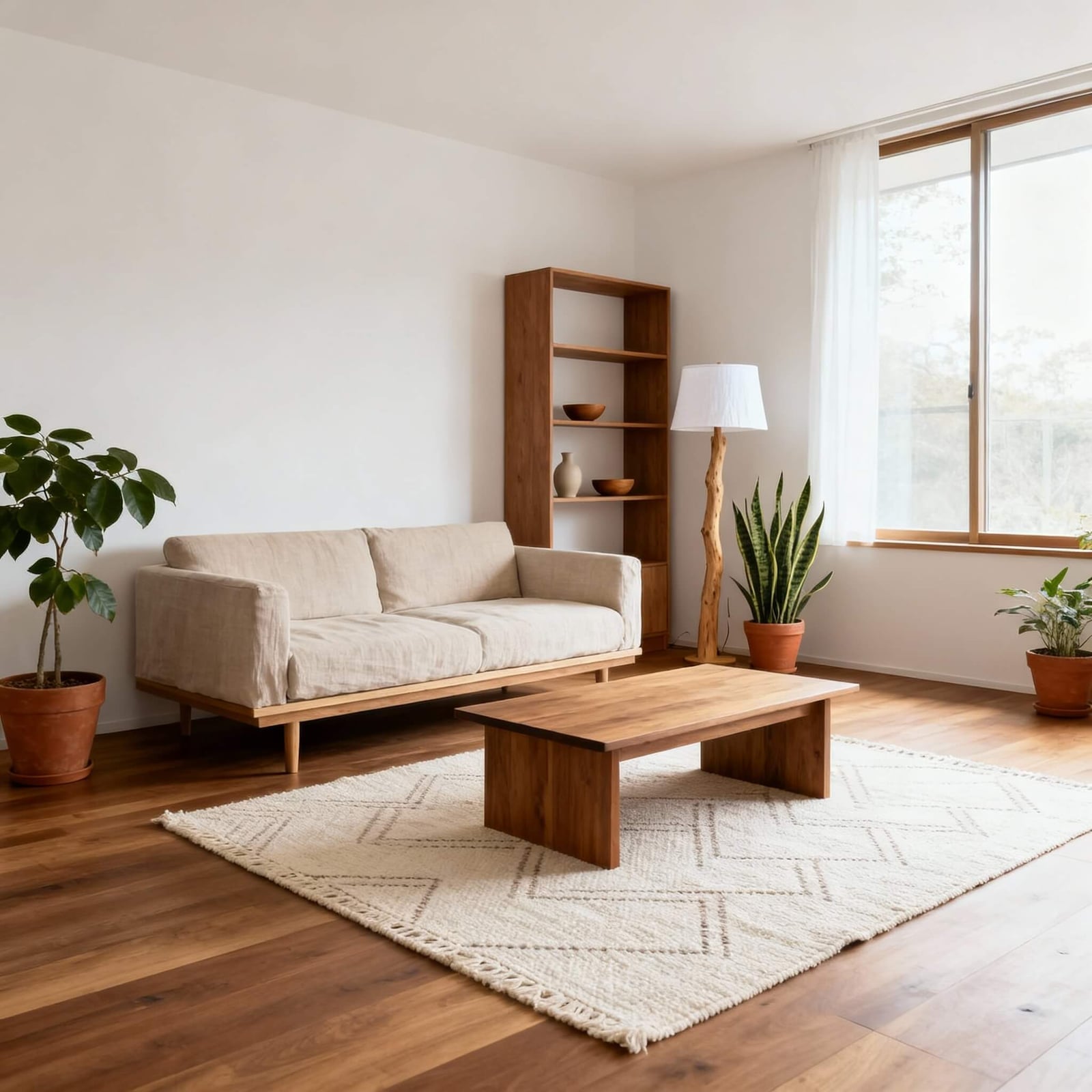
A dark wood coffee table gives a room weight and contrast, but light wood furniture does the opposite: it opens the space and lets the air move. In this living room, the light wood sofa frame and matching coffee table keep the palette bright, with the linen upholstery and woven rug adding softness. The bookshelf in the same light tone continues the rhythm, so the eye flows without stopping on any one piece. A floor lamp in a simple silhouette adds warmth without breaking the lightness. The difference between this and a darker scheme is how the room feels at the end of the day. Light wood reflects what daylight is left, making the space feel larger and more open.
Incorporate a Minimalist Concrete Coffee Table
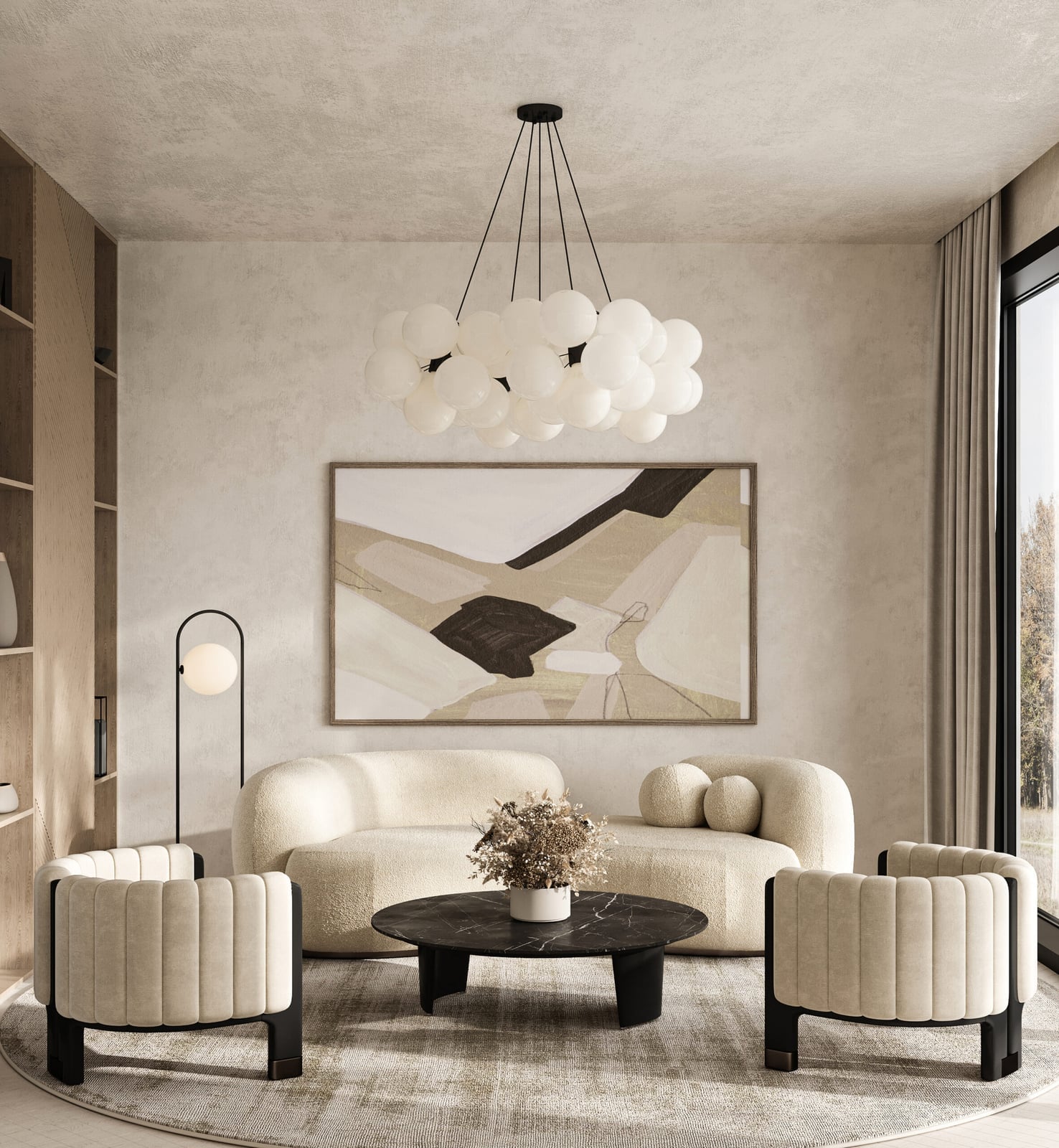
A concrete coffee table sits low and solid, a quiet anchor in a room full of soft fabrics. In this setup, the low sofa in a neutral beige and the minimalist art on the wall leave the concrete top as the only hard surface at eye level. The gray of the concrete picks up the stone tones in the room, while the wood legs or base keep it from feeling cold. This is a piece that holds its ground visually without demanding attention. It suits a room that already has plenty of texture in the upholstery and rug, because the concrete brings structure, not more softness.
Add Texture with Concrete Walls and Natural Materials
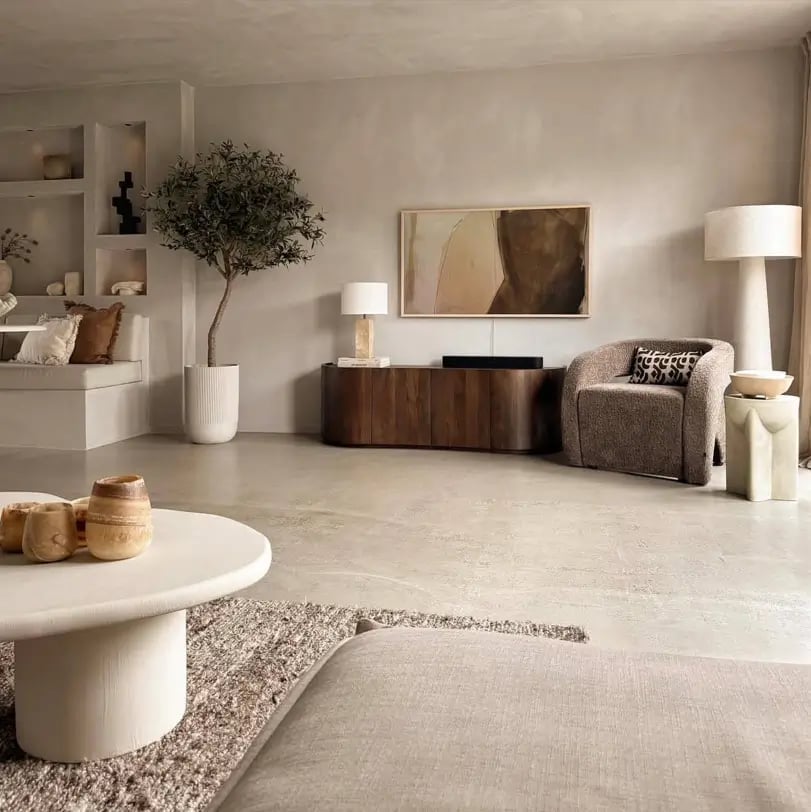
Concrete walls can look industrial, but in this room they work as a quiet backdrop for natural materials. The gray walls are balanced by the cream linen sofa and wood tones in the shelving. The floor lamp adds a warm glow that softens the concrete’s coolness. The trick is scale: the concrete is the canvas, not the star. With a stone coffee table and a woven rug, the room layers texture without layering color. If you have concrete walls, lean into them by adding soft upholstery and warm wood. The contrast makes the room feel finished.
Hang a Large Textured Pendant Light
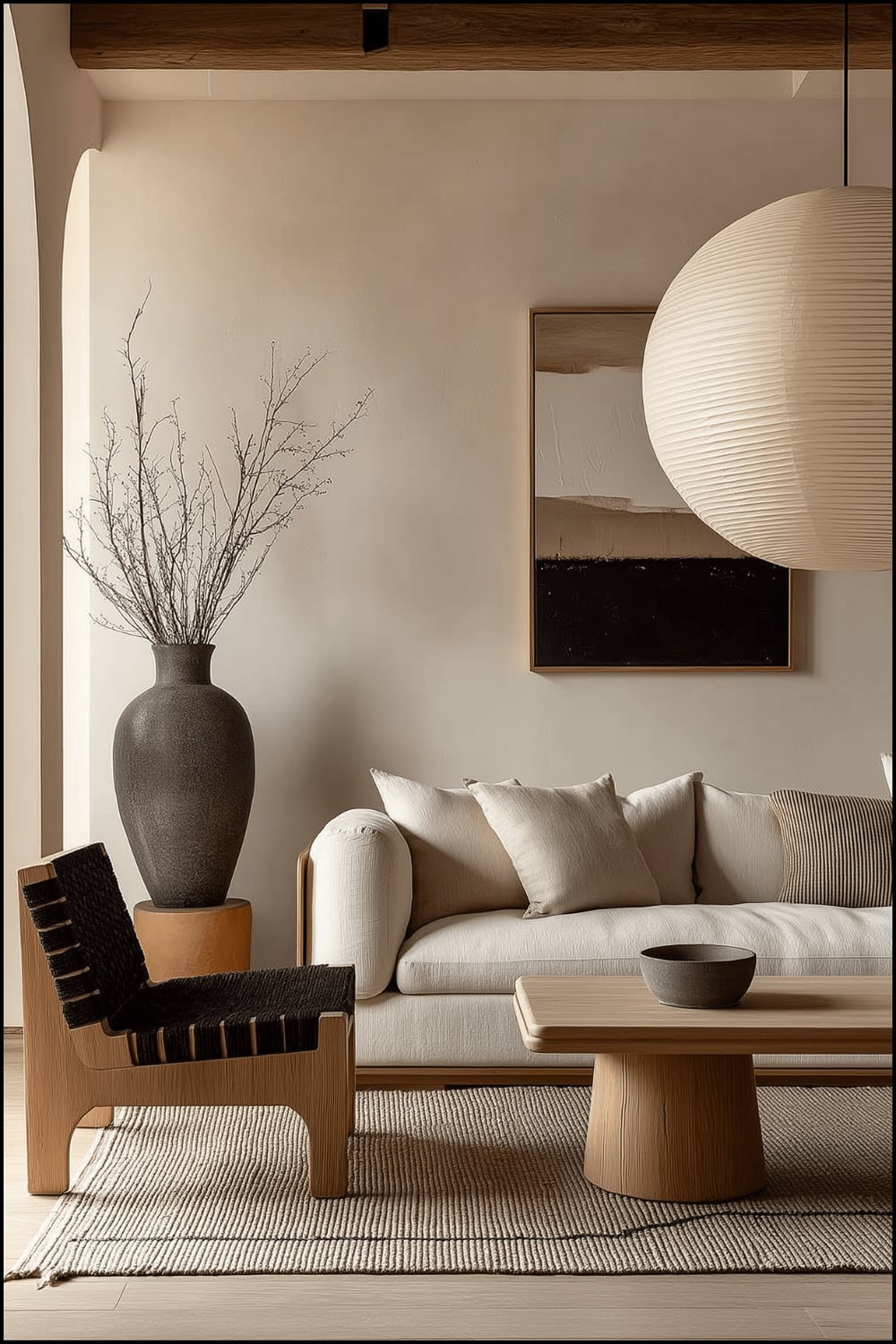
A large paper lantern pendant brings soft ambient light to a Japandi living room without stealing the show from the sofa and armchair below. In a roomy seating area with neutral beige and cream tones, the pendant’s woven texture adds visual weight near the ceiling while the wood coffee table and ceramic vase ground the space. The key is scale: a fixture that feels generous over the coffee table but leaves the seating zone open and airy. Keep the rest of the lighting low and let the pendant do the work of defining the room’s center.
Create Contrast with a Wood Slat Accent Wall and Jute Rug
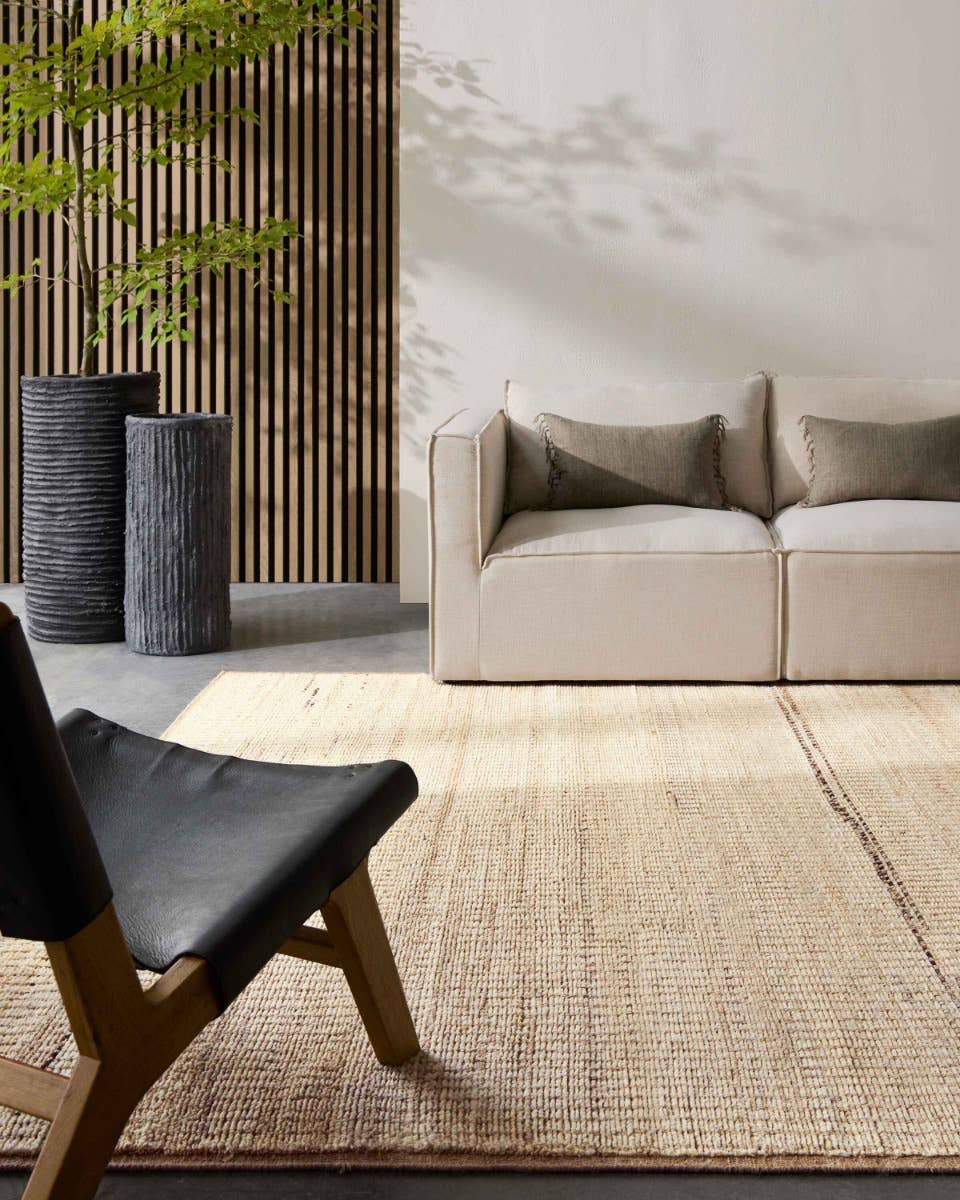
A wooden slat accent wall and a textured jute rug create the contrast that makes a Japandi living room feel balanced. The warm vertical lines of the wood meet the rough horizontal weave of the jute, while the neutral beige sofa and gray armchair sit between them as the quiet middle ground. Soft ambient light keeps the pairing from feeling heavy. The palette stays within neutrals, but the material shift gives the room its sense of depth.
Incorporate a Textured Wall Panel for Visual Interest
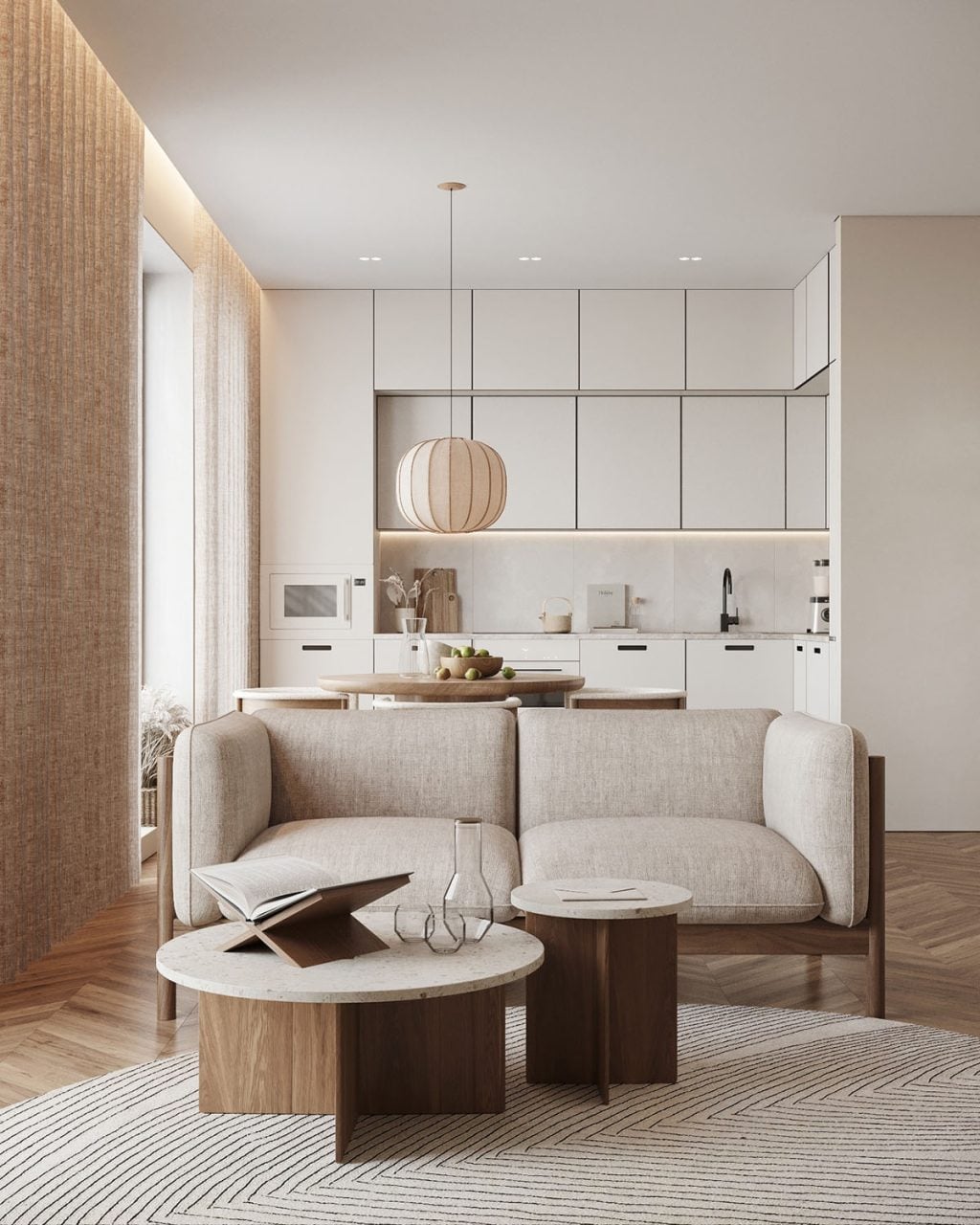
When the sofa and coffee table stay neutral, a textured wall panel adds the interest without clutter. In this Japandi living room, a panel with a raised pattern sits behind a neutral sofa and a marble coffee table, while a round rug softens the floor beneath. The room keeps its beige and wood tone palette, letting the wall finish become the main visual event. An ambient pendant light and natural light keep the panel balanced. It is a single swap that changes the whole feel of a seating area.
Feature a Ribbed Rattan Cabinet as a Statement Piece
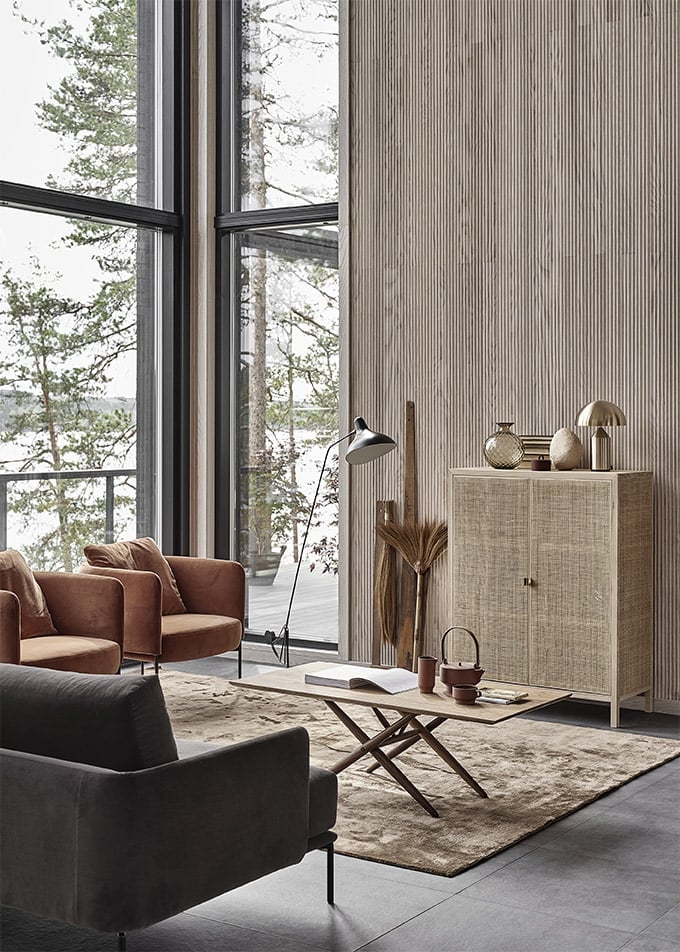
A sleek metal cabinet or a solid wood credenza would anchor this living room differently. Instead, a ribbed rattan cabinet takes the center spot, bringing warmth and a handcrafted feel to the seating area. Two armchairs flank a coffee table on a rug, while a floor lamp casts ambient light that catches the cabinet’s vertical grooves. The rust and wood tones in the palette echo the rattan’s natural color, tying the piece into the room rather than letting it sit apart. The ribbed detail gives the eye a place to rest without needing art or decor on top.
Layer Textures with Pillows and Throws on a Linen Sofa
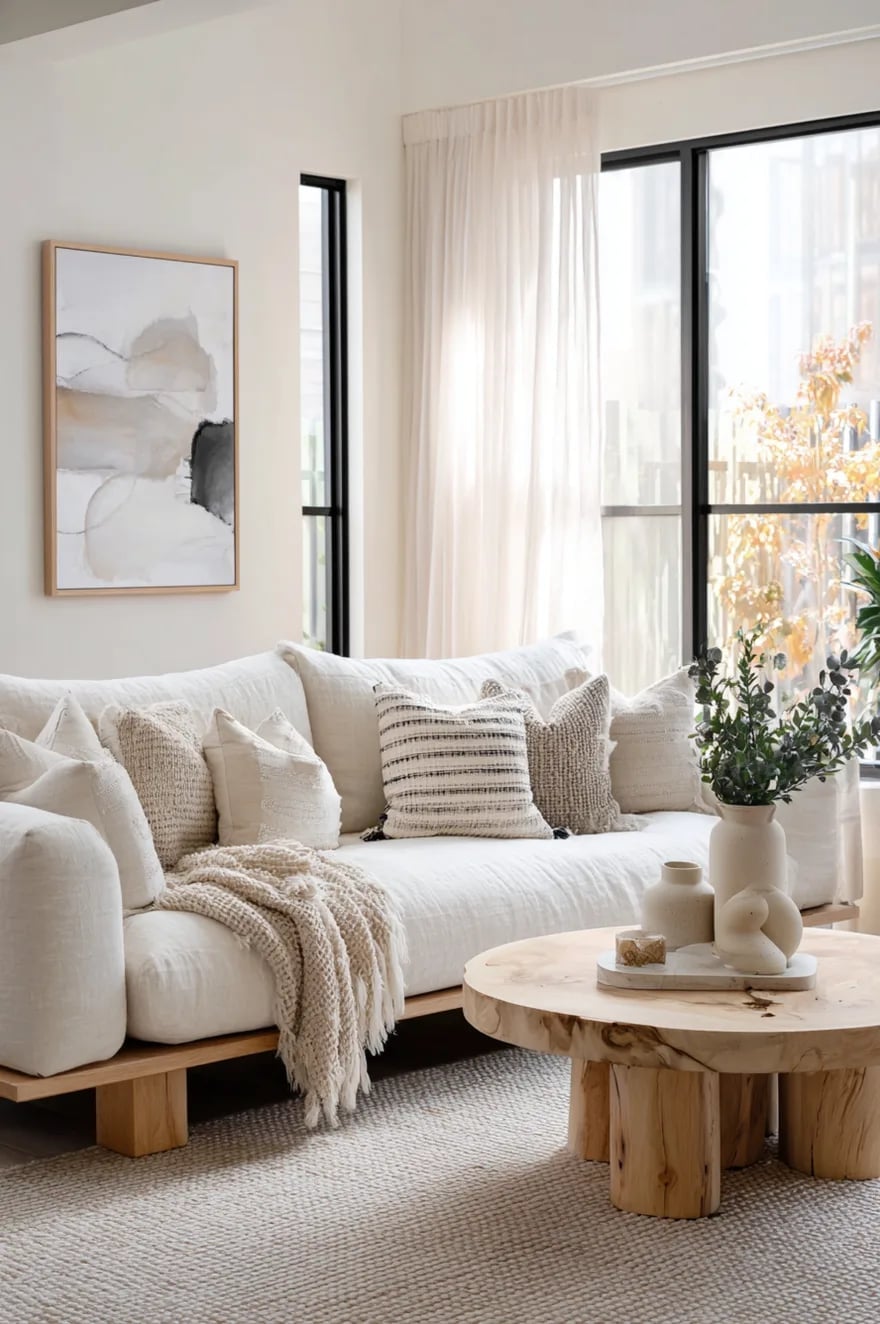
A low-profile linen sofa in a neutral Japandi living room gains depth from layered pillows in varied knits and weaves. The organic wood coffee table in front keeps the look grounded, while natural light from a large window softens the whole scene. The palette stays within cream, beige, and wood tones, so the texture of each pillow and throw does the work of creating interest. It is a practical way to add warmth to a roomy open feel without adding more furniture.
Centrally Place a Layered Wood Coffee Table
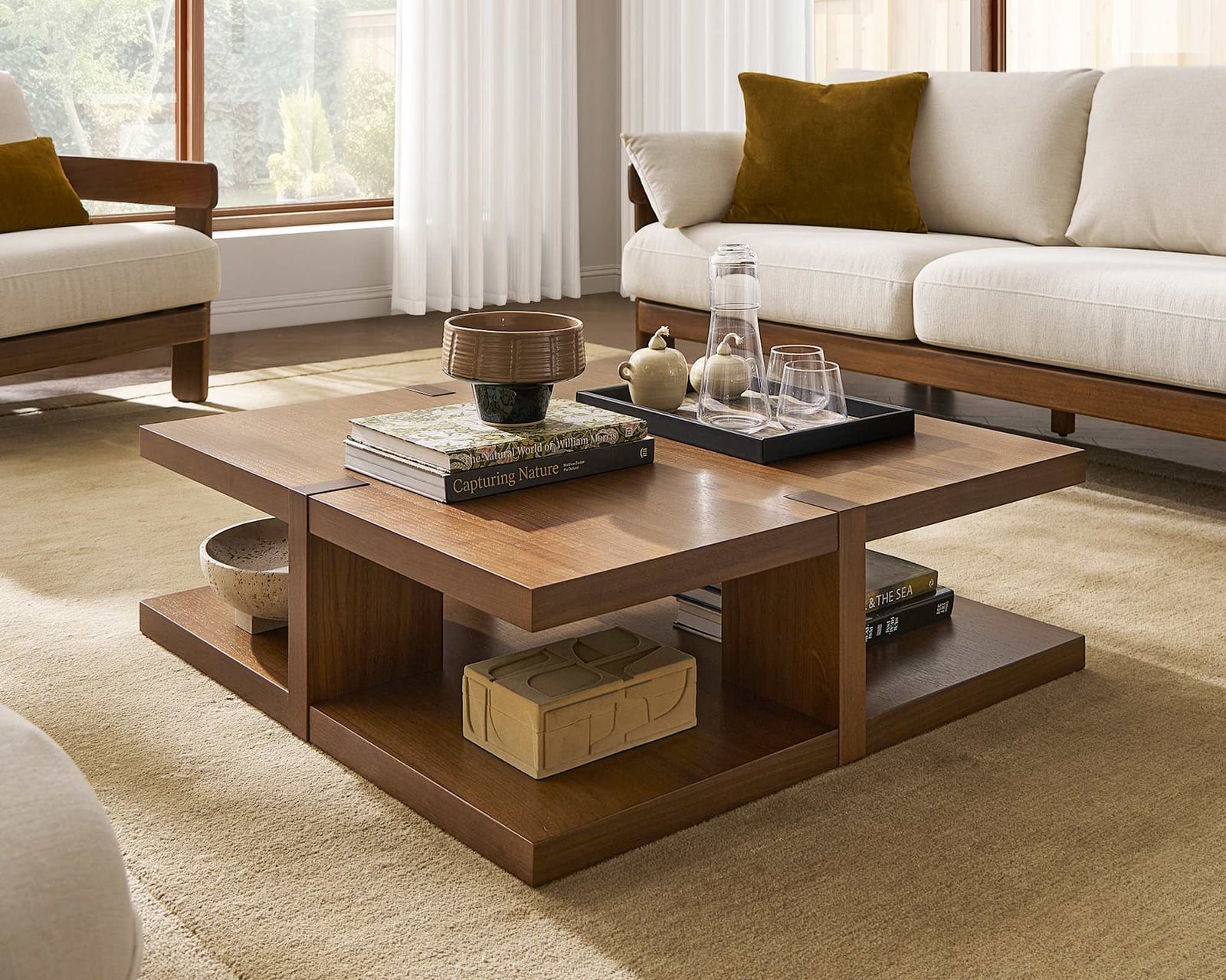
A layered wood coffee table becomes the quiet anchor in a Japandi living room. The design stacks two rectangular tops with a visible gap, which keeps the piece from looking like a solid block. In a neutral room with a beige sofa, an armchair, and a potted plant by a window, the table sits centered in the seating area. The wood tones tie the fabric and ceramic pieces together without adding clutter. The rule here is to choose a coffee table with an open silhouette so the floor still breathes. A solid slab would close off the center of the room.
Blend Living and Dining in an Open-Plan Layout
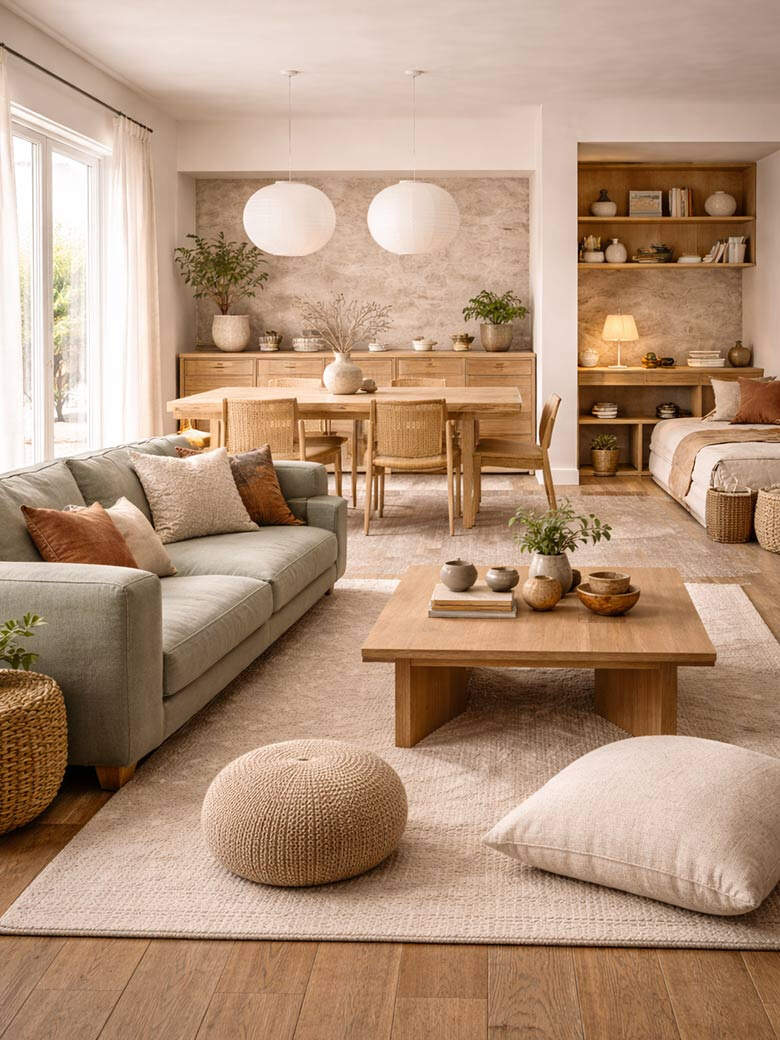
A practical rule for an open-plan room is to let one layout element do the zoning. In a Japandi living and dining area, the sofa and the dining set sit on opposite sides of the space. Two large pendant lights hang above the dining table, which visually marks the eating zone without a wall. A woven pouf and a shelving unit add soft separation near the sofa. The palette stays muted with green, beige, wood tones, and touches of terracotta, so the shift from living to dining feels smooth rather than abrupt. A rattan weave on the pouf brings in natural texture that carries across both zones. For renters, the same effect works with a single area rug under the dining table, no permanent changes needed.
Use a Slatted Wood Panel for a Warm Accent Wall
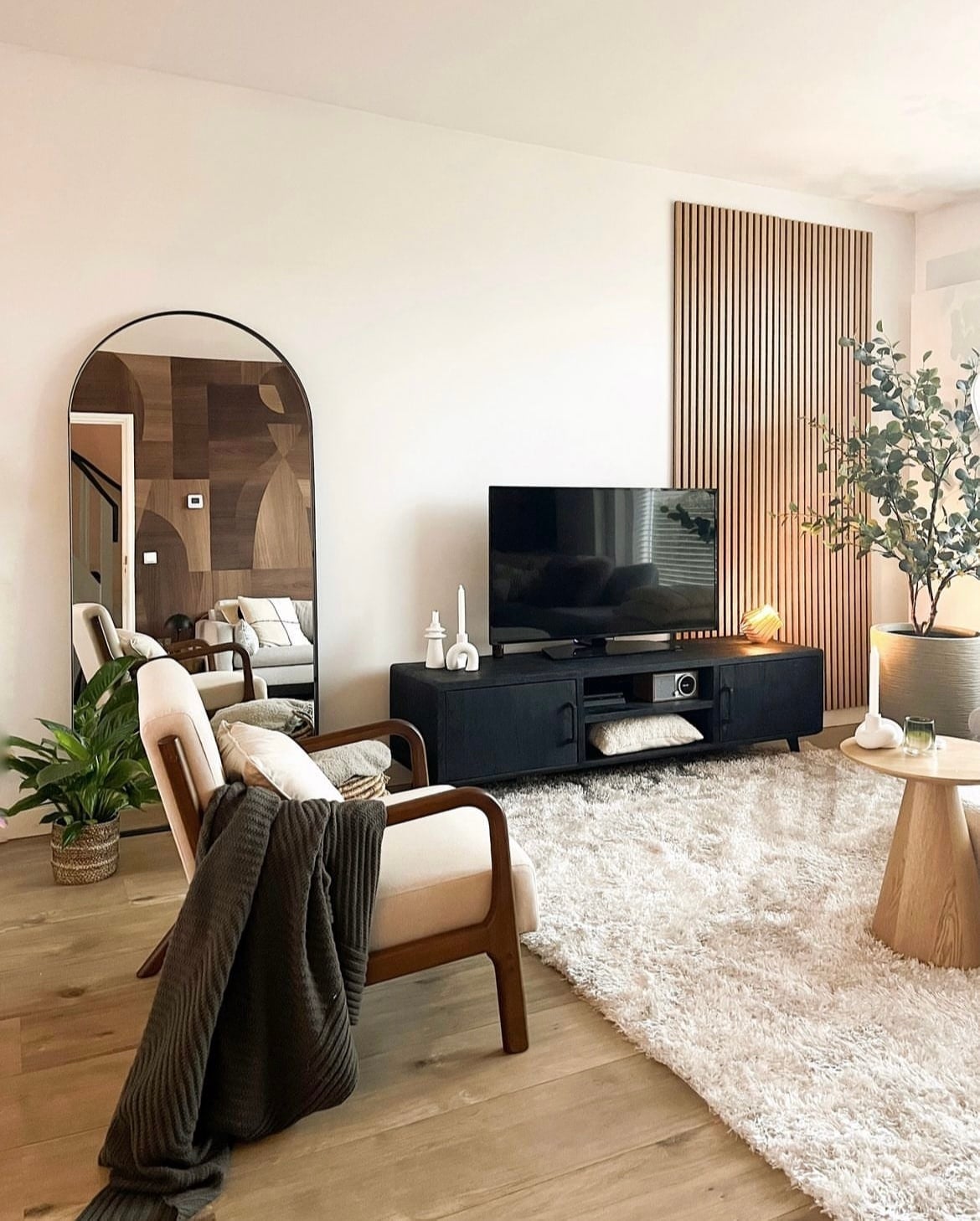
A slatted wood accent wall runs behind a cream armchair and a black TV console in this Japandi living room. The vertical lines pull the eye upward and add warmth without covering the whole wall. A black metal floor lamp with a glass shade stands next to the chair, and a potted plant fills the corner. The cream and white tones against the wood keep the room from feeling heavy. This kind of panel works best when it frames a single piece of furniture rather than a busy wall.
Anchor the Space with a Large Textured Sectional Sofa
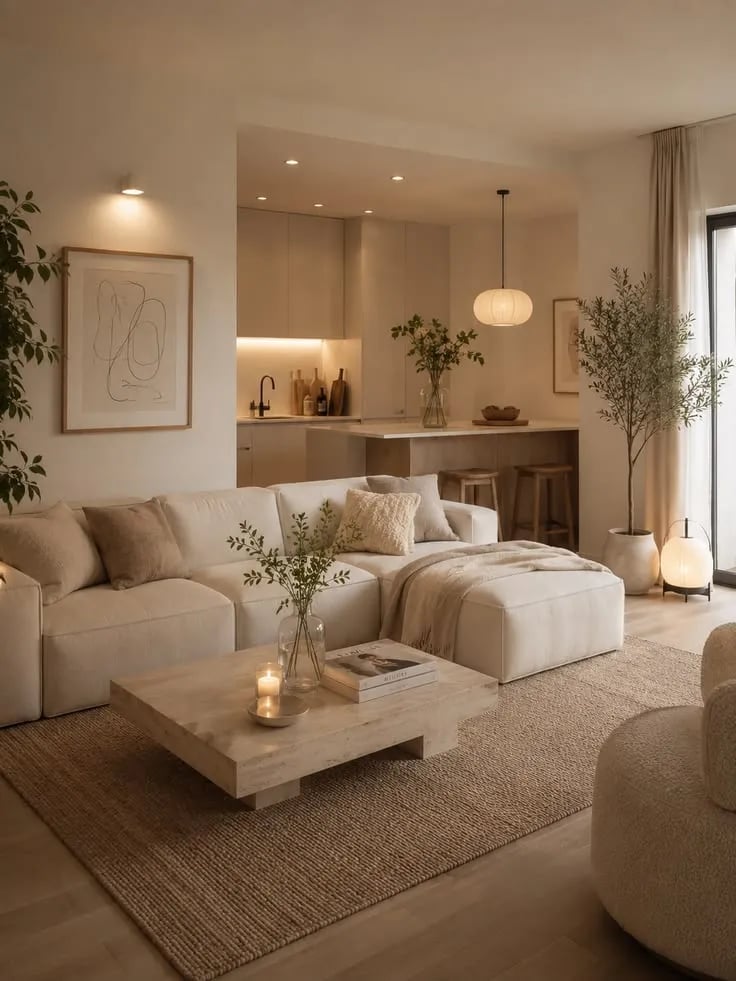
A practical rule for a roomy open-plan space is to let the largest piece set the scale. A large textured sectional sofa in boucle anchors this Japandi living room. The soft cream fabric sits opposite a stone coffee table, with abstract art on the wall above. Recessed lights and a pendant light provide ambient glow. The sectional has a rounded profile that softens the straight lines of the room. When the sofa is this big, the coffee table needs to match its visual weight, and the stone top here does the job. A woven rug underneath ties the seating area together.
Introduce Art with a Triptych of Abstract Sage Green Pieces
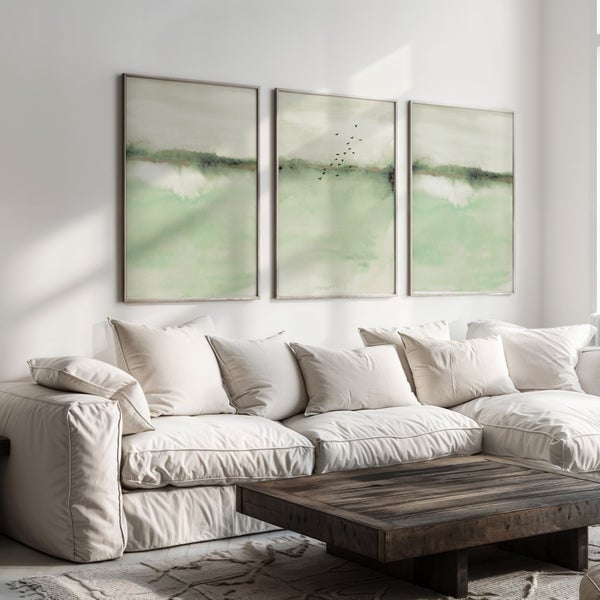
Instead of one large canvas, a triptych of abstract sage green panels spreads across the wall above a sectional sofa. The three separate frames keep the artwork from dominating the room, even though the total width is substantial. In a Japandi living room with a wooden coffee table and natural light from a window, the sage green picks up the muted tones without adding a bright pop. A triptych works well here because the gaps between panels create visual breathing room. A single oversized piece might have felt too heavy for the calm palette. The rule is to match the art format to the room’s pace.
Create a Dramatic Backdrop with a Large Wood Slat Wall
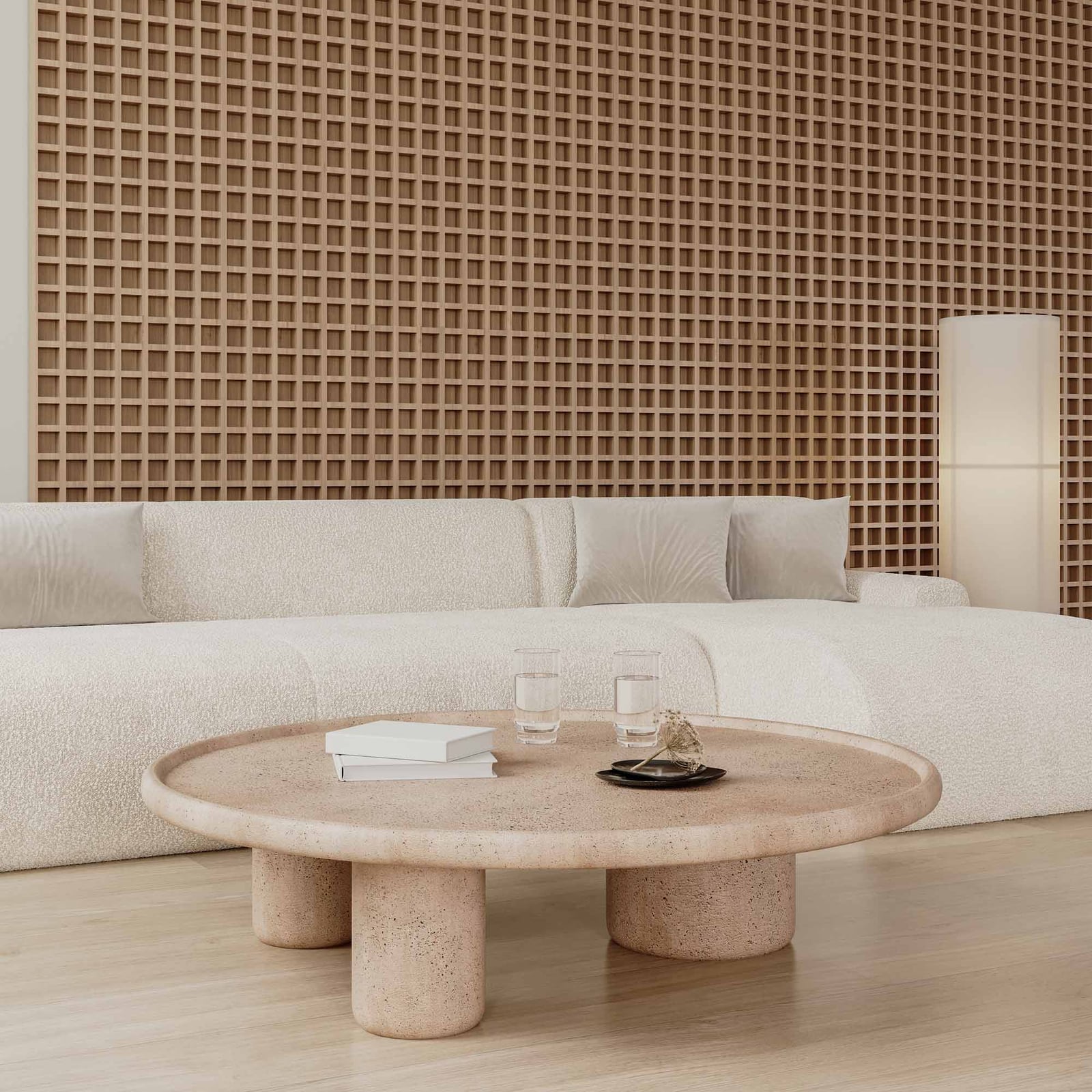
A roomy living room uses a large, intricate wood slat wall as the main event. The slats add texture and warmth without needing color, keeping the palette neutral with cream and wood tones. A curved sofa and a stone coffee table sit against this backdrop. The floor lamp provides soft ambient light, while the wall itself becomes the quiet anchor for the whole seating area. This setup works best when the wall is the only patterned surface in the room, letting everything else stay simple.
Emphasize Comfort with a Plush, Curved Sofa
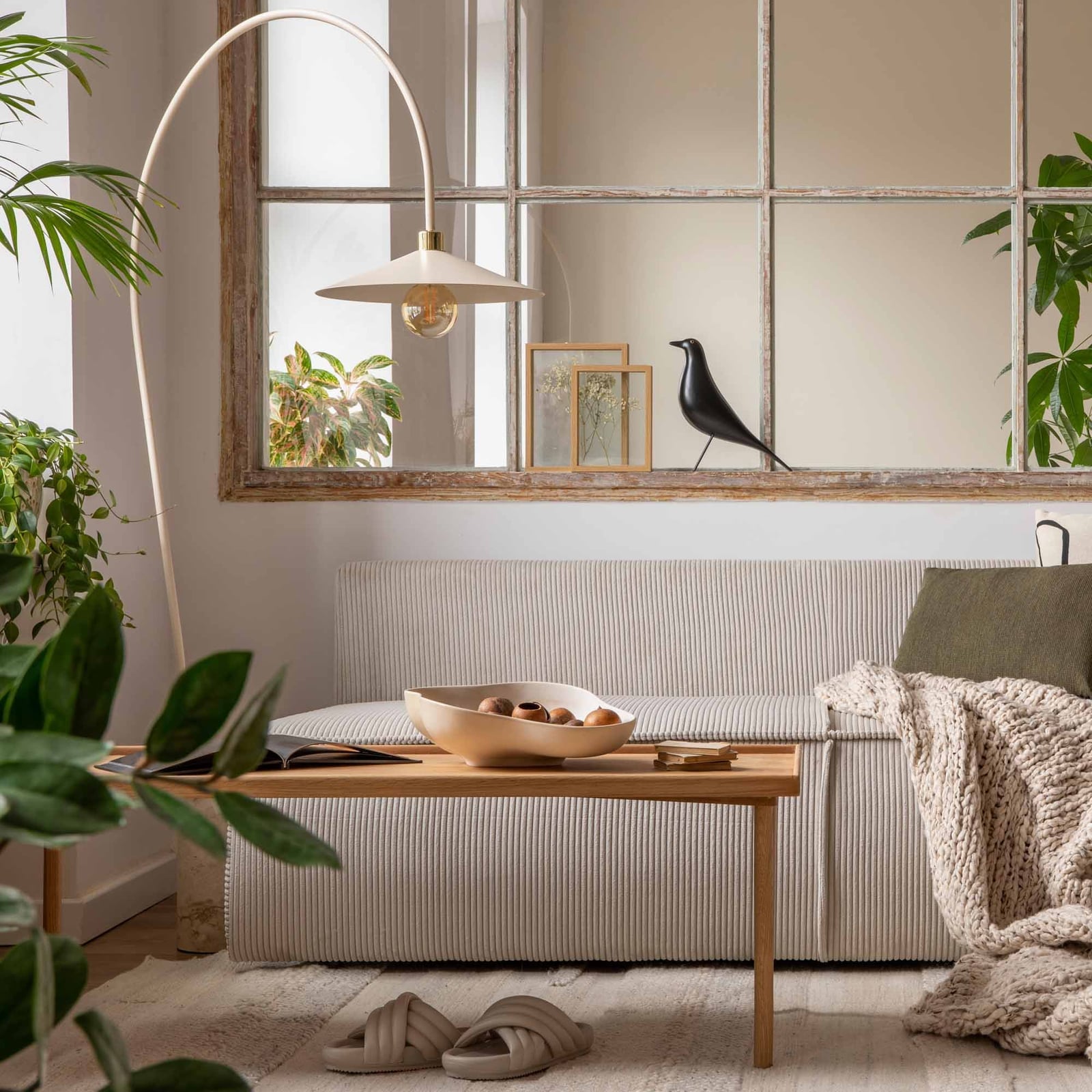
A plush, curved sofa anchors this Japandi living room with a soft, inviting shape. The palette stays neutral with cream and green accents, and the curved form breaks up the straight lines common in minimalist spaces. A wooden coffee table, arc floor lamp, and a few plants complete the seating area. Natural light from nearby windows helps the fabric read as airy rather than heavy. For a similar effect, let the sofa be the only curved piece in the room, so it stands out as the hero element.
Combine Bold Color with Blue Tones and Wood Accents
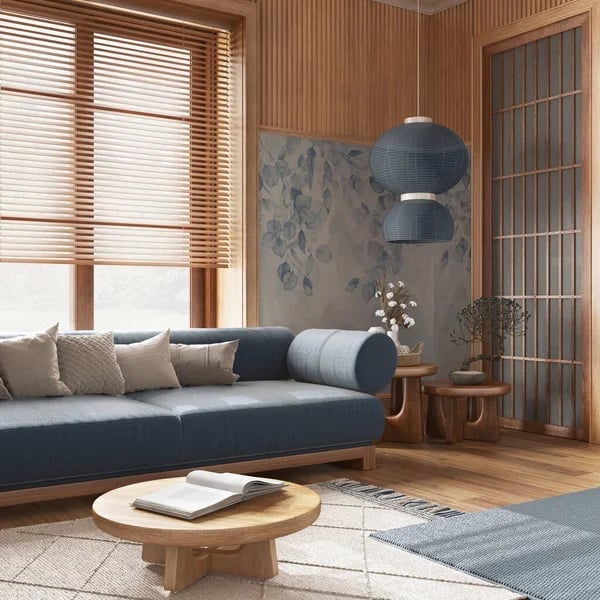
A Japandi living room can handle bold color when the rest of the palette stays restrained. Here, a blue sofa and matching wallpaper bring in strong hue, while beige walls, wood tones, and a rattan coffee table keep the look grounded. A paper lantern pendant light adds softness overhead. The balance is simple: one saturated color, one neutral base, and natural materials for texture. Without the wood accents, the blue might feel too cool. With them, the room reads as calm rather than loud. This approach works for anyone who wants color without losing the serene Japandi feel.
Incorporate Minimalist Artwork and Clean Lines
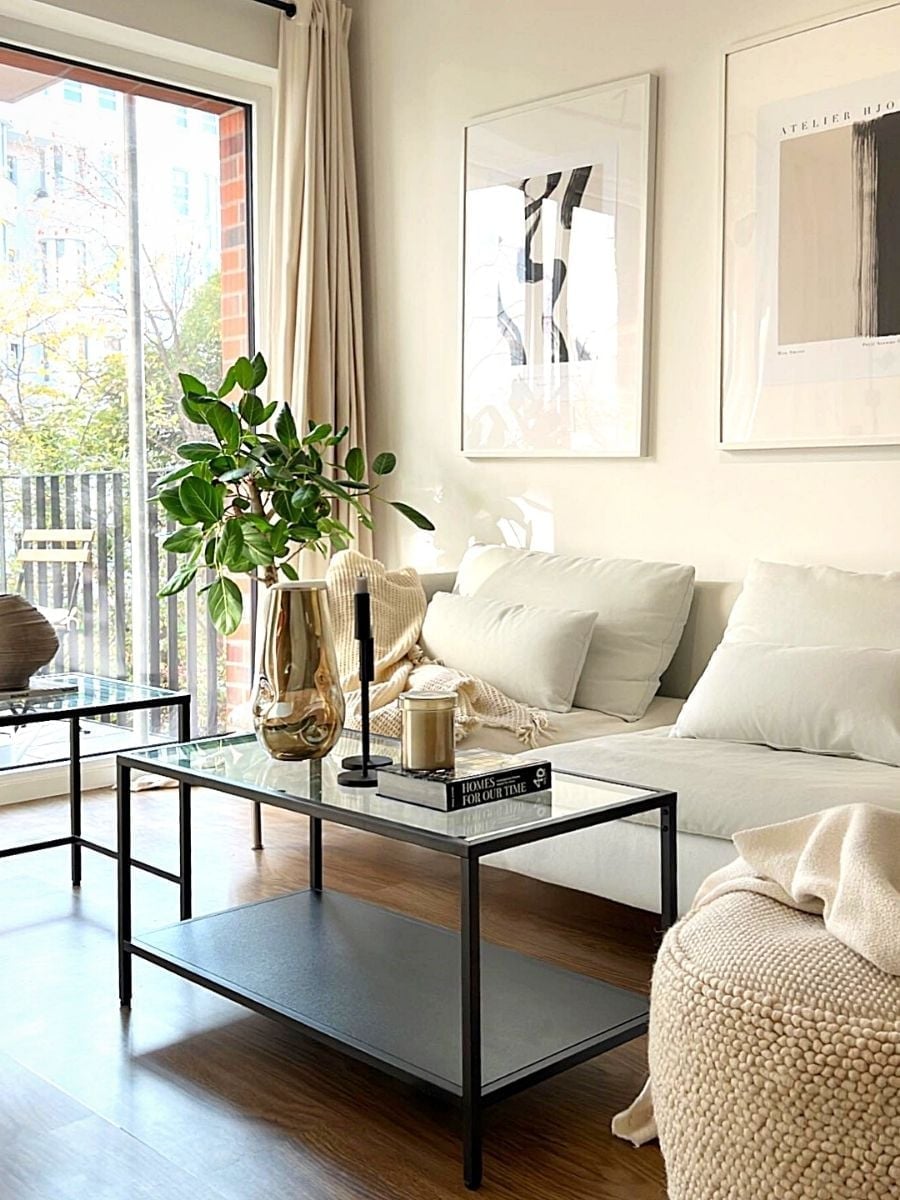
A large plant in a vase stands out as the main focal point in this Japandi living room. The sofa faces a window, with a glass coffee table centered in front of it. Minimalist artwork keeps the look clean, and an ambient lamp adds warmth without glare. The plant acts as the boldest element, with everything else in neutral cream, beige, and black. This keeps the room feeling open and uncluttered.
Use a Dark Wood Coffee Table for Contrast
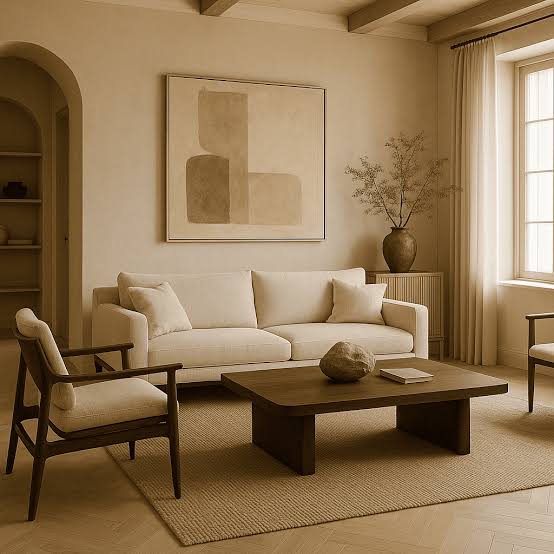
A dark wood coffee table creates contrast in a Japandi living room that otherwise sticks to beige, cream, and taupe. The seating area includes a sofa and armchairs, all in light linen tones, with the table as the dark anchor. Exposed ceiling beams keep the space from feeling too heavy. Minimalist artwork above the sofa reinforces the clean lines. One dark piece can ground a whole room of light neutrals, as long as the wood tone ties back to other natural materials like stone.
Make a Statement with a Deep Olive Green Sofa
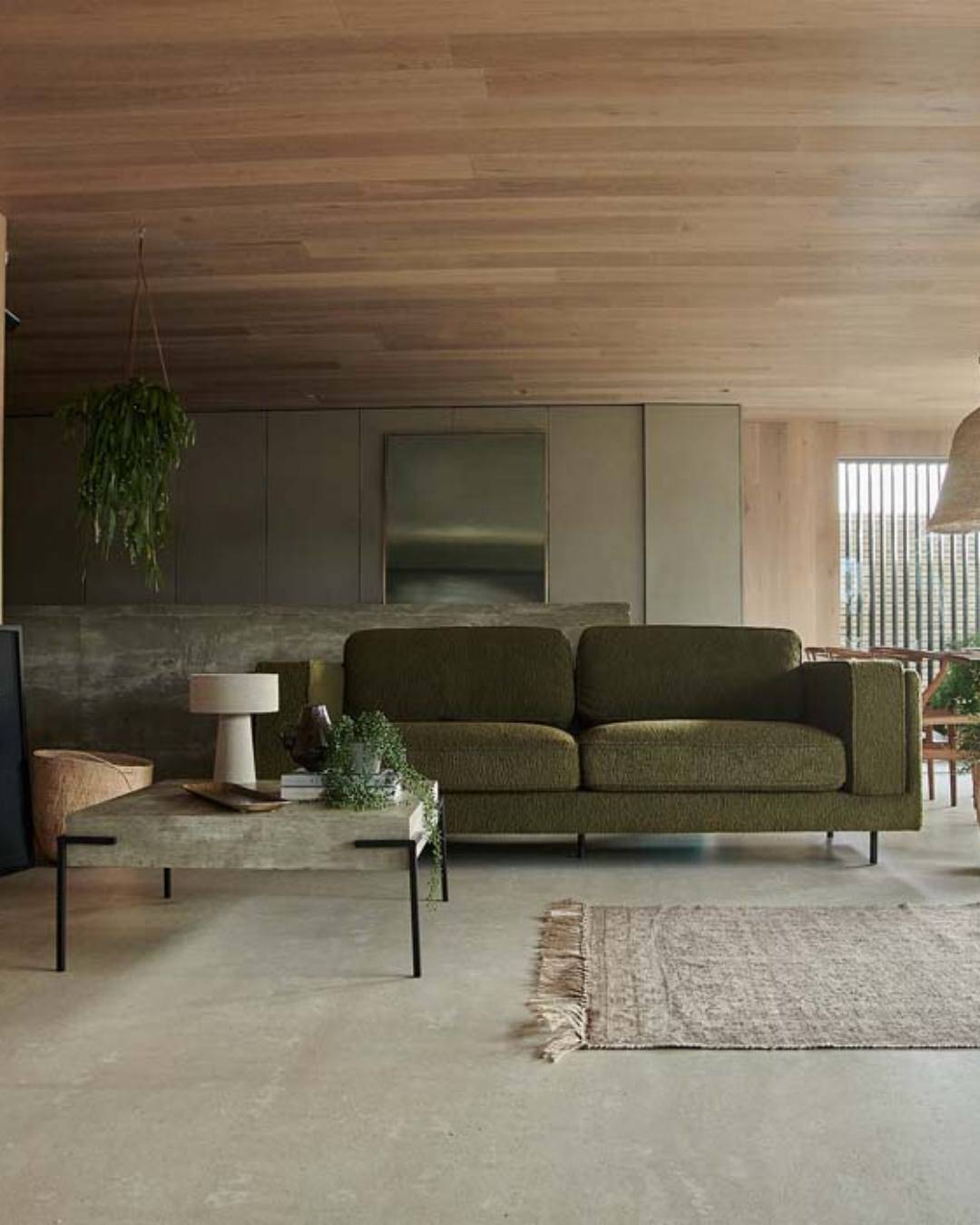
A deep olive green sofa shifts a Japandi living room from neutrals-only to something with a pulse. The color is saturated enough to stand out but dark enough to stay grounded, so it does not fight the concrete coffee table or the wood tones in the room. The sofa anchors an open-plan layout, with a pendant light overhead and natural light from a nearby window keeping the space from feeling heavy. The palette works because the green is the only strong hue, and everything else in the room pulls back to gray, wood, and warm ambient light. That one-for-all ratio lets a bold piece like this feel grounded.
Frame a Panoramic View as the Ultimate Hero Element
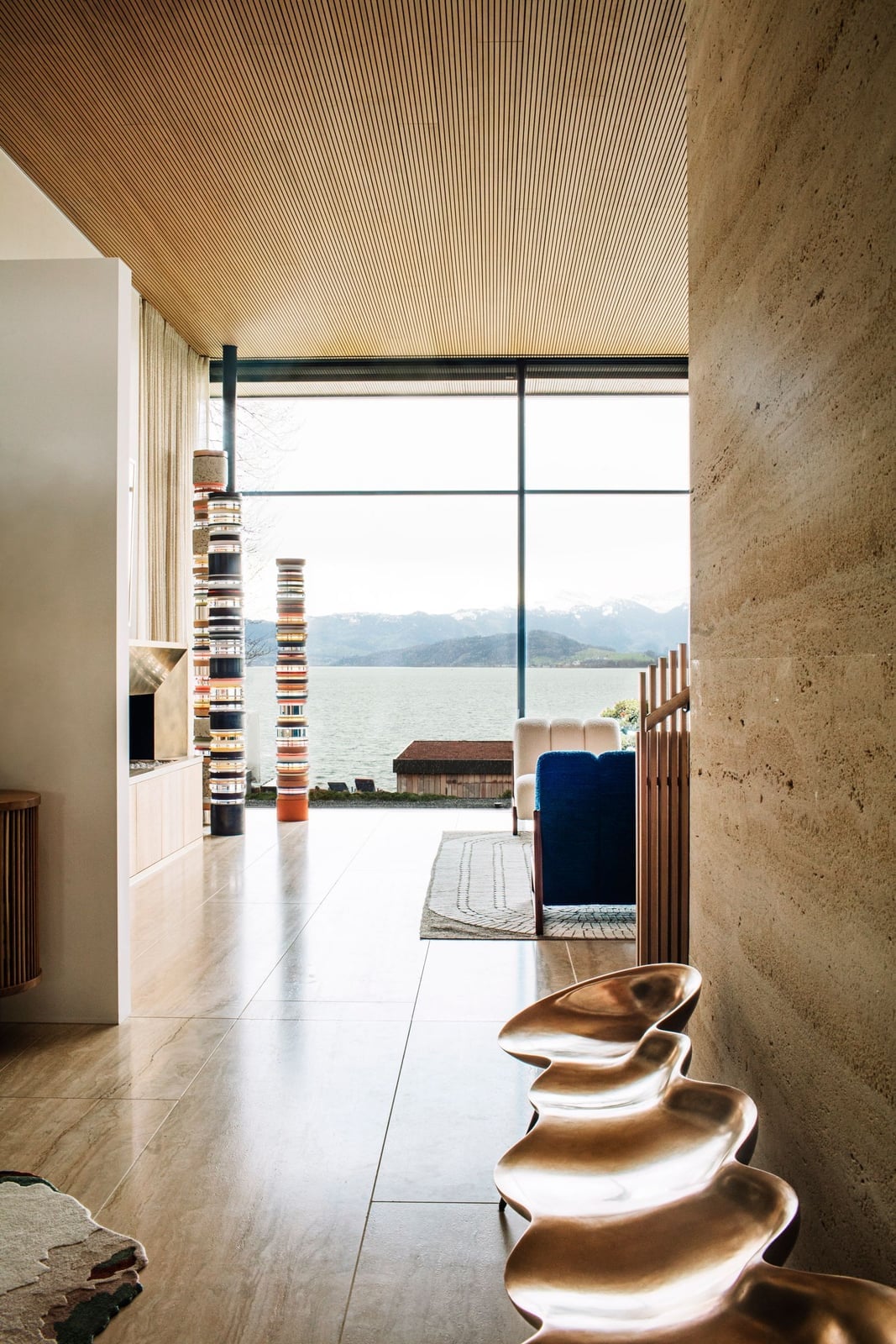
A panoramic lake and mountain view turns a Japandi living room into a backdrop for nature itself. The seating area faces the window directly, with a sofa, chairs, and a rug arranged to take in the scene rather than each other. A stacked art installation on a side wall mirrors the vertical layers of the landscape outside. The palette stays neutral with wood tones and soft blues, so nothing competes with the view. For renters, this is a layout trick that costs nothing: point your furniture toward the best window and let the outdoors do the decorating.
Utilize a Tall Bookshelf for Vertical Storage and Display
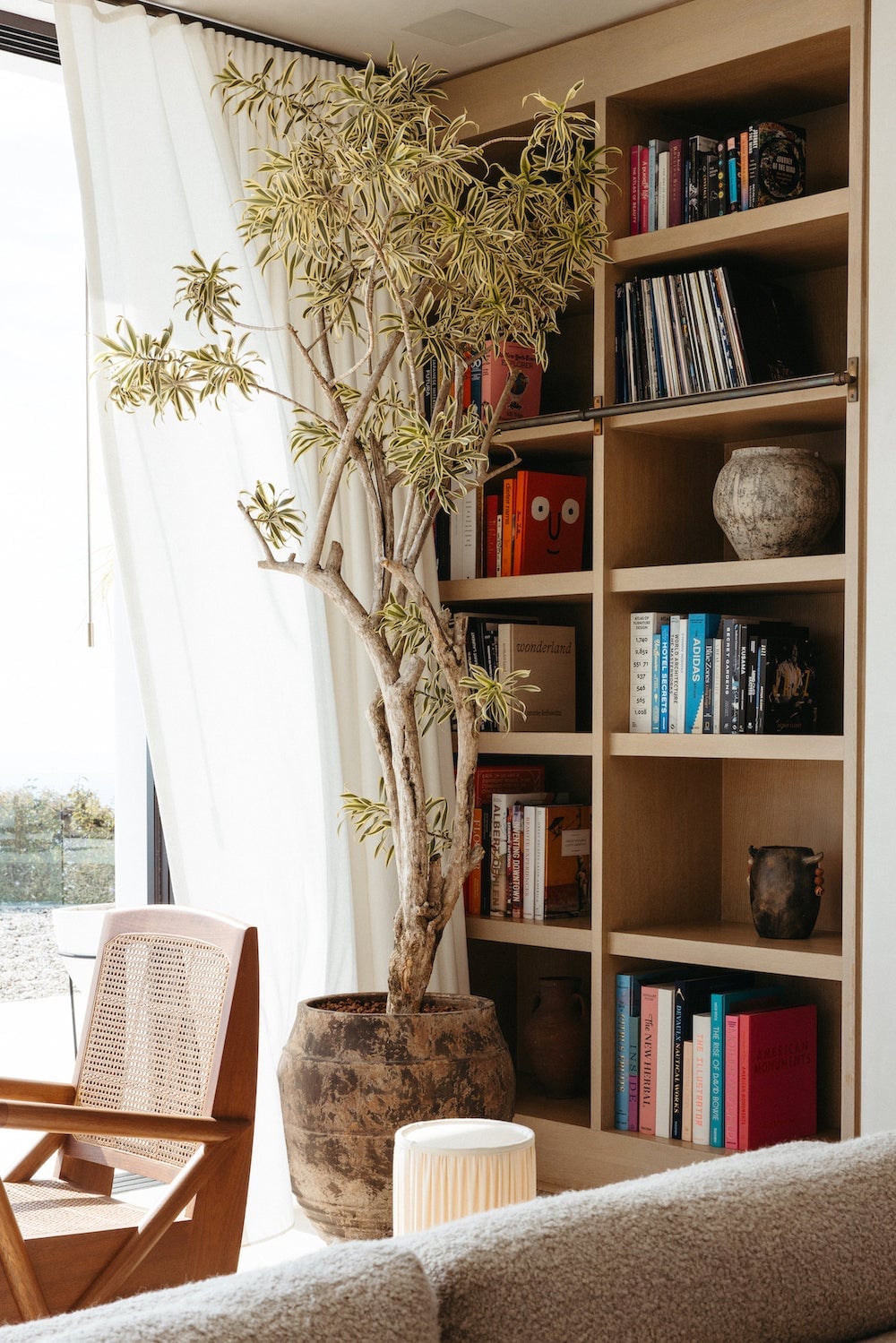
A tall bookshelf in a corner uses vertical space that would otherwise stay empty. In this Japandi living room, the shelf holds books and objects that add personal character without cluttering the floor plan. A cane chair sits nearby, and a potted plant softens the transition between the shelf and the sofa across the room. The shelf is visible without extra lighting. One tall storage piece in a corner does more for a roomy space than a dozen small tables and baskets ever could.
Final Thoughts
A Japandi living room doesn’t need a lot of stuff to feel complete. Focus on a few key pieces with clean lines, natural textures, and a soft, neutral palette. Let the room breathe, and choose each item for its function as much as its form. Keep surfaces clear and let natural light do the work. Regular upkeep is simple: dust wood surfaces with a dry cloth, vacuum jute rugs gently, and rotate cushions to keep their shape. With the right balance, your living room becomes a place to reset.