
A Japandi bedroom walks the line between Scandinavian warmth and Japanese restraint, landing somewhere quieter than either. It’s not about filling the room with bamboo and shoji screens. It’s about what you leave out.
These 27 looks show how to let the bed, the light, and a few natural textures do the work, so the space feels calm without feeling empty.
Serene Japandi Bedroom with Neutral Palette and Minimalist Art
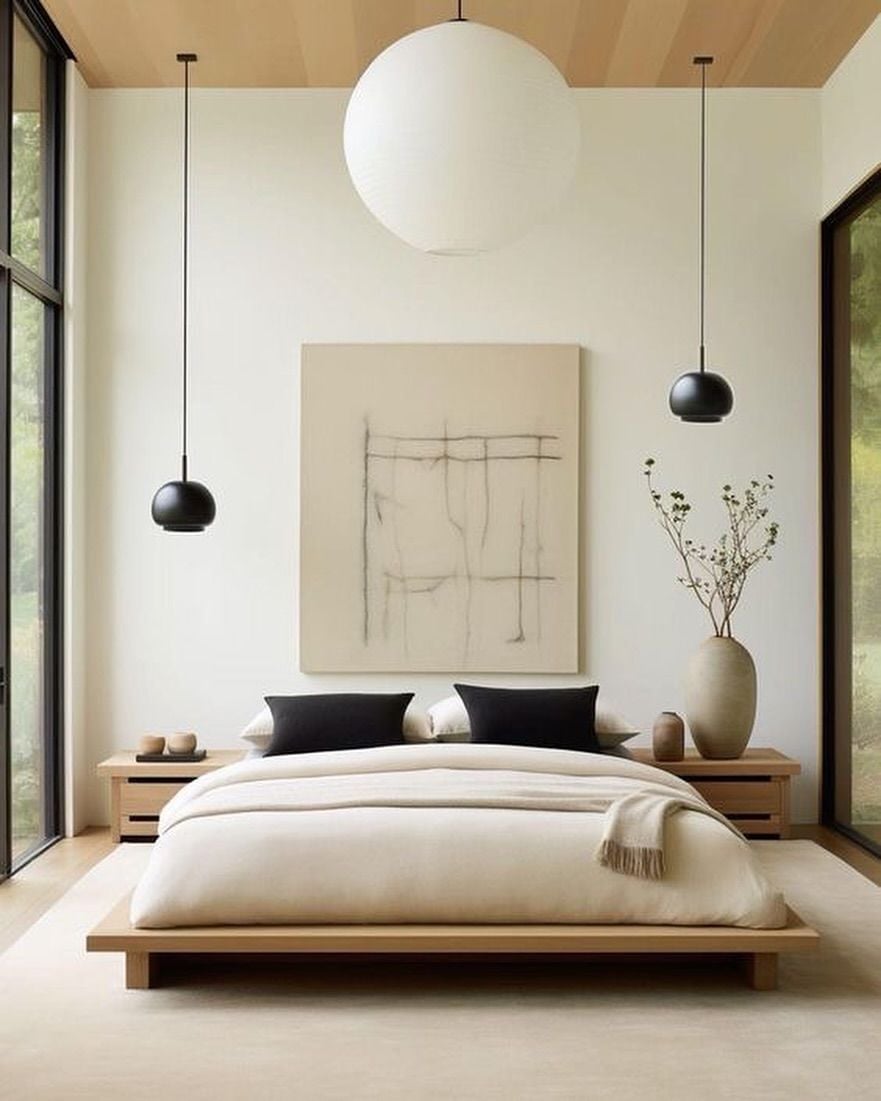
A Japandi bedroom keeps its promise when the palette stays quiet. Cream walls, a neutral linen duvet, and a single black line on a white canvas do not compete for attention. The platform bed anchors the room without shouting, and the two pendant lights frame the symmetry rather than flood it. The useful rule here is palette as a guide: limit the room to three tones at most, and let texture, linen against plaster against matte wood, do the work of depth.
Roomy Japandi Bedroom with Woven Ceiling Light and Built-in Shelving
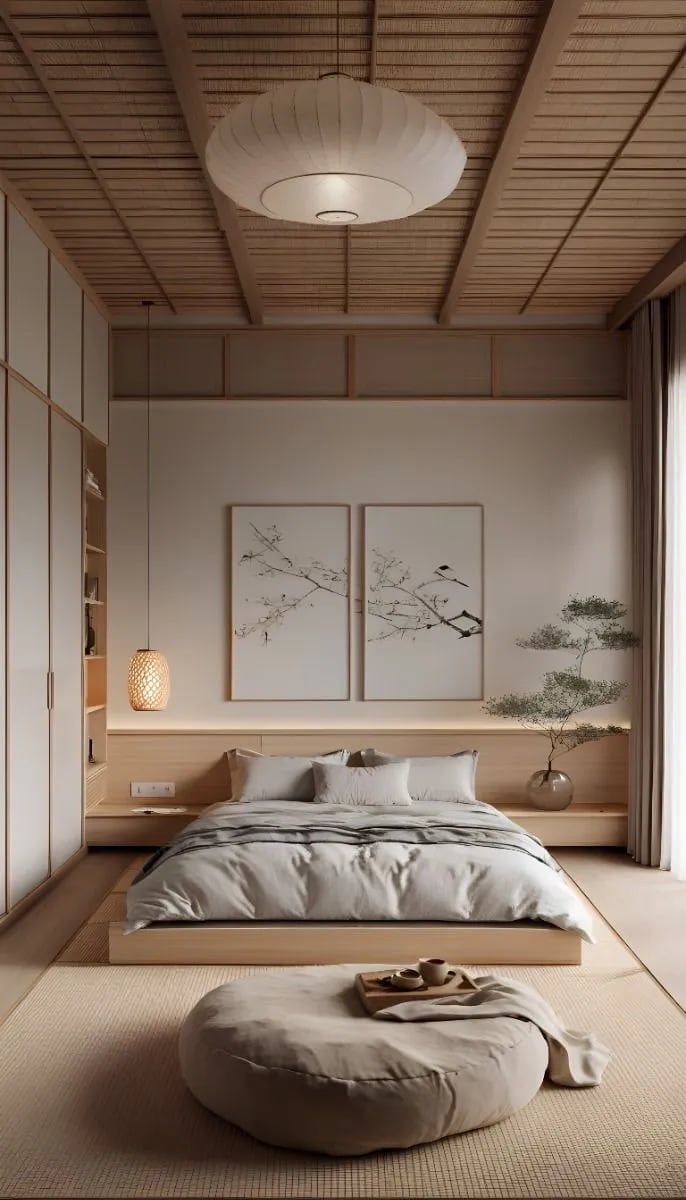
A woven pendant light changes how light sits in a room. The natural fibers soften the overhead glow and break up a plain ceiling without adding color. In this bedroom, that fixture becomes the visual top anchor above a centered platform bed, while built-in shelving keeps the walls clear. The lighting principle is simple: choose one overhead piece that filters light rather than blasts it. A woven shade, a paper lantern, or a slatted wood fixture all do the same job, warm, diffused light that makes the room feel larger and quieter.
Japandi Bedroom with Slatted Wood Feature Wall and Biophilic Touches
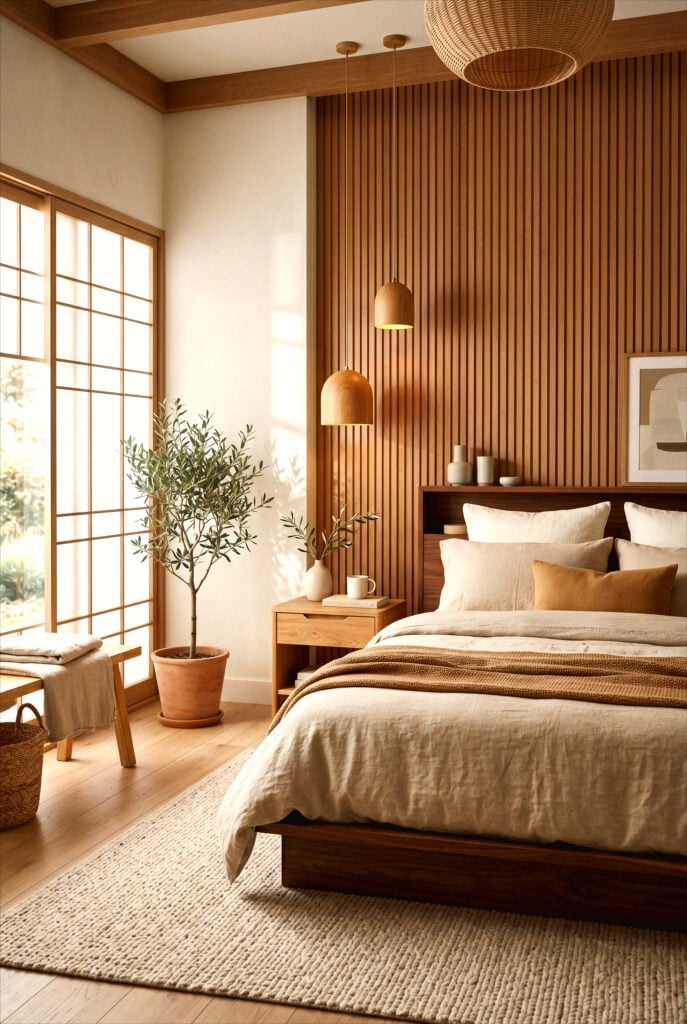
How do you add warmth to a neutral bedroom without cluttering the walls? A slatted wood feature wall answers that question. The vertical lines pull the eye upward and introduce a natural material that does not compete with other elements. In this space, the slats sit behind a low platform bed, their warm wood tone echoing the ochre of a small olive tree on the bedside table.
The material lesson is about rhythm. Slats, like any repeated vertical element, create a quiet pattern. Match the wood tone to other natural pieces in the room, a linen duvet, a plaster wall, so the wall feels like part of the palette. A renter can achieve a similar effect with peel-and-stick wood panels, as long as the spacing stays even.
Minimalist Japandi Bedroom with Geometric Light Patterns
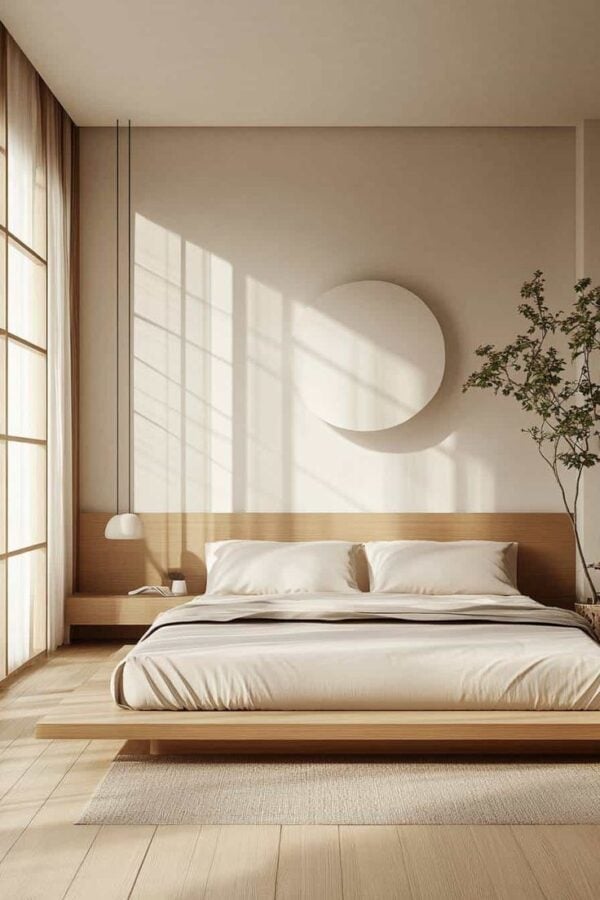
Strong natural light becomes a design element when the room is stripped to essentials. A low platform bed in soft wood sits in an open room, and the sun casts geometric shapes across a textured wall. The layout is minimal by design: the bed is the only large piece, and nothing blocks the light path. The principle is about letting architecture do the decorating. Instead of adding wall art, position the bed where the daily sun path creates its own composition. That pattern changes with the season and costs nothing to install.
Bright Japandi Bedroom with Potted Tree and Wooden Screen Divider
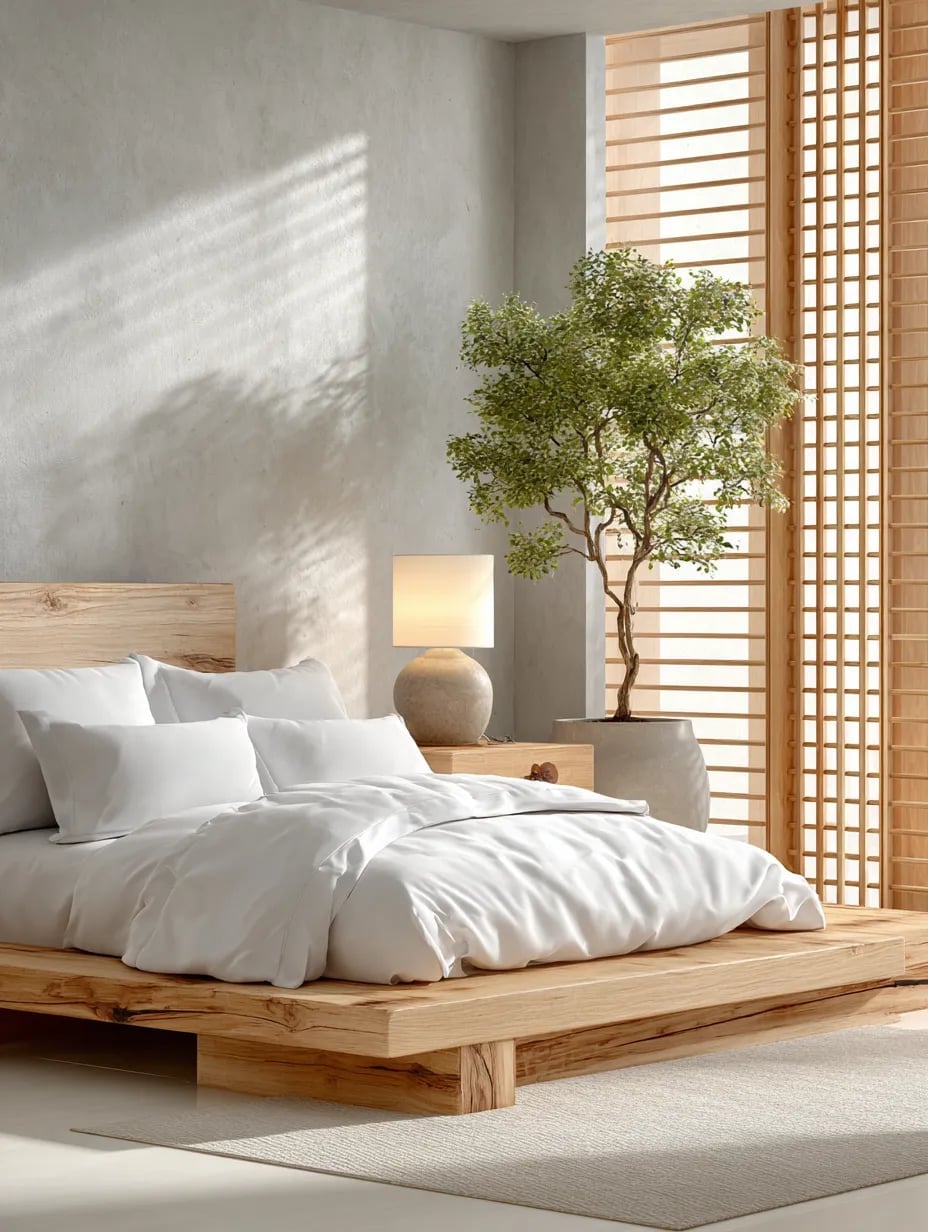
A potted tree changes the energy of a bedroom more than any small decor piece can. In this space, a tall tree in a concrete planter sits beside a wooden screen divider, adding height and a green accent to a white-and-light-wood room. The practical rule is about scale: a plant that reaches eye level or higher reads as architecture, not decoration. Pair it with a screen or a low bench to define zones in an open layout. Check your USDA zone before picking a tree for indoors. Some need more humidity or light than a typical bedroom provides.
Airy Japandi Bedroom with Expansive Shoji Screen Window
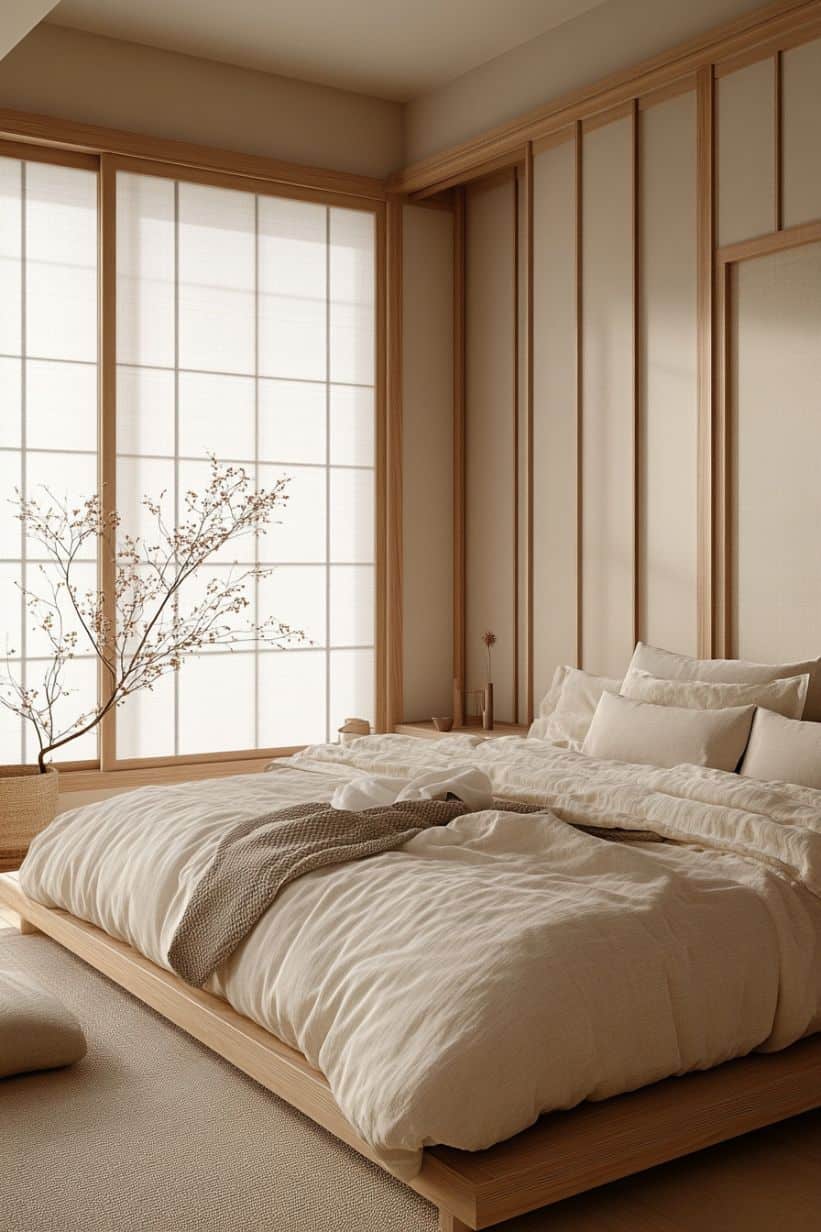
A Shoji screen window is a bold change from standard blinds or curtains. In this room, the screen covers the entire wall, turning the window into a soft light filter. The low platform bed sits centered, with the neutral palette of cream and light wood keeping the focus on the screen’s grid. The room feels roomy because the screen diffuses glare without blocking the view. This setup works for anyone who wants a quiet, light-filled space without the harshness of direct sun. A Shoji screen can be a custom addition, but a renter-safe swap is a freestanding folding screen placed in front of a window. It mimics the look and light diffusion without permanent changes.
Japandi Bedroom with Geometric Wood Paneling and Bench
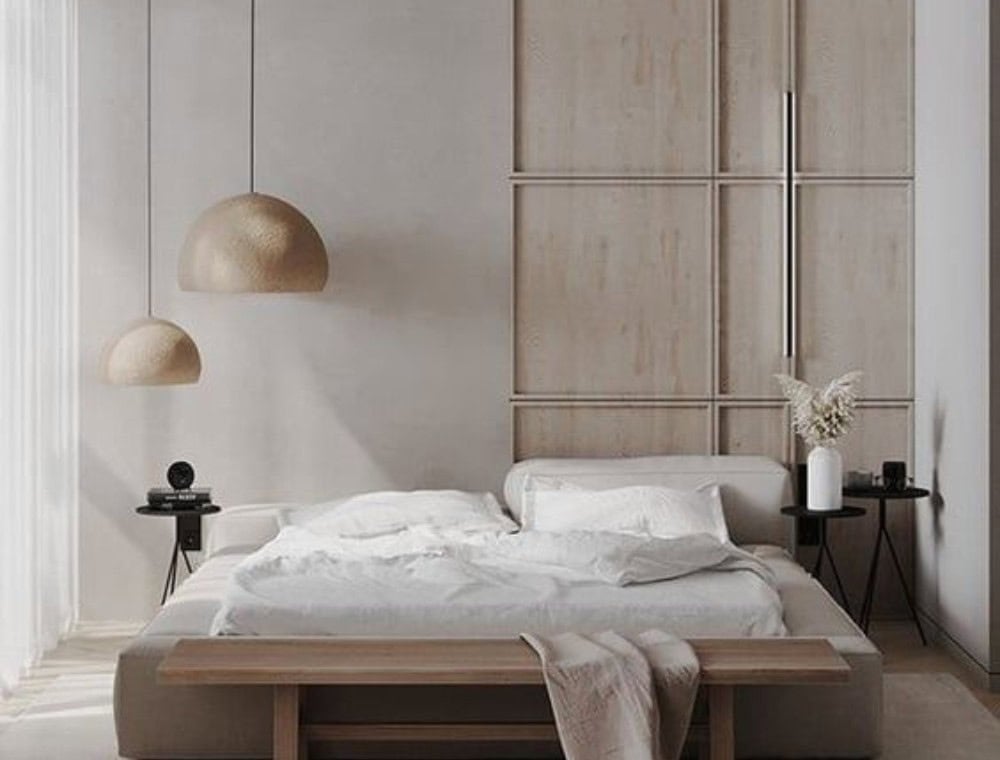
The geometric wood paneling behind the bed adds texture without clutter. The low platform bed stays centered, with a bench at the foot for a clean line. Pendant lights hang symmetrically, and accent lighting on the paneling adds depth. The room feels roomy because the paneling draws the eye up, making the ceiling feel taller. For a renter, peel-and-stick wood veneer panels can create a similar effect without damaging the wall. Keep other surfaces neutral so the paneling stands out as the main feature.
Serene Japandi Bedroom with Ambient Lighting and Natural Wood
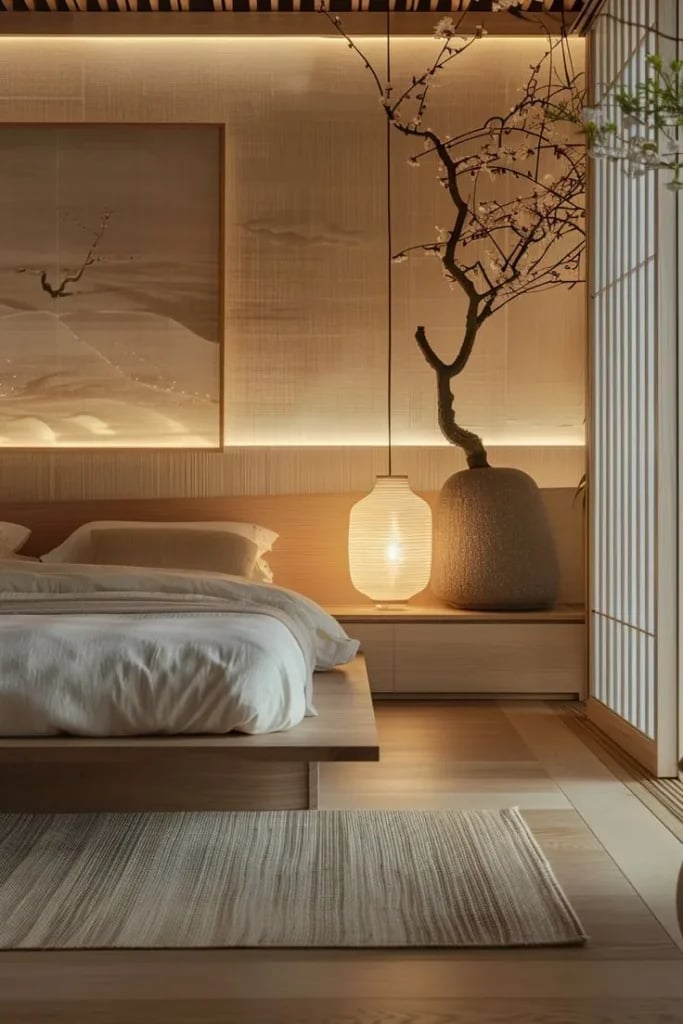
This room proves that ambient lighting and natural wood can make a bedroom feel both calm and spacious. The platform bed is centered, with a bedside table and pendant light on one side. The standout feature is the ambient light strip behind the headboard. It casts a soft glow that outlines the bed without harsh shadows. The neutral palette of wood tones and linen keeps the room grounded. For a similar effect, add a plug-in LED strip behind your headboard. It creates depth and a warm, restful quality without needing an electrician.
Bright Japandi Bedroom with Large Paper Lantern and Armchair
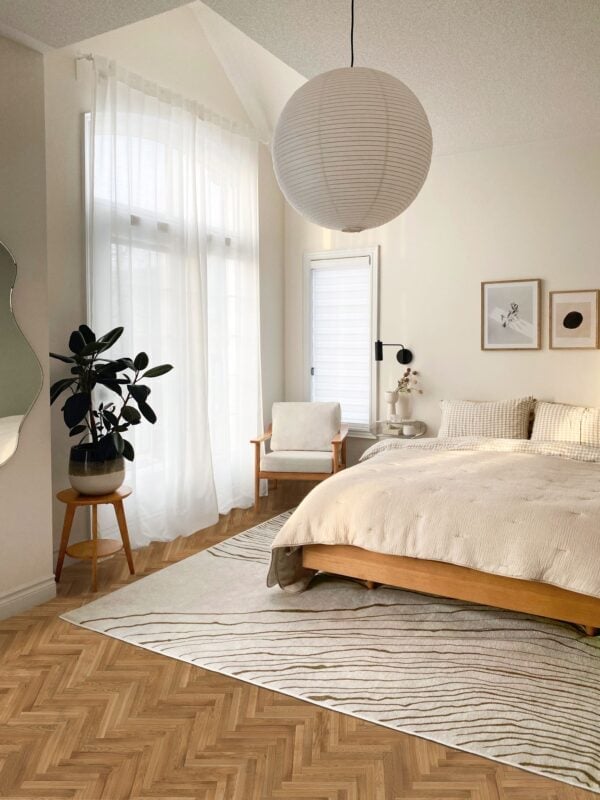
A roomy bedroom feels anchored when a large paper lantern pendant draws the eye up and defines the sitting area. In this room, the wooden bed frame is paired with an armchair in the corner and abstract art on the wall. The cream and beige palette keeps the space bright, while the paper lantern adds a soft, sculptural shape. The armchair gives the room a second function as a reading nook. Choose one oversized light fixture instead of several small ones. It creates a focal point that reads as intentional.
Airy Japandi Bedroom with Woven Textures and Dried Florals
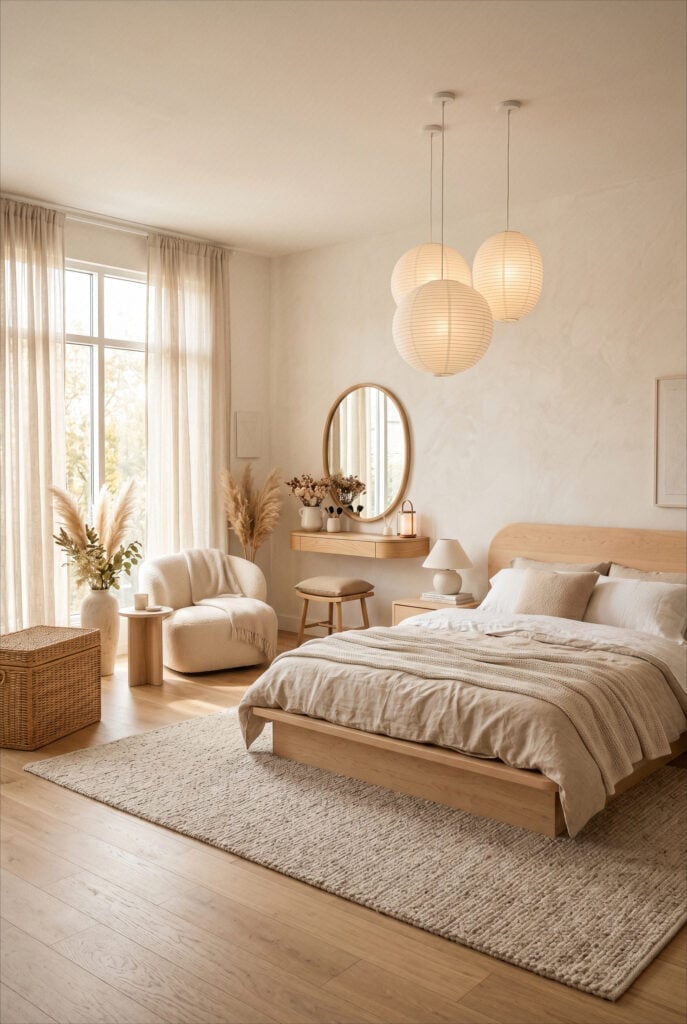
Woven textures and dried florals bring warmth to a neutral Japandi bedroom. A low wood bed sits beneath paper lantern pendant lights, with a boucle armchair for soft contrast. A ceramic vase holds dried branches. The room feels roomy because the textures add depth without bulk. Cream, beige, and light wood keep the space calm. This setup creates a layered look without strong colors.
Open Plan Japandi Bedroom with Oversized Paper Lantern
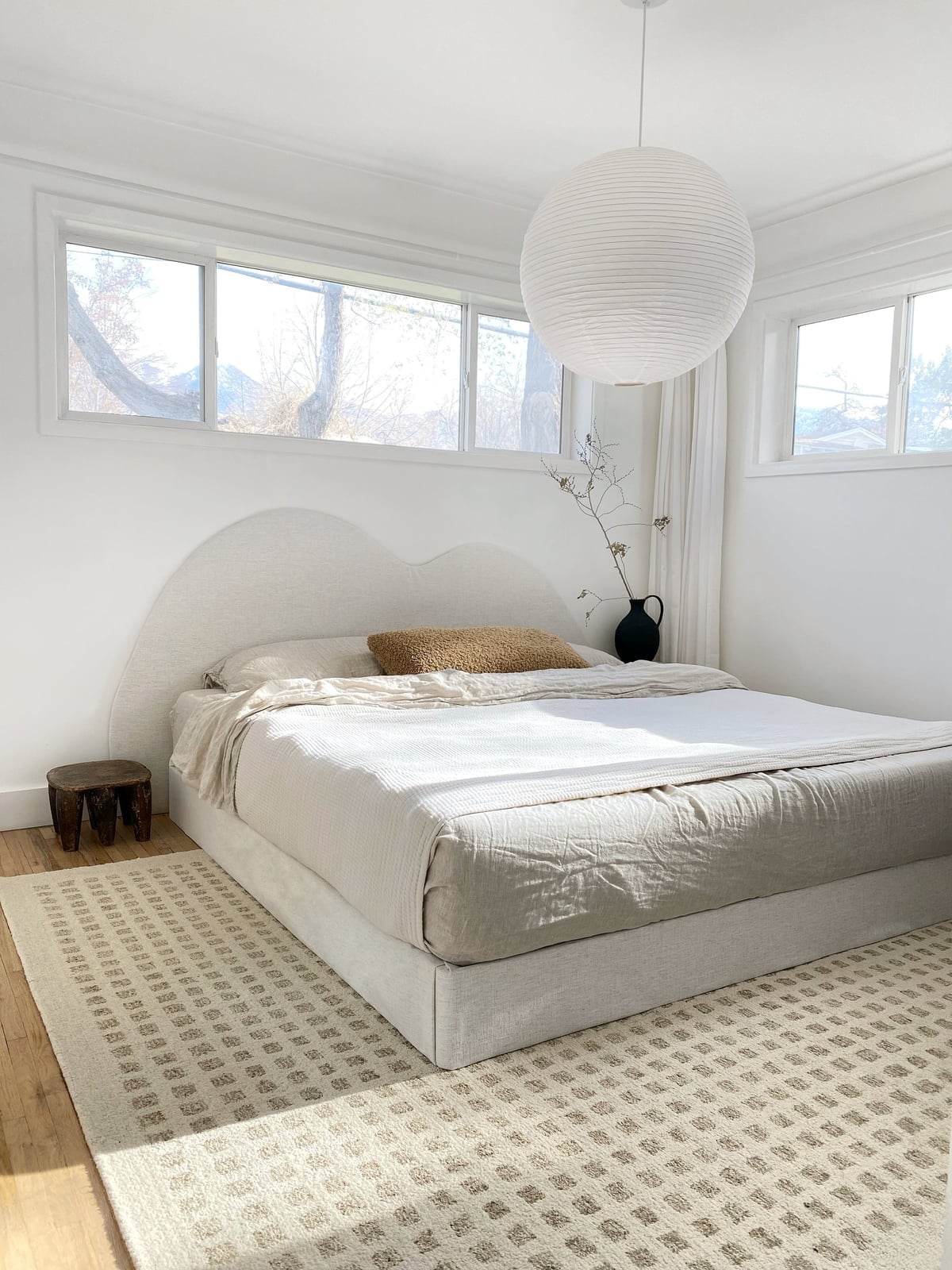
An open layout works best when you let one oversized piece anchor the space without competition. A large paper lantern hangs low, its scale matching the generous ceiling height and drawing the eye upward. The bed sits centered, its low frame keeping sightlines clean. Natural daylight from nearby windows fills the room, and the lantern adds a soft glow that echoes the pale wood floor and neutral linen bedding. A simple stool nearby offers a place to sit without adding clutter. This bedroom breathes, and the big lantern feels like a focal point.
Compact Japandi Bedroom Vignette with Textured Linen Bedding
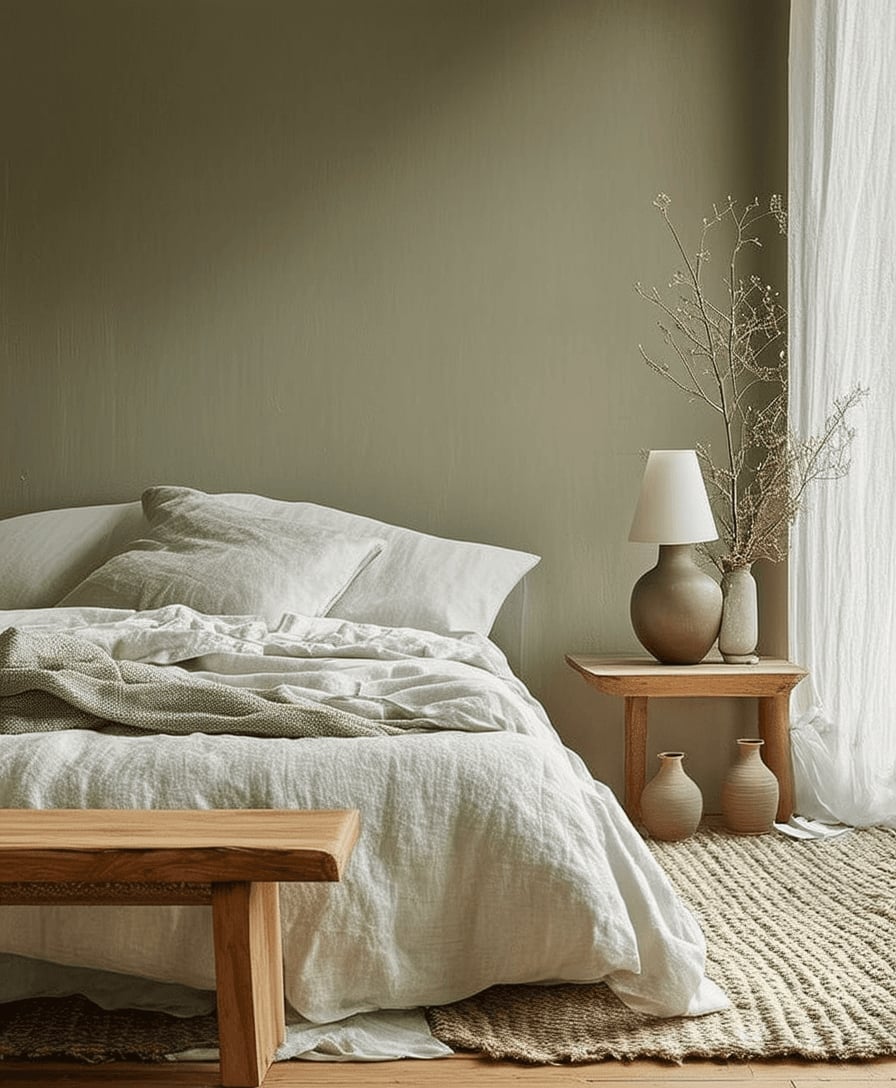
A compact bedroom vignette can feel richer when it leans into muted tones instead of pure white. A palette of muted green, warm wood, and soft neutral linen creates depth without crowding the eye. The layered bedding introduces texture through different weaves, while a low wood bench at the foot adds a spot to set a folded blanket.
The diffused, soft light keeps the scene calm and prevents the darker green from closing in. The vignette works because each piece stays low and simple, letting the color do the work. This is a good approach for color without visual weight.
Earthy Japandi Bedroom with Oversized Woven Pendant and Plaster Walls
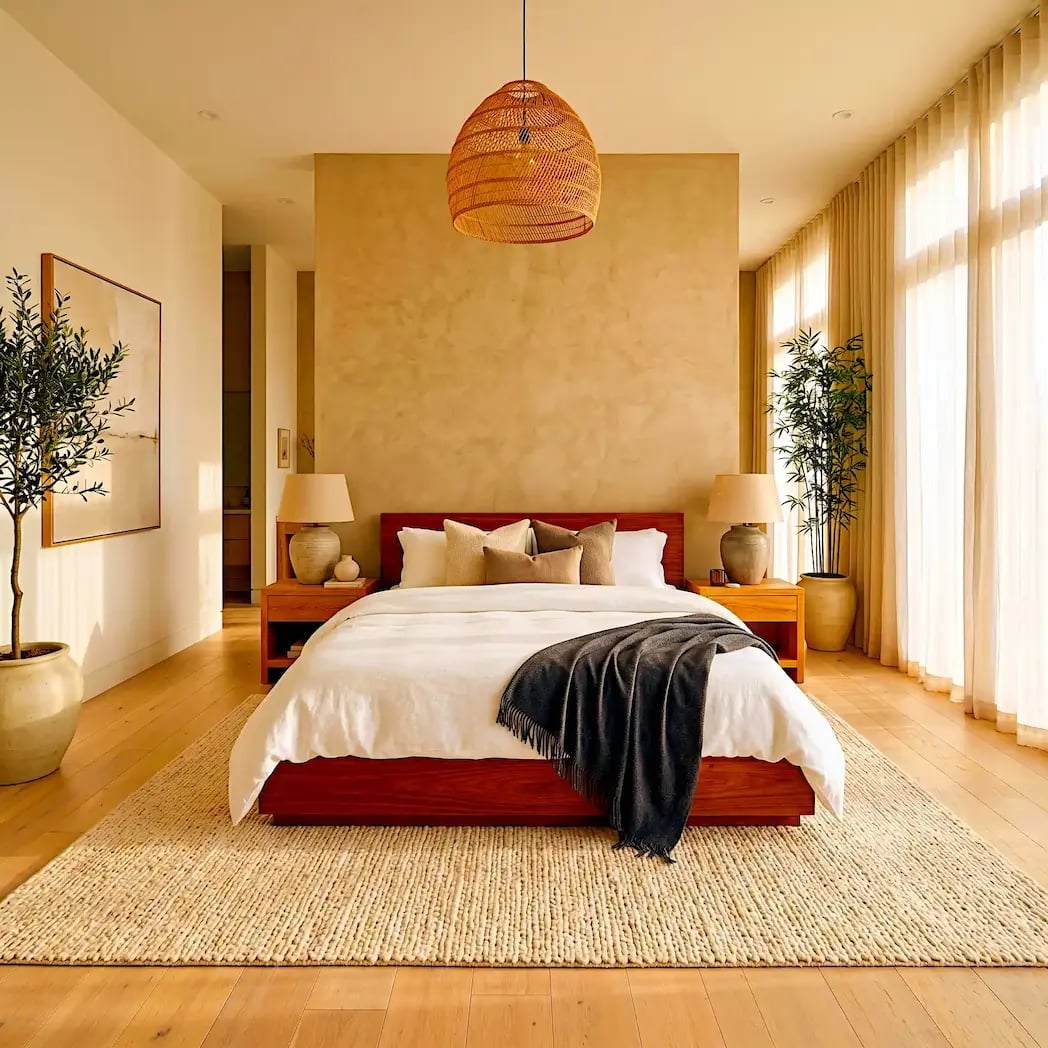
The oversized woven pendant light is the first thing you notice, its loose texture breaking up the smooth plaster walls. Warm neutrals and terracotta tones play against deep green from potted plants, while the low wood bed frame keeps the ground calm. The woven rug underfoot adds a layer of softness that contrasts with the plaster’s subtle grain. Natural light and warm lamps balance the room, making the materials feel inviting rather than bare.
Rustic Japandi Bedroom with Exposed Beams and Large Ceramic Vase
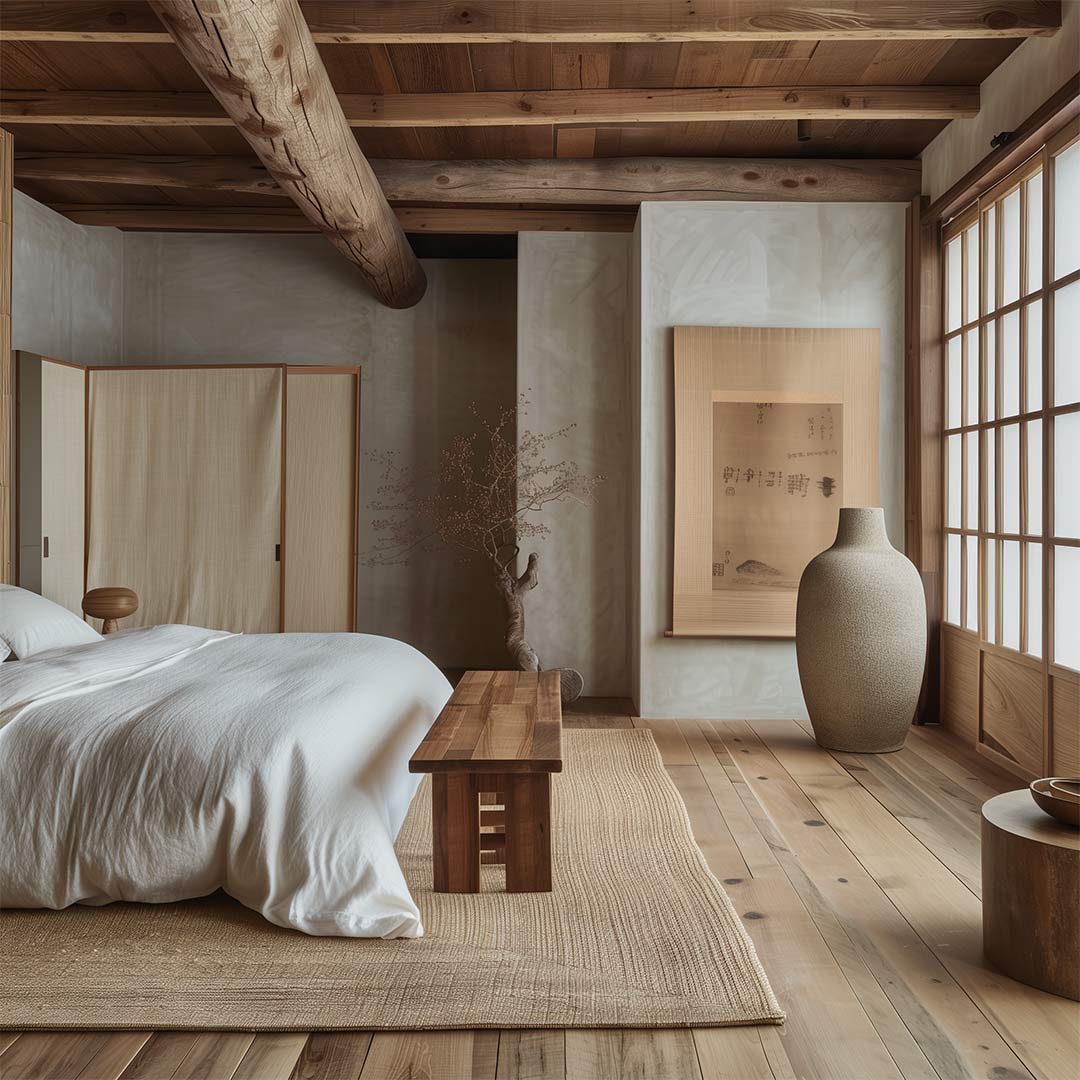
This room uses its ceiling as a feature. Dark exposed beams run across a neutral plaster ceiling, adding a rustic frame that grounds the whole space. A low wooden bed and a matching bench keep the profile low, while a large ceramic vase on the floor introduces an organic shape and a matte finish that echoes the stone-like walls. A shoji screen softens the window light, creating ambient glow that makes the wood tones and gray-beige palette feel cohesive. The beams add structure without competing with the quiet materials below.
Sophisticated Japandi Bedroom with Abstract Wall Mural and Cane
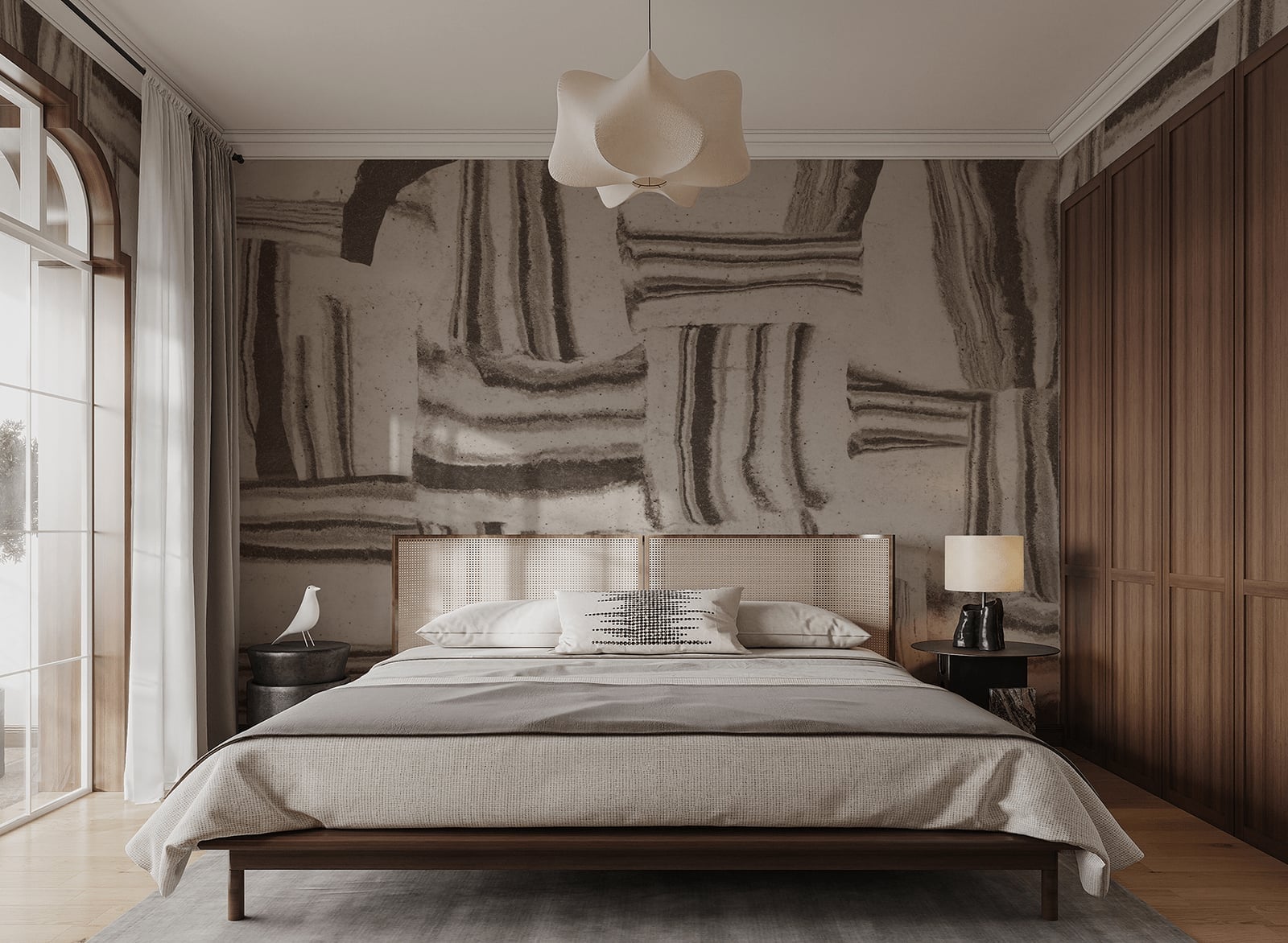
To balance a bold wall, keep storage and furniture minimal in shape. An abstract textured mural in gray, brown, and beige covers one wall, its organic pattern adding movement. A cane headboard on the bed keeps the eye moving horizontally, while a simple wooden wardrobe offers closed storage that does not distract from the wall. An ambient lamp on a low surface adds warmth in the evening.
The mural becomes the focal point because the room does not fight it. The wardrobe and bed frame stick to clean lines and natural tones, letting the wall mural hold the personality. This approach lets art define the space without losing storage.
Japandi Bedroom with Floating Shelves and Woven Pendant, Close-Up Take
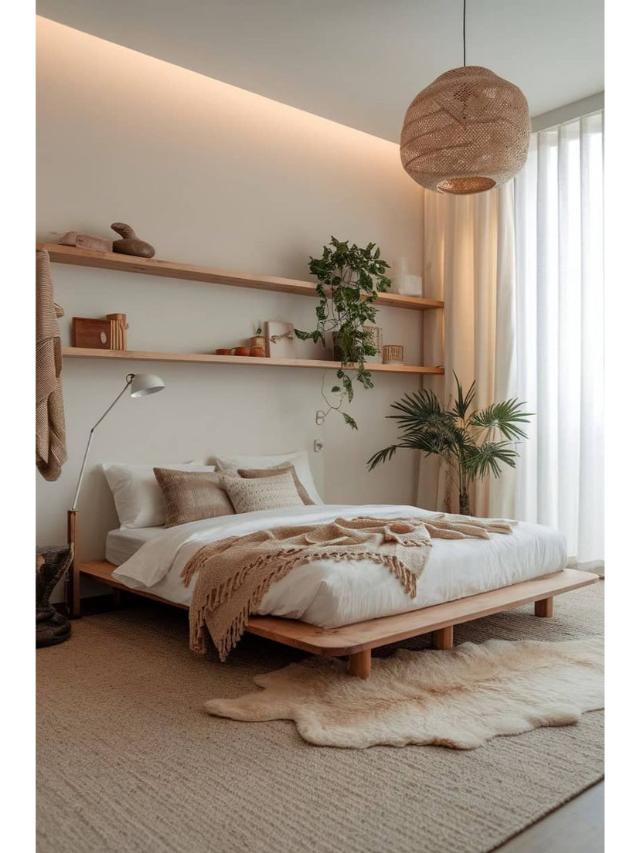
Floating shelves above the bed turn an empty wall into storage without taking up floor space. The shelves hold a few carefully chosen objects, and the woven pendant light overhead matches the natural fibers in the jute rug and the sheepskin throw at the foot of the bed. The platform bed stays centered, with the floor lamp off to one side for evening reading. The shelves work because they are not packed full, leaving enough negative space around each item so the wall does not feel crowded. A roomy japandi bedroom benefits from this setup when you need a place for books or a small plant but want to keep the floor clear for the bed to breathe.
Roomy Japandi Bedroom with Large Window and City View, Close-Up Take
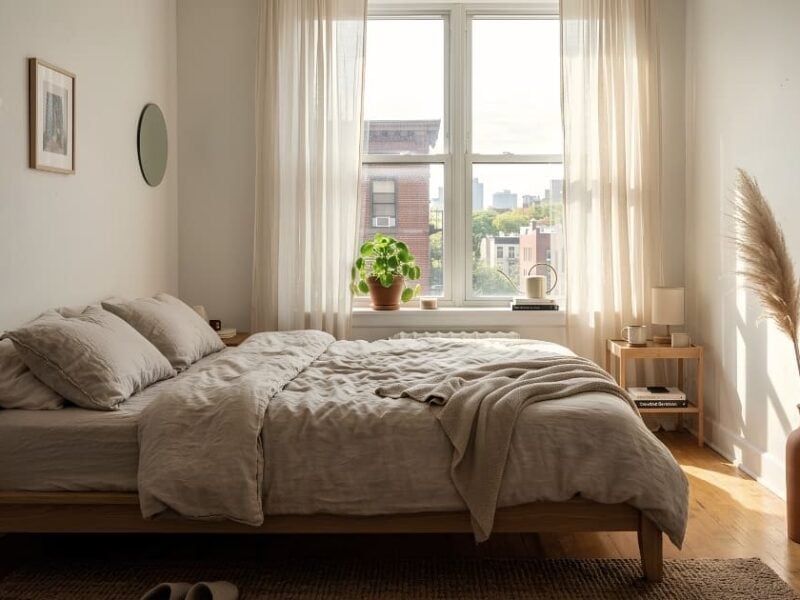
In a room with a view, let the window set the layout. The bed sits centered on the wall across from the large window, so the city skyline becomes the visual anchor when you walk in. The bedside table on one side holds a lamp and a small plant, keeping the floor clear for the woven rug. The neutral beige and wood palette does not compete with the changing light outside, and the low platform bed keeps sightlines low so the window stays the focus. For a renter, this means no need to hang curtains you cannot change or add art that blocks the glass. Just place the bed to face the best light and keep the furniture minimal.
Japandi Bedroom with Slatted Headboard and Rattan, Close-Up Take
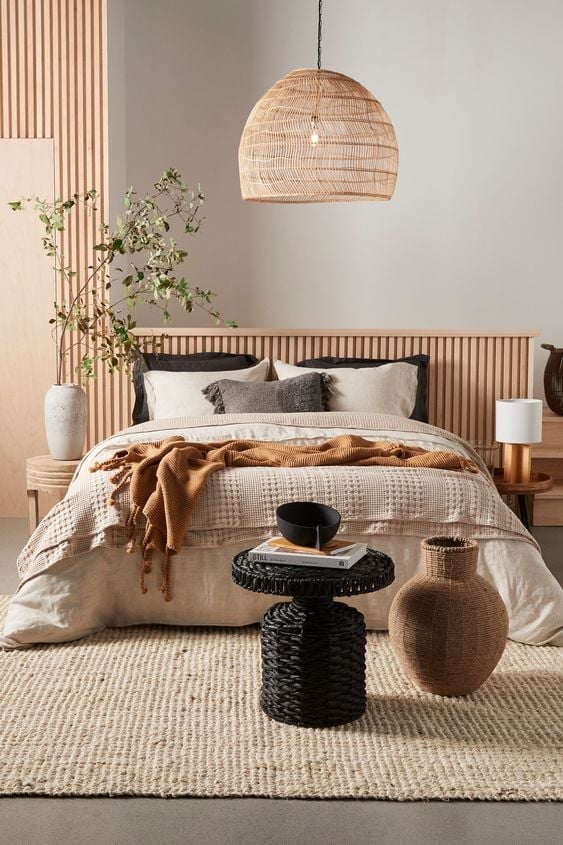
A slatted wood headboard brings warmth and vertical lines to a bedroom without the bulk of a solid panel, making it a good middle ground between a bare wall and a full upholstered headboard. The vertical slats echo the grain of the wood floor and draw the eye upward, while the rattan accents in the pendant light and a small basket add a lighter, woven texture that softens the look. The bed is centered under a warm pendant, and natural light hits the textured linen bedding.
Black accents in the lamp base or a small decor piece add just enough contrast to keep the neutral palette from feeling flat. For a japandi bedroom, mixing two wood tones and one woven material creates depth without clutter. The slatted headboard is a practical choice because it fits in a rental, too, if you choose a freestanding version that leans against the wall instead of a built-in panel.
Neutral Japandi Bedroom with Minimalist Wardrobe, Close-Up Take
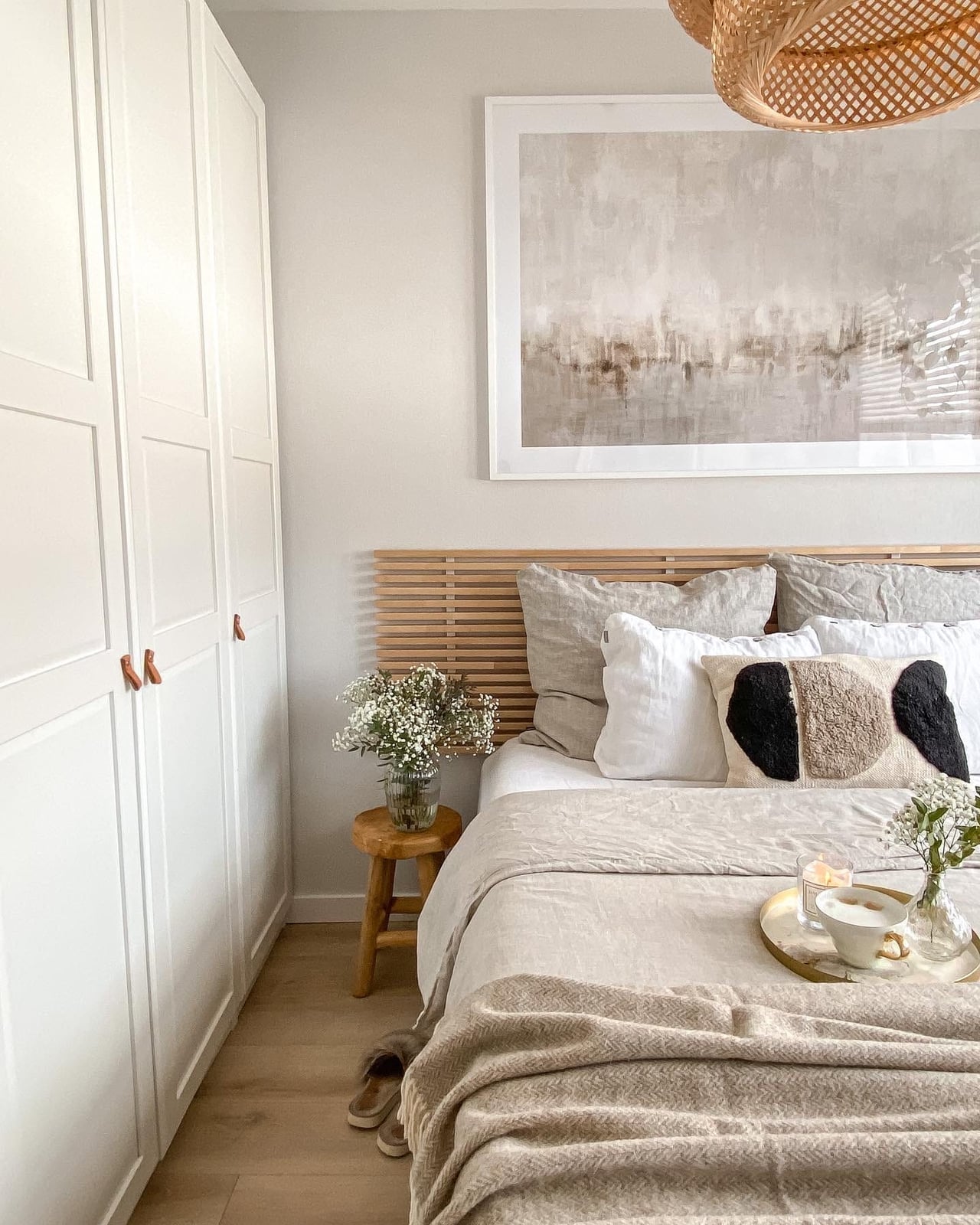
A Japandi bedroom relies on a neutral palette to stay calm, and this one uses beige, white and gray to keep the eye moving without landing on any one color. The bed is centered, with a minimalist wardrobe off to the side that provides storage without breaking the visual line. The abstract artwork above the bed introduces a subtle pattern against the plain wall, while the pendant light overhead and natural daylight balance the light levels. The room feels roomy because the palette is restrained and the furniture is kept to what is needed: a platform bed, a wardrobe, and a few rattan and ceramic accents. What makes this layout work is the negative space around each piece, so nothing feels crowded.
Earthy Japandi Bedroom with Chunky Throw Blanket, Close-Up Take
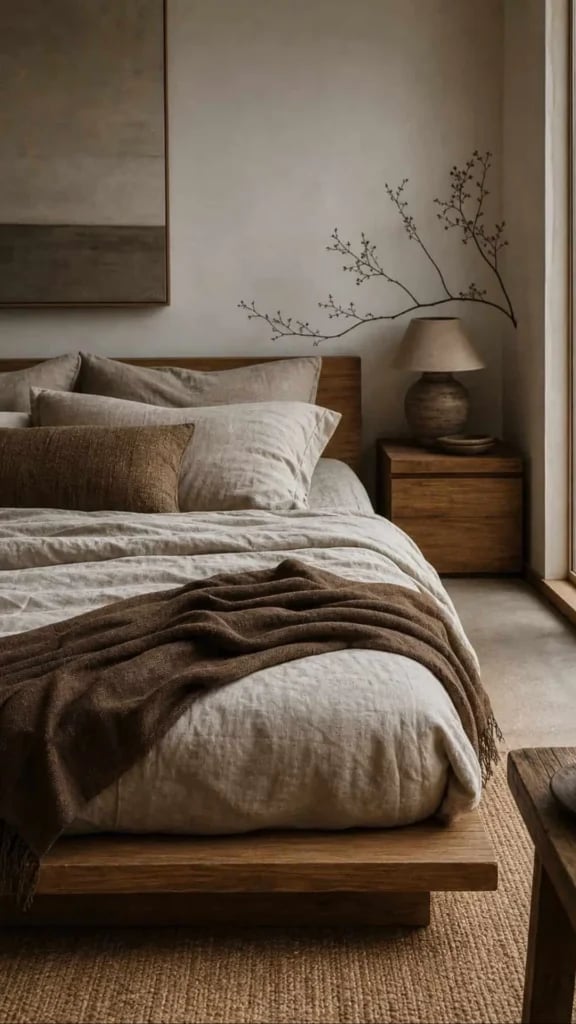
This Japandi bedroom proves that texture does more for a room than color ever could. A richly textured brown throw blanket drapes across the bed, its chunky knit contrasting with the smooth linen sheets and the clean lines of the wooden platform bed. The ceramic lamp introduces a matte finish that picks up the natural daylight, while the jute rug underfoot adds another layer of warmth. The palette stays earthy with brown, beige and cream, so the room feels grounded without needing bright accents. The scale of the throw blanket matters here: it is large enough to be noticed but not so big that it overwhelms the bed. That proportion keeps the room looking balanced.
Japandi Bedside Table with Fluted Detail and Green Accent
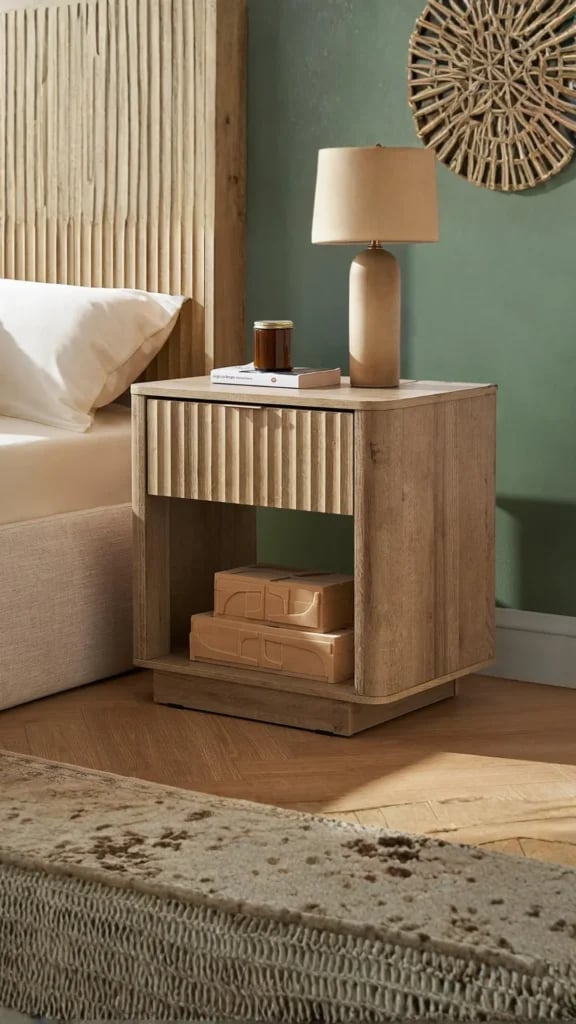
A bedside table works hardest when it holds just what you need and nothing else. The fluted wood detail on this piece adds visual texture without clutter, while the green decorative boxes echo the accent color found elsewhere in the room. A simple ceramic lamp provides task lighting for reading. This setup includes one table, one lamp, and a small stack of boxes. That restraint keeps the eye moving across the scene instead of settling on a pile of odds and ends. If you tend to accumulate items on your nightstand, try limiting yourself to three objects total. The fluted surface casts shifting shadows throughout the day, so even a plain table becomes interesting to look at.
Japandi Bedroom with Terracotta Bedding and Abstract Art
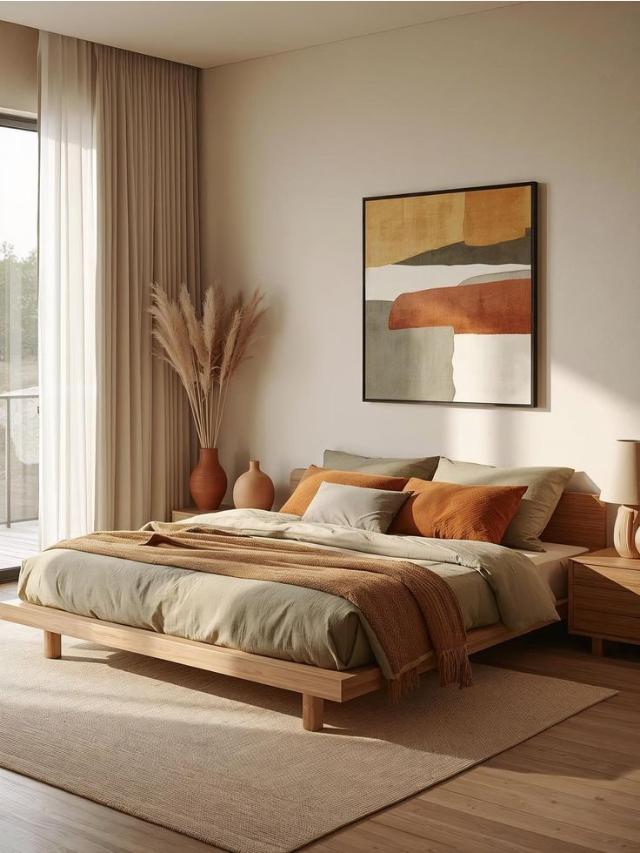
Terracotta bedding warms up a neutral Japandi palette without shouting. The earthy tone pairs naturally with light wood floors and a textured rug, while the abstract art on the wall introduces a subtle pattern that breaks up all the solid surfaces. The low platform bed keeps the visual weight low, making the room feel more spacious. A ceramic vase and rattan accents reinforce the natural material theme. For a similar effect, choose one warm accent color and repeat it in the bedding, art, and a small accessory.
Calm Japandi Bedroom with Textured Throw and Simple Lamp
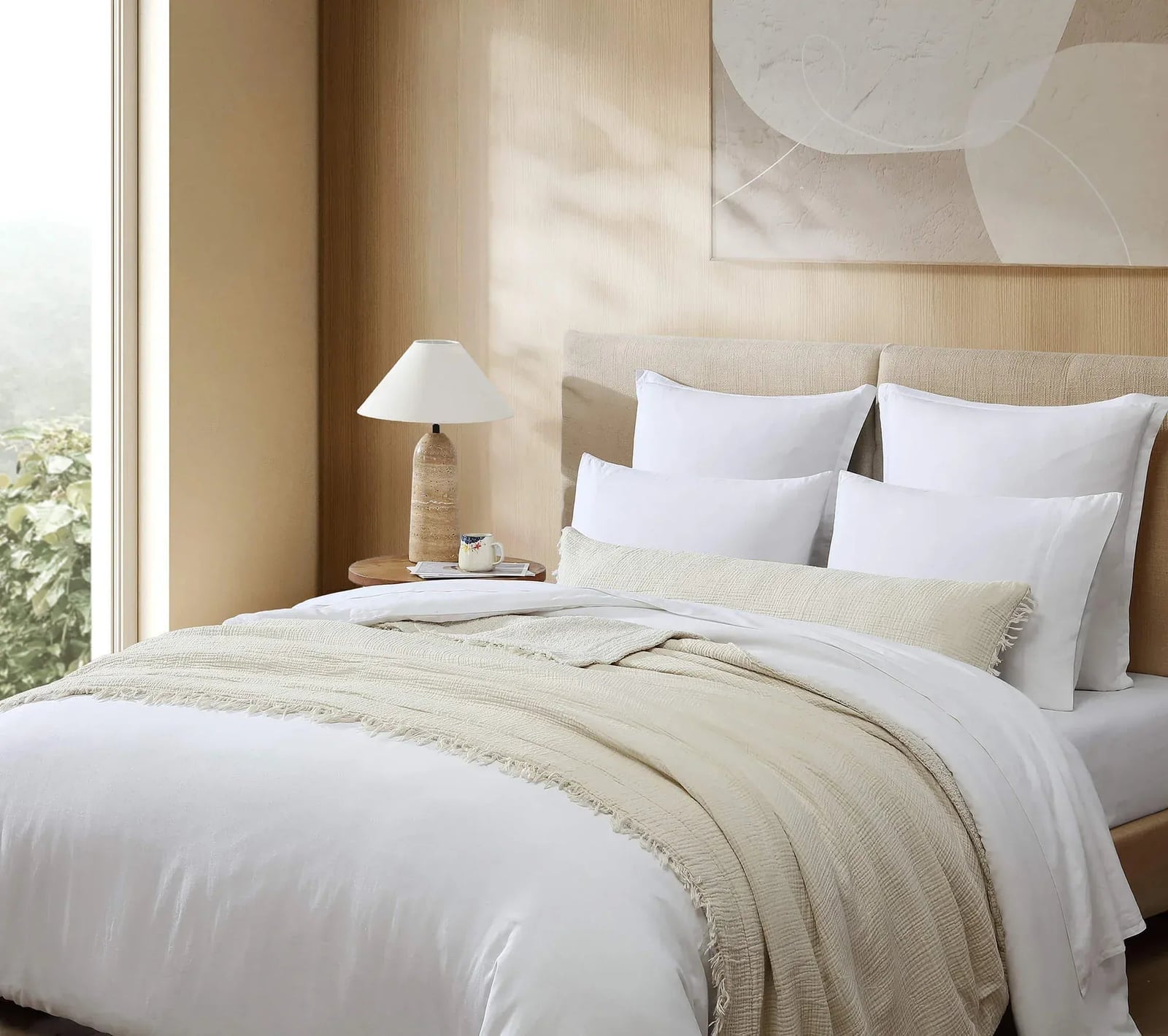
Layering textures is the easiest way to add depth to a neutral bedroom. A chunky knit throw draped across the foot of the bed introduces a tactile contrast against smooth linen sheets and a solid wood frame. The simple bedside lamp, with its clean silhouette, provides warm light without competing for attention. The cream and beige palette keeps the space feeling open and airy. If your room feels flat, try adding one textured textile like a throw or a woven cushion before reaching for another color.
Japandi Bedroom with Mustard Yellow Accents and Large Window
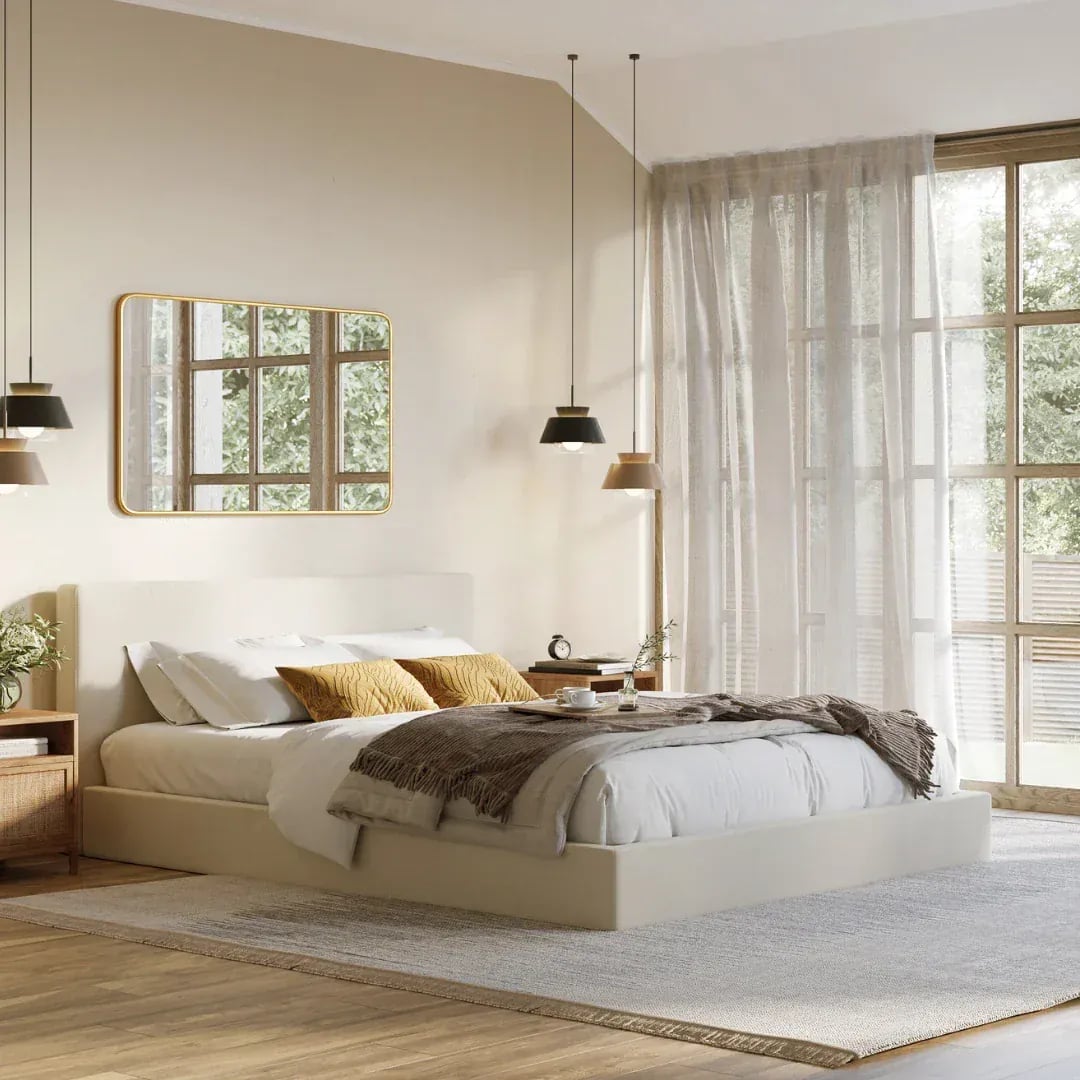
Most Japandi bedrooms stick to muted earth tones, but mustard yellow proves that a bolder accent can work. The key is restraint: a throw pillow and a small ceramic piece are enough to add warmth without overwhelming the neutral base. The large window with sheer curtains floods the room with natural light, which softens the yellow and keeps it from feeling harsh. Two pendant lights hang on either side of the bed, providing balanced illumination for reading. If you want to test a brighter accent color, start with a single pillow or a small vase. You can always add more once you see how it reads in your light.
Detail of Japandi Bedding with Subtle Stripes and Natural Materials
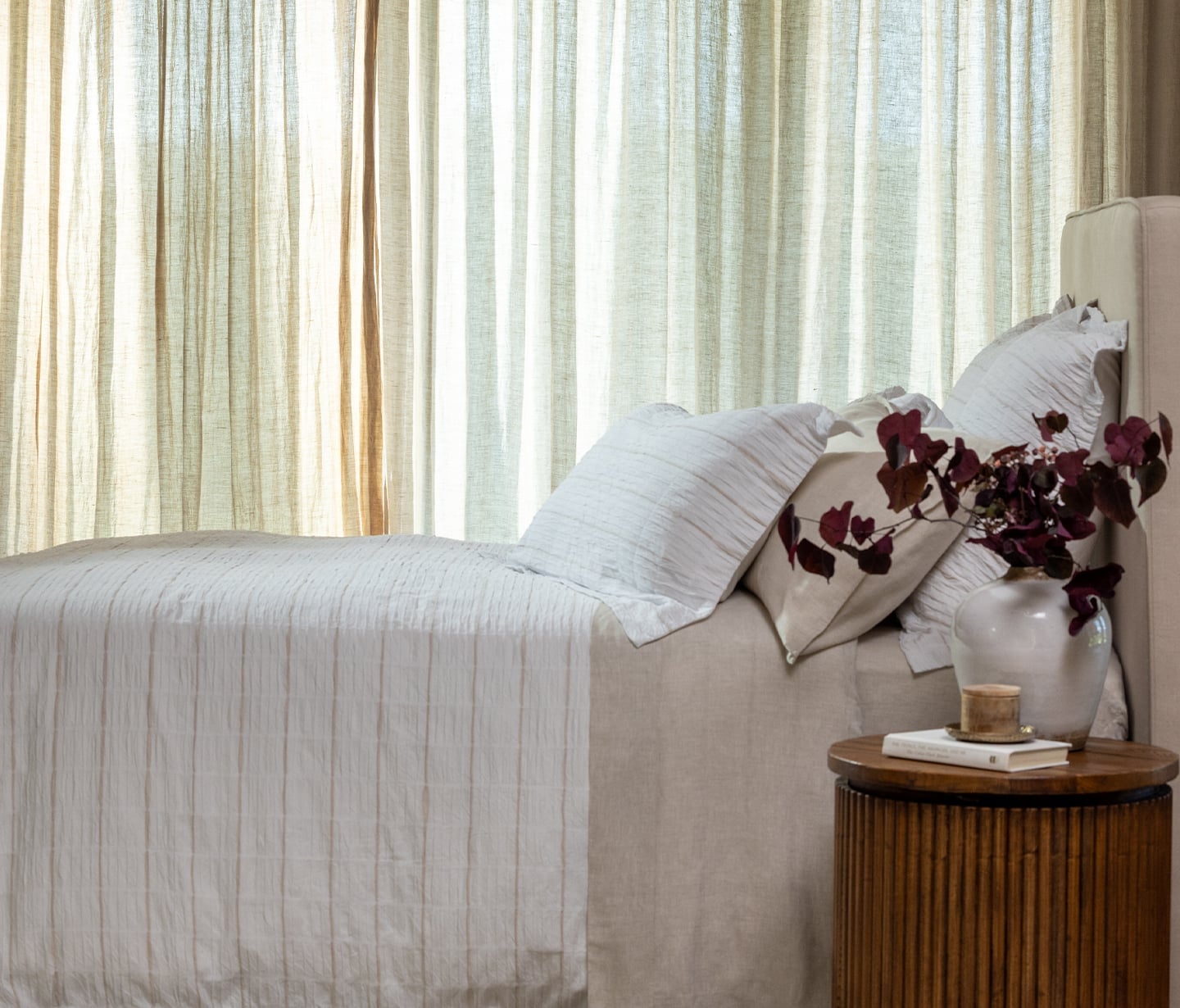
The subtle stripe on this linen bedding adds just enough visual interest to keep the bed from looking like a blank canvas. The weave of the fabric gives it a slightly irregular texture that feels natural rather than manufactured. A small vase with branches on the bedside table echoes the organic theme. When choosing bedding for a Japandi bedroom, look for fabrics with a visible weave or a faint pattern. Solid colors are fine, but a hint of texture or line makes the bed feel more considered.
Japandi Bedroom with Textured Plaster Wall and LED Accent Lighting
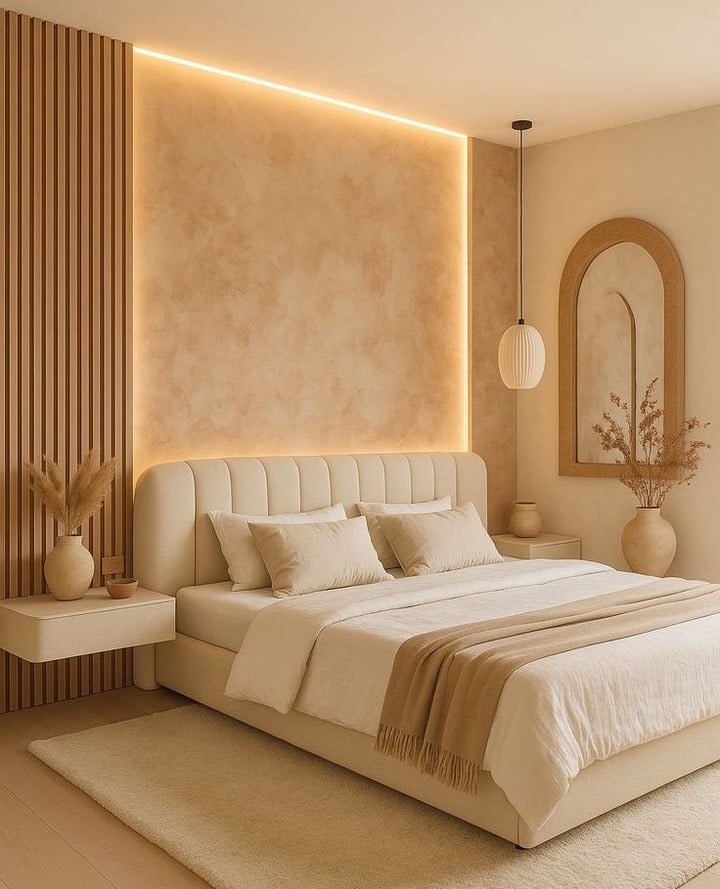
This room proves that lighting can make or break a japandi bedroom, and the hero here is a textured plaster wall with an LED strip that draws the eye without shouting. The bed sits centered, flanked by floating bedside tables, while a pendant light overhead keeps the look clean. The warm neutral palette of beige and cream lets the plaster texture do the work, and the LED glow adds a soft layer that a single lamp can’t match. If you want this kind of depth without wiring, a plug-in LED strip behind a headboard or along a shelf mimics the same effect. It’s an easy way to add dimension to a space that could otherwise feel flat.
Japandi Bedroom with Wooden Plantation Shutters and Green Throw
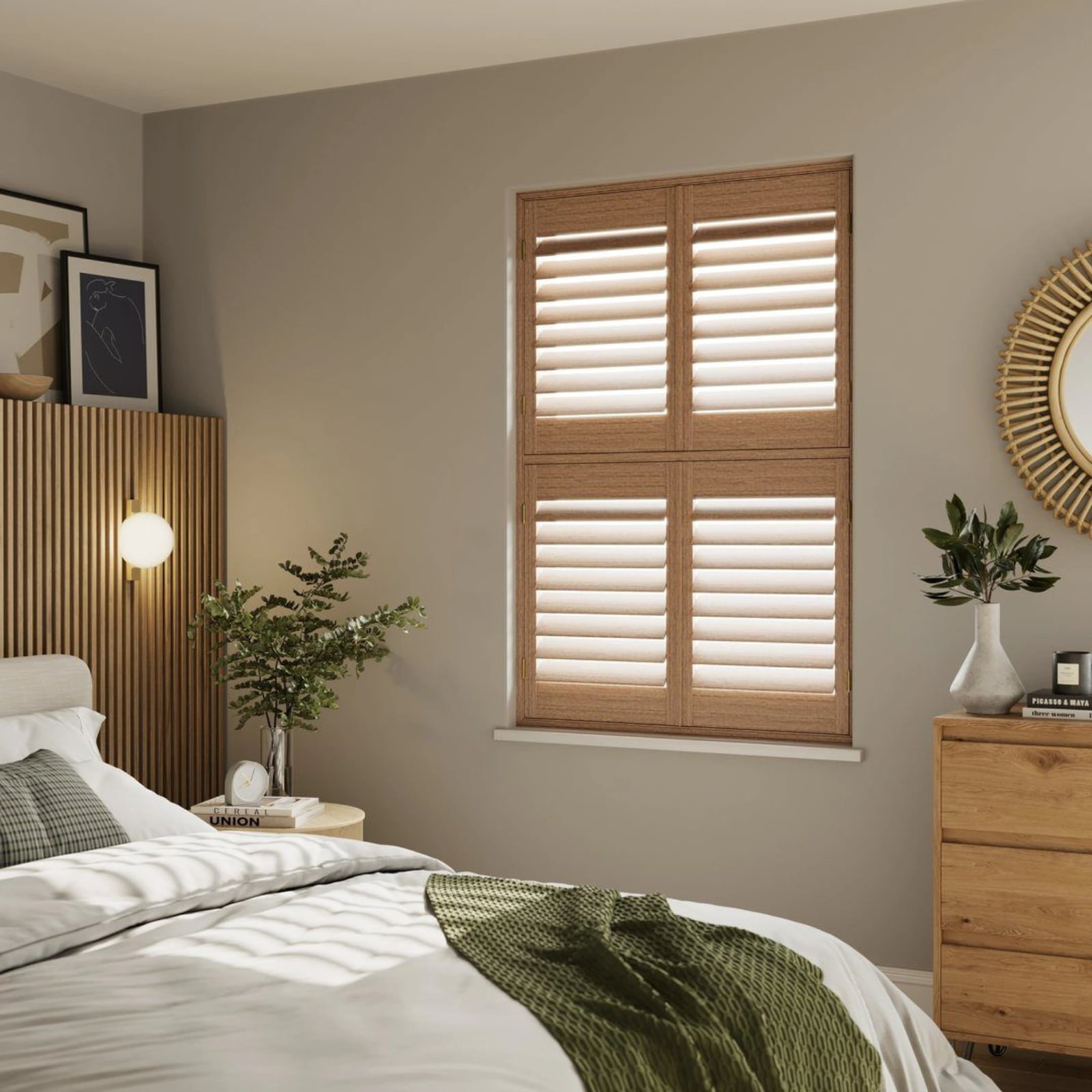
Wooden plantation shutters work well in a rental japandi bedroom when you treat them as the hero element. The bed sits to the left, a dresser to the right, and the shutters bring in natural daylight while keeping the view filtered. A green throw adds a quiet pop against the neutral gray and wood tones, and a wall sconce provides warm light for evening. Since you can’t change the windows in a rental, leaning into what’s there with layered textiles and a few ceramic or rattan accessories makes the space feel cohesive. The shutters become part of the design.
Final Thoughts
The common thread across these 27 Japandi bedrooms is that less really is more, but it has to be the right less. A neutral palette keeps the eye moving, natural materials add warmth without clutter, and lighting, whether a paper lantern or a woven pendant, sets the mood without trying. If you take one thing from this roundup, let it be this: edit first, then add texture. The room will breathe easier, and so will you.