
Honey oak kitchen cabinets are experiencing a renaissance, and it’s undeniably well-deserved. After decades of being covered up, painted over, or ripped out entirely, these warm-toned wood cabinets are suddenly everywhere on Pinterest boards, home renovation feeds, and interior design accounts that real tastemakers actually follow. Americans are rediscovering that the golden grain of oak isn’t dated at all—it’s rich, grounded, and surprisingly versatile. Whether you’re working with original cabinets from a house you just bought or hunting for ways to refresh a kitchen you’ve lived in for years, this guide brings you real, actionable ideas for making honey oak work beautifully right now.
1. Paint the Walls a Deep Moody Green
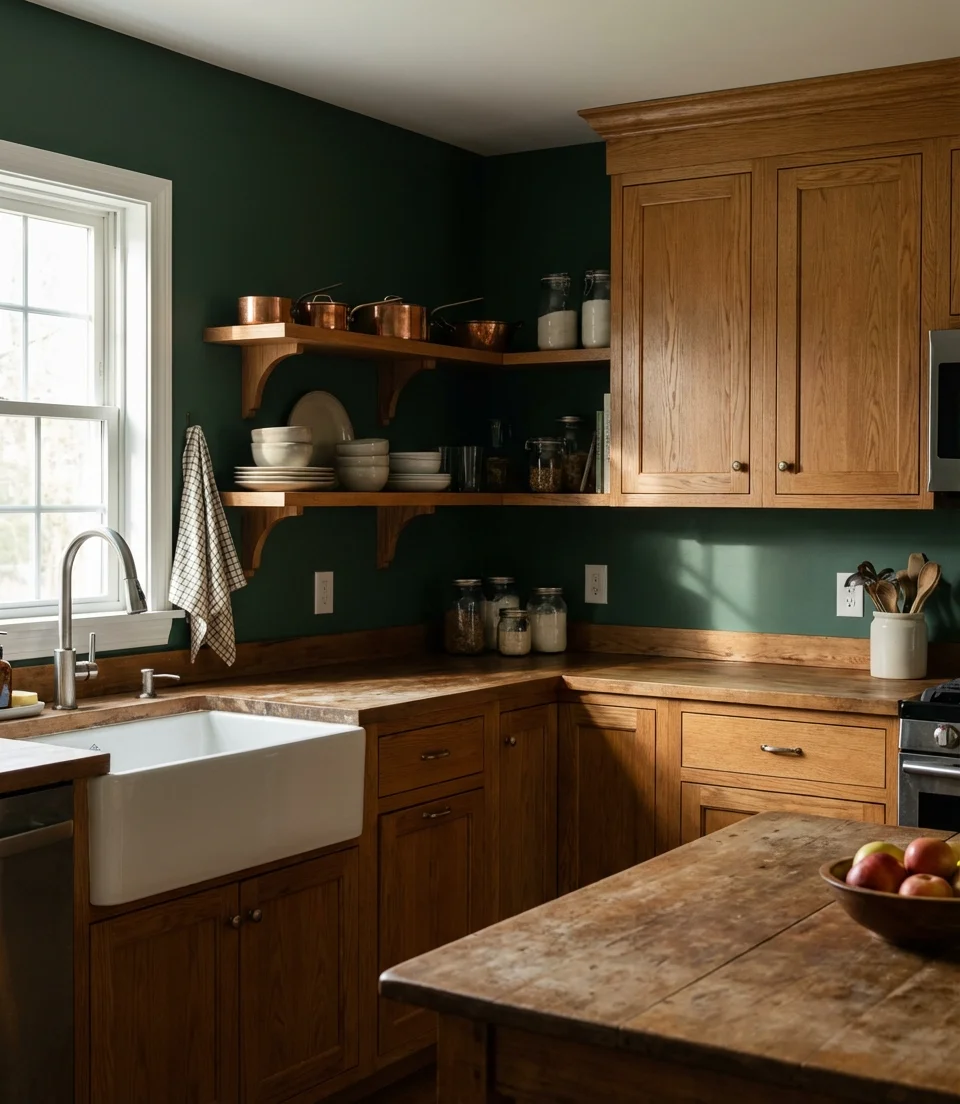
One of the smartest moves you can make with honey oak cabinets is to stop fighting their warmth and start pairing them with something bold. Green walls—think forest, olive, or hunter—pull out the natural undertones in oak without clashing. The combination feels earthy, intentional, and deeply on-trend right now. If you’ve been circling paint swatches to find a wall color that goes with orange-tinted wood, this combination is your answer. A matte or eggshell finish maintains a calm and sophisticated look without overpowering the wood’s natural grain.
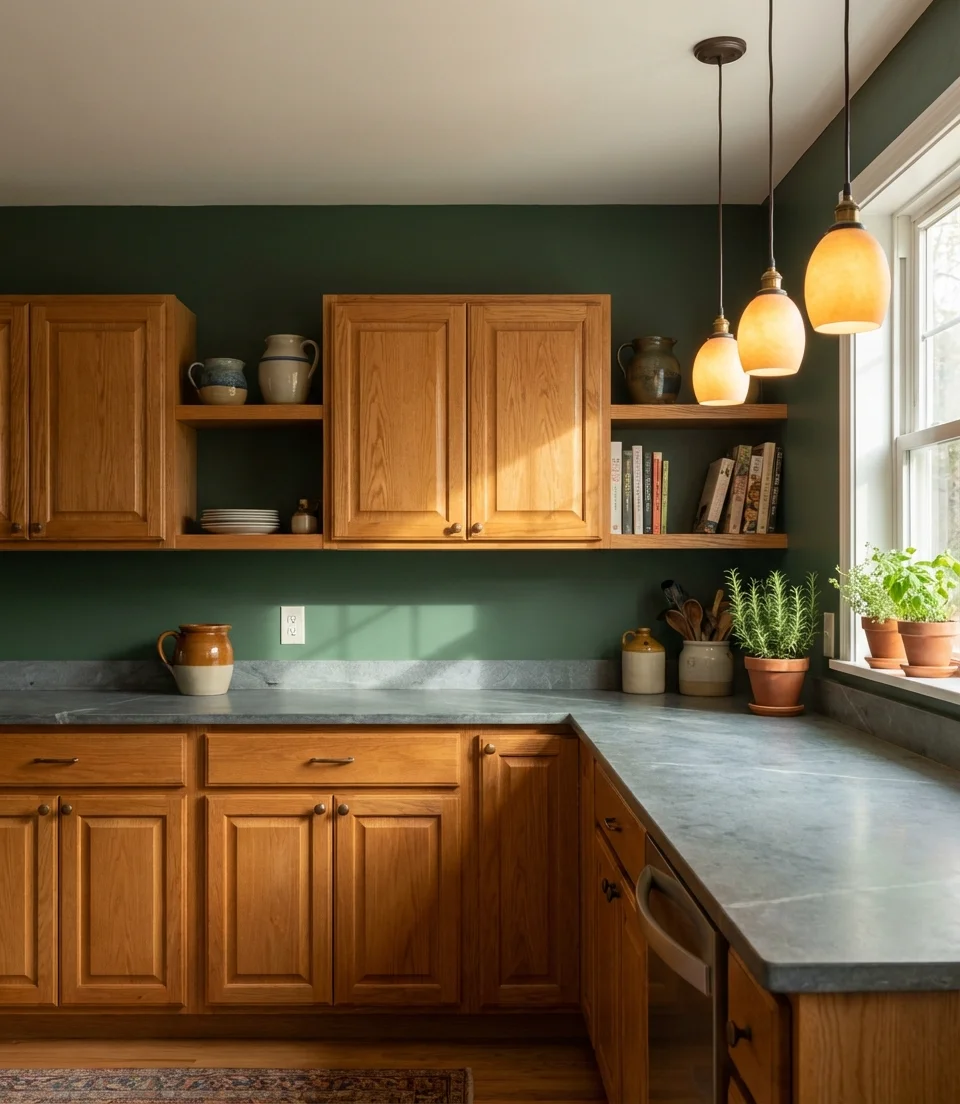
This pairing works especially well in kitchens that get good morning light—the sun bouncing off golden oak against deep green creates a warmth that feels almost like a boutique restaurant. Interior designers have pointed to similar palettes in high-end hospitality as the reason certain spaces feel so instantly comfortable, and there’s no reason your kitchen can’t borrow that energy. The deeper the green, the more the oak grain reads as rich and intentional rather than dated.
2. Swap In Black Countertops for High Contrast
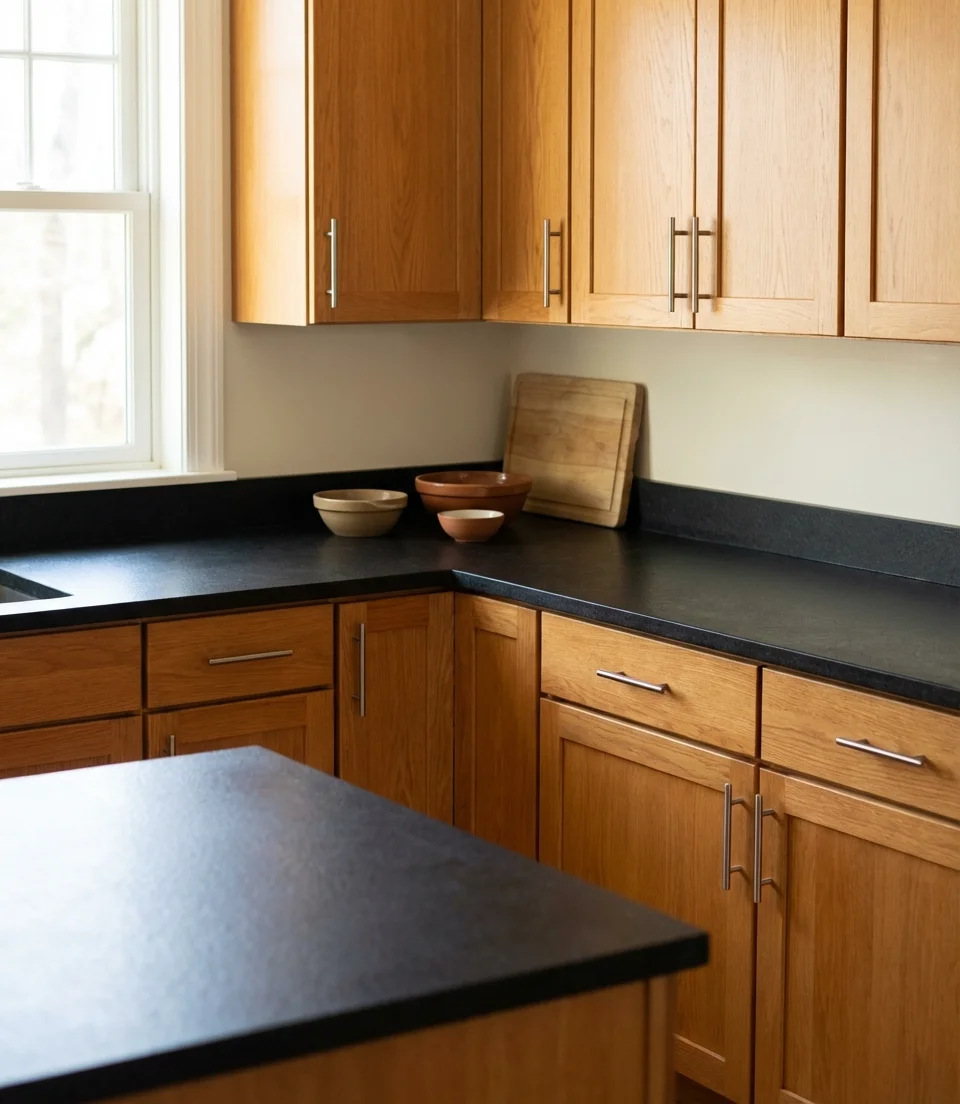
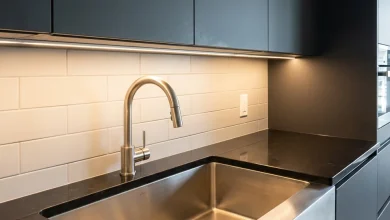
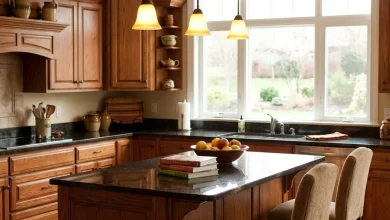
If there’s one update that consistently transforms honey oak kitchens from tired to striking, it’s replacing light counters with something dramatically dark. Black countertops—whether matte leathered granite, soapstone, or butcher block stained near-black—provide the kind of contrast that makes warm wood grain pop visually. The change is one of the most-pinned approaches right now for a reason: the impact is immediate, and the update is achievable without touching a single cabinet door. Pair with warm white or sage walls for balance.
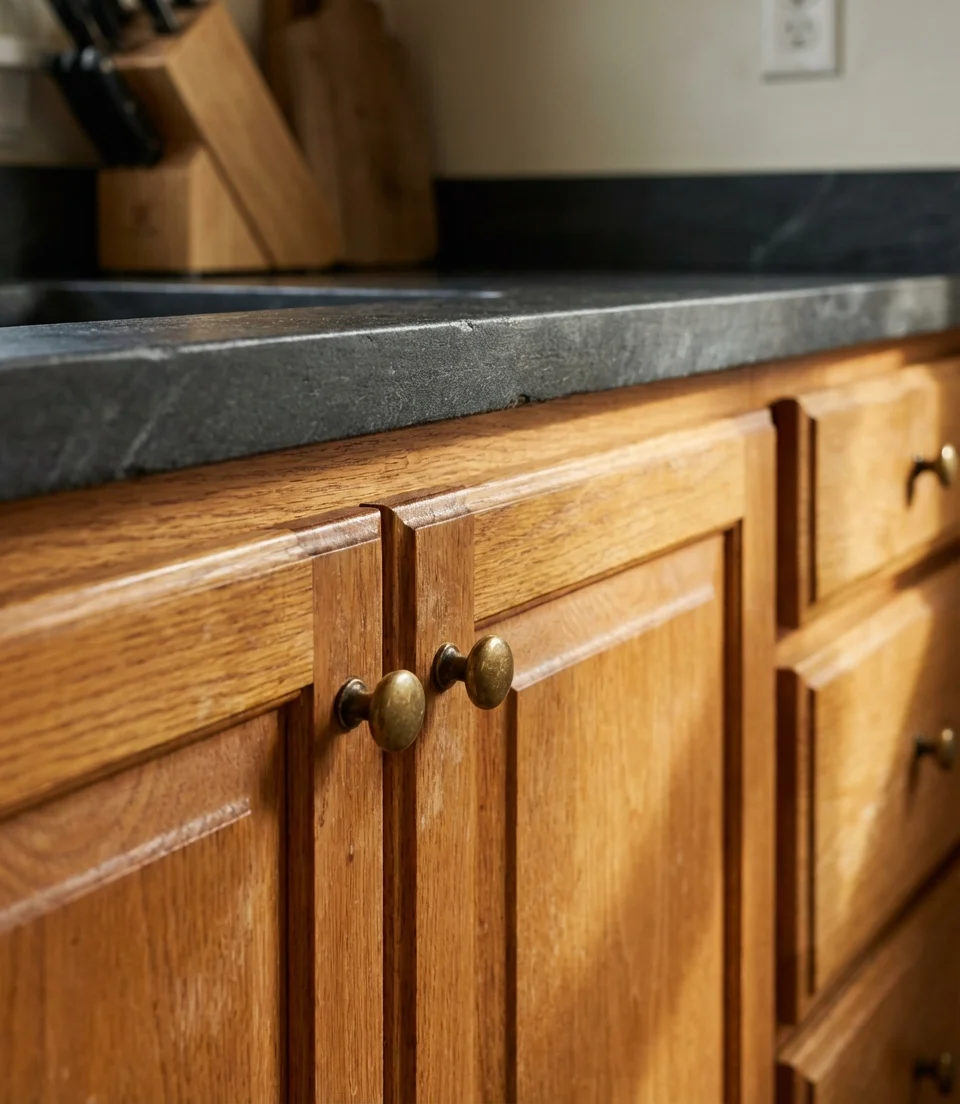
Expect to spend anywhere from $800 to $3,500 depending on material and square footage for this countertop swap—soapstone tends to run higher, while butcher block finished in a dark stain can come in around $40–$60 per linear foot. The key practical mistake to avoid: don’t go high-gloss black in a busy kitchen. Fingerprints show constantly on polished surfaces, while honed or leathered finishes stay looking clean far longer and require much less daily maintenance.
3. Introduce a White Tile Backsplash
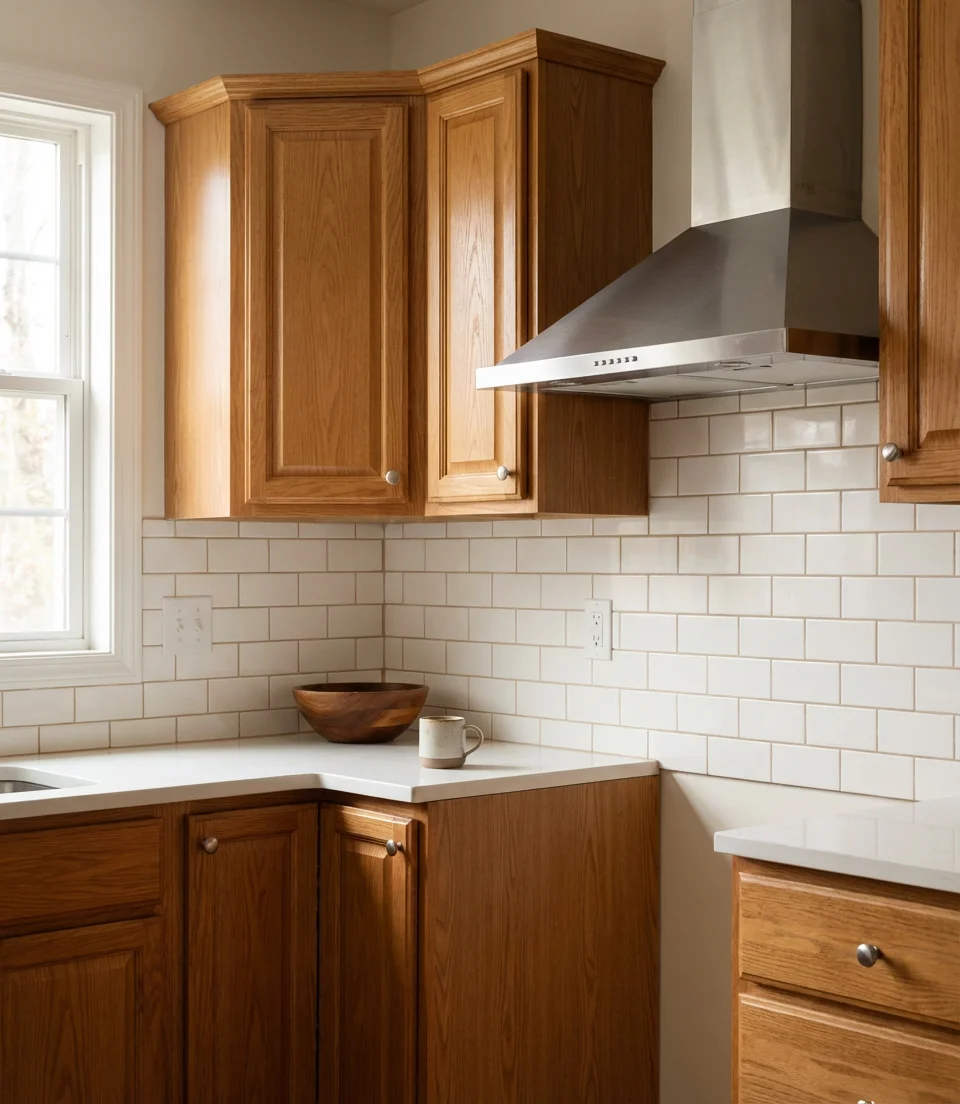
Sometimes the simplest move is the most effective. A crisp white tile backsplash acts as a visual reset against warm-toned honey oak, giving your eye somewhere to rest between all that wood grain. Subway tile, handmade ceramic, or large-format white porcelain slabs all work beautifully here. The trick is in the grout: use warm white or linen rather than bright white to avoid a jarring contrast. This technique is a classic backsplash-ideas approach that holds up over time and never competes with the cabinets themselves.
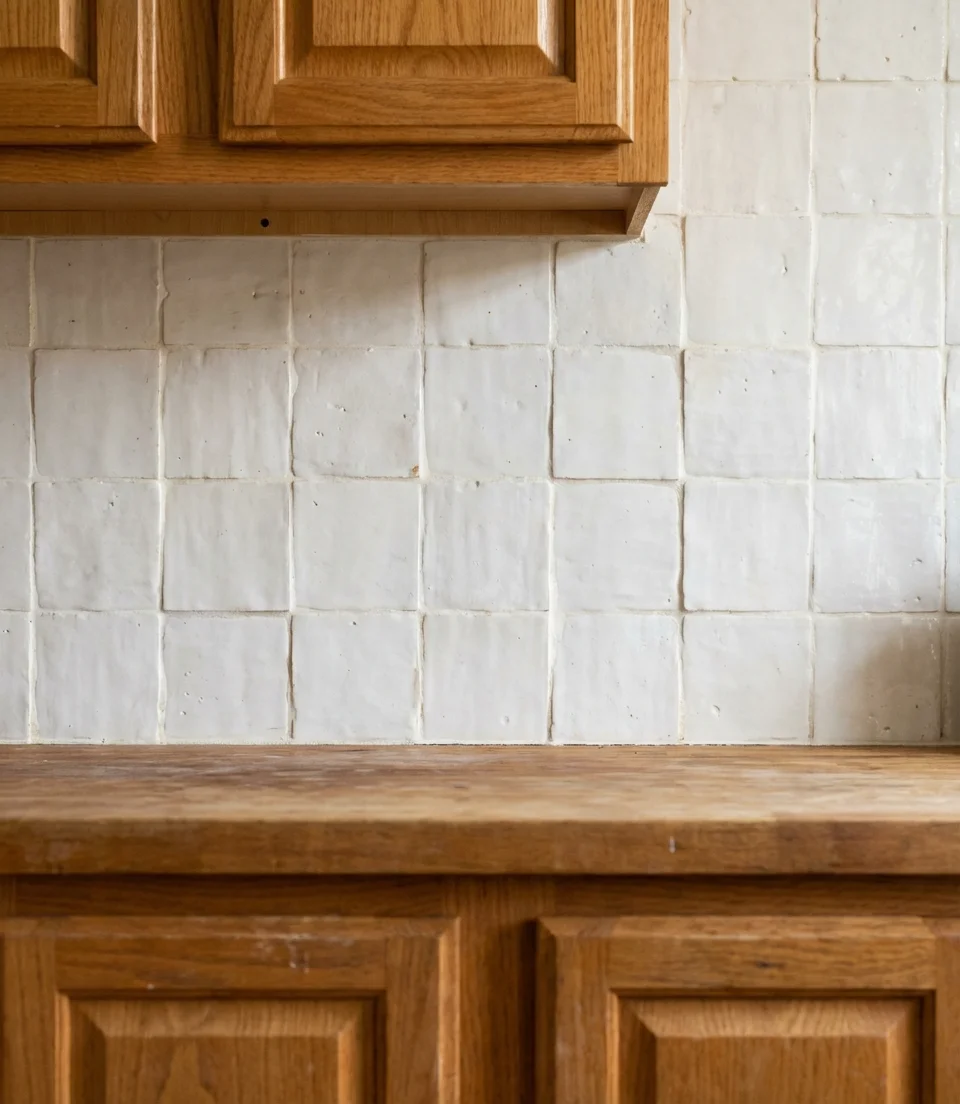
A homeowner in the suburbs of Columbus, Ohio, shared that she’d been planning to paint her cabinets until she installed white handmade tile behind the range—and suddenly the whole kitchen felt updated without touching a single door. That’s the power of the right backsplash: it shifts the context of everything around it. White tile works best in kitchens with decent natural light, where the brightness reads as airy rather than clinical.
4. Try a Black Backsplash for Drama
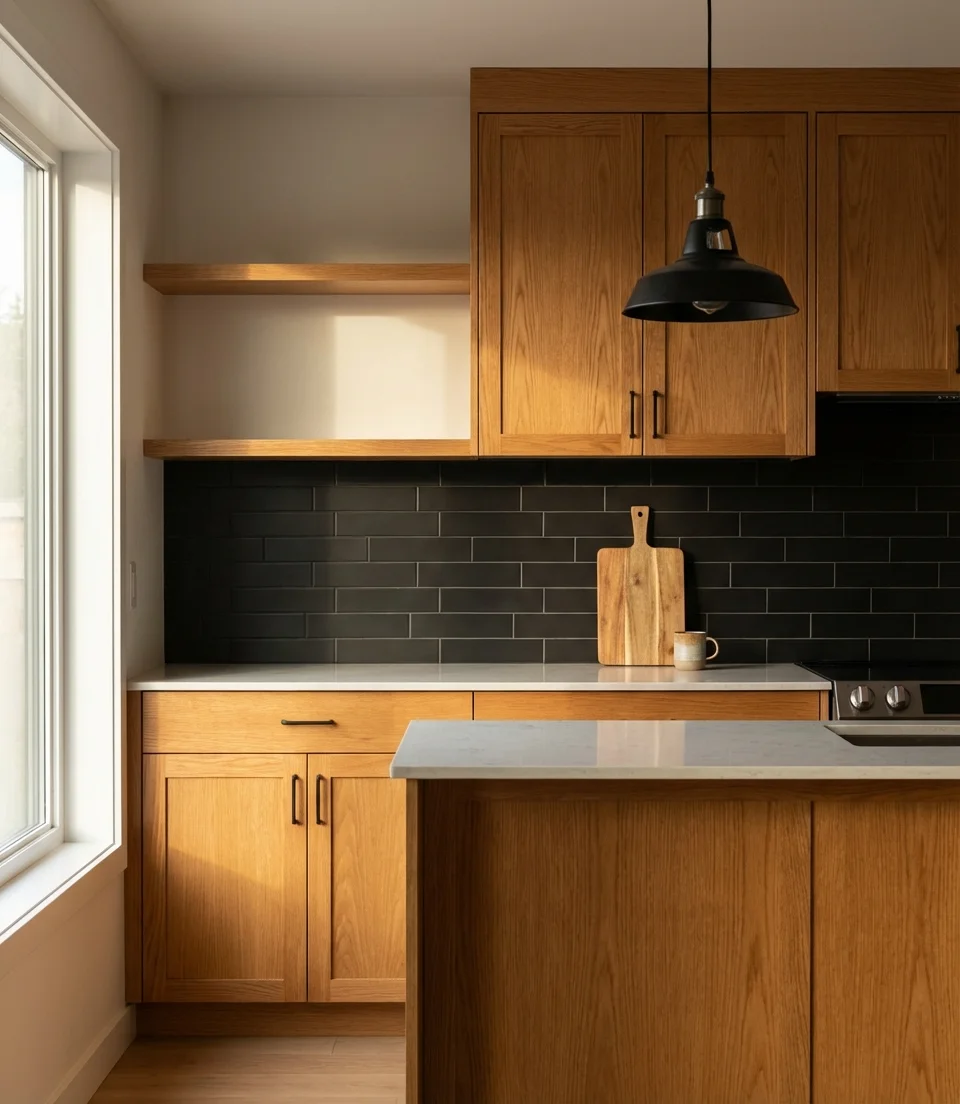
Going the opposite direction from white, a black backsplash creates something unexpected and genuinely striking behind honey oak cabinets. Matte ceramic tile in charcoal or near-black, dark slate, or black-grouted zellige all have a moody quality that makes the golden warmth of oak glow by comparison. Black grout is not a timid choice, and it’s one that photographs exceptionally well—which explains why it’s become a go-to for designers working with wall color and paint and black countertop combinations in kitchens meant to stand out.
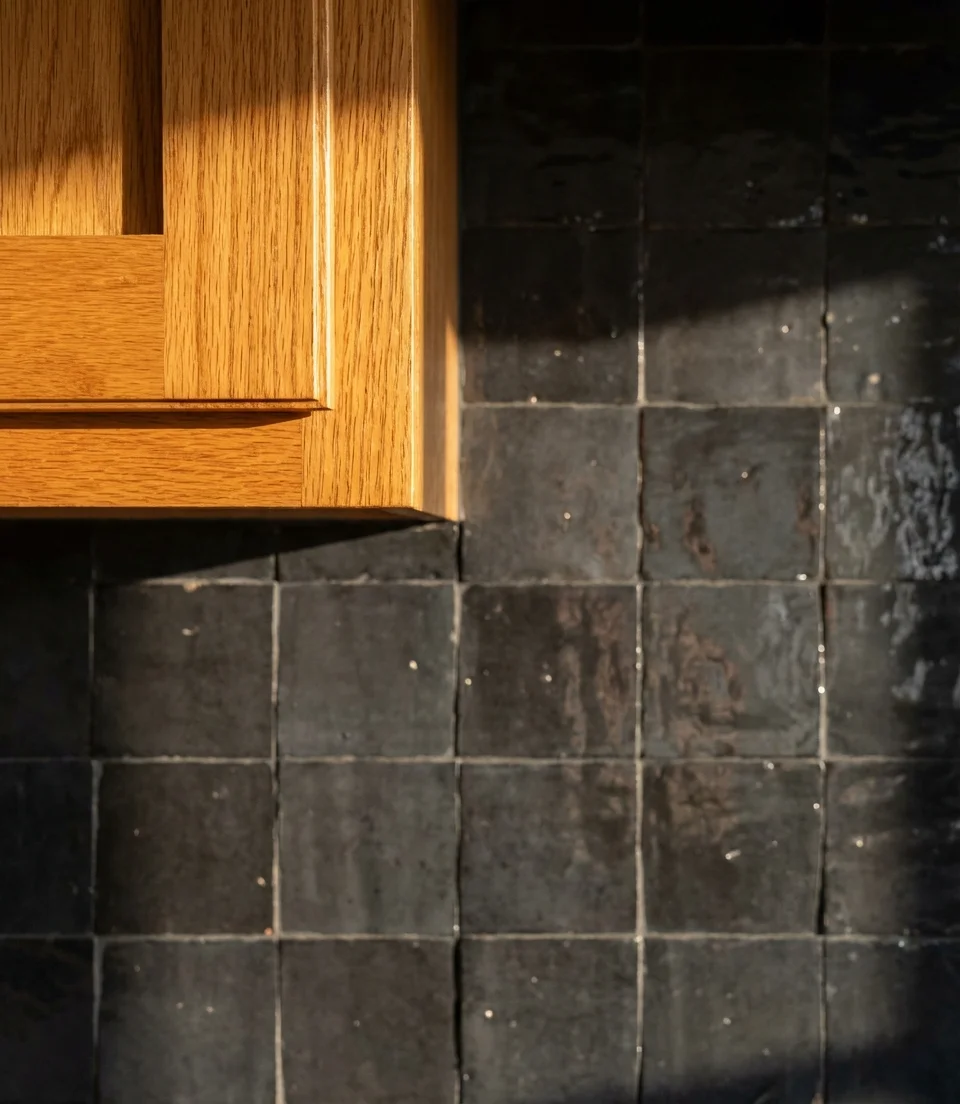
Where this style style works best: kitchens with strong overhead or under-cabinet lighting. The black tile may absorb light in an already dim space, so please ensure you compensate with layered lighting before making a commitment. Investing in a single warm LED strip beneath each upper cabinet not only adds only $100–$200 to the total project cost but also significantly enhances the aesthetic appeal of the space.
5. Update the Hardware With Matte Black Knobs
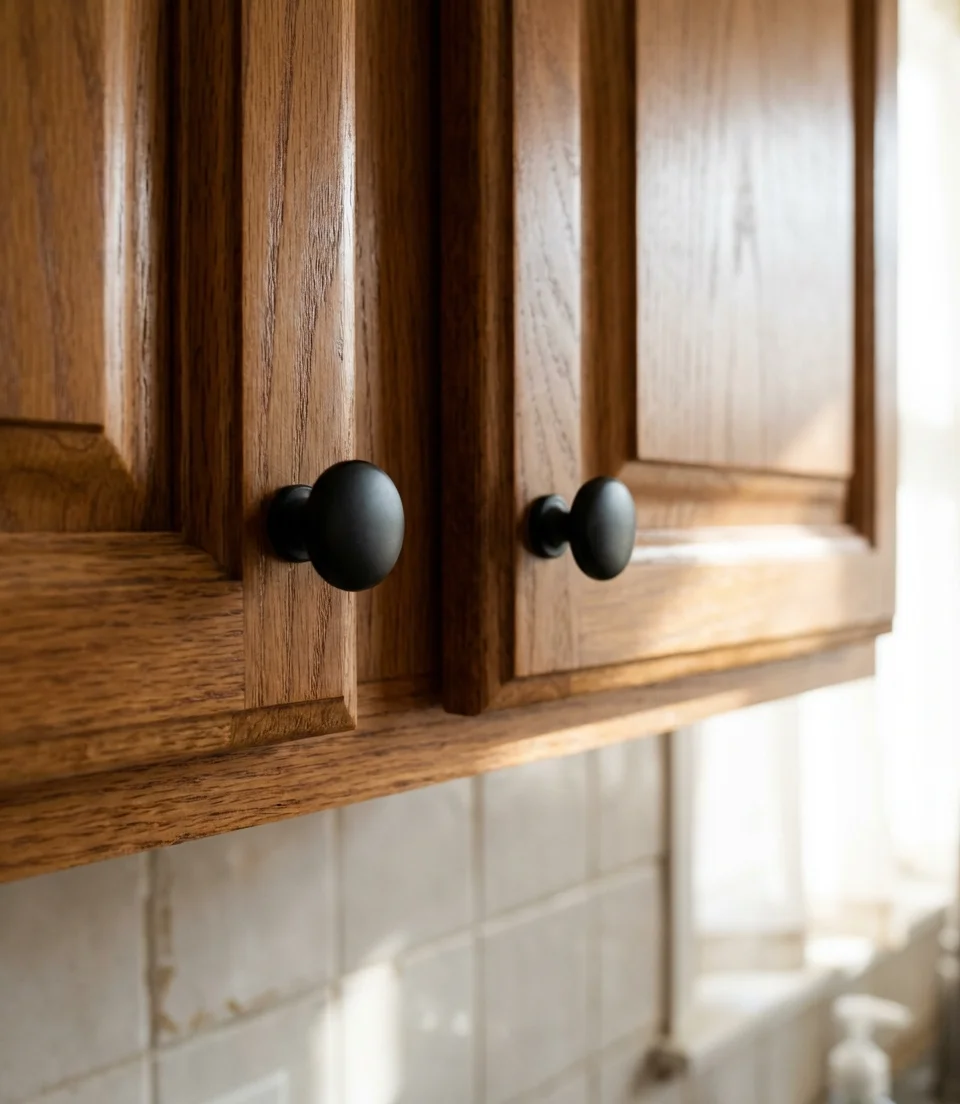
Nothing dates a honey oak kitchen faster than its original brass or chrome hardware—and nothing refreshes it faster than swapping it out. Knobs for cabinets in matte black are having a major moment right now, and for good reason: they add a graphic, contemporary punctuation to warm wood without requiring any construction at all. This project project is one of the most satisfying DIY update projects in kitchen design because the transformation is immediate, affordable, and completely reversible. You only need a flat-head screwdriver and twenty minutes to complete this project.
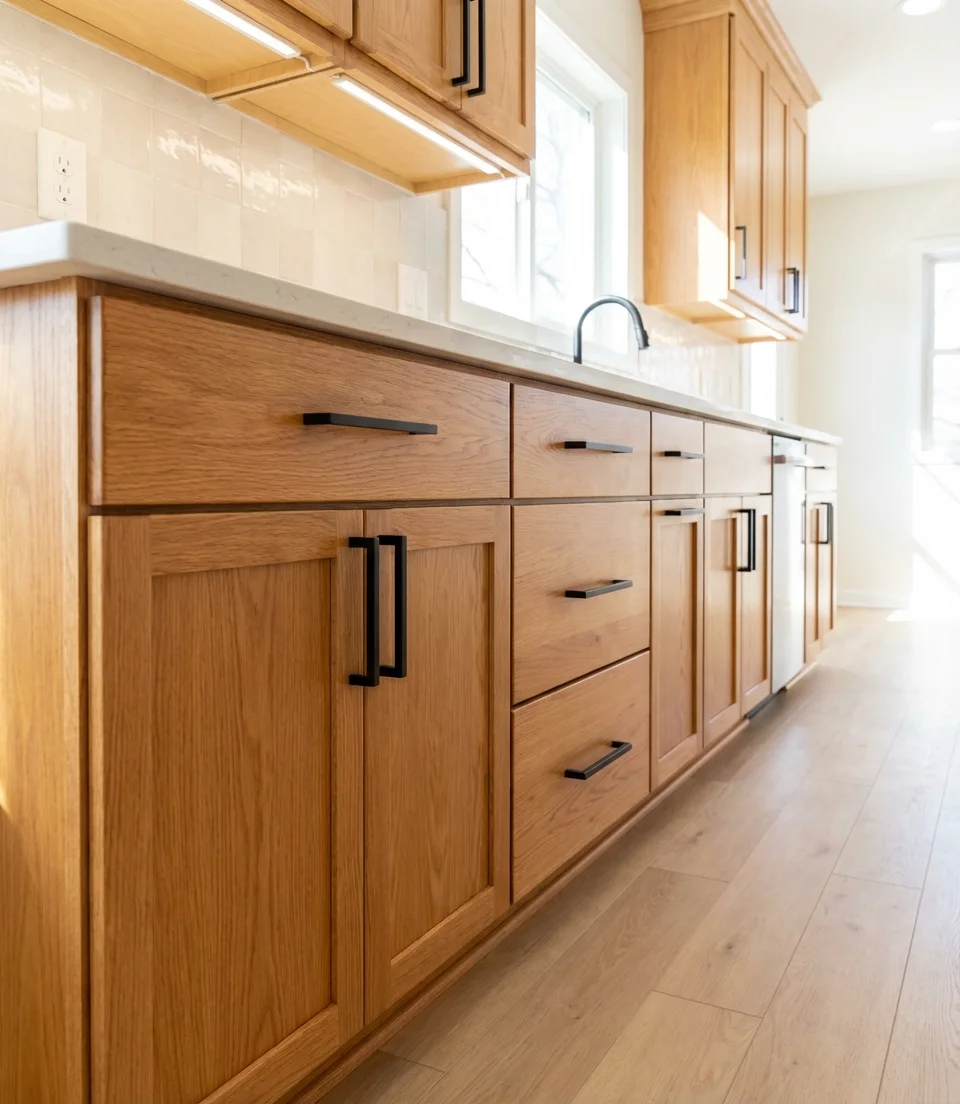
A full set of matte black knobs or pulls typically runs $60–$150 for an average-sized kitchen, depending on whether you choose simple round knobs or longer bar pulls. Bar pulls tend to read more contemporary, while cup pulls add a subtle vintage-industrial edge. Designers often note that mixing shapes—knobs on doors, pulls on drawers—adds just enough visual interest to make a kitchen feel styled rather than stock, which is exactly the goal here.
6. Layer In Light Wood Flooring
One of the most underestimated ways to modernize a honey oak kitchen is through the flooring beneath it. Light-toned, wide-plank floors—white oak, maple, or light-colored LVP— work beautifully because they create a tonal family with the cabinets while still offering visual separation. The two wood tones don’t clash; they layer like different values of the same color. For homeowners seeking a significant update without drastic changes, new flooring literally transforms the entire room.
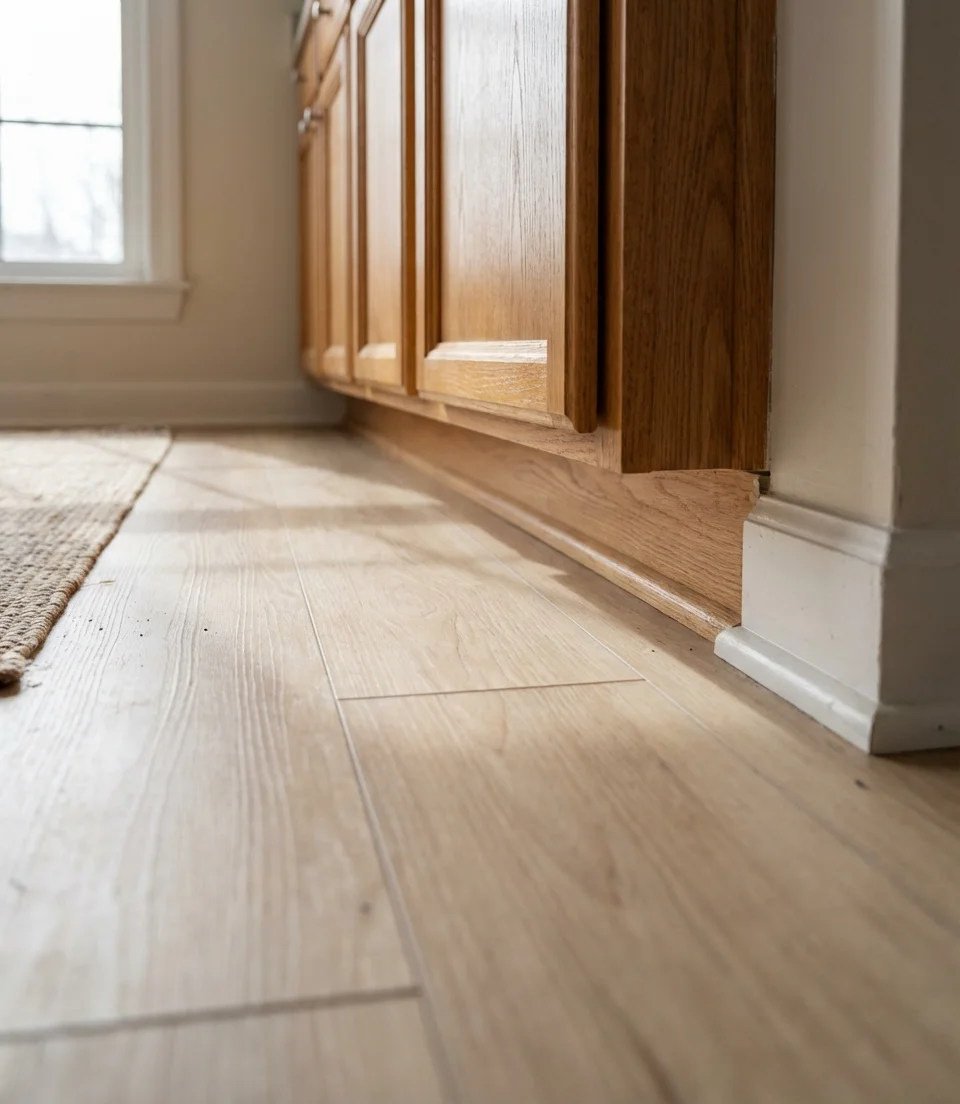
This combination is particularly popular in Southern and Midwestern homes where honey oak kitchens are most common—and where the open floor plan means the kitchen flooring flows into adjacent living areas. Matching the kitchen floor to the rest of the main level creates visual continuity that makes the entire first floor feel larger and more intentional. LVP options have gotten remarkably convincing recently, with realistic wood textures now starting around $2.50 per square foot.
7. Go Bold With Orange-Toned Accents
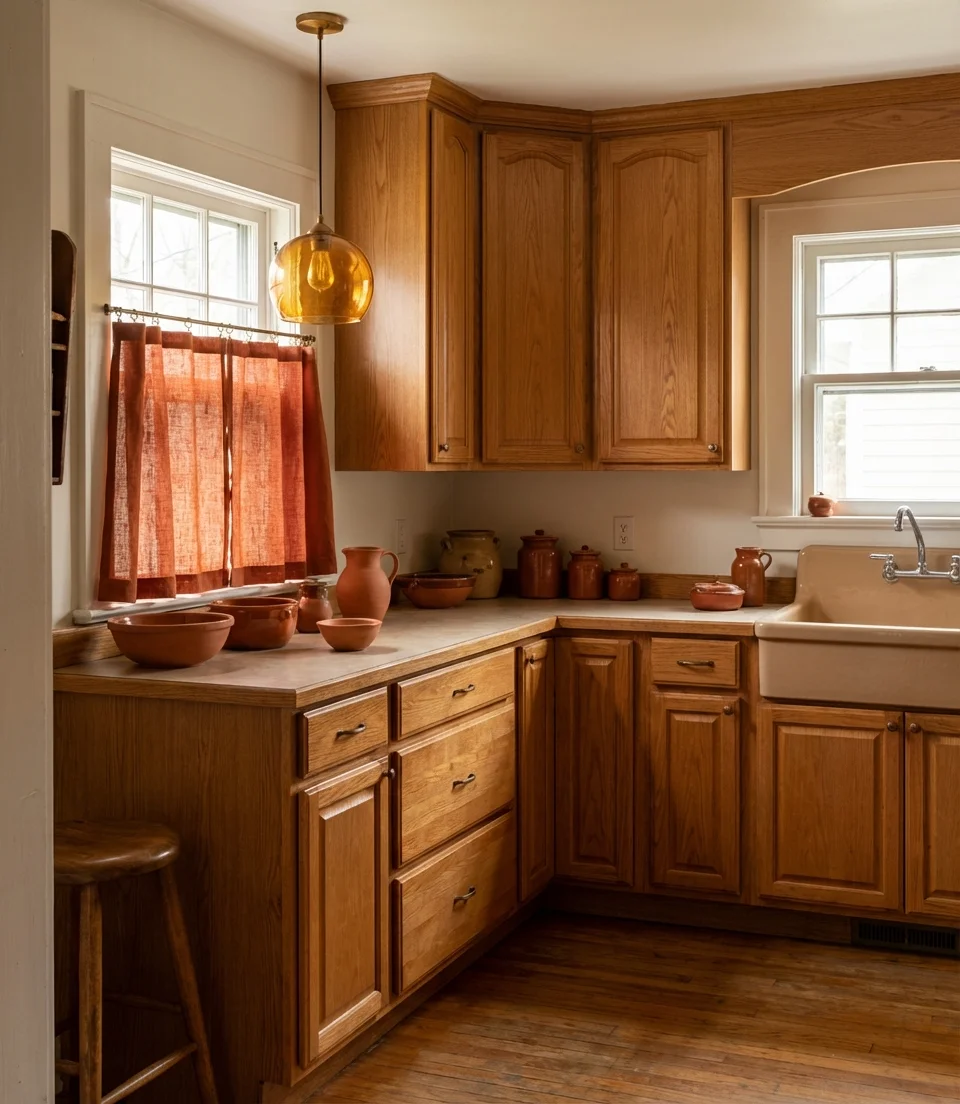
Instead of fighting the orange undertones in honey oak, lean into them. Color theory has long held that working with a room’s dominant undertone—rather than neutralizing it—creates a more cohesive, curated look. Terracotta dishware, rust-colored linen curtains, amber glass pendant lights, or a single burnt-orange ceramic canister set can anchor the warmth of the wood and make the whole kitchen feel intentional. This approach pairs beautifully with style inspiration boards that favor earthy, organic palettes over cool minimalism.
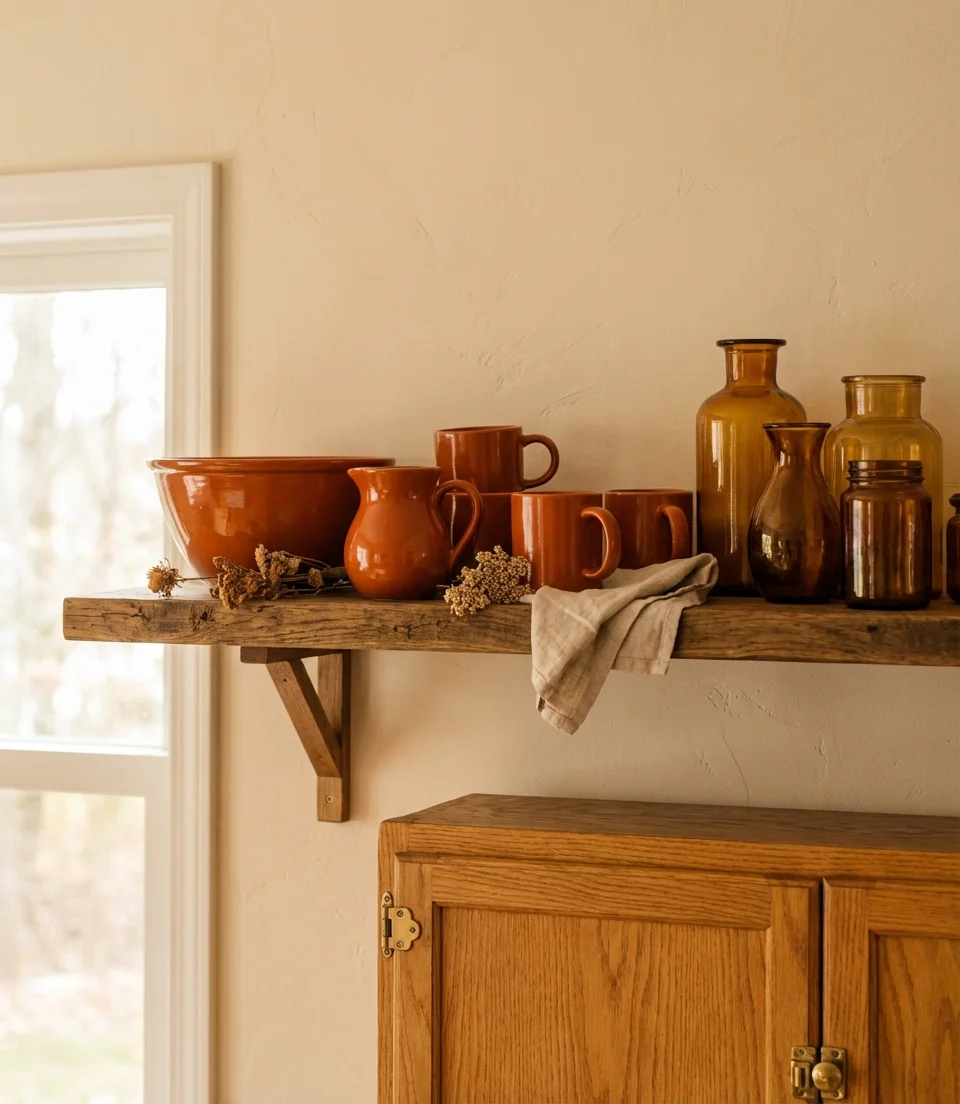
Leaning into orange works best in kitchens where the natural light itself is warm rather than cool and blue-toned. In a north-facing kitchen this palette can feel heavy—but in an east- or west-facing space where golden morning or late afternoon light pours in, terracotta and oak together create something almost Mediterranean in its depth. It’s a look that photographs particularly well, which explains its steady presence on Pinterest boards dedicated to earthy kitchen aesthetics.
8. Pair With White Appliances for a Soft Retro Look
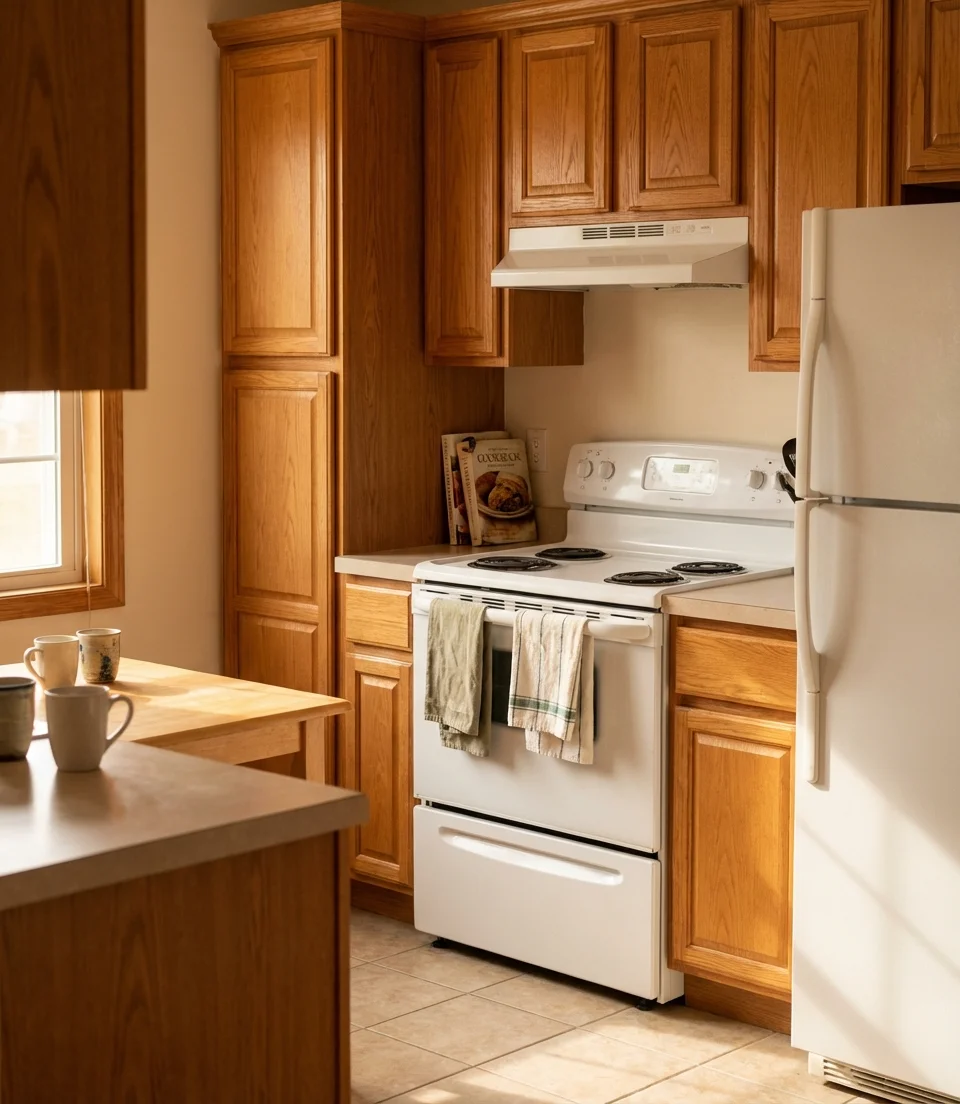
Honey oak is the ideal partner for white appliances, which are quietly making a comeback. Something about the combination feels genuinely soft and livable, a stark contrast to the sterile commercial-kitchen aesthetic that dominated the past decade of stainless steel appliances. A white refrigerator, dishwasher, and range against warm oak cabinets reads as cozy, grounded, and slightly nostalgic in the best way. It also bypasses one of the biggest frustrations with stainless: the constant fingerprint wiping that comes with that finish.
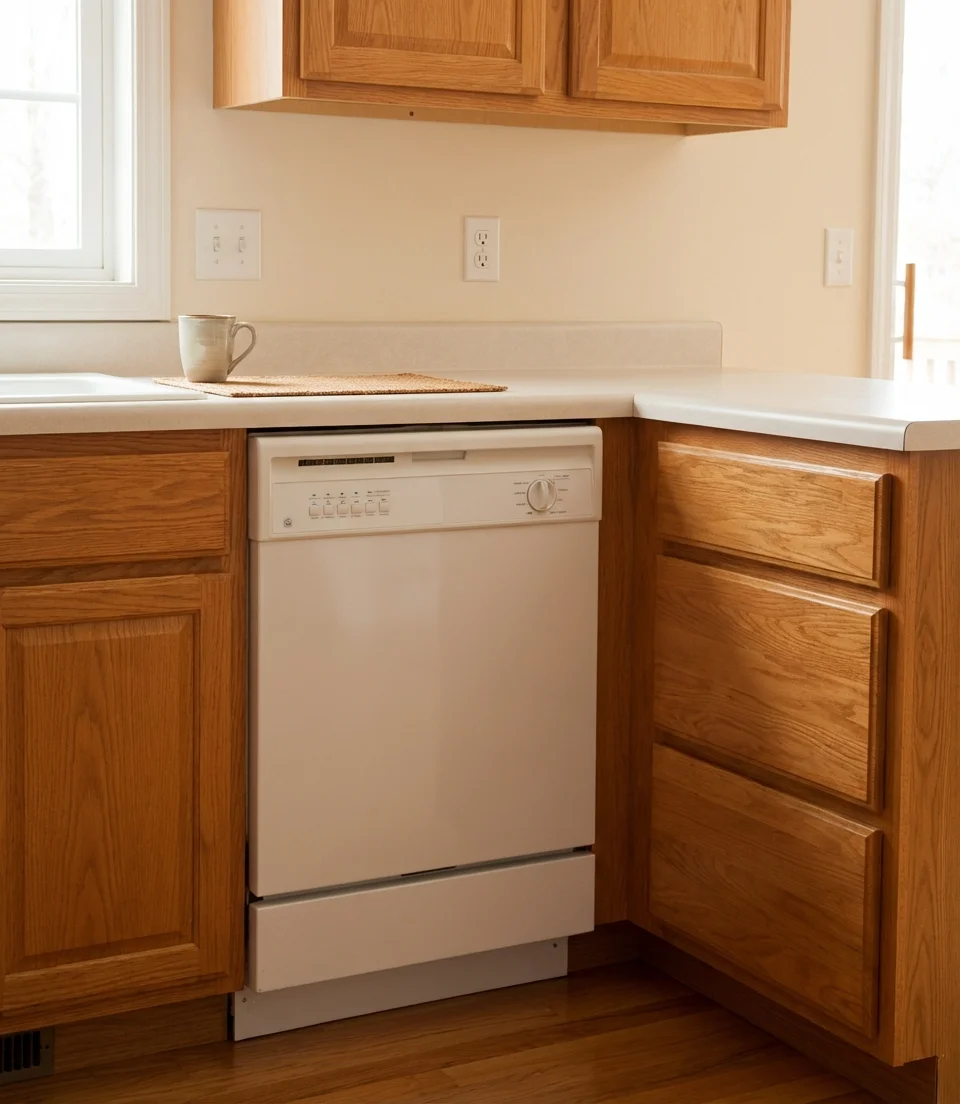
White appliances tend to run 15–20% less expensive than comparable stainless models, which makes this a genuinely budget-conscious choice that also happens to look beautiful. The combination is particularly common in Midwest and Southern kitchens, where the aesthetic leans warm and practical over sleek and industrial. One detail to keep in mind: white appliances pair best with off-white or warm-white wall colors rather than stark cool white, which can feel visually mismatched.
9. Refresh With a Green Tile Backsplash
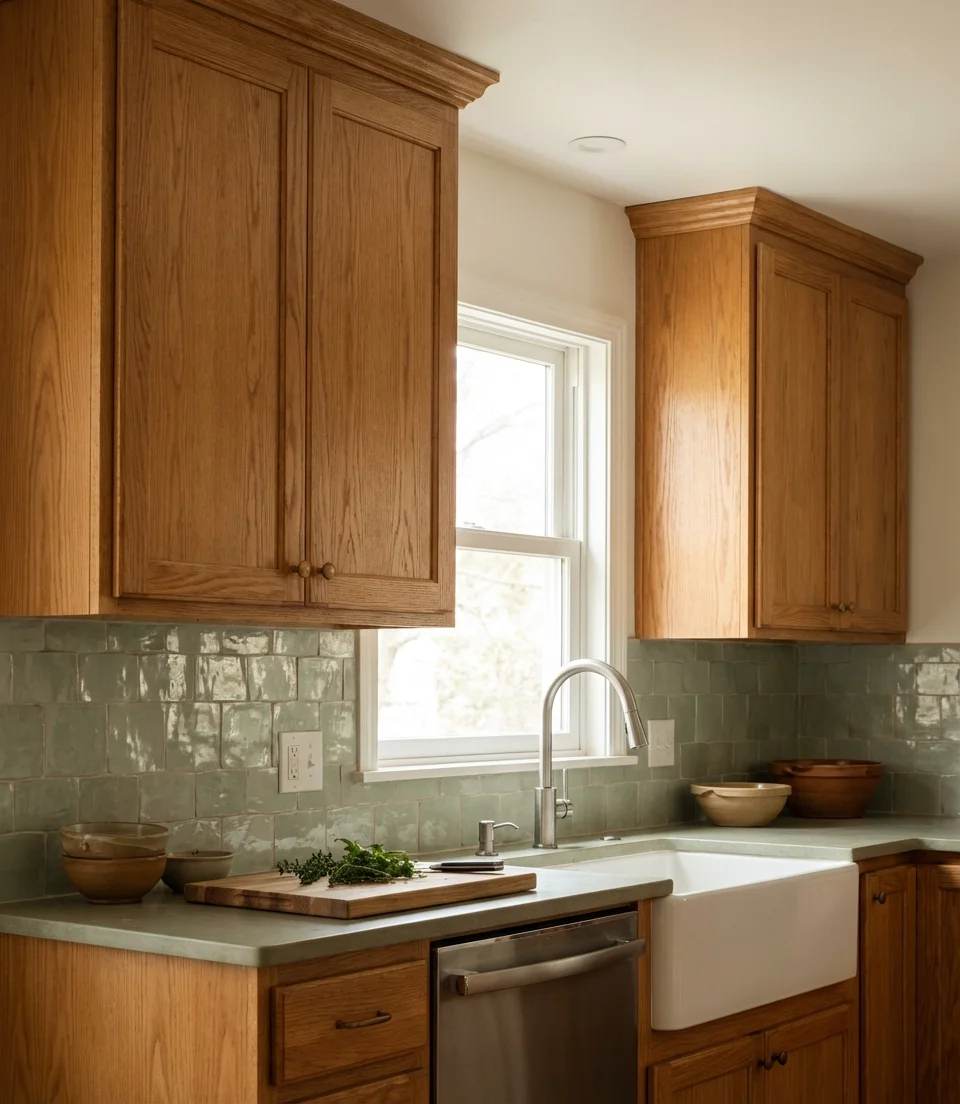
If you find white to be too safe and black to be too bold, a green backsplash provides a compelling balance. Sage, moss, eucalyptus, and deep teal tiles blend seamlessly with honey oak, reflecting the forest and the organic nature of grain. This is a strong idea for updating a backsplash for anyone who wants something that feels fresh and current without being obviously trendy. Zellige, handmade, or glossy subway in green all bring different moods to the space.
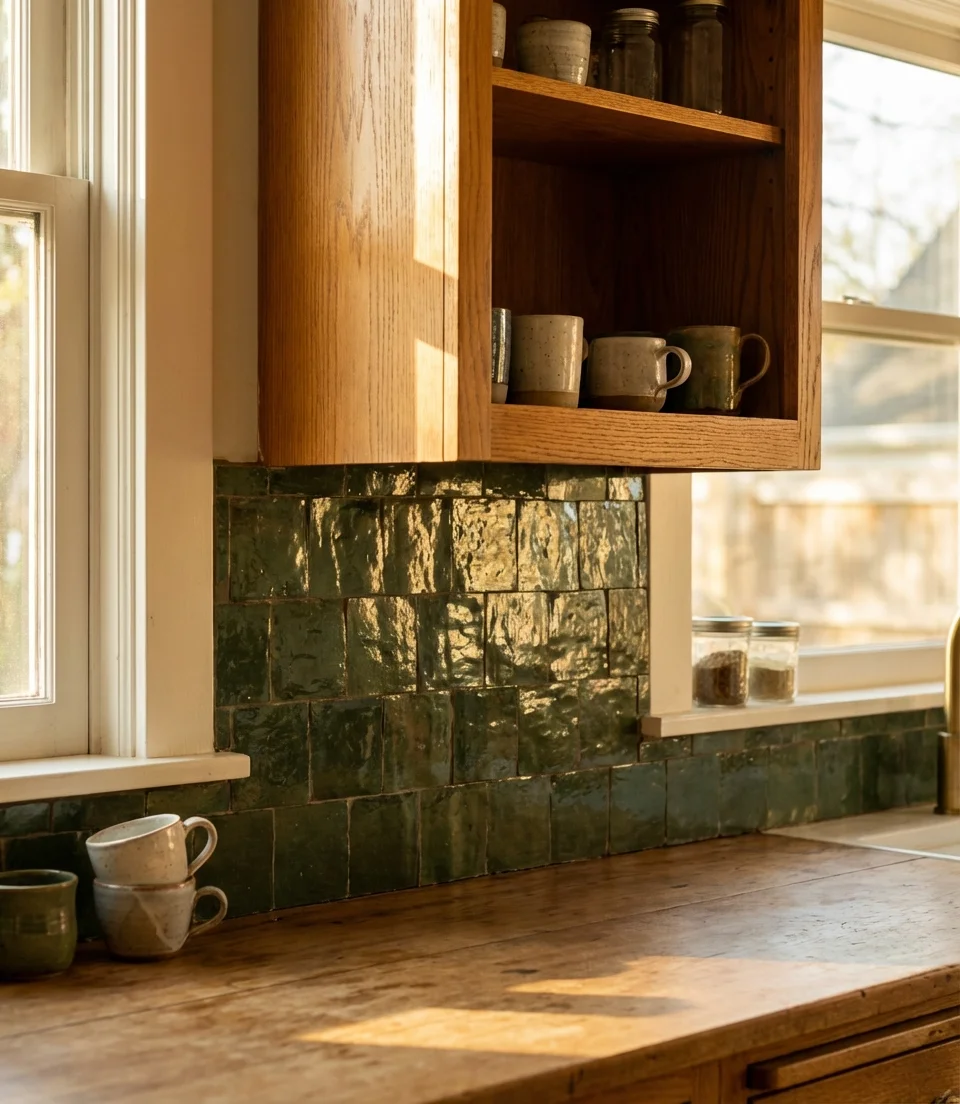
Zellige green tile has been one of the most-saved kitchen ideas on Pinterest for good reason—the handmade irregularity of each piece catches light differently throughout the day, making the backsplash almost seem alive. It’s not the most budget-friendly route (zellige typically runs $25–$50 per square foot), but the visual payoff in a kitchen with honey oak is exceptional. Mass-market green subway tile at $3–$8 per square foot delivers much of the same energy at a fraction of the investment.
10. Add White Countertops for Contrast and Brightness
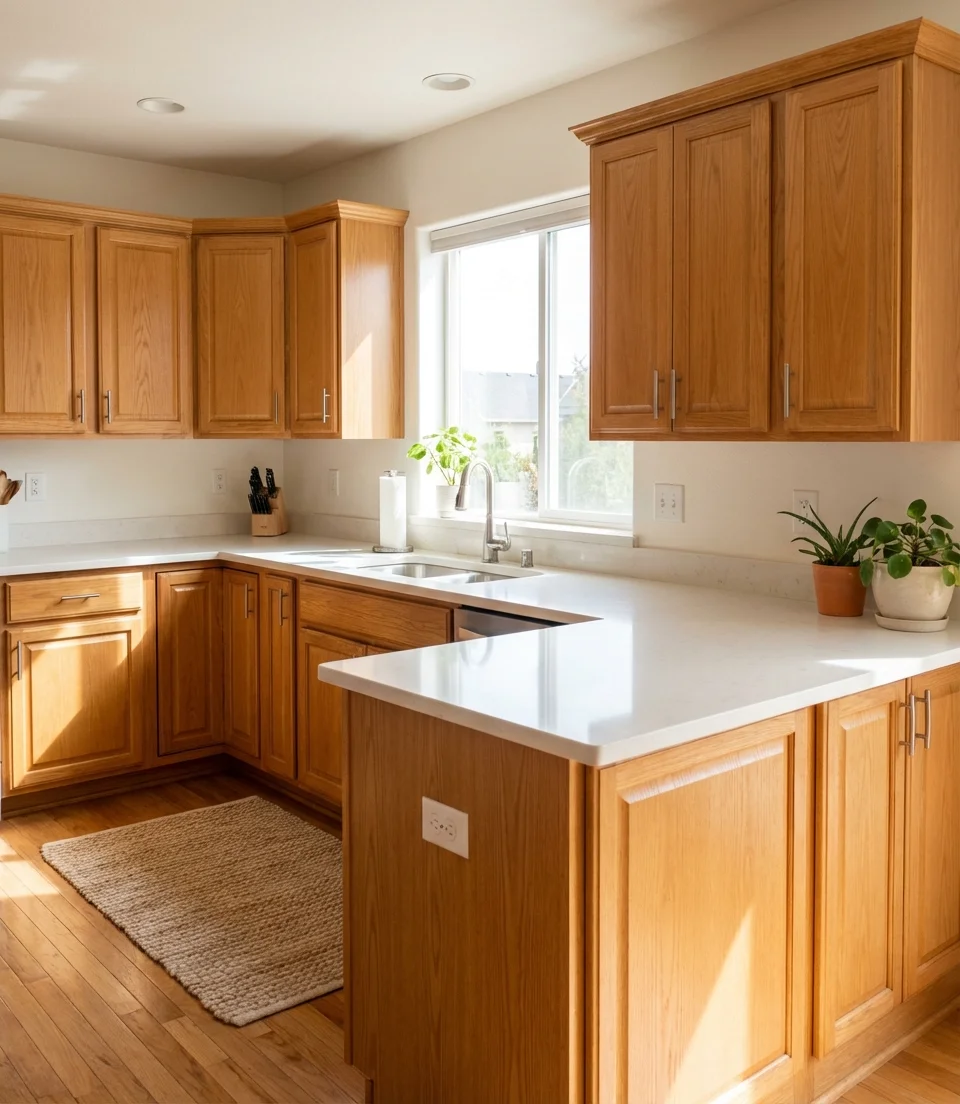
White counter surfaces are one of the most classic companions for honey oak—and they’re making a strong return as homeowners move away from the all-gray aesthetic that dominated the past decade. A kitchen full of warm wood tones benefits from the brightness and visual breathing room provided by white quartz, marble, or even painted butcher block. Selecting a white with warm undertones, such as cream, ivory, or greige, is crucial to avoid creating an uncomfortable temperature clash with the golden grain of oak.
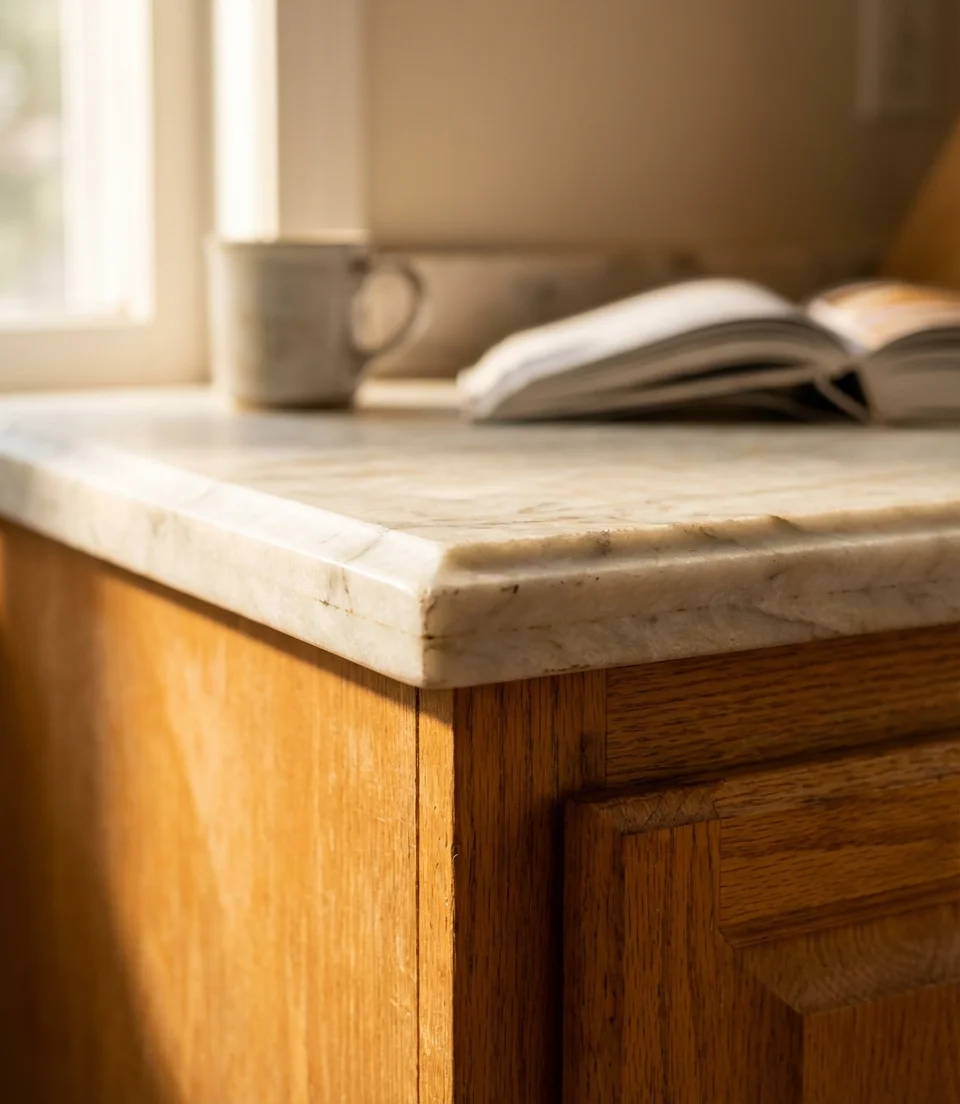
One of the most common mistakes when updating honey oak kitchens is choosing a countertop in the wrong white family. If the oak has a yellow-gold tone and the counter has blue or gray undertones, the result looks unintentional rather than curated. Bring an oak cabinet door—or at least a clear photo taken in strong natural light—to the stone yard. Most suppliers allow you to hold samples next to your reference image before placing an order, thereby eliminating most of the uncertainty in the process.
11. Embrace the 90s Nostalgia Fully
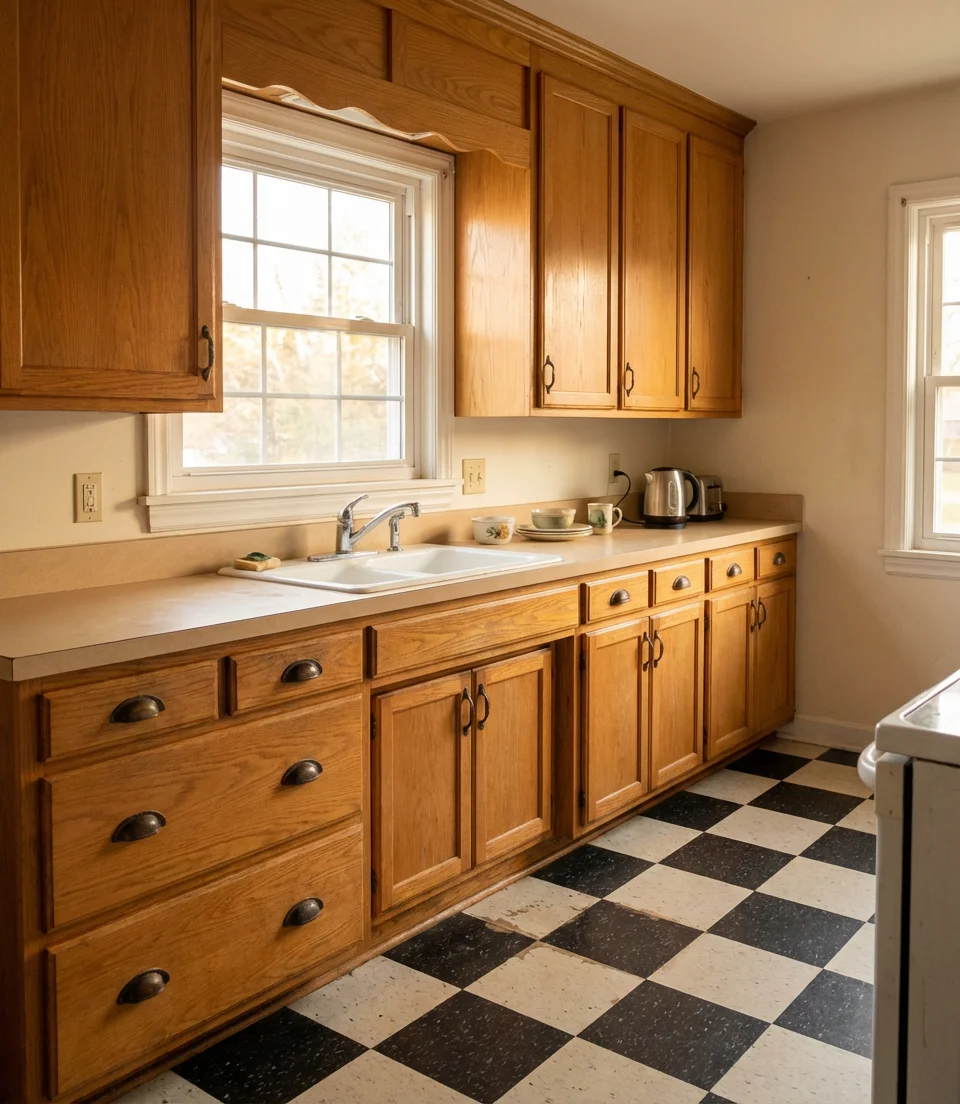
There’s a growing design movement that argues the best thing you can do with a 90s-era kitchen isn’t to modernize it—it’s to fully commit to its era with intention and craft. Honey oak, laminate counters in off-white or almond, checkered floor tile, and vintage-style hardware can coexist beautifully in a kitchen that feels nostalgic and genuinely original. This approach is becoming a real style inspiration direction on Pinterest, particularly for younger homeowners drawn to the authenticity of houses that confidently know what they are.
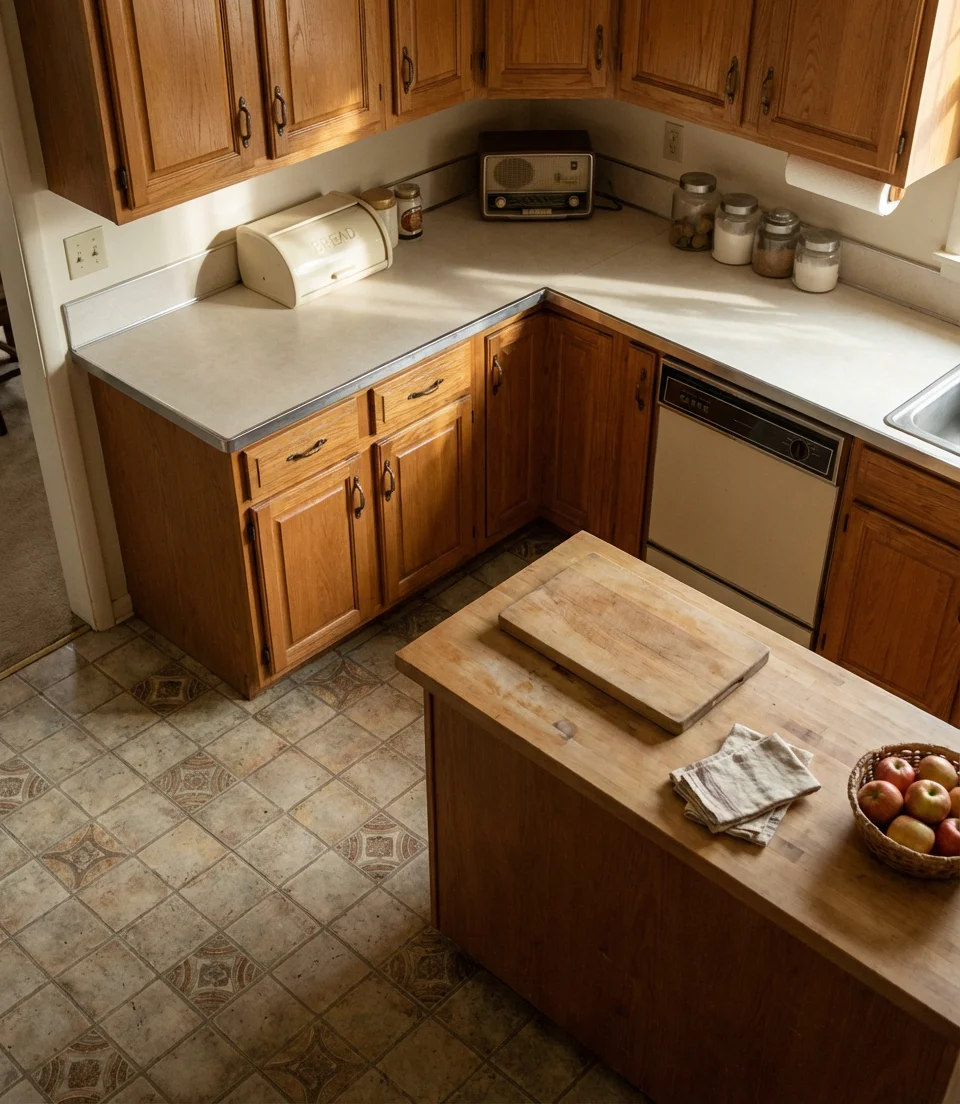
A couple in Portland, Oregon, leaned so hard into their original honey oak kitchen—adding a vintage Chambers range, period-correct linoleum in a classic pattern, and a hanging pot rack—that it became the most-shared room in their entire renovation account. The key insight: nostalgia works best when it’s curated and complete, not apologetic. Committing fully sends a message that the decor was a deliberate choice, and that confidence reads unmistakably as style.
12. Attempt a Full Makeover: Before and After
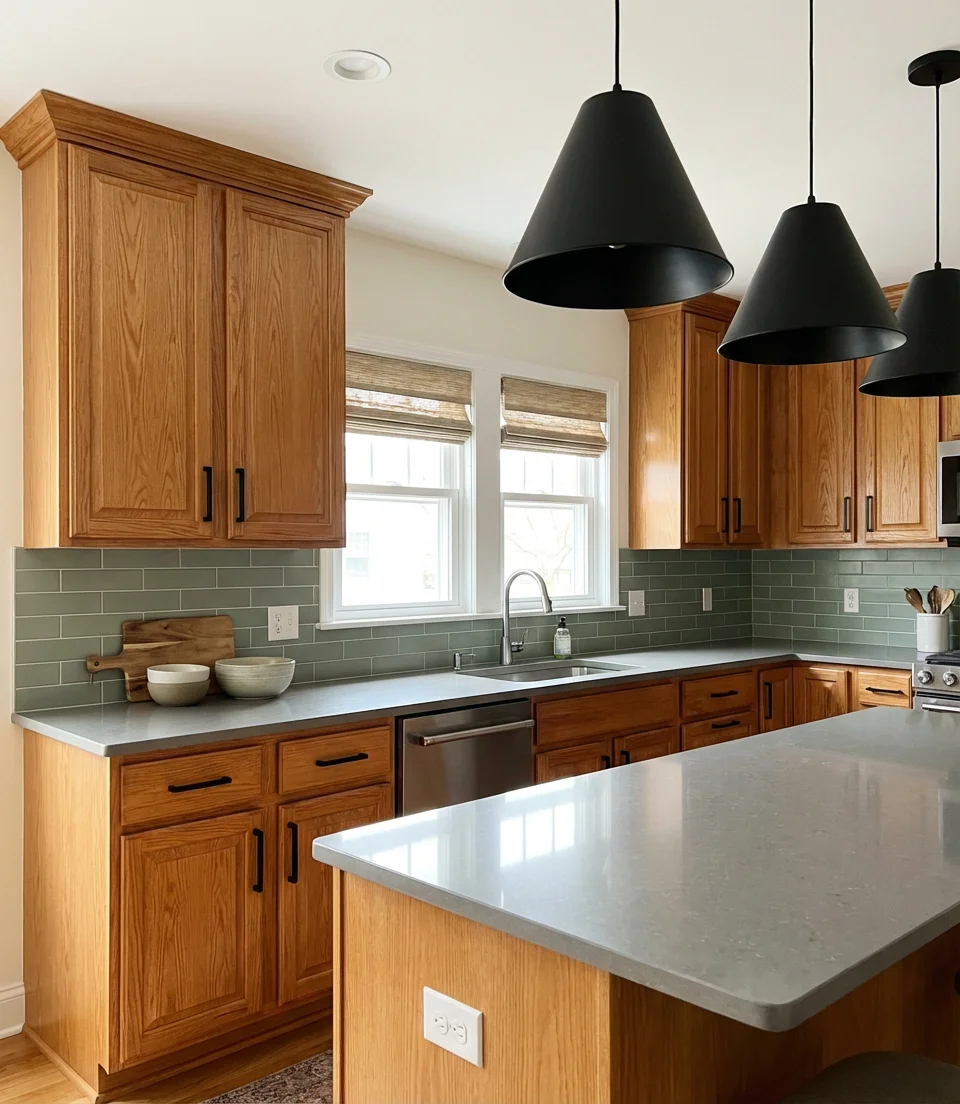
A phased makeover—tackling multiple elements in sequence—can produce the most dramatic transformation for anyone overwhelmed by a honey oak kitchen. The typical sequence involves starting with hardware for an instant win, followed by wall color, then backsplash, and finally countertops if the budget allows. Thinking in before-and-after terms helps prioritize what matters most visually. A hardware swap and fresh paint done in a single weekend can shift an entire kitchen’s perception from worn to designed.
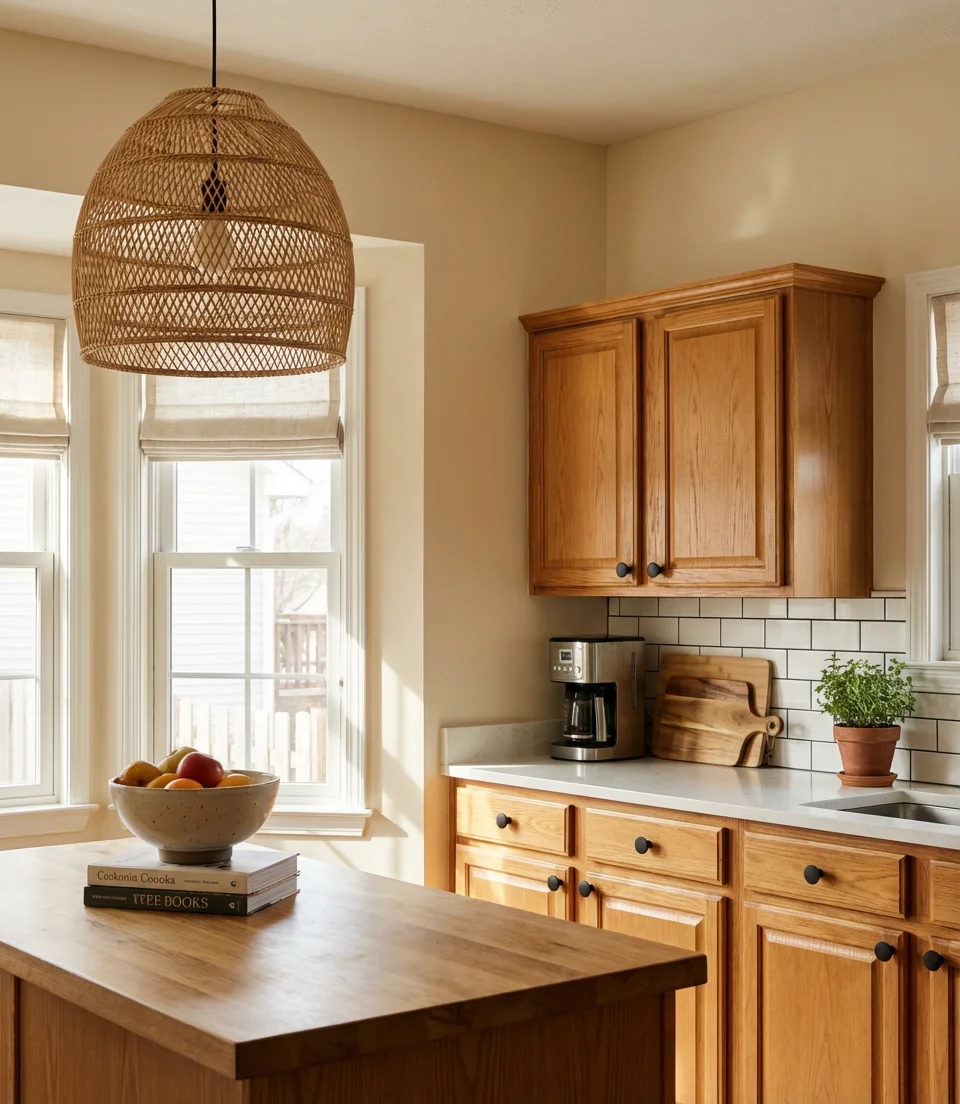
The biggest mistake homeowners make with kitchen makeovers is trying to tackle everything at once and running out of budget before making the most visible changes. Starting with the most photographed wall—the one you see immediately when you walk in, usually anchored by the range and hood—gives you the best visual return on whatever you invest first. The less-visible sections can come in a second phase once you’ve seen what works and what doesn’t.
13. Choose a Warm Greige Wall Color
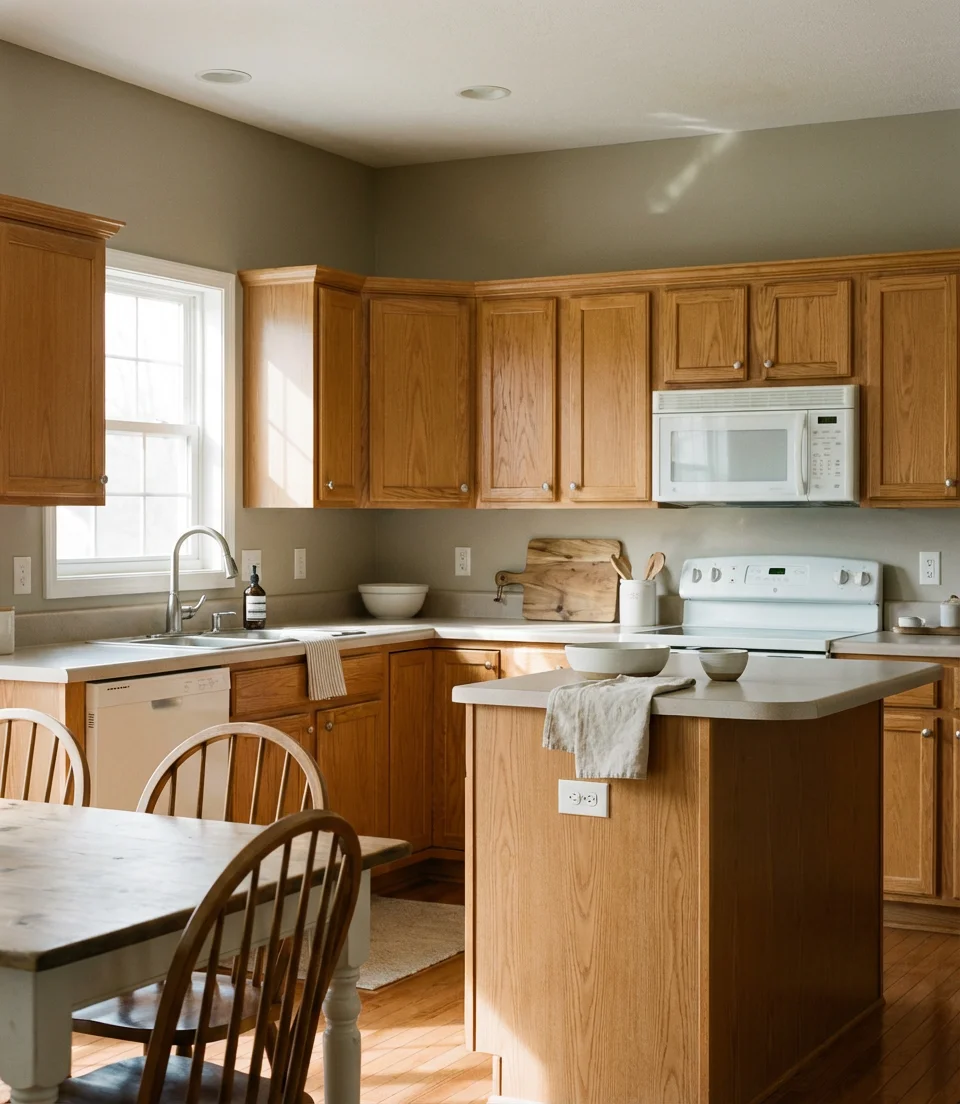
Not everyone wants drama—and for those who want their honey oak kitchen to feel updated but genuinely livable, a warm greige wall color paint is one of the most reliable choices available. Greige (a blend of gray and beige) with warm undertones bridges the gap between the contemporary desire for neutrals and the warm reality of oak wood. Colors like Accessible Beige, Agreeable Gray, or Pale Oak by Benjamin Moore all have enough warmth to support the cabinetry without reading yellow or dated themselves. A neutral color is the safe choice that actually, genuinely works.
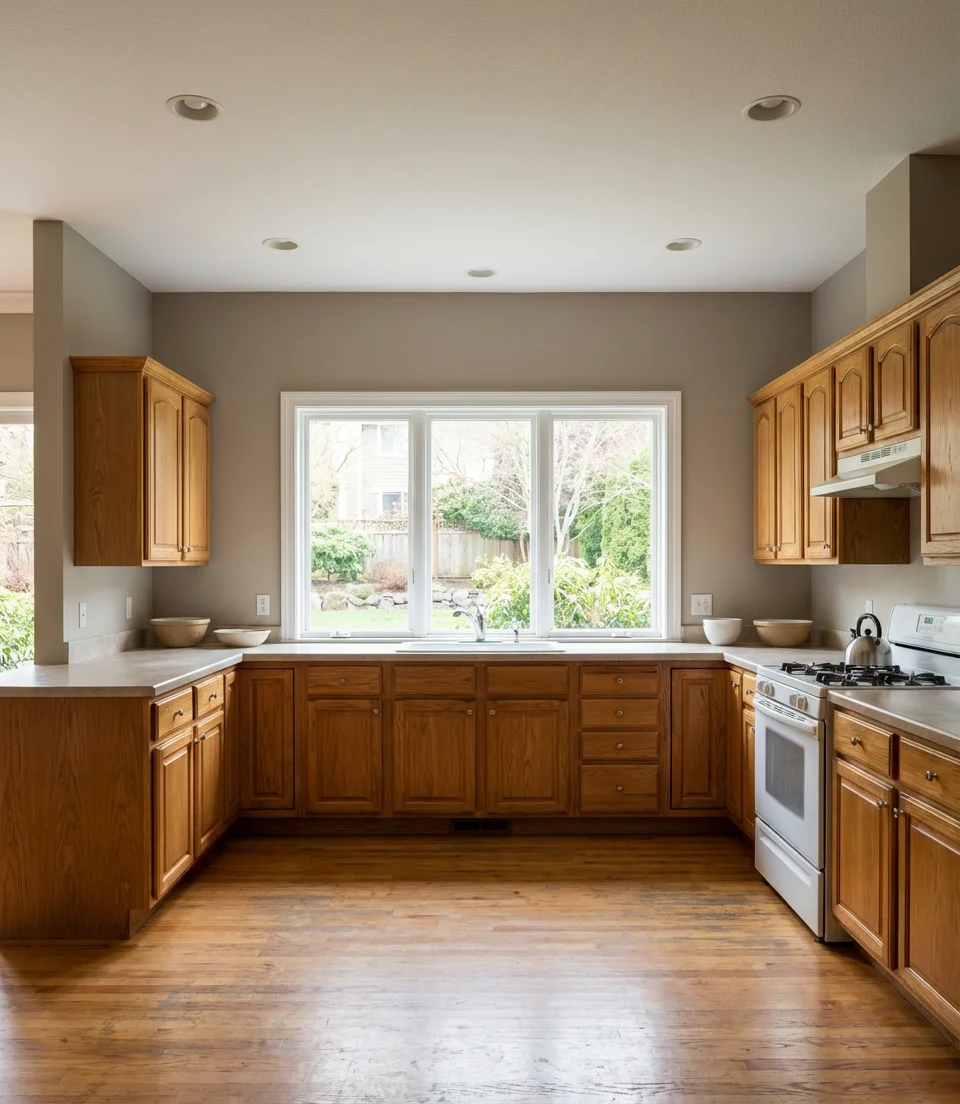
This option works particularly well in open-plan homes where the kitchen flows directly into a living or dining area—greige keeps everything visually connected without requiring the adjacent rooms to match exactly. Interior designers often recommend choosing the wall color last, after flooring and countertops are committed to, because paint is the easiest element to change later. But if your oak cabinets are the permanent constant, warm greige gives you the most flexibility to build from.
14. Install Under-Cabinet Lighting for Warmth
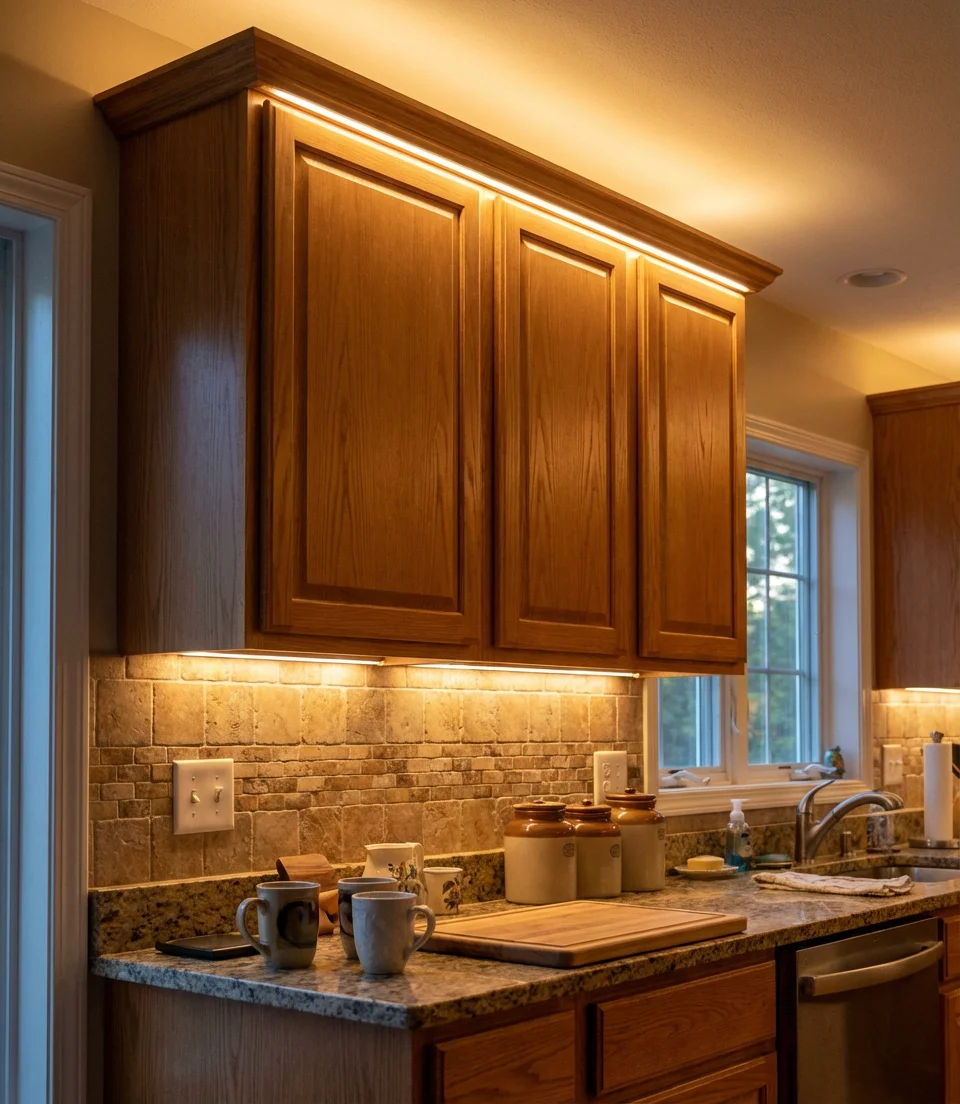
Light is honestly the most underused tool in kitchen renovation, and nowhere is this more true than with honey oak. Warm LED strips installed beneath upper cabinets wash the countertop and backsplash in a golden glow that makes every other material in the kitchen look intentional and warm. It softens contrast between the oak and adjacent surfaces and adds depth to the room in the evening hours when overhead lighting alone can make a kitchen feel flat. This single upgrade consistently ranks among homeowners’ most satisfying additions.
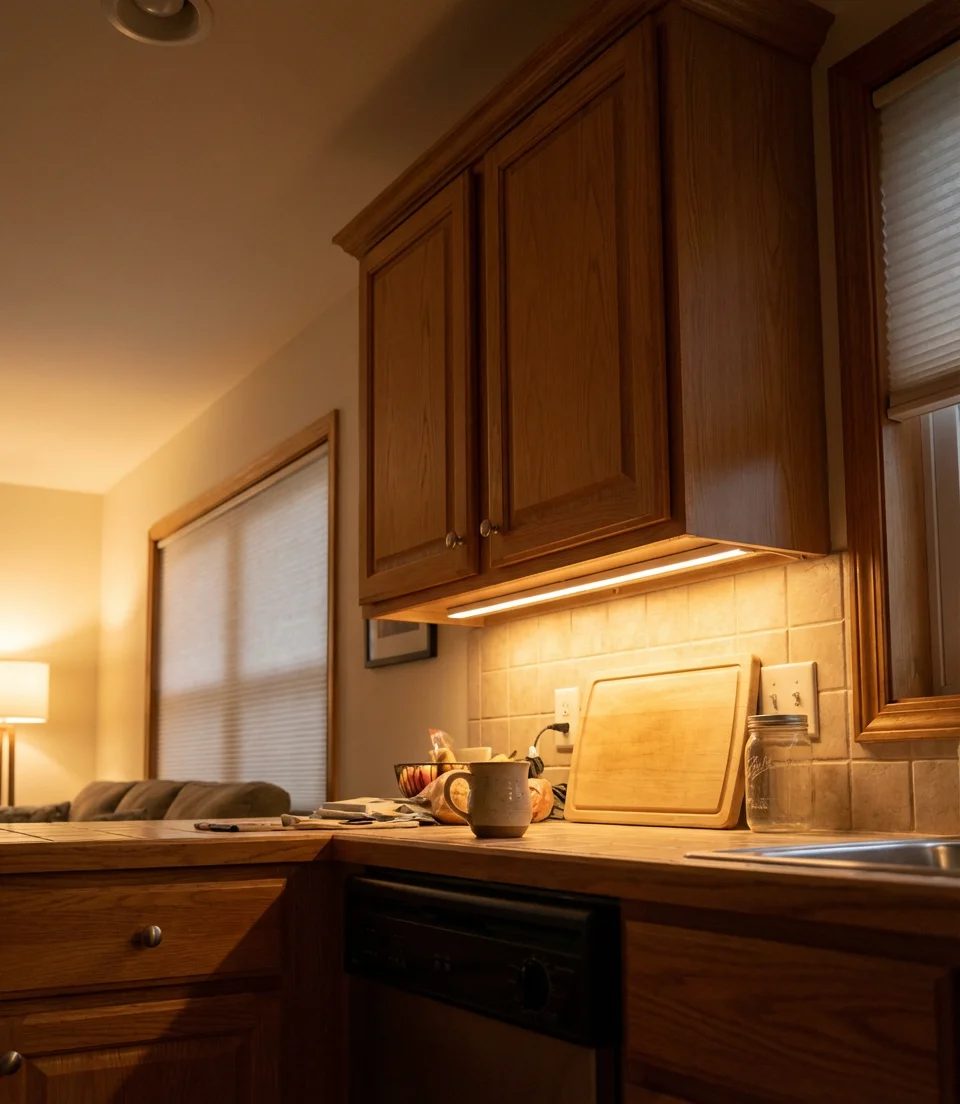
Warm white LEDs at 2700K–3000K color temperature are the right choice for honey oak kitchens—anything cooler will cast a bluish light that fights with the wood’s warmth rather than enhancing it. Hardwired systems look cleanest but require an electrician; plug-in LED tape mounted under each cabinet is a genuinely effective DIY alternative costing $80–$150 total. Many homeowners say this single addition, more than anything else, made them fall back in love with their kitchen.
15. Try Gray Walls for a Cool-Warm Tension
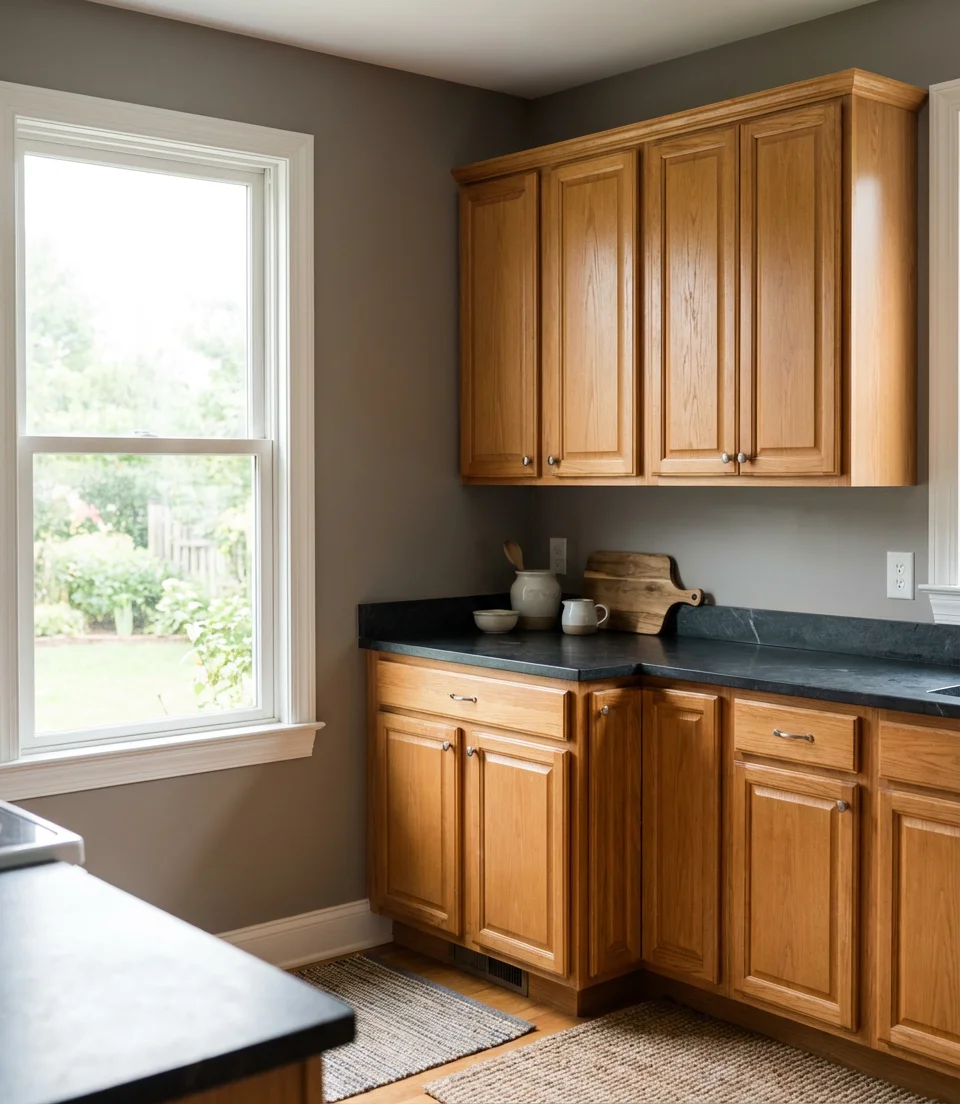
Pairing honey oak with wall color paint and black countertops and gray combinations creates a fascinating design tension—cool and warm in deliberate conversation—that feels more sophisticated than either element alone. The trick is choosing gray with enough depth to stand up to the strong character of oak. Mid-toned grays with green or taupe undertones tend to work best; cool blue-gray can feel chilly beside all that warmth. Think Revere Pewter, Colonnade Gray, or Dovetail in appealing light. This combo is especially effective when dark countertops anchor the lower half of the kitchen.
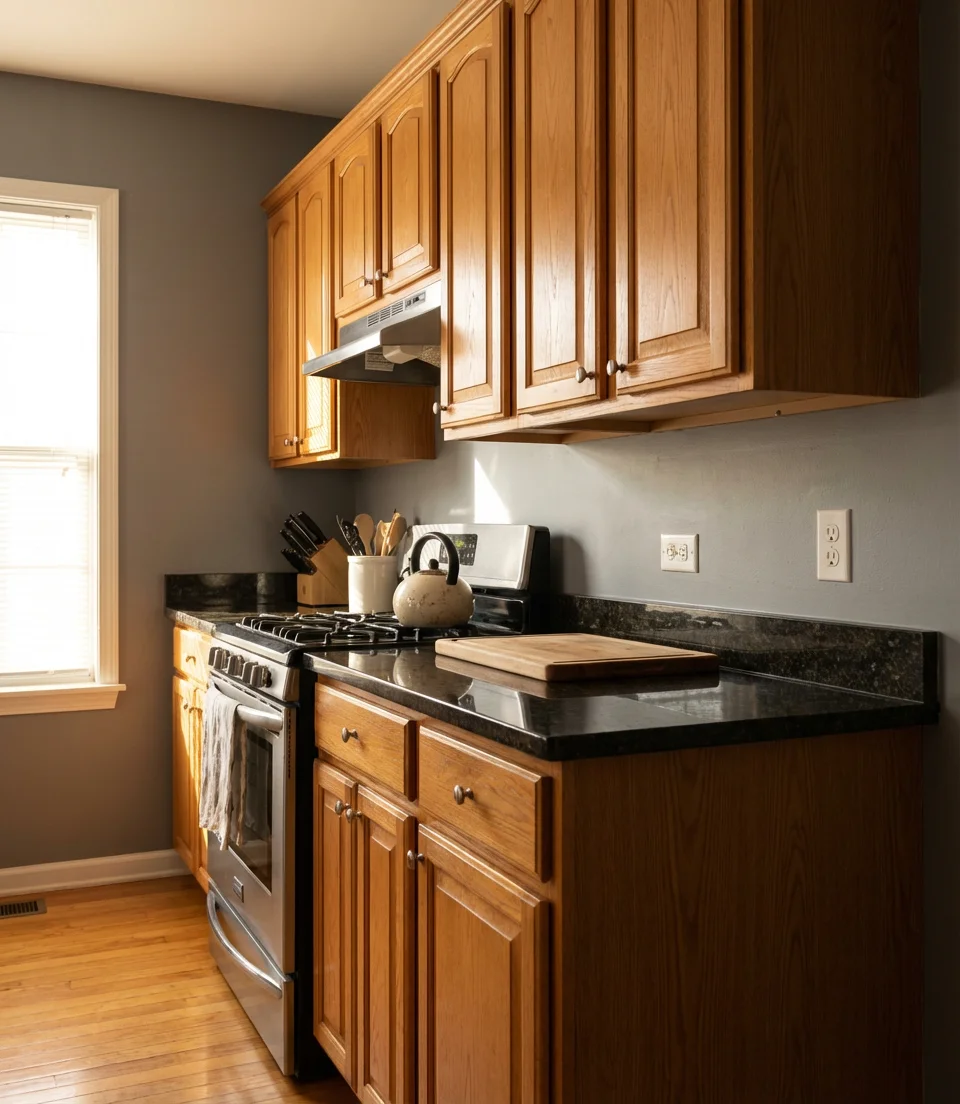
This combination is especially popular in the Pacific Northwest and in urban loft renovations where the aesthetic leans toward layered neutrals. It also photographs beautifully for real estate listings—gray-and-oak kitchens consistently perform well because they read as updated without being trendy or polarizing to buyers. If you’re renovating with resale in mind, this layout is one of the most strategically reliable roads to take in any American market.
16. Paint Just the Island for a Two-Tone Effect
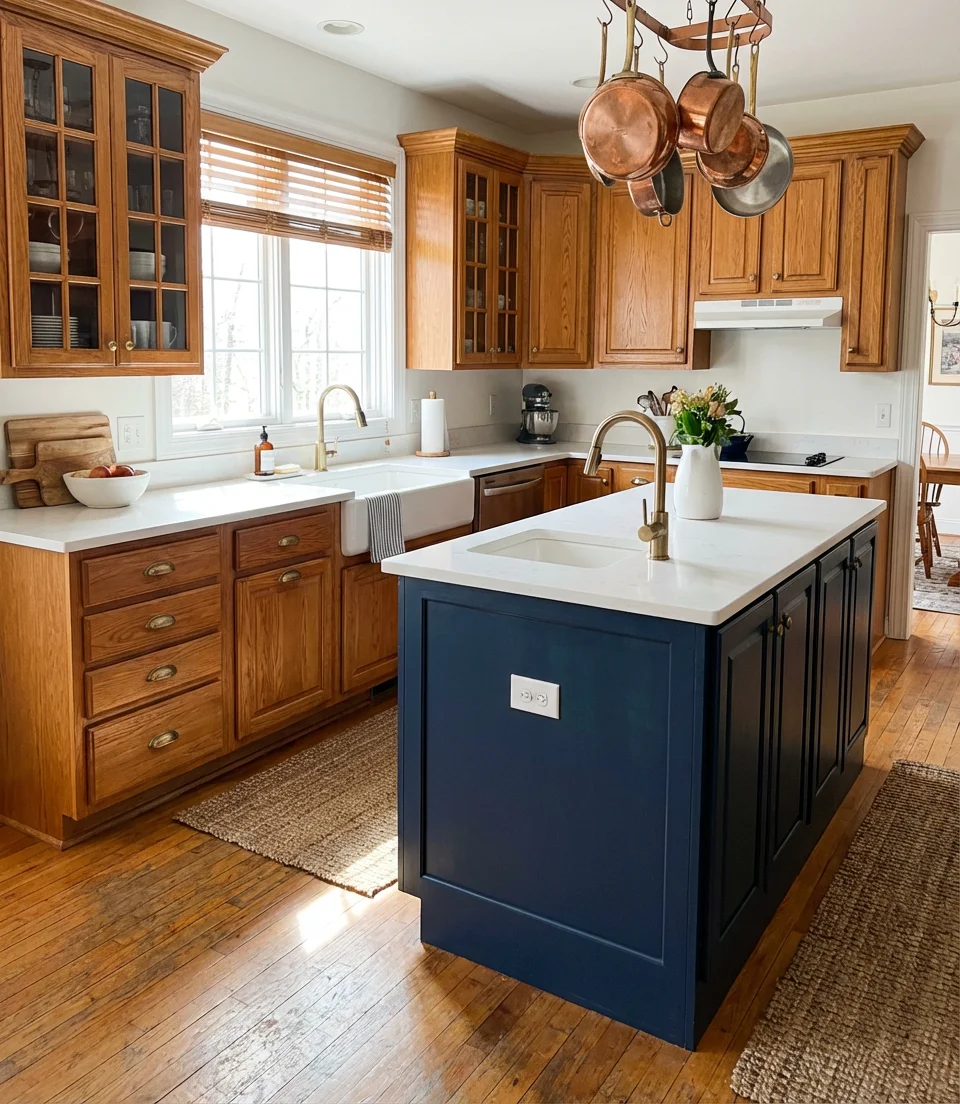
If you love your honey oak perimeter cabinets but want a hint of something more current, painting just the island is one of the most elegant makeover moves in kitchen design. Deep navy, forest green, charcoal, or warm black on the island creates a two-tone effect that feels curated and deliberate. Because the island is a standalone piece, the color contrast reads as an intentional design choice rather than a mismatch. Pair the island with contrasting light stone countertops for maximum impact while keeping the perimeter oak.
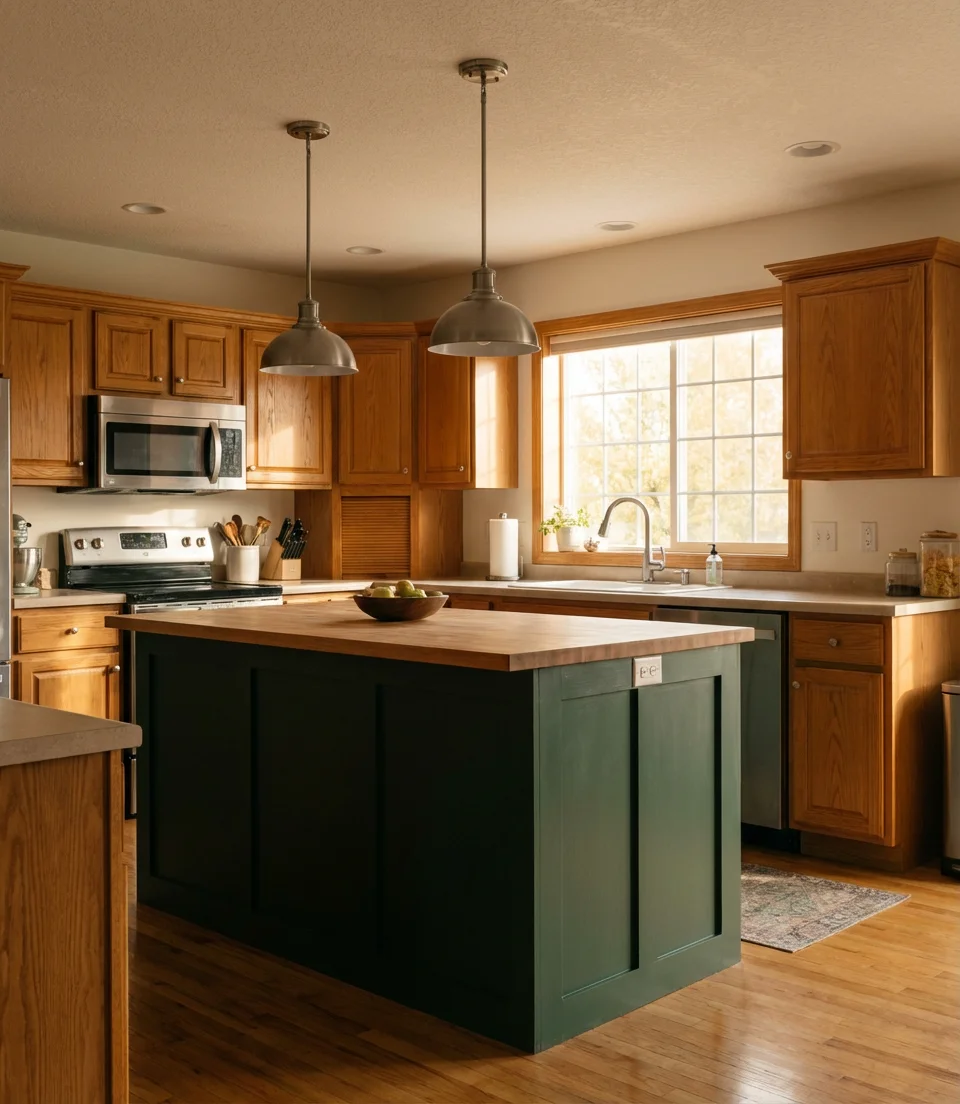
The common mistake here is choosing a paint color for the island in isolation—selecting a swatch you love without comparing it against the actual oak in your kitchen. Oak has an enormous range of warmth; some honey oak reads almost golden, while other batches tip toward amber or pinkish tones. The only reliable approach is to buy a sample pot and test a patch on the actual island in your actual kitchen light before committing to a full coat.
17. Open Up the Uppers With Glass-Front Doors
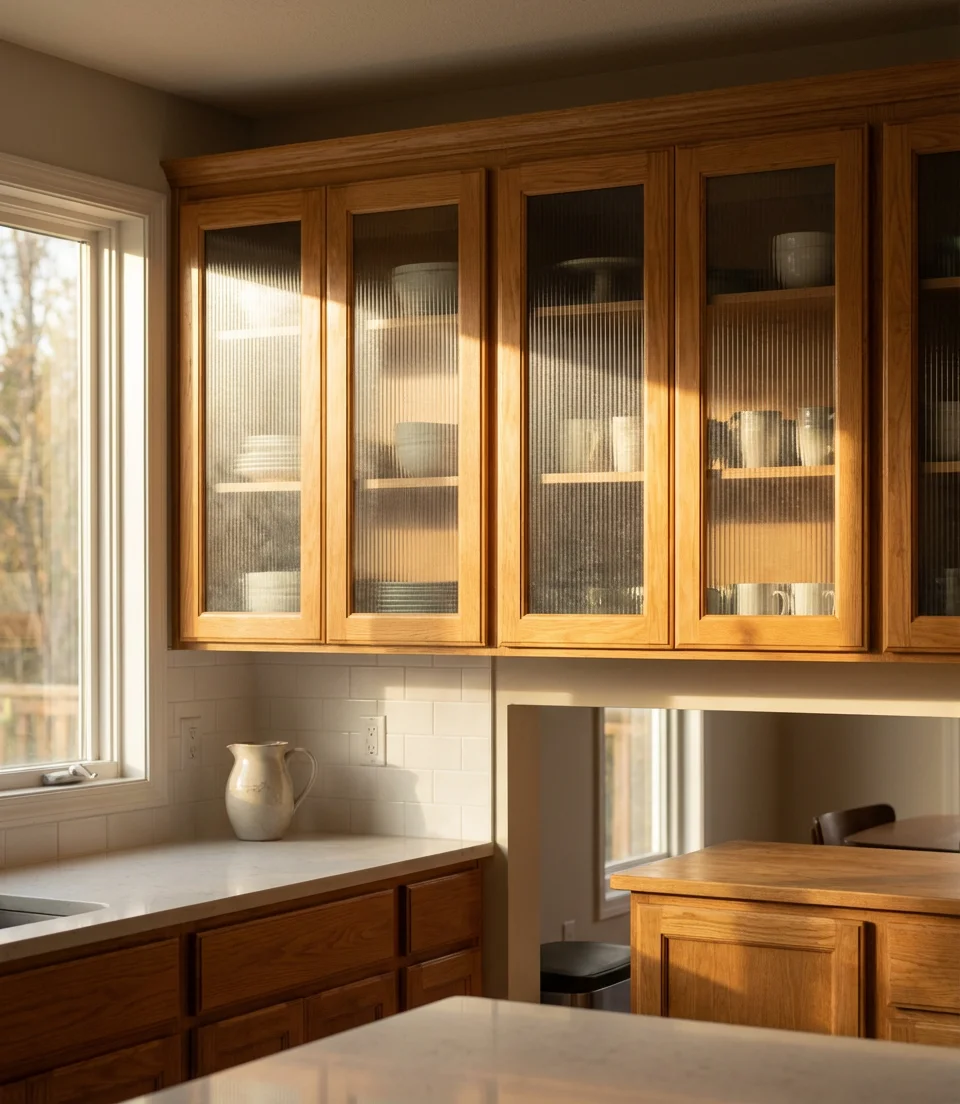
One of the most impactful structural changes you can make to honey oak upper cabinets is replacing a few solid doors with glass-front panels. This lightens the visual weight of the wood, creates a display opportunity, and makes the kitchen feel immediately more open and less boxy. Clear glass is the most common choice, but reeded or fluted glass has been having a serious design moment—it lets light filter through without putting your everyday dishware organization on full display. This is a modern update that somehow also feels warmly traditional.
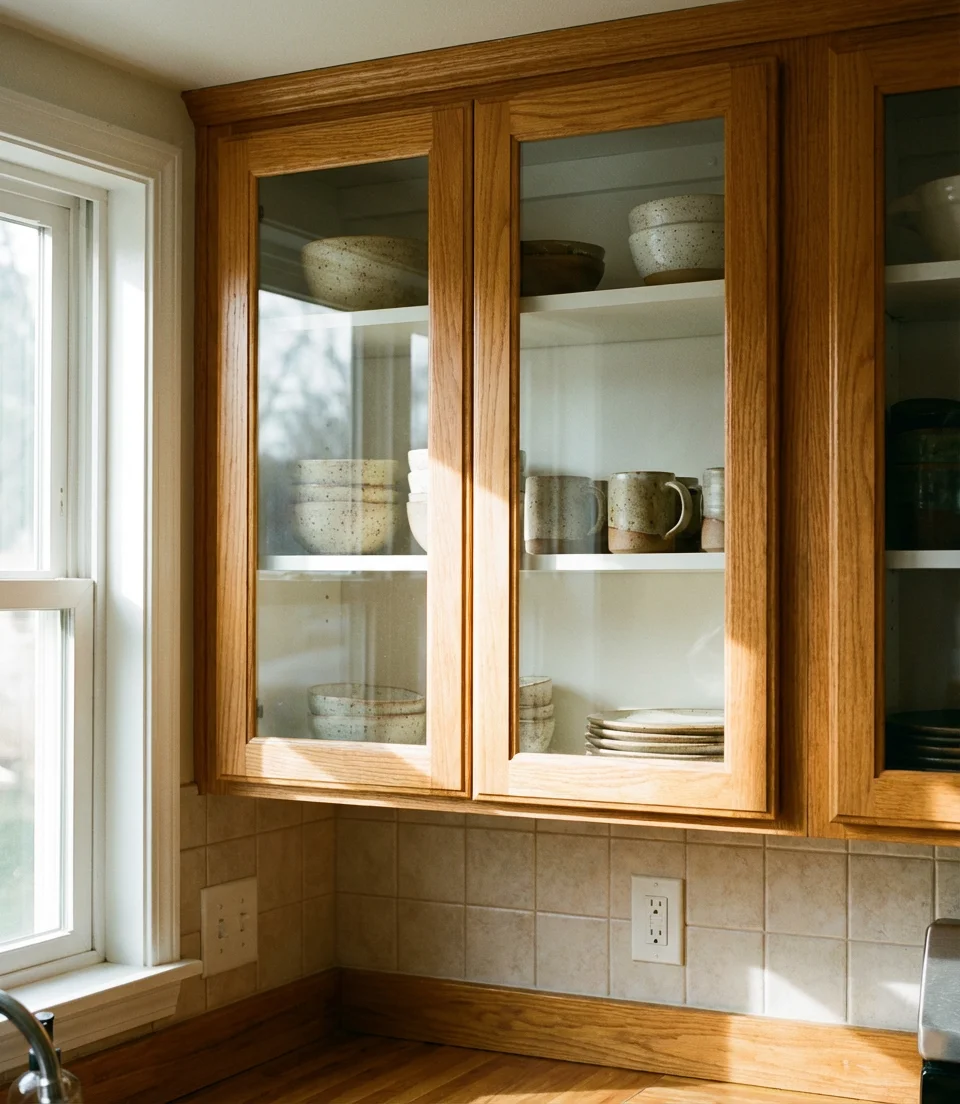
A local carpenter in the Nashville area noted that converting two or three upper cabinet doors to glass typically costs $200–$600 depending on glass type and whether the frames need reinforcing. Homeowners who add interior cabinet lighting behind glass doors get the most dramatic result—the warm glow through the glass makes the kitchen look like it has custom cabinetry, even when the boxes behind it are original oak from the mid-1990s. The investment is modest; the visual return is significant.
18. Refinish the Cabinets Instead of Replacing Them
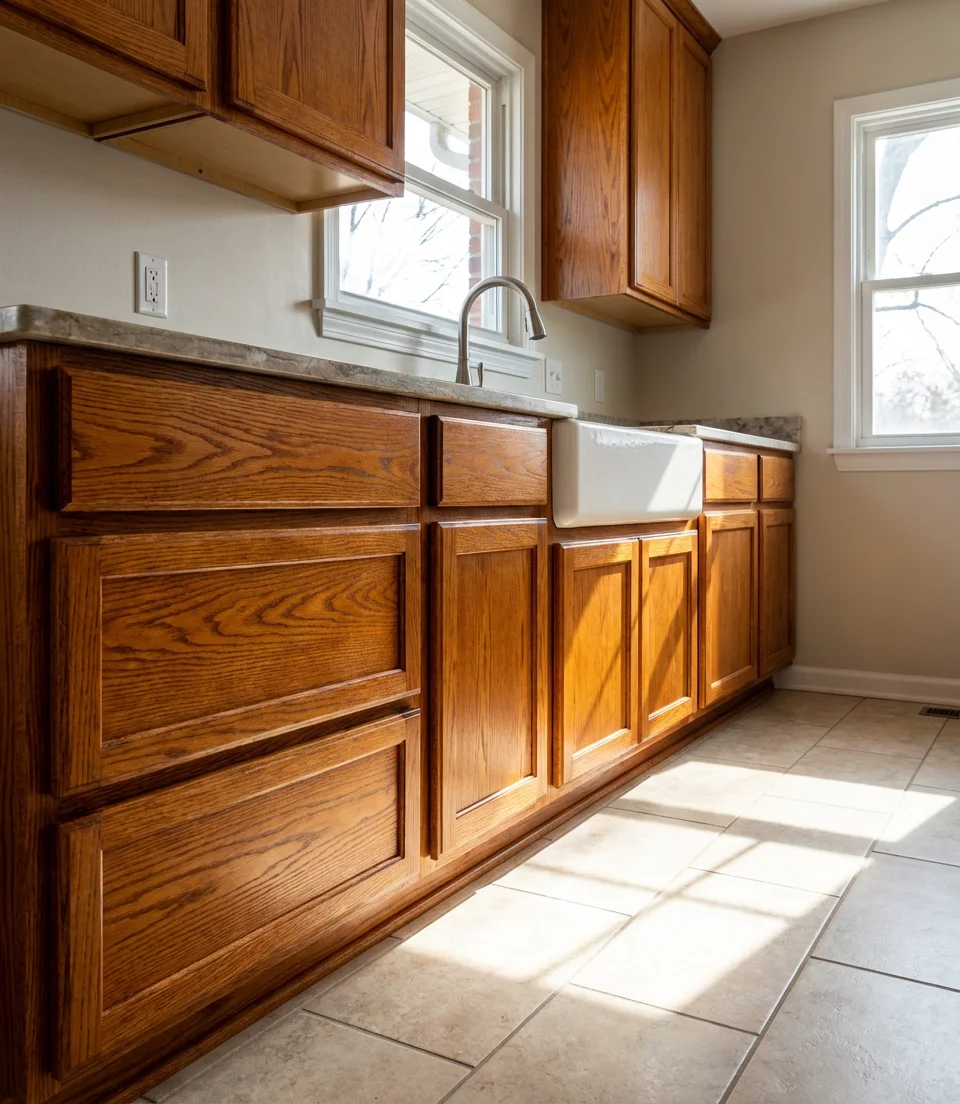
Before you pursue painted white before and after projects or full cabinet replacement, refinishing deserves serious consideration. A professional refinish—cleaning, light sanding, re-staining, and a fresh topcoat—can take cabinets from dull and worn to rich and vibrant at a fraction of replacement cost. The grain of oak responds extraordinarily well to fresh staining, and going slightly darker (from honey toward a richer warm brown) can completely update the look without painting over the wood’s natural, irreplaceable beauty.
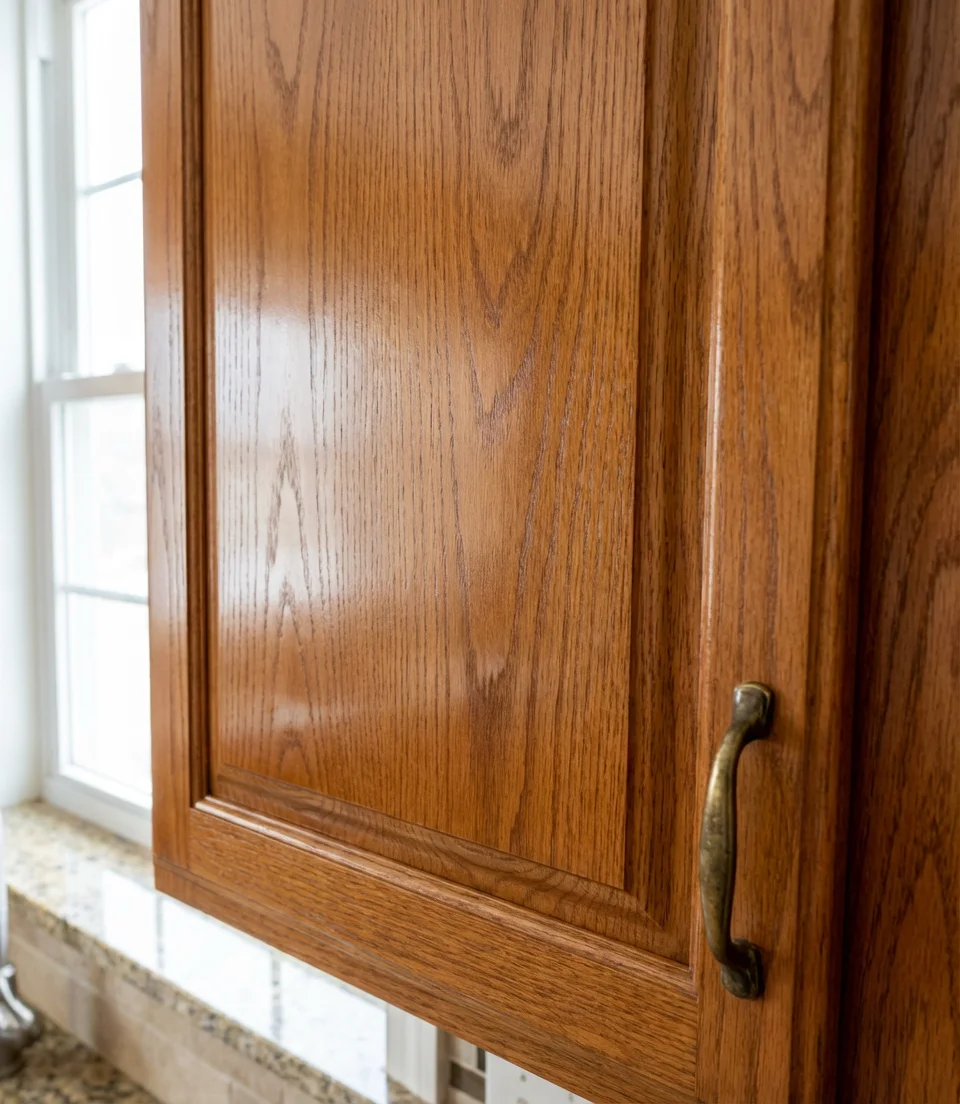
Professional cabinet refinishing for an average American kitchen typically runs $800–$2,500 — a fraction of the $8,000–$25,000 cost of new cabinetry. The environmental argument is worth making too: refinishing existing solid oak keeps quality material out of landfills and preserves the genuine craftsmanship that a lot of those original late-20th-century kitchens actually have. Many new budget cabinets being installed today are structurally inferior to the oak boxes they’re replacing.
19. Add Dark Accents for a Moody Modern Feel
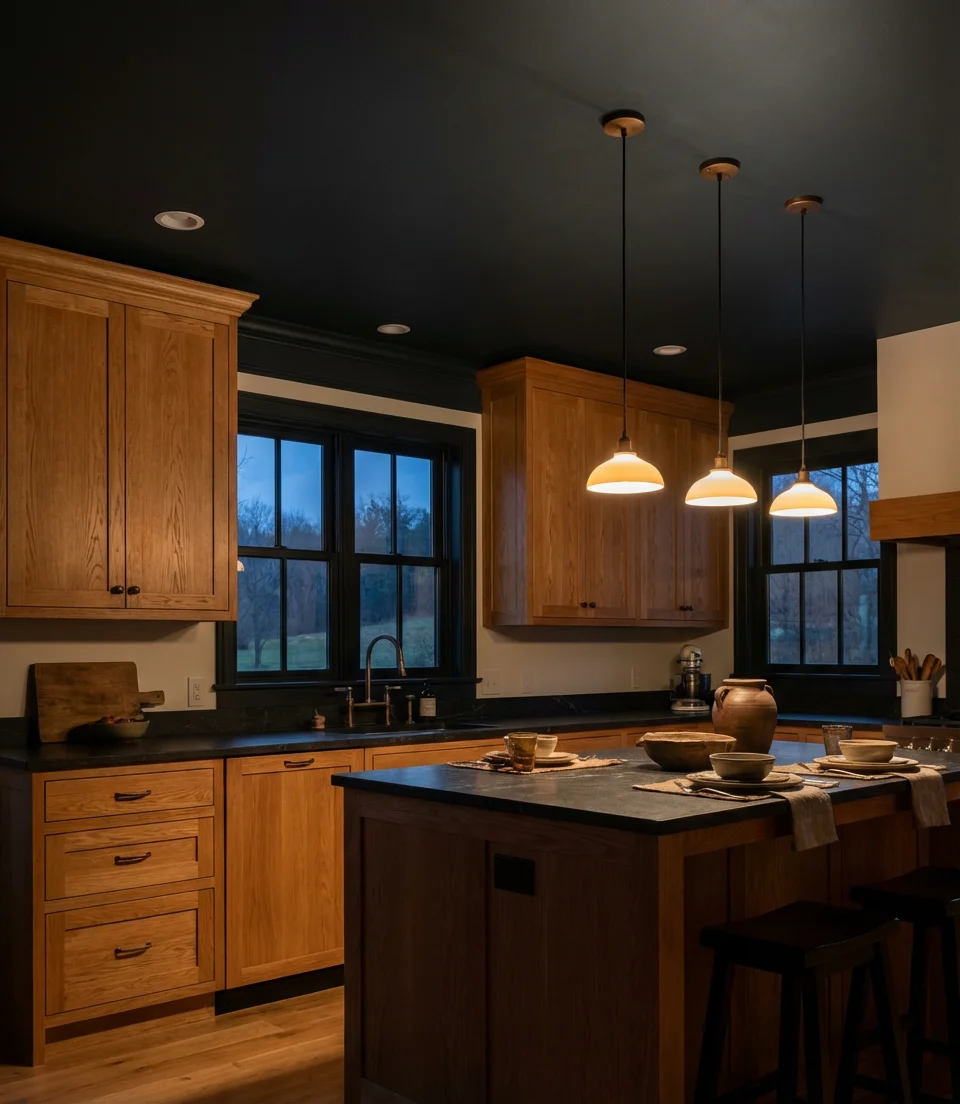
Honey oak doesn’t have to mean bright and cheery—with the right supporting elements, it can go surprisingly dark and moody. A deep charcoal or near-black painted ceiling, dark window frames, blackened steel hardware, or a dark-stained open shelving unit can bring genuine drama into a honey oak kitchen while the warm wood itself stays the grounding, natural anchor. This direction is gaining real traction among design-forward homeowners who want their kitchen to feel like an evening destination rather than just a light-filled daytime workspace.
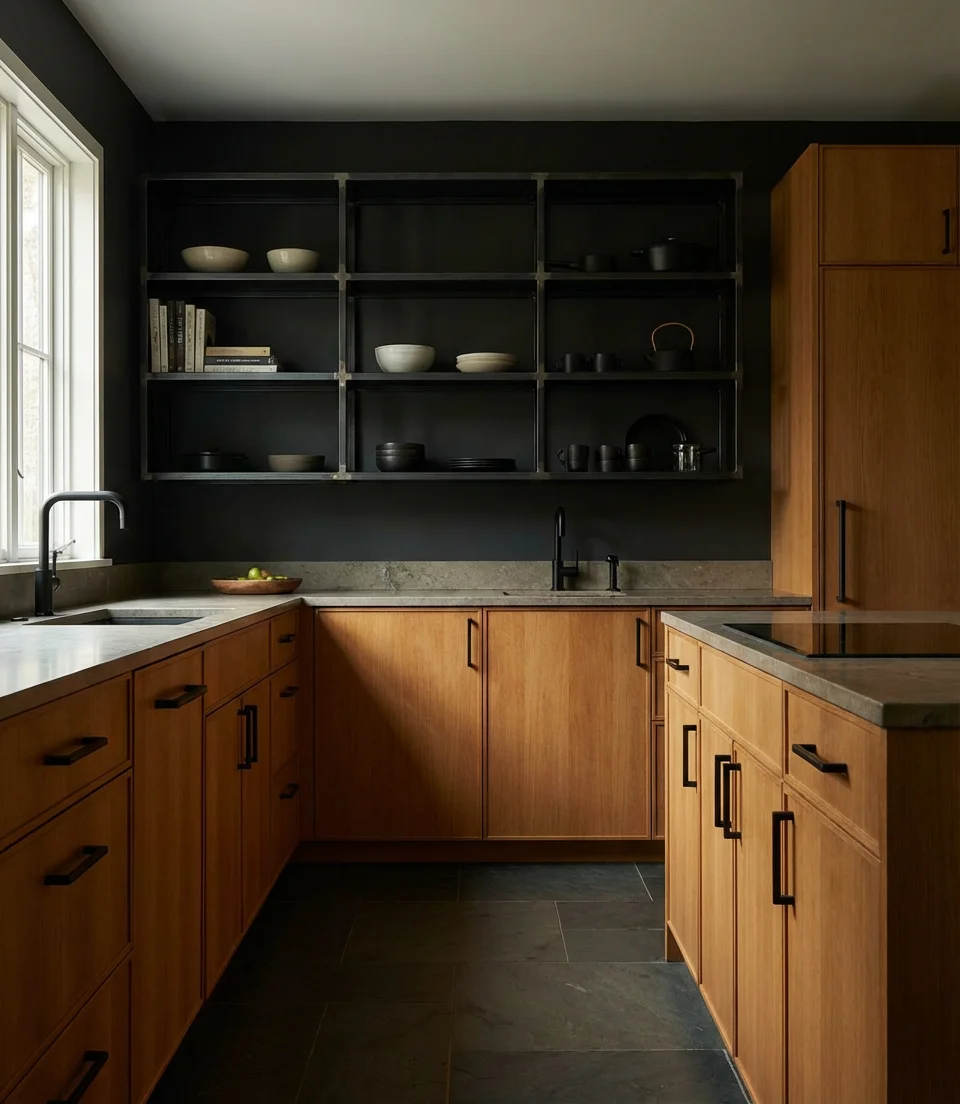
This approach resonates particularly well with urban homeowners in cities like Chicago, Seattle, and New York, where kitchens often have less natural light, and a layered, moody aesthetic fits the architectural context beautifully. The key design principle: dark accents work best when they’re architectural—painted ceilings, window frames, fixed shelving—rather than just accessories. Accessories can look like an afterthought; architectural elements tell a story that the whole room participates in.
20. Lean Into the Grain With Open Shelving
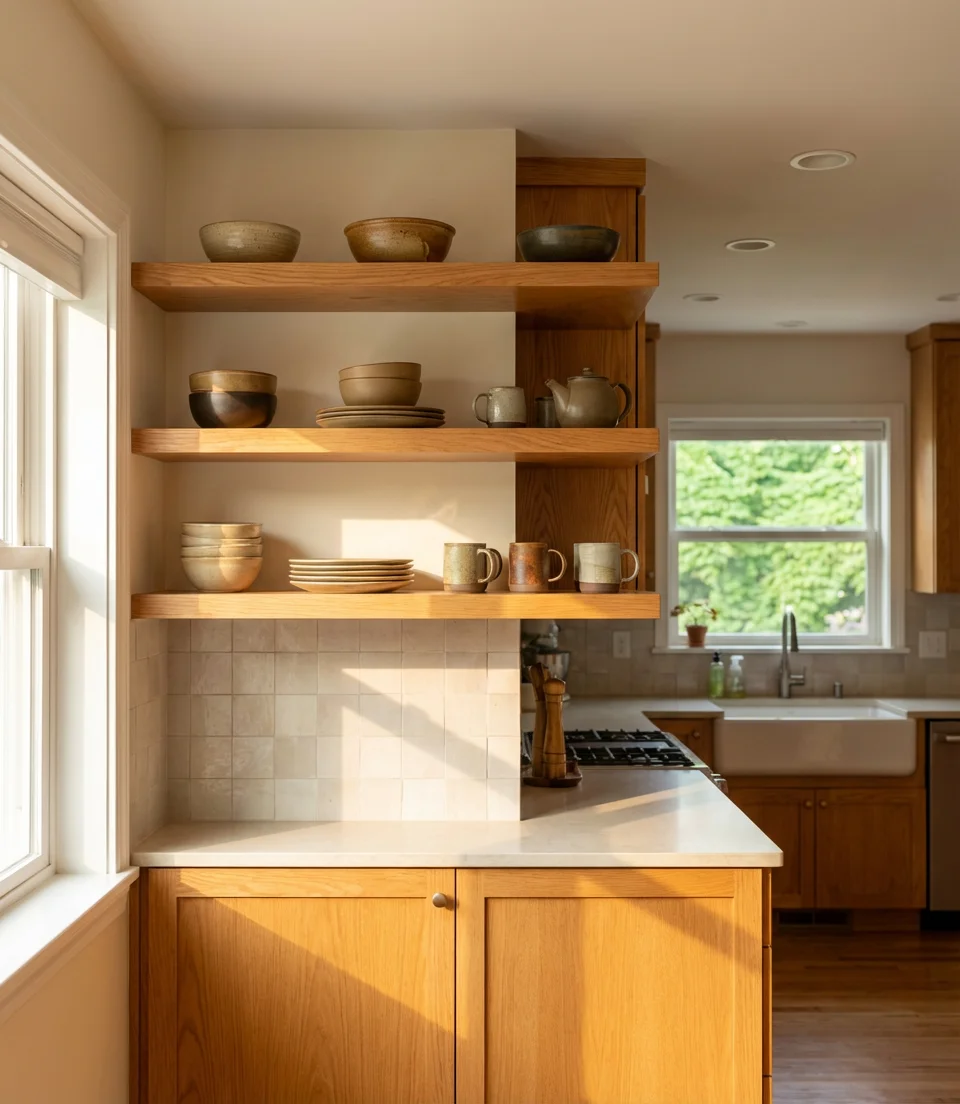
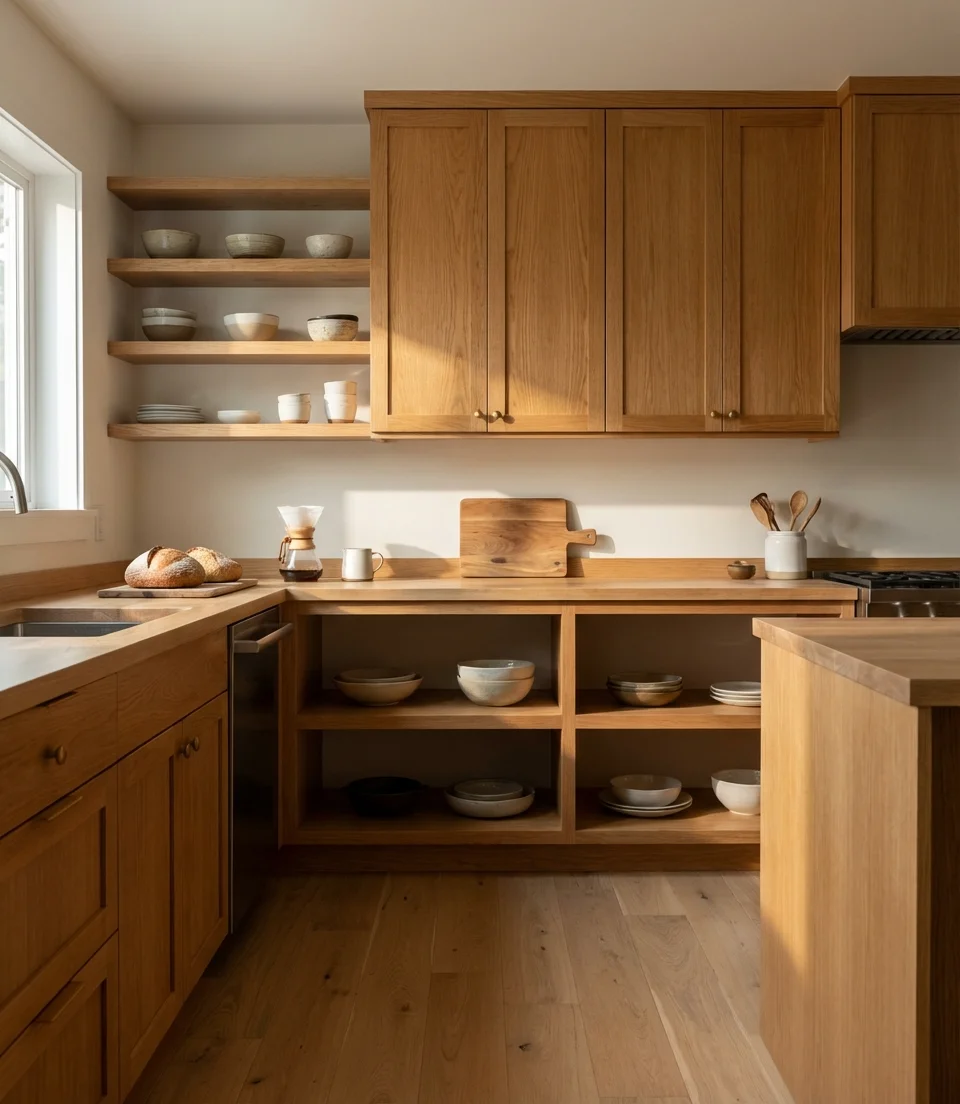
Replacing some upper cabinets entirely with open oak shelving—matching the grain of the existing cabinetry—creates an intentional, warm, and distinctly current aesthetic. Open shelving in the same honey oak as the rest of the kitchen feels cohesive rather than mismatched, and it gives you the opportunity to add air to a section of wall that might otherwise feel heavy. The backsplash and styling of those shelves then become part of the visual experience in a way that closed cabinet doors never allow. It rewards people with good taste in dishware.
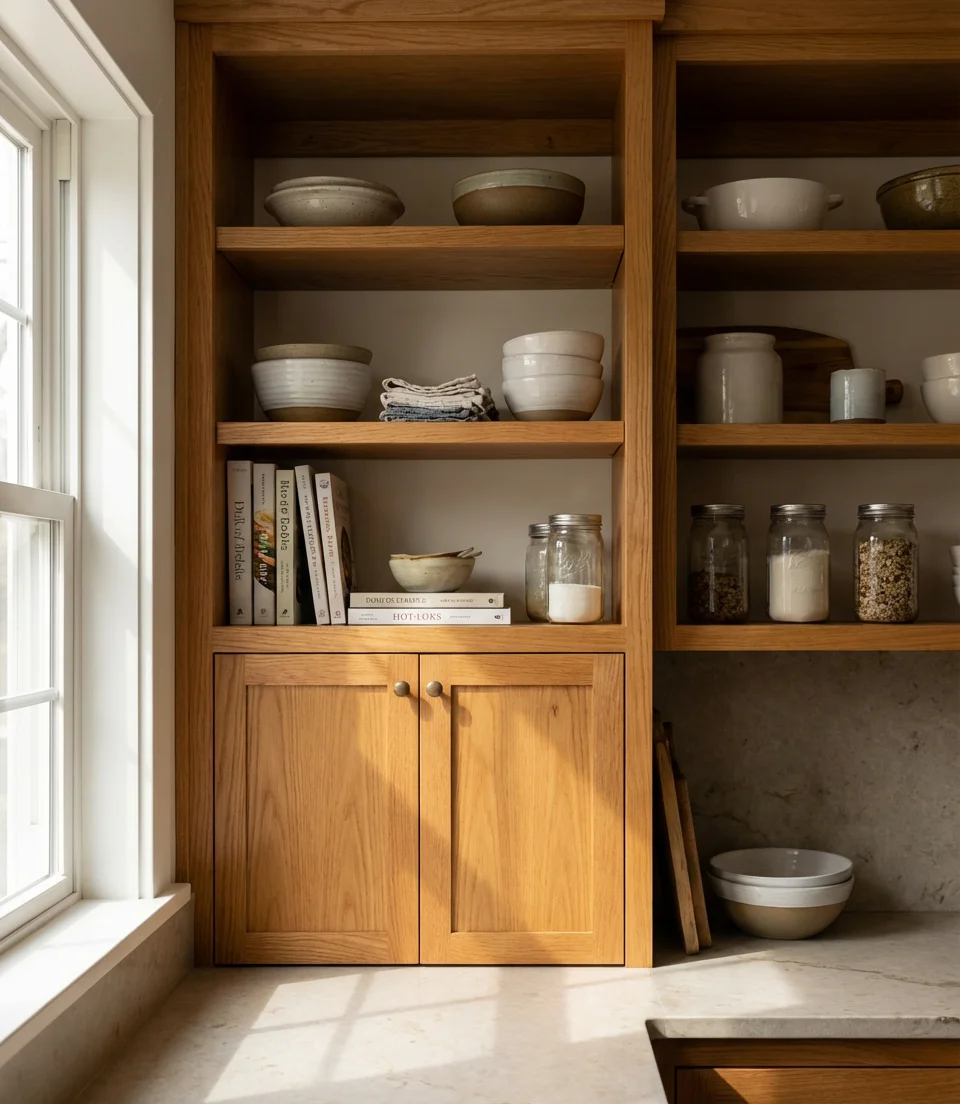
Open shelving works best for people who are genuinely organized—the classic mistake is removing upper cabinets only to discover that you don’t have Pinterest-worthy dishware, and now your everyday plastic cups are on full display. The practical advice: keep at least one-third of your upper storage as closed cabinets for the utilitarian items, and reserve open shelves for what you’re proud to show. Oak shelves beside oak cabinets create a natural, cohesive material story that works in any kitchen size.
21. Use Countertops as the Color Anchor
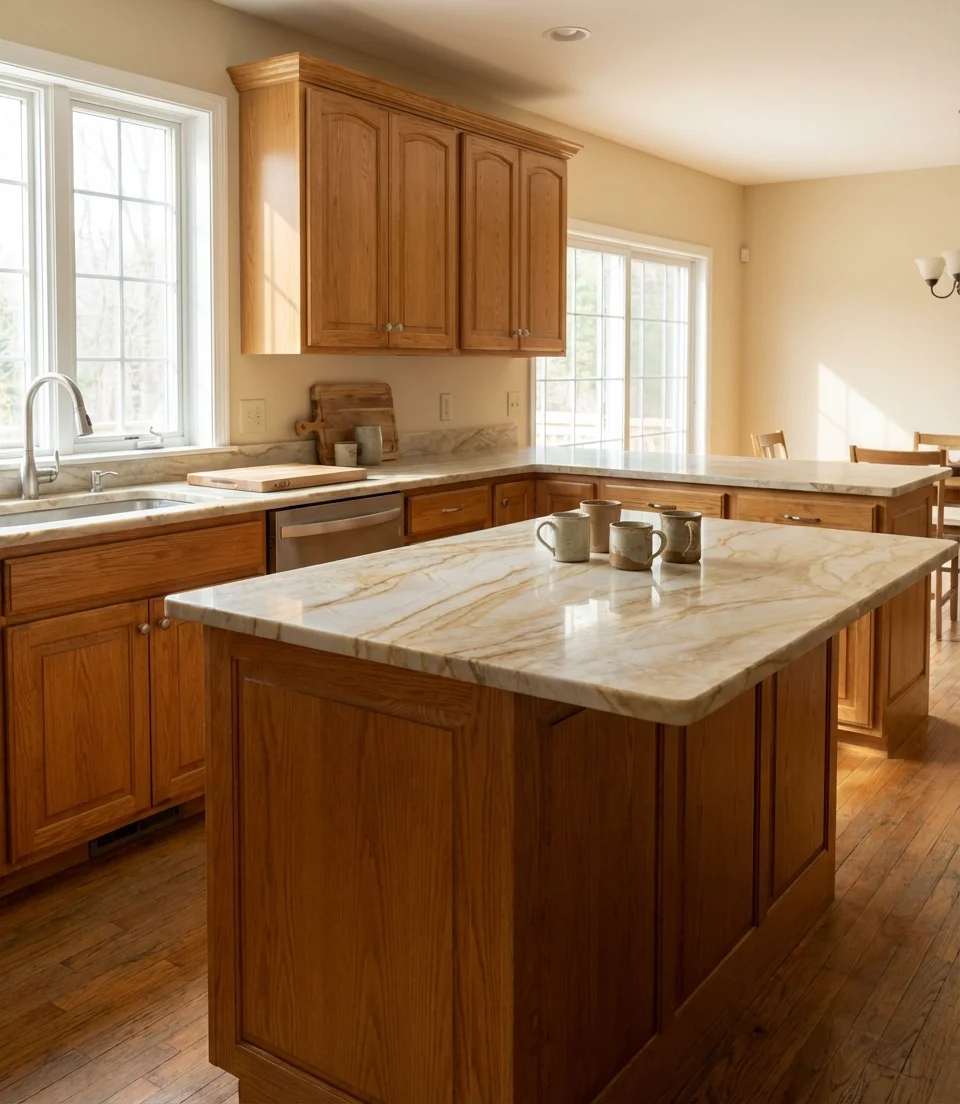
When you’re not sure where to start with a honey oak kitchen refresh, let the countertops be the decision that drives everything else. Choose a surface that genuinely excites you—a bold quartzite with warm veining, a deep soapstone, or a butcher block with a rich warm stain—and then build your wall color paint, backsplash, and hardware choices around what you’ve already committed to. This is how professional designers approach kitchens: anchor with the most expensive and least changeable element, then layer everything else to support it.
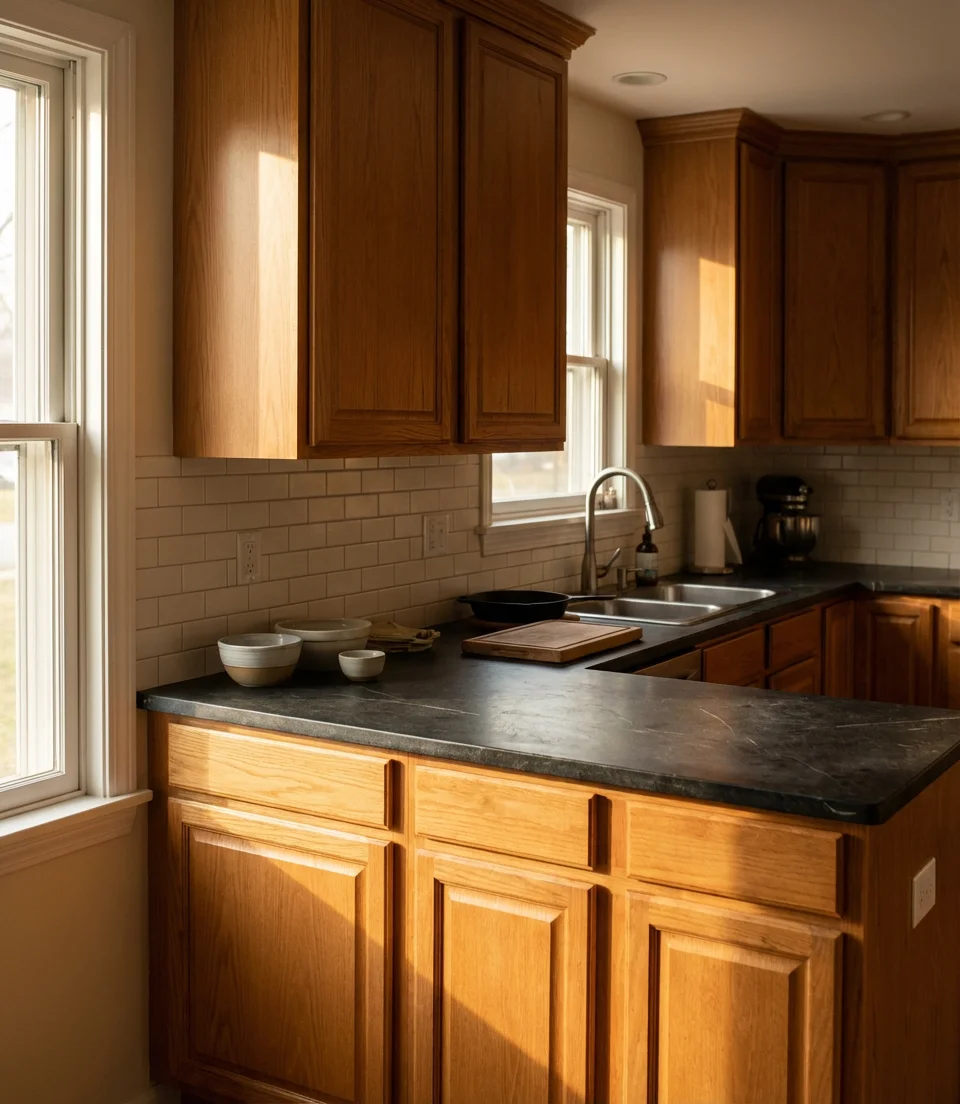
The most important thing to remember about honey oak in any design context is that it’s inherently warm, genuine, and full of character—three qualities that are actually quite rare in mass-produced cabinetry today. Every approach in this guide starts from the same premise: these cabinets are worth keeping. Whether you opt for a bold look with black stone and dark tile or a more subdued one with greige walls and white appliances, the oak underneath consistently plays a significant role. Trust it, work with it, and you’ll end up somewhere genuinely beautiful.
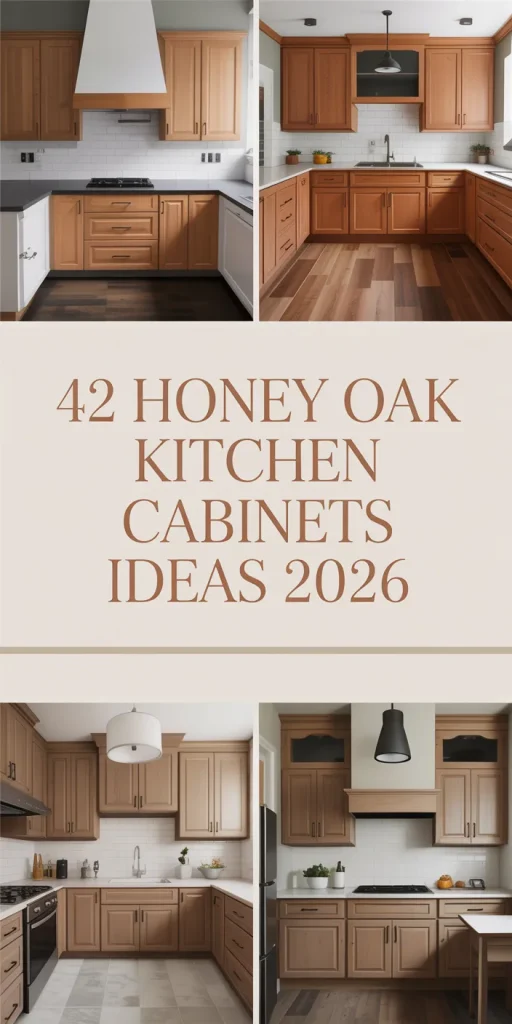
Honey oak kitchens are one of the most creatively exciting renovations you can undertake right now—precisely because they come with such a strong material personality that they can be taken in so many directions, from dramatic and moody to soft and nostalgic. Whether you’ve already tried one of these ideas, have a combination in mind, or spotted the one approach that finally clicked for your home, we’d love to hear about it in the comments below. This community is full of homeowners who are right there with you. Share your own photos, your before-and-after story, or the single change that transformed how you feel about your kitchen.