Blue and White Living Room 2026: 47 Stunning Ideas That Transform Any Space

Blue and white living rooms are timeless and currently experiencing a significant surge in popularity. Whether you’re scrolling through Pinterest at midnight or saving ideas for a full room refresh, the blue-and-white palette is one of the most searched combinations heading into this year. It works across styles, budgets, and square footage, from a breezy coastal bungalow to a formal traditional room with crown molding and heirloom furniture. In this article, we’ve gathered fresh, well-considered ideas that show just how versatile this color story can be—from moody navy walls to sky-blue curtains, pale gray-blue accents to bold royal statements. Whatever your space looks like right now, there’s something here to spark your next great idea.
1. Classic Navy and White Traditional Living Room
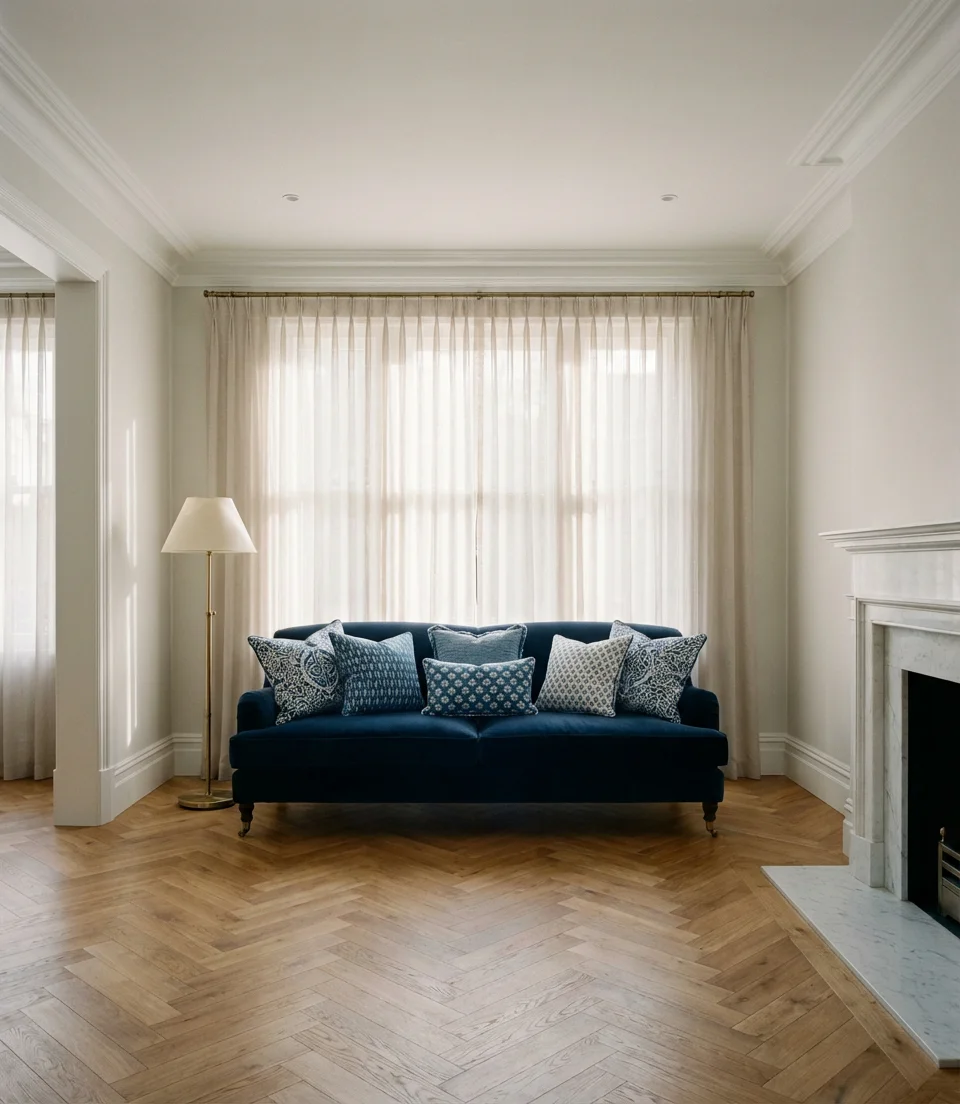
A navy and white traditional living room is one of those timeless combinations that feels both elevated and deeply familiar. Think tufted sofas in crisp linen, white crown molding, and navy throw pillows layered with brass accents. This approach to traditional design never feels cold—the white brightens the space while navy anchors it with the kind of quiet confidence that formal rooms need. It’s a look that feels curated over decades, not assembled on a weekend, and that’s exactly the appeal.
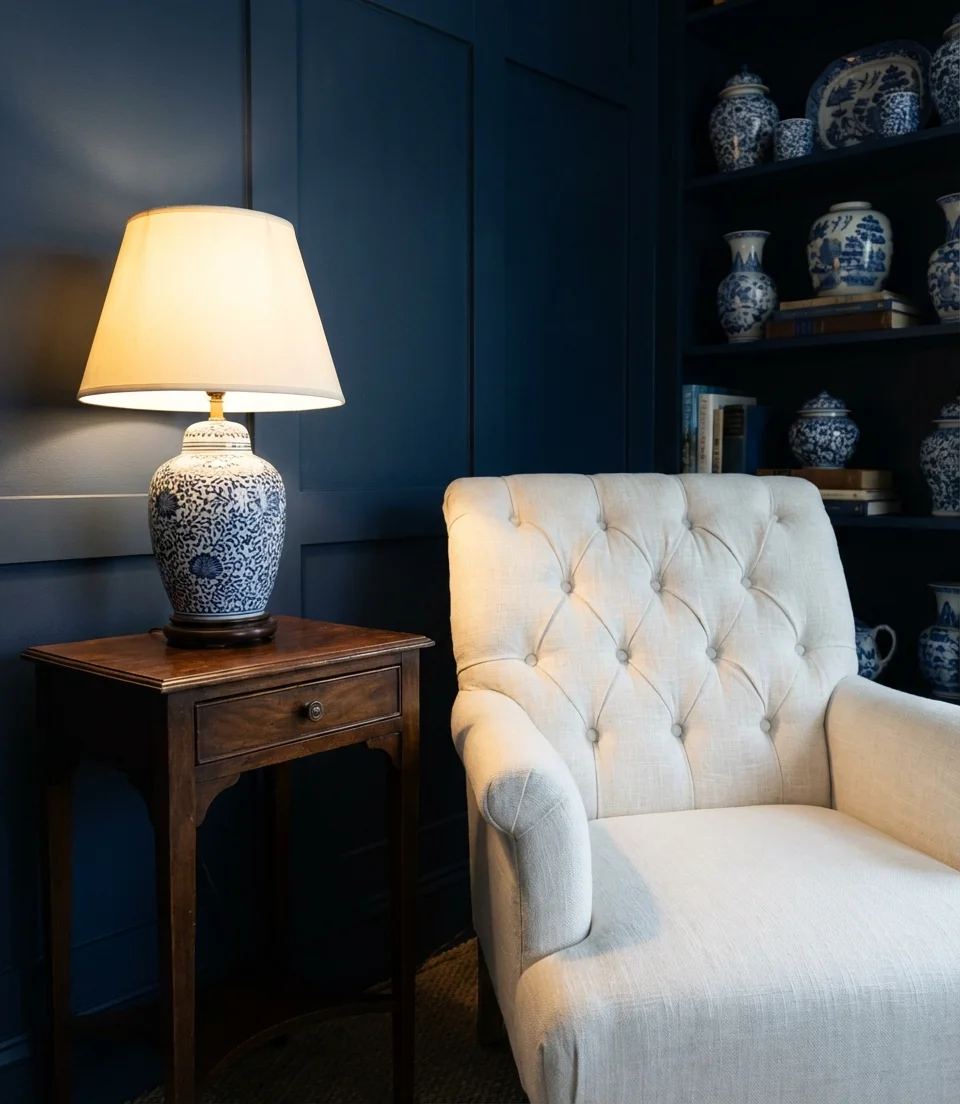
This setup works particularly well in older homes—Colonials, Craftsmen, and center-hall traditional layouts—where the architecture already leans formal. Interior designers often recommend pairing deep navy walls with white woodwork rather than off-white or cream, because the higher contrast sharpens the room’s lines and gives it that sharp, tailored quality you see in magazine spreads. If you’re worried the navy will close in the room, keep the ceiling white and let the natural light do its job.
2. Coastal Blue and White Living Room with Natural Textures
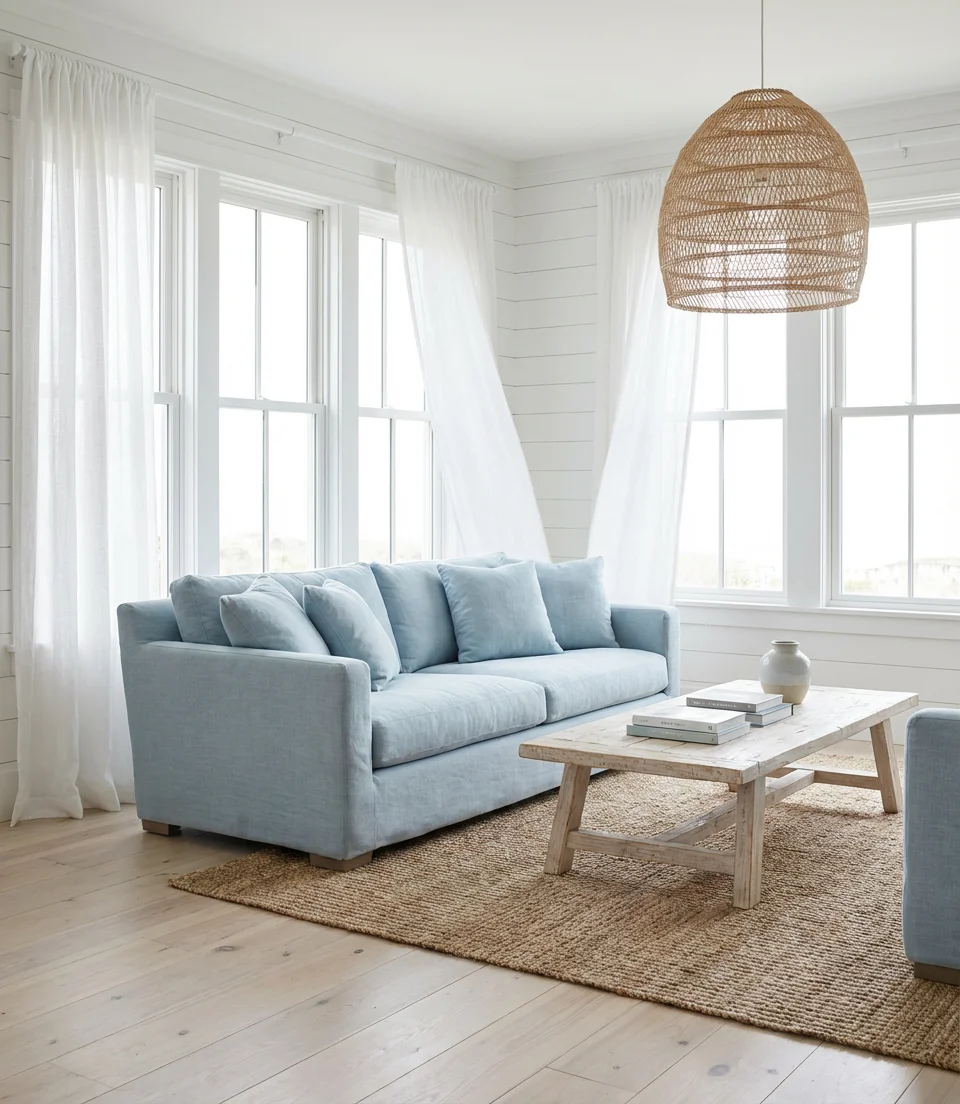
The coastal blue and white living room has evolved well beyond the seashell-and-anchor clichés of the early 2000s. Today’s version feels organic, layered, and genuinely relaxed—a space built around natural textures like jute, rattan, linen, and bleached oak. The blue reads more sky than sea: soft, faded, almost watercolor-like. White keeps it fresh without veering into sterile territory. What makes this aesthetic feel current is restraint—fewer fish prints, more raw materials, and honest craftsmanship.
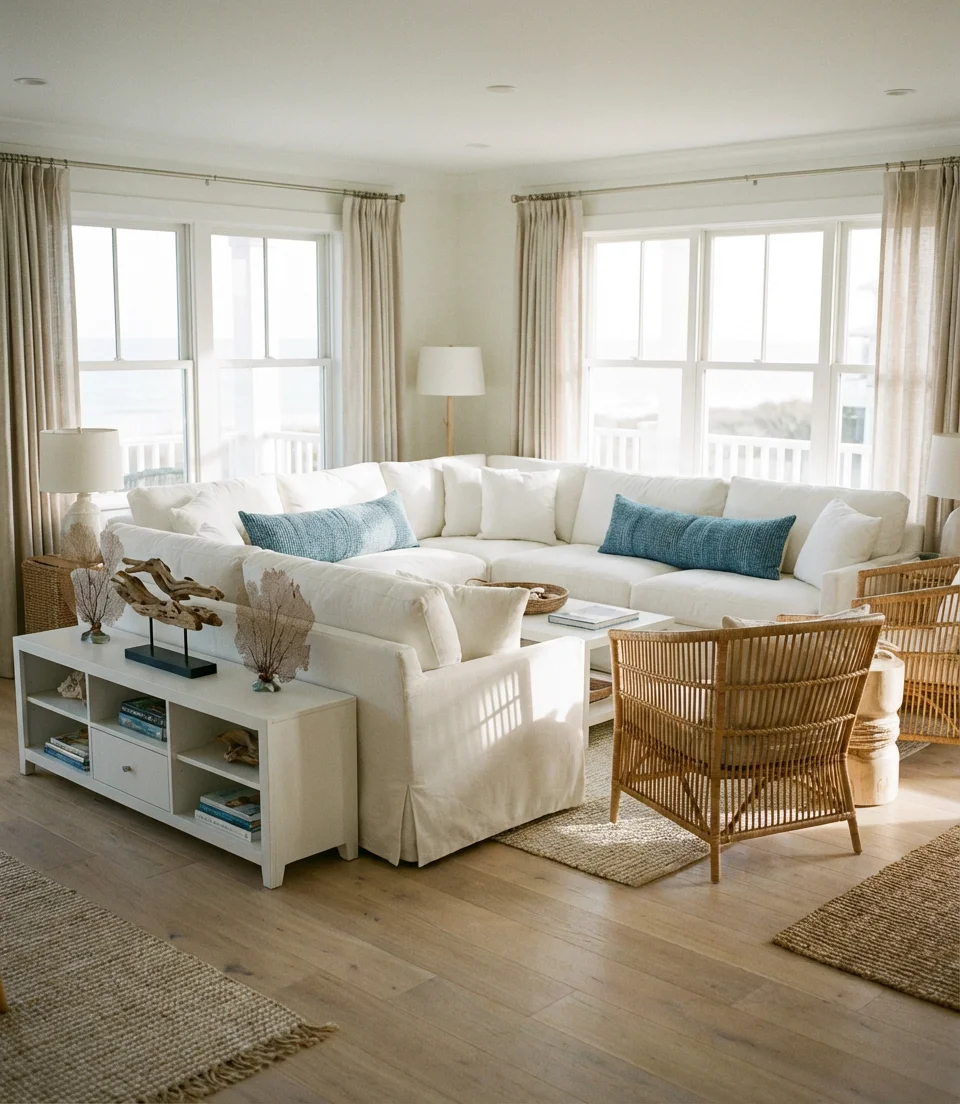
This style performs best in homes near actual water—beach houses in the Carolinas, Cape Cod summer homes, Florida gulf-side cottages—but it translates just as well to landlocked spaces that want that easy, unhurried feeling. A common mistake is over-accessorizing: too many blue objects compete with each other, and the room loses its breezy calm. Opt for a select few pieces and allow the negative space to breathe.
3. Light Blue Walls with White Furniture Living Room
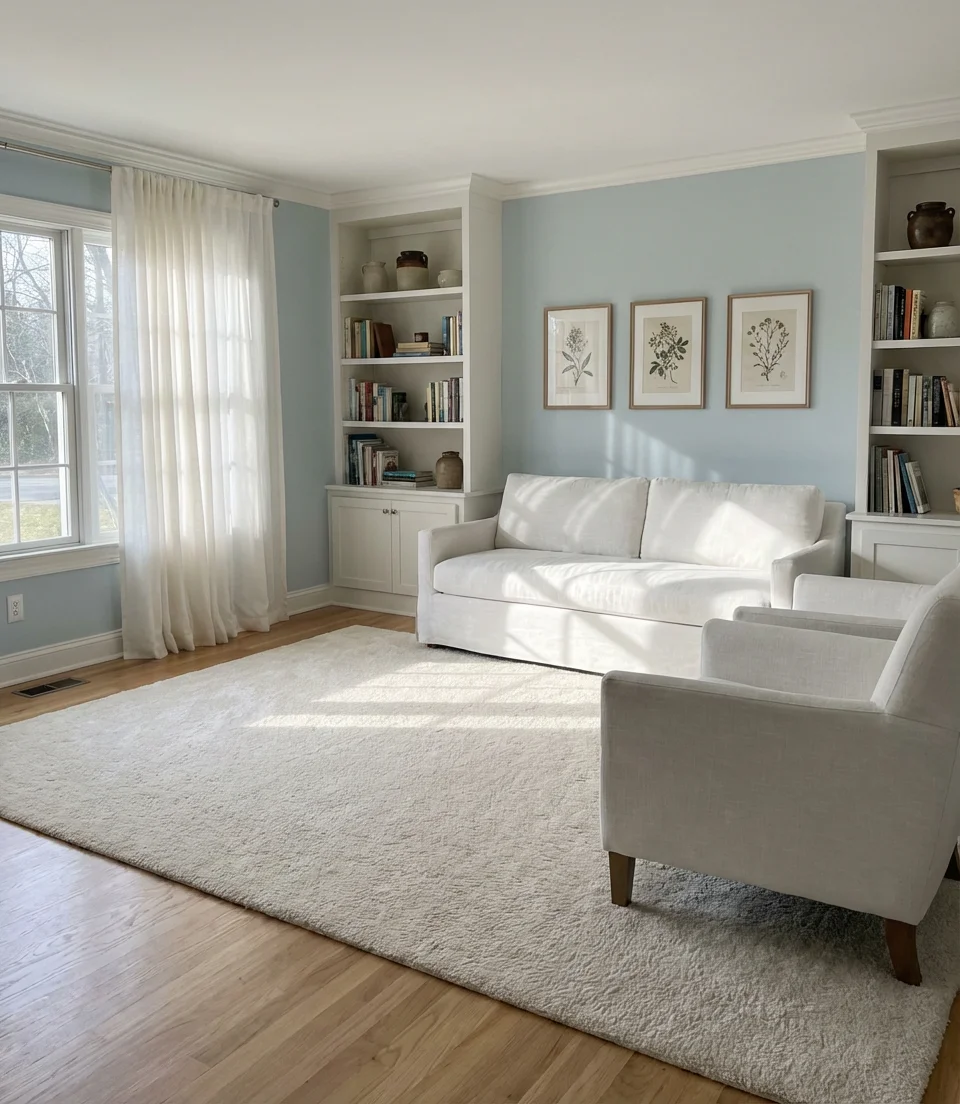
Painting your walls a soft light blue and pairing them with white furniture is one of the most approachable ways to commit to this color story without going all-in on a bold, saturated shade. Colors like Dusty Miller, Sky Fall, or Whispering Spring by major paint brands create a quiet backdrop that reads as almost neutral in changing light—silvery in the morning, warmer in the afternoon, and surprisingly cozy at night with lamps on. The white furniture amplifies the light and keeps the room from feeling heavy or overly themed.
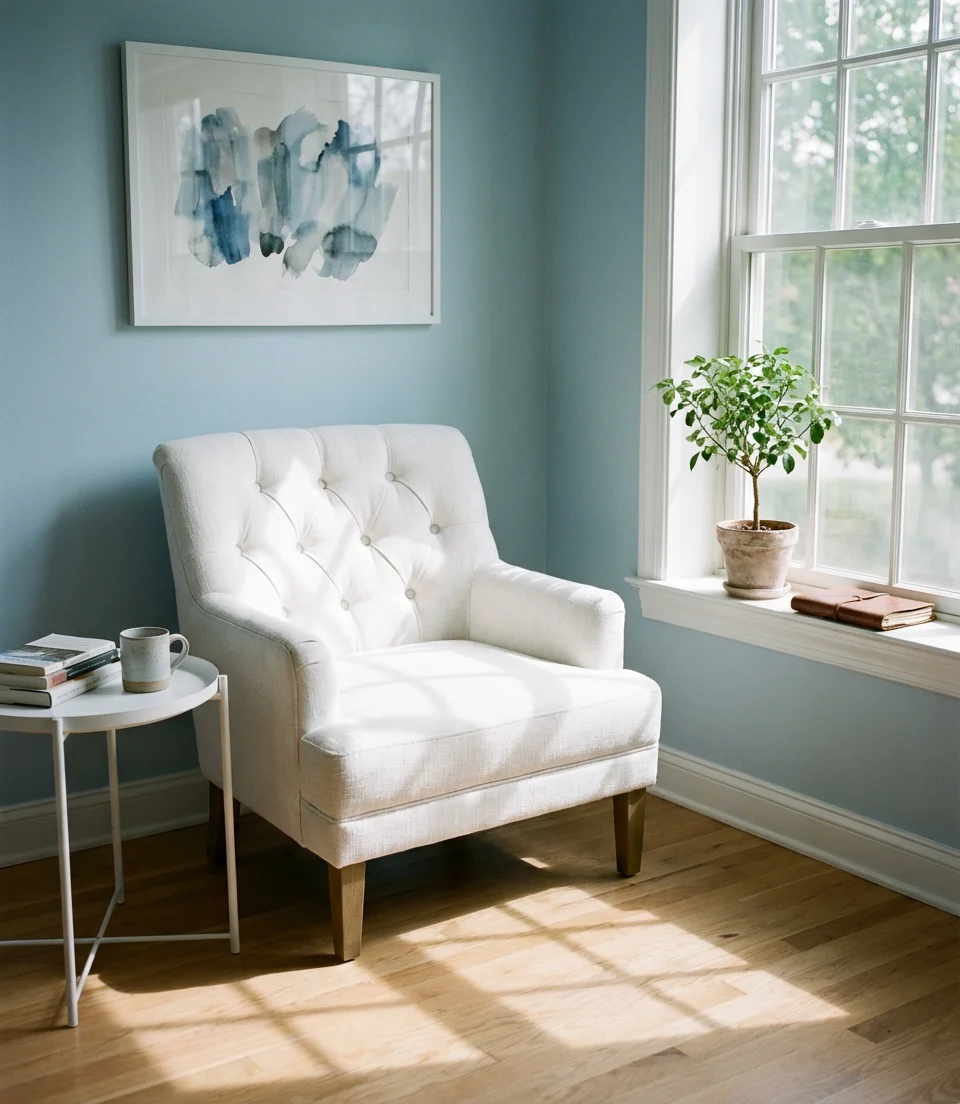
Budget-wise, this approach is one of the most affordable transformations available. A gallon of quality paint, a white slipcover for your existing sofa, and a few white ceramic accessories can dramatically shift the feel of a room without replacing major furniture. This style makes it a favorite starting point for renters and first-time homeowners who want a Pinterest-worthy space without the Pinterest-sized renovation budget.
4. Dark Blue and White Living Room with Moody Drama
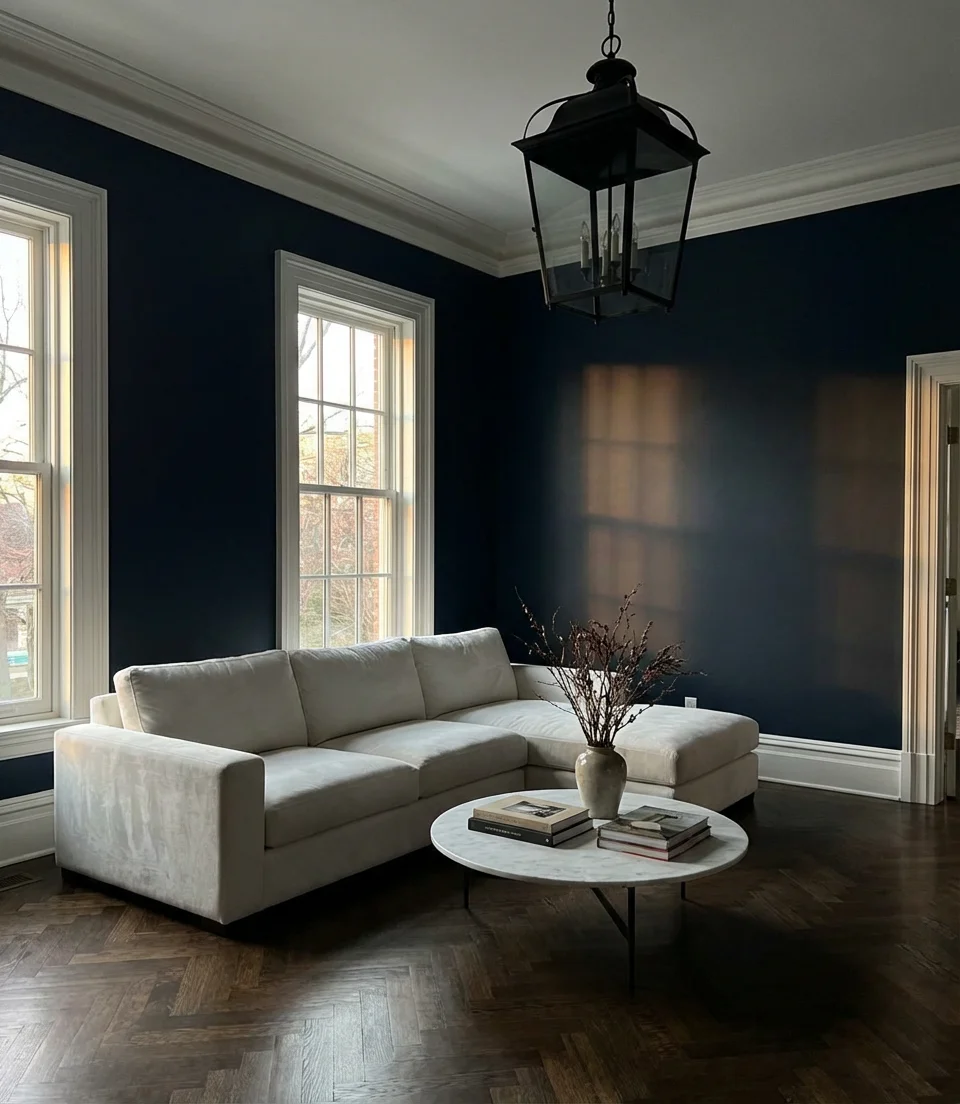
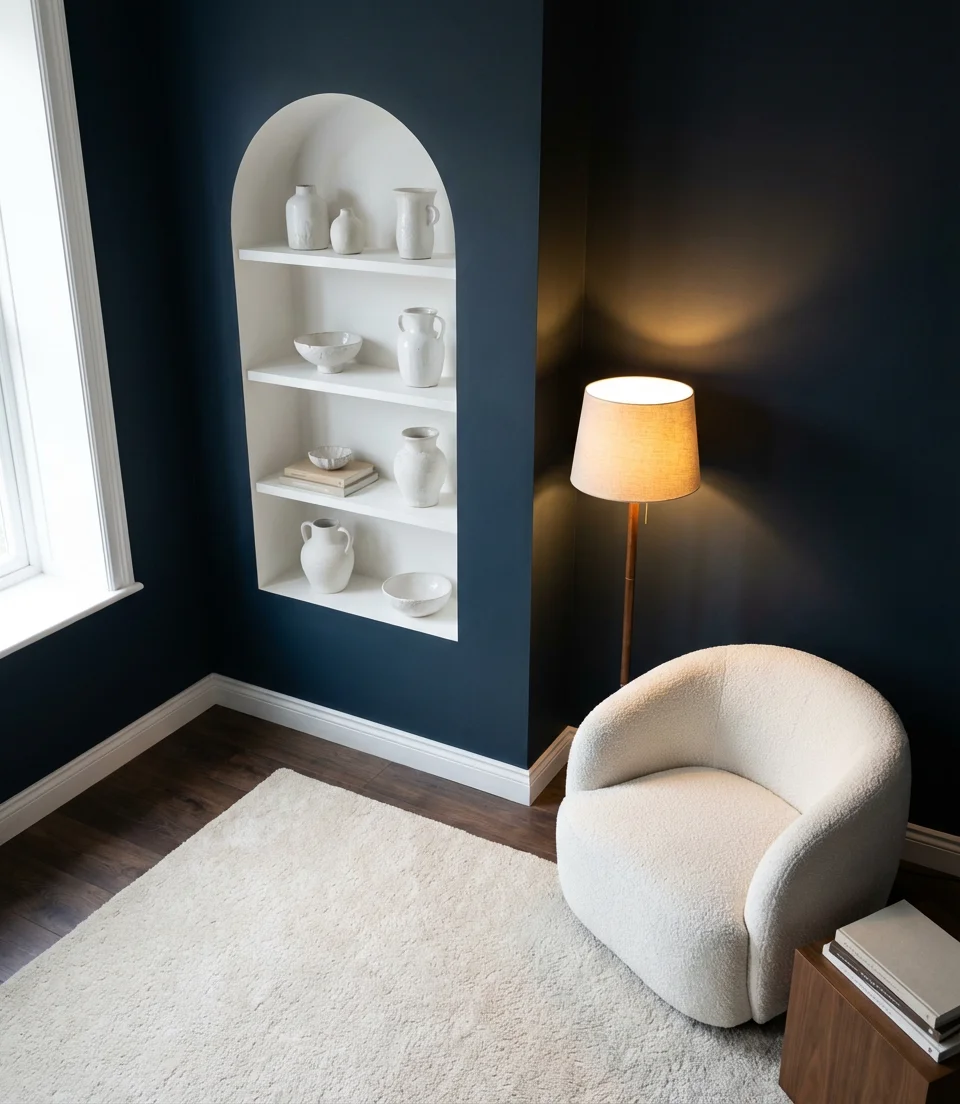
Going dark with deep blue, such as Hague Blue, Midnight, or Ink Well, creates a living room that captivates the moment you walk through the door. Against this depth, white trim, white art, and white upholstery pop with dramatic contrast. Such a scheme isn’t a look for the timid, but it rewards commitment. The decor itself can stay relatively simple: a white marble coffee table, white linen drapes, and a single oversized piece of blue-and-white artwork do most of the heavy lifting when the walls are this intentional.
A real homeowner in Chicago—a documentary filmmaker who renovated a century-old greystone—described this transformation best: “We painted the parlor Hague Blue, and suddenly the room had a personality it never had before. Guests always gravitate there first.” That gravitational pull is real, and it comes from the tension between dark walls and bright accents, which our eyes find inherently compelling.
5. French Country Blue and White Living Room
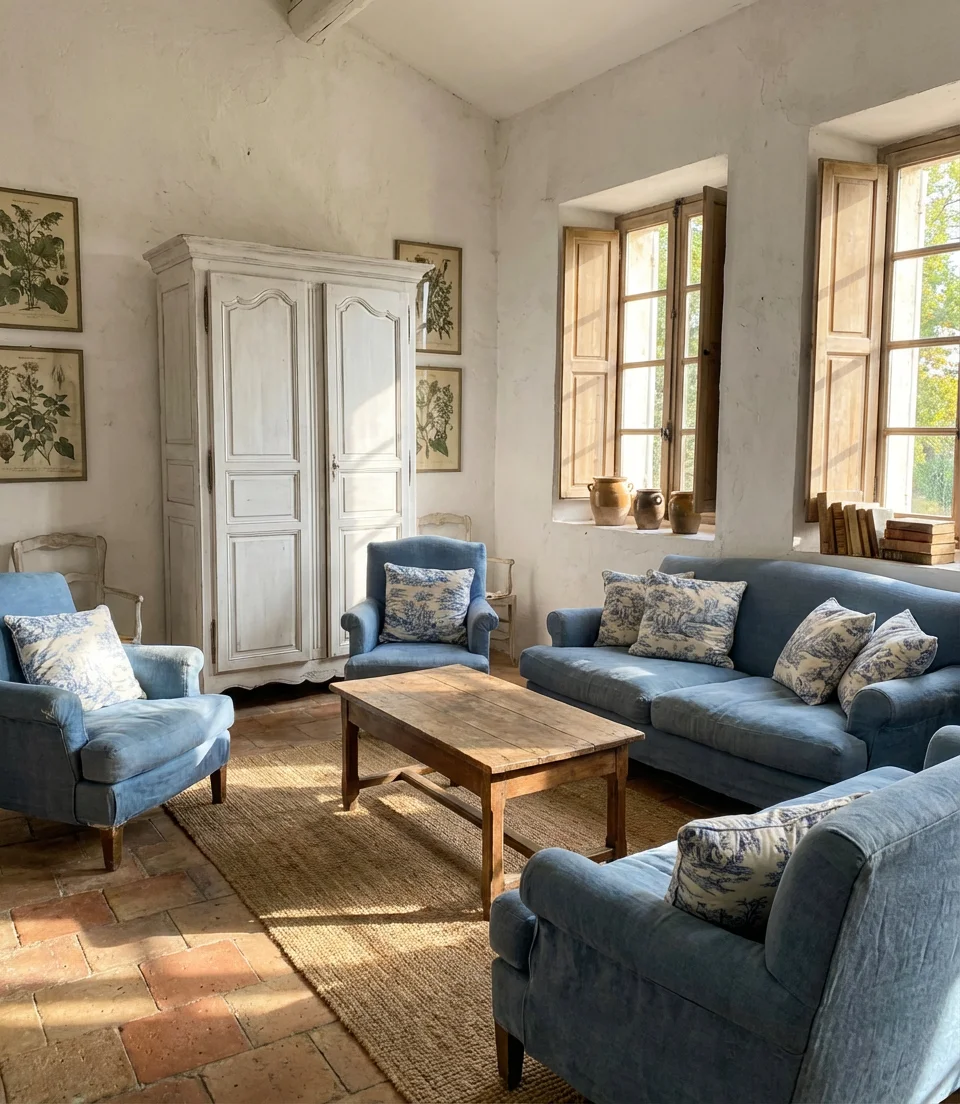
The French country approach to blue and white is softer, older-feeling, and deeply romantic. Picture faded blue linen slipcovers on overstuffed sofas, white-painted vintage armoires, blue-and-white toile on accent chairs, and terracotta floor tiles worn smooth with age. This combination isn’t about perfection—it’s about patina. The French country shabby chic version layers chippy white painted furniture with delicate blue floral textiles and mismatched vintage finds that look like they were collected slowly over a lifetime of travel and good taste.
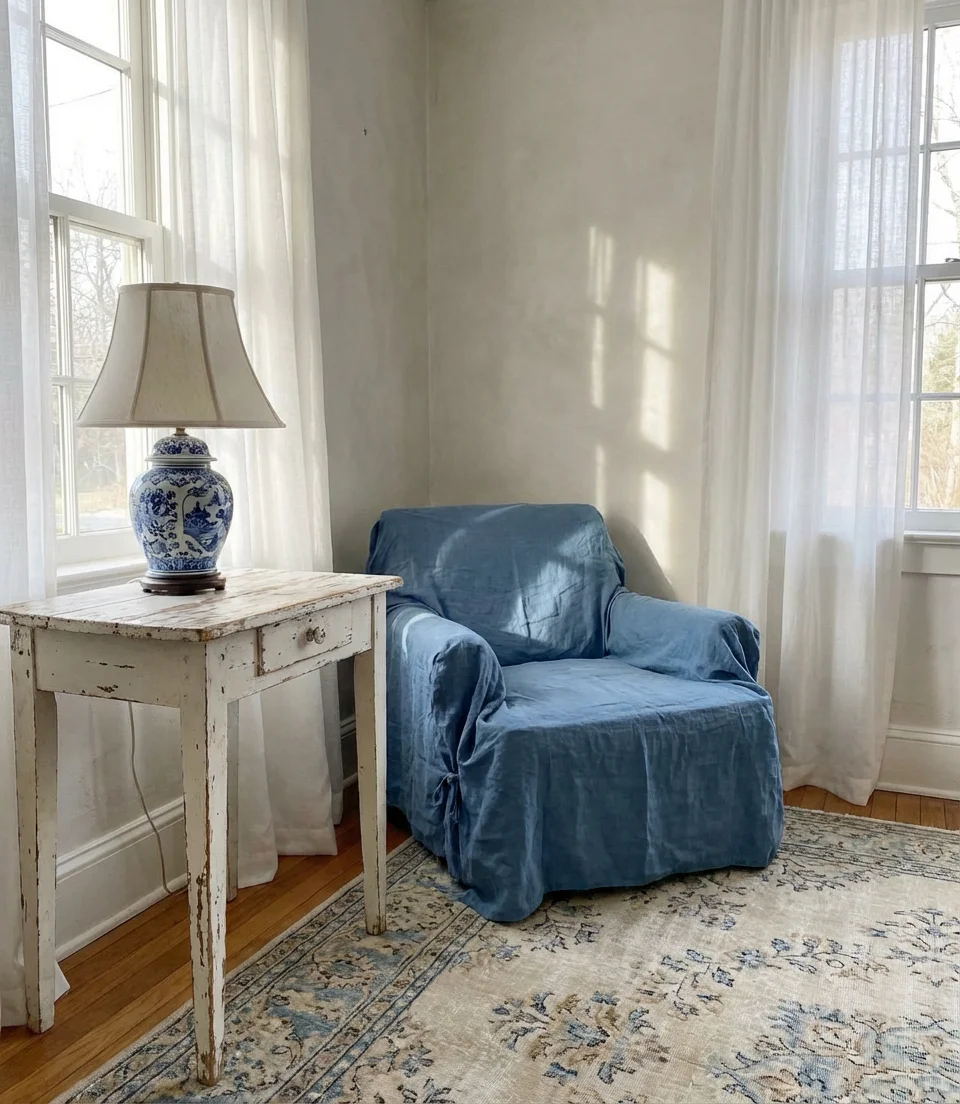
This look suits farmhouses and rural properties exceptionally well, but it also thrives in suburban homes where owners want their living room to feel like an escape. Where it really excels is in rooms with original architectural details like exposed beams, wide-plank floors, or stone fireplace surrounds, which give the layered textiles something solid to lean against.
6. Blue, White, and Grey Living Room with Modern Calm
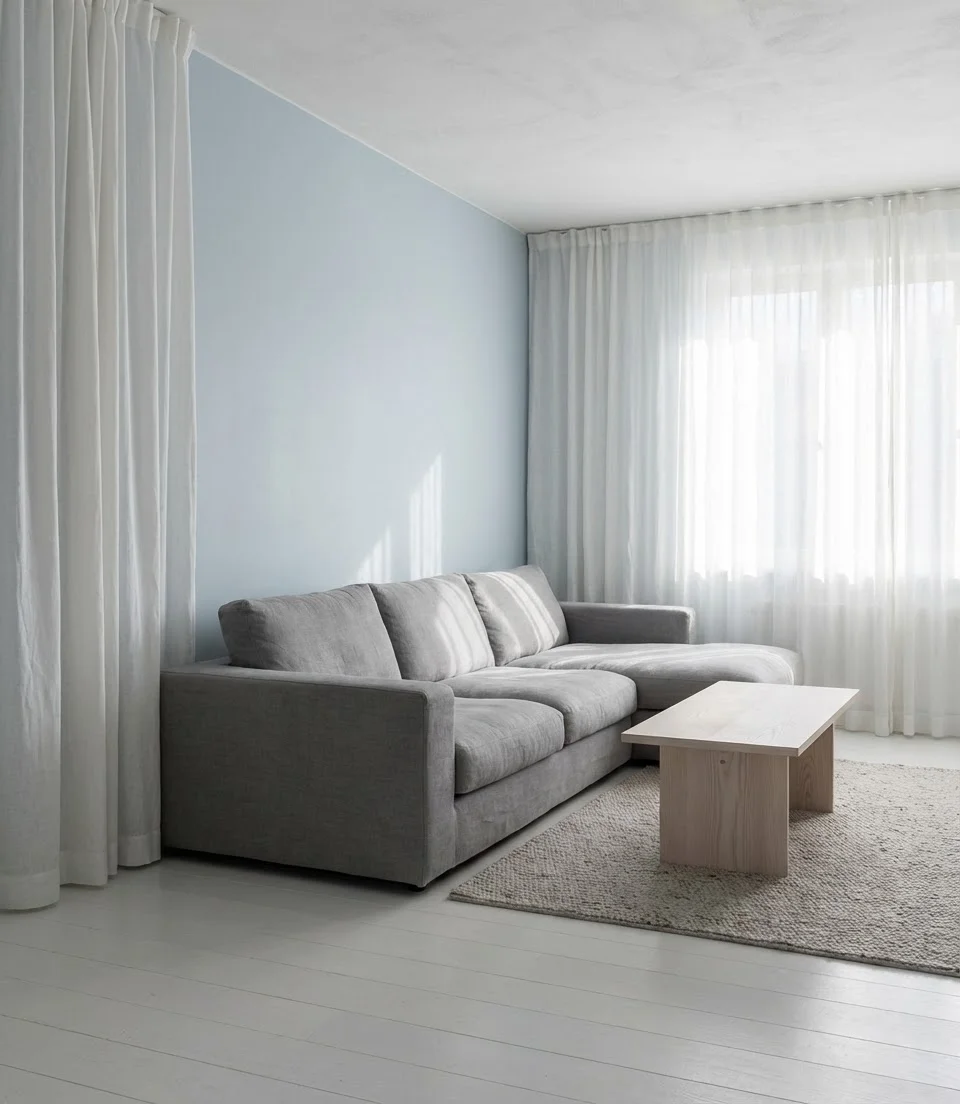
Incorporating grey into a blue and white living room not only softens the contrast but also creates a sophisticated, almost Scandinavian-influenced calm that seamlessly blends into contemporary interiors. The trick is choosing the right grey: cool grays with blue undertones keep everything cohesive, while warmer grays can introduce unexpected tension. A gray sofa against pale blue walls, white oak floors, and white linen curtains creates a palette so balanced it barely needs accessorizing to look complete.
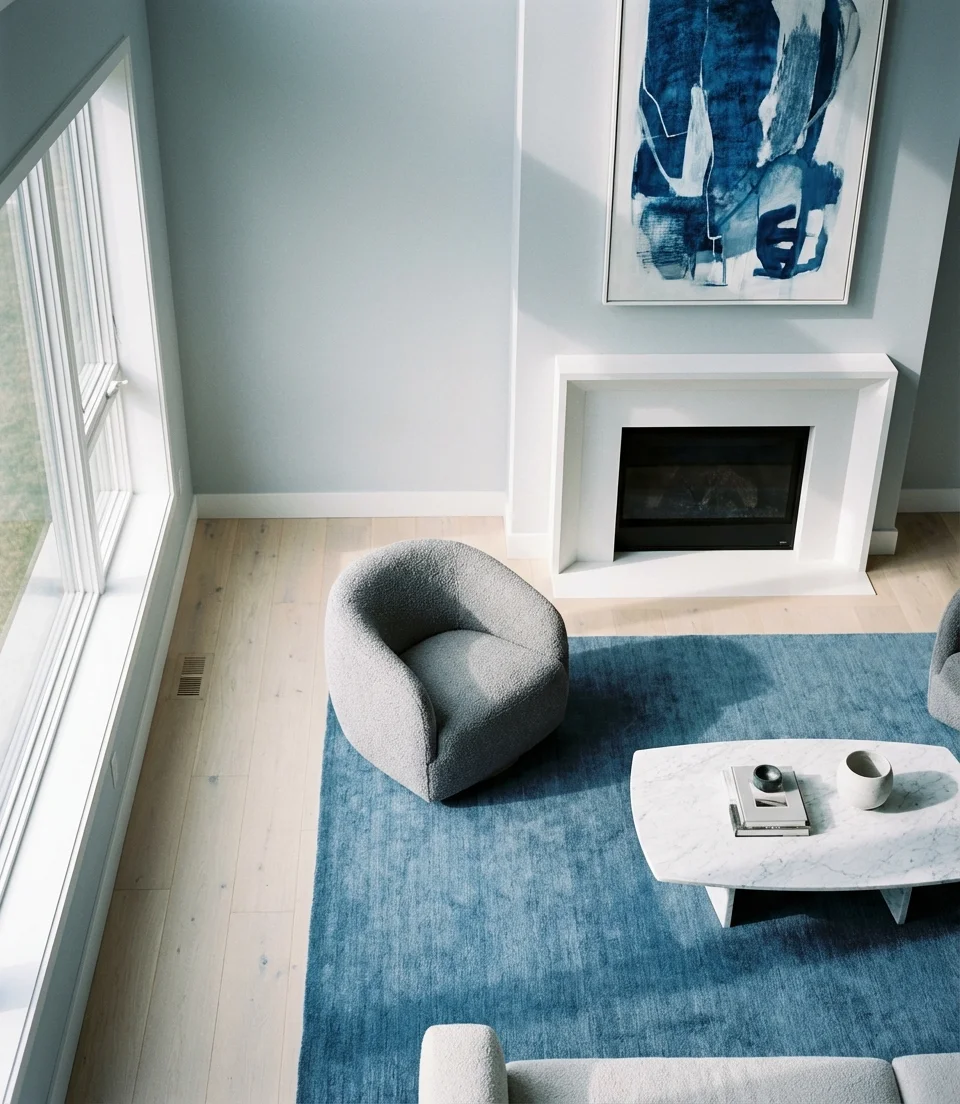
From a practical standpoint, adding grey creates welcome flexibility: it makes it easier to incorporate metal finishes—brushed nickel, chrome, gunmetal—without them feeling out of place, and it lets you shift the room’s mood seasonally. Swap in darker blue accessories for fall and winter, lighter whites and natural textures for spring and summer, and the grey holds it all together as a steady neutral anchor through the changes.
7. Blue, White, and Green Living Room with Botanical Energy
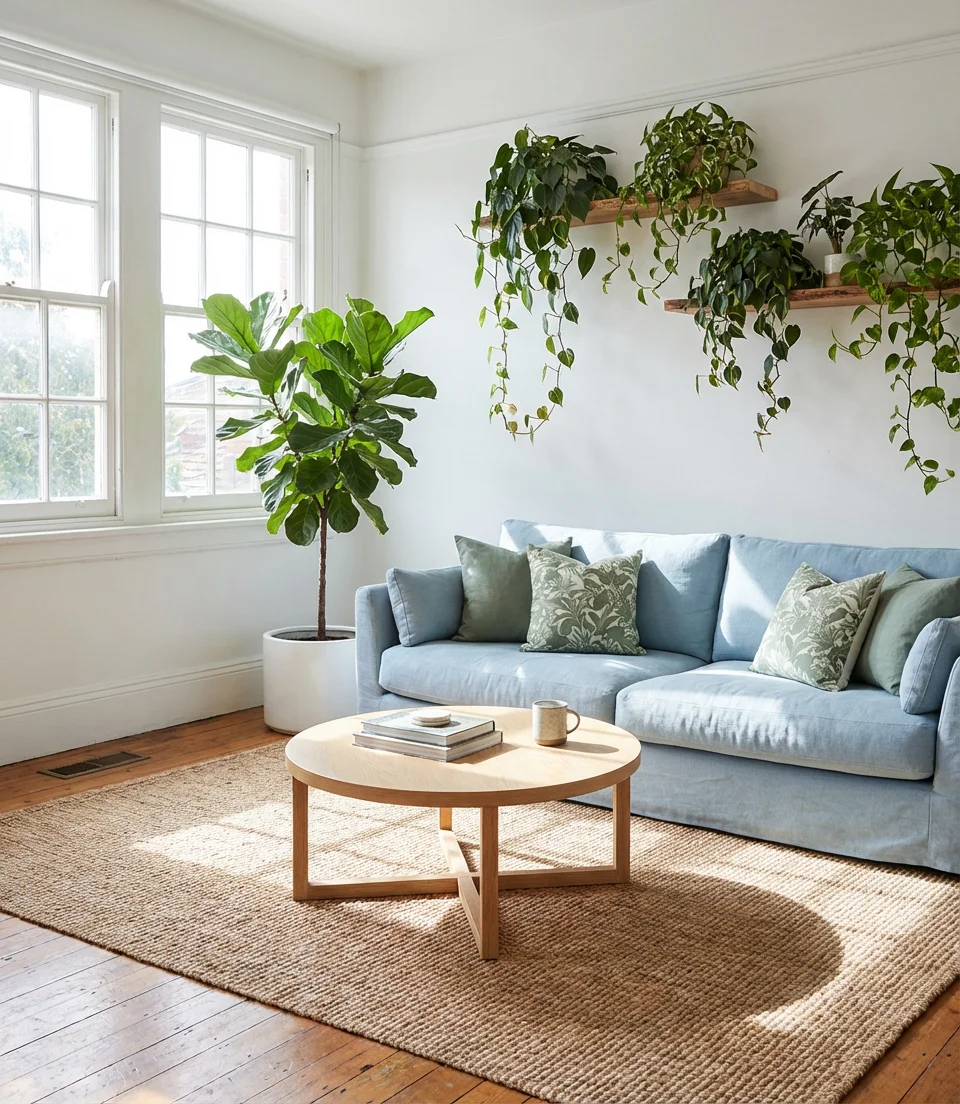
Layering green into a blue and white room introduces life and movement—it’s the design equivalent of opening a window. The pairing of blue and green feels instinctively right because it mirrors the natural world: sky and sea meeting forest. For living rooms, the combination translates to sage green throw pillows on a powder-blue sofa, white walls, and trailing pothos or fiddle-leaf figs as living decor. The result reads as modern-organic. It’s one of the most searched decor ideas on Pinterest right now, and for very good reason.
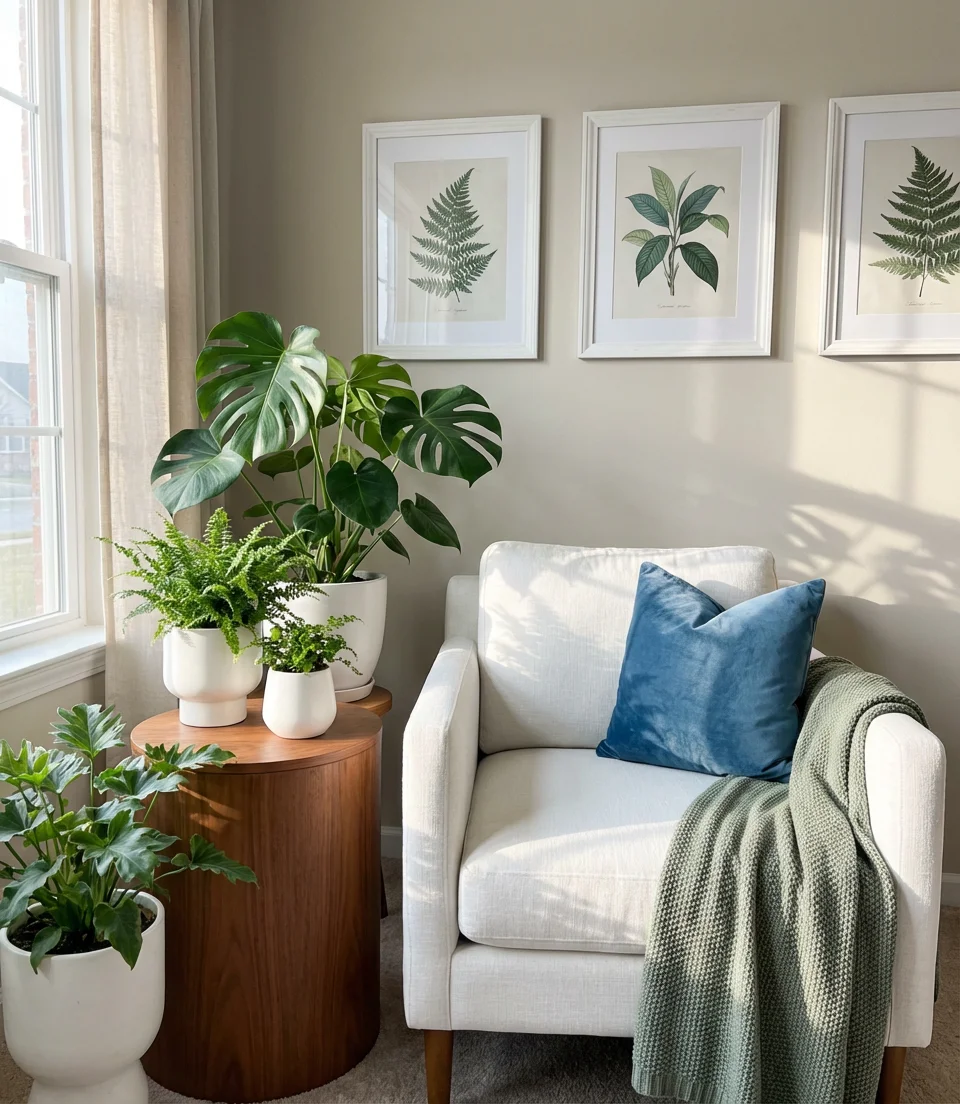
One thing experienced decorators caution against here is going too literal with “nature” themes—avoid jungle-print wallpaper or themed accessories that pull it away from a sophisticated living room. Instead, let the actual plants do the natural work, and keep the soft furnishings in solid or subtly textured blues, whites, and greens. The restraint is what elevates it.
8. Royal Blue and White Living Room with Gold Accents
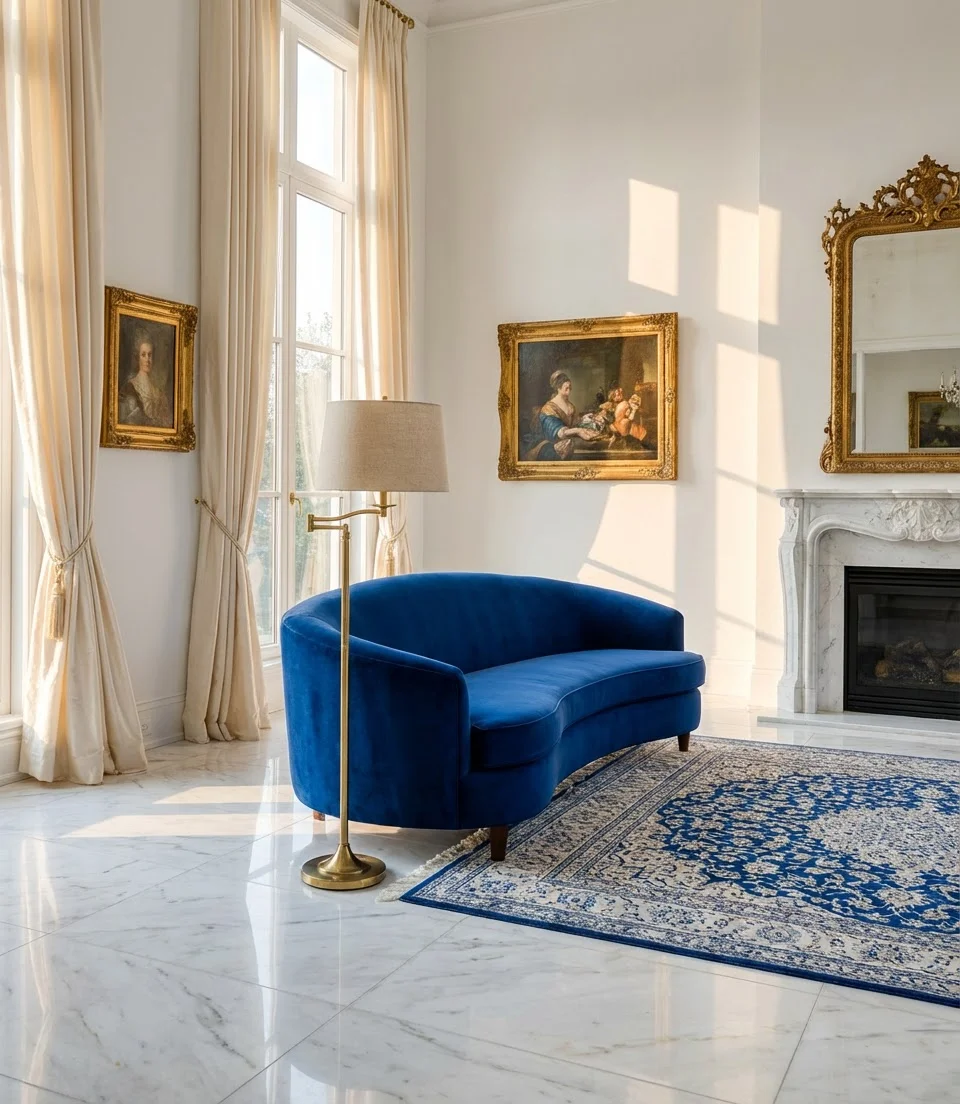
There’s something unapologetically bold about a royal blue living room—it’s a choice that announces itself immediately. Pair that saturated cobalt blue with white walls or upholstery and introduce gold or brass finishing details, and you have a room that channels old-world glamour with a contemporary spine. Think white plaster walls, a royal blue velvet sofa, gilded picture frames, brass table lamps, and a blue-and-white patterned rug that pulls the whole composition together. The outcome is formal decor done with confidence.
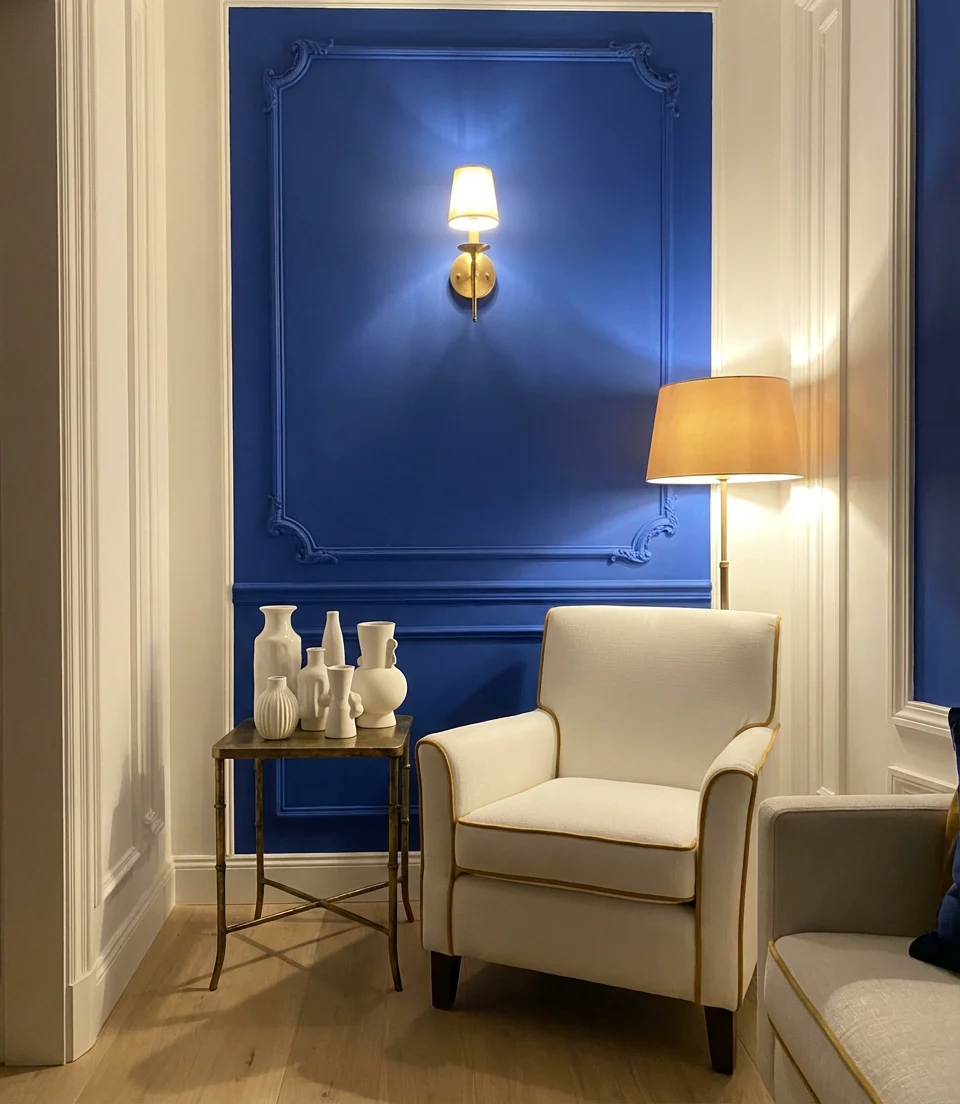
This palette performs particularly well in apartments with high ceilings and original architectural details—prewar buildings in New York, Washington, D.C., and Chicago where plaster moldings and tall sash windows were standard. The gold accents amplify whatever period details already exist, and the royal blue keeps the room grounded so the gold reads rich rather than flashy. Less is genuinely more: three brass pieces and a gilded frame go further than a dozen mixed metal accessories.
9. Blue and White Apartment Living Room on a Budget
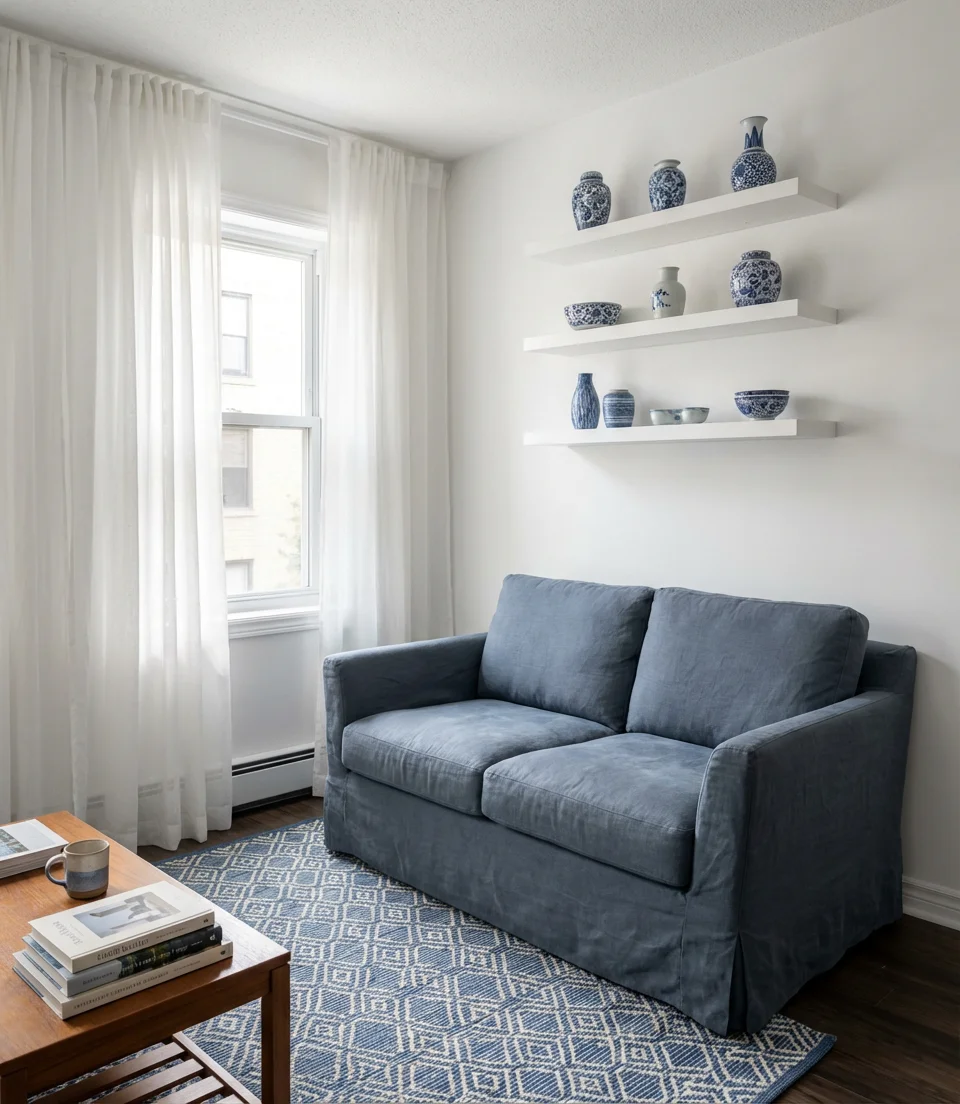
Creating a beautiful blue and white apartment living room doesn’t require a decorator’s budget—it requires effective decision-making with limited resources. In a rental where wall painting is not an option, the color story is fully expressed through textiles, art, and accessories: a blue slipcover for a neutral sofa, floor-to-ceiling white curtain panels, blue-and-white throw pillows from various sources such as Target, Etsy, and thrift stores, and a statement rug that anchors the palette. The key is cohesion: choosing one consistent blue tone and repeating it rather than scattering three different shades.
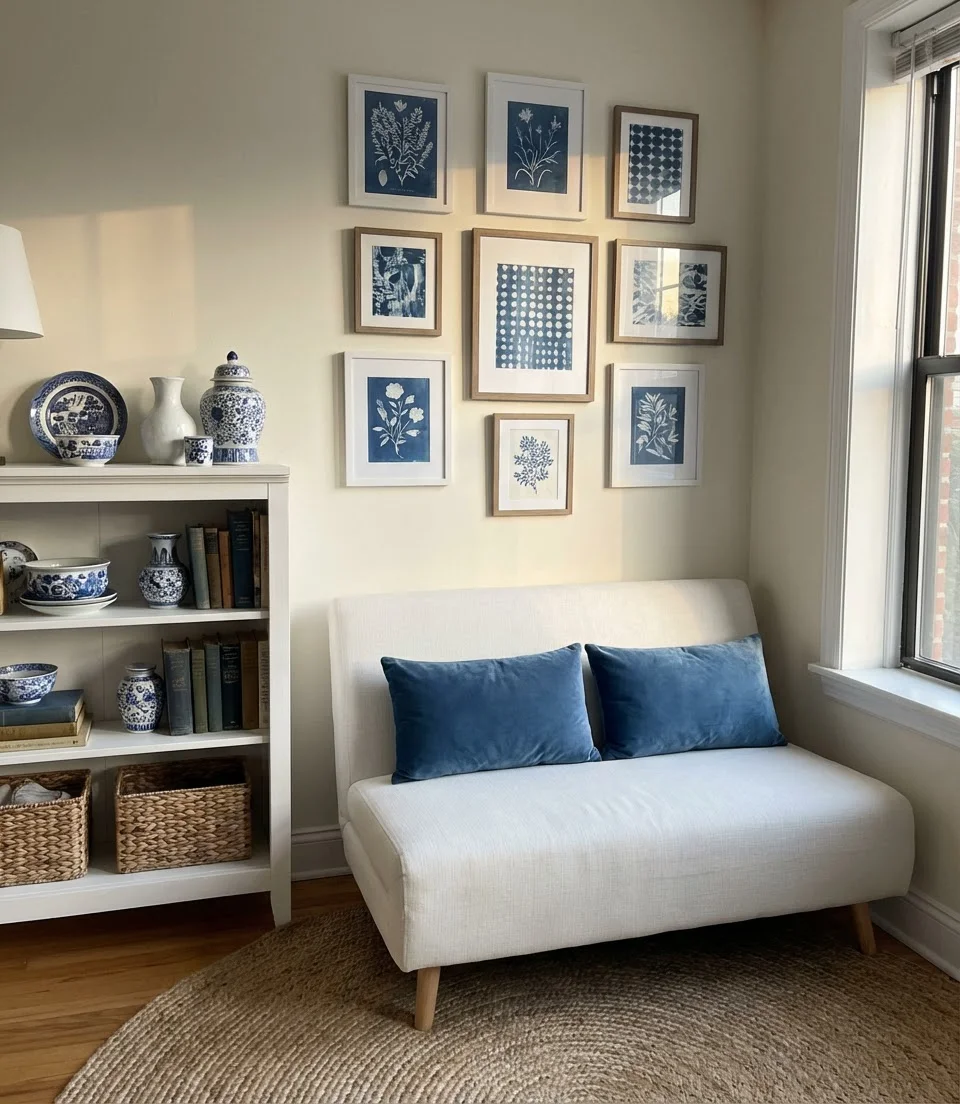
A complete blue and white living room refresh—slipcover, two sets of curtains, a rug, and a set of throw pillows—can often be accomplished for under $400 if you shop strategically. The single biggest mistake budget decorators make is buying too many small accessories instead of investing in one medium-large piece, like a gorgeous rug, that sets the tone for everything else.
10. Sky Blue and White Airy Living Room
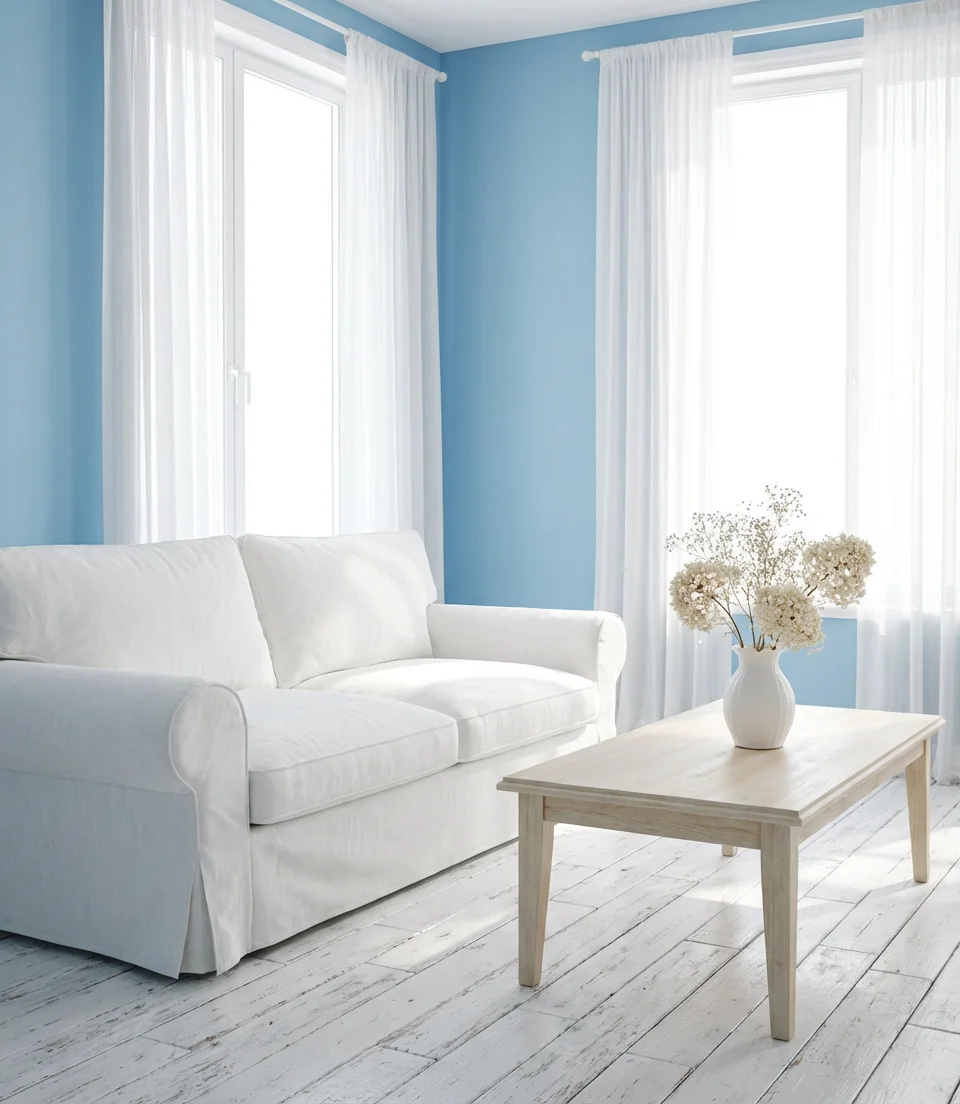
Few color pairings feel as genuinely uplifting as sky blue and clean white. This is the living room equivalent of a clear morning—open, optimistic, and comfortable to be in for long stretches of time. Light blue walls in a true sky tone, paired with white slipcovered furniture and white-painted floors or bleached wood, create an almost meditative brightness. The palette doesn’t compete for attention; it simply makes the room feel larger, calmer, and better lit than it probably is on paper. For north-facing rooms that tend to feel gloomy, this palette is one of the most effective countermoves available.
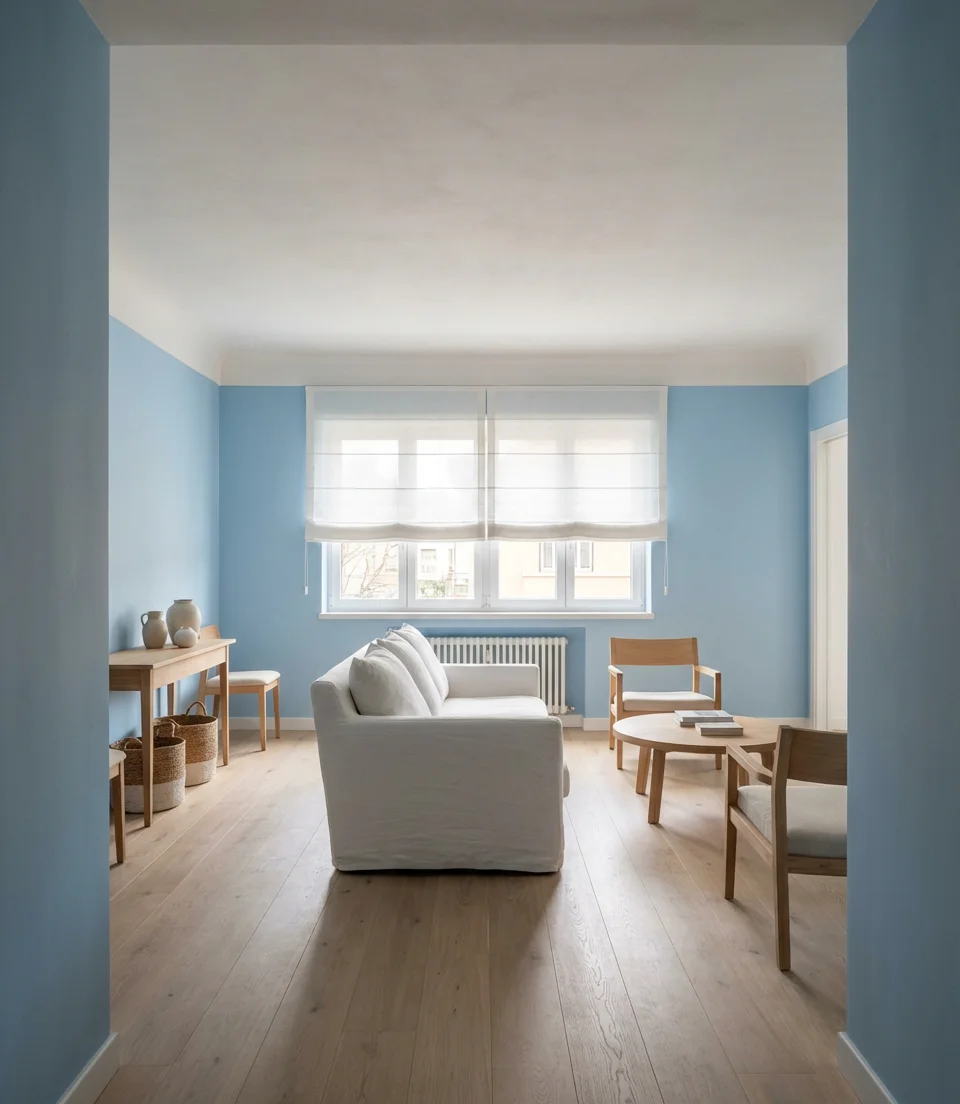
Interior designers excel in this aspect: selecting the appropriate sky blue is crucial. Some sky blues have too much green and tip toward aqua; others lean gray and lose their optimism on cloudy days. Benjamin Moore’s “Breath of Fresh Air” and Farrow & Ball’s “Pale Powder” are two that consistently photograph well and perform across lighting conditions. Testing a large swatch for a full week before committing is non-negotiable with this shade.
11. Blue and White Living Room with Bold Black Accents
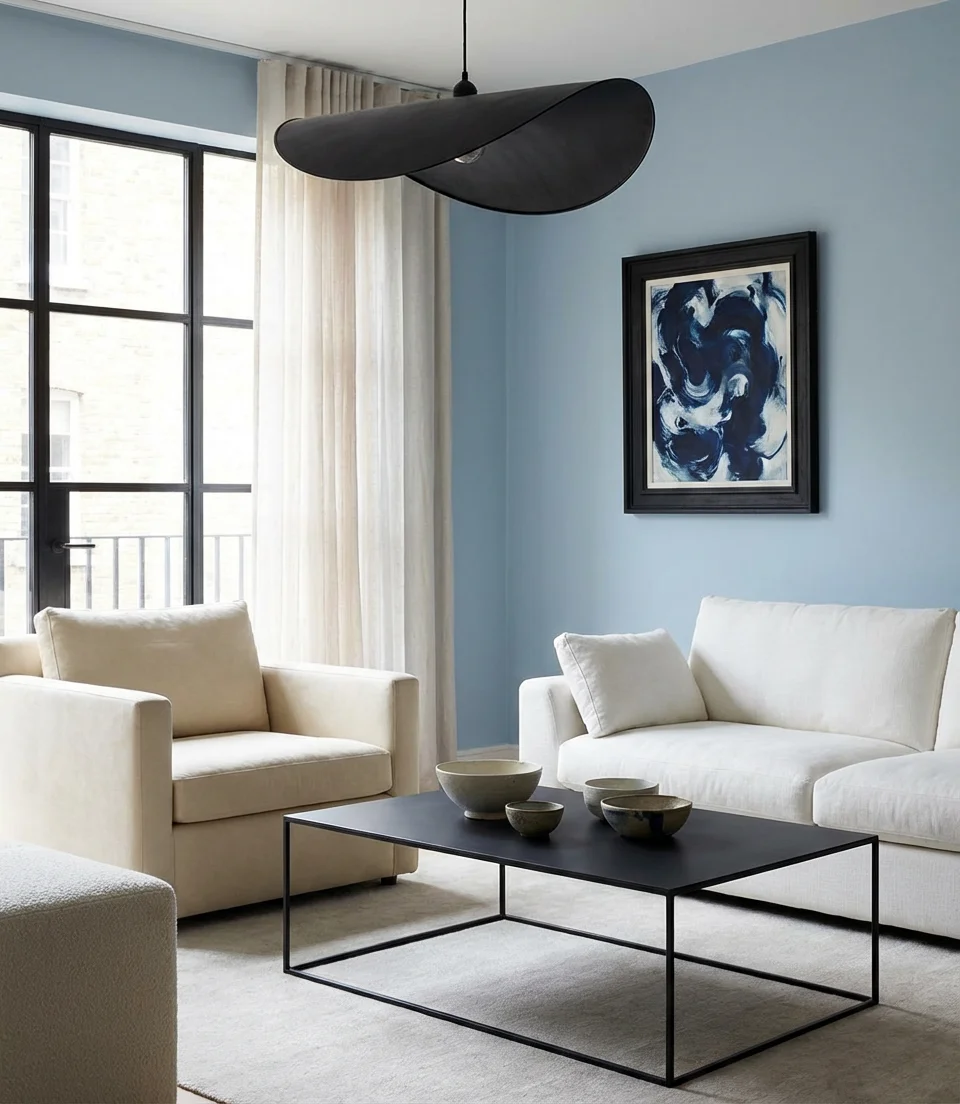
Introducing black into a blue and white room is a designer move that sharpens everything. It prevents the palette from reading as too soft, adds visual weight without heaviness, and creates the kind of high-contrast graphic quality that photographs beautifully. Black window frames, black iron light fixtures, black lacquered side tables, or a single black upholstered chair—any one of these can anchor a blue-and-white room and give it an edge. This aesthetic sits somewhere between traditional and modern, and that’s precisely what makes it feel fresh rather than dated.
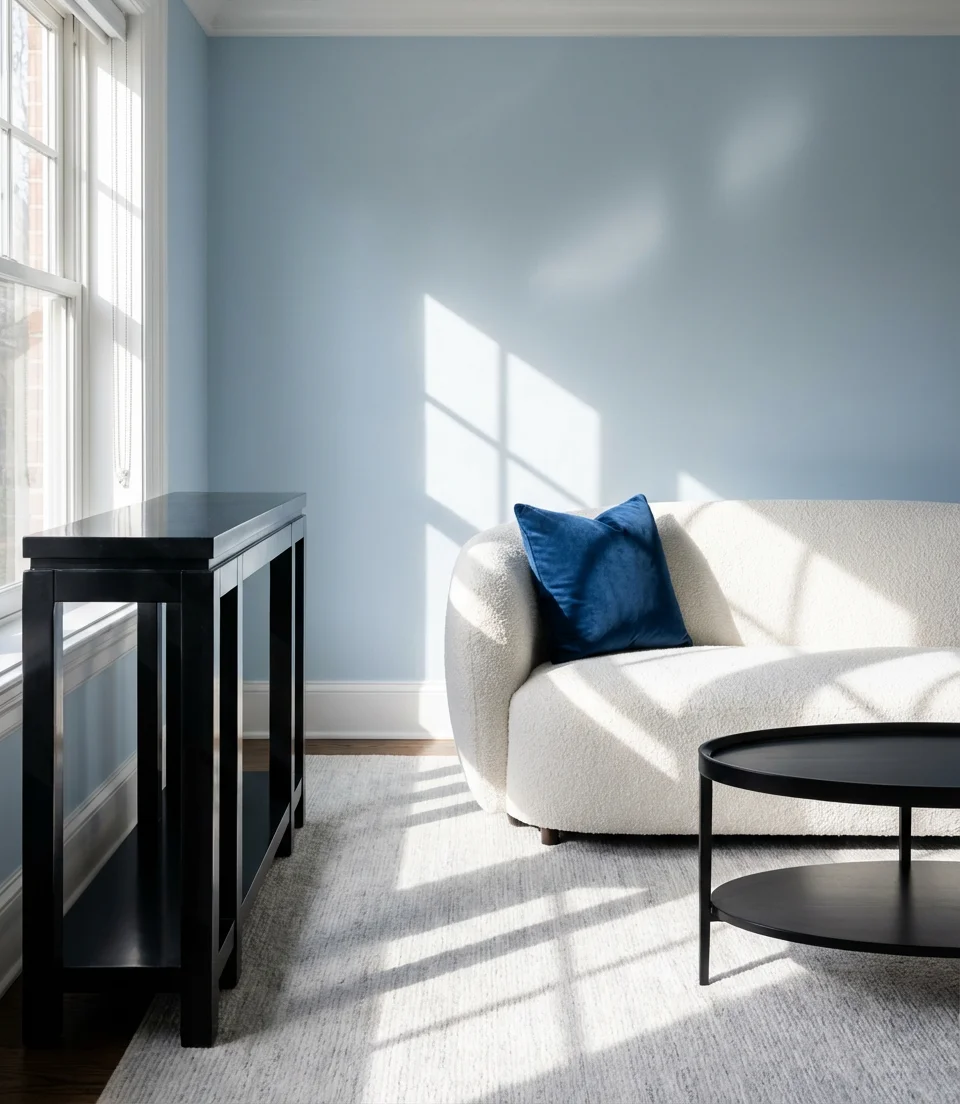
The key to making this work is distributing the black in at least three separate places—three is the designer’s minimum for any accent color to feel intentional rather than accidental. One black object looks like a mistake. Two creates tension. Three establishes a pattern that the eye reads as a deliberate, satisfying choice. Keep the black pieces matte rather than glossy for a more contemporary feel.
12. Blue, White, and Brown Warm Living Room
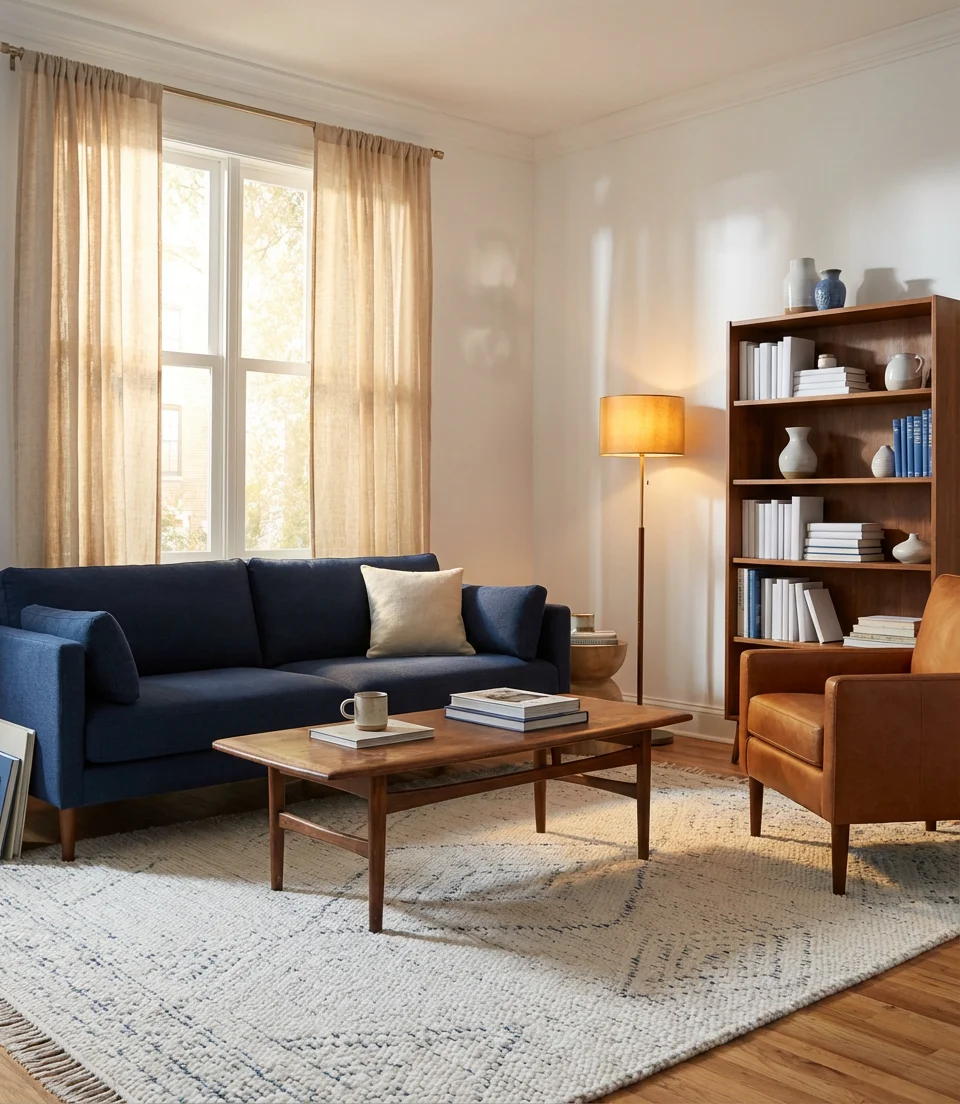
Blue and white rooms can sometimes skew cold, and that’s where brown earns its place in the conversation. Warm brown—in leather, walnut furniture, aged oak floors, or wicker accessories—takes a blue-and-white palette and makes it feel genuinely inviting rather than showroom-perfect. A navy sofa against white walls feels dramatically warmer when it sits on a cognac leather rug or a richly grained walnut coffee table. The decor ideas here revolve around the balance between a cool palette and warm materials, resulting in a room that strikes a comfortable balance.
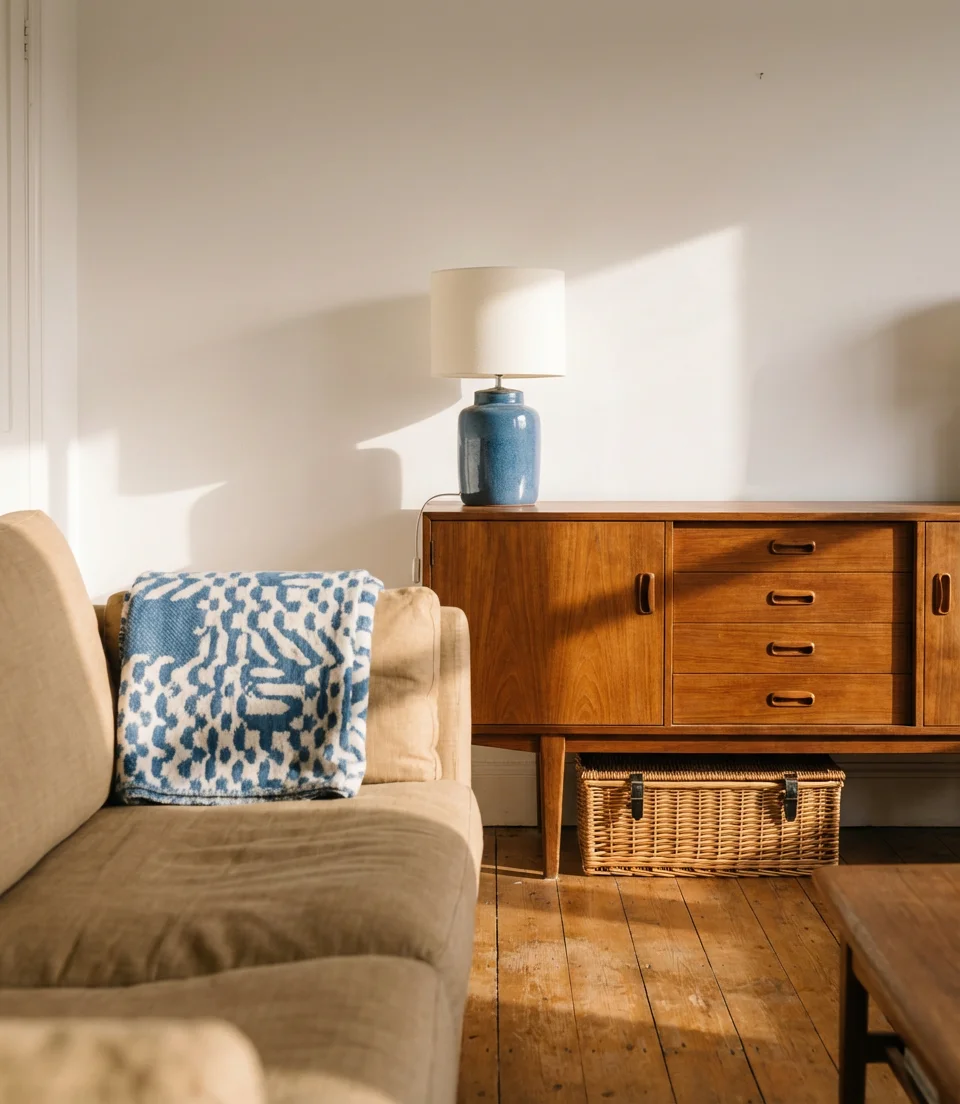
This style is a particularly popular approach among families with young children, where the warmth of the brown materials makes the room feel lived-in and forgiving in a way that an all-white-and-pale-blue room might not. Leather and walnut are also durable and age gracefully—the scuffs and patina that develop over time only add to the warmth of the story.
13. Traditional Modern Blue and White Living Room
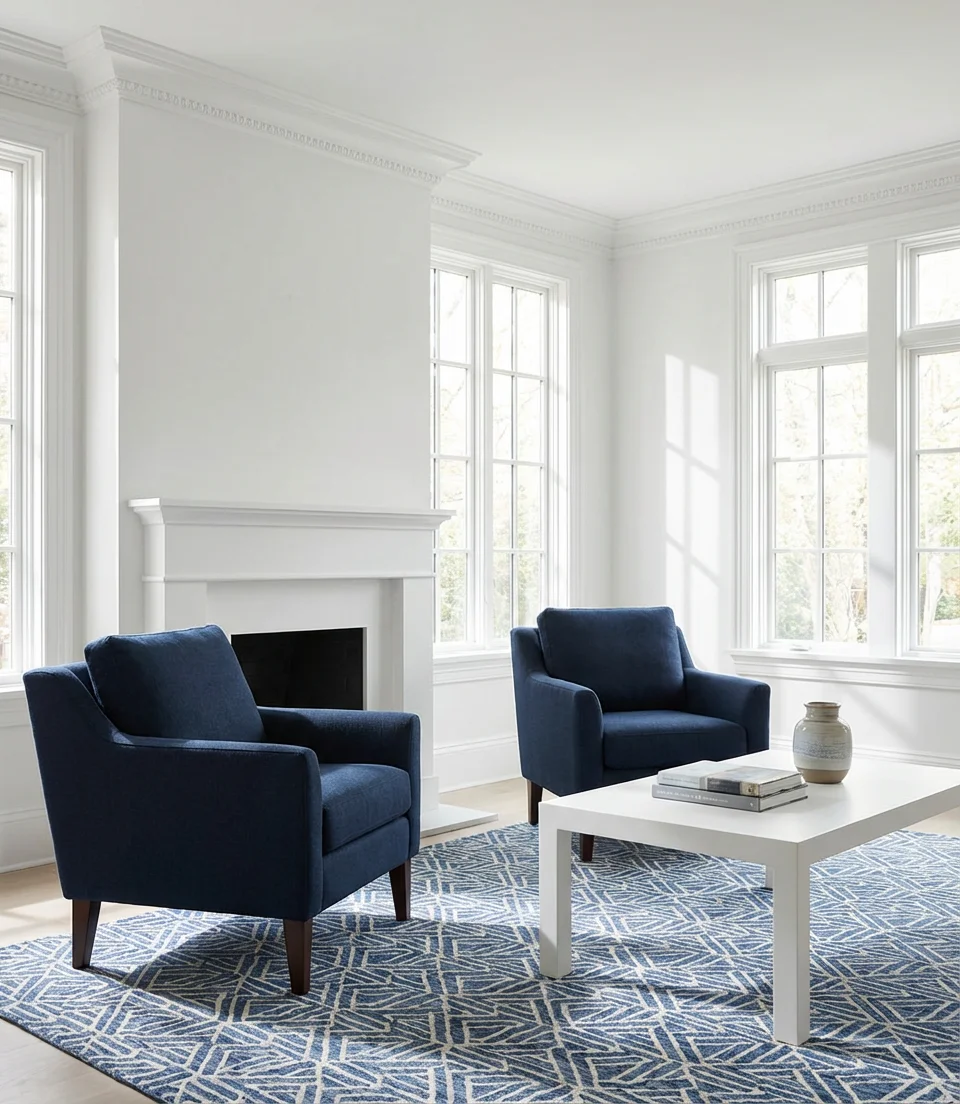
The traditional-modern mashup is one of the most rewarding design challenges in residential interiors—and blue and white is one of the best palettes to work it through. The idea is to honor classical proportions and formal details while stripping away stuffiness: navy blue club chairs with slim modern legs, white-painted walls instead of wallpapered ones, and a simple Parsons coffee table rather than an ornate antique one. Traditional design provides the architecture; modern sensibility edits out anything that doesn’t earn its place.
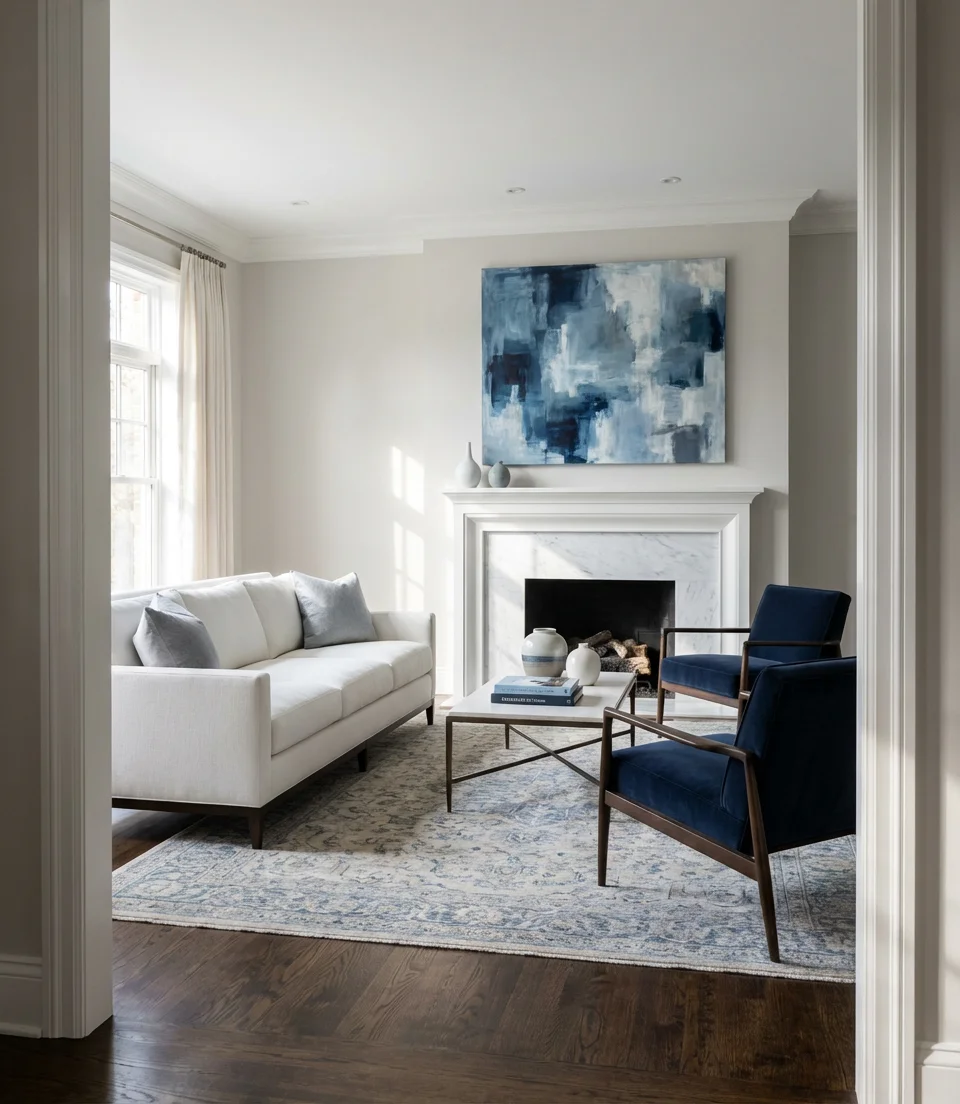
One of the most common mistakes in transitional rooms is mixing furniture from too many eras—a Victorian settee next to an Eames chair reads confused rather than curated. The cleaner approach is to pick one historical reference and filter all your modern pieces through that single lens. The result feels coherent because there’s an internal logic the eye can follow, even if it can’t name it.
14. Blue and White Living Room with Statement Curtains
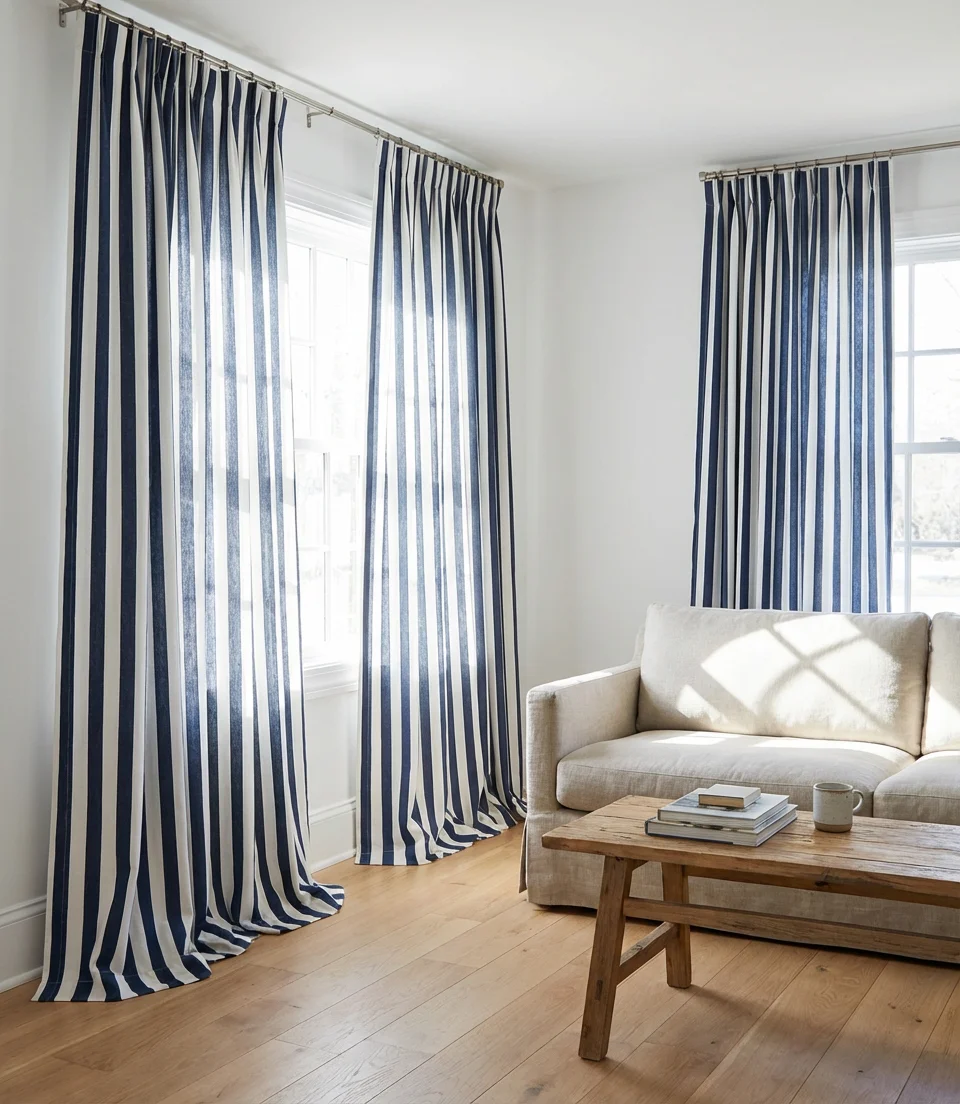
When walls are white and furniture is neutral, curtains and drapes can serve as an accent wall without the permanence. In a blue and white living room, floor-to-ceiling drapes in a bold navy stripe, a delicate blue toile, or a graphic blue-and-white geometric print become the room’s defining visual statement. Hung high and wide—above the window casing and well beyond the frame on both sides—they transform the architecture of the room, making windows appear taller and the ceiling feel higher than it actually is.
Fabric choice matters here as much as pattern. Heavy linen or cotton-velvet drapes in blue and white read as luxurious even in budget-priced versions, because the fabric falls beautifully and holds a consistent silhouette. Thin polyester panels collapse the effect—they look limp rather than architectural. Budget for excellent fabric even if it means buying fewer panels and using two rather than four at each window.
15. Blue and White Living Room with a Persian-Style Rug
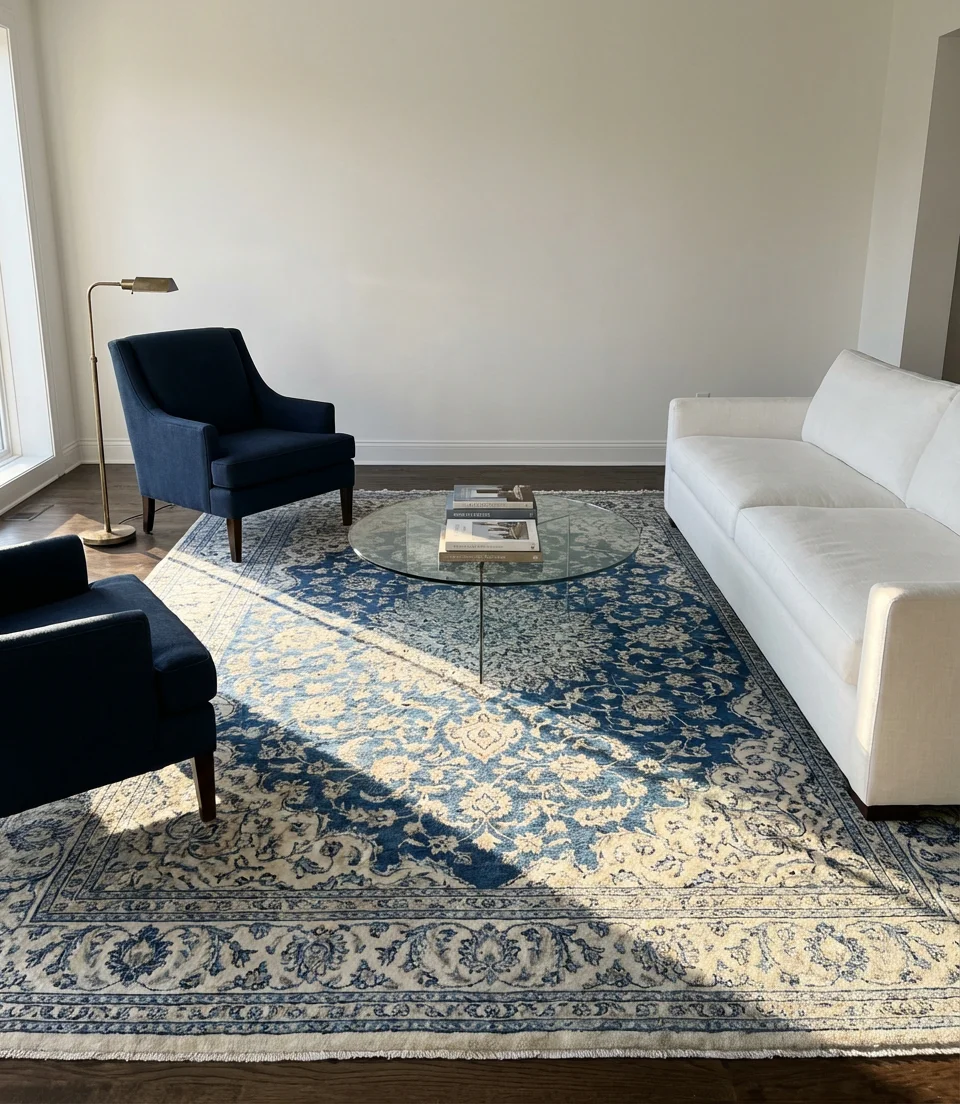
A rug is often the first design decision in a room, and choosing a blue-and-white Persian or Oriental-style rug as the starting point gives the entire space an immediate sense of history and warmth. These rugs tend to carry both navy and lighter blue tones, ivory, and cream—which means they pull the whole palette together without requiring any additional effort. Set a white sofa and blue accent chairs over a well-chosen rug like this, and the room assembles itself with surprising ease. The result is decor that does the design work for you.
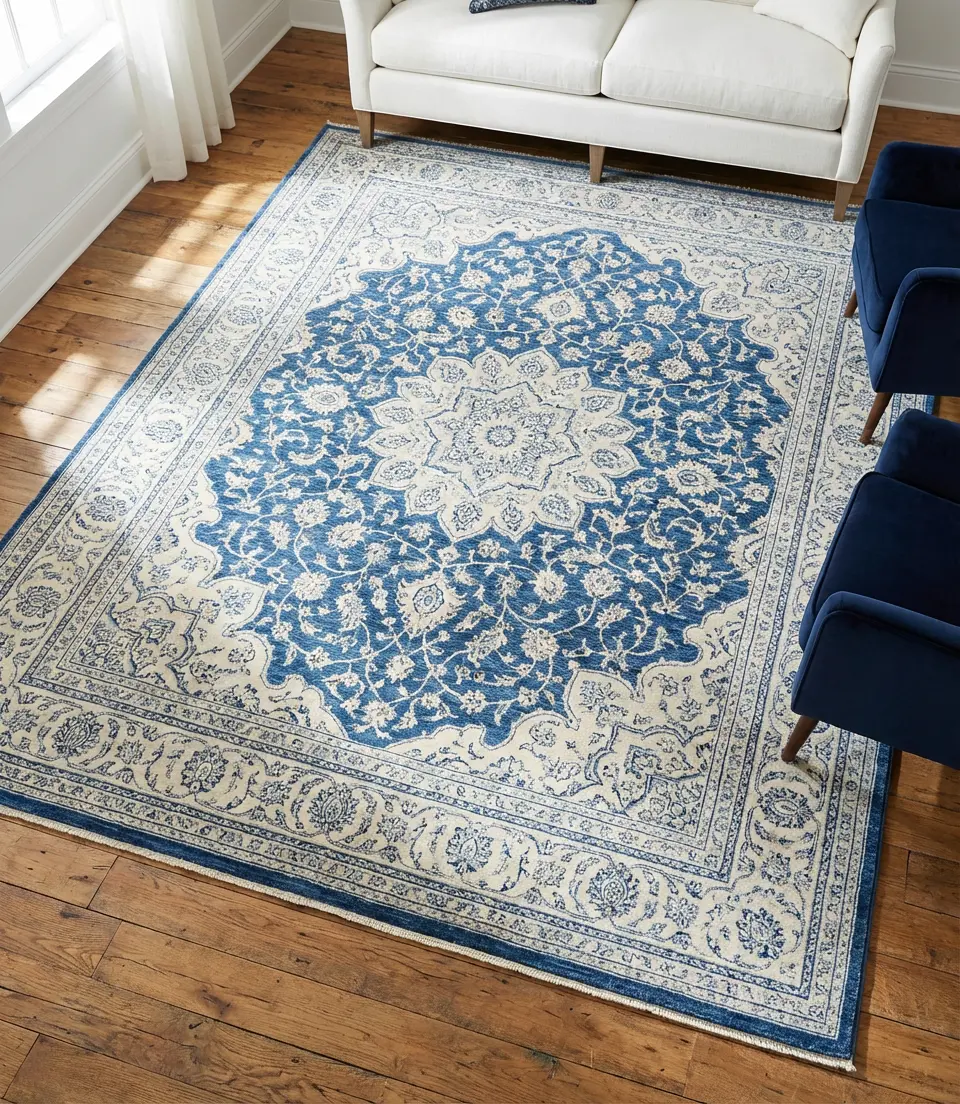
Vintage and antique Persian rugs in blue and white can be found at estate sales, antique markets, and auction houses at remarkably accessible prices—a solid example in the 8×10 range often runs between $300 and $800 depending on age and condition. Persian rugs are handwoven carpets that originate from Iran and are known for their intricate designs and high quality. Machine-made reproductions can achieve a very similar look for under $200. Either way, this single investment does more for a room than almost any other purchase at a similar price point.
16. Navy Blue Accent Wall in a White Living Room
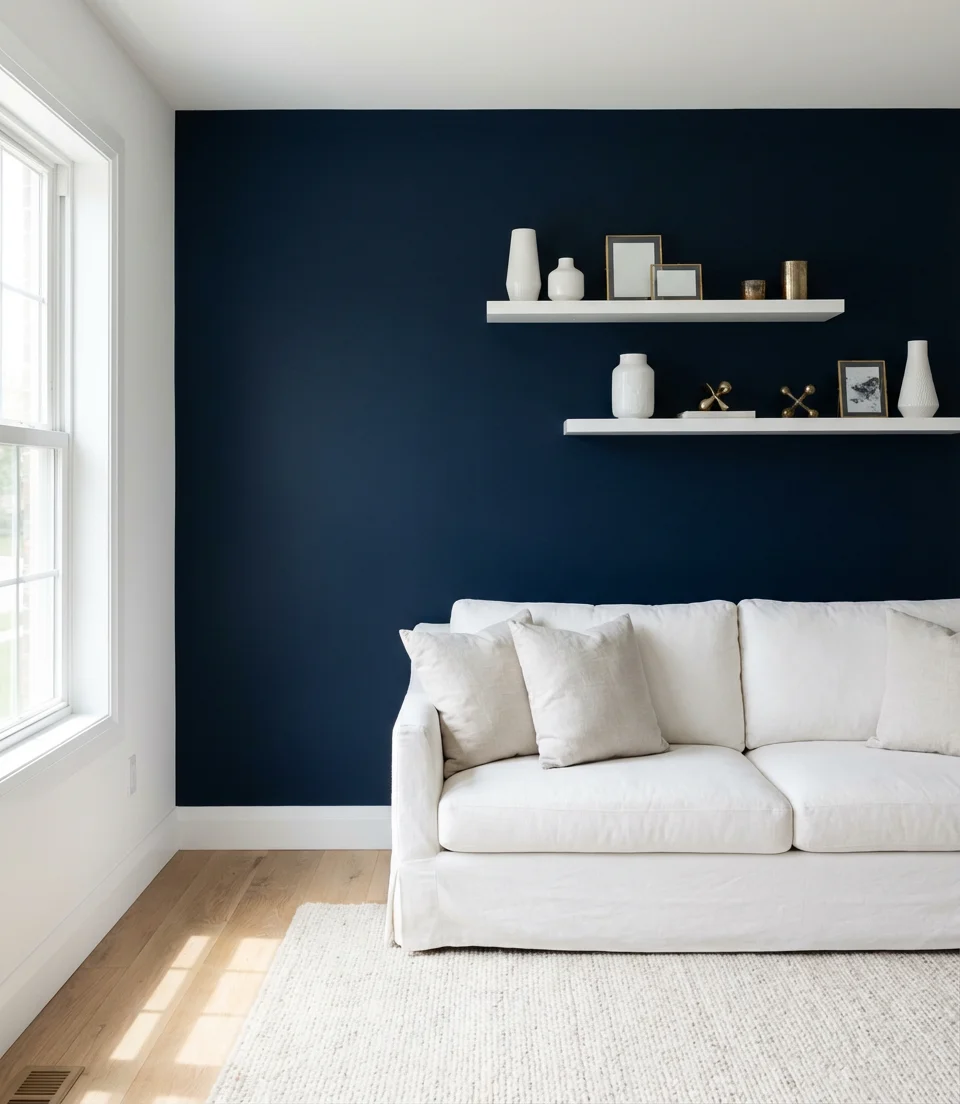
If committing to four dark blue walls feels like too much, a single navy accent wall is the perfect middle ground. It delivers the drama and depth of deep blue without enclosing the room, and it creates a natural focal point that helps arrange the furniture layout by instinct. Position the sofa to face the accent wall, keep the remaining three walls white, and the room immediately has a clear compositional center. This style is one of the most popular approaches in American living rooms, and the before-and-after photos consistently shock people with how dramatically a single wall changes a space.
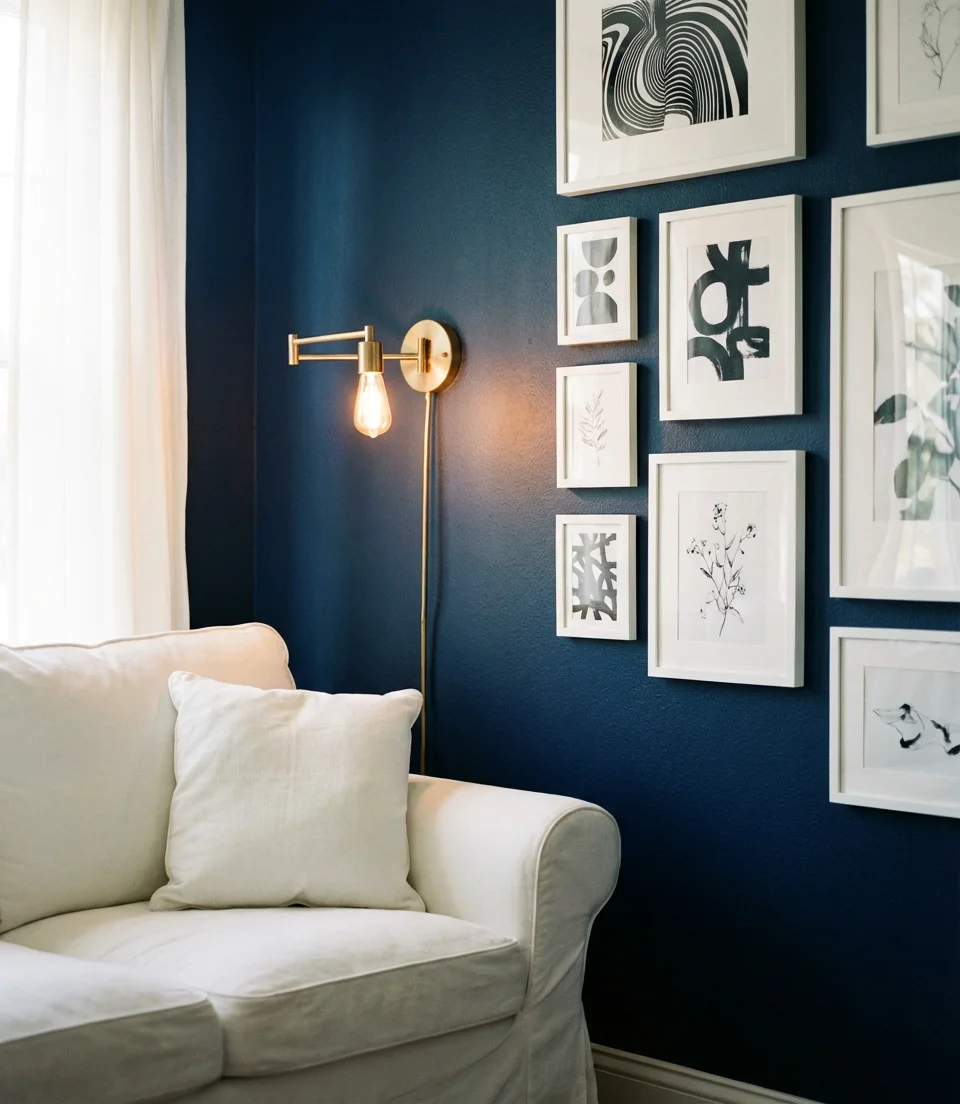
Paint coverage is worth noting here: navy and dark blues typically require three coats for full, even saturation—especially over a lighter base or fresh drywall. Skimping to two coats results in uneven color that looks streaky under bright light. Prime the wall first with a tinted primer close to the final color, and the topcoats will go on more efficiently and look significantly better.
17. Blue and White Living Room with Patterned Wallpaper
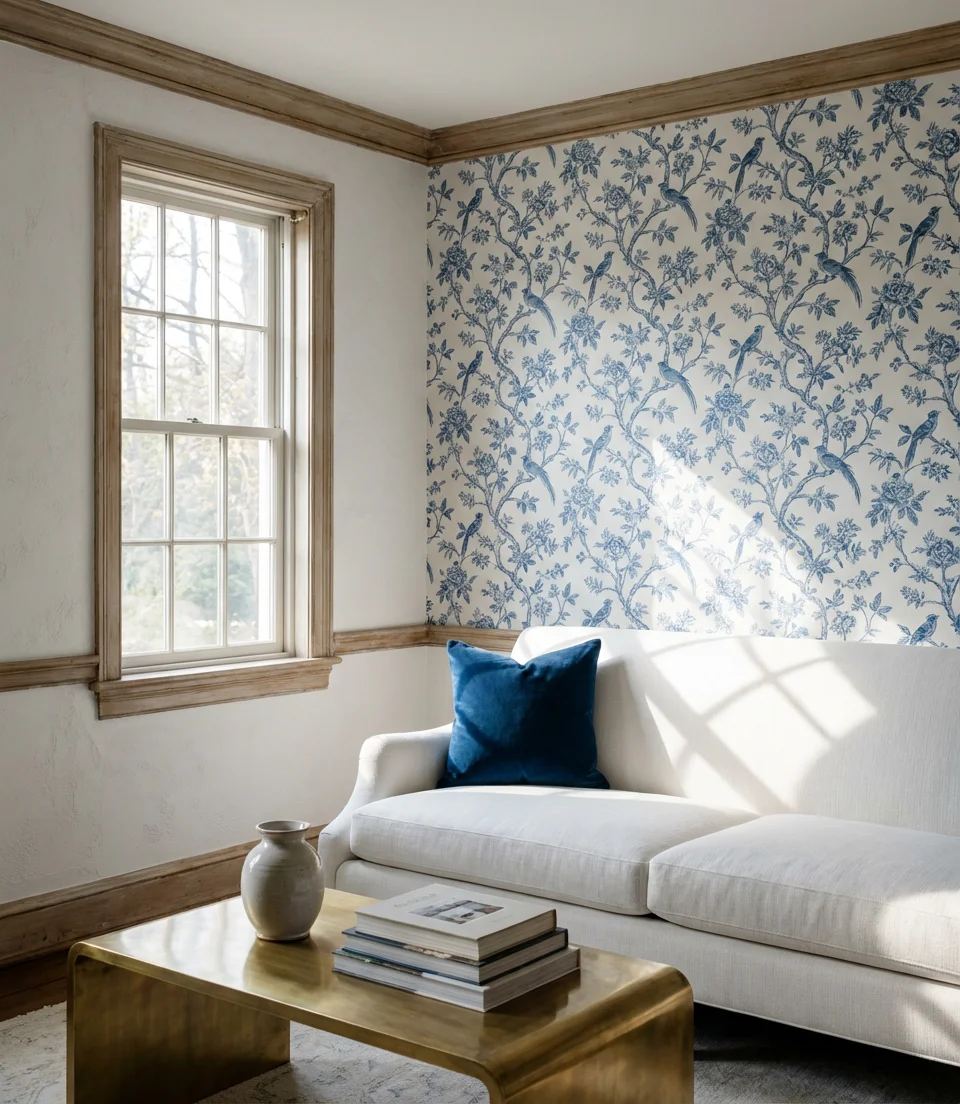
American living rooms are witnessing a genuine resurgence of wallpaper, with blue-and-white patterns leading the way. From bold Chinoiserie murals, which are decorative designs inspired by Chinese artistic traditions, to delicate striped damasks, a type of fabric with a pattern woven into it, and oversized botanical prints, the options are richer than they’ve been in decades. Used on a single feature wall behind the sofa, patterned wallpaper functions as permanent art that sets the entire tone of a room. For a traditional or French country room, classic toile or floral repeats feel exactly right. For something more contemporary, abstract watercolor washes in cobalt and white feel fresh and distinctly current.
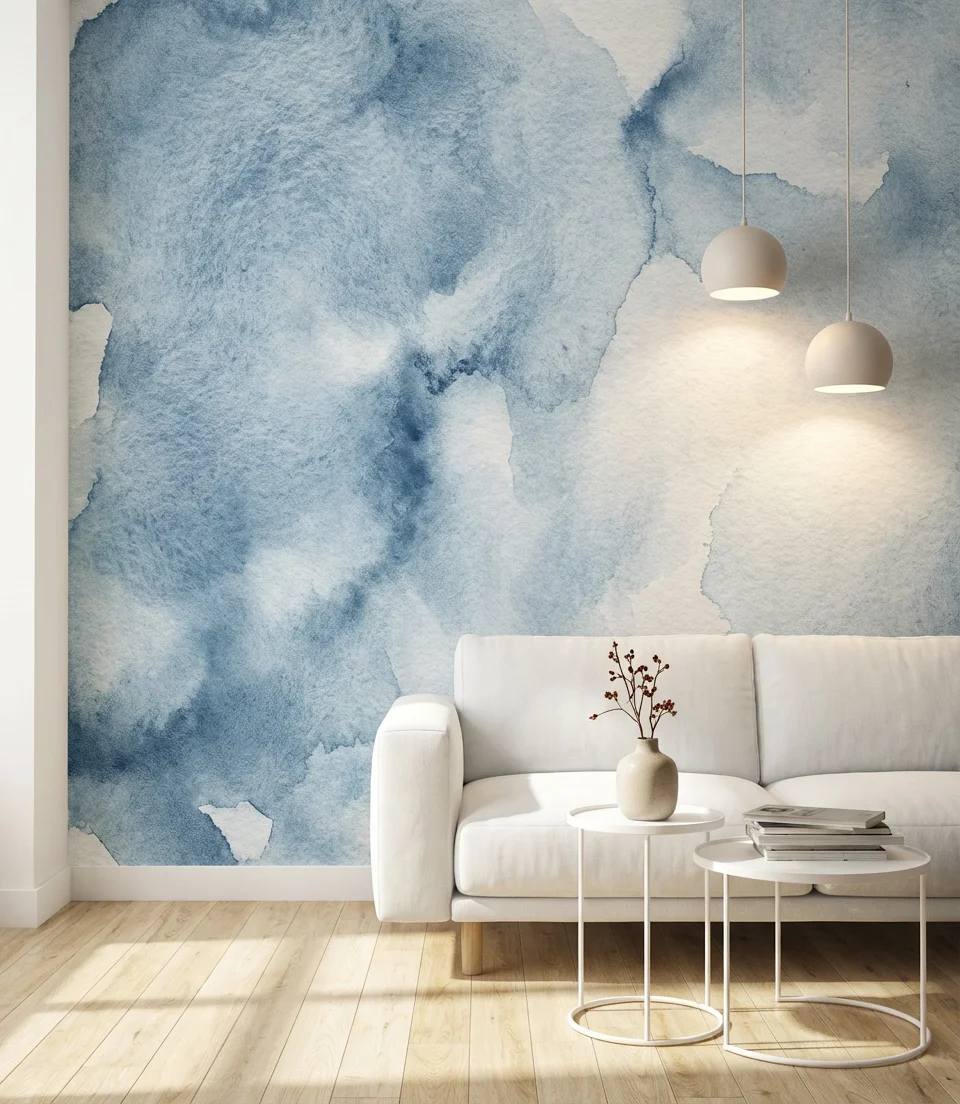
Peel-and-stick wallpaper has genuinely matured as a product category—brands like Spoonflower, Tempaper, and Chasing Paper now offer stunning blue-and-white patterns that apply cleanly and remove without wall damage. For renters, this is transformative news. A single accent wall can be papered for $80 to $150 in material costs, and the visual impact rivals anything a contractor might install.
18. Maximalist Blue and White Living Room with Layered Patterns
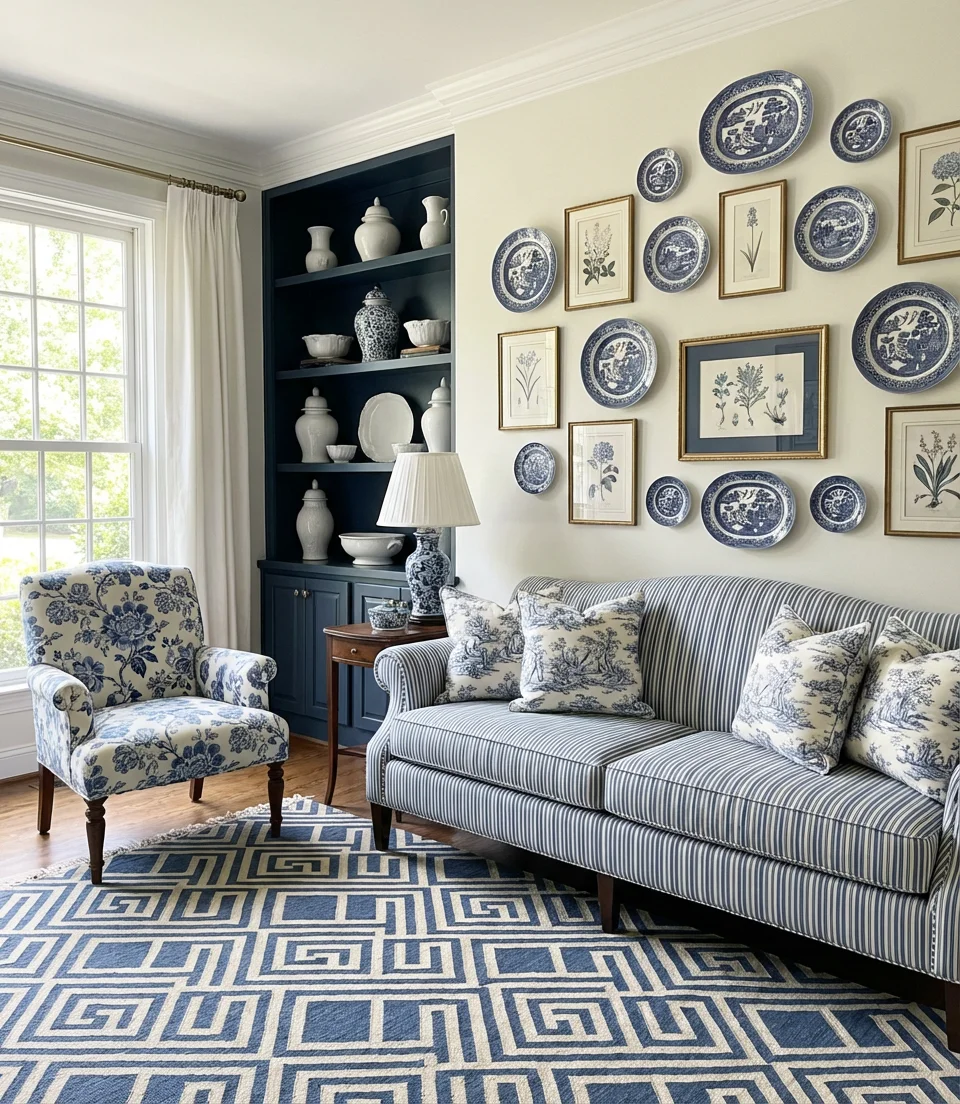
For every minimalist who insists on restraint, there’s a maximalist who knows that more—done carefully—is simply better. A layered blue-and-white maximalist living room mixes patterns with confidence: a striped sofa against toile throw pillows, a geometric rug underfoot, blue-and-white transferware plates gallery-hung on white walls, and a floral armchair in the corner. The key is keeping the palette tight. When every piece shares the same blue-and-white color family, wildly different patterns coexist in surprising harmony. This is the aesthetic that makes a room feel like a genuine collection rather than a store display.
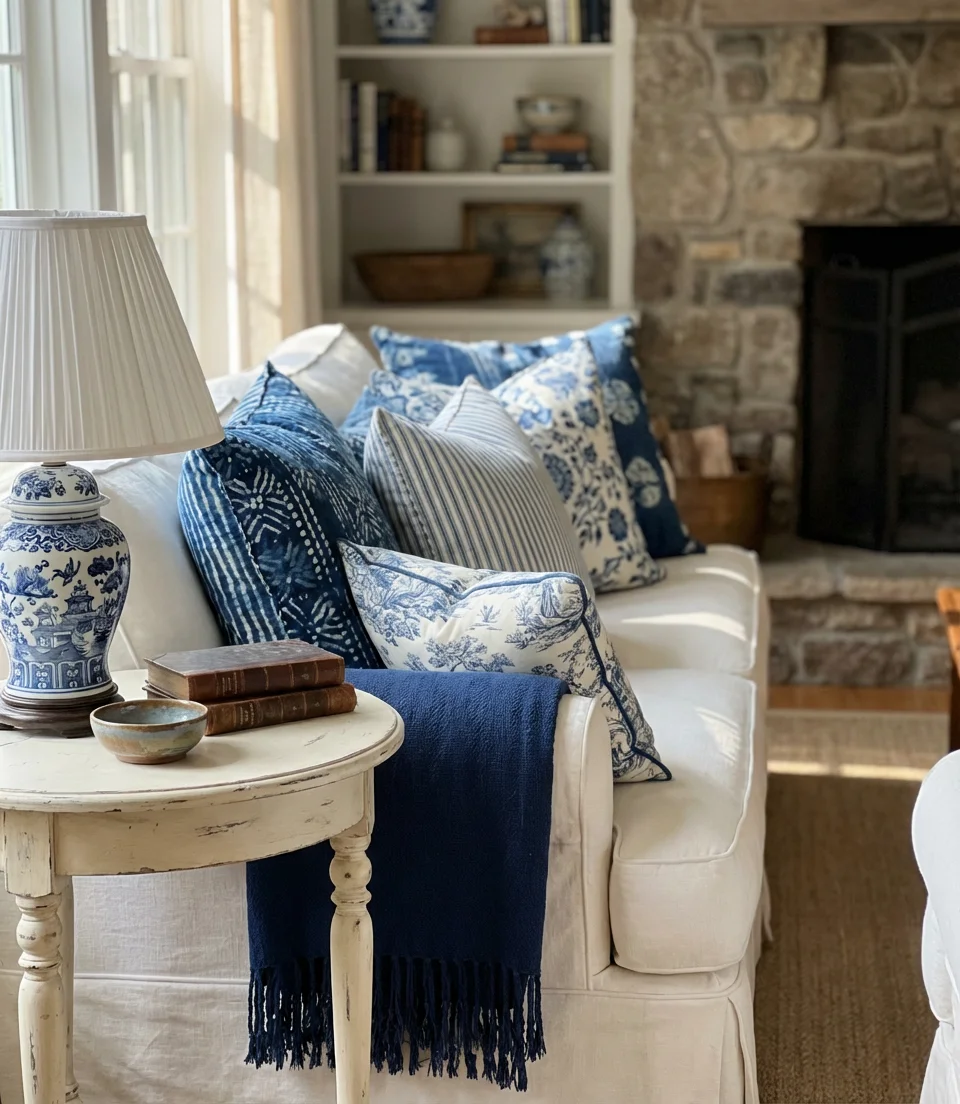
The maximalist approach to blue and white is, ironically, one of the most popular styles among American homeowners who grew up surrounded by traditional decor and want to reclaim it without apology. Think of homes in the South, New England, and the Mid-Atlantic, where china collections, needlepoint pillows, and monogrammed everything were simply part of the furniture. This approach approach isn’t nostalgia—it’s confidence in a rich design vocabulary that’s been around for centuries.
19. Blue and White Living Room with Shiplap or Board and Batten Walls
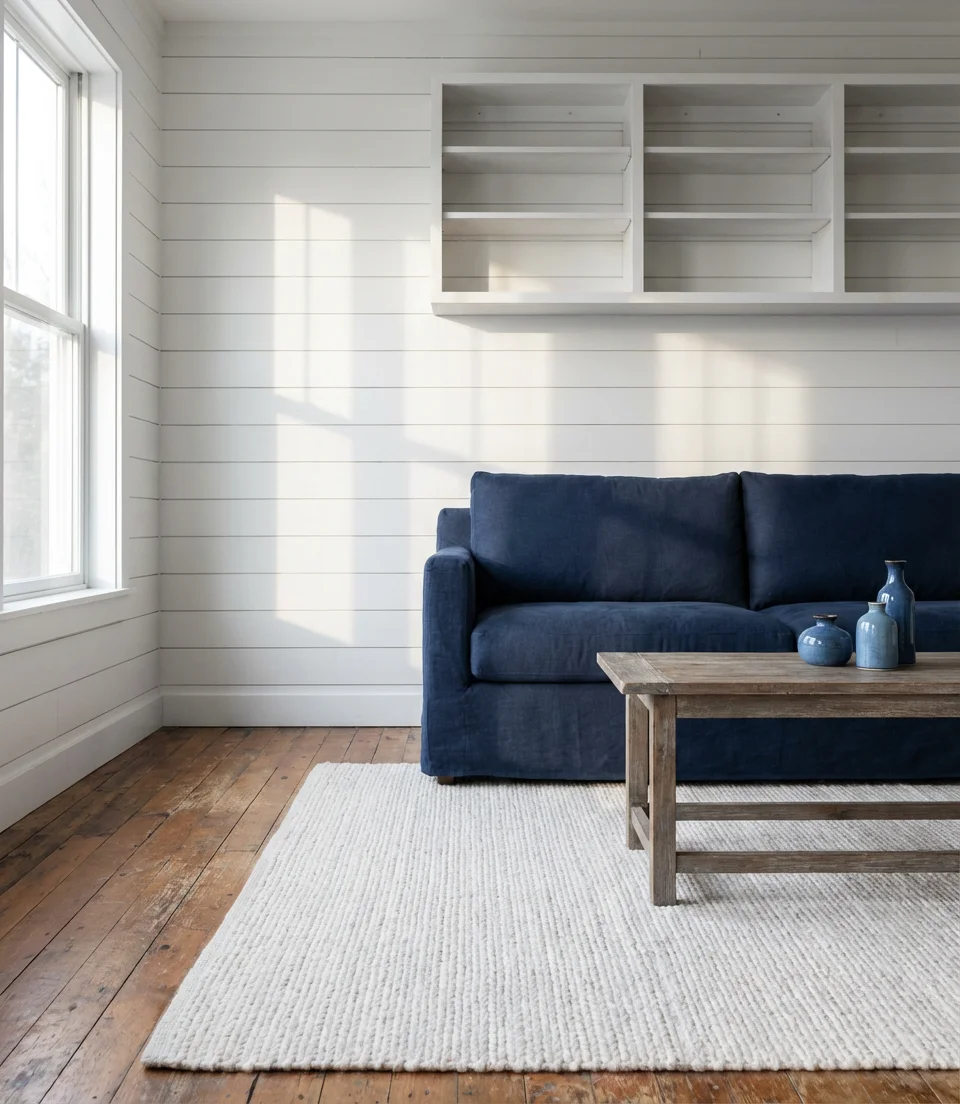
Architectural wall treatments like shiplap or board and batten give a blue and white living room extraordinary depth and texture without adding pattern or color. When painted white, these treatments create a backdrop of subtle shadow lines that makes blue furniture and accessories pop with more dimension than they would against flat walls. This approach seamlessly blends coastal and farmhouse aesthetics, adapting to a diverse range of American house styles, from newly constructed homes to mid-century ranches undergoing a revitalization. The texture does the visual work quietly, without calling attention to itself.
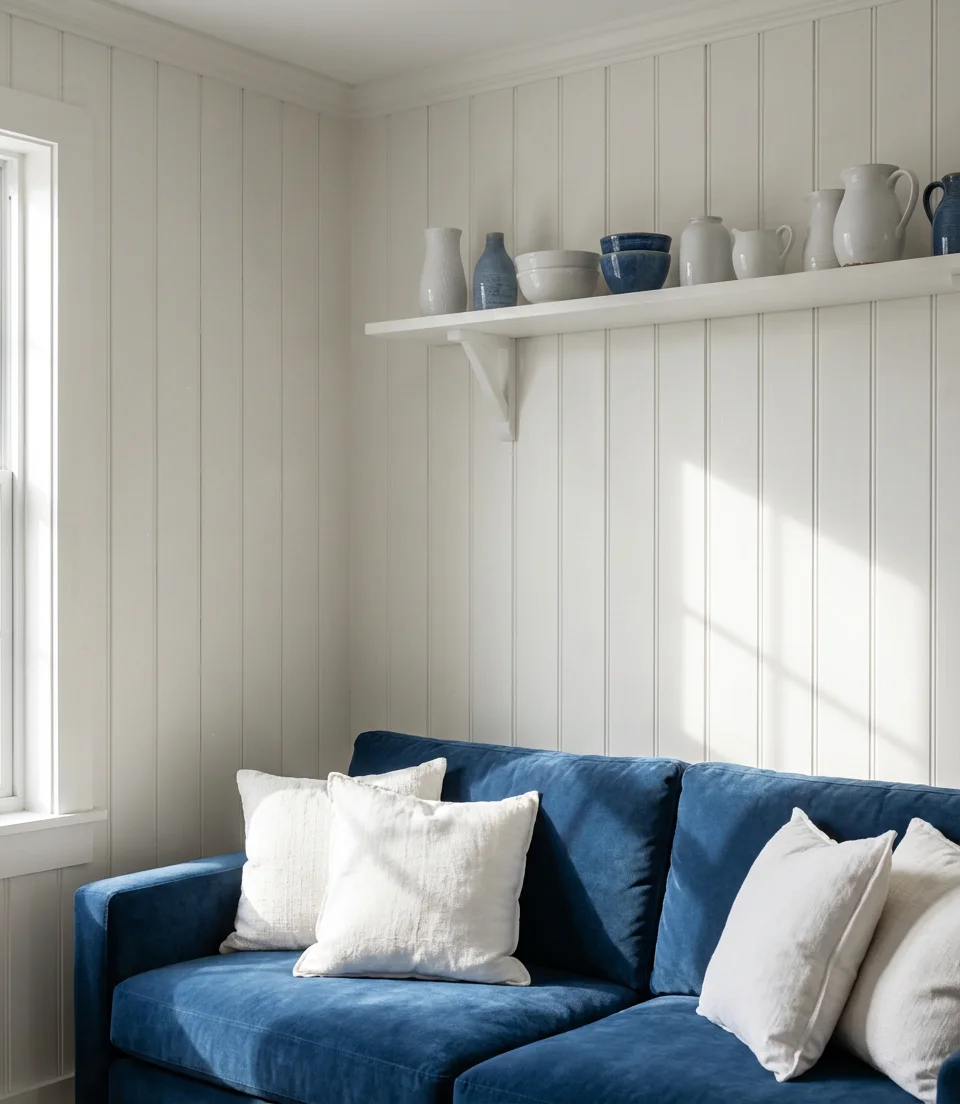
DIY shiplap has become a genuine weekend-project phenomenon, and the material cost for an average living room accent wall runs $150 to $400 depending on materials and size. The impact-to-cost ratio is exceptional, which is probably why it remains one of the most consistently popular DIY home projects in the country—proof that the best design moves are often the most straightforward ones.
20. Blue and White Scandinavian-Inspired Minimal Living Room
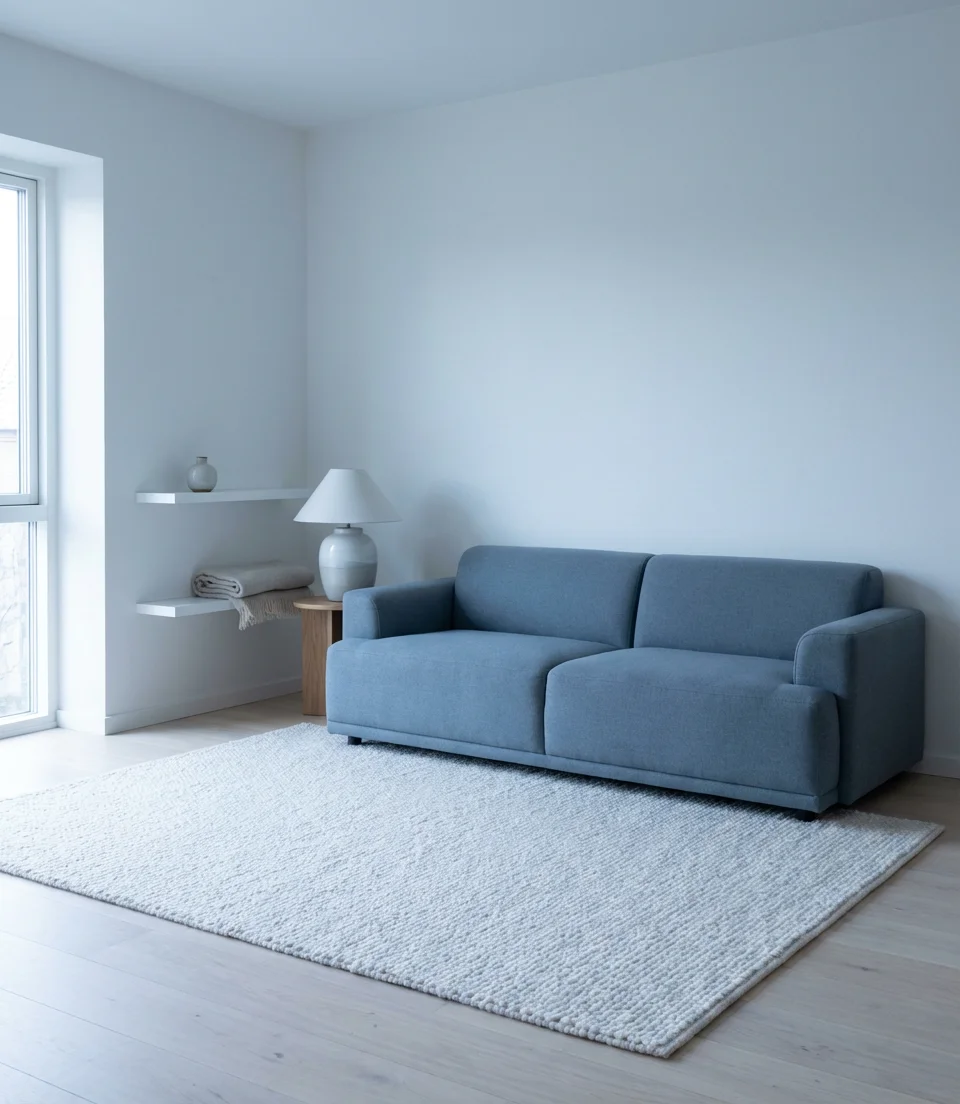
Scandinavian design already lives in blue, white, and grey by nature—think cold clear skies, birch forests, and clean-lined furniture with a deep respect for honest materials. A Scandi-inspired blue and white living room in an American context translates to white walls, pale wood floors, a low-profile blue sofa with clean lines, and accessories reduced to their most essential form. Gray plays a supporting role, and the decor ideas lean heavily on texture—boucle, chunky knit throws, ceramic vases—rather than pattern or ornamentation. The room doesn’t try to impress; it simply invites.
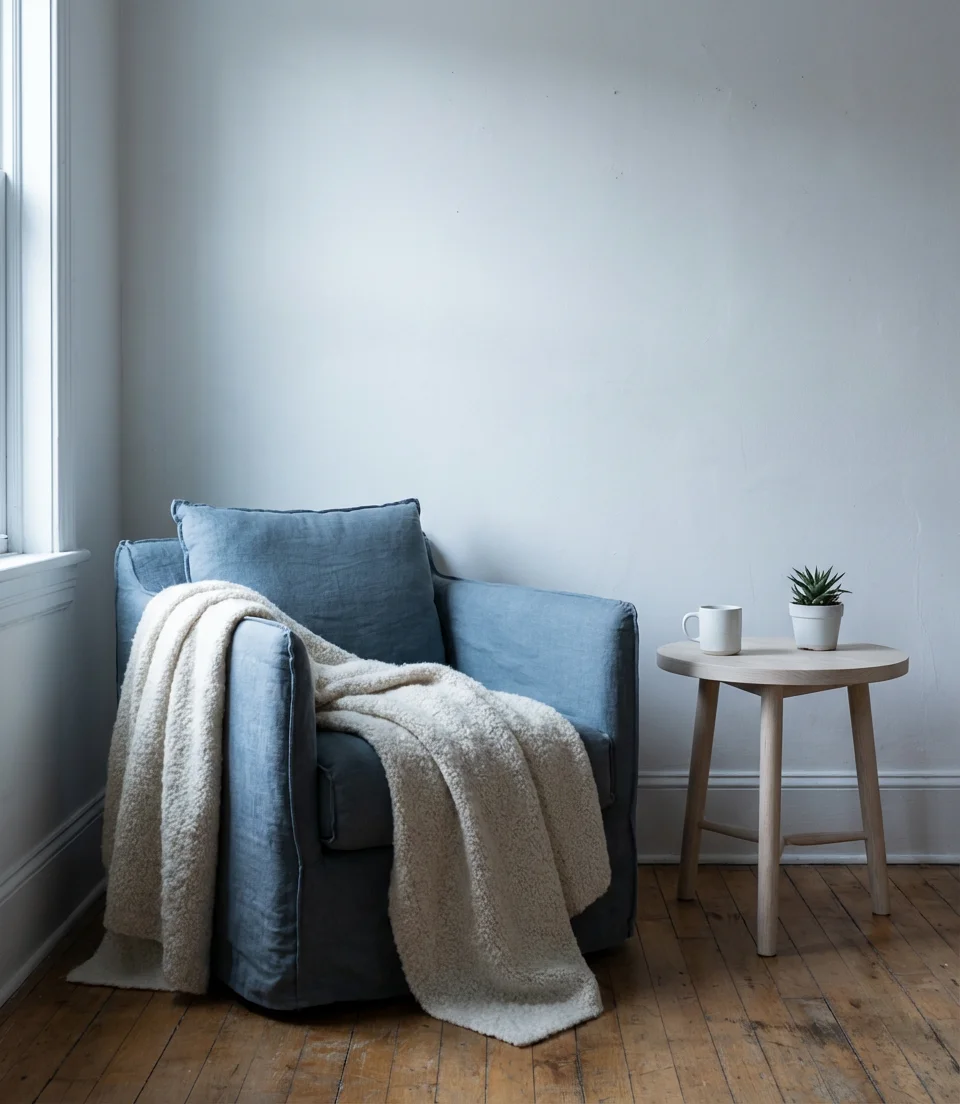
What Americans consistently get wrong when attempting the Scandinavian look is adding too much. The restraint that makes Scandinavian interiors feel so peaceful isn’t accidental—it’s hard-won editing. Every object earns its place by being beautiful, functional, or ideally both. If you can’t justify why something is in the room, it shouldn’t be there. That discipline, applied consistently, produces the calm that makes these spaces so coveted.
21. Blue and White Living Room with Chinoiserie Accents
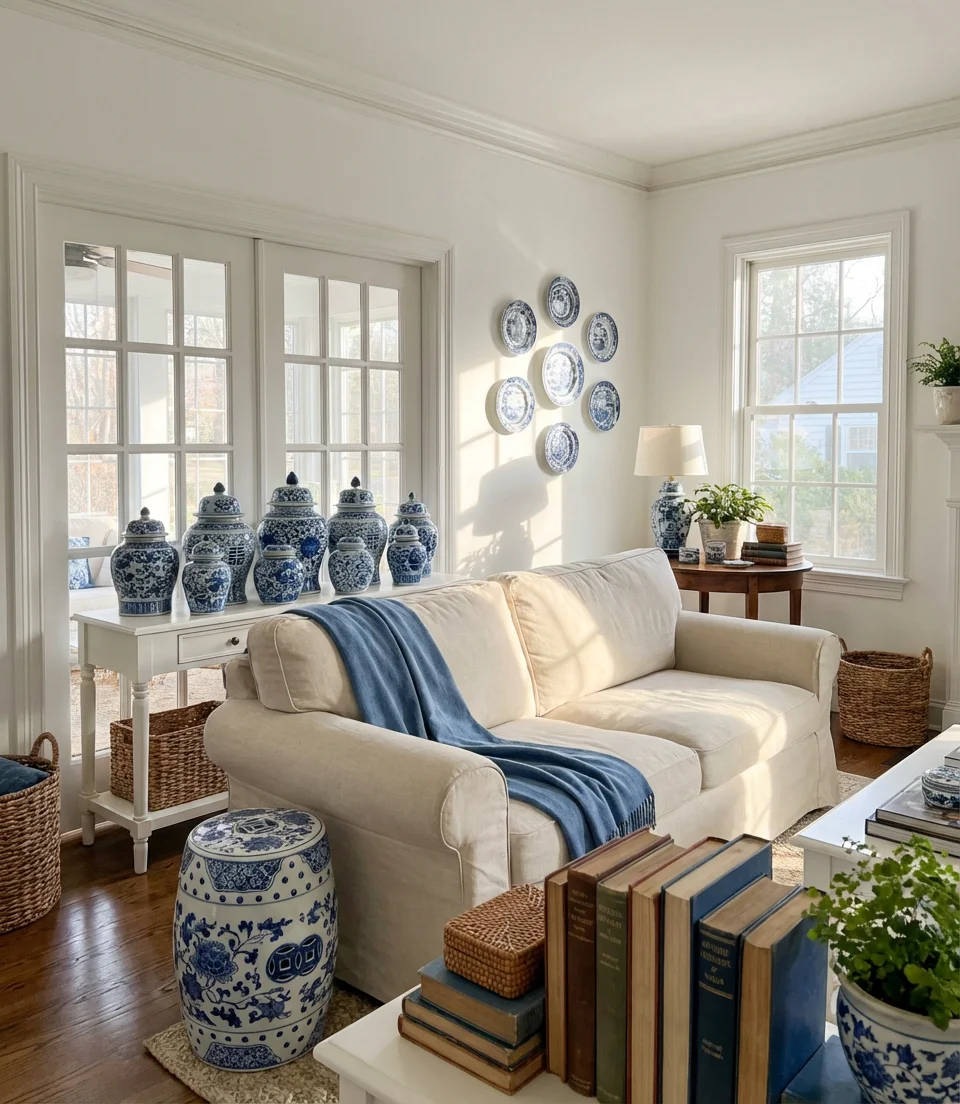
Chinoiserie—the Western interpretation of Chinese decorative arts—has been a fixture of blue-and-white interiors since the 17th century, and it shows no sign of losing its appeal. Blue-and-white ginger jars, porcelain garden stools, willow-pattern ceramic plates, and decorative vases with hand-painted garden scenes all pull from this long tradition. When placed thoughtfully in a traditional or transitional living room, they function as the punctuation marks of the design—clear, decisive moments of personality that elevate a room beyond generic. Classic Chinoiserie porcelain, with its royal blue hue, possesses a depth rarely found in synthetic objects.
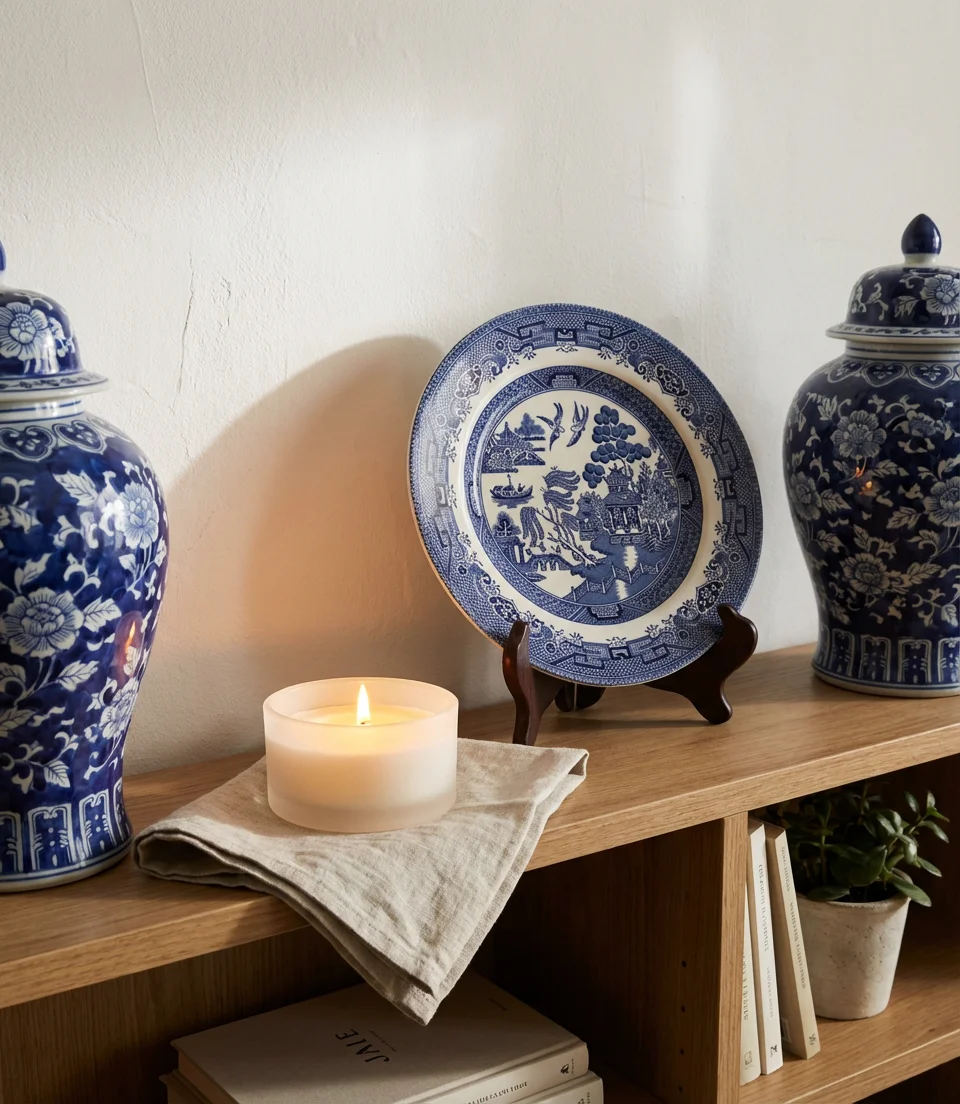
Authentic Chinoiserie pieces are available at estate sales, antique markets, and auction houses at prices that still feel accessible—a lovely ginger jar from earlier decades can often be found for $50 to $150. Both vintage hunting and newer reproductions from design-forward brands are valid strategies; the difference is time versus money, and either path leads to a room with genuine character.
22. Boho Blue and White Living Room with Macramé and Layered Textiles
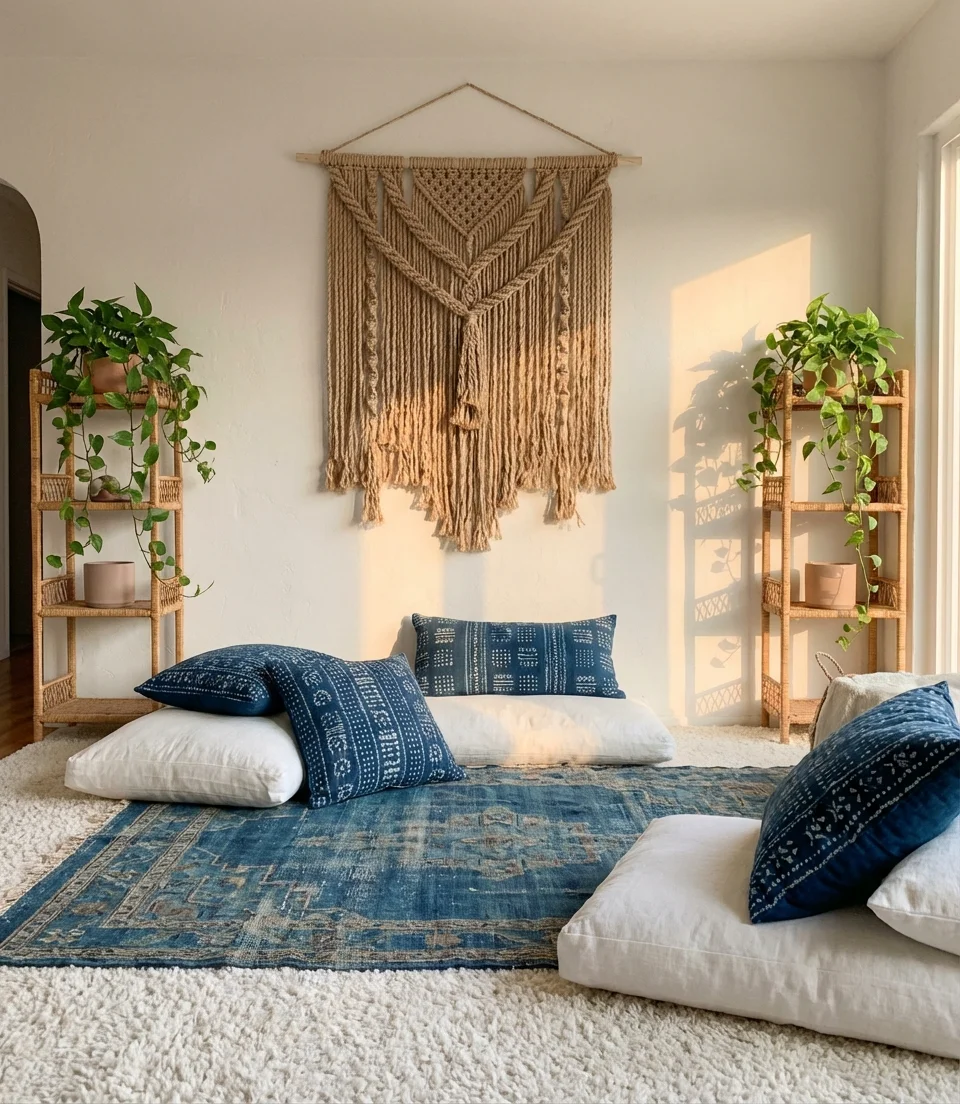
The bohemian blue and white style draws from a completely different vocabulary than the formal or coastal approaches, characterized by a looser, more personal, and proudly imperfect aesthetic. Imagine white walls adorned with a large macramé wall hanging made of natural fiber, a blue kilim layered over a white shag rug, blue indigo-dyed pillows mixed with white embroidered ones, and trailing plants throughout the space. The light blue tones that work best here are earthy and faded—indigo, lapis, and chambray—rather than crisp or bright. This concept is a decor style built around accumulated meaning, not curated display.
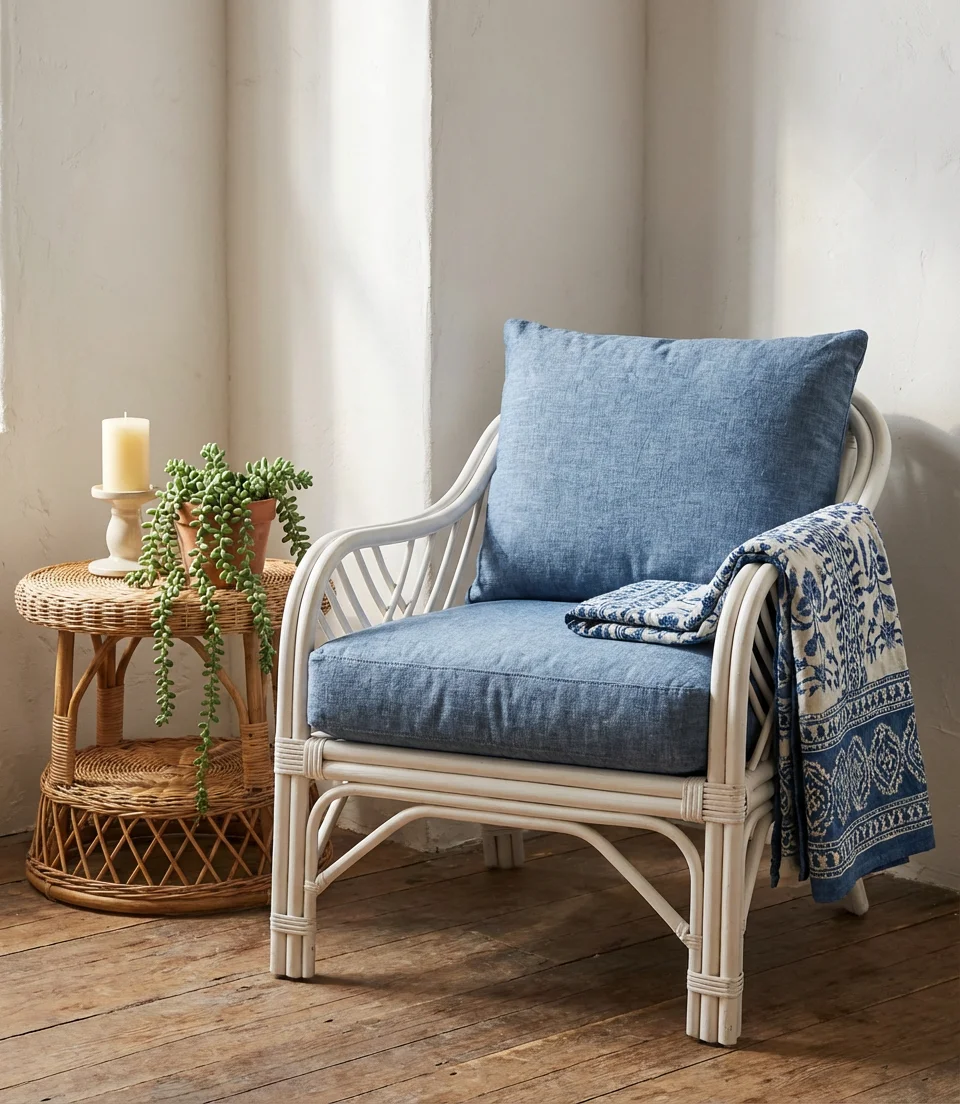
A young homeowner in Austin described furnishing her first apartment this way: “I used what I had, bought two blue kilims from an Etsy seller, and made the macrame myself from a YouTube tutorial. The whole room cost me about $200, and people always think I hired someone.” That DIY (do-it-yourself) spirit is central to the boho (bohemian) ethos—and the results, done with a light hand and genuine affection for the materials, speak entirely for themselves.
23. Blue and White Living Room with a Fireplace as the Focal Point
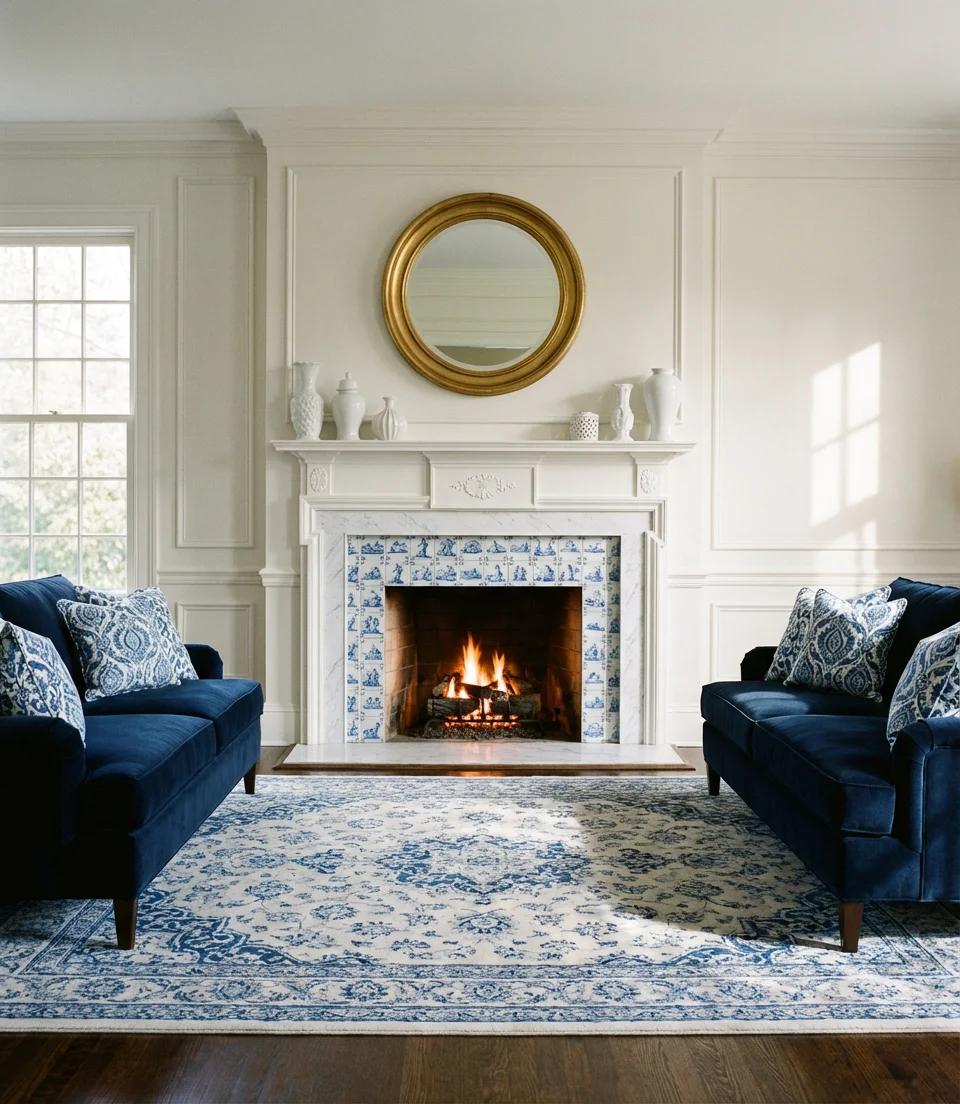
A fireplace already does half the design work for you by providing an undeniable focal point. Whether it’s white marble, painted plaster, or white-painted brick, the fireplace surround in a blue and white room serves as the serene focal point, organizing everything else around it. Navy sofas or armchairs face the fire; a blue-and-white tiled hearth adds pattern at floor level; the mantle becomes a stage for white ceramics, blue-and-white ginger jars, or a carefully arranged collection of objects. The end result is a room that exudes a sense of intentional assembly.
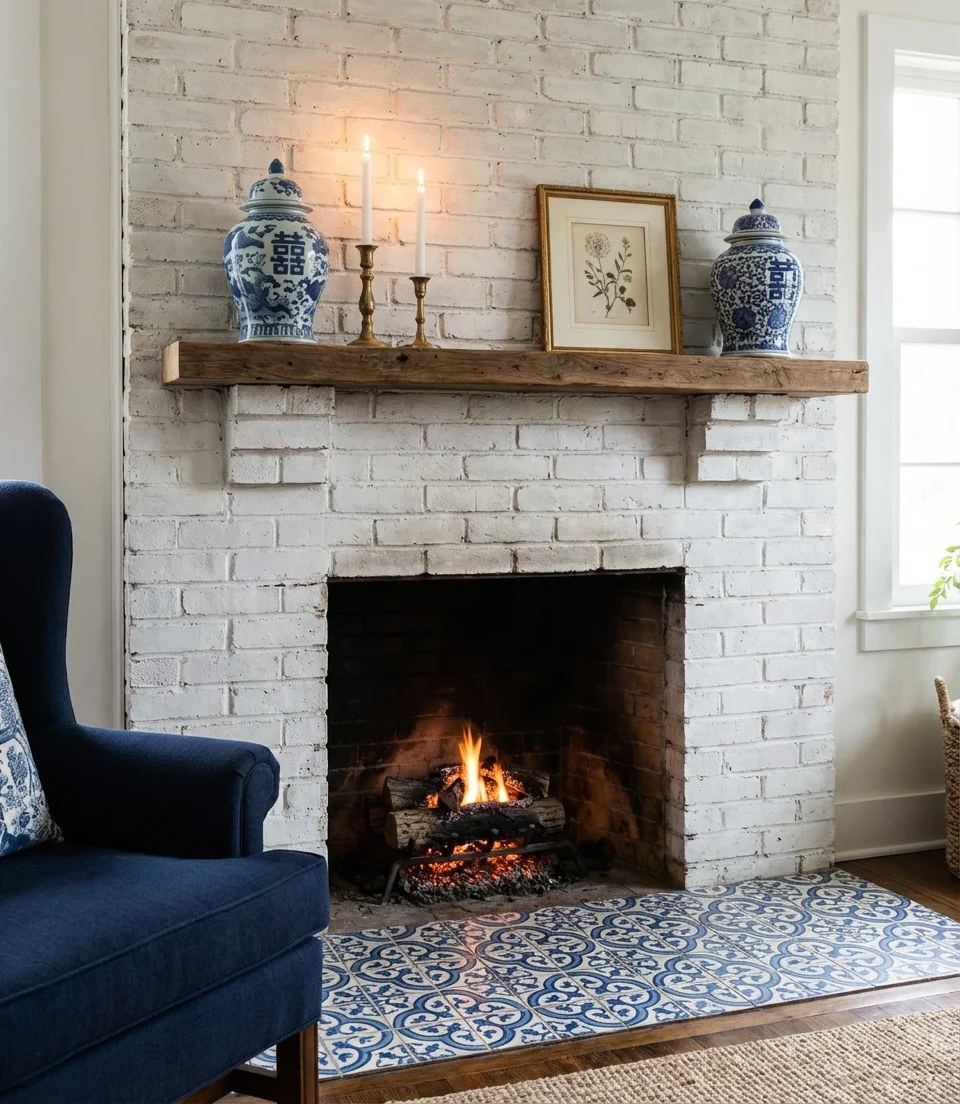
Interior design experts consistently note that rooms organized around a fireplace feel more resolved than those that aren’t—because the eye needs a landing place, and a fireplace provides one unambiguously. If your fireplace is surrounded by dated brick or an ornate wooden surround that doesn’t suit the room, a coat of white limewash paint on the brick takes a weekend and costs very little while changing everything about the room’s character.
24. Blue and White Living Room with Vintage and Antique Finds
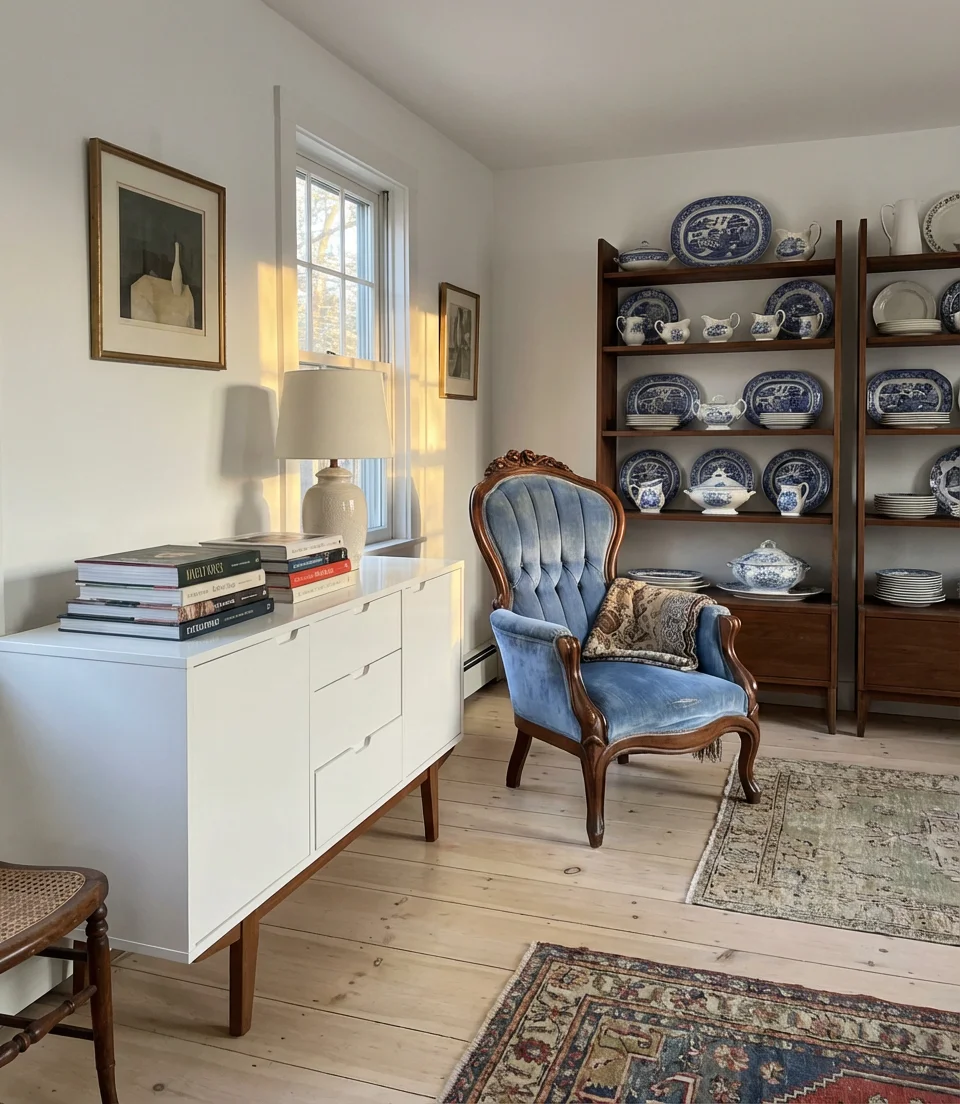
Some of the most beautiful blue and white living rooms aren’t designed—they’re assembled over years of patient hunting. Vintage and antique pieces bring something no new furniture can replicate: history, patina, and the quiet authority of age. A mid-century Danish sideboard in white lacquer against a navy wall, a Victorian velvet armchair in cornflower blue beside a modern sofa, and blue-and-white transferware pottery collected from flea markets arranged on open shelves—each piece carries a story. This kind of traditional layering, done slowly and with genuine decor ideas, creates rooms that look irreplaceable because they truly are.
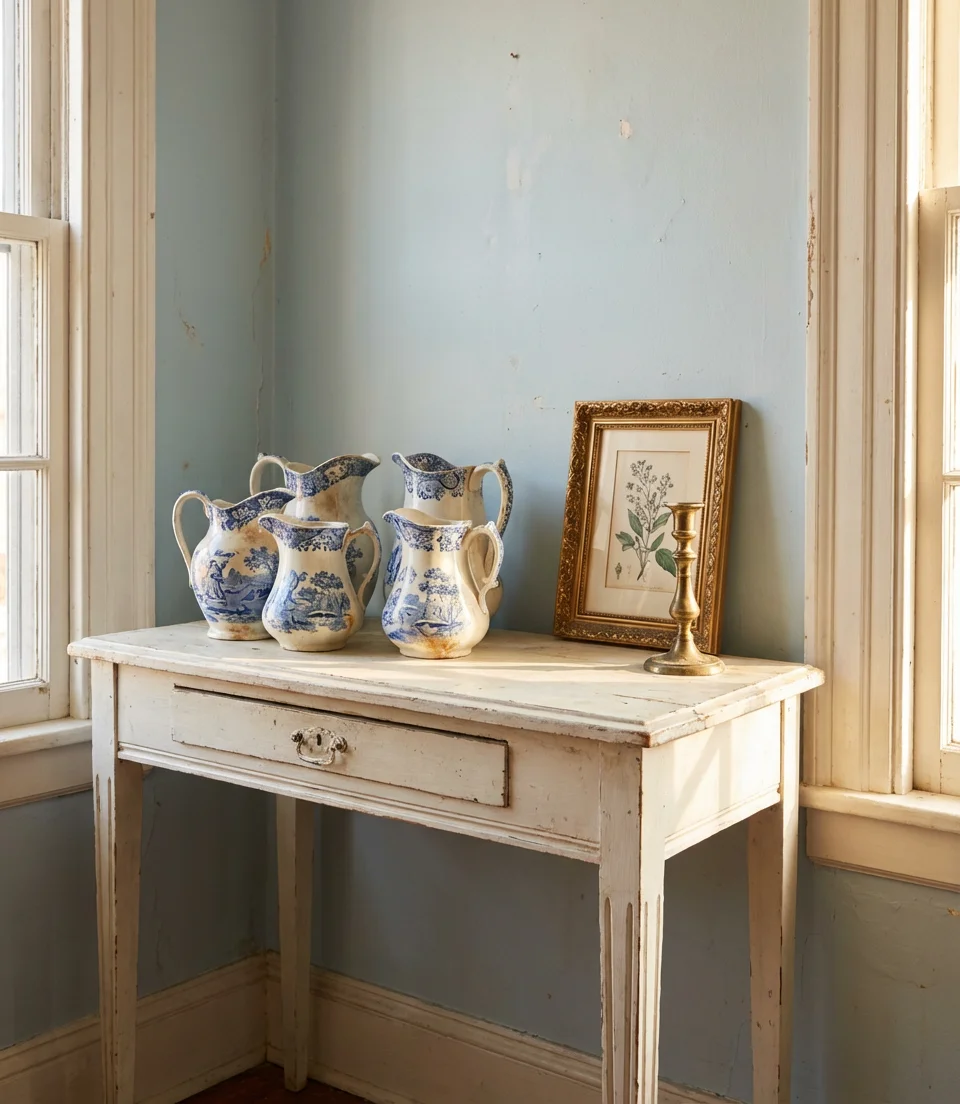
The American vintage market for blue and white is genuinely rich right now—estate sales, Goodwill outlets, Facebook Marketplace, and regional antique malls are consistently stocked with blue-and-white ironstone, transferware, and vintage ceramics at a fraction of retail prices. The patience required is part of the pleasure: a room built this way over two or three years feels owned in a way that a room assembled over a weekend shopping trip simply never does.
Whether you’re drawn to the drama of a deep navy accent wall, the breezy ease of a coastal room, or the layered richness of a French country palette, there’s no wrong way to fall in love with blue and white—and no shortage of ways to make it entirely your own. We’d love to hear which of these ideas caught your eye or how you’ve already brought this palette into your living room. Drop a comment below and share your story, your space, or the idea you can’t wait to try next.