Backyard Landscaping 2026: 51 Modern Ideas with Pool, Fire Pit & Easy Budget-Friendly Plans

2026 has seen a reshaping in the purpose of American backyards; beautiful retreats are created to enhance the warmth and functionality of the space. Pinterest has seen dramatic increases in backyard inspirations as people try to make their outdoor havens more low-maintenance, fitting their individual lifestyles, climates, and budgets. This guide explores real-world, regionally adjusted, practical, design-based, and differentiated backyard trends.
1. Tiered Garden Beds for Sloped Yards
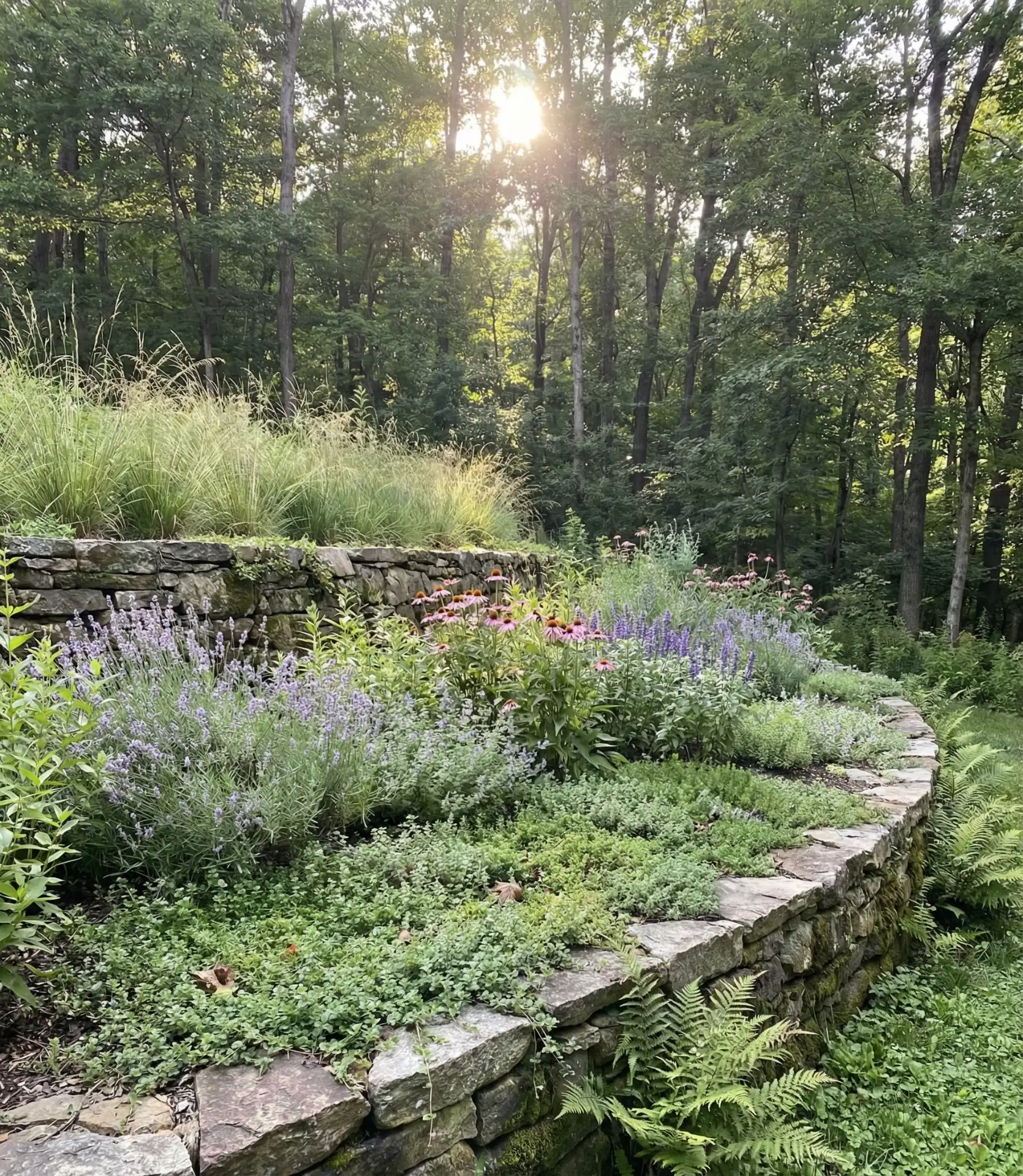
A sloped backyard doesn’t have to mean erosion headaches or wasted space—it’s actually an opportunity for dramatic vertical interest. Tiered garden beds carved into the hillside create distinct planting zones while managing water runoff naturally. The design ideas here center on using stone or timber retaining walls to form level terraces, each one hosting different plant types based on sun exposure and drainage. This approach works particularly well for wooded properties where you’re working around existing trees and want to preserve that canopy while adding cultivated layers below. 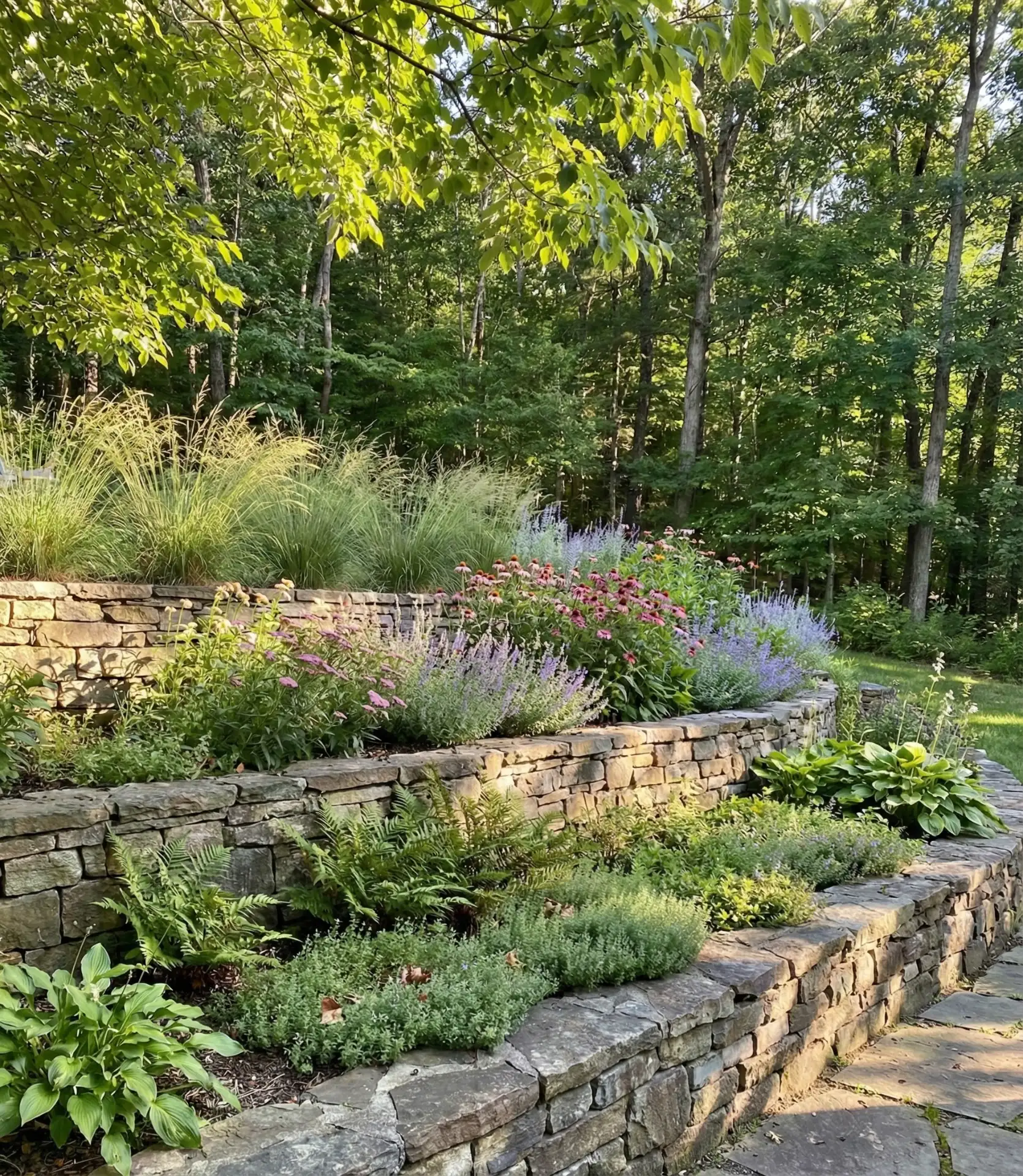
The most common mistake here is building tiers that are too narrow—you need at least three feet of depth per level to plant anything substantial and to allow for maintenance access. Homeowners who skip proper drainage behind retaining walls often face structural failure within two seasons. Use landscape fabric and gravel backfill, and ensure each tier has a slight backward slope to prevent water from pooling at the wall base. This setup actually reduces long-term yard work since each zone becomes self-contained and easier to mulch, water, and weed than a uniform slope.
2. Native Prairie Border with Fire Pit
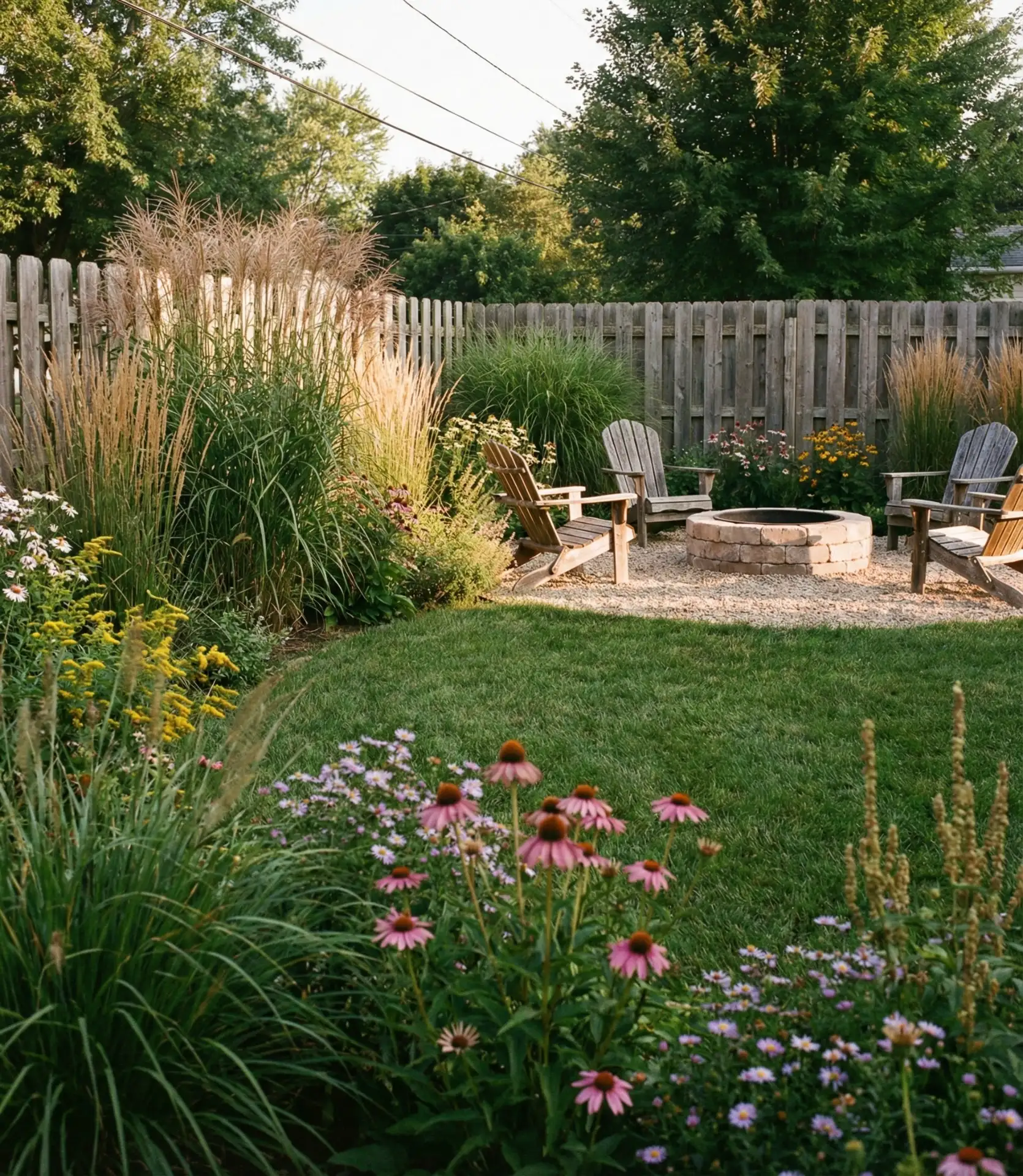
Transitioning your fence line into a sweeping prairie-style border creates privacy, habitat, and movement without the maintenance of traditional hedges. This natural landscaping approach uses native grasses like switchgrass and little bluestem mixed with coneflowers, black-eyed Susans, and asters—all of which thrive with minimal water once established. The center of the yard stays open for a simple fire pit area, either in-ground or surrounded by a low stone ring. It’s a contemporary take on American meadow ecosystems that works particularly well in the Midwest and Mid-Atlantic regions, where these plants are indigenous. 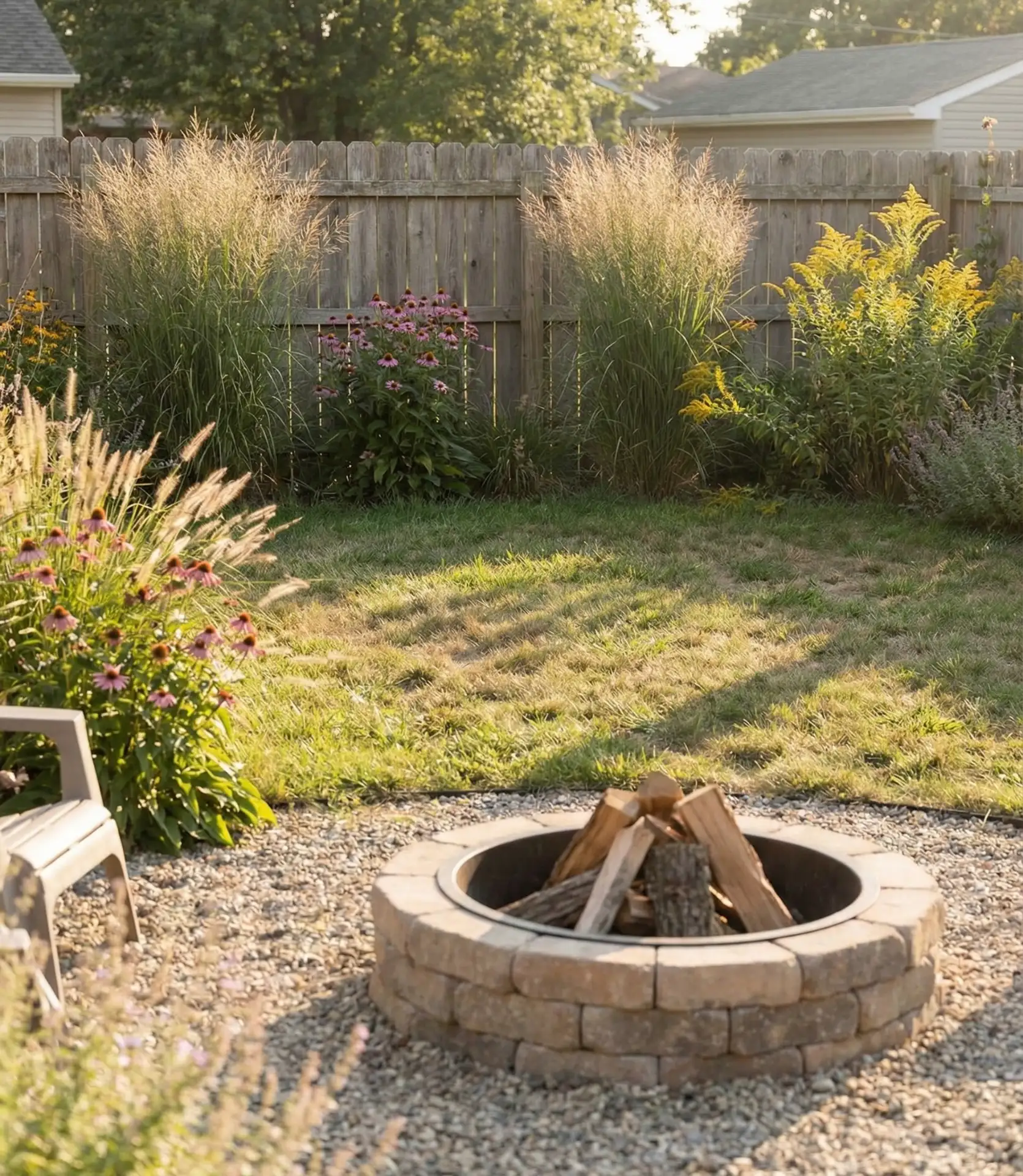
This concept works best in zones 4-7, where prairie plants are climatically suited, though desert adaptations exist for the Southwest. Native borders need almost no fertilizer and actually prefer lean soil, making them ideal for on-a-budget projects. The initial plant investment pays back quickly—these perennials spread and self-seed, filling in gaps within two growing seasons. Around the fire pit, use decomposed granite or pea gravel rather than pavers; it’s cheaper, drains instantly, and complements the informal planting style better than rigid hardscape.
3. Geometric Pool Deck with Tropical Plantings
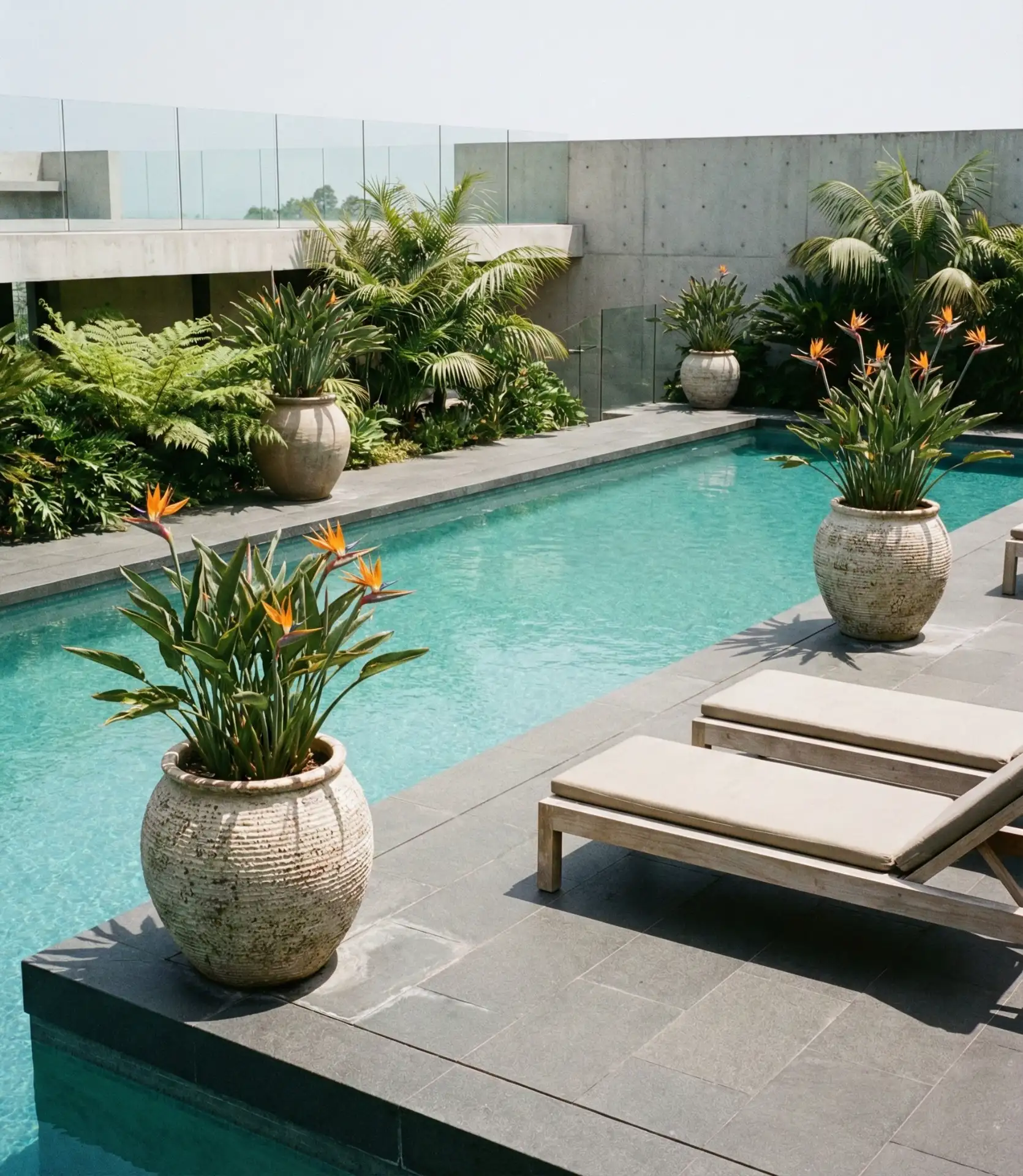
Clean-lined pool decking in charcoal or sandstone sets the stage for lush tropical container gardens that soften the hardscape without dropping leaves into the water. Think large planters with bird of paradise, elephant ears, or cannas positioned at corners and entry points—plants that deliver bold foliage and architectural presence. The modern geometry of rectangular or L-shaped swimming pools gets balanced by the organic curves of the foliage, creating a resort-like atmosphere that’s become a signature request in Southern California and Florida. 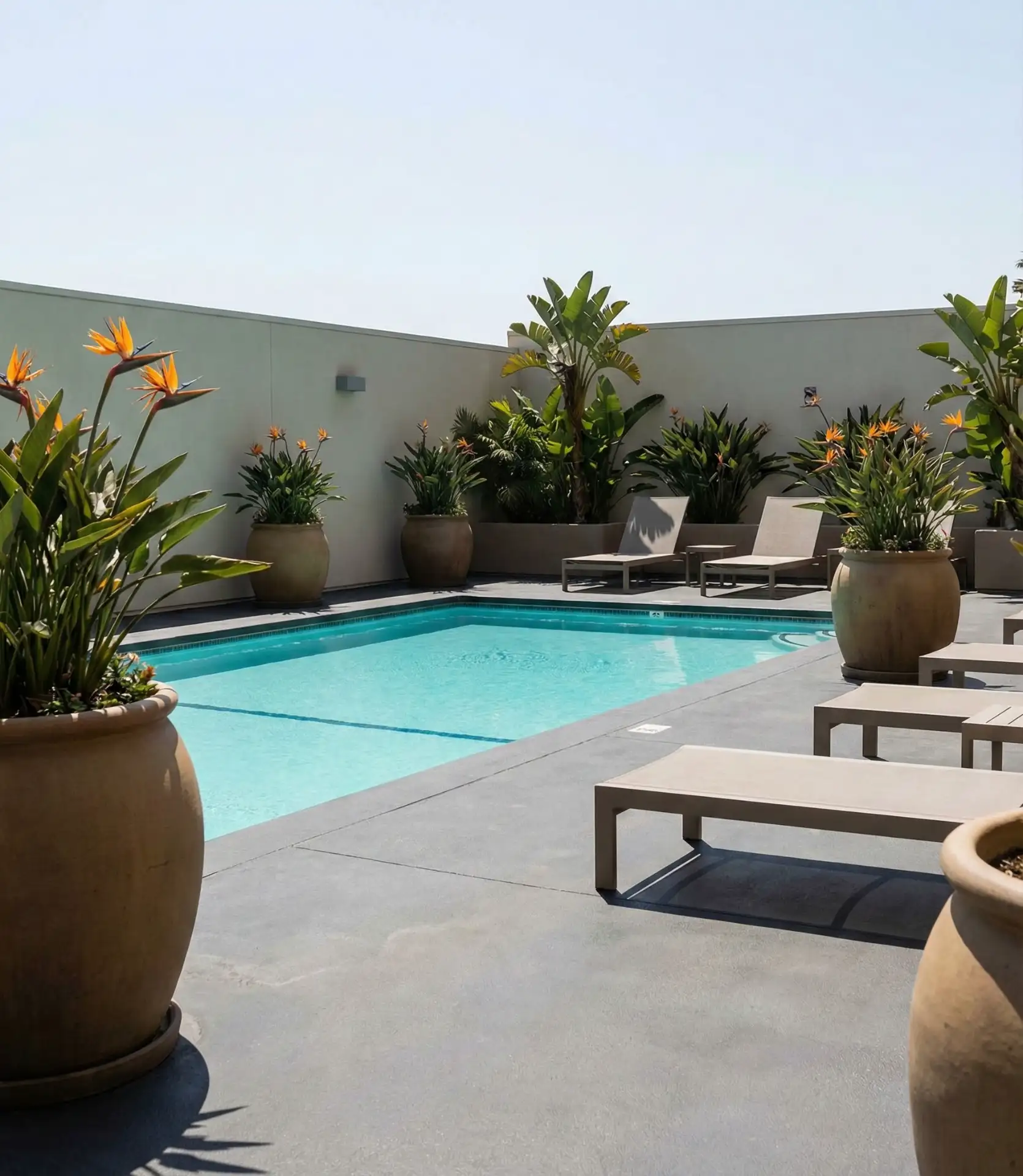
A landscape designer in Palm Springs mentioned that clients consistently underestimate how much a few statement plants can transform a plain pool surround—you don’t need a jungle, just three to five large specimens strategically placed. For containers near chlorinated water, choose fiberglass or resin over terracotta to avoid salt damage. In cooler climates, use cold-hardy tropicals like hardy banana or fatsia, or swap in tropical-looking annuals each summer. The key is scale: small pots get lost visually, so go large—at least 20 inches in diameter.
4. Orchard-Style Fruit Tree Grid
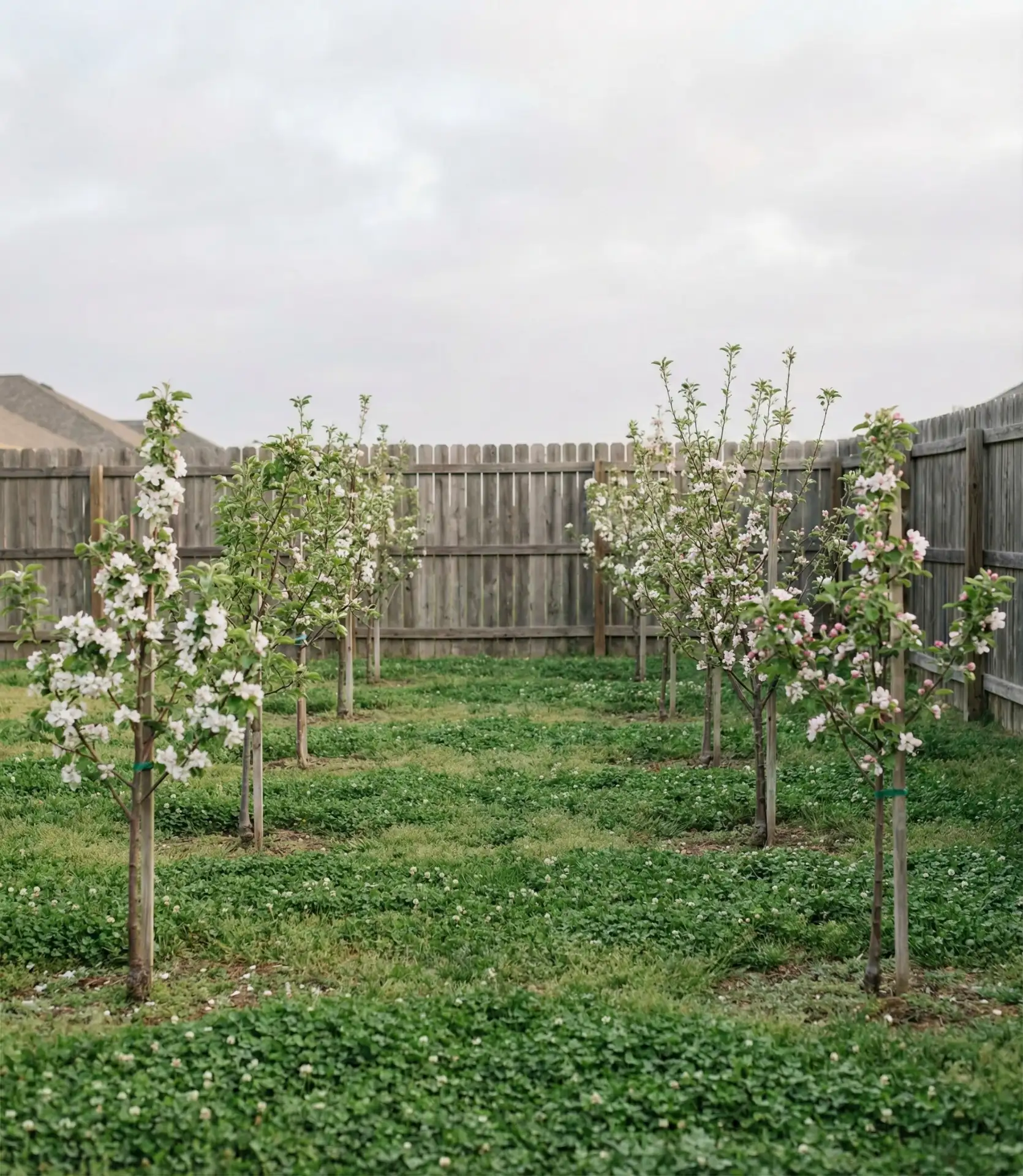
Planting fruit trees in a structured grid pattern across a large backyard creates both a productive landscape and a beautiful seasonal display. This layout plan works with dwarf or semi-dwarf varieties spaced 12–15 feet apart, allowing for easy harvest access and air circulation. The understory can be kept as clover or low wildflowers, reducing mowing while adding nitrogen to the soil. Apple, pear, cherry, or citrus trees—depending on your zone—turn the yard into a working orchard that delivers blossoms in spring, shade in summer, and fruit in fall. 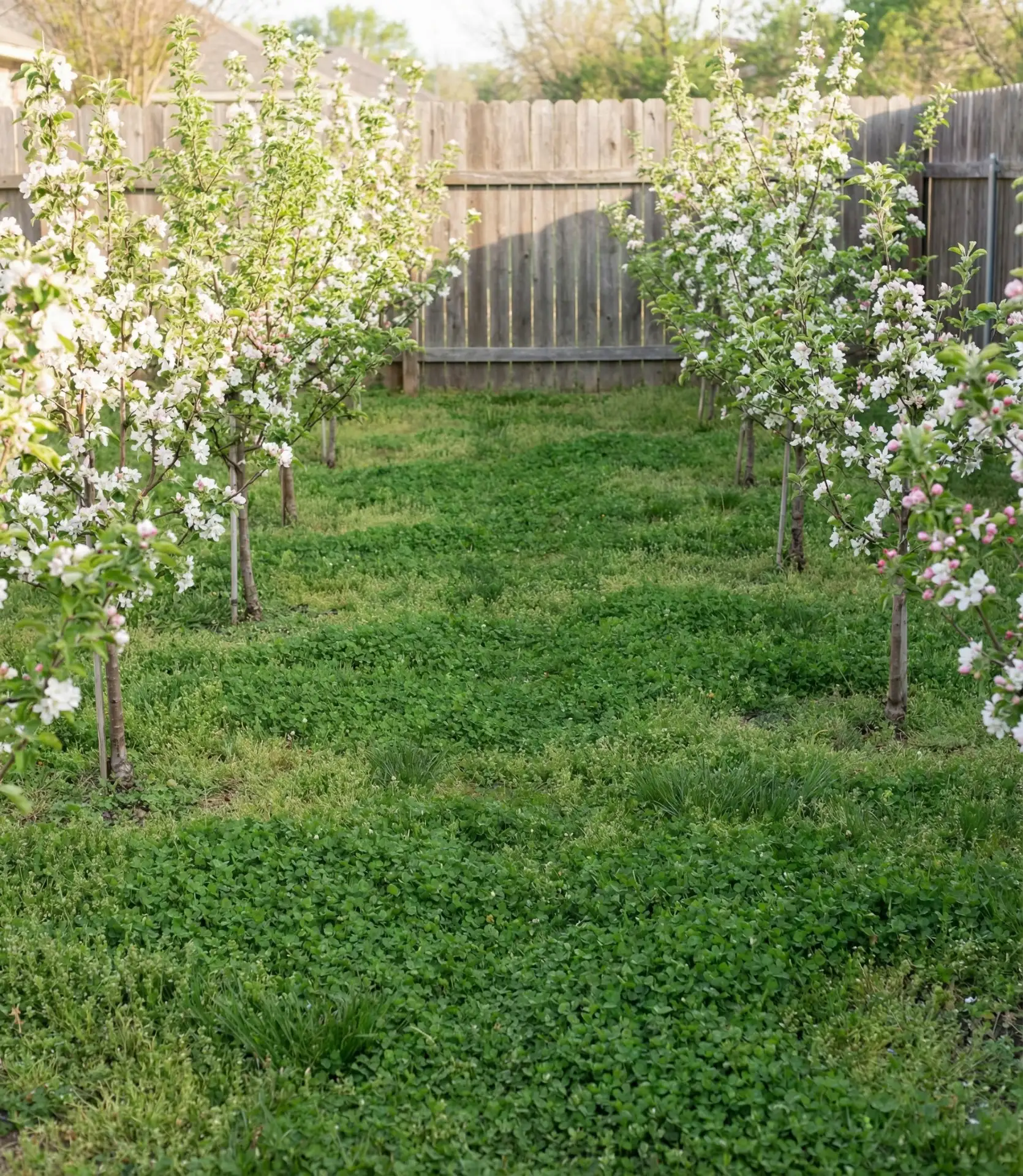
Real homeowner behavior shows that most people abandon fruit trees by year three due to pest and disease issues—avoid this occurrence by choosing disease-resistant cultivars and committing to a basic spray schedule. In California, low-chill varieties like the ‘Anna’ apple or the ‘Tropic Snow’ peach are essential for mild winters. In the Northeast, hardy varieties like the ‘Liberty’ apple resist common blights. This setup requires space—at least 1,200 square feet for even a modest four-tree grid—but the long-term reward is a landscape that feeds you while looking like the effortless European countryside.
5. Desert-Modern Gravel and Cactus Garden
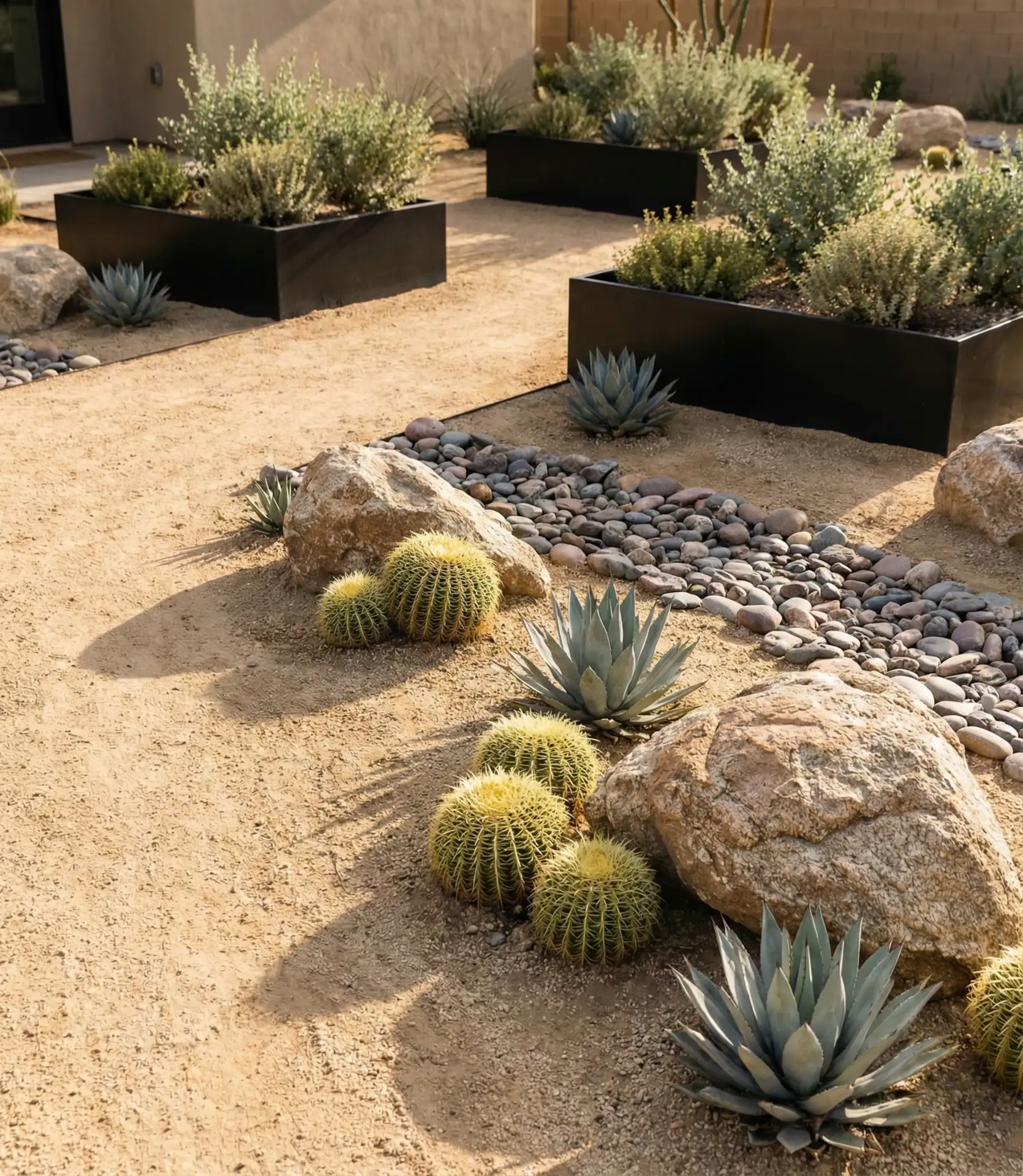
In Arizona and other arid climates, a gravel-based yard with sculptural cacti and succulents becomes both water-wise and visually stunning. This low-maintenance approach uses crushed granite or river rock as the primary ground cover, punctuated by clusters of barrel cactus, agave, and prickly pear. Add a few boulders for vertical interest and metal garden art for a contemporary edge. The entire yard requires almost no irrigation once established, making it the gold standard for sustainable designs in regions facing ongoing drought. 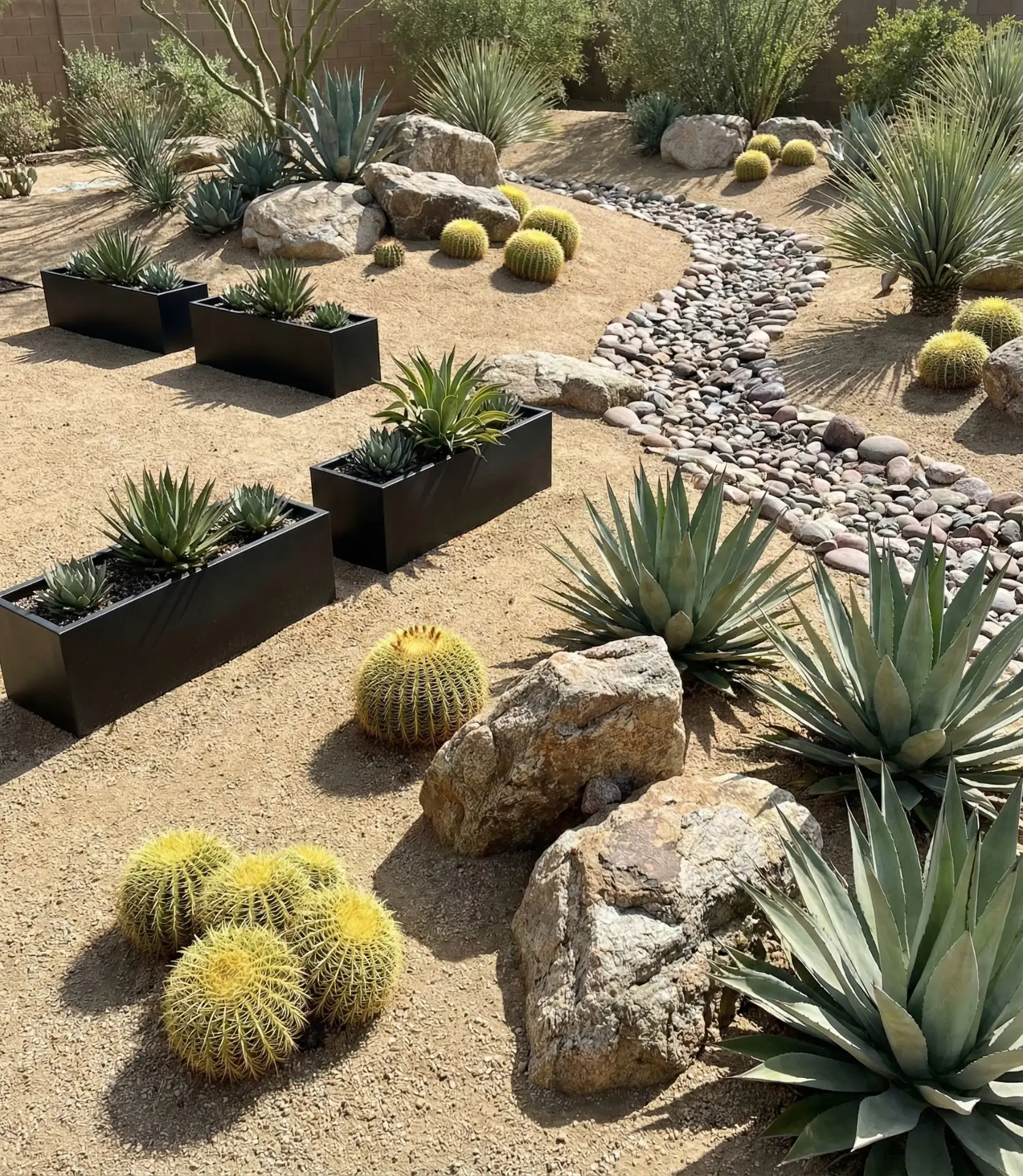
Budget-wise, the garden is one of the most cost-effective landscapes to install—gravel runs about $40-$60 per cubic yard, and mature cacti propagate easily from pads or offsets. Where it works best is in full-sun areas with excellent drainage; avoid low spots where water pools after monsoons. The initial planting layout should cluster specimens in odd-numbered groups (3, 5, 7) rather than scattering them evenly, which creates a more natural, less municipal look. Edging is critical—use steel or aluminum to keep gravel from migrating into neighboring planting beds or patios.
6. Multi-Zone Dog-Friendly Layout
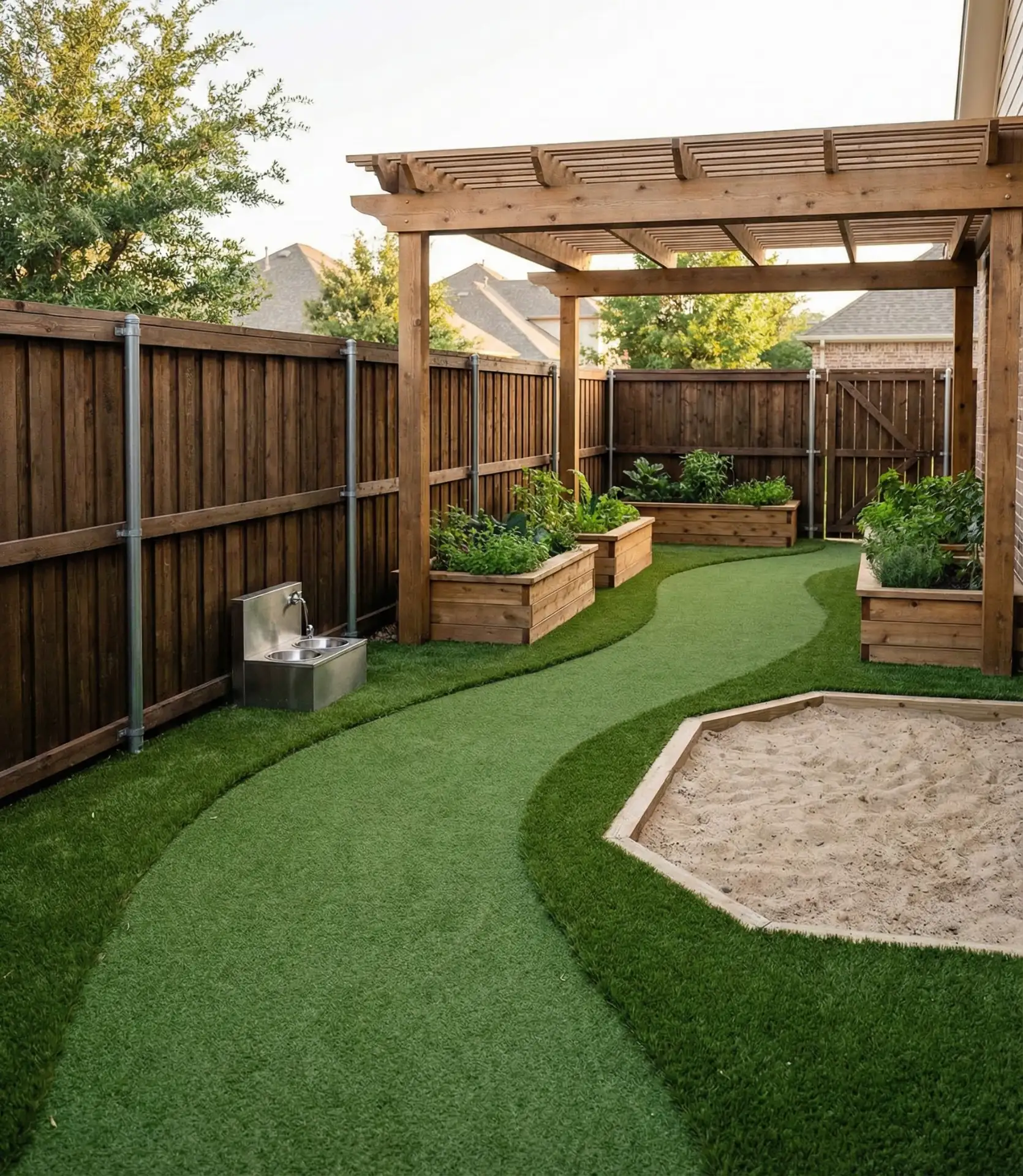
A dog-friendly backyard needs distinct zones for running, digging, and resting—layering these functions prevents your pets from destroying the entire yard. Dedicate one corner to a dog-proof digging pit filled with sand or soft soil, bordered by logs or stones. Use decomposed granite or artificial turf for high-traffic paths where grass won’t survive. Plant beds should be elevated or fenced with low borders to protect fragile plants, and choose non-toxic species like roses, snapdragons, and sunflowers over azaleas or sago palms. The layout should include shaded retreats under trees or pergolas, where dogs can cool down in the summer. 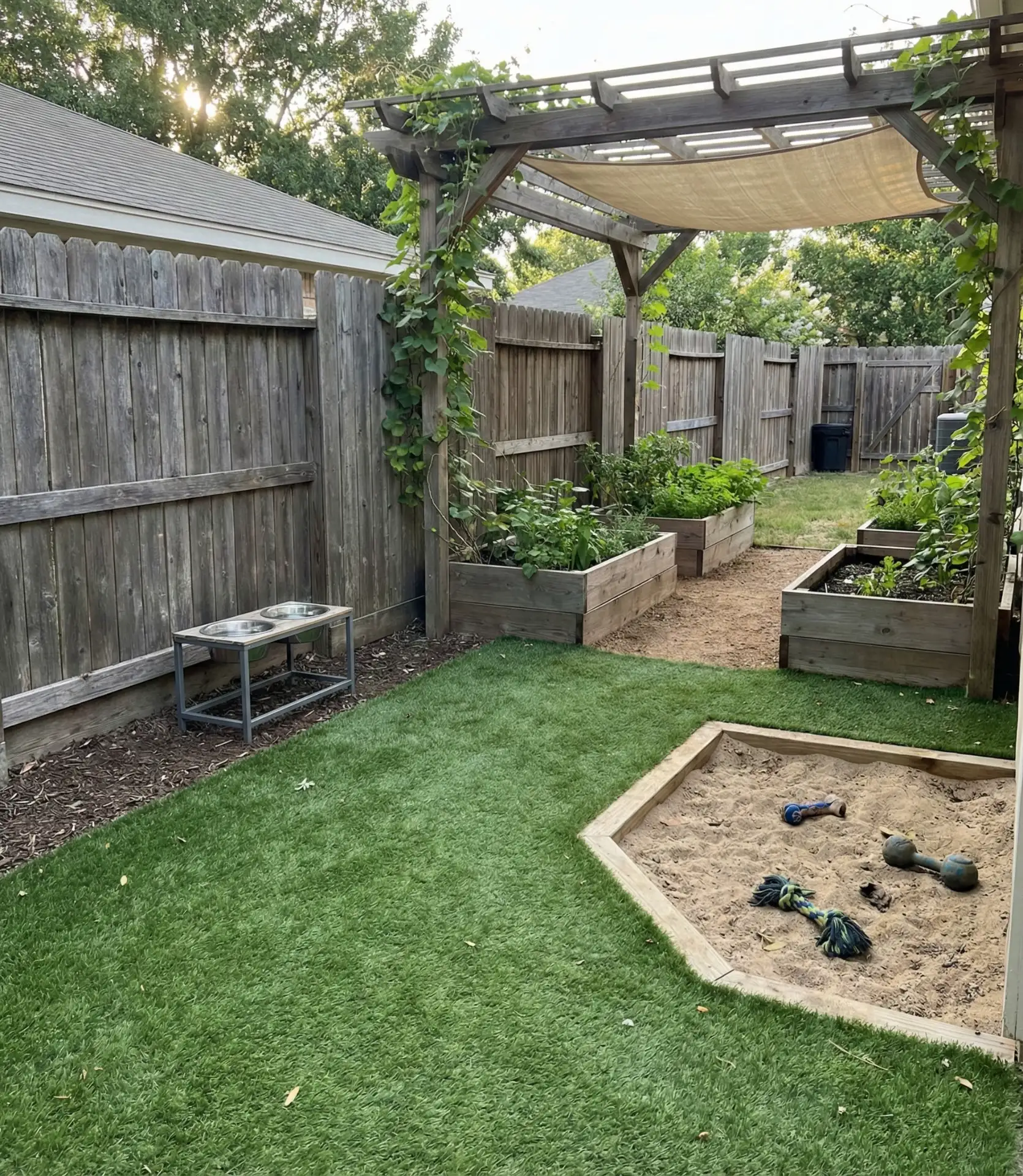
Expert comments, among others, from veterinary behaviorists stress that dogs need visual diversity. A flat, monotonous lawn will lead to frustration and to boredom, which causes destructive behavior. The layout will benefit from a variety of materials (gravel, mulch, grass), different visual levels (steps, small hills), and places to hide (trellises, shrubs). If doing the placement yourself, remember that artificial turf made for pets is the best option, as it has antimicrobial backing as well as greatly enhanced drainage for better odor control. If you have large or hyper breeds, dig guards (L-footer wire mesh buried 12 inches deep) will help prevent them from escaping through the bottom of the fence.
7. Woodland Shade Garden with Seating Nook
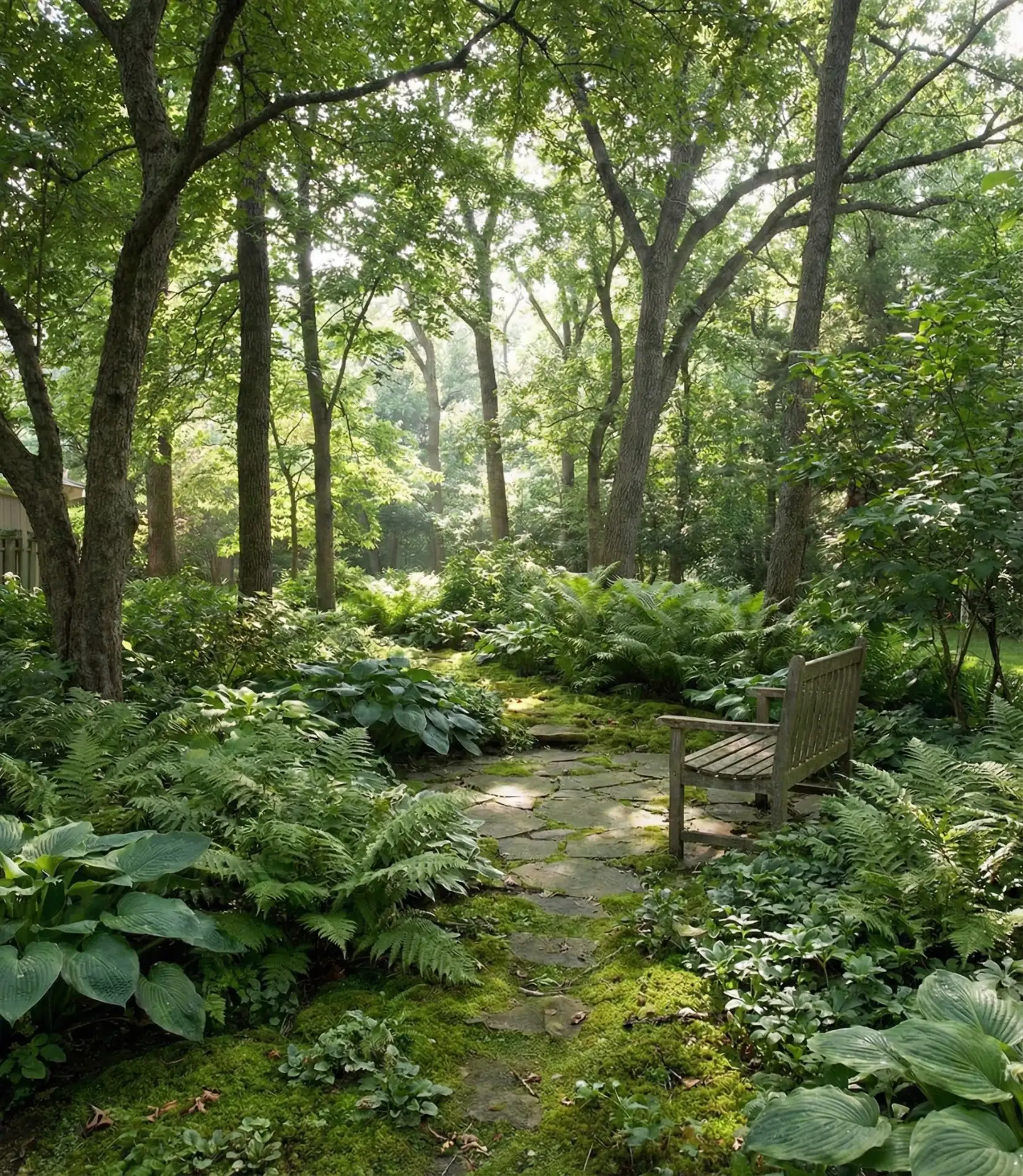
If your property includes mature trees, embrace the shade rather than fighting it with sun-loving plants. A wooded backyard becomes a cool retreat when you layer hostas, ferns, astilbes, and heucheras beneath the canopy, creating a lush understory that thrives in dappled light. Add a simple seating area—a wooden bench or pair of Adirondack chairs on a small flagstone pad—and you have an instant sanctuary that requires minimal upkeep. This approach celebrates the natural character of treed lots, common throughout the Northeast and Pacific Northwest. 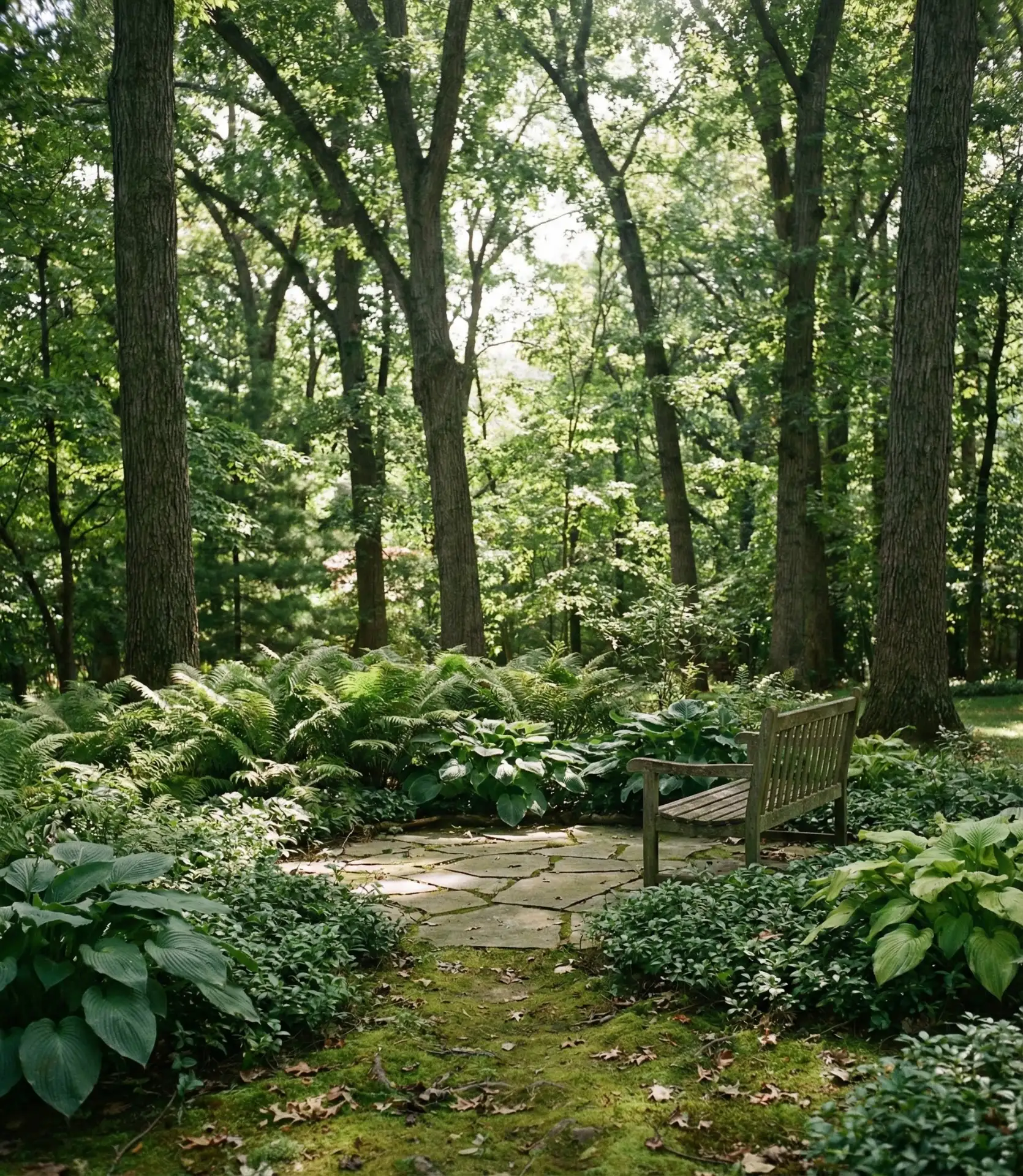
Across the suburban Midwest, homeowners with tree-heavy yards often express frustration that “nothing will grow”—the issue is plant selection, not the shade itself. Shade-tolerant perennials actually prefer consistent moisture and organic-rich soil found under tree canopies. Avoid placing hardscape or seating areas directly over major root zones; instead, nestle them between trunks where soil is shallower. Use mulch generously (3-4 inches) to suppress weeds and retain moisture, refreshing it annually. This landscape style costs very little since shade plants are typically inexpensive and the space needs no irrigation system once established.
8. Raised Bed Kitchen Garden Along Fence Line
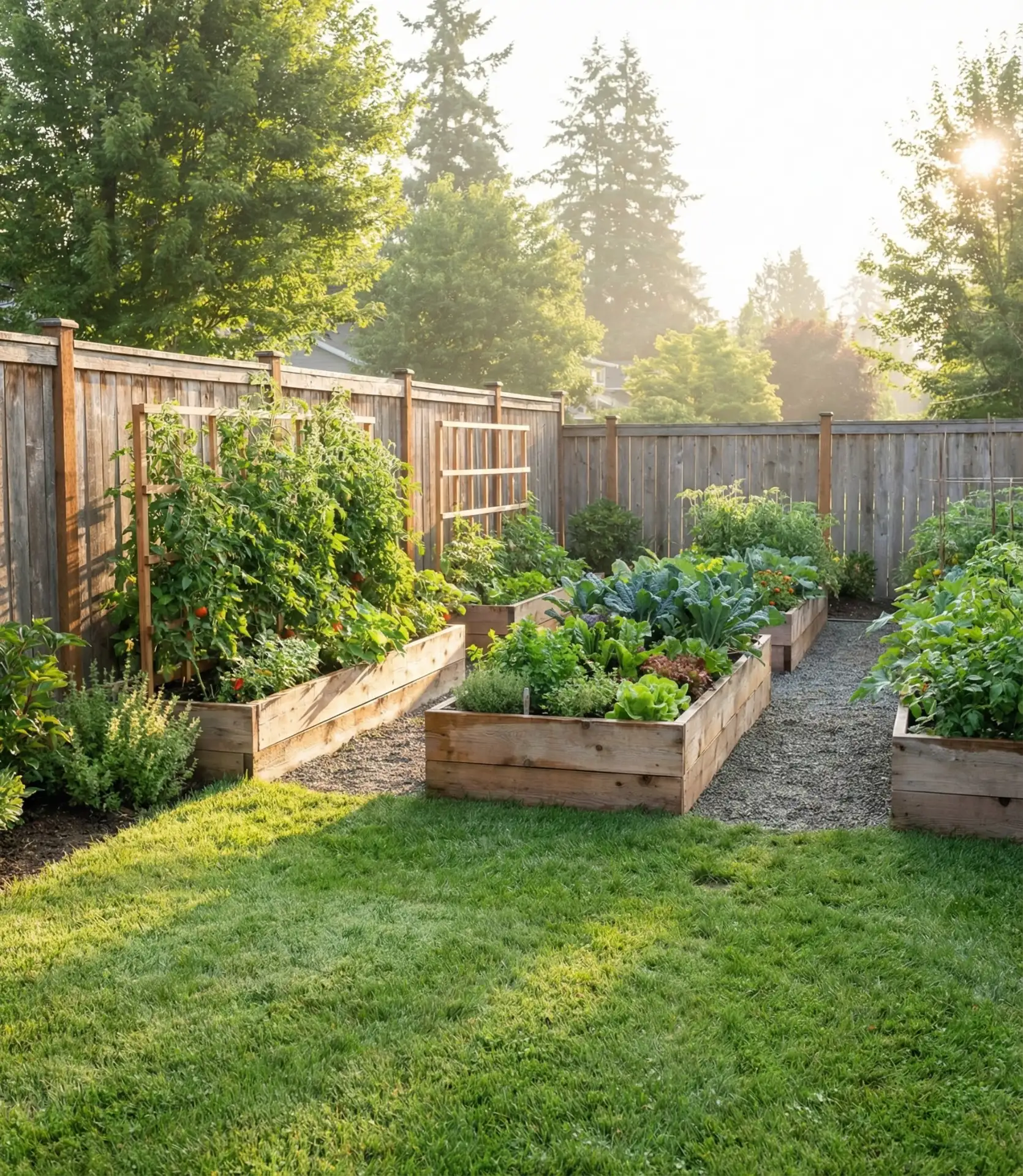
Positioning raised vegetable beds along the fence line maximizes sun exposure while keeping the center yard open for other uses. This layout works exceptionally well for small to medium lots where you want both a productive garden and usable lawn or patio space. Build beds 18–24 inches high using cedar or composite materials, filled with a mix of topsoil and compost. The fence serves as a natural trellis for vining crops like cucumbers, beans, and tomatoes, effectively doubling your growing space vertically. It’s an effortless weekend project that transforms an underused perimeter into a high-yield food source. 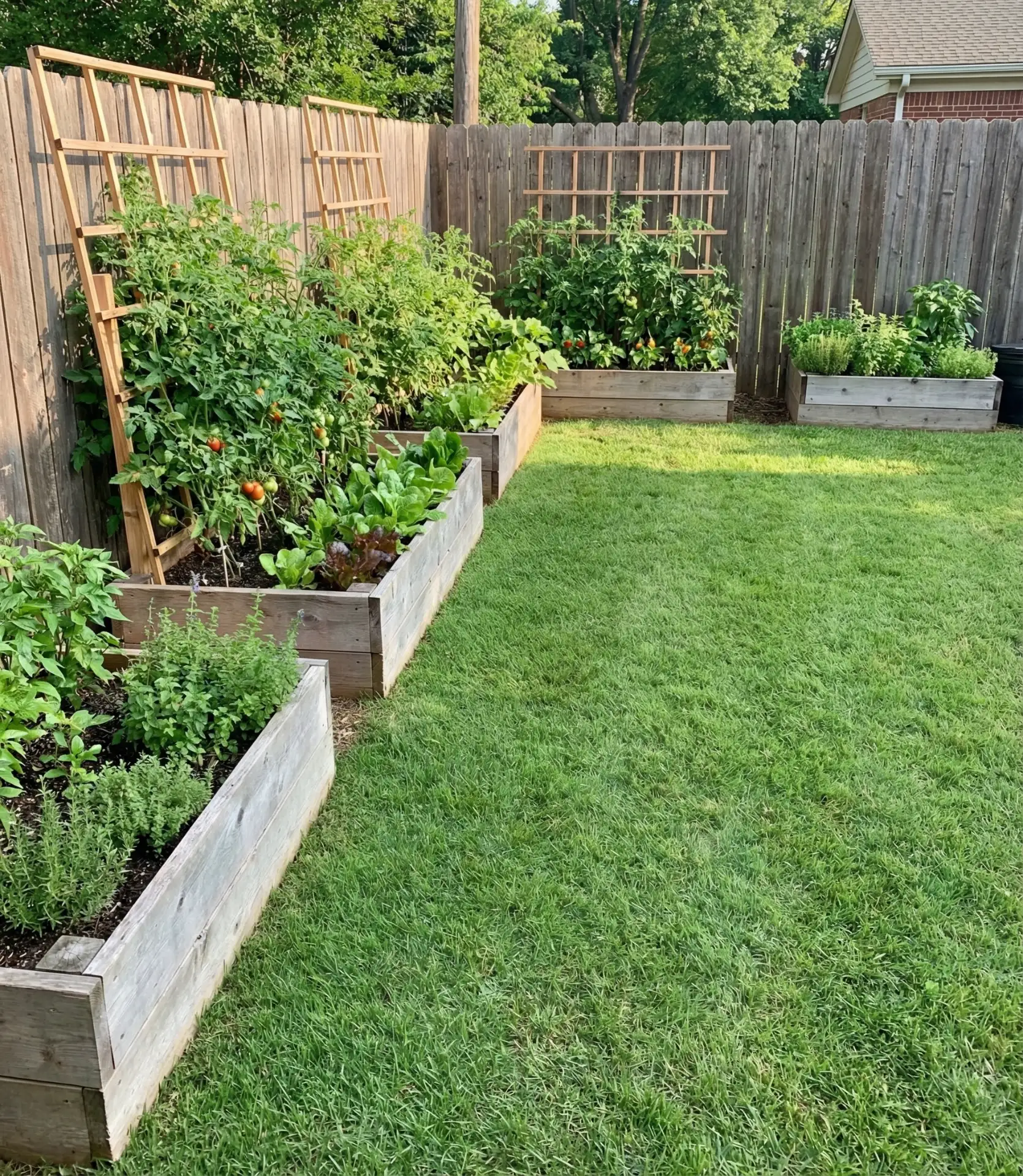
When on a budget, untreated cedar 2x12s are the best choice, as they can last a decade and a half without needing chemical treatments. Do not use treated lumber or railroad ties, as they can be harmful to edible plants. This style is best used on south- or west-facing fences that get more than 6 hours of sun exposure a day, as that is a big requirement for vegetables to fruit. A common mistake made by novice gardeners is building garden boxes that are too wide so they are difficult to reach across. Keeping the width to 4 feet will make it easier to reach the center to care for the plants and prevent moisture from compacting and damaging the roots.
9. Fire Pit Courtyard with Gravel Surround
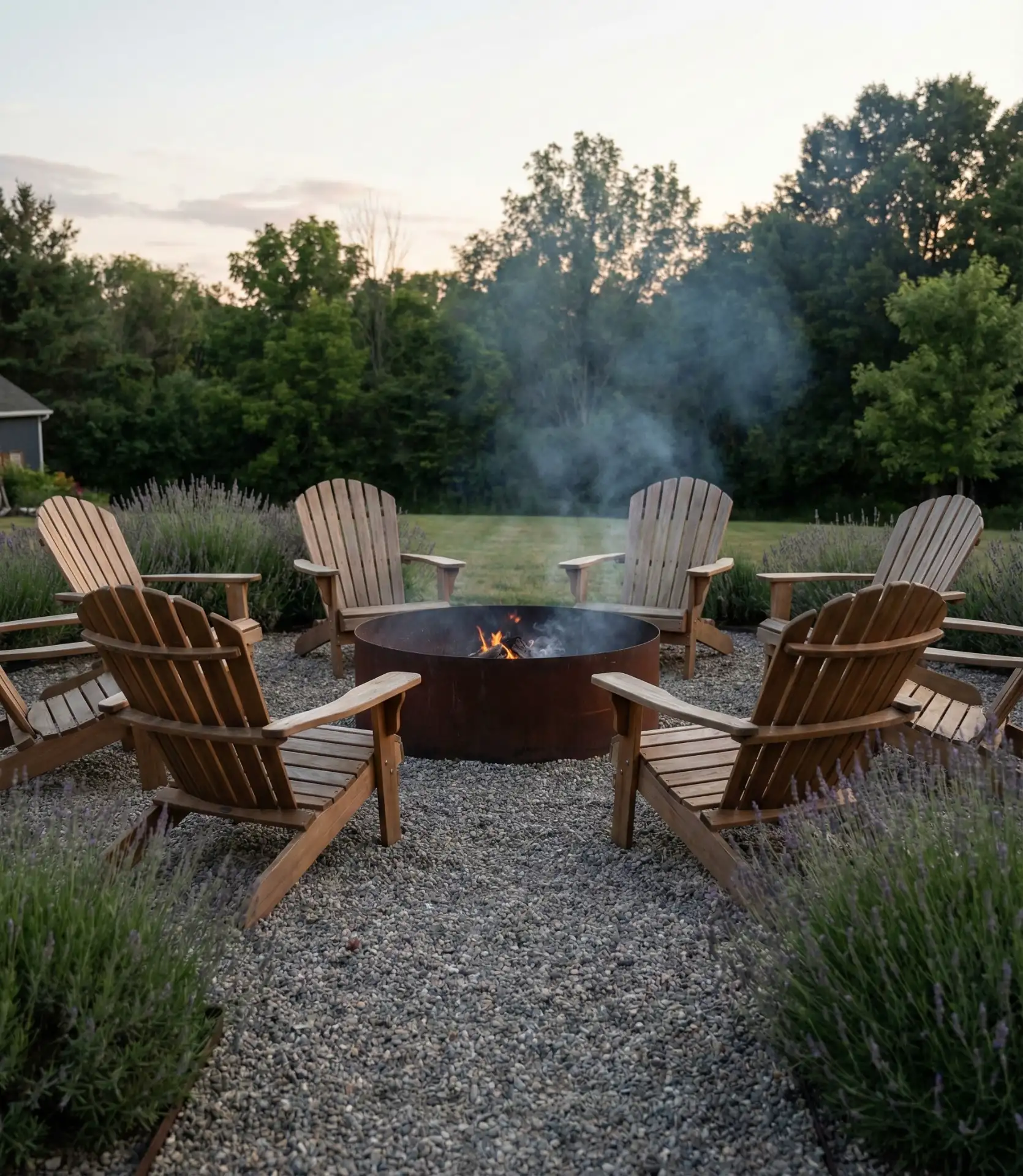
A dedicated fire pit ideas zone anchored by a steel or stone ring becomes the social heart of the backyard when surrounded by comfortable seating and permeable gravel flooring. This design’s layout typically includes a 40- or 48-inch- diameter pit with Adirondack chairs or built-in stone benches arranged in a loose circle. Crushed pea gravel (¾-inch) provides excellent drainage, eliminates mud, and creates a casual texture underfoot that feels intentional rather than temporary. Border the area with low edging and plant drought-tolerant perennials like lavender, Russian sage, or ornamental grasses that can handle radiant heat and occasional sparks. 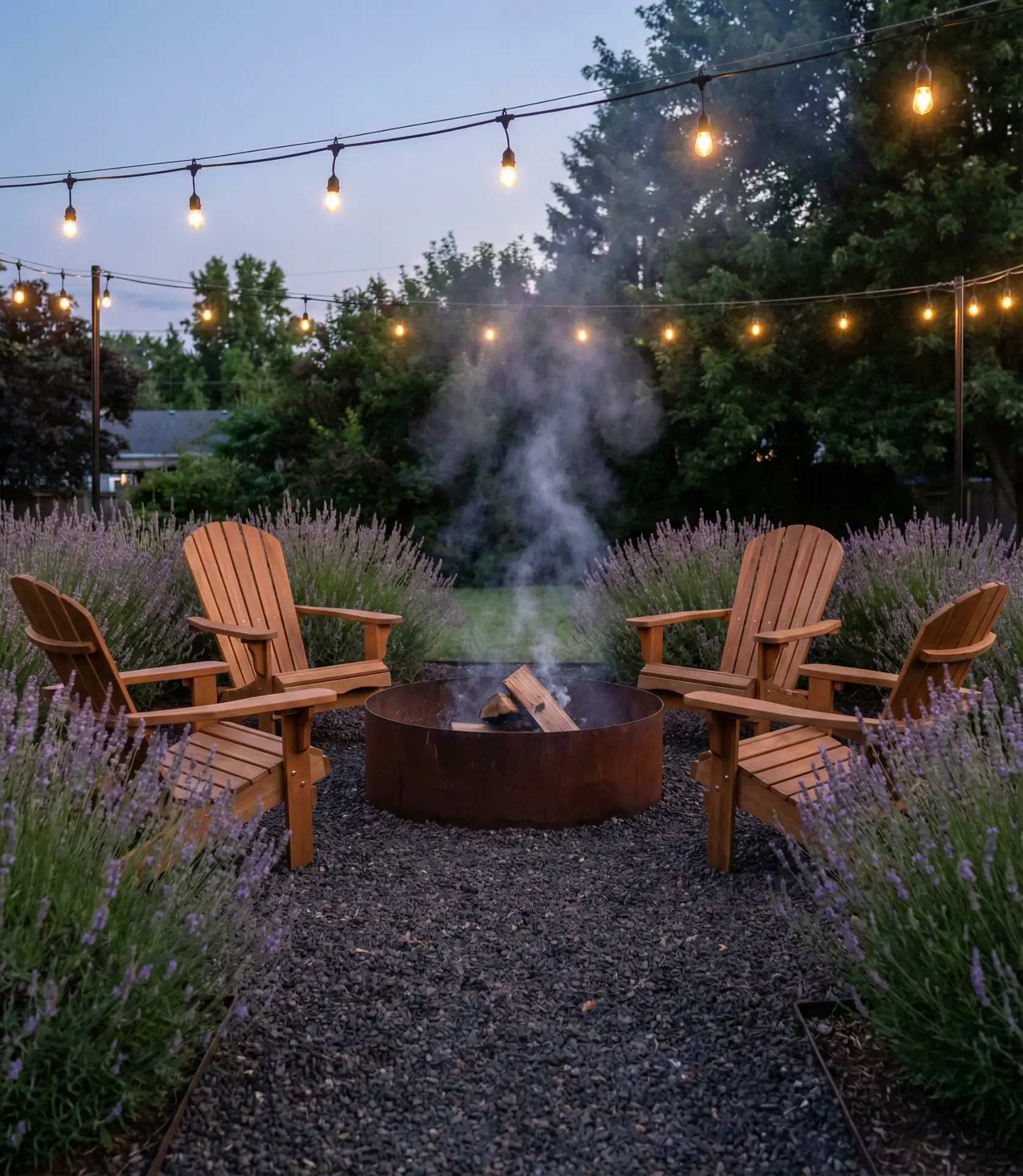
American lifestyle leans heavily toward outdoor entertaining, and fire pits have become nearly universal in new landscape designs—particularly in temperate climates where evening temperatures drop but aren’t frigid. Check local fire codes before installing; many municipalities require pits to be a certain distance from structures and property lines. For year-round use, choose a propane or natural gas insert over wood-burning; they light instantly, produce no ash, and can be shut off quickly if wind picks up. Gravel is far more practical here than pavers, which crack from heat cycling and require precise leveling.
10. Pool Deck with Integrated Planters and Lounge Zone
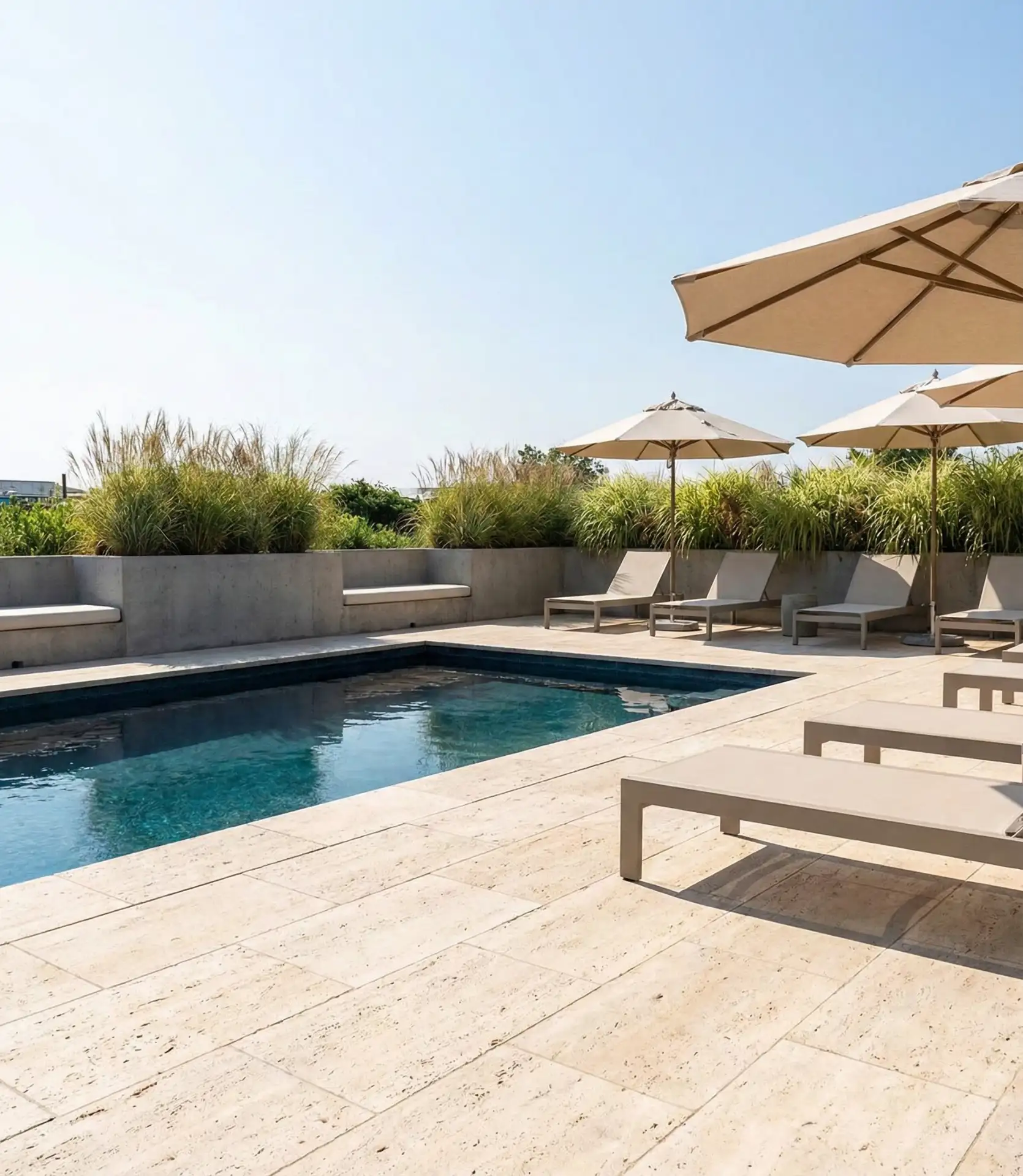
Designing a pool landscape that balances lounging, swimming, and greenery requires thoughtful zoning within the deck itself. Built-in planters at intervals break up large expanses of concrete or pavers, introducing vertical greenery without sacrificing walkable space. Choose low-maintenance plants like ornamental grasses, agave, or evergreen shrubs that won’t drop debris into the water. Dedicate one side of the pool to a lounge zone with chaises and umbrellas, keeping the opposite side open for diving or play. This modern approach creates a resort-like environment that functions well for both active use and quiet relaxation. 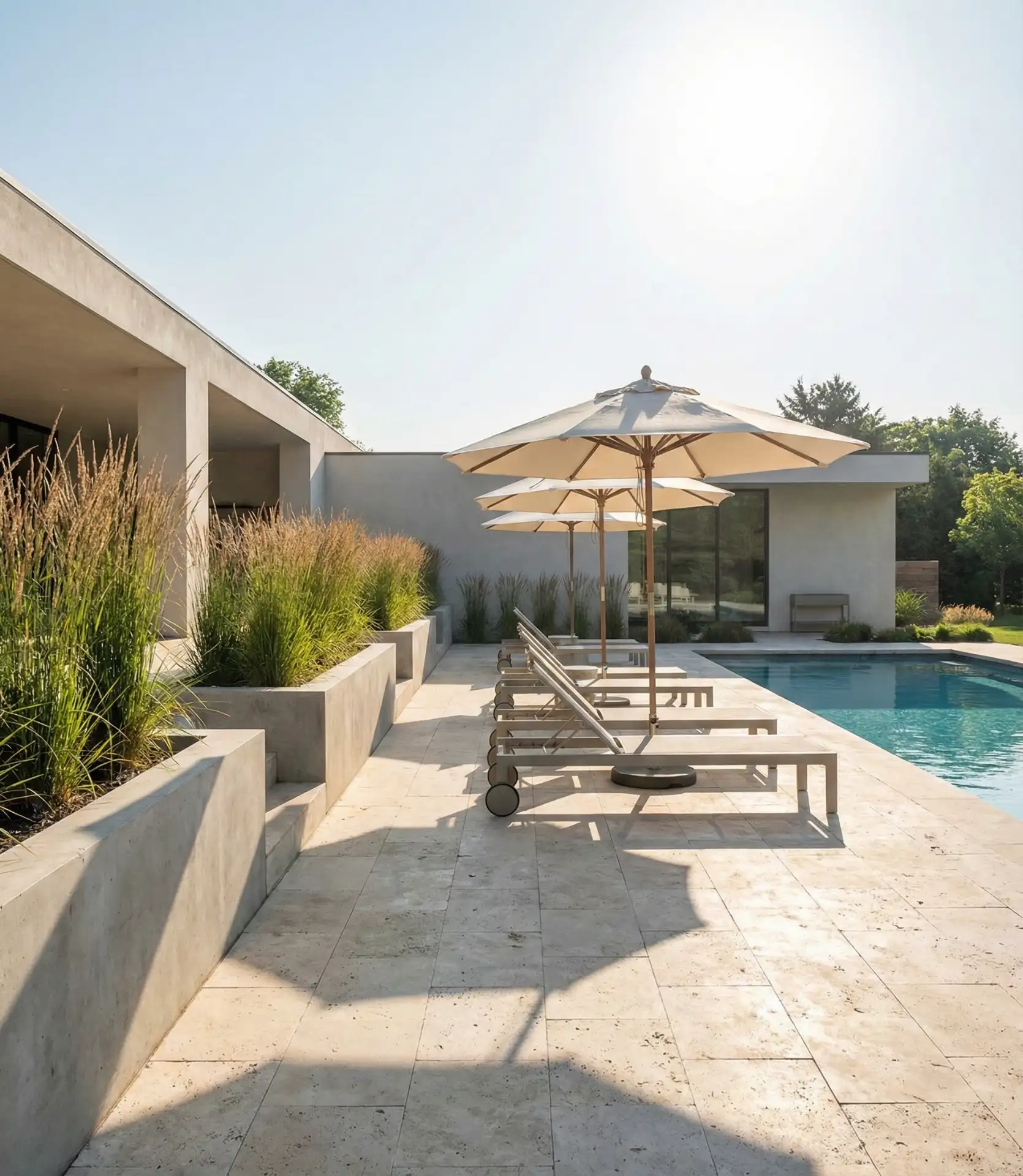
Regional context matters significantly with pool landscaping—in the Southwest, travertine pavers stay cooler underfoot than concrete, while in humid climates like Florida, non-slip surfaces are critical for safety around wet areas. Budget expectations should include not just the pool installation but also adequate decking (plan for at least 4–6 feet of walking space around all sides) and proper drainage to prevent water from pooling on the deck. Integrated planters cost more upfront than separate containers but create a polished, permanent look that adds resale value and eliminates the clutter of movable pots.
11. Sunken Conversation Pit with Fire Feature
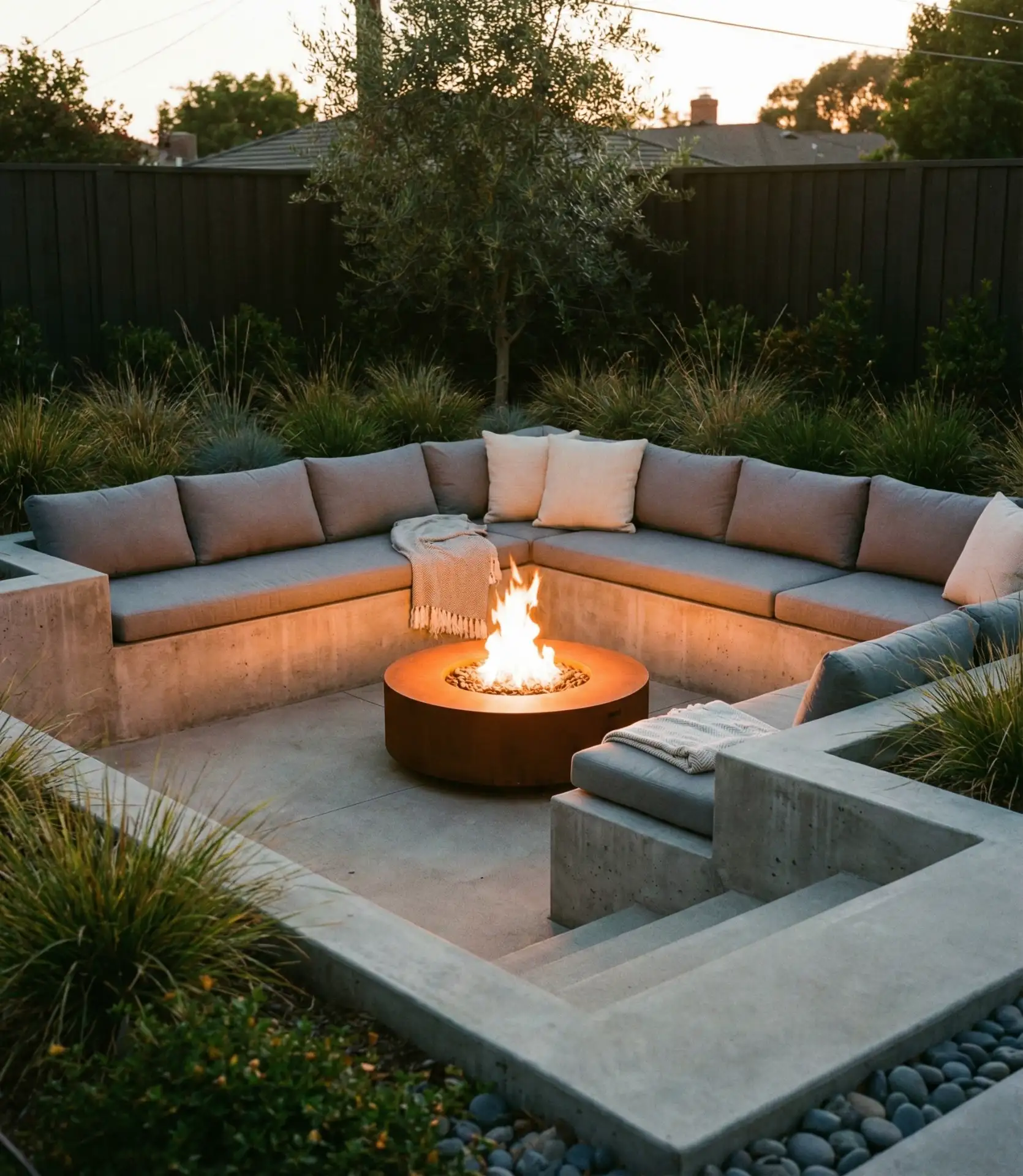
A sunken seating area carved 18–24 inches below grade creates an intimate gathering space that feels protected without walls. This contemporary design approach uses built-in benches along the perimeter with cushions, centered around a fire pit that becomes the focal point. The lowered floor naturally blocks wind and creates acoustic intimacy—conversations feel more private even in an open yard. This layout plan works particularly well on large properties where you want distinct zones, and it pairs beautifully with modern architecture that emphasizes horizontal lines and integrated outdoor living. 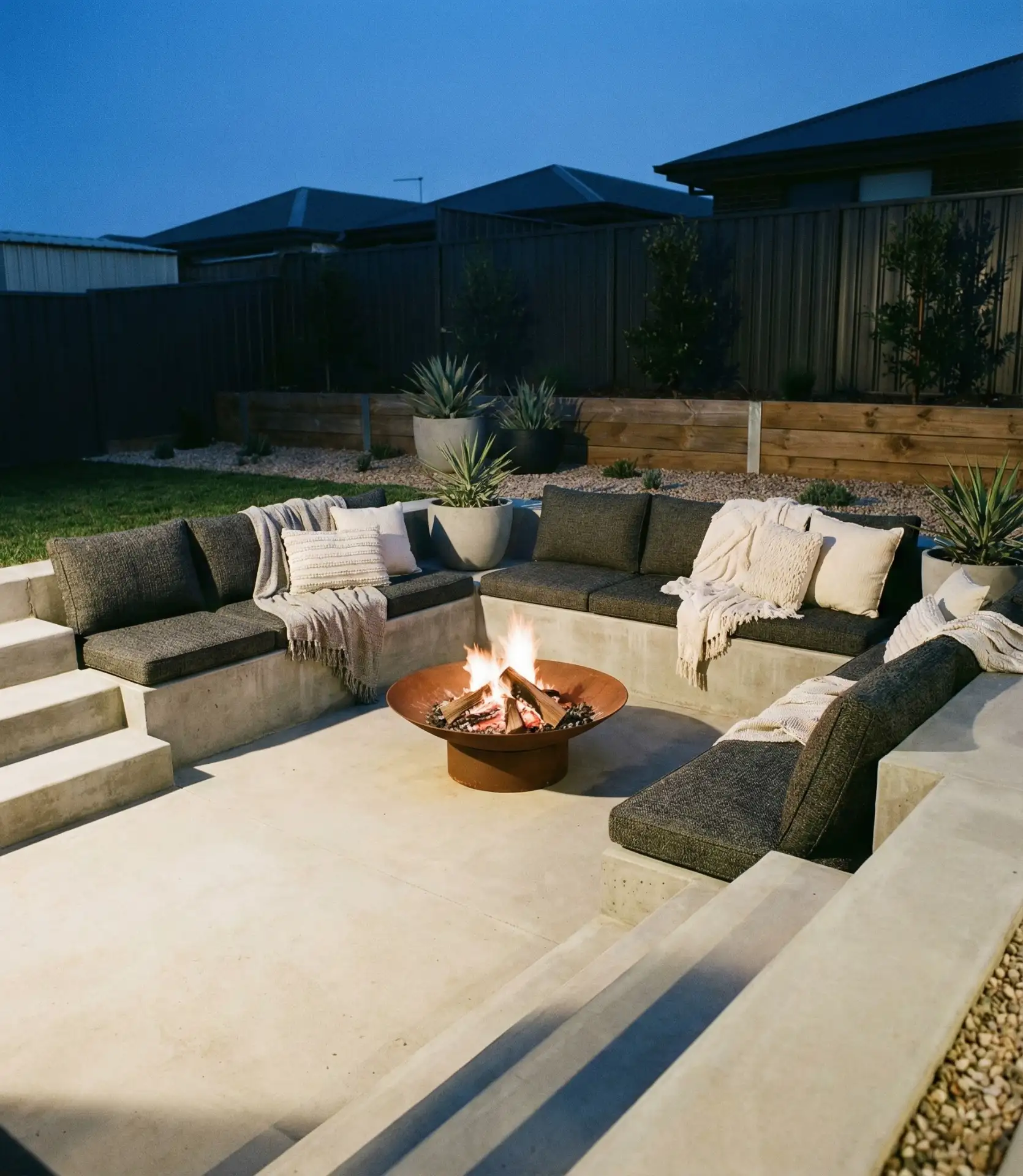
Patio designs at this level tend to require more excavation for drainage and other related installations, so costs will be more than other designs, with estimates ranging in the $8,000 to $15,000 range dependent on the scope and materials. However, the design creates a space that is usable in all seasons and provides a striking contrast in flat landscapes. Appropriate drainage needs to be done, so incorporating a French drain that works independently from the seating area helps. If the area is heavily clay laden, structures made of gravel will be needed to minimize the pressure buildup in the structure to reduce damage during periods of frost.
12. Xeriscape Rock Garden with Succulent Layers
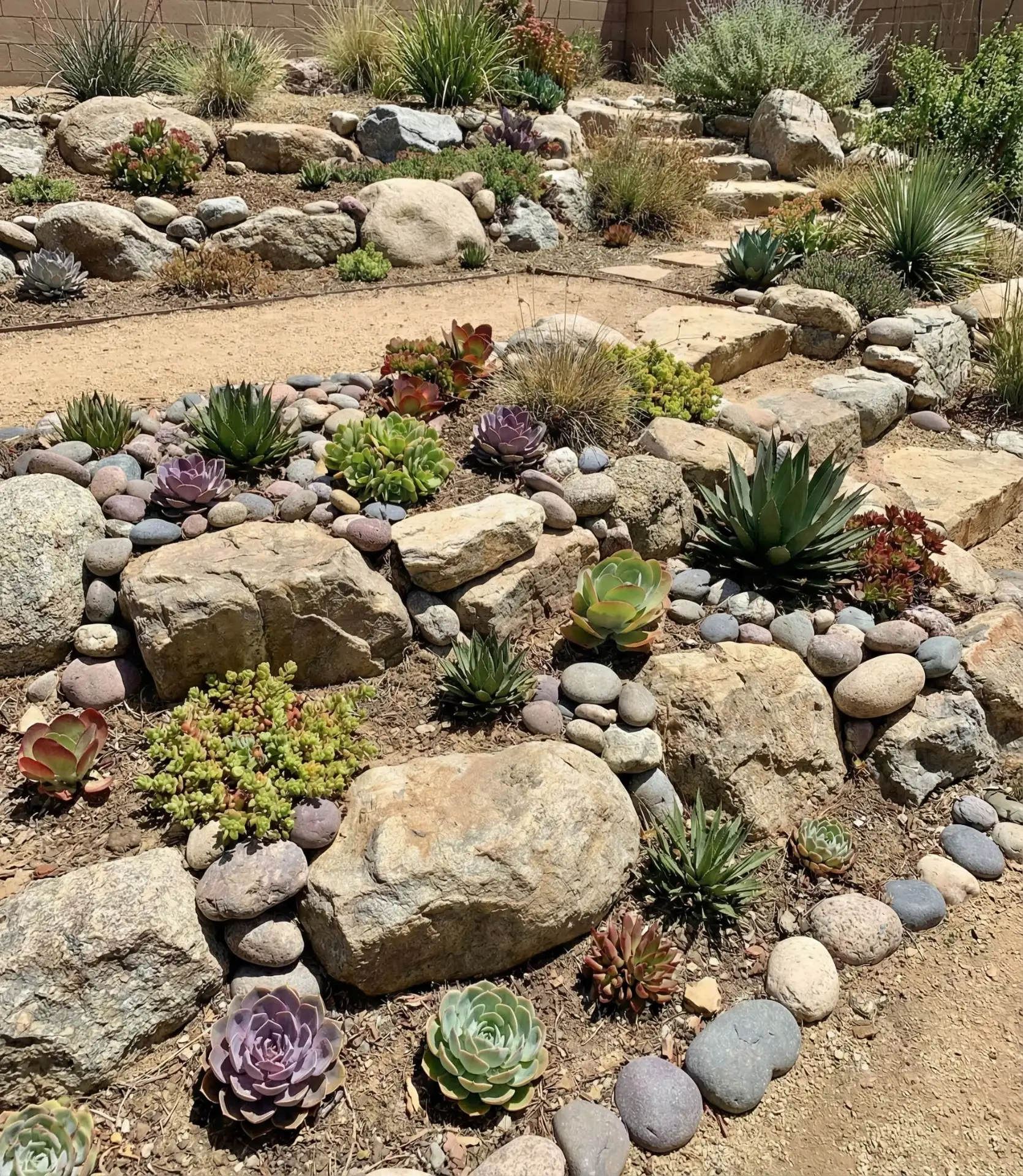
Xeriscape goes beyond just basic desert landscaping. It includes the selection and placement of plants with a specific design that conserves water. This technique includes a water-wise design and positive benefits for rocky landscapes. With the various sizes of rocks, you can create visual textures. Mix in succulents, such as sedums, sempervivums, and echeveria. This technique thrives in the full sun and requires watering only every 2-3 weeks once established. Colorado originated this technique, but it has spread all across the western United States. This technique also benefits those homeowners tired of trying to keep thirsty lawns alive in the arid climates. \ 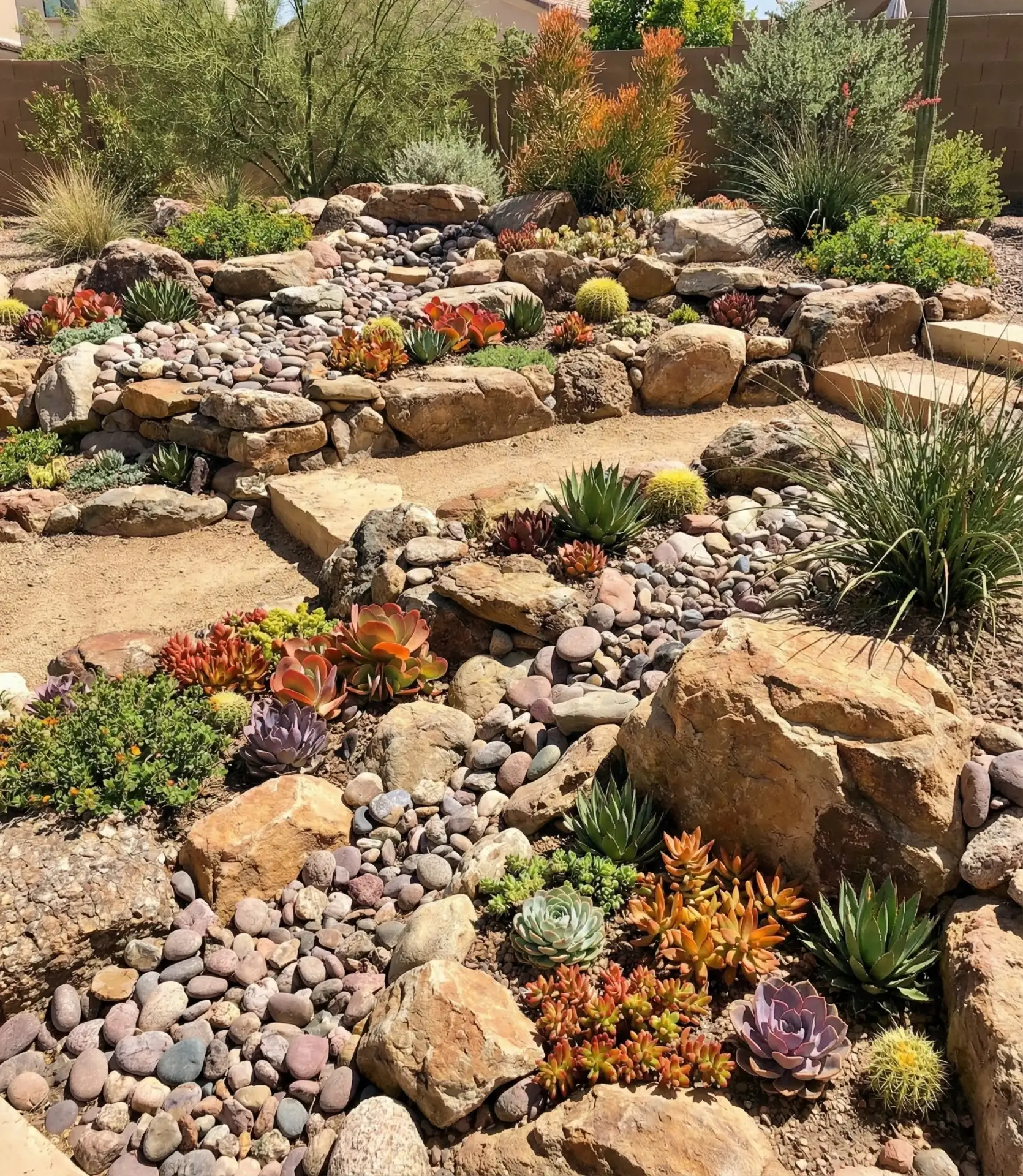
A Tucson homeowner stated that converting half of their lawn to xeriscape reduced their water bill by 60% in the first year. Their initial plant investment of around $400 was paid off within eight months. Ipomoea is a succulent crop. Most varieties root from cuttings or fallen leaves, so it is easy to expand and cactus the garden over time. The biggest mistake is overwatering. Plants that are drought tolerant will also rot if the soil stays moist. \
13. Pergola Dining Terrace with Vines
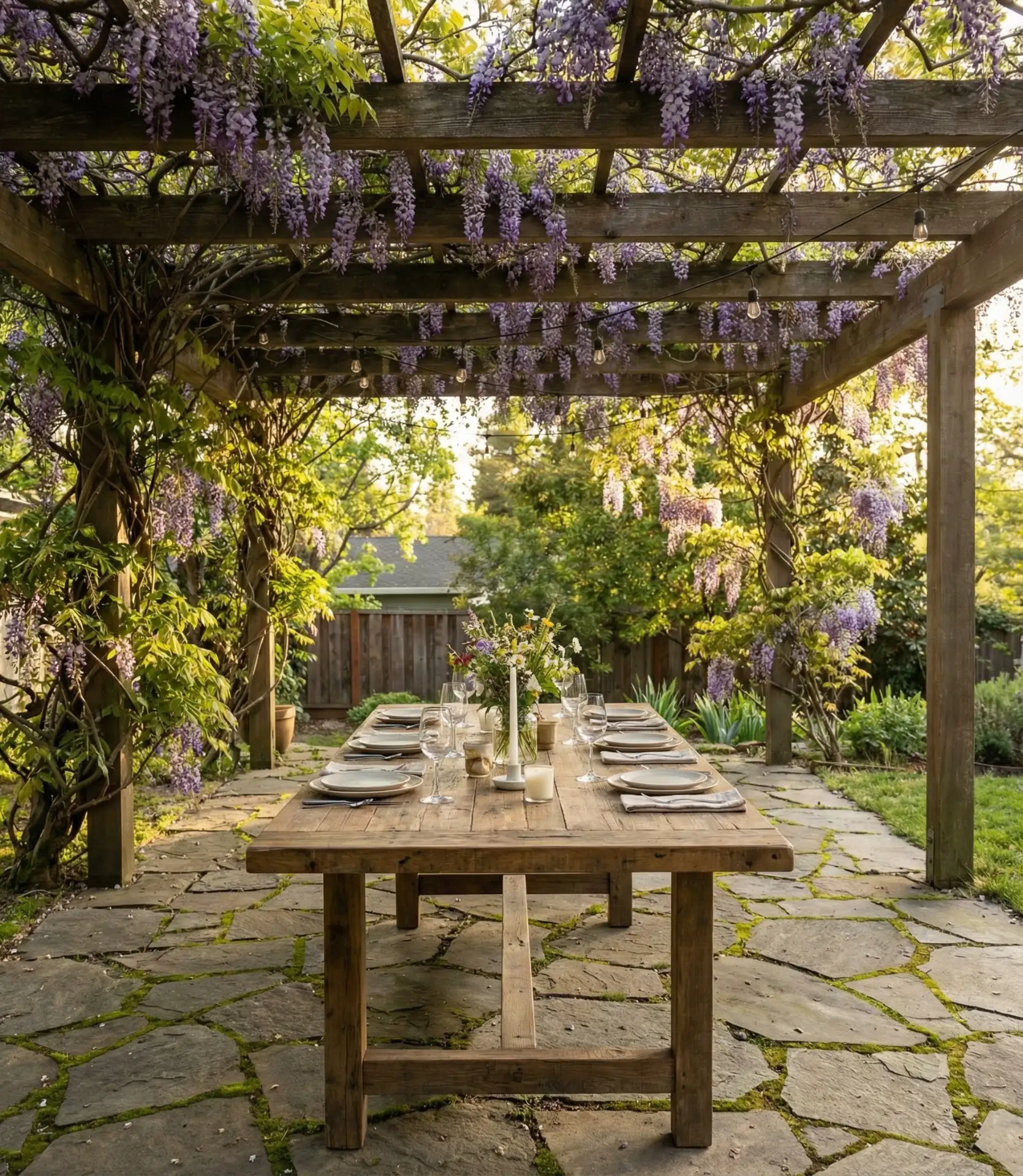
A modern pergola transforms a basic patio into an outdoor dining room with architectural presence and dappled shade. Train climbing vines—wisteria, grape, or trumpet vine—over the beams to create a living ceiling that cools the space naturally. Underneath, position a dining table for six to eight with weather-resistant chairs, and consider stringing café lights between rafters for evening ambiance. This setup extends livable square footage seasonally and creates the kind of simple outdoor entertaining space that’s become essential in post-pandemic American homes where gatherings have shifted outdoors. 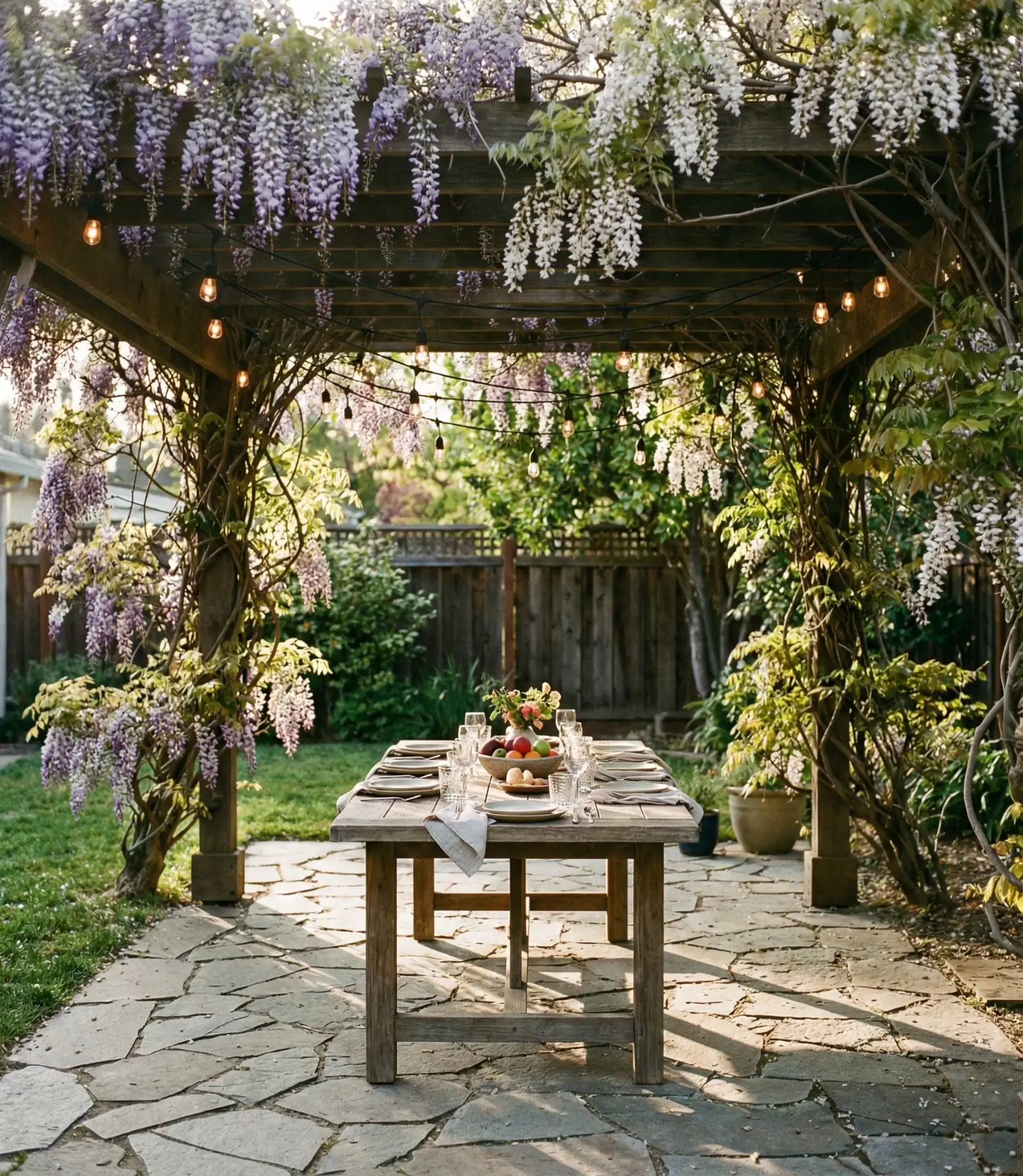
The arrangement is best in zones with a minimum of 150 frost-free days, which allows the vines to establish and then bloom. In the northern climates that have harsh winters, select one of the hardier climbing vine varieties, such as clematis or climbing hydrangea. For a DIY building project, pressure-treated pine pergolas run about $1,500-$3,000 in materials for a 12×12 structure, while cedar or redwood is a more expensive option but also requires no staining and increases the cost to about double.
Maintenance should be a consideration when choosing a vine; wisteria is stunning but aggressive. They also need annual pruning. Grape vines are edible but also attract bees. Concrete footings should be set at least 36 inches deep to prevent frost heaving in cooler climates.
14. Narrow Side Yard Transformation with Vertical Gardens
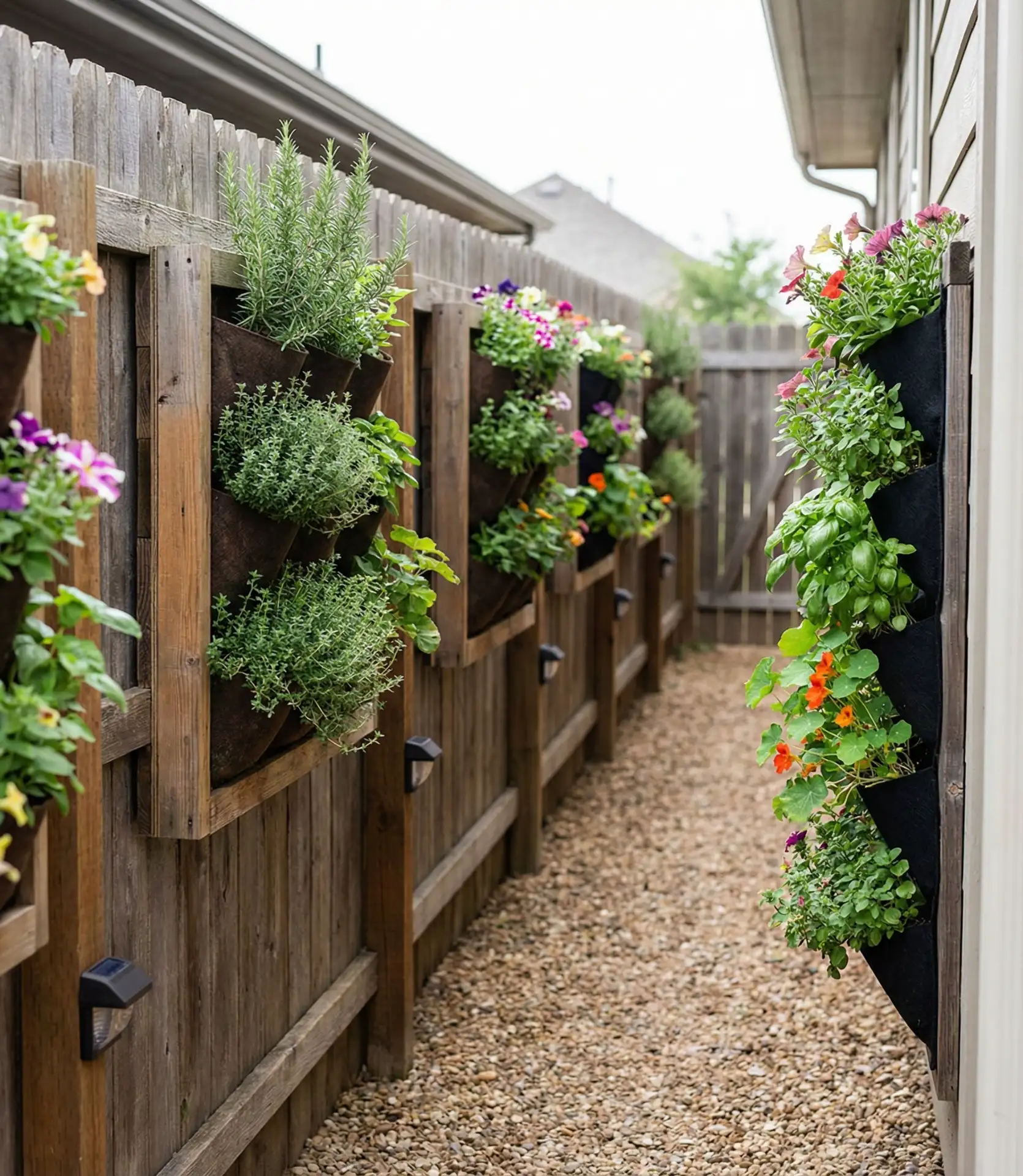
Side yards—also known as the neglected strips between the house and fence. These spaces can become productive vertical gardens. This goal can be achieved by embracing the dimensions of the space. Wooden wall planters, trellises, or modular pocket systems can be added to a fence to vertically grow small veggies, herbs, or flowering vines. Pavers or gravel can be added to the ground level for easy access, and pathway lights can be added for visibility at night. This format is a great layout for small urban and suburban lots. This layout is particularly beneficial in situations where every square foot of space is vital. Vertical approaches to gardening are also excellent for adding visual interest to fence lines. 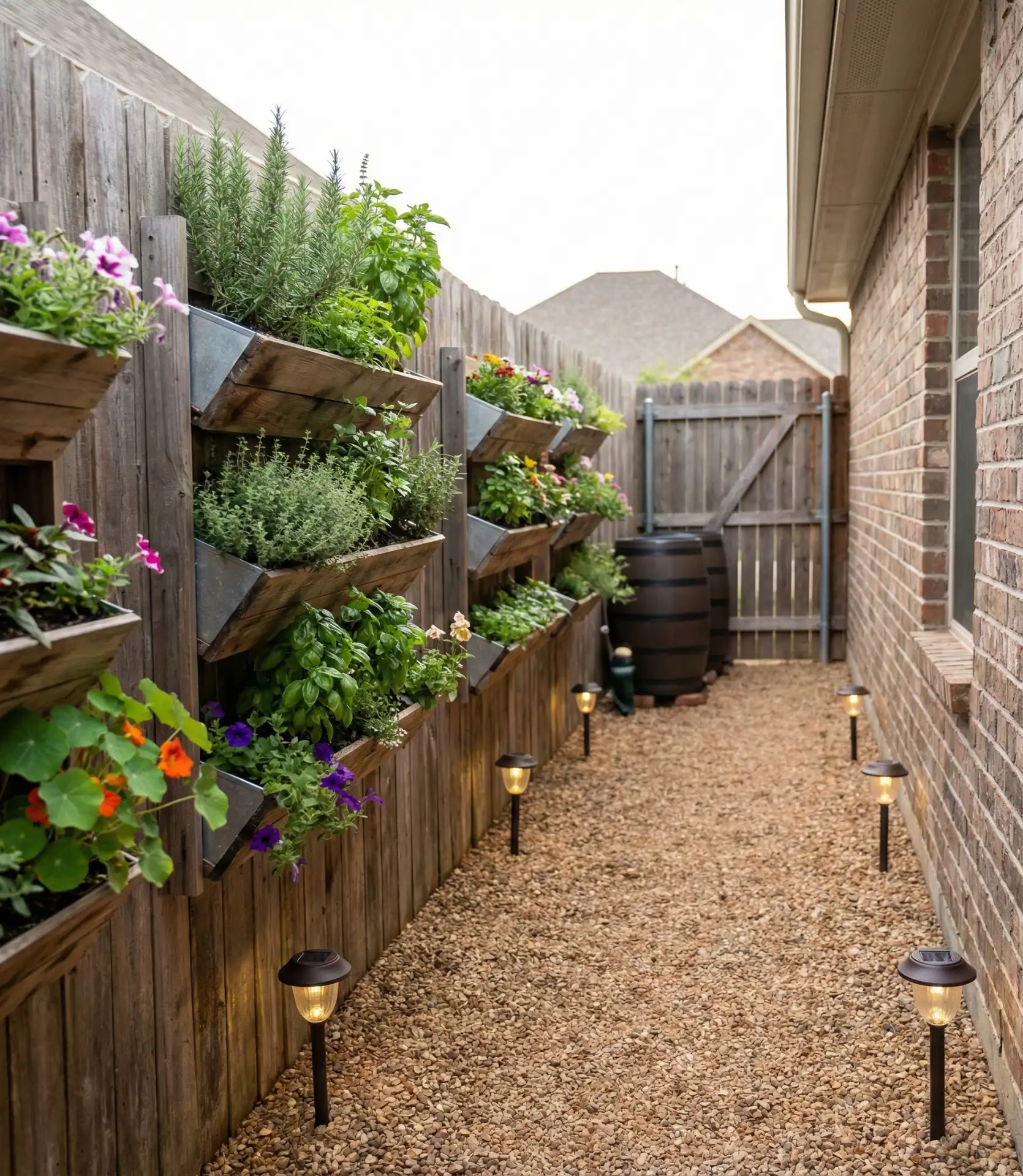
The house or fence often provides light shade to these areas. This space should be assessed before planting anything. If you are getting less than 4 hours of direct light, it is best to stick with shade-tolerant herbs. Examples of these are mint, parsley, or chives. These are easy maintenance options. Avoid planting sun-dependent crops like tomatoes or peppers in these areas.
In these limited areas where it is impractical to pull hoses, a timer helps solve watering problems with drip irrigation. Systems mounted to a wall should either be equipped with drainage trays or elevated over gravel to avoid water damage to fences or house siding.
15. Natural Swimming Pool with Gravel Beach Entry
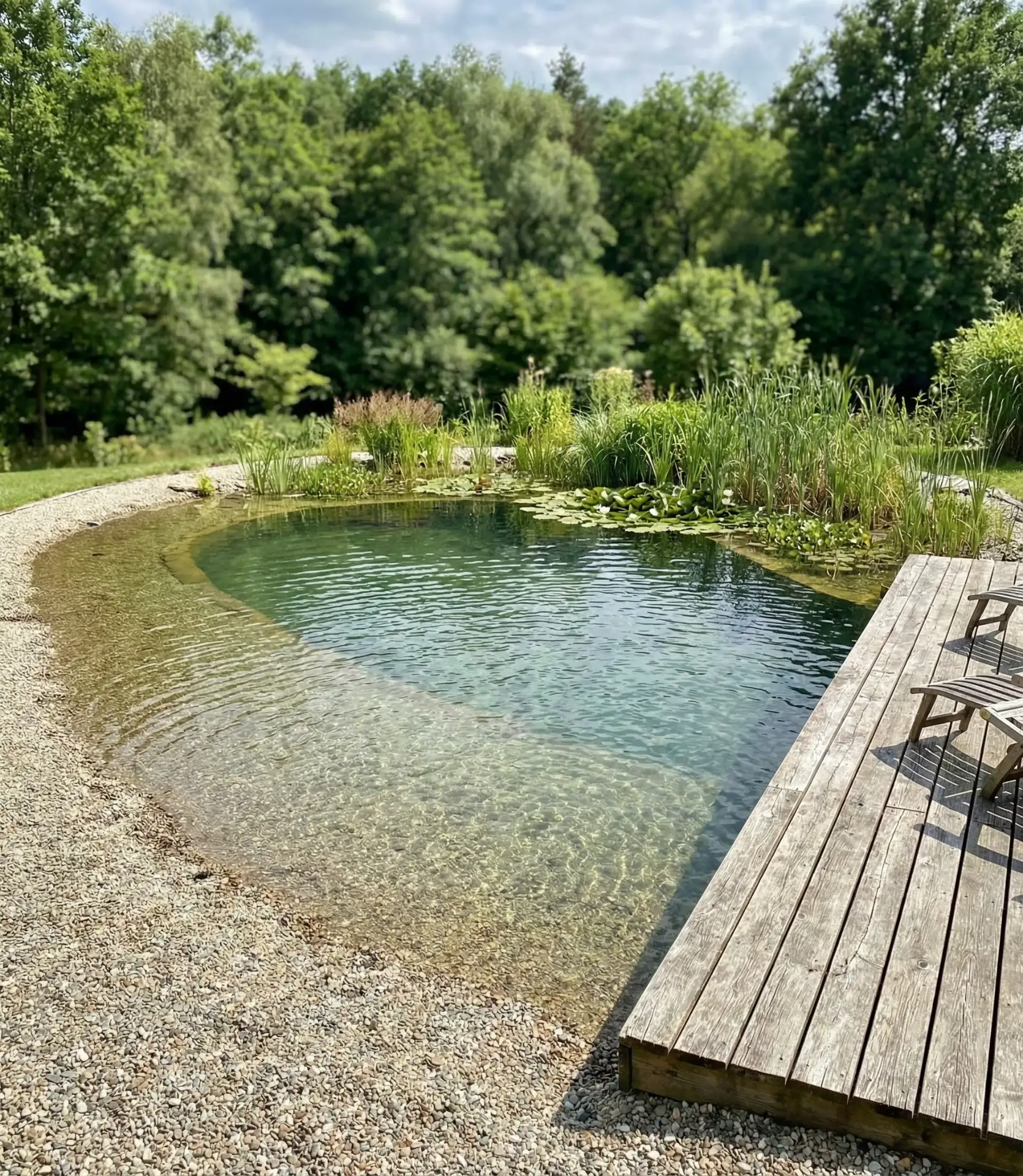
Natural swimming pools offer a lagoon-like swimming experience without harsh chemicals. They utilize biological filtration with a separate regeneration area with water-cleansing plants, like water lilies, cattails, and submerged oxygenators, that keep the water clean. A gentle slope with gravel as the entry to the swimming area simulates a natural shoreline, removing the harsh edges that most pool designs feature. This natural style is popular with families, especially those with young kids, as it avoids harsh chemicals. This pool design is a wonderful option in areas with naturalistic or woodsy surroundings. 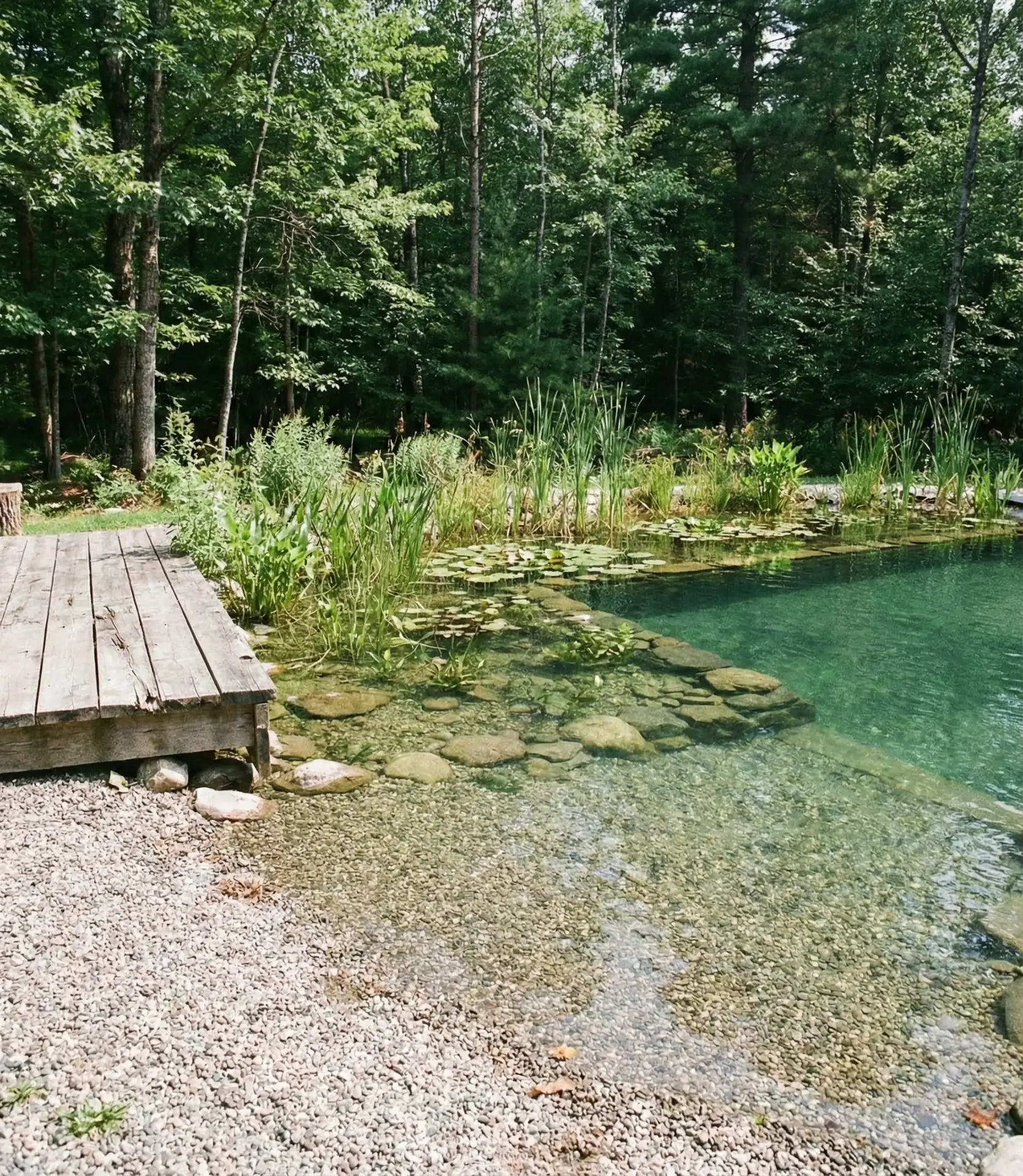
Expert commentary from natural pool builders indicates that while installation costs run 20-30% higher than conventional pools ($50,000-$80,000 range), operating expenses drop dramatically—no chemicals to buy, lower electricity for pumping, and fewer mechanical breakdowns. The regeneration zone requires roughly 50% of the total water surface area, so plan for a larger footprint than a traditional pool of equivalent swimming space. While the water remains clean, it lacks the clarity of chlorinated pools due to a slight tannin tint, akin to that of a clear lake. These systems work best in temperate climates and struggle in extreme heat where algae blooms outpace biological filtration.
16. Gabion Wall Planters with Drainage Cascade
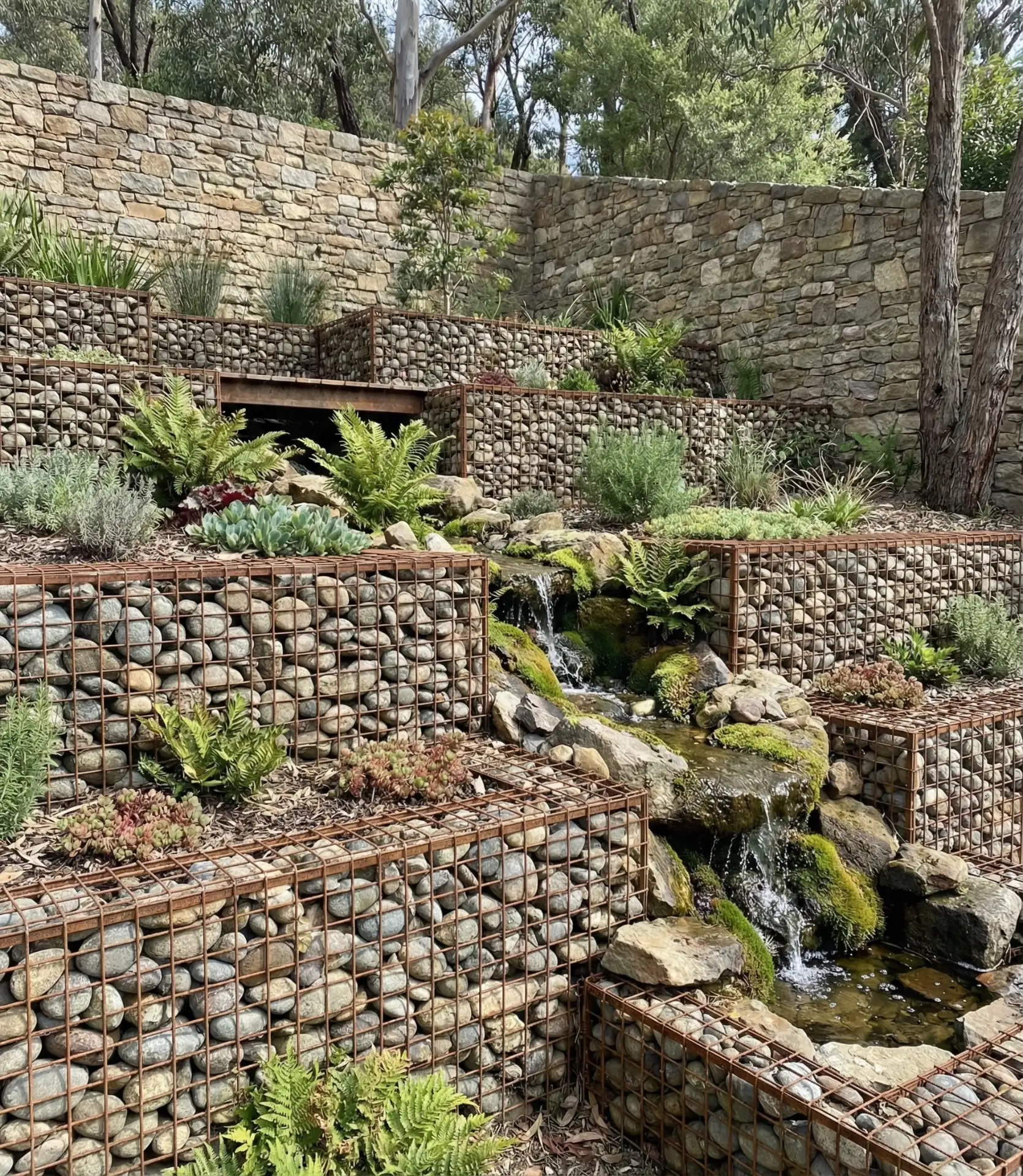
Gabion walls—wire cages filled with rocks—create structural retaining walls that double as dramatic vertical planters when designed with pockets for soil and plants. This contemporary technique works brilliantly on sloped properties where you need erosion control with visual interest. Tuck drought-tolerant plants like sedums, creeping thyme, or small grasses into gaps between stones, and the wire framework supports them while allowing drainage. Stack multiple gabion tiers to create a cascade effect where water flows over rocks during rain, adding movement and sound to the landscape. It’s an industrial-modern aesthetic that pairs well with steel and concrete architecture. 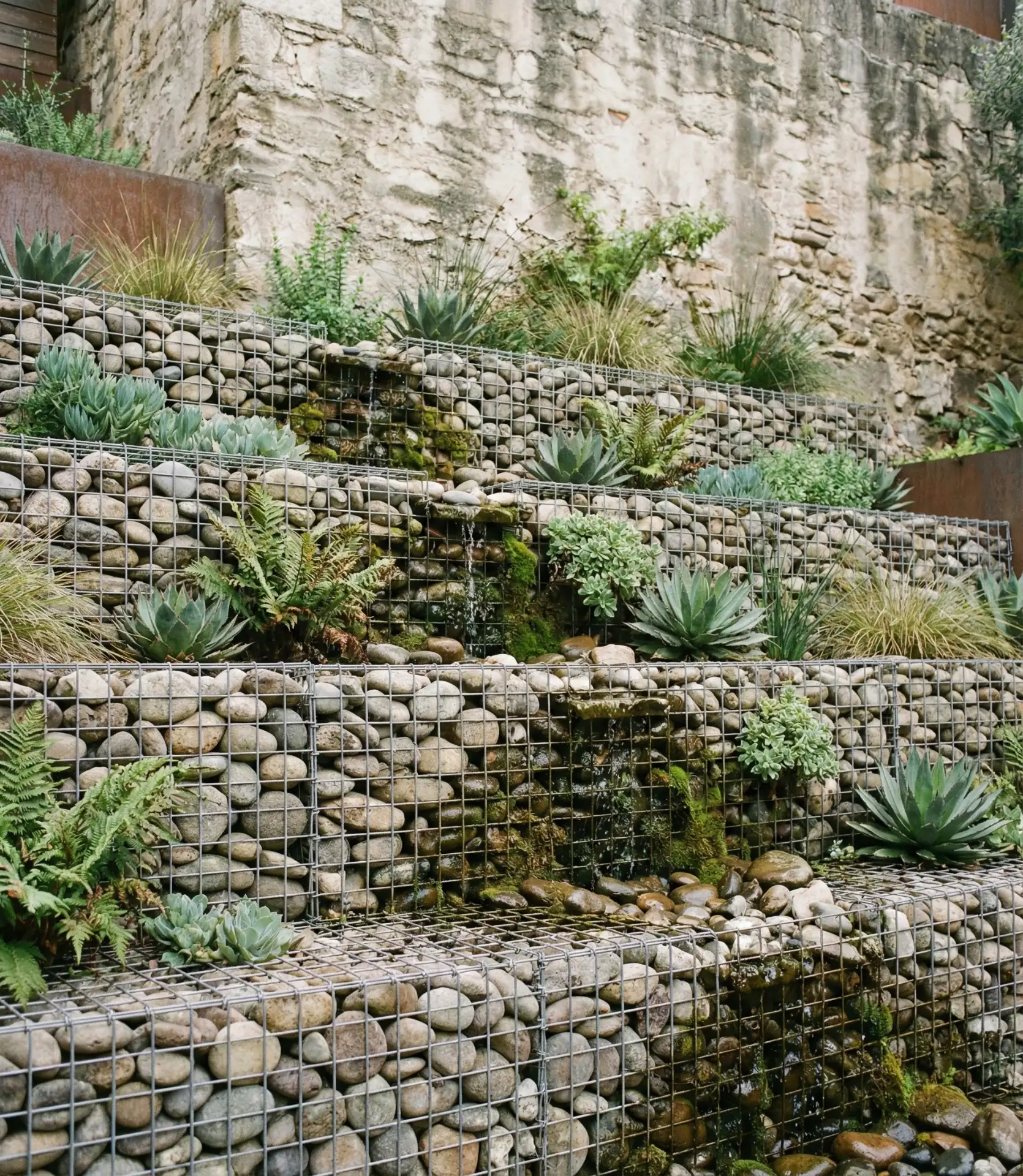
To stick to a budget, galvanized wire gabion baskets cost between $3 and $6 per square foot as well, and as a stone fill, you can use crushed granite or fieldstone, which is as cheap and serves a similar structural purpose as the expensive imported river rock. Modular 3′ x 3′ baskets, stacked like blocks, make installation relatively easy for a DIYer with basic tools. They are only underfilled, which makes the baskets sag, and there is forgotten landscape fabric behind the wall that prevents soil from washing through the rocks. Plants inserted into the gaps need occasional watering until established, but root space is minimal.
17. Outdoor Kitchen Island with Herb Garden Surround
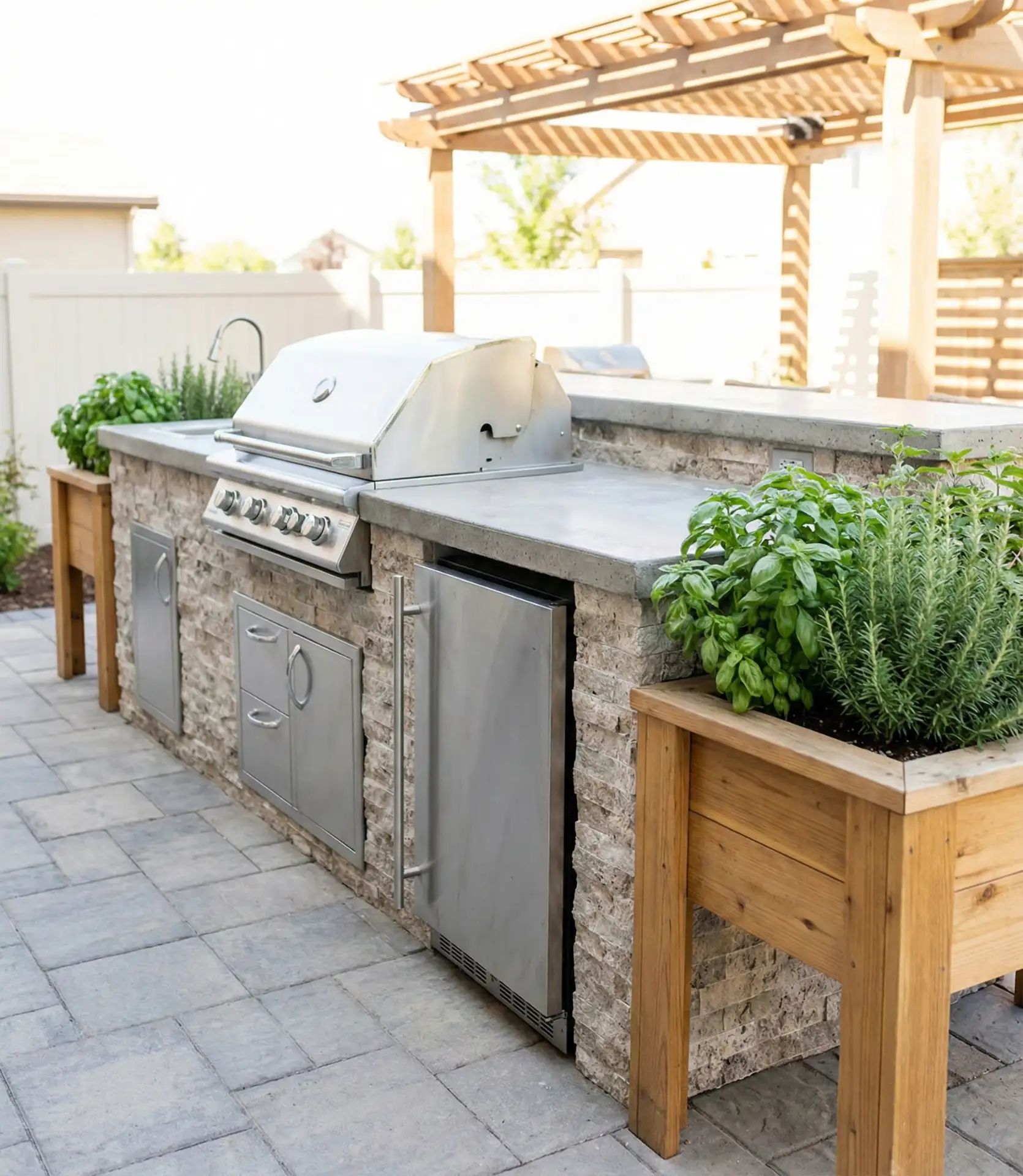
A built-in outdoor kitchen with a grill, counter space, and sink becomes exponentially more functional when surrounded by raised herb beds within arm’s reach. This design approach positions cooking and harvesting in the same area, with basil, rosemary, thyme, and oregano growing in elevated planters that frame the kitchen island on two or three sides. Use stone or stucco for the island structure to match the house, and top counters with granite or concrete for durability. The setup creates a true outdoor cooking experience where ingredients go from plant to plate in seconds, appealing to the American trend toward farm-to-table eating and entertaining outdoors. 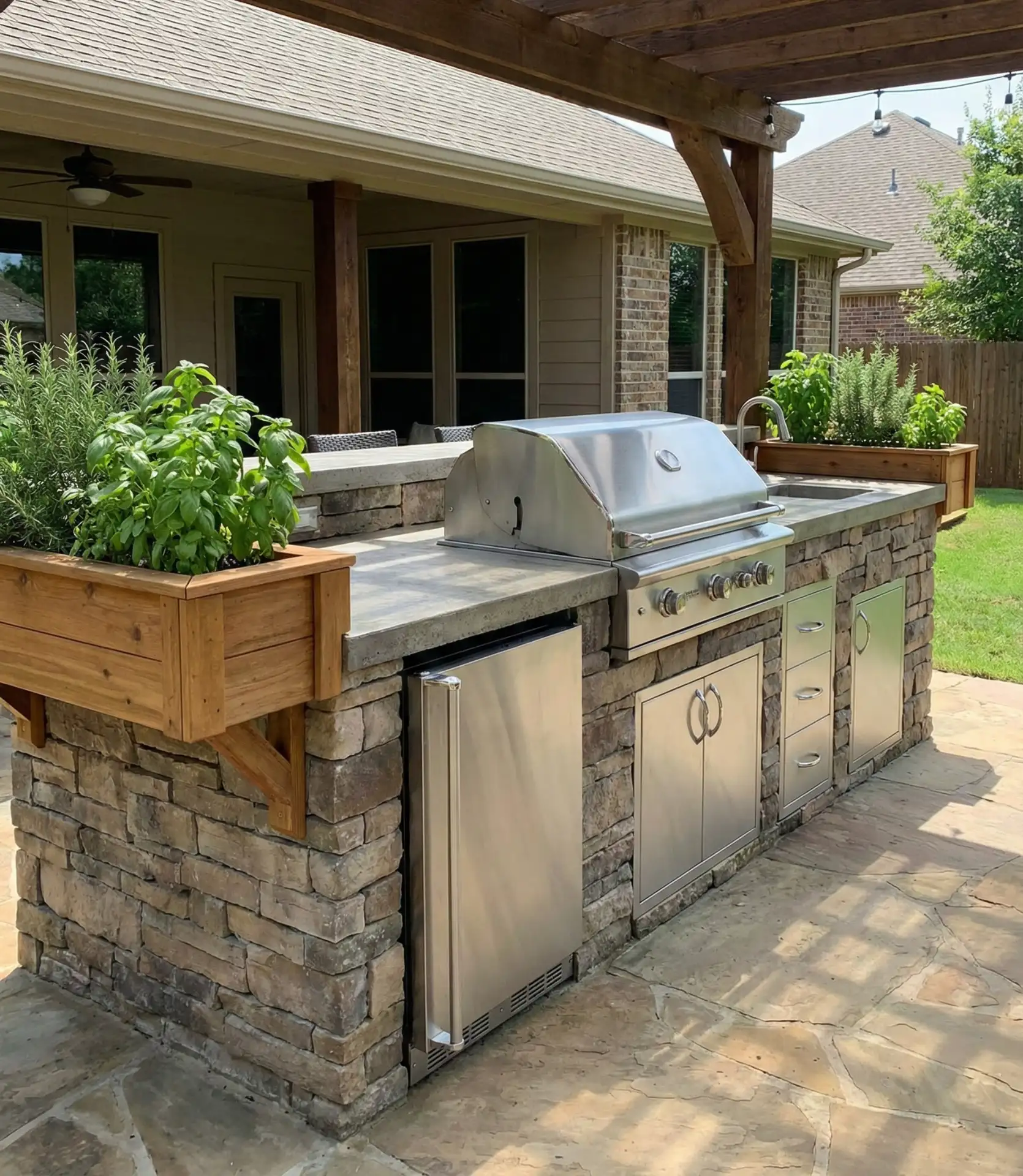
American lifestyle surveys show outdoor kitchens are among the top-requested landscape features, particularly in warm climates where cooking outdoors extends the usable season by months. Budget expectations should account for utilities—running gas, water, and electrical lines can cost $2,000-$5,000 alone before any cabinetry or appliances. Herb planters should be at least 12 inches deep for adequate root development, and positioning them slightly elevated keeps soil from splashing onto cooking surfaces during rain. Choose herbs that tolerate heat if the island sits in full sun; Mediterranean varieties like rosemary, sage, and oregano handle intense light better than cilantro or parsley.
18. Pollinator Meadow with Mown Paths
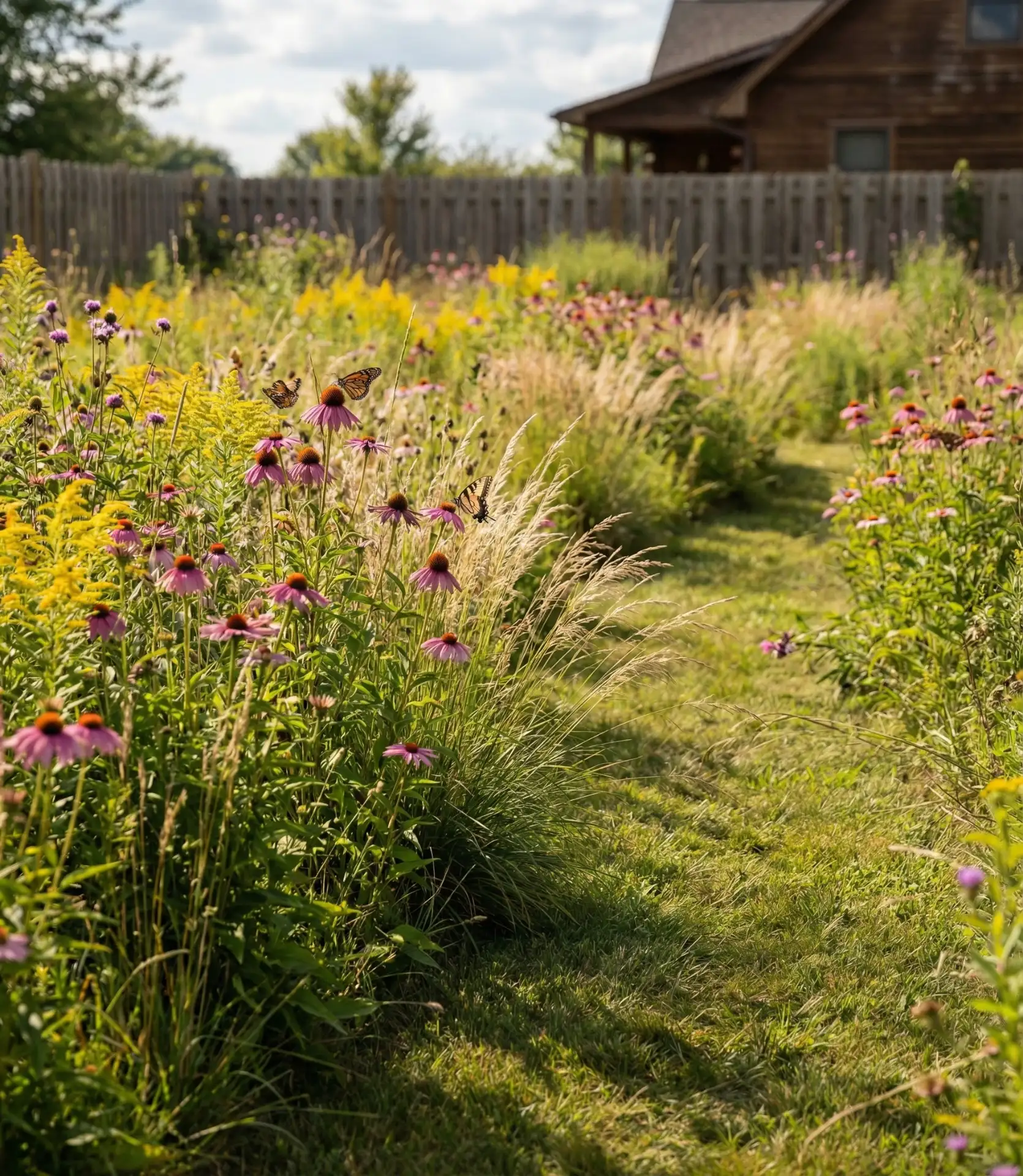
Converting part or all of your lawn to a wildflower meadow supports pollinators while dramatically reducing mowing and maintenance. Plant a mix of native perennials and annuals—coneflowers, bee balm, milkweed, and cosmos—that bloom sequentially from spring through fall. Mow winding paths through the meadow every week or two to maintain access and create visual structure; the contrast between wild plantings and neat paths gives the landscape an intentional, designed feel. This natural approach works on any sized lot and is particularly impactful on large properties where mowing entire acres weekly consumes time and fuel.
Real homeowner behavior shows initial resistance from neighbors who perceive meadows as “unkempt,” but this usually shifts once flowers bloom and the intentionality becomes clear. Mowing paths every 10-14 days signals care and maintenance, differentiating your meadow from simple neglect. Seed mixes cost $50-$200 depending on size and whether you choose regionally specific natives. The first year requires patience—many meadow flowers spend their initial season developing root systems and bloom fully in year two. Mow the entire meadow once in late fall after seeds have dropped to prevent woody growth and reset for spring germination.
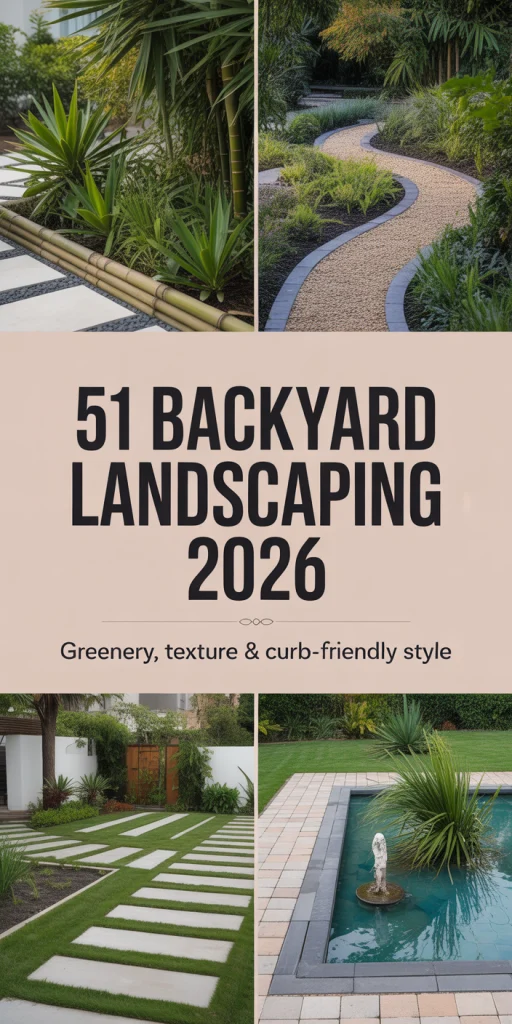
19. Multi-Level Deck with Integrated Planters
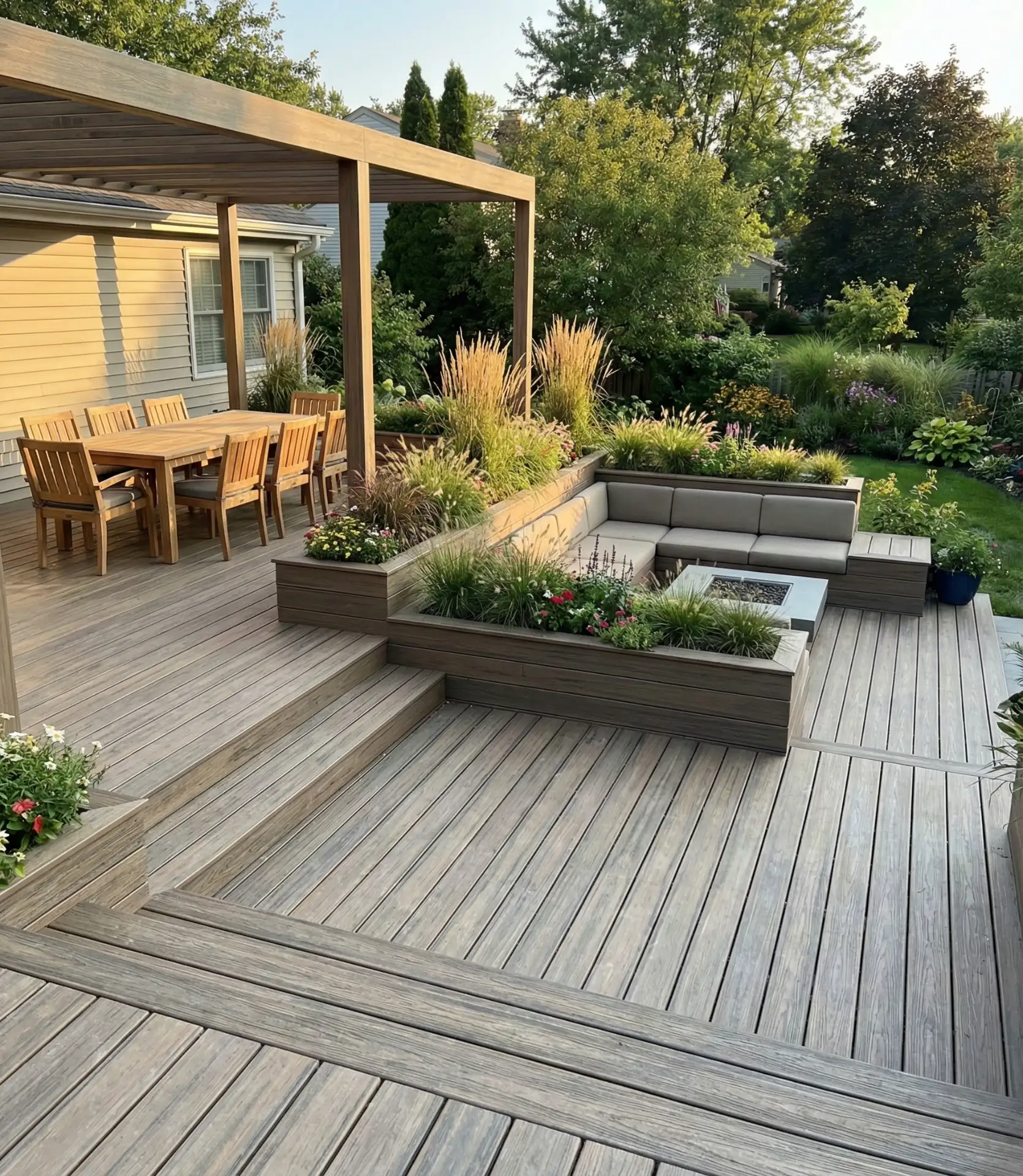
Building a deck in multiple levels creates natural zoning for dining, lounging, and cooking without walls or dividers. Each level drops 12-18 inches, defining spaces through elevation change alone—the upper deck might hold a dining table, the middle level seating clusters, and the lowest level a conversation area with a fire pit. Integrate planters directly into deck framing at level transitions, using them as visual anchors and softening the hardscape. This design strategy works exceptionally well on sloped yards where a single-level deck would require extensive foundation work. The multi-tier approach follows the natural grade, reducing construction costs while adding architectural dimension. 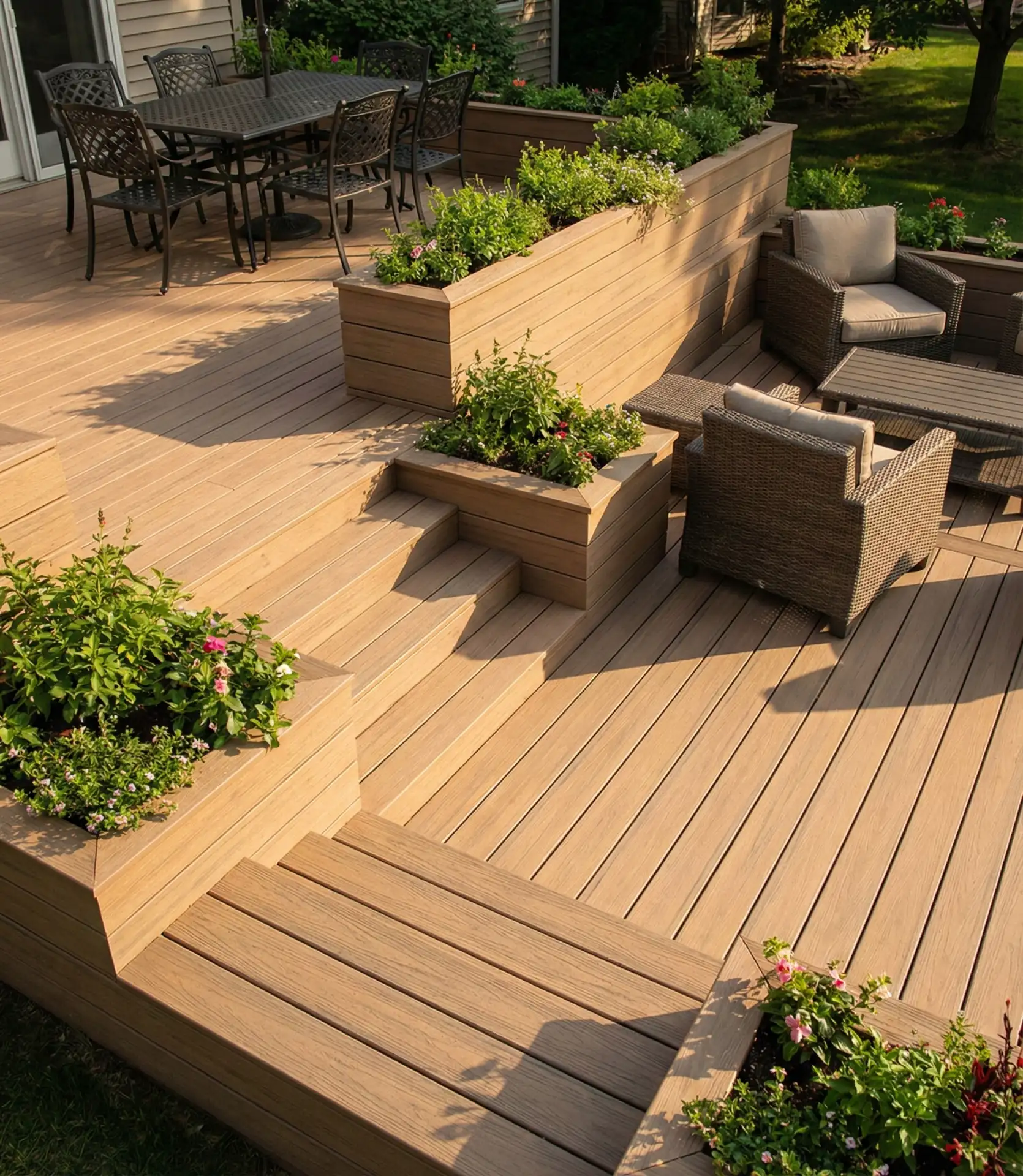
Where this design technique works best is on properties with 4-8 feet of elevation change across the deck footprint—enough slope to justify levels but not so steep that stairs become the dominant feature. Composite decking materials now rival wood aesthetically while eliminating yearly staining; expect to pay $8-$12 per square foot installed. Built-in planters should include drainage holes in the bottom and a waterproof liner to prevent soil moisture from rotting deck framing—a detail many DIY builders overlook. Plant selection should favor compact varieties that won’t outgrow the planter boxes within two seasons; ornamental grasses, small evergreen shrubs, and trailing petunias all work well.
20. Compact Vegetable Garden with Espalier Fruit Trees
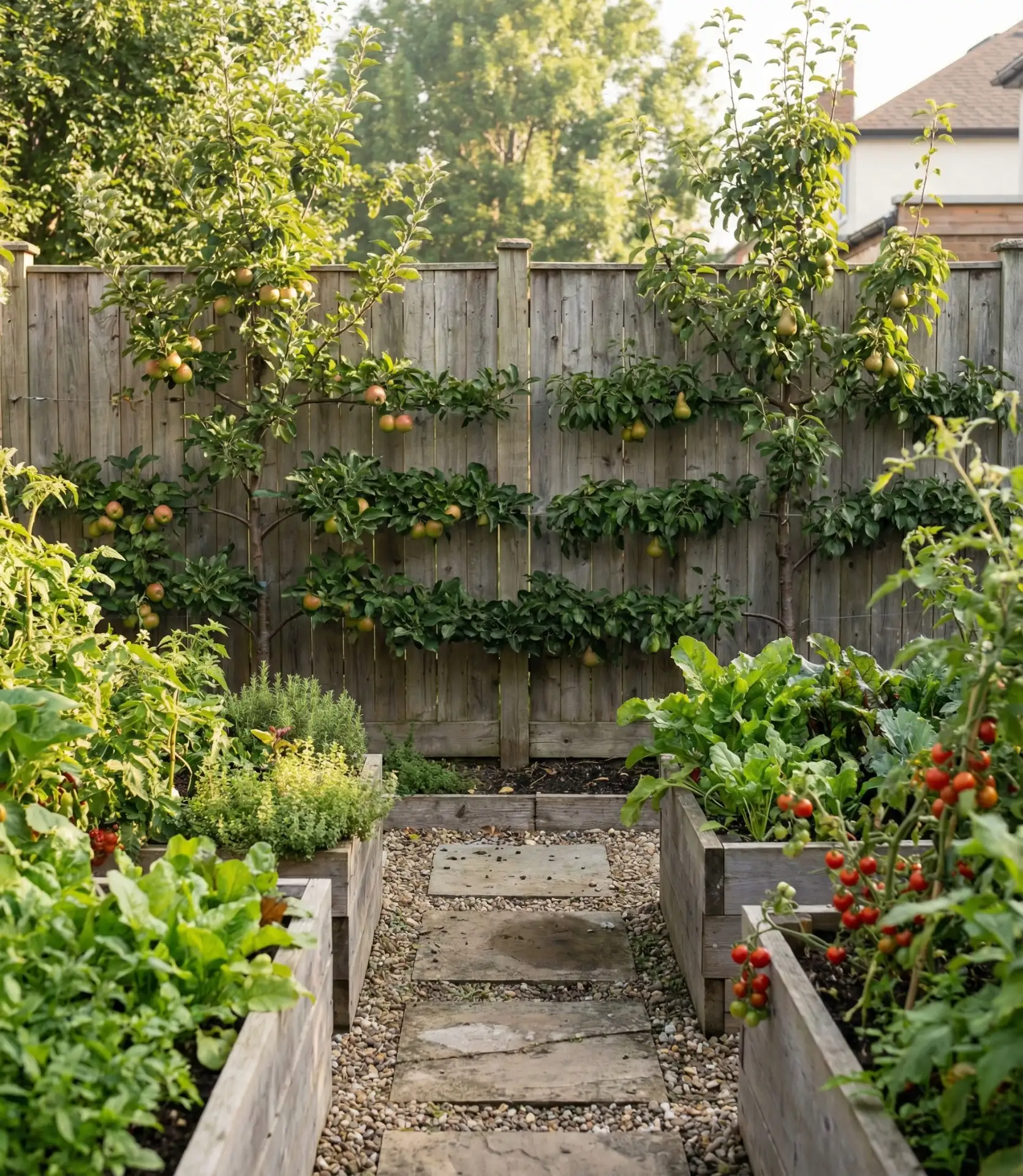
Espalier training—growing fruit trees flat against a wall or fence—maximizes production in minimal space, making it perfect for small yards. Apple, pear, or peach trees trained in horizontal tiers create a living fence that produces fruit while only taking up 12–18 inches of depth. Pair this method with raised vegetable beds in front, and you have a highly productive landscape in a footprint no larger than a parking space. Originating in European walled gardens, this technique seamlessly adapts to space-constrained American suburban lots. It’s both simple and elegant—functional food production that doubles as architectural art. 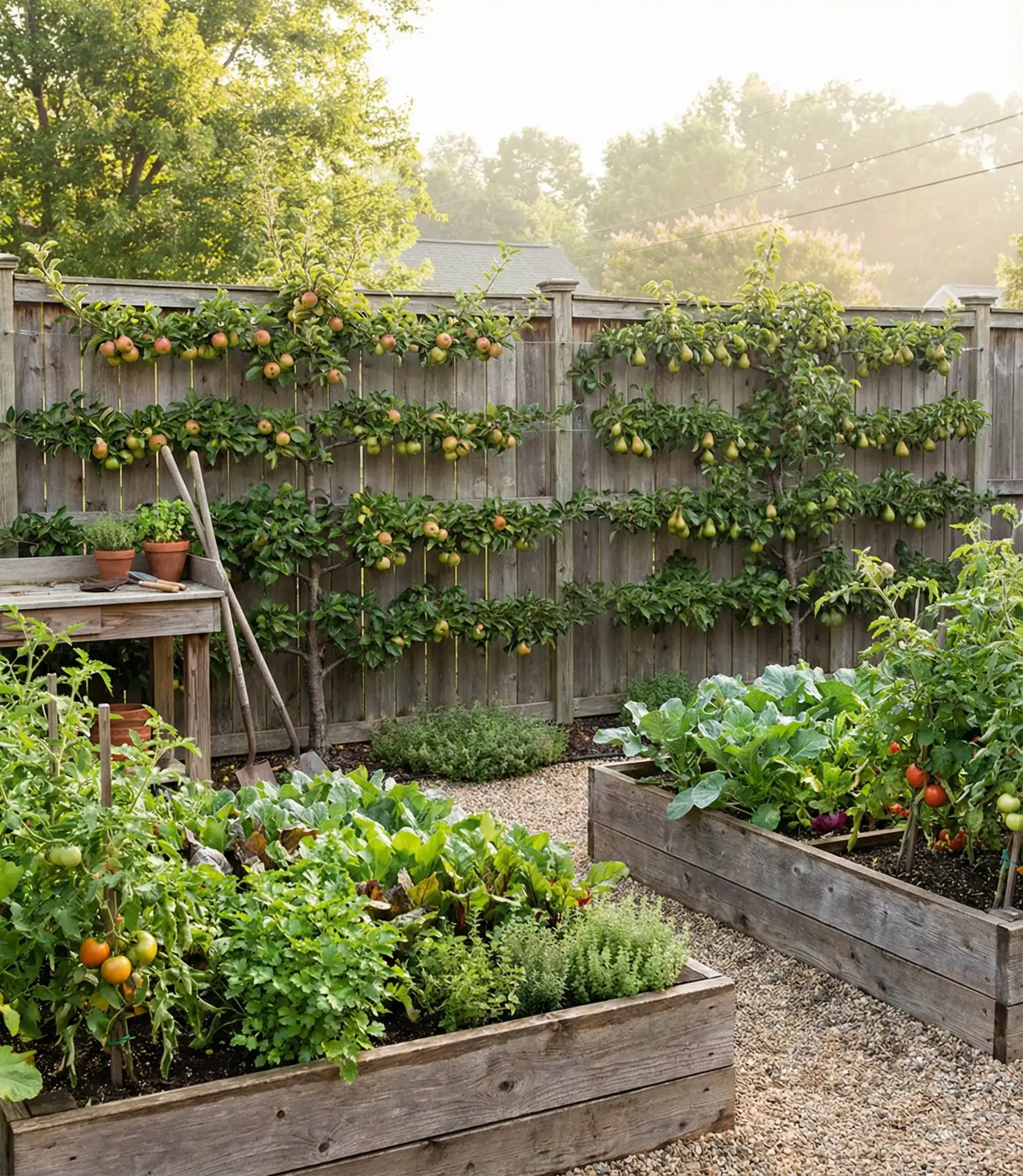
People often make the mistake of picking strong rootstocks that are hard to shape—it’s better to choose dwarf or semi-dwarf The initial training required weekly attention during the growing season for the first two years, tying new growth to horizontal wires spaced 12–15 inches apart. Once established, maintenance drops to pruning twice yearly. This method works in all climates but requires a south-facing wall or fence for maximum sun exposure. Yield per tree is lower than freestanding specimens, but yield per square foot is dramatically higher—a 6-foot espalier produces 20-30 pounds of fruit annually while occupying just 12 square feet of ground space.
21. Desert Wash Dry Creek Bed with Native Boulders
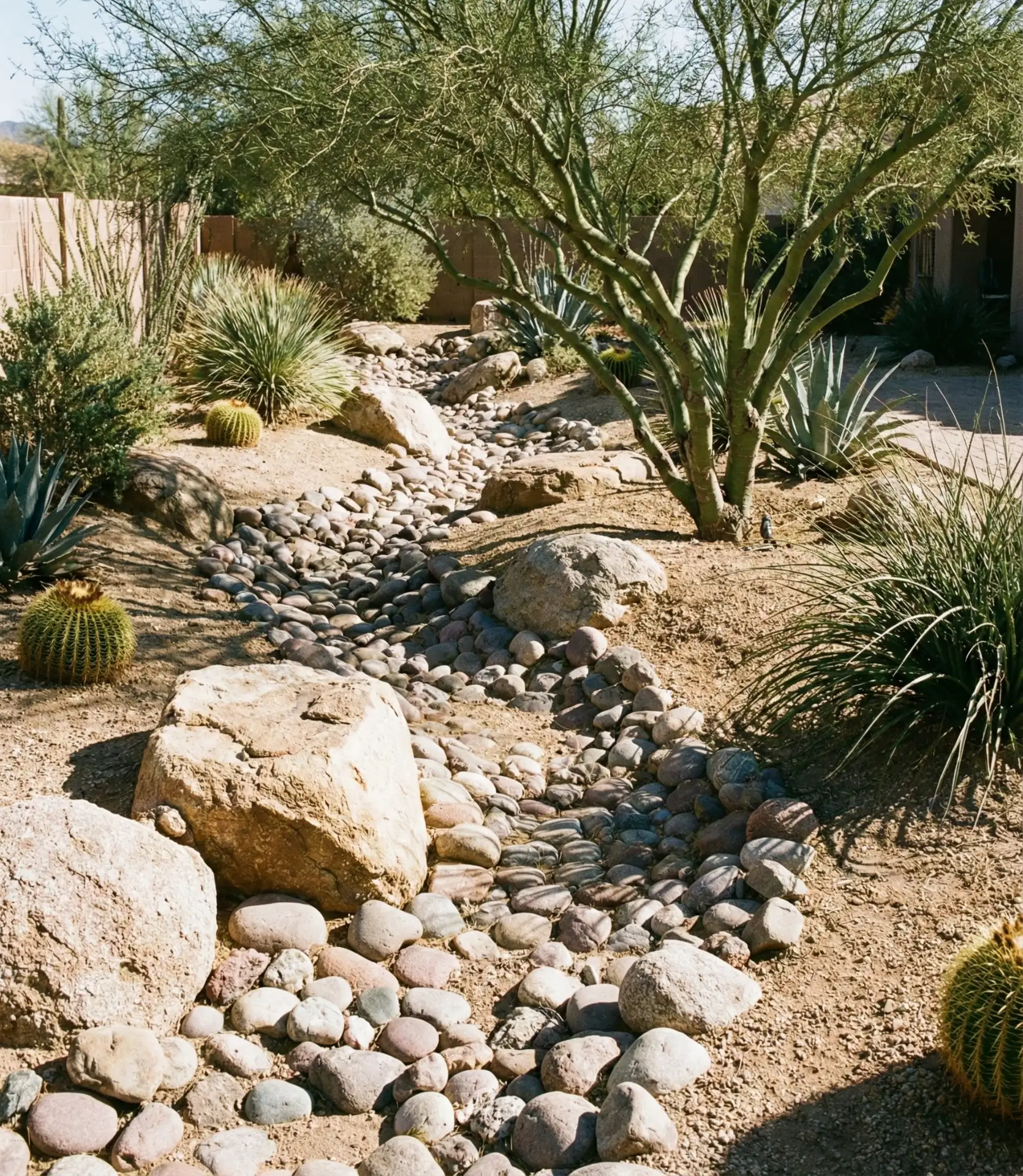
A dry creek bed mimics natural desert washes, channeling rainwater while adding dramatic texture to flat yards. This Arizona-inspired design idea uses river rocks of varying sizes—from fist-sized cobbles to boulders weighing hundreds of pounds—arranged in a meandering path that suggests water flow even when dry. Plant desert-adapted natives like palo verde, brittlebush, and red yucca along the banks to reinforce the natural aesthetic. The creek bed functions as both art and infrastructure, directing water away from foundations during monsoons while requiring zero maintenance. It’s a signature low-maintenance solution for arid climates where traditional drainage systems look utilitarian and out of place. 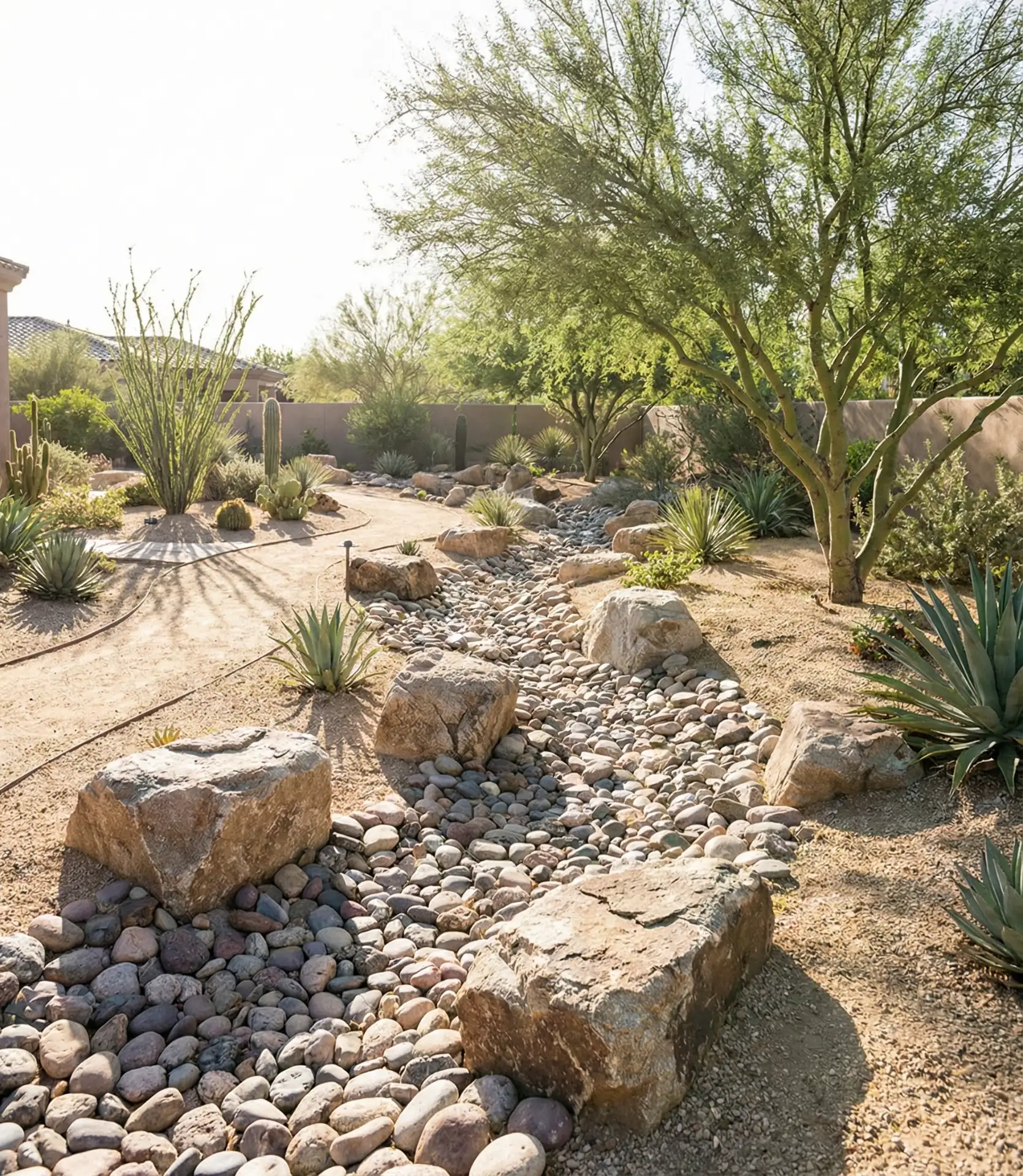
When you can source boulders locally, installation on a budget is always possible. Many landscape supply yards have “native stone,” which is boulders harvested from the surrounding desert, for a cost of $80–$150 a ton, a much cheaper option than imported river rock. The creek bed should enhance the natural drainage pattern. Observe the site during a rain and note where the water flows, then enhance that path instead of trying to change the natural drainage pattern. Dig the channel to be 8-12 inches deep and line it with landscape fabric to prevent weeds before adding rocks. In drought-stricken areas like California, these features have become popular enough that some municipalities will provide a rebate for the installation of dry (xeriscaping) creek beds.
22. Shade Sail Canopy Over Gravel Lounge Area
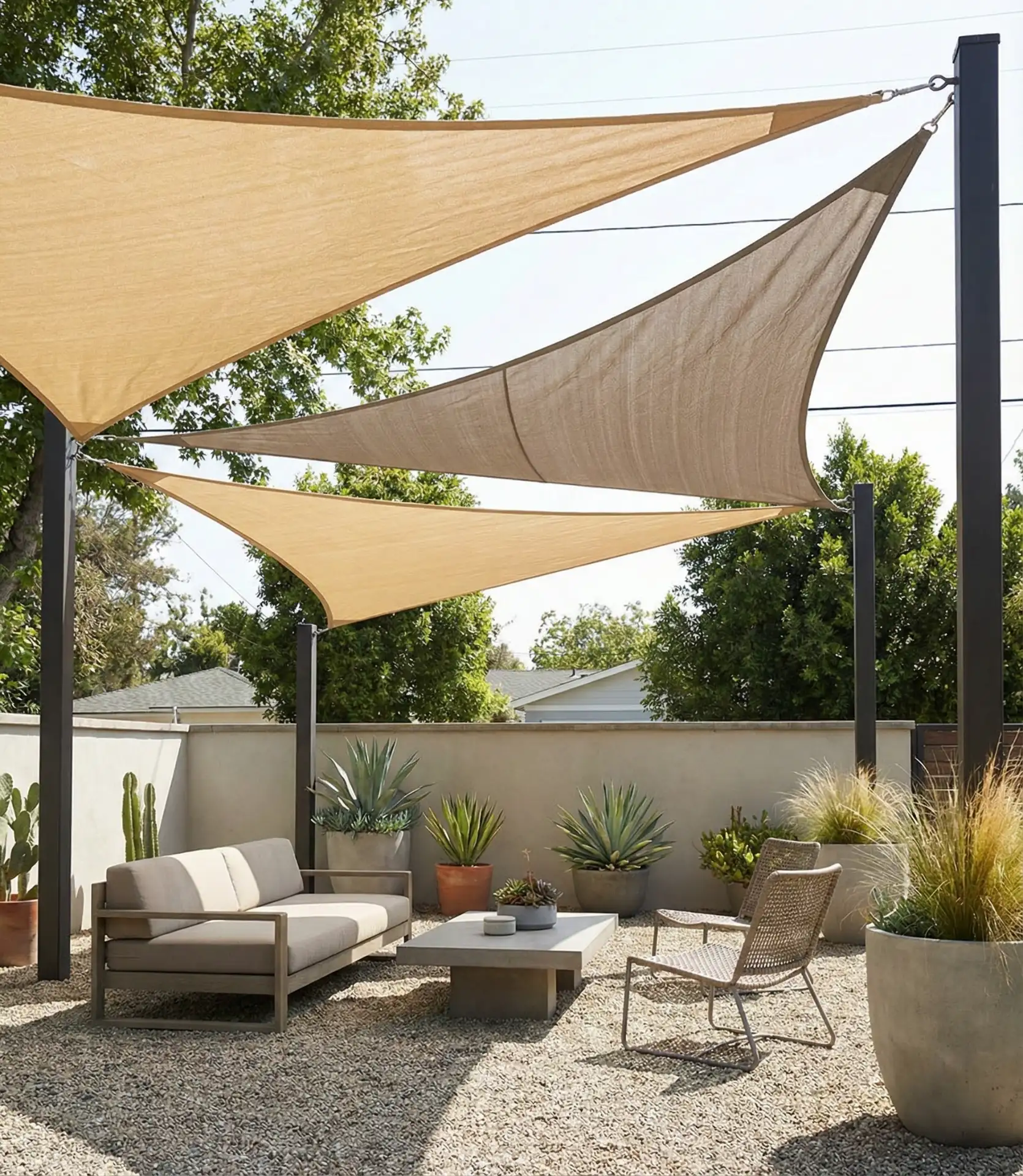
Tensioned between posts, rectangular or triangular shade sails provide overhead coverage and a modern sculptural look that complements contemporary architecture.
Install them 10 to 12 feet above a gravel deck containing weatherproof lounge chairs and small side tables—the material blocks 90-95% of UV rays, yet allows air to flow. This easy shade solution is inexpensive compared to permanent structures, plus it can be stored seasonally in areas of heavy snow. Select neutral colors that don’t fade too quickly, like sand, charcoal, and white, and set the sails at angles to funnel rain toward planted areas instead of forming puddles in the seating area. 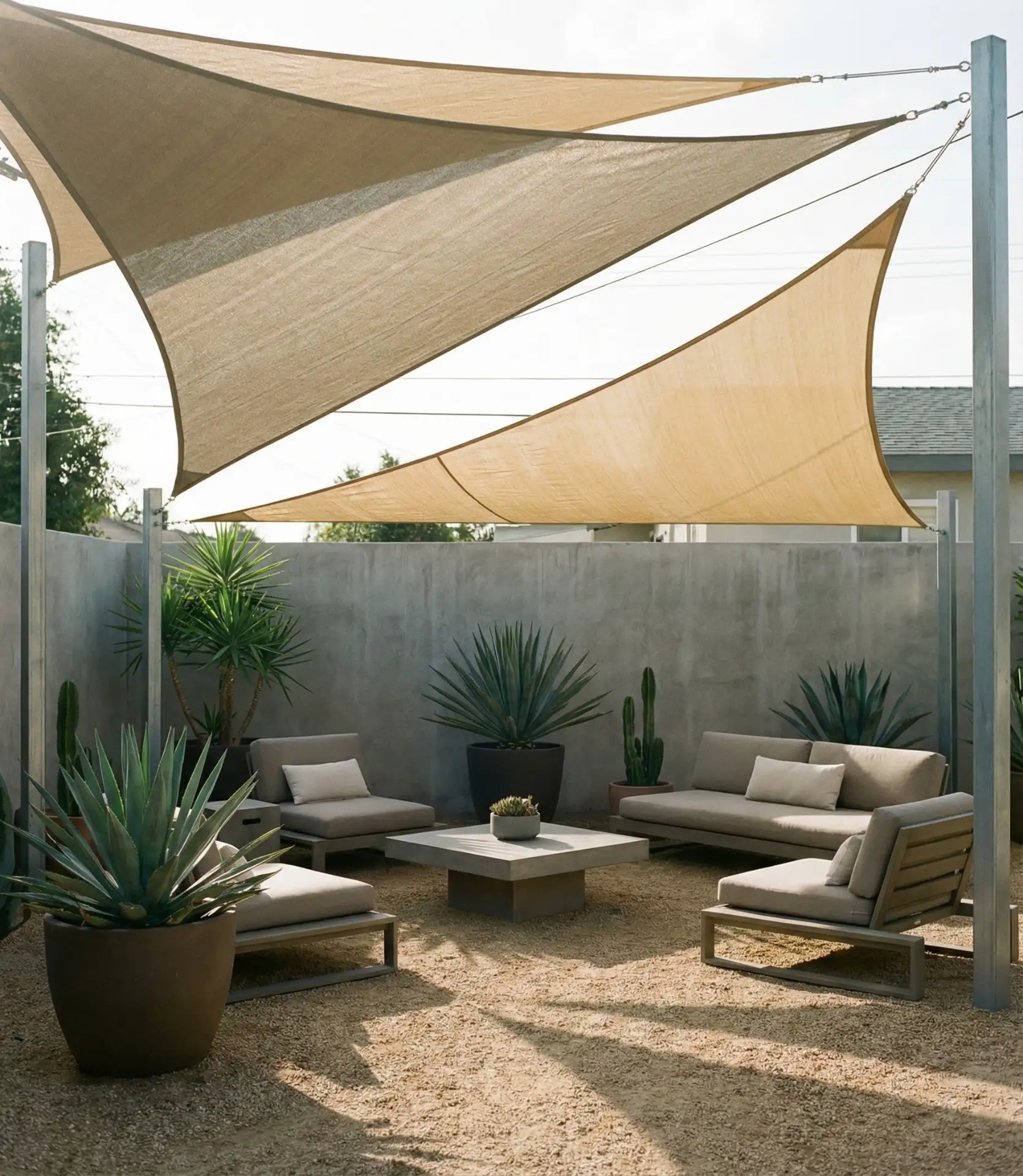
A landscape architect in Phoenix noted that shade sails have become the go-to solution for clients who need sun protection quickly without permanent construction permits—they’re classified as temporary structures in most jurisdictions. Quality UV-resistant fabric sails run $200-$600 depending on size, while posts and hardware add another $400-$800 for a complete installation. The key is proper tensioning: sails must be pulled taut at all corners or they’ll sag and collect water. Mount posts at slightly different heights to create an intentional slope, and check tension quarterly as fabric stretches over time. This works best in regions with consistent wind direction so you can orient sails to block prevailing breezes.
23. Raised Stone Patio with Perennial Border
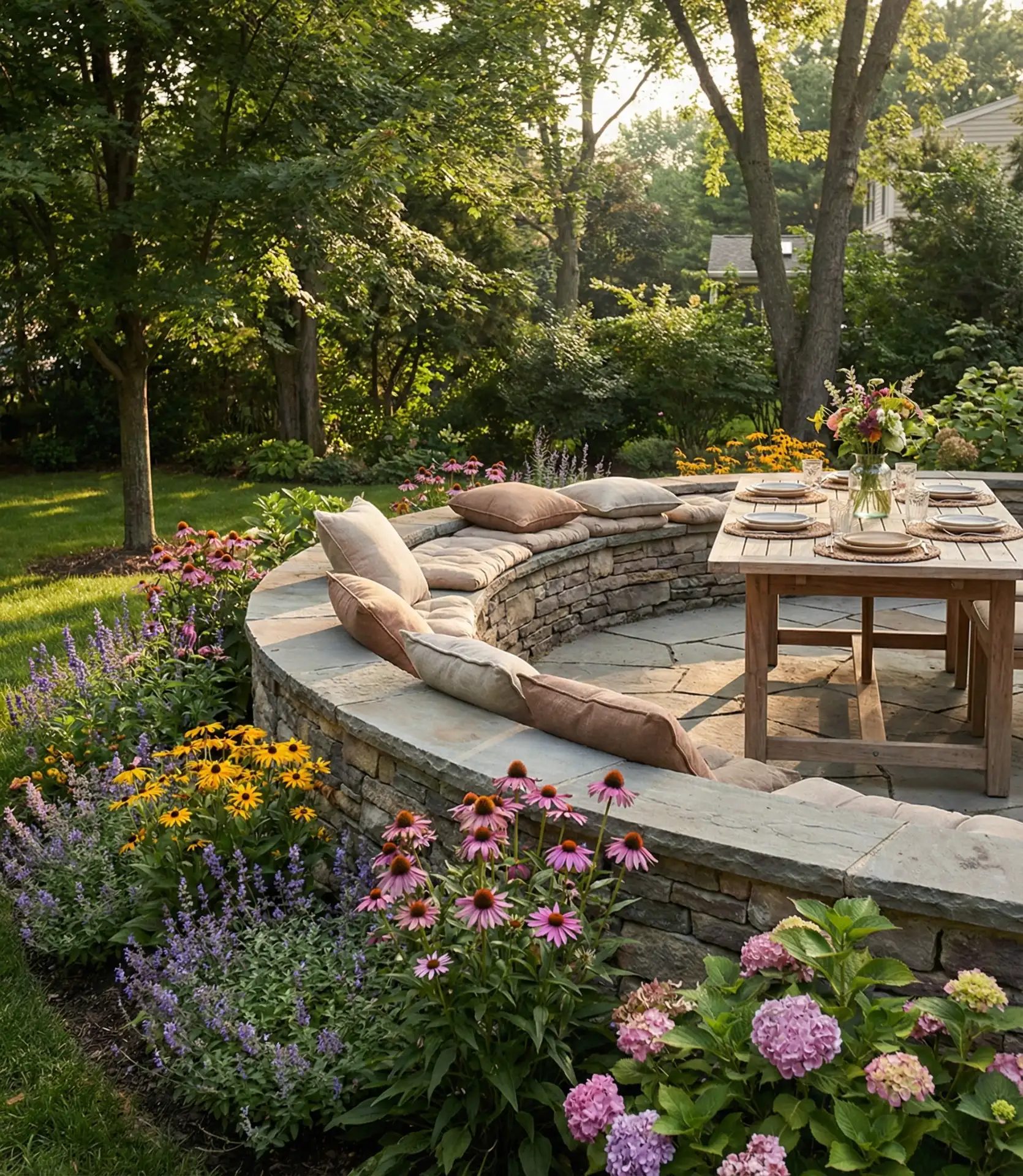
Elevating a patio 12–18 inches above grade creates a defined outdoor area with natural seating edges along the retaining wall. Use flagstone or large-format pavers for the surface, and build a low stone wall around the perimeter that doubles as informal seating when topped with cushions. Plant a deep perennial border around the base using easy-care varieties like daylilies, salvia, and Russian sage that provide seasonal color without constant deadheading. This layout strategy works particularly well on flat lots where you want to create visual interest through elevation change, and it improves drainage by lifting the patio above soggy soil. 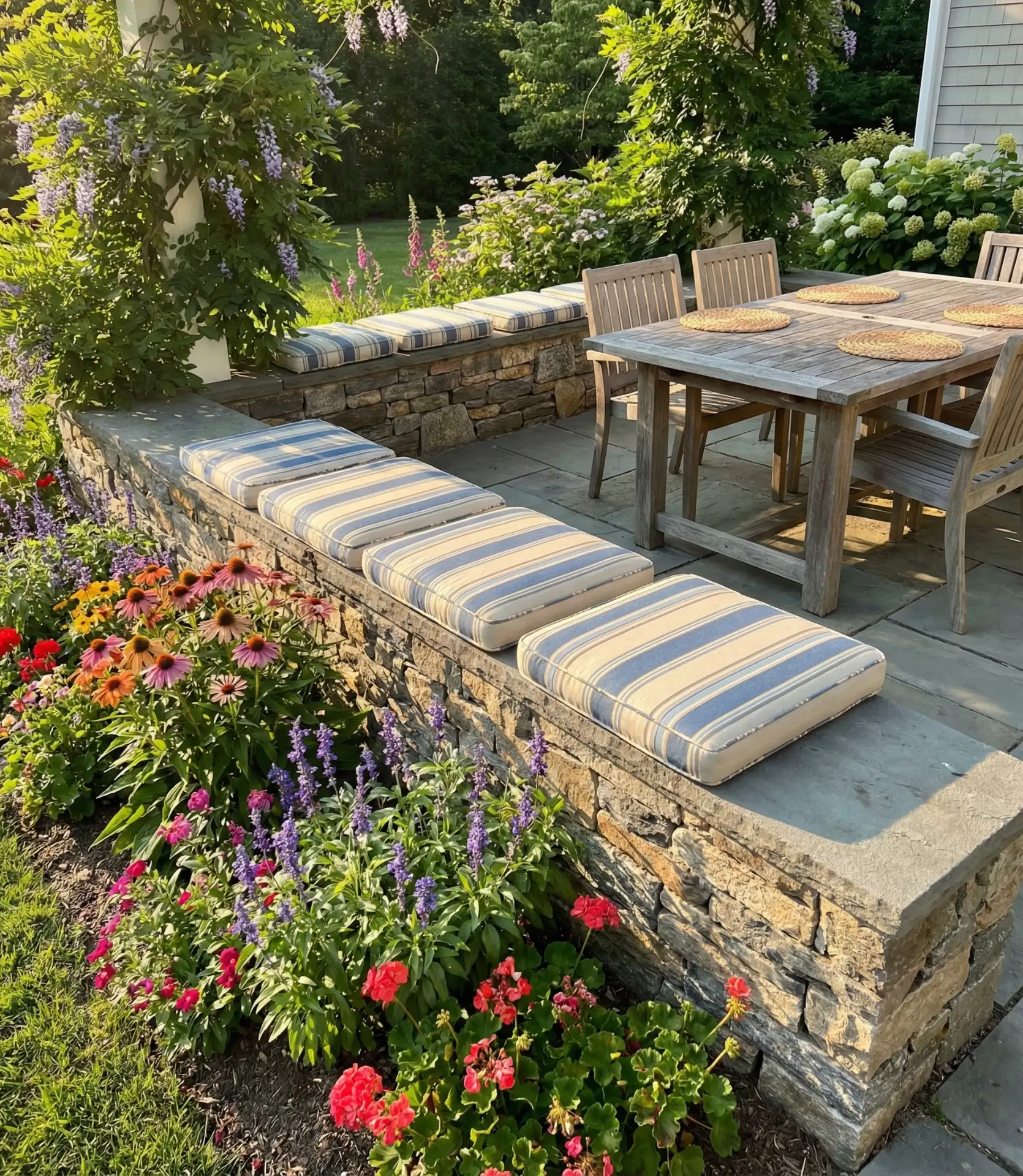
Where this technique works best is in yards with poor drainage or heavy clay soil where ground-level patios would require extensive excavation and gravel base preparation. By raising the patio, you minimize site prep while creating better airflow that helps furniture dry faster after rain. Common mistakes include building walls without adequate foundation—the first course of stone should be set partially below grade on compacted gravel to prevent shifting. Perennial borders should be planted at least 18 inches from the wall base to allow mature plants room to spread without crowding the patio edge. For dog-friendly yards, the raised design naturally keeps pets off the patio unless you build in dedicated steps for access.
24. Courtyard-Style Enclosed Garden with Fountain
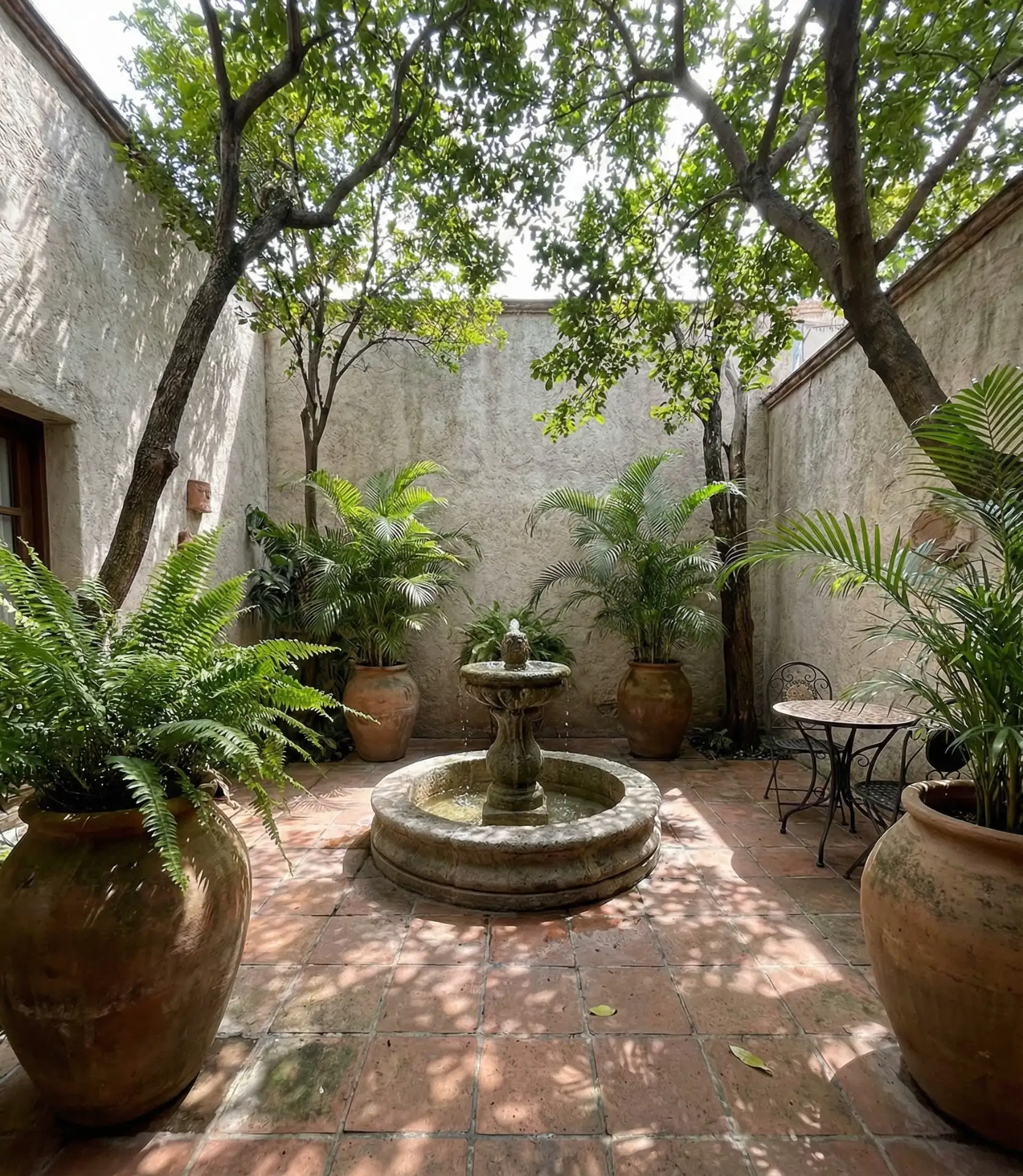
Creating an enclosed courtyard using walls, fencing, or tall hedges transforms part of your yard into a private sanctuary with Mediterranean or Spanish colonial character. Center the space around a simple fountain—even a small bubbler or wall-mounted spout provides sound and movement without complicated plumbing. Pave the floor with terracotta tiles, gravel, or brick in a geometric pattern, and fill large ceramic pots with tropical plants like banana, elephant ear, or bird of paradise for lush texture. This contemporary interpretation of traditional courtyard design creates intimate outdoor rooms perfect for morning coffee or evening reading, shielded from neighbors and street noise. 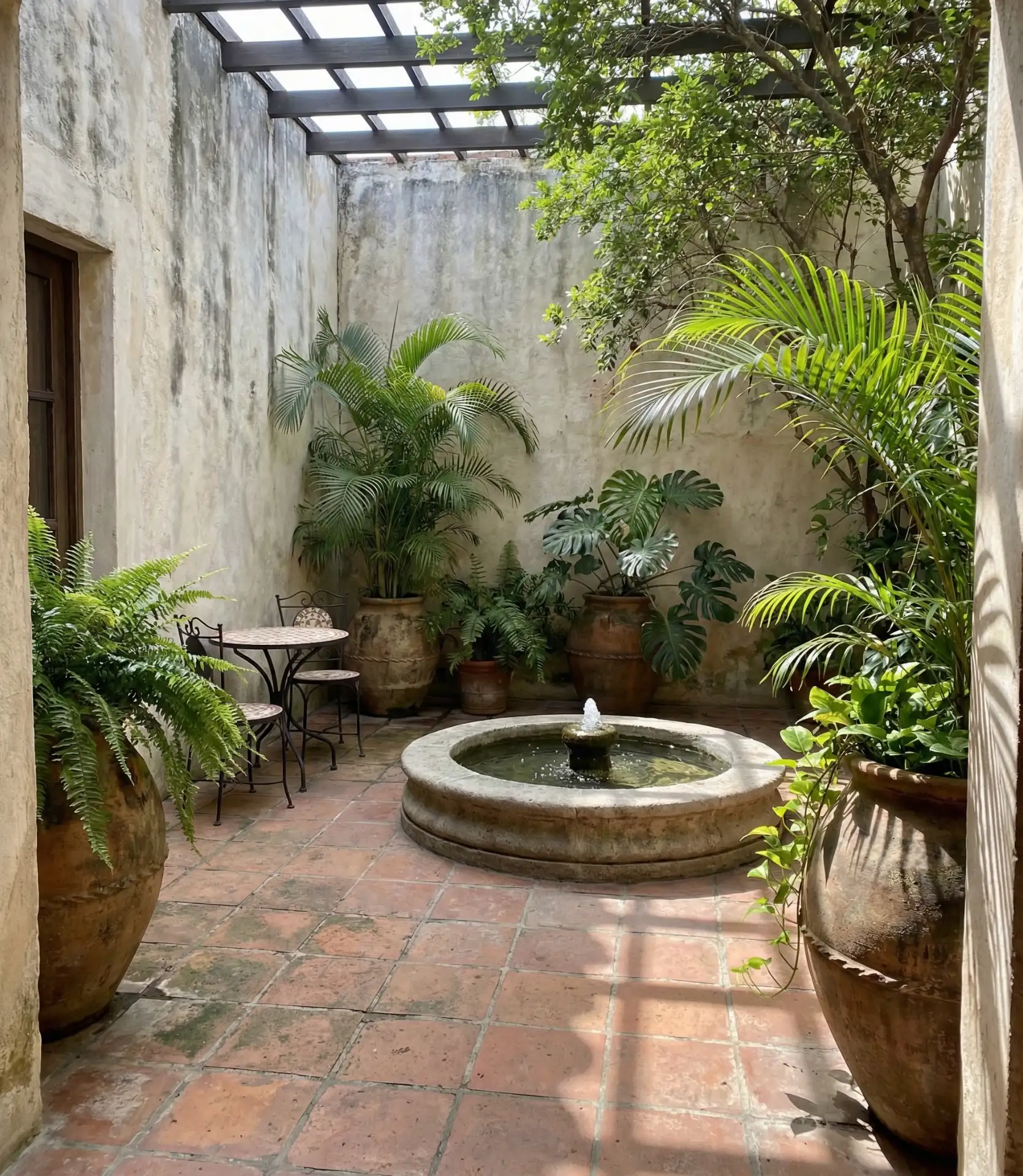
Expert-style commentary from Mediterranean garden designers emphasizes that successful courtyards balance enclosure with sky—walls should be 6-8 feet high to provide privacy without creating a claustrophobic feel. Water features can be as simple as a recirculating urn fountain ($300-$800) that requires only an outdoor electrical outlet; no permanent plumbing is needed. In climates with freezing winters, choose frost-proof ceramic pots and bring tender tropicals indoors, or substitute with cold-hardy plants like Japanese maple, boxwood, and hellebores. The enclosed nature creates a microclimate several degrees warmer than the surrounding yard, extending the growing season and allowing experimentation with marginally hardy plants.
25. Sports Court with Landscaped Perimeter Buffer
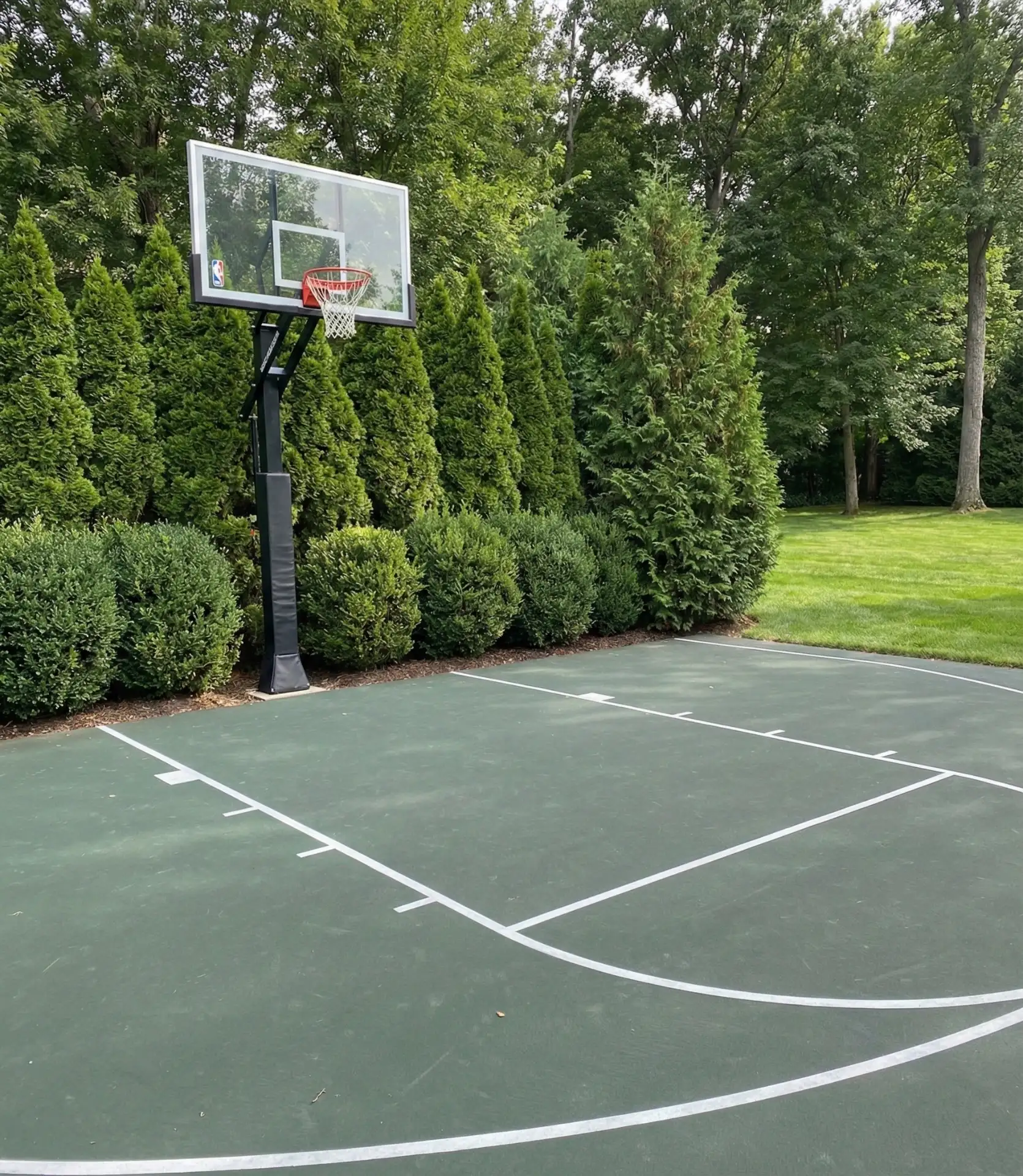
A backyard sports court—basketball half-court, pickleball, or multi-use—becomes less visually dominant when you soften its edges with dense plantings that screen the hard surface. Use fast-growing shrubs like photinia, viburnum, or privet in a layered border 3-4 feet deep around the court perimeter. This layout plan balances active recreation with aesthetics, preventing the court from overtaking the entire yard visually. The plantings also buffer noise and absorb errant balls, protecting windows and neighboring properties. It’s a dog-proof setup too—the defined court keeps ball games contained, while planted borders deter pets from running onto the playing surface. 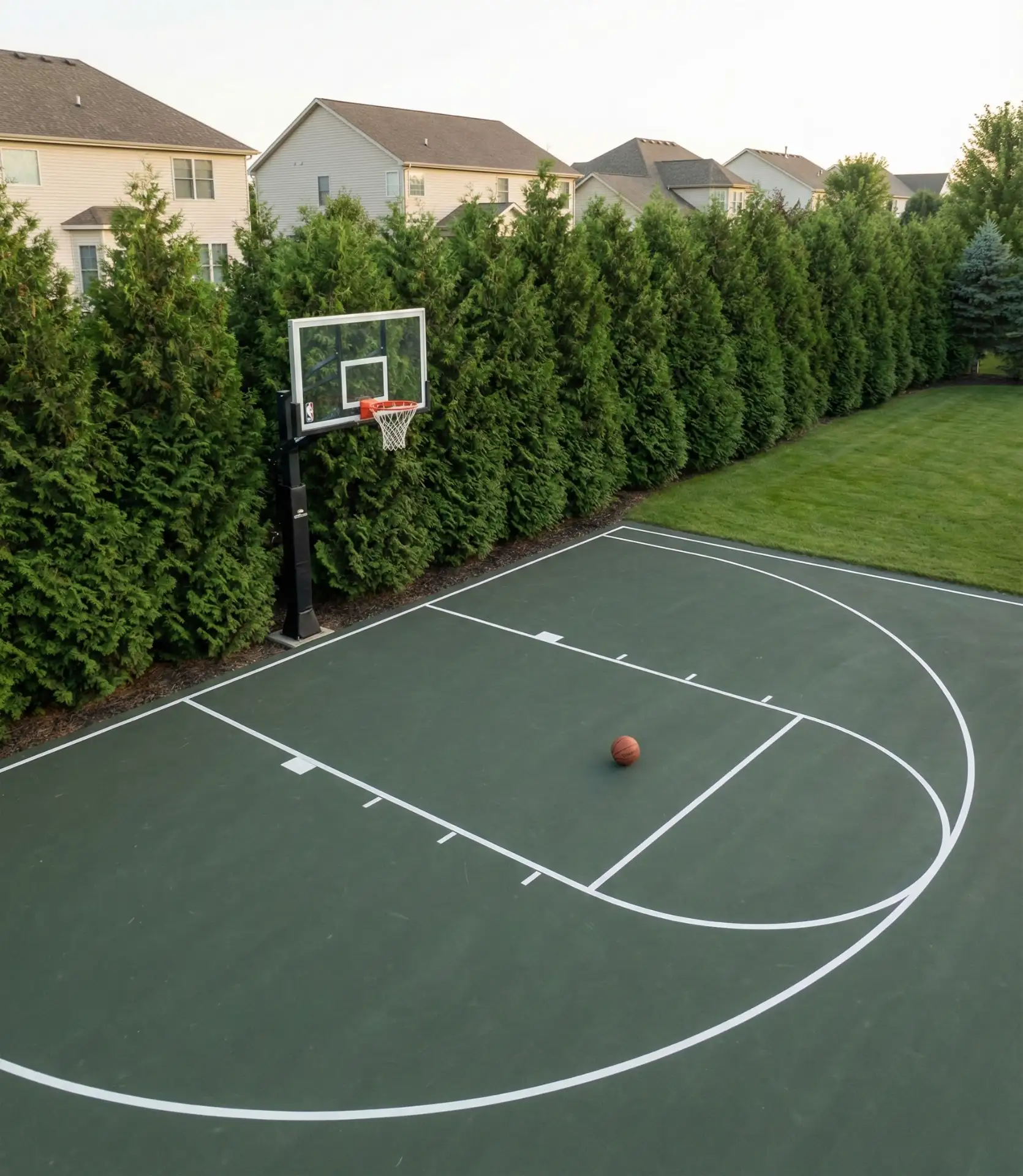
Practical insight shows that families who install sports courts without landscape buffering often regret the visual impact—the large expanse of colored concrete or asphalt dominates sight lines from every window. Evergreen shrubs provide year-round screening and mature within 3–5 years to completely soften the court edges. Court surfaces cost $4-$8 per square foot for modular tiles or $8-$15 for poured acrylic, with a half basketball court requiring roughly 1,200 square feet. Position courts at least 10 feet from property lines to accommodate the buffer planting and maintain excellent neighbor relations. The court surface should slope slightly (1-2%) toward drainage areas to prevent puddle formation that makes the surface slippery.
26. Moon Garden with White Flowering Plants and Path Lighting
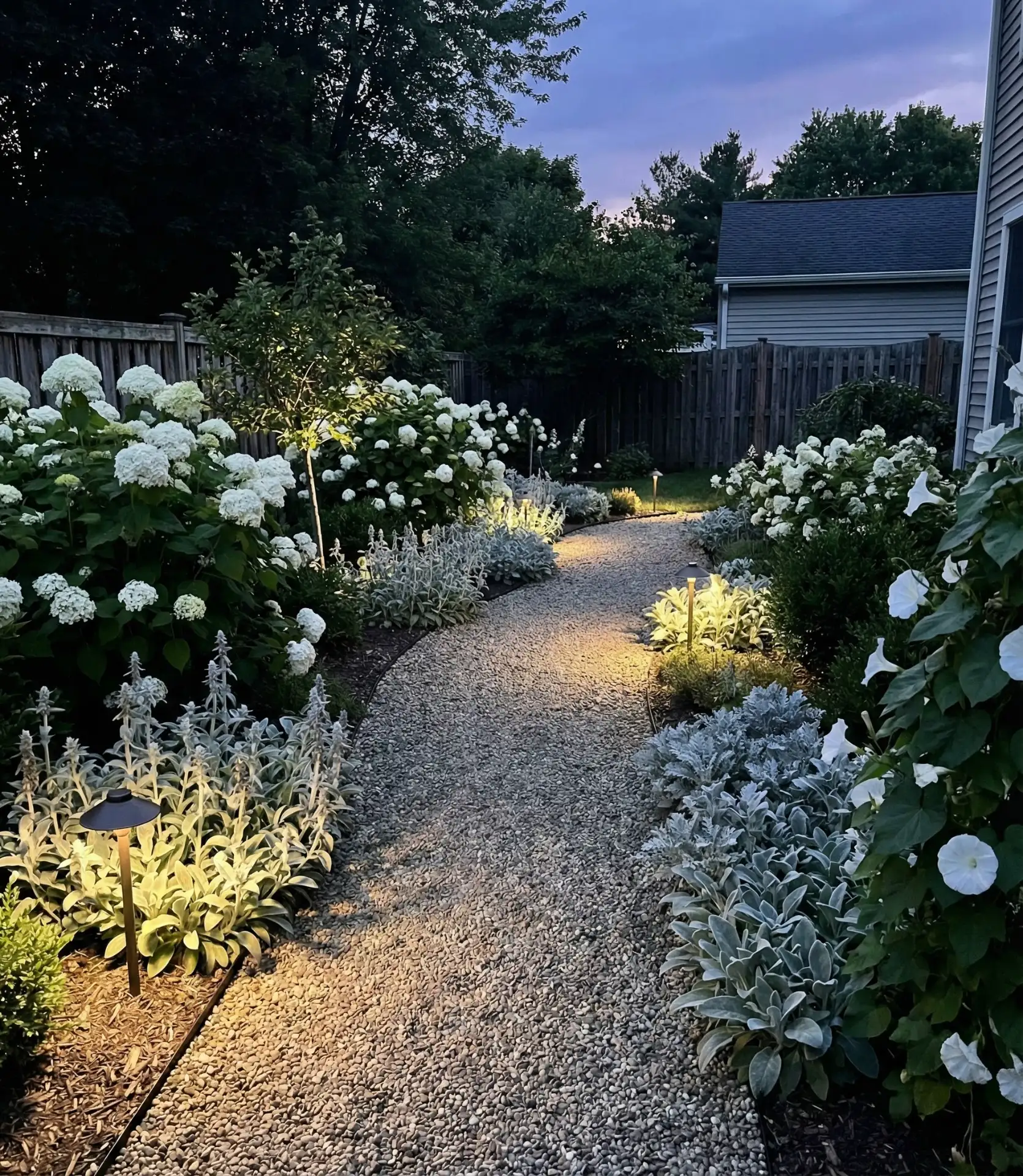
A moon garden planted exclusively with white and silver-foliaged plants creates a luminous space designed for evening enjoyment. Choose white-flowering varieties like gardenias, white roses, moonflower vine, and nicotiana that often release fragrance at night, attracting moths and creating a sensory experience beyond the visual. Add silver-leaved plants like dusty miller, artemisia, and lamb’s ear that seem to glow in low light. Install subtle fire pit ideas or path lighting to enhance the effect without overwhelming the natural moonlight. This natural concept has roots in Victorian garden design but feels entirely contemporary when executed with clean, modern hardscape. 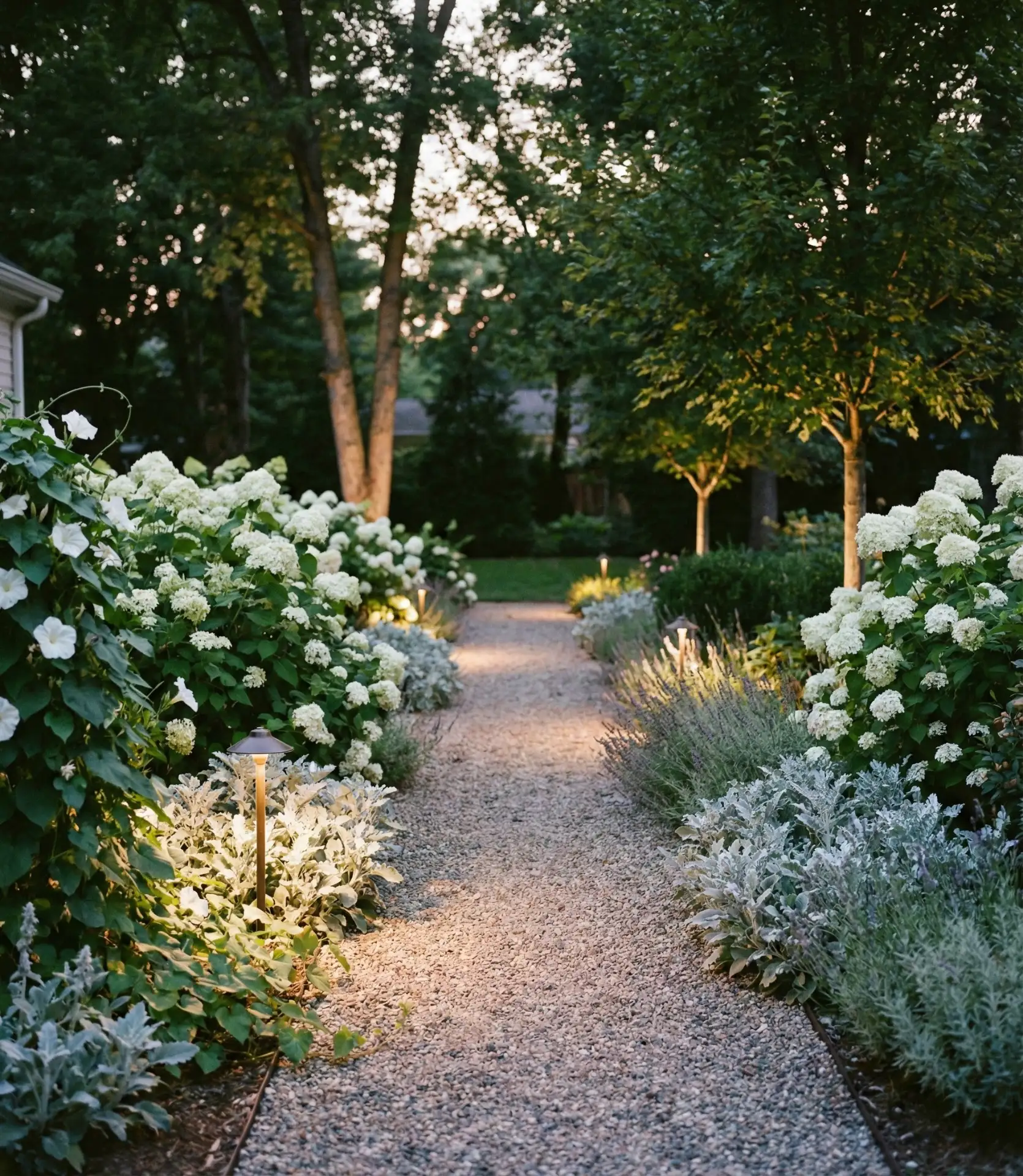
Real homeowner behavior reveals that moon gardens become the most-used spaces during summer months when indoor temperatures drive families outside after dark. The white color palette reflects available light—both moon and ambient sources—making the garden visible without artificial illumination, though low-voltage LED path lights add safety and extend usability on cloudy nights. Many white-flowering plants are naturally fragrant (jasmine, gardenia, sweet alyssum), creating a multisensory experience. Avoid planting too densely; moon gardens rely on negative space and shadow play as much as plant material. The idea works in any climate, but choose regionally appropriate white-flowering varieties—gardenias for the South, white rugosa roses for cold climates, and desert marigolds for arid regions.
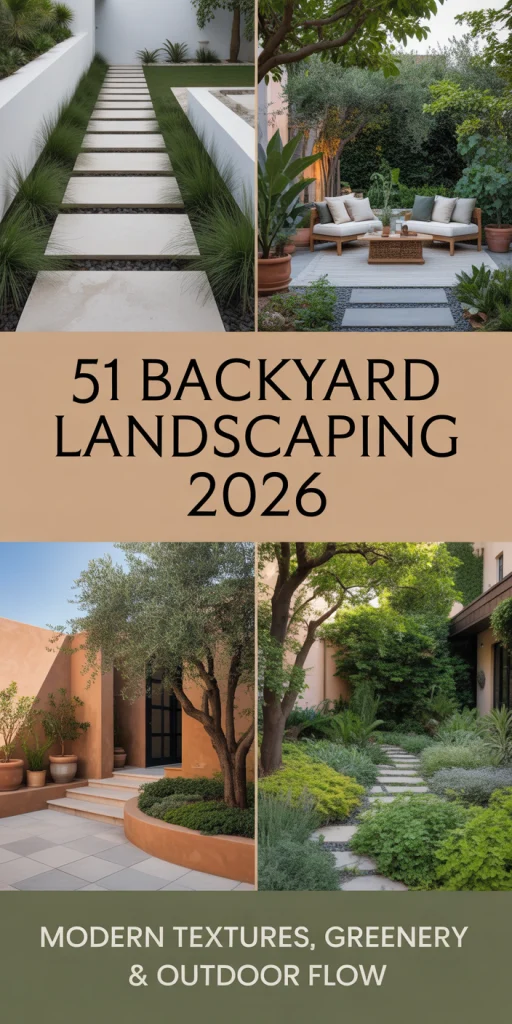
Backyard landscaping in 2026 reflects a shift toward personalized outdoor spaces that blend functionality, sustainability, and regional character. From the water-wise elegance of desert dry creek beds to the productive beauty of espalier fruit trees, these ideas demonstrate that successful landscapes emerge from understanding your specific site conditions, climate, and lifestyle needs. Whether you’re working with challenging slopes, limited square footage, or simply dreaming of a more usable outdoor room, the right design approach transforms obstacles into opportunities. The most successful projects aren’t those that follow trends blindly—they’re the ones that honestly assess how you’ll actually use the space, what maintenance you’re willing to commit to, and which plants will thrive in your particular corner of the country. As you plan your backyard transformation, consider starting with one focused area rather than attempting a complete overhaul. A single well-executed zone—a fire pit area, a productive raised bed garden, or a shaded seating nook—often inspires the next phase organically. What’s your backyard’s greatest challenge, and which of these ideas sparked your imagination? Share your plans, questions, or completed projects in the comments below.