
Outdoor entertaining areas have become the new focus of American homes. Backyards, patios, and balconies have all become spaces for gatherings all year round. As we enter 2026, homeowners are looking on Pinterest for ideas on how to merge comfort and style, regardless of having a large backyard or a small urban balcony. The options are endless, for example, covered pergolas that protect from some weather changes or rustic drive-in fire pits that keep the night going. This guide provides ideas that demonstrate amazing outdoor entertaining can be achieved without high costs or the need for a professional landscaper; all it requires is some planning and creativity.
1. Covered Pergola Dining Haven
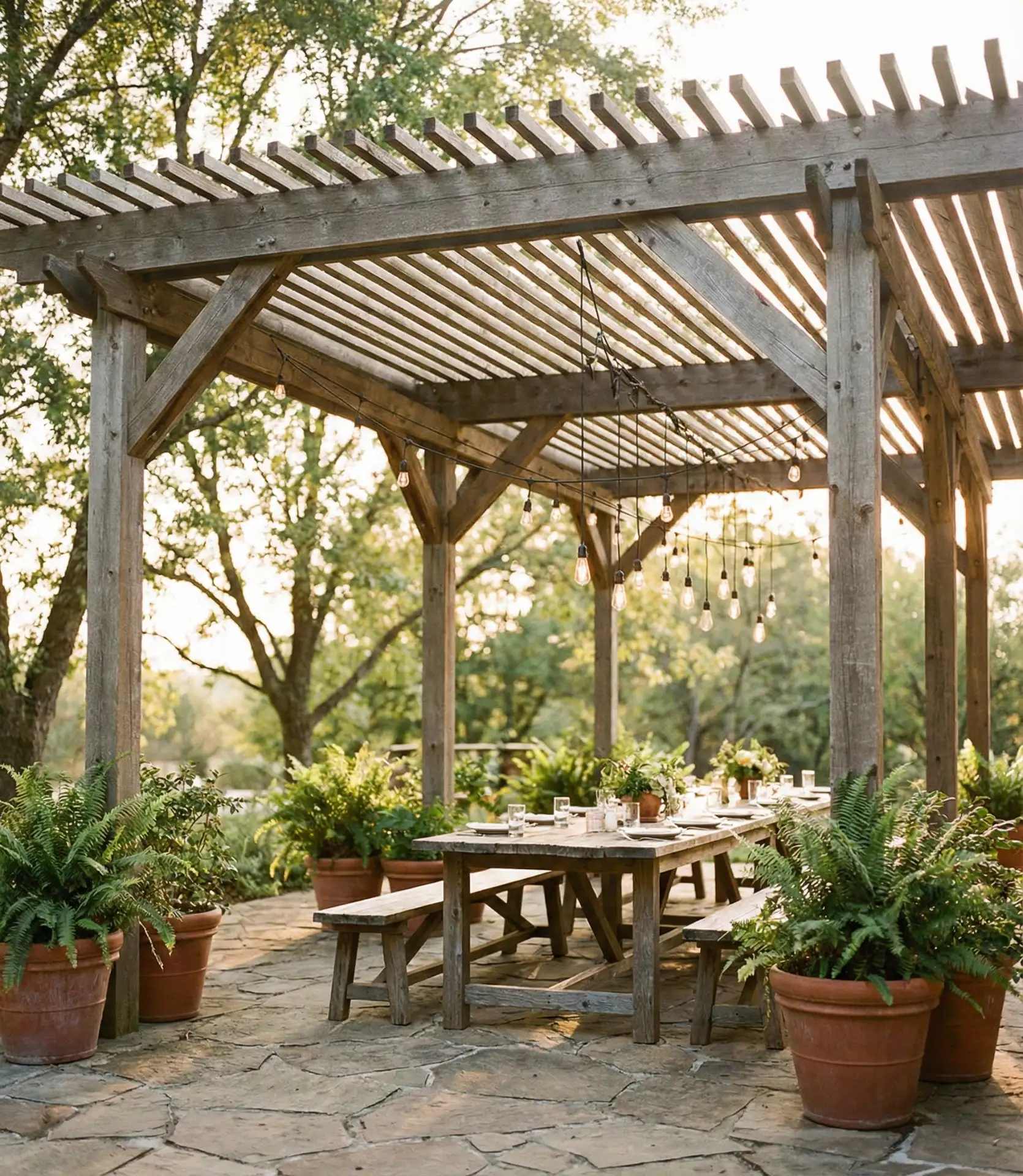
A covered pergola establishes an ideal structure for outdoor entertaining spaces, regardless of the weather conditions. This setup transforms a basic patio into a defined dining zone where string lights drape overhead and climbing vines add natural texture. Australian homeowners have long embraced this style, using timber pergolas to create dappled shade while maintaining an airy feel. The structure becomes an anchor point for hanging planters, outdoor curtains, and even a ceiling fan for those humid summer evenings. 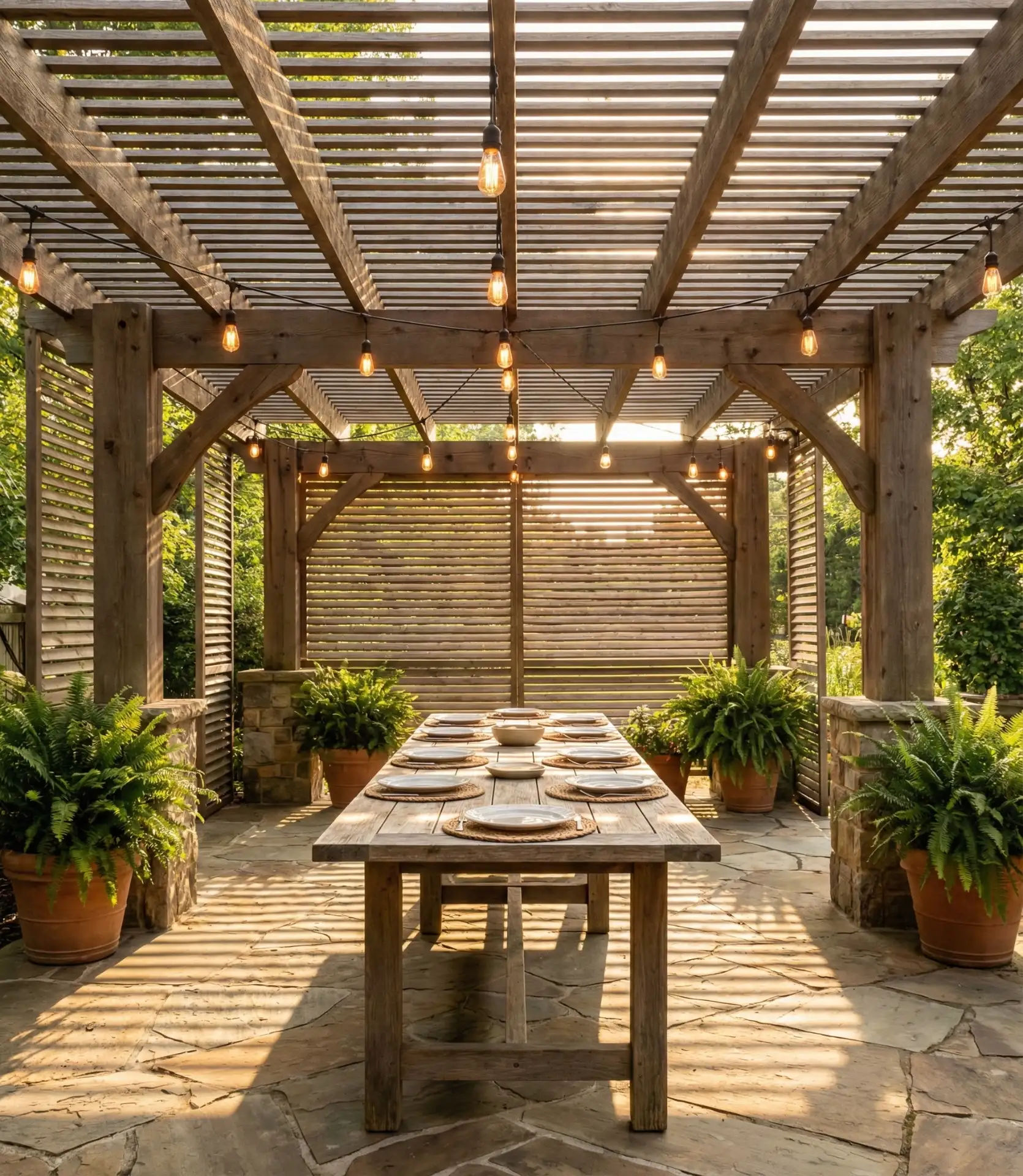
Installing a pergola costs between $2,500 and $6,000 for most backyards, but the return on investment shows immediately in how often you’ll actually use the space. Cedar and redwood age beautifully without constant maintenance, developing a silvery patina that looks intentional rather than neglected. If you’re in the Southwest, consider adding a retractable canvas top that provides full coverage during intense sun while rolling back for stargazing nights.
2. Australian Deck with Built-In Seating
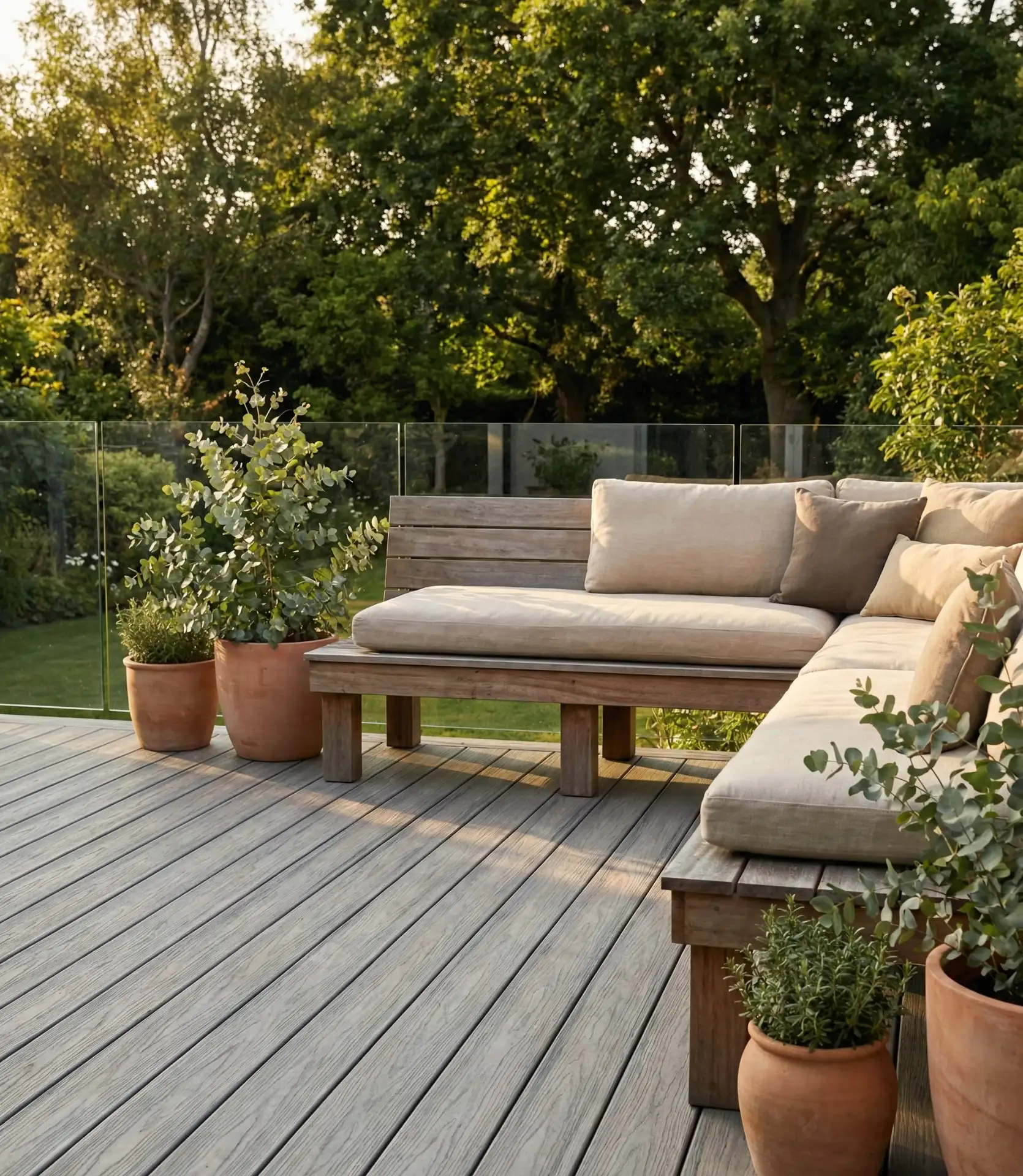
In Australian decking, the design surrounds the deck so that it looks like it has built-in seating. This design offers a flexible space, as it removes the need for extra furniture while providing distinct zones for conversation. The built-in seating has a storage space underneath it that is great for outdoor games, extra cushions, or pool toys. Modern designs use composite materials that do not degrade or become splintery, making them much easier to care for than natural timber. 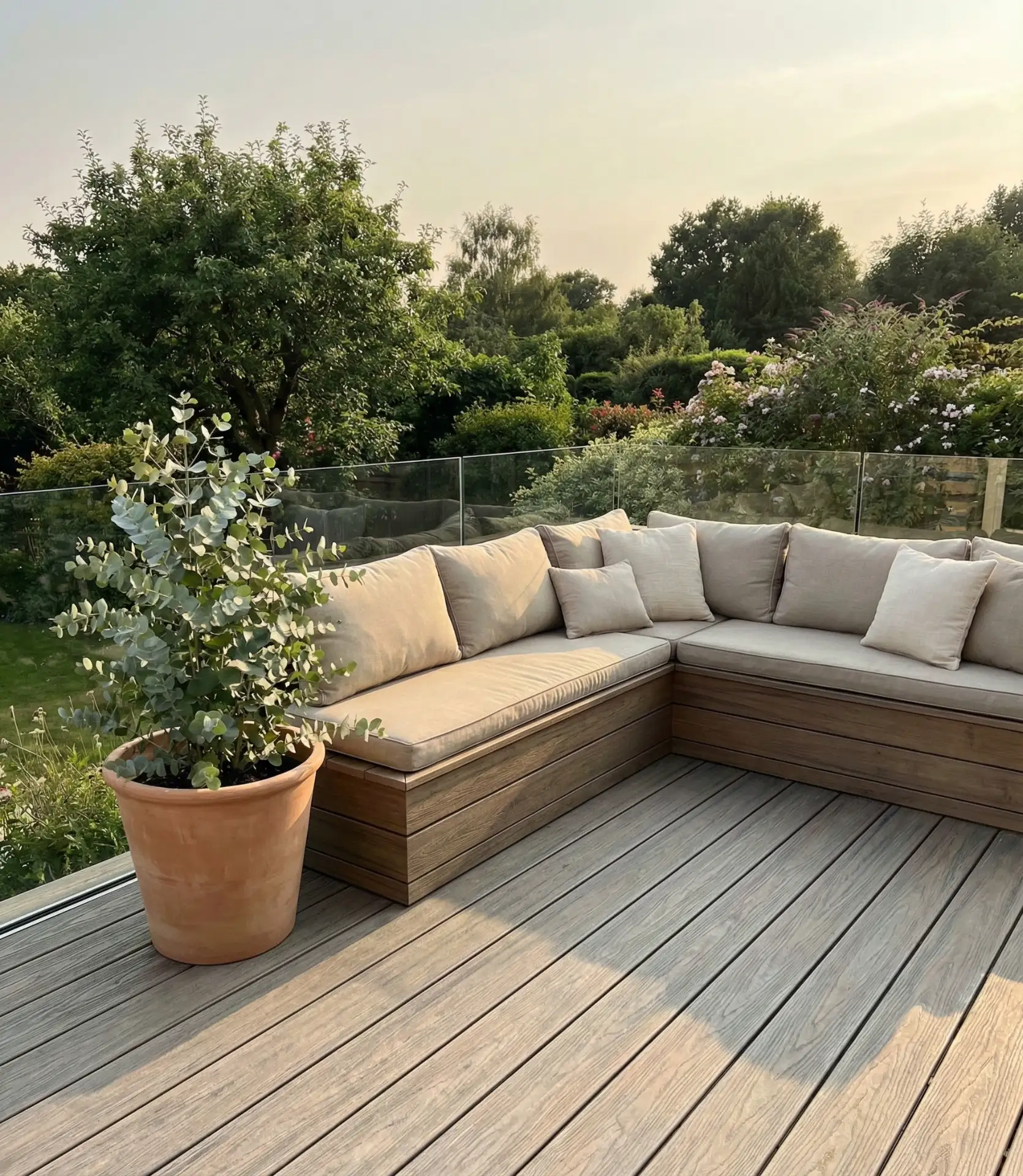
From coastal communities in San Diego to the Outer Banks, homeowners use cushioned benches with waterproof storage to keep fabrics fresh between uses. When a deck is elevated, the backs of the benches serve as railings, which satisfy building codes while keeping sightlines clear. This technique is best for properties with 200 square feet of deck space, where the perimeter seating does not dominate the central open area for mingling.
3. A small-space vertical garden lounge
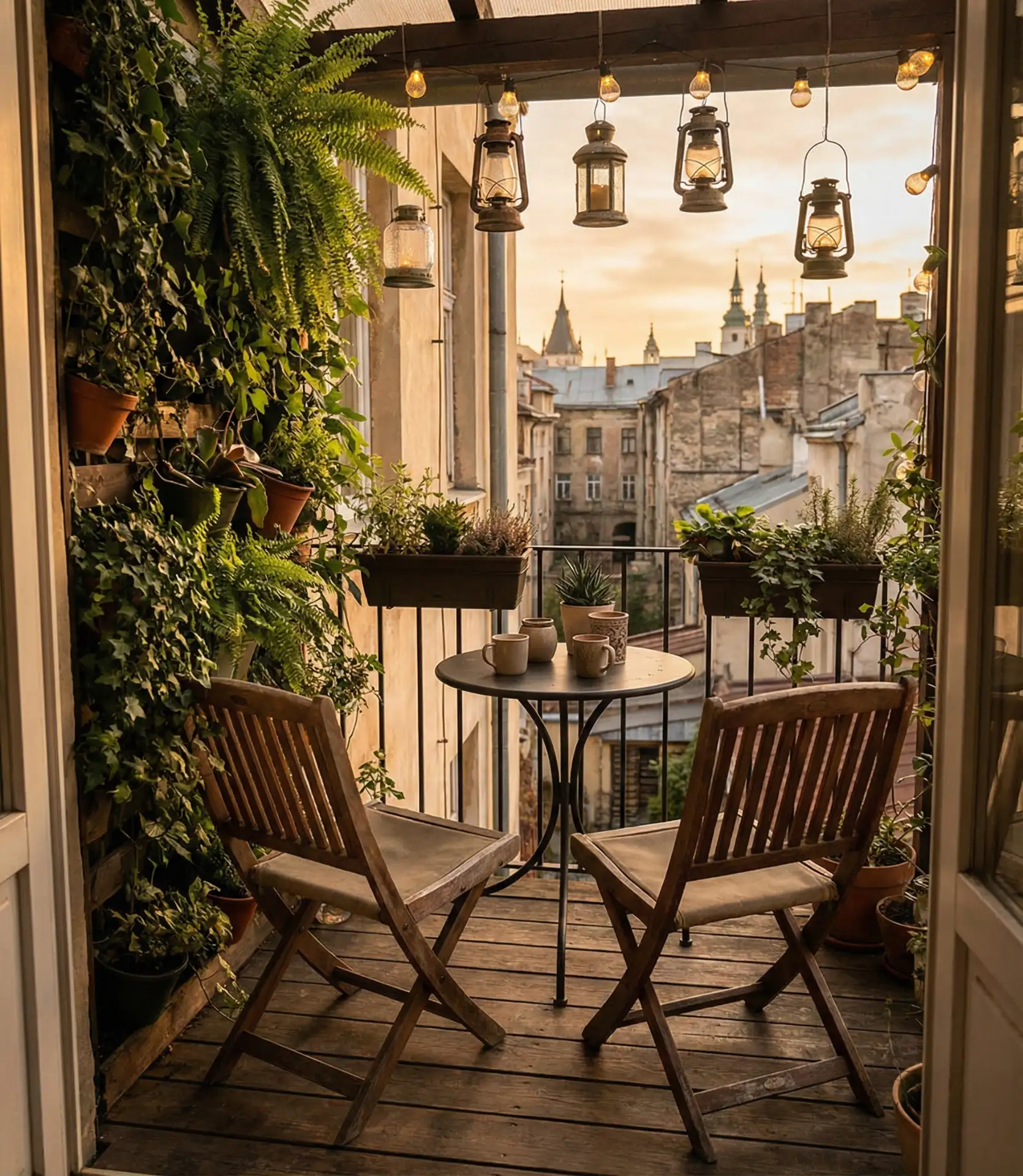
Limited square footage often pushes small space solutions vertically. Transform blank walls into living art by using vertical gardens. Such an arrangement also frees floor space for a bistro set or lounger. Wall-mounted pockets or modular panels filled with plants are a complete garden in balcony spaces barely wider than a hallway. These setups with herbs, trailing pothos, and succulents add refreshing fragrance, textural greenery, and a garden without needing dedicated planting beds. 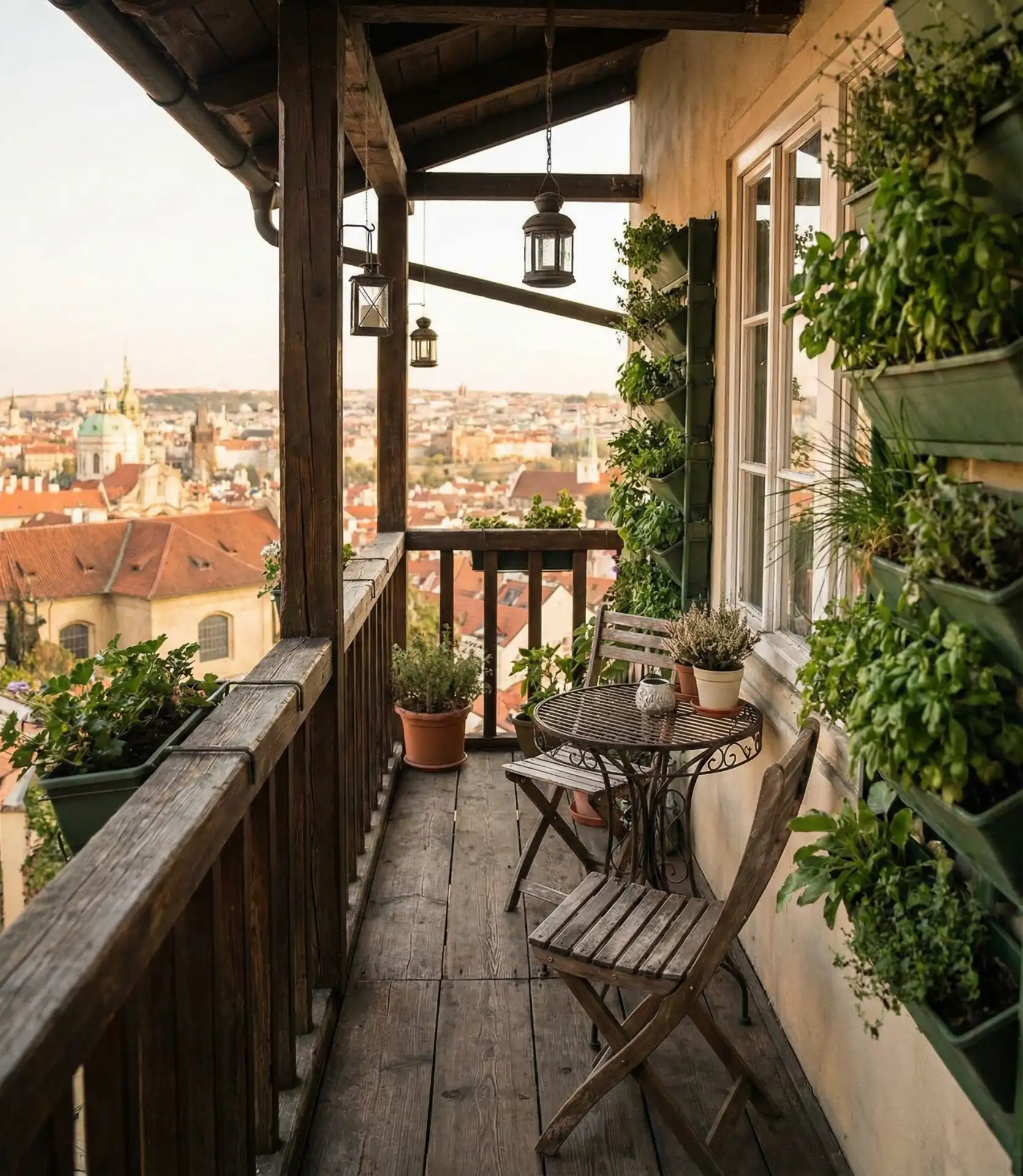
My neighbor in Brooklyn made her own cocktail spot on her 40-square-foot fire escape with only three vertical planters and a folding teak table. Because of the planters, she has a little more privacy, and the space feels bigger. Because she only uses a watering can to tend to the planters once a week, she proves that a small space doesn’t need to be high maintenance.
4. Pallet Furniture on a Budget, Patio
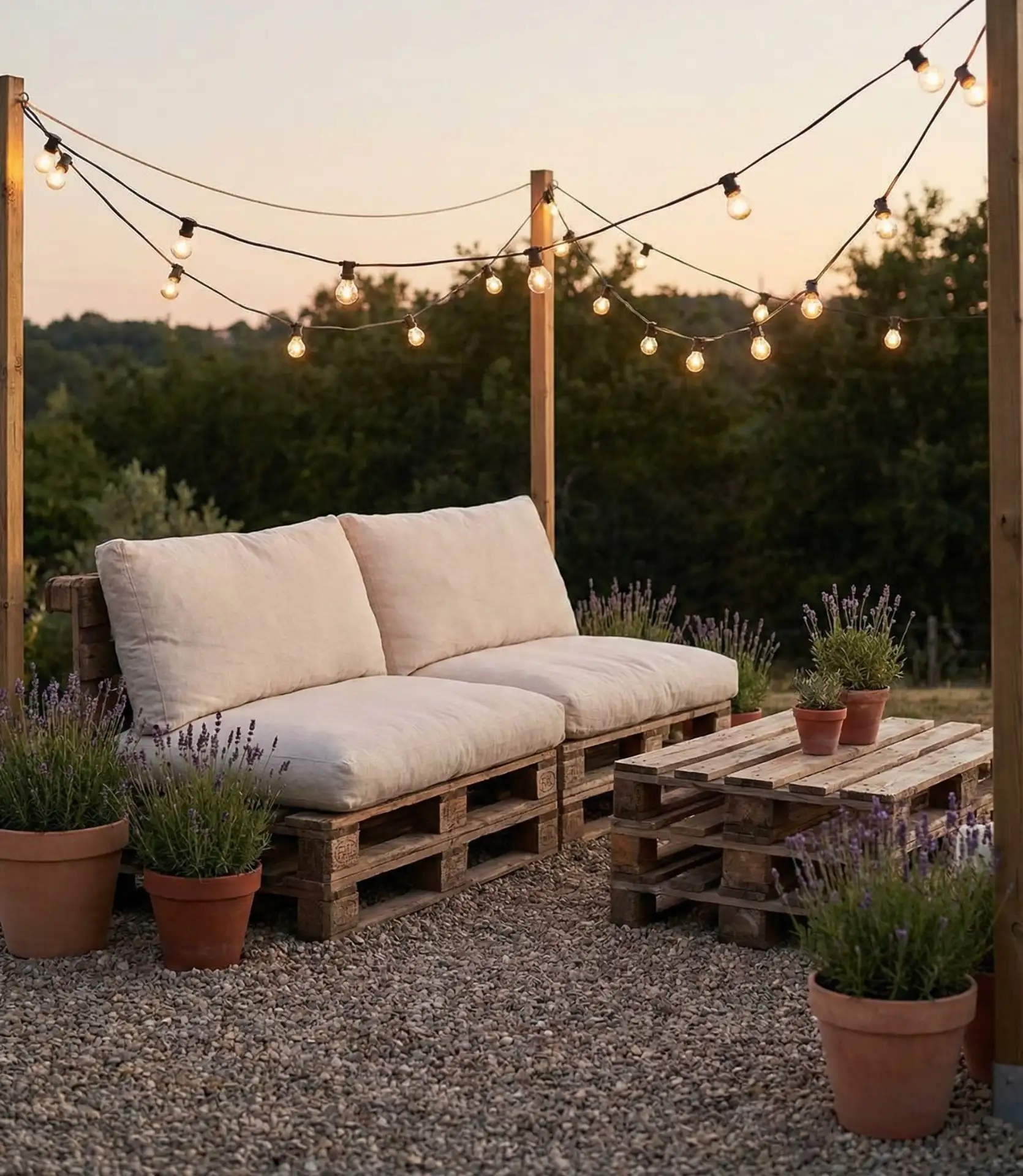
Reclaimed pallets provide a wonderful way to create inviting space without breaking the bank, especially when transformed into seating and tables. A DIY approach can, with under two hundred dollars, outfit an entire seating area when pallets can be scrounged for free from local businesses. Store-bought outdoor pillows can be added after sanding the pallets smooth and applying a weatherproof stain and before the rustic seating area that fits with industrial decor but is still dominating American backyards. 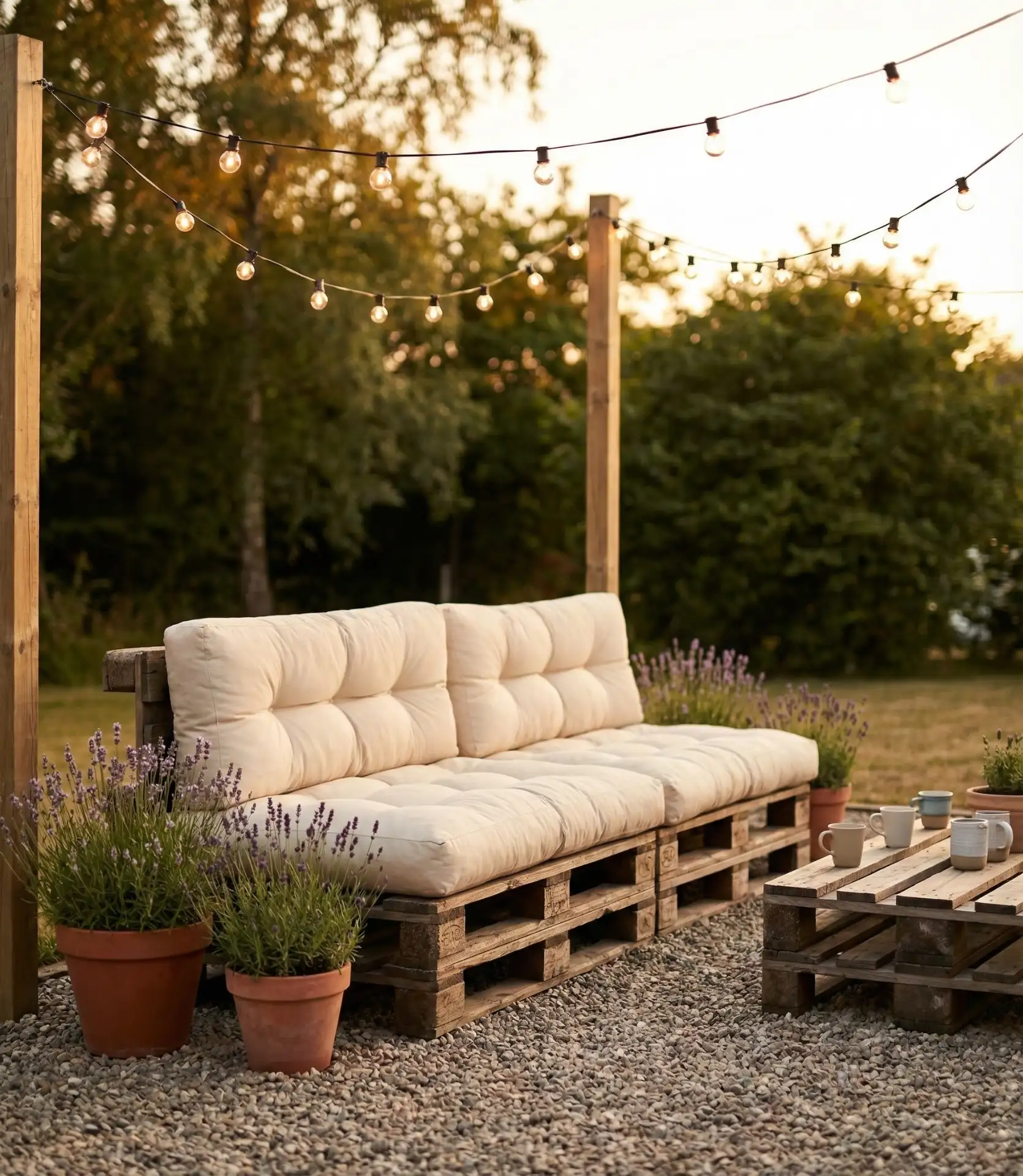
A common error beginners make is skipping the sealing step, which causes untreated pallets to splinter and rot in a single season. Apply two coats of a sealant like an exterior poly or marine varnish. A tip for even longer-lasting projects is to use the pads that seal off the bottom to keep moisture from wicking from concrete or pavers. A covered patio is a wonderful weekend project that adds cost-effective functionality to your space.
5. A covered patio with retractable screens
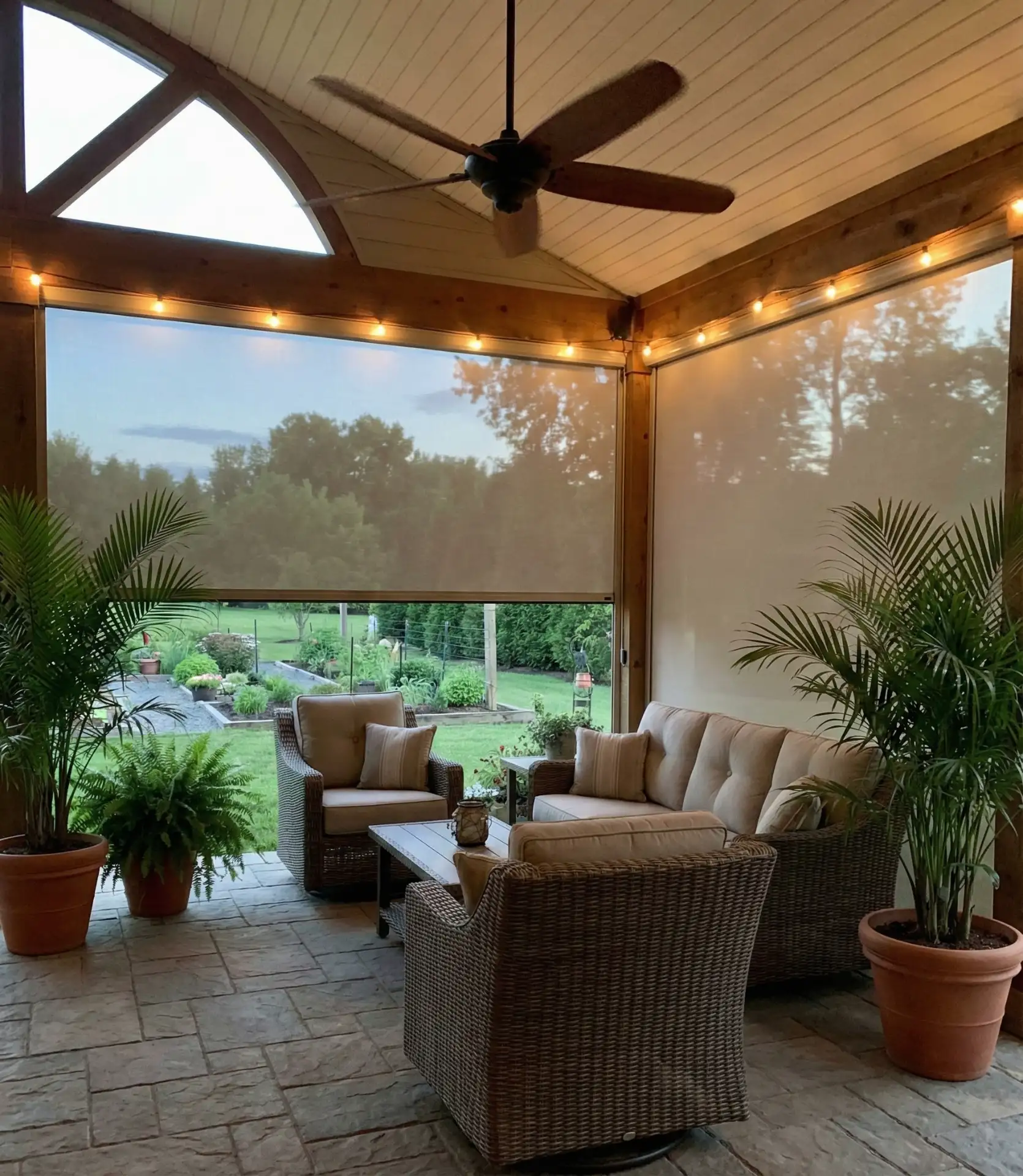
This is an upgrade that is especially beneficial in the South or Midwest, where mosquitoes can ruin evening gatherings, and retractable screens gain functionality in covered patios for year-round use. The retractable screens are motorized or manual and can completely enclose the space during bug season. However, when rolled up from the roofline, the retractable screens provide an open connection to the yard for an airy feel. 
Practical insight: Screens add $1,500 to $4,000 depending on coverage area, but they extend your entertaining season by eight to twelve weeks in temperate climates. Choose solar-powered motors for pergolas that are far from electrical outlets. The screens also lessen pollen intrusion during spring, which makes outdoor dining suitable for allergy sufferers who normally shun outdoor meals.
6. Rustic Fireplace Gathering Spot
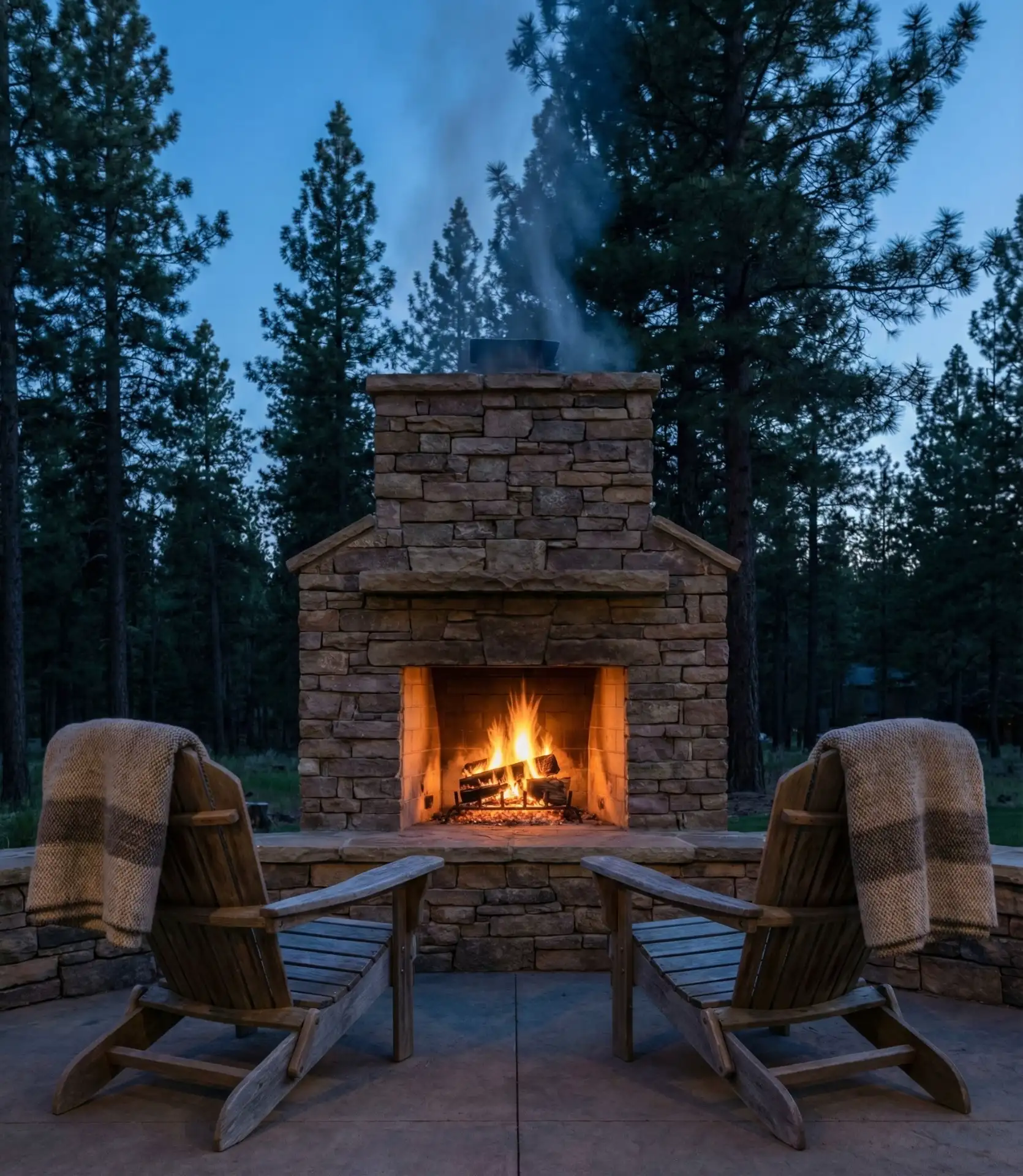
A rustic stone fireplace anchors outdoor spaces with warmth and focal point drama. Built from stacked fieldstones or river rock, these structures evoke mountain lodge charm while extending entertainment into the cooler months. Adirondack chairs arranged in a semicircle create natural conversation flow, while the dancing flames provide ambient lighting that no electric fixture can replicate. The crackle of burning wood signals relaxation in a way that instantly shifts the mood from everyday to special occasion. 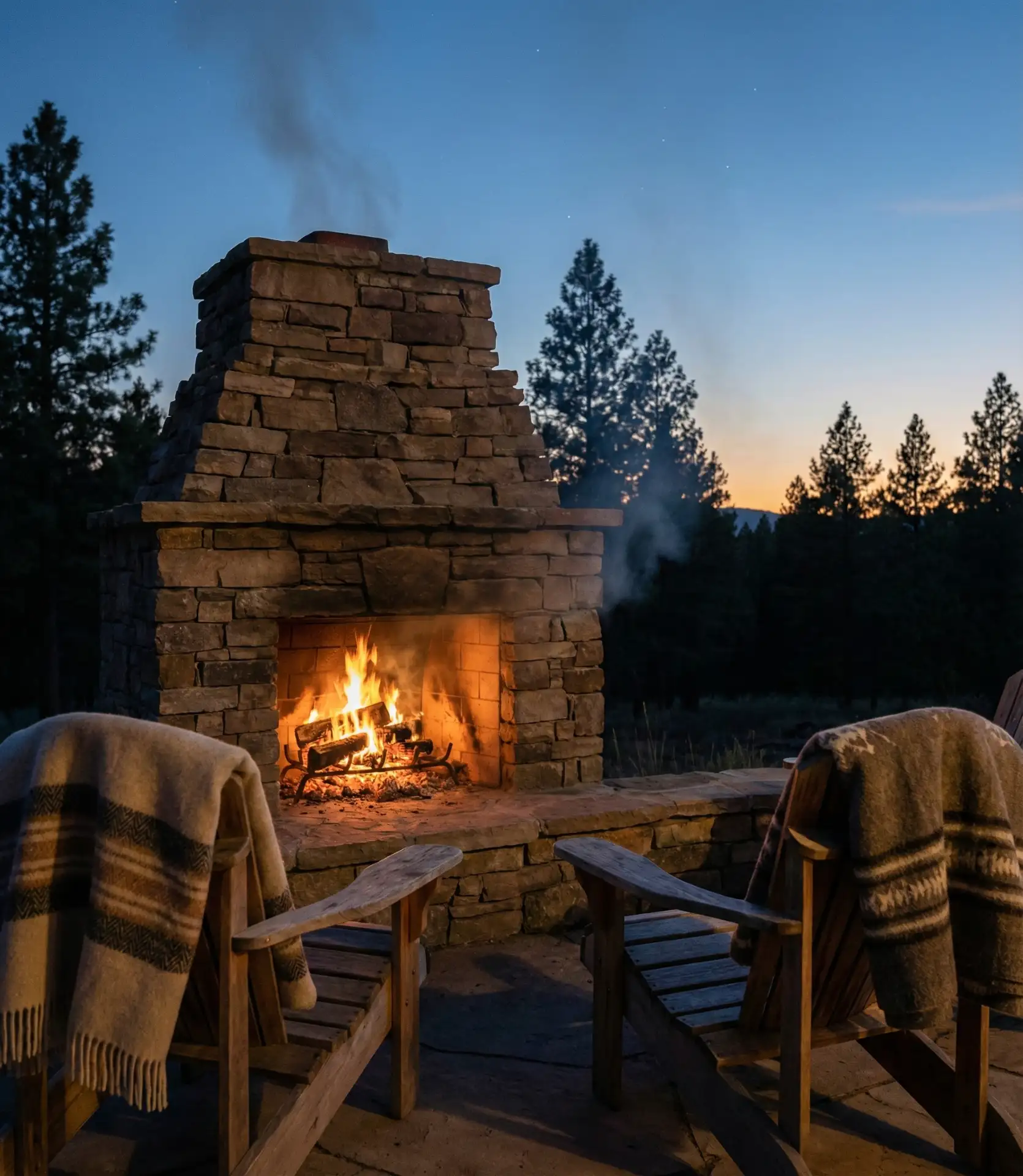
Serious entertainers find the $3,000–$8,000 investment for gas fireplaces worthwhile. In Colorado and Vermont, outdoor fireplaces are operational ten months every year! Before building, check local regulations, as some municipalities limit wood-burning features due to air quality concerns. As a compromise, gas fireplace inserts provide instant flames and adjustable heat. Unlike wood-burning fireplaces, gas fireplaces eliminate concerns about smoke or sparks and address all the issues that hosts typically worry about.
7. Australian Country Farmhouse Table Setting
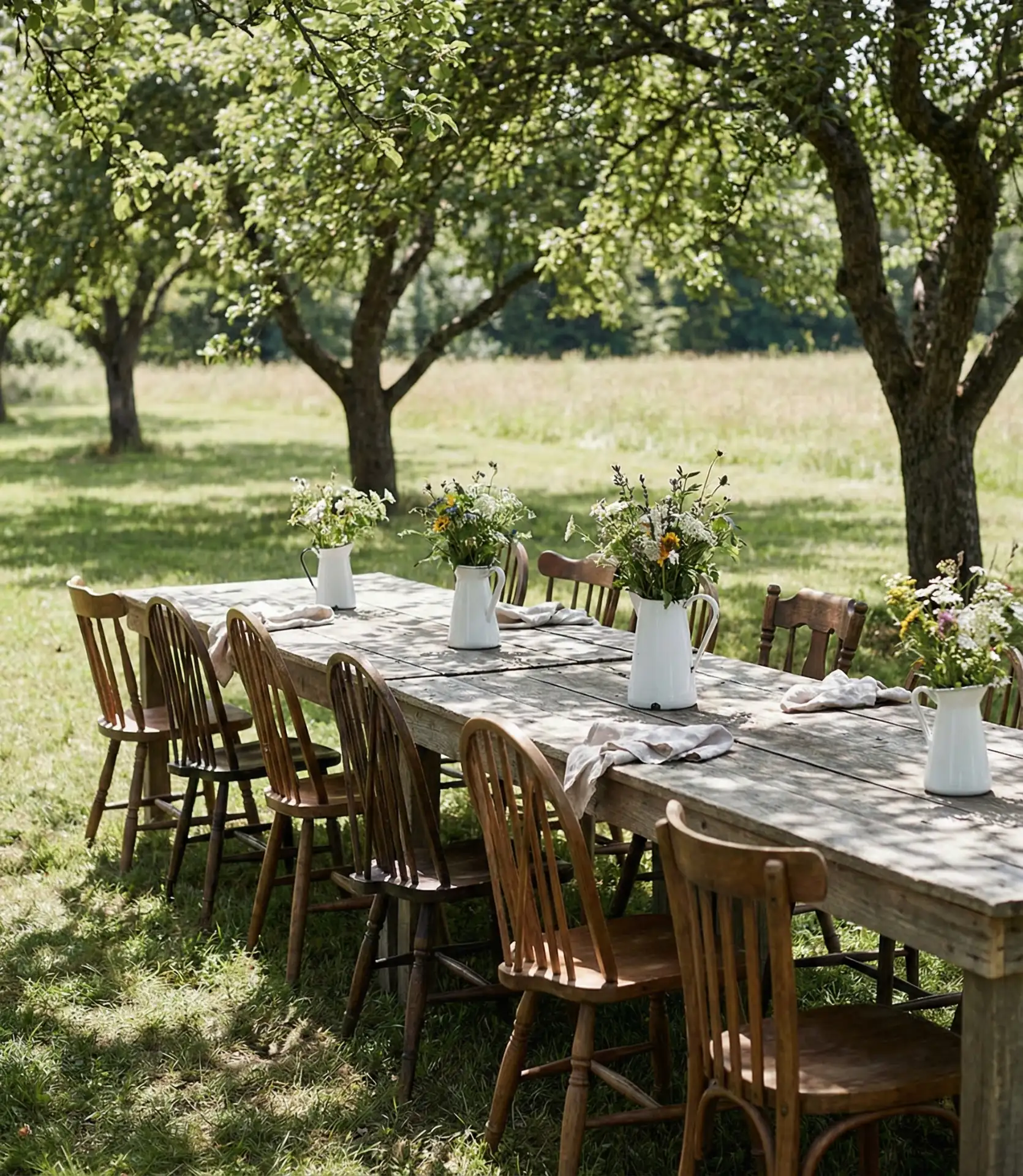
The Australian country aesthetic brings weathered timber tables long enough to seat twelve, paired with mismatched vintage chairs that tell stories. This style embraces imperfection—tabletops show grain and knots, benches display honest wear, and decor leans toward enamelware pitchers filled with wildflowers rather than formal centerpieces. The look captures rural hospitality, where everyone gathers for long lunches that stretch into twilight. 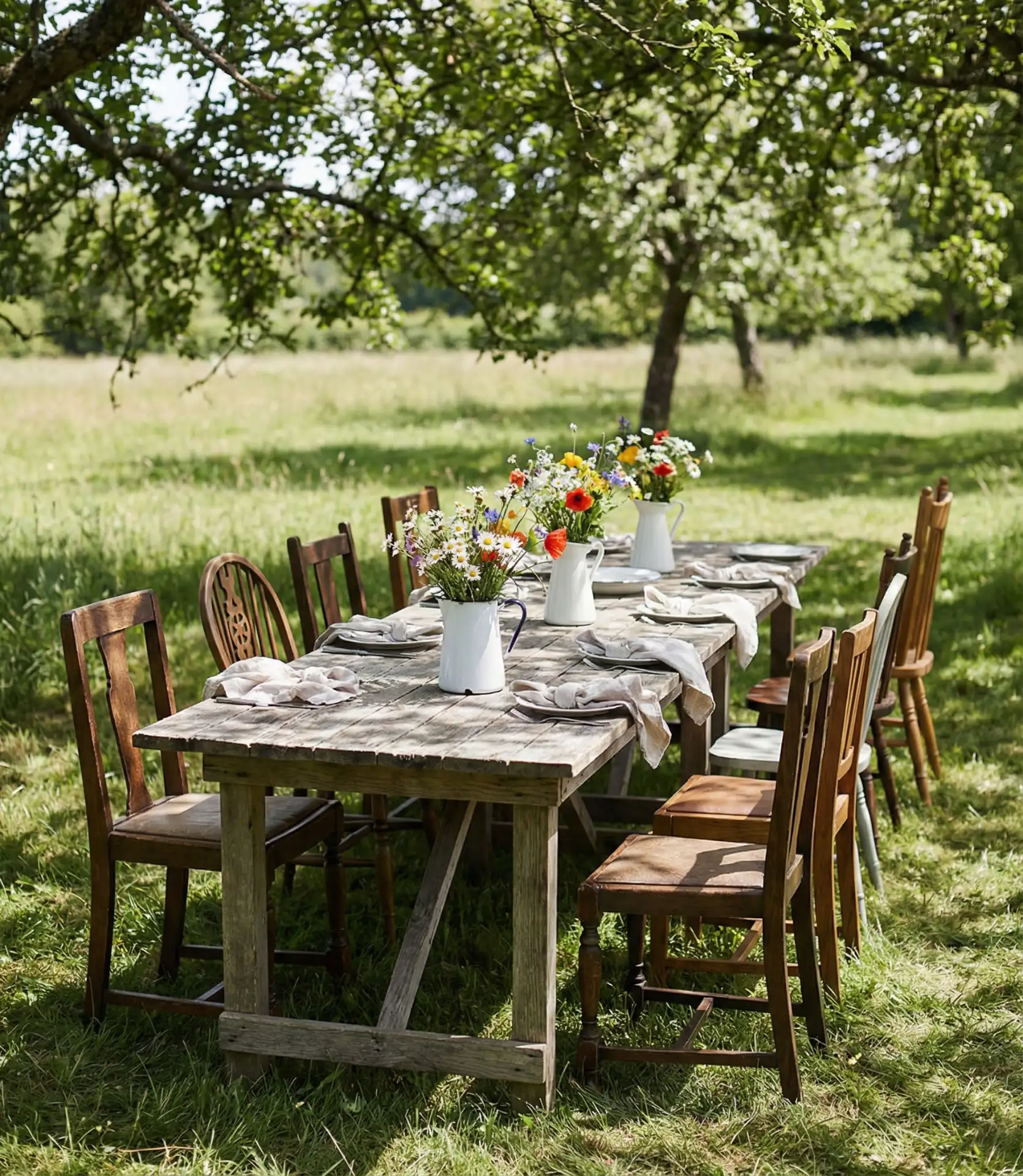
This approach resonates with homeowners throughout the Hill Country of Texas and wine regions of California, where outdoor dining connects to agricultural heritage. Source vintage chairs from estate sales or online marketplaces—paying $20–$40 per chair beats buying a matching set at $200 each. The eclectic mix actually photographs better, creating visual interest that uniform furniture can’t match. Seal the table with food-safe mineral oil to maintain the weathered look while protecting against stains.
8. Enclosed Sunroom Dining Extension
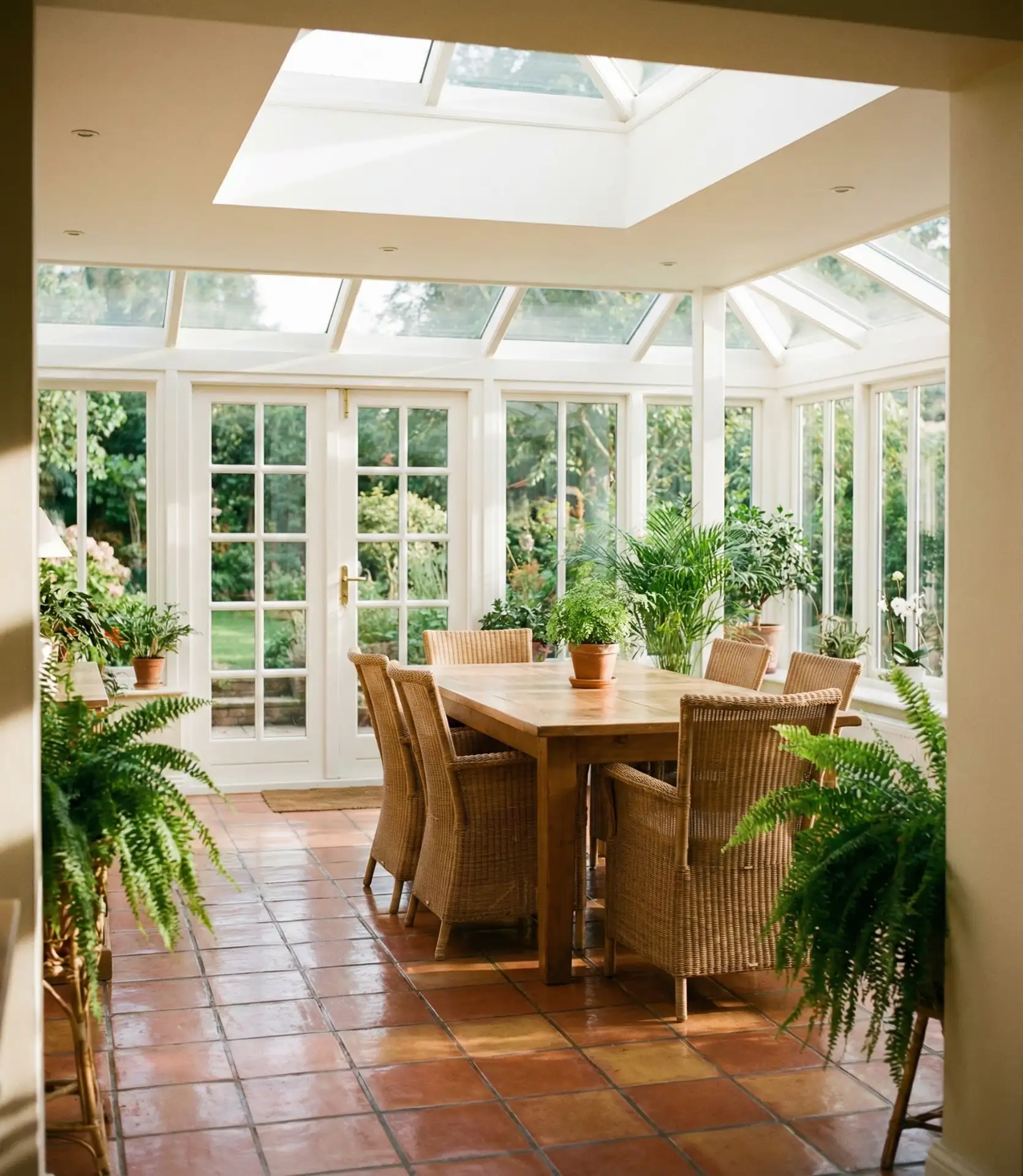
An enclosed three-season room merges the best of both worlds: interior space with outdoor views. It creates a climate-controlled zone for entertaining that can be used any time the weather is unpredictable. Windows that go from the floor to the peak maintain the airy feel while protecting against wind, rain, and extremes in temperature. In the spring and fall, this space is the preferred location for brunches and dinners when the main patio is too open and fully staying inside seems wasteful of the beautiful natural light. 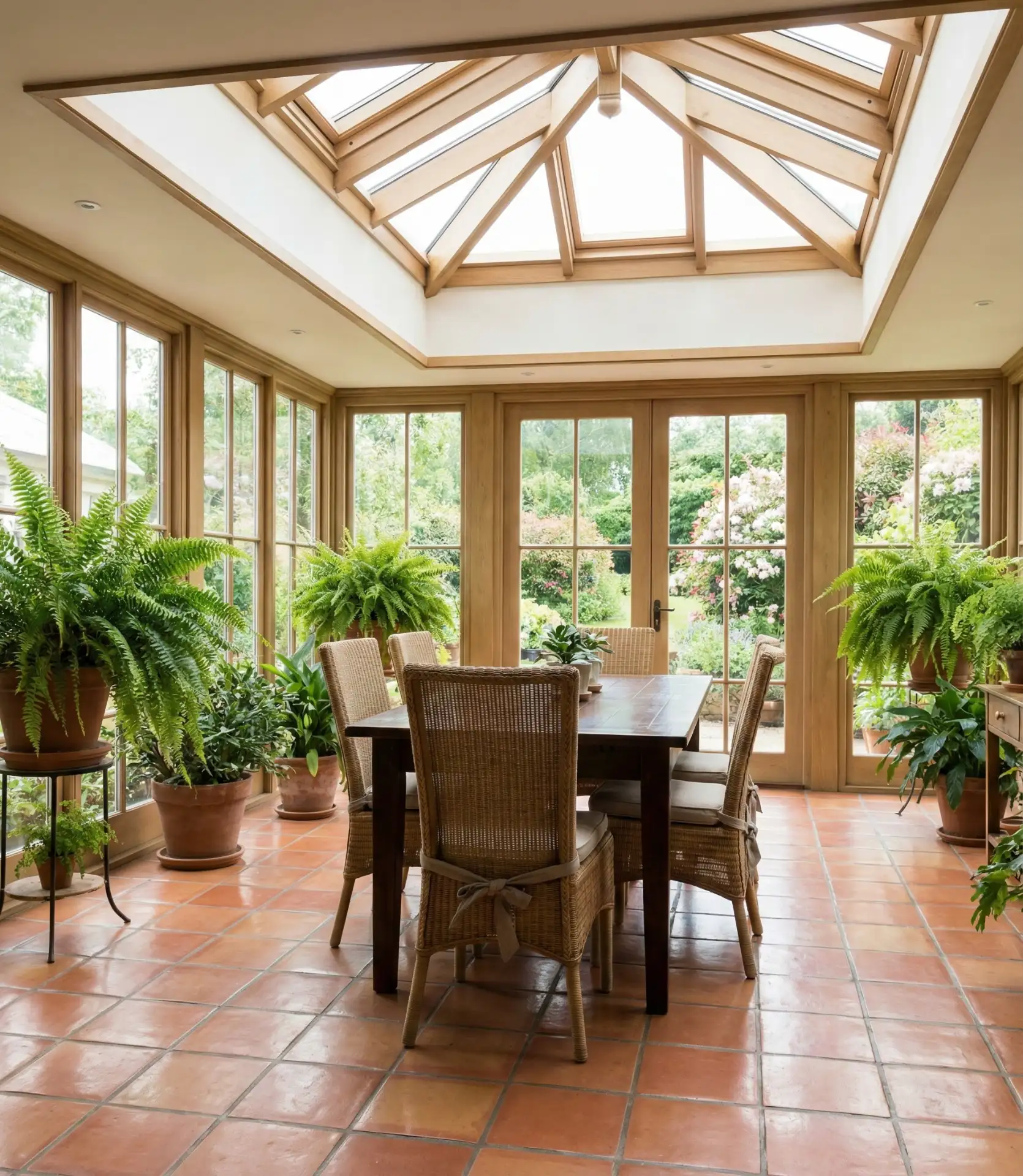
For the New England and Northwest Pacific areas, sunrooms can be used as entertainment spaces between the months of June and September when the weather can be unpredictable. The cost of professional construction for a sunroom of about 200 square feet averages between $15,000 and $35,000. DIY construction is also an option. DIY modular sunroom kits start around $8,000. Most owners find that three seasons of climate control use justifies the cost, and adding a mini-split heat unit increases the use of the sunroom to a true four-season space.
9. Large Multi-Zone Entertainment Deck
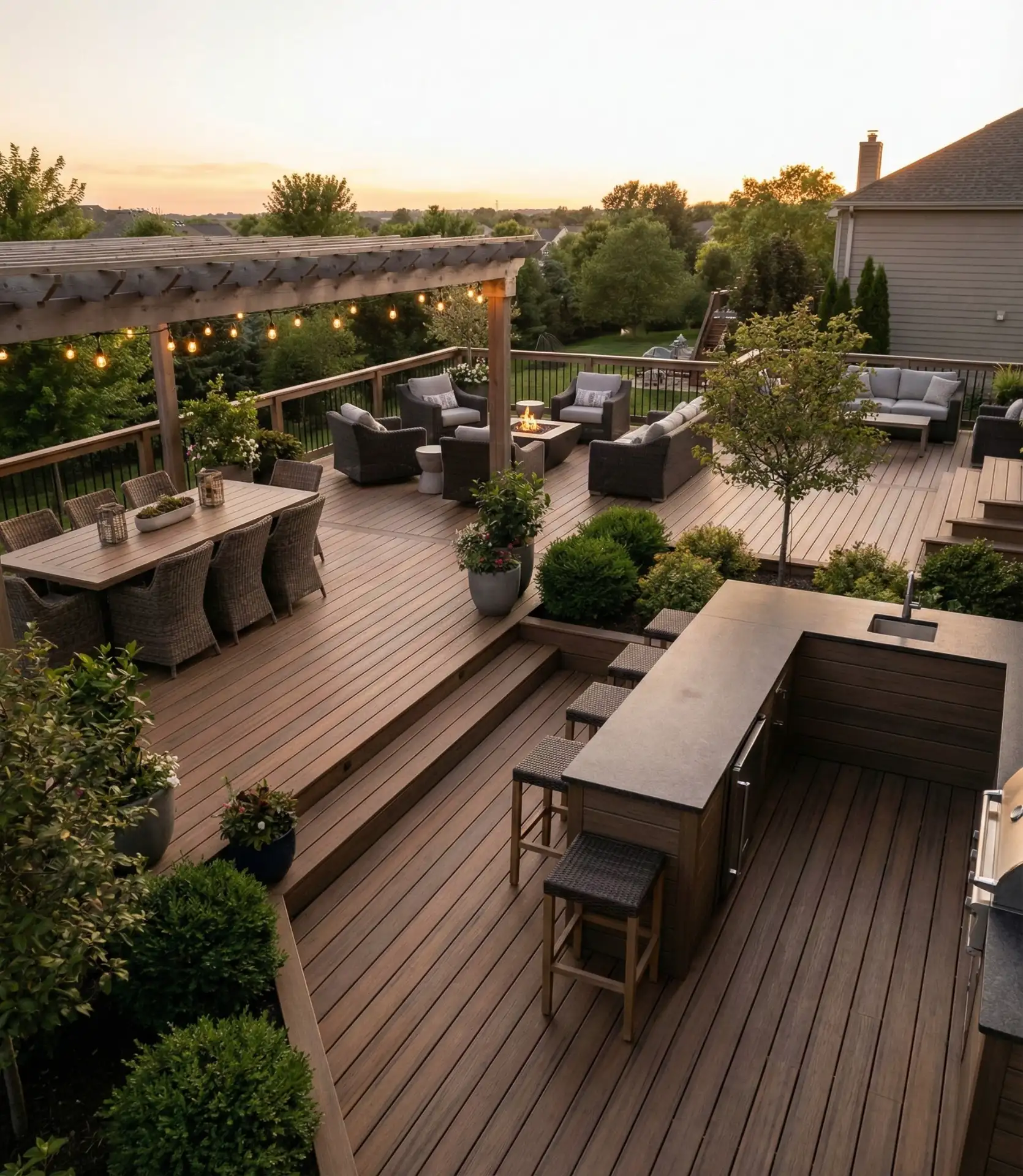
A large deck designed with distinct zones accommodates different activities simultaneously, which is ideal for dining, lounging, and grilling. This layout prevents clustering, where all the guests hover in one area. The use of built-in planters or different levels of the deck creates natural separations without walls while maintaining open sightlines. The ultimate setup includes a bar zone, dining zone, and conversation pit with a fire feature. 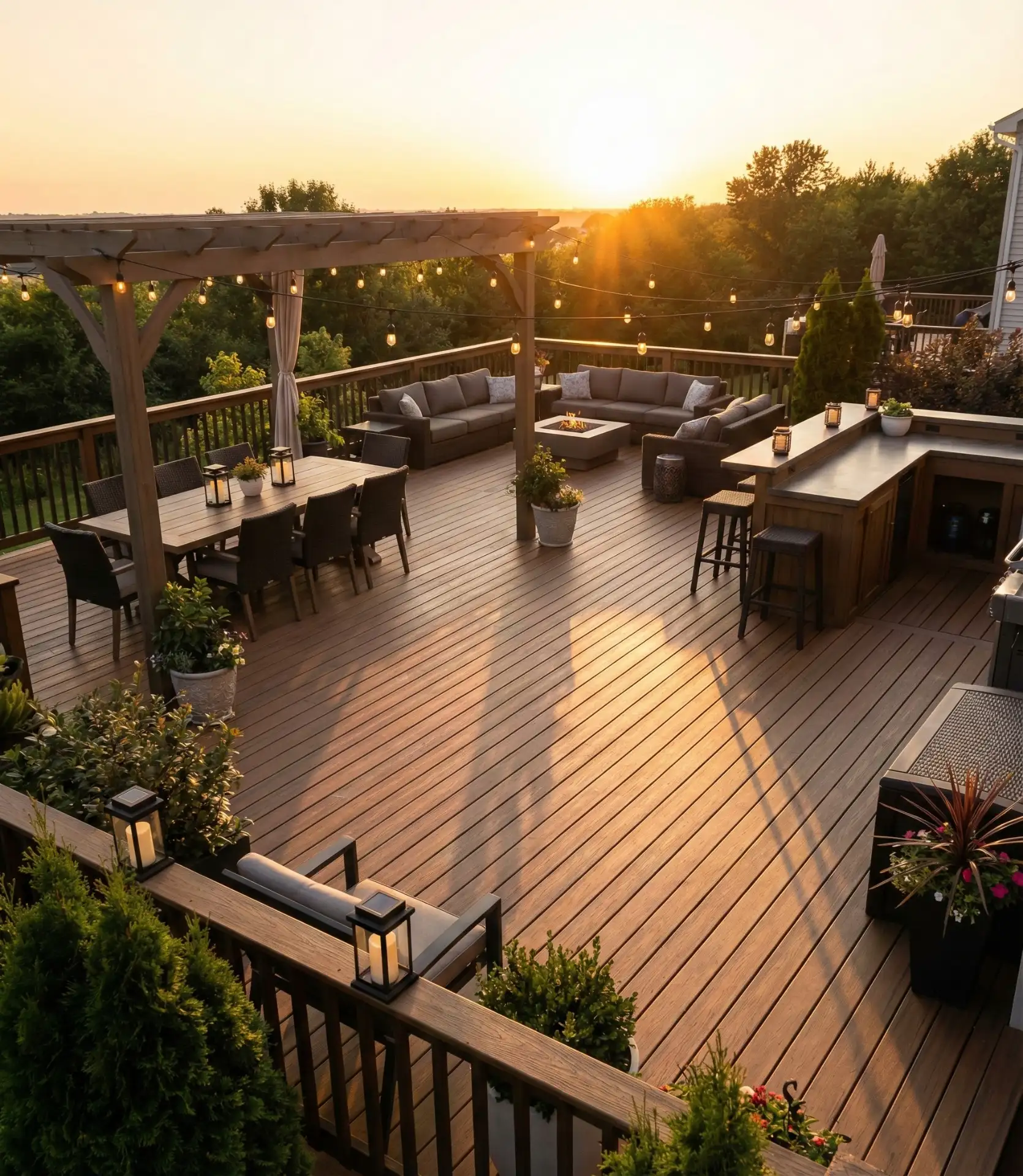
Ideal locations: Suburban areas with sizable lots enable features with decks of 500+ square feet. The multi-level approach combines architectural interest with the ability to mitigate the impact of slopes. In Texas and Arizona, at a minimum, one fully shaded zone is essential for daytime entertaining, whereas coastal locations may prioritize shelter from wind to help keep candles burning and cloths unruffled.

10. A balcony bar with a folding counter
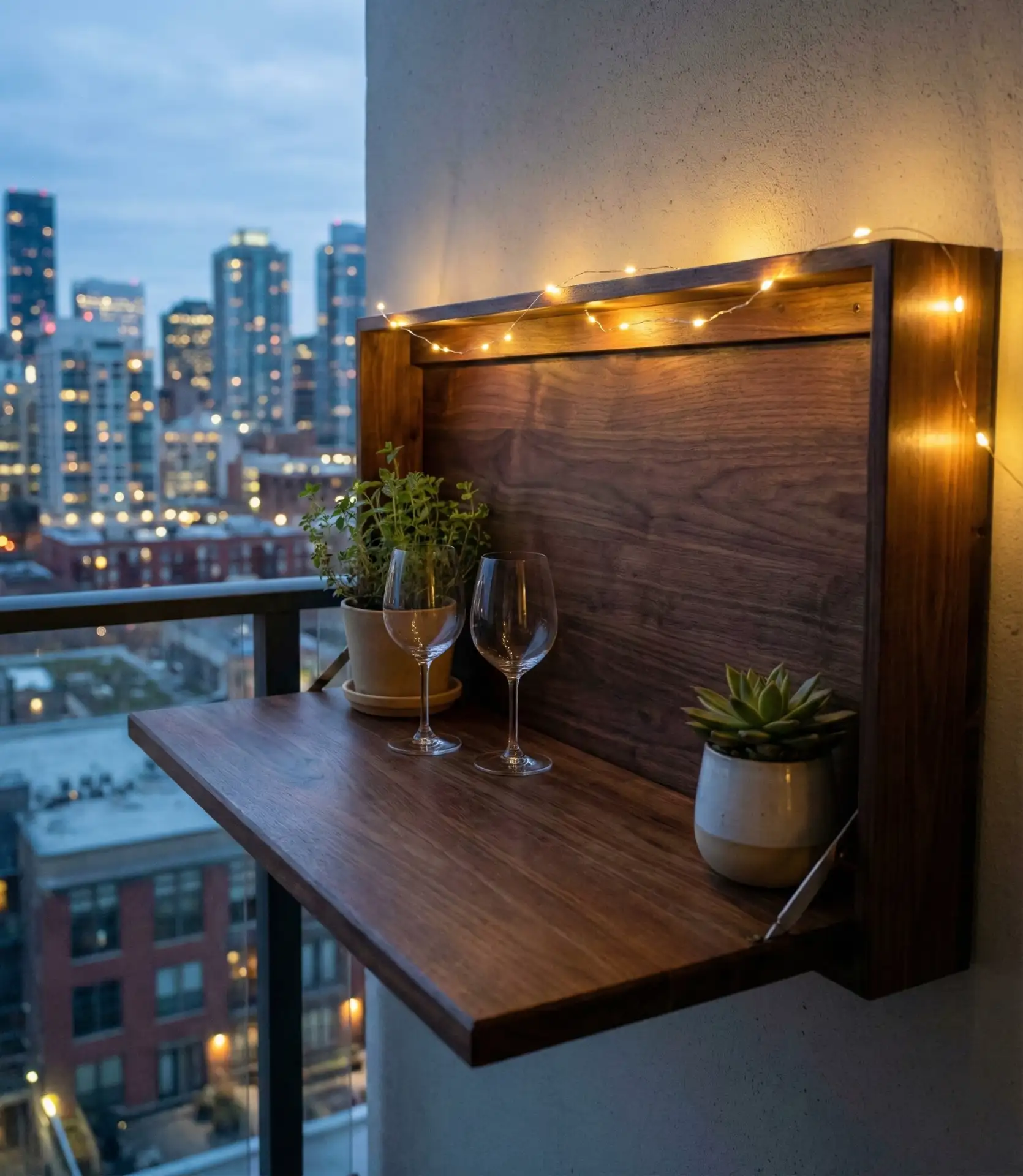
Wall-mounted, hinged counters enable the transformation of tight balconies into fully functional entertaining zones. These counters are bar height for serving drinks and food and can be pulled down to create a serving area, then folded up to the wall to free up floor space. In urban areas, small-space dwellers use this design feature to host cocktail gatherings for six to eight people where a permanent table would overwhelm the footprint. 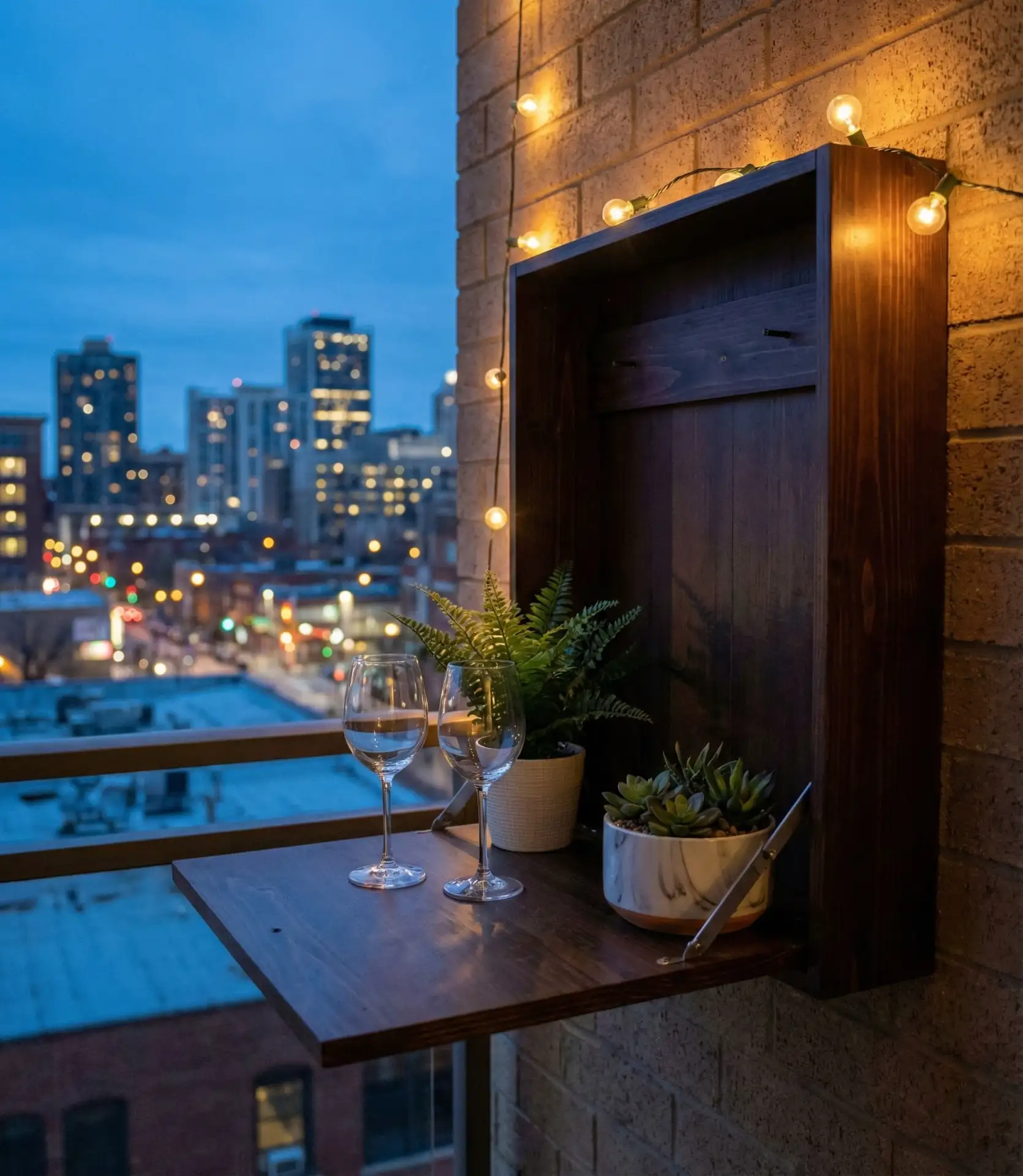
Teak or eucalyptus wood can be chosen for their weather resistance, and a small shelf can be added for bottle storage. The counter can be used as a potting station for gardening on the balcony or as a convenient place to use a laptop when working outside. This arrangement maximizes the return on the investment of up to $200.
11. Flooring transitions with Outdoor Rugs
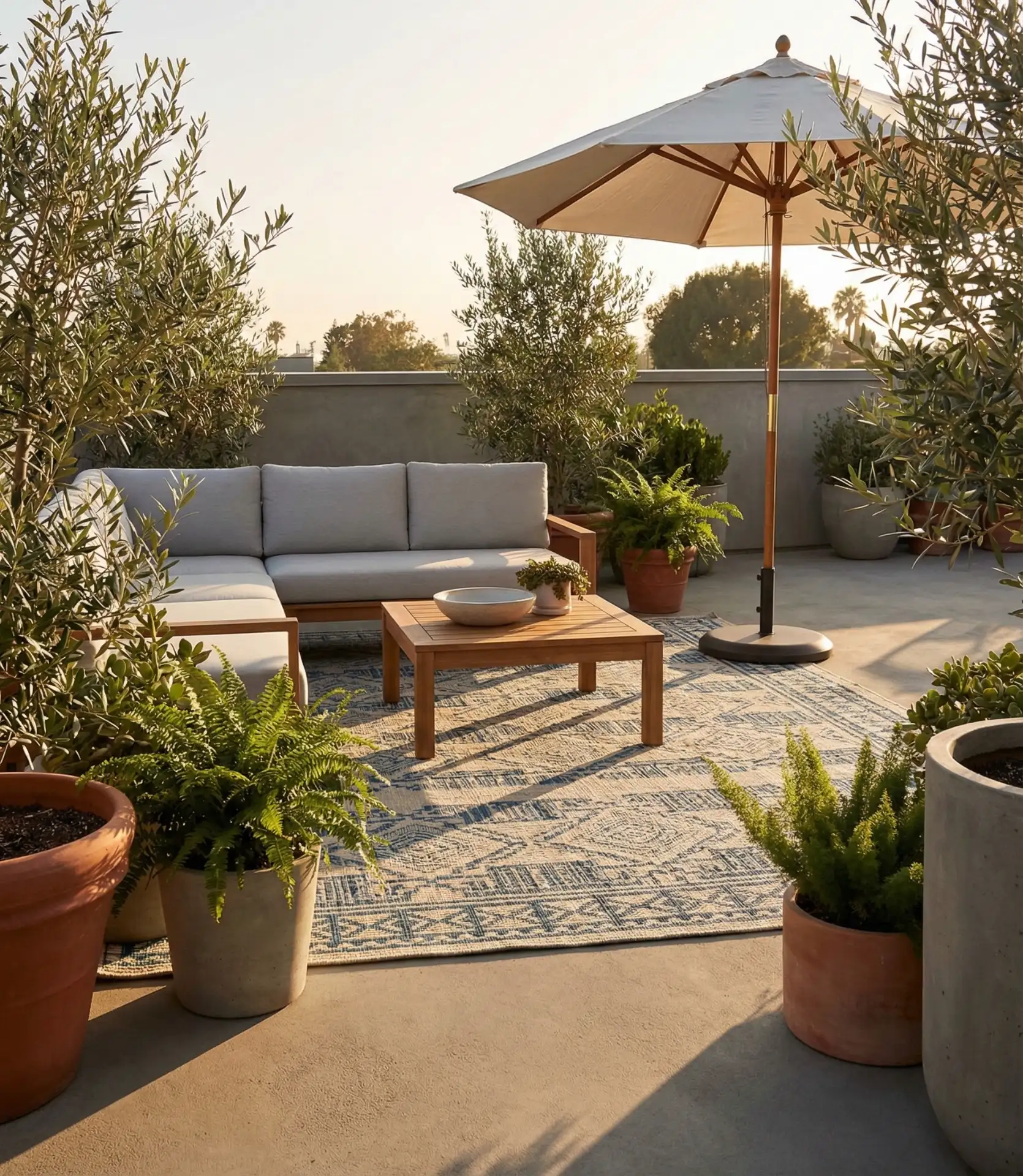
Choosing the right materials is important. Just as indoor carpets help define and organize rooms, the right outdoor flooring can help define and organize spaces. A synthetic rug made of materials safe for outdoor use can be used to define and mark space when placed outdoors over wood or composite decking.
The materials can endure sun and water and can float on water, making them ideal for use on a boat. When used outdoors, this type of flooring can cover the boring surfaces of your patio and float with the water to help define and group the use of space. These materials can also help hold and arrange patio furniture while providing color and texture to otherwise plain outdoor spaces. When used outdoors, this type of flooring can cover the surfaces of your patio and help define and group the use of space. 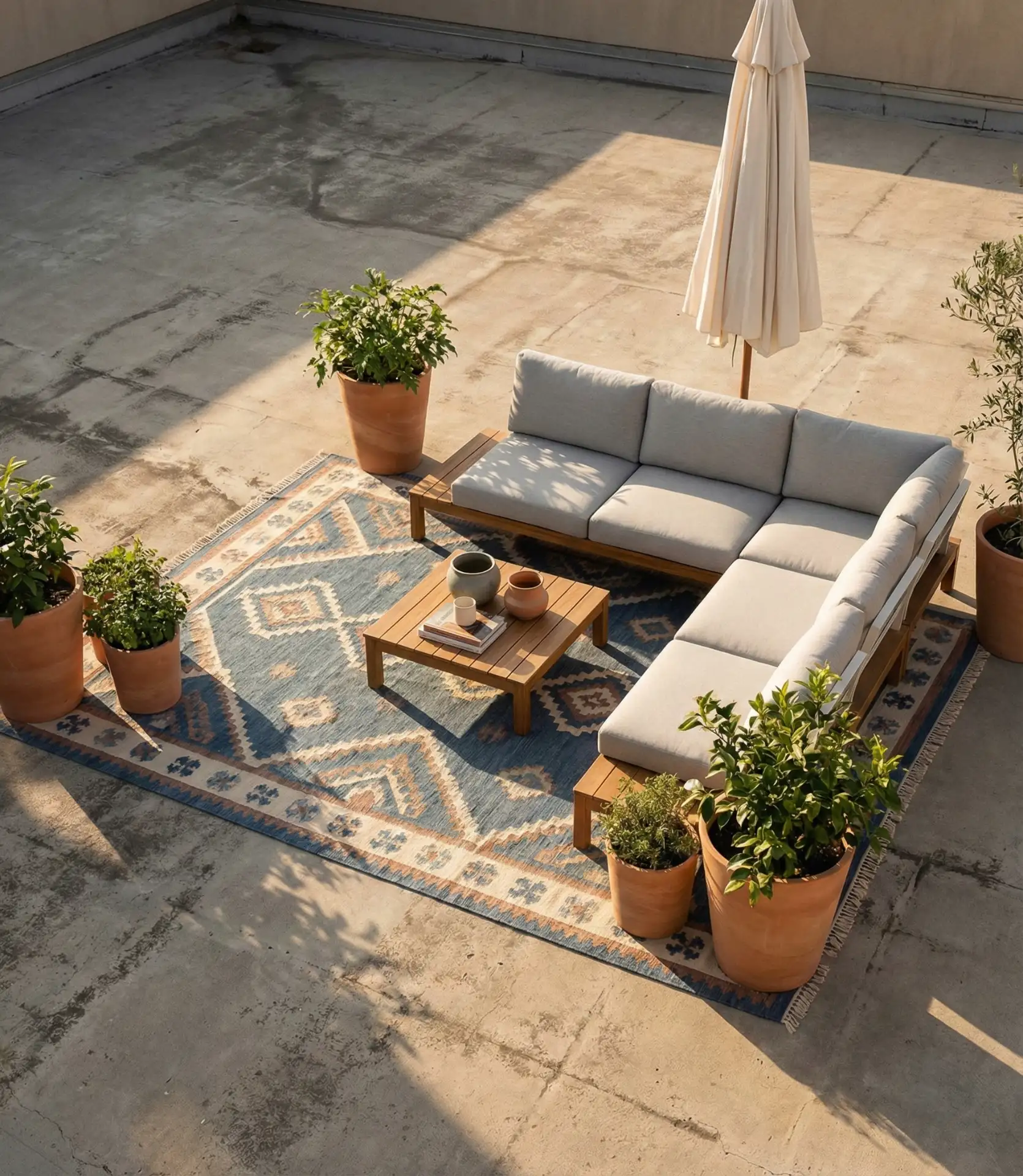
Expert-style commentary: Interior designers recommend leaving 12–18 inches of bare flooring between the rug edge and furniture legs to create breathing room. Choose patterns over solids—they hide the inevitable dirt and leaf debris between cleanings. Hose it off monthly and let the air dry completely before replacing it to prevent mildew. In Florida and Louisiana’s humid climates, opt for quick-drying polypropylene over slower-drying materials that might harbor moisture and mold.
12. Australia-Inspired Coastal Lounge
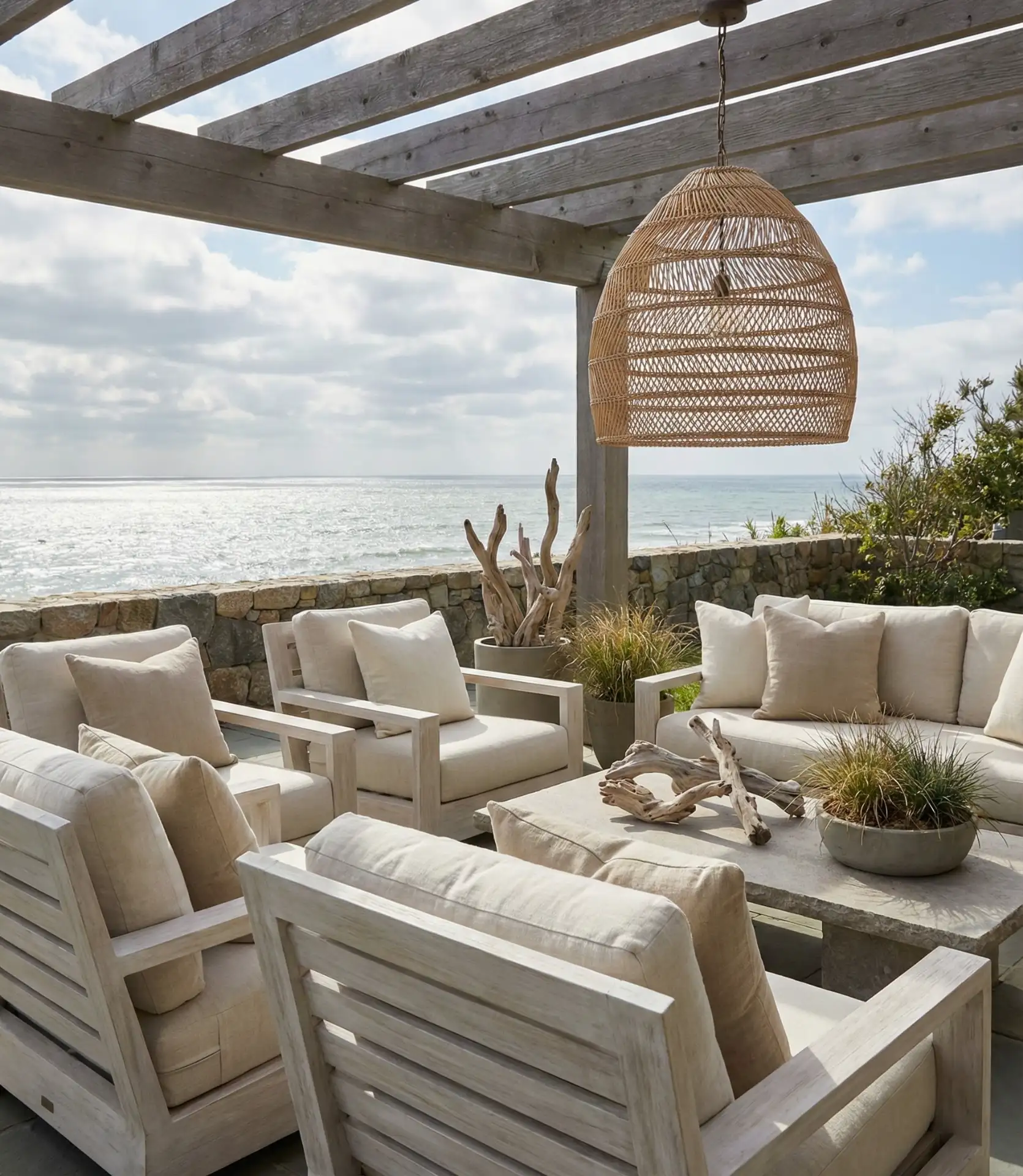
Australia’s relaxed coastal style translates beautifully to American beach communities and lakefront properties. Think bleached teak furniture, canvas cushions in sand and seafoam, and natural fiber pendant lights swaying in the breeze. The palette stays neutral—whites, taupes, soft blues—allowing ocean or lake views to provide the color drama. Woven textures add warmth without fussiness, and everything wears well despite salt air and sandy feet. 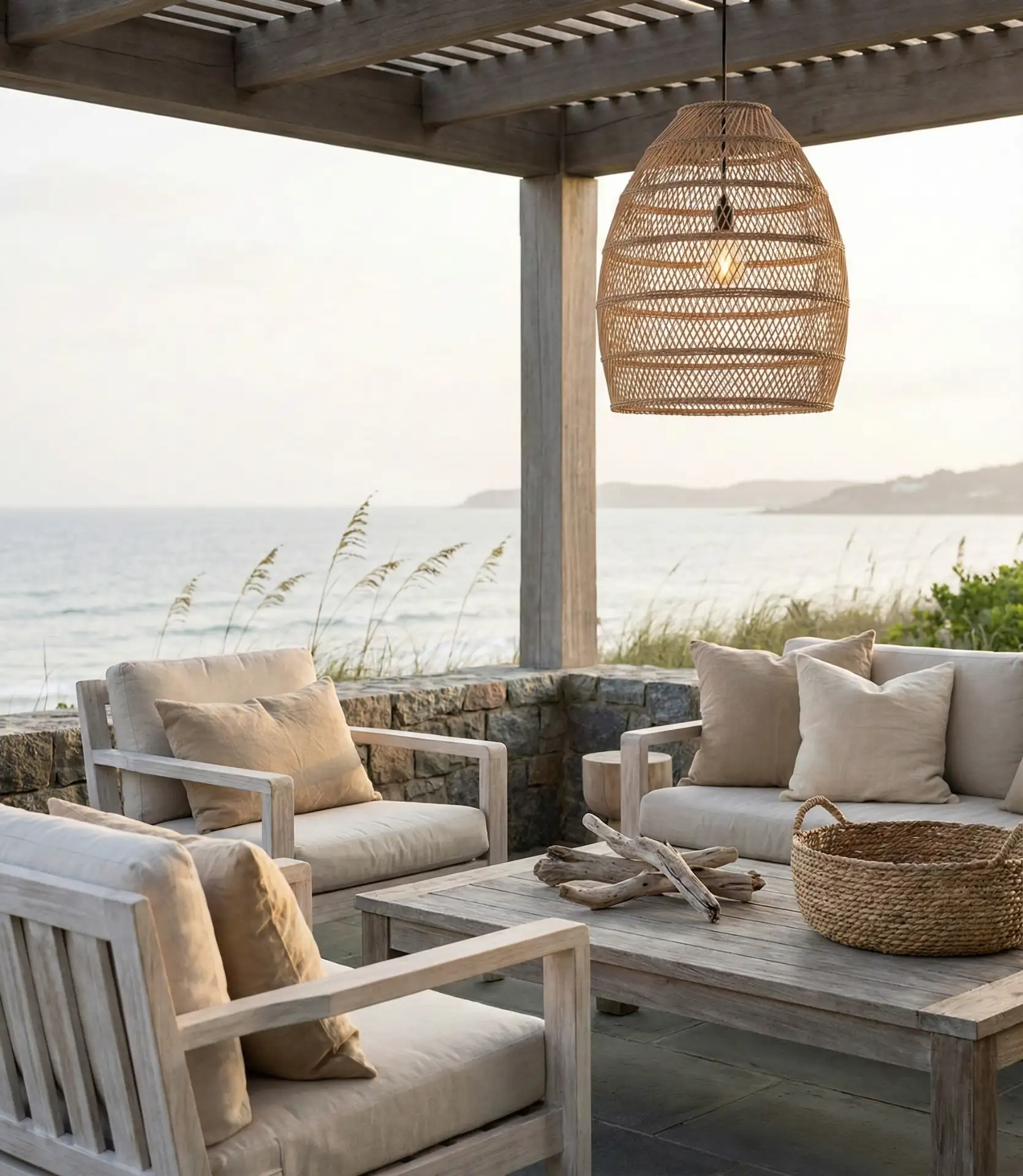
In the Carolinas and Southern California, this aesthetic feels native rather than imported. The low-maintenance approach suits coastal living, where constant exposure to elements quickly ages high-maintenance finishes. Skip painted furniture—it chips and peels. Instead, let teak weather naturally to silver-gray, or choose powder-coated aluminum that resists corrosion. A friend on Tybee Island hasn’t touched her outdoor furniture in three years beyond hosing it down, and it looks better now than when it was new.
13. Budget Fire Pit Conversation Circle
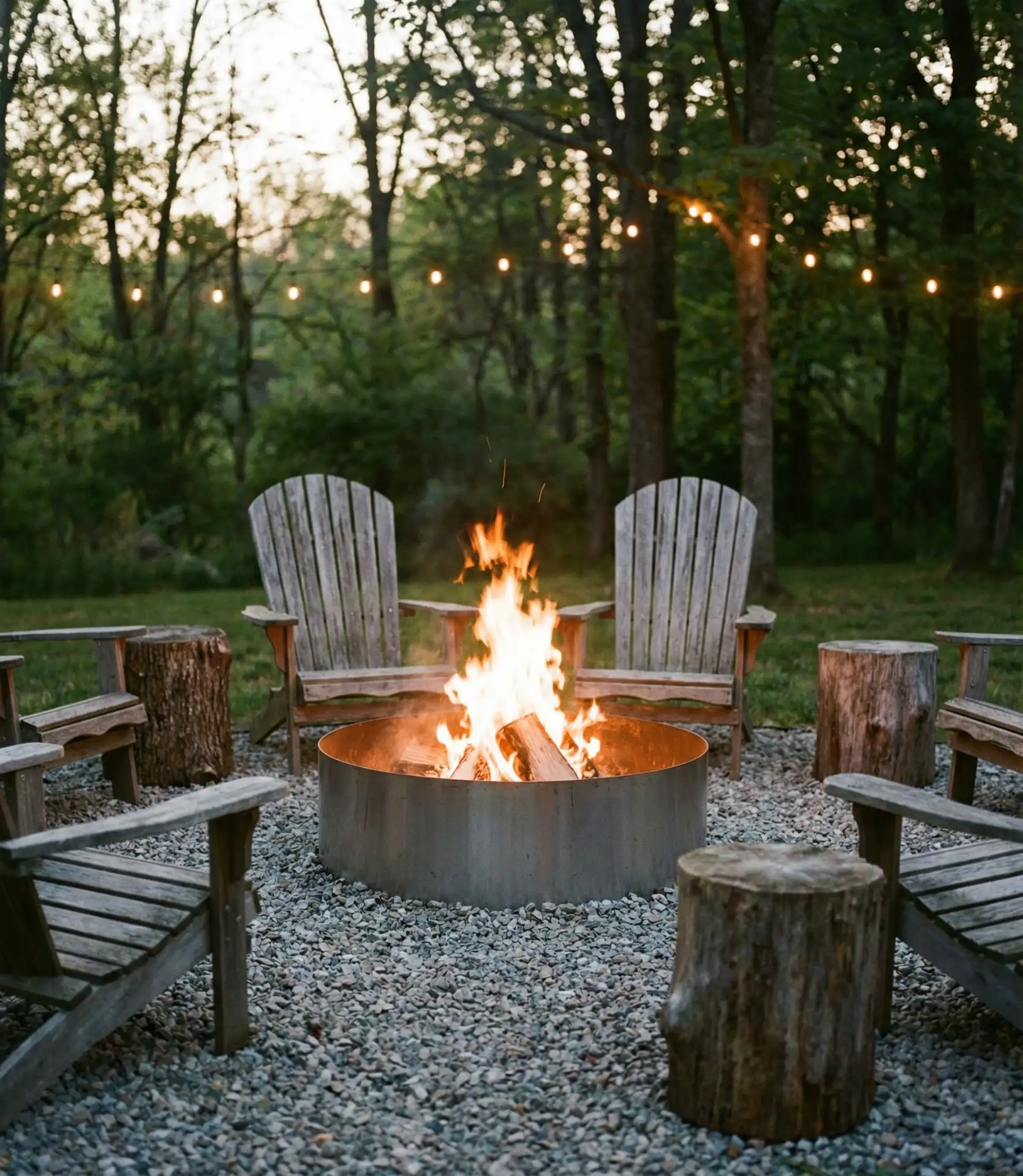
A budget fire pit can be as simple as a 40-dollar fire pit ring and pavers that are arranged in circles like a target. This setup provides a focal point that makes people want to go outdoors when it’s cold. Pair with Adirondack chairs from large box stores that are often on sale for 30 to 50 dollars, or use tree stumps and poufs to make the seating. The small cost greatly transforms a bland yard into a fun place. 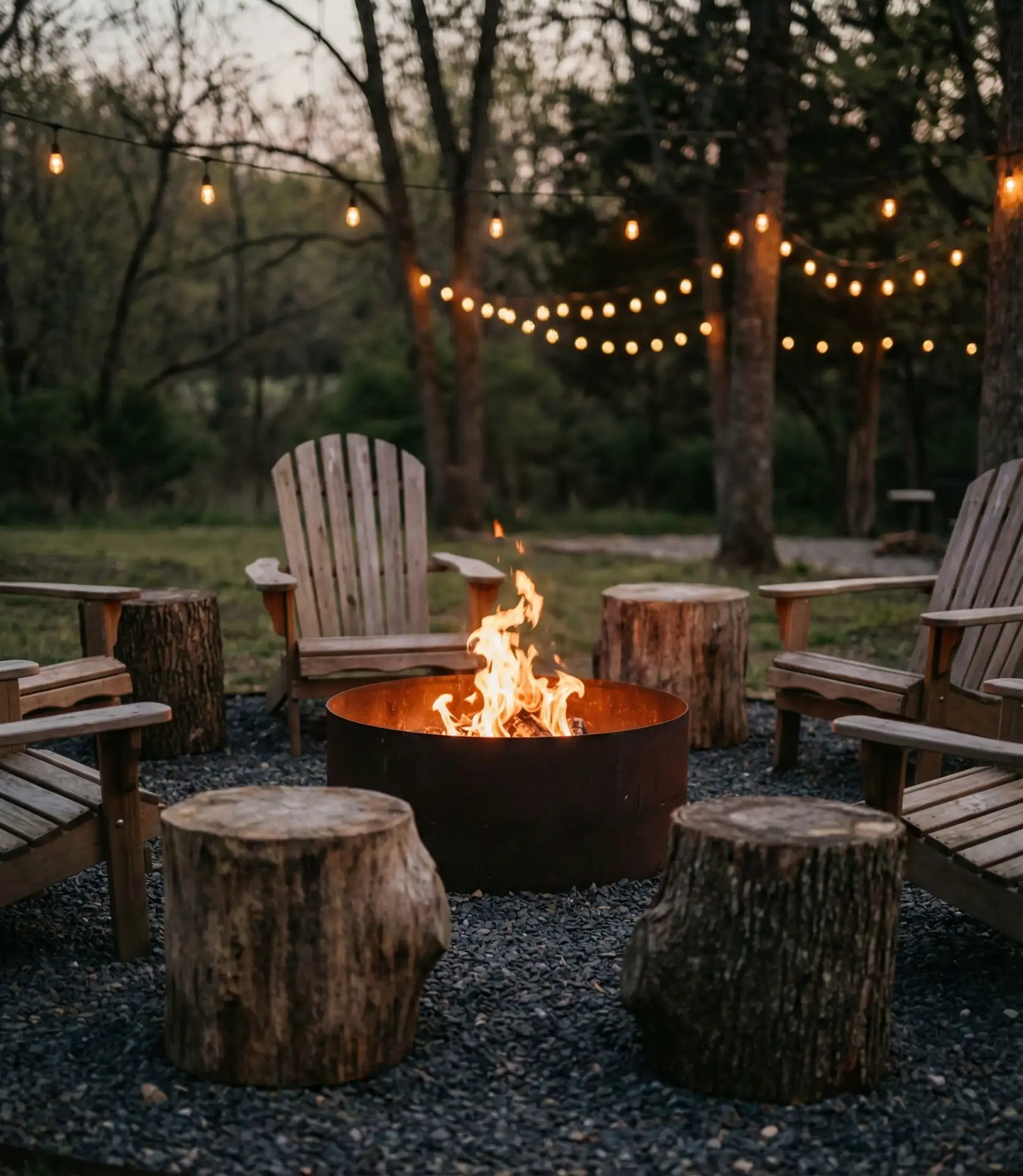
Common mistake: Mitigating lawn damage and preventing muddy messes after rain by placing the fire ring pit on grass and skipping the fire pit gravel base. Remove grass to a depth of 6 inches, then backfill and tamp with pea gravel, ensuring the surface is level. This will keep the gravel pit drained and the fire ring from sinking and settling unevenly. Some places require a fire ring and pit to be a certain distance from structures or require a permit, so verify fire ring regulations. Keep a bucket of sand to extinguish the fire instead of water, which can damage hot metal parts and glass.
14. Modern Glass Panel Railing System
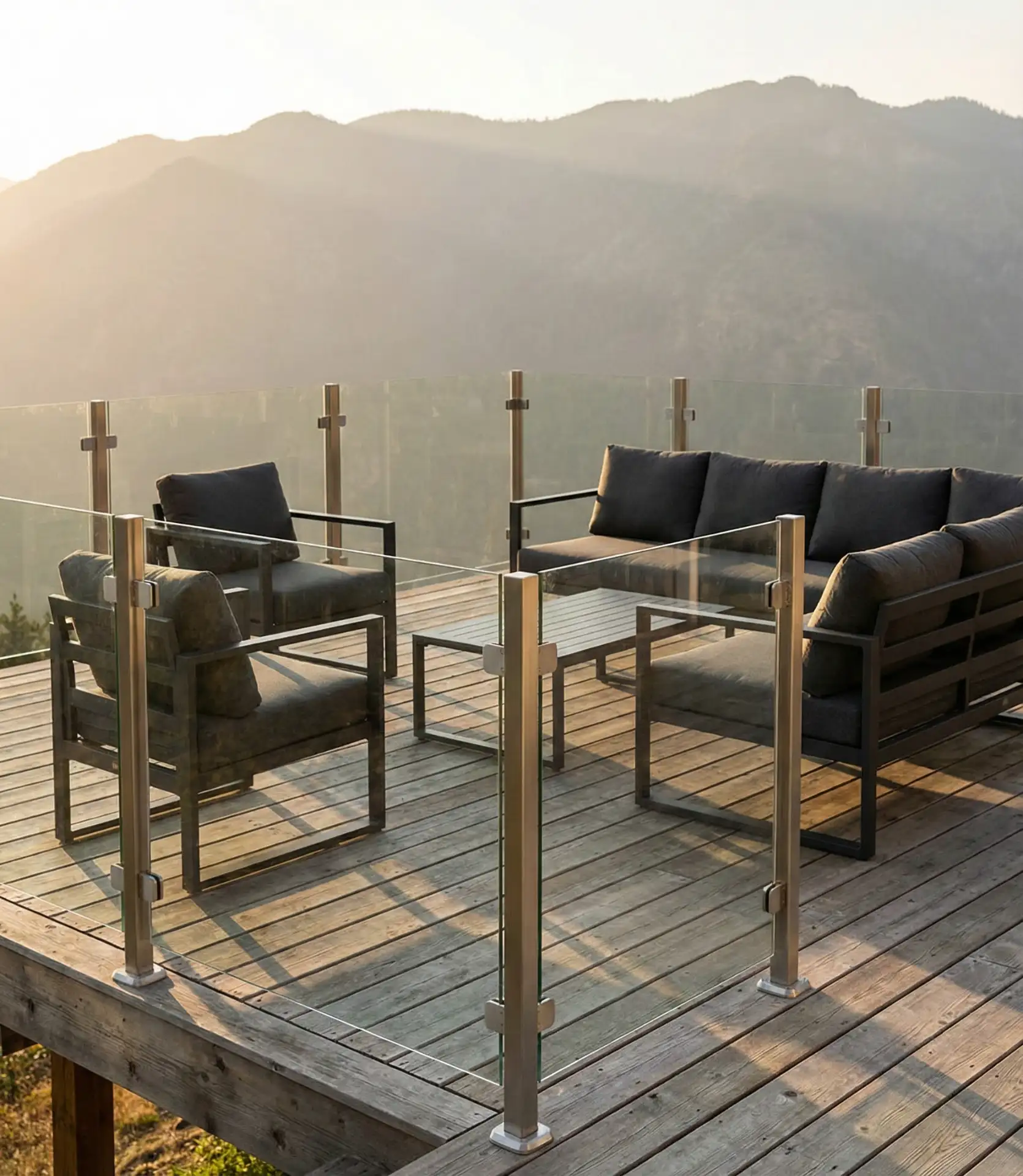
Glass railings provide uninterrupted views on elevated decks. This modern look is perfect for captivating landscapes with stunning views, from the ocean to the mountains, where wood or metal railings would block view lines. Railings can give small decks an enlarged feel by clearing views of their surroundings with no visual barriers. 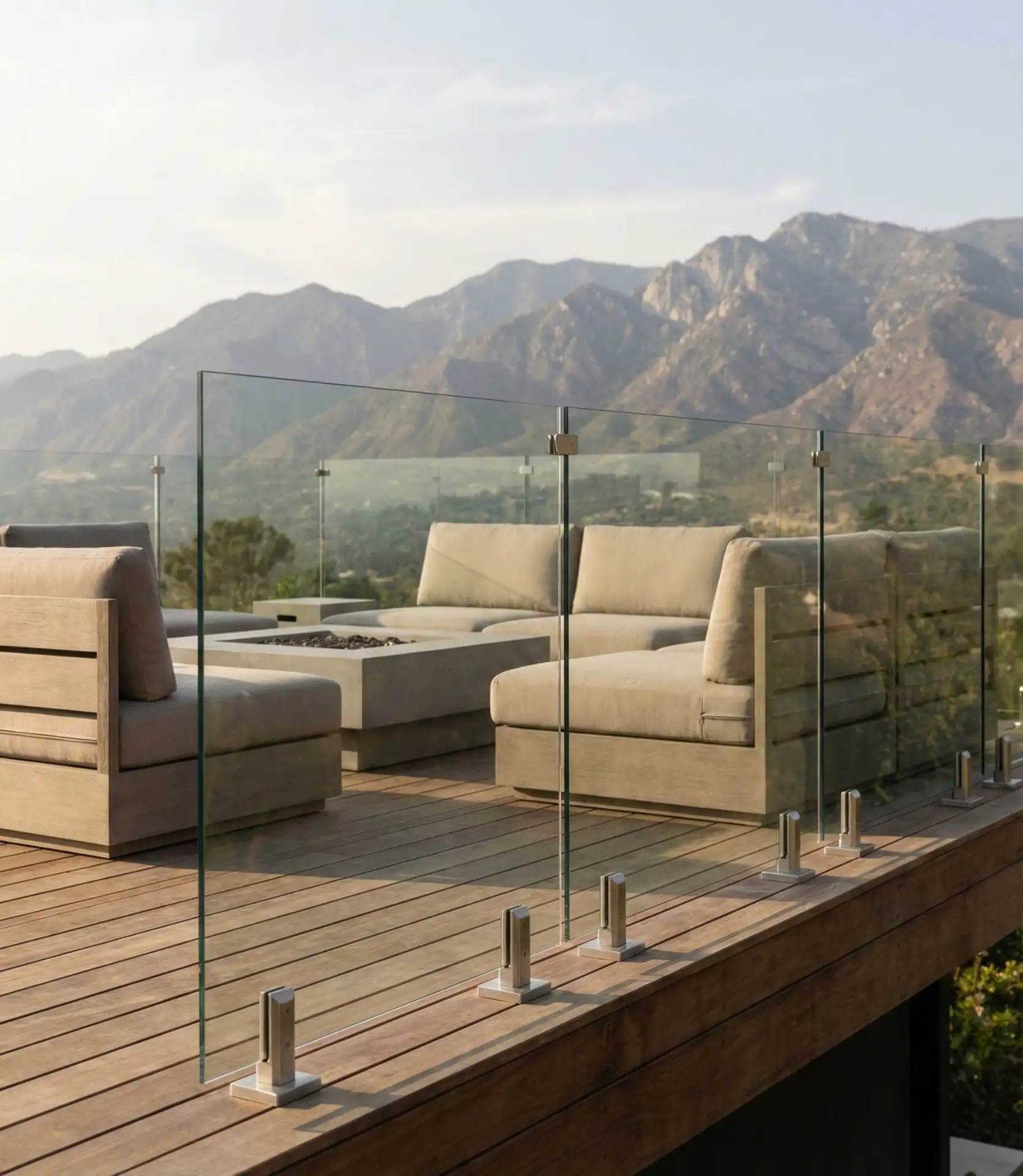
The budget angle: Glass panels run $150–$250 per linear foot installed, roughly double the cost of aluminum cable railings. However, they require minimal maintenance—a squeegee wipe every few weeks—versus repainting or restaining wood railings every two to three years. In windy locations, glass creates a windbreak that extends comfortable outdoor time, though you’ll need to clean salt spray or dust more frequently in coastal or desert environments.
15. Lantern-Lit Pathway Dining Zone
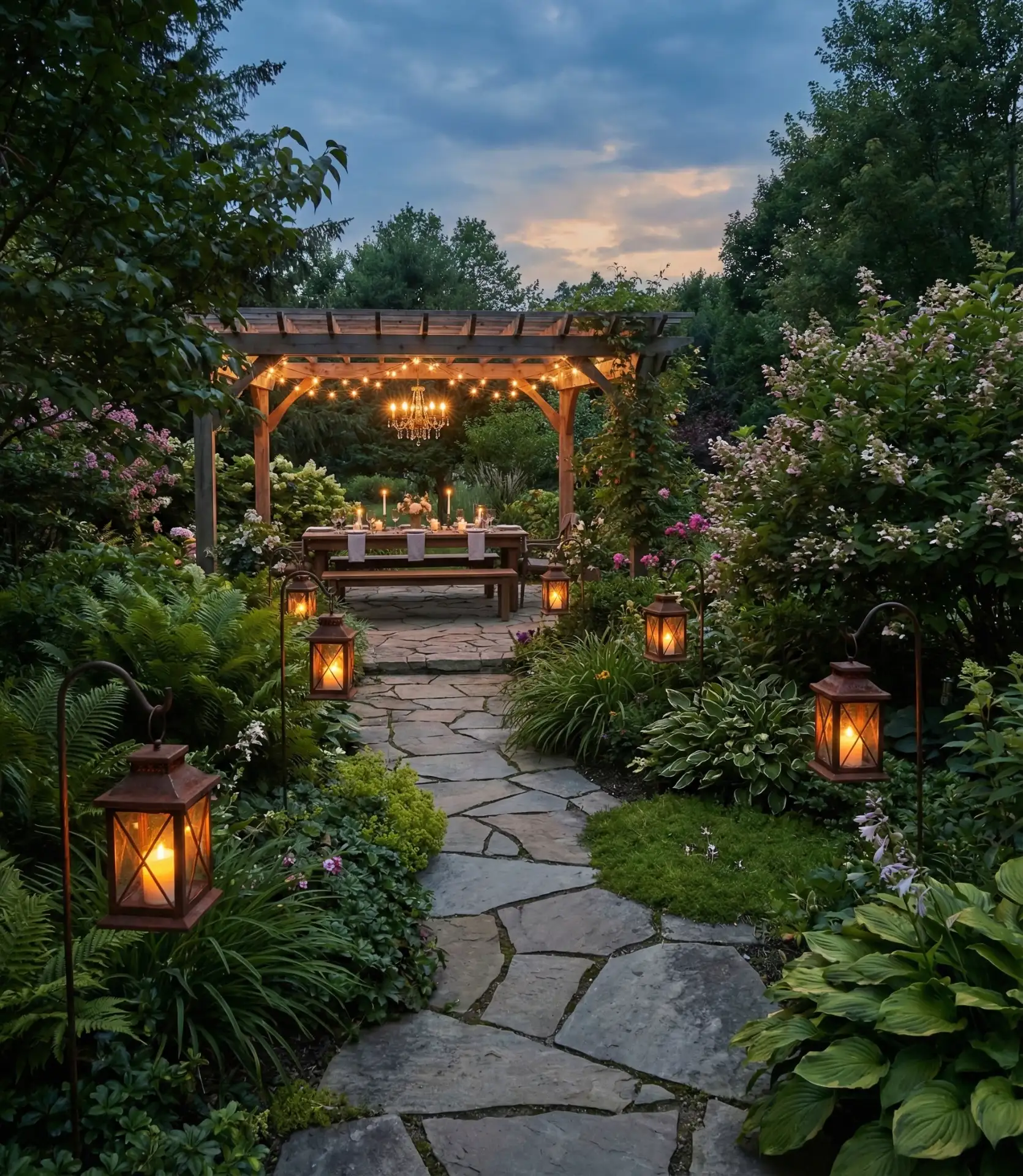
Ground-level lanterns and pathway lighting create an enchanting approach to dining areas while providing practical illumination. Solar-powered or LED lanterns positioned along walkways guide guests safely while establishing ambiance before they even reach the table. This layered lighting approach—combining pathway lights with overhead decor elements—adds depth and sophistication that single-source lighting can’t achieve. The flickering effect of flameless candles inside hurricane lanterns mimics real candlelight without wind concerns. 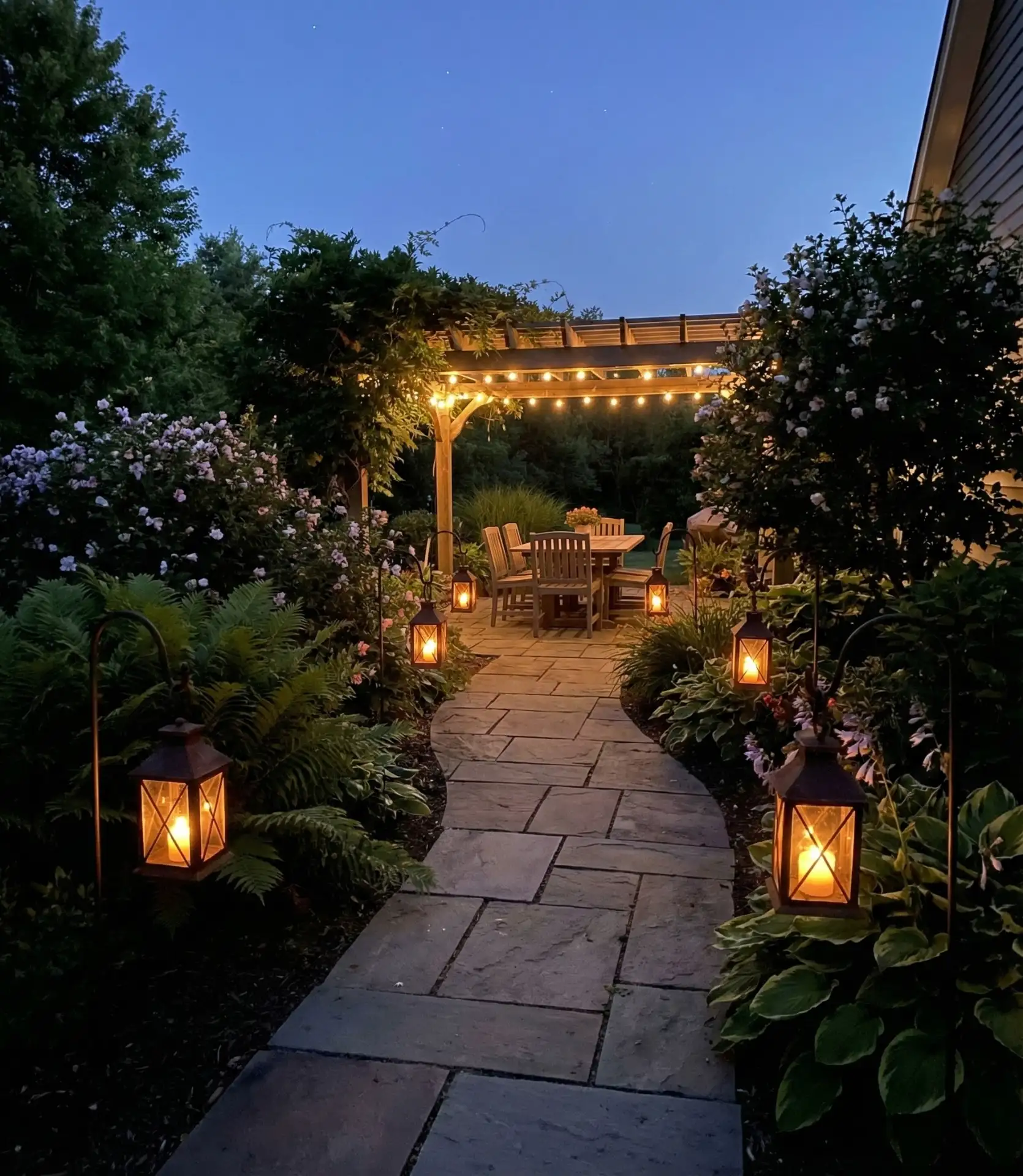
American lifestyle context: In suburban neighborhoods where dinner parties start at dusk, pathway lighting signals hospitality while solving the practical problem of guests navigating unfamiliar yards in darkness. Homeowners in the Pacific Northwest and Northeast find this especially valuable during fall entertainment when sunset arrives by 6 PM. Choose warm-white LEDs (2700K) rather than cool-white—the difference between inviting and clinical. Battery-powered options cost $15–$30 per lantern and eliminate wiring hassles, making this an accessible upgrade for renters and homeowners alike.
16. Decor-Forward Bohemian Lounge

Bohemian decor adapted for outdoor spaces is defined by layered textiles and assorted treasures. Cushions for the floor, poufs with Moroccan design, hangings made of macramé, and pillows made of kilim fabric create an ambiance that is casually elegant and invites lounging. This look is based on an appreciation for the eclectic mixing of styles and designs, an aesthetic that is typically reserved for the interior spaces and is being increasingly used for outdoor areas. The secret is to choose fabrics that are made for the outdoors and resistant to fading and to select your preferred patterns instead of settling for boring solids. 
This method is suitable for covered and uncovered spaces. Fabrics are somewhat protected from harsh weather. To help decks last longer, store cushions in a box between gatherings. If your area is humid, choose polyester and cotton blends or solution-dyed acrylic fabrics, which resist mildew. The eclectic style is forgiving to mismatched pieces. You can add found objects from flea markets and travel and not disrupt the overall aesthetic.
17. TV and Sound System Outdoor Theater
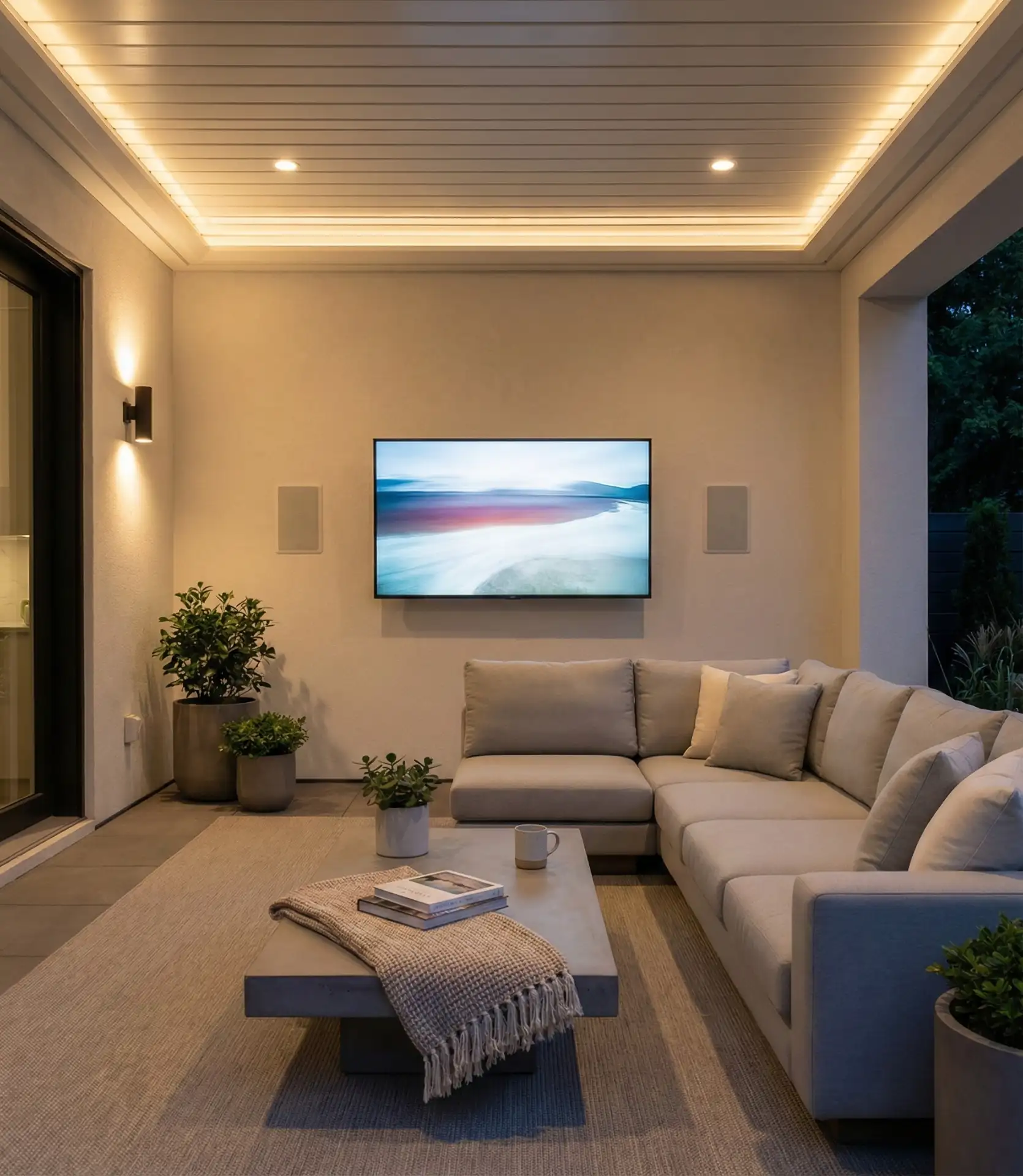
Mounting a weatherproof TV on a covered patio creates a hub for outdoor entertainment for game and movie nights. TVs for outdoor use are modern and withstand temperature and humidity changes. They also offer bright screens that are visible even during the day. For audio, pair with soundbars or landscape speakers that are weather resistant, as they create a unified experience with the viewing. This setup prolongs the time that guests spend outside, preventing the indoor migration that usually occurs when the big game starts. 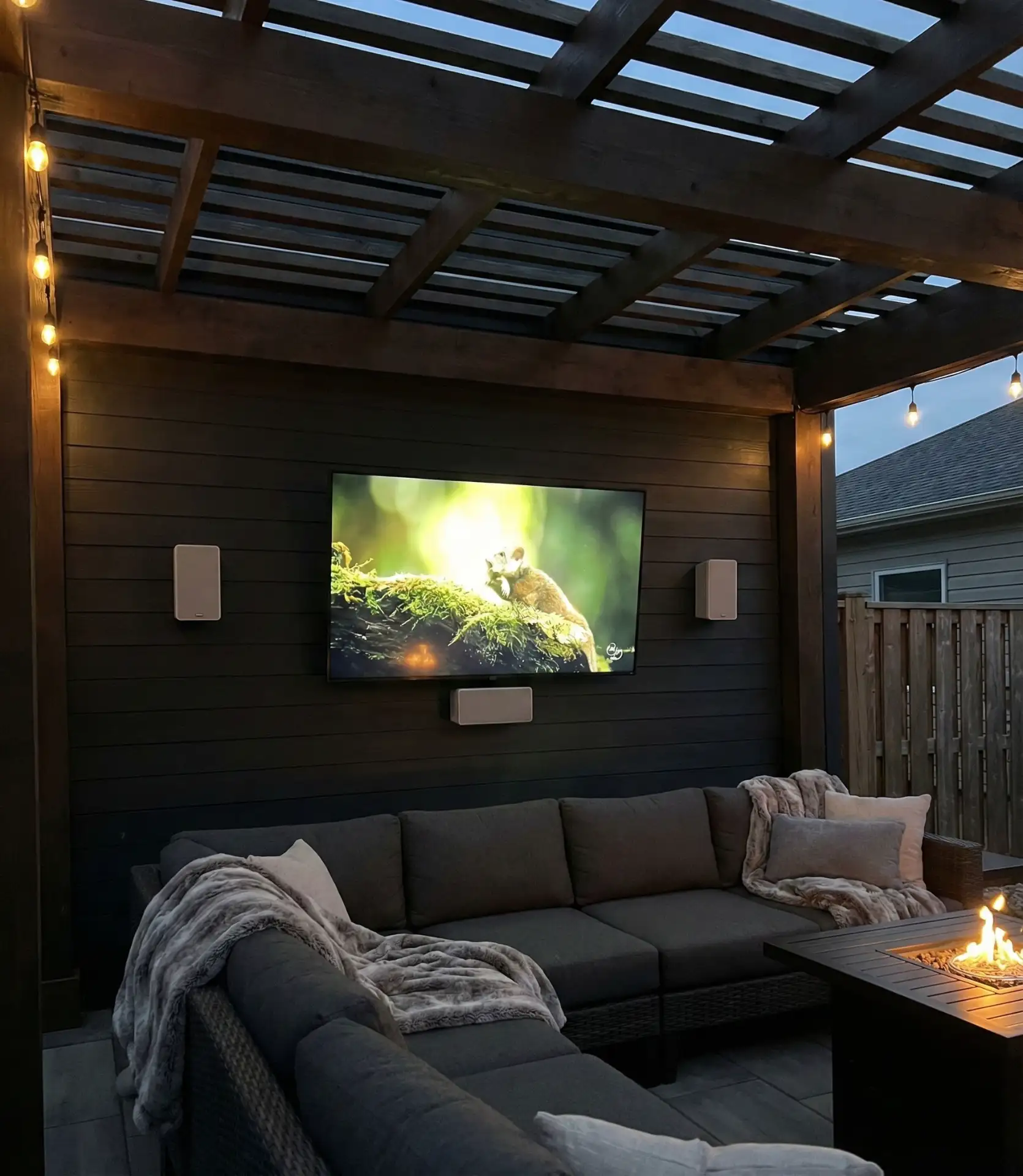
In areas of the South and Midwest, where football is a significant pastime, outdoor TV setups can easily be justified in the $1,500–$4,000 range by making use of the setup in the fall and spring. It’s best to mount a weatherproof TV under a roof overhang if you’re investing in one. This protects it from rain. You can add a locking weatherproof remote and a streaming device cabinet to protect against weather damage and theft. If the permanent setup is too great of an investment, try out a portable projector screen first to test the concept.
18. Plant-Filled Urban Oasis
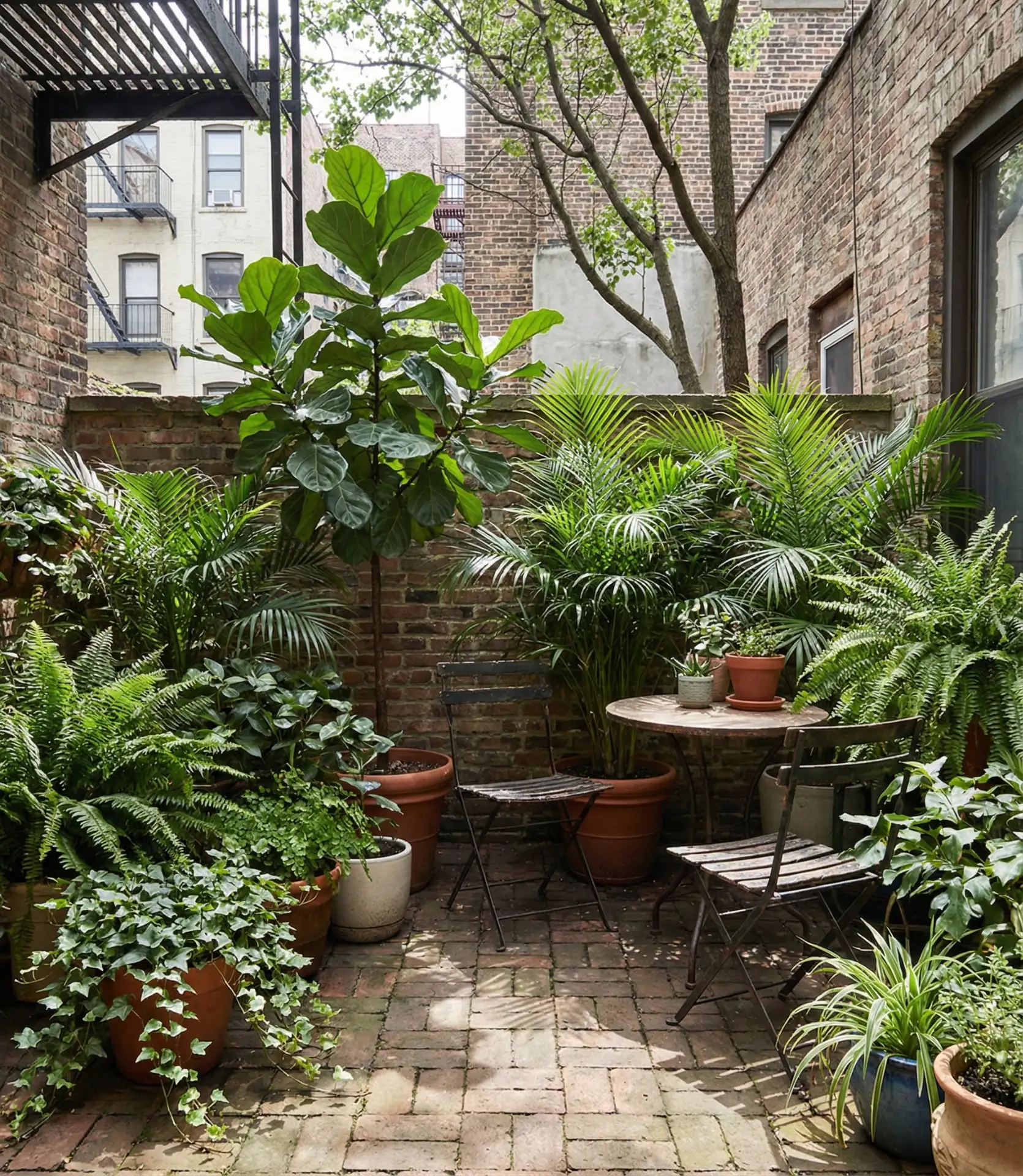
Large quantities of foliage make concrete patios feel like lush, urban oases. Layered container gardens with different heights and textures result in a more dynamic garden. In the corners, large fiddle-leaf figs; in the midrange, a bird of paradise for added tropical drama; and in the trailer, a softening ivy. This type of design is especially useful in cities with no yards at all and only patios, where the outdoor space is more garden-esque and precious. 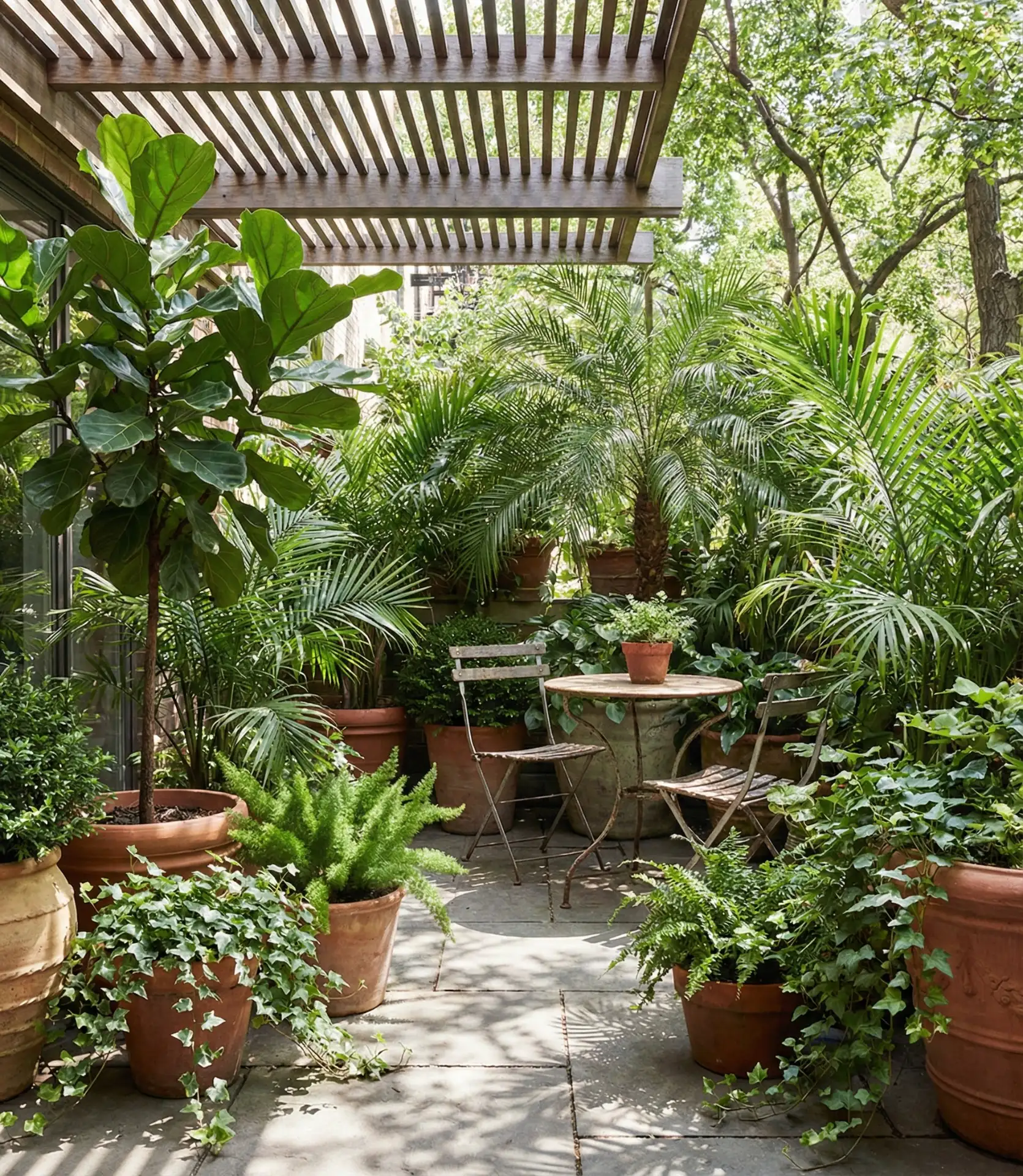
Practical insight: To save yourself some extra work, group together plants that need the same amount of water, and set up drip irrigation. For a price between $150 and $300, you can buy an irrigation system that will keep your plants healthy and won’t require attention on a daily basis. When selecting containers, make sure that they have drainage holes, and use a high-quality potting mix. Denver, Phoenix, and other places with dry climates will greatly benefit from self-watering planters, as they relieve the stress of watering during a busy schedule and will reduce your maintenance by 50%.
19. Deck with Integrated Planter Boxes
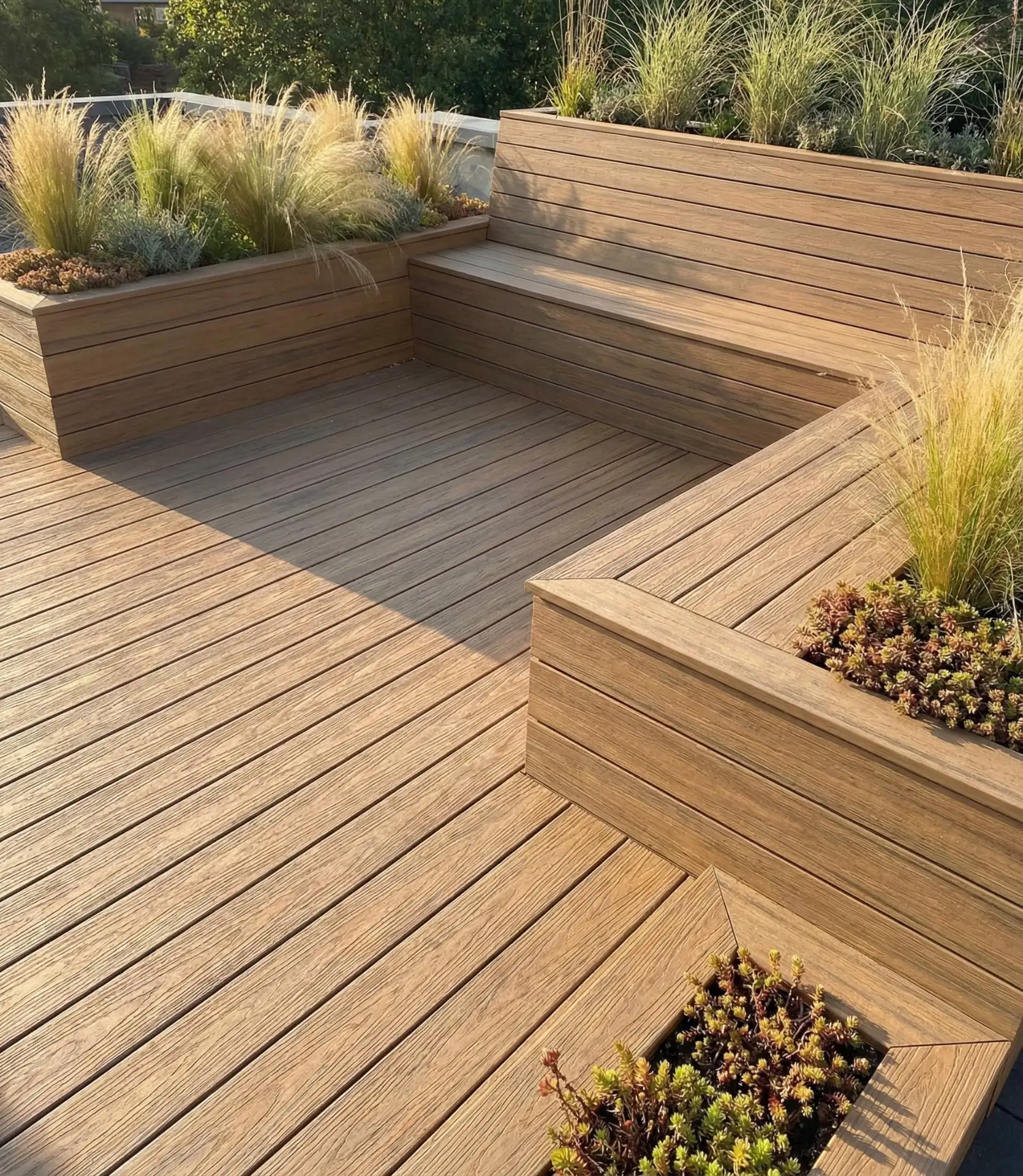
Planter boxes built into the perimeter of a deck remove the need for heavy pots and furnish natural privacy screens. These planters become architectural elements, often with integrated bench seating along the top. Use ornamental grasses, boxwoods, or flowering shrubs that soften the deck’s rigid lines and provide seasonal interest. The integrated approach looks intentional and finished compared to randomly placed containers. 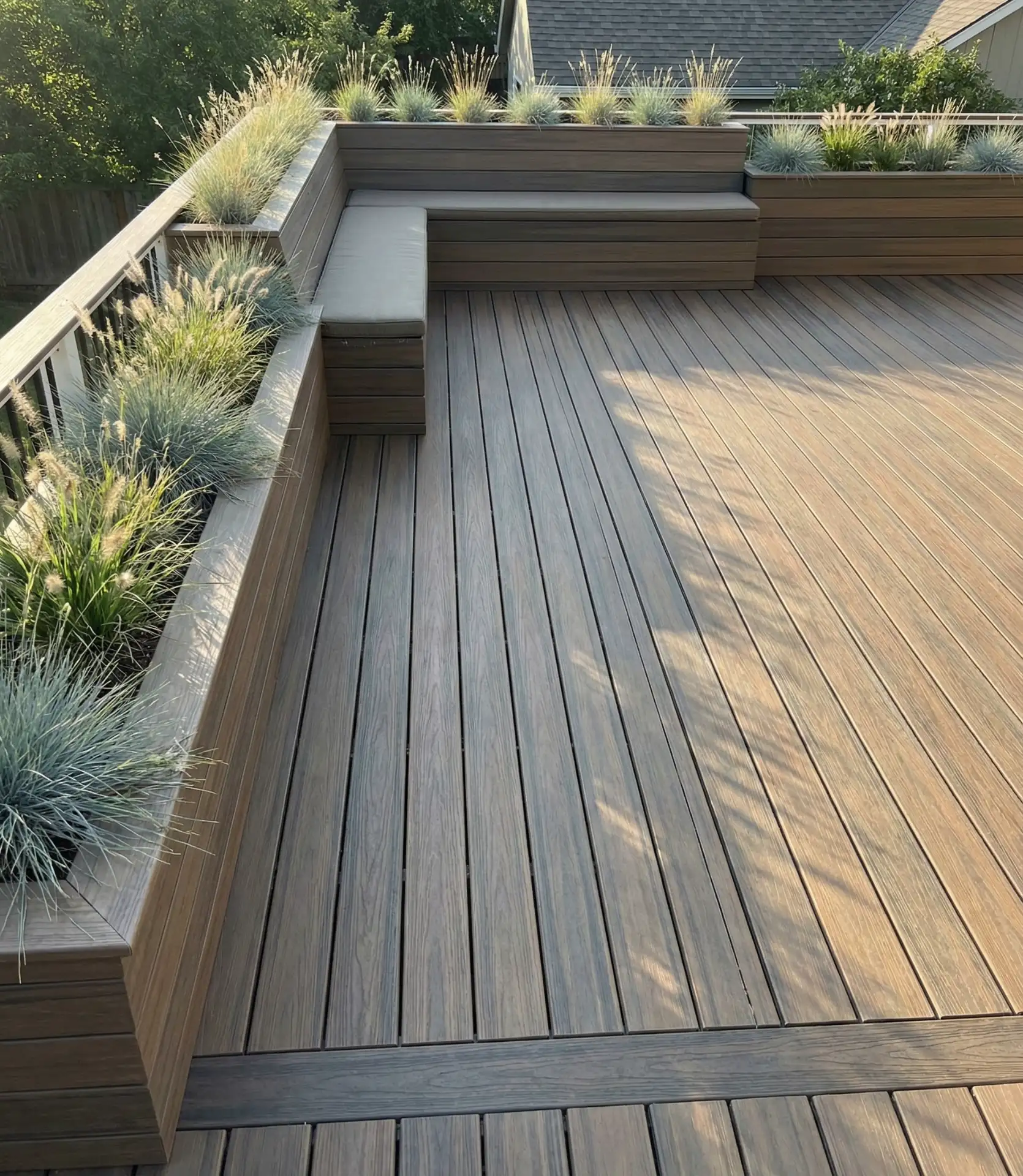
Best where it fits: multi-level decks where planters mark different areas, or narrow decks where large furniture would be awkward. Line the insides of planters with landscape fabric, and make sure drainage holes prevent standing water. In colder regions, select hardy perennials that will survive the winter in above-ground planters, or schedule replanting with annuals each spring. Planter boxes increase the cost of deck construction by $800 to $1,500 but save you from having to buy containers every year.
20. Tile Accent Wall Statement
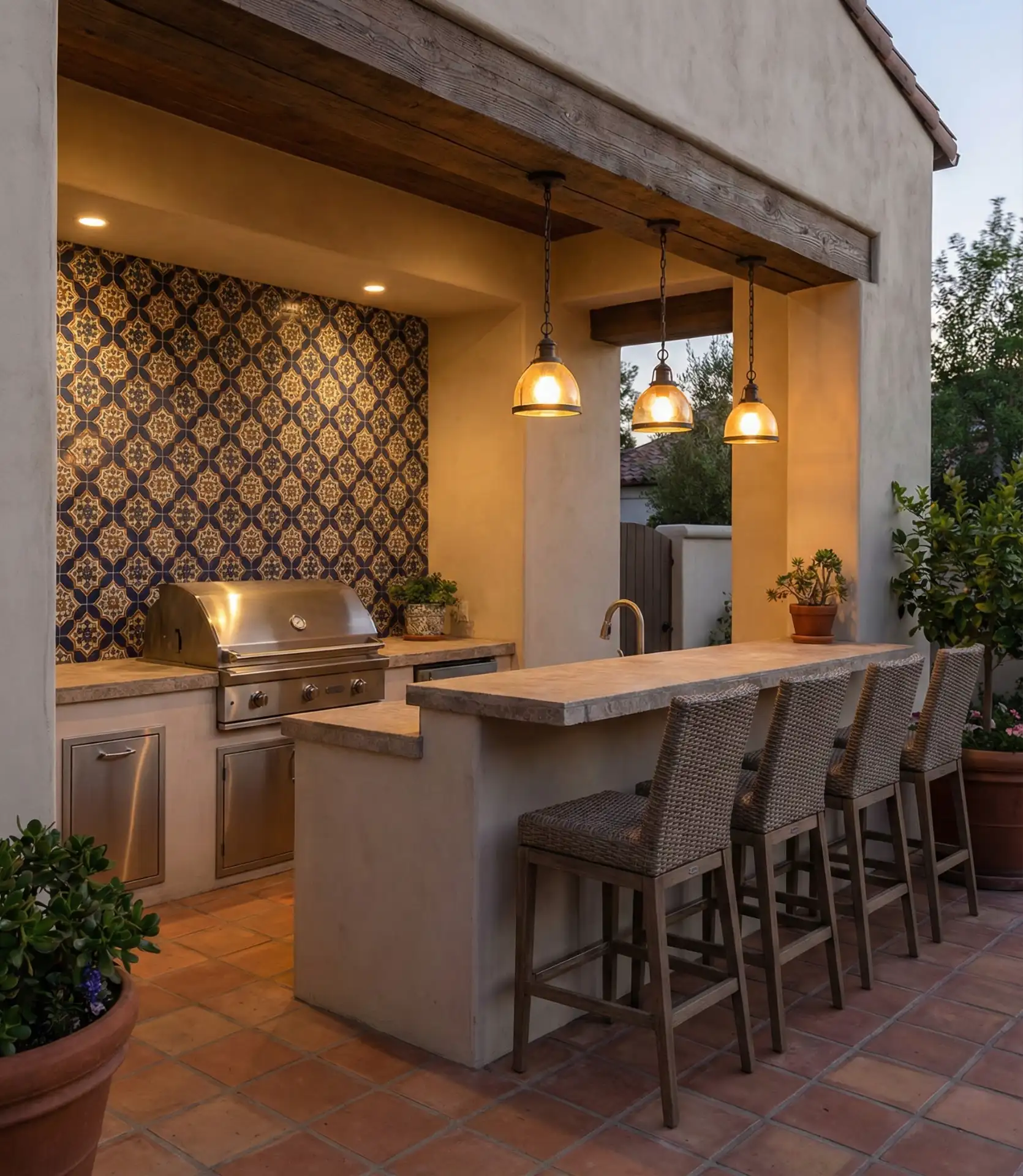
Vertical surfaces of outdoor kitchens and bars get decorative tiles that bring unexpected patterns and colors. Frost-resistant cement or porcelain tiles will bring new focus to plain stucco or concrete block walls. Frost-resistant tiles come in many different colors and patterns, including Mediterranean, and can be used to give new focus to your outdoor kitchen and make it more than just functional. 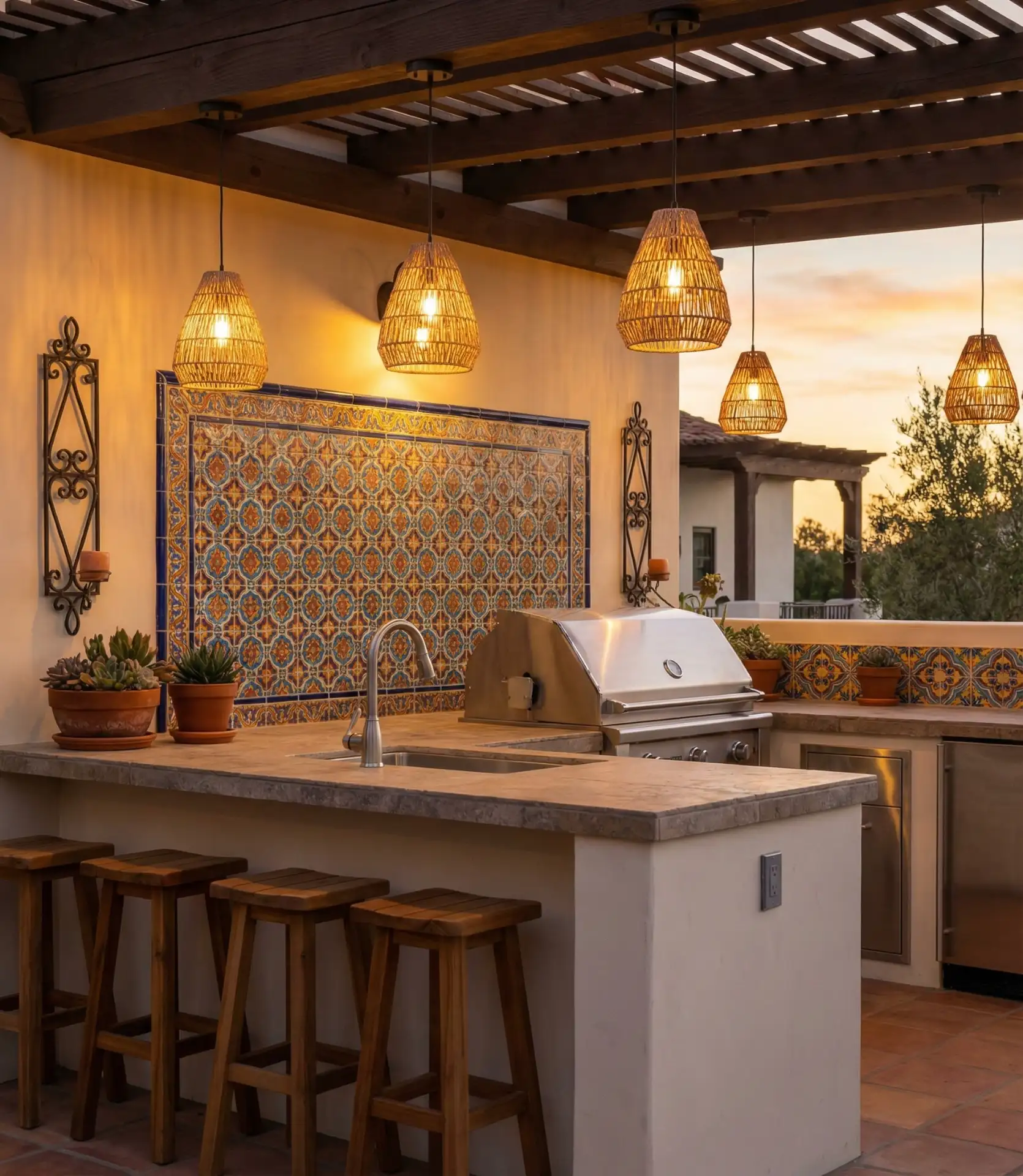
Talavera tiles usually cost quite a bit. A homeowner in Santa Fe managed to pay $600 for hand-painted tiles for the 8-foot area behind the grill in the outdoor kitchen. Guests often take photos of the tiles, indicating that she is getting value for her investment. The rest of her outdoor kitchen is basic stucco. Use outdoor-grade thin-set mortar & grout. Seal grouting annually in areas with harsh climates. If you live in the Northeast, use frost-proof porcelain tiles instead of hand-painted tiles, as they will crack due to the freeze-thaw cycles.
21. Poolside Cabana Lounge Retreat

A shaded retreat dedicated to a structure with a cabana serves functions throughout the day. These open-sided pavilions provide areas for changing, storage for equipment, and seating for supervision of the pool. The cabana features weather-resistant daybeds, outdoor curtains for privacy, and ceiling fans that circulate air. The cabana becomes the anchor socially where pool parties are. It provides a break from the sun and a connection to the water. 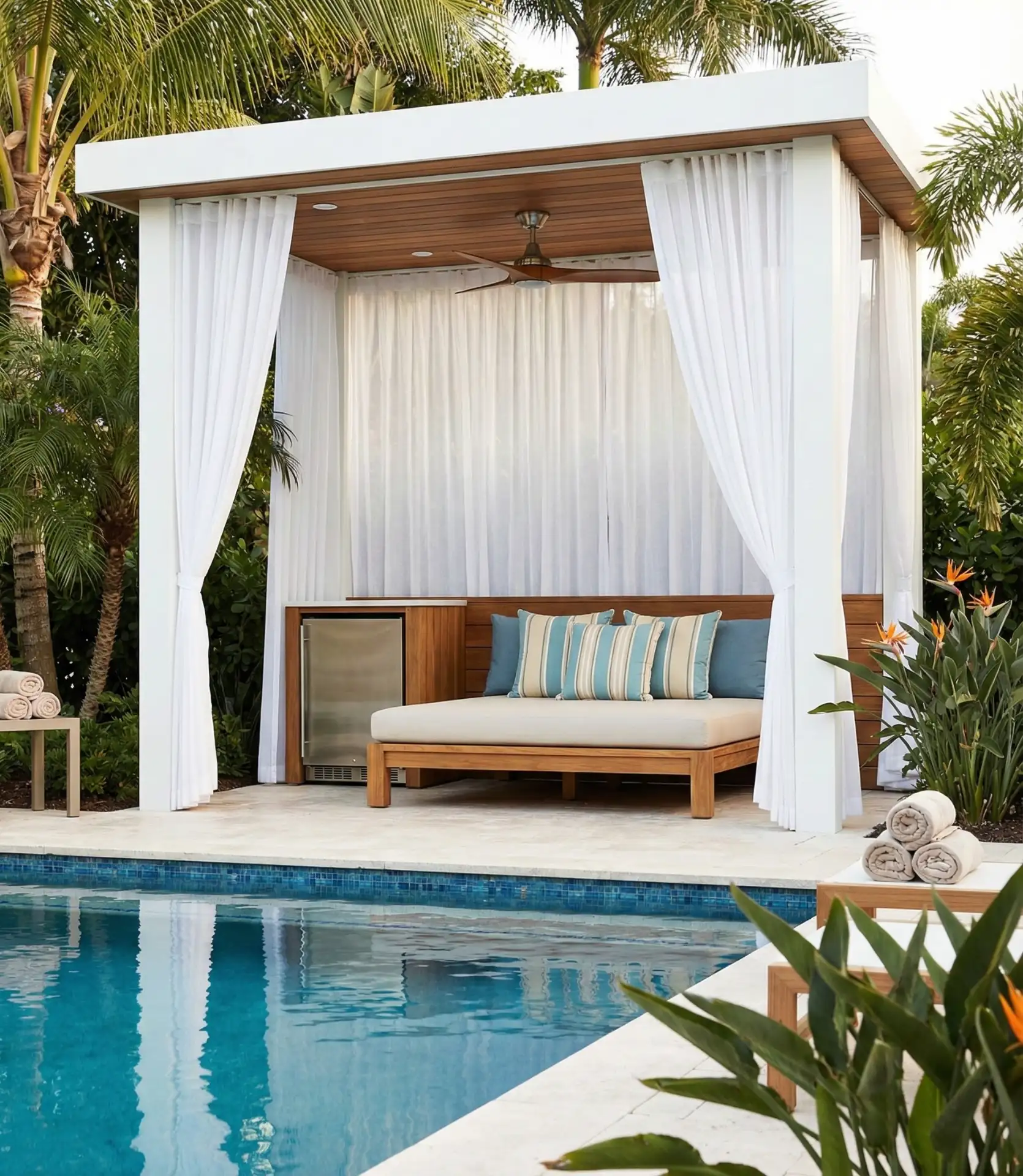
Micro anecdote: My sister installed a 10×12 prefab cabana in her Dallas backyard last spring for $4,500. Within weeks, it replaced her covered patio as the default gathering spot—kids use it for post-swim snacks while adults claim it for afternoon reading. The shade extends pool time by hours on Texas summer days when direct sun becomes unbearable. She wishes she’d added electrical outlets during installation rather than running extension cords, so plan ahead for charging stations, a small refrigerator, or Bluetooth speakers.
22. Modern, Minimalist Concrete Patio
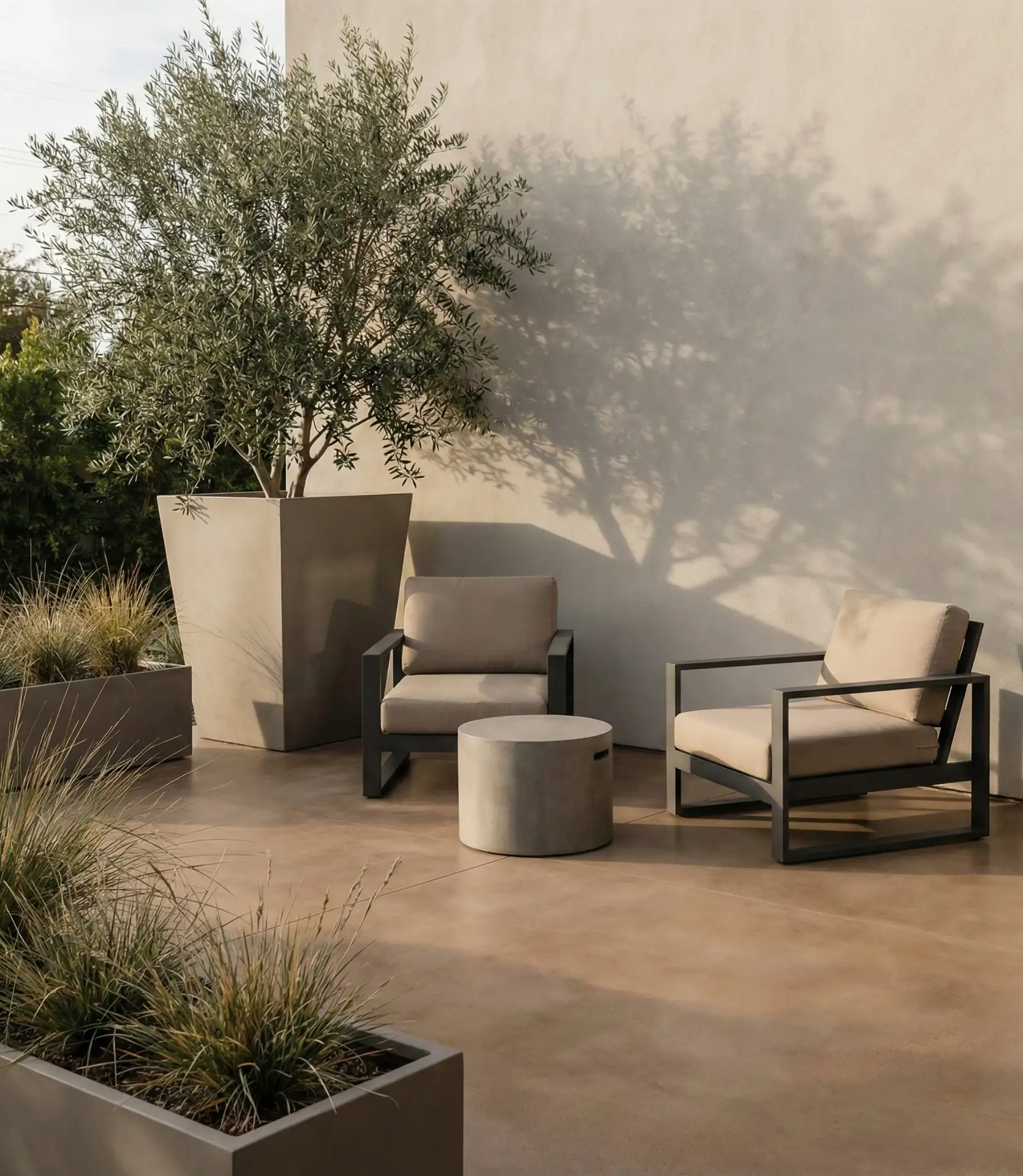
Troweled, poured concrete is a minimal, modern choice for outdoor spaces. Smooth, unpatterned surfaces let chairs and plants take the focus. With monolithic surfaces, you’re able to stain in a soft sage, taupe, or charcoal for a pop. Flexible furniture arrangement is another plus. You won’t have to plan your furniture layout around fixed paver or deck board patterns. 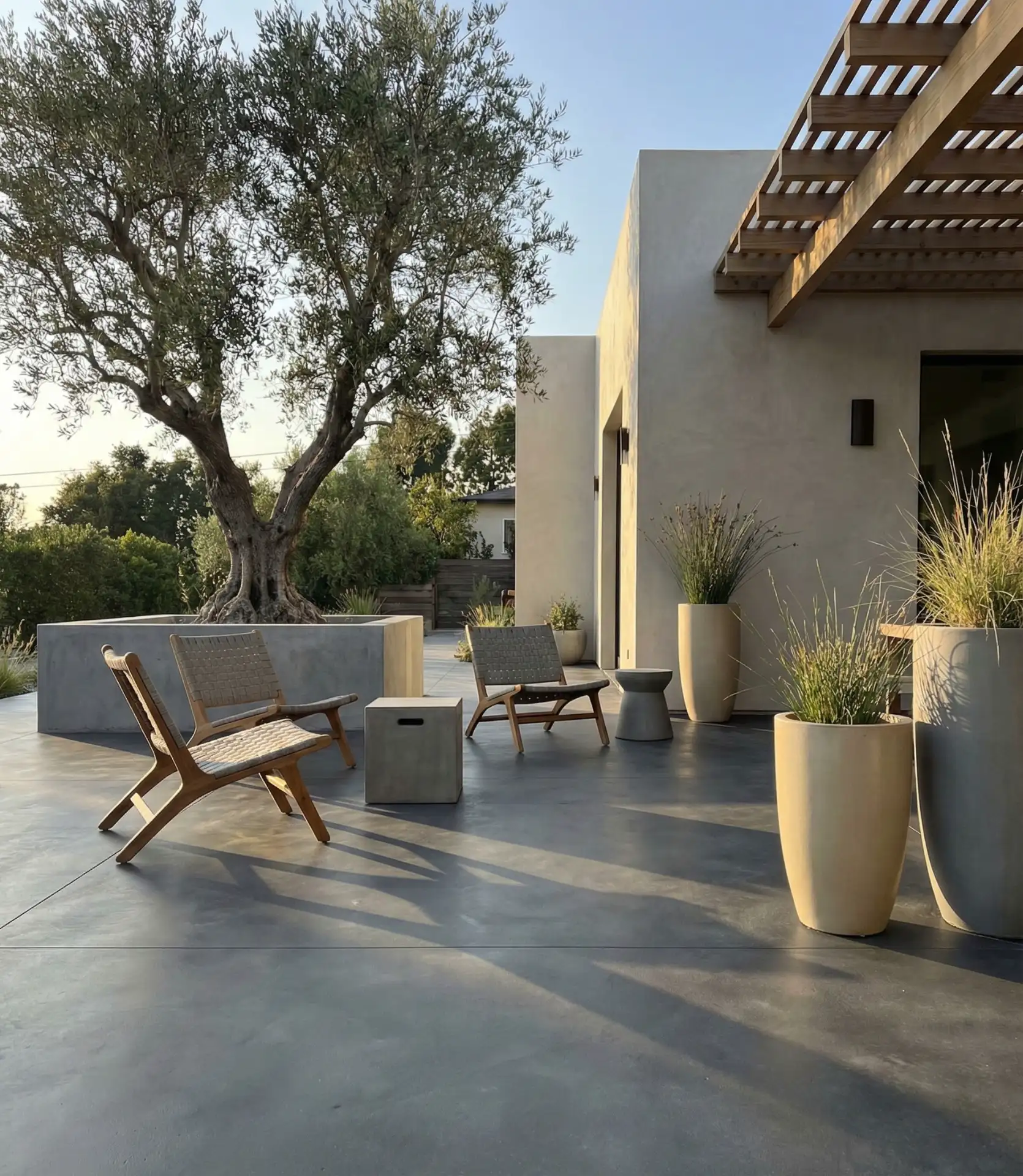
Expert commentary: An intelligent design would integrate control joints as intentional lines in the pattern, though from a construction standpoint, concrete needs control joints every ten feet to avoid random cracking. For slip resistance, especially around pools, add a broom finish or light sandblasting. To avoid the moisture and leaf staining, seal every two to three years. For basic installation, the cost ranges from $6 to $12 per square foot, making it budget-friendly compared to pavers at $15 to $25 per square foot.
23. Covered Backyard Outdoor Kitchen
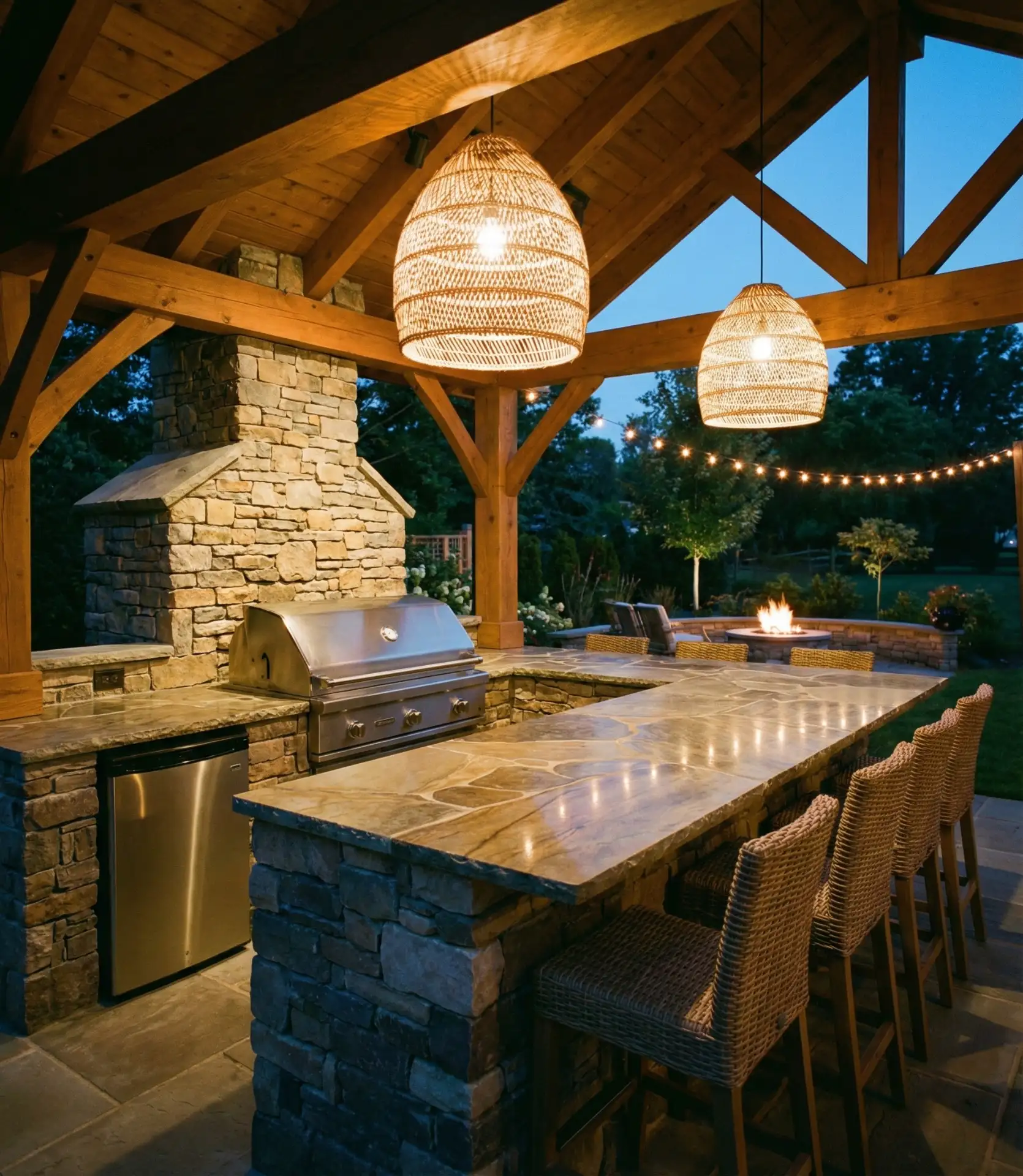
The covered backyard kitchen with a built-in grill, sink, and refrigerator eliminates the indoor-outdoor shuttle during parties. With these amenities under a roof structure, weather shielding the appliances and the weather, it creates a defined cooking zone that keeps the chef connected to the guests. Countertops extend beyond the grill for prep and serving space. This setup mirrors the workflow of an indoor kitchen, making outdoor cooking feel instinctive and naturally functional, rather than a temporary solution. 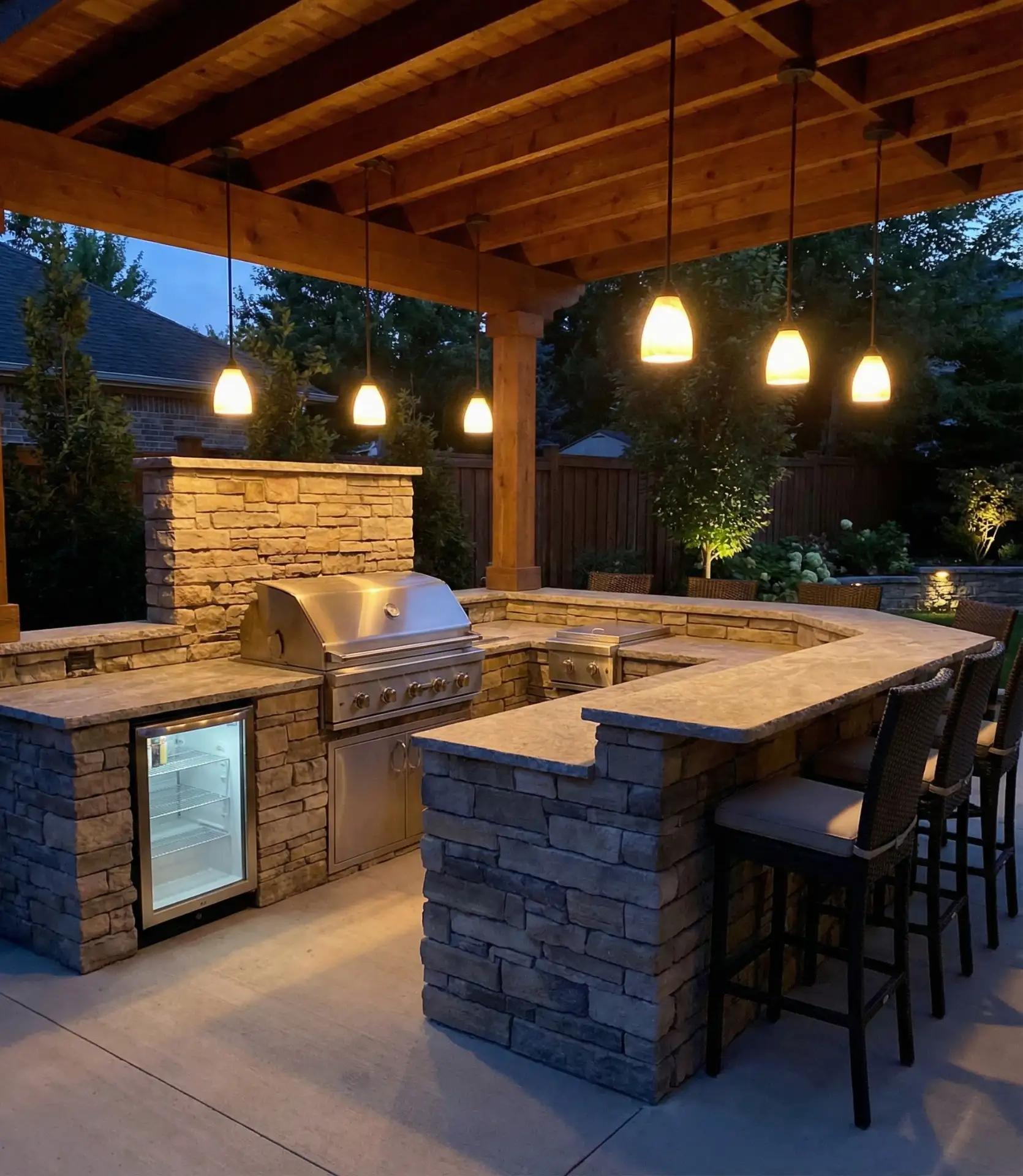
An investment of $8,000-$25,000, depending on custom finishes, will pay dividends for serious entertainers who grill multiple times per week. Run electrical, gas, and water lines while building, rather than retrofitting later; it’s cheaper and cleaner. Task lighting above work surfaces and ambient lighting elsewhere help create your desired atmosphere. A common mistake is undersizing the countertops and then realizing you need surfaces to set platters, cutting boards, and ingredient bowls. Plan for a minimum of 6 feet of counter space beyond the grill.
24. Australian Enclosed Patio Conversion
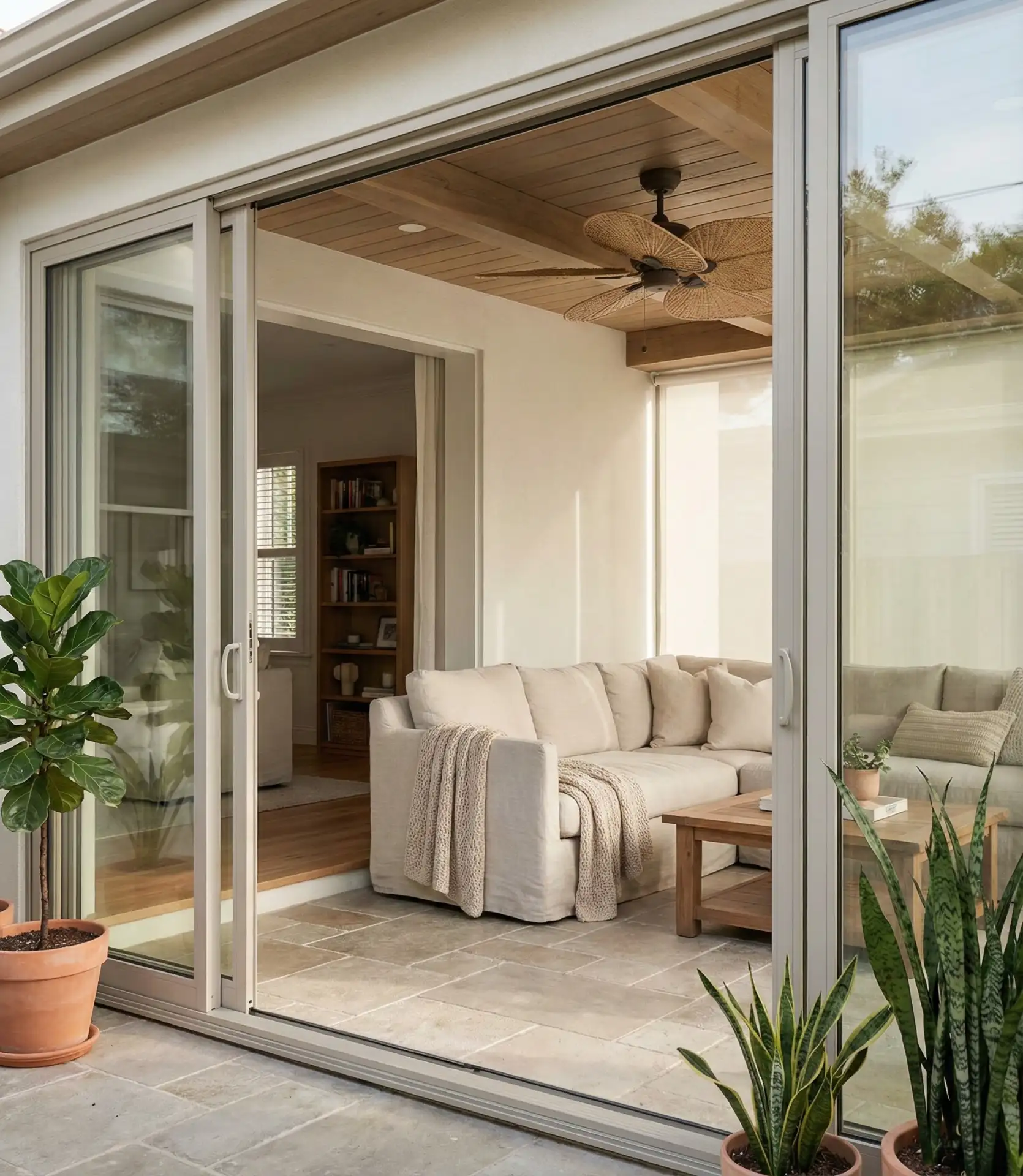
Inspired by Australian enclosed patios, Americans have begun converting open porches into climate-controlled outdoor rooms that include sliding glass walls. These systems are designed to allow the panels to stack open when the weather is nice or to close completely during inclement weather. The versatility of these systems provides year-round functionality, a benefit that traditional open patios do not offer. Comfortable outdoor heaters and ceiling fans help extend the comfortable temperature range for more months of use. 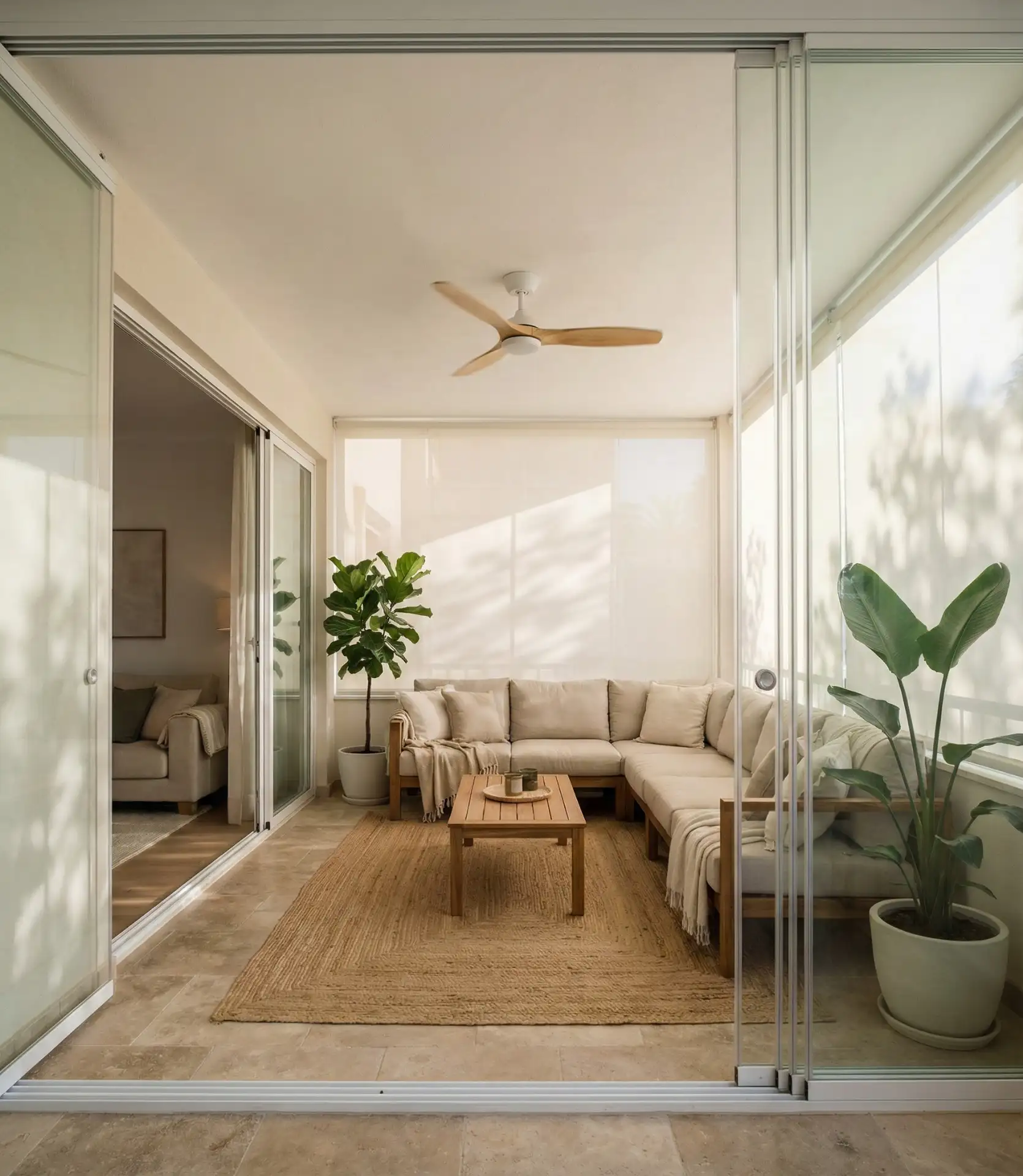
In the Midwest and Northeast, the upgrade changes patios from three-season spaces to four-season spaces. Plan for $8,000 to $20,000 for motorized glass panel systems, or manual sliding options around $4,000. Add weatherstripping and closed drainage systems—enclosed spaces will need gutters and downspouts to manage roof runoff that previously drained for free. The enclosed room becomes highly desirable due to its continuous use, making the investment justifiable.
25. Open-Air Dining Pavilion

A freestanding open pavilion adds a destination dining area away from the house—a journey that makes meals feel special. A simple roof structure held at each corner by a post defines the space without enclosing it. The layout works wonderfully for large spaced properties where the pavilion becomes a focal point and can be viewed from the house. To mark the pavilion as an outdoor dining room and not just a casual patio, hang an impressive (weatherproof) chandelier over the table. 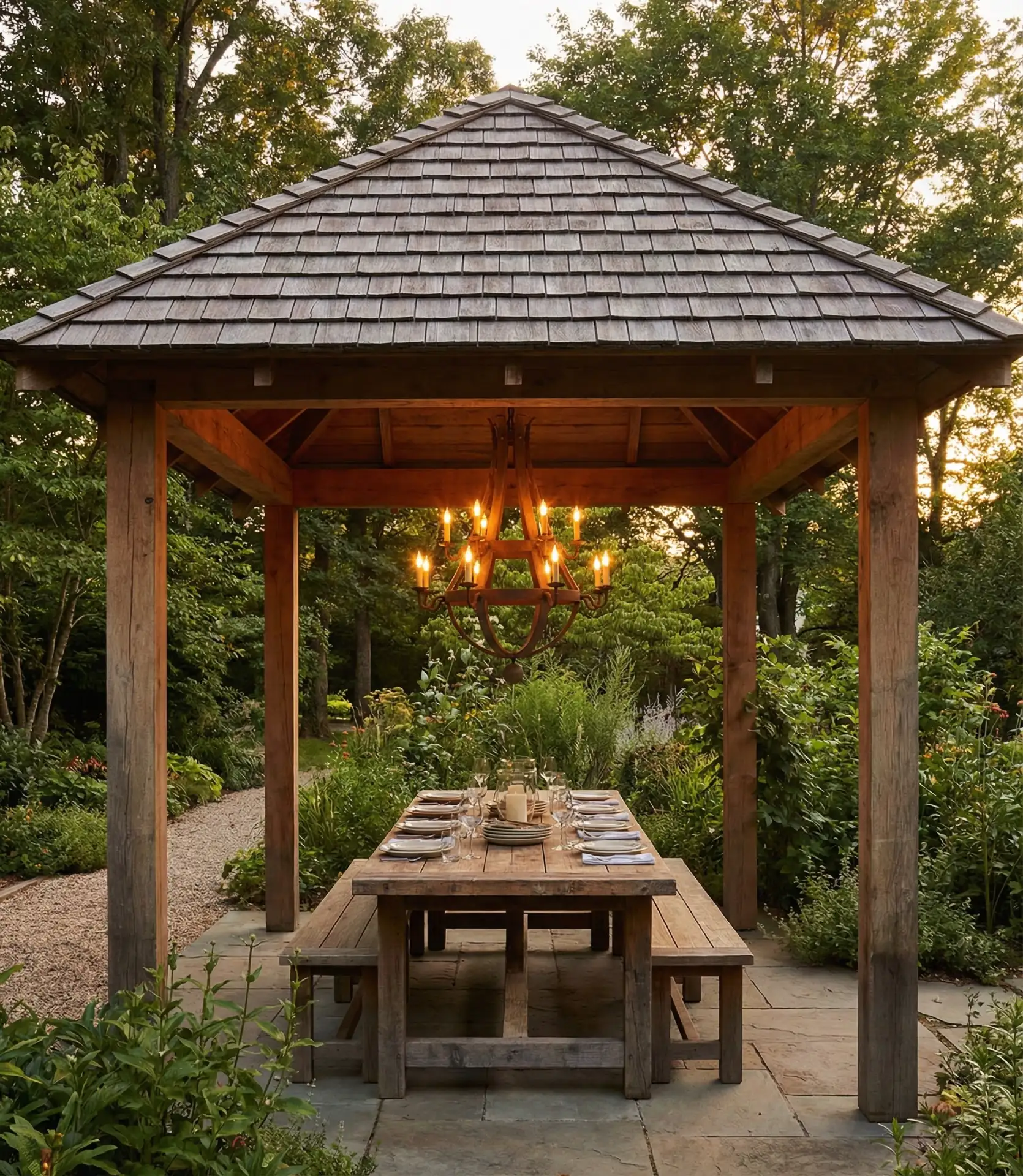
My cousin Virginia’s backyard has a 12×16 pavilion that cost $4,500 in materials, hiring only for the foundation and electrical work. This pavilion replaced her efforts to host parties on her small deck. Now, the deck is used for overflow seating, while the table at the pavilion serves as a gathering place for every summer party. The pavilion is about 40 feet from the house, making it a perfect location, far enough to feel like an event but still close enough to access the kitchen.
26. Ultimate Multi-Feature Entertainment Hub
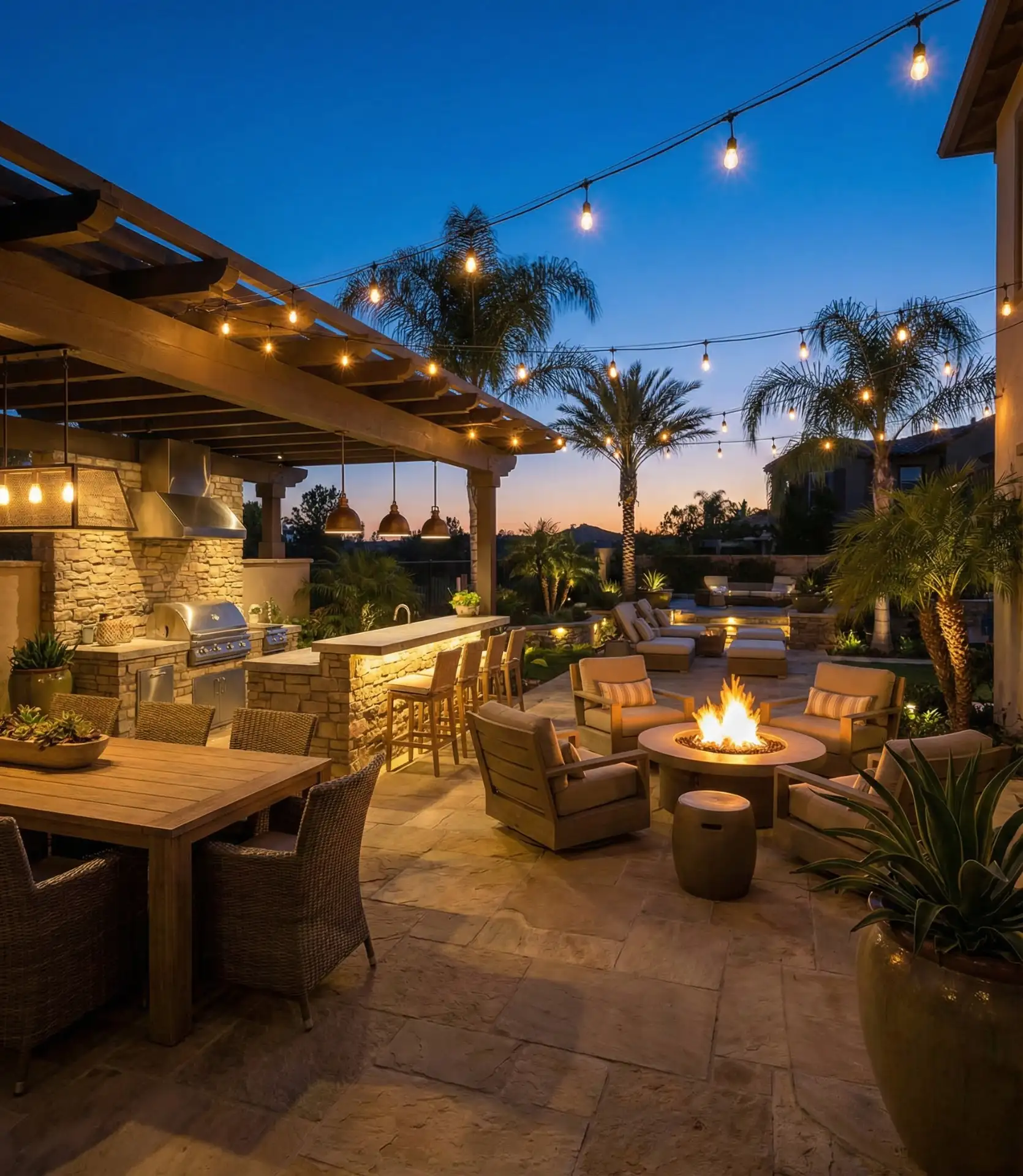
The ideal outdoor space includes a kitchen, bar, dining area, lounge seating, a fire feature, and entertainment all in one design. Depending on the size, the design should offer a resort-level amenity in a residential setting. This approach tends to be more of a commitment, as it typically requires 600+ sq. ft. of significant square footage. Each element is designed for easy access; for example, the bar is set in between the kitchen and dining area, and the lounge seating is facing toward the fire pit. The TV is positioned to be in view from several zones without distracting from the aesthetic. 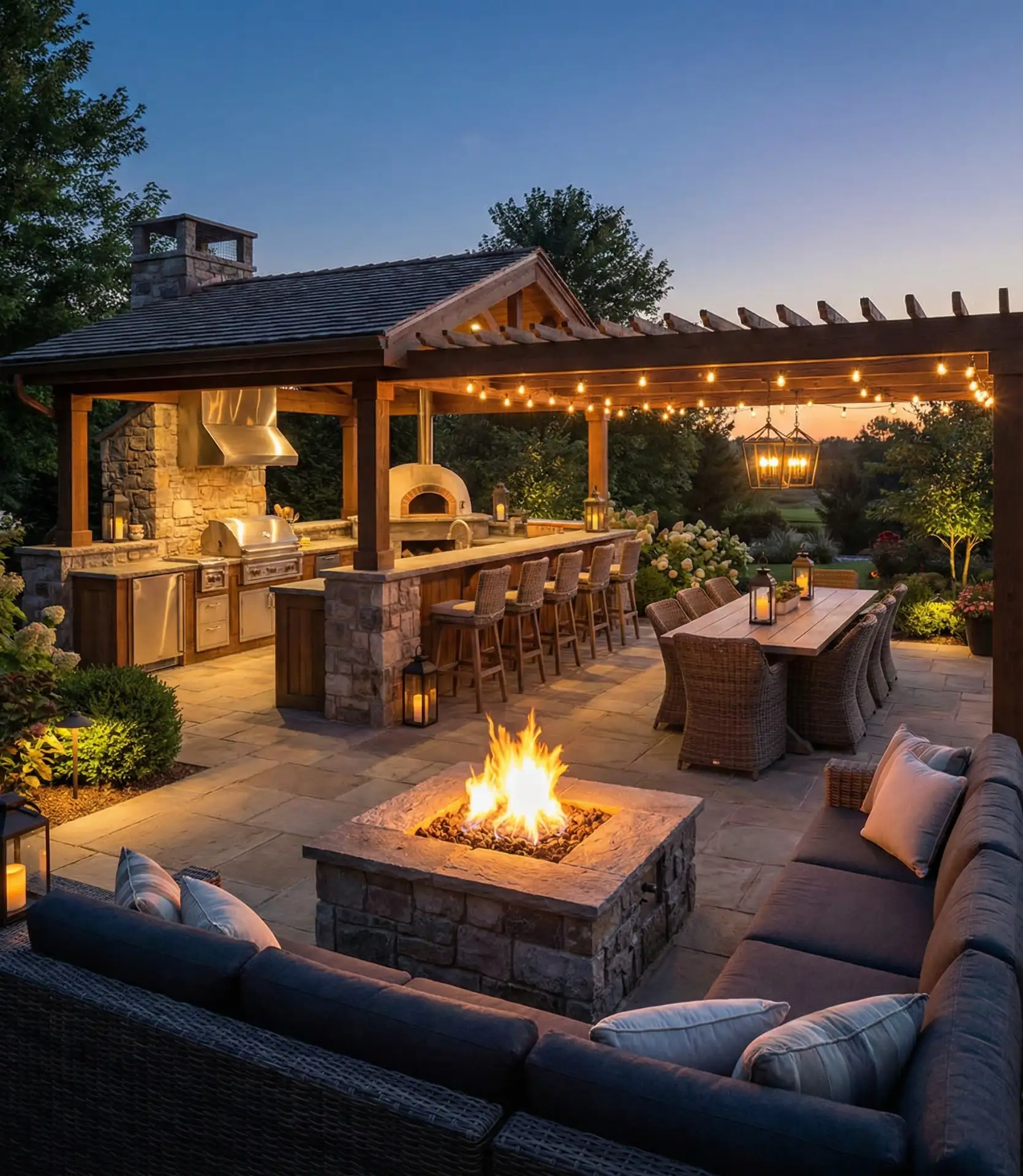
Budget considerations: Prospective customers should set aside $30,000 to $80,000 for each step of the installation process. If you phase construction over several years, it makes the investment easier to digest. Construction can begin in the kitchen and dining area, which are the highest priority, and lounge zones with fire feature add-ons may be added in subsequent years. In AZ and NV, homeowners spend 9 months out of the year in those spaces, so the cost per usage is very low when compared to the spaces that are left unused aside from the occasional event.
27. Ideas Collection Gallery Wall
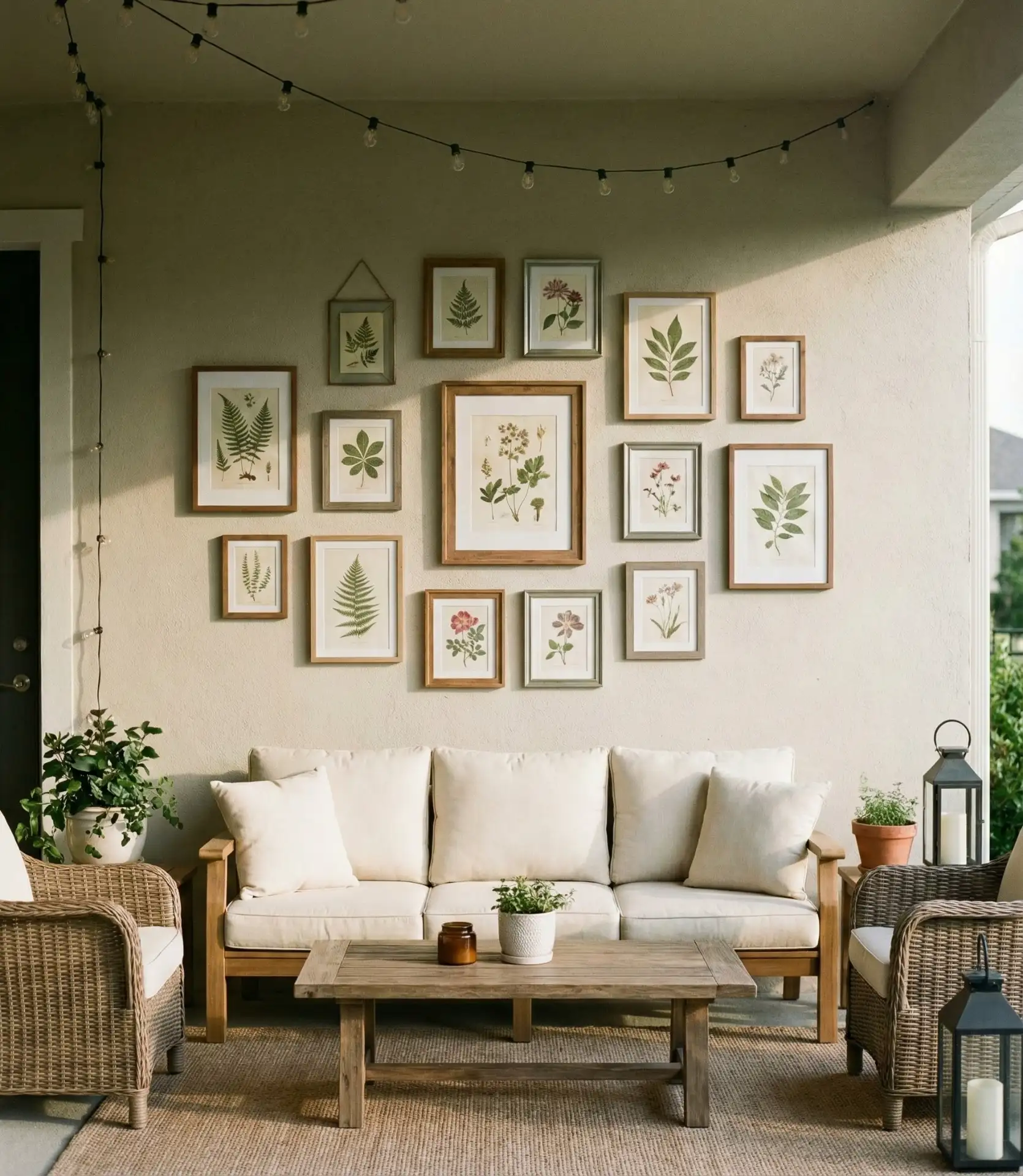
When curating outdoor offers, the first step is to determine which elements go together. One feature that works particularly well is the use of weather-resistant frames to create a gallery wall with family pictures, plant photographs, vintage ads, and anything else that makes covered outdoor spaces feel a little more like home. This small touch of custom design integrates the home’s interior style and elegance into the outdoor area. To protect the art from the elements, frames can be sealed to create a barrier. 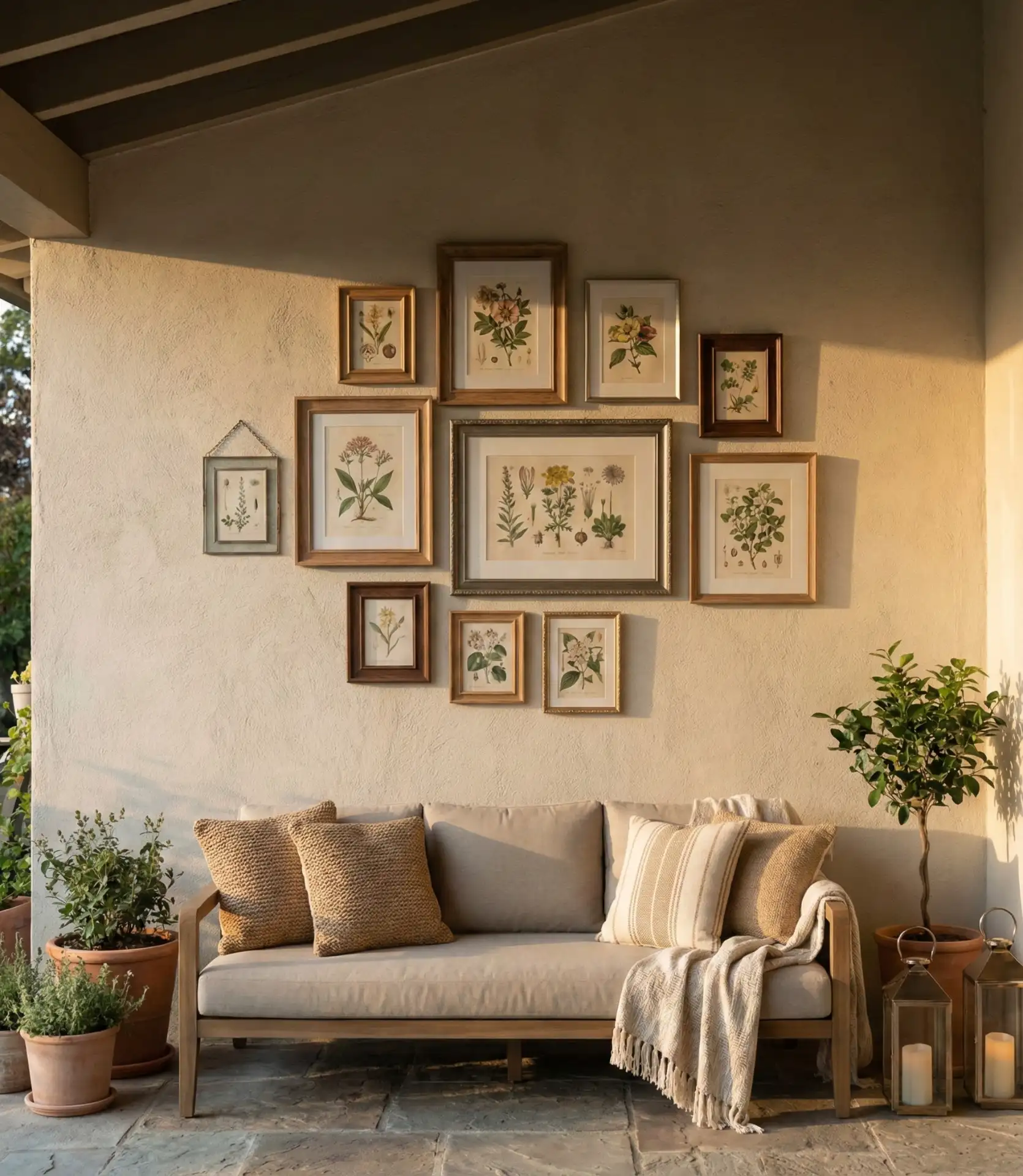
The latter method is best used in areas with screened porches, where direct rain cannot reach the wall. Choose prints that best suit your color scheme, and use UV protective glass to prevent fading. In more humid areas, like Louisiana and Georgia, check the frames monthly for moisture intrusion and replace them with condensation. The personal touch makes guests linger, creating conversation starters that generic outdoor decor can’t provide.
28. Outdoor Entertaining Areas Composite Blend
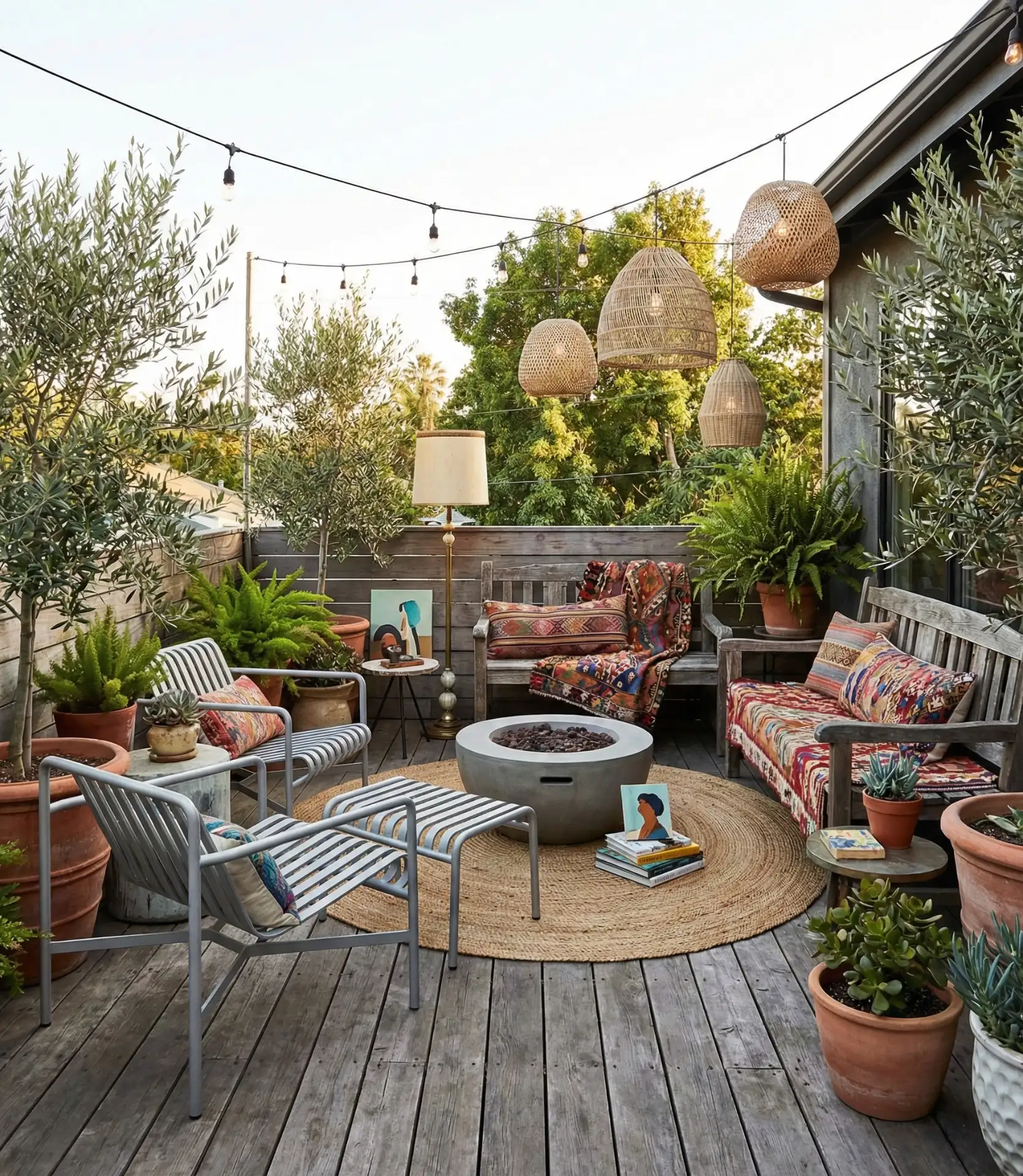
The best areas for outdoor entertainment incorporate elements from several different styles, combining personal aesthetics with practical styles based on the climate. A successful design might incorporate modern pieces with rustic, use plants in a way that keeps lines clean, and mix do-it-yourself and hired work. The most important part is creating a unified story that seems thoughtful, not a hodgepodge of various pieces. Every design element should reinforce the mood you want to create. 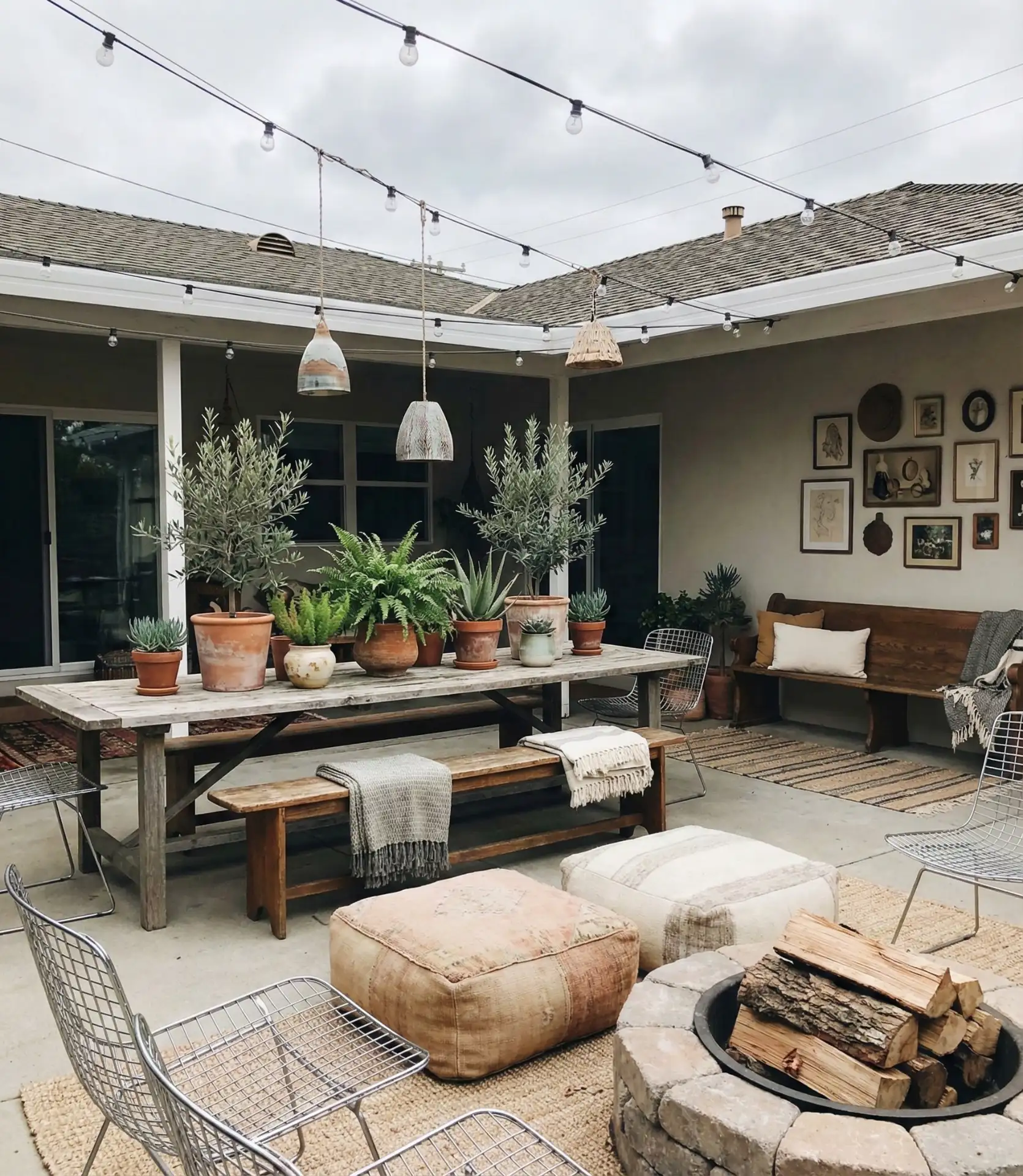
Start with one anchor element—maybe a spectacular dining table or a built-in kitchen—then build supporting features around it. Resist the urge to include every trend. A common beginner mistake is trying to incorporate a fire pit, water feature, full kitchen, multiple seating zones, and elaborate landscaping in a 300-square-foot space. The result feels cluttered and chaotic. Instead, choose three primary features and execute them well. Quality over quantity creates spaces that photograph beautifully and function even better.
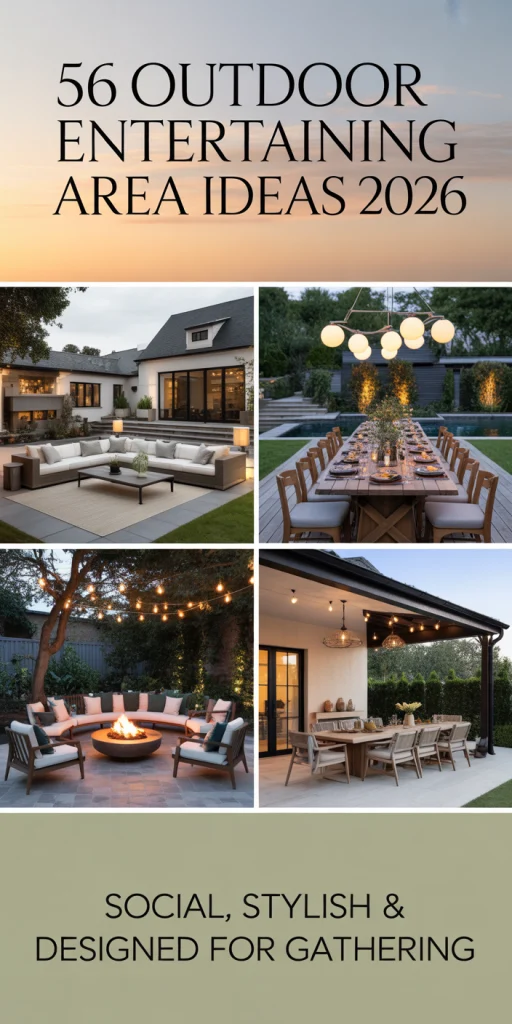
These outdoor entertaining ideas prove that creating an inviting space doesn’t require professional designers or unlimited budgets—just thoughtful planning and willingness to prioritize the features that match your lifestyle. Whether you gravitate toward minimalist modern aesthetics or layered bohemian comfort, the goal remains the same: designing an outdoor area so appealing that you’ll choose it over indoor rooms whenever weather permits. Share your favorite idea in the comments, or tell us about the outdoor feature that transformed how you use your space.