56 Backyard Deck Ideas 2026: Budget, Modern, Small Yards and DIY Designs You’ll Love

As we move into 2026, American homeowners are reimagining their outdoor spaces with fresh perspectives on deck design and functionality. Pinterest searches for backyard deck inspiration have surged as families seek to extend their living areas beyond four walls, creating zones for relaxation, entertainment, and connection with nature. Whether you’re working with a compact urban yard or a sprawling suburban lot, this guide presents innovative deck ideas that balance style, practicality, and budget considerations. You’ll discover solutions for sloped terrain, wooded settings, poolside retreats, and everything in between—each designed to help you transform your backyard into a personal sanctuary.
1. Ground-level deck with integrated plantings
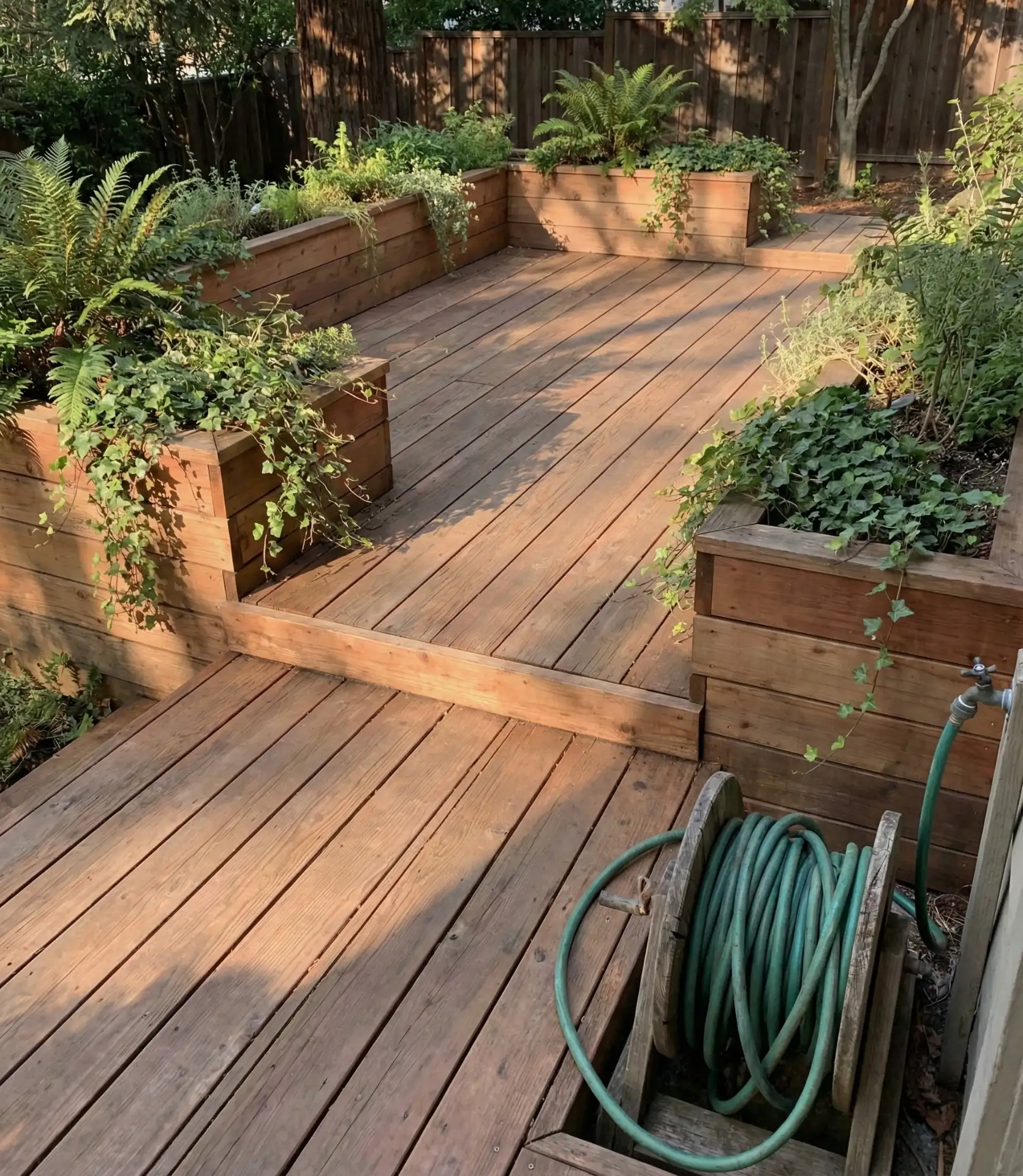
A ground-level deck offers accessibility and visual continuity between your home and yard, making it perfect for small yards where elevation changes would feel overwhelming. Built flush with the lawn, this style incorporates custom planter boxes directly into the decking framework, allowing you to cultivate herbs, flowers, or ornamental grasses without sacrificing floor space. The seamless transition creates an inviting flow for gatherings. 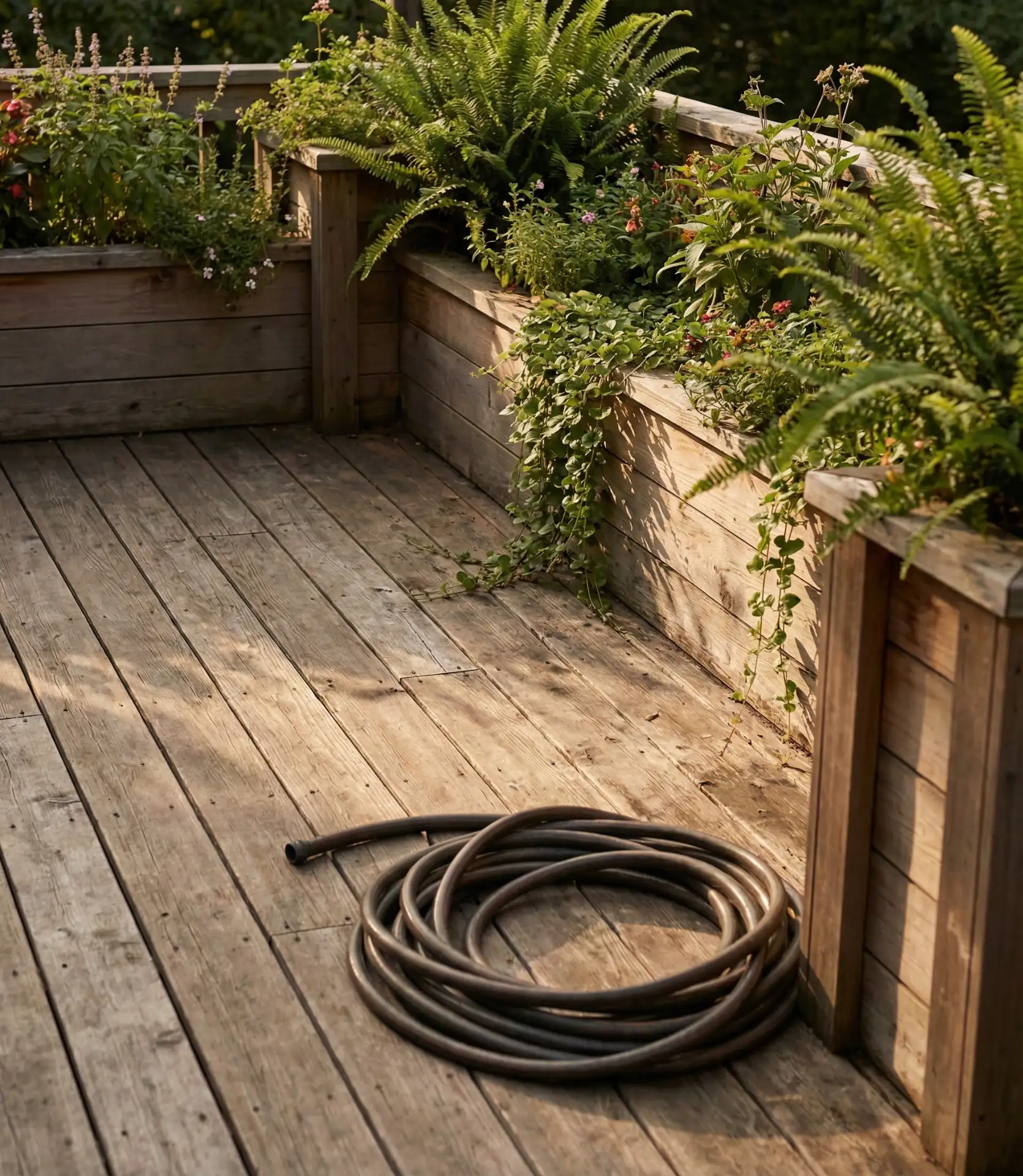
This method is particularly effective in the Pacific Northwest and Midwest regions, where it is common for clients to want to soften the edges between cultivated gardens and sociable areas. Integrated planters remove the need for stand-alone containers that can create clutter in walkways and are more than deep enough to grow a variety of root vegetables or small shrubs. Consider using rot-resistant cedar or composite materials for the planter frames to provide some climate longevity in the more damp areas.
2. Budget-Friendly Pallet Deck

For homeowners committed to DIY projects on a budget, repurposed shipping pallets create surprisingly sturdy and attractive decking. After proper treatment with weatherproof sealant, these pallets can be arranged over a gravel base and secured together to form a rustic platform. The gaps between slats provide natural drainage, and the entire project can be completed for a fraction of traditional decking costs. It’s an ideal starter deck for renters or those testing layouts before committing to permanent construction. 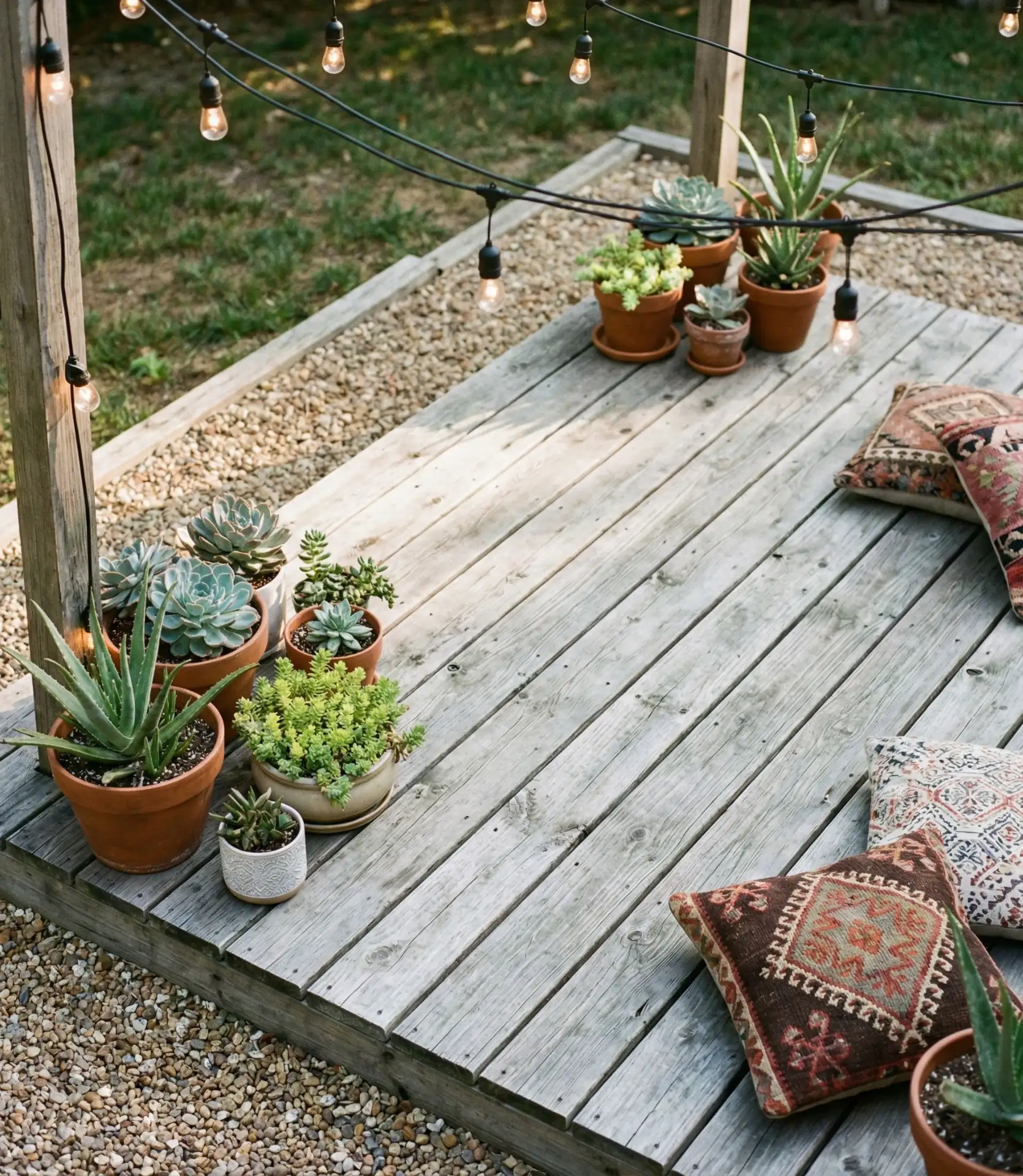
A neighbor of mine in Austin transformed her bare backyard into a charming entertaining space using 24 pallets she sourced from a local warehouse for free. She spent one weekend sanding, staining, and assembling them into an 8×10 platform that’s hosted countless summer dinners. The key is inspecting each pallet for structural integrity and choosing heat-treated (HT) stamped pallets rather than chemically treated ones.
3. Multi-Level Deck for Sloped Yards
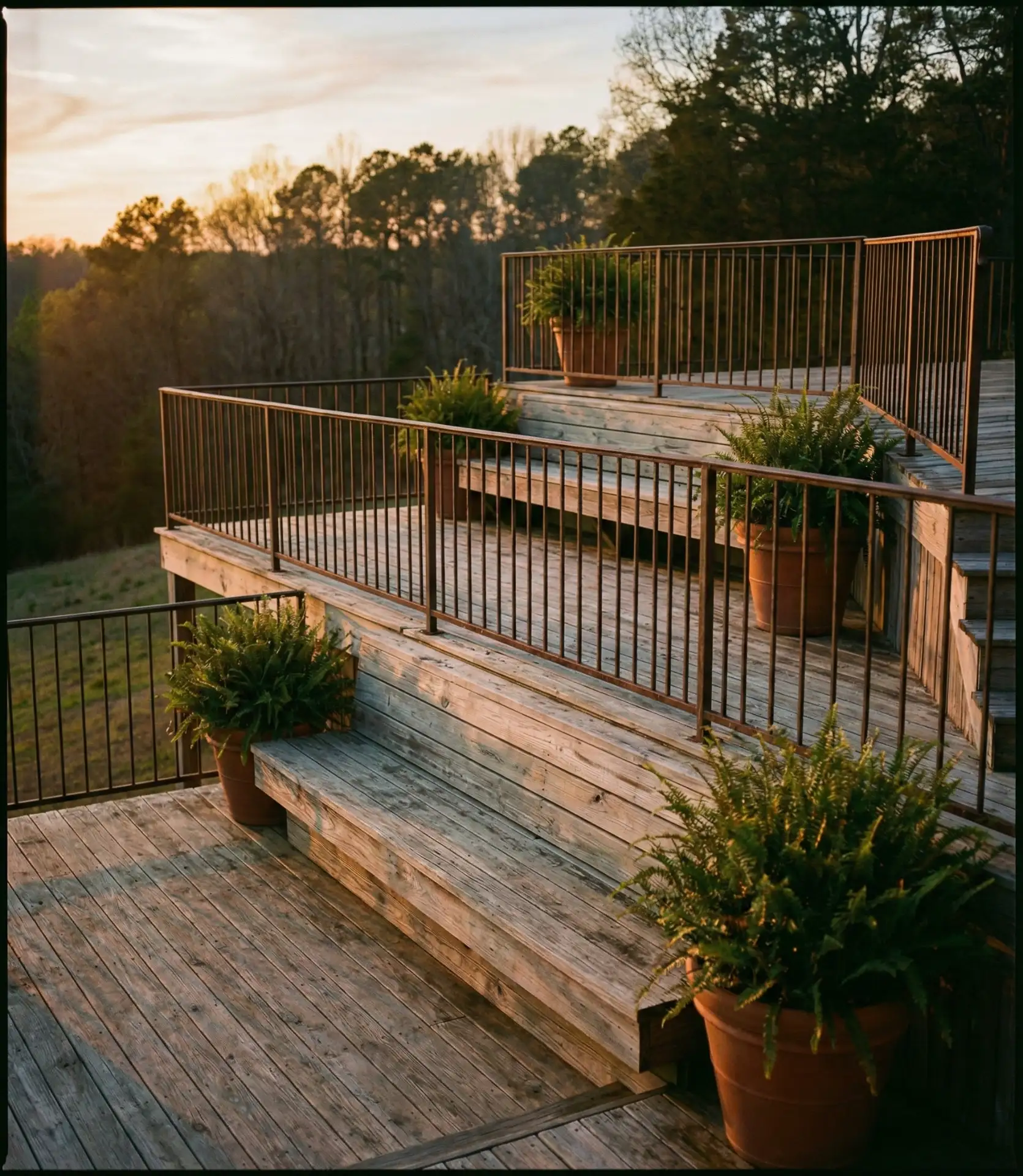
When working with sloped terrain, a multi-level deck transforms a landscaping challenge into an architectural advantage. By creating distinct levels that cascade down the hillside, you establish separate zones for dining, lounging, and cooking without the expense of extensive grading. Wide stairs connecting each tier double as additional seating during gatherings, and the varying heights create dramatic sightlines across your property. 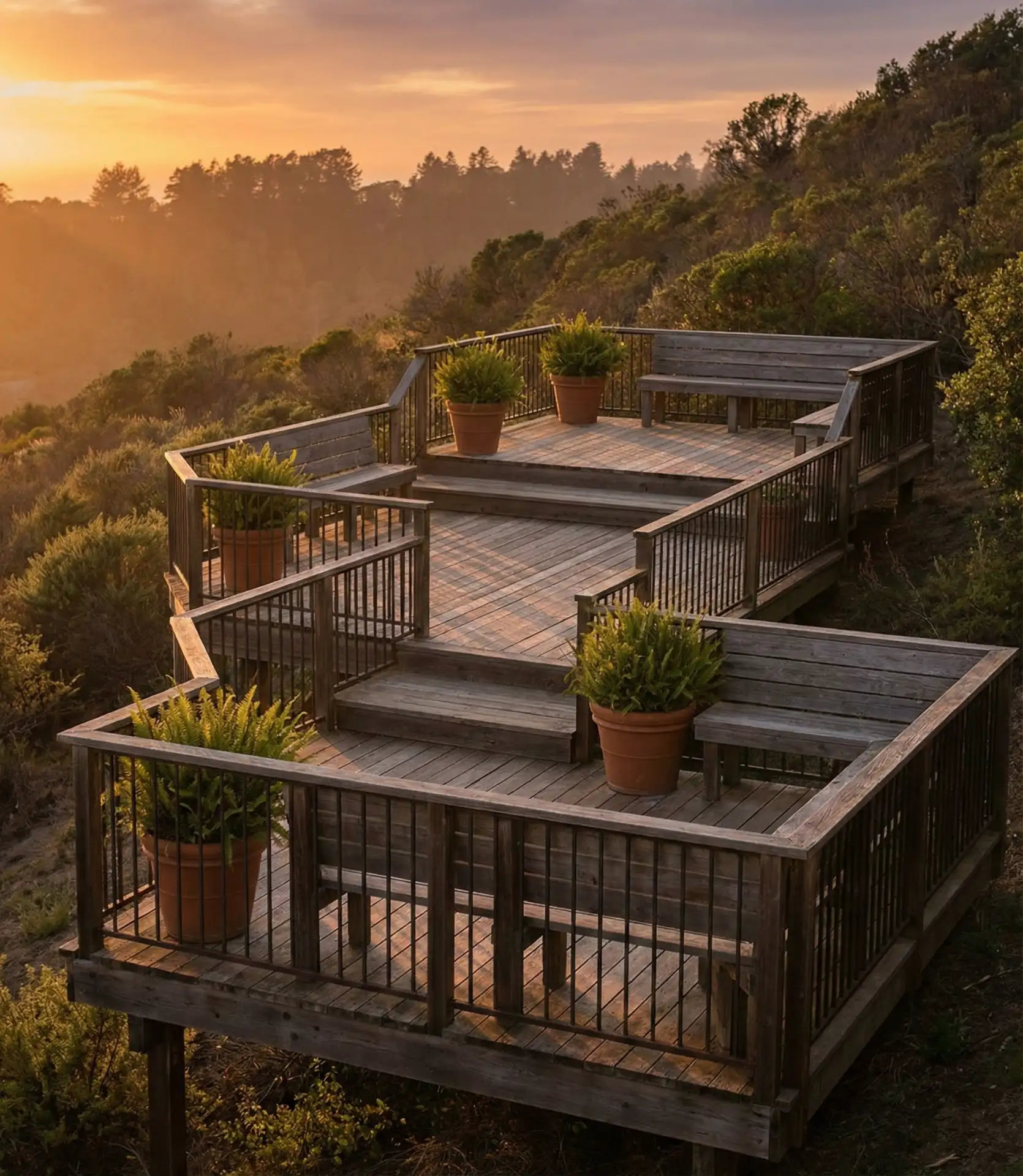
Hilly areas such as Colorado, Tennessee, and Northern California are the primary clientele for this design, as it offers the most usable outdoor space with the least amount of soil disturbance. Most building codes require a professionally engineered design for decks that are over 30 inches tall, so be sure to account for the cost of a permit and a structural assessment. The cost is worth it for the multiple uses of the space as well as for resale value in an area that is in need of a flat yard.
4. Cozy Corner Deck with Fire Feature
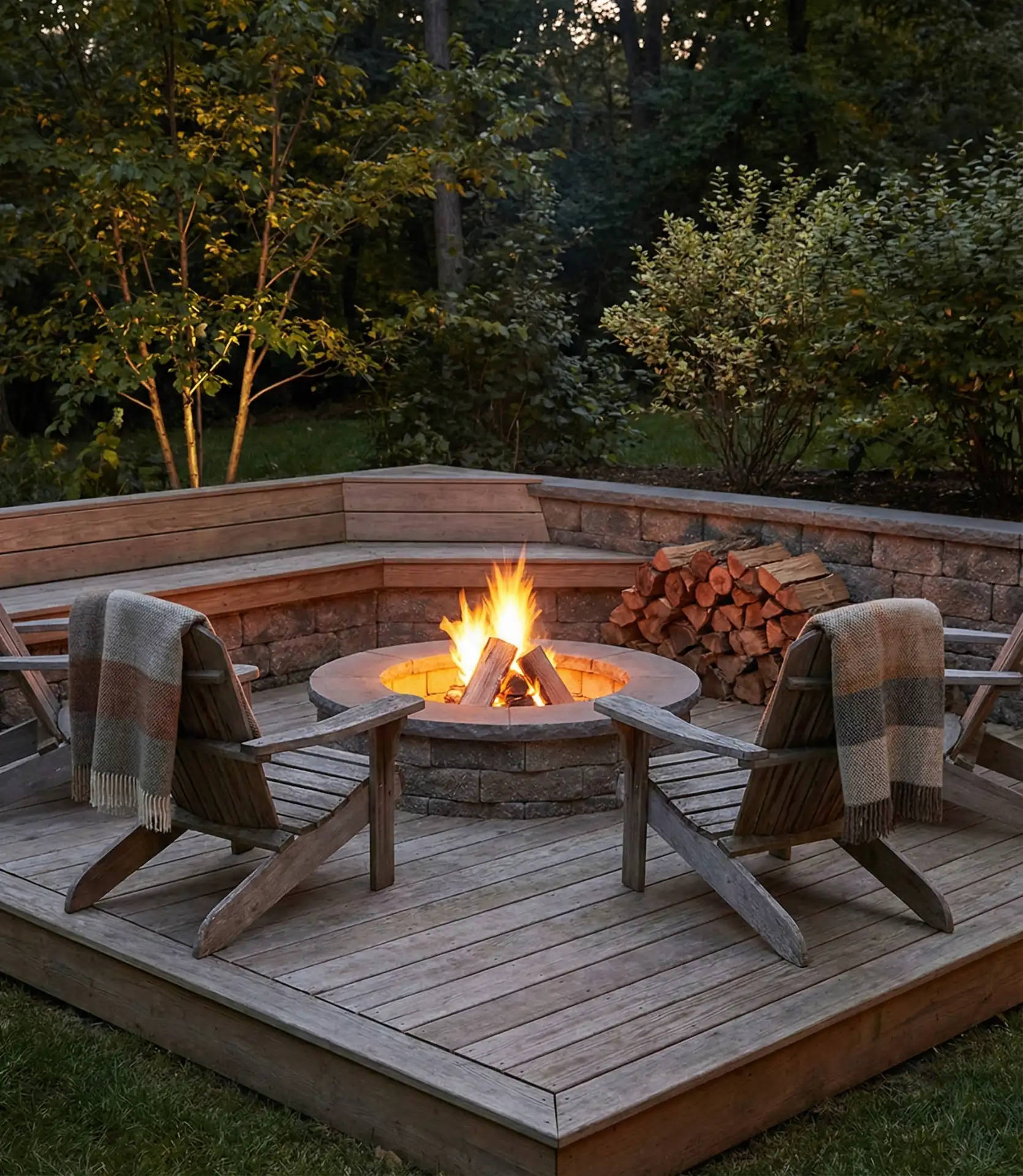
Embedding a corner deck with a built-in fire pit along a four-sided room provides a sense of shelter within an enclosure. A favorite inexpensive spot for evenings in the fall with dinner and conversation. The L-shaped corner configuration dug out of the deck layout makes it a more interactive design choice while keeping the space open for other activities. 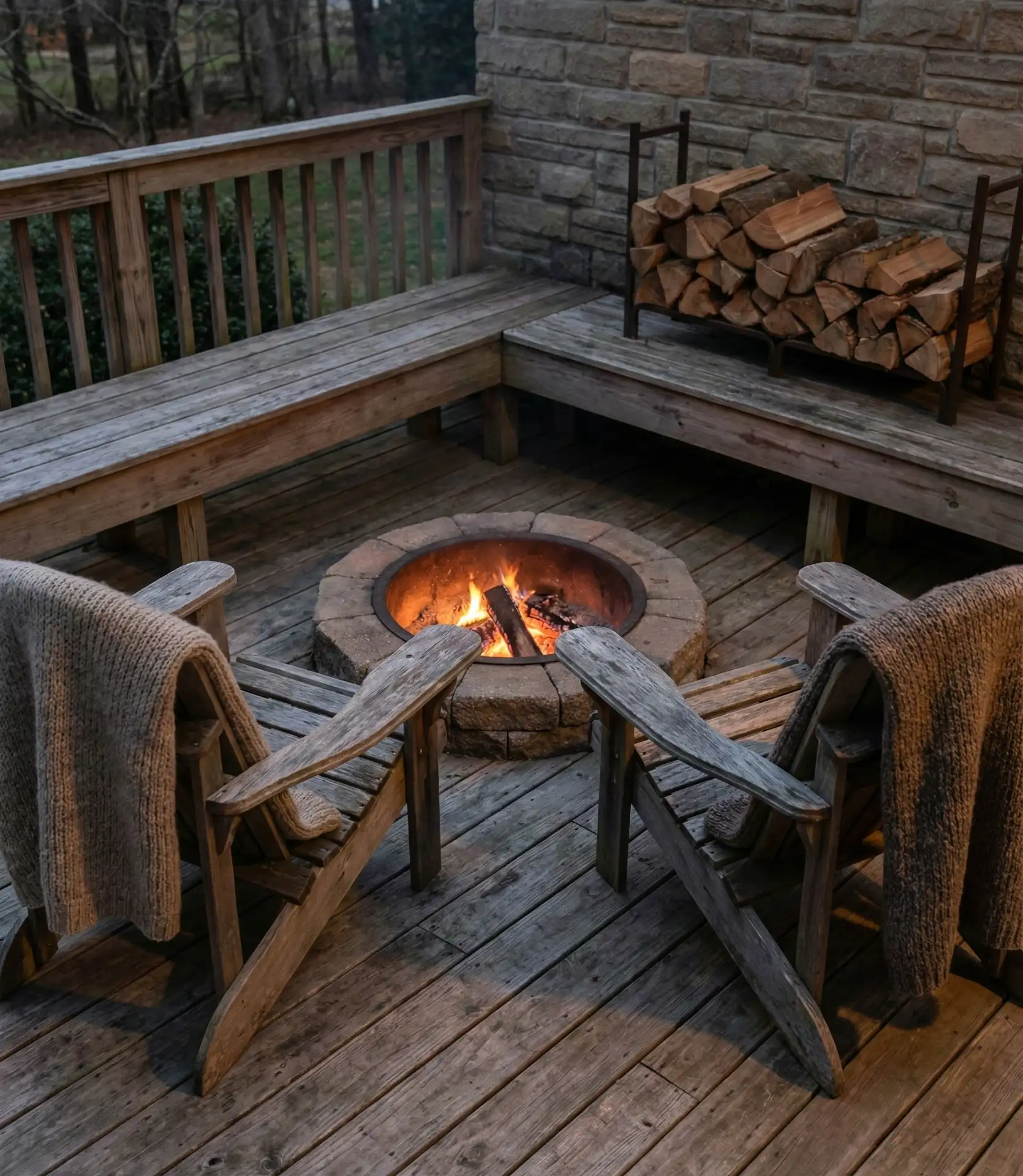
The corner design works best when there are mild evening temperatures. These areas include the Southwest, Southern California, and the mid-Atlantic. Avoid placing the fire feature too close to the house siding, a common design choice. Fire and insurance codes recommend at least 10 feet of clearance and non-combustible deck materials such as composite or stone pavers within 3 feet of any flame.
5. A narrow deck with vertical gardens
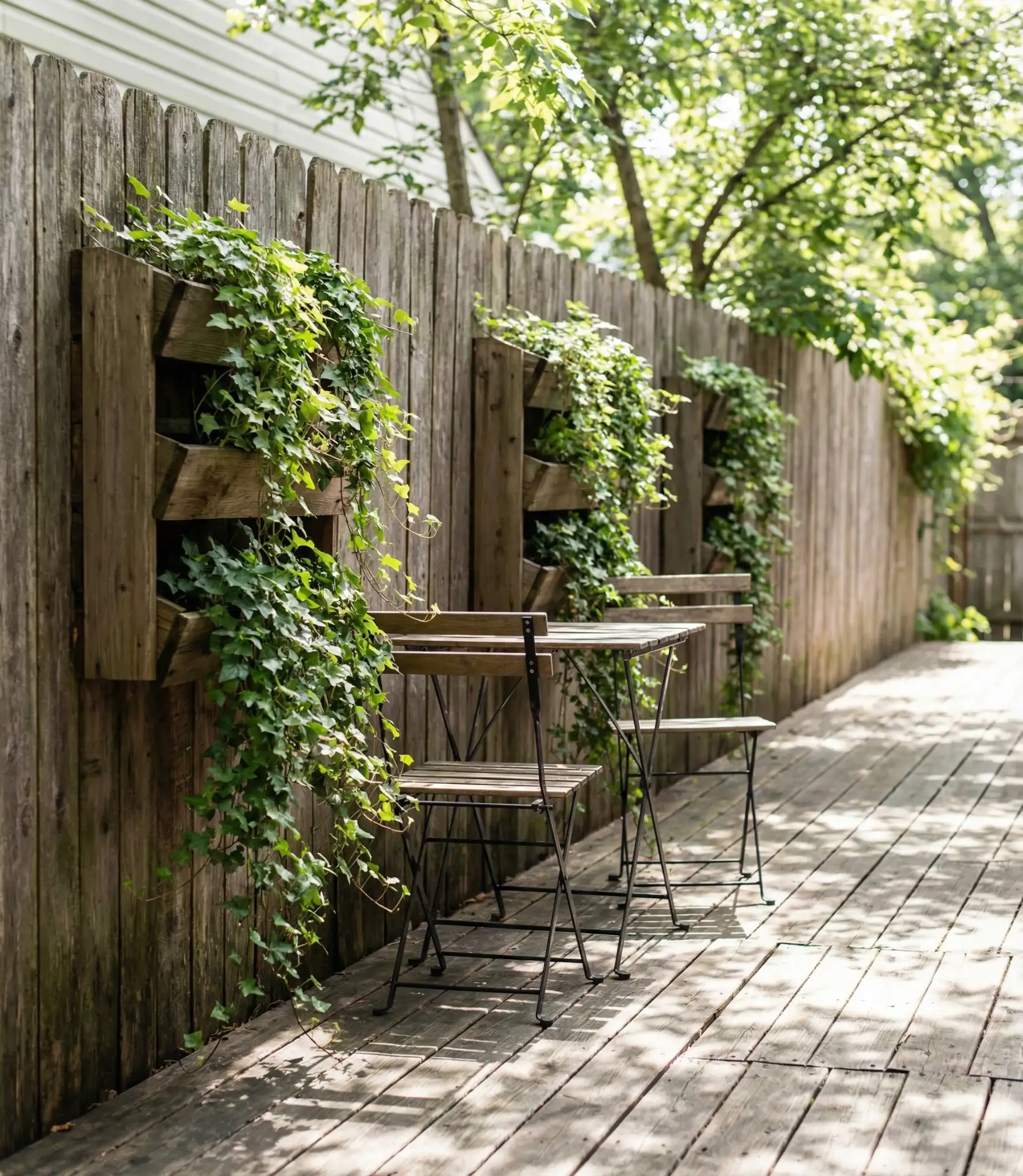
Urban homes with narrow side yards can still enjoy functional outdoor living through strategic deck design that emphasizes vertical space. Installing simple wall-mounted planters, trellises, or living walls along fence lines creates lush greenery without encroaching on precious floor area. This design maximizes every square foot for movement and furniture while delivering the psychological benefits of being surrounded by plants. 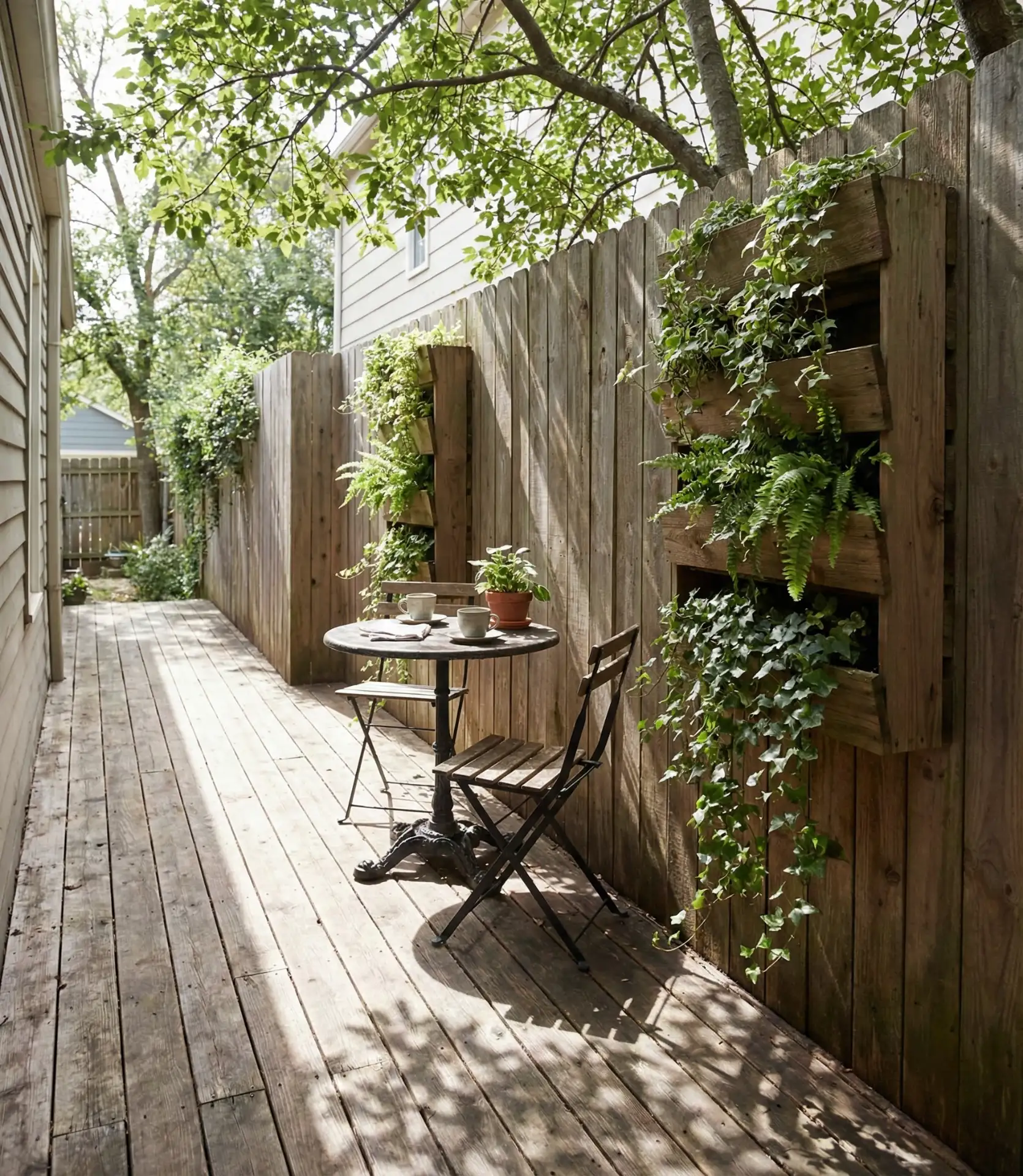
In cities like San Francisco, Boston, and Seattle, where lot widths rarely exceed 25 feet, this configuration has become the default solution for homeowners craving outdoor space. Budget around $15–$25 per square foot for basic pressure-treated lumber construction, and remember that narrow decks often require fewer support posts, reducing material costs. Opt for lighter furniture that can be easily repositioned, and consider fold-down tables that stow flat against railings when not in use.
6. Pool Deck with Composite Decking
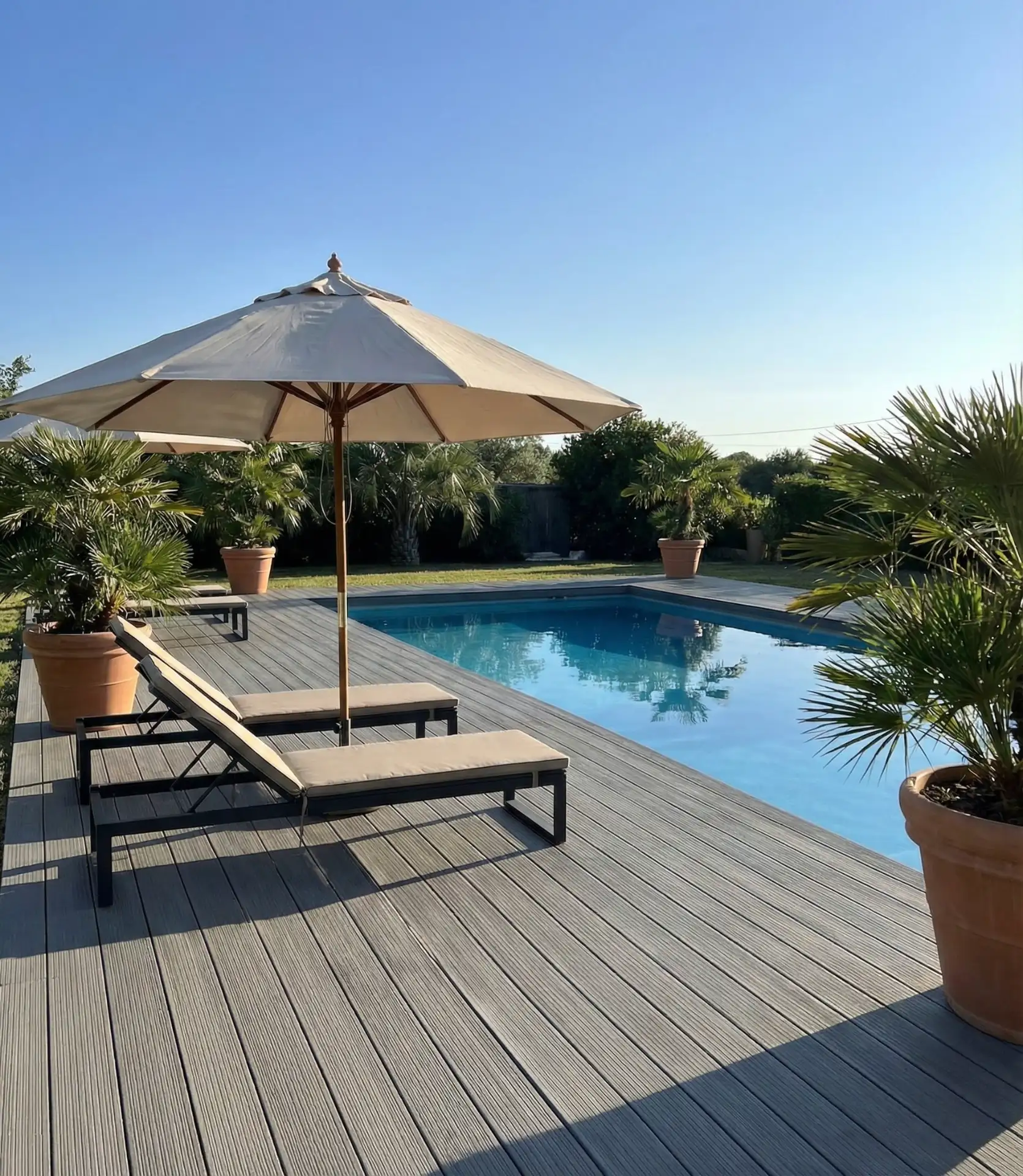
Surrounding your pool with composite decking eliminates concerns about splinters, slippery surfaces, and constant maintenance that plague traditional wood in wet environments. Trex and similar composite brands offer textured finishes that provide traction even when saturated, and they resist chlorine damage, UV fading, and mildew. The clean lines of modern composite planks complement contemporary pool designs while staying cool underfoot in direct sunlight. 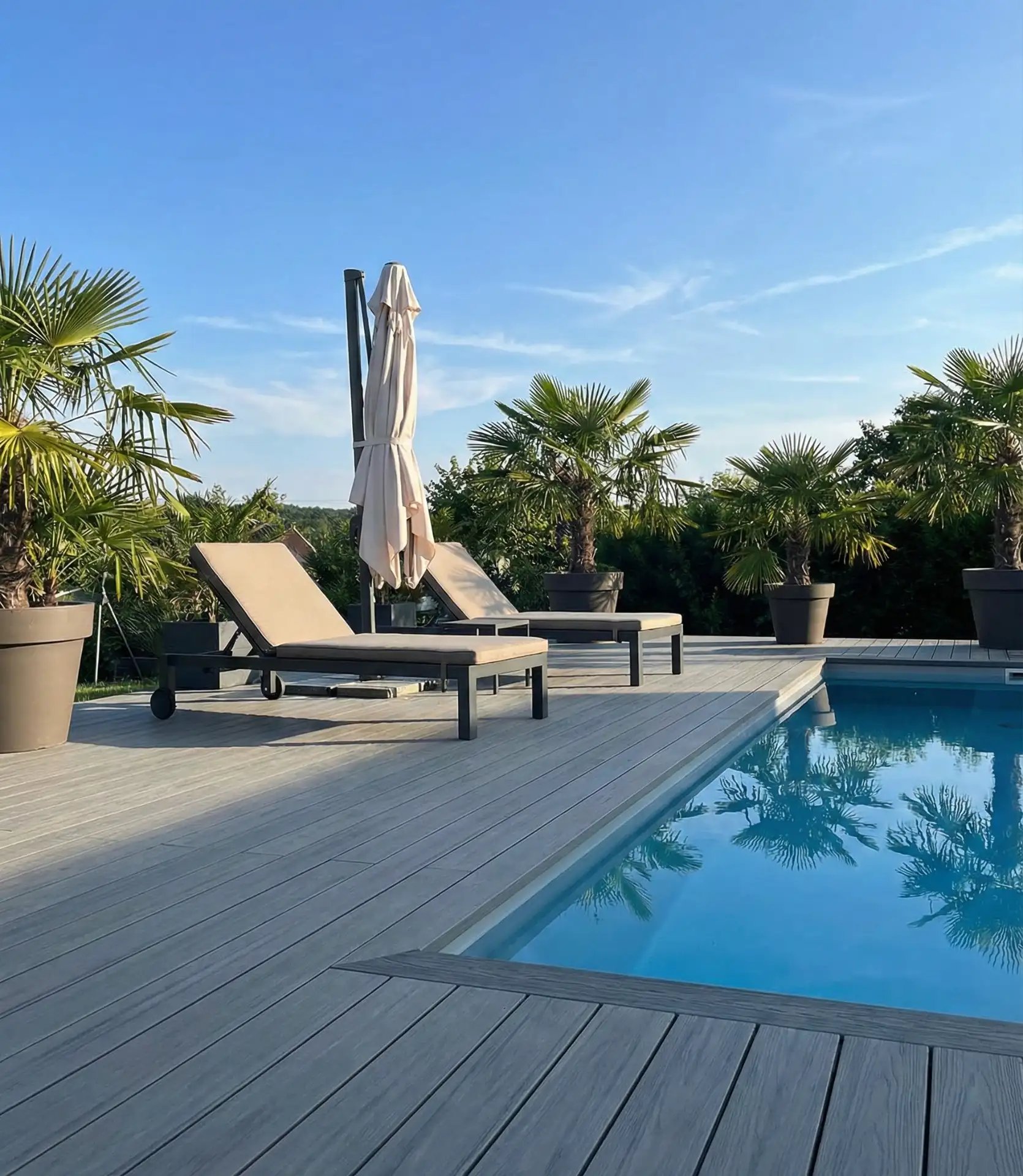
In Florida, Arizona, and Southern California, moisture and sun exposure in pool decks would warp and crack wood in just a few seasons. Composite materials are around 50% pricier up front than pressure-treated pine, but over a 20-year lifespan, they save money and labor due to no annual staining, sealing, or board replacement. Color options have expanded to grey, driftwood, and espresso.
7. Tiny Deck Reading Nook

Even the most limited outdoor space can fit a tiny deck built as a personal retreat. In a secluded part of a yard, a 6×6-foot platform is just the right size to fit a cozy chair, a side table, and a shade overhead. You can complete this simple DIY project in a weekend, and the materials are affordable. It has a big payoff in your daily life and how you feel. 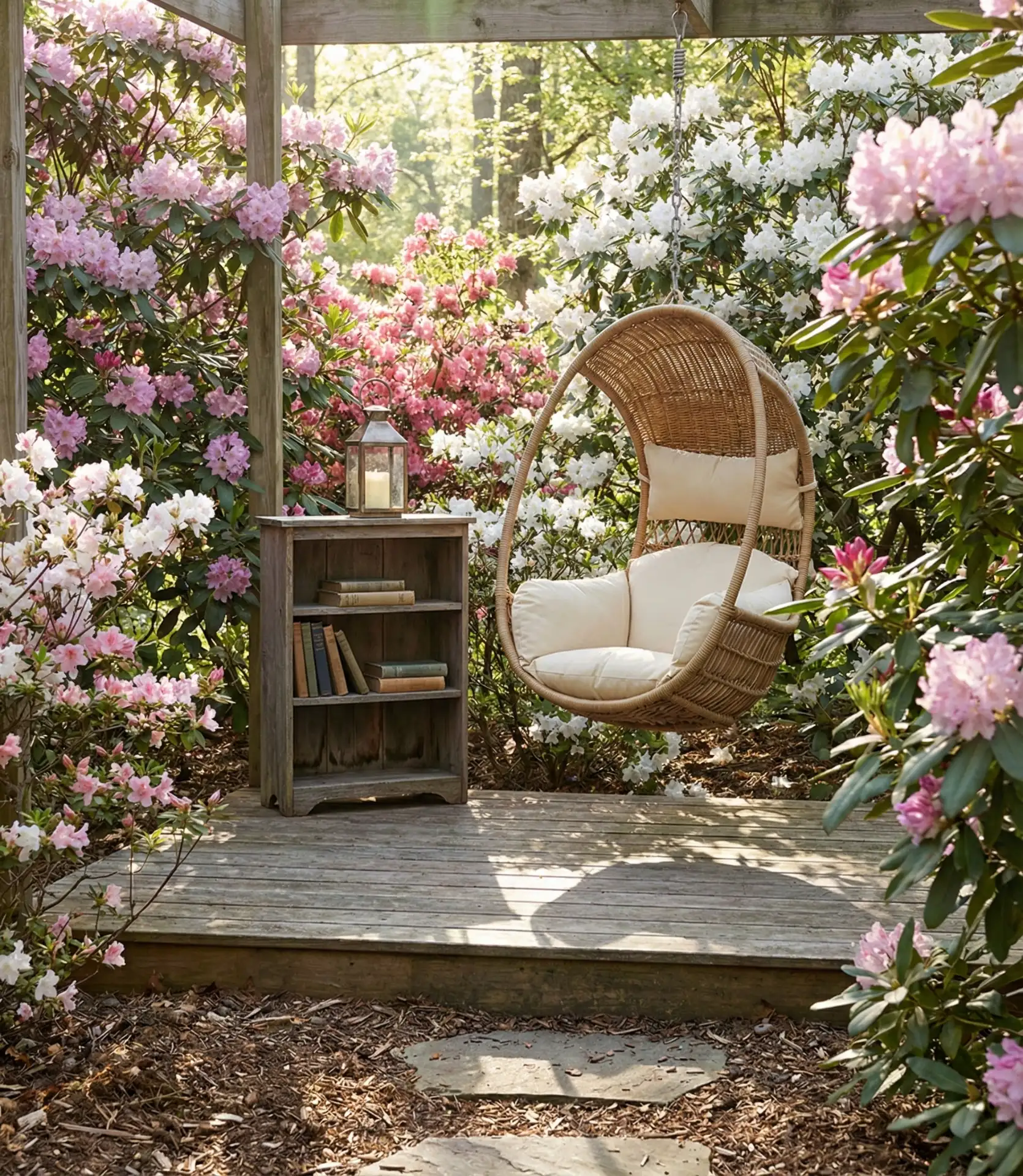
Most real homeowners tend to bypass these small spaces and go for bigger entertainment zones, but solitude zones consistently rank highest for actual usage.
A homeowner in Minneapolis I know placed her 5×7 deck under an old oak tree and enjoys her coffee and journaling there every morning—an activity her much larger main deck seldom accommodates. The modest scale allows for an ipe or teak splurge, which creates the jewel-box experience and doesn’t break the bank.
8. Elevated Deck with Underside Storage
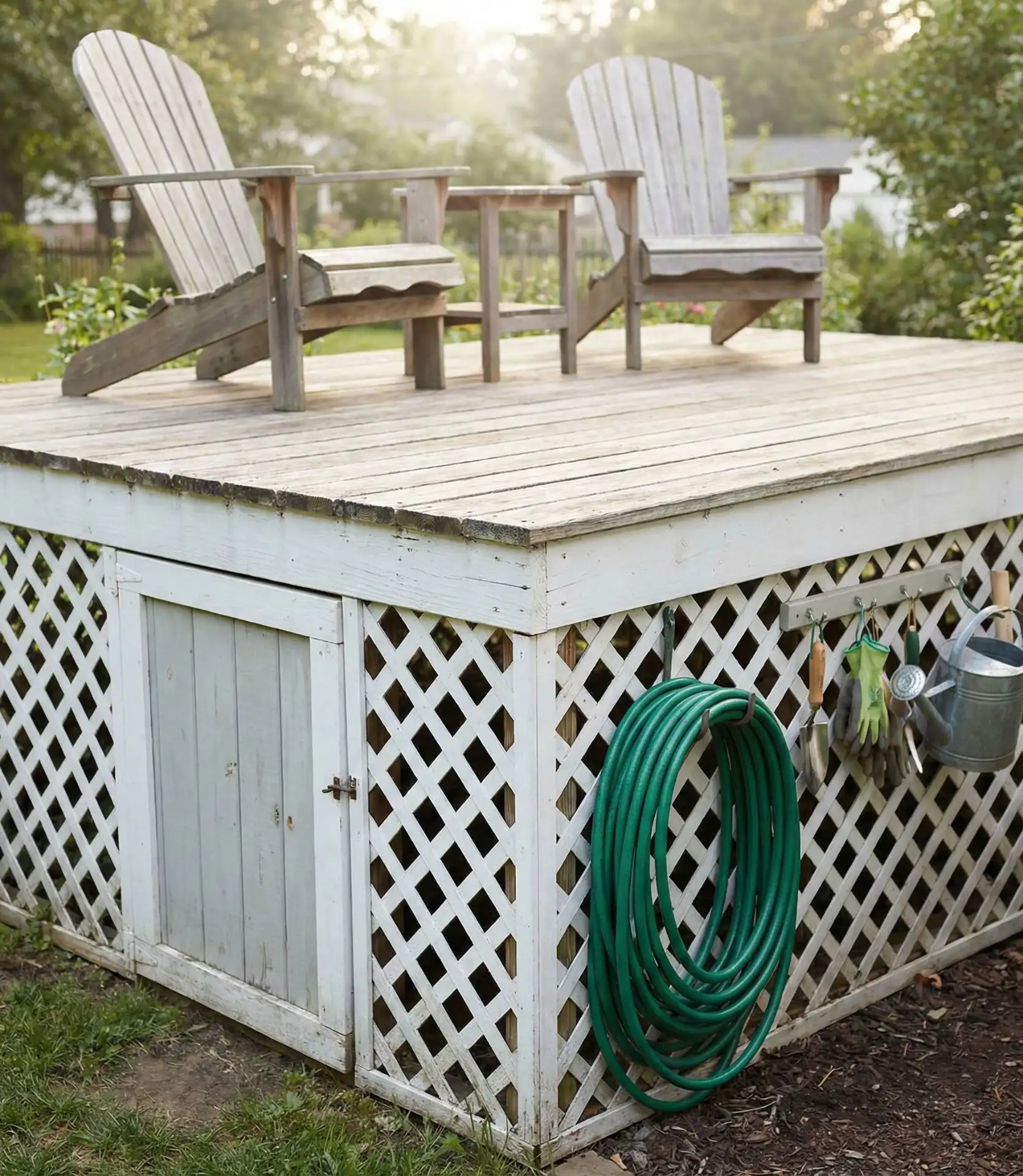
An elevated deck can also create the opportunity for storage beneath the platform. With the space under your deck completely enclosed with lattice or solid panels, that area can be used for weatherproof storage of lawn equipment, pool supplies, or seasonal decor, all of which saves yard space. This feature is especially useful for smaller lots that need every square foot to function for multiple uses. 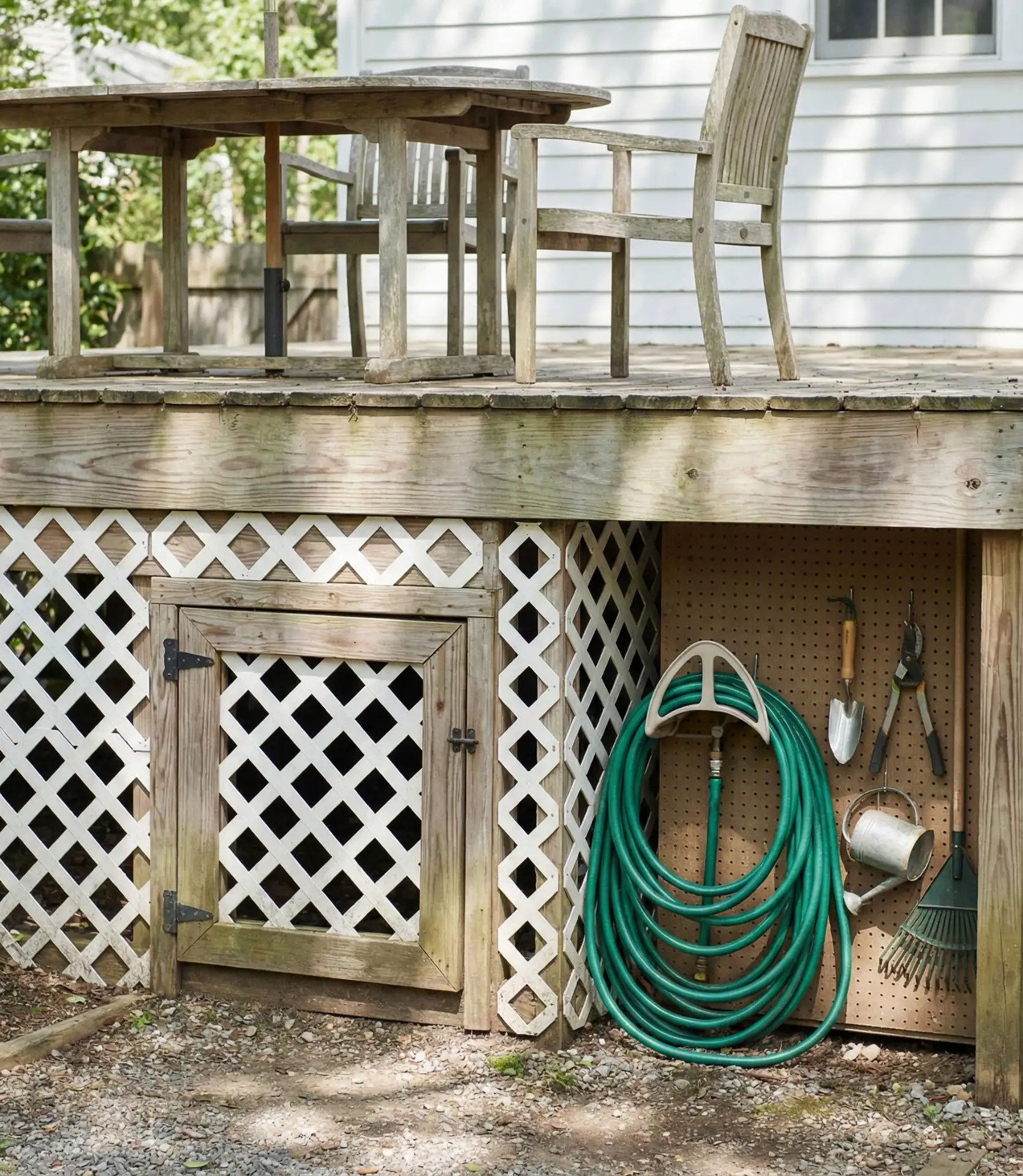
This sort of arrangement is especially advantageous in suburban locations with detached garage or shed restrictions, or where the garage is in the rear and there is no space for outbuildings, and where the yard is designated for play. Placing a system for drainage under elevated decks helps to keep moisture from building up, which can damage the stored items. Outlets in the storage area can be handy for charging lawn mowers or power tools, and ventilation panels help reduce moisture buildup to keep the area from smelling musty.
9. Screened Porch Deck Hybrid
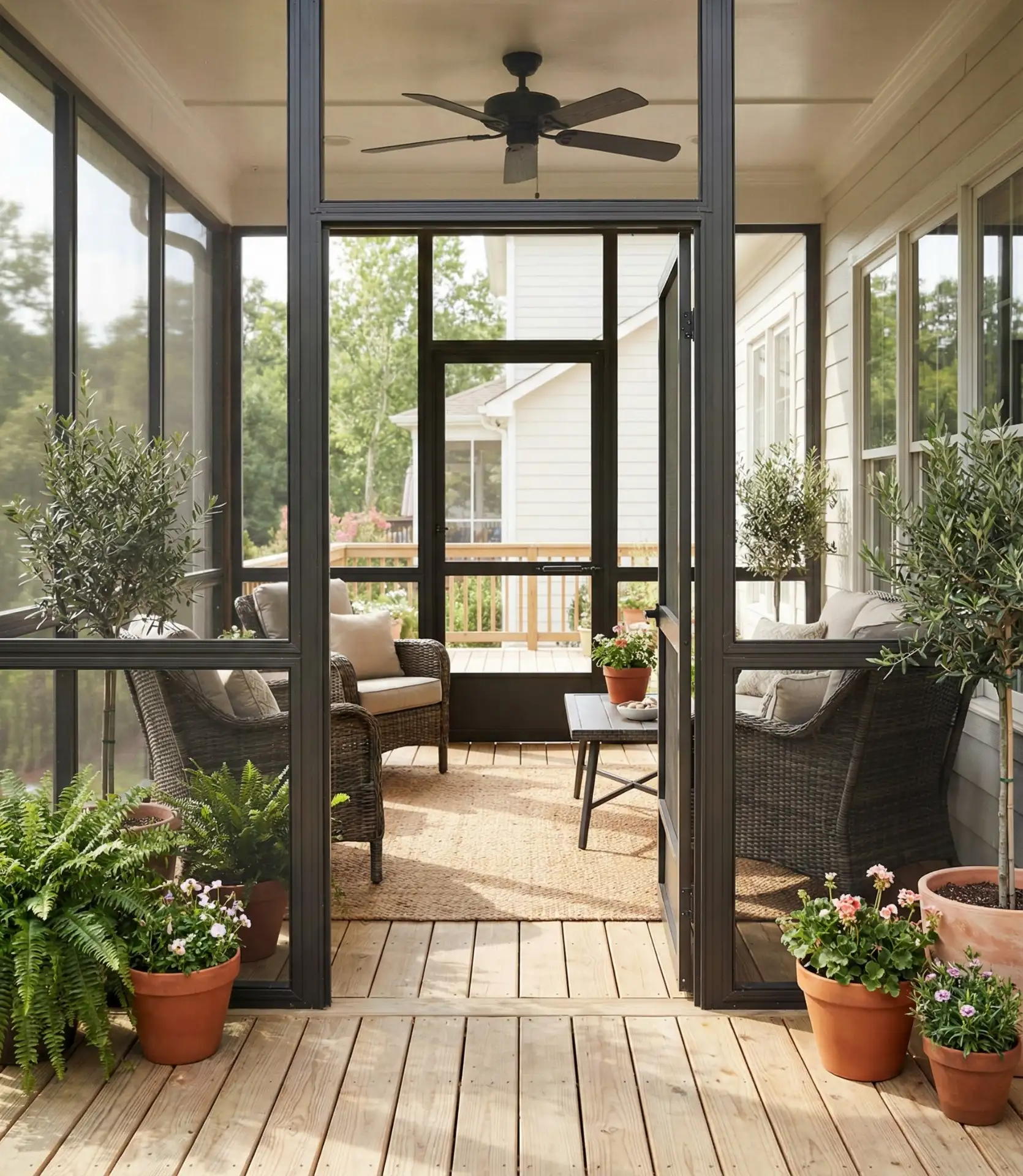
You get sunshine and bug protection with a screened porch/dining area combo. You get a screened dining and relaxing area followed by an open deck where you can grill and sunbathe. The screens block pollen and bugs while allowing airflow and views. 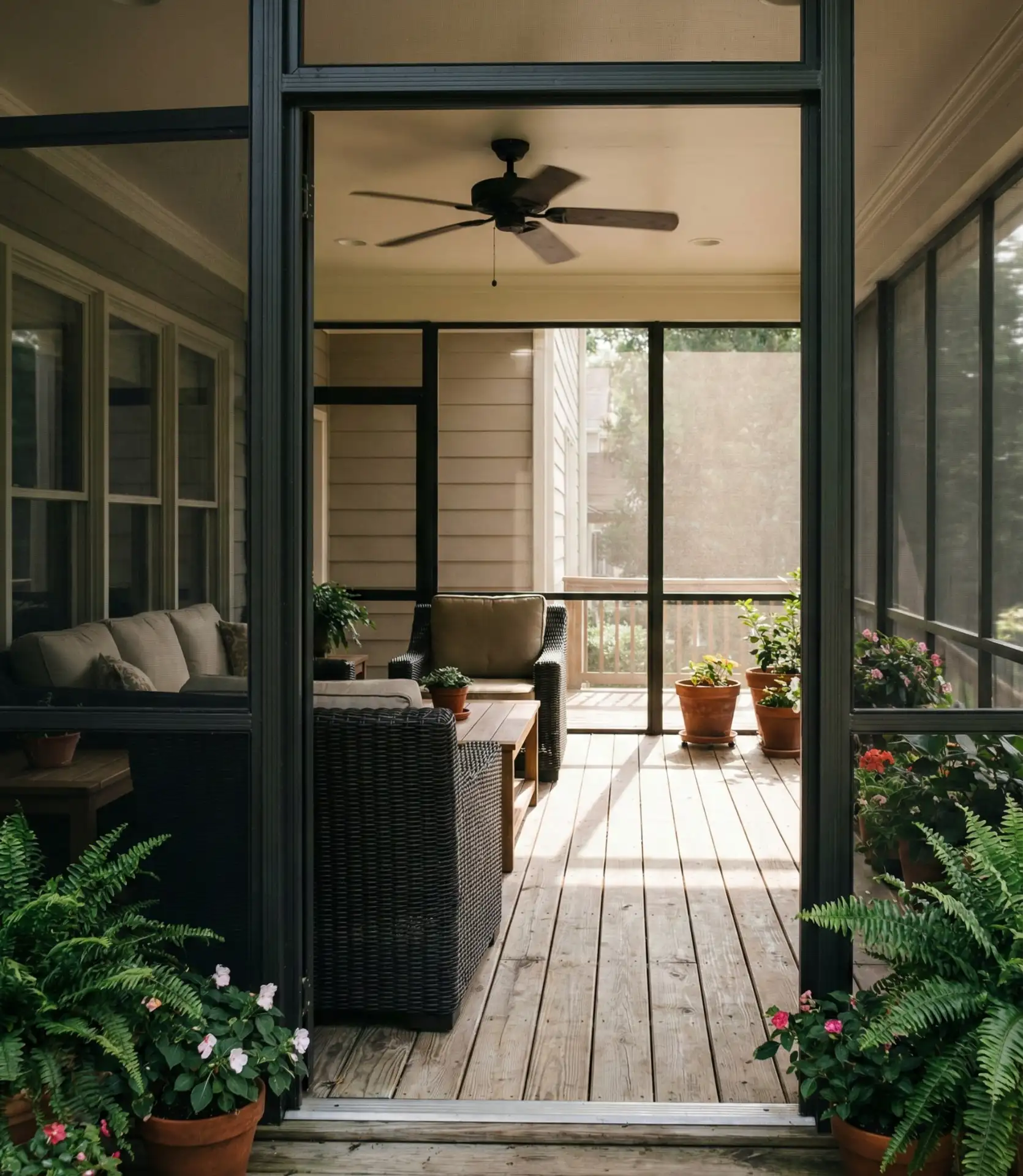
Unscreened outdoor dining is impossible because of insects. From May to September, mosquitoes and bugs infest dining throughout the Mid-Atlantic and Midwest. Fiberglass screens are recommended instead of aluminum screens because aluminum can crease and dent. Darker screen meshes are recommended because they are less visible. The screen acts like a fog. You can expect the price to increase by 75–100 square feet to add screens (deck included).
10. A wooded deck with natural integration
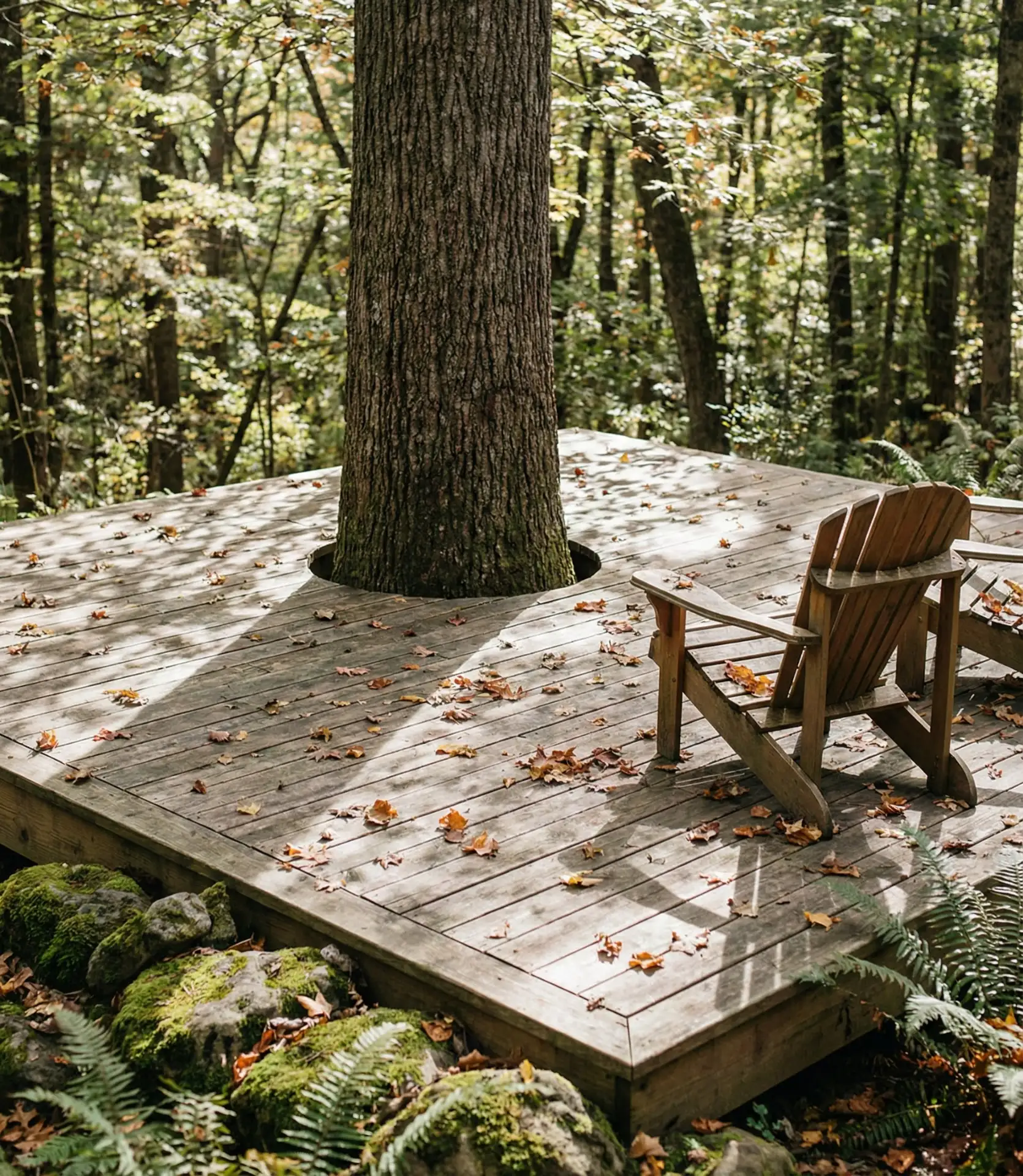
Building decks in wooded areas takes advantage of tree placement rather than working against it. Cutting the wood from the mature tree trunks in the decking gives the deck character and provides shade by preserving the tree canopy.
Your approach appreciates the craftsmanship of nature around you and offers a unique experience that fully immerses you in the forest just a few steps out of your door, making it ideal for that morning coffee ritual. 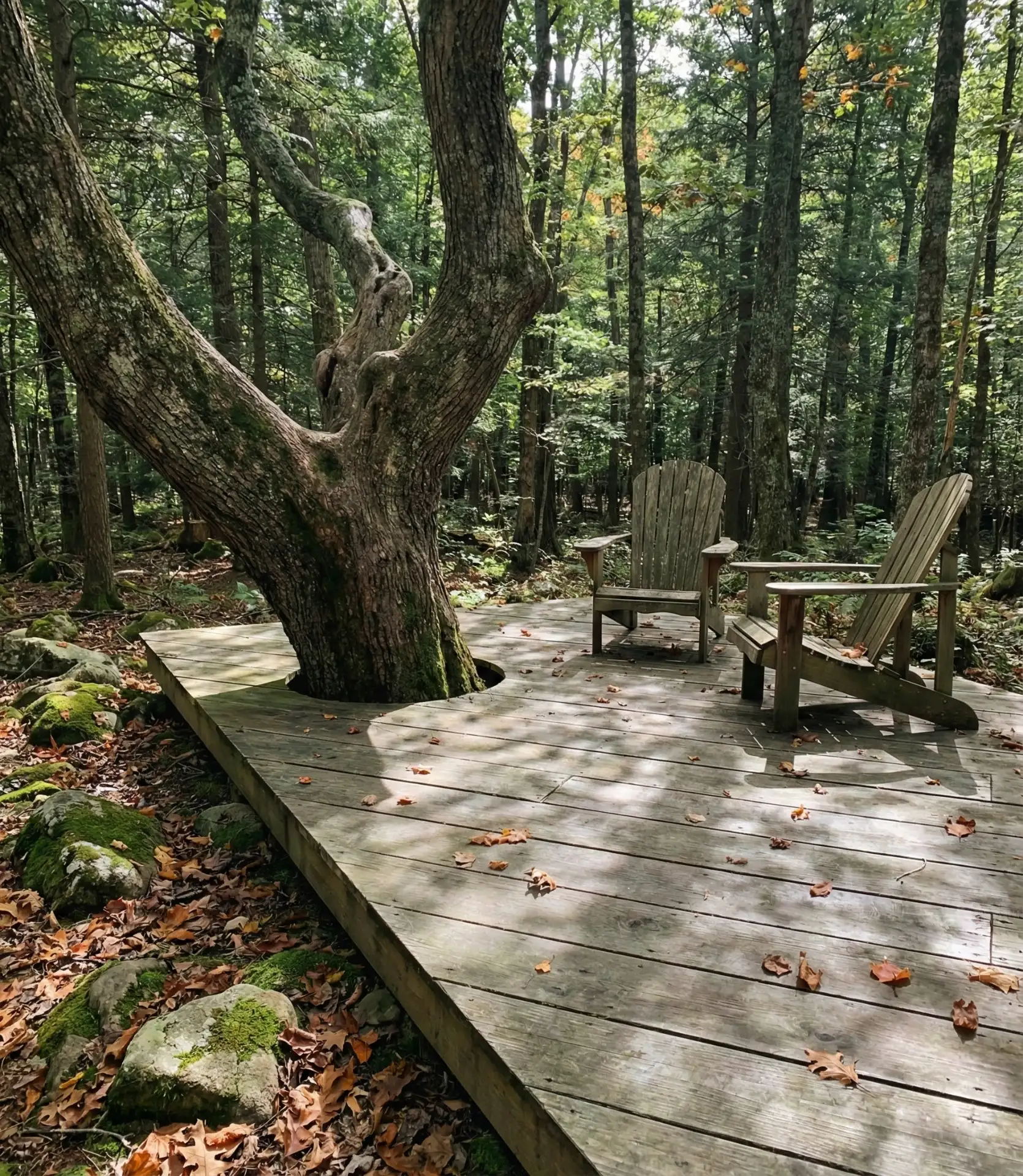
In the forested areas, especially the Northeast and Pacific Northwest and the mountains of North Carolina, design recognizes fully grown trees as living architectural features. One of the major mistakes is to cut the under-deck opening around the tree trunk too closely. Trees sway in the wind, and their trunks grow larger over time. Leave 6–8 inches of space around all the sides, and to reduce the risk of tree damage, use a flexible rubber barrier around the cutout that can slide up and down and allow for tree growth.
11. A hot tub deck with privacy panels
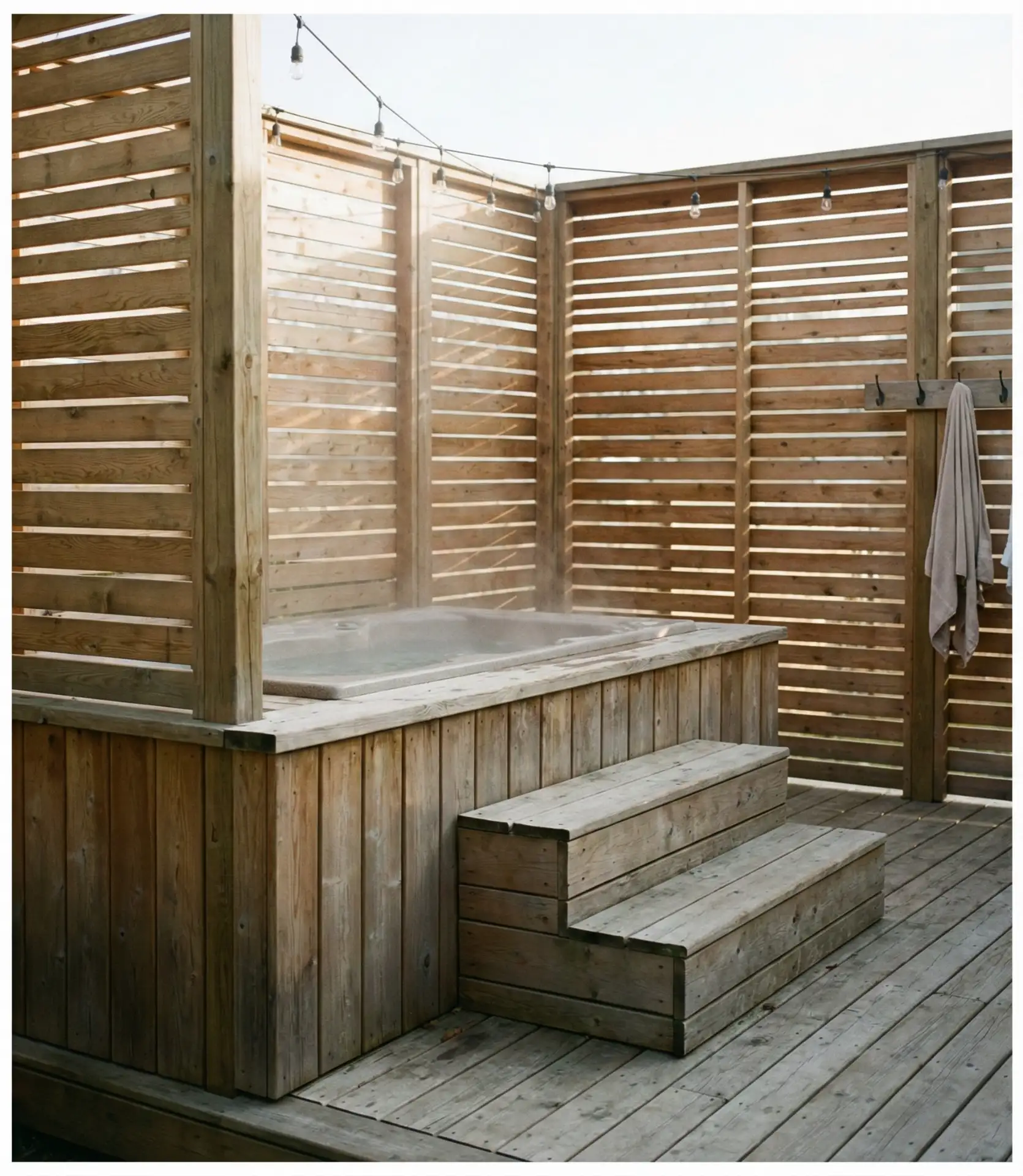
Deck designs that incorporate space for hot tubs need additional structural support because the hot tub can weigh 6,000 pounds when filled with water and occupants. Surrounding the tub with strategically placed privacy panels, pergola sections, or tall planters creates a closed-in feeling without full enclosure. A straightforward platform design with stairs for simple access keeps the focus on relaxation rather than elaborate features. 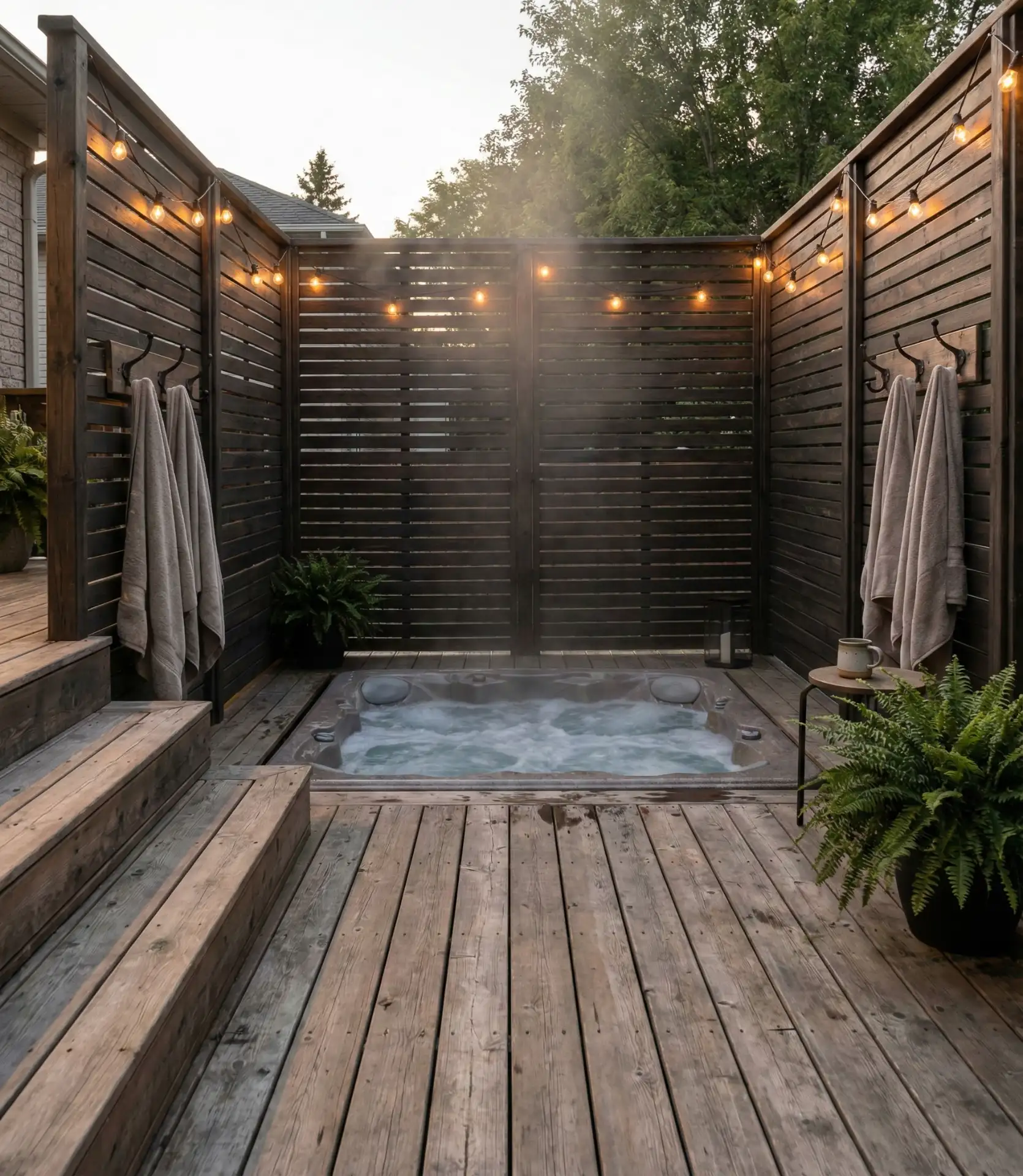
In colder areas like the Mountain West, Great Lakes, and New England, there has been a giant increase in hot tub installations on decks to enjoy the outdoors year-round.
Due to building code regulations, you will need to have dedicated electrical service, as well as specific support spacing, requiring you to potentially double joist density beneath the tub location. Many homeowners forget about drainage, so also install a hose bib for easy draining, and make sure the deck is sloped away from the house to avoid water damage during maintenance.
12. Large Entertainment Deck
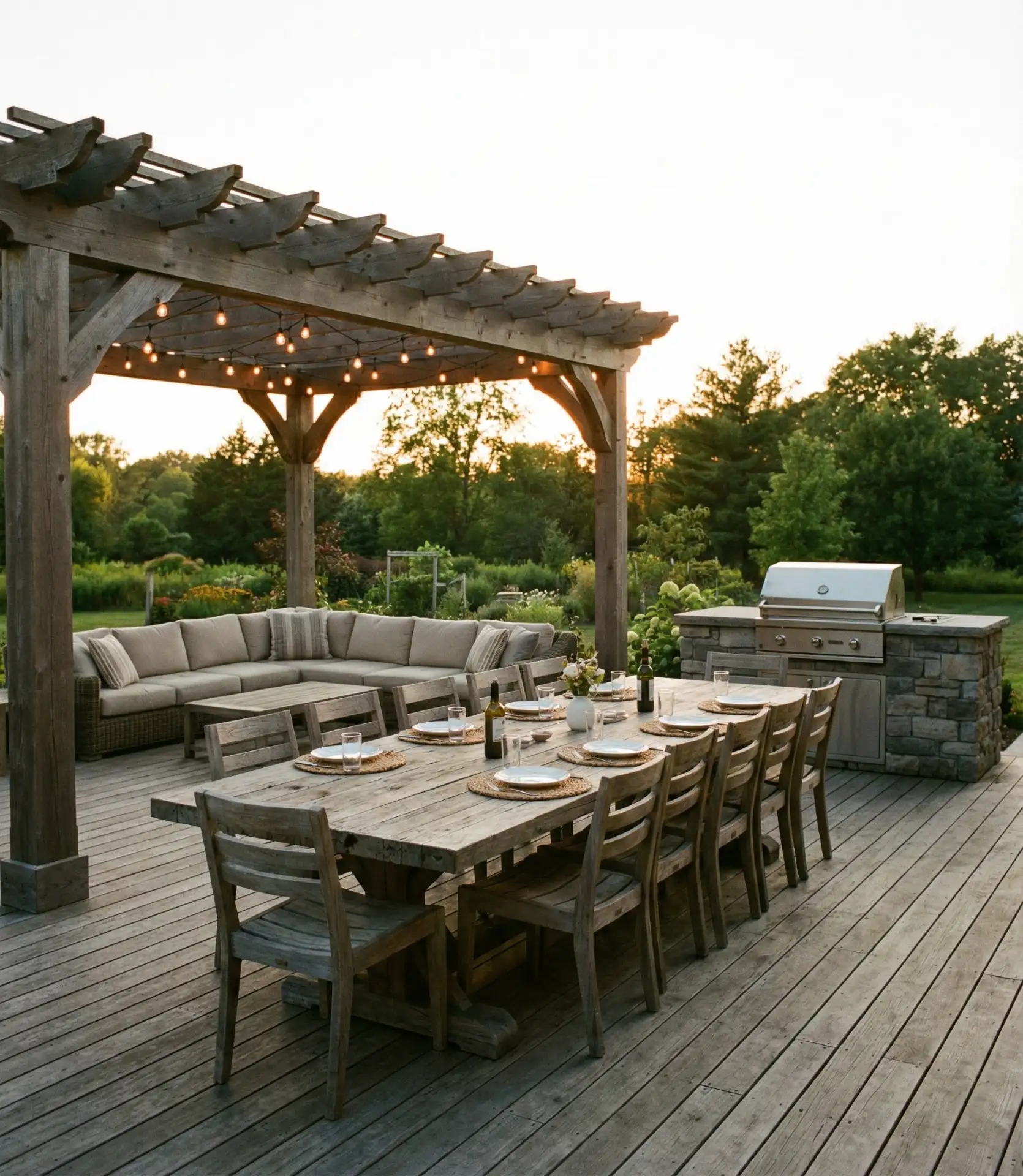
For families who love to throw a large deck party, it’s the perfect place to include dining tables, lounge furniture, and a grill so people don’t have to feel cramped. Modern designs frequently include separate areas for distinct functions defined by furniture arrangement and partial railings. The generous footprint, typically 400+ square feet, comfortably accommodates 15-20 people while allowing for a favorable flow for movement and conversation. 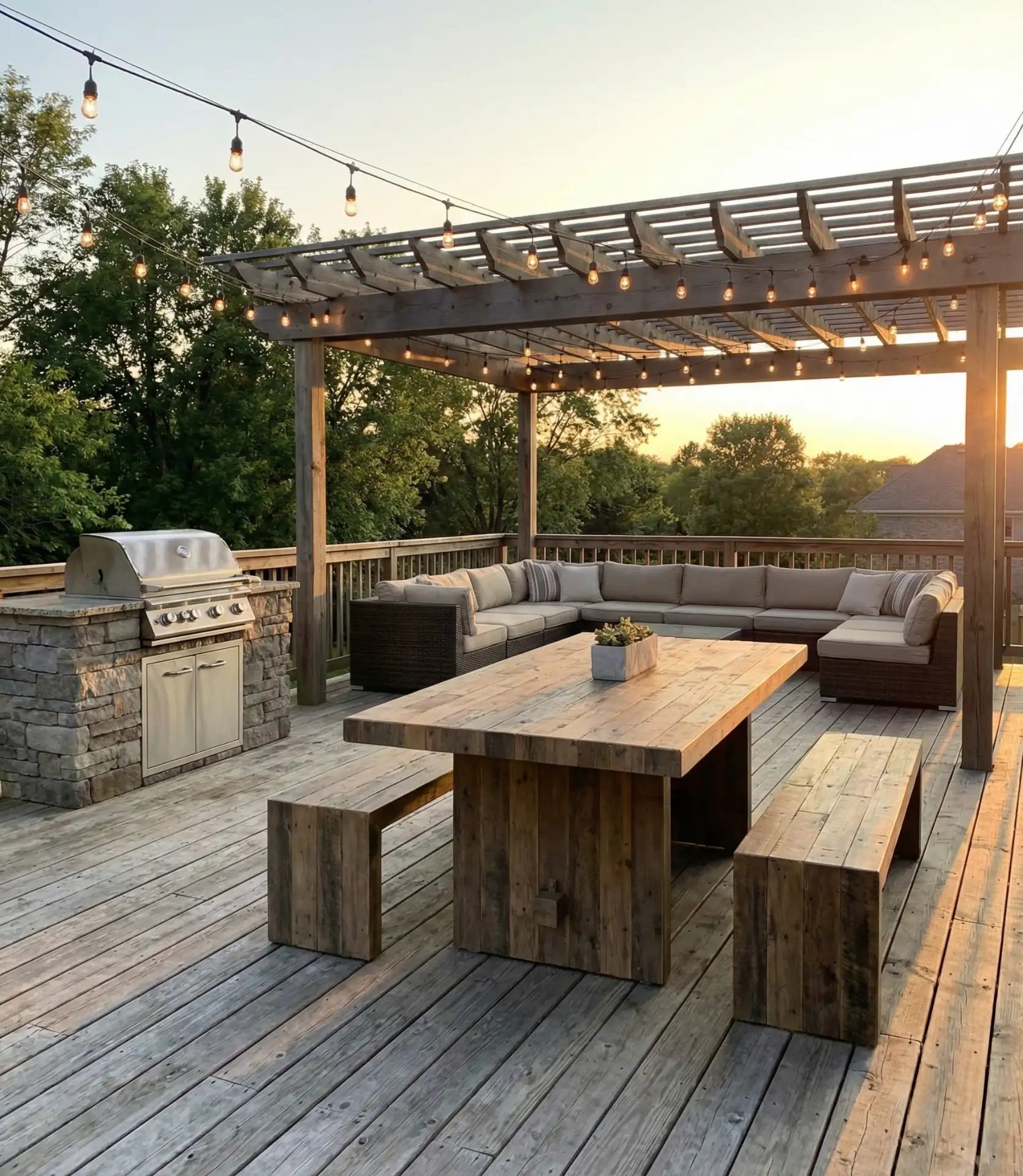
More and more families are investing in weather-resistant furniture for their backyards and outdoor kitchens, which are just as equipped as indoor ones. For a good-quality large deck using composite materials, budget anywhere from 30 to 60 dollars for pressure-treated pine and cedar to 50 to 90 dollars. Don’t compromise on the structural support. Larger decks need properly sized beams and joists to minimize bounce and prolong the deck’s life.
13. Simple Platform Deck
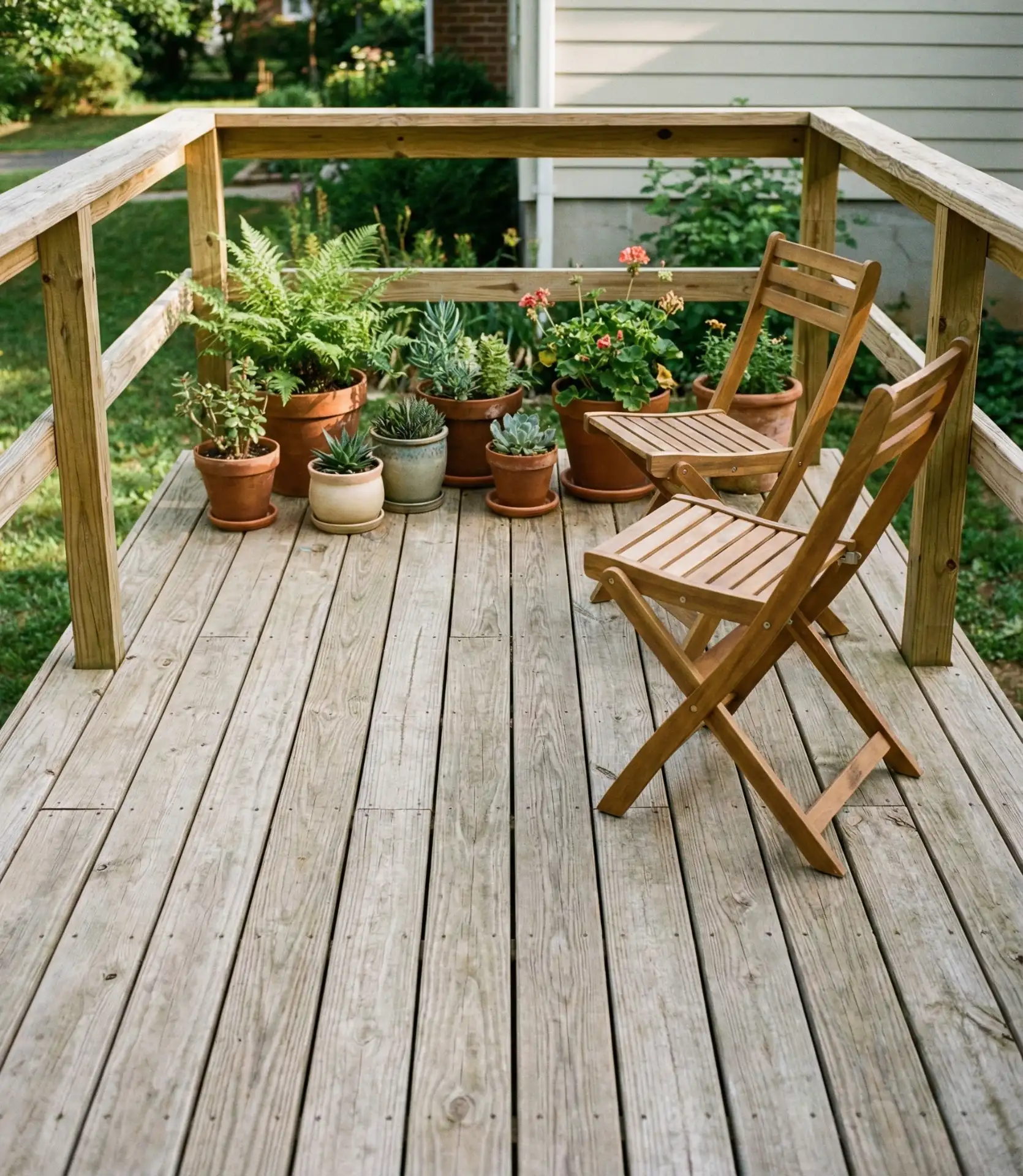
A simple rectangular platform deck also remains the most budget-conscious choice for homeowners wanting to maximize functional outdoor space while still avoiding architectural complexity. By focusing on quality materials and solid construction, this design excludes built-in features, multiple levels, and ornate railings. For many confident beginners, it is the quintessential DIY project, with many readily available plans and countless online tutorials. 
A 12×12-foot platform deck may serve best as a first outdoor project or as a way for landlords to enhance the value of rental properties without a major investment. For as little as $\textbf{1,200} in materials, you can build your own (utilizing your labor), whereas professional installation can run $\textbf{4,000}-6,000. The design also offers great potential for future upgrades to built-in benches, planters, or sections of a pergola progressively as your budget allows.
14. Deck with Built-In Seating
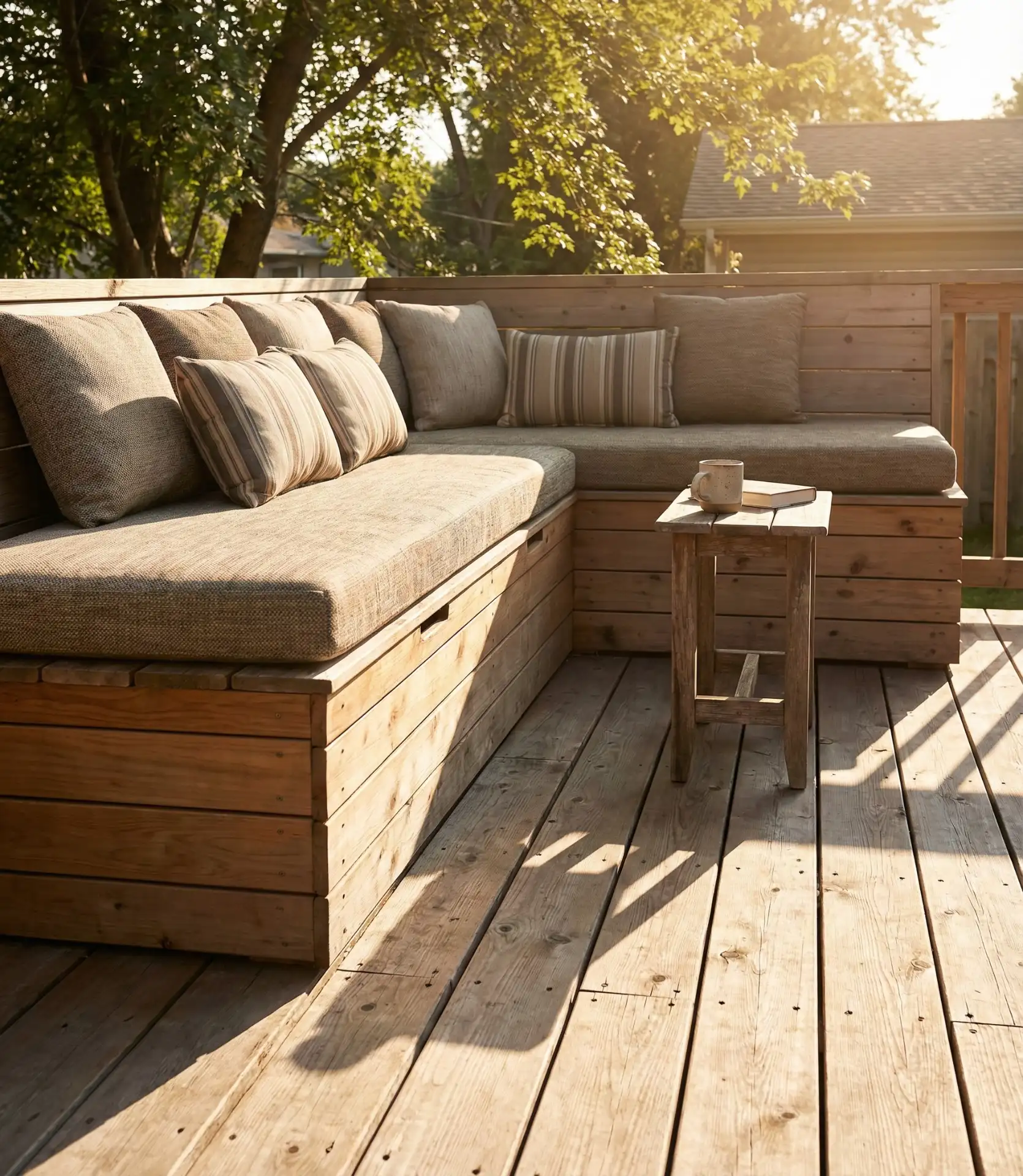
Integrating permanent bench seating along deck perimeters eliminates furniture shopping while creating a polished, finished appearance. These built-in benches can incorporate storage compartments beneath hinged seats, maximizing functionality in small yards. The continuous seating also serves as a psychological barrier, making railings feel less intrusive while meeting building code requirements for edge protection on elevated structures. 
A typical error when building benches is making them too deep or too shallow. Aim for 18 to 20 inches of depth to avoid wasting space. Weather-adjustable cushions have removable covers and can be laundered seasonally. Consider angling corner seats to create conversation seating. The built-in seating storage space beneath a pool is for toys, gardening supplies, or outdoor games that would otherwise clutter garages or basements.
15. Modern Minimalist Deck
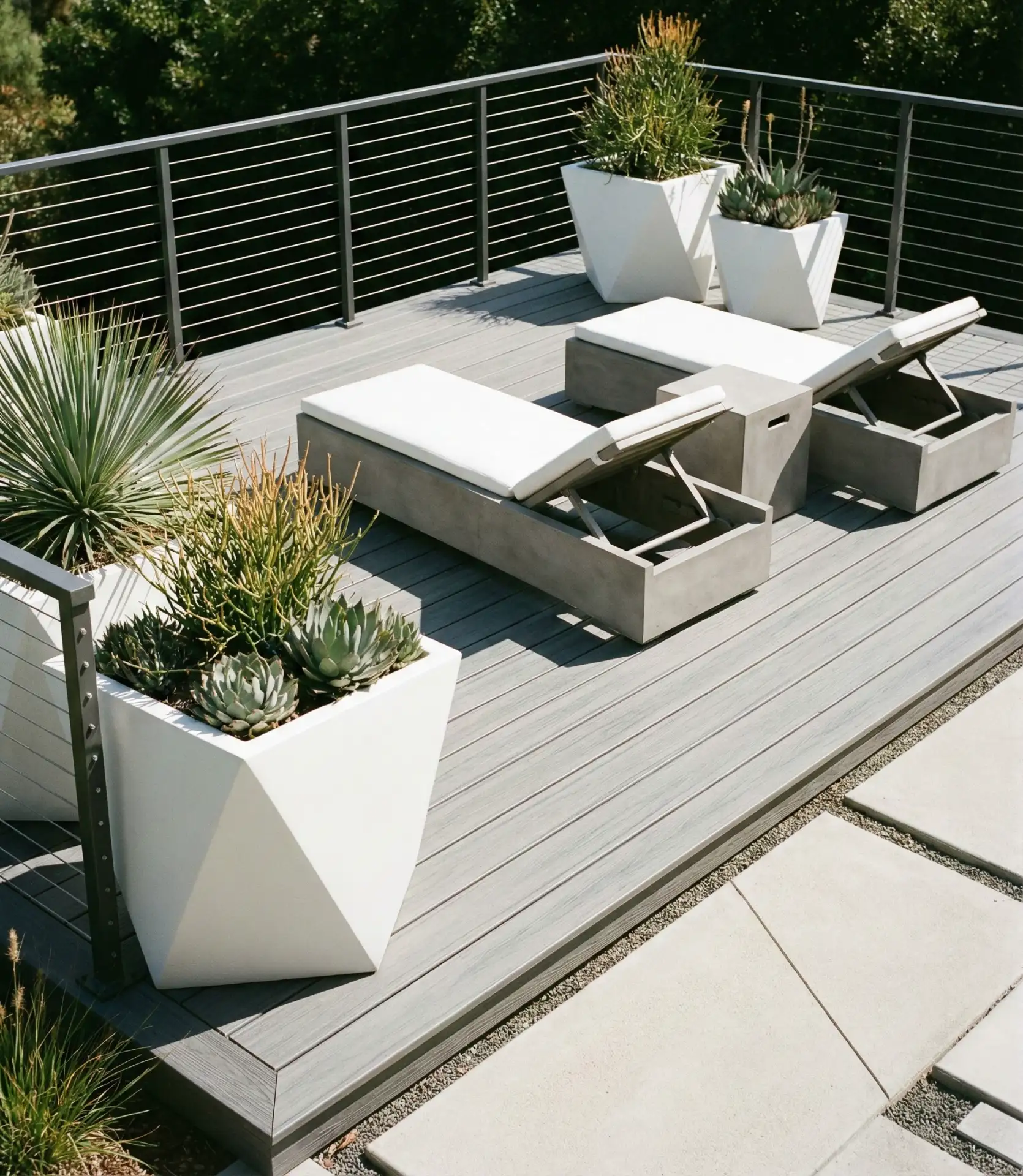
Smooth and clean lines with a color palette and the absence of intricate details all describe the modern minimalist frame deck. Grey composite planks and simple stainless steel cable railings achieve the desired look. The delta planters create a modern look that attracts many people to the cover of cottage lanes. The look also attracts many people to modern mid-century homes and modern farm homes. 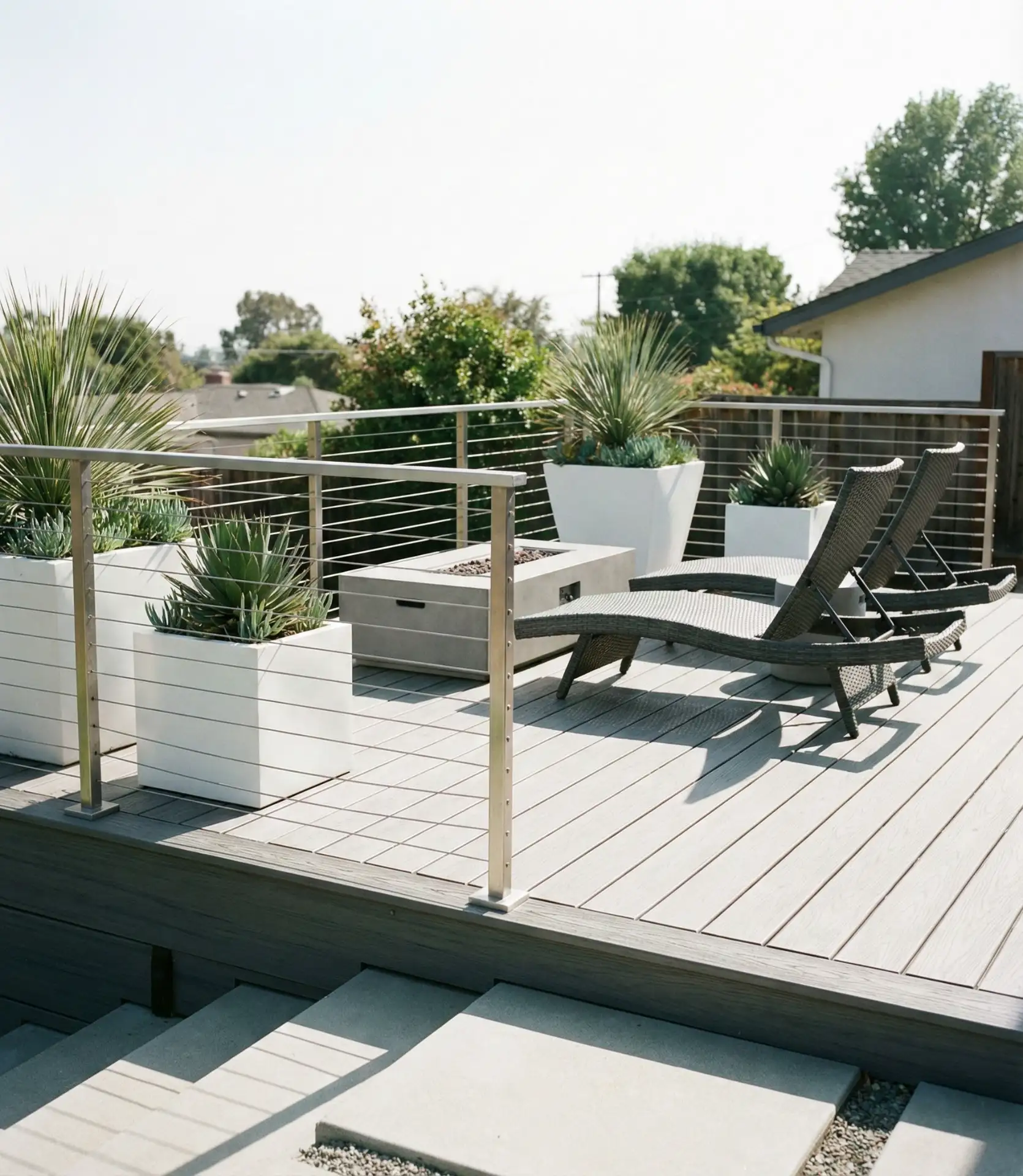
The markets of Austin, Seattle, and Los Angeles have a lot of minimalist design, and that has spread to deck design.
A smooth aesthetic looks appealing as long as everything is aligned and crafted properly. Without decorative elements to cover imperfections, mistakes in alignment of boards and placement of fasteners will be visible. Ensure your budget covers systems that fasten to hide screws, as well as clean-edged furniture, to keep the outdoor space looking cohesive.
16. Budget for a Simple Deck with a Gravel Surround
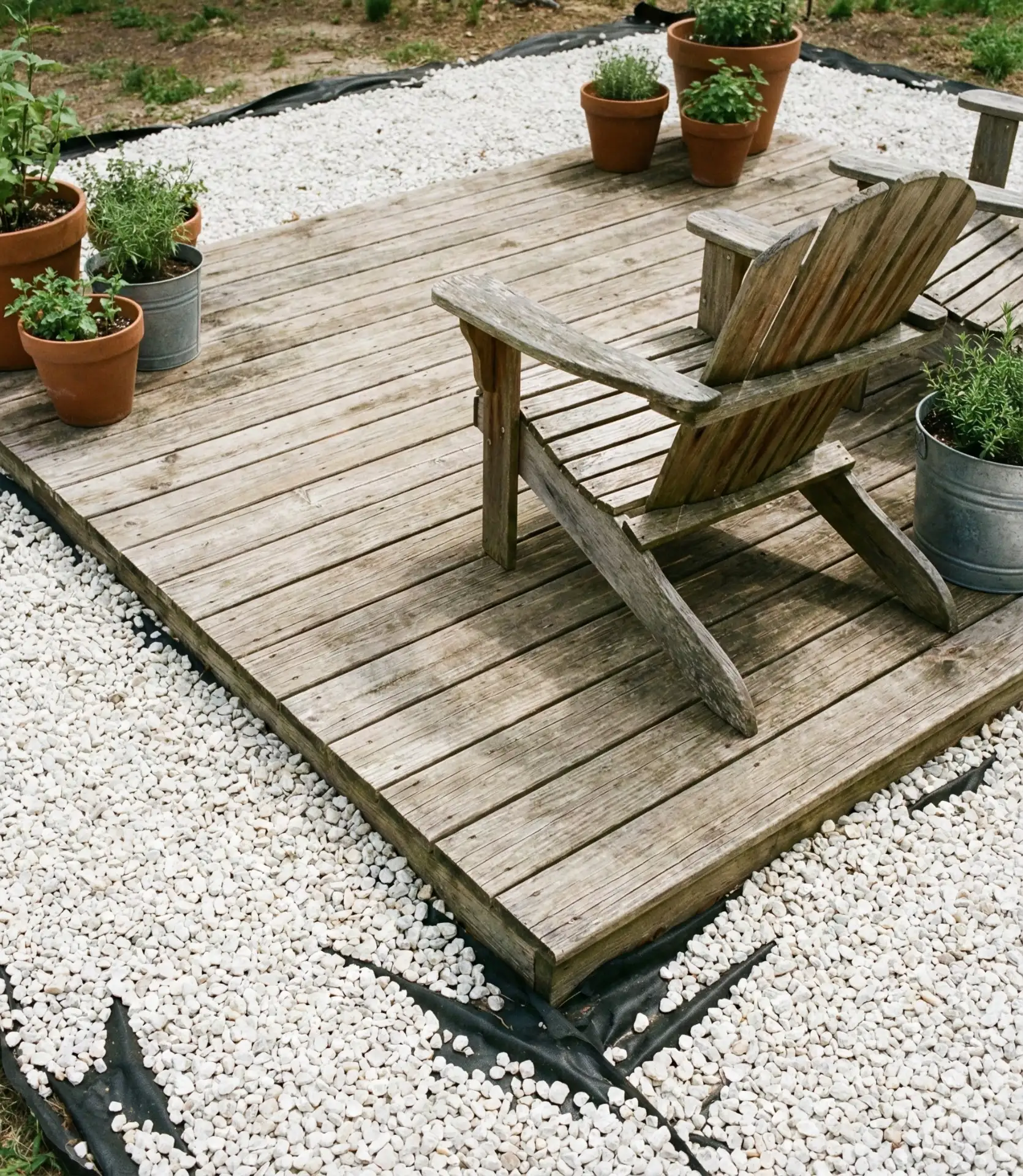
Inexpensive hardscaping is not necessary when combining pea gravel or river rock perimeters with a simple wood platform. It creates visual interest along with practical drainage. The gravel transition solution helps avoid mud splashing on the decking after rain, reduces weeds, and gives a cost-effective way to extend the outdoor space usable from the deck. This approach also lessens the cost compared to deck expansion and provides similar benefits. 
In most of the arid areas, gravel landscaping is used as xeriscaping and also provides a natural look to the desert surroundings. Use landscape fabric to avoid weeds under the gravel, and keep edges with metal or plastic to contain the gravel. 3 inches is enough gravel recommended to provide more than enough coverage and drainage. Homeowners report spending around $200\-400 for decking gravel per material. About a standard deck. Extending the deck by the same area would cost $2,000+.
17. Deck with Pergola Shade Structure
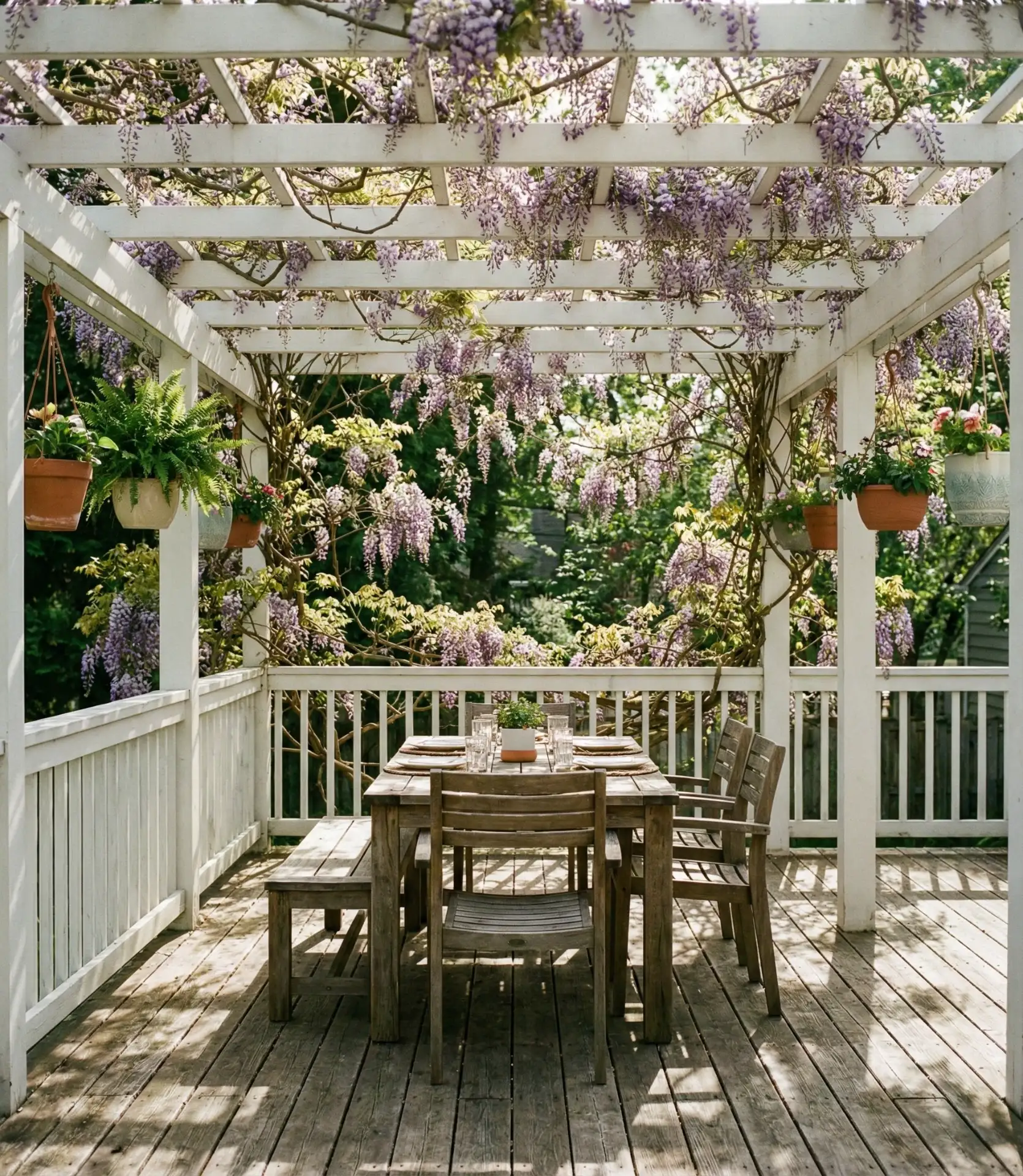
A pergola provides a feeling of architectural definition. It adds a level of filtered shade without being enclosed by a covered roof over a full deck. The construction allows breezes to flow, and it supports climbing vines, string lights, or a retractable canopy.
This adaptable structure complements both contemporary and conventional homes and harmonizes with existing architecture thanks to finishing touch selections and material choices. 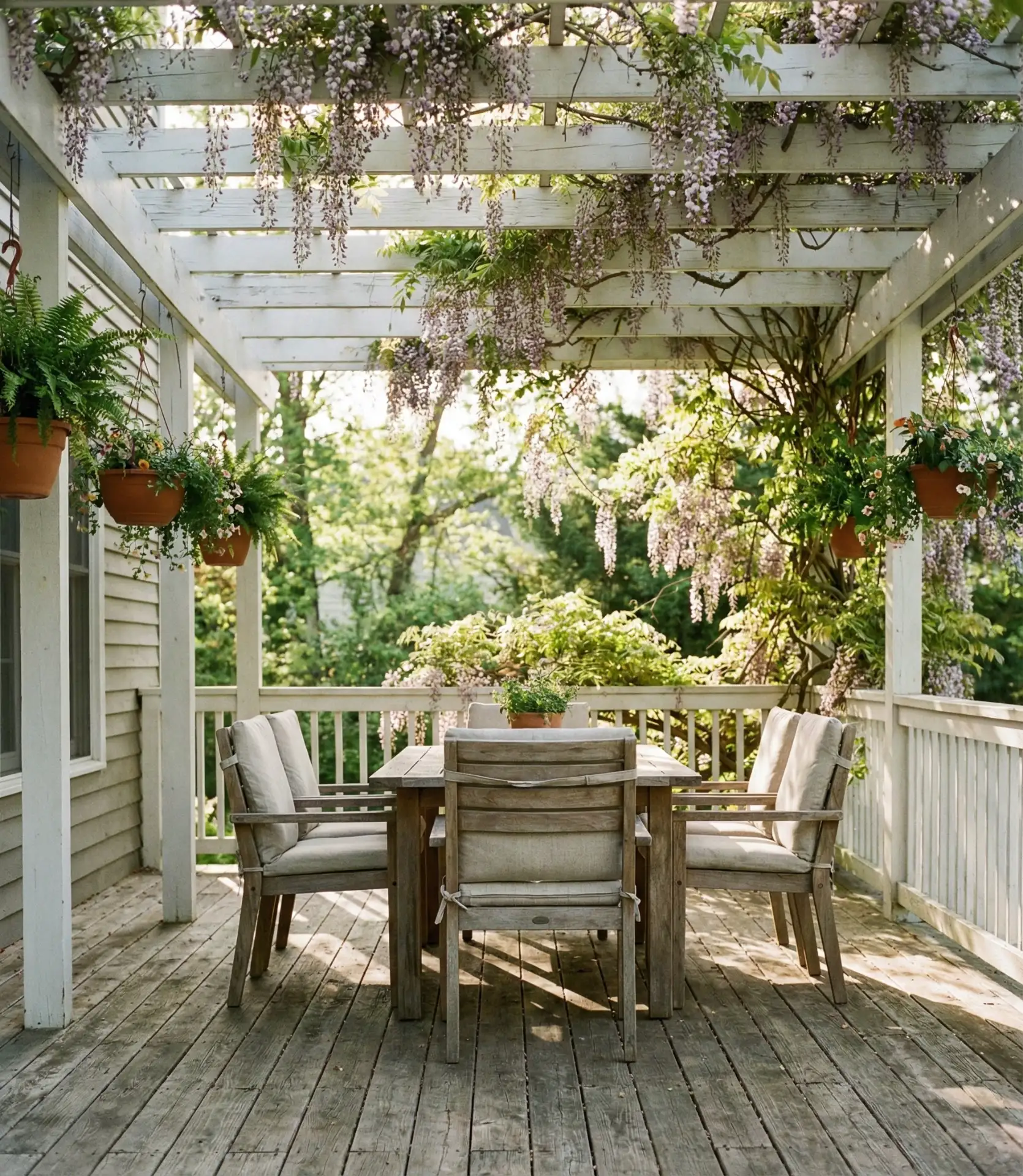
Customers report using pergolas more often than fully covered structures because they do not block views of the sky and do not darken the area. Expect to spend an additional $1500 to $3500 for materials and labor for a pergola measuring 10×12 feet. This price varies based on whether you select cedar, pressure-treated pine, or vinyl. For added coverage, plant fast-growing vines like clematis or jasmine, and hang weather-resistant curtains for instant privacy.
18. Deck with Outdoor Kitchen Station
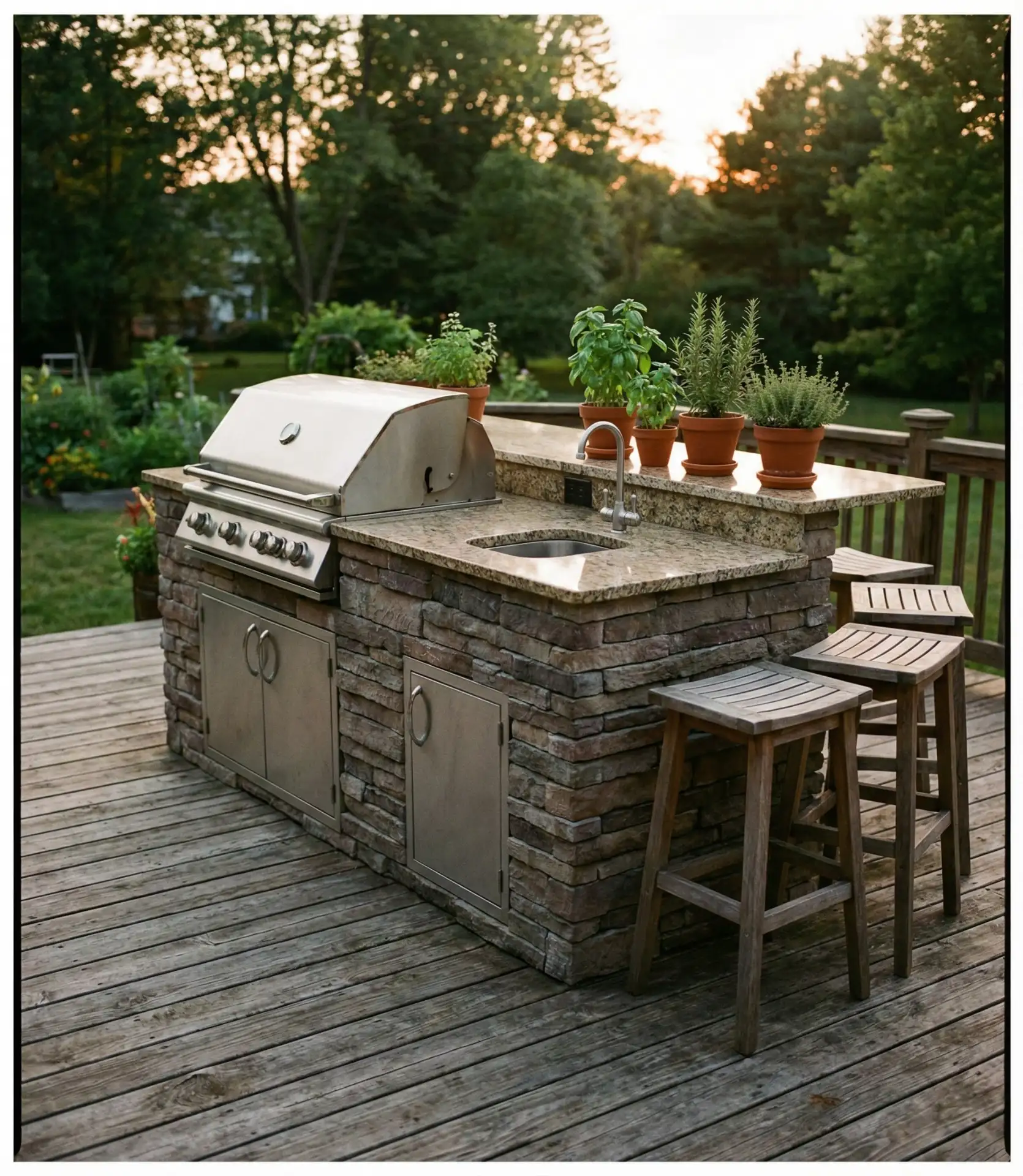
Incorporating a dedicated cooking zone transforms your deck from a simple seating area to a full outdoor living suite. A large kitchen station might include a built-in grill, sink, refrigerator, and counter space, while budget versions focus on a quality grill with adjacent prep surfaces. Positioning the kitchen at one end maintains open flow while concentrating utilities in a single location for easier installation of gas lines and electrical service. 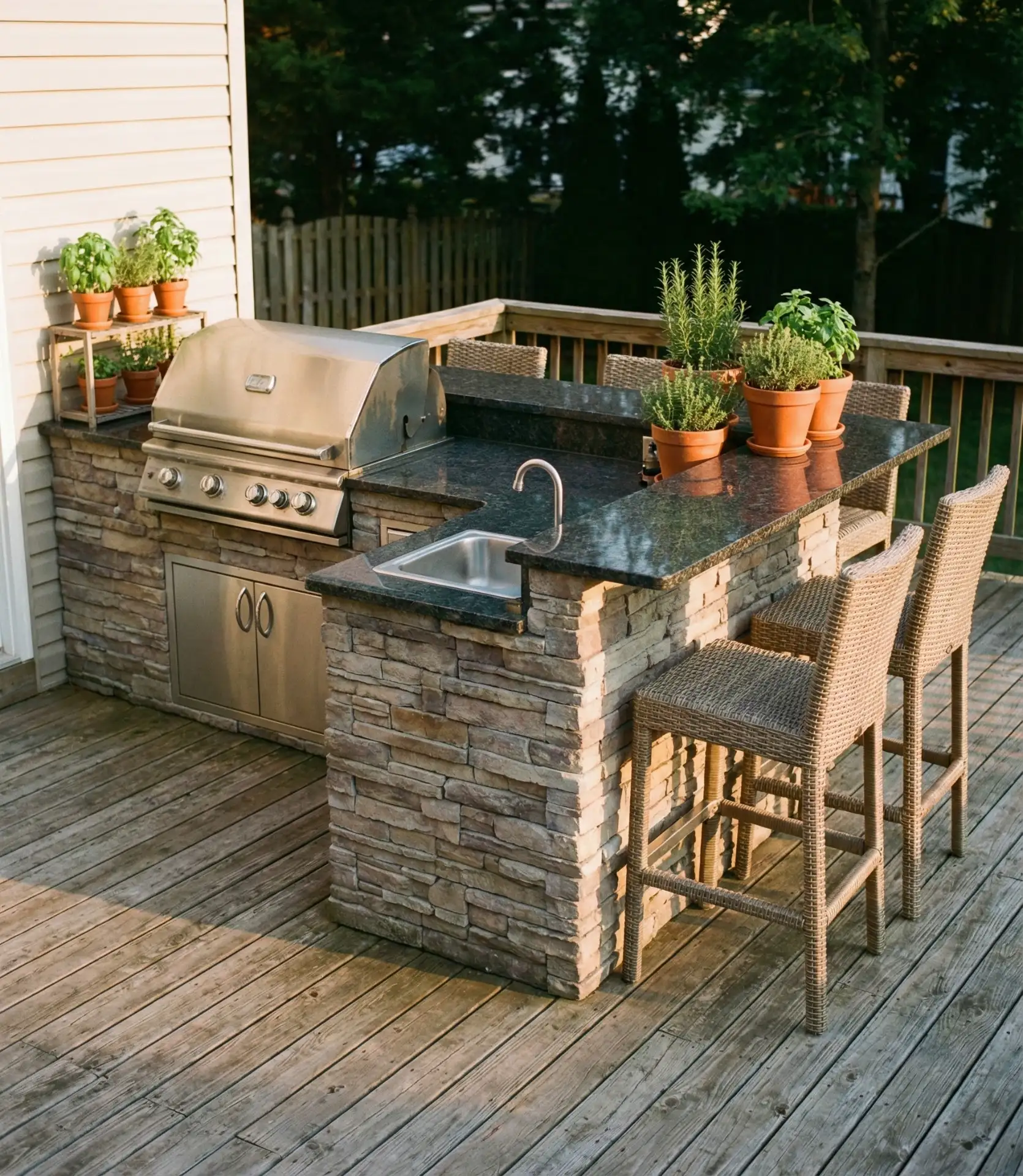
In Sun Belt states where year-round grilling is standard, outdoor kitchens have become expected features in mid-to-upper-tier homes. Start with professional-grade gas connections and 220V electrical service—retrofitting these later costs significantly more than installing during initial construction. Use marine-grade stainless steel for all appliances and hardware in coastal areas, and choose granite or concrete countertops over tile, which cracks in freeze-thaw cycles common to the Midwest and Northeast.
19. Floating Deck Design

A floating deck is unanchored and sits directly on the ground. This makes it ideal for renters and for people who want to DIY quickly without a lot of hassle. Many jurisdictions have no building permit requirements for DIY floating decks. These low-profile decks can be leveled on uneven ground and laid on concrete blocks or deck piers. The deck’s freestanding nature allows for easy repositioning when necessary. No ledger board means there is no water damage to the house siding. 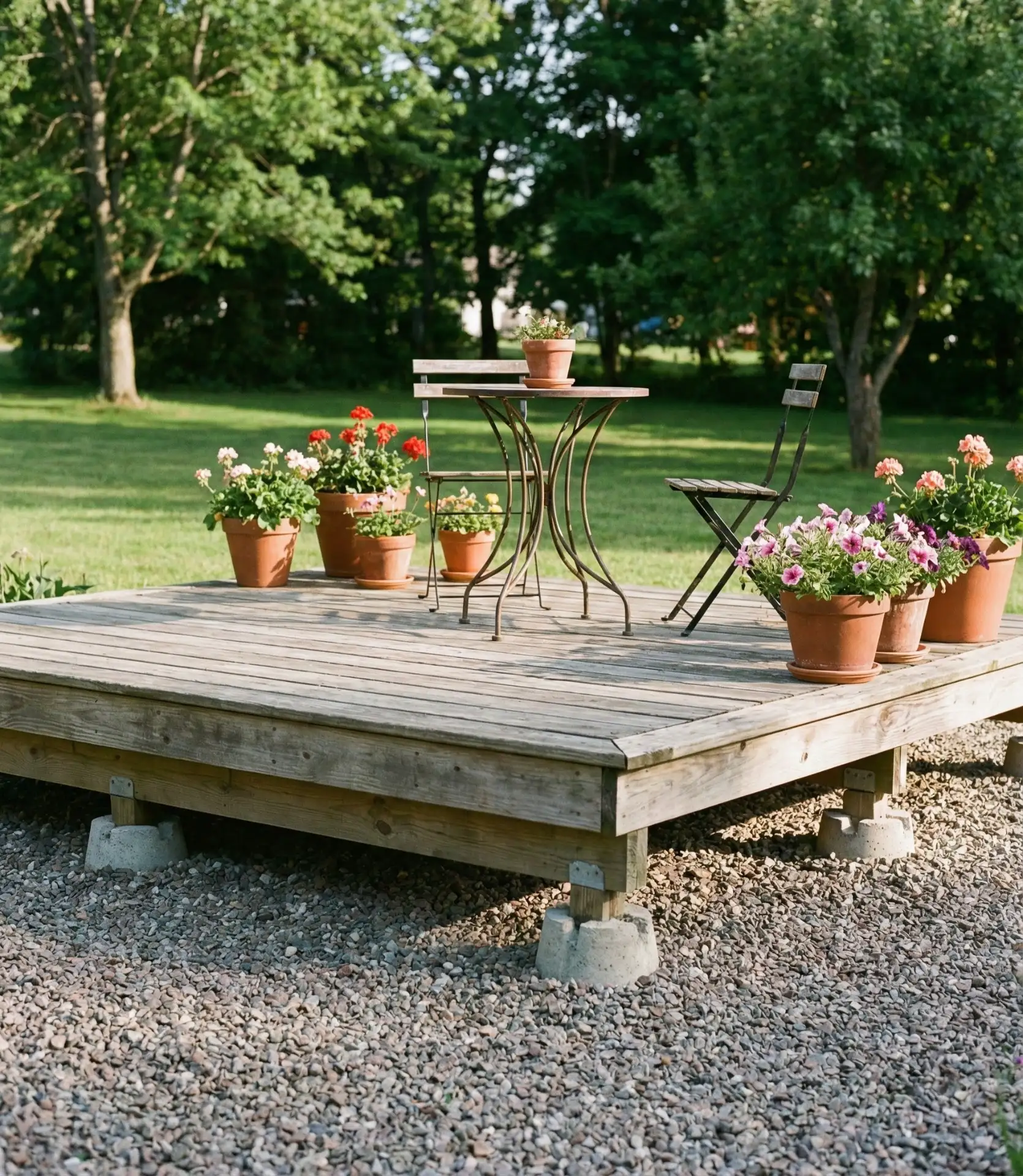
Such a structure is the best option for low slots, previously leveled yards, and temporary decks when rental properties are involved. Most jurisdictions have no permit requirements for floating decks under 200 sq ft and 30 inches in height. So long as the regulations exist, floating decks are temporary, so a deck of up to 200 sq ft under 30 inches does not require a permit. Always double-check your local laws.
Faster installation is one advantage. Motivated DIYers can build a basic 10×10 floating deck in one weekend if accompanied by pre-cut wood and adjustable pier blocks.
20. Deck with Cable Railing System
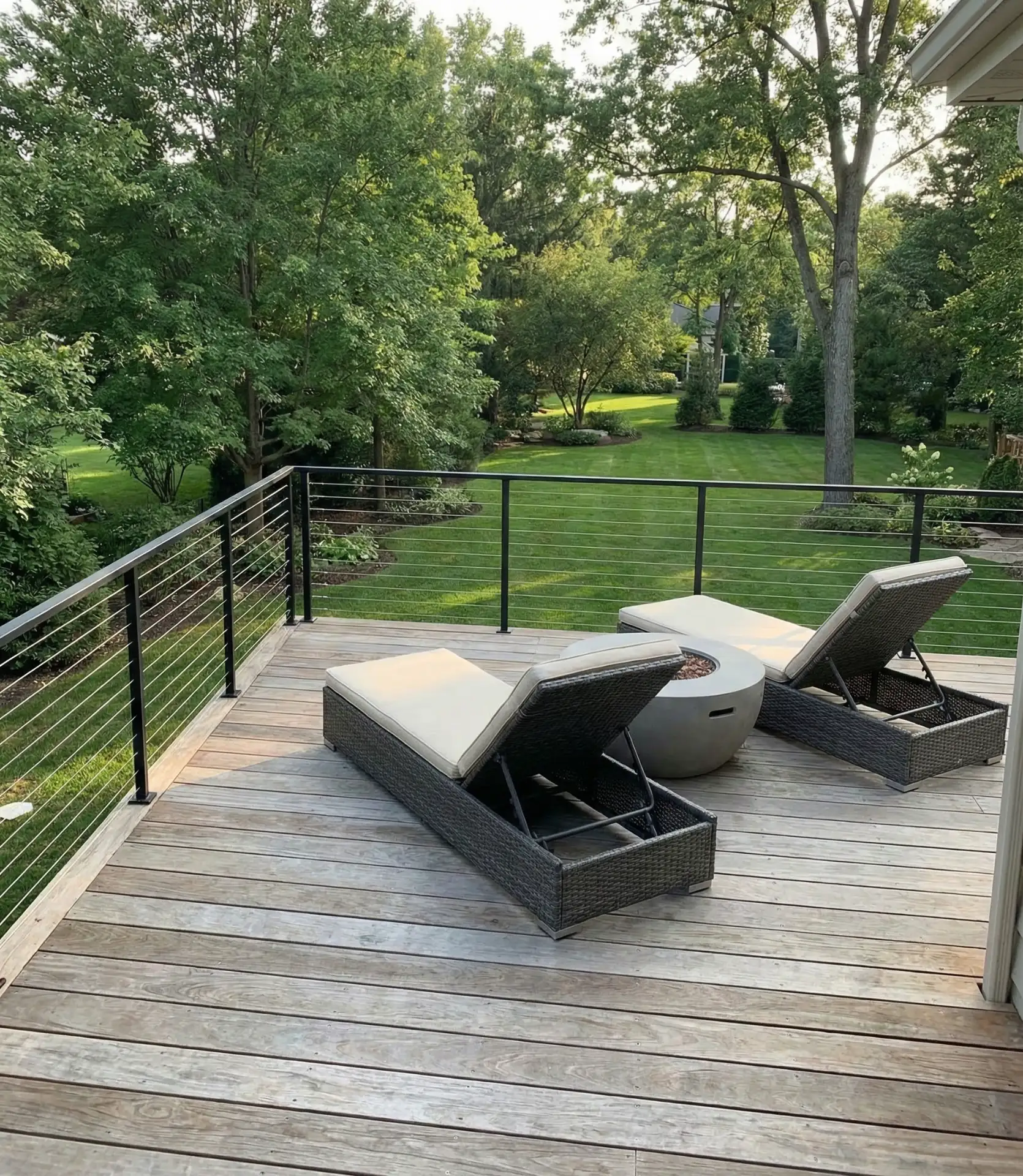
Stainless steel cable railings comply with the safety required by code while offering customers unobstructed views of the landscape. Horizontal cables with a modern railing system are baluster-free. The clean lines of the cable railings do not obstruct the view, as there are no balusters in the system. The clear quality of cable railings also makes the deck enclosure not feel small, and it is very valuable on elevated decks that overlook lovely views or water features. 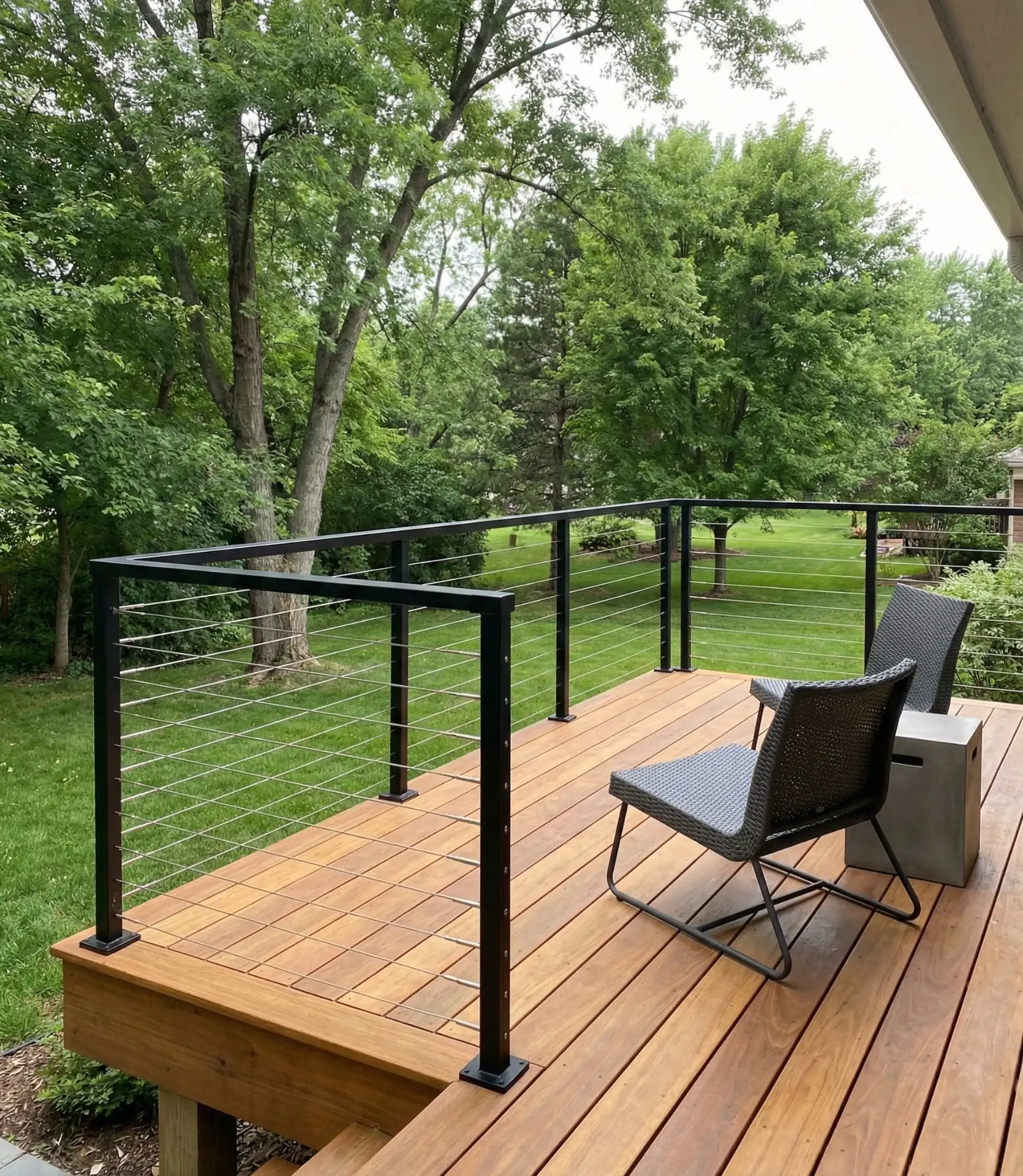
View cable railings are now standard features of coastal and mountain properties. Expect to pay $80 to $150 for this view per linear foot, which is pricier than traditional wood baluster views and is equivalent to views through glass panel systems. Proper railing cable installation is vital: a loose, sagging cable can tense too much in the wind, and an over-tightened cable can warp the railings. It is also critical to have professional installation to comply with the 4-inch sphere requirements that prevent small children from slipping through.
21. Two-Tone Deck Design
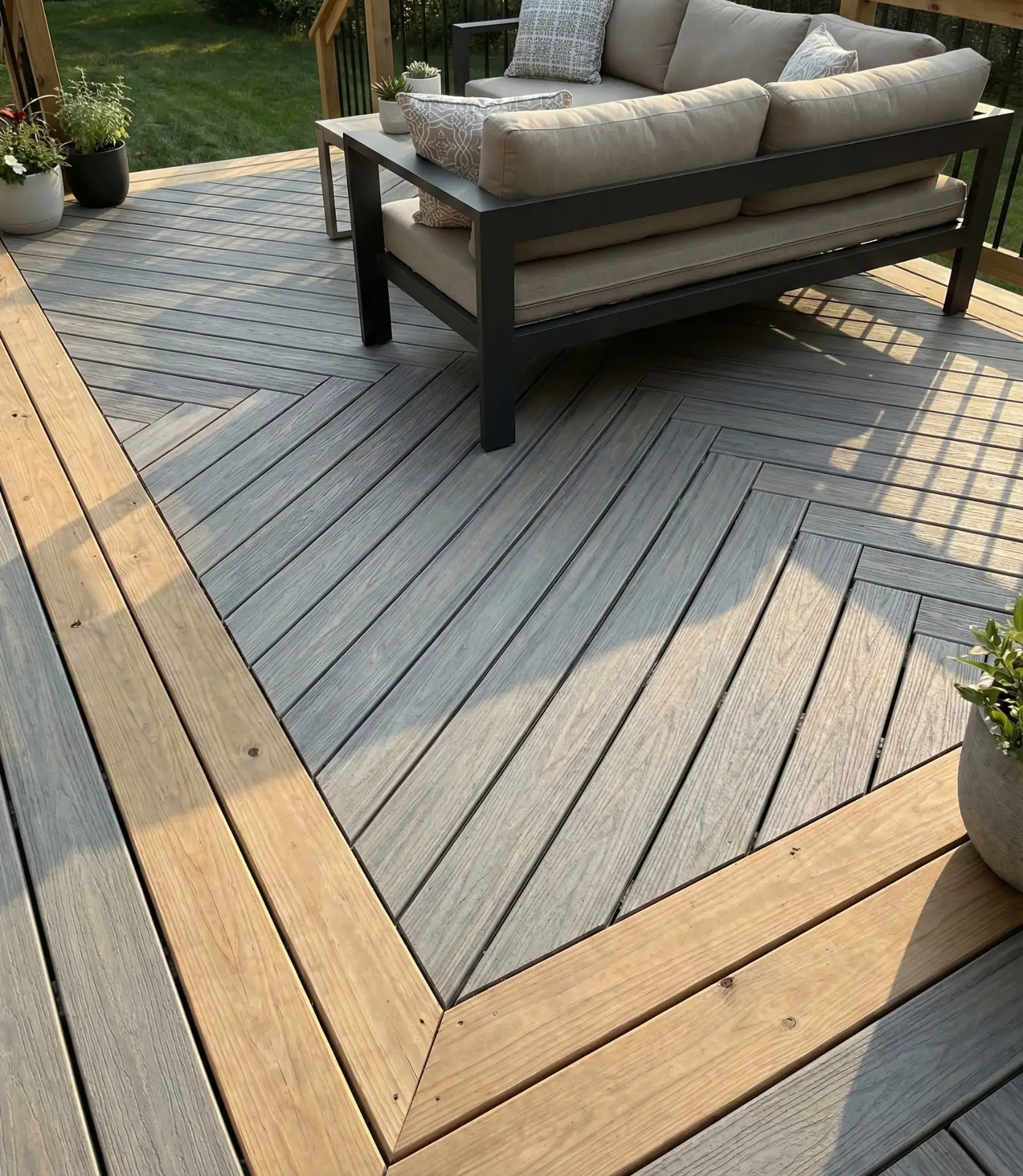
Creating visual interest through contrasting deck board colors defines zones without physical barriers. A popular approach uses darker Trex or composite planks for the main field with lighter borders or inset panels, or vice versa. This decor technique adds sophistication and perceived value while using the same materials throughout, maintaining consistency in texture and maintenance requirements across the entire surface. 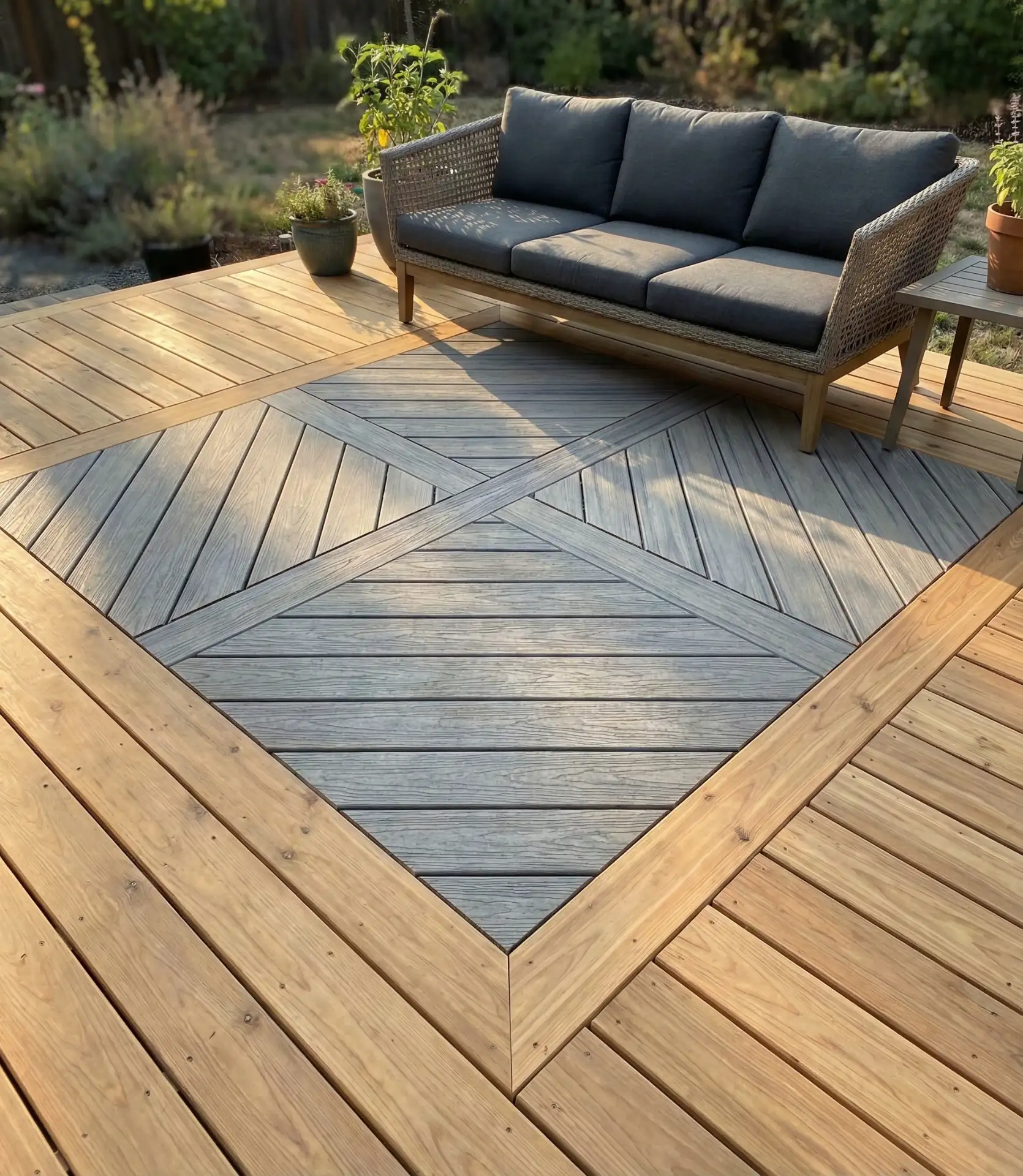
One common mistake is choosing colors that are too similar—they need at least three shades of contrast to create clear definition. Another pitfall is creating overly complex patterns that feel busy rather than sophisticated. Stick to simple geometric divisions: border frames, diagonal insets, or herringbone centers. The two-tone approach typically adds 10-15% to material costs but delivers a custom appearance that significantly enhances curb appeal and resale value.
22. Deck with Privacy Wall
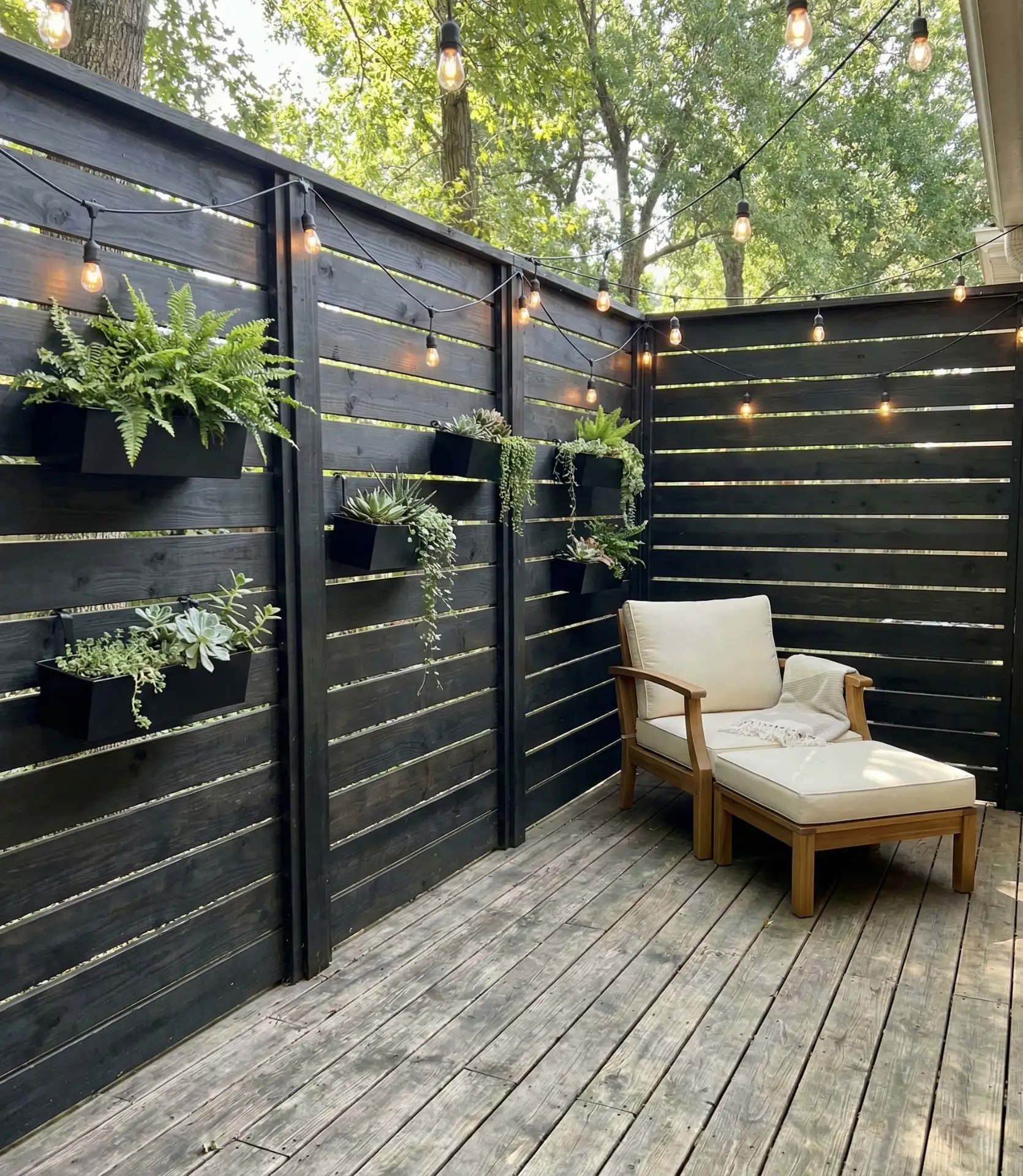
Close or full privacy walls built with either slats or solid material will enhance coziness and intimacy by blocking the direct contact views of the neighbors. These elevated designs include shelving or built-in planter boxes. You can add useful features like lights to make the space more functional, but if your neighbors are very close, a simple design with planks arranged either up and down or side to side, matching the material of your deck, will look good and be very practical.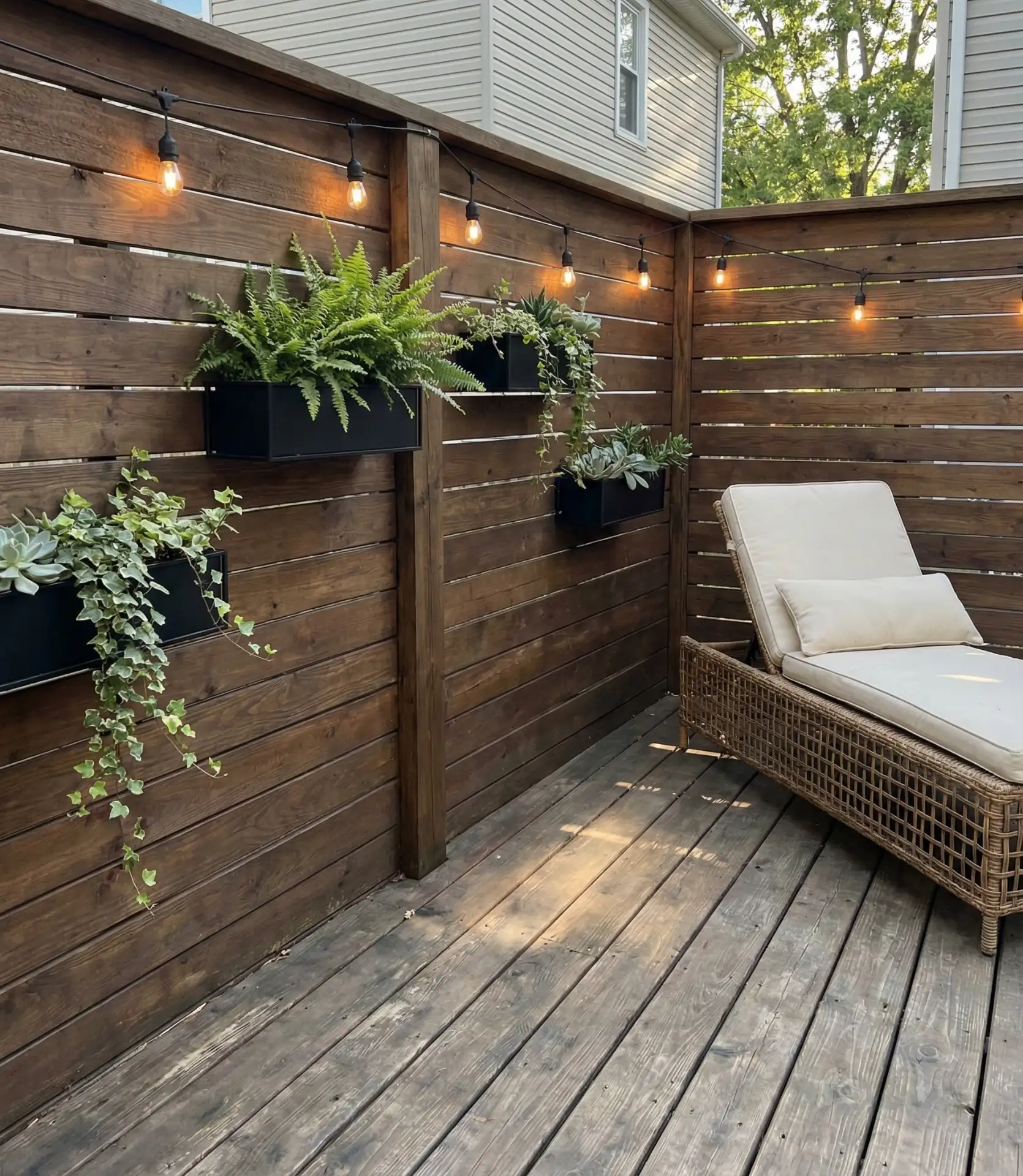
Walls that are 6 to 7 feet high are ideal to block out sight lines without making a place look like a box. In urban and suburban areas, where houses are built very close to one another, these walls are becoming necessities rather than luxurious additions. Before constructing, check local laws and regulations, because some municipalities have laws on how high fences can be built, and some require a permit to add walls to a deck. While some solid walls create a good visual barrier, others allow for the passage of air by creating 1- to 2- inch gaps between the boards.
23. Deck with Raised Planters
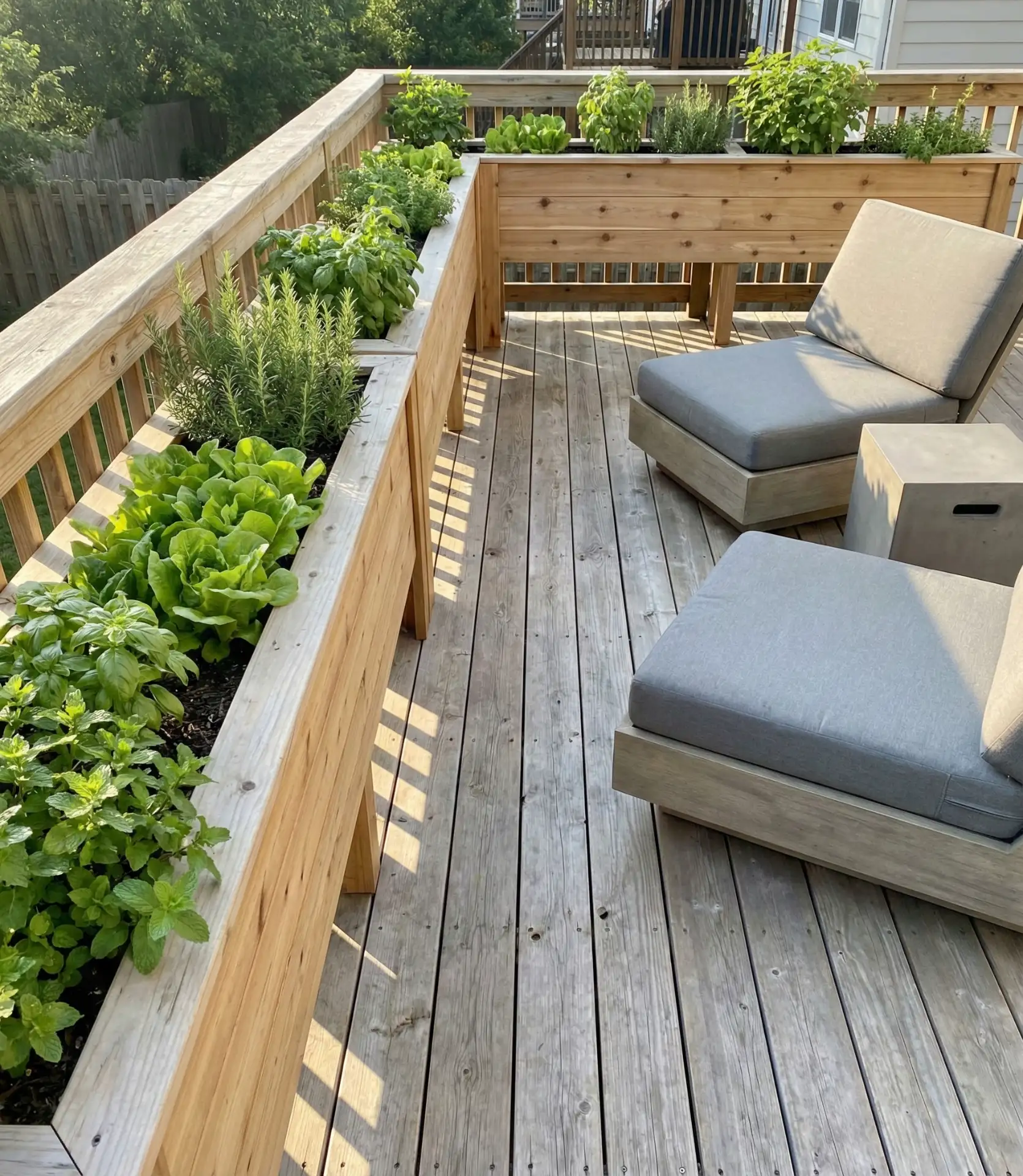
Planters that are integrated into deck railings or positioned as freestanding elements define space for greenery and bring it to eye level. Deck railings are elevated to make them accessible for gardening without bending, and to adapt them for deck-side harvesting, add herbs and vegetables. They also add vertical interest to otherwise horizontal surfaces, make drainage more effective, and improve soil warmth to extend the growing season. This feature is a bonus for narrow urban yards that have little exposure to direct sunlight. 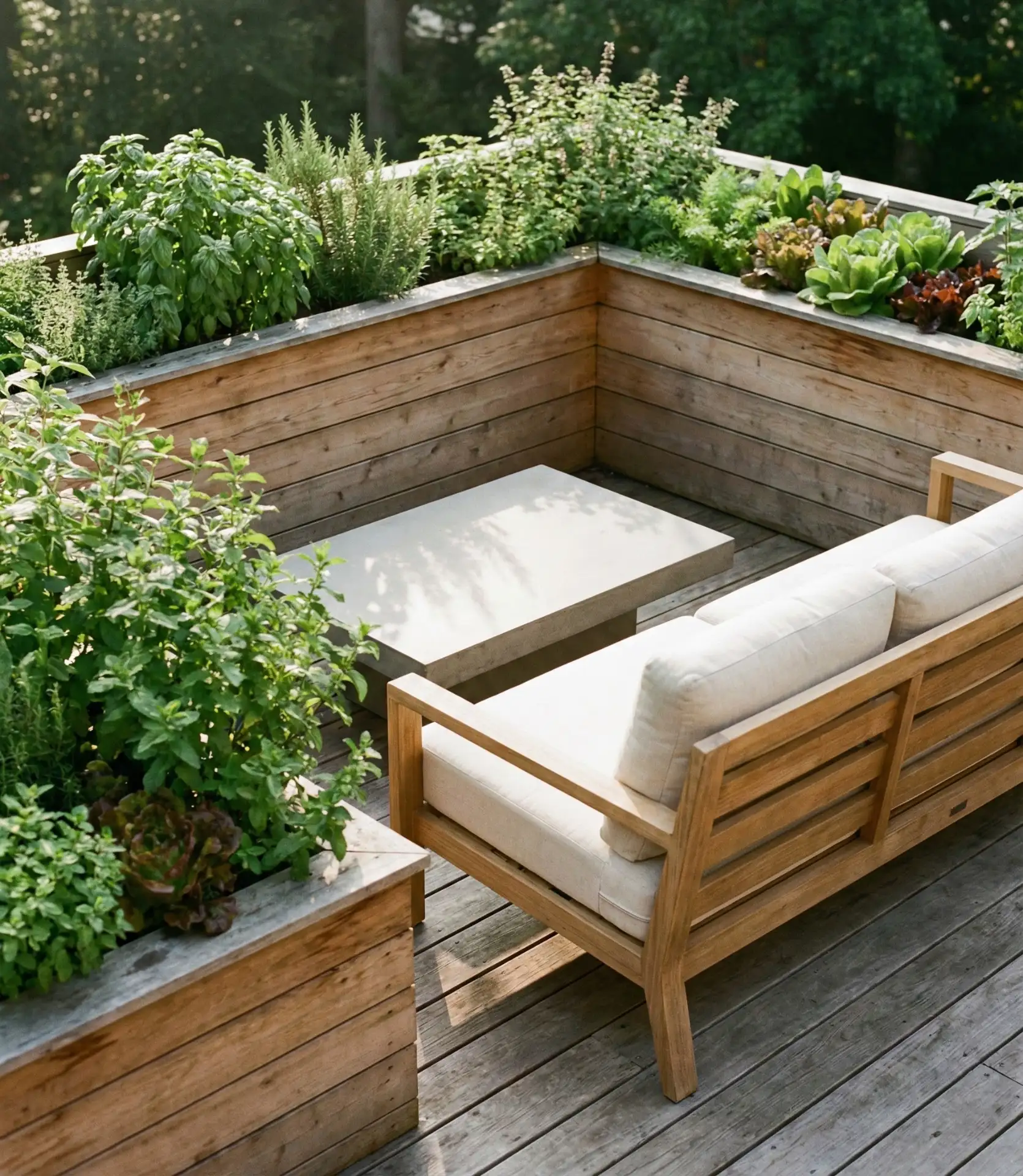
Across the Pacific Northwest, Northeast, and other regions where container gardening extends limited space, raised deck planters have become integral to sustainable living. Build planters at least 12 inches deep for adequate root development, and line them with landscape fabric or plastic to prevent soil contact with wood that accelerates rot. Install drainage holes every 6–8 inches along the bottom, and use quality potting mix rather than garden soil to ensure proper drainage and nutrition.
24. Deck with Outdoor Fireplace

One large deck anchors a built-in outdoor fireplace at one end, providing warmth and ambiance that extends the season into the cooler months. Whether built from stone, or brick, or stucco-covered concrete block, the vertical element adds architectural weight and creates a natural focal point for gathering. This substantial feature is best on covered decks or those with partial roofs that protect the fireplace from the weather and allow smoke to vent upwards. 
Decks with distinct seasons, such as the Northeast and Midwest, can utilize outdoor fireplaces from March to November, extending beyond the summer months. The structure requires a dedicated foundation separate from deck framing, as the weight (1,000-3,000 pounds) greatly exceeds the deck load capacity. For a basic fireplace, depending on the materials and size, budget $3,000–$8,000.
Gas fireplaces have burning efficiency and ease of use; however, these need professional gas line installation and have ongoing fuel costs.
25. Composite Deck in Multiple Levels
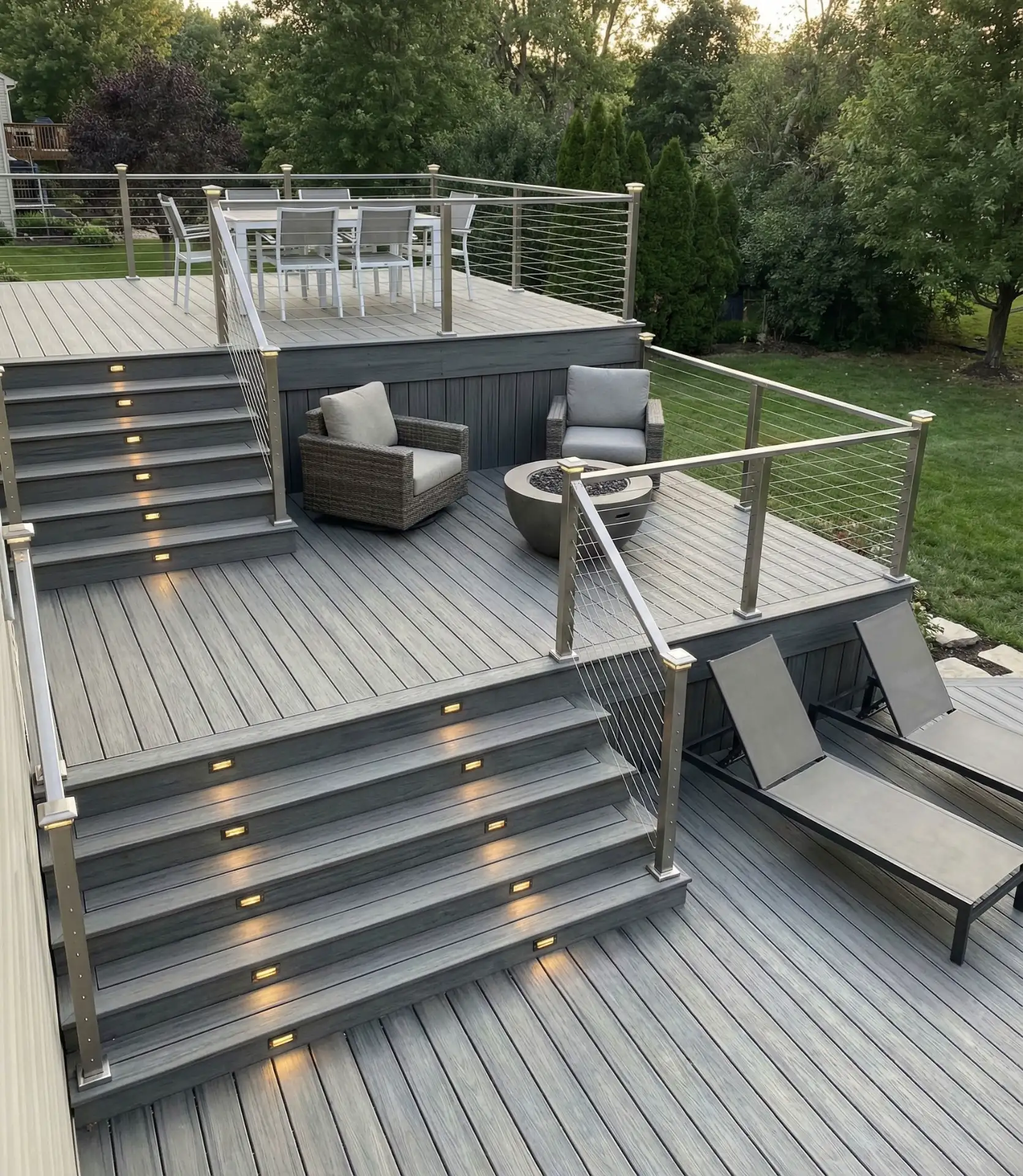
Multi-tiered layouts of Trex and other composites have added advantages. The material’s durability and ease of maintenance create distinct outdoor rooms. Each level can serve different purposes, including dining, lounging, and cooking, while stairs connecting them become architectural features rather than mere transitions. The composite material’s durability against fading, splintering, and rot makes it ideal for complex designs where wood would require constant maintenance in hard-to-reach corners. 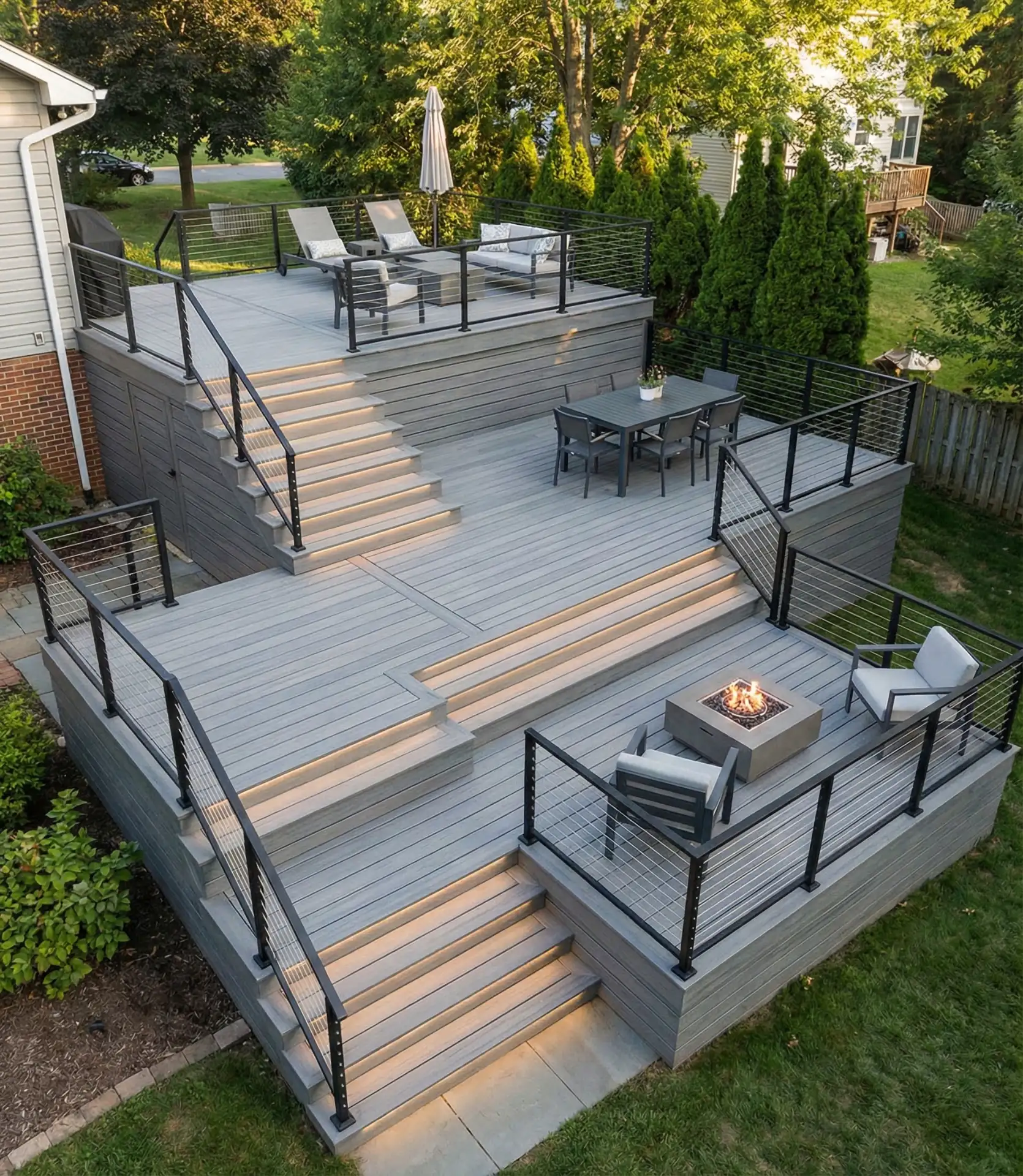
Differentiated decking, including removable walls, fosters the trend toward outdoor entertaining. The construction of unbroken planes on multiple levels, using composite decks’ hidden fasteners, offers seamless surfaces at elevation changes. Complex designs result in higher initial investment; however, long-term savings yield a 25-year warranty and reduced maintenance, including no required staining, sealing, and board replacement.
26. Deck with Hammock Station

The addition of heavy-duty posts and a relaxing zone engineered to support hammocks adds relaxation without consuming floor space.
Reinforced posts, integrated into the corners of the deck or as standalone features, will need to support between 400 and 500 lbs of dynamic load. This will necessitate extra concrete footers and heftier lumber sizes than what is typically required for deck posts. The suspended seating is cozy while keeping the deck surface unobstructed for circulation and other spatial arrangements of deck furniture. 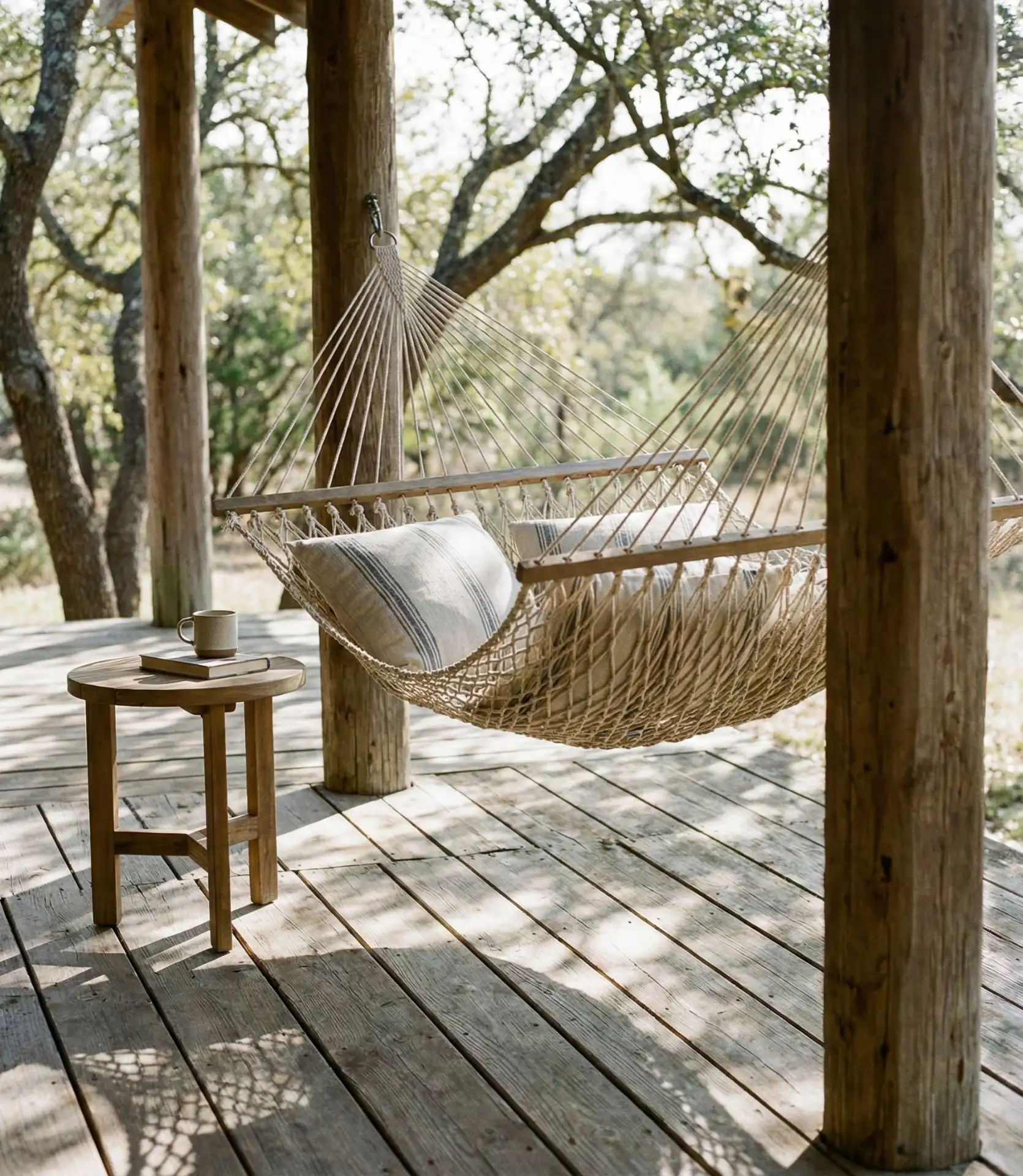
The best applications for this type of deck design are regions where napping and stargazing on the deck are common evening activities. Southeast, Southwest, and the coast of California come to mind. Use 6×6 posts, minimum 3 ft into concrete for stable support, and 10-15 ft spacing, varying with the types of hammocks selected. A common error is homeowners attaching hammocks to standard deck railings or posts. Standard deck railings and posts are not designed to withstand lateral forces, and attaching hammocks to them can lead to disastrous results.
27. Deck with Integrated Lighting
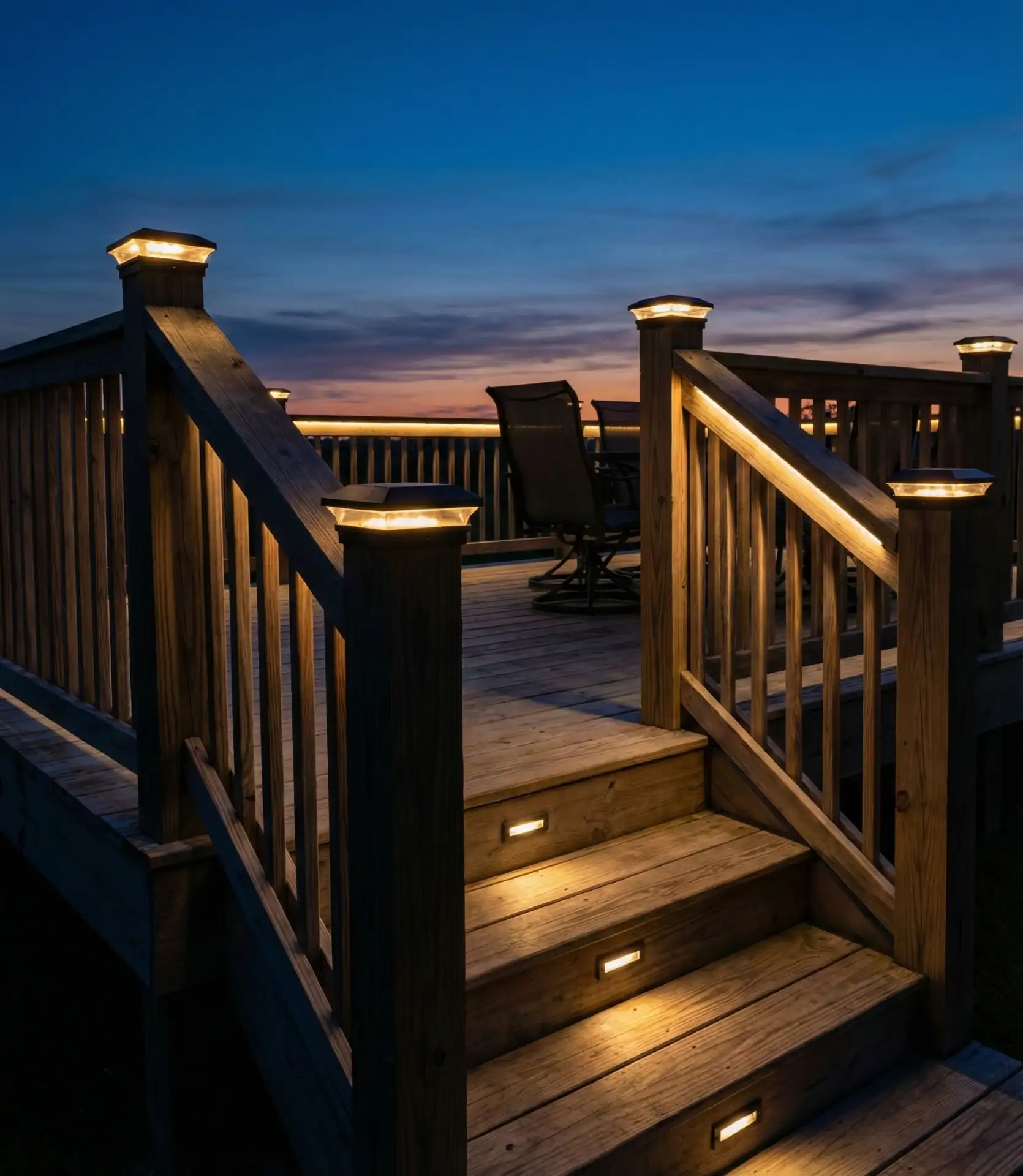
Integrated LED lights will help to increase the hours of the day that the deck can be used, while also providing safety and creating a relaxing atmosphere. Contemporary lighting systems include various options, such as lights on top of the posts, recessed lights on the stairs, and railings that are lit to provide a lighted pathway that is free of bugs. Low-voltage systems use very little power and can be programmed with your phone to change how much power they use, as well as to change the color and intensity of the light to match the mood.
This system enhances both the functional and aesthetic value of the space, while only costing a fraction of the value of landscaping lighting. 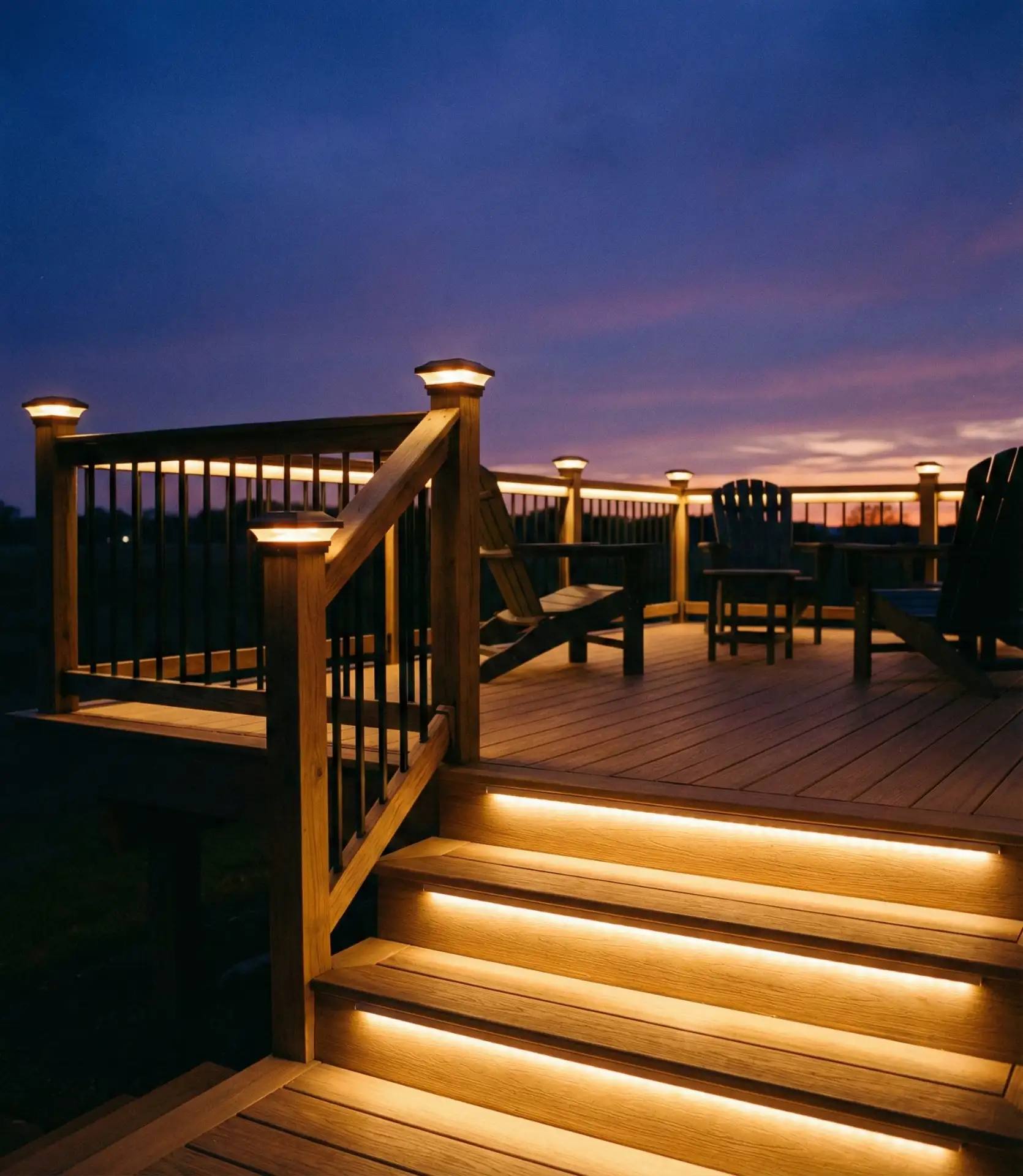
Deck lighting in suburban and rural areas with little light pollution creates a magical space for entertaining while also satisfying code requirements for egress lighting. To avoid expensive retrofitting, plan your electrical runs in advance, as running wires under the decking after the boards are installed is a partial dismantling job. For a standard deck, a basic low-voltage lighting kit costs $400-800, whereas full LED light systems with color-changing and smart home features can cost $1,500-3,000.
28. Deck with Vertical Garden Wall
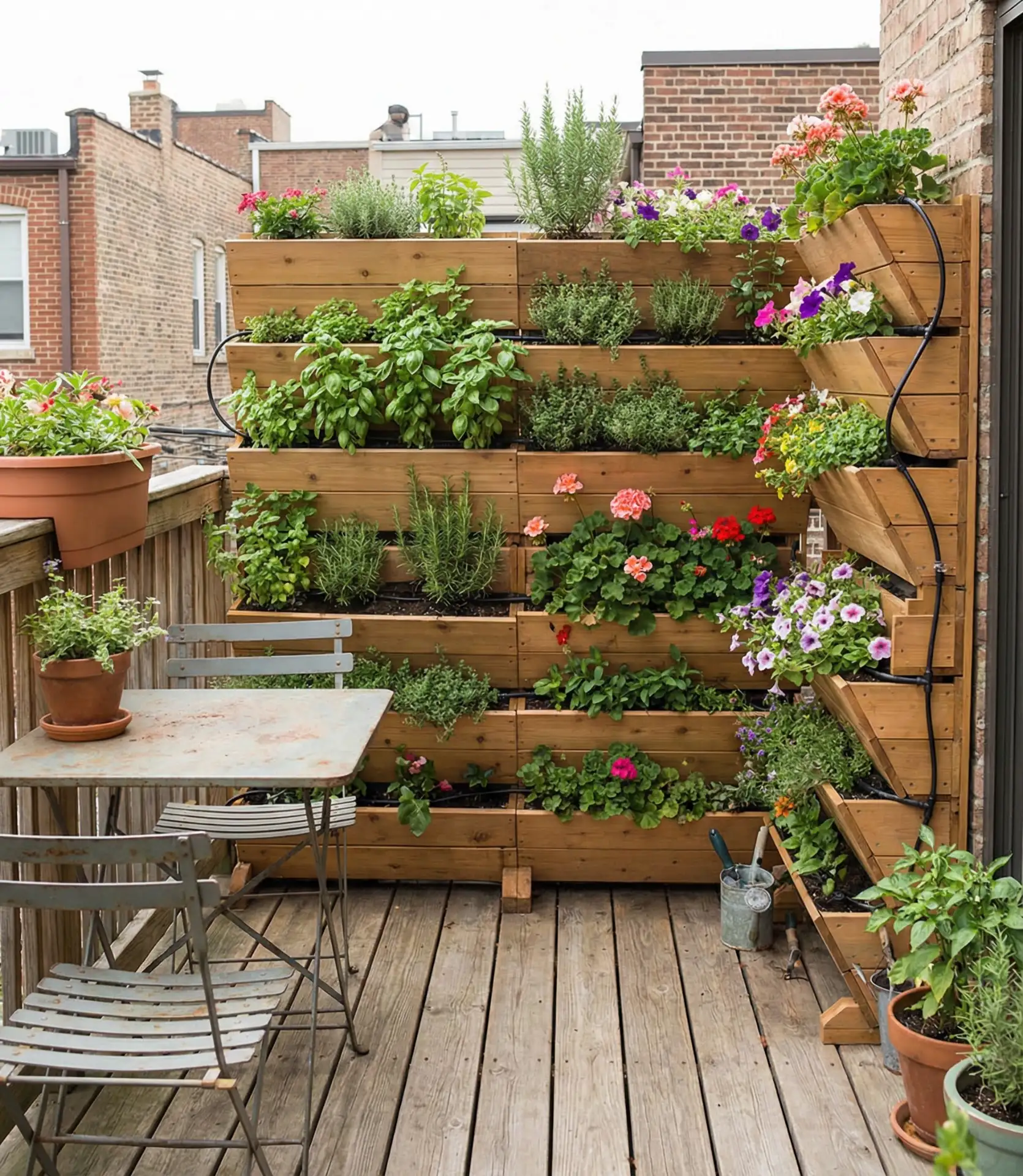
Visual impact is enhanced by stunning greenery when a modular pocket panel, DIY pallet garden, or living vertical garden is installed on a deck wall or privacy fence. These structures are ideal for urban yards that are narrow and lack horizontal planting beds, as the living wall offers natural cooling and air purification. This solution is also inexpensive, where the walls and other structures contain supportive frames for herbs, succulents, and flowering plants in a space-efficient manner that richly results in greenery. 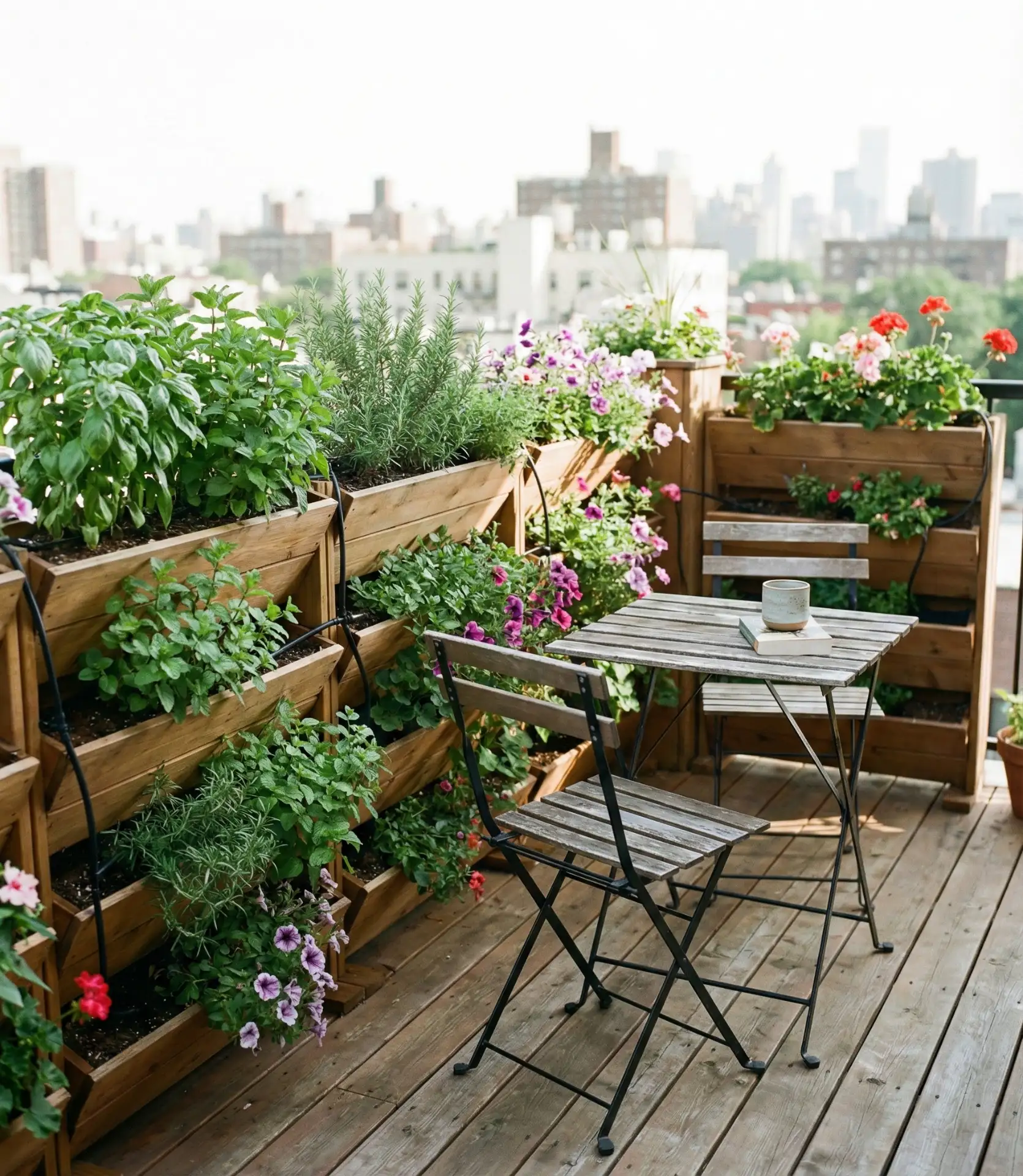
Real homeowner behavior in space-constrained markets like New York, San Francisco, and Chicago demonstrates the use of vertical gardens for both ornamental plants and productive edibles. Install a drip irrigation system that connects to an outdoor faucet with a timer, as manually watering vertical gardens can quickly become tedious and inconsistent. Choose planters with adequate depth (6-8 inches minimum) for root development, and select plants suited to your wall’s sun exposure. Shade walls support ferns and hostas, while sunny exposures accommodate tomatoes, peppers, and sun-loving flowers.
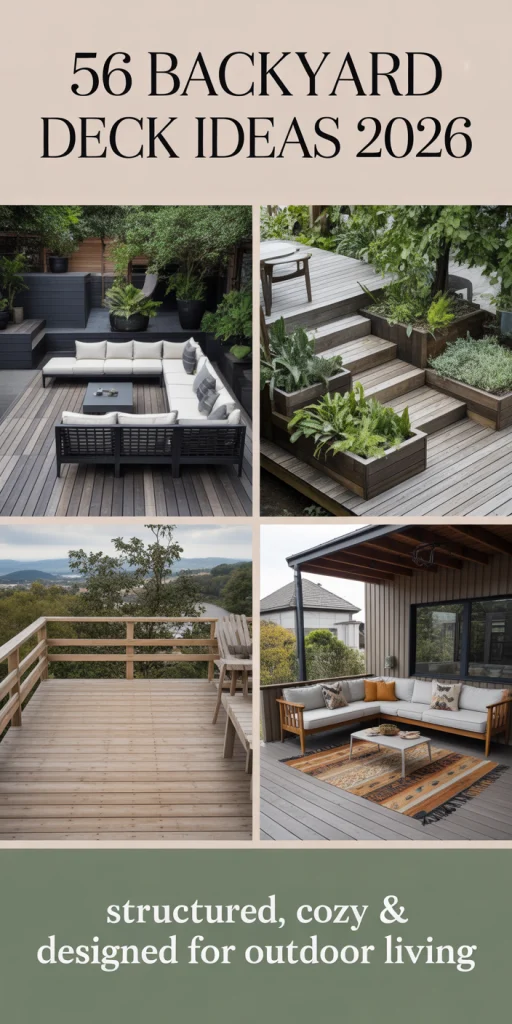
These backyard deck ideas demonstrate the remarkable versatility of outdoor platforms to enhance your home and lifestyle, regardless of budget, yard size, or architectural style. From simple DIY projects completed in a weekend to elaborate multi-level structures that rival indoor living spaces, there’s a deck solution for every American home. Now it’s your turn—which design resonates with your space, and what unique challenges or opportunities does your backyard present? Share your thoughts, questions, or deck transformation stories in the comments below, and let’s continue the conversation about creating beautiful, functional outdoor living areas.