54 Outdoor Fire Pit Area Ideas for 2026: Transform Your Backyard Into a Cozy Paradise

Outdoor fire pit areas have become the heart of American backyards, transforming ordinary spaces into year-round gathering spots that blend comfort with natural beauty. As we move into 2026, Pinterest searches reveal homeowners craving designs that balance rustic charm with modern functionality—whether it’s a cozy corner in a small backyard or an expansive setup complete with swings and ambient lighting. This guide presents inspired ideas that showcase everything from simple DIY projects to professionally crafted installations, helping you create the perfect outdoor retreat for entertaining, relaxing, and making memories under the stars.
1. Rustic Stone Circle with Overhead String Lights
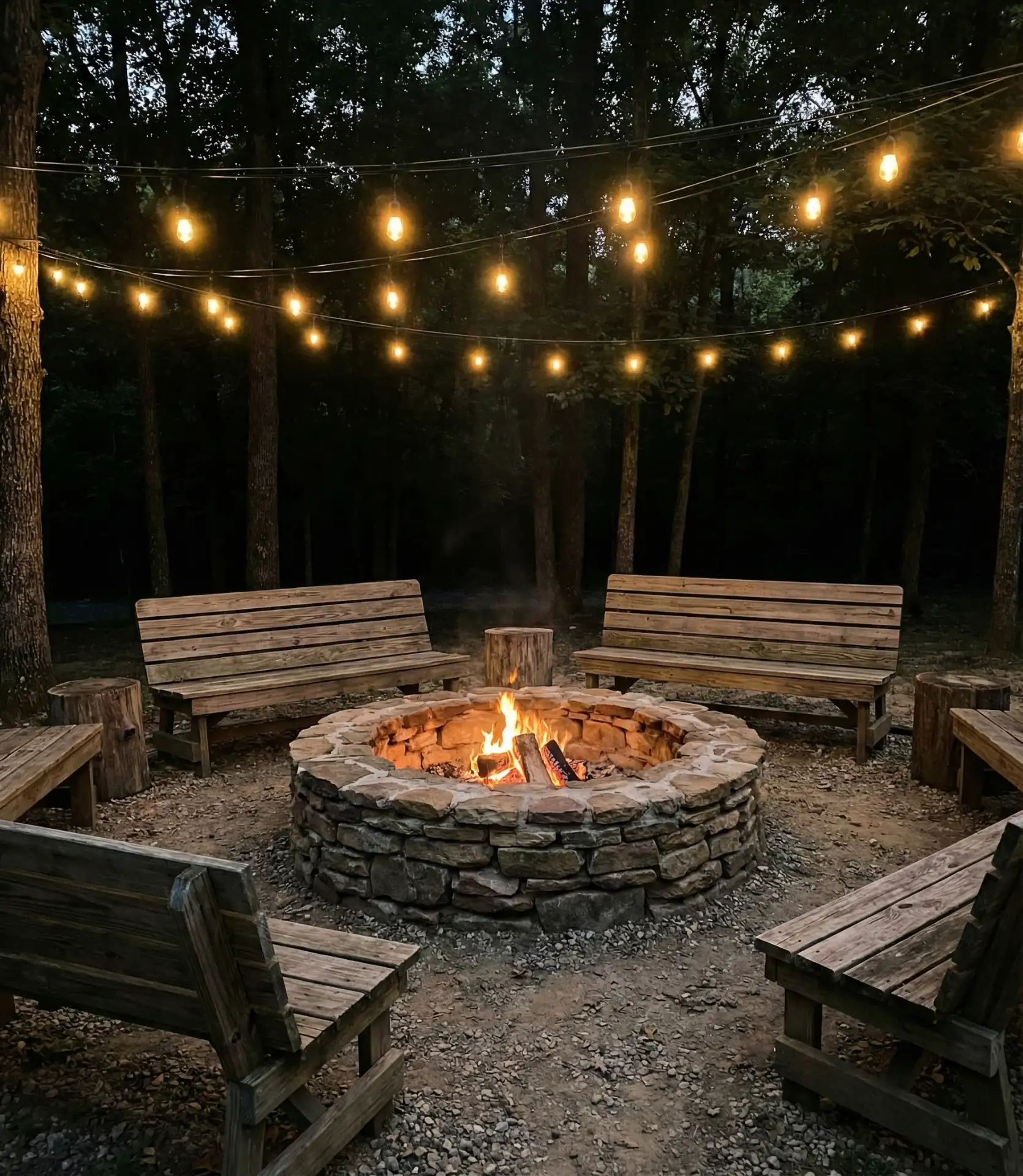
A classic round fire pit surrounded by natural stone creates an inviting focal point that works beautifully in rustic backyard settings. The irregular stonework adds texture and character, while lights strung overhead in a canopy pattern cast a warm glow that extends your outdoor season well into cooler evenings. This design pairs perfectly with Adirondack chairs or wooden benches positioned around the perimeter, creating an intimate gathering space that feels both timeless and intentional. 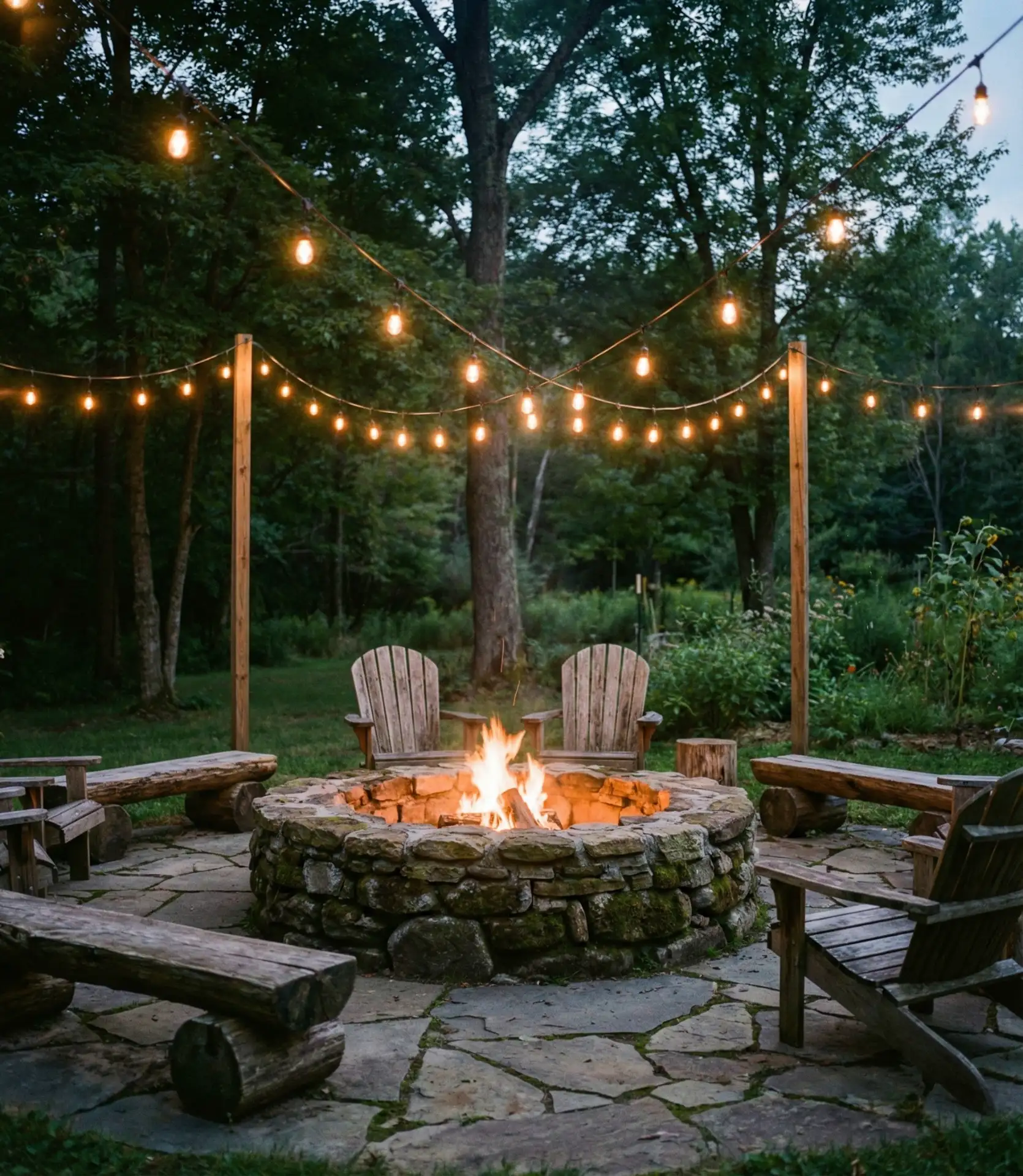
This setup works exceptionally well in the Pacific Northwest and New England, where homeowners appreciate natural materials that blend with wooded surroundings. The stone retains heat beautifully, extending comfort even as temperatures drop. Most DIY enthusiasts can complete a basic version over a long weekend, though hiring a mason ensures proper drainage and stability that will last for decades without shifting or settling.
2. A modern square fire feature with built-in seating
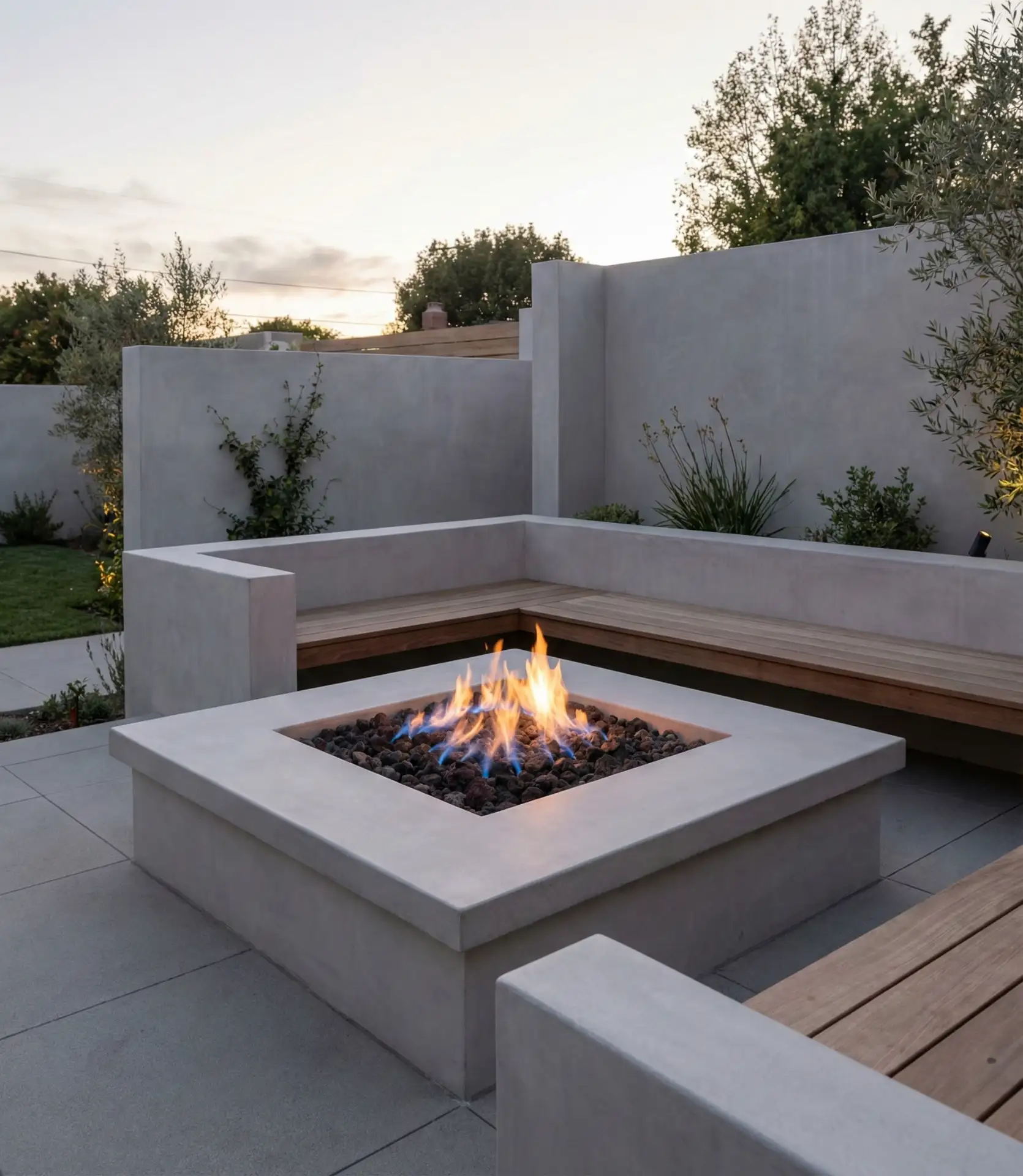
Contemporary square fire pits offer clean lines that complement modern architecture, especially when paired with built-in concrete or stone bench seating. The square design maximizes efficiency in small backyard spaces by eliminating the need for separate chairs, while the geometric shape creates distinct zones for conversation. Low-profile flames from gas burners or propane systems provide consistent warmth without the maintenance demands of traditional wood-burning setups. 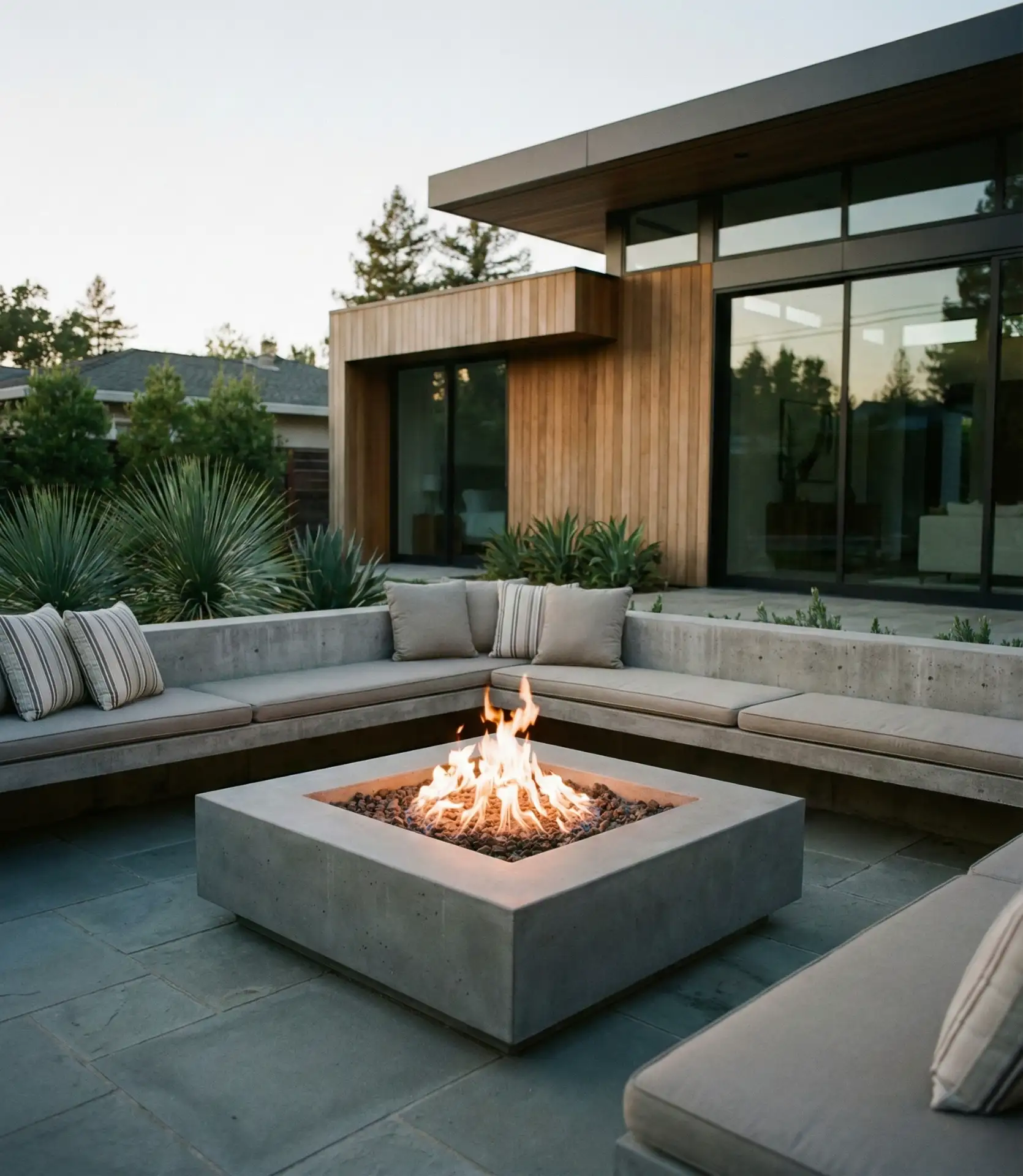
Homeowners on a budget often begin with concrete blocks from home improvement stores, which they can assemble for less than $300 in materials. The square format also makes calculations simpler when ordering pavers or stone, reducing waste and keeping costs predictable. For added luxury, consider integrating LED strip lighting beneath the seating edges for a resort-style effect that impresses guests.
3. An in-ground fire pit with a sunken conversation area
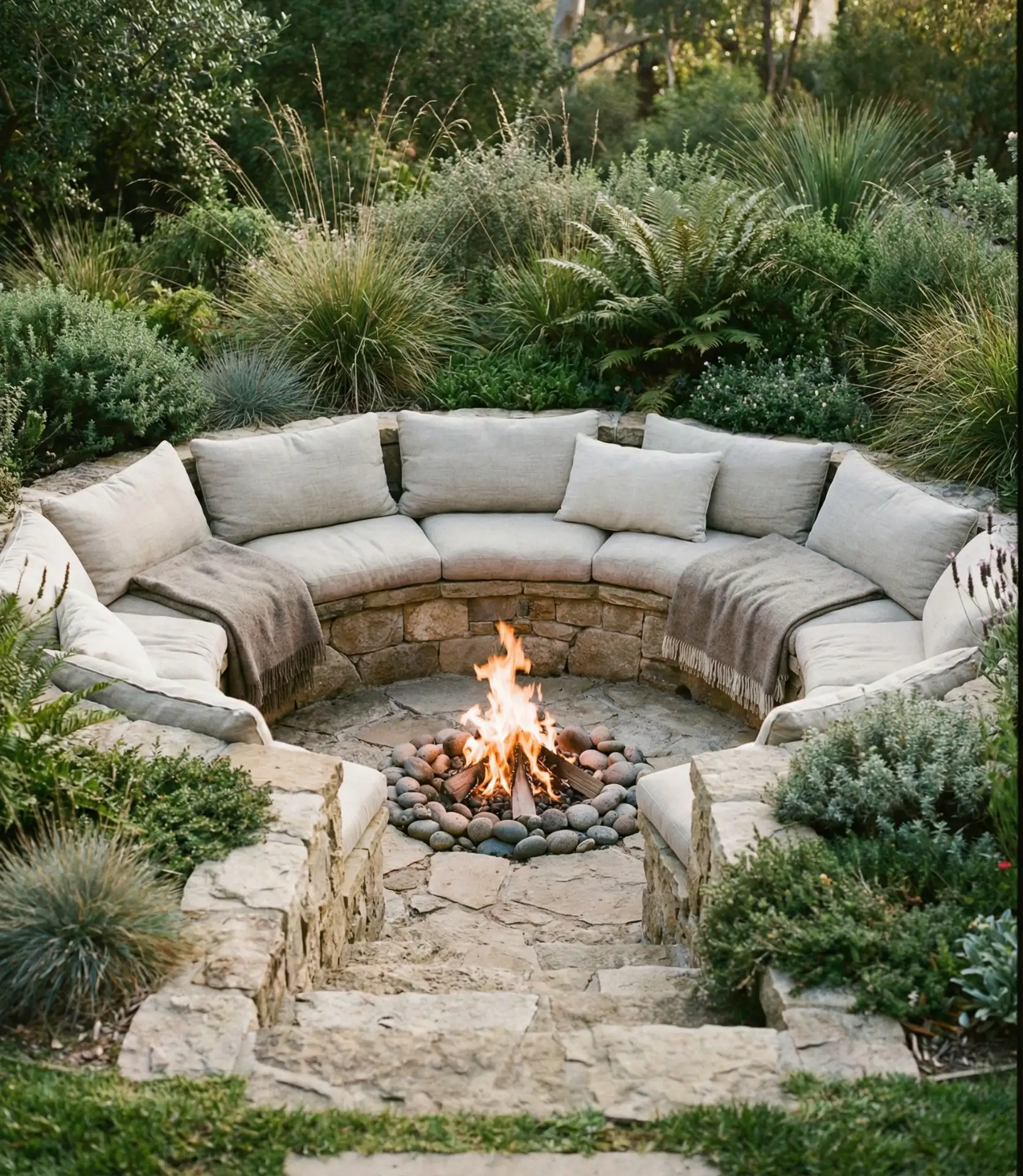
Creating a ground-level fire pit with surrounding sunken seating transforms your yard into a sophisticated outdoor living room that shelters guests from wind. This backyard solution works particularly well on sloped properties where excavation feels natural, and the lowered position creates a cozy, protected atmosphere. Stone or brick steps lead down into the space, while cushioned seating built into retaining walls provides comfortable lounging for extended gatherings. 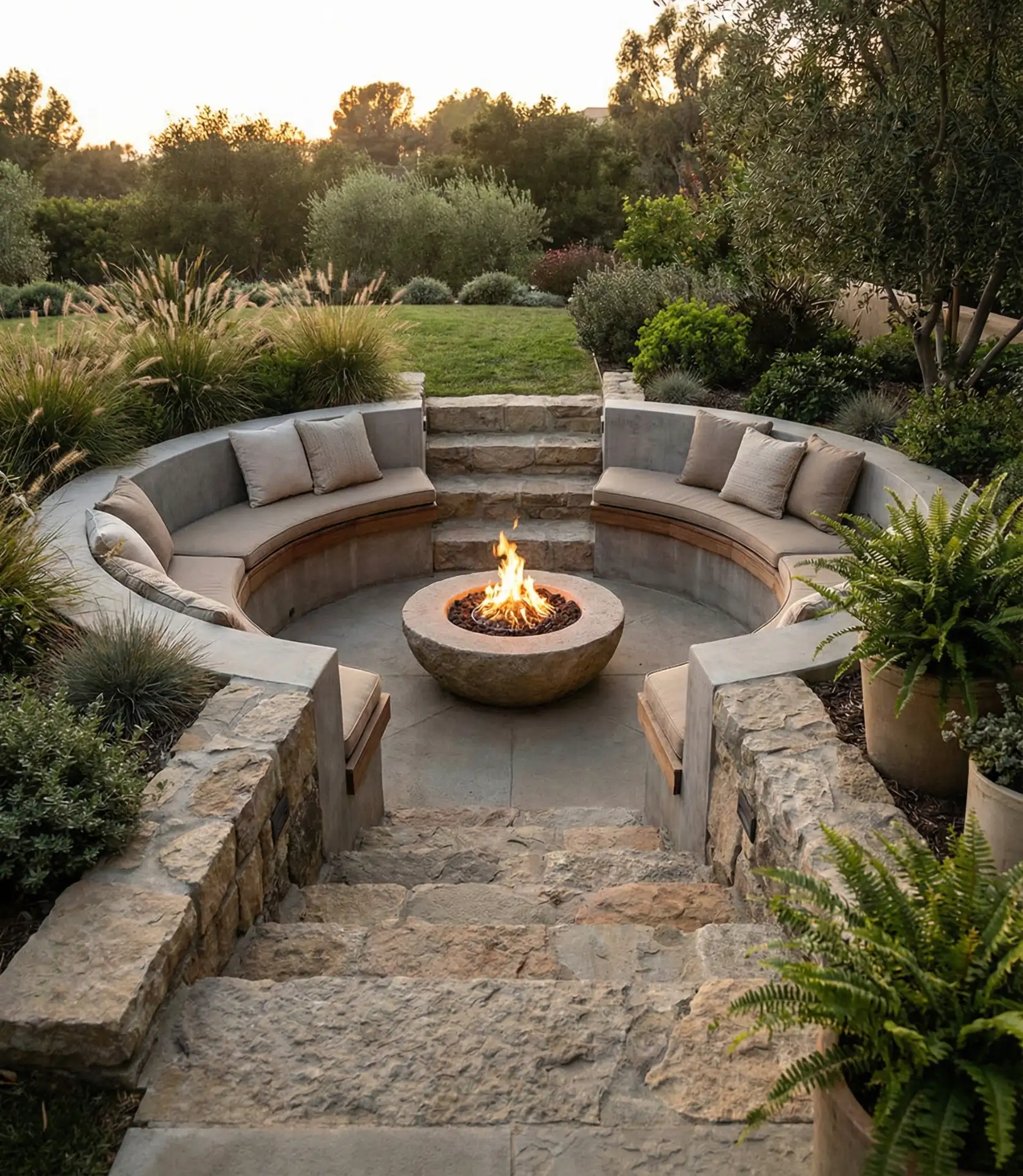
Southern California and Arizona homeowners particularly appreciate this design because the recessed area stays cooler during hot days while providing warmth after sunset. The biggest mistake DIYers make is inadequate drainage—always install a gravel base and consider a French drain system to prevent water pooling. Professional excavation typically runs $1,500-$3,000 depending on soil conditions, but the dramatic impact justifies the investment.
4. Set Up a Portable Solo Stove on a Gravel pad.
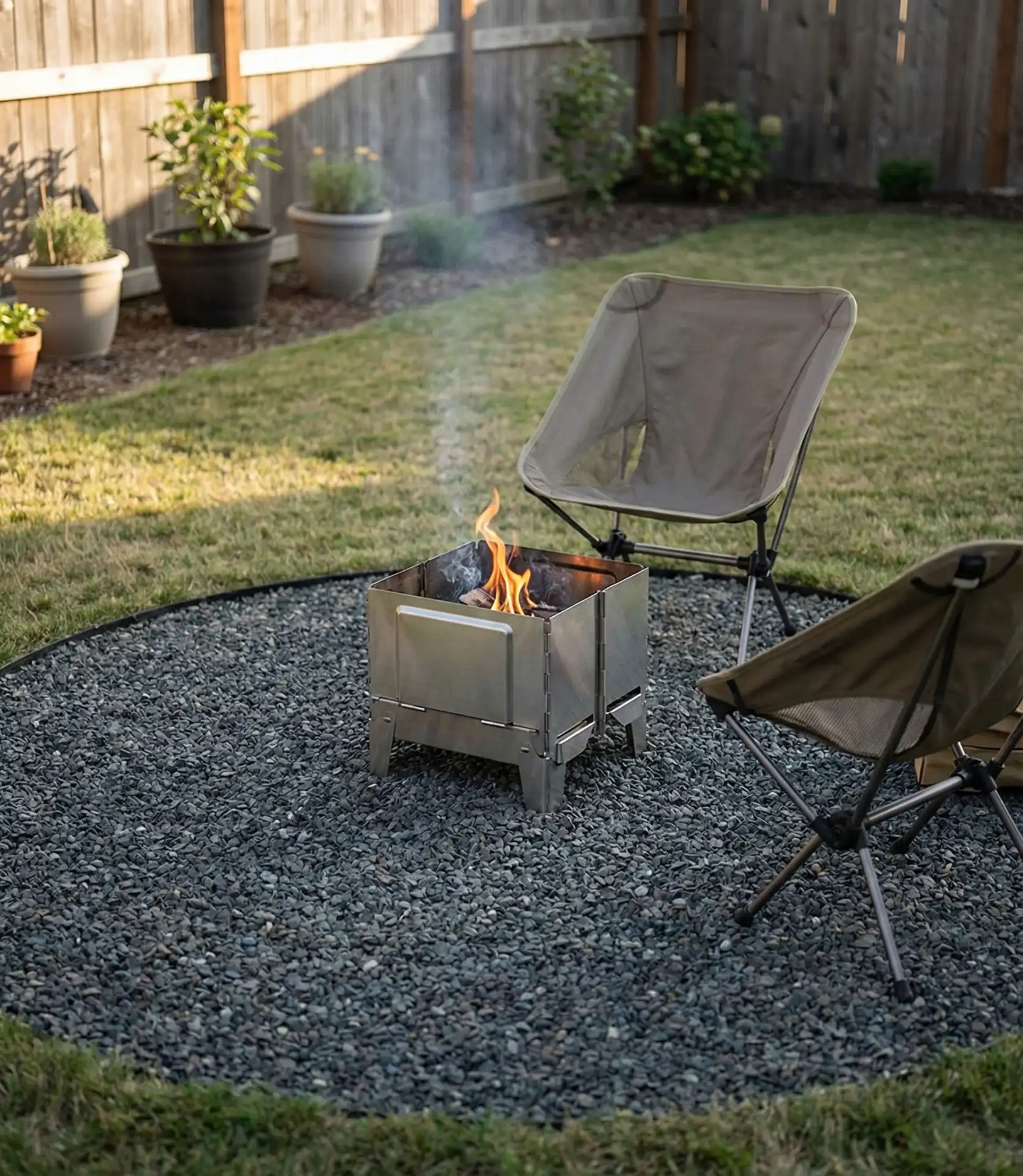
The Solo Stove revolution has made fire pits accessible for renters and homeowners seeking flexibility without permanent installation. These stainless steel units deliver nearly smokeless performance through innovative airflow design, perfect for small backyard spaces or patios where neighbors are close. Position your unit on a level gravel pad bordered with landscape timbers or metal edging to create a defined zone that protects surrounding grass or deck surfaces. 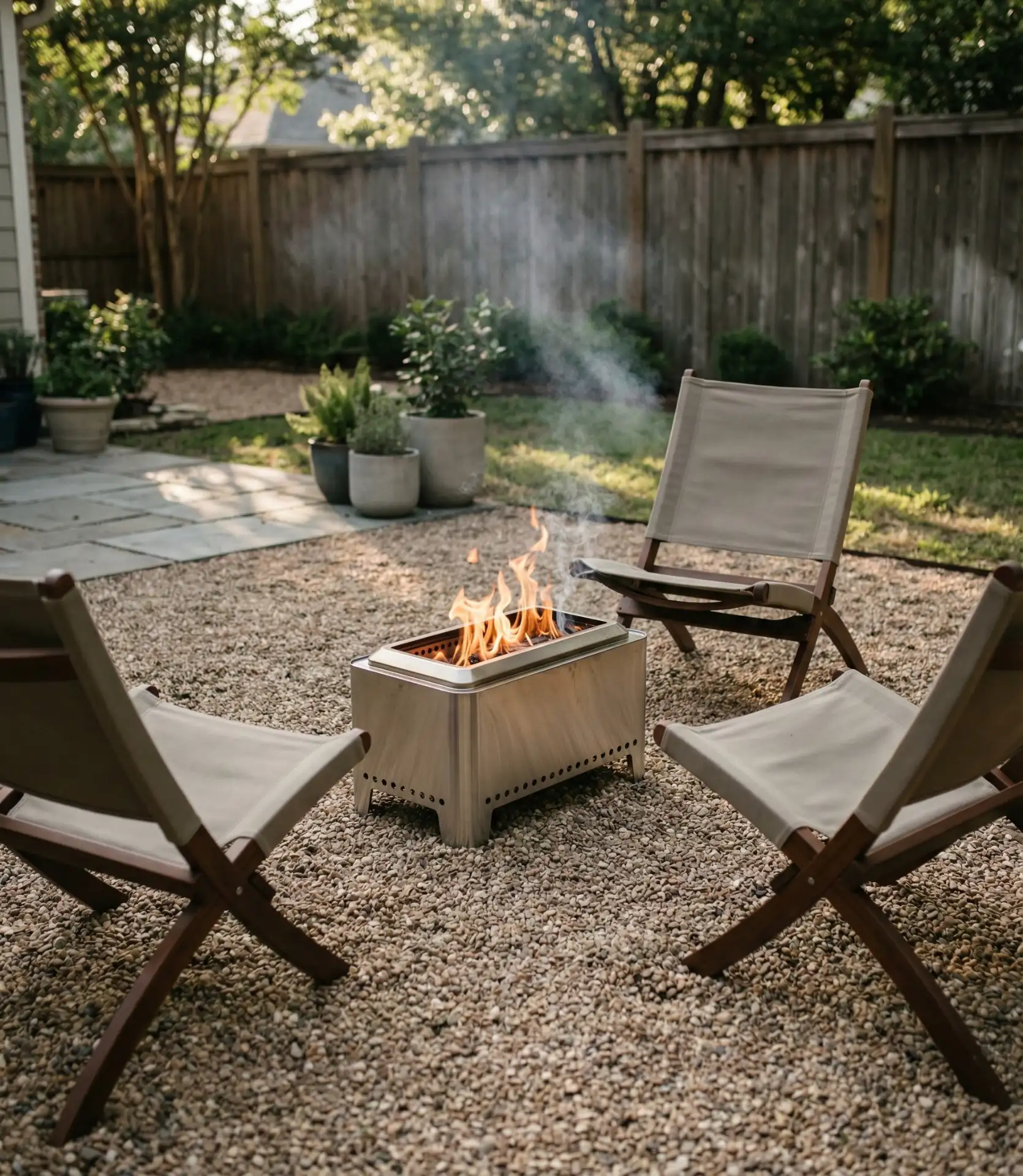
Where it works best: Urban backyards, apartment patios, and lakeside properties where you want the option to relocate your fire feature seasonally. The Bonfire model handles groups of 4-6 people comfortably, while the larger Yukon accommodates up to 10 guests. Remember that even smokeless designs require proper clearance from structures—maintain at least 10 feet from your home, and always check local fire codes before your first burn.
5. Covered Pergola Fire Pit Lounge

Combining a pergola structure with a central fire pit creates an all-weather outdoor room that extends your living space regardless of sun or light rain. The overhead beams provide natural anchor points for lights, curtains, or climbing vines, while the fire pit below anchors seating arrangements in L-shaped or U-shaped configurations. This approach works beautifully when you want defined outdoor zones—dining under one section and fire pit relaxation under another. 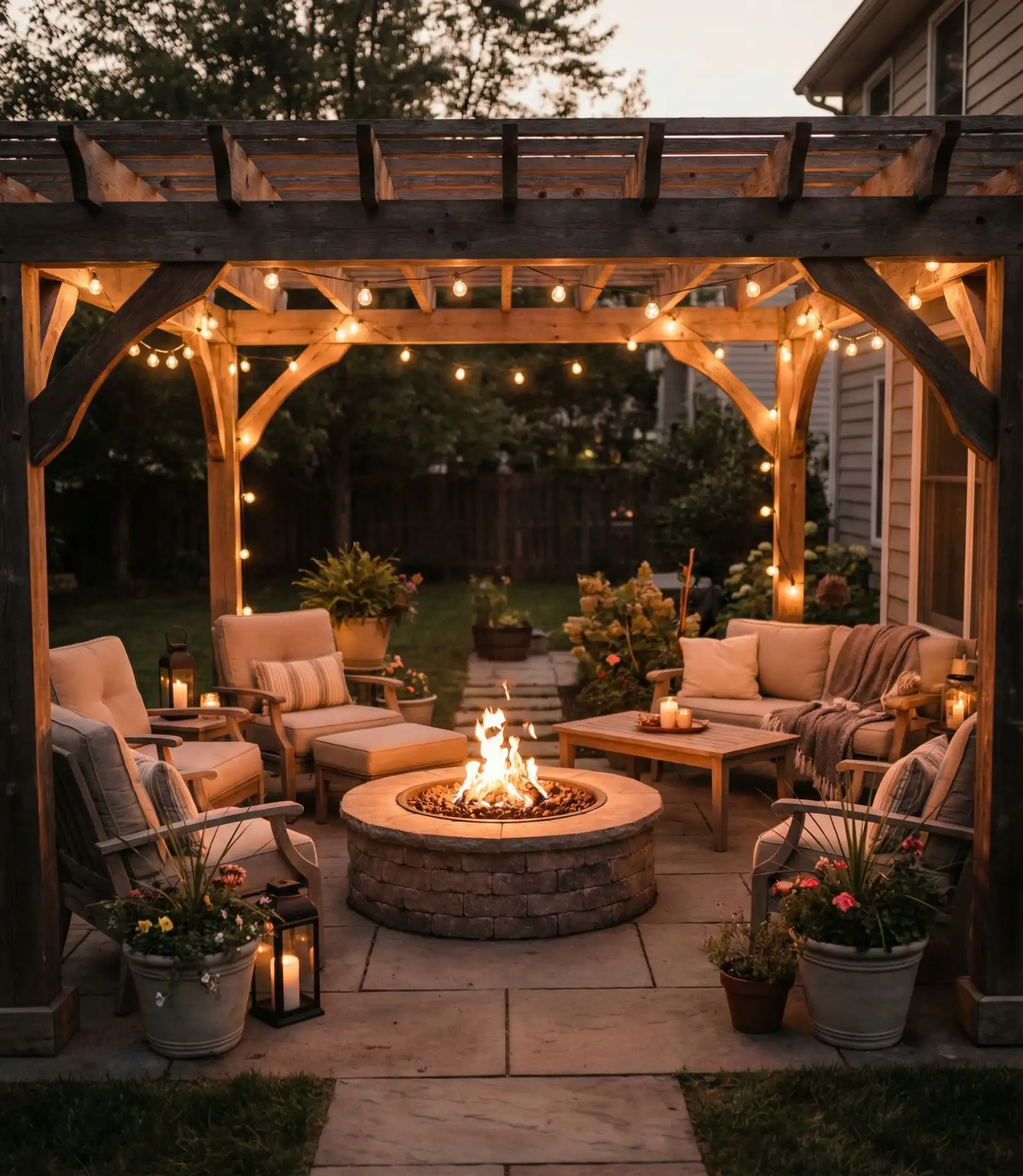
Last spring, my neighbor constructed a DIY cedar pergola that is 12 x 16 feet and features a propane fire table. Almost instantly, it became everyone’s favorite place to congregate and hang out. If you want to make one yourself, the materials will cost about $3,500. If you want to hire someone, expect to pay $6,000–$12,000, depending on the details and if you want electrical work done. Consider adding a retractable canopy between the beams for the rain if you want smoke to vent as well.
6. River Rock Border with Adirondack Chair Circle
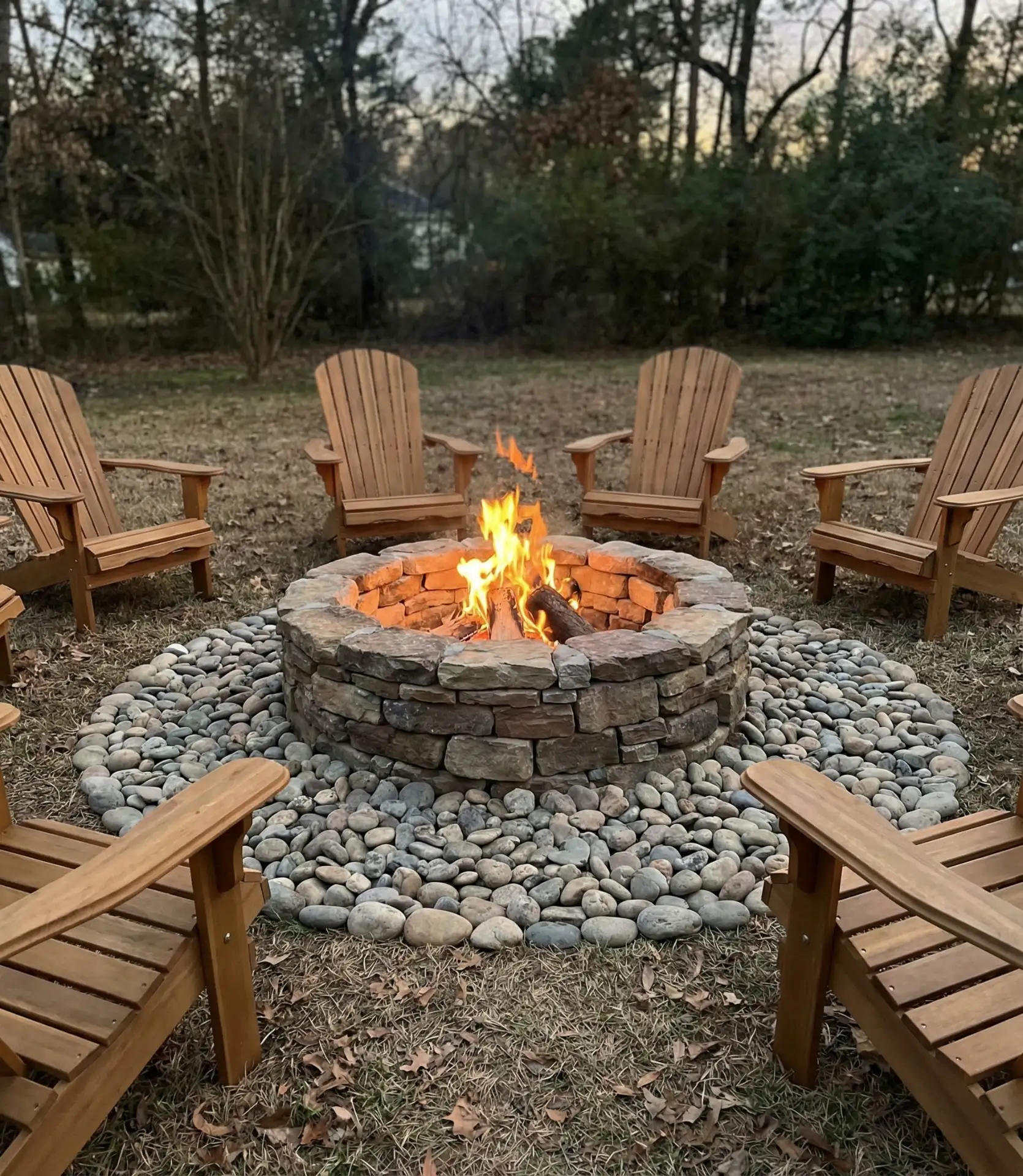
This is a cheap, elegant solution that provides drainage and prevents mud during rain. This is easy to do yourself and requires little excavation. Just dig a shallow trench around the fire pit area, line the trench with landscape fabric, and fill it with 3-6 inch rocks that can be found at any landscaping supply yard. The rocks provide a natural texture that complements the wood of the Adirondack chairs and makes the area safe from fire hazards caused by dry grass. Furthermore, it provides safe footing. This design is very popular across the Midwest and mountain states, as it handles freeze and thaw cycles very well. Expect to spend 150-300 on the rocks for a typical 12-foot diameter area. 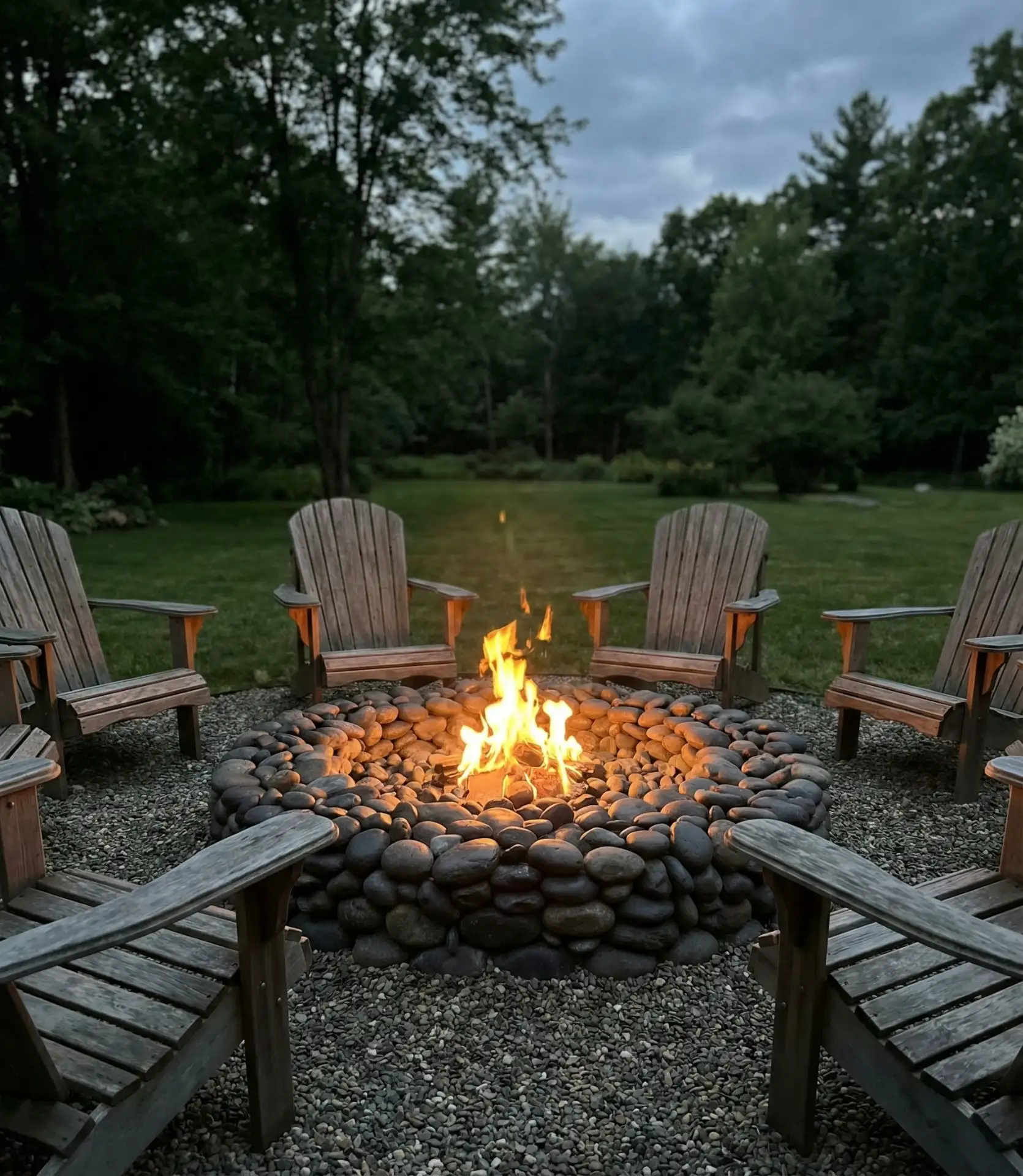
Across the Midwest and mountain states, this design handles freeze-thaw cycles better than solid paving because rocks shift slightly without cracking. Expect to spend $150–$300 on river rock for a typical 12-foot diameter area. The biggest advantage is flexibility—you can easily adjust the border size or relocate rocks as your landscape evolves, making this ideal for homeowners who like to refresh their outdoor spaces every few years.
7. Fire Pit with Integrated Porch Swing
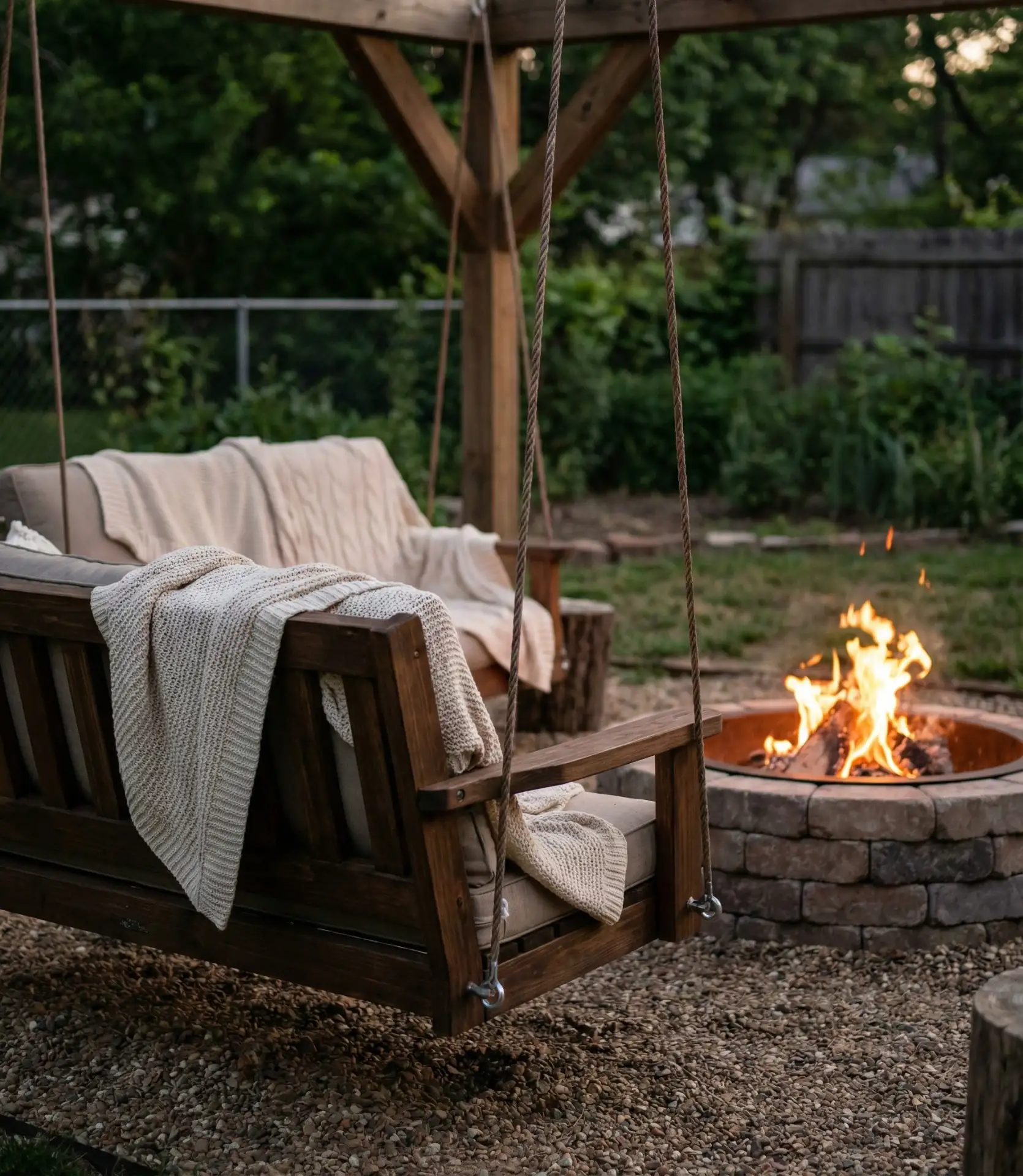
Installing a sturdy swing seat facing your fire pit adds an unexpected element of comfort and nostalgia that appeals to families and romantics alike. Mount the swing from a strong overhead beam, mature tree branch, or dedicated swing frame positioned 8-10 feet from the fire for optimal warmth without excessive heat. This backyard feature combines gentle motion with flickering flames, creating a meditative space perfect for morning coffee or evening wine. 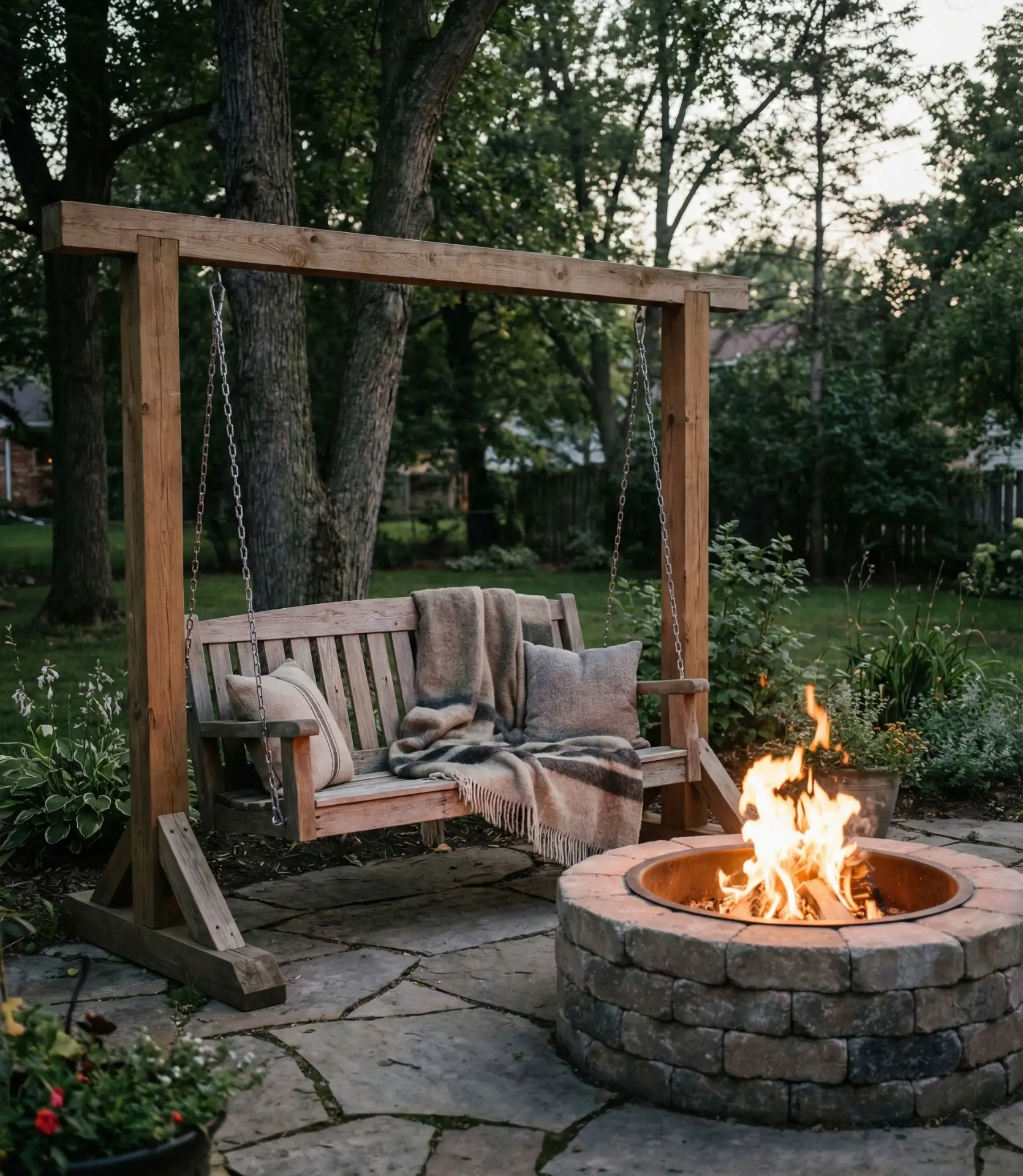
Real homeowner behavior shows that swing seats get used far more frequently than traditional fire pit chairs, especially in households with children or couples seeking conversation spaces. Invest in weather-resistant cushions and marine-grade hardware rated for at least 500 pounds. Cedar or teak swings withstand outdoor conditions best, though powder-coated metal frames offer a more contemporary aesthetic that pairs beautifully with modern fire bowl designs.
8. Flagstone Patio with Central Fire Bowl
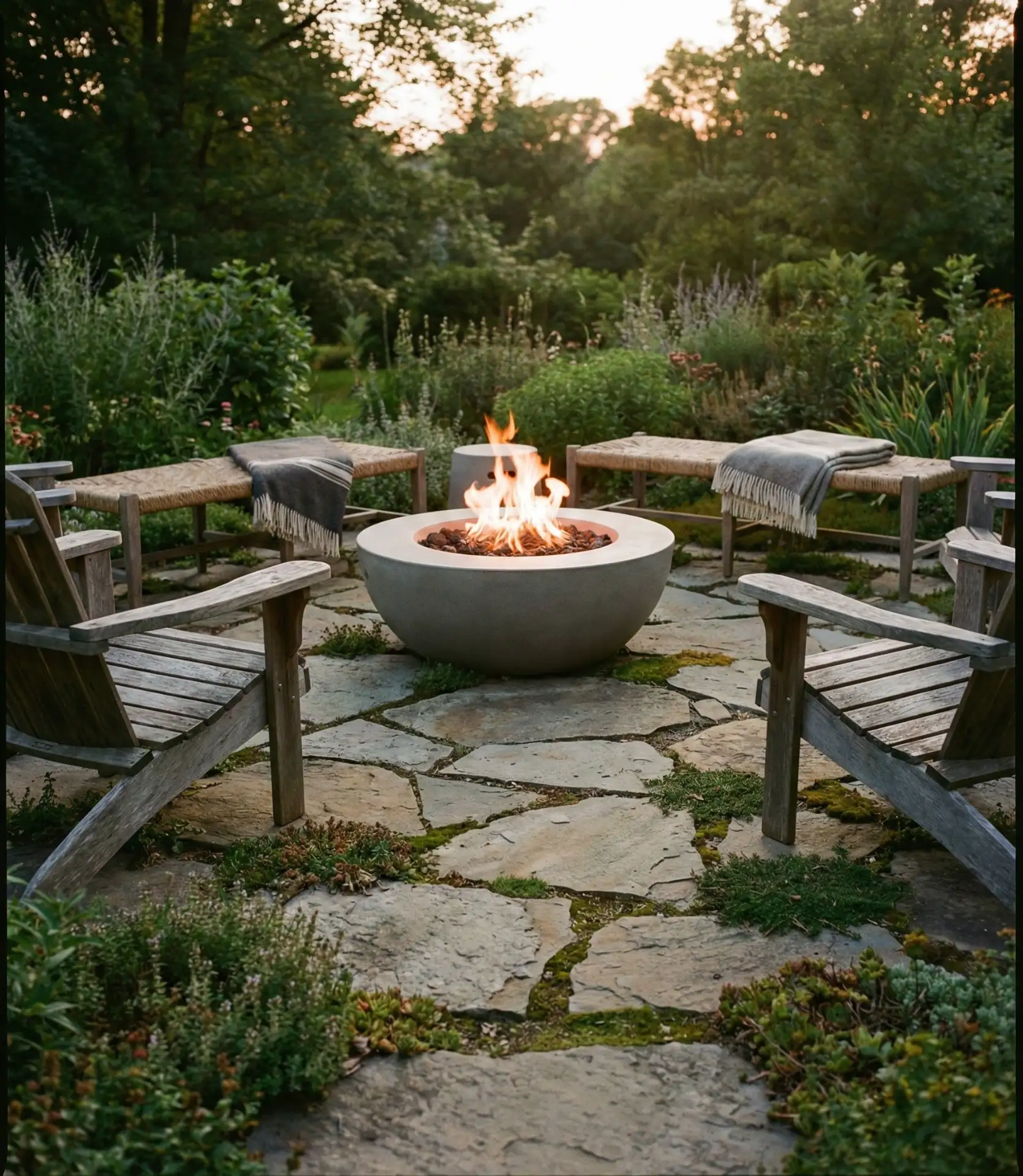
Inorganic patio surfaces like poured concrete and interlocking pavers are avant-garde while being significantly pricier than the latter options. Large irregular flagstones create an organic patio surface that feels upscale while being significantly more affordable. The rustic character of natural stone complements both traditional and contemporary fire bowls and the irregular joints. Creative planting pockets filled with low-growing thyme or sedum also work. Careful leveling and tight joints make all the difference in long-term durability. This technique requires more patience than advanced skills and is a great DIY option. 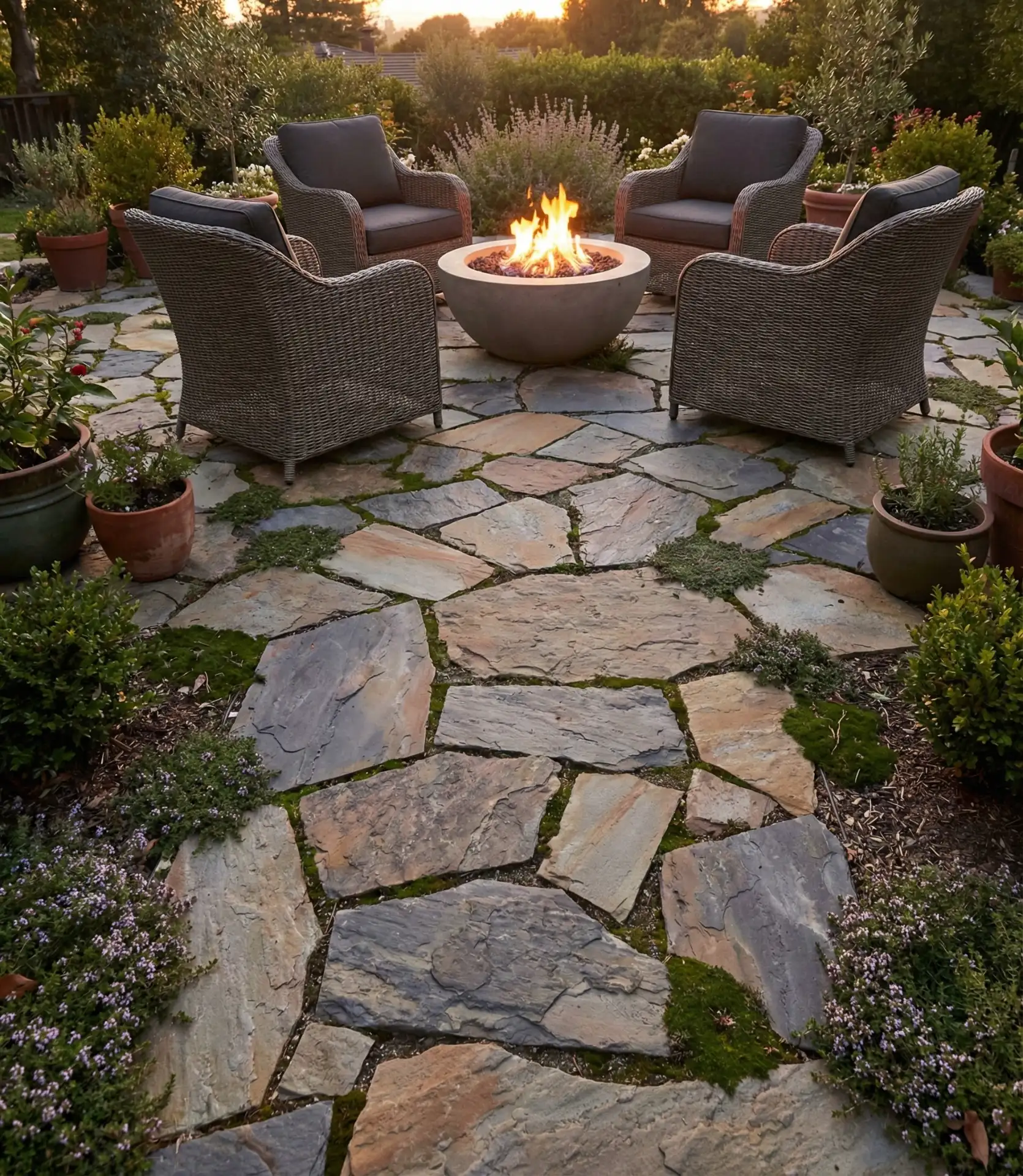
Expert landscapers recommend a gravel base of 4 inches with 2 inches of sand atop it for proper drainage and stability for optimal layout. A textured flagstone costing $15-$30 per square foot is pricier, which leads many motivated DIYers to cut corners and source overpriced stones.
source out overpriced stones. Common mistakes include uneven stone thickness and insufficient base preparation, so rent a plate compactor and take your time to go through the stones, sorting them by thickness to avoid mistakes.
9. Minimalist concrete fire table on deck.
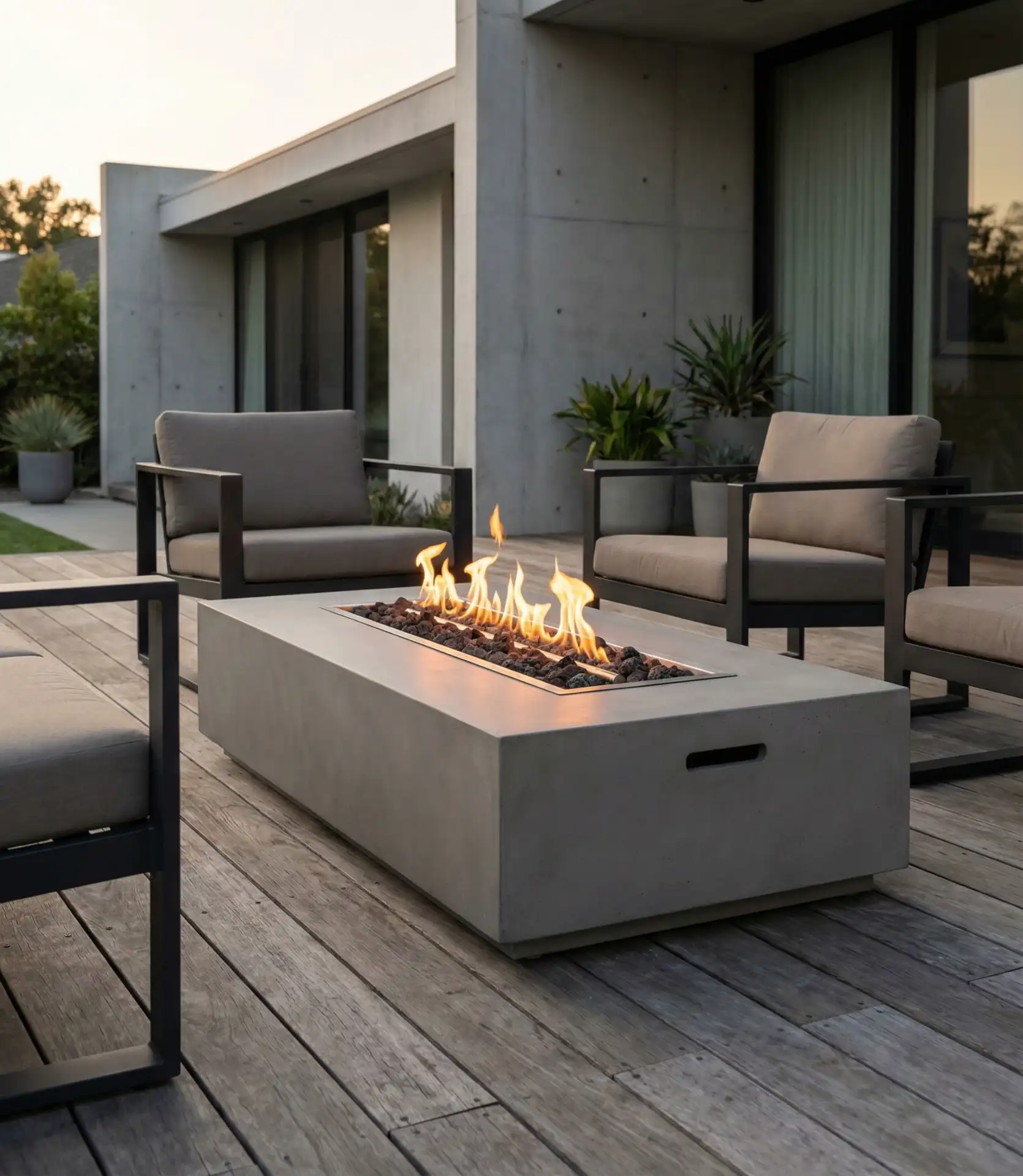
In tight spaces like small backyard decks, sleek concrete fire tables are perfect because they double as a gathering surface as well as a functional heat source. These units are propane powered and sit low to the ground, so you are able to arrange the lounge furniture close while maintaining a safe clearance for fire safety. 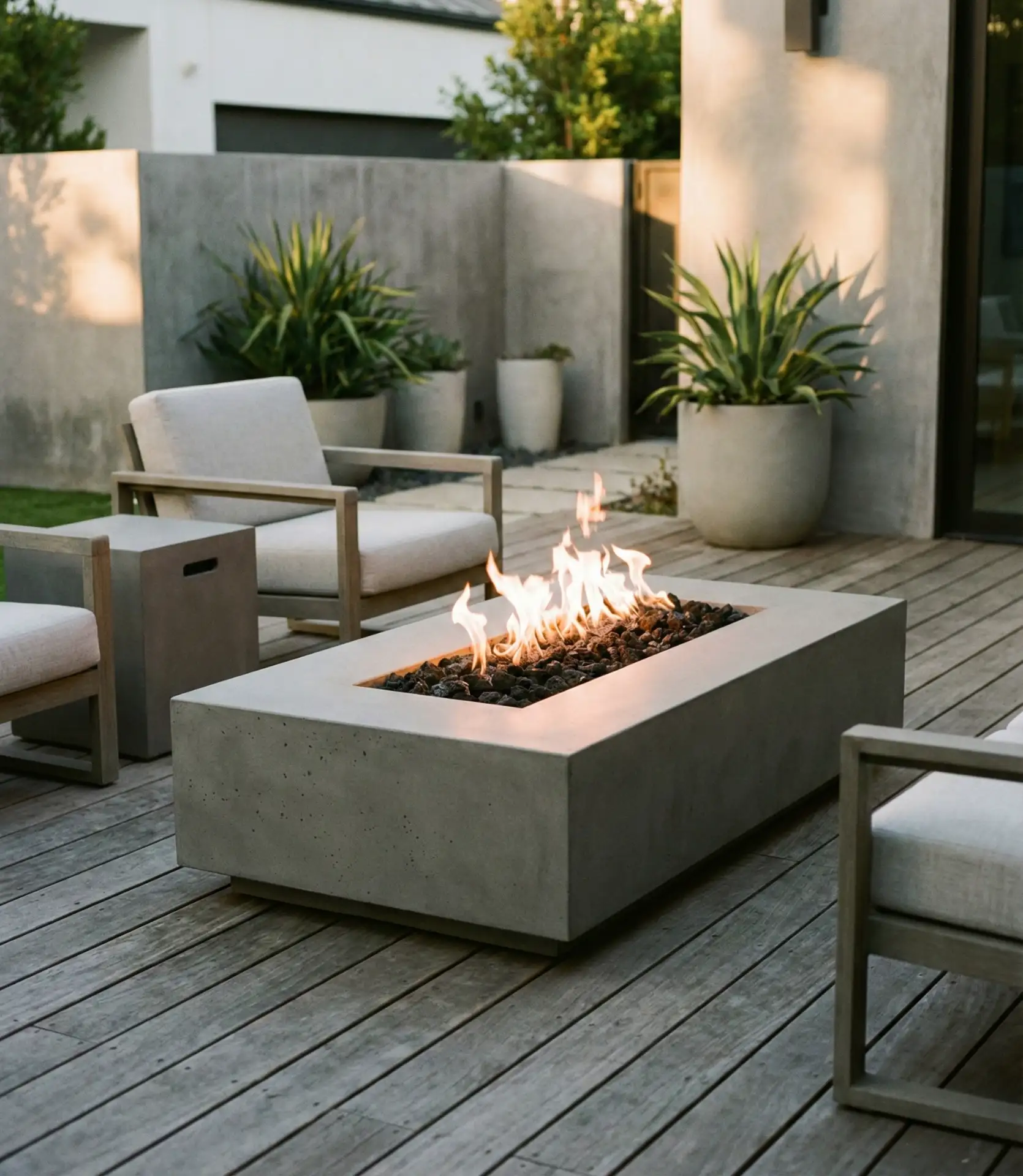
This design thrives in urban settings from Portland to Brooklyn, where townhouse decks demand multi-functional furniture. Always use a fire-rated deck protector pad underneath—melted composite decking is an expensive mistake to fix. Quality concrete fire tables range from $800 to $2,500, with lightweight fiber-reinforced versions offering easier placement and seasonal storage. The table surface stays cool enough for drinks and snacks when positioned around the perimeter away from flames.
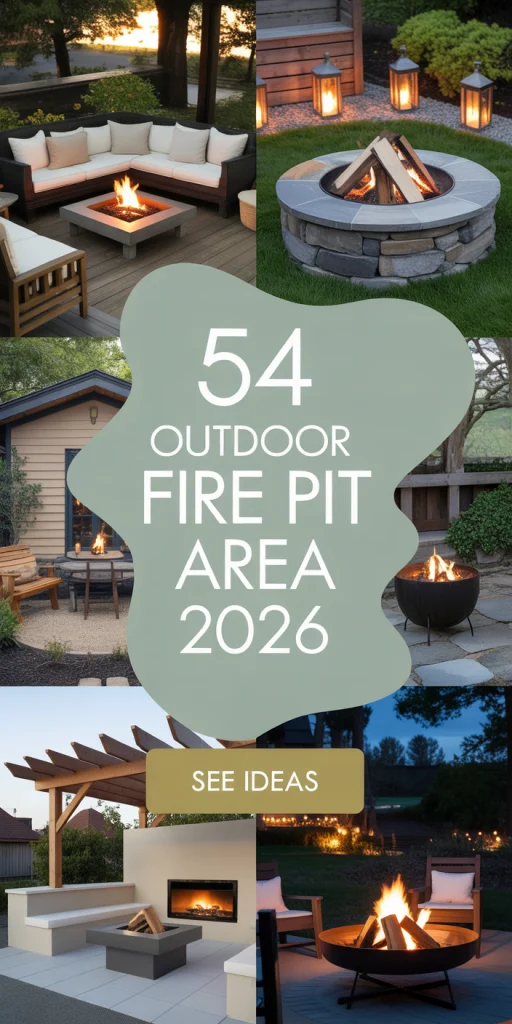
10. Stacked Stone Wall Fire Pit Alcove
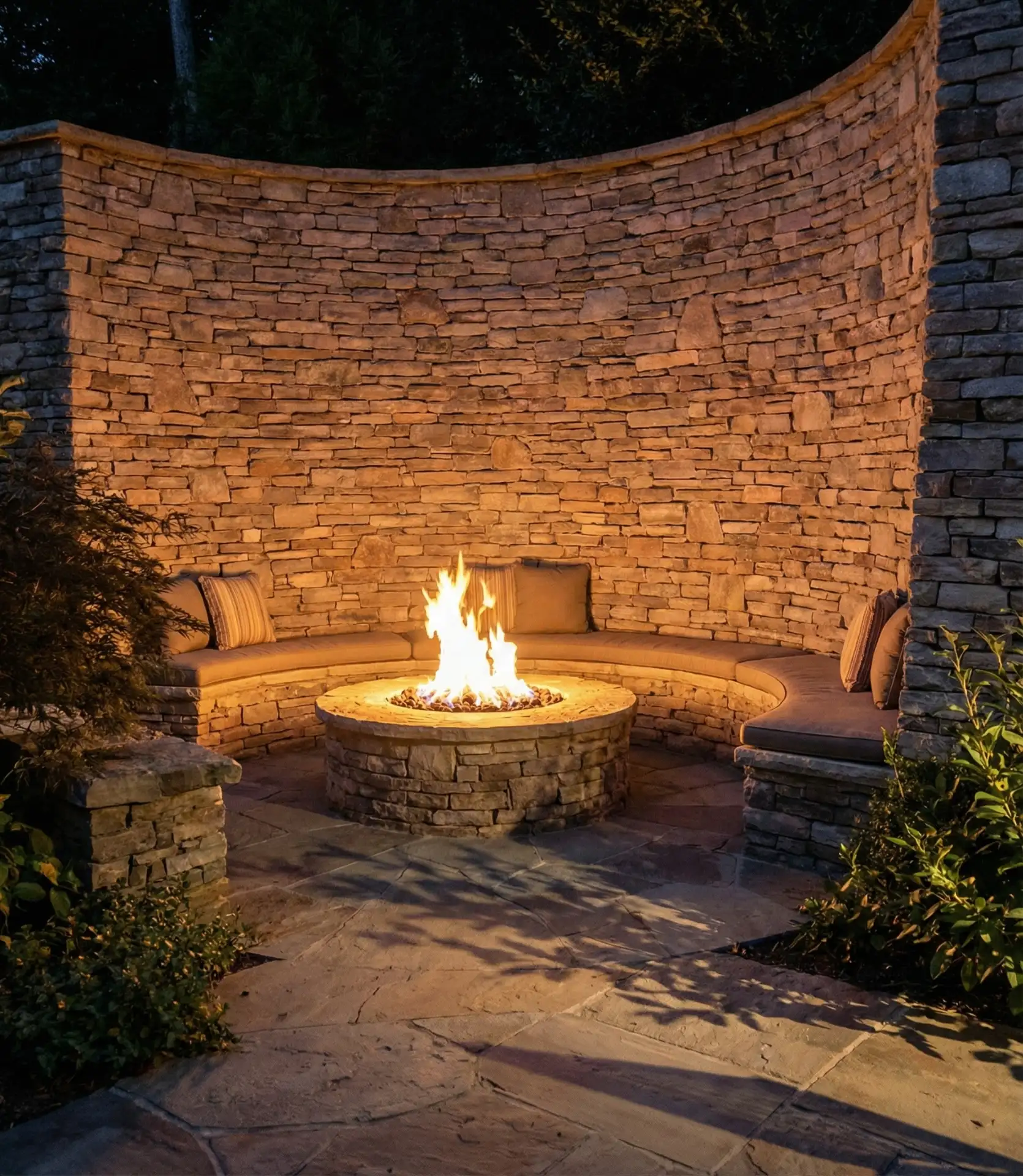
Creating a semicircular stone wall behind your fire pit establishes a dramatic backdrop that radiates heat forward while providing wind protection. This rustic design approach works beautifully in backyards with existing grade changes or retaining walls, and the vertical stone surface reflects firelight for amplified ambiance. The round fire pit positioned within the alcove creates an intimate theater-like setting perfect for storytelling and extended conversations. 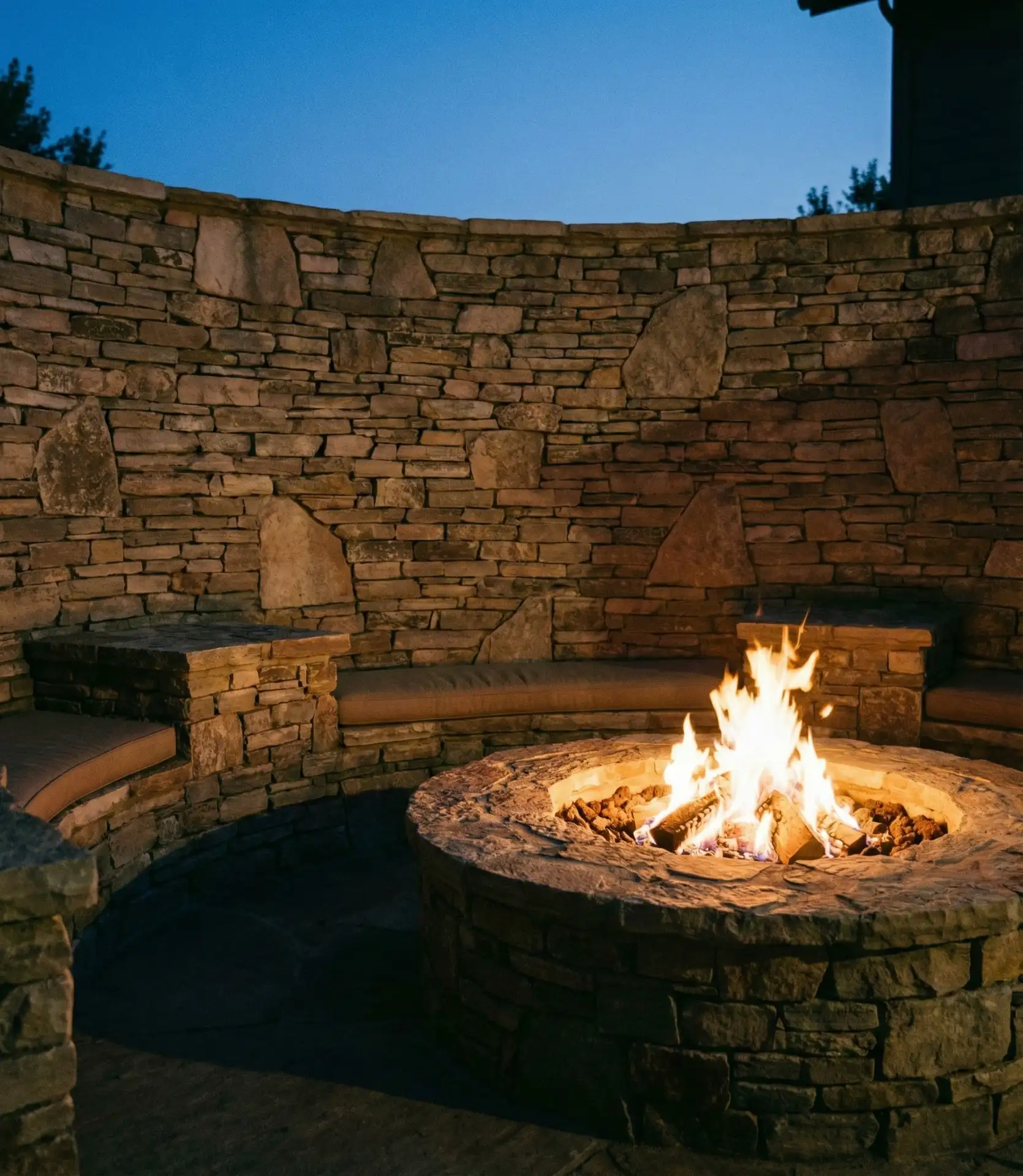
Where it works best: Properties with natural slopes or terraced yards where retaining walls serve structural purposes while enhancing aesthetics. The stone mass stores daytime heat and releases it gradually into evening hours, extending comfort in mountain and desert climates. Professional stonemasons charge $40–$75 per square foot for dry-stacked walls, though DIY kits and tutorials make the cost achievable for determined homeowners willing to invest weekends in the project.
11. Gravel Garden Fire Pit with Drought-Tolerant Plants
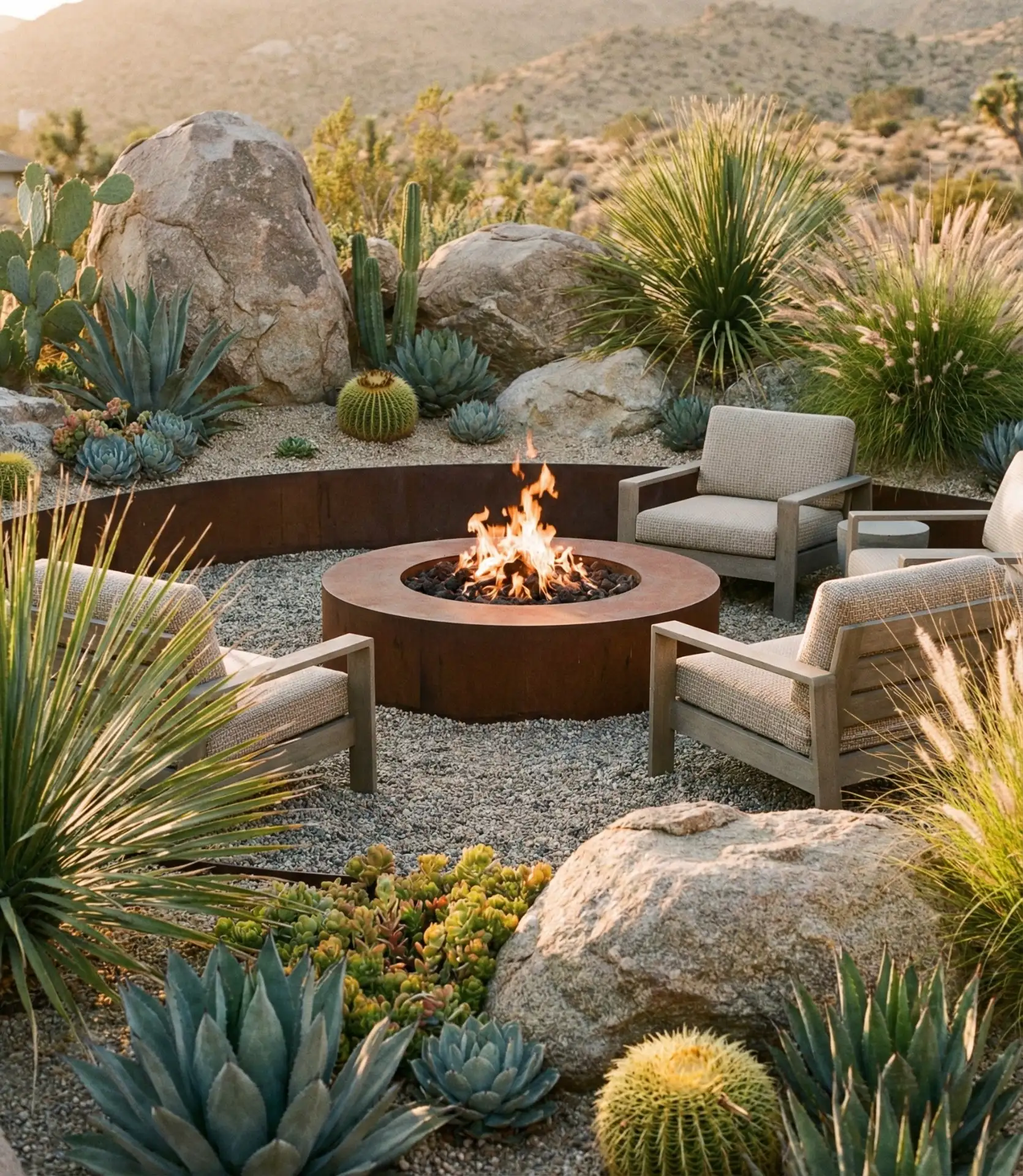
Surrounding your fire pit with decomposed granite or pea gravel creates a low-maintenance ground surface that pairs beautifully with water-wise landscaping featuring succulents, ornamental grasses, and native plants. This Australia-inspired approach thrives in arid Western states where traditional lawns struggle, and the mineral surface prevents weed growth while providing excellent drainage. Strategic placement of boulders and drought-tolerant plantings softens the space without requiring constant irrigation. 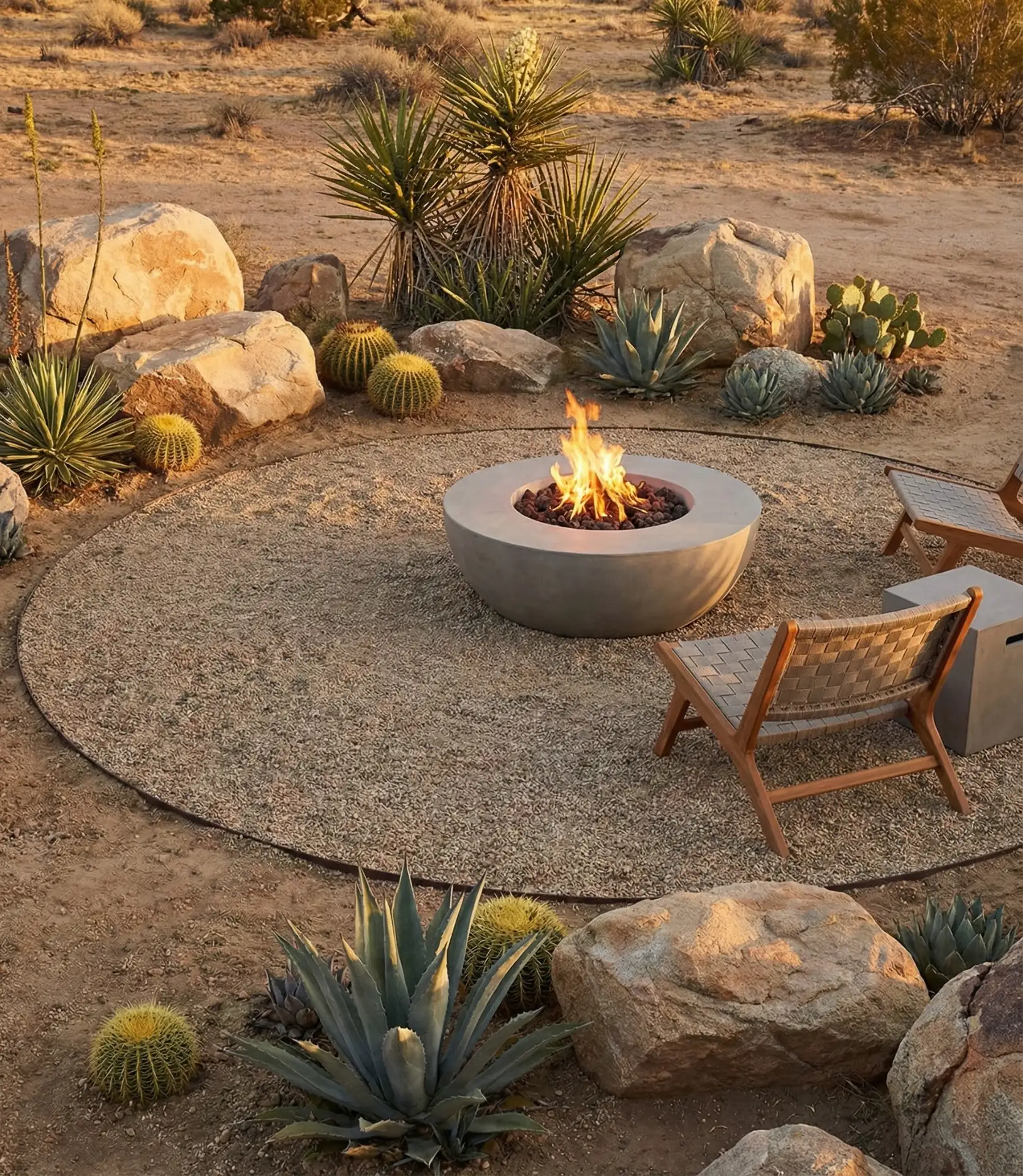
Practical insight: Install metal or stone edging to keep gravel contained, and layer 3–4 inches over landscape fabric for weed suppression. Decomposed granite compacts better for walking surfaces and costs about $40–$60 per cubic yard delivered. This setup dramatically reduces water bills—my Colorado clients report 60% less irrigation after converting lawn areas to gravel gardens. Choose fire-resistant plants like lavender, sage, and agave that won’t ignite from stray sparks.
12. Brick Fire Pit with Herringbone Pattern Base

Classic brick construction delivers timeless appeal that complements Colonial, Craftsman, and traditional-style architecture widespread on the Eastern seaboard. A round fire ring sits center stage, surrounded by a herringbone-patterned brick base that spans 10-12 feet, creating a focal point and ample gathering space, while the detailed pattern adds interest. DIYers with access to the necessary materials, proper planning, and patience can achieve these backyard ideas.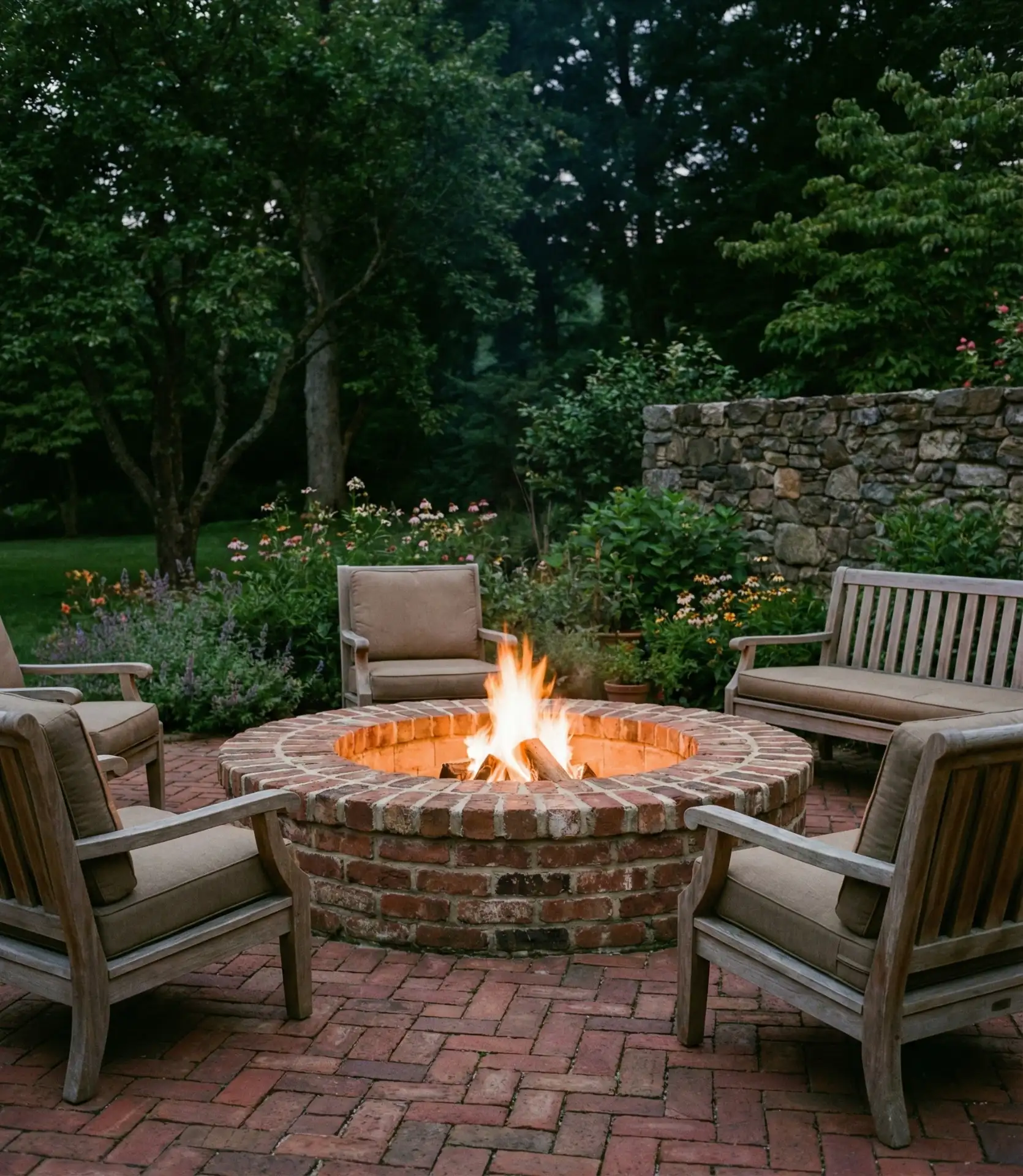
American lifestyle context: Colonial heritage readily influences design in the Northeast and Mid-Atlantic, where this design particularly resonates. Local building codes often require fire-resistant materials and surfaces at least several feet away from open flames. Standard paver bricks, at $0.50-$1.50, make these structures an affordable design option, at around $400-$800 for materials. The herringbone pattern, while using 15–20% more bricks compared to straight patterns, delivers superior strength and stability and is more resistant to frost heaving.
13. Fire Pit with Built-In Wood Storage Benches
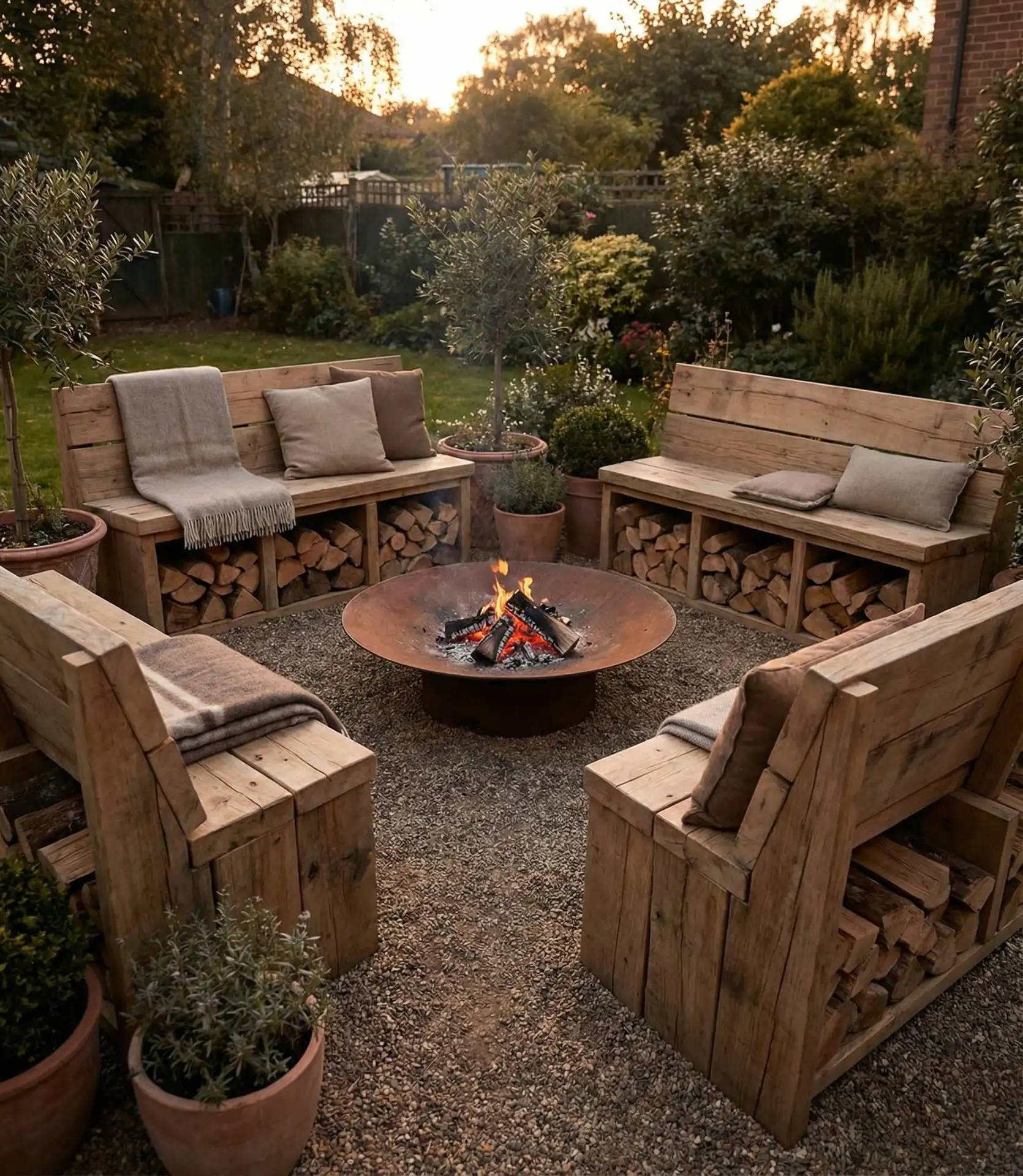
The integration of firewood storage into the seating arrangement also solves the aesthetic challenge of keeping fuel close by. Custom building benches with open compartments beneath the seat cushions can facilitate easy DIY access to split logs. This also shields the wood from moisture, ensuring its dryness between fires. 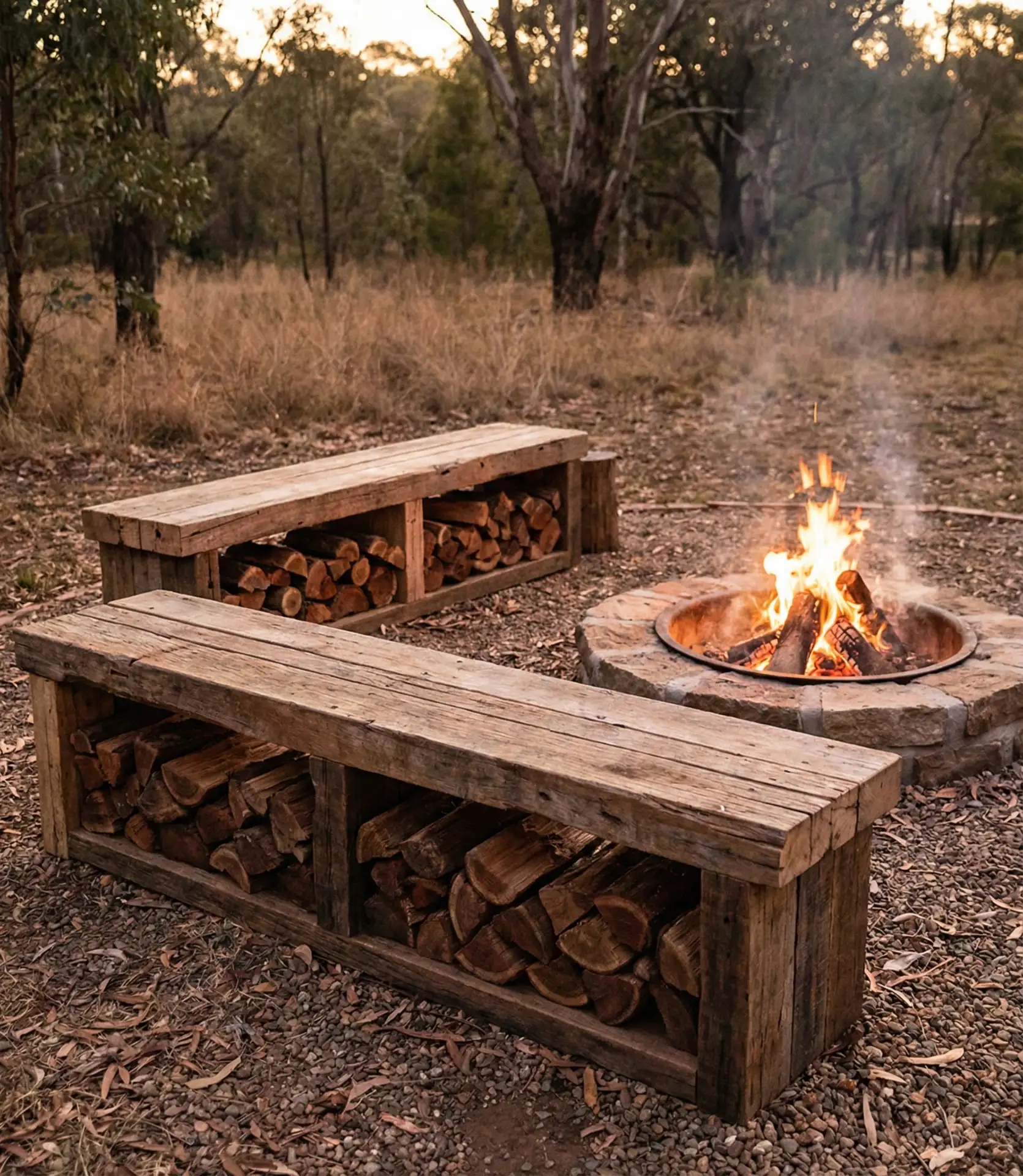
Expert commentary suggests spacing benches 6-8 feet from the fire center for comfortable warmth without excessive heat and using cedar or pressure-treated lumber rated for ground contact. The storage compartments should feature slatted sides or backs for air circulation—wet wood creates smoke and frustration. Building four benches with storage runs $600-$1,200 in materials depending on wood choice, considerably less than purchasing commercial fire pit furniture while adding functional storage that keeps your yard tidy.
14. Modern Steel Ring Fire Pit in Wild Grass
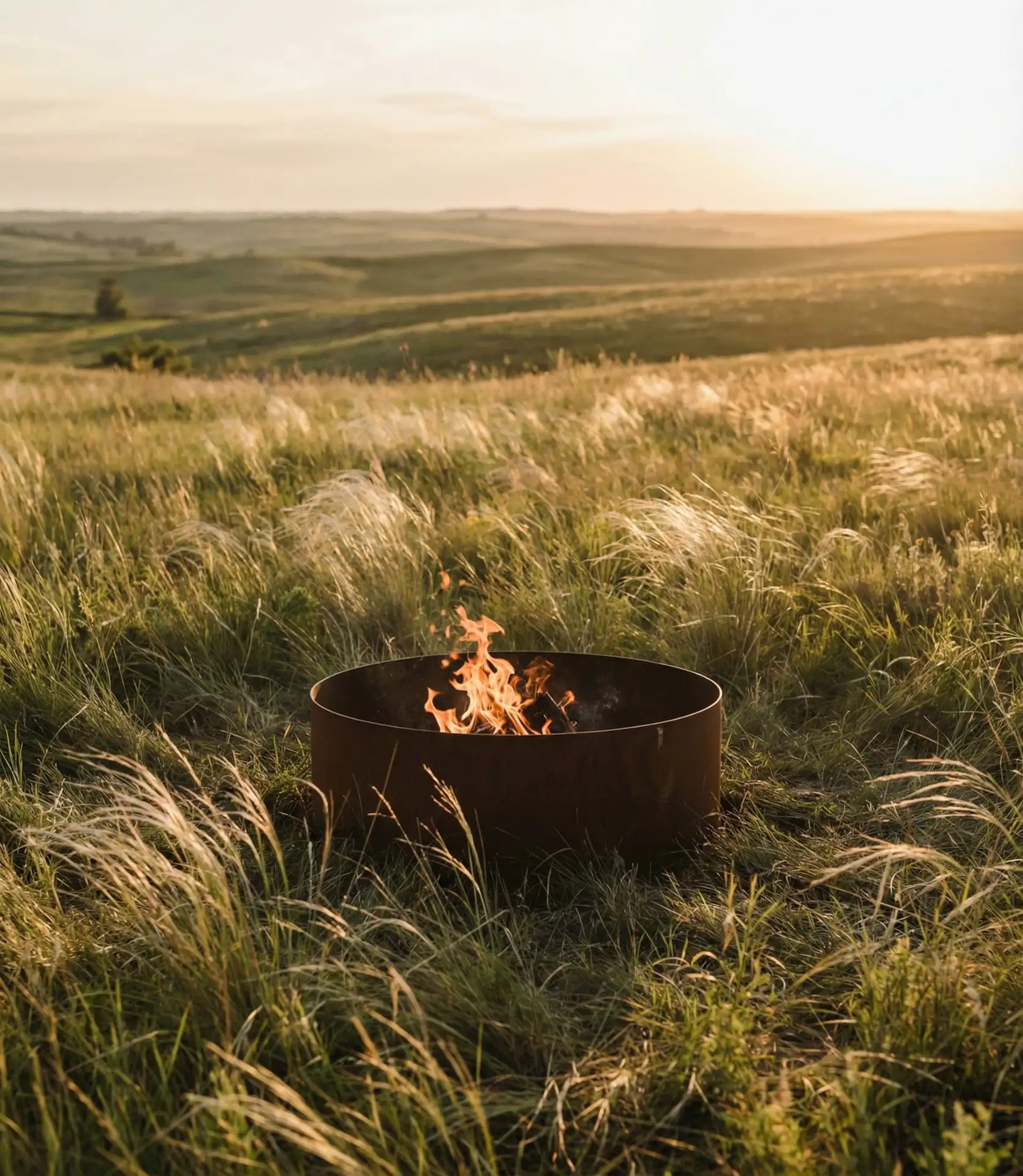
A simple Corten steel or black metal ring creates striking contrast when positioned within naturalized plantings of ornamental grasses and wildflowers. This backyard’s rustic-meets-modern aesthetic appeals to homeowners seeking understated design that doesn’t compete with natural landscapes. The round fire pit sits flush with or slightly above grade, allowing grasses to flow around its perimeter for a softened, organic appearance that evolves with seasonal changes. 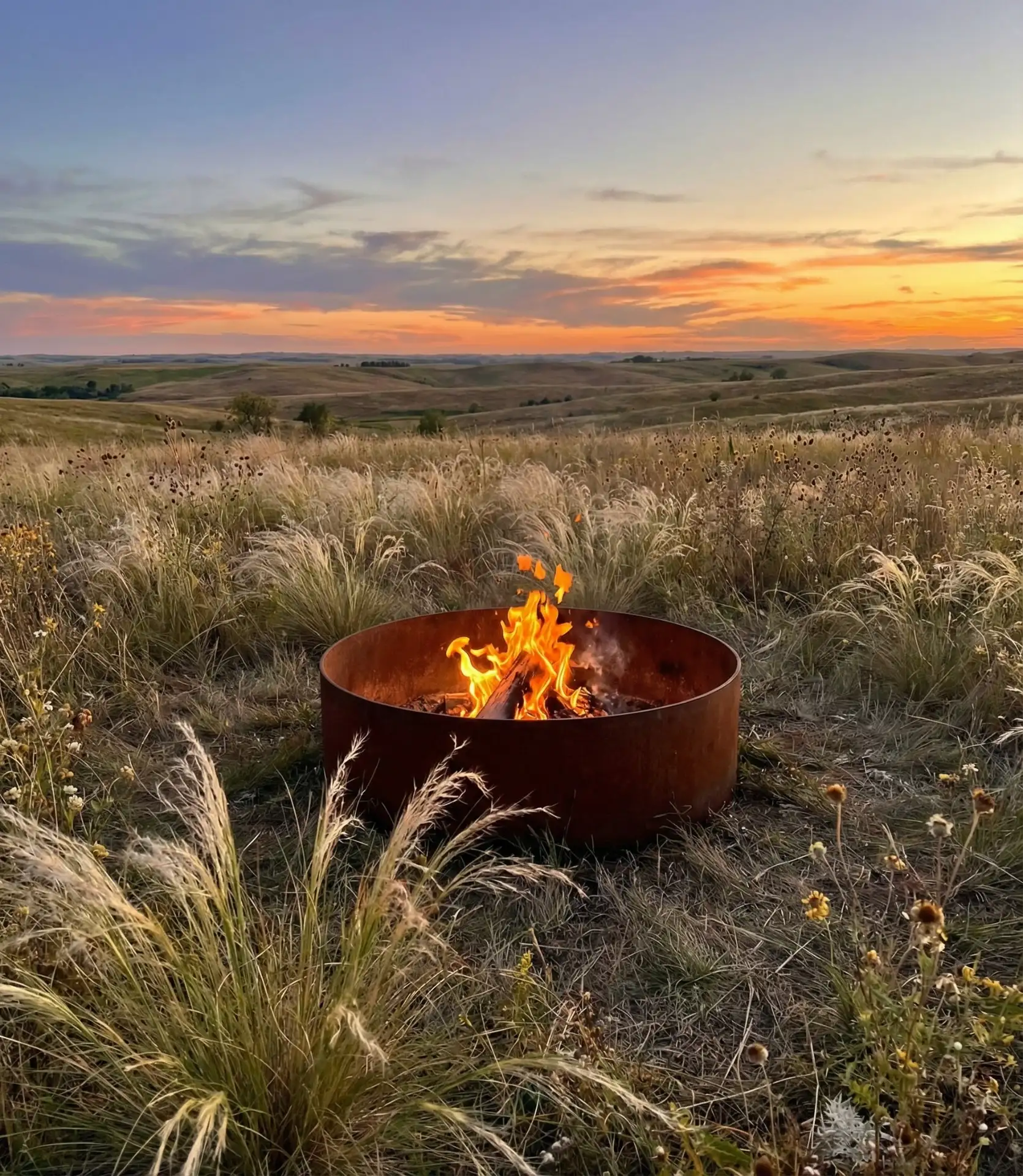
Where it works best: Rural properties, prairie landscapes, and contemporary farmhouse settings where the contrast between industrial materials and wild plantings creates visual tension. Maintain a 3-foot clearance circle of gravel or stone to prevent grass fires, and mow or trim regularly during dry seasons. Corten steel develops its characteristic rust patina naturally over 6-12 months, requiring zero maintenance while gaining character—expect to pay $400-$800 for quality rings sized 36-48 inches in diameter.
15. Composite Deck Fire Pit with Glass Wind Guard
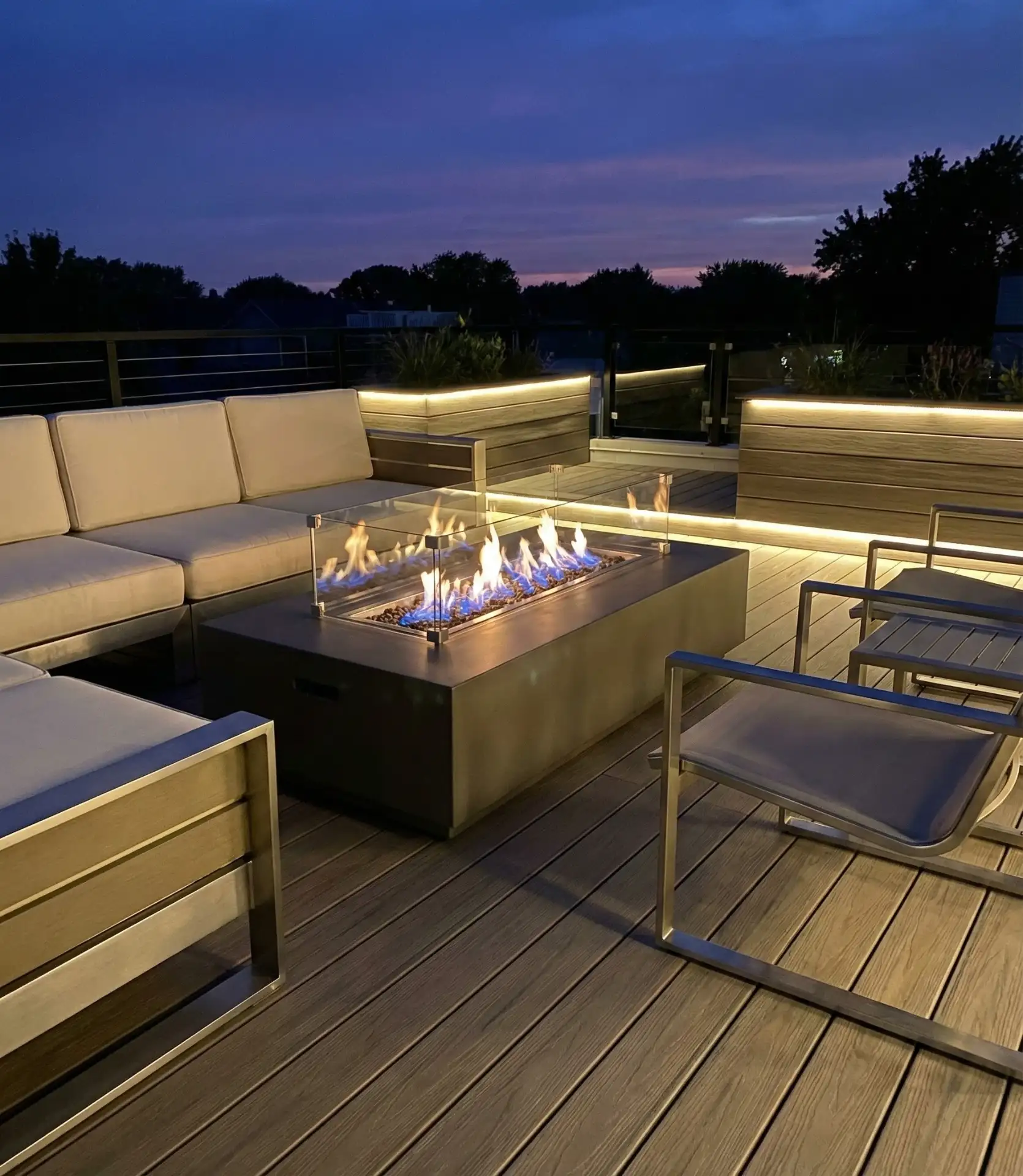
Installing a propane fire pit on composite decking requires careful safety planning, but tempered glass wind guards provide protection while maintaining sight lines across the flames. This small backyard solution works perfectly for townhomes and condos with limited yard space but generous deck access. The transparent barriers contain sparks and embers while directing heat outward, and with lights integrated into deck railings or posts, the entire space glows invitingly after dark. 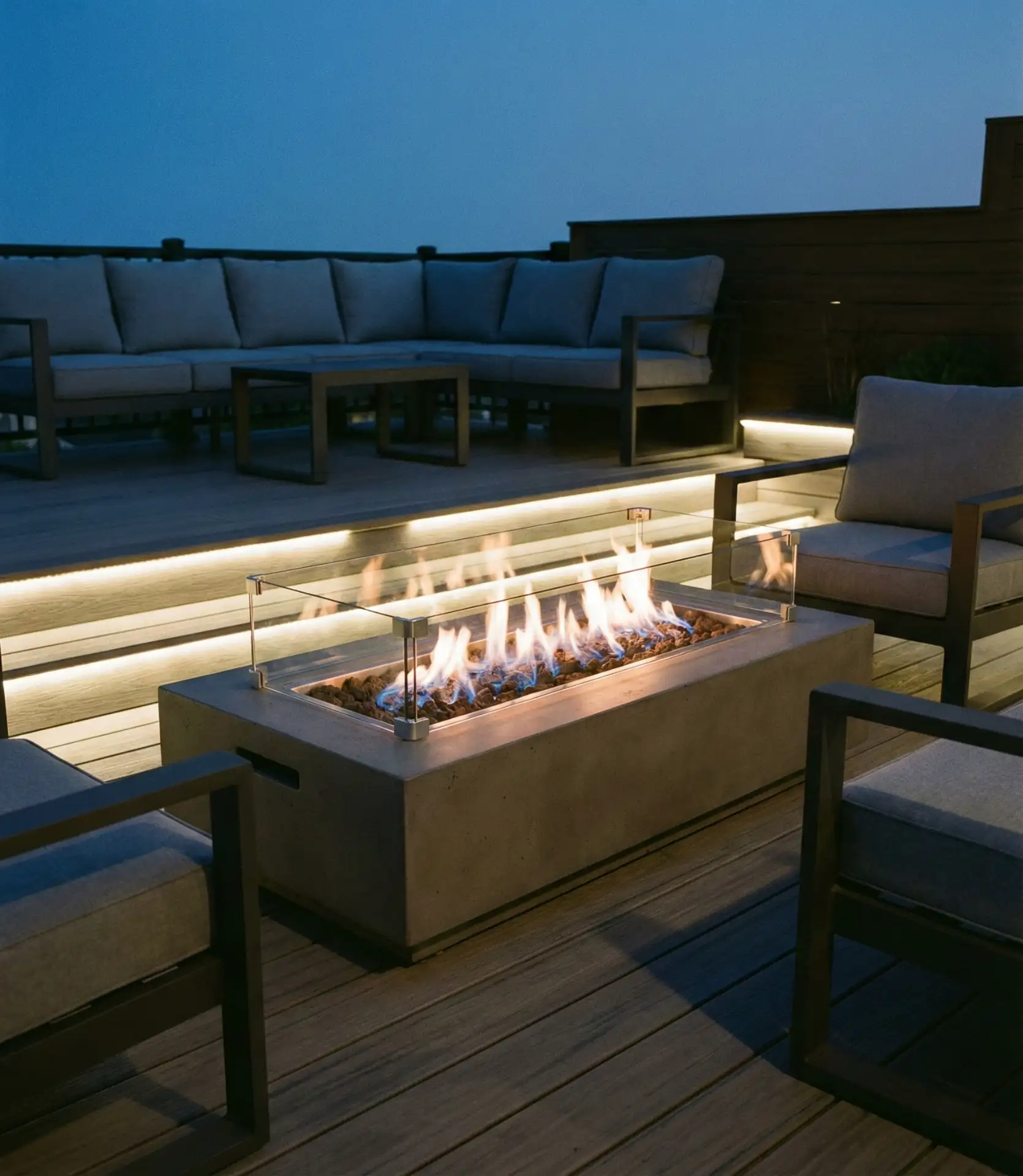
Common mistake: Placing fire features directly on composite decking without heat-resistant pads, which can warp or discolor expensive materials. Always use a fire-rated deck protector and verify your composite manufacturer’s clearance requirements—some void warranties if flames exceed specific distances. Glass-enclosed fire pits cost $1,200–$3,000 but deliver wind protection that makes outdoor heating effective even during breezy conditions, extending your deck season substantially in coastal and prairie regions.
16. A sunk fire pit with tiered stone seating
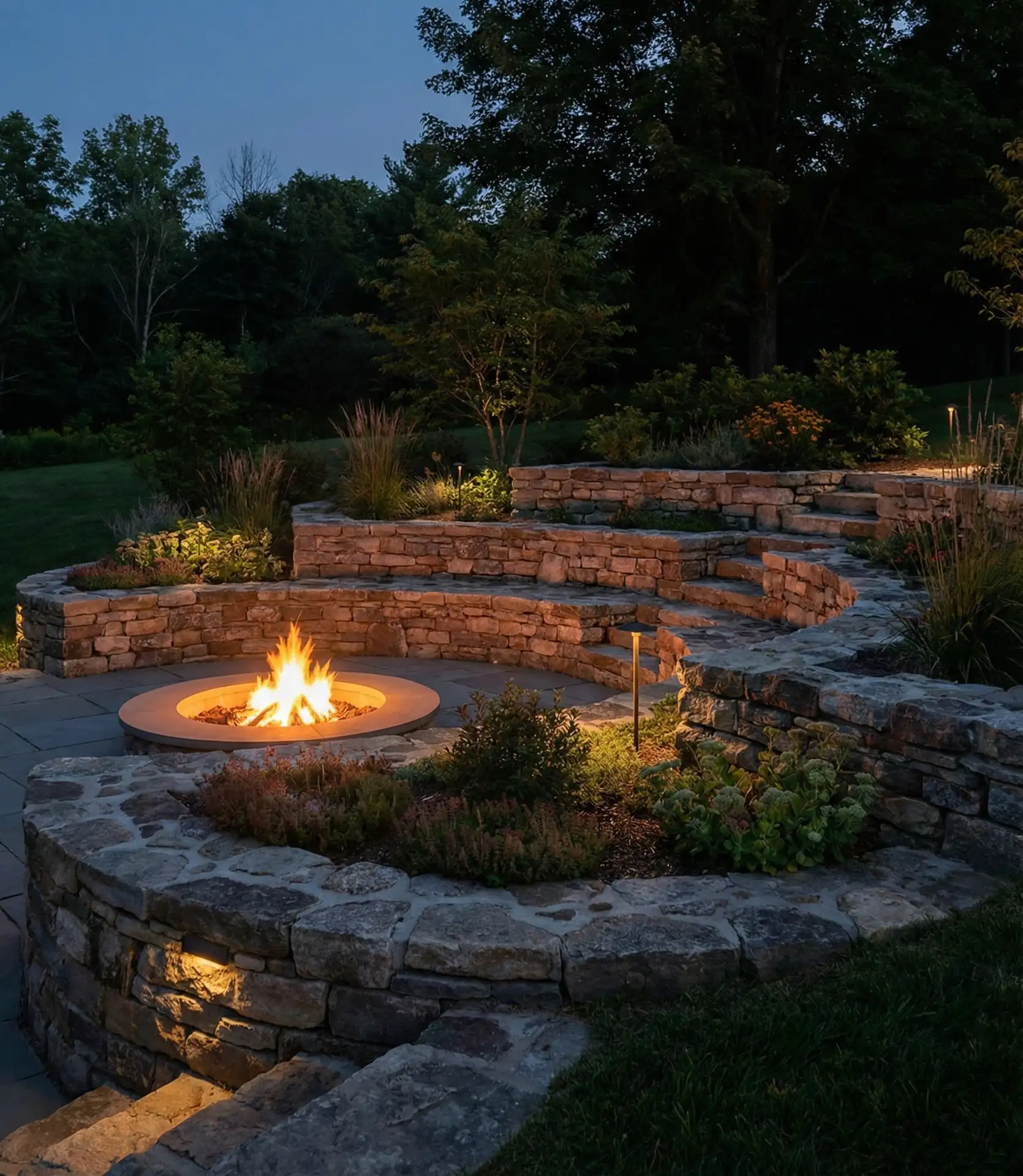
Creating amphitheater-style seating through tiered stone walls transforms your fire pit into a true entertainment venue that handles large gatherings effortlessly. The ground-level flames sit at the center while concentric rings of stone seating rise gradually, providing excellent sight lines for every guest. This idea’s approach maximizes capacity in small backyard footprints by building vertically rather than horizontally, and the stone tiers double as planting areas for cascading flowers and herbs. 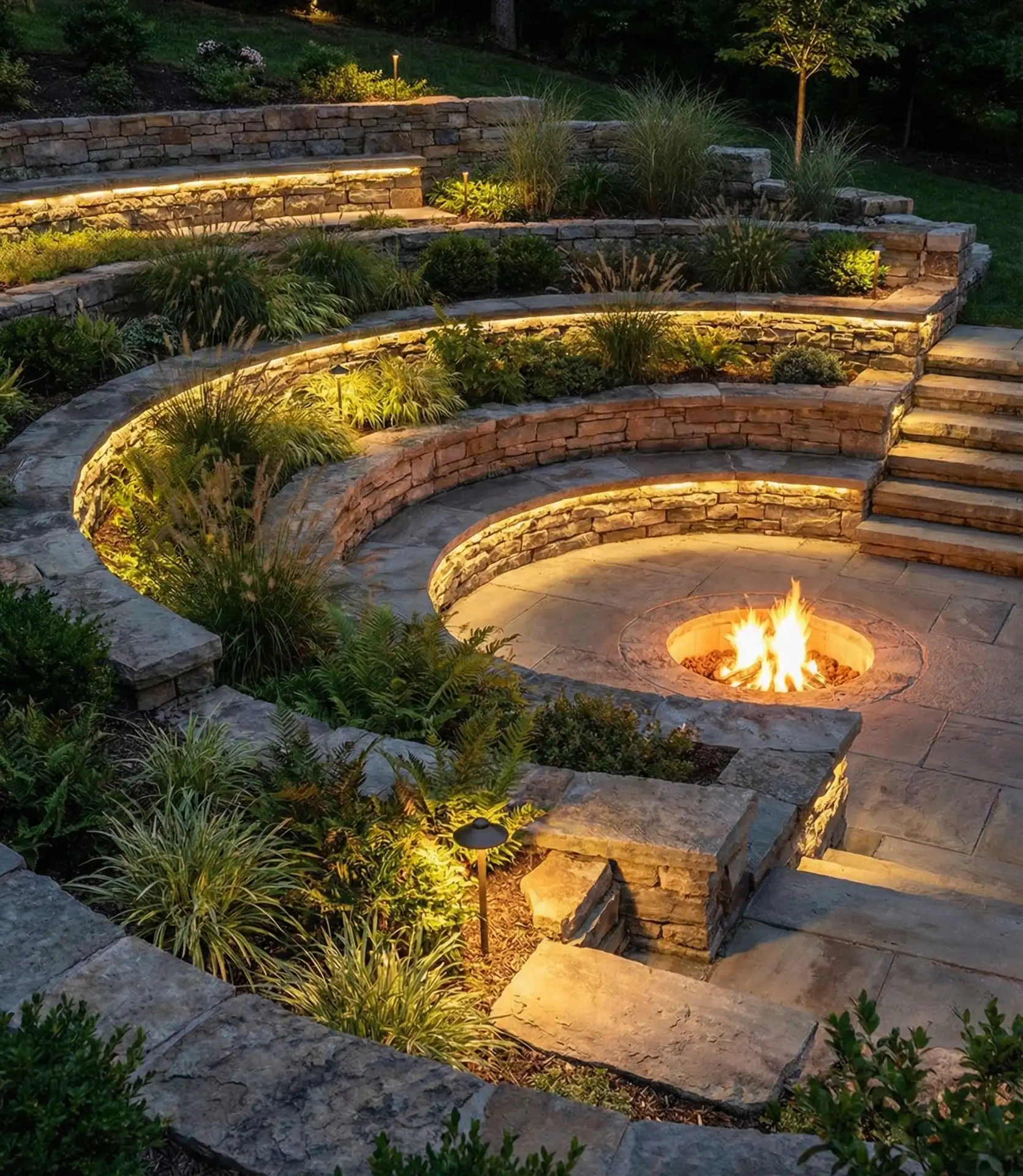
A family in Austin built a three-tier system last year that seats 24 people comfortably, and it’s become their signature entertaining space for everything from casual weeknight dinners to elaborate birthday celebrations. The project required professional excavation and stone masonry totaling about $15,000, but the wow factor and functionality justify the investment for serious entertainers. Include cushion storage nearby—comfortable seating transforms stone tiers from architectural features into inviting perches where guests linger for hours.
17. Fire Pit with Covered Outdoor Kitchen Extension
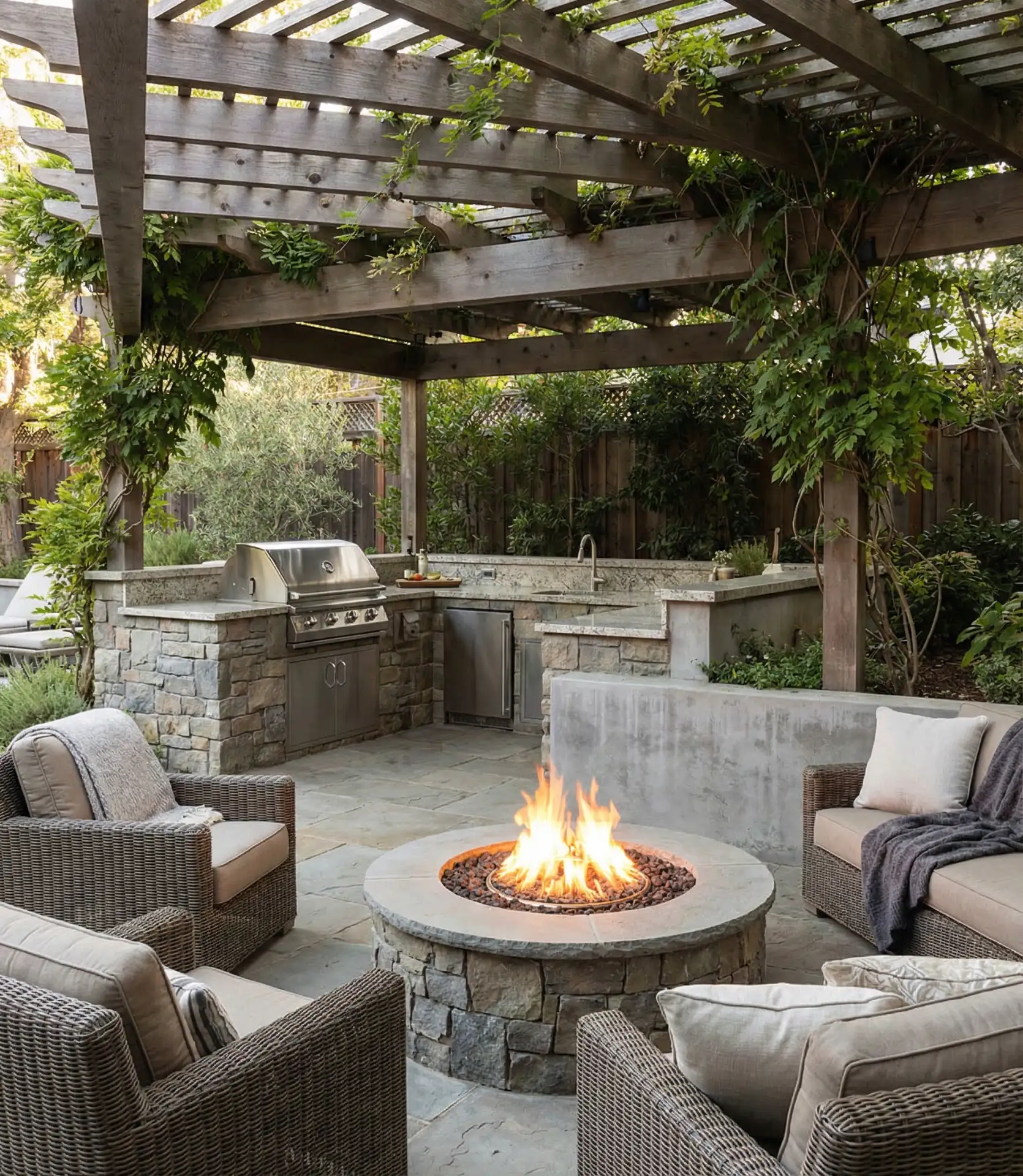
Connecting your fire pit area to a covered outdoor kitchen creates a seamless entertaining flow where cooking, dining, and lounging happen in distinct but adjacent zones. The pergola or solid roof covers the kitchen section, while the open fire pit provides gathering space just steps away. This backyard’s layout works brilliantly for households that frequently host, allowing one person to prep food while others enjoy conversation around the fire. 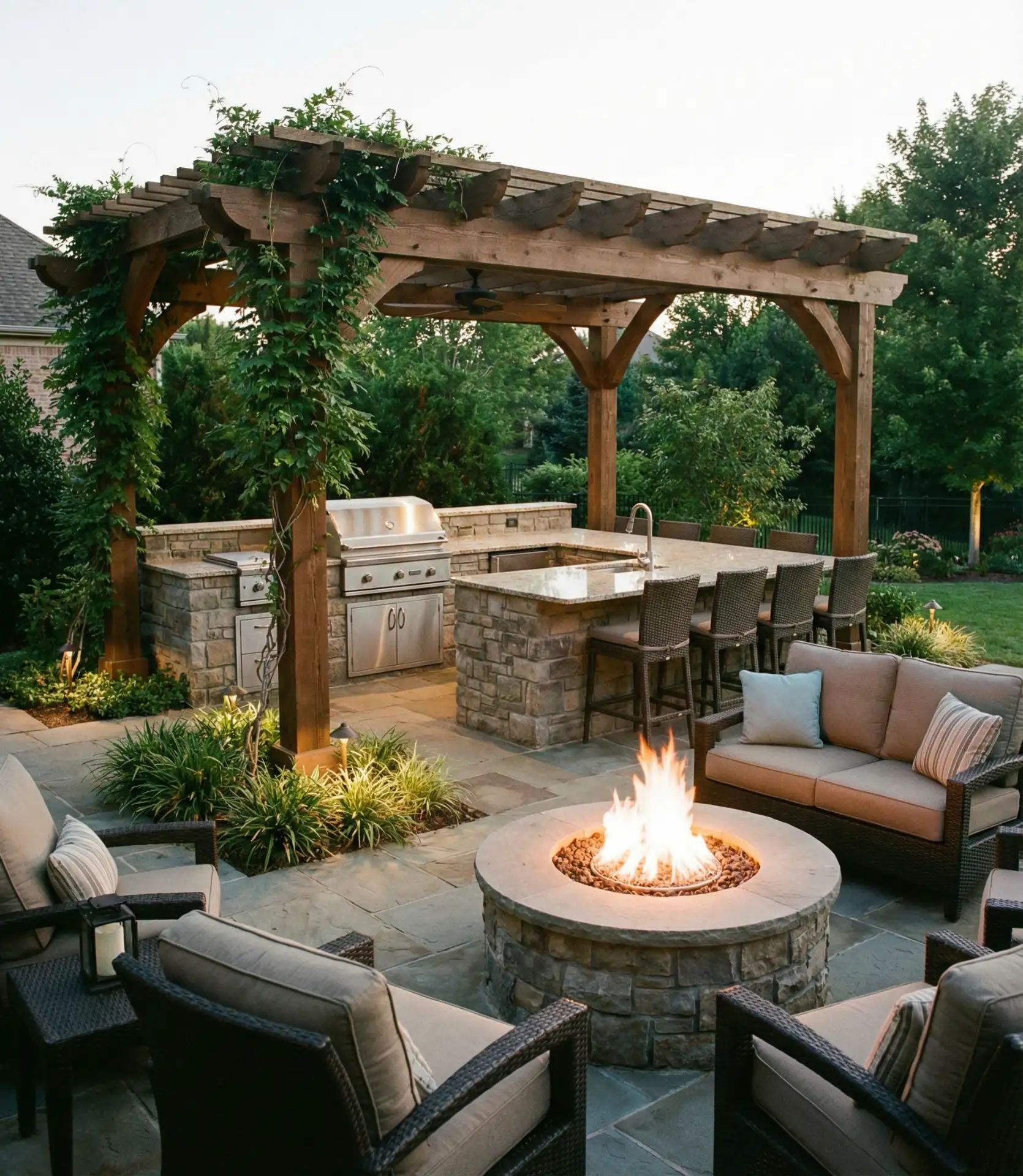
Regional context matters significantly here—Southern and Southwestern homeowners embrace outdoor kitchens year-round, while Northern climates use them seasonally from May through October. Budget $8,000-$25,000 for a complete setup including appliances, countertops, and a fire pit, though phased construction allows you to start with basics and add features over multiple seasons. Propane connections should serve both kitchen appliances and the fire pit for simplified fuel management and lower operating expenses.
18. Minimalist Concrete Ring with Crushed Granite
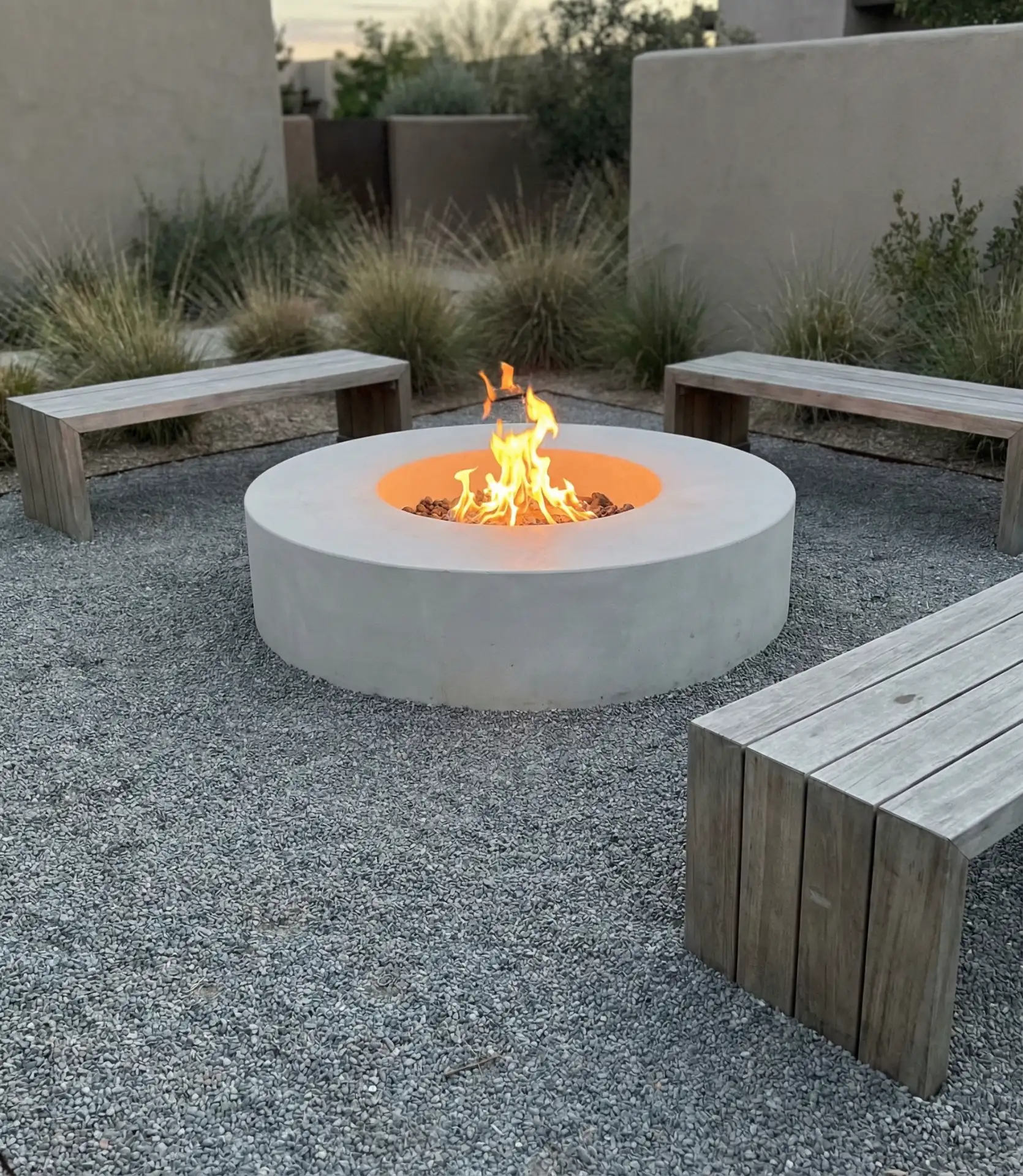
A poured concrete fire ring achieves contemporary minimalism through smooth surfaces and precise circular forms, especially striking when surrounded by decomposed granite in contrasting tones. This cheap and easy DIY approach requires basic concrete mixing skills and a good circular form—many DIYers use flexible landscape edging or custom plywood rings. The crushed granite base provides excellent drainage and fire protection while maintaining the clean aesthetic that modern design demands. 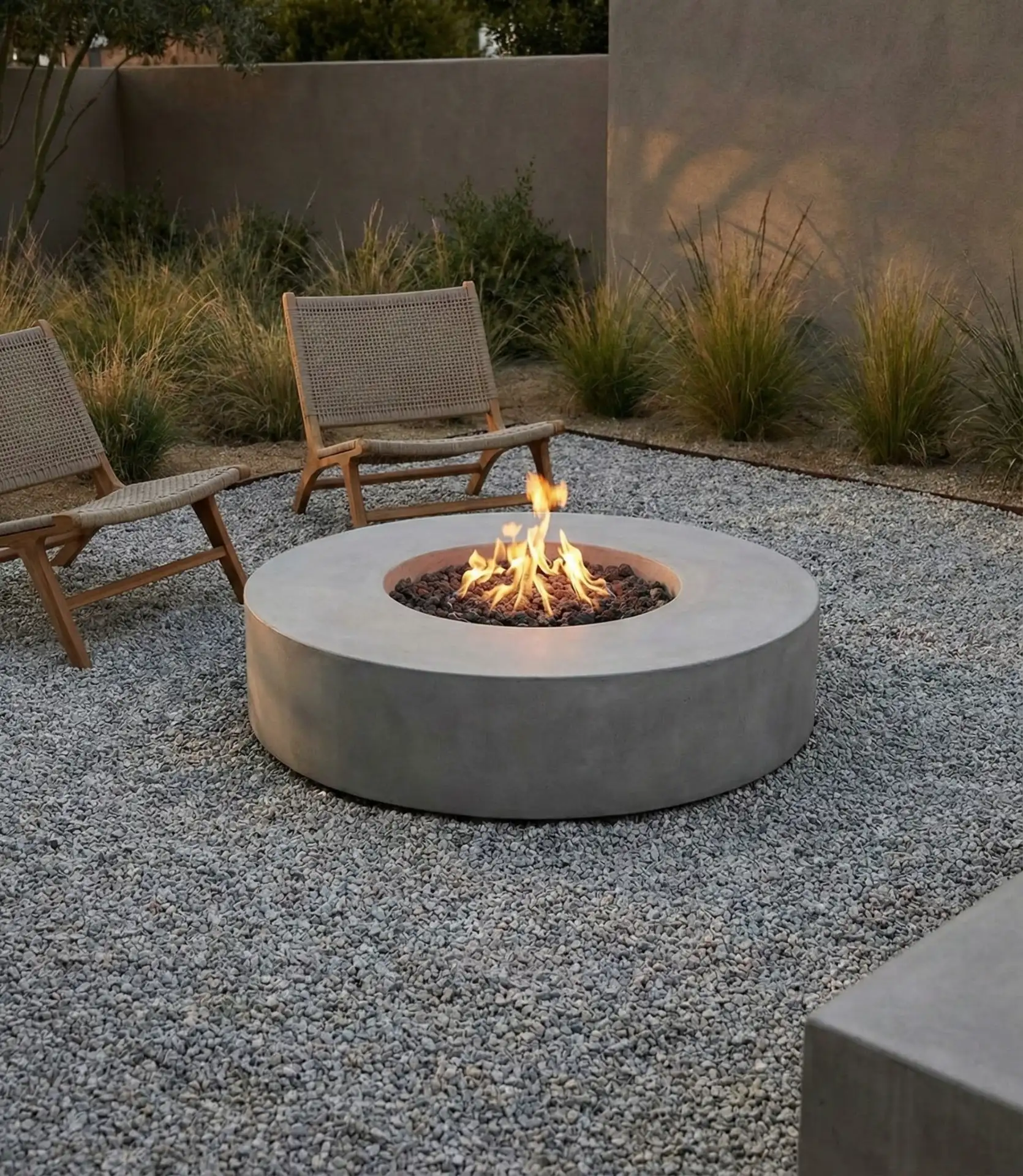
Budget justification: For DIY, materials for concrete fire rings cost $150-400 rather than cheaper prefabricated stone or metal alternatives. Add fiber reinforcement to avoid cracking, and for a refined appearance, make sure to smooth out the top edge. And a layer of crushed granite, about $35-50 per cubic yard, compresses beautifully into a firm walking surface that still infiltrates water. This combo presents high-end aesthetics at a low budget for design-conscious homeowners in cities like Denver, Phoenix, and San Francisco.
19. Fire Pit with Overhead Shade Sail
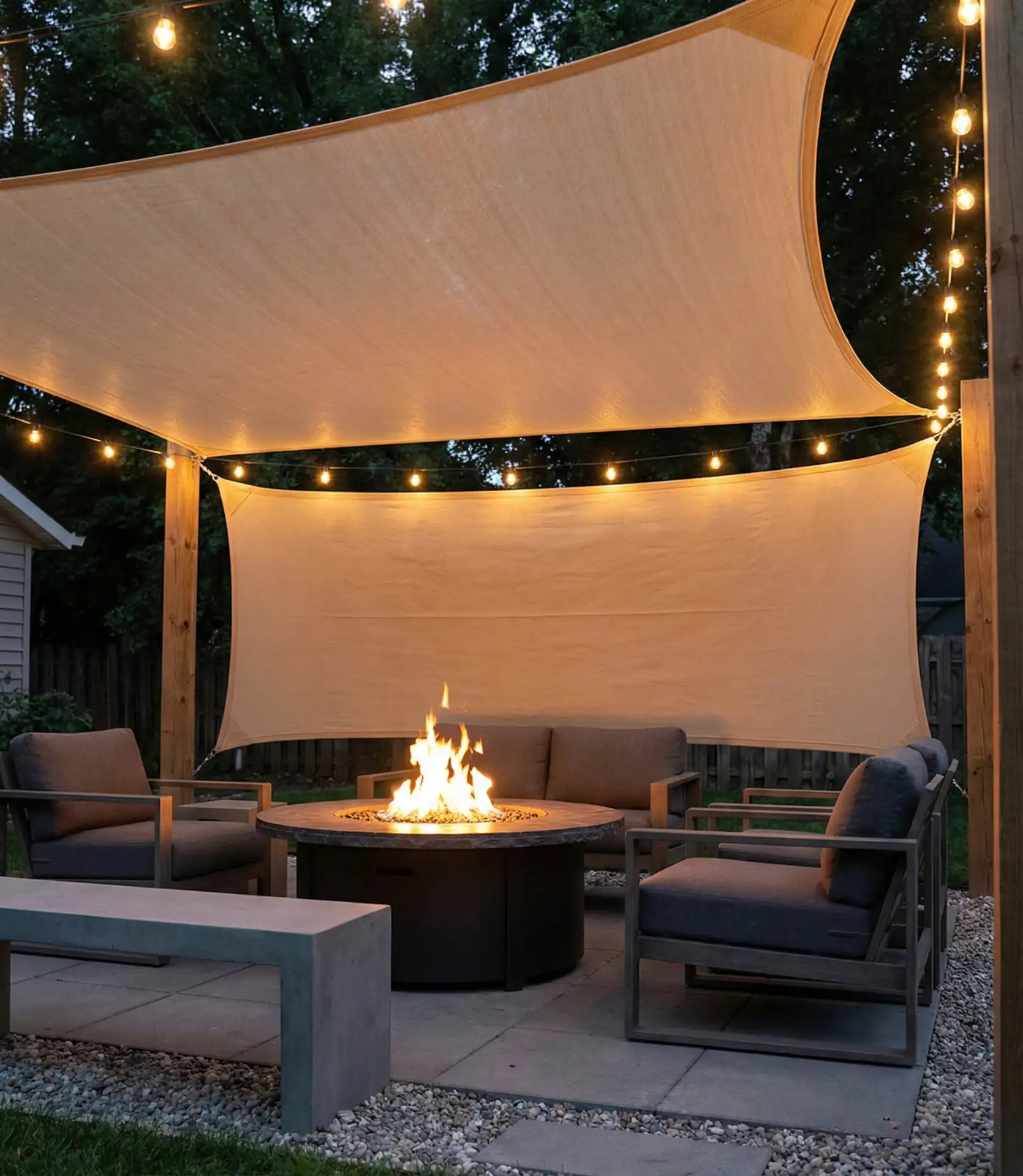
For your fire pit area, fabric-tensioned shade sails provide sun protection during the day, and at night, if you clip lights along the sail edges, the fabric softly glows. This is a wonderful idea for Australian-style outdoor areas, which, because of the intense sun, require shade but where architectural codes limit permanent structures. The triangular or square sails use stainless steel tensioned and weather-exposed hardware mounted to posts, trees, walls, or rectangular sails. 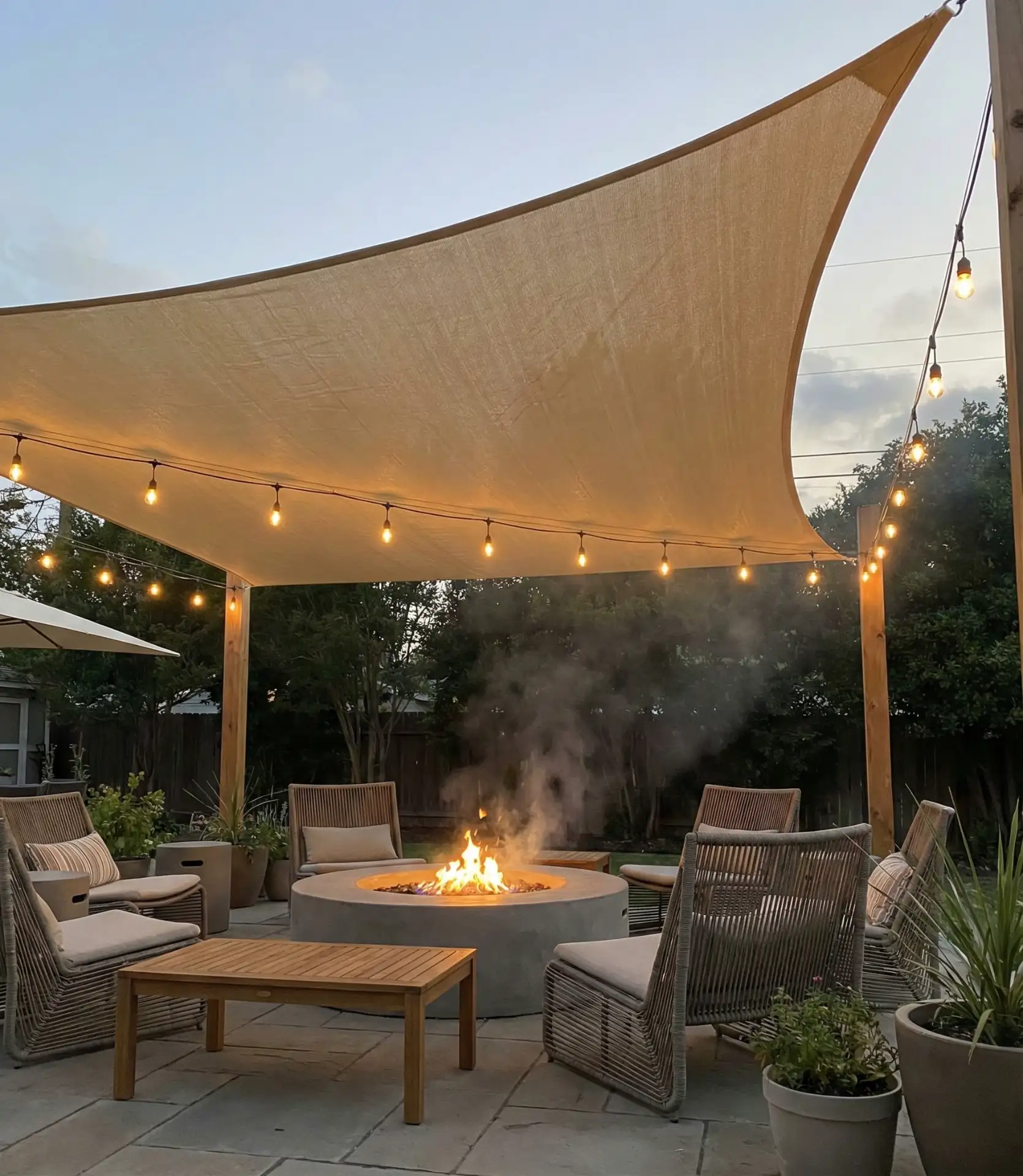
Real homeowner behavior shows shade sails get removed during winter months in snow regions but remain year-round in warmer climates. Quality UV-rated fabric costs $150-$400 per sail depending on size, and professional installation runs $500-$1,500, including posts and hardware. Position sails high enough to allow smoke ventilation—minimum 10 feet above the fire pit—and angle them to shed rain effectively. This solution costs 60–70% less than pergolas while providing comparable shade coverage.
20. A fire pit surrounded by raised garden beds
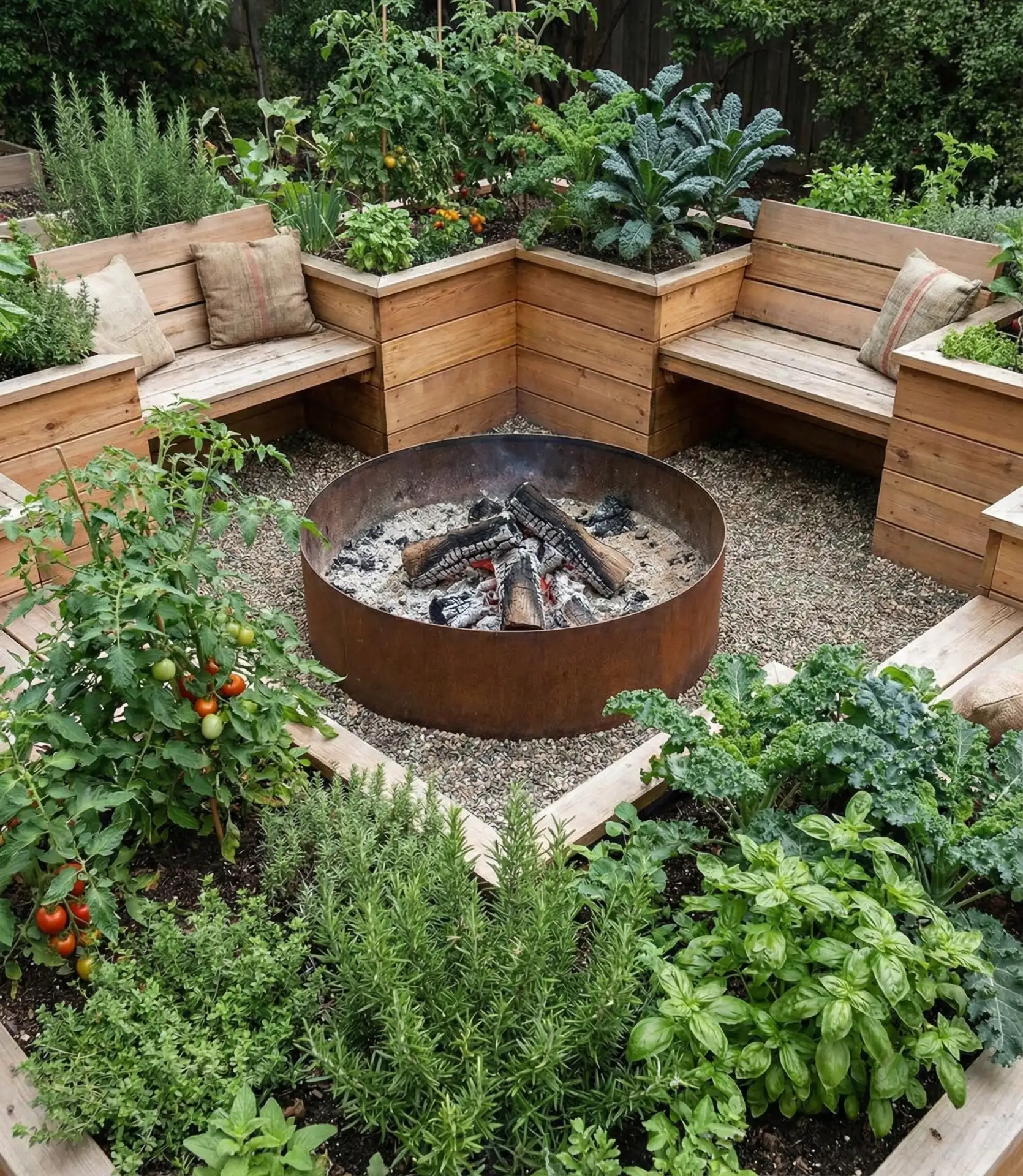
Integrating raised planters around your fire pit creates natural boundaries and brings herbs and edible plants within easy reach during outdoor cooking sessions. The square or rectangular beds built from cedar or composite lumber sit at a comfortable seat-wall height, providing additional perching space when entertaining large groups. This DIY design combines productive gardening with relaxation space, and the growing beds soften hardscape with seasonal color and texture. 
Practical insight: Build raised beds 16-20 inches tall so the cap boards function as bench seating without requiring separate furniture. Plant heat-tolerant herbs like rosemary, oregano, and lavender closest to the fire pit, keeping more delicate greens and vegetables in beds positioned farther away. Construction costs run $100-$200 per 4×8-foot bed using quality cedar, and filling with quality soil and compost adds another $40-$60. This setup particularly appeals to the growing number of Americans combining outdoor entertaining with edible landscaping.
21. Traditional Fire Pit with Cobblestone Apron
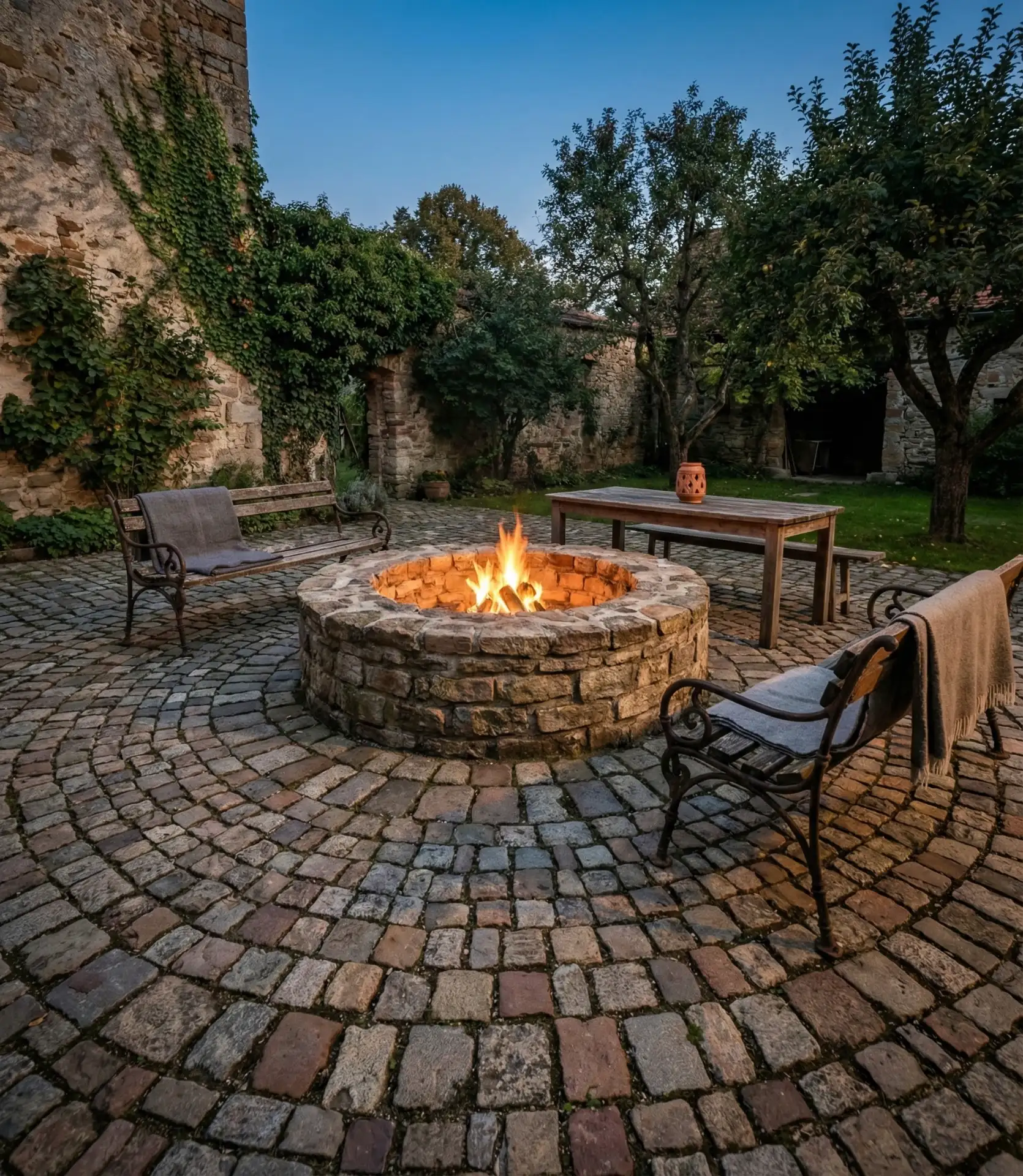
Surrounding your fire pit with authentic cobblestones creates old-world European charm that pairs beautifully with rustic and traditional American architecture. The irregular rounded stones set in sand or mortar provide excellent drainage and develop a rich patina over time, and their substantial size prevents shifting even in freeze-thaw climates. This idea’s backyard approach particularly resonates in historic neighborhoods where maintaining period-appropriate aesthetics matters to homeowners and community guidelines. 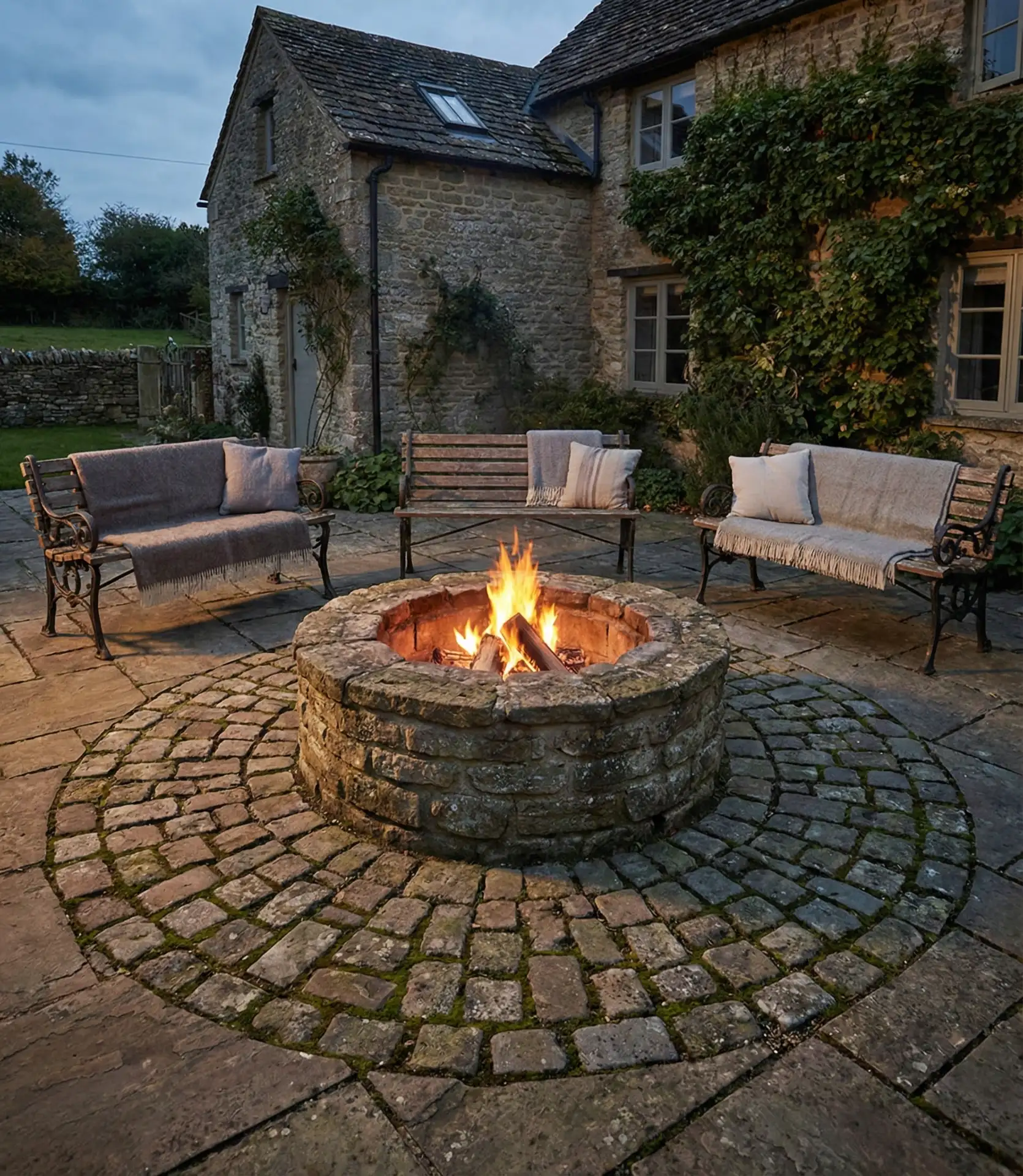
Where it works best: Northeast communities with colonial heritage, Midwest towns with German or Scandinavian influences, and anywhere homeowners appreciate time-worn materials with genuine character. Reclaimed cobblestones salvaged from old streets cost $8-$15 per square foot, while new stones run $12-$25 per square foot. The installation requires patience—setting cobbles individually in sand takes considerably longer than laying uniform pavers, but the result delivers authenticity that manufactured products cannot replicate.
22. Fire Pit with Vertical Garden Wall Backdrop

Creating a living wall backdrop using modular planting systems adds dramatic green architecture that transforms ordinary fire pits into destination spaces worthy of design magazines. The vertical garden provides natural sound dampening and privacy screening while supporting plants from ferns to succulents, depending on your climate and sun exposure. This idea particularly appeals to urban homeowners in small backyard settings where vertical space offers opportunities that limited ground area cannot. 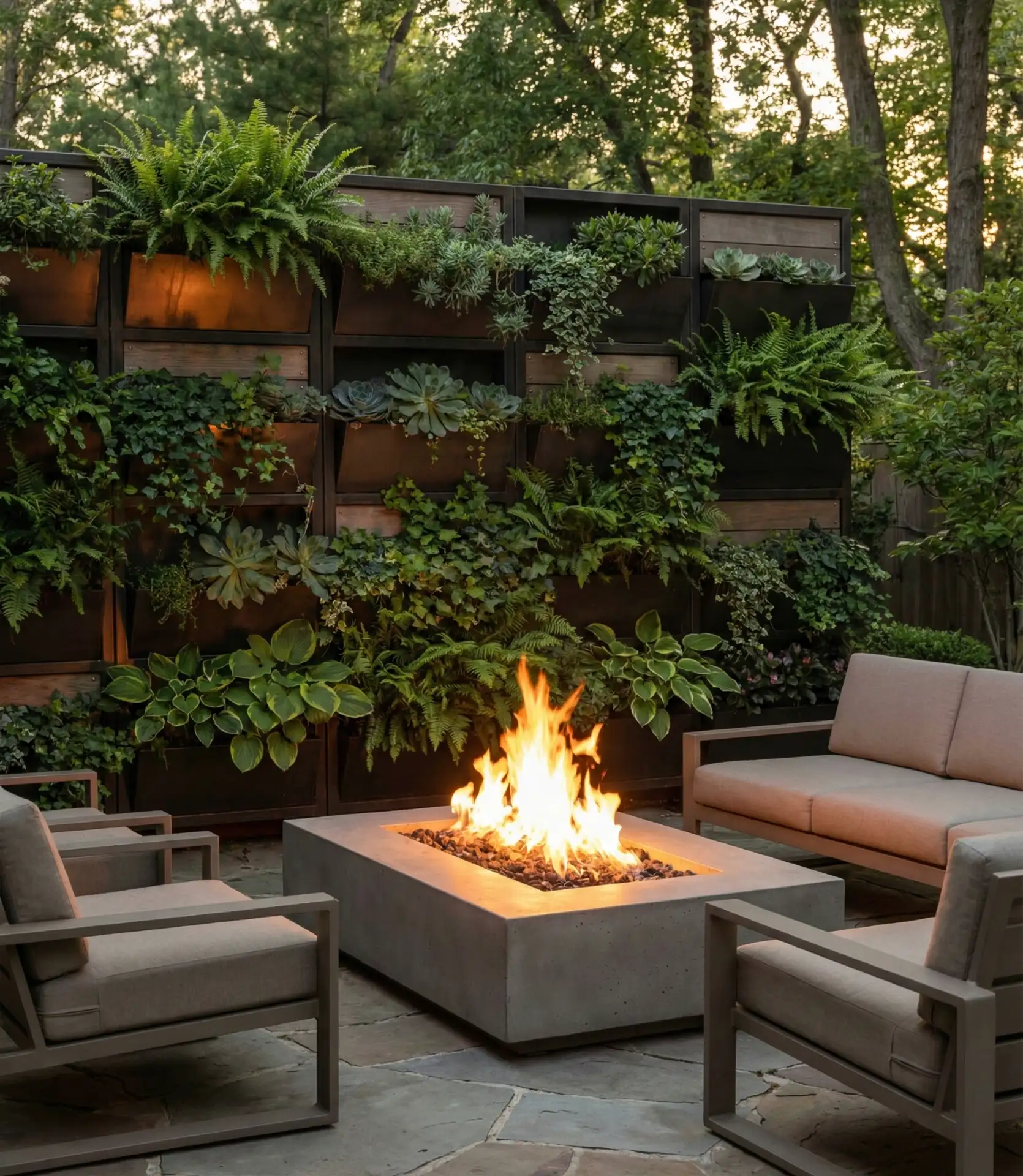
Expert perspective: Position vertical gardens 8–10 feet away from open flames to protect plants from heat stress, and choose fire-resistant species like jade plants, aloe, and stonecrops for sections closest to the fire. Modular living wall systems cost $120-$200 per square meter installed, though DIY approaches using repurposed pallets or wall-mounted containers reduce costs to $40-$80 per square meter. Integrate drip irrigation from the start—hand watering vertical gardens becomes tedious quickly and leads to neglect that kills the design’s impact.
23. Fire Pit with Stamped Concrete Compass Rose
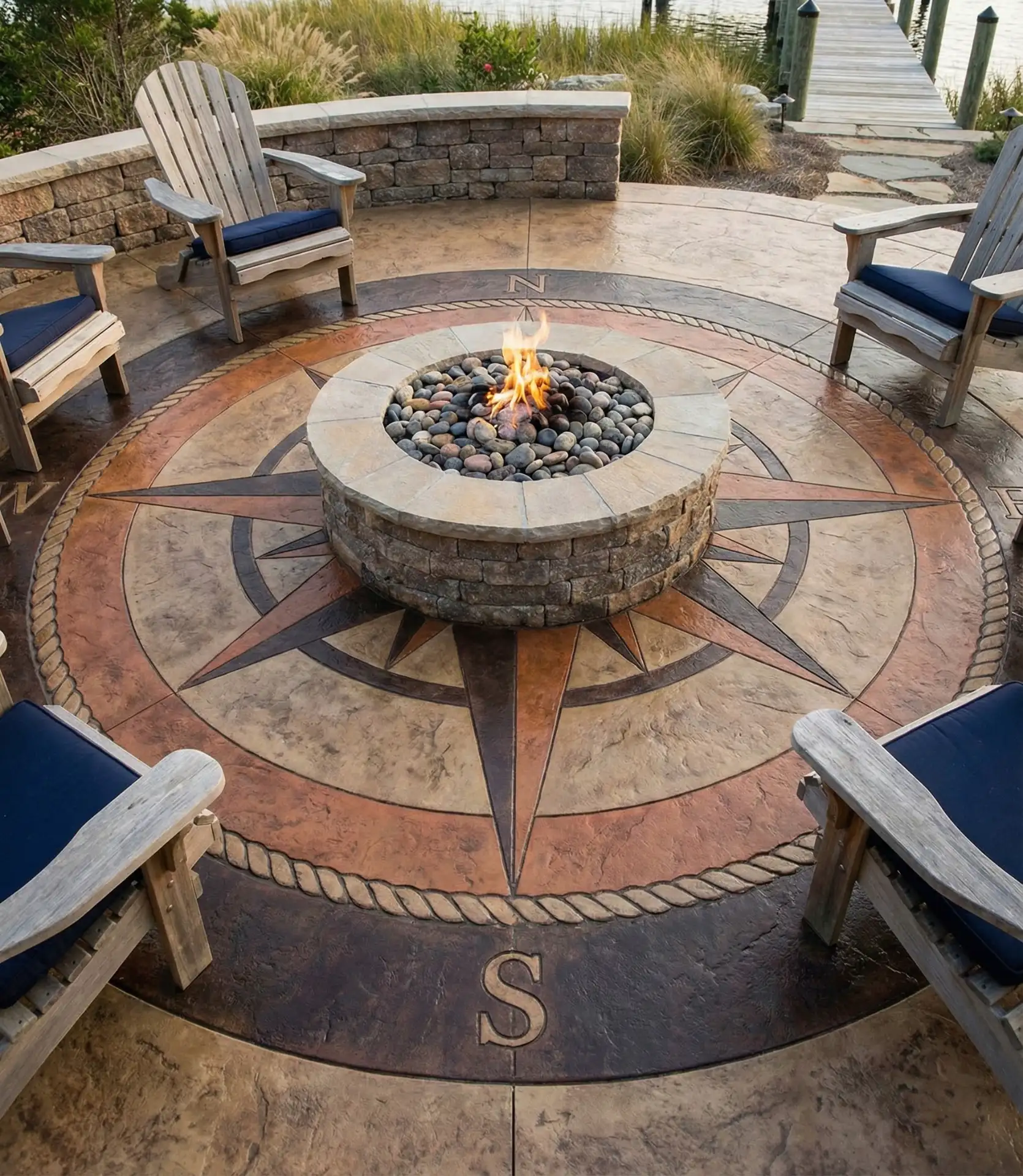
Embedding a decorative compass rose pattern in stamped concrete around your fire pit creates a nautical or explorer theme that sparks conversation and provides a striking focal point visible from upper-story windows. This round design approach uses contrasting concrete stains to highlight directional points, and the sealed surface requires minimal maintenance while withstanding weather and foot traffic. The pattern works brilliantly in coastal properties or for homeowners with travel and adventure aesthetics running through their landscape design. 
Common mistakes include attempting the procedure as a DIY project without concrete stamping experience—the timing and technique required for professional results have steep learning curves. Hire experienced decorative concrete contractors who can execute the compass pattern cleanly; expect to pay $12-$18 per square foot installed. The design particularly resonates in lakefront and coastal properties where nautical themes feel organic, and the sealed concrete surface simplifies maintenance compared to natural stone alternatives that require periodic resealing and joint sand replacement.
24. Fire Pit with Reclaimed Railroad Tie Borders
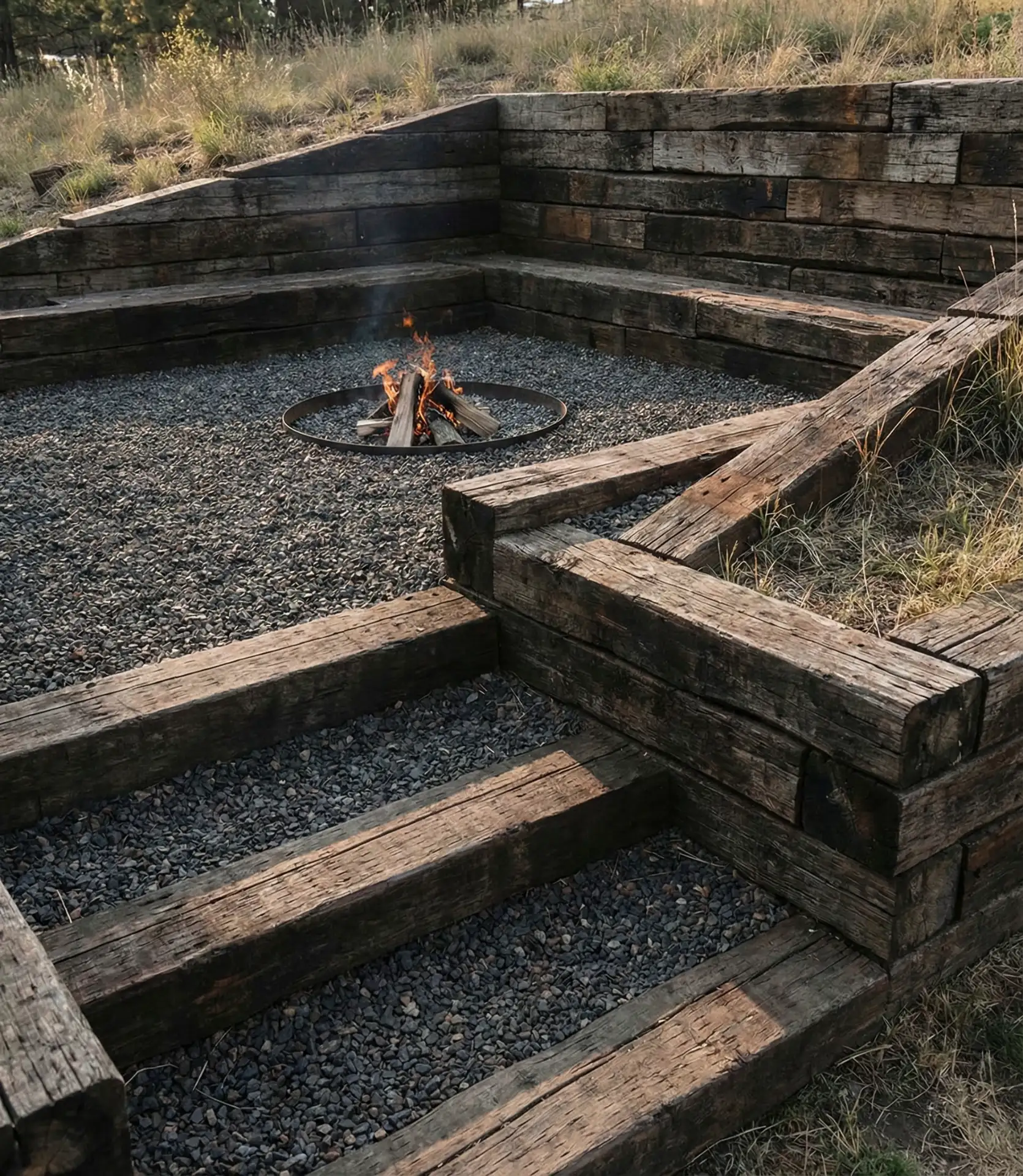
Real reclaimed railroad ties make strong borders and walls that add a rustic industrial look, which fits well with modern farmhouse and warehouse styles. The massive timbers naturally contain gravel or mulch fill, create distinct level changes, and provide informal bench seating that accommodates overflow crowds during parties. This cheap solution uses materials available at architectural salvage yards for $15-$40 per tie, and their heavy weight provides stability without concrete footings. 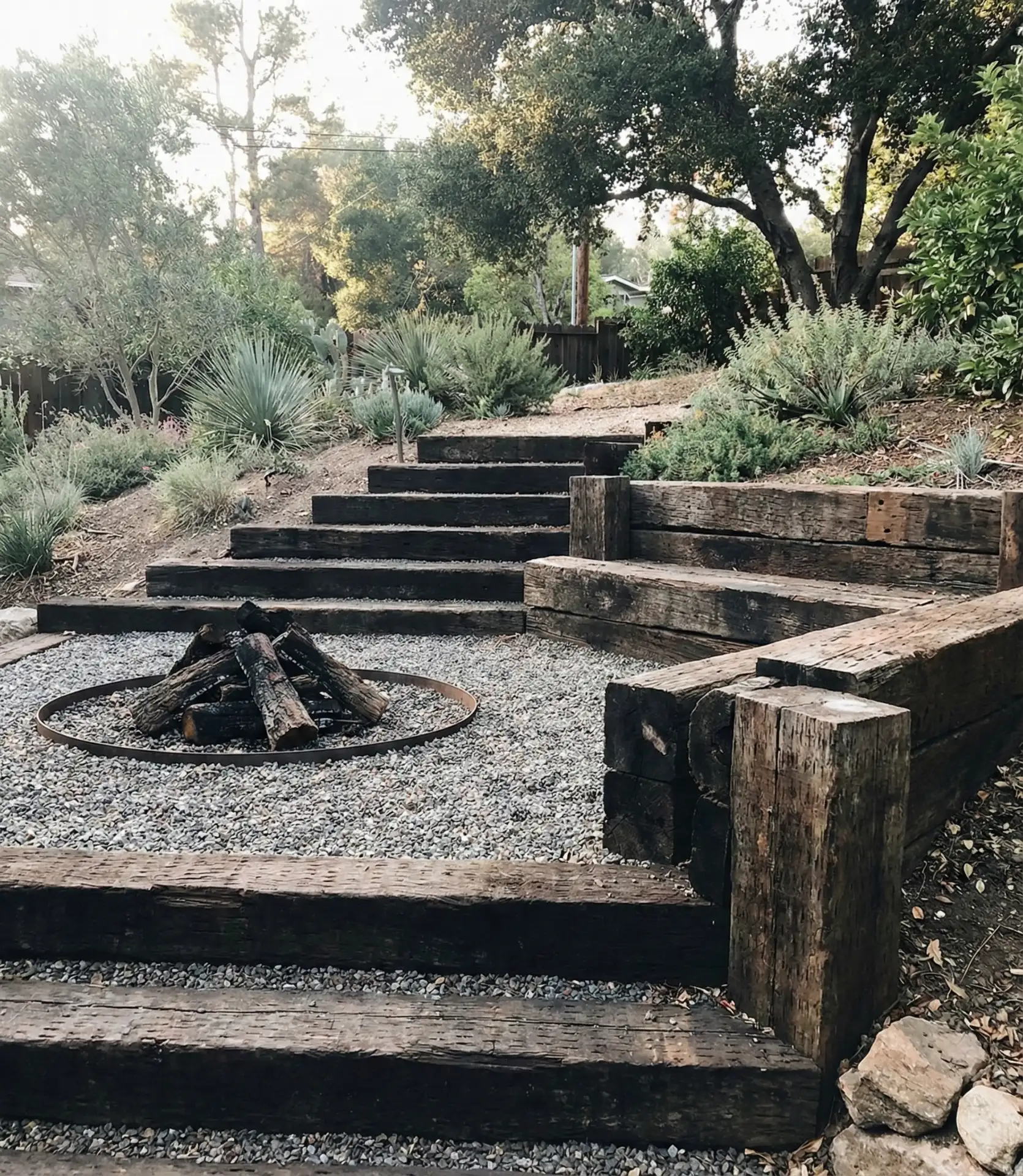
American lifestyle connection: The railroad tie aesthetic resonates strongly in regions with industrial heritage, such as the Midwest manufacturing cities, Appalachian coal country, and the Western railroad corridors, where these materials embody authentic regional history. Important safety warning Only use untreated or naturally aged ties for public sitting wood that is unrefined, as it may have untreated creosote on it. When heated, aged tires can cause skin irritation and odor issues. To secure your tie, use rebar and hammer it into the tie after auguring a hole to prevent movement.
25. Firepit with Moroccan-Inspired Tile Surround
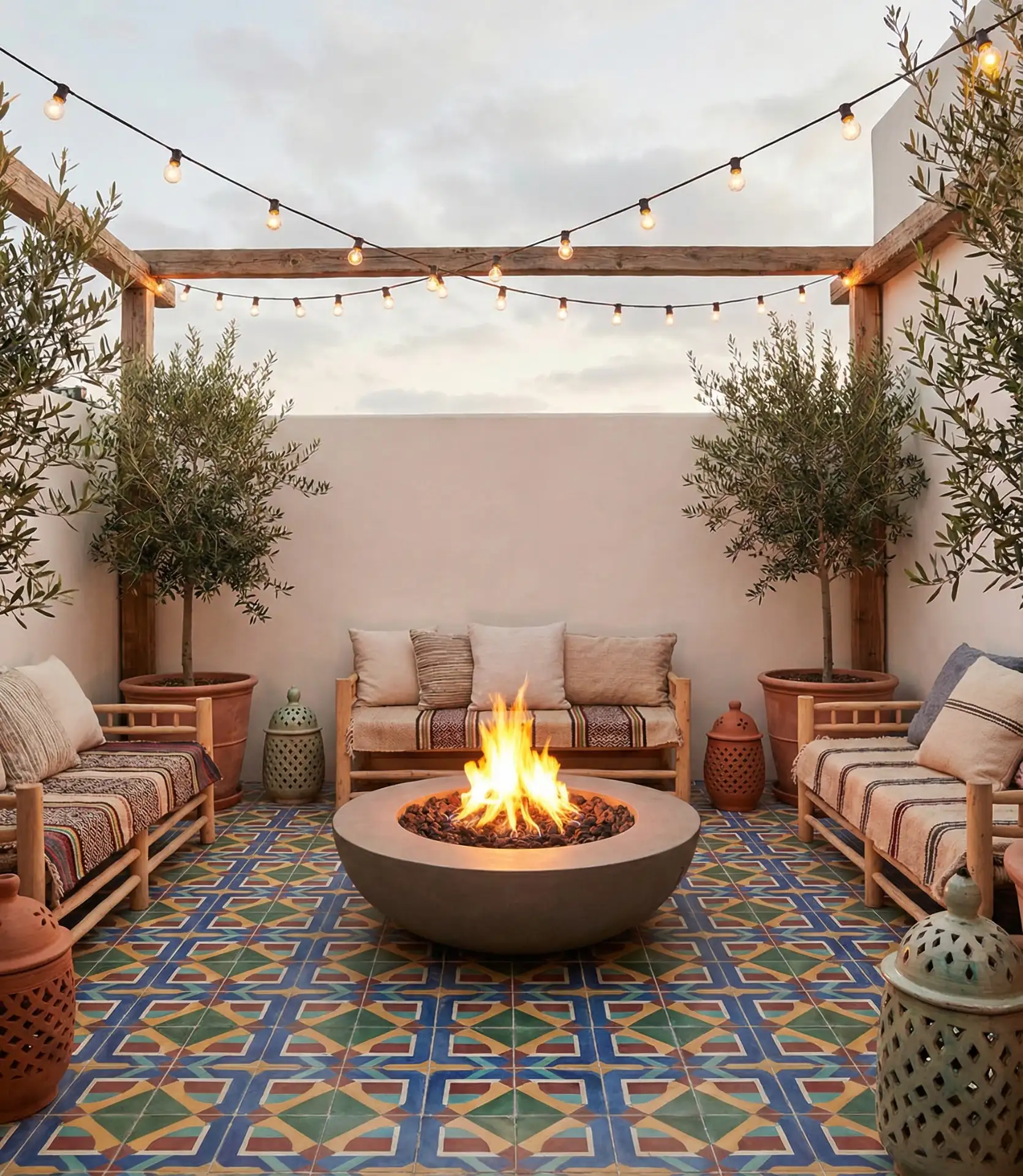
Colorful cement tiles in geometric patterns transform the fire pit surround into a work of art that adds Mediterranean warmth to American backyards. The intricate designs serve as a focal point, maintaining their beauty even in the absence of fires. Frost-resistant, exterior-use tiles are ideal, and they can withstand the heat of Arizona and the freeze of Minnesota. This approach to the idea pairs beautifully with strung lights over the outdoor room that is perfect for intimate gatherings and special occasions. 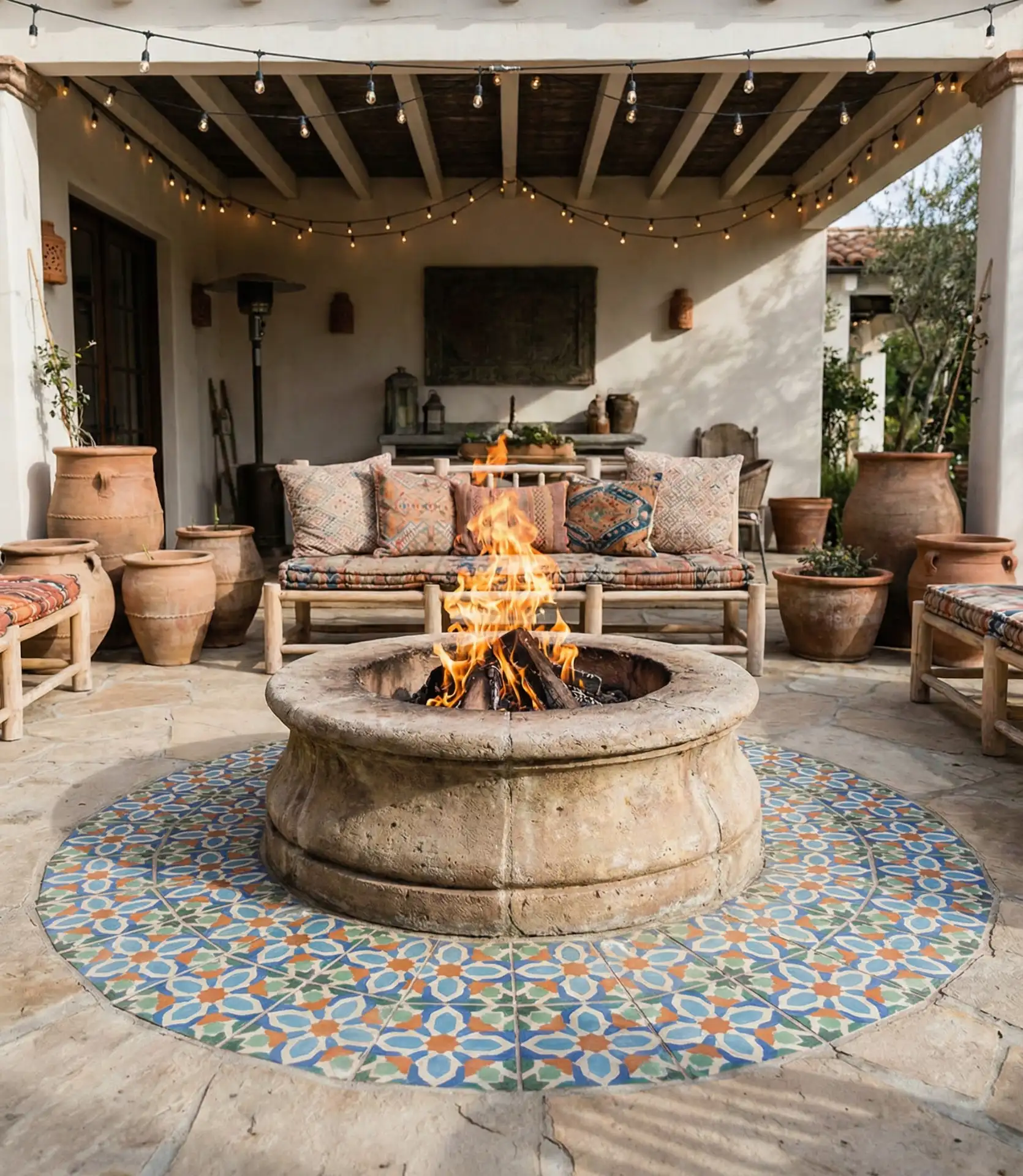
Budget considerations: Quality cement tiles cost $8-$20 per square foot, and a typical fire pit surround requires 40-80 square feet depending on design. The tiles require professional installation over a concrete base—improper installation leads to cracking when tiles shift. Consider limiting expensive patterned tiles to a 3-4 foot band immediately surrounding the fire pit, then transitioning to simple pavers or concrete for outer zones. This approach captures the design impact while managing costs at $1,200–$2,500 total for materials and installation.
26. Fire Pit with Integrated Water Feature
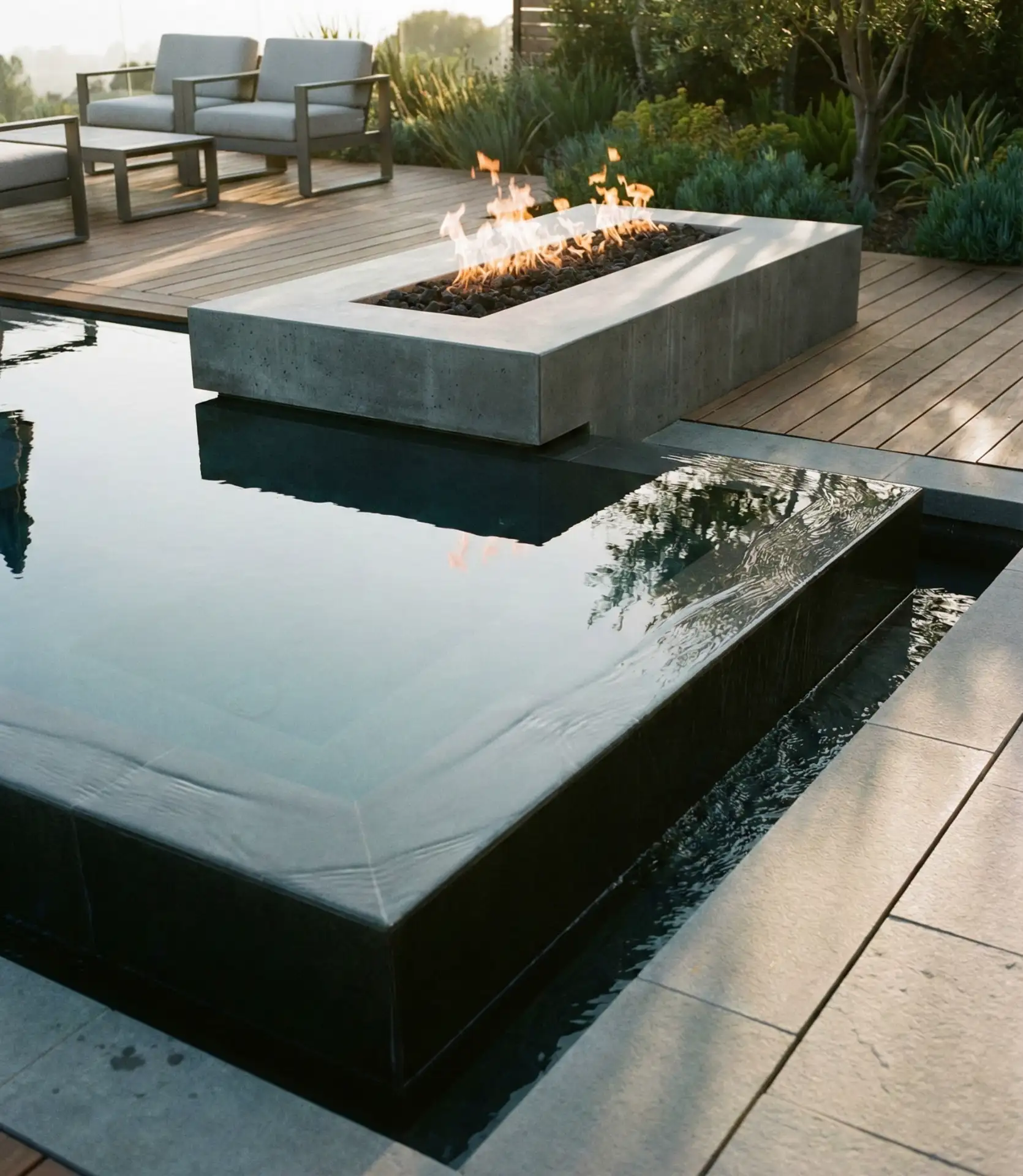
Combining fire and water elements creates a stunning sensory experience where flames reflect in still pools or contrast against flowing fountains. The square or rectangular reflecting pool positioned adjacent to your fire pit brings movement and sound that enhances the meditative quality of fire watching, and the water feature provides visual interest during daytime hours when fires aren’t lit. This sophisticated approach appeals to homeowners seeking resort-quality outdoor environments. 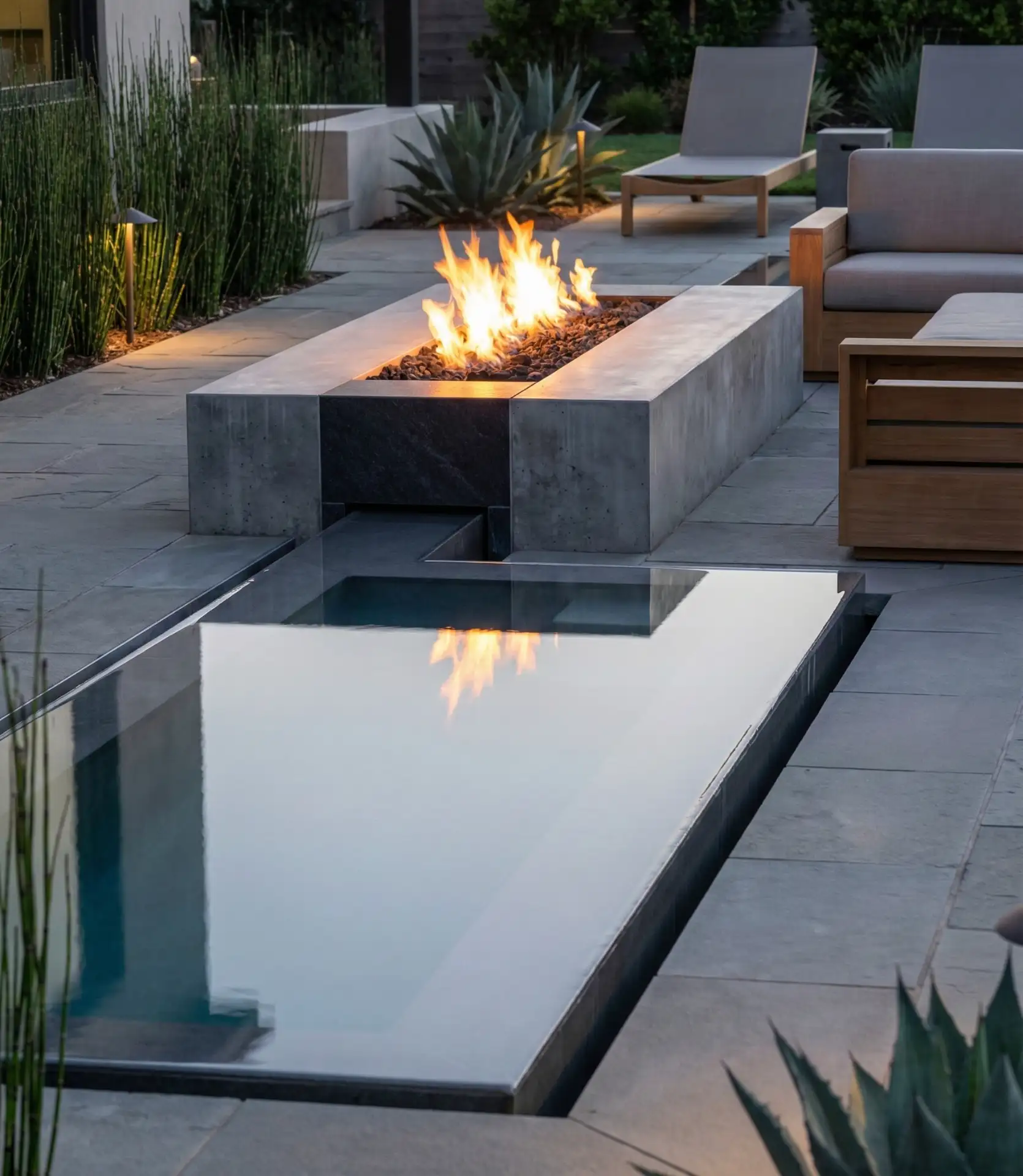
Where it works best: Properties with adequate space and budget for complex installations, particularly in warm climates where water features operate year-round. The combination requires careful planning for utilities—both gas lines for fire and electrical for pumps—plus consideration of safety codes requiring specific separations between elements. Professional installation costs $8,000-$20,000 depending on scale and materials, but the result delivers resort-caliber ambiance that significantly enhances property value and provides endless entertainment during gatherings where the interplay of fire and water becomes the conversation centerpiece.
27. Fire Pit with Gravel Pathways and Landscape Lighting
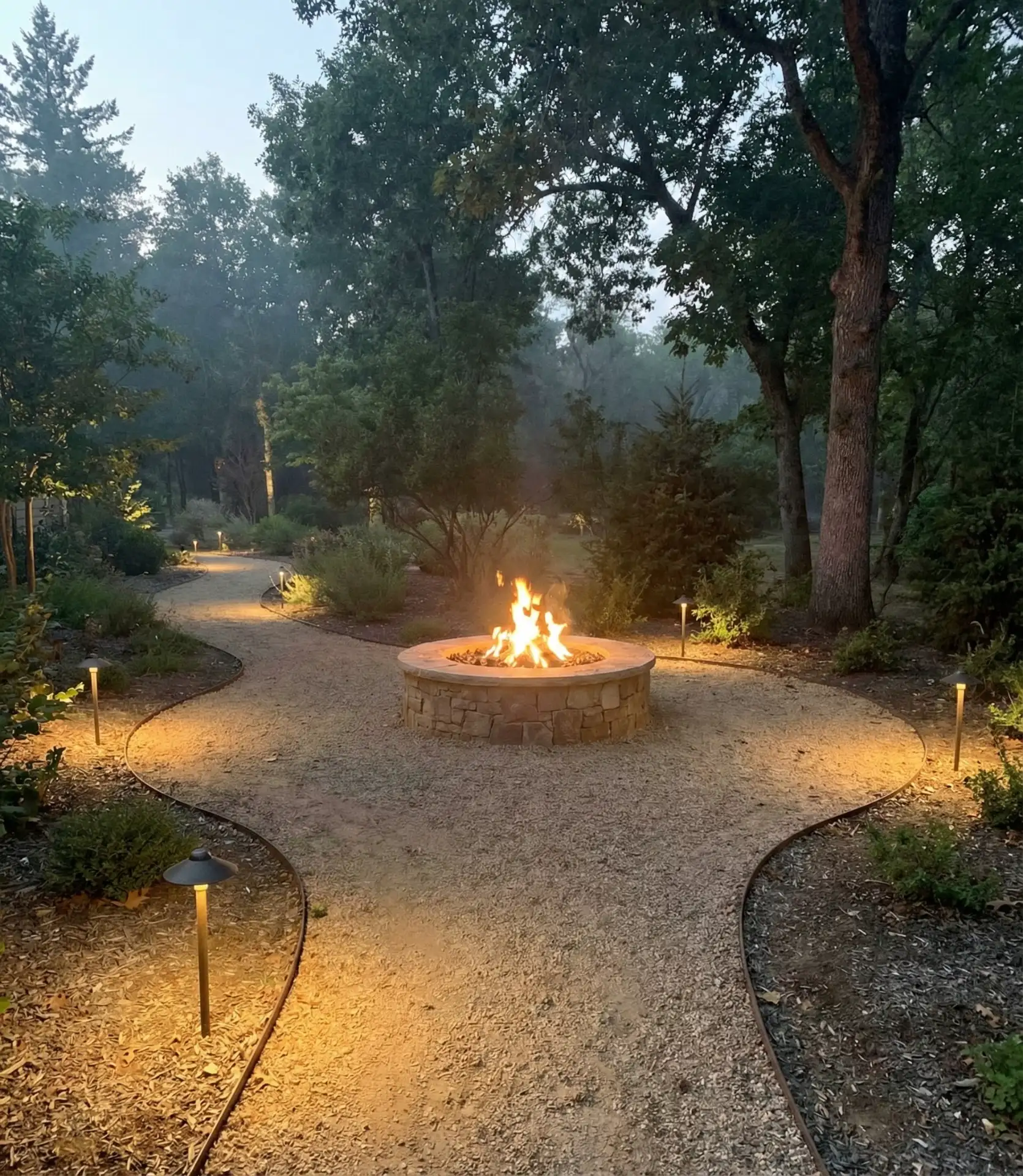
Creating defined gravel pathways that lead to your fire pit area establishes clear circulation patterns, while with lights positioned along the routes, guests navigate safely after dark. The crushed stone paths provide all-weather access that prevents muddy tracks during wet seasons, and low-voltage LED fixtures tucked into plantings cast gentle illumination without overwhelming the fire’s natural glow. This easy DIY approach transforms disconnected yard zones into cohesive outdoor rooms that function beautifully day and night. 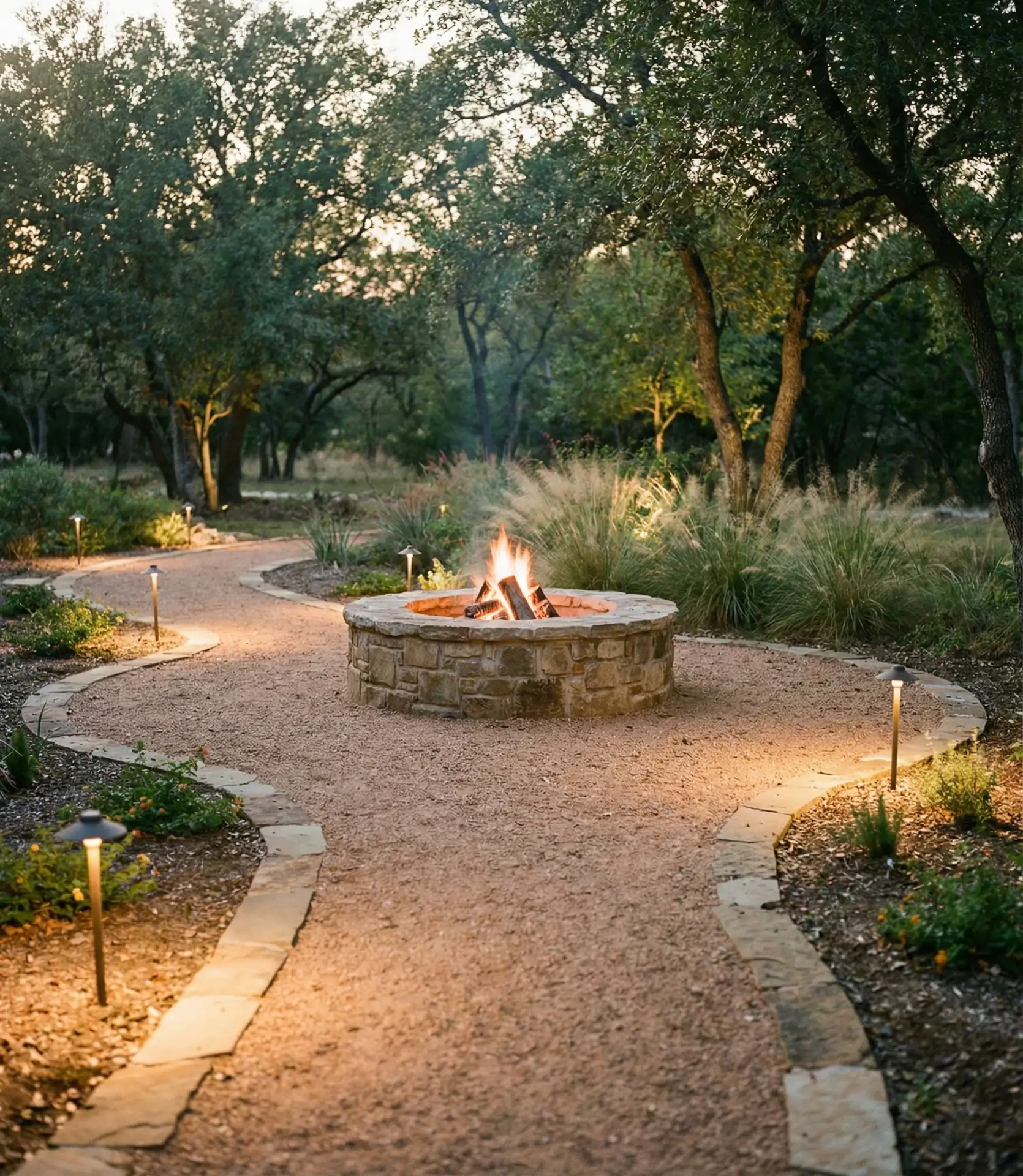
Real homeowner behavior demonstrates that well-lit pathways extend outdoor entertaining later into evenings and later into seasons—when guests feel safe navigating your yard in darkness, they stay longer and enjoy spaces more fully. Gravel paths cost $3-$6 per linear foot for 3-foot-wide routes, and basic low-voltage lighting kits start around $150 for 6-8 fixtures. Install lights on timers or photocells to automate operation, and choose warm white LEDs (2700-3000K) that complement firelight rather than competing with cooler temperatures that feel institutional.
Your outdoor fire pit area represents more than just a place to burn wood—it’s an investment in gathering, conversation, and creating memories that outlast any single season. Whether you’re drawn to rustic charm, modern minimalism, or somewhere beautifully in between, these ideas offer starting points that you can adapt to your space, budget, and personal style. Share your favorite concept in the comments below, or tell us about the fire pit design you’re planning for your own backyard this year.