52 Rock Garden Landscaping Ideas for 2026: Transform Your Yard with Stunning Stone Designs

Rock gardens are having a major moment in 2026, especially among homeowners looking for low-maintenance, drought-tolerant landscaping that doesn’t sacrifice visual appeal. Whether you’re scrolling through Pinterest for front yard inspiration or planning a complete backyard makeover, rock gardens offer endless possibilities—from modern minimalist designs to lush naturalistic arrangements. Americans across different climates are embracing these versatile landscapes because they work beautifully in everything from desert regions to suburban neighborhoods. In this guide, you’ll discover stunning rock garden ideas that blend practicality with serious curb appeal, helping you transform any outdoor space into something truly special.
1. Succulent Rock Garden Oasis
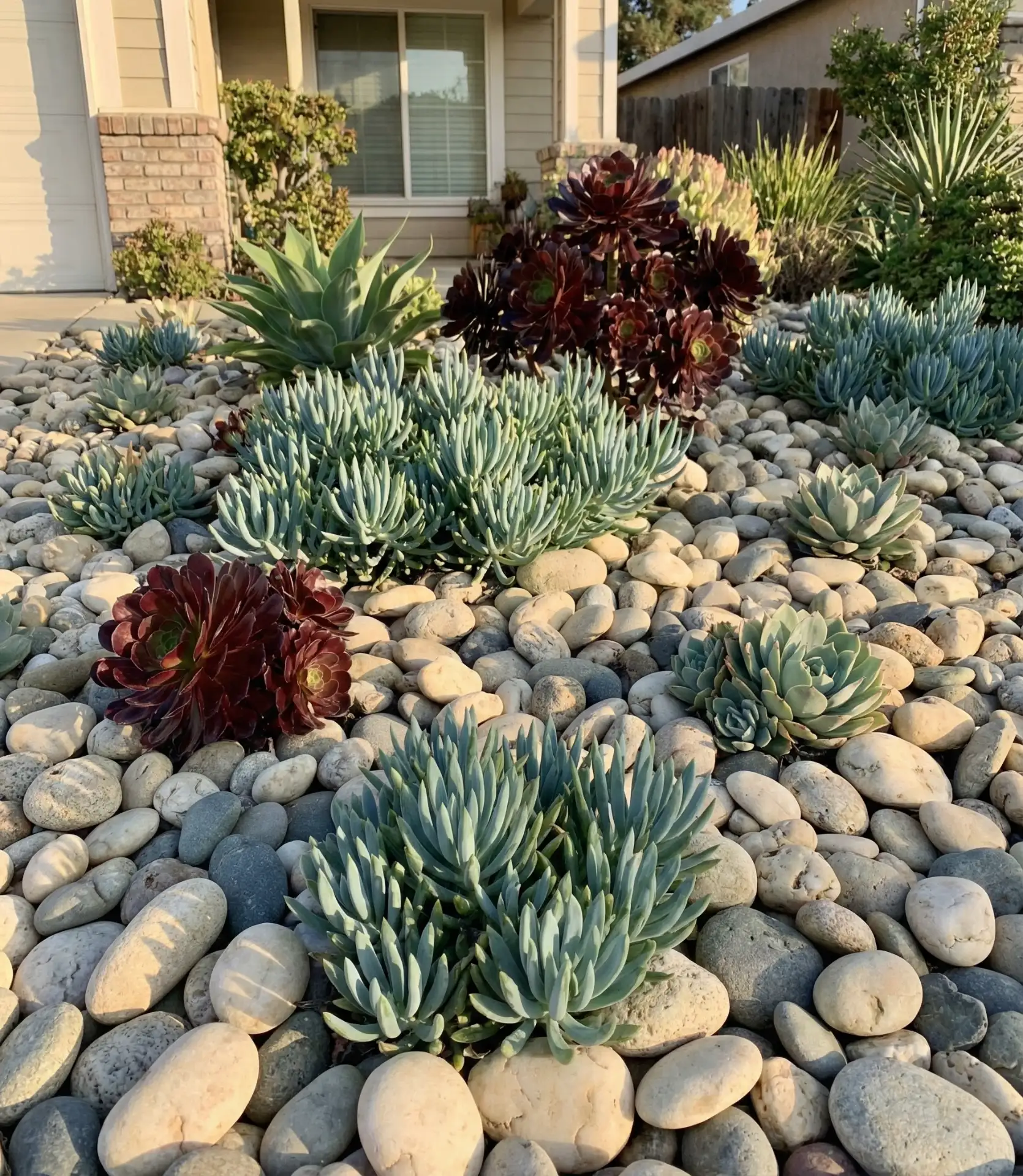
A succulent rock garden brings together two naturally complementary elements—hardy desert plants and textured stone—to create a landscape that thrives on neglect. This approach works particularly well in front yard settings where you want maximum impact with minimal watering, and the variety of succulent shapes, sizes, and colors means you can design something that feels both curated and wild. Pair chunky river rocks with echeveria, jade plants, and trailing sedums for a layered look that gets better with age. The beauty here is that succulents actually prefer the heat retention and drainage that rocks naturally provide. 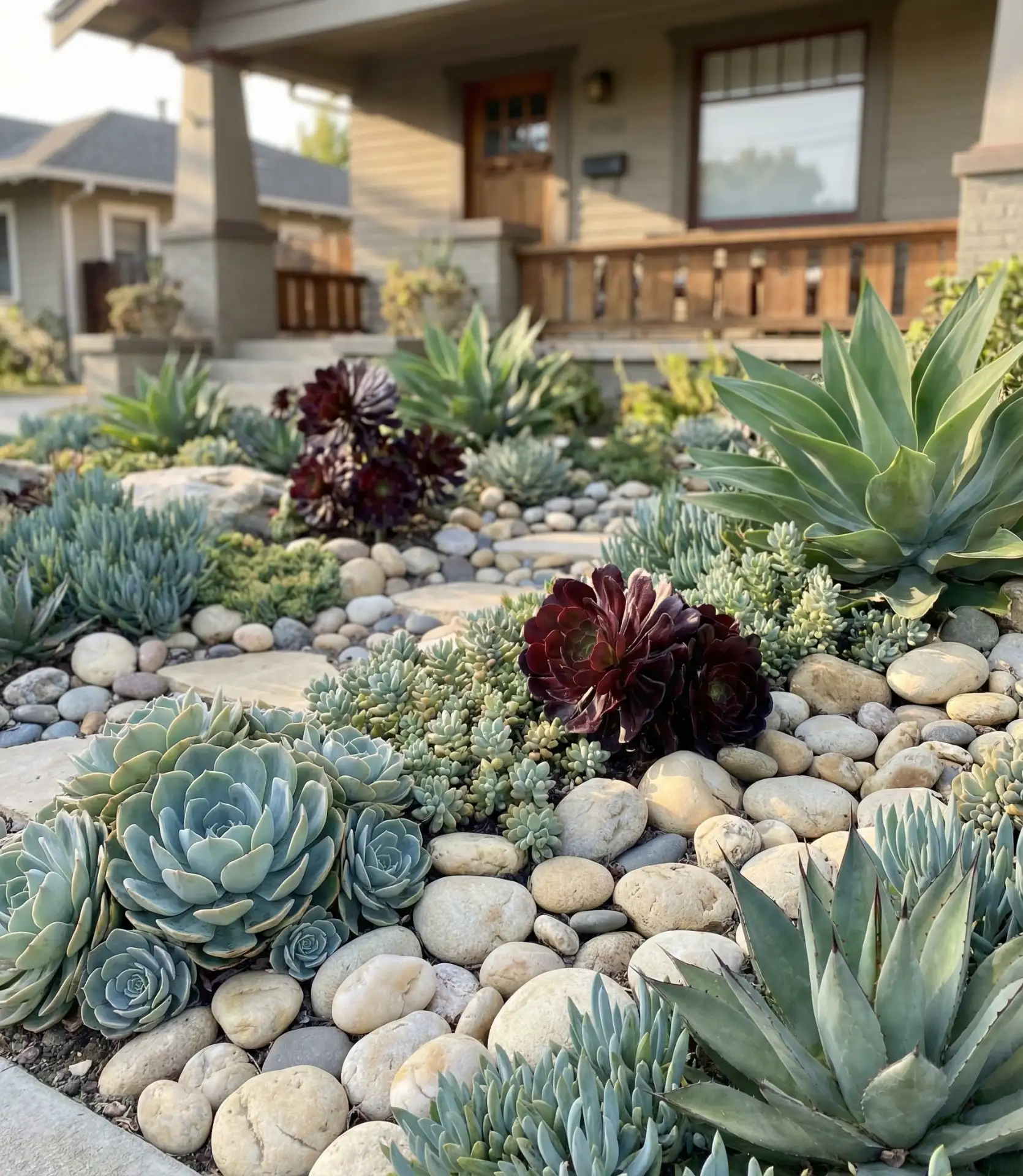
This style is ideal in California, Arizona, and Texas, where water conservation is not just trendy but a necessity. One of the most common mistakes is overwatering these gardens, thinking the succulents need water in the summer heat. Once established, these gardens actually do best when left alone, with potentially one deep watering in the peak summer about every two weeks. The rocks mitigate soil moisture loss and reduce the heat of the soil; succulents appreciate the microclimate created.
2. Japanese-Inspired Zen Garden with River Rocks
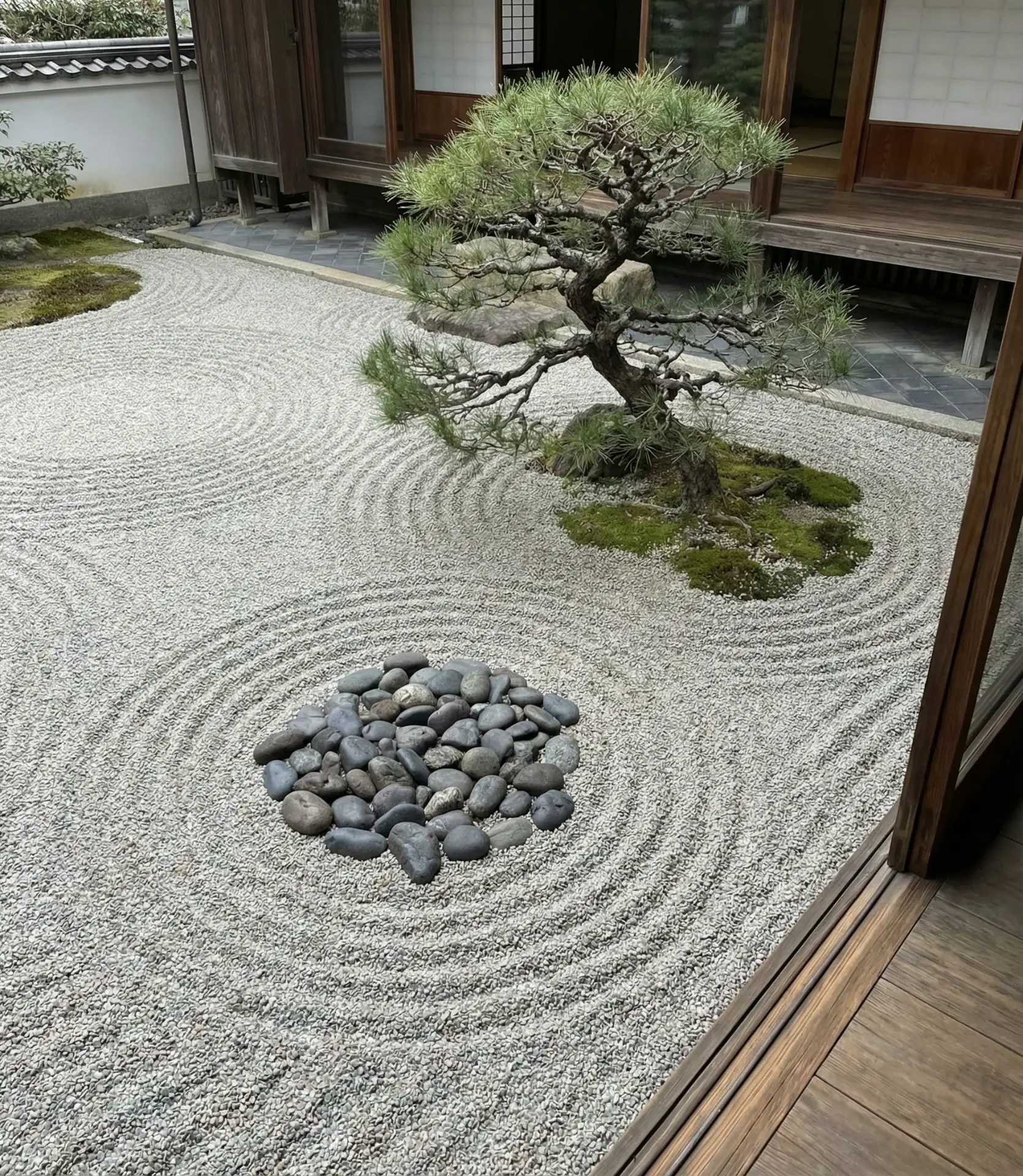
A Japanese rock garden is a meditative outdoor space that celebrates simplicity, balance, and the beauty of nature. Unlike the common American landscaping style that aims for lush fullness, this approach is about the intentional spacing and placement of stones, minimalistic but purposeful greenery, and raked gravel. This design uses river rocks of different sizes, creating focal points and pathways. The open spaces between these features are just as important as the rocks. Due to the increasing number of people looking for outdoor spaces that promote mindfulness, this design has gained a lot of popularity lately. 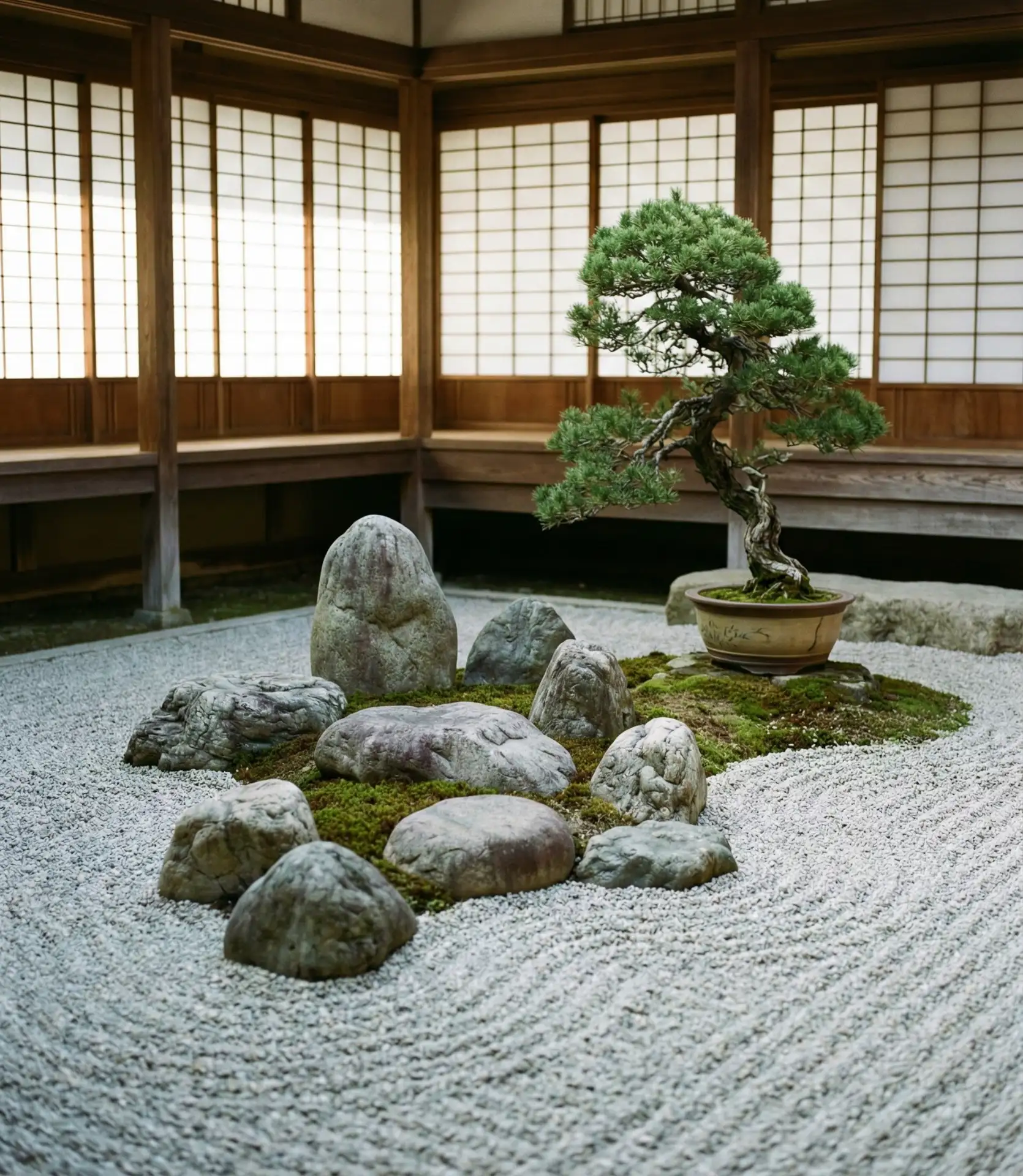
The Japanese rock garden in Portland belongs to a neighbor of mine. She spent three weekends arranging and rearranging stones until she felt that they were “right.” The garden, in the end, is an effortless space but is actually a garden that involves careful considerations of proportions, texture, and sight lines. This style works best in side gardens and small households that want a complete atmosphere. As a result, one gets a space designed for a zoned atmosphere for reflection and visual rest.
3. Modern Black Rock Garden Drama
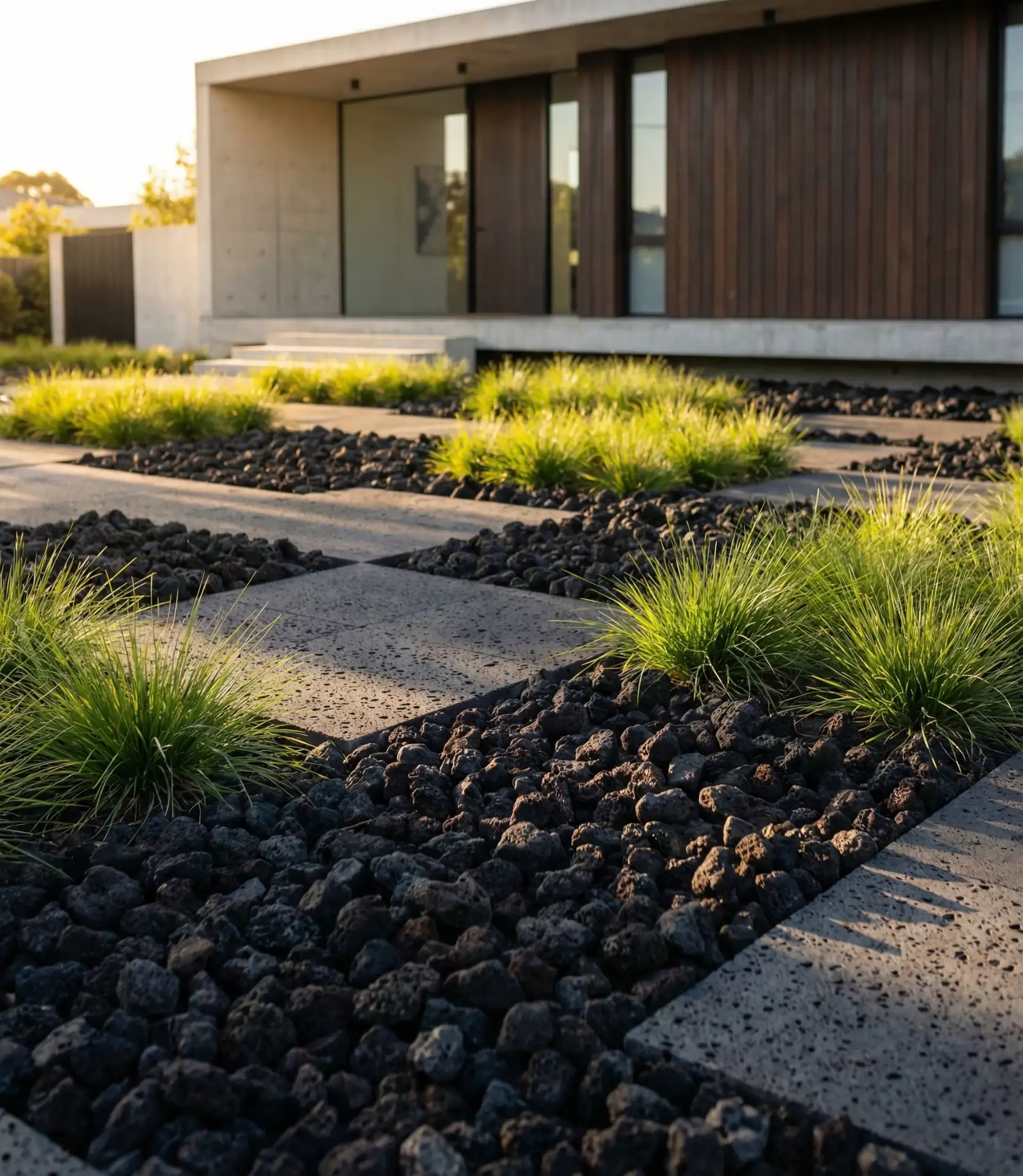
The charred lava rock creates a bold and contemporary appearance that contrasts dramatically with the greenery. This modern technique is also suitable for minimalist gardens since it offers a significant effect without a lot of complexity. The black lava rock contributes to the quartzite and creates a bold contrast that works beautifully in contemporary gardens. The rock absorbs daytime heat and radiates it during the night. The effect is a good way to extend the growing season for adjacent plants. You’ll also spot weeds quickly in the rock, as the color makes them highly visible. This means that removal is simple if a problem ever arises. 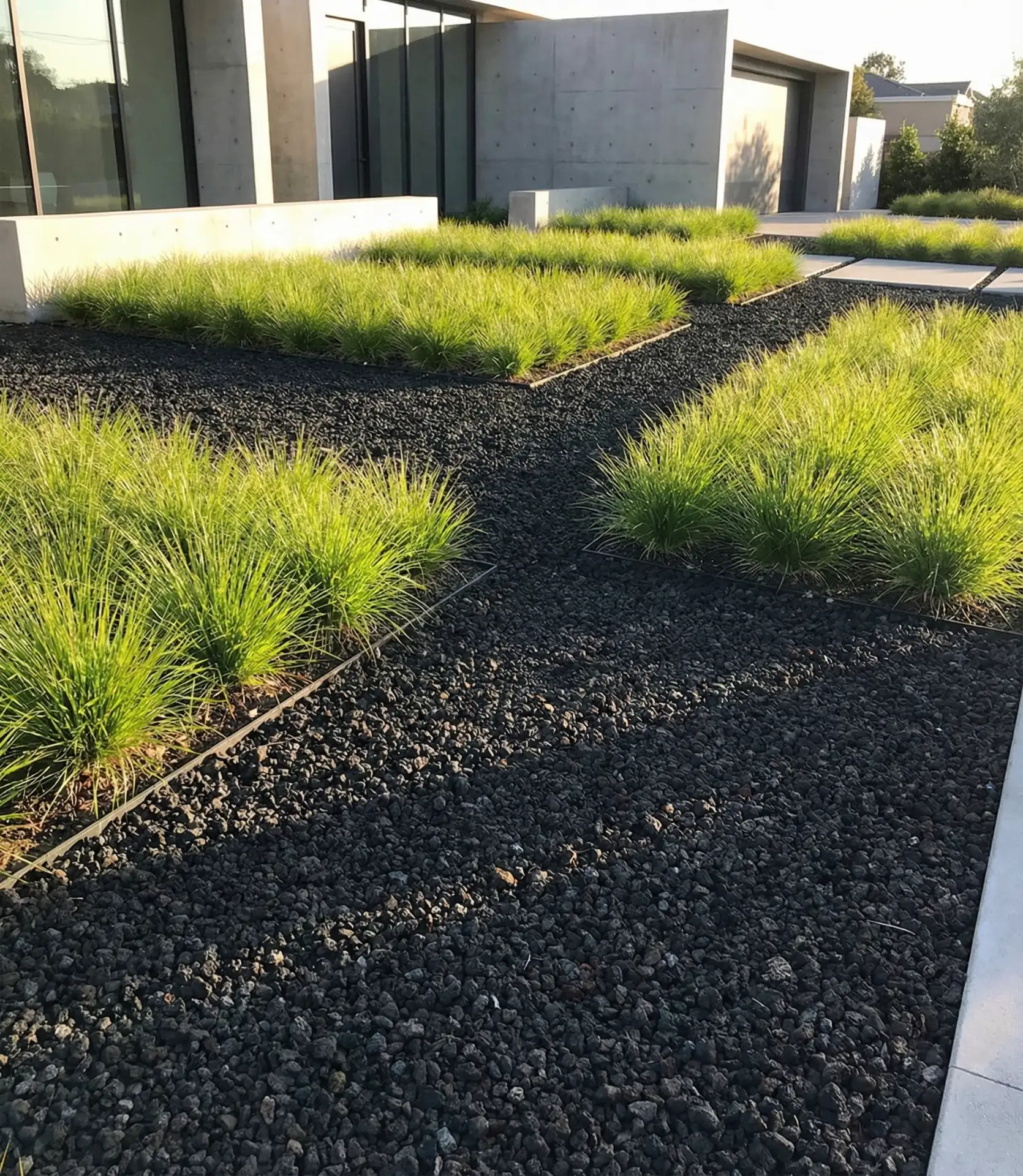
When it comes to budget, lava stone is typically $40-$80 per cubic yard, so in comparison to other decorative stone, it is at a mid-range price, but the visual reward is well worth it. To cover approximately 100 square feet at a three-inch depth, you will need one cubic yard. This dark stone gets hot in the sun, so don’t use it where you’ll be barefoot. Many homeowners use black stone as a dramatic border or accent so the entire yard is not overwhelmed with dark stone. This rock pairs well with heat-loving plants.
4. Hillside Terraced Rock Garden
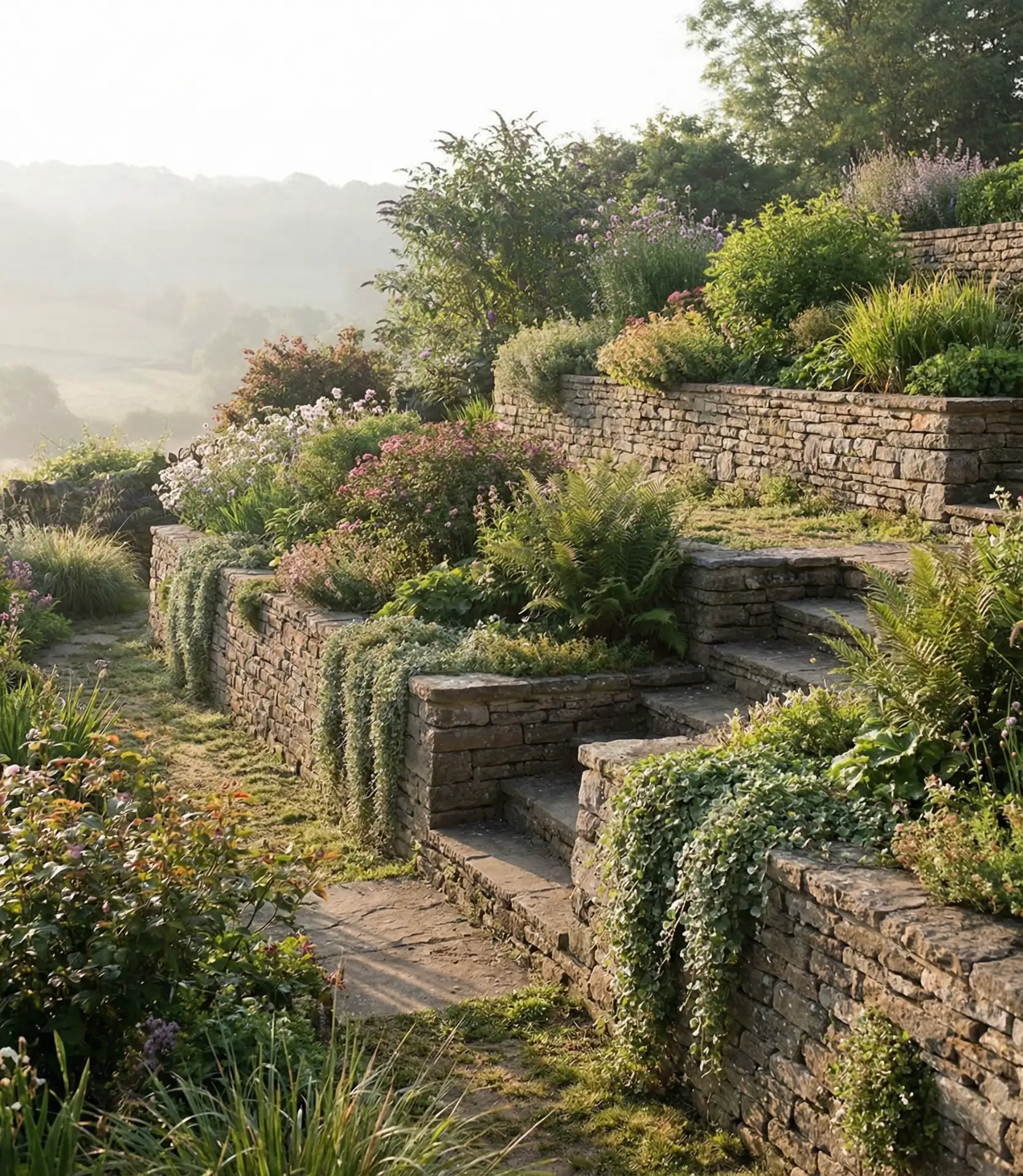
If you are working with a slope or hillside that is difficult to maintain, a terraced rock garden solves both practical and visual problems. Building stacked stone retaining walls, you create level planting spaces that control erosion and provide manageable zones for plants in rock gardens like creeping thyme, rock cress, and other alpine plants. Each level becomes a distinct garden room with various heights and viewing angles that provide visual appeal to otherwise wasted space. The stones also provide drainage by directing water away from your foundation. 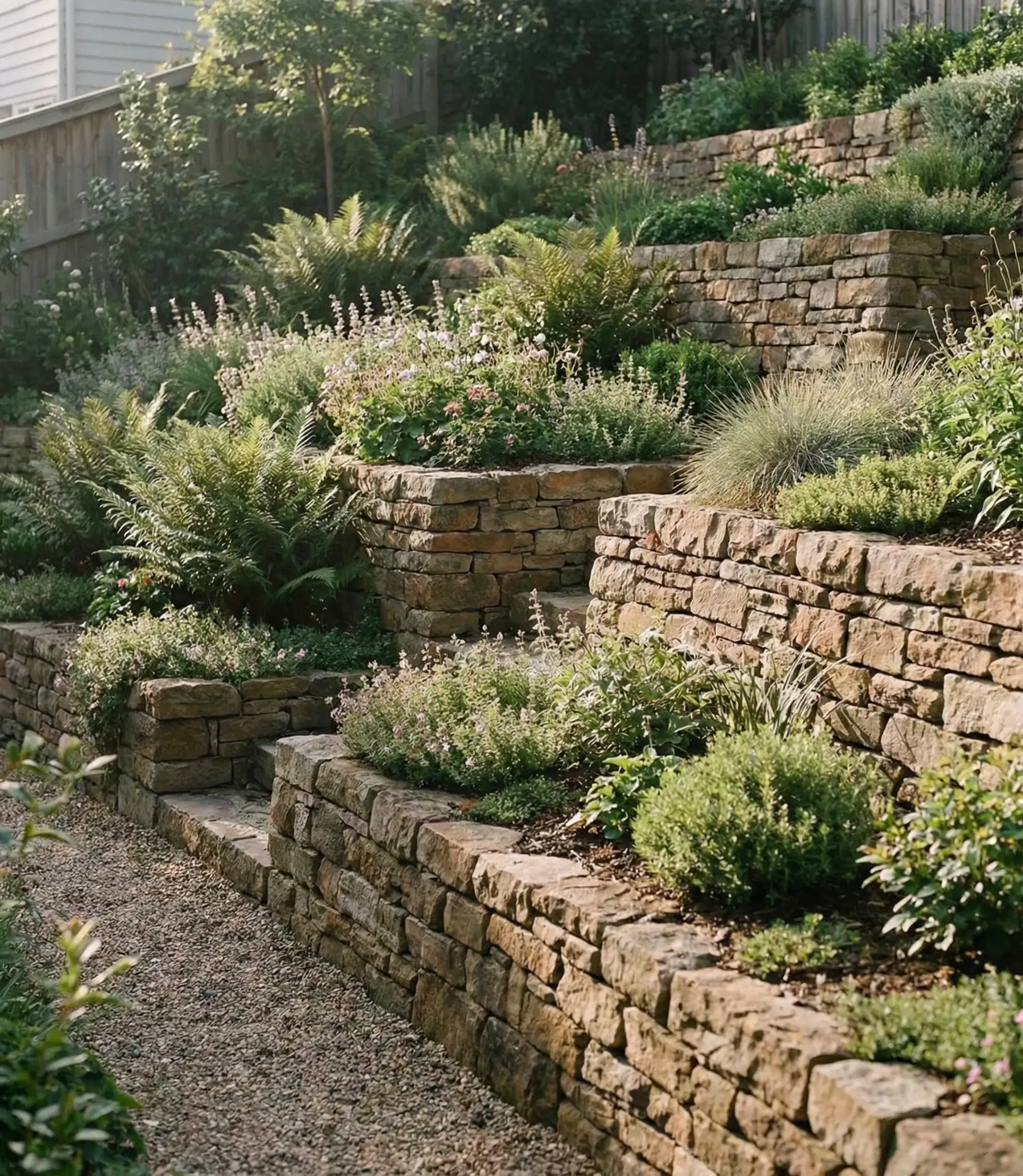
The Pacific Northwest, the Appalachia region, and the hilly Midwest regions contain the most terrains to work with in the United States, which makes these areas the most ideal to work in. The ideal technique is to use the natural terraces that the land forms to work with. Instead of using straight, boring geometric patterns that take more work, go for a natural look. For smaller terraces, use landscape blocks. For terraces, hire a contractor to assist with construction and drainage solutions that ensure durability and effective management of steep slopes over the decades.
5. White Rock Garden Brightness
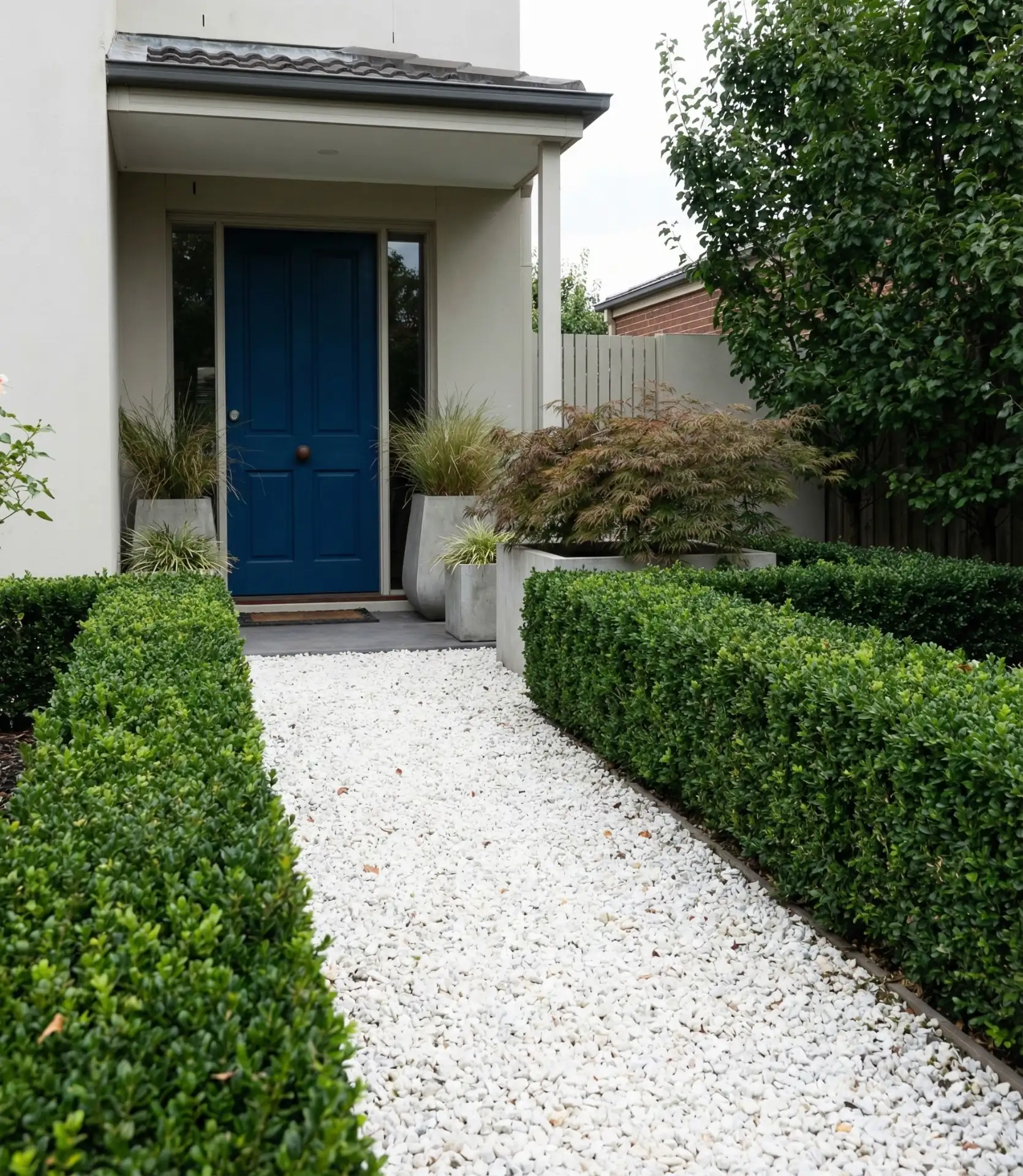
Crisp white stone brings a fresh, clean aesthetic to rock gardens while also reflecting sunlight to illuminate shaded areas and keep nearby plants cooler. This works exceptionally well in front yard ideas where you want to enhance curb appeal and create a welcoming, maintained appearance. White marble chips, limestone, or quartz gravel all deliver this bright look, though each has slightly different textures and maintenance requirements. The light color also makes your garden feel more spacious and provides beautiful contrast against darker foliage, architectural elements, or your home’s exterior. 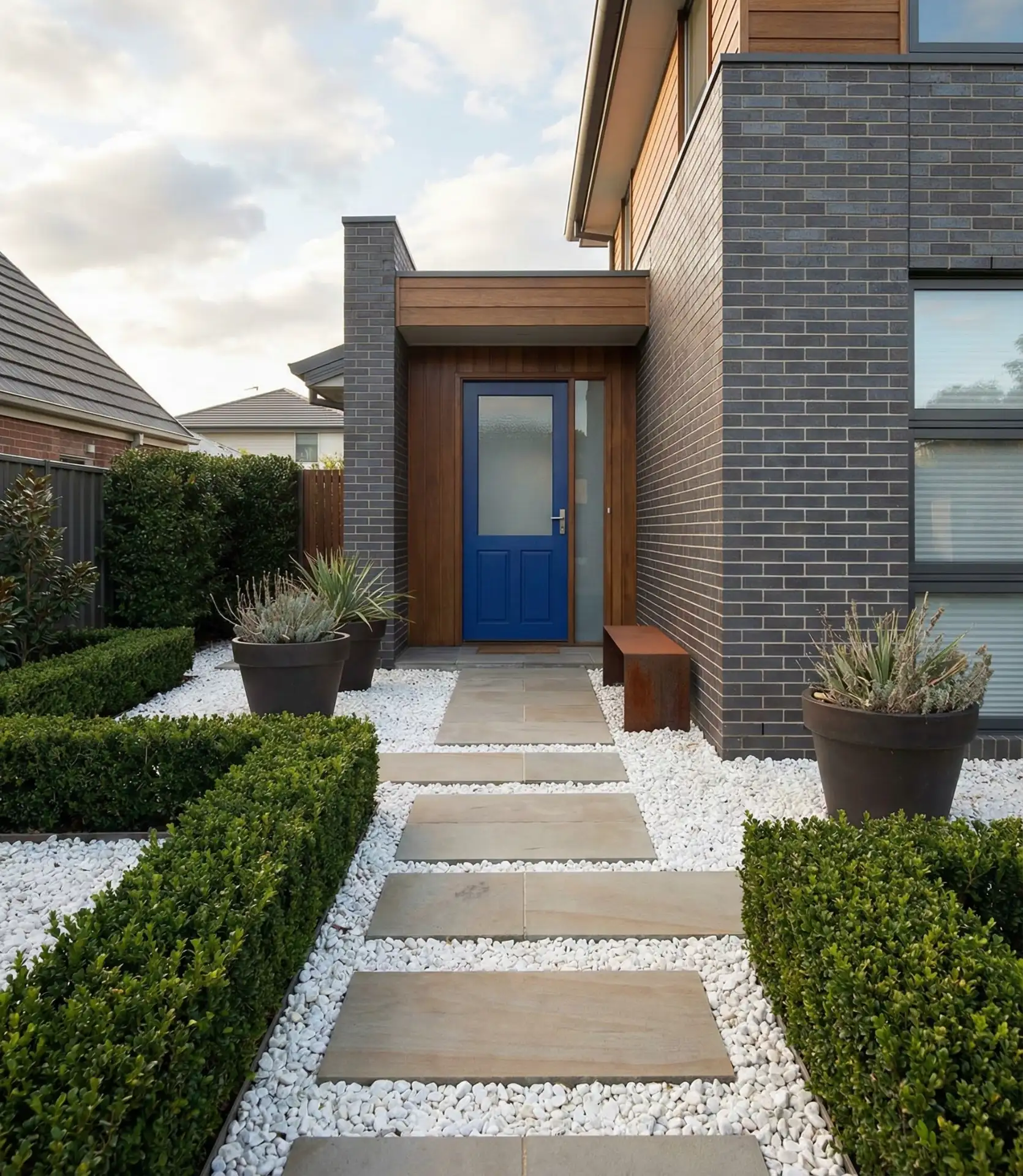
Real homeowner behavior reveals that white rock requires more maintenance than darker stones because it shows dirt, leaves, and debris more readily. Plan on periodic rinsing with a garden hose or leaf-blowing to keep things looking fresh—maybe monthly during the growing season. That said, many people specifically choose white rock for this visibility because it motivates them to keep gardens tidy. The color also stays cooler underfoot than dark stone, making it a practical choice for pathways, pool surrounds, or areas where kids and pets spend time.
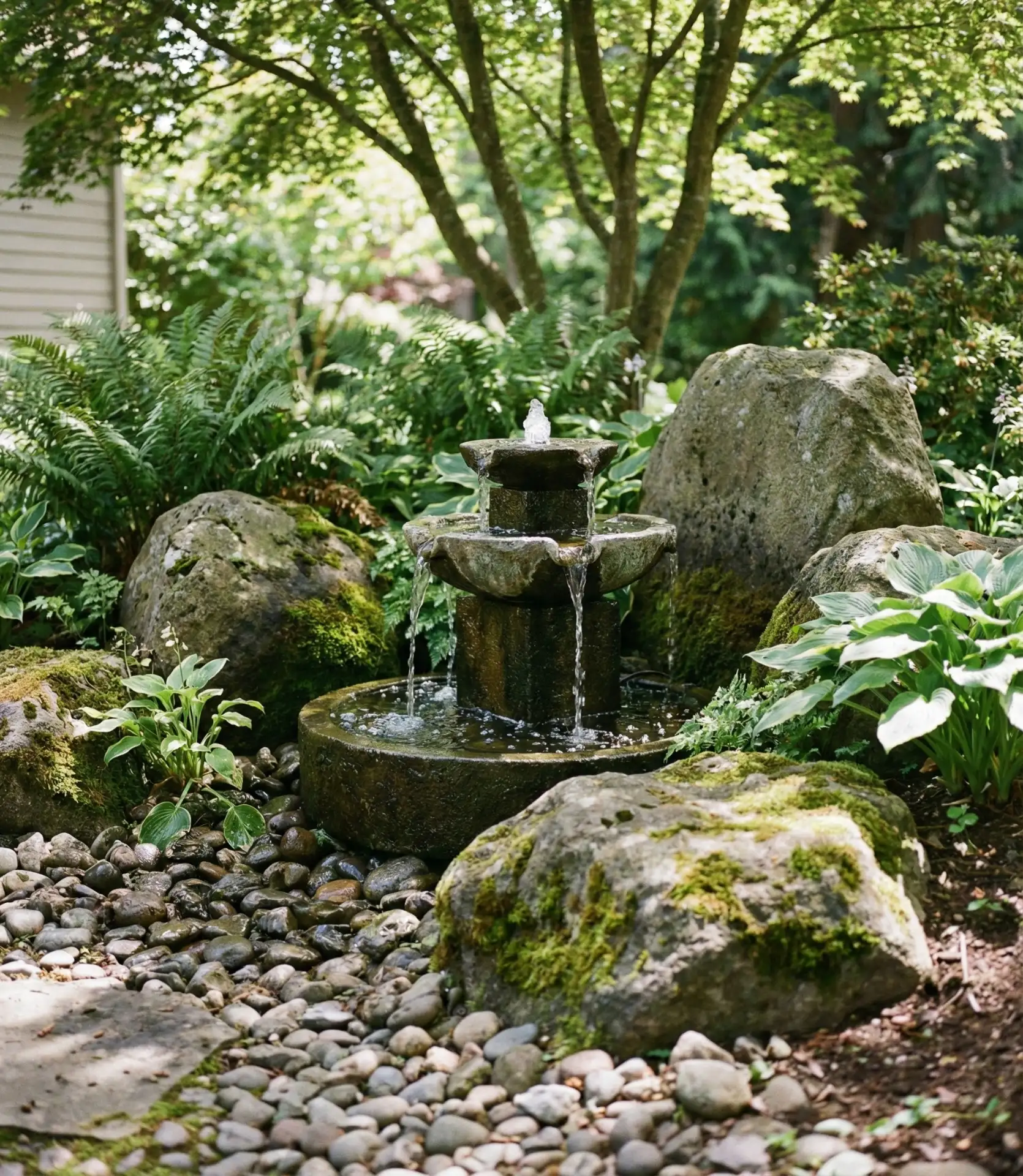
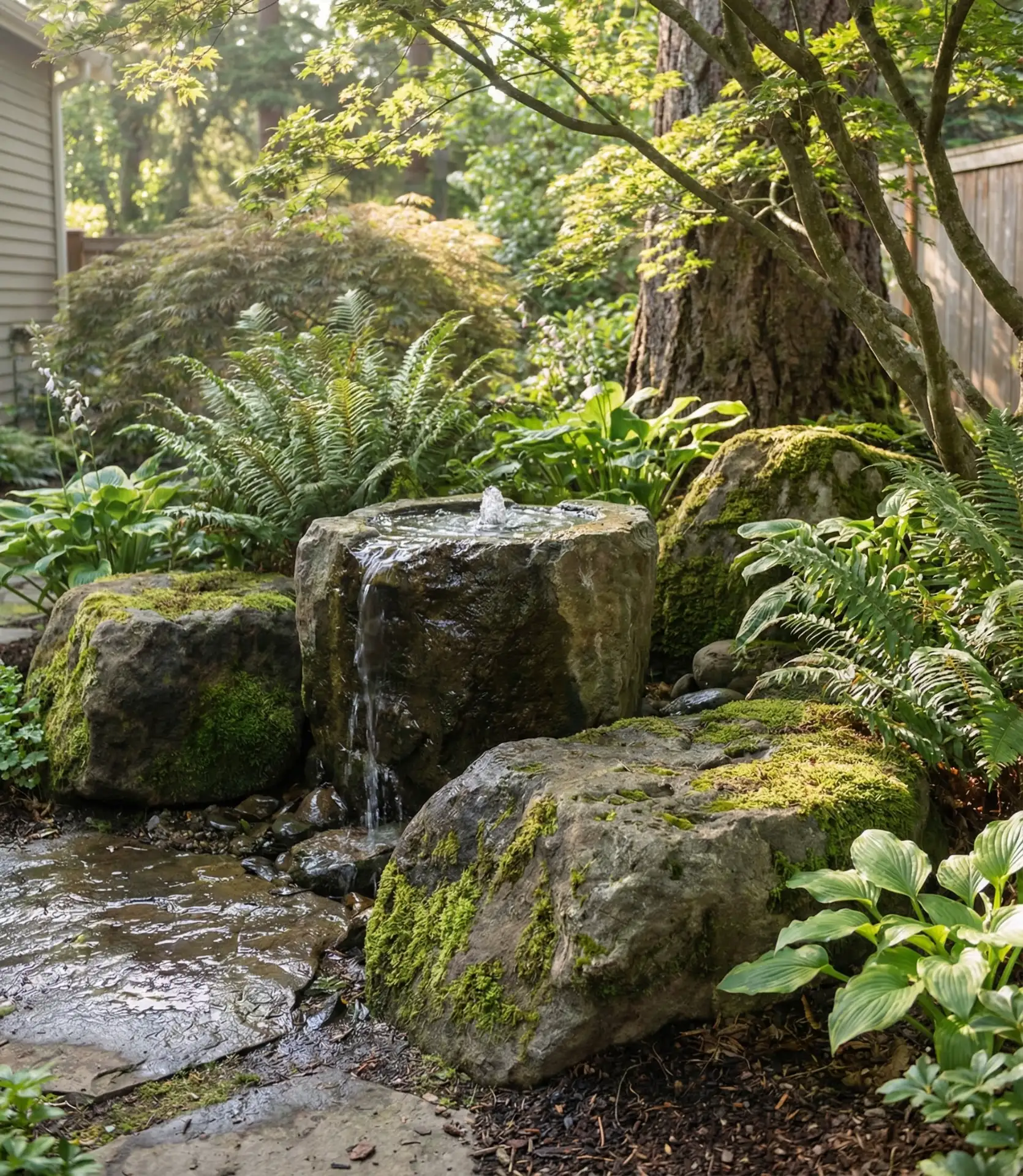
6. Rock Garden with Water Feature Integration
7. Painted Rock Garden Personality
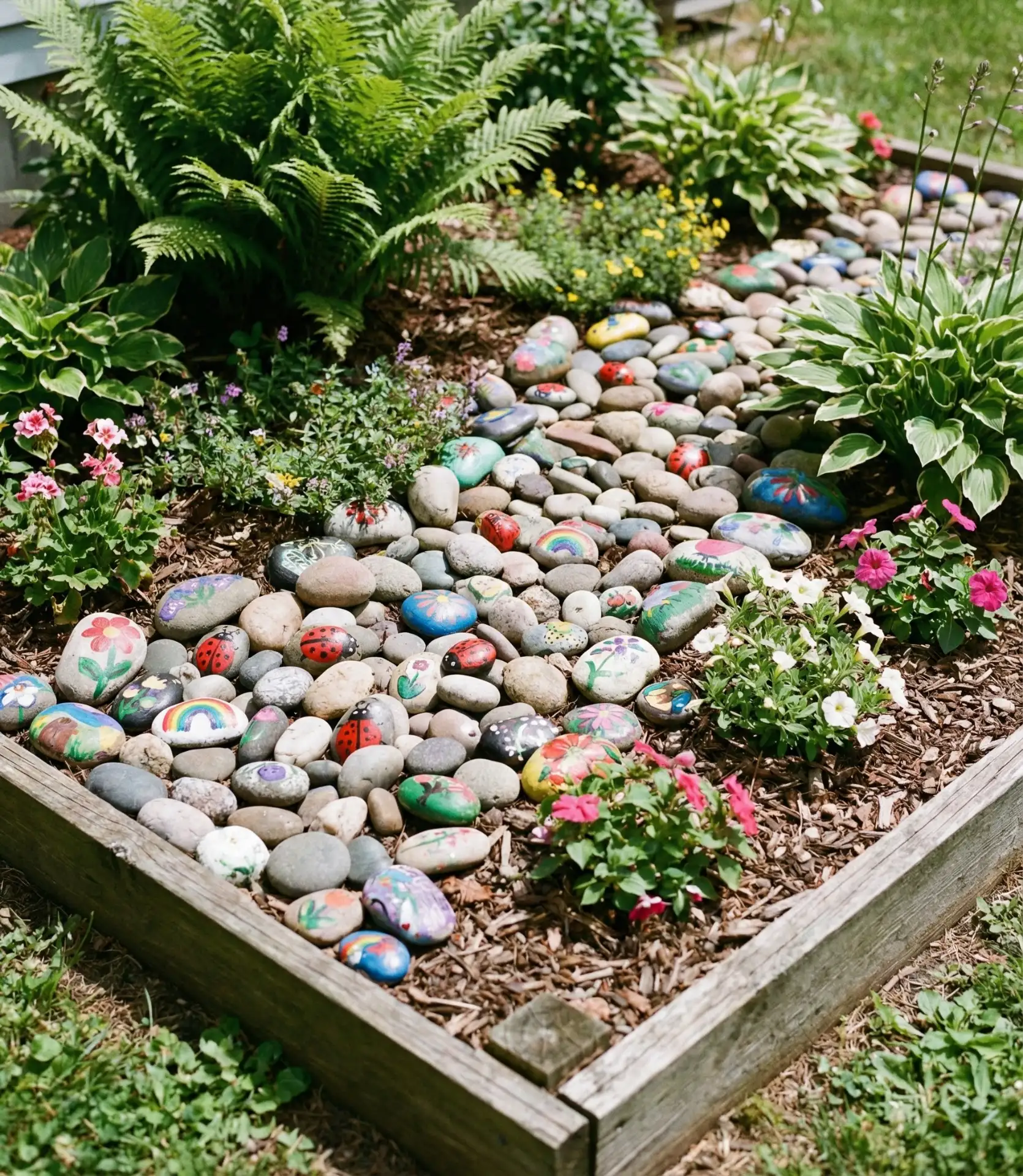
Painted rocks add whimsy and personal expression to traditional rock gardens, and this trend has exploded on Pinterest as people look for DIY projects that reflect their creativity. You might paint rocks to look like ladybugs, create inspirational word stones, or simply add pops of color throughout your backyard landscape. This approach works especially well in family gardens where kids can participate in the decorating process, creating memories while making the space uniquely yours. Smooth river rocks provide the best canvas for painting, and outdoor acrylic paint sealed with marine varnish ensures your artwork withstands weather. 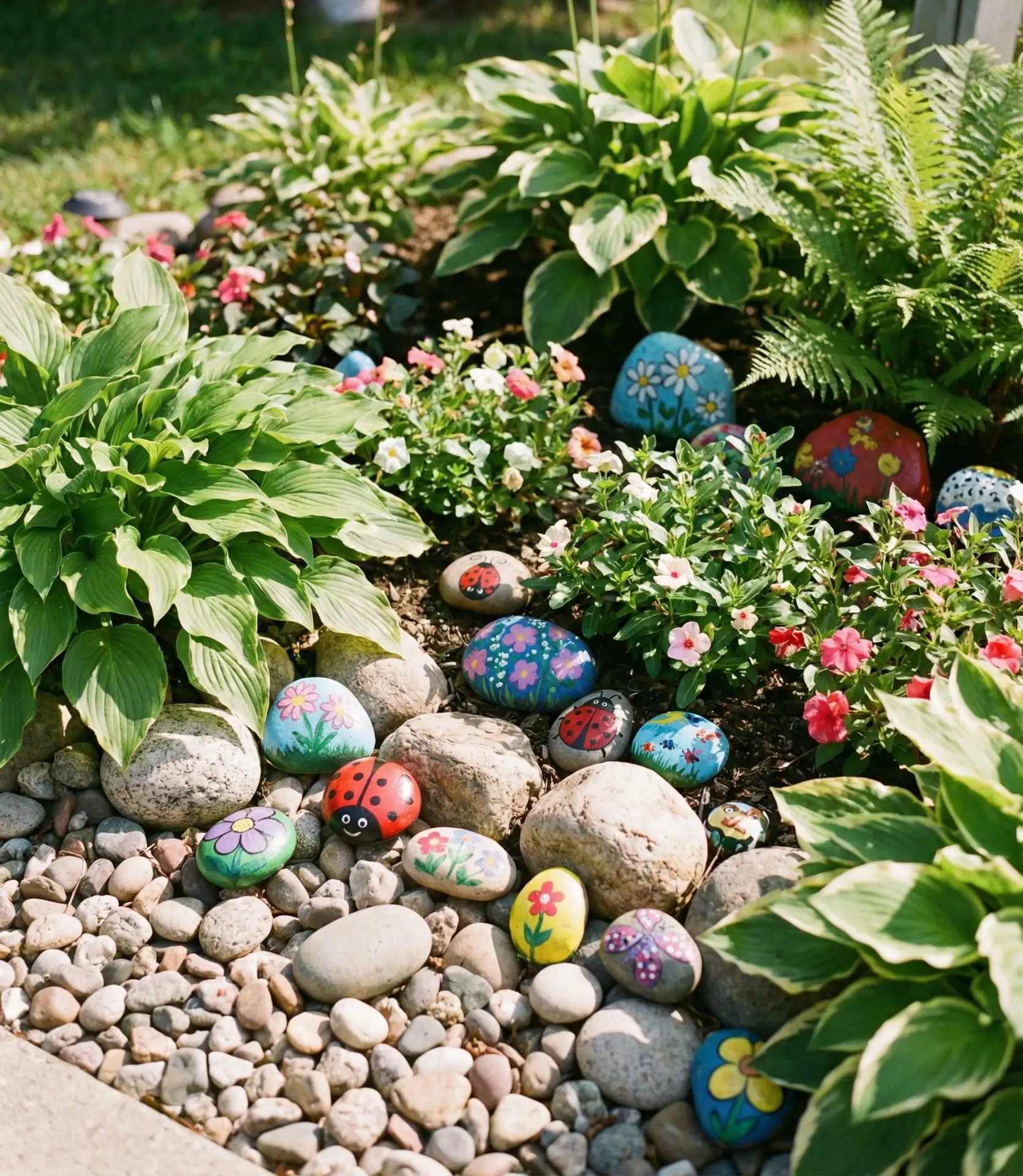
Expert tip: Less is often more with painted rocks—scattering three to five painted stones throughout a larger rock garden creates delightful surprise moments without looking craft-store chaotic. The American lifestyle angle here is that painted rock gardens reflect our growing desire to personalize outdoor spaces rather than following cookie-cutter landscaping trends. They’re conversation starters that invite guests to look more closely at your garden, and they’re easily updated when you want a refresh without major landscaping investment.
8. Concrete Paver and Rock Combination
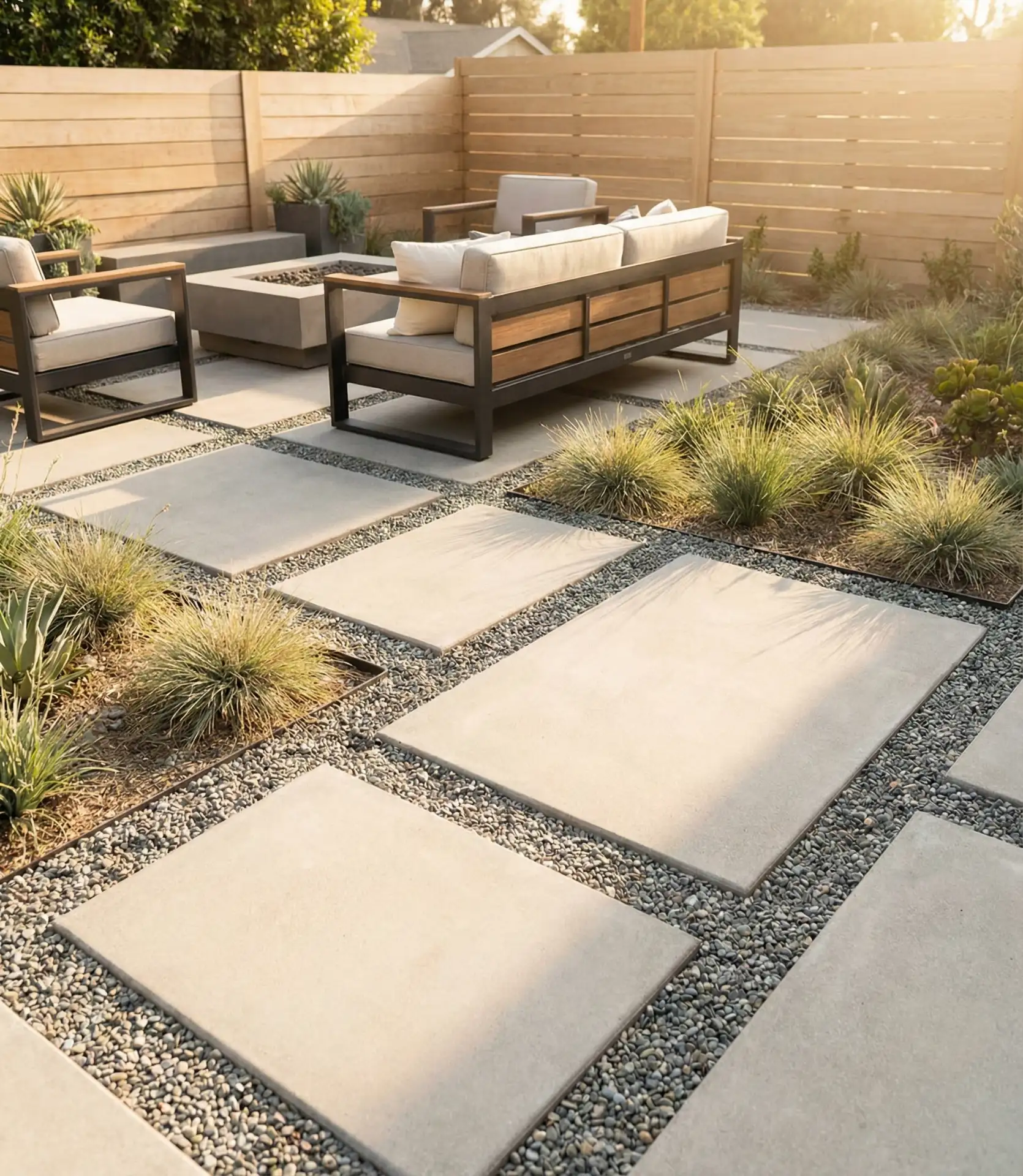
Mixing backyard ideas Concrete pavers with decorative rock create functional pathways and patios while maintaining the naturalistic feel of a rock garden. Large-format pavers provide stable walking and seating surfaces surrounded by gravel or river rock that handles drainage beautifully and reduces the amount of hardscape needed. This hybrid approach costs less than all-paver installations while actually looking more intentional and designed. The combination also gives you flexibility—pavers where you need firm footing and rock where you want texture and permeability. 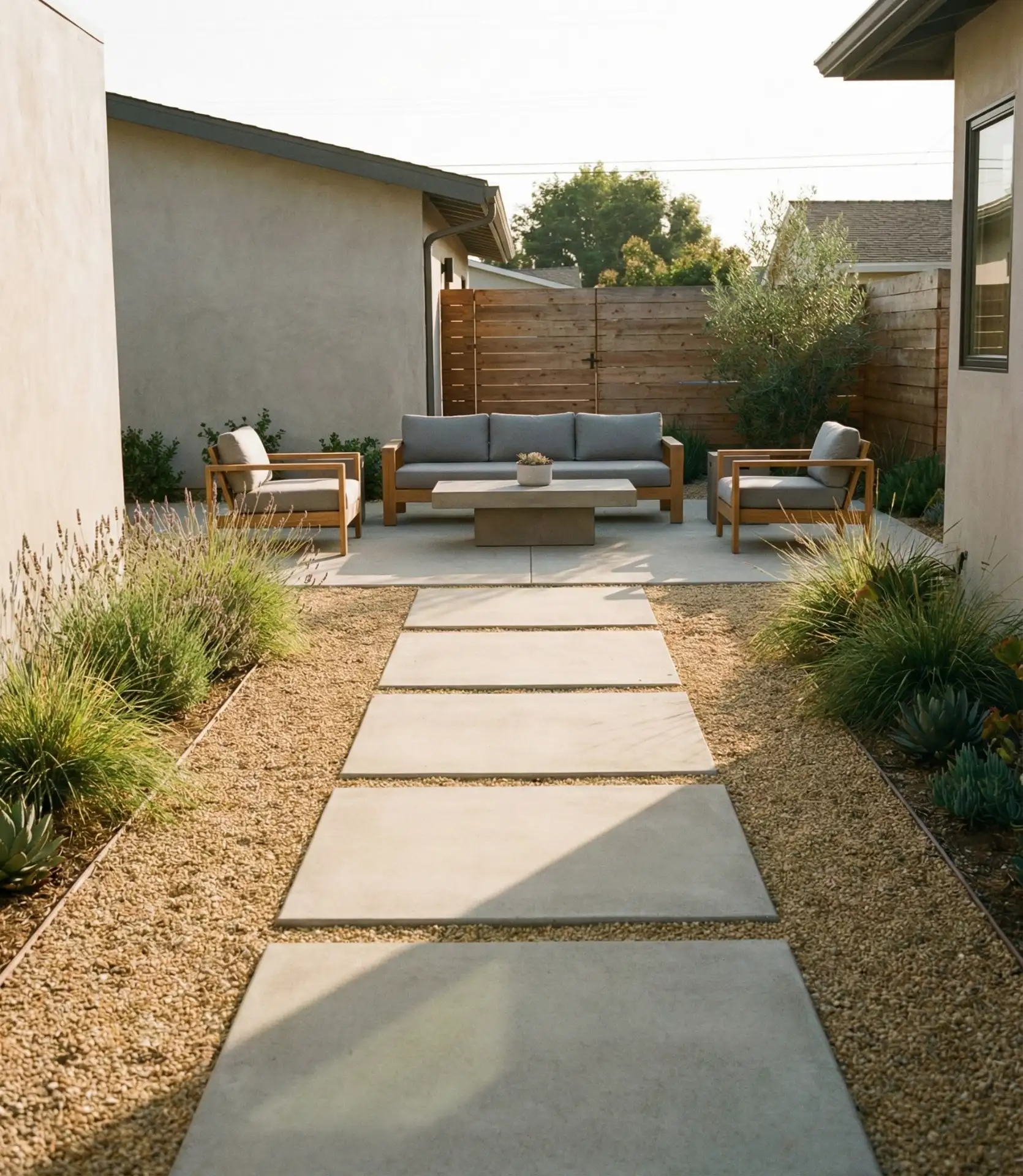
A friend who lives in Denver installed the same features last spring, and instead of paving the whole area, she saved over half the cost of paving because she had quite a few 24-inch by 24-inch (2 ft by 2 ft) paving stones and used them as stepping stones over a decomposed granite path to cover the 200 sq ft area; she cut the concrete covering as high-end and intentionally budgeted. This combination works great for the DIY install, as it is rather forgiving; if a paver is not as level as it should be, then the granite surrounding it will hide the errant paver, which for sure will not be set well in a design for a whole paved area.
9. Container Rock Garden for Small Spaces
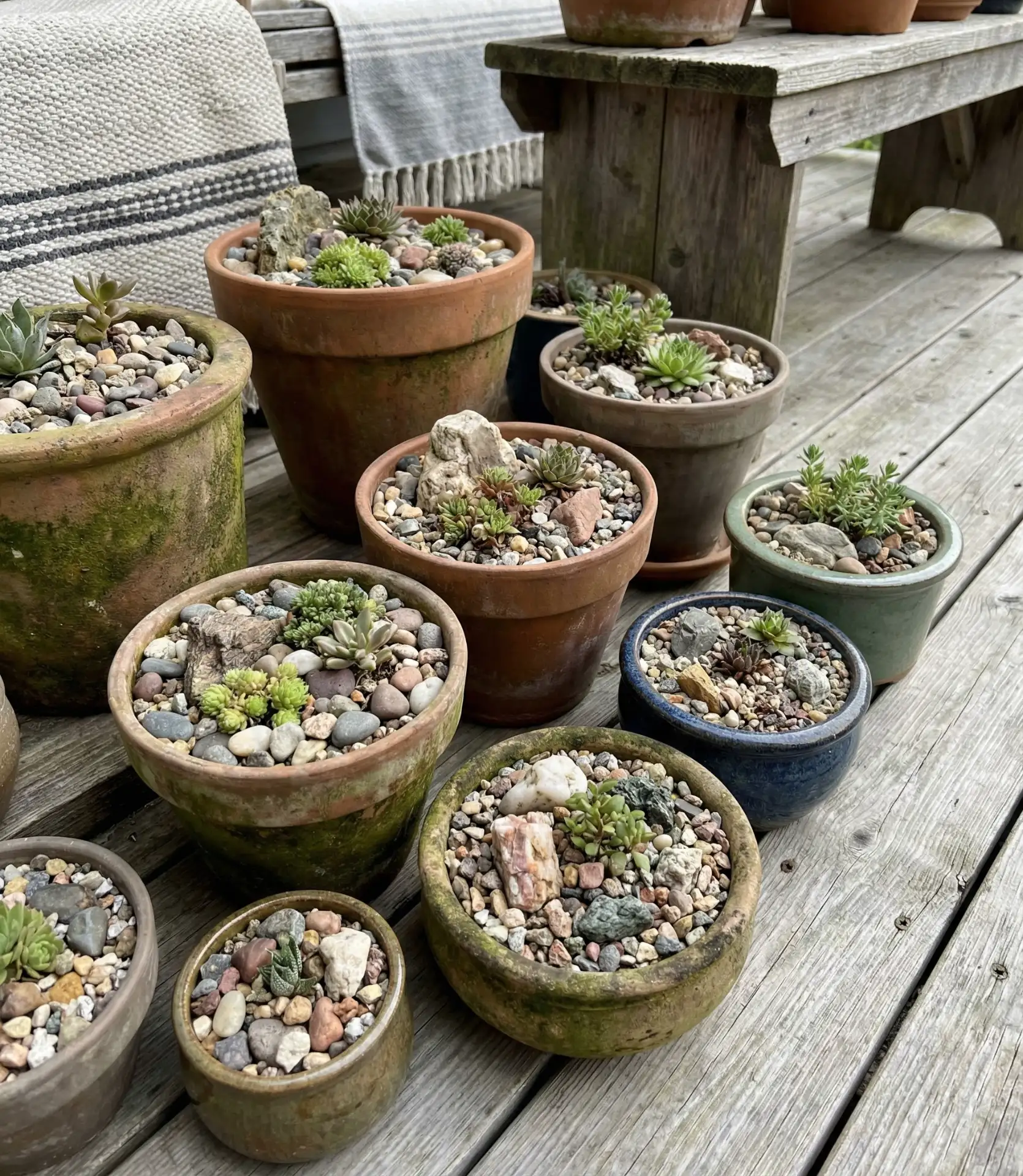
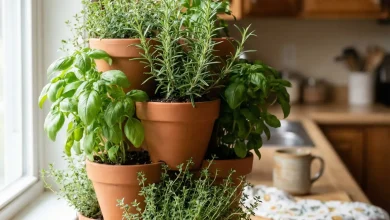
When you’re working with backyard ideas for small spaces or want portable garden options, creating rock gardens in pots and planters gives you all the aesthetic appeal without requiring actual ground space. Ideas range from miniature zen gardens in shallow bowls to larger containers featuring alpine plants nestled among stones. This approach works brilliantly on apartment balconies, small patios, or even as decorative elements on porches and decks. The contained environment also gives you complete control over soil drainage and composition, which is especially helpful for finicky rock garden plants. 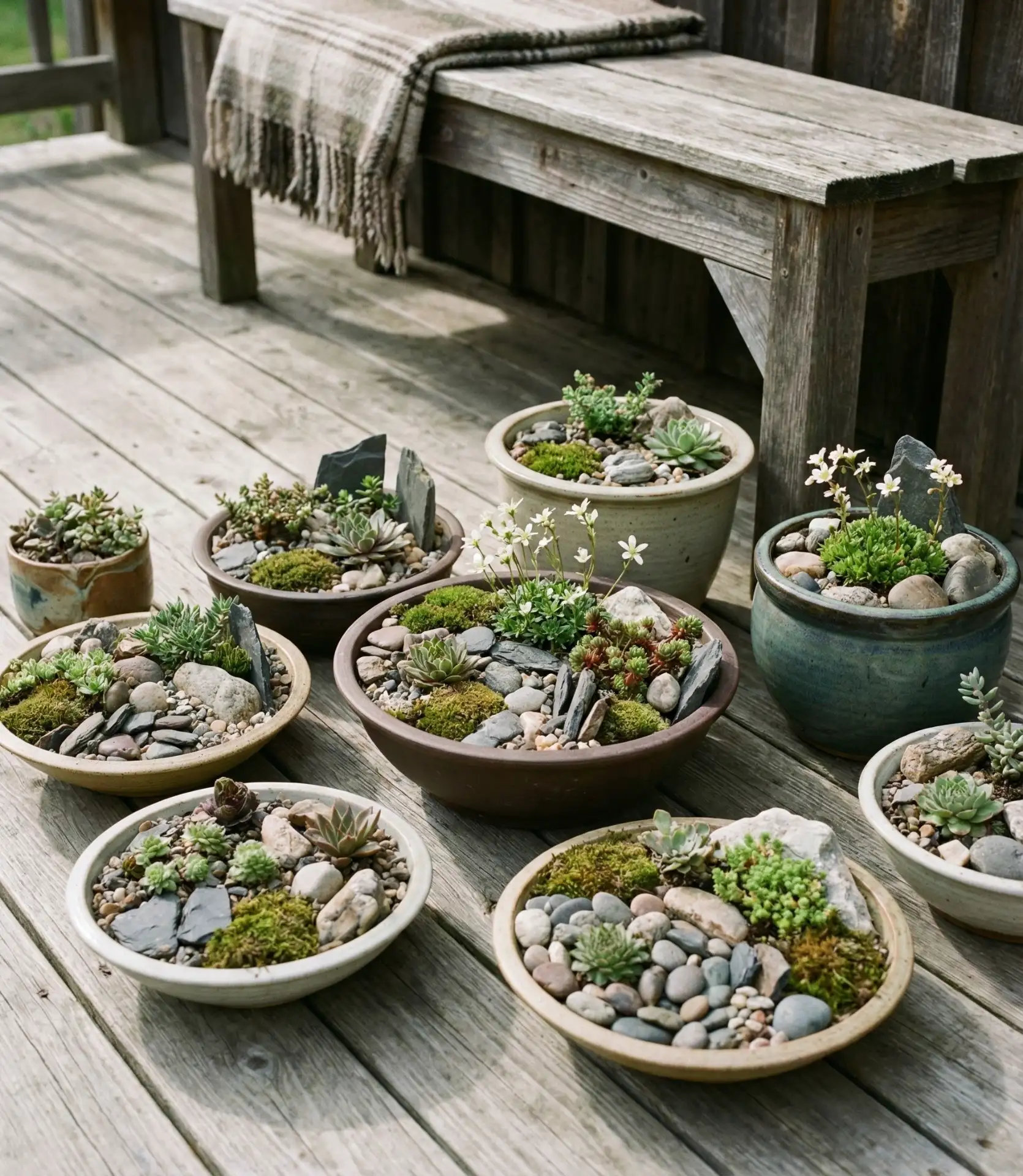
Container rock gardens work best in areas where you get good drainage and adequate sunlight—at least four to six hours for most rock garden plants. Choose containers with drainage holes and use a gritty potting mix (think two parts standard potting soil to one part coarse sand or perlite) to mimic the fast-draining conditions these plants prefer. The beauty of this approach is mobility; you can rearrange your rock garden display seasonally, bring tender plants inside during winter, or completely refresh your design without major excavation or expense.
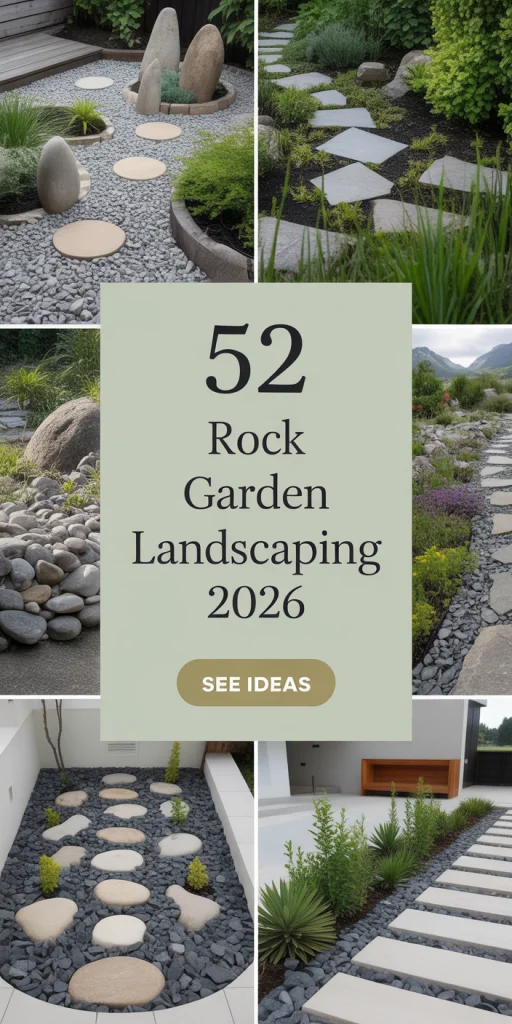
10. Rock Garden Along Driveway Border
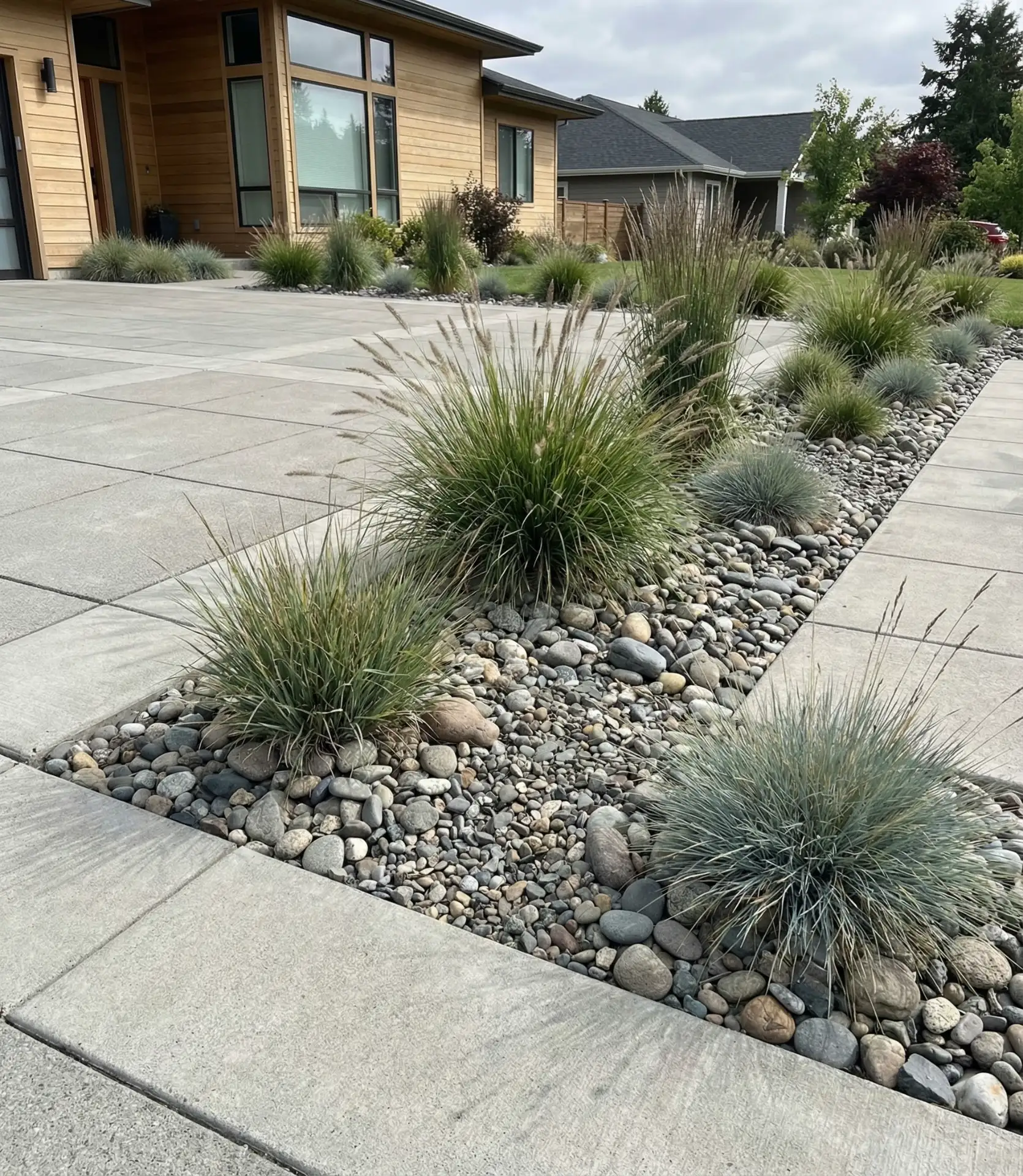
Transforming the often-neglected strip along driveway edges into a rock garden solves multiple landscape challenges while creating visual interest in a typically utilitarian area. Cheap front yard ideas often focus on this space because it’s highly visible but doesn’t require extensive plantings or maintenance. A border of larger stones contains gravel or smaller decorative rock, with drought-tolerant plants like ornamental grasses or sedums breaking up the texture. This approach prevents grass from creeping onto your driveway, eliminates awkward edging tasks, and handles salt runoff and car traffic better than traditional landscaping. 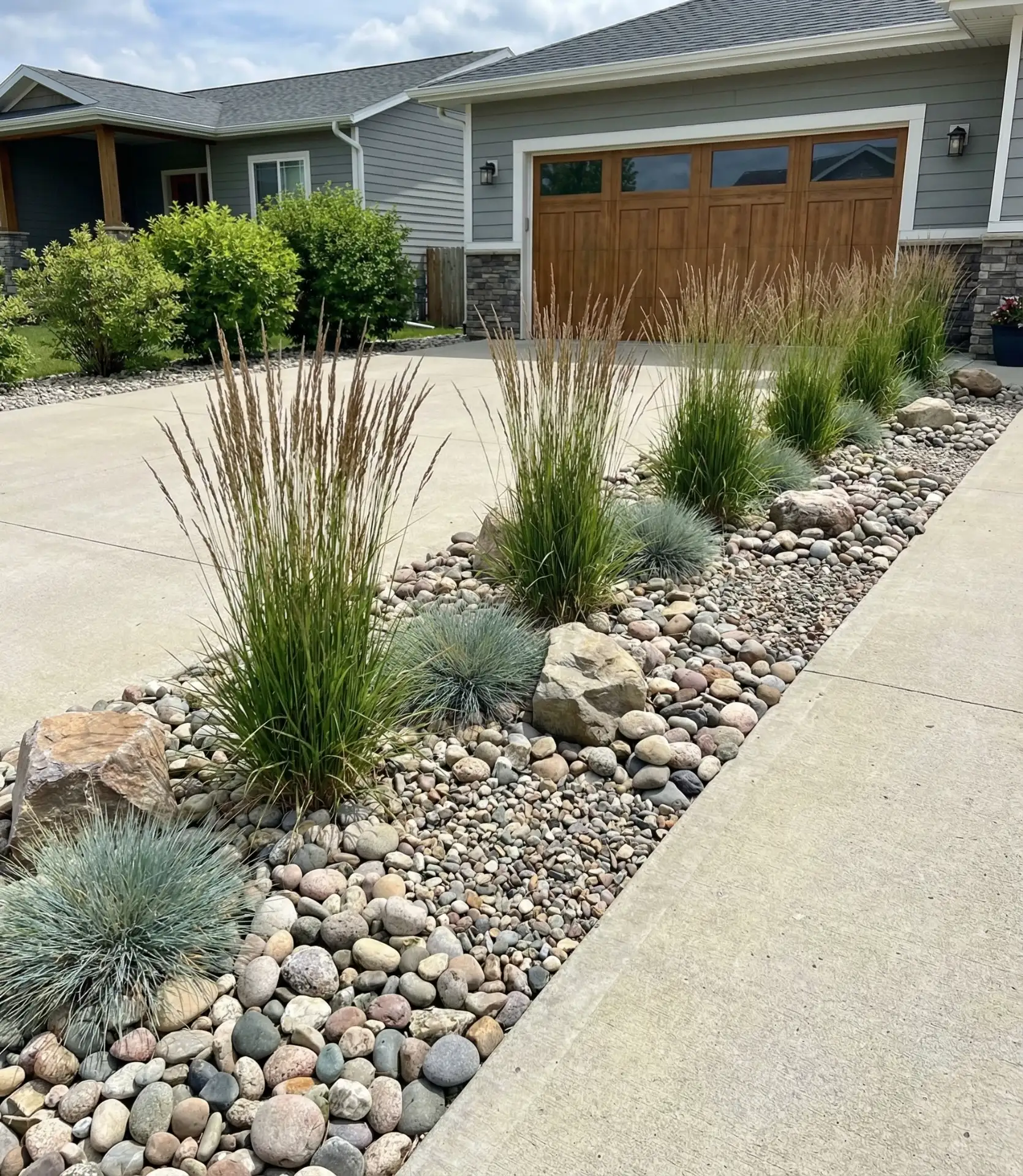
This braiding performs particularly well in parts with extreme winter weather, where road salt attrition’s effects are shown heavily on more traditional plantings, or in hot weather, where the grass pavement adjacent to the strip gets too hot for cool-season grass to survive. Common mistakes include failing to properly install landscape fabric to prevent it from covering the rock, dealing with Della weed fabric issues, or choosing rocks that are too small and light, which can lead to significant problems such as rocks being kicked onto the driveway and ending up in garages. Choose smaller stones with a diameter of around 1–2 inches and edge the patio with larger rocks or metal landscape edging to keep the patio area contained and looking professional.
11. Rock Garden Side of House Transformation
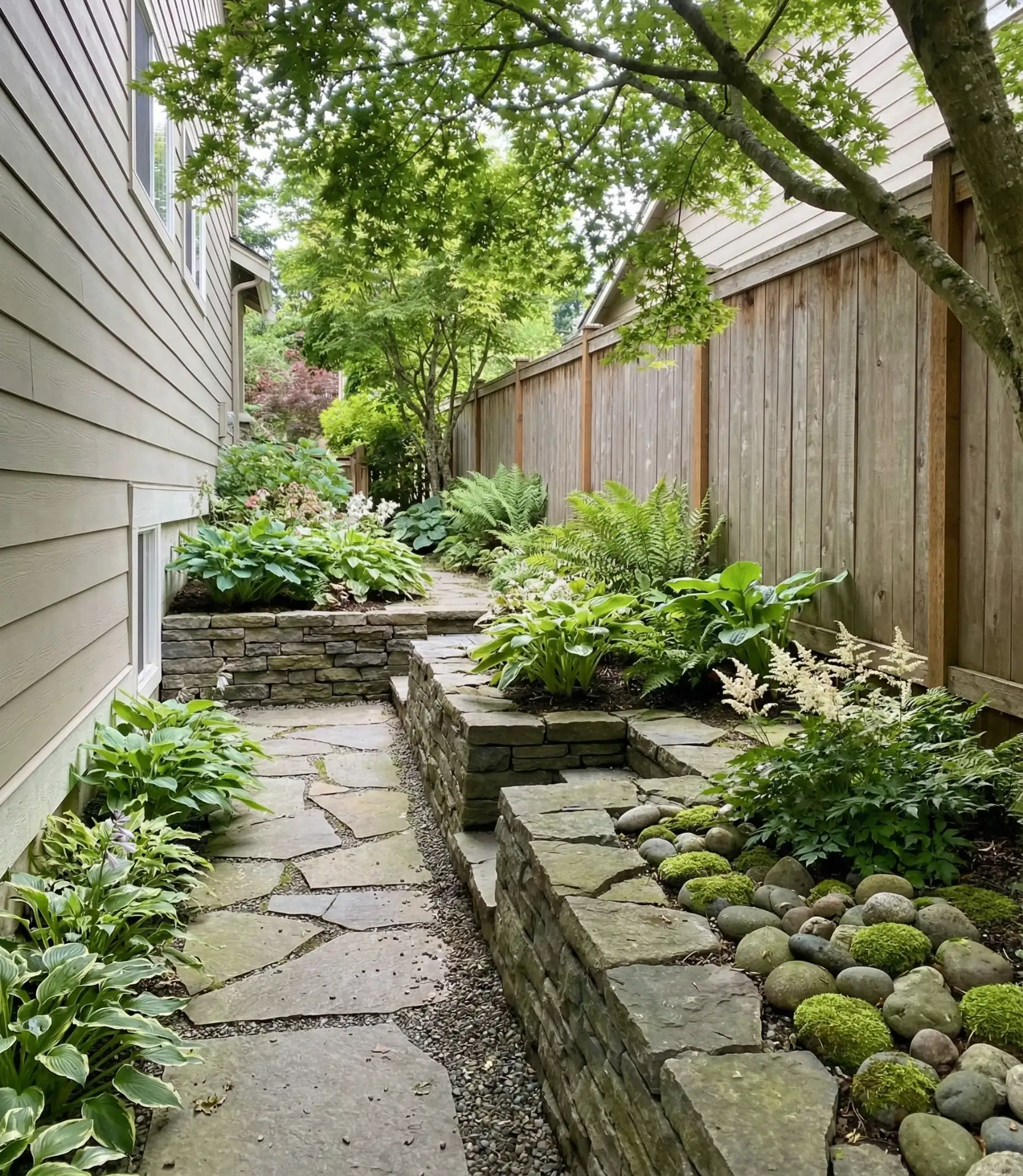
That narrow, awkward space along the side of the house is often the most challenging area to landscape, but it’s perfect for a rock garden that requires minimal maintenance and no mowing equipment. This zone typically gets limited sunlight and poor air circulation, making traditional lawns struggle, but a carefully designed rock garden with shade-tolerant plants for rock gardens like hostas, ferns, and coral bells thrives here. Layer different-sized stones to create visual interest in what’s essentially a hallway between structures, and the low-maintenance nature means you’re not constantly squeezing through with lawn equipment. 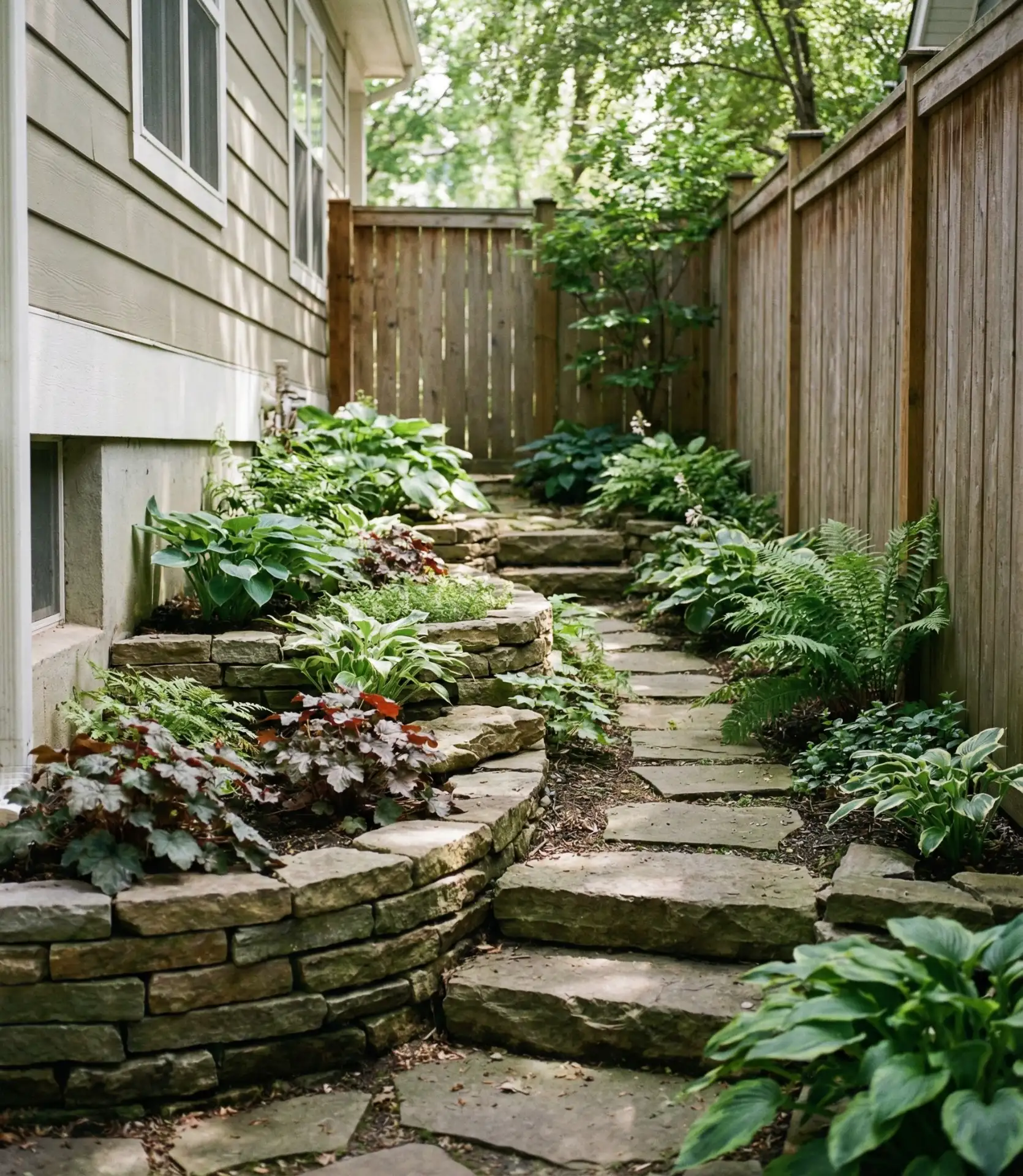
From a practical standpoint, side yards often handle water runoff from gutters and neighboring properties, which makes rock gardens ideal—they manage drainage naturally while looking intentional rather than like a drainage ditch. Many homeowners also use this space for utility access, so incorporating stepping stones through the rock garden maintains functionality. Budget-wise, these narrow spaces require less material than you’d think; a typical 3-foot-wide by 20-foot-long side yard needs only about 2 cubic yards of rock at 3-inch depth, running roughly $100-$200 depending on stone type.
12. Minimalist Rock Garden Without Plants
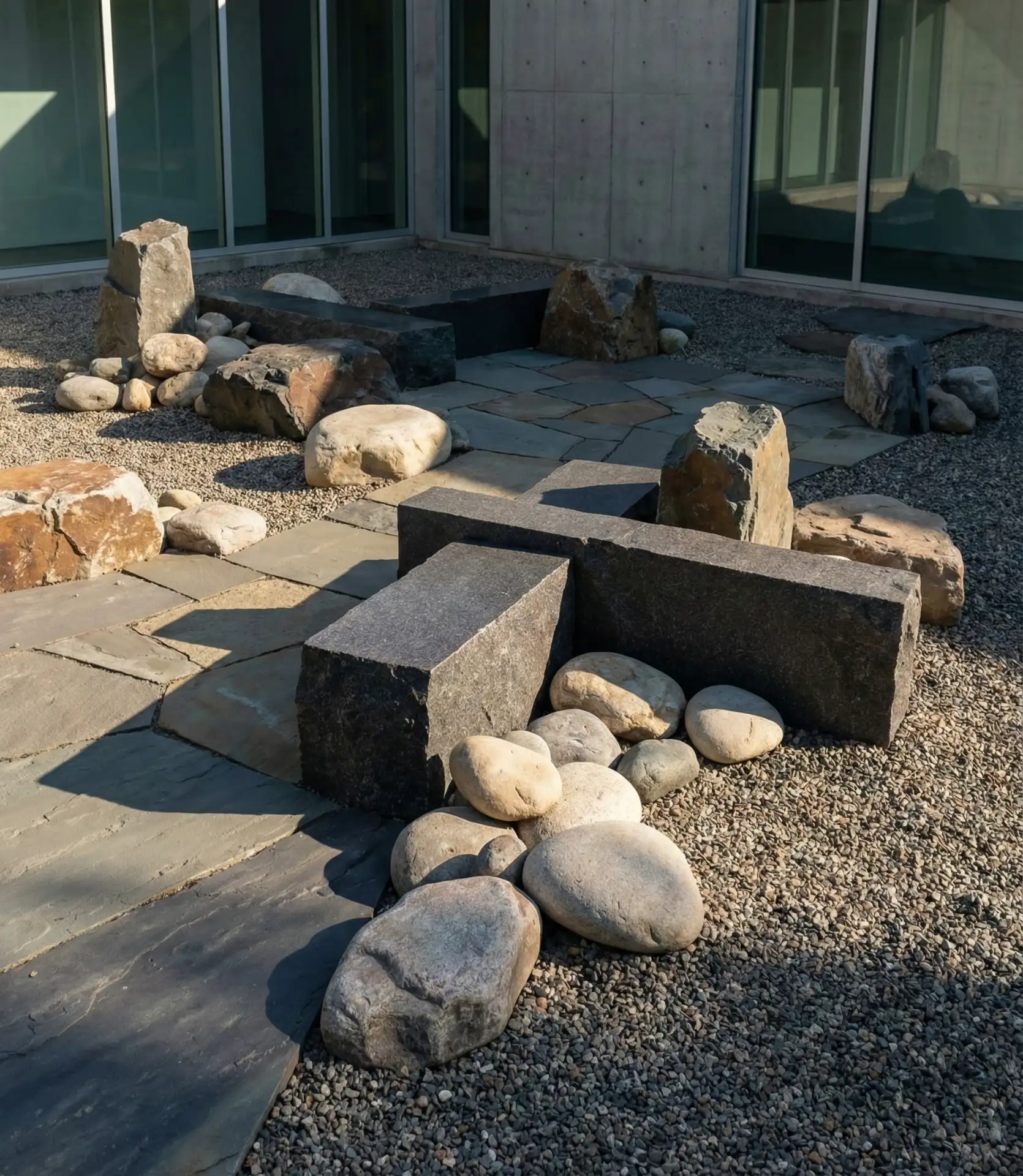
A rock garden without plants embraces pure minimalism, focusing entirely on stone shapes, colors, and arrangements to create visual interest. This ultra-low-maintenance approach works beautifully in modern landscapes where you want clean lines and zero plant care or in areas with extreme climate conditions where even hardy plants struggle. Different stone sizes and textures—smooth river rock against angular crushed stone, light granite beside dark basalt—provide all the variation needed. The absence of plants also makes these gardens perfect for high-traffic areas or spaces where you need quick drainage without any organic material. 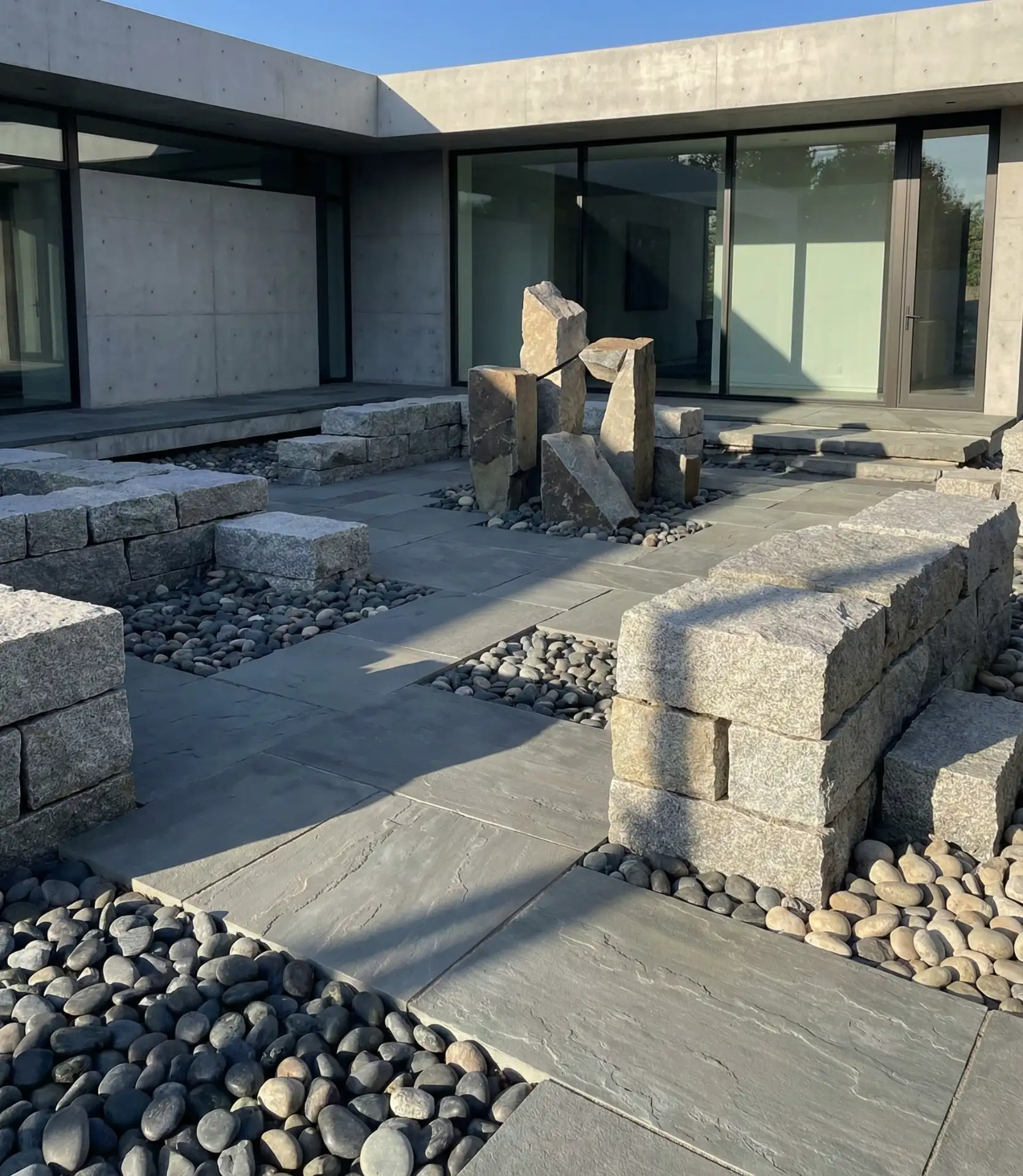
My cousin in Phoenix installed this exact style around her home’s perimeter after years of fighting the desert heat and losing every plant she tried. Now she has a striking landscape that literally requires zero water and maybe an hour of maintenance per year—just occasional debris removal. Where this type of landscaping works best is in regions with water restrictions, around modern architectural homes, or as buffer zones near property lines where you want clear boundaries without ongoing maintenance. The key is choosing high-quality stones with interesting colors and textures since there’s nothing to distract from the rock itself.
13. Rock Garden with Bird Bath Focal Point.
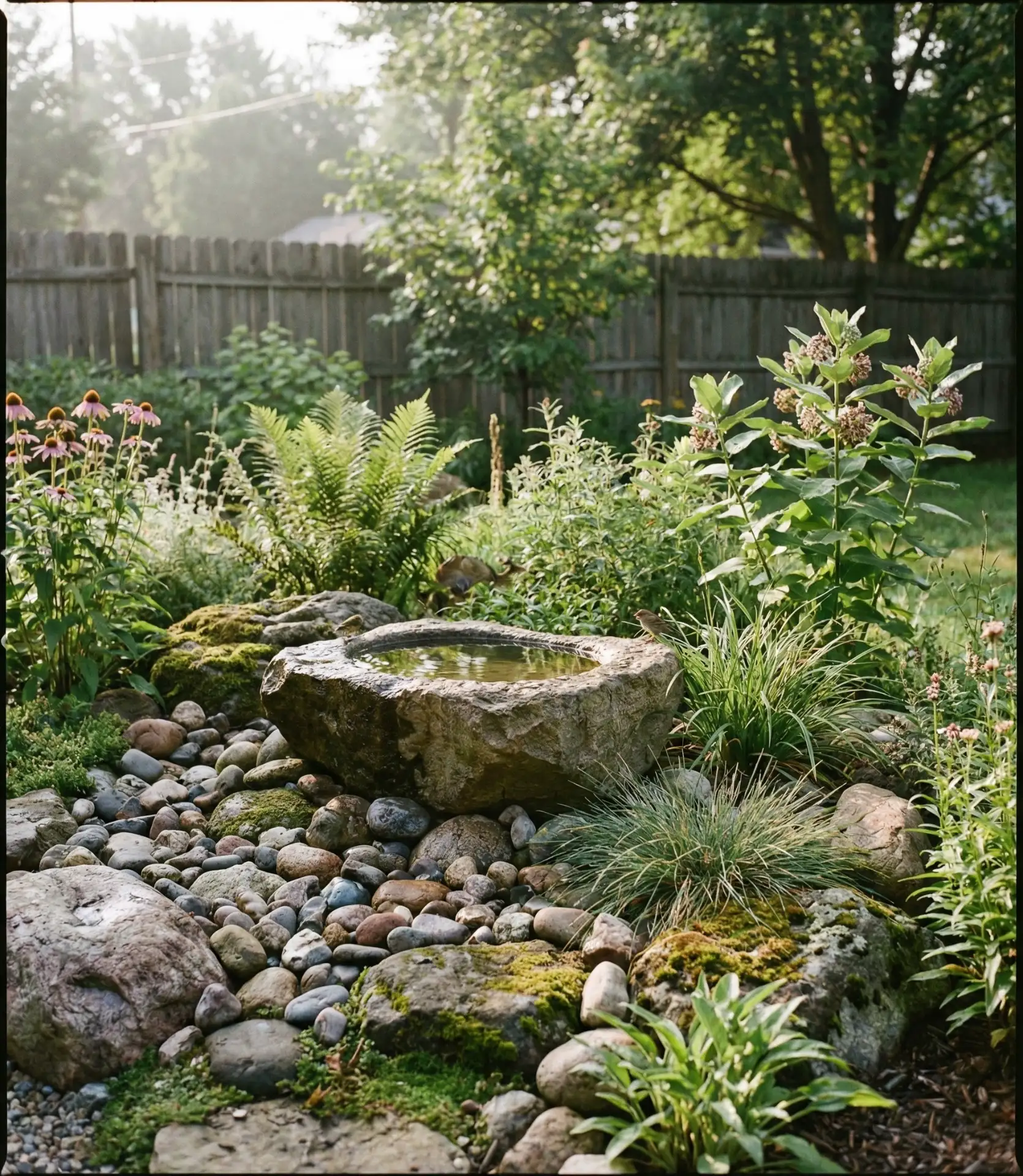
Creating a rock garden with a birdbath as the centerpiece transforms your landscape into a wildlife sanctuary that’s both functional and beautiful. Positioning a birdbath among natural stone creates a destination spot in your yard that attracts birds, butterflies, and beneficial insects while providing you with a peaceful viewing area. The rocks around the birdbath serve practical purposes too—they give birds safe perching spots before and after bathing, create microclimates that attract insects (which birds eat), and help retain moisture in nearby soil. This approach turns a simple landscape feature into an active, living ecosystem. 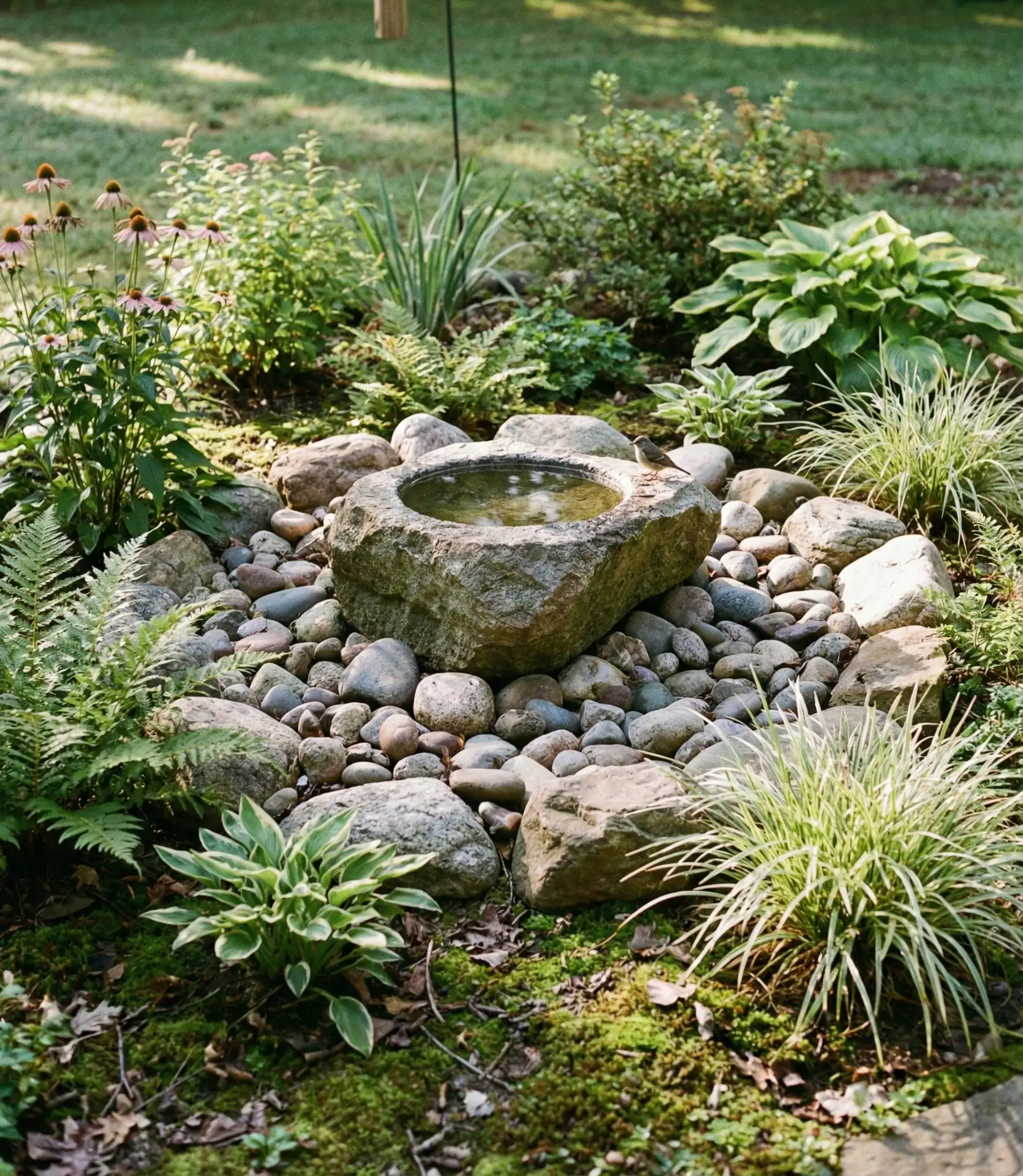
Expert commentary suggests placing bird baths in areas with both sun and nearby shade so birds can dry off in warmth but retreat to cooler spots, and the mixed light conditions actually enhance how rocks and water interact visually throughout the day. Position your birdbath where you can see it from a window—kitchen, home office, or bedroom—to maximize enjoyment. Common mistakes include placing the bath too close to dense shrubs where predators hide or using smooth decorative rocks that become slippery when wet; opt for textured stones that provide secure footing for visiting wildlife.
14. DIY Rock Garden Projects on a budget.
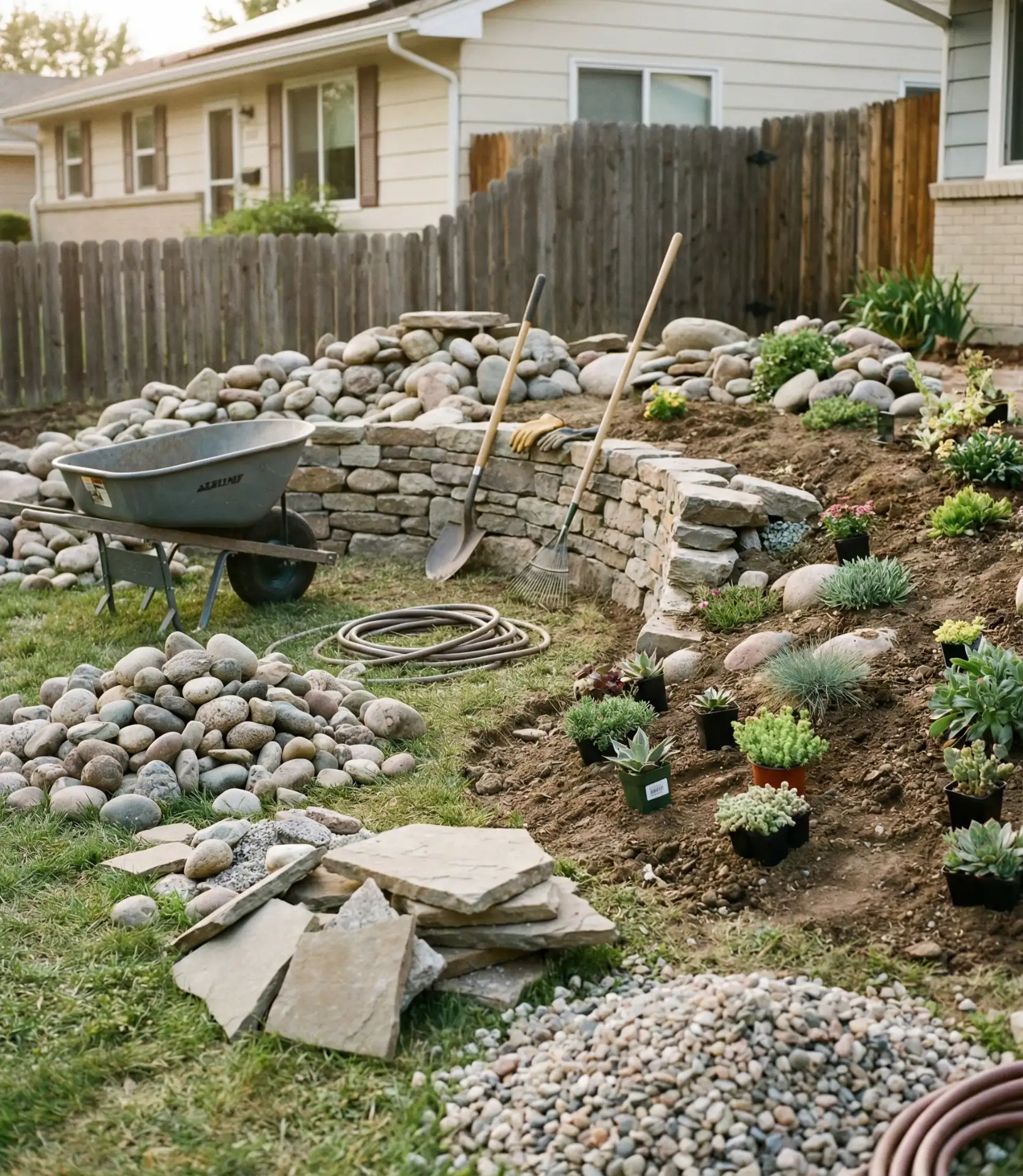
Tackling backyard ideas for DIY projects for rock gardens doesn’t require professional help or massive investment when you approach it strategically. Start by sourcing rocks locally—many areas have free or cheap stone available from construction sites, Craigslist, or Facebook Marketplace, and landscape supply yards often have “bargain boulders” that are slightly imperfect but perfectly functional. Cheap front yard ideas often involve using a mix of purchased decorative rock for visible areas and more affordable crushed stone or pea gravel for background fill. The labor-intensive part is moving and placing stones, but this task becomes a weekend project rather than a budget-buster when you DIY. 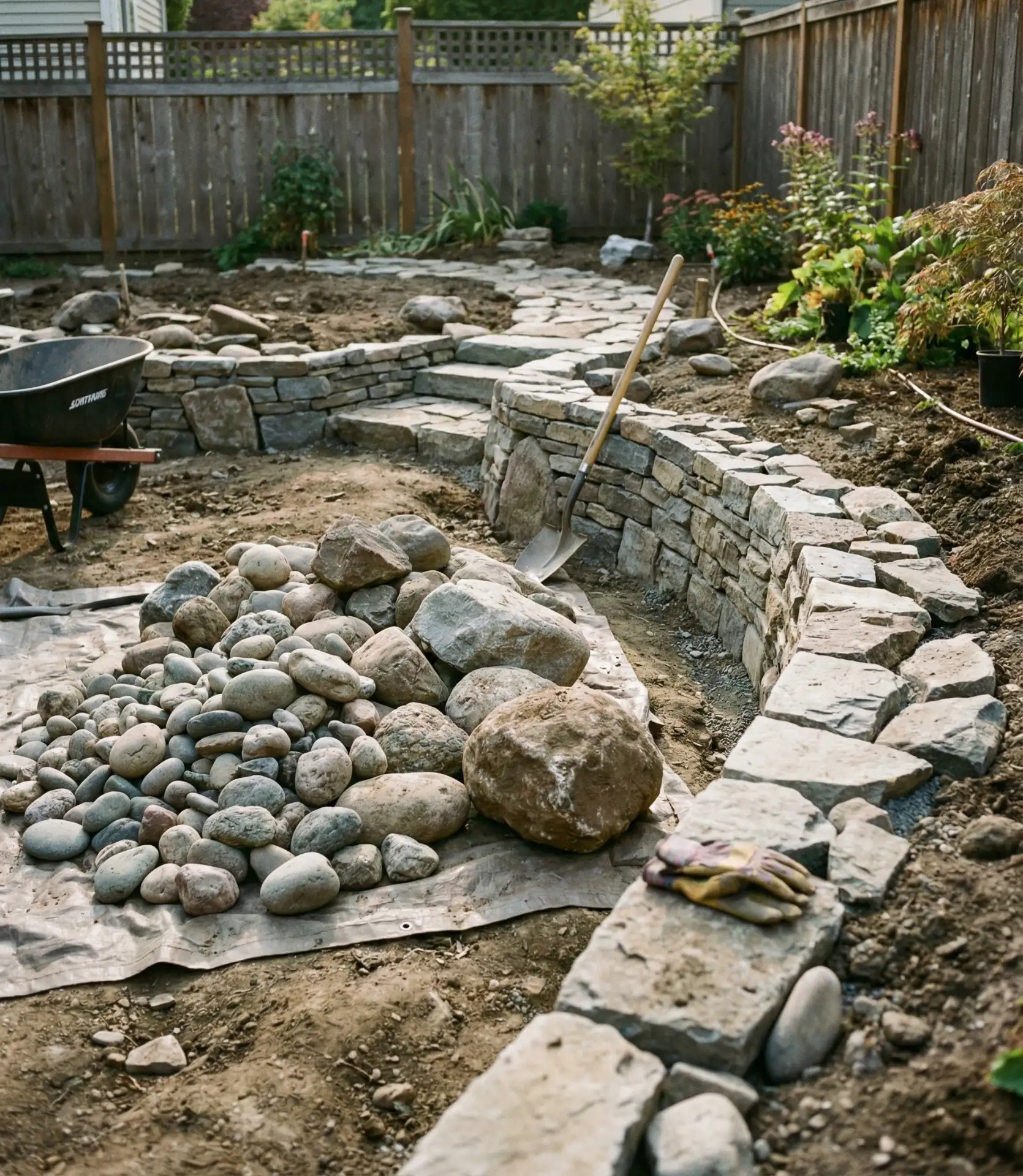
Real homeowner behavior shows that the most successful DIY rock gardens start small—maybe a 100-square-foot area—rather than attempting to transform an entire yard at once. This approach lets you learn what works, make adjustments, and spread costs over time without overwhelming yourself. Budget breakdown for a typical DIY project: landscape fabric runs about $0.50 per square foot, decorative rock costs $40-$80 per cubic yard (covering roughly 100 square feet at 3 inches deep), and edging materials add another $2-$4 per linear foot. You can complete a small rock garden for $200-$400 in materials with sweat equity replacing professional installation costs of $1,000-$2,000.
15. Desert-Inspired Rock Garden with Cacti
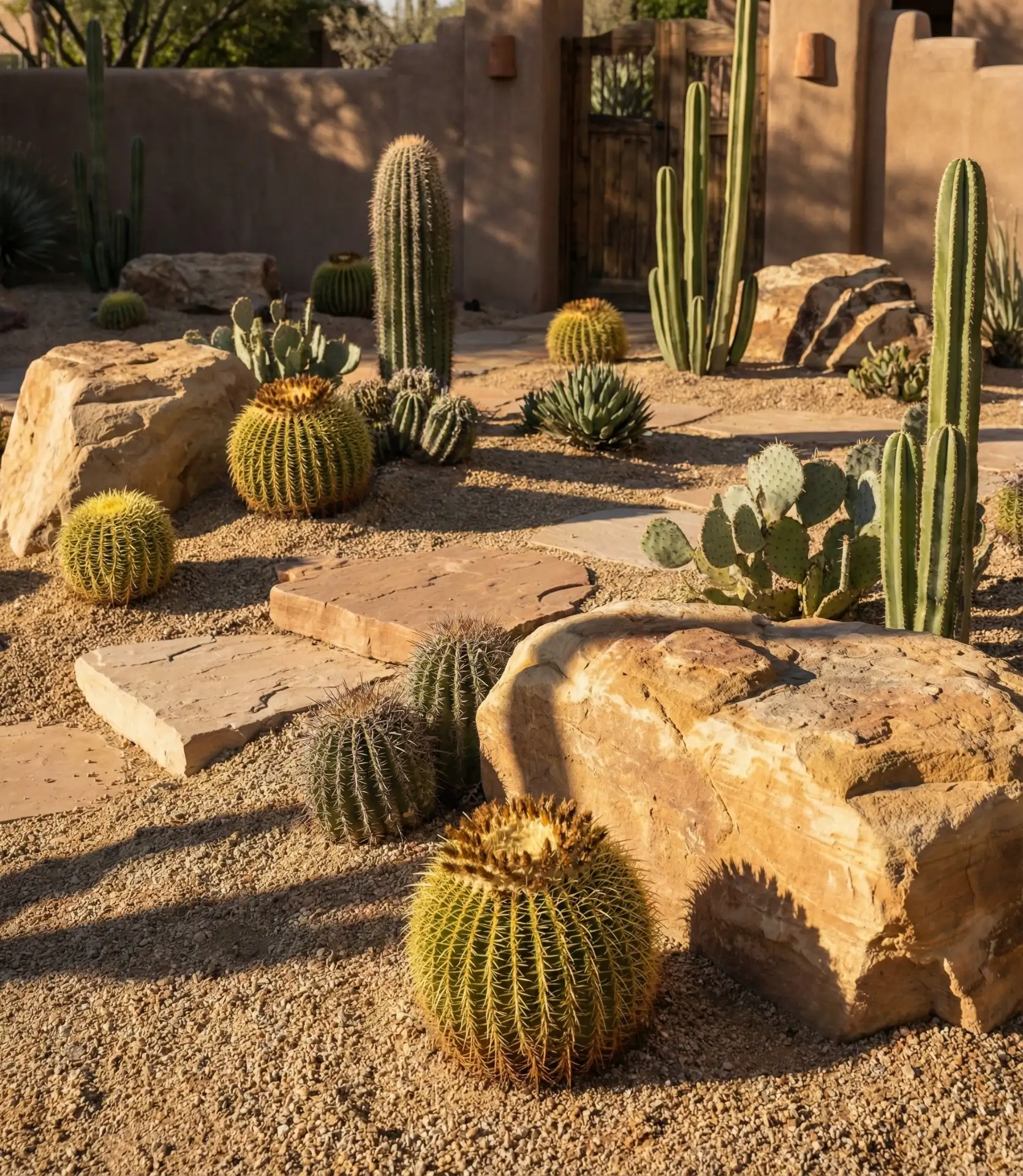
Embracing desert aesthetics with succulent varieties like cacti creates a striking, sculptural rock garden that celebrates arid beauty. This style pairs perfectly with natural sandstone, red rock, or tan-colored gravel that echoes southwestern landscapes, and the combination requires virtually no supplemental watering once established. Different cactus species provide varied heights and forms—tall saguaros or columnar cacti as focal points, barrel cacti for mid-level interest, and spreading prickly pear for groundcover. The rocks help regulate soil temperature and provide the excellent drainage that cacti absolutely require to thrive. 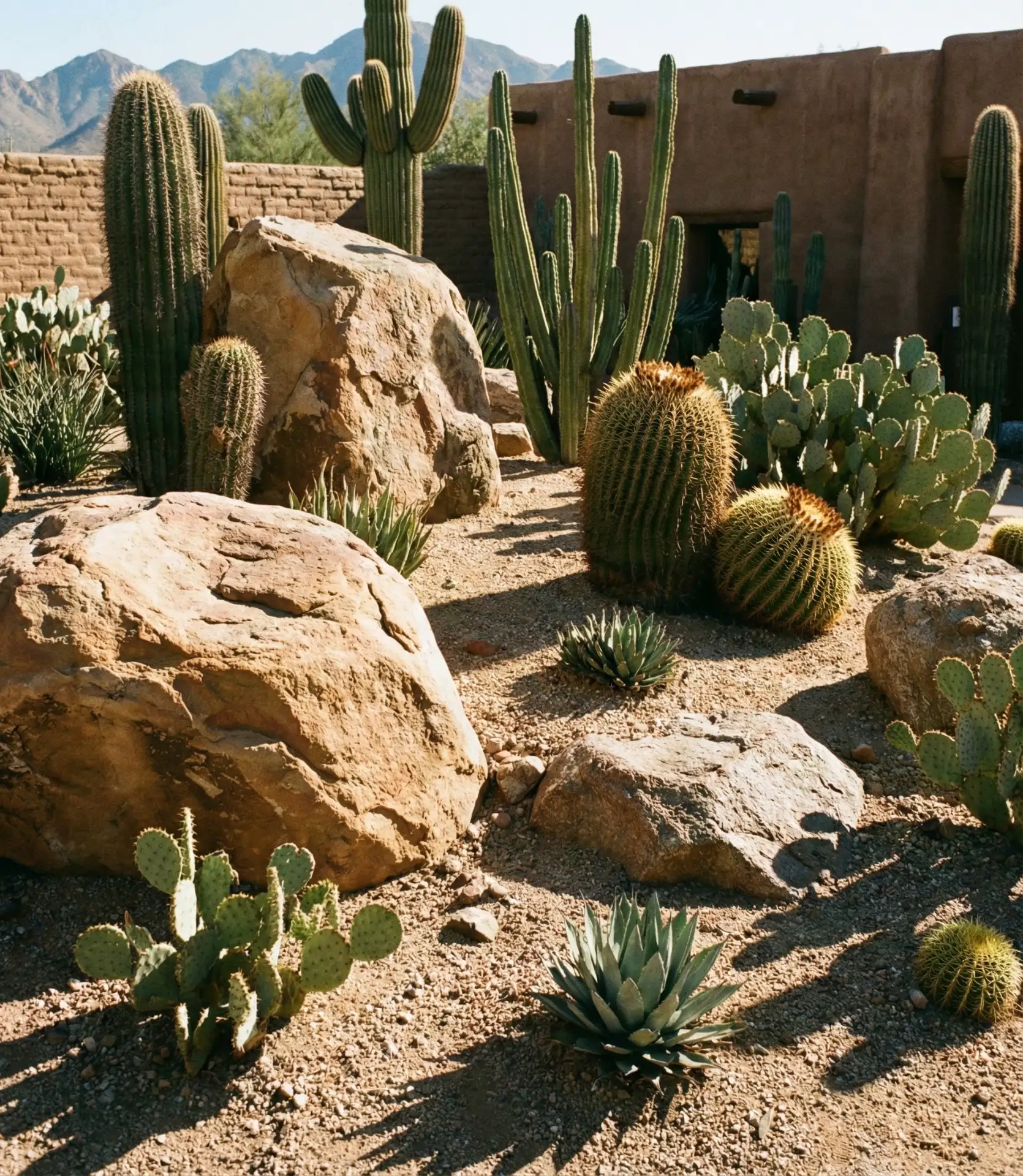
This approach works best in USDA zones 8-11, where cacti can remain outdoors year-round, though gardeners in colder zones create beautiful seasonal displays by using container-grown cacti that move indoors for winter. One neighbor in Tucson has maintained a cactus rock garden for eight years with zero irrigation beyond occasional monsoon rains—the setup cost about $600 initially but has required maybe $50 total in maintenance since then. The only real consideration is safety; place spiny cacti away from walkways and play areas, and use long-handled tools for any maintenance work.
16. Formal Front Yard Rock Garden design.
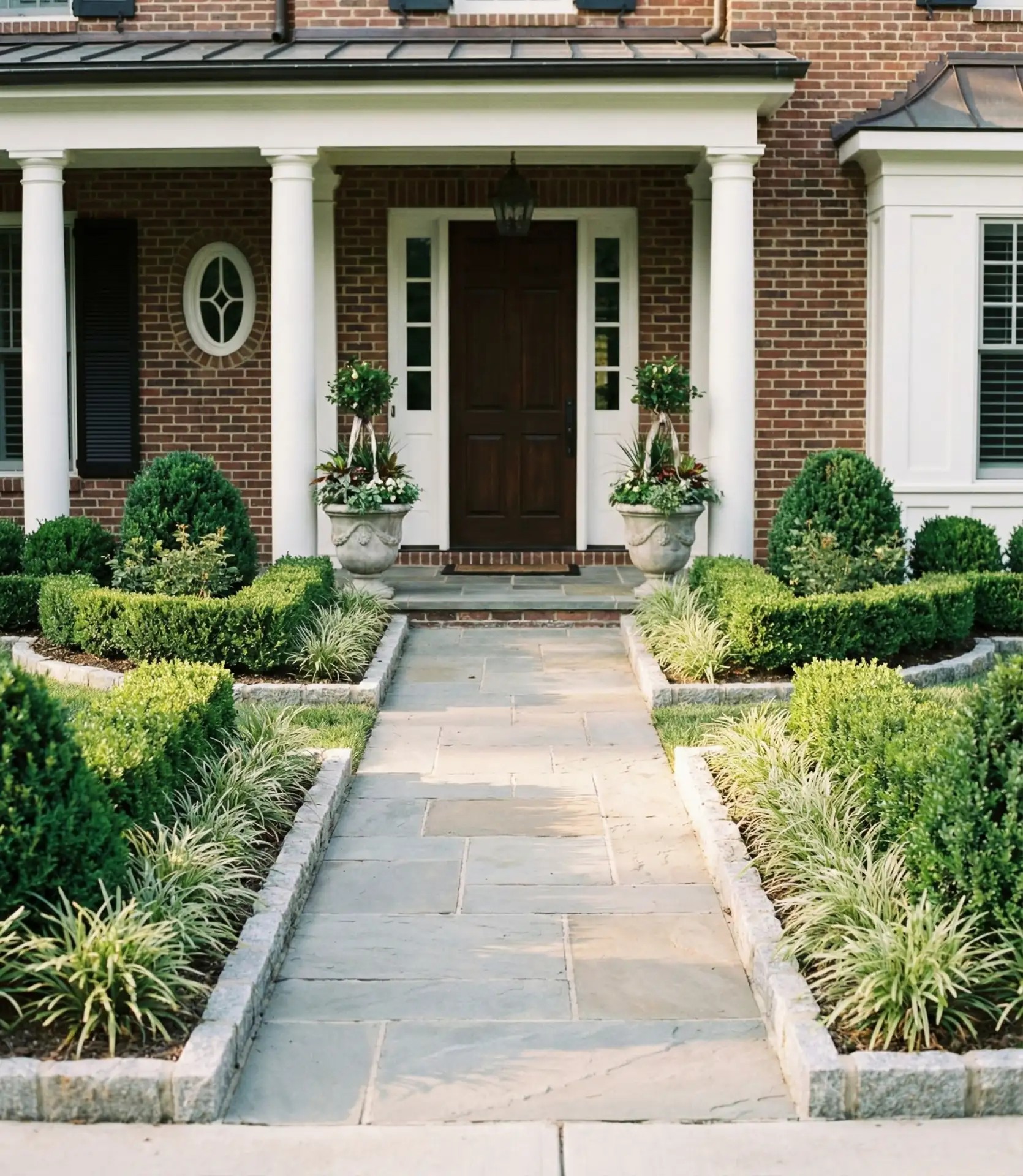
A formal rock garden brings traditional landscape structure to front yard spaces through symmetrical arrangements, defined borders, and carefully selected stone that creates an elegant, welcoming entrance. This design typically features matching stone planters flanking doorways, geometric rock borders along walkways, and precisely edged beds filled with uniform-sized decorative rock. The formality comes from repetition and balance rather than wild naturalism—think paired evergreen shrubs in rock-mulched beds, straight lines, and intentional spacing. This approach signals to visitors that your home is well-maintained and thoughtfully designed. 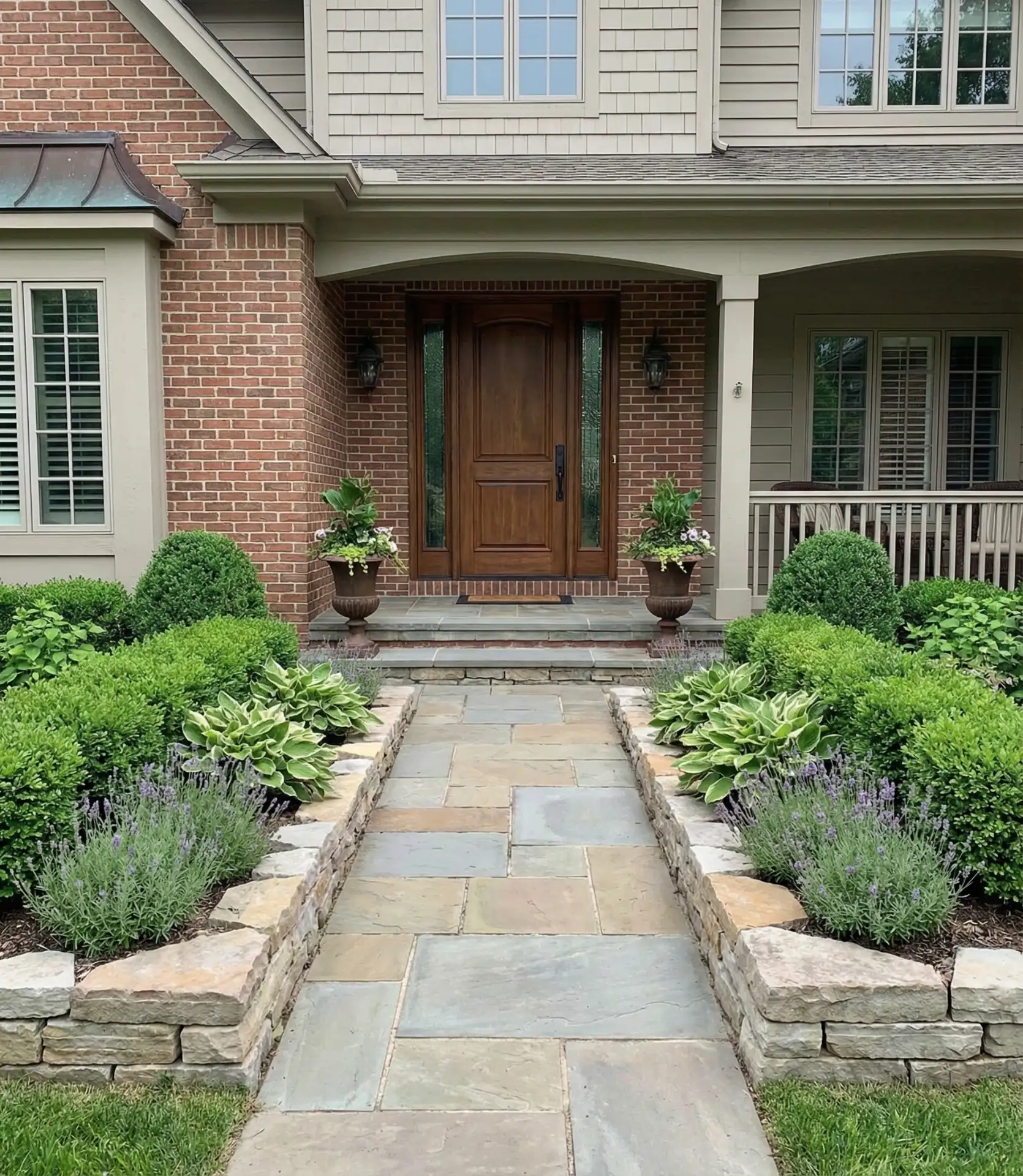
American lifestyle trends indicate a growing interest in formal front yard designs, as homeowners strive to distinguish themselves in neighborhoods dominated by uniform lawns. The formal rock garden offers this distinction while remaining lower-maintenance than traditional formal gardens with their demanding hedges and flower beds. Common mistakes include mixing too many rock colors or sizes, which breaks the formal effect—stick to one or two complementary stone types and maintain consistent sizing throughout. The formality requires stricter maintenance of edges and weed control, but many find these tasks easier than managing formal plant-based gardens.
17. Rock Garden Pots and Planters Display
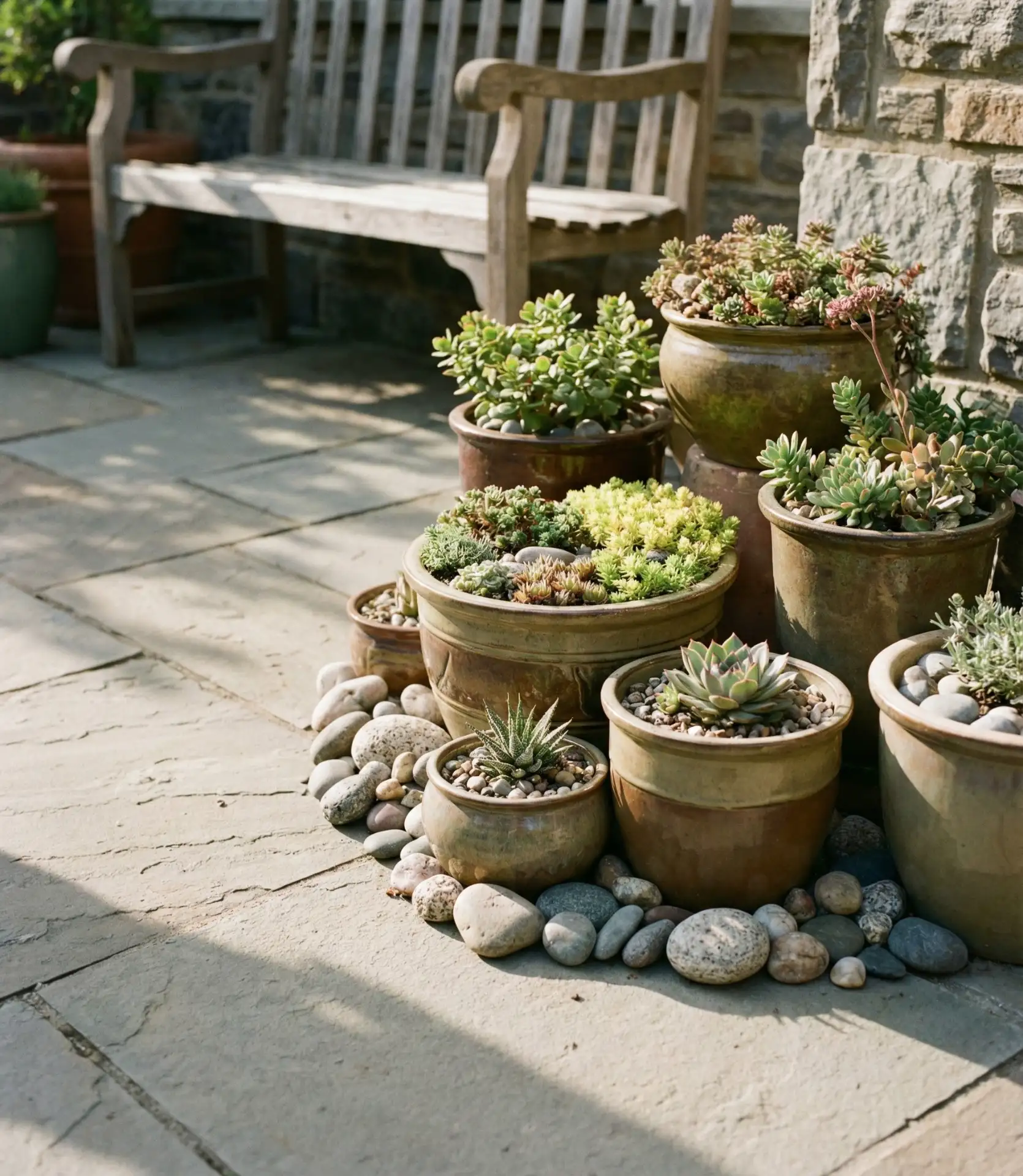
Creating a curated collection of pots & planters as the foundation of your rock garden offers flexibility and visual impact, especially when you group containers of varying heights and materials. This approach works brilliantly in backyard settings where you want defined garden areas without committing to permanent in-ground installations, and the ability to move containers means you can refresh your design seasonally or even weekly. Fill large containers with rock garden plants surrounded by smaller stones, then position these among ground-level rock landscaping to create layers and dimensions. The combination of container gardening and rockwork gives you the best-of-both-worlds versatility. 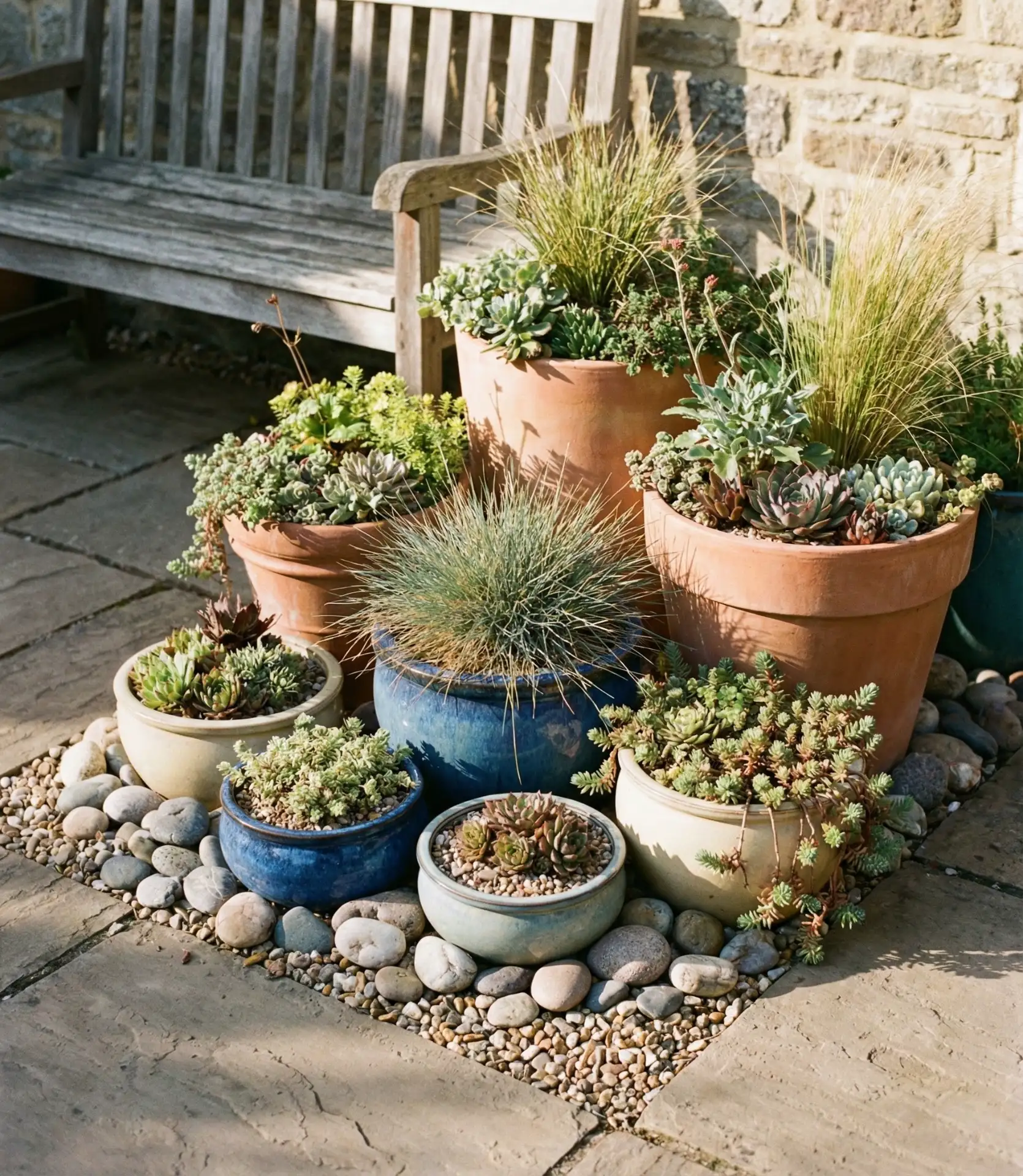
Where this technique works best is on patios, decks, or in courtyard spaces where you’re creating an outdoor room rather than traditional landscaping. The portability also makes this approach ideal for renters who want beautiful gardens they can take when they move. A practical insight: use pot feet or small flat stones under containers to improve drainage and protect deck surfaces, and group odd numbers of pots (three, five, or seven) for more dynamic, natural-looking arrangements. Budget-conscious gardeners hit end-of-season sales for containers, often finding 50–70% discounts that make this approach surprisingly affordable.
18. Coastal-Style Rock Garden with Driftwood
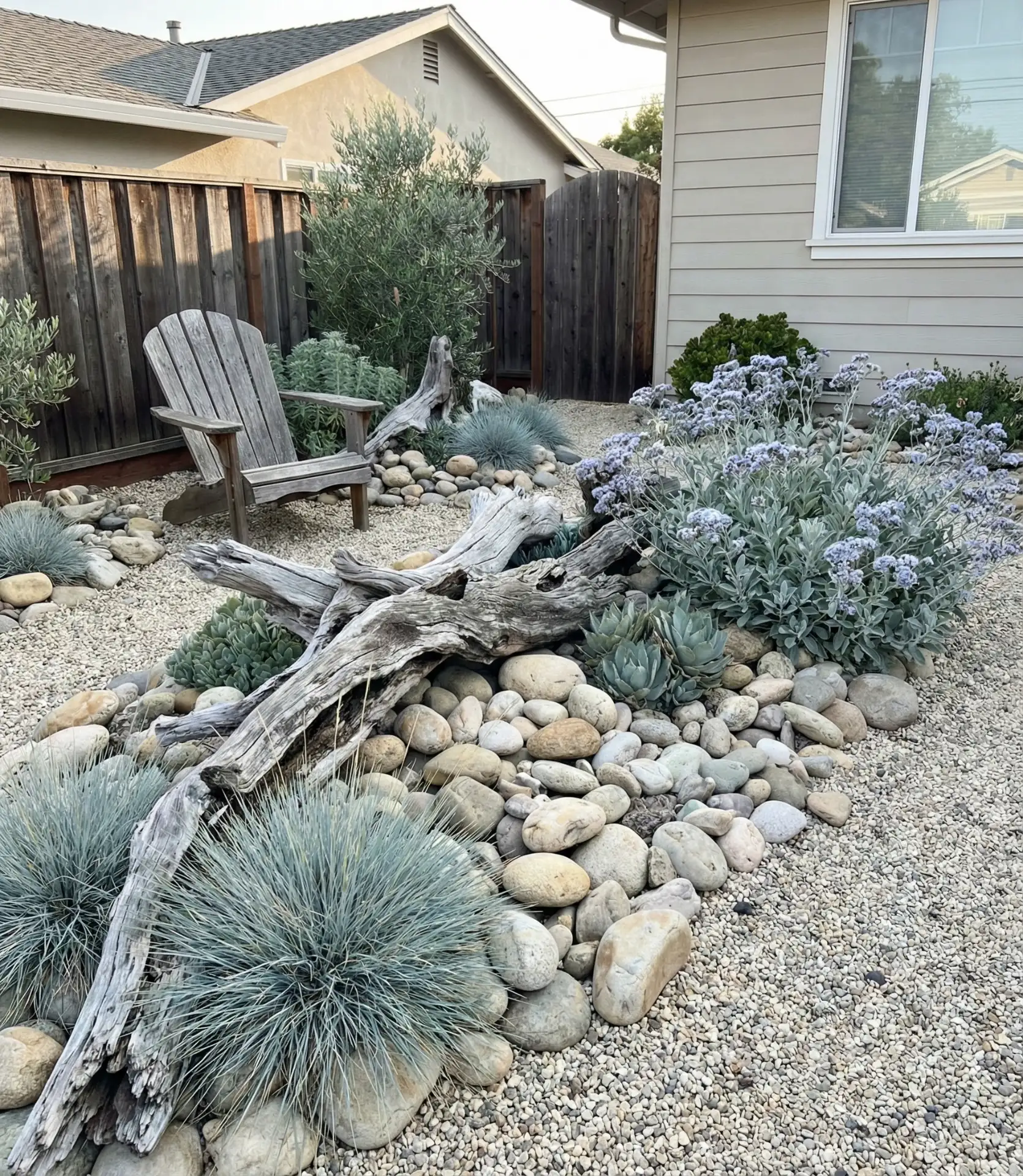
Bringing coastal aesthetics inland through rock gardens incorporates weathered driftwood, smooth beach stones, and white or pale gray rocks that evoke seaside landscapes. This style creates a vacation-at-home feeling that’s particularly popular in backyard ideas where you want a relaxation zone that transports you mentally to calmer shores. Pale stones reflect light beautifully, keeping the space bright even in partially shaded areas, and the addition of driftwood pieces adds sculptural elements and warm wood tones that soften the harder rock surfaces. Salt-tolerant plants like Russian sage, sea thrift, and ornamental grasses complete the coastal connection. 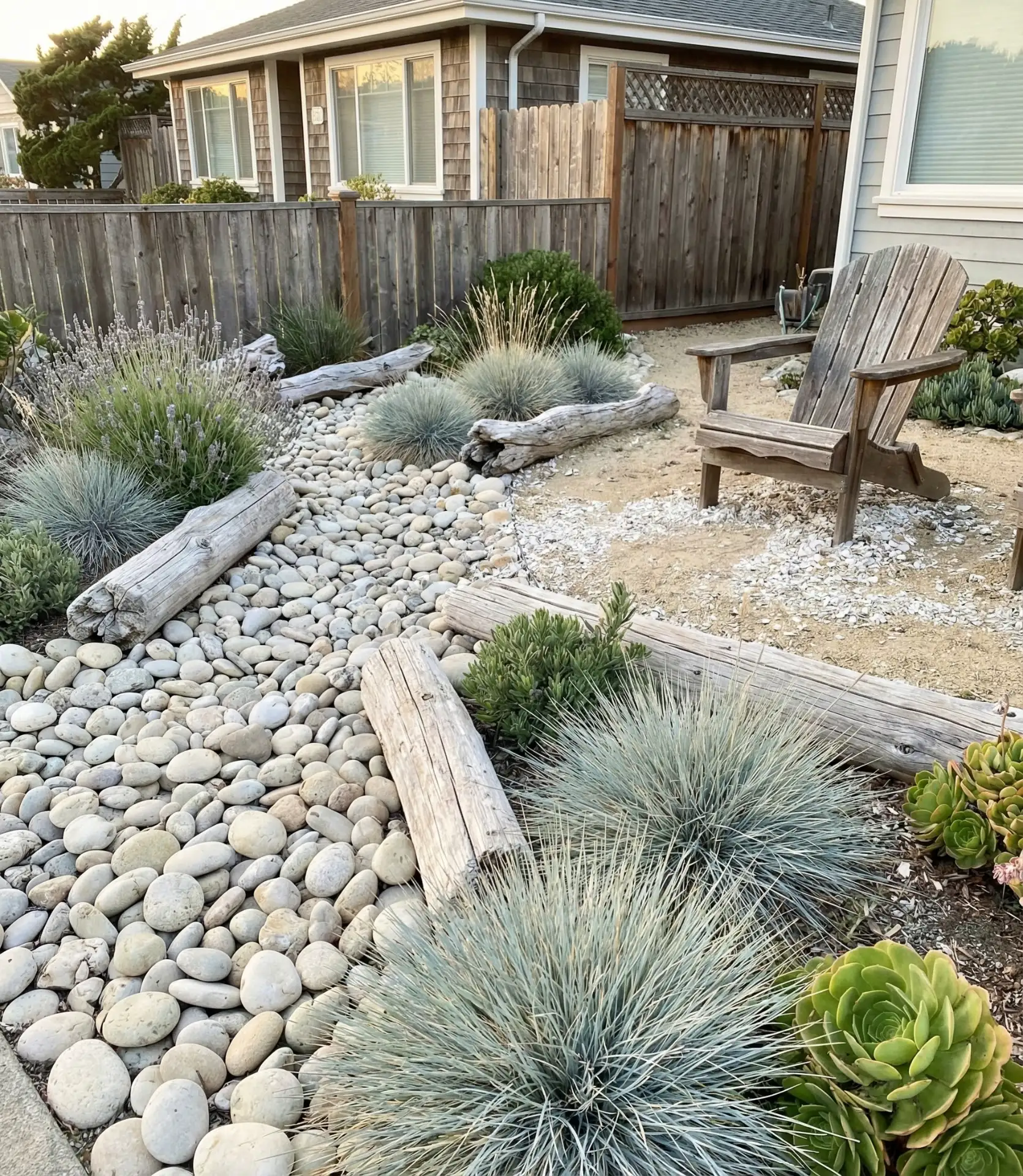
I visited a garden designer friend in Virginia Beach who created this exact style two blocks from the ocean, and the rock garden requires almost no maintenance while handling salt spray and sandy soil that kills traditional landscaping. The key is sourcing authentic materials—real driftwood from beaches (where collection is legal) or from specialty suppliers, and naturally tumbled river rock rather than artificially polished stone. This style particularly resonates with Americans who grew up near coasts or vacation regularly at beaches, creating emotional connections through landscape design that goes beyond pure aesthetics.
19. Rock gardens Around Mature Trees
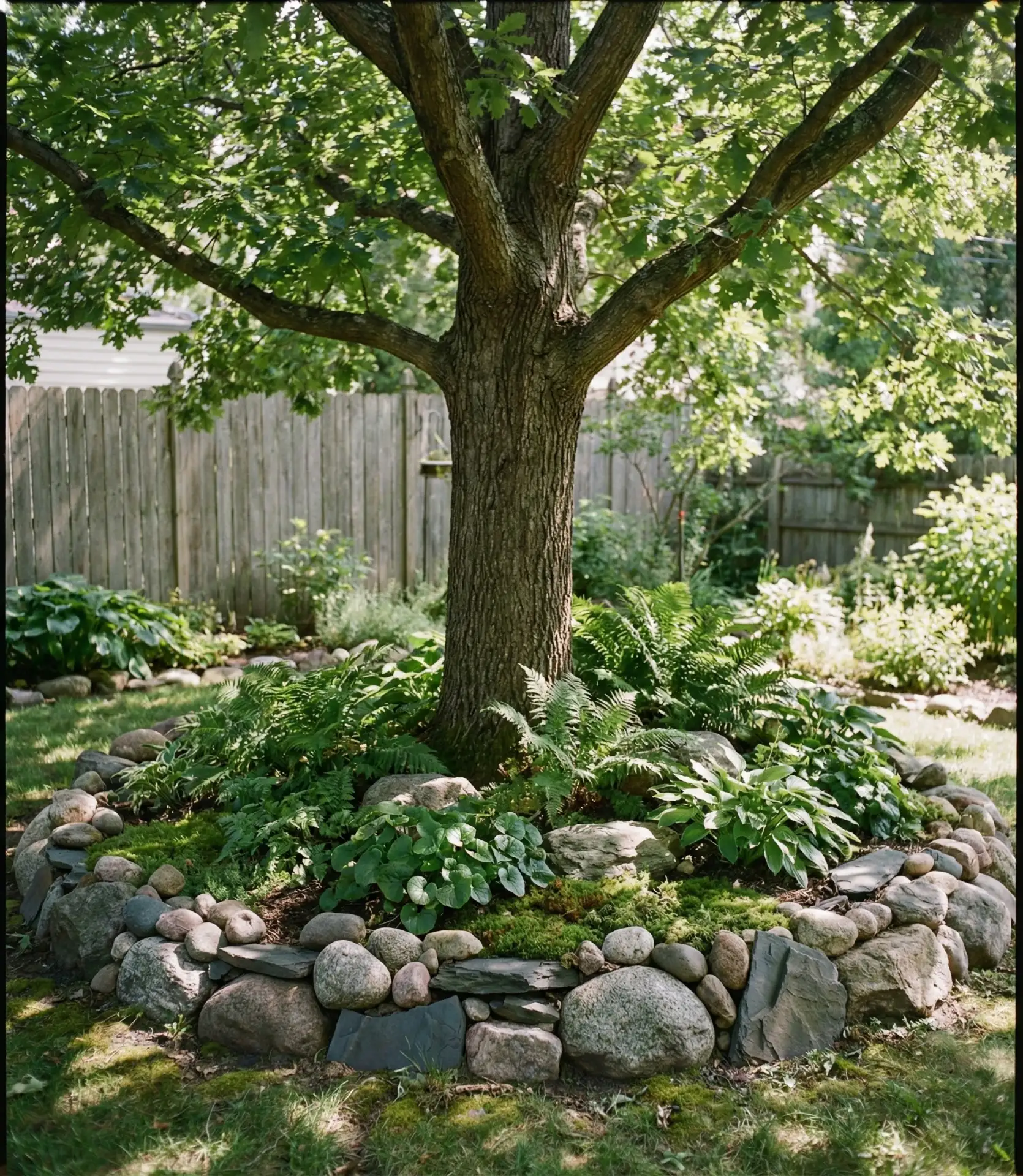
Transforming the challenging area around large established trees into rock gardens solves the perpetual problem of trying to grow grass in heavy shade with competing root systems. This approach creates attractive tree rings using river rocks or decorative stone that suppresses weeds, retains soil moisture, and eliminates the need for mowing right up to tree trunks (which damages bark). Layer rocks in graduating sizes—larger boulders near the trunk, medium stones in the middle zone, and smaller gravel at the outer edge—to create natural-looking transitions. The rock also protects surface roots from foot traffic and equipment damage while still allowing water and air to reach the soil.
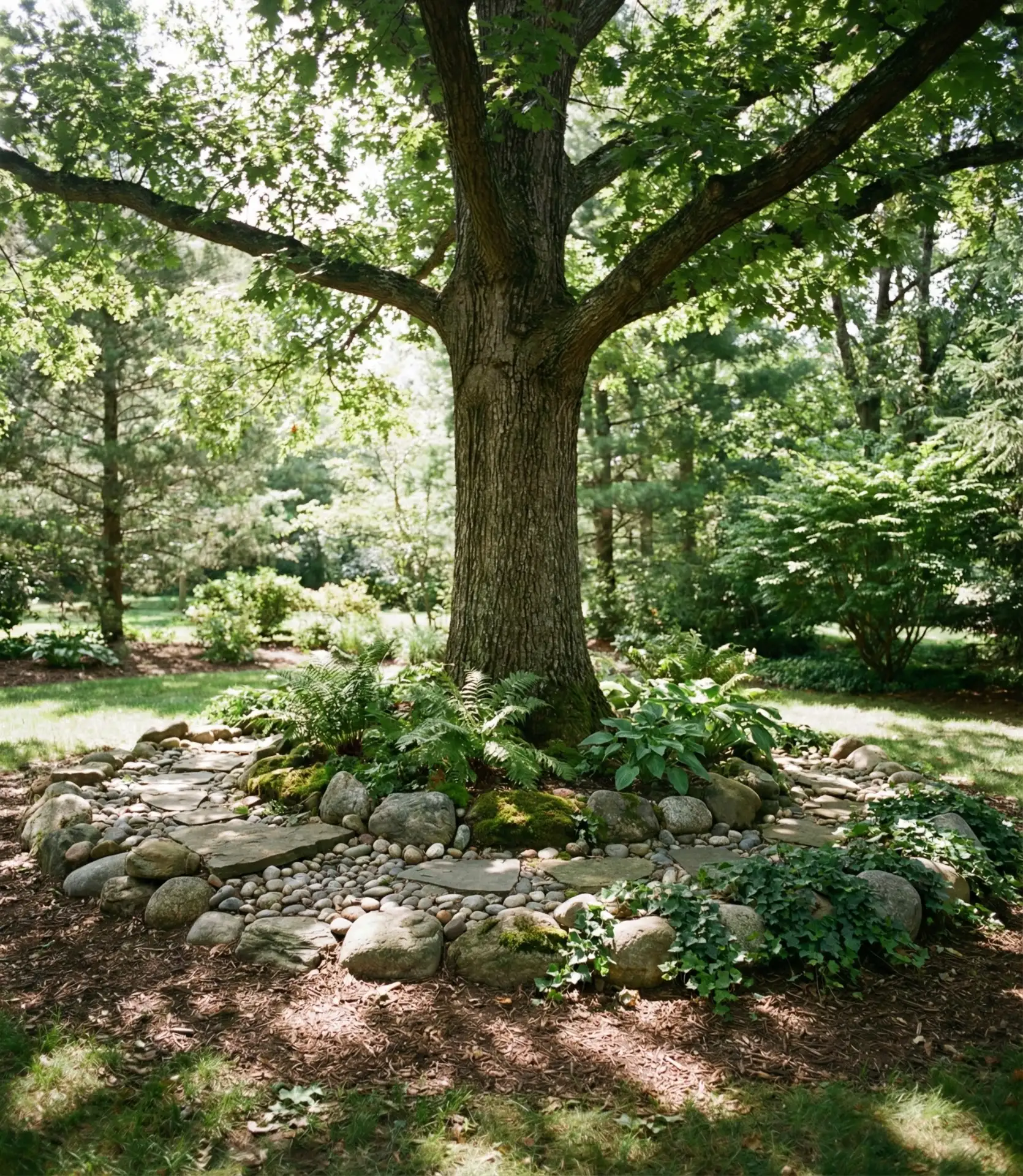
Expert advice warns against piling rock or soil against tree trunks, which traps moisture and encourages rot—maintain a 6-8 inch clearance around the trunk itself. This design works especially well with trees like oaks, maples, and pines that have surface roots, making traditional planting difficult. One common mistake is using too much rock too quickly; start with a 2-3 inch layer and add more after the first season once you see how the tree responds. Many homeowners also incorporate shade-tolerant plants like hostas or ferns among the rocks for additional color and texture, creating mini shade gardens rather than stark stone expanses.
20. Multi-Level Rock Garden Waterfall
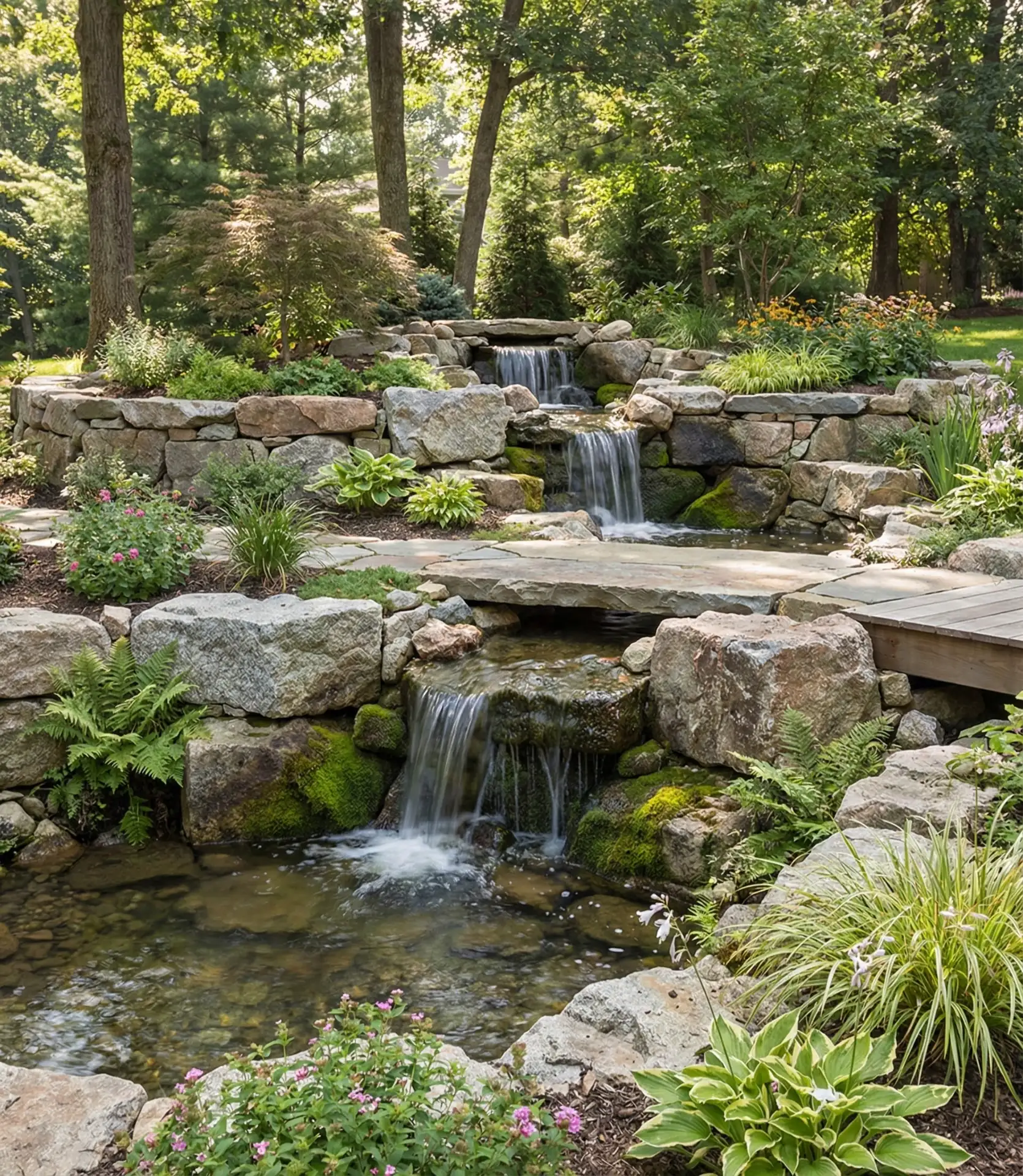
Creating a cascading waterfall within your rock garden adds dramatic vertical interest and soothing water sounds that elevate any backyard ideas into true outdoor living spaces. This ambitious project uses stacked stone to build tiered pools where water spills from one level to the next, with plants for water features like Japanese iris, cardinal flower, and monkey flower thriving in the moist pockets. The surrounding rock garden extends naturally from the water feature, making the entire installation look like a discovered natural spring rather than a constructed element. This structure structure becomes the ultimate focal point that draws eyes and ears, creating a destination within your landscape. 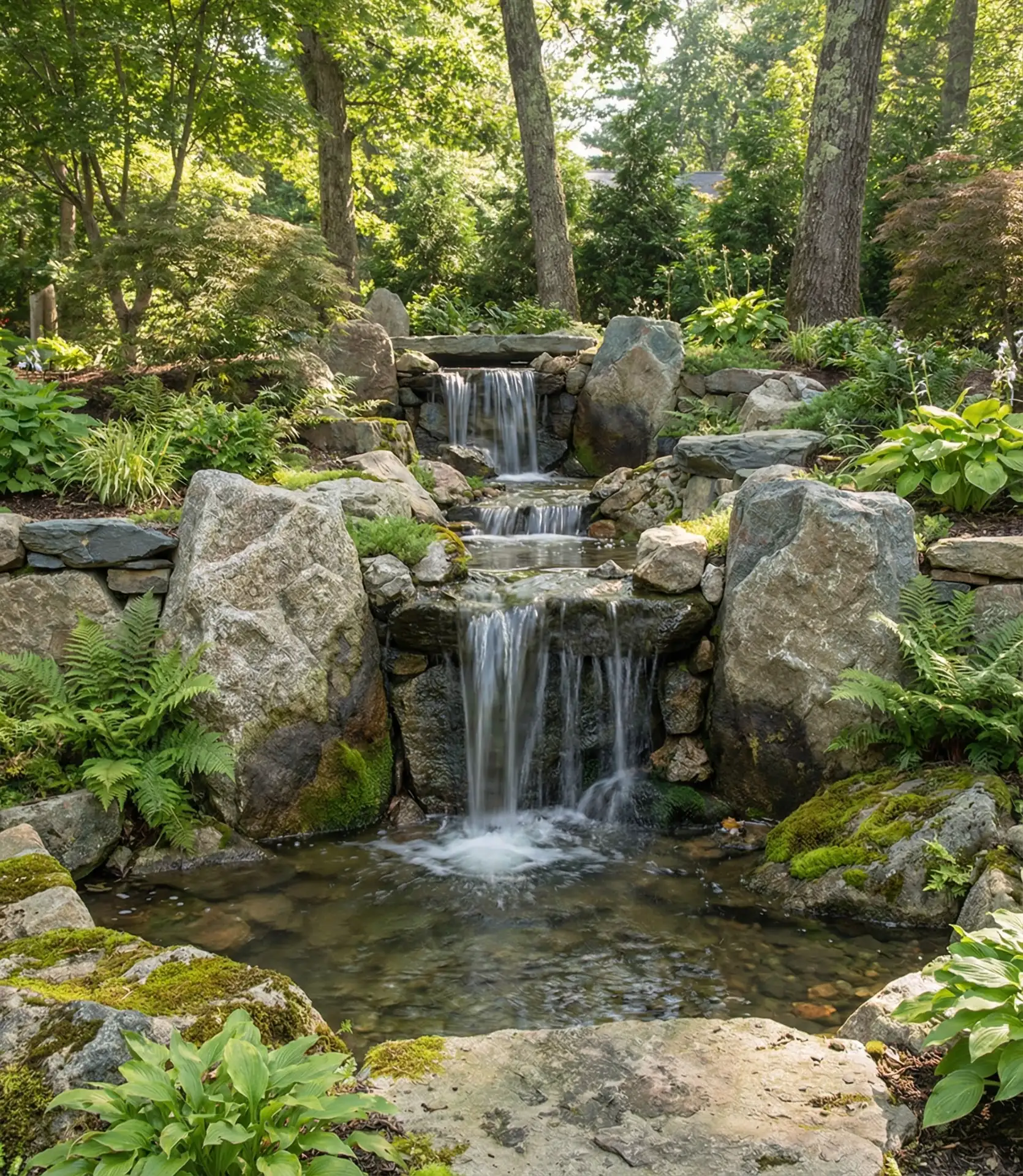
This, by far, is the largest investment in rock garden projects. Depending on their size and complexity, rock garden projects can range from $3,000 to $10,000, but a DIY approach can yield substantial savings. Professional help is usually needed for the pump and electrical work for safety and warranty reasons, but determined homeowners can take care of the stone placement and planting. Best of all, it is in yards with existing slopes that can be enhanced instead of creating artificial elevation changes and in areas where water features won’t freeze solid for months. The ongoing cost is quite minor, just the electricity to run the pump, which is usually between $10 and $30 a month, and water topping up for evaporation.
21. Rock Garden with Stepping Stone Pathway
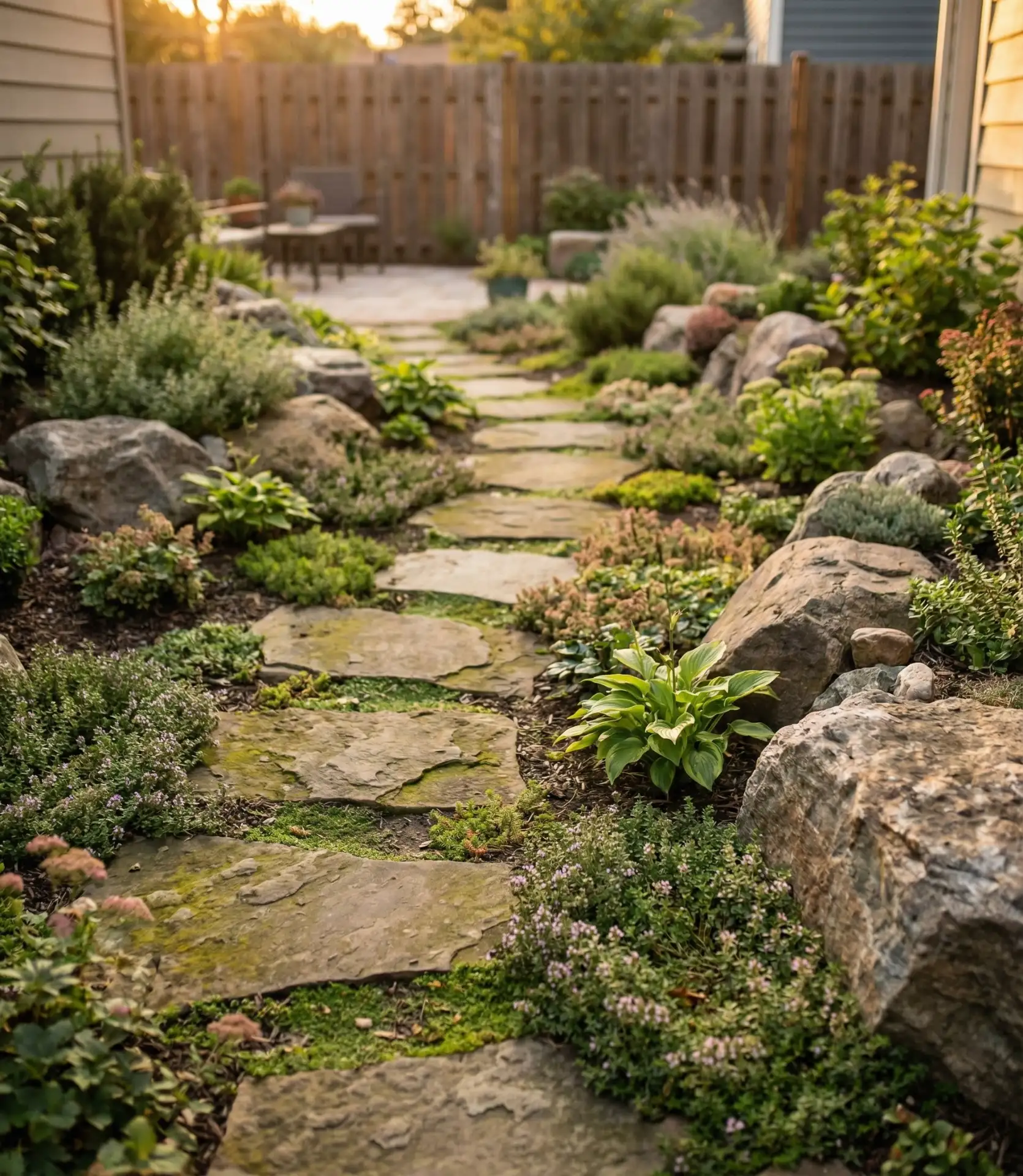
Integrating a stepping stone path through your rock garden creates purposeful movement through the space while protecting plants for rock gardens from foot traffic damage. Large flat stones placed at comfortable walking intervals guide visitors through the landscape, creating a journey rather than just a view. This design works particularly well in backyard settings where you want to connect different outdoor zones—patio to garden shed, deck to fire pit—while maintaining the naturalistic rock garden aesthetic throughout. The pathway stones also provide practical dry footing during wet weather and help define the garden’s structure without rigid borders. 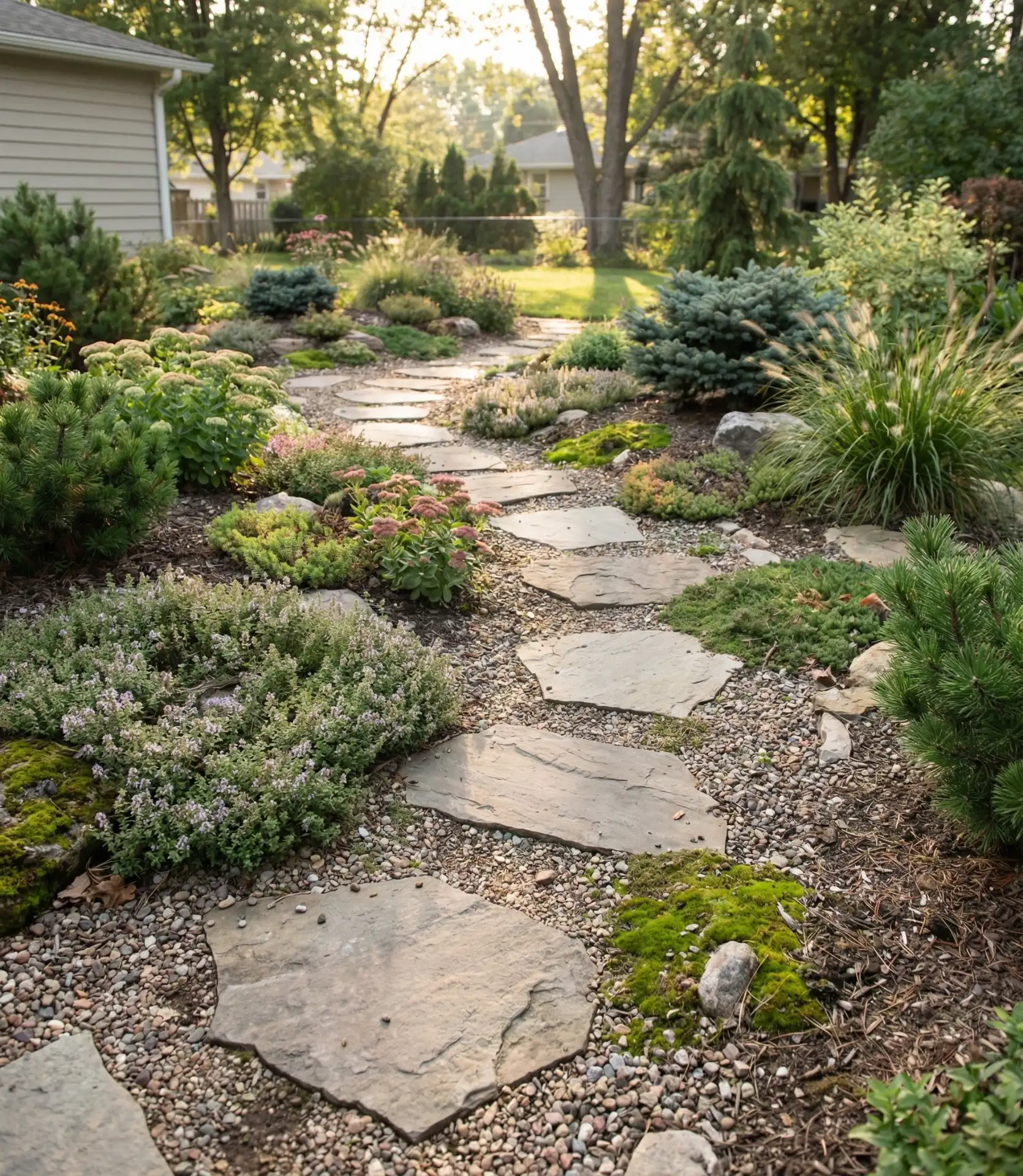
Real homeowner behavior reveals that people instinctively walk the most direct route between two points regardless of intended pathways, so successful stepping stone designs follow natural desire lines rather than forcing decorative curves that nobody will actually use. Space your stones 18–24 inches apart, center-to-center, for comfortable adult strides, and set them slightly proud of the surrounding rock level so they’re easy to identify and won’t collect water. A common mistake is making stepping stones too small or too light; aim for stones at least 12-16 inches across and thick enough that they won’t shift or wobble when stepped on, which typically means 2-3 inches minimum thickness.
22. Rock Garden Fire Pit Social Hub
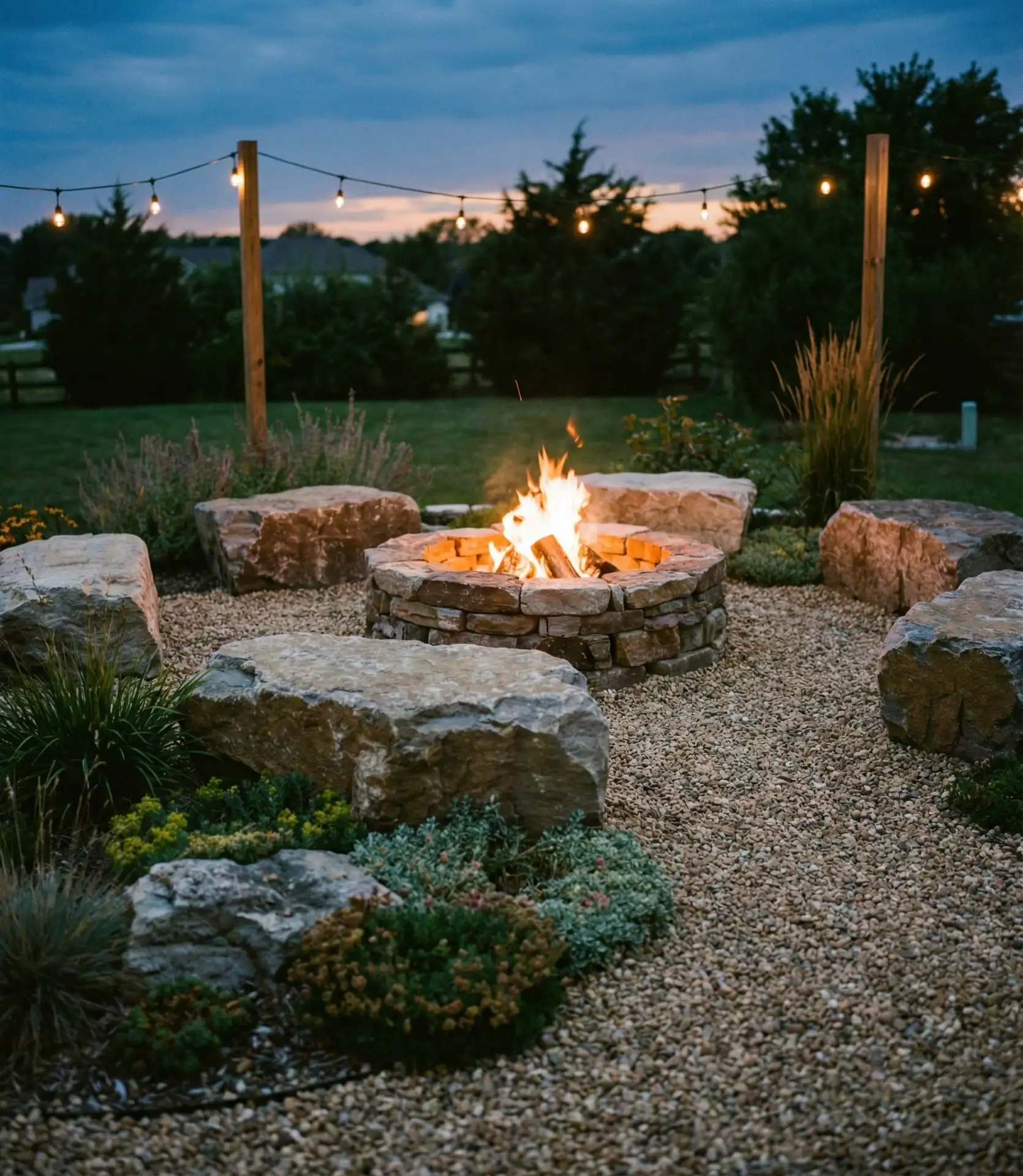
The addition of a fire pit to a previously one-dimensional rock garden enhances the functionality of the garden and allows for a fully interactive space for outdoor recreation and socialization year-round. The fire pit can be constructed using natural seating perimeter ideas, such as rock circle walls of stone complemented by low seating walls of stone and larger exterior boulders. With a rock garden, there is less concern about plants or mulch beds catching fire, and the stone also traps and gives off heat, ensuring guests enjoy the space on chilly evenings. This setup is popular, as outdoor fire pits are a mainstay in American backyards. 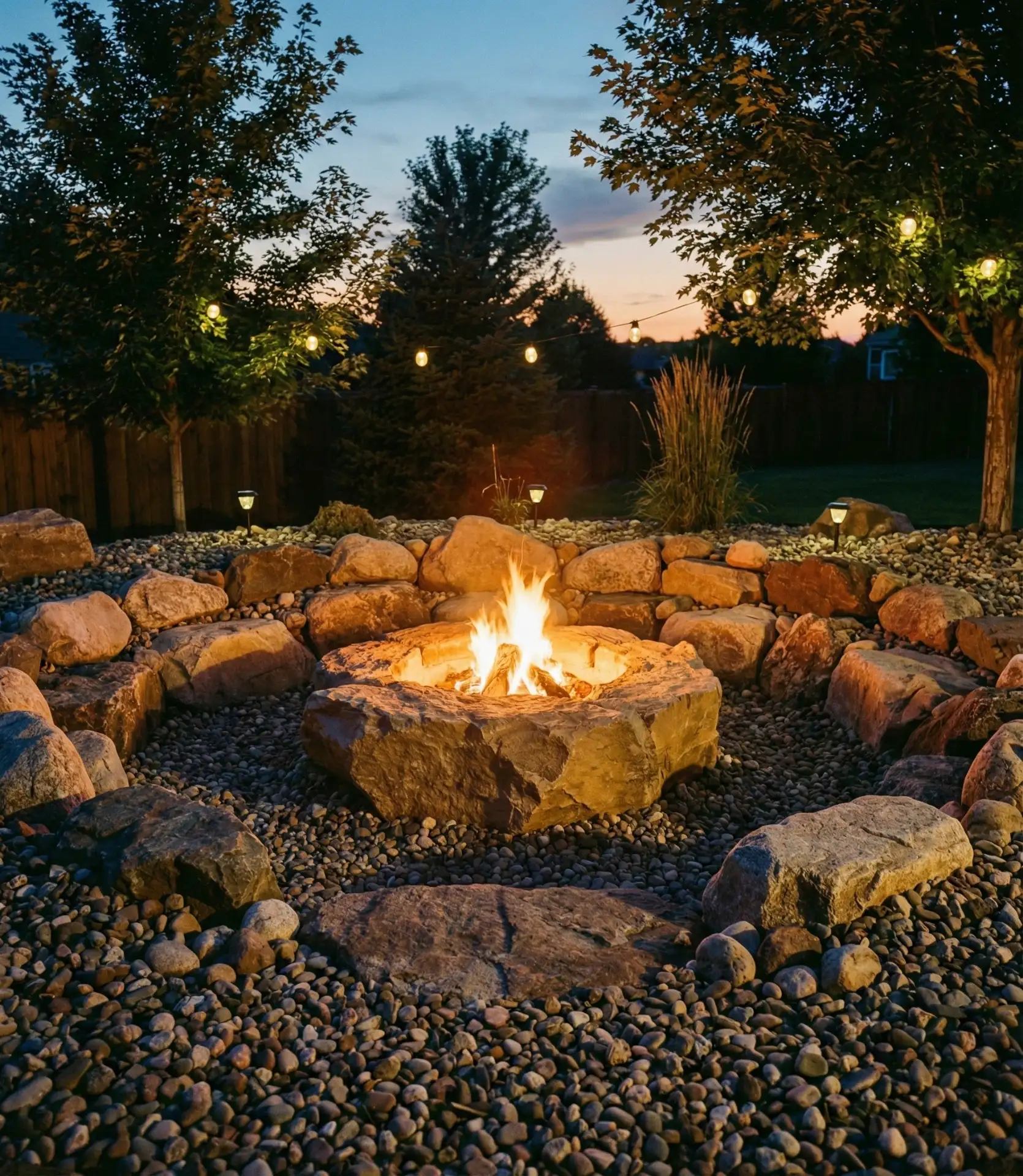
The best larger outdoor spaces for positioning a fire pit are those that are 10 to 15 feet away from any structure, at a safe distance from low overhanging tree branches, and located in areas where fire pits are permitted year-round or seasonally. Experts recommend fire-rated stone for the fire pit; natural river rock should never be used, as it can explode. However, using granite or sandstone river rock is safe, as are fire pit blocks specifically manufactured for that purpose.
Clarifying the finances: DIY fire pit stone ranges from $200 to $400, with landscape rock bordering it $300–$600, built-in stone benches, and walls, which also improve functionality. This approach produces an outdoor room instead of visual landscaping alone.
23. Alpine Rock Garden with Mountain Plants
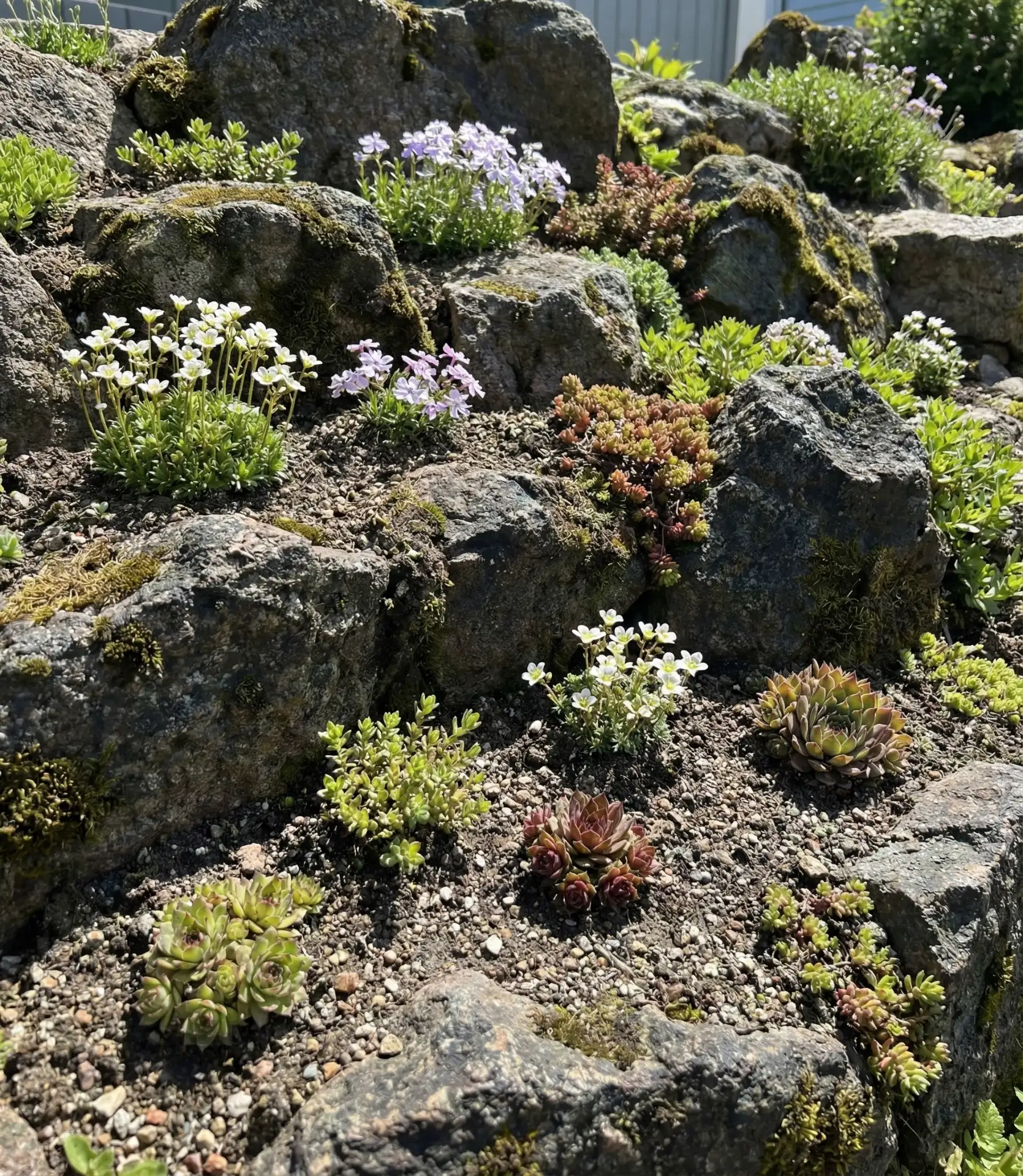
Bringing an alpine-inspired rock garden to lowland settings creates the beauty of high elevated mountains through the careful selection of an array of plants for rock gardens. This style includes alpine phlox, saxifrage, and dwarf conifers, which are compact, slow-growing perennials, as they are surrounded by angular rocks that imitate slopes of the mountains. The design rocks are arranged as if they are naturally out of the earth and make the garden appear to be a miniature mountainscape, which helps create a natural appearance. This approach gained popularity on Pinterest due to the desire for a distinctive and unique rock garden, as opposed to generic landscaping.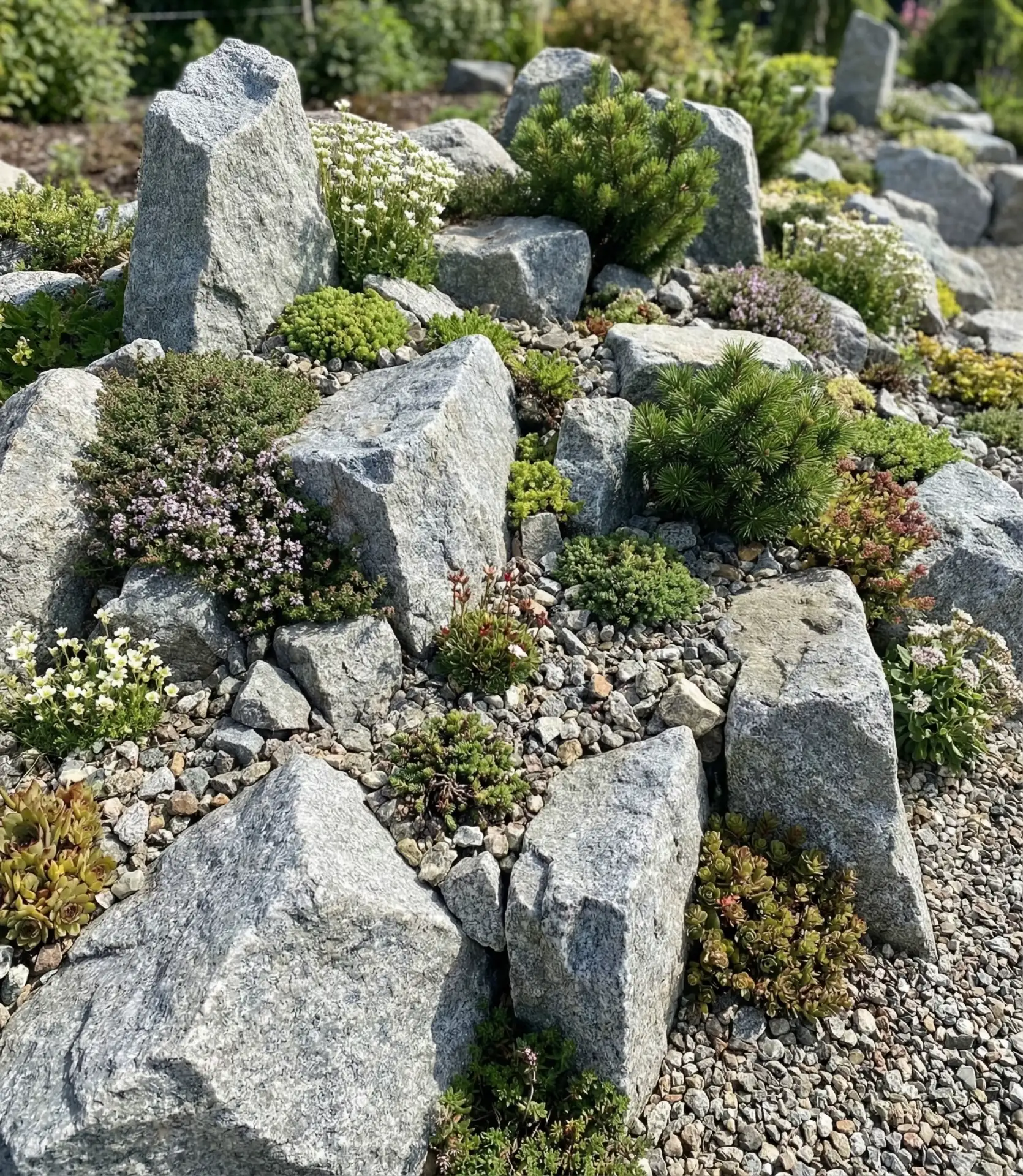
A friend crafted an alpine garden using native mountain rocks and plants, and it has become her pride and joy because it’s a beautiful landscape that performs wonderfully in her climate and looks nothing like the rest of the gardens in her neighborhood.
Alpine plants need beds that have been constructed with excellent drainage systems. Otherwise, they will rot in muddy soil. Make beds using amended soil that has at least 50% of gritty material. We recommend using coarse sand, perlite, or fine gravel. This method works in almost all zones, especially zones 3–7. In these zones, plants will have cold winters and warm, moderate summers that resemble mountains. Gardeners in warm zones, however, can modify and create alpine gardens using heat-tolerant plants with similar visuals to the desired garden.
24. Rock Garden Retaining Wall with Pockets
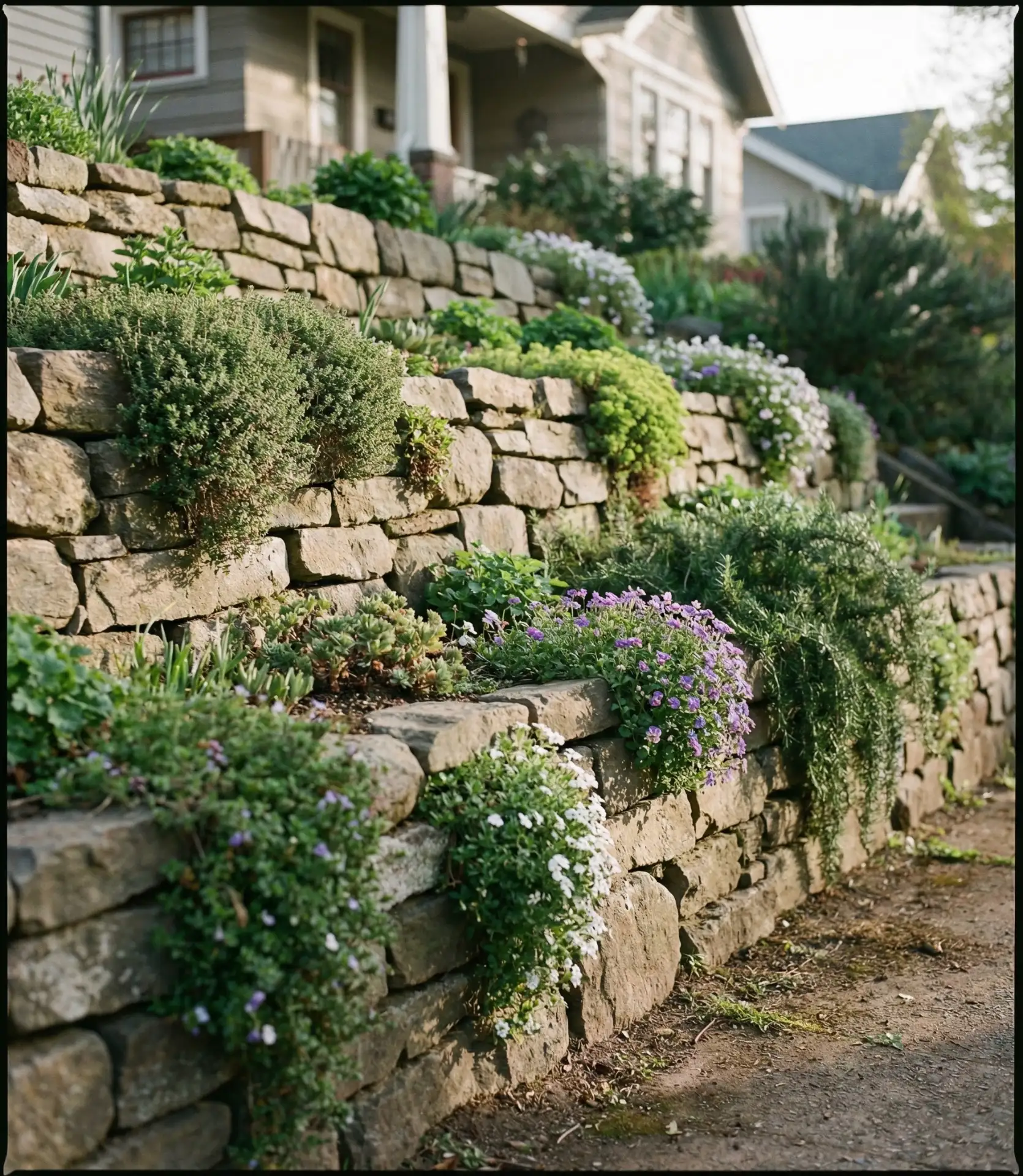
Building a retaining wall with intentional planting pockets transforms a necessary structural element into a vertical rock garden that maximizes space and visual impact. This technique involves leaving gaps between stacked stones where you can tuck trailing plants like creeping thyme, rock cress, and sedum that spill down the wall face, softening the rigid edges while maintaining the wall’s functionality. The approach works brilliantly on slope properties where you need erosion control and level spaces, turning what could be plain retaining walls into living, blooming vertical gardens. The combination of horizontal rock garden areas and vertical planted walls creates dynamic layering that makes landscapes feel larger and more complex. 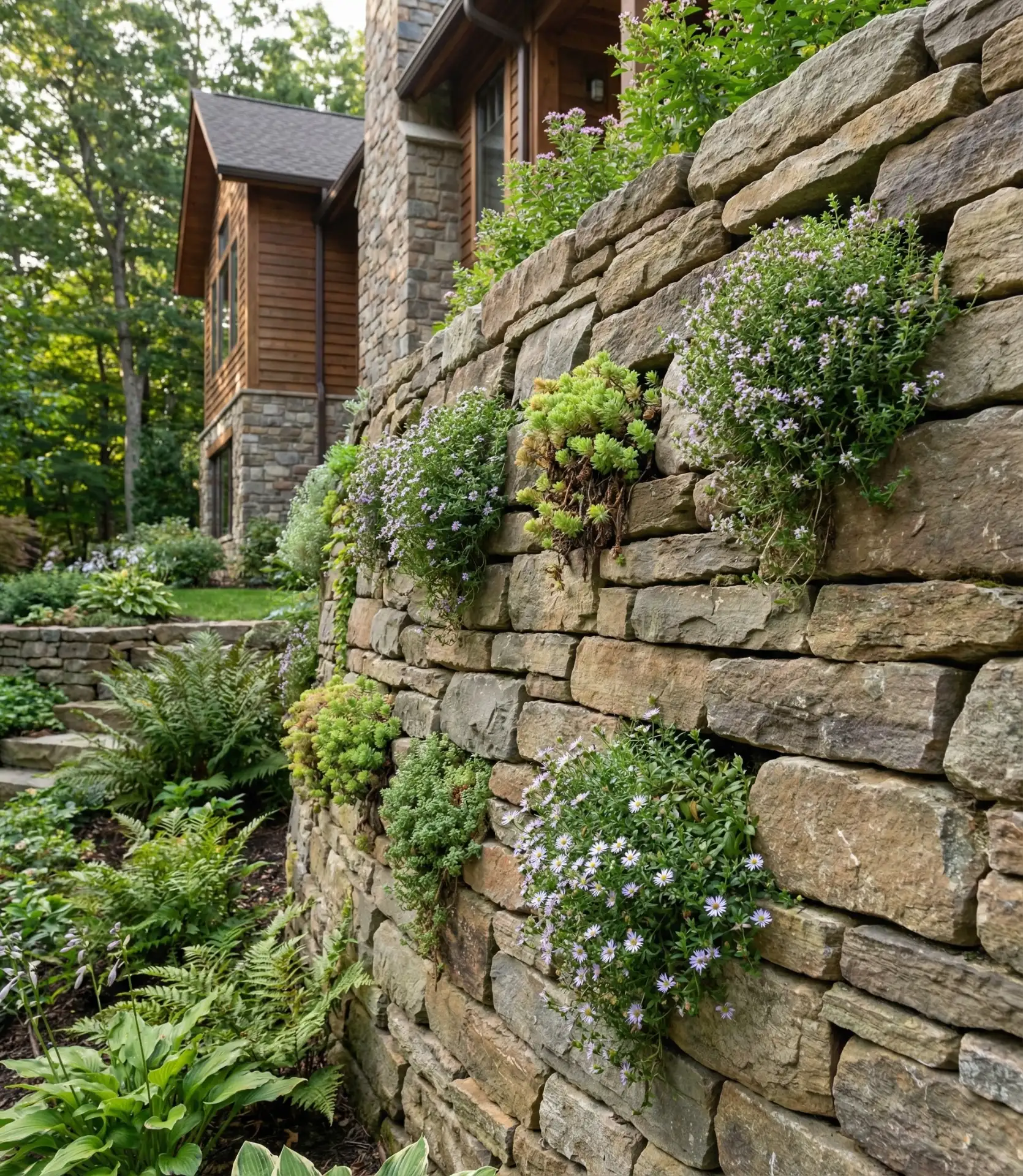
From a practical standpoint, installing planting pockets during wall construction is far easier than trying to retrofit them later, so plan this feature from the beginning if you’re building new retaining walls. Use smaller stones to create pocket edges that hold soil, and fill pockets with a well-draining mix that won’t wash out during heavy rains. Common mistakes include making pockets too shallow (aiming for at least 6–8 inches deep) or planting species that require more root space than vertical pockets provide. Stick with true rock garden plants and alpine species that naturally grow in crevices with limited soil, and you’ll have cascading blooms that improve year after year as plants establish and self-seed into additional cracks.
25. Moonlight Garden with White Rocks
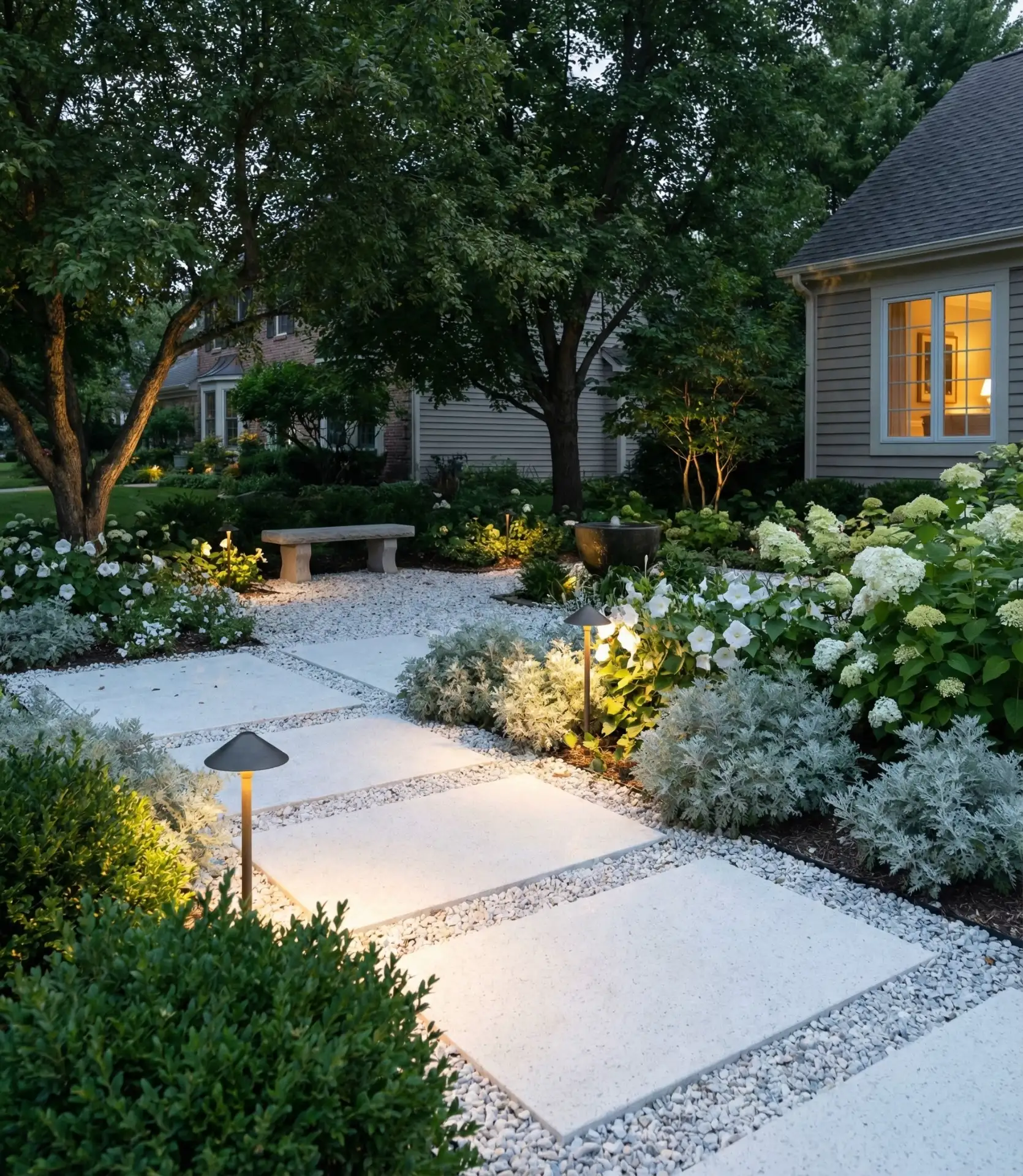
Designing a moonlight garden using white rocks and pale-flowering plants creates an ethereal nighttime landscape that glows under the moon and landscape lighting. This specialty rock garden features light-colored stones that reflect available light, paired with white or silvery plants like dusty miller, white-flowering rock roses, and silver artemisia that seem to illuminate from within after dark. The front yard becomes enchanting during evening hours when most gardens fade into darkness, and the reflective quality of pale stones means you need less artificial lighting to create ambiance and visibility. This approach particularly appeals to people who enjoy their outdoor spaces during cool evenings or host frequent outdoor dinners. 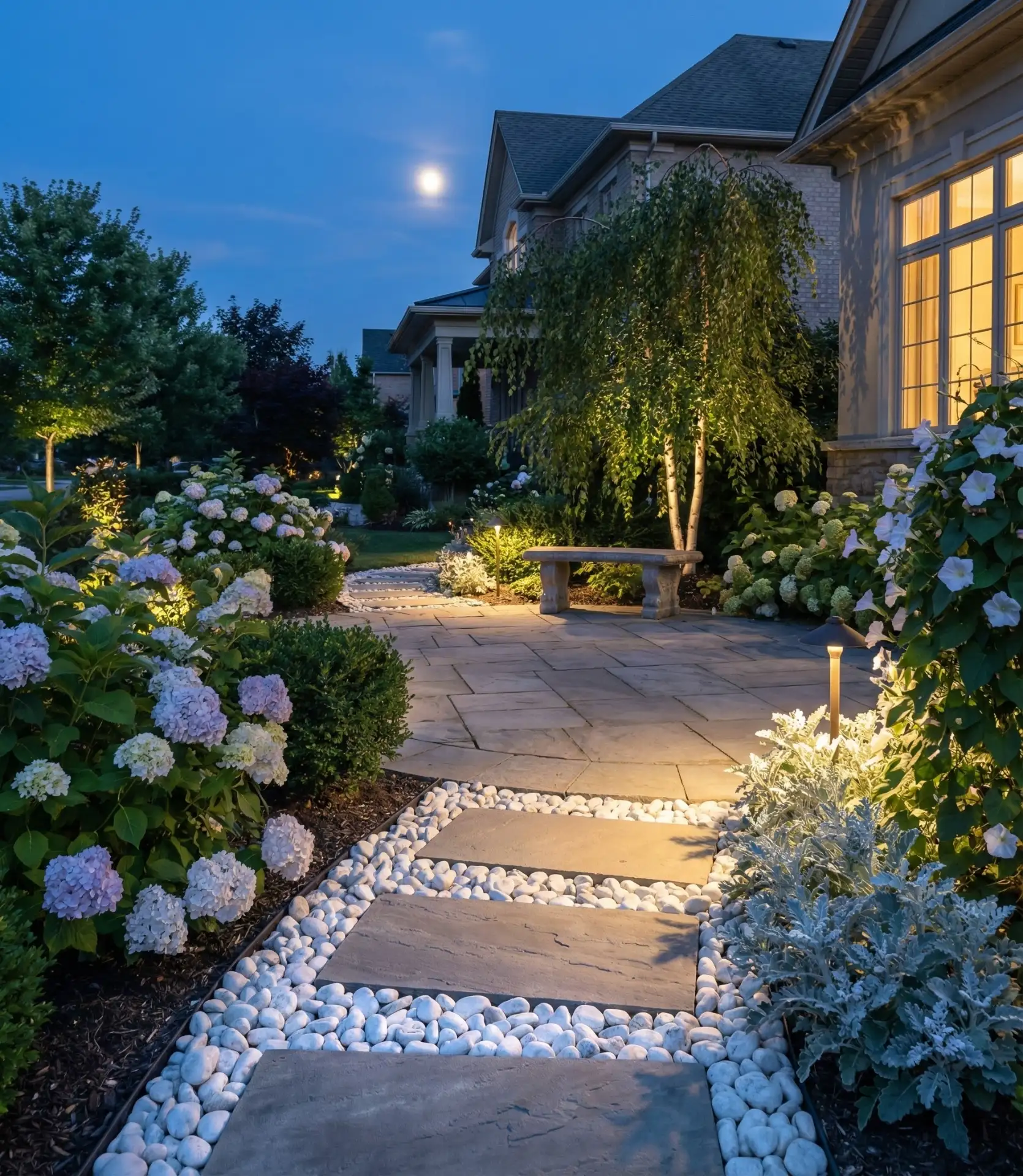
American lifestyle trends show increasing interest in outdoor spaces that function beautifully after work hours when people actually have time to enjoy them. The moonlight garden addresses such needs by creating visual interest specifically for evening viewing. Budget considerations include both the white stones themselves—which typically cost slightly more than standard gravel—and strategic lighting that enhances the effect. Solar-powered path lights or low-voltage LED uplighting positioned to graze across white stones and pale plants can create dramatic effects for minimal ongoing energy costs. Where this style works best is in areas you view from indoor spaces during evenings or around patios and seating areas where you spend time after sunset.
26. Rock Garden Wildlife Corridor
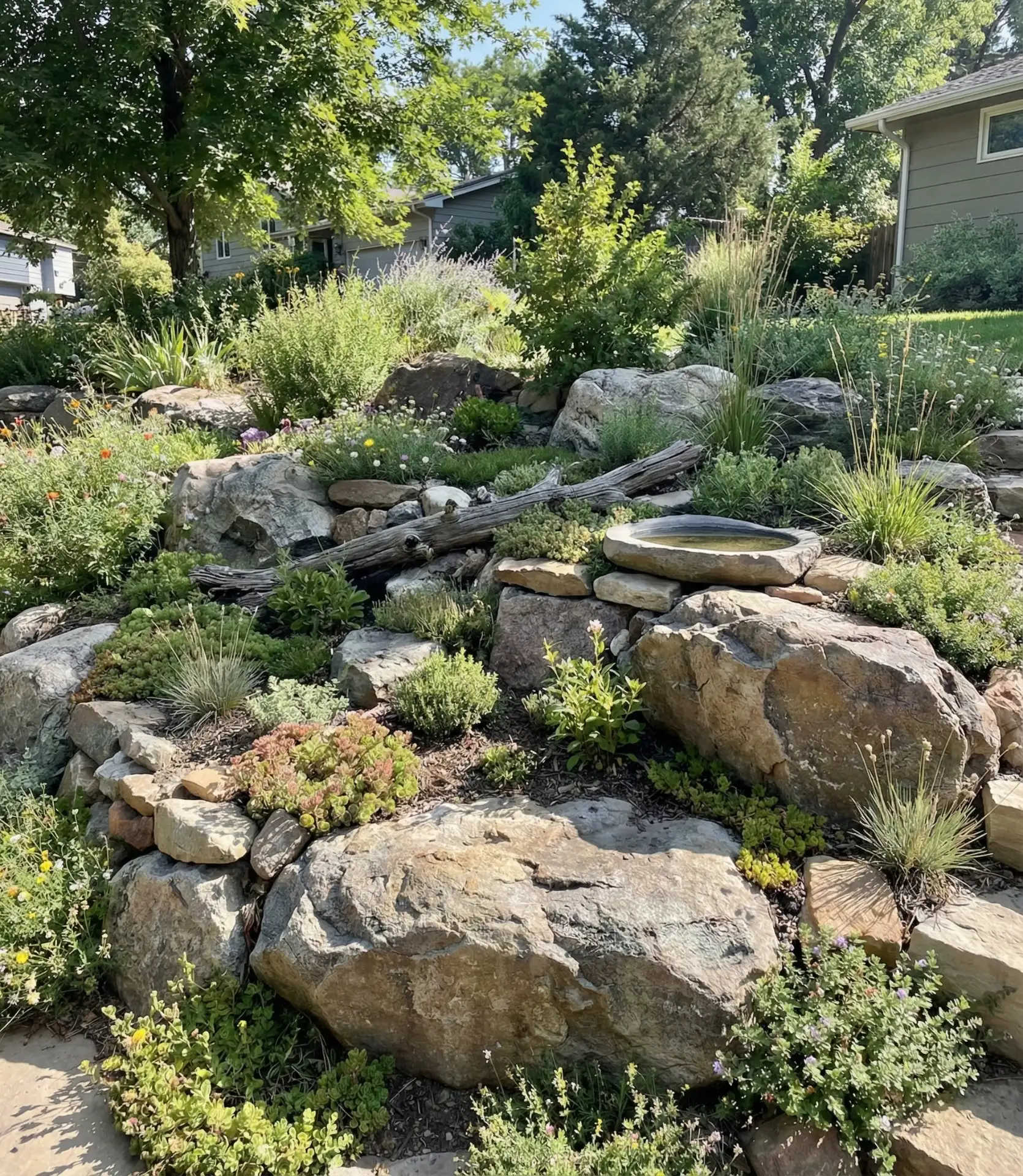
Creating a rock garden designed specifically as a wildlife corridor supports local ecosystems while giving you a natural landscape that comes alive with birds, butterflies, and beneficial insects. This approach layers different-sized rocks to create hiding spots, basking areas, and overwintering sites for various creatures, while selecting plants for rock gardens that provide nectar, seeds, and shelter throughout the season. Larger boulders create protected spaces underneath for small mammals and hibernating insects, while flatter stones offer sunny basking spots for lizards and butterflies. The result is a functioning ecosystem rather than just decorative landscaping, which brings educational opportunities and entertainment value beyond visual appeal. 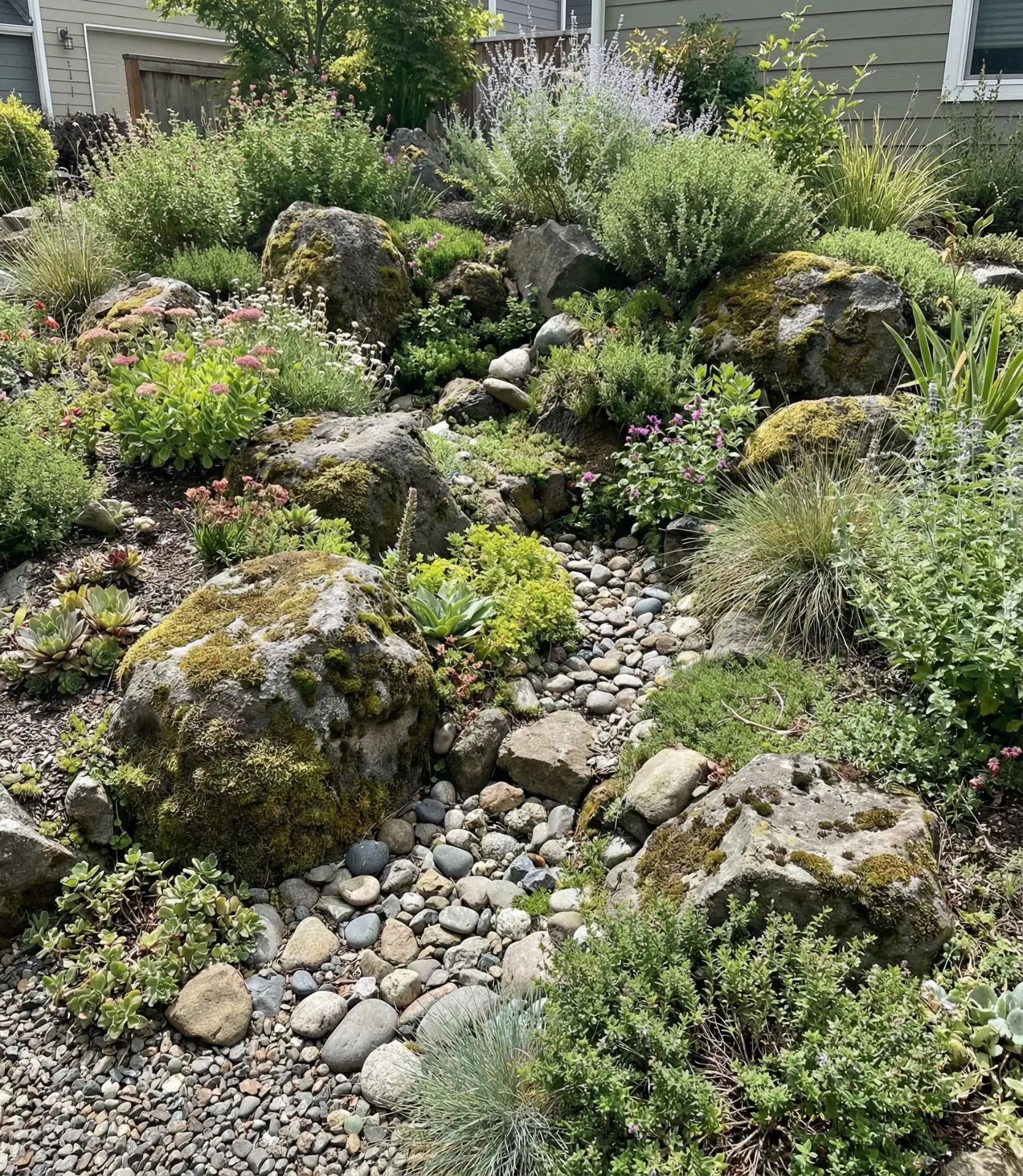
Expert-style commentary from wildlife biologists emphasizes that the most effective wildlife corridors include rocks of many sizes—not just uniform decorative stone—because different creatures need different-sized spaces. Leave some areas deliberately “messy” with leaf litter between rocks and plant debris that provides food and shelter for insects that in turn feed birds and other wildlife. This style works best when you choose regionally native plants rather than exotic ornamentals, as local wildlife evolved with native species and depend on them for survival. One unexpected benefit: these gardens require even less maintenance than typical rock gardens because you’re working with nature rather than against it, and “weeds” that provide wildlife value get a pass rather than constant removal.
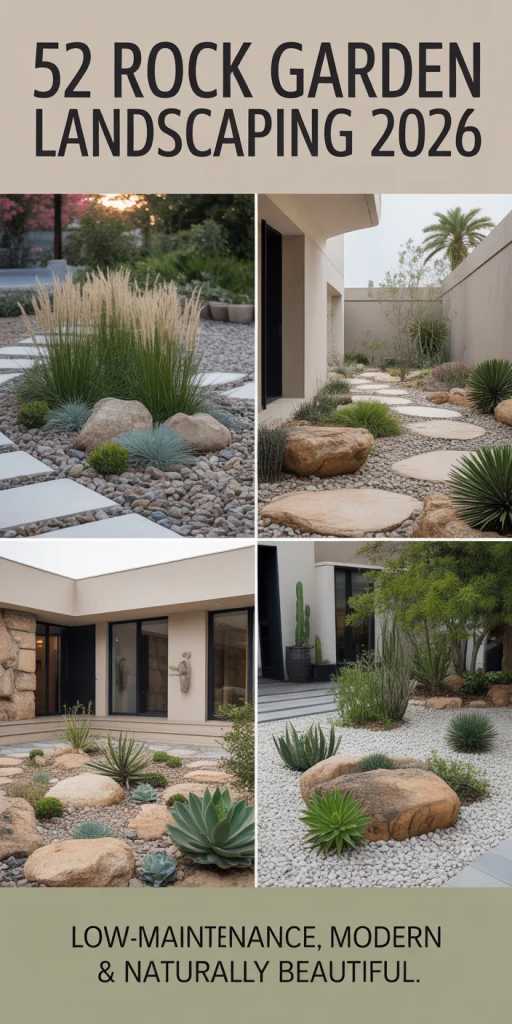
Rock garden landscaping in 2026 represents far more than just a low-maintenance alternative to traditional lawns—it’s a creative canvas where functionality meets artistry, where water conservation aligns with stunning visual appeal, and where your outdoor space can truly reflect your personal style and values. From the drought-tolerant elegance of succulent gardens to the social warmth of fire pit areas, from budget-friendly DIY projects to ambitious multi-level waterfalls, these ideas demonstrate the remarkable versatility of rock gardens across every climate, budget, and skill level. Whether you’re transforming a challenging slope, reimagining a neglected side yard, or creating a wildlife sanctuary that supports local ecosystems, rock gardens offer solutions that only improve with time. The beauty of starting your rock garden journey now is that you can begin small—perhaps with a container garden or a simple driveway border—and expand as your confidence and vision grow. We’d love to hear which of these ideas resonates with your landscape challenges and dreams. Have you already created a rock garden that’s become your favorite outdoor space? Are you planning to tackle one of these projects this season? Share your experiences, questions, and photos in the comments below—your insights might inspire fellow readers and help build a community of rock garden enthusiasts who prove that beautiful, sustainable landscaping is within everyone’s reach.