51 Basement Bedroom Ideas 2026: Transform Your Underground Space Into a Cozy Haven

Basement bedrooms are no longer forgotten afterthoughts—they’ve become some of the most creative, functional spaces in American homes. Whether you’re planning a cozy retreat for teens, a refined guest suite, or a private sanctuary for yourself, the basement offers a unique opportunity to reimagine underutilized square footage. In 2026, homeowners are turning to Pinterest for inspiration that balances style with practicality, searching for ways to tackle challenges like low ceilings, limited natural light, and tight budgets. This guide walks you through fresh, achievable basement bedroom ideas that work for real homes and real lives, from rustic charm to sleek modern aesthetics.
1. Bright Window-Framed Retreat
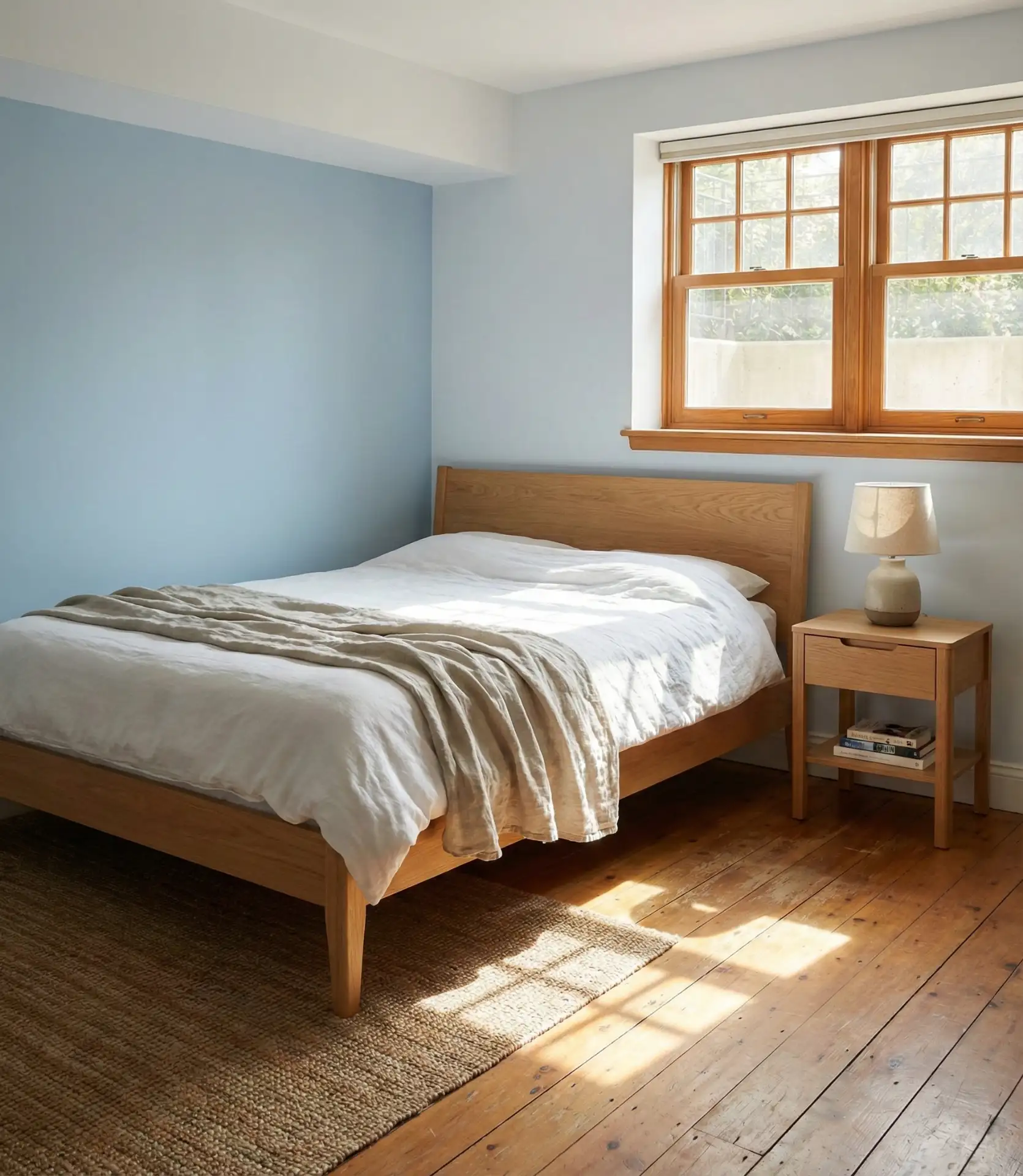
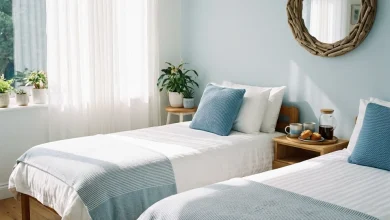
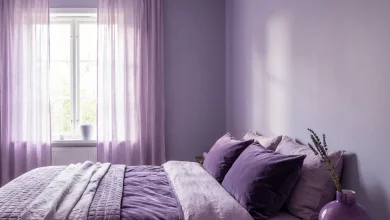
Maximizing windows transforms a basement bedroom from dim to dynamic. Even a single well-placed window can flood the room with natural light, making the space feel larger and more inviting. Pair white or light-colored walls with sheer curtains to amplify brightness without sacrificing privacy. This approach works especially well in finished basements where you can control the color palette and window treatments to create an aesthetic that feels fresh and airy.
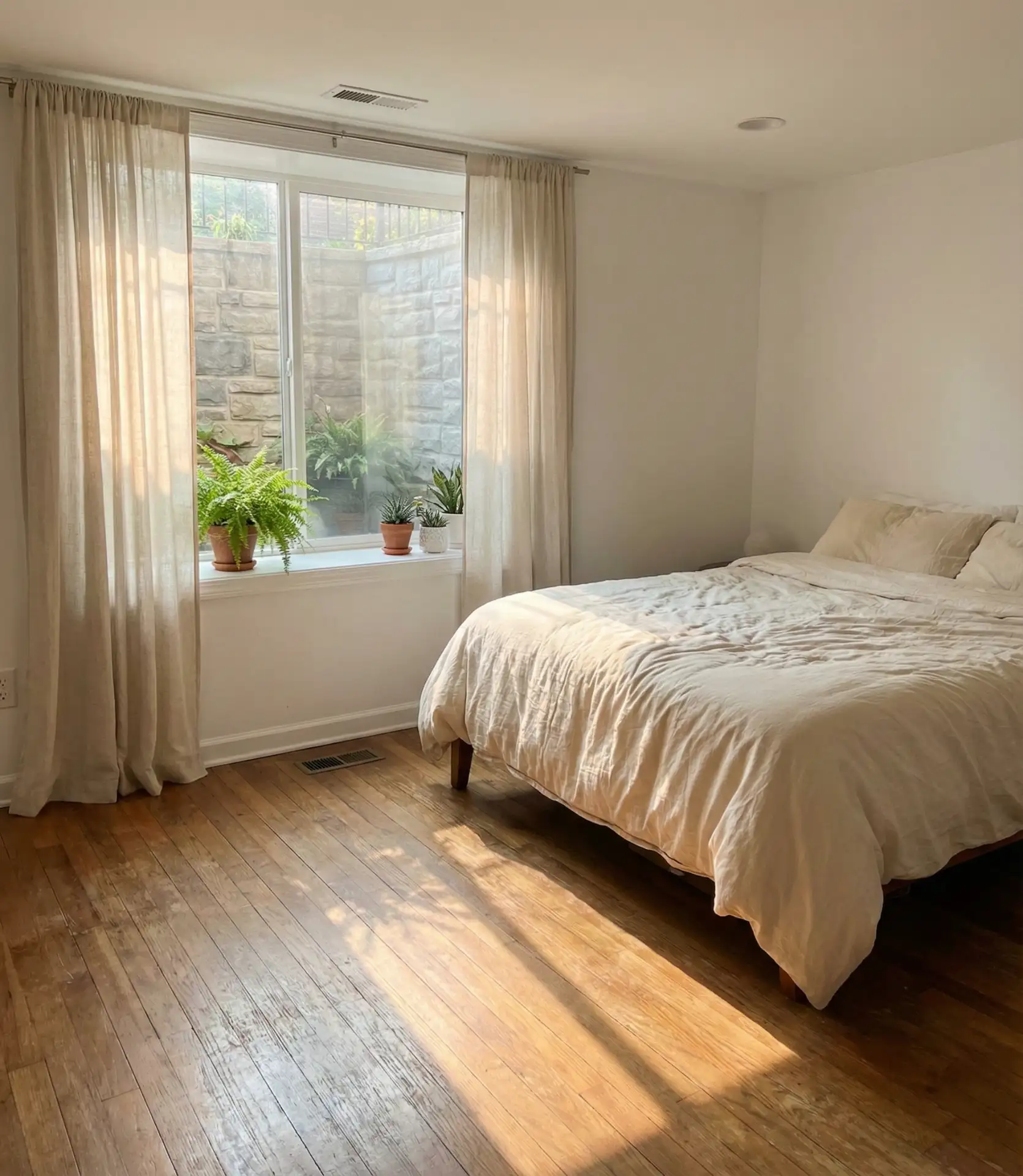
In homes across the Midwest and Northeast, where basements are standard, window wells are often upgraded with reflective liners or decorative stones to bounce more light into the room. This small investment makes a measurable difference in how the space feels throughout the day. Consider adding a mirror opposite the window to double the effect, and choose furniture with legs rather than heavy bases to maintain an open, grounded feel that doesn’t block precious light sources.
2. Edgy Teen Hangout Zone
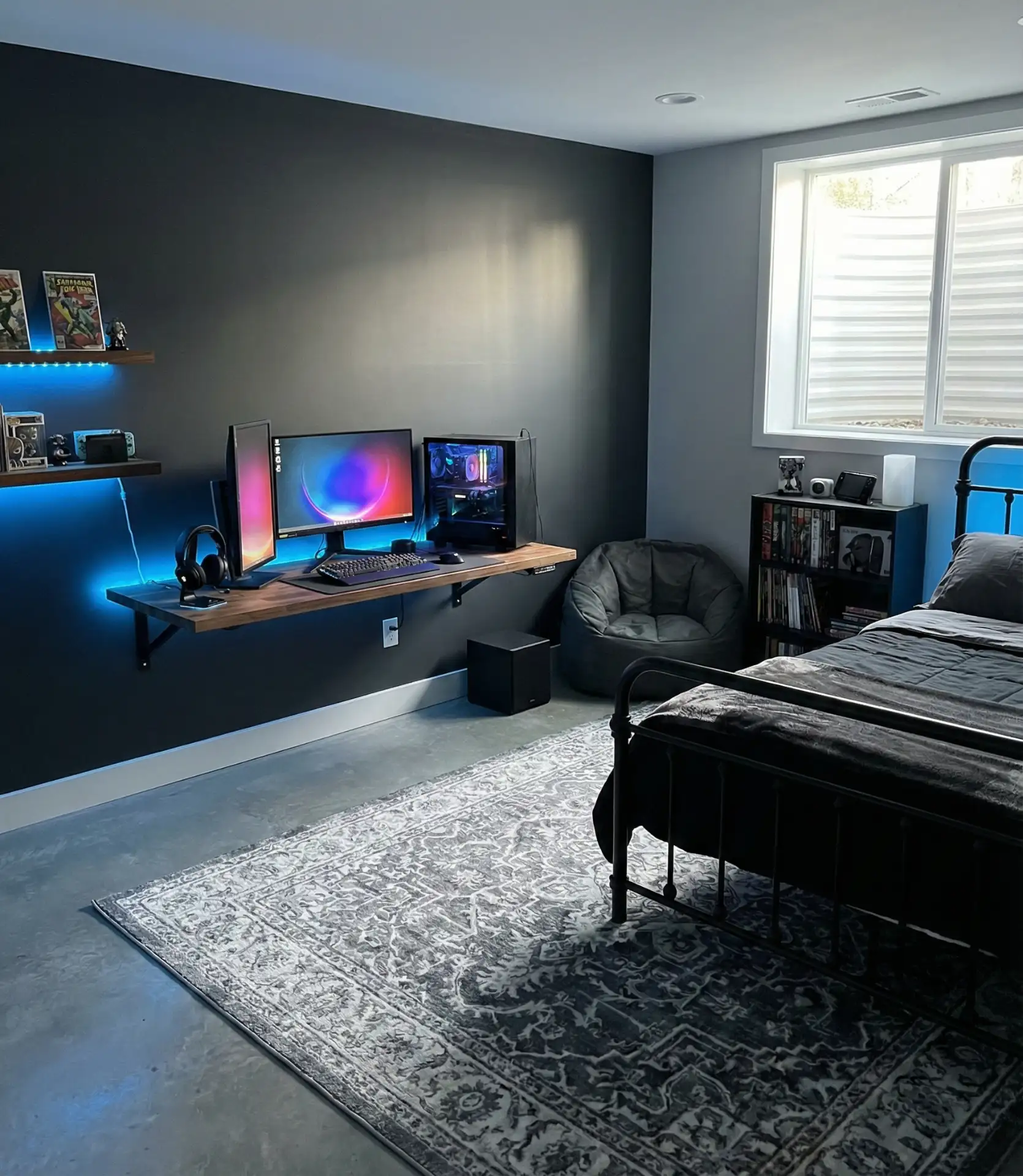
Creating a teen’s bedroom in the basement gives them independence while keeping the main floor quieter. Think bold accent walls, LED strip lighting, and modular furniture that adapts to their changing tastes. A teen’s layout should include dedicated zones for sleeping, studying, and hanging out—perhaps a low platform bed, a compact desk, and a cozy corner with floor cushions. The basement’s natural separation from family spaces makes it ideal for teens’ man cave vibes or creative studios.
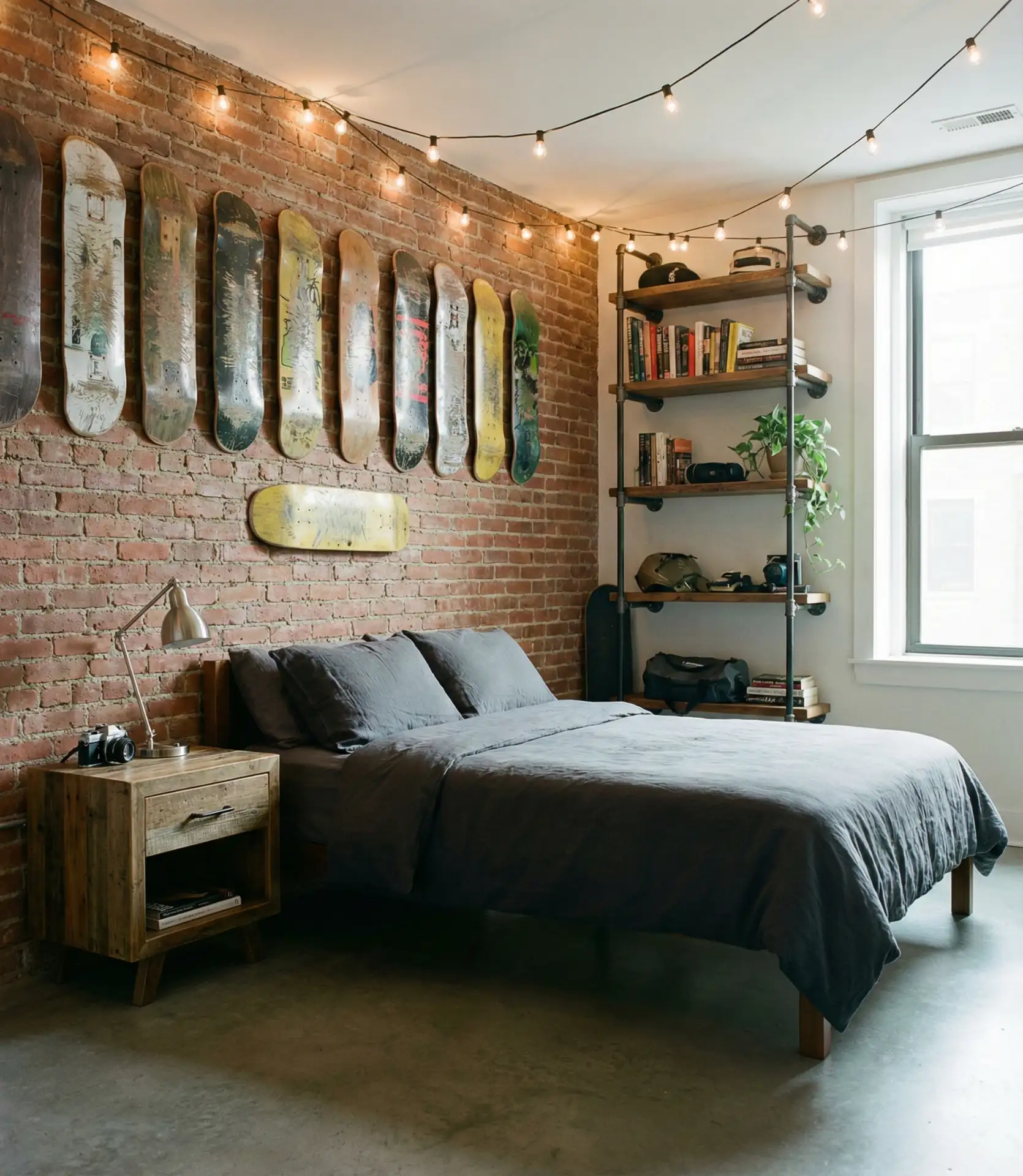
Common mistakes include skimping on soundproofing and ventilation. Teens tend to play music, host friends, and stay up late, so adding acoustic panels or thick rugs helps contain noise. A small dehumidifier or upgraded HVAC vent keeps air fresh and prevents that musty basement smell. Let them personalize the space with removable wall decals or pegboards—it’s their retreat, and giving them ownership over the design builds responsibility and pride.
3. Industrial Unfinished Charm
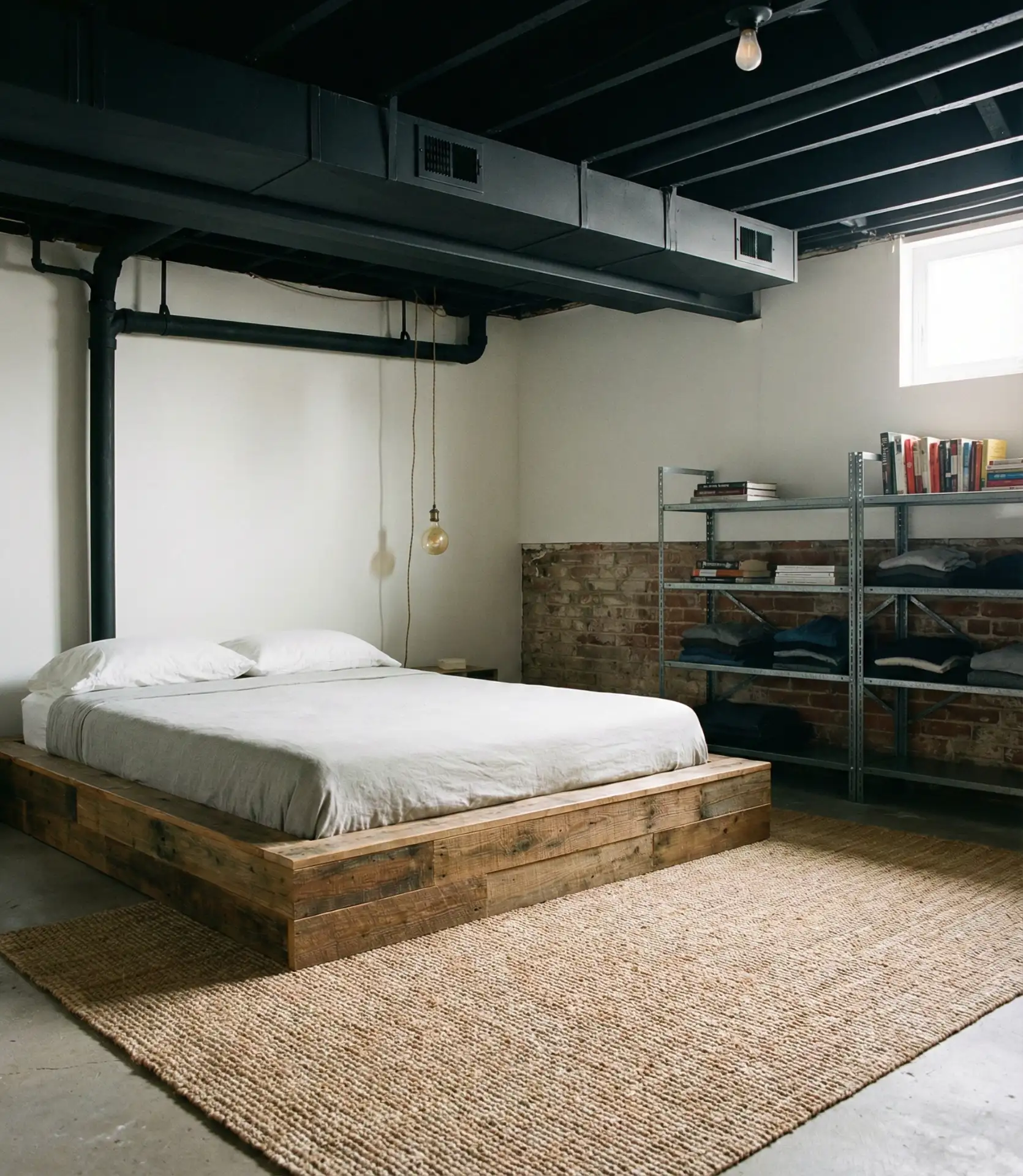
An unfinished basement doesn’t have to stay uninhabitable. Embrace exposed beams, concrete floors, and visible ductwork as design features rather than flaws. This rustic industrial aesthetic has gained traction on Pinterest, where homeowners celebrate raw textures and minimal intervention. A simple bed frame, a vintage trunk for storage, and warm lighting can transform a bare-bones space into a surprisingly stylish bedroom on a budget.
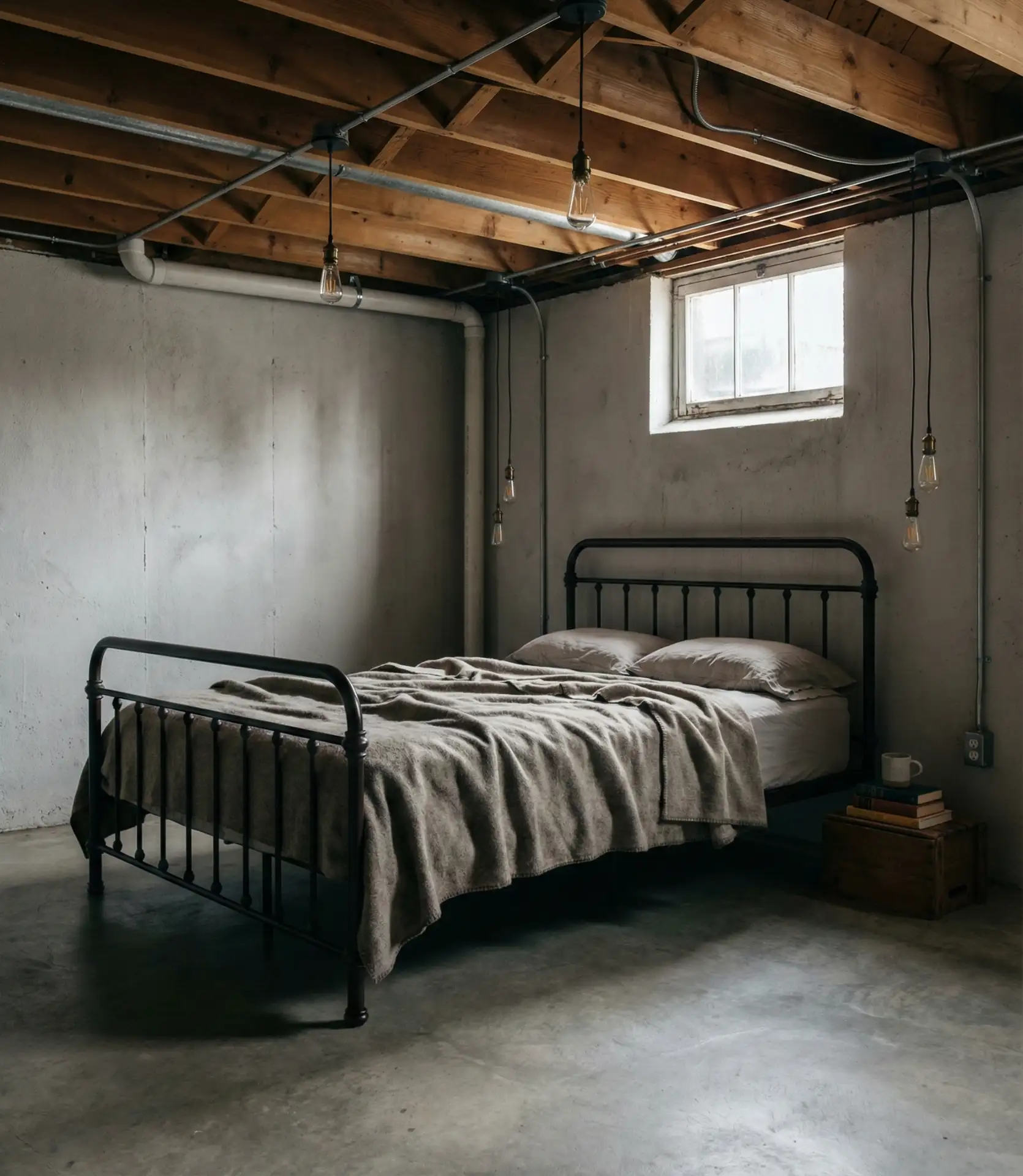
This theme works best in urban lofts or older homes where the industrial vibe aligns with the overall architecture. In many American cities like Portland, Chicago, and Brooklyn, homeowners are leaving basements intentionally unfinished but functional, saving thousands while achieving a look that feels curated rather than neglected. Just ensure the space meets basic egress and safety codes—unfinished doesn’t mean unsafe.
4. Budget-Friendly Refresh
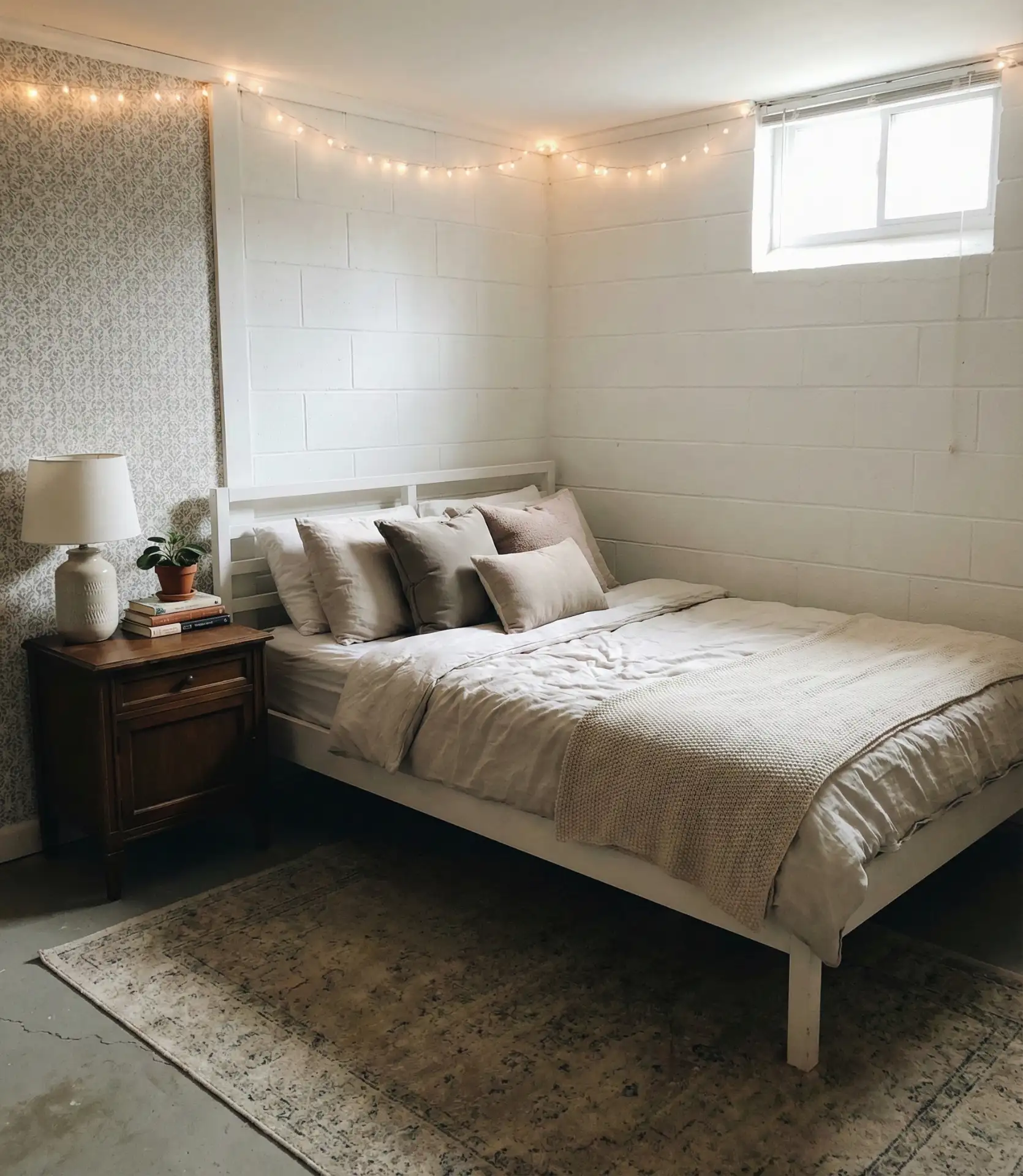
Transforming a basement bedroom on a budget is entirely possible with strategic choices. Focus on paint, lighting, and secondhand finds rather than expensive renovations. A fresh coat of warm white paint can brighten dark corners, while thrifted furniture and DIY headboards add character without the price tag. This approach is especially popular among young couples and first-time homeowners looking to make the most of every dollar.
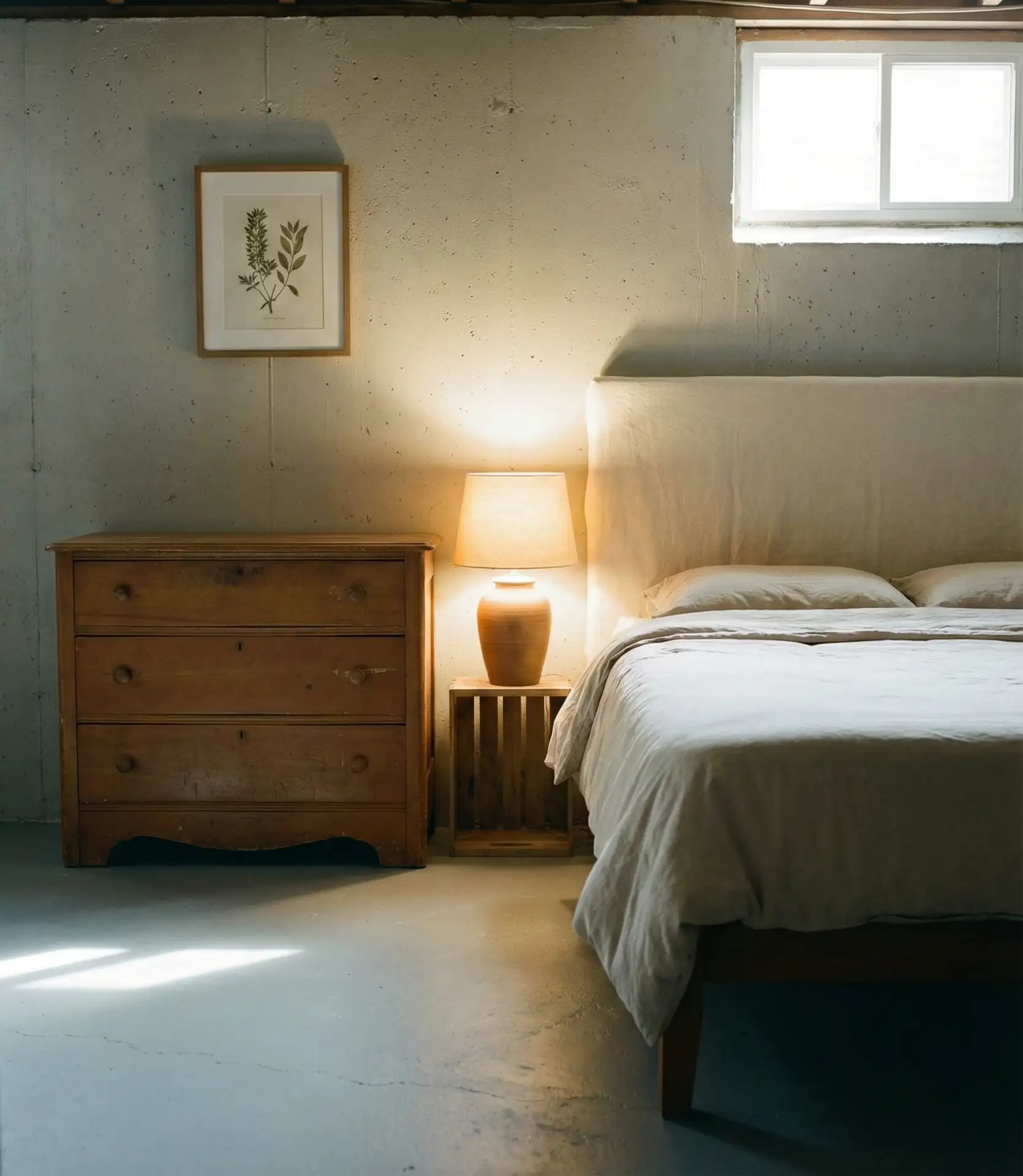
According to real homeowner behavior tracked across Pinterest boards, the most pinned budget basement ideas involve removable wallpaper, stick-on tile, and battery-operated sconces. These allow renters and cautious renovators to personalize the space without permanent commitment. Avoid the mistake of buying everything new at once—layer in pieces over time, mixing high-impact items like bedding with budget-friendly accents like plants and art prints.
5. Polished Finished Elegance
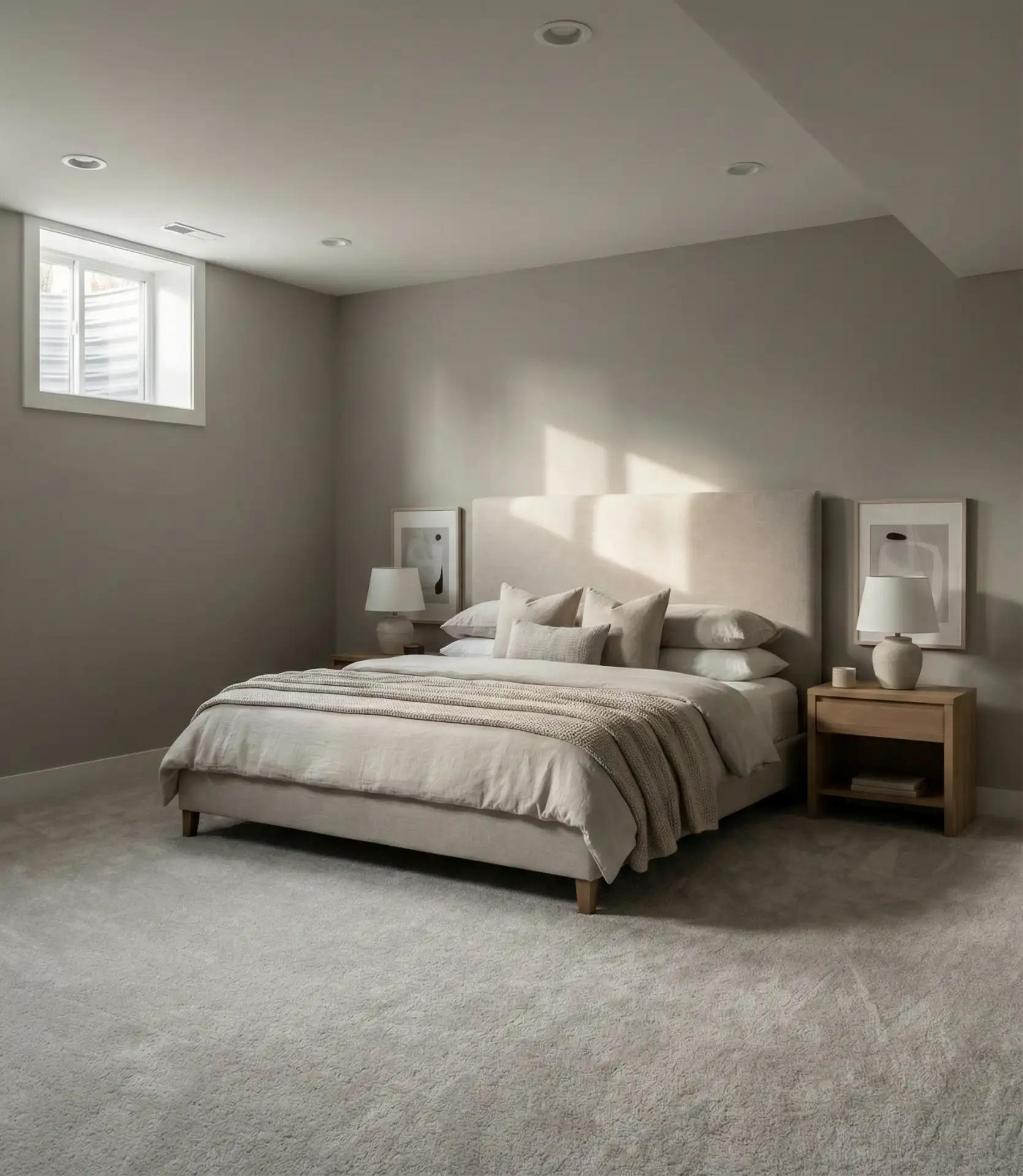
A fully finished basement bedroom feels like an extension of the main living areas, offering comfort and style that rivals upstairs rooms. Think drywall, recessed lighting, quality flooring, and thoughtful trim work. This level of completion allows for aesthetic cozy touches like crown molding, built-in shelving, and layered textiles that make the space feel intentional and high-end. It’s ideal for guest-friendly setups or even a private master suite layout.
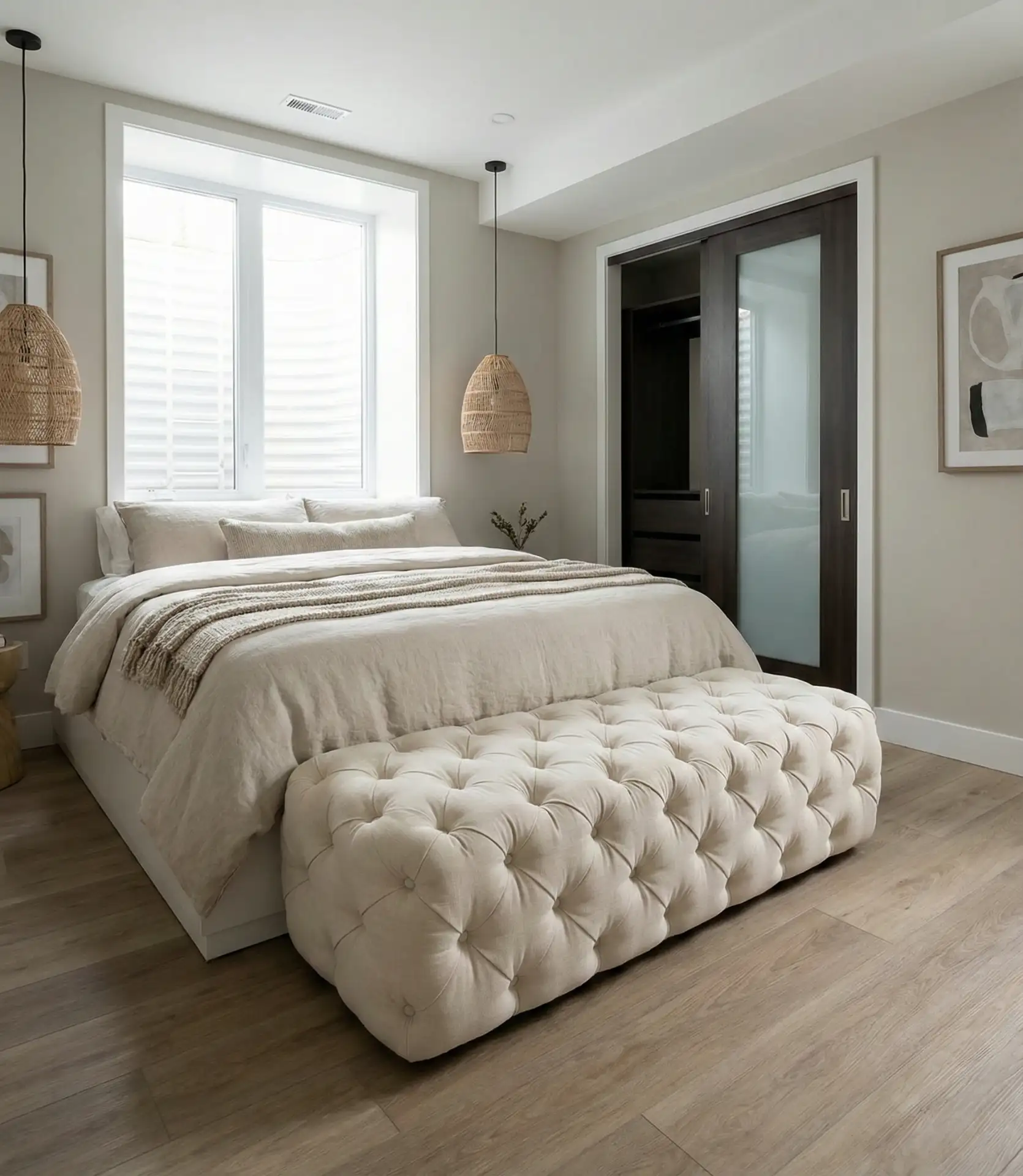
A micro anecdote: one homeowner in Virginia spent six months finishing their basement bedroom and reported that guests now request it over the upstairs guest room. The key was treating it as a true bedroom, not an afterthought—investing in blackout curtains, a quality mattress, and climate control. The result is a space that feels private, quiet, and surprisingly luxurious despite being below ground.
6. Layered Cozy Sanctuary
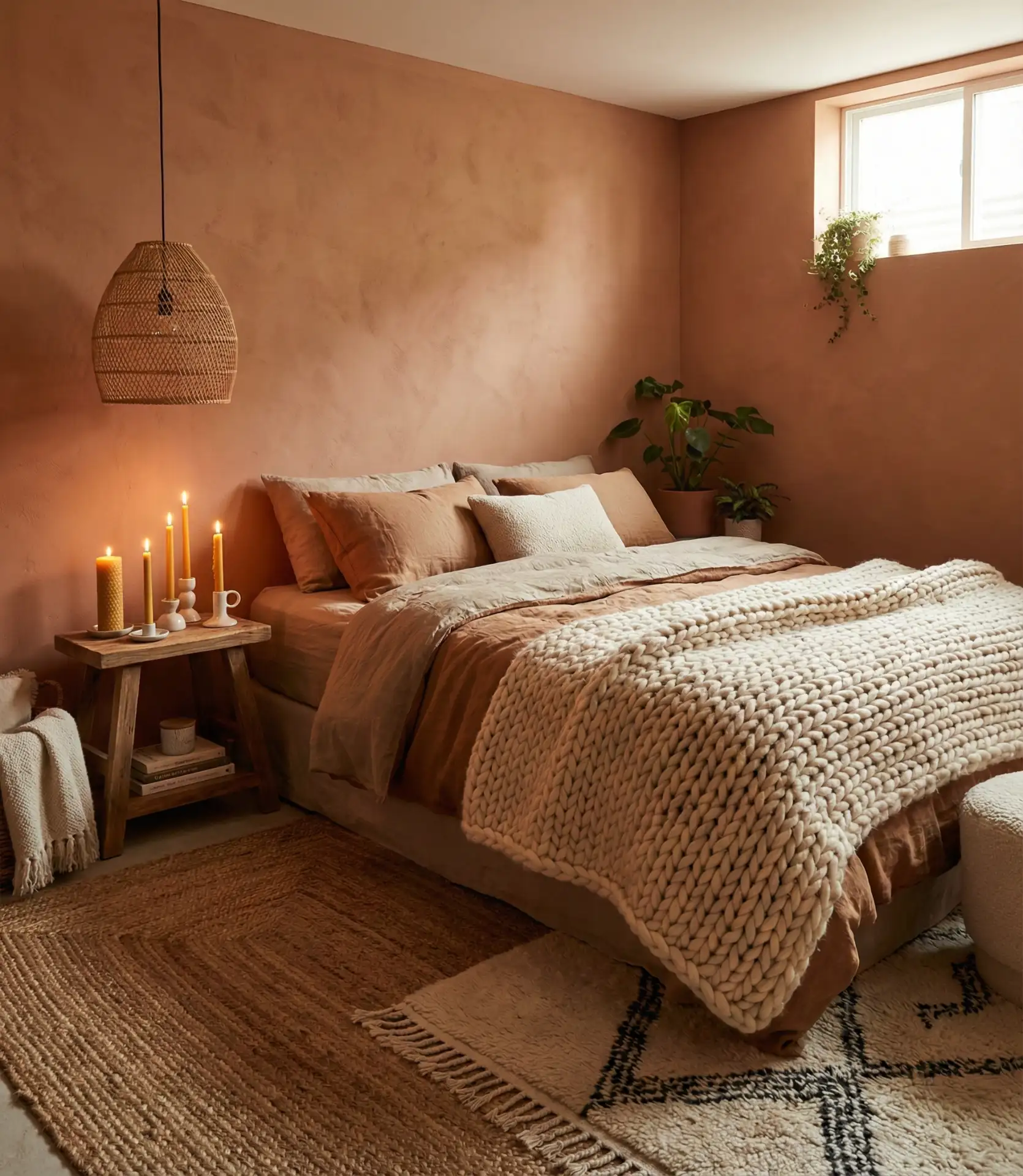
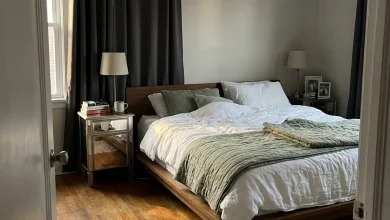
Nothing beats a cozy basement bedroom for creating a true retreat from the world. Layer soft textures—chunky knit throws, velvet pillows, plush area rugs—to combat the basement’s natural coolness. Warm lighting from table lamps and wall sconces adds intimacy, while earth tones and natural materials create a grounded, aesthetic, cozy vibe. This style works beautifully for couples seeking a private escape or anyone craving a sleep-focused sanctuary.
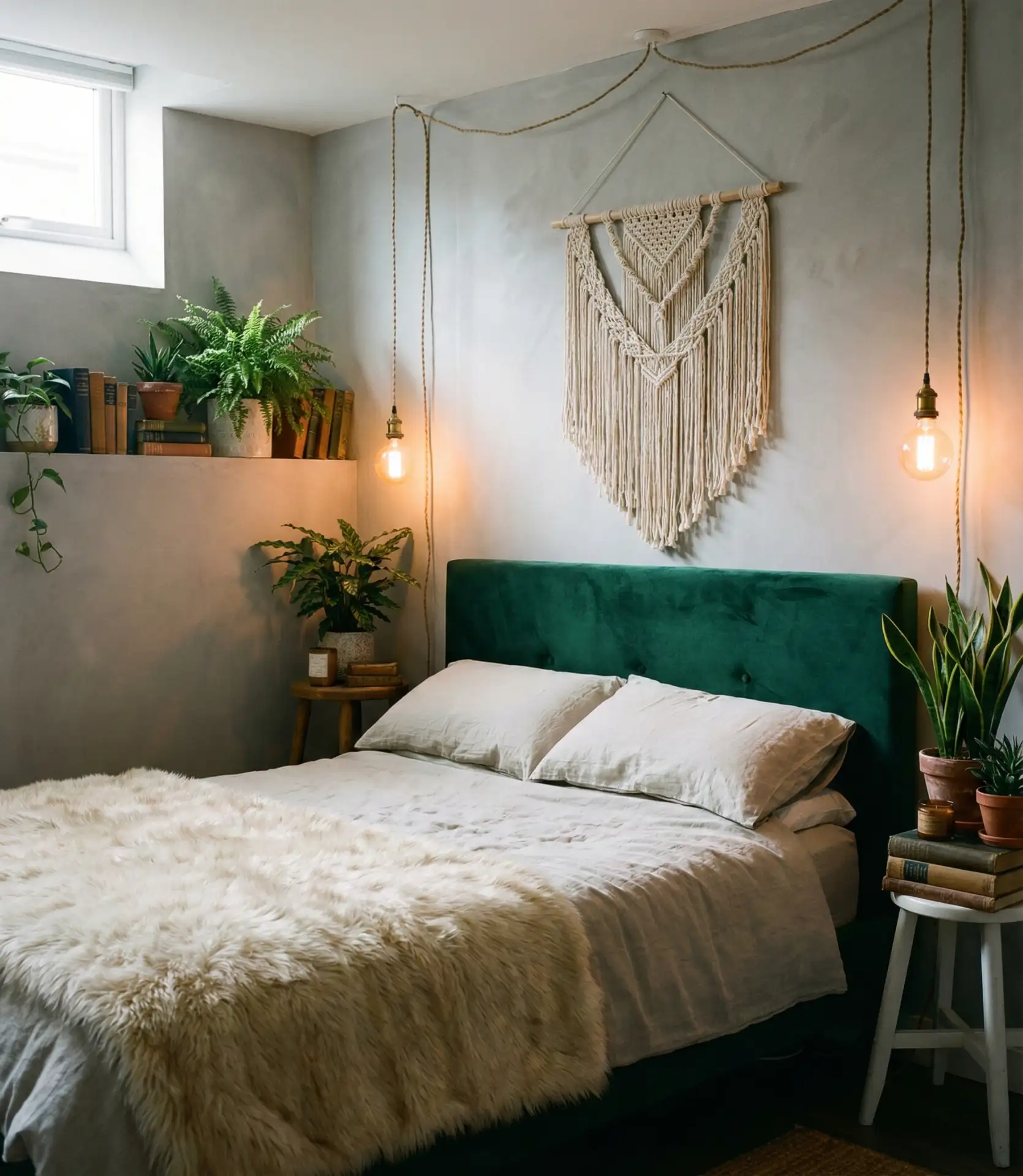
This look works best in smaller basements where the limited square footage enhances the snug, den-like feeling. In colder climates like New England and the Upper Midwest, basement bedrooms naturally stay cooler, making them ideal for year-round comfort when layered with warm textiles. The trick is balancing coziness with breathability—too many heavy fabrics can feel stifling, so incorporate natural fibers like cotton and linen alongside wool and velvet.
7. A sophisticated master suite layout
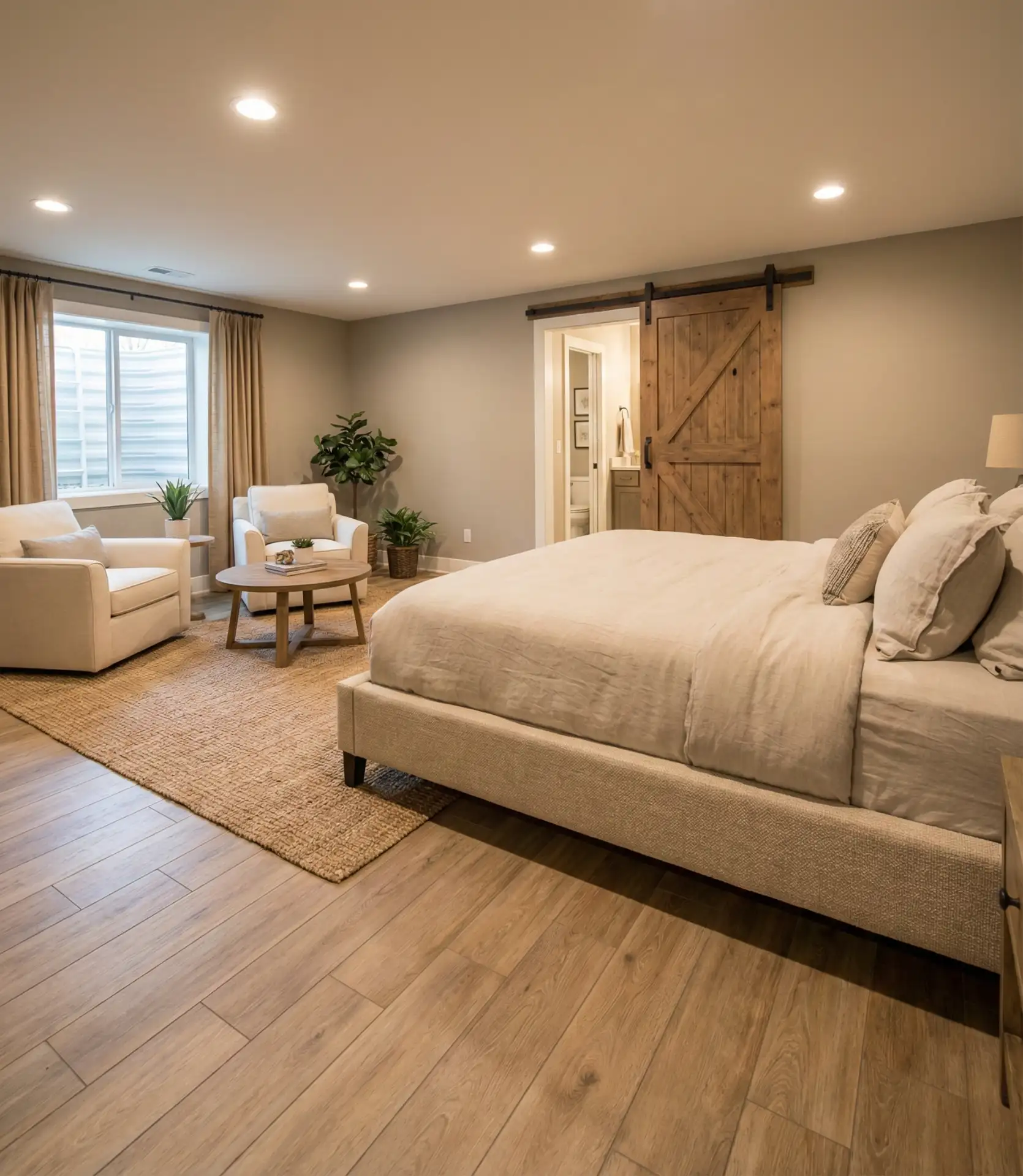
Converting a basement into a master suite layout offers privacy and square footage that’s difficult to find upstairs. Include a sleeping area, sitting nook, walk-in closet, and en-suite bathroom if possible. This setup appeals to multigenerational households or homeowners who want main-floor accessibility while reserving the basement for a luxurious large retreat. The separation from daily household noise makes it perfect for couples or anyone valuing uninterrupted rest.
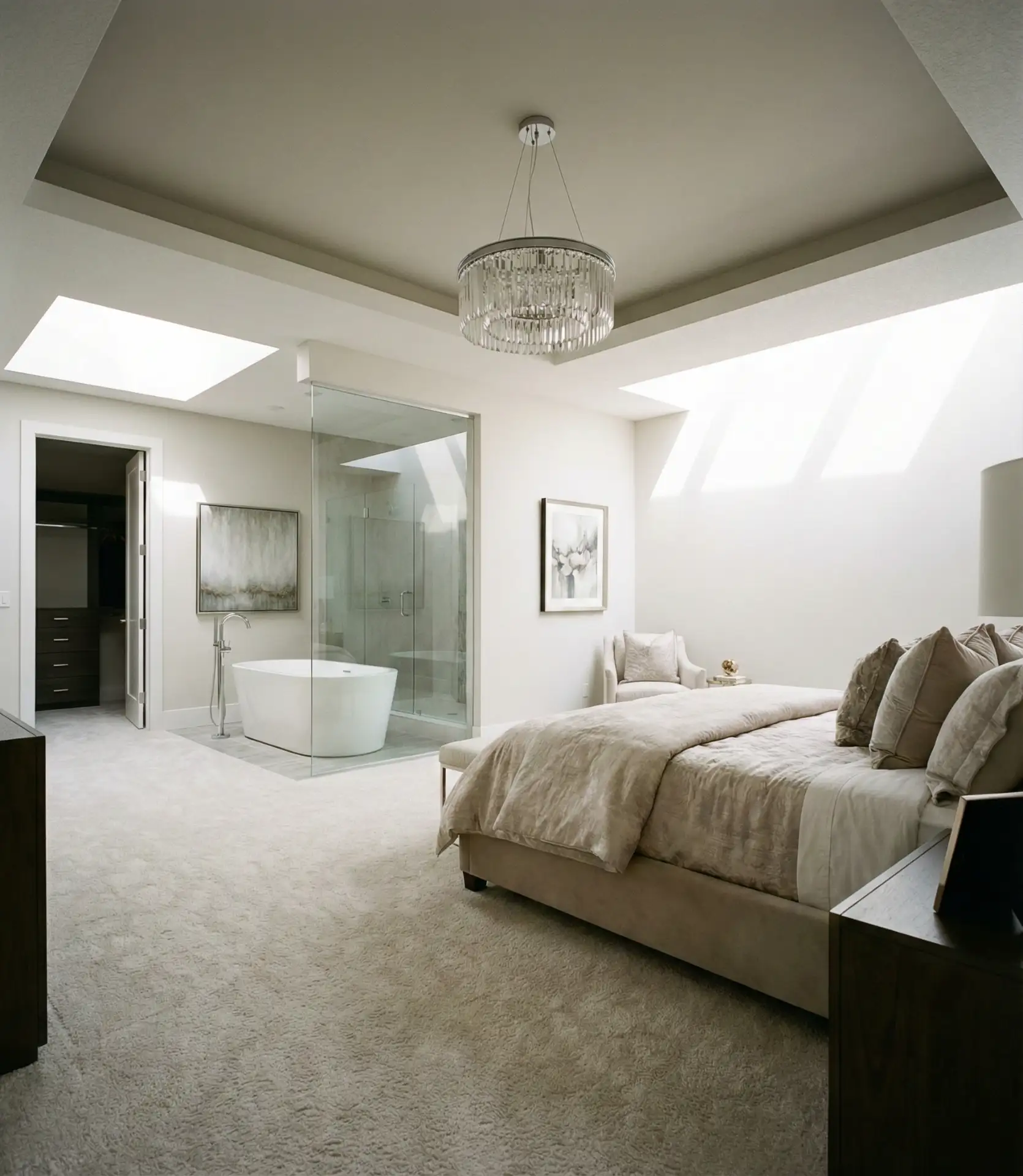
Across suburban America, especially in areas like Texas and Arizona, basements are less common, but where they exist, converting them to master suites adds serious resale value. Expert-style commentary suggests investing in high-quality insulation and soundproofing, as these factors determine whether the space feels like a true retreat or just a basement with a bed. Don’t skimp on finishes—luxury vinyl plank, proper drywall, and upgraded lighting make all the difference.
8. Airy Open Concept
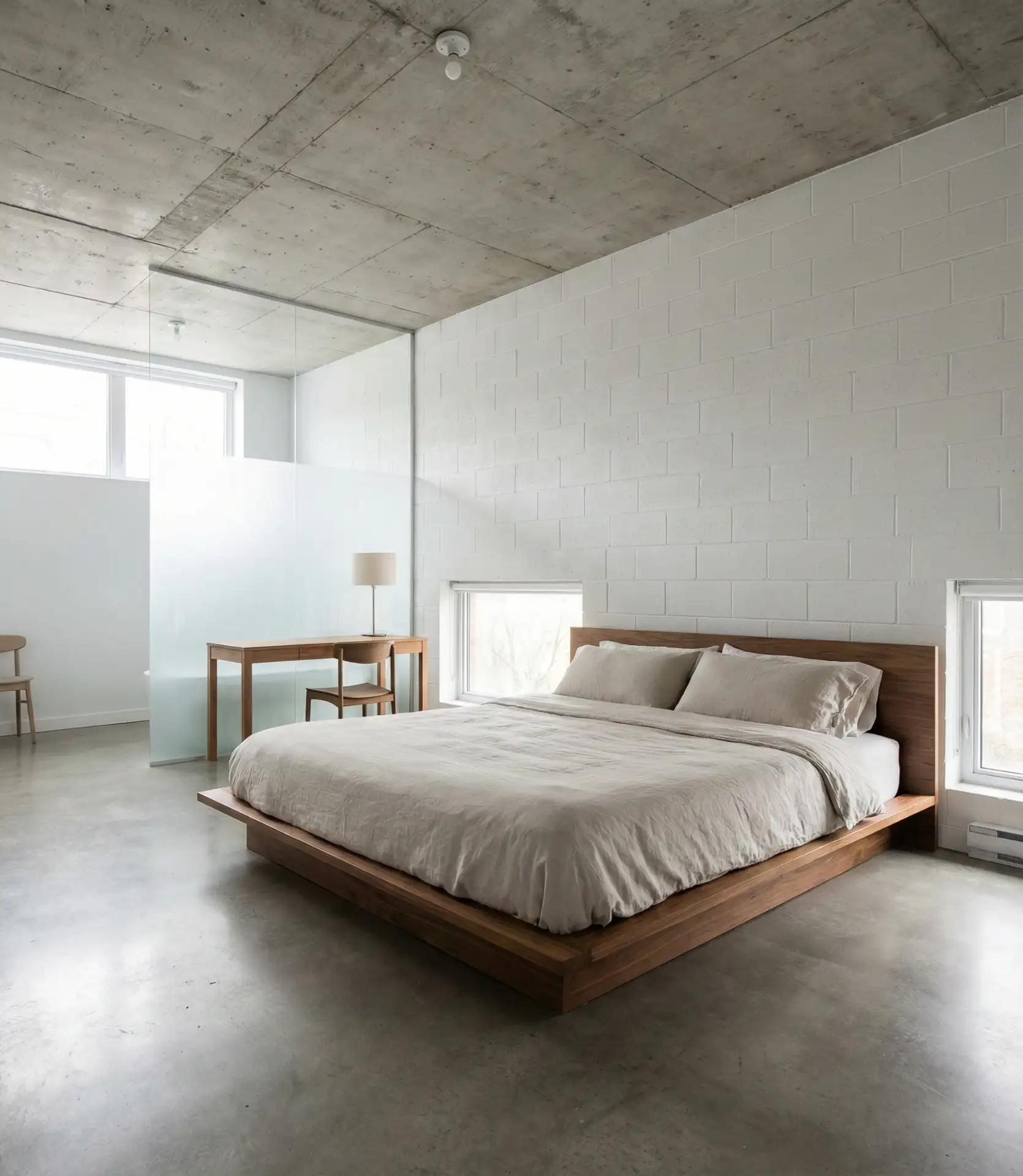
An open basement bedroom layout maximizes usable space and creates flow, especially in large basements. Skip traditional walls and use furniture placement, rugs, and lighting to define zones. This approach works well for multi-use spaces—think bedroom plus home office or workout area. Keeping sightlines clear and using light colors prevents the space from feeling cavernous or disjointed, maintaining an aesthetic that’s both modern and functional.
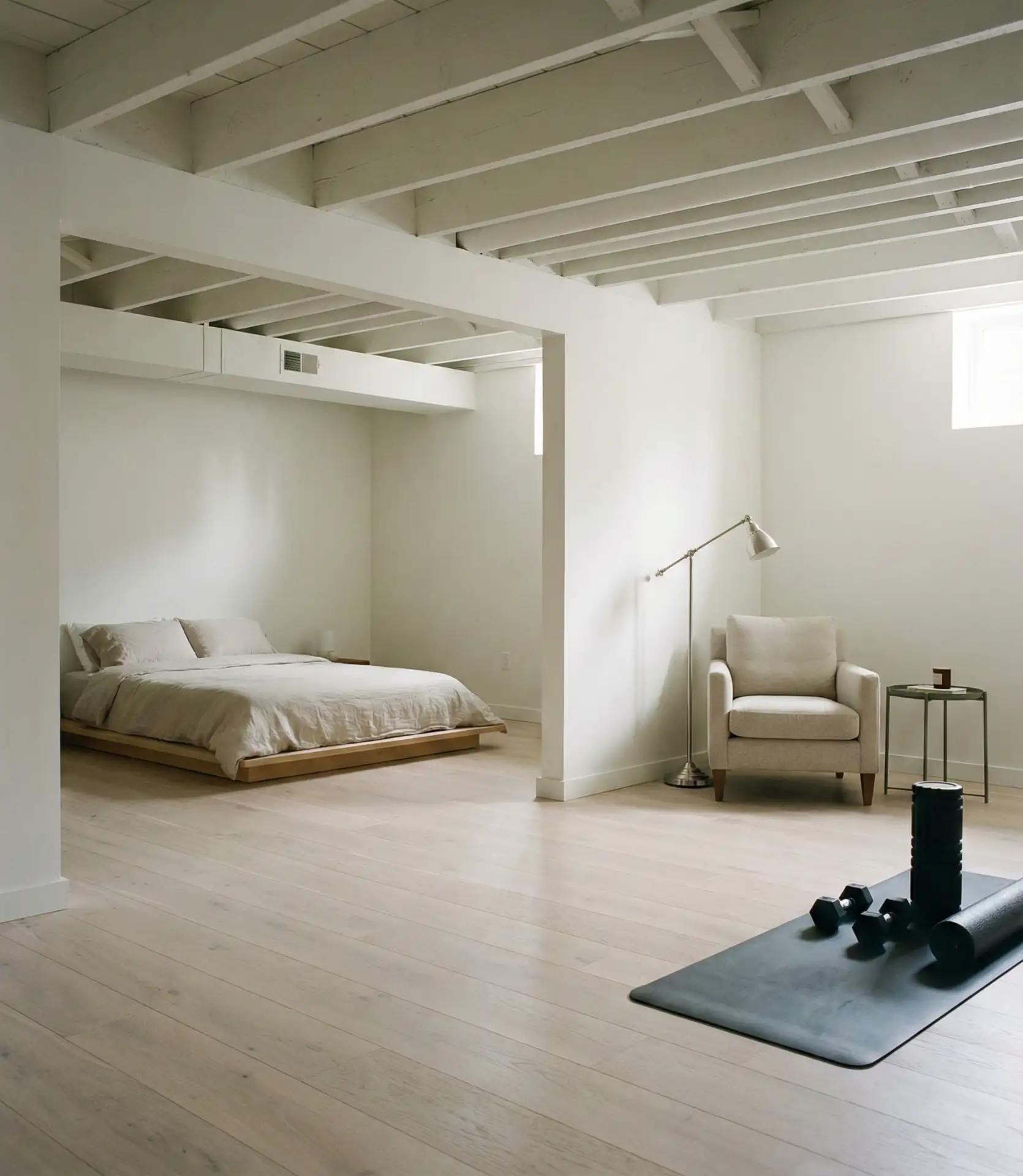
Real homeowner behavior shows that open basement bedrooms are most popular among millennials and Gen Z, who value flexibility over formal room divisions. A practical insight: use large area rugs to anchor each zone and prevent echo, which can be an issue in open basements with concrete flooring. Curtains or folding screens offer privacy when needed without permanent commitment, making the space adaptable as your needs evolve.
9. Generous Large Layout
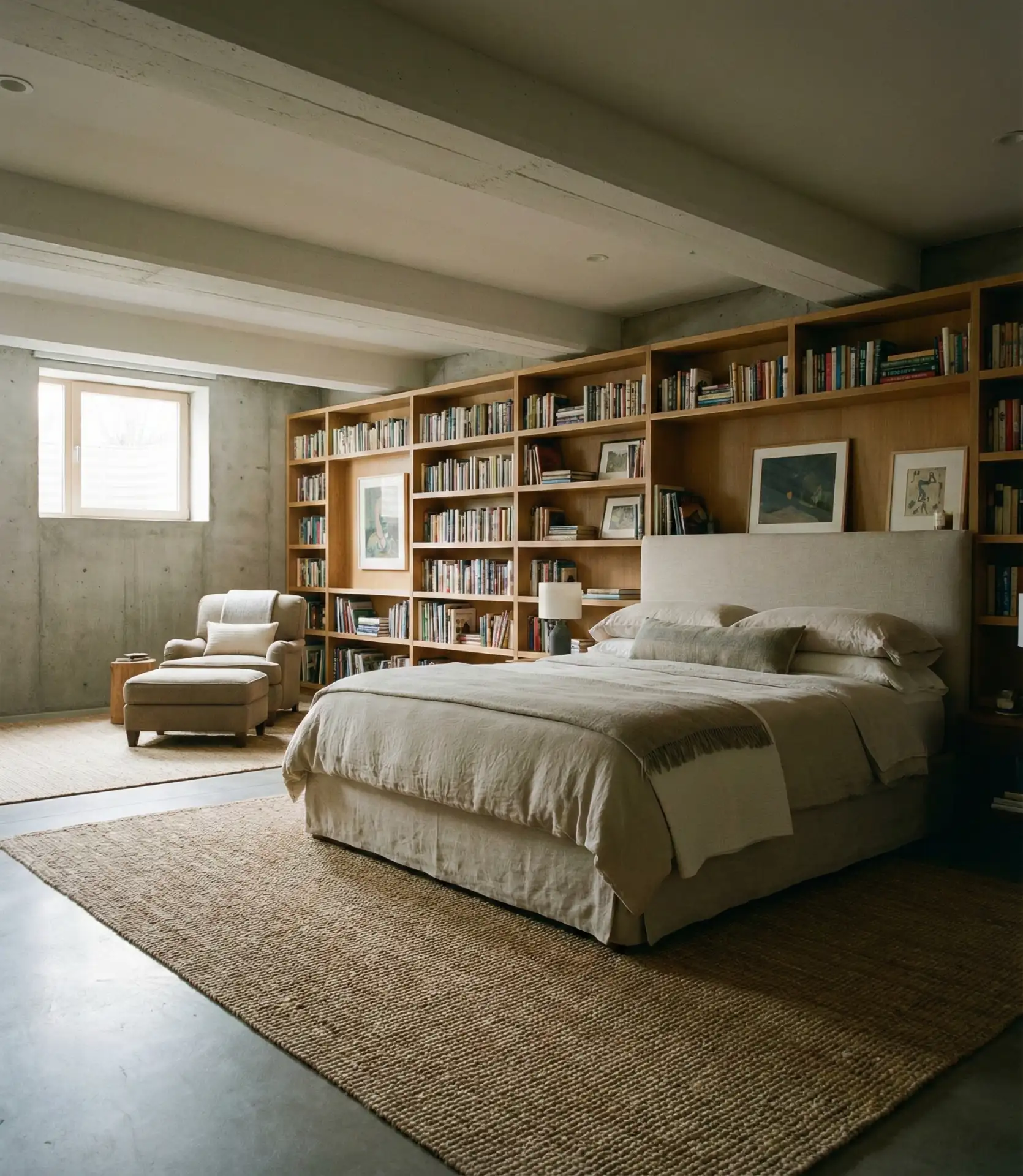
A large basement bedroom is a luxury that allows for multiple furniture arrangements and dedicated activity zones. Consider a king bed, separate sitting area, vanity or dressing space, and even a mini bar or beverage station. This style works beautifully for guest-friendly setups where visitors enjoy hotel-like amenities or for men’s retreats that double as entertainment spaces. The key is to furnish thoughtfully so the room feels abundant, not empty.
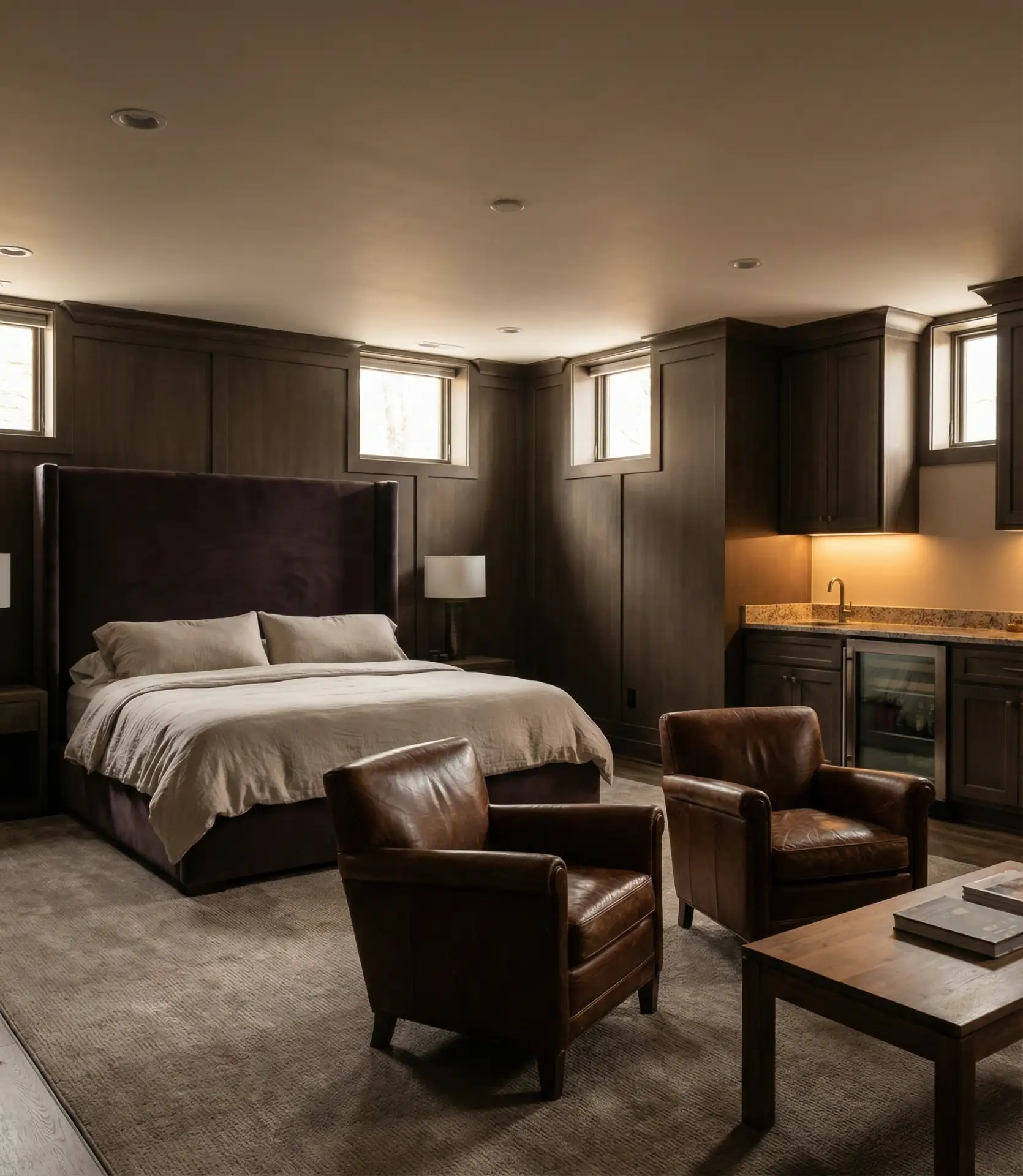
Where it works best: homes built in the 1980s and 1990s often feature sprawling basements that were initially left unfinished. Converting these into large bedrooms has become a popular renovation project in the Pacific Northwest and Mountain West, where square footage underground can rival or exceed the main floor. Use oversized furniture to fill the space appropriately—a standard queen bed can look lost in a 400-square-foot basement.
10. Clever Tiny Nook
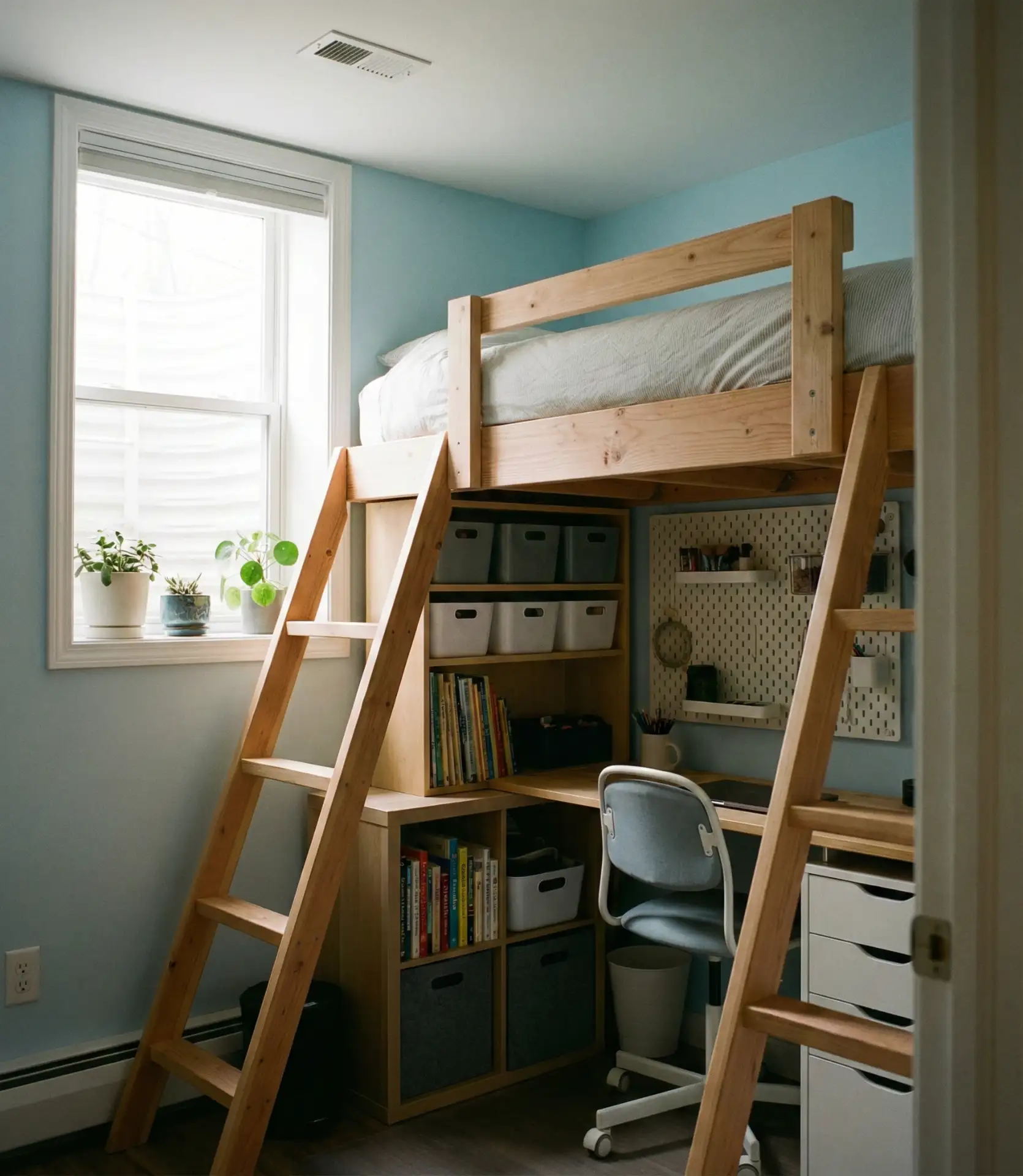
A tiny basement bedroom requires smart space planning and multi-functional furniture. Think Murphy beds, wall-mounted nightstands, and under-bed storage to maximize every inch. Light colors and strategic mirrors make the space feel larger, while vertical storage keeps floors clear. This setup is ideal for kids’ or guest rooms in smaller homes where basement space is limited but still functional.
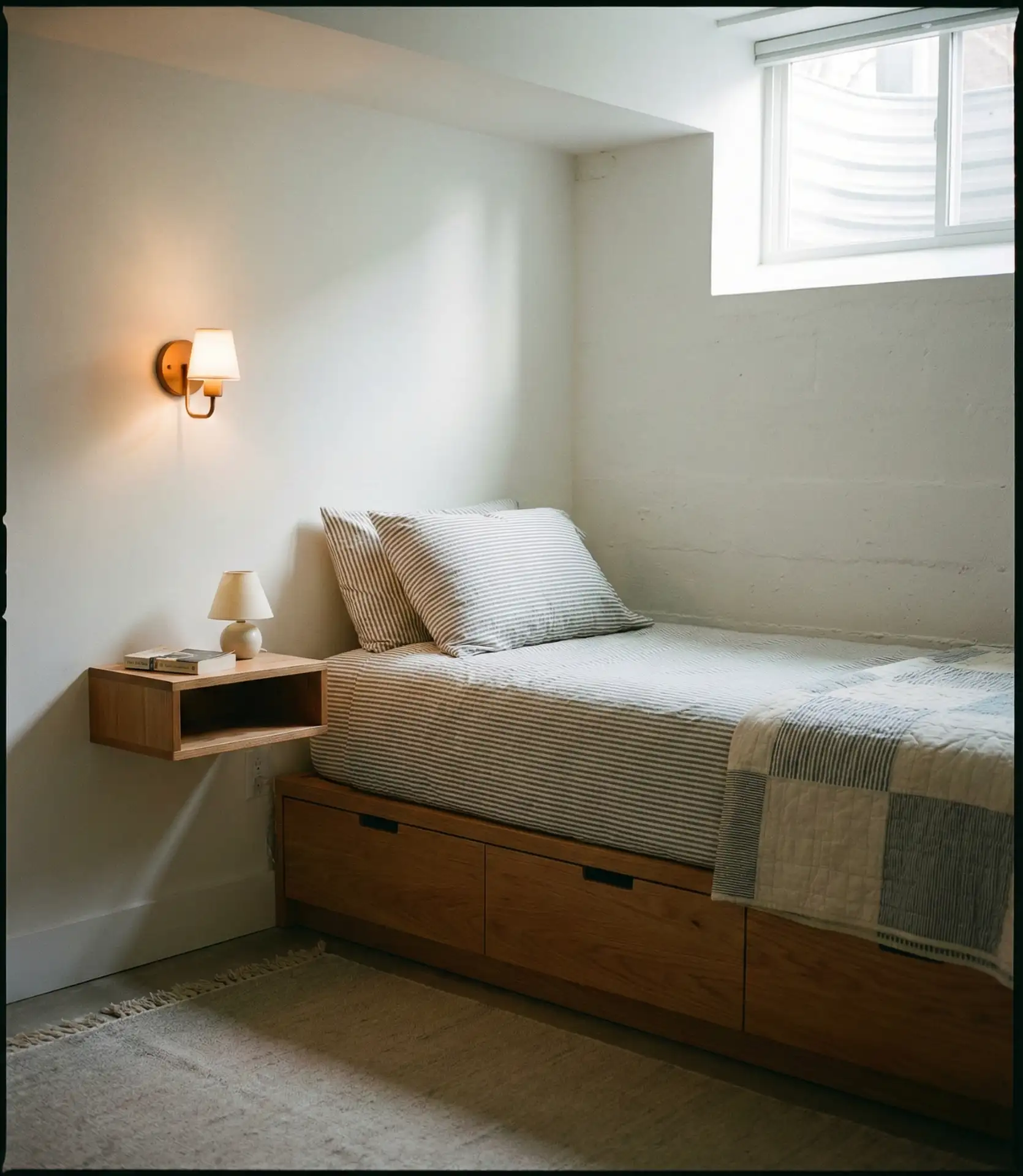
Common mistakes in tiny basement bedrooms include over-furnishing and choosing bulky pieces that overwhelm the space. Instead, opt for furniture with exposed legs to maintain visual lightness, and resist the urge to fill every corner. A micro anecdote: a homeowner in Boston transformed a 70-square-foot basement alcove into a guest nook using just a daybed, wall-mounted lamp, and single floating shelf—guests loved the cozy, ship-cabin vibe.
11. Brightening Dark Spaces
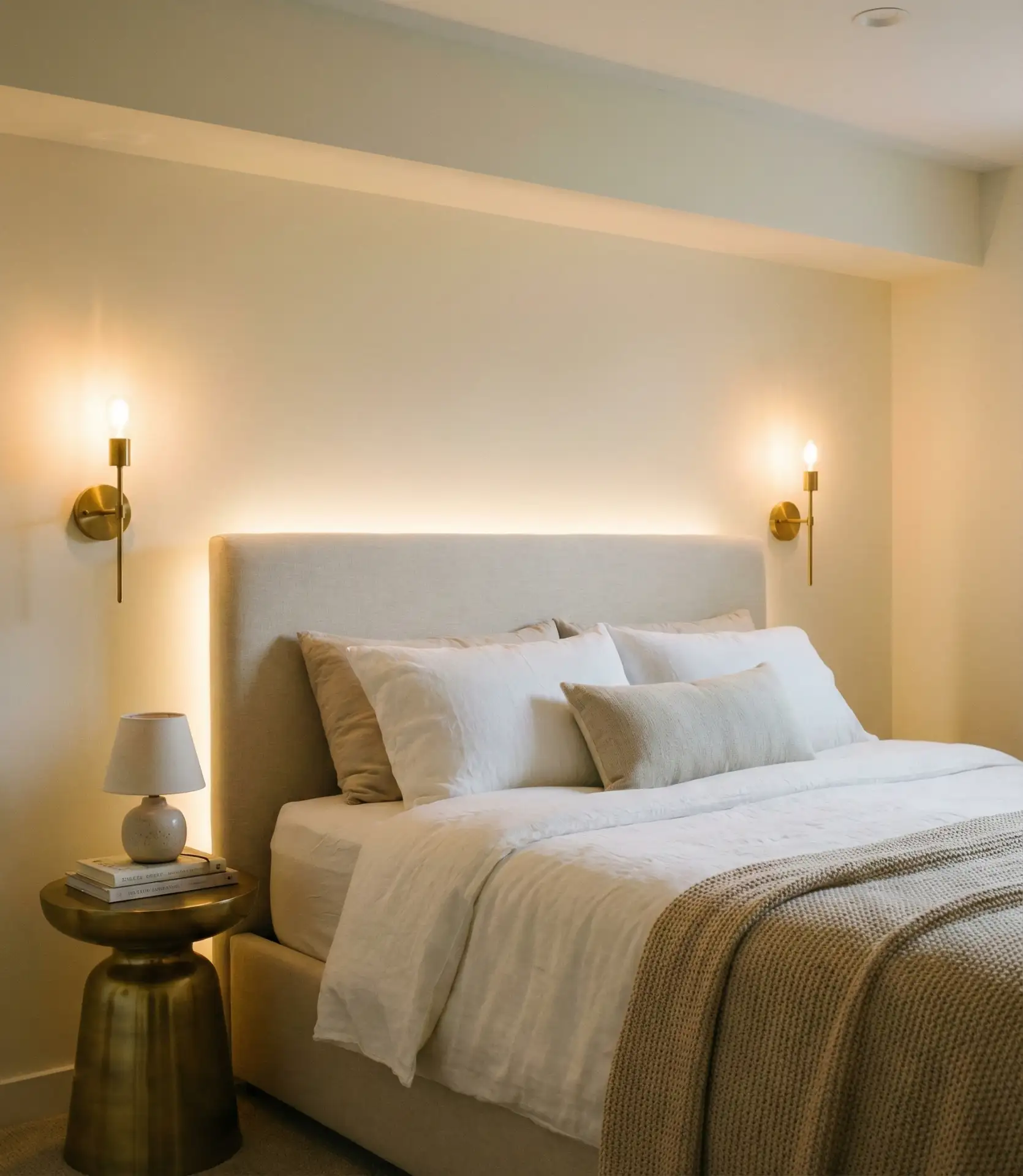
Dealing with a dark basement bedroom is one of the most common challenges. Combat it with layered artificial lighting—overhead fixtures, task lamps, and accent lighting—to mimic natural light patterns. Paint walls in warm whites or soft creams, and incorporate reflective surfaces like mirrors and metallic accents. Even without windows, a well-lit basement can feel surprisingly bright and welcoming, especially when you embrace the cave-like atmosphere as a feature rather than a flaw.
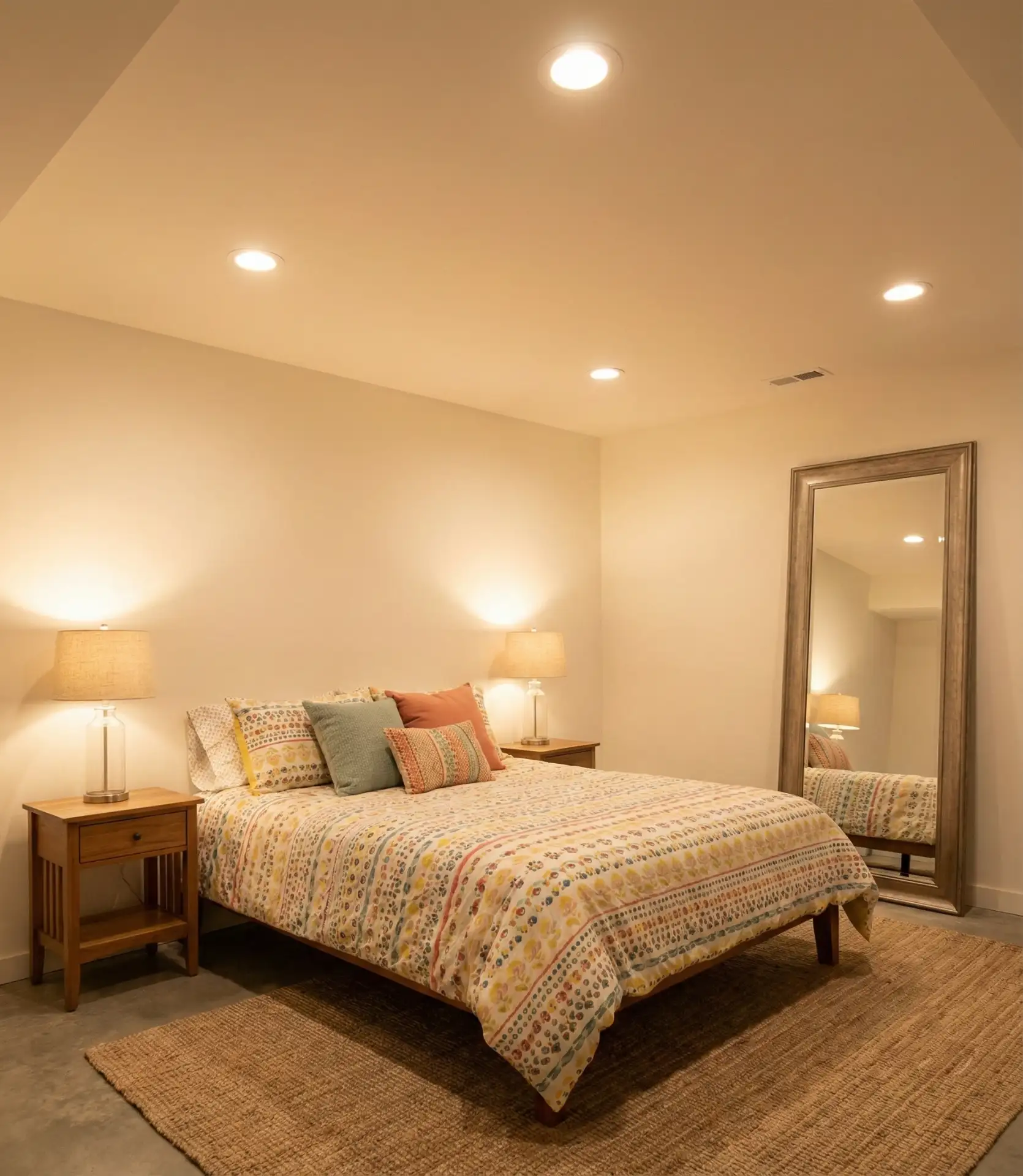
Budget angle: LED bulbs with high CRI (Color Rendering Index) make a dramatic difference in how natural a dark basement feels, and they’re surprisingly affordable. Choose bulbs in the 2700K-3000K range for warmth. Avoid the common mistake of relying solely on overhead lighting—this creates harsh shadows and an institutional feel. Instead, layer in table lamps, floor lamps, and even LED strips behind furniture for ambient glow.
12. Teen-Centered Layout Design
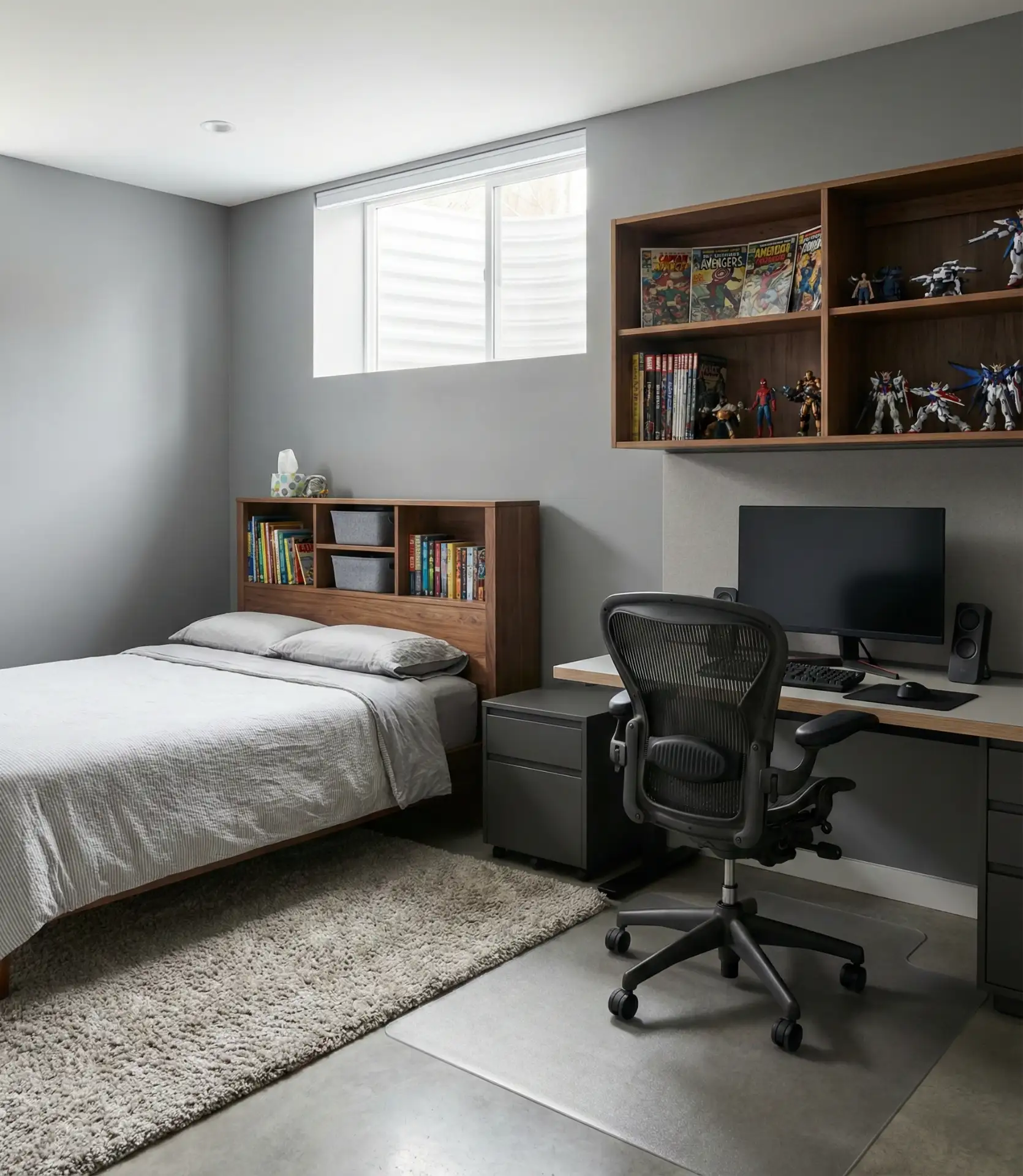
A dedicated teens’ layout balances independence with functionality. Include a comfortable bed, a substantial desk for schoolwork, storage for clothes and hobbies, and space for friends to hang out. Teens appreciate privacy and personalization, so involve them in design choices—from wall color to furniture style. The basement’s natural separation makes it ideal for late-night study sessions or weekend socializing without disturbing the household.
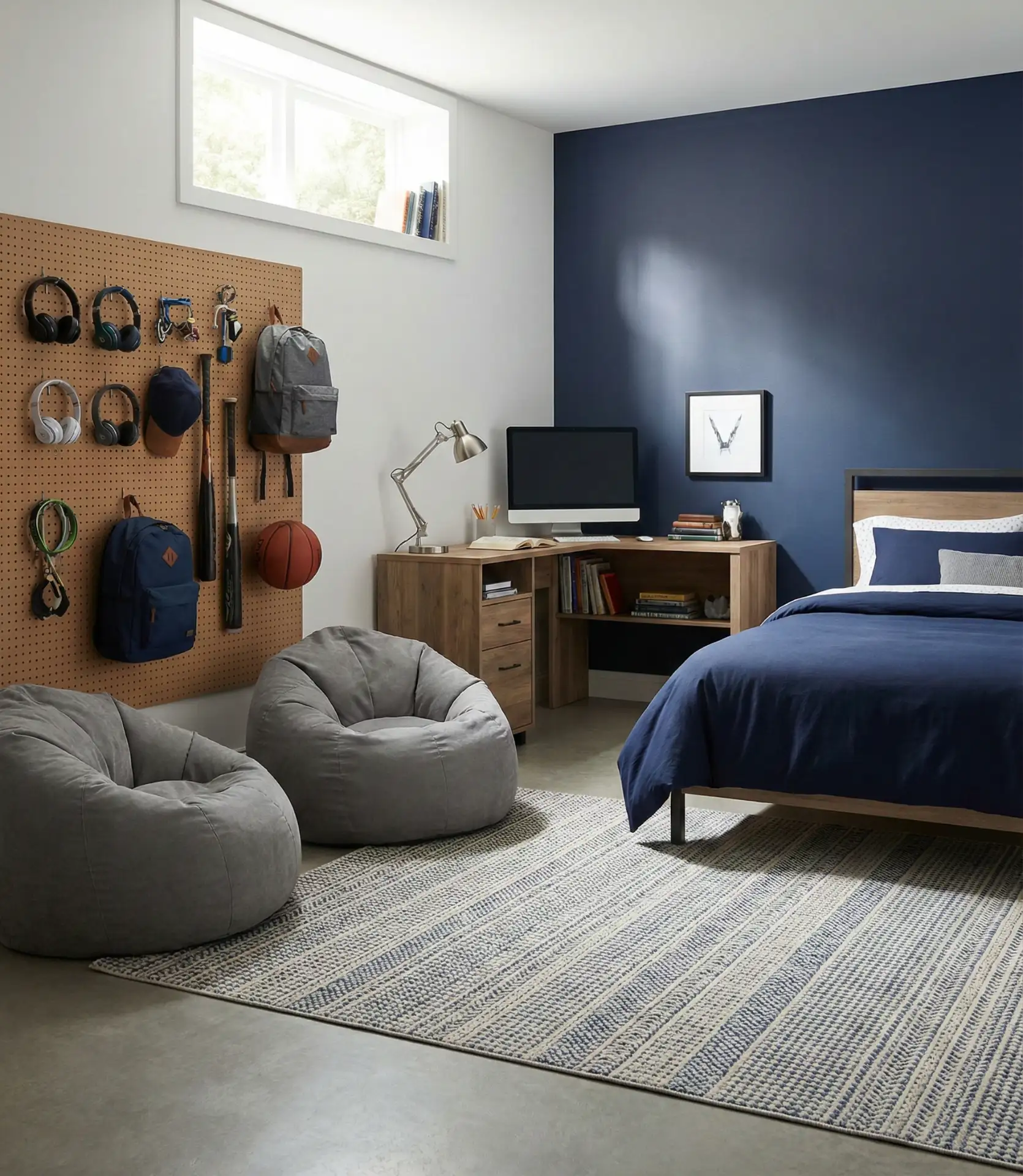
American lifestyle context: in households with multiple children, giving the oldest teen a basement bedroom is a common rite of passage, offering them a taste of independence while keeping them under the same roof. Make sure the space is equipped with its own temperature control and reliable internet connectivity, as these are essential features for modern teens. Add a small refrigerator or snack station, and they’ll rarely need to come upstairs except for meals.
13. Low Ceiling Solutions
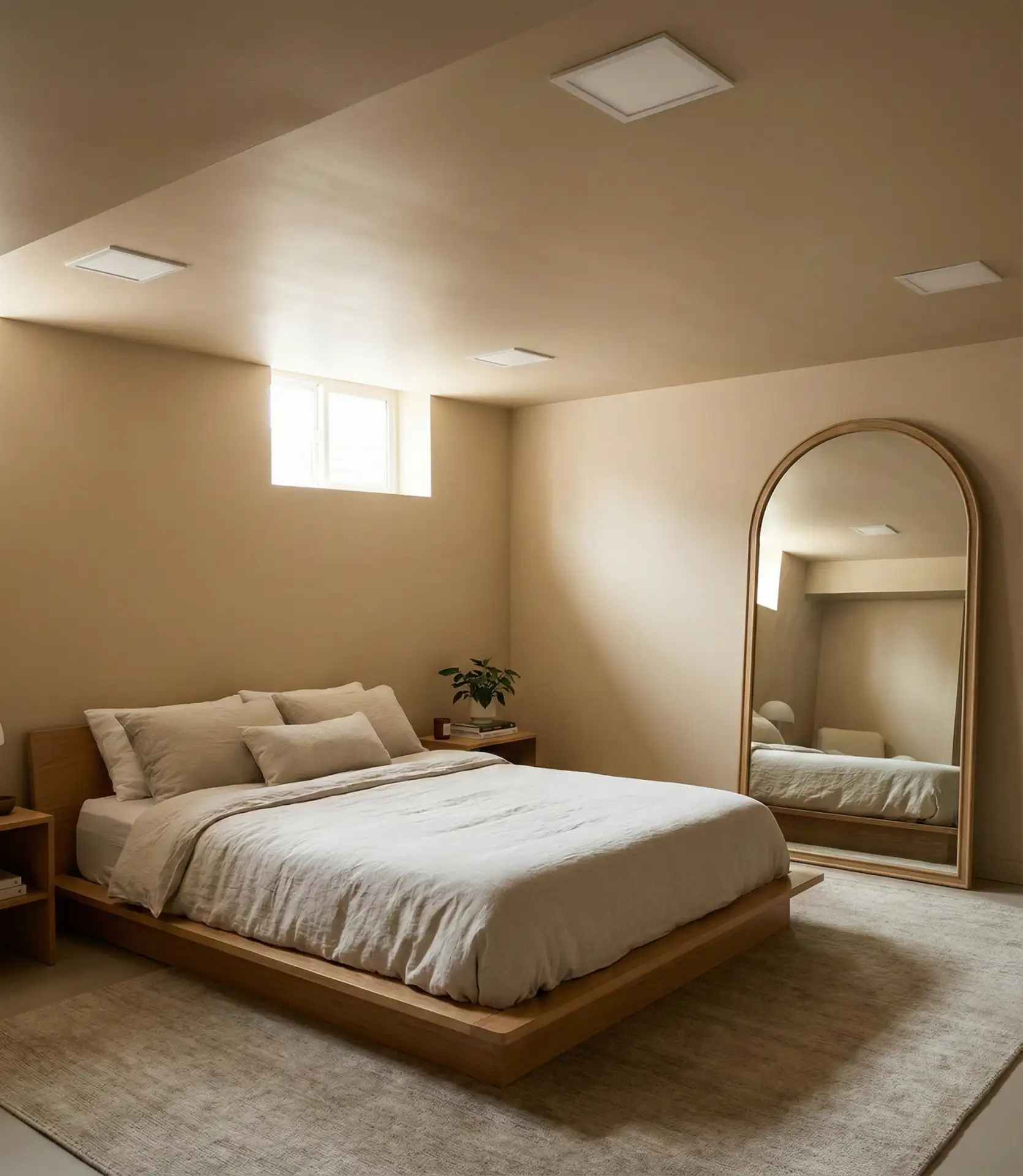
Working with low ceiling constraints requires strategic design to avoid a cramped feeling. Choose low-profile furniture like platform beds and shorter dressers to maintain visual height. Paint ceilings the same color as walls to blur boundaries, and use vertical stripes or tall, narrow artwork to draw the eye upward. Recessed lighting eliminates the need for hanging fixtures that eat into headroom while keeping the space feeling cozy rather than claustrophobic.
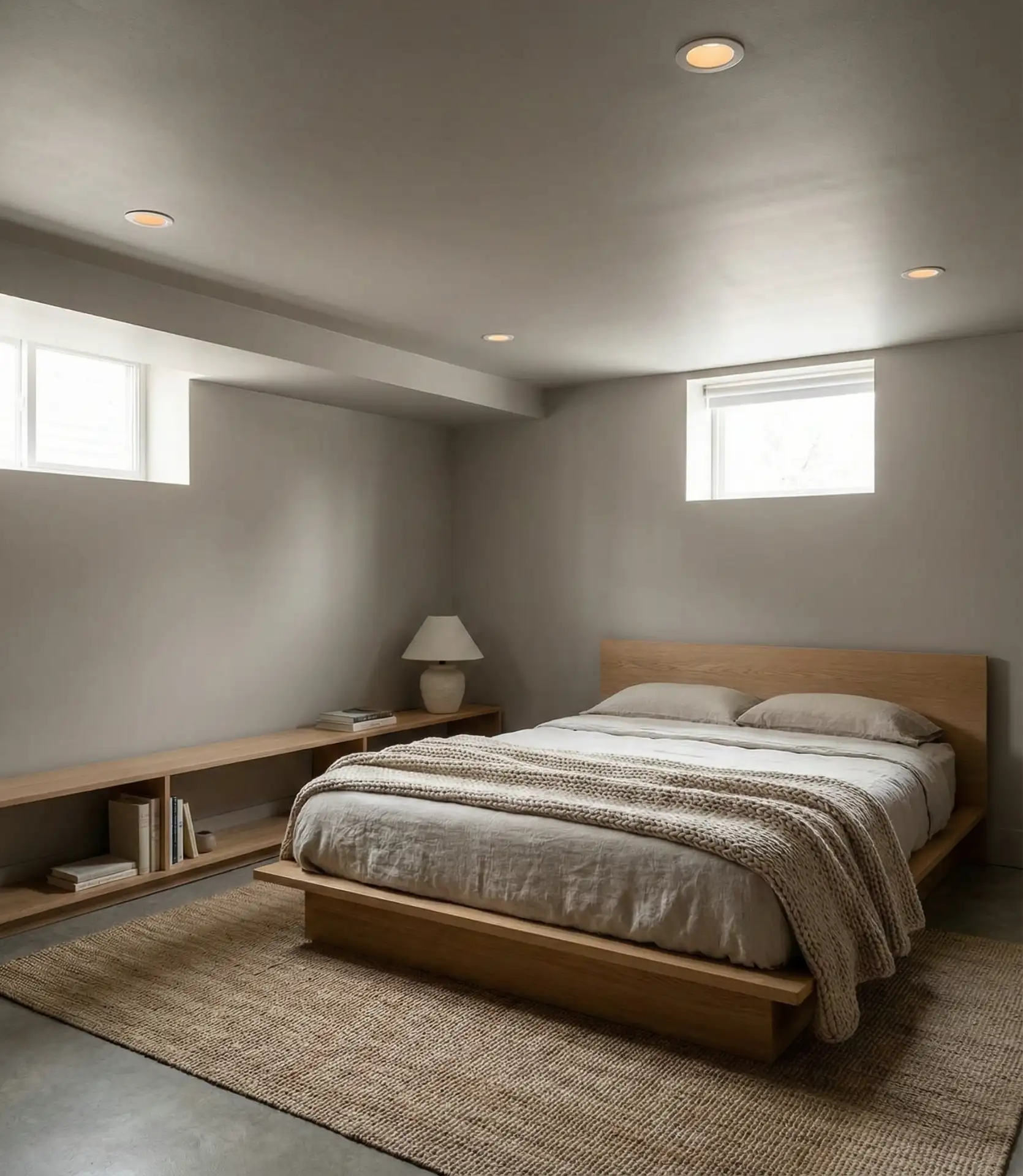
Practical insight: many older homes, particularly those built before 1980, have basement ceilings as low as 7 feet. While this is technically legal for habitable space in most jurisdictions, it can feel oppressive without thoughtful design. Avoid ceiling fans, chandeliers, or any hanging decor. Instead, embrace the den-like quality—it can actually enhance coziness when framed as an intentional design choice rather than a limitation.
14. Masculine Retreat
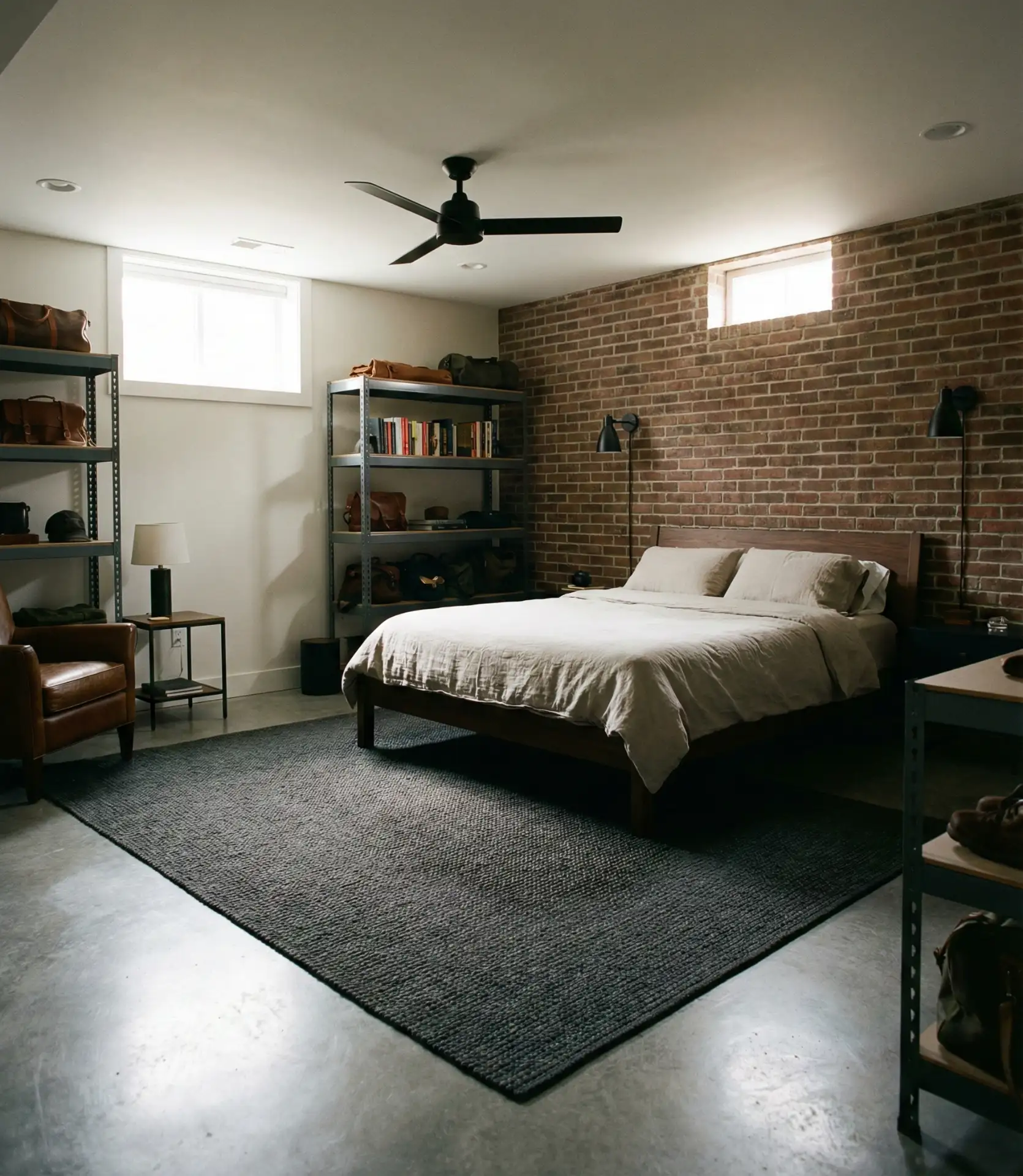
A men’s basement bedroom leans into darker tones, clean lines, and utilitarian materials. Think charcoal walls, leather accents, metal fixtures, and minimal ornamentation. This style pairs well with rustic elements like reclaimed wood or industrial touches like exposed pipes. It’s perfect for a private retreat, a home office hybrid, or a teen boy’s man cave setup where function and style merge without fuss.
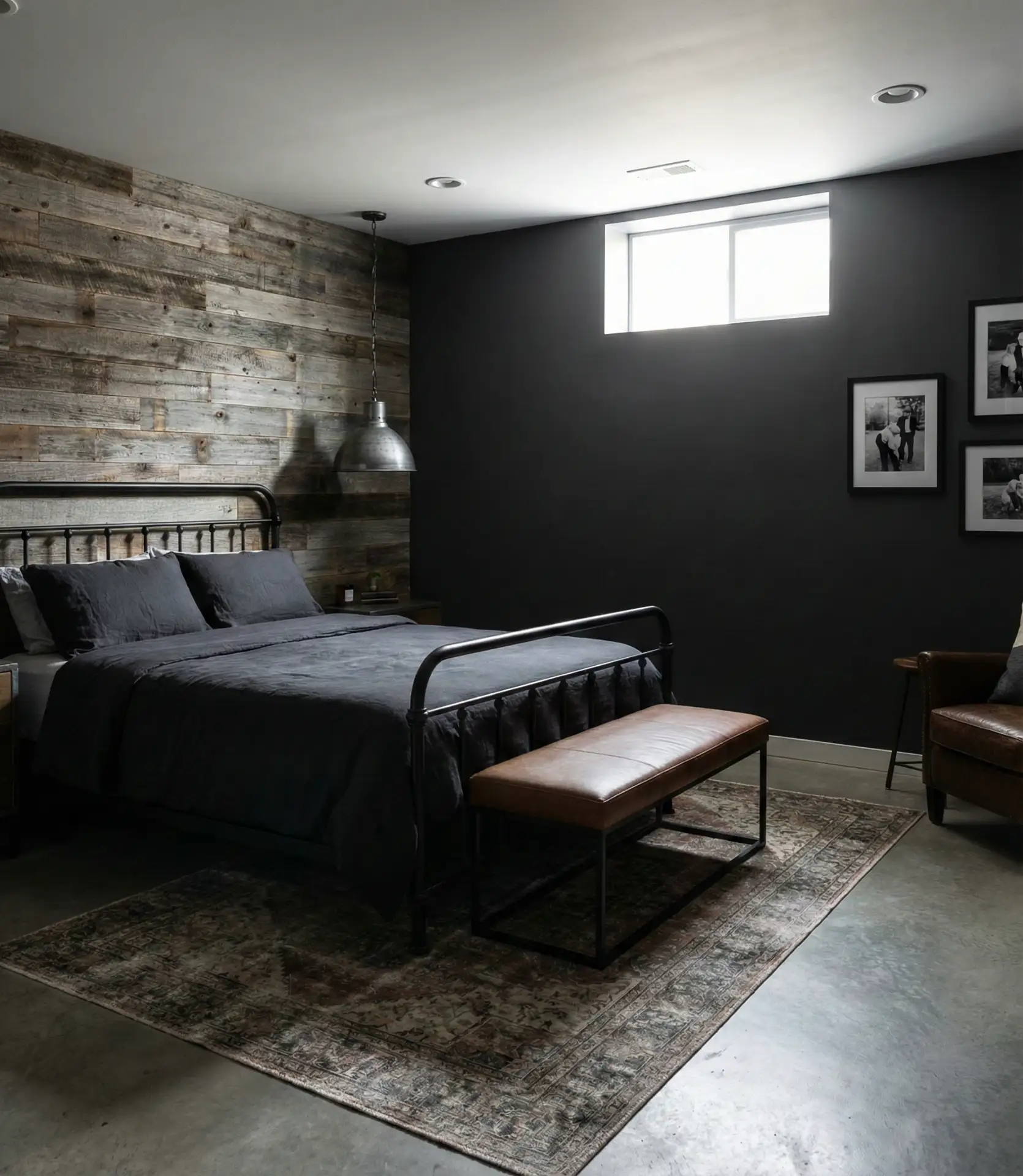
Where it works best: this style thrives in basements with existing industrial features—concrete floors, exposed beams, and brick walls—that can be enhanced rather than hidden. Homeowners are celebrating these features as design assets in cities across the Rust Belt and industrial Northeast. Add comfortable bedding and proper lighting to keep the space from feeling stark, and consider a bar cart or seating area for entertaining.
15. Guest-Friendly Welcome
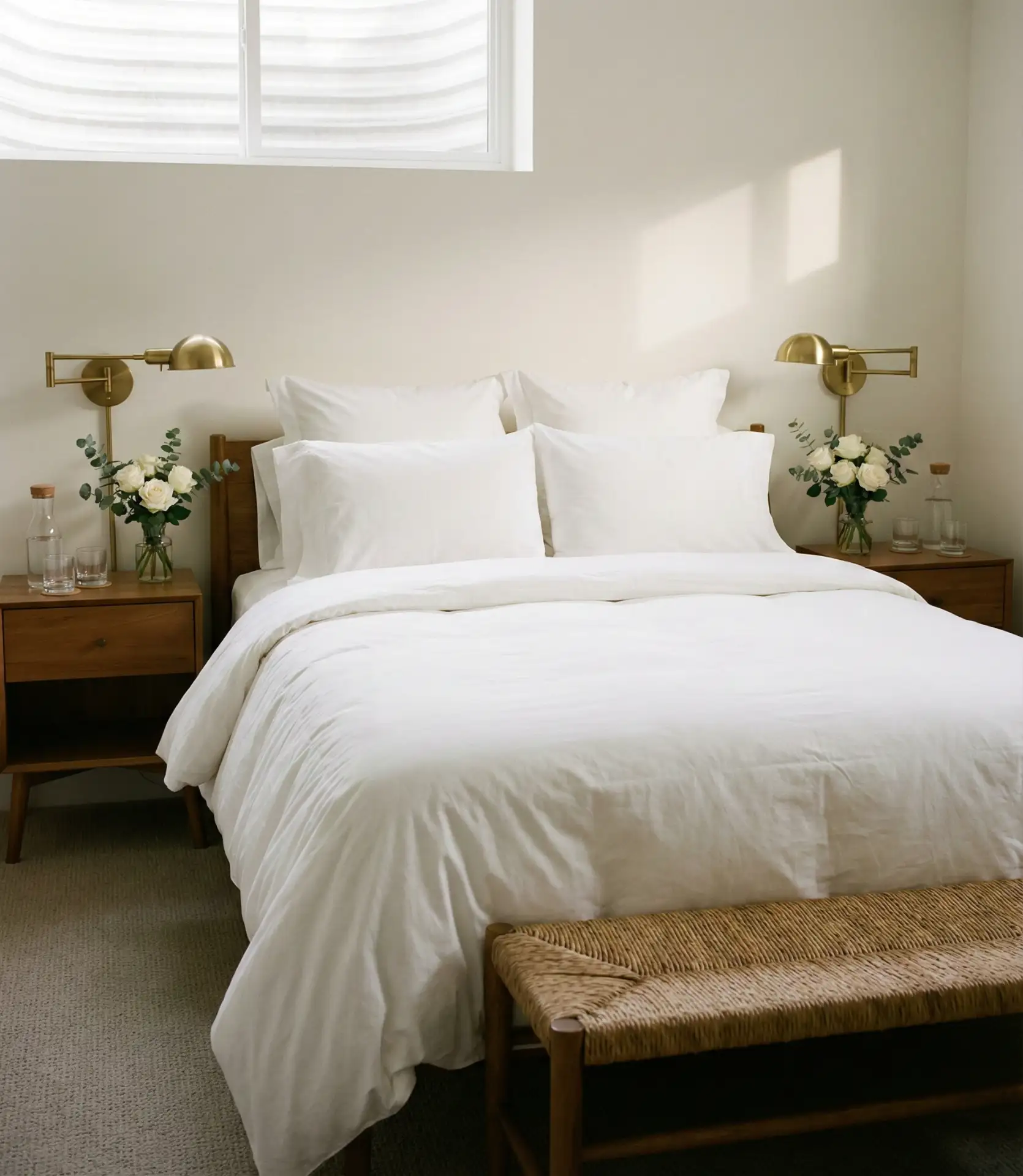
Creating a guest-friendly basement bedroom means anticipating visitor needs. Include a comfortable mattress, quality bedding, bedside lighting, charging stations, and luggage racks or clear floor space for suitcases. Thoughtful touches like extra blankets, a water carafe, and the WiFi password printed in a frame make guests feel genuinely welcome. A finished space with its own bathroom access is ideal, but even simpler setups can feel hospitality-grade with attention to detail.
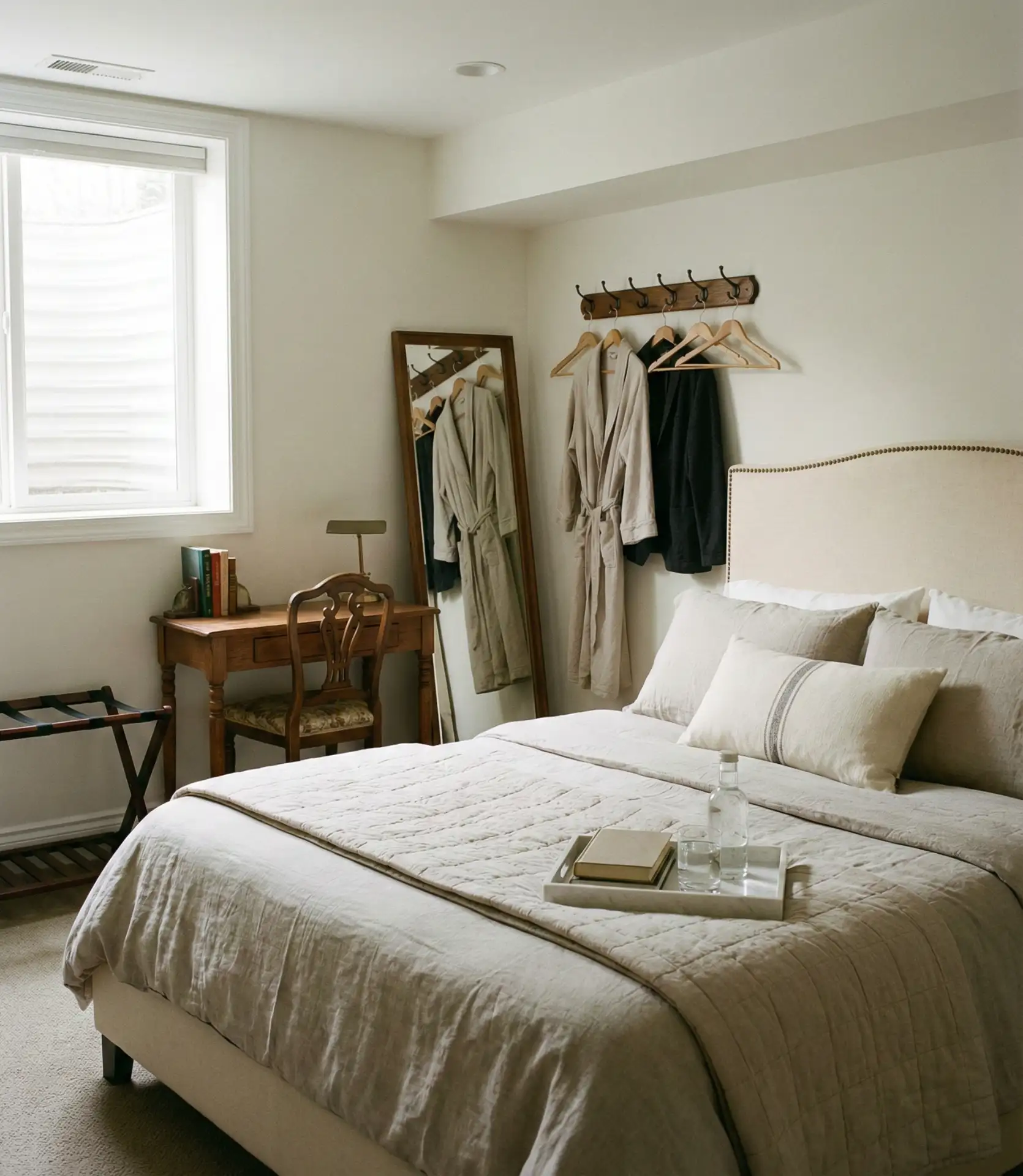
Expert-style commentary: Hospitality designers emphasize the importance of excellent air circulation and temperature control in basement guest rooms. Stale air or excessive cold can ruin an otherwise lovely space. Invest in a quiet dehumidifier and ensure the HVAC system reaches the basement adequately. Regardless of exterior lighting, guests can sleep comfortably with blackout curtains or shades, and a full-length mirror is an essential but often overlooked feature.
16. Playful Kid-Friendly Space
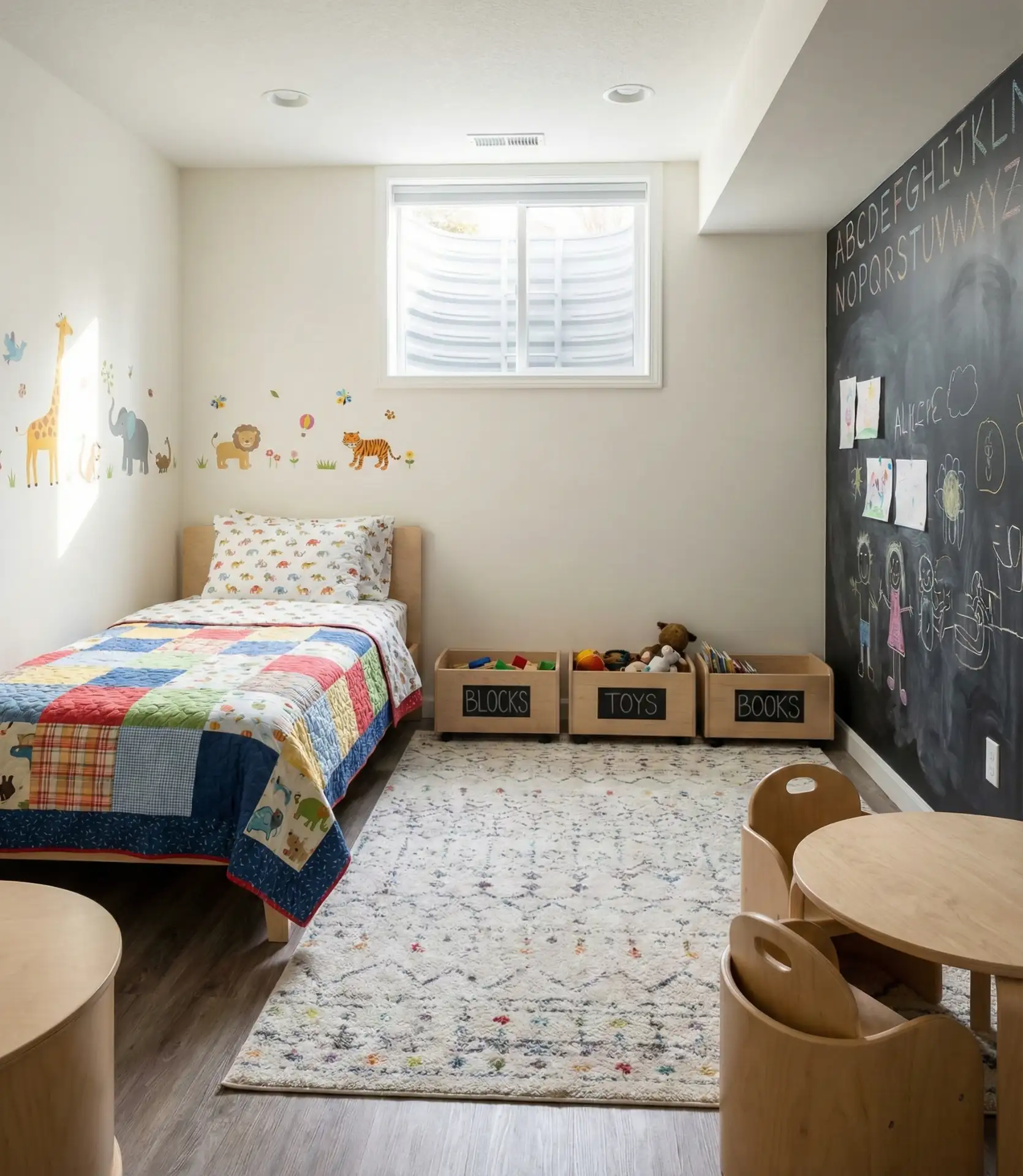
Designing a kids’ basement bedroom requires durability, safety, and imagination. Choose washable paint, stain-resistant flooring, and furniture with rounded edges. Bright colors, engaging themes, and creative storage solutions make the space exciting while keeping it organized. Since basements can be cooler, layer in soft rugs and cozy bedding. This setup works well for kid-friendly sleepovers or as a dedicated bedroom, freeing up upstairs space for other uses.
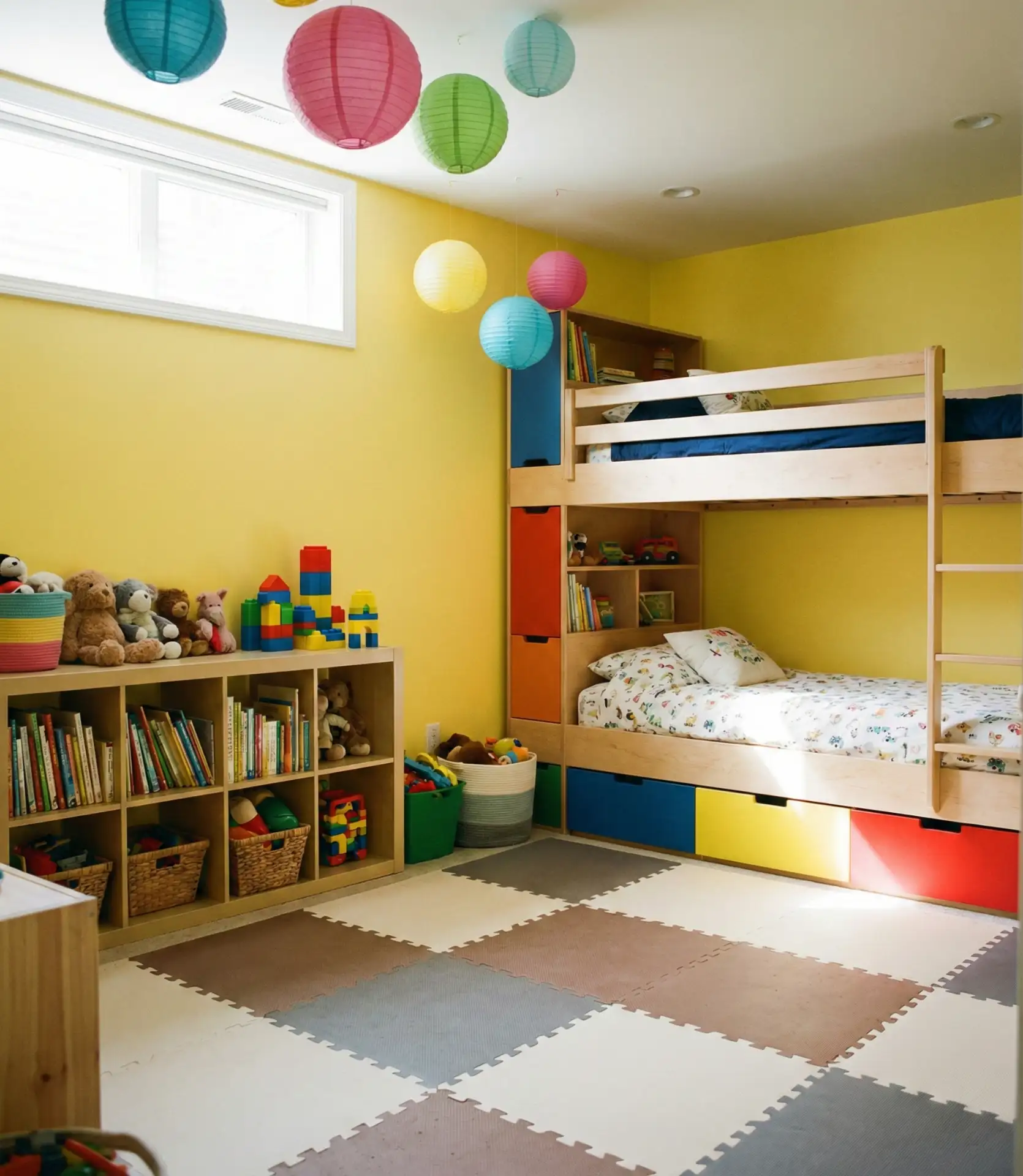
Common mistakes include neglecting proper egress windows and smoke detectors—non-negotiable safety requirements for basement bedrooms housing children. Additionally, parents often underestimate how much storage kids need. Built-in cubbies, under-bed drawers, and wall-mounted shelves keep clutter manageable. Involve kids in choosing colors and themes to increase their excitement about the space while maintaining control over safety and functionality decisions.
17. Teen Boys’ Man Cave Vibe
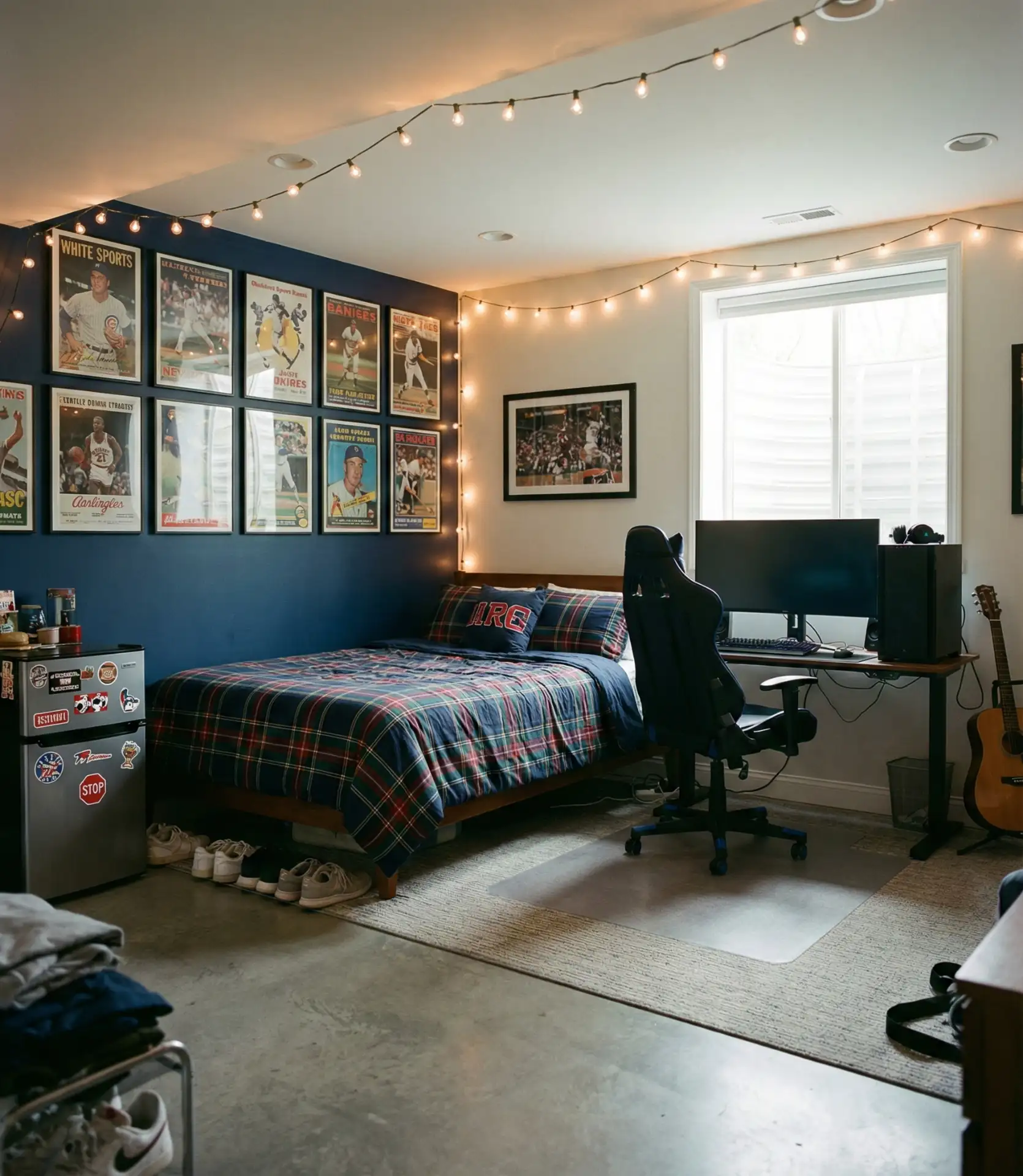
A teen boy’s man cave blends youthful energy with grown-up style. Think sports memorabilia, gaming setups, mini fridges, and comfortable seating for friends. Dark accent walls, industrial lighting, and durable furniture create a space that feels mature and personal. This basement bedroom becomes more than just a place to sleep—it’s a hangout, study zone, and entertainment hub all in one, giving teenage boys the independence they crave.
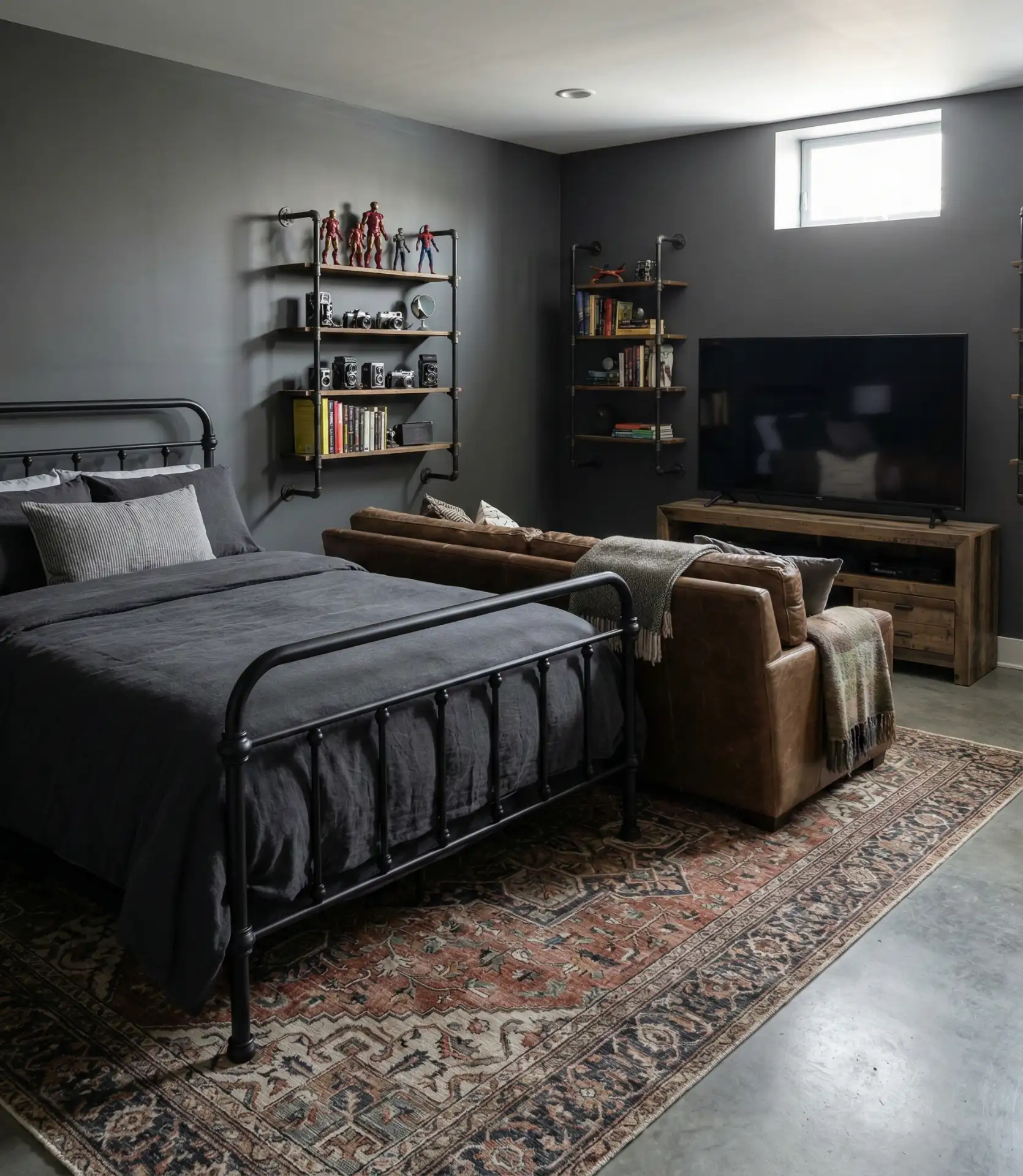
Real homeowner behavior suggests that giving teenage boys design autonomy (within boundaries) leads to better room maintenance and pride in their space. Parents in suburbs across America, from Houston to Seattle, report that basement bedrooms keep noise and mess contained while giving teens room to grow. Just ensure there’s still adult oversight—regular checks for air quality, cleanliness, and safety keep the space functional and healthy.
18. Aesthetic Cozy Blend
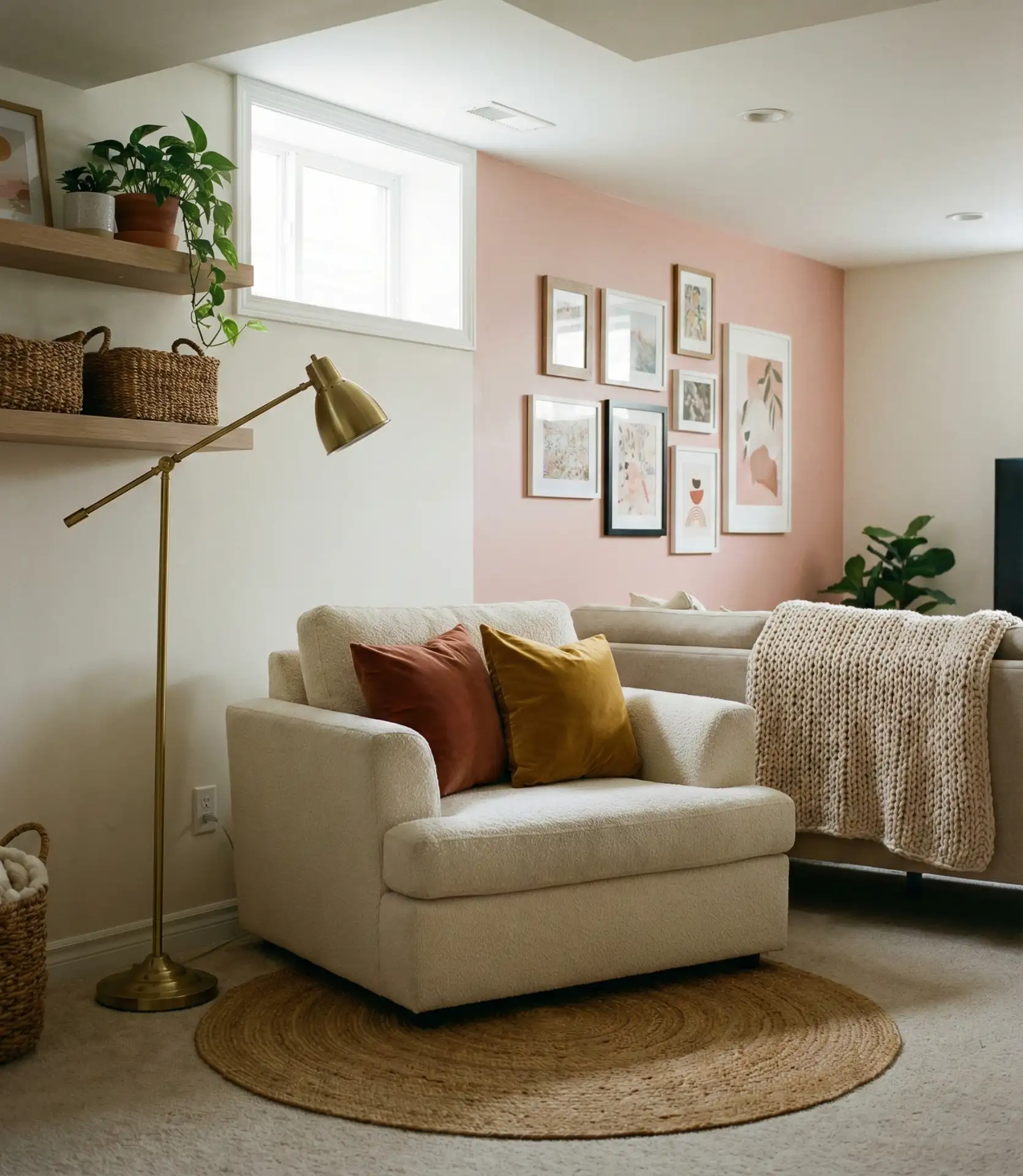
The aesthetic cozy trend combines Instagram-worthy styling with genuine comfort. Layer textures, incorporate plants, hang string lights or woven wall hangings, and choose furniture with soft lines and warm tones. This look is hugely popular on Pinterest among younger homeowners who want basement bedrooms that feel both stylish and genuinely restful. The key is balancing visual interest with actual livability—pretty but not precious.
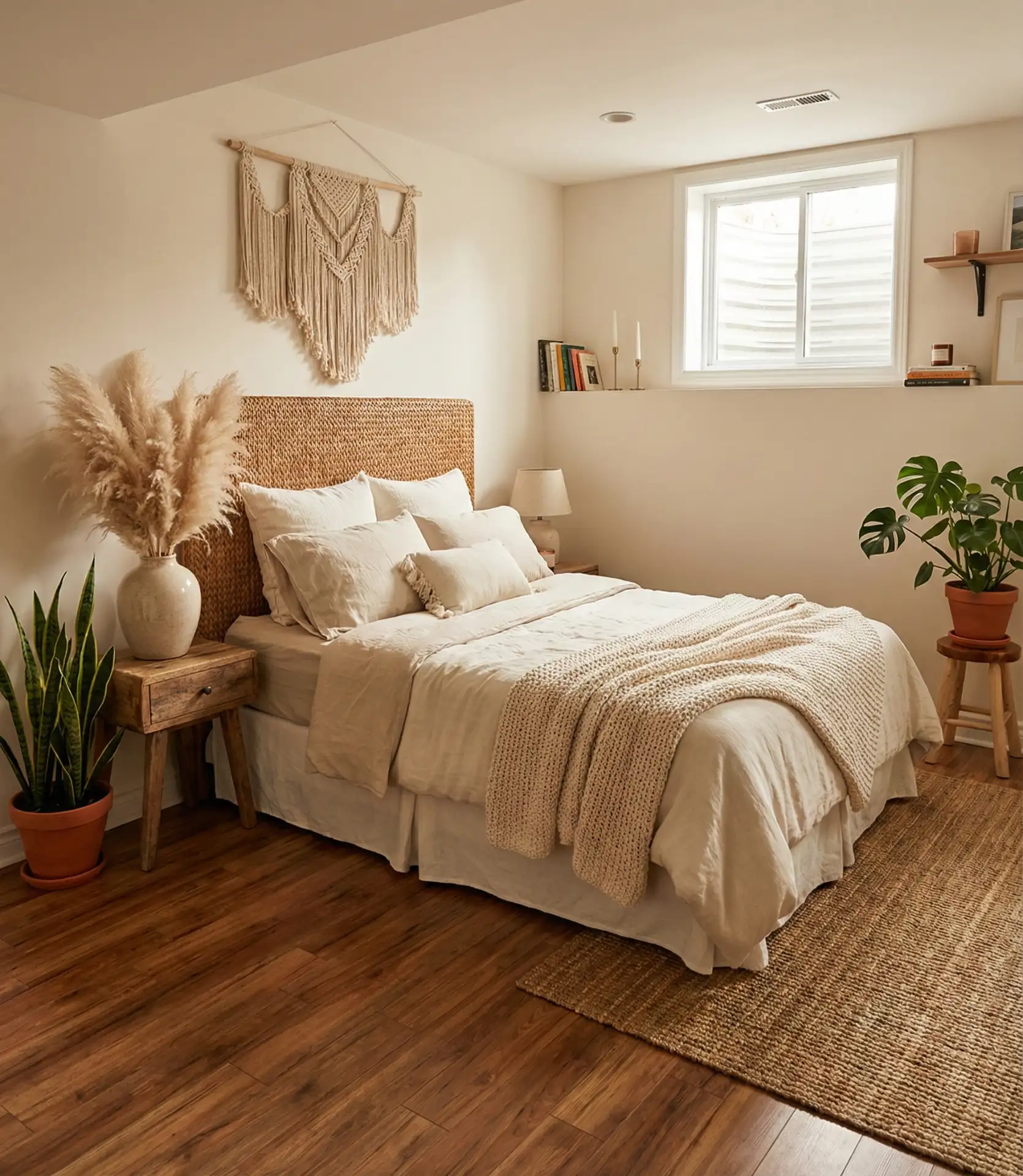
Regional context matters: in warmer climates like Southern California and Florida, where basements are rare, this trend translates to above-ground bedrooms. But in basement-heavy regions like the Midwest and Mid-Atlantic, it’s become the go-to style for transforming cold, utilitarian spaces into warm retreats. Avoid overloading with decor—the “aesthetic cozy” look works best with intentional, curated pieces rather than clutter.
19. Rustic Natural Retreat
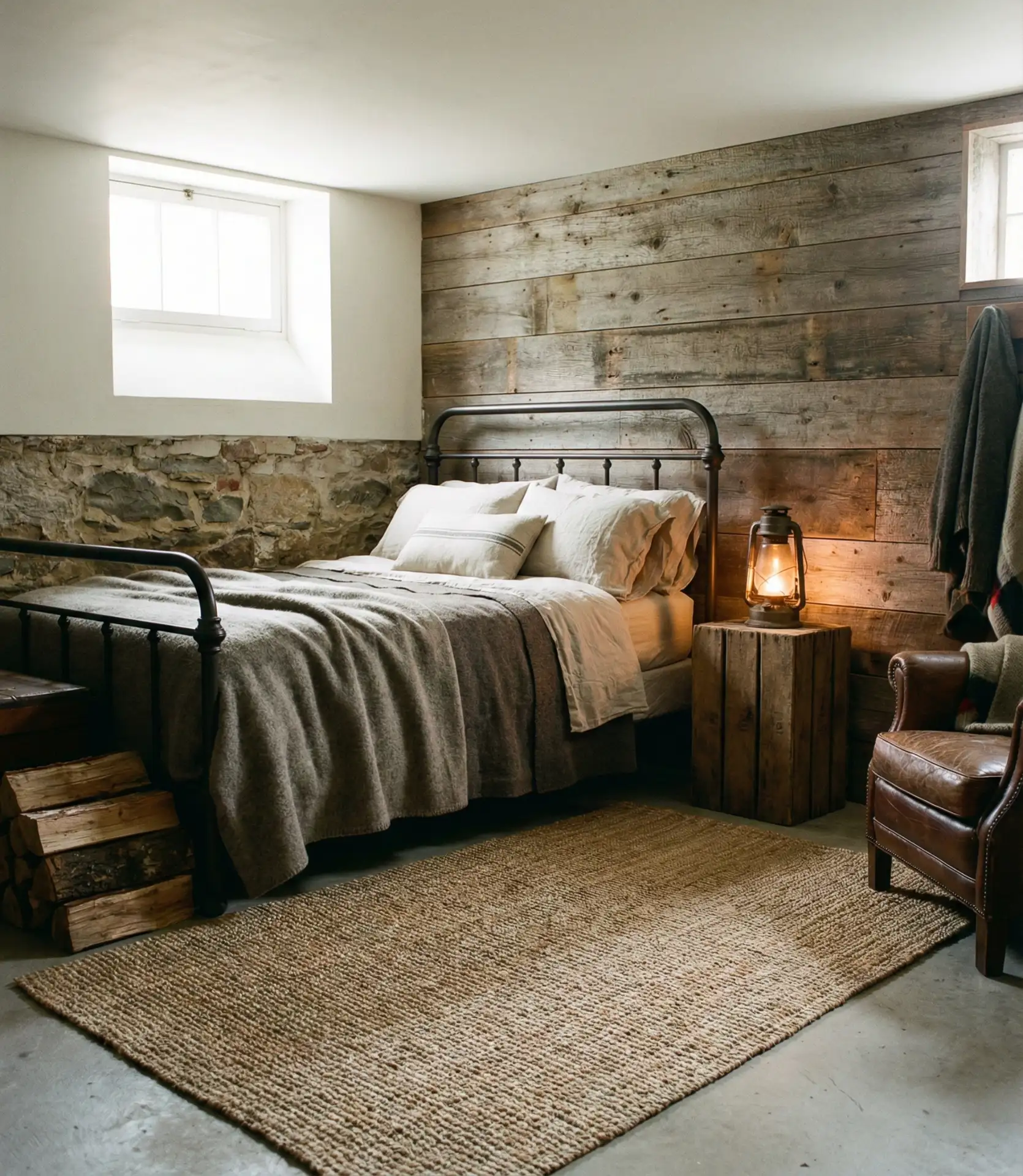
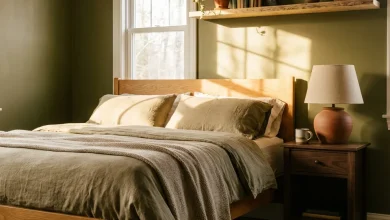
A rustic basement bedroom celebrates natural materials and imperfect beauty. Reclaimed wood headboards, stone accent walls, woven textiles, and earthy color palettes create a cabin-like atmosphere even in suburban settings. Unfinished or partially finished basements, where one can embrace rough textures as features, work particularly well for this style. It’s ideal for anyone seeking a nature-inspired escape without leaving home.
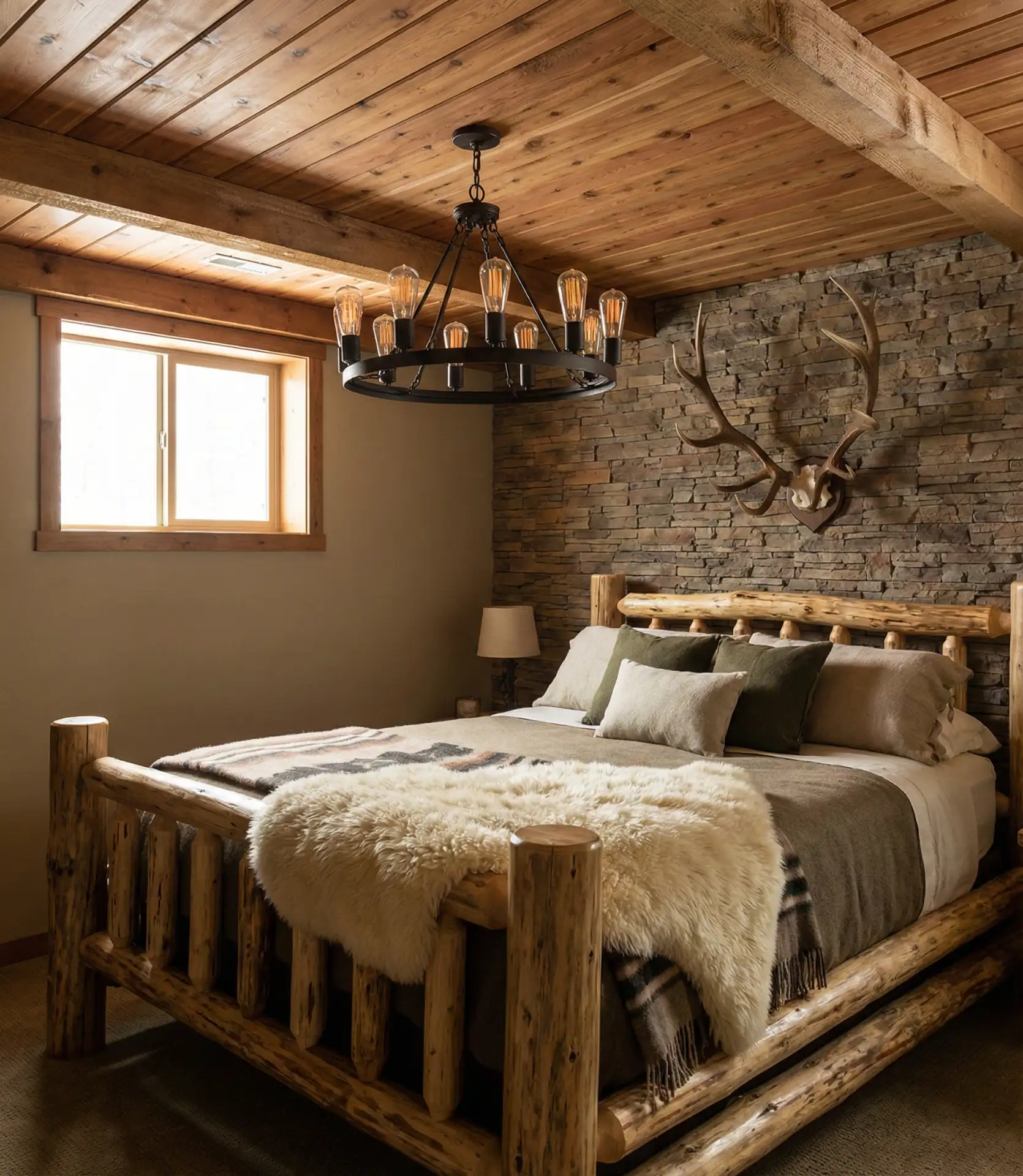
This architecture works best in rural or mountain communities where the rustic aesthetic aligns with the surrounding environment and local architectural traditions. Homeowners in states like Montana, Colorado, and Vermont naturally gravitate toward this style. A practical insight: balance rustic roughness with modern comfort—a beautiful reclaimed wood wall loses appeal if the mattress is uncomfortable or the room lacks proper heating. Layer in plush bedding and quality lighting to keep the space genuinely livable.
20. Couples’ Private Haven
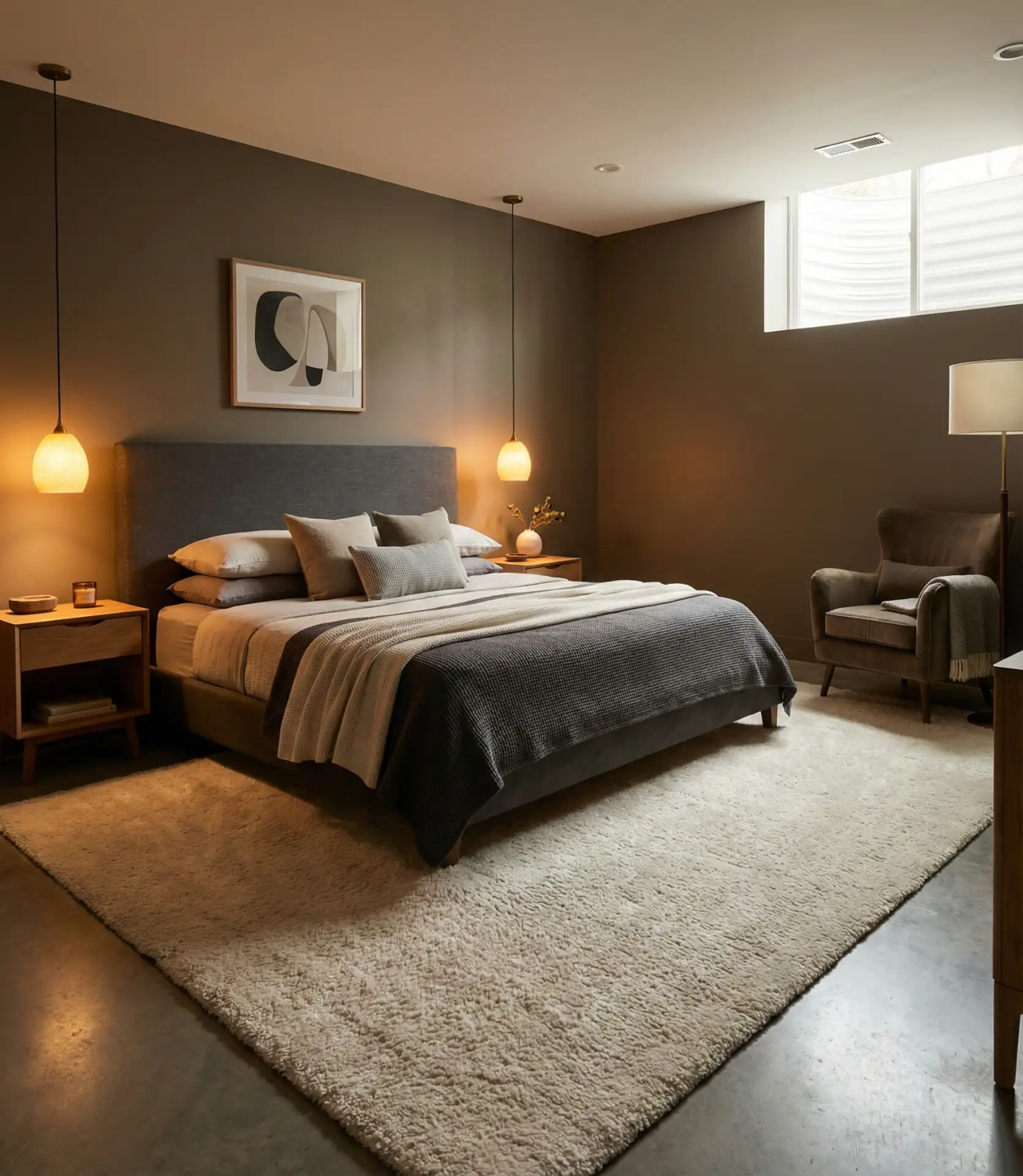
Basement bedrooms offer couples a rare commodity: true privacy. Distance from kids’ rooms, household traffic, and street noise makes the basement ideal for uninterrupted rest and intimacy. Design with comfort and romance in mind—soft lighting, luxurious bedding, soundproofing, and personal touches that reflect both partners. Include a sitting area or reading nook to make the space more than just a sleeping room.
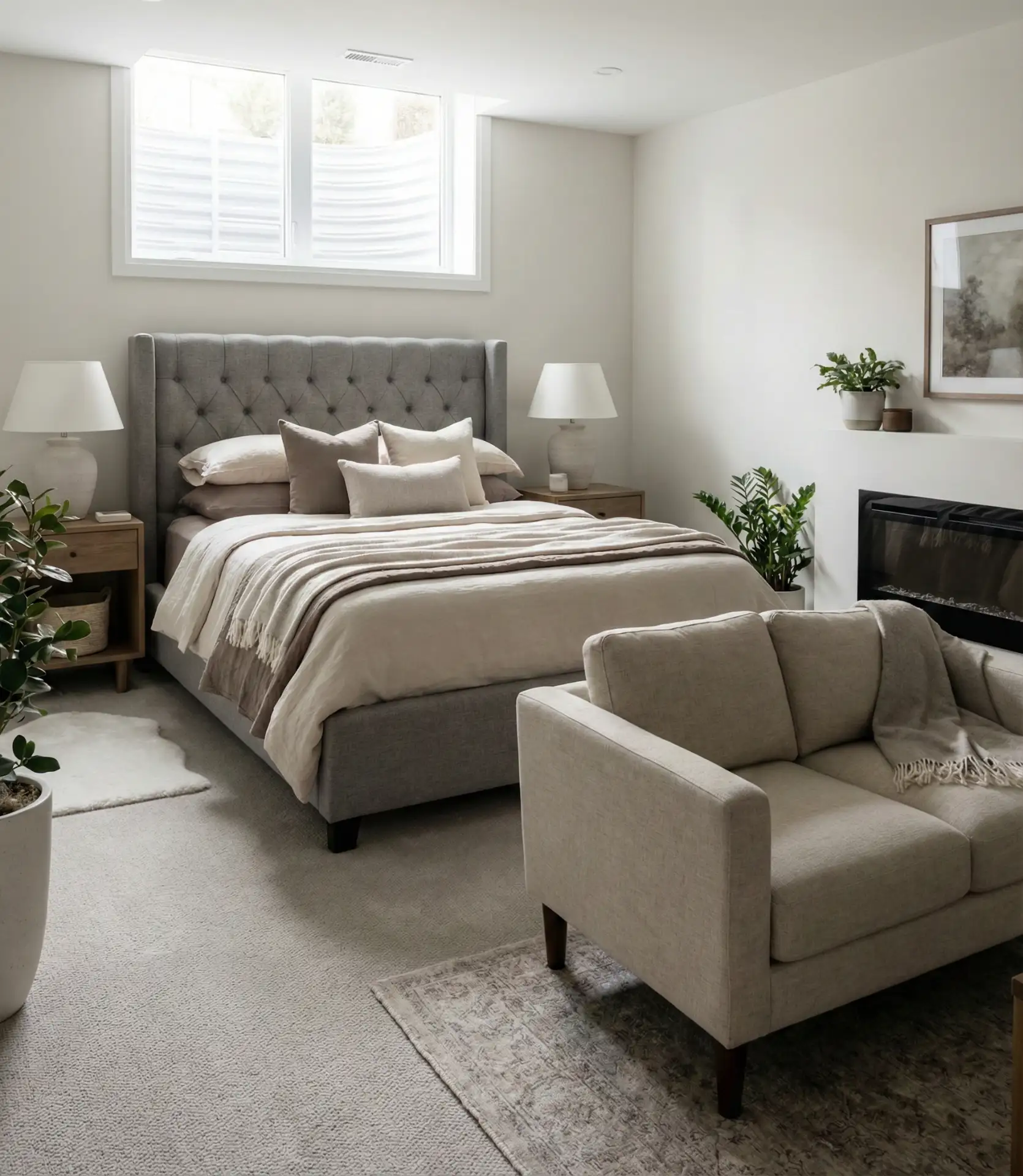
A micro anecdote: one couple in Minnesota moved their bedroom to the basement after their third child was born, transforming what was once storage space into a serene retreat. Simply having a quiet, private space separate from the chaos upstairs improved their sleep quality and relationship satisfaction. The investment in soundproofing, quality bedding, and mood lighting paid dividends in daily quality of life.
21. Small Window Maximization
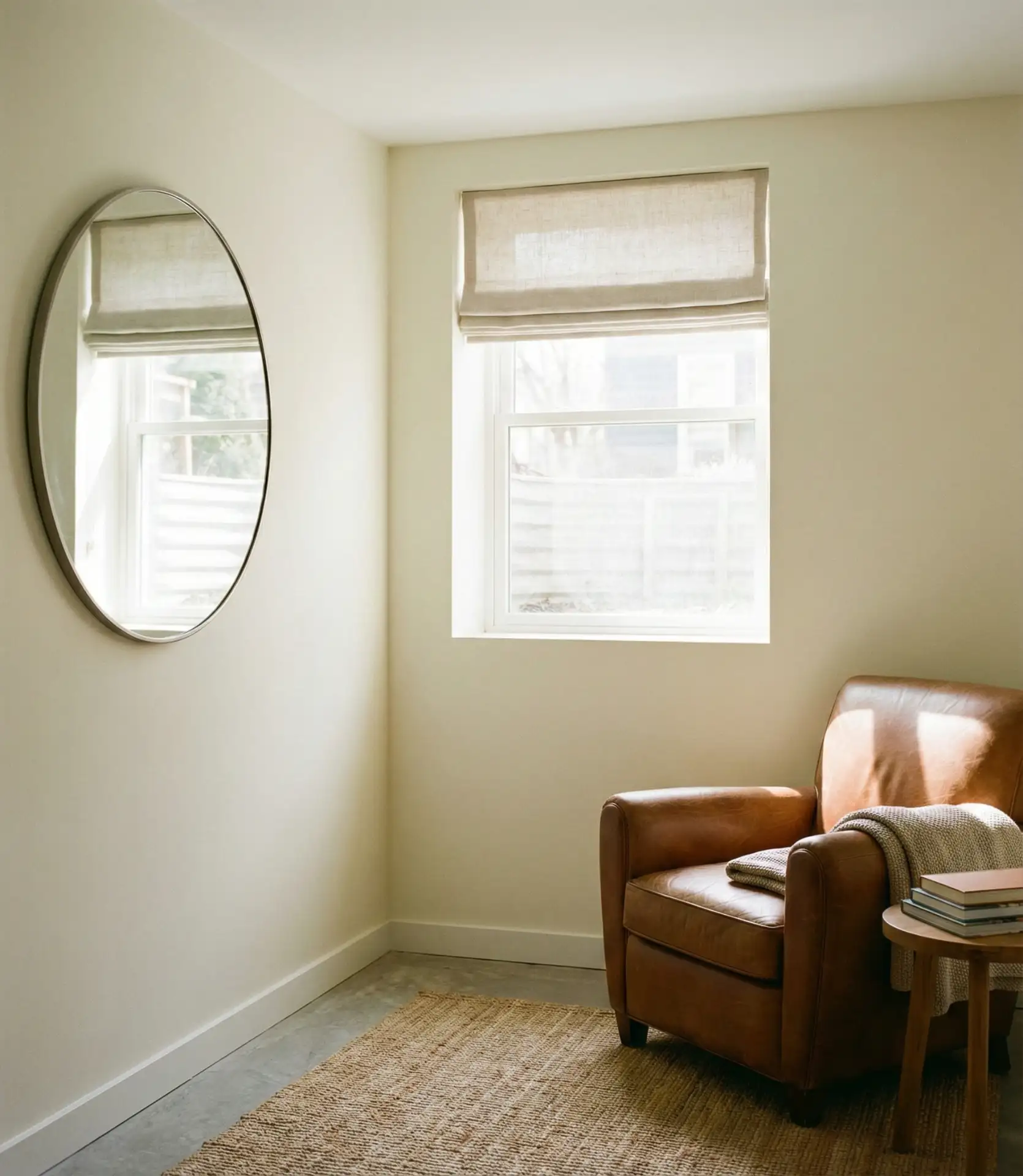
Making the most of a small window requires strategic placement and light enhancement. Position the bed or seating area to capture the limited natural light, and use sheer curtains or no curtains at all if privacy allows. Light-colored walls and reflective surfaces amplify whatever daylight enters. This approach is common in finished basements, where even a modest window makes a significant psychological difference in how the space feels.
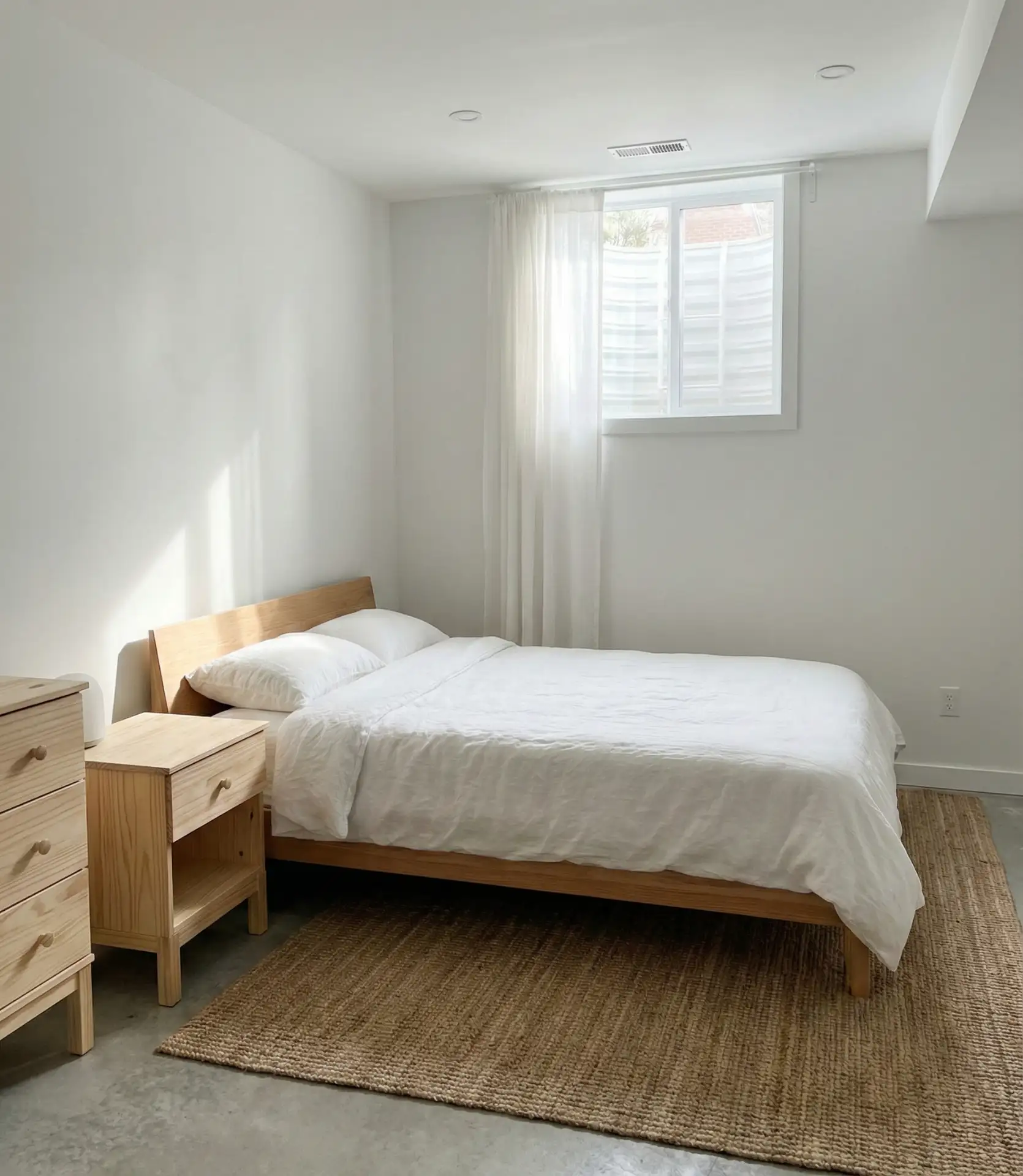
Budget angle: upgrading a small basement window to a larger egress window costs $2,000-$5,000 but dramatically improves both light and safety. It’s one of the most valuable investments you can make in a basement bedroom. If a window upgrade isn’t feasible, consider a window well liner or light tube skylight to bring in additional natural light. Even small improvements in natural light exposure have measurable effects on mood and sleep quality.
22. Windows with Aesthetic Impact
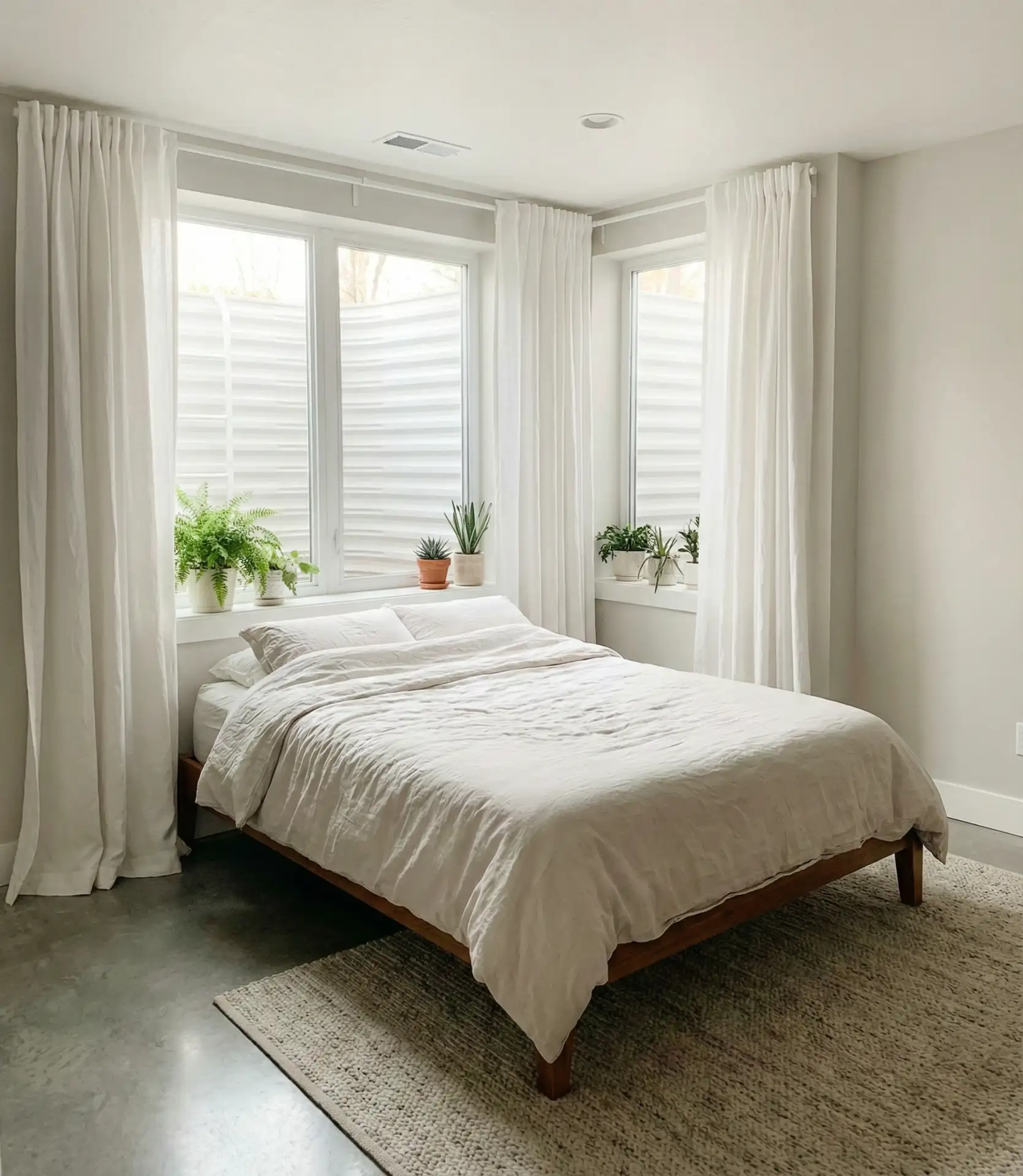
When you have generous windows and aesthetic opportunities in a basement, celebrate them as the room’s defining feature. Large or multiple windows transform the typical basement experience, bringing in views, light, and connection to the outdoors. Treat them as you would in any above-ground bedroom—quality window treatments, strategic furniture placement, and design elements that complement rather than compete with the natural focal point.
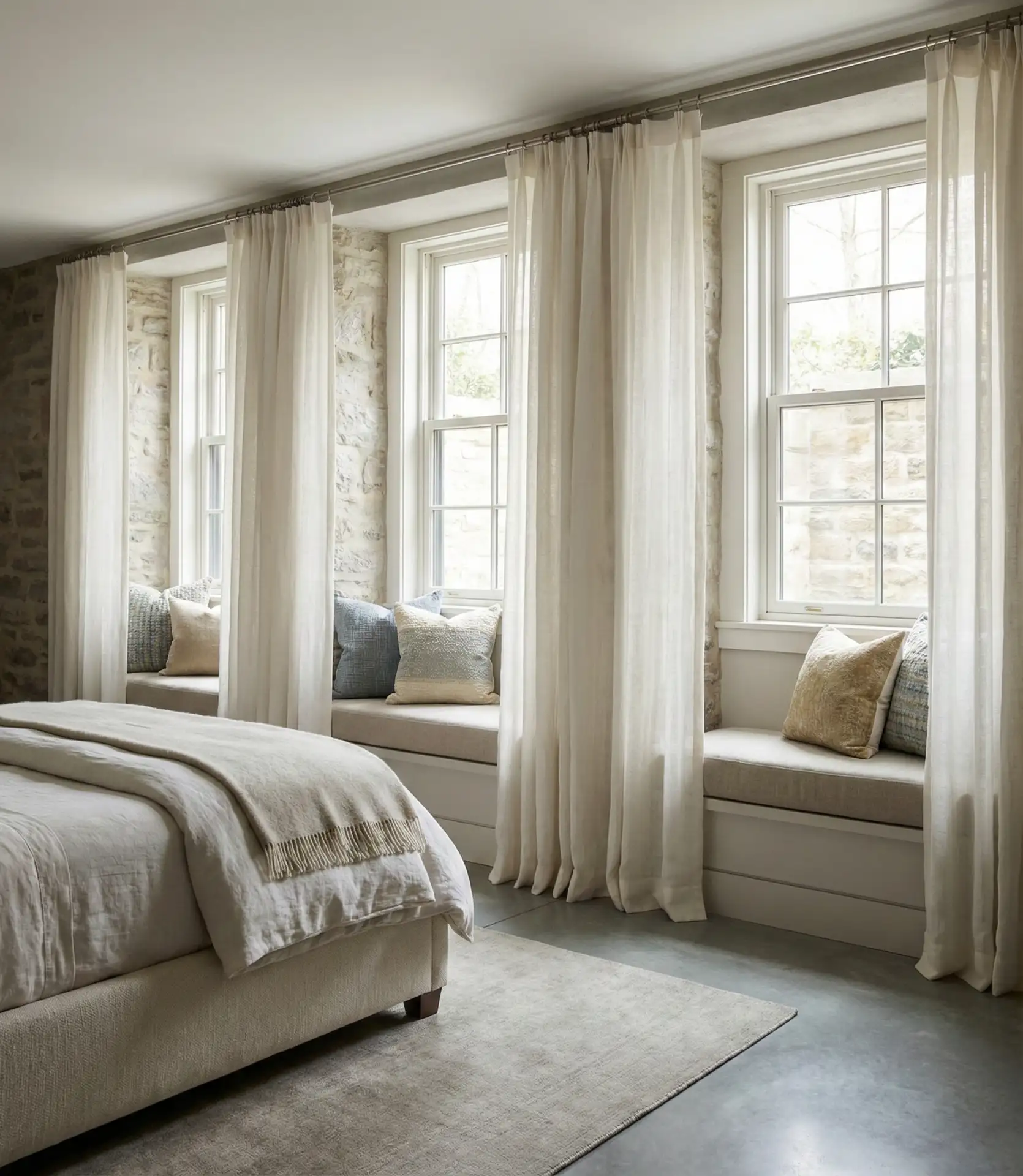
Where it works best: walkout basements or homes built on slopes often feature full-height windows that eliminate the typical basement feel entirely. These are common in hilly regions and newer developments designed to maximize basement livability. Common mistakes include over-treating windows with heavy drapes that block the light you worked so hard to capture. Instead, use simple shades or sheers that provide privacy without sacrificing the room’s greatest asset.
23. Flexible Multi-Zone Layout
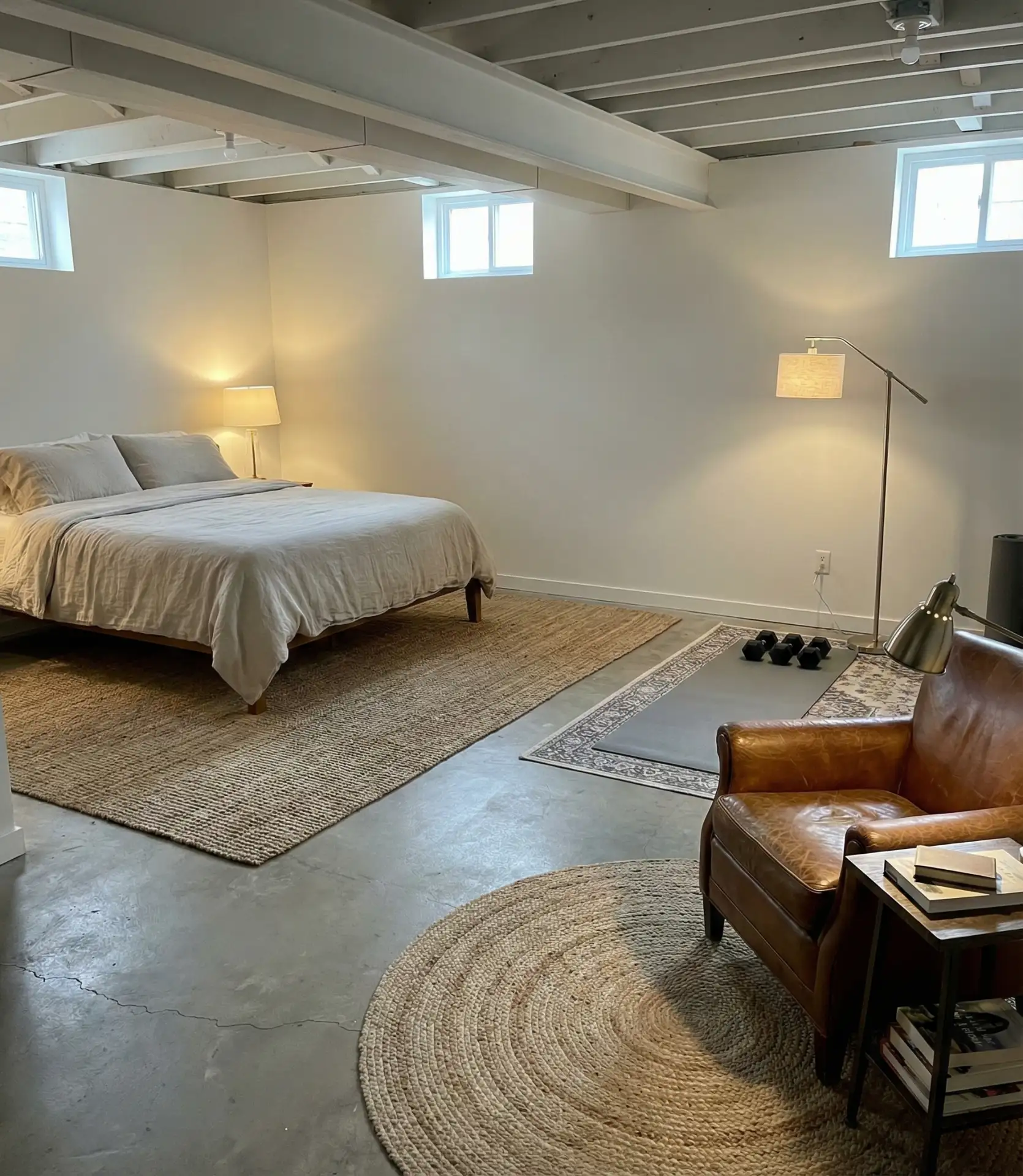
Creating distinct zones within a basement bedroom increases functionality and visual interest. Define sleeping, working, and relaxing areas using furniture arrangement, rugs, and lighting rather than permanent walls. This flexibility particularly suits open basements or large spaces where a single-purpose room feels wasteful. It’s also ideal for teens’ layout designs where studying and socializing happen alongside sleeping.
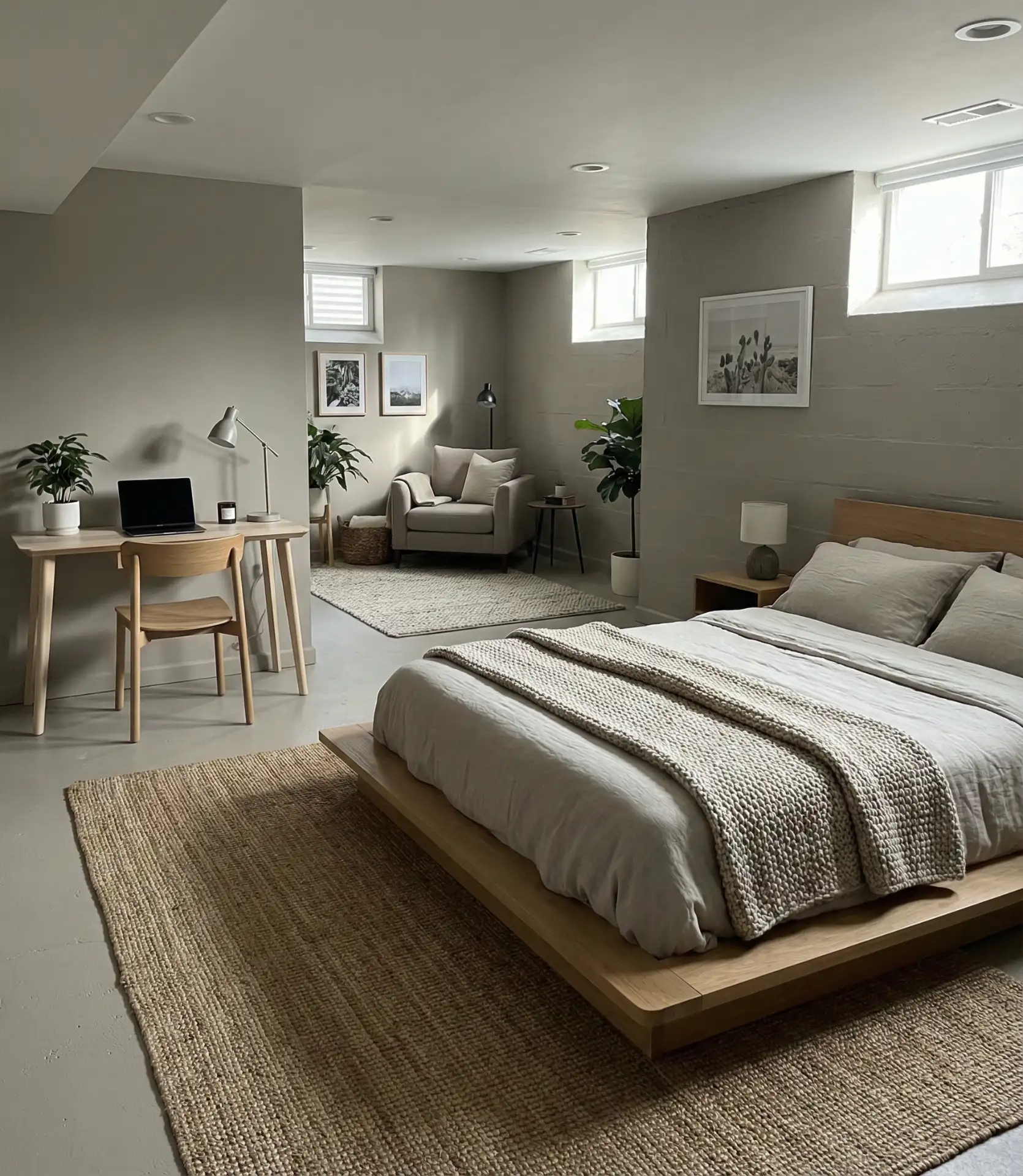
Real homeowner behavior across America shows that multi-zone basement bedrooms are most successful when zones serve genuinely different purposes rather than being merely decorative. A dedicated work-from-home corner, meditation space, or fitness area adds real value to daily life. Practical insight: use different lighting temperatures for different zones—cooler light for work areas, warmer light for sleeping and relaxing—to psychologically reinforce the functional separation.
24. Warm Lighting Solutions
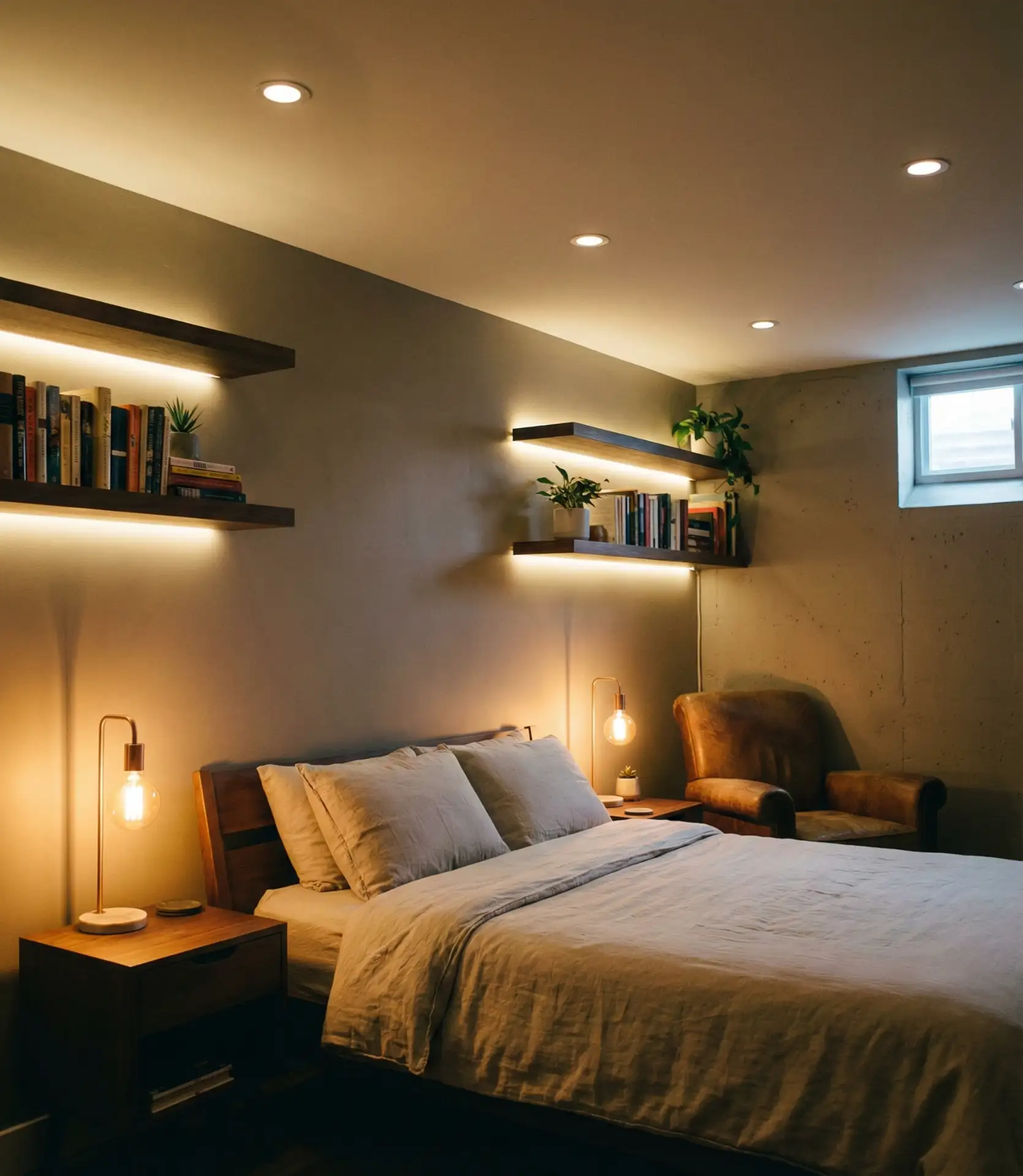
Proper lighting transforms any basement bedroom from dreary to delightful. Layer ambient, task, and accent lighting to create depth and warmth, especially important in dark spaces. Dimmable fixtures let you adjust mood throughout the day, while warm bulbs (2700K-3000K) create a cozy, inviting atmosphere. This strategy works in both finished and unfinished basements, proving that good lighting transcends construction levels.
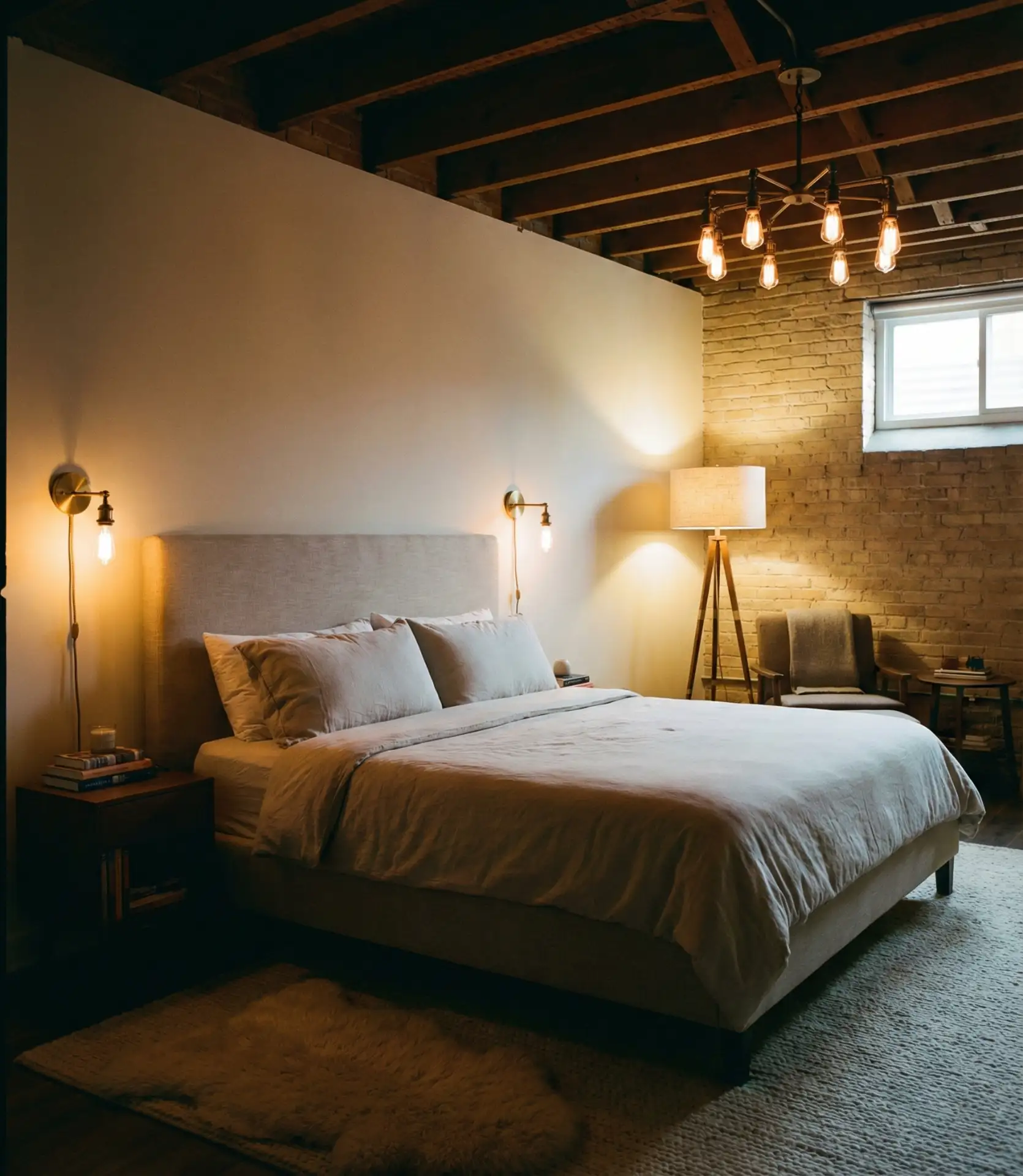
Expert-style commentary from lighting designers emphasizes that basements need more light sources than above-ground rooms—typically 50% more lumens to achieve the same perceived brightness. This doesn’t mean harsh or clinical lighting; instead, distribute warm light across multiple fixtures. Avoid the single overhead fixture trap that creates flat, unflattering illumination. Smart bulbs allow easy adjustment without rewiring, making them perfect for evolving basement bedroom needs.
25. Built-In Storage Integration
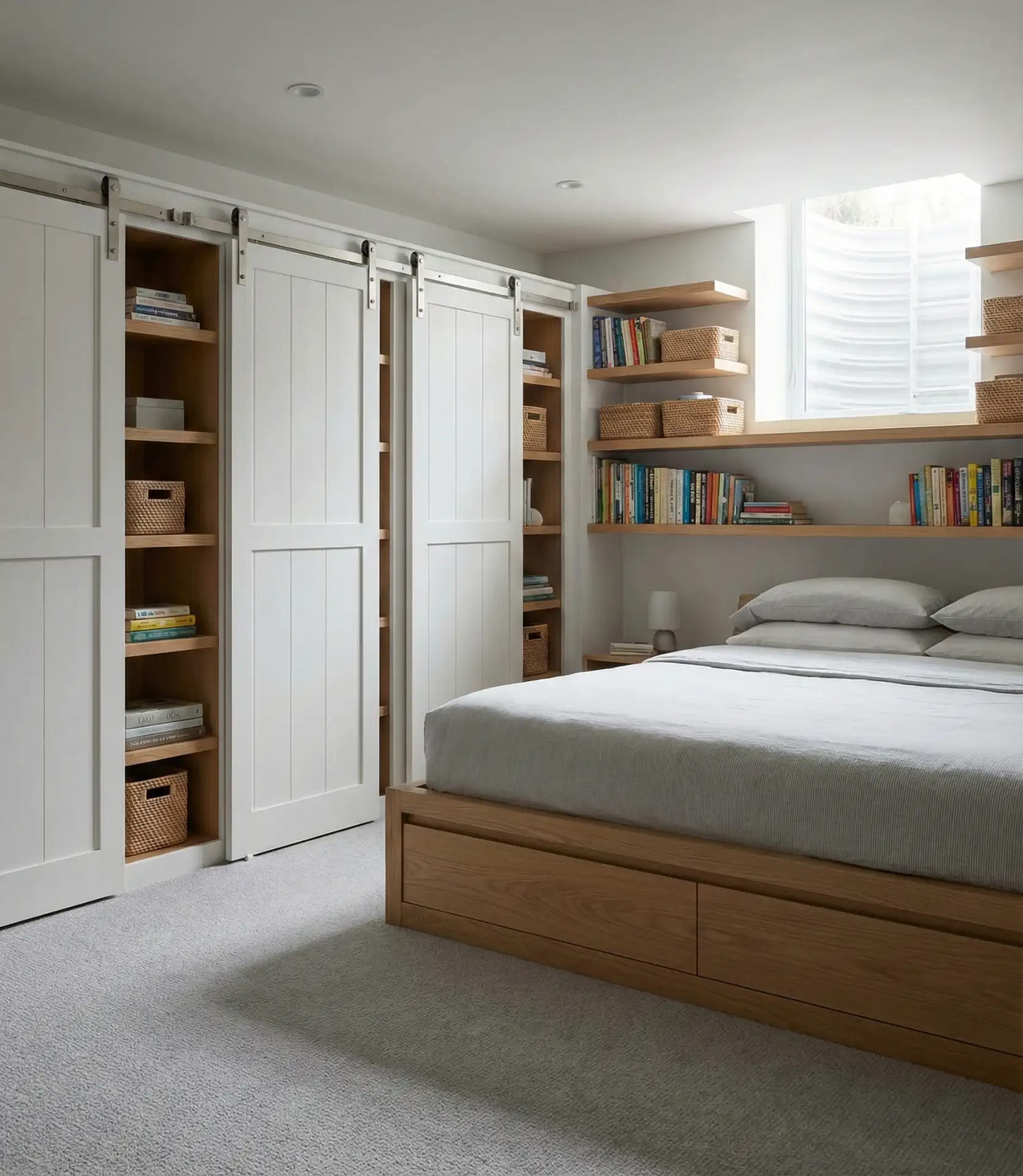
Maximizing storage is crucial in basement bedrooms, especially tiny or kids’ rooms where space is at a premium. Built-in solutions like under-stair drawers, wall niches, and floor-to-ceiling closets use every available inch. This approach works beautifully in finished spaces where custom carpentry integrates seamlessly or even in unfinished areas using simple shelving systems. Well-planned storage keeps the bedroom clutter-free and functional.
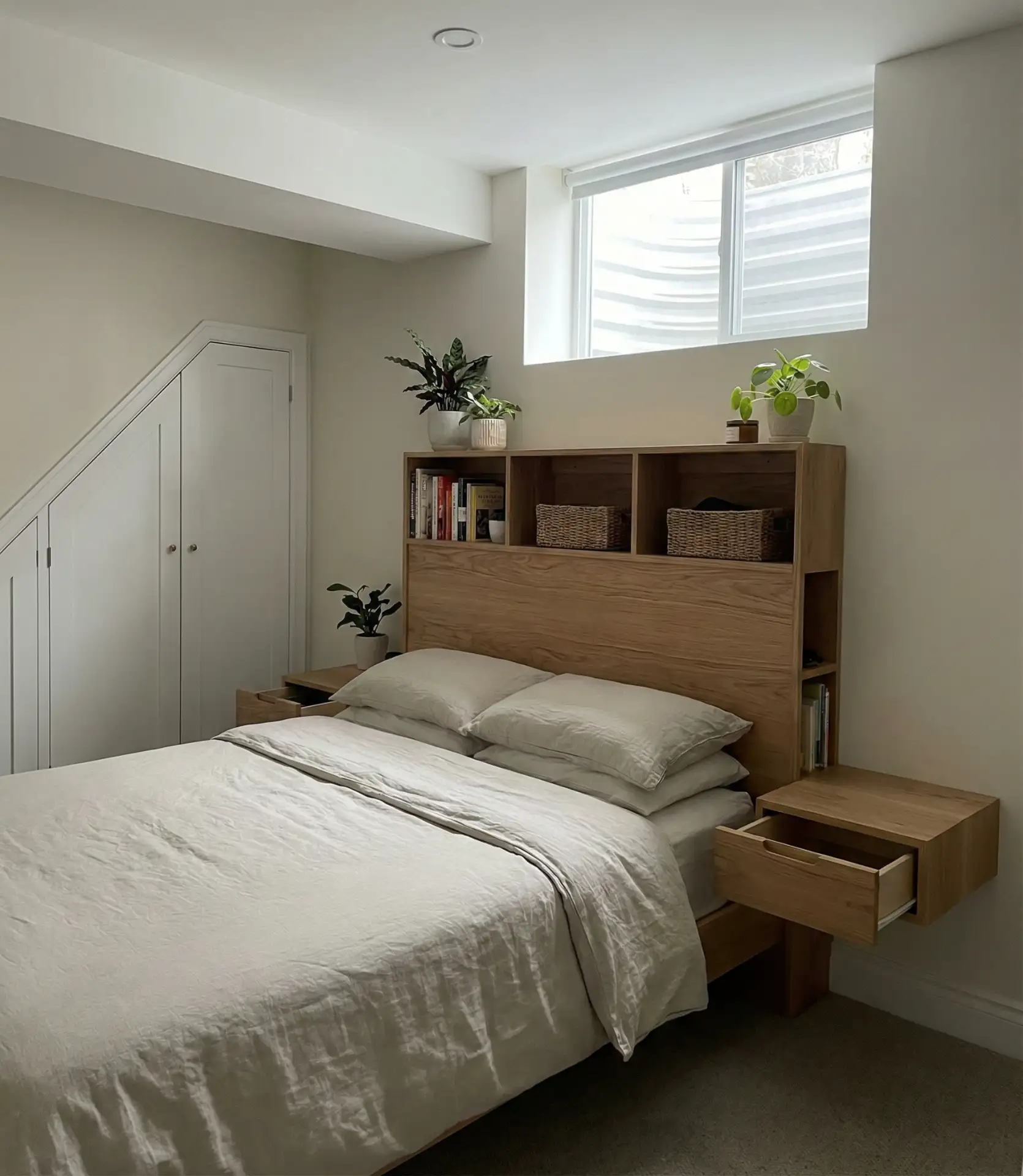
Common mistakes include underestimating storage needs and choosing furniture that doesn’t utilize vertical space. Basements often lack the closets and storage abundance found upstairs, so built-ins aren’t just nice—they’re necessary. American lifestyle context: as remote work continues normalizing, basement bedrooms increasingly double as offices, requiring storage for both bedroom and work items. Plan for this dual purpose from the start to avoid later frustration and clutter accumulation.
26. Seasonal Comfort Control
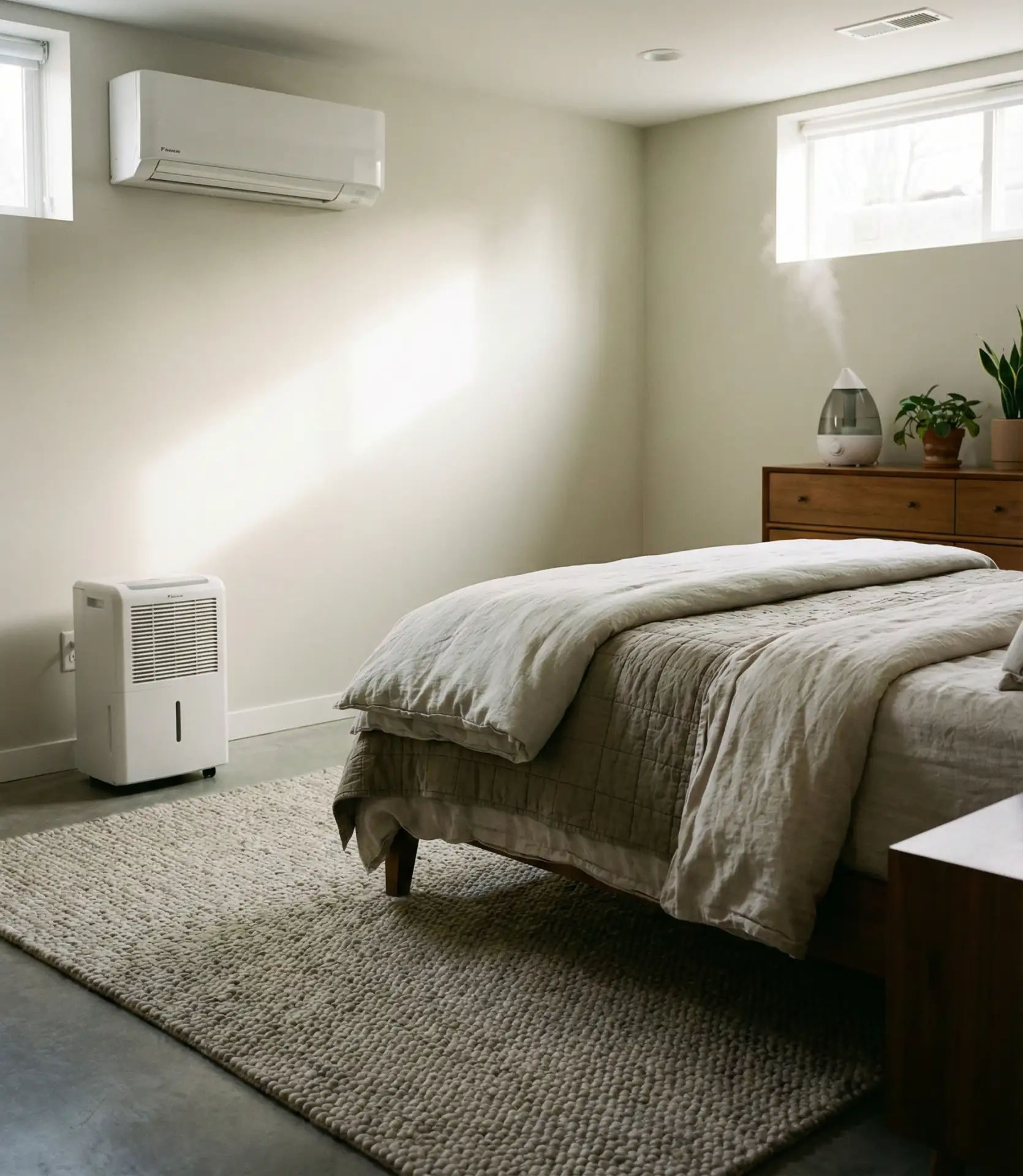
Basement bedrooms face unique temperature and humidity challenges requiring thoughtful environmental control. In summer, they stay naturally cool but can become damp; in winter, they may feel cold and dry. Address this issue with dedicated HVAC zones, dehumidifiers, space heaters, and proper insulation. The situation matters whether the room serves guest needs, houses teens, or functions as a cozy personal retreat—comfort makes or breaks the space’s usability.
Practical insight that’s often overlooked: basement humidity levels should stay between 30% and 50% for optimal comfort and mold prevention. Invest in a quality hygrometer to monitor conditions, especially in humid climates like the Southeast or Pacific Northwest. Regional context matters—basement needs in Arizona differ dramatically from those in Louisiana. Adjust your approach based on local climate, and remember that comfortable temperature and air quality directly impact sleep quality, making this investment essential rather than optional.
Transforming a basement into a beautiful, functional bedroom opens up possibilities you might not have imagined when you first looked at that empty concrete space. Whether you’re working with abundant natural light or embracing cozy darkness, generous square footage or a compact nook, these ideas prove that basement bedrooms can rival—and sometimes surpass—traditional upstairs rooms. The key is thoughtful design that addresses the unique challenges while celebrating the unique advantages. We’d love to hear about your basement bedroom journey—share your ideas, challenges, and successes in the comments below.