50 Vintage Bedroom Ideas 2026: Transform Your Space with Timeless Charm and Character

As we move through 2026, vintage bedroom design continues to captivate American homeowners seeking warmth, character, and timeless charm in their most personal spaces. From Pinterest boards overflowing with inspiration to real-world renovations across the country, the appetite for nostalgia-driven interiors has never been stronger. Whether you’re drawn to the ornate elegance of Victorian details, the earthy comfort of rustic textures, or the playful energy of retro color palettes, vintage bedrooms offer endless possibilities for creating spaces that feel both collected and intentional. This guide explores distinctive vintage bedroom ideas that blend authentic period style with modern livability, helping you craft a retreat that honors the past while serving your present-day needs.
1. Modern Vintage Fusion with Clean Lines
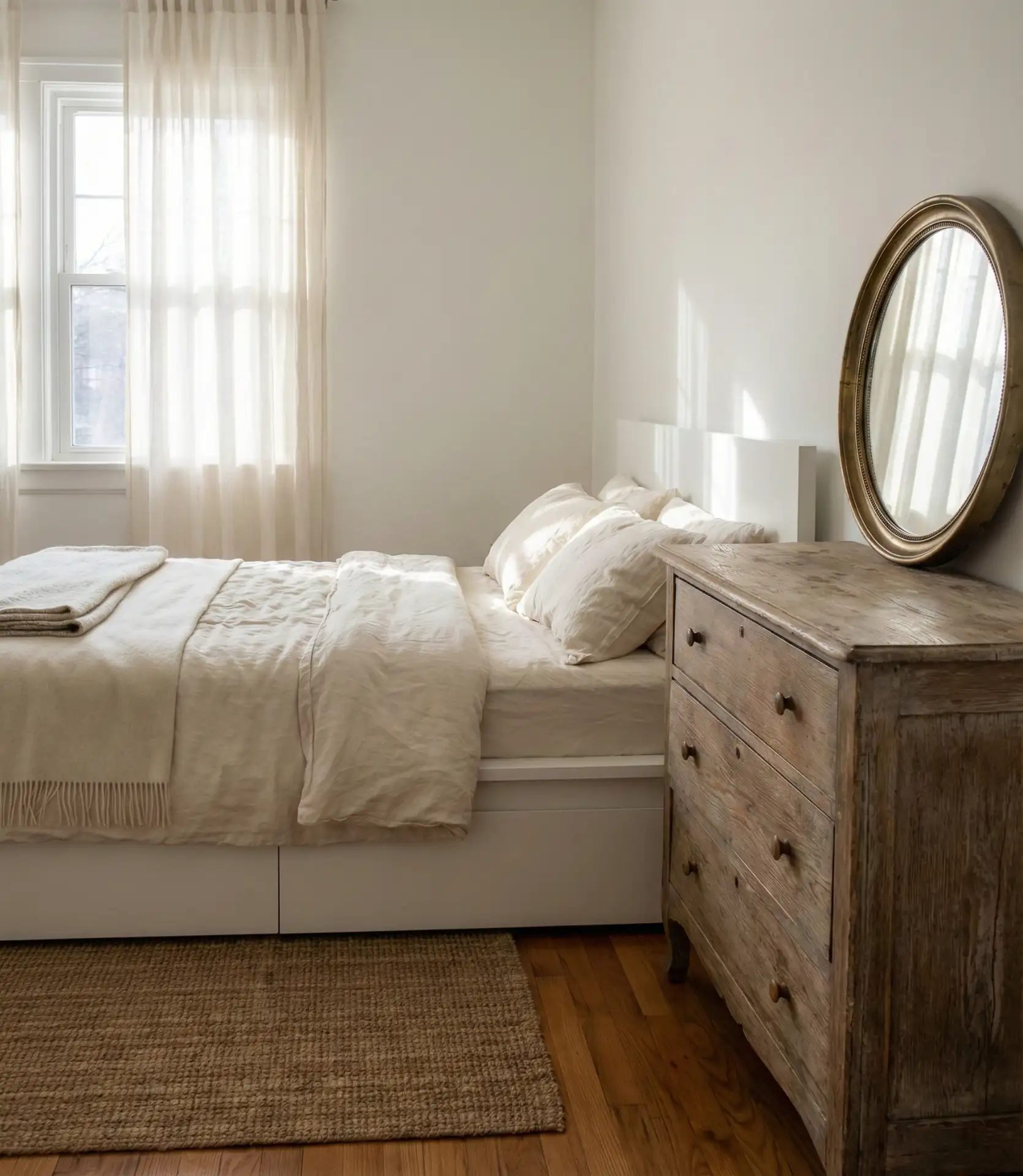
Blending modern simplicity with vintage character creates bedrooms that feel fresh rather than dated. This approach pairs streamlined furniture frames with antique textiles, mixing a contemporary platform bed with a 1940s dresser or pairing minimalist nightstands with ornate vintage mirrors. The contrast between old and new prevents the space from feeling like a museum while maintaining that collected, layered aesthetic that makes vintage interiors so appealing to today’s design-conscious Americans.
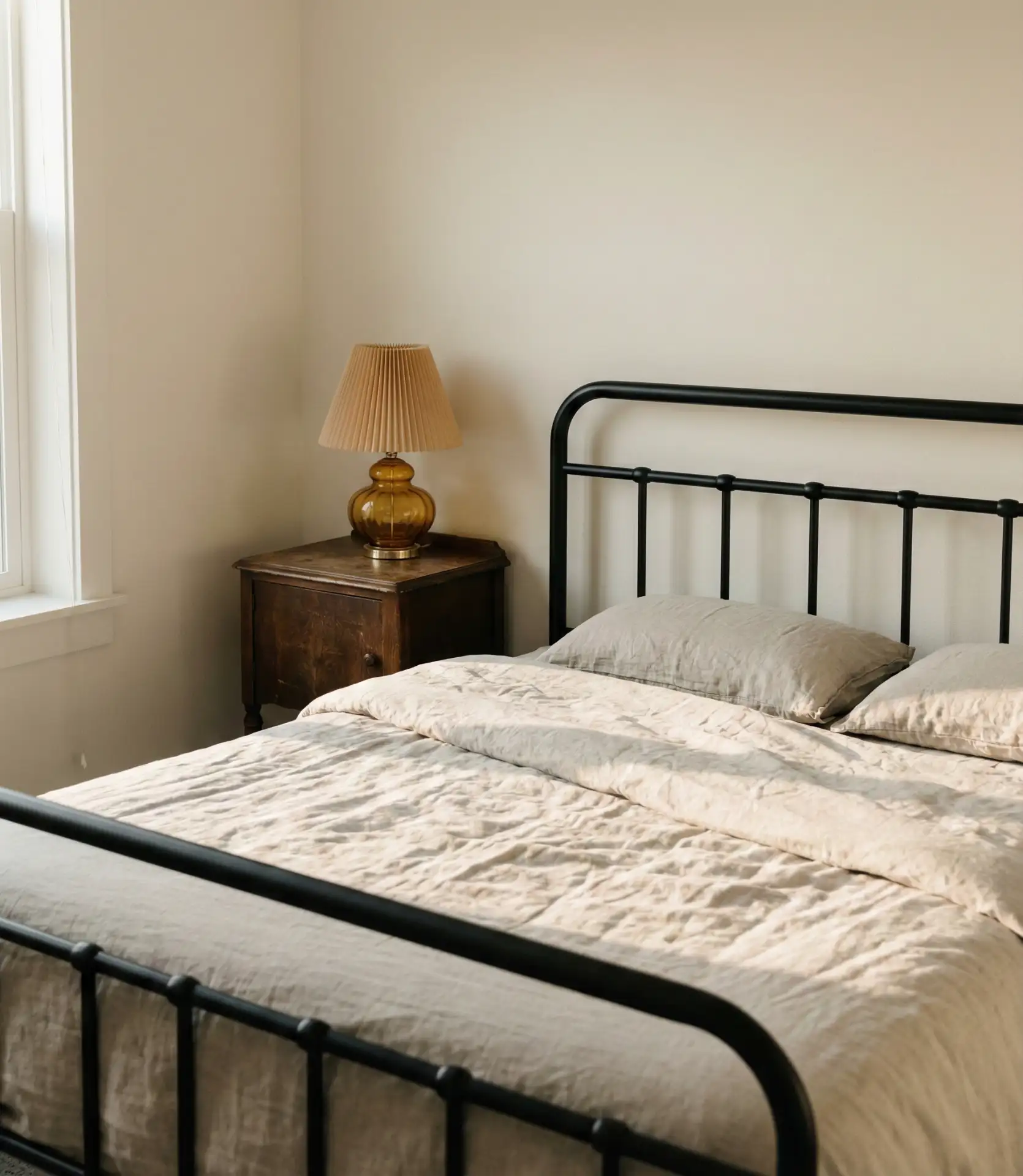
This style works particularly well in urban apartments and newer suburban homes where architectural details may be minimal. By introducing vintage pieces strategically—a carved headboard here, a mid-century lamp there—you add depth and story without overwhelming smaller square footages. The key is maintaining visual breathing room: for every ornate vintage element, balance it with something simple and contemporary to keep the space feeling open and uncluttered.
2. Romantic Lace and Linen Layers
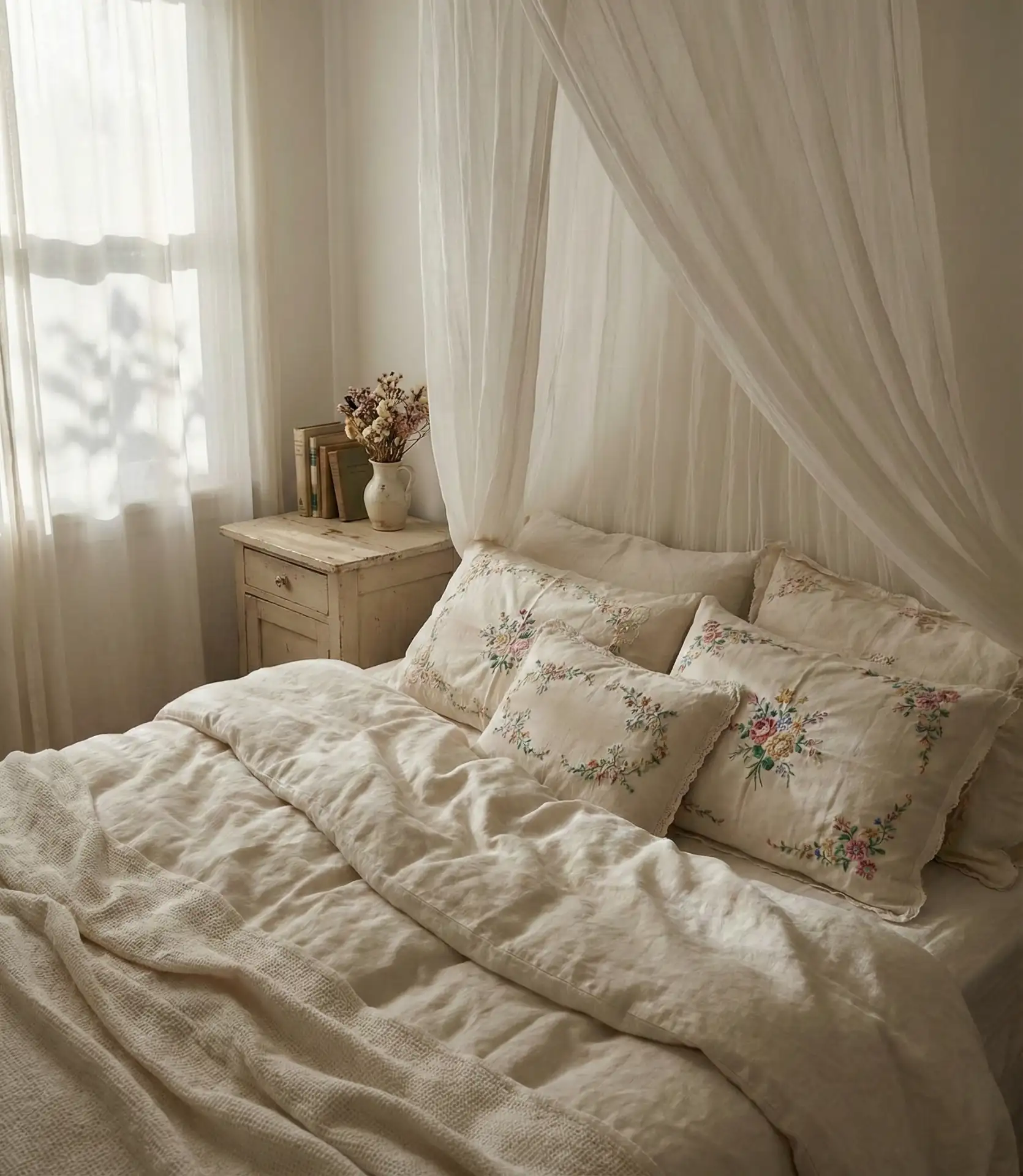
Softness defines the romantic vintage bedroom, where layers of natural fabrics create an enveloping sense of comfort and intimacy. Think gauzy curtains filtering afternoon light, linen duvet covers in muted ivory or blush tones, and vintage lace pillows adding delicate texture. This approach draws inspiration from European country homes and American farmhouse traditions, where bedrooms served as private sanctuaries filled with handmade textiles and cherished heirlooms passed down through generations.
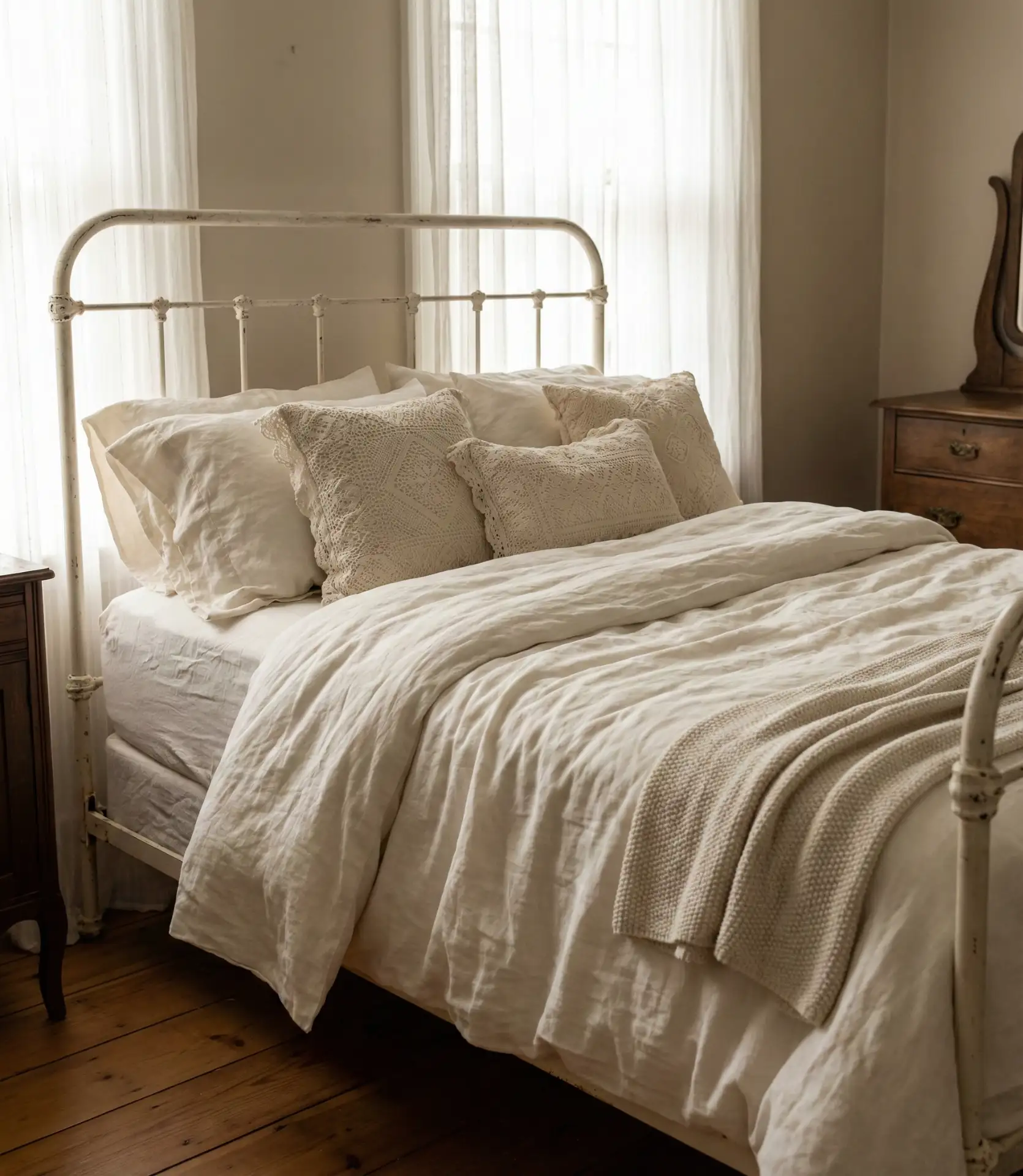
A common mistake is overloading romantic bedrooms with too many competing patterns or overly saturated colors. The most successful romantic vintage spaces stick to a restrained palette of whites, creams, soft grays, and occasional blush or sage accents. Quality matters more than quantity—invest in one beautiful vintage quilt or a genuine linen duvet rather than filling the bed with synthetic reproductions that lack the authentic texture and drape of natural fibers.
3. Victorian Drama with Rich Textiles
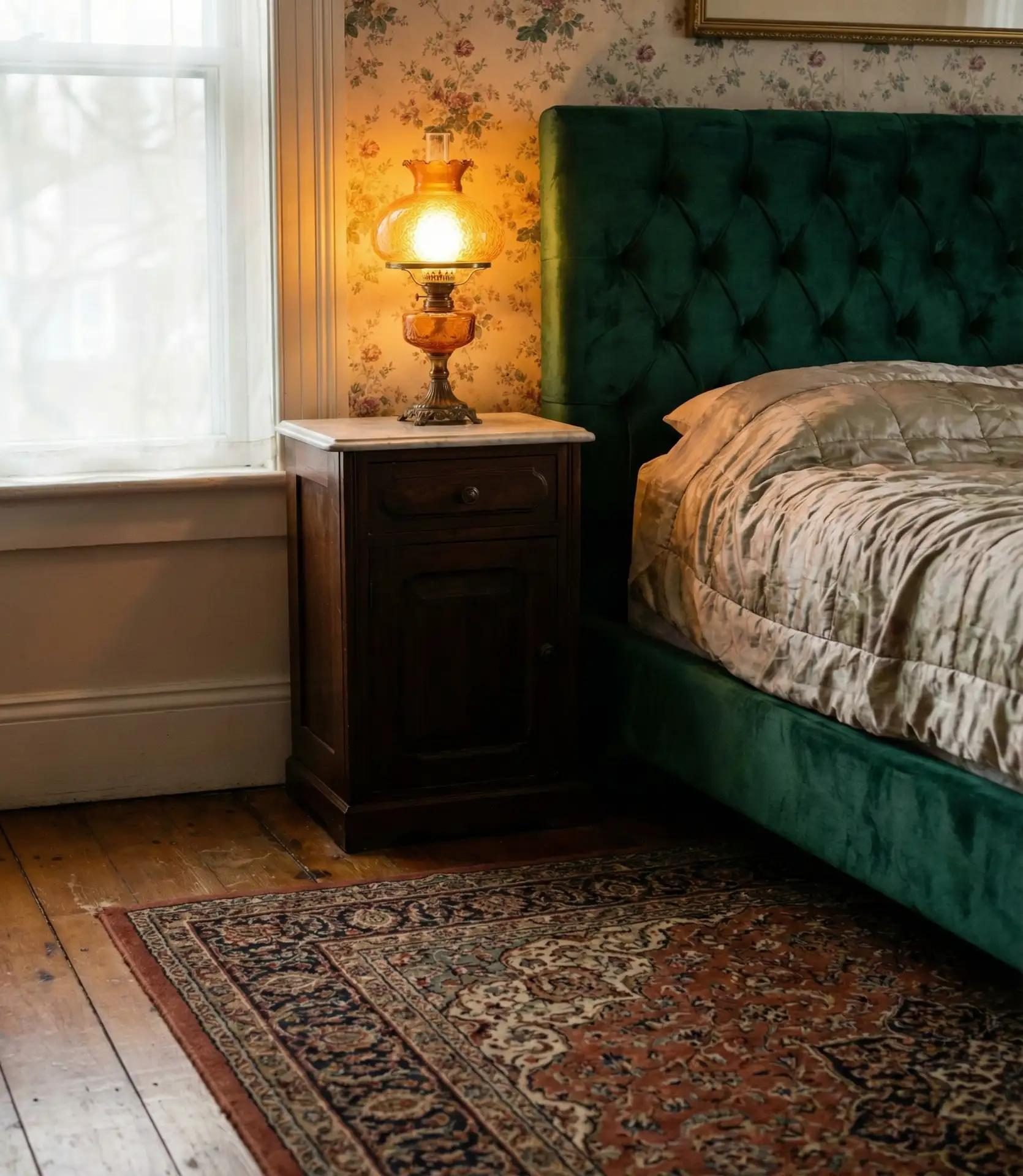
For those drawn to opulence and historical grandeur, Victorian bedrooms deliver with jewel-toned velvets, ornate carved wood furniture, and dramatic window treatments. This style celebrates the maximalist spirit of the late 19th century while adapting it for contemporary comfort—think deep burgundy or emerald accent walls, heavy brocade curtains, and elaborately detailed bed frames that serve as room focal points. The aesthetic transports you to another era without sacrificing modern amenities.
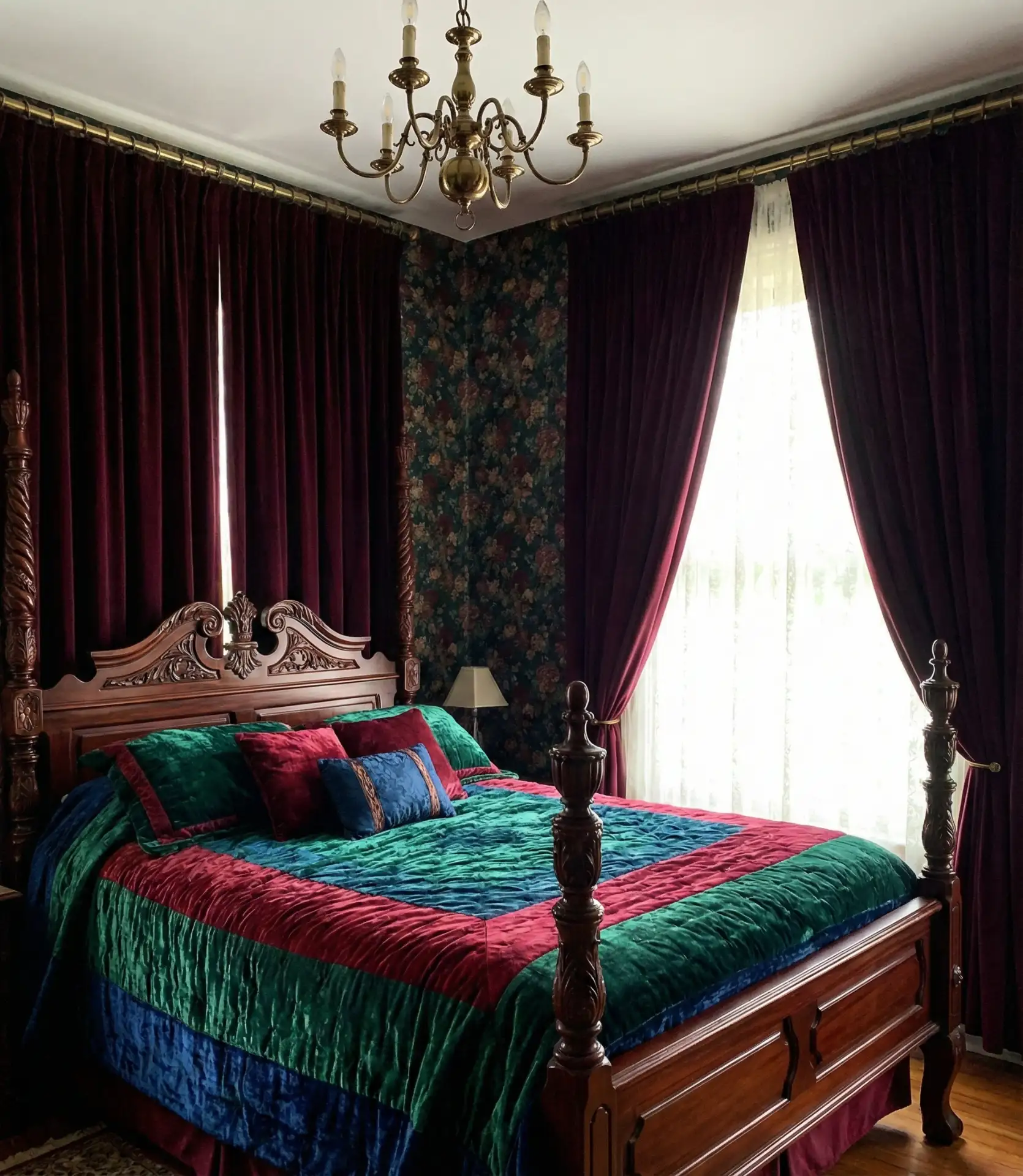
Victorian bedrooms work best in homes with high ceilings and generous proportions, particularly in older Northeast and Midwest properties where the architecture already supports this level of detail. If you’re working with standard eight-foot ceilings, scale back on the heaviest elements—perhaps choose wallpaper with smaller patterns or opt for a canopy bed with simpler lines rather than the most ornate version available at the antique market.
4. Cozy Cottage Comfort
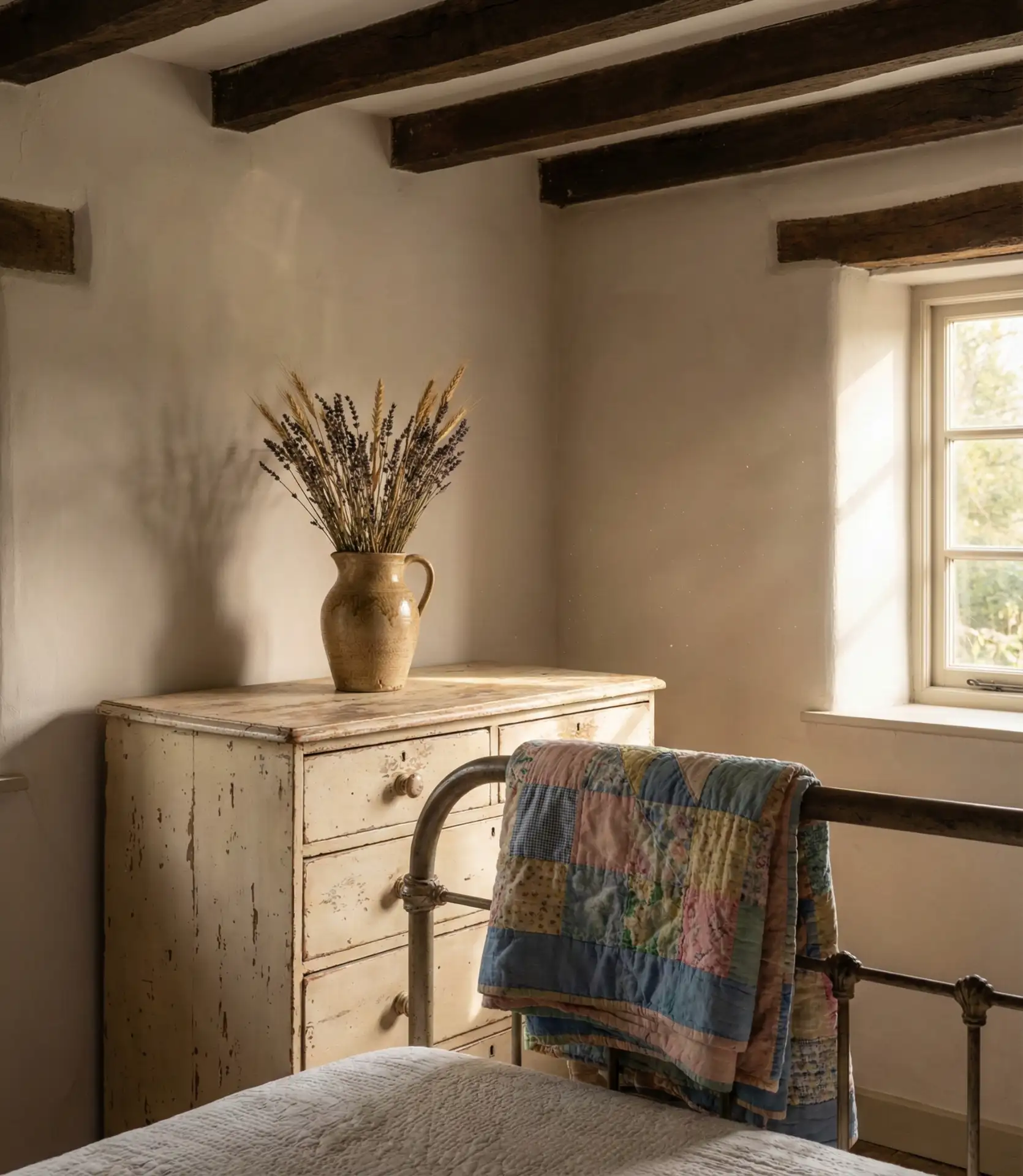
The cozy cottage bedroom places warmth and approachability above formality, resulting in spaces that instantly elicit a sense of comfort. Vintage quilts in cheerful patterns, painted wooden furniture with gentle wear, and collections of mismatched pillows contribute to an atmosphere of lived-in comfort. This style draws from American country traditions and English cottage design, emphasizing personal touches and handmade elements over perfectly coordinated showroom looks.
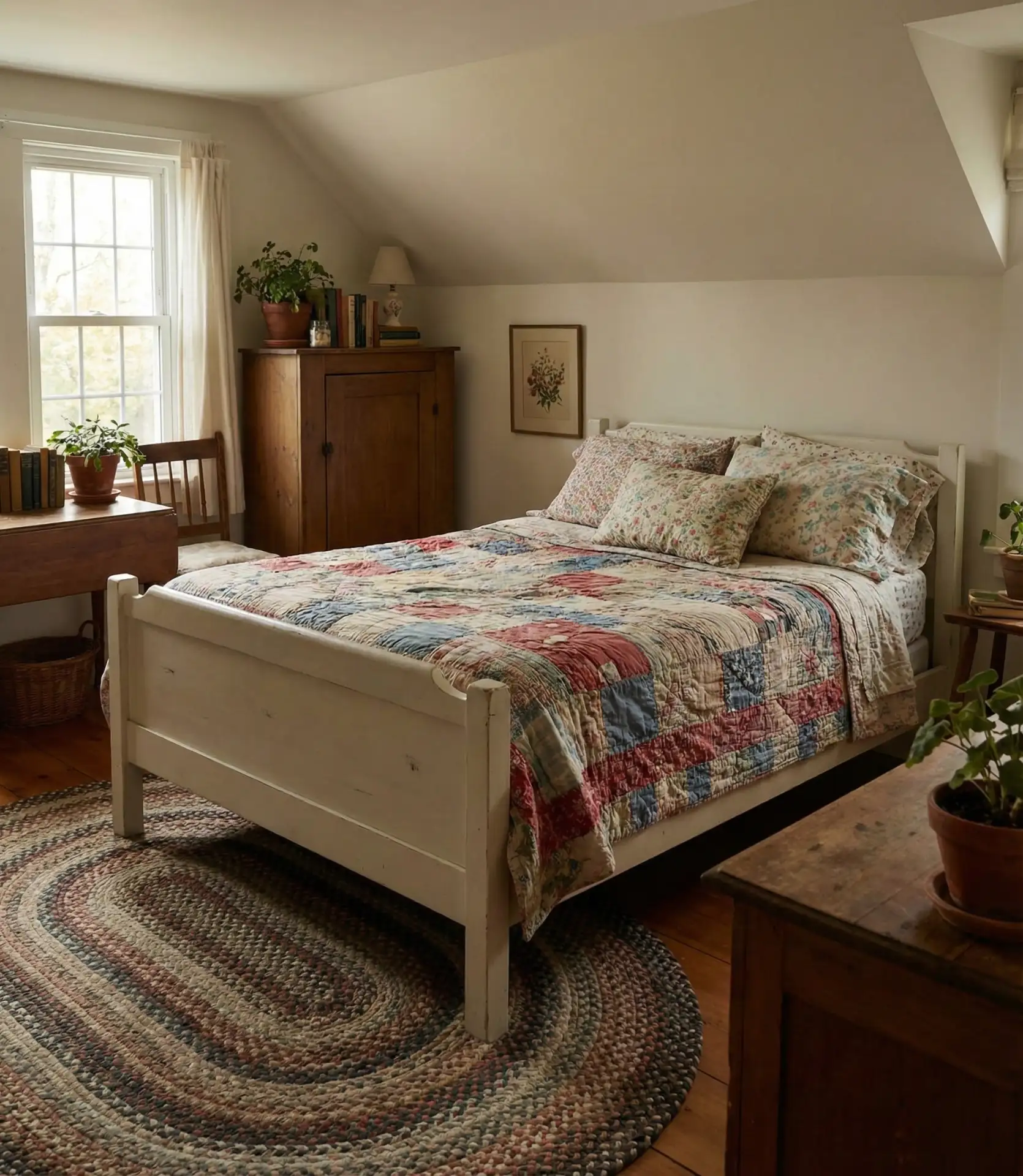
In coastal New England towns and rural Midwestern communities, cottage-style bedrooms feel especially authentic, connecting to local architectural heritage. Budget-conscious decorators love this approach because it welcomes thrifted finds and hand-me-downs rather than requiring expensive antiques. A flea market quilt and a dresser painted in your grandmother’s favorite color can create more charm than anything purchased new from a furniture chain.
5. Small Room Solutions with Vintage Character
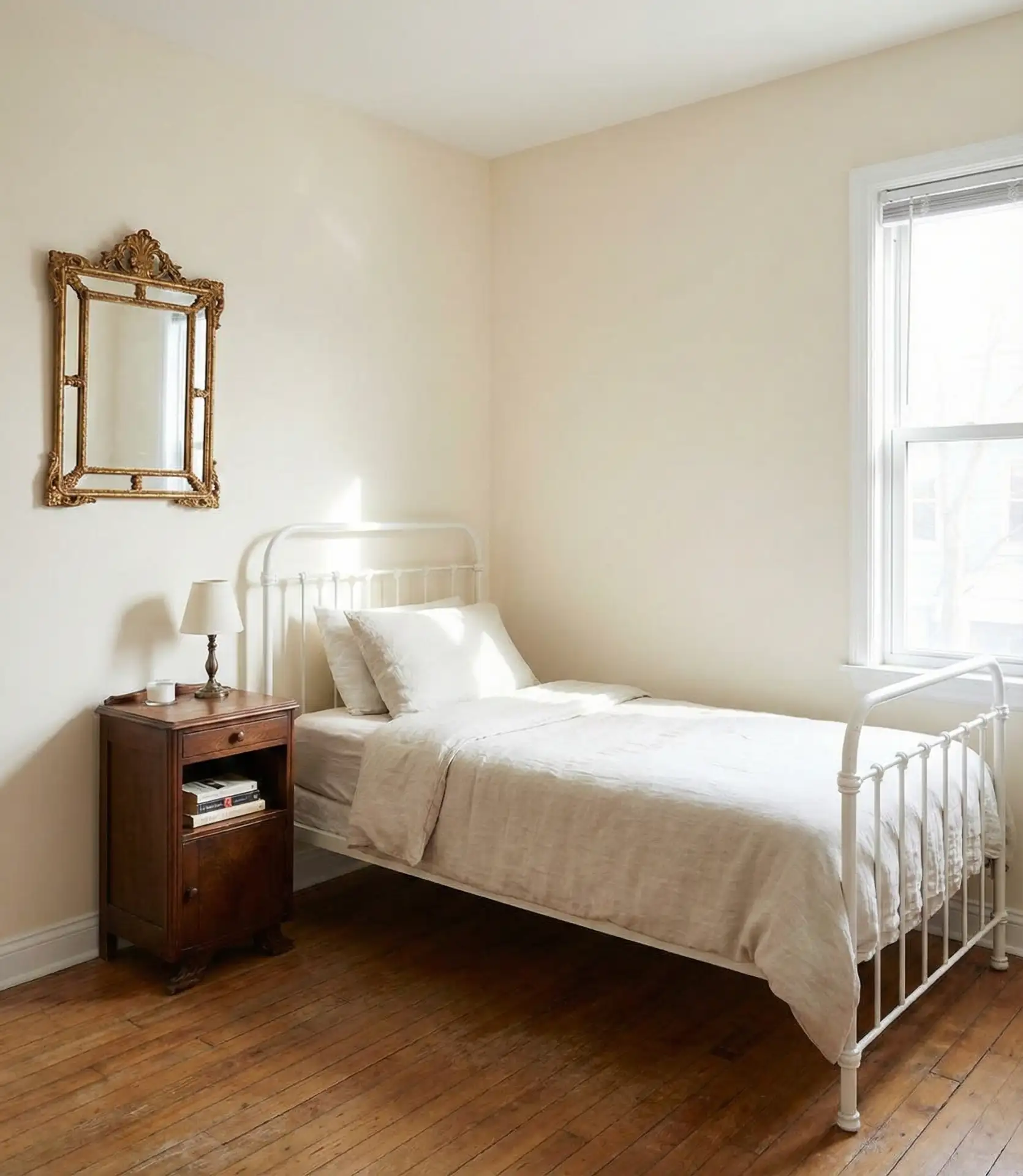
Vintage style adapts beautifully to small rooms when you choose scaled-down pieces and light-reflective finishes. A narrow iron bed frame from the 1920s, a compact vintage vanity that doubles as a desk, and mirrors with ornate frames all add period character without consuming precious square footage. Light colors and strategic furniture placement keep the room feeling open, while vintage accessories—a crystal doorknob, antique drawer pulls, and a small collection of transferware—inject personality into every corner.
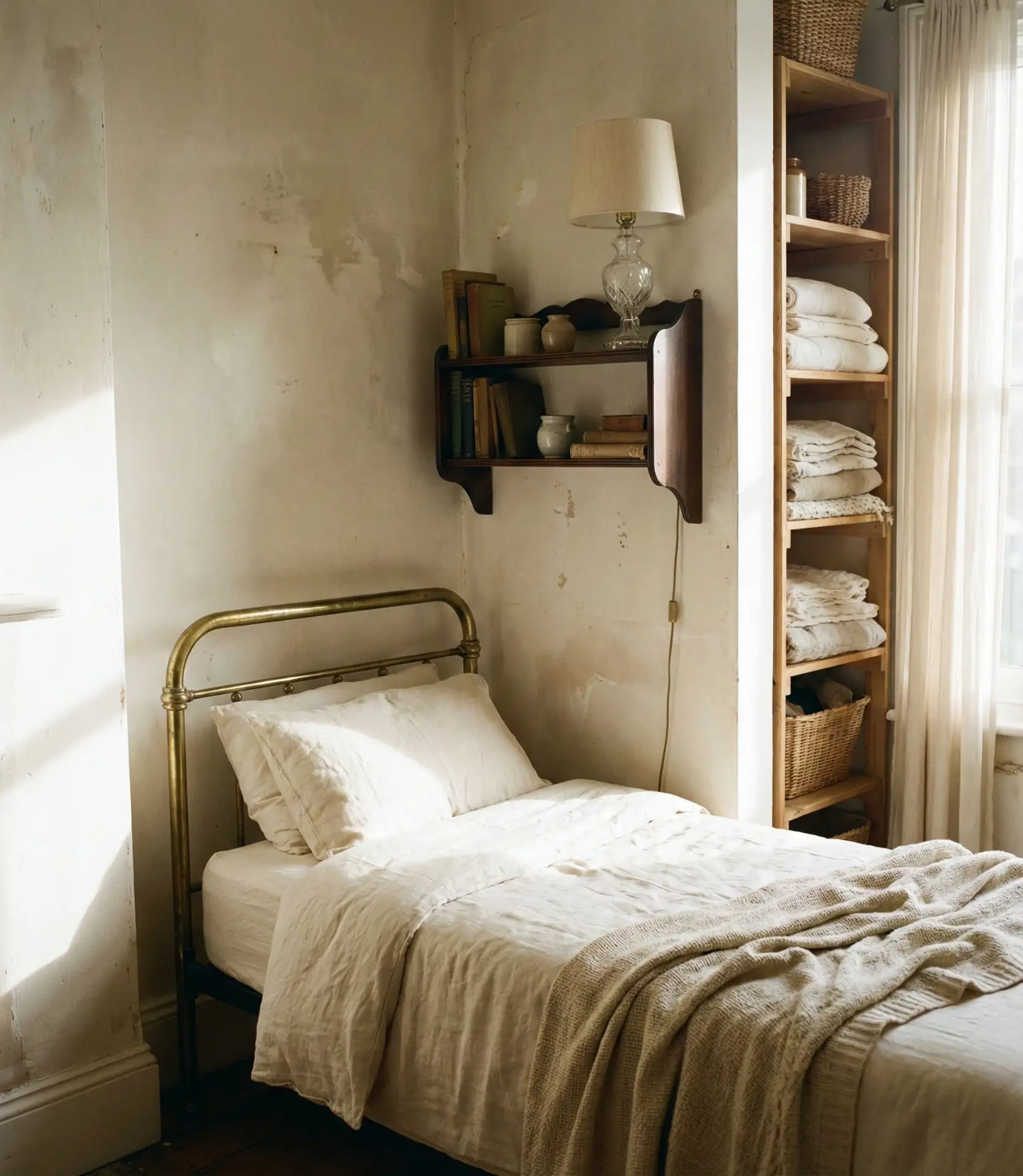
Many homeowners make the mistake of thinking vintage automatically means oversized armoires and bulky furniture sets. Instead, look for pieces from the early 20th century when homes and bedrooms tended to be smaller—you’ll find beautifully crafted furniture that’s actually proportioned for compact spaces. Wall-mounted vintage lighting and floating shelves preserve floor space while maintaining authentic period style.
6. Dark Moody Walls with Vintage Accents
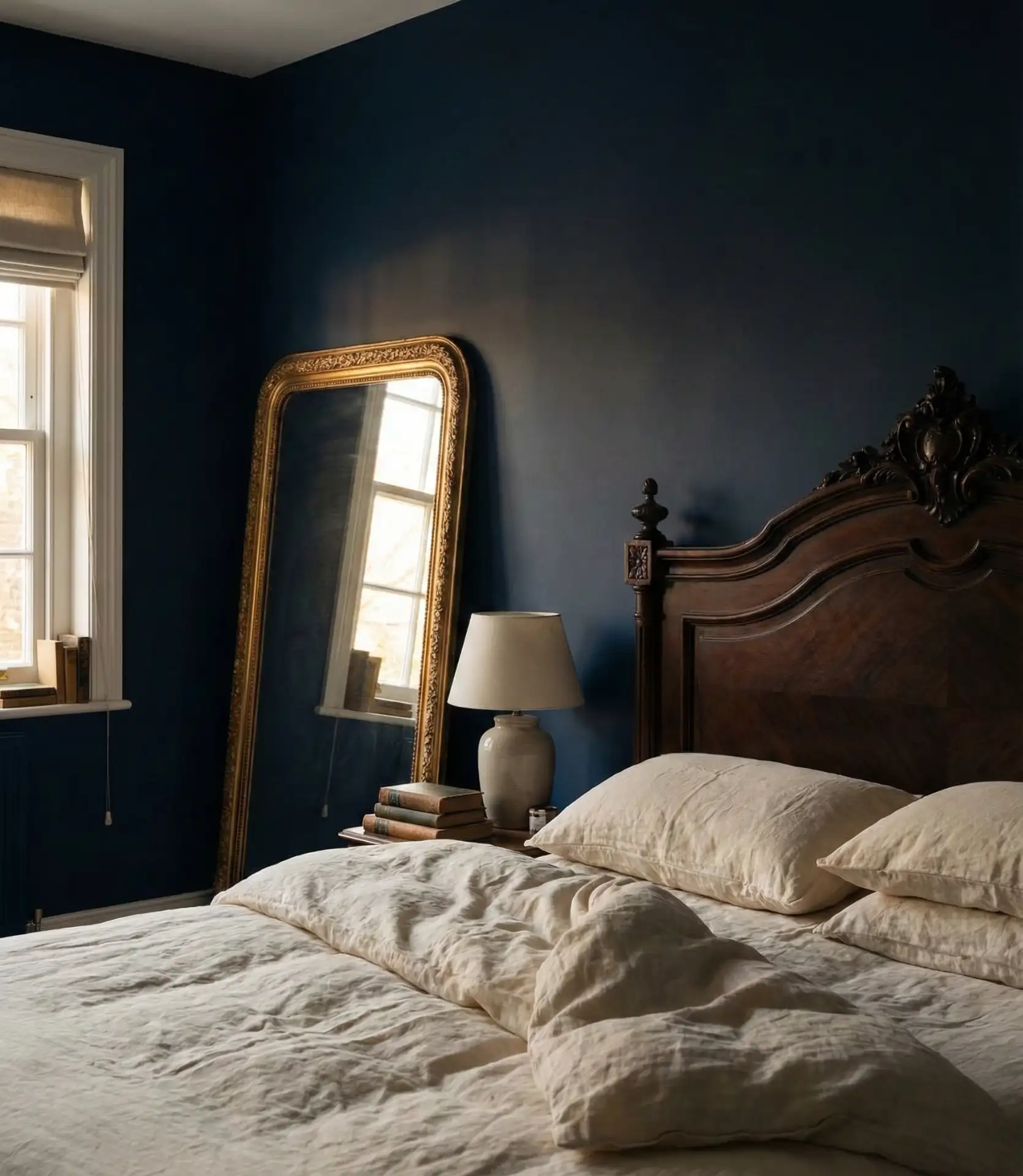
Deep charcoal, navy, or forest green walls create dramatic backdrops that make vintage furniture and accessories pop with unexpected vibrancy. This dark, moody approach flips the traditional bright-and-airy vintage bedroom formula, instead embracing richness and shadow. Brass fixtures gleam against dark paint, carved wooden headboards gain new gravitas, and vintage textiles in lighter tones provide essential contrast. The result feels simultaneously historic and utterly contemporary.
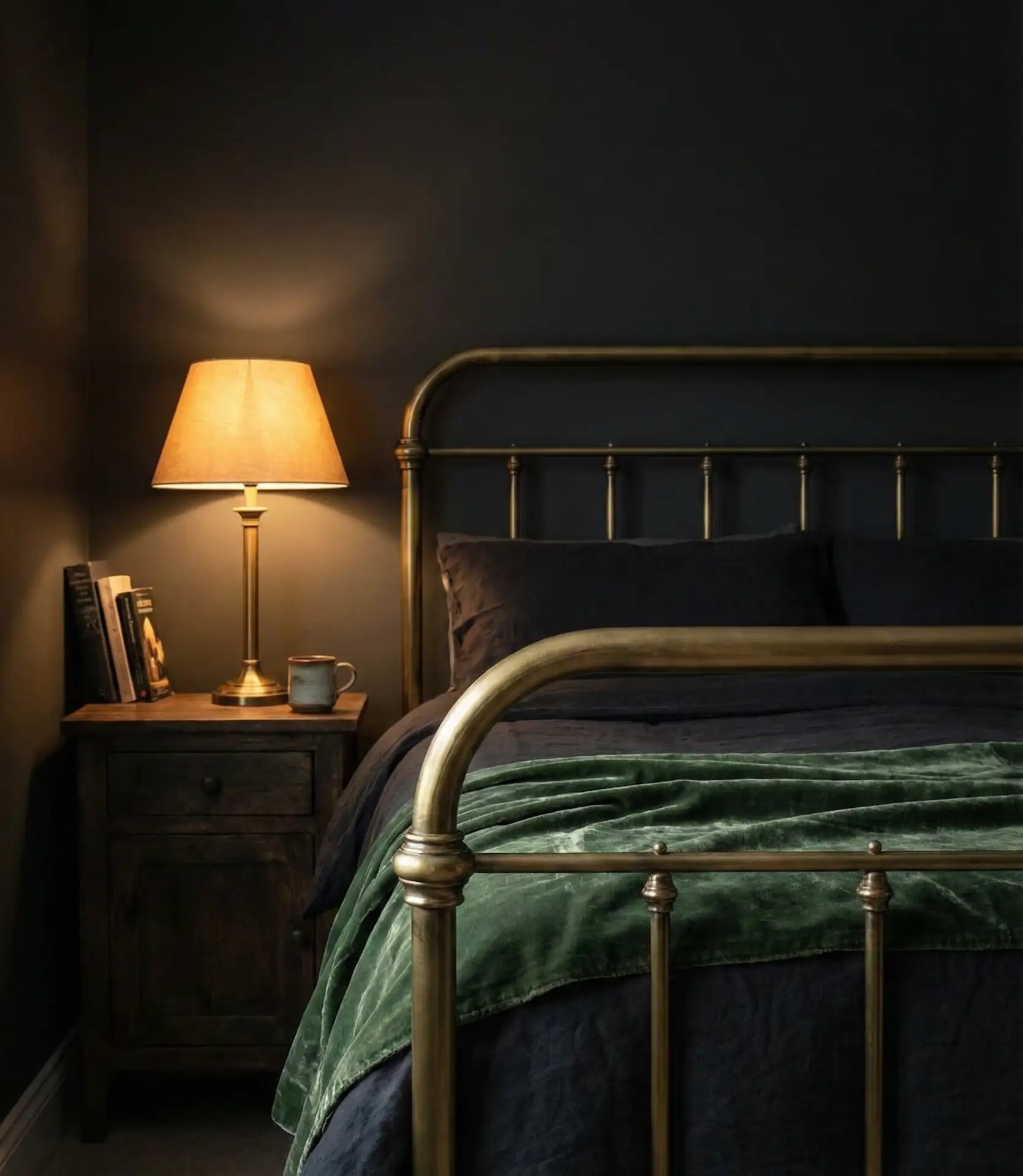
Darker vintage bedrooms benefit from multiple light sources at different heights—a vintage chandelier, wall sconces, and table lamps create layered illumination that prevents the space from feeling cave-like. This style particularly appeals to urban dwellers in cities like Portland, Brooklyn, and Austin, where industrial lofts and converted buildings provide the architectural bones for more dramatic design choices.
7. Rustic Wood and Natural Textures
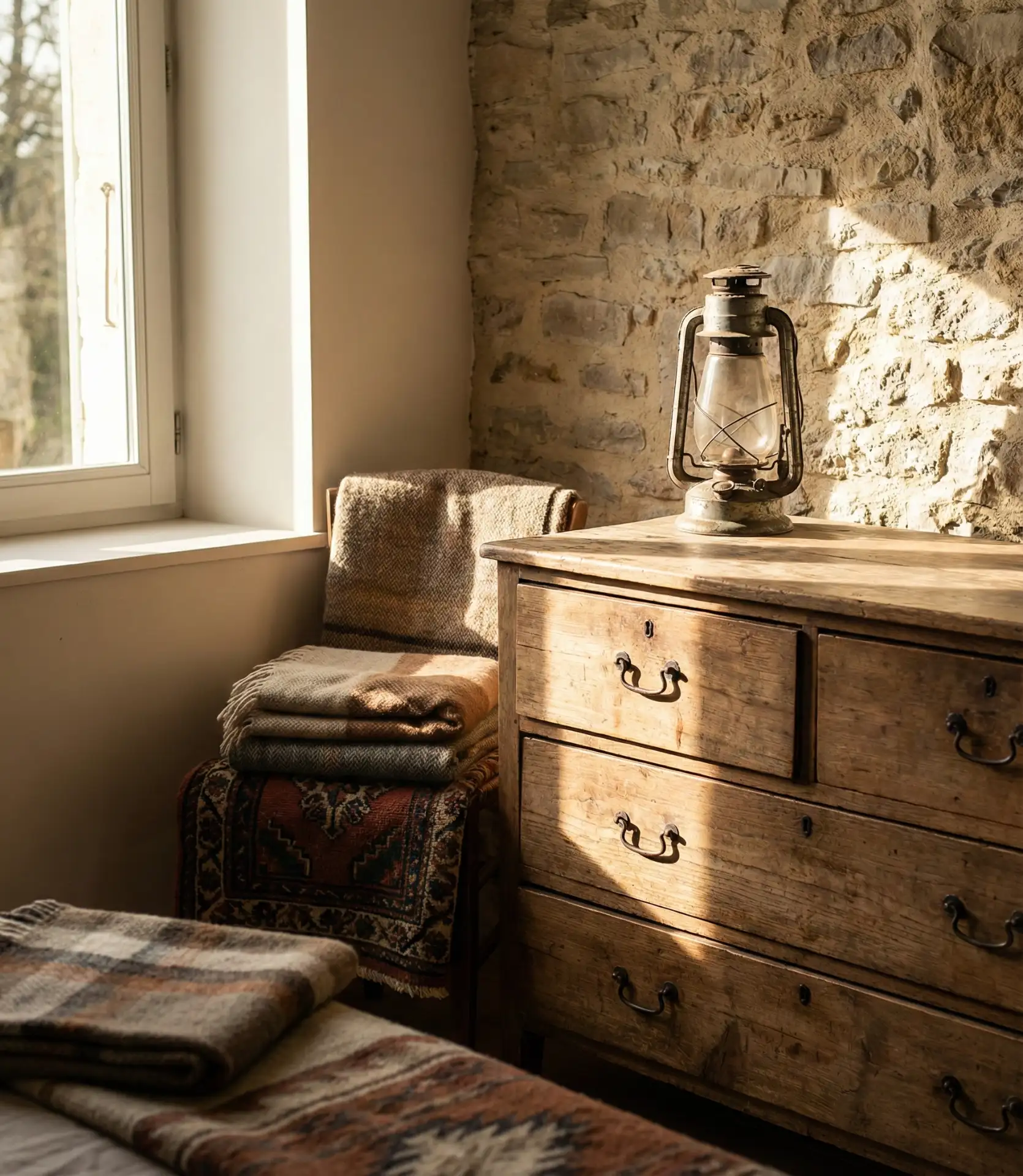
The rustic vintage bedroom celebrates natural materials and honest craftsmanship, featuring reclaimed wood furniture, exposed beams, and organic fiber textiles. Weathered barn wood headboards, vintage ladder shelving repurposed for blanket storage, and rough-hewn side tables bring outdoor textures inside. This aesthetic resonates strongly in Western states and rural communities where connection to land and tradition remains culturally important, though it’s equally popular in suburban homes seeking warmth and authenticity.
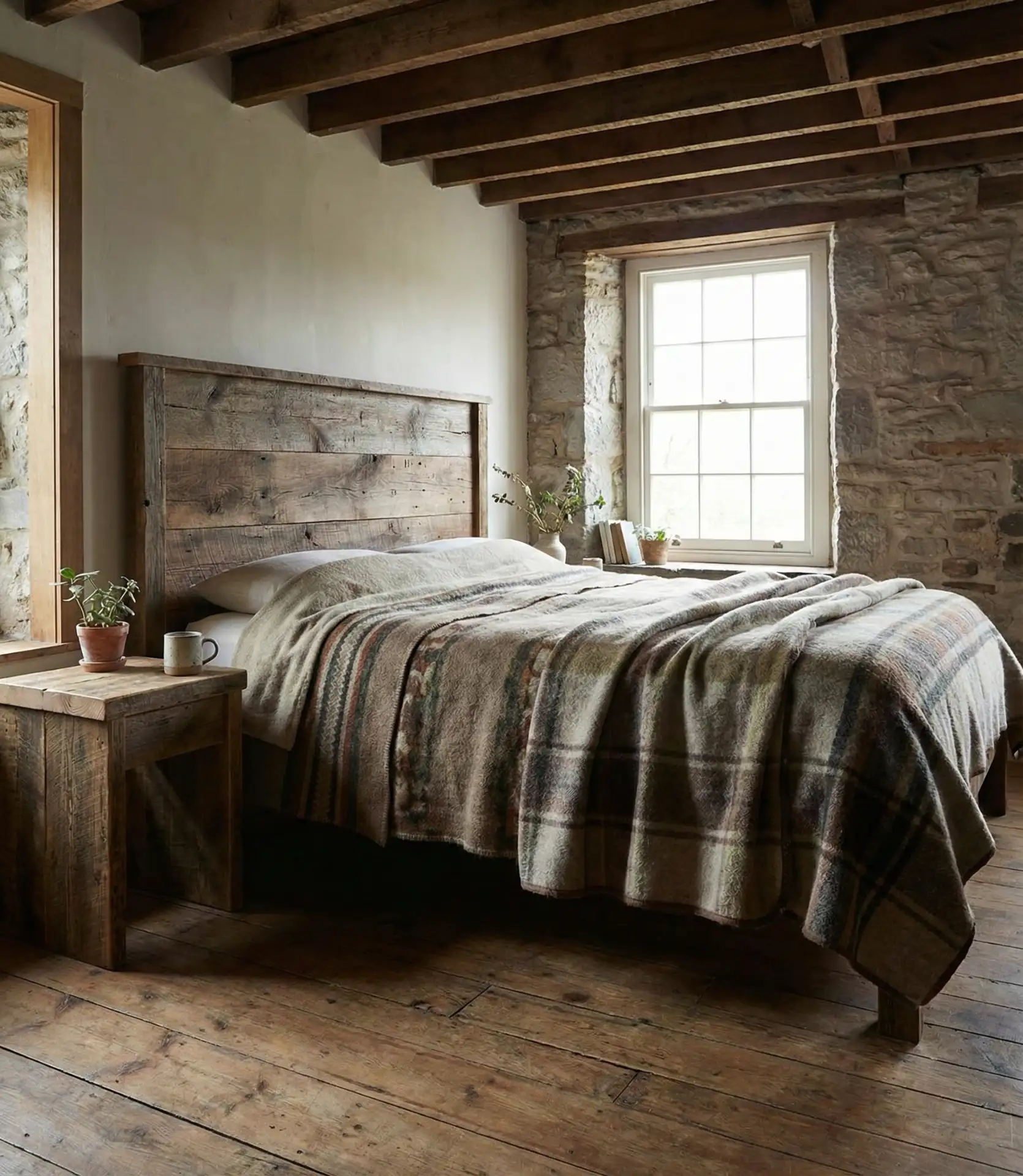
Real homeowners often combine rustic vintage furniture with surprisingly modern bedding—crisp white linens or simple gray duvets prevent the room from feeling too themed or costume-like. The vintage pieces provide character, while contemporary textiles keep the space feeling clean and current. This balance makes rustic bedrooms feel like genuine living spaces rather than lodge recreations.
8. 70s Revival with Warm Tones
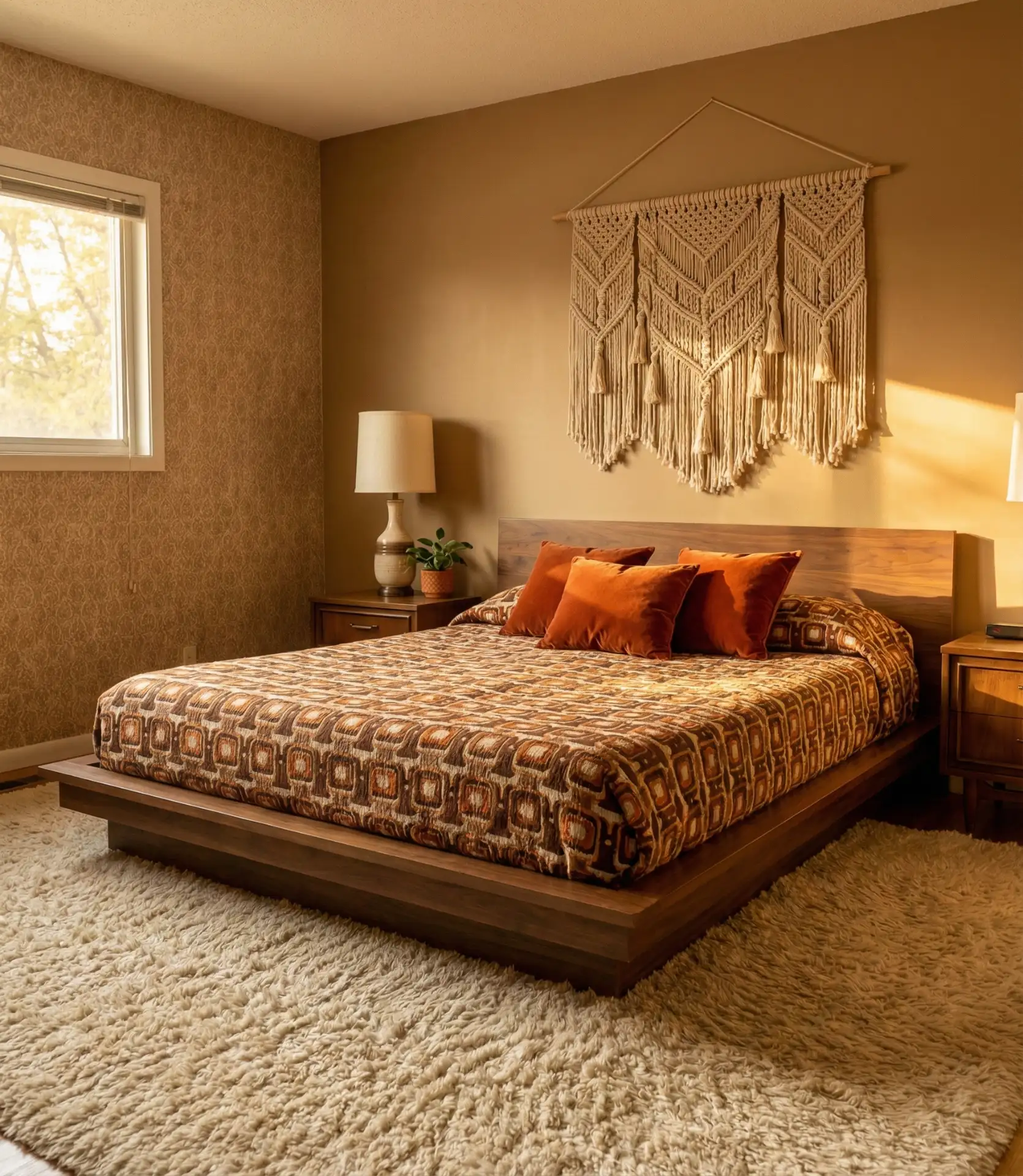
The 70s aesthetic has surged back into popularity, bringing with it harvest gold accents, macramé wall hangings, low-profile platform beds, and geometric patterns. Vintage bedrooms channeling this era feature warm amber lighting, shag rugs, and wood-paneled accent walls that create cozy, cocoon-like environments. Authenticity comes from actual vintage finds—a credenza from 1972, original pottery, or genuine rattan furniture—rather than new reproductions attempting to capture the vibe.
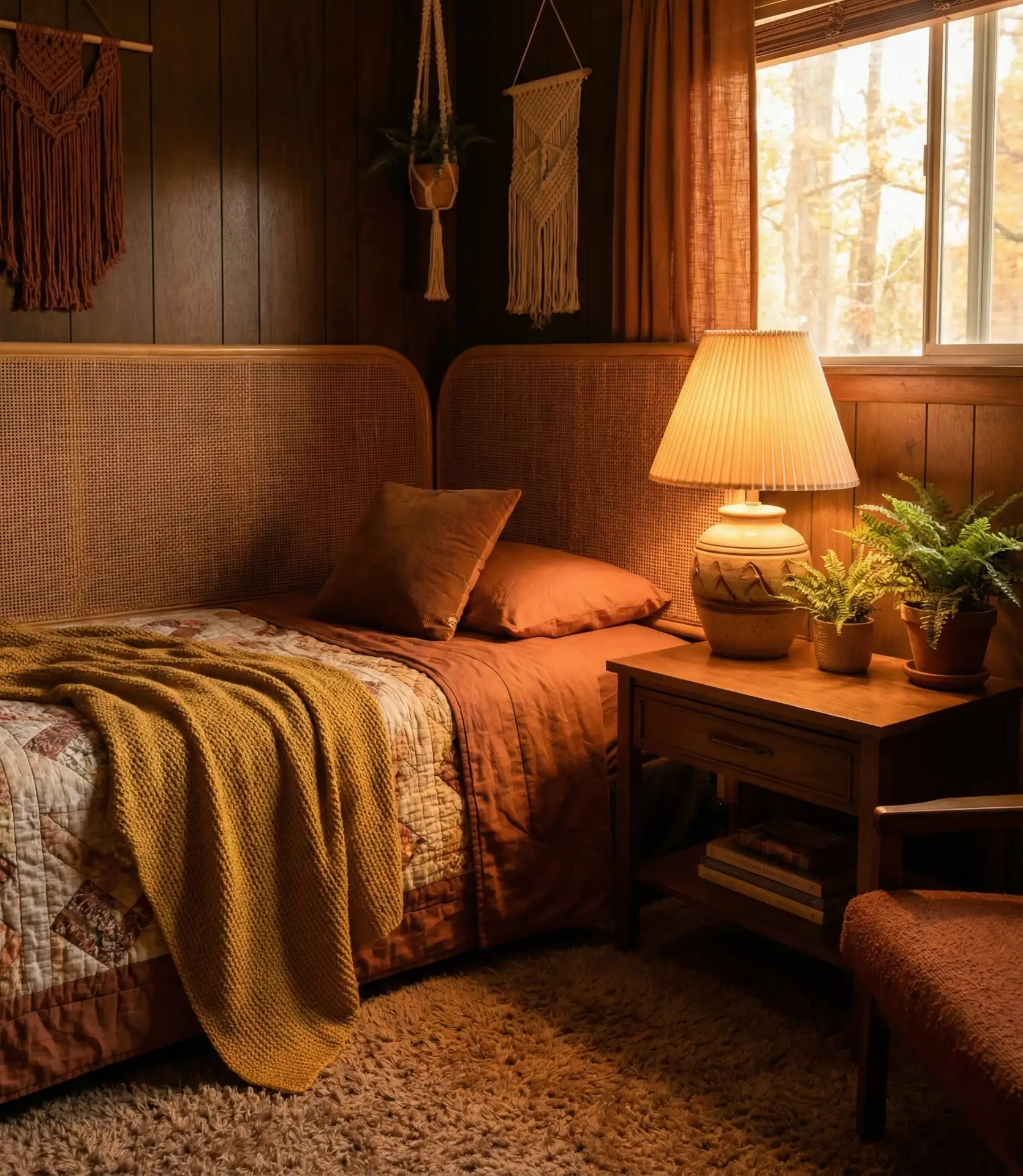
This style works exceptionally well in ranch homes and split-levels built during the actual 1970s, where original architectural elements like wood paneling or brick accent walls can be restored rather than removed. Younger millennials and Gen Z decorators particularly gravitate toward this aesthetic, finding it both nostalgic for childhood memories and refreshingly different from the gray minimalism that dominated the 2010s.
9. Dark Romantic Elegance
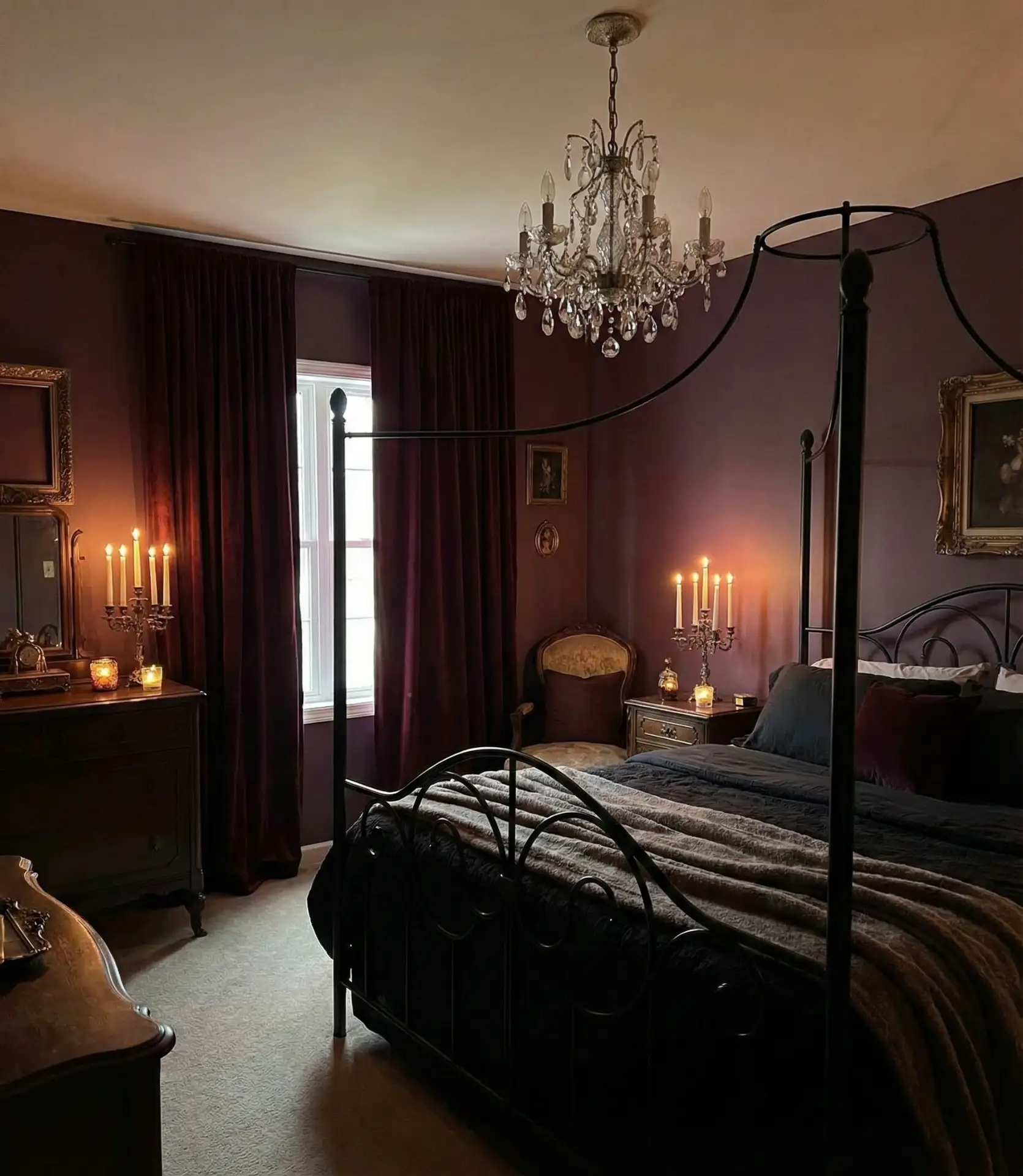
The dark romantic bedroom merges gothic influences with vintage softness, creating spaces that feel both dramatic and intimate. Deep plum or charcoal walls host ornate vintage mirrors and crystal chandeliers, while sumptuous fabrics—velvet, silk, heavy damask—soften the intensity. This aesthetic appeals to those who find traditional romantic styles too sweet, preferring instead a more complex emotional palette that embraces shadow alongside light.
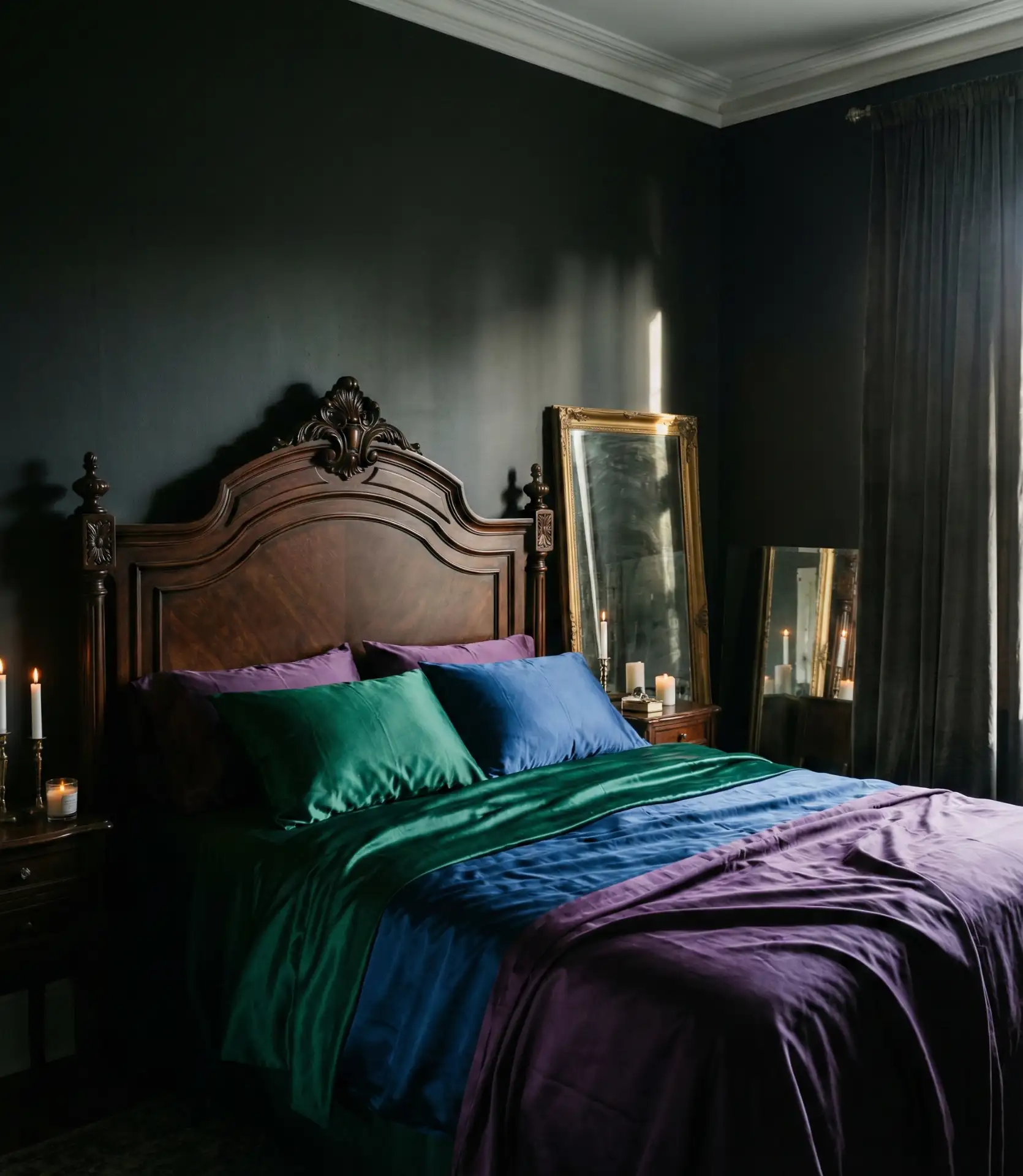
Expert designers recommend balancing dark romantic bedrooms with sufficient lighting—use vintage table lamps, wall sconces, and candles to prevent the space from feeling oppressive. This approach also requires editing: too many dark vintage pieces can create visual chaos, so choose a few statement items and let them shine against simpler supporting elements. The goal is mysterious elegance, not overwhelming gloom.
10. Pink Vintage Femininity
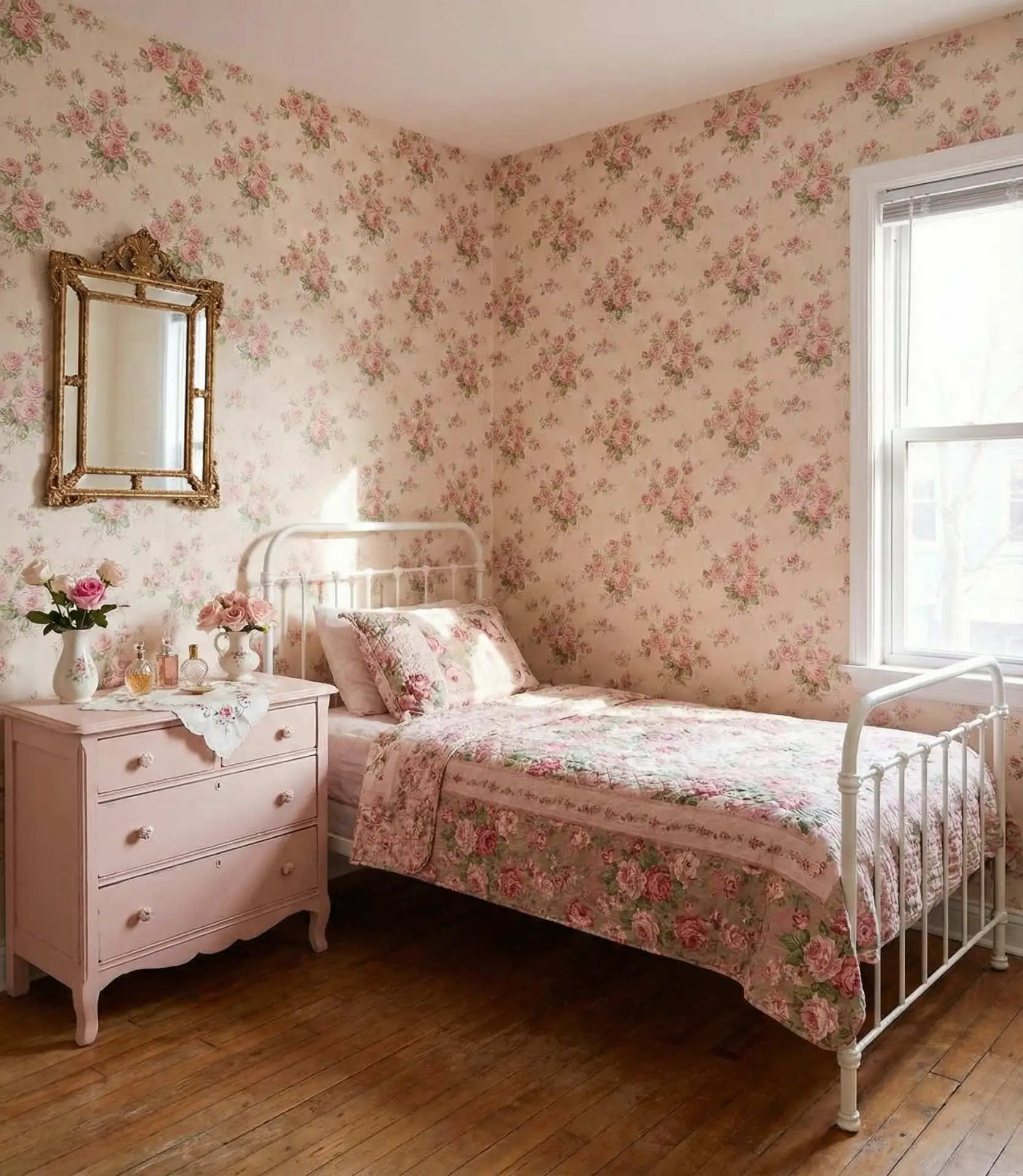
Vintage pink bedrooms range from barely-there blush to bold fuchsia, often incorporating florals, ruffles, and delicate details that celebrate unabashed femininity. Vintage dressers painted with dusty roses, antique quilts with pink cabbage rose patterns, and collections of vintage perfume bottles on mirrored trays all contribute to this aesthetic. The key is choosing the right shade of pink for your vintage era—soft powder pinks recall the 1950s, while deeper rose tones feel more Victorian.
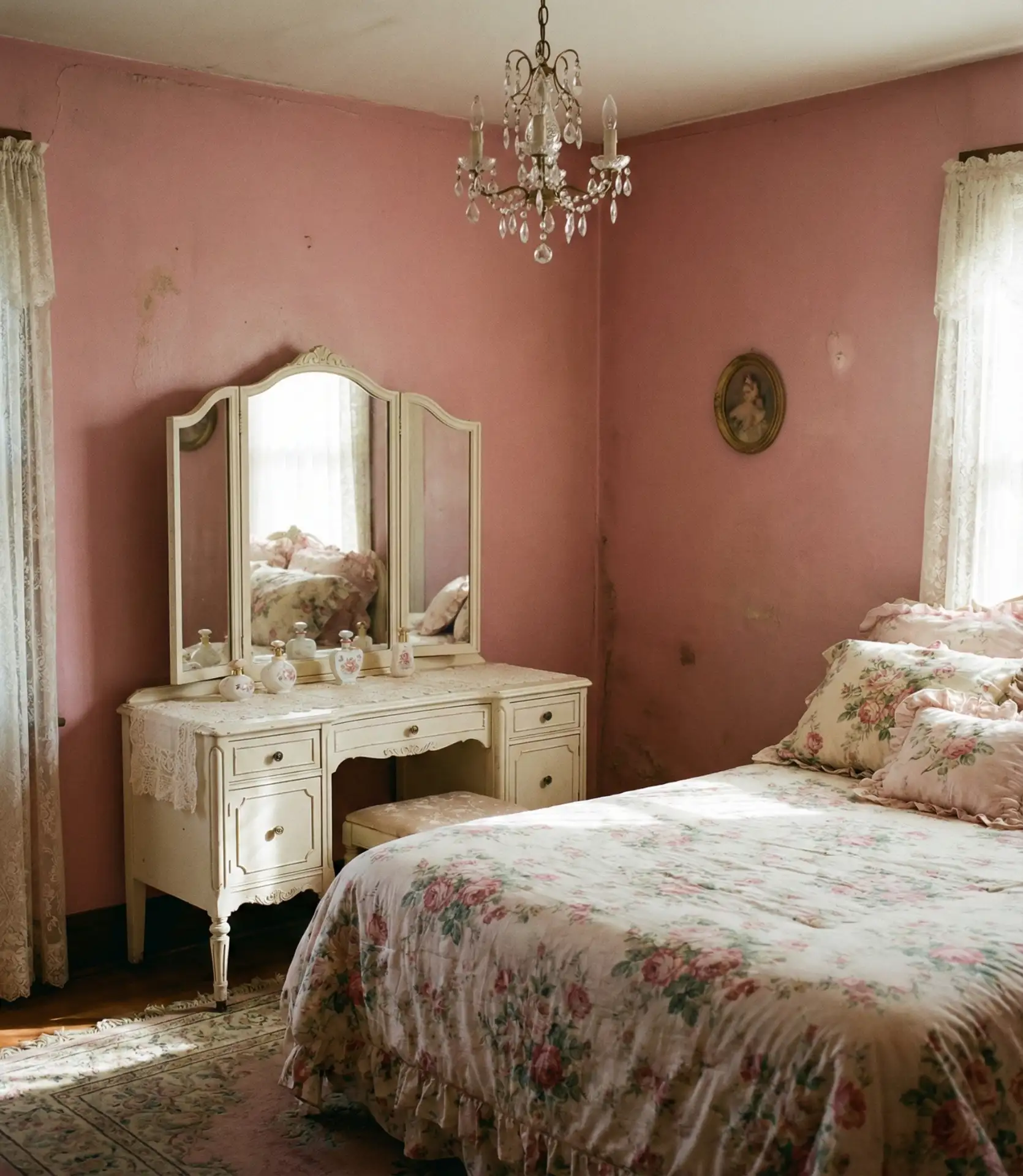
Pink vintage bedrooms remain incredibly popular on Pinterest, particularly among women creating personal sanctuaries that reflect their individual style without apology. The budget-friendly version involves painting existing furniture in pink hues and hunting for vintage floral textiles at estate sales, while higher-end approaches might include custom wallpaper and restored antique pieces. Either way, the style delivers personality and comfort.
11. Cute Whimsical Details
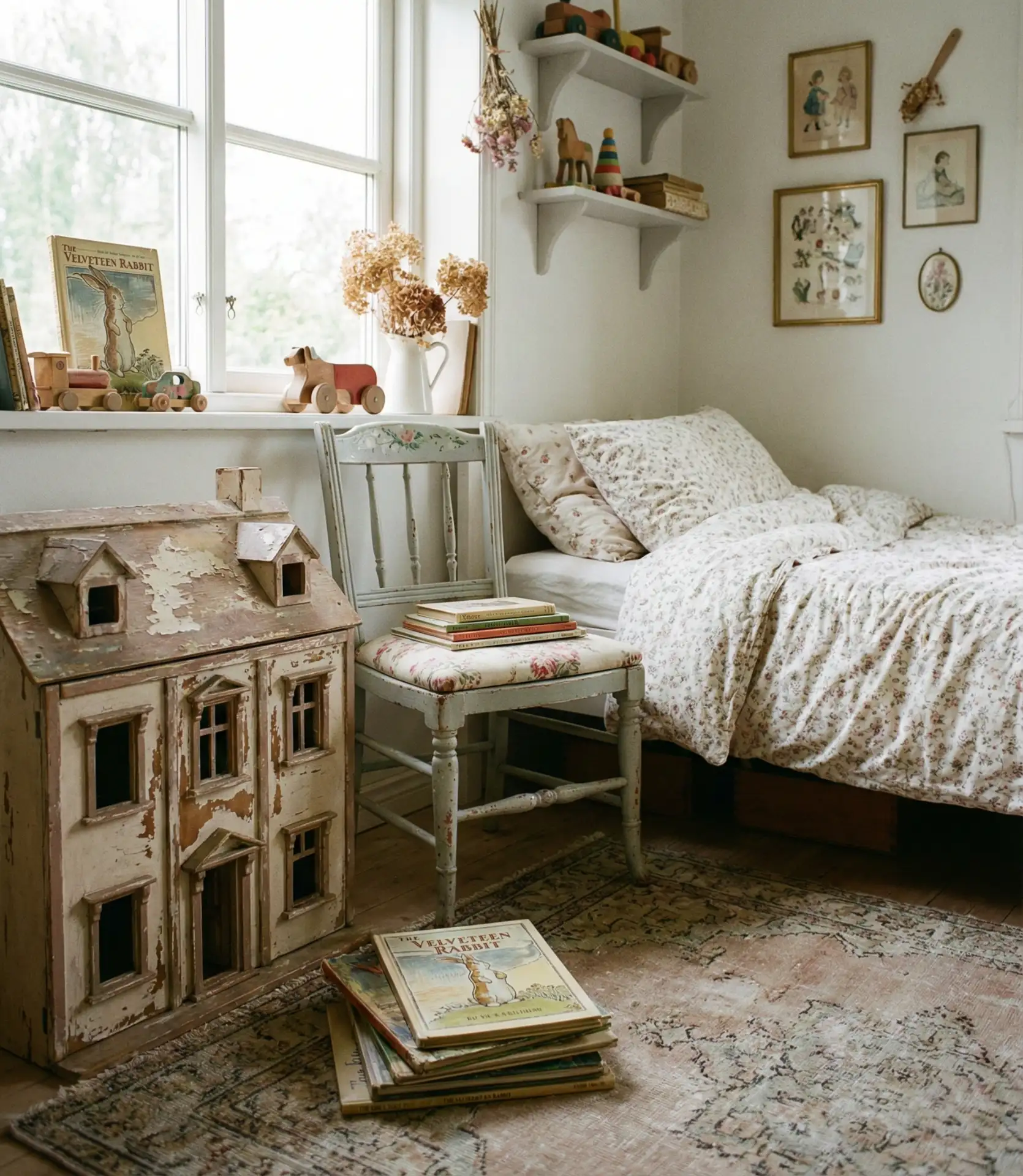
The adorable vintage bedroom emphasizes charm and playfulness through carefully chosen details—vintage children’s book illustrations framed on walls, antique toy collections displayed on shelves, or gingham patterns mixed with petit fleur prints. This approach works beautifully in guest rooms or small bedrooms where creating a welcoming, lighthearted atmosphere matters more than sophisticated formality. Think more storybook cottage than grand estate.
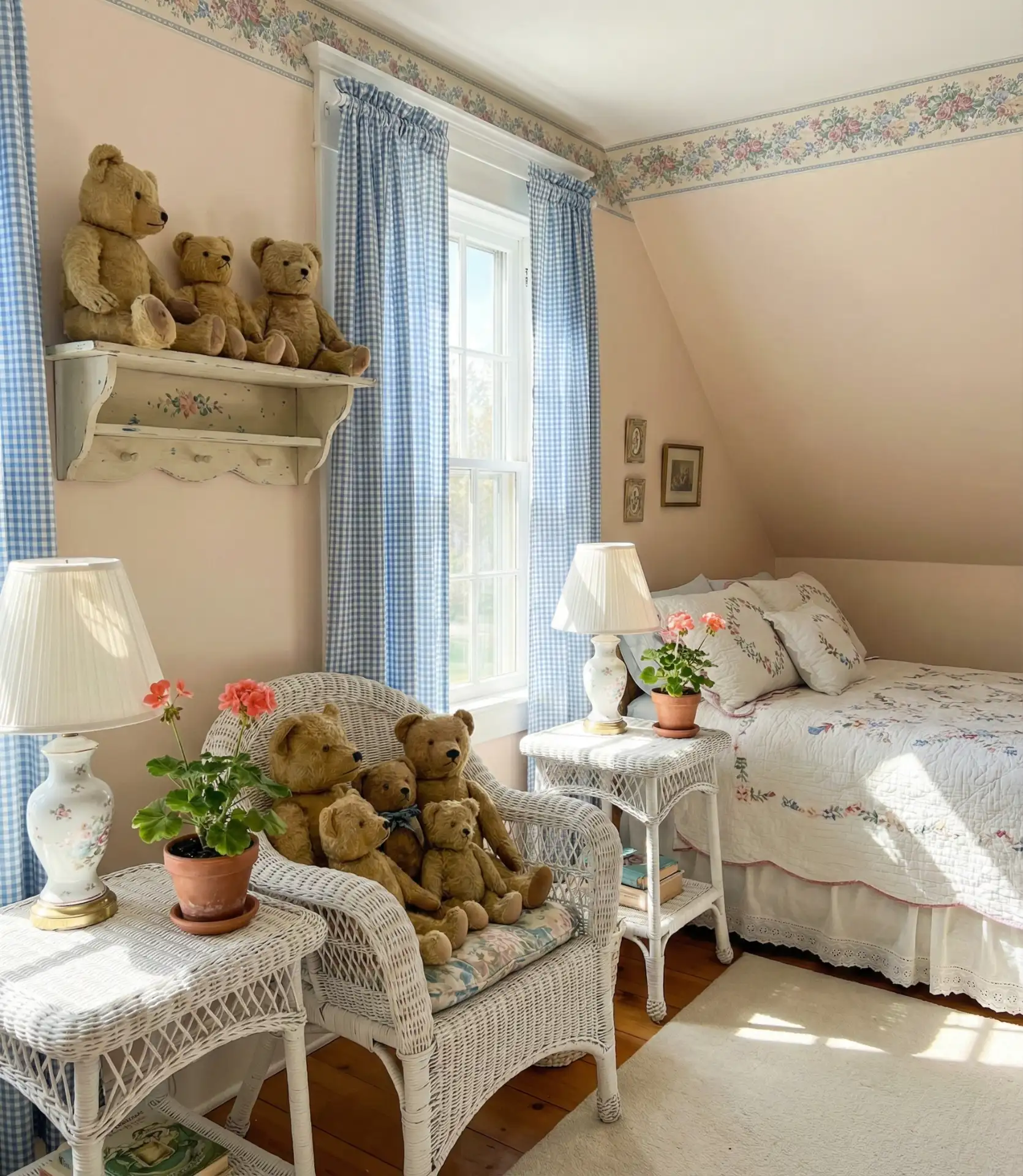
Where adorable vintage bedrooms work best is in homes with young children or in spaces meant specifically for grandchildren’s visits. The style creates comfort and security while introducing kids to the pleasure of older, well-made objects. Adults creating these rooms often blend genuine vintage finds with reproduction pieces, prioritizing safety and durability over pure authenticity when young ones will be using the space.
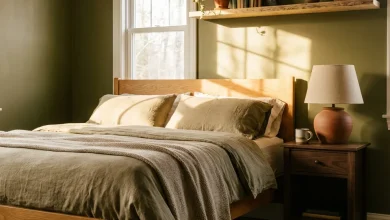
12. Green Botanical Serenity
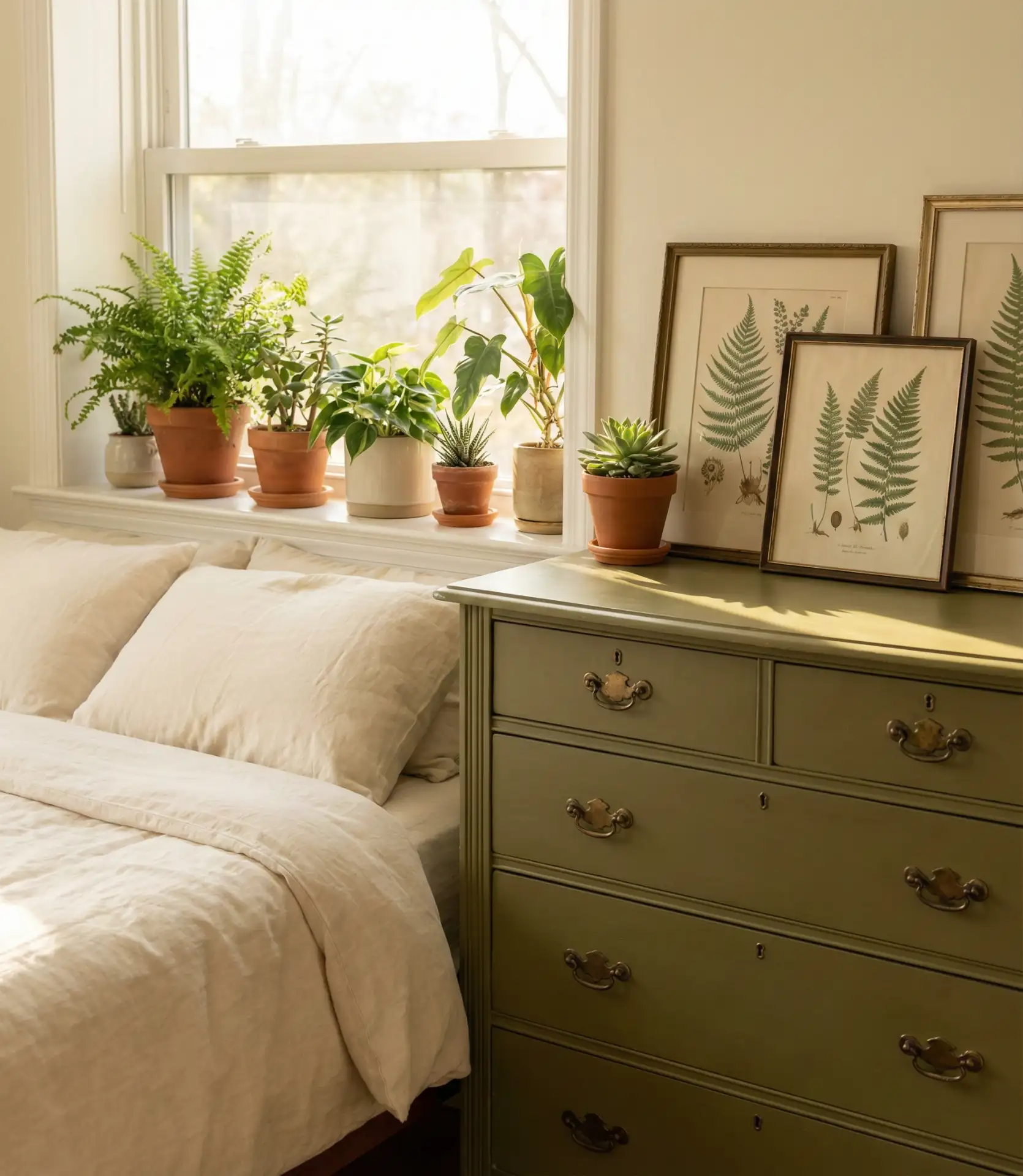
Vintage bedrooms centered on green tones evoke gardens and natural tranquility, featuring sage walls, botanical prints in antique frames, and vintage furniture in painted celadon or olive finishes. This palette works across multiple vintage eras—from the soft green-and-white schemes popular in 1920s bungalows to the bolder emerald velvets of mid-century spaces. Layering different green tones creates depth while maintaining the overall calming, nature-connected feeling.
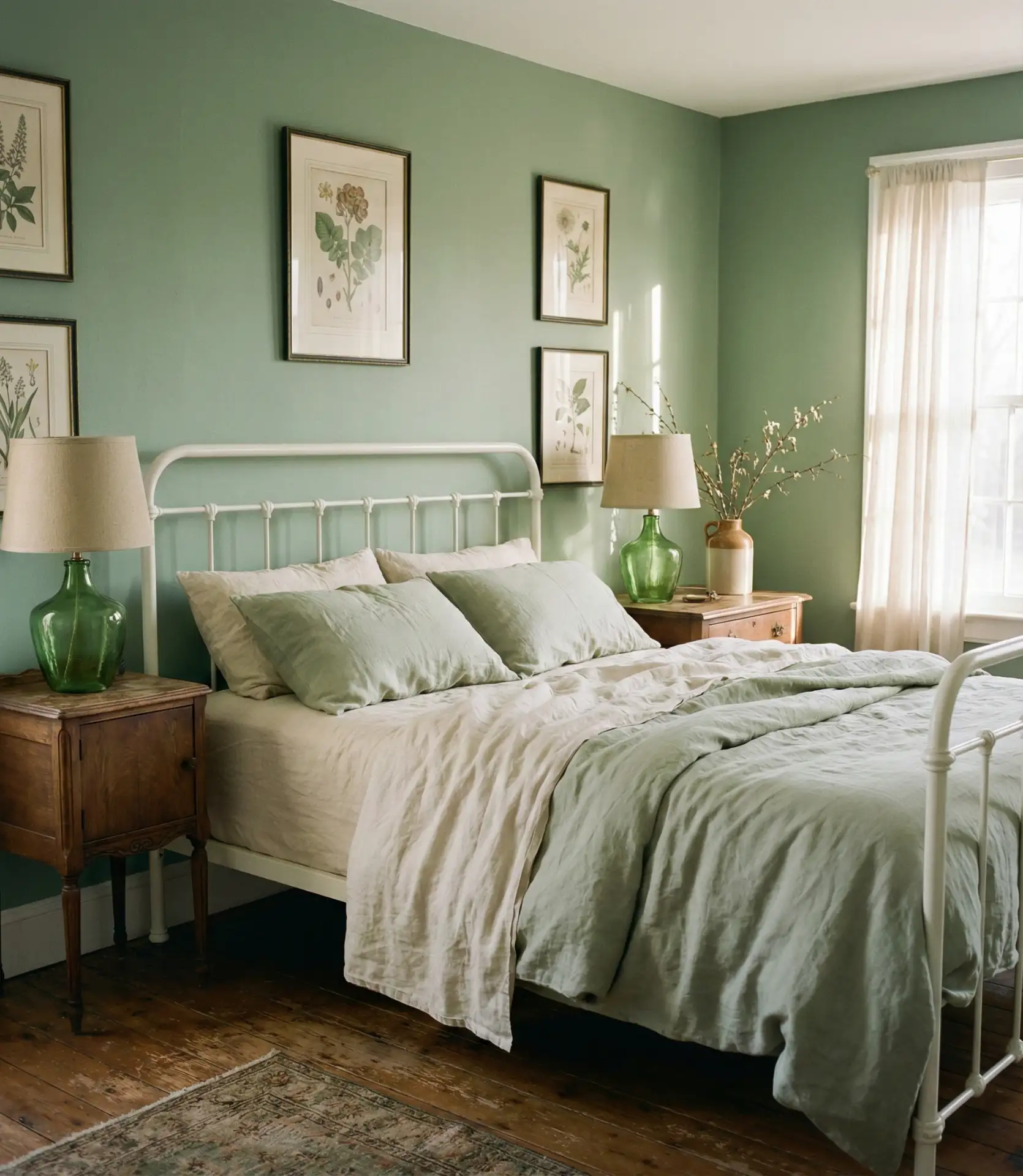
Green vintage bedrooms resonate particularly in regions with strong gardening cultures—the Pacific Northwest, the South, and New England—where the connection between indoor and outdoor living feels natural. From a practical standpoint, green is forgiving and versatile, working well with both warm wood tones and cooler metals, making it easier to incorporate mismatched vintage finds into a cohesive scheme.
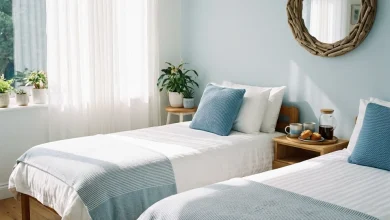
13. Blue Coastal Calm
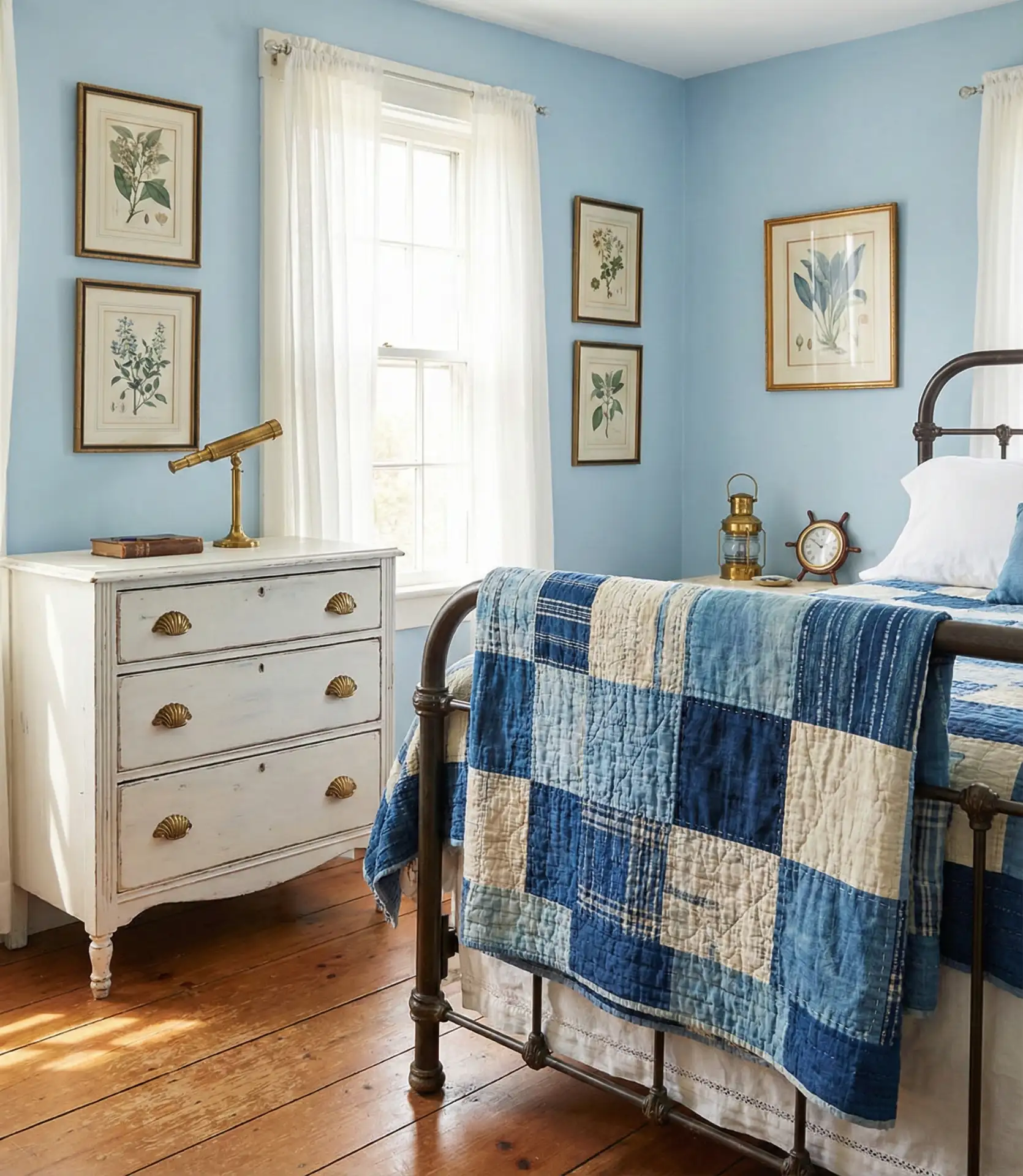
Vintage bedrooms in blue tones range from powder blue cottage sweetness to deep navy sophistication, often incorporating nautical touches, vintage quilts in ocean-inspired patterns, and weathered painted furniture. This palette naturally suits coastal homes but works equally well inland, bringing a sense of calm and spaciousness to any bedroom. The vintage angle distinguishes these spaces from generic beach themes through authentic antique pieces and genuine period textiles rather than mass-market coastal décor.
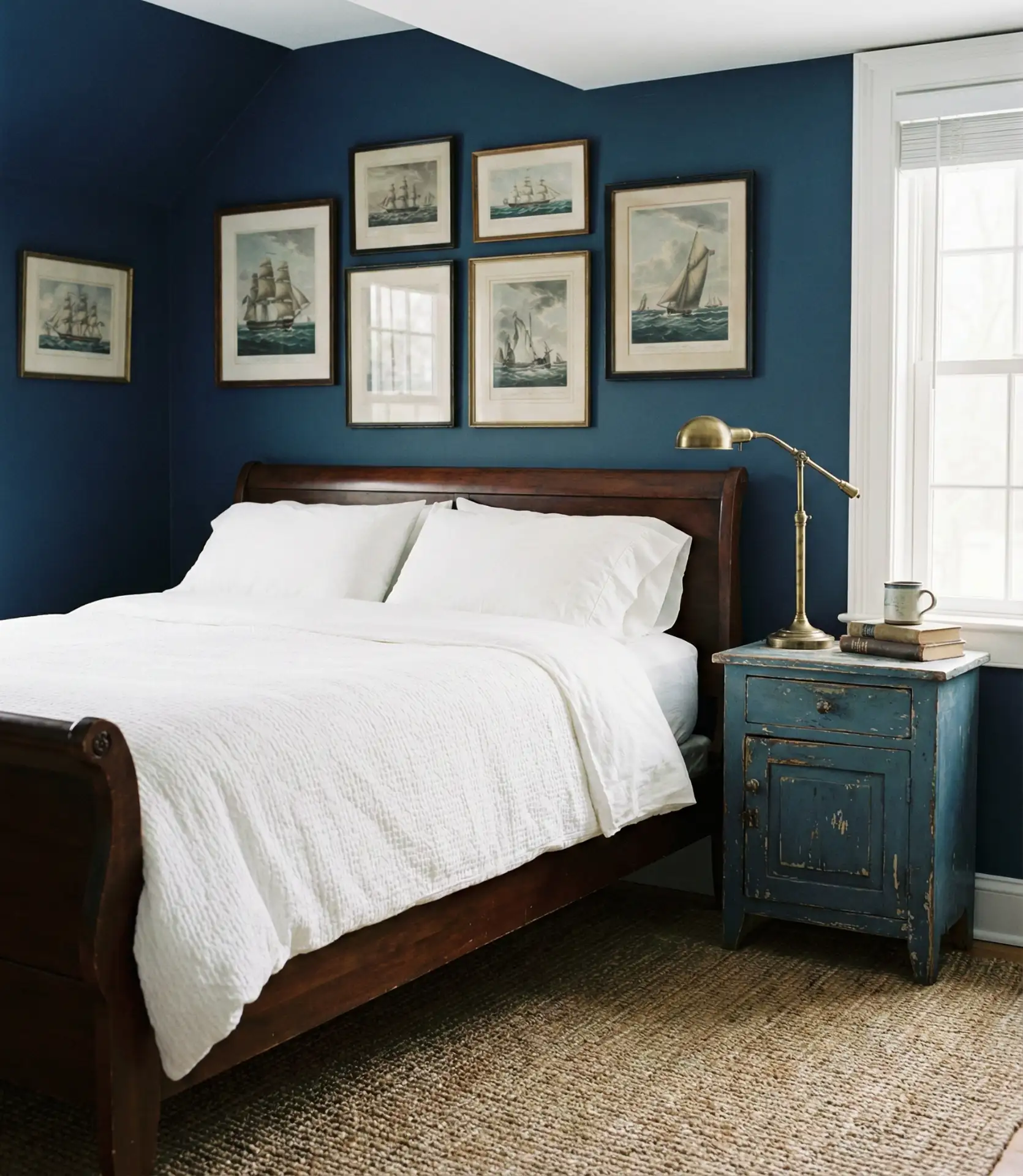
A common mistake with blue vintage bedrooms is going too literal with the theme, filling the space with anchors, rope, and seashells until it feels like a cruise ship cabin. Instead, let the blue palette and vintage furniture carry the coastal reference subtly—maybe one vintage nautical print or a collection of old glass fishing floats, but nothing that overwhelms the essential calm you’re trying to create.
14. Toca Boca Playful Creativity
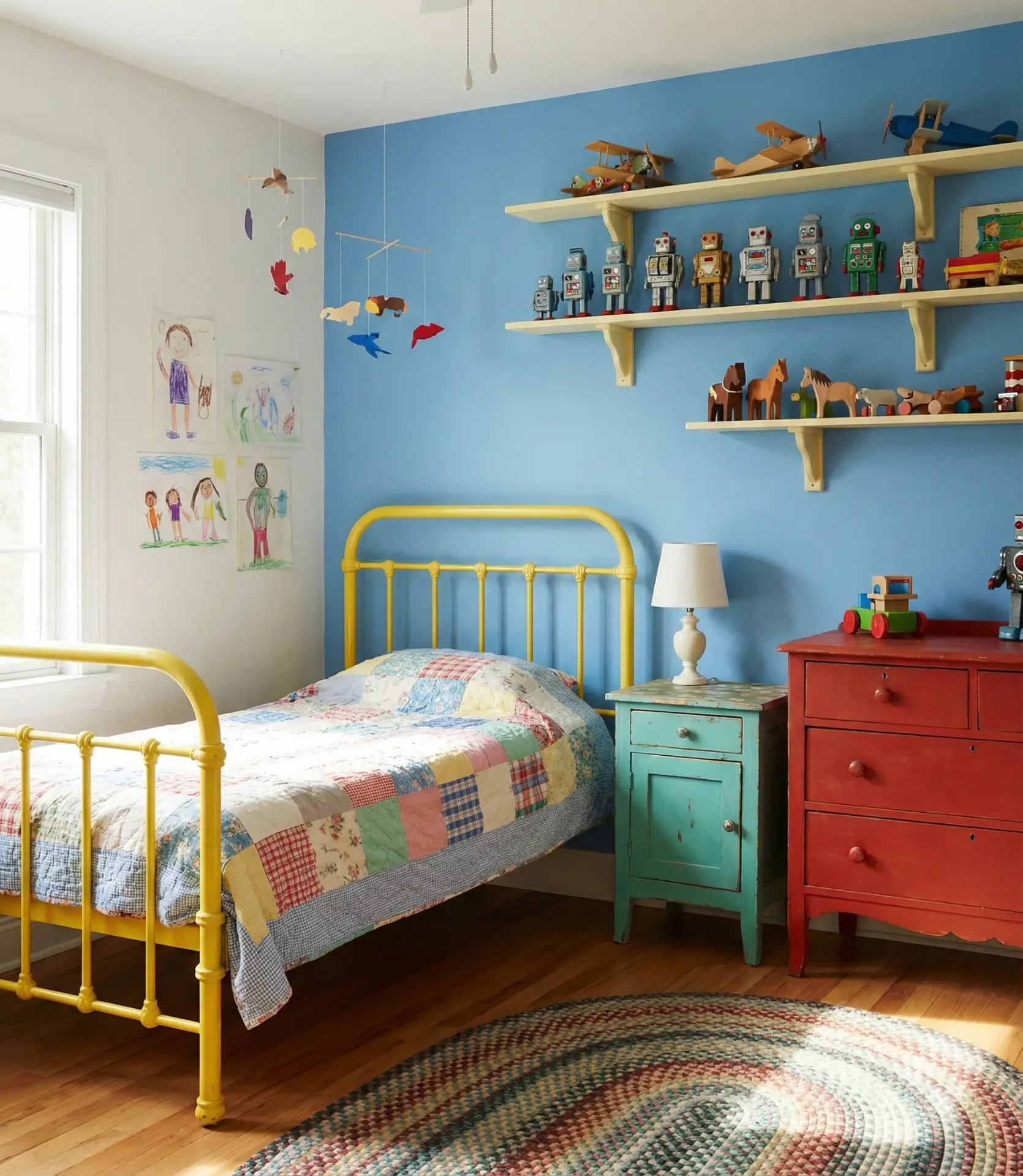
The Toca Boca aesthetic takes inspiration from the colorful, imaginative worlds of the popular children’s app series, translating digital playfulness into real vintage bedrooms. Bright pops of color against neutral bases, mixed-and-matched furniture pieces, and an emphasis on creativity over perfection characterize this cute approach. Vintage toys displayed as art, painted furniture in unexpected hues, and playful patterns create spaces that feel joyful and expressive, appealing particularly to younger decorators and families who want bedrooms that encourage imagination.
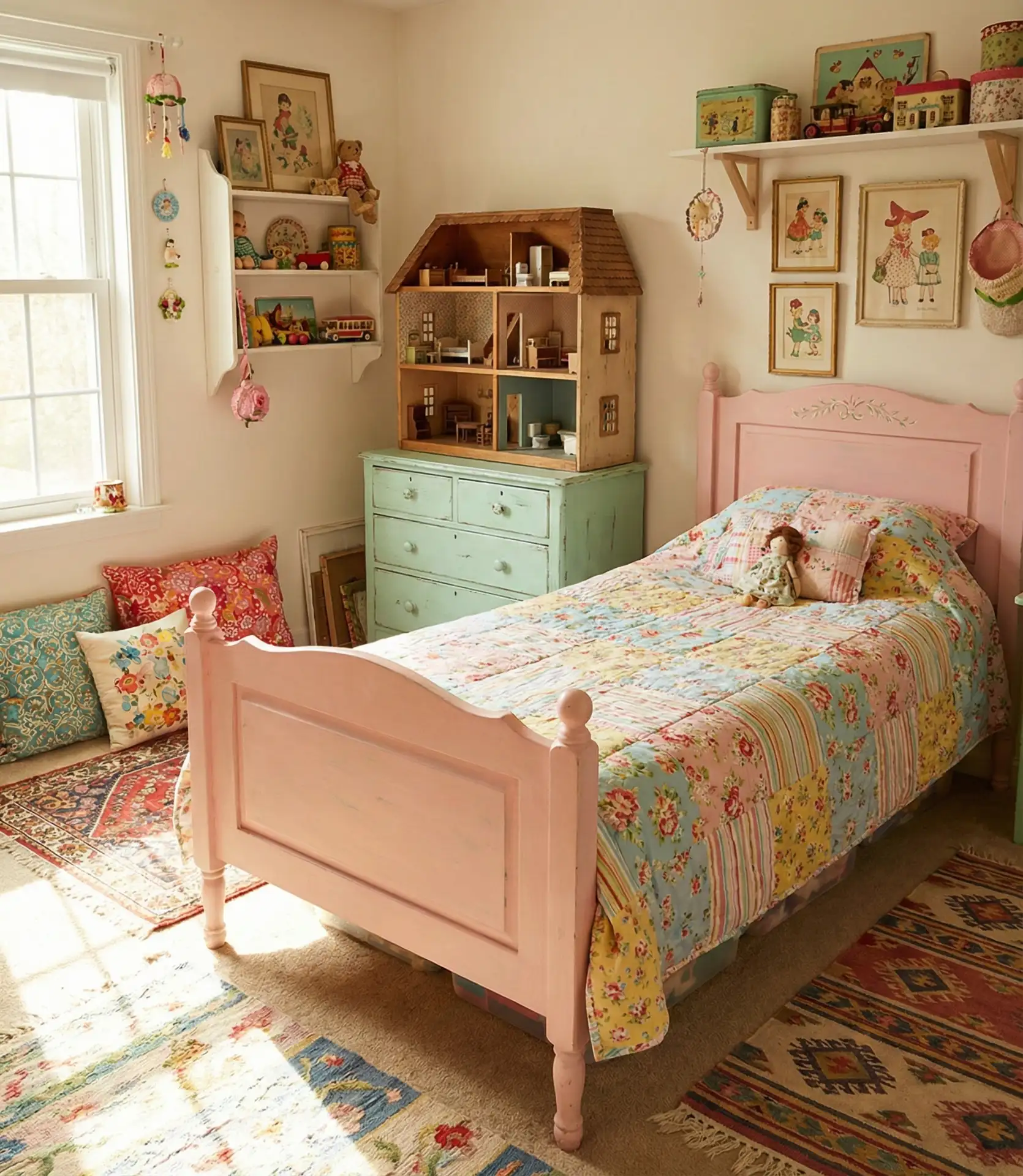
This style particularly resonates with Gen Z and millennial parents who grew up with digital games and want to create spaces that bridge their children’s virtual interests with tangible, vintage quality. The beauty of the Toca Boca-inspired approach is its flexibility—you can start with affordable thrifted furniture and gradually add colorful painted pieces and playful accessories as budget allows, making it accessible for first-time homeowners and young families.
15. Small Rooms, Cozy, Cheap Solutions
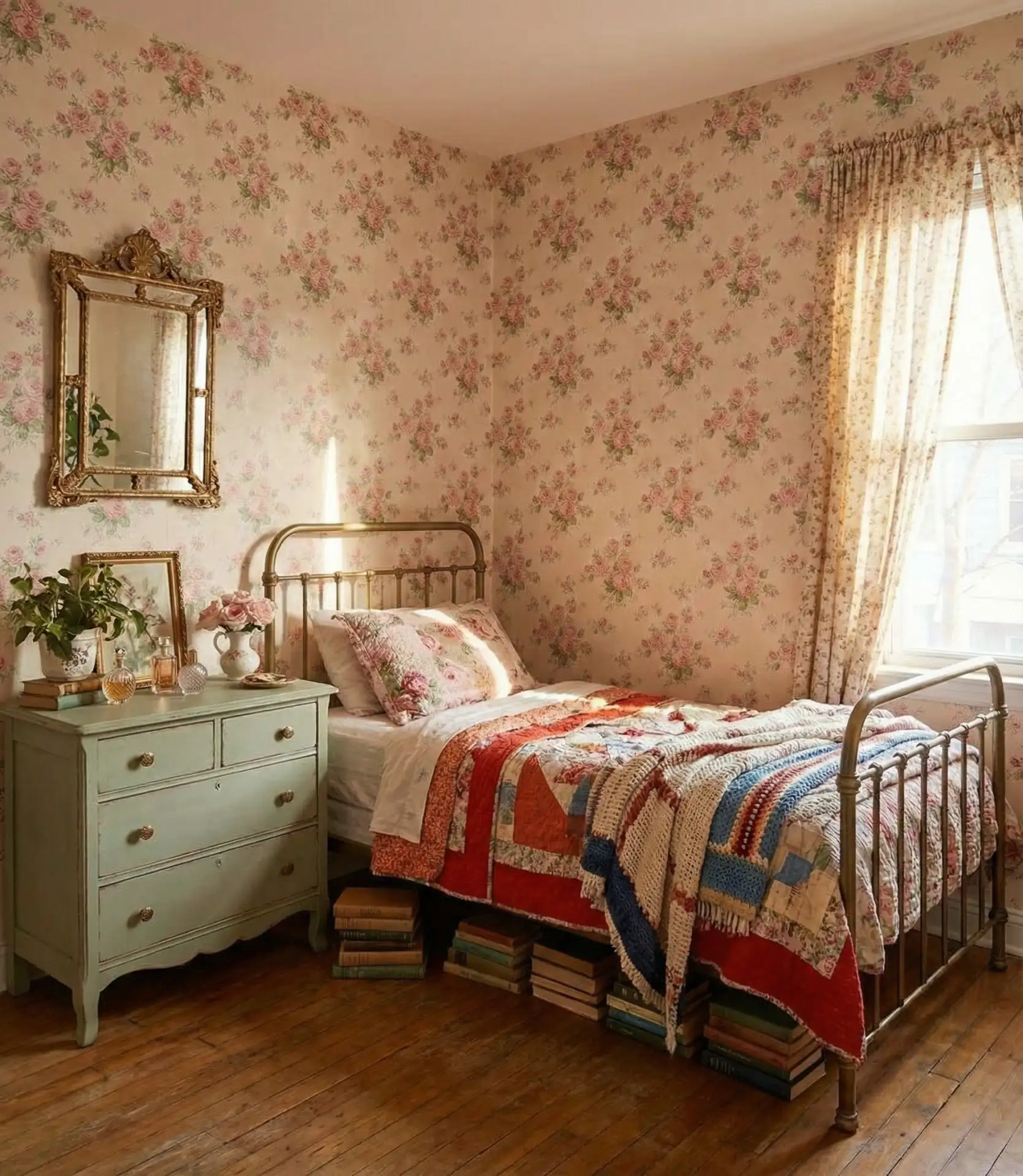
Creating vintage charm in small rooms and cozy cheap spaces relies on clever thrifting, DIY projects, and strategic editing. A single vintage brass bed frame from an estate sale becomes the room’s centerpiece, while homemade curtains from vintage sheets and a secondhand nightstand painted in a fresh color add supporting character. The cozy factor comes from layering affordable textiles—thrifted quilts, discount linen pillowcases, and remnant fabrics—that create warmth without requiring significant investment.
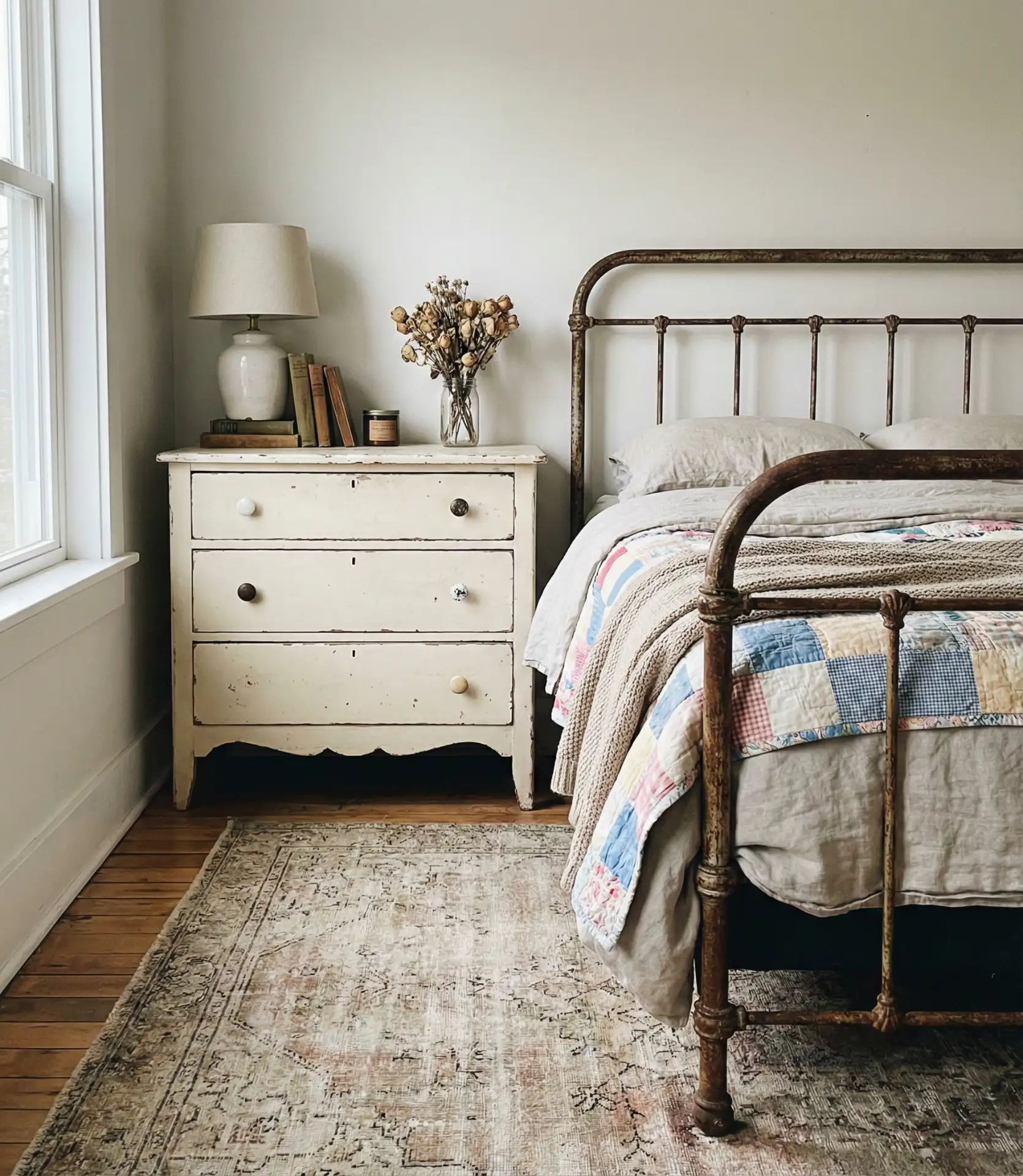
Real homeowners furnishing on a budget often scout Facebook Marketplace, Craigslist, and local estate sales for solid vintage pieces that just need minor repairs or fresh paint. A dresser with good bones but a scratched finish costs almost nothing and transforms with sandpaper and a quart of paint. This approach requires more time and effort than buying new but yields far more character per dollar spent.
16. Retro Color and Pattern Play
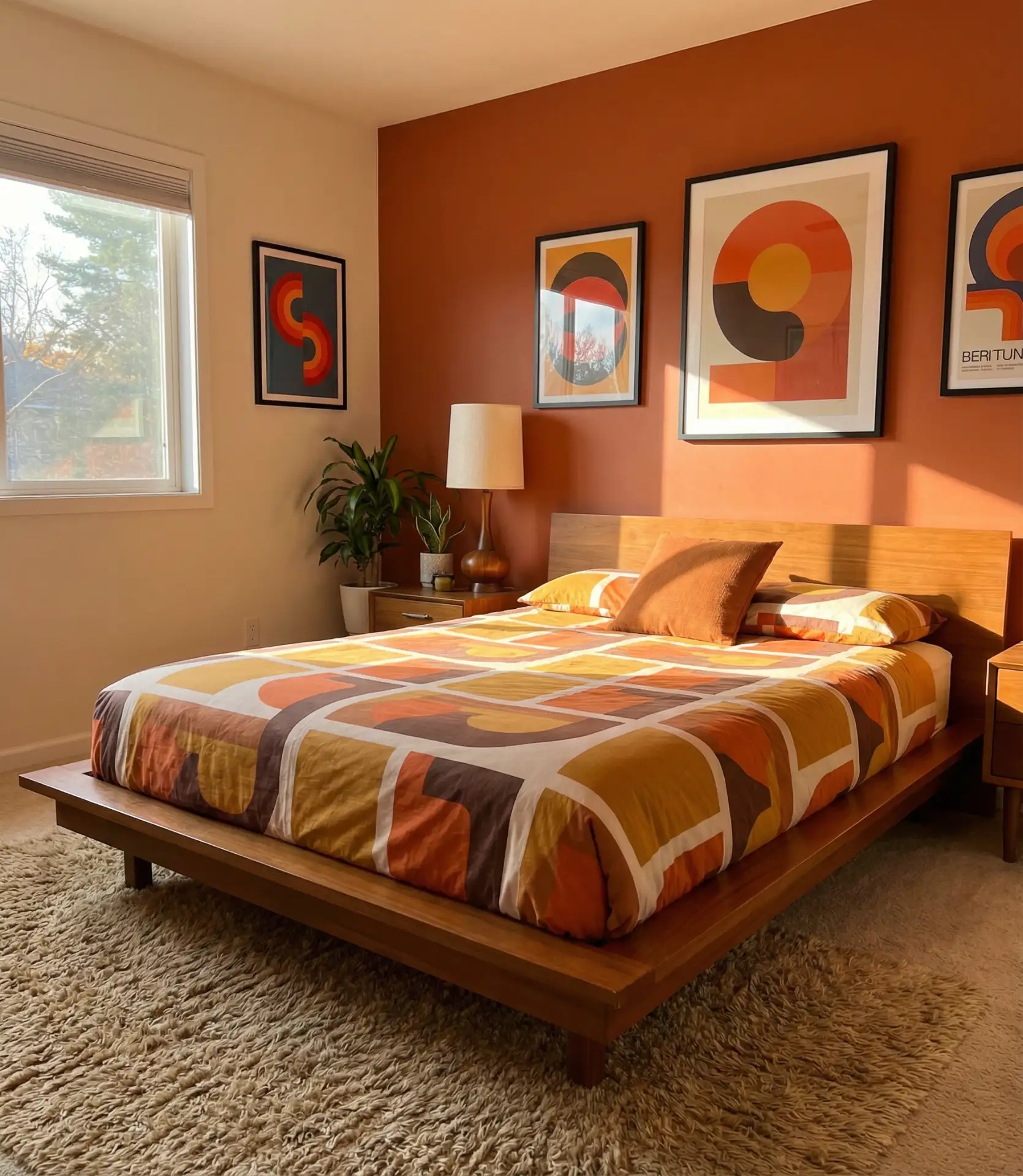
The retro vintage bedroom embraces the bold graphics and saturated colors of mid-century design, featuring geometric wallpaper, atomic-era furniture, and vibrant accent colors like turquoise, orange, and avocado. This style celebrates pattern mixing—stripes with florals, polka dots with abstracts—in ways that feel intentionally playful rather than matchy-matchy. Period-correct color palettes and genuine vintage fabrics provide authenticity, as opposed to modern interpretations that often fall short in terms of hue and scale.
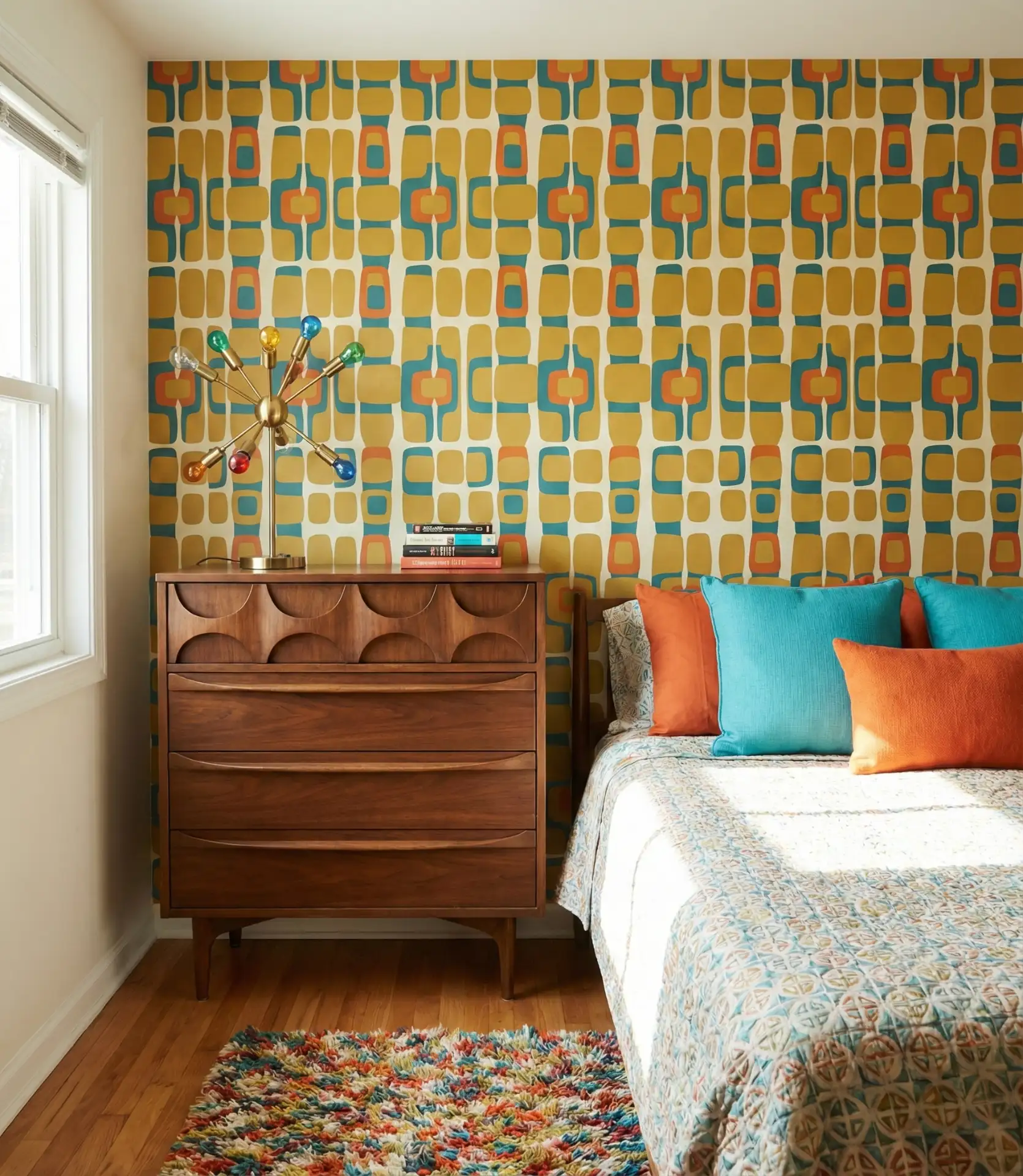
Retro bedrooms particularly thrive in mid-century modern homes where the architecture supports the aesthetic, but they also provide delightful contrast in traditional or Victorian houses, creating unexpected visual interest. The style appeals to design enthusiasts who appreciate vintage craftsmanship but want spaces that feel energetic and optimistic rather than hushed and formal. Budget considerations favor retro style since sturdy mid-century furniture remains relatively affordable compared to earlier antiques.
17. Shabby Chic French Country Guest Rooms
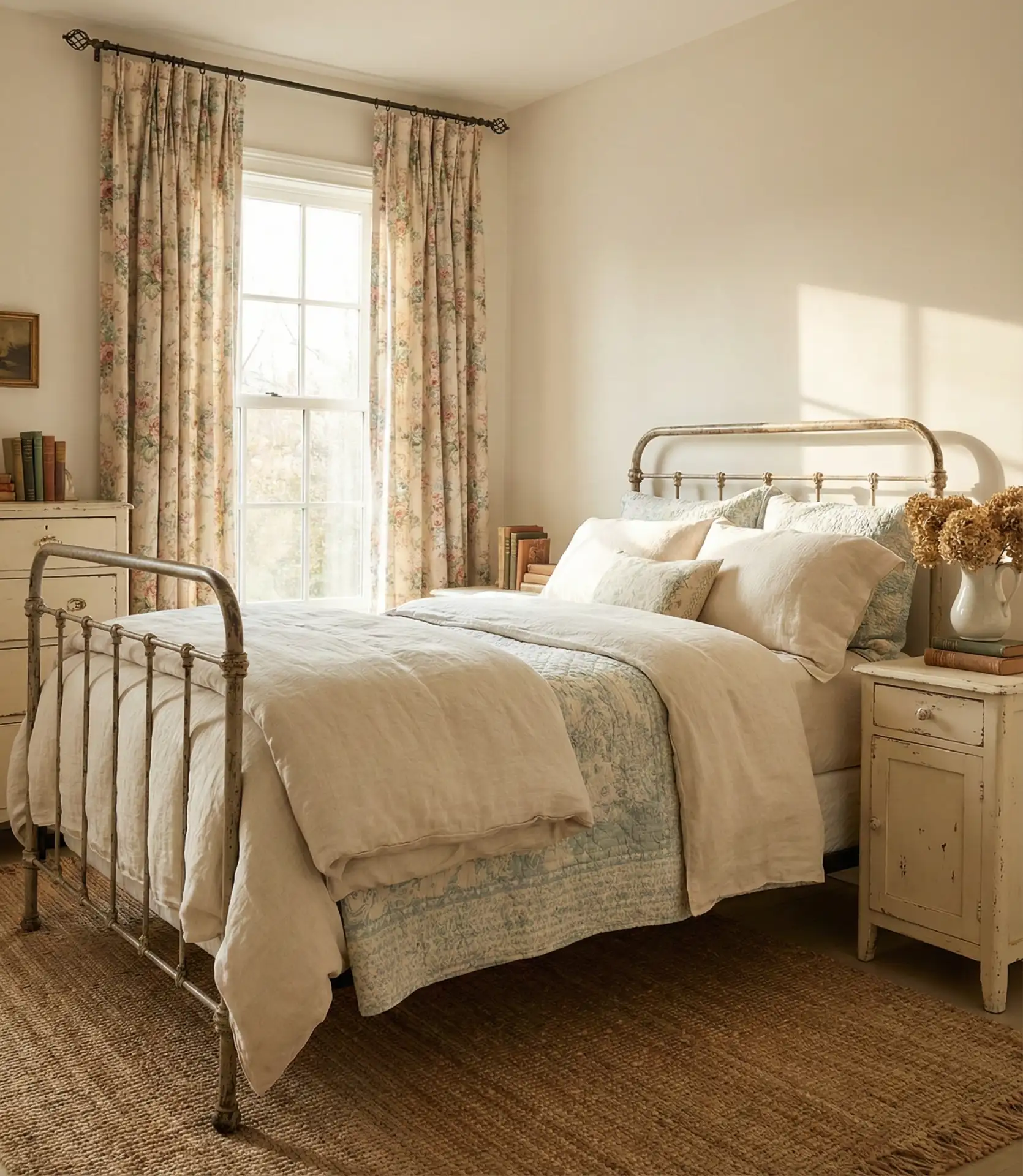
The shabby chic French country guest room aesthetic combines distressed painted furniture, toile fabrics, vintage linens, and French provincial styling to create welcoming spaces for visitors. Soft blues, creams, and muted florals dominate the palette, while furniture shows deliberate wear that suggests history and character rather than neglect. This style particularly suits dedicated guest bedrooms, where creating a bed-and-breakfast atmosphere makes guests feel pampered and special during their stay.
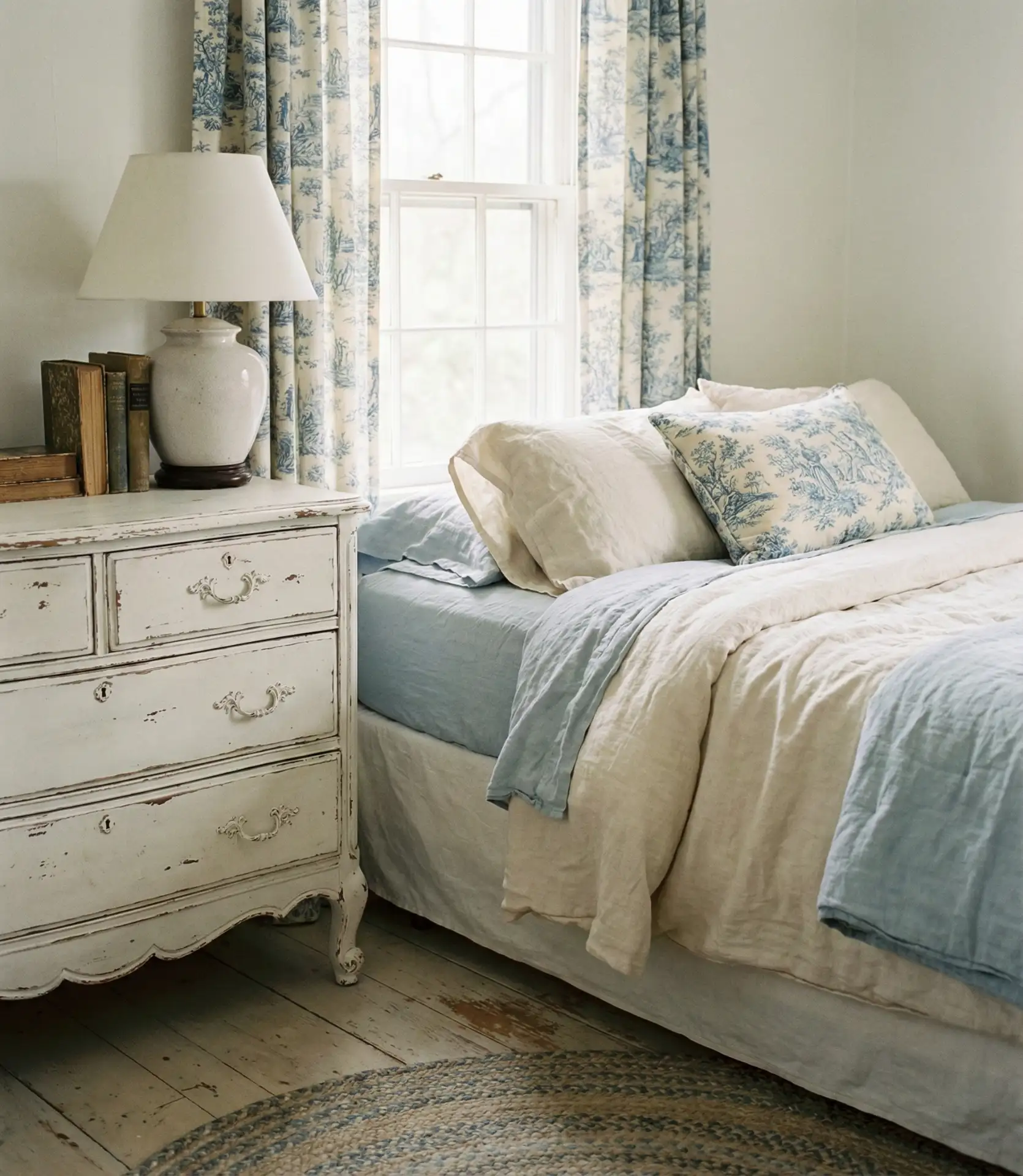
This style works exceptionally well in suburban and rural settings where homeowners frequently host family and friends overnight. The deliberately worn furniture and forgiving, comfortable aesthetic mean the room remains low-stress—guests don’t worry about damaging precious antiques. Many people achieve this look affordably by distressing new furniture themselves or shopping architectural salvage yards for genuinely worn French pieces imported in container loads.
18. Eclectic Mix and Match
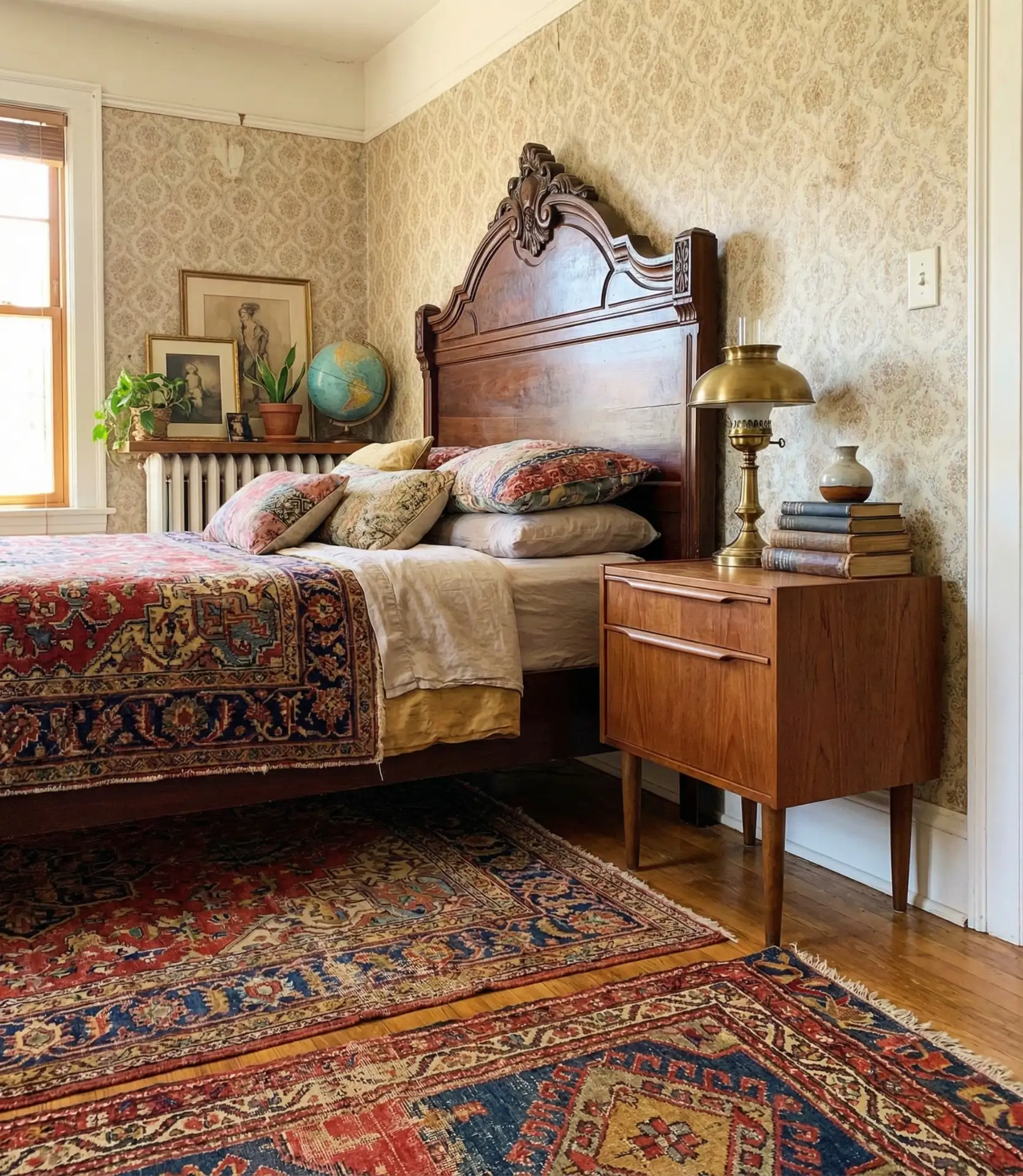
The eclectic vintage bedroom rejects strict period authenticity in favor of personal expression, mixing Victorian, mid-century, rustic, and industrial elements based on individual preference rather than design rules. A carved oak headboard might pair with a sleek 1960s dresser, vintage Persian rugs layer over painted floorboards, and collections from various eras crowd happily on open shelves. This approach requires a good eye for color and scale to prevent chaos, but when executed well, it creates the most personal and interesting vintage bedrooms.
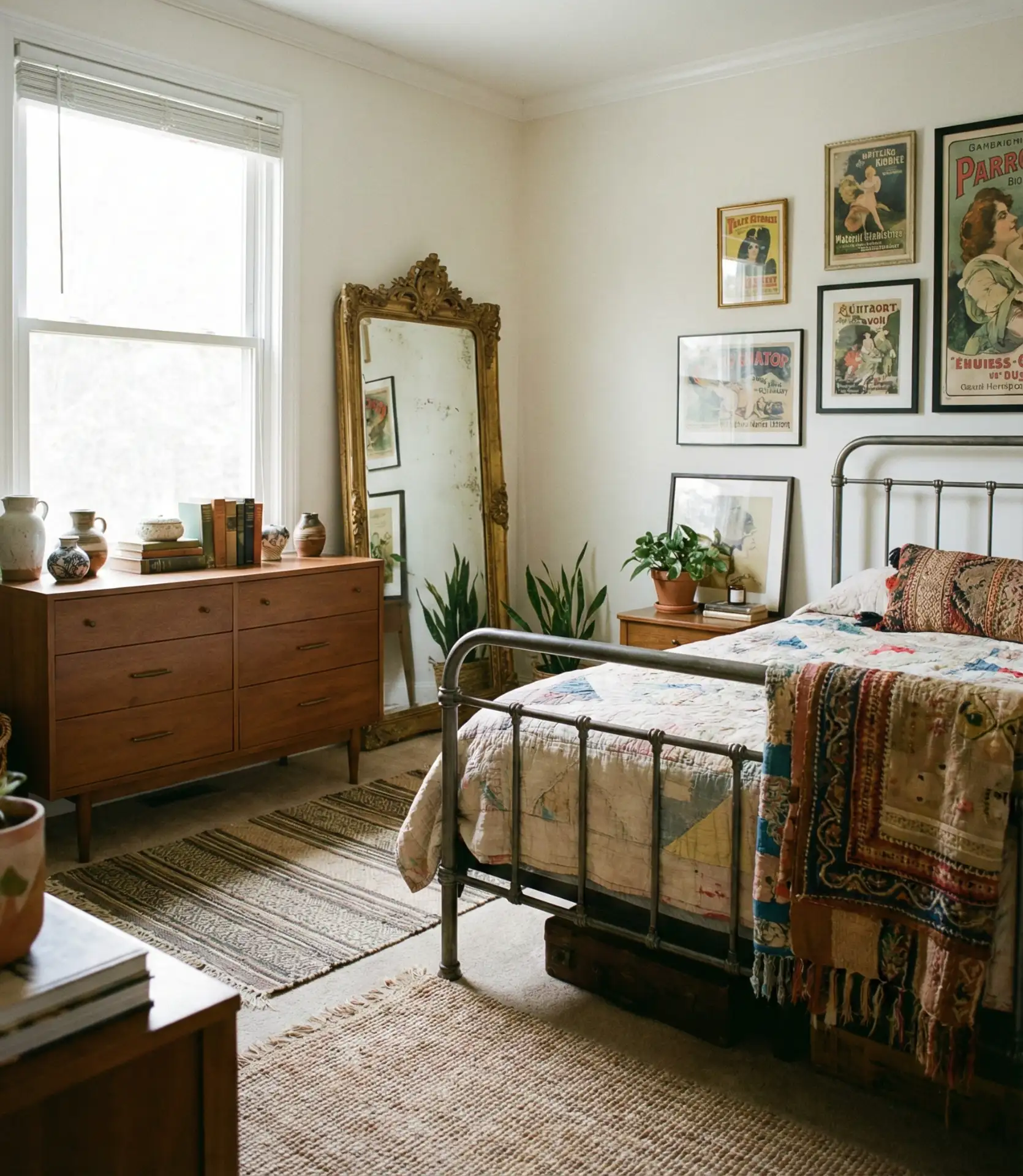
Expert designers suggest choosing one unifying element—perhaps a consistent color palette, a particular finish like brass hardware, or a repeated motif—to tie eclectic rooms together visually. Without this thread, the space risks looking more like a storage unit than a curated bedroom. The most successful eclectic vintage rooms feel like they evolved as the inhabitant collected meaningful pieces, even if they were actually assembled more quickly.
19. Simple Minimalist Vintage
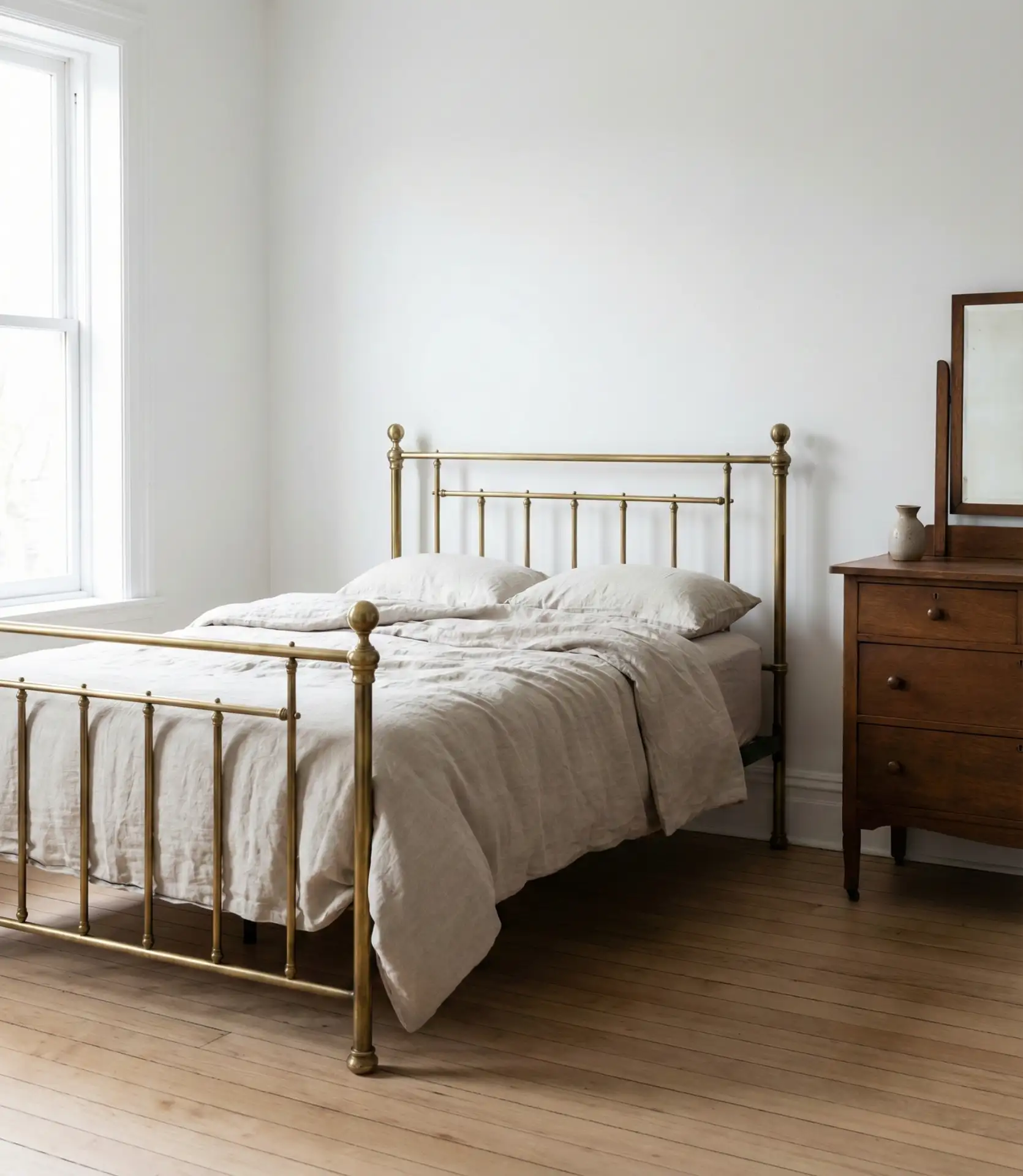
The simple vintage bedroom strips away excess to highlight a few carefully chosen antique or vintage pieces within an otherwise minimal environment. A single brass bed frame against white walls, one vintage dresser with beautiful wood grain, and plain linen bedding create calm, uncluttered spaces where the quality and craftsmanship of each piece become apparent. This approach particularly appeals to those who appreciate vintage aesthetics but need the visual peace that minimalism provides.
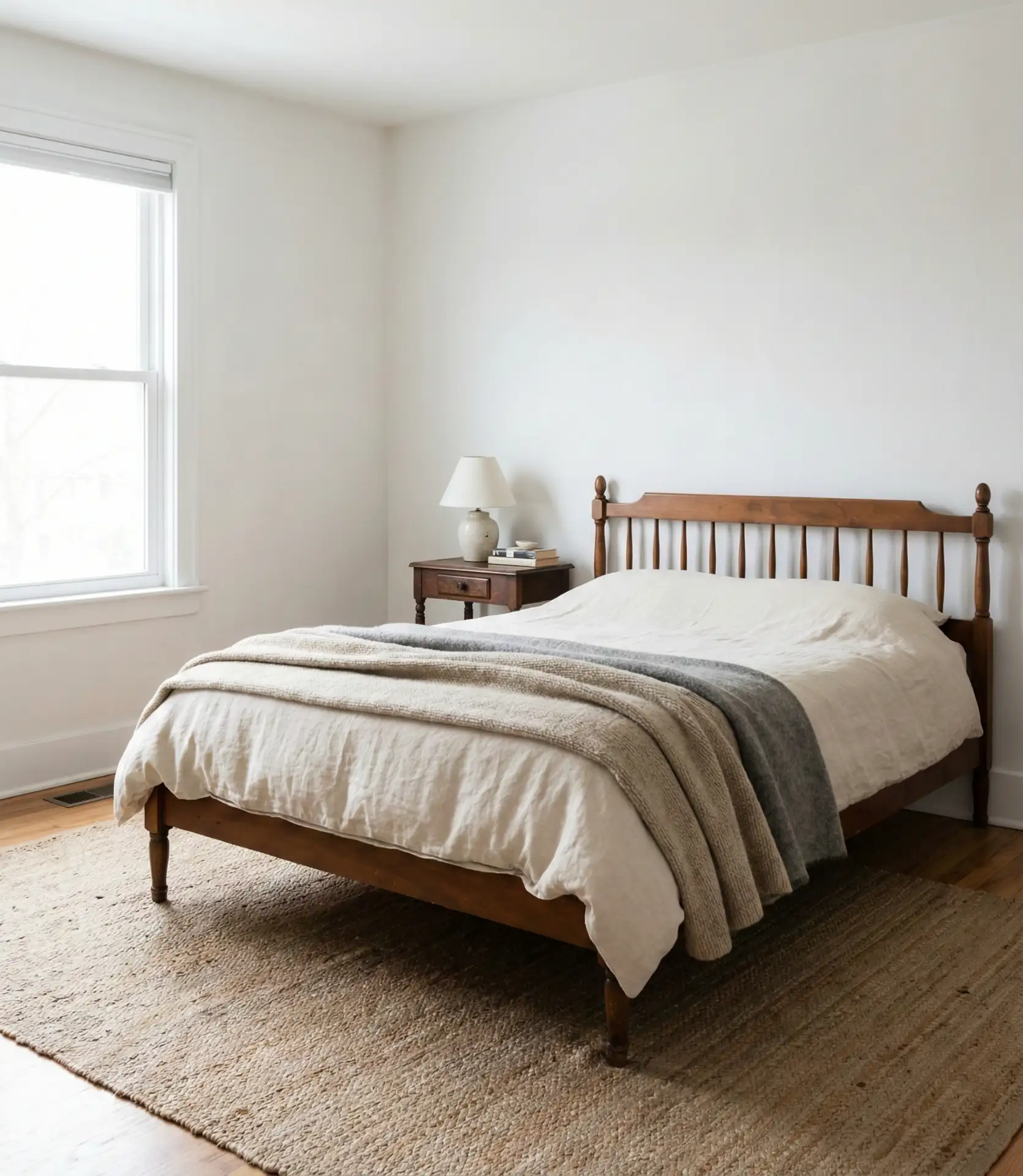
Where this style shines is in urban apartments and smaller homes where space limitations make editing essential. The minimal approach also suits people overwhelmed by visual stimulation who need their bedroom to serve as a genuine retreat. By choosing just two or three vintage pieces of real quality and letting them breathe within the space, you achieve impact without clutter.
20. Elegant Formal Vintage
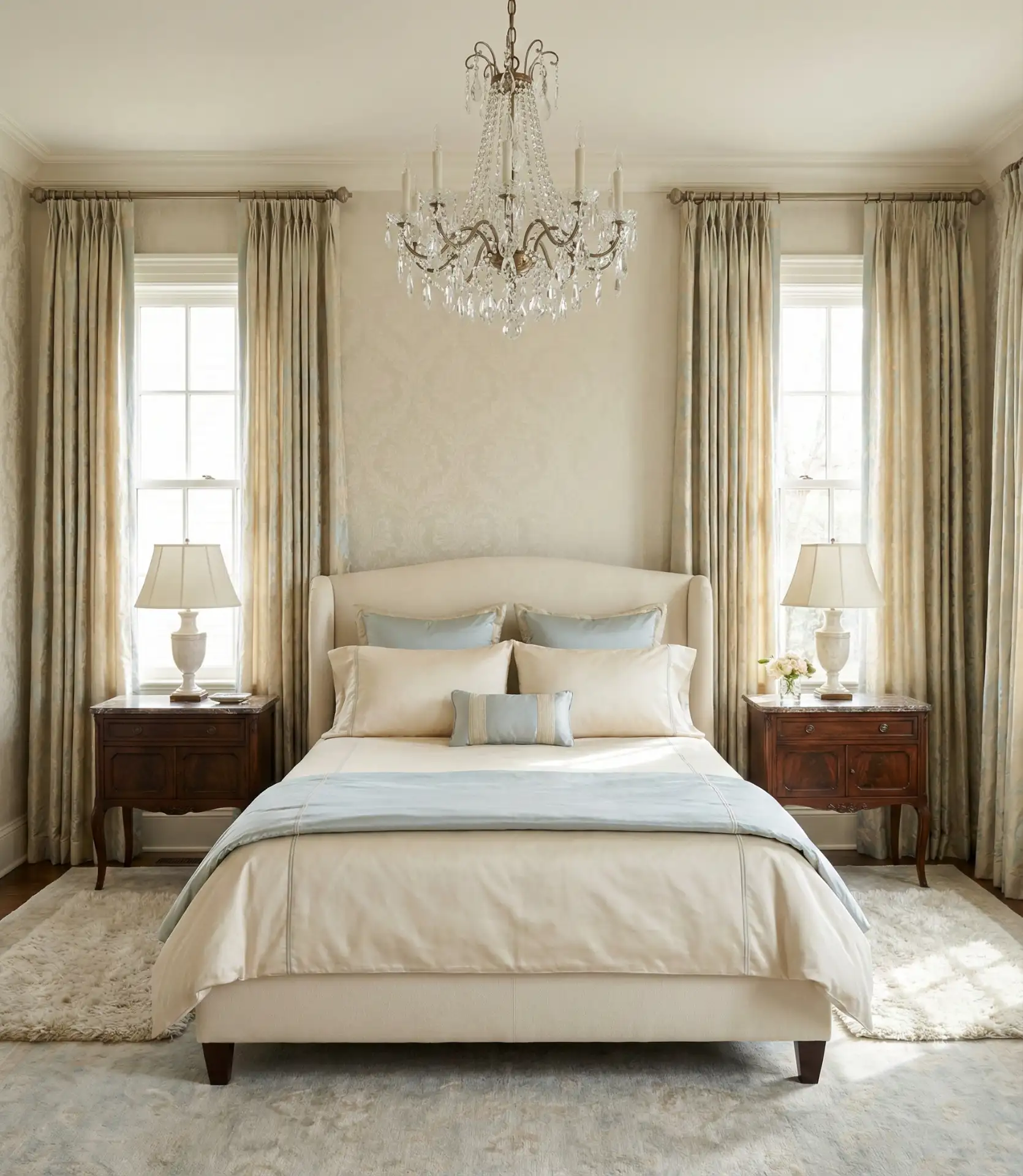
The elegant vintage bedroom emphasizes refinement and polish, featuring symmetrical furniture arrangements, matched nightstands, coordinated textiles, and careful attention to proportion and detail. Crystal chandeliers, silk draperies, and high-quality antique furniture create spaces that feel sophisticated rather than casual. This approach draws from formal historical interiors while adapting them for contemporary comfort—you get the elegance without the impracticality of purely period-accurate design.
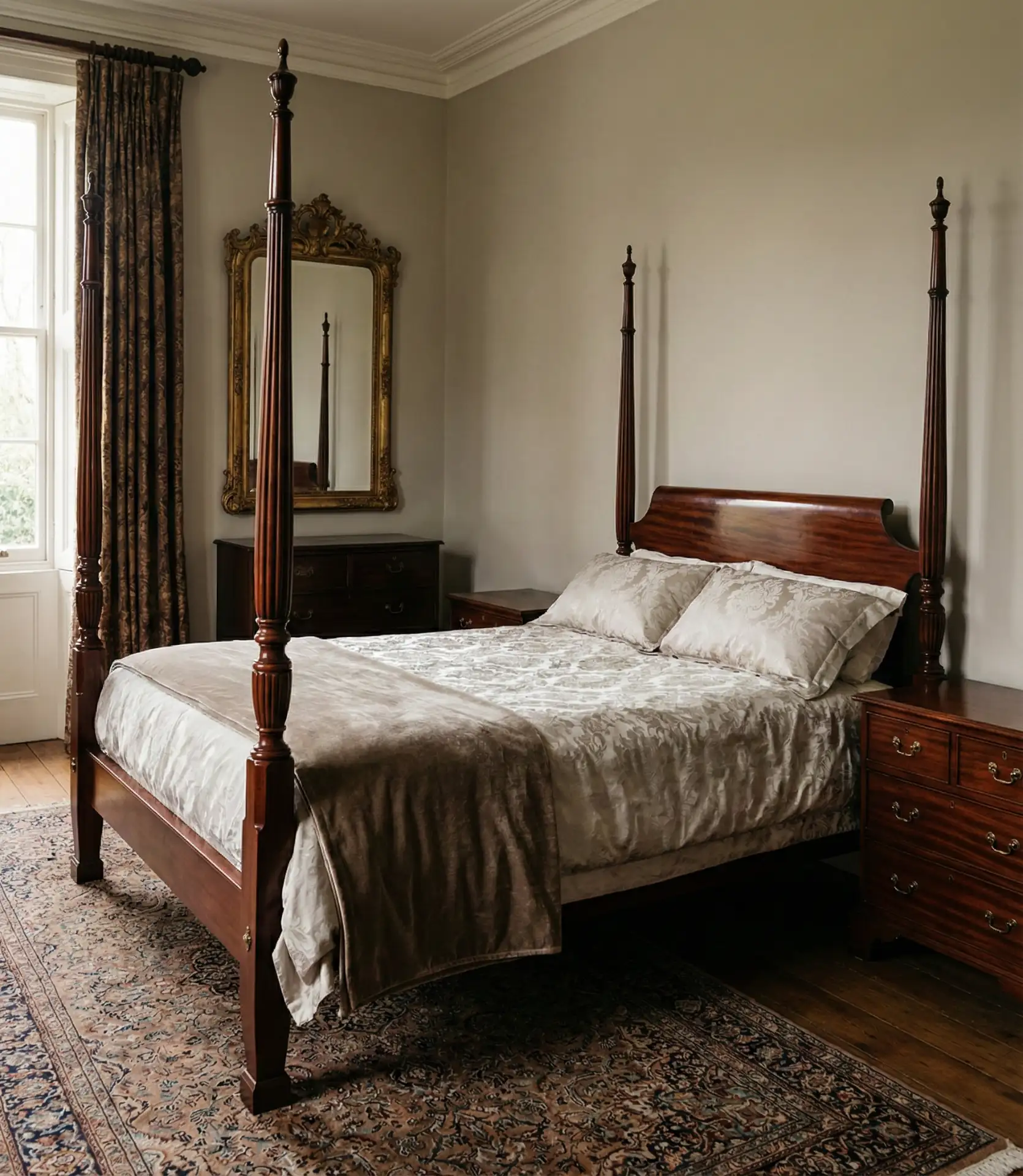
Elegant vintage bedrooms require more investment since the style depends on quality over quantity—one beautiful antique armoire makes more impact than three mediocre pieces. These rooms work best in homes with generous proportions and traditional architecture where formality feels natural rather than forced. Master bedrooms in historic homes particularly benefit from this approach, honoring the building’s heritage while providing luxurious personal space.
21. White-on-White Serenity
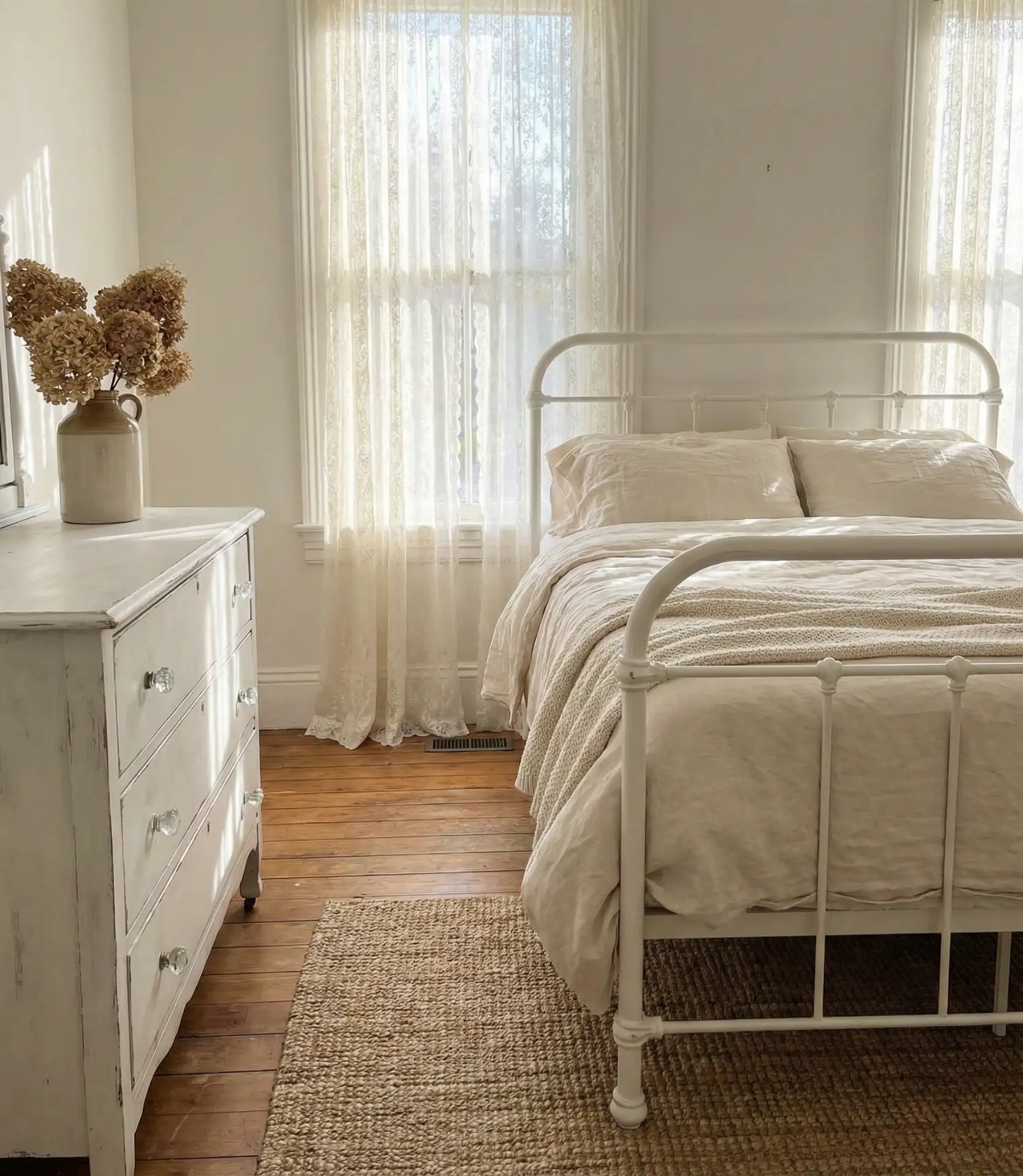
The all-white vintage bedroom creates peaceful, light-filled spaces through layering different white tones and textures—cream linens, ivory lace, chalk-painted furniture, and weathered white wood all combine to prevent monotony. Vintage iron beds in white, shabby chic dressers, and collections of vintage white pottery or transferware maintain the period aesthetic, while the monochromatic palette ensures visual calm. This style has remained consistently popular for its freshness and flexibility.
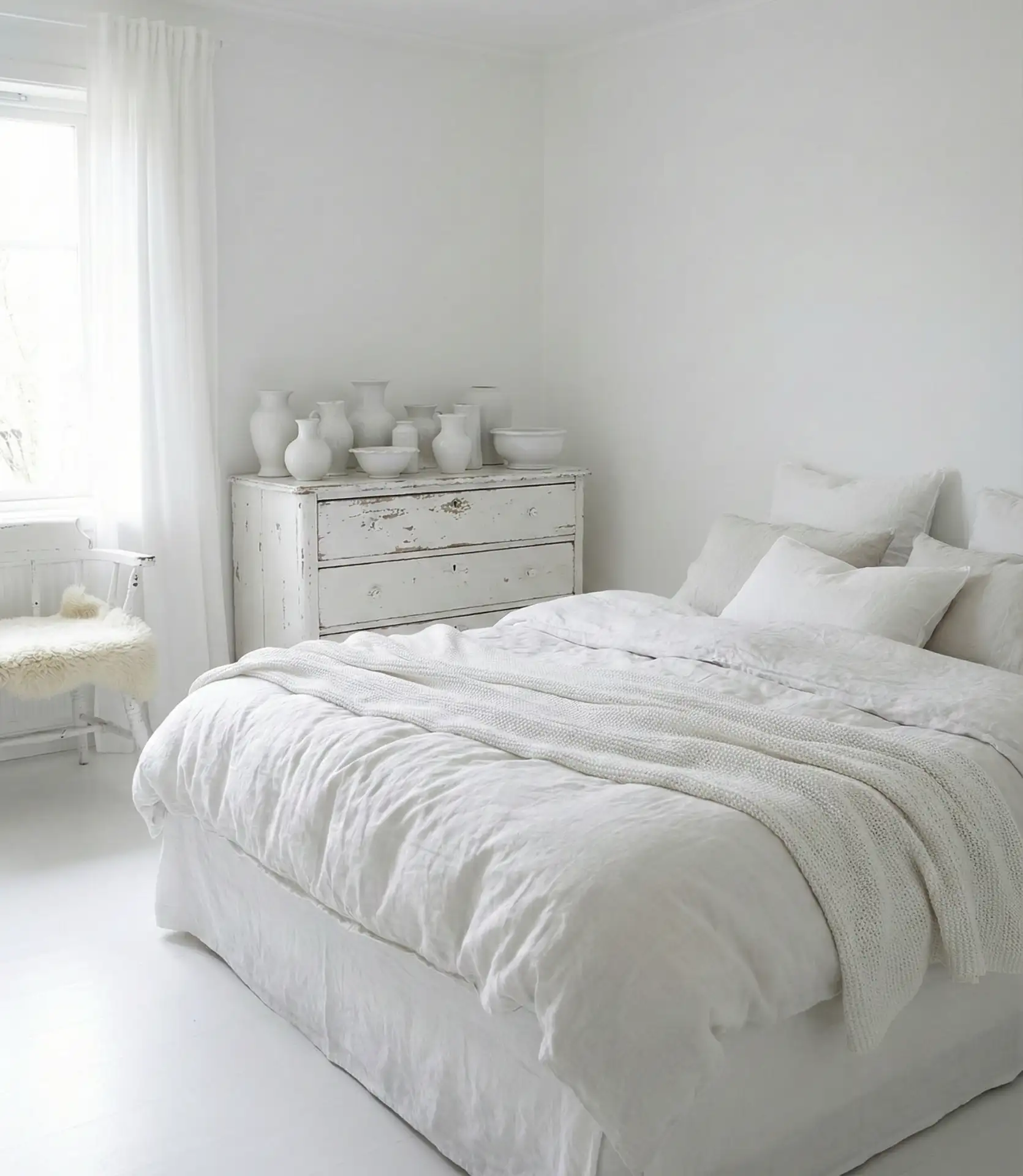
Common mistakes include using too many bright, stark whites that create cold, sterile atmospheres rather than the intended warmth. Instead, layer warmer whites—antique white, cream, ivory, and off-white—and incorporate natural textures like linen, cotton, and weathered wood to add depth. This palette works beautifully in beachside cottages and contemporary farmhouses, where the white scheme connects indoor and outdoor spaces.
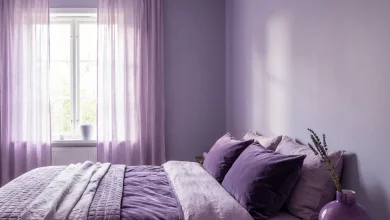
22. Purple Vintage Luxury
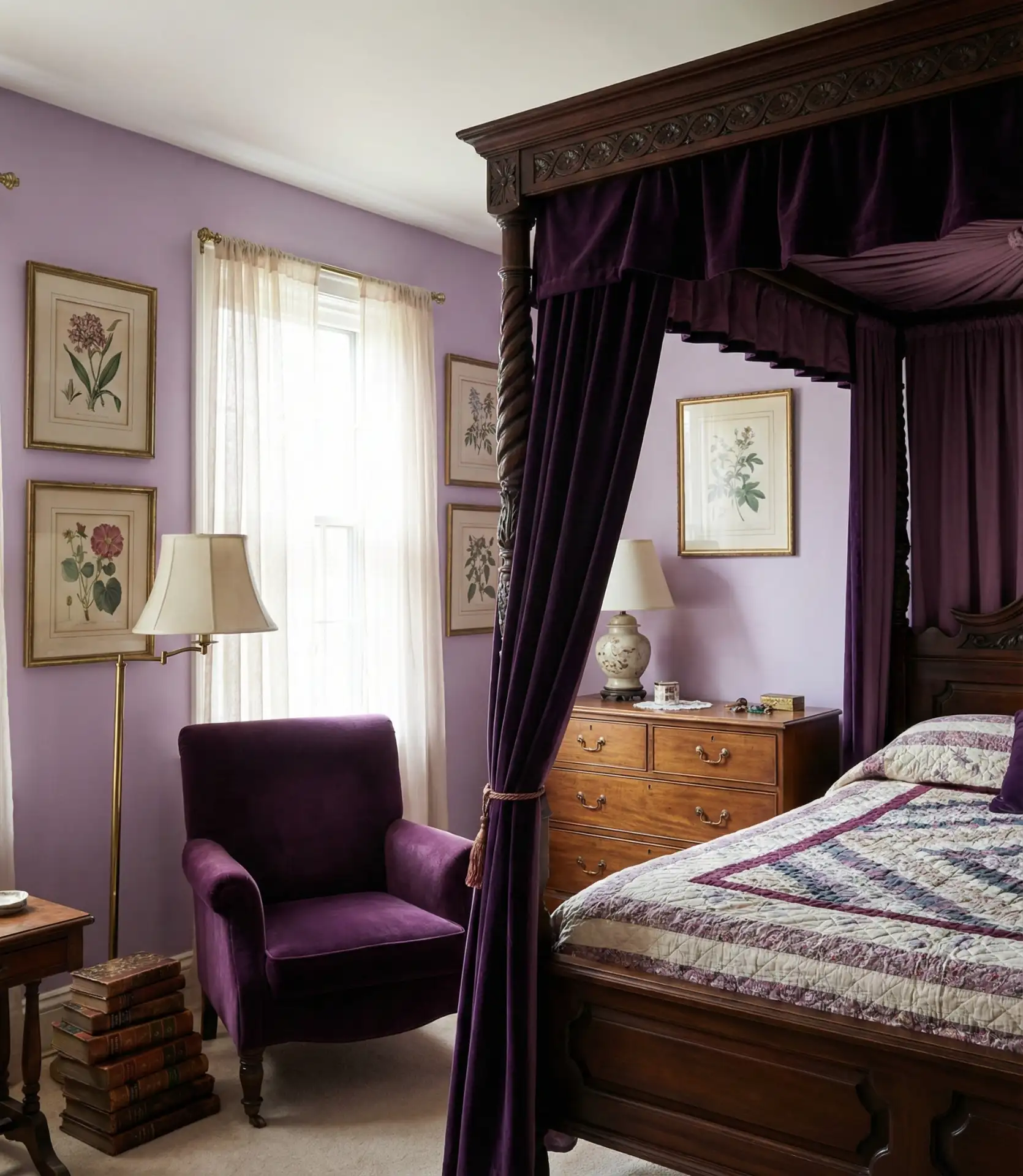
Vintage bedrooms in purple tones convey richness and individuality, whether through soft lavender walls reminiscent of 1920s boudoirs or deep aubergine velvets that feel Victorian and dramatic. Purple has long been associated with luxury and creativity, making it particularly effective in bedrooms meant for rest and inspiration. Vintage furniture in dark woods or painted finishes pairs beautifully with purple textiles and wall colors, creating rooms that feel both historical and personal.
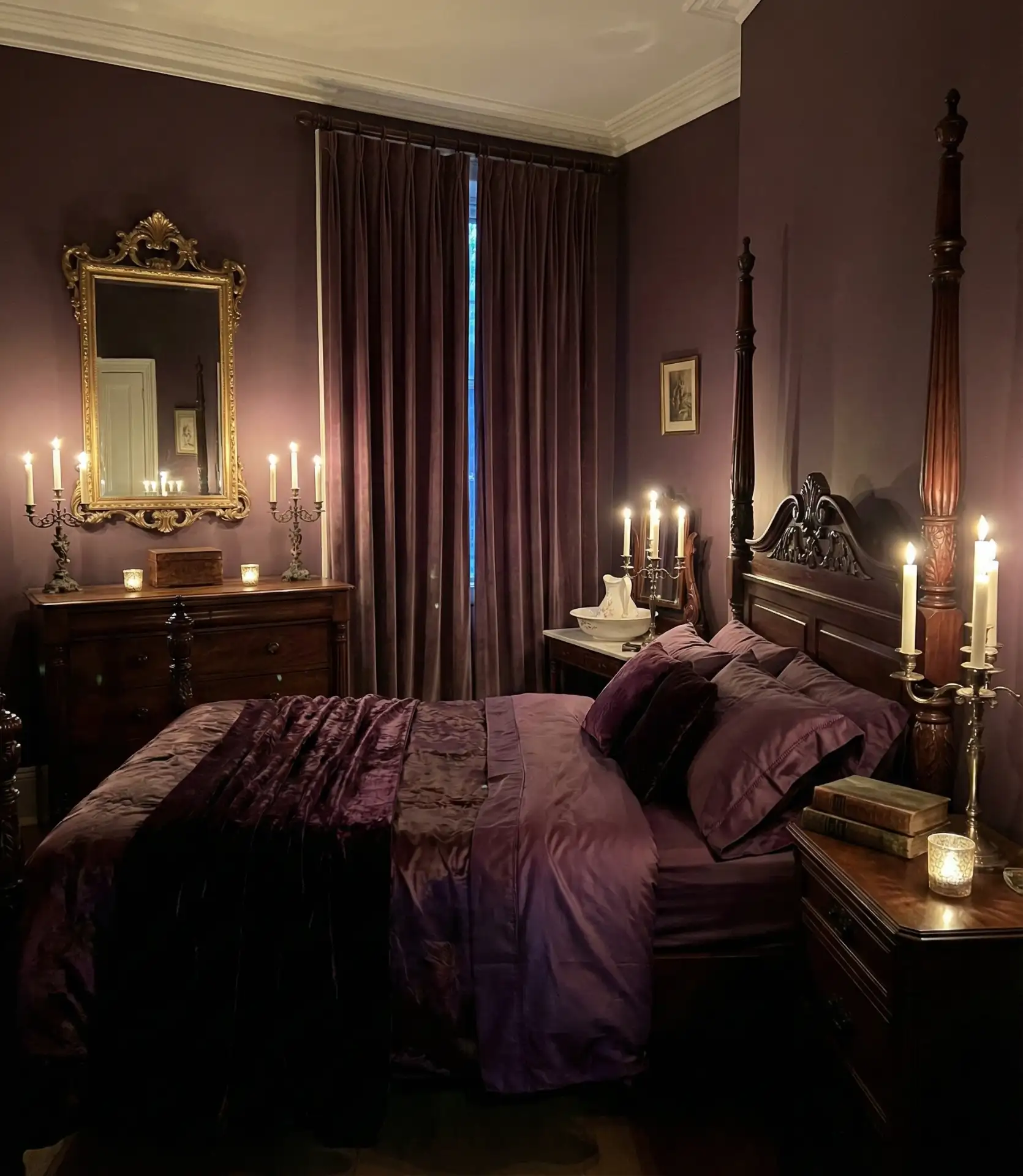
Purple vintage bedrooms work particularly well for creative individuals or those who want their space to feel distinctly different from typical neutral schemes. The color’s relative rarity in interiors makes these rooms memorable and striking. From a practical standpoint, deeper purples hide wear and age on vintage textiles better than lighter colors, making them forgiving choices for well-used antique fabrics.
23. For Men Aesthetic Vintage
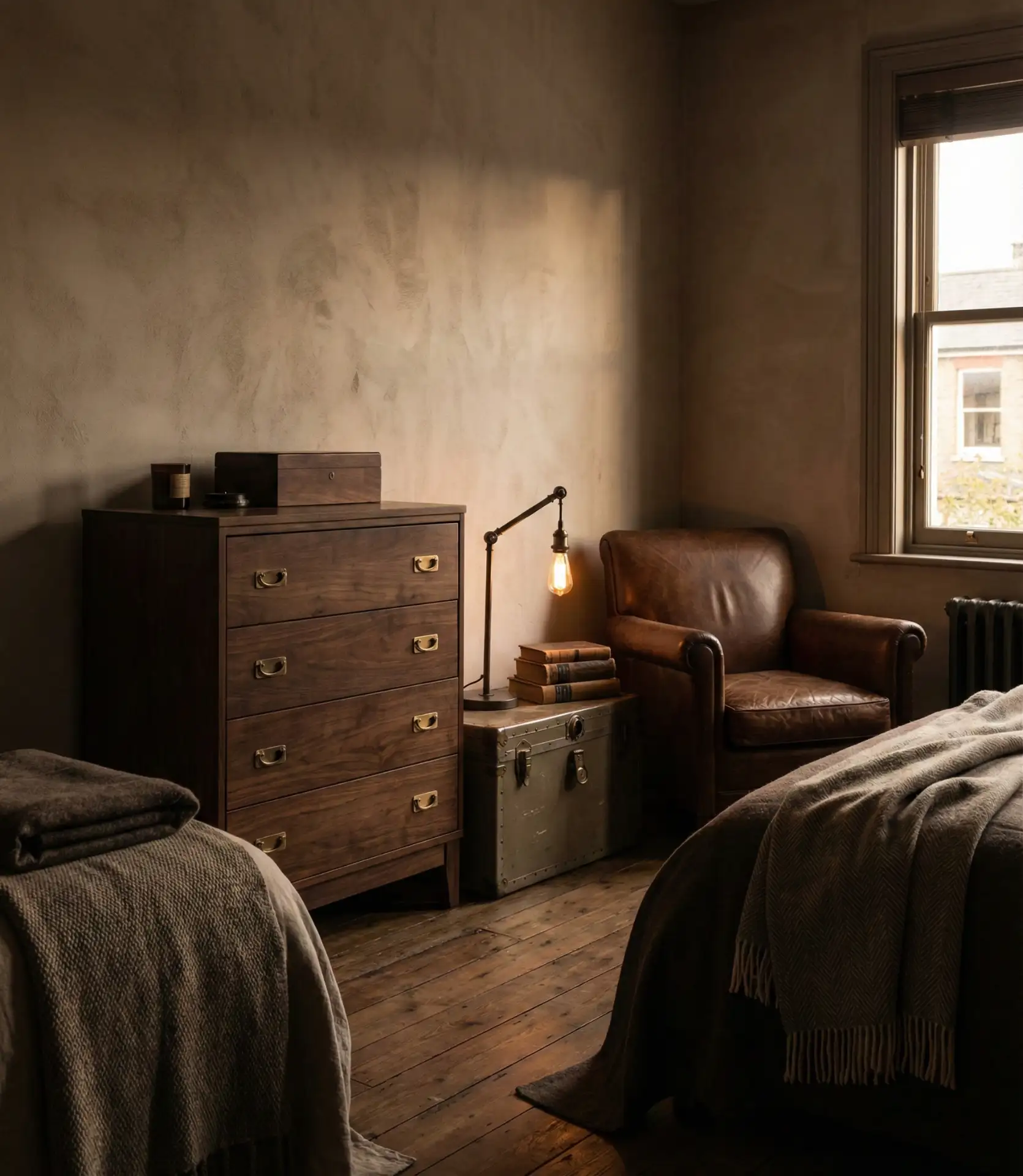
Vintage bedrooms designed for men typically emphasize darker woods, leather accents, utilitarian vintage pieces, and classic masculine references, such as military trunks repurposed for storage or vintage industrial lighting. Rich browns, deep greens, navy, and charcoal form the typical palette, while furniture tends toward substantial, well-crafted pieces from the early-to-mid 20th century. This aesthetic rejects fussiness in favor of functional beauty and honest materials.
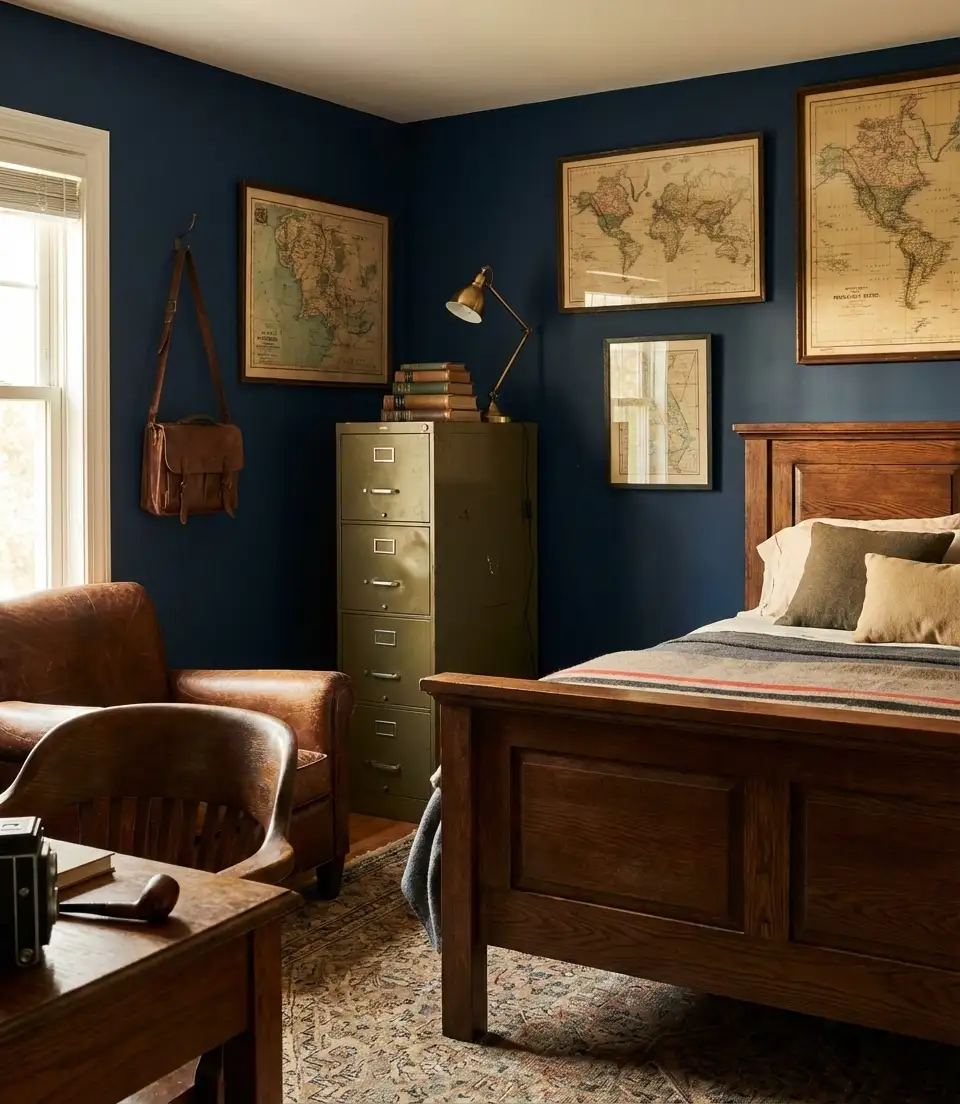
Real homeowners creating these spaces often incorporate hobby-related vintage items—antique fishing gear, vintage cameras, old sporting equipment—that add personal meaning beyond pure decoration. The style works across ages, equally appropriate for young men in first apartments and older homeowners downsizing to dedicated personal spaces. Budget-wise, excellent vintage masculine furniture often costs less than feminine counterparts since there’s less competition for sturdy, utilitarian pieces.
24. Bohemian Textile Layers
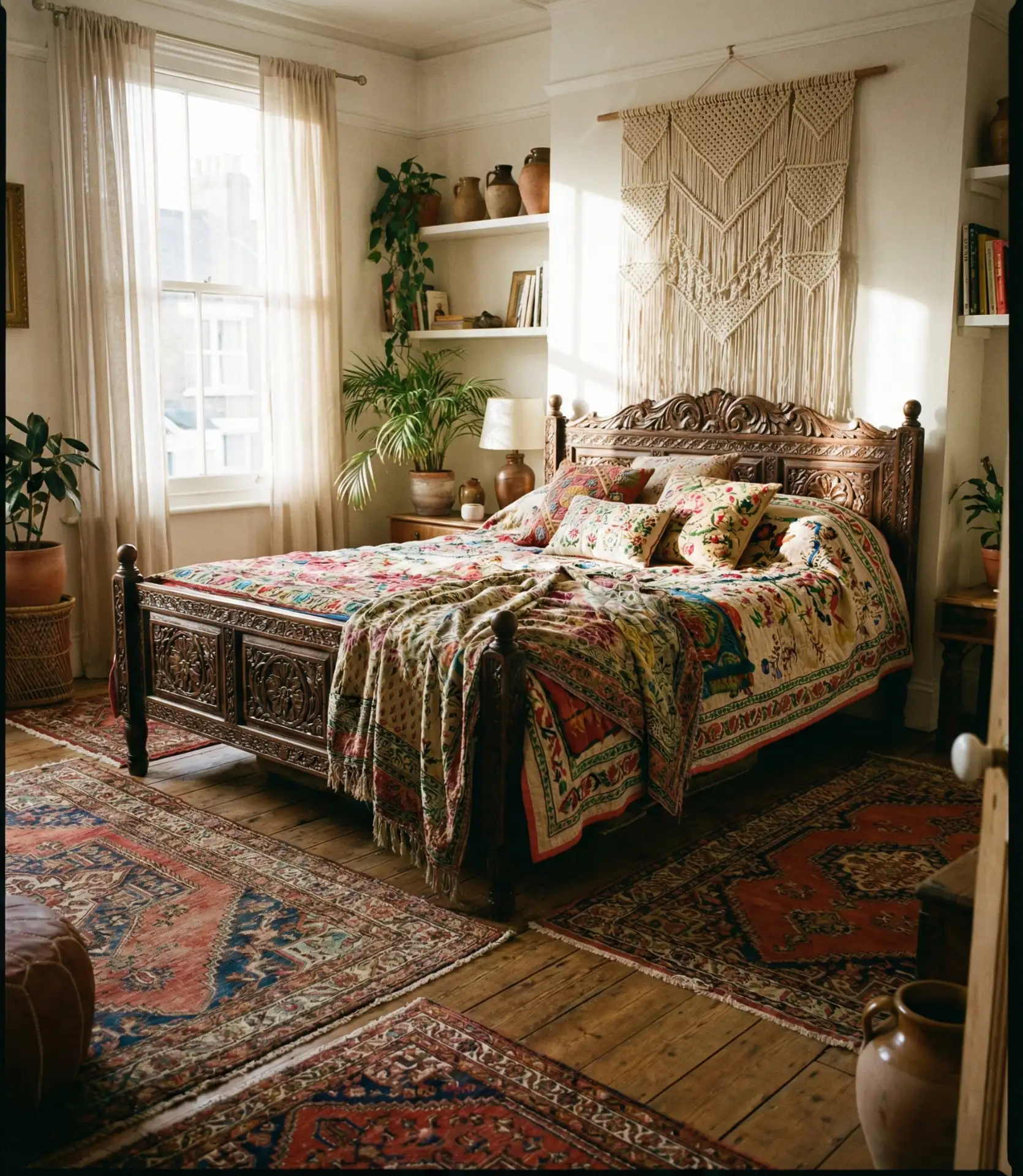
The bohemian vintage bedroom celebrates global influences, artisan textiles, and fearless pattern mixing, creating spaces that feel well-traveled and collected over time. Vintage kilims layer over floors, embroidered suzanis drape across beds, macramé wall hangings add texture, and furniture from various cultures and eras coexist happily. This aesthetic values handmade character and cultural richness over matching sets or period-specific accuracy, resulting in bedrooms that feel deeply personal and welcoming.
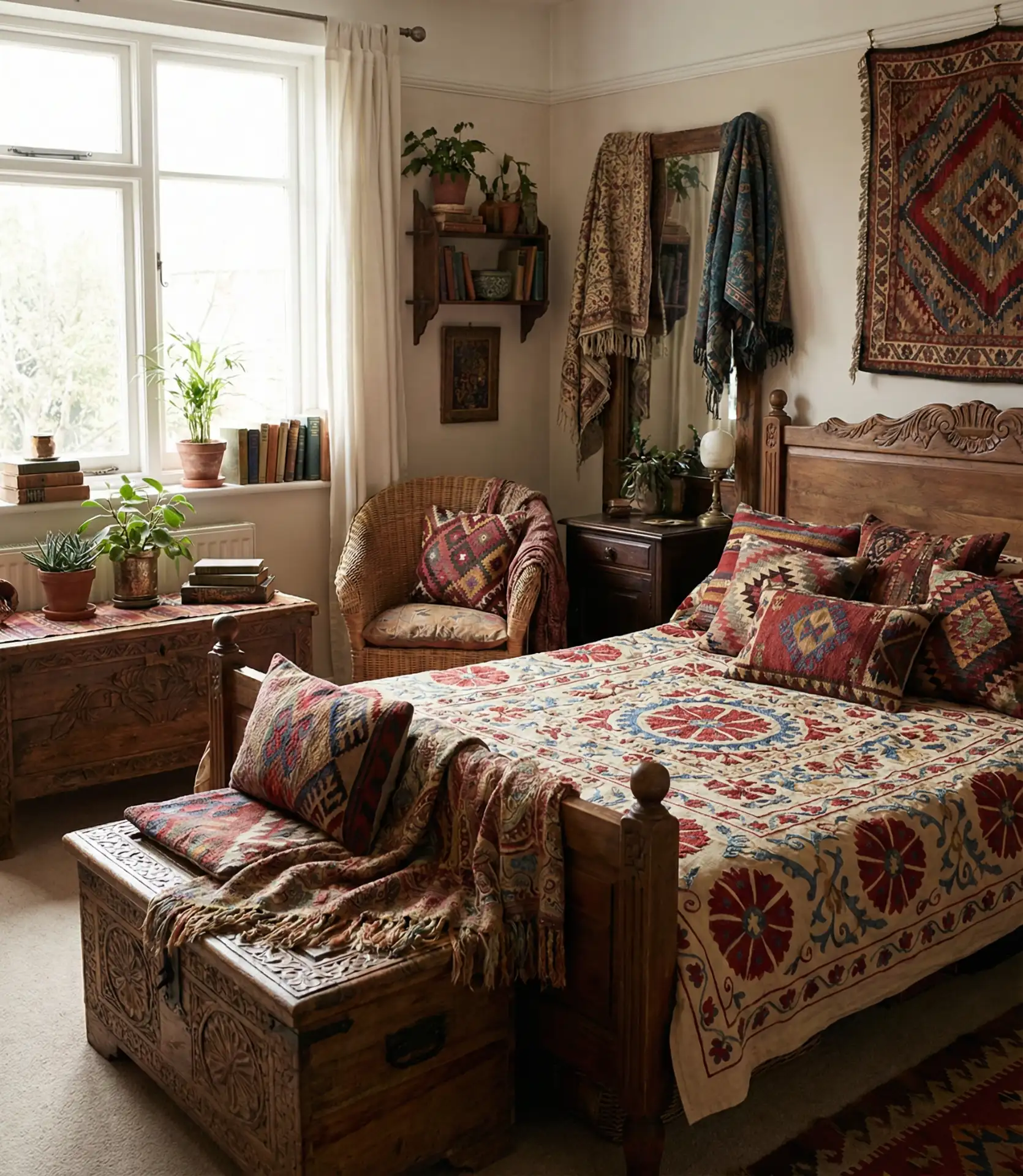
Bohemian bedrooms particularly resonate with younger homeowners and renters who prioritize individuality and sustainability over conventional design rules. The style welcomes thrifted and handmade items, making it accessible at various budget levels. Urban areas with strong arts communities—places like Santa Fe, Portland, and Austin—see high concentrations of this aesthetic, though it appears anywhere creative individuals want their spaces to reflect global awareness and artistic sensibility.
25. Victorian Bloxburg Digital Inspiration
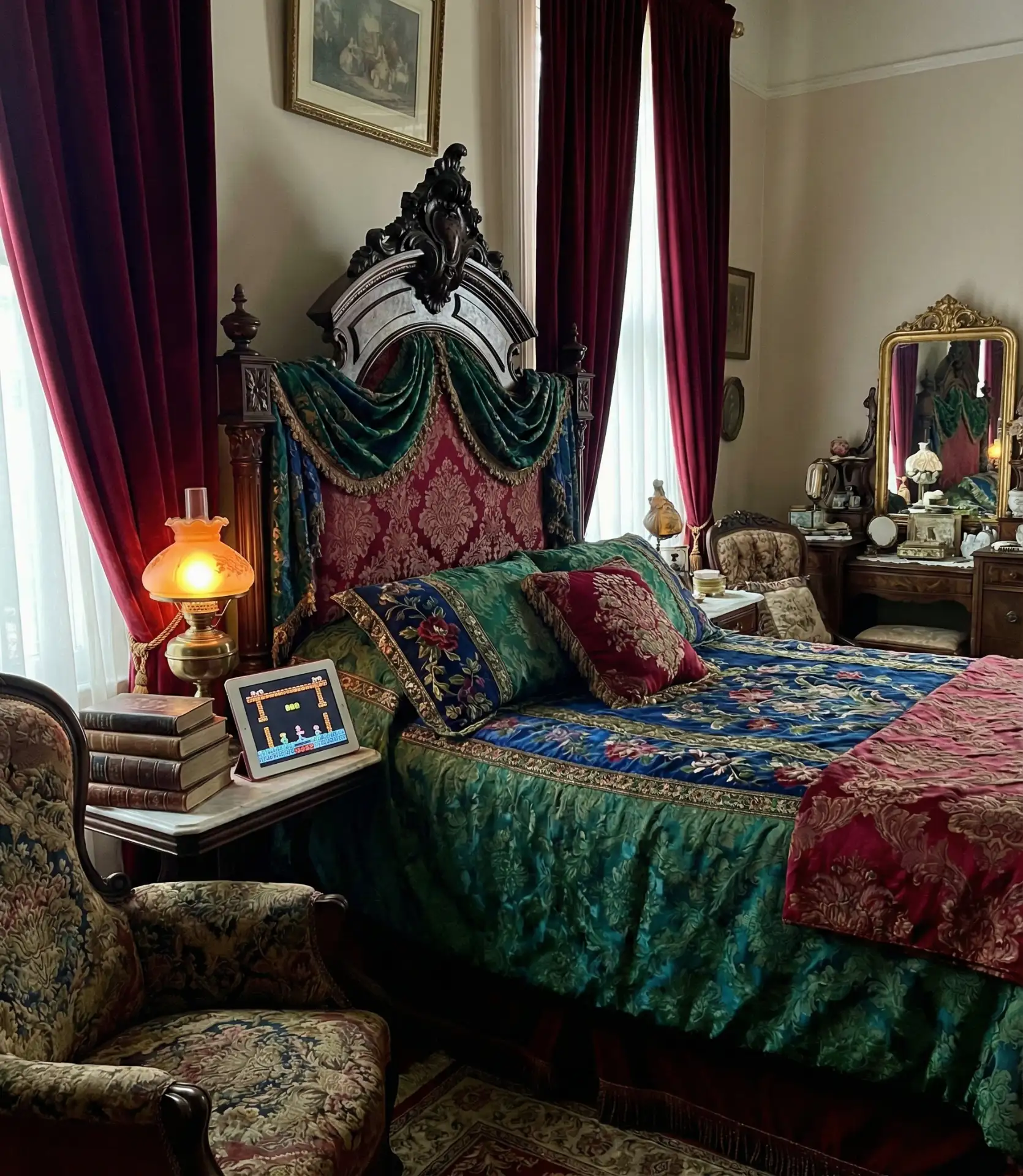
The Victorian Bloxburg aesthetic references virtual builds in the popular Roblox game, where players create elaborate Victorian bedrooms with ornate furniture, rich colors, and dramatic details. This digital inspiration translates to real-world bedrooms through deep jewel tones, carved wooden furniture, heavy drapery, and maximalist layering that younger decorators find both nostalgic and fresh. The approach bridges vintage authenticity with contemporary digital culture, creating spaces that feel connected to both historical design and current gaming communities.
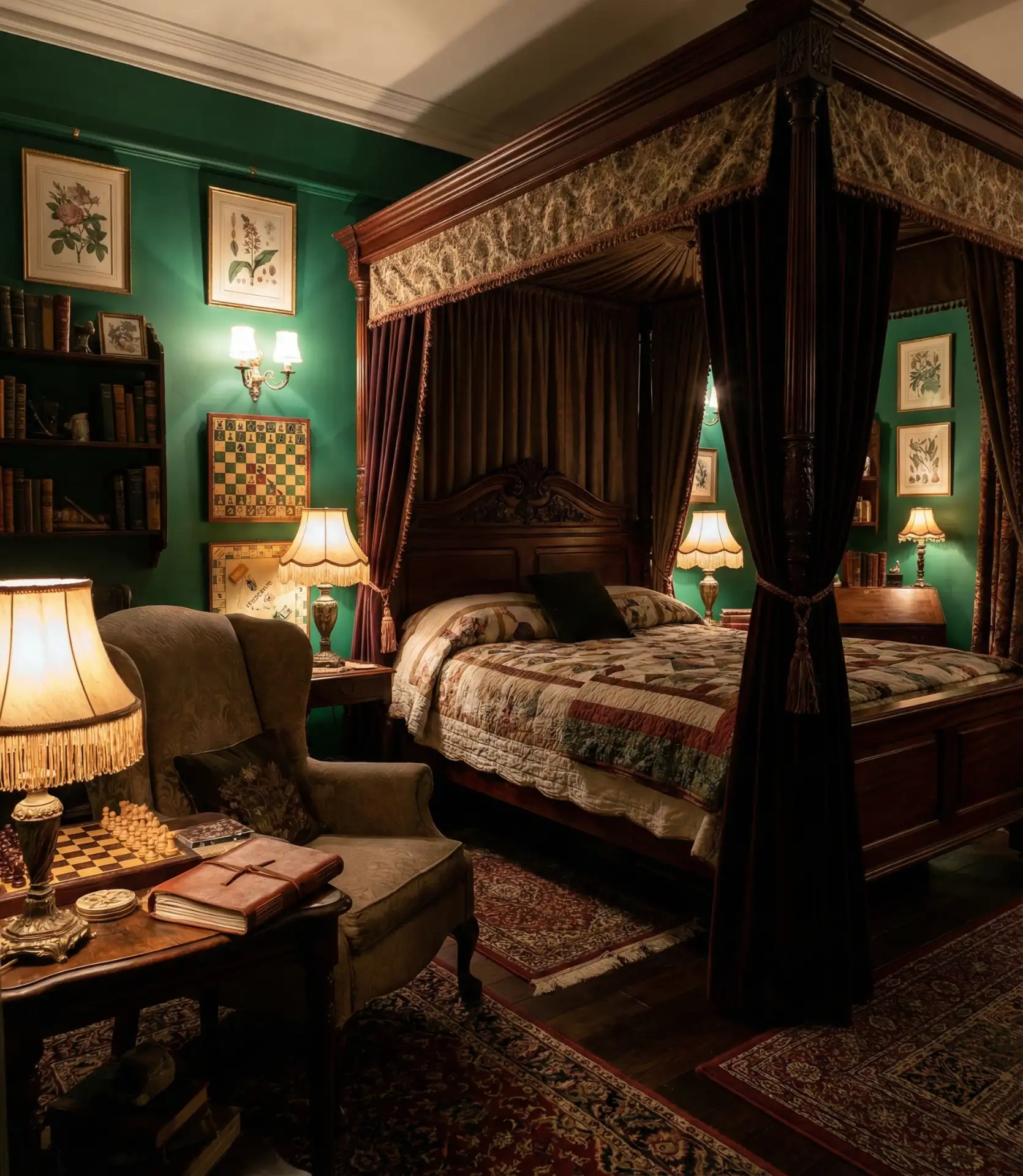
This trend demonstrates how digital platforms inspire real-world design choices, particularly among Gen Z decorators who grew up building virtual spaces and now translate those skills to actual homes. The style requires significant commitment to drama and detail, working best in larger bedrooms where multiple furniture pieces and elaborate window treatments don’t overwhelm the space. Budget considerations can be addressed by mixing a few genuine antiques with painted reproductions and DIY fabric projects that capture the opulent spirit without requiring inheritance-level investment.
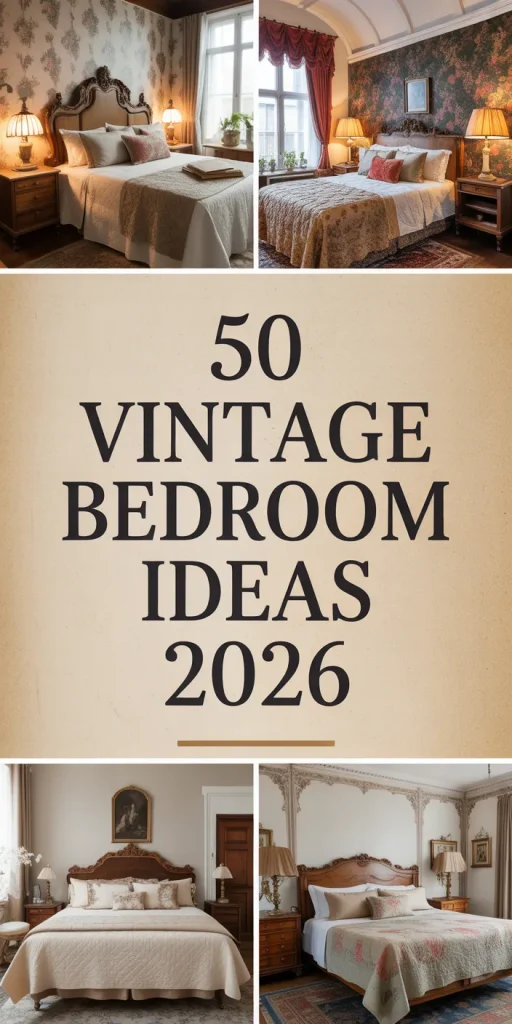
From minimalist simplicity to maximalist drama, budget-friendly thrifting to investment-worthy antiques, these vintage bedroom ideas showcase the remarkable range available within vintage design. The beauty of vintage style lies in its flexibility—you can interpret these concepts through whatever lens feels most authentic to your personal taste, budget, and lifestyle. Whether you’re drawn to a single era or prefer mixing periods, starting with one small change or committing to a full transformation, vintage bedrooms reward those willing to think beyond mass-market furniture and embrace the character that only age and history can provide. Comment below with your favorite vintage bedroom inspiration or let us know which of these ideas you plan to implement in your own home.