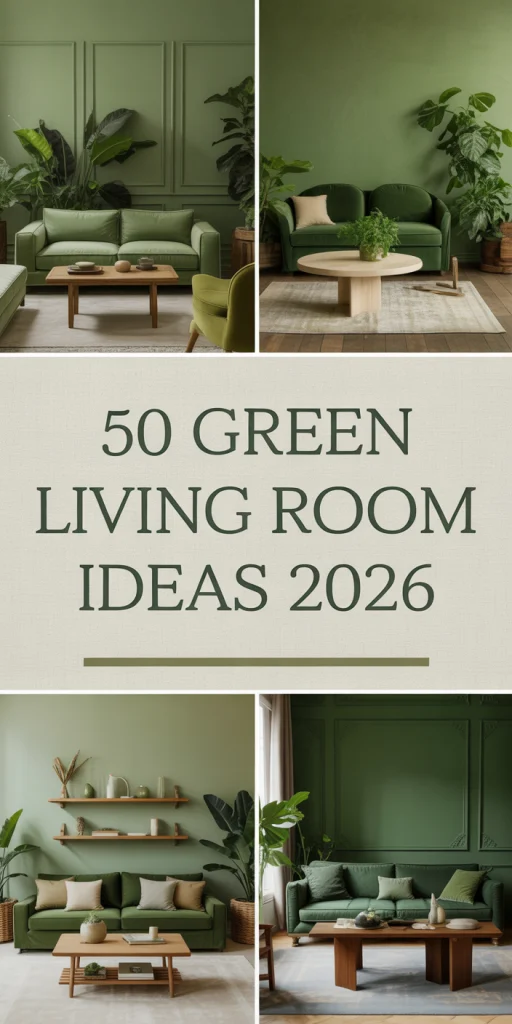
50 Stunning Green Living Room Ideas for 2026: From Sage to Emerald Perfection

Green living rooms have become one of the most searched interior design topics on Pinterest in 2026, and it’s easy to see why. From calming sage tones to dramatic forest hues, green offers versatility that works in everything from small apartments to spacious suburban homes. Green attracts American homeowners due to its ability to bring in the outdoors, foster tranquility, and blend seamlessly with a wide range of design styles. Whether you’re looking for a complete room makeover or just want to add a few green accents, this guide will show you inspiring ways to bring this timeless color into your living space.
1. Sage and Natural Wood Minimalism
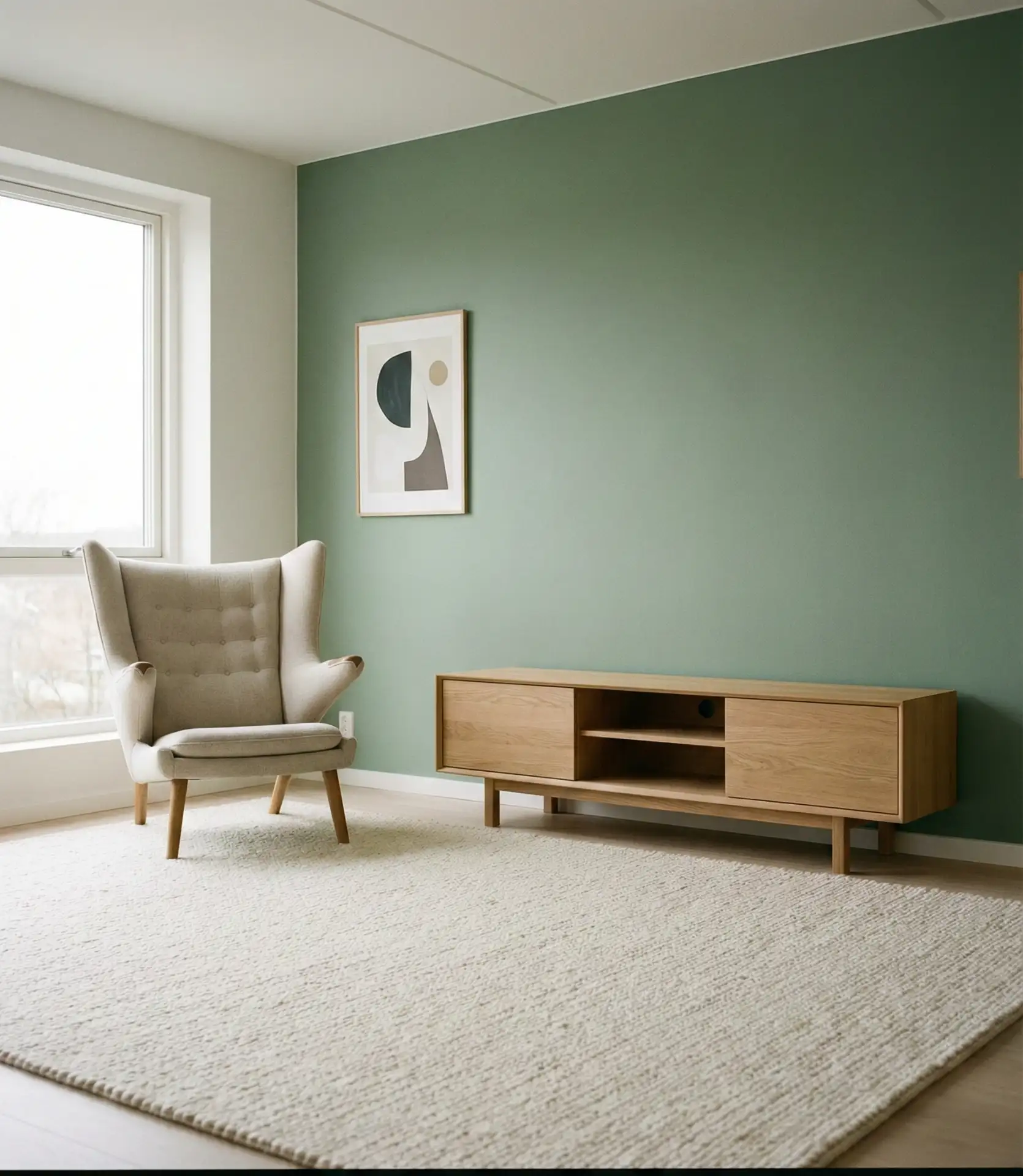
This sage green living room embraces simplicity with clean lines and neutral wood tones that create a Scandinavian-inspired retreat. The muted green walls pair effortlessly with light oak furniture and linen upholstery, making the space feel airy and uncluttered. It’s perfect for smaller homes where you want color without overwhelming the room, and it works especially well in open-plan layouts where the living area flows into the kitchen or dining space.
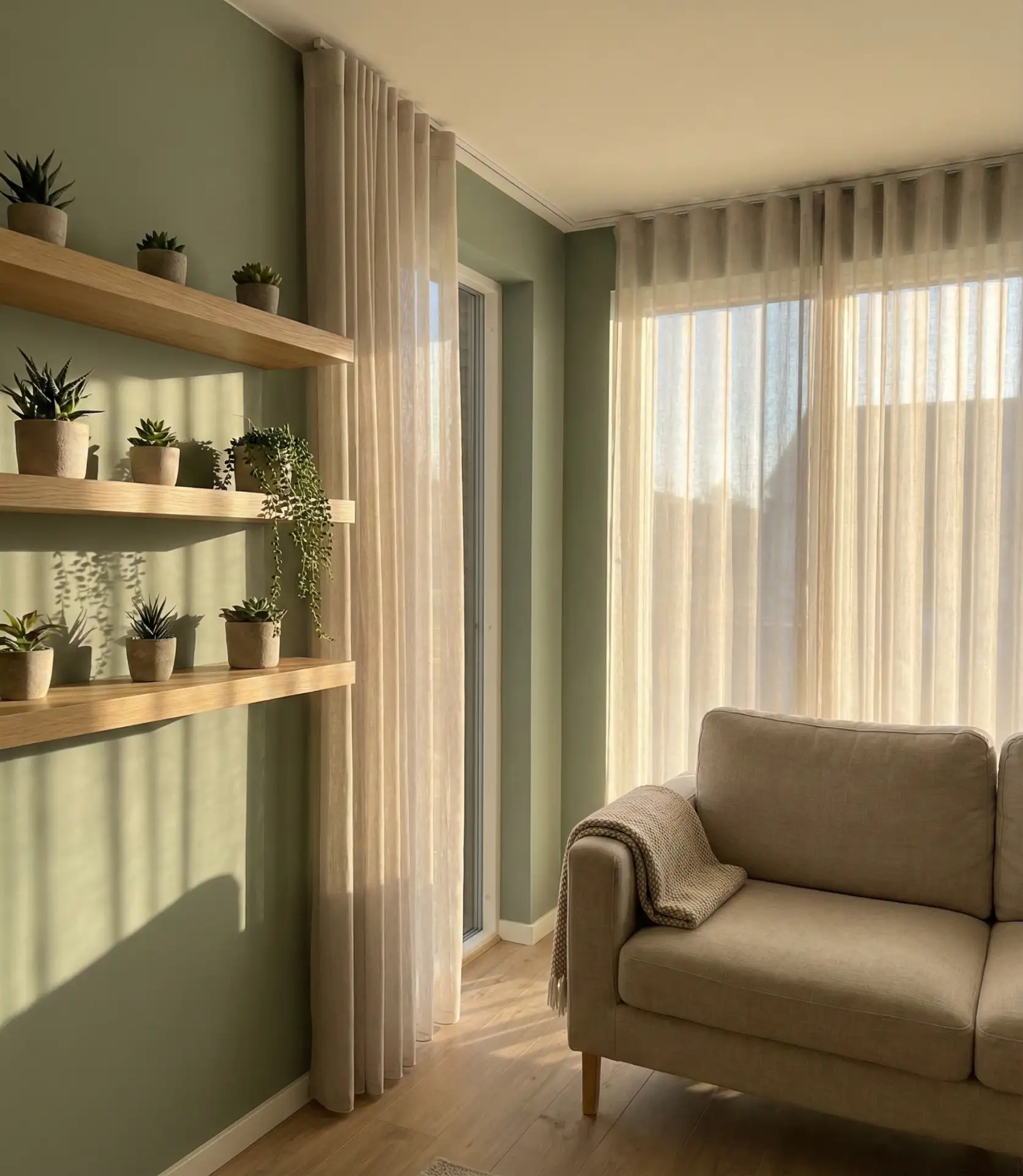
Where this design works best is in urban apartments and condos where natural light is limited but you still want warmth. The sage tone reflects light beautifully without feeling cold like gray, and the wood elements add just enough texture to keep things intriguing. Keep accessories to a minimum—a single ceramic vase or a woven basket is all you need to complete the look.
2. Dark Moody Maximalism
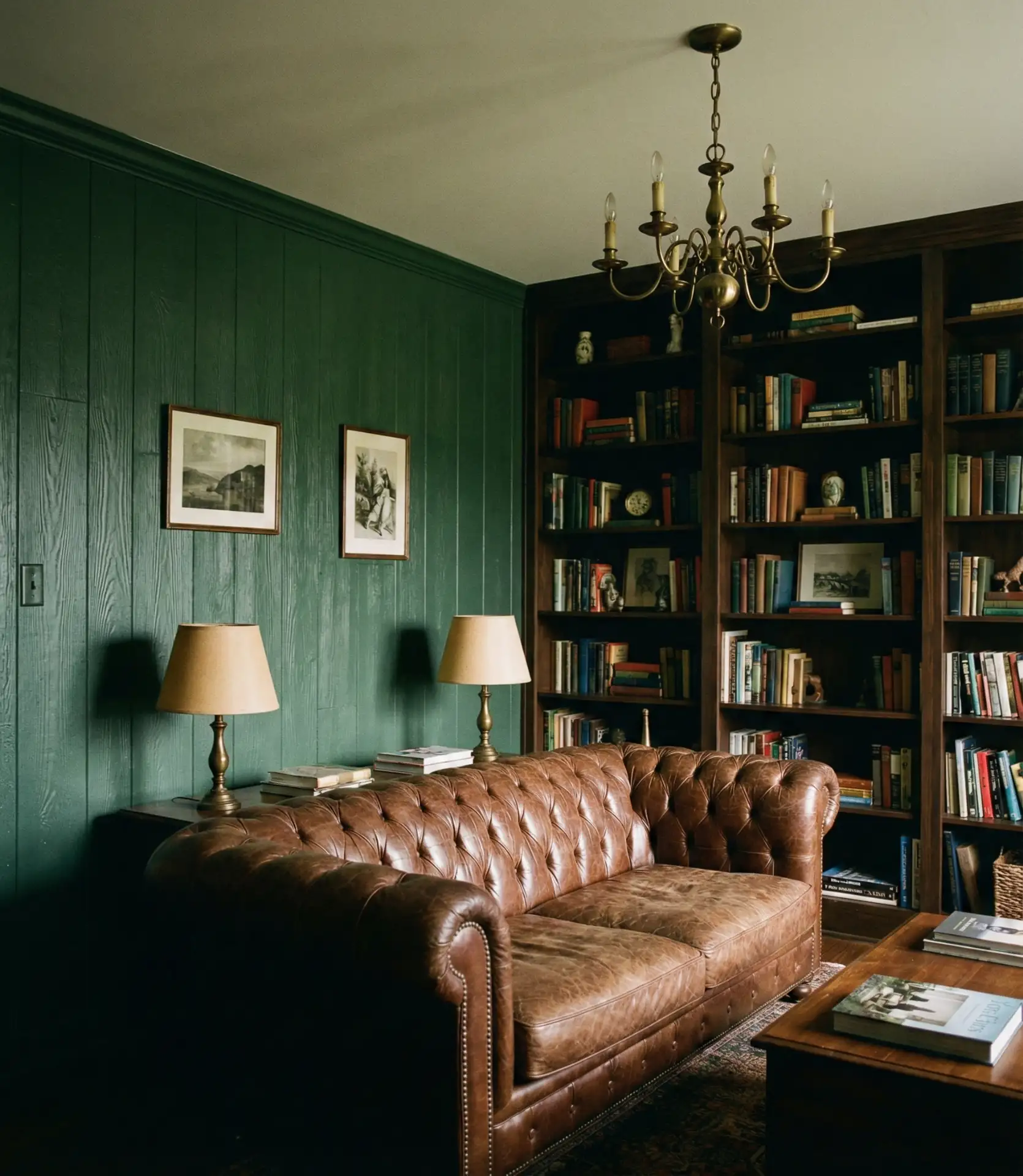
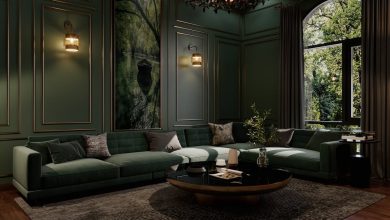
A dark green living room with moody lighting creates instant drama and sophistication. Think deep emerald or charcoal green walls paired with velvet sofas, brass accents, and layered lighting that includes floor lamps, sconces, and candles. This approach works beautifully in homes with high ceilings or period details like crown molding, where the richness of the color enhances architectural features rather than shrinking the space.
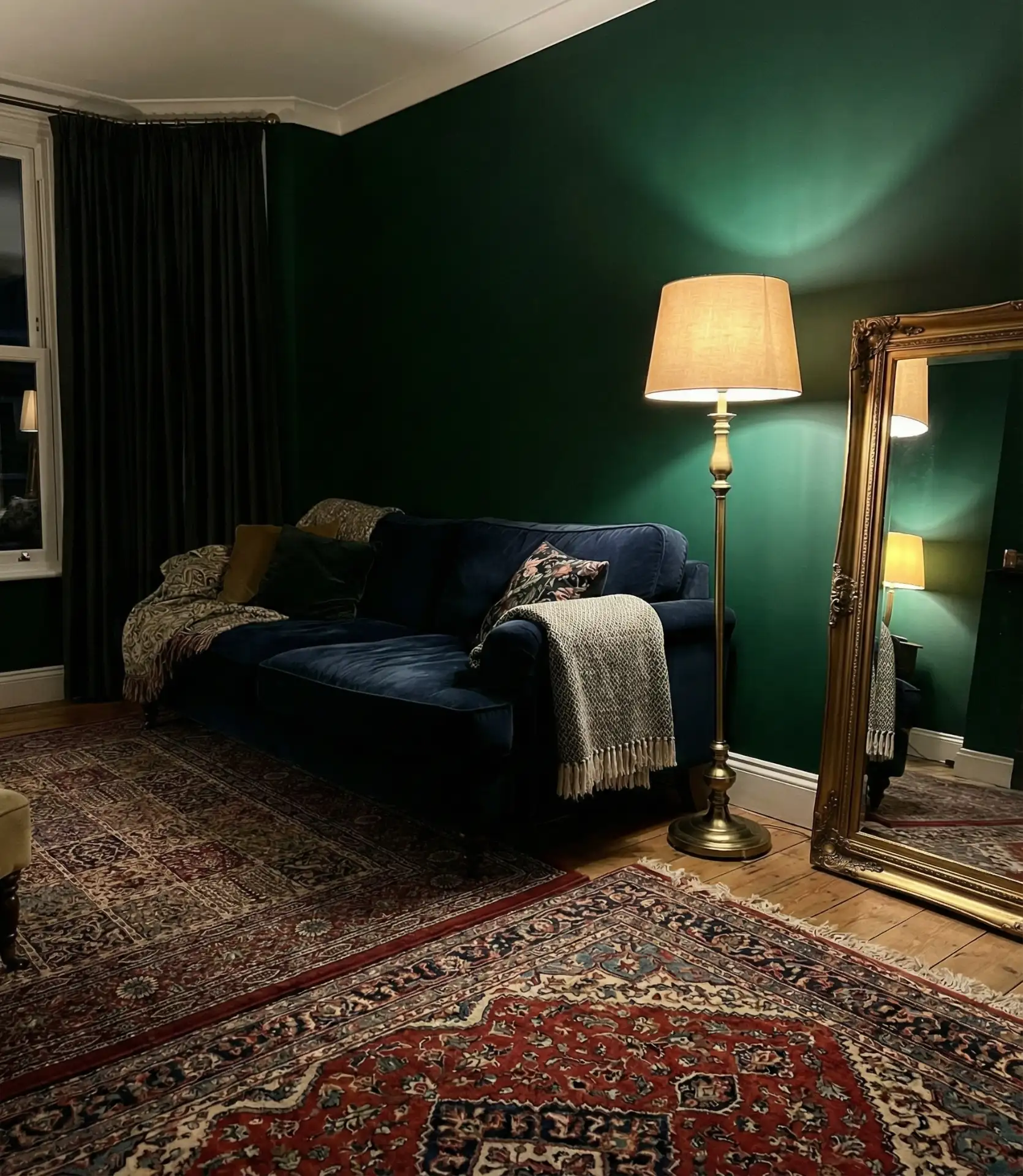
One common mistake here is using too much black, which can make the room feel cave-like. Instead, balance the dark green with warm metallics and rich wood tones in walnut or mahogany. Add texture through velvet cushions, wool throws, and even a faux fur rug to keep the space inviting rather than stark.
3. Blue and Green Coastal Blend
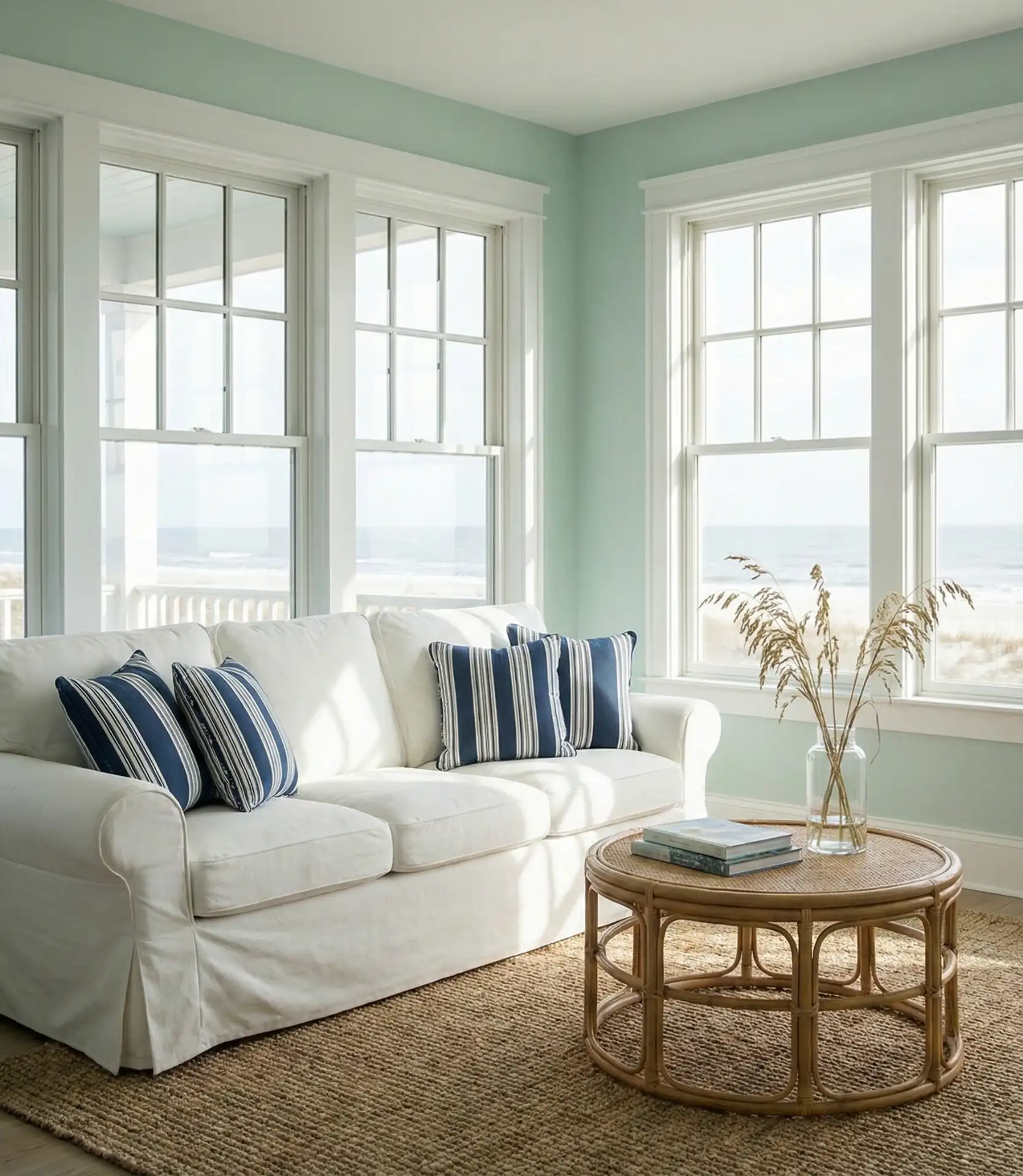
Combining blue and green tones creates a breezy, coastal feel that’s perfect for homes near the water or anyone who wants to evoke that vacation vibe year-round. Soft seafoam greens paired with navy or powder blue accents bring to mind ocean waves and clear skies. This palette works especially well in beach towns along the East Coast or Gulf states, but it translates beautifully to landlocked homes when paired with natural textures like jute, rattan, and driftwood.
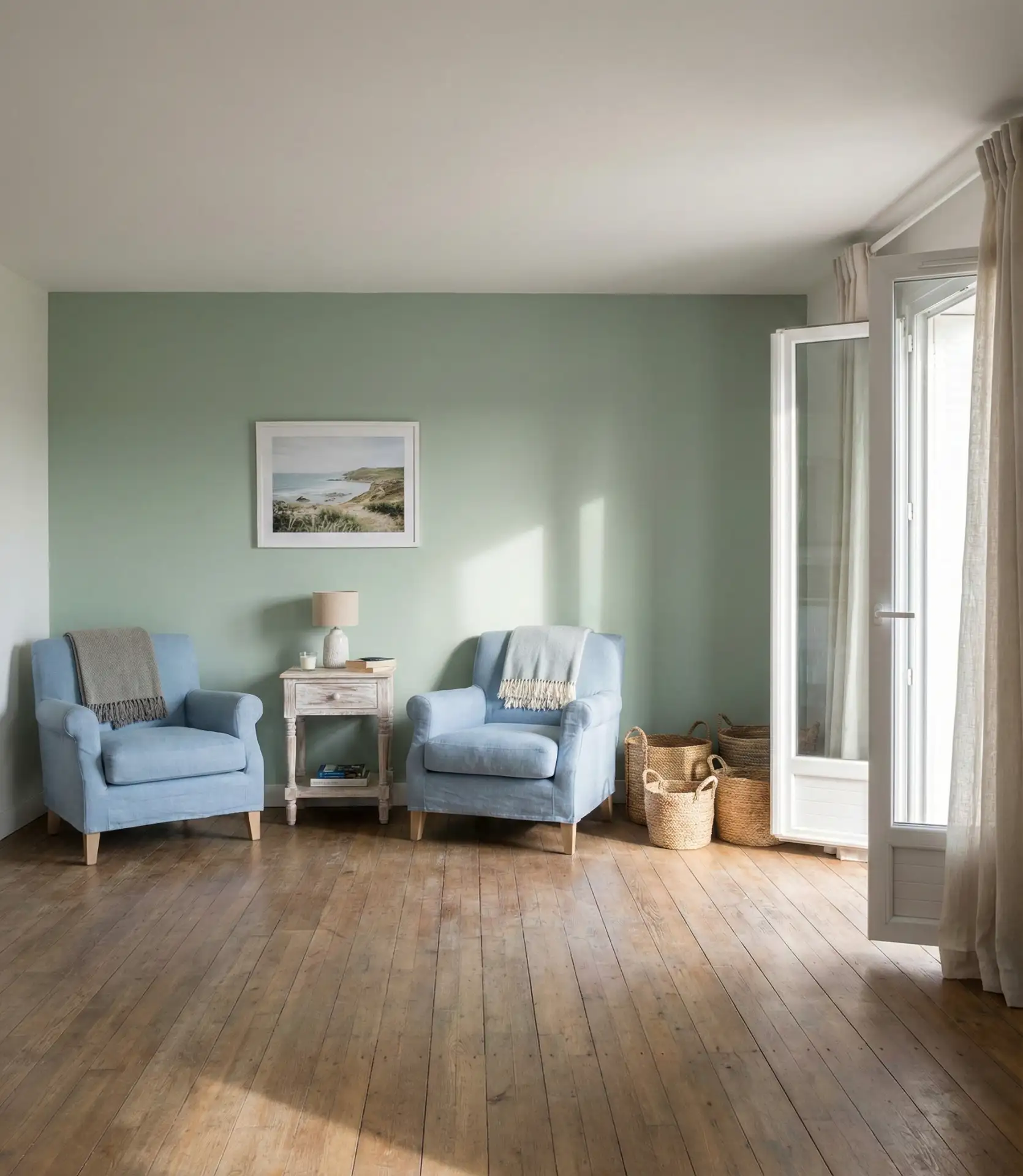
A designer once told me that the key to nailing coastal style is avoiding anything too literal—skip the anchor prints and seashell collections. Instead, let the color palette and natural materials do the work, and the room will feel effortlessly beachy without looking like a theme park.
4. Olive and Terracotta Warmth
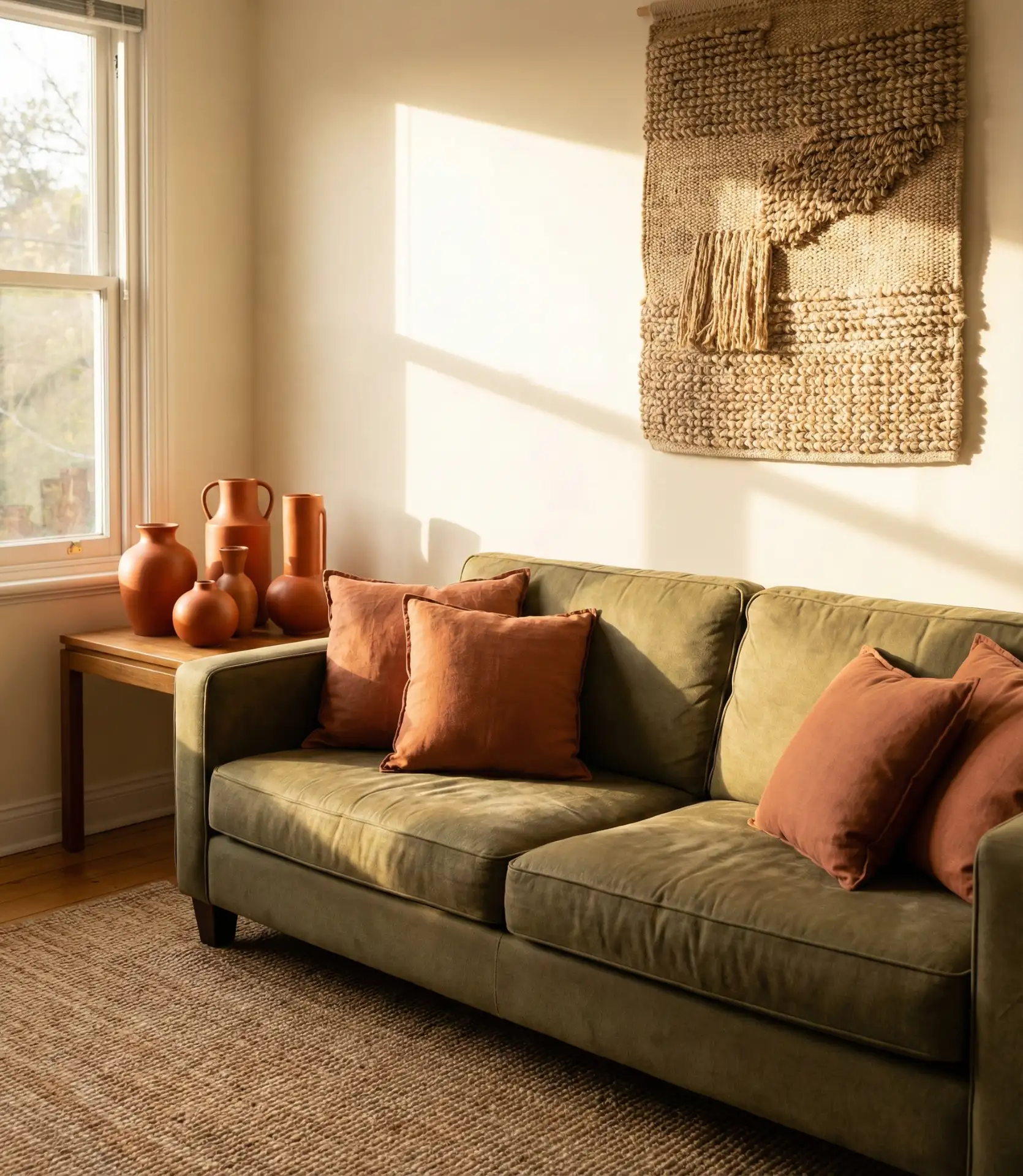
Olive green paired with terracotta and rust tones brings a sun-baked, Mediterranean warmth that feels both grounded and inviting. This combination has been trending heavily in the Southwest and California, where the colors mirror the natural landscape. The olive acts as a neutral, while the terracotta adds a pop of earthy energy through pottery, throw pillows, or even a painted accent wall.
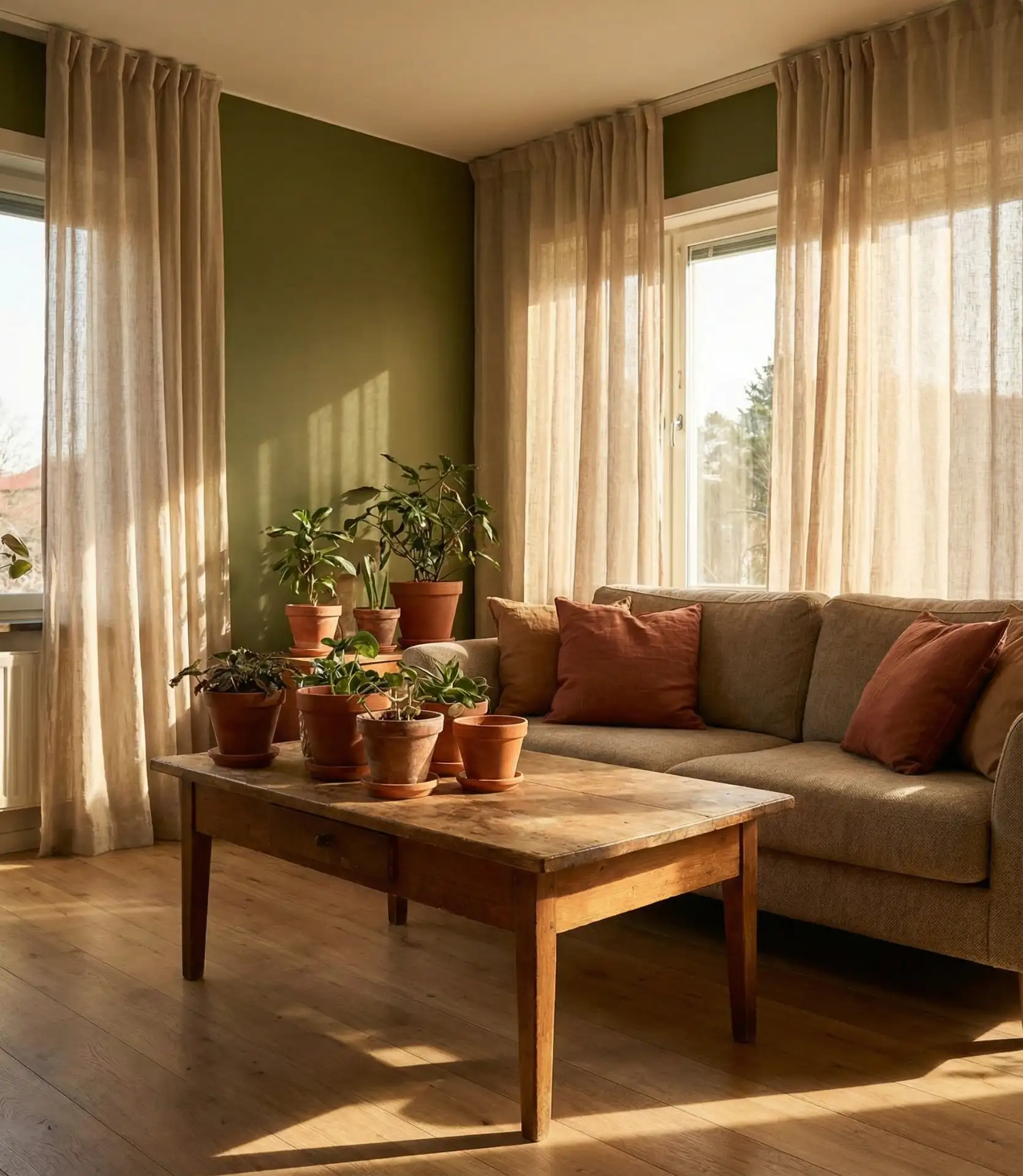
Budget-wise, this is one of the more affordable palettes to pull off. Olive paint is widely available and inexpensive, and terracotta accents can be found at thrift stores, HomeGoods, or even handmade on Etsy for under fifty dollars. You don’t need to invest in high-end furniture to make this look feel polished and intentional.
5. Pink and Green Garden Romance
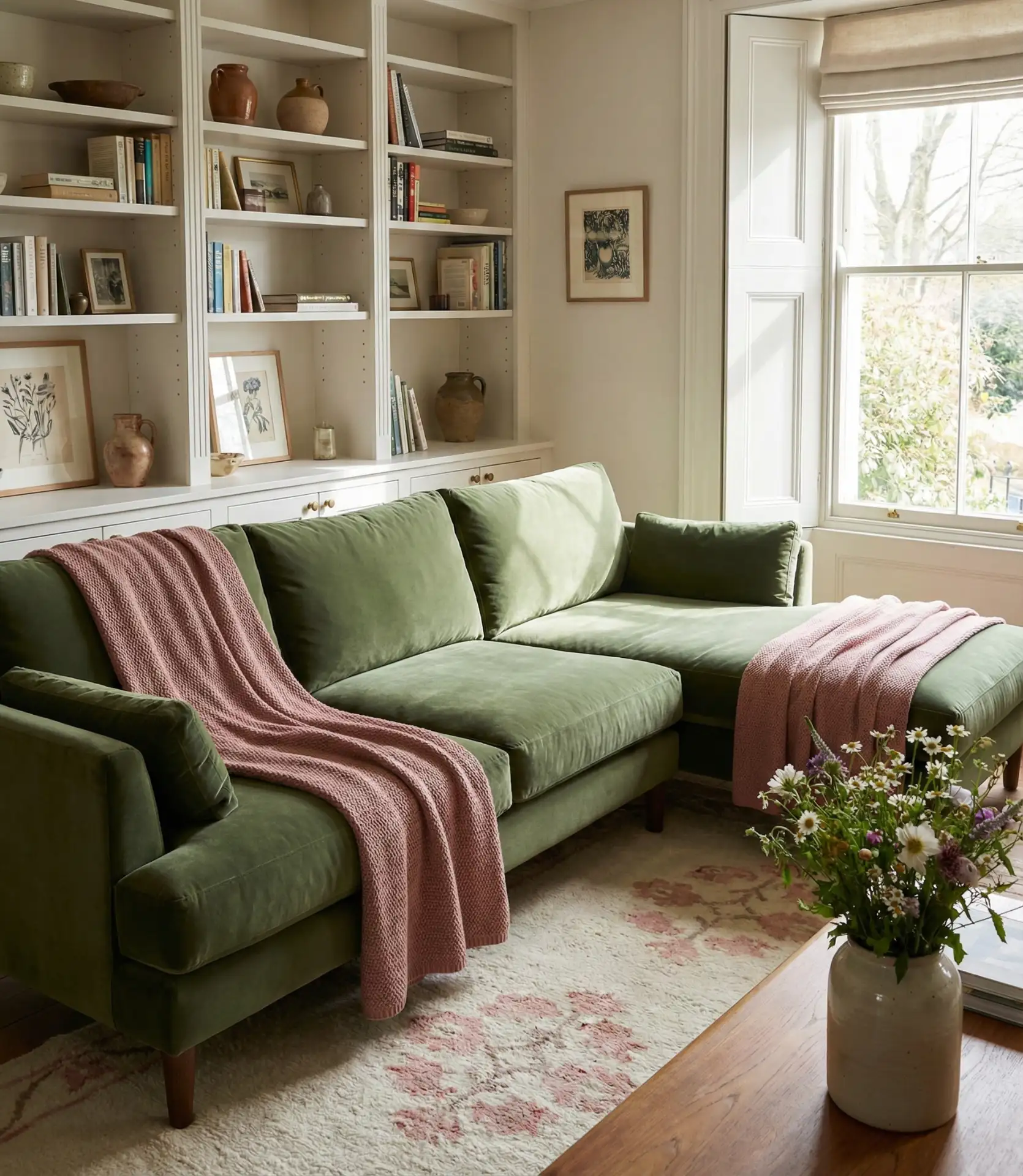
The pink and green combination might sound bold, but when done right, it’s incredibly sophisticated and fresh. Think blush pink sofas against sage or moss green walls, or a green velvet couch accented with dusty rose pillows and a floral area rug. This palette has a vintage, English garden quality that works beautifully in Victorian homes or spaces with lots of natural light and floral-inspired decor.
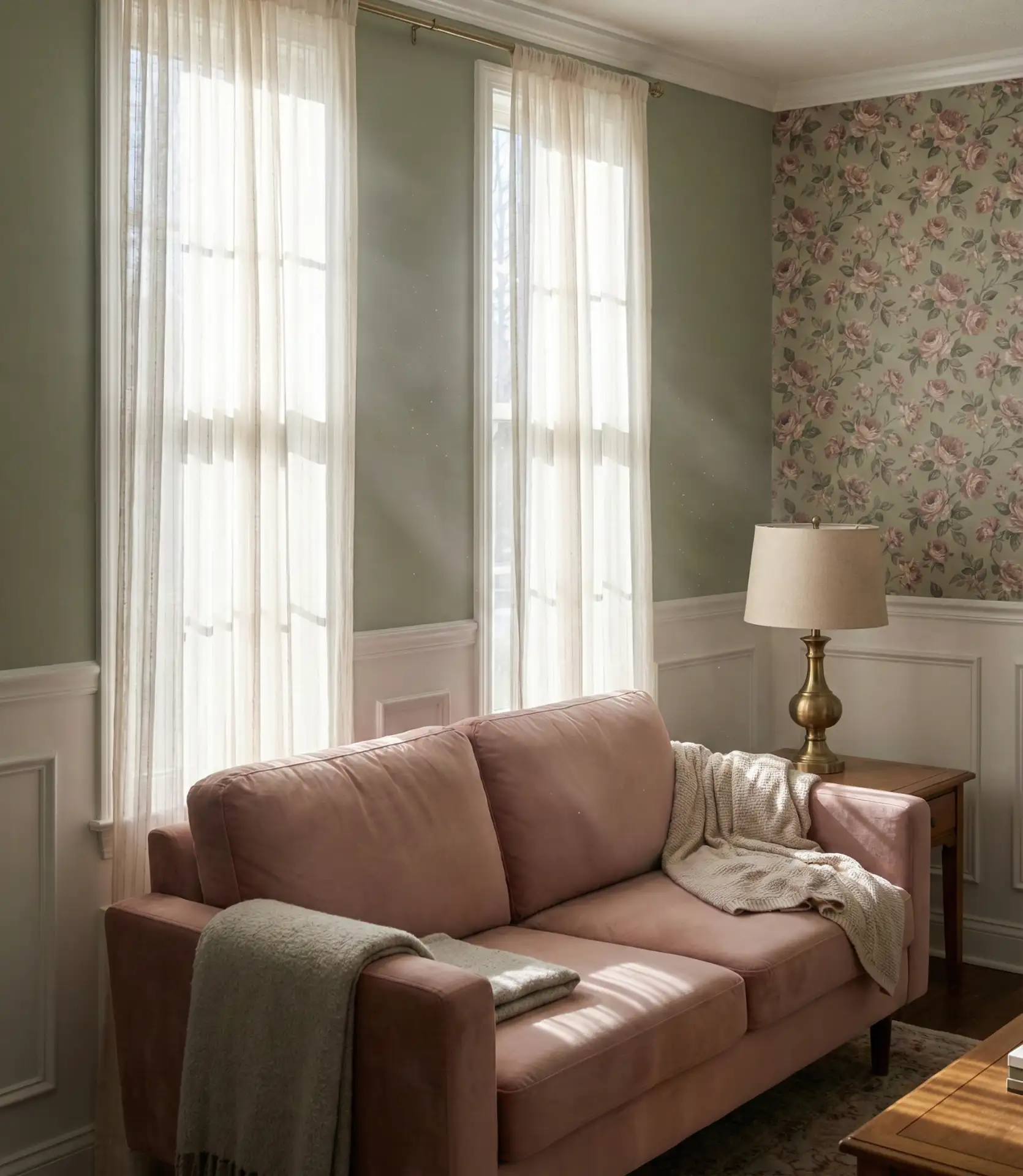
In the Midwest and South, this color scheme is popular in historic homes where owners want to honor traditional style while keeping things feeling current. The key is to use muted, dusty tones rather than hot pink or neon green, which would feel too juvenile. Layering in antique brass, white trim, and natural wood keeps everything balanced and grown-up.
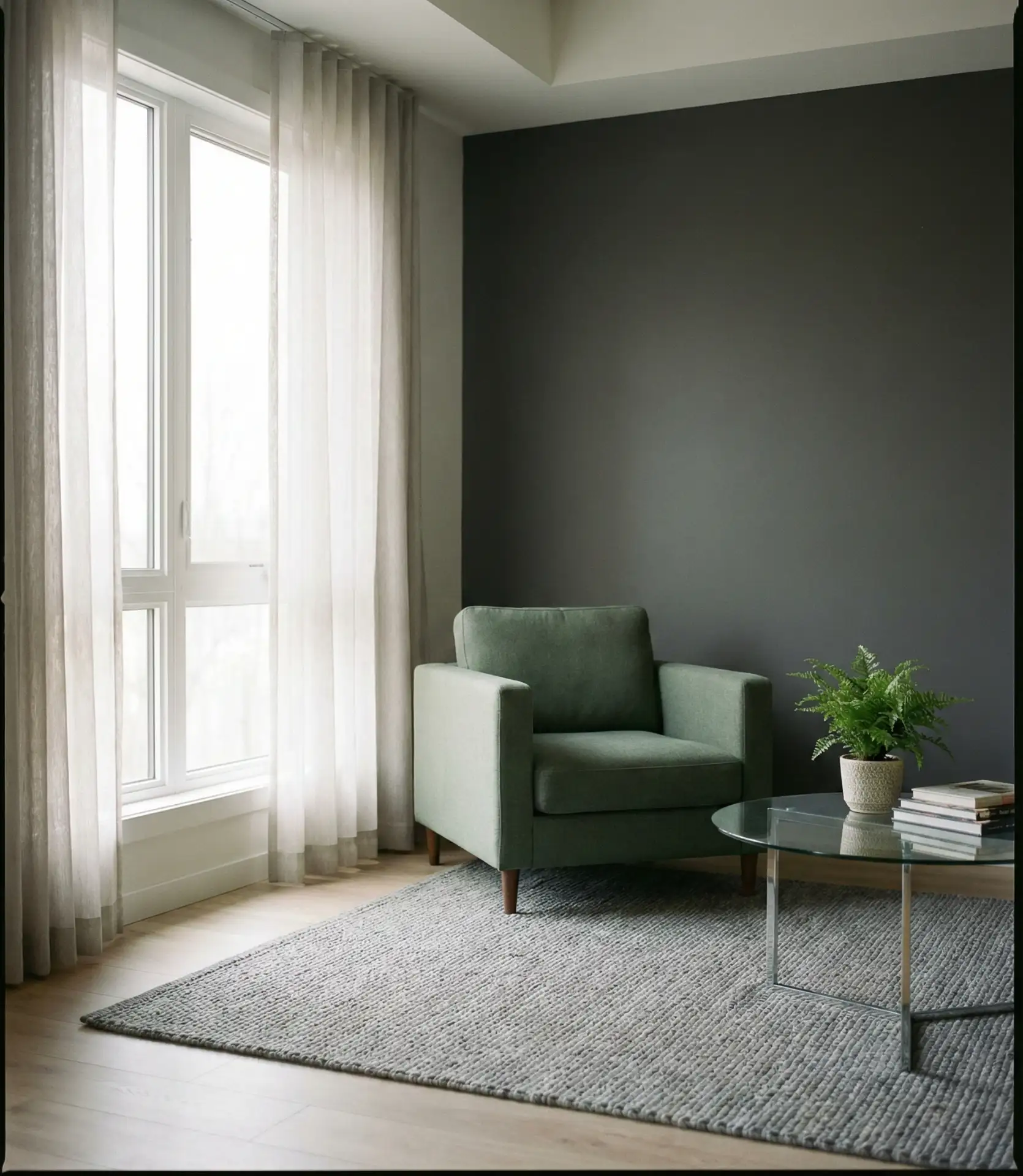
6. Grey and Green Industrial Loft
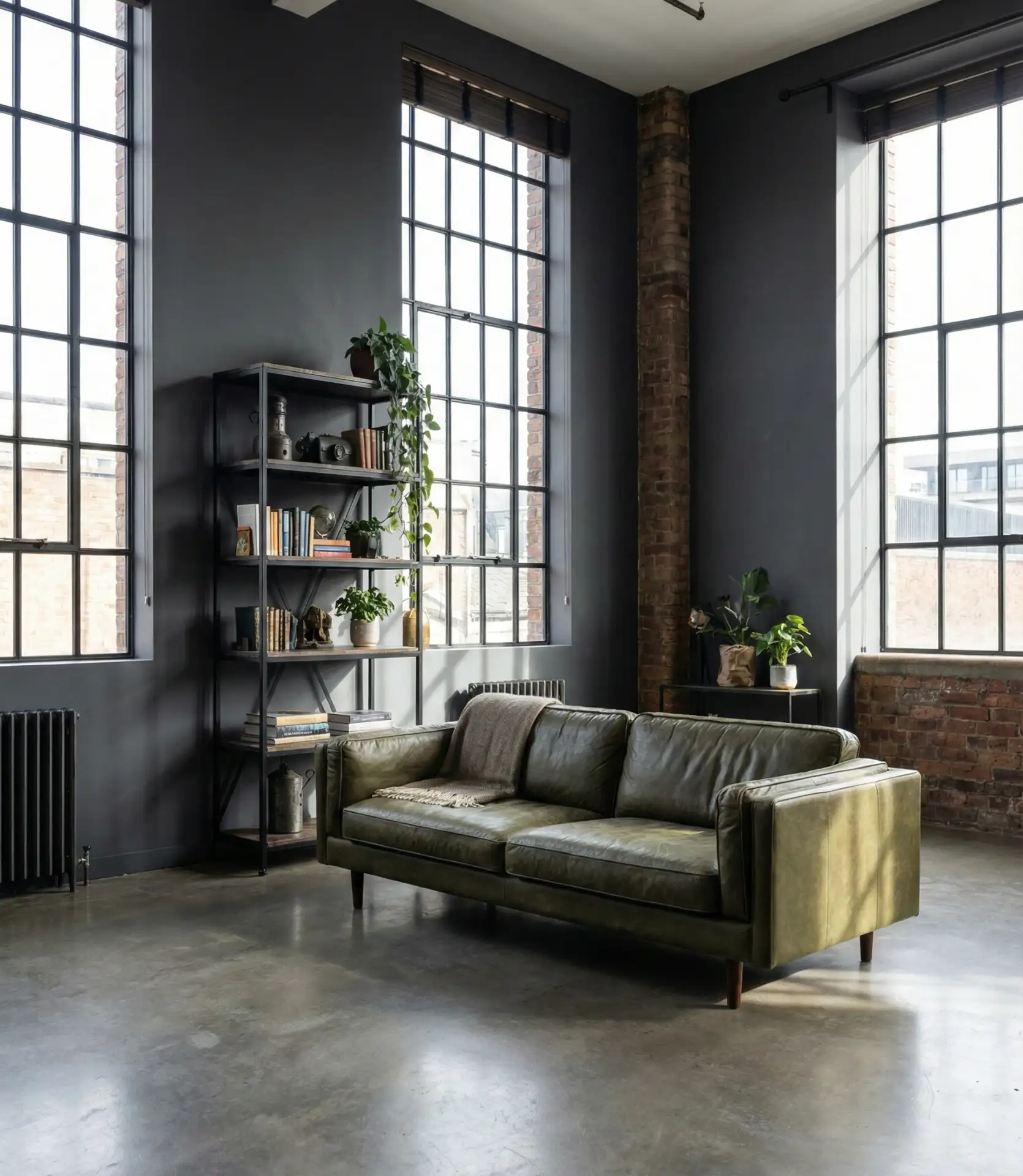
Grey and green create a sleek, modern pairing that’s ideal for urban lofts and contemporary homes. Charcoal gray walls or concrete finishes paired with muted green furniture bring an industrial edge that still feels warm and livable. This mixture is especially popular in cities like New York, Chicago, and Portland, where exposed brick, metal accents, and large windows are already part of the architecture.
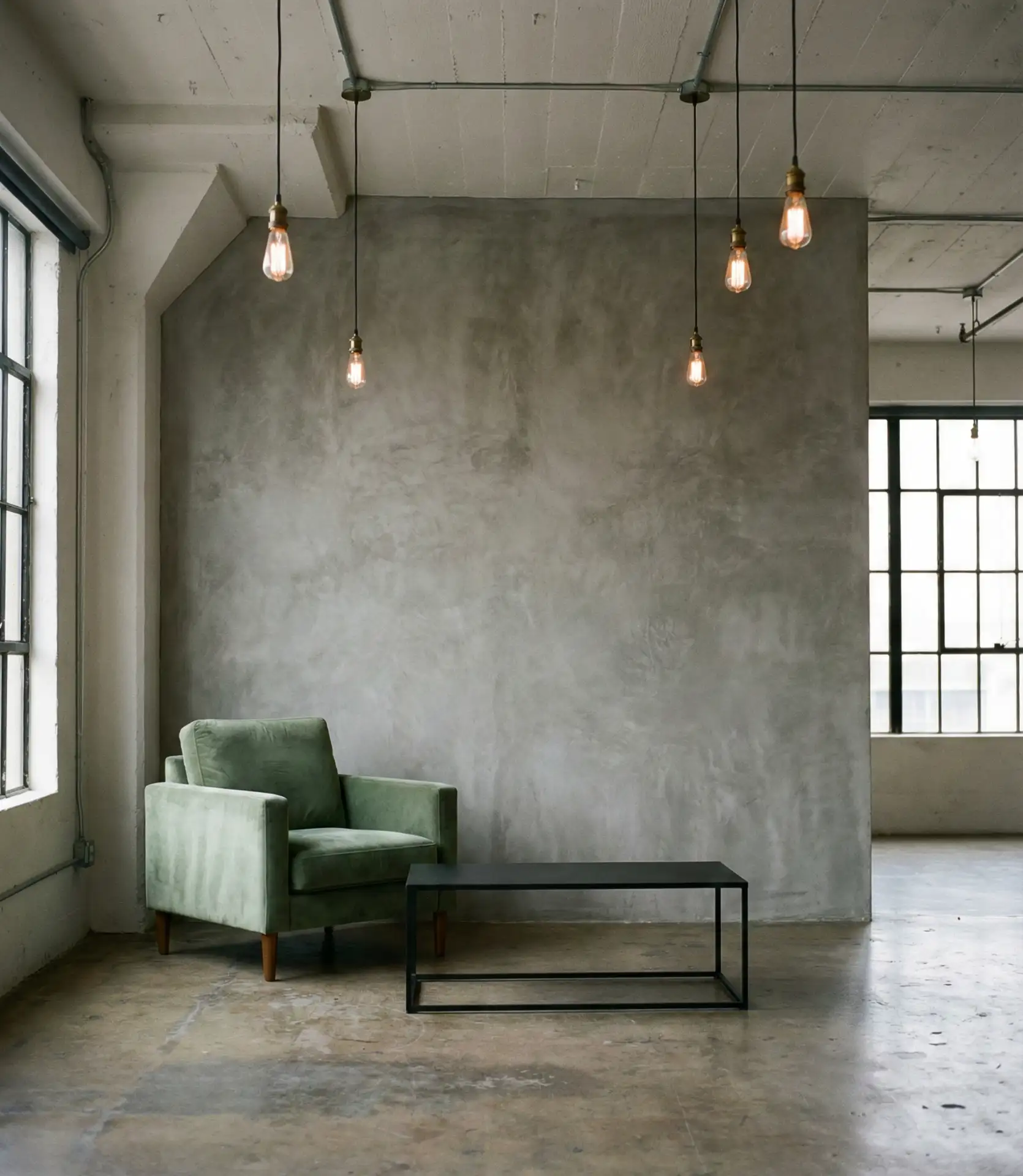
Real homeowners in this style often make the mistake of going too cold with all gray and steel. Adding green through upholstery, plants, or even a single painted accent wall softens the industrial feel without sacrificing the modern aesthetic. Think of green as the organic counterbalance to all that metal and concrete.
7. Brown and Green Rustic Retreat
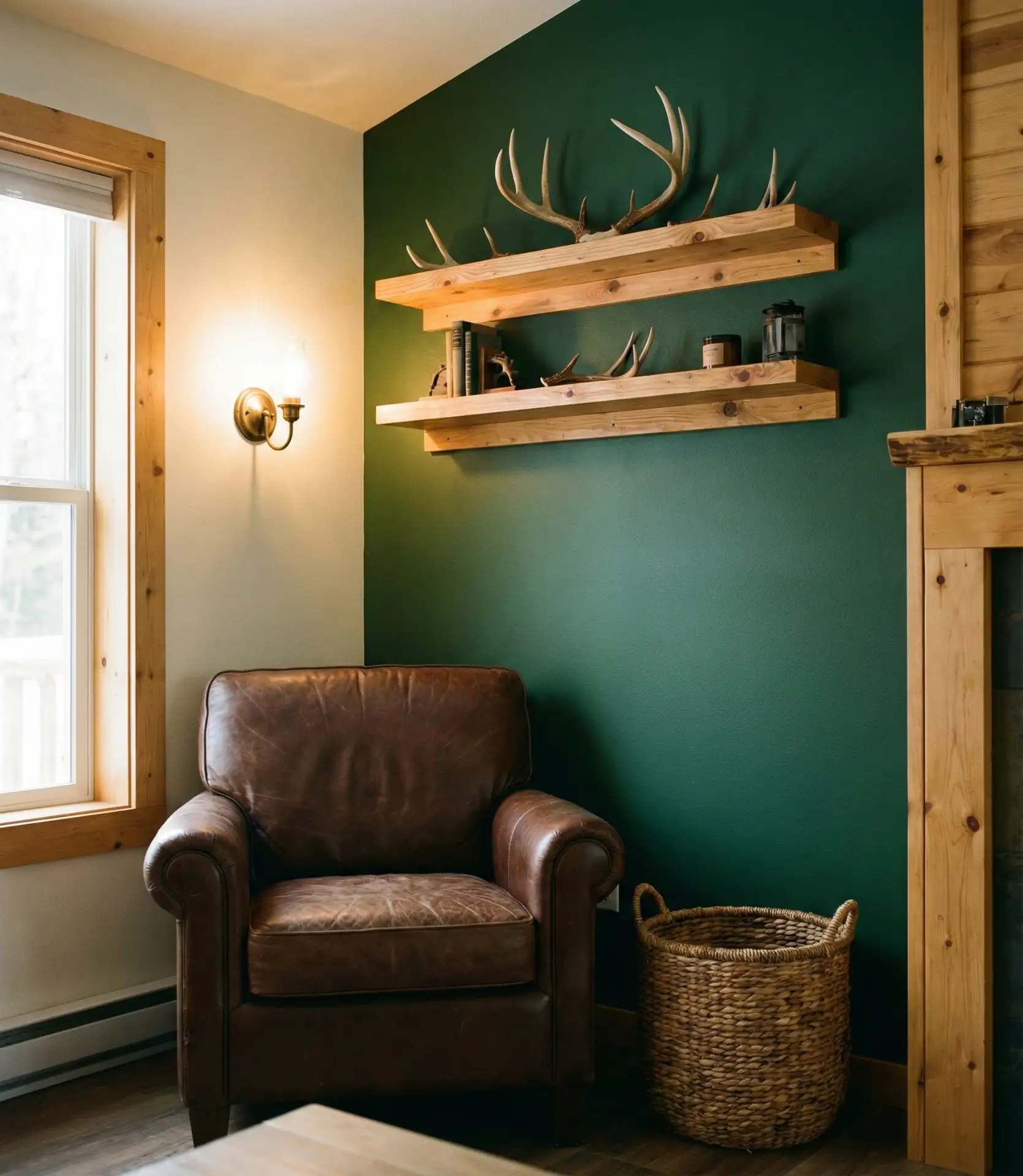
Brown and green together evoke the feeling of a mountain cabin or countryside retreat, even if you’re in the suburbs. Deep forest greens paired with rich chocolate or caramel browns create a warm, enveloping space that’s perfect for cozy evenings. This palette is hugely popular in Colorado, Montana, and the Pacific Northwest, where the natural surroundings inspire the interior color choices.
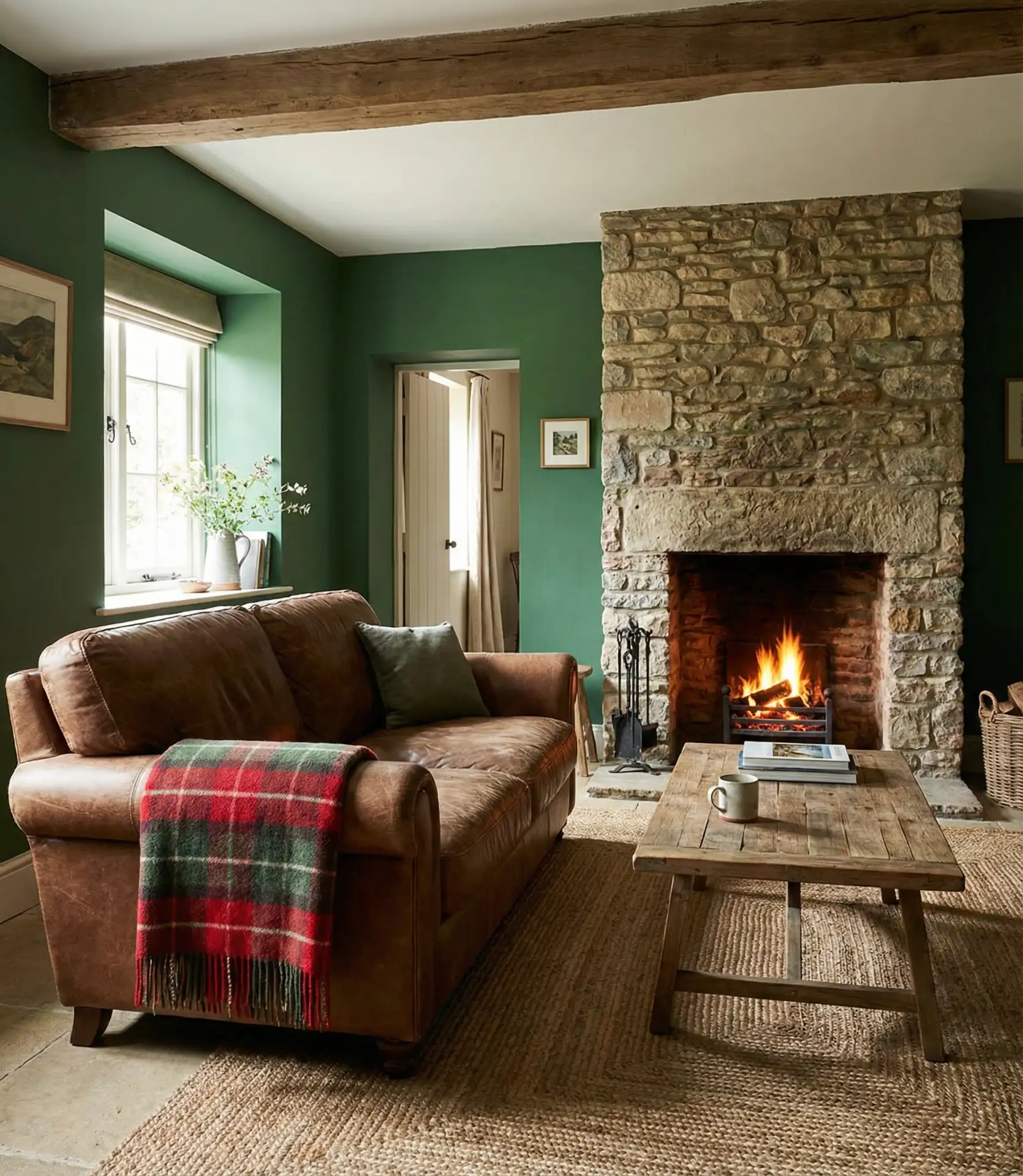
Expert tip: layer different shades of brown and green rather than sticking to just one of each. Mix sage with forest green, and combine tan leather with dark walnut wood. This creates depth and keeps the room from feeling flat or one-note, which is a common pitfall in rustic design.
8. Forest Green Statement Wall
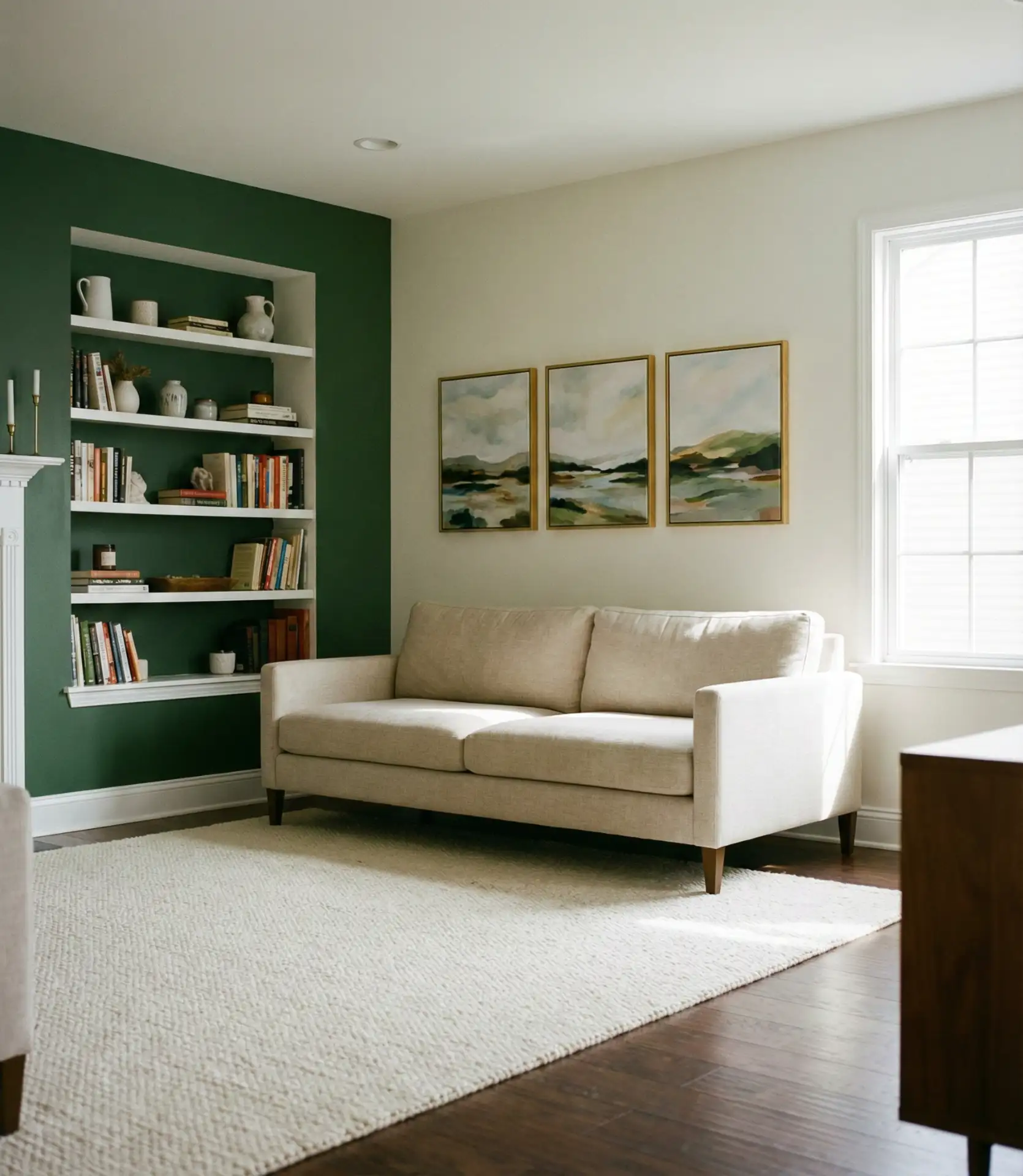
A single forest green accent wall can transform a living room without the commitment of painting the entire space. This approach is ideal for renters or anyone testing out a bold color for the first time. The deep, saturated green works as a dramatic backdrop for artwork, shelving, or a gallery wall, and it pairs beautifully with white trim and light-colored furniture to keep the room from feeling too dark.
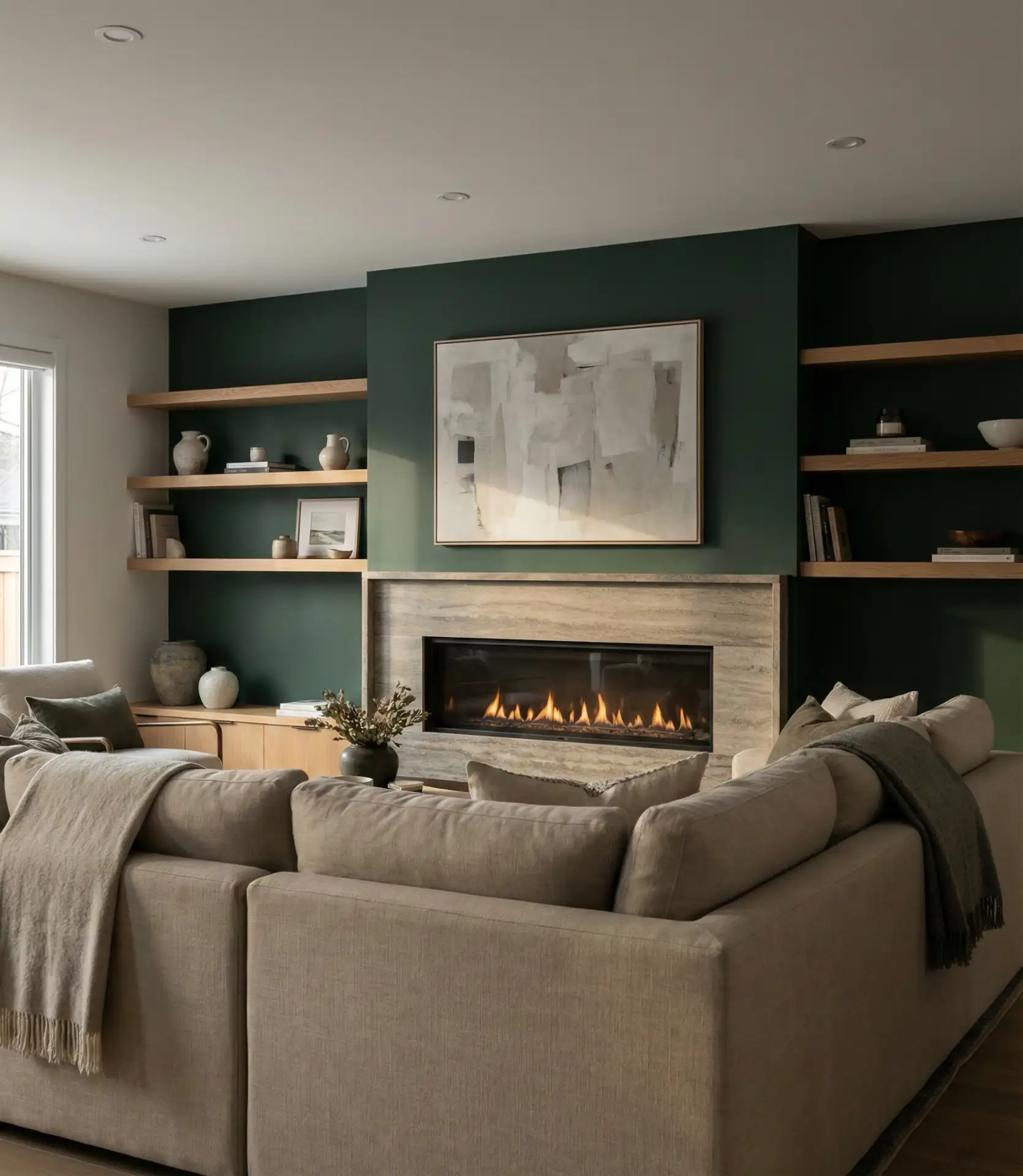
In smaller living rooms, positioning the green wall opposite the main seating area or behind the TV creates visual interest without overwhelming the space. If your room gets limited natural light, balance the dark wall with plenty of artificial light sources—think floor lamps, table lamps, and even LED strips behind shelving to keep things bright and inviting.
9. Emerald Velvet Luxury
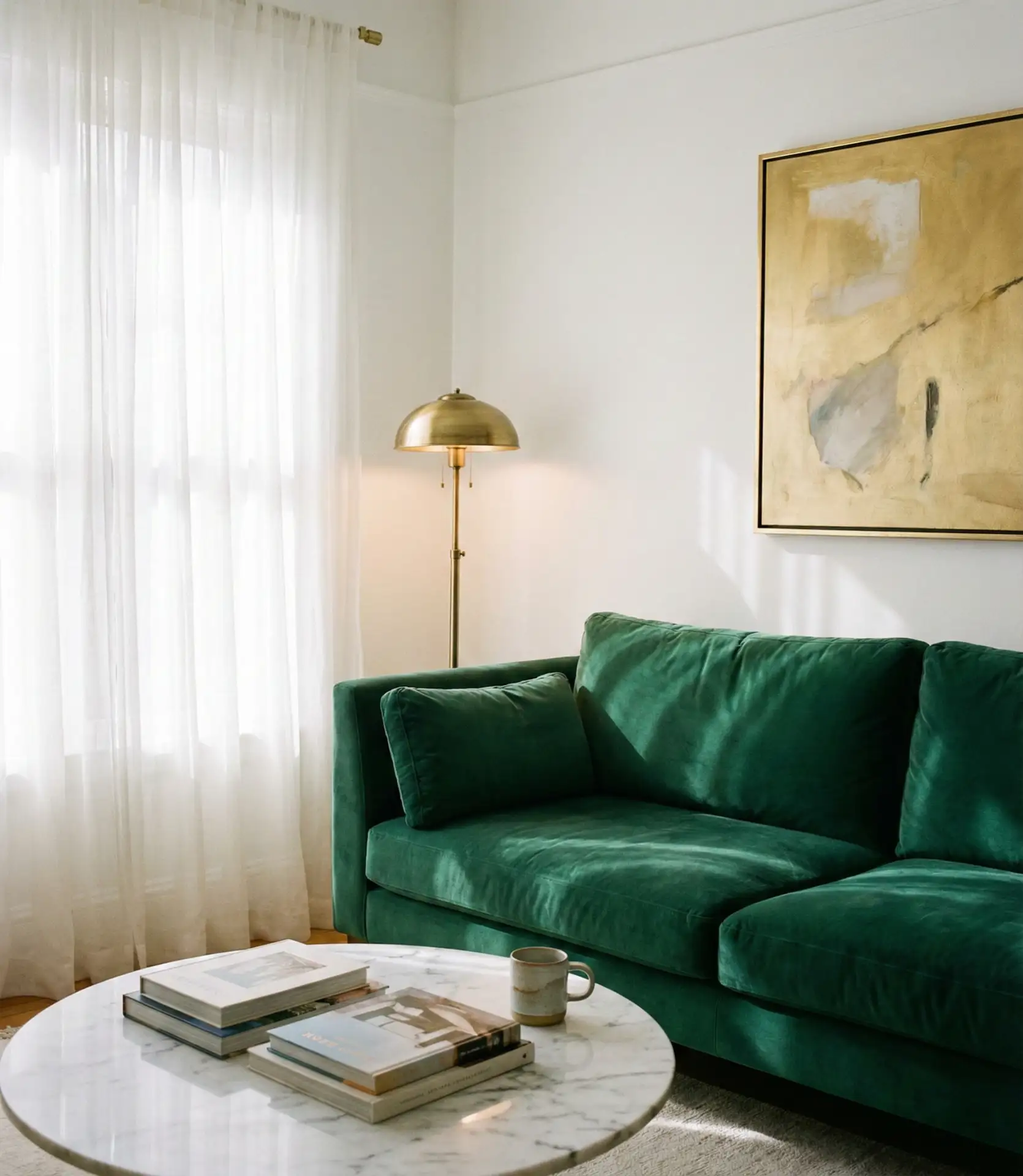
An emerald green velvet sofa is the ultimate statement piece for anyone looking to add instant glamour to their living room. The rich, jewel-toned green catches light beautifully and pairs effortlessly with gold, brass, marble, and glass accents. This look has become a favorite in upscale apartments and renovated historic homes across cities like San Francisco, Boston, and Washington, D.C., where maximalist, art-deco-inspired interiors are having a major moment.
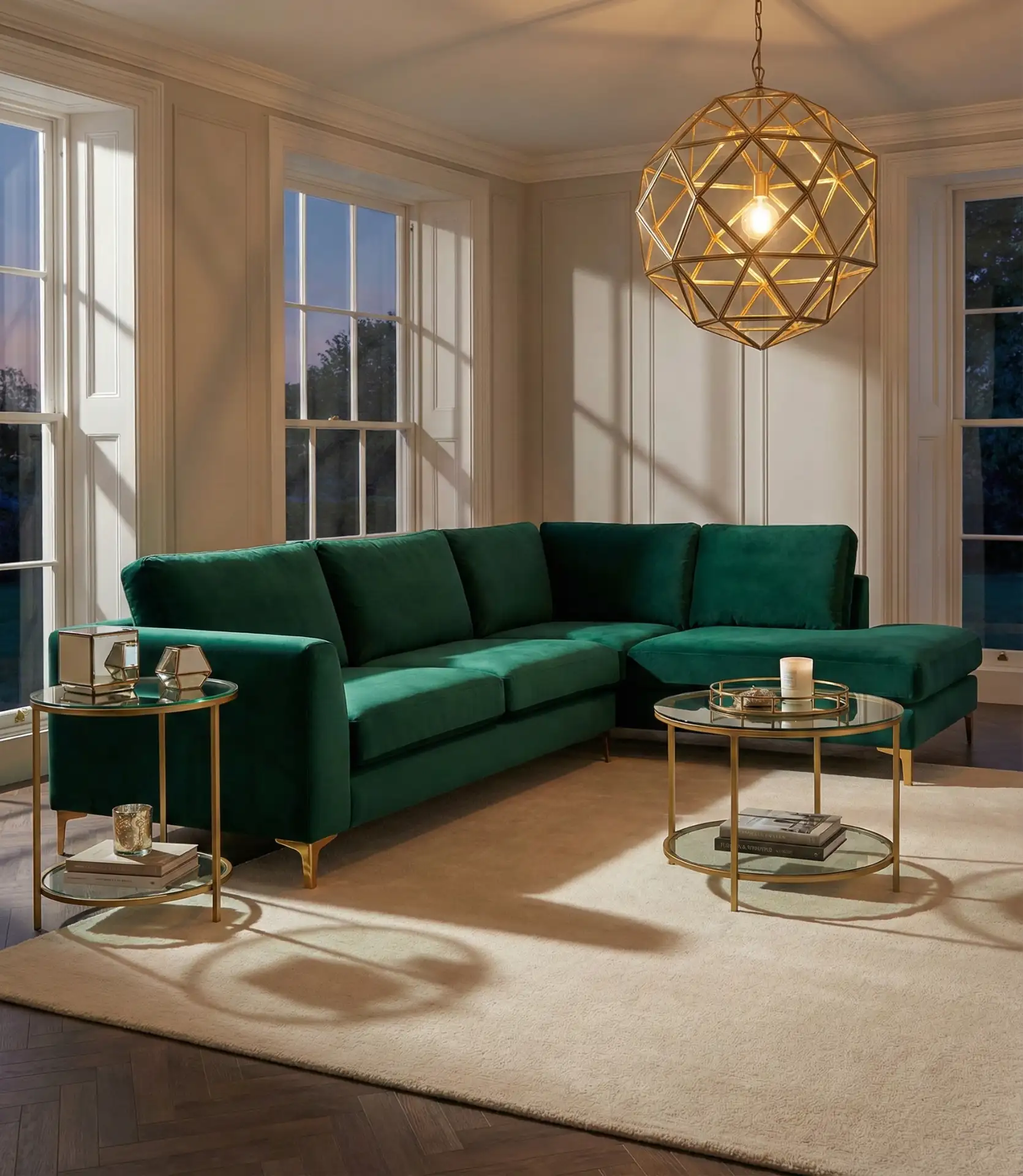
A friend recently splurged on an emerald sofa from West Elm and said it entirely changed the energy of her living room. The velvet texture alone makes the space feel more expensive and intentional, and guests always comment on it. If the full sofa feels like too much, even a single emerald velvet armchair can achieve that same luxe effect.
10. Neutral and Green Scandinavian Calm
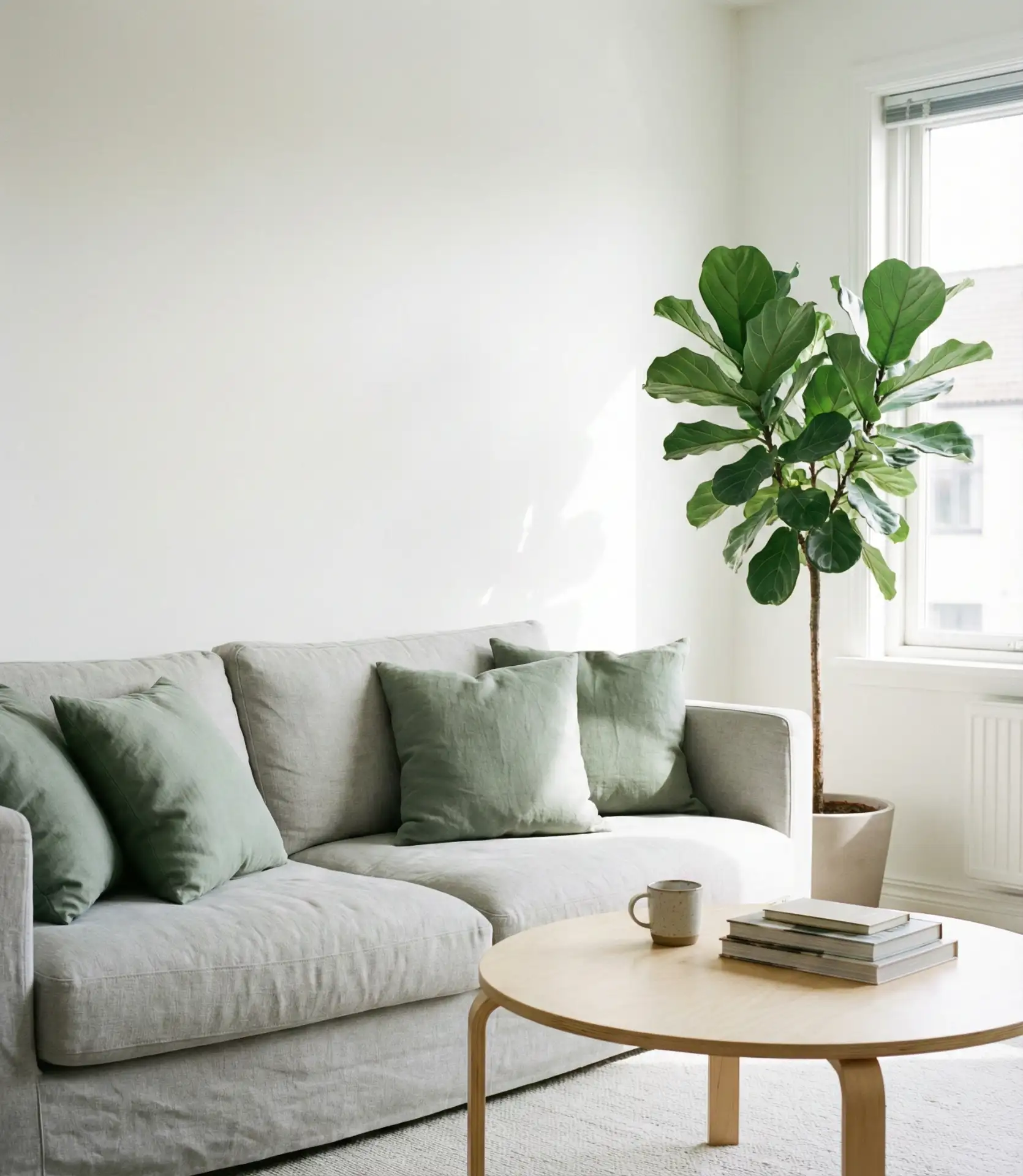
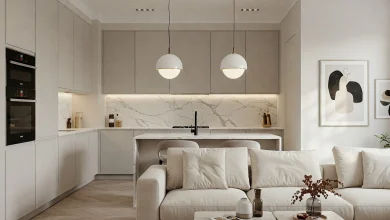
Pairing neutral and green tones in a Scandinavian-inspired living room creates a serene, uncluttered space that feels both modern and timeless. Think soft whites, light grays, and beiges accented with muted green plants, cushions, or a single piece of green furniture. This aesthetic is all about simplicity, natural materials, and maximizing natural light, making it perfect for smaller homes or apartments where you want to avoid visual clutter.
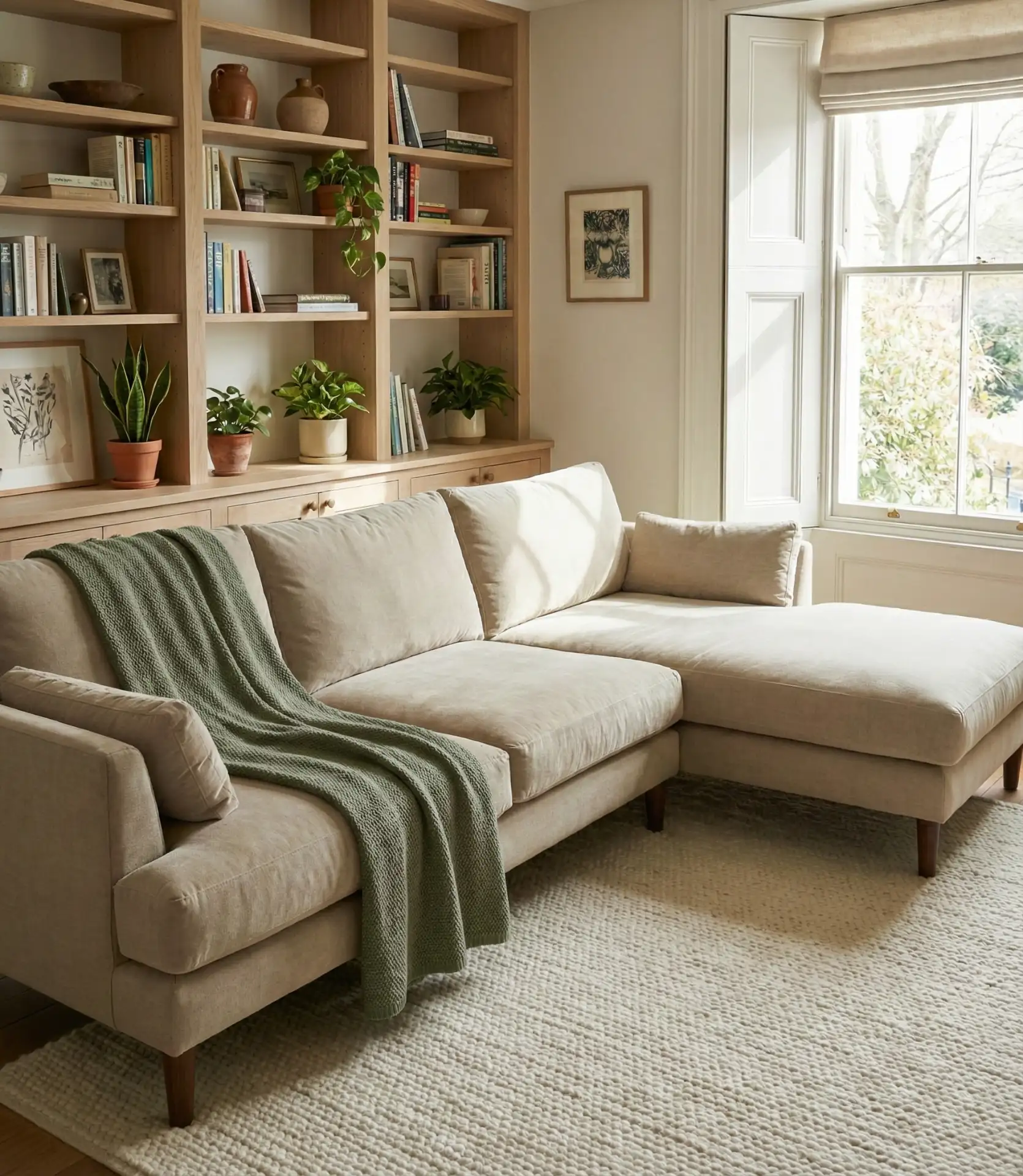
In Scandinavian design, less is always more. Avoid over-styling with too many accessories, and instead focus on a few high-quality pieces in natural materials like wool, linen, and untreated wood. The green should feel like a gentle accent rather than a dominant color, reinforcing the calm, nature-inspired vibe that makes this style so enduringly popular.
11. Cozy Green Reading Nook
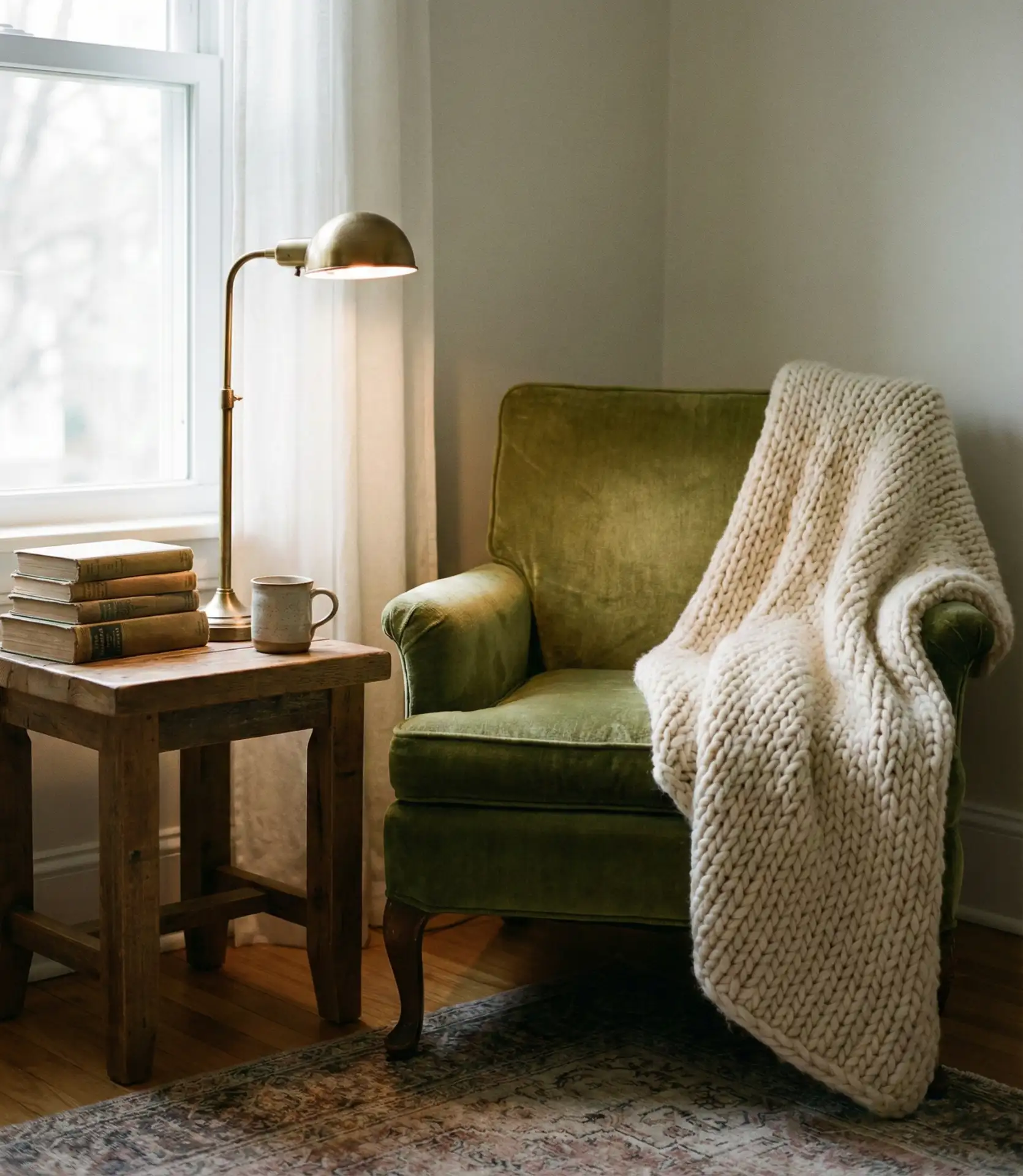
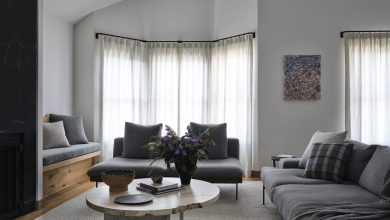
Creating a cozy green corner within your living room gives you a dedicated spot to unwind with a book or a cup of tea. A sage or moss green armchair tucked beside a window, paired with a small side table, a reading lamp, and a soft throw, instantly becomes the most inviting spot in the house. This setup works beautifully in homes with bay windows or alcoves, and it’s an easy way to incorporate green without repainting entire walls.
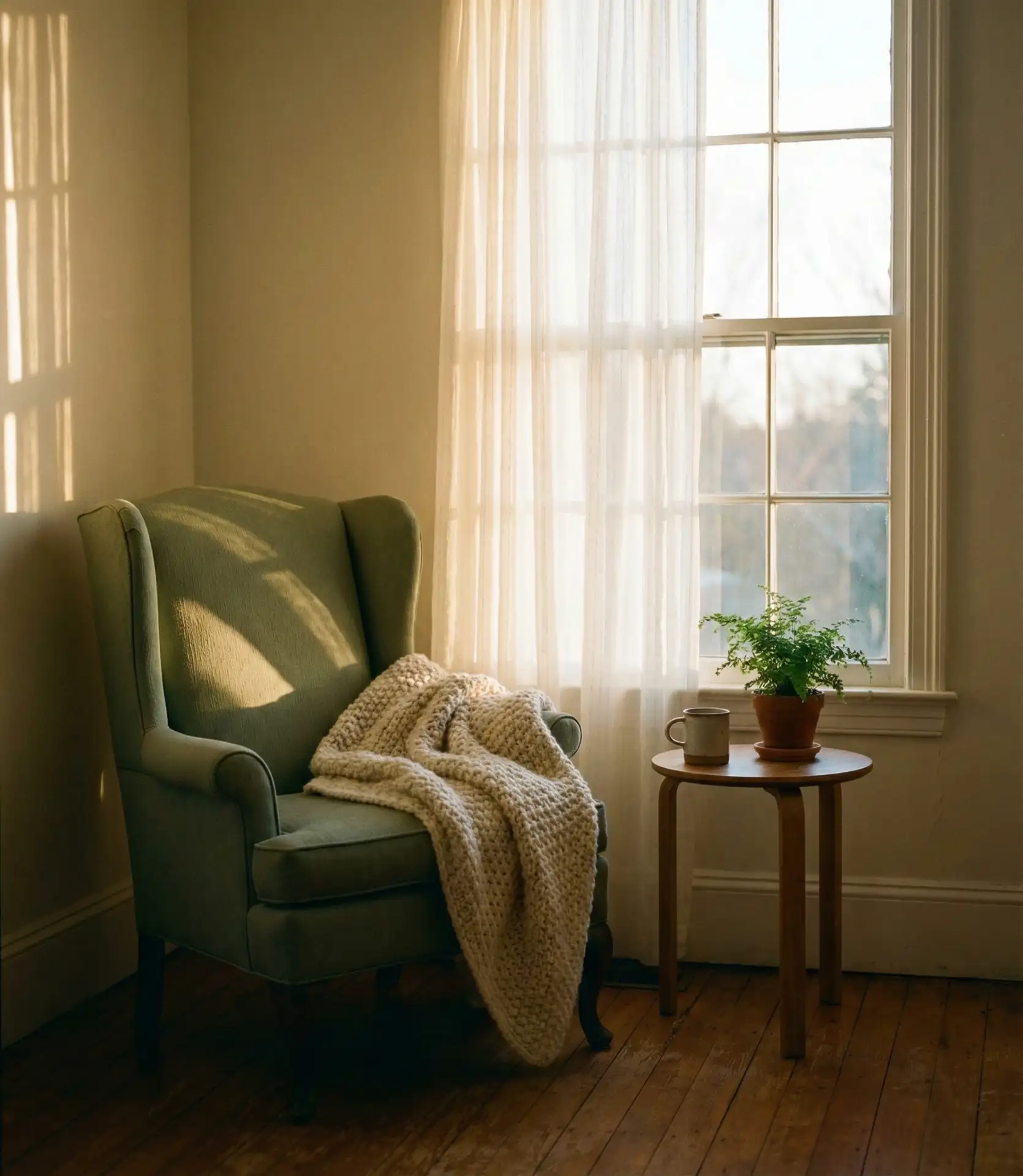
Where this setup setup works best is in homes where the living room serves multiple purposes—entertaining, watching TV, and relaxing. The reading nook creates a distinct zone without requiring walls or dividers, and the green color psychologically signals a calm, restful space. Add a small bookshelf or floating shelf nearby to keep your current reads within arm’s reach.
12. Moody Green Home Office Corner
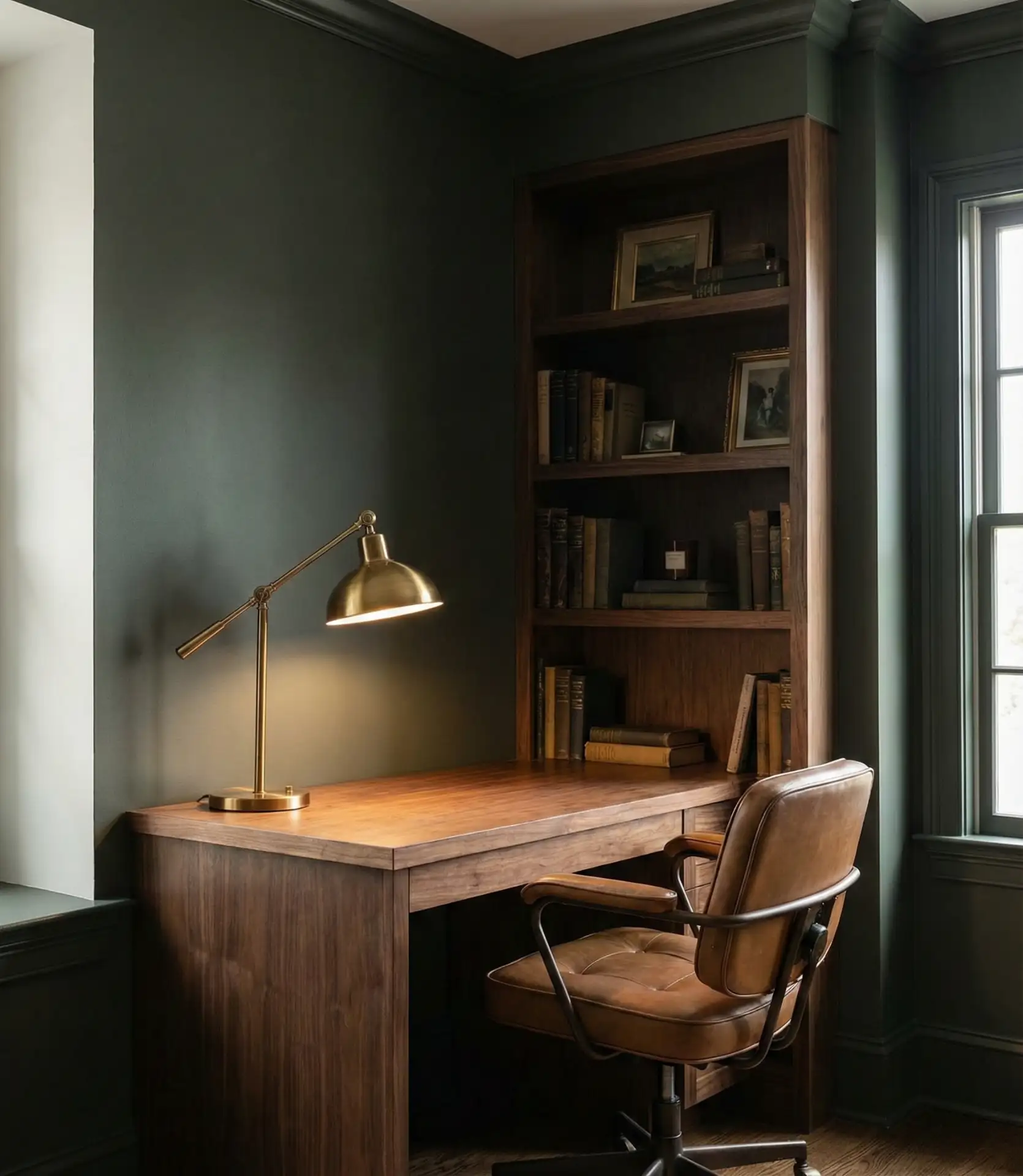
For those working from home, carving out a moody green workspace within the living room can help separate work from relaxation mentally. Deep green walls or a painted alcove behind a desk, paired with dark wood furniture and warm brass task lighting, creates a focused, sophisticated environment. This setup has become popular in cities where remote work is the norm and people are investigating how to make small apartments function as both home and office.
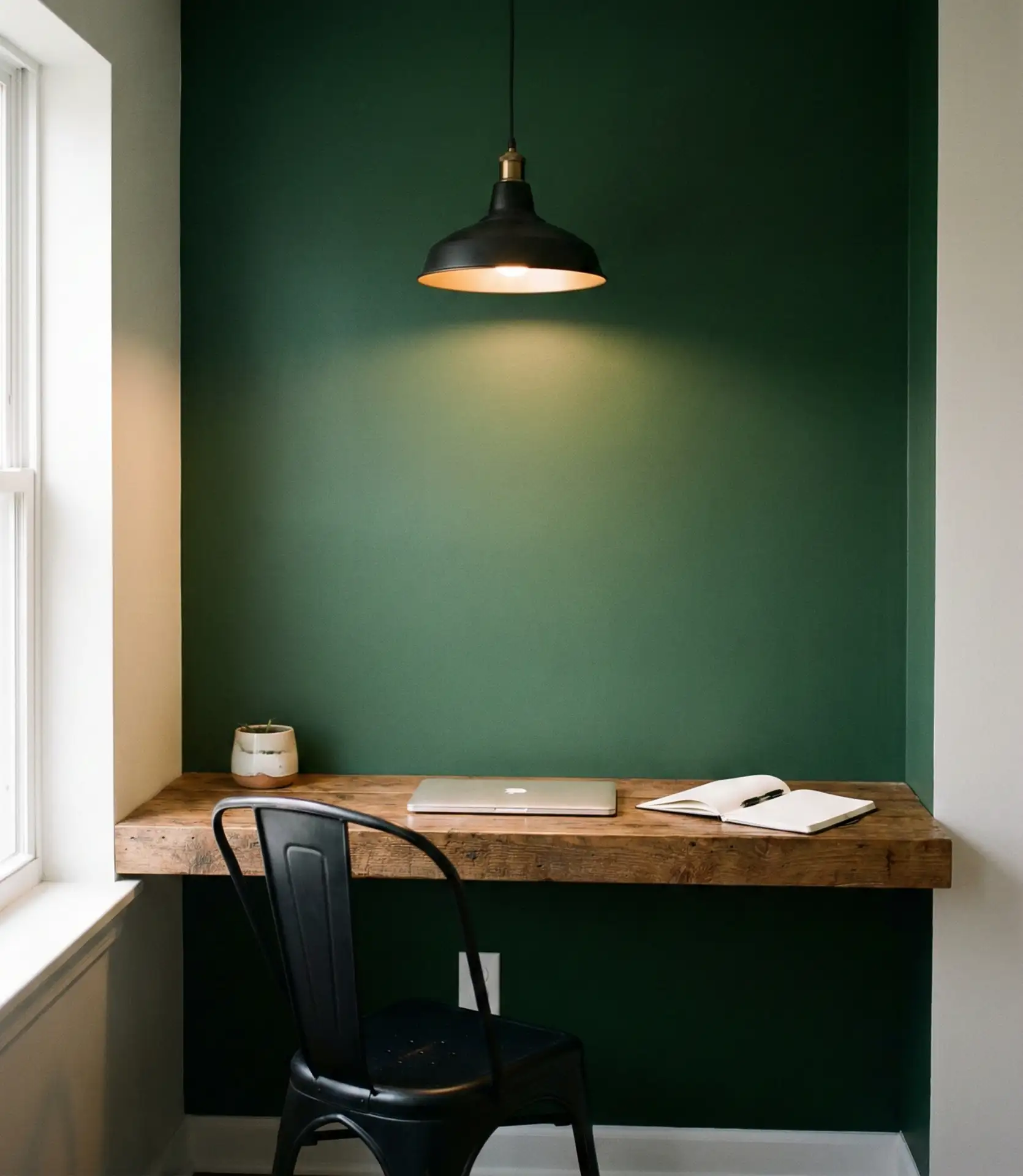
Price-wise, you can achieve this look affordably by painting just one wall or section rather than the whole room and sourcing a simple desk from IKEA or secondhand from Facebook Marketplace. The green paint itself is the star here, so you don’t need expensive furniture to make the space feel high-end and thoughtfully designed.
13. Orange and Green Retro Revival
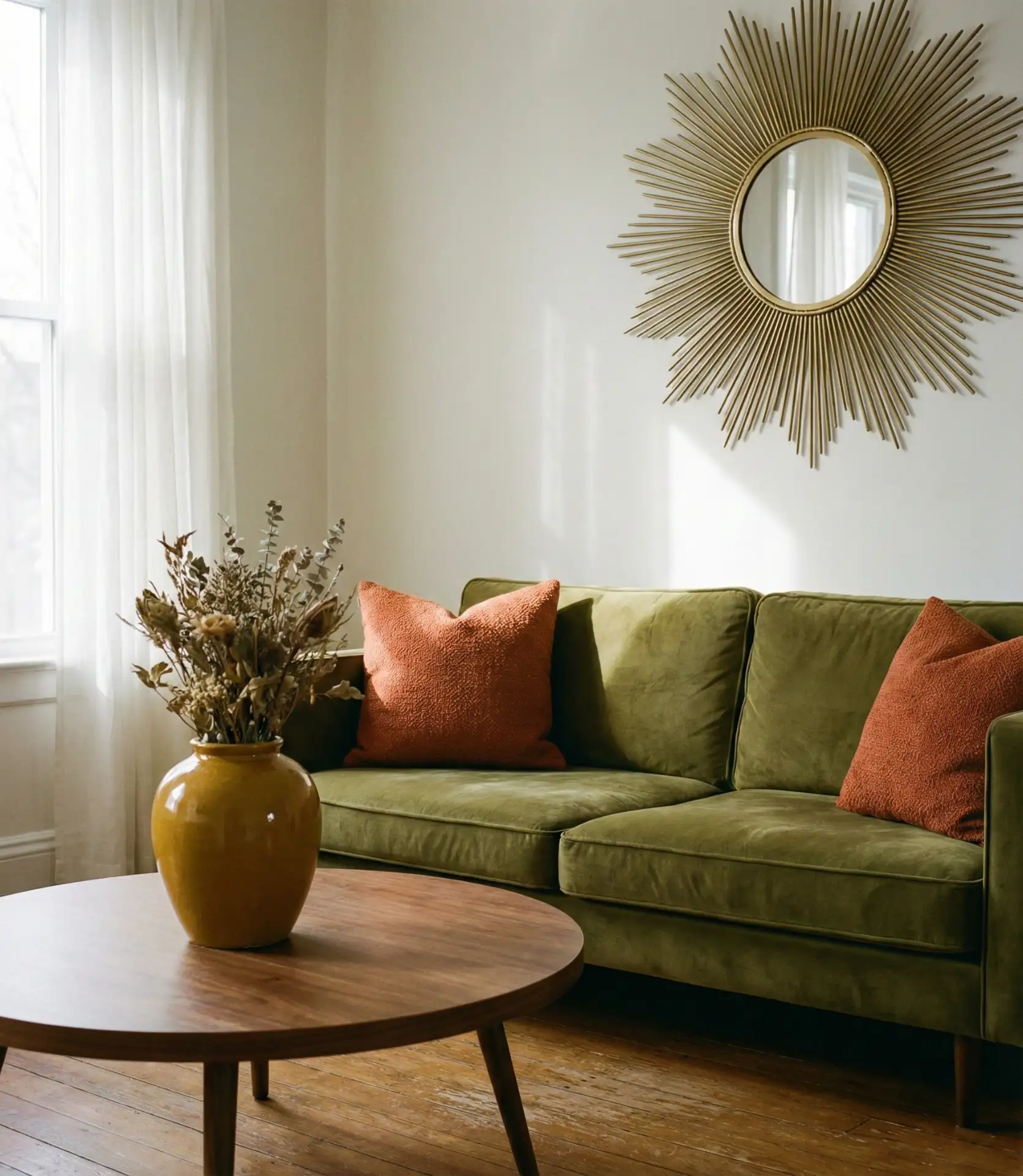
The combination of orange and green might feel unexpected, but it’s rooted in 1970s design and has been making a comeback recently. Think burnt orange velvet chairs paired with sage green walls, or a green sofa accented with rust-colored pillows and vintage-inspired decor. This palette works especially well in mid-century modern homes or for anyone looking to add a playful, nostalgic vibe to their space.
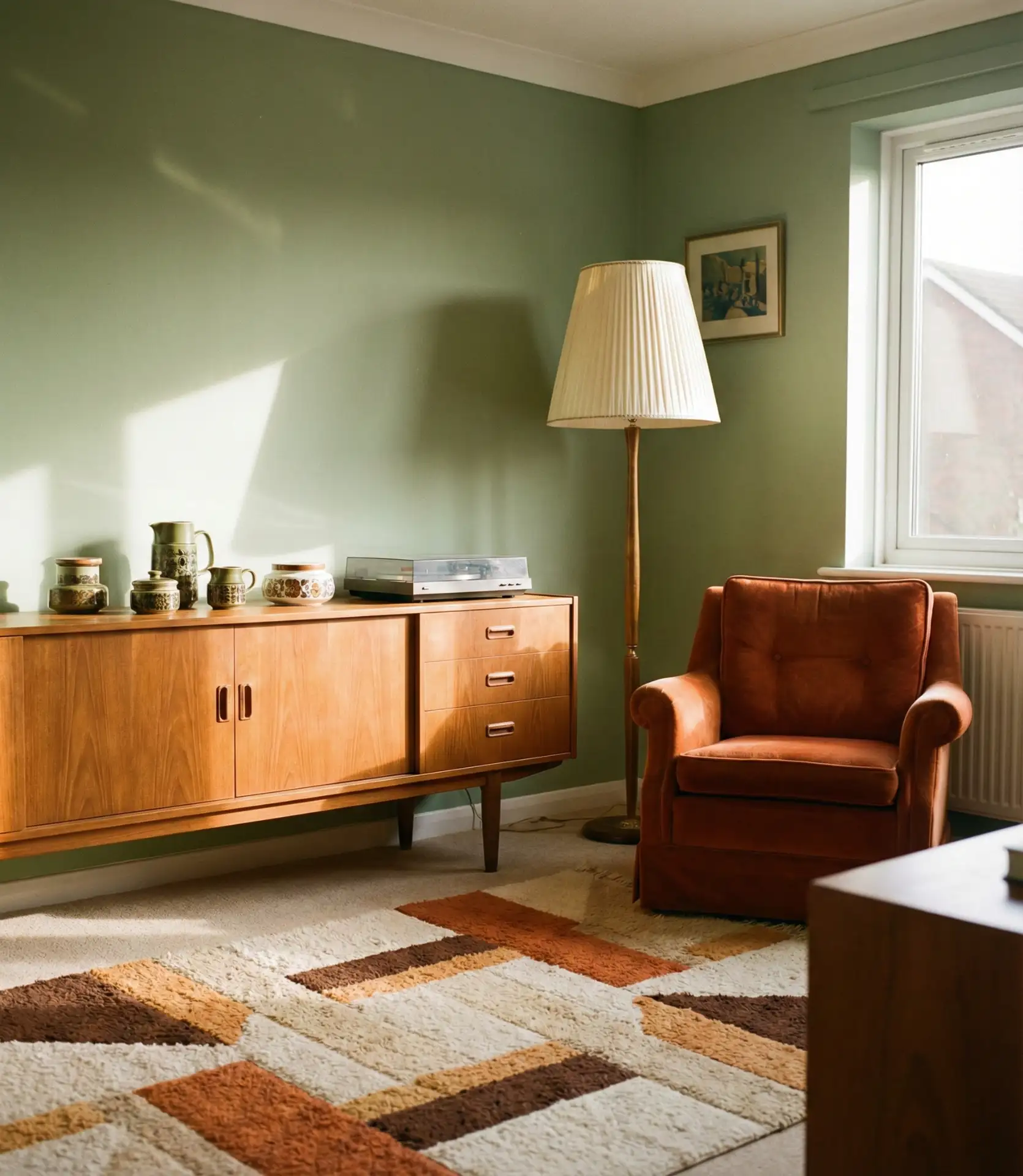
One common mistake is going too bright with both colors, which can feel overwhelming. Instead, use muted, earthy versions of orange and green—think terracotta, rust, sage, and olive. These tones have enough punch to feel retro and fun without crossing into garish territory, and they’re much easier to live with long-term.
14. Beige and Green Organic Minimalism
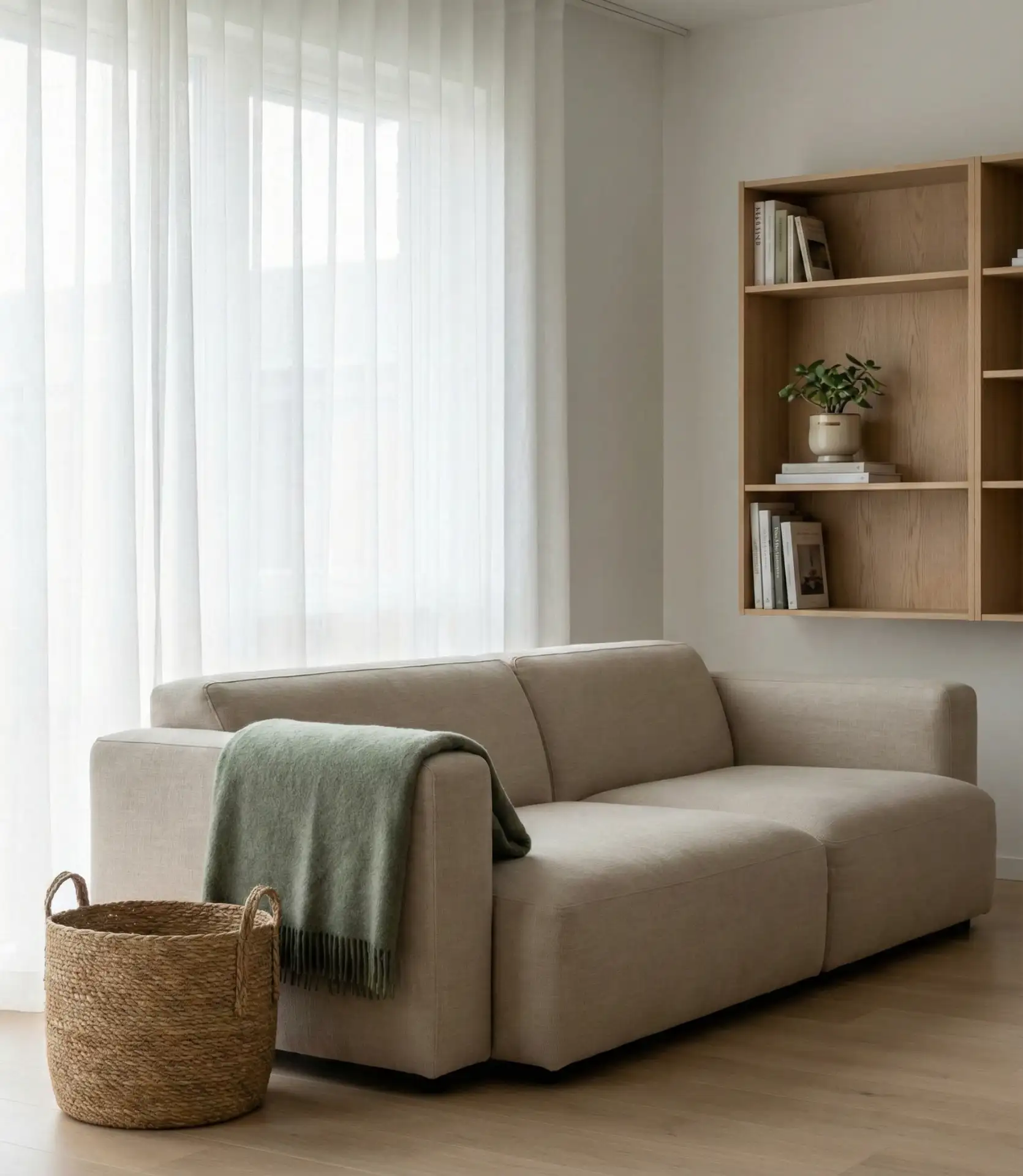
Beige and green create a soft, organic palette that feels grounded and calming. This combination is perfect for anyone who loves neutral tones but wants to add a layer of color without going too bold. Beige walls or furniture paired with muted green accents like cushions, rugs, or artwork create a warm, natural aesthetic that works in both modern and traditional homes.
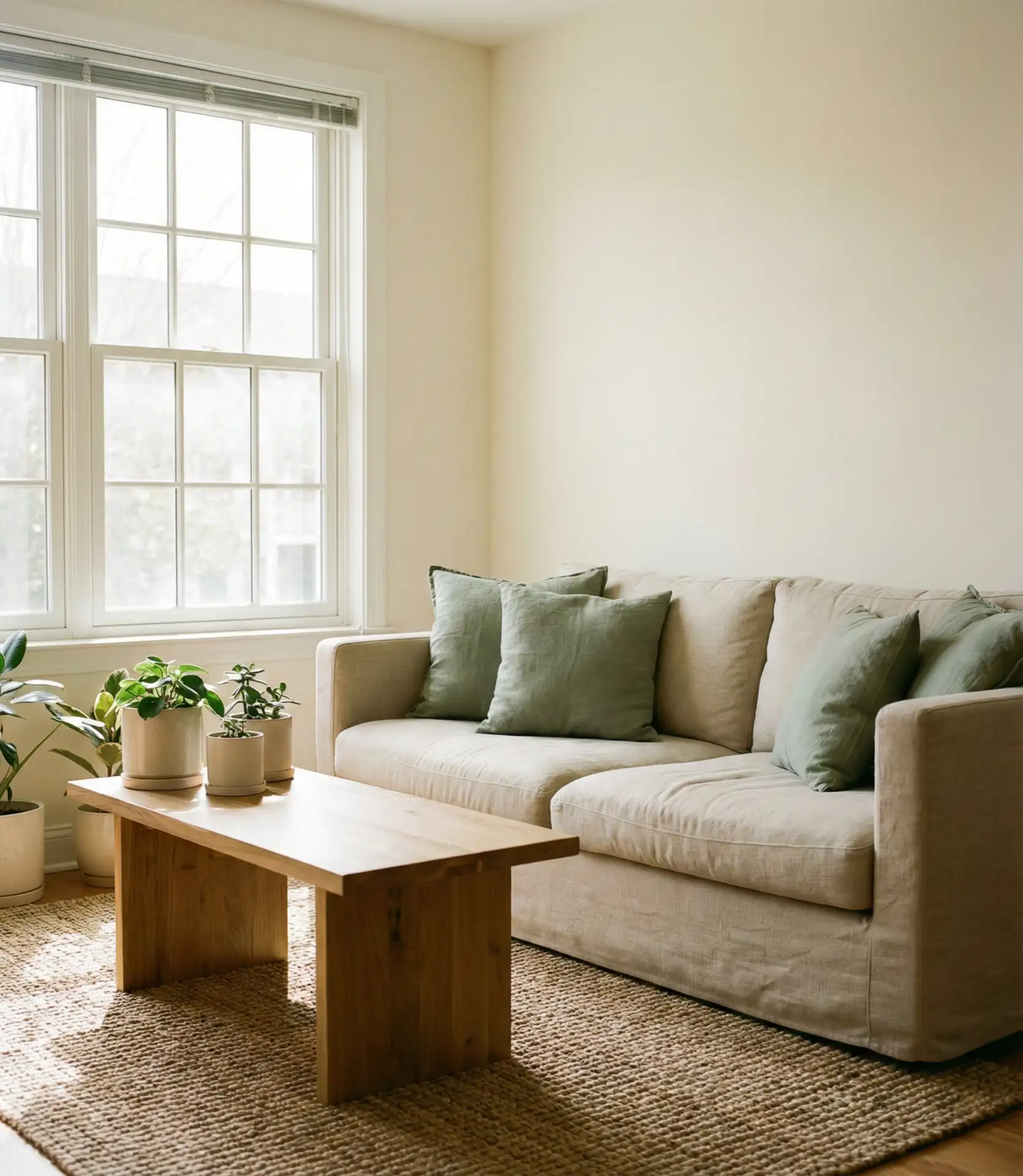
This palette is incredibly forgiving and works well in homes across the country, from sunny California bungalows to East Coast colonials. The key is to layer different textures—linen, wool, jute, wood—so the neutral tones don’t feel flat. The green adds just enough color to keep things intriguing without overwhelming the serene, minimalist vibe.
15. Rust and Green Desert Modern
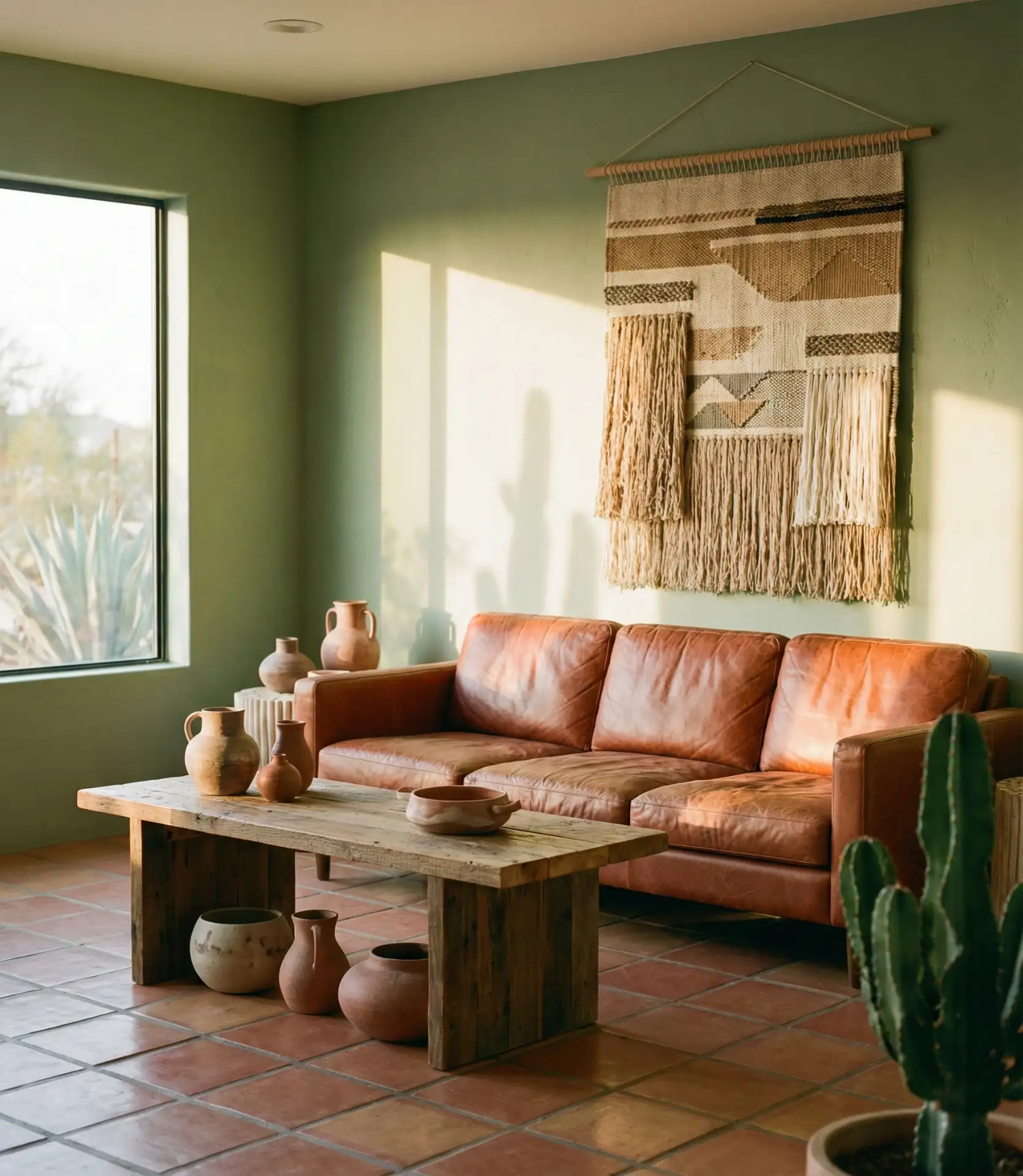
Combining rust and green brings a desert-inspired warmth that’s perfect for Southwestern homes or anyone drawn to earthy, sun-drenched interiors. The rust acts as a warm, grounding accent against cooler sage or olive greens, and the palette pairs beautifully with natural materials like clay, terracotta, leather, and woven textiles. This look has gained traction in Arizona, New Mexico, and Southern California, where the surrounding landscape naturally inspires the color choices.
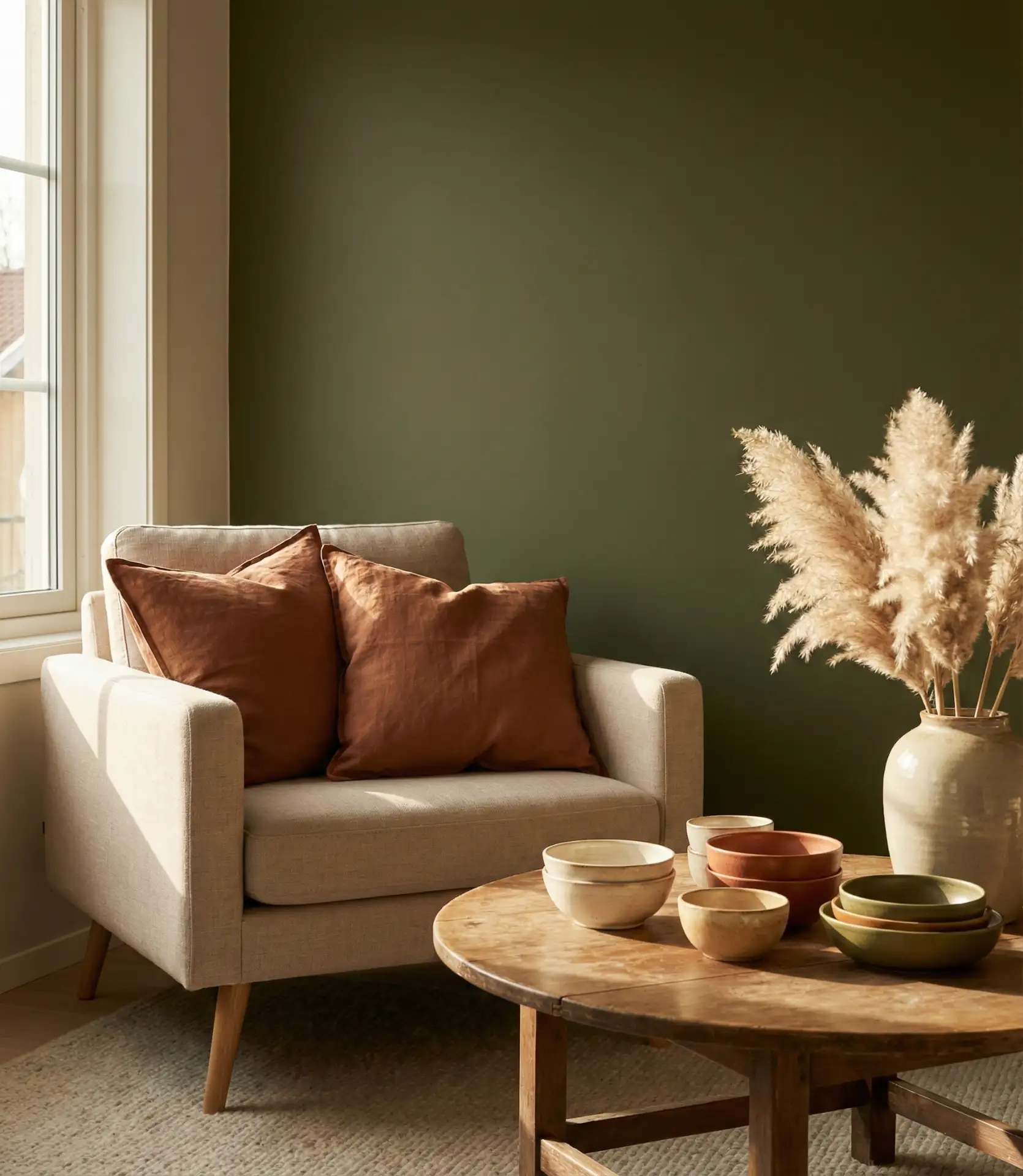
A homeowner in Tucson told me she painted her living room sage and added rust accents after a trip to Joshua Tree, and it completely changed how she felt about her space. The colors brought the outside in and made her small adobe house feel expansive and connected to the landscape. Even if you’re not in the desert, this palette can evoke that same sense of warmth and openness.
16. Rustic Green Farmhouse
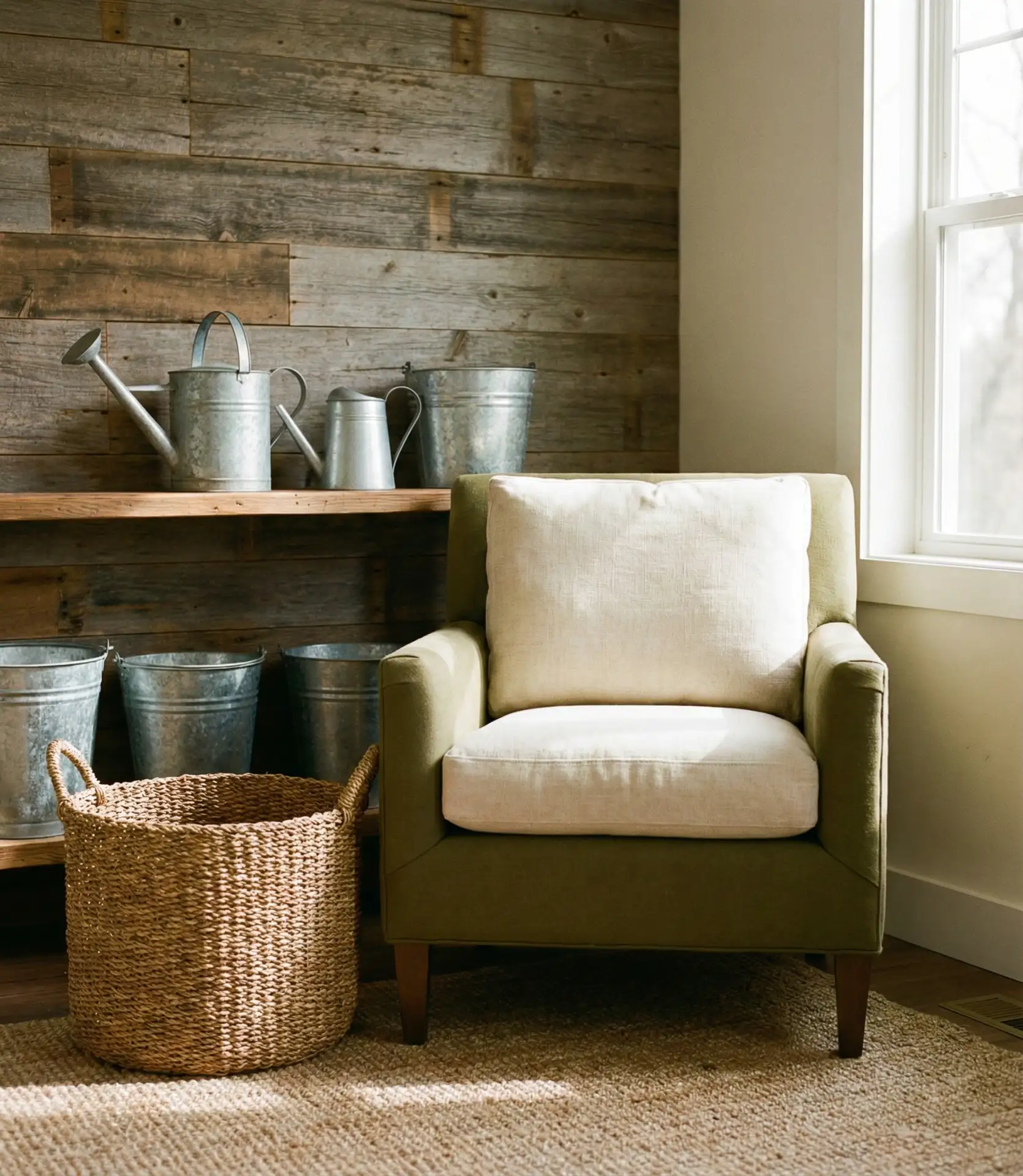
A rustic green living room embraces the charm of farmhouse style with distressed wood, vintage finds, and soft green walls or furniture. This look works beautifully in older homes with original wood floors and exposed beams, but it can also be recreated in newer builds by layering in reclaimed wood accents, antique furniture, and soft textiles like linen and cotton. The green adds freshness to what might otherwise feel too heavy or dark.
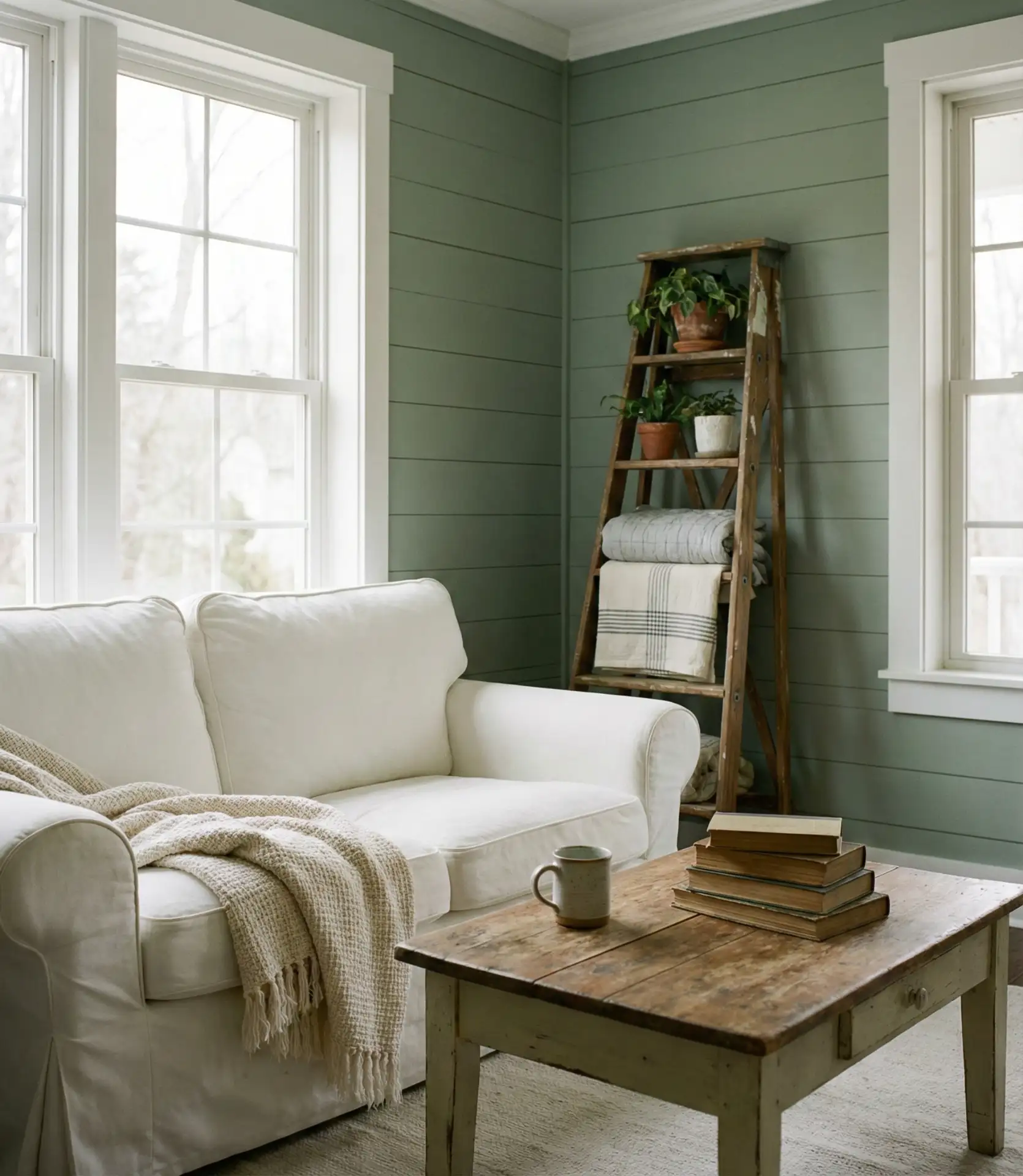
Where this look works best is in rural areas or suburban homes where farmhouse style already dominates the neighborhood aesthetic. The green keeps things from feeling too matchy or overly themed, and it pairs beautifully with white shiplap, black metal hardware, and vintage accessories. The farmhouse look is also a great style for DIYers, since so much of the charm comes from thrifted and handmade elements.
17. Gray and Green Modern Neutral
Gray and green together create a sophisticated, modern palette that feels calm without being cold. Light gray walls paired with soft green furniture or accessories bring a balanced, contemporary look that works in everything from city apartments to suburban homes. This combination is especially popular in the Pacific Northwest and Northeastern states, where gray skies and evergreen landscapes naturally inspire interior color choices.
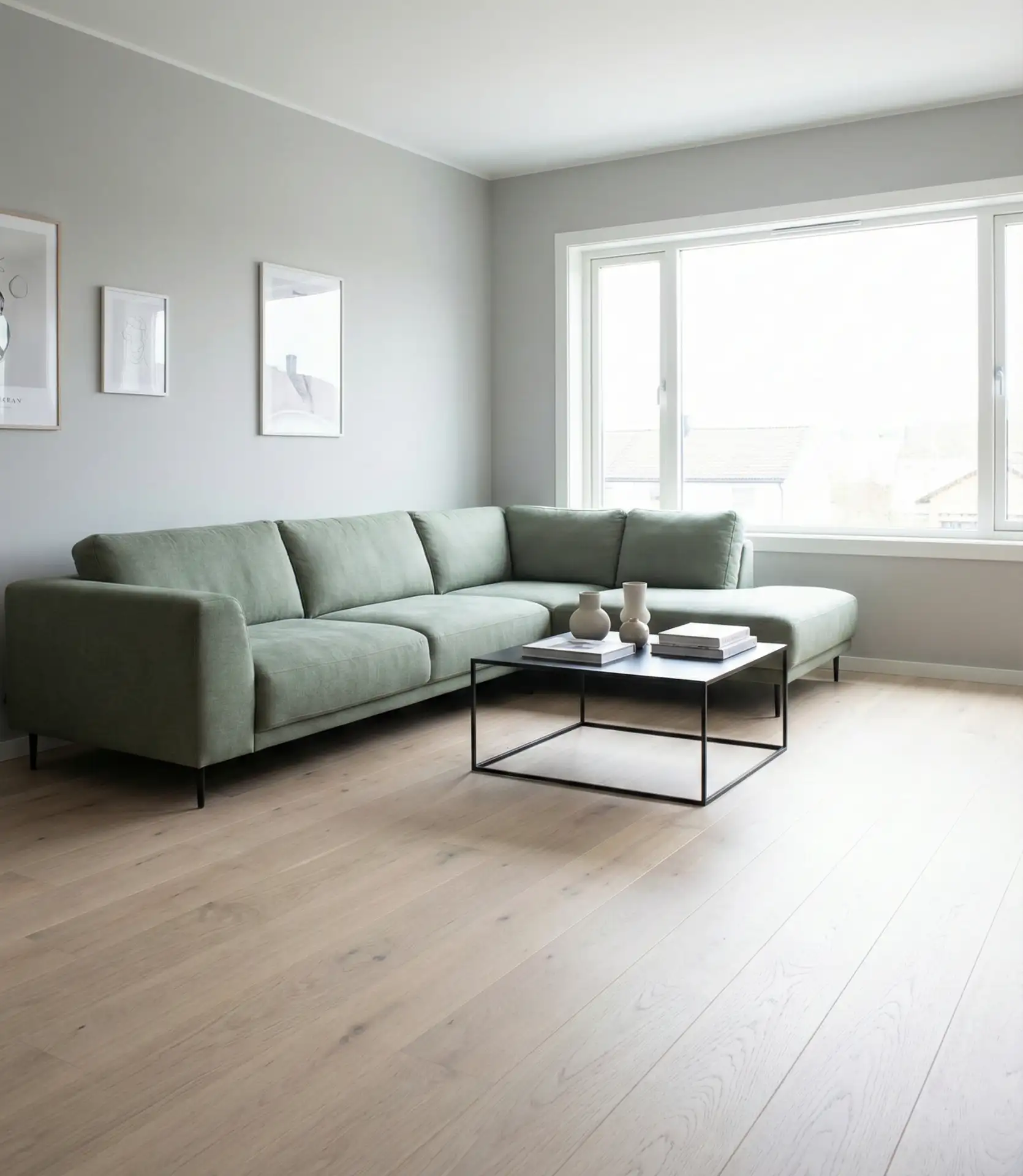
Expert designers recommend using warm grays rather than cool, blue-toned grays when pairing with green. The warmth prevents the room from feeling sterile or hospital-like, and it enhances the natural, organic quality of the green. Add texture through knit throws, linen cushions, and natural wood to keep the space feeling inviting rather than stark.
18. Earthy Green Bohemian Layering
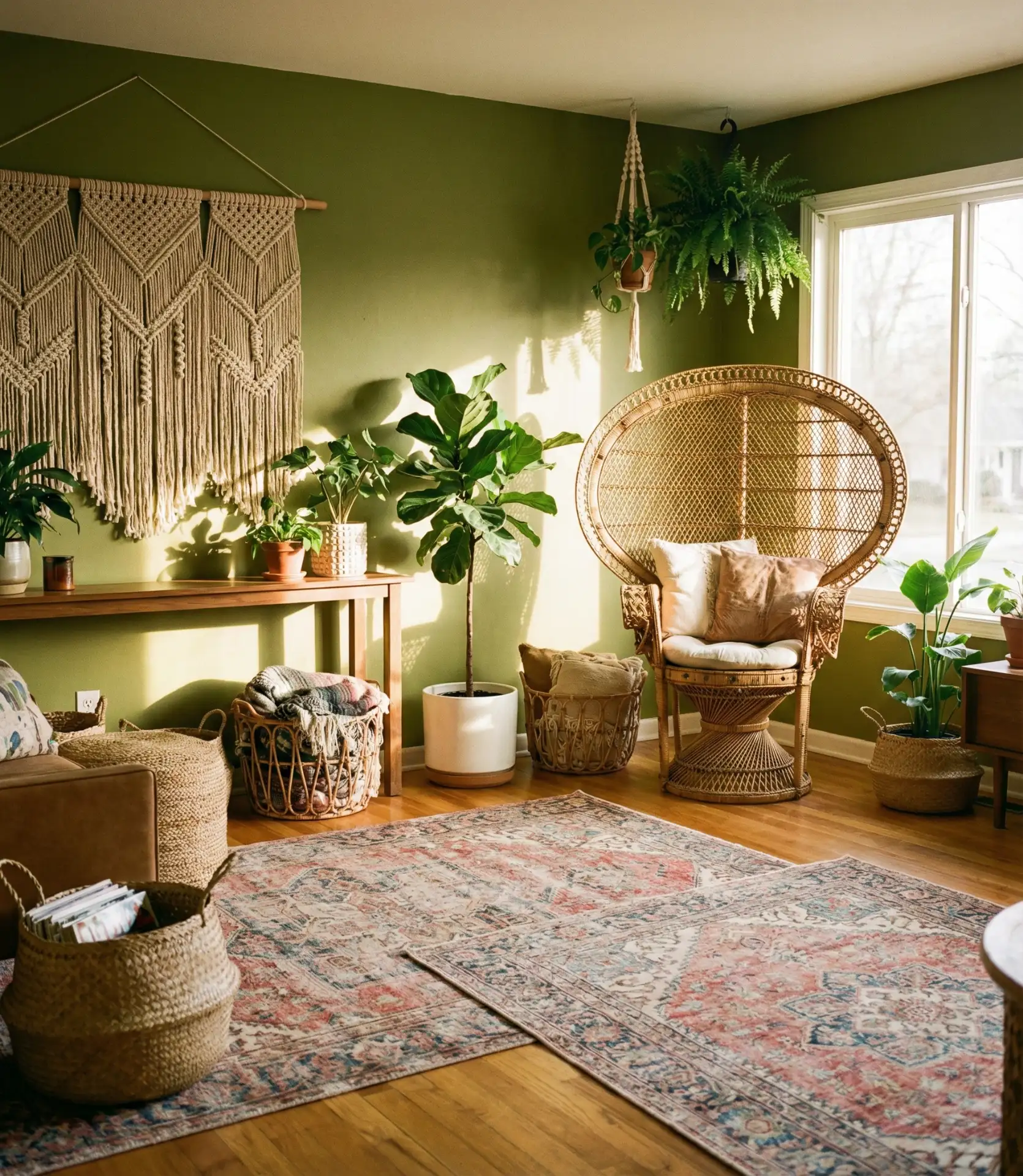
An earthy green living room with bohemian layering is all about texture, pattern, and a collected-over-time feel. Think olive or sage walls paired with vintage rugs, macramé wall hangings, potted plants, and furniture in natural materials like rattan, cane, and wood. This style celebrates imperfection and personal expression, making it perfect for creative types and anyone who loves a lived-in, eclectic aesthetic.
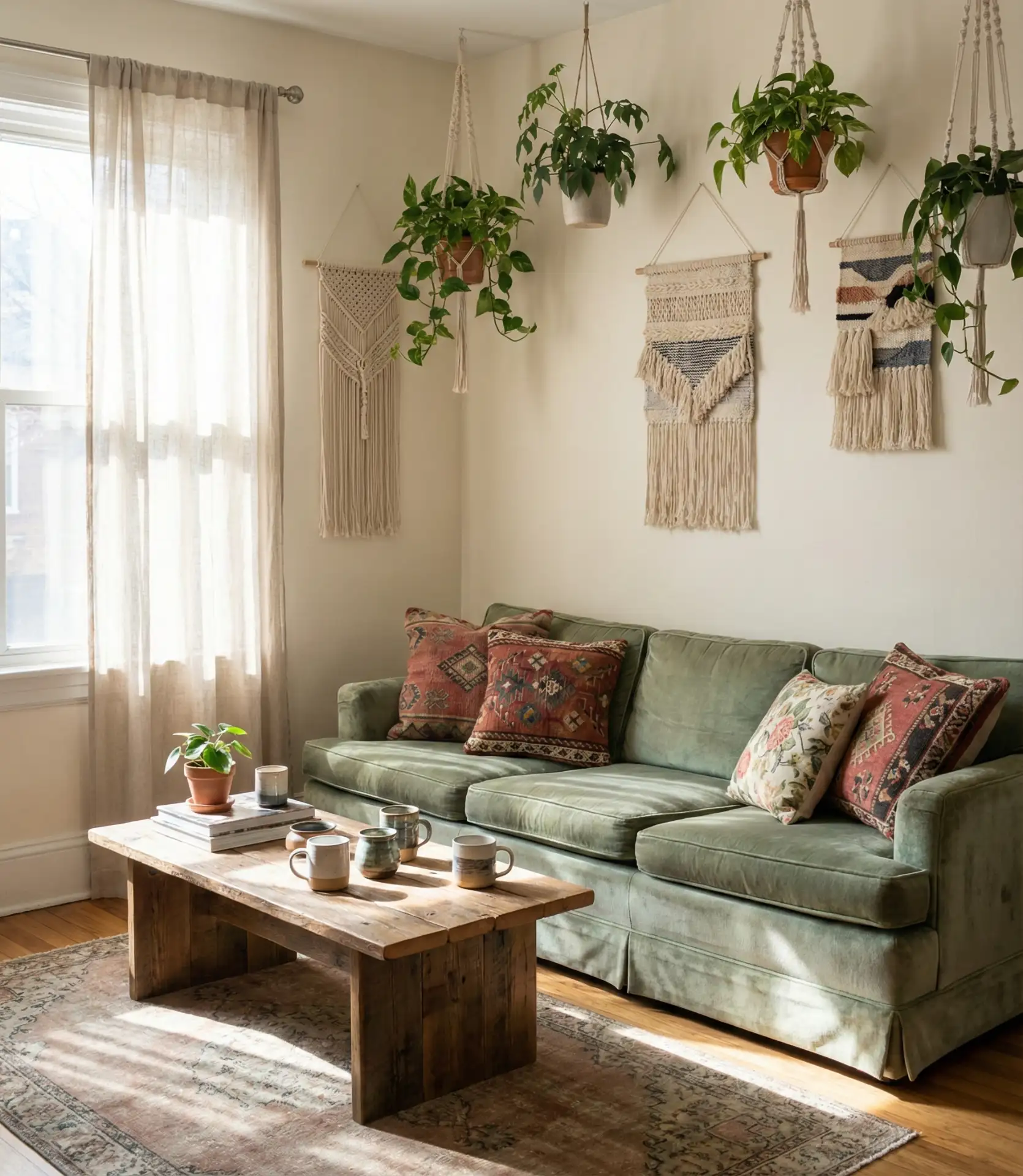
The beauty of bohemian style is that it’s inherently budget-friendly. Much of the decor can be sourced secondhand, handmade, or even DIYed, and the mix-and-match approach means nothing has to be perfect or coordinated. The green acts as a grounding element that ties all the different textures and patterns together without feeling chaotic.
19. Black and Green Dramatic Contrast
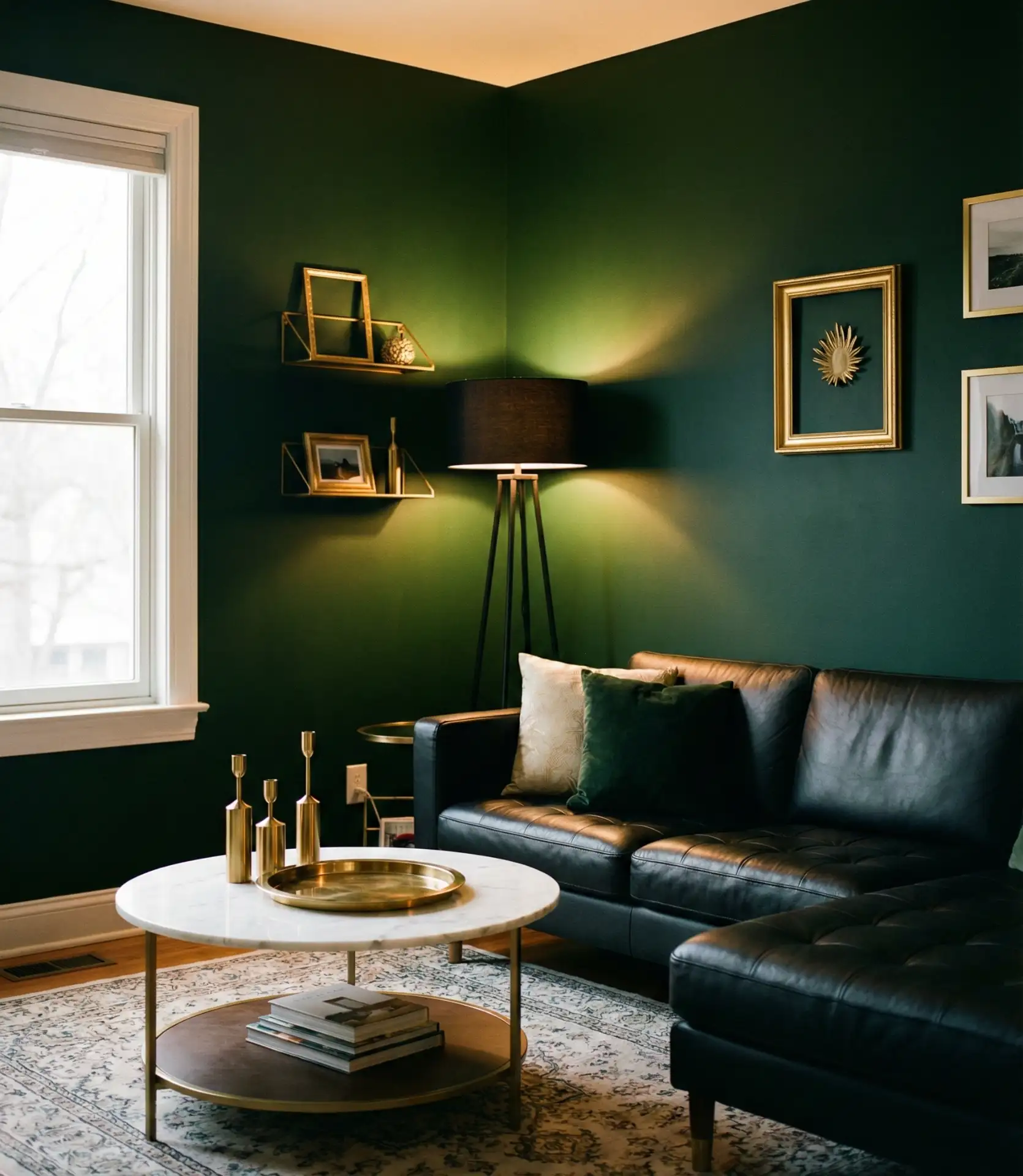
Pairing black and green creates a bold, high-contrast look that’s undeniably modern and dramatic. Deep green walls or furniture combined with black accents like metal lighting, black-framed artwork, or matte black shelving makes a strong visual statement. This palette works best in homes with plenty of natural light or in spaces where you want to create a moody, intentional atmosphere, such as a media room or sophisticated lounge area.
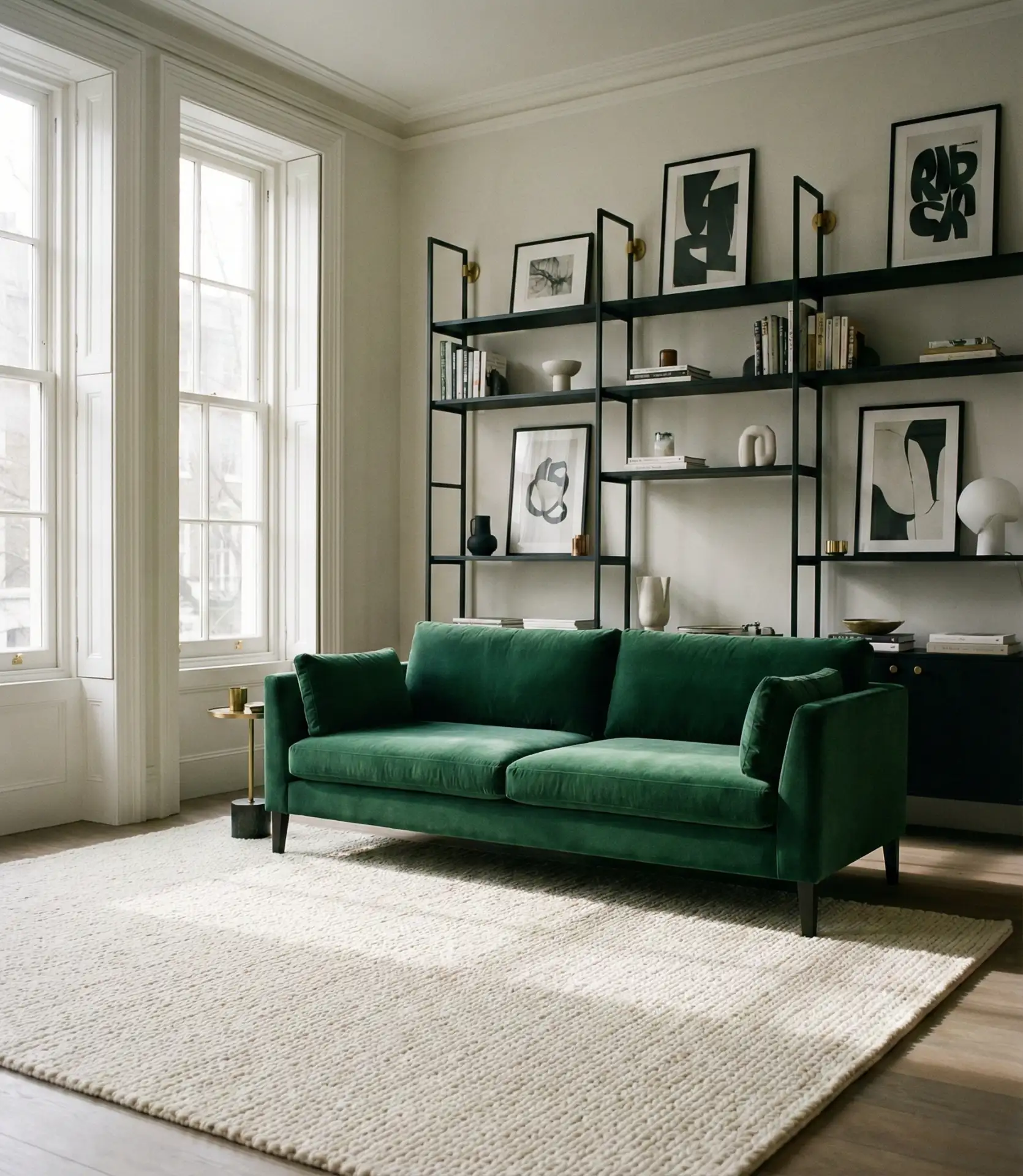
In American homes, this look has become popular in urban lofts and modern new builds where homeowners aren’t afraid of bold design choices. The key is balancing the darkness with enough light sources and reflective surfaces like mirrors or glass to prevent the room from feeling oppressive. Add warmth through wood tones, brass, or even a single colorful artwork to keep things from feeling too stark.
20. Cream and Green Soft Elegance
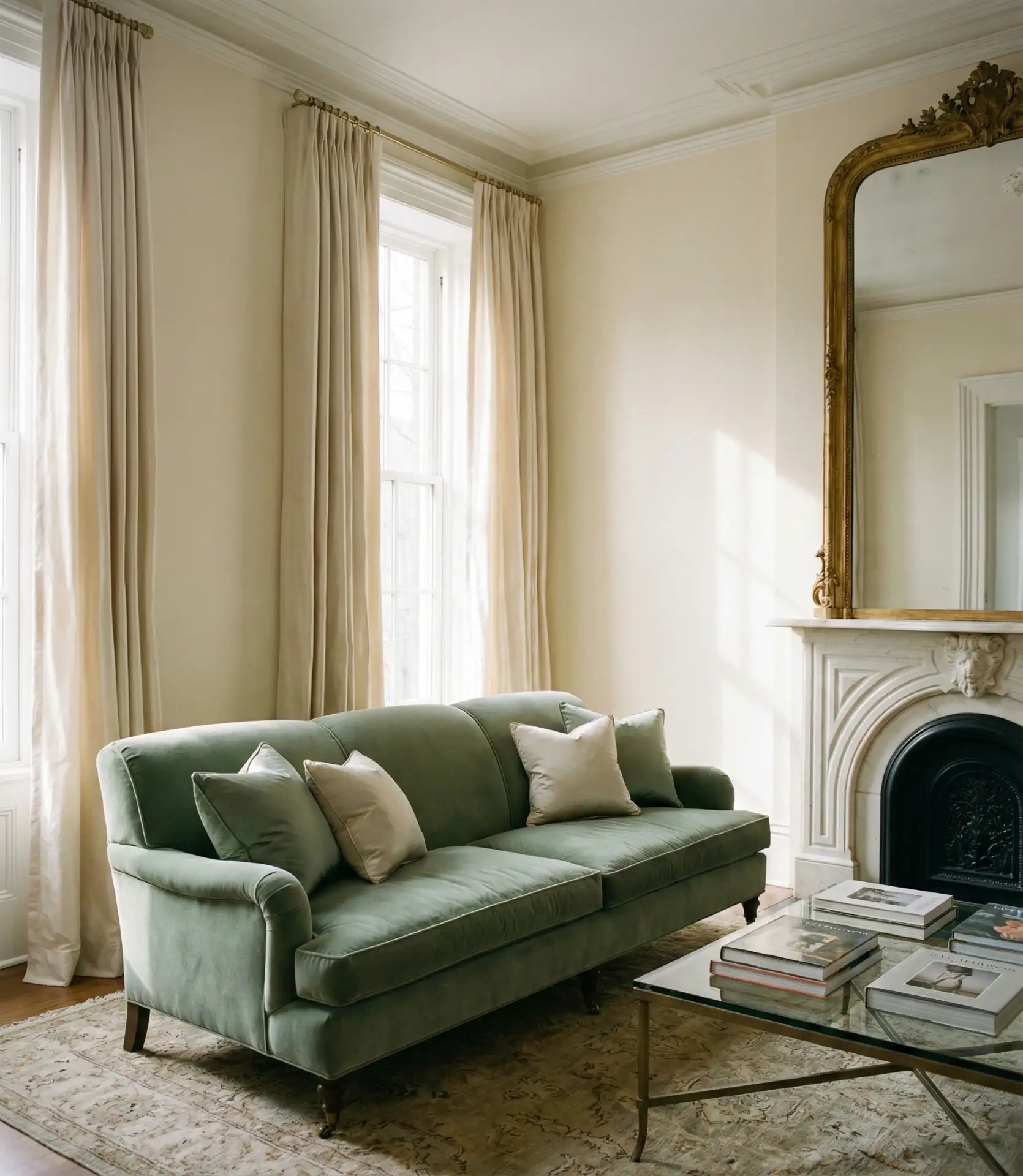
Cream and green together create a soft, elegant palette that feels timeless and refined. Cream walls or upholstery paired with sage or celadon green accents brings a gentle sophistication that works in both traditional and contemporary settings. This combination is particularly popular in the South and in historic homes where owners want a classic look that still feels fresh and current.
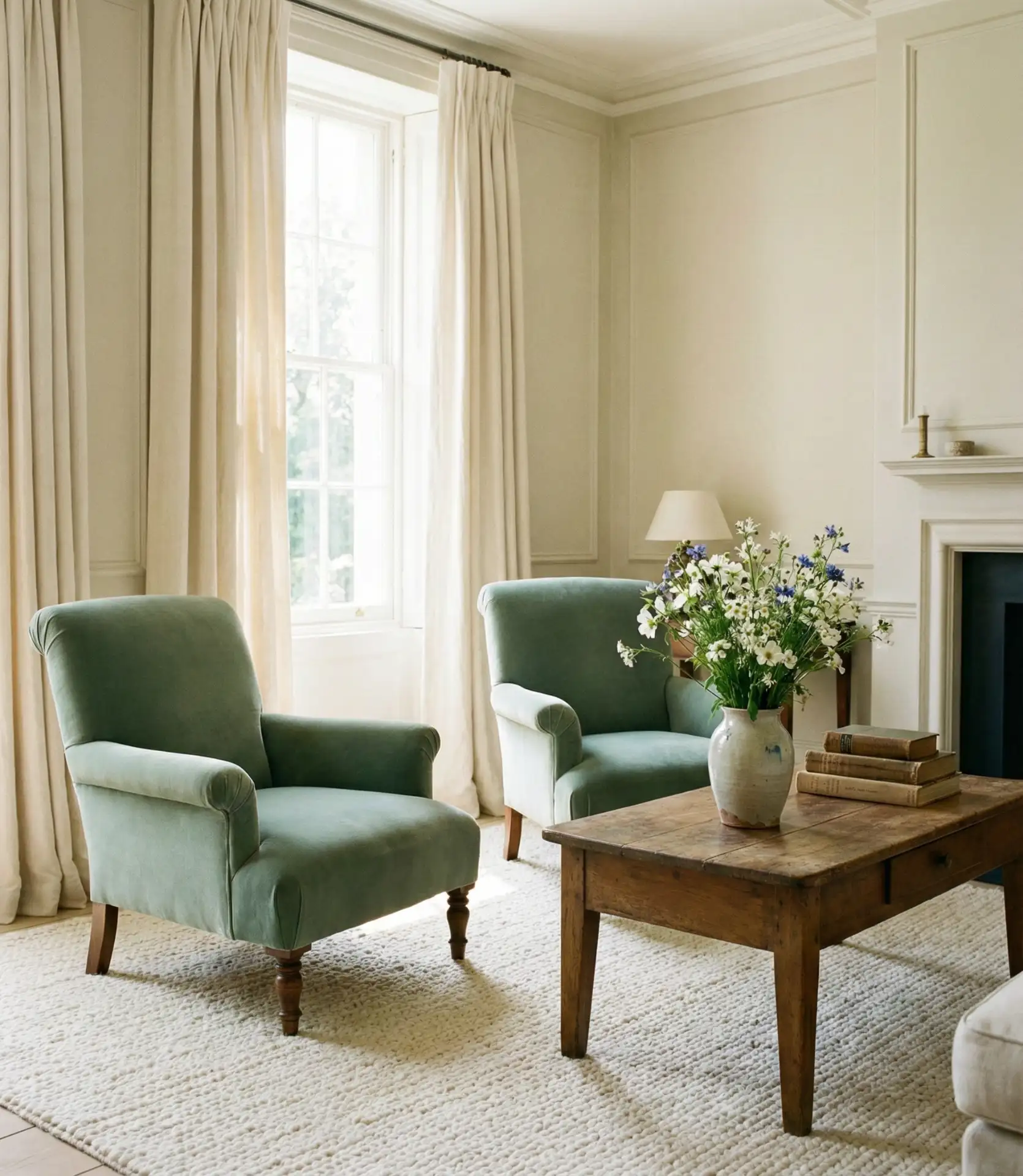
This palette is incredibly versatile and can be dressed up or down depending on your furniture and accessories. With antiques and traditional pieces, it feels formal and refined. With simpler, modern furniture, it becomes fresh and approachable. The softness of both colors means the room always feels calm and inviting, never harsh or overwhelming.
21. Aesthetic Green Maximalist Gallery Wall
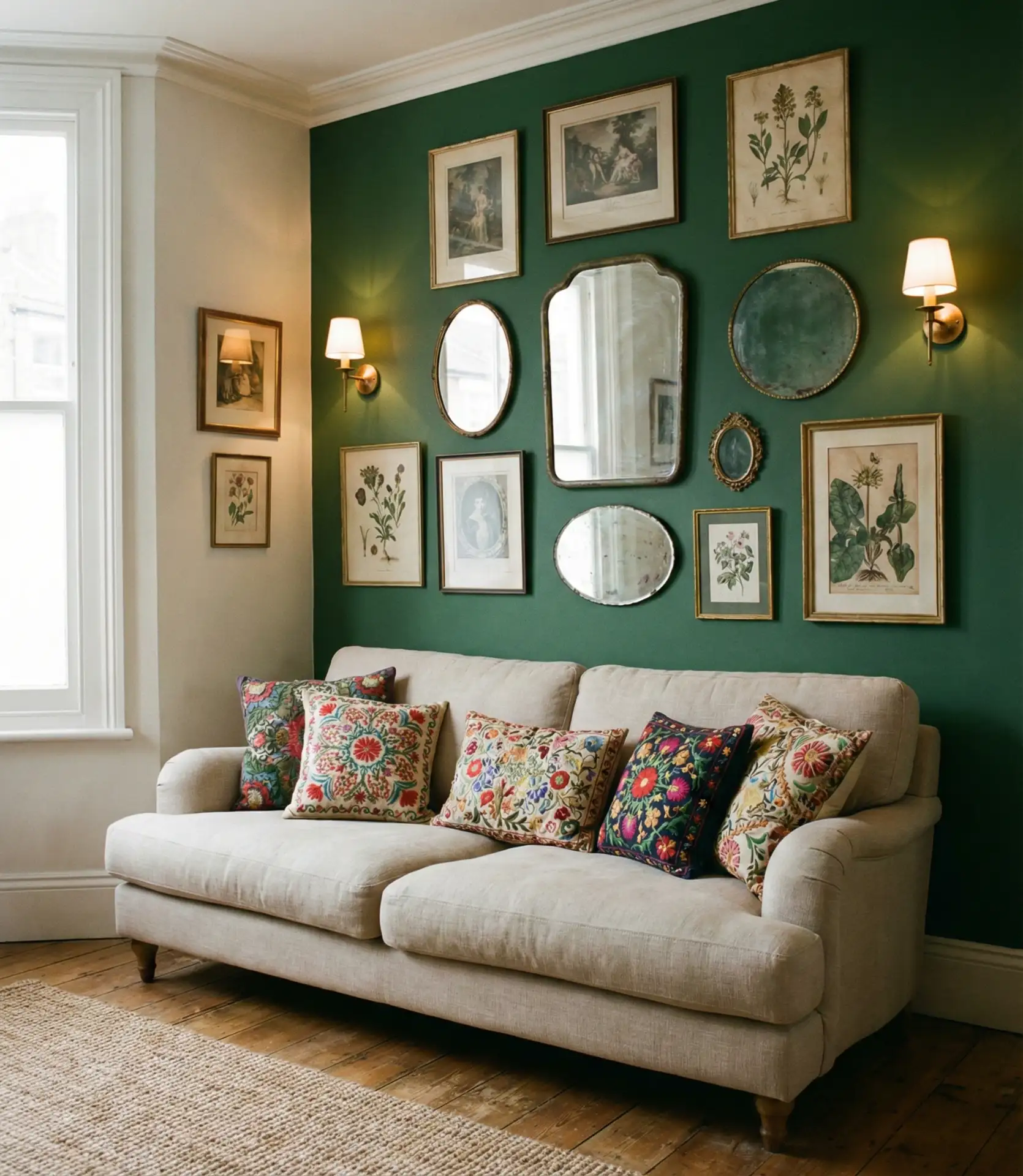
Creating an aesthetic green living room with a maximalist gallery wall brings personality and visual interest to the space. A deep or vibrant green wall serves as the perfect backdrop for a curated collection of artwork, photographs, mirrors, and prints in varying sizes and frames. This approach has become hugely popular on Pinterest and Instagram, where users are drawn to layered, collected looks that feel personal and expressive rather than catalog-perfect.
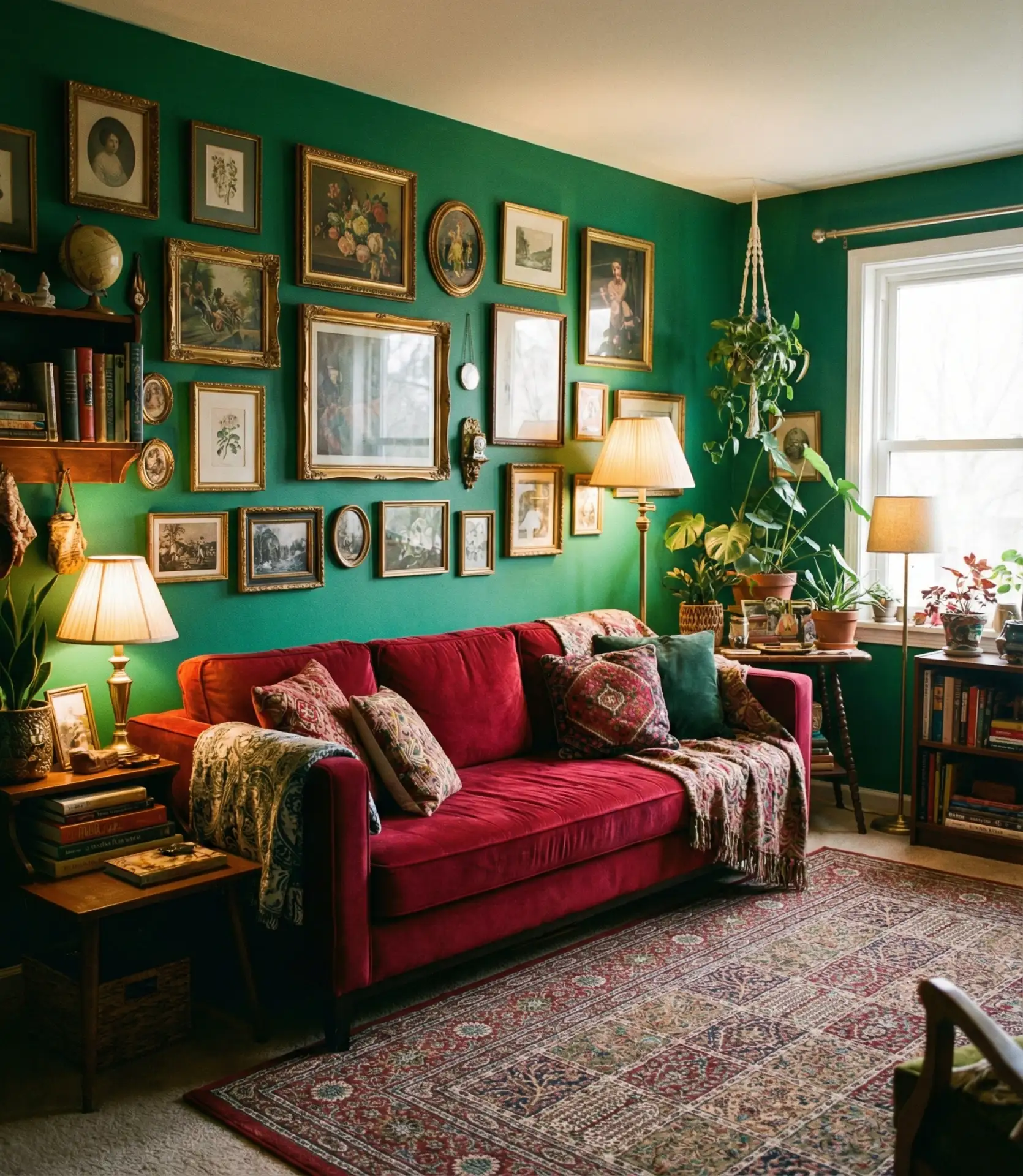
Real homeowners often begin their gallery wall with a few pieces and gradually expand it as they discover artwork they adore. This organic approach creates a more authentic, collected feel than trying to plan everything out perfectly from the start. The green wall provides a unifying backdrop that makes even mismatched frames and styles feel cohesive and intentional.
22. Burnt Orange and Green Autumn Warmth
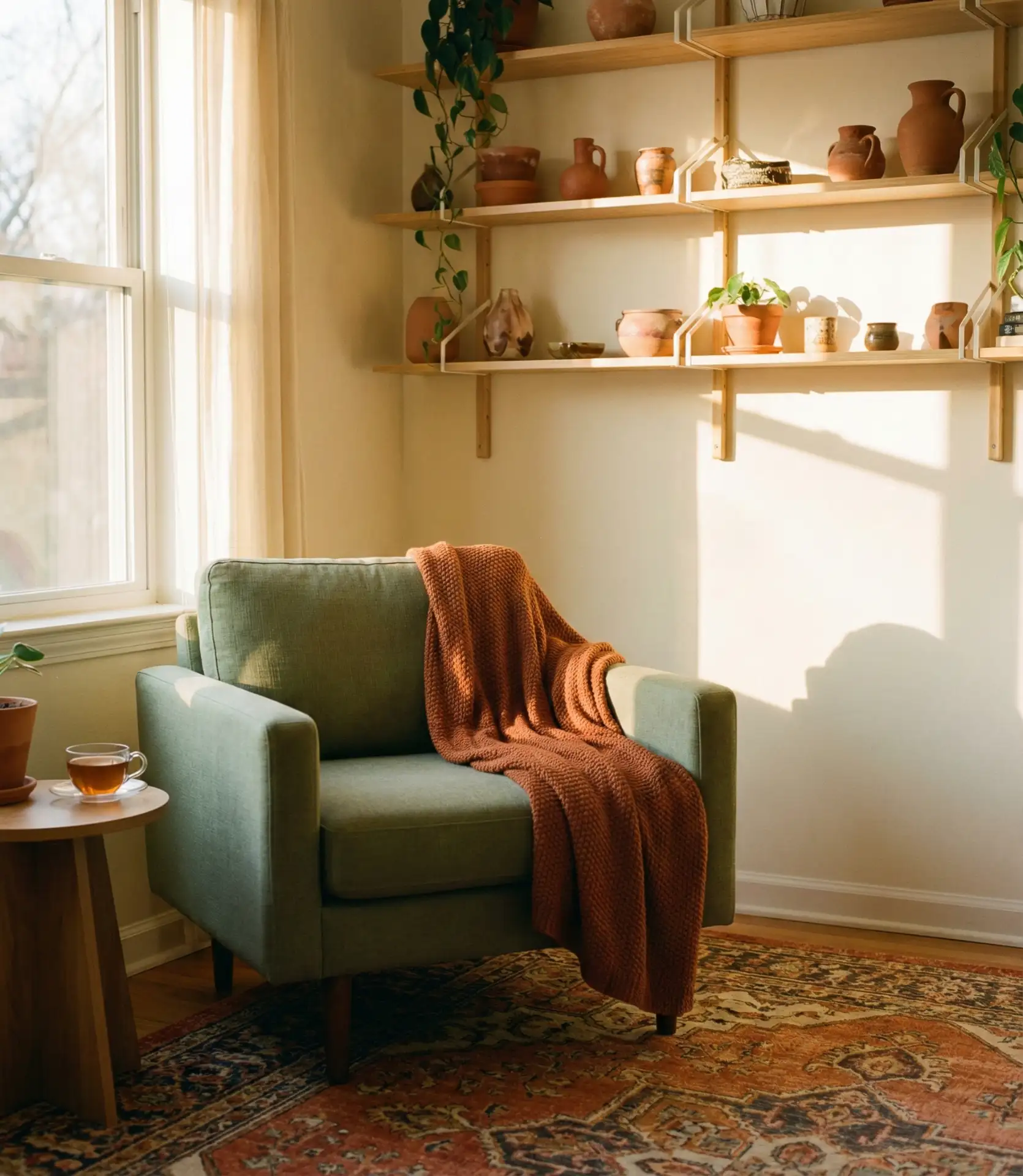
Homes that celebrate seasonal transitions can benefit greatly from the combination of burnt orange and green, which evokes the warmth of autumn. Think olive or sage green walls paired with burnt orange cushions, throws, and ceramics that bring a cozy, harvest-inspired feel. This palette is especially popular in the Midwest and Northeast, where fall foliage inspires interior color choices and homeowners embrace warm, earthy tones as the weather cools.
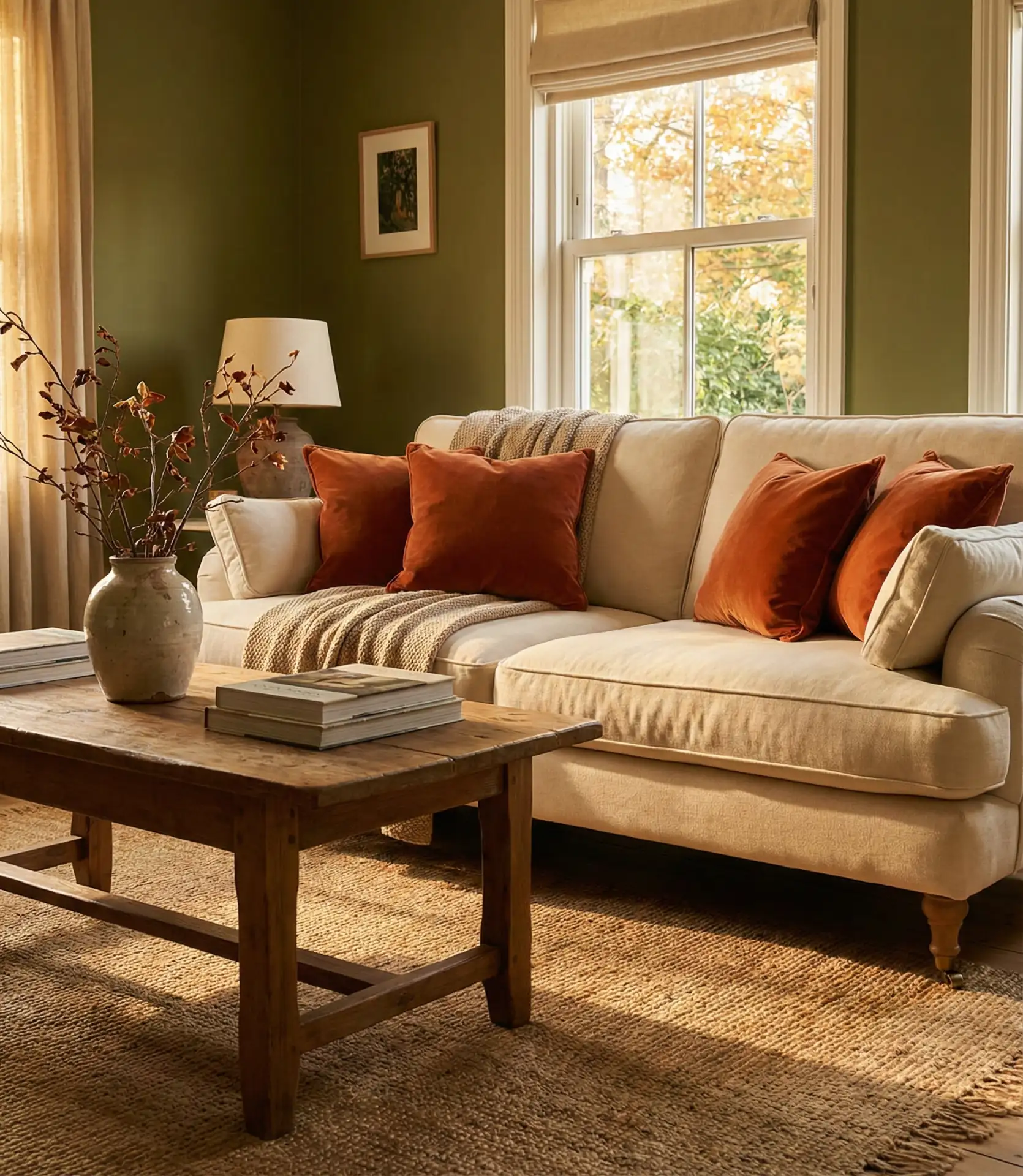
One practical insight: this color scheme transitions beautifully through the seasons. In the fall, lean into the burnt oranges with pumpkins and warm textiles. In spring and summer, dial back the orange and bring in more green through fresh plants and lighter fabrics. The flexibility makes it a smart long-term choice for people who like to refresh their decor seasonally.
23. Pale Green Airy Cottage
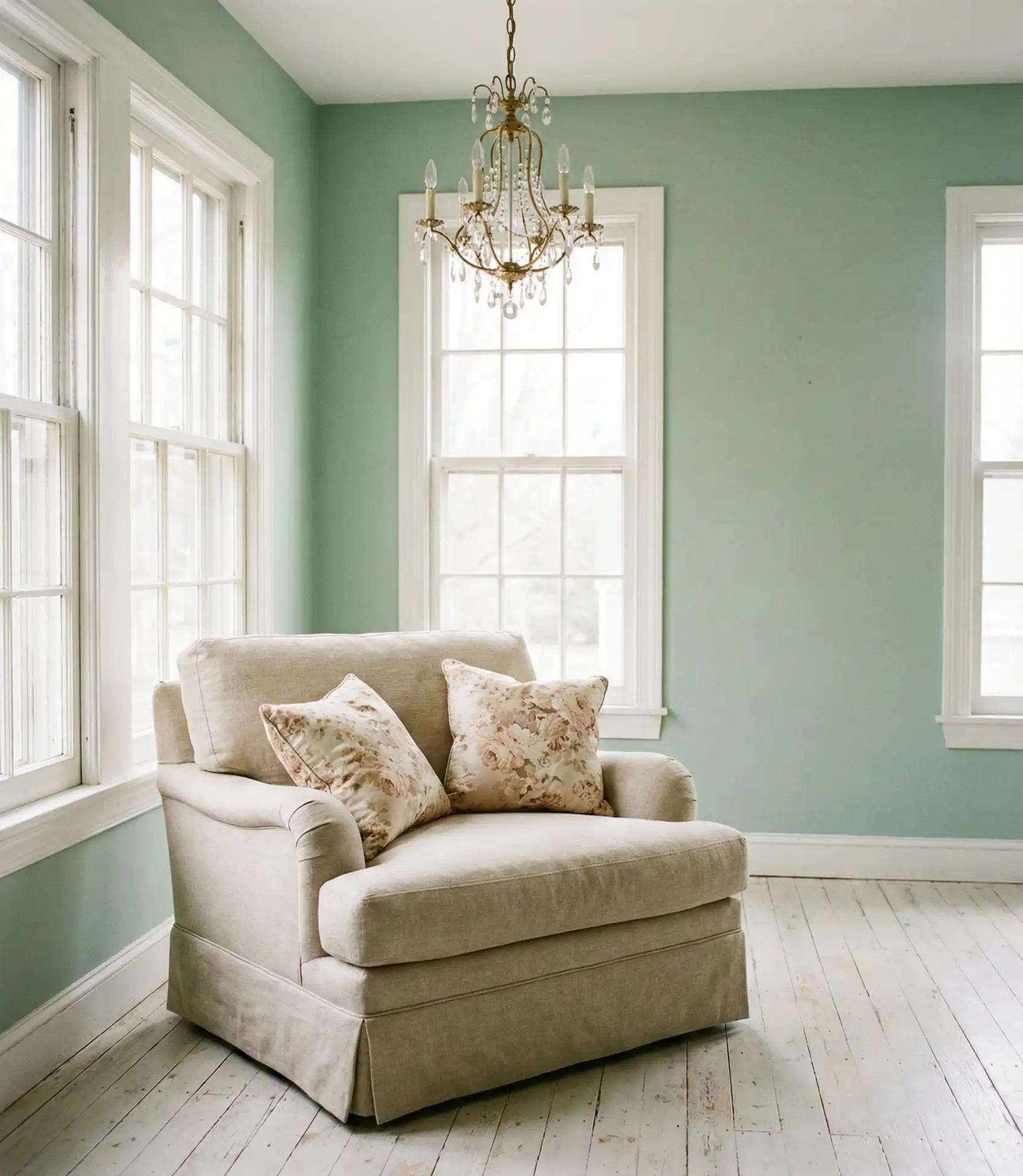
A pale green living room brings a light, airy quality that’s perfect for cottage-style homes or anyone seeking a gentle, soothing atmosphere. Soft mint or celadon walls paired with white trim, light wood furniture, and vintage-inspired textiles create a space that feels fresh and welcoming. This look is popular in coastal areas and small-town settings where cottage and farmhouse styles dominate, but it translates beautifully to city apartments that need a dose of calm.
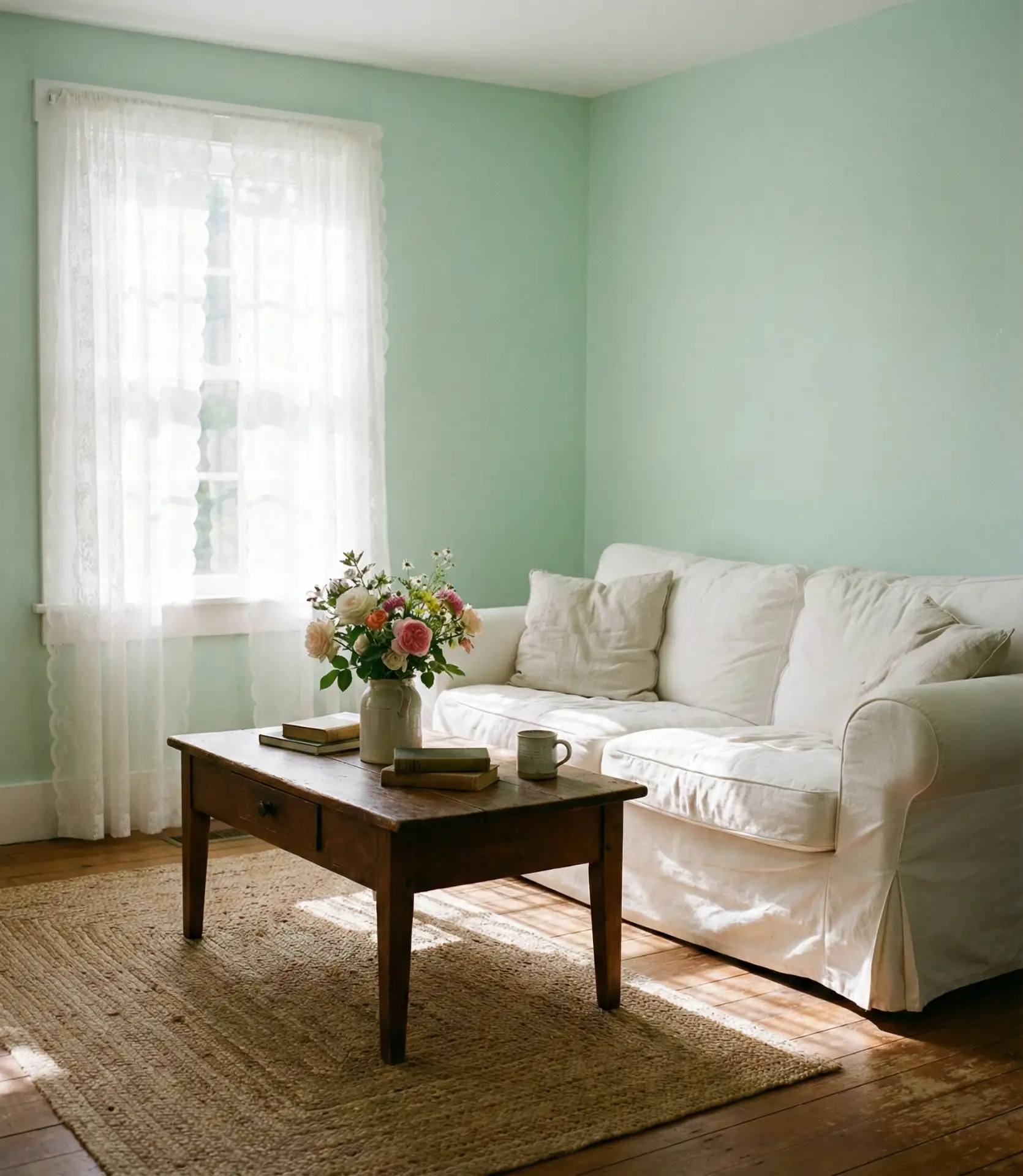
Where this theme works best is in smaller rooms or spaces with limited natural light. The pale green reflects light beautifully and makes the room feel larger and brighter without the starkness of pure white. Pair it with plenty of white or cream, and keep furniture light in both color and visual weight to maintain that airy, uncluttered cottage feel.
24. White and Green Fresh Minimalism
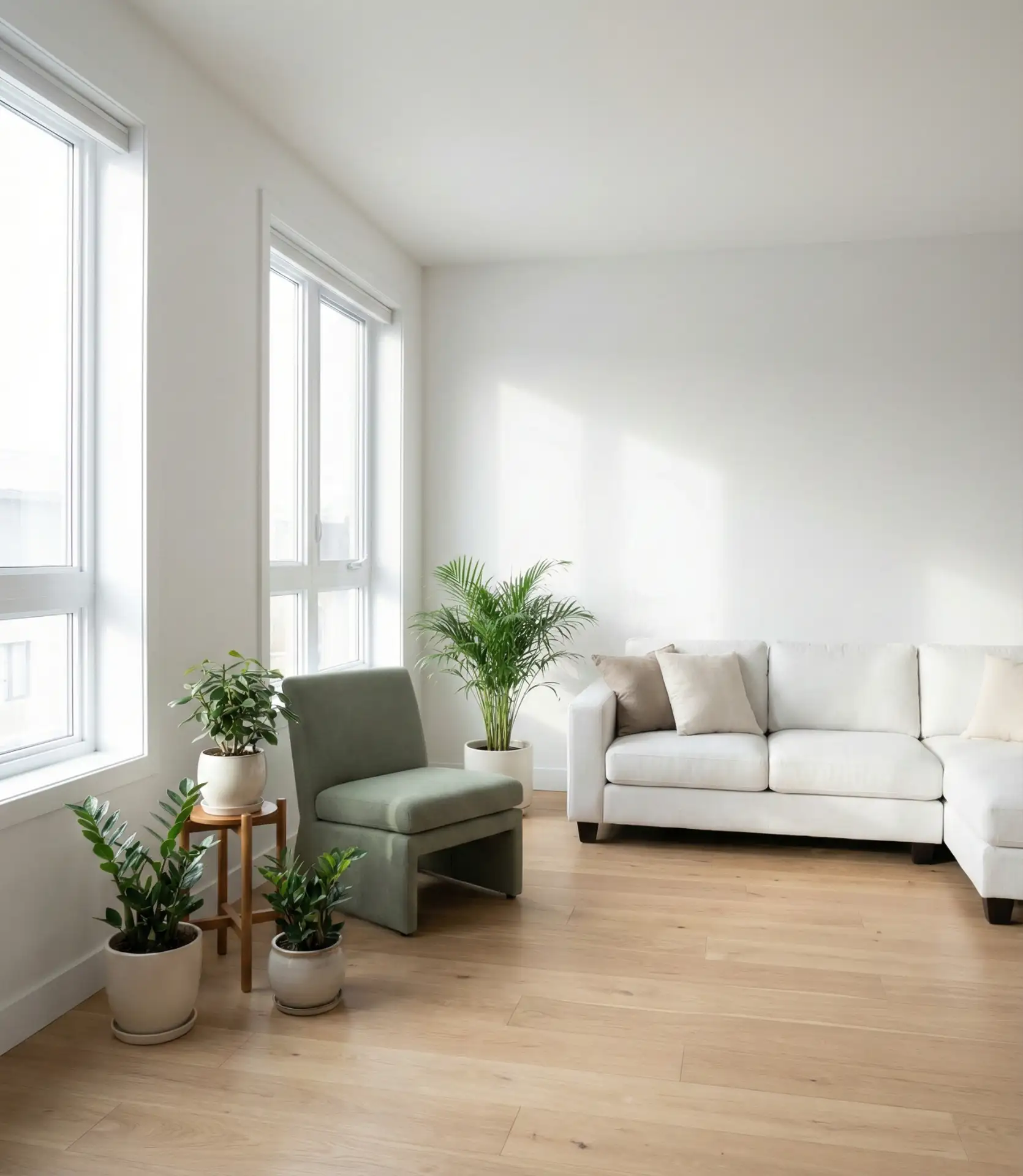
Combining white and green creates a fresh, clean aesthetic that’s perfect for minimalists who want color without clutter. Crisp white walls and furniture paired with strategic pops of green through plants, cushions, or a single piece of furniture bring life to the space without overwhelming it. Modern urban apartments and new builds, which prioritize clean lines and simplicity, greatly favor this approach.
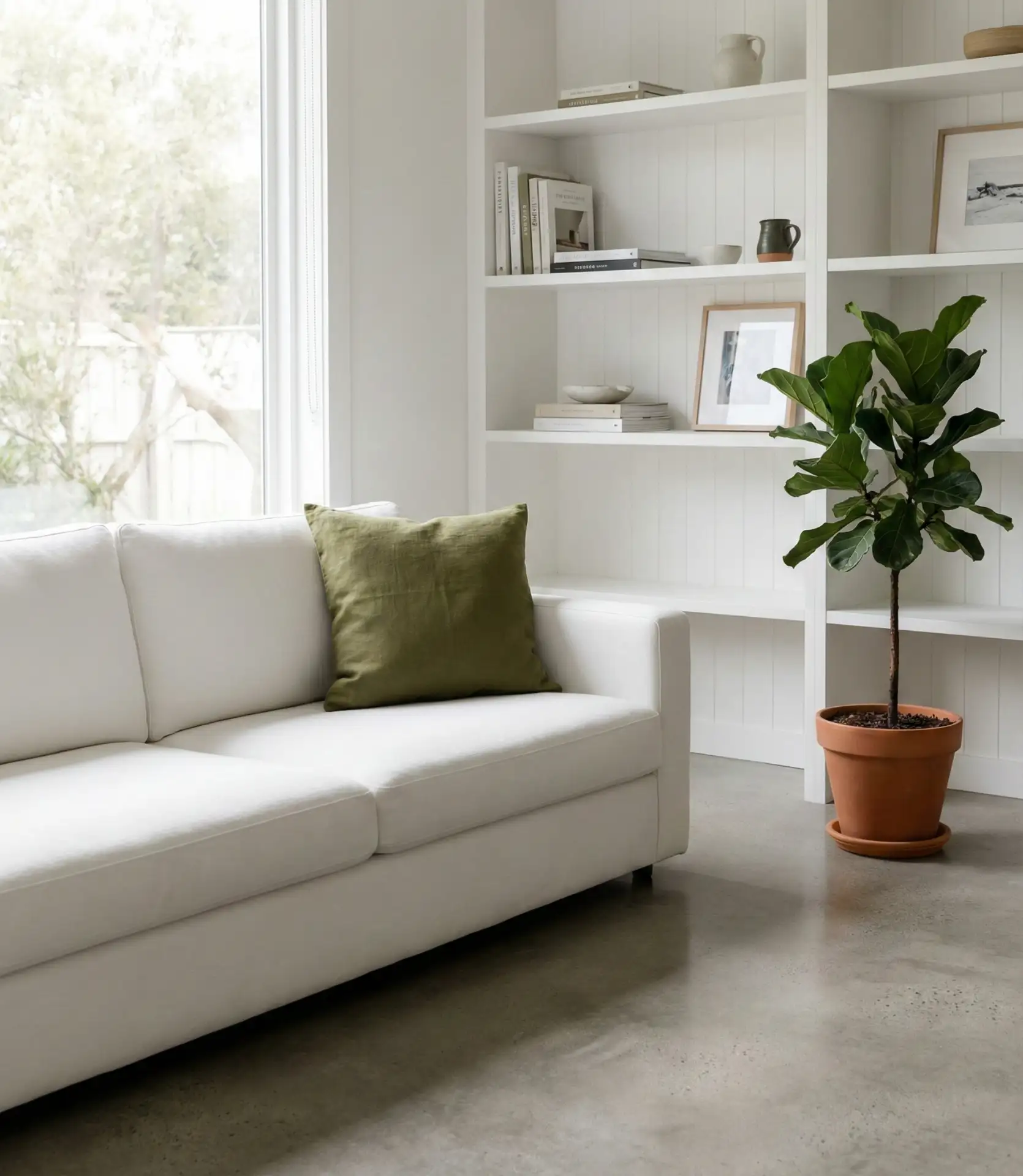
A common mistake here is adding too much green, which can make the space feel less minimal and more busy. Instead, use green sparingly as an accent that draws the eye and adds visual interest. Even a single large plant in a white room can achieve the fresh, natural feel you’re after without requiring furniture or paint.
25. Terracotta and Green Southwestern Character
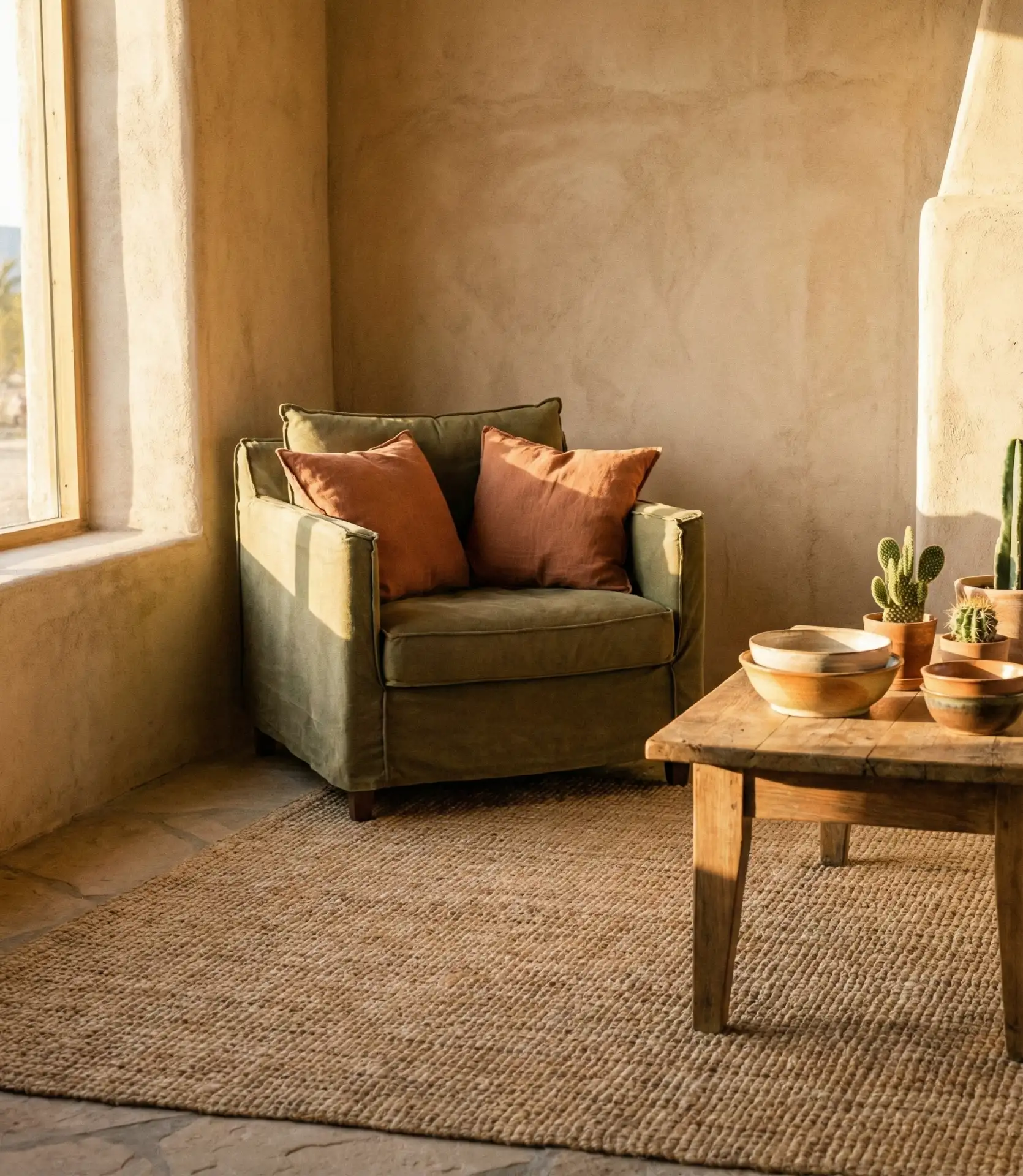
Terracotta and green bring Southwestern warmth and character to any living room. The earthy clay tones paired with sage or olive greens create a palette inspired by desert landscapes and adobe architecture. This look works beautifully in homes with exposed wood beams, tile floors, or stucco walls, and it’s become increasingly popular outside the Southwest as people embrace warm, earthy color schemes that feel grounded and natural.
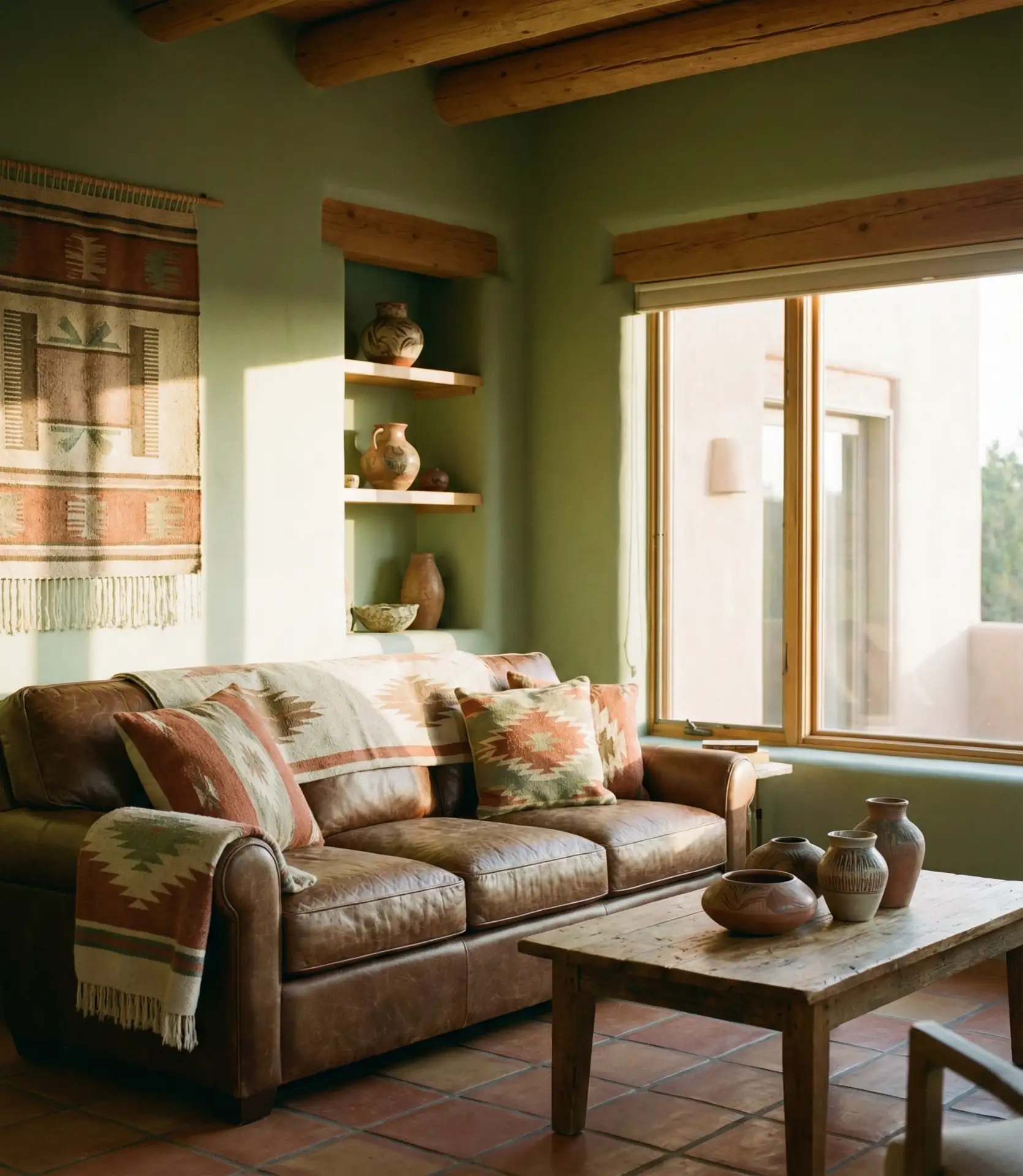
Budget-conscious homeowners love this palette because terracotta accessories are widely available and affordable, from mass-market retailers to local artisan markets. You don’t need to invest in high-end furniture when the color story and natural materials do most of the heavy lifting. Add woven baskets, clay pots, and handmade textiles to complete the look without breaking the bank.
Green living rooms offer endless possibilities for creating spaces that feel fresh, calming, and uniquely yours. Whether you’re drawn to moody forest tones or soft sage hues, there’s a green palette that will work for your home and lifestyle. We’d love to hear which of these ideas resonated with you—drop a comment below and let us know which green living room style you’re planning to try in your space.