50 Stair Railing Ideas 2026: From Rustic Wooden Charm to Modern Glass Elegance

From being purely functional safety features, stair railings have evolved into one of the most expressive design elements in a home. In 2026, Americans are searching for railing ideas that blend style, durability, and personality, whether they’re renovating a century-old farmhouse or building a sleek urban loft. Pinterest feeds are filled with everything from minimalist metal balusters to richly textured wooden handrails draped in seasonal greenery. This guide walks you through inspiring stair railing ideas that reflect the latest trends, regional preferences, and practical considerations for every type of space—from basements to coastal retreats.
1. Sleek Metal Balusters with Dark Accents
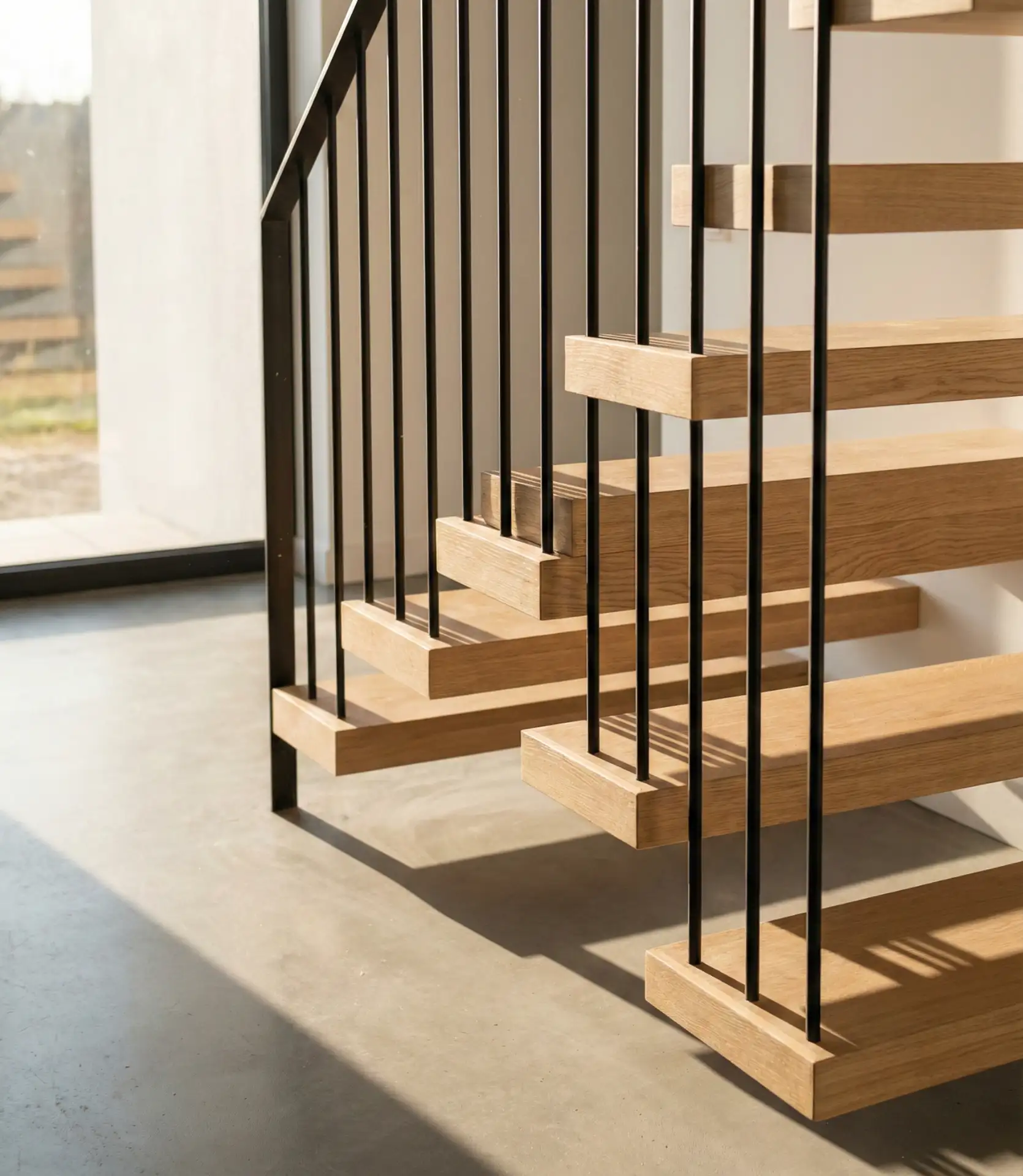
Consider pairing slim metal balusters with a matte black handrail if modern minimalist aesthetics appeal to you. This combination works beautifully in open-concept homes where the staircase acts as a sculptural divider between living areas. The vertical lines create a sense of height without visual clutter, making it especially popular in urban townhomes and lofts where every square foot counts.
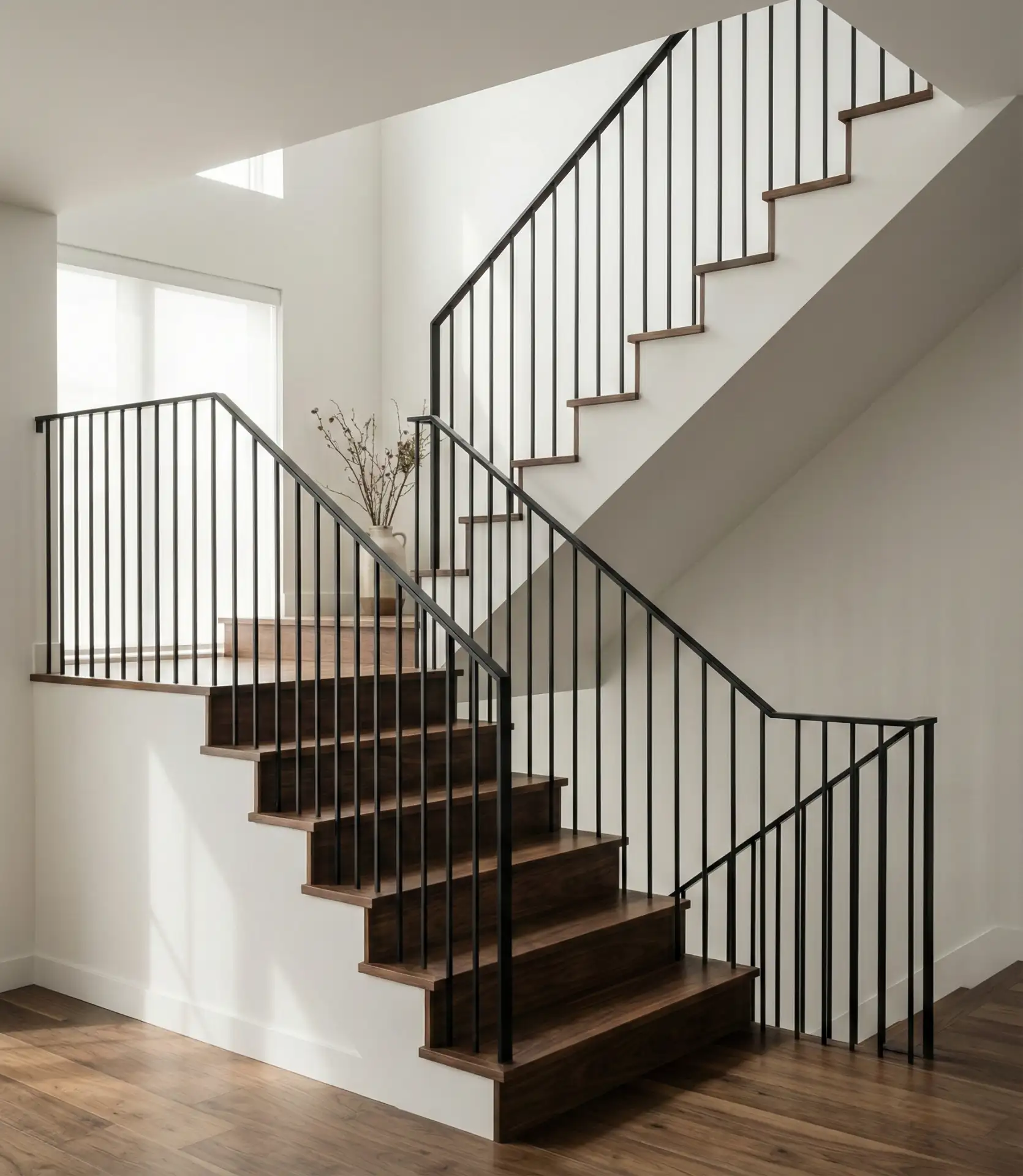
This design thrives in homes with abundant natural light—think floor-to-ceiling windows or skylights—because the dark metal doesn’t overwhelm the space. Avoid pairing it with heavy, ornate furniture; instead, let the railing be the bold statement piece. Many homeowners in cities like Portland and Austin have adopted this look to balance industrial charm with West Coast warmth.
2. Warm Wooden Rails with Horizontal Slats
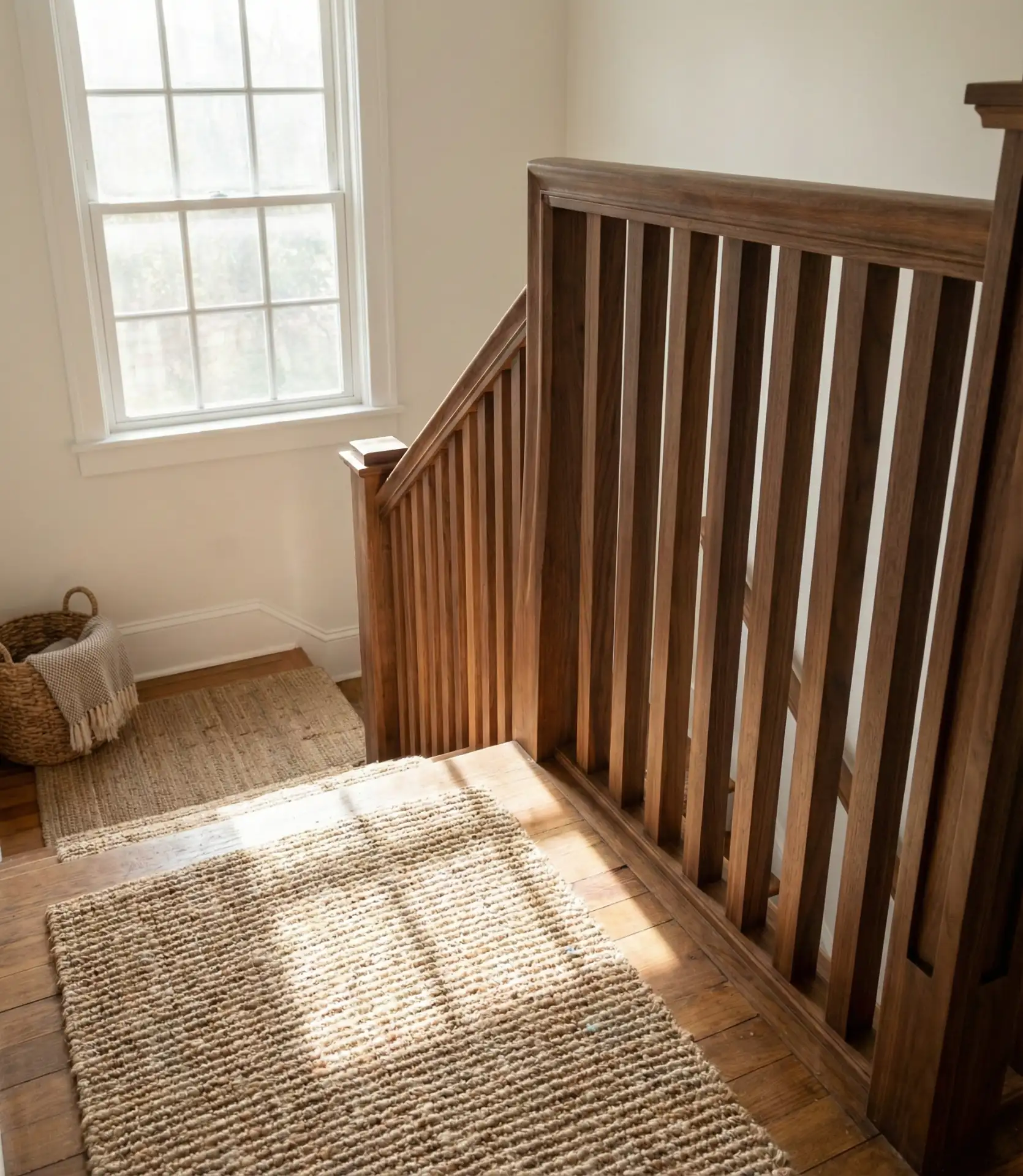
For a rustic yet refined vibe, wooden handrails paired with horizontal slats bring texture and warmth to staircases in cabin-style homes or mountain retreats. The grain and natural color variations in oak, walnut, or reclaimed pine add character that feels lived-in and inviting. This style is particularly effective in homes with exposed beams or stone fireplaces, where the wood creates a cohesive material palette.
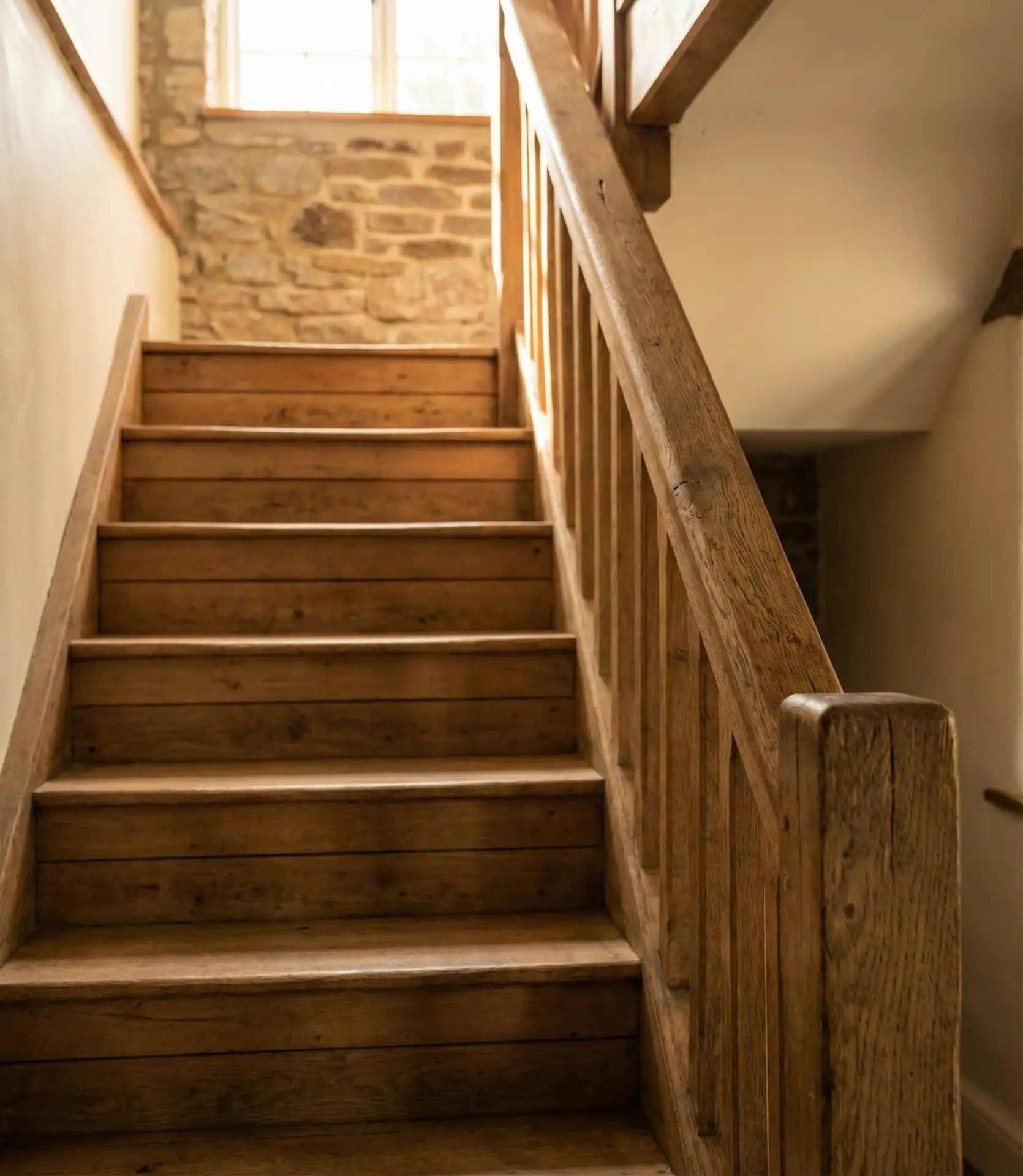
One common mistake is using horizontal slats in narrow staircases—they can make the space feel closed off. This design works best in wider staircases (at least 42 inches across) where the lines emphasize breadth rather than constrict it. To maintain the wood’s beauty, reseal it every two to three years, especially in high-traffic households.
3. Glass Panels for Open Sight Lines
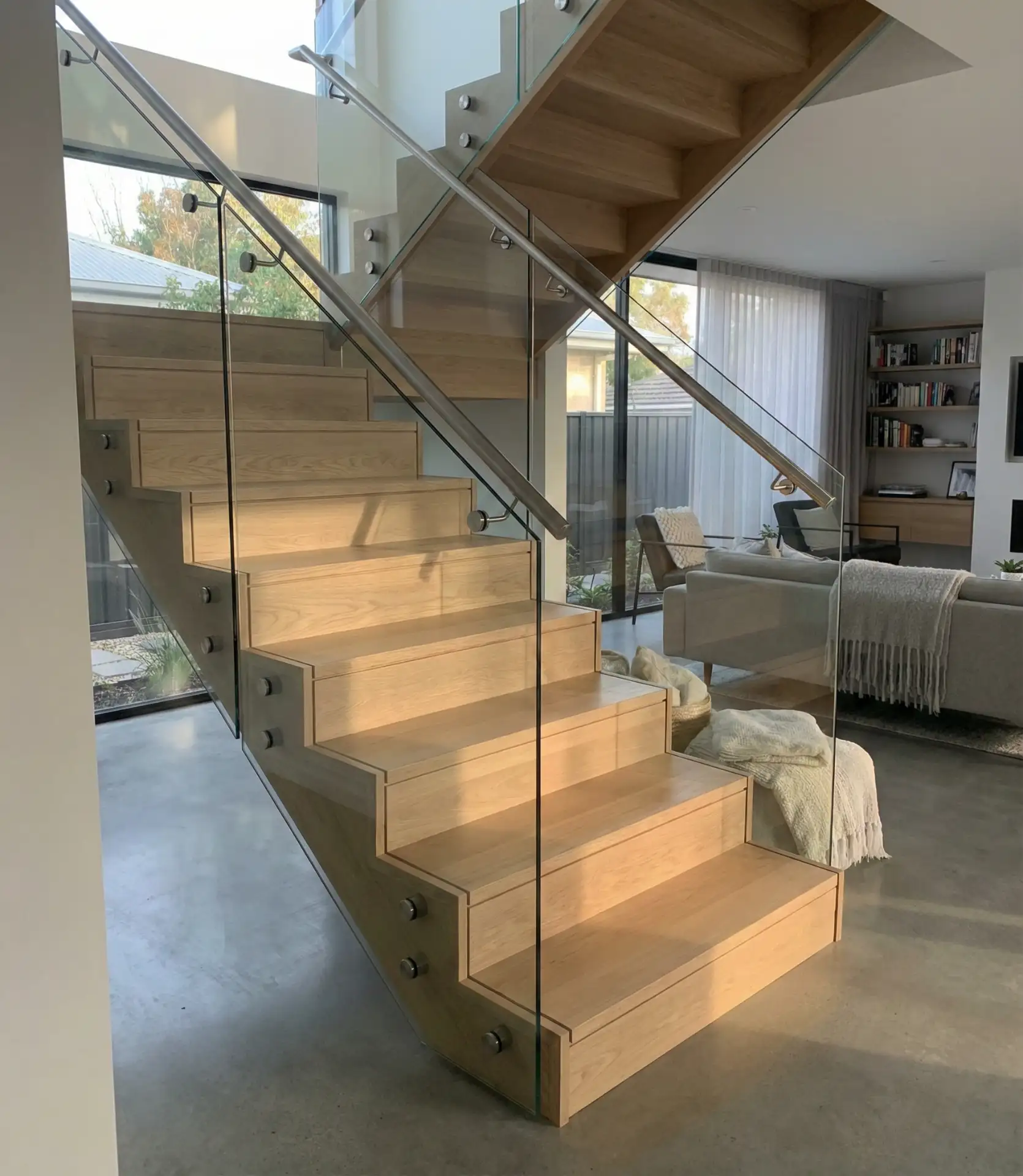
Glass railings have become a go-to for contemporary homes where maintaining visual flow is paramount. Whether framed in brushed nickel or left frameless, glass panels allow light to travel freely and keep small spaces from feeling cramped. They’re especially popular in split-level homes and loft conversions where the staircase sits in the middle of the living area.
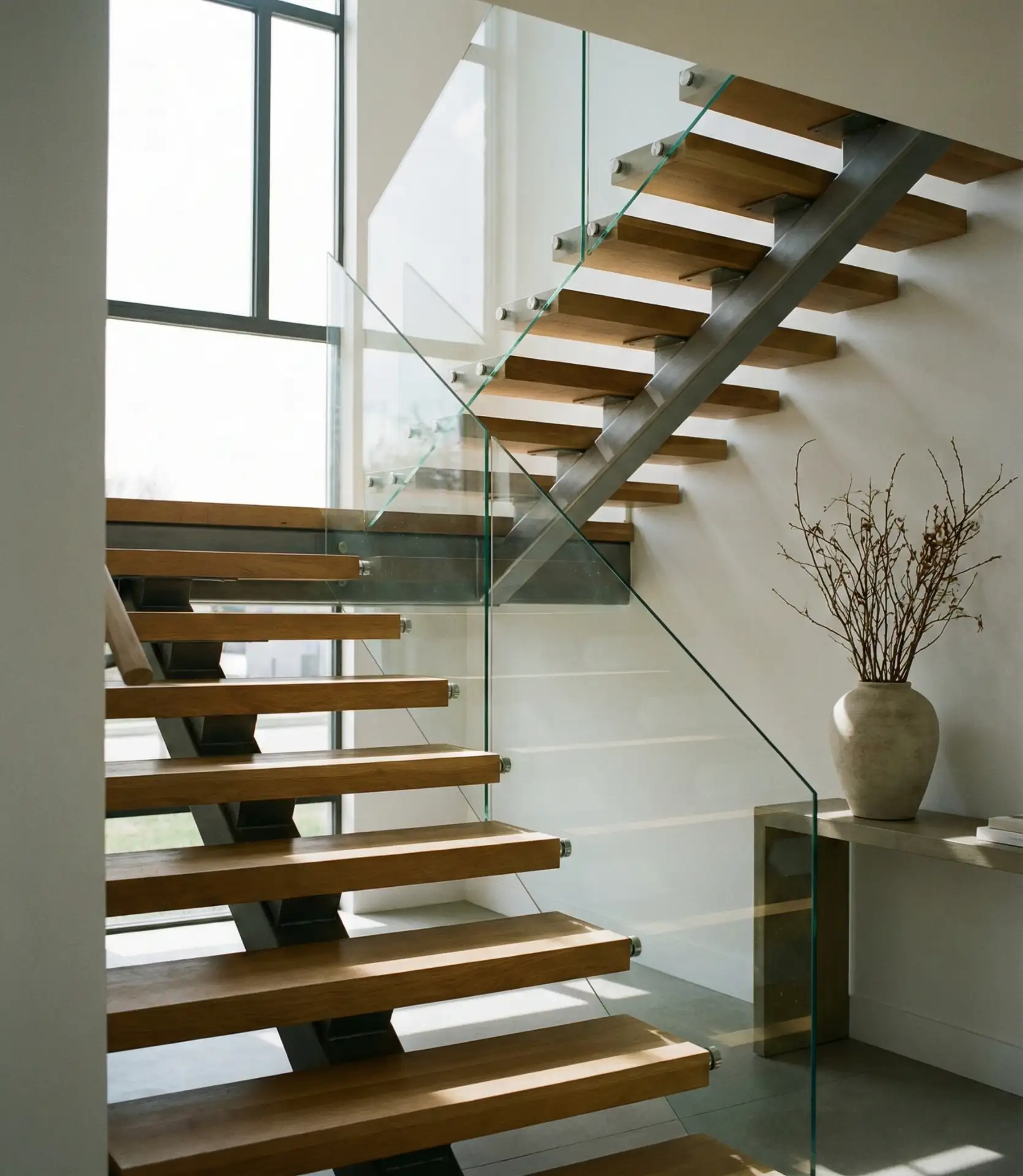
Budget-wise, expect to pay between $150 and $300 per linear foot for tempered glass with professional installation. While the upfront cost is higher than wood or metal, the low maintenance—just occasional Windex wipe-downs—and the timeless look make it a solid long-term investment for homeowners who value clean, unobstructed design.
4. Painted White for Classic Elegance
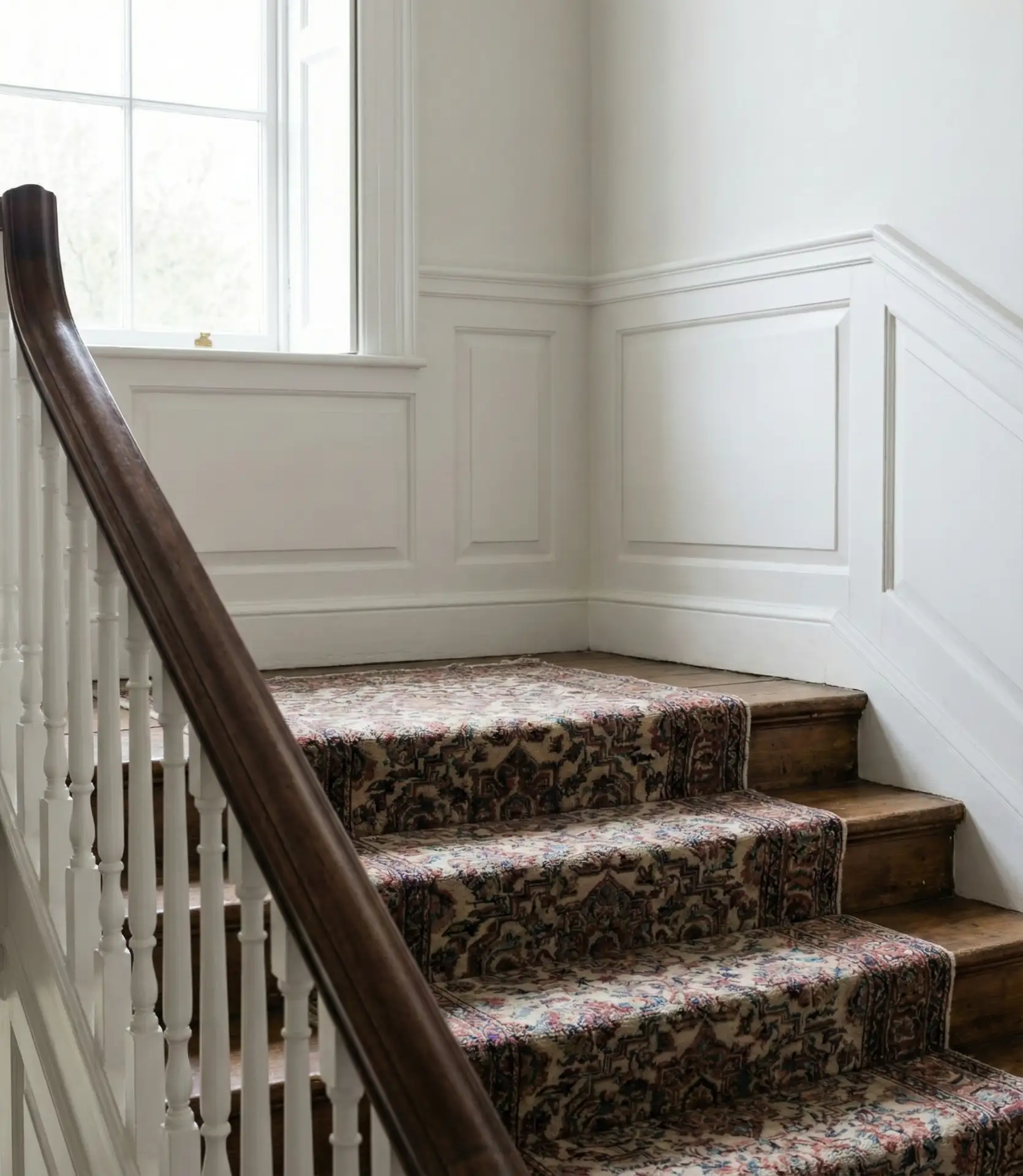
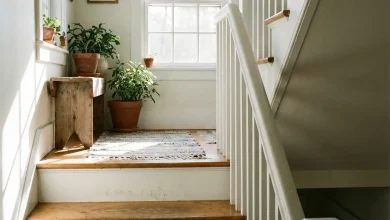
A painted white railing is the backbone of traditional American home design, from Colonial Revivals to Cape Cods. This approach pairs beautifully with carpet runners in muted tones or bold patterns, softening the rigid lines of the staircase while adding a layer of comfort underfoot. White railings reflect light, making narrow stairwells feel airier and more welcoming.
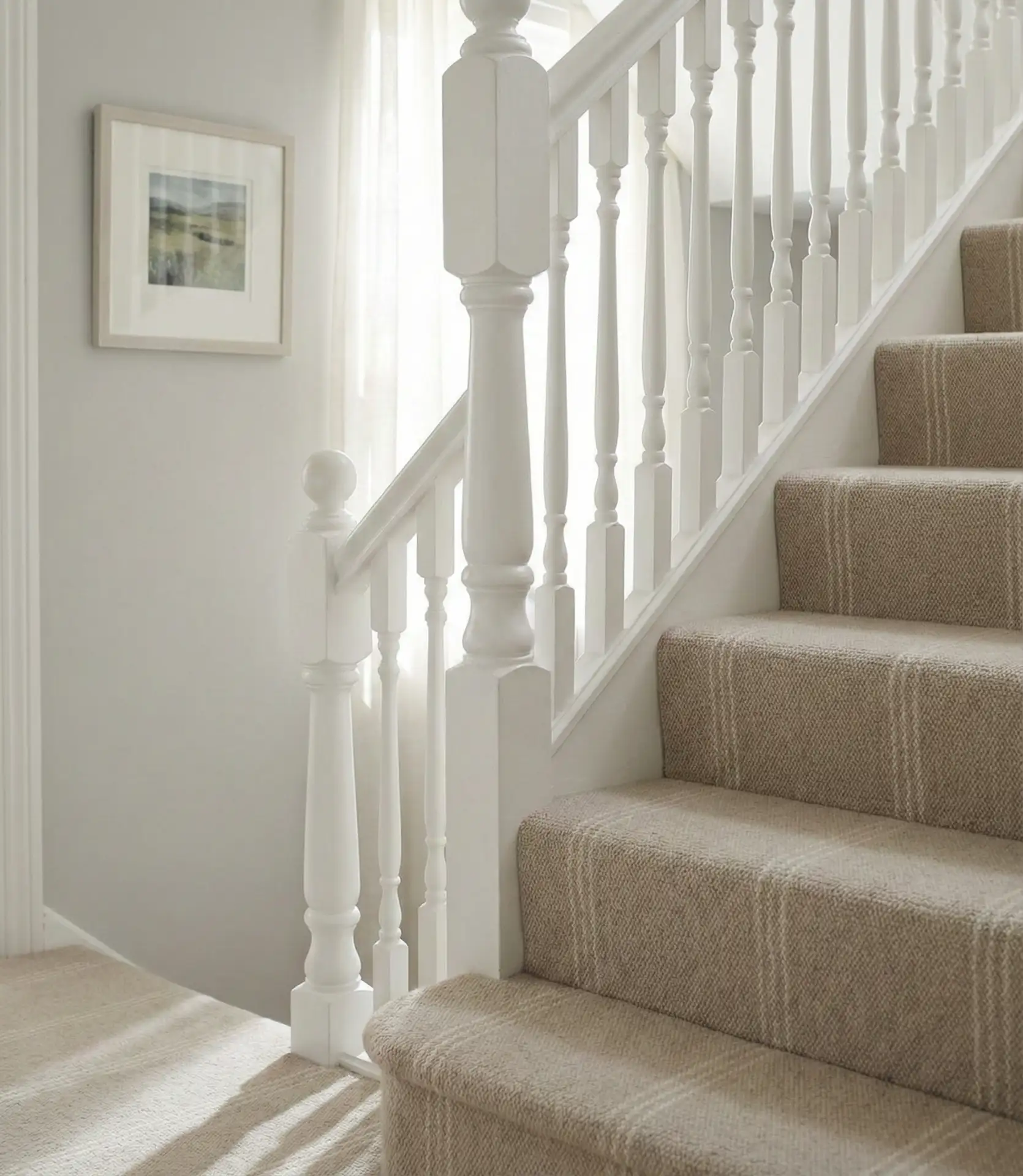
A neighbor of mine recently repainted her 1940s staircase railings in Sherwin-Williams Pure White and paired them with a charcoal gray runner—it instantly modernized the space without losing its vintage charm. The key is using a durable semi-gloss or satin finish that withstands daily hand traffic and wipes clean easily.
5. Industrial Cable Railing for Modern Lofts
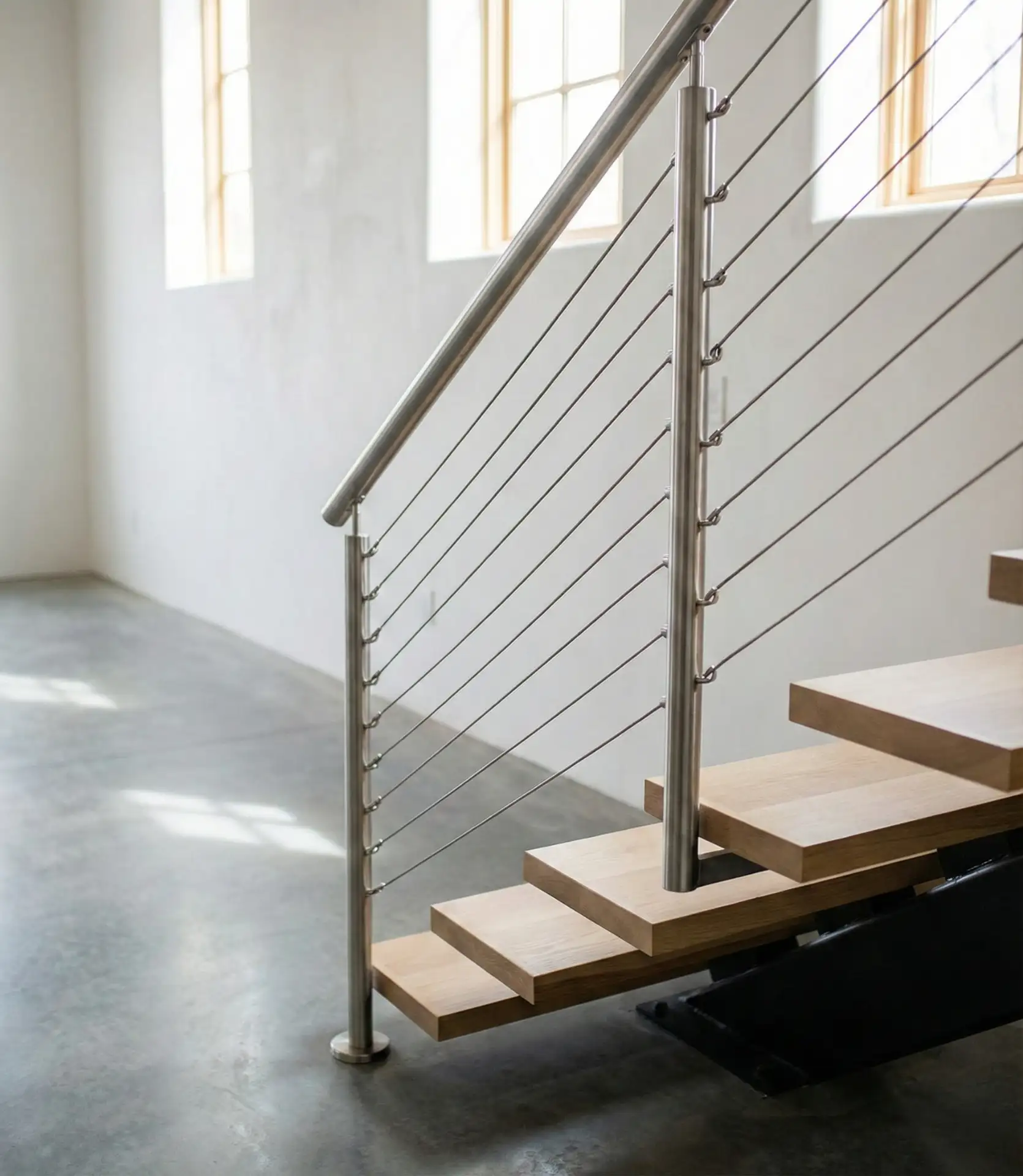
Stainless steel cable railings are a favorite in loft and modern indoor spaces where an industrial edge meets contemporary sophistication. The thin cables virtually vanish, thereby showcasing the architecture and furnishings. This style is particularly effective in homes with exposed ductwork, concrete floors, or brick accent walls.
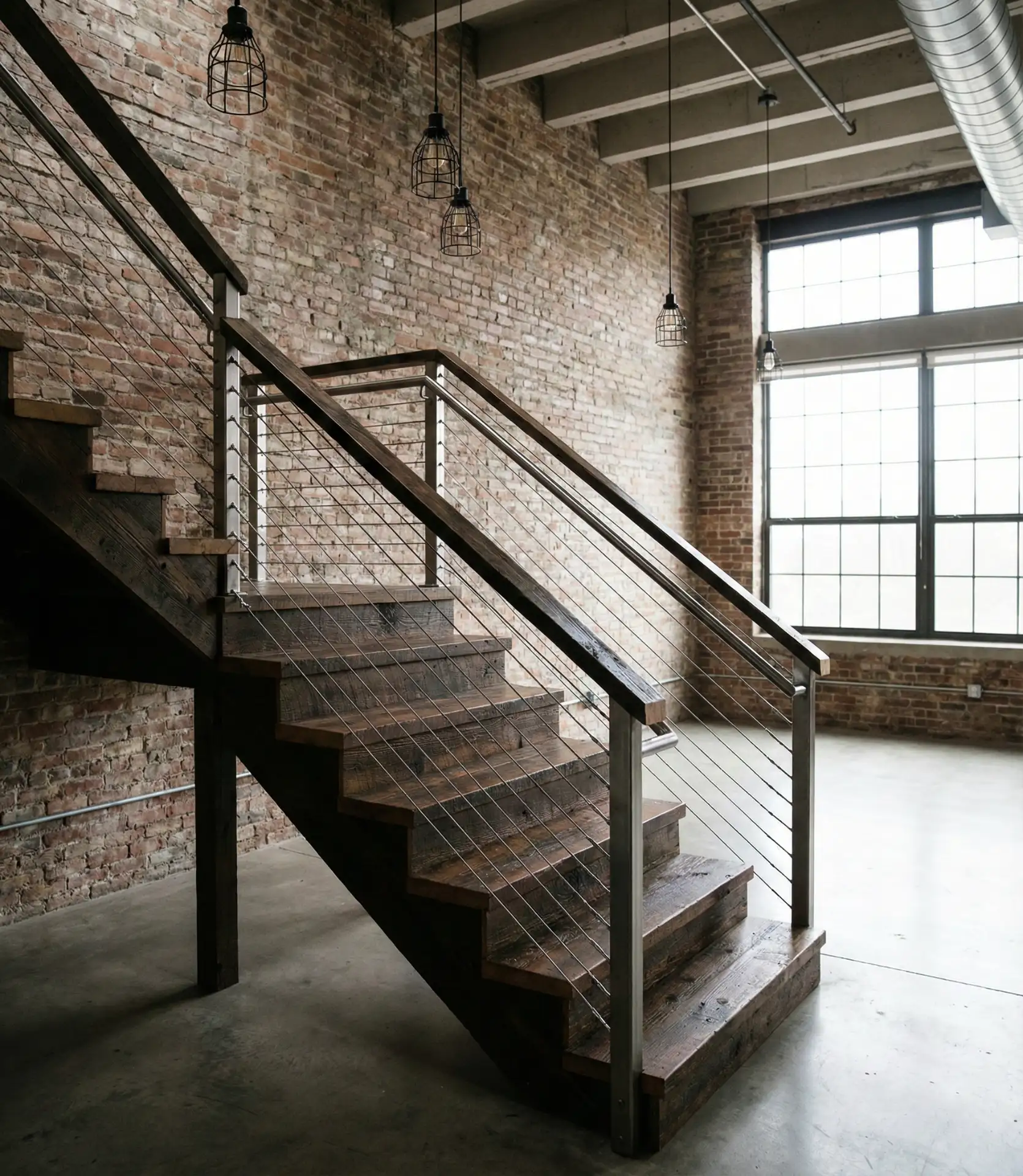
Where it works best: Open staircases in converted warehouses, A-frame vacation homes, and second-story walkways overlooking wonderful rooms. The cables need to be tensioned properly—loose cables sag and look unfinished, while overtightened ones can warp the posts. Most installers recommend checking tension annually.
6. Wrought Iron with Artistic Scrollwork
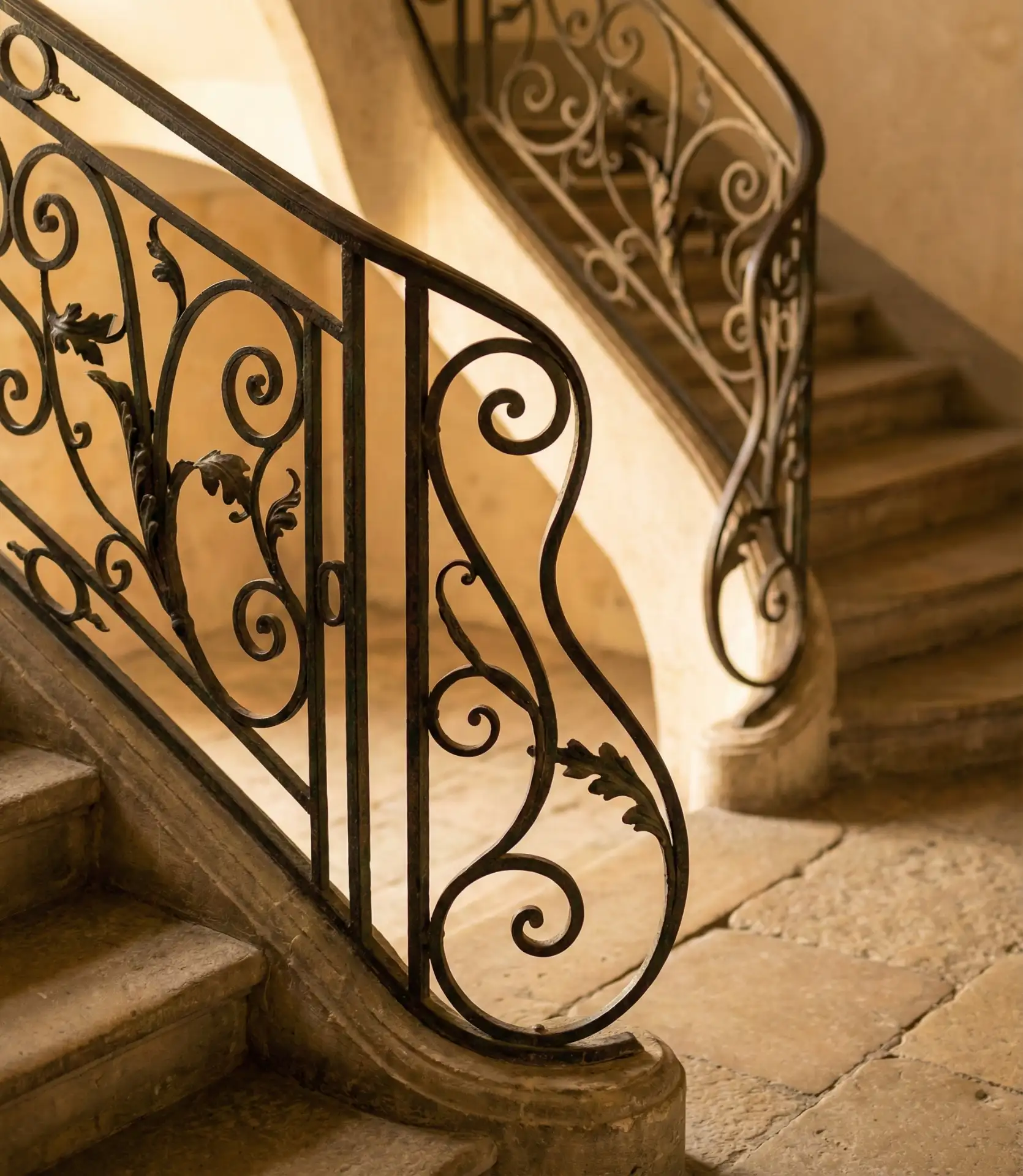
For homeowners who want a railing that doubles as functional art, custom artistic designs in wrought iron provide timeless beauty and a handcrafted feel. Scrolls, leaves, vines, and geometric patterns can be tailored to match the home’s architectural style, whether it’s Mediterranean, Spanish Colonial, or French Country. These railings are substantial and grounding, perfect for grand entryways or traditional homes with high ceilings.
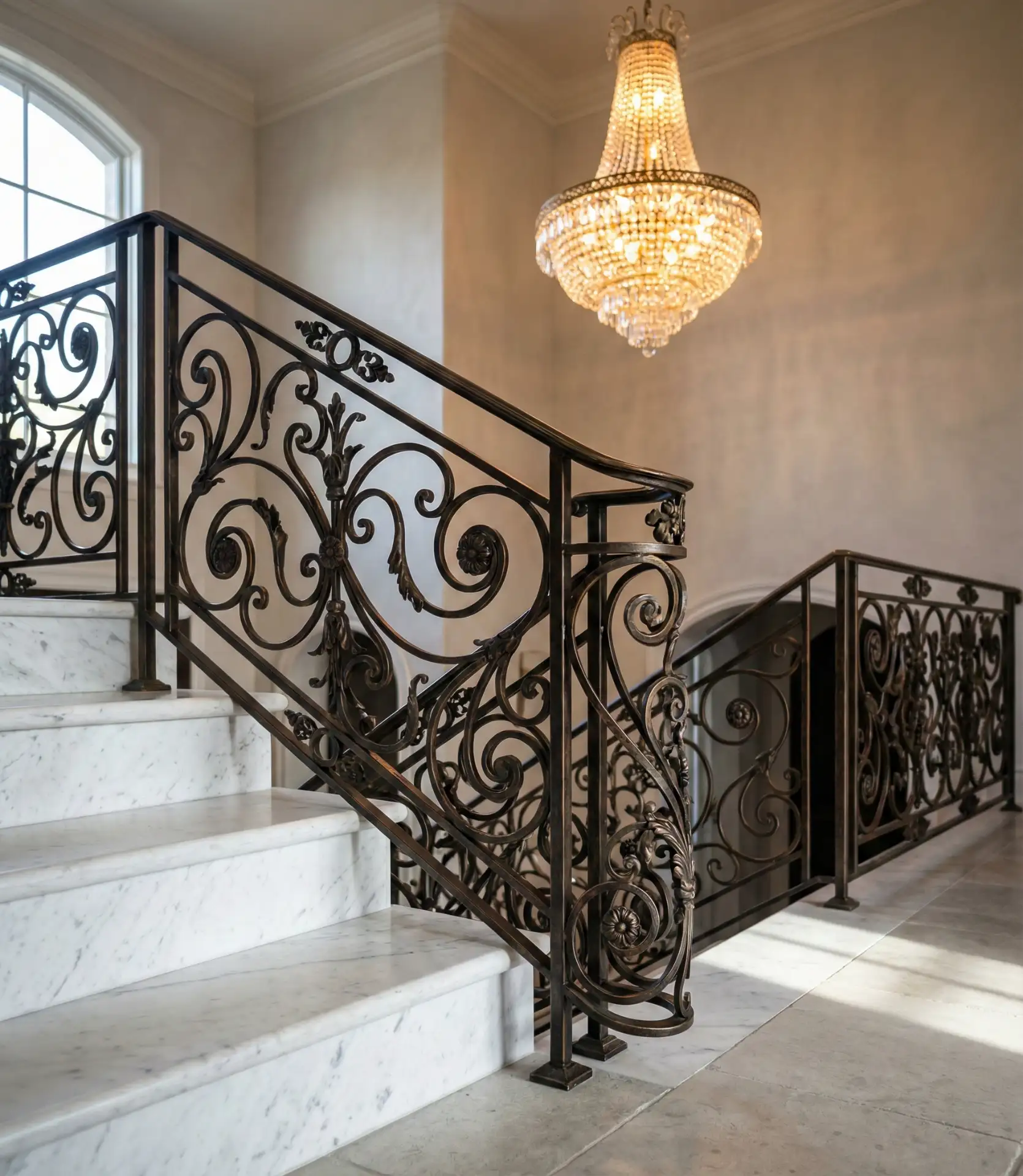
Real homeowner behavior: Many people underestimate the weight and installation complexity of wrought iron. It requires reinforced mounting and often needs a professional welder. But the payoff is a railing that can last generations with minimal upkeep—just an occasional coat of rust-resistant paint if installed outdoors.
7. Minimalist Wall-Mounted Handrails
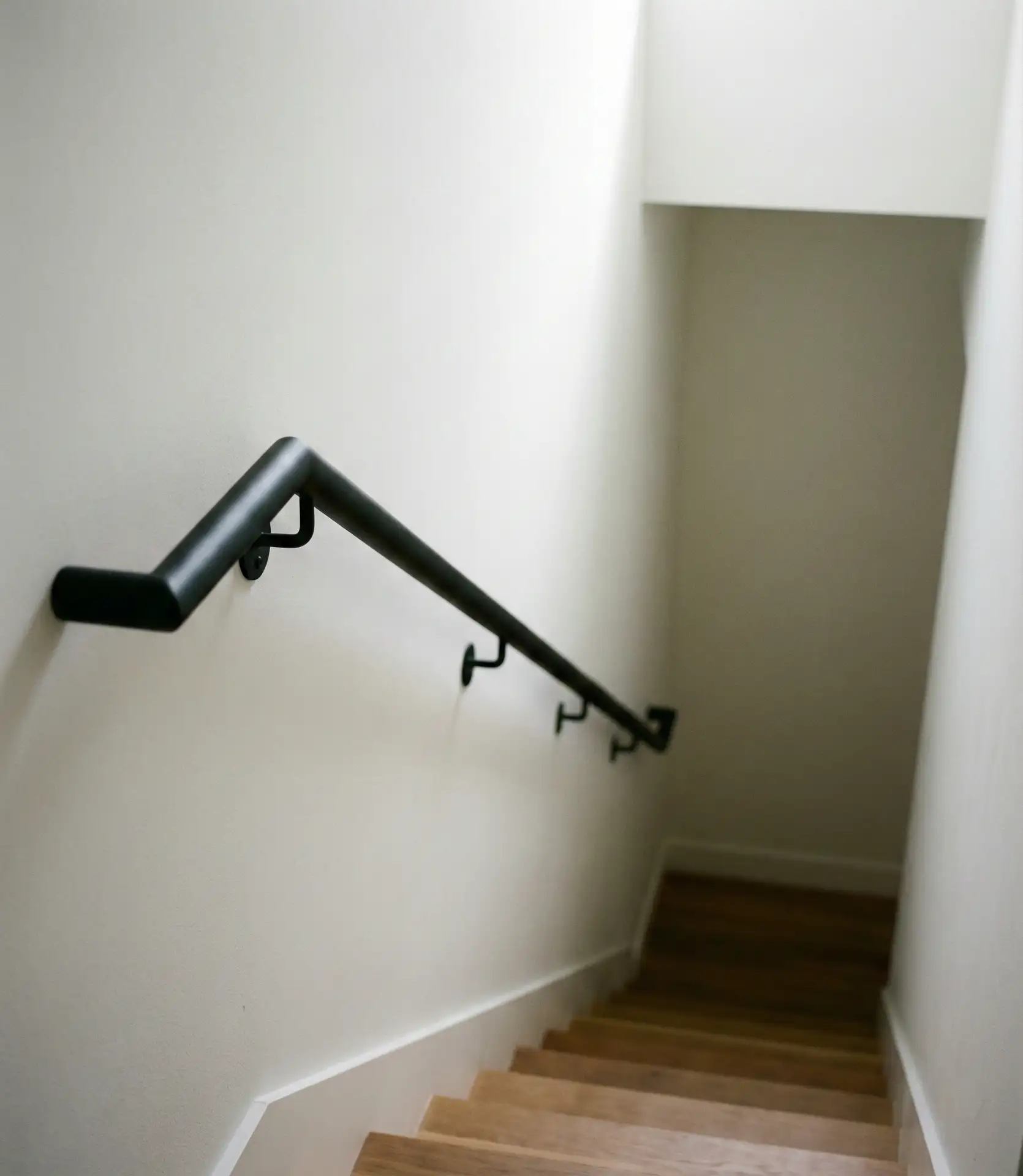
In tight quarters like basement staircases or secondary access stairs, a simple wall-mounted handrail can be all you need. This approach skips balusters entirely, relying on the adjacent wall for safety. The handrail itself becomes the design moment—whether it’s a sleek metal tube, a warm wooden bar, or even a leather-wrapped grip for tactile interest.
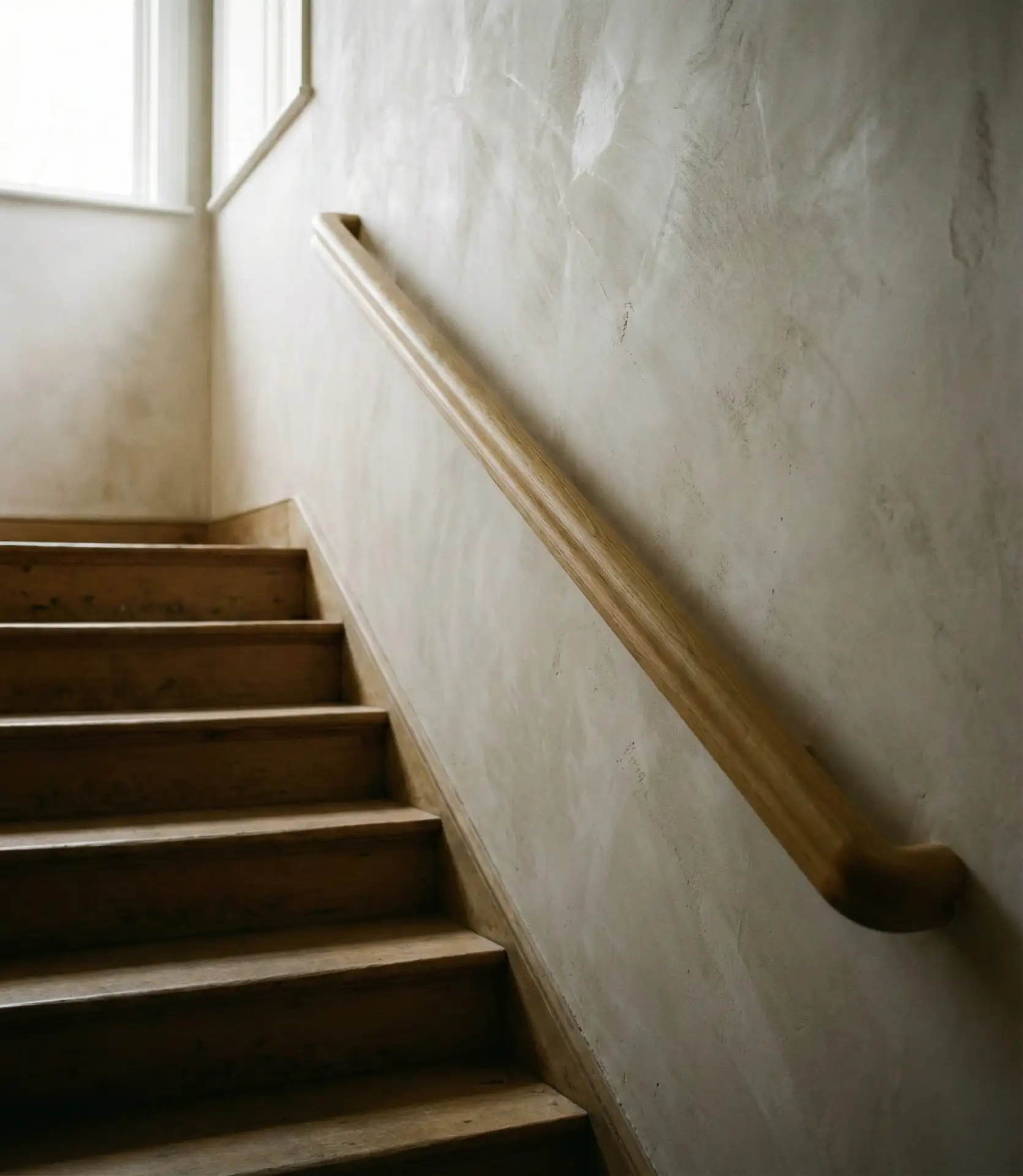
This solution is common in older homes where adding a full railing system would eat into already limited space. Scandinavian-inspired interiors, which prioritize minimalism, also favor this solution. Just ensure the handrail is mounted into studs and meets local building codes for height and strength.
8. Half Wall Railings with Built-In Storage
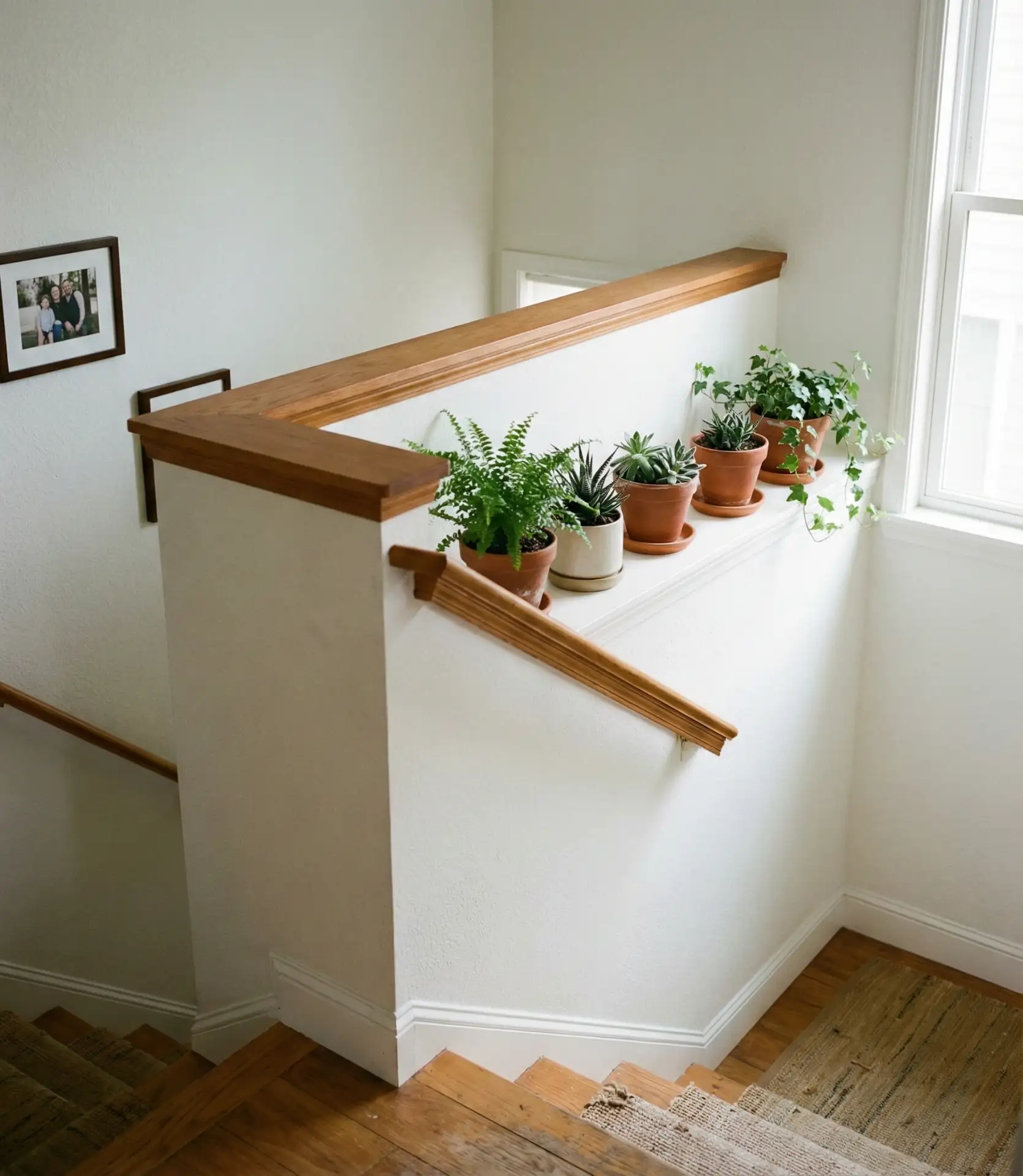
Half walls offer a genius blend of safety, privacy, and storage potential. By capping the knee wall with a wooden ledge or even integrating cubbies into the structure, you gain display space for books, plants, or family photos. This design is especially practical in homes with young children, as it provides a solid barrier without the gaps of traditional balusters.
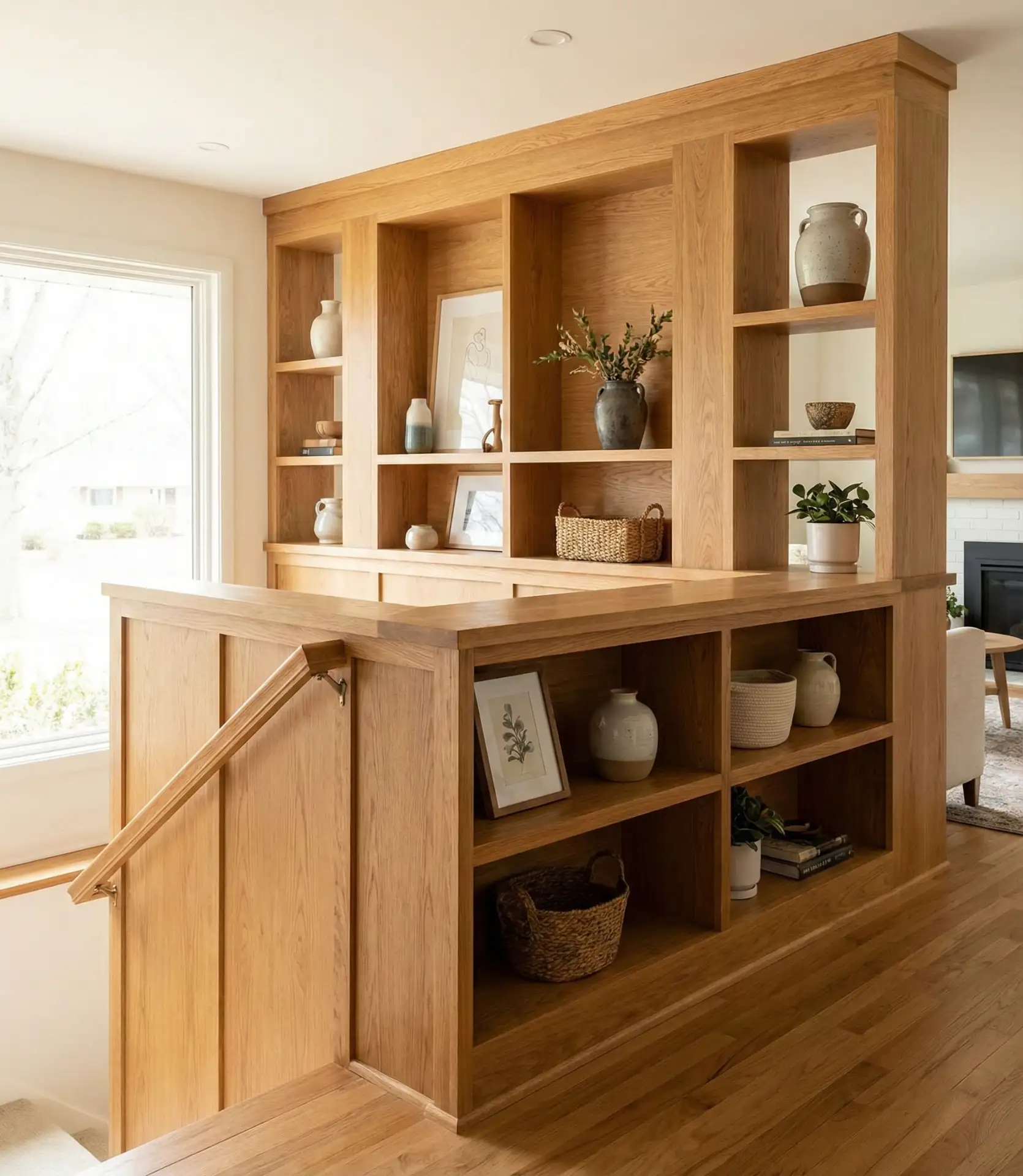
From a practical standpoint, half walls work best in split-level homes or bi-level ranches common across the Midwest, where the staircase divides the main living area. They add a sense of separation without closing off the space entirely. One downside: they can feel heavy in homes with low ceilings, so balance them with light paint colors and ample lighting.
9. Reclaimed Wood for Rustic Character
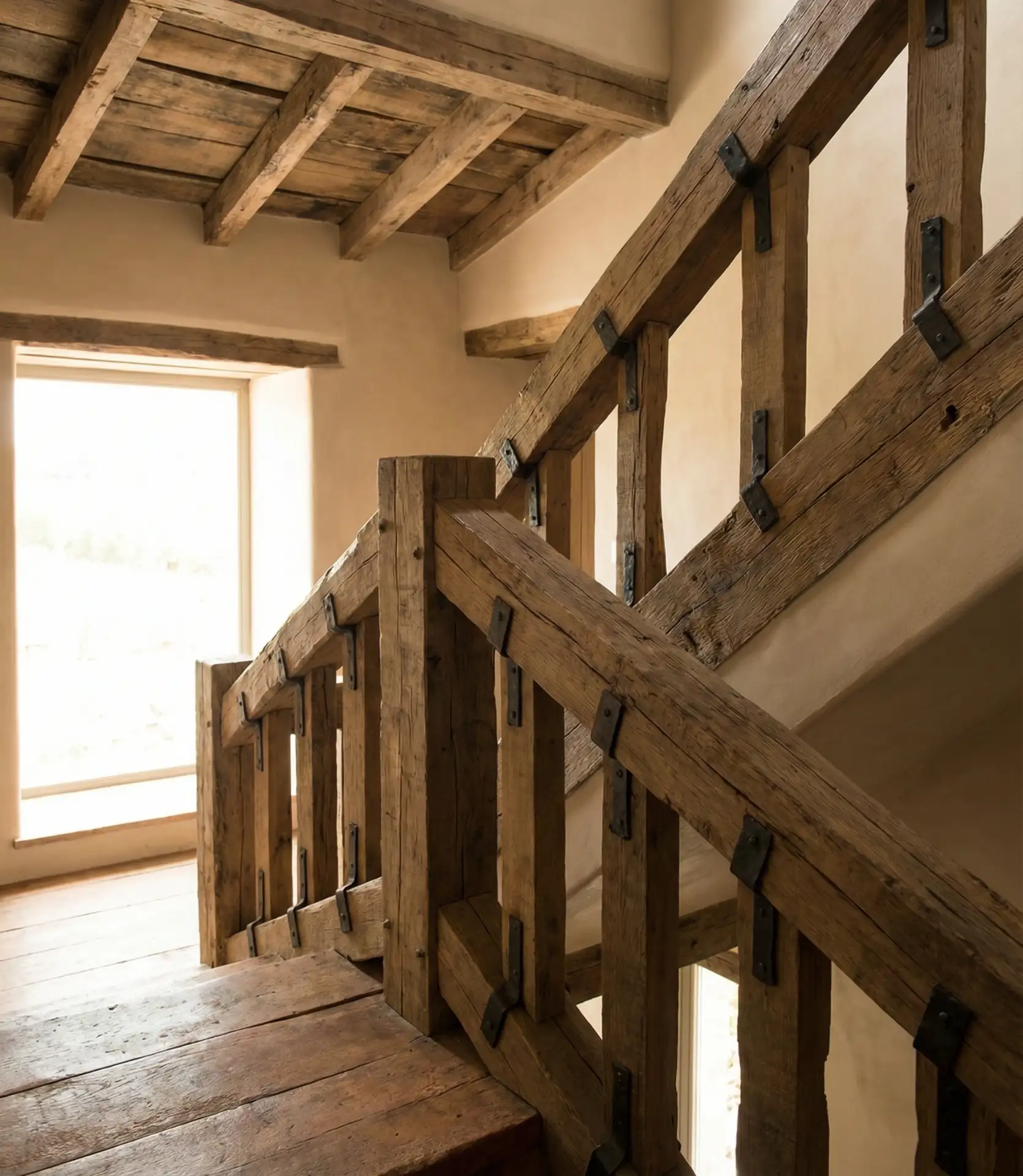
Using reclaimed barn wood or salvaged lumber for your rustic railing brings instant history and soul to a staircase. The weathered texture, nail holes, and color variations tell a story that new materials simply can’t replicate. This style is a natural fit for cabin interiors, farmhouse kitchens, and homes in rural or mountain regions where the outdoors is a constant design influence.
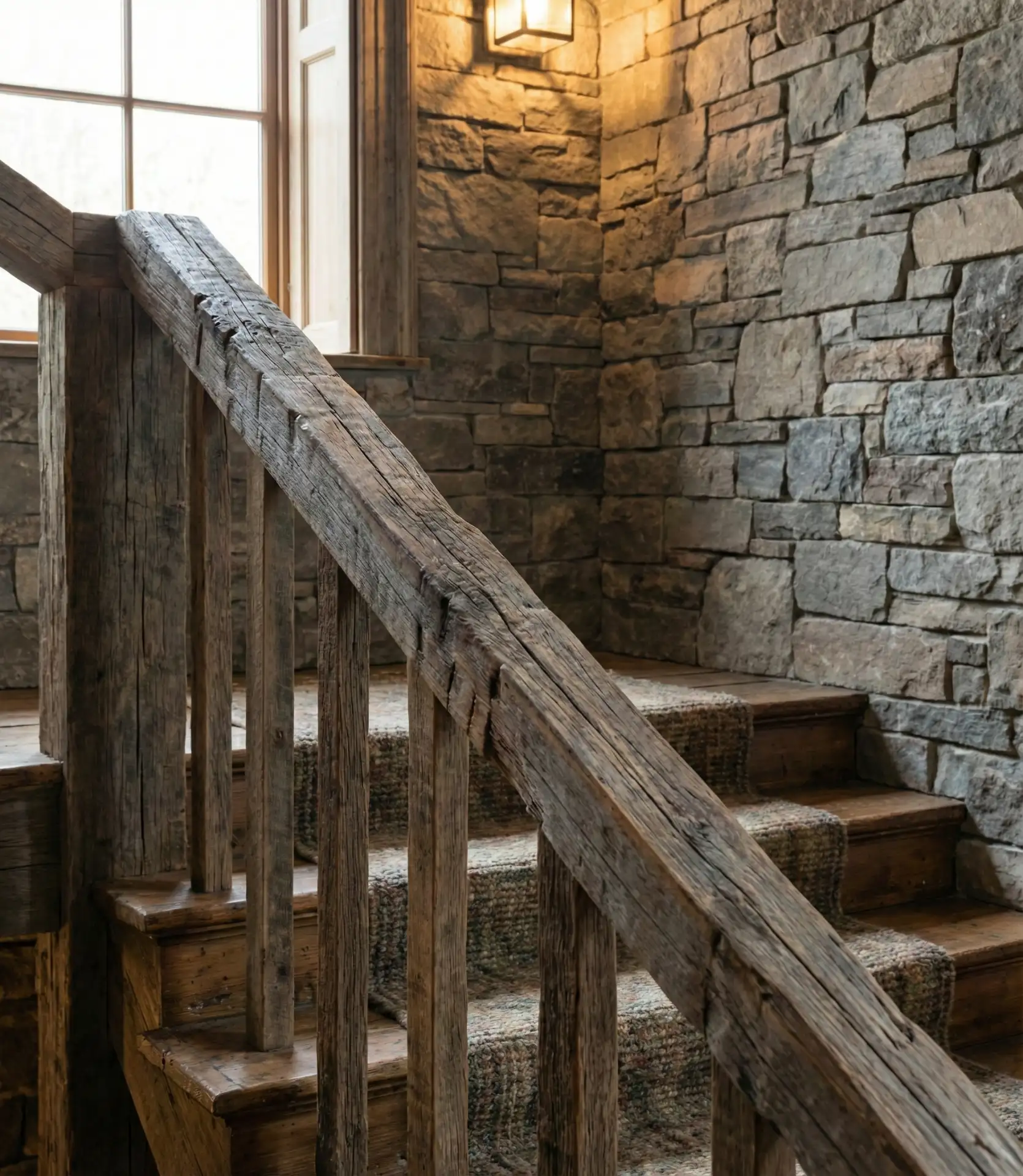
A colleague in Vermont recently installed a railing made from 100-year-old barn siding—the patina alone became the centerpiece of her entryway. If you go this route, make sure the wood is properly cleaned, treated for pests, and sealed. Although reclaimed wood can be more expensive than new lumber, many homeowners find the unique aesthetic to be worth it.
10. Coastal White and Blue Tones
For a coastal vibe that feels breezy and relaxed, pair painted white balusters with a soft blue or seafoam handrail. This color palette evokes sandy beaches and ocean horizons, making it ideal for homes near the water or anyone who wants to channel that vacation-home feeling year-round. Add rope accents or nautical hardware for an extra maritime touch.
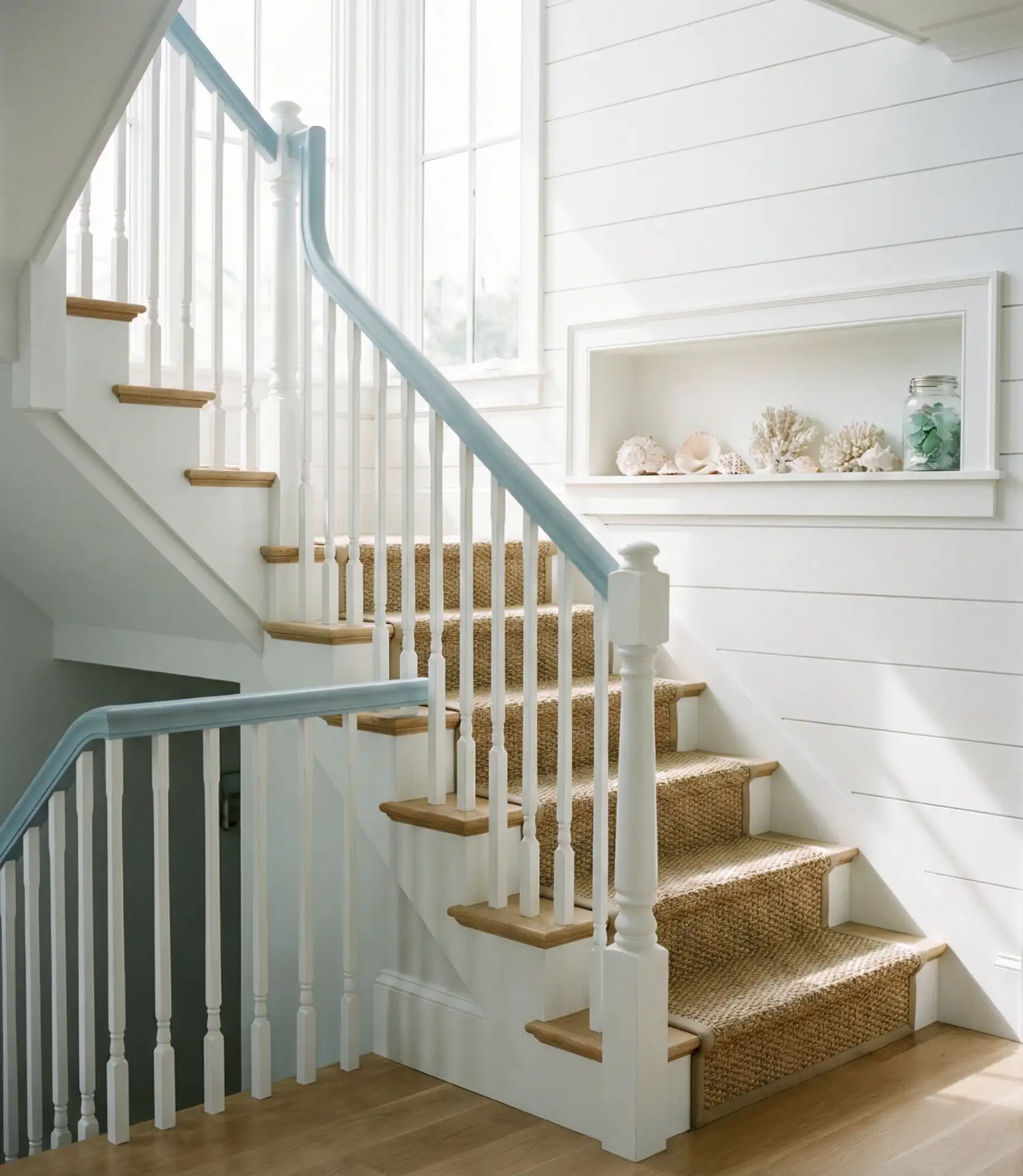
Where it works best: Beach cottages along the Gulf Coast, lake houses in the Carolinas, and suburban homes where the owners want a perpetual summer mood. The light colors help combat the humidity and salt air typical of coastal environments, as darker finishes can show wear more quickly in those conditions.
11. Modern Minimalist with Hidden Fasteners
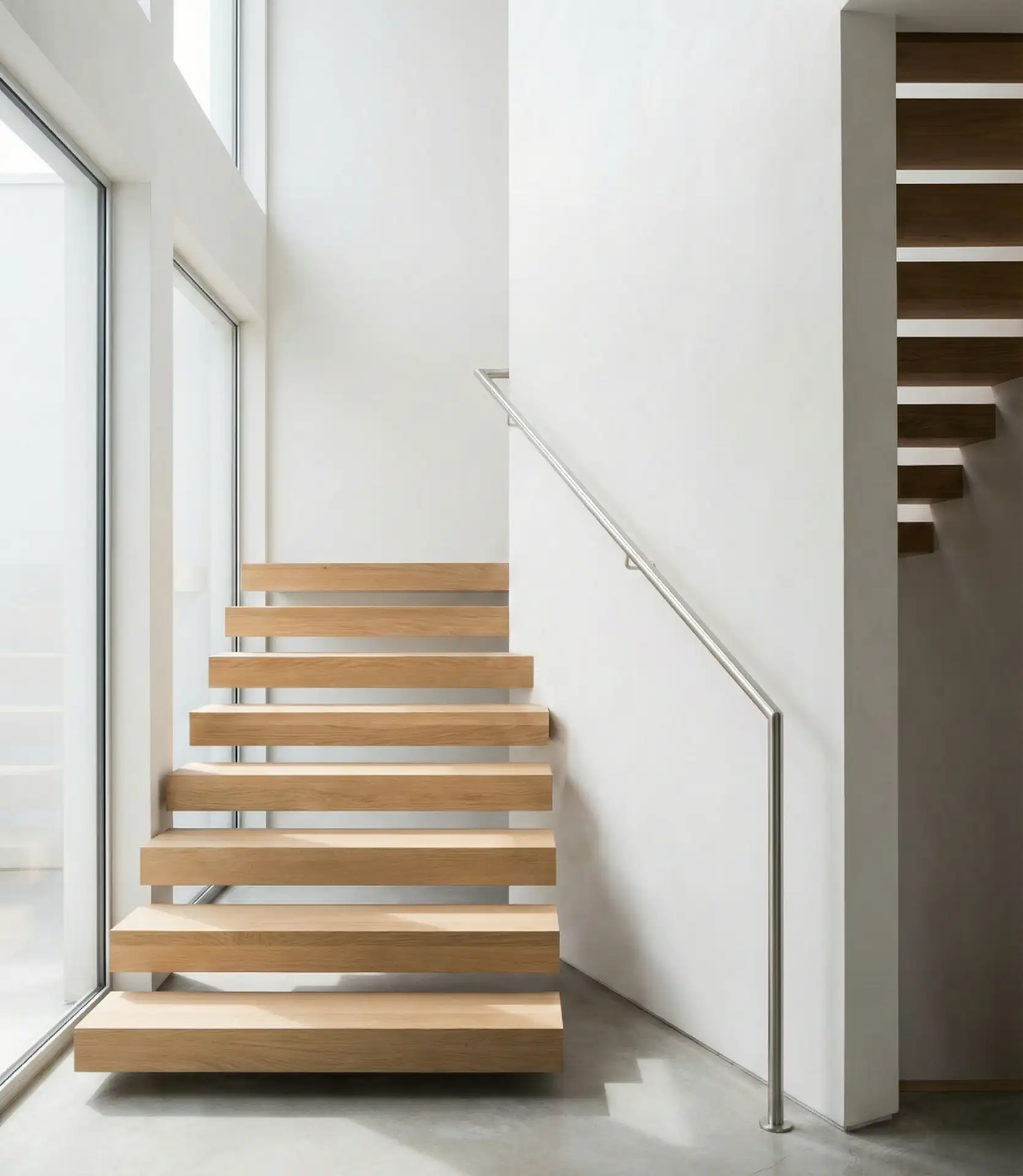
Achieving a truly modern minimalist look often relies on the details, or rather, the absence of visible details. Railings with hidden fasteners, flush-mounted brackets, and seamless joints create an almost floating effect. This approach is especially striking in contemporary homes with floor-to-ceiling windows, polished concrete floors, and monochromatic color schemes.
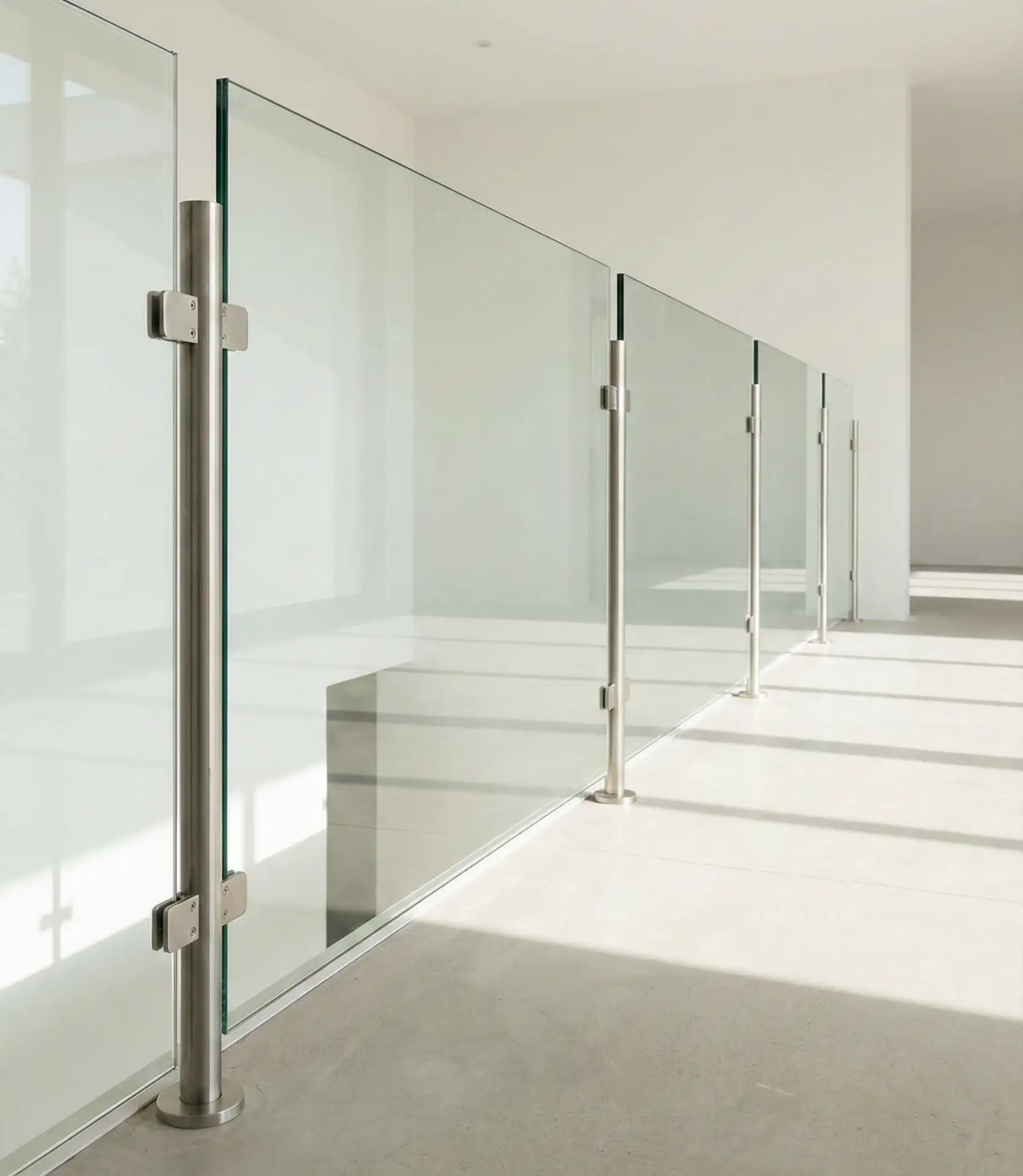
Expert insight: This level of precision requires experienced fabricators who can weld, sand, and finish to tight tolerances. The result is a railing that looks effortless but demands meticulous craftsmanship. It’s a smart investment for high-end renovations where every detail contributes to the overall design narrative.
12. Knotty Pine for Cabin Warmth
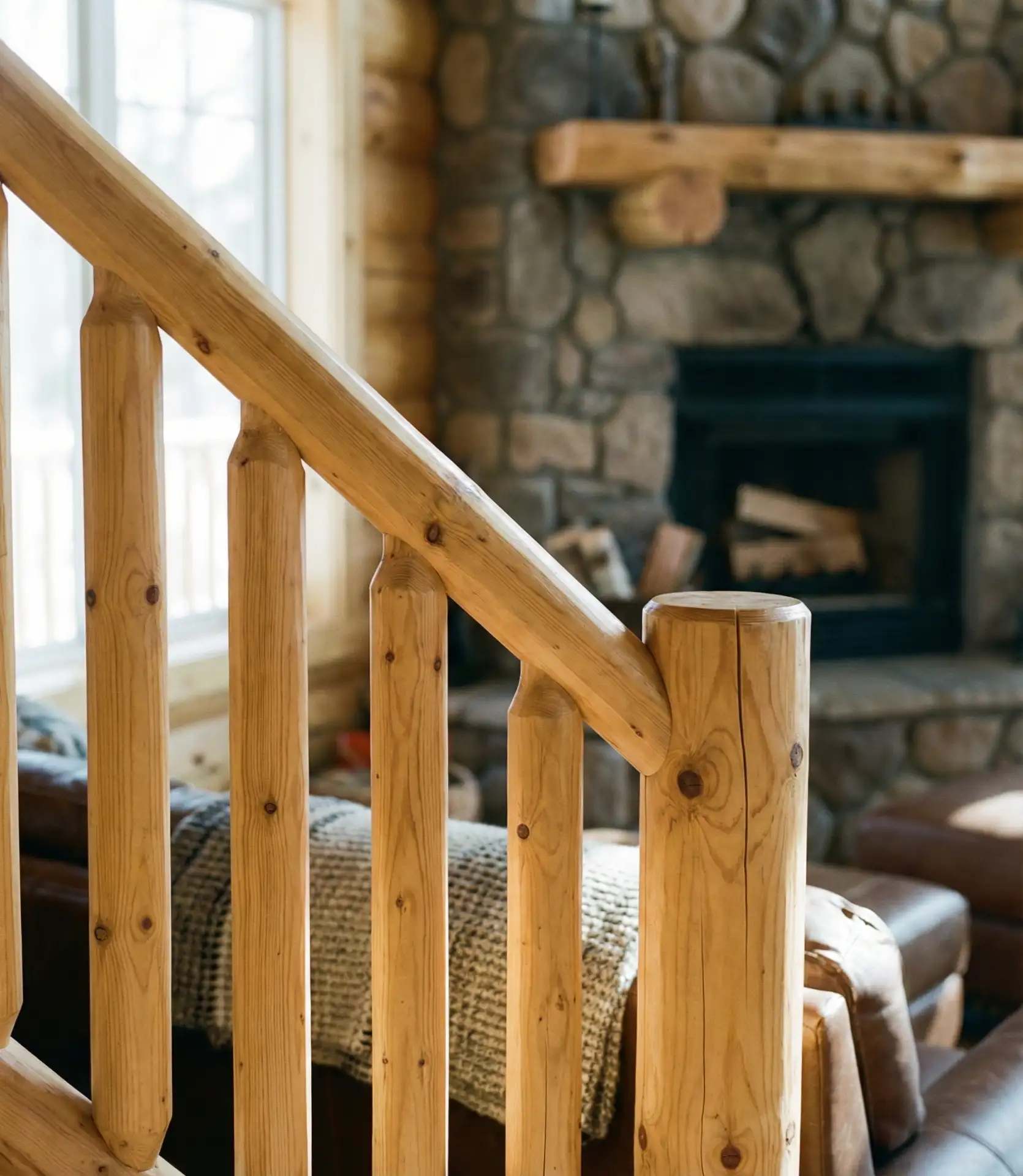
Knotty pine railings are synonymous with cabin living, offering a budget-friendly way to inject rustic warmth into your staircase. The knots and grain patterns create visual interest without needing elaborate carvings or finishes. This wood is softer than oak or maple, so it’s easier to work with for DIY enthusiasts, though it does require a protective topcoat to prevent dents and scratches.
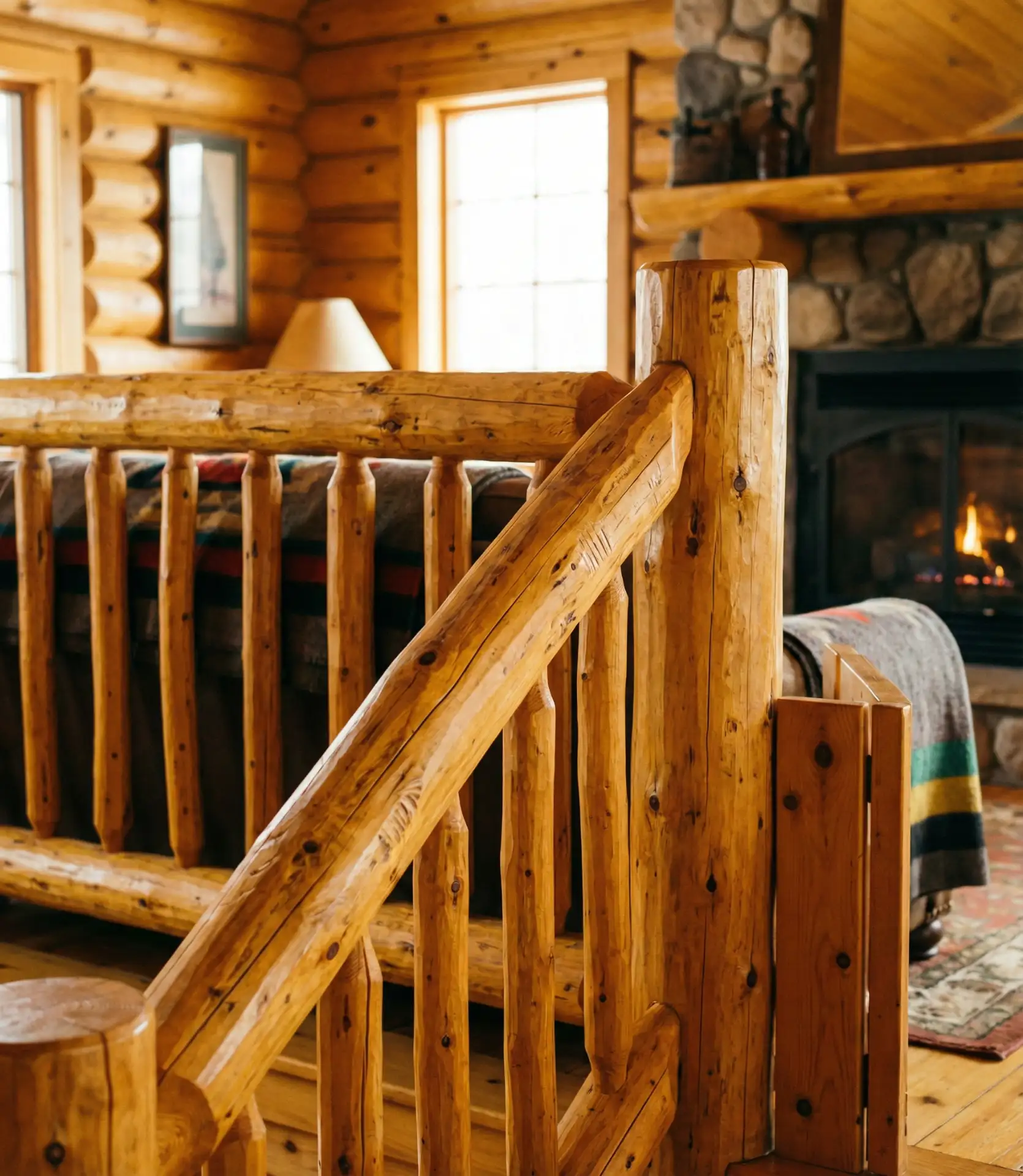
Many families in the Rockies and Appalachians gravitate toward knotty pine because it complements the surrounding landscape and doesn’t compete with other natural materials like stone and leather. If you’re on a tight budget, this is one of the most cost-effective ways to achieve an authentic woodsy look without sacrificing charm.
13. Black Metal with Geometric Patterns
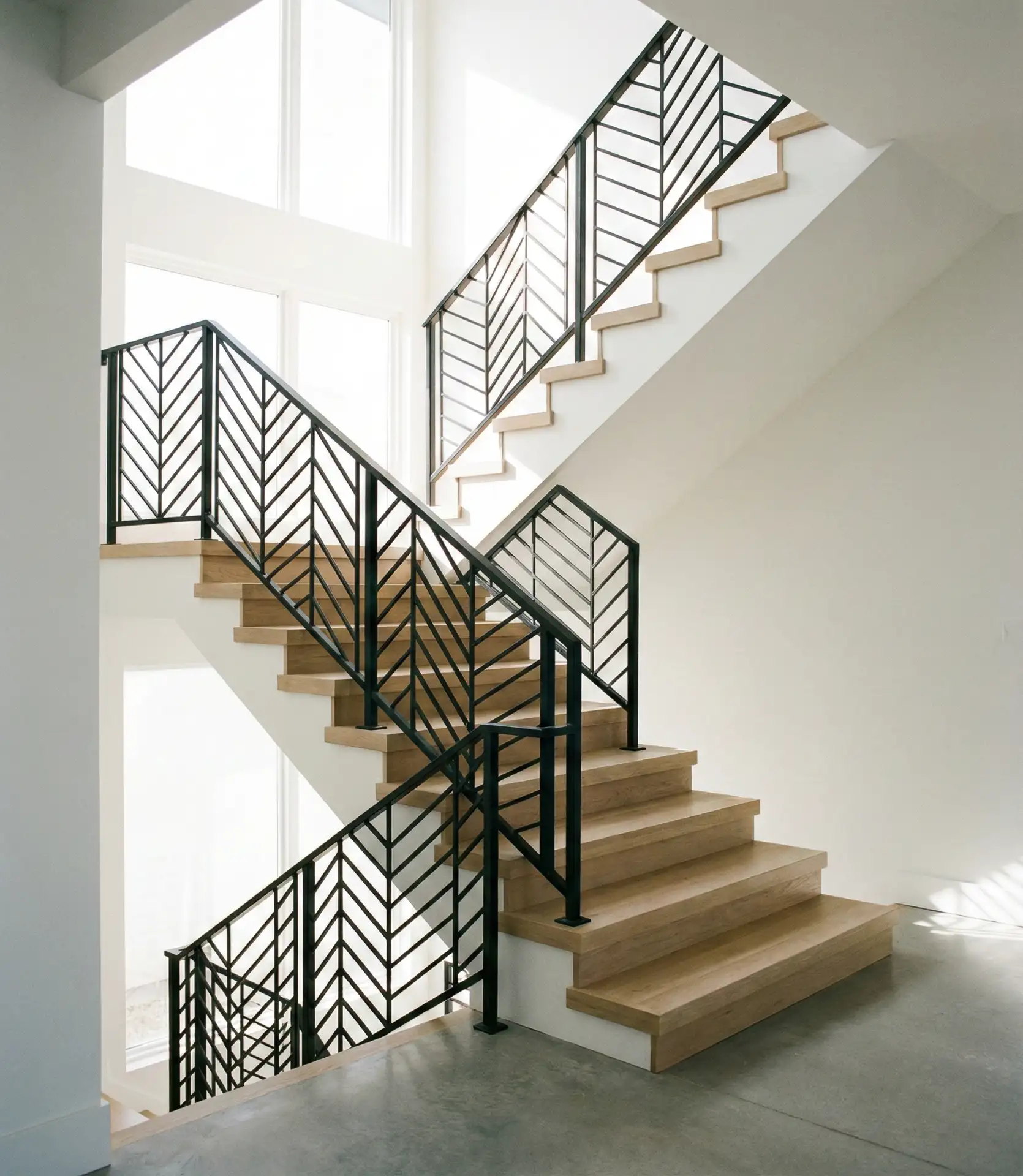
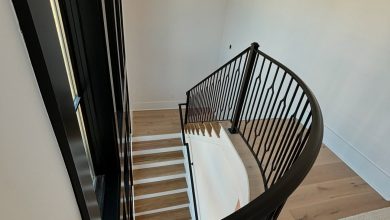
A black railing with geometric artistic designs—think chevrons, hexagons, or intersecting lines—adds a bold, architectural statement to modern indoor staircases. Homes with high ceilings and open floor plans, where the railing is visible from multiple angles, benefit greatly from this style. The matte black finish contrasts beautifully with light-colored walls and floors, creating a striking visual anchor.
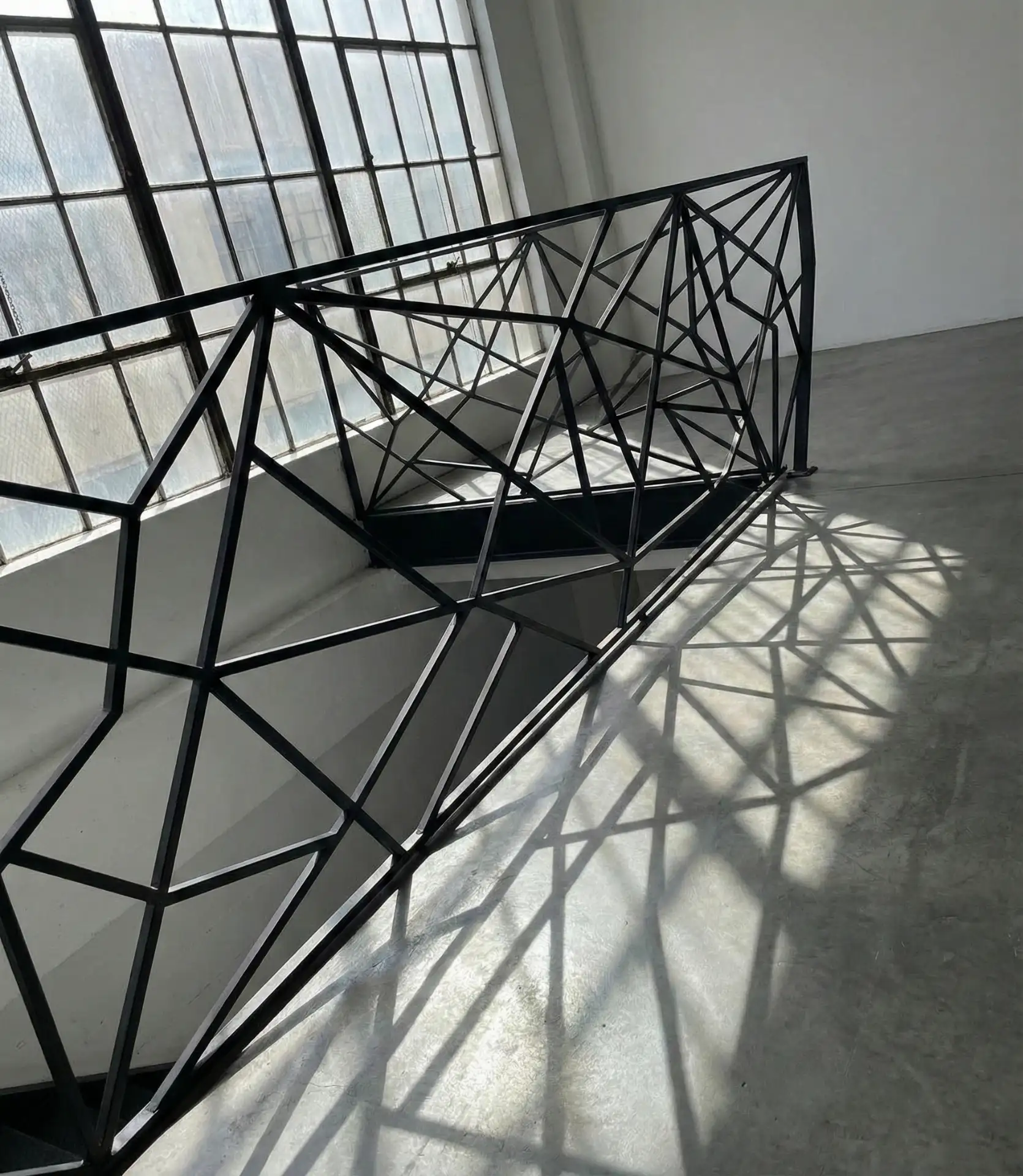
Common mistake: Overcomplicating the pattern. A single repeating motif reads cleaner and more sophisticated than mixing multiple designs. Stick to one geometric theme and let it shine. This approach also makes fabrication simpler and more affordable, as complex patterns require custom metalwork.
14. Staircase with Integrated LED Lighting
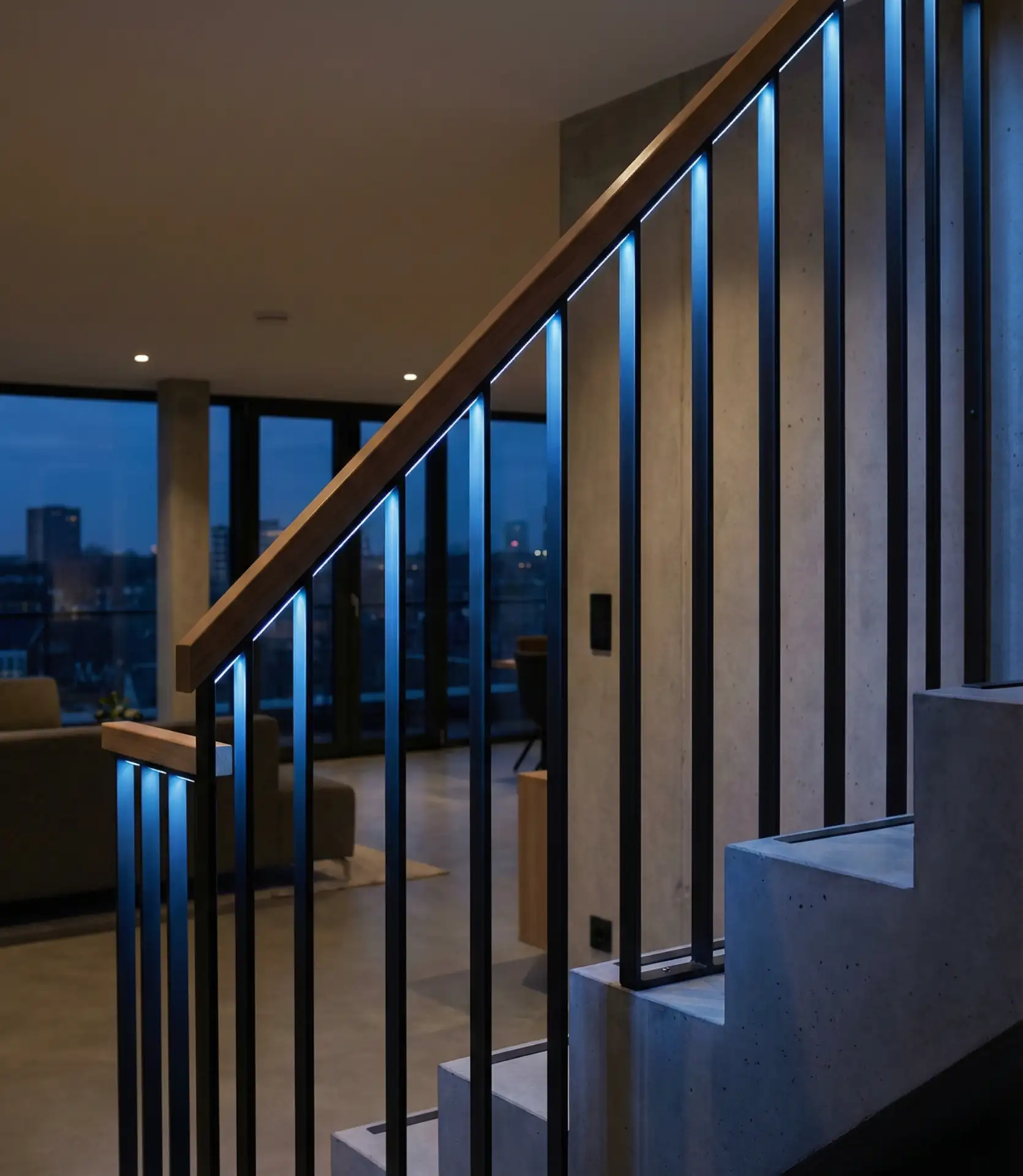
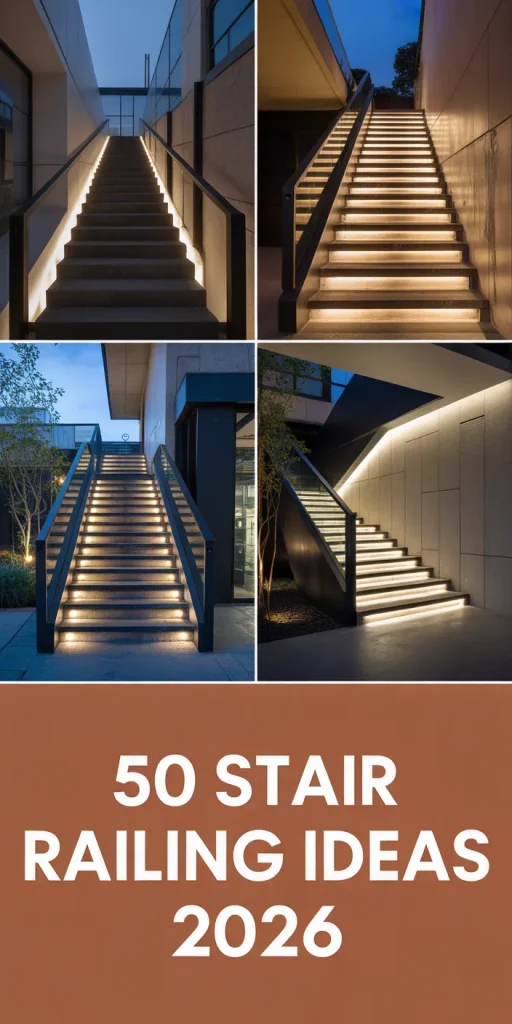
Embedding LED strips along the underside of handrails or within the balusters themselves transforms a staircase into a glowing architectural feature, especially useful in basement staircases where natural light is scarce. The soft illumination provides safety at night without the harshness of overhead fixtures, and it can be customized with dimmers or color-changing bulbs for mood lighting.
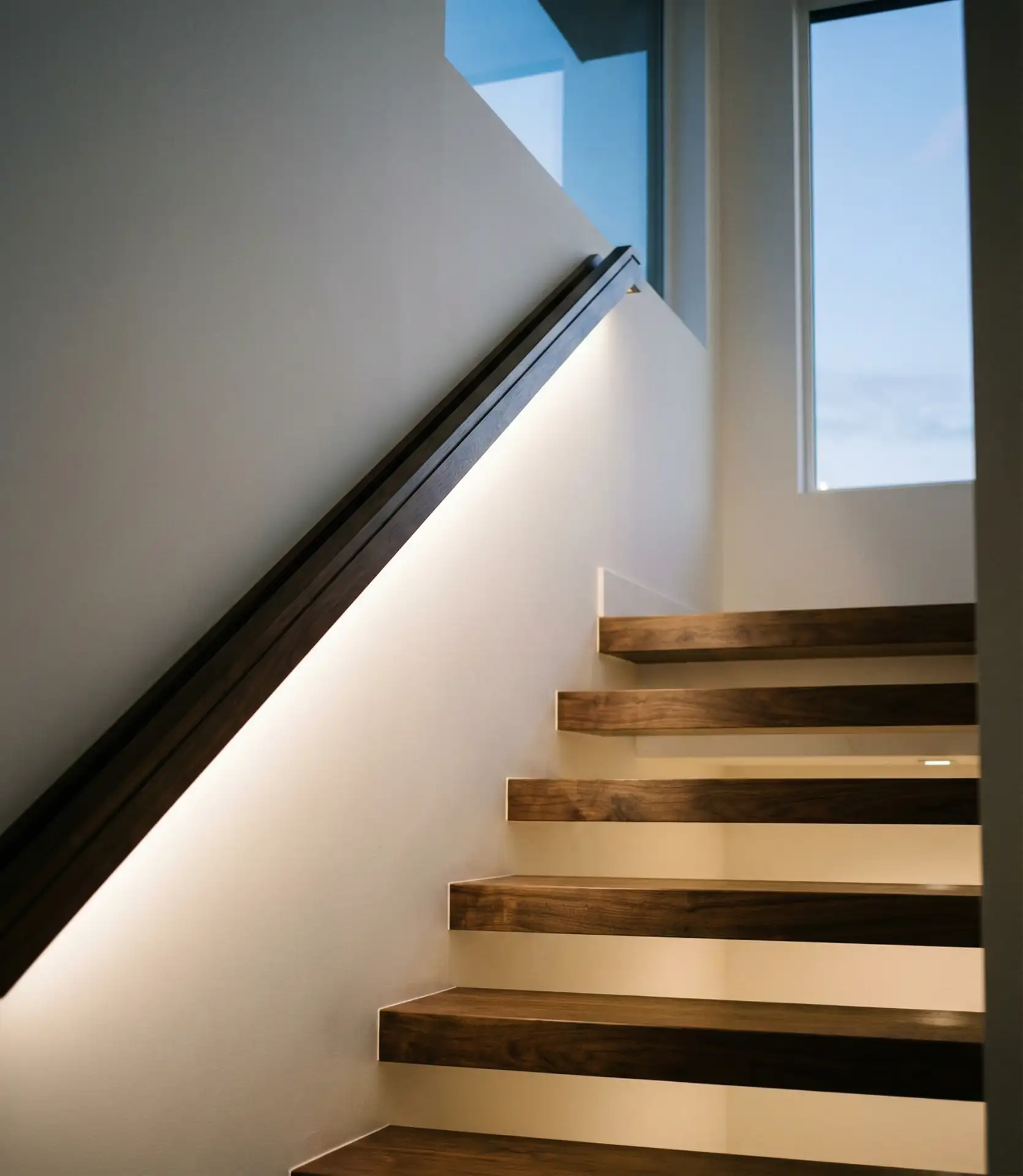
Practical insight: LED systems are energy-efficient and long-lasting, but make sure the wiring is done by a licensed electrician to meet codes. Motion sensors can be added so the lights activate automatically when someone approaches, which is a game-changer for late-night trips downstairs.
15. Victorian-Inspired Turned Balusters
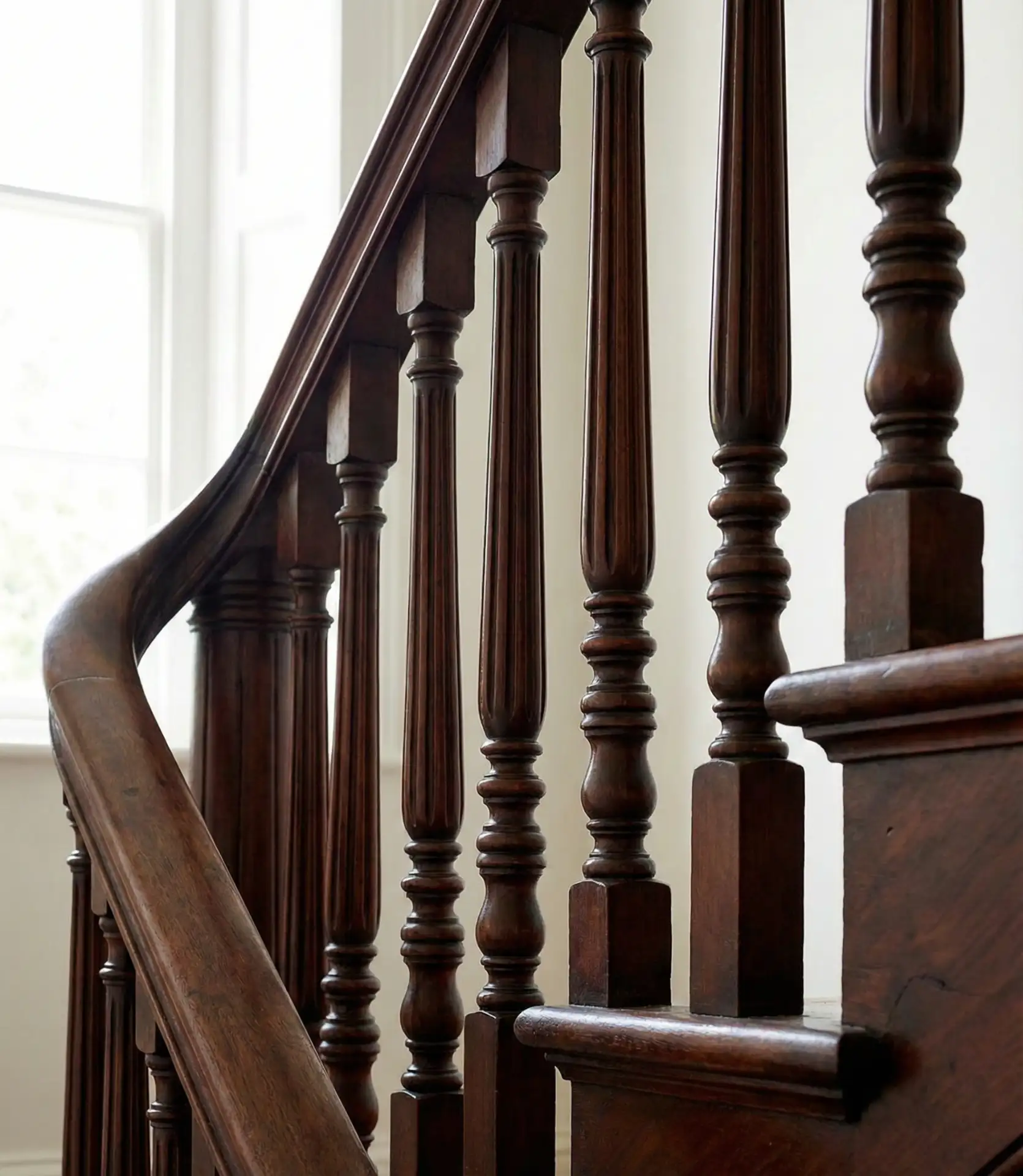
If your home has traditional roots—such as Queen Anne, Victorian, or Craftsman styles—turned wood balusters with intricate lathe work beautifully honor that heritage. These balusters feature bulbous shapes, tapered ends, and decorative grooves that catch the light and add depth. Pair them with a wooden handrail in a rich stain, and you’ve got a staircase that feels like it belongs in a historic home tour.
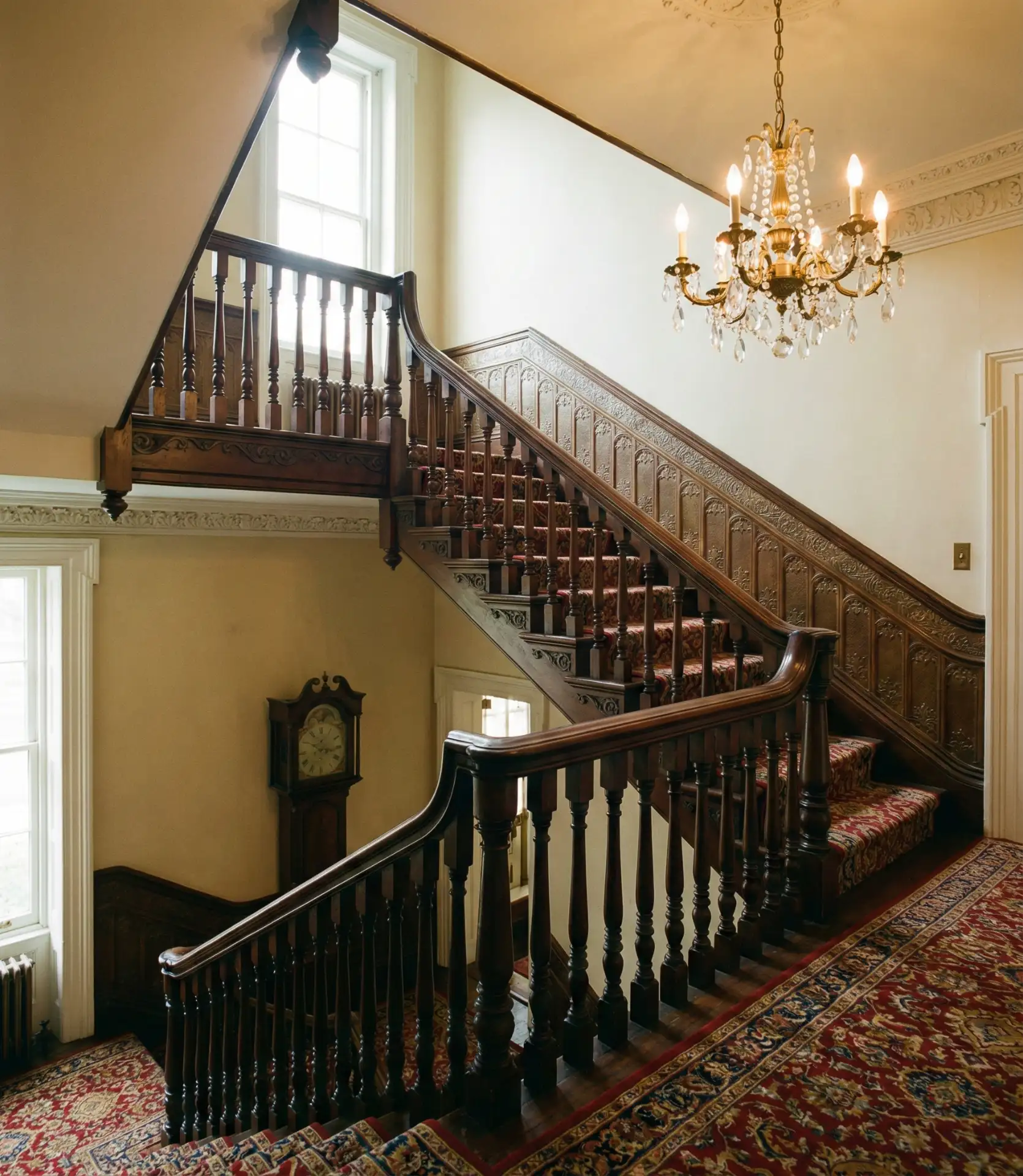
Regional context: The Northeast and parts of the South, which celebrate and preserve historic architecture, are particularly popular for these railings. Many homeowners invest in custom-turned balusters to match original profiles if they’re restoring a period property, ensuring authenticity down to the smallest detail.
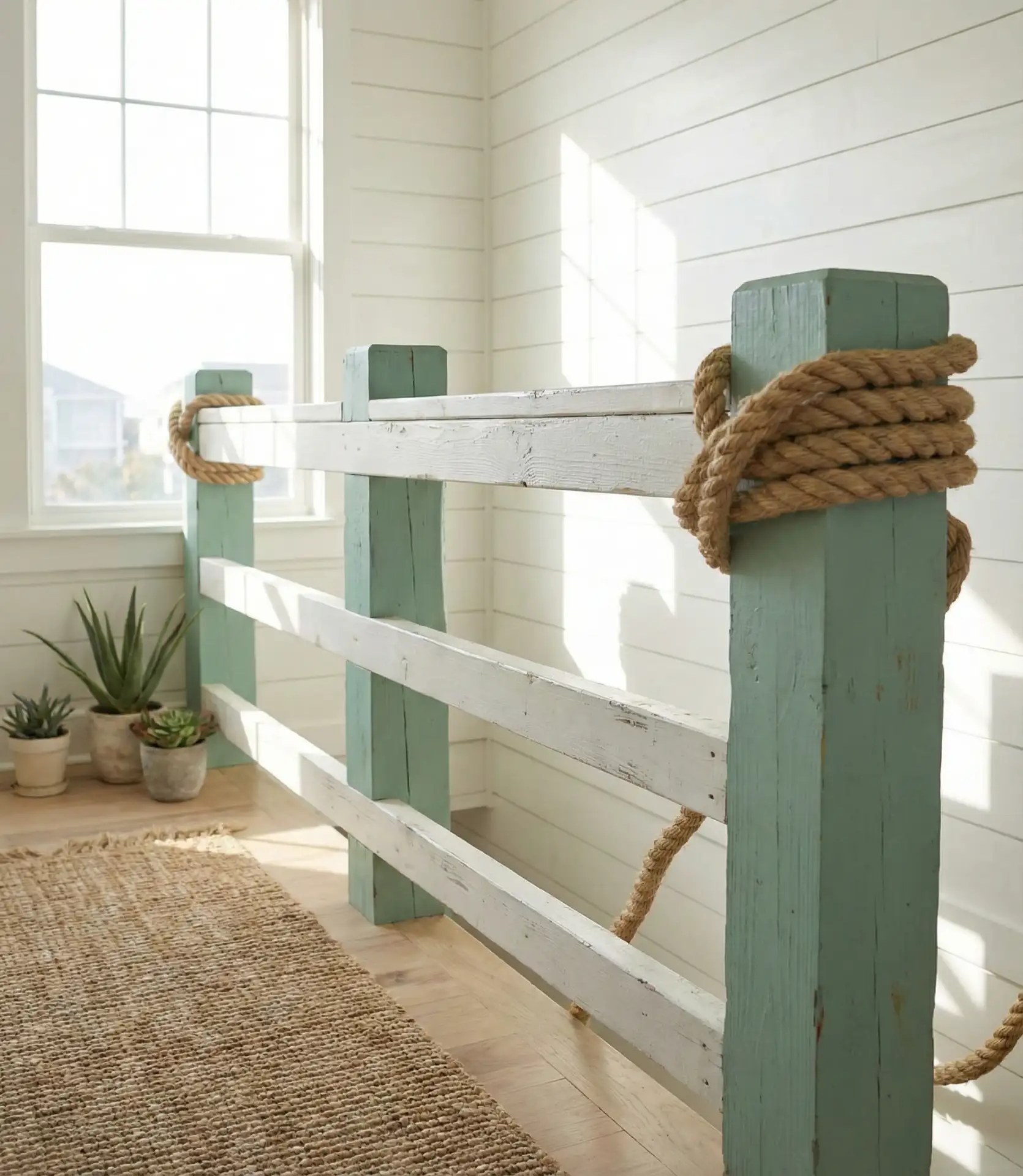
16. Rope Railing for Nautical Flair
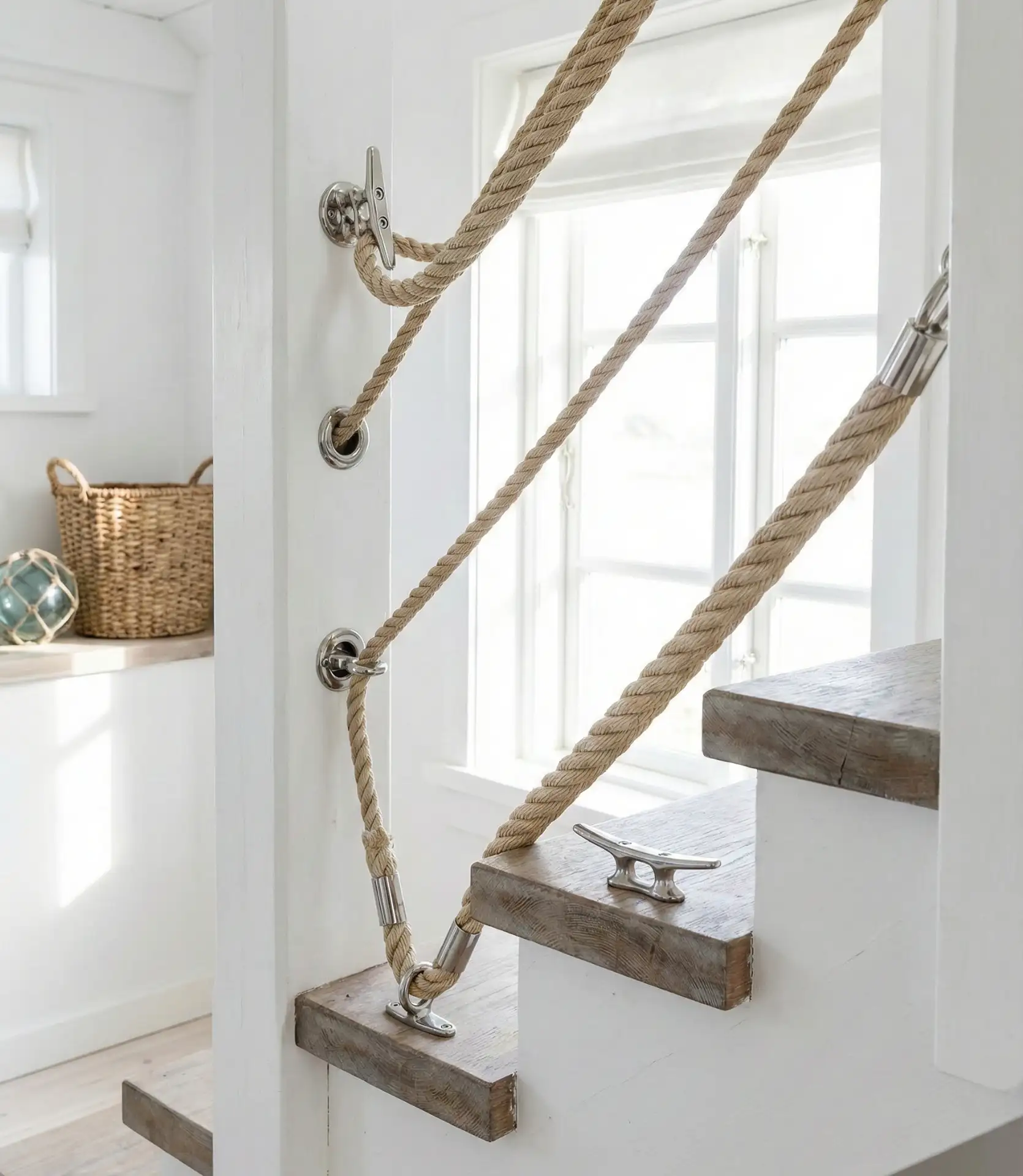
Thick manila or synthetic rope threaded through metal stanchions delivers instant coastal appeal, perfect for beach houses or homes that embrace a maritime theme. The rope is surprisingly sturdy when properly tensioned, and it adds a tactile, organic element that contrasts nicely with sleek metal balusters or painted posts. This design is informal and inviting, ideal for vacation homes where a relaxed vibe is the goal.
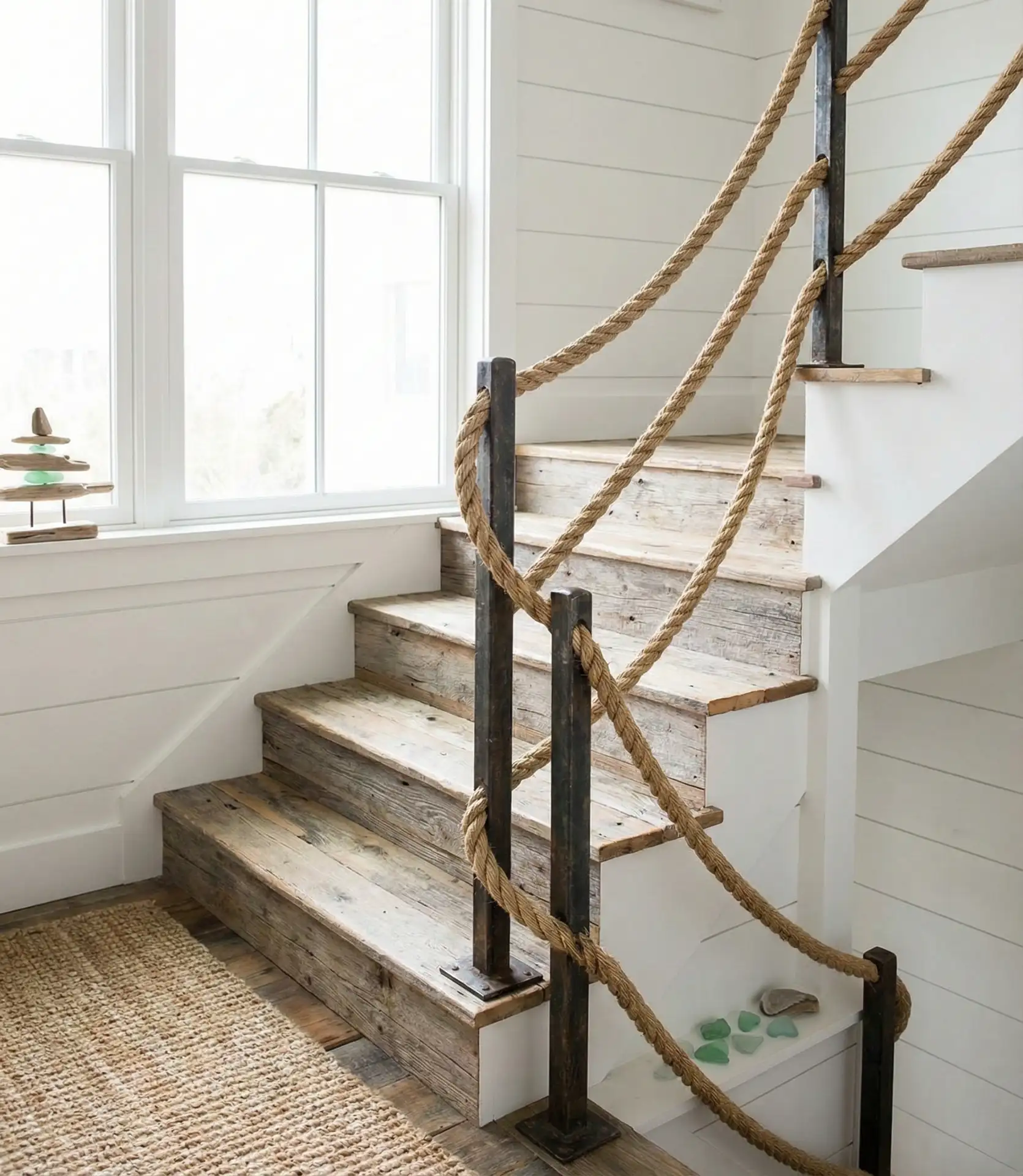
One homeowner I spoke with in Cape Cod mentioned that her rope railing needs retightening every couple of years as the fibers stretch slightly with use and humidity. She recommends synthetic rope for outside installations since it resists UV damage and moisture better than natural fiber.
17. Industrial Pipe Railing for Urban Edge
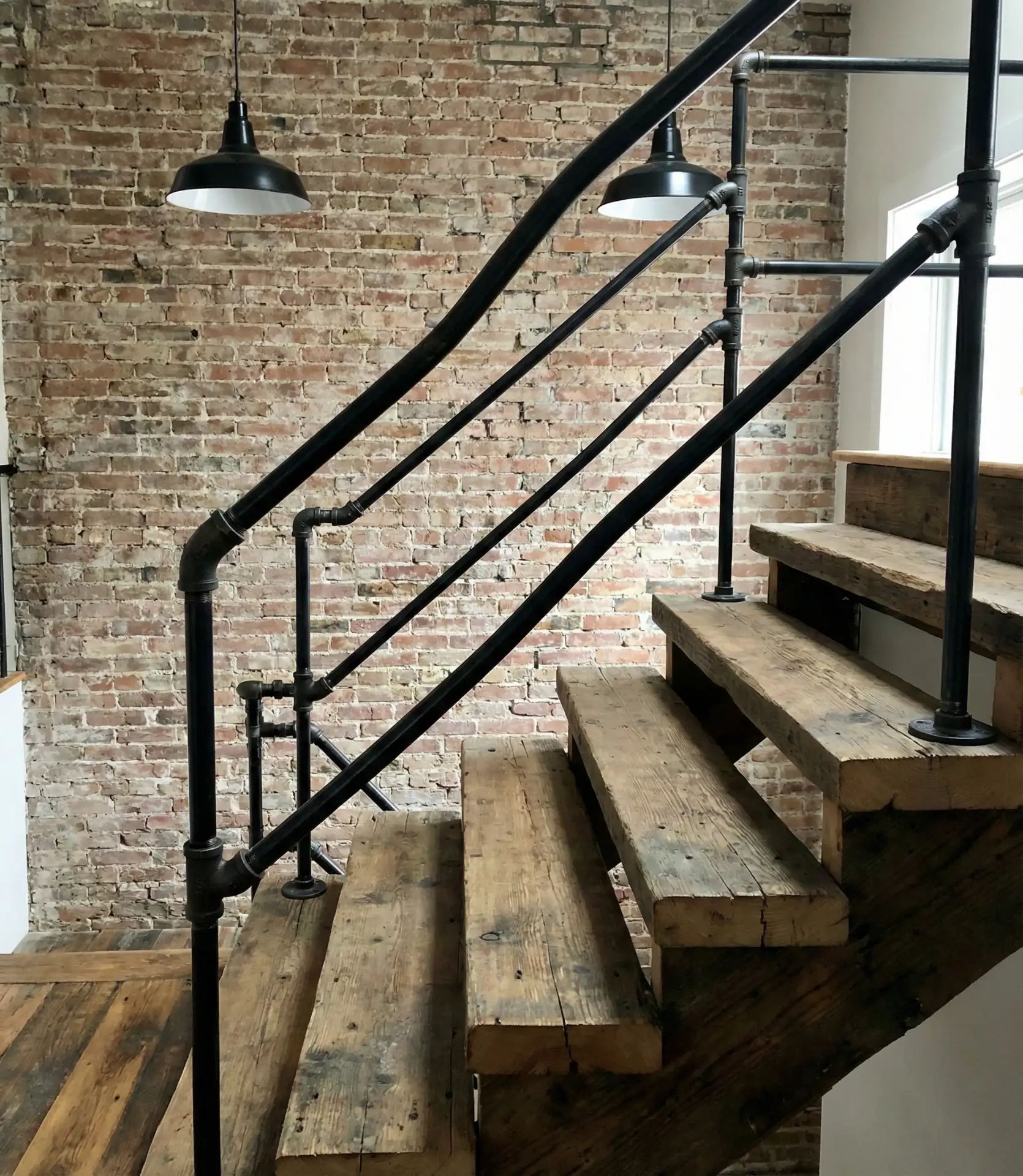
Galvanized or black iron piping assembled into a railing system gives loft and warehouse conversions an authentic industrial edge. This DIY-friendly option uses standard plumbing fittings—elbows, tees, and flanges—making it relatively affordable and easy to customize. The raw, utilitarian look pairs well with exposed brick, concrete floors, and vintage factory lighting.
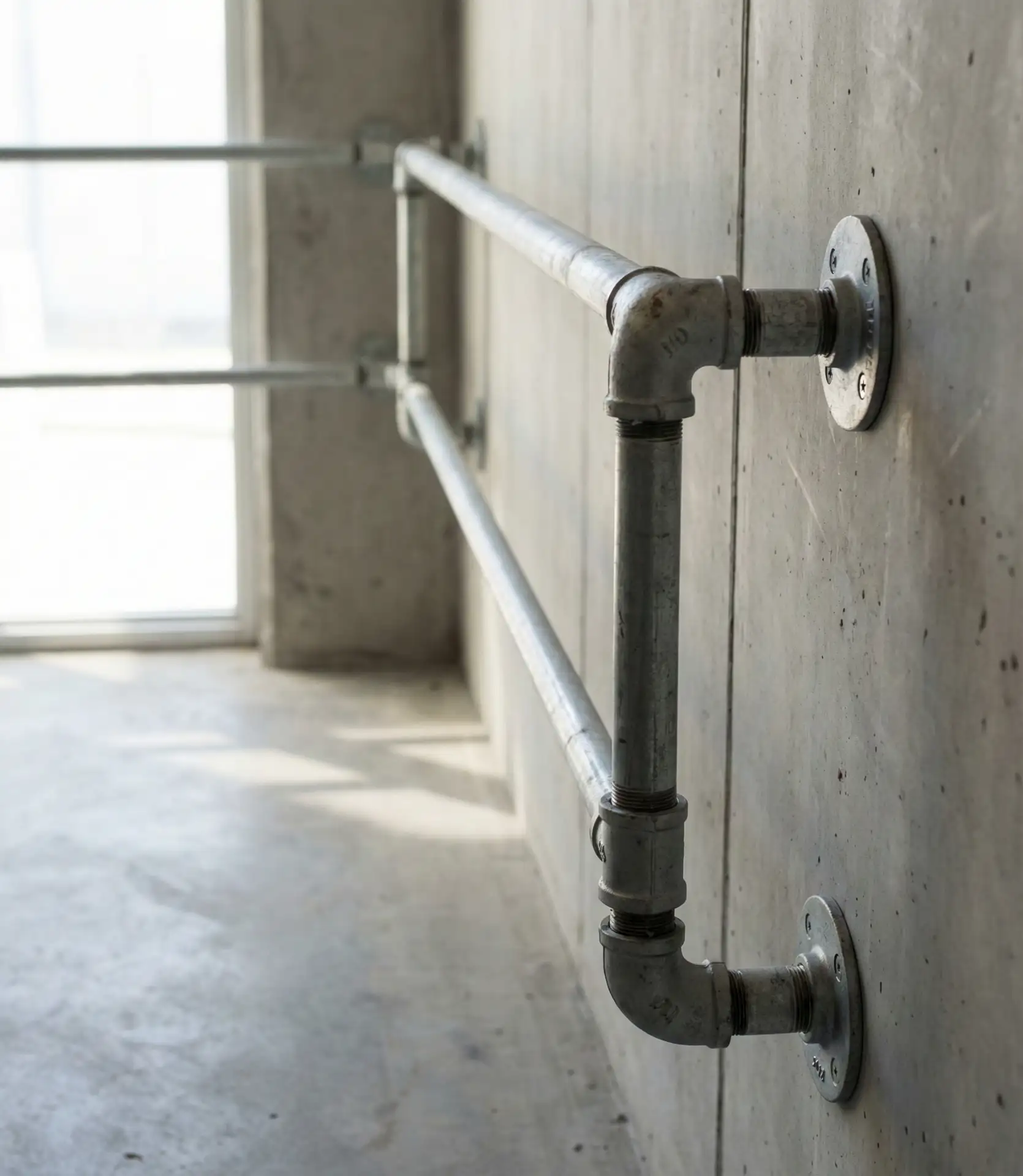
This style works best in spaces that already have industrial bones—think high ceilings, open ductwork, and large windows. Avoid it in traditional or highly polished interiors where the contrast would feel jarring. The pipe can be left raw for a weathered look or coated with a clear sealer to prevent rust and fingerprints.
18. Frosted Glass for Privacy and Light
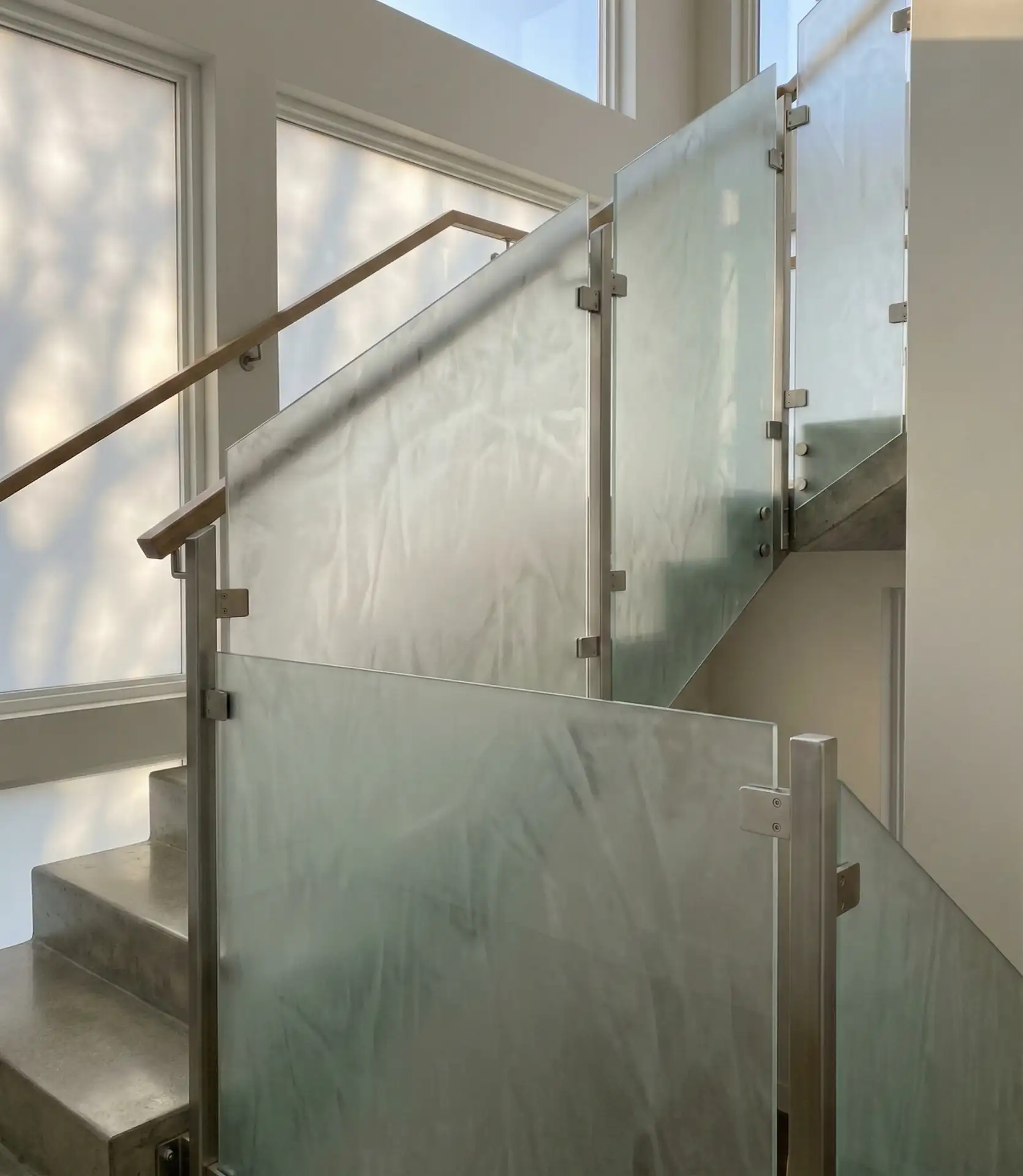
When you want the openness of glass but need a bit more privacy—say, in a loft bedroom or an interior staircase visible from the street—frosted or etched glass panels offer the perfect compromise. They diffuse light beautifully, creating a soft glow that’s especially lovely in the morning sun or with backlighting. The frosted surface also hides fingerprints and smudges better than clear glass.
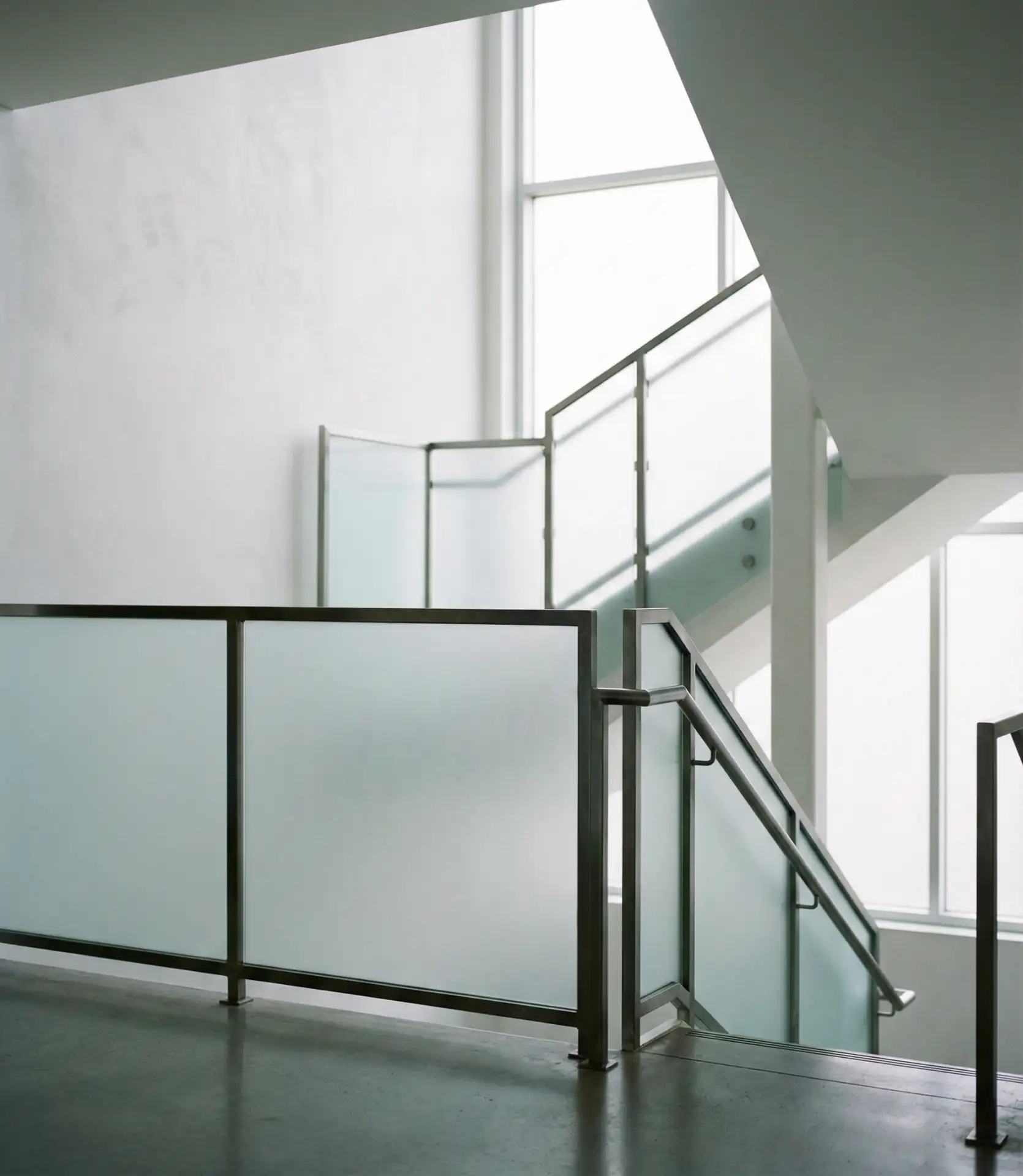
Budget angle: Frosted glass costs about 20-30% more than clear tempered glass, but the added privacy and lower maintenance make it worthwhile for many homeowners. You can also opt for adhesive frosted film as a budget-friendly retrofit if you already have clear glass panels installed.
19. Live Edge Wood for Organic Texture
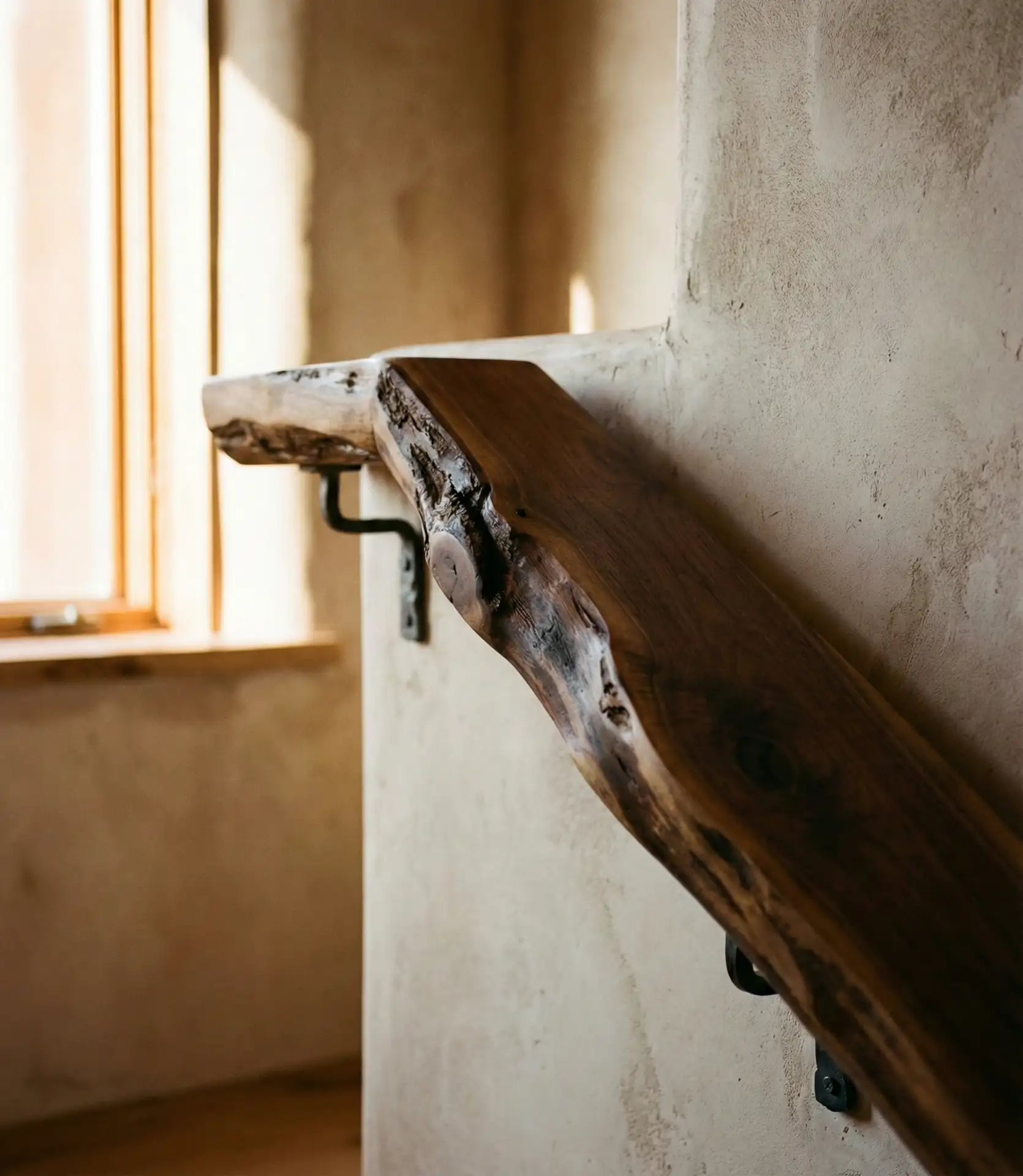
A live-edge handrail—where the natural contour of the tree is preserved—brings an artistic and rustic statement to any staircase. This design celebrates imperfection: bark inclusions, knots, and wavy edges become design features rather than flaws. It’s an especially powerful choice in cabin settings or homes where biophilic design (bringing the outdoors in) is a priority.
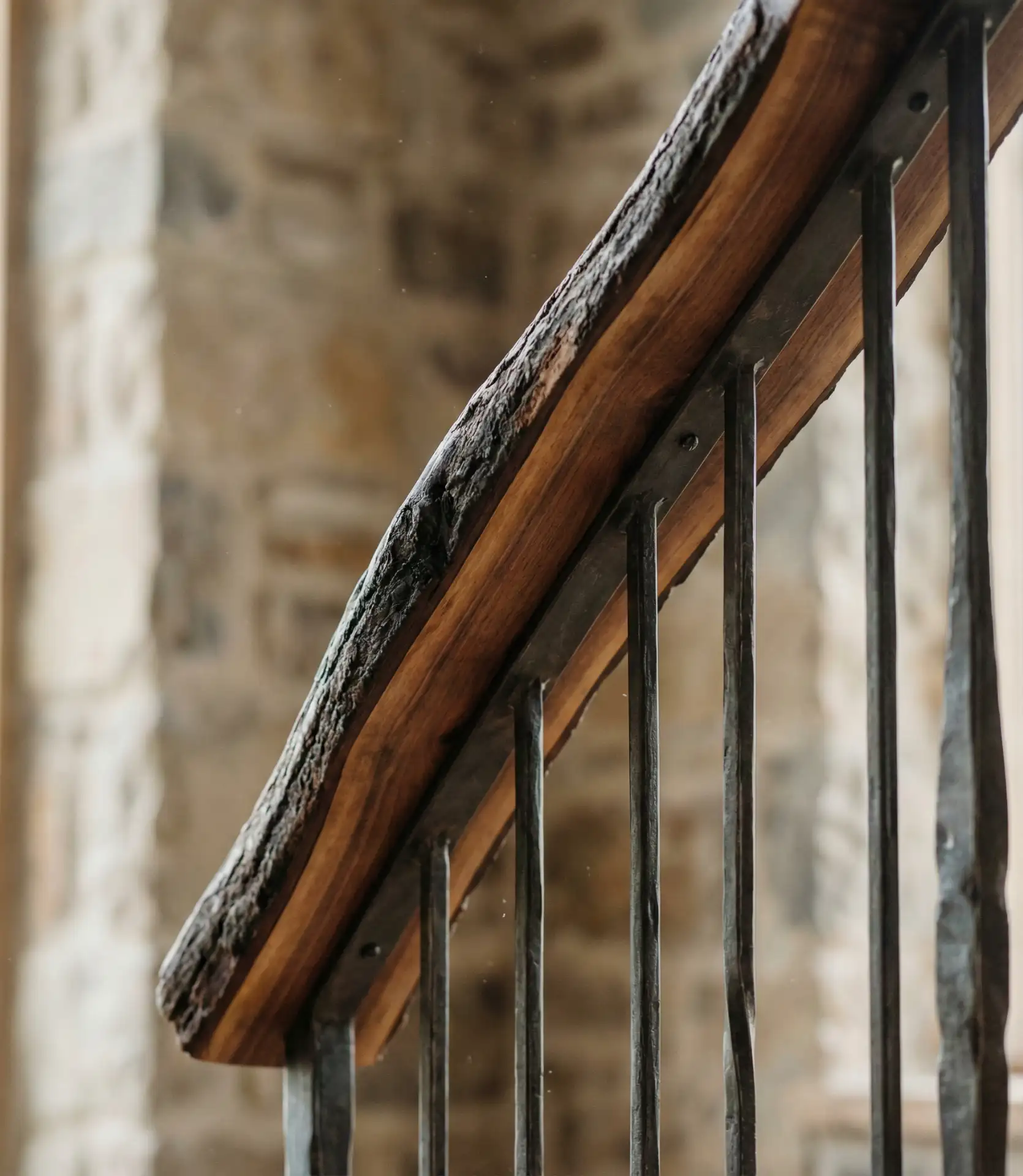
Common mistakes: Pairing a live-edge rail with overly formal or traditional balusters—it creates a disjointed look. Instead, opt for simple metal rods, cable, or even no balusters if code allows. Also, make sure the wood is kiln-dried and sealed to prevent warping or cracking over time.
20. Staircase Wrapped in Christmas Garland
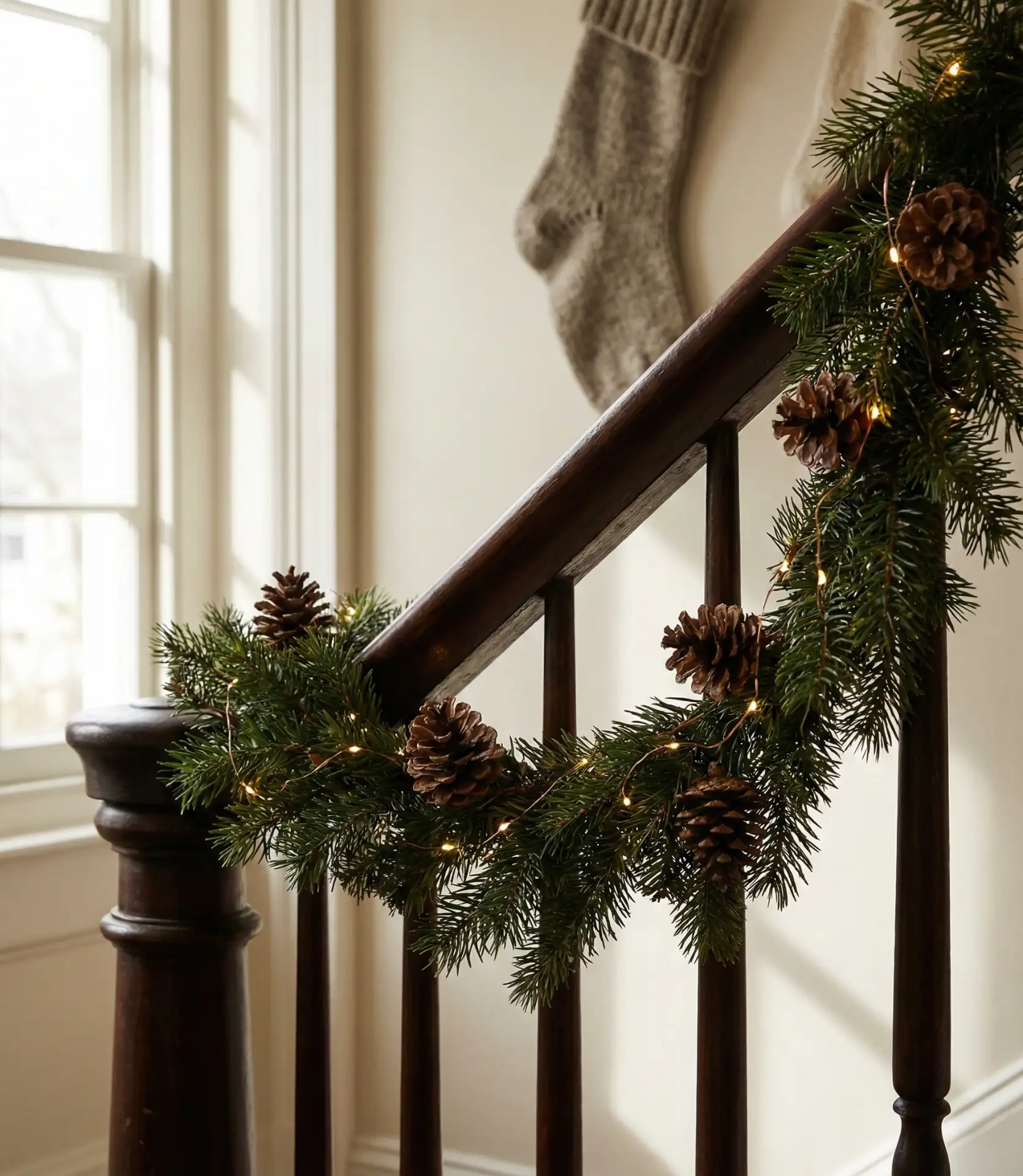
When the holidays roll around, a staircase becomes the perfect canvas for Christmas decor. Fresh or faux garland woven through balusters, accented with ribbon, pine cones, and twinkling lights, transforms the railing into a festive focal point. The idea works on virtually any railing style—traditional, modern, or rustic—and the scent of real evergreen boughs adds to the seasonal atmosphere.
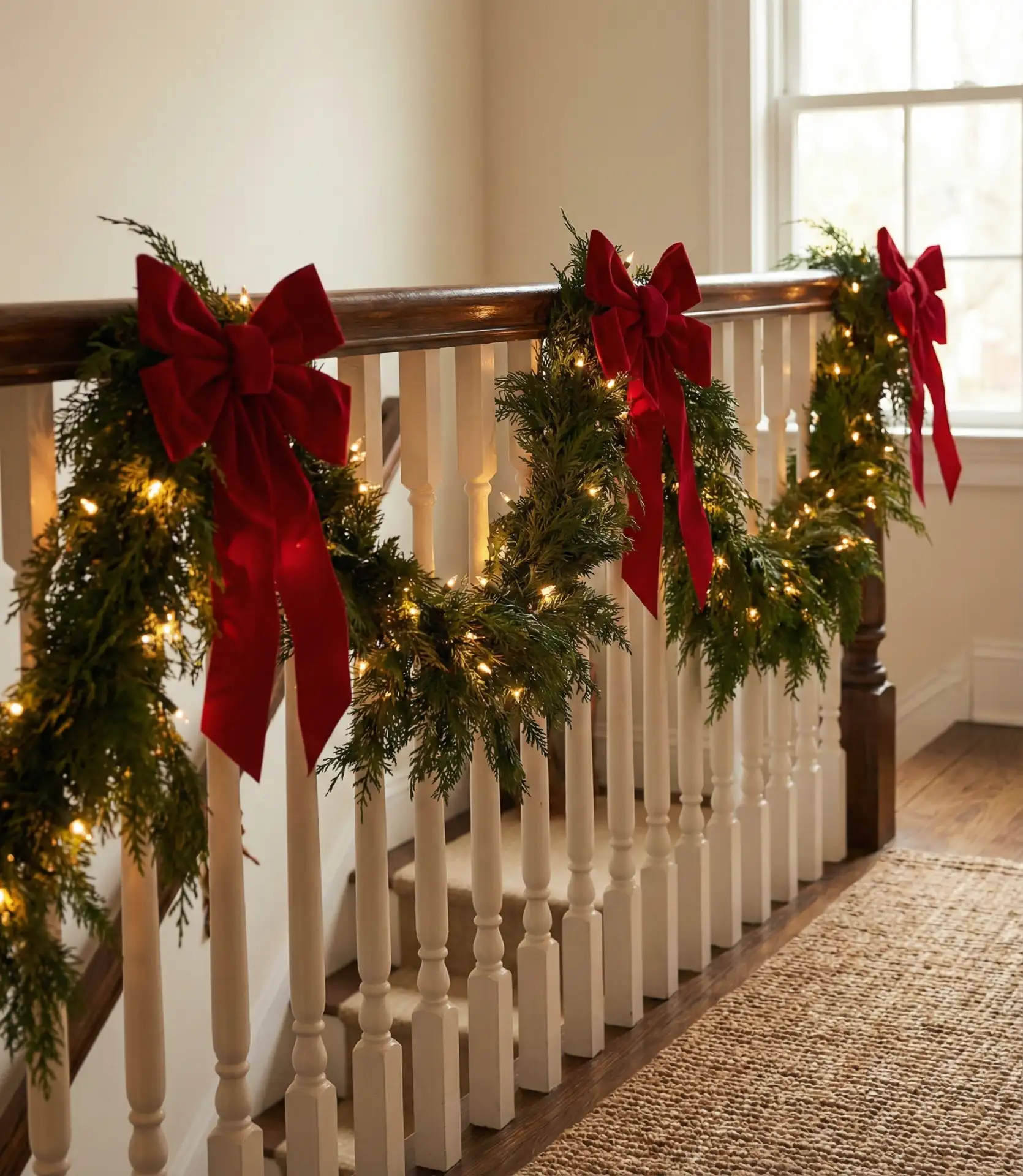
A real homeowner tip from my cousin in Michigan: Use floral wire to secure the garland at multiple points along the handrail so it doesn’t sag or shift. Battery-operated LED lights eliminate the need for extension cords snaking up the stairs, keeping the look clean and the setup hassle-free.
21. Acrylic Panels for Modern Transparency
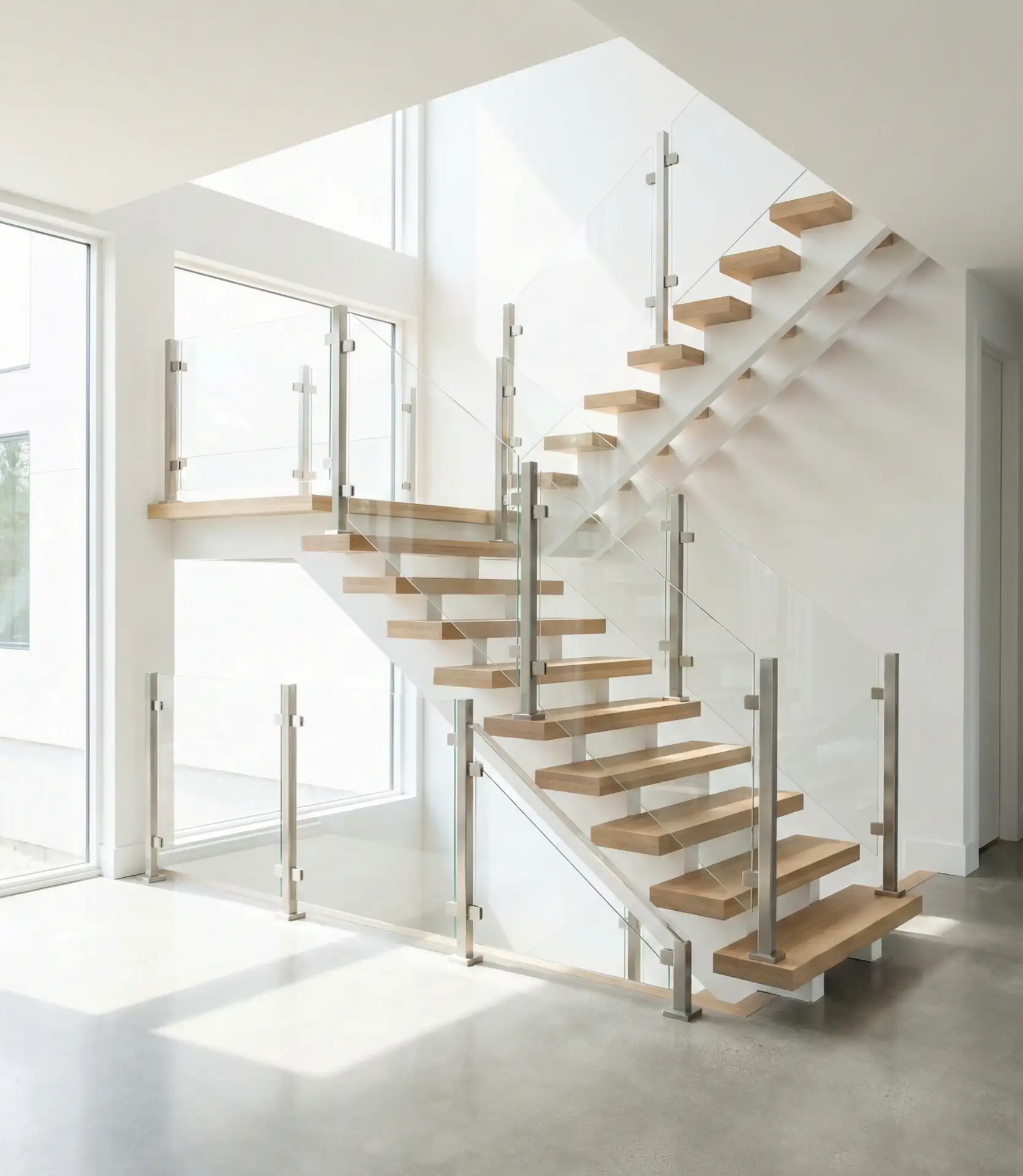
Acrylic panels offer a budget-friendly alternative to glass, delivering a similar transparent effect at a fraction of the cost. They’re lighter and easier to install, making them a DIY-friendly option for modern indoor staircases. While acrylic scratches more easily than glass, it won’t shatter, which makes it a safer choice in homes with kids or pets.
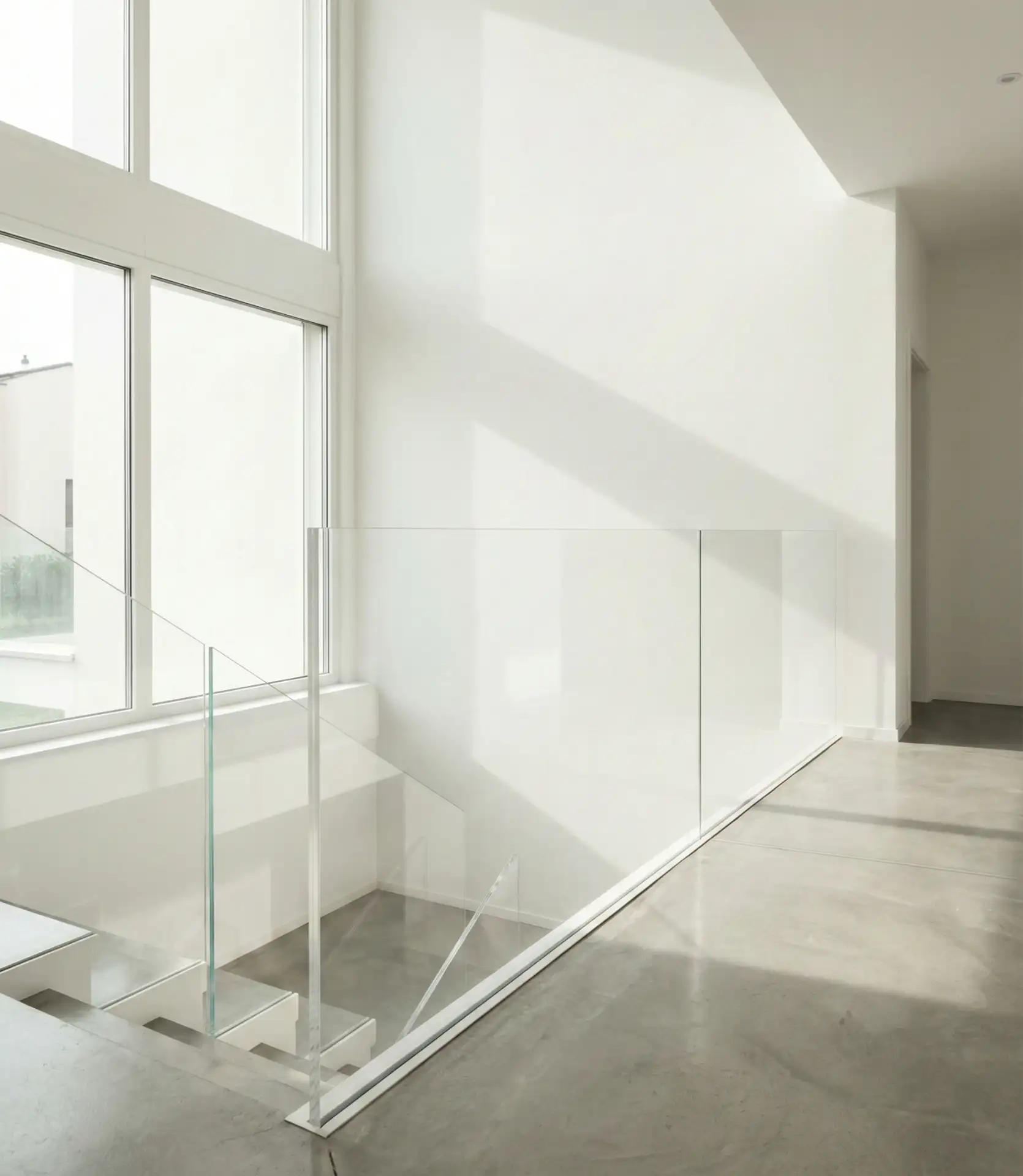
Expert commentary: If you go with acrylic, choose a thicker gauge (at least 3/8 inch) for better rigidity and a more glass-like appearance. Clean it with a microfiber cloth and plastic-safe cleaner—never abrasive materials, which will cloud the surface. For the price-conscious renovator, utilizing acrylic is one of the smartest compromises in modern staircase design.
22. Leather-Wrapped Handrails for Luxury Touch
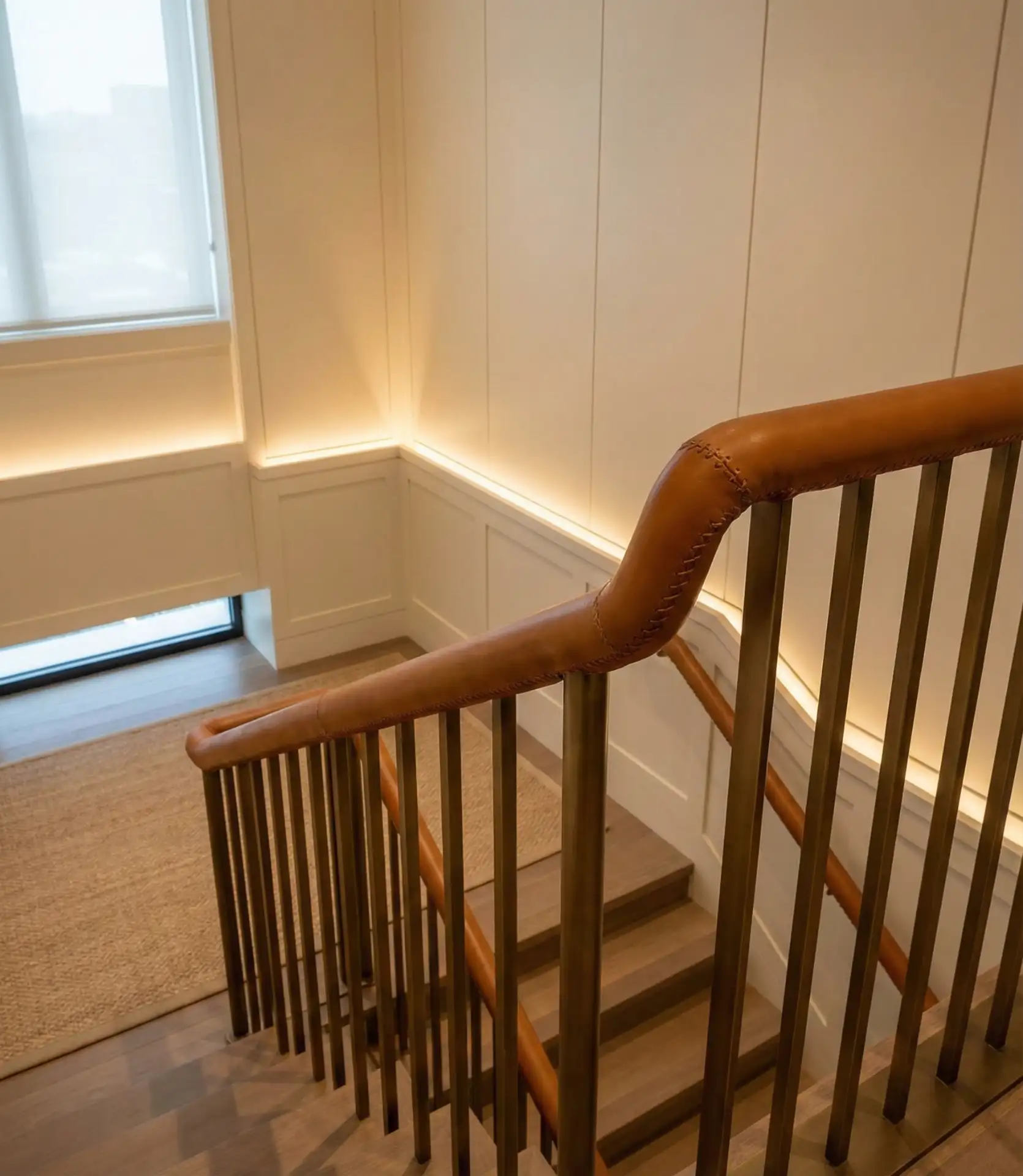
For a tactile upgrade that exudes sophistication, consider wrapping your handrail in leather. This detail is common in yacht interiors and high-end commercial spaces, but it’s making its way into contemporary homes where the handrail is as much about touch as it is about looks. In colder climates, the warmth of the leather under your hand provides a comfortable grip.
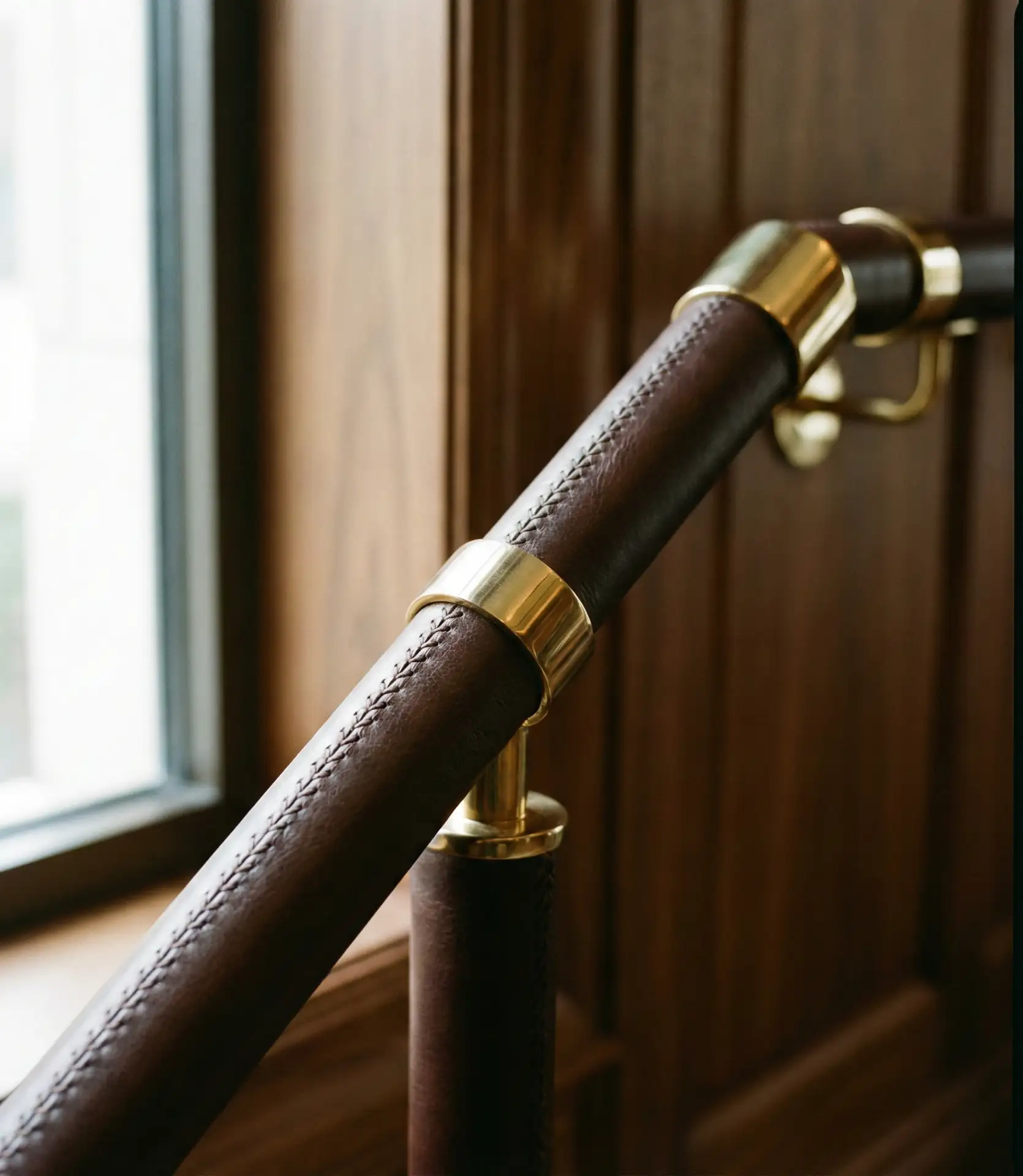
This feature works best in homes where attention to detail and material quality are paramount—think penthouses, townhomes, or renovated brownstones. The leather will develop a patina over time, which many people find appealing. However, it does require occasional conditioning to prevent drying and cracking, much like leather furniture.
23. Mixed Materials for Eclectic Style
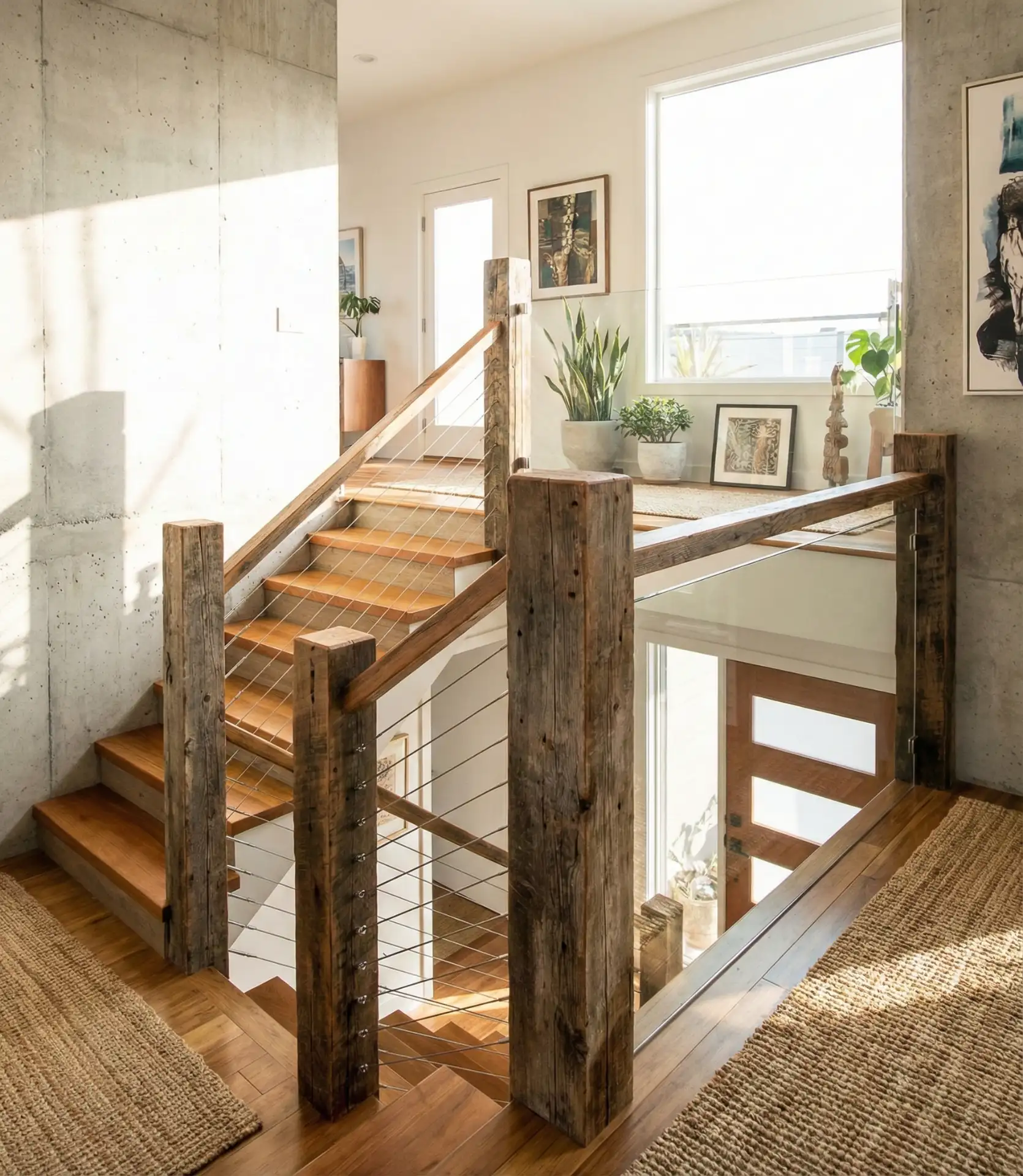
Have you considered selecting multiple materials to enjoy the benefits of each? Combining wooden posts with metal balusters, or mixing glass panels with cable railings, creates a layered, unique look that reflects personal style. Contemporary homes, which celebrate eclecticism and individuality, particularly embrace this approach, enabling homeowners to seamlessly blend industrial, natural, and modern elements.
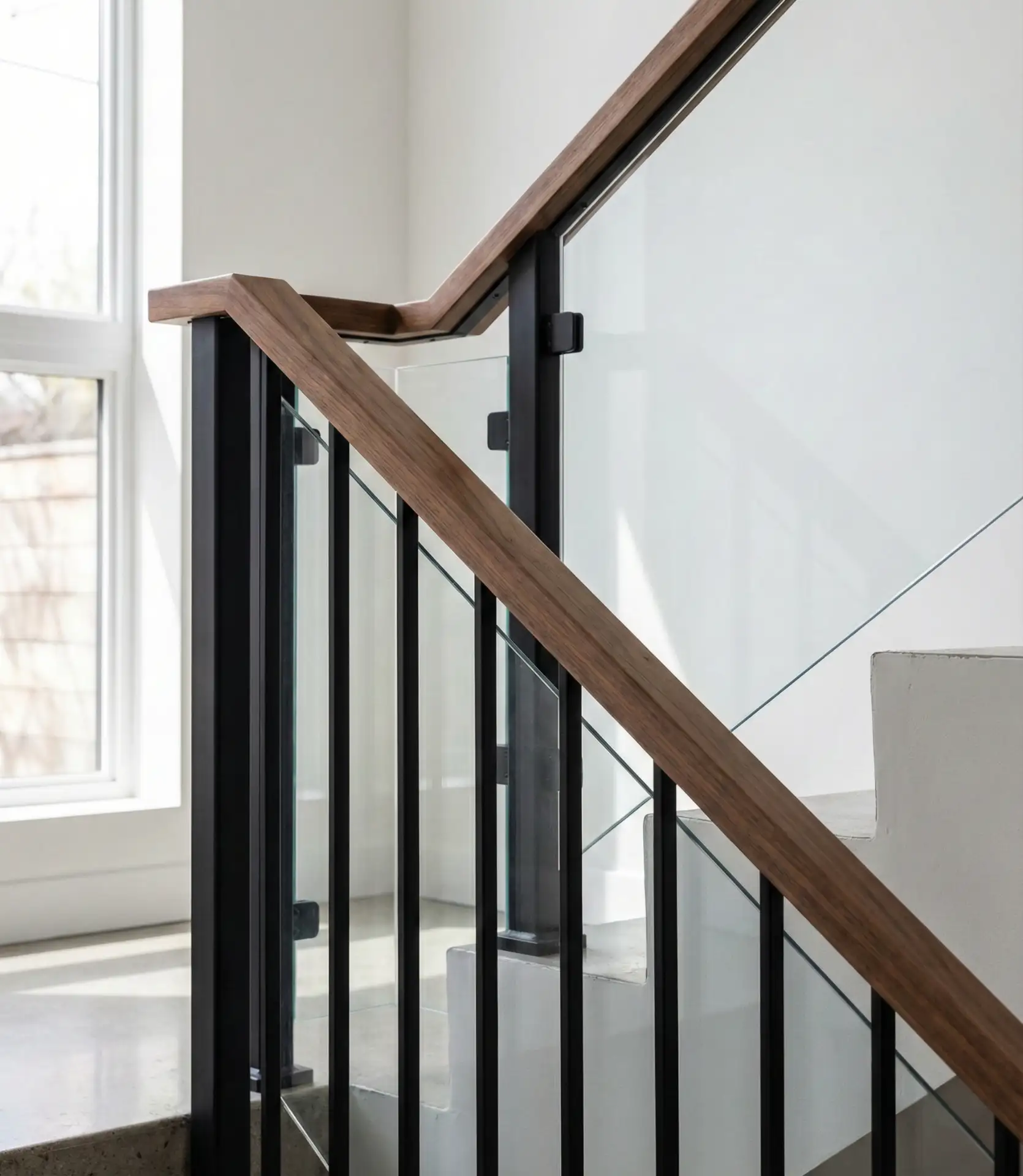
The most effective use of this approach is in homes with open floor plans, where the staircase serves as a central architectural feature. The mix of materials keeps the eye moving and prevents the space from feeling one-dimensional. Just be mindful not to overdo it—three materials maximum, or the look becomes chaotic rather than curated.
24. Barn Door Style Railing for Farmhouse Charm
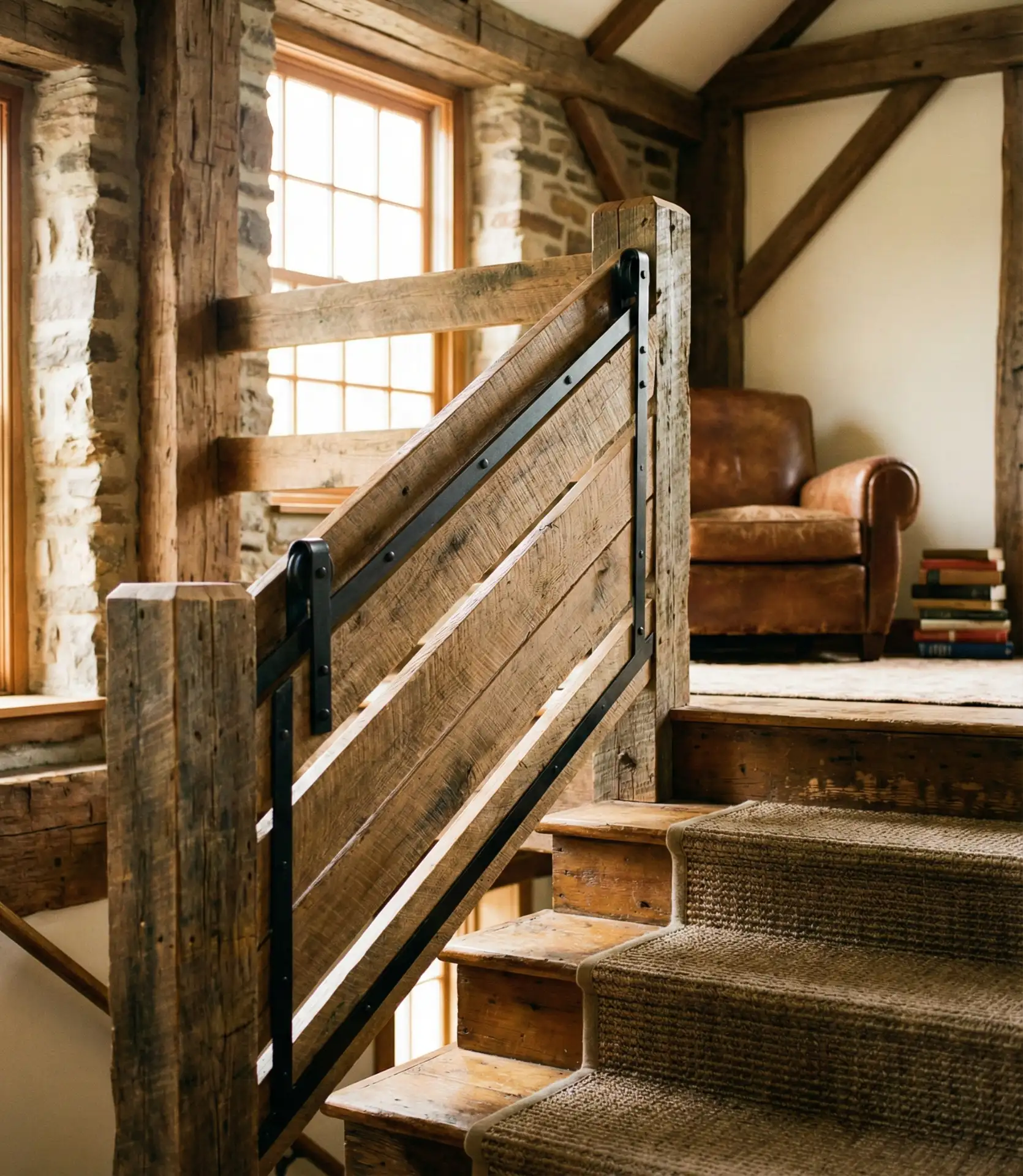
Inspired by sliding barn door hardware, this rustic railing style uses horizontal planks framed with metal strapping or corner brackets. It’s a natural fit for farmhouse interiors and works particularly well in homes with shiplap walls, apron sinks, and vintage-inspired fixtures. The chunky proportions and matte black hardware add weight and presence to the staircase.
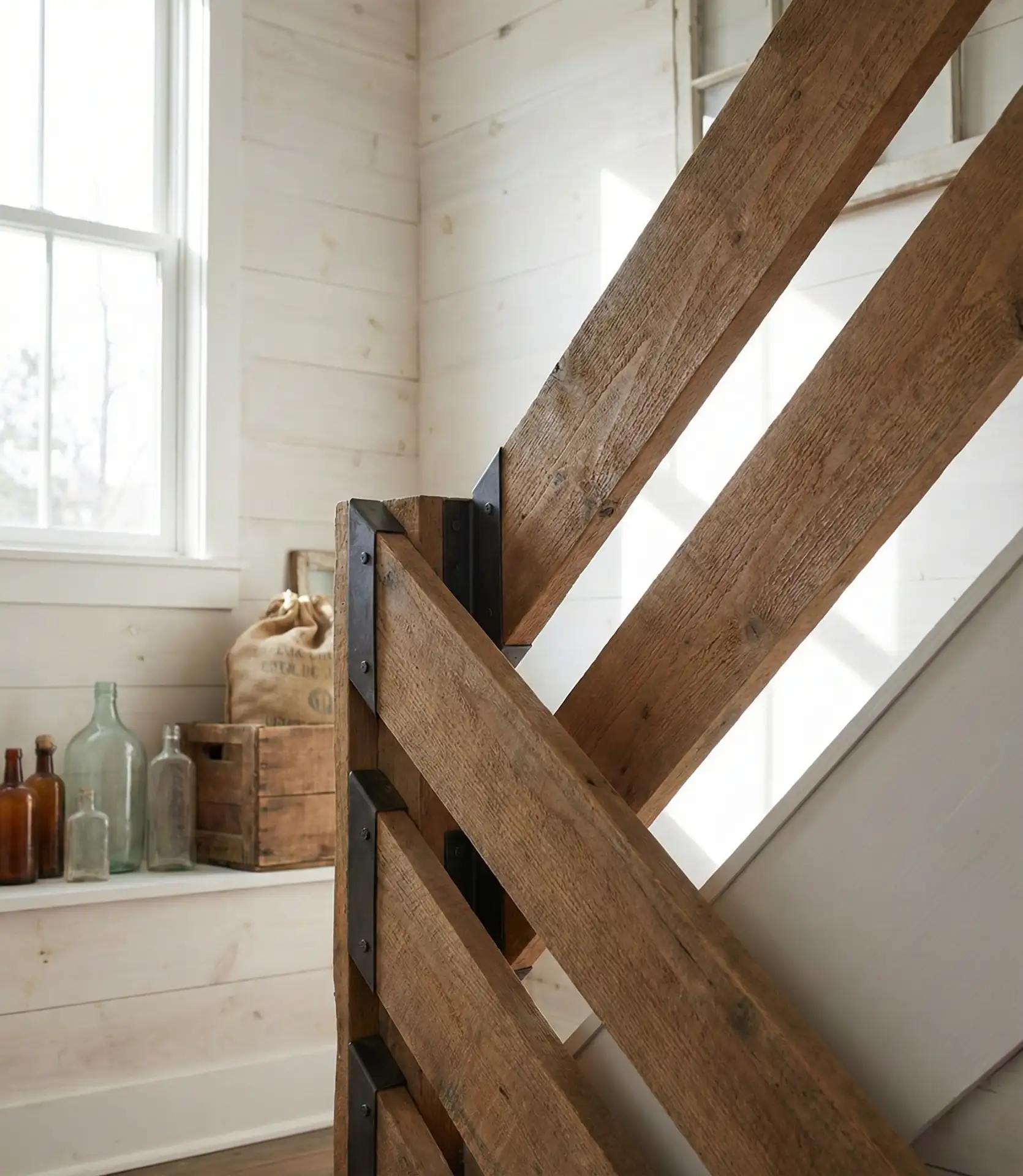
Real homeowner behavior: This style is a favorite among DIYers because it’s relatively straightforward to build with standard lumber and hardware-store brackets. Many people stain or paint the wood in soft grays or whites to keep it feeling fresh rather than overly rustic, which helps it fit into modern farmhouse aesthetics popular across the Midwest and South.
25. Floating Stairs with Minimal Railing
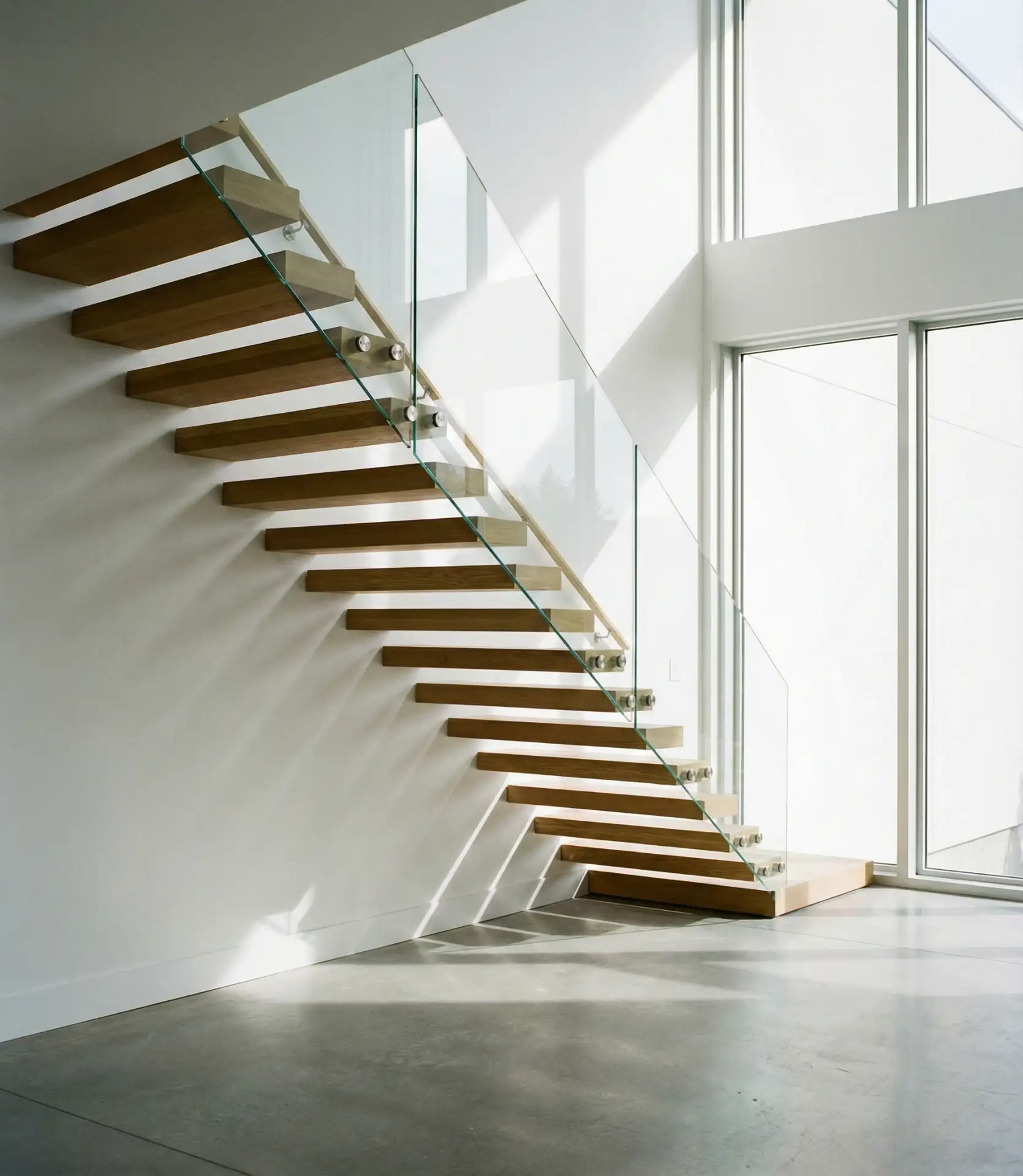
Floating staircases—where treads are cantilevered from a wall with no visible support underneath—pair beautifully with minimalist railings or even no railing at all on the open side. When a railing is required by code, a simple glass panel or thin metal cable system preserves the airy, gravity-defying effect. This design epitomizes modern minimalist style and excels in contemporary homes with robust architectural foundations.
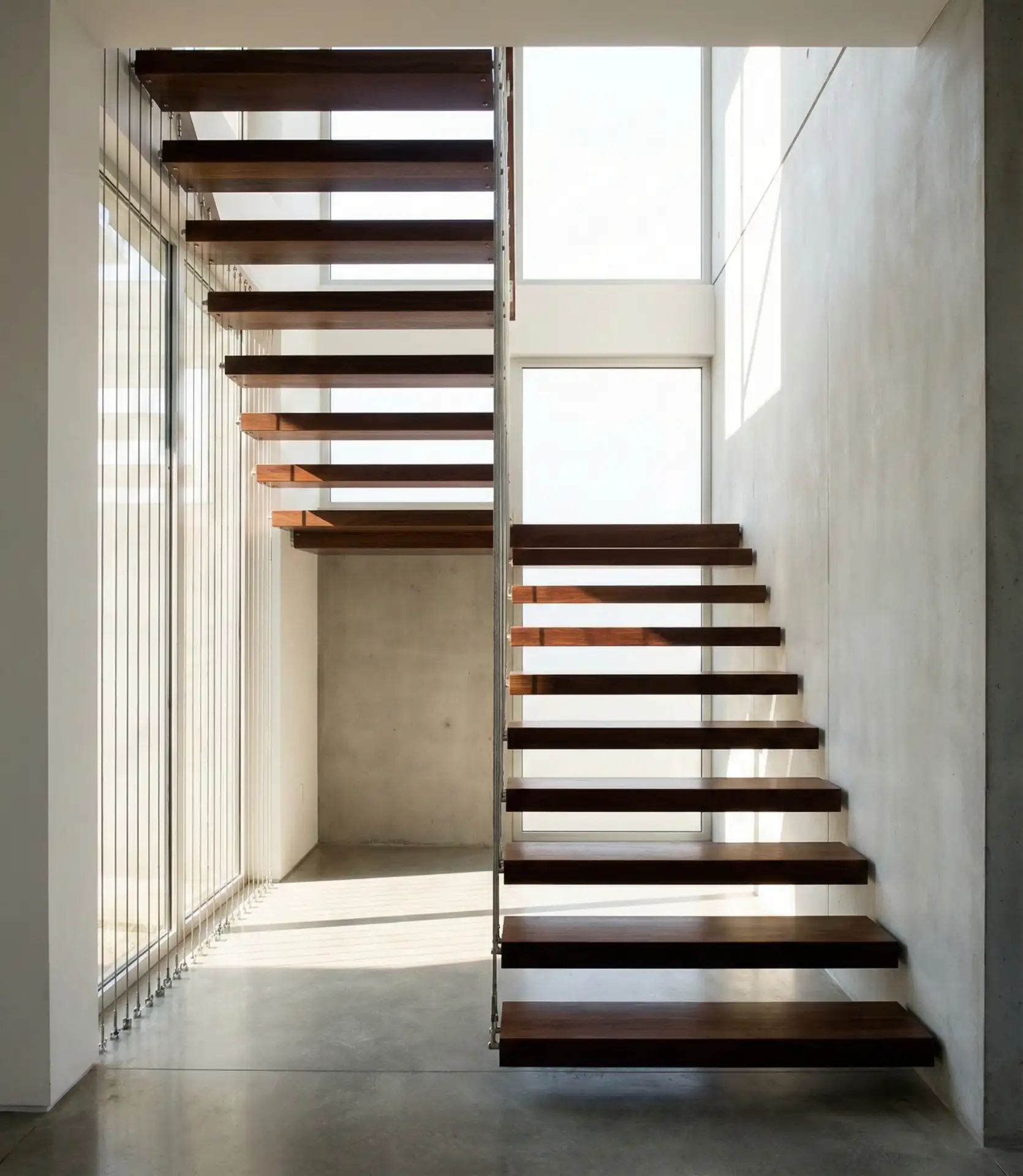
American lifestyle context: Urban markets such as Seattle, Denver, and Austin, which embrace modern architecture, are witnessing a growing popularity of floating stairs. New construction or major renovations best suit these stairs, which require structural reinforcement within the wall. The result is a showstopping staircase that doubles as sculpture, elevating the entire interior.
Whether you’re renovating a historic home or building from scratch, the right stair railing can tie together your design vision while meeting safety codes and daily wear demands. From the rugged charm of reclaimed wood to the sleek sophistication of glass and metal, there’s a style here for every taste and budget. Which ideas are calling out to you? Drop a comment below, and let’s talk about what would work best in your space.