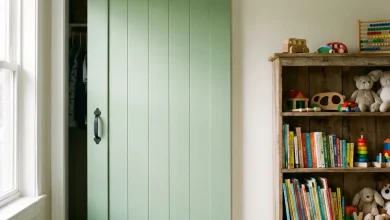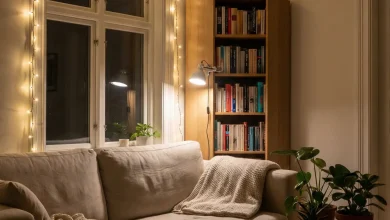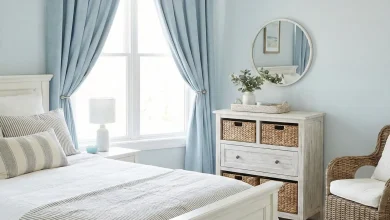

Small-space living is experiencing a significant surge, characterized by a deliberate, personal, and genuinely beautiful aesthetic. In 2026, millions of Americans are actively choosing compact apartments and studios, bringing big design ambitions to 400 square feet or fewer. Pinterest searches for small apartment design and studio layout ideas have surged year over year, driven by renters in New York, Chicago, Austin, and Seattle who want their homes to feel intentional, personal, and genuinely beautiful. Whether you’re furnishing your first studio or rethinking a one-bedroom you’ve outgrown in spirit, this guide covers the freshest ideas shaping how Americans design small spaces right now—from warm minimalism and clever storage to moody palettes and every trick the pros use to make tight square footage feel expansive.
1. Warm Minimalism with Light Oak and Limewash Walls
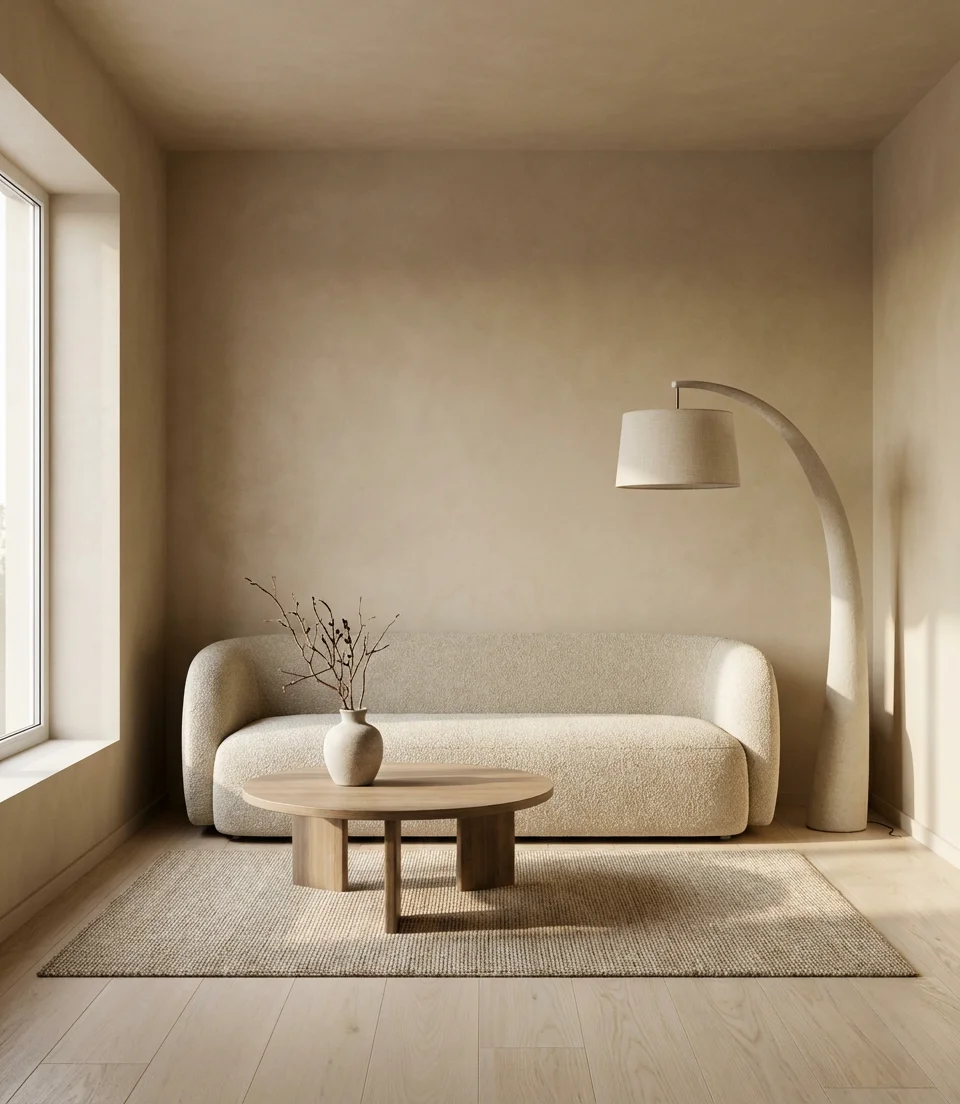
If there’s one aesthetic dominating small modern apartment design right now, it’s warm minimalism—and it’s easy to see why. Unlike the cold, sterile white boxes that defined the last decade, this approach layers natural oak, limewash plaster walls, and earthy linen textiles to create spaces that feel quiet and unhurried. Think pale wood floors, a low-profile sofa in sandy bouclé, and a single sculptural floor lamp casting soft shadows in the corner. Nothing shouts, yet nothing feels empty. It’s modern restraint with genuine soul—and it photographs extraordinarily well on Pinterest, which is no accident.
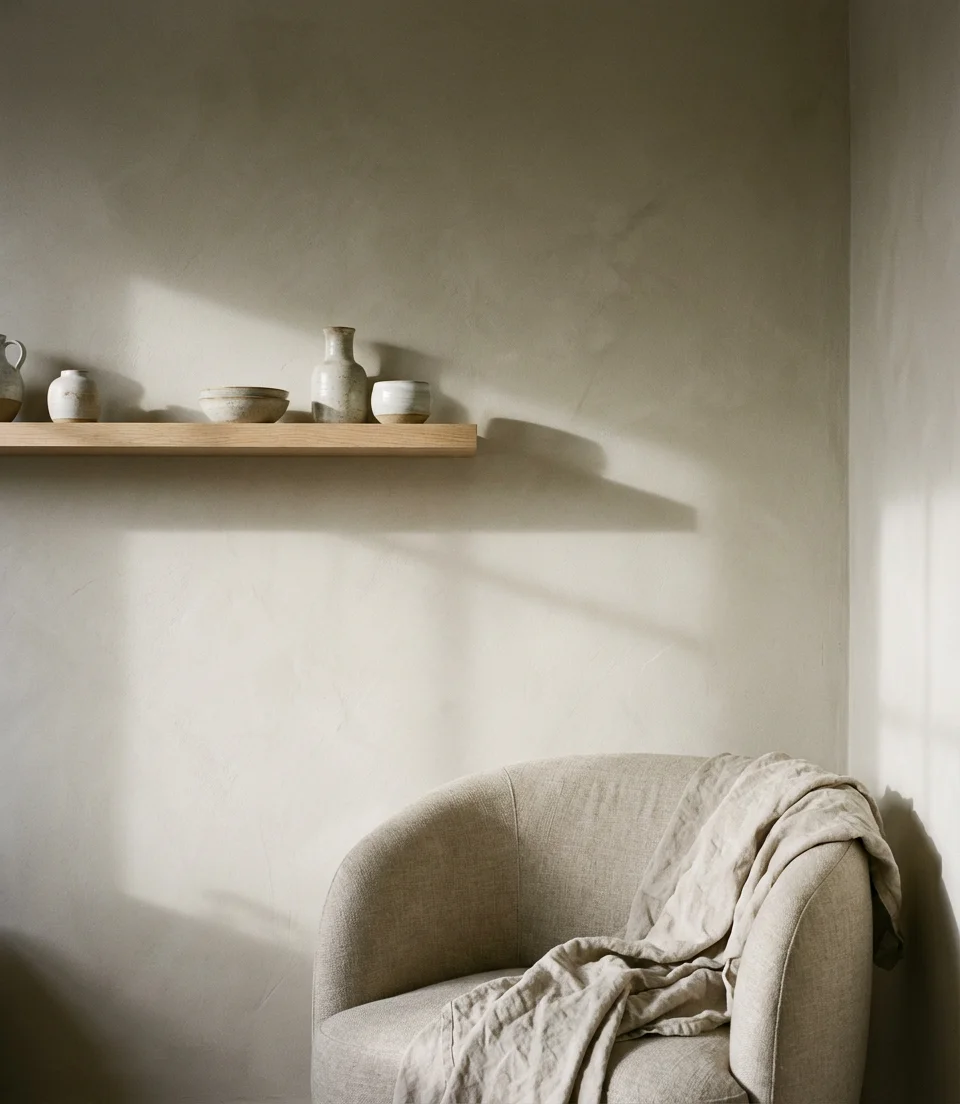
This look works especially well in apartments that receive decent natural light—the limewash wall finish shifts subtly through the day, going warmer at noon and slightly deeper by late afternoon. Designers consistently recommend keeping the furniture count low: a round coffee table, a clean-lined media console, and one or two carefully chosen plants are genuinely all you need. The mistake most people make is adding too much too fast. Start with the fundamental elements of the room, such as the floors, walls, and one anchor piece, and allow the space to breathe before adding additional accessories. Patience, interestingly, is part of the design philosophy here.
2. Floating TV Wall with Wood Slat Paneling
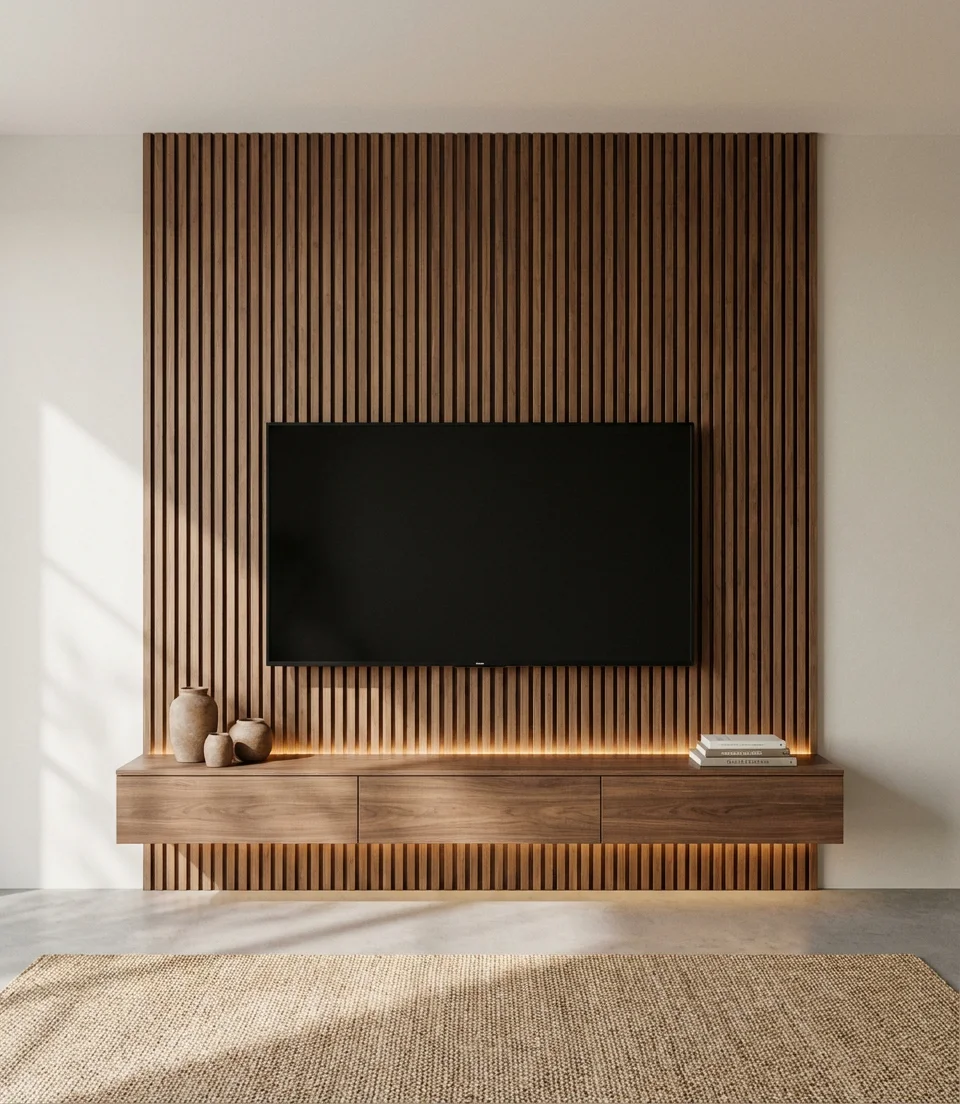
The living room tv wall has officially grown up. In 2026, designers are treating the media wall as a full architectural element rather than an afterthought, and the most popular treatment right now is vertical wood slat paneling that runs floor to ceiling behind a floating media console. The TV mounts flush against the slats, appearing to float within the panel rather than sticking out like a black rectangle. Add warm LED strip lighting behind the console, and you have a wall that looks intentional whether the screen is on or off—which is genuinely the whole point in a modern living room interior where the television shouldn’t dominate.
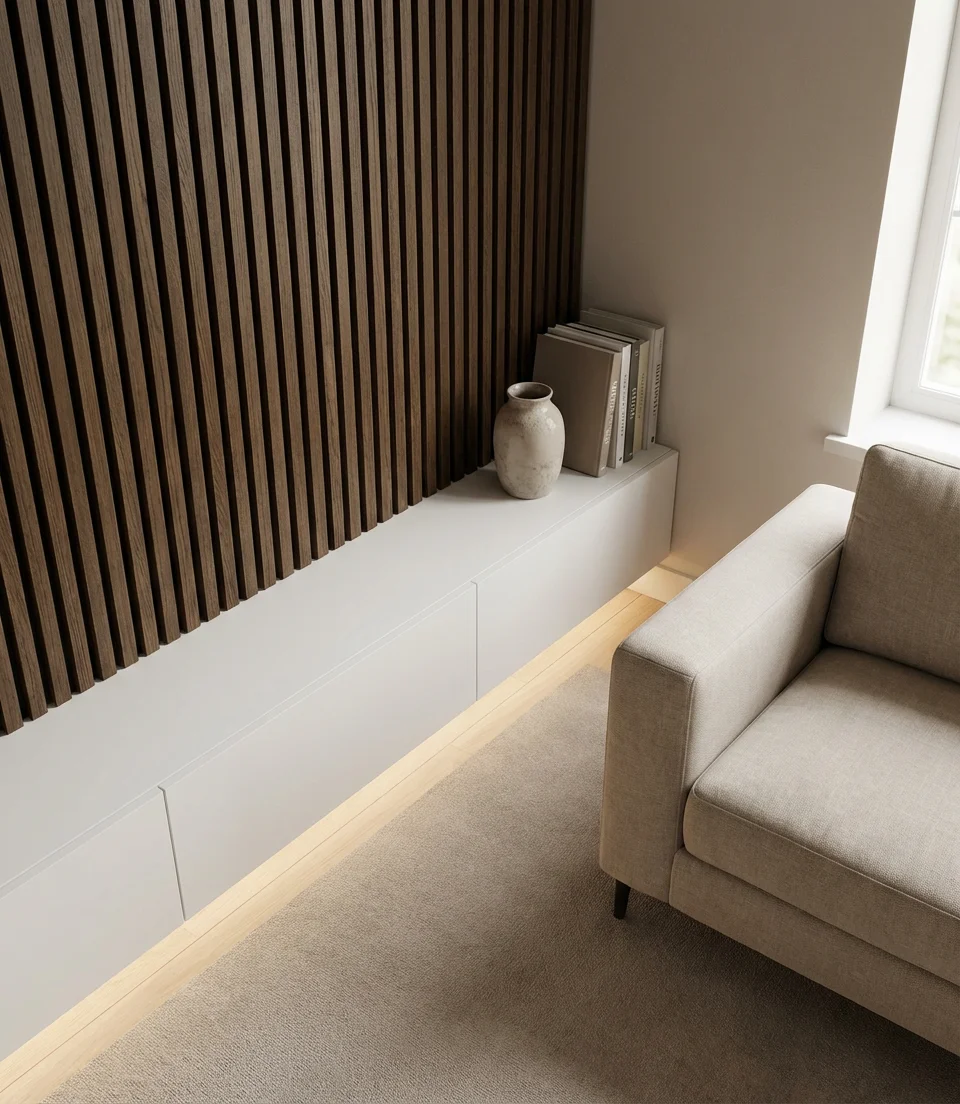
For a tiny living room, this approach solves a real problem: it consolidates all media clutter—cables, consoles, routers—into one clean zone, freeing the rest of the room visually. Walnut-toned slats against a white ceiling feel rich without being heavy. If your budget is tight, pre-made slat panels from home improvement stores run $40–$90 per panel and install with basic tools in an afternoon. The floating console beneath doesn’t need to be expensive—a simple IKEA Besta unit in a matching wood tone does the job beautifully for under $300 and nobody can tell the difference from across the room.
3. Open-Concept Kitchen Living Room with Island Zoning
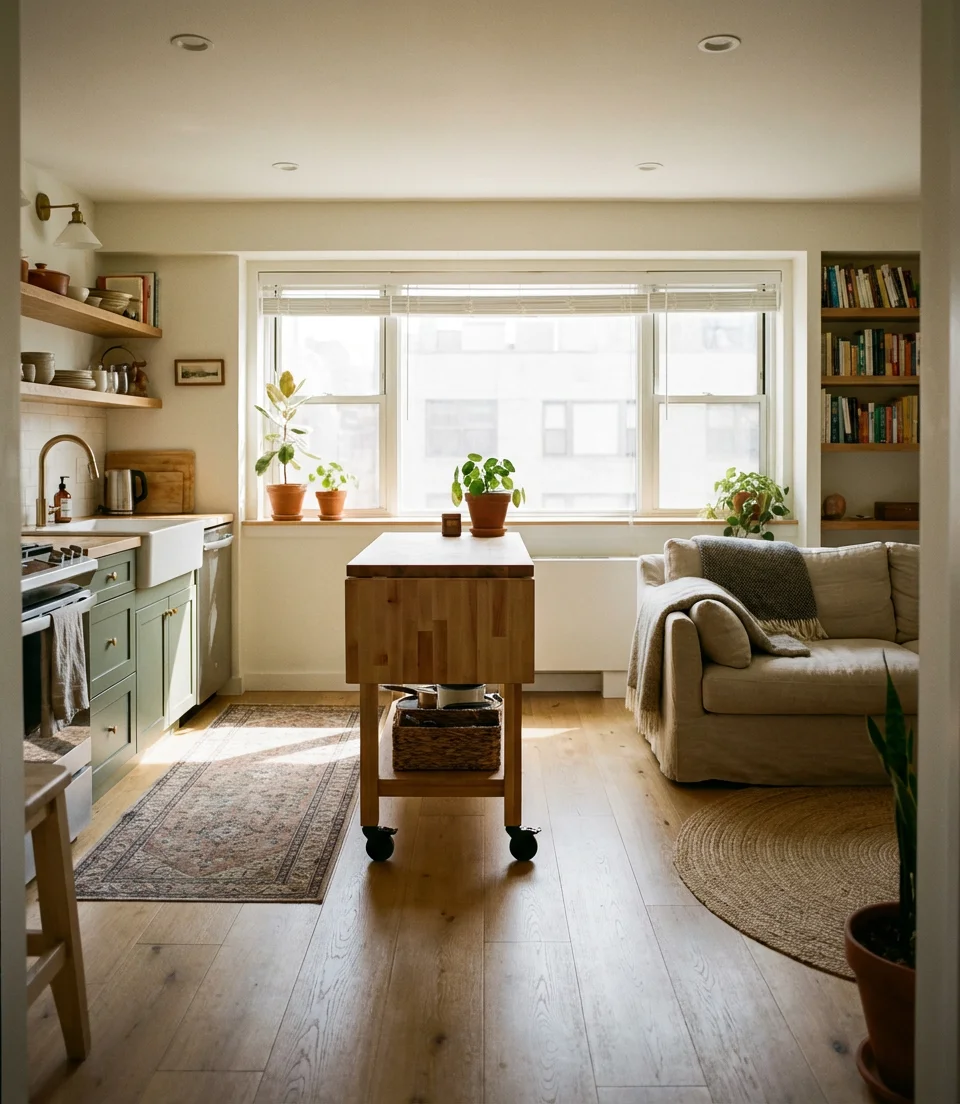
The open-concept kitchen living room is still the most-pinned layout on Pinterest—and in 2026, the conversation has shifted from “should I open it up?” to “how do I make the zones feel distinct without walls?” The answer most designers land on is a kitchen island. Even a slim, rolling island in a compact studio apartment creates a psychological boundary between the cooking zone and the lounging zone, while also serving as a dining table, prep surface, and extra storage. It is one piece that performs four jobs, which is precisely the kind of thinking that small-space living demands and rewards.
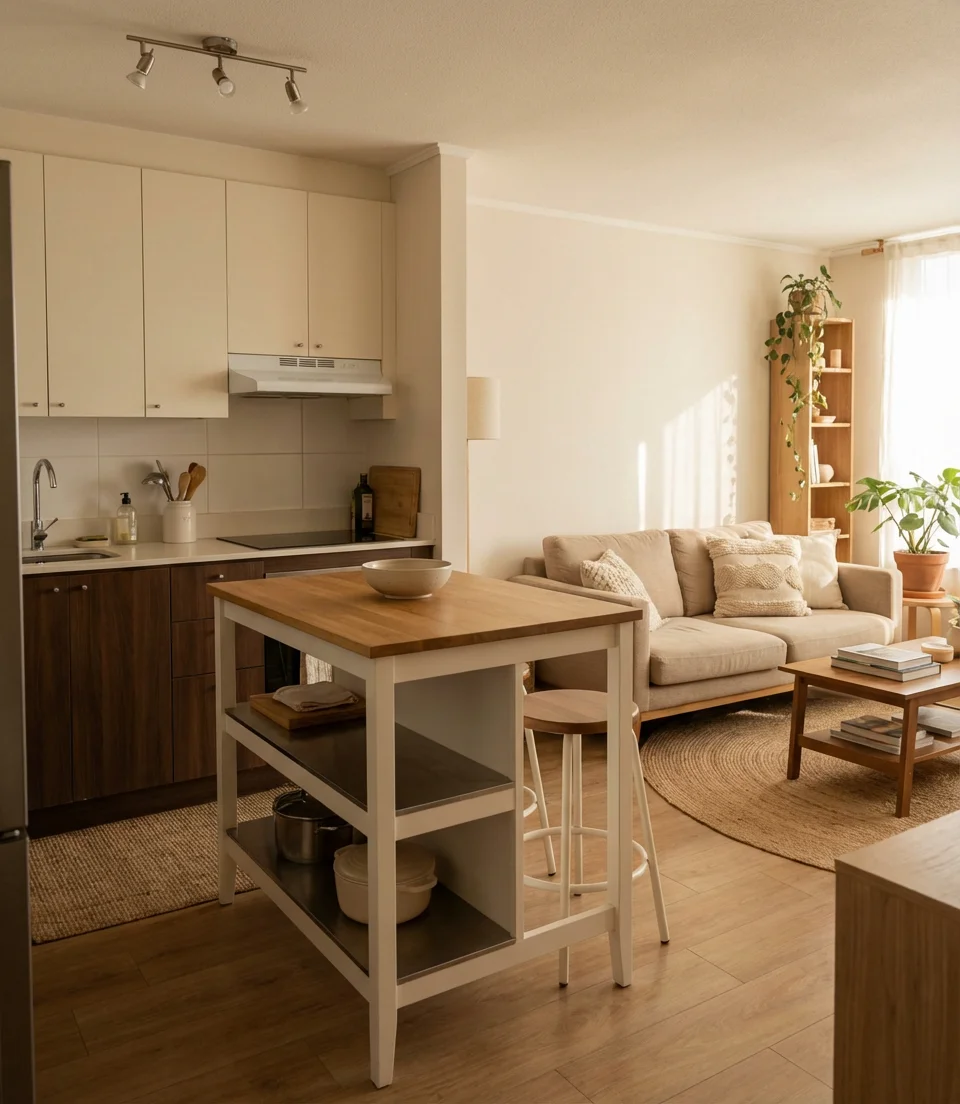
A couple in a 420-square-foot Brooklyn apartment renovated their open-plan layout and later said the island was the single best decision they made—not just for cooking, but because it gave the whole apartment a structural clarity it had been missing. They bought a butcher-block-topped island on wheels for $280, and it transformed how they used every inch. For color cohesion, keep the island in a shade that bridges kitchen and living tones—warm sage or creamy off-white works in almost any palette and avoids the jarring-contrast trap that makes an island read like a foreign object dropped into the room.
4. Scandinavian Studio Layout with Curtain Room Dividers
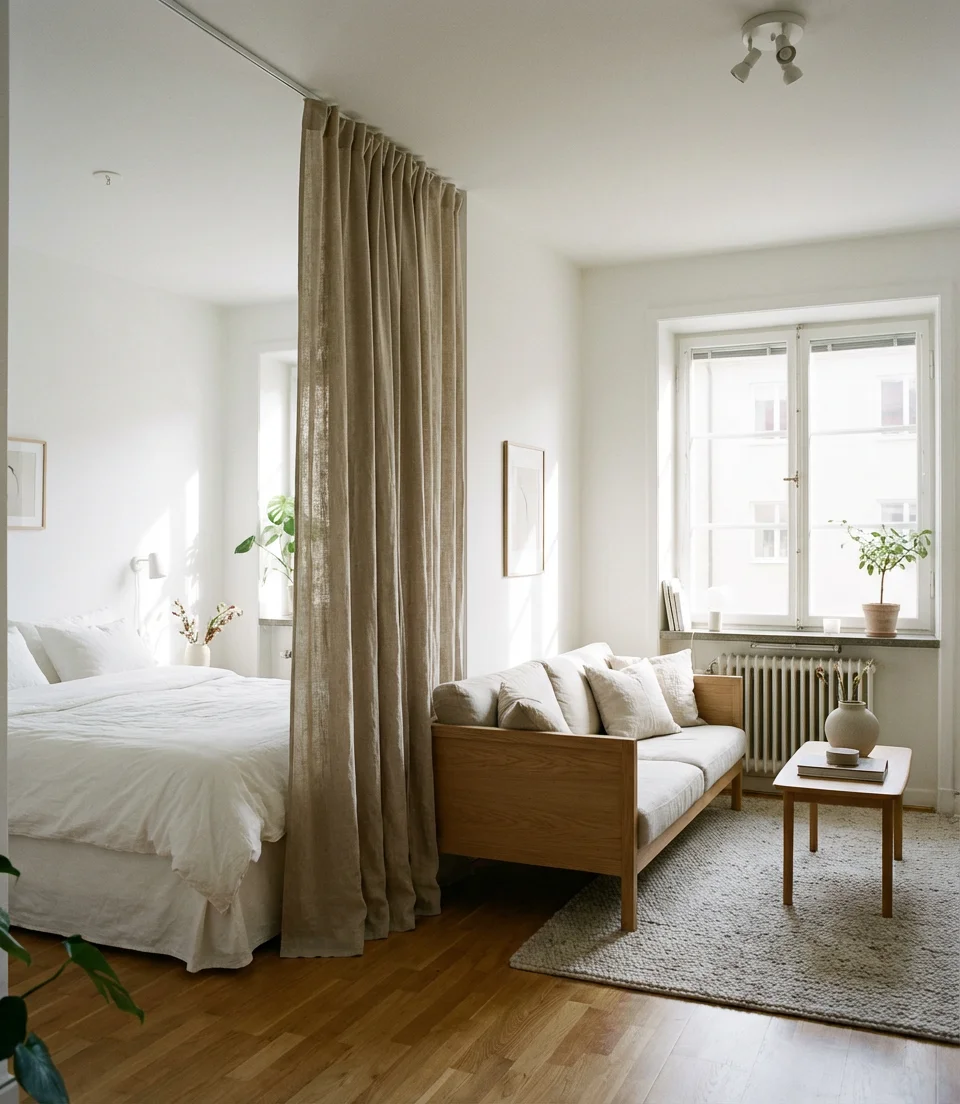
True Scandinavian design has always been built around making less feel like more, and nowhere does that philosophy shine brighter than in studio apartments. One of the most practical tricks borrowed from Nordic interiors is using ceiling-mounted linen curtains to separate the sleeping zone from the living area—no walls, no permanent fixtures, just soft fabric on a ceiling track. In a studio layout, this type of design creates a genuine sense of having a “bedroom” without sacrificing the open, airy quality that makes small spaces feel livable rather than claustrophobic. It’s a renter’s best friend.
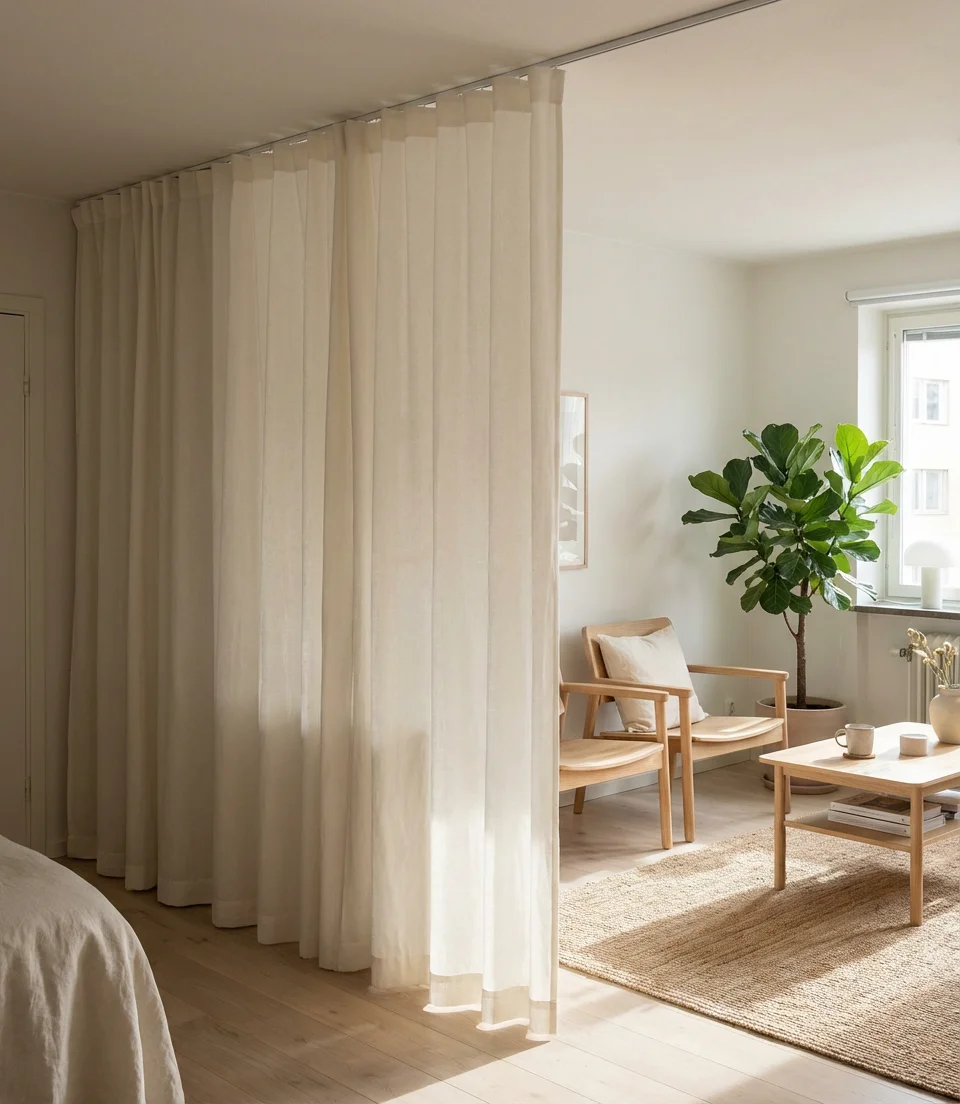
An interior designer based in Los Angeles swears by this trick for clients who work from home: closing the curtain at the start of the workday creates a psychological boundary between work and rest that genuinely improves both productivity and sleep quality. Choose fabric that’s opaque enough to offer real privacy—sheer curtains are lovely but don’t do the job. Natural linen in warm white or soft greige is the sweet spot: it filters light beautifully when open and creates a real cocoon when drawn. Renter-friendly ceiling tracks can be installed without drilling in most modern apartments.
5. Color-Drenched Accent Wall in Jewel Tones
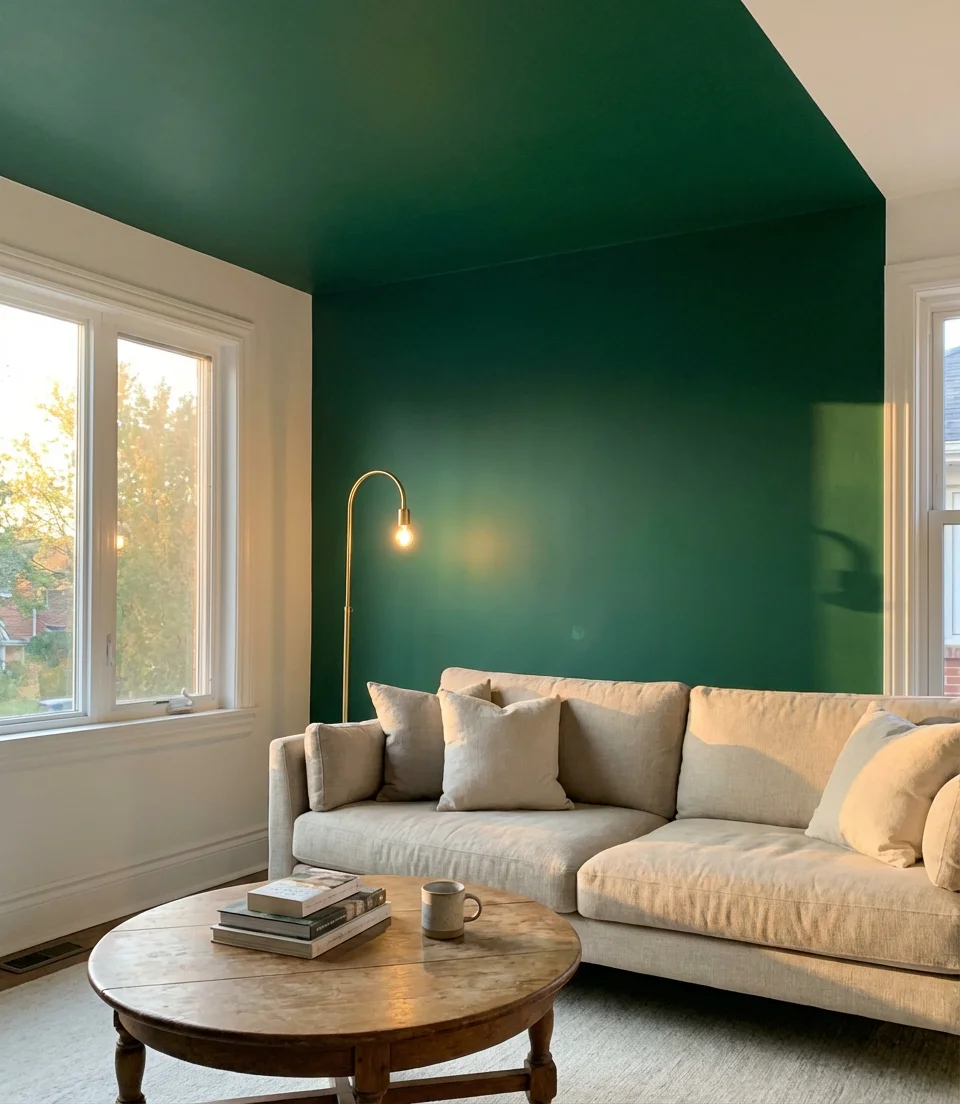
Forget the advice you’ve always heard about keeping small spaces light and bright. The boldest design move of 2026 is painting one wall—or sometimes all four walls and the ceiling—in a deep, saturated jewel tone, and designers are calling the results transformative. In a space with sturdy interior bones, a wall drenched in deep emerald, navy, or terracotta doesn’t make the room feel smaller. It makes it feel intentional. It conveys a sense of deliberate design, a rare occurrence in rental apartments where the default color is beige. Color commitment is its form of sophistication in small apartment designs.
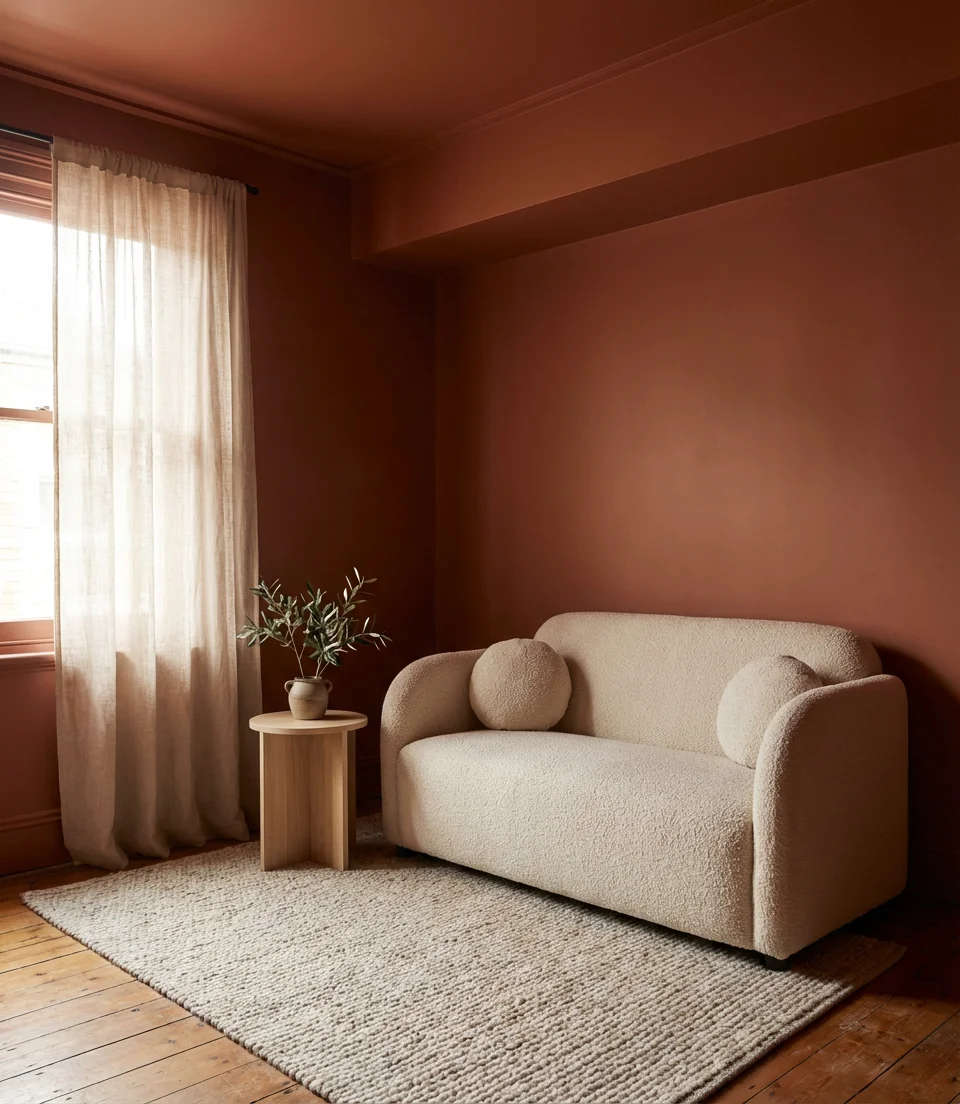
Where this design works best is in apartments with at least one good window—natural light is what makes deep wall colors dynamic rather than depressing. A north-facing room benefits from warmer tones like terracotta or dark clay; east-facing rooms with morning light can handle cooler jewel tones beautifully. The key technique: take the color up onto the ceiling too. Designers call this “color drenching,” and the effect of a continuous tone wrapping walls and ceiling is surprisingly cozy and immersive. Keep furniture in neutral upholstery so the room doesn’t compete with itself and the color becomes the star.
6. Space-Saving Tiny Bedroom with Platform Storage Bed
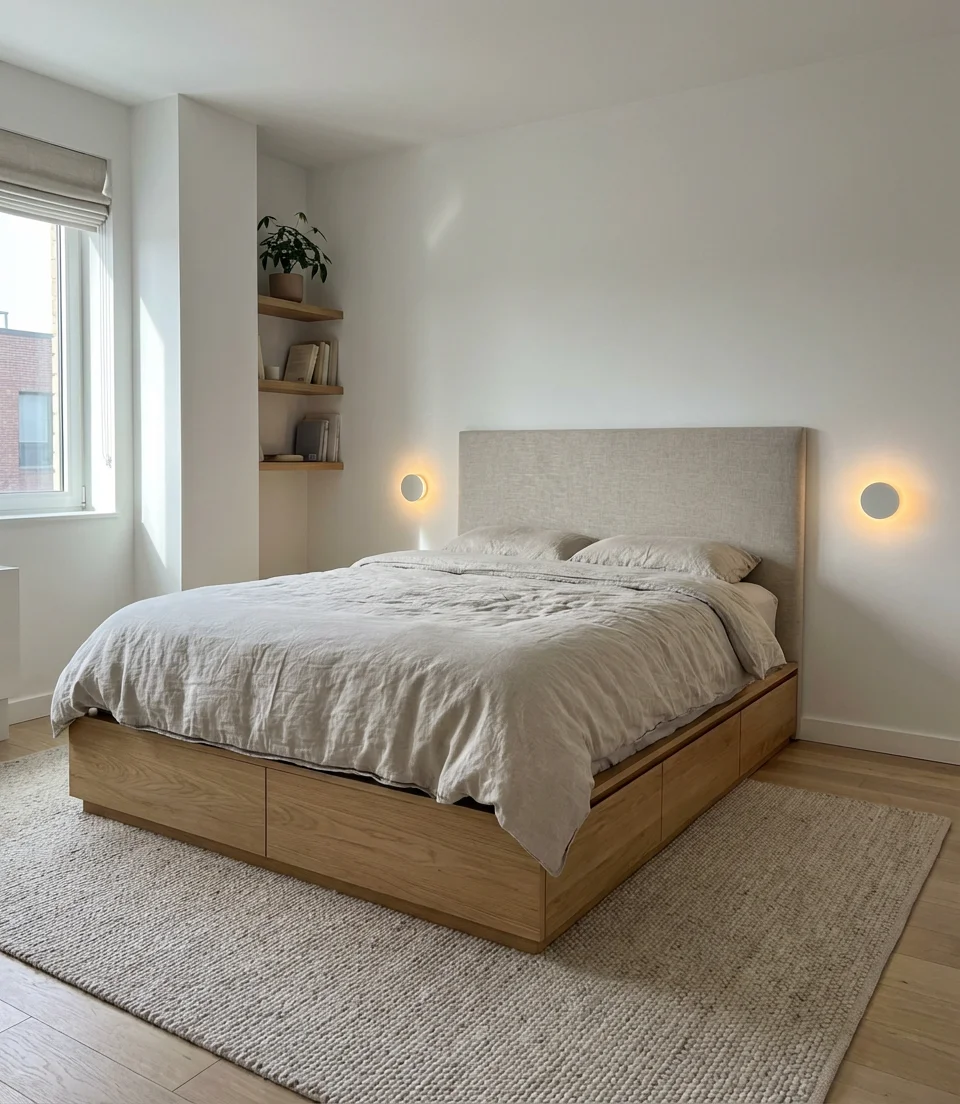
In a tiny bedroom, the bed is both the largest piece of furniture and the biggest storage opportunity—and in 2026, the platform storage bed has become the go-to solution for making both work simultaneously. Modern platform designs with hydraulic lift mechanisms allow the entire mattress surface to rise, revealing deep, clean storage for linens, seasonal clothes, and extra pillows. Unlike bulky under-bed drawers of the past, these beds have a sleek, low profile that keeps the room feeling open. Bedroom space-saving storage has genuinely never looked this elegant or felt this effortless in daily use.
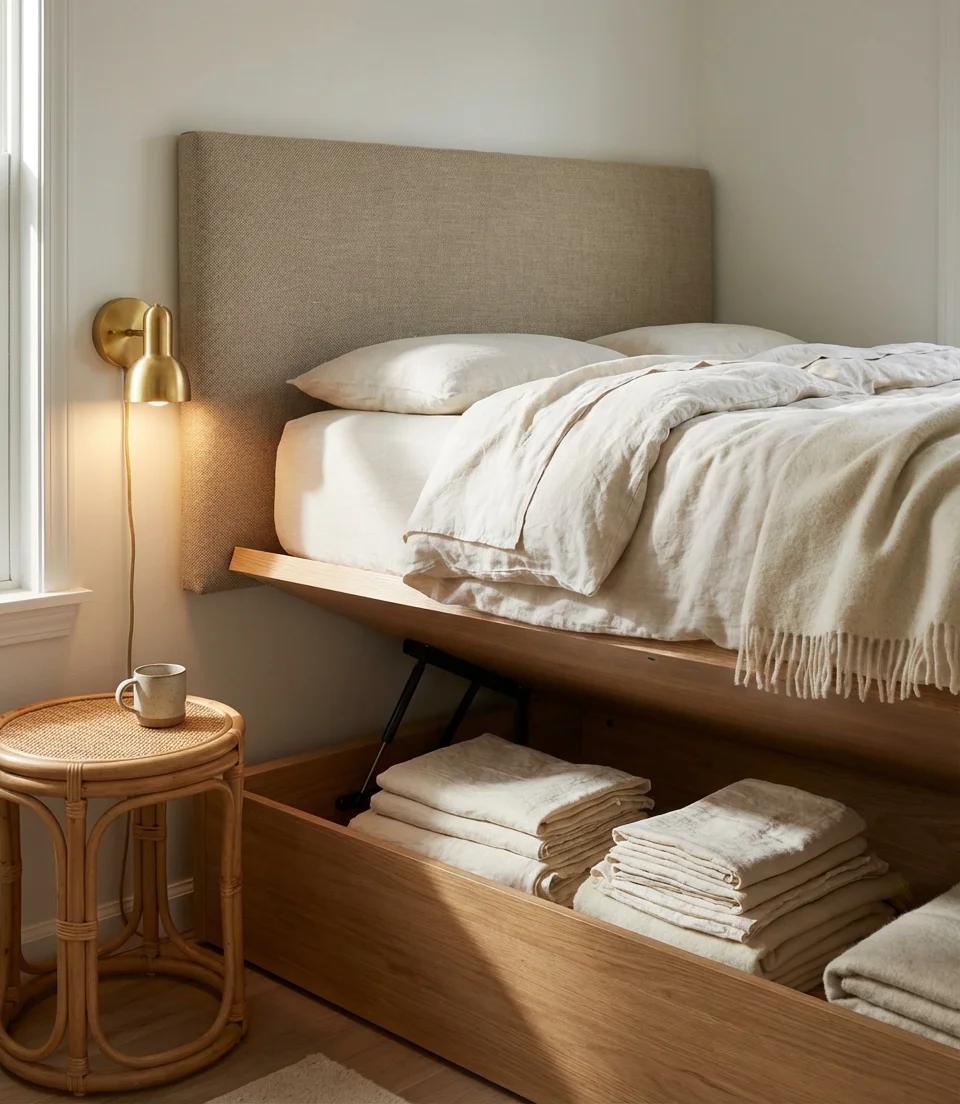
This setup shines in cities like Chicago and Boston, where closet space in older apartments ranges from minimal to essentially nonexistent. A quality hydraulic platform bed starts around $600 and can replace the need for a dresser entirely—freeing up significant floor space in a room where every foot matters. Style it simply: a linen headboard mounted directly to the wall, low bedside sconces instead of table lamps, and a single lightweight rug to ground the sleeping zone. The overall effect is airy, composed, and genuinely functional without a single piece of furniture that feels like a compromise.
7. Maximize Space Layout with Vertical Shelving Walls
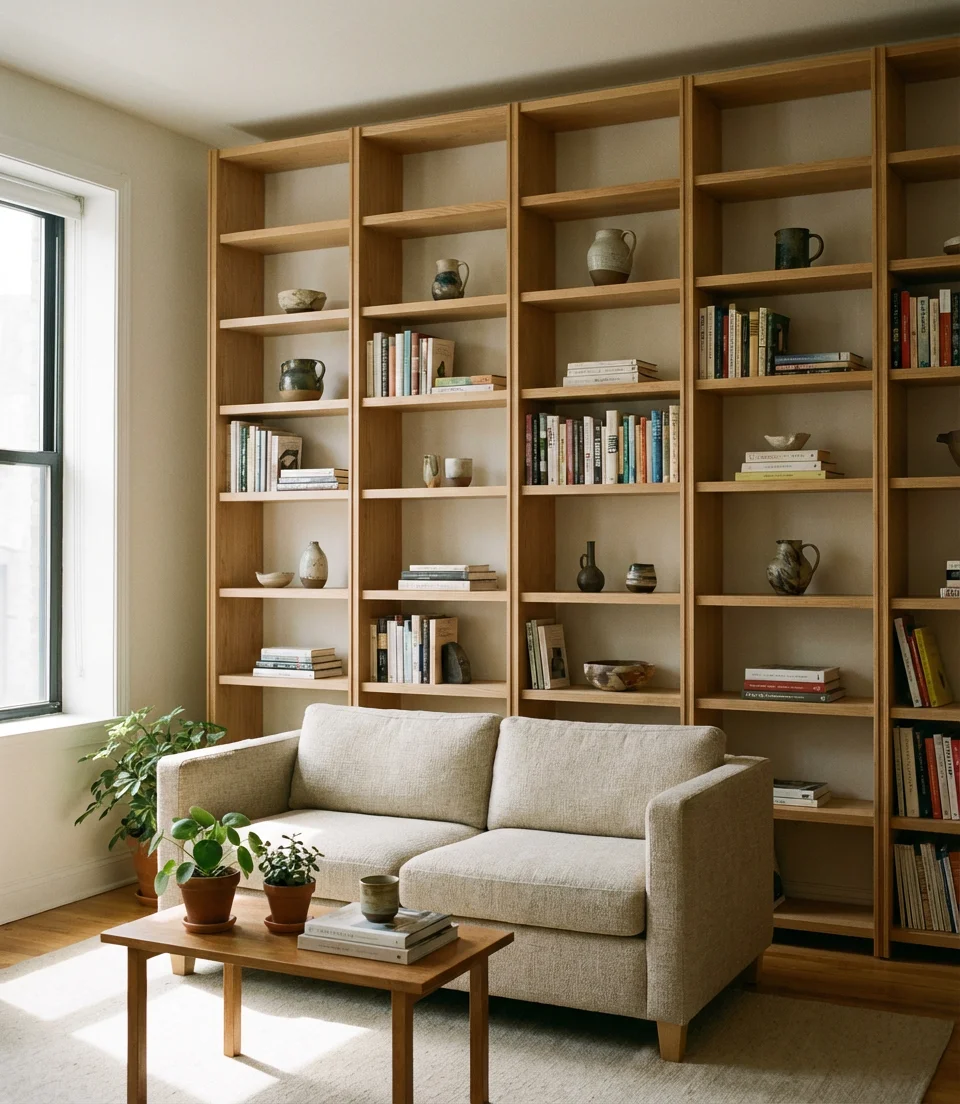
Designers who specialize in compact homes consistently advise stopping horizontal thinking and starting vertical thinking. In any well-planned, space-maximizing interior layout, the wall from floor to ceiling is the most underused real estate in the apartment. A full-height shelving system—whether a built-in or a freestanding modular unit—not only creates enormous storage capacity but also draws the eye upward, making ceilings read as taller and the overall room feel larger. In any thoughtful floor plan approach, height is your most overlooked resource.
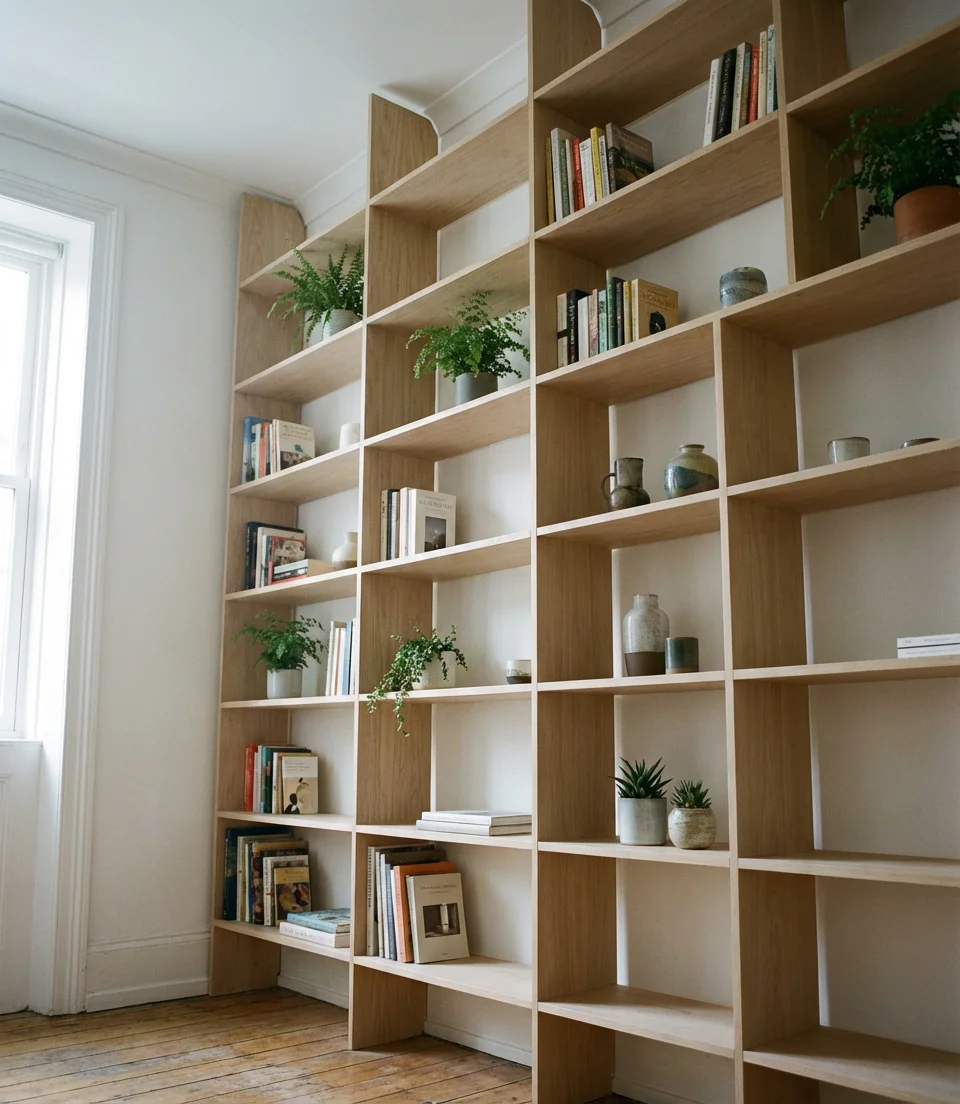
The most common mistake with floor-to-ceiling shelving is filling every shelf completely. A third of your shelves should hold books and practical items, a third should display meaningful objects with breathing room, and a third should stay intentionally empty. That empty shelf isn’t wasted—it’s what keeps the whole wall from reading like a storage unit rather than a design feature. IKEA’s Billy with height extensions or USM Haller systems are excellent starting points. If you’re renting, freestanding units that lean against the wall without anchoring are increasingly stable and equally impactful.
8. Mini Living Room with Curved Furniture and Soft Lines
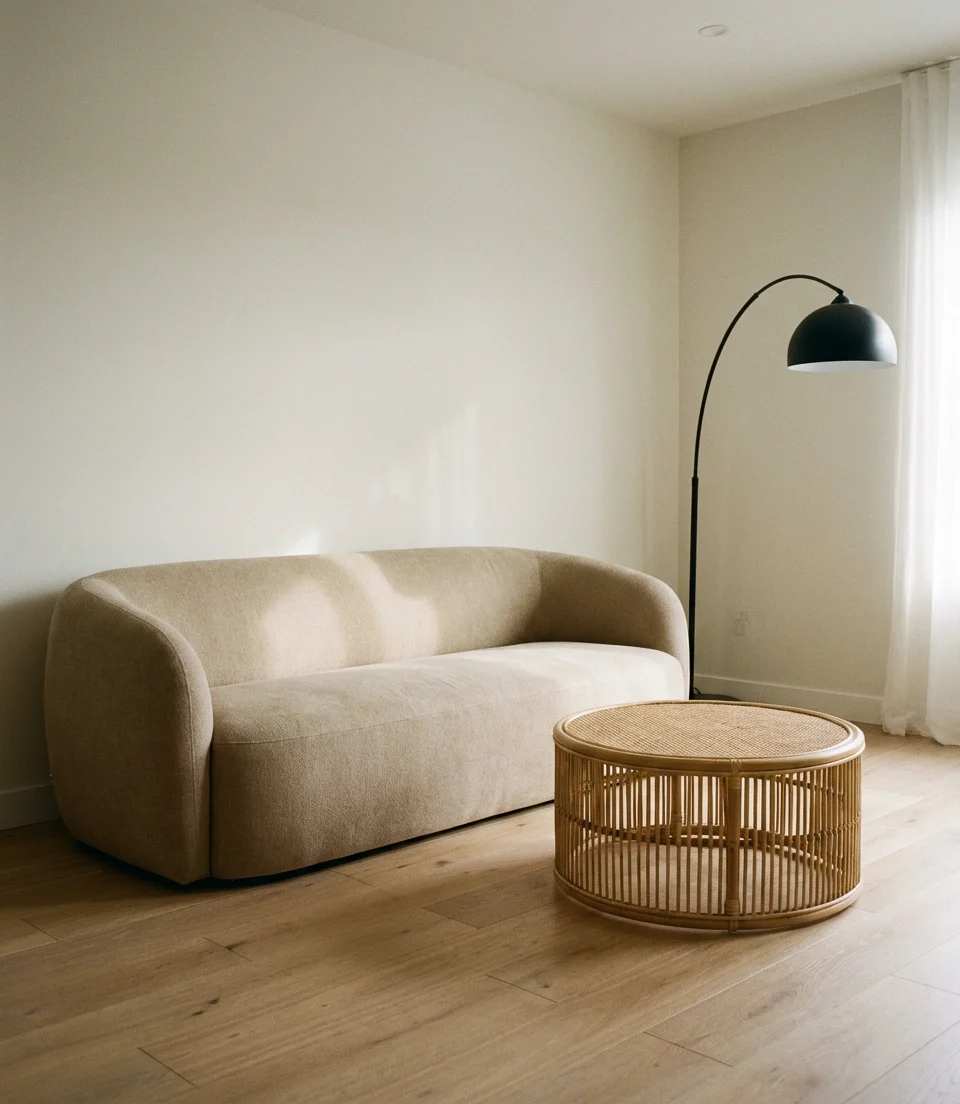
Curved furniture is one of 2026’s most celebrated interior trends, and it makes particular sense in a mini living room. Sharp corners interrupt movement in tight spaces—both physically and visually. A rounded-edge sofa, a circular coffee table, and an arched floor lamp create a sense of flow that makes a small room feel easier to exist in. There’s a reason the curved sofa trend has dominated design magazines for two consecutive years: it genuinely works. In spaces where every piece has to justify its place, soft lines do more visual work per dollar than almost any other single design choice available.
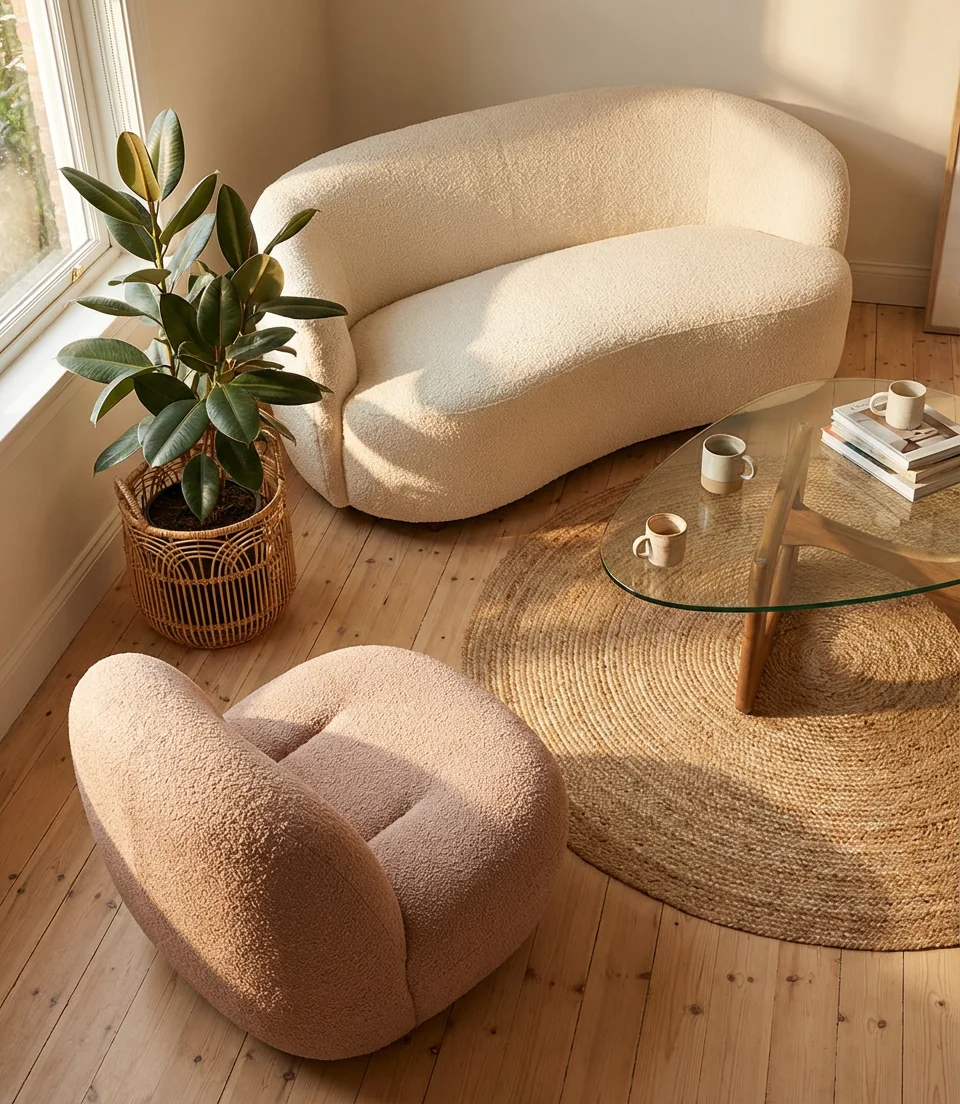
The practical angle matters too. A rounded sofa with no visible legs—a “floating” silhouette where the upholstery goes all the way to the floor—dramatically reduces visual clutter at floor level, which is one of the most effective tricks for making a room read as larger. Choose a sofa in a warm neutral—oat, blush, or warm greige—so the curves become a shape statement rather than a color one. One sculptural curved accent chair is enough to complete the look without overwhelming the space. Slight variations in tone and texture keep the room feeling collected rather than staged, which is the meaningful distinction.
9. Budget DIY Interior Refresh with Peel-and-Stick Wallpaper
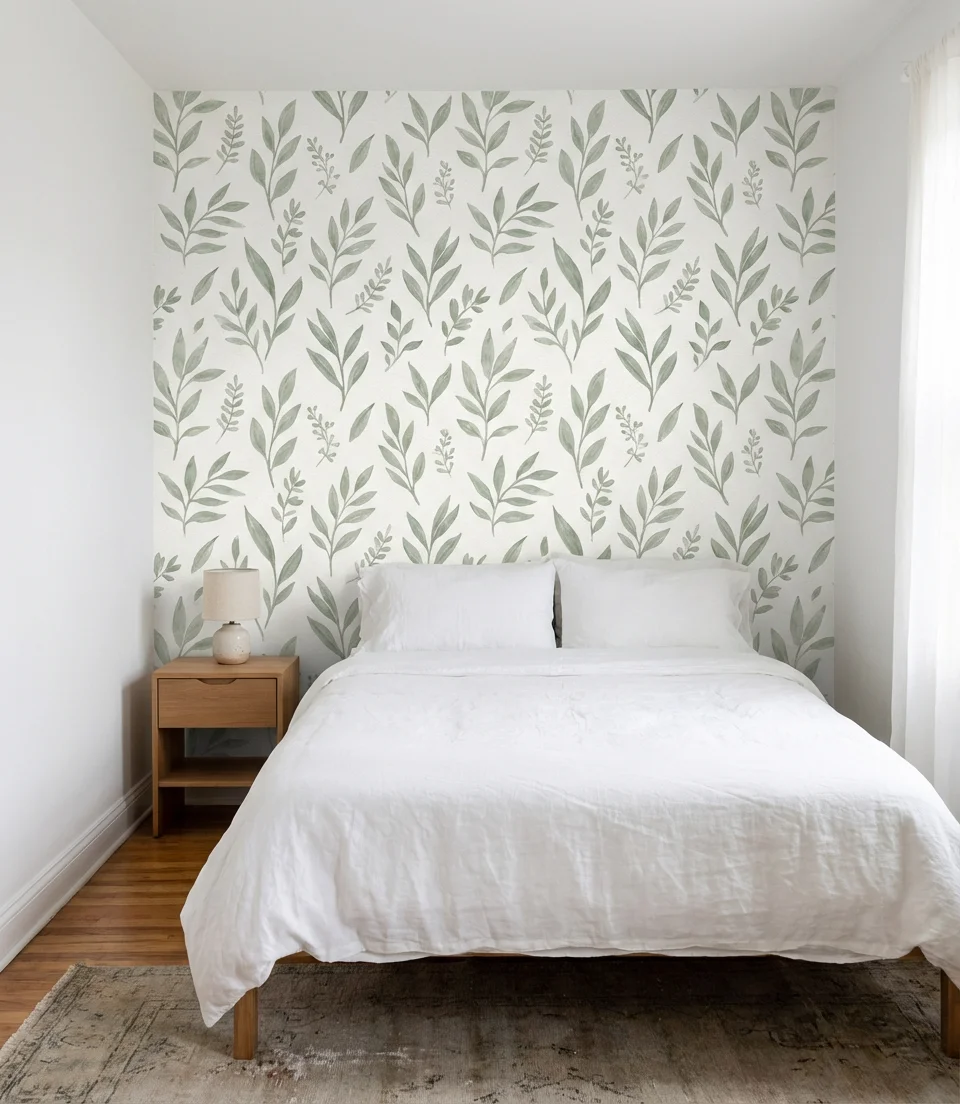
Not every design upgrade requires a contractor or a significant budget, and in 2026, a budget diy interior refresh is more achievable than ever thanks to a genuine leap in peel-and-stick wallpaper quality. What once looked distinctly temporary now comes in convincing grasscloth, linen, geometric, and hand-painted botanical textures nearly indistinguishable from traditional wallpaper in person. For renters—the majority of Americans in their 20s and 30s—this is a meaningful way to personalize a space without risking a security deposit. Good organization of wall zones can be as impactful as any piece of furniture.
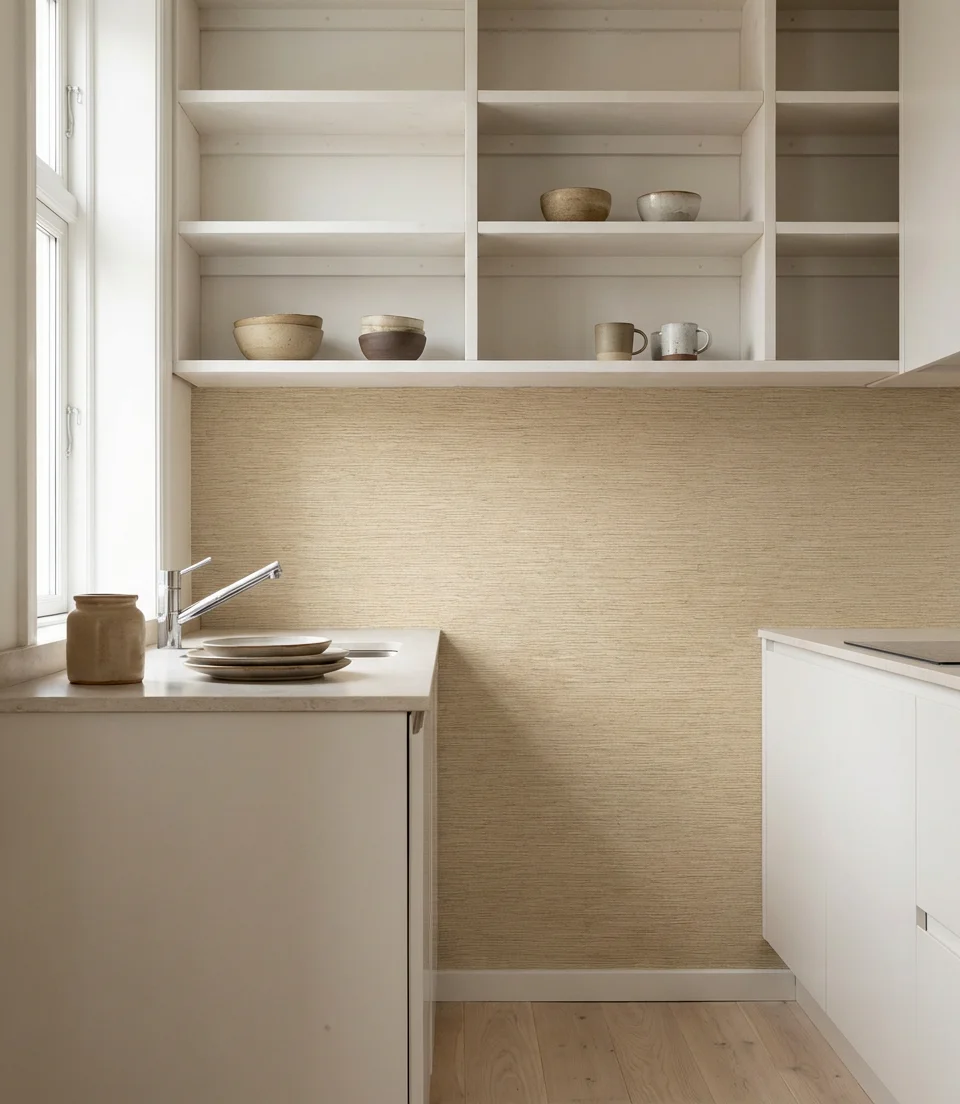
A single accent wall in quality peel-and-stick paper runs $60–$150 depending on the pattern and coverage needed, and most designs install solo in two to three hours with no special tools. The most popular placements are behind the bed as a headboard alternative, on the kitchen backsplash for an instant texture upgrade, and in entryways where a small but impactful design moment makes the whole apartment feel more considered. One tip from experienced DIYers: always use a plastic smoother tool and start from the top center of the wall rather than a corner—it prevents the bubbles and alignment issues that plague rushed installations.
10. Tiny Living Room with Layered Lighting Design
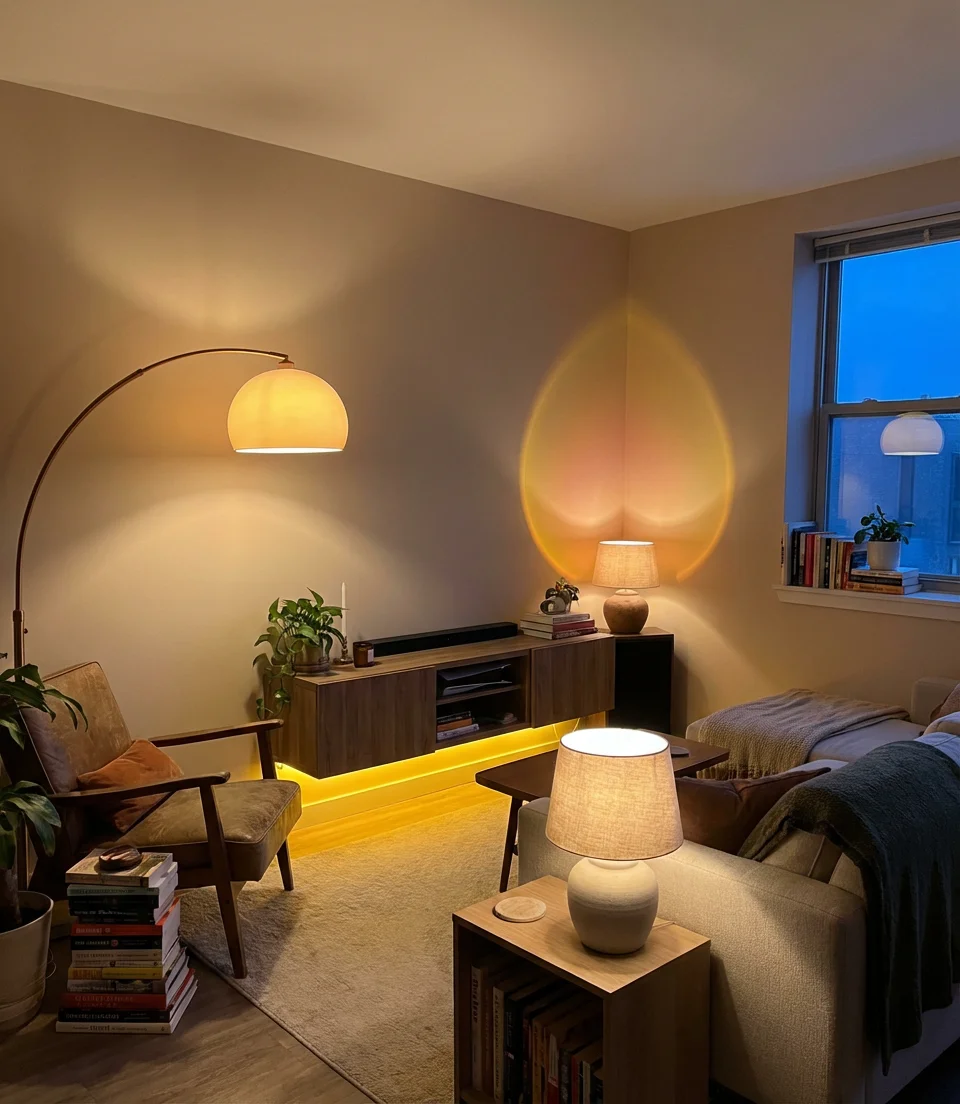
Nothing transforms a tiny living room faster or more affordably than thoughtful lighting—and the 2026 approach has moved well beyond the single overhead fixture most apartment ceilings are stuck with. Small apartment design is modern now and treats lighting as a full design layer: a warm-toned floor lamp in the corner, LED strip lighting under the media console or along a floating shelf, a small table lamp on a side table, and a dimmer on everything that allows it. This method creates multiple light zones that let the room shift from bright and energizing during the day to warm and intimate at night.
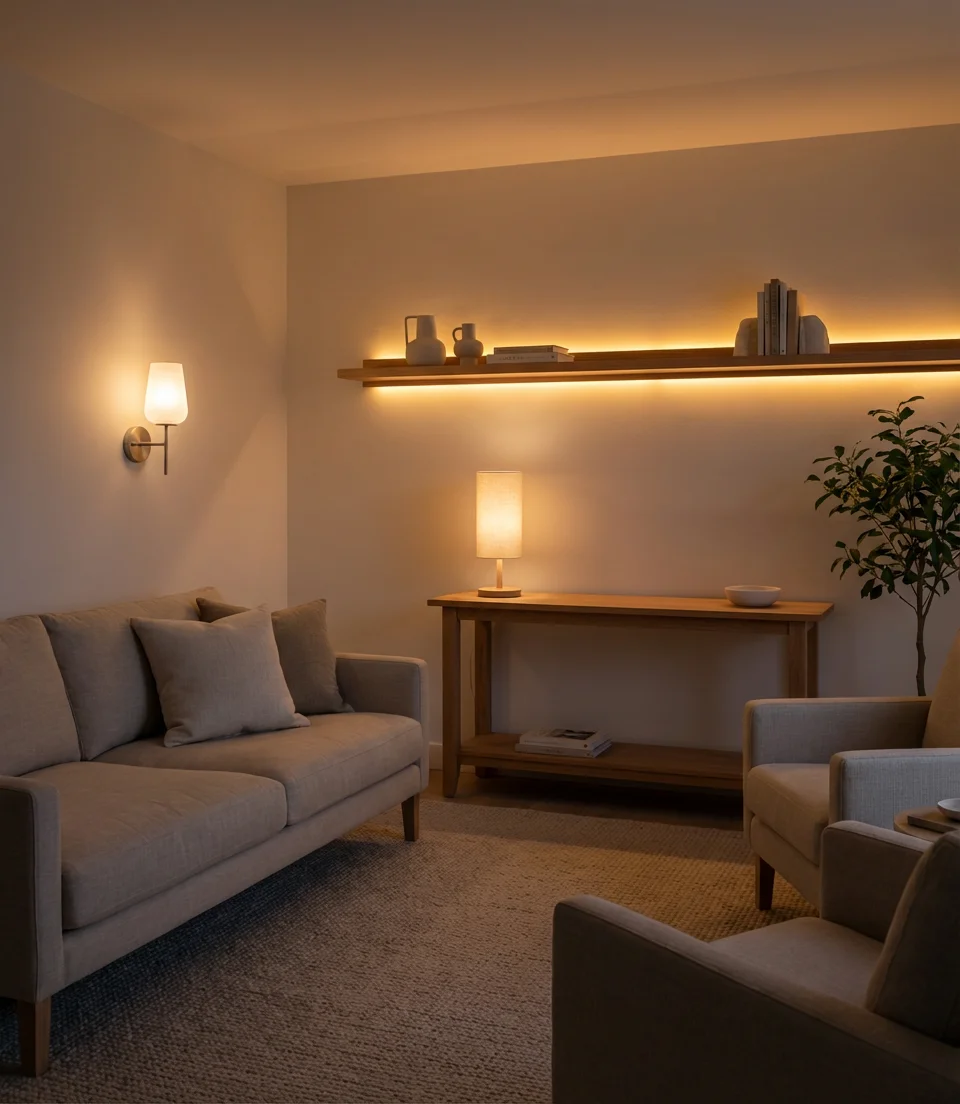
Americans who’ve made the switch from single-overhead to layered lighting consistently say it’s the upgrade they wish they’d done sooner. The psychological effect of warm, low ambient light on a worn-out weeknight evening is genuinely difficult to replicate with any other design decision. Budget-friendly LED strip lights run $15–$30 for a full under-cabinet setup, and rechargeable cordless wall sconces mean you can add wall light with zero wiring required. The rule of thumb designers use is to aim for three light sources at different heights in every room and avoid anything that points directly at the ceiling without also casting light sideways into the space.
11. Balcony Extension as Outdoor Living Room
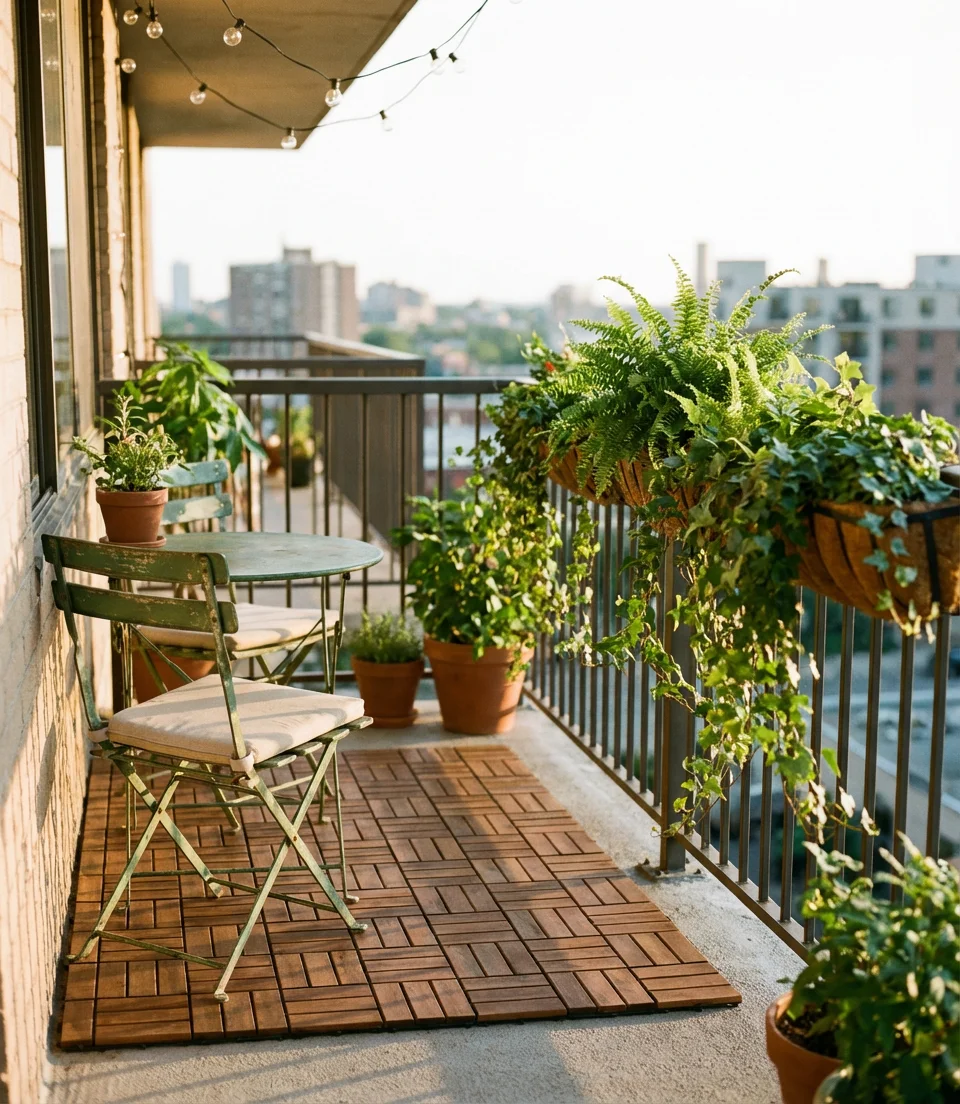
A balcony—even a narrow, five-foot-deep one—is some of the most valuable square footage in any small apartment, and treating it as a proper room rather than a storage zone for bikes and boxes changes everything. In 2026, balcony design for compact living focuses on a few key moves: laying interlocking wood deck tiles over concrete floors for warmth, adding a two-person bistro table or a built-in corner bench with outdoor cushions, and hanging string lights or a weather-resistant pendant. The result is a secondary living zone that genuinely extends the apartment from late spring through early fall in most American cities.
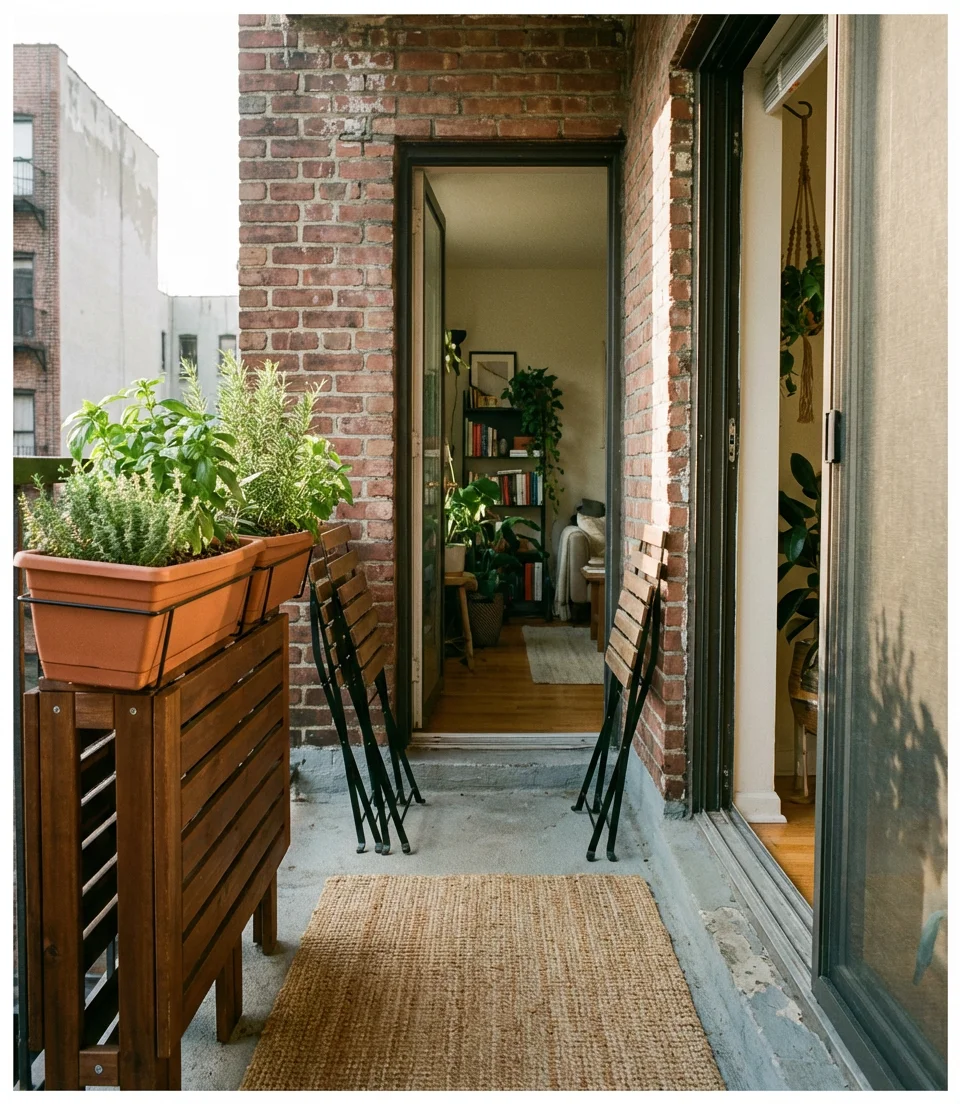
Where this idea works best is in cities with mild shoulder seasons—San Francisco, Seattle, Austin, or most of the Southeast—where a well-furnished balcony is usable for six to eight months of the year. Even in colder climates, a few weather-resistant cushions and an outdoor rug make the space feel intentional for warmer months. A folding wall-mounted table is the ultimate space-saver on a narrow balcony: it collapses flat when not in use and opens to full dining size in seconds. Paired with two folding chairs stored inside, it turns even a four-foot balcony into a proper morning coffee spot year after year.
12. Modern Studio with Murphy Bed and Built-In Desk
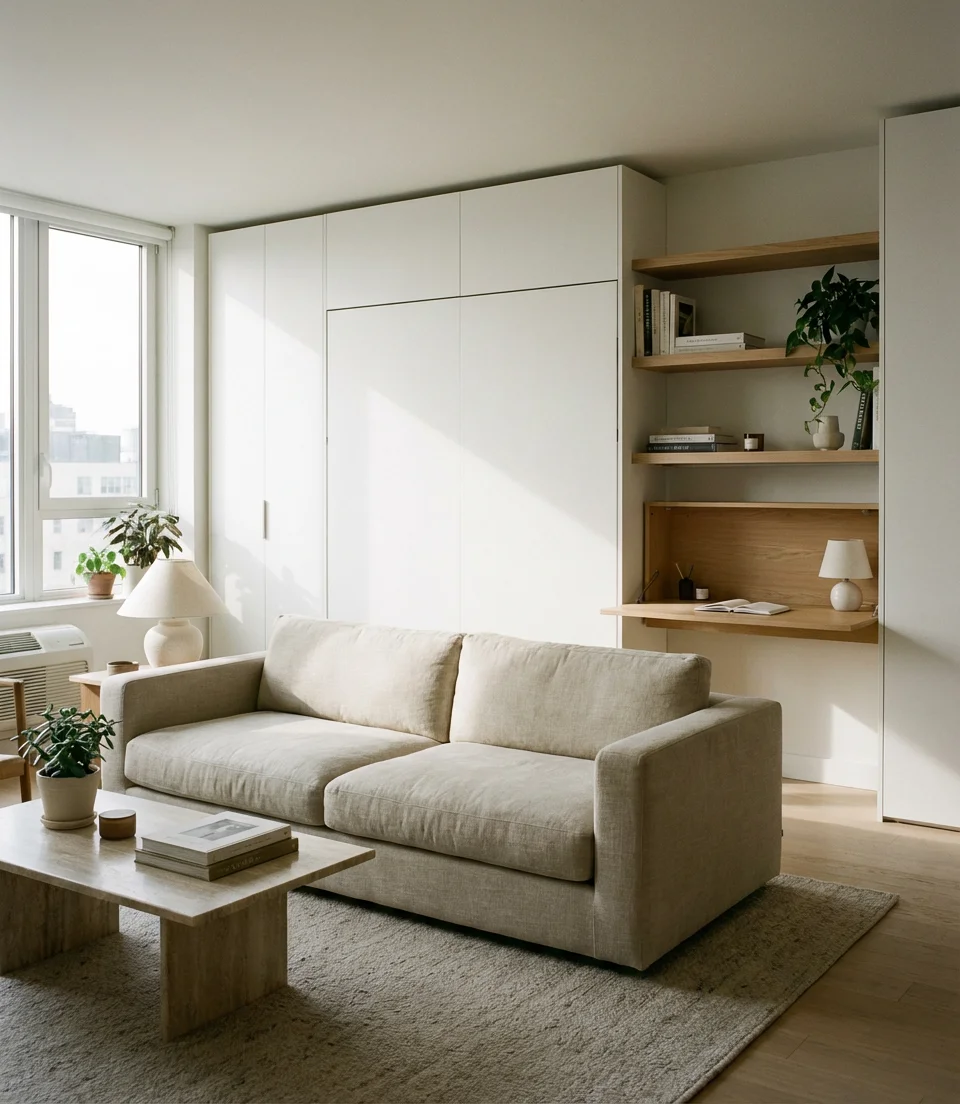
The Murphy bed has had a serious design glow-up, and in 2026 it’s one of the most-searched studio apartment interior solutions on Pinterest. Modern Murphy systems come in sleek, flat-panel finishes that look like a wall unit when closed—often incorporating a fold-down desk, floating shelves, and hidden storage into a single built-in composition. In a true studio where space-saving tiny living is the entire brief, a quality Murphy bed system transforms the apartment from a bedroom into a living room in under thirty seconds, making the same 400 square feet function as two separate spaces throughout the day.
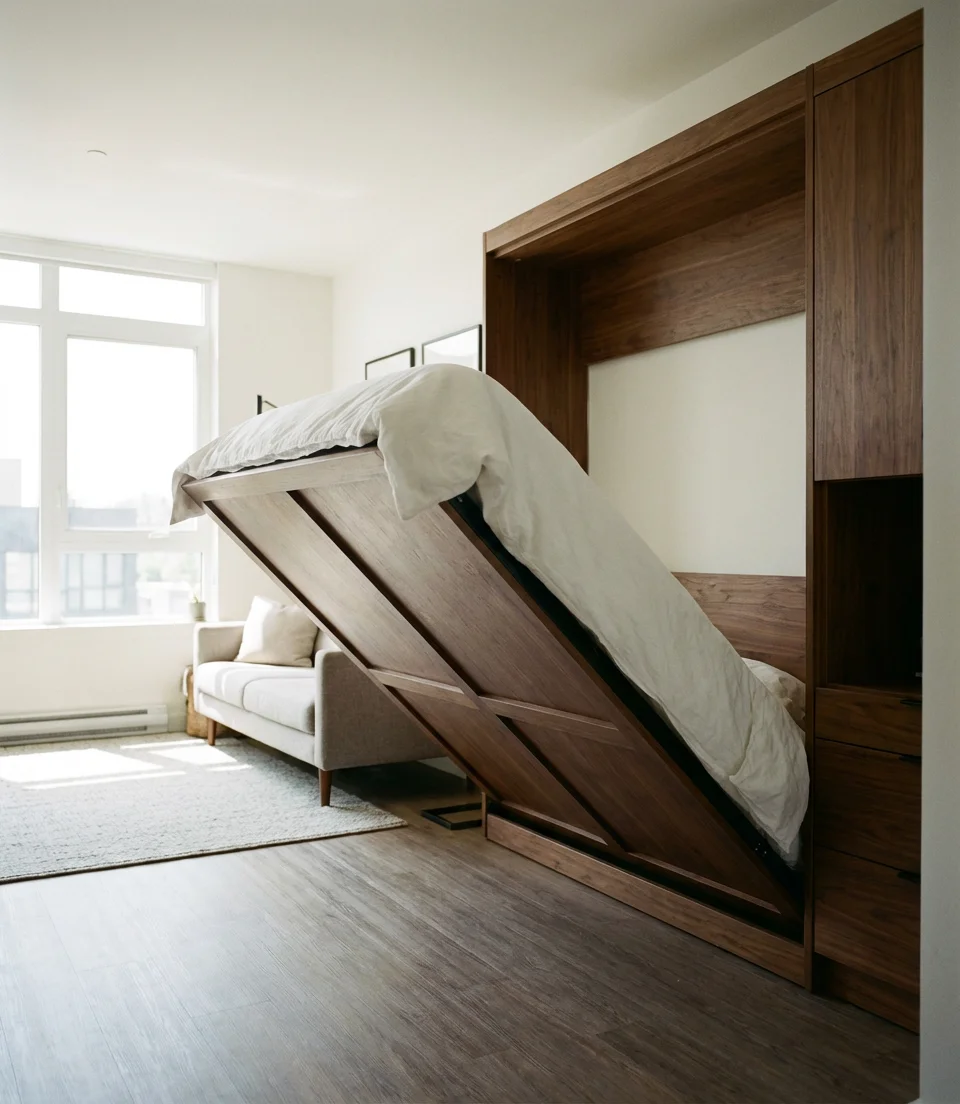
The average Murphy bed installation runs between $1,200 and $3,500 depending on materials and whether you’re going with a DIY kit or a custom built-in. In high-cost cities like San Francisco, Seattle, or Manhattan, that investment is frequently cheaper than upgrading to a one-bedroom—a quiet calculation many young professionals are making right now. Look for systems with soft-close hinge mechanisms, which are safer and quieter than spring-loaded versions. If you use the integrated desk daily, make sure its depth is at least 20 inches when open; anything shallower feels cramped for a full workday setup.
13. Small Apartment Organization with Modular Storage Systems
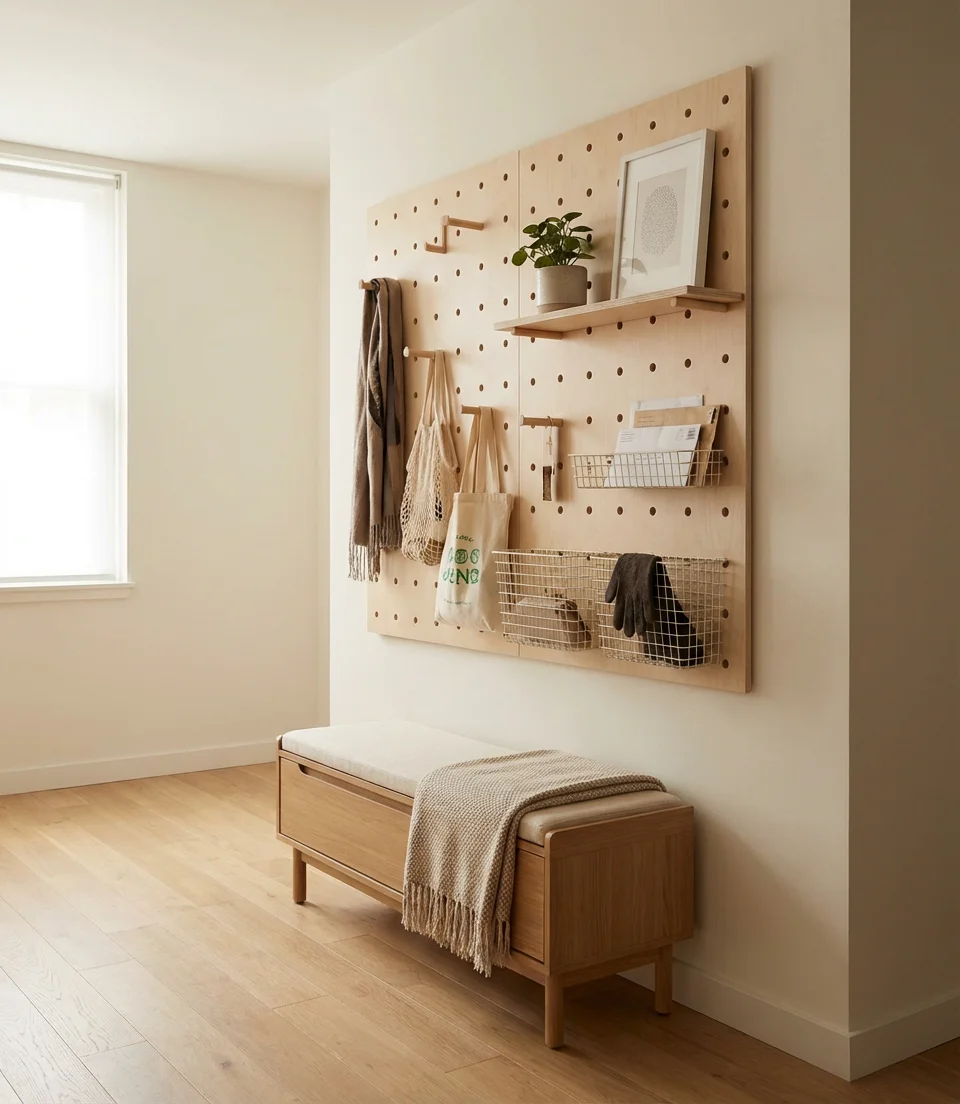
Good organization in a small apartment isn’t just a practical matter—it’s genuinely a design choice. When everything has a place and clutter is off the floor, even a modest space reads as more intentional and more spacious. In 2026, the popular storage systems for small spaces are designed to be flexible: stackable cubes, adjustable drawer inserts, and wall-mounted rails that can hold hooks, shelves, and baskets in many different arrangements. Storage treated as architecture—not an afterthought—is what separates a well-designed compact apartment from a cramped one.
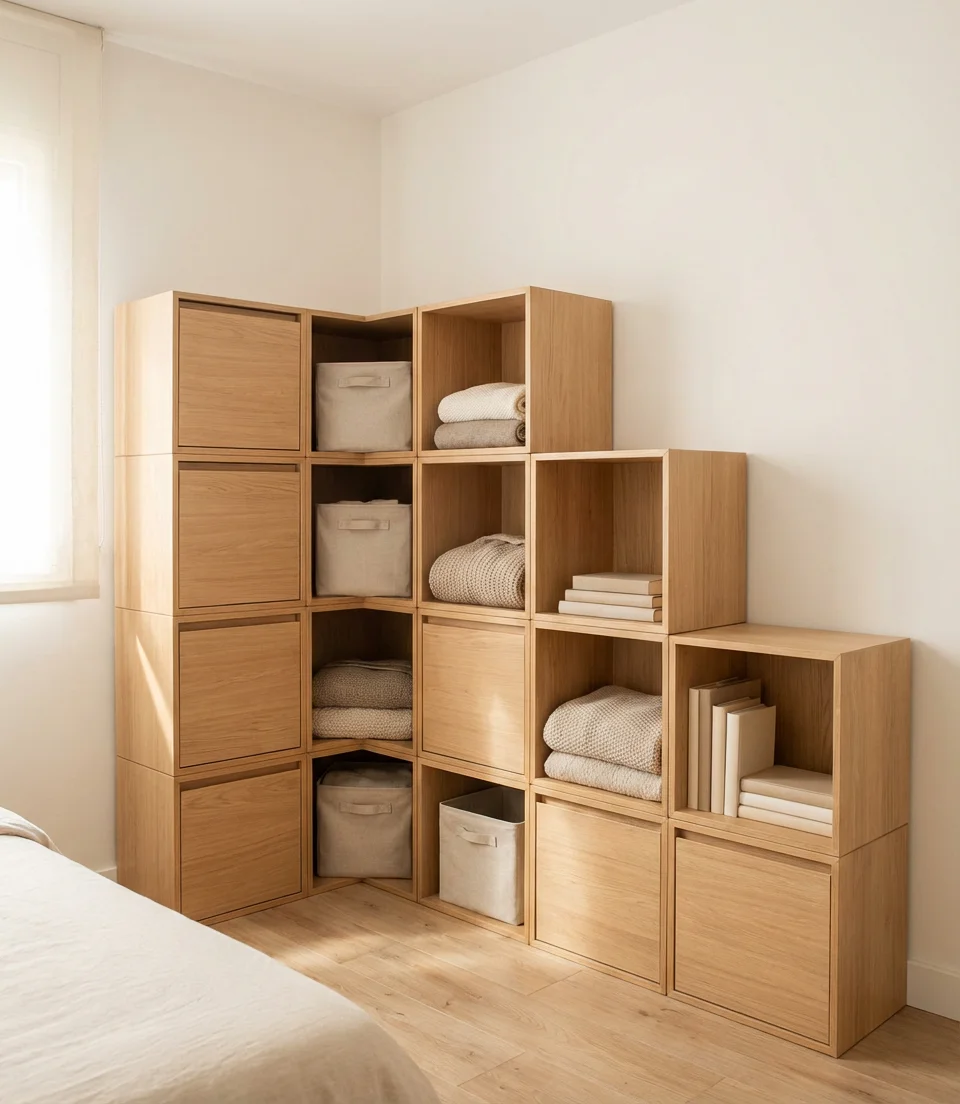
Real homeowners who’ve done the work consistently say the same thing: the editing process—deciding what actually comes into the apartment—matters more than any storage product you buy. One designer put it plainly in a recent shelter magazine interview: most people in small apartments don’t need more storage; they need fewer possessions. Once that mental shift happens, modular systems become genuinely transformative. IKEA’s SKADIS pegboard system for kitchens and offices, combined with the PLATSA wardrobe system for bedrooms, covers nearly every storage need in a compact space for well under $500.
14. Earthy Neutral Kitchen in a Studio Apartment
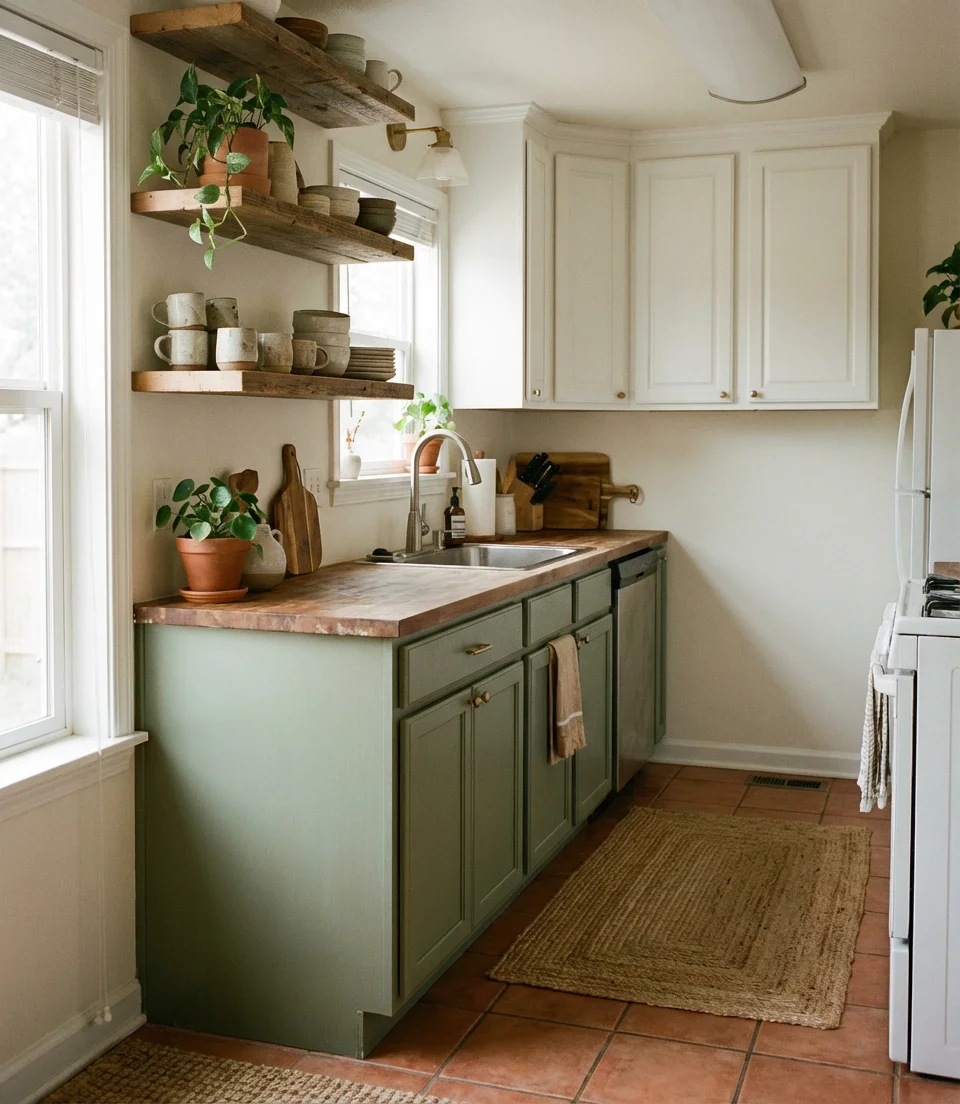
The kitchen in a small apartment is often where design ambition meets the most constraints—small footprints, limited counter space, and cabinetry chosen by someone else entirely. But 2026’s approach to compact kitchen design is finding beauty in those constraints. Warm, earthy paint colors applied to cabinet fronts—sage green, warm clay, and deep mushroom—transform a builder-grade kitchen without touching a structural element. Two-tone cabinetry with light uppers and darker lowers adds visual interest and makes the ceiling read as higher. These are changes a renter can realistically pull off with removable hardware and peel-on cabinet film for under $100.
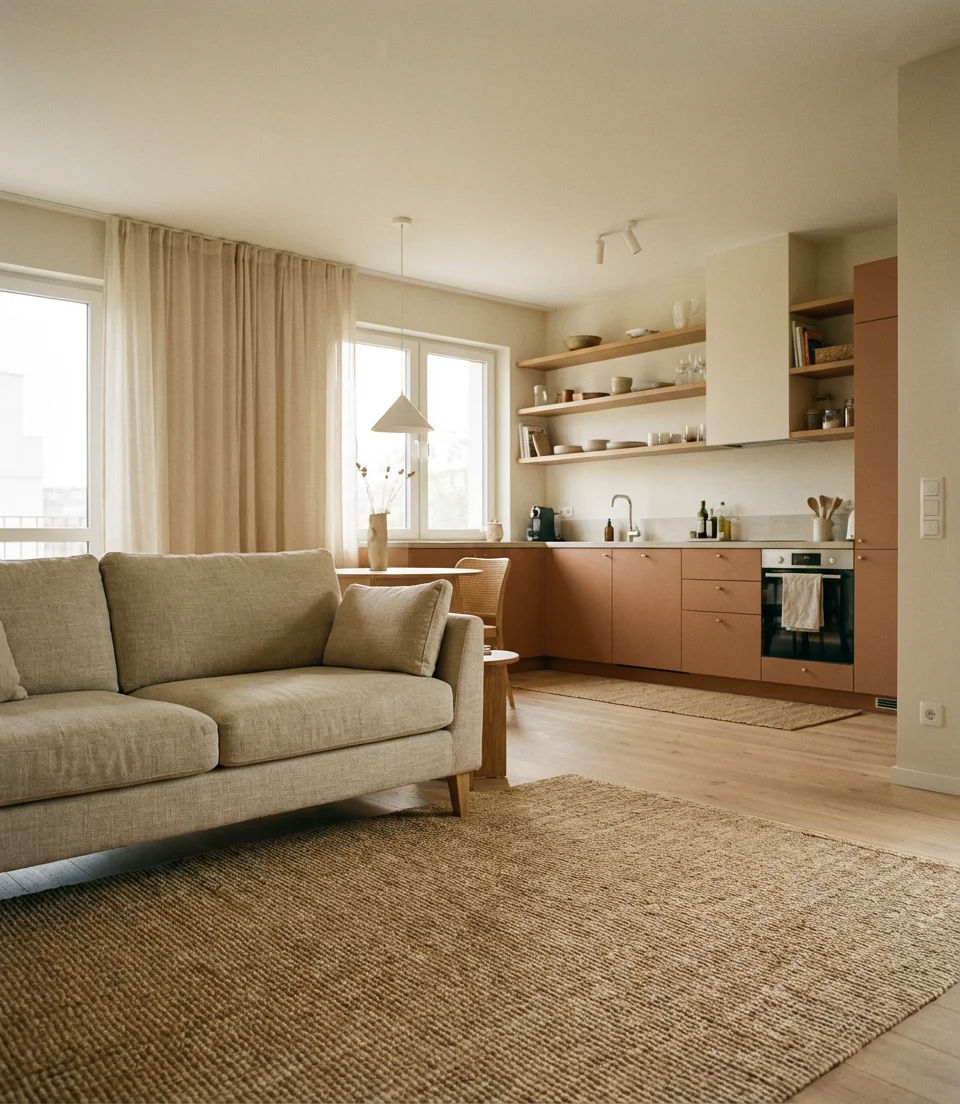
In an open-plan studio, the kitchen palette directly affects how the entire apartment feels—which makes color choices here unusually high-stakes. A warm sage on cabinet fronts pulls the whole room toward a calm, organic feeling; a cool gray pushes everything colder. The common mistake is choosing a kitchen color in isolation without considering what it will look like from the sofa fifteen feet away. Stand in your living zone and look at the kitchen before committing. What reads as a calm background from a distance can look quite different when you’re standing in front of the cabinet with a paint chip in hand.
15. Floor Plan Thinking with Furniture-Free Zones
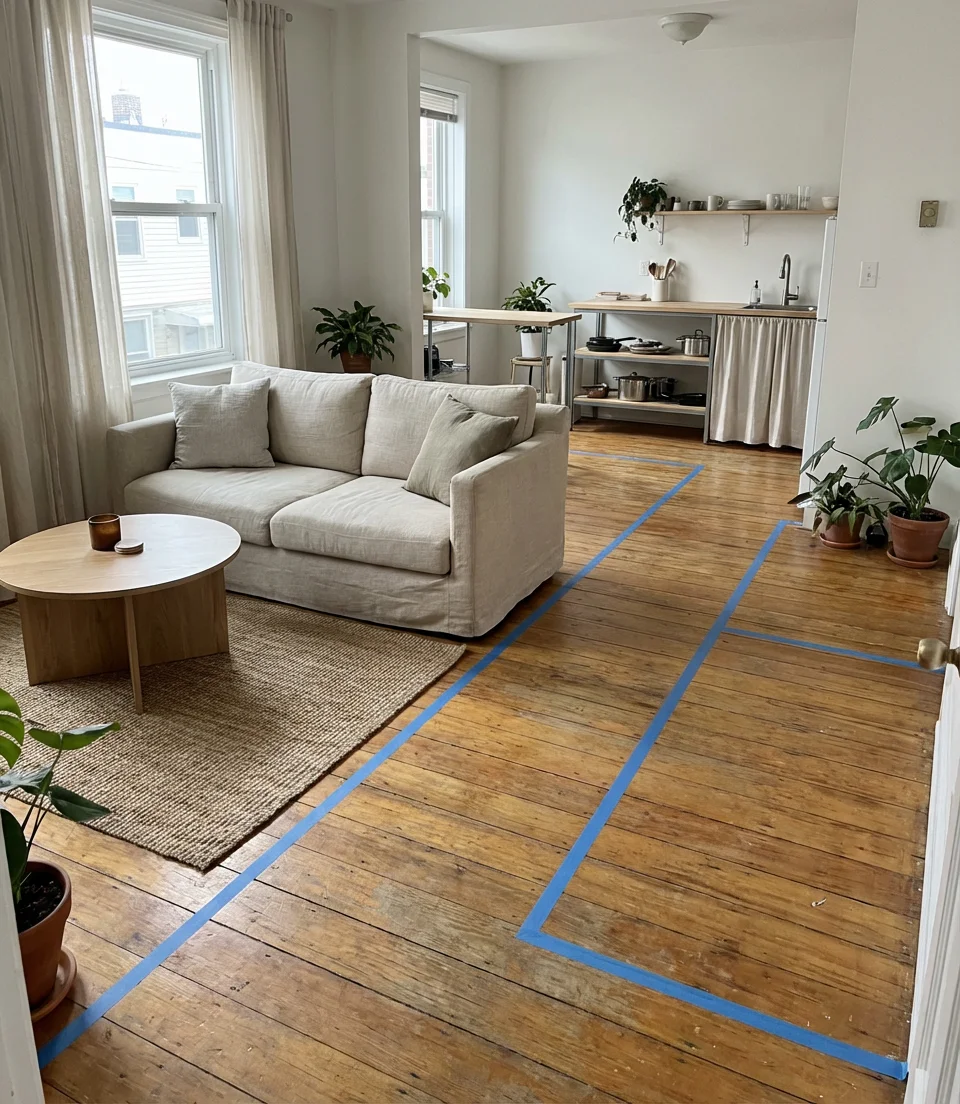
The most sophisticated floor plans for small apartments in 2026 aren’t defined by what’s in the space—they’re defined by what’s deliberately left out. Every well-designed compact apartment has at least one furniture-free zone: a clear path from the entry to the living area, breathing space beside the bed where your feet land in the morning, and an unobstructed sightline from the kitchen to the window. These empty spaces aren’t wasted—they’re what allow the eye to rest and the room to feel like it can exhale. Small apartment design that ignores this principle feels crowded regardless of how many square feet you have.
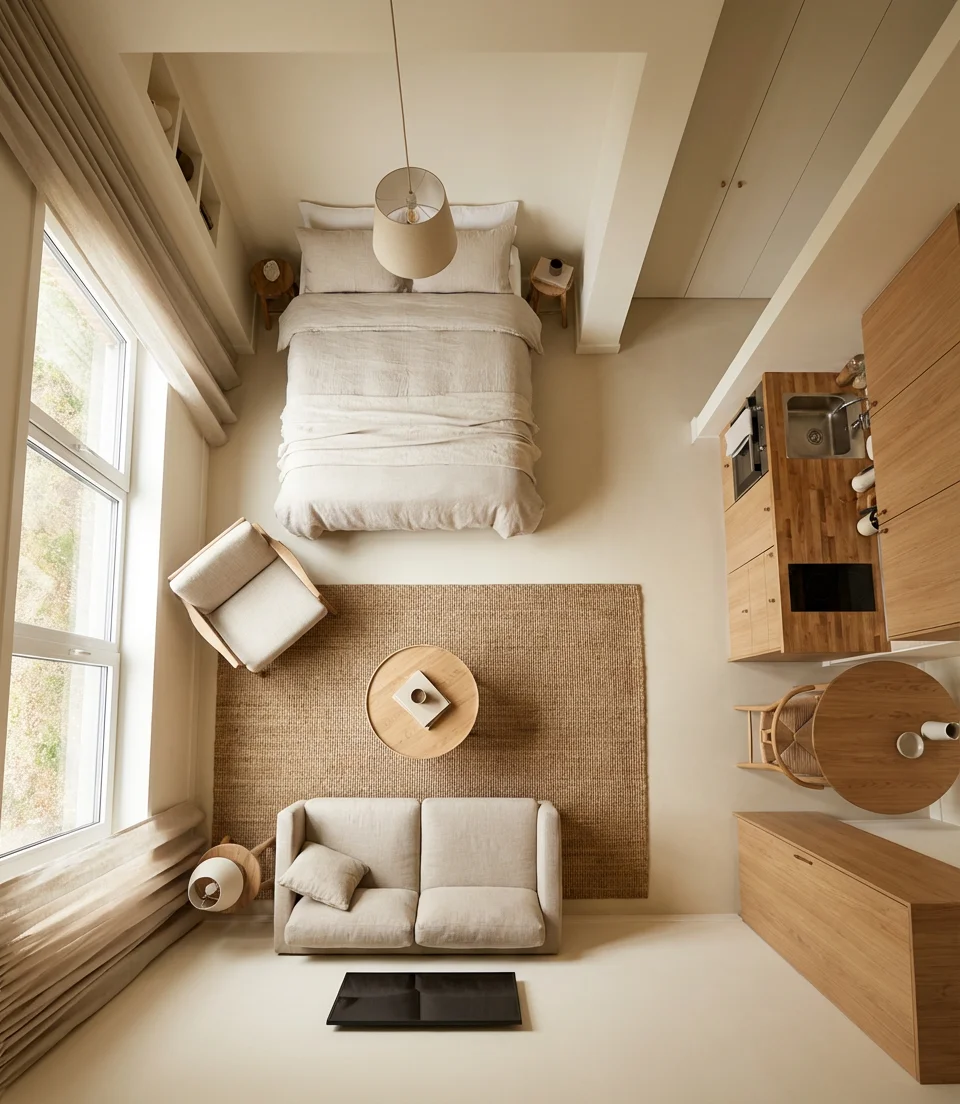
The practical approach is to tape out furniture footprints on the floor before buying anything, then walk through the space. Can you move from the entry to the kitchen without turning sideways? Is there at least 30 inches of clearance on the side of the bed you use most? Interior designers call these the “traffic lane” tests, and they prevent the most common small-apartment mistake: buying furniture that looks right in a showroom and then finding it dominates every pathway through the apartment after delivery day.
16. Biophilic Design with Indoor Plants and Natural Materials
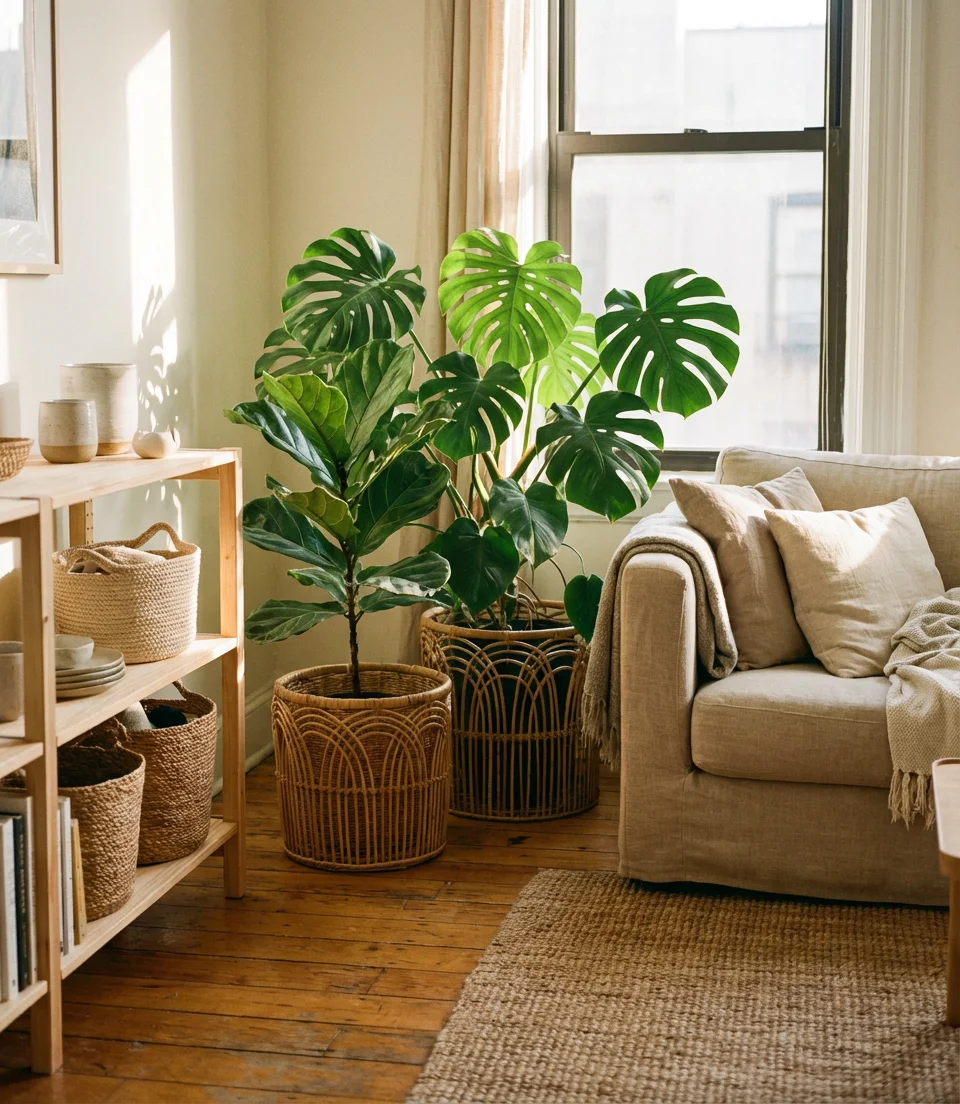
Biophilic design—the practice of bringing natural elements indoors—has moved from a niche architectural concept to one of the most-searched interior ideas on Pinterest, and it’s particularly powerful in small apartment design where outdoor access is limited. A single large-scale plant like a fiddle leaf fig, a monstera, or a bird of paradise adds visual scale that a compact room often desperately needs, drawing the eye upward and giving the space a sense of movement and life. Combined with natural material choices—rattan, raw linen, unsealed wood, and woven baskets—plants shift a compact apartment from feeling static to genuinely alive.
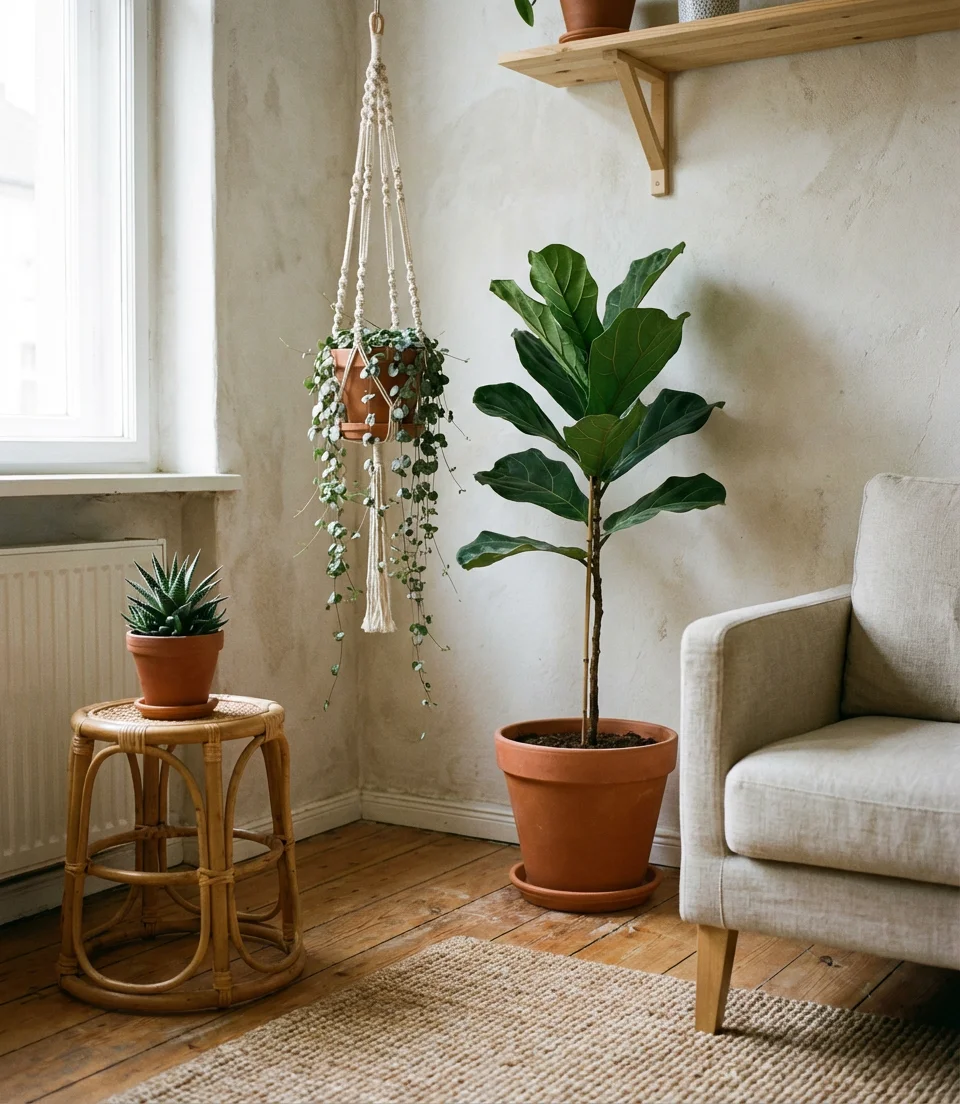
The expert approach to biophilic design in small spaces is to resist spreading plants evenly through every room—instead, create one lush, concentrated moment. A corner of the living room, grouped with two or three plants at different heights, feels like a deliberate design decision rather than a scattered houseplant collection. High-quality artificial plants have become convincingly realistic and are a reasonable choice for low-light apartments where real plants struggle. If mixing real and artificial, keep the artificial ones toward the back of the grouping where they receive less scrutiny, and let real plants take the foreground and the light.
17. Japandi-Style Open Plan for Small Apartment Interiors
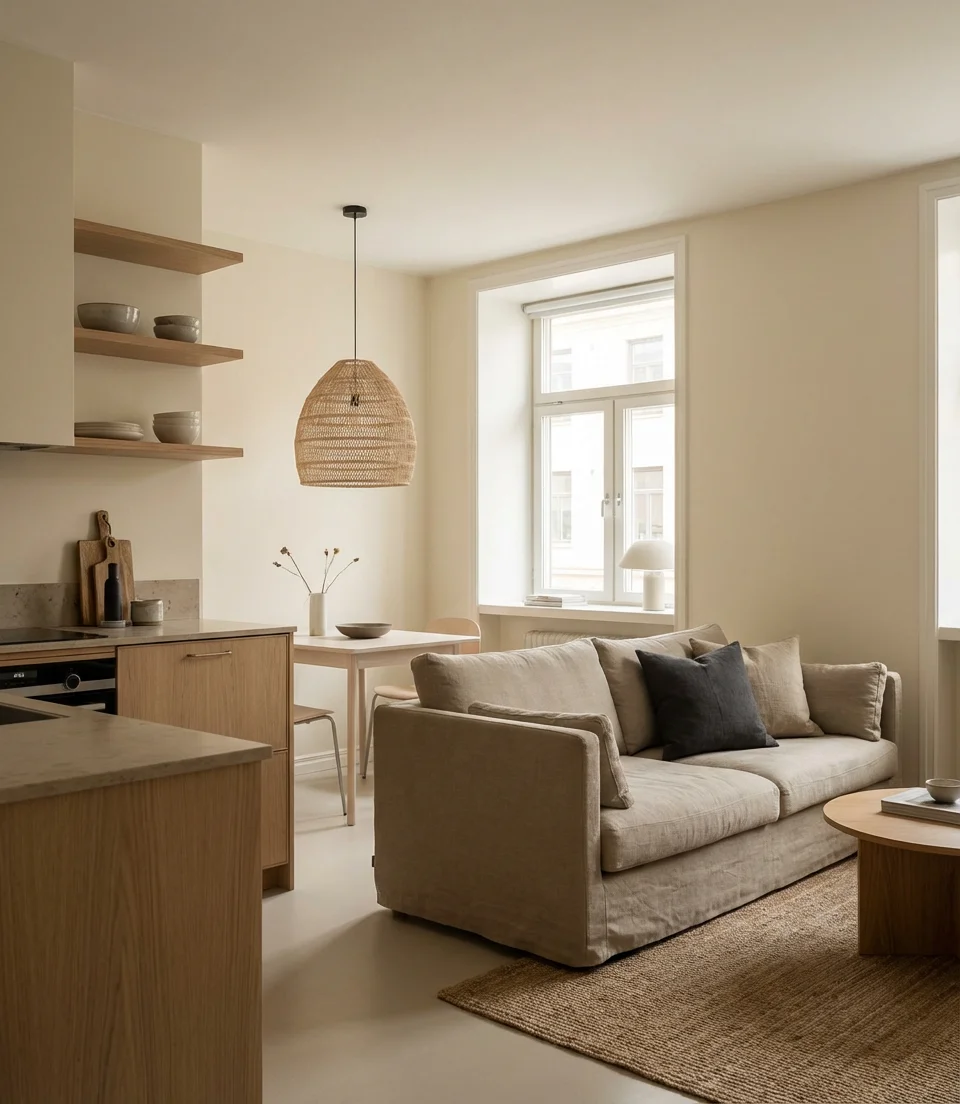
Japandi—the hybrid of Japanese minimalism and Scandinavian warmth—has quietly become the most requested design direction for small apartment design and modern renovations in 2026. It threads the needle between cold minimalism and cluttered maximalism in a way that feels genuinely livable: pale oak cabinetry, fluted details, muted sand and charcoal tones, and an absolute commitment to quality over quantity. Every piece in a Japandi apartment earns its place. Decorative objects are few but meaningful. Surfaces stay clear. The result is a calm that feels effortless but is actually very deliberate and disciplined.
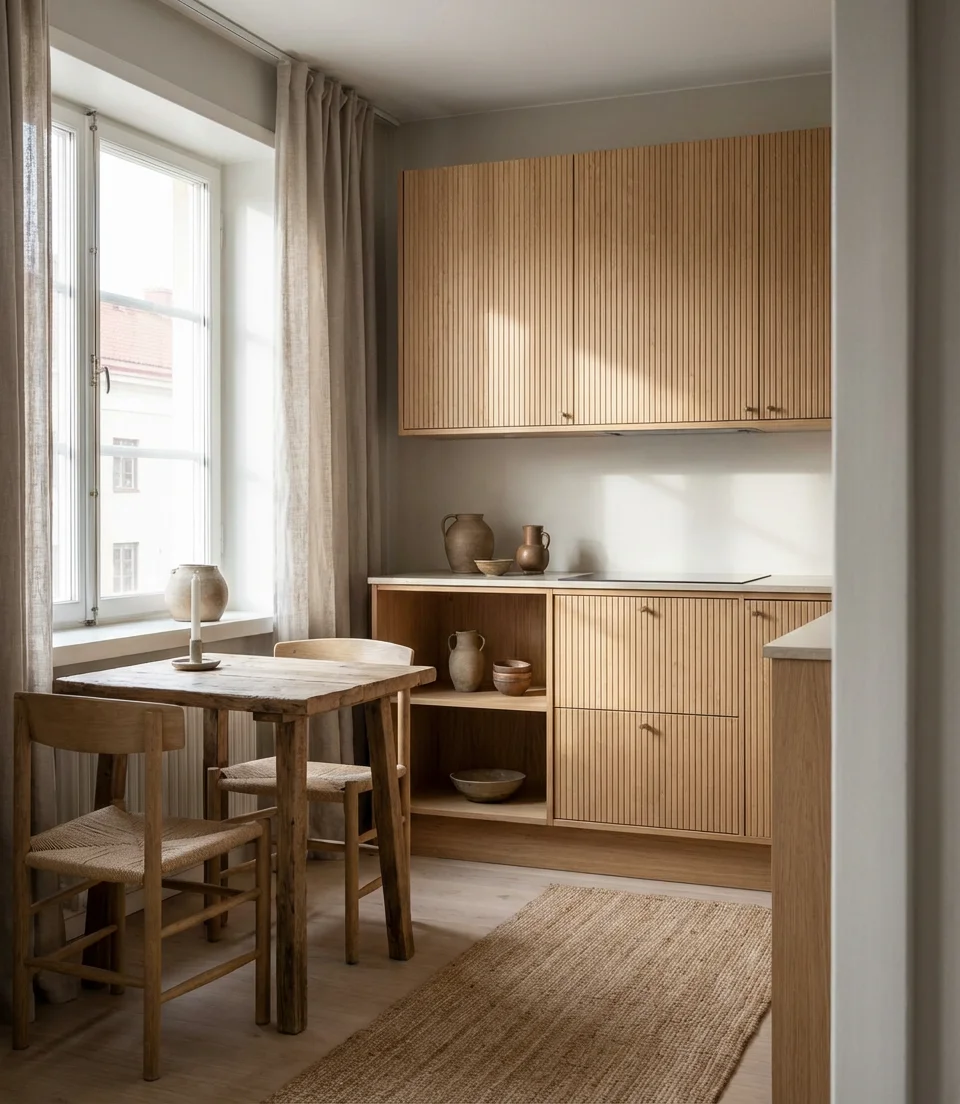
This style thrives in tight spaces because it doesn’t demand a large footprint—it thrives on restraint. A single statement pendant over a small dining area, a low-profile linen sofa, and open shelving instead of upper kitchen cabinets can turn even a 450-square-foot apartment into something considered and calm. The common mistake people make when attempting Japandi is buying the right objects without editing aggressively enough. If anything in the room feels superfluous, it breaks the spell. A designer said, “If you can’t explain why something’s there, it shouldn’t be.”
18. Smart Compact Kitchen with Portable Island on Wheels
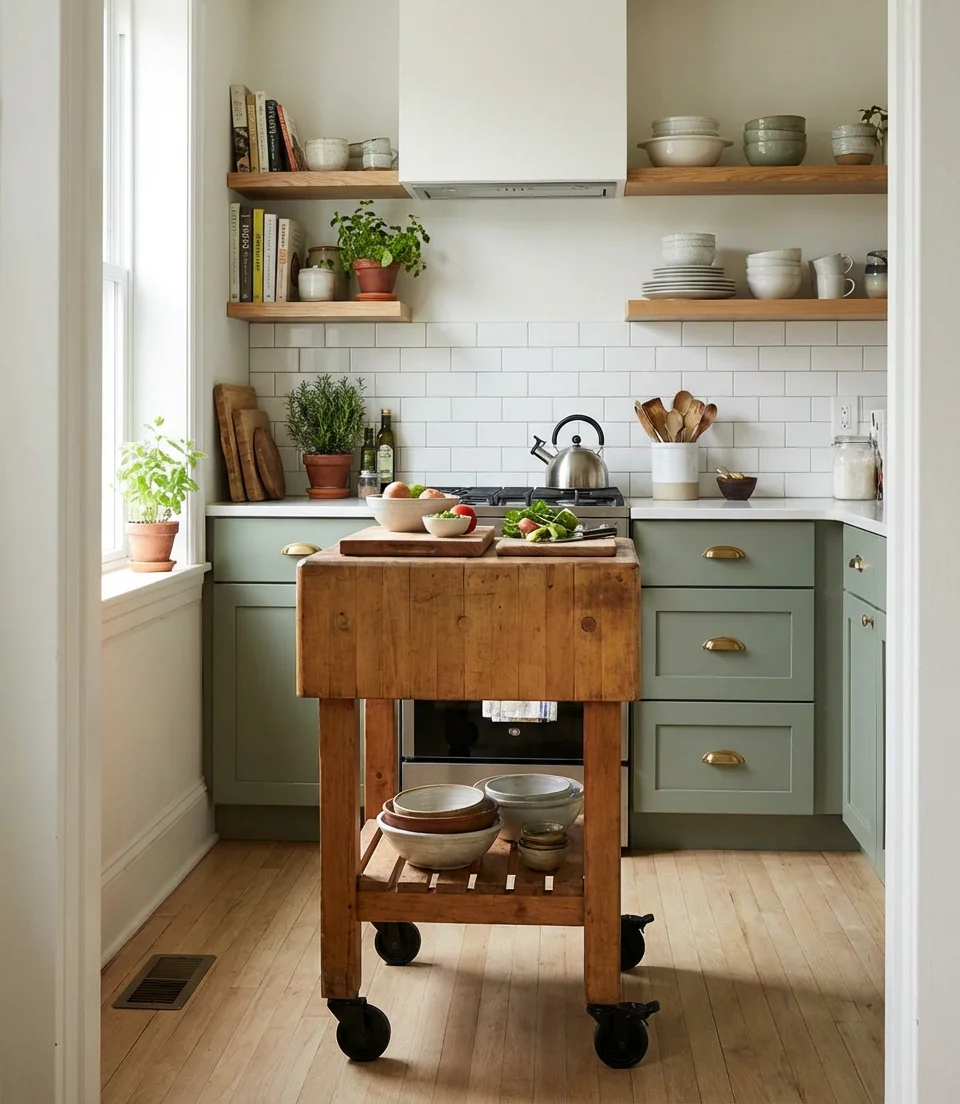
One of the cleverest compact kitchen trends of 2026 is the portable island on wheels—a piece that earns its keep by playing three or four roles depending on the time of day. In the morning, it’s a coffee station parked beside the counter. At noon, it rolls to the center as prep space. By dinner, it becomes the dining table. On weekends, it moves to the living zone as a drinks trolley for entertaining. In a space-saving tiny apartment where every piece of furniture must justify itself, this kind of genuine flexibility is valuable rather than gimmicky, and it changes how the whole apartment functions around it.
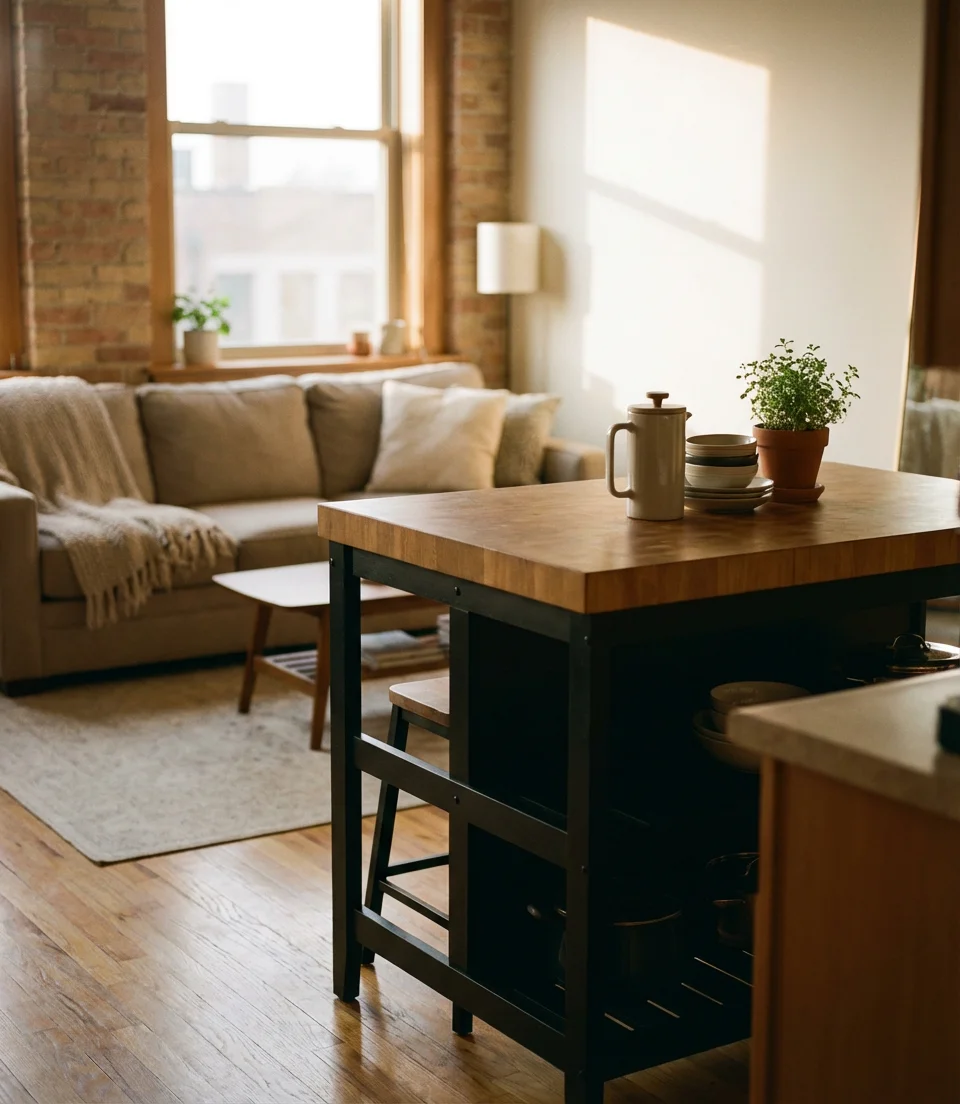
Budget options start around $120 for basic butcher-block carts with lower shelves, while better-quality options with drawer storage and locking casters run $250–$400. Look for models with a minimum depth of 18 inches—anything narrower is awkward to use as a genuine prep or dining surface. Style matters here too: a solid wood top, even on an inexpensive base, looks significantly more intentional than a laminate surface. One coat of chalk paint on a builder-basic cart transforms it into something that reads as custom-made. Lockable casters are non-negotiable—a cart that rolls when you’re trying to work at it is more frustrating than no island at all.
19. Moody Dark Walls in a Small Modern Bedroom
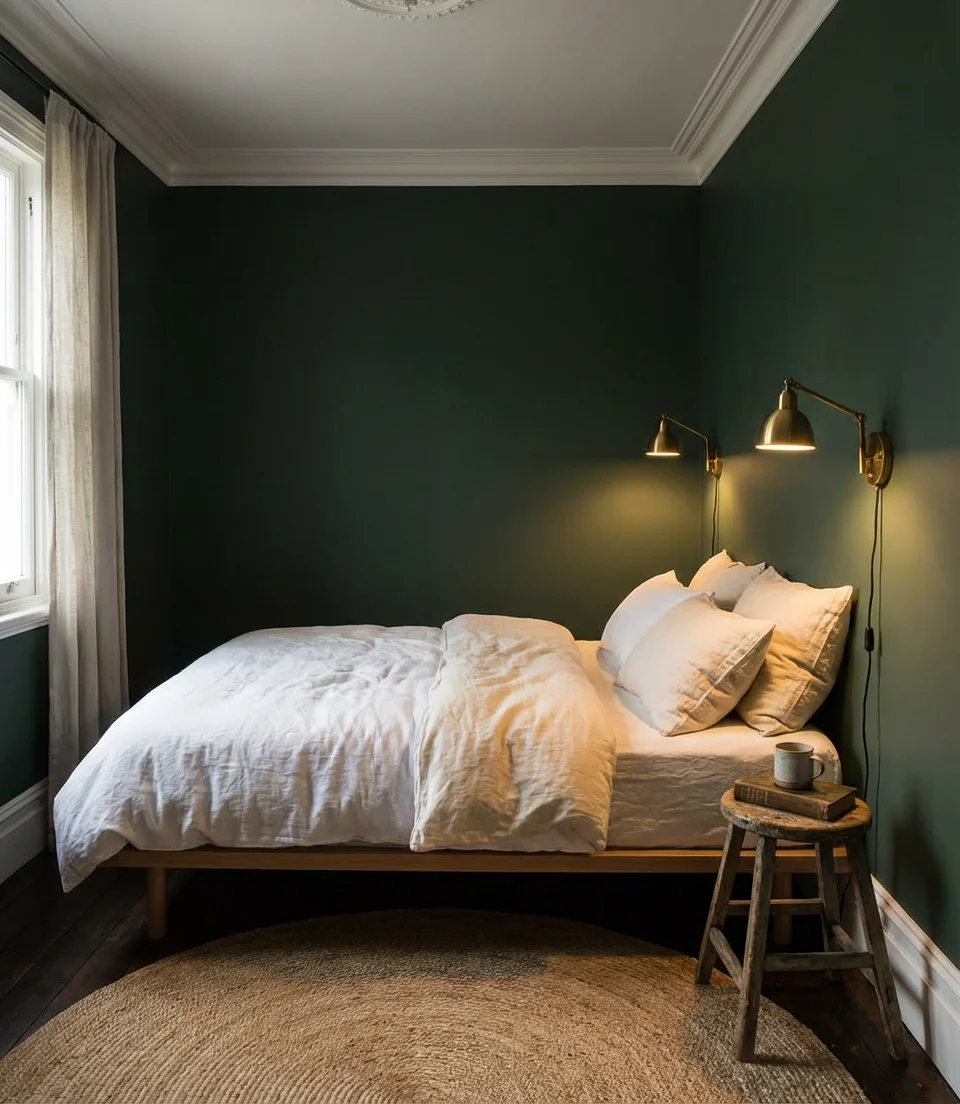
One of the most counterintuitive—and consistently effective—design moves for a tiny bedroom in 2026 is painting the walls dark. Deep charcoal, inky navy, forest green, or warm chocolate brown create a cocooning effect that makes a small bedroom feel intentionally intimate rather than accidentally cramped. It’s the difference between a room that feels tight and a room designed to be a sanctuary. Very few single design decisions have as much impact on a bedroom’s mood as wall color, and the dark palette delivers a result that light colors simply cannot: a genuine sense of retreat from the rest of the apartment and the day.
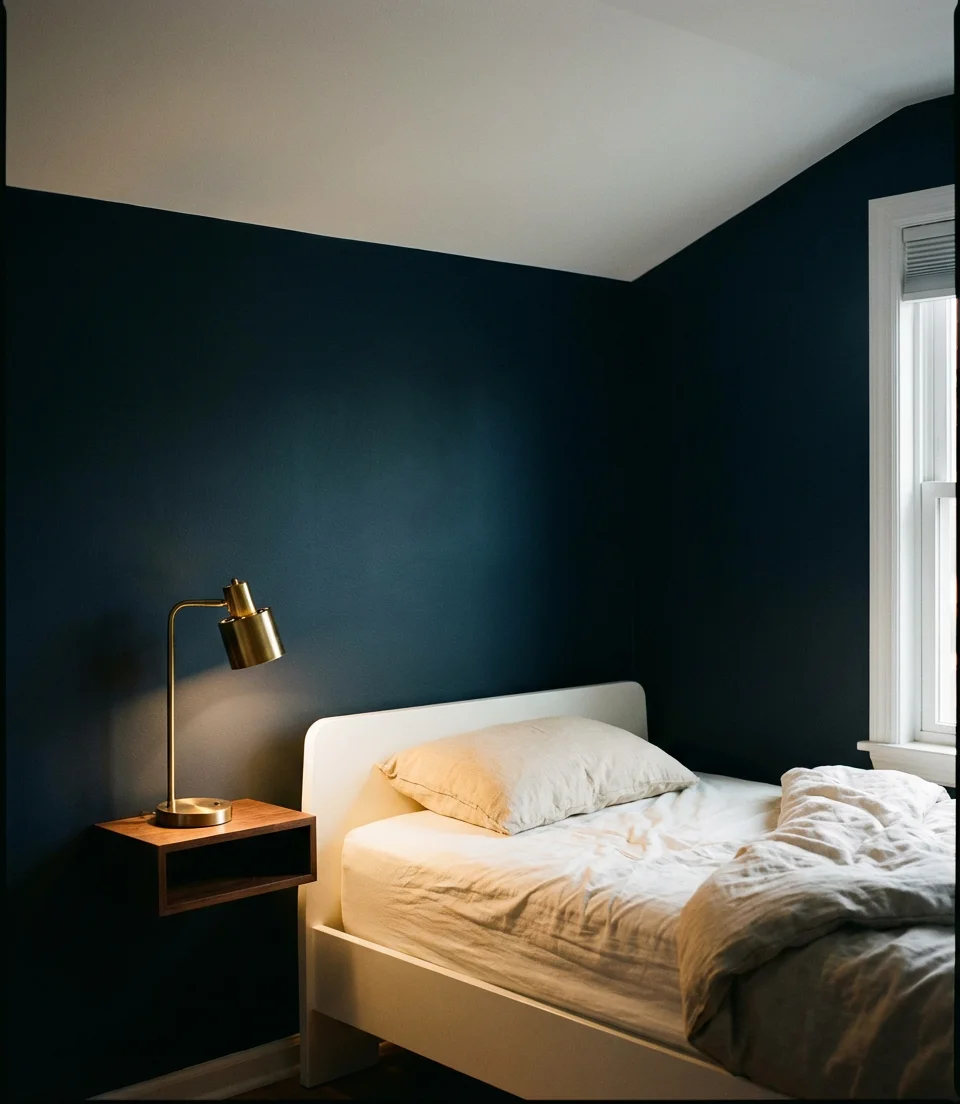
The trick to making dark walls work in a small bedroom is keeping the bedding, ceiling, and trim lighter—a white ceiling against a dark wall actually makes the room feel taller, not shorter. Warm metal accents in brass or bronze prevent the space from feeling cold. One designer who works primarily in New York City studio apartments says she recommends the dark bedroom wall to almost every hesitant client, and the reaction is consistently the same: “I should have done this years ago.” The only real caveat is lighting—a dark room needs more lamps at different levels, not fewer, to feel alive and welcoming rather than gloomy.
20. Multifunctional Entryway Storage for Small Apartments
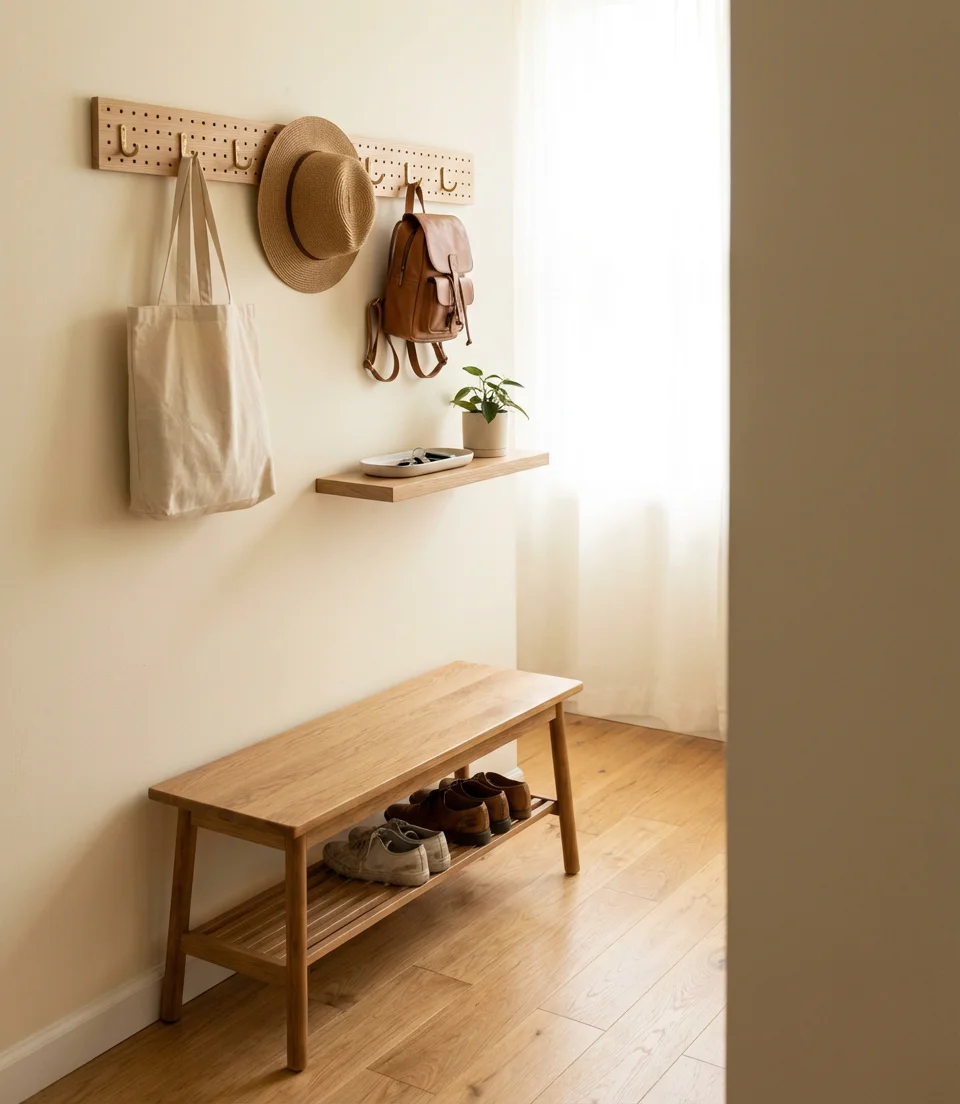
The entryway is often the most neglected zone in a small apartment—a narrow strip that ends up as a dumping ground for shoes, bags, and mail. In 2026, well-designed compact organization solutions are turning this transitional zone into a genuinely functional and even beautiful space. A slim bench with hidden shoe storage underneath, a wall-mounted rail with hooks at different heights, and a narrow floating shelf for keys and mail create a proper landing zone that signals good design from the very first step inside. This kind of thoughtful small apartment design thinking—sweating the entry—elevates the entire apartment’s feeling.
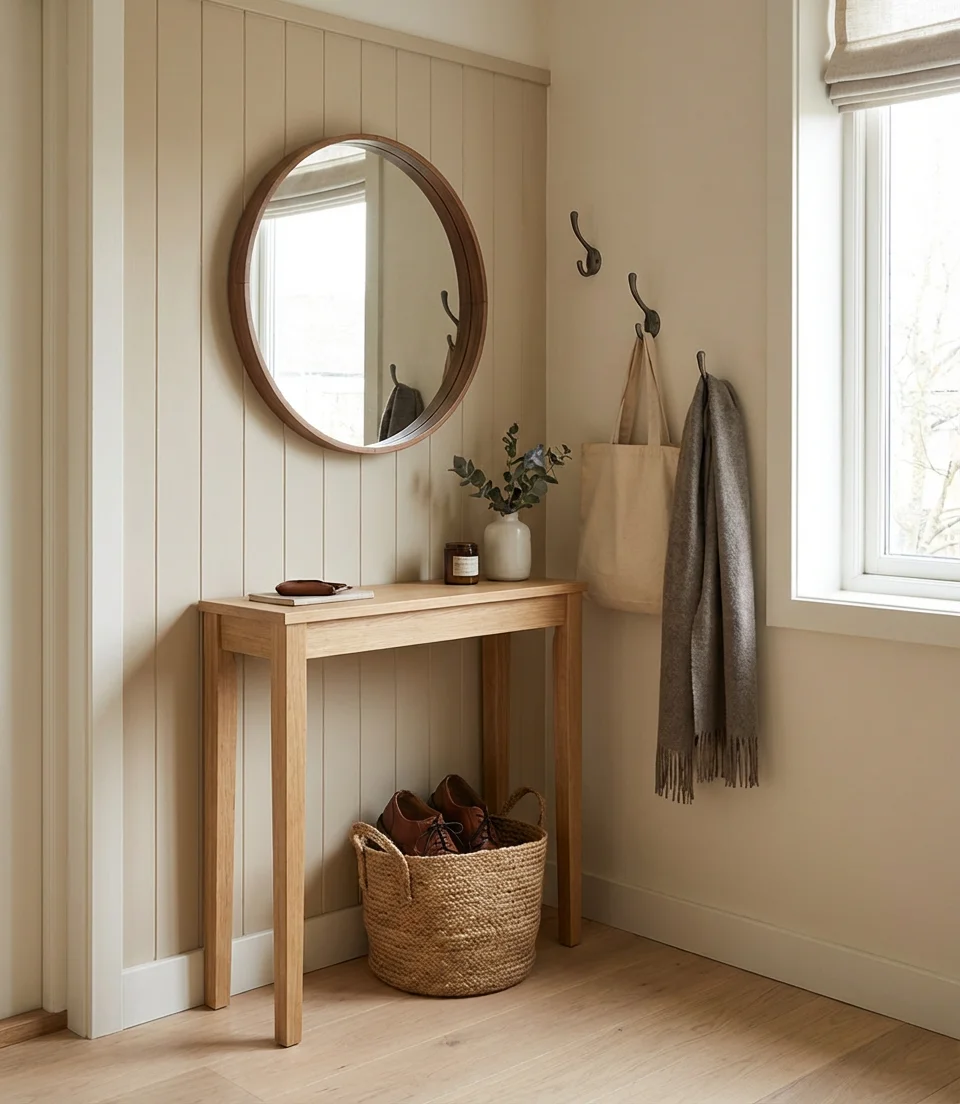
Americans living in urban apartments frequently cite “stuff accumulating at the door” as their biggest daily frustration, and the solution is almost never more space—it’s better systems. A pegboard mounted to the wall with a few hooks, a small tray for mail, and one basket for shoes handles 80% of daily drop-zone chaos for under $50. The bench does double duty: seating for putting on shoes and storage for daily essentials you don’t want visually present. Keep the palette in the entryway consistent with the rest of the apartment—even a narrow strip reads as more coherent when colors and materials flow naturally from the front door inward.
21. Micro Zoning in a Studio Apartment with Area Rugs
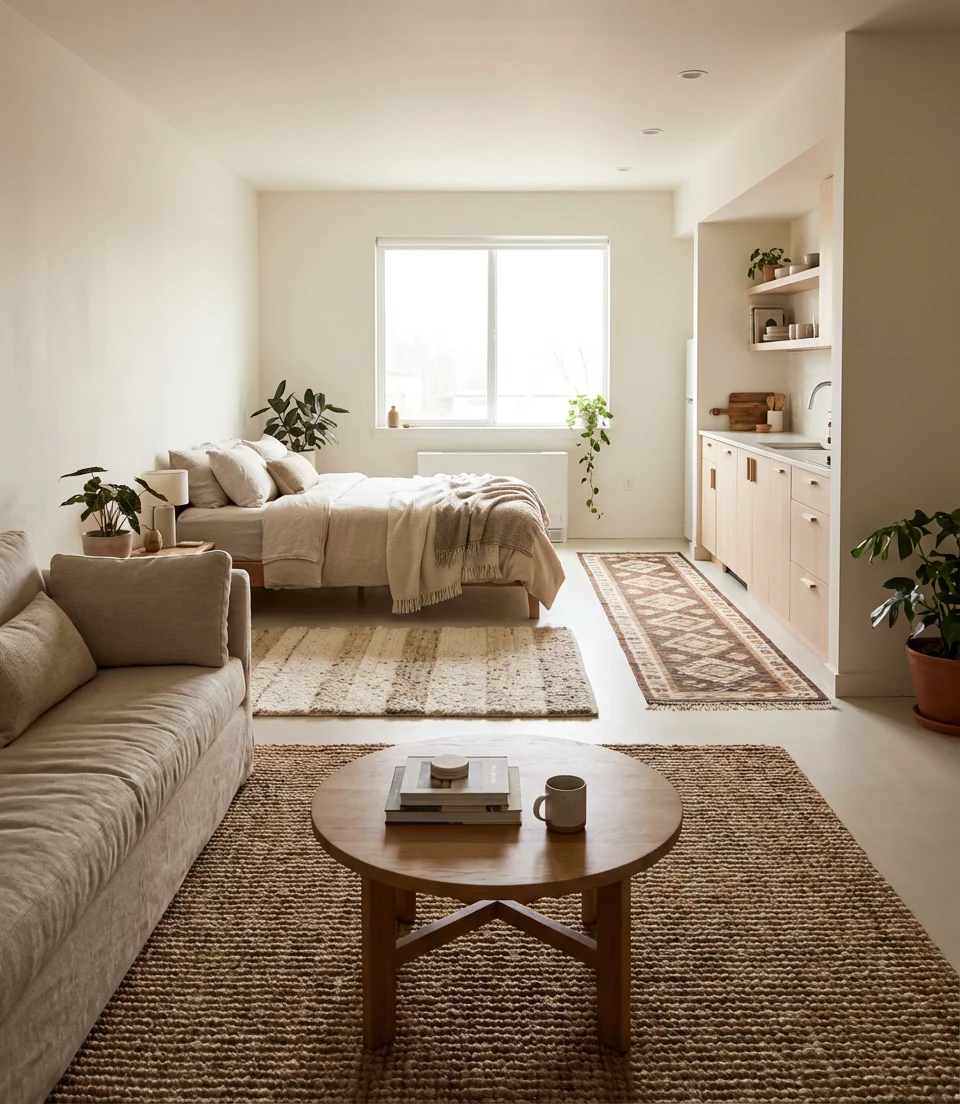
In a studio, walls are a luxury you don’t have—but distinct zones are absolutely something you can create without them. The most renter-friendly, budget-conscious way to define separate areas in an open studio layout is with rugs. A large, warm-toned area rug under the sofa and coffee table anchors the living zone. A smaller, differently textured rug beneath the bed defines the sleeping area. A runner in the kitchen separates the cooking zone from the main floor flow. Three rugs, three zones—no construction required and no damage to the apartment when it’s time to move on.
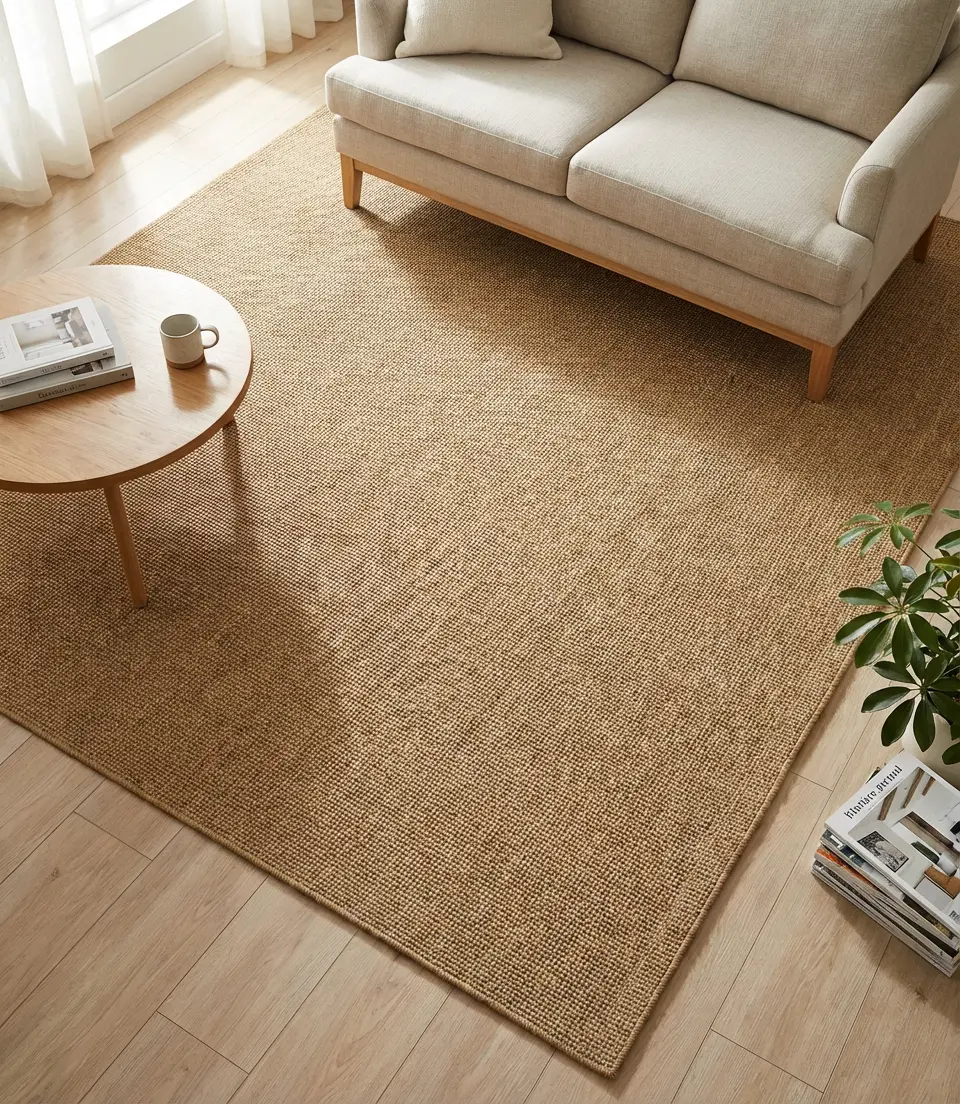
The sizing rule designers repeat constantly: most people buy rugs too small. In the living zone, the rug should be large enough for all four sofa legs to sit on it—anything smaller makes the furniture look like it’s floating on a postage stamp. For a studio, this requirement typically means going up to an 8×10 or even a 9×12 for the main zone, which sounds large but prevents the choppy, ungrounded look that plagues undersized rugs. Natural fiber rugs like jute and sisal add texture without pattern, which works especially well in compact apartments where bold patterns can become visually exhausting when you spend significant time in a single room.
22. Sustainable Vintage Furniture in a Modern Small Space
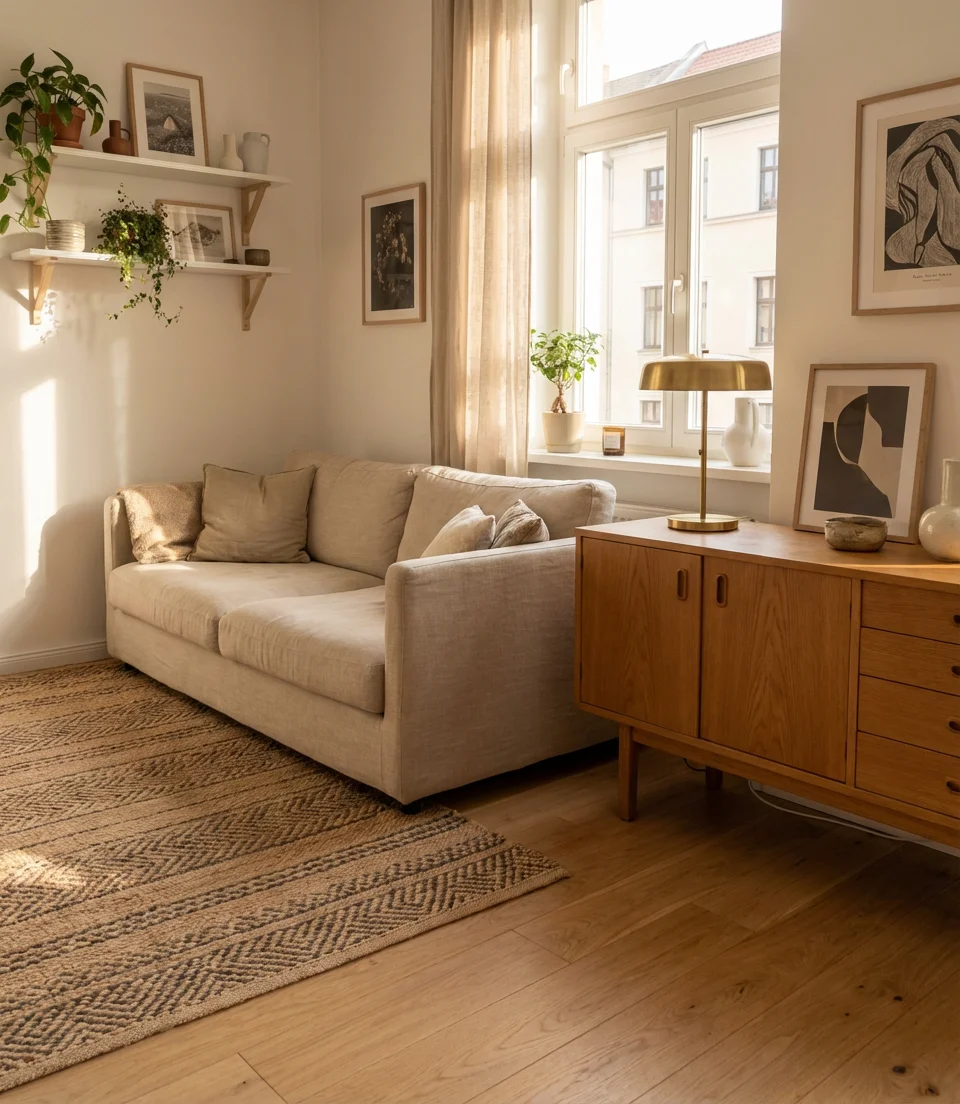
One of the most meaningful shifts in how Americans furnish small apartments in 2026 is the move toward vintage and secondhand furniture—not just for budget reasons, but because it consistently produces better-looking results. A thrifted mid-century credenza carries more visual character than its flat-pack equivalent and occupies the same footprint. Mixing a vintage oak side table with a modern sofa and contemporary lighting creates a layered, collected feeling that a room furnished entirely from one retailer rarely achieves. Small apartment design that incorporates vintage pieces looks more sophisticated, more personal, and more alive.
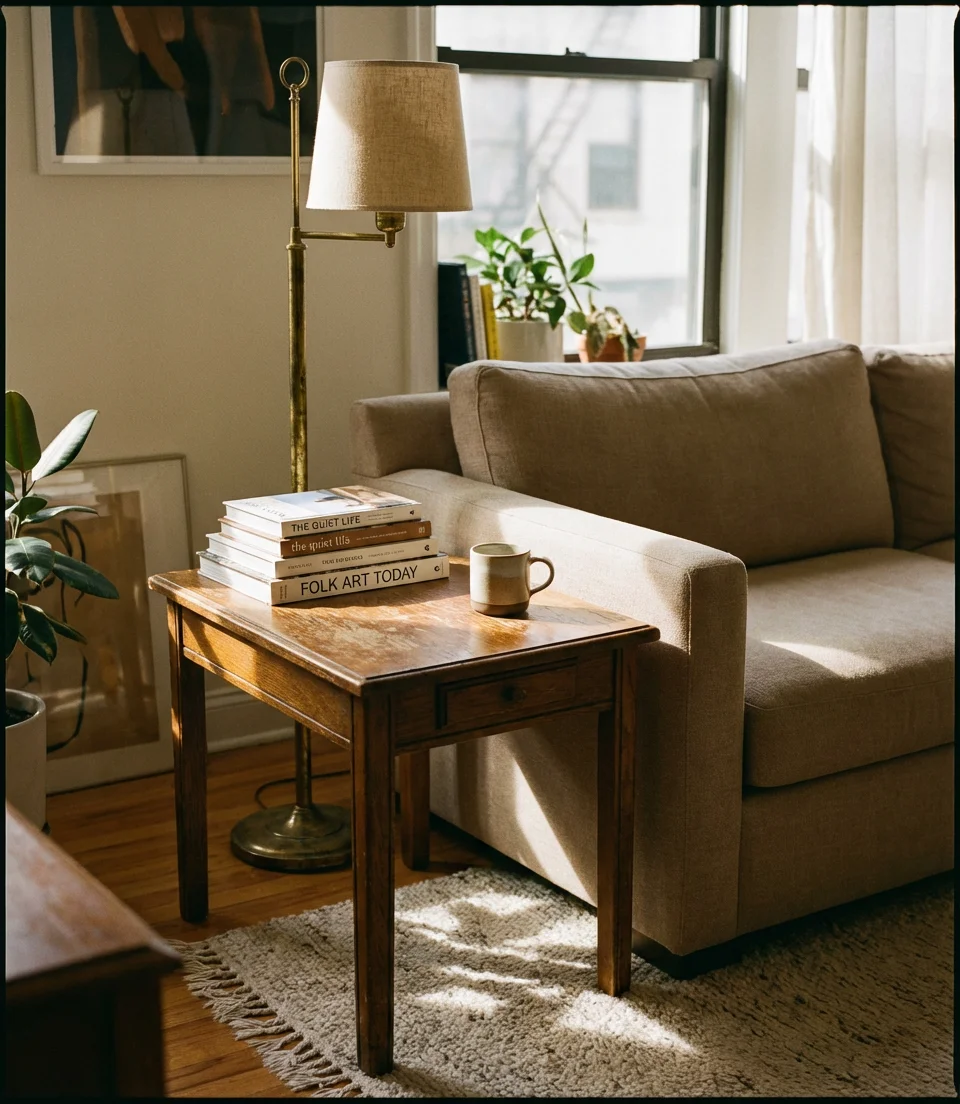
The patina of vintage pieces—slightly worn brass hardware, wood that’s developed warmth over decades—adds the sense of history and depth that new apartments desperately need and new furniture rarely provides. Start with Facebook Marketplace, Chairish, or local estate sales for the best finds at the lowest prices. The key rule for mixing vintage in a small space: keep the scale consistent. A massive vintage wardrobe in a 500-square-foot apartment is just as problematic as any oversized new piece. The goal is character without crowding, which is an editing skill as much as a shopping one worth developing deliberately.
23. Arched Doorways and Painted Arches for Character
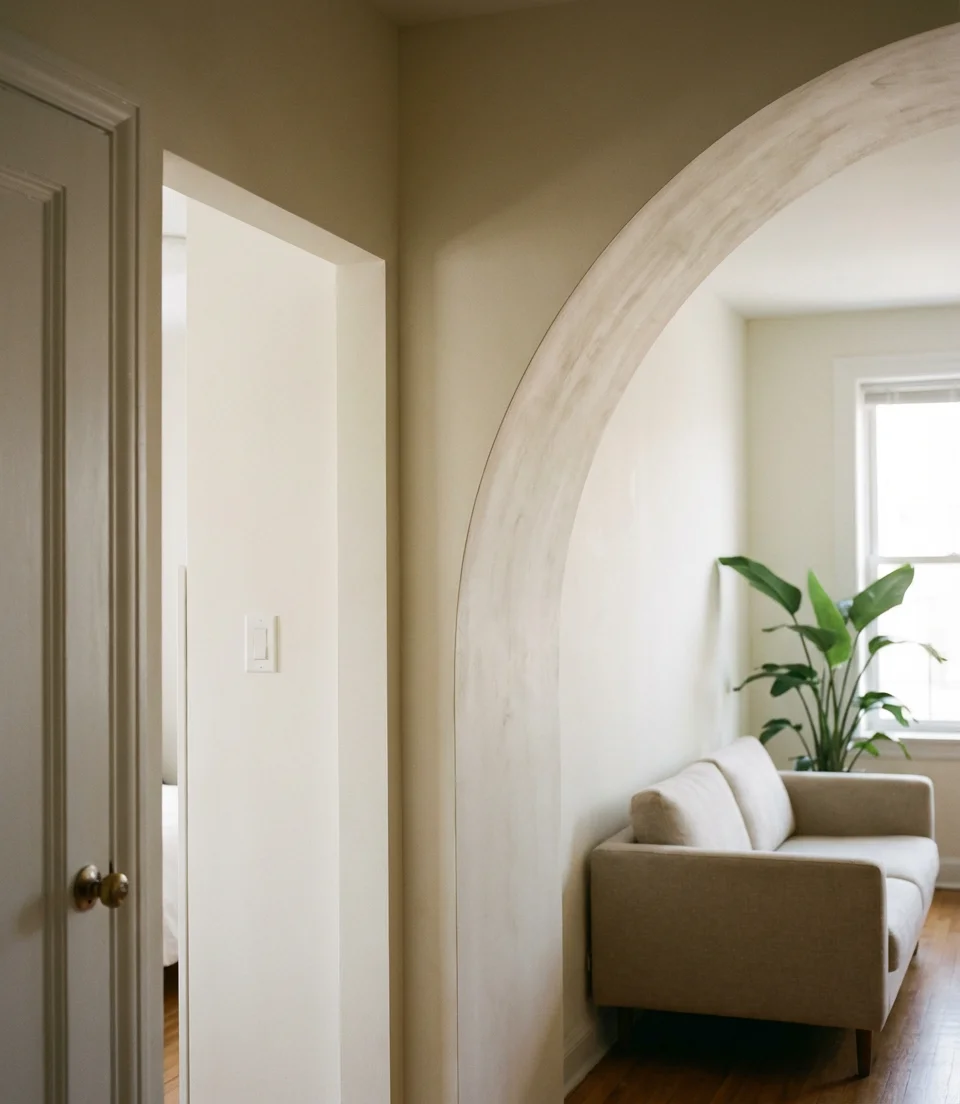
Architectural character is one of the hardest things to manufacture in a modern apartment building, but the arched doorway and painted arch trend of 2026 is giving renters an accessible way to add it. A simple drywall arch kit—or even a painted arch trompe l’oeil—transforms a flat rectangular opening into something that reads as deliberate and designed. In an otherwise boxy, small apartment design in a modern context, a single arched opening between the entry and the living room changes the entire personality of the space. It signals that someone paid real attention to the details, which defines all great small apartment designs.
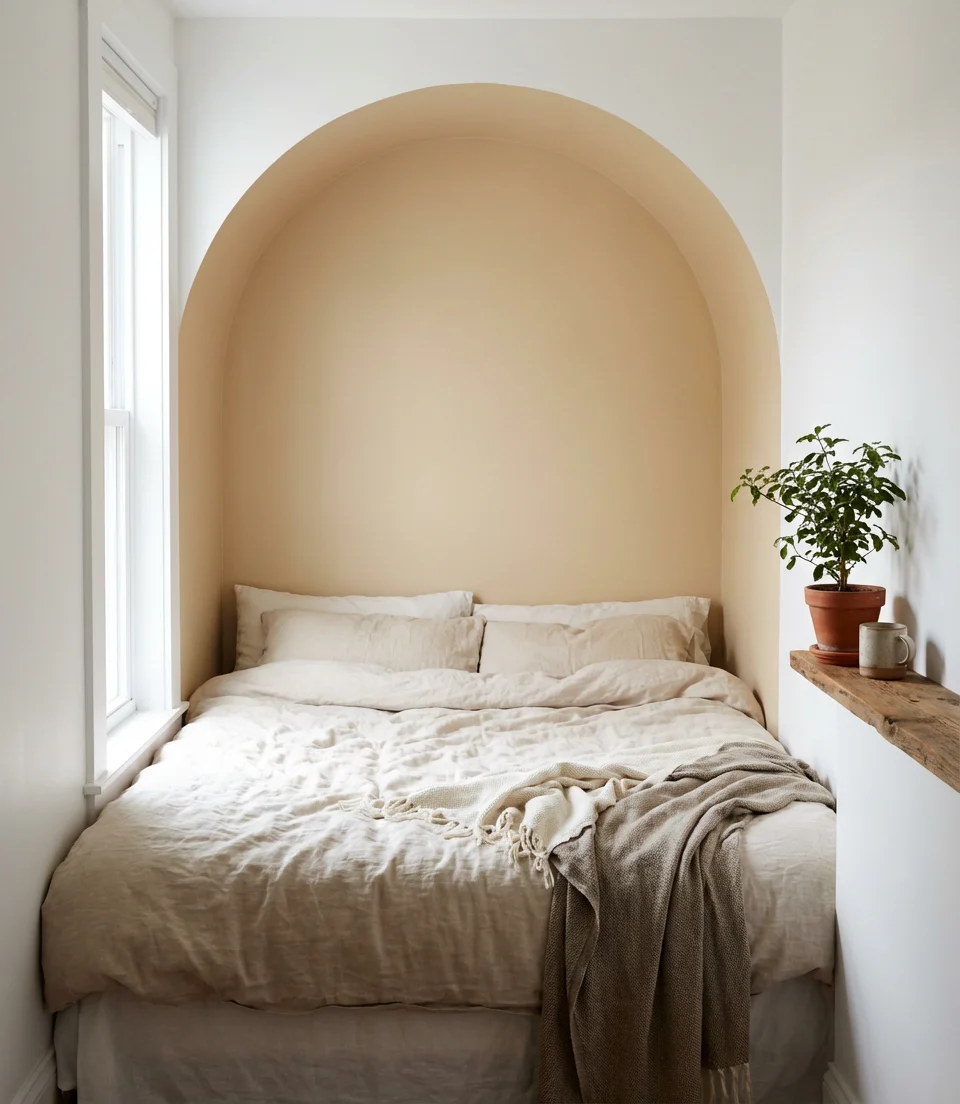
For renters who can’t touch the walls structurally, the painted arch is a popular alternative—a half-circle painted directly on the wall above a doorway or above a bed creates the same visual impact as a physical arch at essentially zero cost. This works beautifully in bedrooms where a soft arch above the headboard creates a canopy effect that feels both romantic and deliberate. Paint the arch in a slightly deeper tone than the surrounding wall for maximum impact without drama, and use a matte finish on both for a result that looks sophisticated rather than DIY — even when it absolutely, charmingly, is exactly that.
24. Smart Home Tech Integrated into Small Apartment Layouts
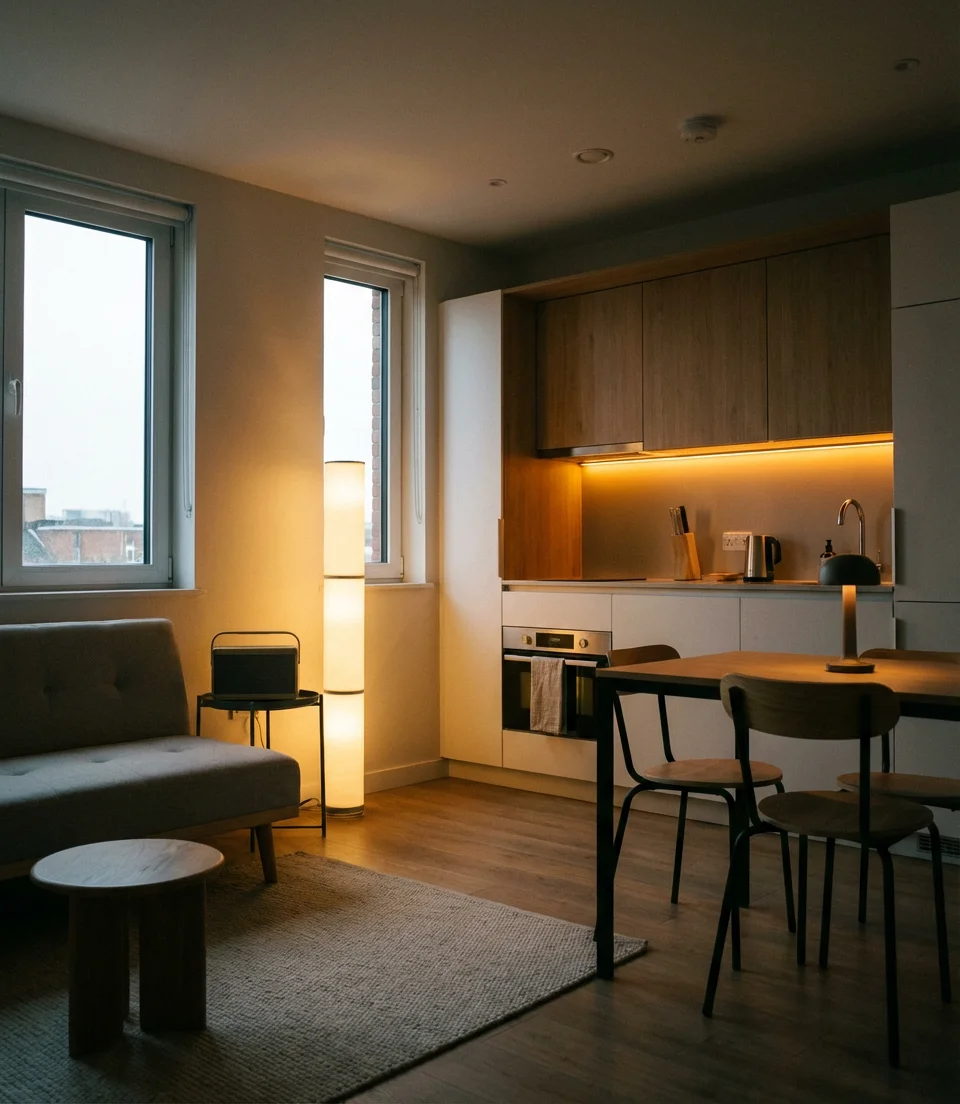
In 2026, smart home technology in small apartments has finally become genuinely practical rather than gadget-forward, and the best studio and one-bedroom setups are incorporating it invisibly. Voice-controlled lighting scenes—”work mode,” “dinner,” “movie night”—eliminate the need for multiple switches and make a single room function credibly as multiple spaces throughout the day. Hidden wireless charging surfaces built into furniture mean cables are no longer a visual presence. Smart window shades controlled from a phone manage natural light and privacy without bulky hardware cluttering the living room’s modern interior.
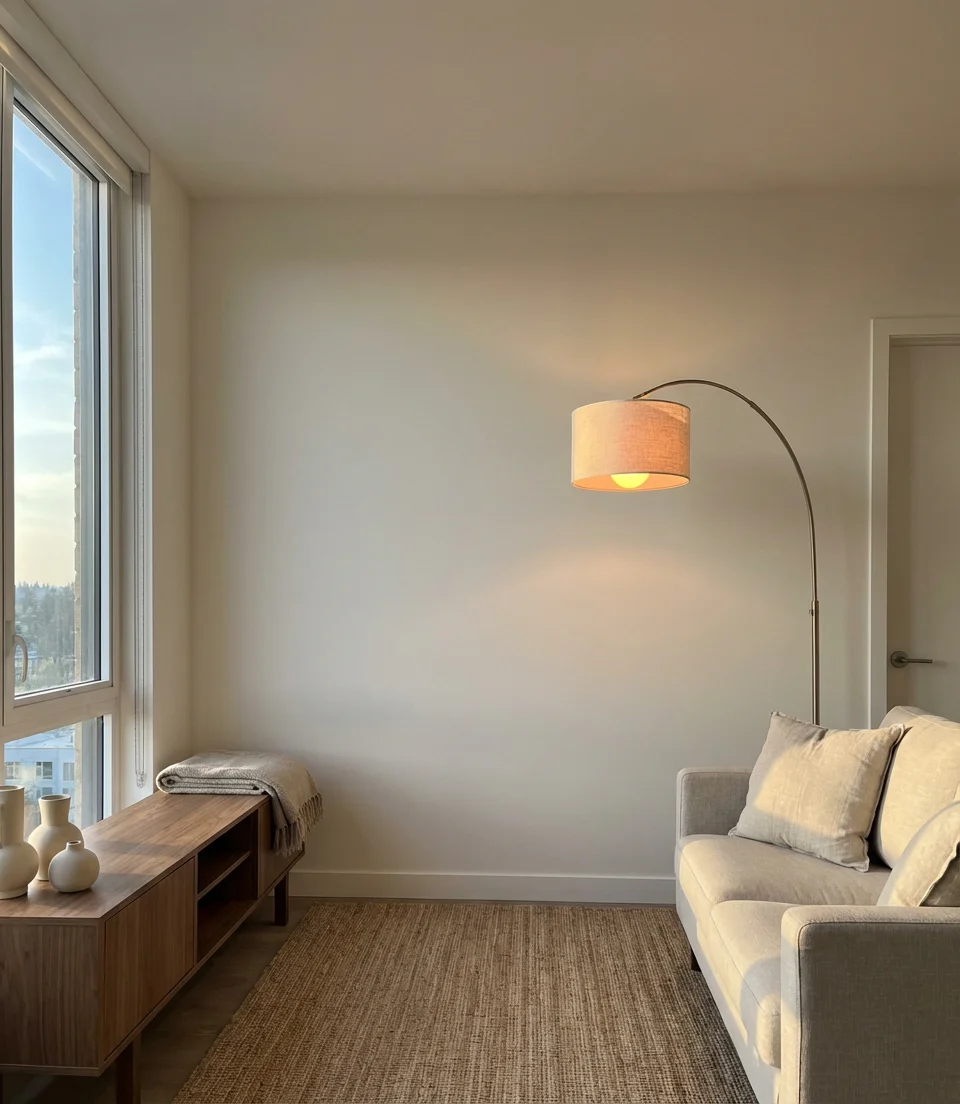
The key principle designers recommend for smart tech in compact spaces: if the technology itself creates visual clutter—visible hubs, tangled cords, mounted sensors that protrude—it defeats its own purpose. The best smart home setups in small apartments are the invisible ones, where guests notice how comfortable the lighting feels without spotting a single device. Voice-controlled smart bulbs cost $15–$50 per bulb but eliminate the need for multiple table lamps and their cables. A smart plug on a single floor lamp, controlled by phone or voice, turns one piece of furniture into an entirely flexible light source for under $20.
25. Exterior-Inspired Textures Brought Indoors for Depth
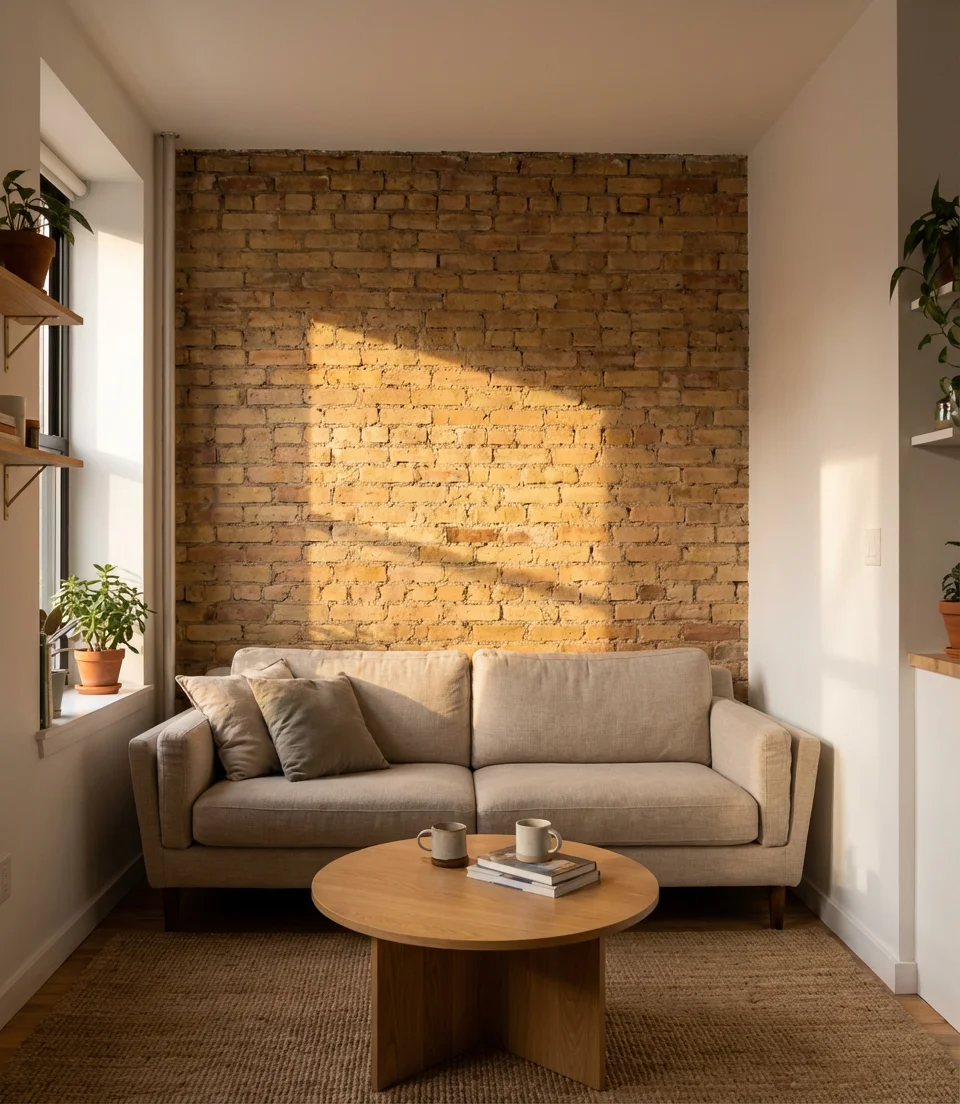
One of the freshest ideas in small apartment design in 2026 is bringing exterior-grade textures inside as accent features. Raw brick panels (real or faux), concrete-effect plaster, natural stone tile on an interior feature wall, or exterior cedar cladding repurposed as a bedroom headboard—these materials carry the visual weight and depth that compact interiors often lack. In a very tight space, a single textured feature wall does more to create character than any amount of art or accessories, because it changes how light moves across the room throughout the entire day as the sun shifts angles.
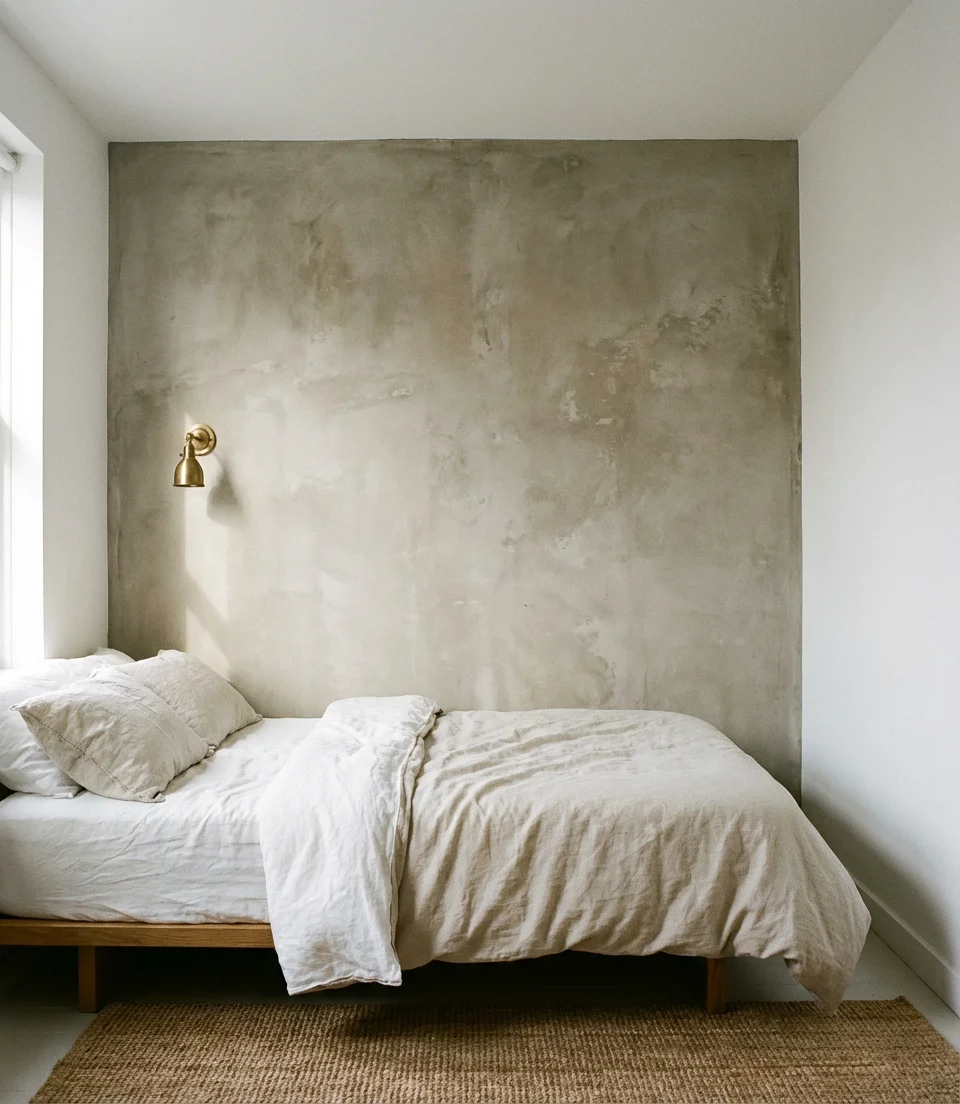
Faux brick panels and concrete-effect mineral paint have improved dramatically in quality, making this approach accessible at almost any budget. A can of concrete-effect mineral paint runs $40–$70 and covers an accent wall in one or two coats—the result looks genuinely tactile and interesting rather than painted-on flat. For something more committed, natural stone tile on a kitchen backsplash or bathroom wall adds real material depth that photographs beautifully and ages even better. The one cautionary note: keep textured materials to a single focal wall per room. Two competing textured walls in a small space create visual noise rather than richness, and the whole idea depends entirely on contrast.
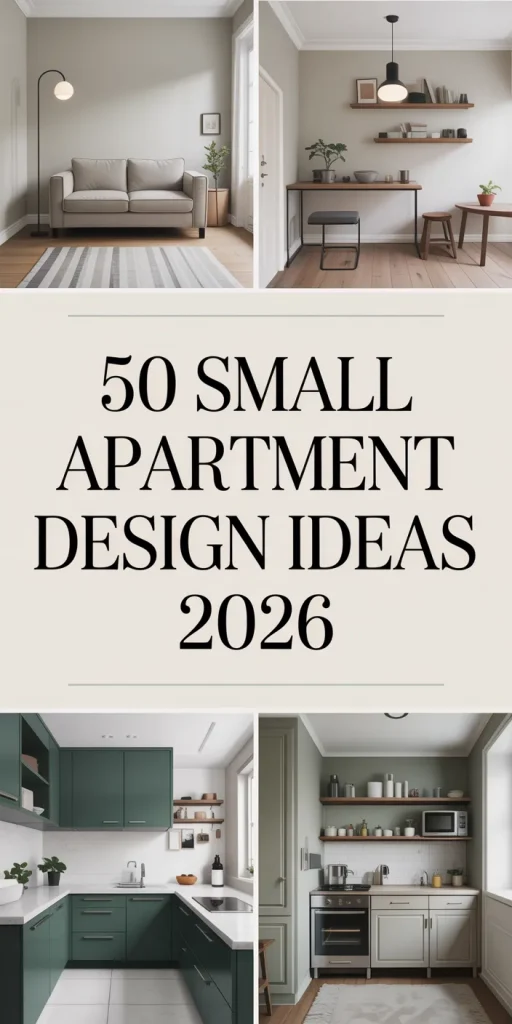
Small apartment design in 2026 is really about one thing: treating limitations as creative constraints rather than obstacles. Every idea in this list starts from the same premise—that a thoughtfully designed 400-square-foot apartment can be more satisfying to live in than a carelessly furnished 1,200-square-foot one. Which of these ideas resonated most with your own space? Have you tried any of them, or are you planning a refresh this season? Drop your thoughts, questions, and photos in the comments below—the most inspiring ideas always come from the community, and we’d genuinely love to see what you’re working with.