50 Modern Bathroom Ideas 2026: Luxury Designs, Small Space Solutions & Trending Colors

Modern bathroom design in 2026 is all about blending timeless elegance with fresh, functional updates that reflect how we actually live. American homeowners are increasingly turning to Pinterest for inspiration that balances luxury with practicality, whether they’re tackling a small space renovation or dreaming up a serene luxury master bath. This year’s trends embrace organic materials, earthy tones, and thoughtful lighting that transforms daily routines into moments of calm. From coastal retreats to contemporary minimalism, these ideas will help you create a bathroom that feels both current and completely yours.
1. Earthy Terrazzo Accents
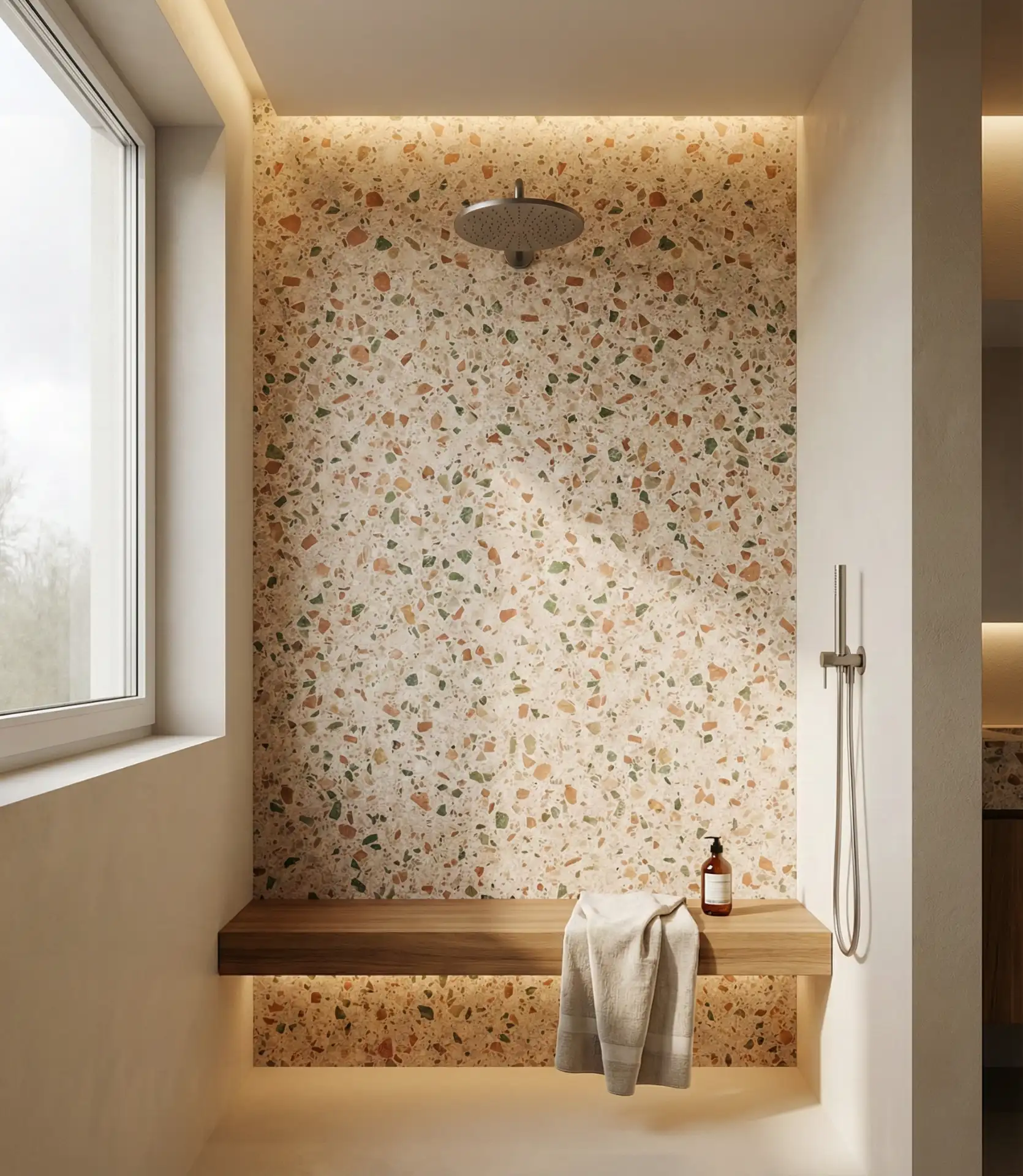
Terrazzo is making a major comeback in 2026 design trends, but with a softer, more organic palette than the bold patterns of decades past. Think muted greens, warm terracotta chips, and cream bases that bring an earthy grounding to modern bathrooms. This finish works beautifully on floors, shower walls, or even custom vanity tops, adding texture without overwhelming smaller spaces.
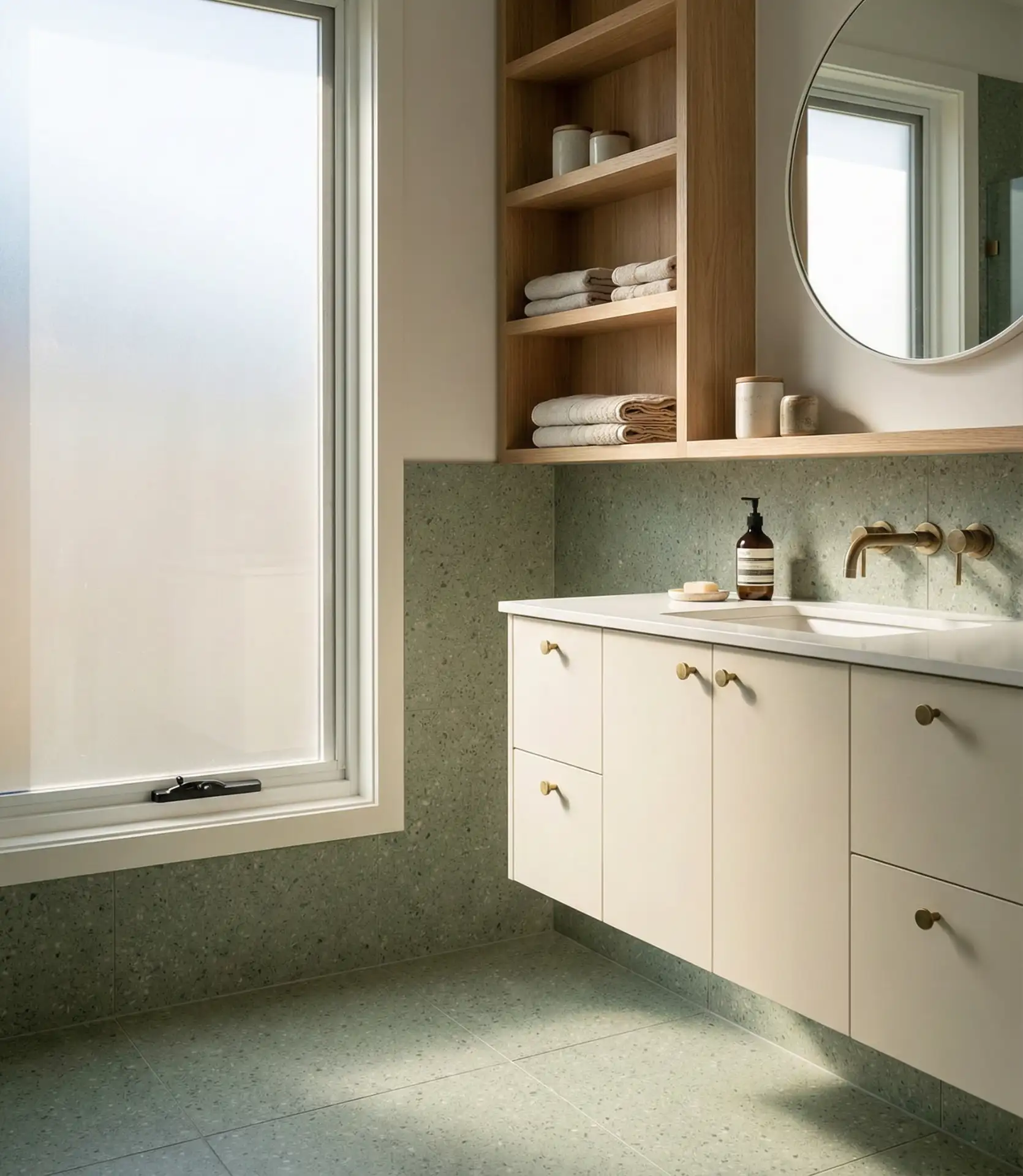
Terrazzo works best in bathrooms with ample natural light, where the flecks can catch the sun and create subtle visual interest throughout the day. Many homeowners pair it with warm metals like aged brass or brushed copper to enhance that organic feel. One common mistake is choosing terrazzo with too many competing colors—stick to a cohesive palette of three or four tones for a sophisticated, timeless look that won’t feel dated in five years.
2. Coastal Linen Textures
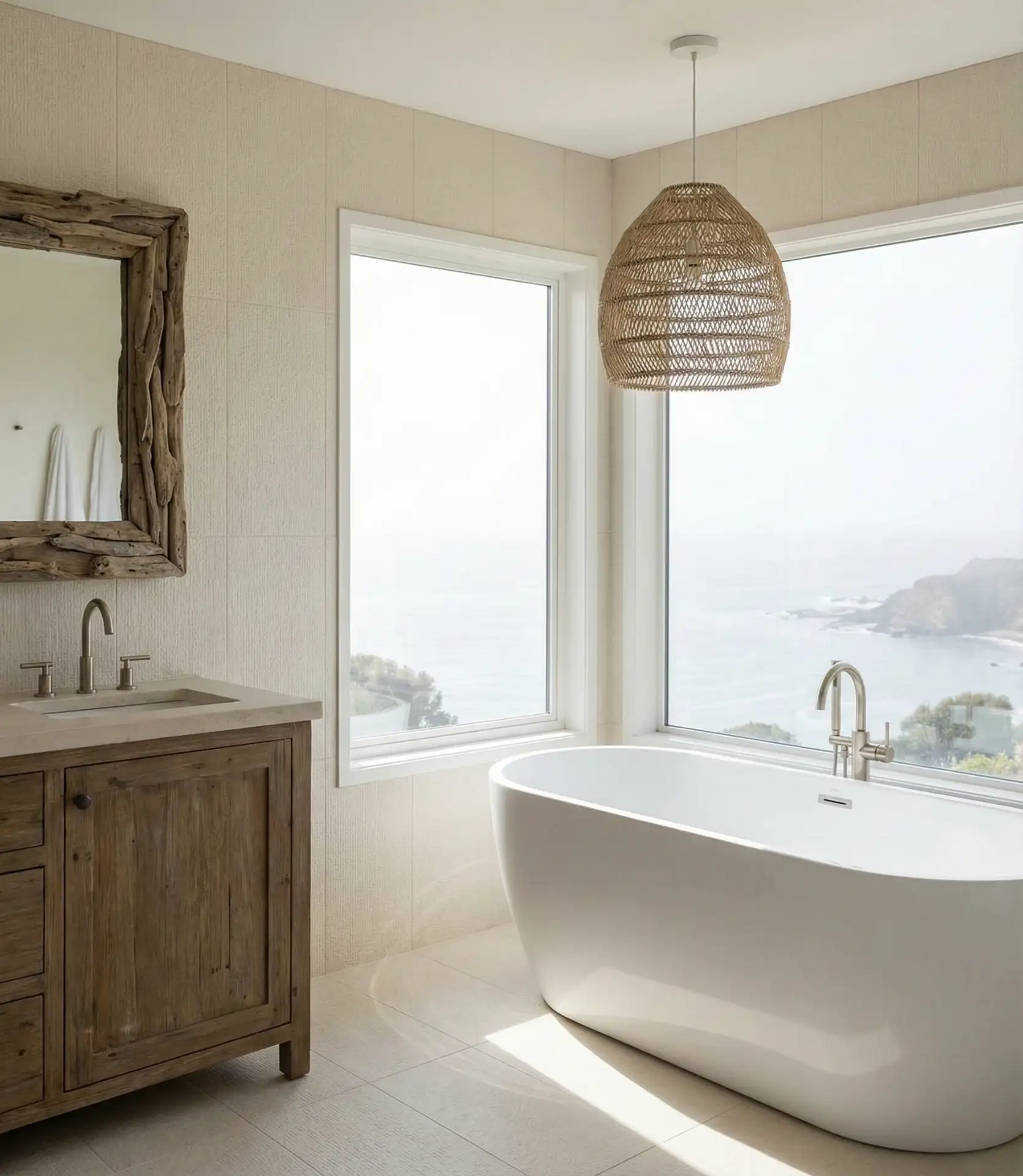
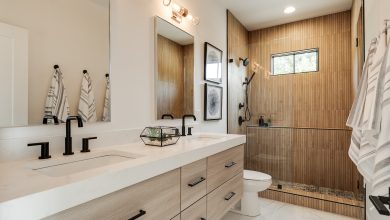
Soft linen-textured tiles are bringing coastal serenity to bathrooms across the country, especially in light colors that evoke sandy beaches and weathered driftwood. These tiles offer the visual warmth of fabric with the durability of porcelain, making them ideal for shower surrounds, accent walls, or full bathroom wraps. The subtle weave pattern catches light beautifully, adding depth to even the simplest contemporary layouts.
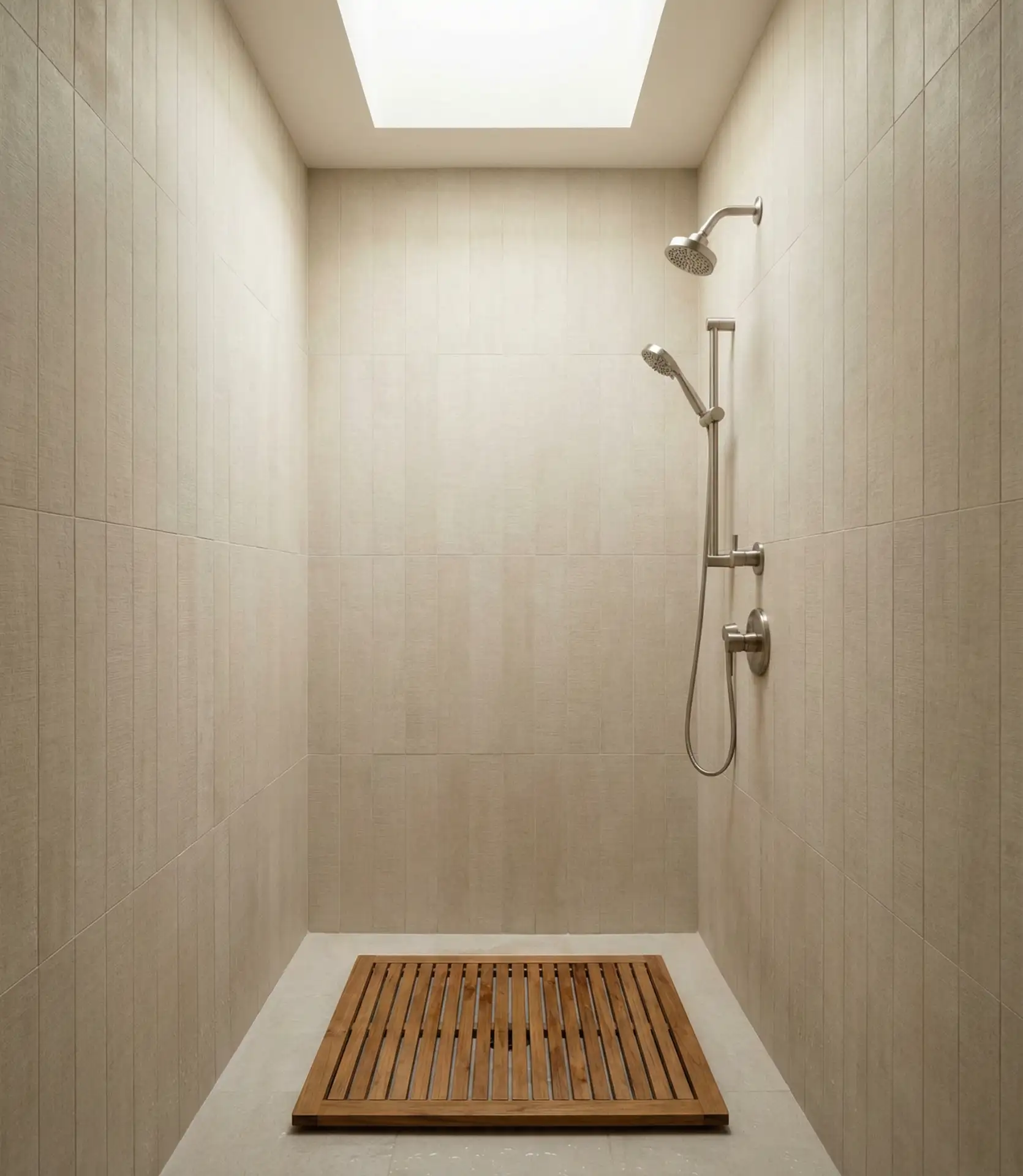
In the Pacific Northwest and New England coastal regions, designers are pairing these tiles with whitewashed oak vanities and sea-glass accessories for an authentic beachy feel. The texture adds just enough grip to prevent you from slipping in wet areas without feeling rough underfoot. Expect to spend around $8-12 per square foot for quality linen-textured porcelain, which is competitive with standard subway tile but offers significantly more visual interest.
3. Dark Moody Plaster Walls
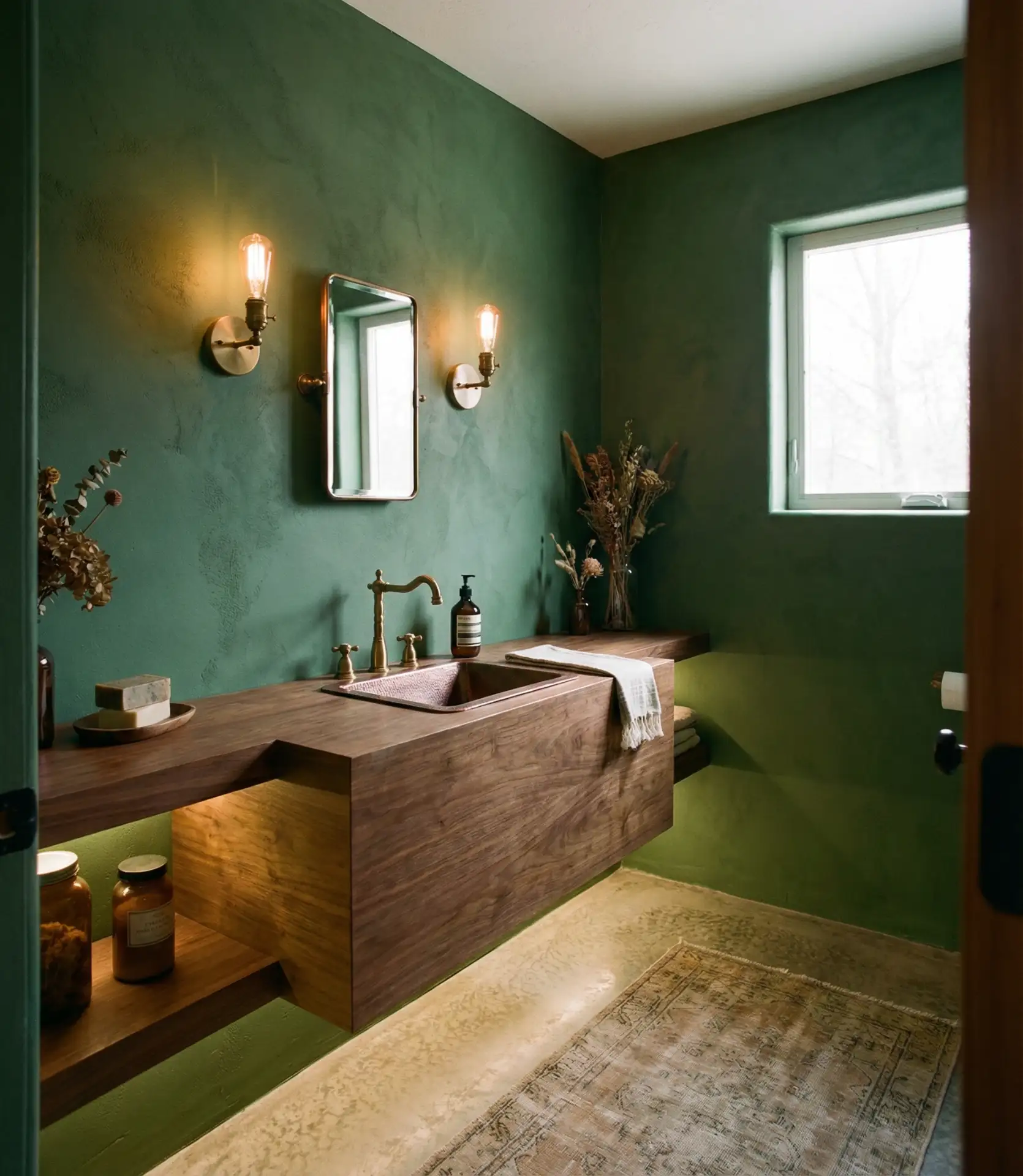
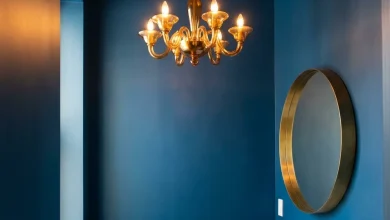
Venetian plaster in deep charcoal, forest green, and midnight blue is transforming luxury bathrooms into intimate, cocoon-like retreats. This dark approach challenges the all-white bathroom norm, creating drama and sophistication that feels both modern and timeless. The hand-troweled finish catches light in unexpected ways, shifting throughout the day as natural light moves across the walls.
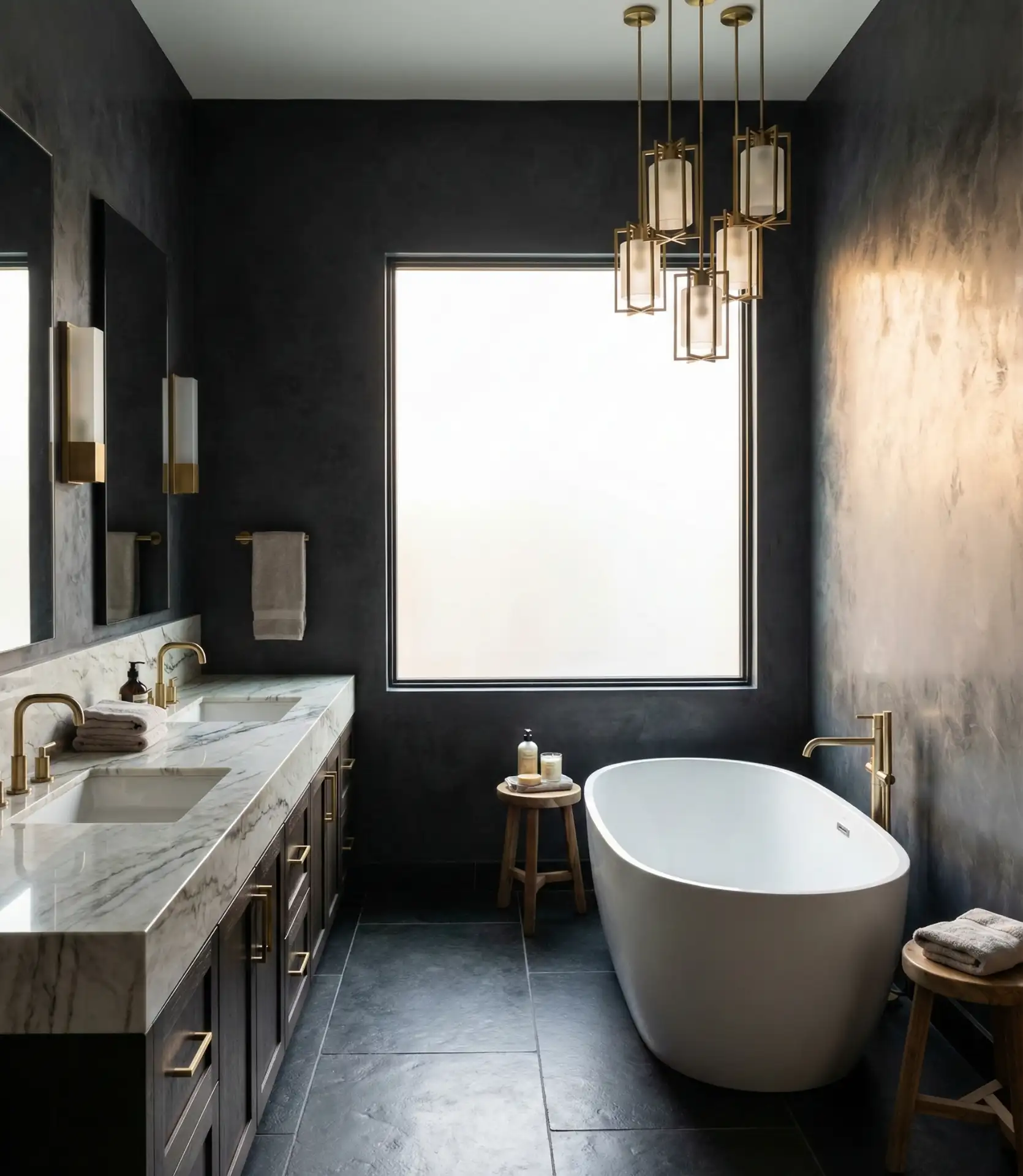
A designer friend recently installed deep navy plaster in a client’s master bath in Charleston, and the homeowners said it completely changed how they experience the space—it went from functional to restorative. The key is balancing the darkness with plenty of warm lighting layers and reflective surfaces like mirrors and polished stone to prevent the room from feeling closed in.
4. Vintage Pedestal Sink Revival
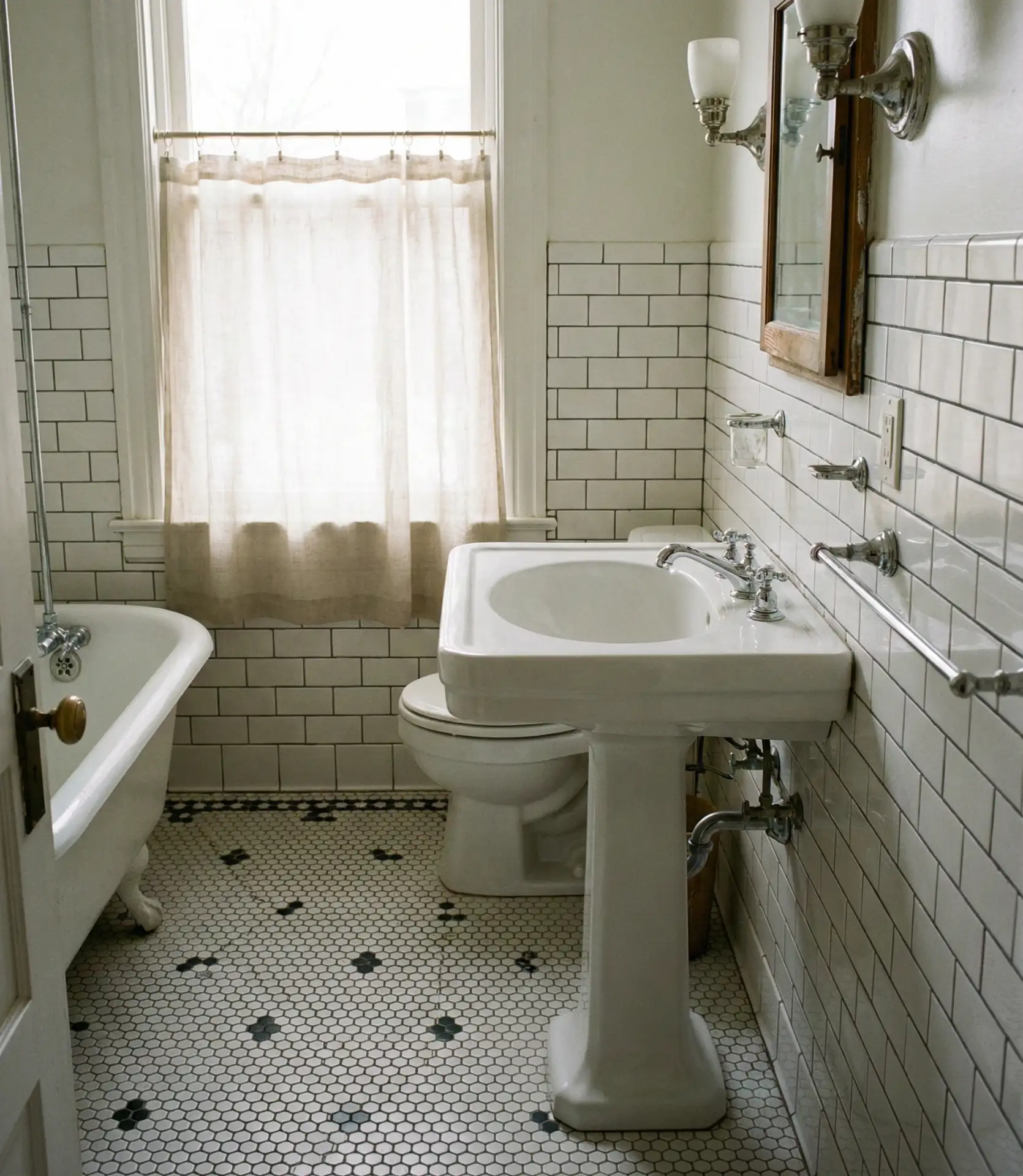
Classic pedestal sinks are reclaiming their place in vintage-inspired bathrooms, particularly in small spaces where every square foot counts. These elegant fixtures offer a sculptural quality that wall-mounted or vanity sinks can’t match, and their open base makes tight quarters feel less cramped. Modern iterations come in updated shapes—oval, rectangular, or asymmetrical—that nod to the past while fitting seamlessly into 2026 design sensibilities.
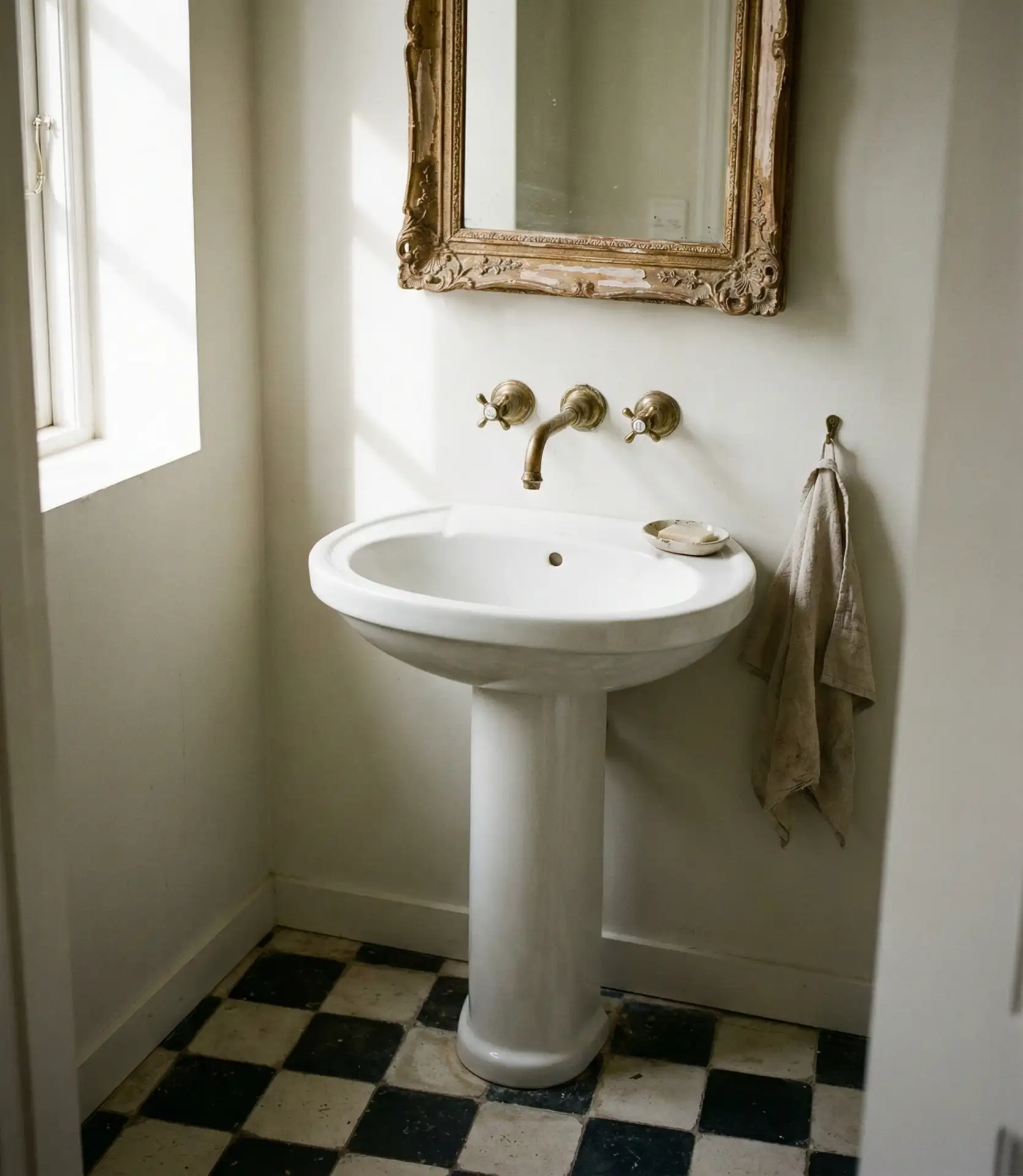
This setup works best in powder rooms, half baths, or historic home renovations where maintaining period character matters. One practical limitation: the lack of storage underneath means you’ll need creative solutions like wall-mounted shelving or a slim cabinet elsewhere in the room. Quality reproduction pedestal sinks range from $200 for basic models to $800+ for hand-cast porcelain versions with decorative detailing.
5. Farmhouse Shiplap Accents
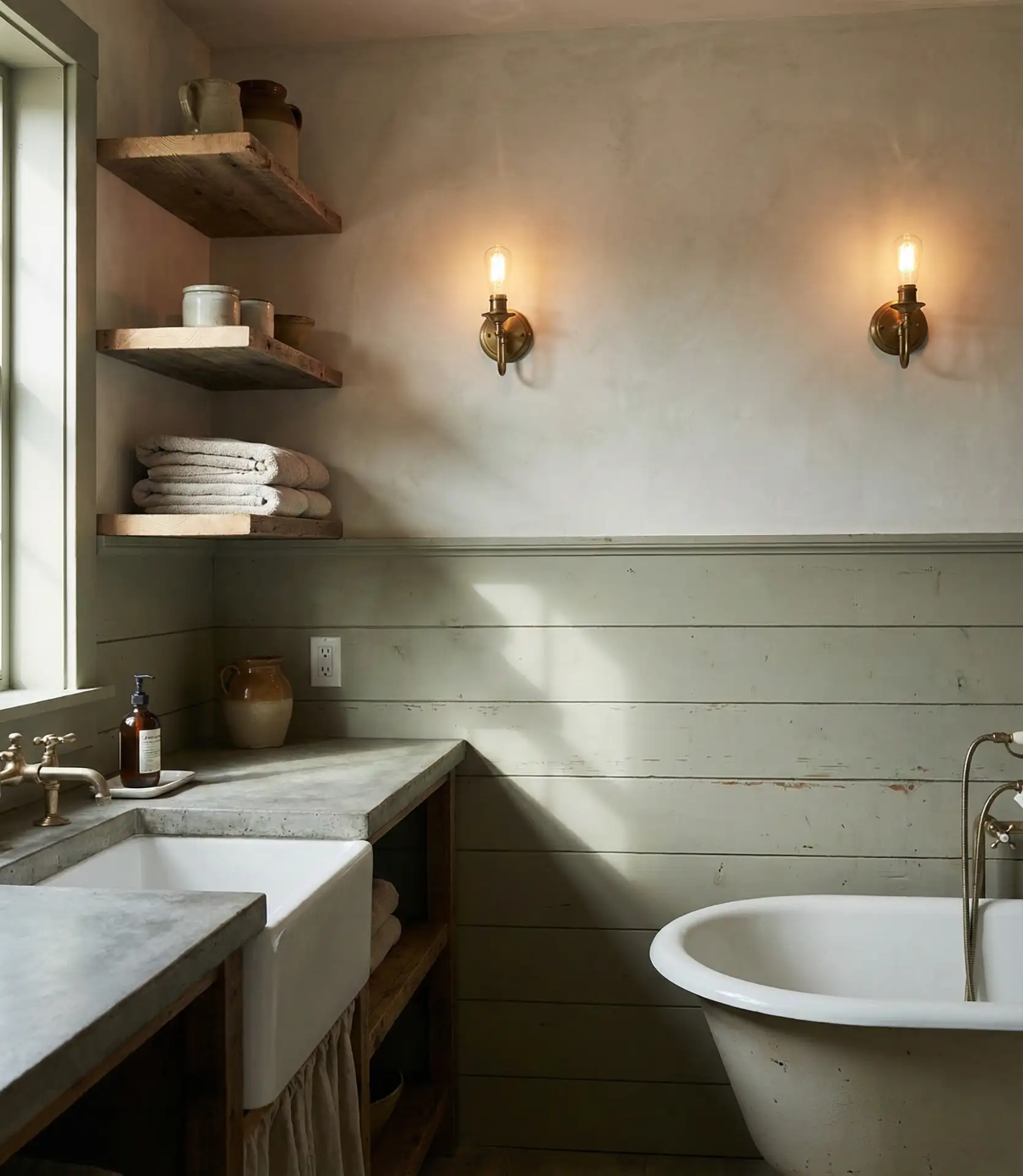
Horizontal shiplap paneling continues to define farmhouse bathroom style, but the 2026 version favors wider planks and subtler finishes over the high-contrast painted look of years past. Natural wood tones, soft grays, and even muted sage greens are replacing stark white, bringing warmth and authenticity to the aesthetic. This treatment works particularly well as a wainscot paired with plaster or tile above, creating visual layers without overwhelming the space.
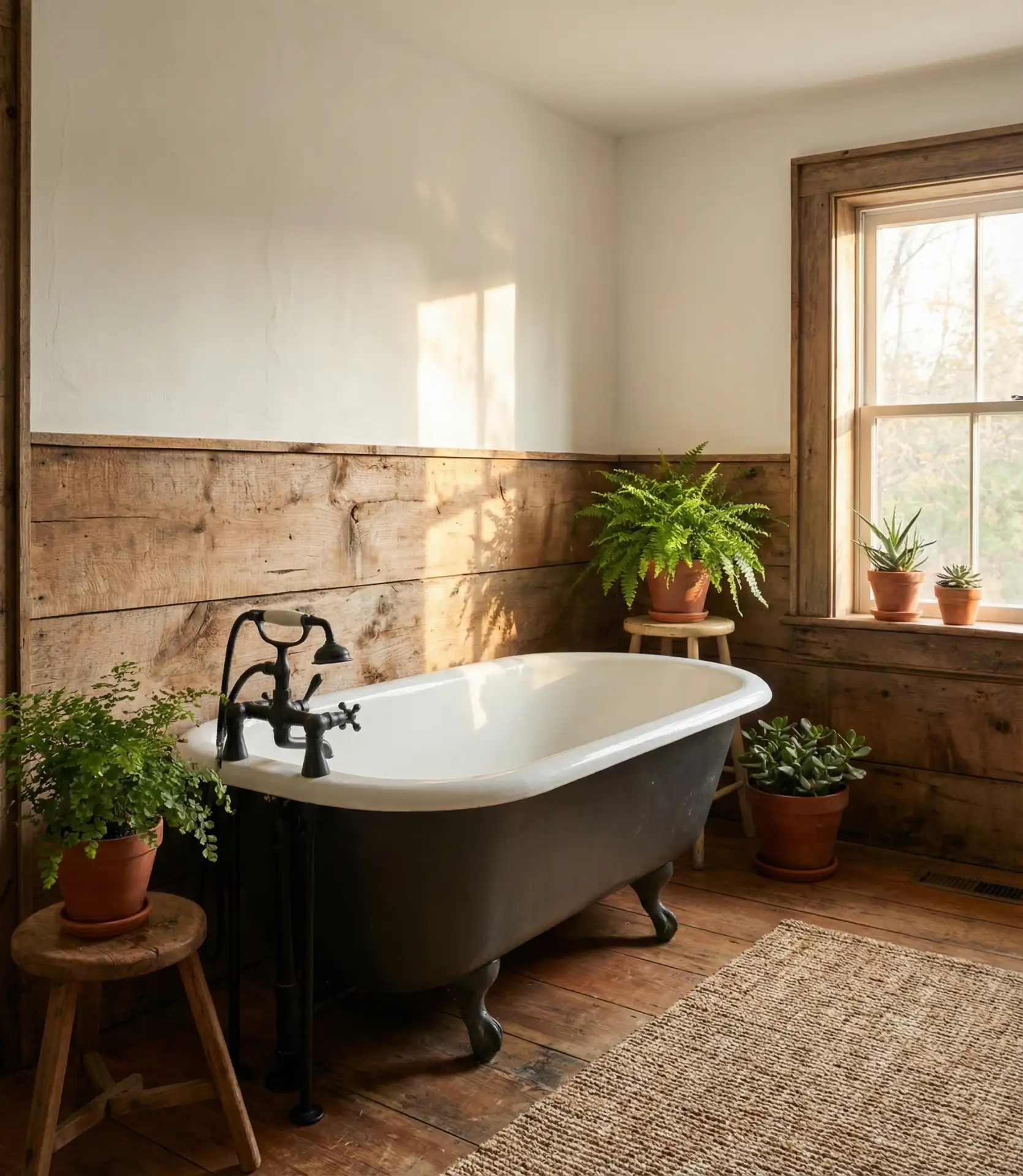
Throughout the Midwest and South, where farmhouse style remains deeply popular, homeowners are installing shiplap as a DIY-friendly weekend project that immediately transforms builder-grade bathrooms. The biggest mistake is using planks that are too narrow—anything under four inches can read as busy rather than restful. Properly sealed shiplap handles bathroom humidity well, but avoid installing it directly in shower enclosures unless you’re using marine-grade materials.
6. Mid-Century Floating Vanities
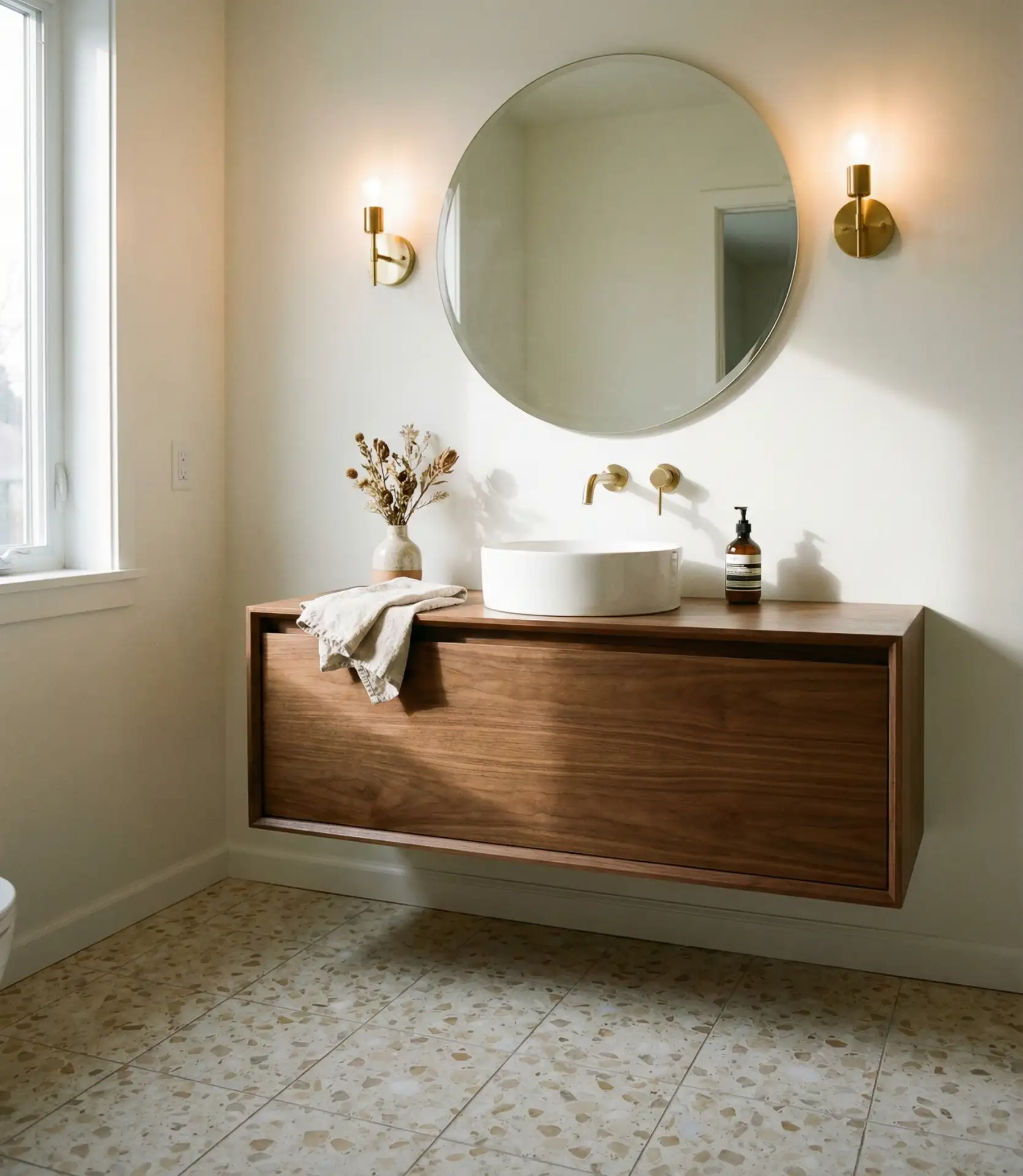
Wall-mounted vanities with clean-lined walnut or teak cabinetry capture the essence of mid-century design while solving practical problems in contemporary bathrooms. The floating effect creates an airier feel, makes floor cleaning easier, and allows for flexibility in placement that’s especially valuable in awkward layouts. Integrated handles, angled legs, and geometric drawer fronts add authentic period details without feeling like a costume.
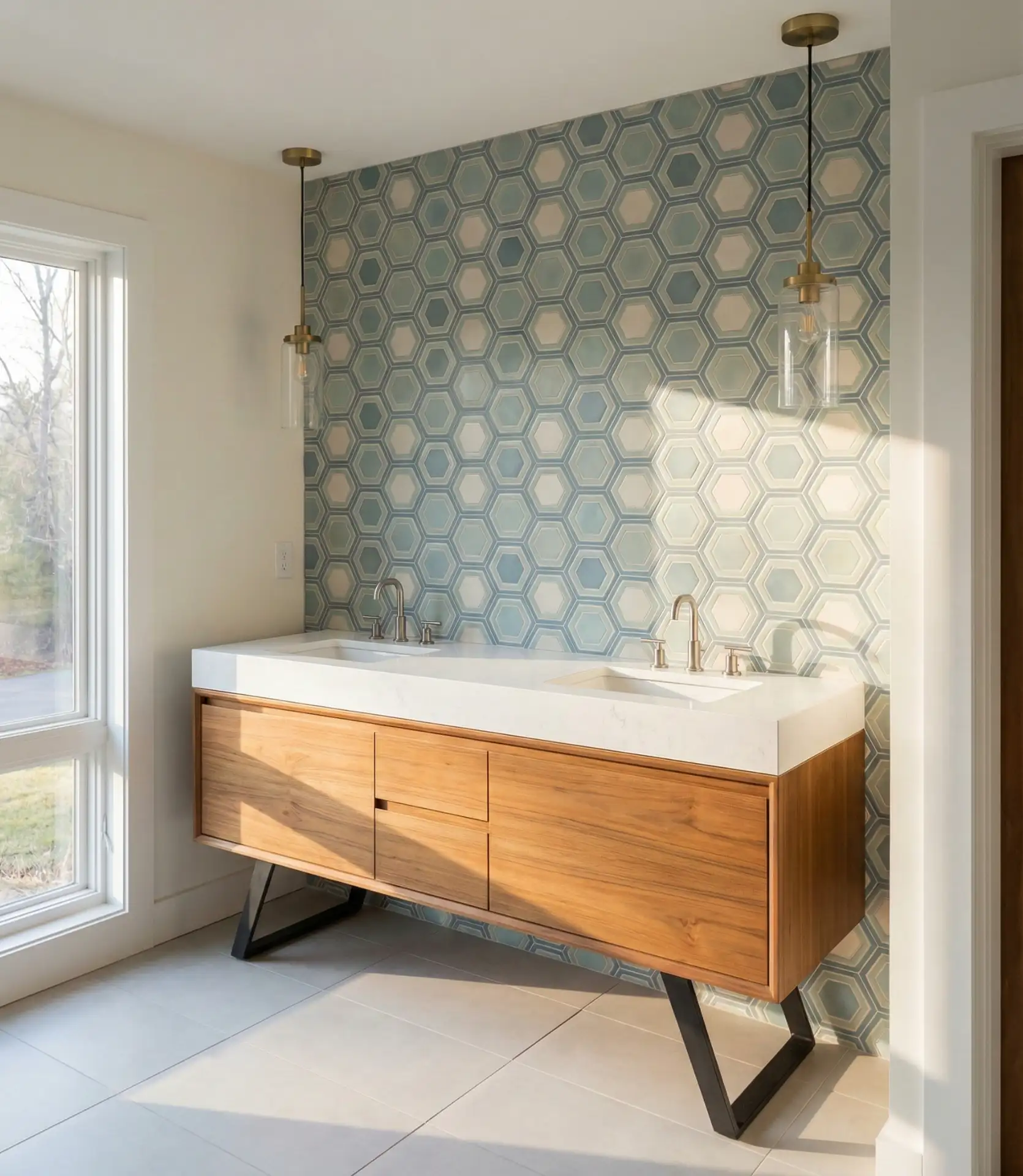
These vanities shine in homes built during the 1950s-70s that are undergoing thoughtful renovations, particularly in California, the Southwest, and parts of the Pacific Northwest, where mid-century architecture is abundant. They’re also a smart choice for accessibility planning, as the open space underneath can accommodate wheelchairs more easily than traditional vanities. Real homeowners often pair them with period-appropriate fixtures like cone-shaped sconces and geometric mirrors to complete the look.
7. Rustic Stone Feature Walls
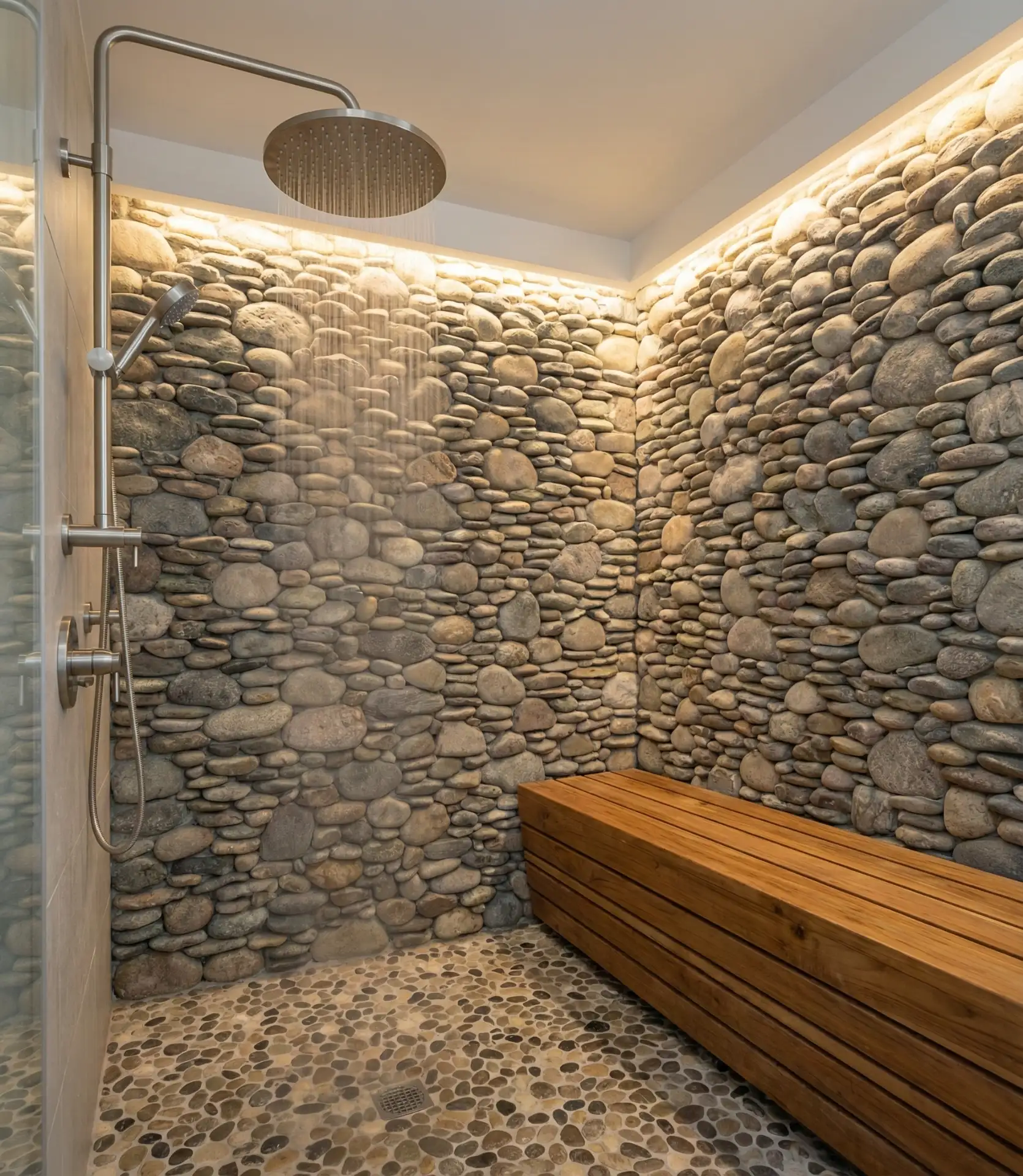
Natural stacked stone or river rock accent walls bring rustic texture and organic beauty to bathrooms inspired by mountain retreats and lodges. These installations work especially well behind freestanding tubs or in walk-in showers, where they become a focal point that connects the interior to the landscape outside. The irregular surfaces and earthy color variations—grays, taupes, and warm browns—create visual interest that manufactured materials simply can’t replicate.
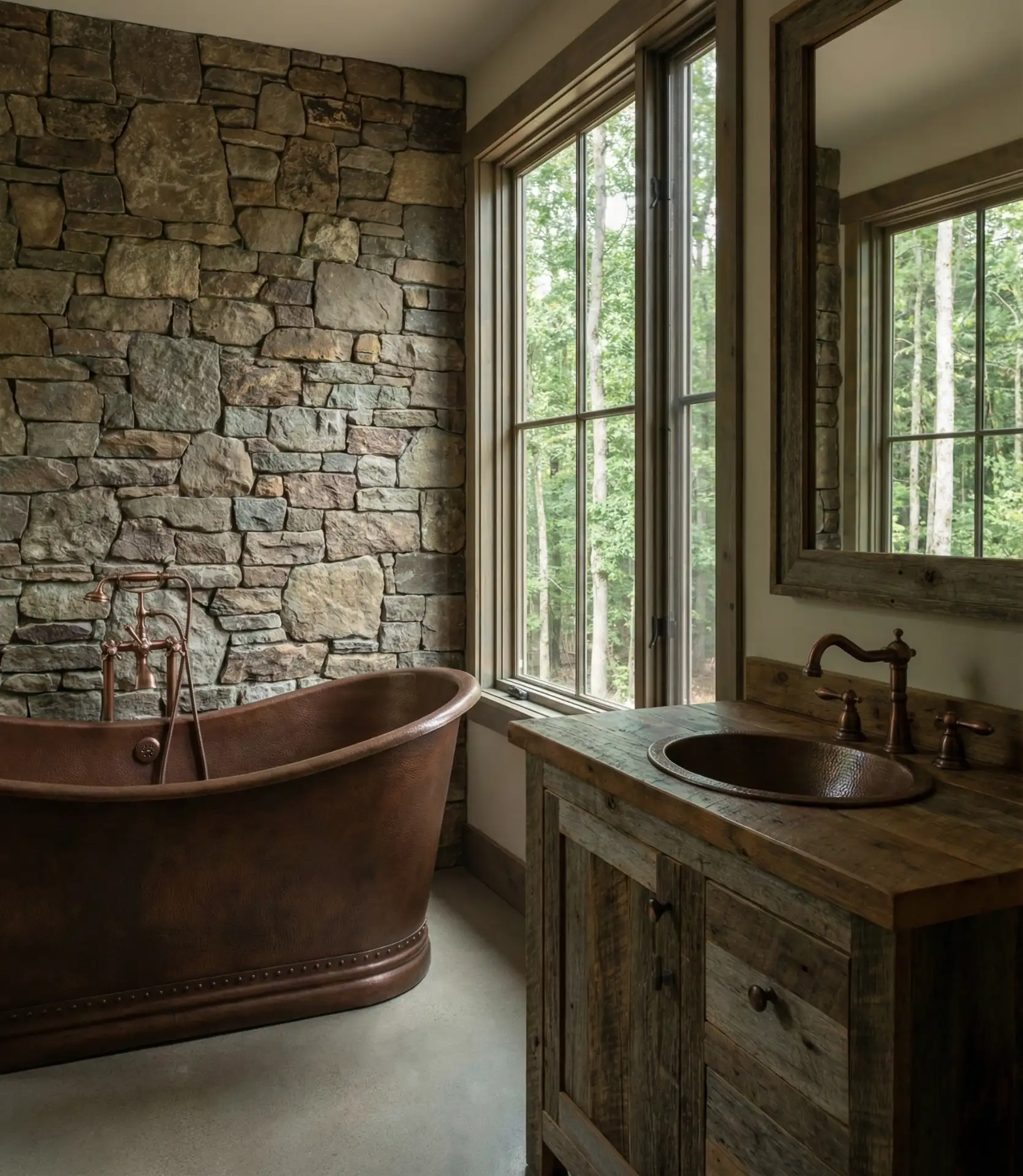
This approach works beautifully in mountain homes across Colorado, Montana, and the Adirondacks, where the aesthetic harmonizes with the surrounding environment. Budget-wise, expect to invest $15–30 per square foot installed, depending on the stone type and complexity. The greatest challenge is proper waterproofing—many DIYers underestimate the prep work needed, leading to moisture problems down the line.
8. Luxury Master Bath White Marble
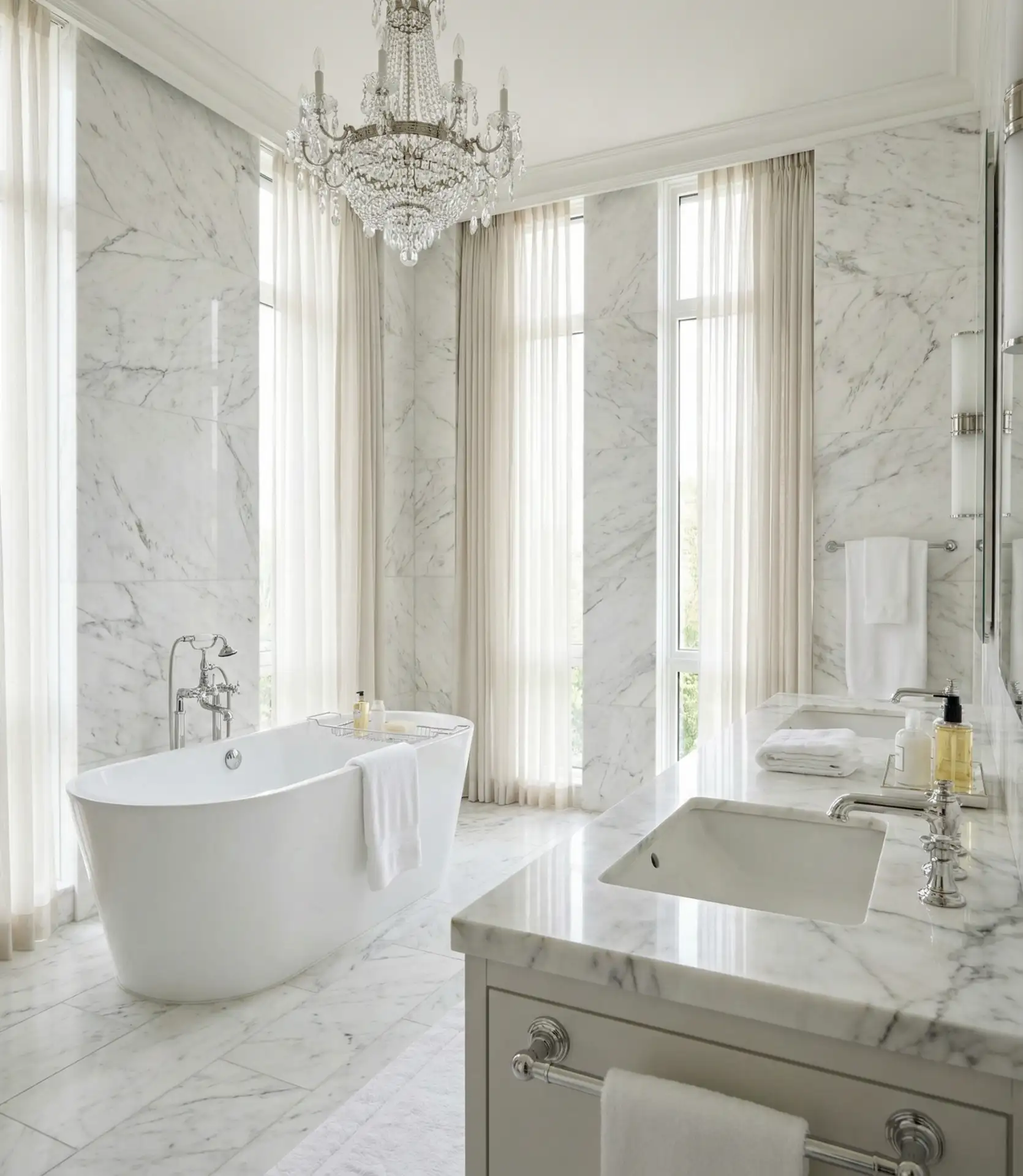
Luxury master bath white marble continues to define high-end bathroom design, particularly in traditional homes where classic elegance never goes out of style. Calacatta, Statuario, and Carrara marble offer distinctive veining patterns that make each installation unique, creating a sense of permanence and investment. In 2026, designers are mixing marble finishes—polished slabs for vanities, honed tiles for floors, and leathered stone for shower benches—to add subtle textural variety.
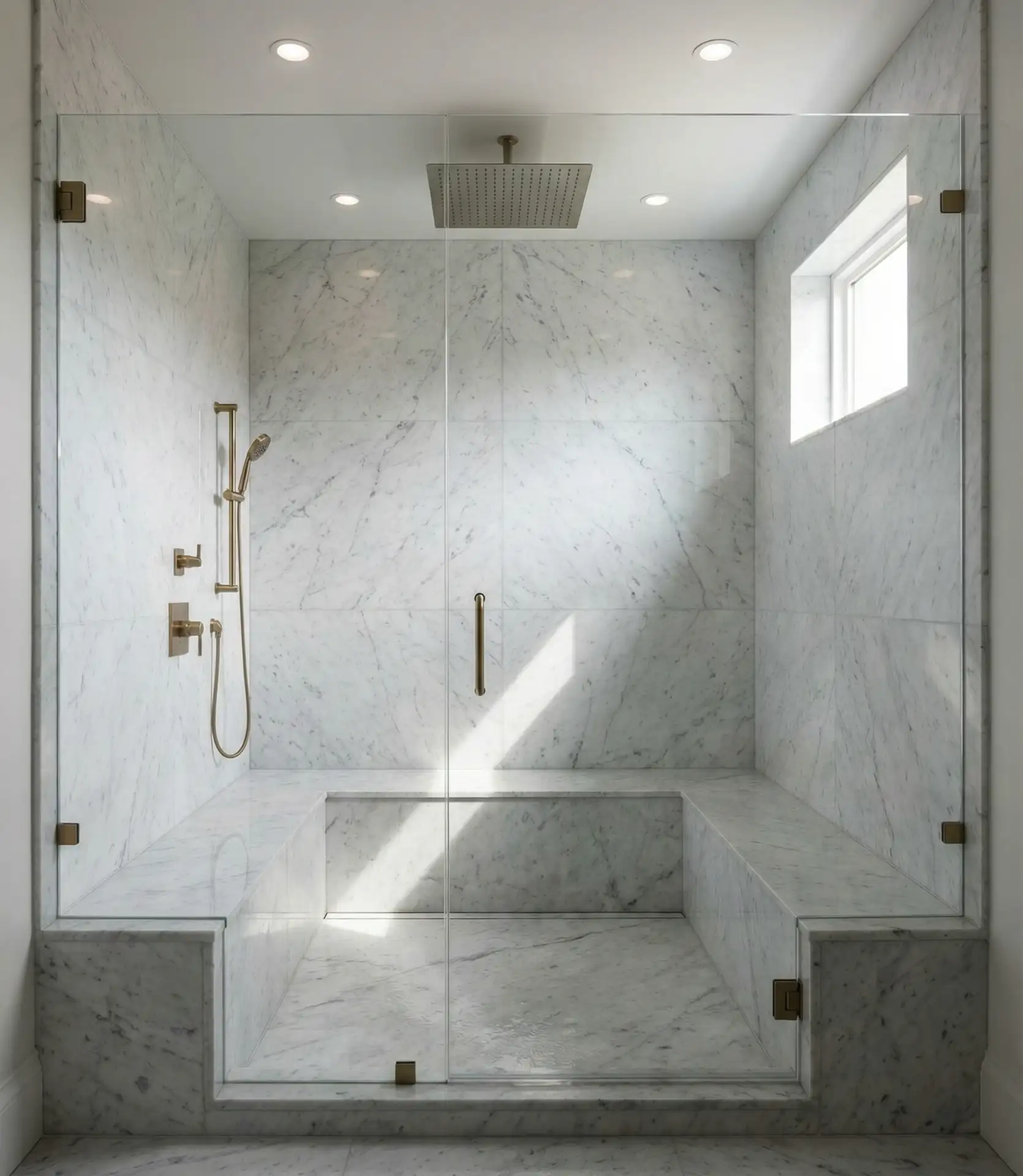
Across affluent suburbs and urban high-rises, real estate agents consistently note that white marble bathrooms add perceived value and appeal to listings. The maintenance reality is less intimidating than many assume—modern sealants have improved dramatically, and regular wiping after use prevents most etching and staining. For those concerned about upkeep, consider using marble-look porcelain on horizontal surfaces while reserving real marble for walls where it’s less vulnerable.
9. Simple Monochrome Schemes
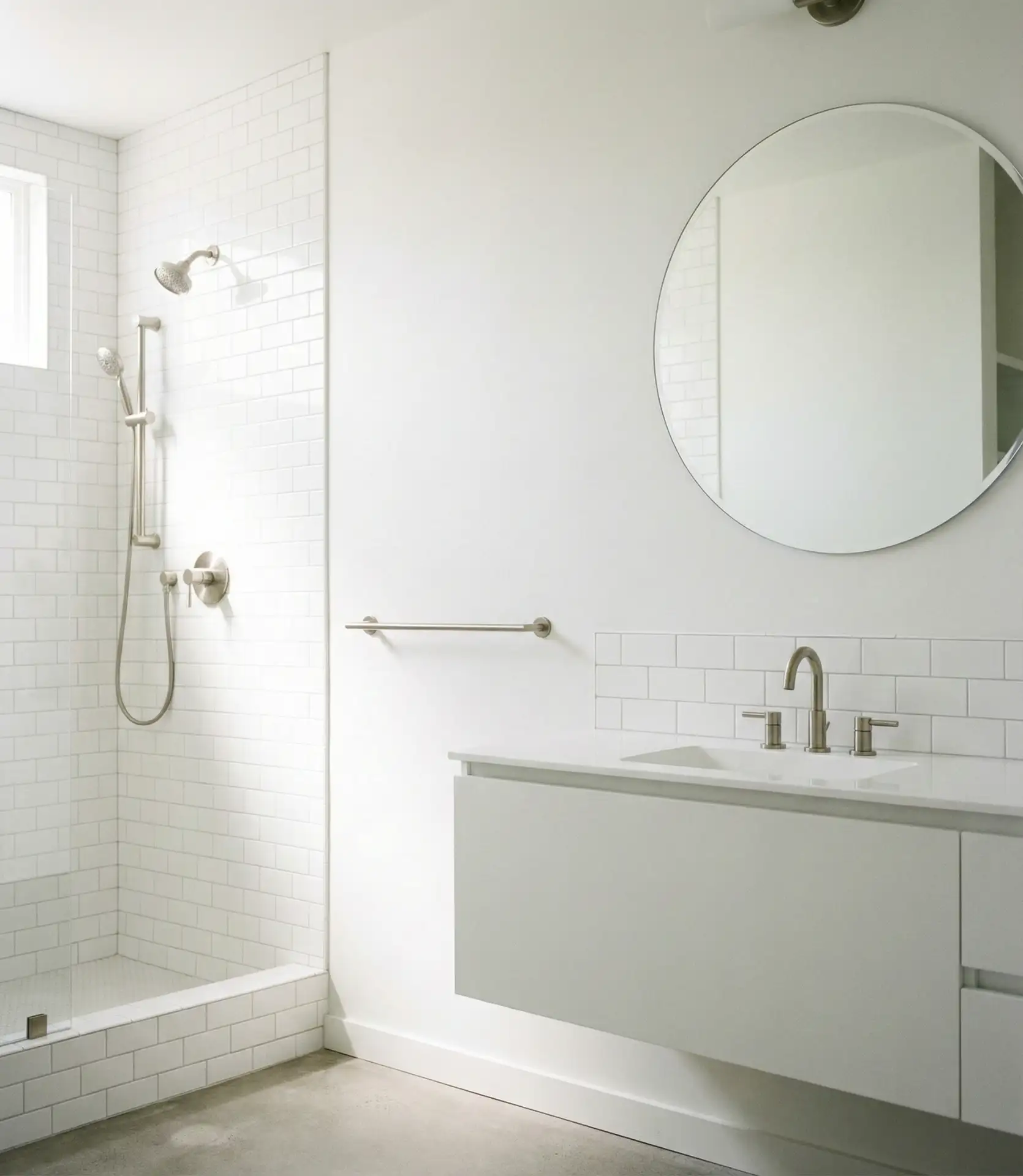
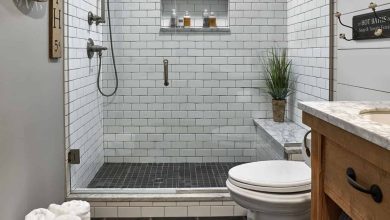
All-white or all-gray bathrooms with minimal contrast create simple, serene environments that feel inherently contemporary and calming. This approach relies on subtle variations in tone and texture rather than bold color to create visual interest—think matte white walls, glossy white tile, linen shower curtains, and marble veining in the same tonal family. This restraint allows architectural details and high-quality materials to shine.
Urban apartments and modern condos particularly benefit from this approach, as the neutral palette makes small bathrooms feel more spacious and cohesive. One insight from interior designers: monochrome doesn’t mean boring, but it does require investing in quality materials and thoughtful lighting to prevent the space from feeling flat or institutional. Layered lighting—ambient, task, and accent—becomes essential to create depth and dimension.
10. Luxury Small Spaces with Custom Storage
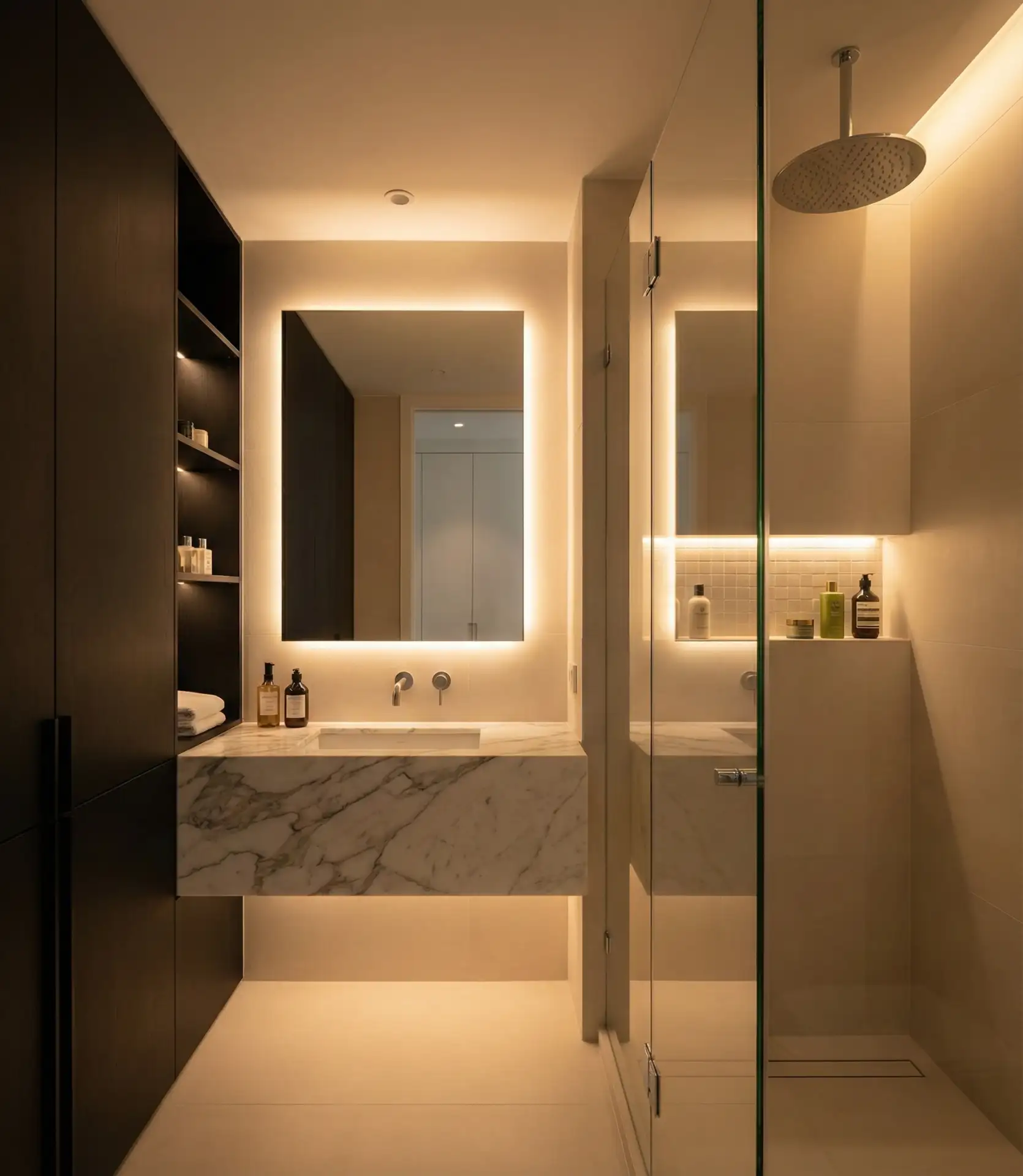
Thoughtfully designed built-ins transform luxury small spaces into highly functional retreats that punch above their square footage. Recessed medicine cabinets with interior lighting, toe-kick drawers beneath vanities, and vertical niches in showers make every inch count without sacrificing the clean lines that define luxury design. The trick is integrating storage so seamlessly that it becomes nearly invisible, maintaining the serene aesthetic while hiding all the practical necessities.
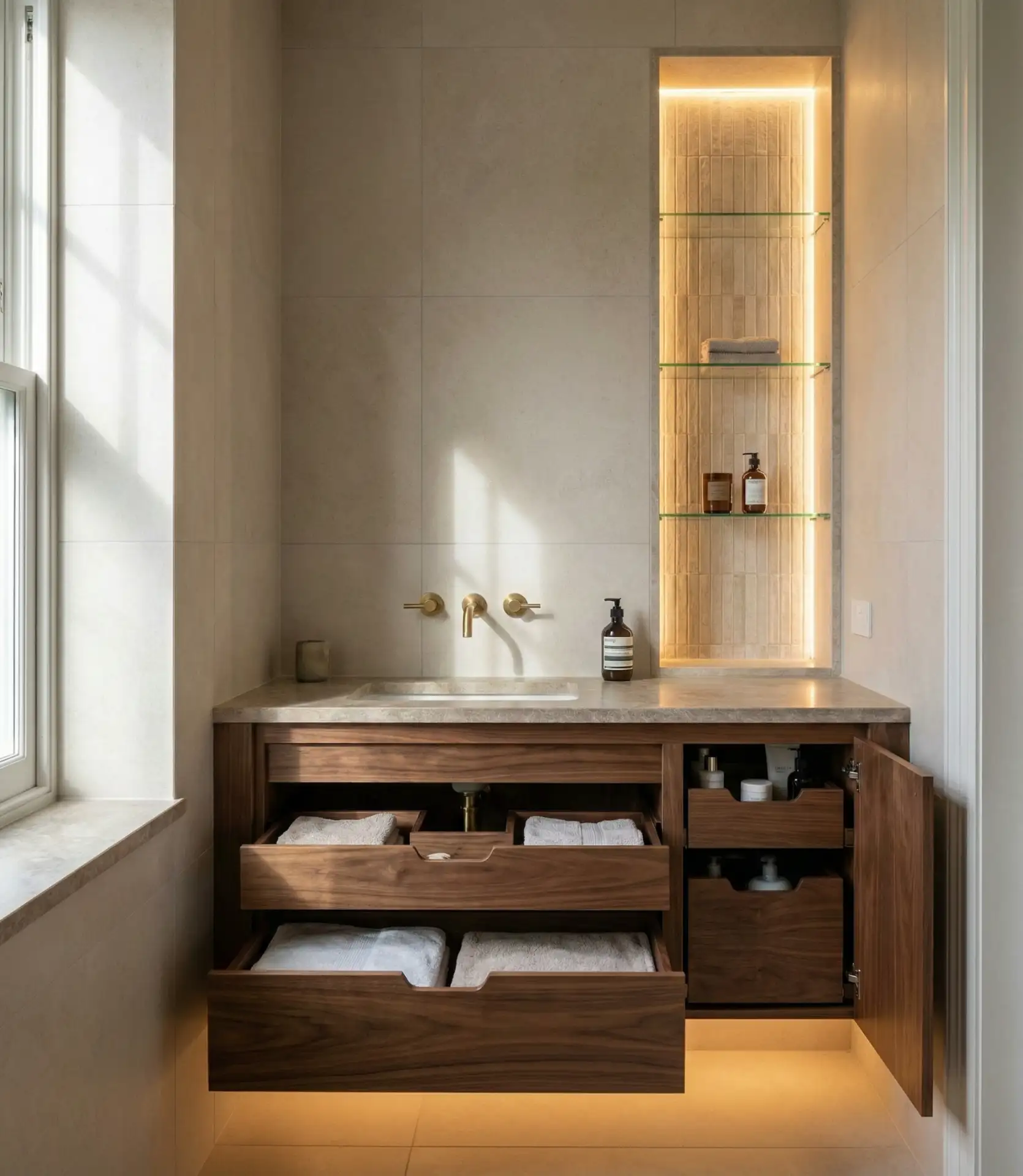
In space-constrained cities like New York, San Francisco, and Boston, homeowners are willing to invest $3,000—$8,000 in custom millwork that transforms cramped bathrooms into efficient sanctuaries. The most common mistake is over-customizing—too many small compartments can actually make organization harder. Instead, focus on a few well-placed solutions that address your specific storage pain points, whether that’s makeup, medications, or cleaning supplies.
11. Bath and Shower Combination Layouts
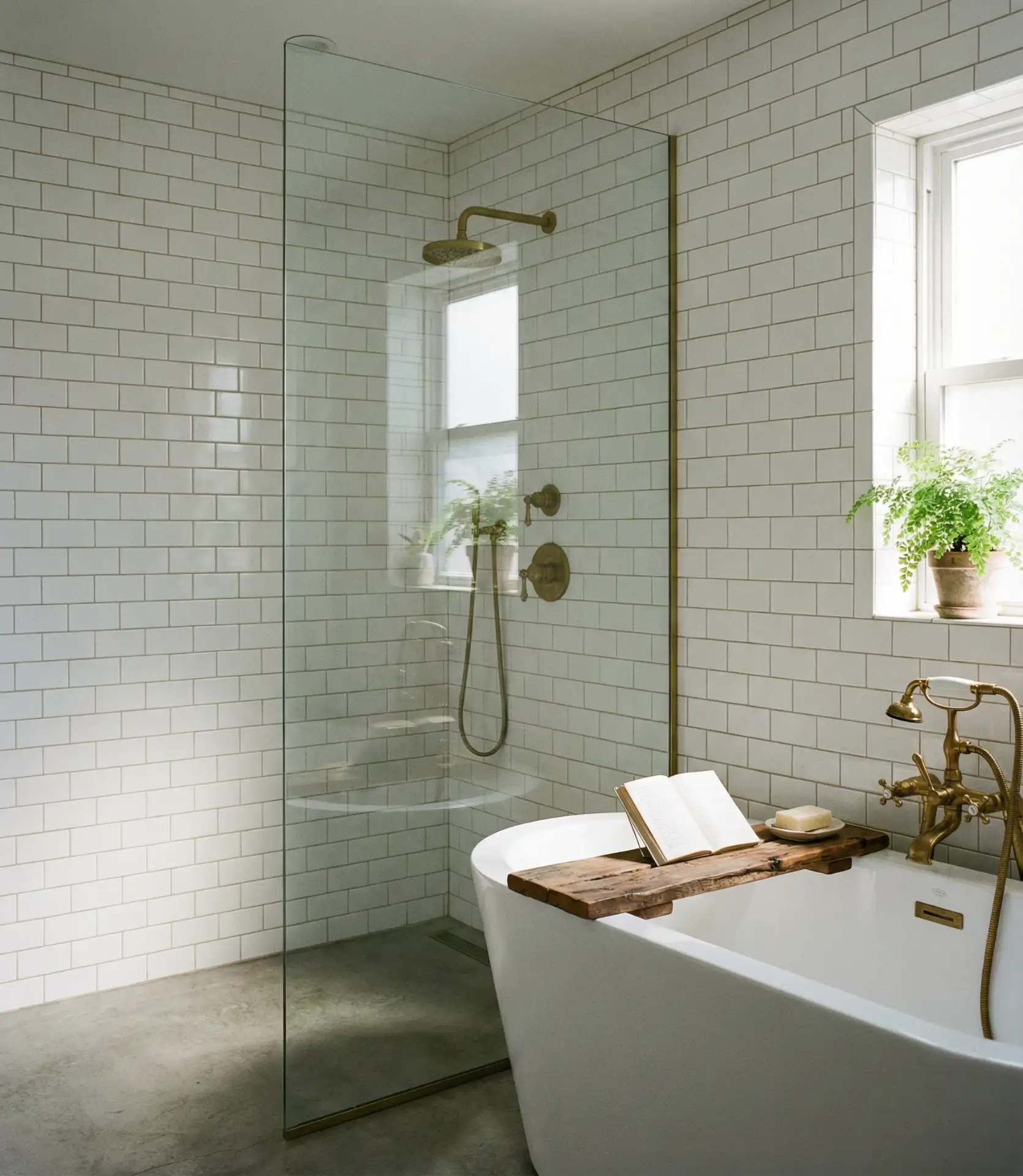
Modern bath and shower combos are shedding their dated reputation thanks to thoughtful design that treats both elements with equal importance. Glass panels replace shower curtains, soaking-depth tubs replace standard models, and high-quality tile extends wall-to-ceiling for a cohesive, intentional look. This layout remains the most practical choice for family bathrooms and smaller homes where dedicating separate spaces to bathing and showering isn’t feasible.
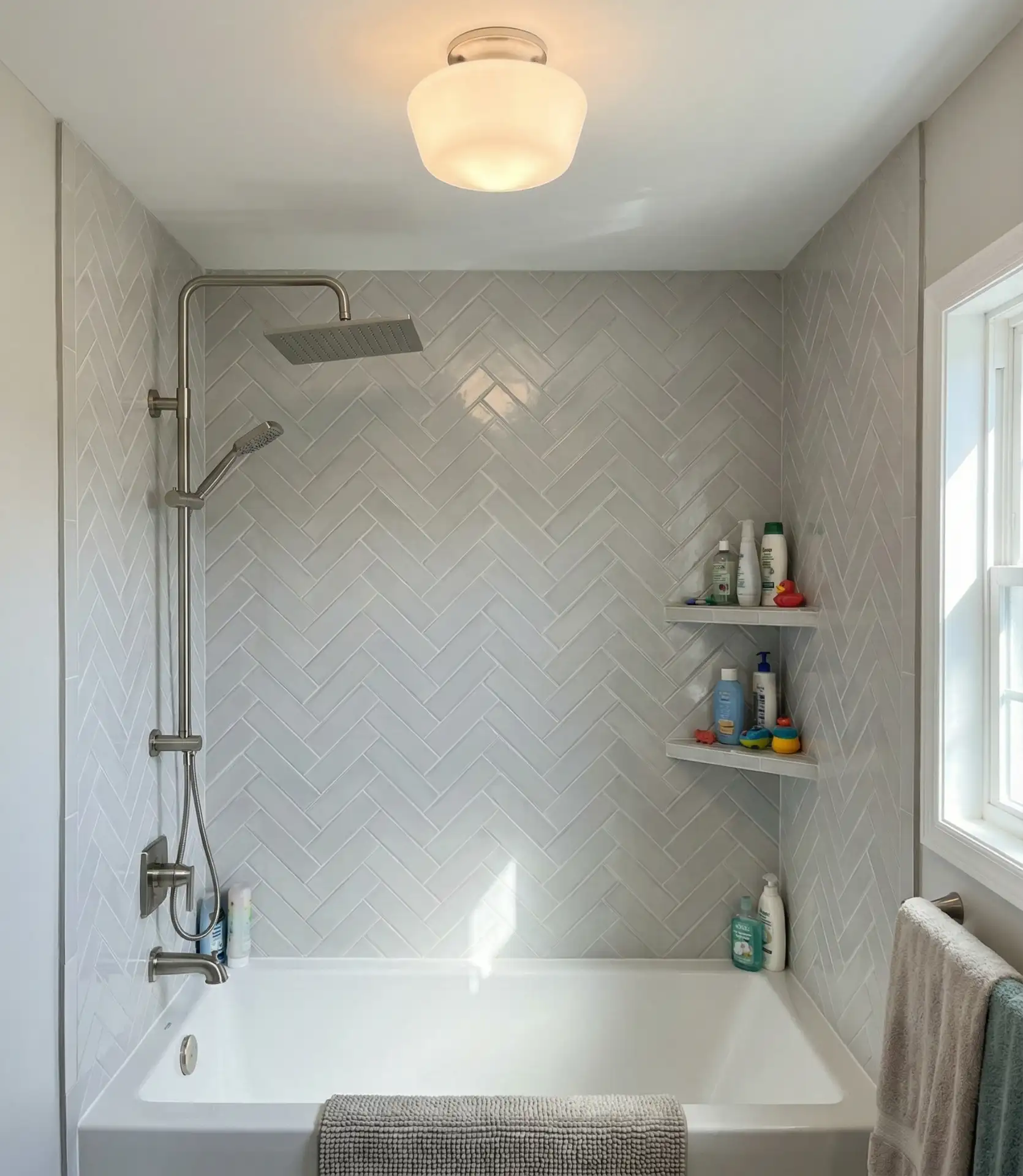
Real homeowners with young children often note this setup is invaluable during the toddler years and then transitions seamlessly as kids grow into preferring showers. Expect to budget $1,200-2,500 for a quality tub and $800-1,500 for glass panels and installation—substantially less than building separate enclosed shower spaces. Choose a tub that is at least 60 inches long and 14–16 inches deep for genuine soaking comfort.
12. Decor Through Curated Accessories
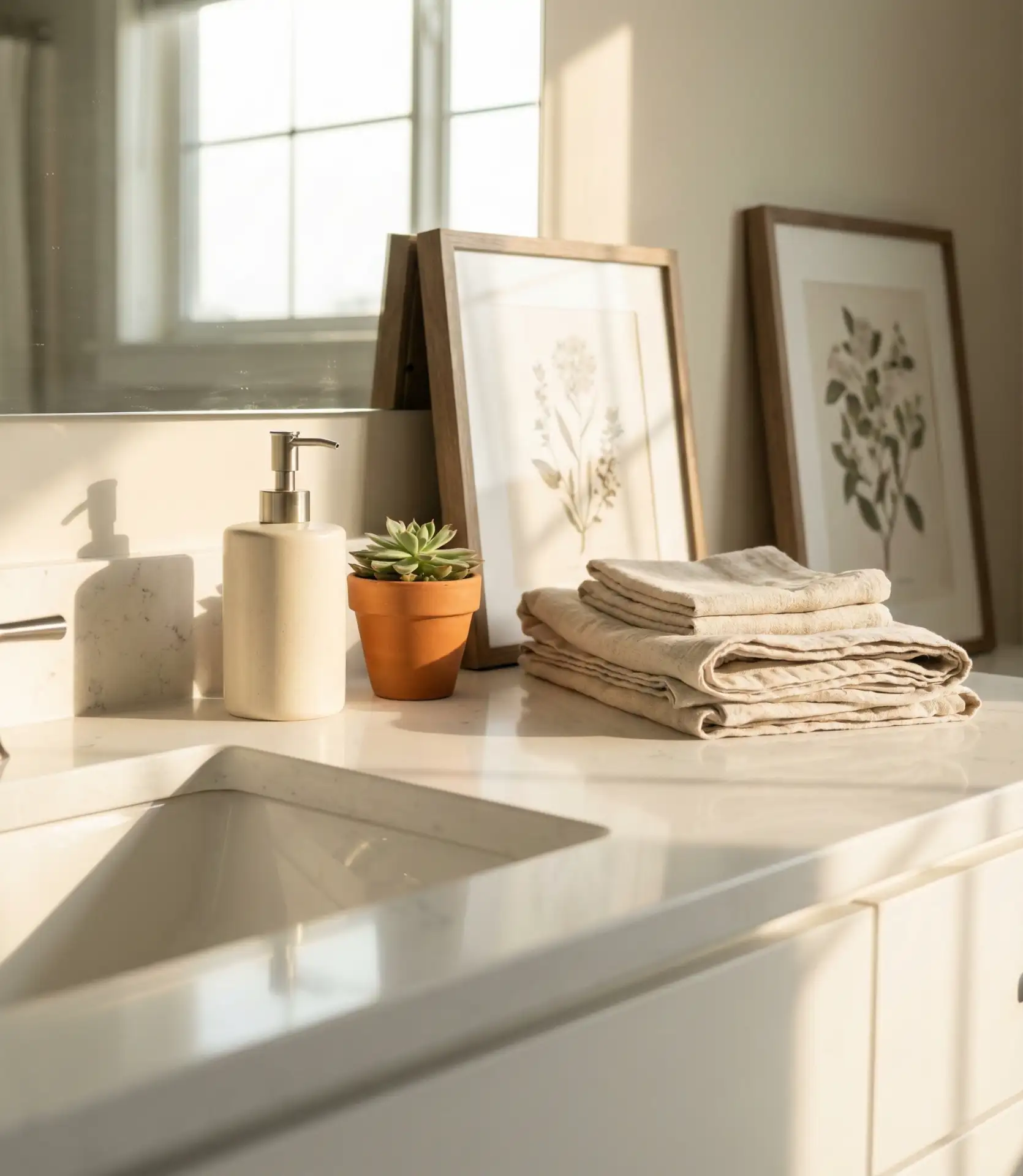
Strategic decor accessories bring personality and warmth to bathrooms without requiring renovation, making this the most accessible approach to refreshing your space for 2026. Textured hand towels, ceramic soap dispensers, woven baskets, small-scale artwork, and edited plant collections transform sterile bathrooms into rooms that feel lived-in and loved. The key is curation over accumulation—a few meaningful pieces have more impact than cluttered countertops.
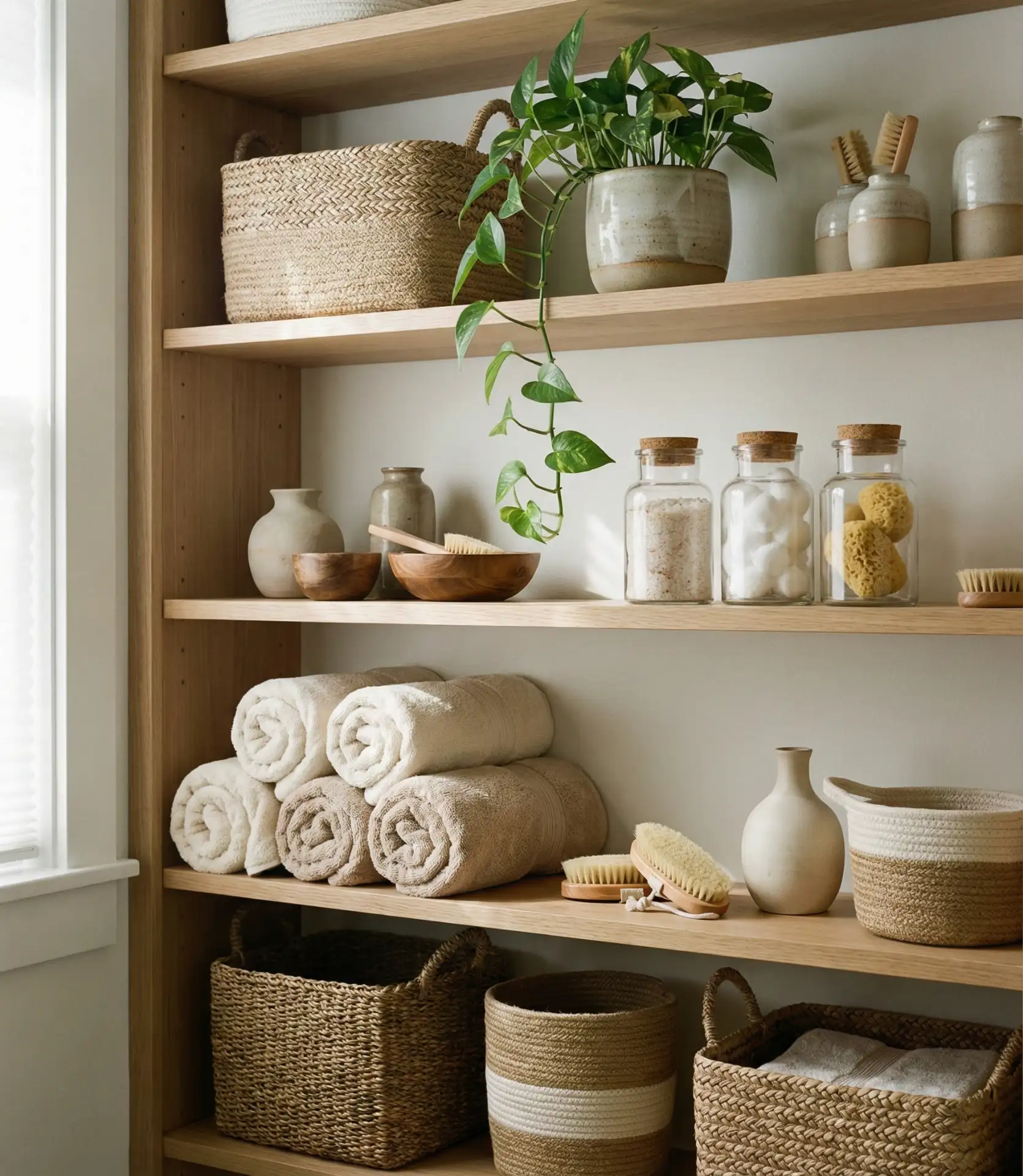
In rental apartments and homes where permanent changes aren’t possible, accessories become the primary tool for making the space feel custom and considered. A micro-insight: successful bathroom styling typically follows a “rule of three”—grouping accessories in odd numbers creates more visually pleasing arrangements than even-numbered displays. Budget $150-400 for a complete refresh of towels, storage pieces, and decorative objects that coordinate with your existing finishes.
13. Mountain Lodge Natural Wood Elements
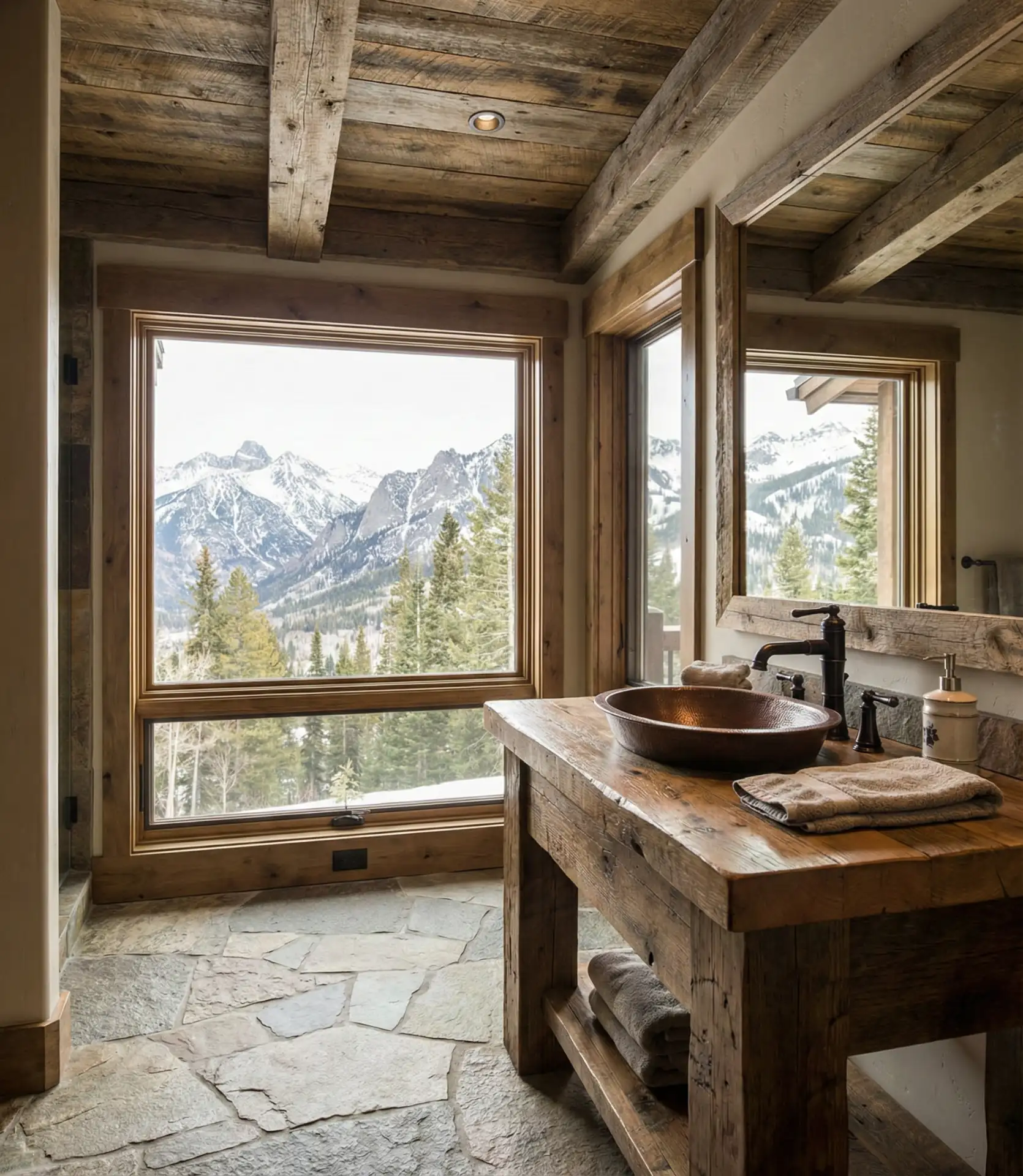
Reclaimed barn wood, weathered cedar, and live-edge lumber bring authentic mountain character to bathrooms seeking that warm, cabin-inspired aesthetic. Wood ceiling planks, vanity bases crafted from old beams, and floating shelves made from salvaged timber create textural richness and a connection to nature. When properly sealed, wood performs beautifully in bathroom environments, aging gracefully and developing a deeper patina over time.
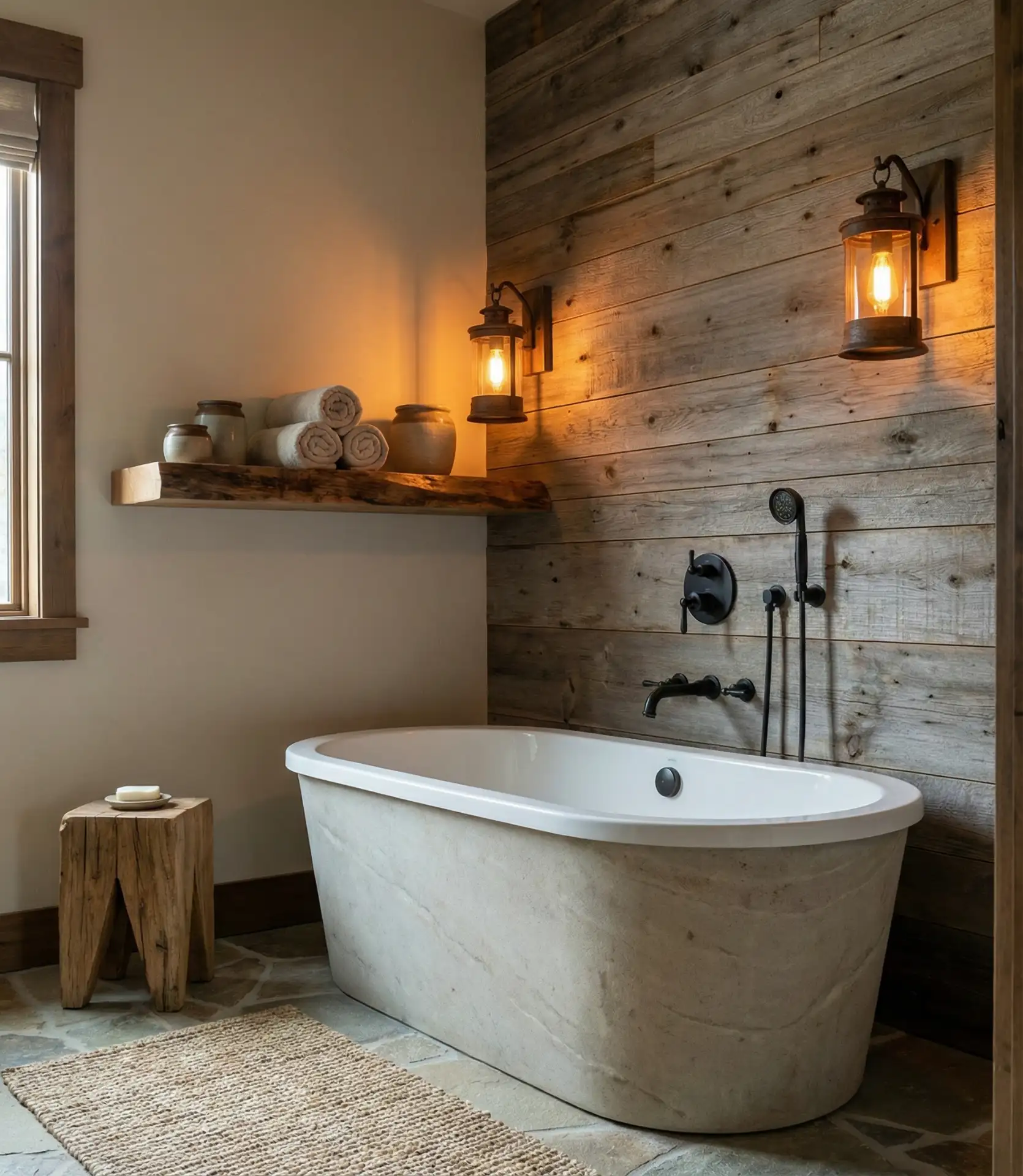
This aesthetic resonates particularly in the Rockies, Appalachia, and Pacific Northwest, where it harmonizes with regional architecture and landscape. One practical consideration: avoid placing wood directly adjacent to shower spray zones—instead, use it on opposite walls, ceilings, or as vanity bases where water exposure is minimal. Quality reclaimed wood runs $8-20 per board foot, but the character it brings is worth the premium for those seeking authentic mountain retreat vibes.
14. Contemporary Geometric Tile Patterns
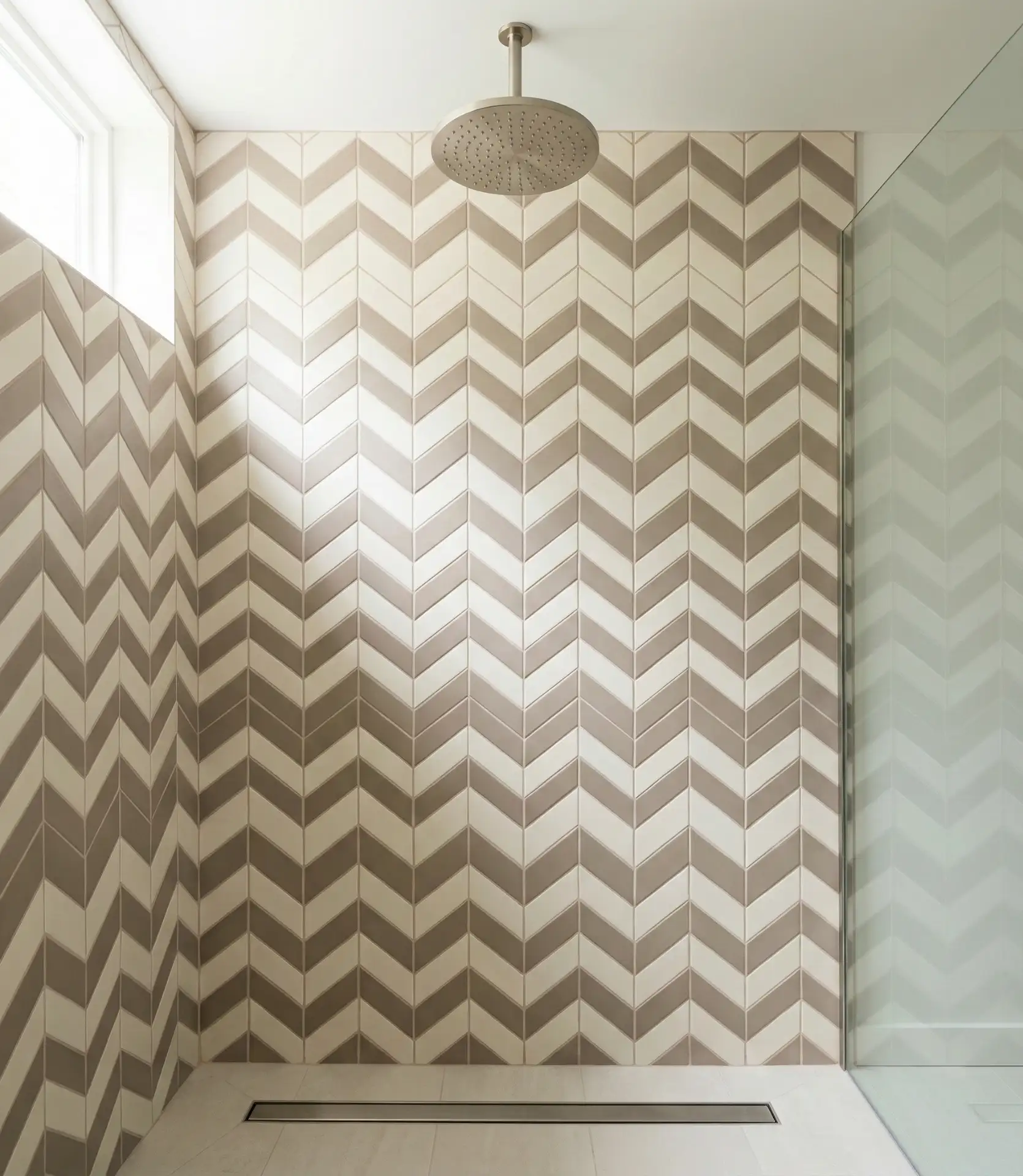
Hexagons, diamonds, chevrons, and elongated subway tiles laid in unexpected patterns define contemporary bathroom floors and accent walls in 2026 design trends. These geometric installations create movement and visual interest while maintaining the clean aesthetic that defines modern design. When executed in neutral palettes—whites, grays, soft blacks—the patterns add sophistication without overwhelming the senses.
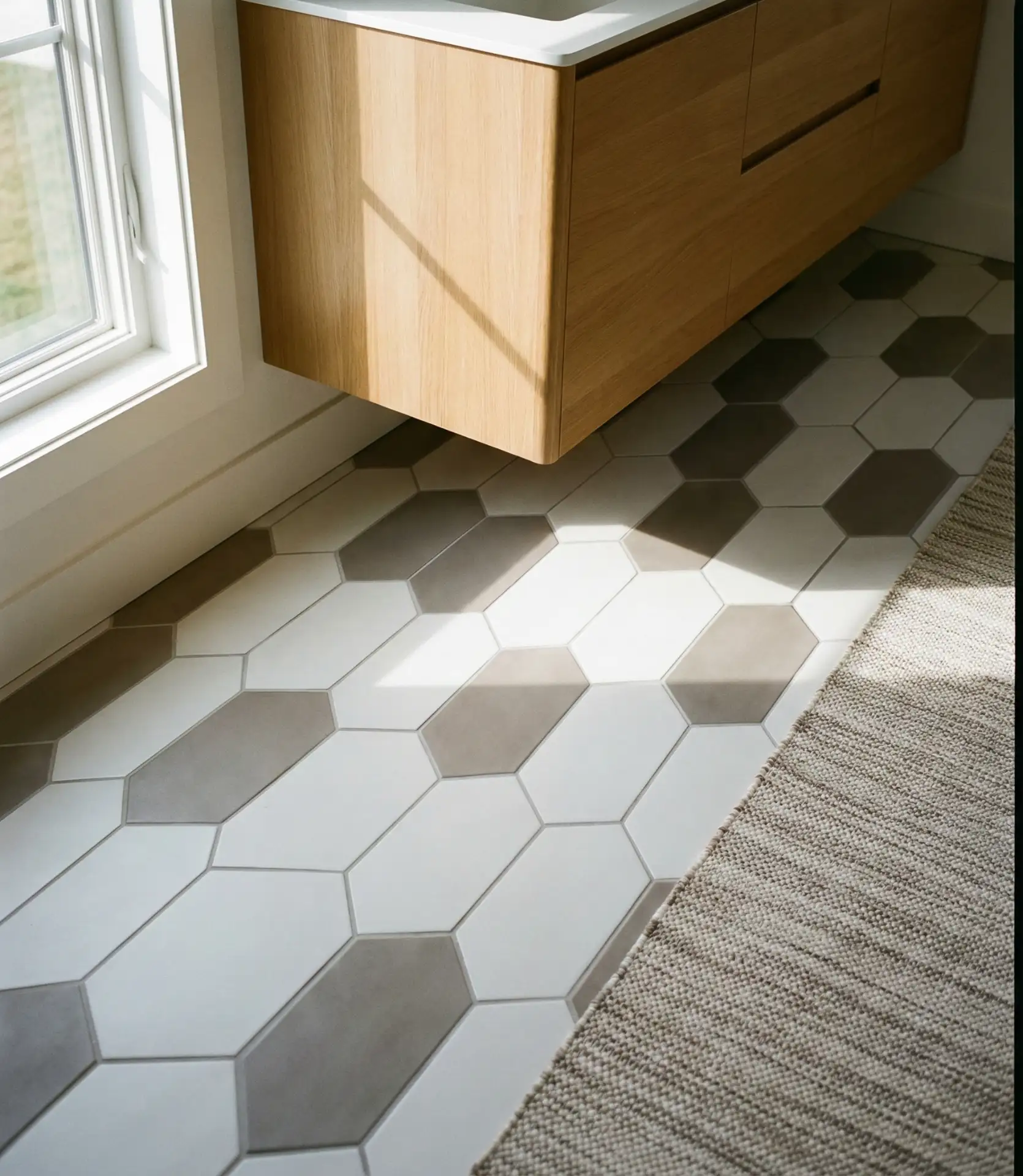
Expert tile installers note that geometric patterns require 15-20% more material due to cuts and waste, plus higher labor costs for precision placement. The investment pays off in distinctiveness—a well-executed pattern turns a standard bathroom into something memorable. Common mistakes include choosing patterns that are too small for the space (which reads as busy) or mixing multiple geometric patterns in one room (which creates visual chaos).
15. Luxury, Beautiful Colors in Jewel Tones
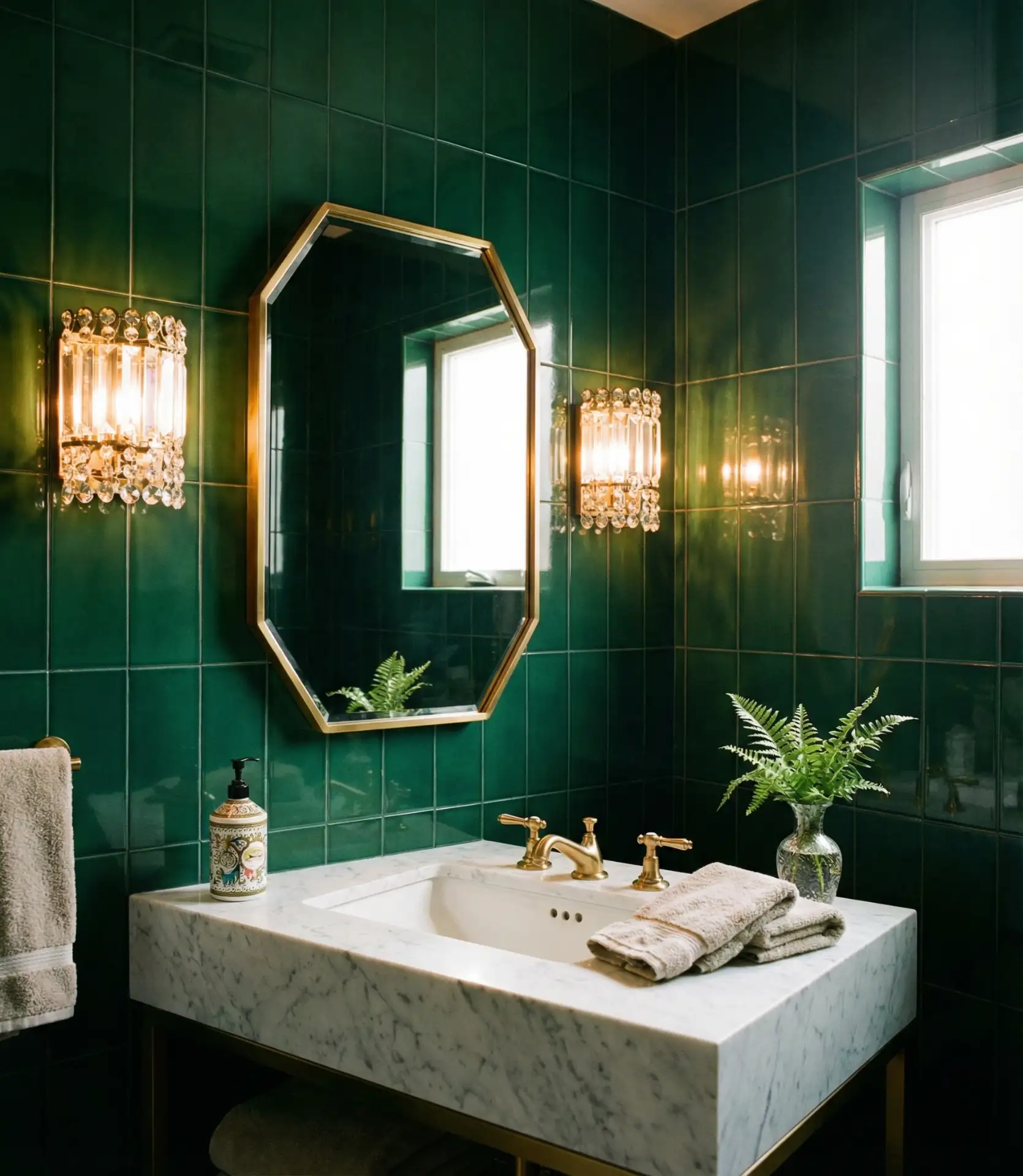
Deep emerald, sapphire blue, amethyst purple, and rich amber are bringing beautiful luxury colors to bathrooms that embrace drama and personality. These saturated hues work particularly well in powder rooms and master baths where you can afford to be bold, creating intimate spaces that feel like jewel boxes. Pairing jewel tones with brass fixtures, marble accents, and thoughtful lighting elevates them from risky to refined.
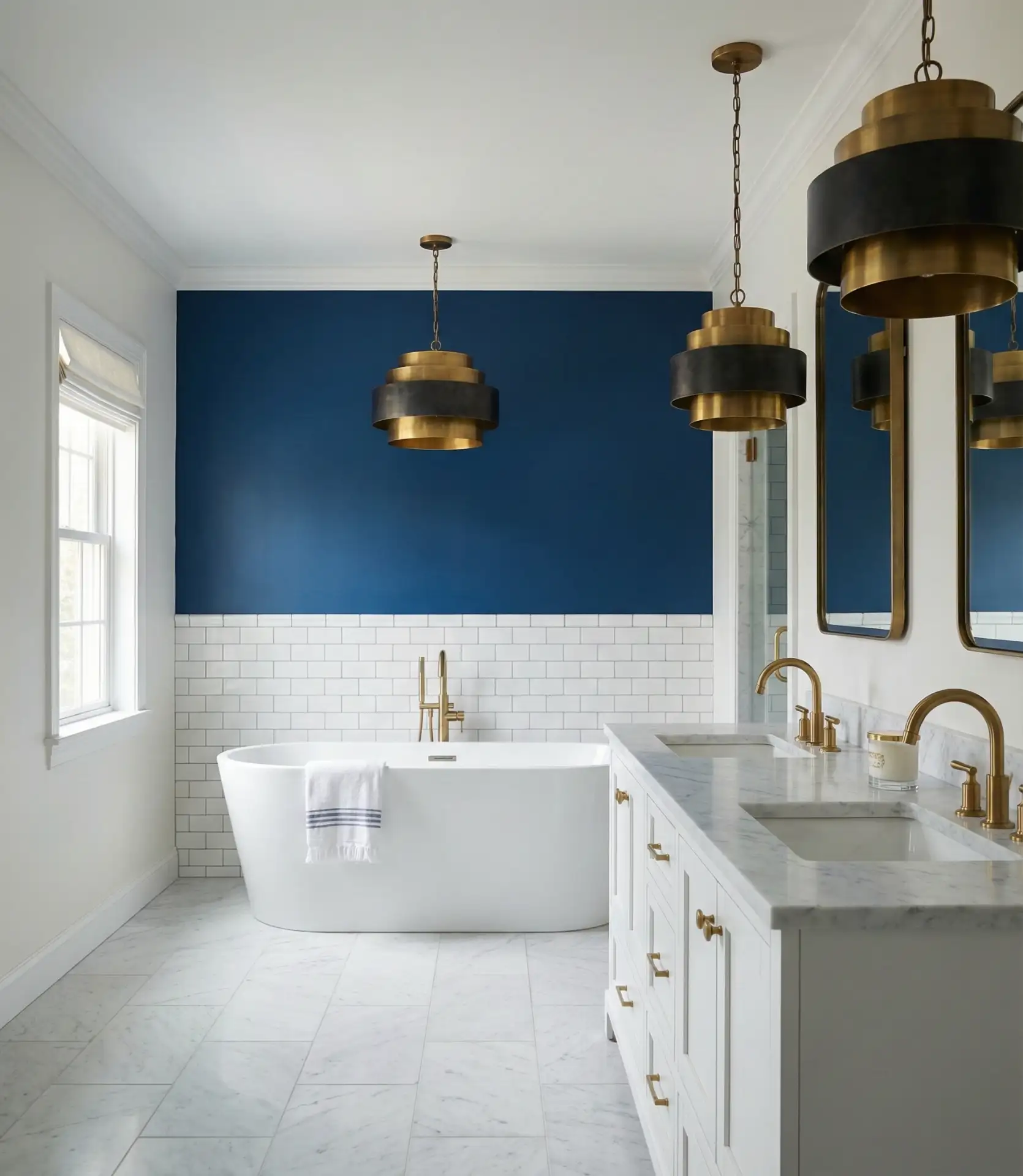
In historically rich neighborhoods and luxury condos, homeowners are embracing color as a way to differentiate their spaces from the sea of white bathrooms. A recent client in Boston’s Back Bay installed sapphire penny tiles in her shower and said it completely transformed her morning routine—the color makes her feel energized and special every single day. Balance is crucial: use jewel tones on one or two surfaces while keeping others neutral to prevent overwhelming the space.
16. Traditional Clawfoot Tub Elegance
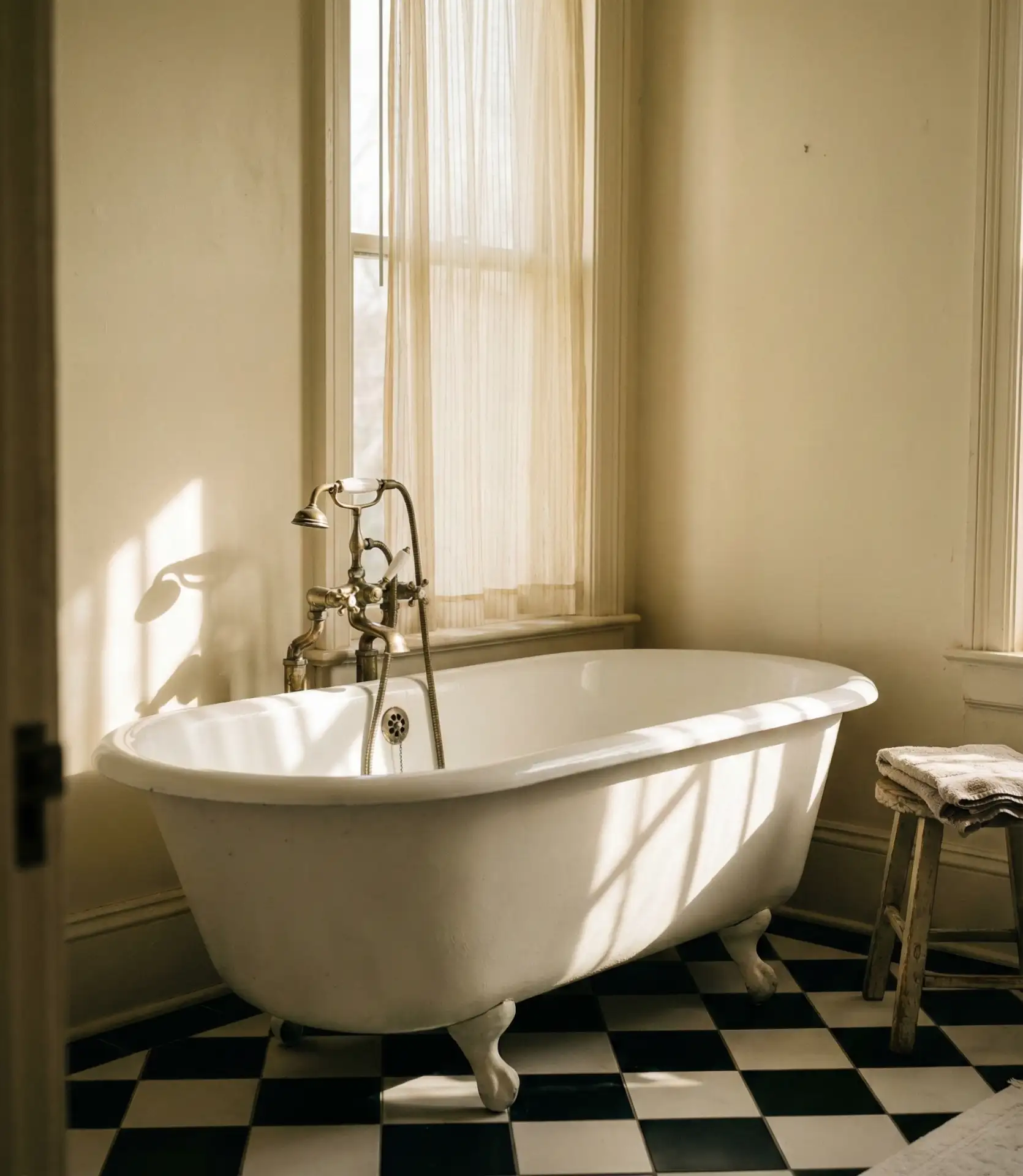
Freestanding clawfoot tubs remain the cornerstone of traditional bathroom design, offering sculptural beauty and deep-soaking luxury. Original cast iron tubs from architectural salvage yards bring authentic period character, while modern reproductions in lightweight acrylic provide easier installation and better heat retention. These tubs work beautifully centered beneath windows, placed in alcoves, or positioned to anchor one end of a spacious master bath.
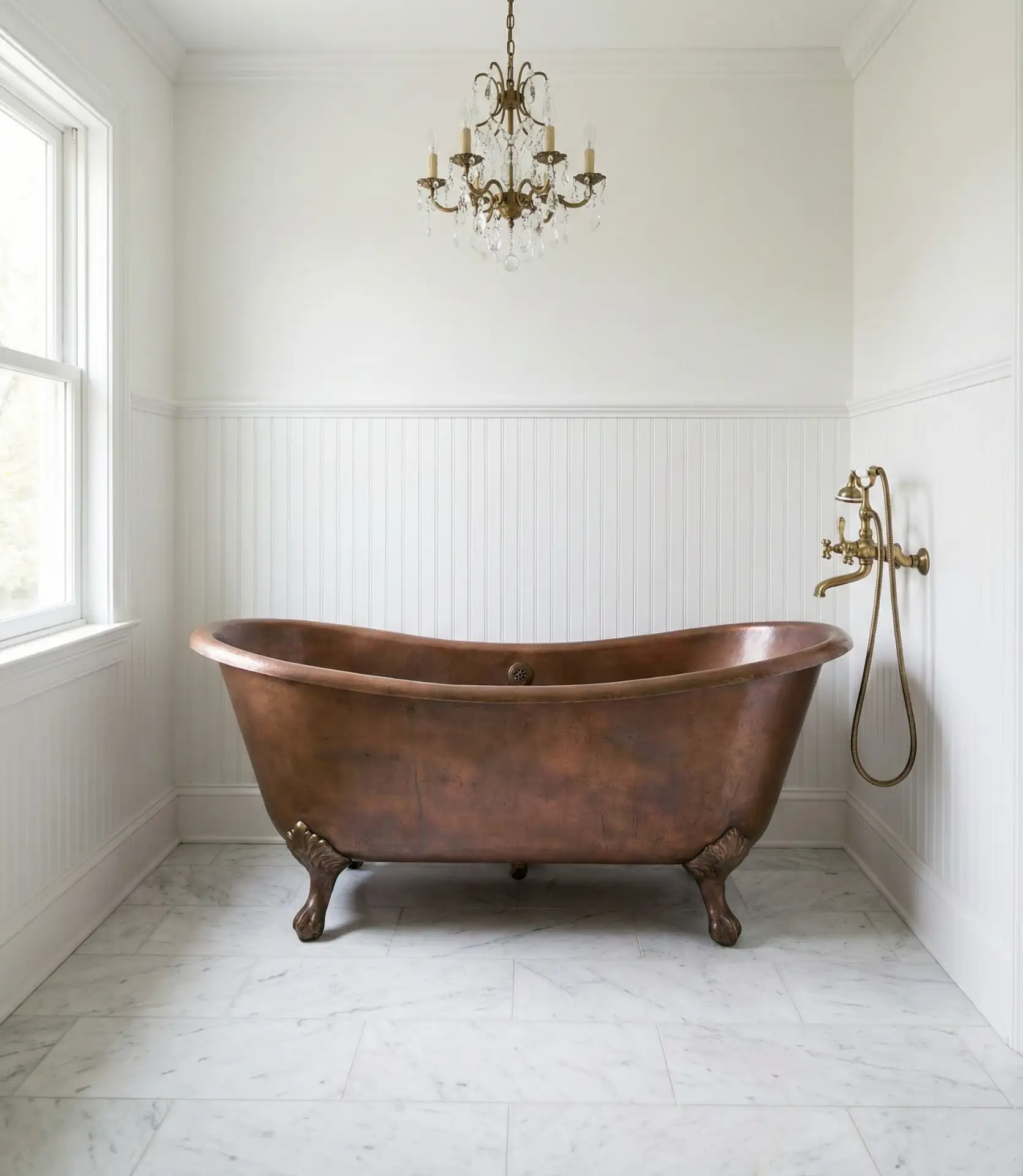
These tubs shine in Victorian homes, Craftsman bungalows, and any renovation aiming to preserve or restore period character. Quality clawfoot tubs range from $800 for basic acrylic models to $3,500+ for authentic refurbished cast iron versions with original feet. One practical note: make sure your floor joists can support 500+ pounds when the tub is filled—many older homes need reinforcement before installation.
17. Bloxburg-Inspired Gaming Aesthetics
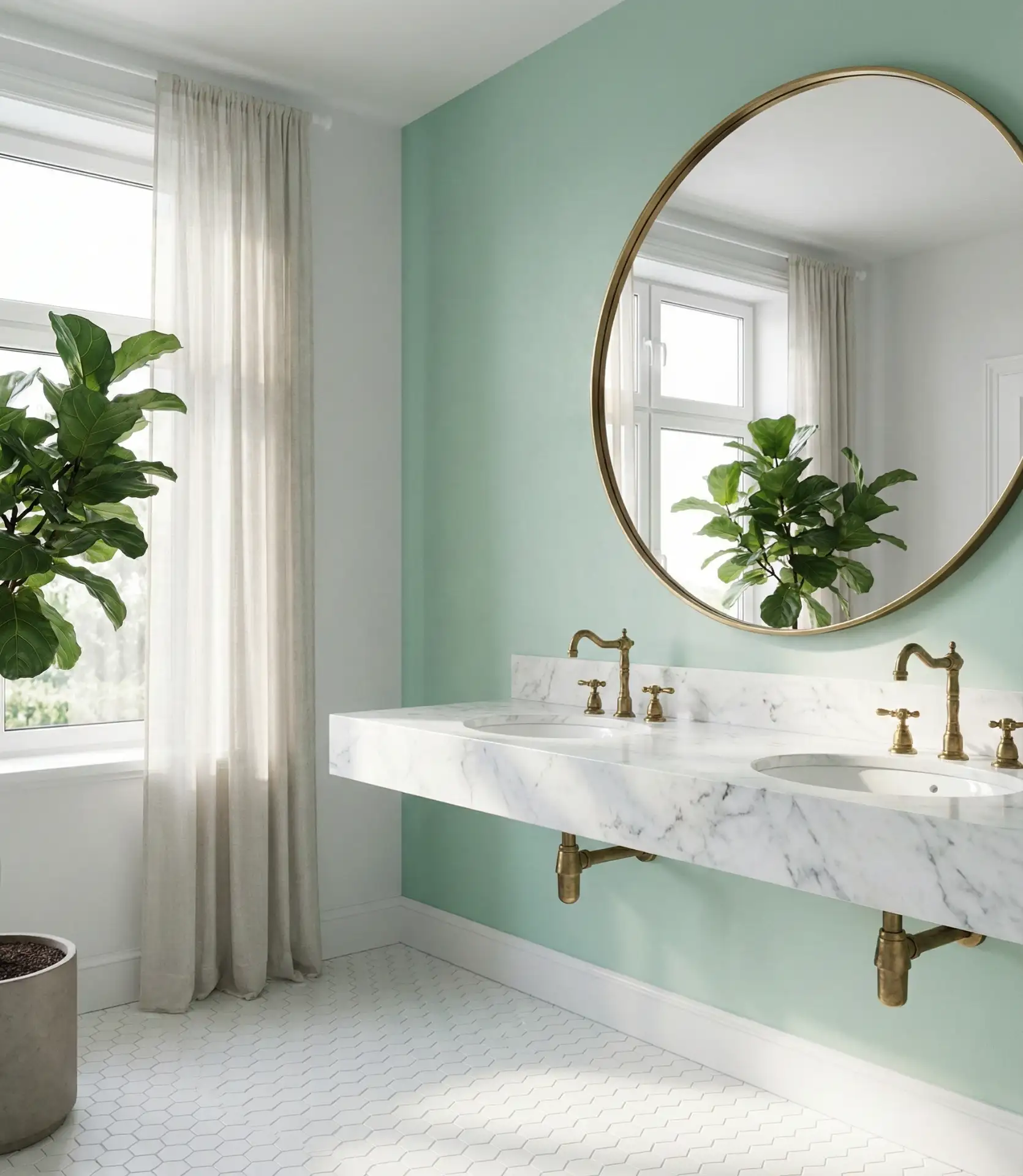
The clean lines and pastel palettes popular in Bloxburg builds are inspiring real-world bathroom renovations, particularly among younger homeowners seeking playful, Instagram-worthy spaces. Soft pinks, mint greens, lavender, and sky blue combine with white fixtures and gold accents to create spaces that feel fresh, youthful, and optimistic. This trend represents a departure from safe neutrals toward bathrooms with distinct personality and charm.
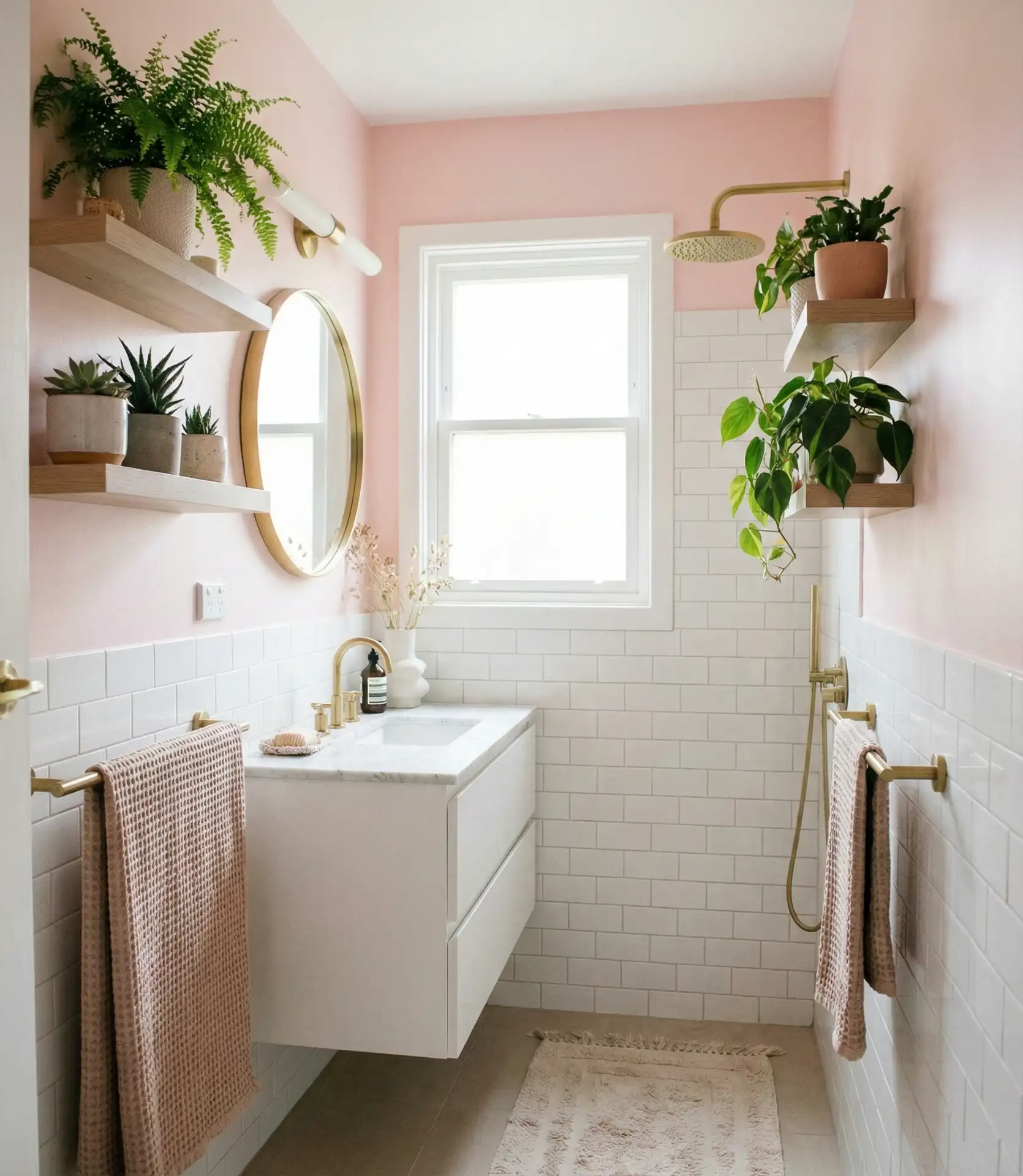
First-time homebuyers and Gen Z renovators are embracing these cheerful palettes as antidotes to years of gray minimalism. The look works best in well-lit bathrooms where the soft colors can be appreciated—northern exposures or bathrooms with limited natural light may render pastels dull or muddy. Interestingly, many homeowners use removable peel-and-stick wallpaper in these shades for commitment-free experimentation with color.
18. Organic Concrete Finishes
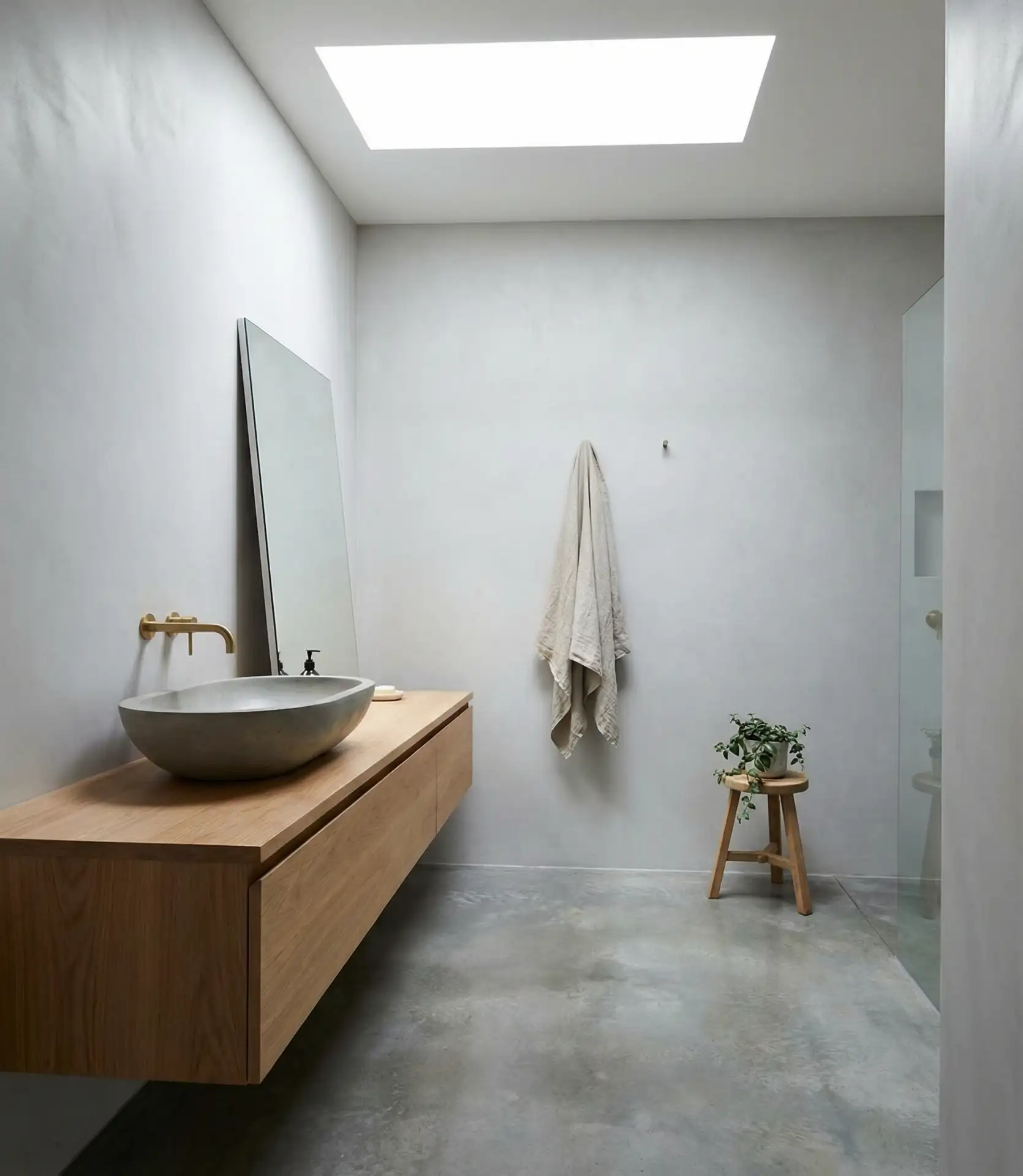
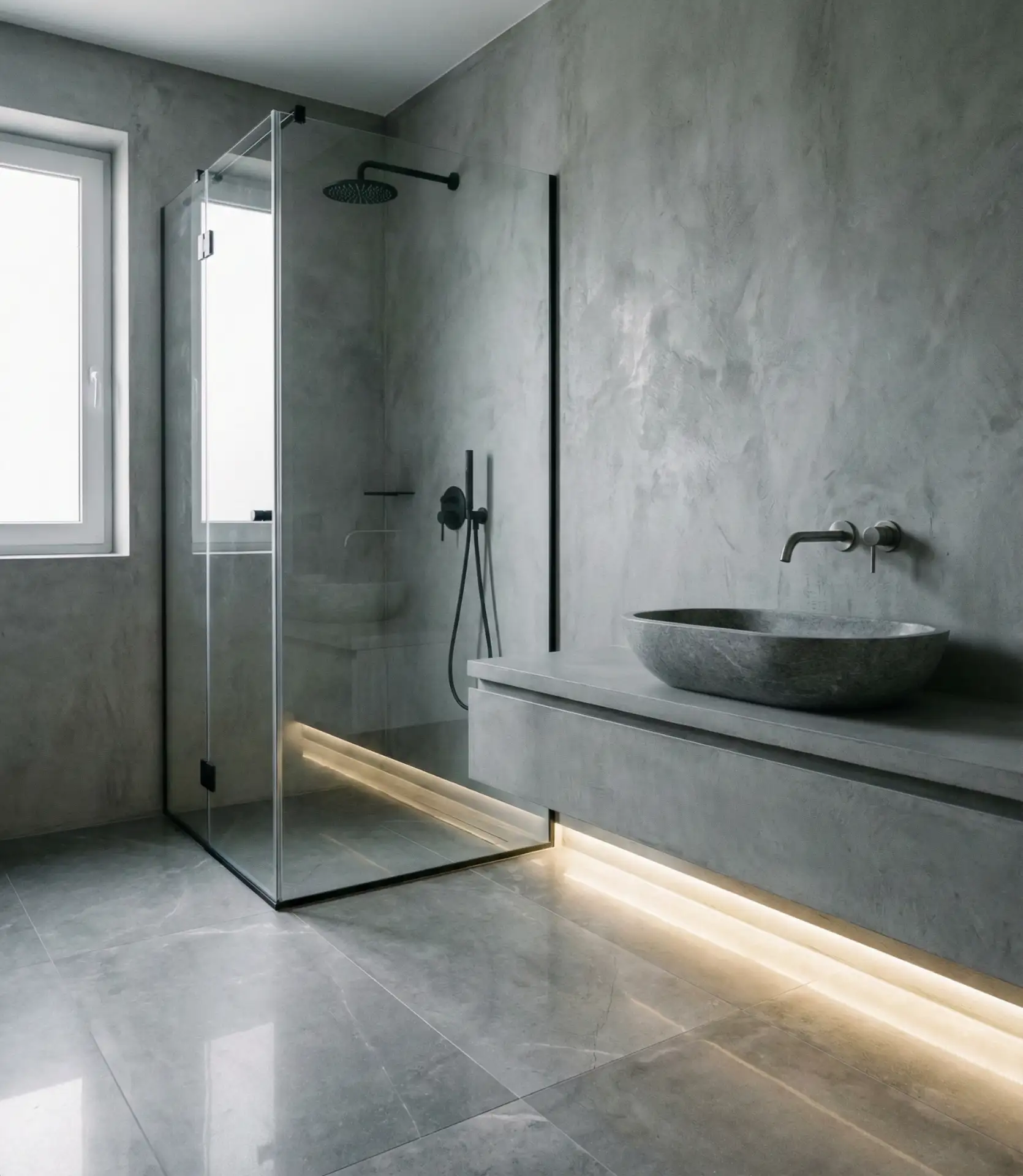
Polished concrete floors, microcement walls, and concrete vessel sinks bring organic industrial beauty to contemporary bathrooms. The material’s inherent variation—subtle color shifts, natural pitting, aggregate exposure—creates visual texture while maintaining the minimal aesthetic that defines modern design. Properly sealed concrete is fully water-resistant and develops a deeper luster with age, making it both practical and beautiful.
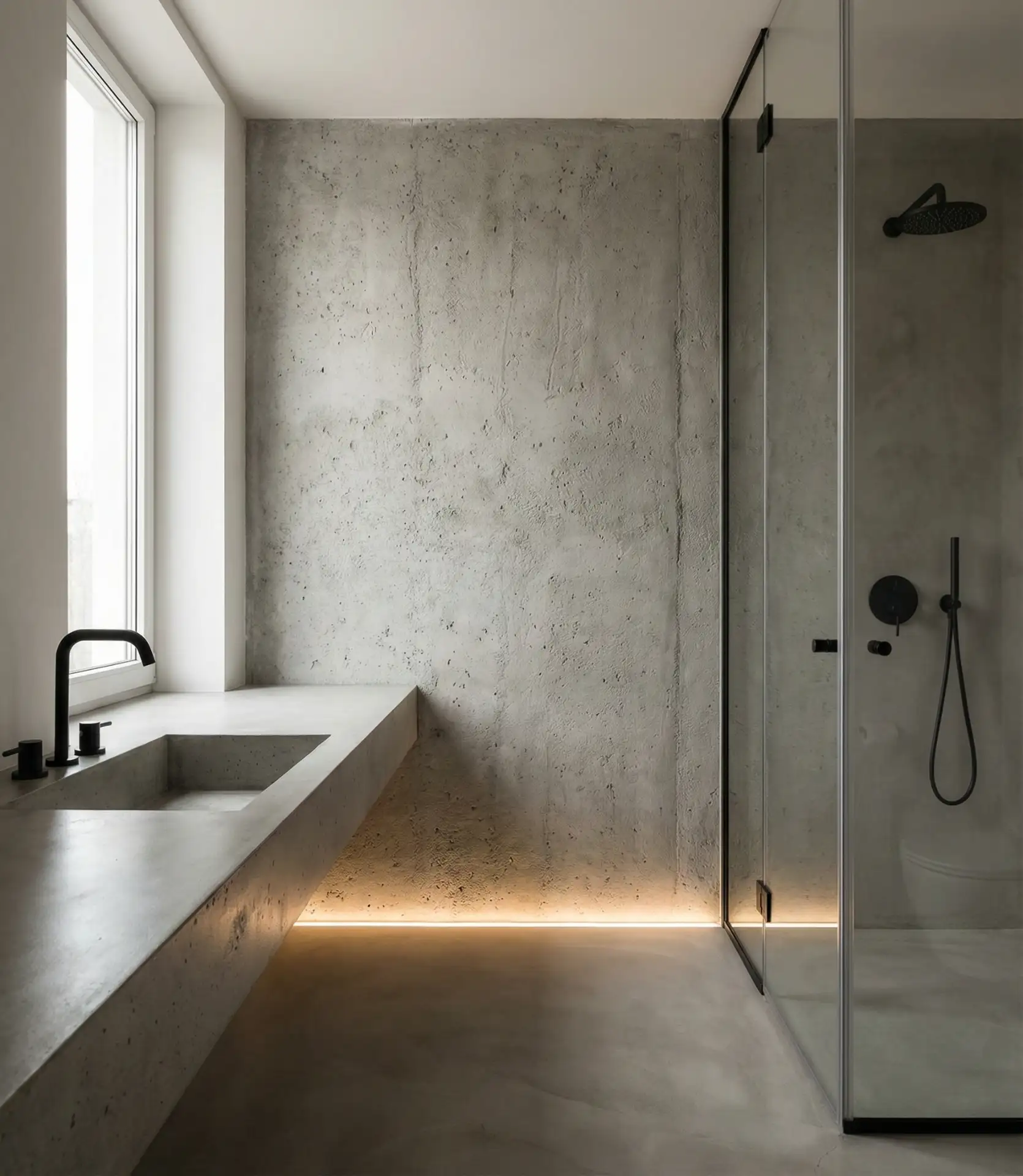
Concrete works beautifully in loft conversions, modern new builds, and any bathroom seeking an architectural, gallery-like quality. Budget approximately $8-15 per square foot for polished concrete floors and $3,000-6,000 for custom concrete vanity tops, depending on complexity and finish. The material feels cold underfoot, a quality that some people appreciate for its refreshing effect in warm climates, while others may prefer to mitigate this by installing radiant floor heating in northern regions.
19. Small Spaces with Wet Room Design
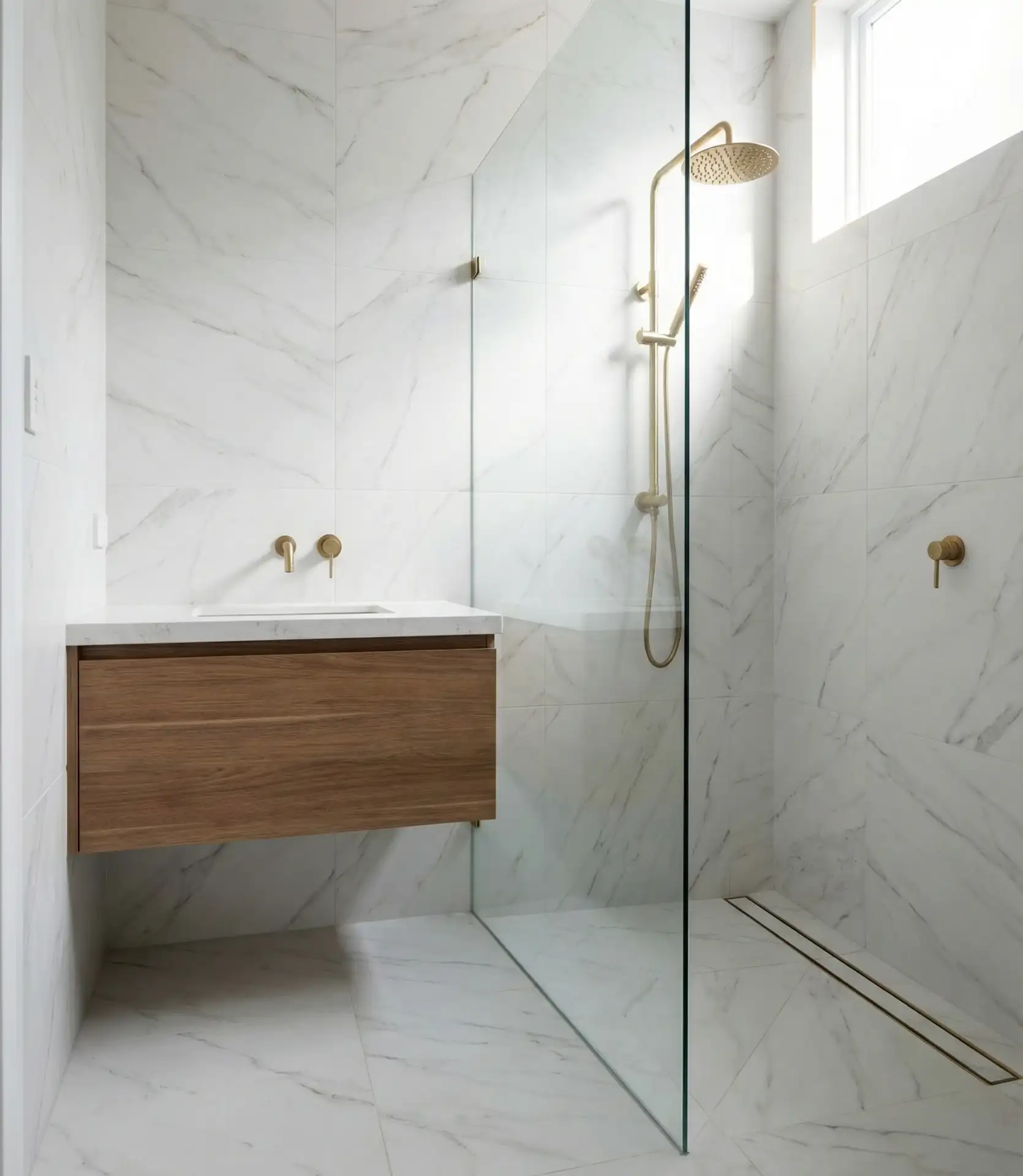
Eliminating the shower enclosure and creating a fully waterproofed wet room makes small spaces feel dramatically larger and more luxurious. A single continuous floor surface, wall-to-wall tile, and a linear drain transform cramped bathrooms into spa-like environments. This European-inspired approach works particularly well in urban apartments and condos where every square foot of perceived space matters.

This design requires expert waterproofing—the entire room must be treated as a shower pan with proper slope to the drain. Many contractors in dense urban markets like New York and Chicago now specialize in wet rooms for small bathrooms, with installation running $12,000-20,000 depending on finishes and complexity. The accessibility benefits are significant too, as wet rooms are inherently barrier-free and aging-in-place friendly.
20. 2024 Design Trends Carrying Forward
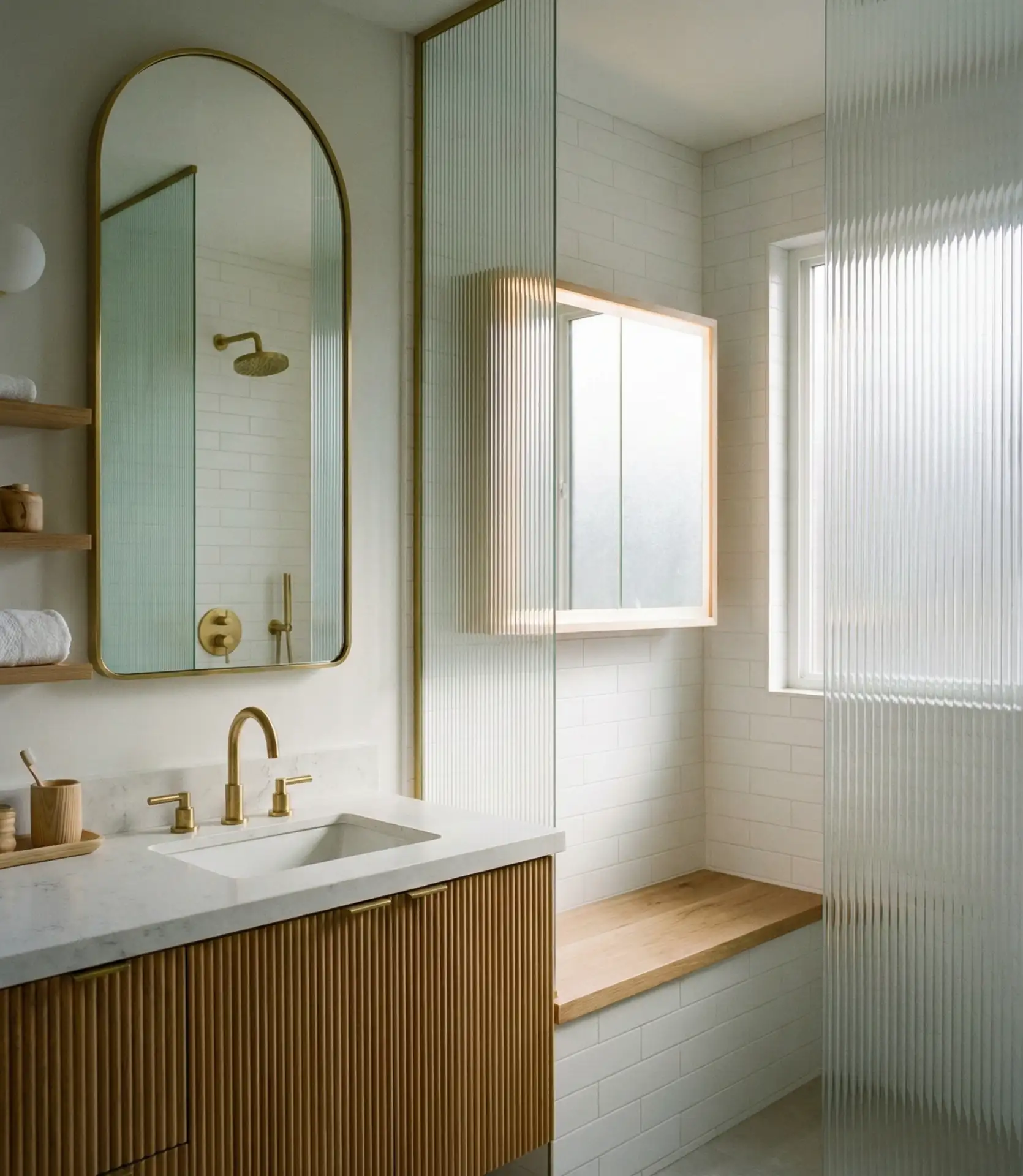
Several key 2024 design trends continue to shape bathrooms in 2026, including fluted glass, arched doorways and mirrors, and integrated lighting within mirrors and niches. These elements proved their staying power by enhancing functionality while adding sophisticated architectural detail. Rather than chasing every new trend, thoughtful designers layer these proven elements with fresher touches for bathrooms that feel current without being trendy.
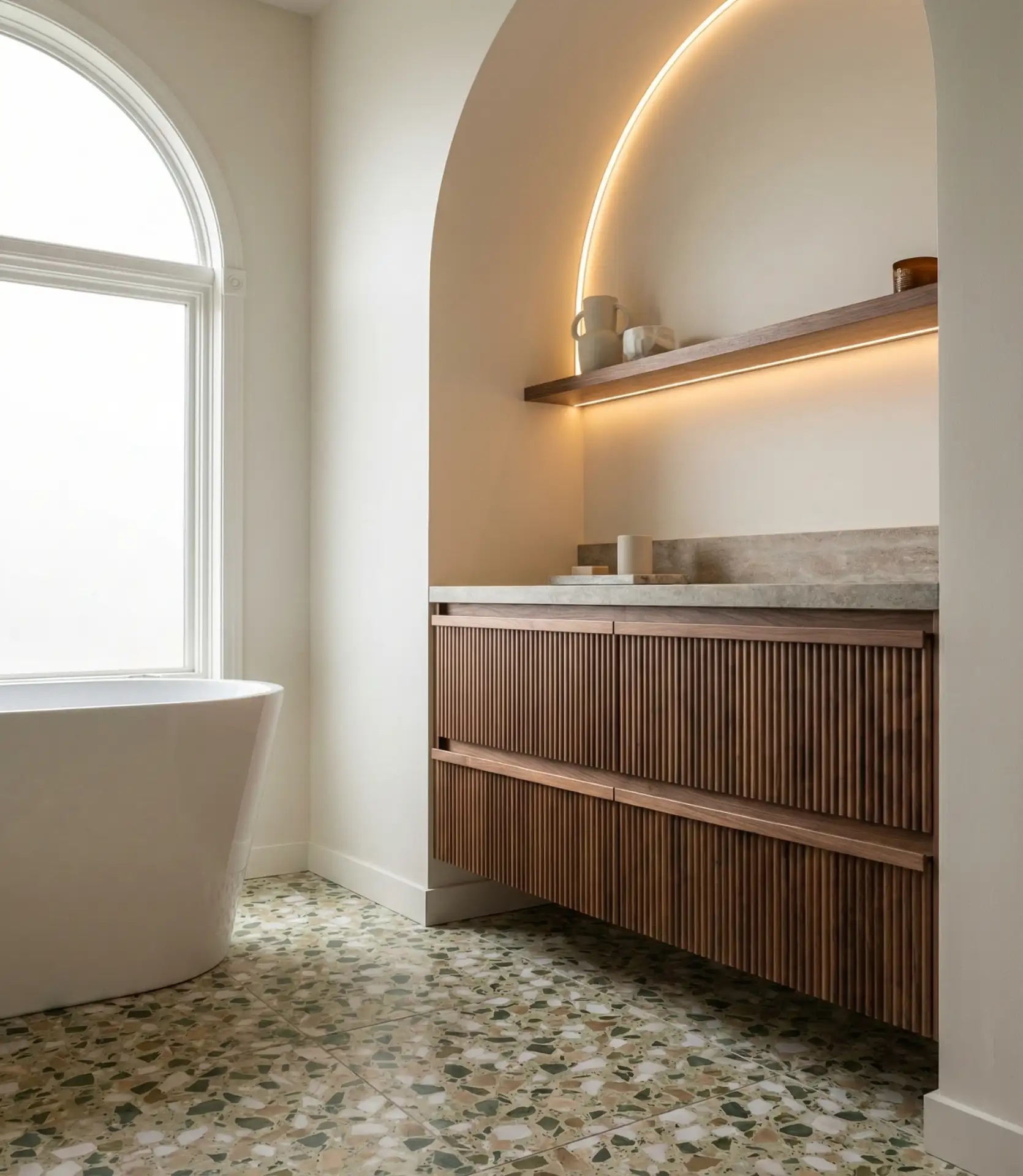
Homeowners who invested in these details over the past year are finding their bathrooms still feel fresh and current—a testament to choosing quality over flash. The lesson here is that the best design trends solve real problems or add genuine beauty rather than simply looking different. Fluted glass provides privacy while allowing light, arches soften modern spaces, and integrated lighting eliminates shadowy medicine cabinet frustrations that have plagued bathrooms for decades.
21. Coastal Shiplap and Blue Hues
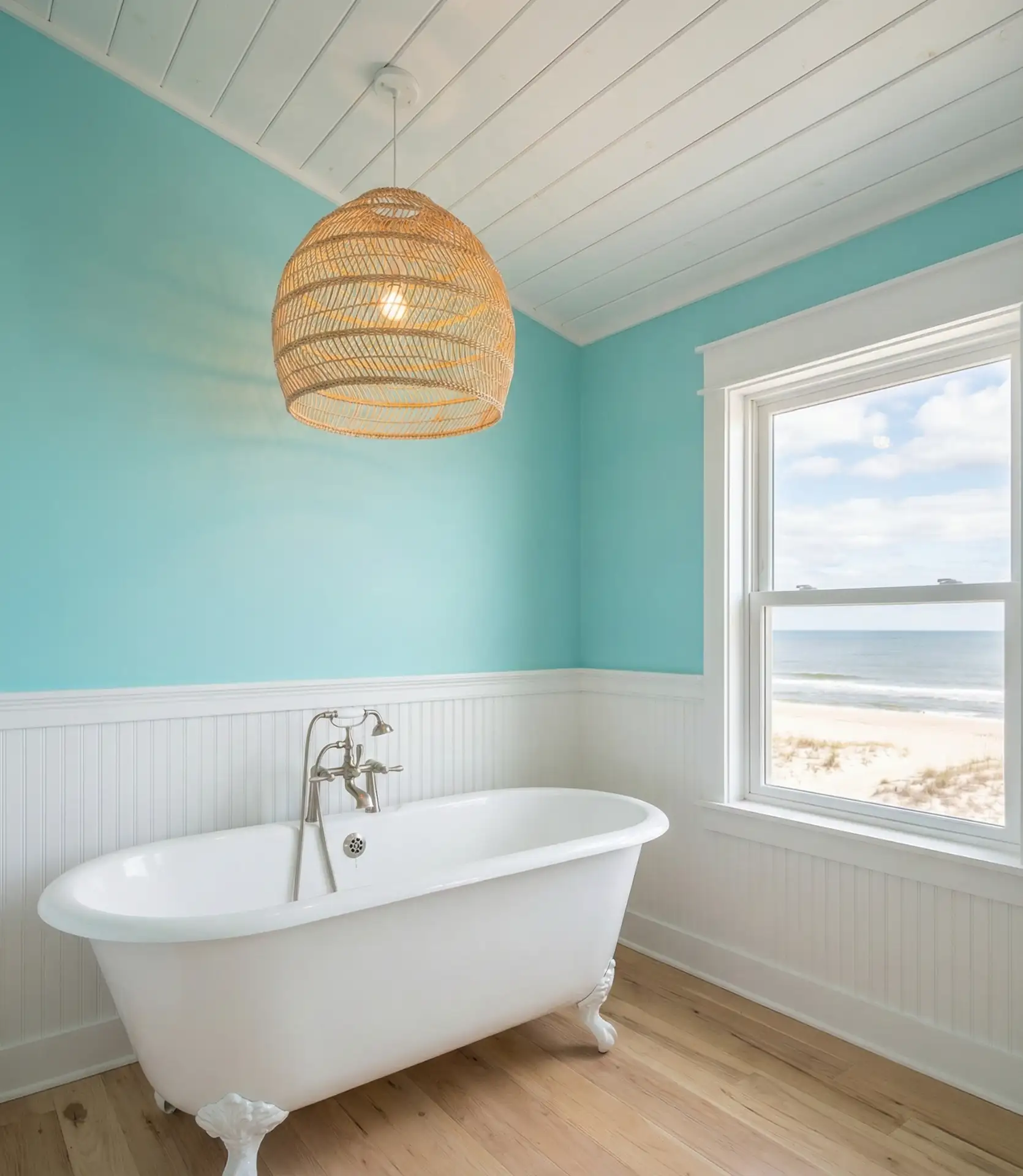
White shiplap paired with soft blues, aquas, and seafoam greens captures authentic coastal style without veering into theme-park territory. This combination works beautifully in beach homes, lake houses, and urban bathrooms seeking a vacation-inspired retreat. The horizontal lines of shiplap create visual width in narrow bathrooms, while the blue palette brings the calming qualities of water and sky indoors.
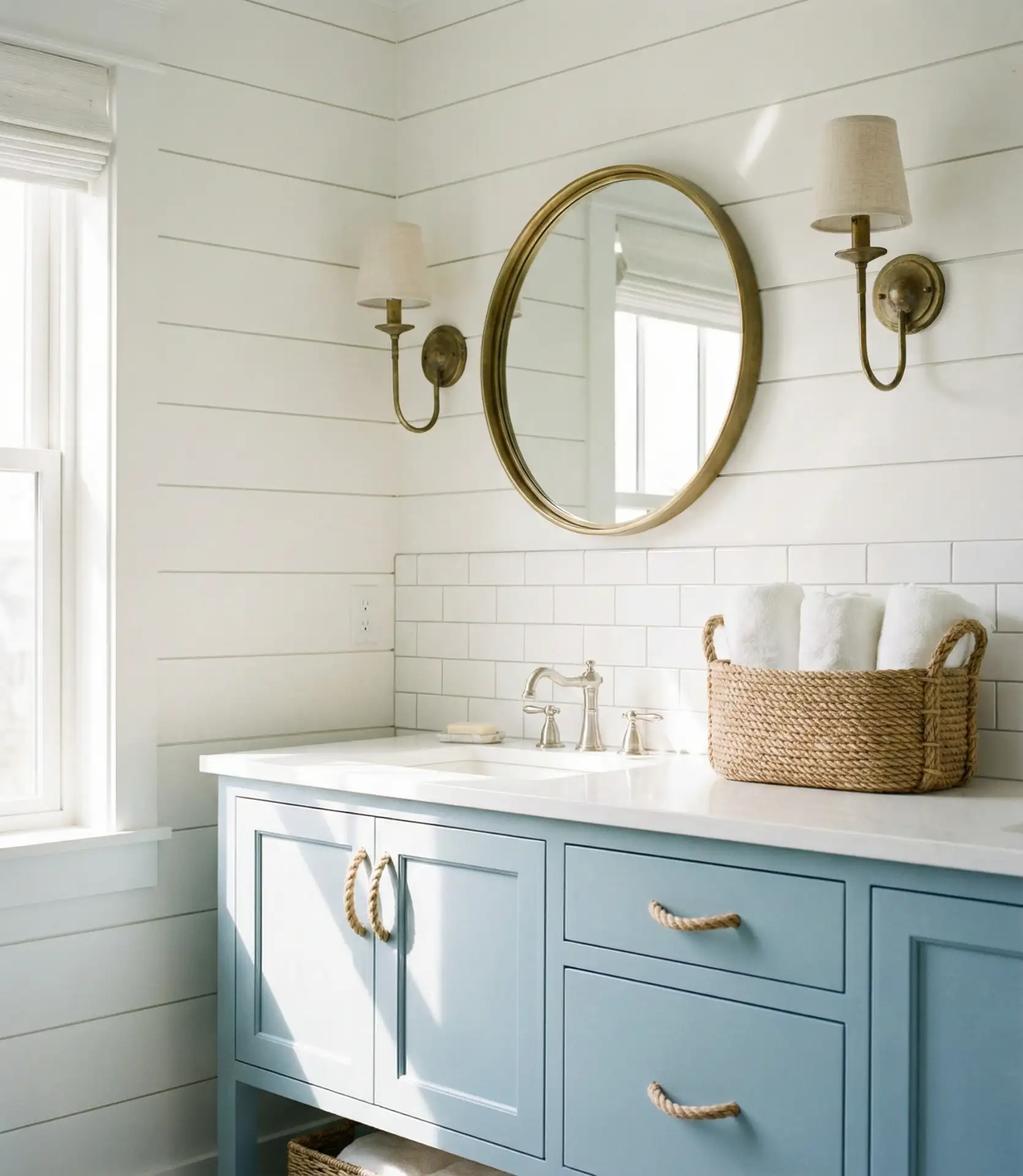
Along the Atlantic and Gulf coasts, this aesthetic remains deeply popular among both locals and vacation homeowners. The key to avoiding cliché is restraint—choose one or two blue tones rather than using every shade from turquoise to navy. Real homeowners often combine shiplap with modern elements like sleek fixtures or contemporary lighting to keep the look fresh rather than overly rustic.
22. Luxury Master Bath with Dual Vanities
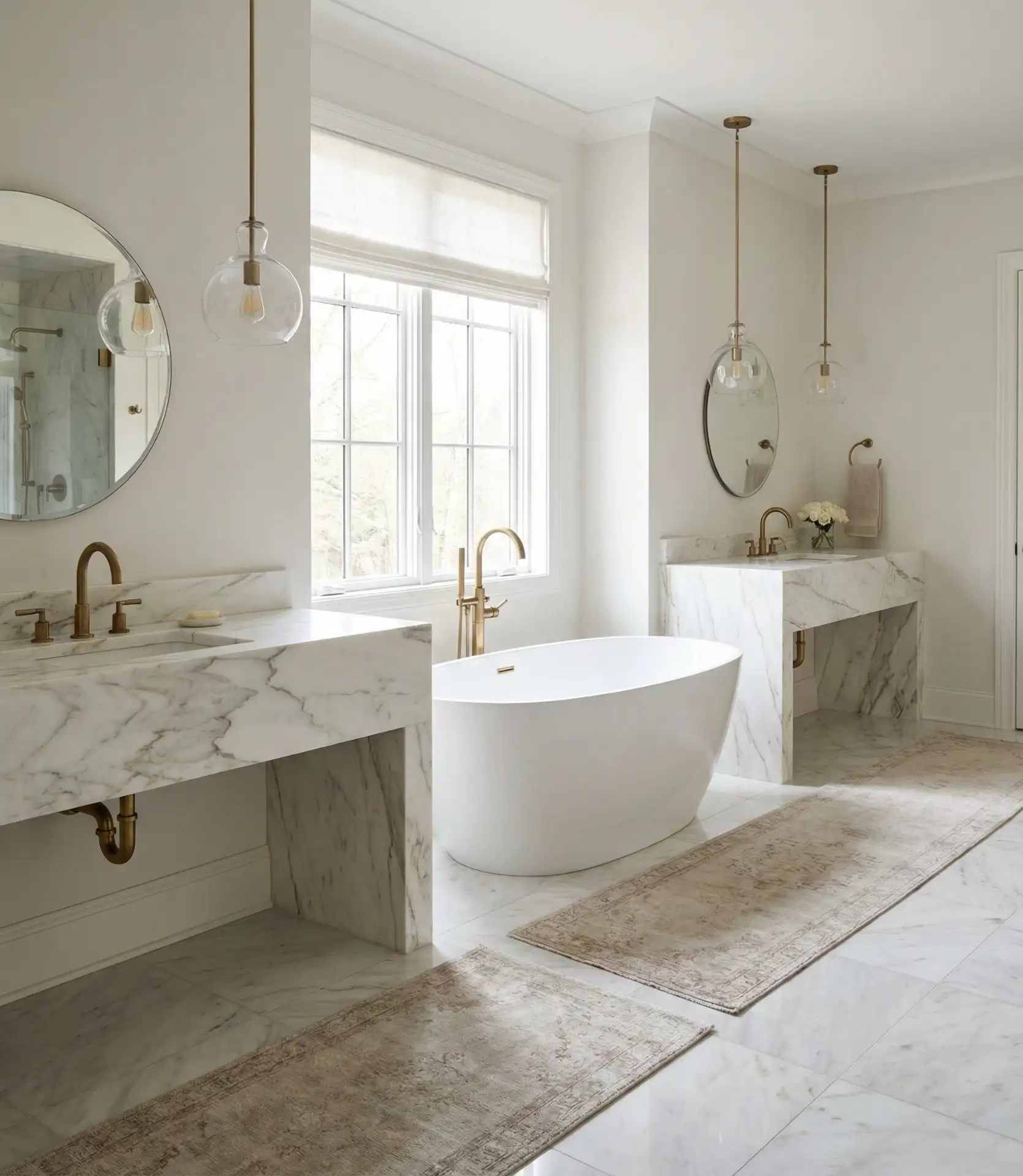
His-and-hers vanities separated by open space or a central tower create practical layouts for a luxury master bath that eliminate morning traffic jams. This configuration allows each person dedicated storage, mirror space, and counter area while maintaining visual connection across the room. The space between vanities can house towel storage, a makeup area, or simply remain open to preserve the sense of spaciousness.
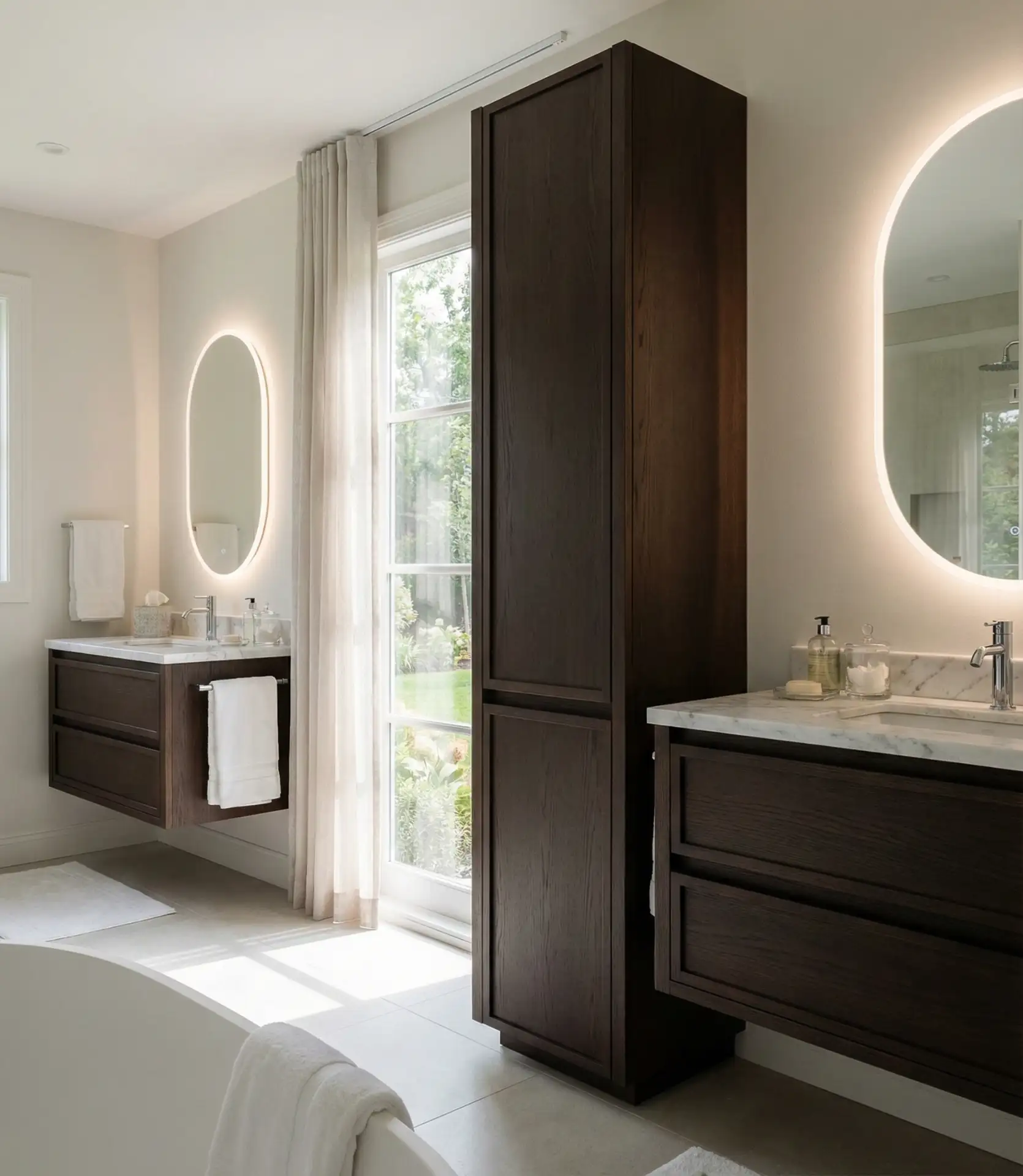
This layout requires a minimum of about 10–12 feet of wall space to work comfortably, making it best suited for new construction or substantial renovations in larger homes. Interestingly, many couples are now specifying different countertop heights at each vanity—standard 36 inches for one person, comfort height 42 inches for another—to accommodate height differences. The investment runs $4,000-12,000 depending on materials, but the daily convenience and reduced morning conflicts make it worthwhile for many.
23. Simple White with Natural Wood Warmth
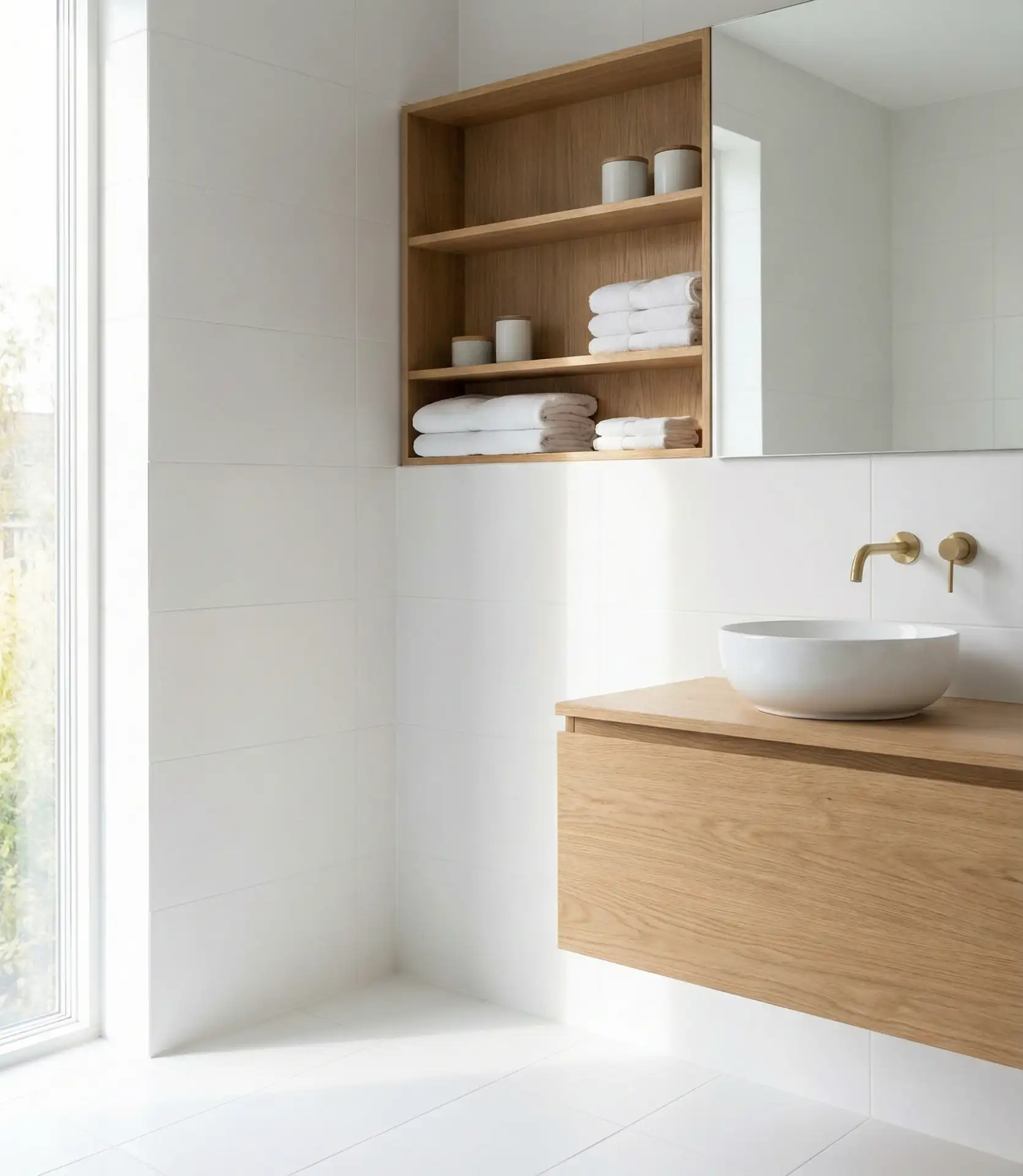
Combining simple all-white backgrounds with natural wood accents creates bathrooms that feel both clean and inviting. White tile, painted walls, and fixtures provide a crisp foundation, while wood vanities, shelving, mirrors, and accessories add organic warmth and prevent the space from feeling clinical. This pairing works across nearly every design style, from Scandinavian to contemporary farmhouse.
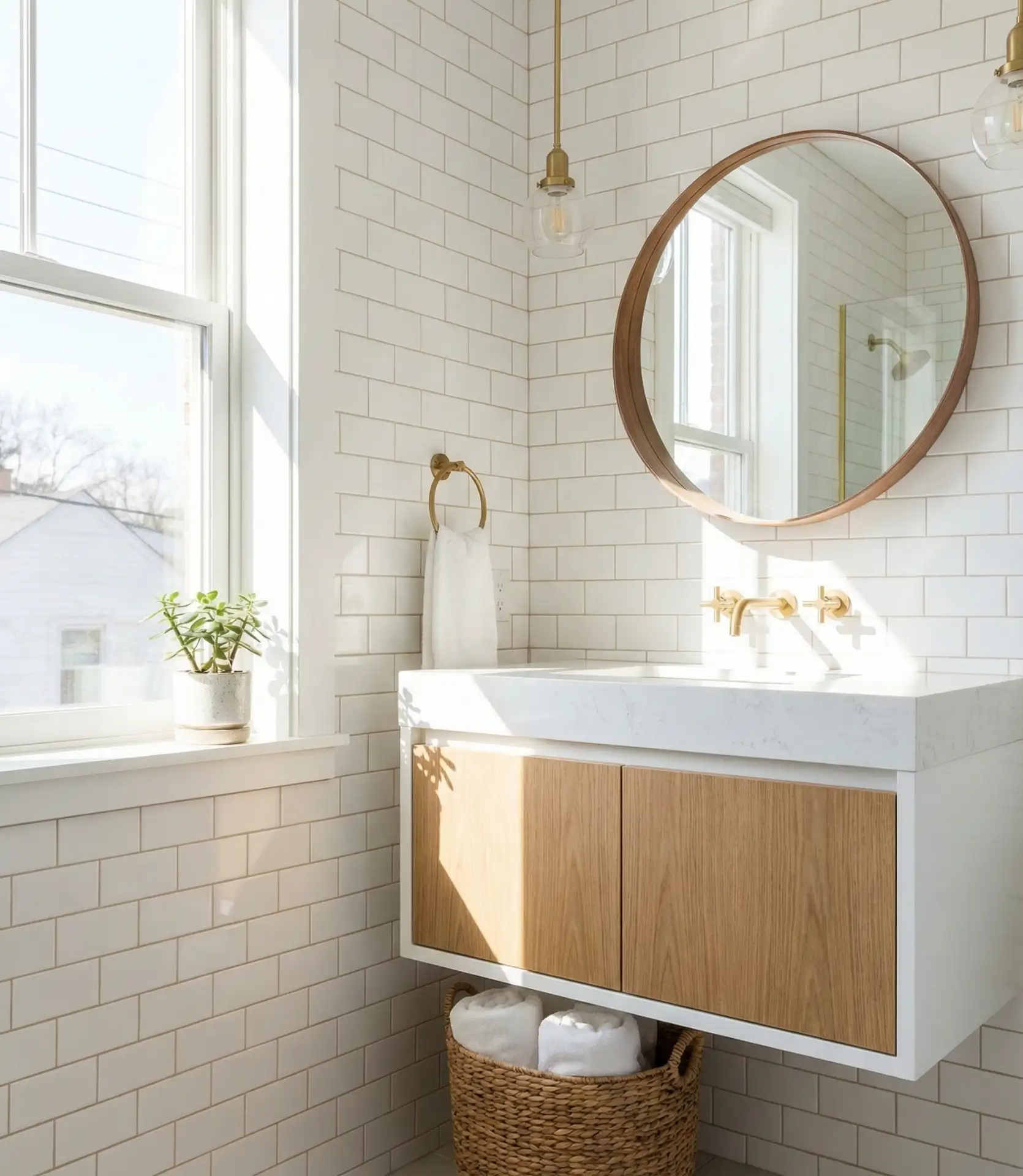
This approach has become the go-to for homeowners who want their bathrooms to feel timeless and peaceful without being stark or cold. The beauty is in the proportions—typically 70% white surfaces to 30% wood creates ideal balance. Common woods include white oak for its light grain, walnut for richer tones, and teak for its natural water resistance and spa-like associations.
24. Light Colors with Textured Depth
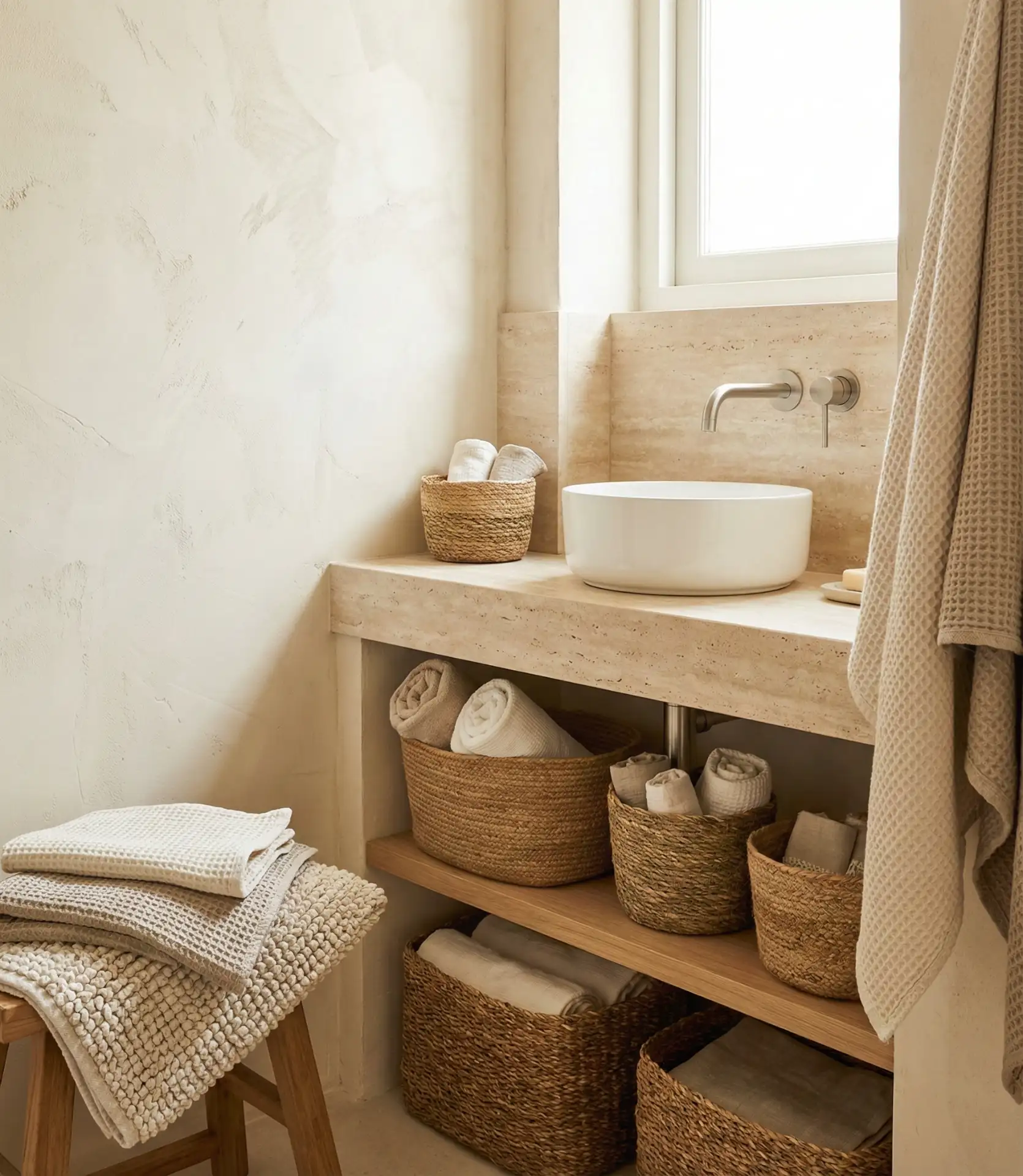
Layering various light colors and textures—matte paint, glossy tile, natural stone, brushed metals, and linen textiles—creates bathrooms with subtle sophistication and dimensional beauty. Pale grays, soft beiges, warm whites, and gentle taupes overlap in different materials and finishes to prevent the monotony that single-finish spaces can suffer. The eye travels across varied surfaces while remaining within a cohesive, calming palette.
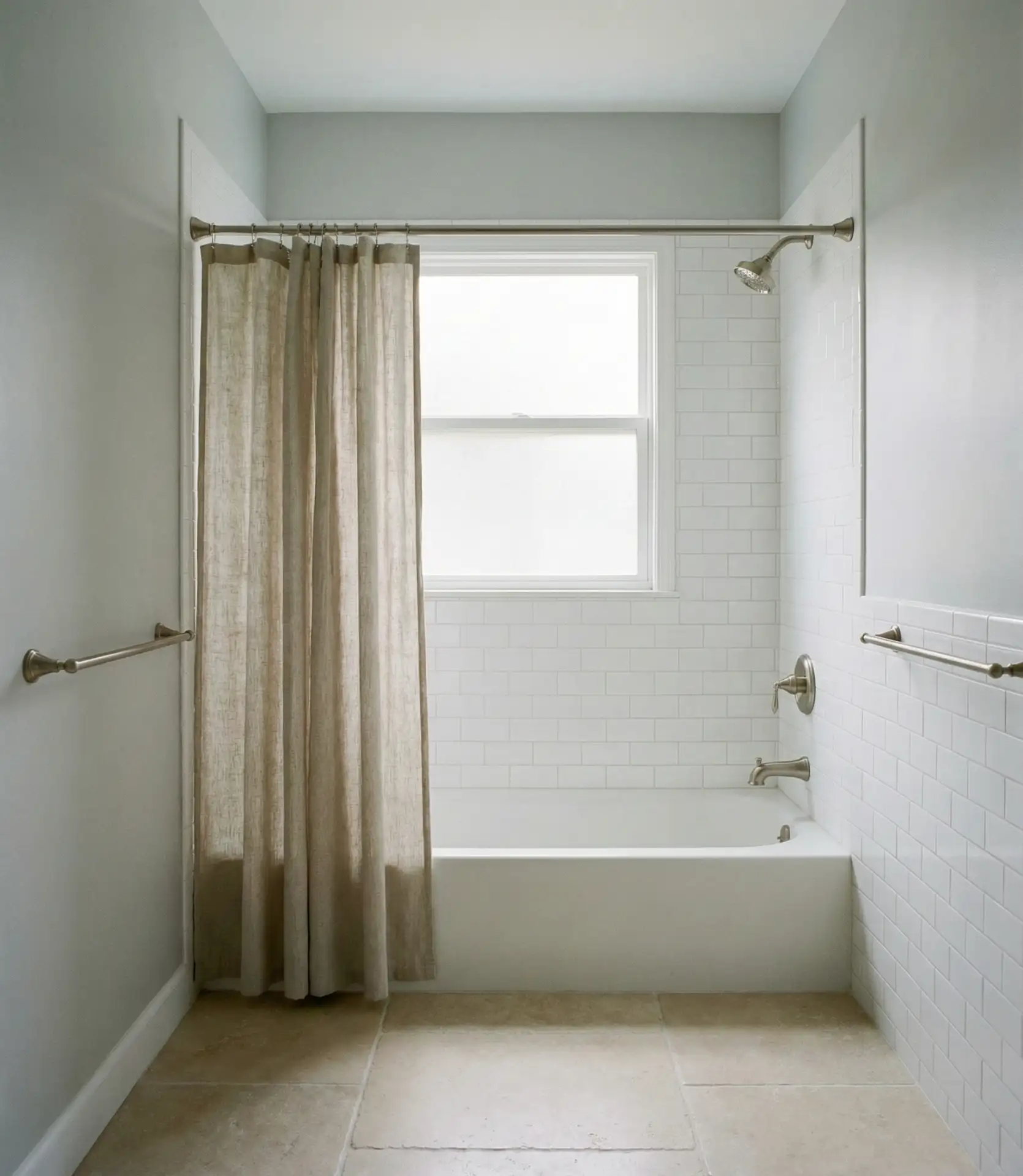
Professional designers consistently emphasize that successful neutral bathrooms require texture to avoid feeling flat or generic. The investment in varied materials and finishes typically adds 15-20% to project costs compared to using standard tile throughout, but the elevated result feels custom and considered. This approach particularly suits homes with abundant natural light, where the subtle color and texture variations become more apparent throughout the day.
25. Earthy Terracotta and Clay Tones
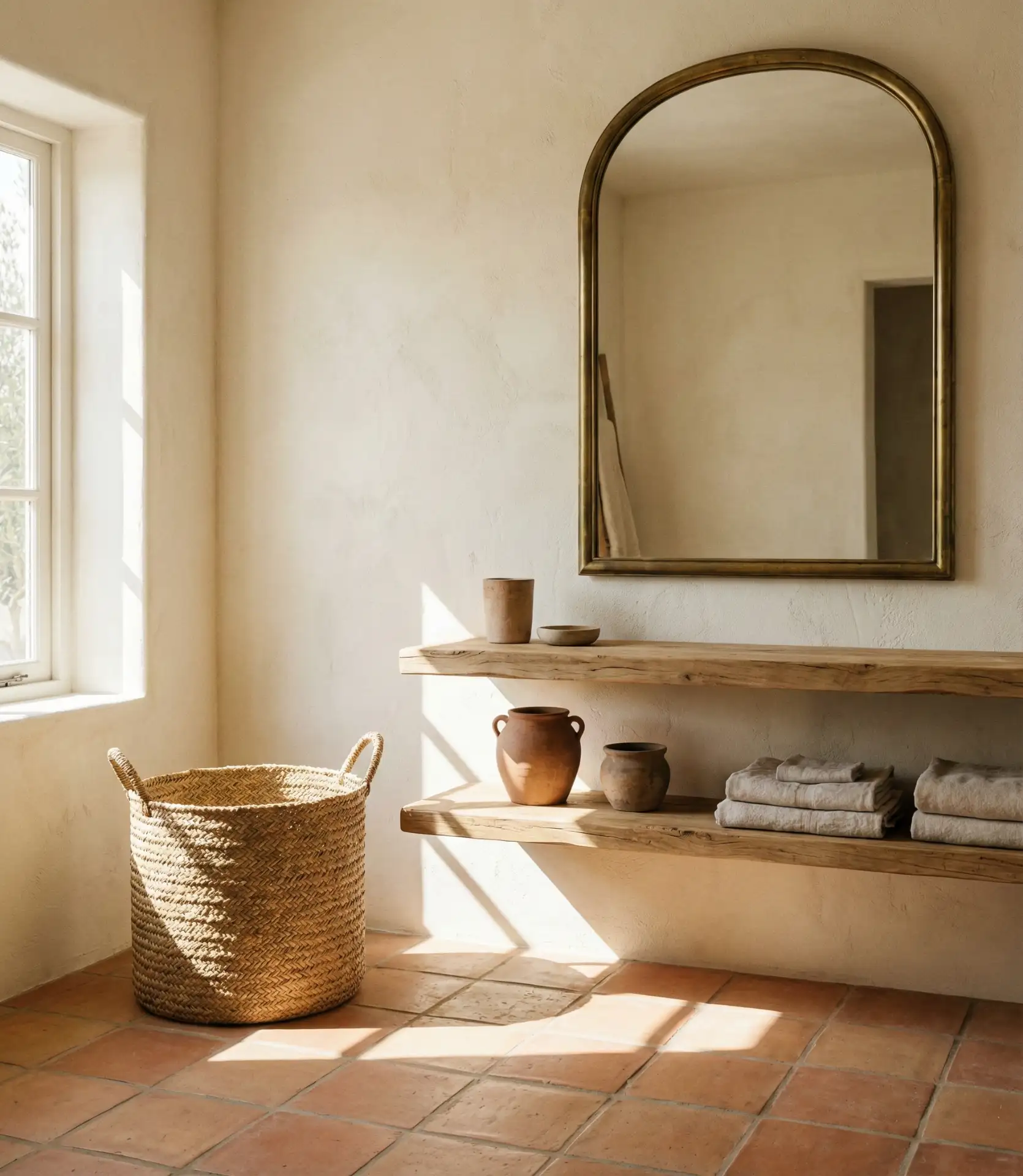
Warm terracotta, rust, burnt sienna, and sandy clay colors bring earthy Mediterranean and Southwestern influence to modern bathrooms. These hues create instant warmth and pair beautifully with natural materials like wood, stone, and brass. Whether used as accent tiles, painted walls, or decorative accessories, terracotta tones add depth and character that cooler neutrals simply can’t achieve.
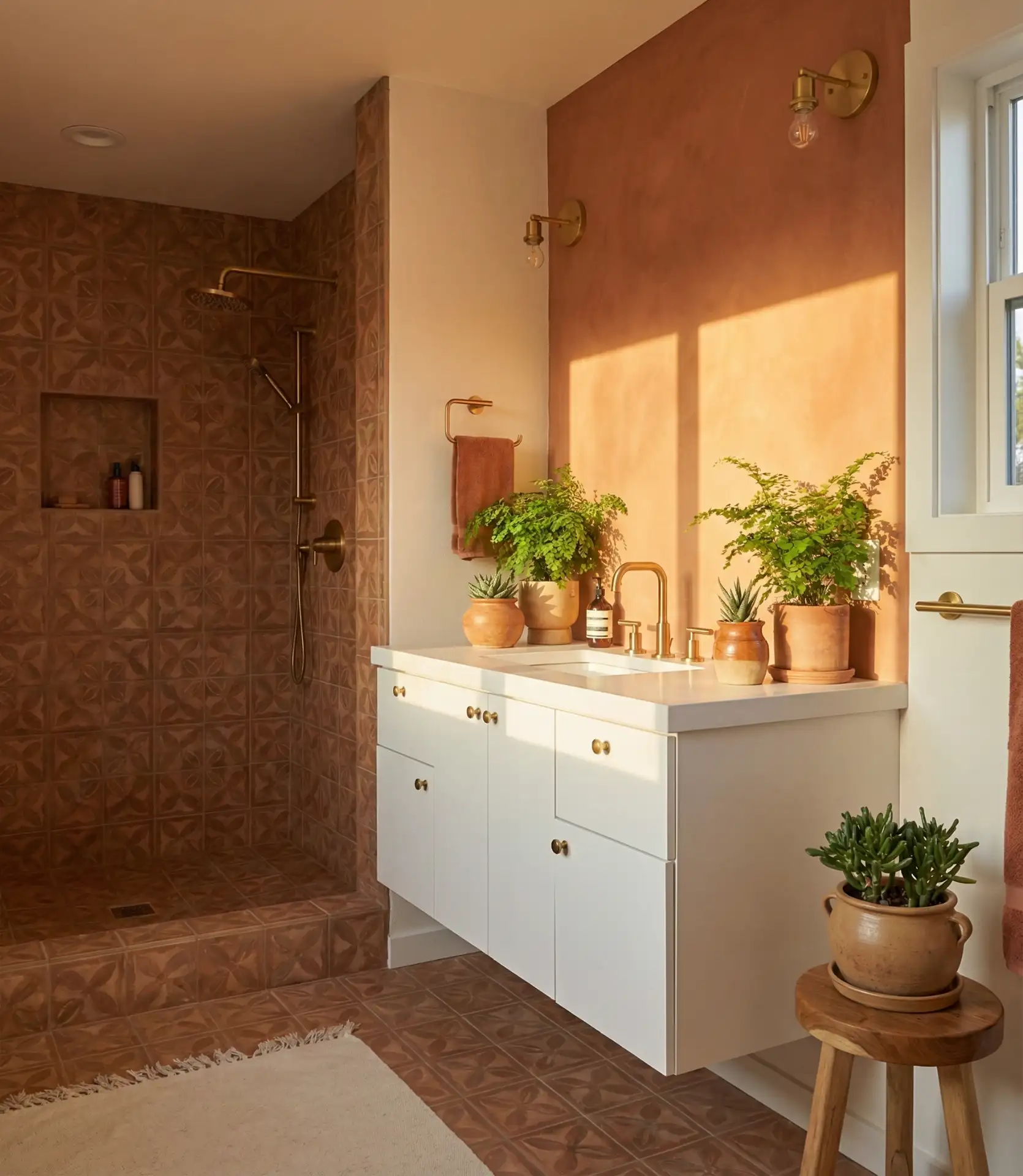
These warm tones particularly resonate in the Southwest, Southern California, and areas with Spanish Colonial or Mediterranean architectural heritage. A homeowner in Santa Fe recently installed terracotta zellige tiles in her shower and noted that the handmade variations in color and texture make her bathroom feel like a true artisan space. Balance terracotta’s warmth with plenty of white or cream to prevent the space from feeling too heavy or dark, especially in smaller bathrooms.
Your bathroom should reflect not just current trends but also your sense of comfort and daily rituals. Whether you’re drawn to the drama of dark walls, the serenity of all-white spaces, or the warmth of natural wood and terracotta, these ideas offer starting points for creating a bathroom that feels both fresh and authentically yours. Drop a comment below and share which ideas resonate with your style—we’d love to hear what you’re planning for your space.