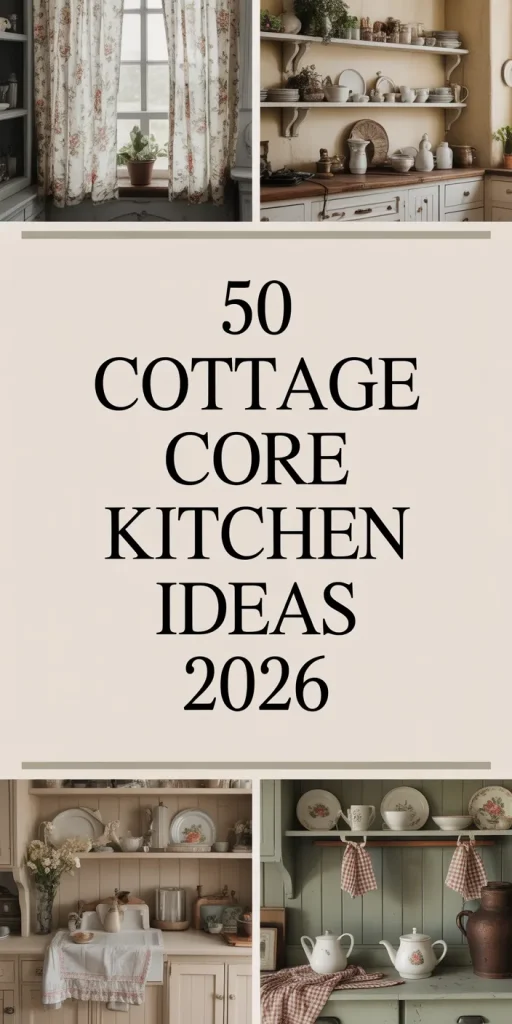
50 Cottagecore Kitchen Ideas for 2026: Cozy, Vintage & Dreamy Designs You’ll Love

Cottagecore kitchens continue to captivate American homeowners in 2026, blending nostalgic charm with modern functionality in ways that feel both timeless and refreshingly current. This aesthetic—rooted in pastoral simplicity, handcrafted details, and a deep connection to nature—has evolved beyond its original rustic roots to embrace darker palettes, vintage finds, and personalized touches that reflect individual style. Pinterest users are searching for cottagecore kitchen inspiration now more than ever, seeking spaces that offer comfort, character, and a retreat from the fast-paced digital world. Whether you’re drawn to soft pastels, moody Gothic accents, or the warmth of farmhouse traditions, these ideas will help you create a kitchen that feels like home in the truest sense.
1. Dark Cottagecore Kitchen with Moody Cabinets
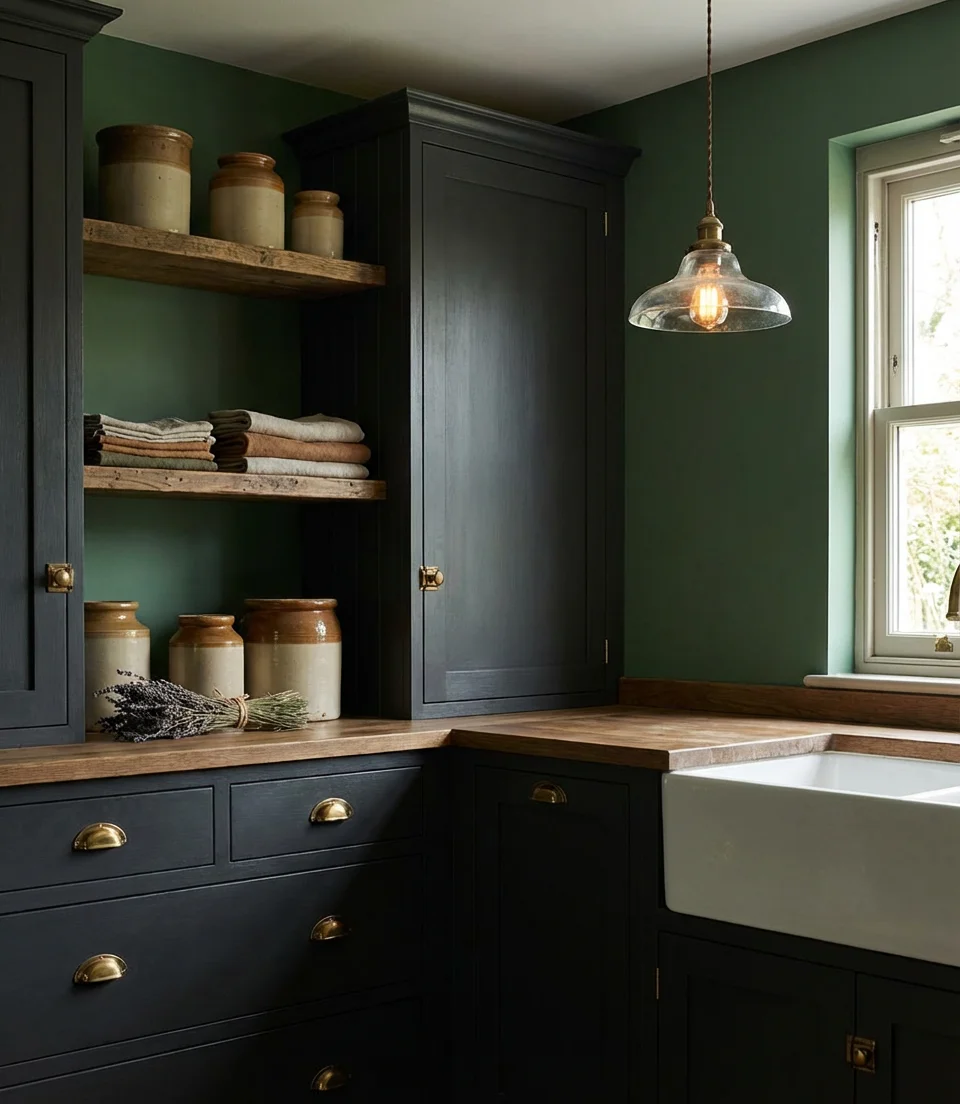
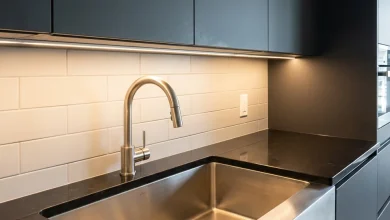
A dark cottagecore kitchen challenges the conventional bright, airy aesthetic by incorporating deep charcoal cabinets, forest green walls, and light-catching brass hardware. This approach works beautifully in older homes with original woodwork or in modern builds where homeowners want to add instant character and intimacy. The layered textures—think open shelving displaying earthenware, linen dish towels, and dried herbs—create a space that feels collected over time rather than purchased all at once.
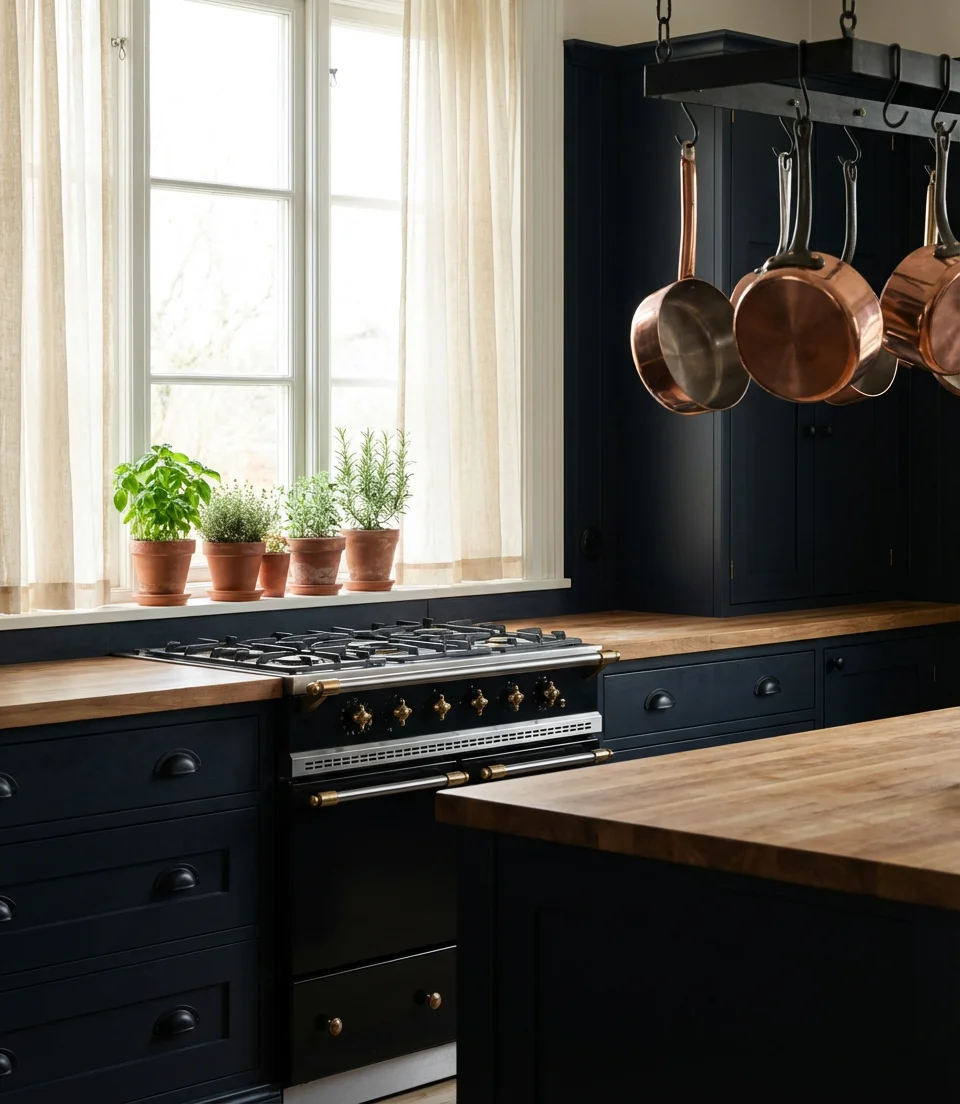
Budget-conscious homeowners often achieve this look by painting existing cabinets in rich, saturated colors from brands like Farrow & Ball or Benjamin Moore, which cost significantly less than full cabinet replacement. Pair dark cabinetry with lighter countertops—marble, butcher block, or even painted wood—to prevent the space from feeling too enclosed. The key lies in striking a balance between drama and warmth, allowing natural light to dominate during the day, while layered lighting creates an ambiance in the evening.
2. Vintage-Inspired Farmhouse Kitchen Island
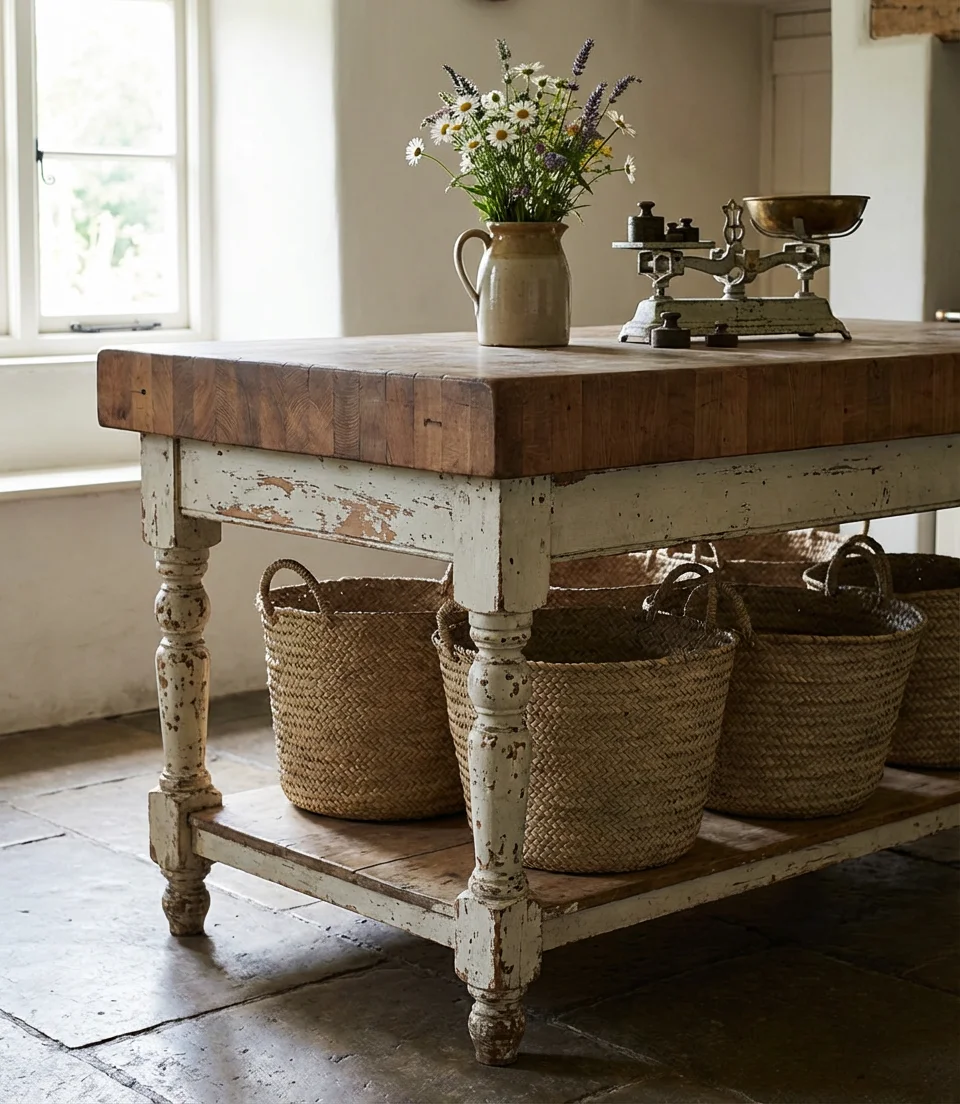
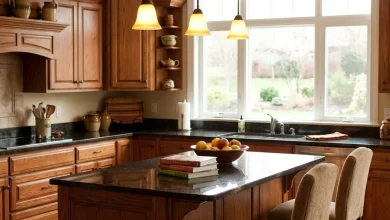
A freestanding vintage island serves as the heart of a cottagecore kitchen, offering both practical workspace and a focal point that anchors the room’s aesthetic. Look for antique butcher blocks, repurposed farmhouse tables, or even old dressers converted into kitchen islands with added storage and a fresh countertop. The farmhouse appeal comes from the weathered wood, turned legs, and the sense that this piece has a story—maybe it came from a barn sale in Vermont or a flea market in Pennsylvania.
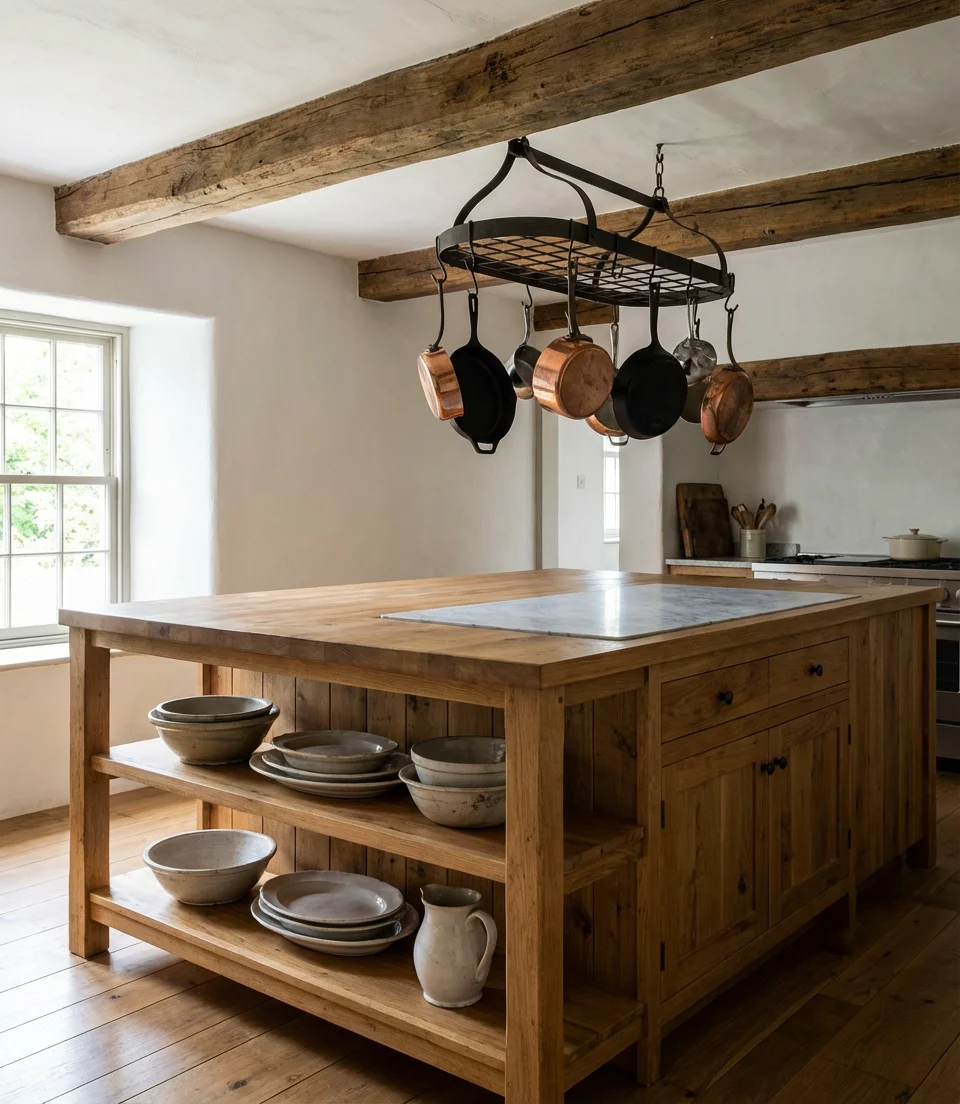
Where this approach works best is in open-concept kitchens where the island can be approached from all sides, creating a natural gathering spot for family and friends. Choose an island that’s scaled appropriately for your space—too large and it overwhelms, too small and it feels like an afterthought. Add vintage-style bar stools with worn leather or rush seats to complete the look, and consider installing hooks on the sides for hanging dish towels or cooking utensils within easy reach.
3. Gothic Cottagecore with Dark Floral Wallpaper
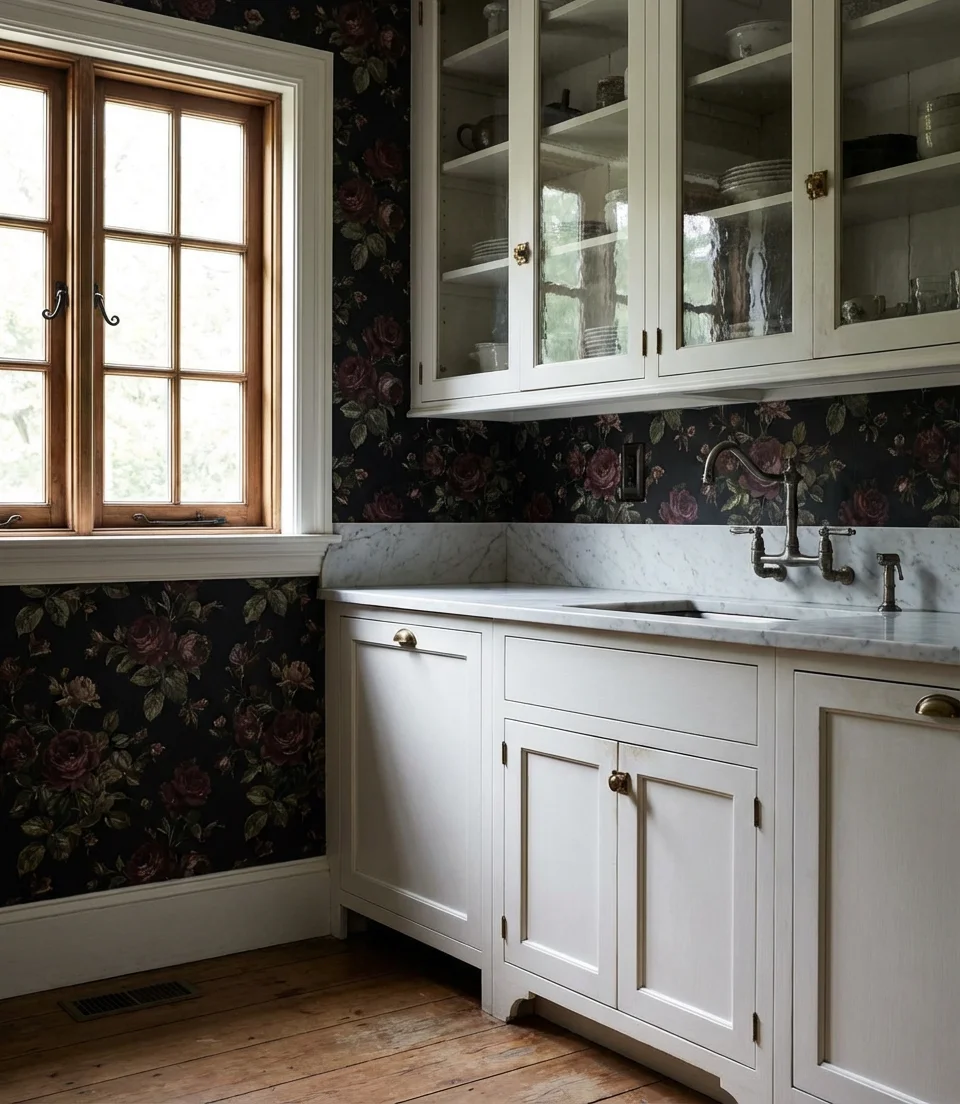
The Gothic cottagecore trend merges Victorian romance with countryside charm through dramatic wallpaper featuring oversized blooms in deep jewel tones—think burgundy peonies, midnight blue roses, or dark emerald vines against charcoal backgrounds. This aesthetic appeals to homeowners who want their kitchen to feel like a secret garden at twilight rather than a bright morning room. Pair the wallpaper with simple white or black cabinetry to let the pattern take center stage without visual competition.
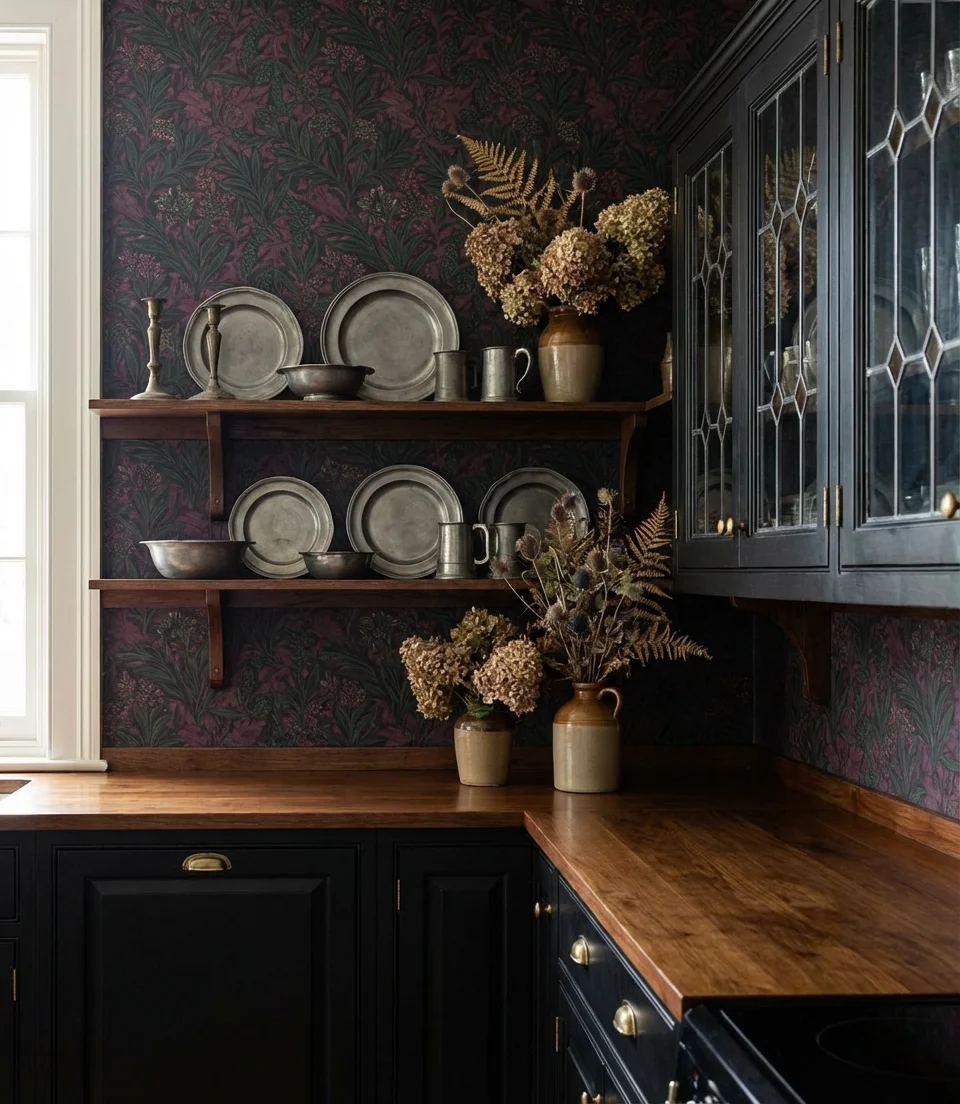
A common mistake is wallpapering every surface, which can make the kitchen feel claustrophobic. Instead, choose one accent wall—typically the wall behind open shelving or a breakfast nook—and keep other surfaces neutral. This approach allows the wallpaper to function as artwork while maintaining the room’s sense of space. In smaller kitchens, use wallpaper sparingly or opt for a smaller-scale pattern to avoid overwhelming the room.
4. A Cozy Kitchen Nook Featuring a Vintage Table and Grandma’s Charm
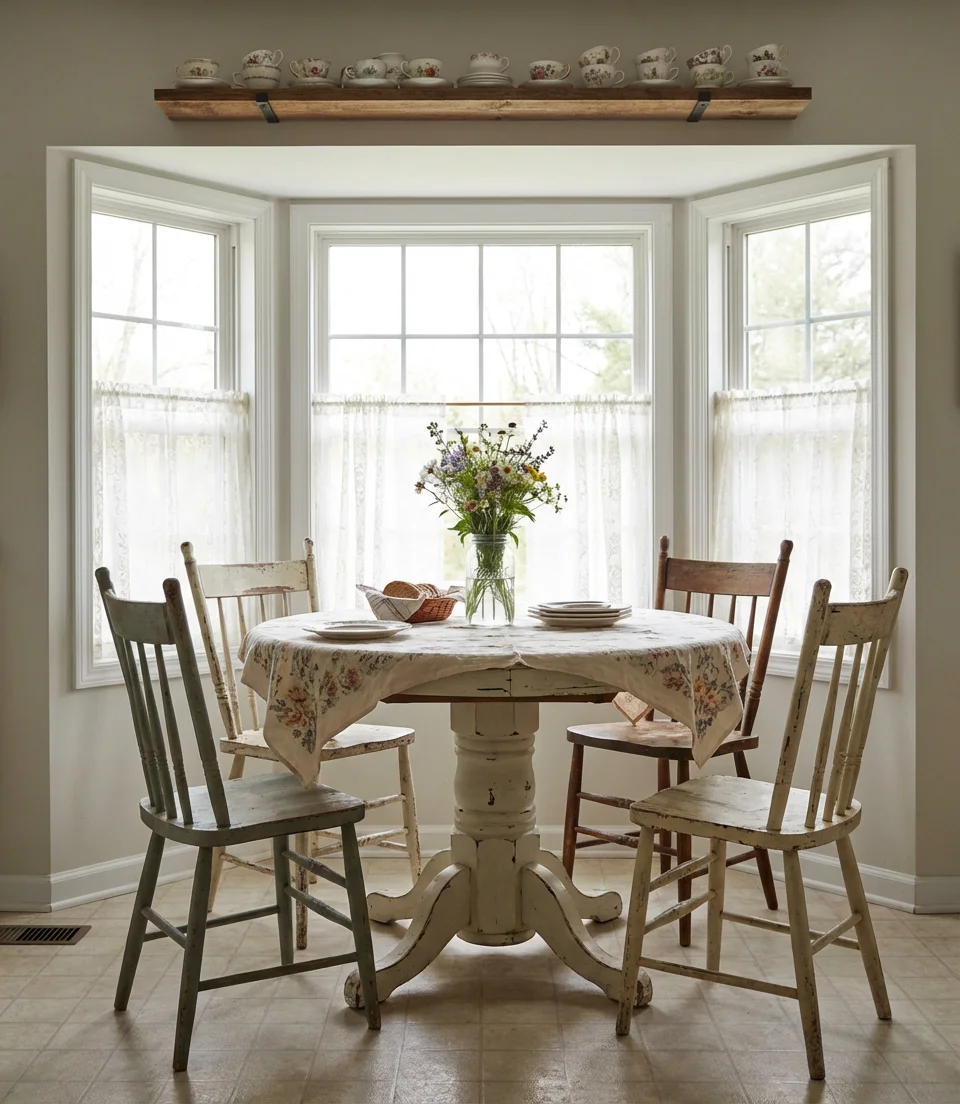
A cozy breakfast nook channels grandma’s kitchen with mismatched chairs, a small round table draped with vintage linens, and collections of teacups or preserves displayed on nearby shelves. This setup works particularly well in kitchens with bay windows or corner spaces that might otherwise go unused. The vintage elements—perhaps a 1940s enamel-topped table or bentwood chairs from different decades—create an eclectic, lived-in feeling that’s impossible to replicate with matching furniture sets.
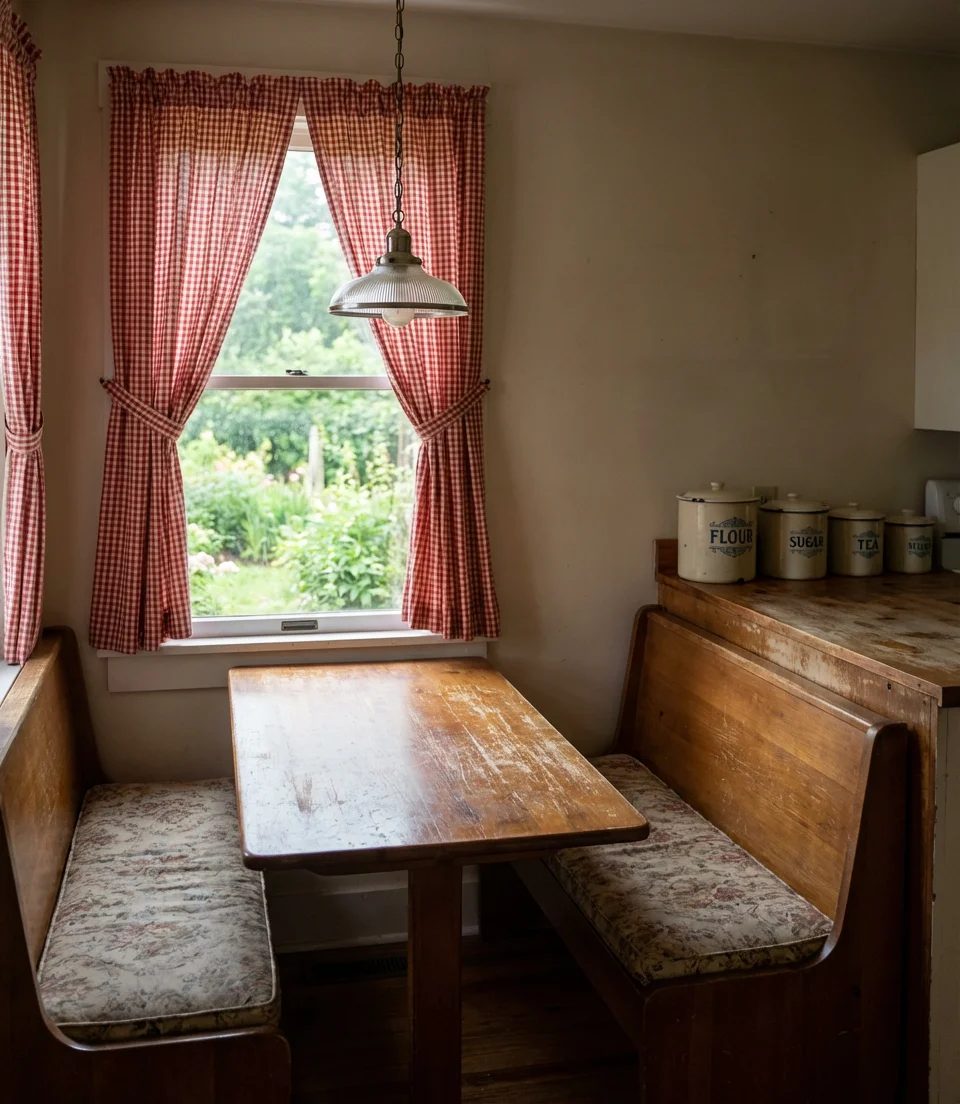
My neighbor in rural Ohio created this exact setup using chairs she collected from estate sales over six months, painting them in coordinating (but not matching) soft colors. She spent under $200 total and ended up with a space that feels more authentic than any catalog-perfect dining set could achieve. The key lies in accepting imperfections and realizing that a slightly wobbly chair or a table with a water ring can convey a narrative that new furniture cannot.
5. Green Painted Cabinets with Natural Wood Accents
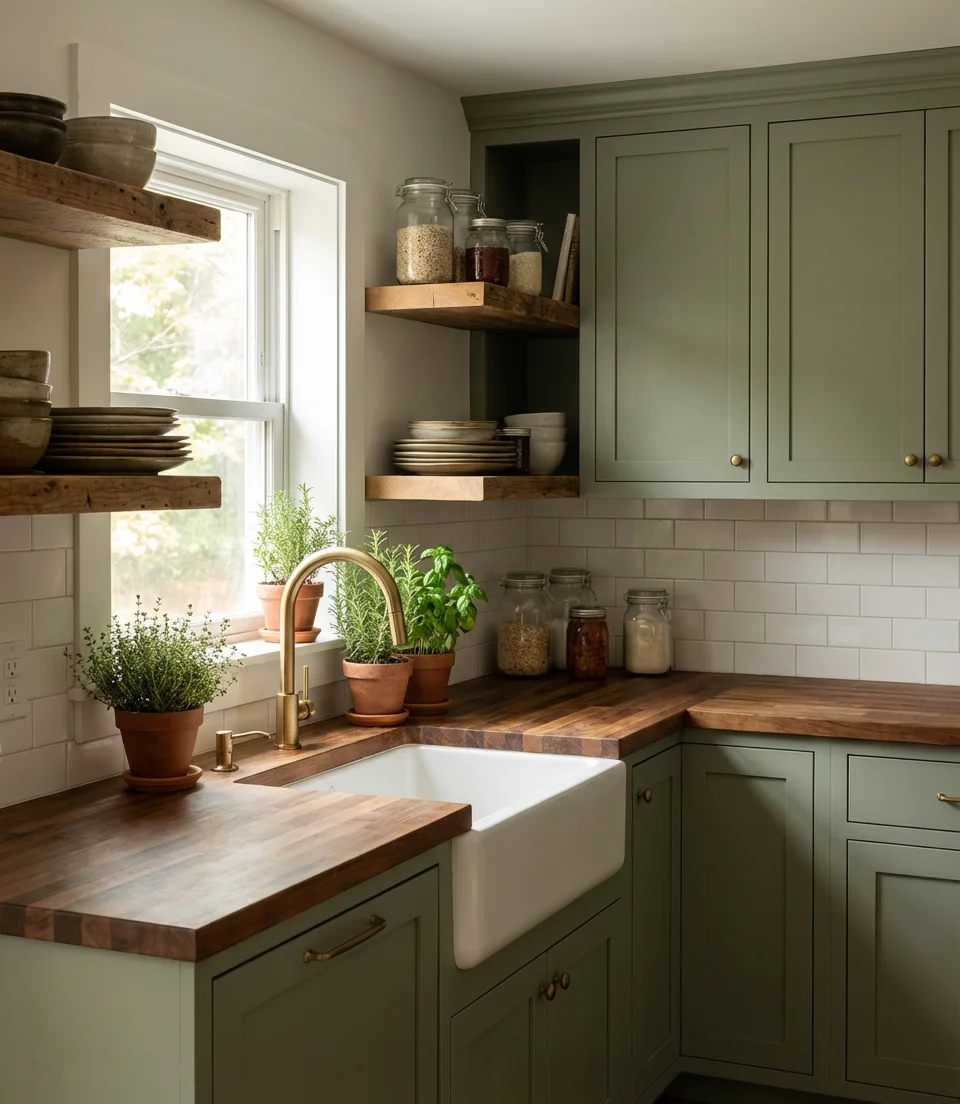
Green kitchen cabinets in sage, olive, or deep forest tones bring the outdoors inside while maintaining the cottagecore commitment to nature-inspired palettes. When paired with butcher block countertops, wooden ceiling beams, or a natural wood island, these green tones feel grounded rather than trendy. The color works beautifully in both small galley kitchens, where it adds depth without darkness, and in larger farmhouse-style spaces, where it complements exposed brick or stone.
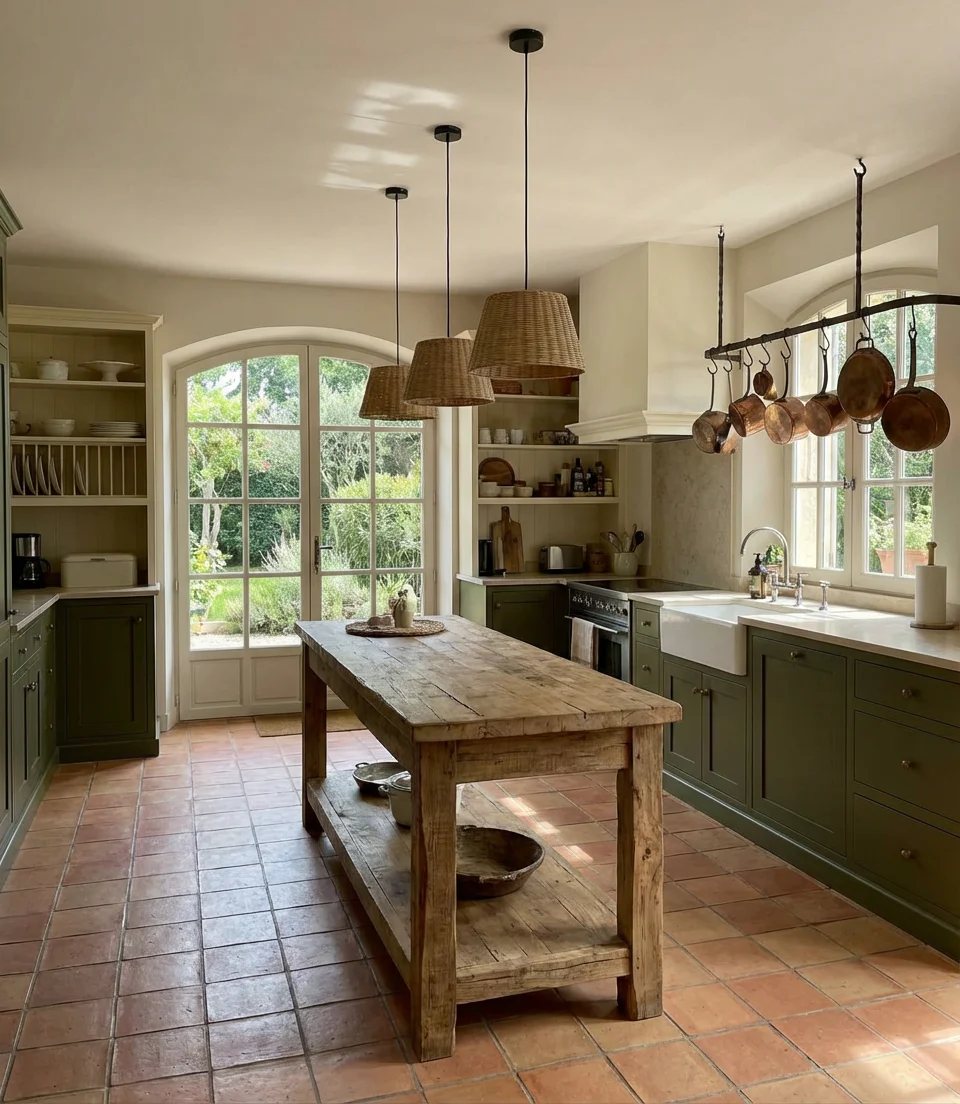
Expert designers often recommend testing green paint samples in your kitchen for at least a week before committing, observing how the color shifts from morning to evening light. North-facing kitchens benefit from warmer green tones with yellow undertones, while south-facing spaces can handle cooler, bluer greens. Consider painting just the lower cabinets green while keeping the uppers white or natural wood to maintain visual lightness, especially in kitchens with limited natural light.
6. Pink Cottagecore Kitchen with Soft Pastels
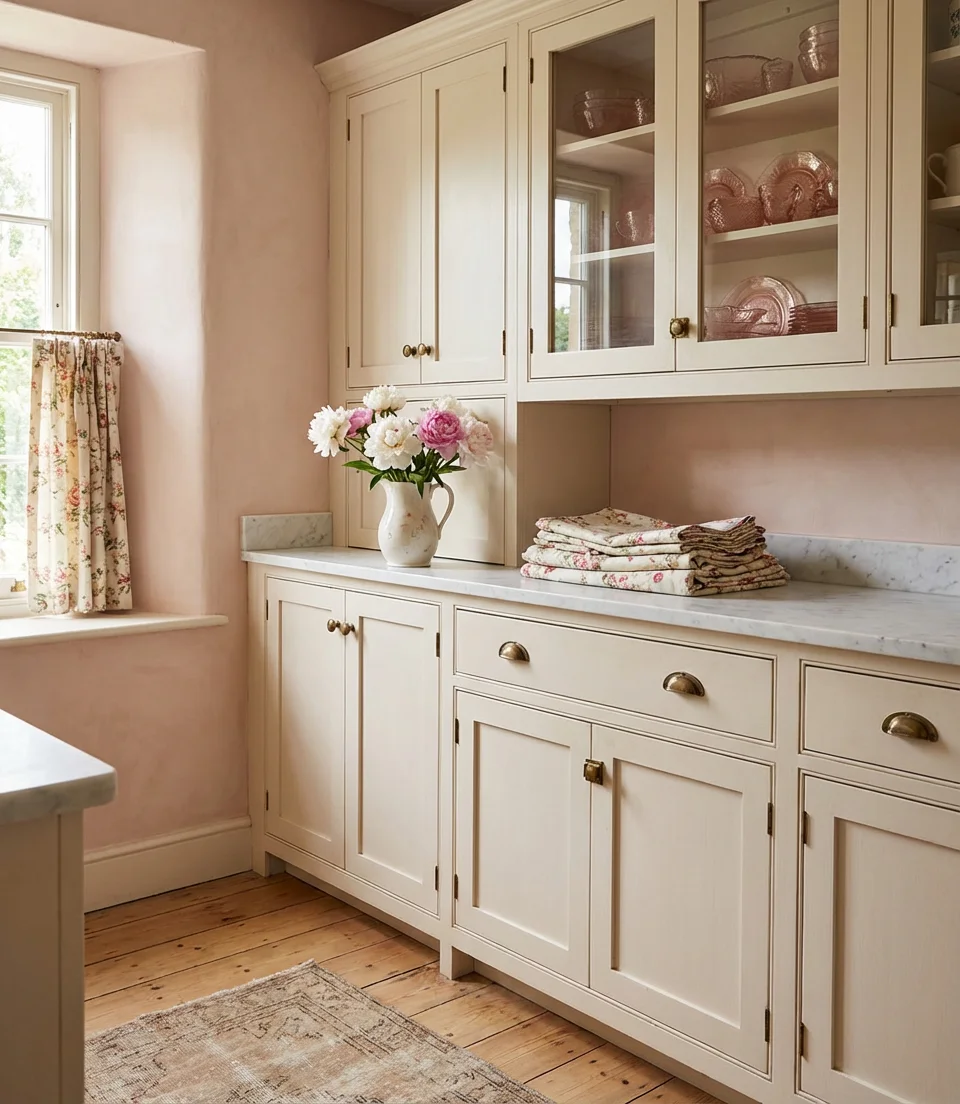
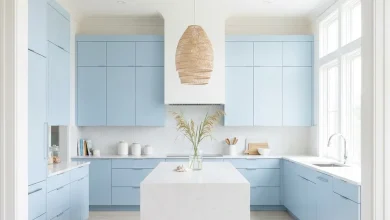
A pink cottagecore kitchen embraces the softer side of this aesthetic, using blush tones, dusty rose accents, and cream-colored cabinets to create a space that feels nurturing and romantic. This approach works particularly well for homeowners who love the cottagecore vibe but prefer lighter, more optimistic color schemes. Think pink-tinted glassware displayed on open shelves, rose-patterned dish towels, or even pink marble countertops for those willing to make a bolder statement.
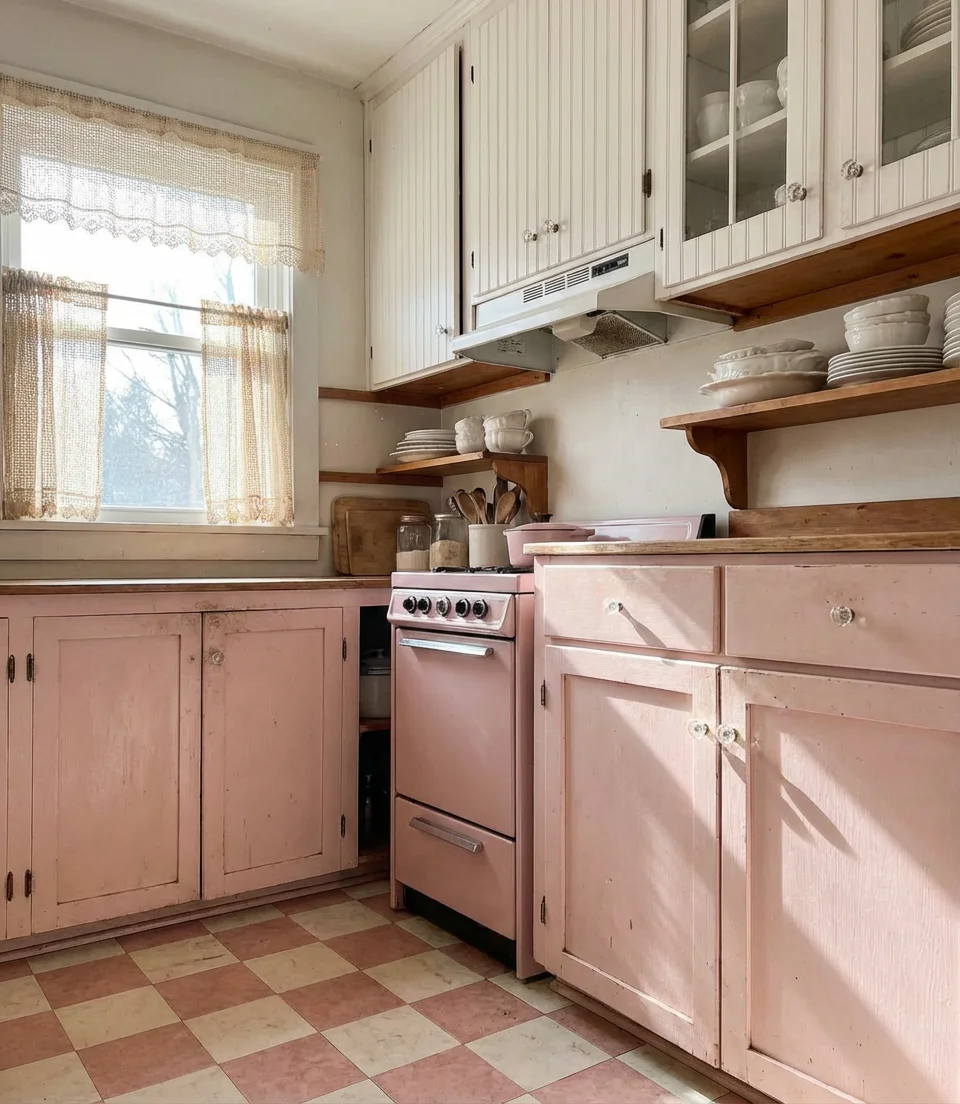
This color scheme thrives in kitchens with abundant natural light, particularly those with east-facing windows that catch morning sun. In the Pacific Northwest, where I’ve noticed homeowners gravitating toward this softer palette, pink kitchens provide a cheerful counterpoint to the region’s gray winters. Balance the sweetness with practical elements—a sturdy farmhouse sink, professional-grade appliances, or industrial-style lighting—to prevent the space from feeling too precious or impractical for everyday cooking.
7. Blue and White Cottagecore with Delft-Inspired Patterns
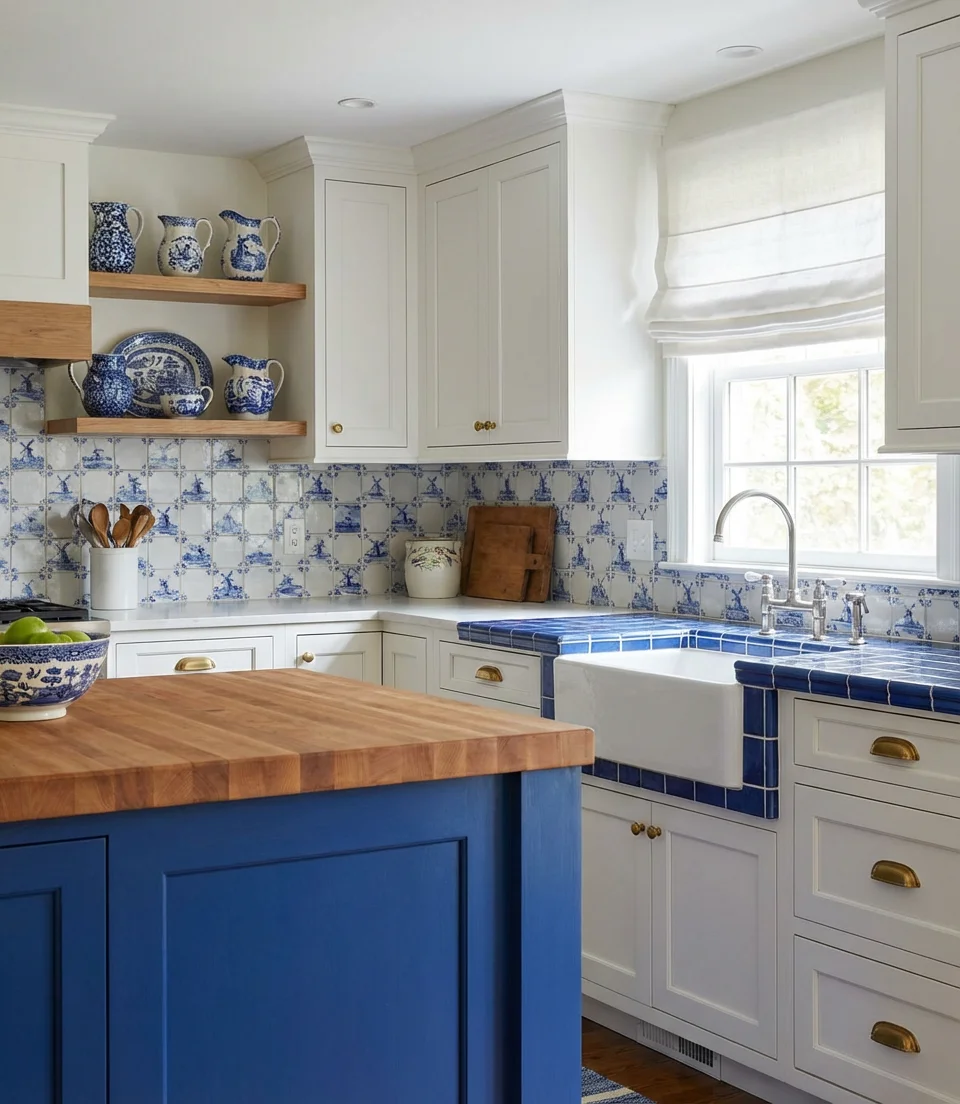
Blue and white combinations evoke Dutch cottages and English country houses, creating a timeless aesthetic that feels both fresh and traditional. Consider white cabinets paired with blue-painted islands, delft tile backsplashes, or collections of blue transferware displayed on open shelving. This color pairing works beautifully in coastal regions but translates equally well to landlocked farmhouses, bringing a sense of calm and order to the busiest room in the house.
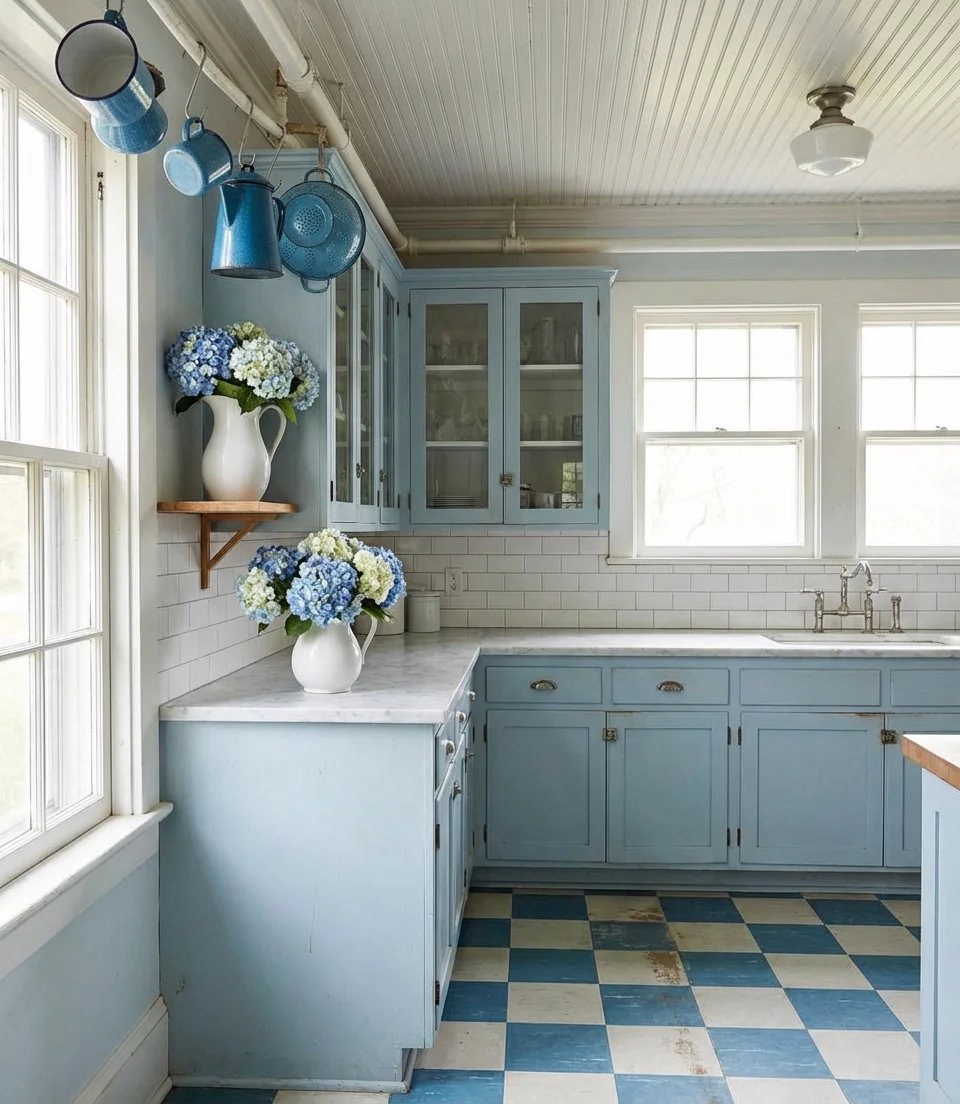
Budget-conscious updates can start with simply collecting blue and white ceramics from thrift stores and displaying them prominently—a practice that costs almost nothing but creates immediate visual impact. Many homeowners begin with accessories and textiles in this palette, then gradually paint an island or add tile work as budget allows. The beauty of blue and white is its flexibility; you can go bright and nautical or soft and romantic depending on the specific shades you choose.
8. Modern Cottagecore Kitchen with Clean Lines
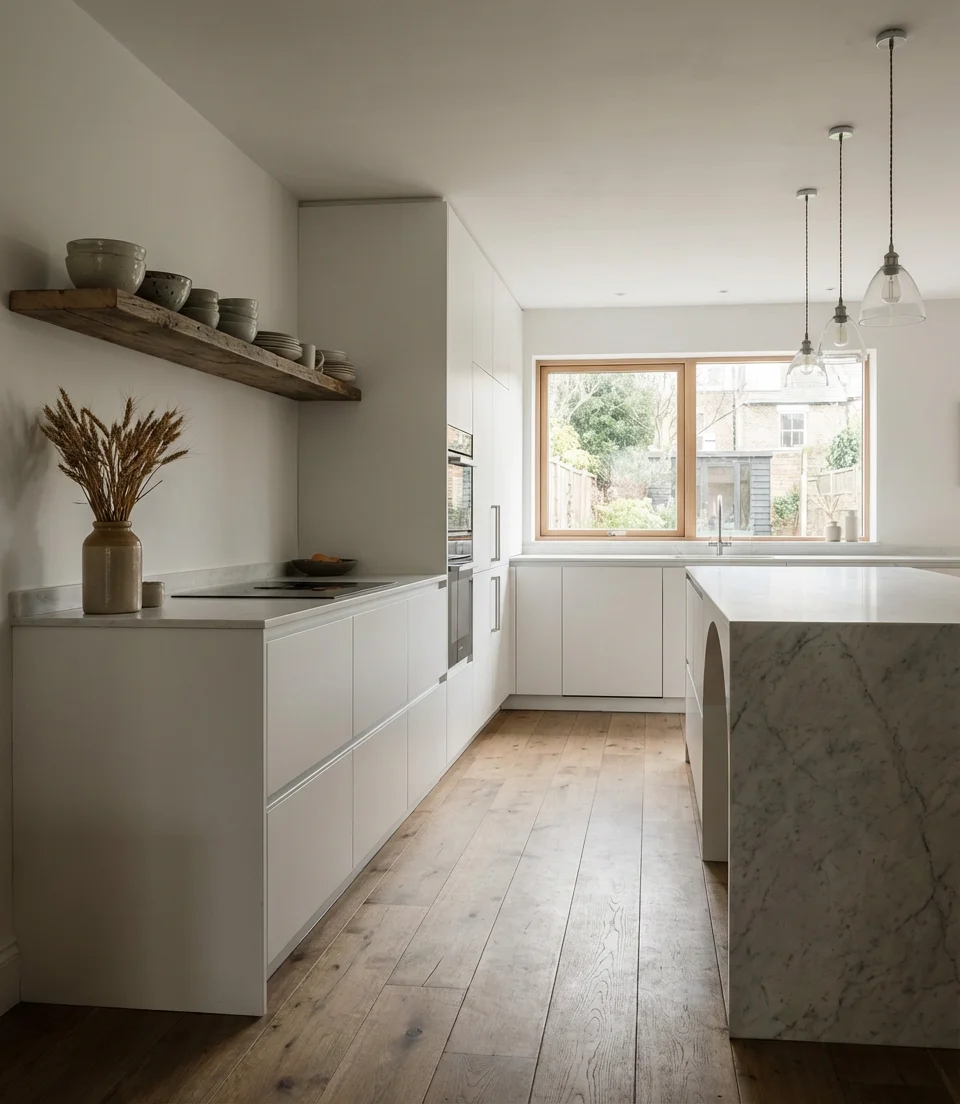
The modern cottagecore kitchen strikes a balance between rustic charm and contemporary function, using clean-lined cabinets, integrated appliances, and minimal hardware while incorporating natural materials and vintage decor. This hybrid approach appeals to homeowners who appreciate cottage aesthetics but live in newer construction or prefer uncluttered spaces. Think handleless cabinets in warm white paired with a reclaimed wood beam, or sleek marble counters styled with antique brass candlesticks and fresh garden flowers.
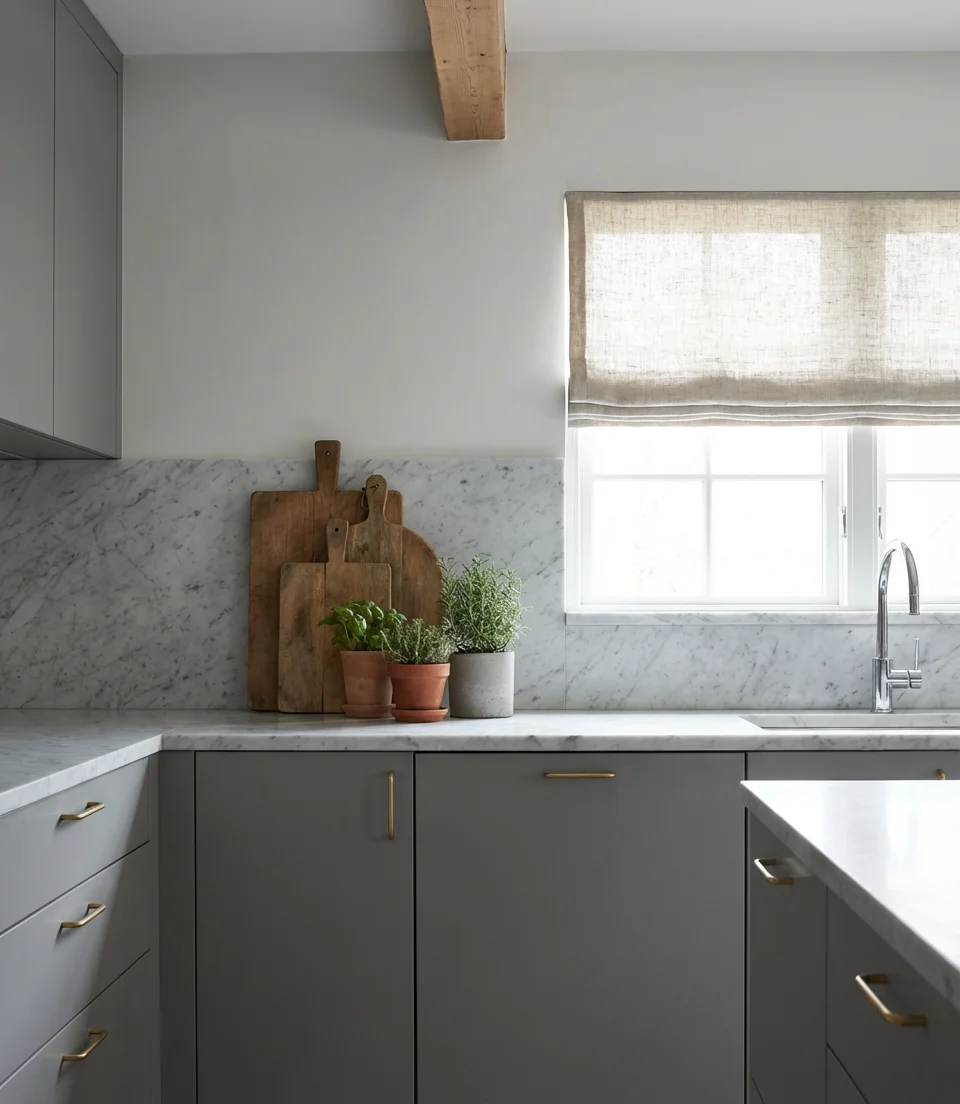
Real homeowners pursuing this aesthetic typically invest in high-quality modern cabinetry and appliances first, then layer in cottagecore elements through accessories, textiles, and natural materials. This strategy ensures the kitchen functions efficiently while still capturing the warmth and character that defines cottagecore. The key is restraint—choose a few meaningful vintage pieces rather than cluttering every surface, letting each element breathe and make its own statement.
9. Farmhouse Sink as the Kitchen’s Focal Point
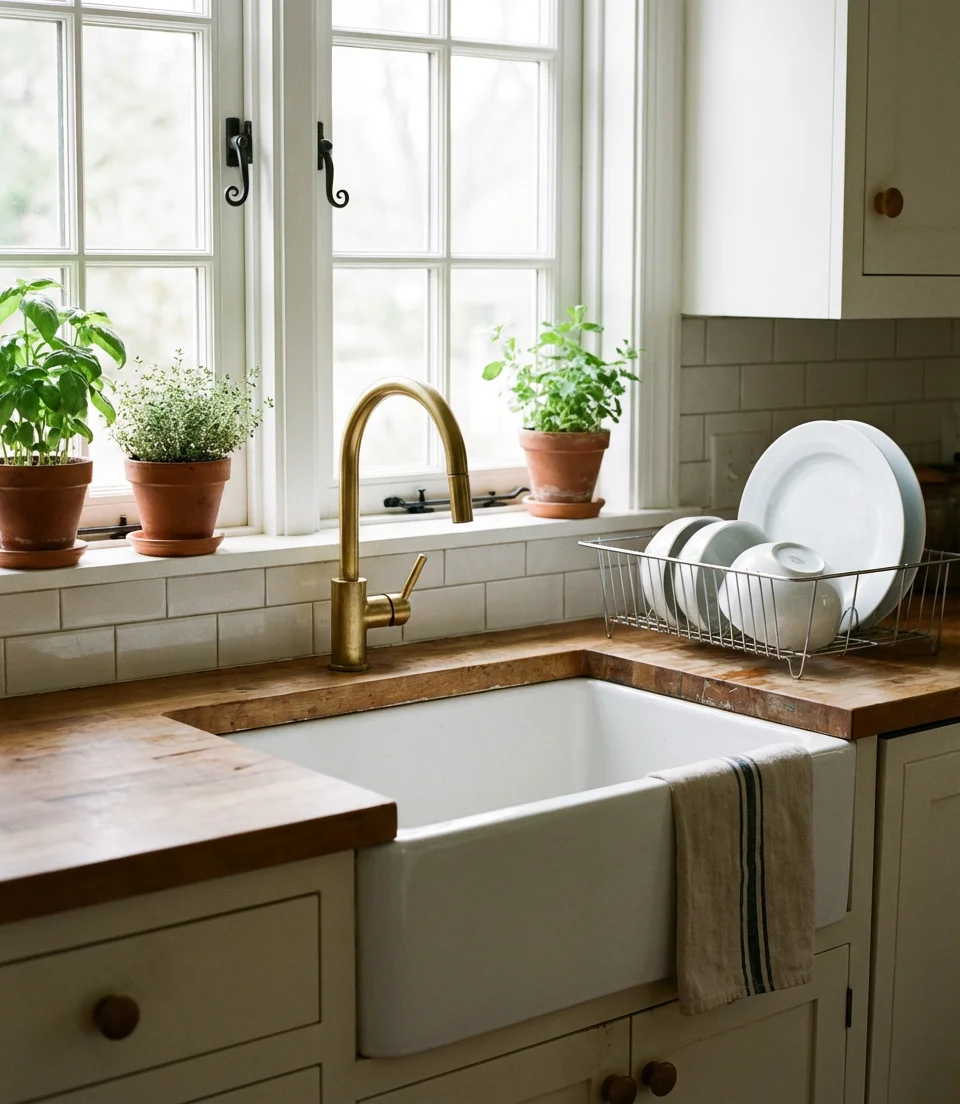
An apron-front sink instantly elevates any kitchen’s cottagecore credentials, whether you choose classic white fireclay, vintage-look cast iron, or even copper for a warmer tone. Position the farmhouse sink beneath a window to create a practical workspace with a view, ideally overlooking a garden or natural landscape. The deep basin handles everything from soaking large pots to washing bundles of just-picked vegetables, making it both beautiful and functional—a true cottagecore essential.
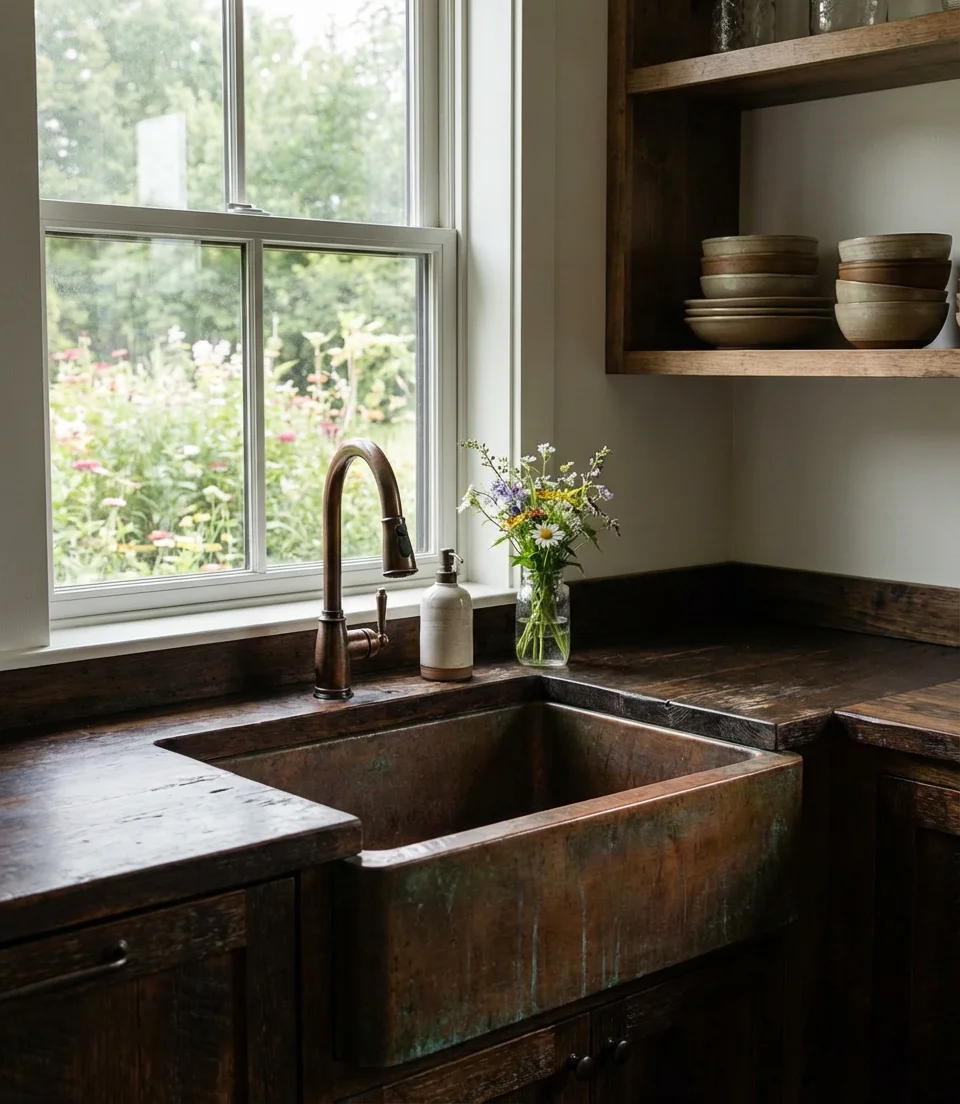
Where this design works best is in kitchens with enough counter space on both sides of the sink to create a proper work triangle with the stove and refrigerator. The one common mistake is installing a farmhouse sink in a narrow galley kitchen where it disrupts the flow or makes the space feel cramped. If you’re working with limited square footage, consider a smaller 30-inch sink rather than the standard 36-inch width, which still provides the aesthetic while maintaining functionality.
10. Cottage Kitchen Wall Decor with Vintage Finds
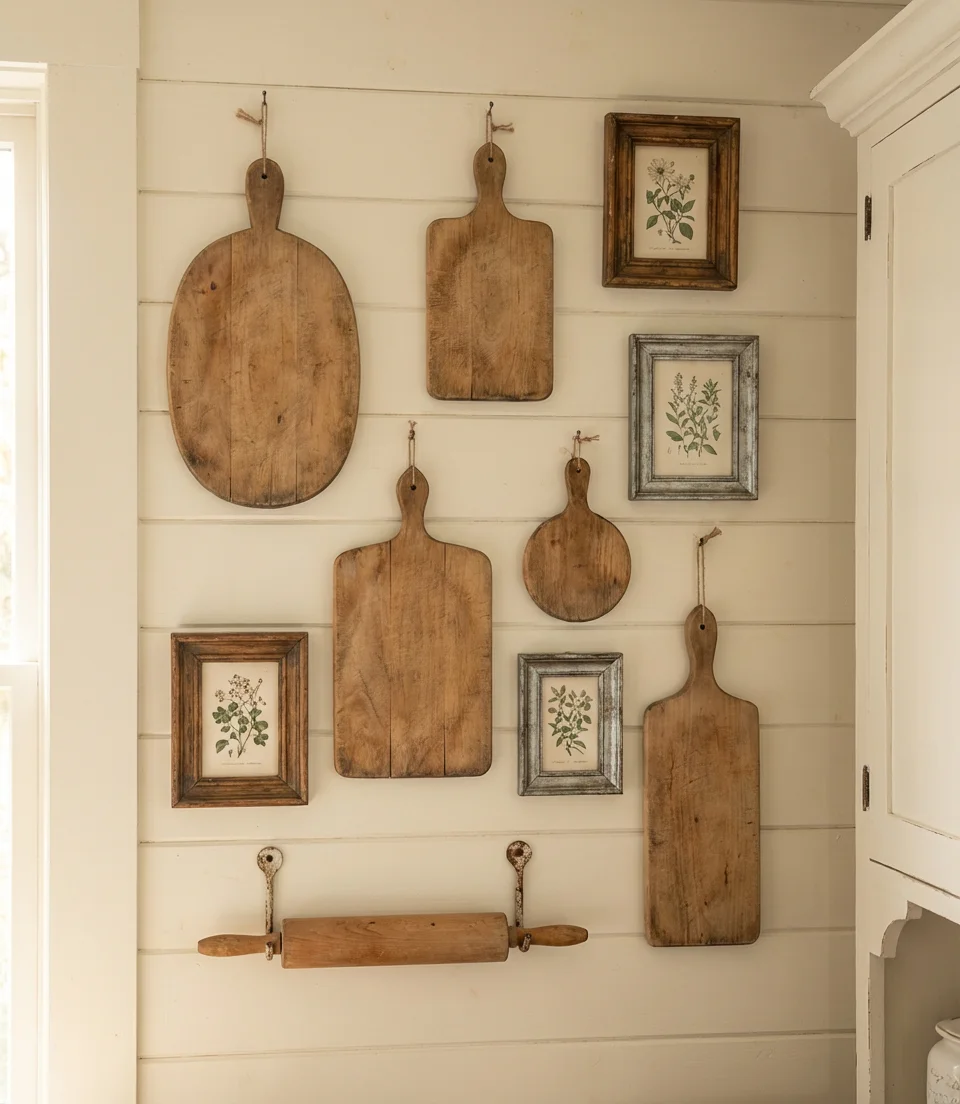
Thoughtful wall decor transforms empty kitchen walls into storytelling spaces through collections of vintage rolling pins, antique kitchen tools, botanical prints, or even old wooden cutting boards hung in asymmetrical groupings. This vintage aesthetic works because each piece appears to have been collected over time rather than purchased as a set. Consider hanging a gallery wall of vintage tea towels in embroidery hoops, displaying antique enamelware on plate racks, or mounting an old window frame as wall art.
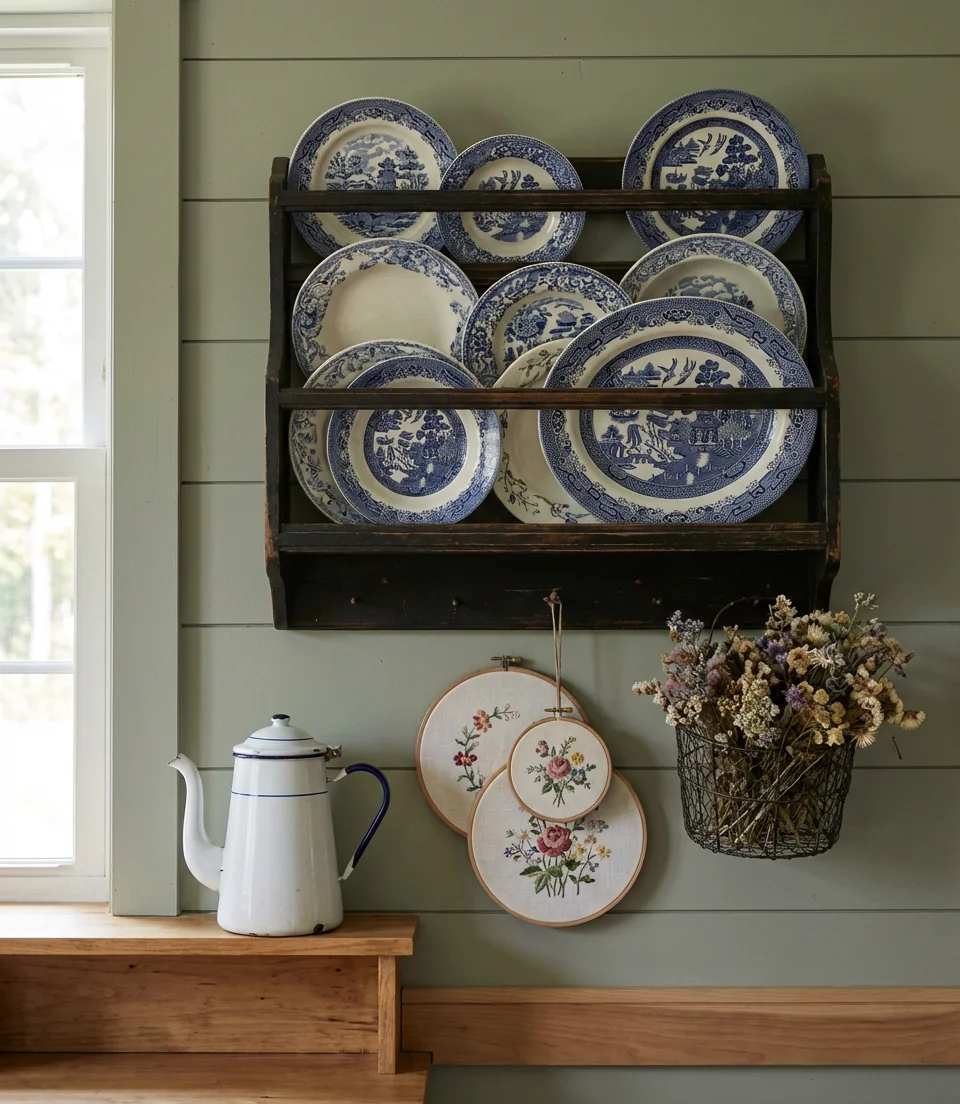
Expert decorators suggest starting with one type of collection—say, vintage kitchen scales or antique graters—and building from there rather than trying to decorate every wall at once. This focused approach creates more visual impact than scattering random items throughout the space. Visit architectural salvage yards, estate sales, and local antique malls to find pieces with authentic age and character, and don’t be afraid to mix times as long as the overall aesthetic remains cohesive.
11. Subway Tile Backsplash with Vintage Grout Lines
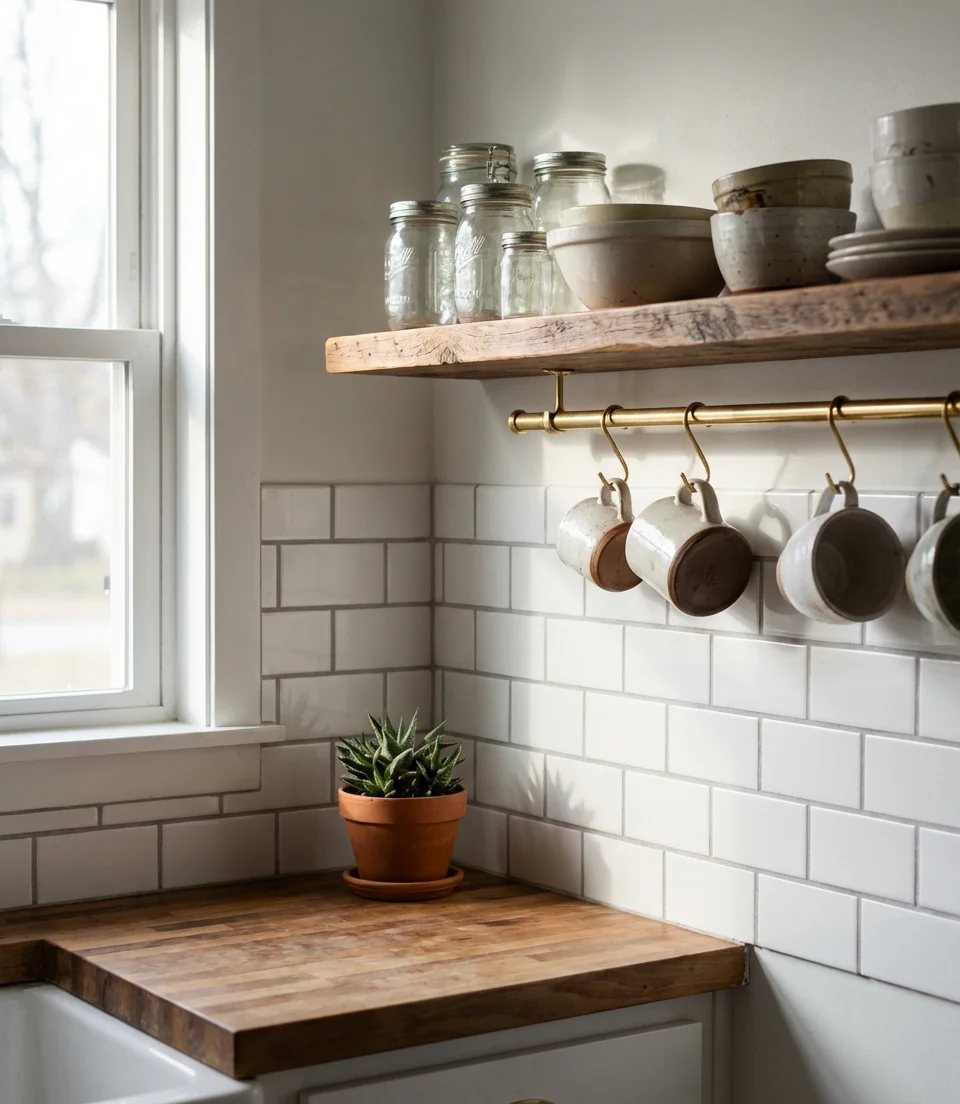
Classic white subway tile provides the perfect backsplash for cottagecore kitchens, especially when installed in traditional brick-lay patterns with slightly wider grout lines that reference early 20th-century installations. The aesthetic works whether your kitchen skews vintage, modern, or somewhere in between, providing a clean backdrop that allows other elements—open shelving, colorful dishware, or pendant lighting—to shine. Consider using handmade or artisan tiles with slight variations in color and texture rather than perfectly uniform machine-made versions.
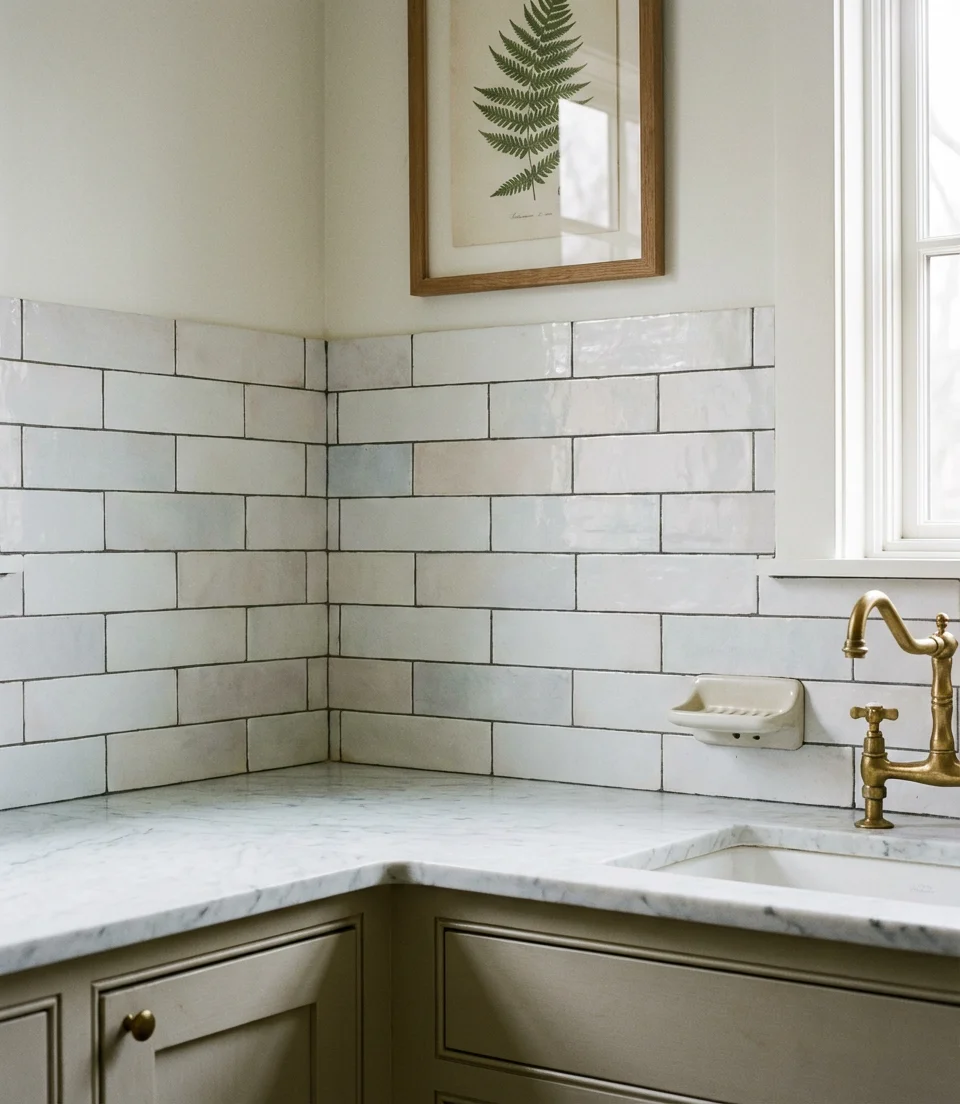
In Southern California, where I’ve consulted on several cottage-style renovations, homeowners often extend subway tile all the way to the ceiling in smaller kitchens to create vertical height and make the space feel larger. The price difference between standard 3×6-inch subway tile and premium handmade versions can be significant—sometimes triple the cost—but many find the textural variation worth the investment. If the budget is tight, use premium tile in high-visibility areas like behind the range and standard tile elsewhere.
12. Sheer Curtains for Soft Natural Light
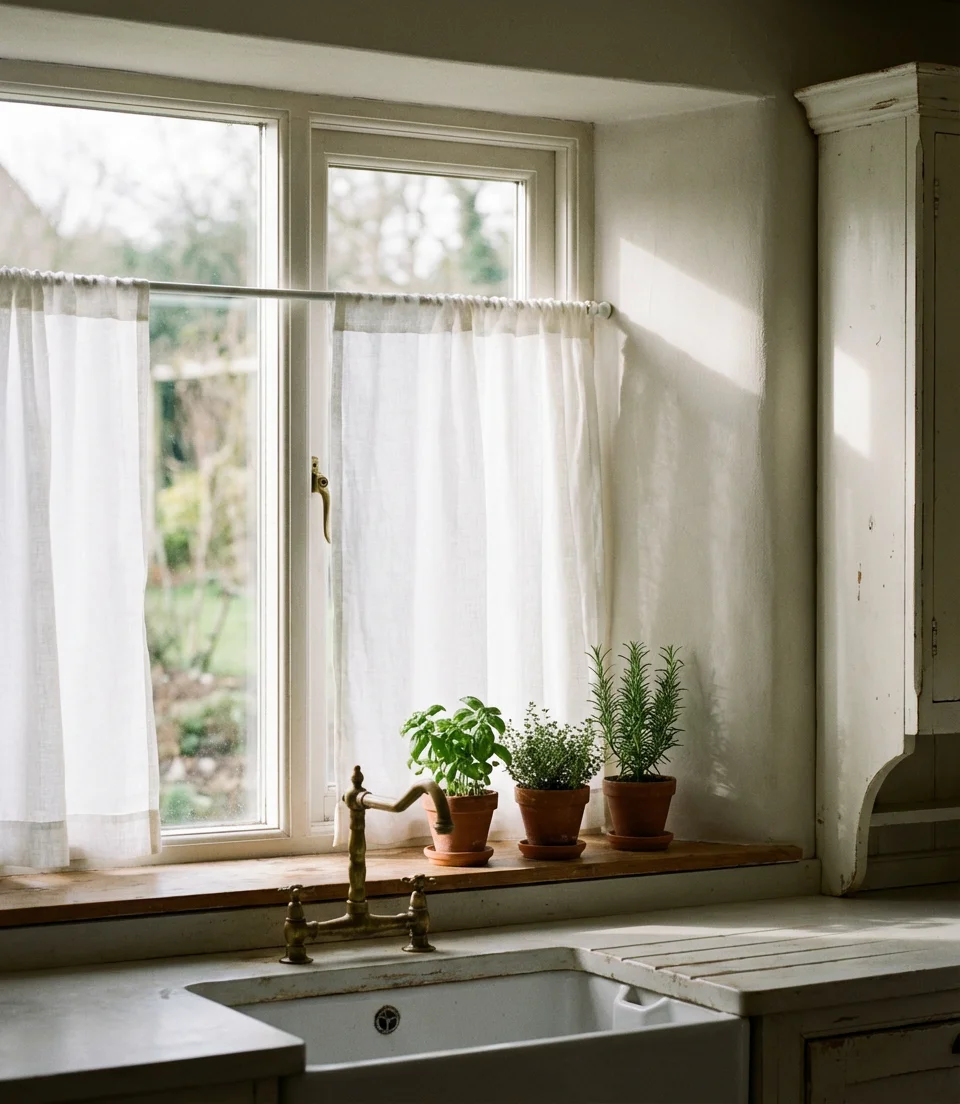
Kitchen curtains in lightweight linen or cotton voile filter sunlight beautifully while maintaining privacy, creating the soft, dreamy atmosphere central to the cottagecore aesthetic. Choose simple café-style curtains that cover just the lower half of the window, full-length panels tied back with ribbon, or vintage-inspired patterns like gingham checks or delicate florals. The white or cream tones work universally, but don’t shy away from soft colors that coordinate with your cabinet palette.
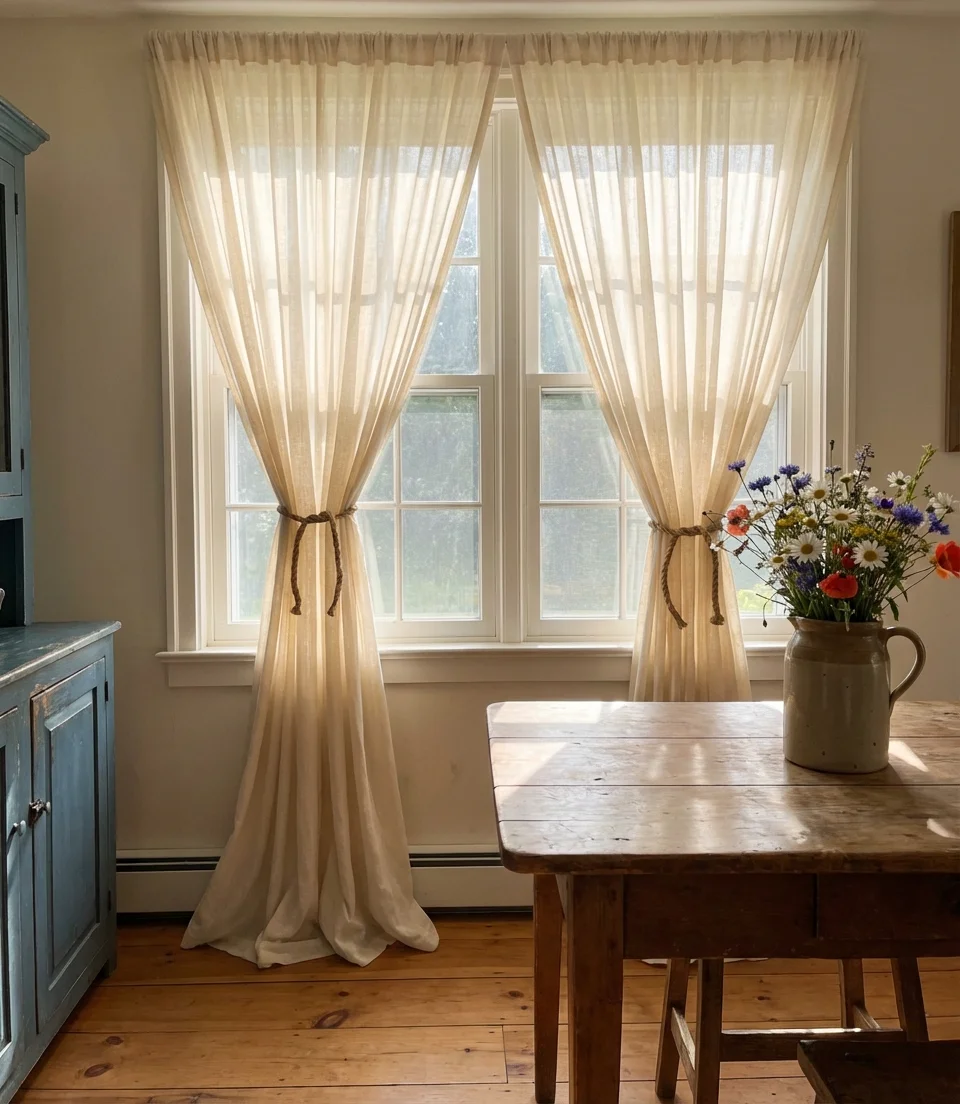
Real homeowners often make a common mistake by choosing curtains that are too heavy or dark for kitchen spaces, blocking the natural light that makes cottagecore kitchens feel so welcoming. The solution is choosing fabrics you can actually see through when held up to a window before purchasing. Wash cotton and linen curtains before hanging to allow for shrinkage, and embrace the slightly rumpled texture that comes from line-drying rather than ironing them perfectly smooth—it adds to the relaxed, lived-in feeling.
13. Open Shelving Displaying Treasured Collections
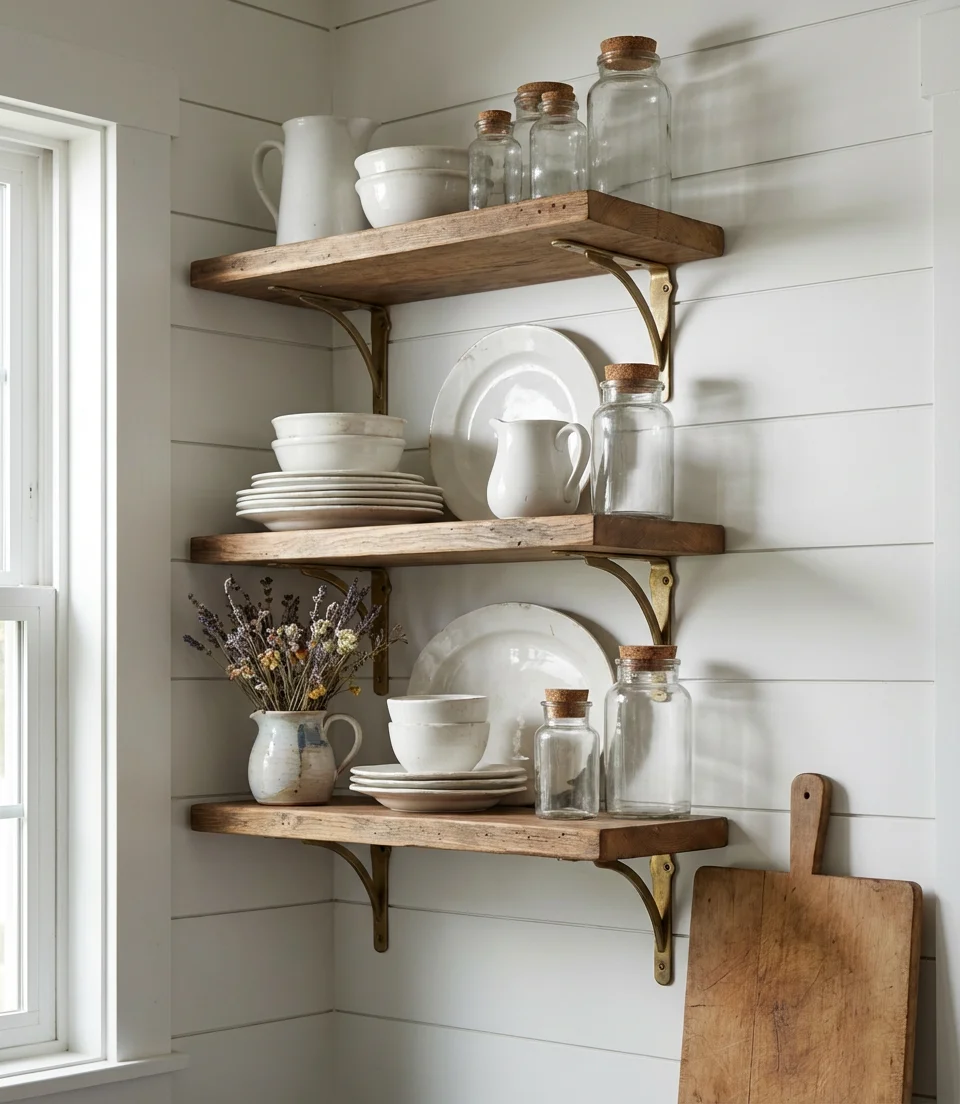
Replacing upper cabinets with open wooden shelving allows you to display everyday dishes, vintage glassware, and collected pottery while keeping frequently used items within easy reach. This design choice contributes significantly to the cottagecore aesthetic by making the kitchen feel more open, personal, and connected to daily life. The key is curating what goes on display—mixing practical stacks of dinner plates with decorative pieces like vintage crocks, wooden bowls, and small potted plants for visual interest.
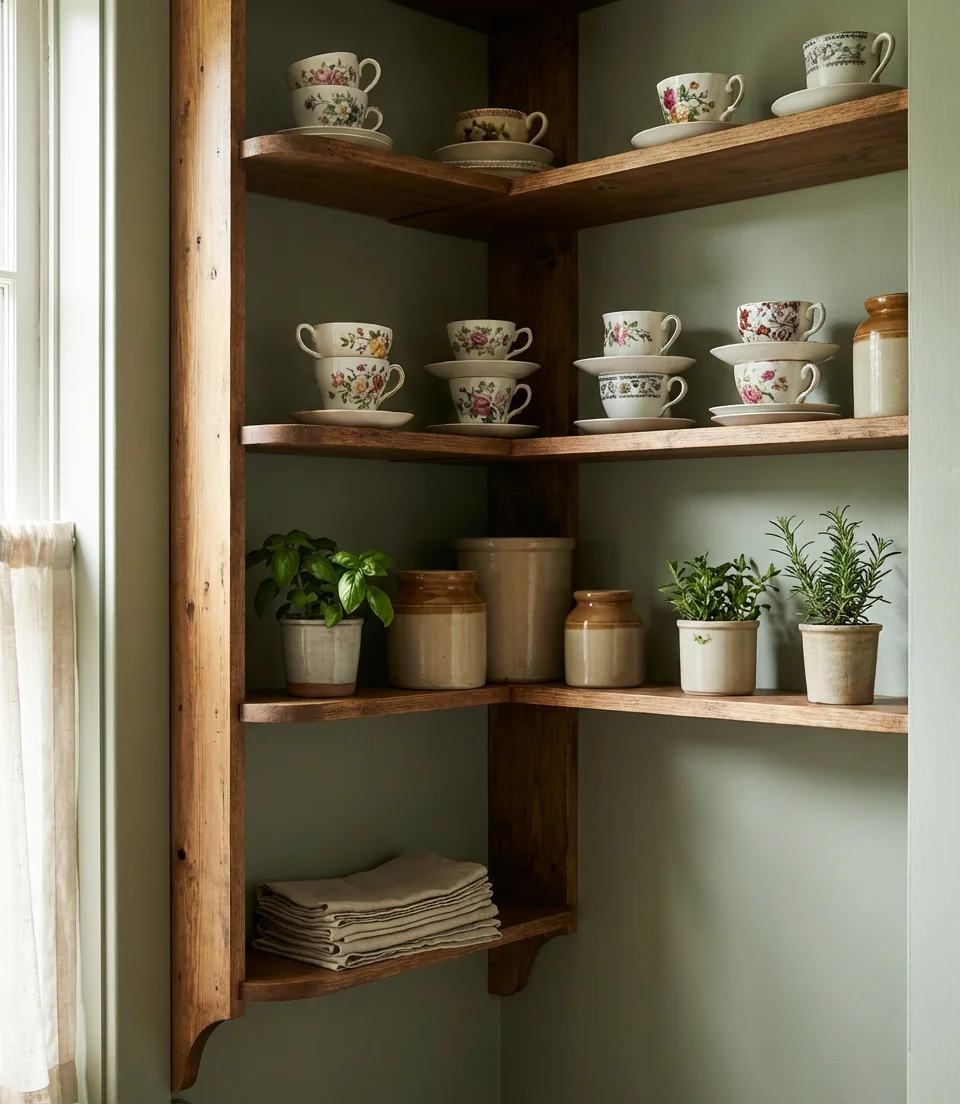
Practical insight from experienced cottagecore kitchen owners: open shelving works beautifully in homes where cooking happens daily and dishes are constantly in rotation, but it requires a different maintenance approach than closed cabinets. Dust settles on plates, glassware needs more frequent washing, and the visible storage means you can’t hide the random mismatched container. Accept the clutter as part of the aesthetic’s lived-in charm rather than fighting it, and choose locations for open shelving where you’ll actually use the displayed items regularly.
14. Vintage Stove as a Statement Piece
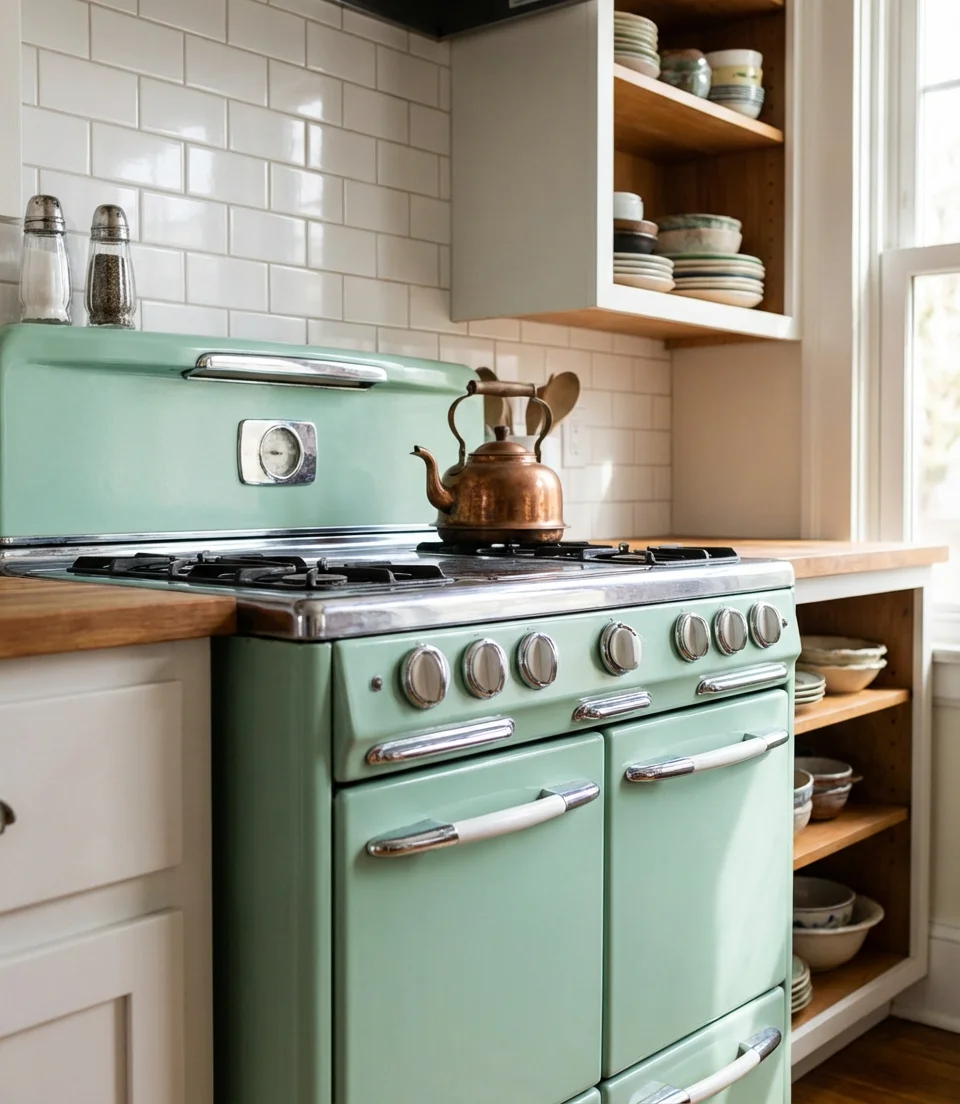
A restored vintage range, adorned in mint green, soft yellow, or classic black, serves as an instant focal point, defining the entire kitchen’s character. Brands like Chambers, O’Keefe & Merritt, and Wedgewood from the 1940s-60s offer both visual appeal and solid construction, though they require professional restoration and often run $5,000-15,000 fully refurbished. For those seeking the look without investing, modern brands from companies like Big Chill or Smeg offer vintage styling with contemporary cooking technology.
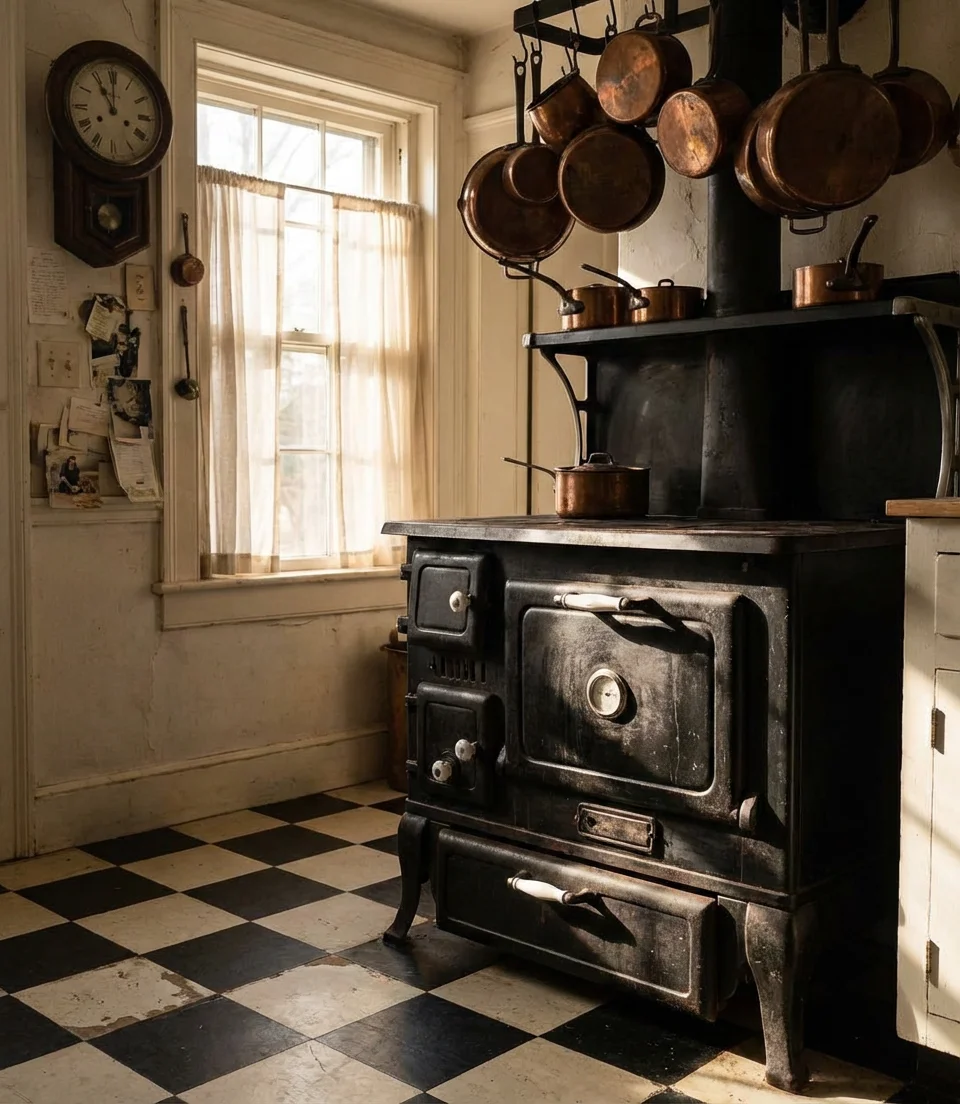
Where this look works best is in kitchens where the range can be positioned as a focal point—ideally on a main wall rather than hidden in a corner. A friend in Portland bought an unrenovated 1952 O’Keefe & Merritt range for $800 from an estate sale and spent another $3,200 having it professionally restored, ending up with a centerpiece that would cost $8,000+ to purchase already refurbished. She says the investment was worth it not just for the aesthetics but for the superior temperature control compared to modern electric ranges.
15. Butcher Block Countertops with Lived-In Patina
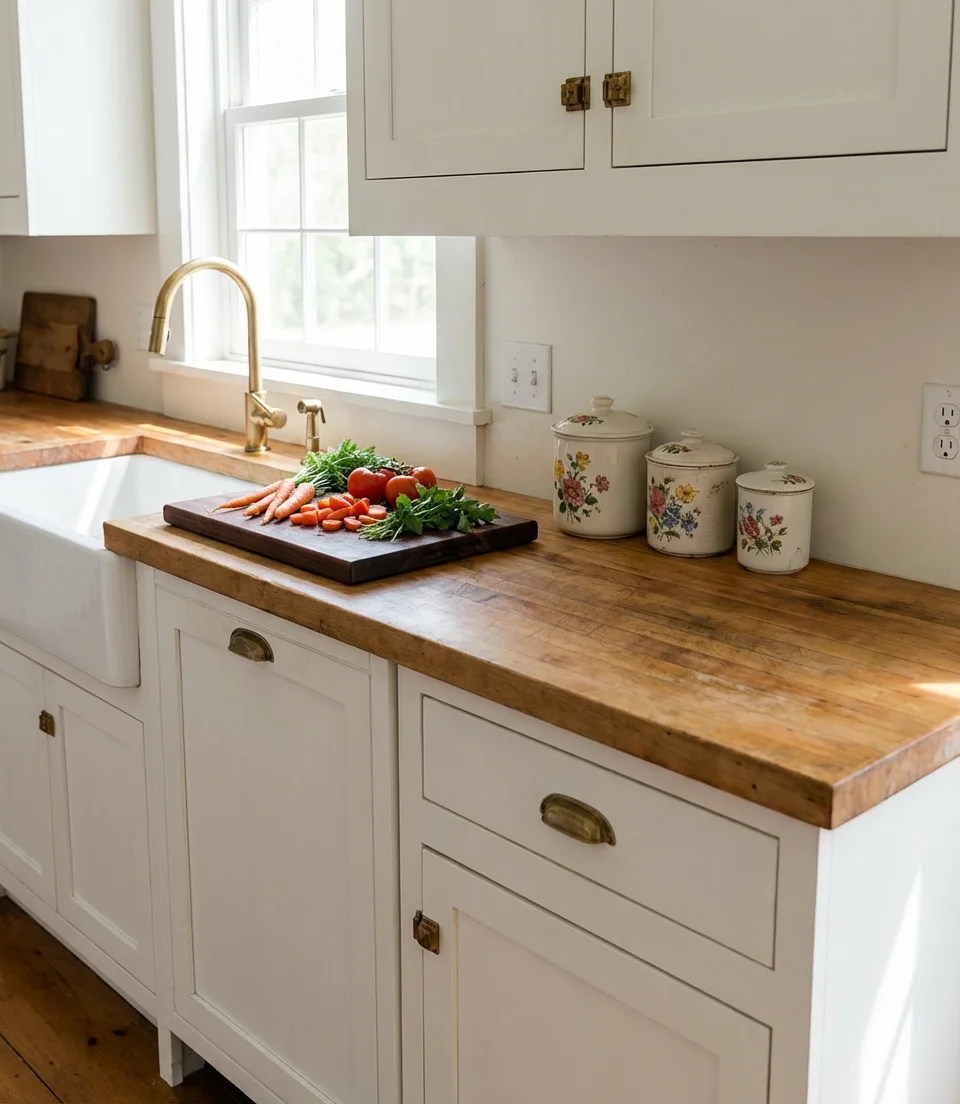
Solid wood countertops in warm honey tones bring natural texture and warmth that complements any cottagecore color scheme, from dark moody cabinets to crisp whites. The surface develops a beautiful patina over time—slight stains from berries, knife marks from years of chopping, and water rings from hot pots—all of which add character rather than detract from value in the cottagecore aesthetic. Maple, walnut, and oak are popular choices, each offering different grain patterns and color tones.
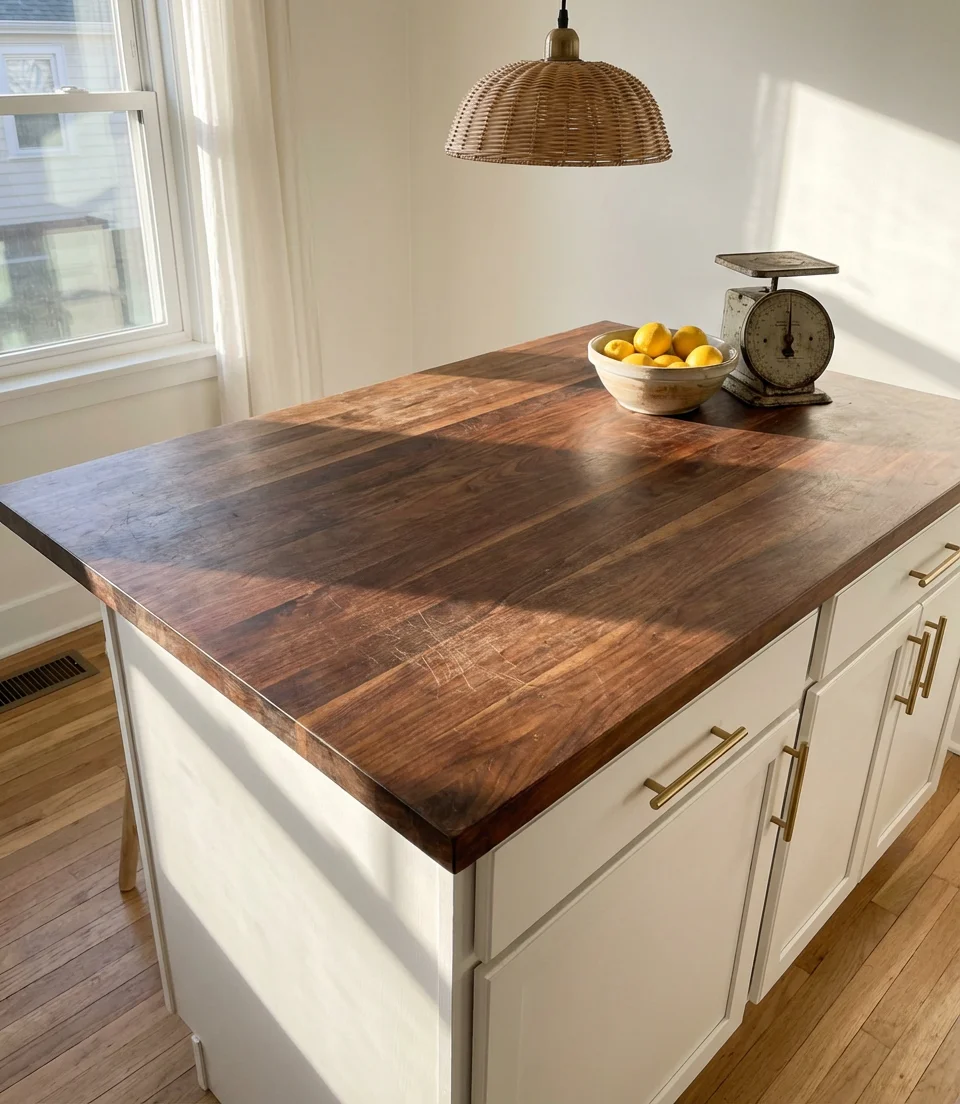
Common mistakes include over-sealing wood counters with polyurethane (which prevents them from breathing and developing a natural patina) or expecting them to remain pristine forever. Instead, oil them monthly with food-safe mineral oil or a beeswax blend, embrace the inevitable stains as part of their charm, and know that deep scratches can be sanded out every few years. Avoid installing wood counters immediately adjacent to ranges or dishwashers where heat and moisture concentration is highest—use granite or quartz in those high-stress areas instead.
16. Cottage Kitchen Paint Colors in Earth Tones
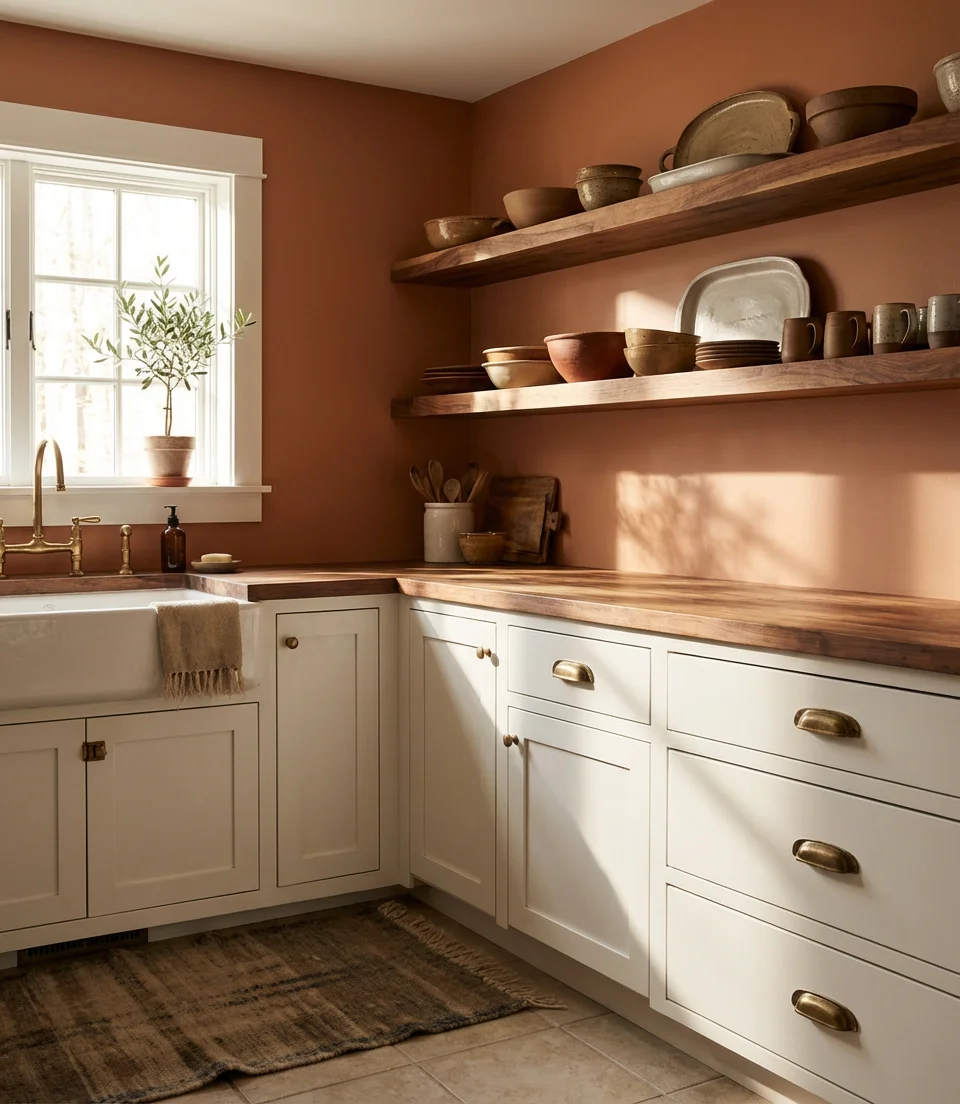
Earthy paint colors like terracotta, warm gray, olive green, or soft clay create a grounded aesthetic that connects the kitchen to the natural world. These hues work beautifully on walls, creating depth and warmth without the drama of truly dark colors. Pair earth-toned walls with white cabinets to maintain brightness, or go tone-on-tone with cabinets just a shade lighter or darker than the walls for a sophisticated, enveloping effect that’s gained popularity in European cottage kitchens.
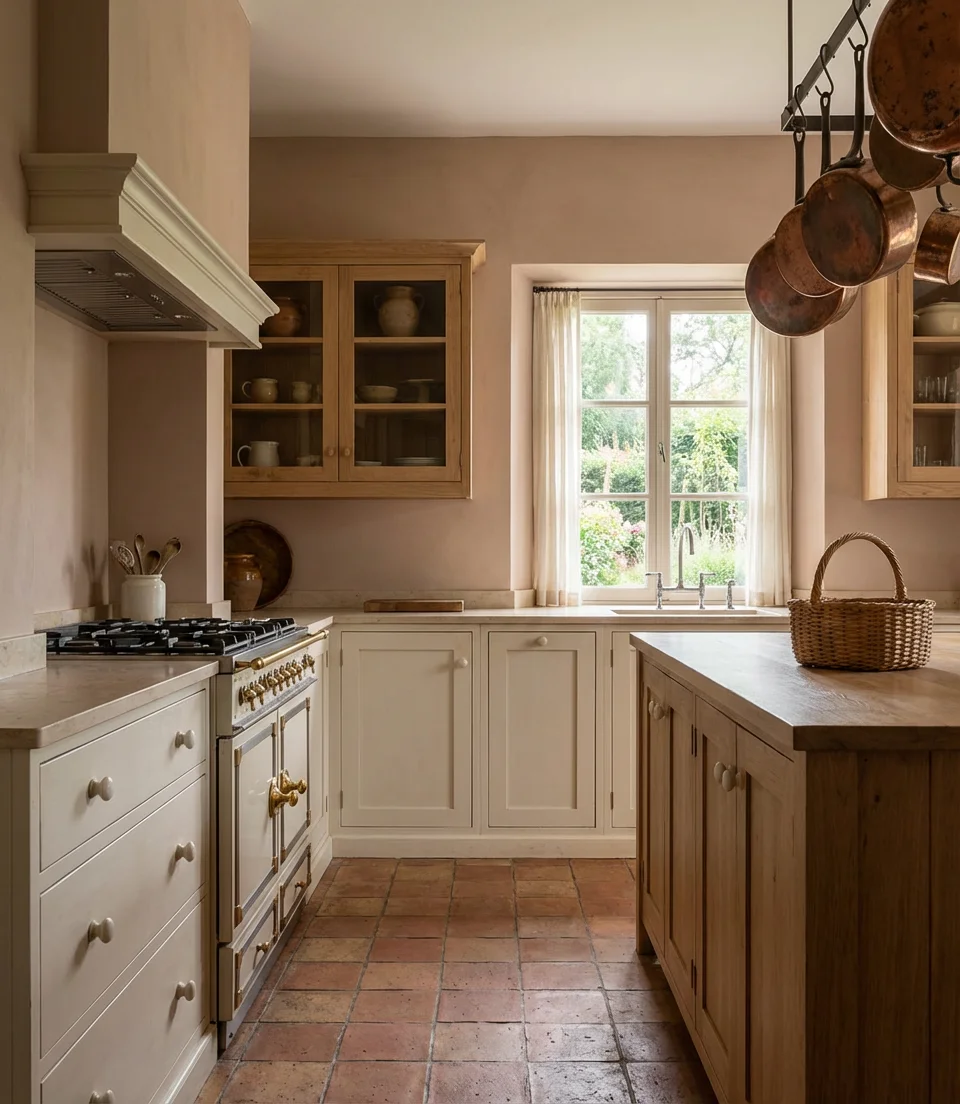
American lifestyle trends show increasing preference for these warmer, more grounded palettes as homeowners move away from the cool grays that dominated the previous decade. Warmer earth tones pair naturally with brass and bronze fixtures, natural wood tones, and the vintage textiles central to cottagecore style. They also photograph beautifully, which matters to Pinterest-savvy homeowners documenting their kitchens for inspiration boards and social sharing.
17. Ceiling Beams Adding Architectural Character
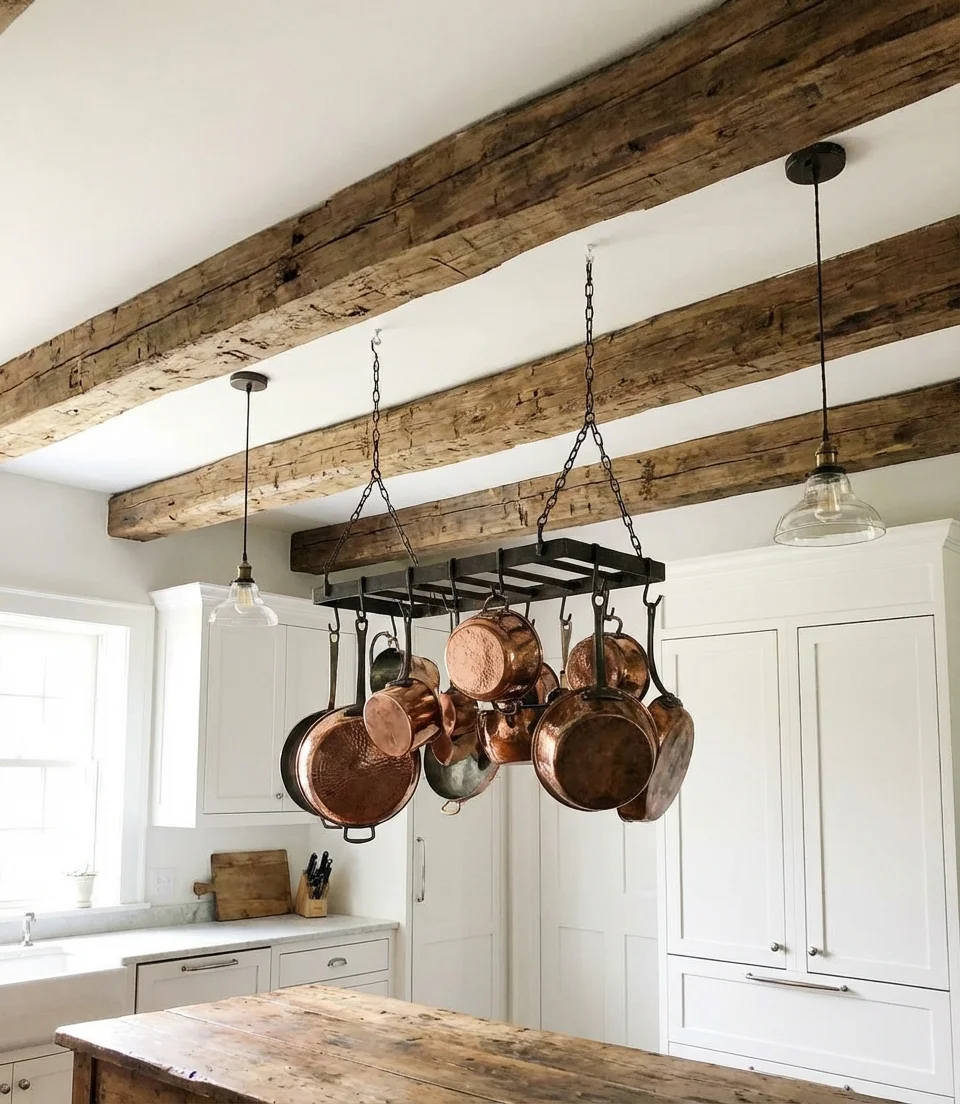
Exposed wooden ceiling beams—whether original to an older home or added during renovation—bring instant farmhouse inspiration and architectural interest to flat, characterless ceilings. Natural wood beams in oak, pine, or reclaimed barn wood create the most authentic cottagecore effect, though painted beams in white or soft gray suit modern interpretations. The beams provide practical benefits too, offering mounting points for hanging pot racks, pendant lights, or even dried herb bundles.
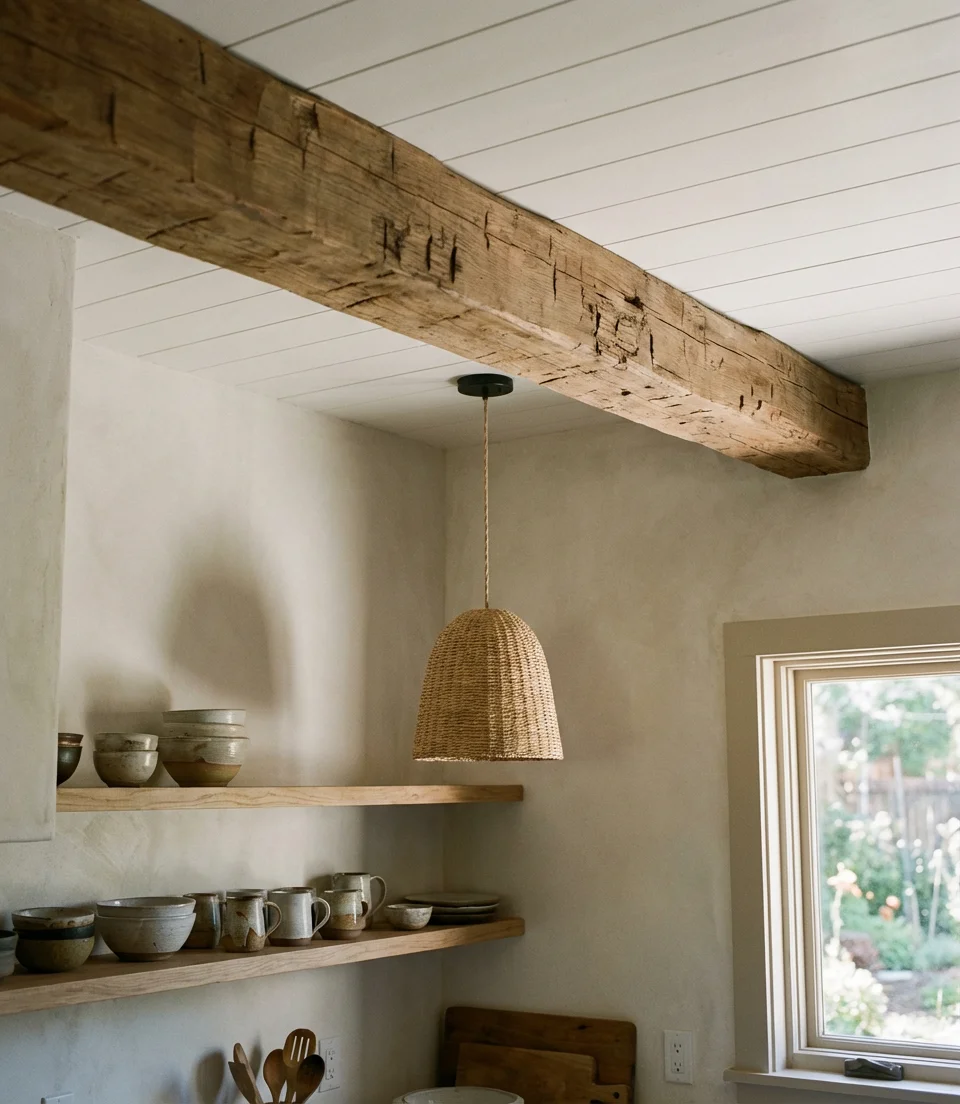
Budget-wise, faux beams made from hollow wood or polyurethane can look surprisingly convincing when properly stained and installed, costing $50-150 per beam compared to $300-800 for solid reclaimed wood. The difference becomes apparent only upon close inspection, making faux beams a practical choice for budget-conscious renovations. Space out beams proportionally to your kitchen’s size—roughly every 4-6 feet in smaller kitchens, up to 8 feet apart in larger spaces—to avoid a crowded or artificial appearance.
18. Vintage-Style Kitchen Lighting Fixtures
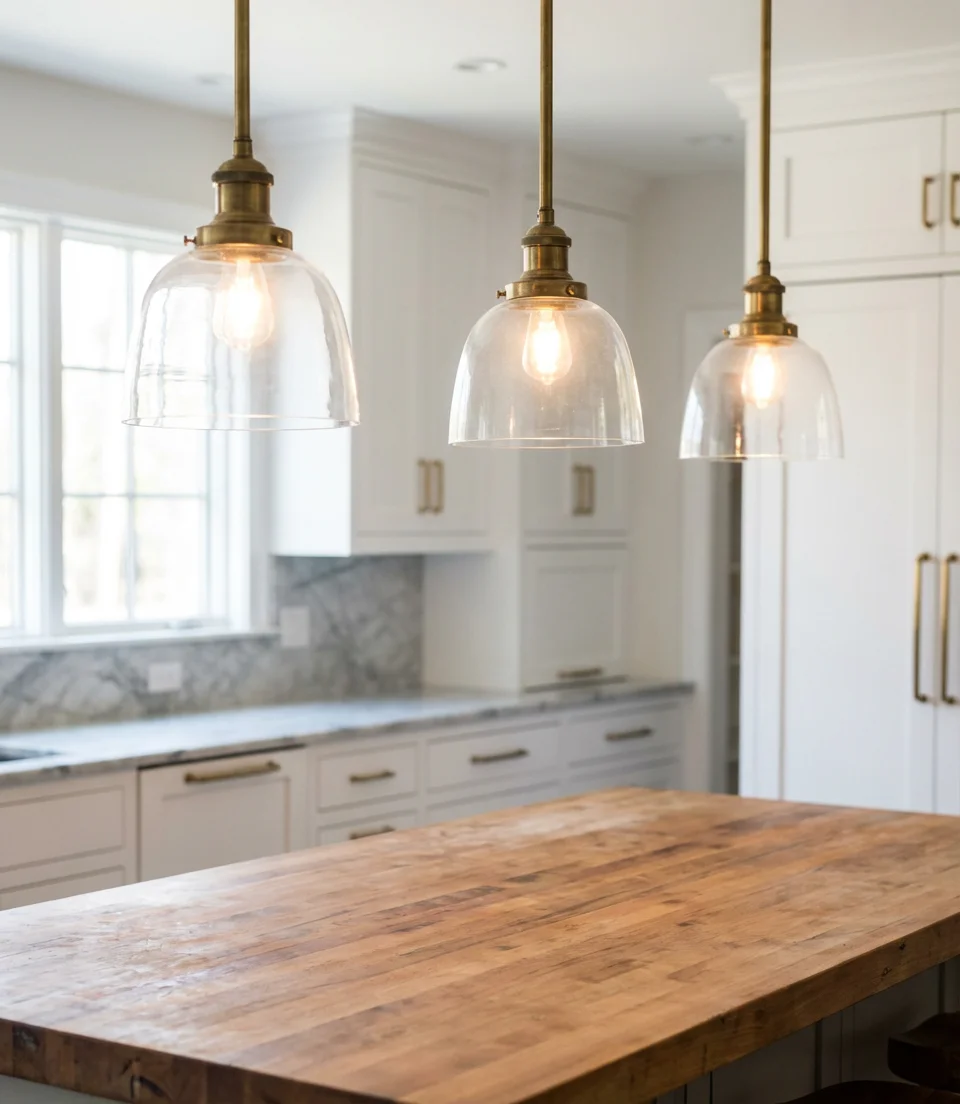
Pendant lights with vintage character—think clear glass schoolhouse globes, enamel factory shades, or delicate beaded chandeliers—provide both task lighting and major aesthetic impact over islands and dining areas. Mix finishes like aged brass, oil-rubbed bronze, or matte black to coordinate with your cabinet hardware and faucets. Multiple smaller pendants often work better than single large fixtures, creating visual interest while distributing light more evenly across work surfaces.
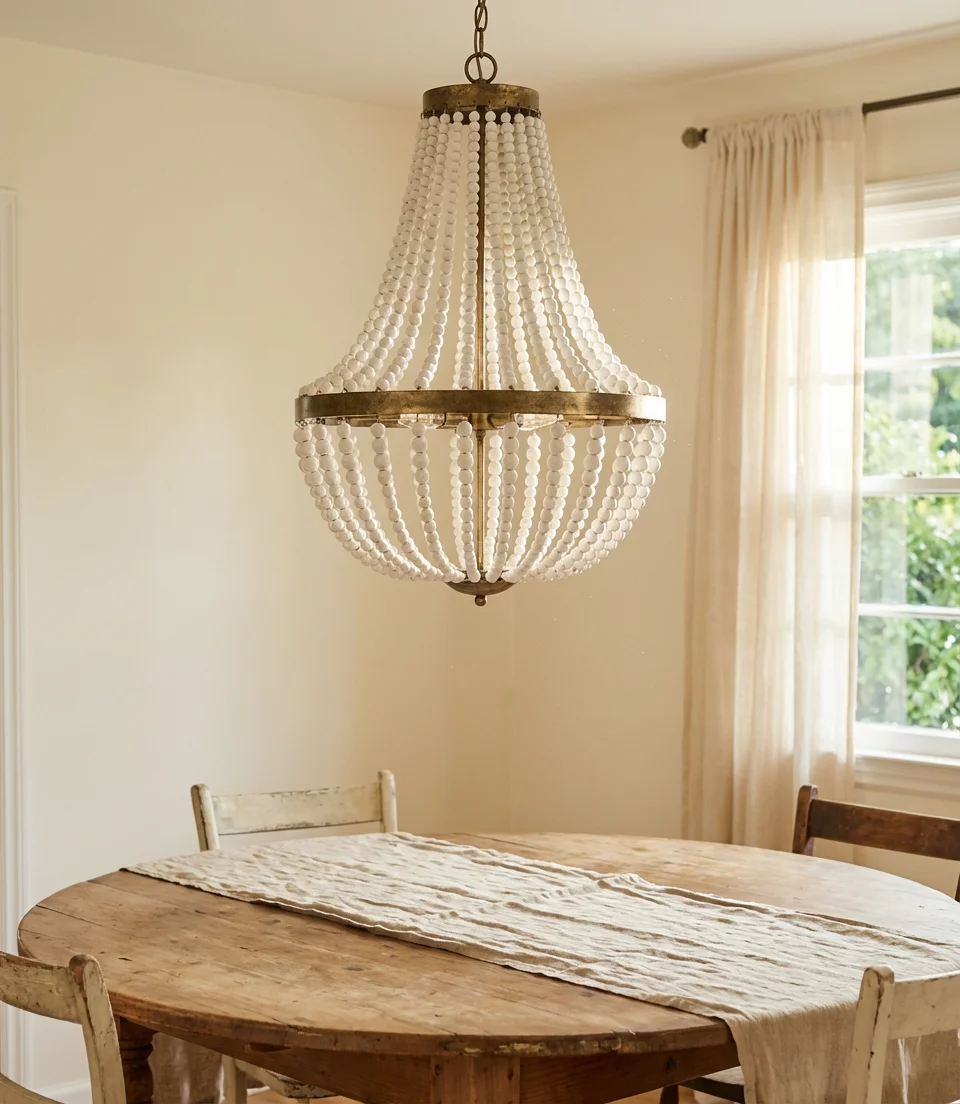
Expert commentary suggests hanging pendants 30-36 inches above island countertops for optimal task lighting without blocking sightlines across the kitchen. For dining areas, chandelier height should allow at least 30 inches of clearance from the tabletop to the fixture’s lowest point. Consider dimmer switches for all overhead lighting—they’re inexpensive to install during renovation and dramatically increase the room’s versatility, allowing bright task lighting for cooking and soft ambient light for casual dining.
19. Herb Garden in Kitchen Window
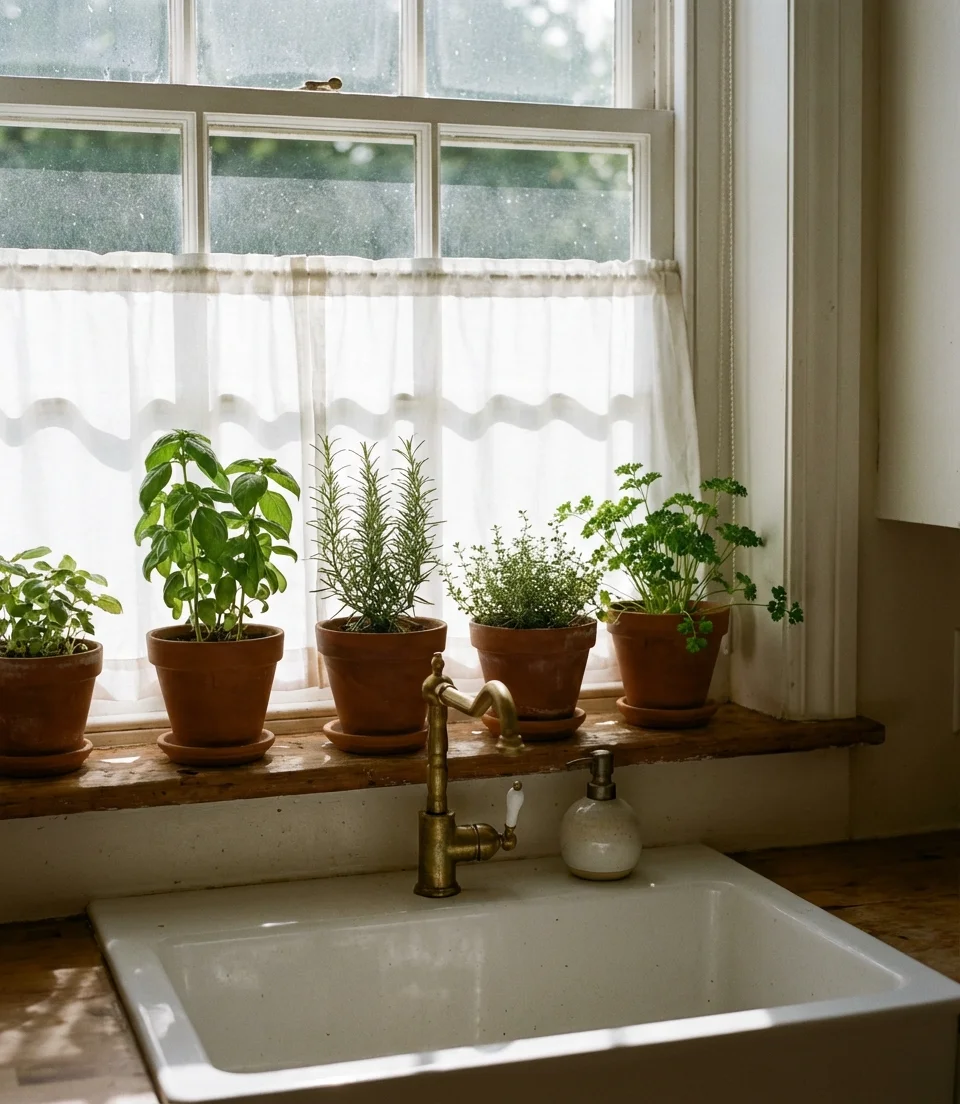
A windowsill herb garden brings living green into the kitchen while providing fresh ingredients for cooking—the ultimate cottagecore marriage of beauty and function. Choose south- or west-facing windows for sun-loving herbs like basil, rosemary, and thyme, and use vintage ceramic crocks, enamelware containers, or simple terra cotta pots for planting. The visual of fresh herbs backlit by window light adds life and movement to the space, while the practical benefit of snipping fresh basil for dinner reinforces the connection to homegrown food.
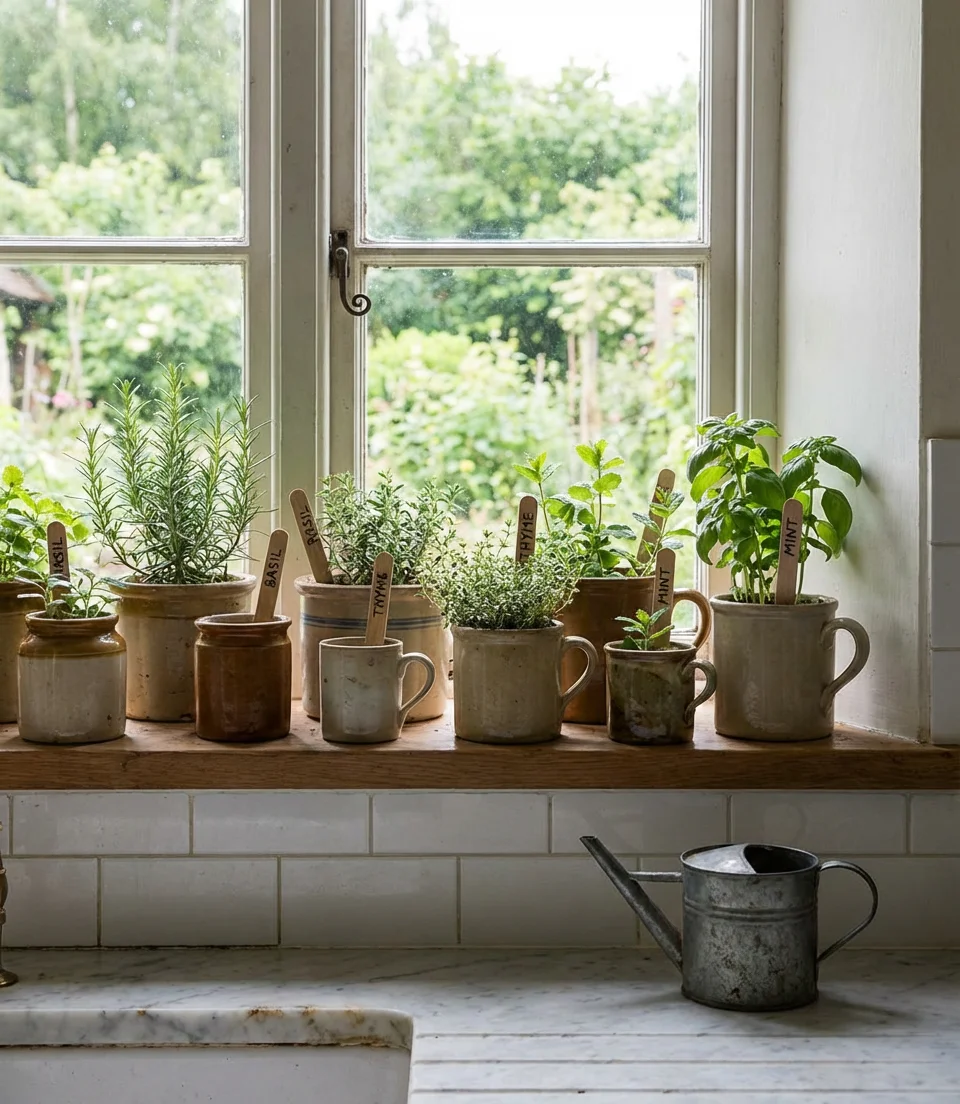
Real homeowner behavior demonstrates that kitchen herb gardens flourish when they are conveniently located, ideally within easy reach of the sink for watering and the stove for cooking. The most successful setups use self-watering pots or saucers that catch drainage, preventing water damage to windowsills and counters. Rotate pots weekly to ensure even growth since herbs naturally lean toward light, and don’t be afraid to harvest aggressively; most herbs benefit from regular trimming and will grow bushier in response.
20. Vintage Textiles and Linens
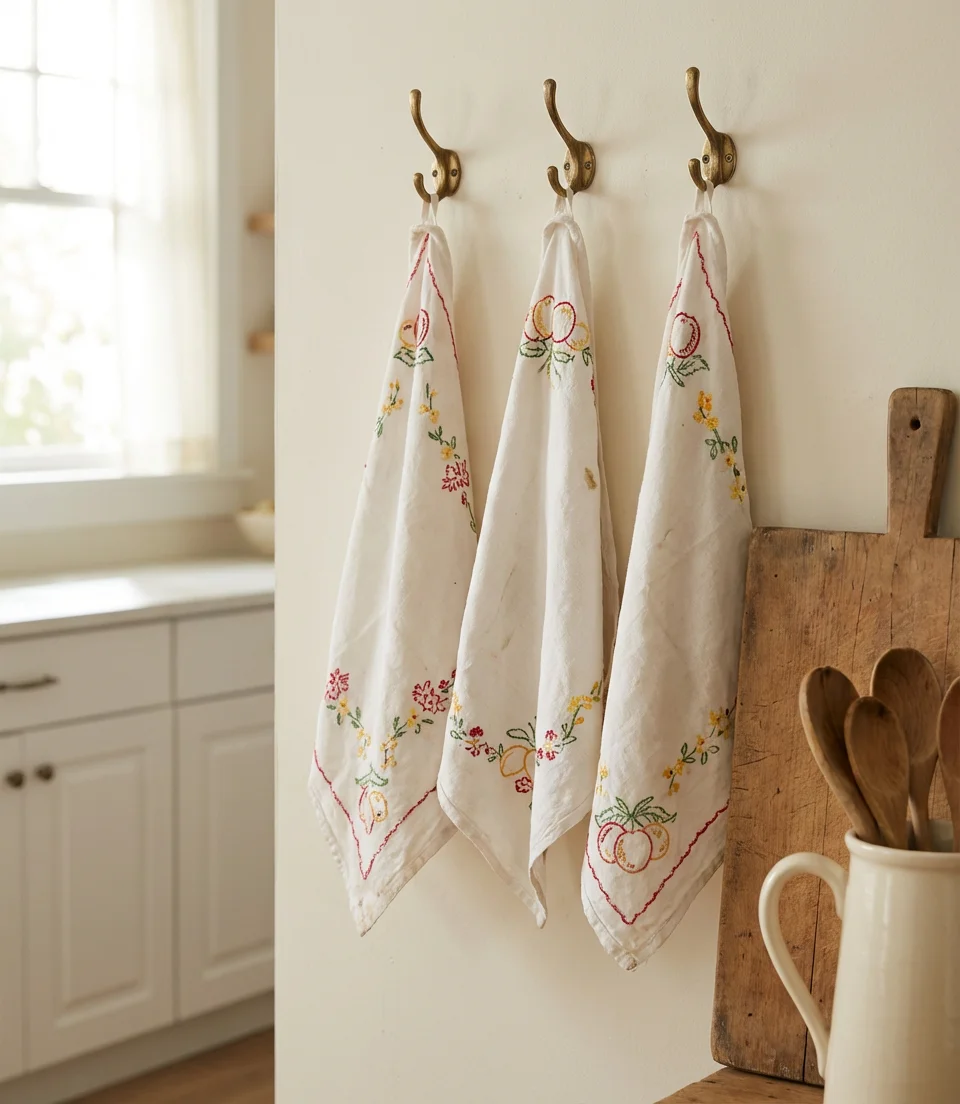
Vintage dish towels, embroidered tablecloths, and handmade pot holders add softness and pattern to the kitchen while serving practical purposes. Hunt for grandma-style florals, farm animal prints, and fruit motifs at estate sales and antique malls—genuine vintage textiles from the 1940s-60s often cost just a few dollars and have survived decades specifically because they were well-made. Display favorites by hanging them from cabinet knobs, draping them over chairs, or storing them visibly in a wooden crate on the counter.
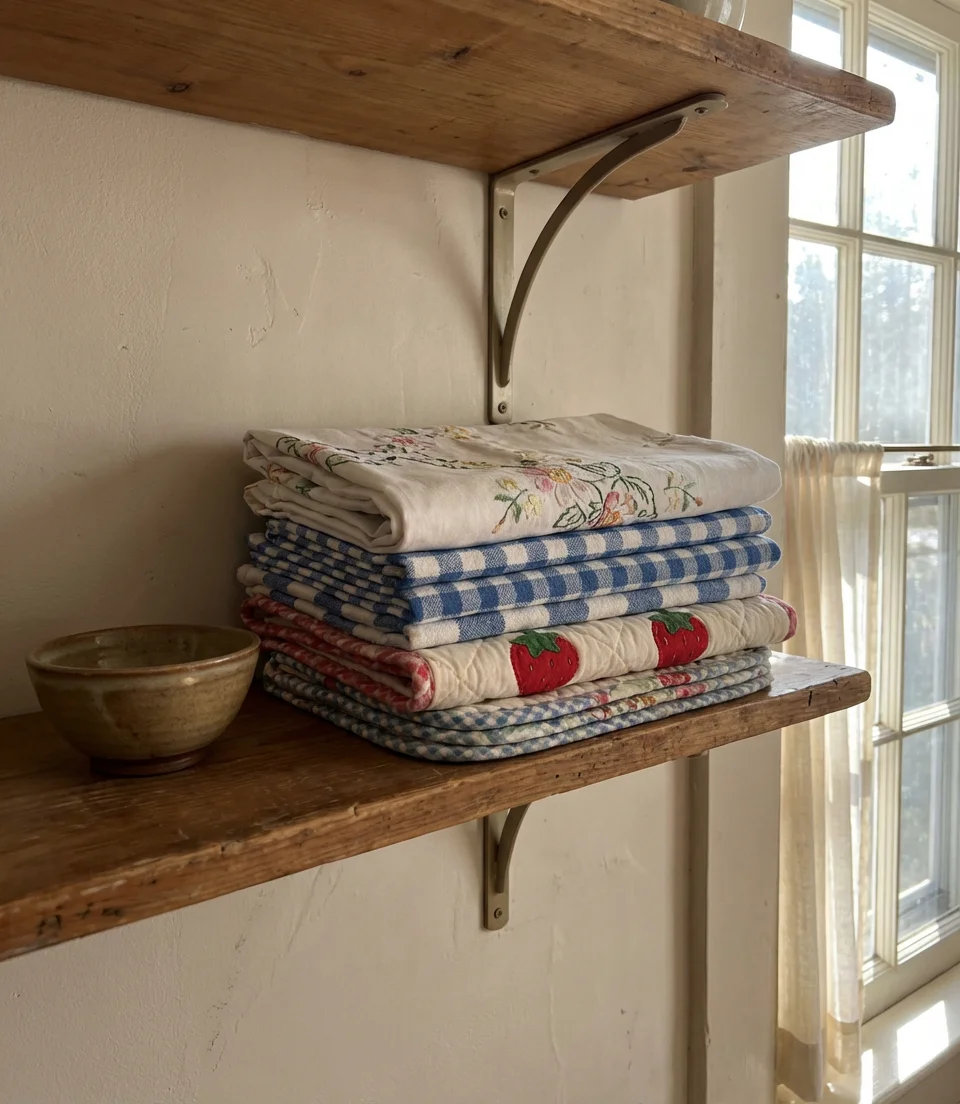
Where the style works best is when you actually use these textiles rather than treating them as too precious to touch—cottagecore celebrates the functional beauty of everyday objects. Wash vintage linens in gentle detergent, line dry them when possible, and accept that some staining and wear adds to their character. Many collectors keep a rotation of dish towels in use while storing special pieces, bringing out favorite holiday patterns or seasonal florals throughout the year to keep the kitchen feeling fresh and personal.
21. Gothic Cottagecore with Black Accents
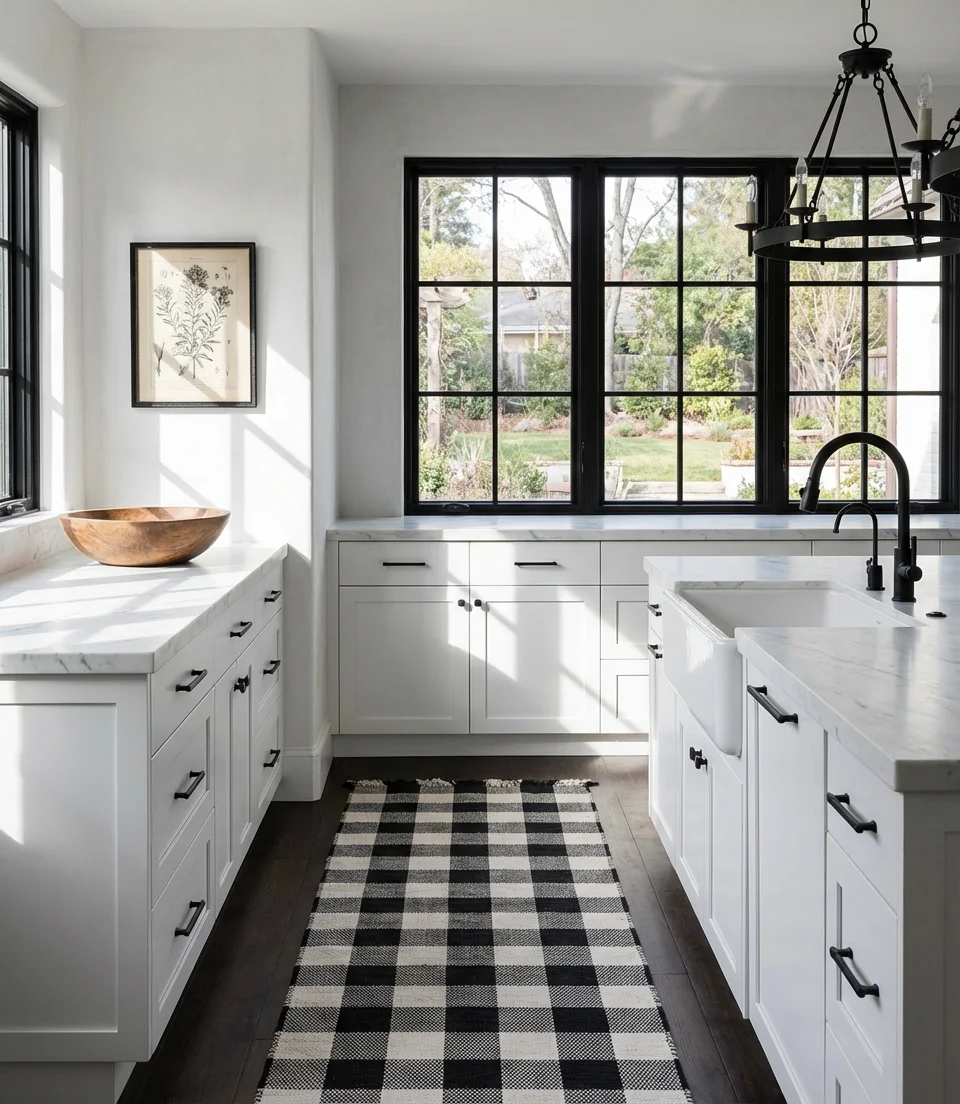
The Gothic cottagecore trend introduces dramatic dark elements—black cabinet hardware, wrought iron light fixtures, and ebony-stained wood—into traditionally soft cottage spaces for a moody, romantic effect. This aesthetic works particularly well in kitchens with ample natural light, where black accents create striking contrast without making the space feel oppressive. Think black metal bar stools against a white island, dark iron pot racks, or even black-framed windows in a contemporary interpretation of old factory casements.
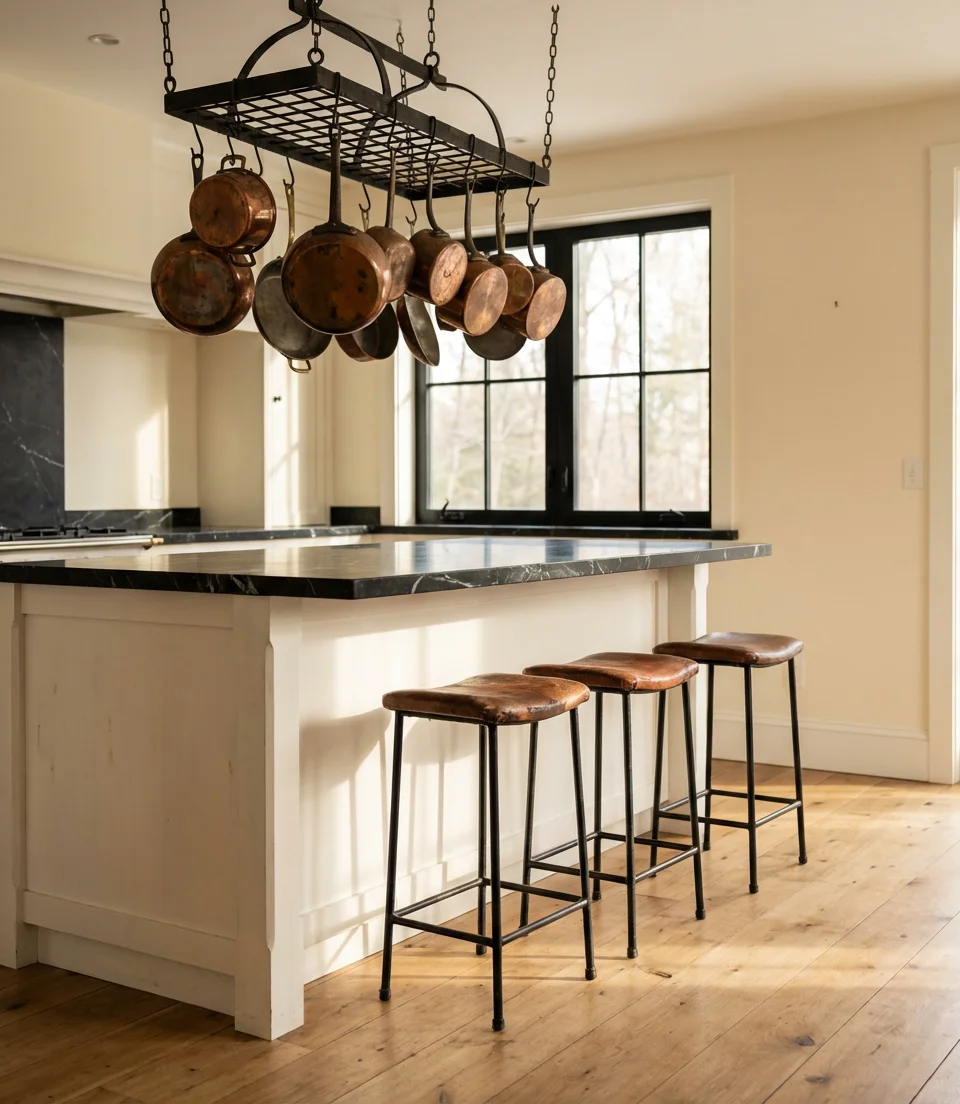
A common mistake is introducing too many black elements at once, which can make even a large kitchen feel heavy and closed-in. Start with black cabinet hardware as your most affordable test—if you love the look, gradually add a black faucet, light fixtures, or window frames. The beauty of this approach is that black reads as classic rather than trendy, so these investments won’t feel dated in five years the way more colorful choices might.
22. Reclaimed Wood Accents and Features
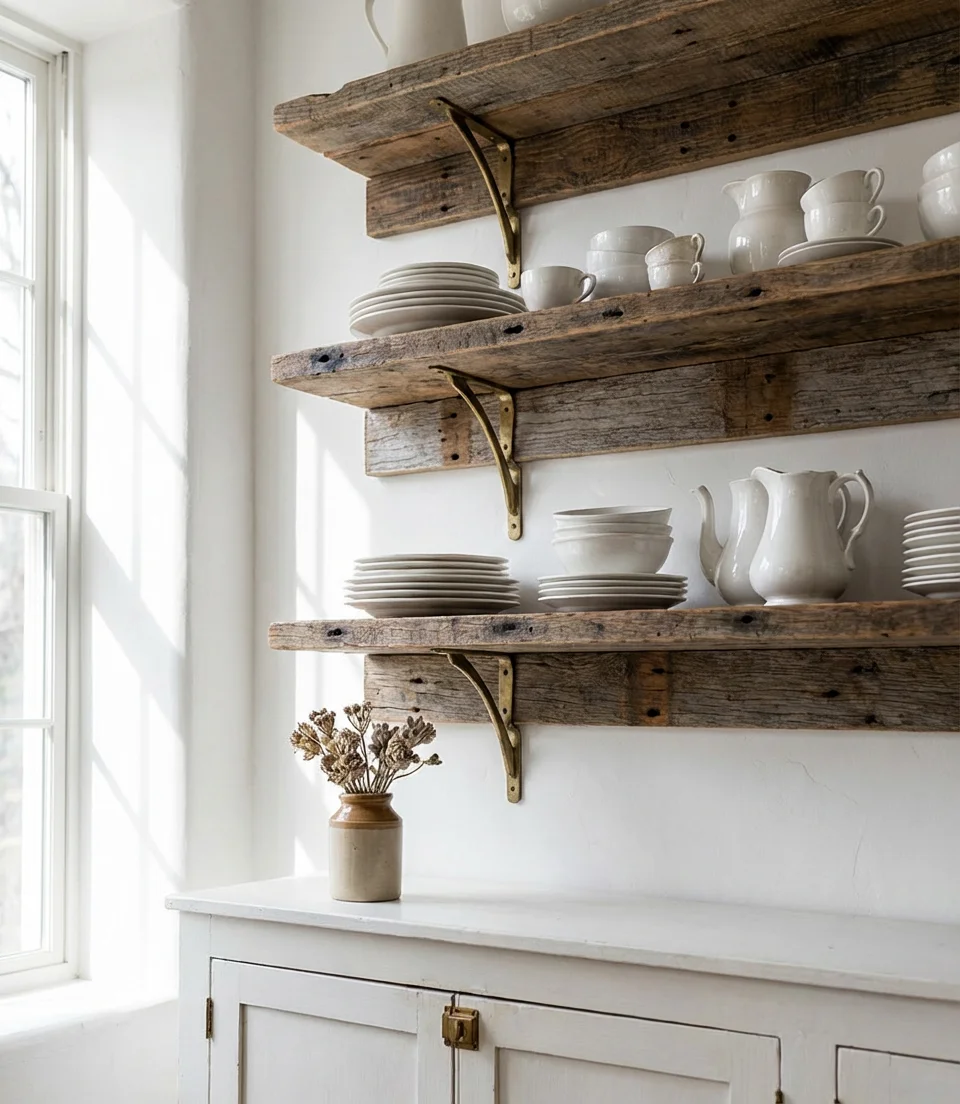
Incorporating reclaimed wood from old barns, factories, or demolished buildings brings authentic history and vintage character that new materials simply cannot replicate. Use weathered planks for open shelving, create an accent wall behind a range or table area, or build a custom range hood from salvaged beams. The unique patina, nail holes, and saw marks reveal stories, and the dense old-growth wood frequently outlasts contemporary lumber. This approach aligns perfectly with cottagecore values of sustainability and connecting with the past.
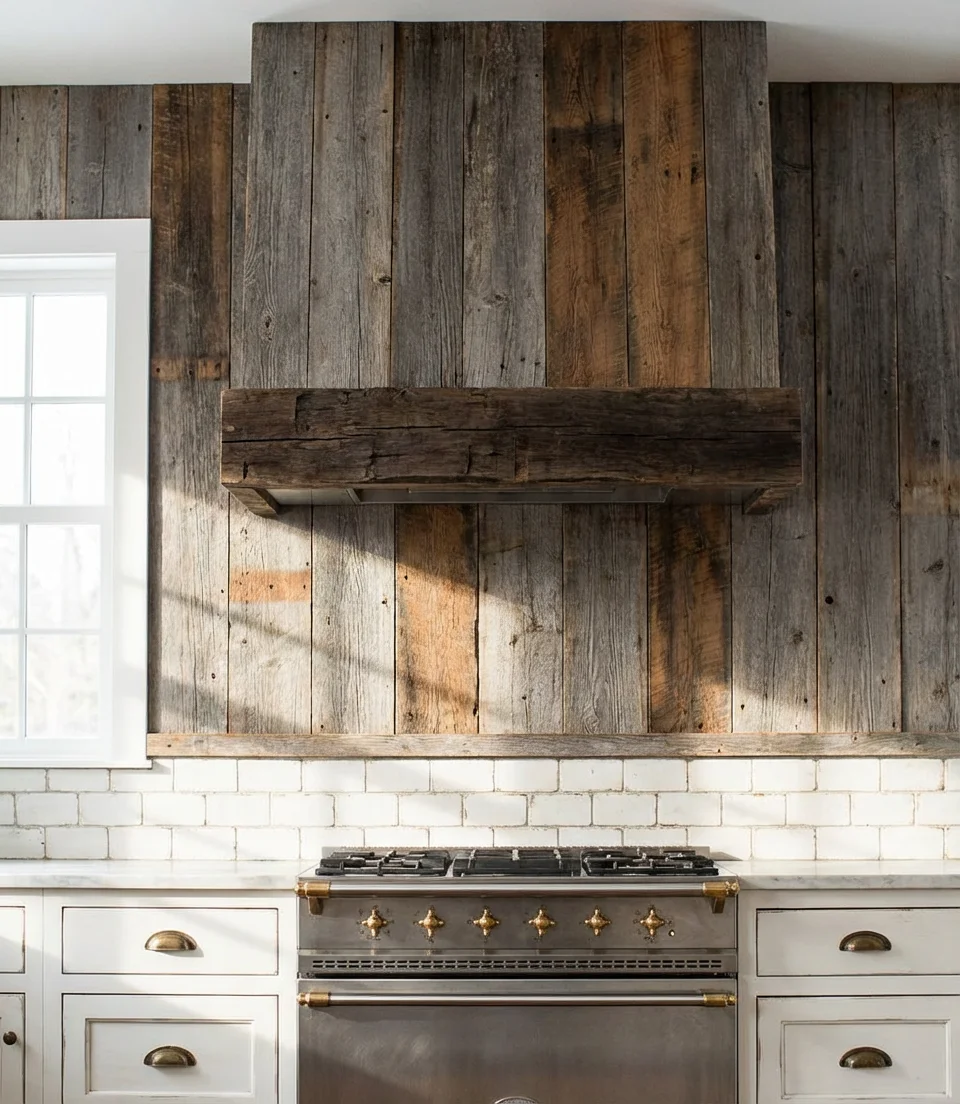
In the Pacific Northwest and New England, where my consultations often focus on historic home renovations, architectural salvage is relatively abundant and affordable—you might spend $3-8 per board foot compared to $15-25 for new old-growth lookalikes. However, reclaimed wood requires careful inspection for insects, treatment if necessary, and proper sealing for kitchen use. Many suppliers now offer kiln-dried, dewormed reclaimed wood specifically prepared for interior applications, eliminating concerns while preserving character.
23. Cozy Kitchen Breakfast Area
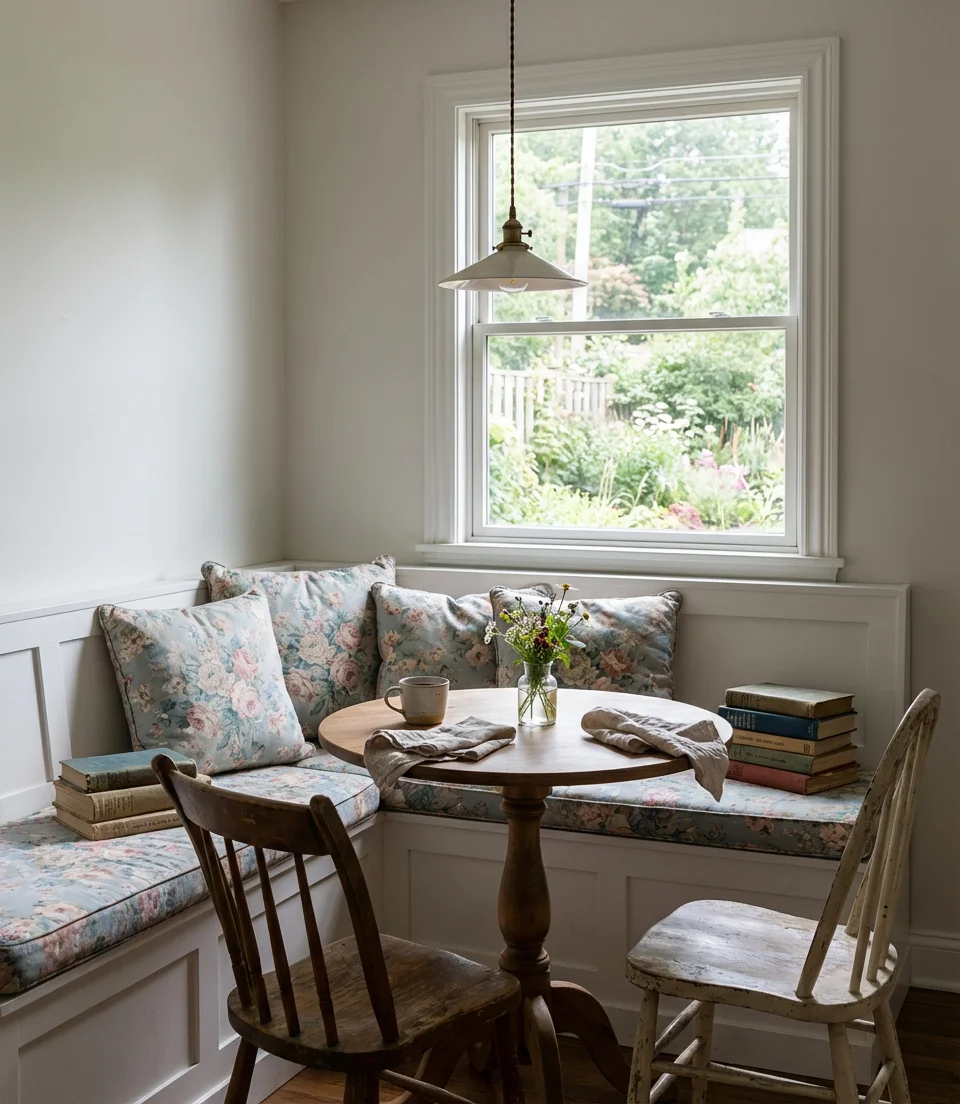
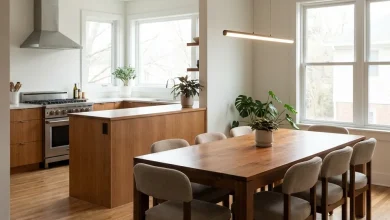
A dedicated breakfast spot within the kitchen—whether a built-in banquette, a small round table for two, or a larger farmhouse table if space allows—creates a cozy gathering place that’s central to cottagecore living. Layer the seating with vintage cushions, add a small vase of fresh or dried flowers, and position it near windows for natural light and garden views. This becomes the spot for morning coffee, recipe planning, homework sessions, and casual meals that don’t require the formality of a separate dining room.
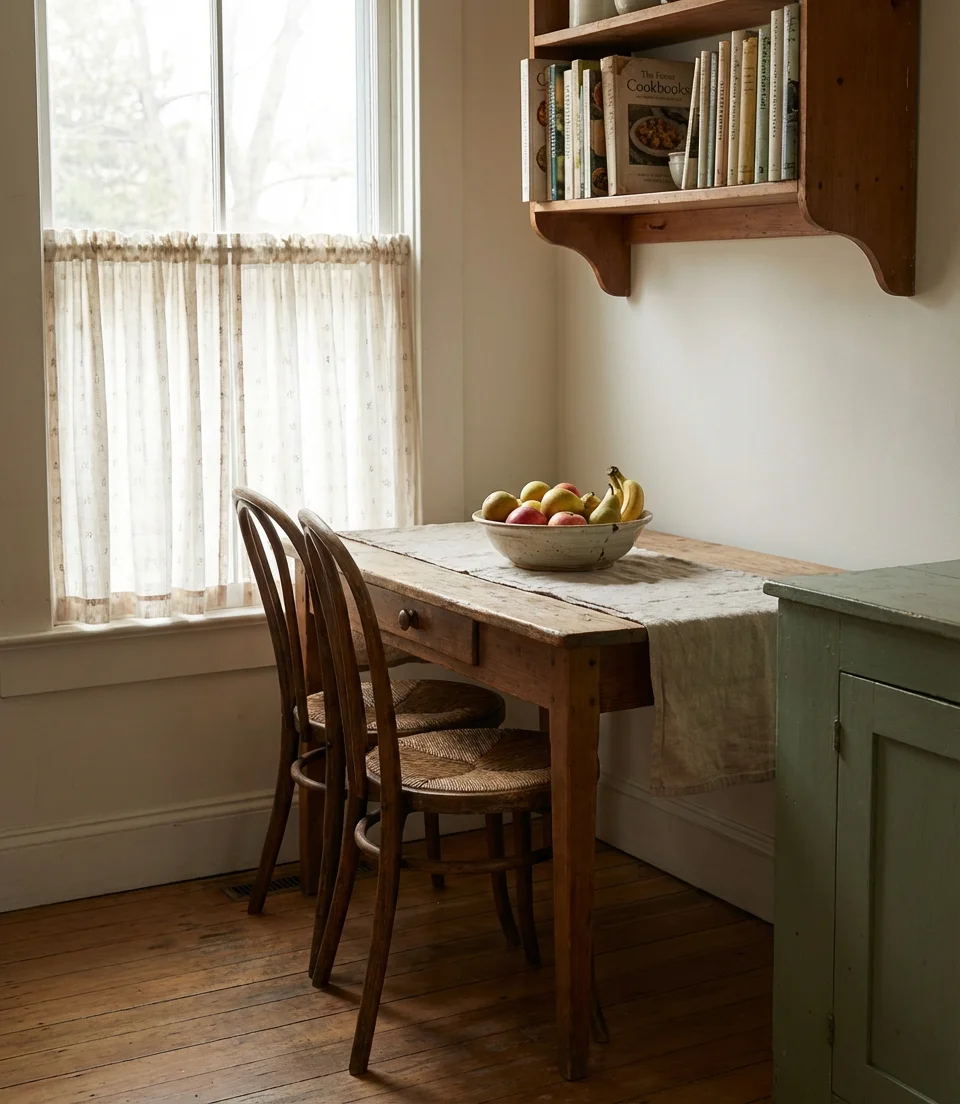
Practical insight from space planning: even small kitchens can accommodate a breakfast spot if you think creatively about scale and furniture. A 30-inch round table needs only about 5 feet of total floor space and can seat two comfortably for meals or four for coffee and conversation. Wall-mounted drop-leaf tables work beautifully in very tight spaces, folding down when not in use. The key is ensuring the breakfast area doesn’t block the kitchen work triangle or create traffic congestion during cooking.
24. Natural Fiber Rugs and Floor Coverings
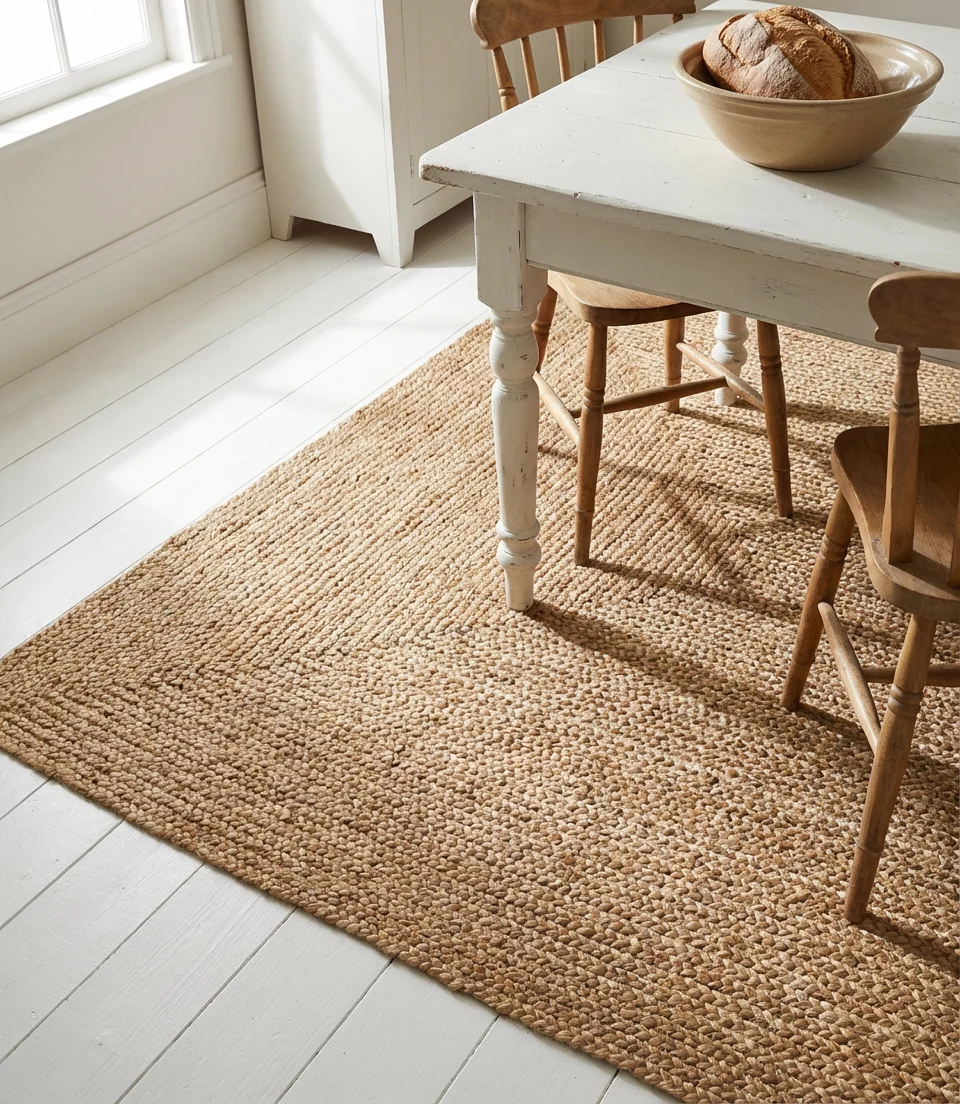
Jute, sisal, or cotton rugs in natural tones add warmth underfoot while softening the hard surfaces typical in kitchens—tile, wood, or stone flooring. The aesthetic works because these materials reference the natural world and traditional crafts central to cottagecore philosophy. Choose flat-weave or low-pile options that won’t trap crumbs and can be easily shaken out or vacuumed, and position rugs in lower-traffic areas like in front of the sink or beneath a breakfast table rather than directly in front of the range where spills are inevitable.
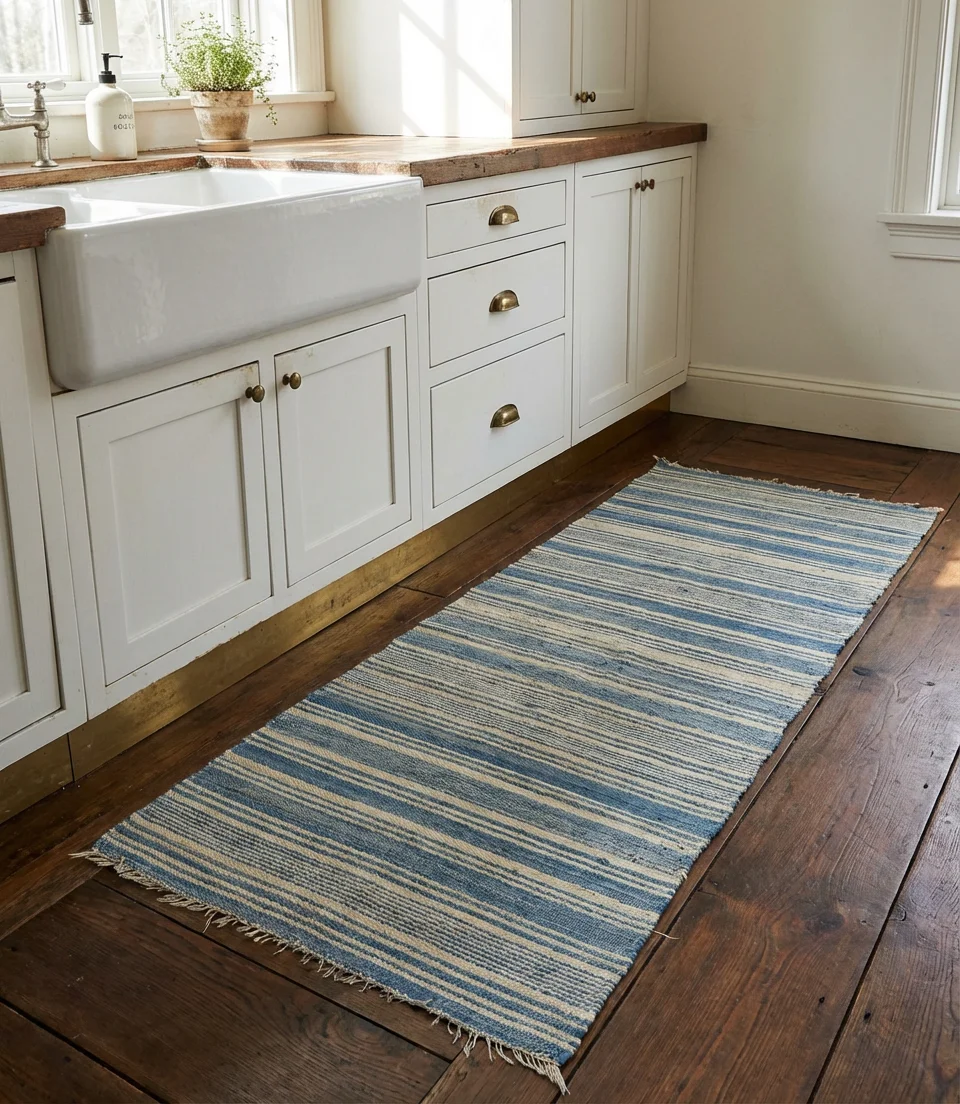
Common mistakes include choosing rugs that are too large for the kitchen’s work zones, creating tripping hazards, or selecting materials that can’t handle kitchen moisture and food spills. Cotton rugs are machine-washable and therefore most practical for heavy-use kitchens, while jute and sisal look beautiful but stain permanently if exposed to grease or wine. Many experienced cottagecore homeowners keep a rotation of rugs, swapping them seasonally and relegating the most worn pieces to less visible areas rather than replacing them entirely.
25. Personalized Cottagecore Kitchen Ideas
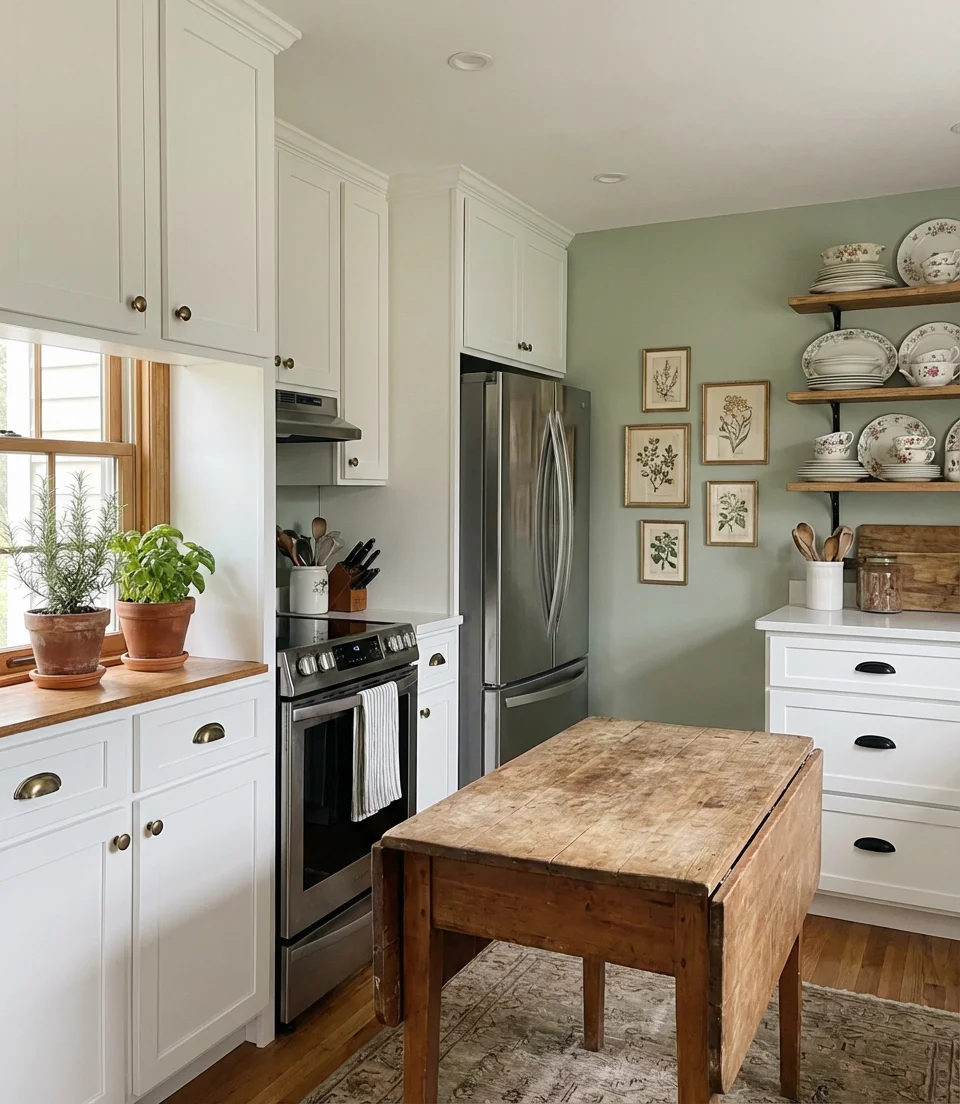
The most successful cottagecore kitchens blend multiple ideas and inspiration sources into something uniquely personal rather than following a single prescribed aesthetic. Mix modern efficiency with vintage charm, combine dark and light elements, layer family heirlooms with flea market finds, and trust your instincts about what feels right for your space and lifestyle. Your kitchen should reflect how you actually live—whether that’s baking bread weekly, hosting large family dinners, or simply enjoying morning coffee in a beautiful space.
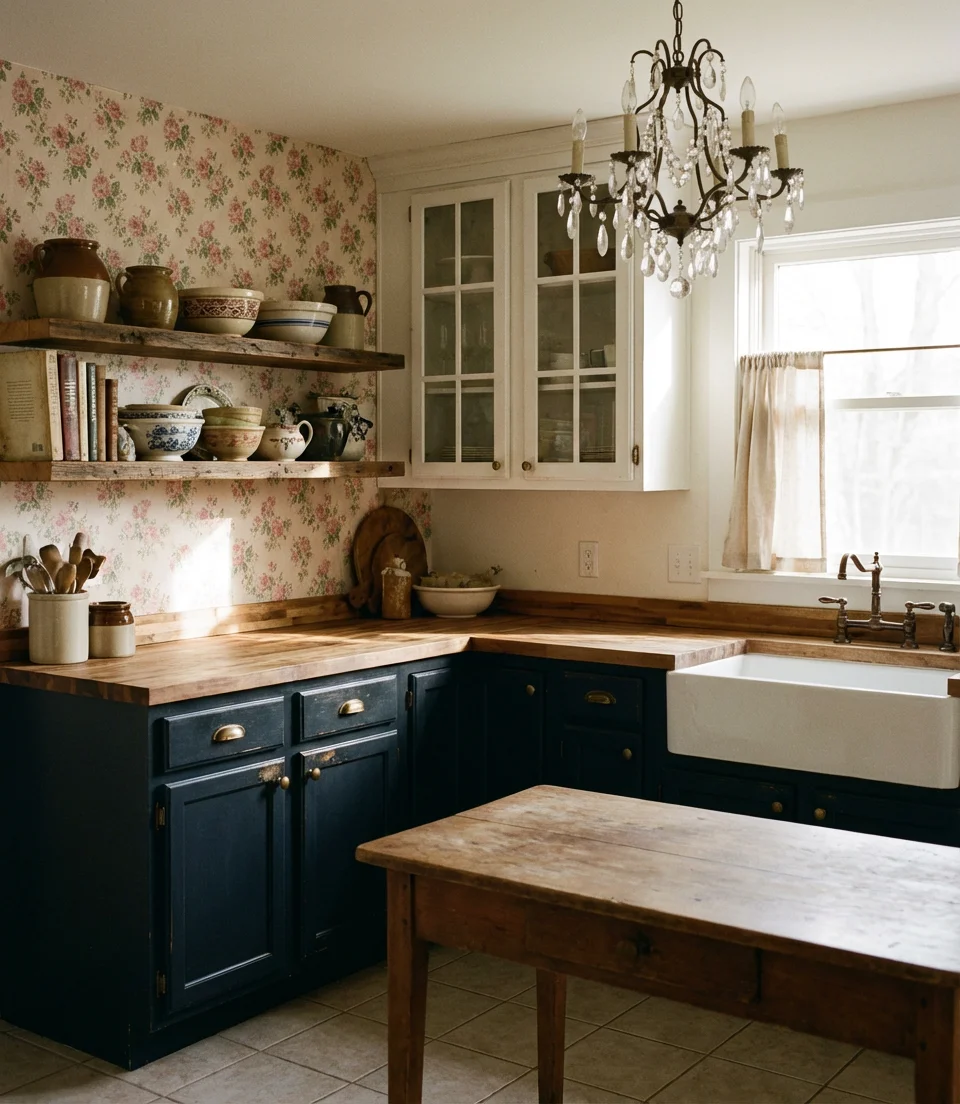
Expert-style commentary from interior designers who specialize in cottage aesthetics emphasizes that the best spaces evolve rather than being completed in a single renovation. Start with the major structural elements—cabinetry, countertops, and flooring—in relatively neutral choices that provide a foundation for personalization. Then layer in color, pattern, vintage finds, and meaningful objects gradually as you discover what truly resonates with your taste. This approach spreads costs over time and ensures the finished kitchen feels genuinely yours rather than like someone else’s Pinterest board brought to life.
Creating a cottagecore kitchen in 2026 means honoring the aesthetic’s roots in simplicity, natural materials, and nostalgic charm while adapting it to contemporary needs and personal style. Whether you’re drawn to dark, moody spaces, soft pastel palettes, Gothic drama, or sunny farmhouse brightness, the key is choosing elements that genuinely resonate with how you want to live. Share your favorite cottagecore kitchen ideas in the comments below—we’d love to hear which of these approaches inspires your space.