
Beanbag chairs have evolved significantly from the vinyl-covered spheres of the 1970s, and they are experiencing a significant design moment in 2026. Americans are searching Pinterest in droves for seating that feels as comfortable as it looks—something that fits a cozy bedroom corner, a stylish living room, or even a sprawling open-plan loft. Whether you’re drawn to sculptural flower shapes, buttery leather finishes, or a giant cloud of fluff your whole family can sink into, there’s a beanbag out there with your name on it. This guide walks you through some of the most inspiring ideas trending right now, with real styling tips to help you make the right pick for your space.
1. Aesthetic Crochet Bean Bag Chair for Boho Bedrooms
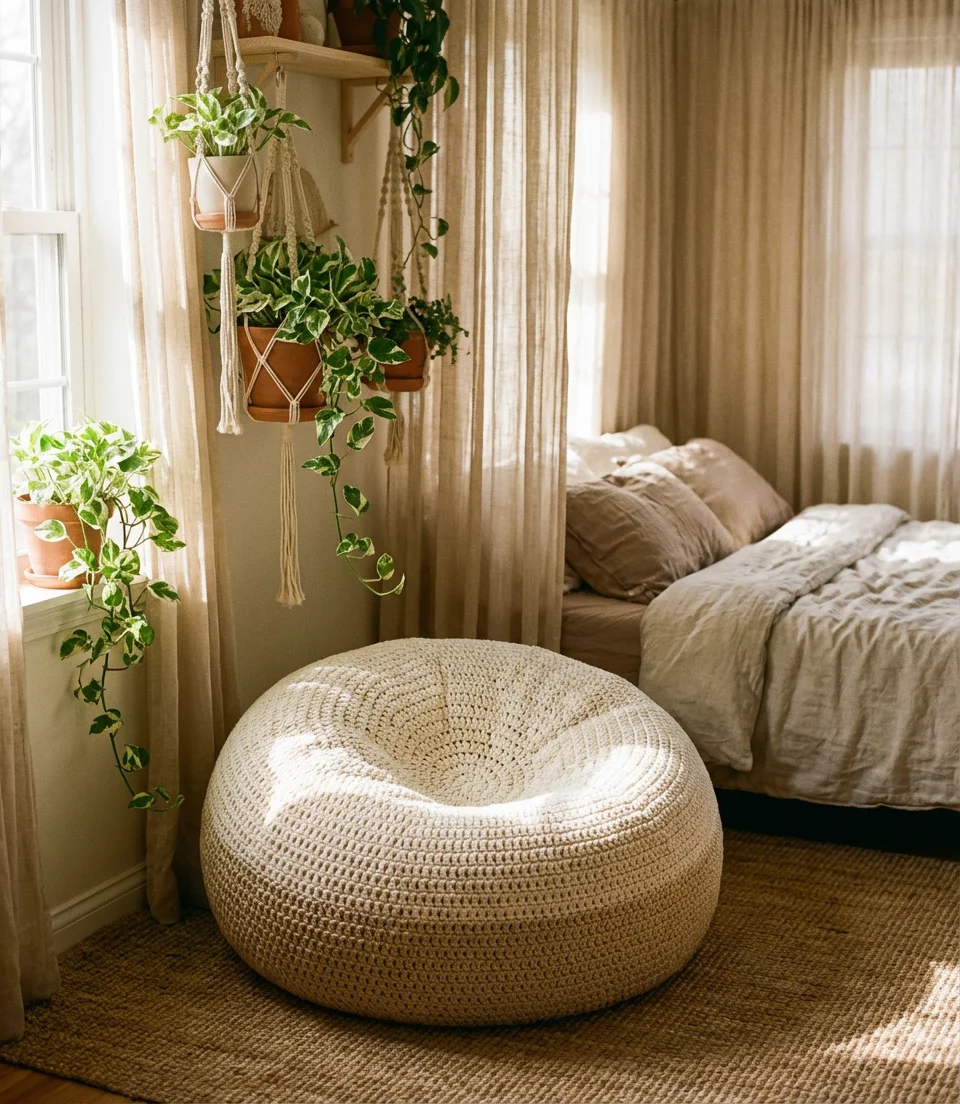
A crochet beanbag chair could be the perfect addition to your aesthetic and earthy-themed bedroom. These hand-textured covers bring an organic warmth that no mass-produced piece can replicate—they feel deliberate, artisan, and deeply personal. Combine a crochet bean bag chair with a jute rug, trailing pothos, and soft linen bedding to create a space that could easily be featured on a Pinterest mood board. The open-weave texture also breathes well, making it surprisingly comfortable for warmer months.
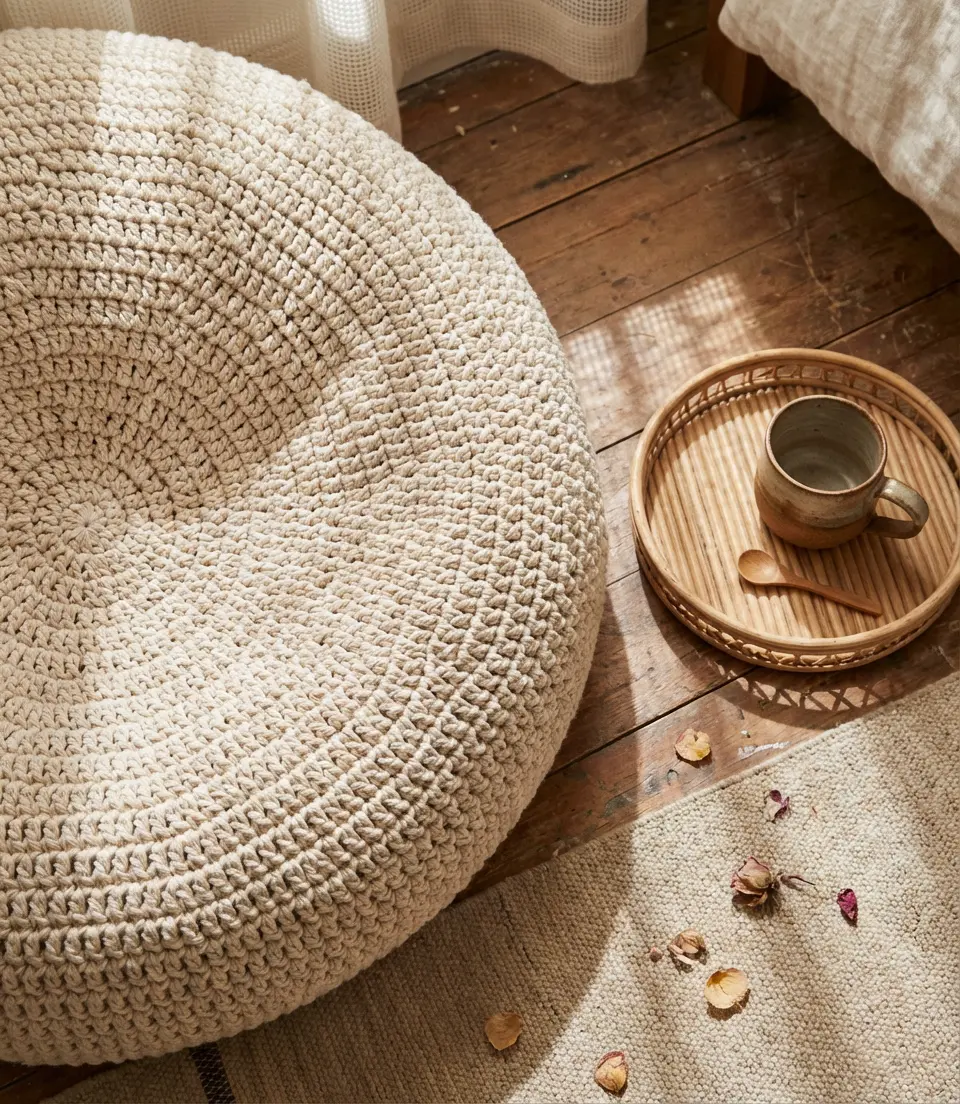
You can find crochet bean bag covers on Etsy and small home goods shops, often in neutral cream, terracotta, or sage tones that complement a boho or cottagecore setup. If you’re handy with a hook, DIY kits are another option—chunky cotton yarn works especially well for the size and structure needed. One thing to watch: crochet weaves can snag easily on rough surfaces, so keep them off splintery wood floors. A soft area rug underneath protects the cover and adds another layer of texture to the room.
2. Giant Oversized Bean Bag for Family Living Rooms
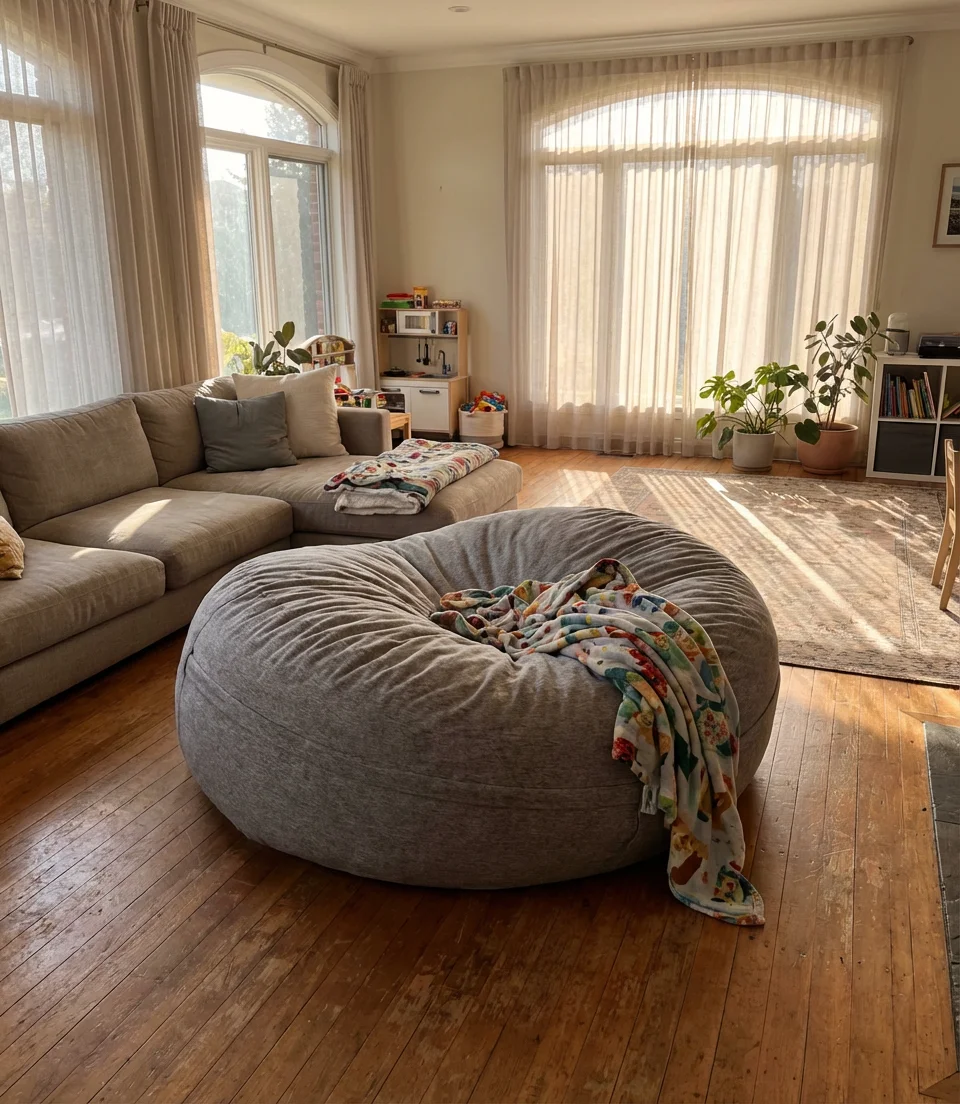
There’s something almost magnetic about a truly giant beanbag dropped into the center of a family living room—kids migrate toward it instantly, and adults aren’t far behind. The oversized format, think six feet across or more, means two adults can lounge comfortably side by side, or a parent and a couple of kids can pile on for movie night without anyone falling off. It reads casual and inviting rather than formal, which is exactly the energy most American families are chasing in their shared spaces right now. Look for covers with a zipper so the inner liner can be washed separately.
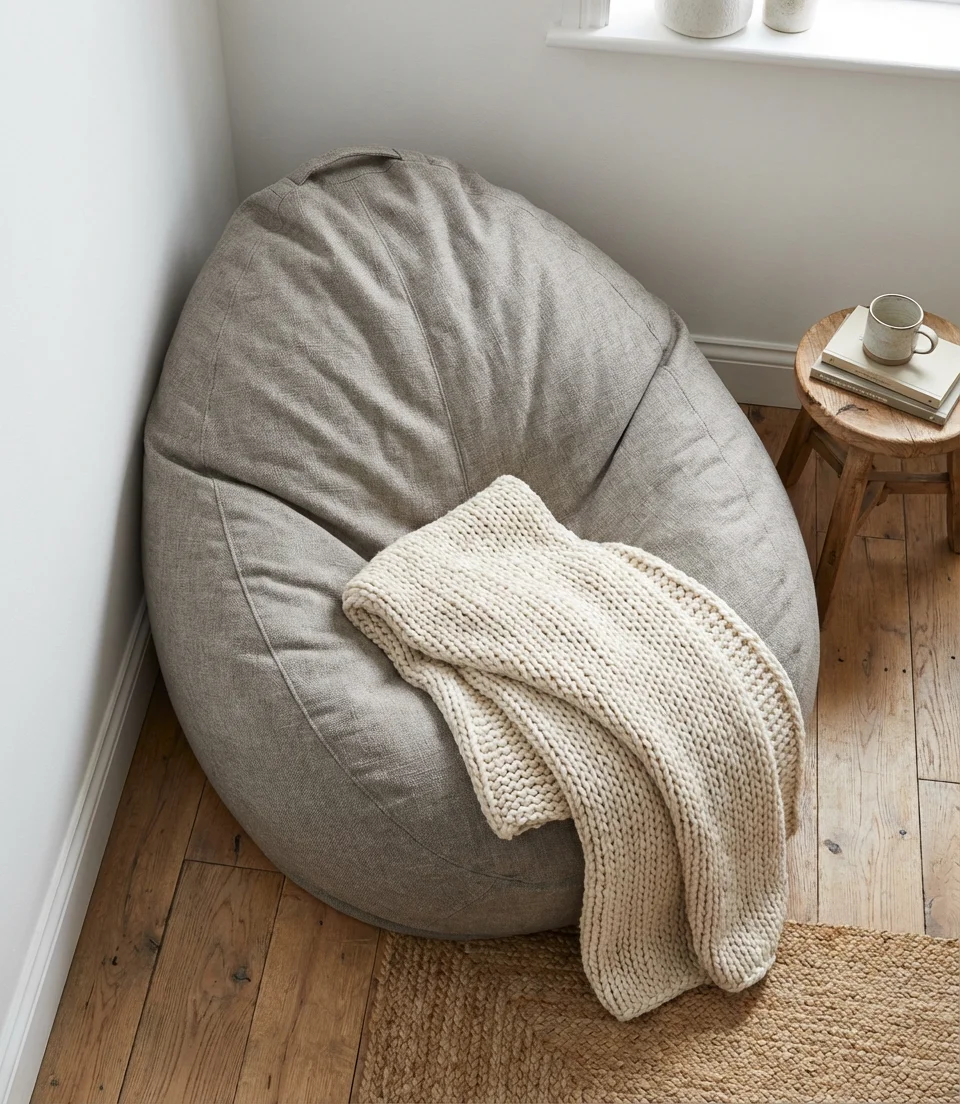
Storage is the real challenge with a piece this size. Many families in smaller homes—particularly those in urban apartments in cities like Chicago or Seattle—push it against a wall when not in active use and drape a throw over it so it reads as a design choice rather than a leftover. If you fill yours with shredded memory foam rather than traditional EPS beads, it holds its shape significantly better over time and doesn’t deflate into an unsatisfying pancake after a few months of use. Budget around $150–$350 for a quality oversized option with a washable cover.
3. Leather Bean Bag Chair for a Modern Living Room
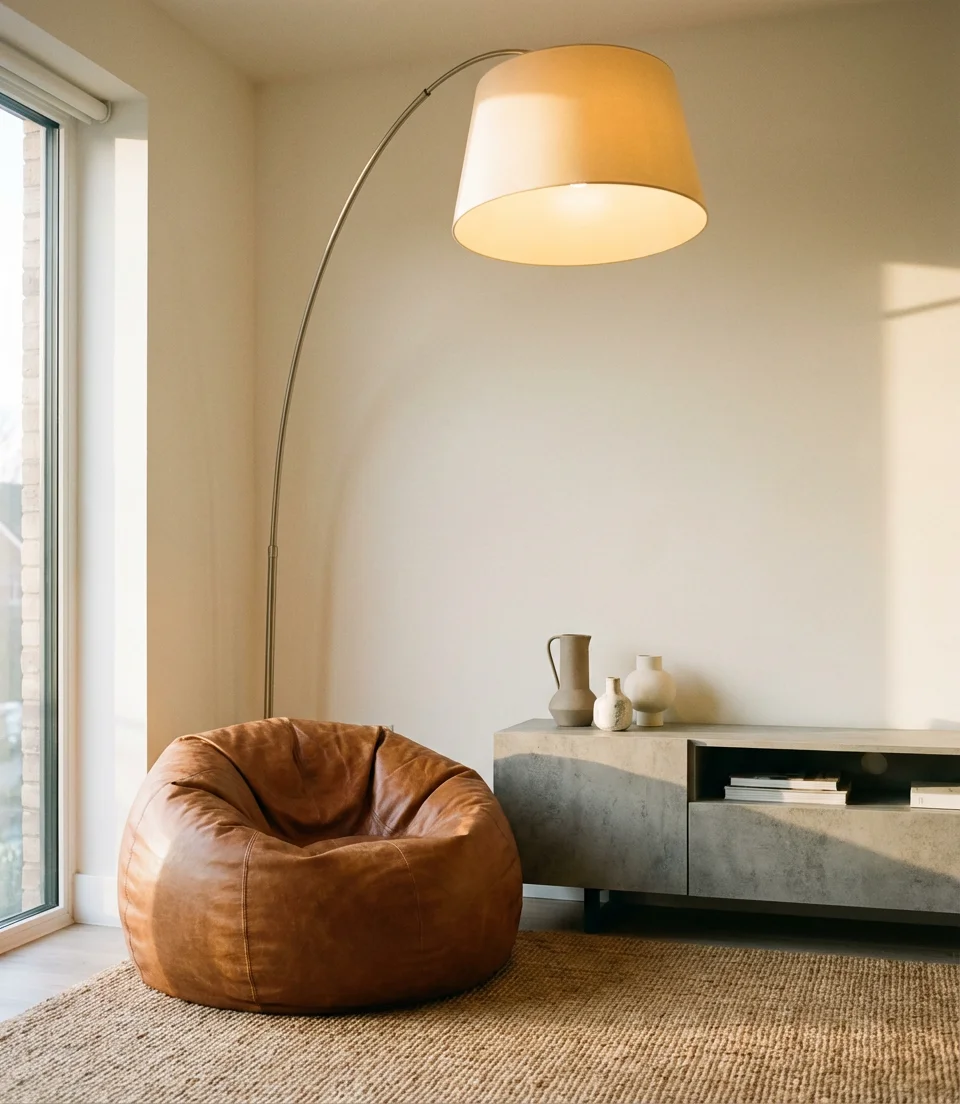
In a modern living room, a leather beanbag chair is a genuinely sharp pairing, combining casual and polished elements. Leather (and high-quality faux leather) brings structure and a grown-up edge that lifts the beanbag out of the “kids’ playroom” category entirely. Think of a deep cognac or matte black leather round against a concrete-look wall, beside a low-slung sofa and a sculptural coffee table. It reads intentional rather than accidental, which is the whole point. The surface also wipes clean in seconds, a huge bonus for households with pets or kids.
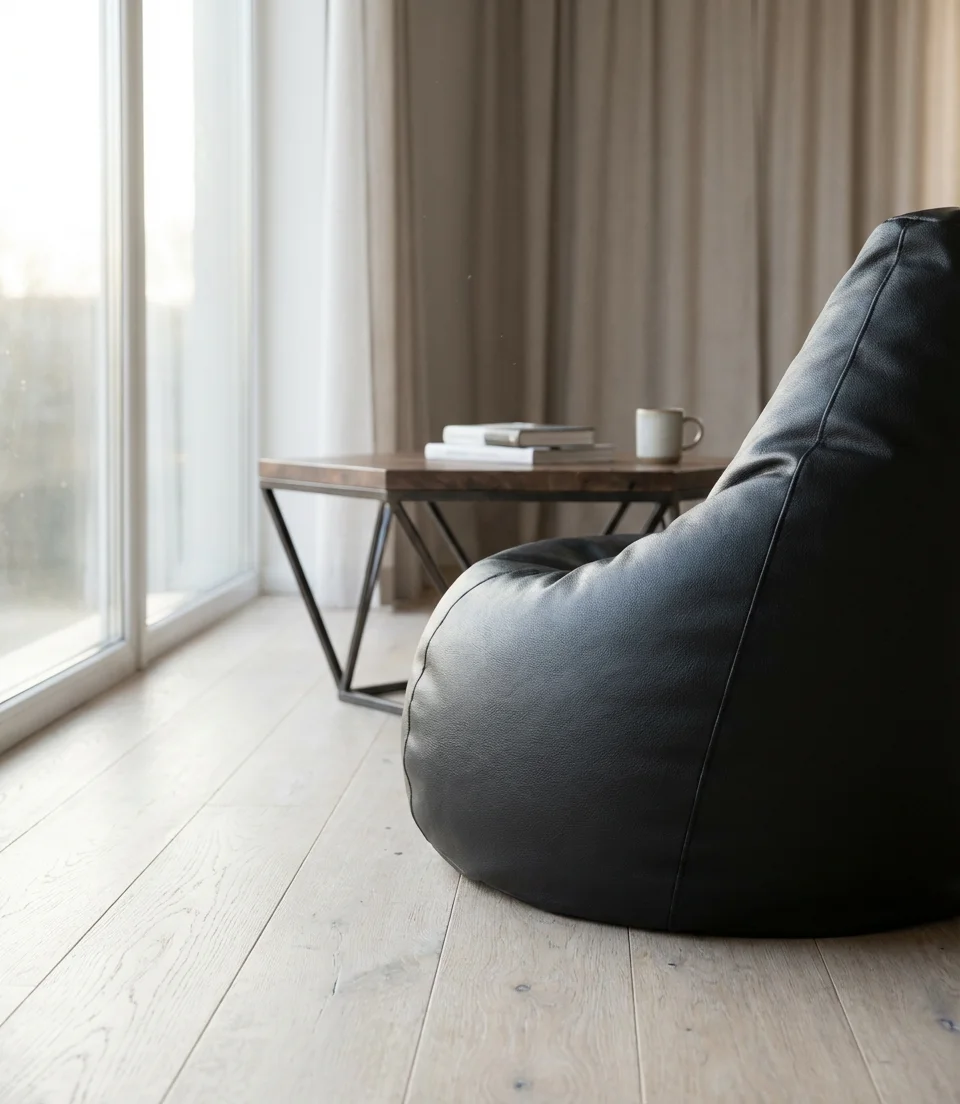
Interior designers who work in contemporary and minimalist spaces often use leather bean bags as a way to add seating without the visual weight of an extra armchair. The key is proportion: in a large, open-plan room, go for a substantial size so the piece doesn’t disappear. In a smaller space, a medium round leather bag in a neutral tone keeps things from feeling crowded. Genuine leather options start around $300 and can climb well past $700 for premium hides, while convincing PU leather versions in the $100–$200 range are more than respectable for most households.
4. Pink Bean Bag Chair for a Cozy Bedroom Aesthetic
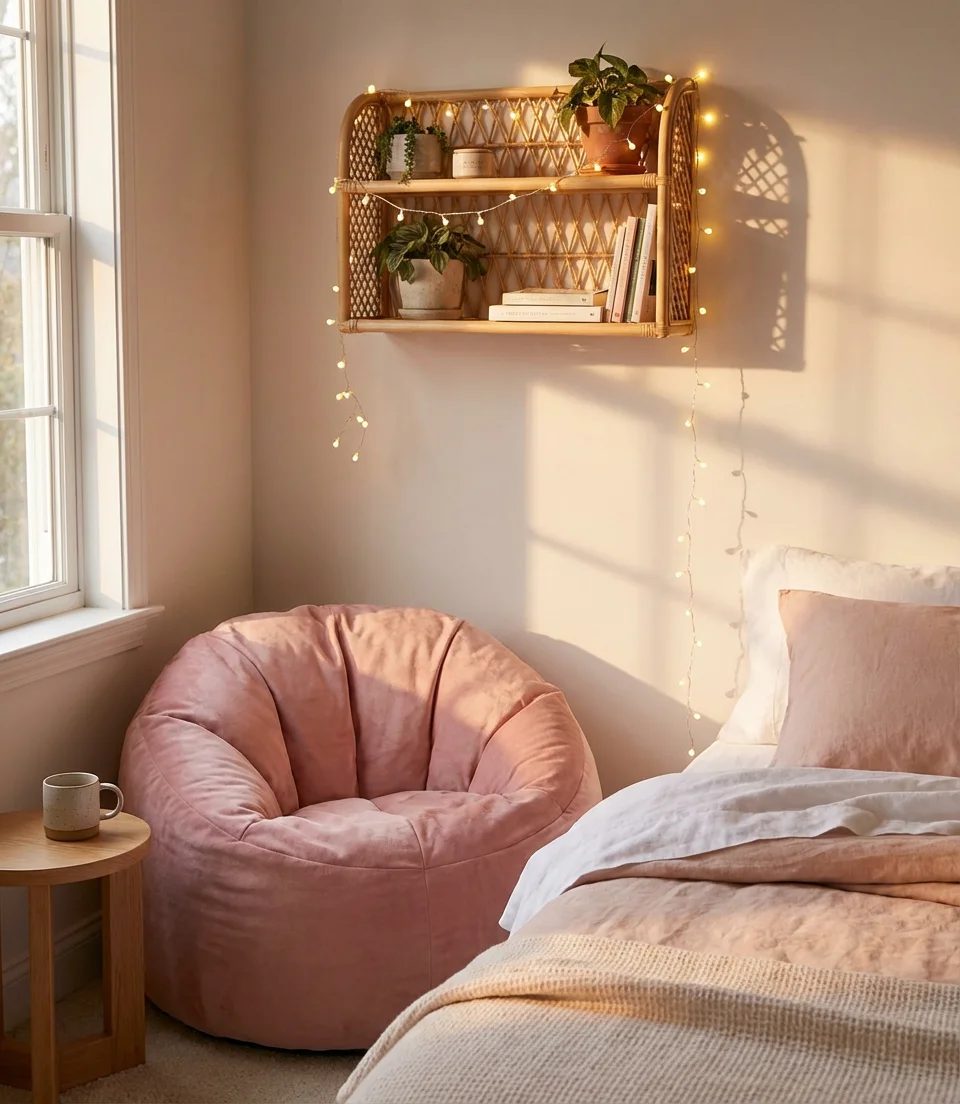
There’s a reason pink beanbag chairs keep topping Pinterest saves in the bedroom aesthetic cozy category—blush, dusty rose, and bubblegum tones bring an instant softness to a room that no other color quite matches. A pink velvet or sherpa beanbag in the corner of a bedroom creates the kind of cozy reading nook that feels almost like a hug. It pairs effortlessly with fairy lights, a rattan bookshelf, and a gallery wall, which is exactly the aesthetic driving a huge percentage of interior searches from the 20–35 crowd right now. Even a bold hot pink works if the rest of the room stays relatively neutral.
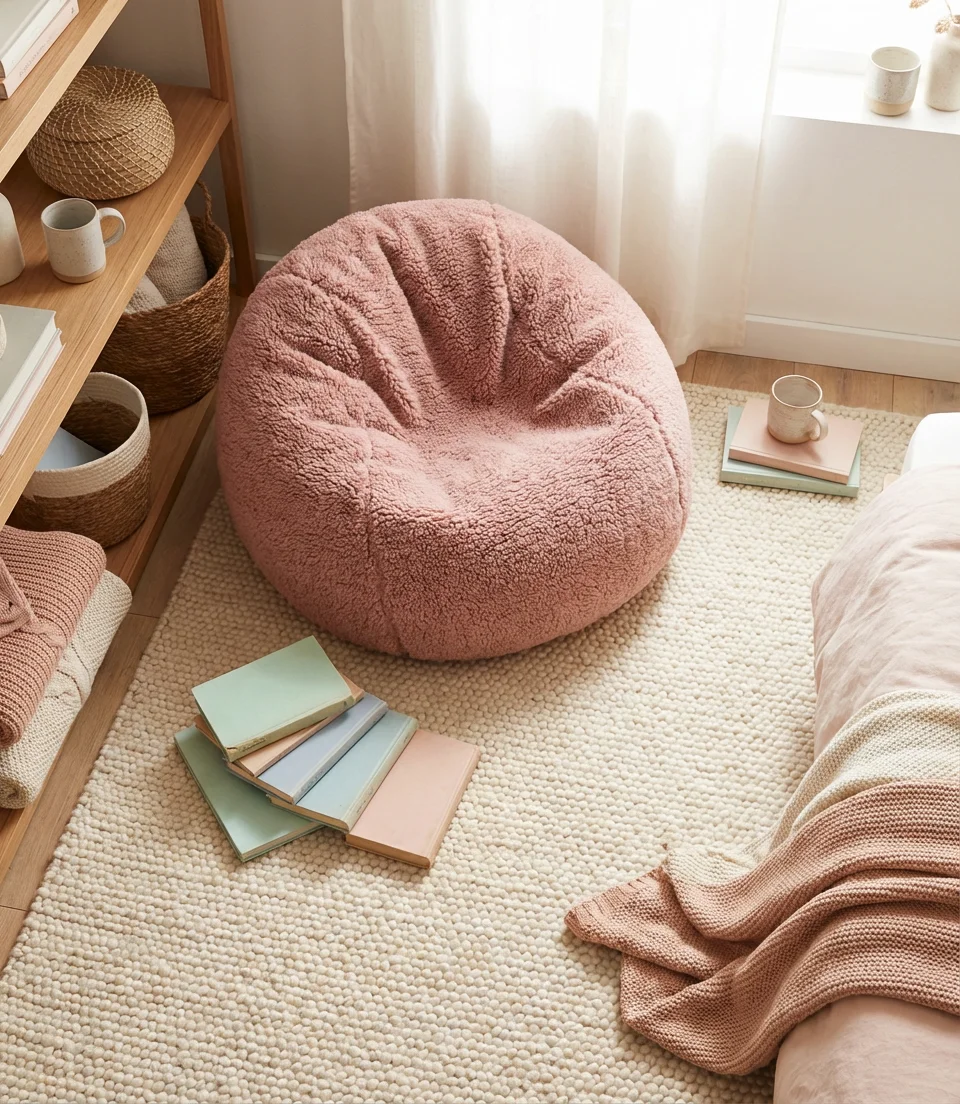
One real homeowner trick worth borrowing: buy a plain white or cream beanbag base and add a custom slipcover in the pink shade you want. This lets you change the look seasonally without replacing the whole piece—swap to a cozy taupe cover in fall, then go back to blush for spring. It’s a genuinely budget-smart move. Slipcovers in velvet, boucle, or sherpa fabrics run anywhere from $30 to $80 on Amazon or Etsy, and they transform the look of the chair completely in under five minutes.
5. Flower-Shaped Bean Bag Chair as a Statement Piece
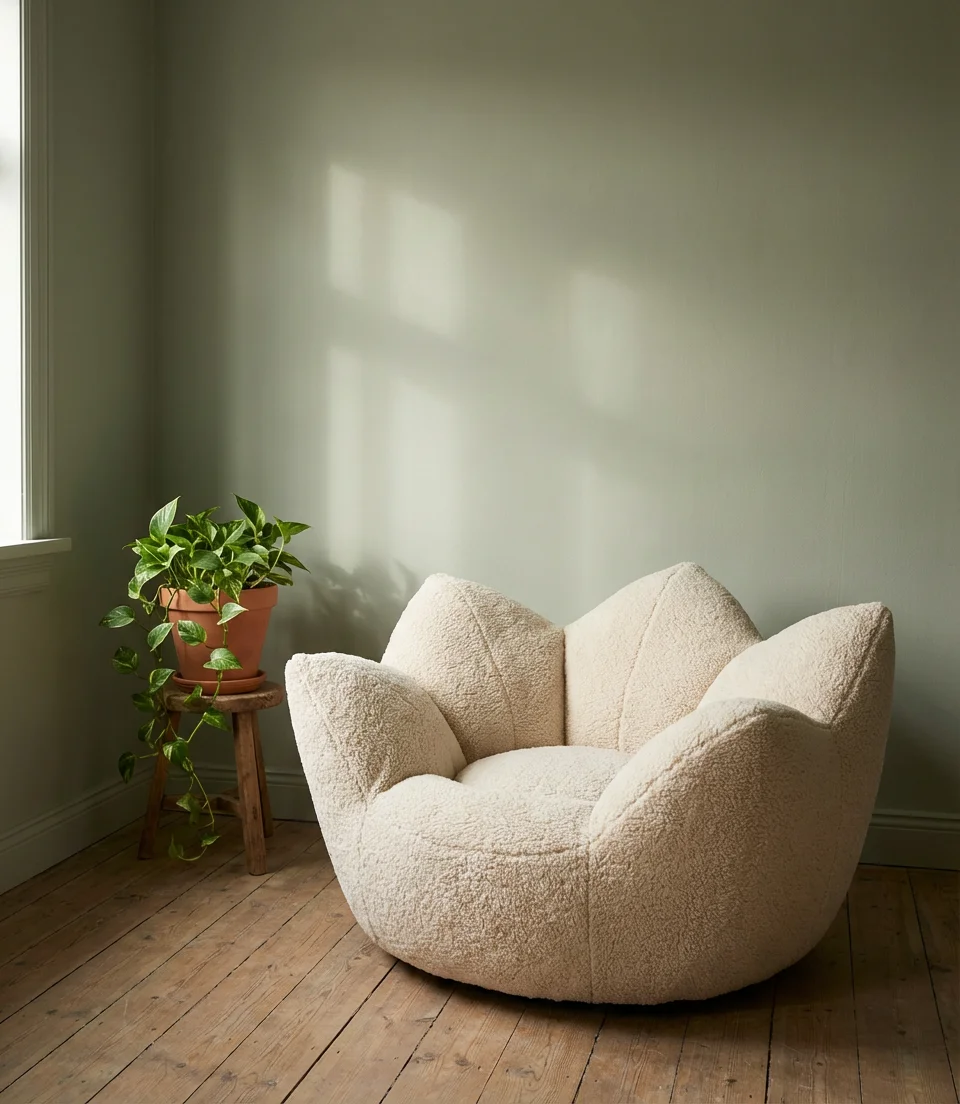
A flower-shaped beanbag is the kind of piece that stops people mid-scroll—it’s sculptural, playful, and genuinely unlike anything else in the furniture market. Most versions feature petal-like lobes radiating from a central seat, either in soft foam or fabric, and they look equally at home in a kid’s room, a teen’s hangout space, or an adult living room that leans eclectic and maximalist. The flower format works especially well in rooms with otherwise clean-lined furniture, where it reads as a deliberate art object rather than just another place to sit. Oversized versions in sherpa or velvet feel particularly luxurious.
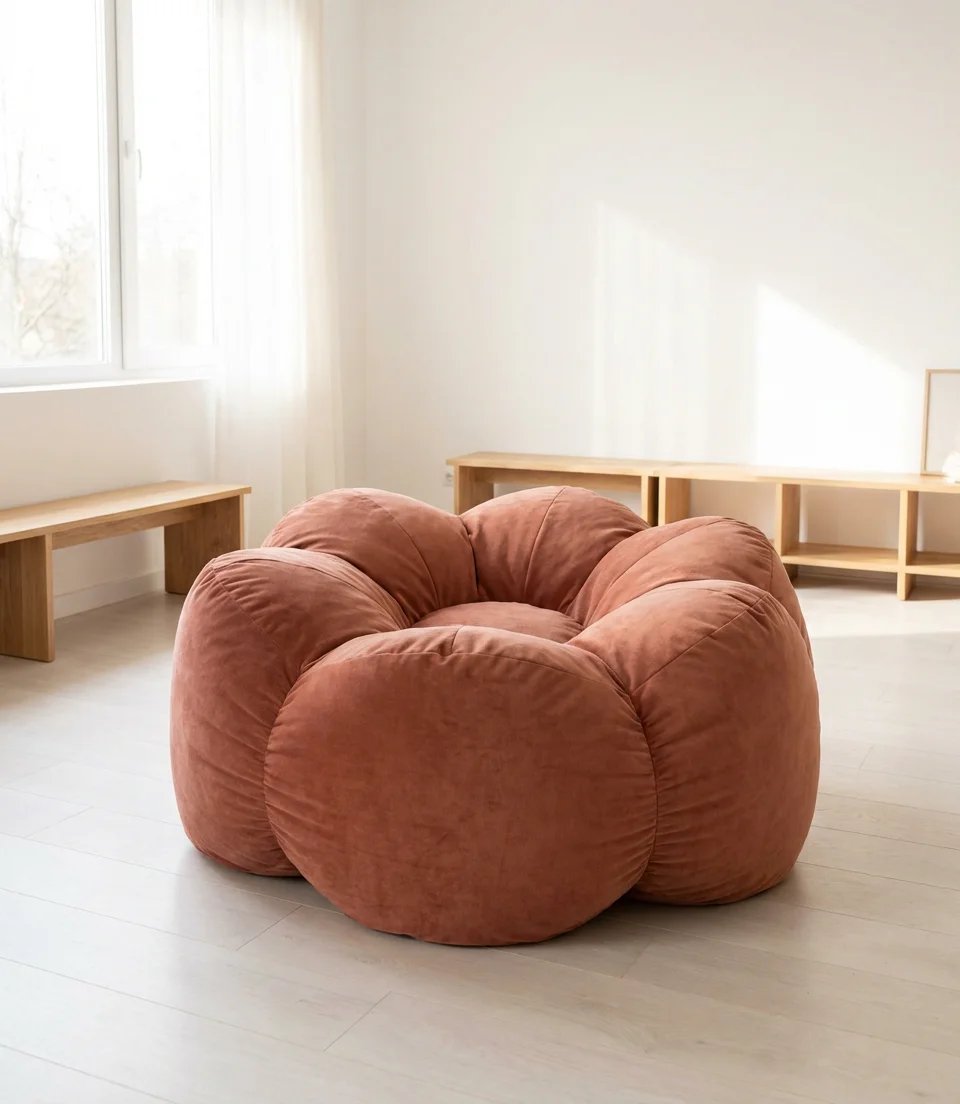
Where this piece works best: a corner of a room with decent floor space, ideally with nothing else competing for visual attention within a few feet. Against a plain painted wall—dusty sage, warm white, or charcoal—the silhouette really pops. Flower bean bags are widely available through Amazon, Wayfair, and specialty furniture boutiques, with prices ranging from $80 for basic versions to $250 or more for larger, premium-fill options. Look for ones with a removable, machine-washable cover, because the petal crevices tend to collect crumbs and dust faster than a standard round design.
6. Fluffy White Bean Bag Chair for a Clean Minimal Room
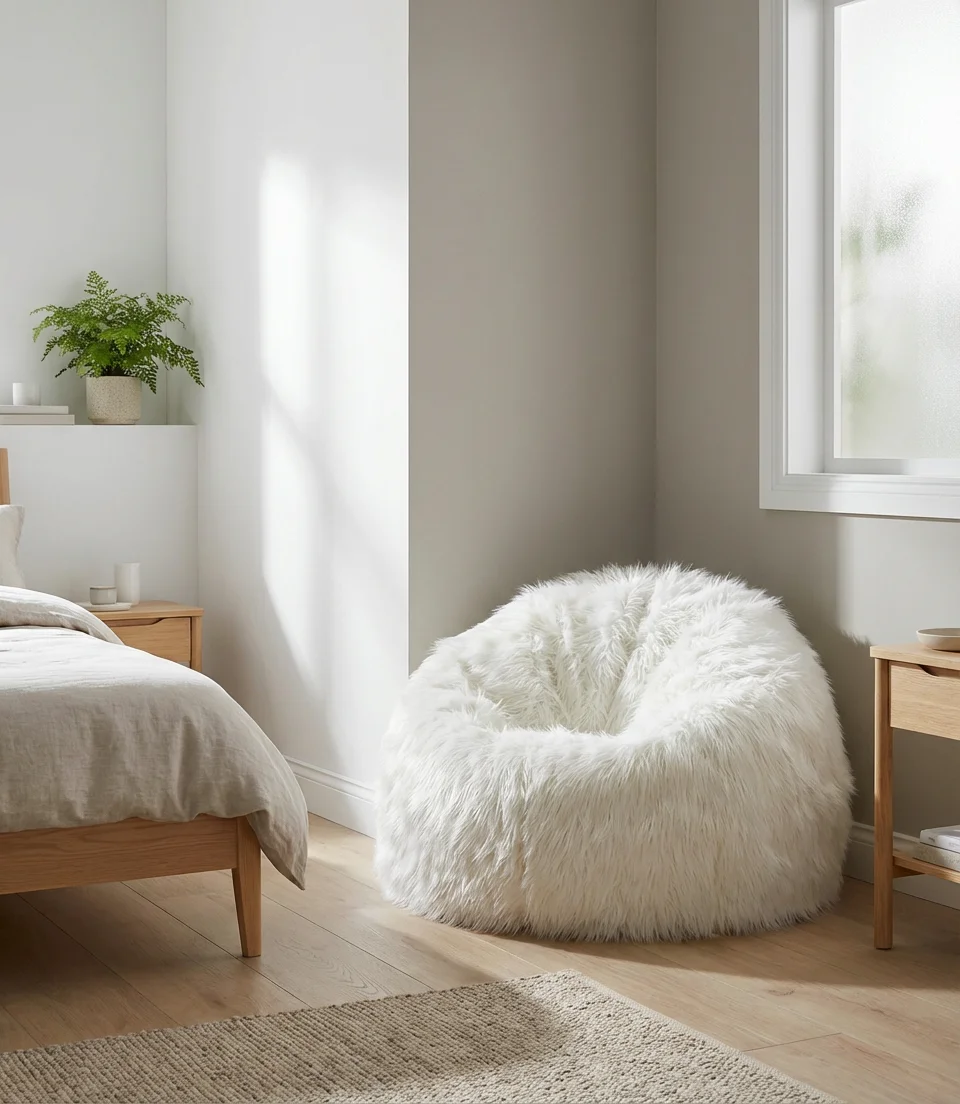
A fluffy white beanbag chair is almost absurdly appealing—it looks like something you’d find on a Scandinavian design blog or a dreamy Pinterest board for a “cloud bedroom.” The shaggy, long-pile faux fur or sherpa varieties are especially popular right now, bringing texture to an otherwise spare, minimal room without adding visual clutter. Against white or warm-greige walls with simple wood accents, a white fluffy beanbag feels like a purposeful design choice. It softens a room without crowding it, which is hard to pull off with most furniture pieces at this price point.
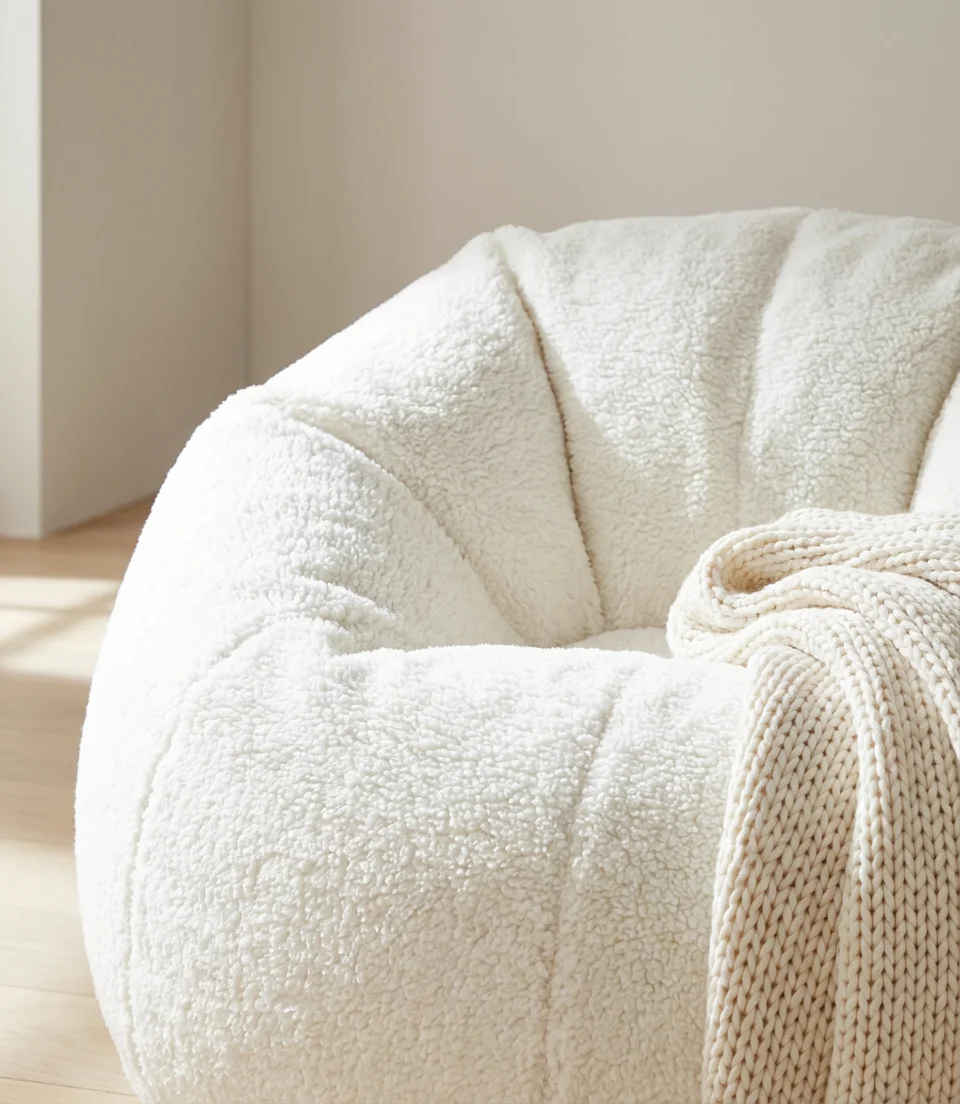
The honest downside? White is unforgiving. A household with pets, kids, or anyone who snacks on the couch will find that a white fluffy cover needs washing more often than they’d like. The fix is simple: choose a model with a fully removable, machine-washable cover, and keep a lint roller nearby for the daily surface maintenance. Look for faux fur with a tighter pile if you want something that stays presentable between washes. A quality white fluffy beanbag in a medium to large size runs about $90–$180 from most major online retailers.
7. Black Bean Bag Chair for a Moody Aesthetic Bedroom
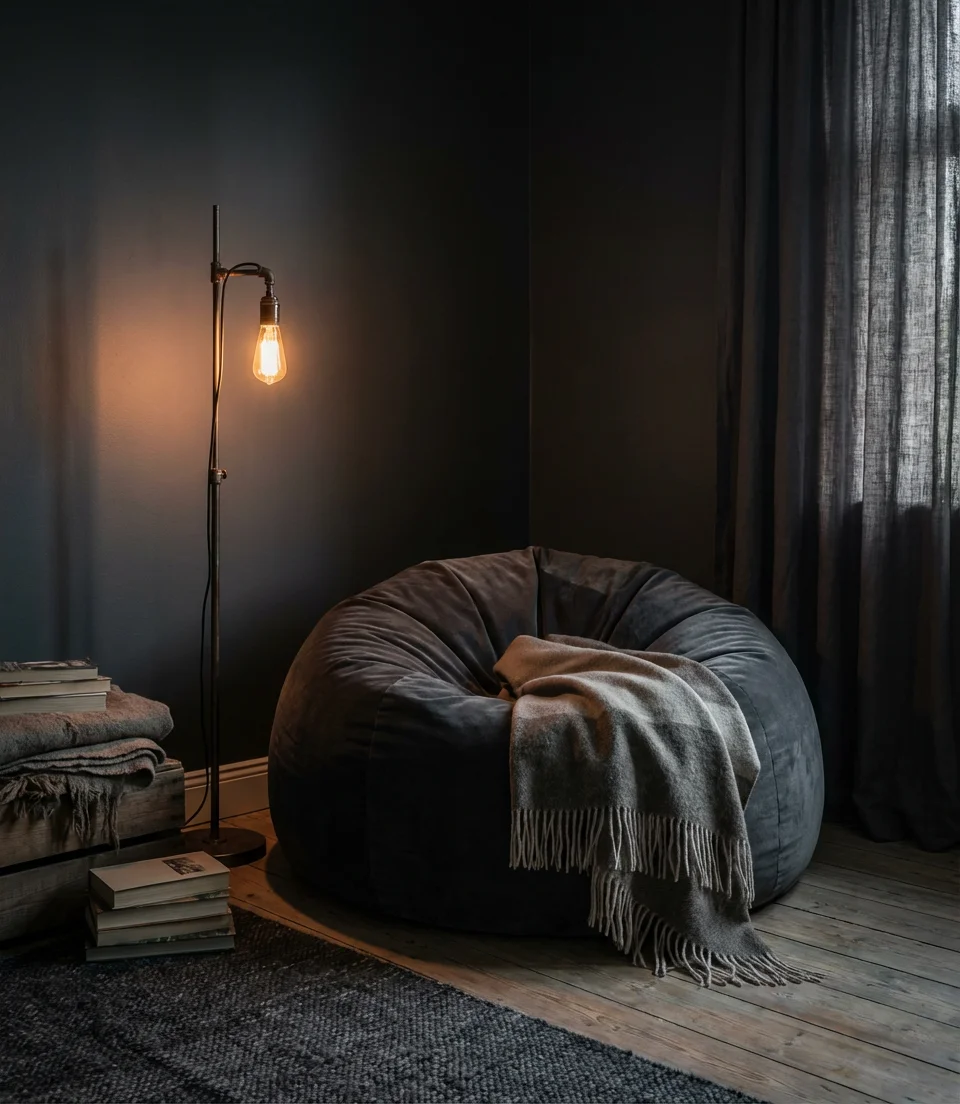
A black beanbag chair in a bedroom aesthetic context is less about goth and more about intention—matte black or charcoal velvet reads sophisticated and grounding in a room that leans moody. Pair it with dark walls, warm Edison bulb lighting, and layered textiles, and it fits seamlessly into the “dark academia” or “moody cozy” aesthetics that have been building momentum across Pinterest and interior design TikTok. It’s one of those rare pieces that men and women both tend to gravitate toward, which makes it a smart pick for a shared bedroom or a teen’s room. The dark tone also hides wear impressively well.
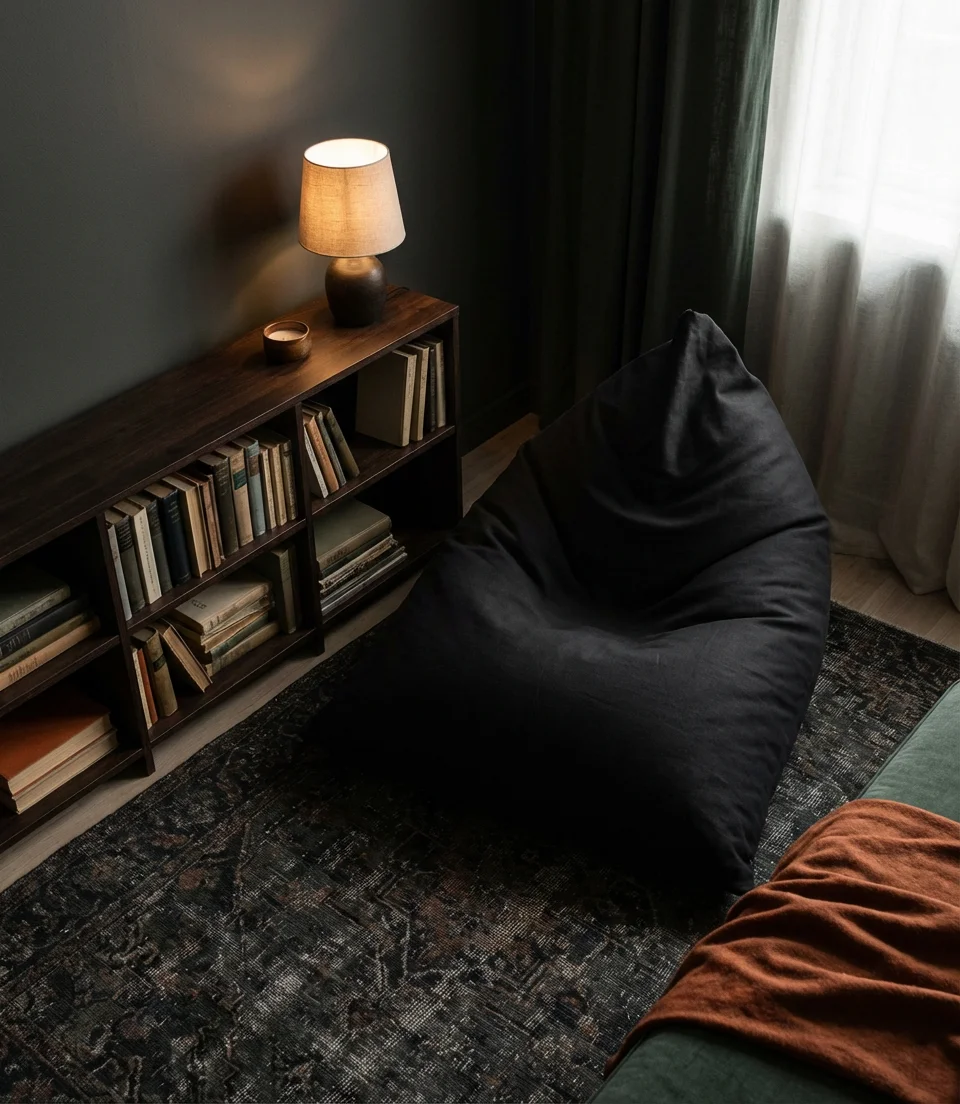
A common mistake people make with dark-colored bean bags is buying one that’s too small for the space. In a room with deep-toned walls and heavy textiles, a small beanbag visually disappears—and a piece that can’t be seen can’t anchor a room. Size up one level from what you think you need. A large or extra-large black beanbag in velvet or faux suede becomes a genuine focal point, especially when positioned near a floor lamp or beside a bed with a dramatic headboard. Most quality black velvet options sit comfortably in the $100–$220 range.
8. Big Joe Bean Bag Chair—Why Americans Keep Coming Back
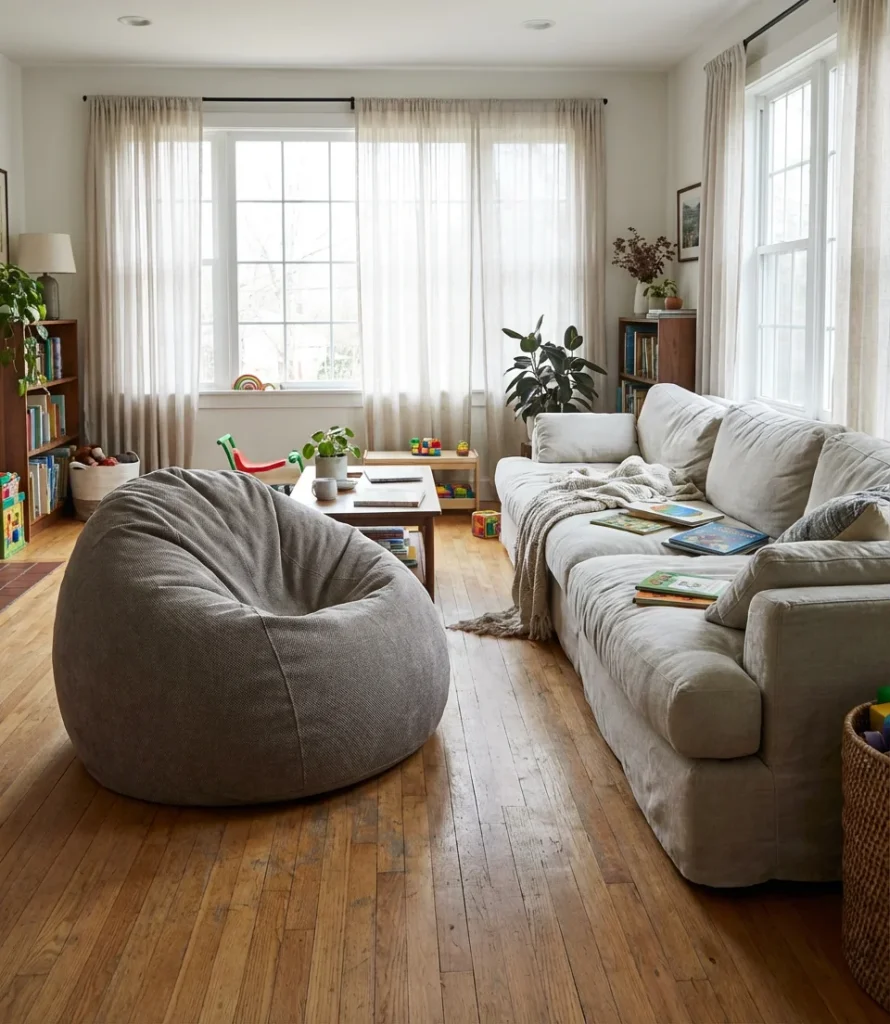
If you’ve been around American furniture retail for any length of time, you’ve encountered Big Joe—the brand that essentially democratized the comfortable beanbag for everyday households. Their filled-with-UltimaX-beans format holds its shape longer than most competitors, and the SmartMax fabric is genuinely durable enough to survive years in a family room or college dorm. The large and extra-large formats are consistently bestsellers, and for good reason: they’re comfortable, relatively affordable, and available through Target, Walmart, and Amazon with simple return policies if something doesn’t work out. For first-time beanbag buyers, in particular, Big Joe is a reliable entry point.
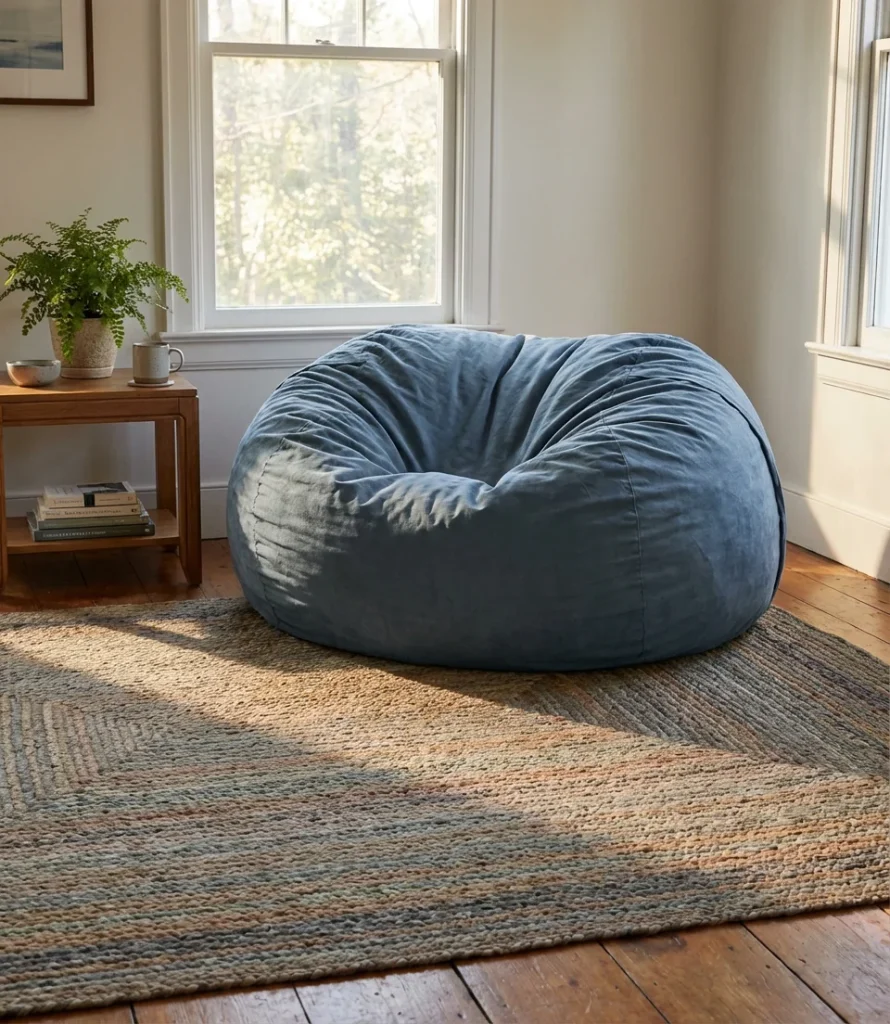
Big Joe’s price point—typically $60–$150 depending on size and cover material—makes it accessible for a wide range of budgets, which is a huge part of its enduring popularity. The brand also offers a refill option, which is smart because all EPS (expanded polystyrene) bead-filled bags eventually compress and flatten. Buying a refill bag and topping up the interior every year or two keeps the chair comfortable without replacing the whole thing. Their newer fabric options, including waffle weave and space-dyed finishes, have also improved significantly from the basic SmartMax of a decade ago, making Big Joe a more design-conscious option than its reputation might suggest.
9. Green Bean Bag Chair for an Earthy Living Room Vibe
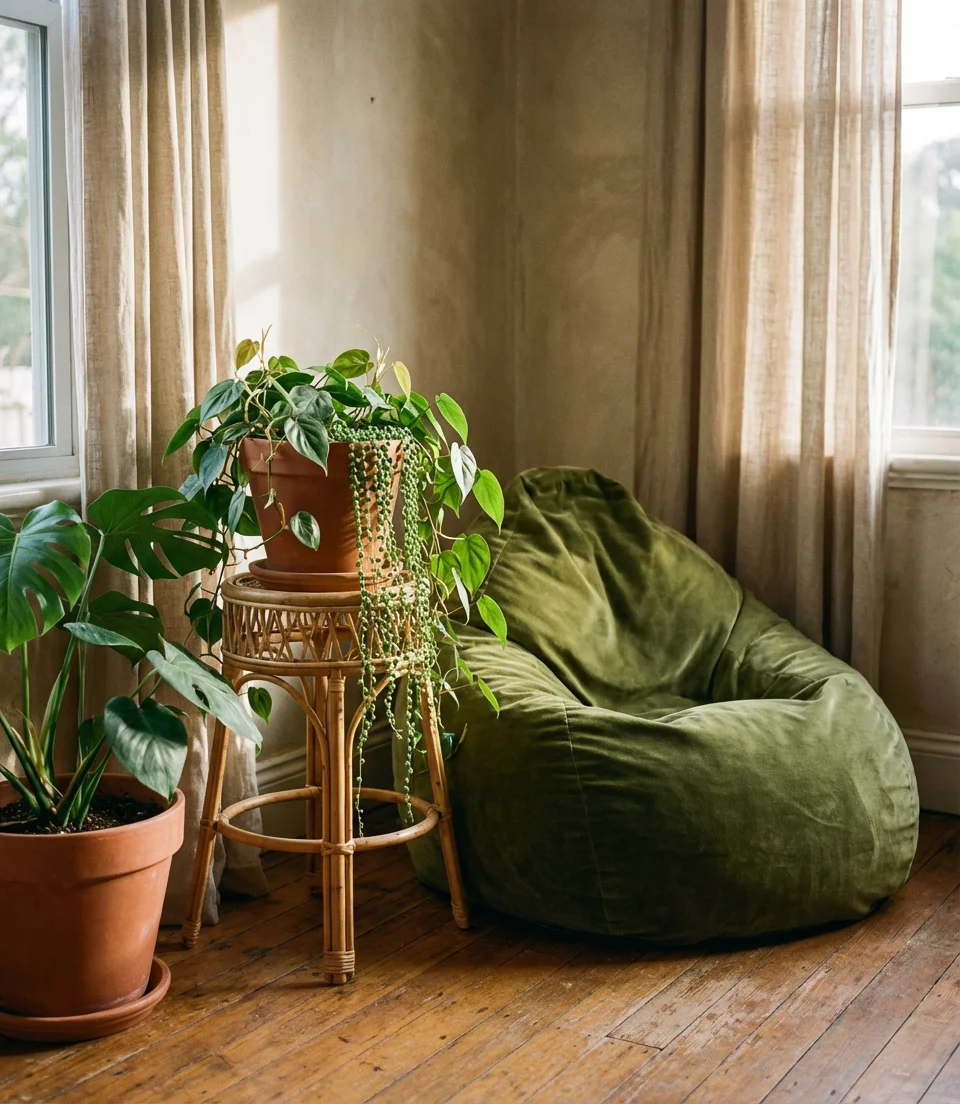
Olive, sage, forest, and emerald green are having an extended moment in interior design, and a green beanbag chair fits right into that movement. In an aesthetic living room that leans toward natural materials and earthy tones, a green beanbag grounds the space while adding a pop of color that feels alive rather than jarring. Moss green velvet is particularly popular right now because it picks up light beautifully—it looks different in morning sunshine than it does under warm evening lamps, which adds visual interest to a room across the course of a day. It pairs naturally with wood, rattan, and terracotta accents.
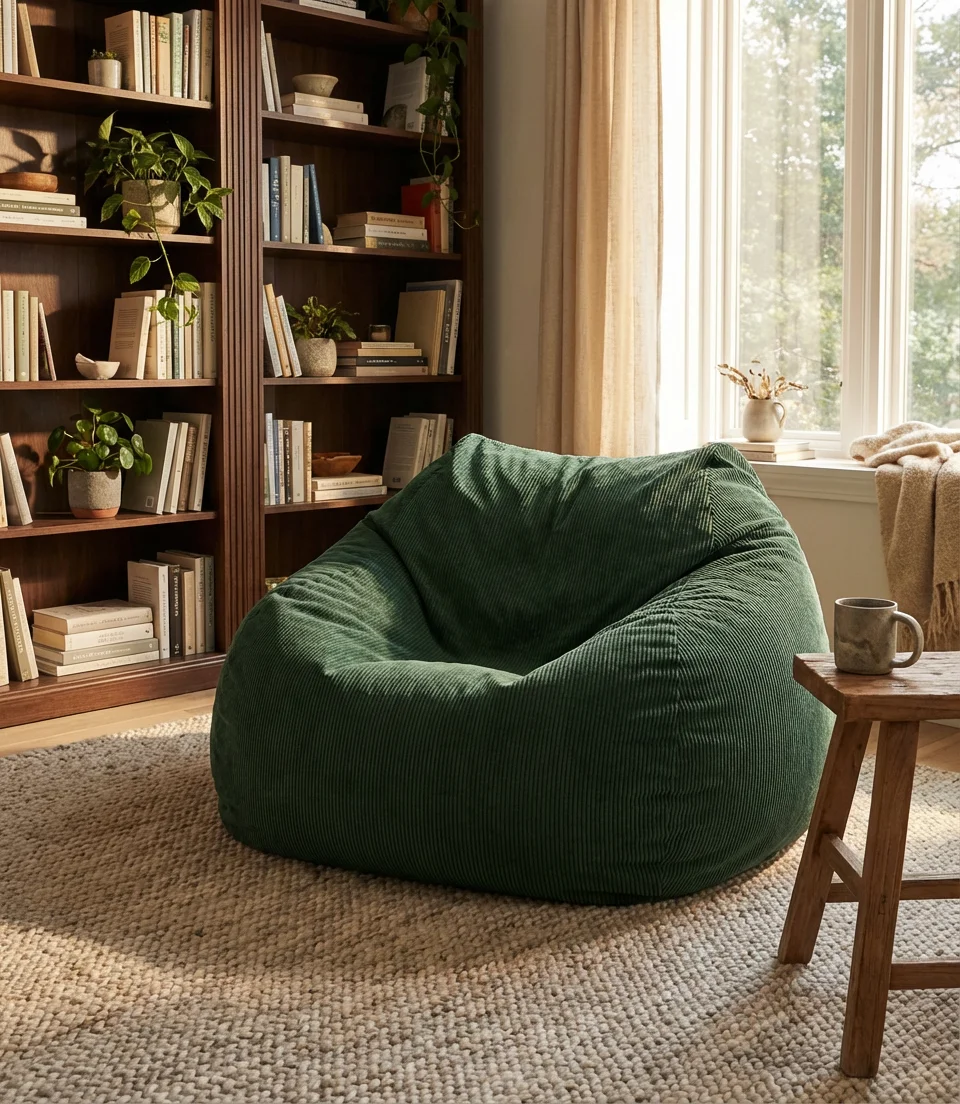
Styling a green bean bag in a living room is easier than most people expect: place it near your plant collection, beside a wood bookshelf, or in a corner with a woven floor lamp, and it looks completely intentional. If your room is more contemporary, a sleek deep-forest green in a smooth fabric reads sharper than a soft sage velvet. One practical note—green velvet in medium to deep tones shows pet hair more readily than darker or lighter colors. A quick once-over with a velvet brush keeps it looking polished. Most green velvet bean bags in a large size run $110–$200.

10. Blue Bean Bag Chair for a Calm, Coastal Bedroom
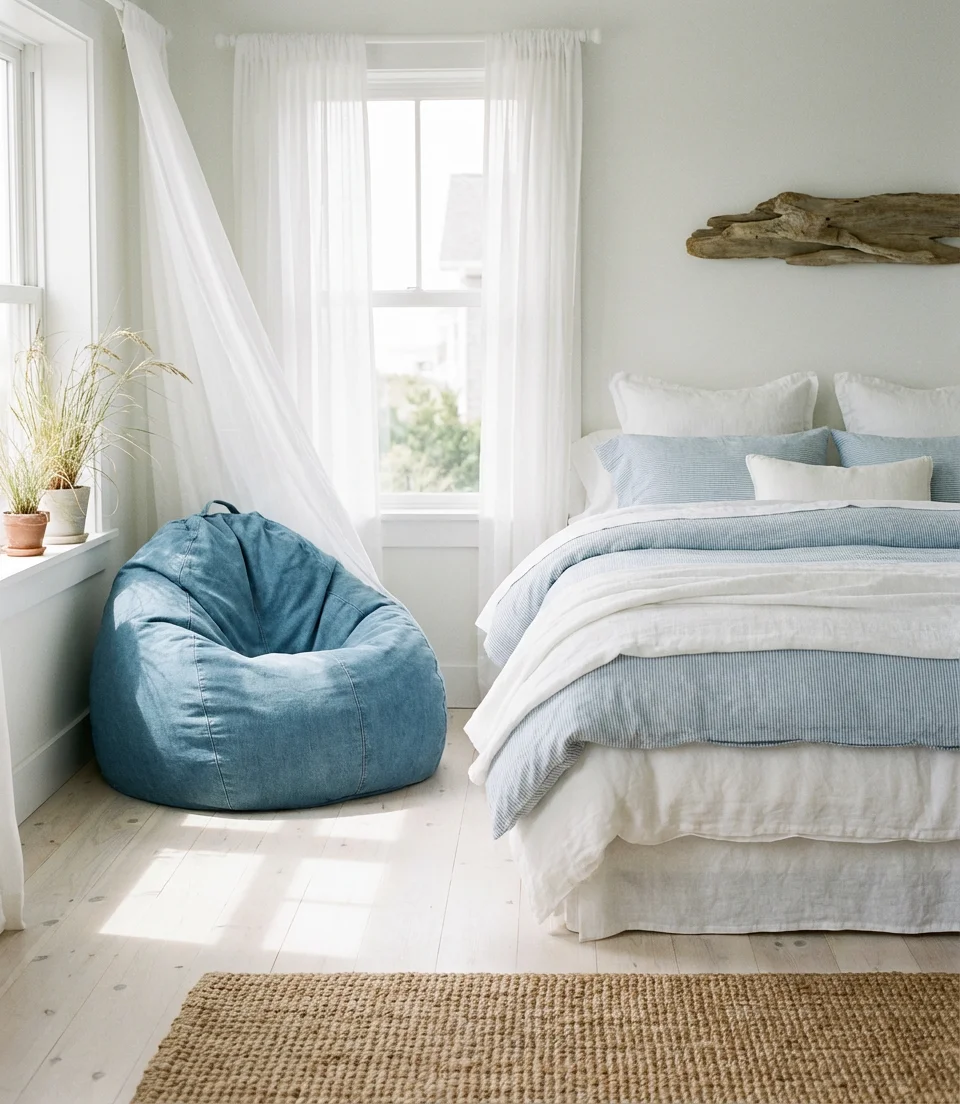
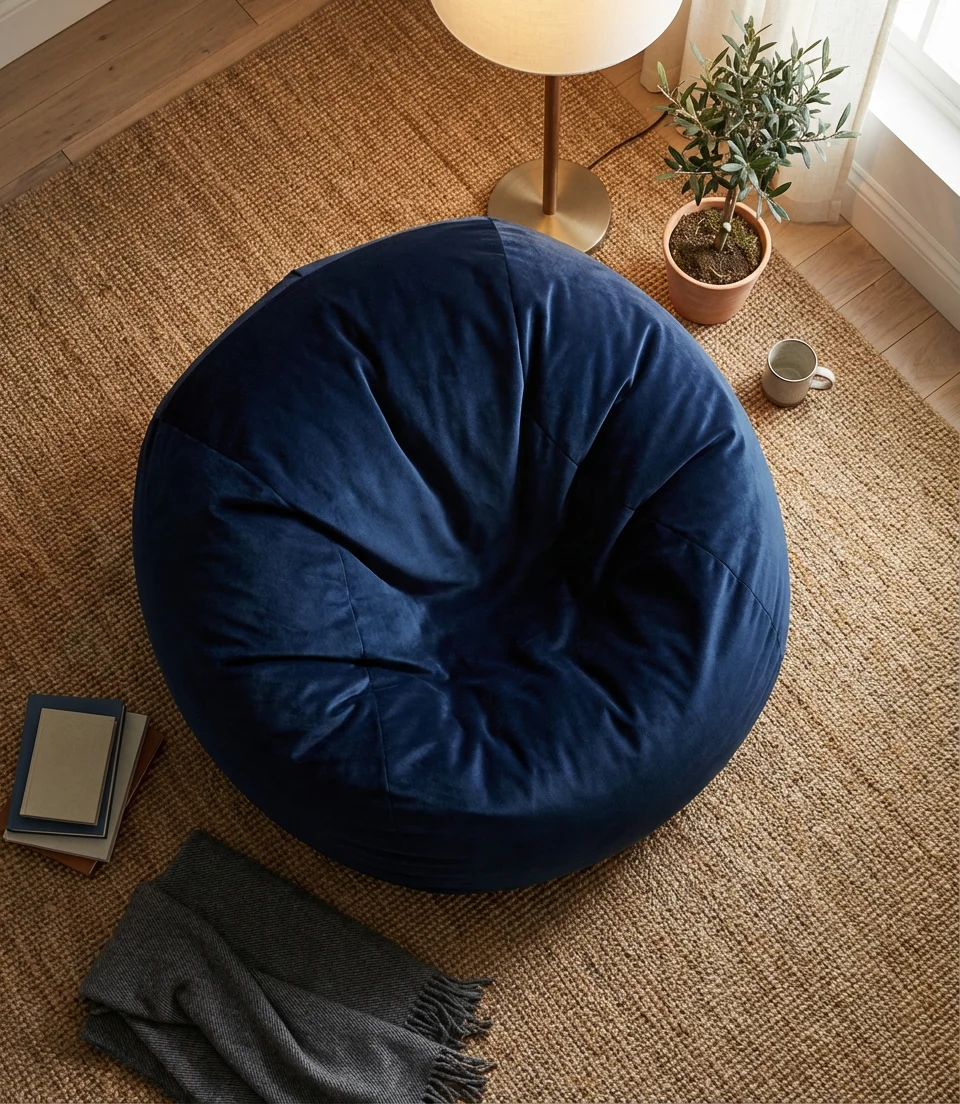
A blue beanbag chair is one of those design choices that almost always works—the color is inherently calming, and it pairs with more palettes than nearly anything else in the spectrum. For a coastal or beachy bedroom, washed denim or dusty sky blue is effortlessly relaxed. For a more polished room, navy velvet brings depth and sophistication. The comfy factor is real too: there’s a psychological reason people associate blue rooms with rest—and a cozy blue beanbag in a bedroom corner reinforces that calming energy every time you sink into it after a long day. It’s a low-effort, high-reward design move.
American homeowners in coastal states—California, Florida, and the Carolinas—tend to reach for blue seating more instinctively than those inland, but the appeal is universal. For a kids’ room, a bright cobalt or royal blue beanbag is nearly universally loved and holds up to serious daily use if you choose a durable twill or polyester cover. For an adult space, stick to muted, dusty, or saturated tones rather than bright primary blue, which can feel a bit primary-school in a grown-up context. Blue bean bags are widely available in every size and material, with prices starting around $50 for basic versions.
11. Snorlax Bean Bag Chair for Playful Fun Rooms
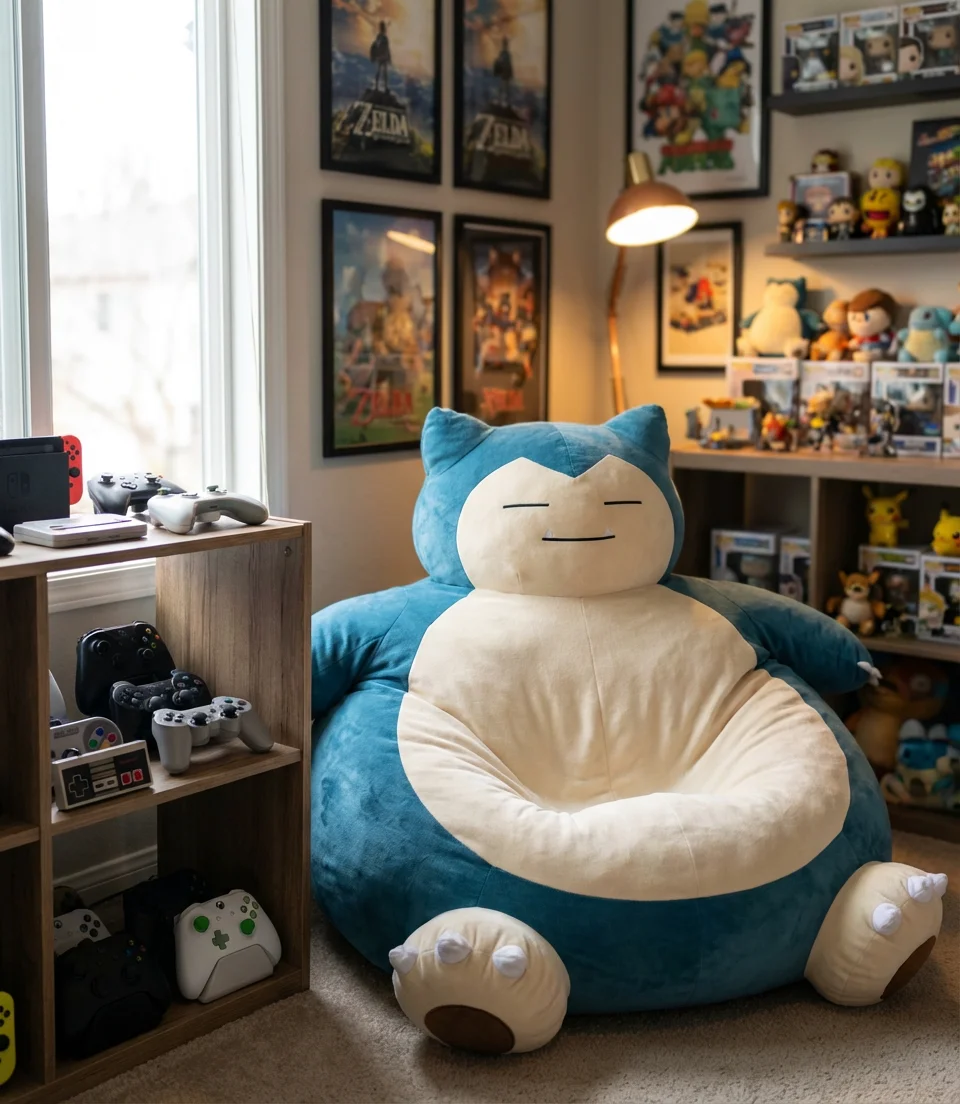
The Snorlax beanbag remains one of the most shared pieces of novelty furniture on Pinterest year after year—and the appeal is obvious. It’s shaped and printed to look like the beloved sleeping Pokémon, blue and cream with a satisfied belly that’s perfectly sized for sitting, flopping, or draping yourself across. It works in a kid’s room, a teen hangout space, a gaming den, or the apartment of a millennial who leans proudly into nostalgia. The cozy factor is genuine too—most versions are well-filled and comfortable enough for long gaming sessions or movie marathons. It’s conversation-starting furniture in the best possible sense.
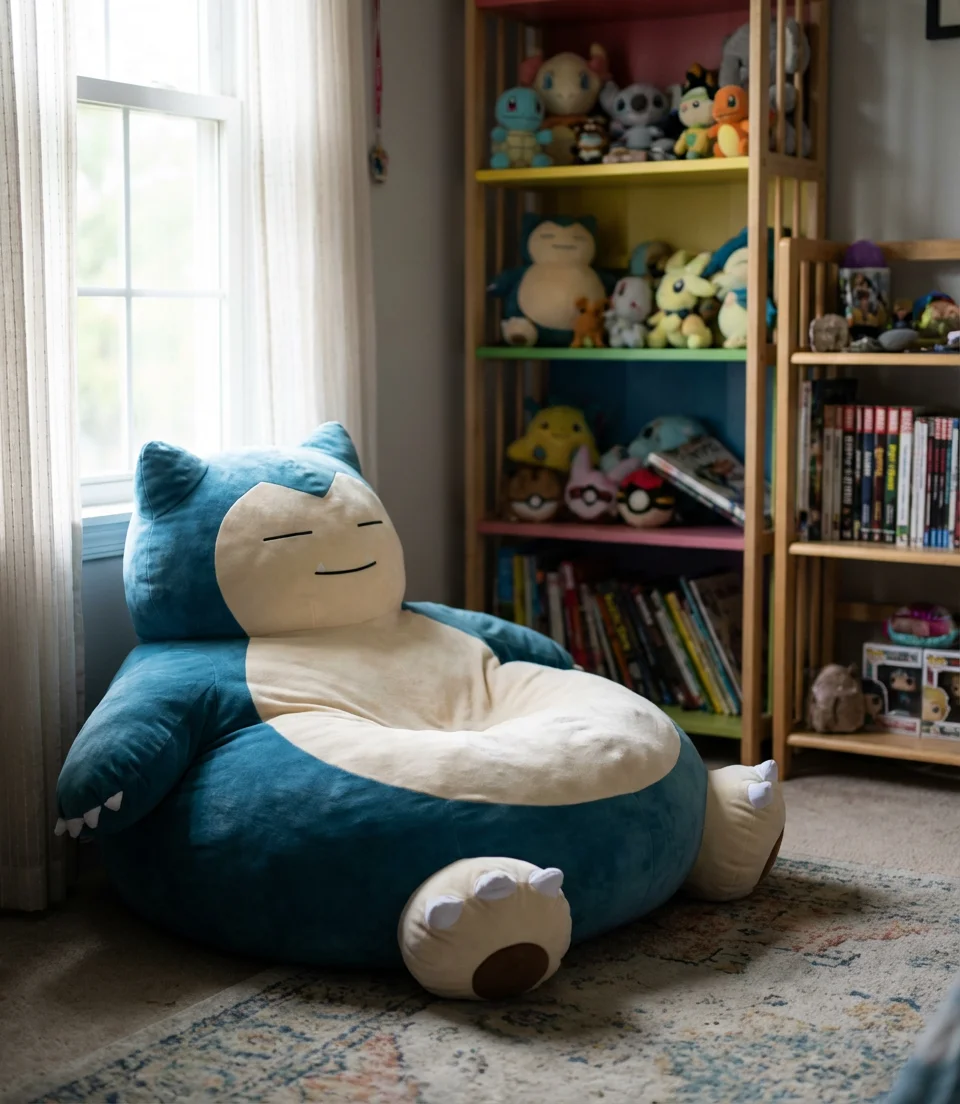
Official licensed Snorlax bean bags from companies like Sanei Boeki are the gold standard—the printing is crisp, the fill is quality, and the size is genuinely substantial (most are around 4–5 feet). Unlicensed knockoffs can be found on Amazon and AliExpress at lower price points, but the quality of the print and fill material varies. If you’re buying for a child, verify that the fill material is non-toxic and the zipper is child-safe before purchasing. Authentic versions typically run $150–$250 depending on size; they’re not cheap, but for a dedicated fan, they’re worth every dollar.
12. Modern Bean Bag Chair with Clean-Line Design
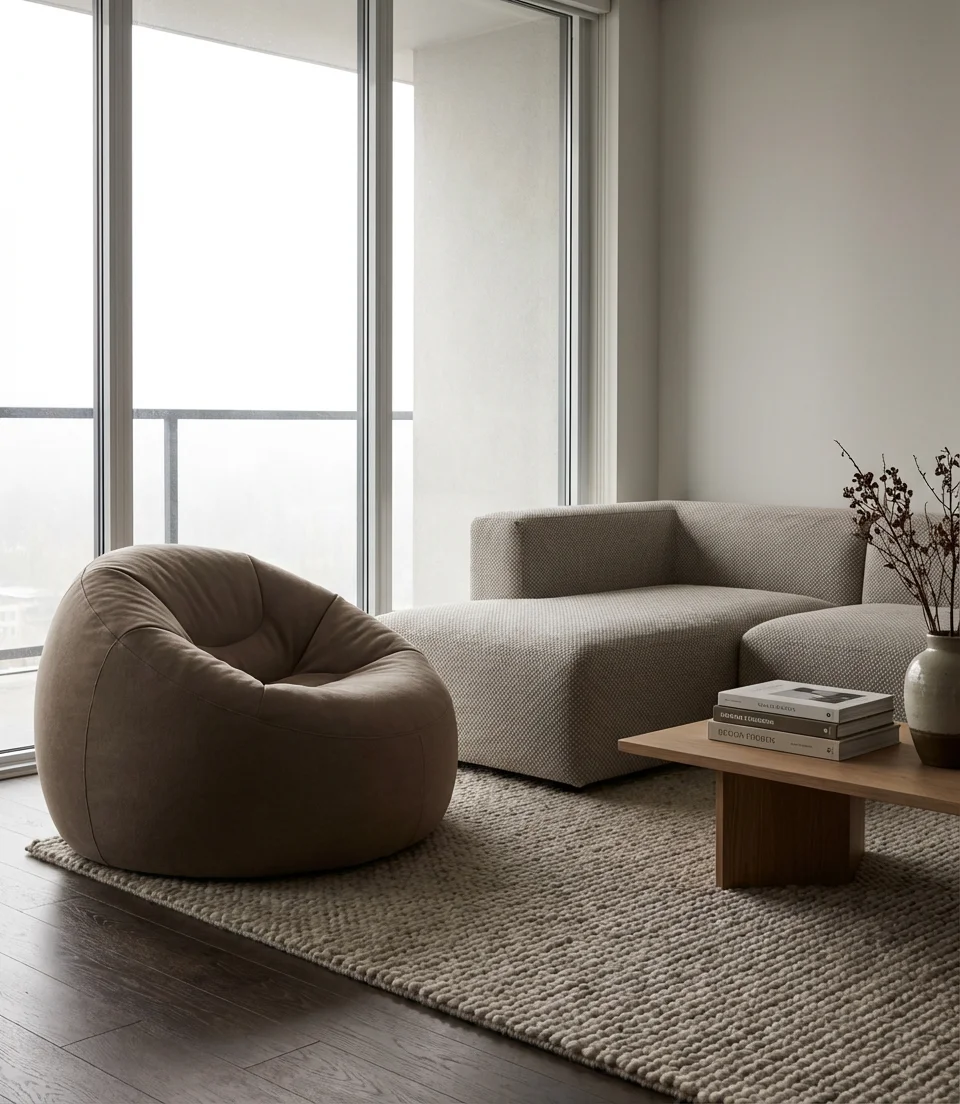
The modern beanbag has quietly shed the shapeless blob aesthetic of earlier decades and evolved into something with real structural intention. Think defined circular forms, smooth performance fabrics, and neutral tones that integrate into contemporary interiors without asking for permission. A well-designed modern beanbag—from brands like Fatboy, Yogibo, or newer DTC furniture labels—looks like it belongs beside a modular sofa, not just on the floor of a college dorm. Pattern plays a role here too: subtle geometric weaves or tonal textures add visual interest without fighting the clean lines that define modern design language.
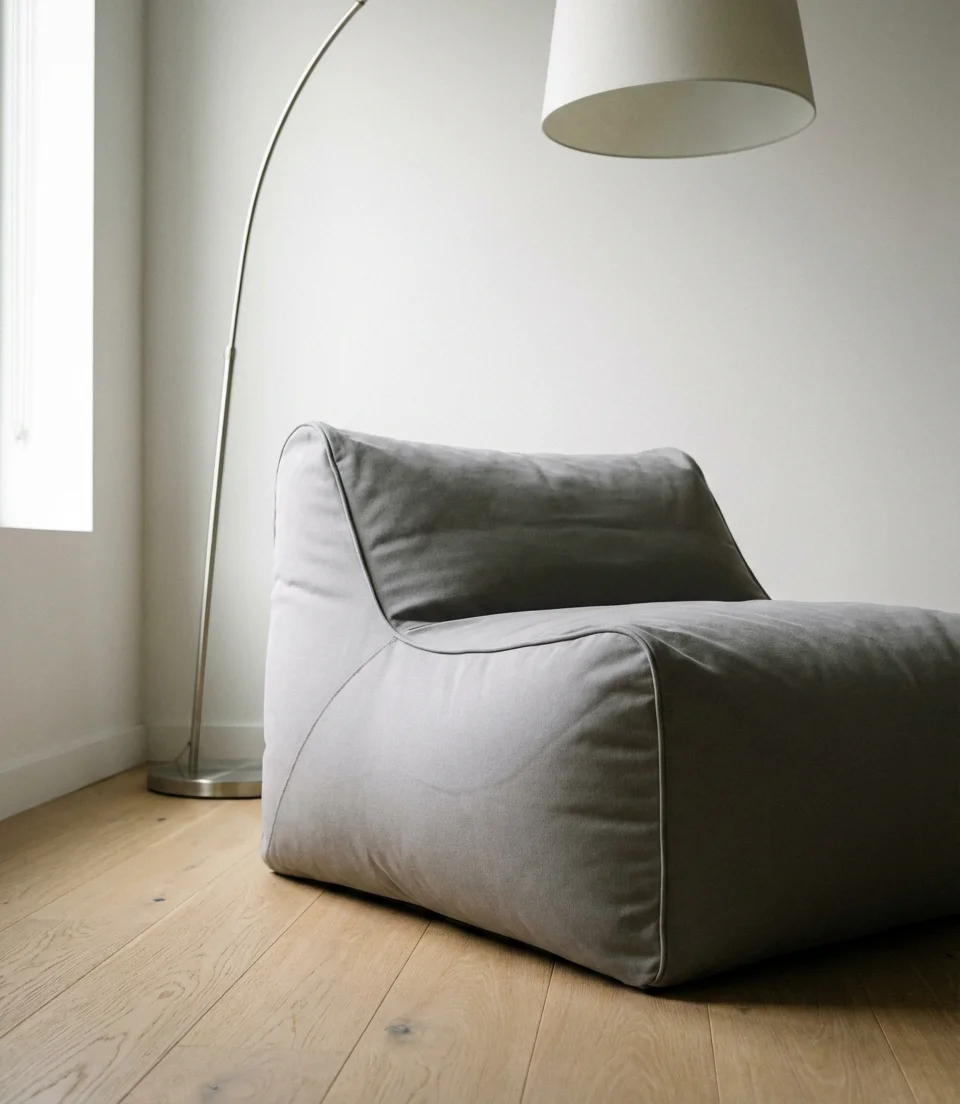
Interior designers working in contemporary residential spaces often use the modern beanbag as a “flex seat”—a piece that moves around the home based on need, functions as extra seating for guests, and doesn’t look out of place in almost any room. The key to pulling it off is material: smooth woven fabrics, performance canvas, or structured faux leather keep things grown-up. Avoid overly shiny or synthetic-looking materials in modern rooms—they tend to read cheap even when they’re not. Investing $180–$350 in a well-made modern beanbag will almost always look better than a $60 bargain version in the same space.
13. Large Bean Bag Chair for a Cozy Reading Corner
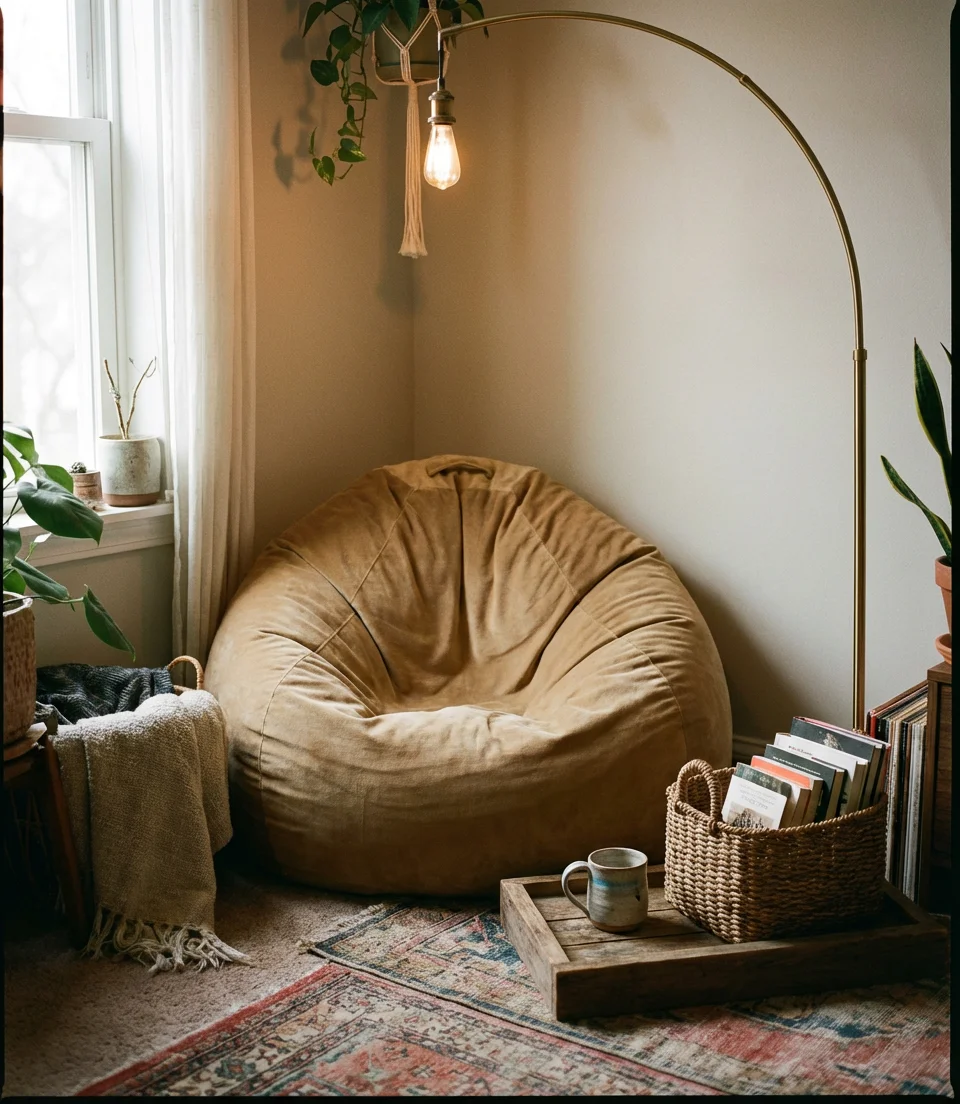
A large beanbag chair is arguably the best piece of furniture you can put in a reading nook—it conforms to your body, supports your lower back when you’re sitting upright, and lets you shift into a fully reclined position when you get really absorbed in a chapter. For a cozy reading corner, pair it with a tall floor lamp that puts light over your shoulder, a small side table or ottoman for your coffee, and a basket nearby for your current stack of books. This kind of corner doesn’t require a big room—a five-foot alcove or bay window area is more than enough to make it feel intentional and inviting.
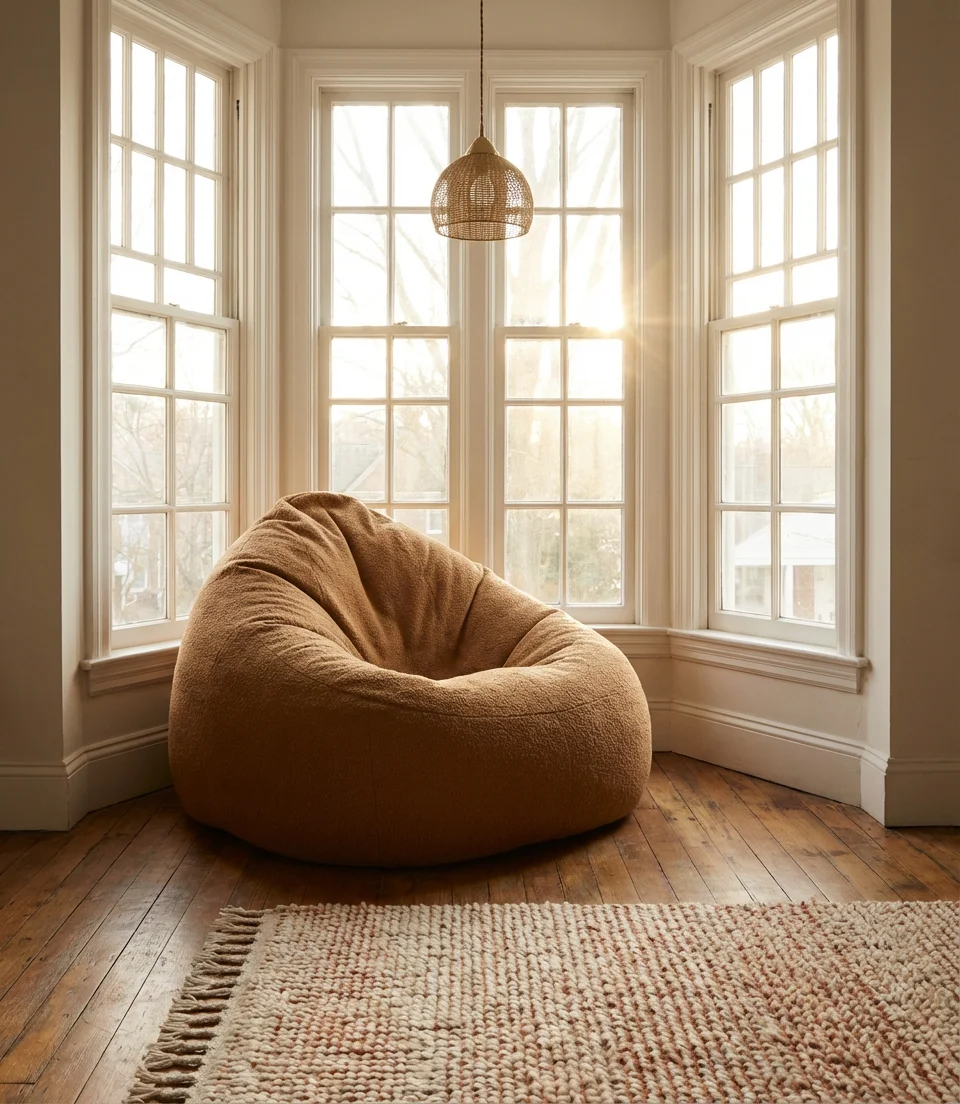
A reader who set up exactly this kind of corner in her Chicago apartment mentioned that moving from a traditional accent chair to a large beanbag transformed the space from “a chair I sat in occasionally” to “a corner I genuinely look forward to every evening.” The organic form makes it feel less structured and more personal—like the room is shaped around you rather than the other way around. For reading specifically, look for a beanbag with back support built in, or choose a “lounger” style that keeps your spine at a gentle recline rather than a fully flat position that strains your neck over long sessions.
14. Bean Bag Chair Drawing Inspiration for Unique Custom Looks
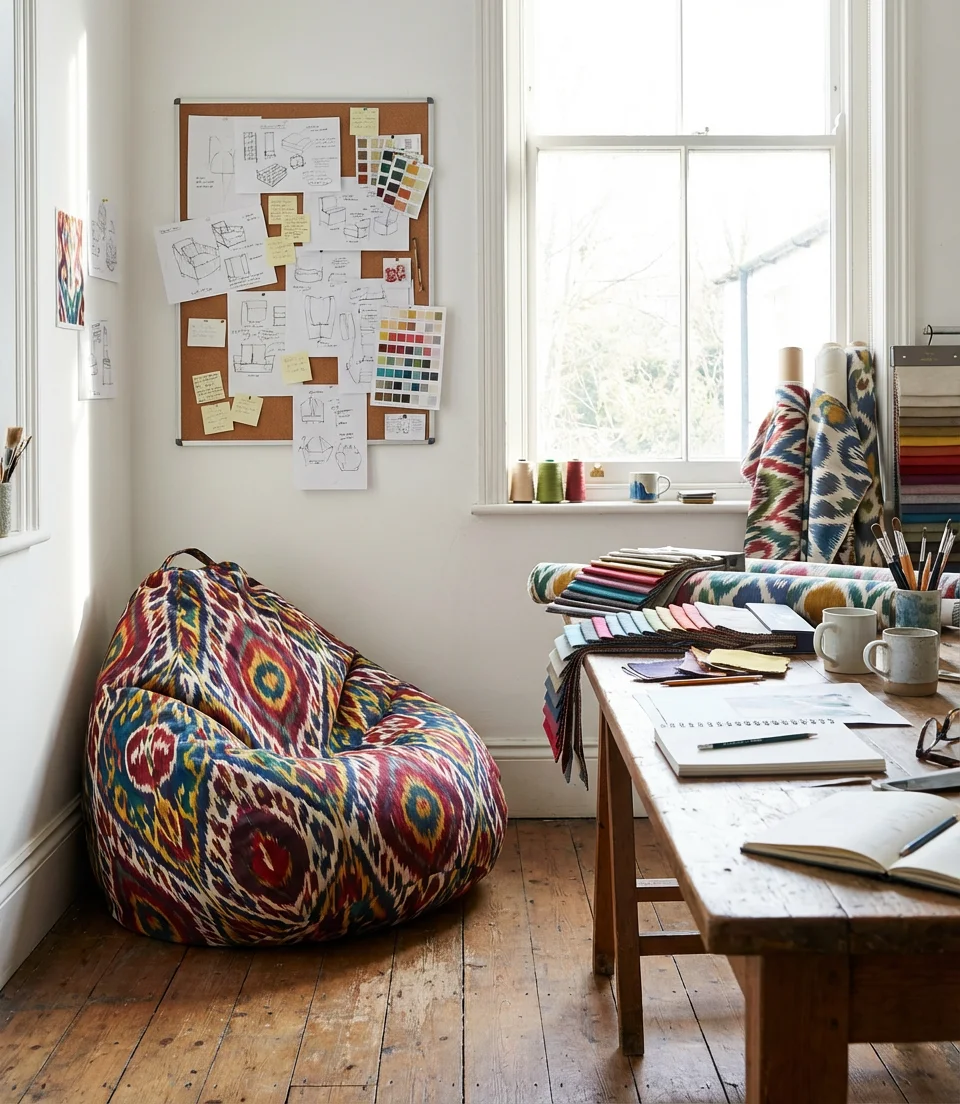
Not everyone finds exactly the right beanbag on the market—and for those with a creative streak, the idea of using a drawing or sketch to design a custom piece is genuinely exciting. Platforms like Etsy connect buyers with small-batch sewers who will produce a beanbag cover to your specs: choose your fabric, your shape, your dimensions, and even request custom embroidery or print elements. Since the shape of bean bags is relatively forgiving compared to structured furniture, interior design students and hobbyists have also used them as a starting point for practicing upholstery and pattern-making. This creative approach yields a unique outcome.
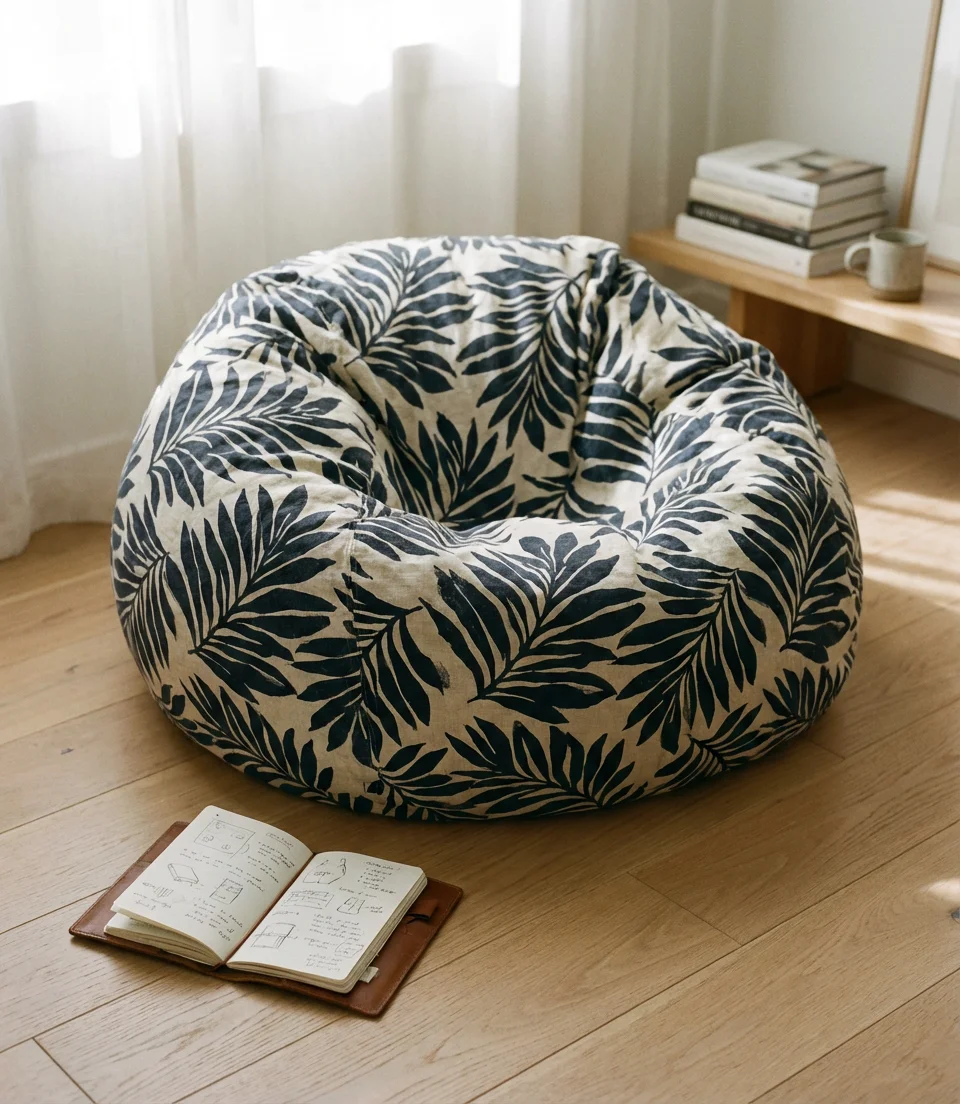
If you’re thinking about a custom beanbag, start with a clear sketch of the shape and dimensions you want, then find a fabric you love—whether that’s a vintage-style floral, a bold abstract print, or a solid performance fabric in an unusual color. Bring your sketch and fabric swatch to an upholstery shop, or post a detailed commission request on Etsy with reference images. Custom covers typically run $80–$200 depending on complexity, and you supply an existing beanbag inner (or have a new one made). The result is a piece that’s genuinely yours, which is increasingly rare in a market full of identical-looking furniture.
15. Aesthetic Living Room Bean Bag Chair Arrangement Ideas
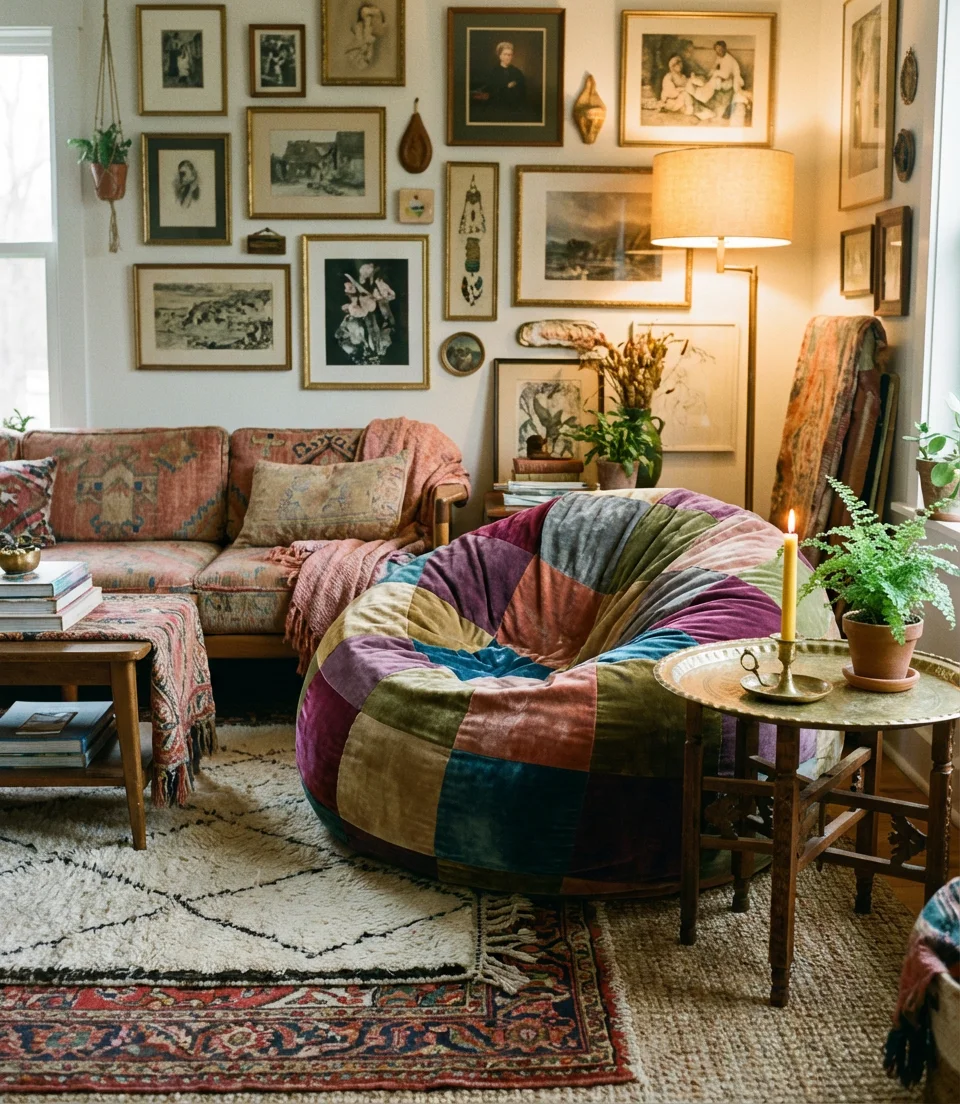
Styling a beanbag chair in an aesthetic living room is less about the chair itself and more about how it fits into the overall composition of the space. Position matters enormously: a beanbag shoved into a corner feels like an afterthought, while one placed at an angle beside a sofa, with a small tray table and a throw blanket draped over it, feels like it belongs. In rooms with a strong visual identity—maximalist, which is characterized by bold colors and patterns; Japandi, a blend of Japanese minimalism and Scandinavian functionality; or eclectic boho, which mixes various styles and textures—the beanbag becomes part of the curated story. Choose a color and texture that picks up on at least two other elements already in the room to make the connection feel intentional.
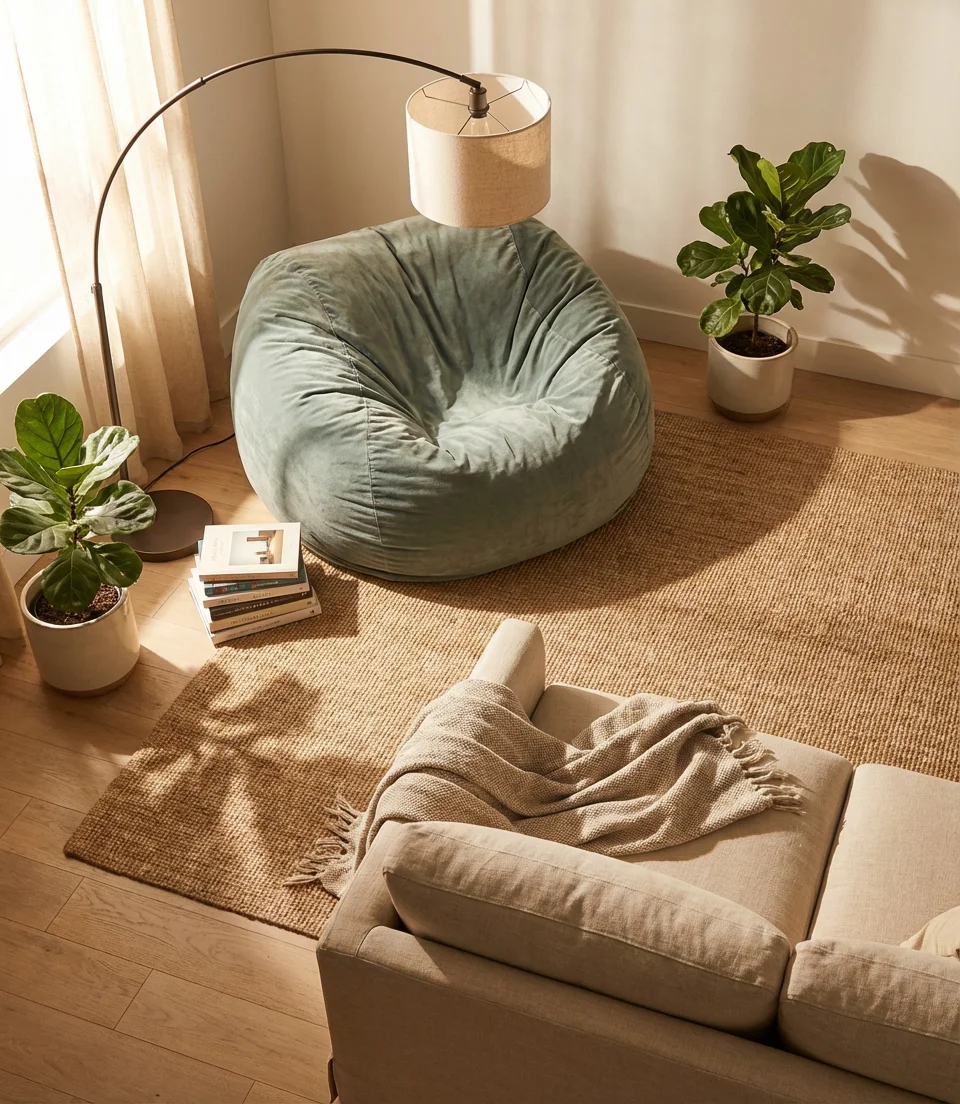
Expert-level advice from residential stylists: treat the beanbag like a low chair rather than floor seating. Use it as the “third seat” in a living room grouping—positioned across from the sofa, at the same relative height as a standard chair, so eye contact is easy during conversation. Add a floor lamp behind it to make it feel anchored and designed rather than dropped in place. Avoid clustering it with other low, informal pieces like floor cushions, which creates a zone that reads as too casual or unfinished. One beanbag, well placed, elevates a room. Three floor-level pieces fight each other for visual focus.
16. Cozy Bean Bag Chair with a Sherpa or Teddy Cover
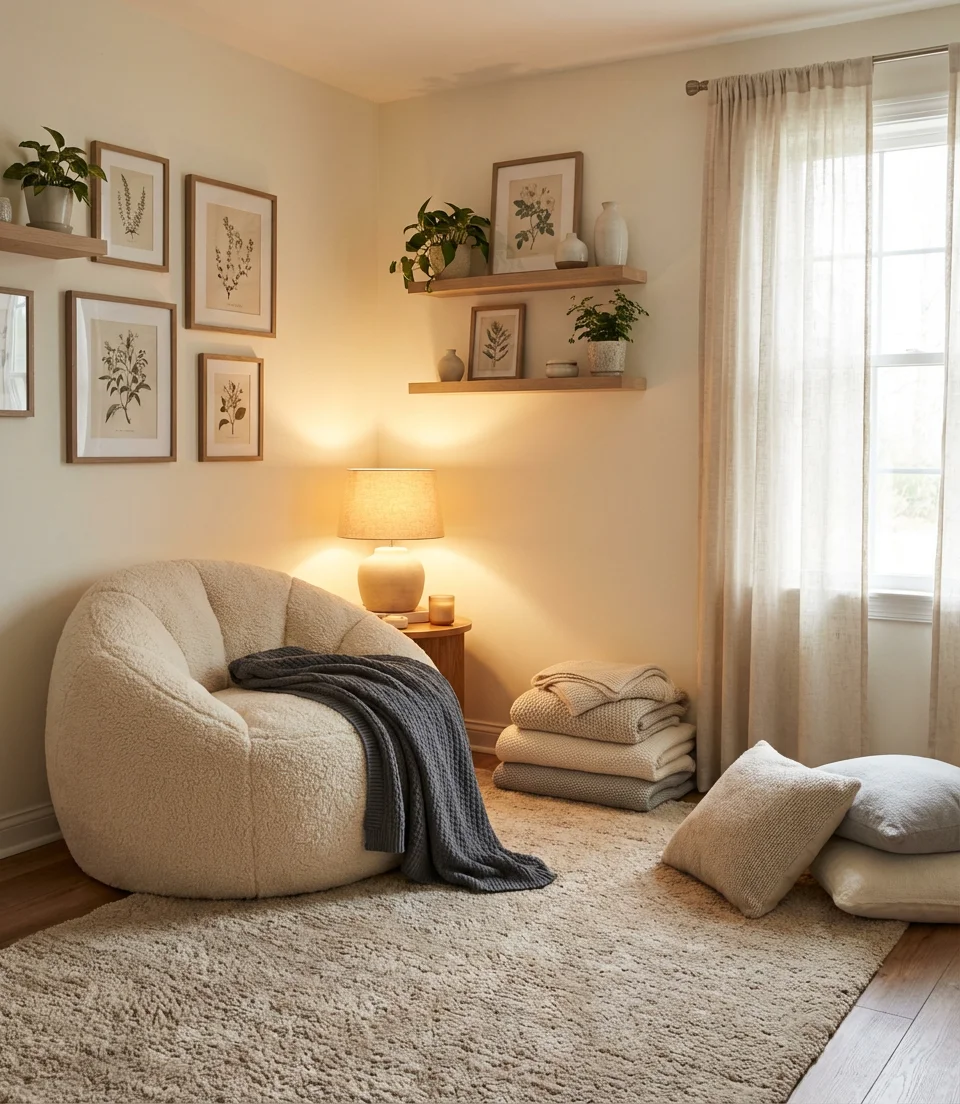
If you typed “bedroom aesthetic cozy” into Pinterest at any point in the last two years, you’ve almost certainly encountered a sherpa or teddy-fleece bean bag chair in a soft neutral tone. The material, thick, plush, slightly nubby, and utterly cloud-like to the touch, is the focal point of this chair. It’s the kind of chair you want to pull a weighted blanket over and disappear into for an entire Sunday. Available in cream, sand, blush, brown, and various soft hues, sherpa bean bags suit rooms that prioritize warmth and softness above all else. They’re particularly popular in college dorms and teen bedrooms, where comfort is the primary value.
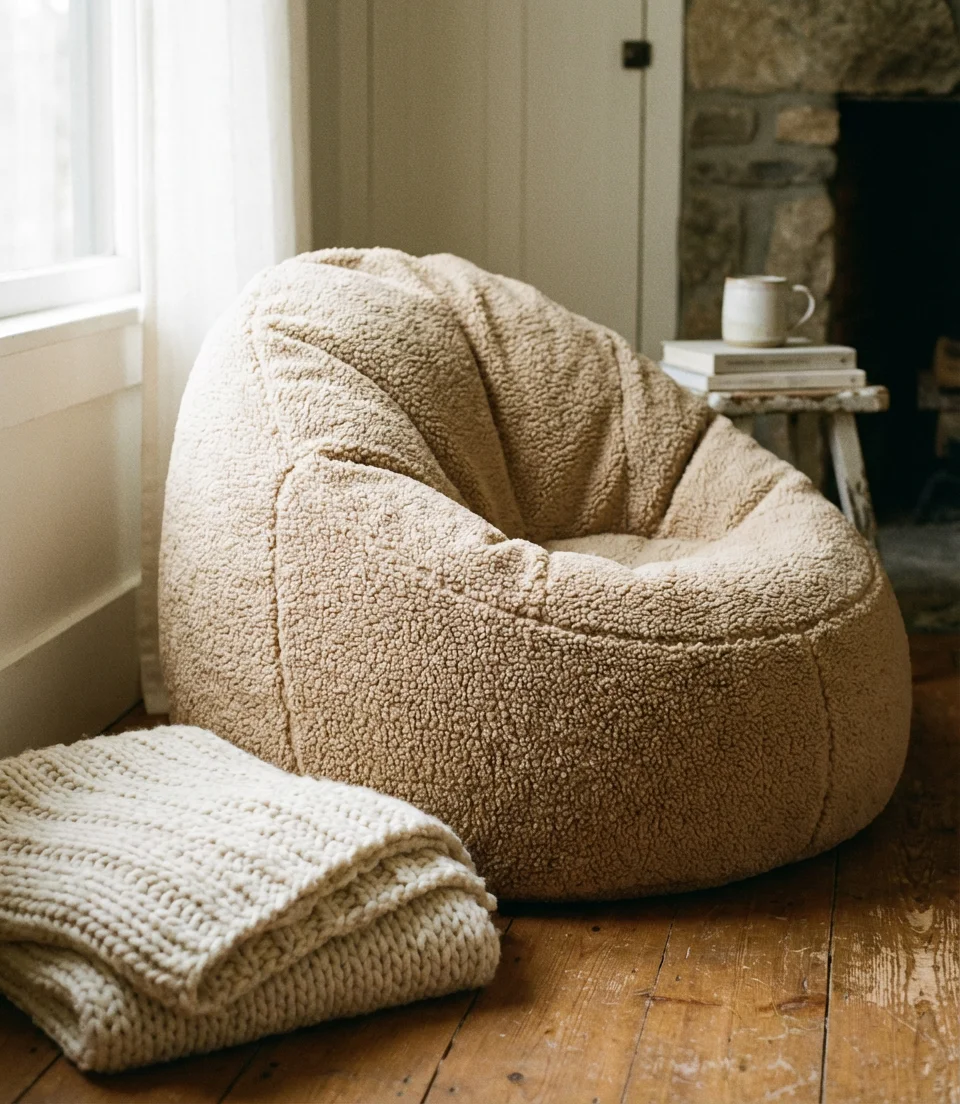
The main practical concern with sherpa is pilling—after heavy use, the texture can start to ball up, especially along contact points. Buying a higher-quality sherpa (look for tighter-looped pile, not the super-fluffy loose variety) reduces this significantly. Washing on a gentle cycle with cold water and tumble drying on low preserves the texture for much longer. Sherpa bean bags are reasonably priced, with most medium to large options costing between $80 and $160, making them an excellent choice for those who are unsure about embracing a bean bag as a furniture piece, rather than just a novelty.

17. Patterned Bean Bag Chair for an Eclectic or Maximalist Home
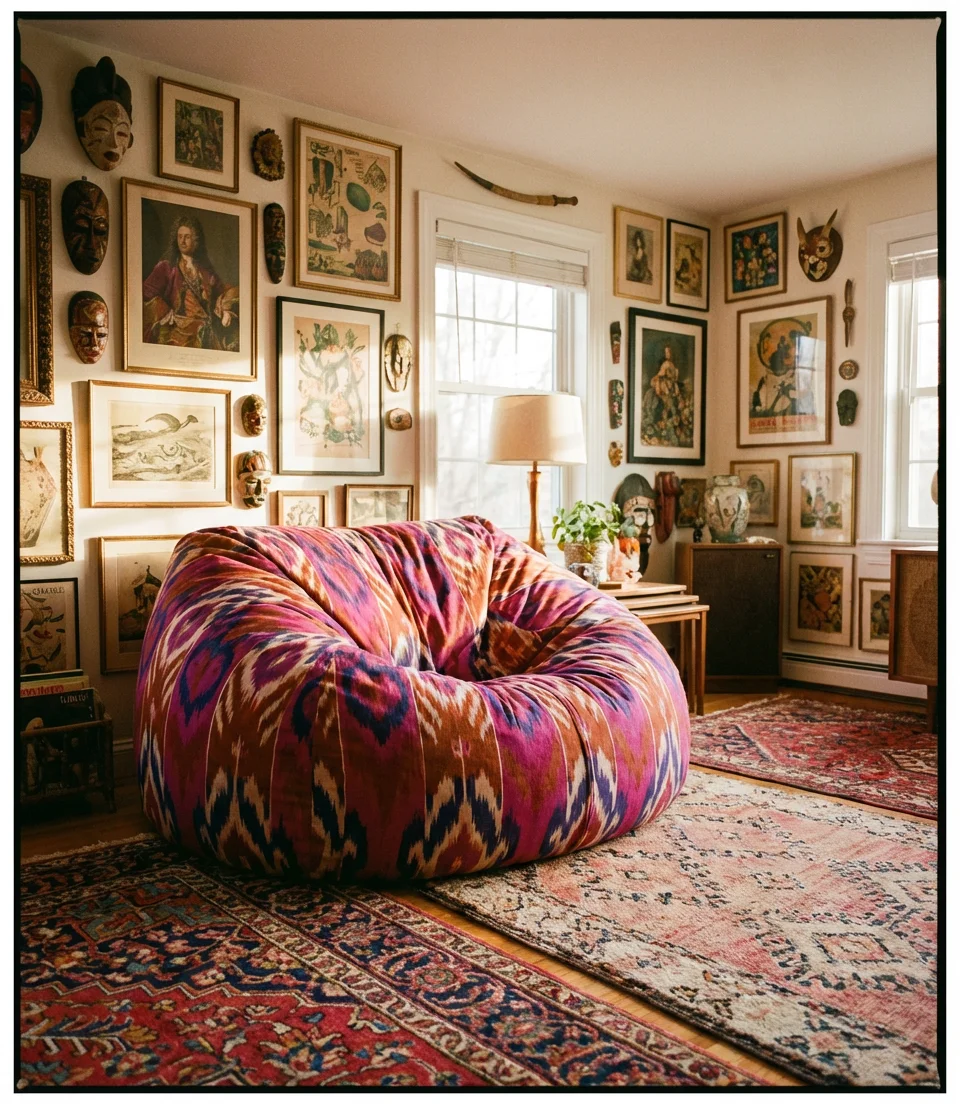
A patterned beanbag chair is a significant addition to rooms that prioritize luxury. Bold ikat, vintage floral, abstract geometric, or even a classic stripe—a patterned cover immediately raises the visual energy of any room and signals that the space has a personality. A patterned beanbag chair fits perfectly in a maximalist home that features layered rugs, gallery walls, and a variety of furniture styles. It’s one of those pieces that can simultaneously be comfortable seating and a visual anchor. Choose a pattern that pulls at least one color from elsewhere in the room to keep things cohesive rather than chaotic.
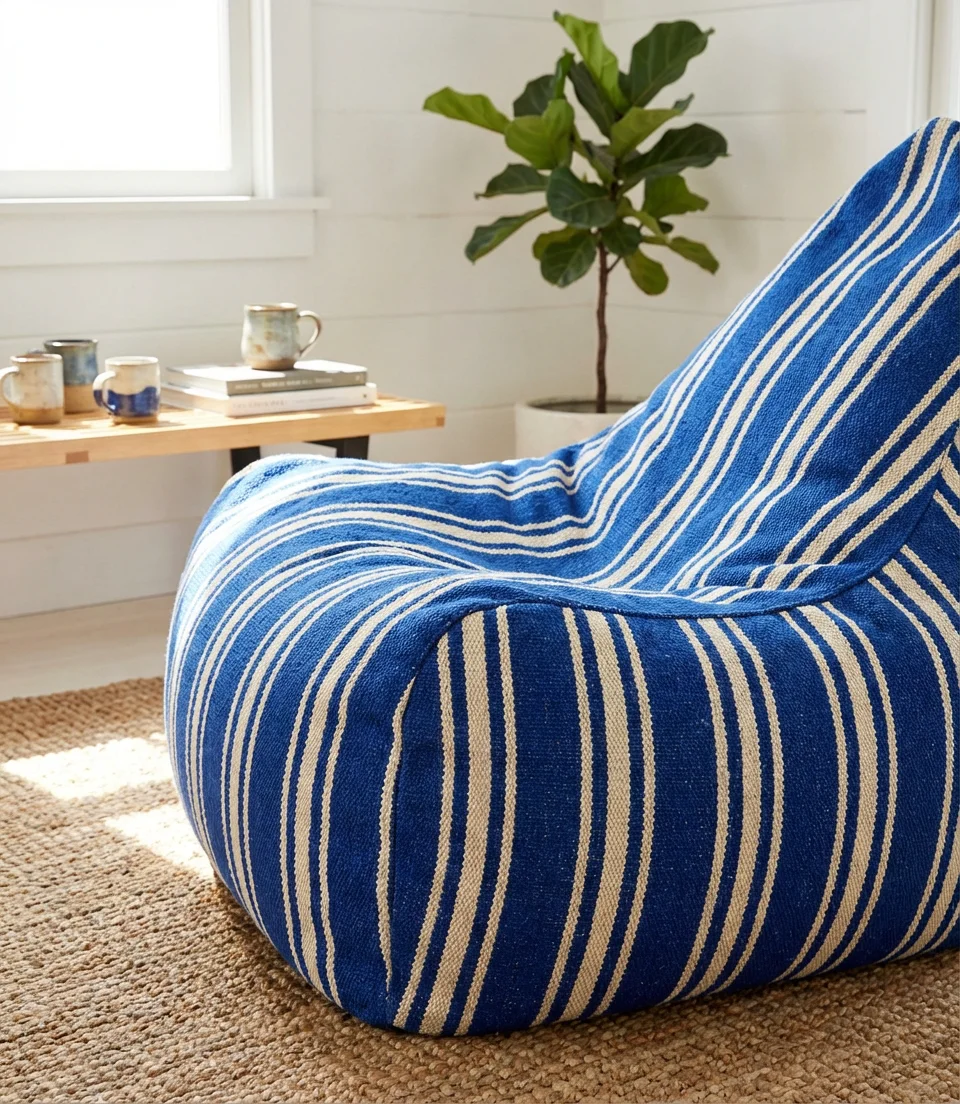
Scale is one aspect of patterned bean bags that often confuses people. A small pattern on a large round bag tends to look busy and overwhelming up close, while a larger-scale print—bold botanical, wide stripe, oversized geometric—reads more intentionally and holds up better as a statement piece. If you’re shopping online, look for close-up fabric shots to get a sense of scale before buying. Custom or semi-custom covers from small fabric shops let you control both pattern and scale, which is ideal if you have a specific aesthetic in mind. Patterned covers in quality upholstery fabric typically run $50–$130 for a cover alone.
18. Bean Bag Chair for a Kids’ Bedroom with Fun Shapes and Colors
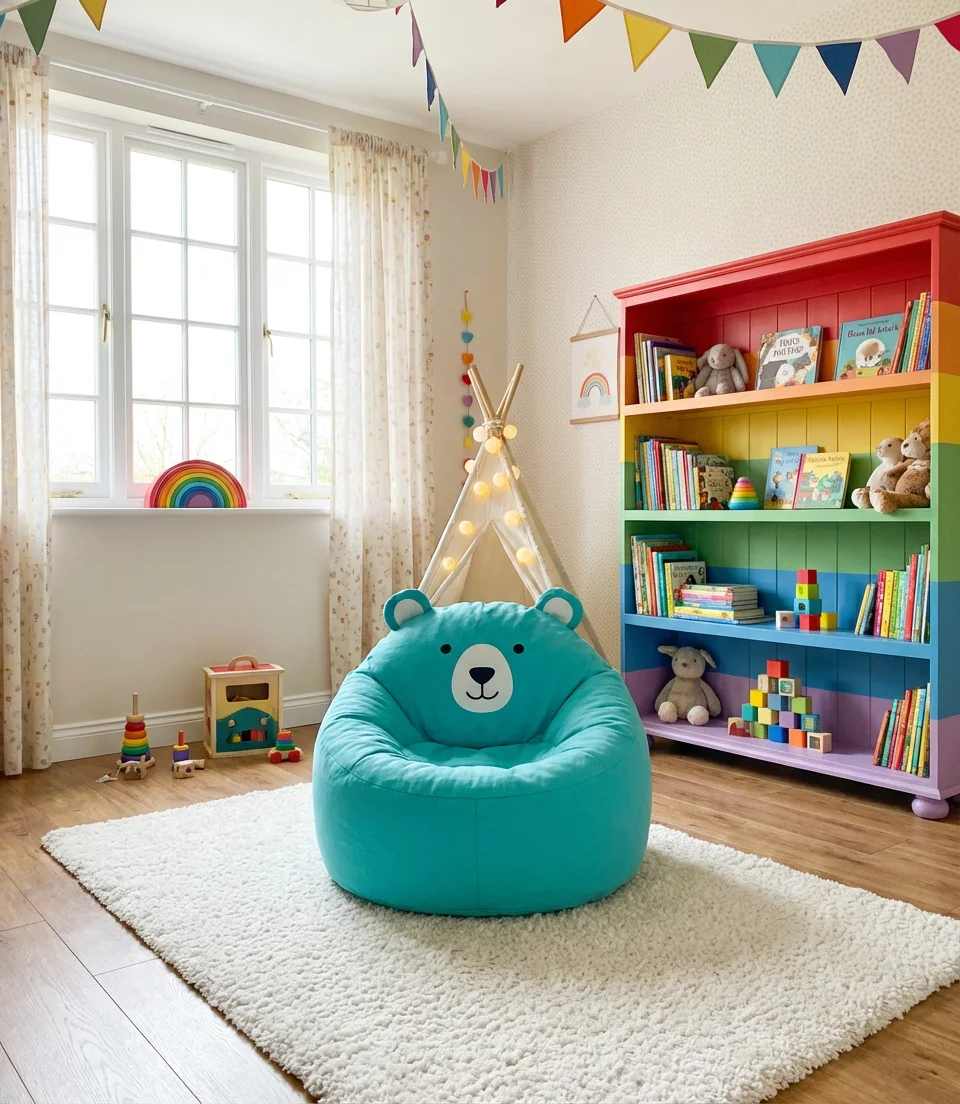
Kids’ rooms are the original natural habitat for the beanbag chair, and the category has genuinely expanded beyond the basic round bag of previous decades. Today’s options include animal shapes, taco-fold loungers, cloud forms, and novelty character designs that make the piece feel like part of the room’s story rather than just a random seat. For a cozy and imaginative kids’ bedroom, a beanbag can serve as a quiet reading corner, a homework perch, a jumping-off point for imaginative play, and a spot for sleepovers. The key is durability: look for reinforced seams, double zippers with child-safety locks, and covers that are fully machine washable.
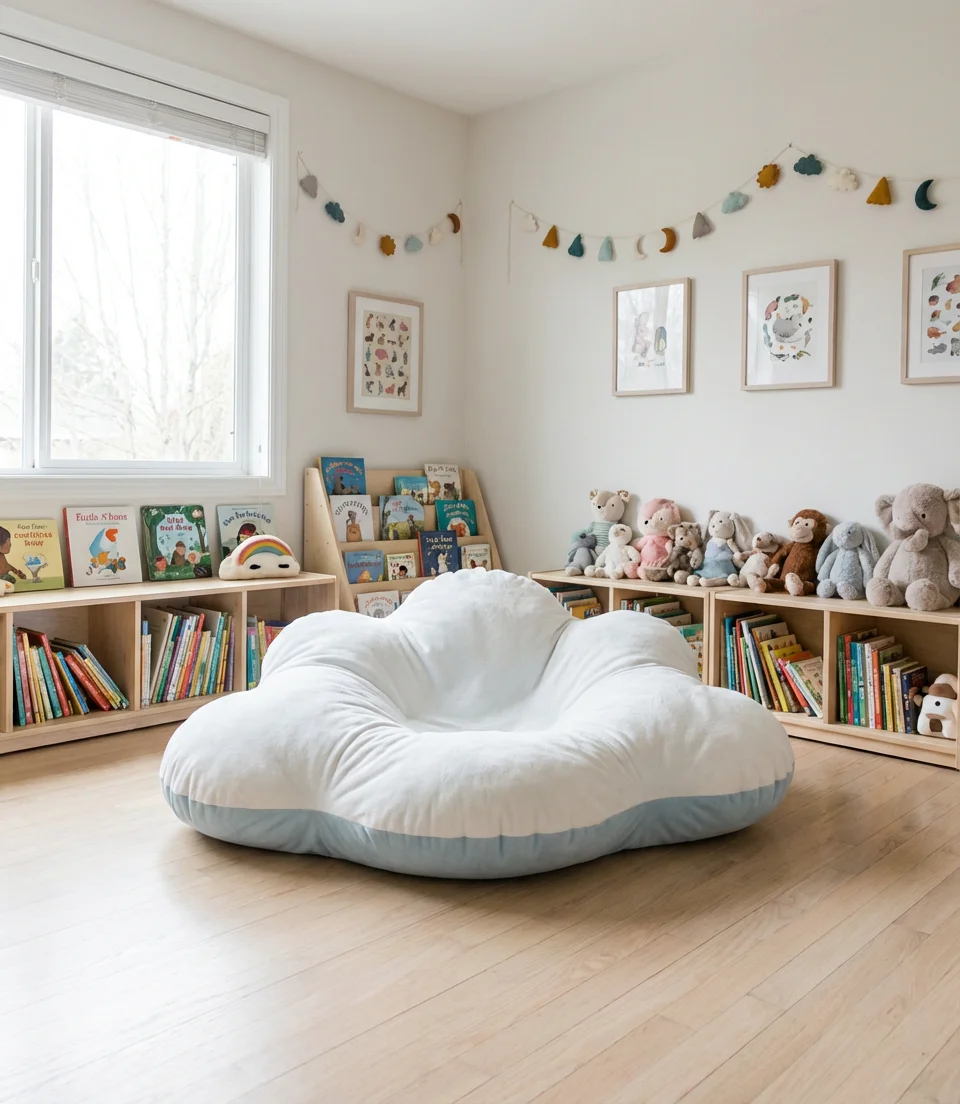
In American households with young children, beanbag chairs often replace the traditional tiny armchair that children outgrow within a year or two. A medium-sized beanbag will comfortably accommodate a child from about age 4 through early teen years—a significantly better investment per year of use. If the beanbag is for a child under 6, always verify that the fill is large EPS (expanded polystyrene) beads or shredded foam rather than small beads, which pose a choking risk if the outer cover ever fails. Most reputable brands selling in the U.S. comply with ASTM safety standards, but it’s always worth double-checking on the product listing.
19. Aesthetic Bean Bag Chair Ideas Inspired by Pinterest Trends
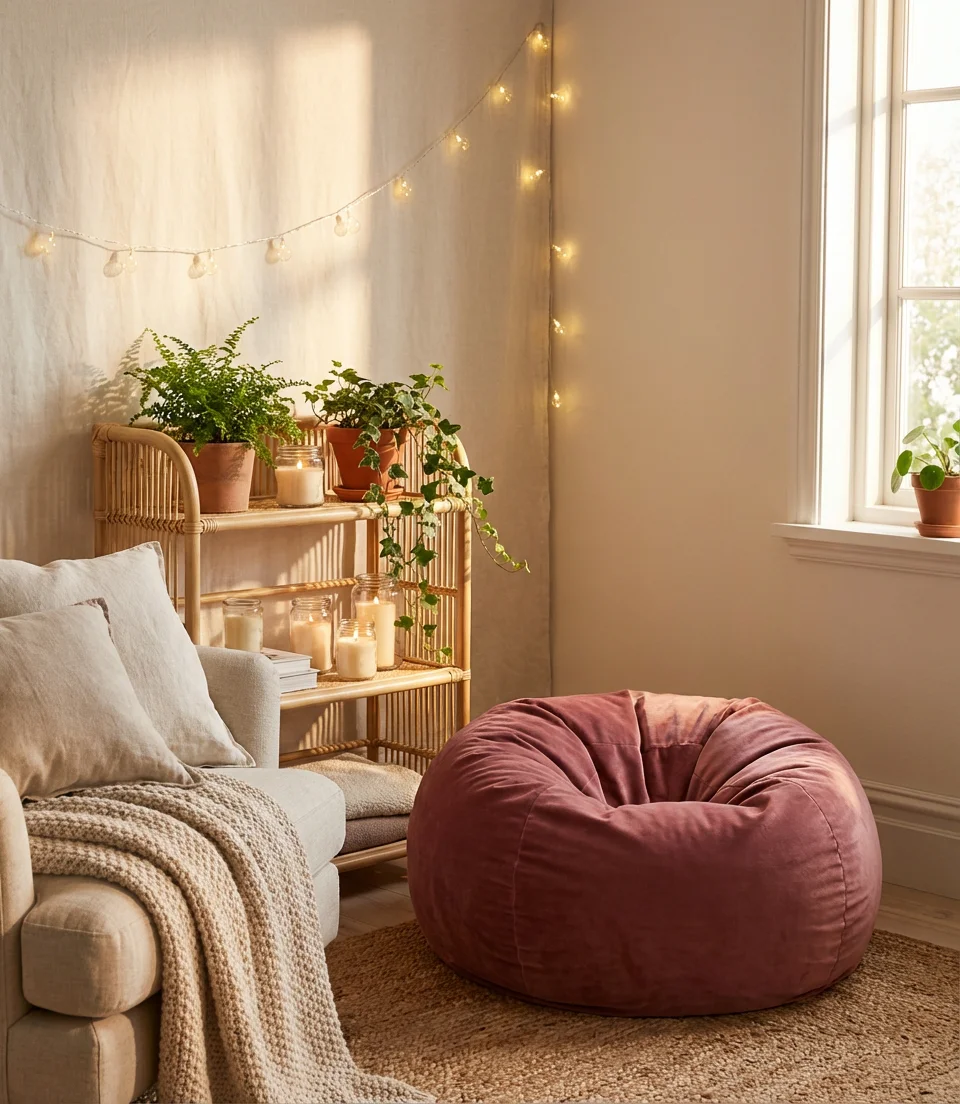
Pinterest trends in the aesthetic home category move fast, but a few beanbag-related looks have shown staying power heading into 2026. The “quiet luxury” beanbag—typically in cashmere-look fabric, cream or camel toned, and perfectly round—is still gaining traction. The “dark cozy” beanbag in black or charcoal velvet is holding strong. And the “colorful maximalist” bag in bold jewel tones is finding a new audience among younger homeowners who want their spaces to feel joyful and personal rather than aspirational and restrained. Following a few interior design accounts on Pinterest and saving ideas to a dedicated board before you buy is a reliable way to narrow down your aesthetic without regret.
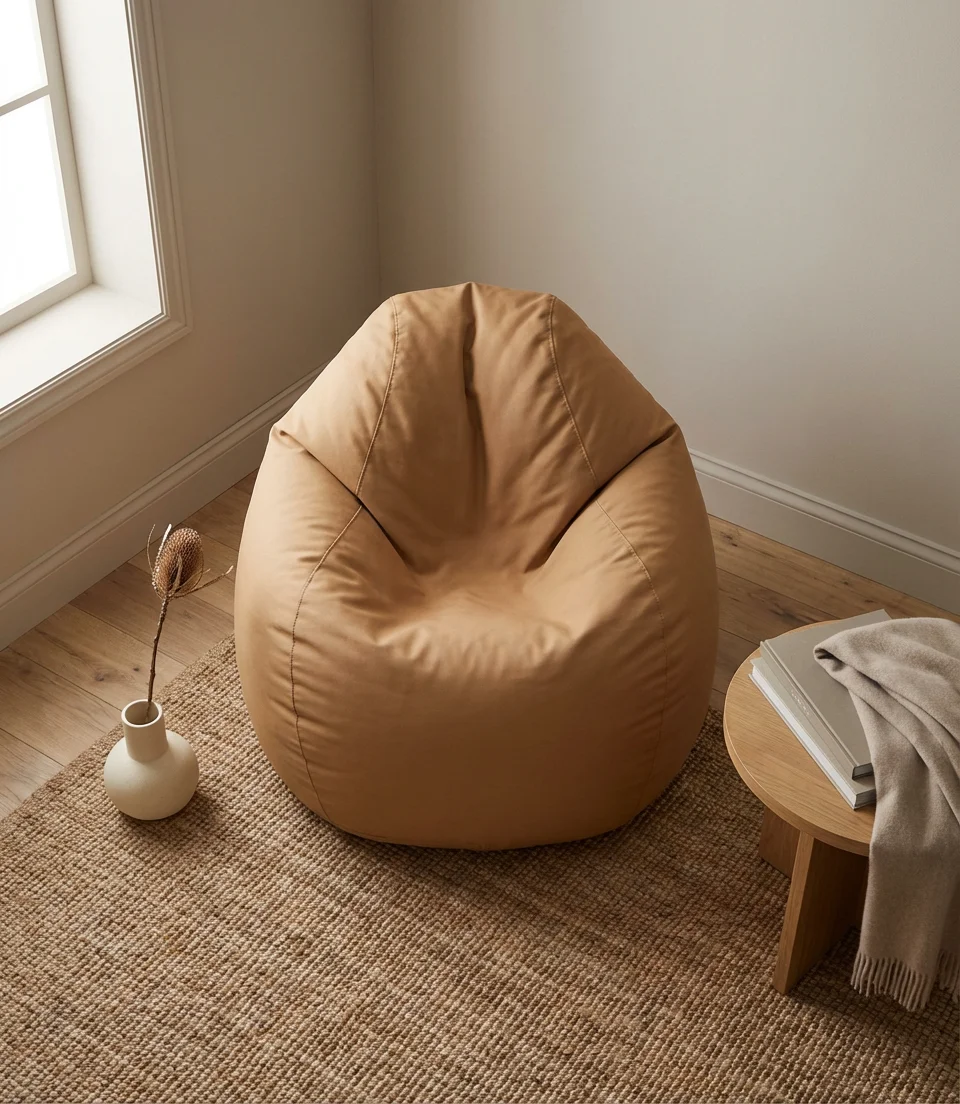
Something real homeowners who shop from Pinterest tend to report: the most satisfying bean bag purchases happen when they stop chasing a specific trending look and instead think about the room they actually have. A piece that works with your existing colors, your floor space, and your daily lifestyle will make you happier than the exact bag you saw on a perfectly styled photo shoot with $4,000 worth of other props. Use Pinterest for inspiration, not prescription—let the images point you toward a color family or material direction, then adapt from there based on what’s available in your actual budget and space.
20. Oversized Bean Bag Chair as a Guest Bed Alternative
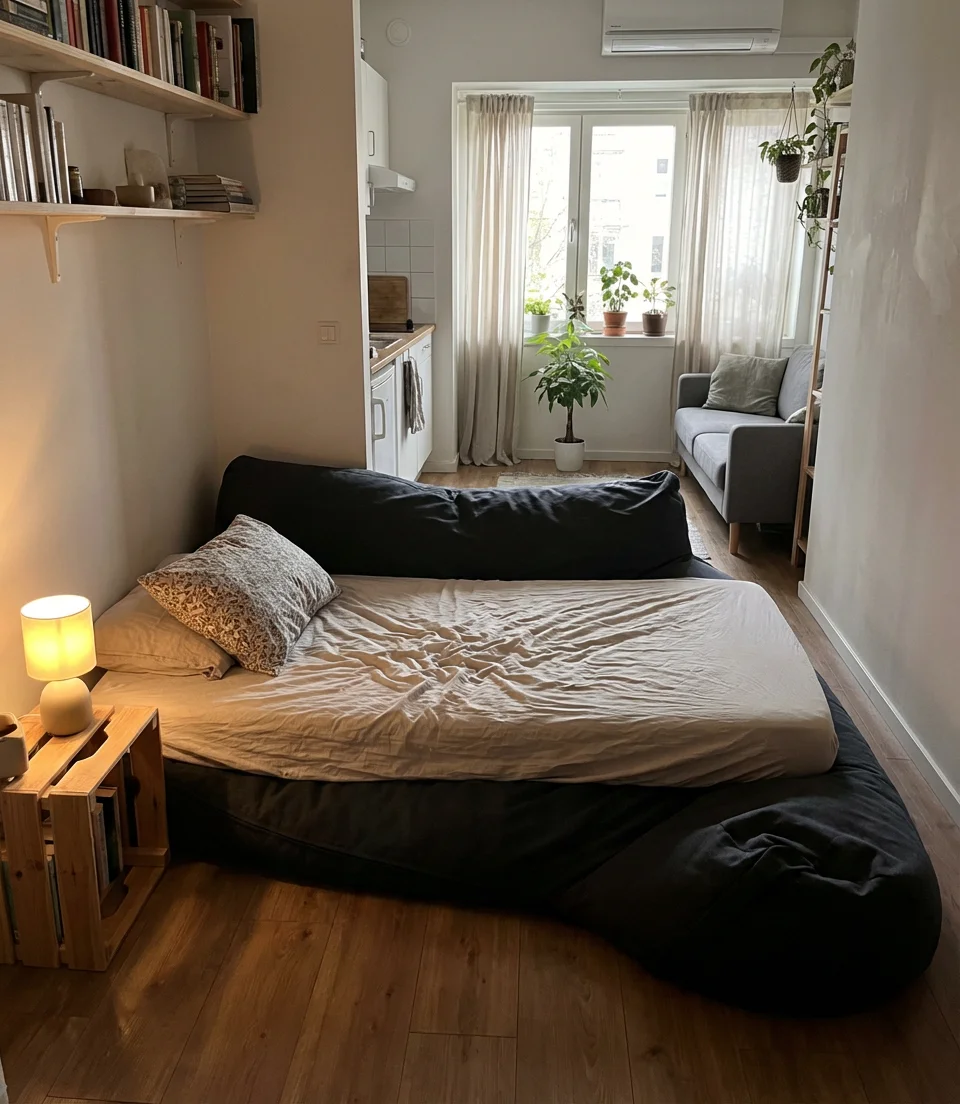
For those in apartments without a dedicated guest room, an oversized beanbag chair that converts to a lounger is one of the more practical furniture investments available. Several brands—Sumo, Yogibo, and Fatboy among them—make large enough models (often six feet or longer) that a guest can fully recline and sleep comfortably on them. Pair with a fitted sheet designed for beanbag use, a throw pillow at the head end, and a blanket, and you have a surprisingly comfortable overnight sleeping setup that folds back into a living room chair the next morning. For studio apartments in expensive cities, this kind of multi-use furniture is essentially a necessity.
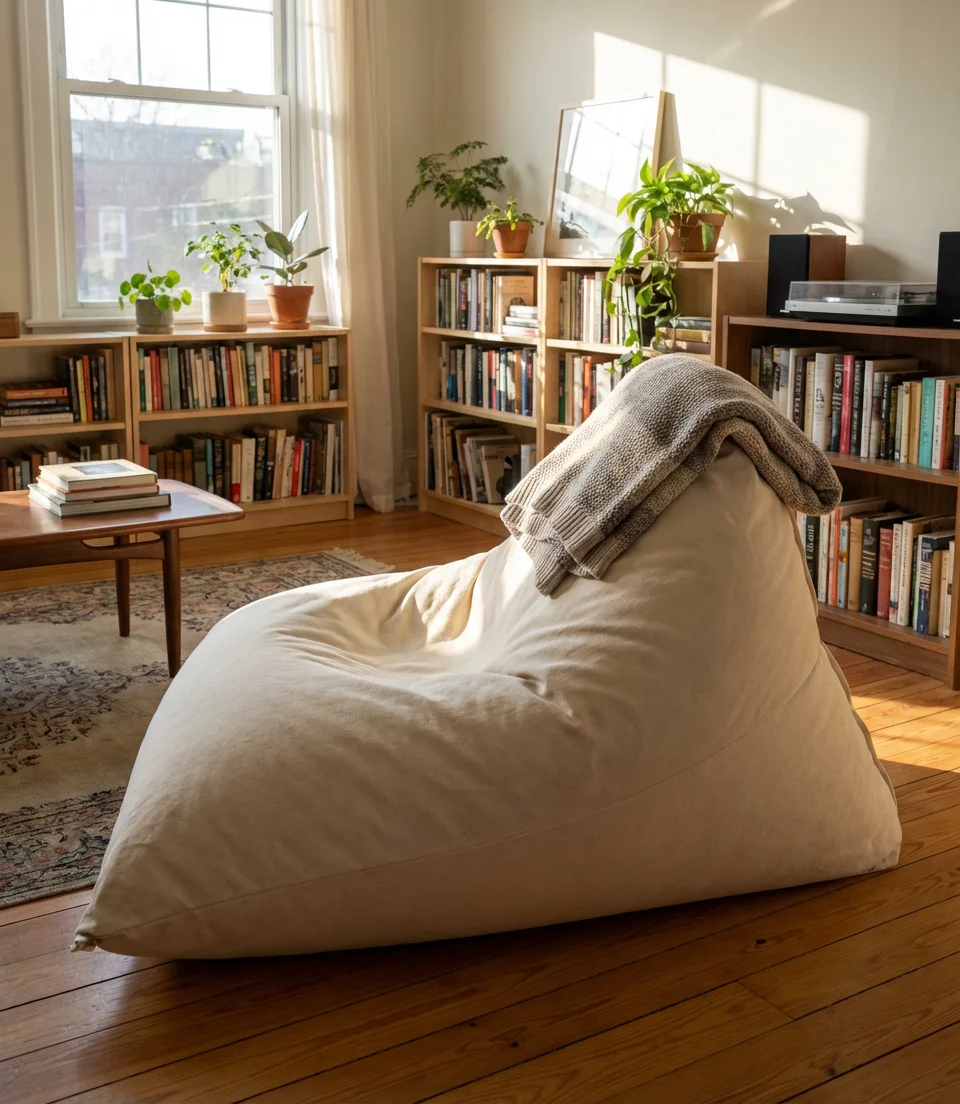
Budget angle worth knowing: a quality oversized beanbag that functions as a guest sleeping surface will run $200–$450 depending on size and fill material. That’s substantially less than a dedicated sleeper sofa ($500–$2,000+), takes up less floor space when not in use, and requires no assembly. The trade-off is that it won’t offer the same mattress-level back support as a proper bed—guests with serious back issues may find it uncomfortable for multiple nights. For occasional, one-night visits, though, most people report sleeping perfectly well. Memory foam versions provide noticeably better spinal support than standard EPS (expanded polystyrene) bead versions for sleeping purposes.
21. Bean Bag Chair in a Home Office for Productive Breaks
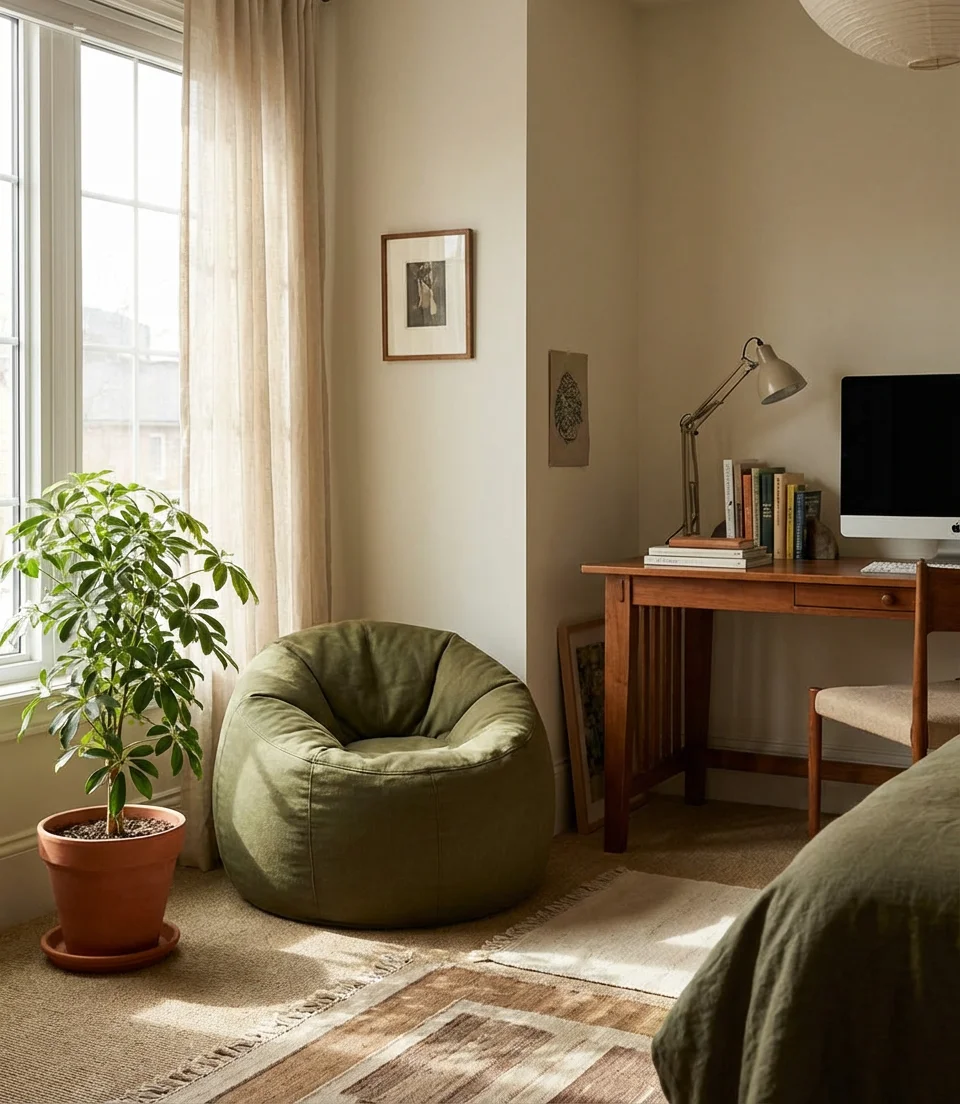
The beanbag for the home office is a newer use case, but it makes a lot of sense. Remote workers who spend six to eight hours at a desk often find that having a comfy, low-key seating option in the same room encourages short mental reset breaks—five or ten minutes off the chair, away from the screen—that meaningfully improve focus and energy for the rest of the workday. A modern beanbag in a neutral tone complements any work-from-home setup, particularly when paired with warm design elements such as wood shelving, plants, and art. It signals that the space is for a whole person, not just a work machine.
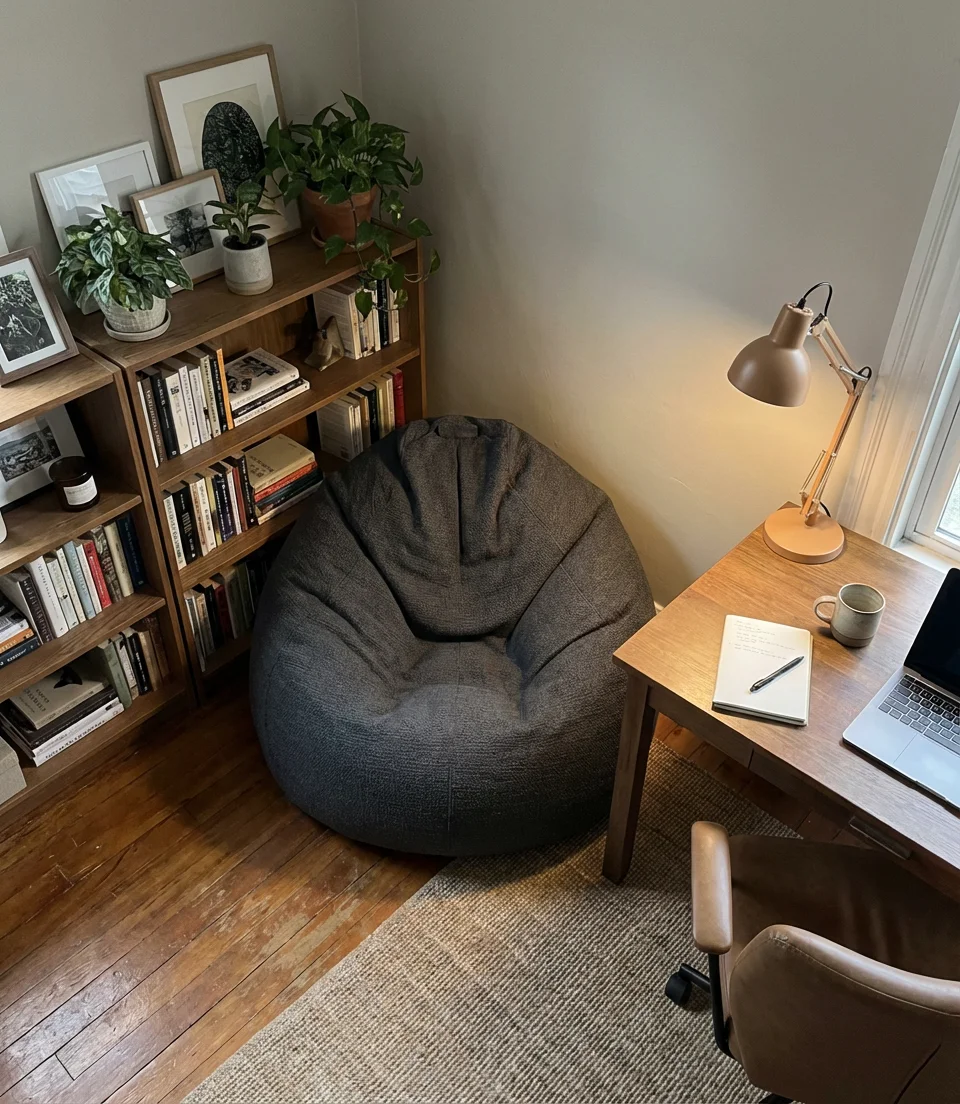
The placement that works best in a home office is tucked near a window with natural light, away from the desk but still within the same room. This creates a physical transition—you’re getting up, moving, and changing your relationship to the space—without leaving the room entirely. Some remote workers also use the beanbag for audio calls or brainstorming sessions where they want to think more freely than they do when seated formally at a desk. Choose a size that fits the room comfortably; in most home offices, a medium-sized bean bag (about 3–4 feet across) is plenty without eating into the floor space you need to move around.
22. Velvet Bean Bag Chair for a Glamorous Bedroom Touch
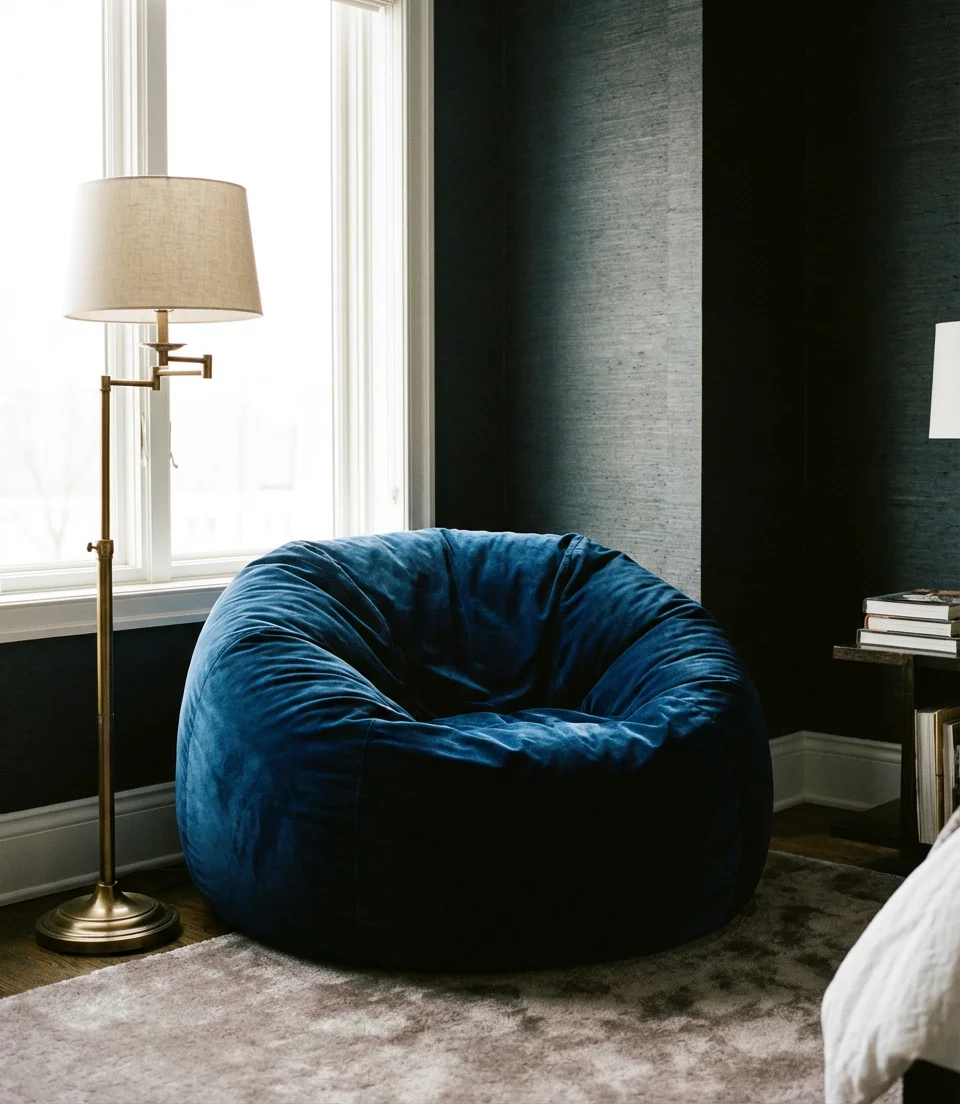
Velvet is having its longest-running design moment in recent memory, and a velvet beanbag chair brings that luxurious finish to one of the most relaxed furniture forms around. The combination is genuinely unexpected in the best way—the plush surface catches light beautifully and changes tone as you move around it, giving it a visual richness that flat-weave fabrics simply can’t match. In jewel tones like sapphire, emerald, aubergine, or rich burgundy, a velvet beanbag reads almost regal. In softer hues such as blush, dove grey, or dusty rose, it exudes a cozy glamour, reminiscent of a bedroom that consistently impresses both on Pinterest and in real life.
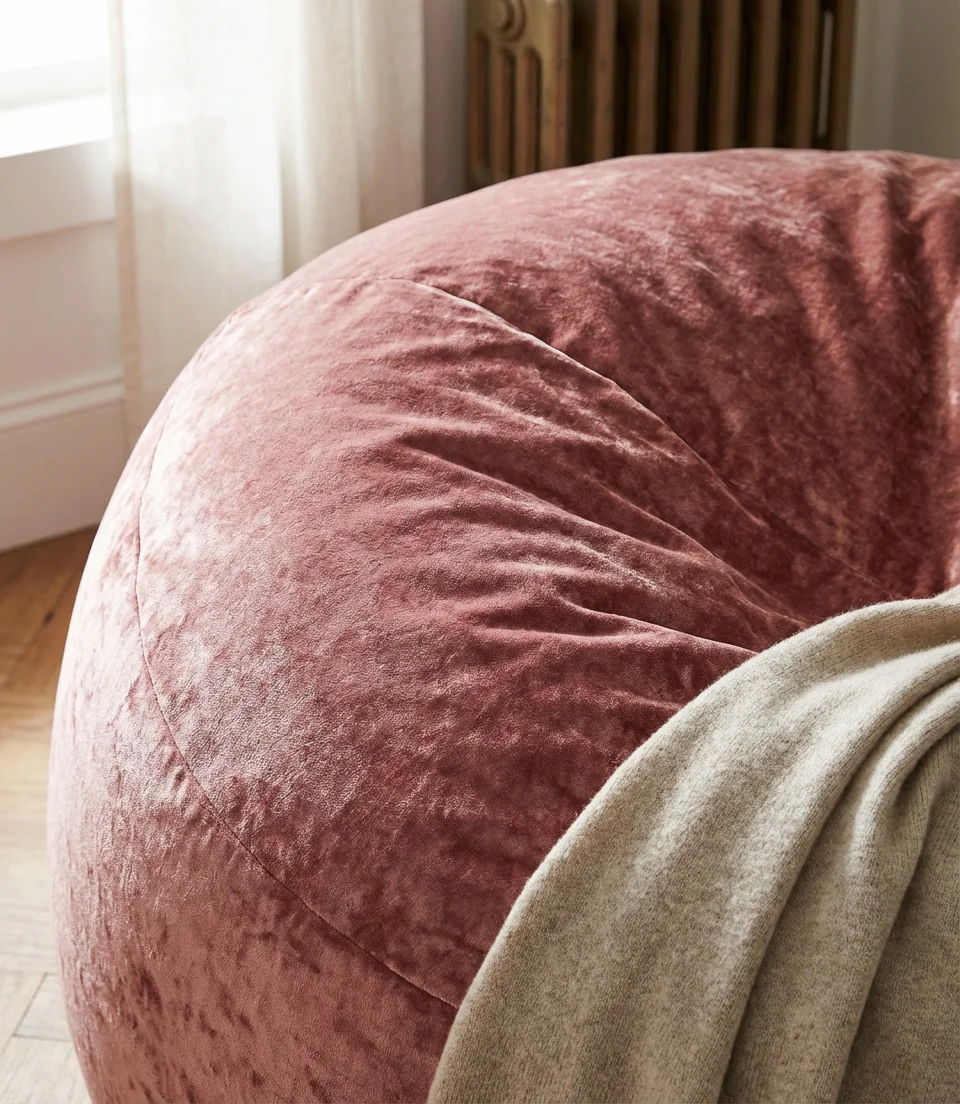
Velvet requires a bit more care than performance fabrics, but it’s not as high-maintenance as its reputation suggests. Brush it weekly with a soft velvet brush to maintain the pile direction and prevent matting. Spot-clean spills immediately with a slightly damp cloth (never rub—blot). For full cleaning, most velvet beanbag covers can be hand-washed or placed in the machine on a delicate cycle, though air-drying flat is strongly recommended over tumble drying, which can compress and damage the pile. The care is worth it: a well-maintained velvet beanbag stays beautiful for years and ages more gracefully than almost any other fabric in this category.
23. Outdoor Bean Bag Chair for Patios and Backyard Spaces
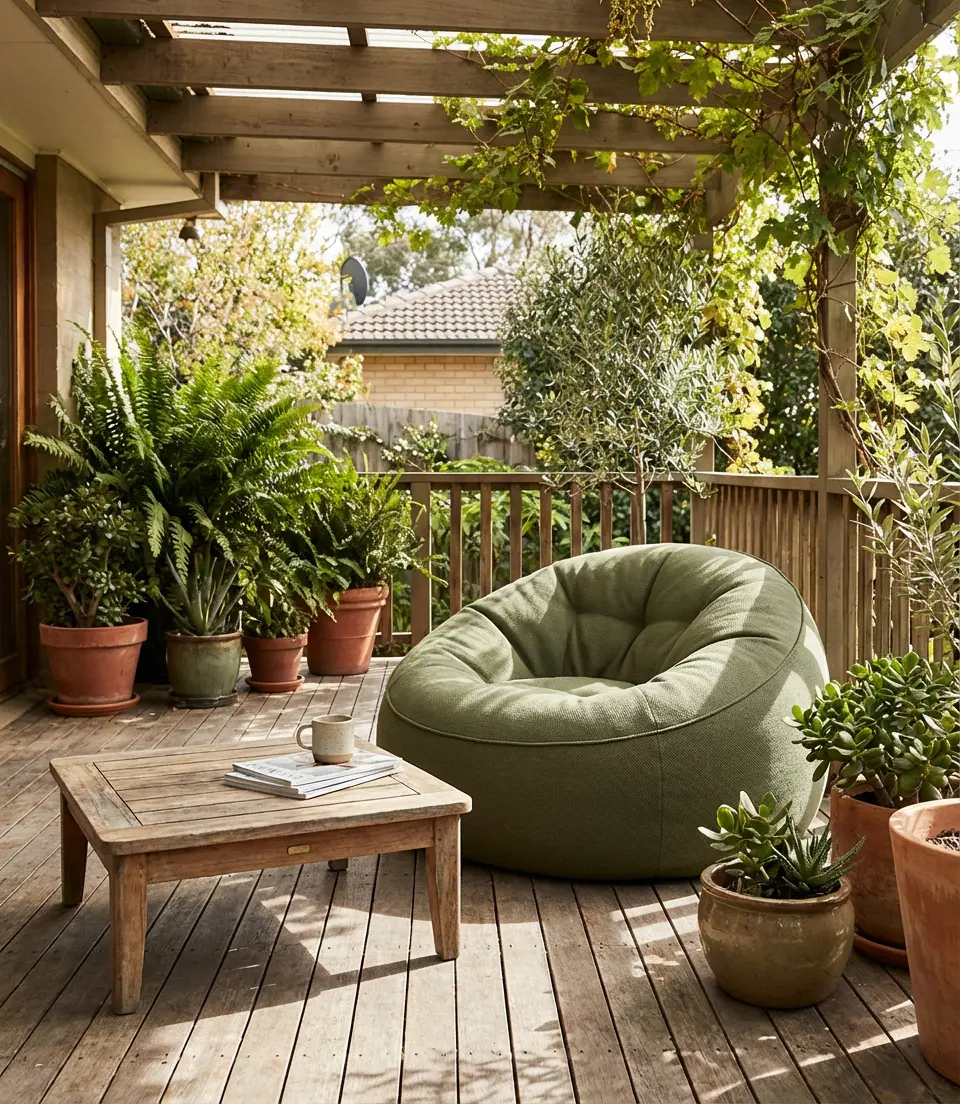
The indoor beanbag’s outdoor cousin has arrived—and it’s genuinely tough. Outdoor bean bag chairs are made with UV-resistant, water-repellent fabrics designed to handle sun, moisture, and the occasional unexpected rain shower without fading or mildewing. They’re perfect for patios, decks, pool areas, and backyard reading corners, and they bring the same casual, sink-into-it comfort to outdoor spaces that indoor versions bring to living rooms and bedrooms. Comfy and weather-resistant is a combination that used to be hard to find at a reasonable price, but the market for outdoor bean bags has matured significantly recently, with more quality options available below $200.
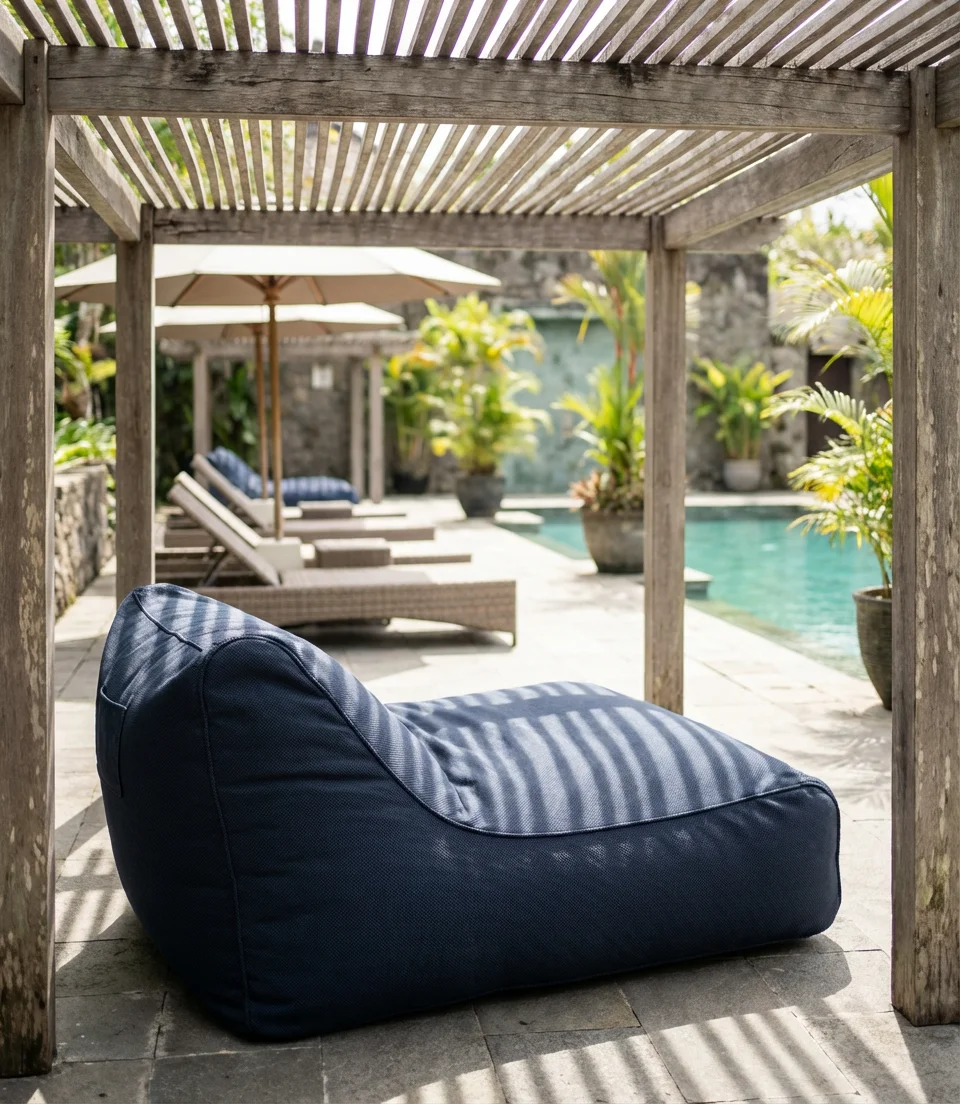
Where outdoor bean bags work best: on covered patios or pergola areas where they’re shielded from direct, prolonged sun exposure, which extends the life of even UV-resistant fabrics significantly. On pool decks, look for versions with a perforated or mesh inner liner that allows water to drain after a wet swimsuit-wearing occupant, preventing mildew buildup in the fill. In colder climates, bring outdoor bean bags inside for the winter—most are light enough to move easily, and storage during off-season months dramatically extends their lifespan. Brands like Fatboy, Yogibo, and Chill Sack all offer solid outdoor options in a range of sizes and colors.
24. Bean Bag Chair for a Teen’s Room—Style Meets Function
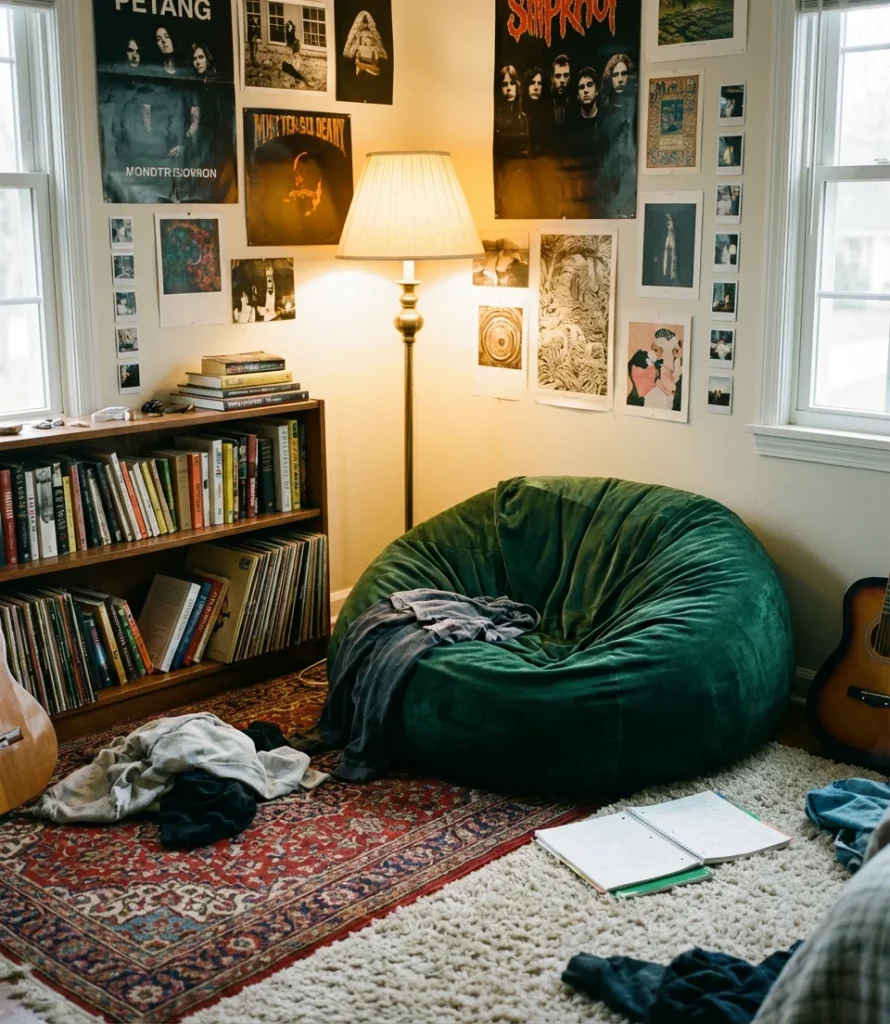
Teenagers are perhaps the most enthusiastic bean bag users in any household, and in 2026, the options available to them are genuinely excellent. A teen who’s building their own aesthetic bedroom—whether that’s dark and moody, soft and romantic, sporty, maximalist, or minimalist—can find a beanbag that fits that vision precisely. Gaming-focused teens often gravitate toward larger, supportive lounger styles in dark or bold colors. More style-forward teens might lean toward velvet rounds in dusty pinks or sage greens. The beanbag functions simultaneously as a hangout spot for friends, a solo relaxation zone, and—when homework happens away from the desk—a study perch.
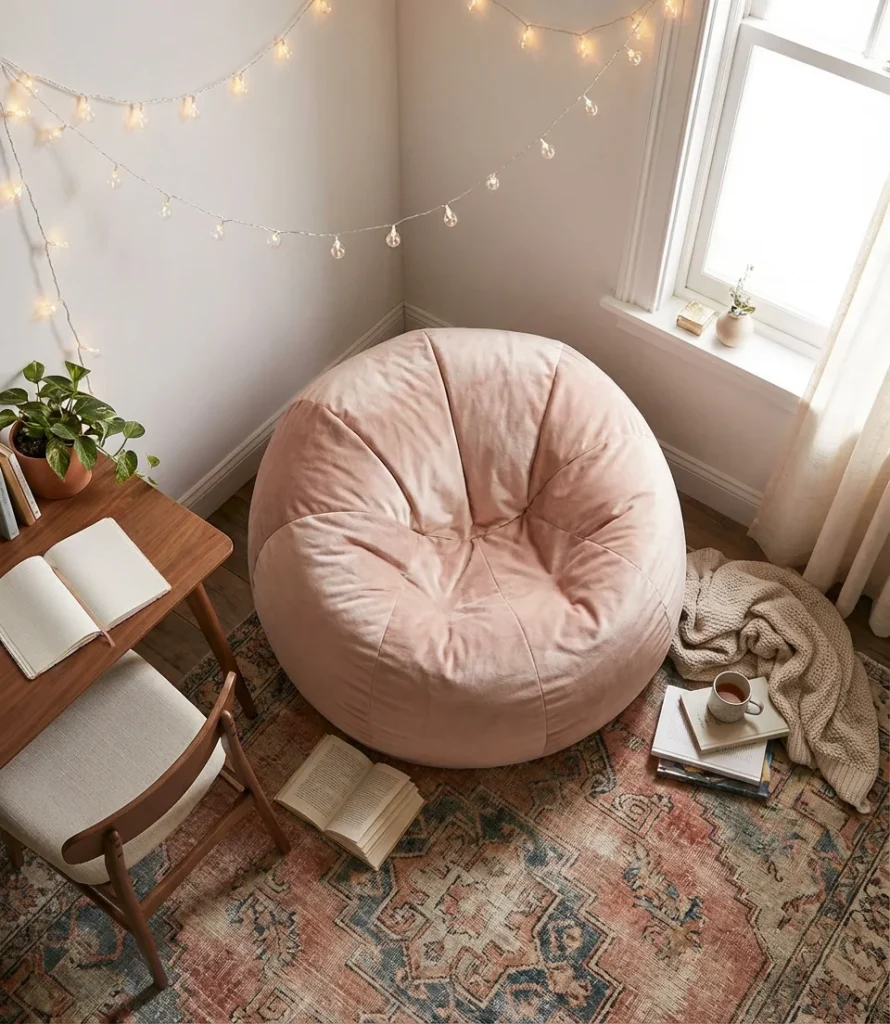
Letting a teen choose their beanbag is a genuinely smart parenting move—it gives them a small piece of the room that feels authentically theirs, which matters enormously to adolescents who are figuring out their personal identity through their environment. Set a budget (most great teen-appropriate options fall in the $80–$180 range), let them browse alternatives online, and give them final say on color and material. The result is a piece they’ll actually care for and keep in good condition—rather than furniture chosen for them that gets ignored or mistreated because it doesn’t feel like theirs. Ownership makes people better stewards of the things they own.
25. Bean Bag Chair Styling Tips—Putting It All Together
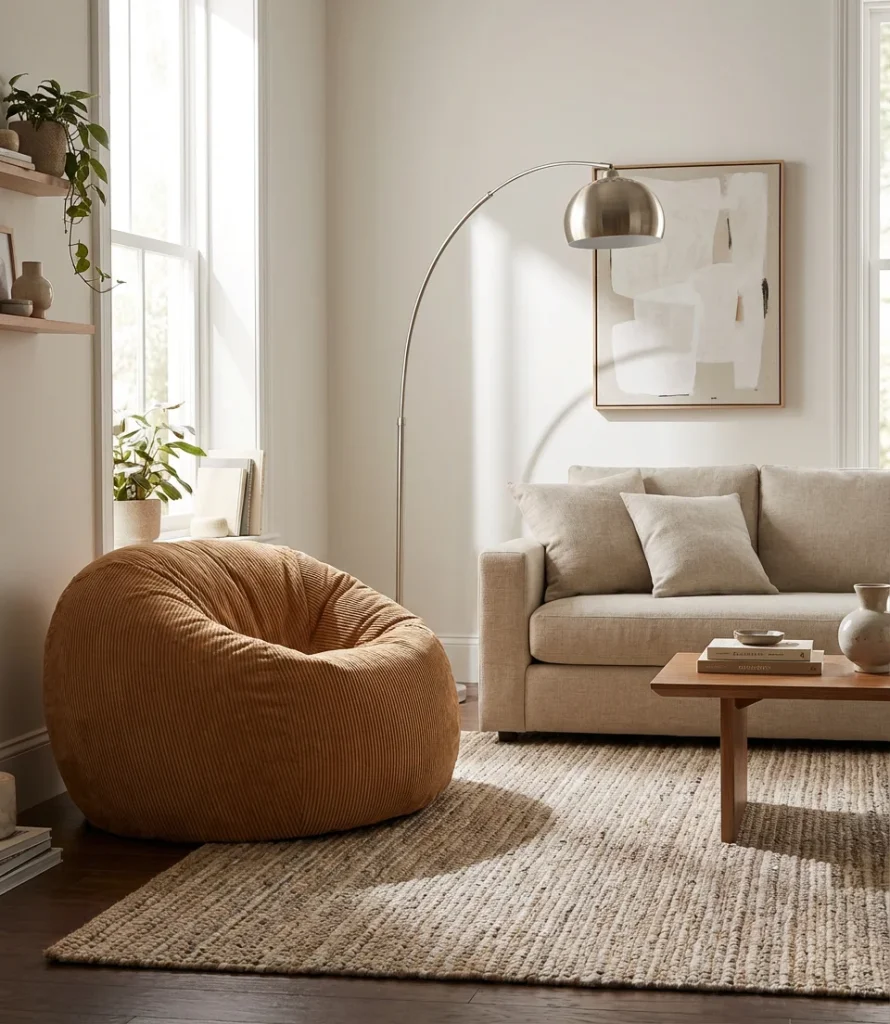
After exploring 24 specific bean bag ideas, a few universal styling principles emerge that apply regardless of which direction you take. First: scale. Always go one size larger than your instinct tells you—bean bags tend to look smaller in rooms than they do in product photos, and a substantial piece reads as intentional, while a too-small one reads as forgotten. Second: material matching. Connect your beanbag to the room’s existing palette through at least one shared color or texture. Third: placement. Position matters more than almost anything else—a well-placed beanbag in a considered spot anchors a room, while a randomly dropped one just takes up space.
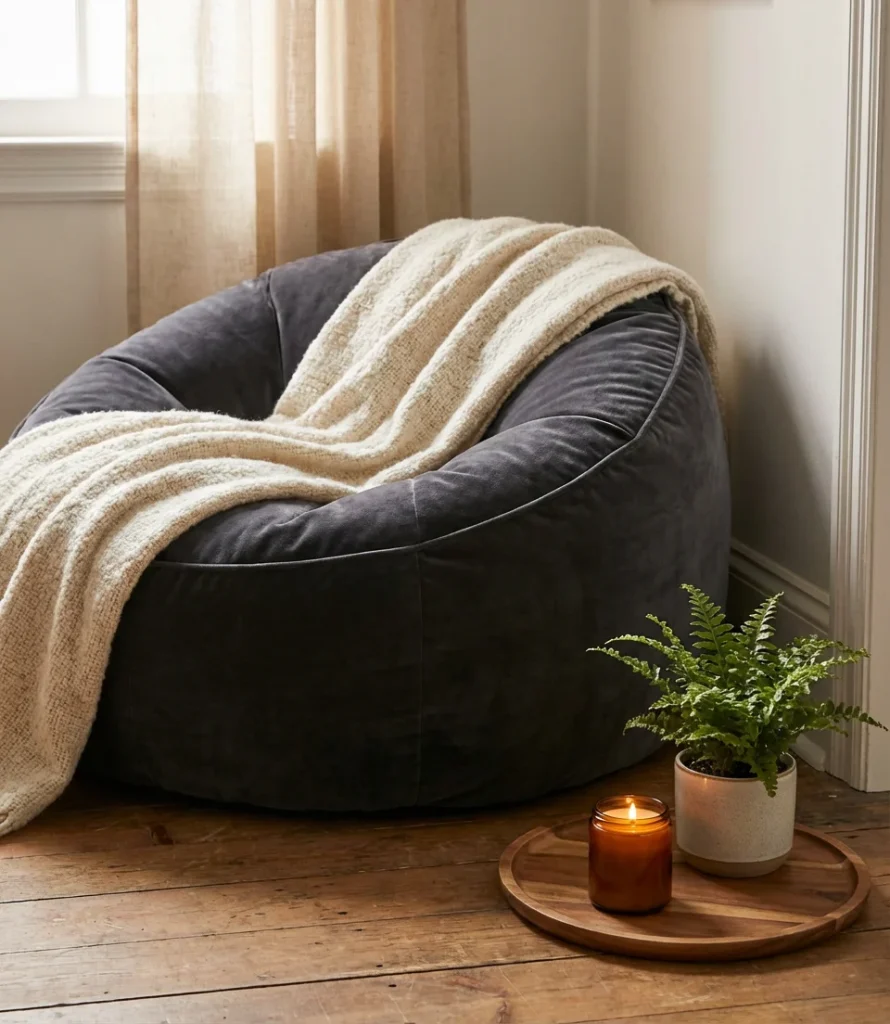
Finally, resist the urge to over-accessorize around the beanbag. A throw blanket draped over one side, a small tray on the floor nearby for a drink, and a floor lamp overhead are typically all you need. Adding too much—a side table, a stack of books, a plant, and a rug all within two feet—creates visual clutter that works against the relaxed, welcoming quality that makes a beanbag chair worth having in the first place. Let the piece breathe, invite, and be what it is: one of the most comfortable, adaptable, and genuinely joyful things you can put in a room.

Whether you’re drawn to the sculptural whimsy of a flower-shaped design, the warm luxury of velvet, or the reliable comfort of a Big Joe classic, there’s a beanbag chair in 2026 that fits your space and your life perfectly. We’d love to hear which ideas resonated most with you—drop your favorites in the comments below, tell us what room you’re styling, and share any photos if you’ve already made a purchase. Your personal experience could serve as the perfect motivation for someone else to make a purchase.