49 Walk In Shower No Door Ideas 2026: Stylish, Open & Spa-Inspired Designs You’ll Love

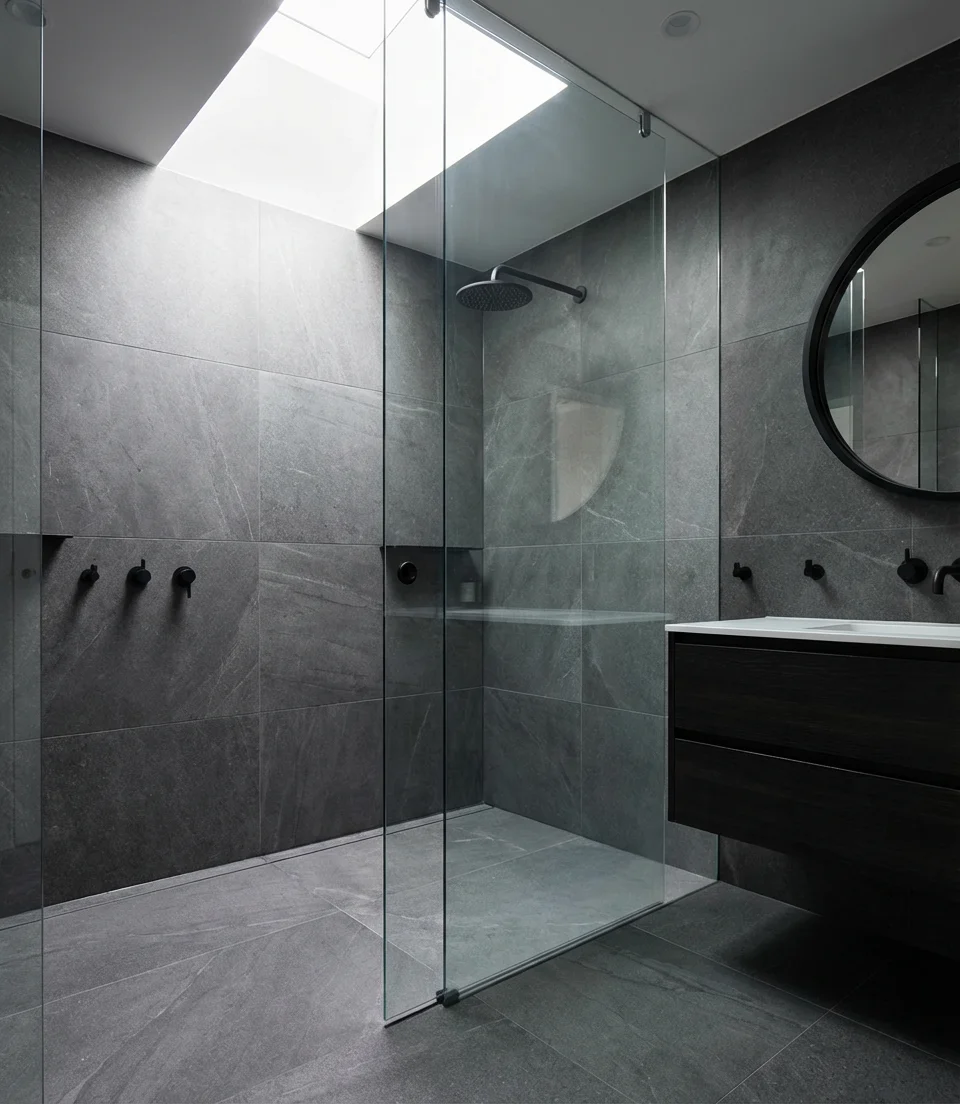
Walk-in showers without doors have become one of the most searched bathroom designs on Pinterest in 2026, and for good reason. They offer a sleek, open feel that makes even compact spaces feel larger while eliminating the maintenance headaches of glass door tracks and seals. American homeowners are drawn to the seamless, spa-like aesthetic and the accessibility these showers provide—no barriers, easier aging-in-place planning, and a modern look that fits everything from minimalist lofts to classic farmhouse baths. Whether you’re planning a full bathroom remodel or just dreaming of upgrades, these ideas will show you how to make a doorless shower work beautifully in your home.
1. Frameless Glass Panel with Wet Room Floor
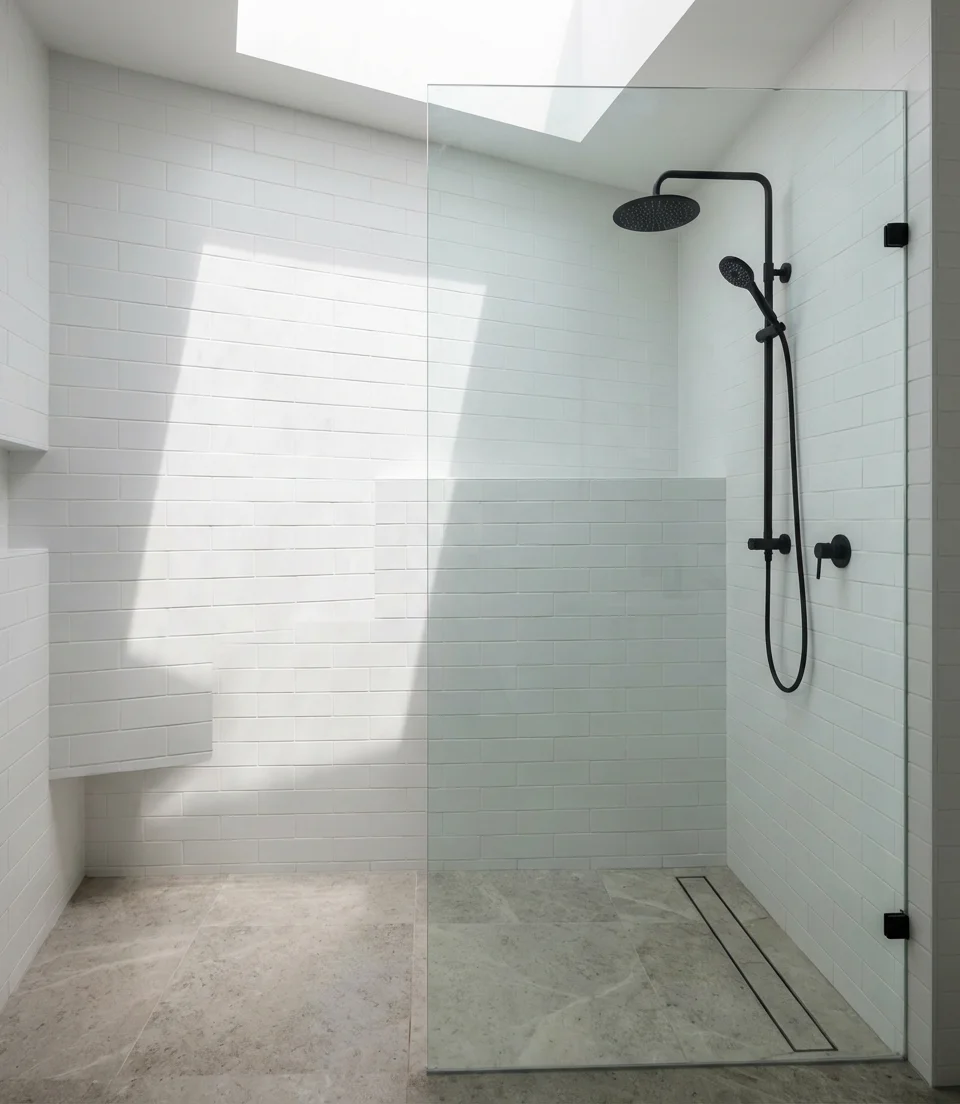
A single pane of glass paired with a fully waterproofed wet room floor creates one of the cleanest looks in modern bathroom remodel projects. The glass acts as a subtle splash guard without closing off the space, while the entire floor gently slopes toward a linear drain. This setup works especially well in master baths, where you want that hotel-inspired, uninterrupted flow from the vanity to the shower without any visual breaks.
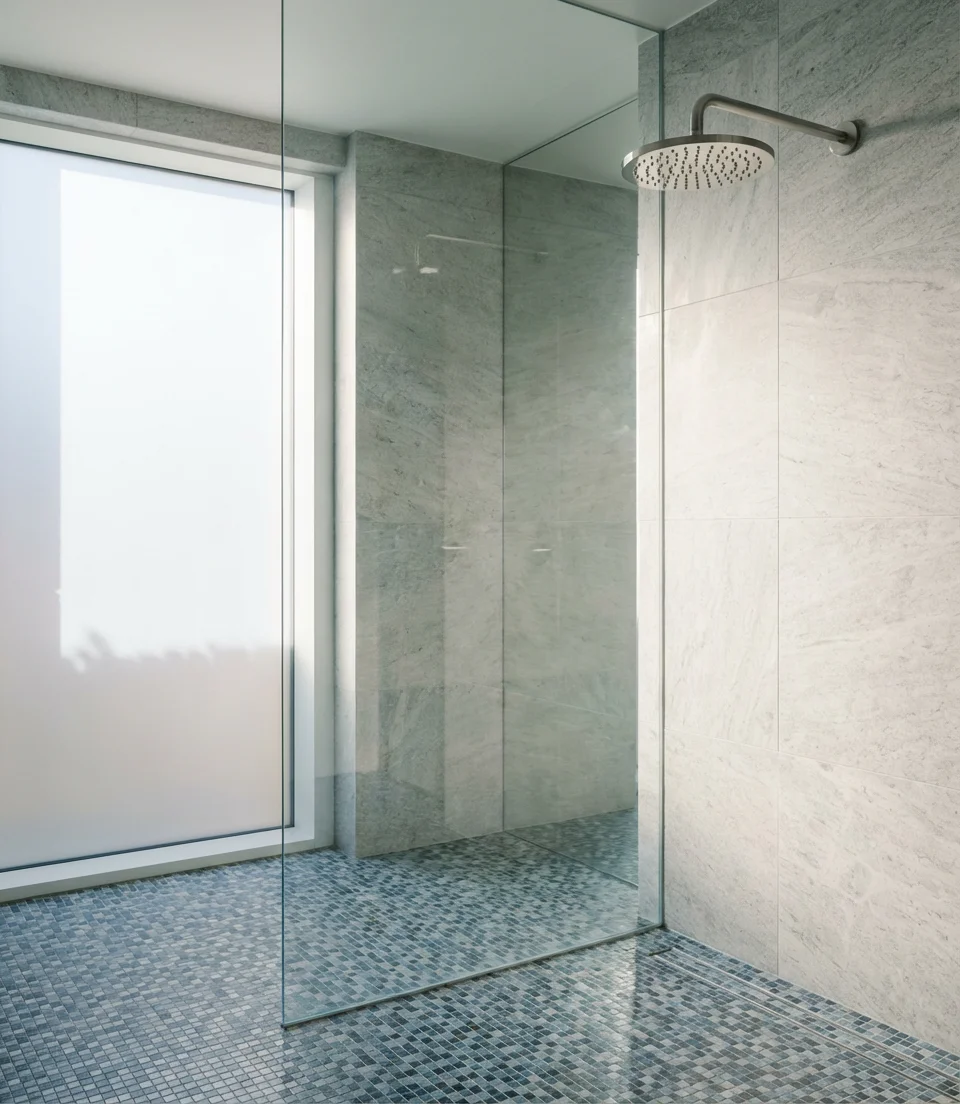
The key advantage here is drainage—wet rooms handle water across the entire floor, so there’s no need for a raised curb or threshold. In older American homes with limited square footage, this approach can make a cramped bathroom feel twice as large. Ensure your contractor has a thorough understanding of proper waterproofing membranes, as skimping on this aspect could result in costly subfloor damage in the future.
2. Tiled Half Wall with Built-In Bench
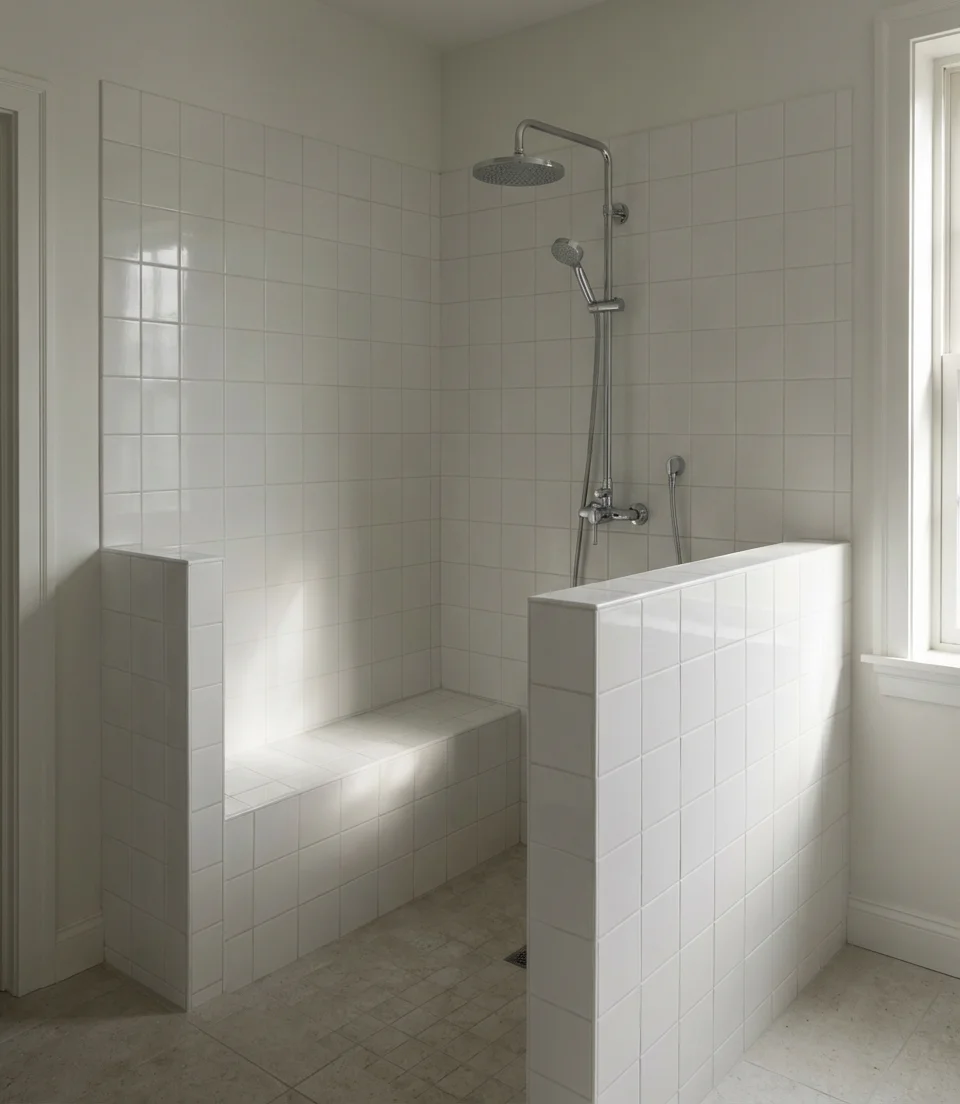
A half wall made from the same tiled material as your shower creates a natural barrier without the bulk of a full enclosure. Add a bench along one side, and you’ve got a practical perch for shaving legs or resting after a long day. This combination is particularly popular in master bathrooms where comfort and style go hand-in-hand, and the half wall keeps water contained while preserving that open, airy vibe.
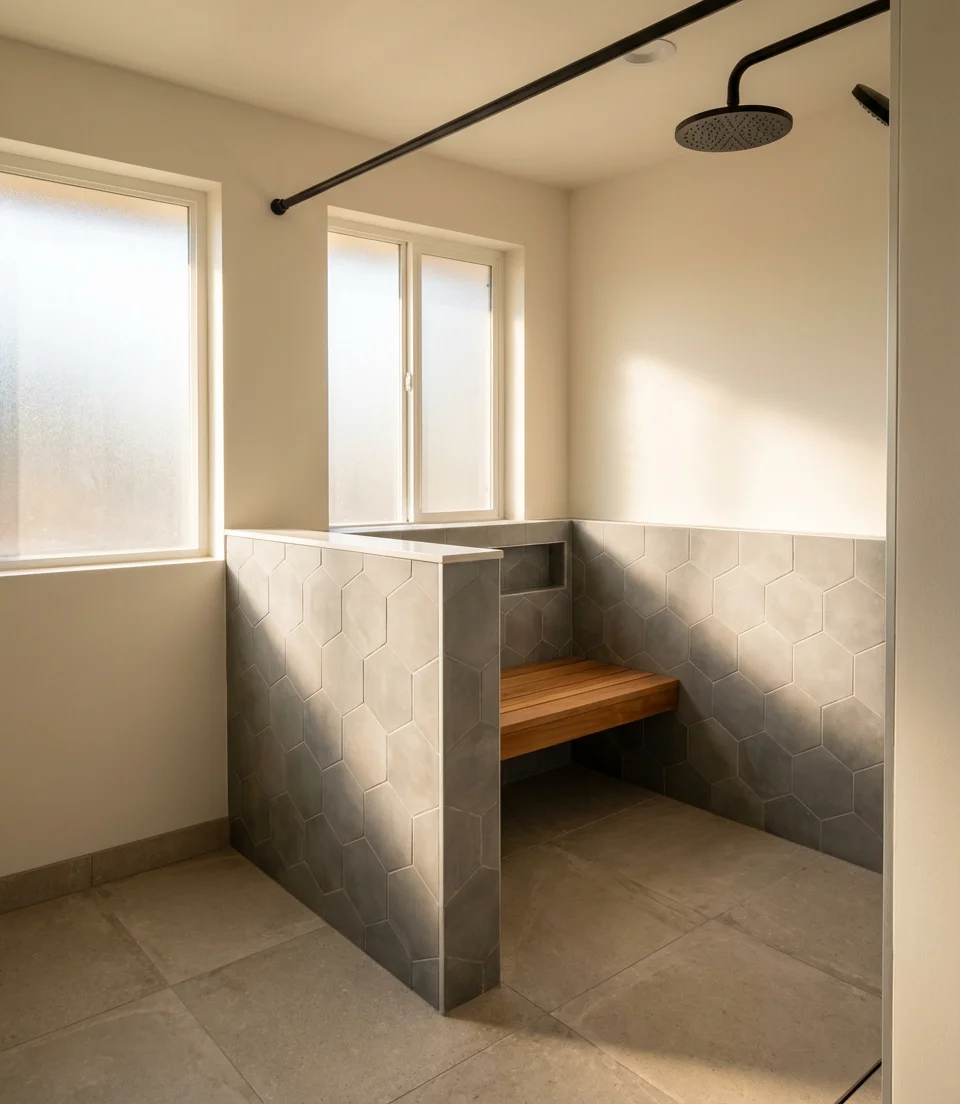
Where it works best: homes with decent ceiling height and a bathroom footprint of at least 50 square feet. The bench should be at least 15 inches deep to be truly comfortable, and the half wall typically stops around 42 inches high—just enough to block spray without making the room feel chopped up.
3. Corner Entry with Full Wall Tile
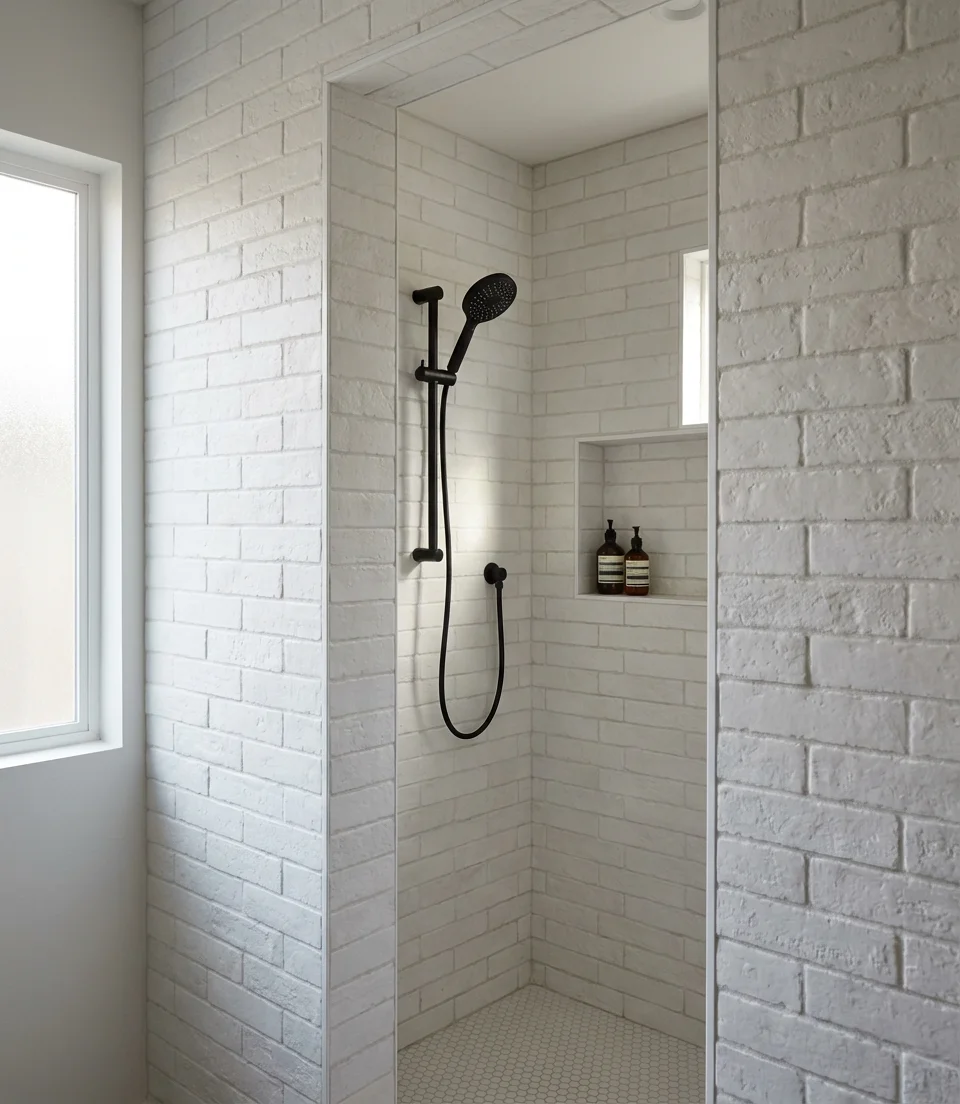
Positioning your shower in the corner of the bathroom and wrapping it with full wall tile from floor to ceiling maximizes water containment while keeping the design open. This layout is a favorite in small bathroom renovations because it tucks the wet zone into an underutilized corner, freeing up the rest of the room for a vanity or linen storage. The continuous tile creates a visual anchor and can be a stunning design moment if you choose a bold pattern or color.
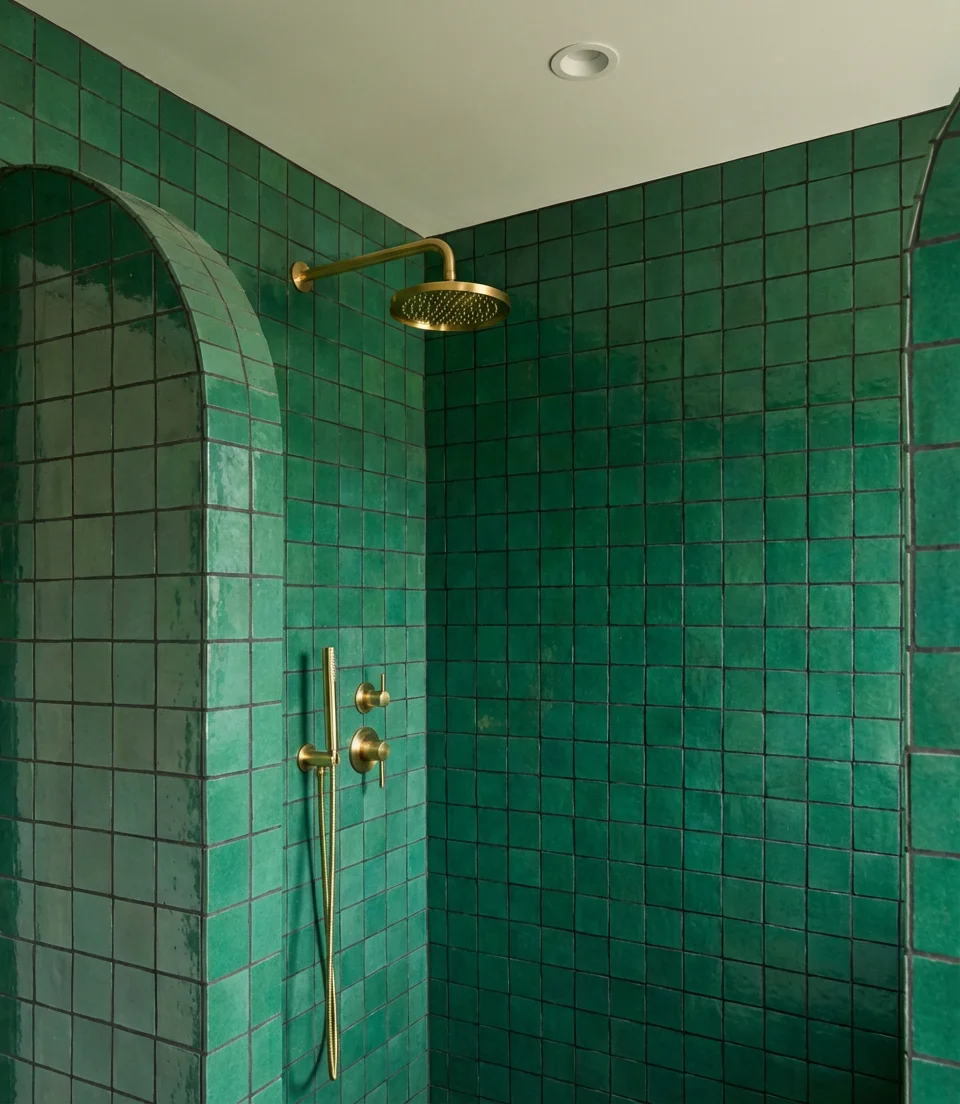
A common mistake is skimping on ventilation—corner showers can trap steam if there’s no nearby window or a quality exhaust fan. Aim for a fan rated at least 50 CFM for a standard 5×8 bathroom, and consider a humidity-sensing model that kicks on automatically.
4. Long Narrow Layout with Dual Shower Heads
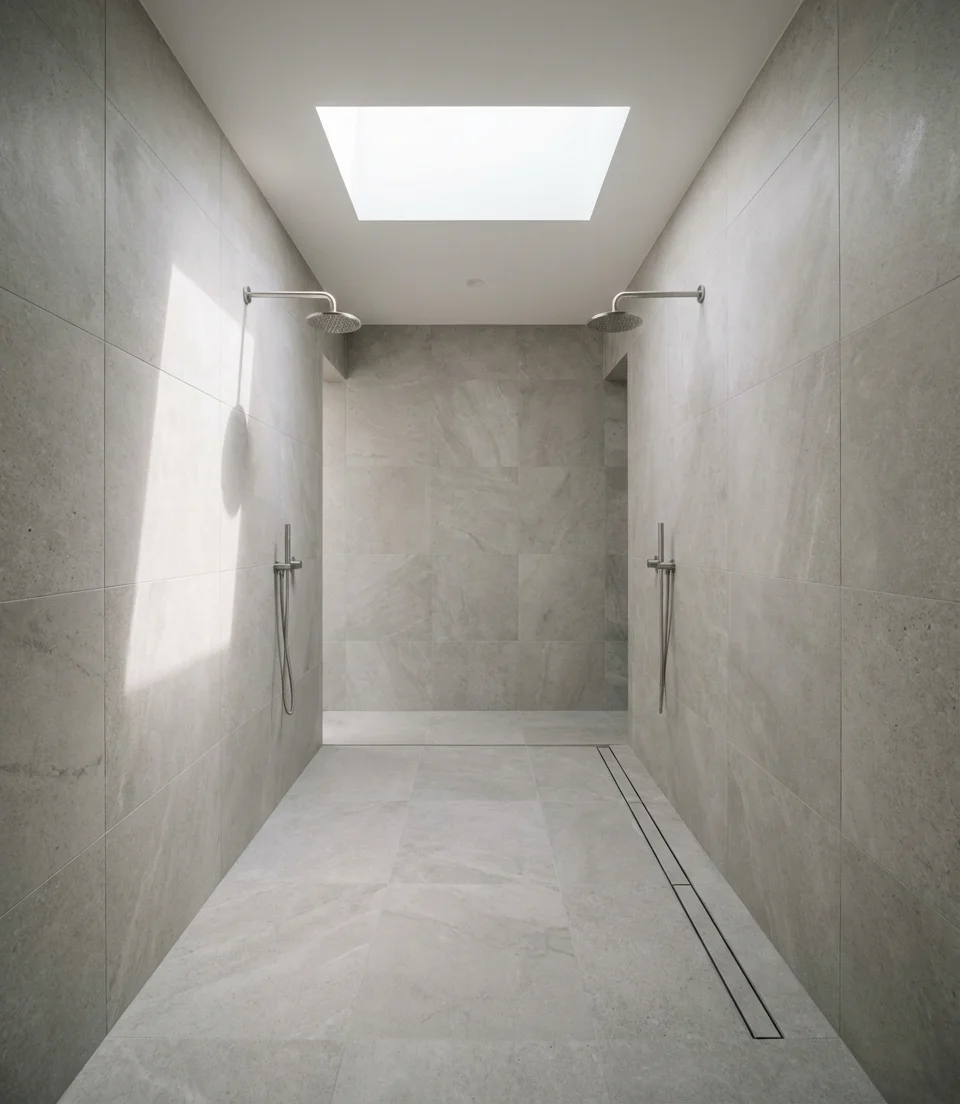
A long, galley-style shower works beautifully when you have more length than width to play with. Install showerheads at both ends—one rainfall fixture and one handheld—and you create a luxurious zone that feels custom-built. This approach is especially smart in master baths where two people might want to use the space at the same time, and the elongated footprint means you can skip a door entirely without worrying about splash.
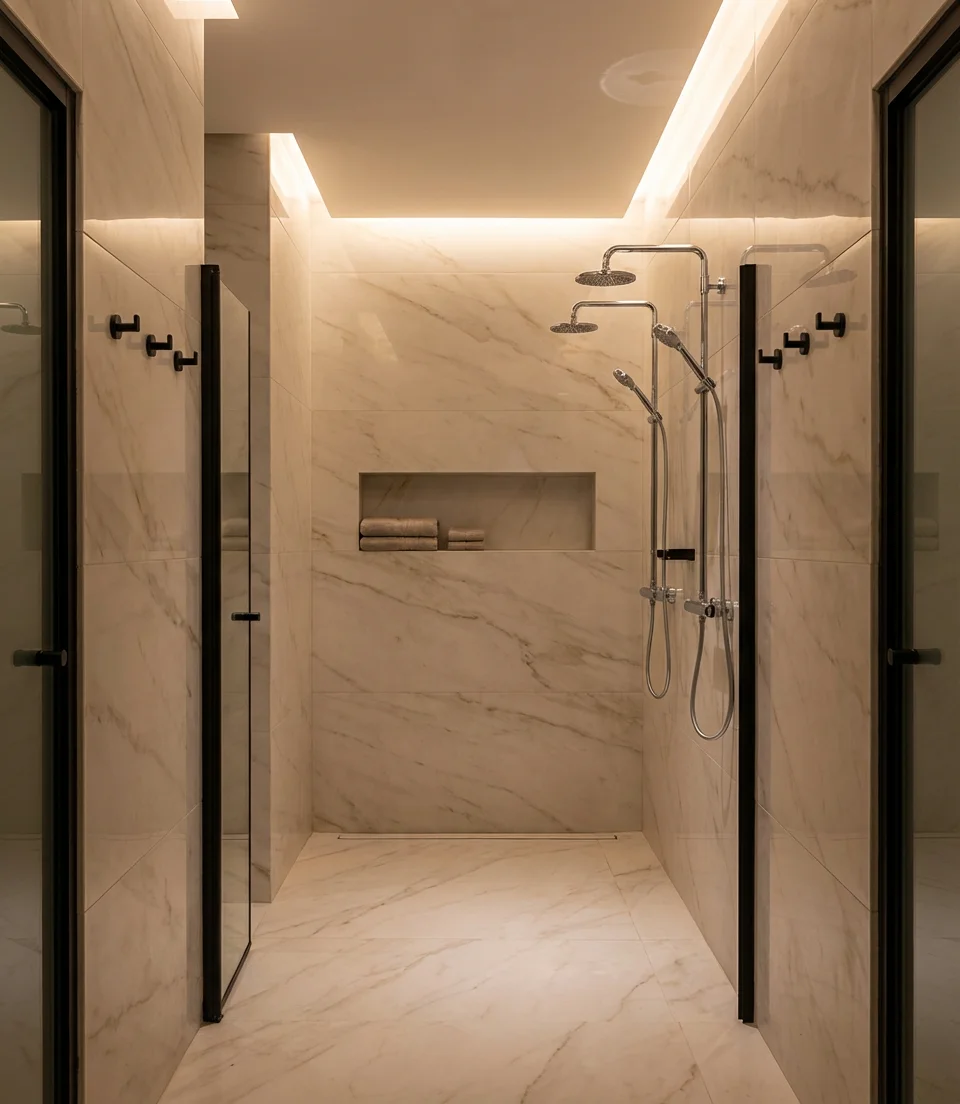
Real homeowner behavior: couples who install dual heads often find they still prefer their “own” side, so plan the plumbing and controls accordingly. Thermostatic valves are worth the extra cost—they prevent temperature spikes when someone flushes a toilet elsewhere in the house.
5. Glass Panel with Privacy Half Wall
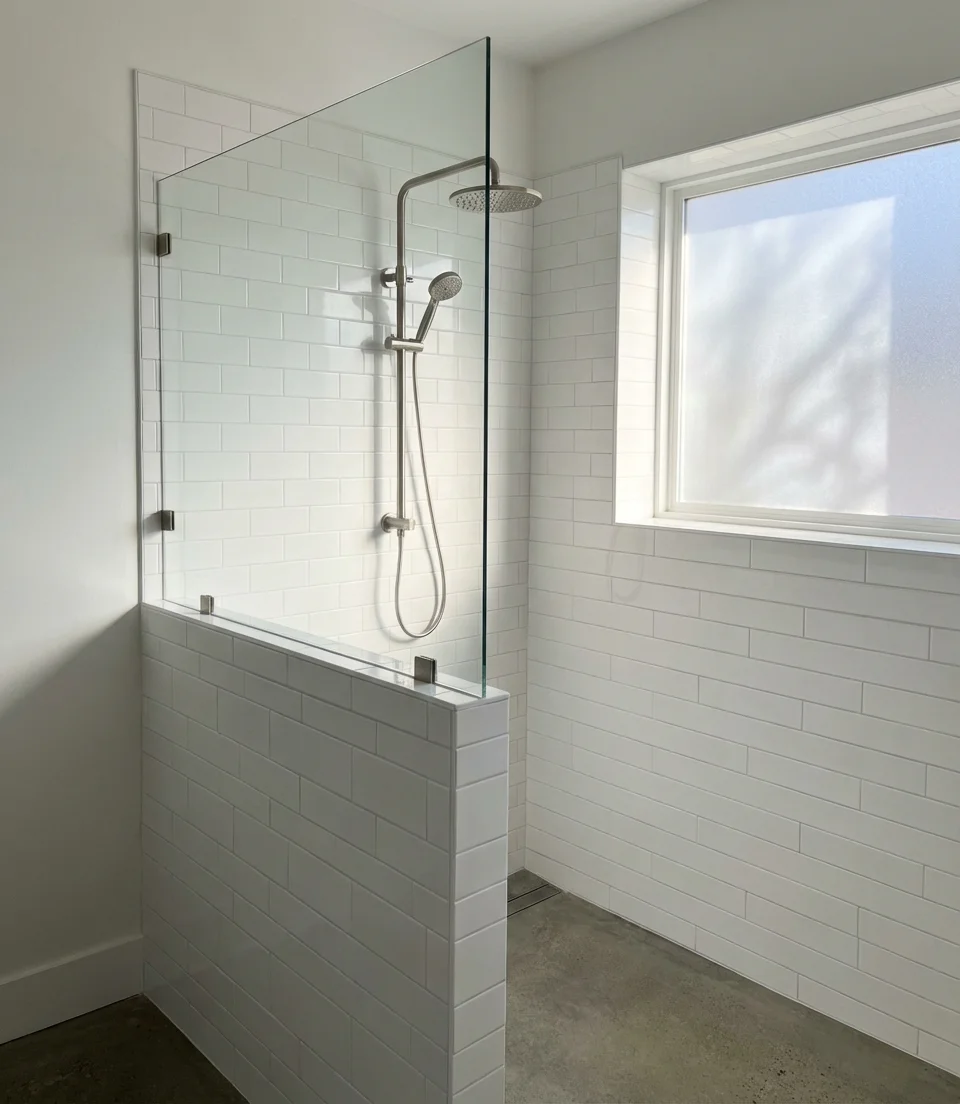
Combining a clear glass panel with a half wall gives you the best of both worlds: openness where you want it and privacy where you need it. The half wall can be positioned to shield the toilet area or to block sightlines from the bathroom door, while the glass keeps the space feeling bright and connected. It’s a practical middle ground that works in both master baths and shared family bathrooms.
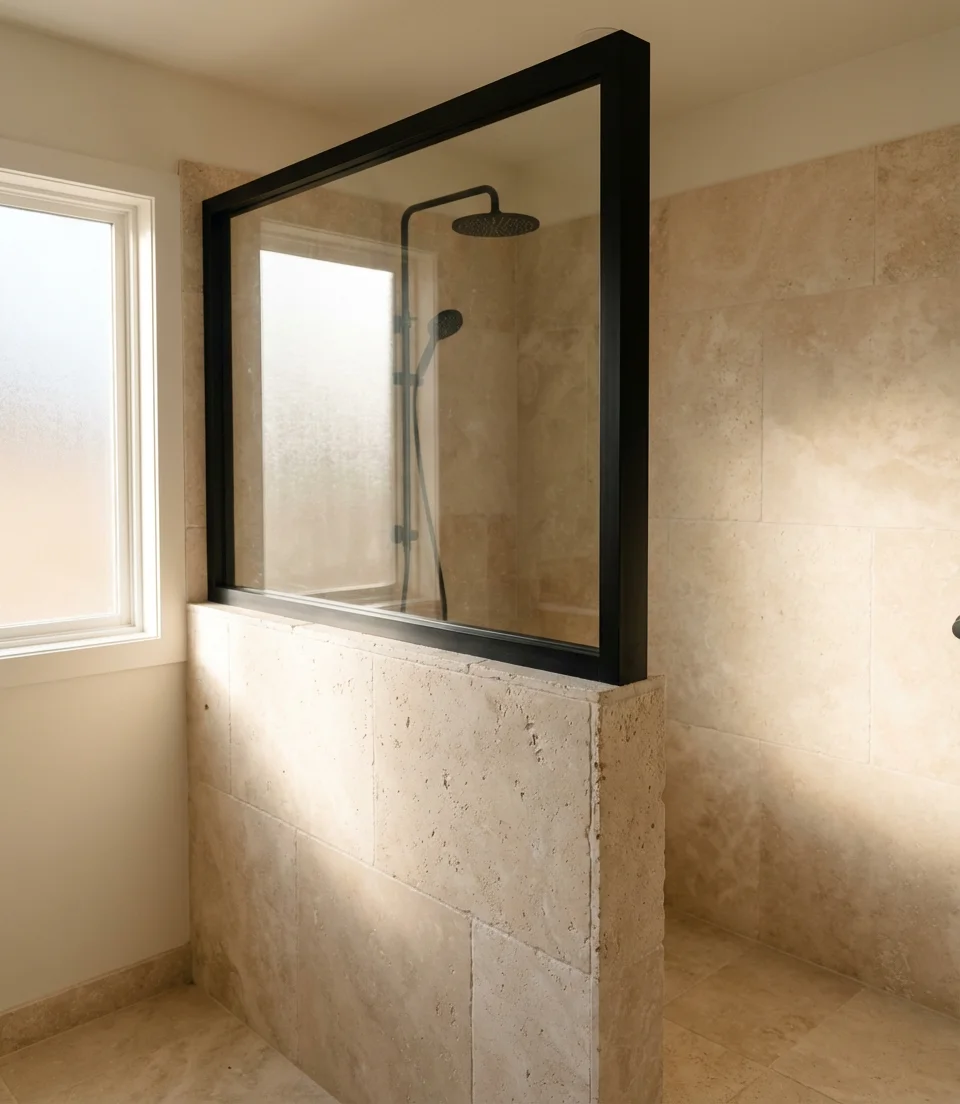
Budget angle: a single fixed glass panel costs significantly less than a full enclosure with hinges and seals—often 30-40% less. You’ll spend roughly $400-$800 for a quality 3/8-inch tempered panel, compared to $1,200+ for a full frameless door setup.
6. Curbless Entry with Large Format Tile
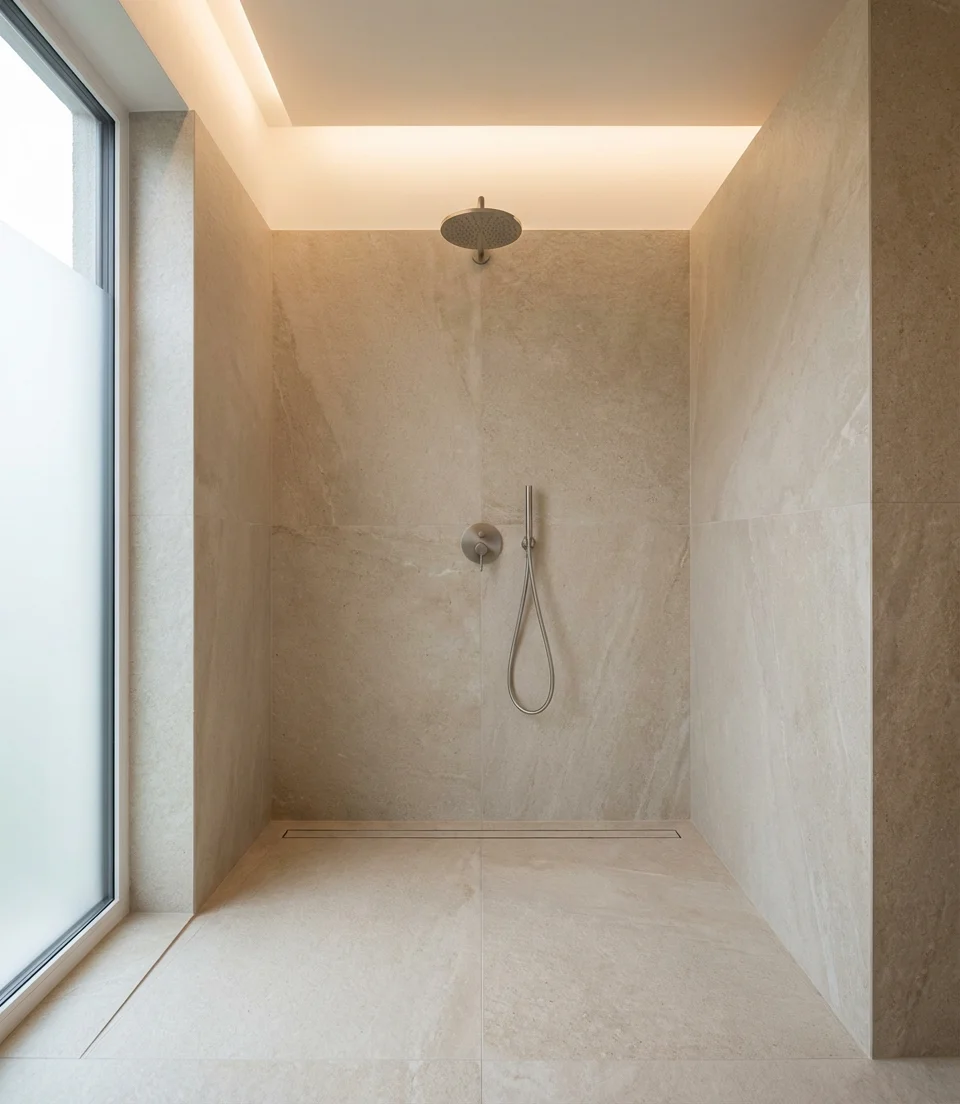
A curbless threshold paired with large-format tiles (think 12×24 or bigger) creates a seamless transition that’s both elegant and accessible. This design is a staple in modern bathroom remodel projects across the U.S., especially in states like California and Florida, where indoor-outdoor flow and aging-in-place features are top priorities. The fewer grout lines you have, the cleaner and more spacious the room feels.
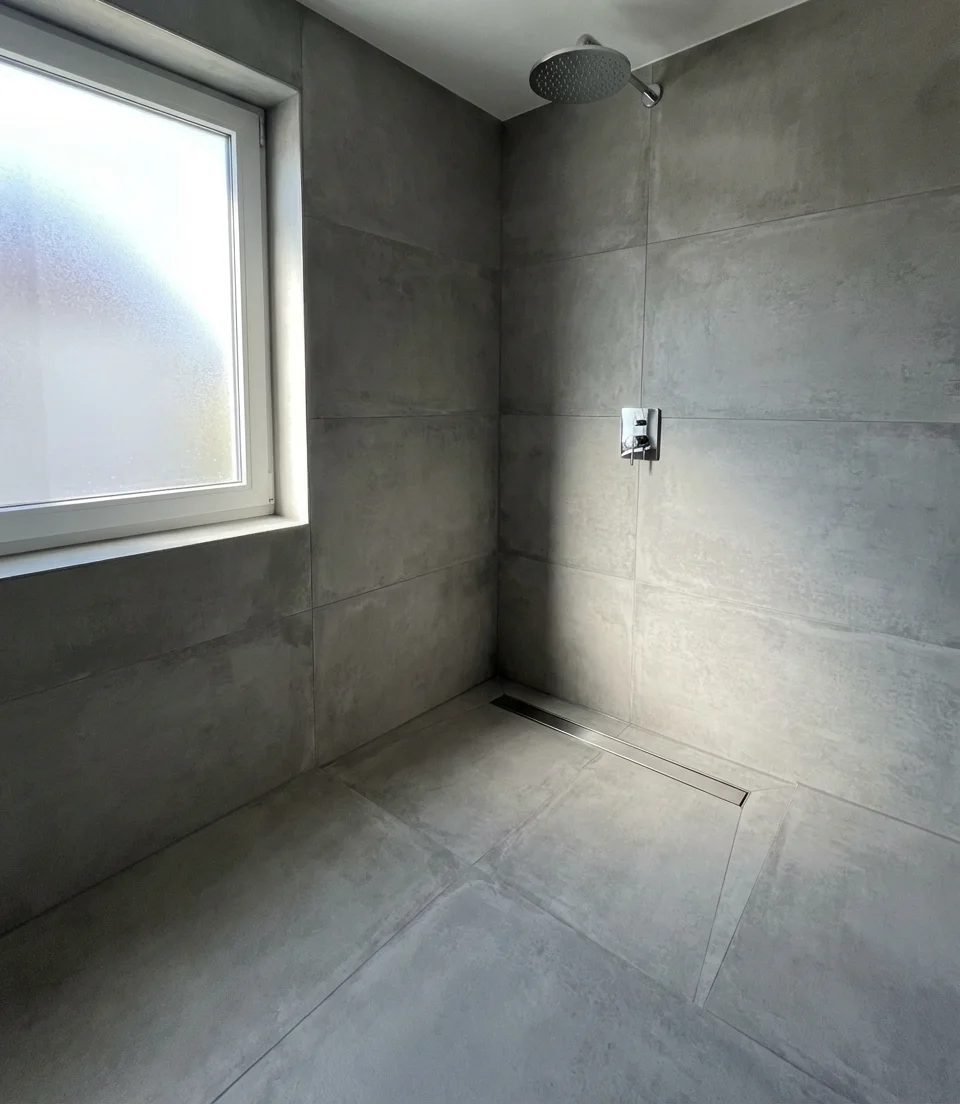
Practical insight: to achieve a true curbless entry in homes built on a slab foundation, you’ll often need to lower the shower pan area during framing or use a specialty system like Schluter-KERDI-BOARD. It adds about $500 to $1,000 to the project but makes a huge difference in both function and resale value.
7. Open Wet Room with Freestanding Tub
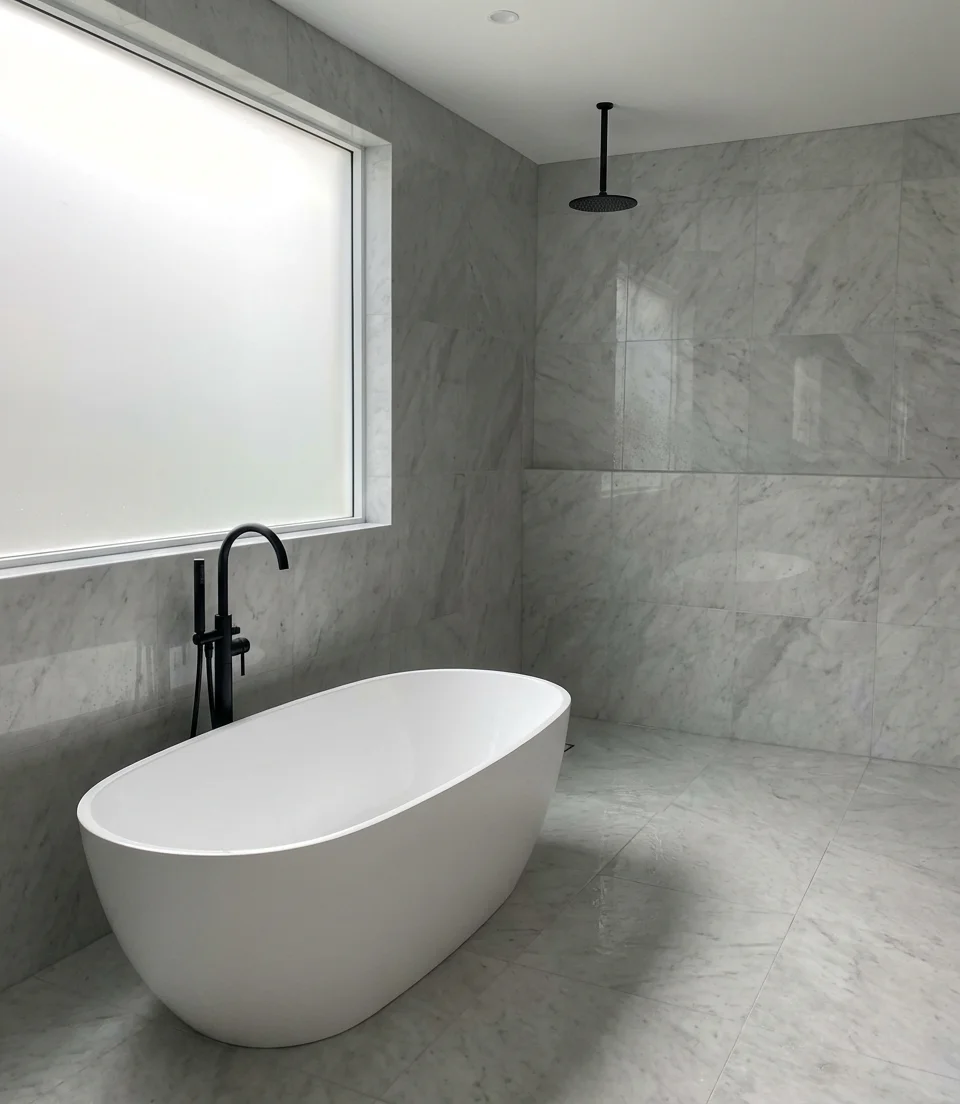
Integrating a freestanding tub into a fully tiled wet room turns your bathroom into a true sanctuary. The shower area flows around the tub without walls or barriers, and everything is waterproofed to handle the occasional splash. Upscale master baths, where square footage is not a concern and the aim is to create a resort-like retreat at home, often adopt this layout.
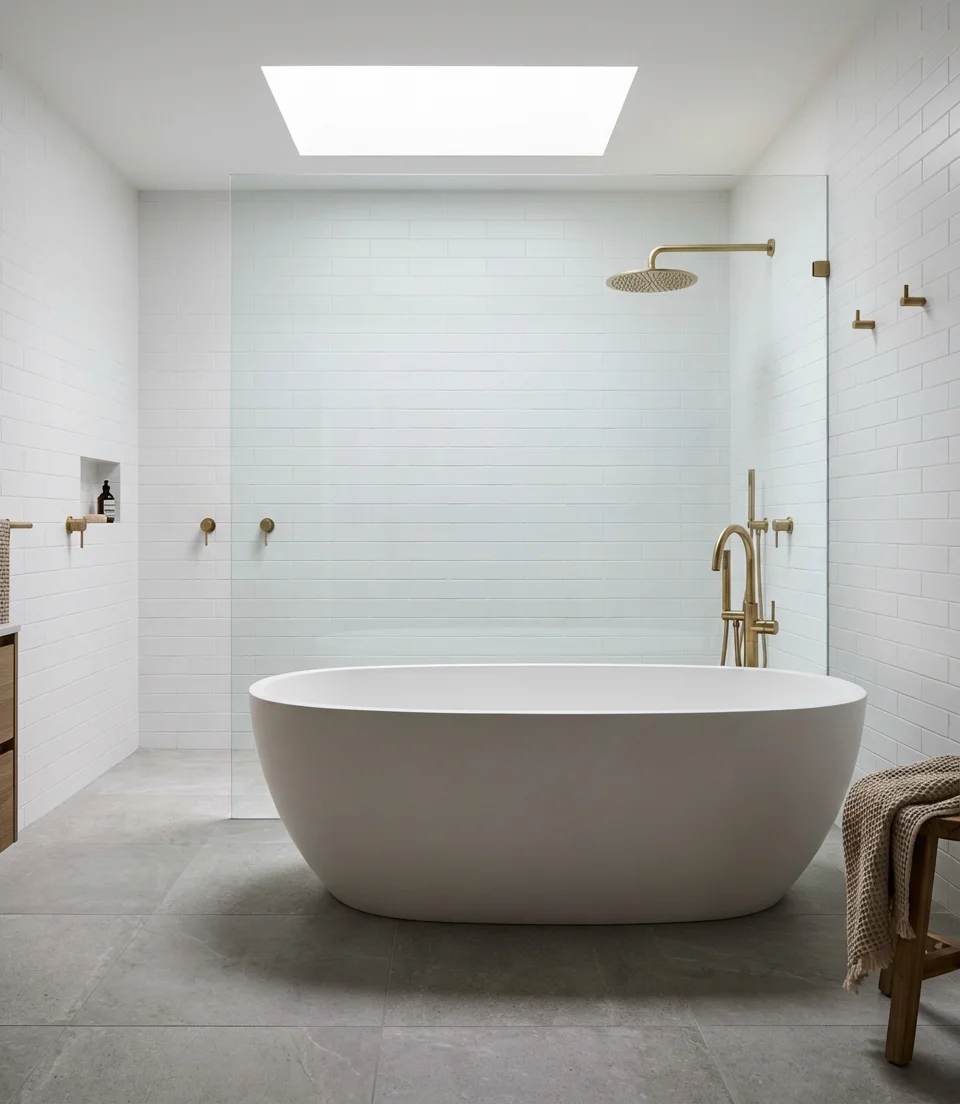
Where it works best: bathrooms with at least 80–100 square feet and good natural ventilation. You’ll also want radiant floor heating to keep things cozy—wet rooms can feel chilly underfoot in colder climates like the Midwest or Northeast without it.
8. Small Bathroom with Glass and Half-Wall Combo
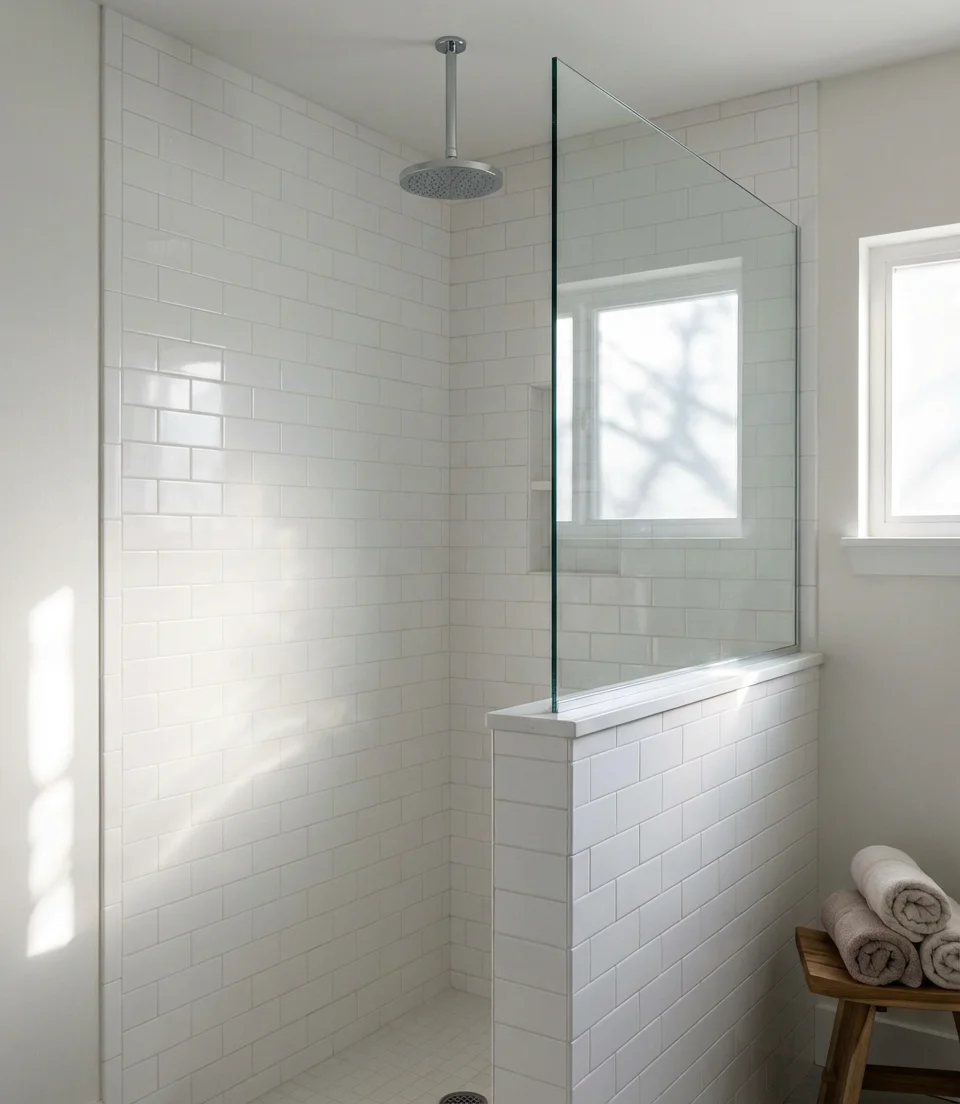
Even in a tight small bathroom, you can pull off a doorless shower by using a strategic mix of glass and a half wall. The glass panel enhances the openness, the half wall effectively controls splashes, and the overall arrangement occupies less visual space compared to a traditional framed enclosure. It’s a smart solution for urban apartments and older homes where every square inch counts.
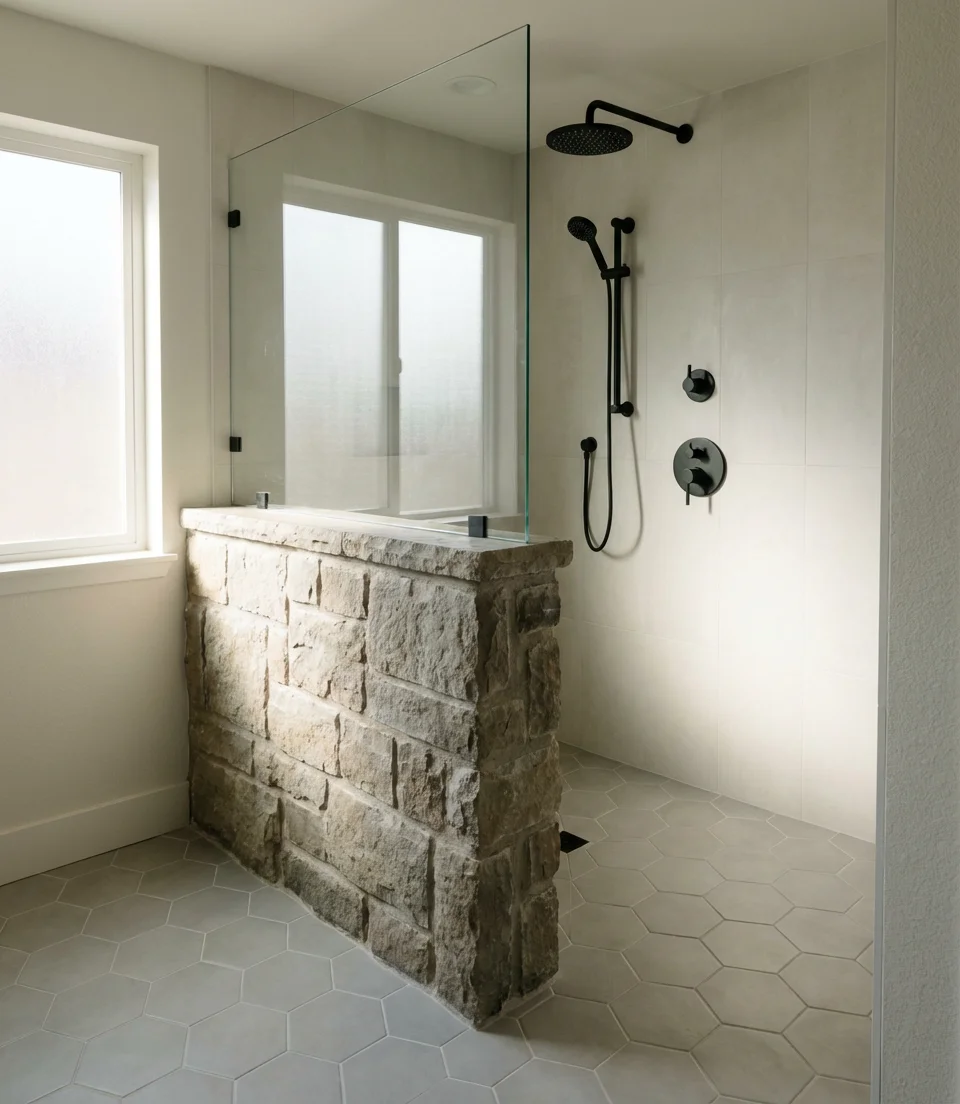
Expert-style commentary: in bathrooms under 40 square feet, the shower should ideally be positioned opposite the door so you’re not greeted by a wet floor every time you walk in. A small bath mat or teak slat right outside the shower helps catch drips and keeps the rest of the floor dry.
9. Doorless Shower with Decorative Tile Accent Wall
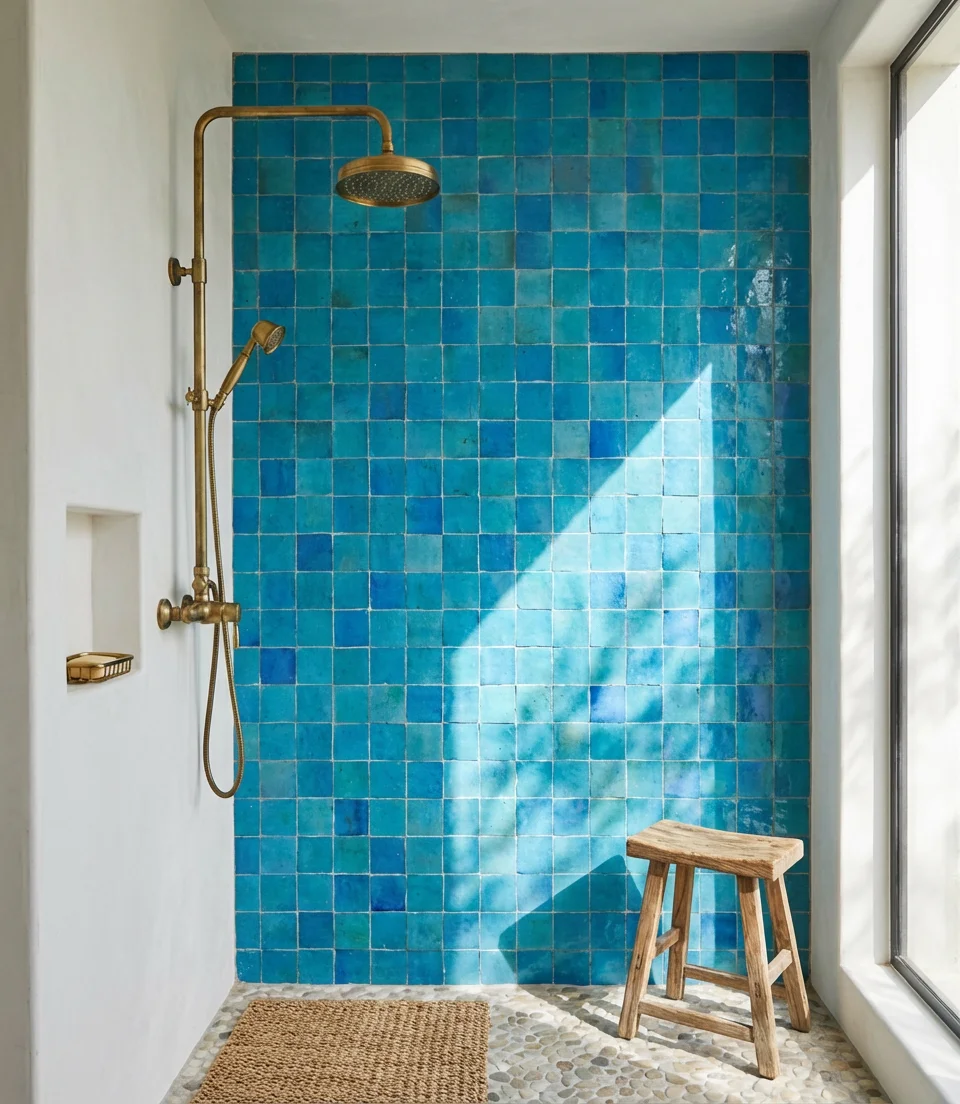
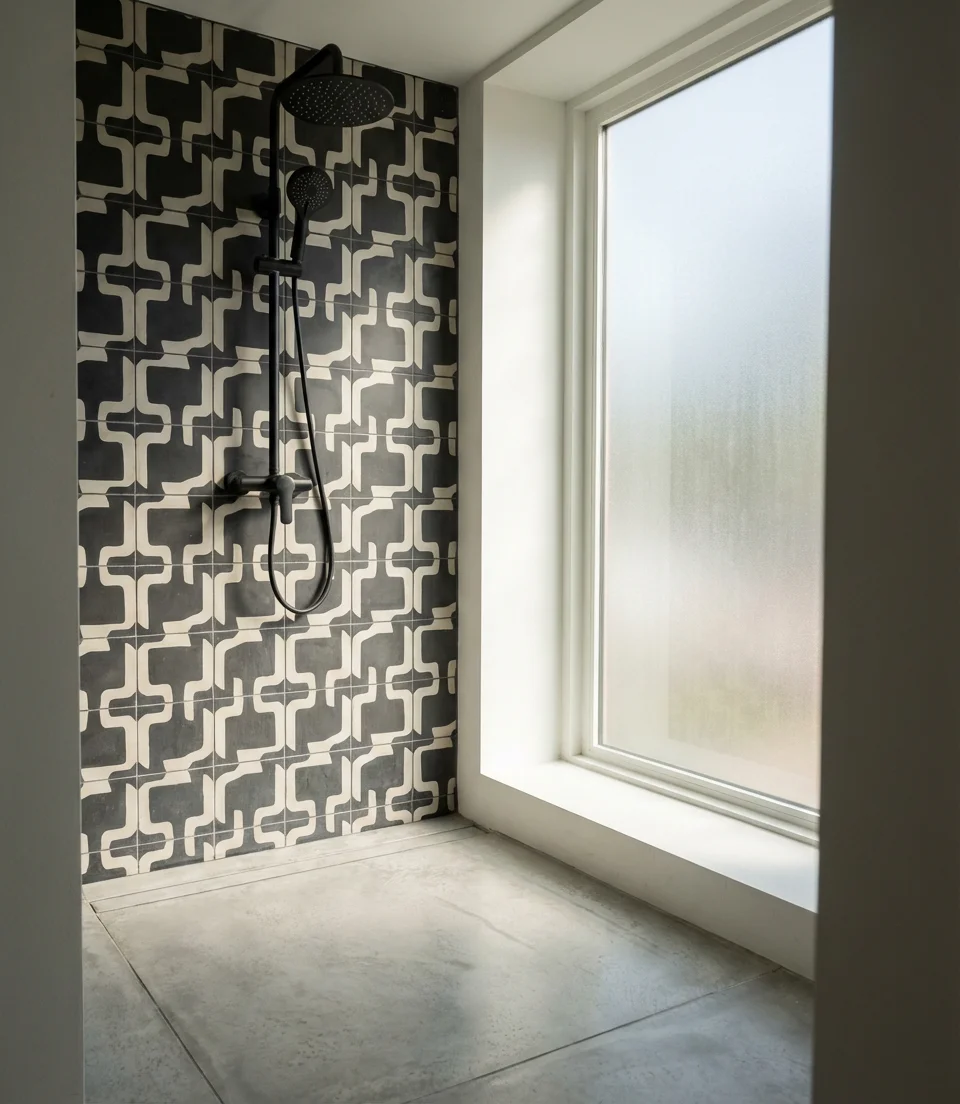
Use your shower’s open design as an opportunity to showcase a bold tiled accent wall that becomes the room’s focal point. Whether it’s patterned cement tile, mosaic, or a dramatic slab of marble-look porcelain, this approach turns a functional space into a piece of decor. It’s especially effective in master baths where you want the shower to feel intentional and high-end, not like an afterthought.
A quick micro anecdote: one homeowner in Austin installed a vibrant terracotta tile accent wall in her doorless shower and said it completely changed how she felt about getting ready in the morning—it went from a chore to a highlight.
10. Minimalist White Subway Tile with Black Fixtures
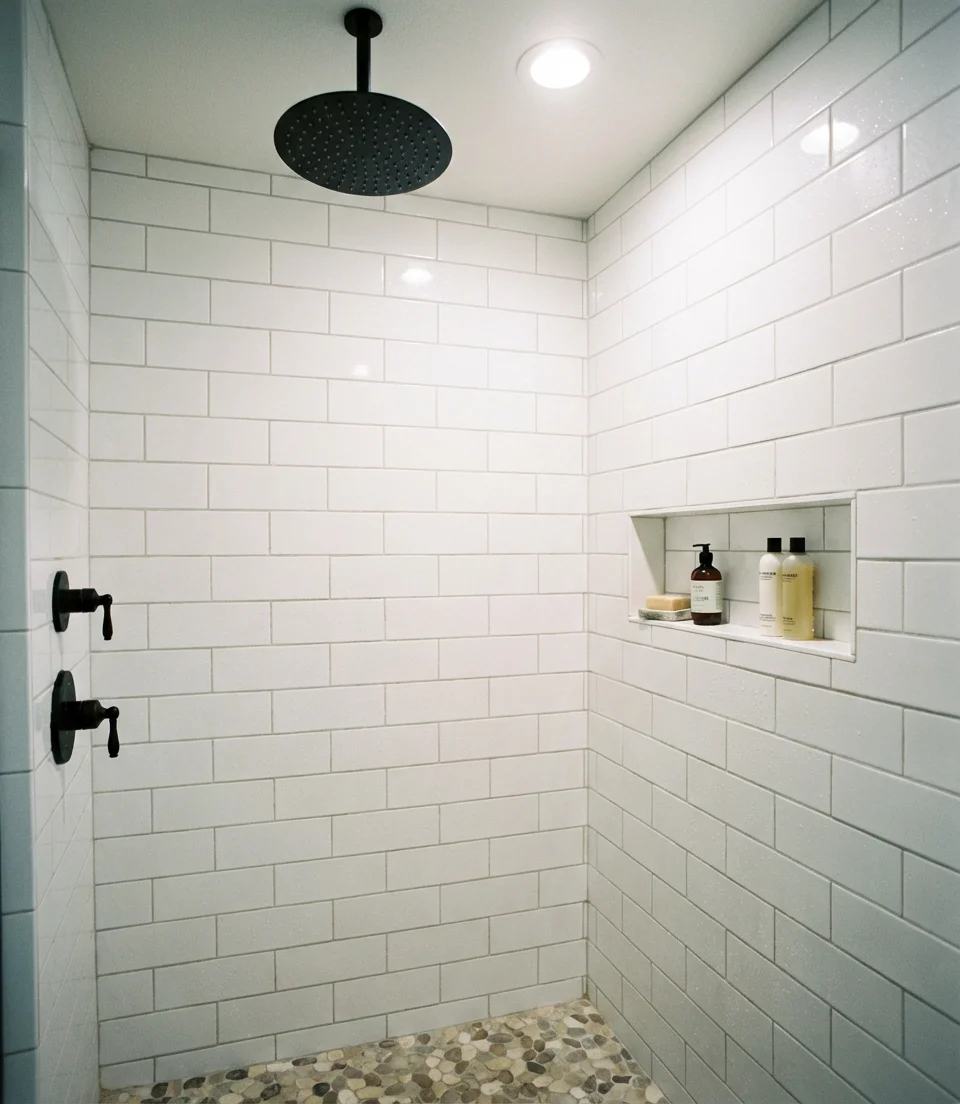
Classic white subway-tiled walls paired with matte black showerheads and hardware create a timeless look that never feels dated. This combination is Pinterest gold for a reason—it’s clean, affordable, and works in virtually any home style from modern farmhouse to industrial loft. The open shower layout keeps it from feeling too traditional, and the contrast between white and black adds just enough edge.
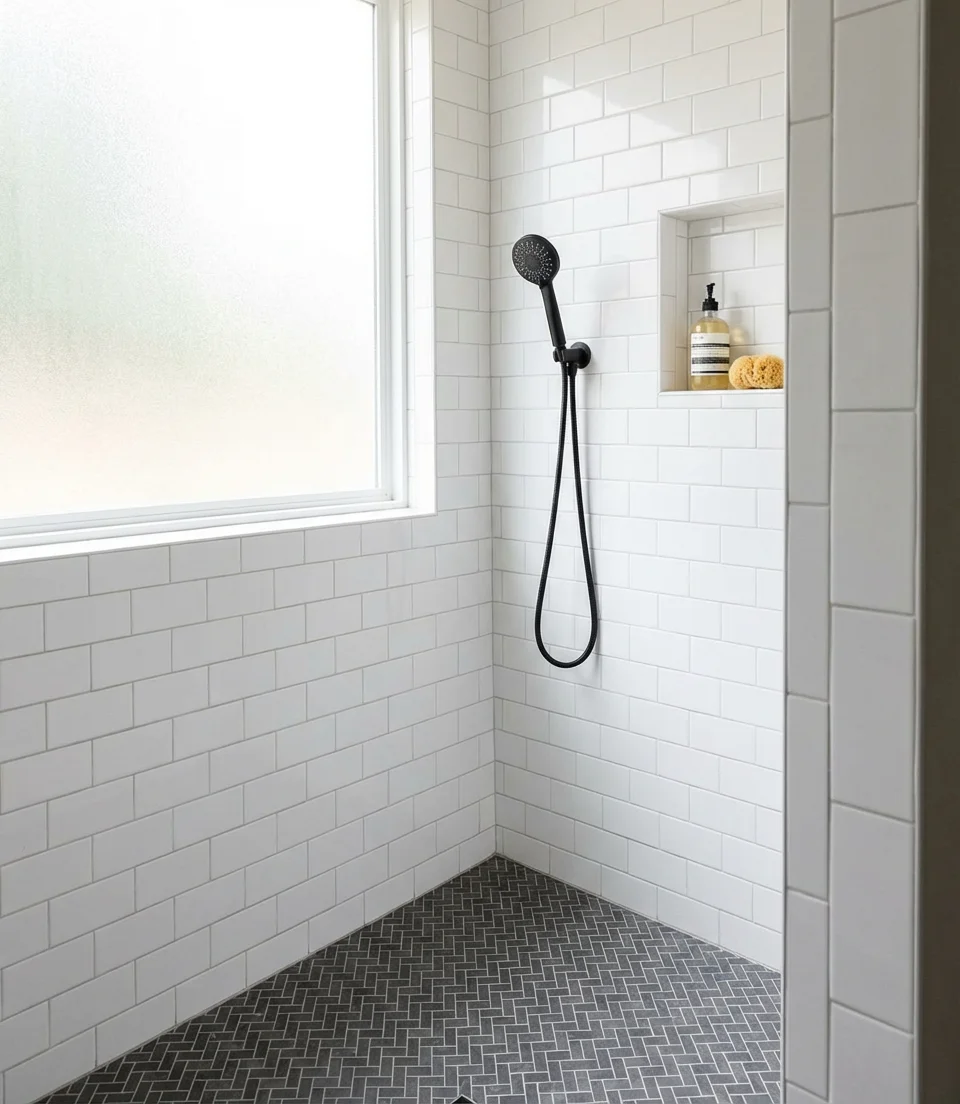
Real homeowner behavior: many people worry that black fixtures will show water spots, but matte finishes hide them far better than polished chrome. A quick squeegee after each shower—takes 20 seconds—and they stay looking sharp.
11. Walk-In Shower with Curtain as Flexible Option
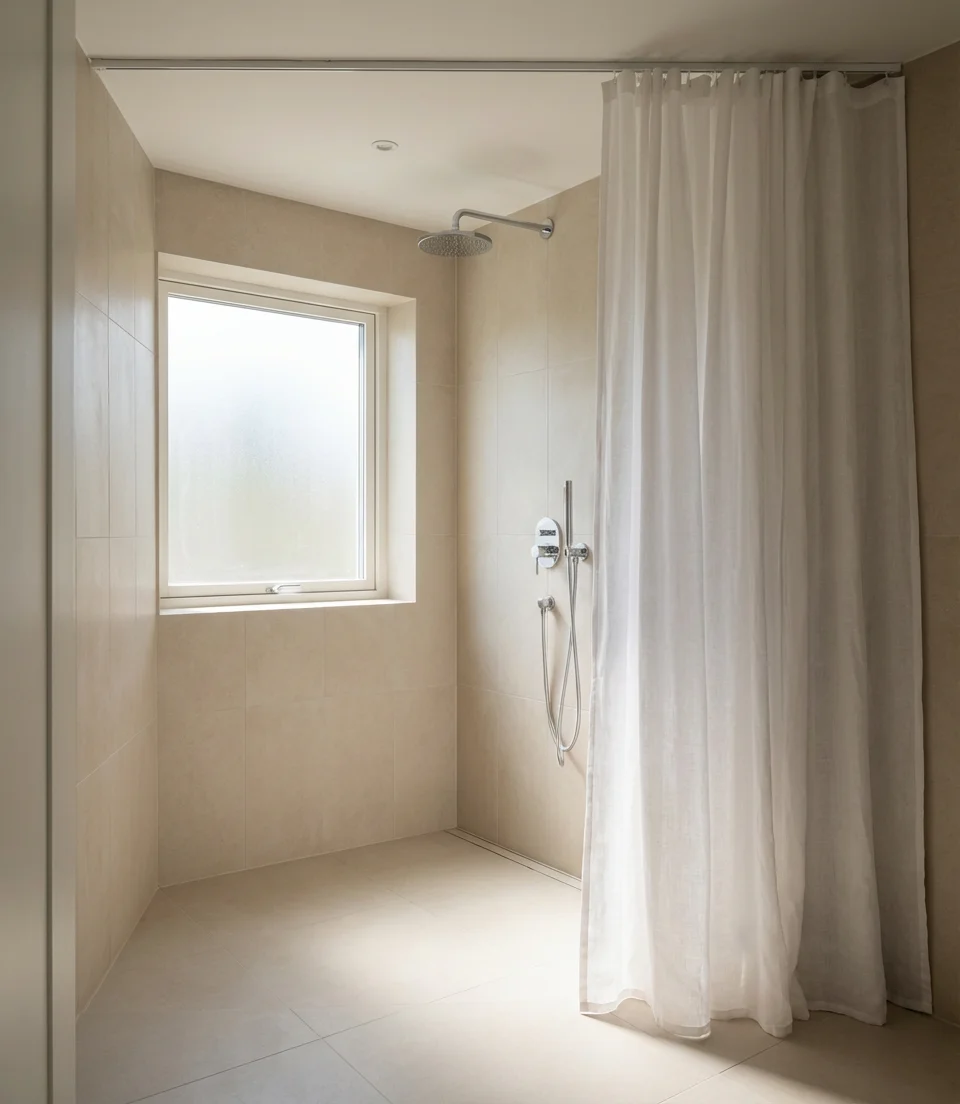
Sometimes you want the option of containment without committing to glass or tile walls, and that’s where curtains come in. Hang a ceiling-mounted track or a curved rod, and you can pull the curtain when needed—say, when kids are splashing or you’re testing a new shower pressure—then tuck it aside for that open, doorless feel the rest of the time. It’s a flexible, budget-friendly approach that’s particularly popular in family bathrooms.
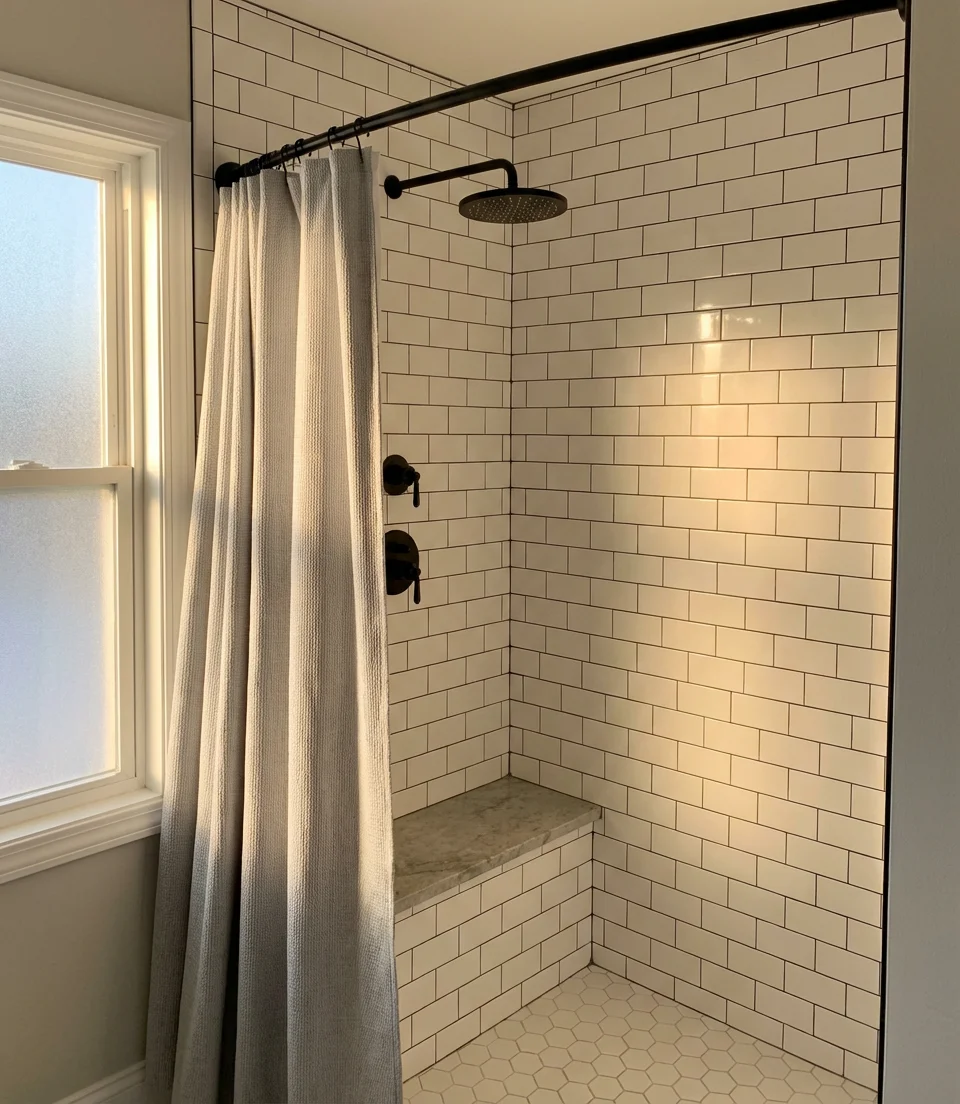
Budget angle: a good ceiling-mounted curtain track runs $60-$150, and you can swap out the curtain fabric seasonally for a fresh look without any construction. Compare that to a custom glass panel, and you’re saving $500-$1,000 while keeping your options open.
12. Rustic Stone Tile with Natural Wood Bench
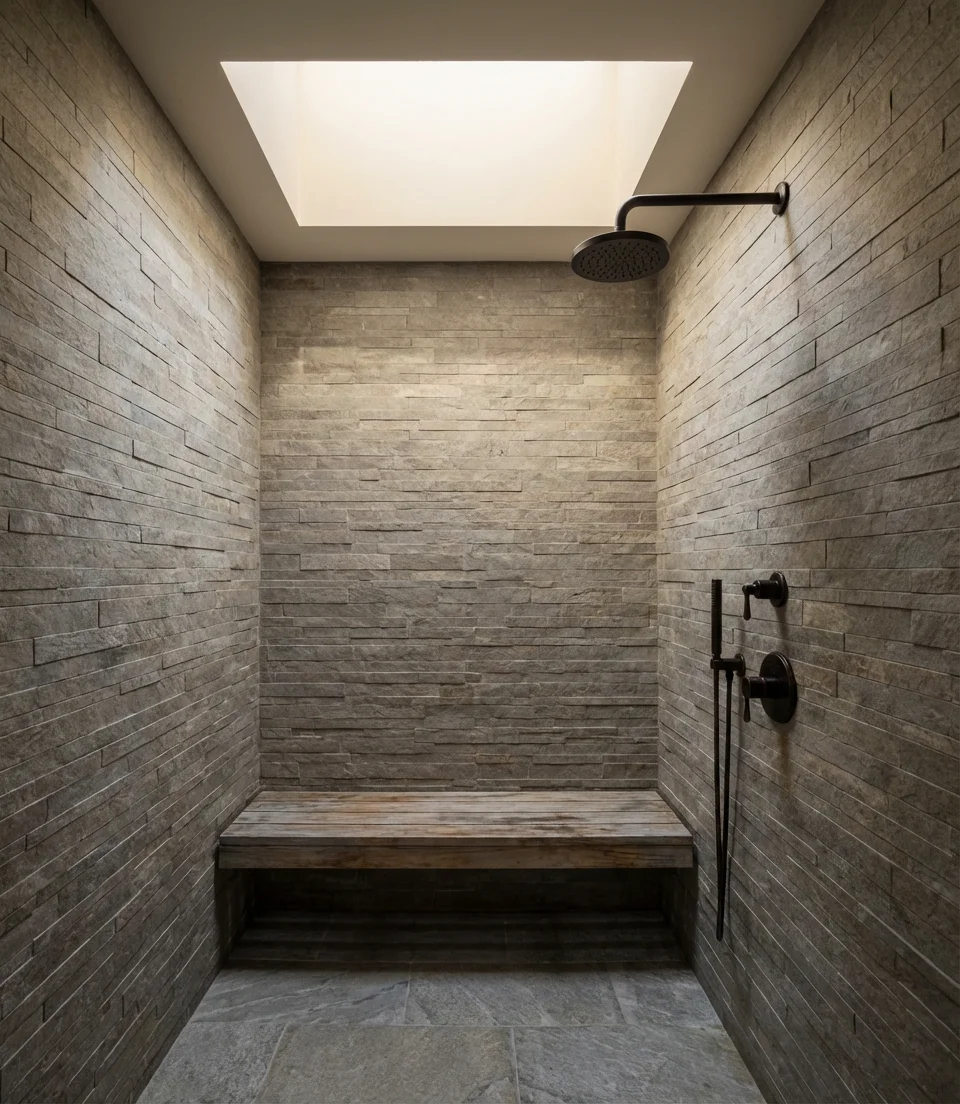
For a warm, organic feel, line your doorless shower with natural stone tiled walls and add a bench made from teak or cedar. The wood brings in texture and warmth, while the stone grounds the space with earthy tones and a slightly rough finish. This style thrives in mountain homes, lake cabins, and Southwest-style houses where connecting with natural materials is part of the design philosophy.
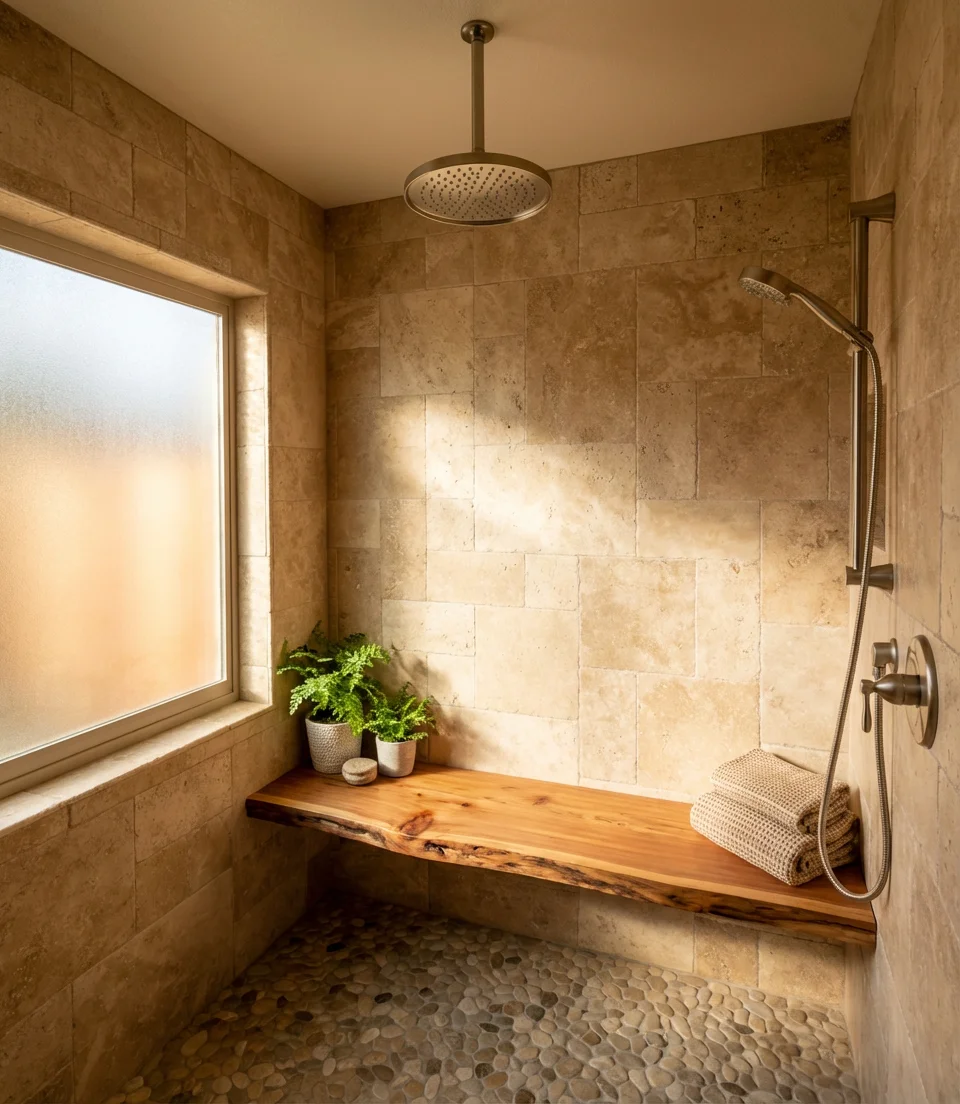
Practical insight: wood benches in showers need proper sealing and ventilation to avoid mildew. Teak naturally resists moisture, but even so, applying a marine-grade sealant every 12–18 months will keep it looking great. Let it air-dry between uses rather than leaving towels draped over it.
13. Black Frame Glass Divider in Modern Farmhouse Bath
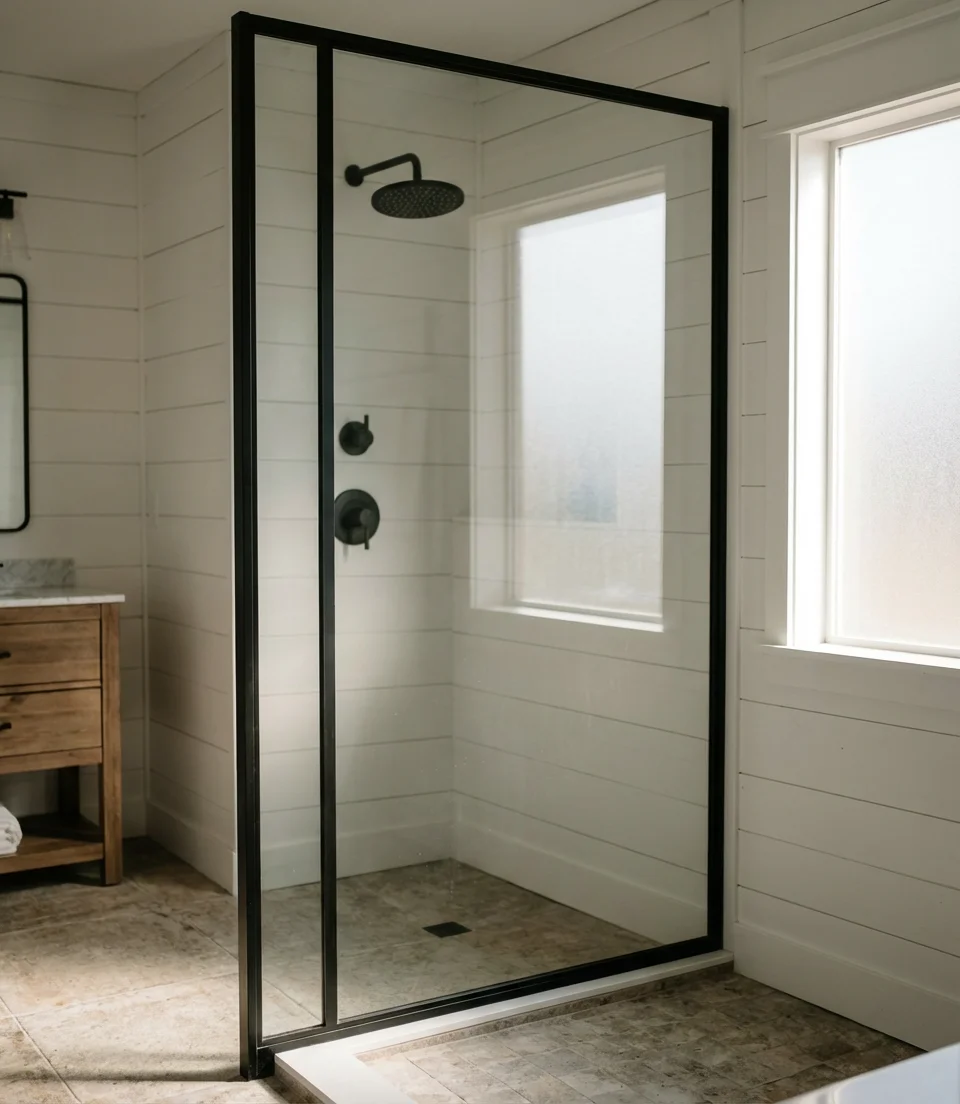
A single pane of glass with a slim black metal frame strikes the perfect balance between modern and traditional, making it a favorite in modern farmhouse bathroom renovations across the Midwest and South. The black frame echoes window mullions and barn door hardware, tying the whole room together, while the glass itself keeps the space open and light-filled.
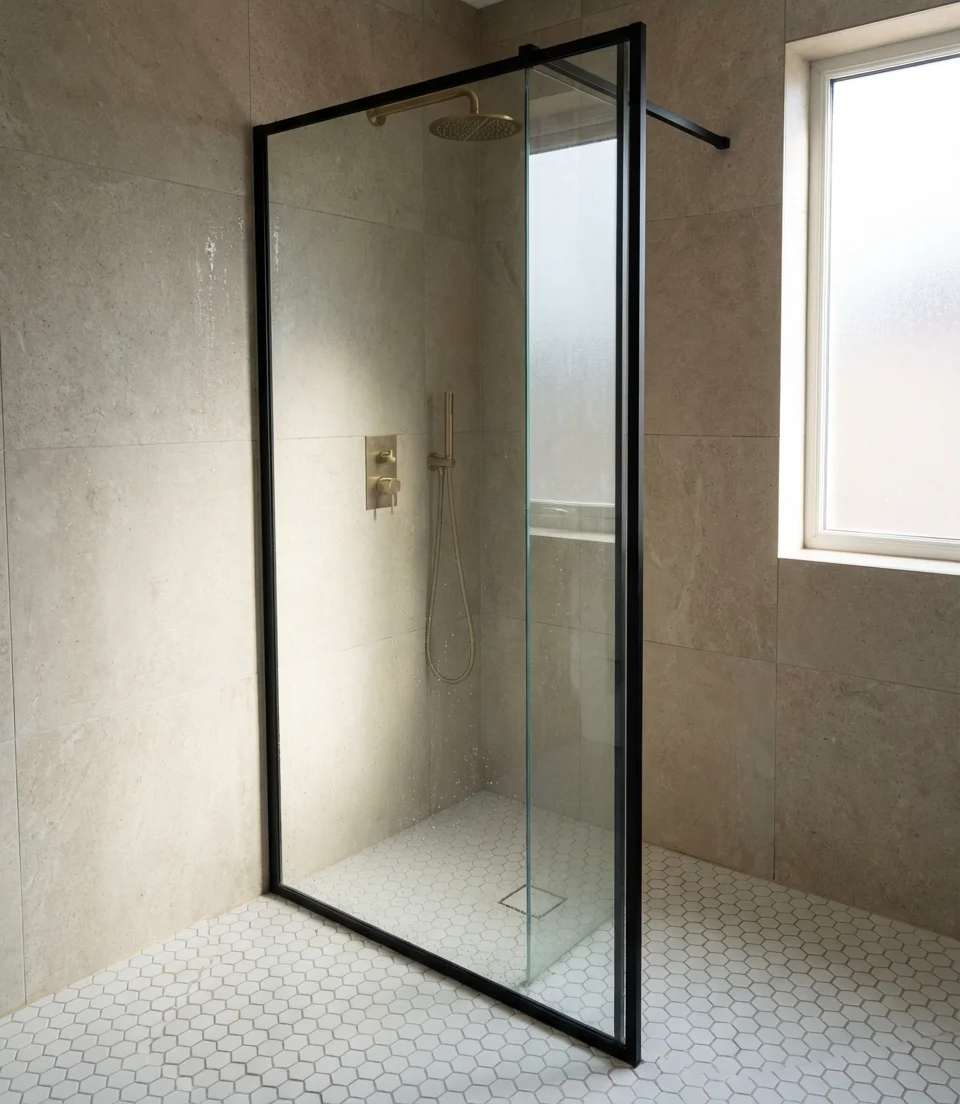
Where it works best: homes that already have black or dark hardware elsewhere in the bathroom—think faucets, towel bars, or light fixtures. The repetition creates cohesion and makes the shower feel like a thoughtful part of the design rather than an add-on.
14. Compact Dimensions for Powder Room Conversions
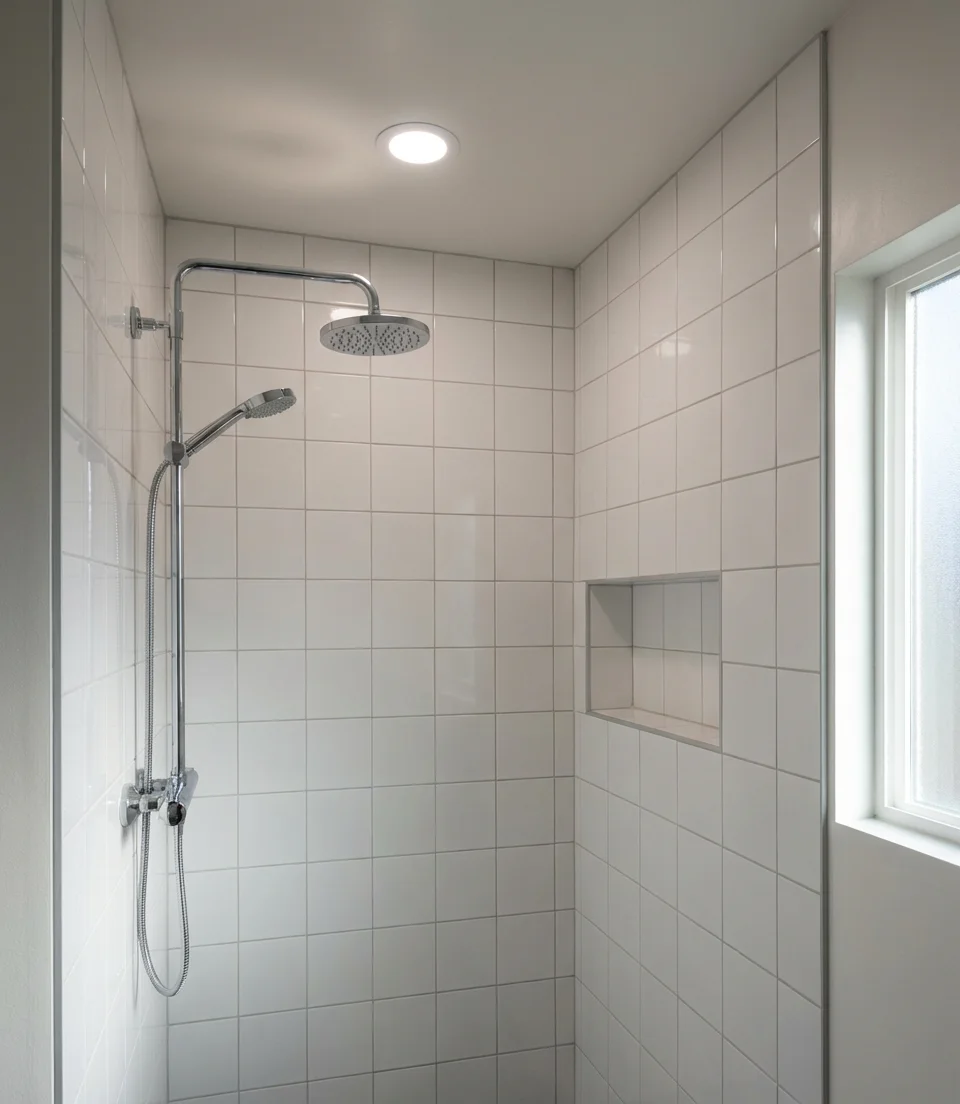
Working with tight dimensions, such as a converted powder room or under-stair nook, requires careful consideration of every inch. A doorless shower can still work if you design the layout carefully: position the showerhead to spray away from the opening, use a slightly sloped floor, and keep the footprint to a minimum of 36×36 inches. It won’t be a spa, but it’ll be functional and far better than no shower at all in a guest suite or basement bath.
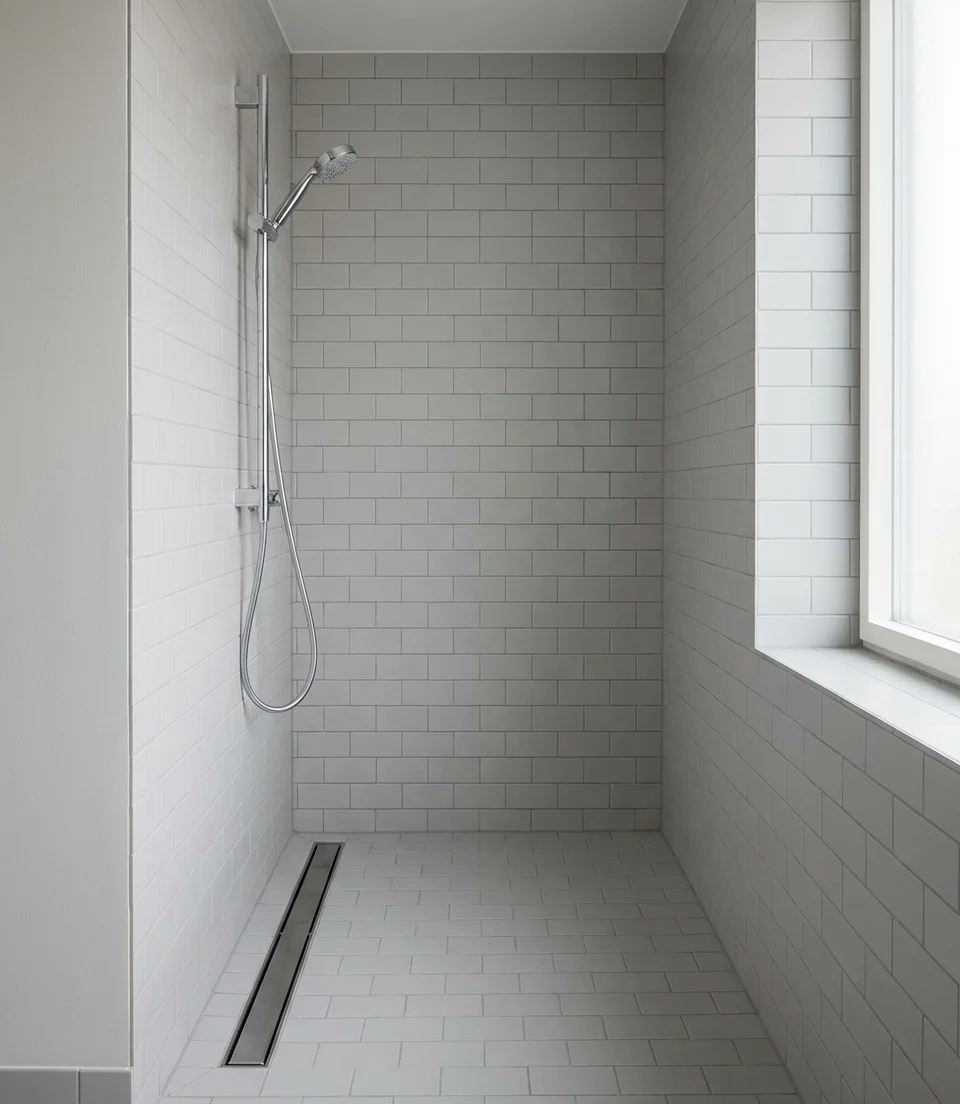
Common mistake: trying to squeeze in a bench or elaborate niche shelving in a shower this small. Keep everything else simple and stick to a single recessed niche for shampoo; you’ll appreciate the relief of not bumping into each other every time you turn around.
15. Spa-Inspired Rainfall Shower with Pebble Floor
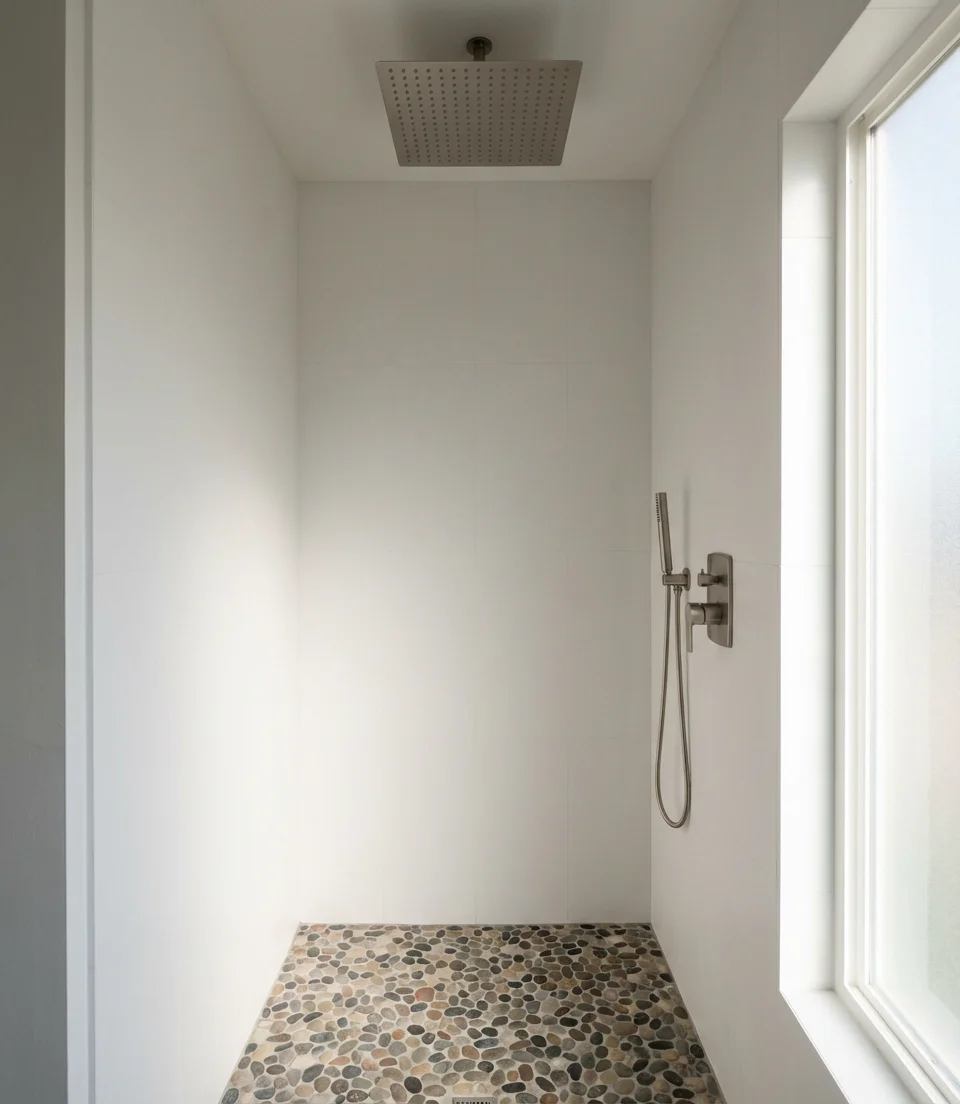
Install a ceiling-mounted rainfall showerhead above a pebble tile floor, and you instantly create a spa atmosphere that feels indulgent and grounding. The pebbles provide natural texture underfoot and excellent drainage, while the soft overhead spray mimics a warm summer rain. This setup is especially popular in master baths and vacation homes where relaxation is the top priority.
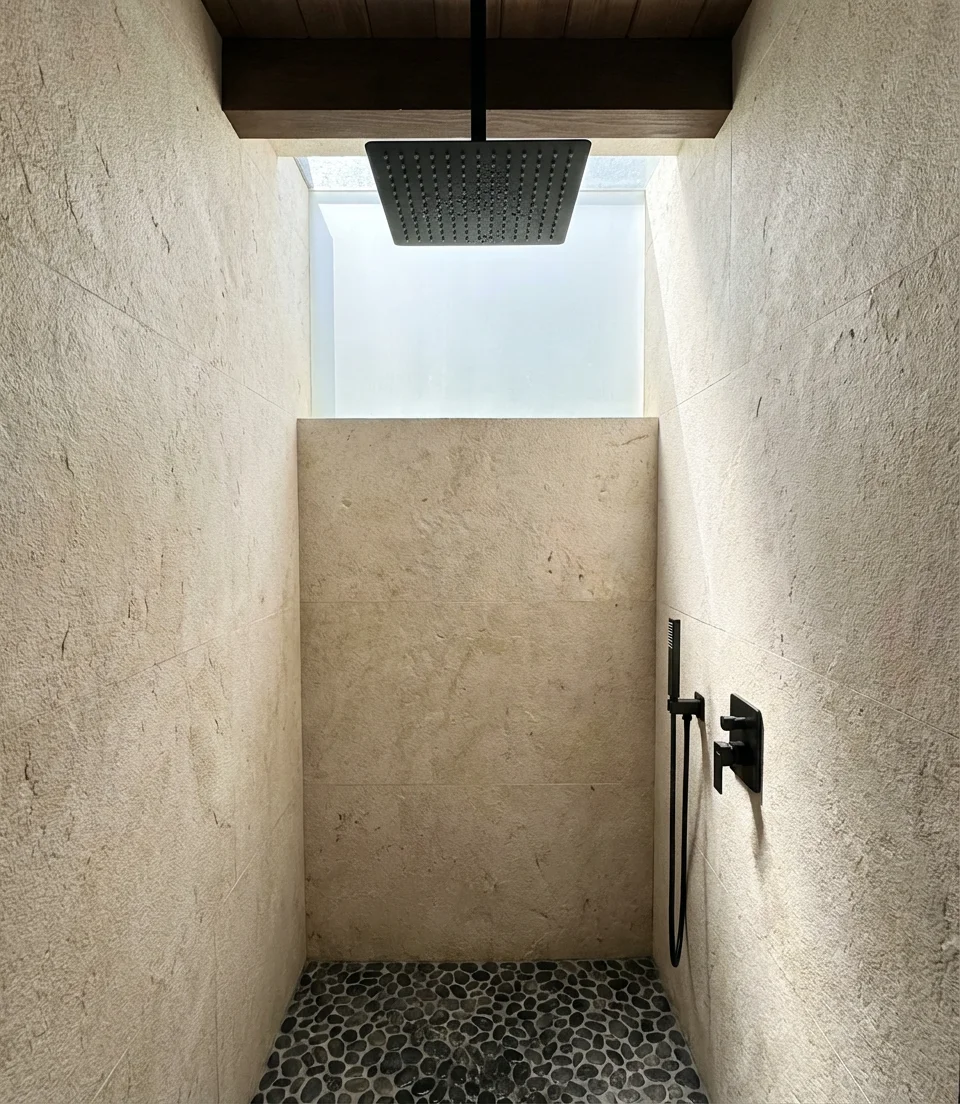
Micro anecdote: a designer friend installed pebble flooring in a client’s doorless shower in Portland, and the client said it felt like stepping into a creek bed every morning—an unexpected daily ritual that made the whole remodel worth it.
16. Two-Tone Tile with Dark Lower Walls
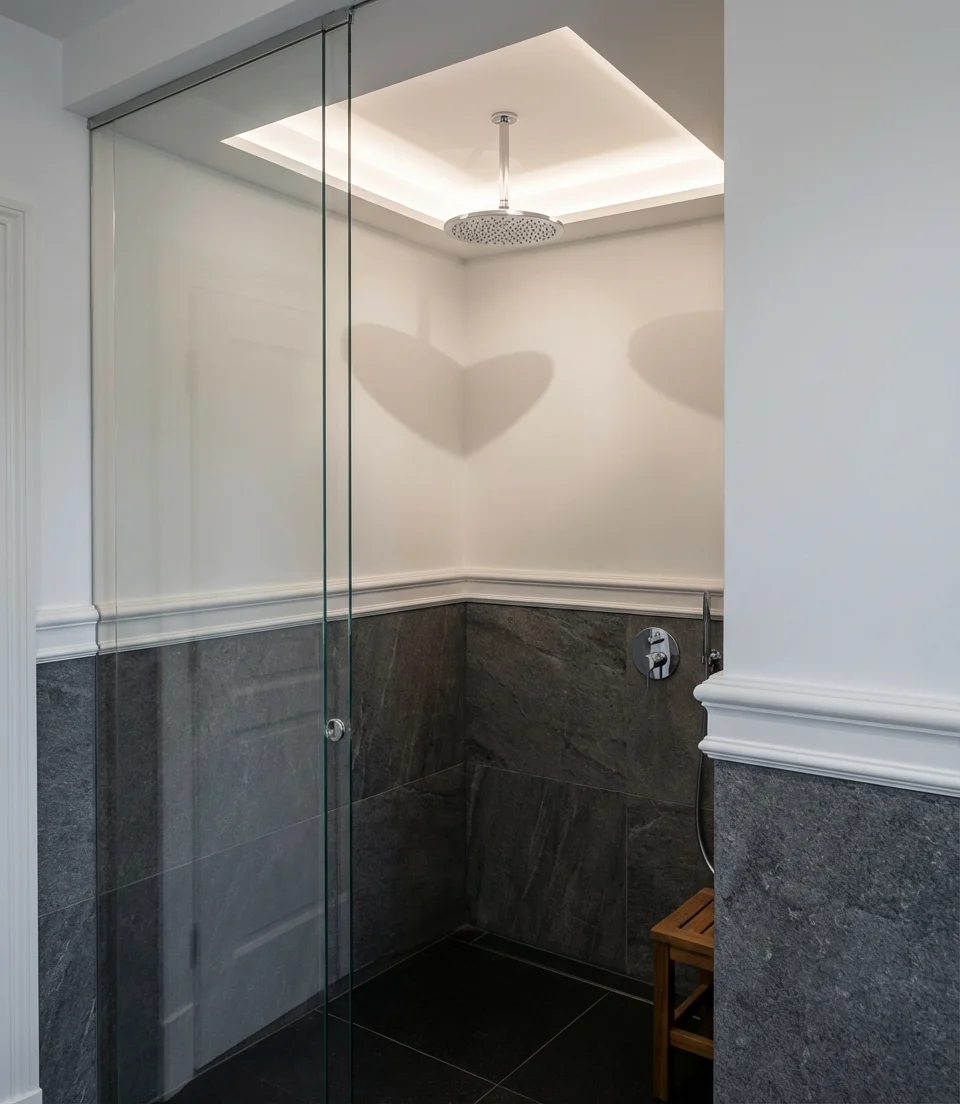
Divide your shower walls horizontally with tiled wainscoting—dark or textured tile on the bottom half, lighter tile on top. This classic trick adds visual interest and makes the space feel taller, while the darker lower section hides soap scum and water spots better than an all-white setup. It’s a practical design move that also brings a dose of traditional charm to modern bathroom remodel projects.
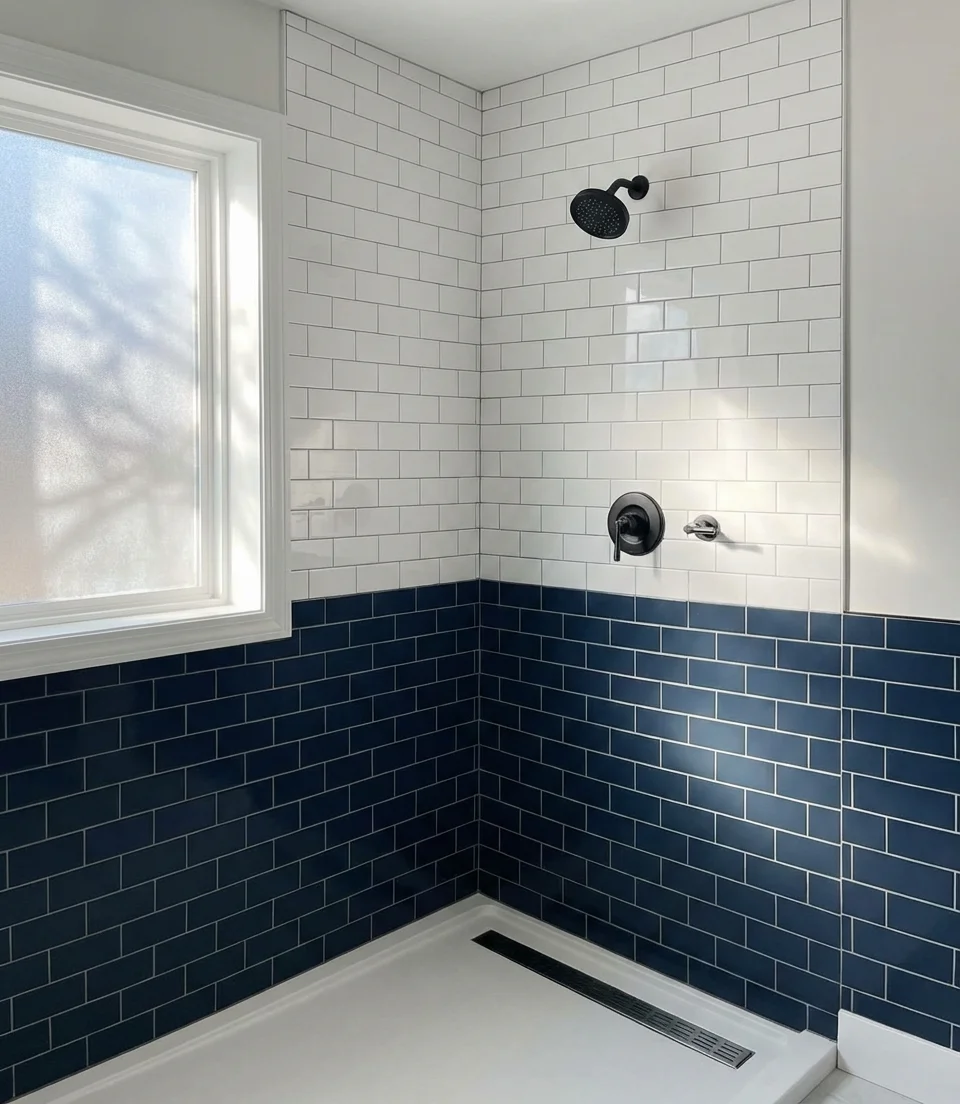
Expert-style commentary: the transition line typically sits around 48 inches high, which is a natural sightline and also roughly where splash is heaviest. Using a contrasting grout color on the lower section—say, dark gray instead of white—further camouflages everyday wear.
17. Industrial Concrete Look with Exposed Plumbing
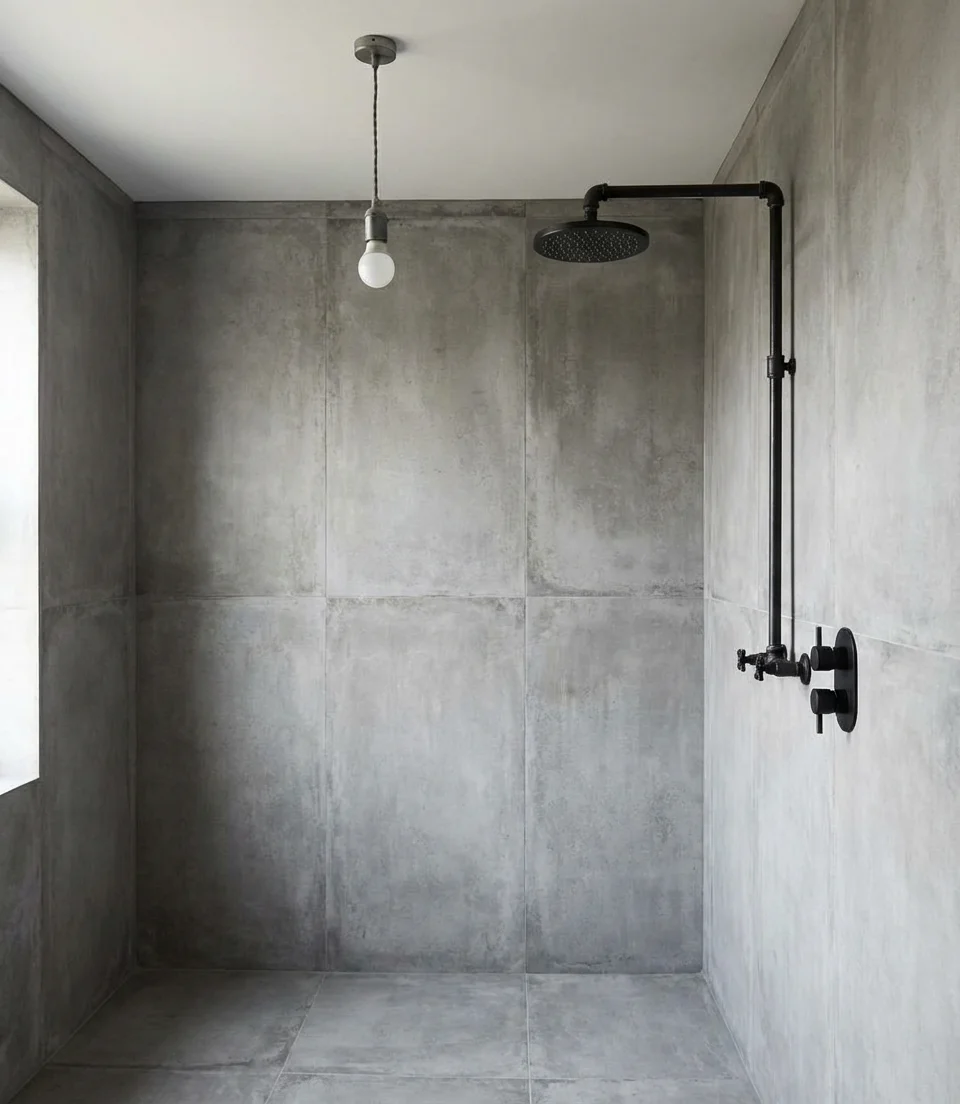
For a raw, urban vibe, use large-format concrete-look tiled slabs and leave the plumbing partially exposed—think wall-mounted faucets and visible pipes. This aesthetic is big in converted lofts and modern industrial-style homes across cities like Brooklyn, Portland, and Denver. This stripped-back approach, where function and form merge seamlessly, perfectly complements the doorless shower.
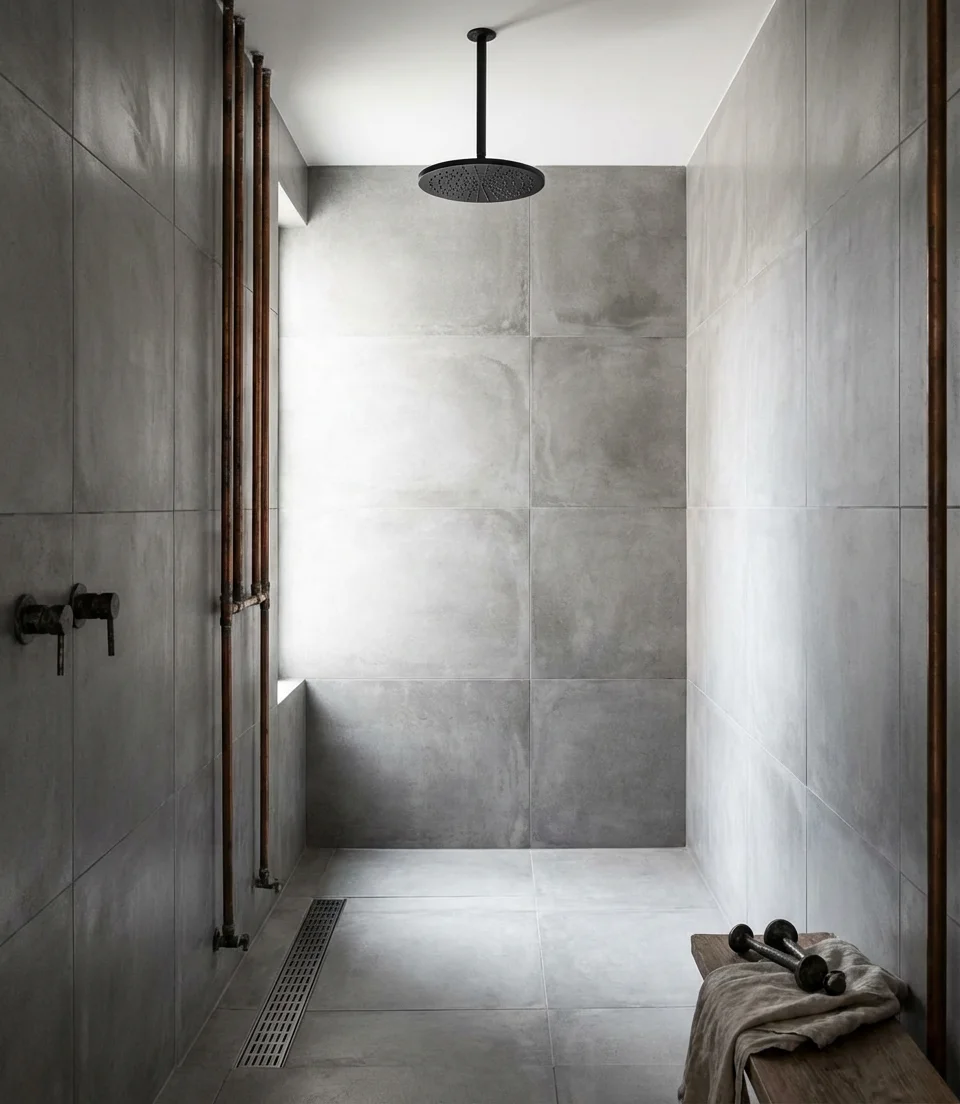
Budget angle: concrete-look porcelain tile often costs 20-30% less than real poured concrete or microcement finishes, and it’s far easier to install and maintain. Expect to pay around $6-$12 per square foot for quality porcelain versus $15-$25 for actual concrete finishing.
18. Colorful Mosaic Feature Niche
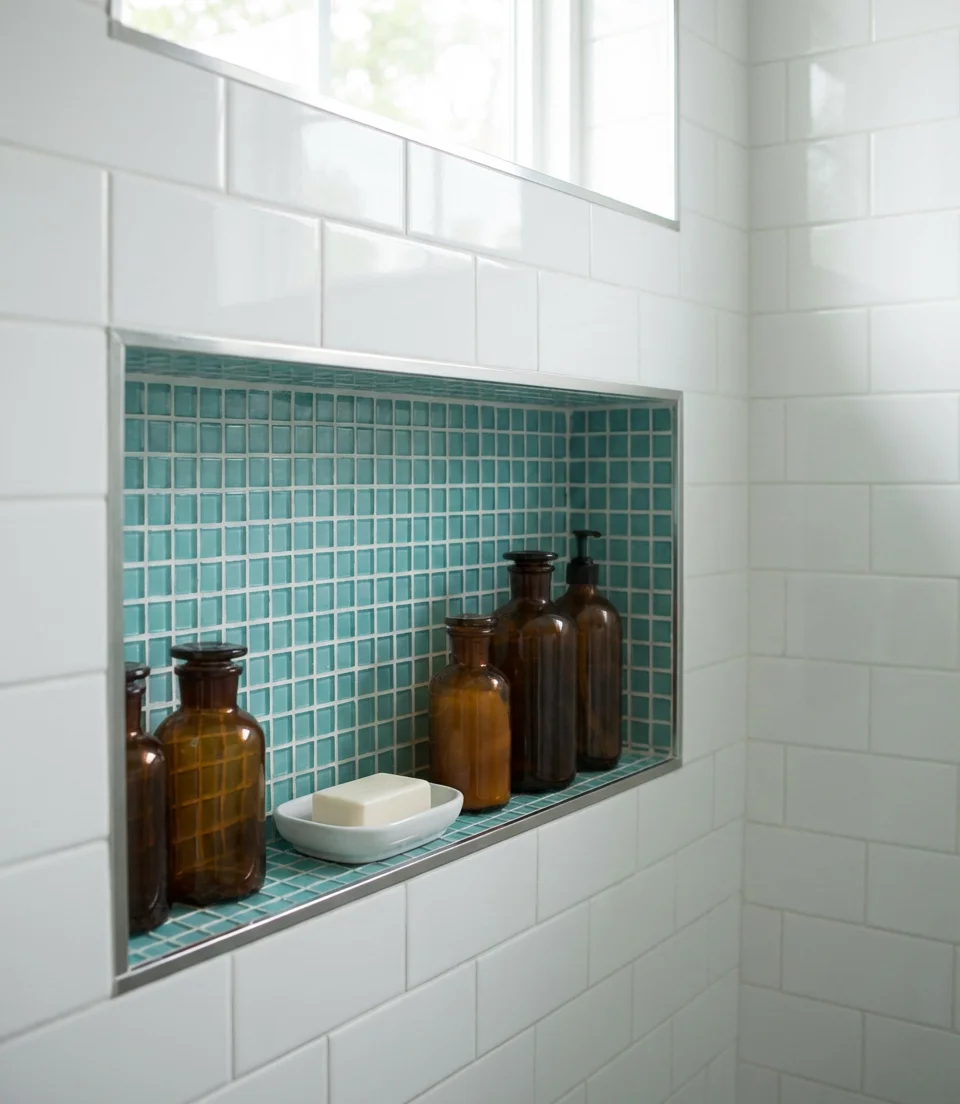
Even a simple built-in niche can become a showstopper when you line it with vibrant mosaic-tiled details. Choose a color that complements the rest of the bathroom’s decor—maybe a soft blue to echo towels or a warm terracotta to play off wood accents. This small detail adds personality without overwhelming the space, and it’s an easy DIY upgrade if you’re comfortable with tile work.
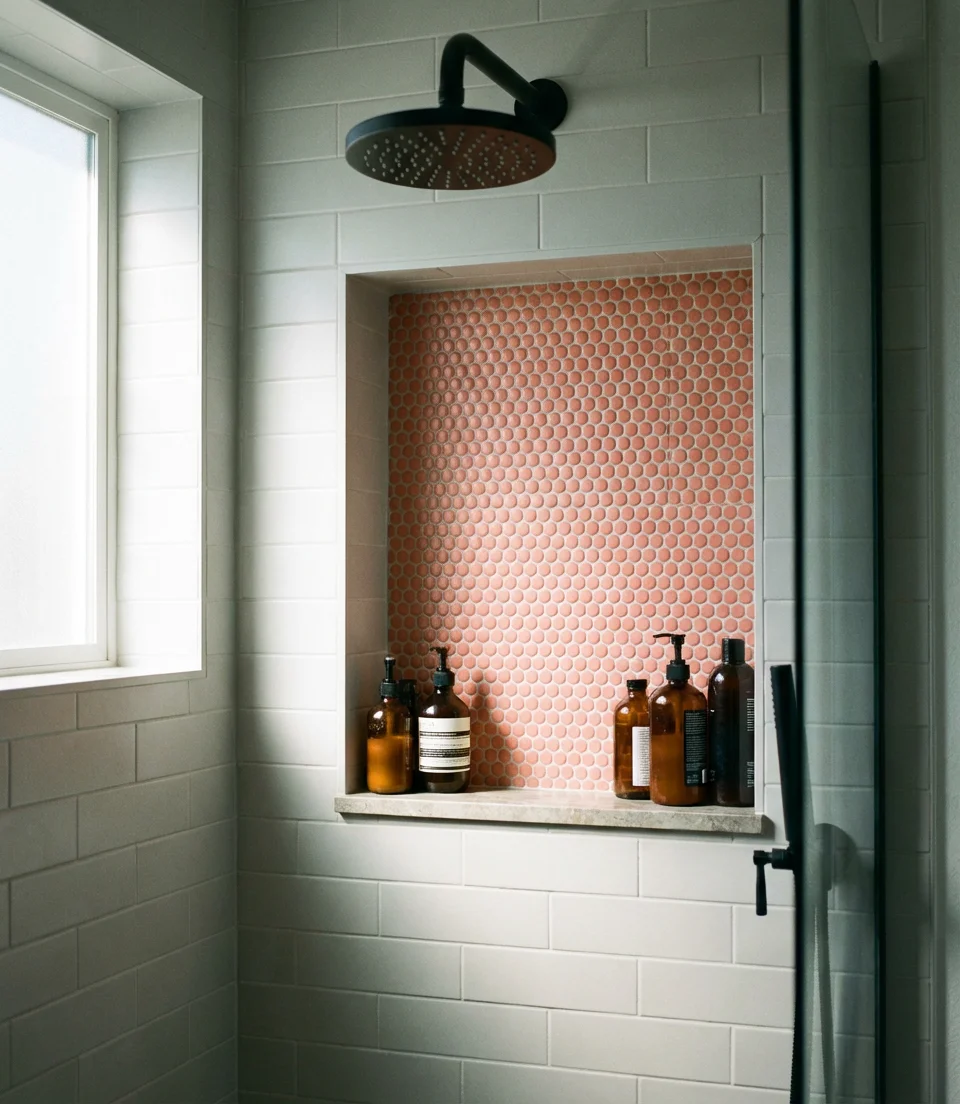
Real homeowner behavior: people often underestimate how much a pop of color in the niche can shift the whole mood of the shower. It’s like adding a piece of art, but one you see every single day—worth the extra $40-$60 in specialty tile.
19. Full Glass Master Bath Wet Room
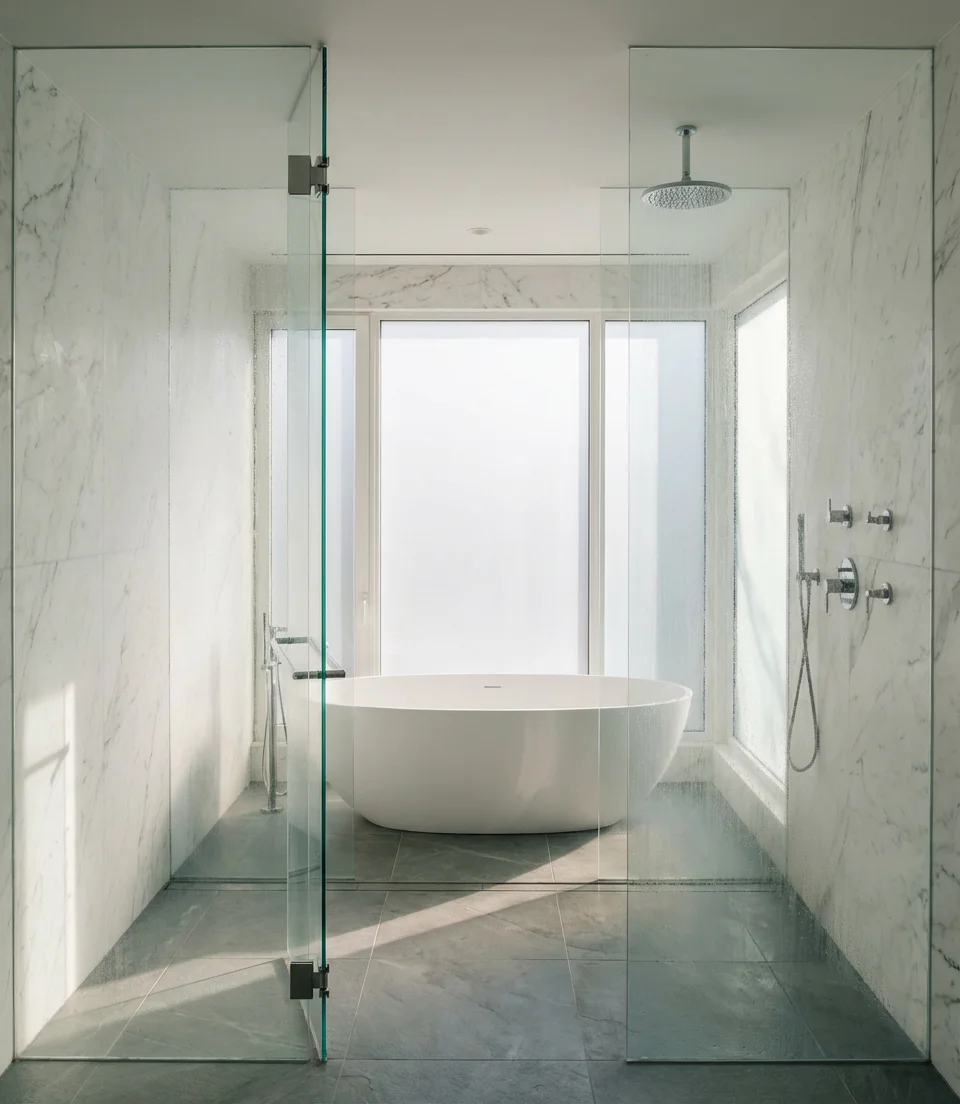
Elevate the open concept by incorporating a floor-to-ceiling glass wall that divides the wet zone from the rest of the master bath. The entire shower and tub area is one continuous wet room, and the glass ensures you can see across the entire bathroom, making even a moderate-sized space feel grand. This approach requires serious waterproofing and a good drainage plan, but the payoff is a truly luxurious, hotel-like experience.
Where it works best: homes with master suites of 120+ square feet where you have room to dedicate a full wet zone without sacrificing storage or vanity space. It’s also ideal in warm climates where ventilation is easier and you’re not battling constant condensation.
20. Vintage Hex Tile with Brass Hardware
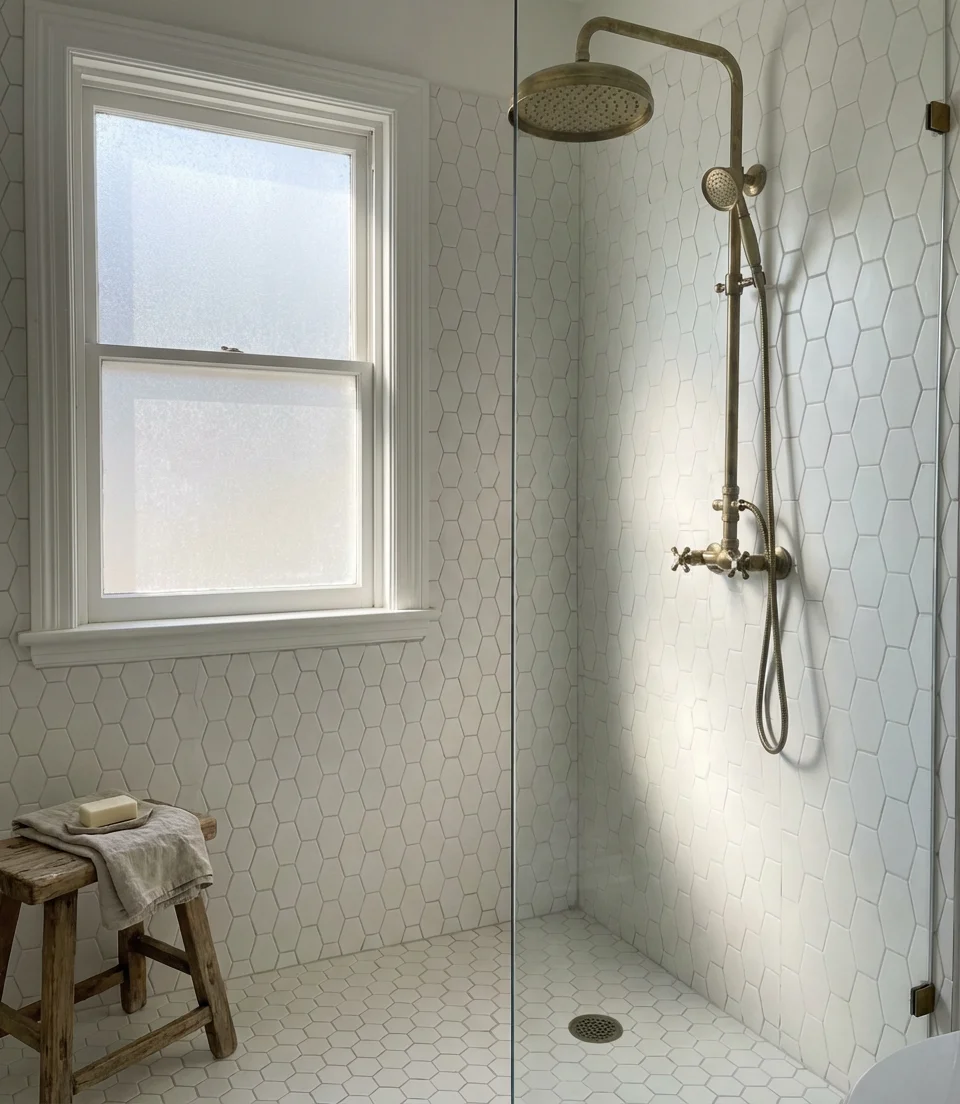
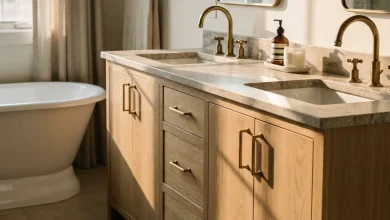
White hexagon tiled floors and walls paired with unlacquered brass fixtures create a timeless, slightly nostalgic look that’s having a major moment in 2026. The hex tile nods to classic 1920s bathrooms, while the brass brings warmth and a living finish that develops a natural patina over time. This combination works beautifully in period homes and in new builds that want a collected, layered feel.
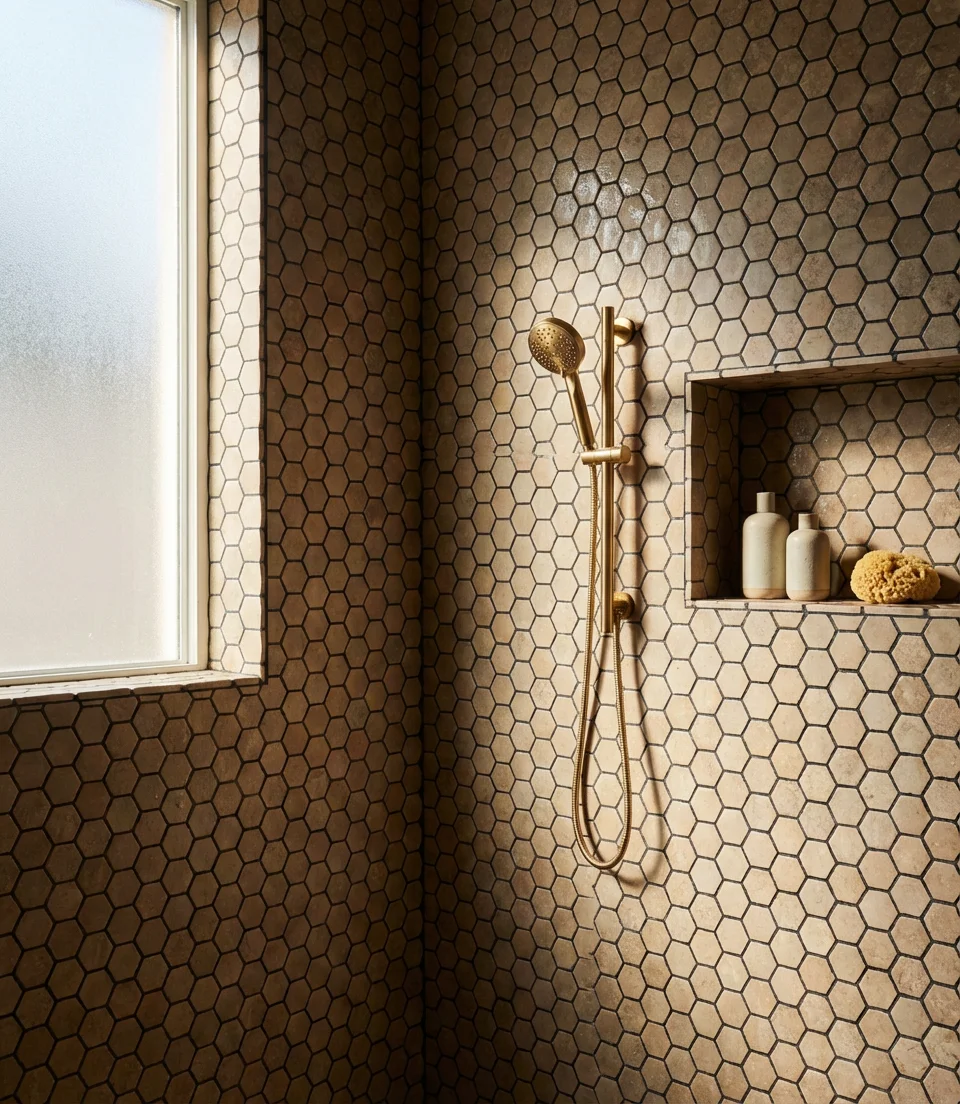
Practical insight: unlacquered brass requires zero maintenance if you like the patina look, but if you prefer to keep it shiny, a quick wipe with lemon juice and salt every few months does the trick. Most homeowners find themselves enamored with the aged appearance, as it conveys a unique story.
21. High-Contrast Black and White Geometric Tile
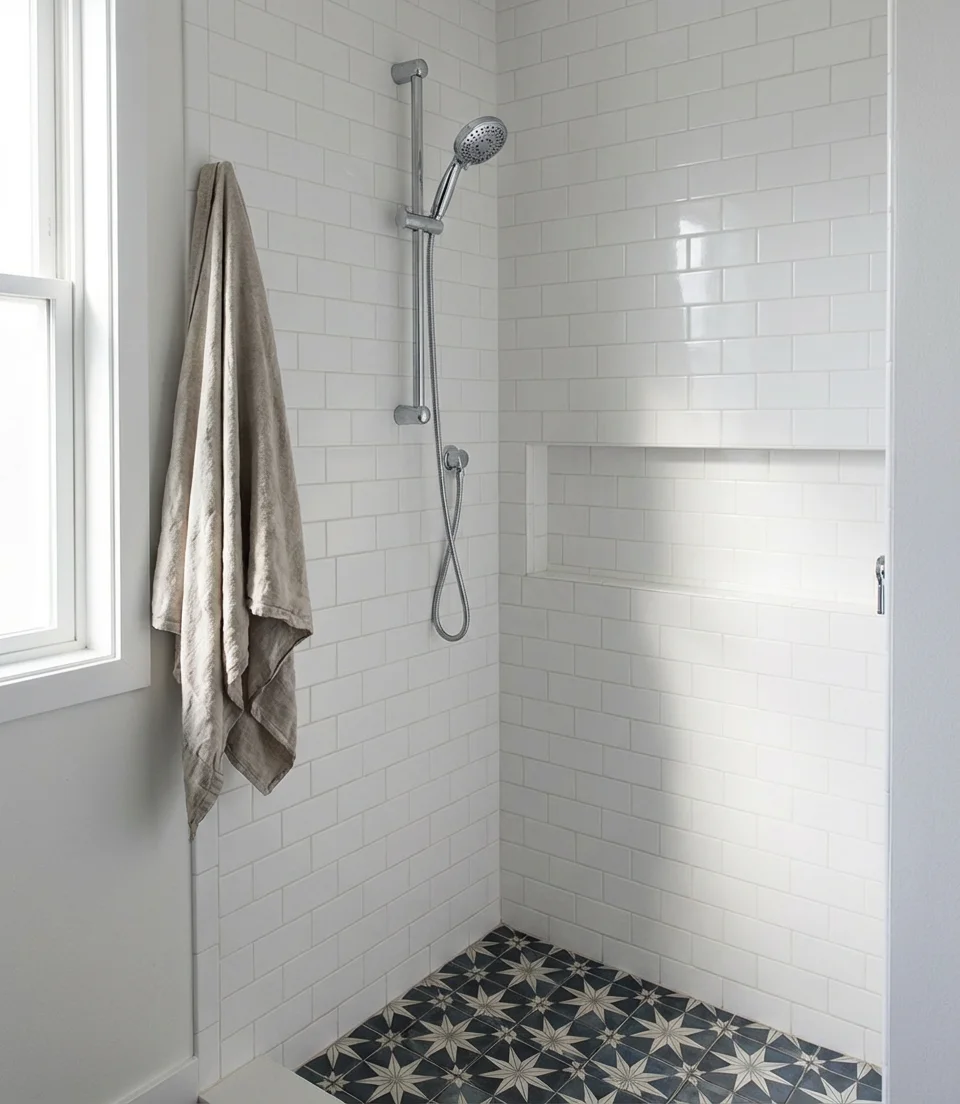 Make your doorless shower the focal point of the room by incorporating bold black-and-white geometric tiled flooring that extends up the walls. Patterns like chevron, herringbone, or Moroccan encaustic instantly add drama and make the shower feel like an intentional design moment rather than an afterthought. This high-contrast approach is perfect for small spaces where you want to go big with patterns since the open layout prevents them from feeling claustrophobic.
Micro anecdote: one homeowner in Chicago said her patterned floor became the most photographed spot in her house—guests would literally ask to see the shower. It’s a small investment in specialty tile that delivers outsized impact.
22. Earthy Terracotta with Natural Light
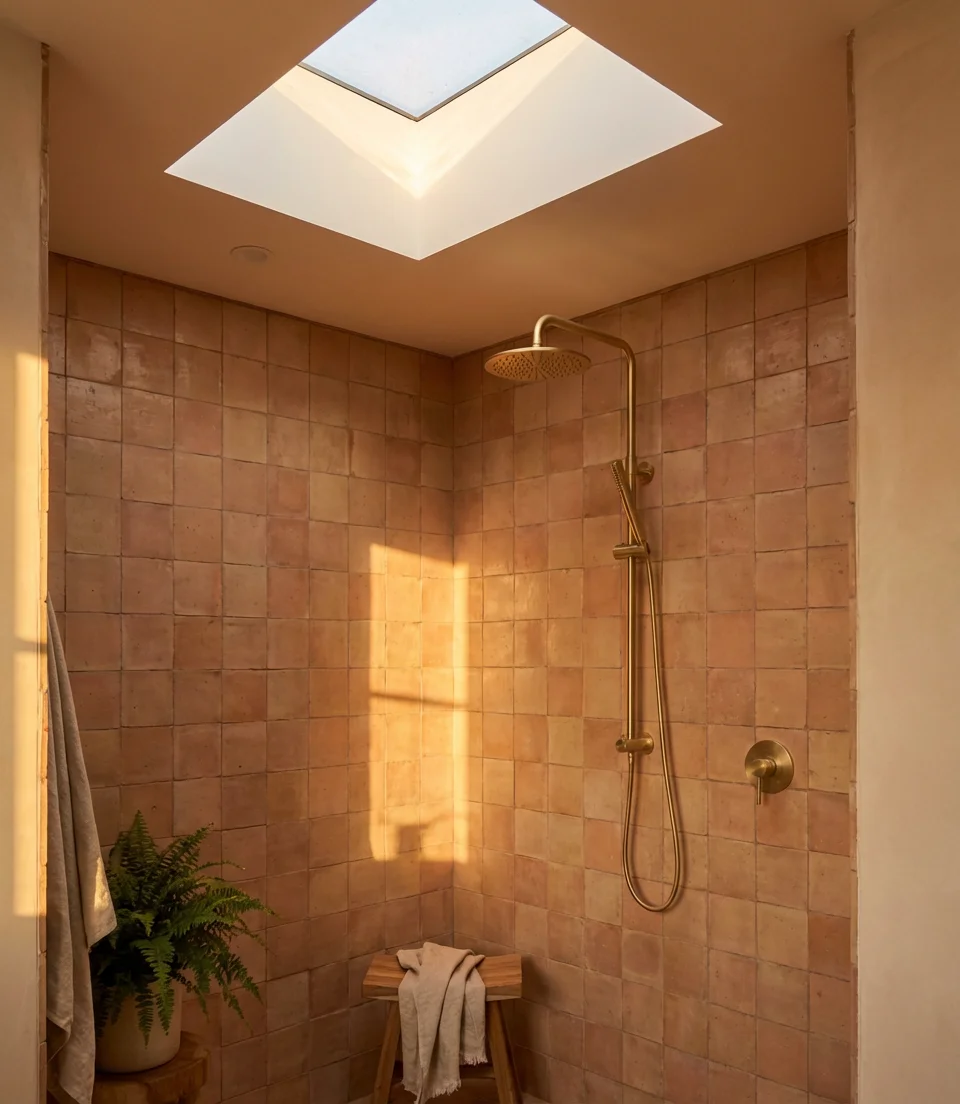
Warm terracotta or clay-colored tiled walls bring an earthy, sun-baked vibe that’s perfect for Southwest-style homes or anyone wanting to channel a bit of the Mediterranean. Pair this with plenty of natural light—a skylight or large window—and the space feels connected to the outdoors. The warm tones also make the shower a cozy retreat in the cooler months while still feeling fresh and airy in the the summer.
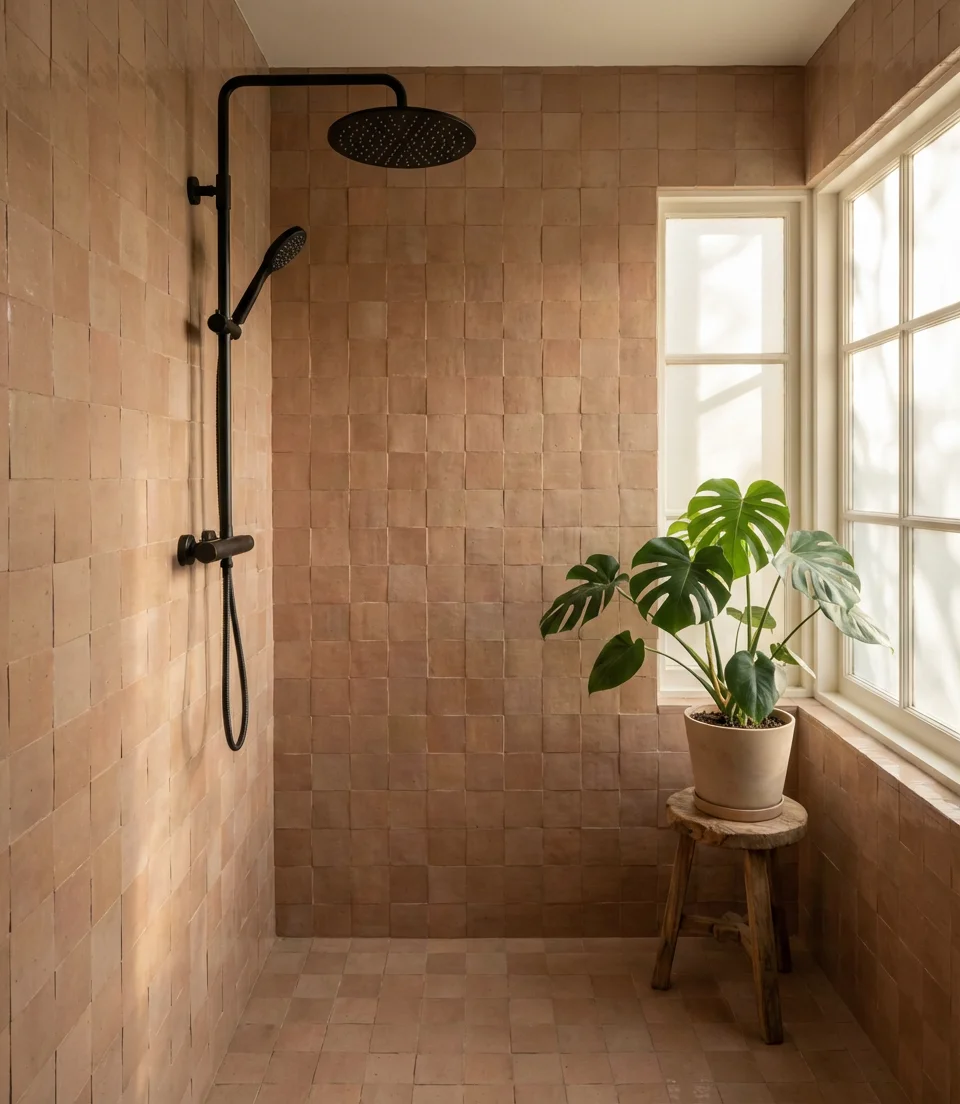
Where it works best: homes in warm, dry climates like Arizona, New Mexico, or Southern California, where the color palette echoes the local landscape. It also pairs beautifully with natural wood vanities and woven baskets for a cohesive, organic look.
23. Glass Ideas for Small Bathrooms with Half Walls
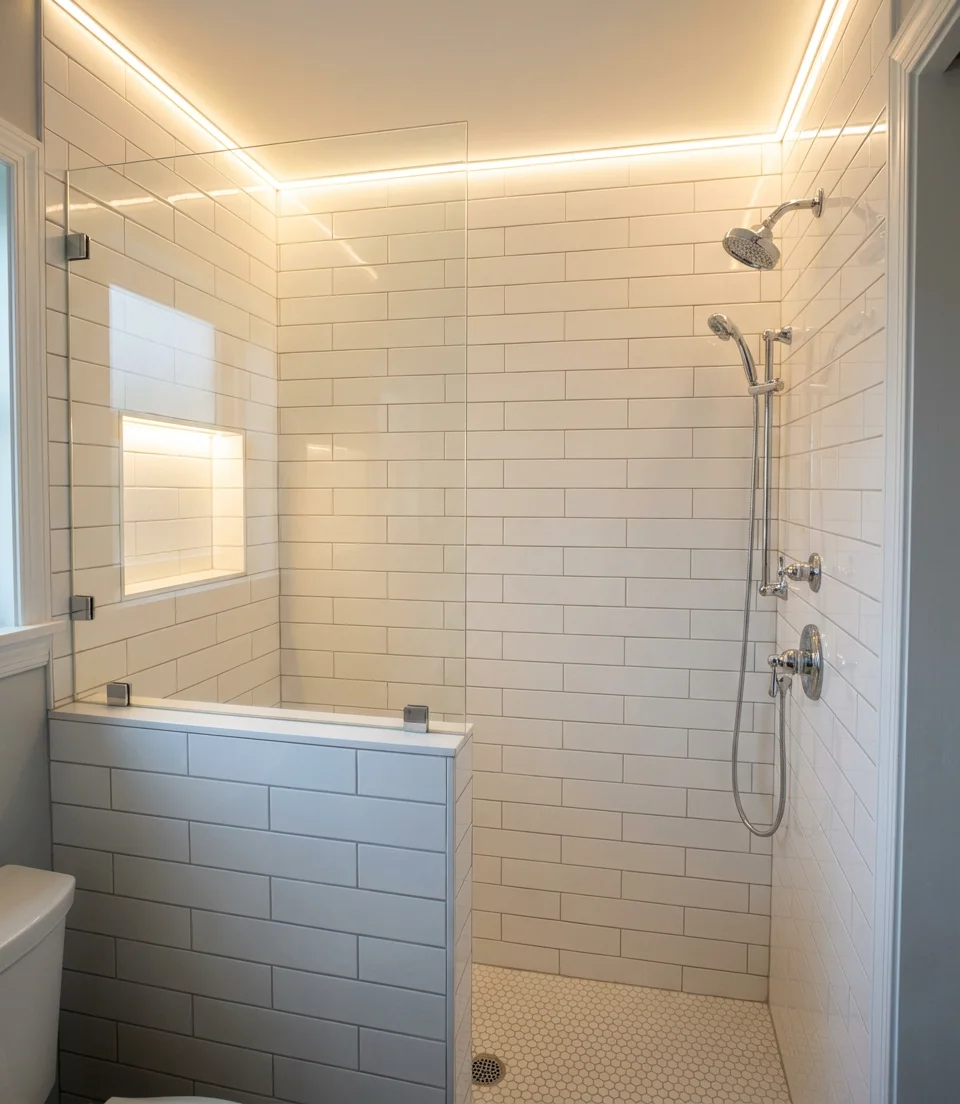
In a tight small bathroom, combining glass ideas with a short half wall creates the illusion of more space while still managing water. The glass can be clear or frosted depending on your privacy needs, and the half wall—built to about 36-42 inches—provides structure and a surface for a handheld sprayer holder or small shelf. The above arrangement is one of the smartest layouts for urban apartments and older homes with limited square footage.
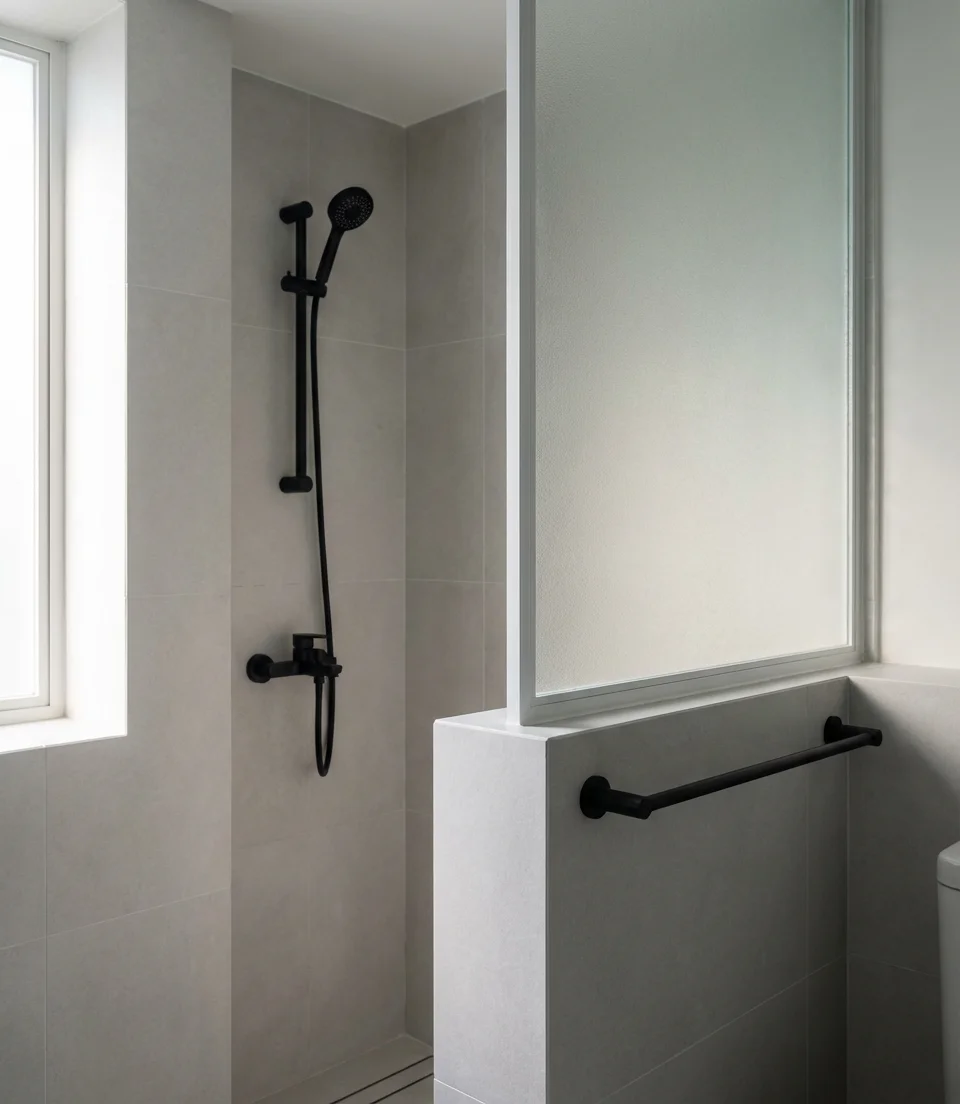
Common mistake: choosing glass that’s too thin or poorly anchored. For a half-wall-and-glass combo, you want a minimum of 3/8-inch tempered glass, securely fastened to both the wall and the top of the half wall with proper clamps and sealant.
24. Open Layout with Glass Master Baths and Wet Rooms
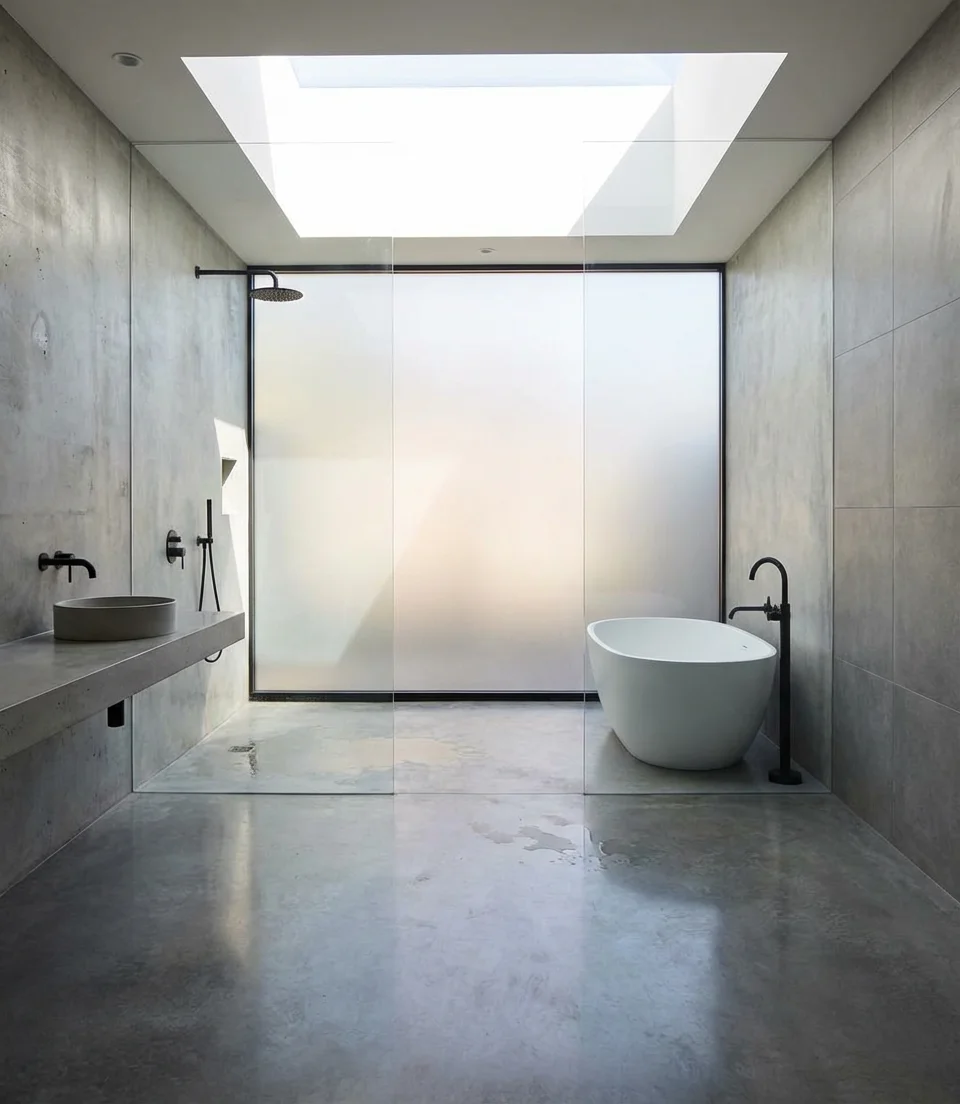
For large master baths designed as wet rooms, a single pane of glass can separate the sleeping area from the bathing zone without blocking views or light. Loft-style homes and contemporary new builds prioritize openness and flow over traditional compartmentalization, making this ultra-modern approach popular. The glass acts as a subtle boundary, and the wet room floor handles any splash with ease.
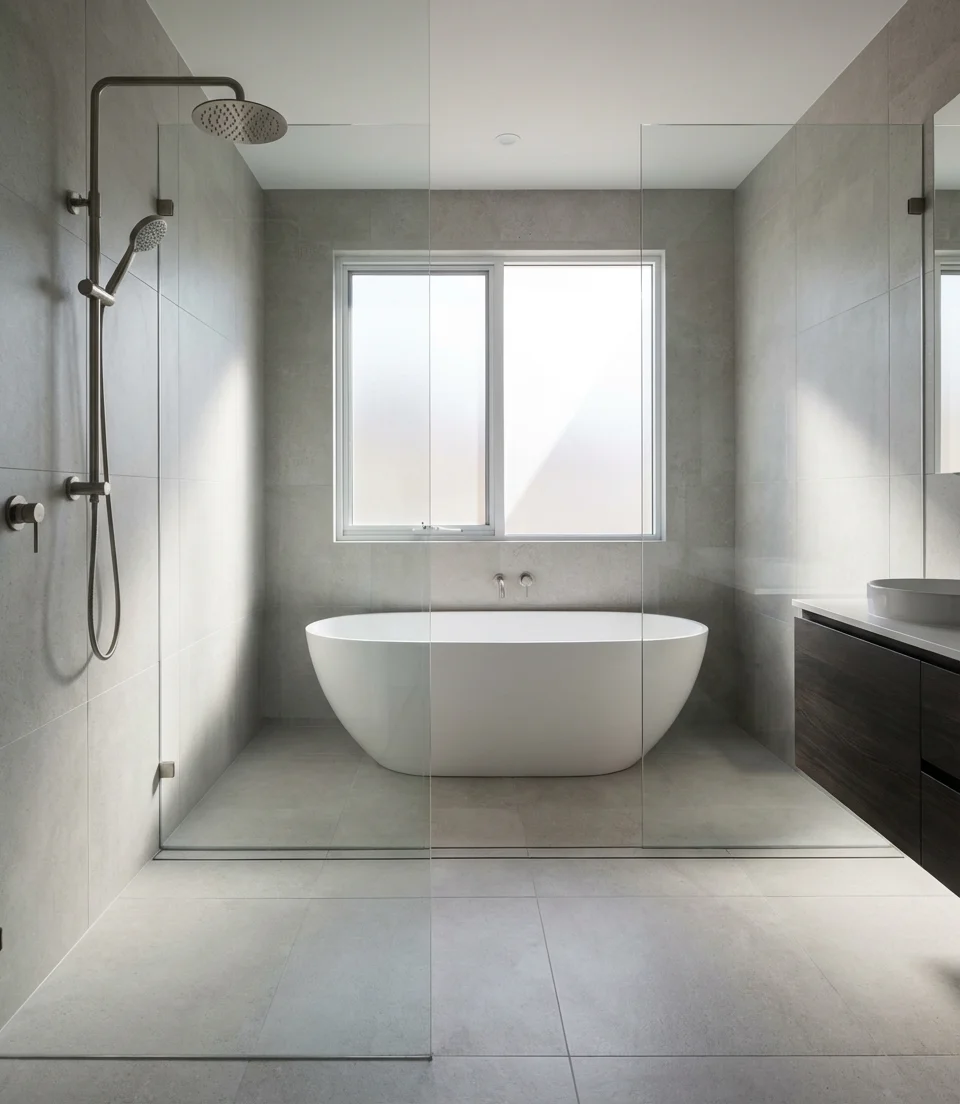
Real homeowner behavior: couples who install this kind of open wet room often find they use the space together more often—one person in the shower, one at the tub or vanity—because it doesn’t feel segmented. It changes the whole dynamic of the morning routine.
25. Master Baths with Half Walls and Bench Seating
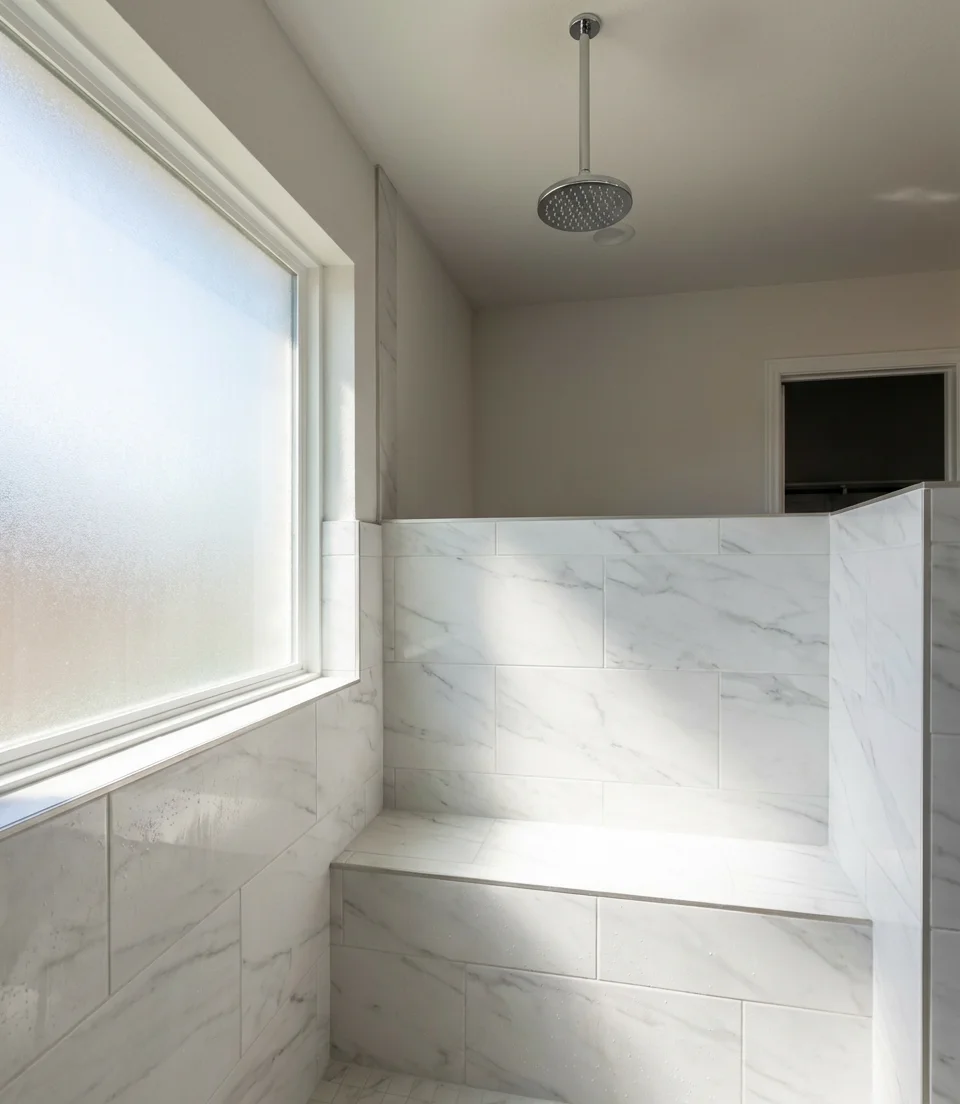
Combining half walls with integrated bench seating gives you both privacy and comfort in master bathrooms where square footage allows for a little extra. The half wall can double as a backrest for the bench, and you can tile it to match the floor or walls for a cohesive look. Empty nesters and aging-in-place homeowners find this layout particularly appealing, as it offers a shower that is both aesthetically pleasing and long-lasting.
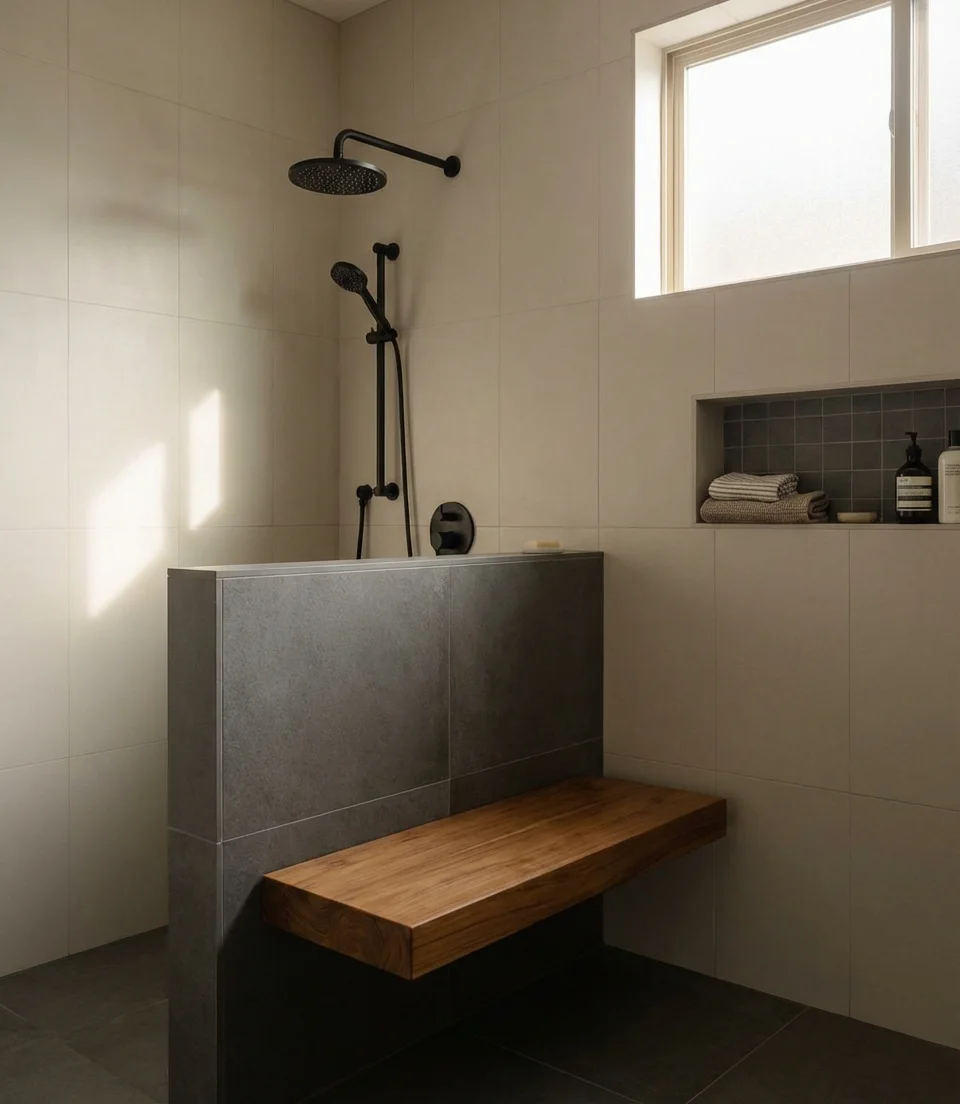
Practical insight: the ideal bench height is 17-19 inches—the same as a standard chair—and the depth should be at least 15 inches to be truly usable. If you’re building this into a remodel, frame it during the rough-in stage so it’s structurally sound and can support an adult’s weight without flexing.
These ideas show just how versatile and beautiful a walk-in shower without a door can be in 2026. From compact solutions for small bathrooms to luxurious wet rooms in master suites, the doorless design works across styles, budgets, and home types. Whether you’re drawn to the clean lines of glass panels, the warmth of natural materials, or the flexibility of a curtain, there’s an approach here that’ll fit your space and your life. Drop a comment below and let us know which idea you’re most excited to try—or share a photo if you’ve already made the leap to doorless!