49 Small Bedroom Ideas for Couples 2026: Transform Your Tiny Space Into a Romantic Retreat

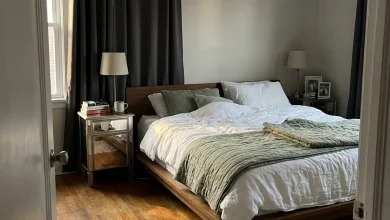
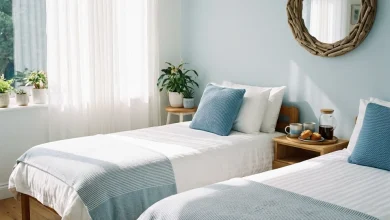
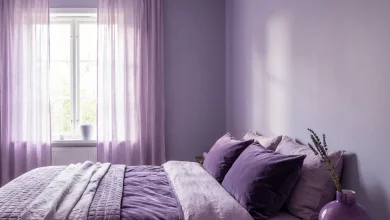
If your bedroom feels like it’s working against your relationship rather than for it, you’re not alone—and you’re definitely not the only one searching Pinterest at midnight for a solution. Small bedrooms are one of the most searched home topics in America right now, especially as couples navigate apartment living, rising real estate costs, and the very real desire to create a space that feels genuinely romantic and functional at the same time. In 2026, the most effective small bedroom designs focus on intentionally utilizing every available space, rather than simply packing in more items. Whether you’re starting from scratch or just ready for a refresh, this guide covers some of the most inspiring, practical, and beautiful ideas to transform your compact bedroom into the retreat you both deserve.
1. Dark Accent Wall With Warm Brass Accents
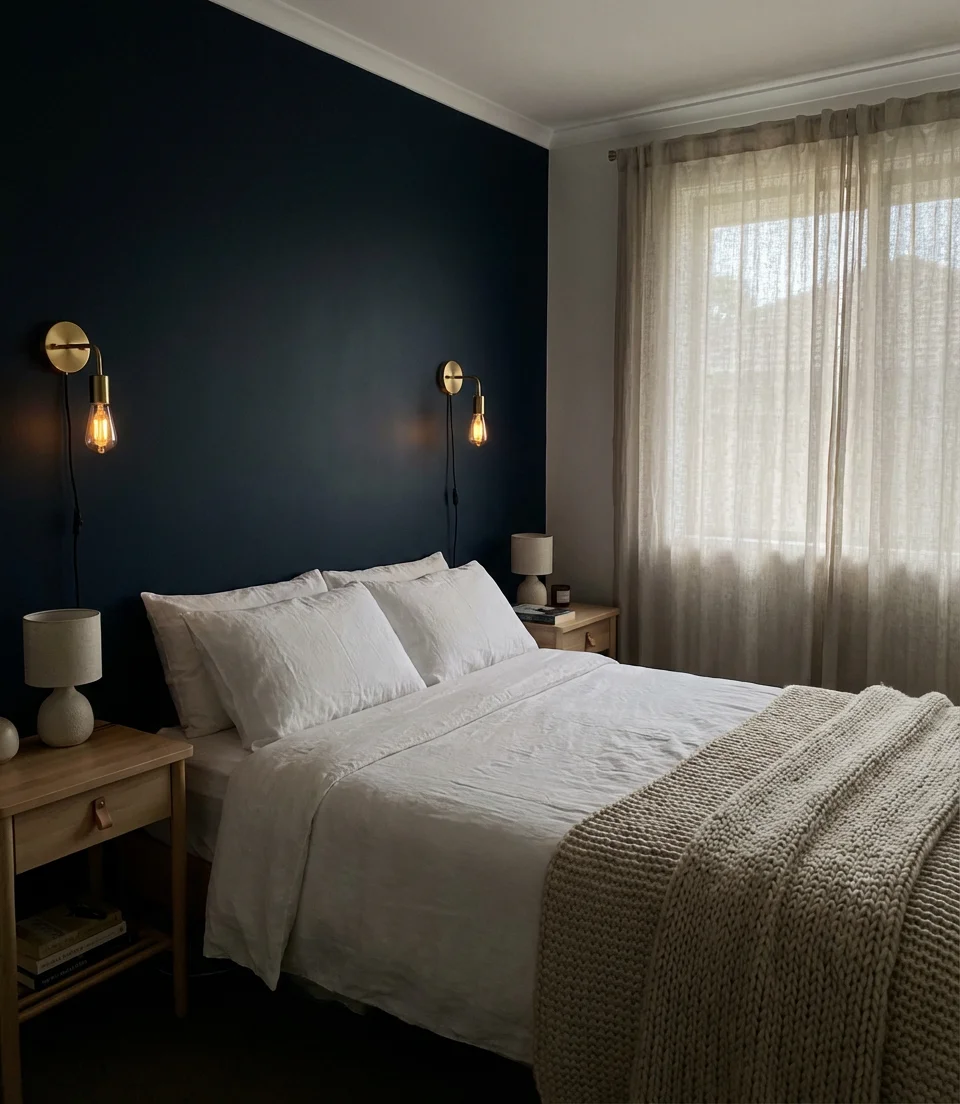
One of the most dramatic transformations you can give a small bedroom costs less than a gallon of paint. A single romantic dark accent wall—think deep forest green, midnight navy, or moody charcoal—makes a room feel intentionally designed rather than just compact. For couples who crave a cozy romantic atmosphere, this approach draws the eye inward and creates a sense of depth that plain white walls simply can’t achieve. Pair it with warm brass hardware on your nightstands and light fixtures, and the result feels distinctly elevated without a full renovation.
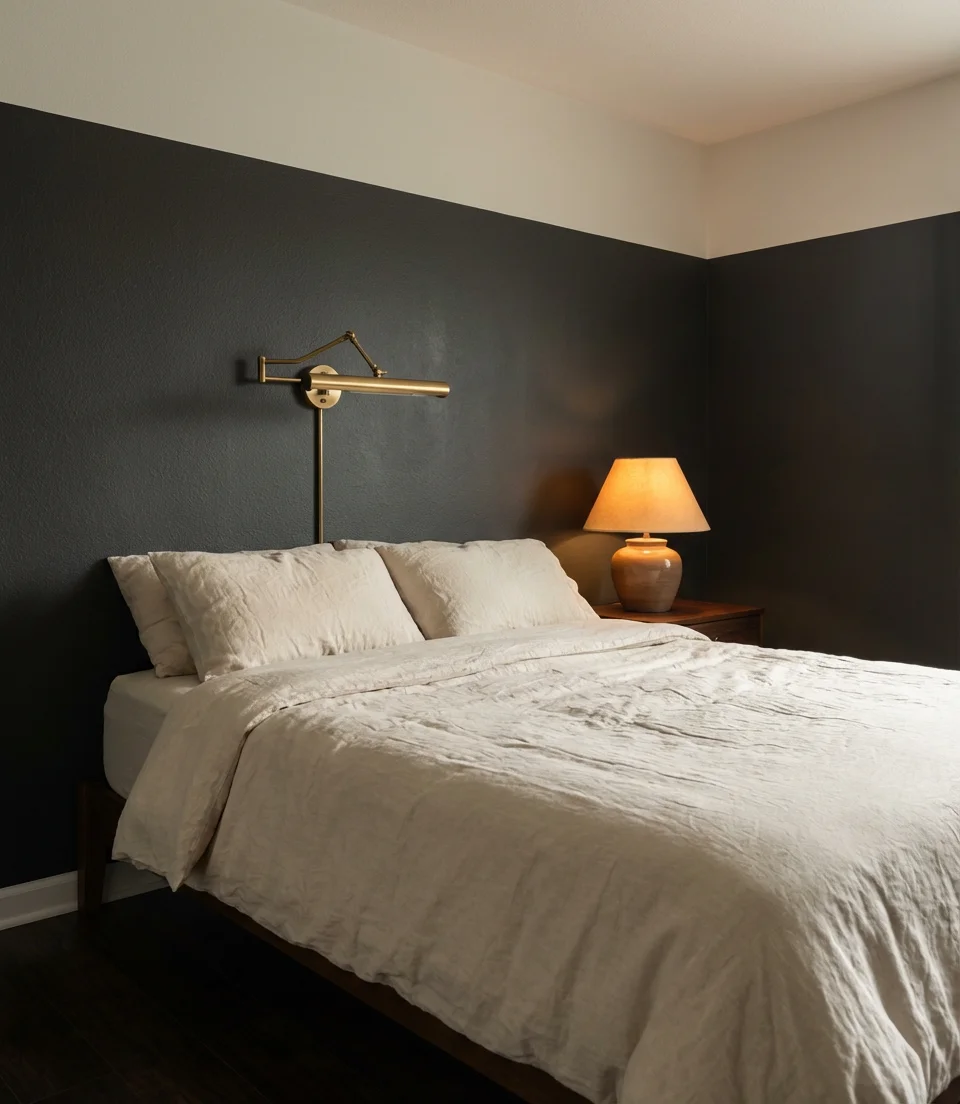
The trick is to balance the darkness with reflective materials. A brass-framed mirror, a glass pendant light, or even a metallic tray on your dresser will bounce light around the room and prevent it from feeling cave-like. Design pros often note that dark rooms feel smaller only when they lack light contrast—add a few thoughtful reflective surfaces and the opposite effect kicks in. Budget-wise, a single-wall paint project runs between $40 and $80 in materials, making this one of the highest-impact, lowest-cost moves in bedroom design.
2. Floor-to-Ceiling Curtains for Height Illusion
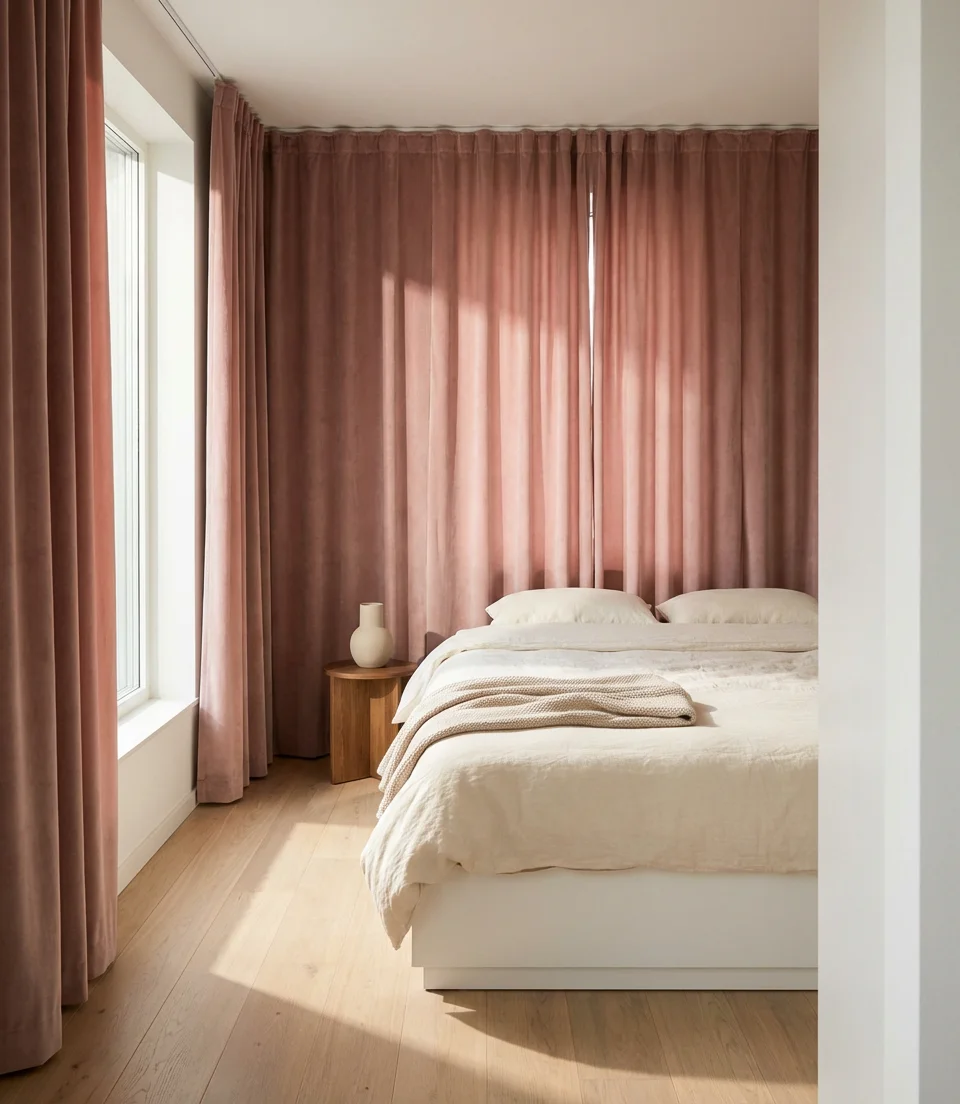
When you hang curtains just above a window frame, you’re essentially broadcasting the room’s true ceiling height. Hang them as high as the ceiling allows—even in a standard 8-foot apartment—and suddenly the whole room reads taller and more luxurious. For couples in a typical apartment setting, this trick costs almost nothing extra (curtain rods are $20–$50 at most home stores) but changes the entire visual scale of the space. Velvet panels in dusty rose or warm ivory add texture and softness that make the bedroom feel genuinely romantic rather than just functional.
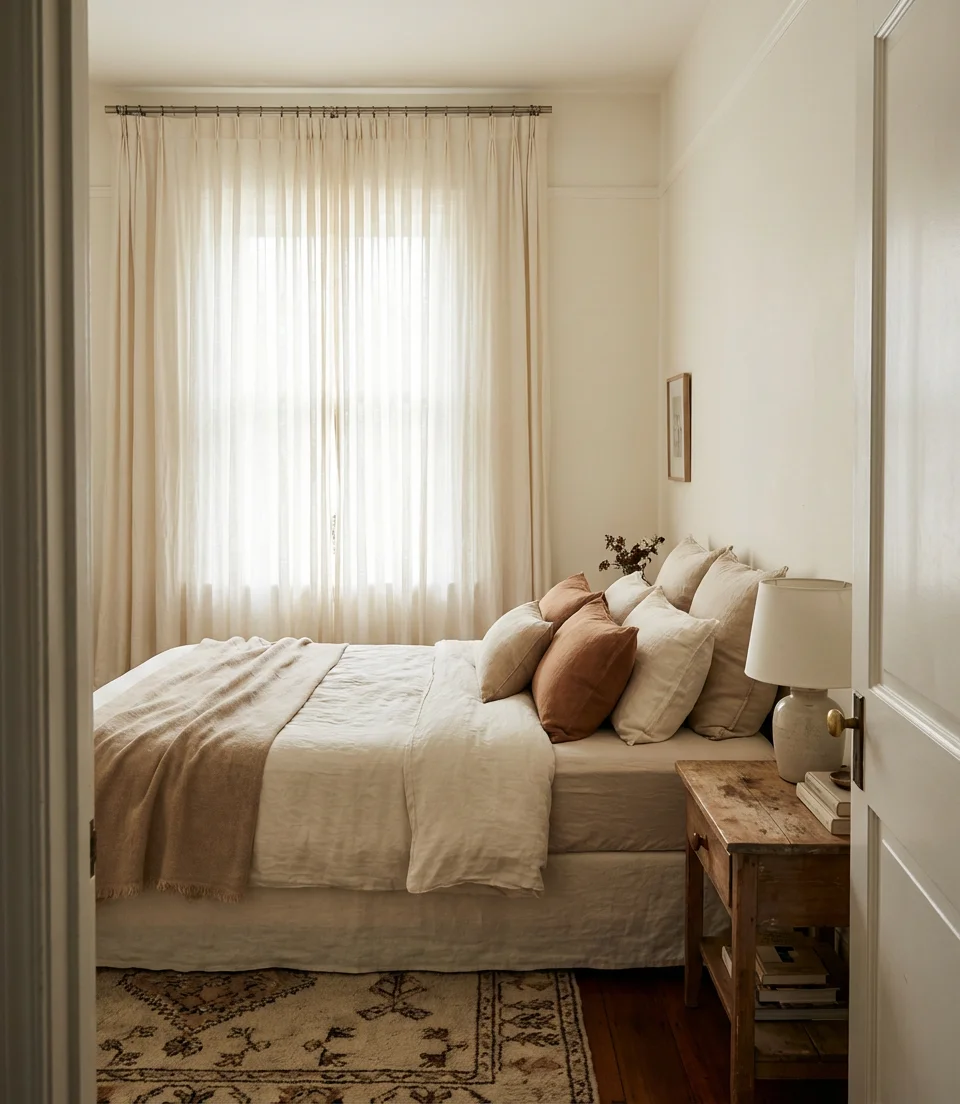
One common mistake people make is choosing curtains that are just floor-length—the panel grazes the floor rather than pooling gently, which looks unfinished and stops the height illusion cold. A slight pool of 1–2 inches of fabric on the floor is perfectly intentional-looking and adds a touch of softness. Where this style works best is in apartments with low ceilings or rooms that feel boxy—the vertical line of a full-length curtain is one of the most effective optical tricks in interior design.
3. Built-In Storage Headboard
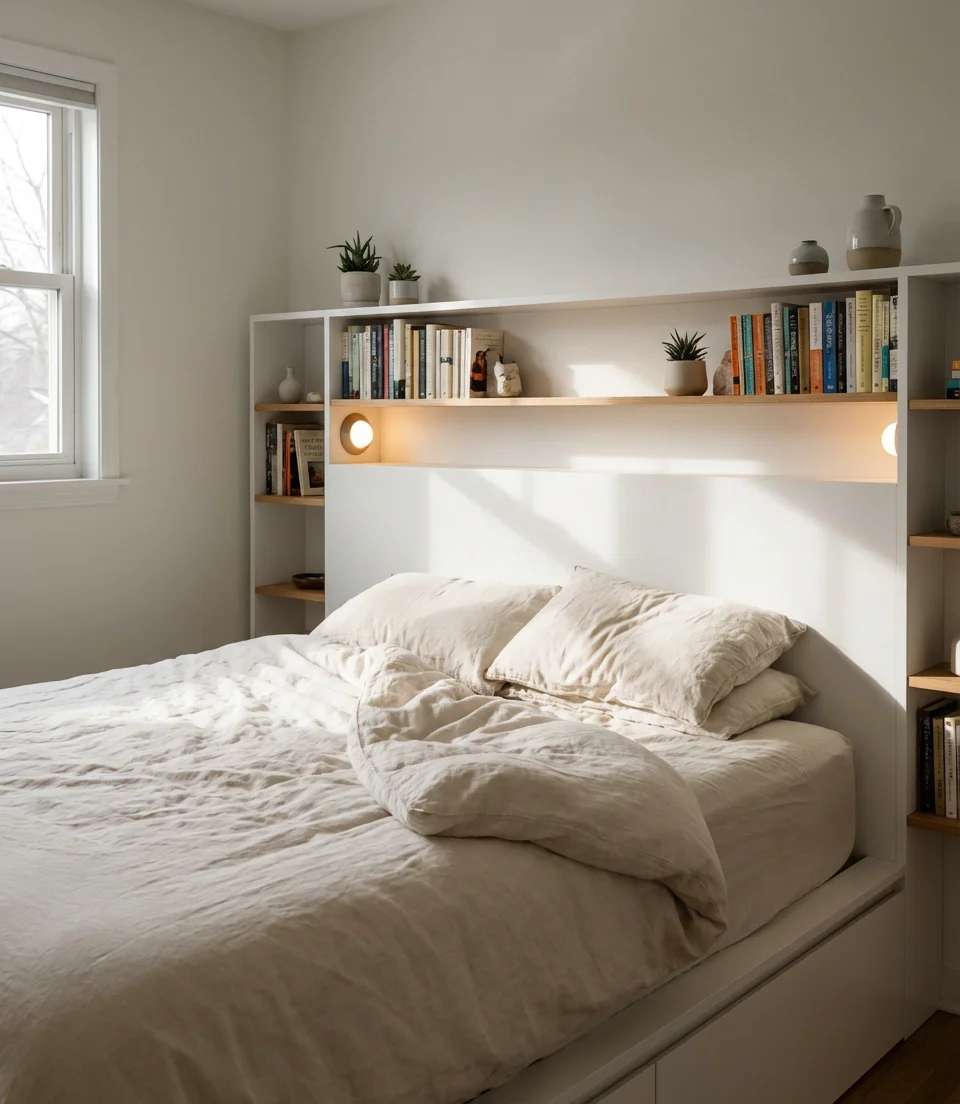
A storage headboard is essentially a wall-mounted shelving system that doubles as the focal point of your bed—and for couples sharing a cozy, simple space, it’s transformative. Instead of two nightstands eating up precious floor space, the headboard itself holds everything: books, phone chargers, small plants, a candle or two, and even reading glasses. The minimalist aesthetic version keeps shelves clean and open; the cozier version leans into cubbies with small lamps built directly into the structure. Either way, you gain storage without sacrificing a single square foot of walking space.
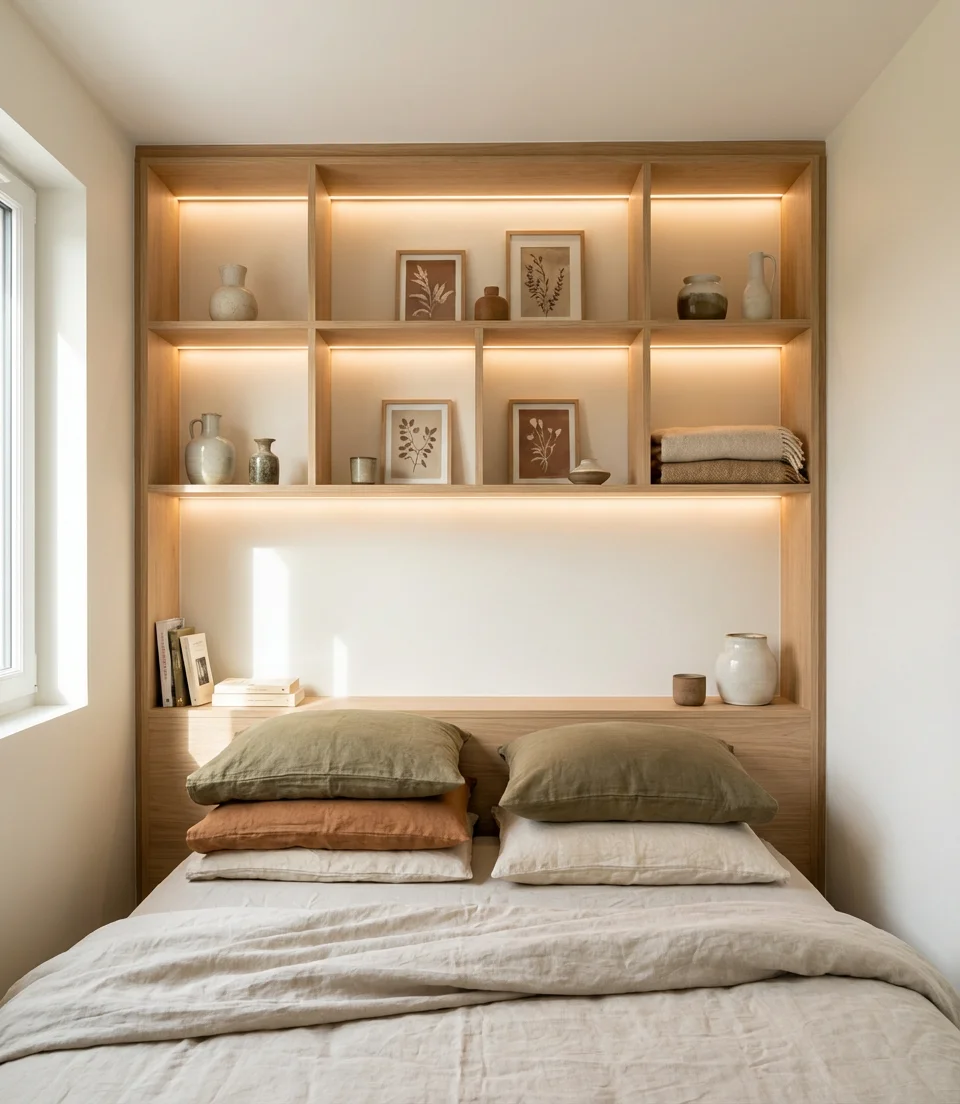
Real homeowners who’ve tackled such a project often report that the built-in headboard was the single most useful renovation in their small bedroom—more than any furniture rearrangement. A DIY version using IKEA KALLAX units or similar modular shelving can be built for under $200 and customized to any wall width. The key is securing it properly to wall studs and finishing it with paint that matches the wall, so it reads as one seamless architectural feature rather than a piece of furniture pushed against the wall.
4. Under-Bed Storage With Lift Platform
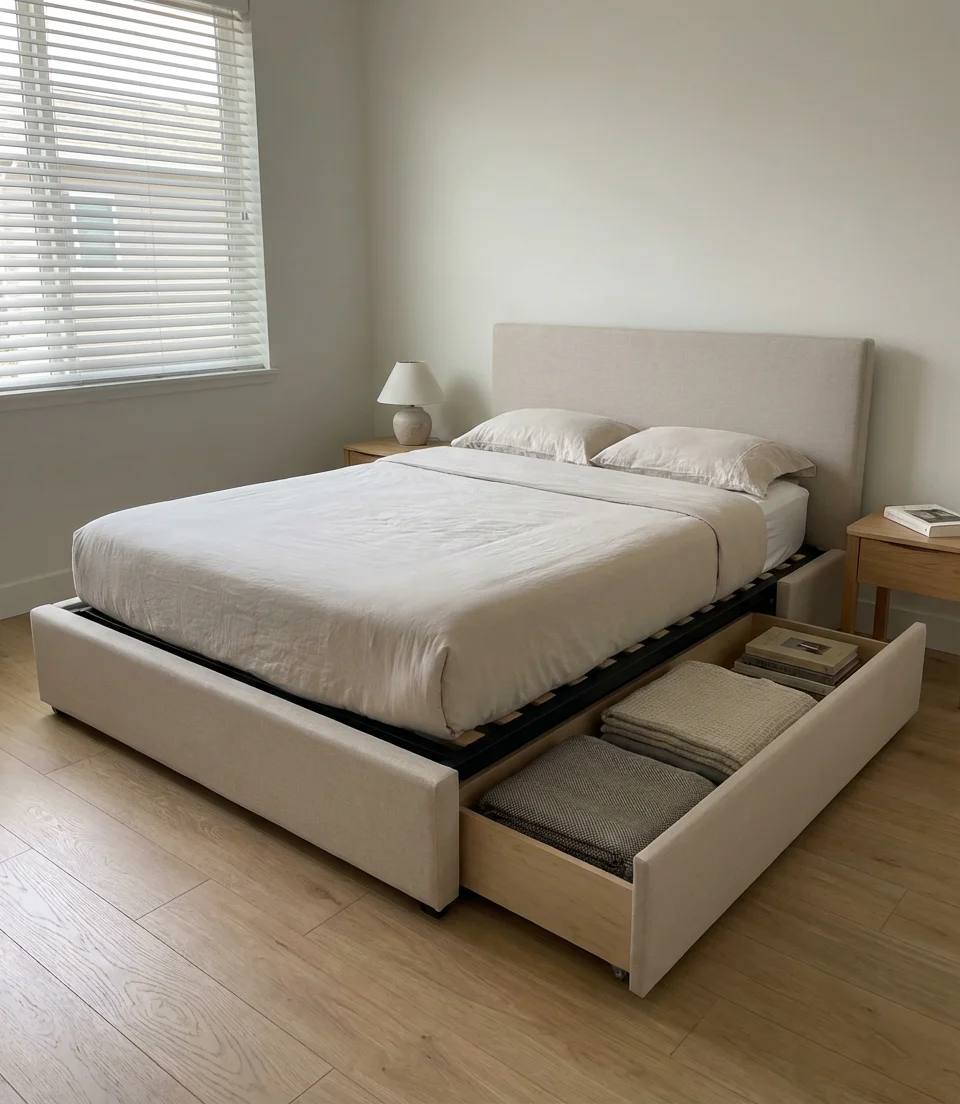
For couples navigating a shortage of storage space in their apartment closets, the space under the bed is essentially a second closet—if you use it right. A platform bed with hydraulic lift storage opens up to reveal a surprisingly large compartment perfect for off-season clothing, extra bedding, or bulky items that have no other home. The extra storage capacity this device creates can genuinely eliminate the need for a separate dresser, freeing up enough floor space to make the whole room feel bigger. Models range from budget-friendly options around $300 to more luxurious upholstered versions at $800–$1,200.
One practical tip most buyers learn too late: measure your ceiling height before purchasing a lift-storage bed. In apartments with 8-foot ceilings, the mattress plus the lifted frame can become awkward to navigate when the lid is fully open. Some designs open from the foot of the bed rather than the side, which works much better in tight spaces where the wall is close to one edge. This type of mattress is a genuinely life-changing purchase for couples who’ve been wrestling with storage—and once you have it, you’ll wonder how you ever lived without it.
5. Mirrored Wardrobe Doors
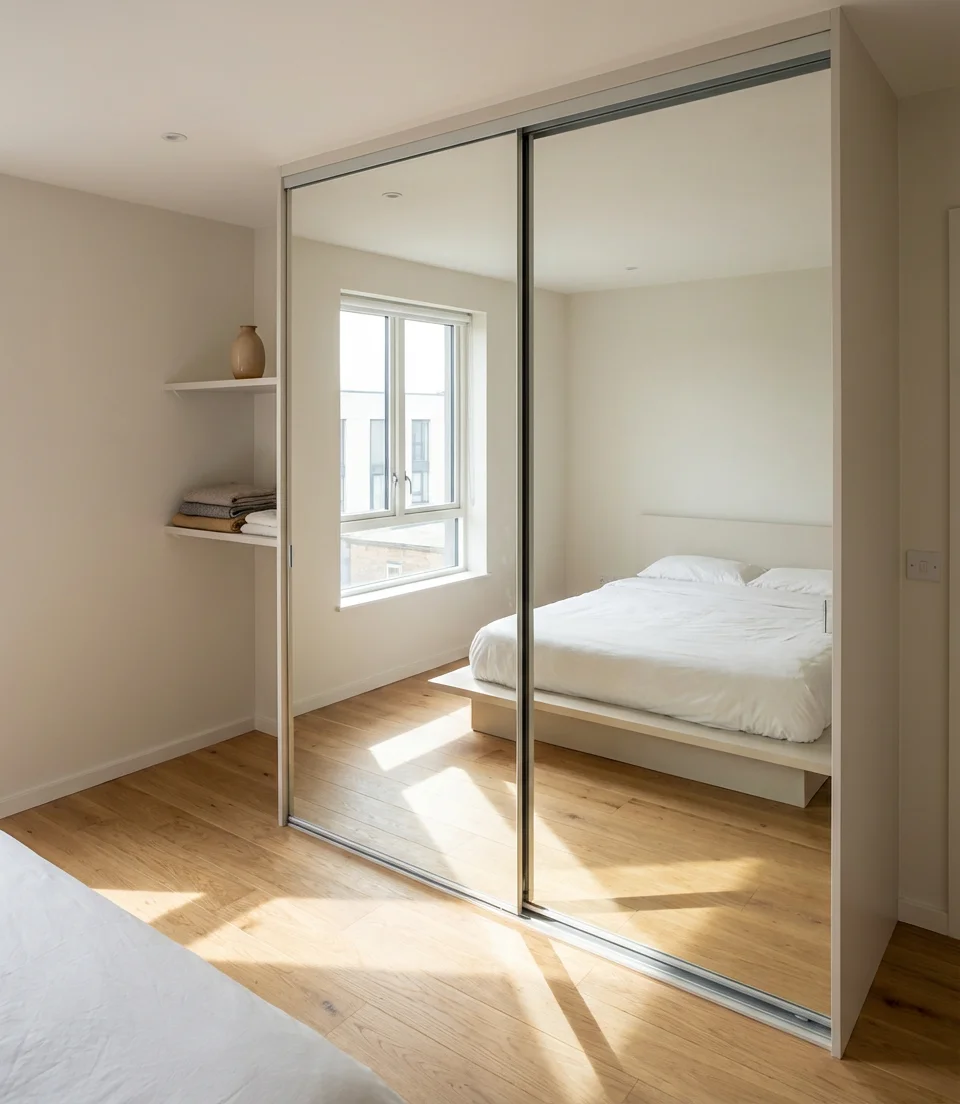
A mirrored wardrobe serves three functions: it stores your clothing, reflects light to enlarge the room, and eliminates the need for a separate full-length mirror. For couples in a modern apartment bedroom, floor-to-ceiling mirrored closet doors are a particularly smart investment because they create the visual impression of a second room just beyond the glass. The effect is especially powerful in rooms with a window on the opposite wall—the mirror bounces natural light across the entire space.
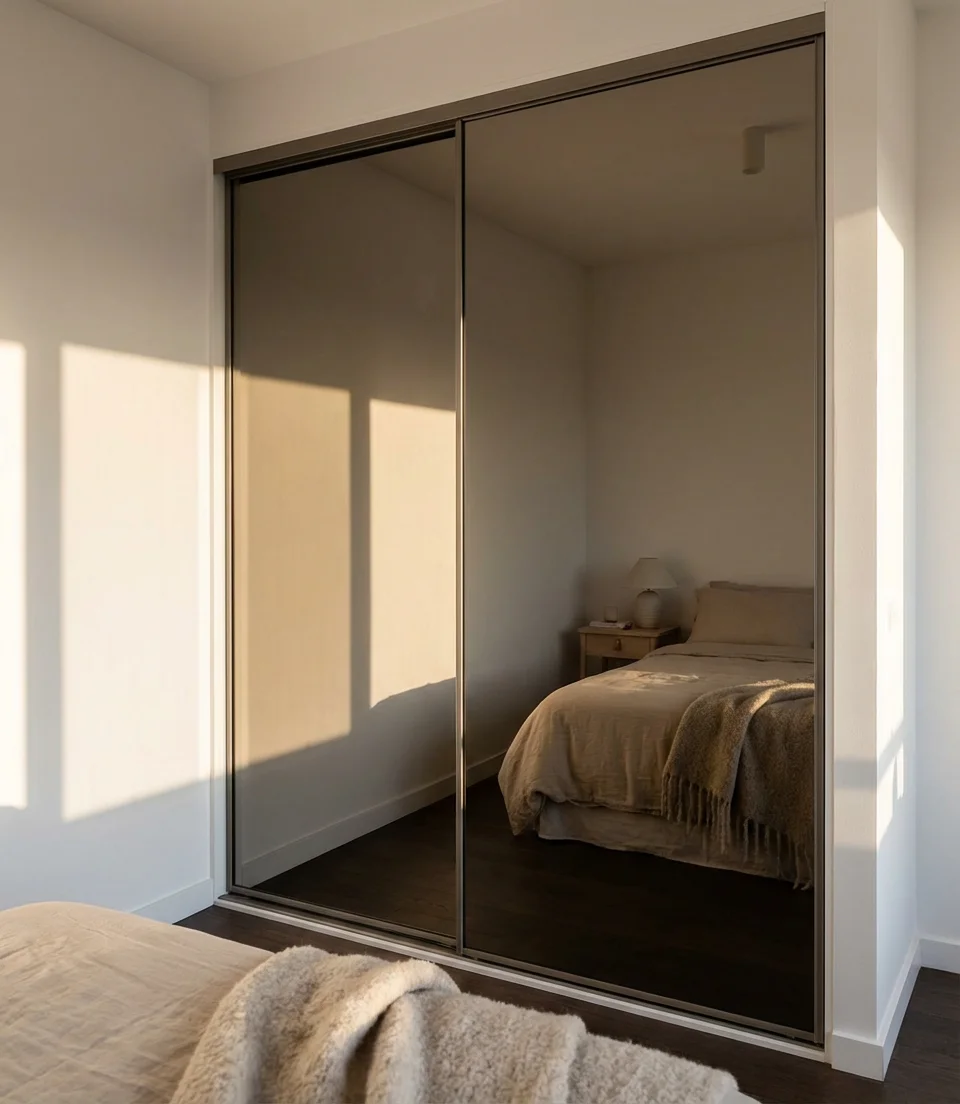
If you’re concerned about the cold, traditional look of a full mirror wall, consider antiqued brass-framed mirror panels or a smoked-glass variation, which gives the same spatial effect with a warmer, more editorial feel. IKEA’s PAX wardrobe system with mirrored doors is the go-to budget solution—you can fully customize it and install it in a single weekend for under $400. The most common mistake is placing the wardrobe on a wall that creates an awkward reflection angle; ideally, the mirror should reflect natural light, not a blank wall or a cluttered corner.
6. King-Size Bed in a Small Room—Done Right
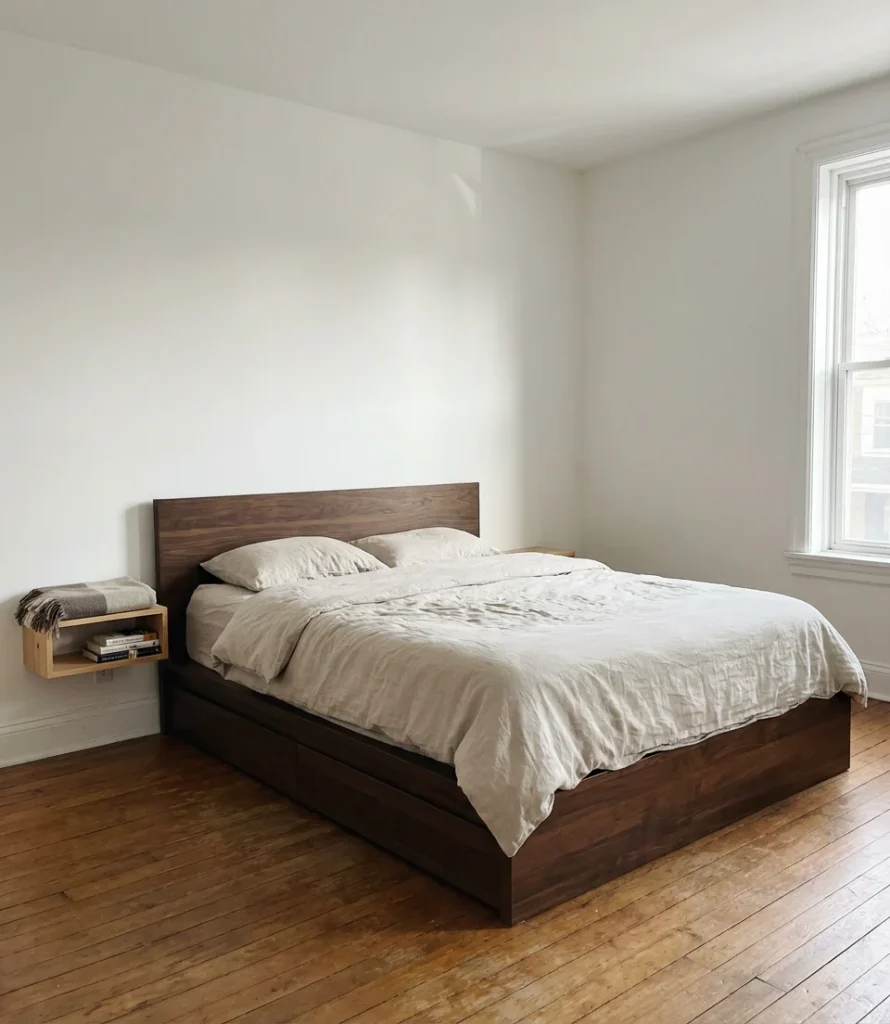
Many couples give up on the idea of a king-size bed the moment they measure their small bedroom—but the math is often more forgiving than it seems. In a 10×12 room, a king can work beautifully if you commit to a low-profile platform frame (no footboard), place the bed against one wall, and keep every other piece of furniture minimal and intentional. Sleeping comfort for two is one of the highest-impact investments in a relationship, and sacrificing bed size in a small room often leads to resentment that is unrelated to interior design.
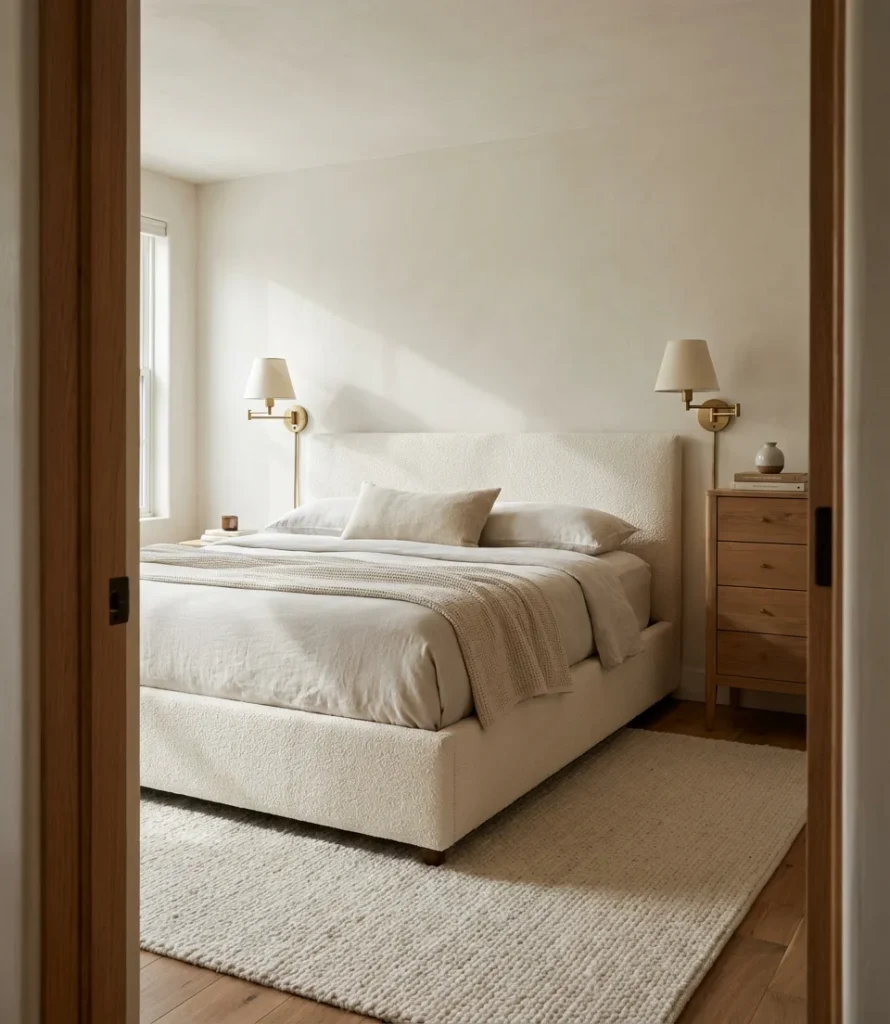
The secret to making this layout work is eliminating every piece of furniture that isn’t essential. Wall-mounted sconces replace bedside lamps and free up nightstand surface area. A floating shelf at bed height replaces bulky nightstands. The dresser moves to the closet or gets swapped for drawer storage built into the bed frame. One couple in a 400-square-foot Brooklyn studio shared that ditching their queen for a king—counterintuitively—made the room feel more designed because every other decision became deliberate rather than default.
7. IKEA Hack: Custom Built-In Look on a Budget
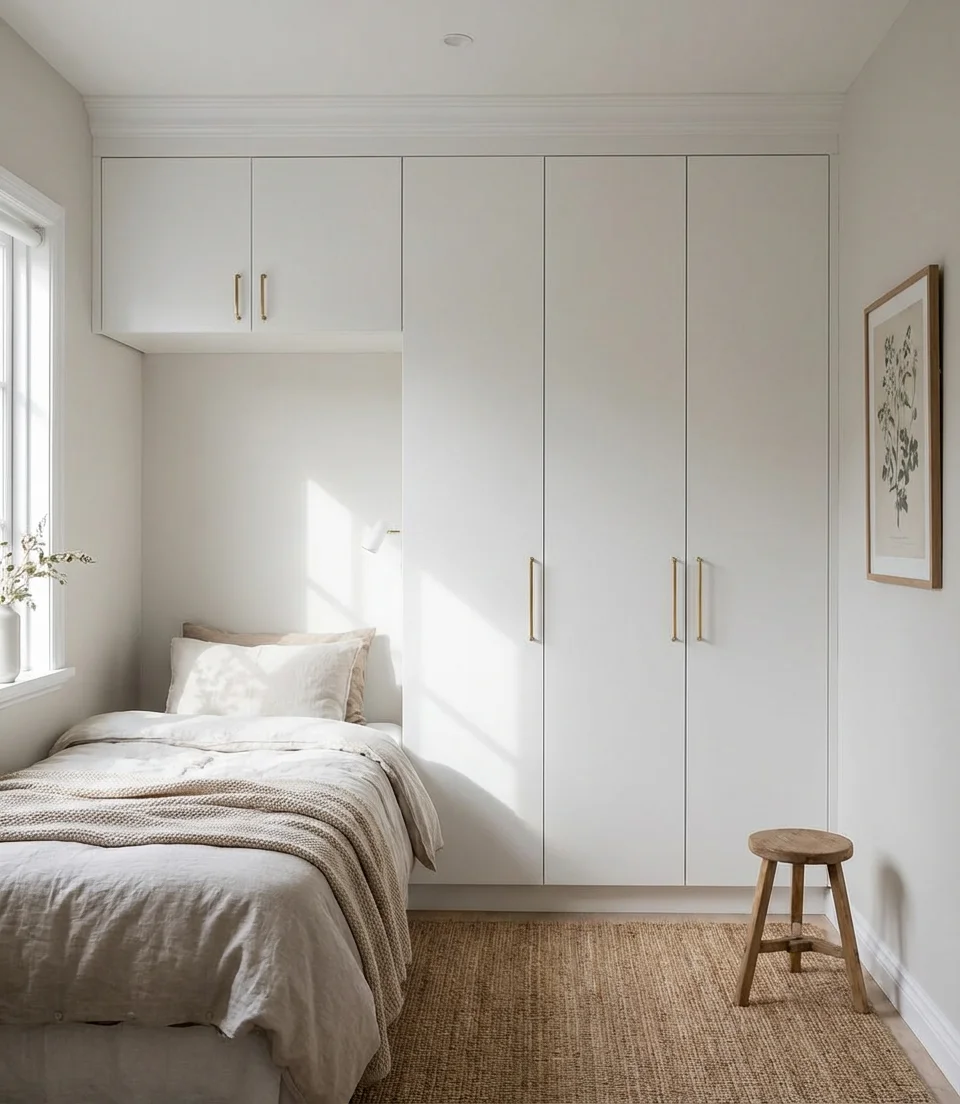
The IKEA hack community has produced some genuinely stunning small bedroom solutions, and in 2026 the most popular approach is using BRIMNES or HEMNES pieces as the base for what reads as custom millwork. By adding crown molding to the top of a wardrobe, painting everything the same color as the wall, and using matching cabinet pulls throughout, the result looks far closer to a built-in than anything you’d expect from flat-pack furniture. For couples on a budget, this approach delivers the upscale storage and visual cohesion of a custom renovation at roughly a tenth of the cost.
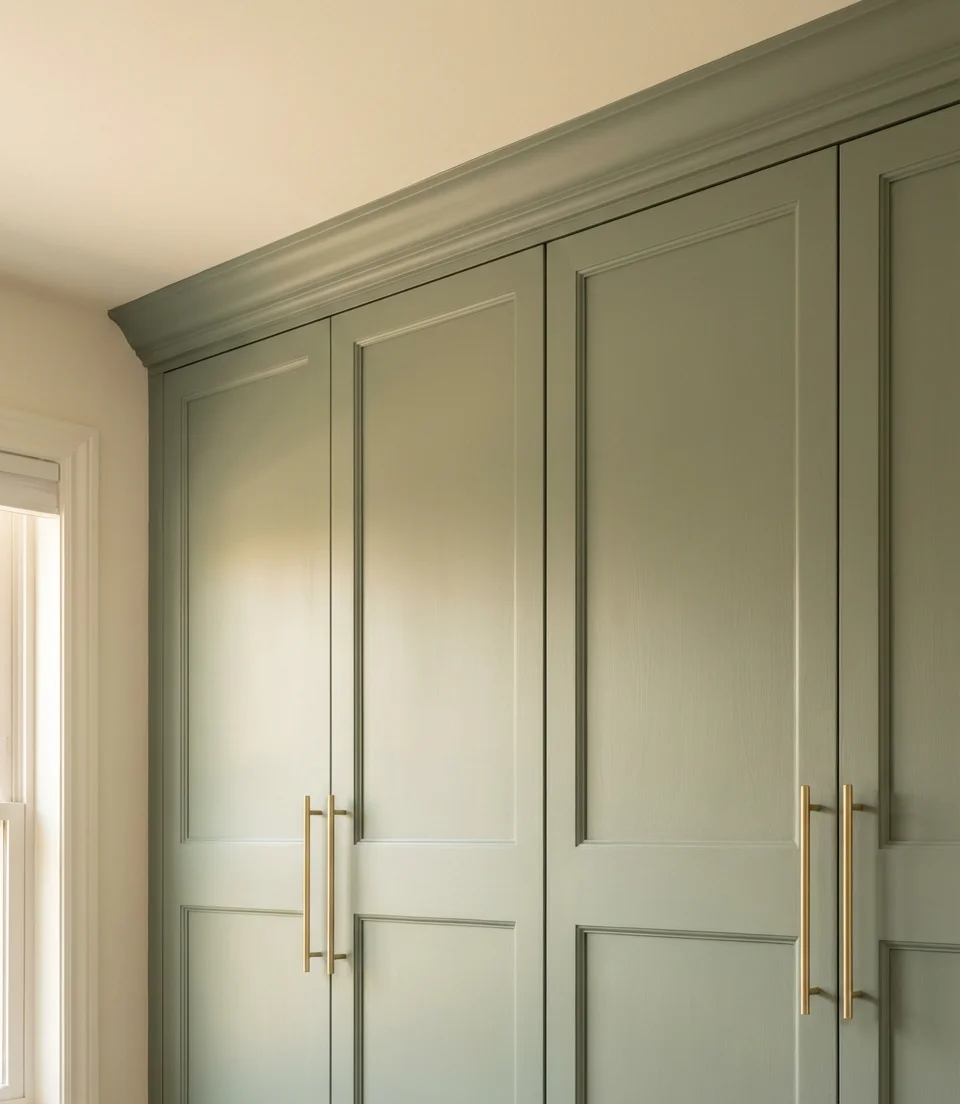
The single most important step in this kind of project is priming before painting—IKEA’s melamine surfaces require a bonding primer, or the paint simply peels within months. Beyond that, the crown molding installation is easier than it looks; most home improvement stores will cut it to length for you, and a basic miter saw rental handles the corner cuts. The total investment for a full bedroom wall of “built-ins” using IKEA components typically runs $600–$1,200—compared to $8,000–$15,000 for true custom cabinetry.
8. Floating Shelves as Nightstands
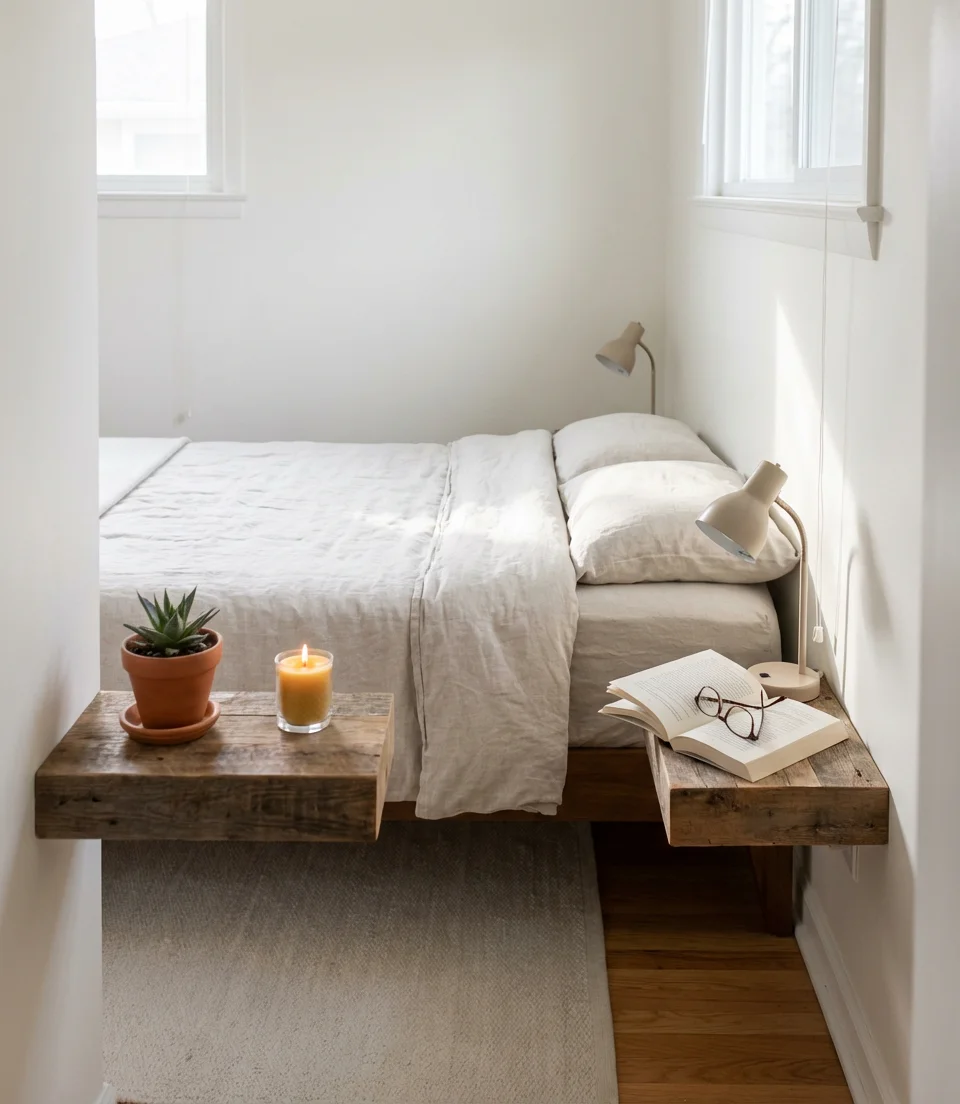
Swapping traditional nightstands for wall-mounted floating shelves is one of the simplest layout changes you can make—and the visual impact is immediate. In a very cozy small bedroom, two nightstands can take up 4–6 square feet of floor space that would otherwise be walkable. Floating shelves at mattress height give you the same surface for a lamp, water bottle, and book without any footprint at all. The look skews modern and intentional rather than practical-by-necessity, which makes a real difference in how the room feels when you walk in.
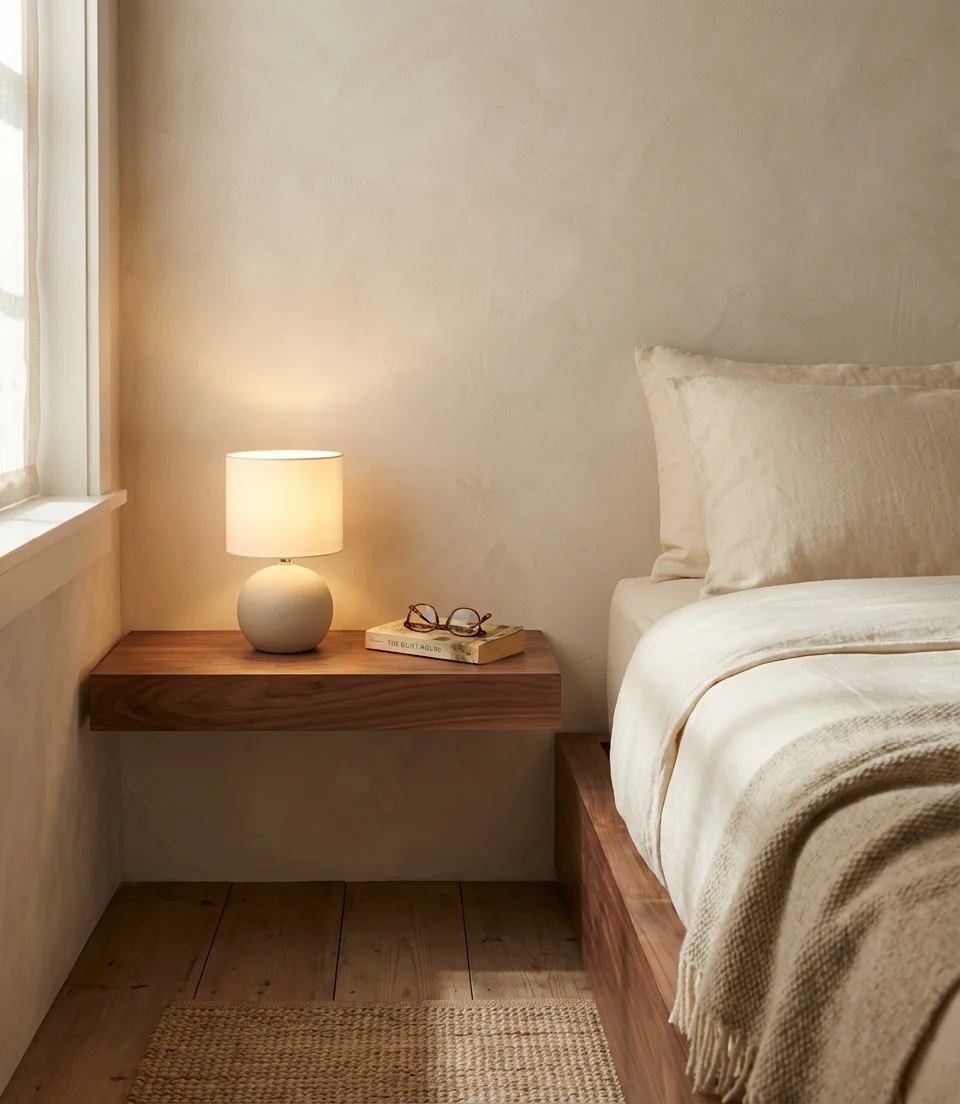
Where this design works best is in rooms where the bed sits in the center of a wall and both partners need equal access to their side. Each shelf becomes a personalized small corner—one person’s reading stack, one person’s skincare routine—without the visual bulk of two full nightstands. A set of two floating shelves can be installed in under two hours with basic tools and runs about $40–$80 depending on material. The one thing to watch: make sure they’re anchored into wall studs, not just drywall anchors, if you plan to put anything heavier than a lamp on them.
9. Canopy Bed With Sheer Panels
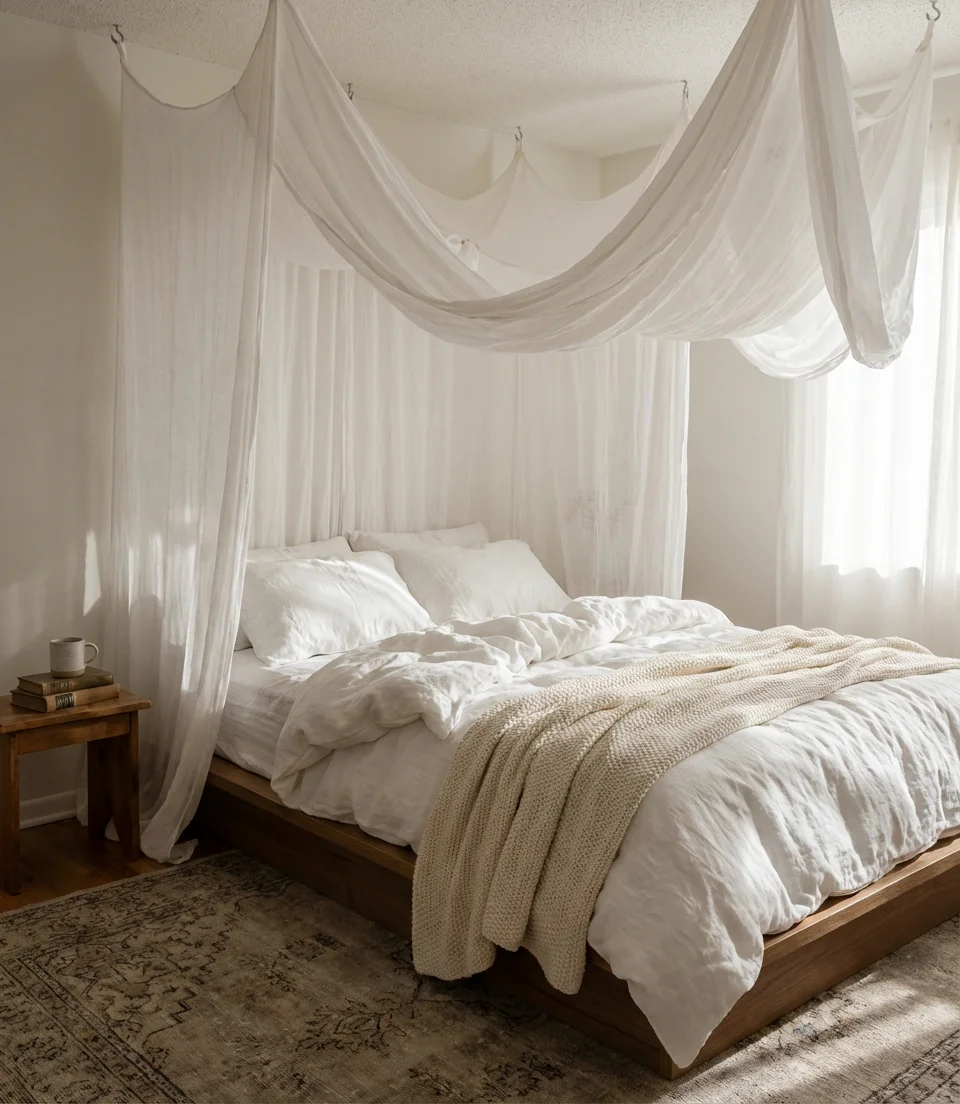
A canopy bed with flowing sheer panels transforms a small bedroom into a space that feels extremely romantic. The softness of gauzy white or blush fabric framing the bed creates an enclosure that feels intimate and deliberately designed—a place set apart from the rest of the room. Even in a very cozy space, a canopy doesn’t have to be massive; a simple four-poster frame with sheer curtain panels hung from the ceiling achieves the same dreamy effect without requiring a bed frame that dominates the floor plan.
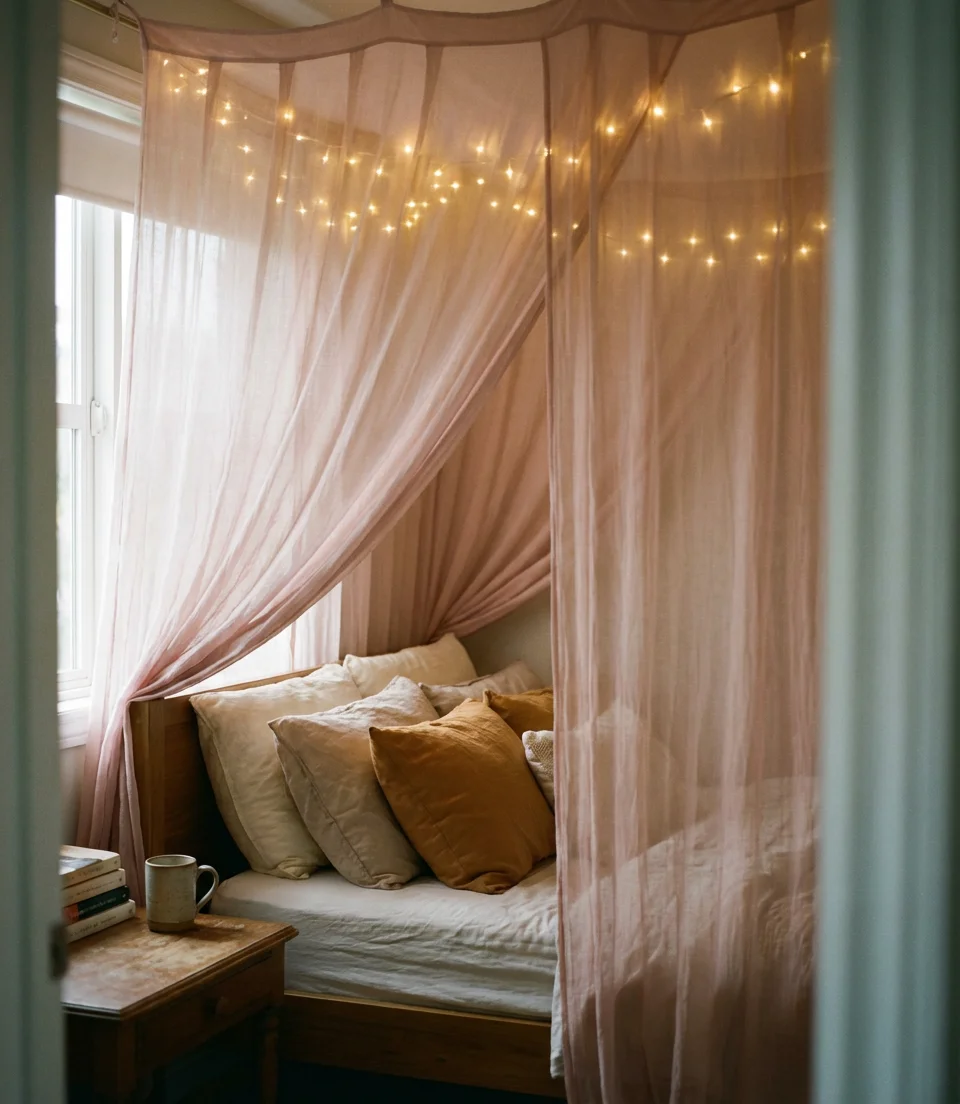
The apartment-friendly version of this idea uses ceiling hooks or a curtain track mounted directly to the ceiling—no permanent bed frame required. For renters, tension rods mounted between walls can even create a freestanding canopy effect without a single nail hole. The key is keeping the fabric light and airy; heavyweight drapes create the opposite effect, making the room feel closed-in. Stick with sheer linen, cotton voile, or silk-look polyester in white, ivory, or blush for the most romantic result.
10. Dual-Purpose TV Console and Storage Wall
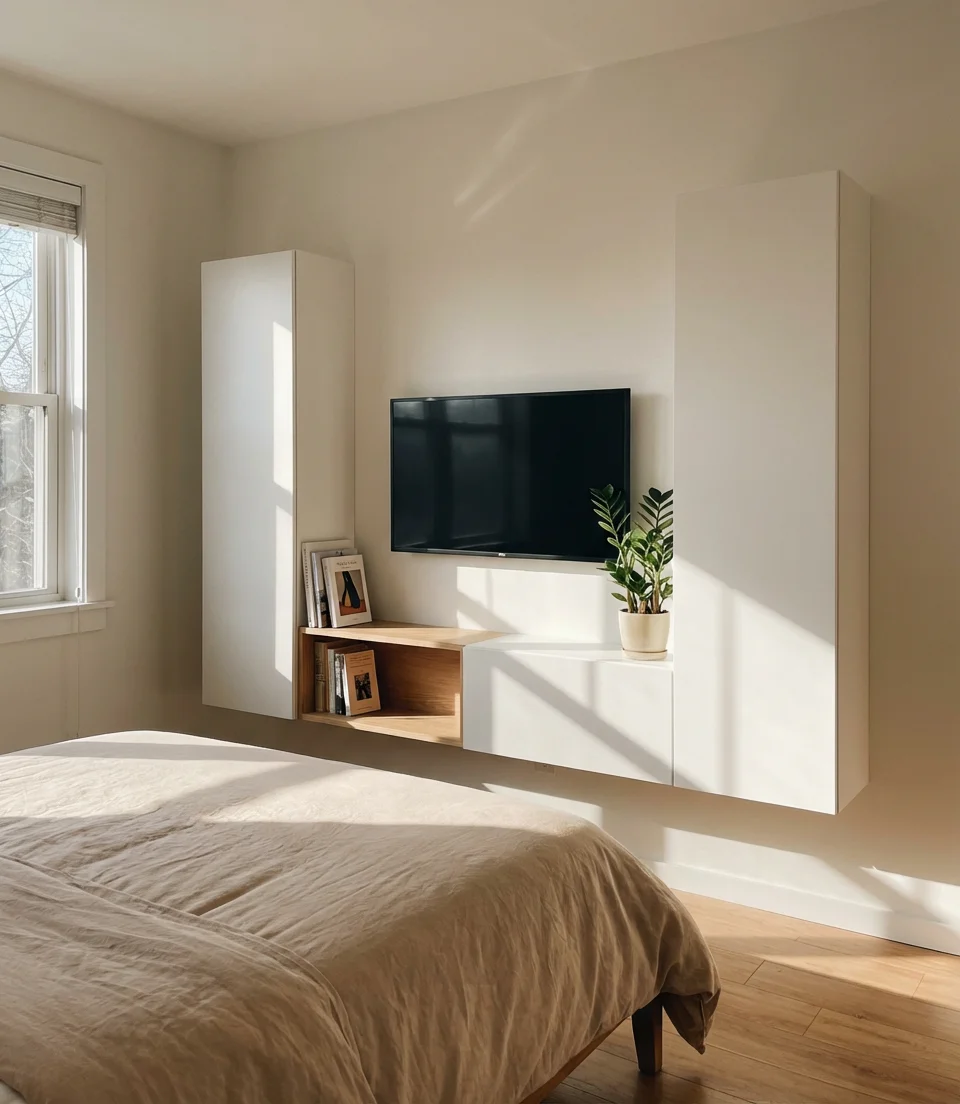
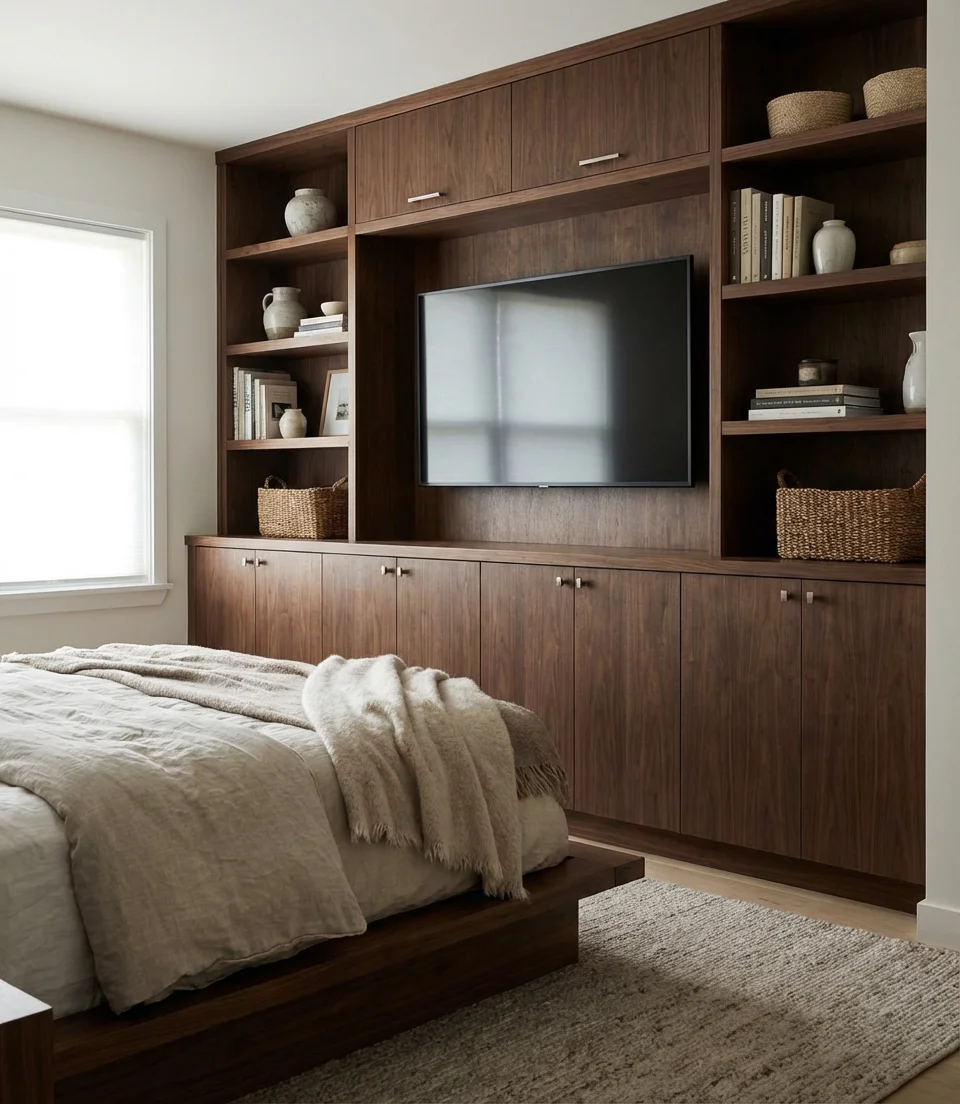
The bedroom TV debate is a real one in modern relationships—one partner wants it, the other doesn’t. The good news is that in 2026, the design world has made peace with the bedroom TV by integrating it into a dedicated storage wall that doesn’t dominate the room. A floating media console with closed storage above, below, and beside the screen keeps the look clean and prevents the TV from becoming a visual focal point when it’s off. This approach honors the lifestyle of couples who genuinely use their bedroom to wind down with a show, without making the space feel like a living room.
The smarter design move—one that interior designers recommend for small bedrooms specifically—is to choose a swivel-mount bracket for the TV so it can angle away from the bed when not in use, essentially “disappearing” into the room’s architecture. Some couples use this method so well that guests don’t know there’s a TV in the room. It’s even better to pair this with a cabinet door that slides or folds in front of the screen when it’s off. For the storage component, closed cabinet doors are key—open shelving beside a screen looks cluttered almost immediately.
11. Warm Lighting Layers for Romantic Ambiance
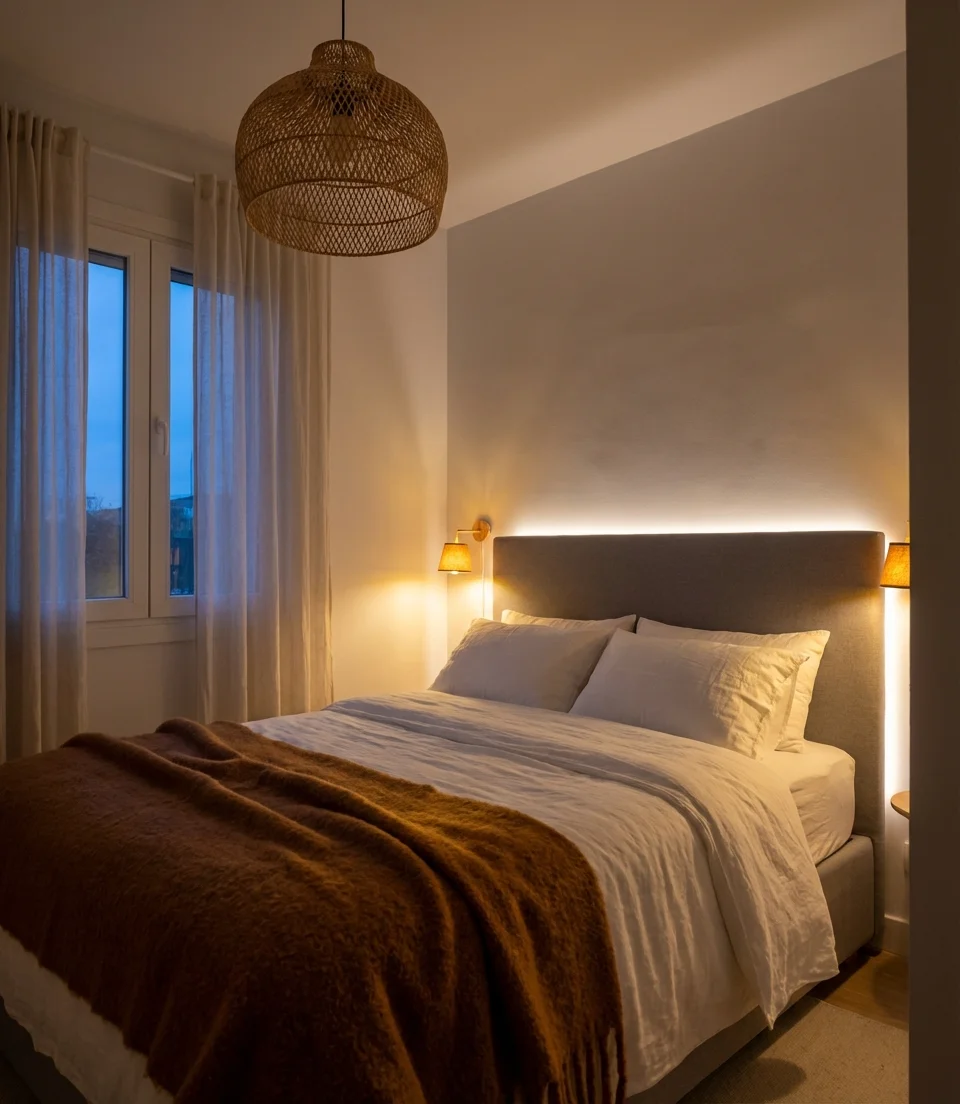
In small bedrooms, lighting is often the most overlooked element—and the one that makes the biggest difference at the end of the day. A single overhead light with a cool bulb is the fastest way to make any bedroom feel institutional rather than romantic. Instead, layer three types of light: ambient (a warm overhead fixture or ceiling-mounted light), task (bedside sconces or reading lamps), and accent (candles, fairy lights, or a small LED strip behind a headboard). This combination creates a cozy atmosphere that shifts depending on what you need the room to feel like.
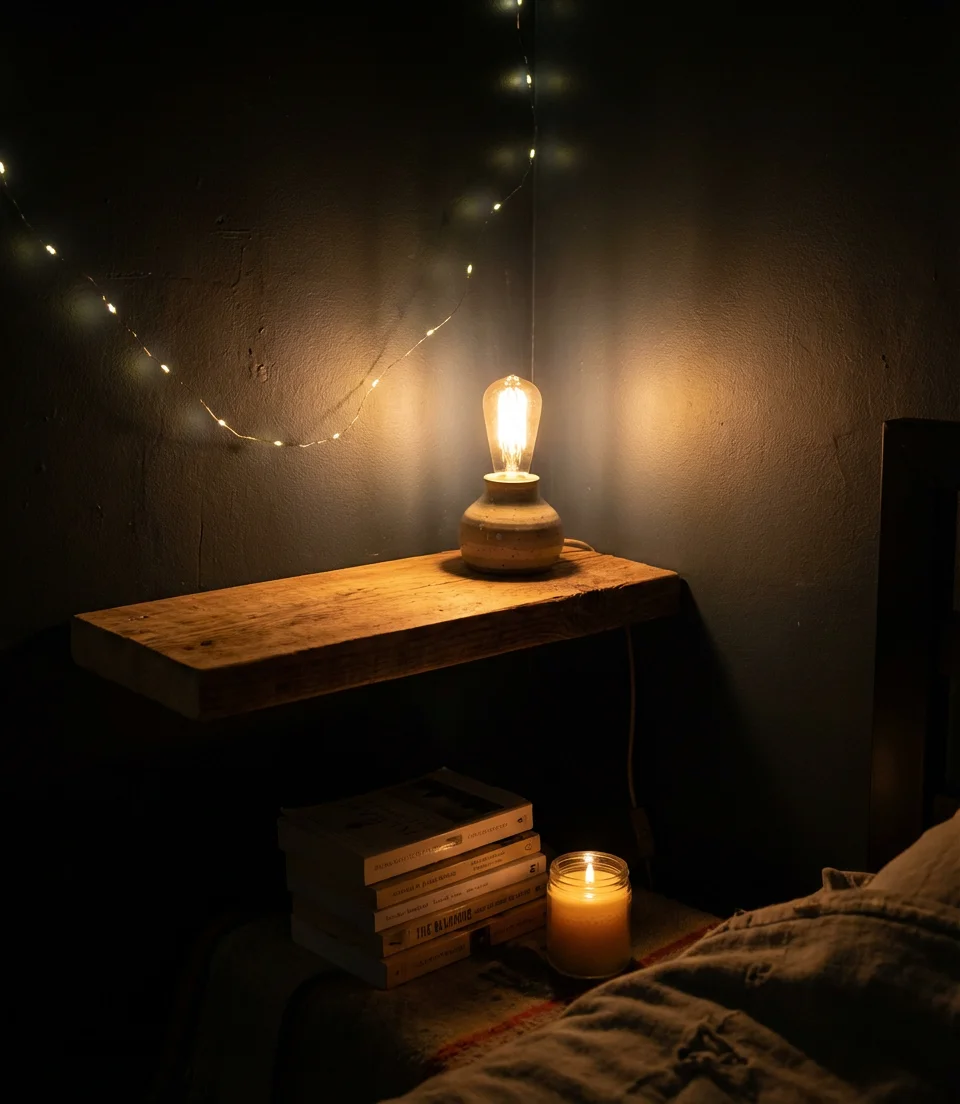
Smart bulbs have made layered lighting genuinely accessible for renters and budget-conscious couples—Philips Hue or similar systems let you program a “romantic” scene with a single tap, dimming everything to warm amber without replacing a single fixture. The ideal temperature for bedroom lighting is 2700K, which is both warm enough to create the illusion of candlelight and bright enough to read comfortably. Avoid anything above 3000K in a bedroom—it activates the same visual cortex response as office lighting and signals “productivity” rather than “rest.”
12. Gallery Wall Behind the Bed
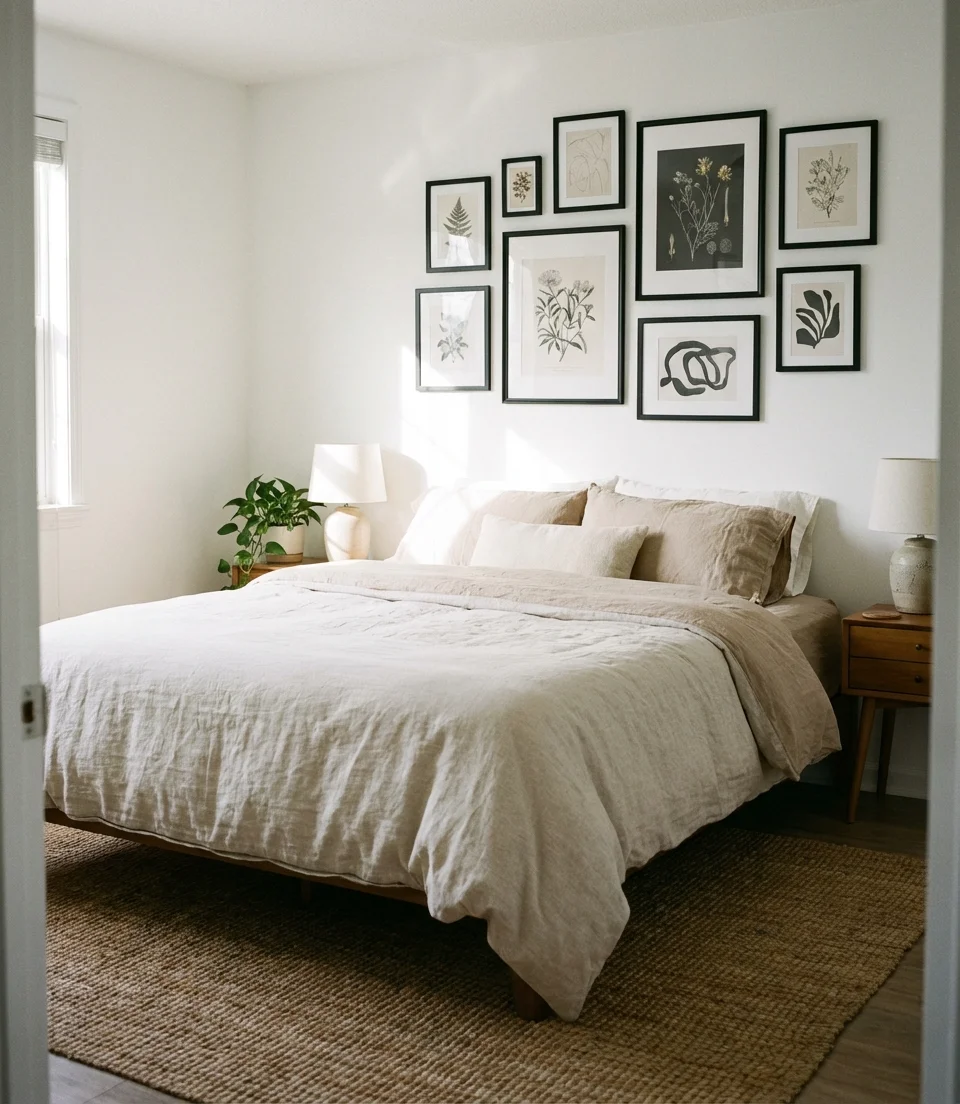
A well-curated gallery wall above the bed is one of the most personal design moves a couple can make—it tells your story, reflects your aesthetic, and adds an enormous amount of visual interest without taking up any floor space. For a simple approach, stick to a monochromatic palette: all black frames with white mats, or all natural wood frames with an eclectic mix of prints. The romantic version mixes personal photos with pressed botanicals, art prints, and small mirrors to create something that feels collected rather than designed.
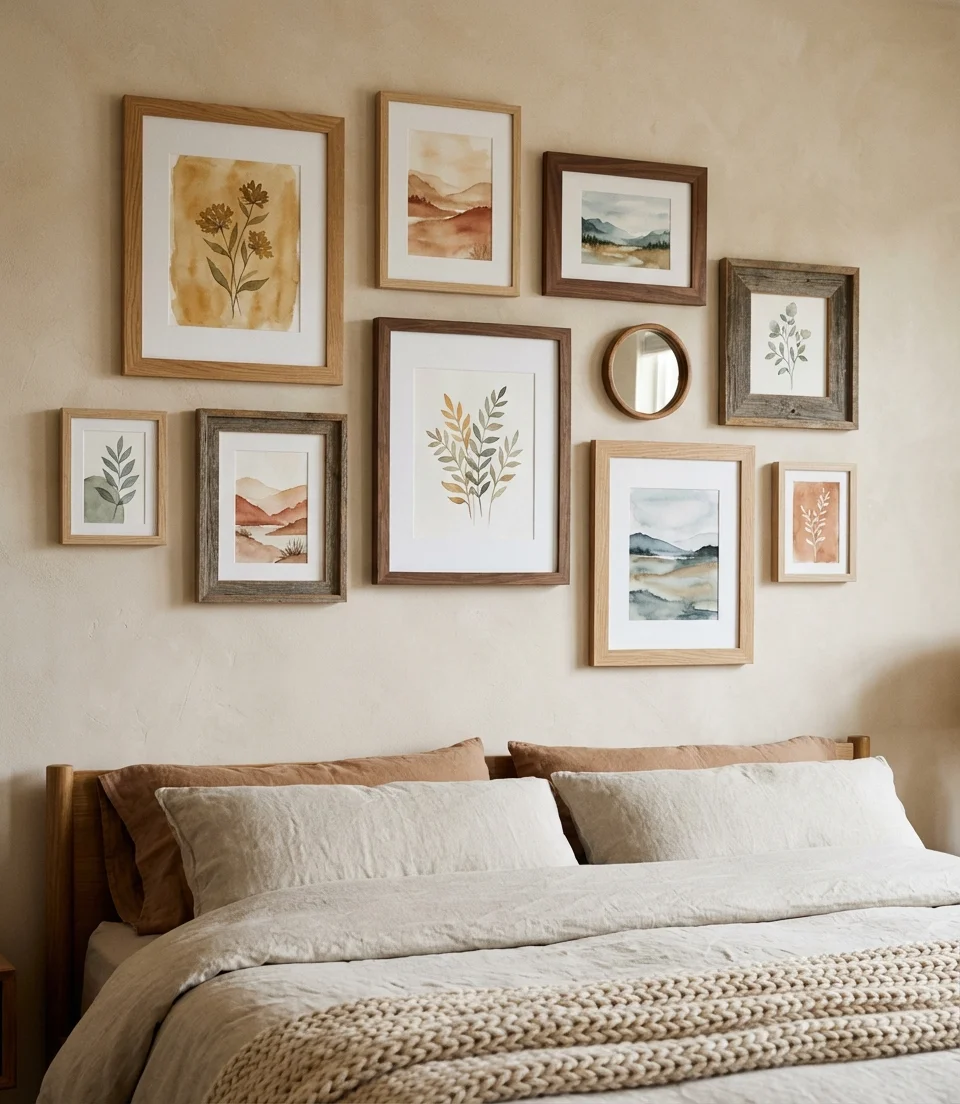
The mistake most people make with gallery walls is hanging everything too high—eye level when standing means neck-craning when lying in bed. For a bedroom gallery wall specifically, the center of the arrangement should sit roughly 8–10 inches above the top of your headboard. Before putting a single nail in the wall, lay the entire arrangement out on the floor and photograph it; that photo becomes your installation guide. Command strips are perfectly adequate for frames under 8 pounds, making the installation a genuinely renter-friendly project.
13. Murphy Bed With Integrated Desk
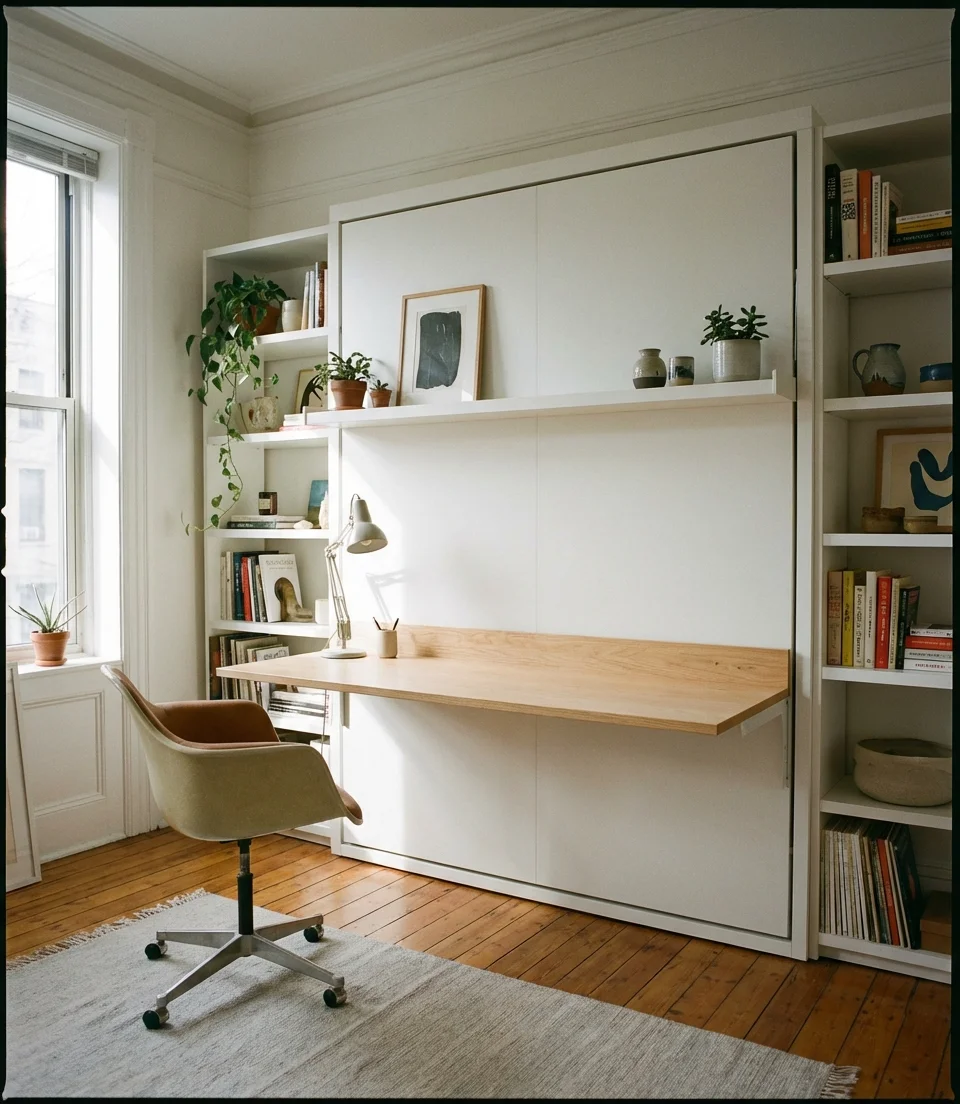
For couples where at least one person works from home—which is now a significant portion of American households—the Murphy bed with an integrated desk is perhaps the most practical small bedroom solution of the decade. When the bed is up, the room is a proper home office; when it folds down, it’s a bedroom. The super versions of this concept include built-in shelving, lighting, and even a pull-out sofa, effectively turning a single room into a layout that serves three functions. In major metro areas where studio apartments run $2,000+ a month, this kind of multifunctionality is no longer a novelty—it’s a necessity.
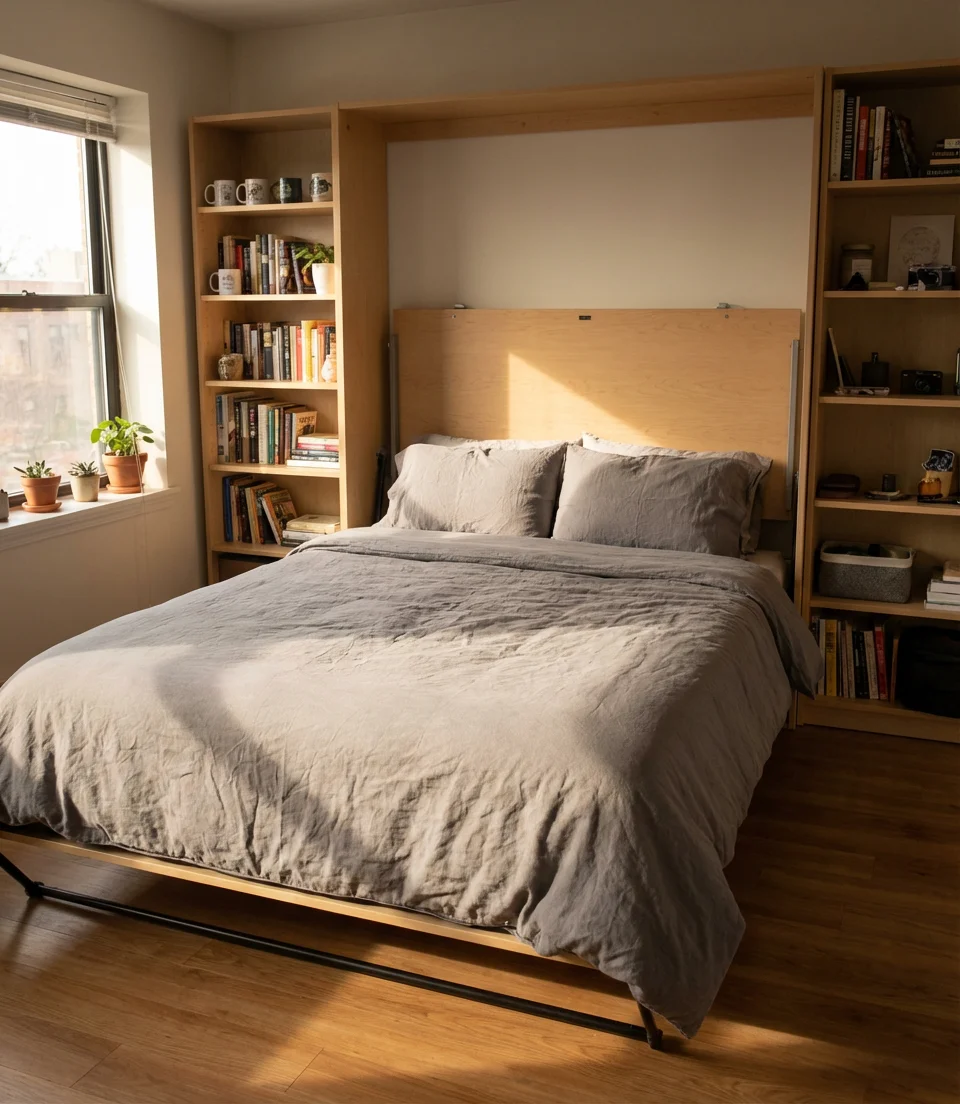
Modern Murphy bed systems from brands like Resource Furniture or California Closets are engineered with sophisticated gas-piston mechanisms that make raising and lowering the bed a one-arm operation—no wrestling with a heavy mattress. The desk surface is designed to remain clear even as the bed folds down over it, so your laptop and papers stay put. For couples sharing this space, the key ergonomic consideration is having a dedicated “work zone” versus a dedicated “sleep “zone”—even in the same room, that psychological separation matters enormously for both productivity and rest.
14. Cozy Nook Reading Corner
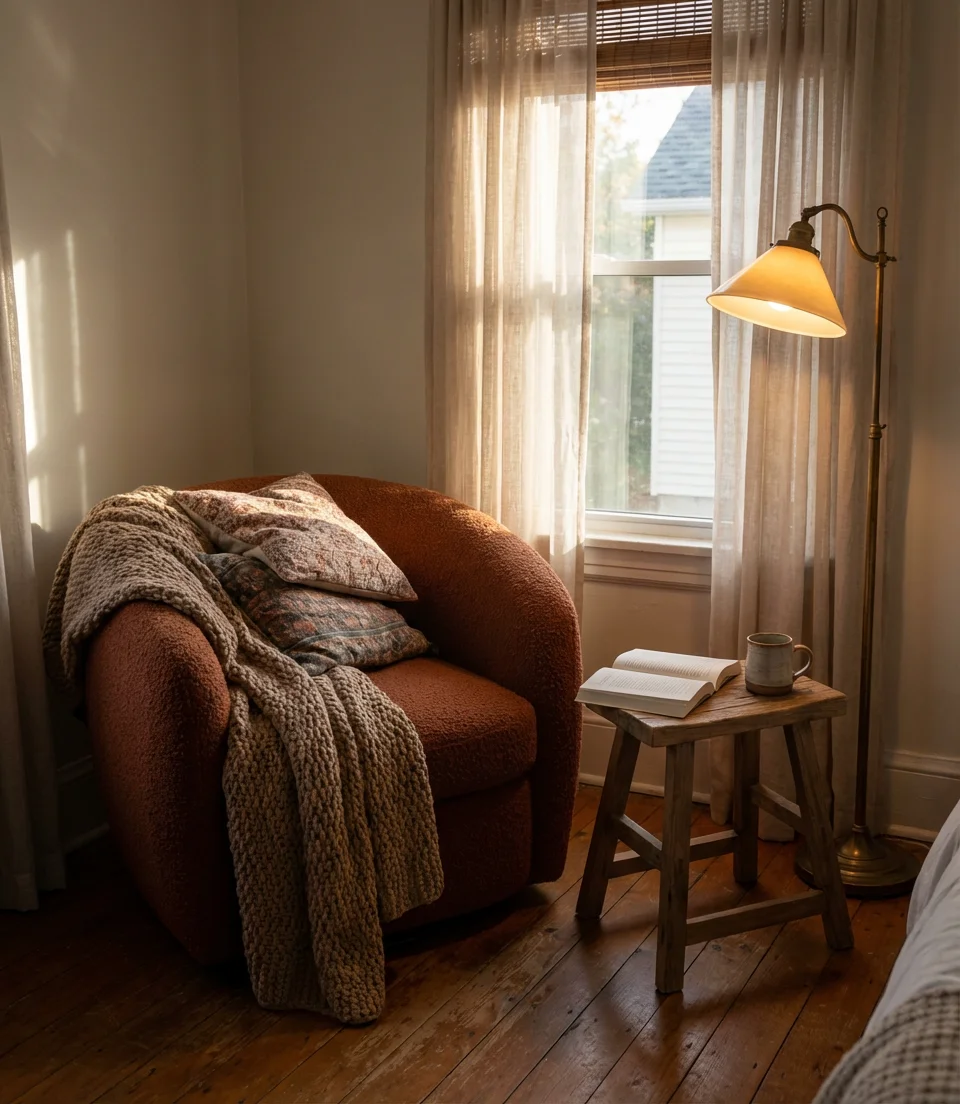
If your bedroom has even a small awkward corner—beside a window, between a closet and a wall, beside a dormer—a very cozy reading nook transforms it from wasted space into the best seat in the house. For couples, this kind of intentional corner creates a retreat within a retreat: a place to sit with coffee, read, or just decompress without lying in bed. A built-in bench with storage underneath, a floor cushion against a wall, or a small round chair with a side table and lamp are all it takes. The impact of the apartment decor is significant—it makes the space feel layered and livable rather than purely functional.
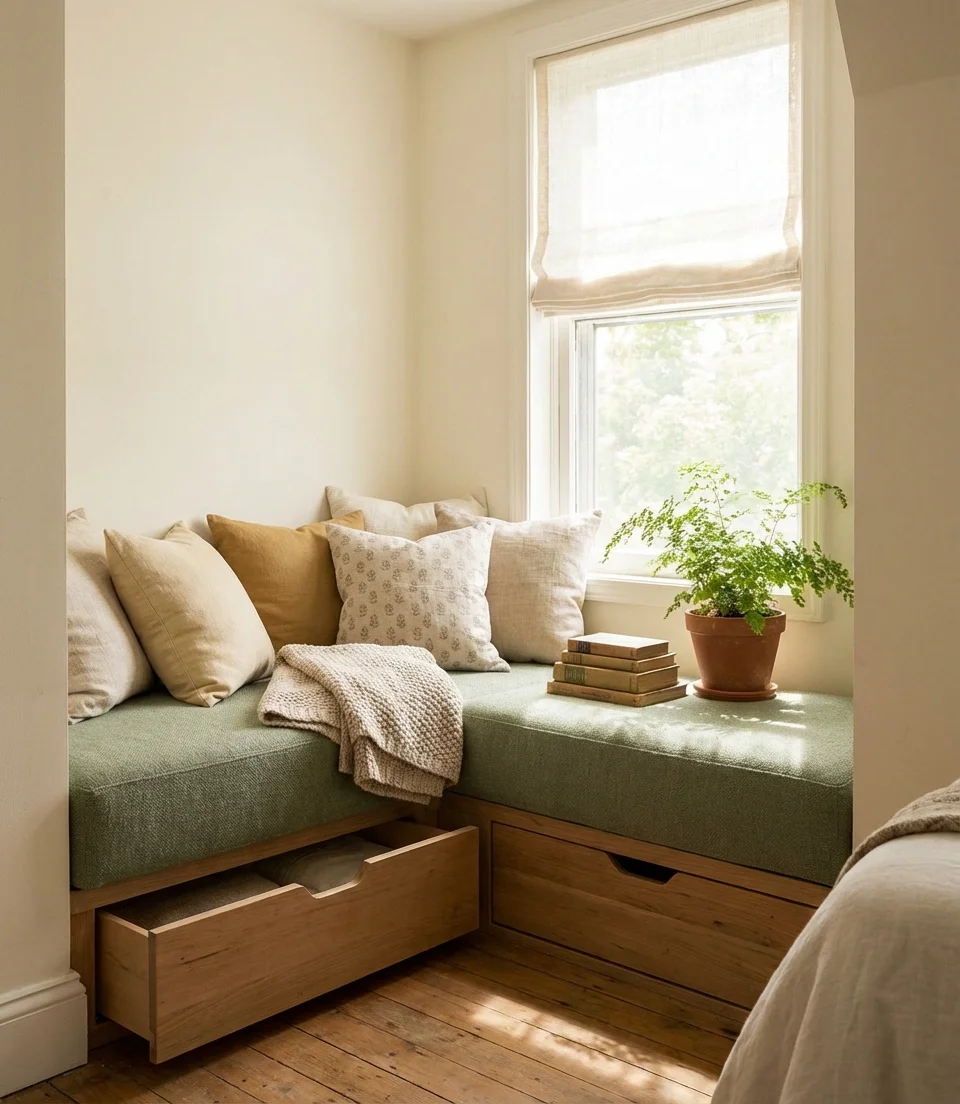
The reading nook works best in a bedroom when it’s visually distinct from the sleeping zone—even a small rug or a different ceiling light can create that sense of separation. From a practical standpoint, the floor lamp is critical: it needs to be bright enough to read by (800+ lumens, warm white) without spilling into the sleeping area and disturbing a partner. Small dimmer-switch lamps on a tall stand do the job perfectly. Think of it as a micro-room within your room—and design it with the same care you’d give a whole space.
15. Minimalist Bedroom With Hidden Storage
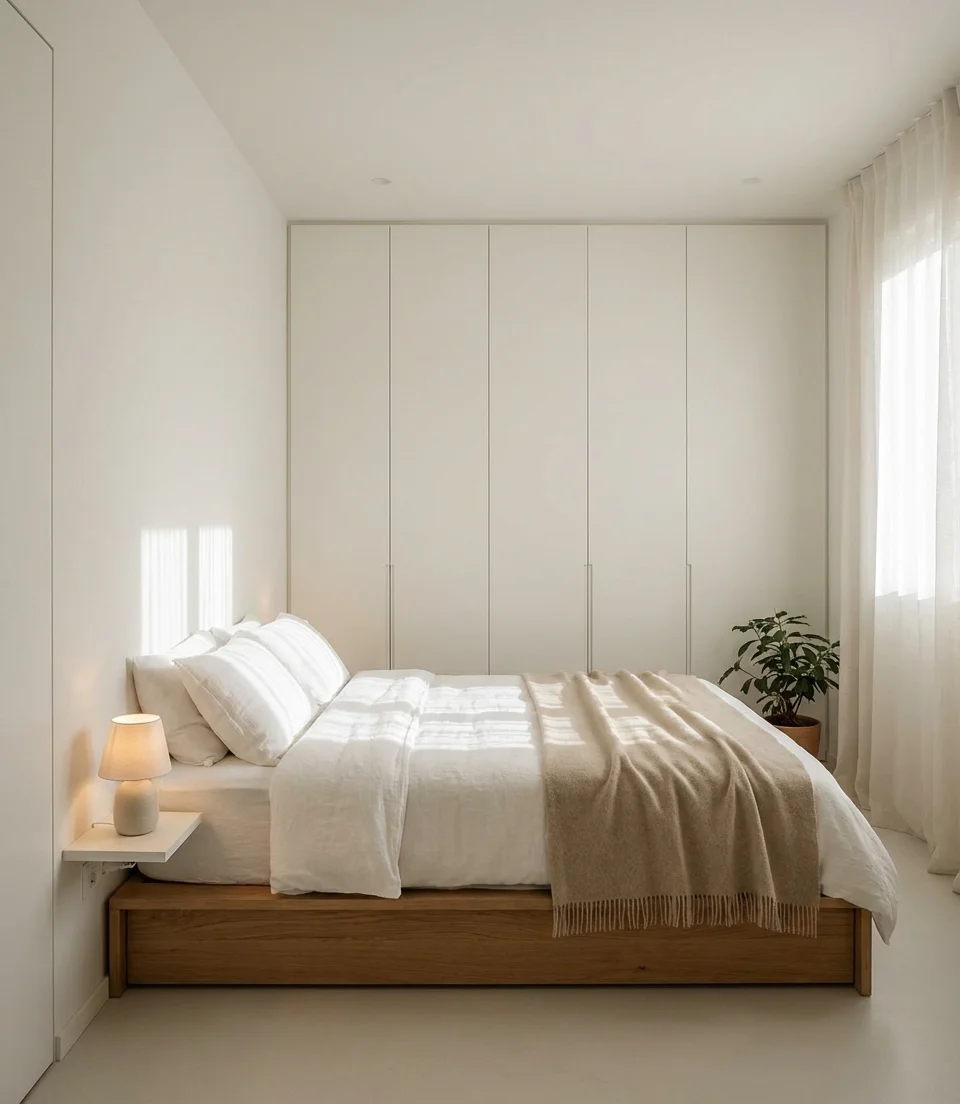
A truly minimalist aesthetic bedroom doesn’t mean an empty bedroom—it means a bedroom where storage is so cleverly integrated that nothing clutters the visual field. For couples, this is often the ultimate goal: a room that feels genuinely peaceful when you walk in, rather than a constant reminder of laundry to do and objects to put away. Hidden storage in a small bedroom can take many forms: ottomans with flip-top lids, bed frames with integrated drawers, windowseat benches with hinged tops, or wardrobe panels that align seamlessly with the wall. The effect, when done well, is a room that feels extremely curated and restful.
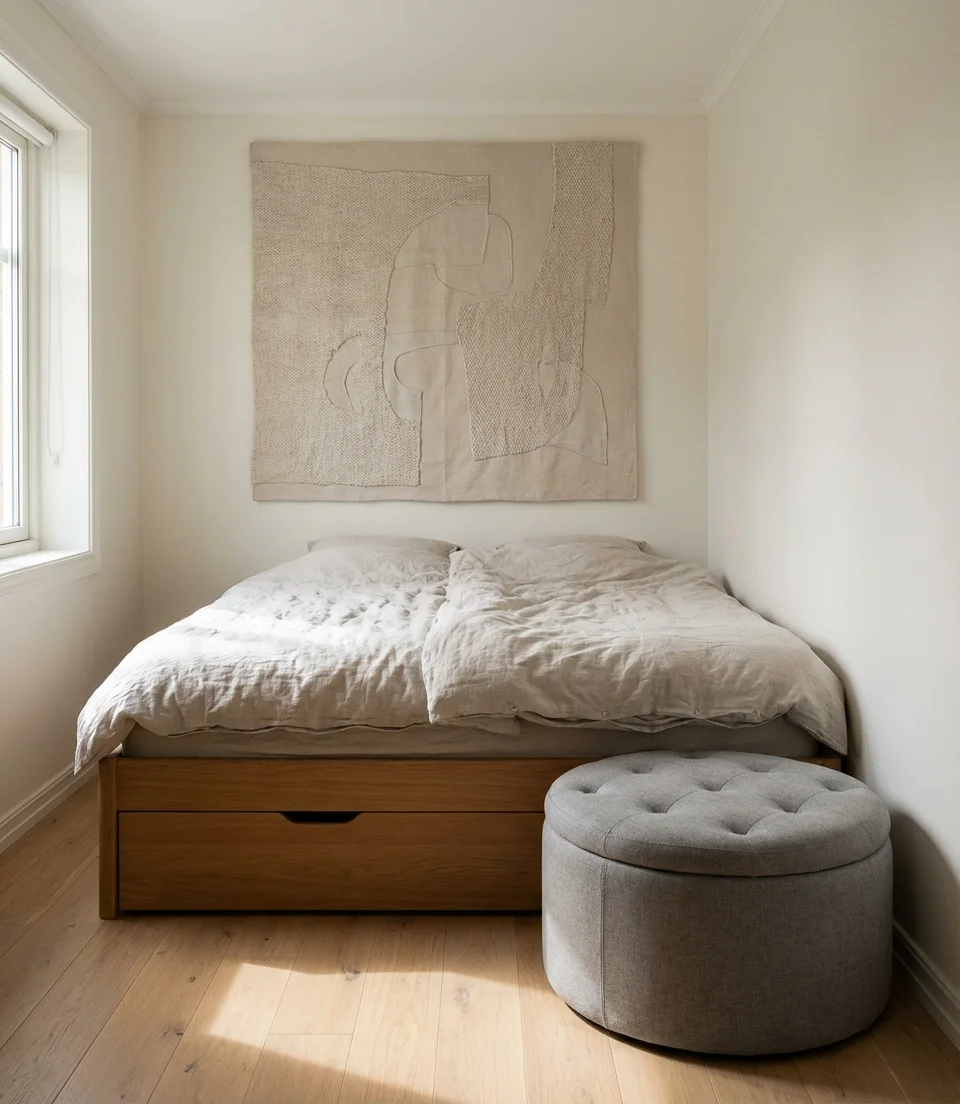
The most important principle in minimalist hidden storage is the “away” rule: every object you own should have a designated, accessible home. When storage is abundant but poorly organized, the room looks cluttered even when technically everything is put away. Begin by thoroughly reviewing your items—consider removing half of what’s on your surfaces, placing them in a box, and checking if you miss them after a month. What remains is what truly belongs in the space. American homeowners consistently report that decluttering has a greater impact than any decor purchase, with bedroom minimalism in particular strongly linked to improved sleep quality.
16. Two-Tone Paint for Visual Zoning
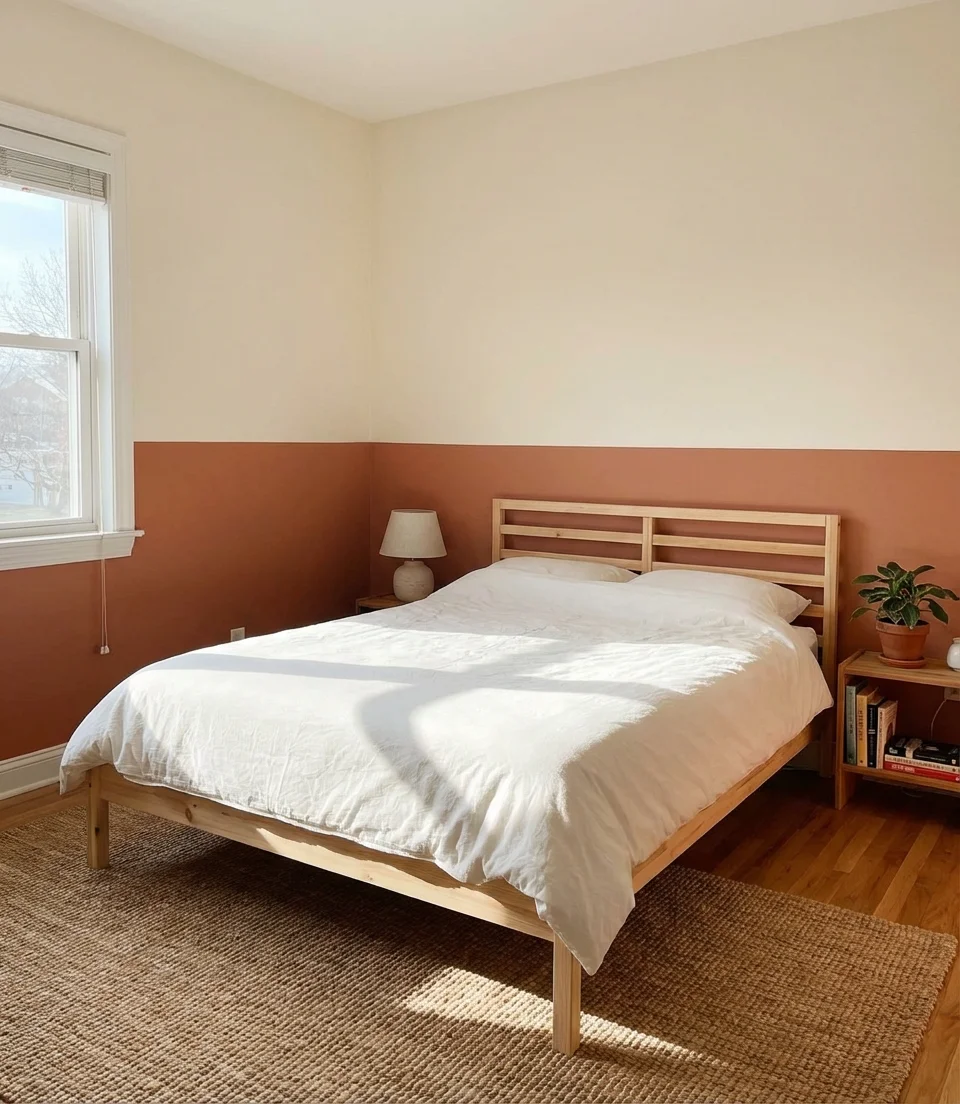
Painting the lower half of your bedroom walls a different color than the upper half—a technique called color blocking or two-tone painting—is an emerging trend that works especially well in cozy small rooms. A deeper, warmer tone on the lower third of the wall (below a painted or physical chair rail) grounds the room and adds visual weight, while a lighter color above keeps the ceiling feeling high. For couples who want a room that feels designed and intentional but aren’t ready to commit to an all-dark room, this approach is a beautiful middle ground: a touch of romantic dark energy without full immersion.
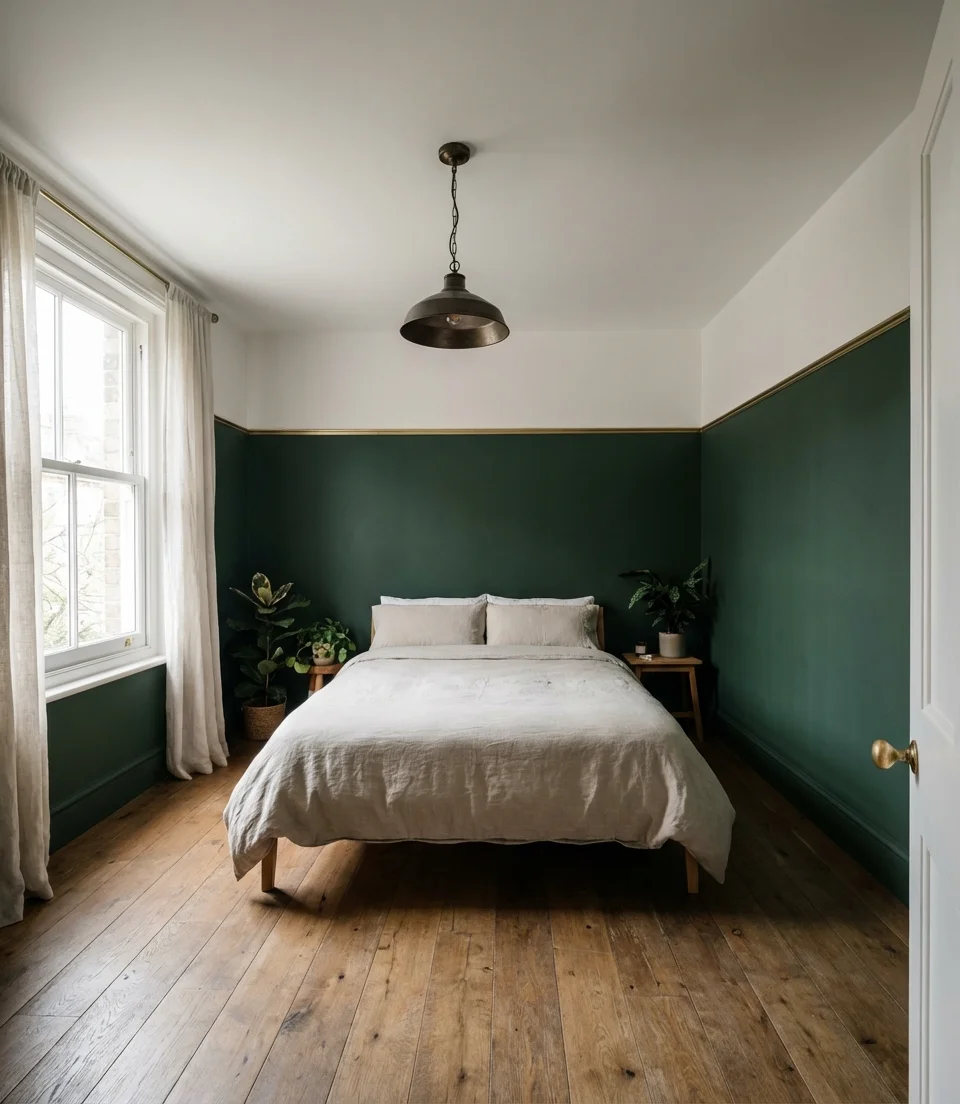
For the cleanest DIY execution, use painter’s tape at the transition line and paint the lighter color first, then the darker color—overlapping slightly onto the lighter layer at the tape line, which ensures no gap when the tape is removed. A physical chair rail or strip of molding at the color transition elevates the look significantly and is available at any hardware store for under $30. This technique works across almost any color combination: sage green over cream, navy over warm white, terracotta over blush—but the key is keeping the upper color genuinely lighter to maintain the ceiling-height illusion.
17. Scent and Texture: Sensory Layering for Romance
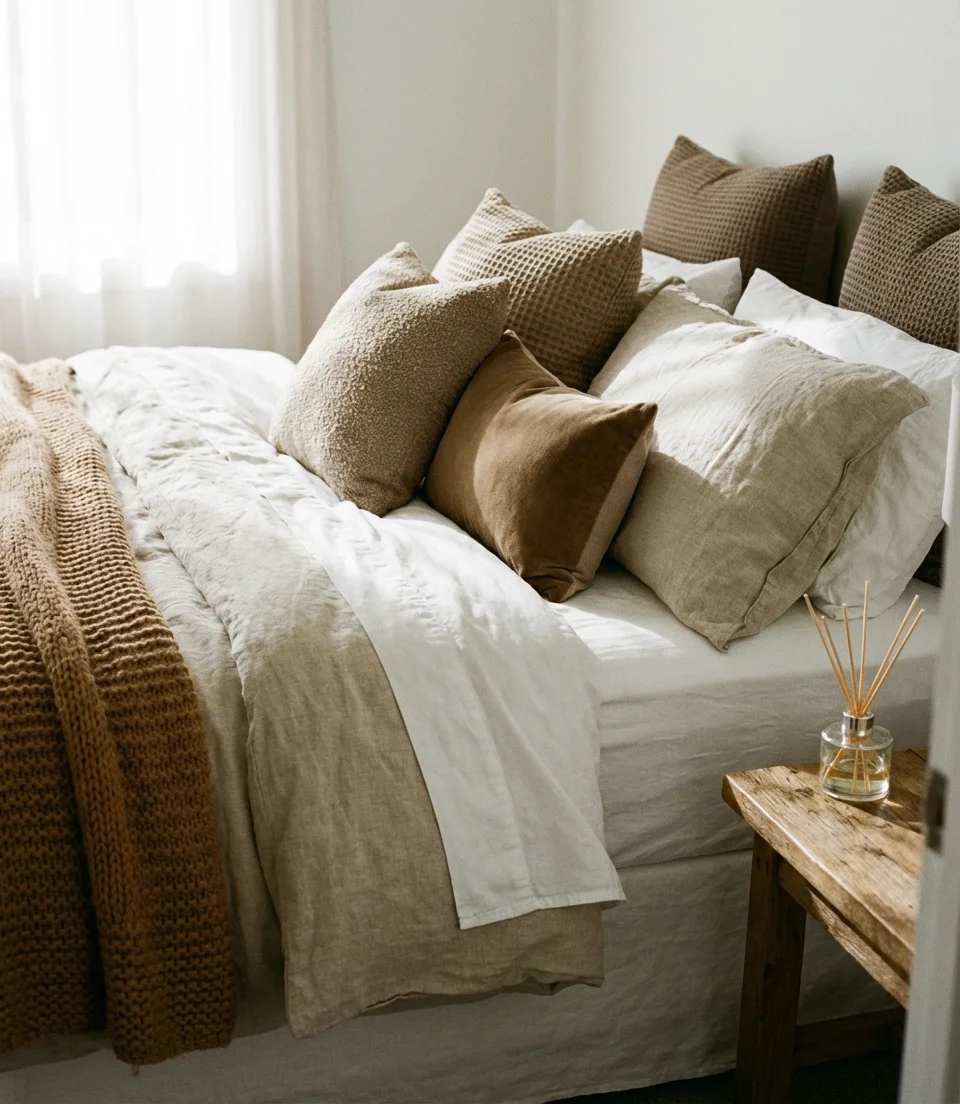
A small bedroom can feel luxurious without a single expensive purchase if you focus on the sensory experience: how it smells, how the fabrics feel, and how sound moves through the space. Above all, couples should experience the bedroom, not just gaze upon it. Layer different textures in your bedding—a smooth cotton percale sheet, a nubby linen duvet cover, and a chunky knit throw—and the bed becomes an invitation. Add a diffuser with a signature scent (cedarwood and vanilla is a perennial favorite), and the room develops a distinct identity that extremely few hotel rooms manage to achieve.
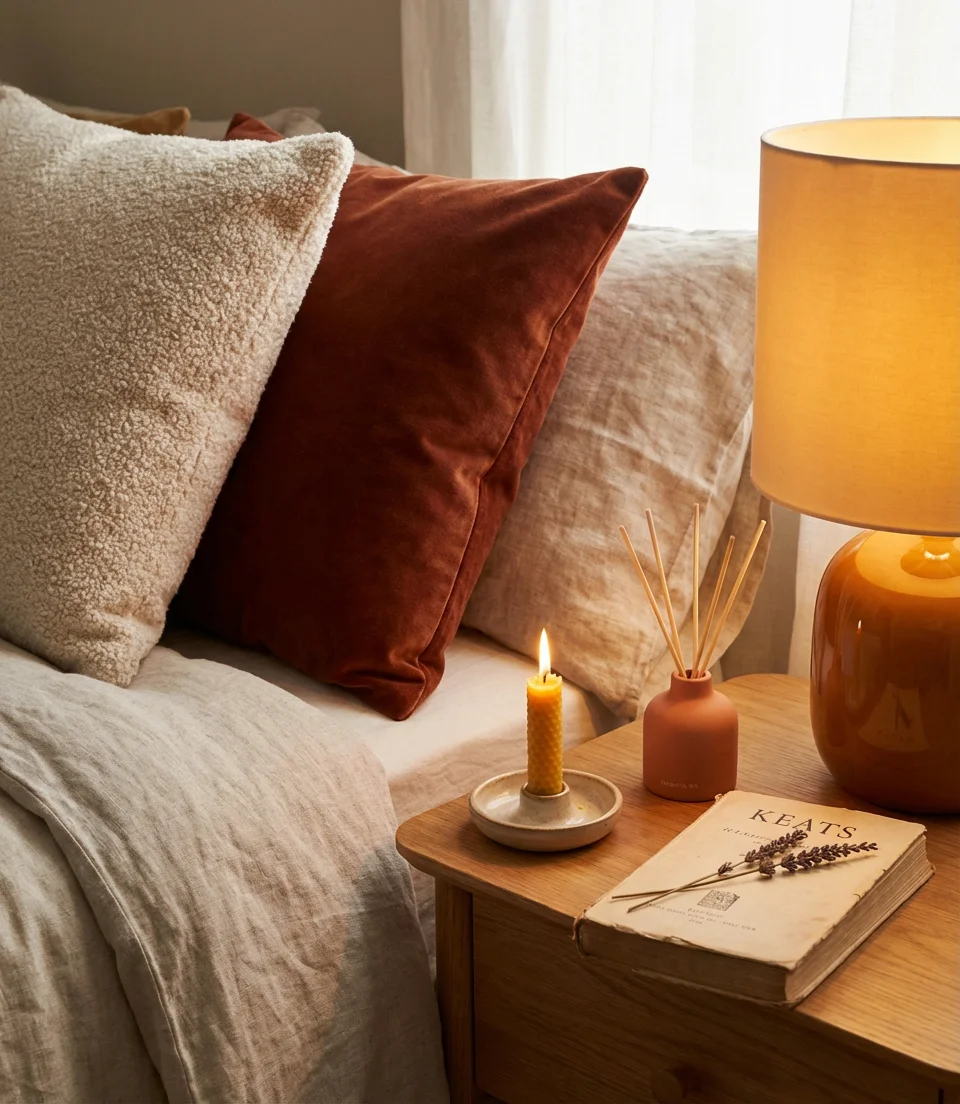
Sound is the often-forgotten fourth sensory layer. A small white noise machine, a Bluetooth speaker playing ambient music, or even a small tabletop fountain can transform the acoustic experience of a bedroom—particularly in urban apartments where street noise is a constant. Window treatments play a role here too: heavy curtains absorb sound and reduce echo, making a room feel quieter and more enclosed in the best possible sense. These investments are all under $50 and collectively produce a room that feels curated for intimacy in a way that furniture alone simply cannot achieve.
18. Vertical Greenery and Plants
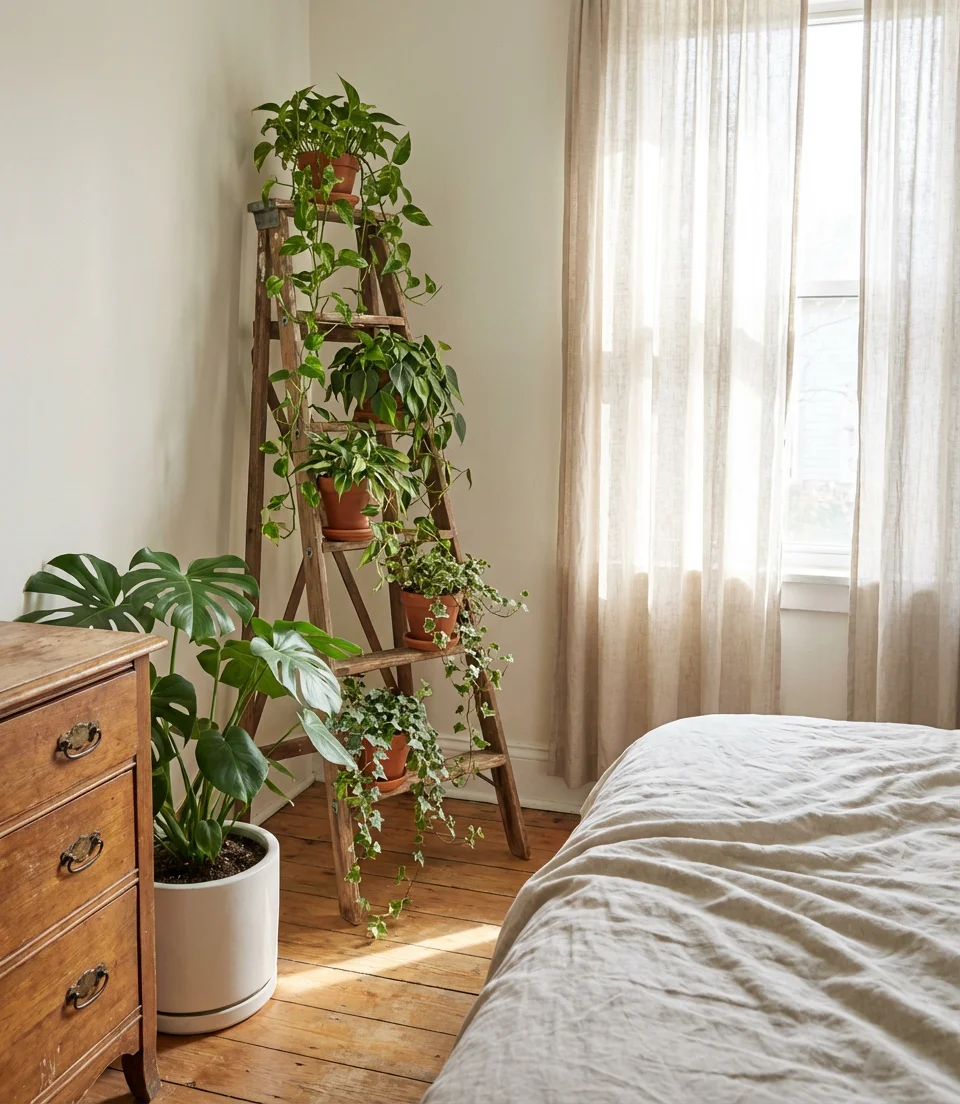
Plants in a bedroom aren’t just about aesthetics—though a trailing pothos on a high shelf or a large fiddle-leaf fig in the corner does extraordinary things for the visual warmth of a simple small space. For couples, bringing greenery into the bedroom introduces a living, evolving element that changes with the seasons and rewards care. Vertical plant arrangements—wall-mounted pockets, a tall plant ladder, or a series of hanging planters at different heights—take up virtually no floor space while adding significant visual interest and a quality of aliveness that no art print can replicate.
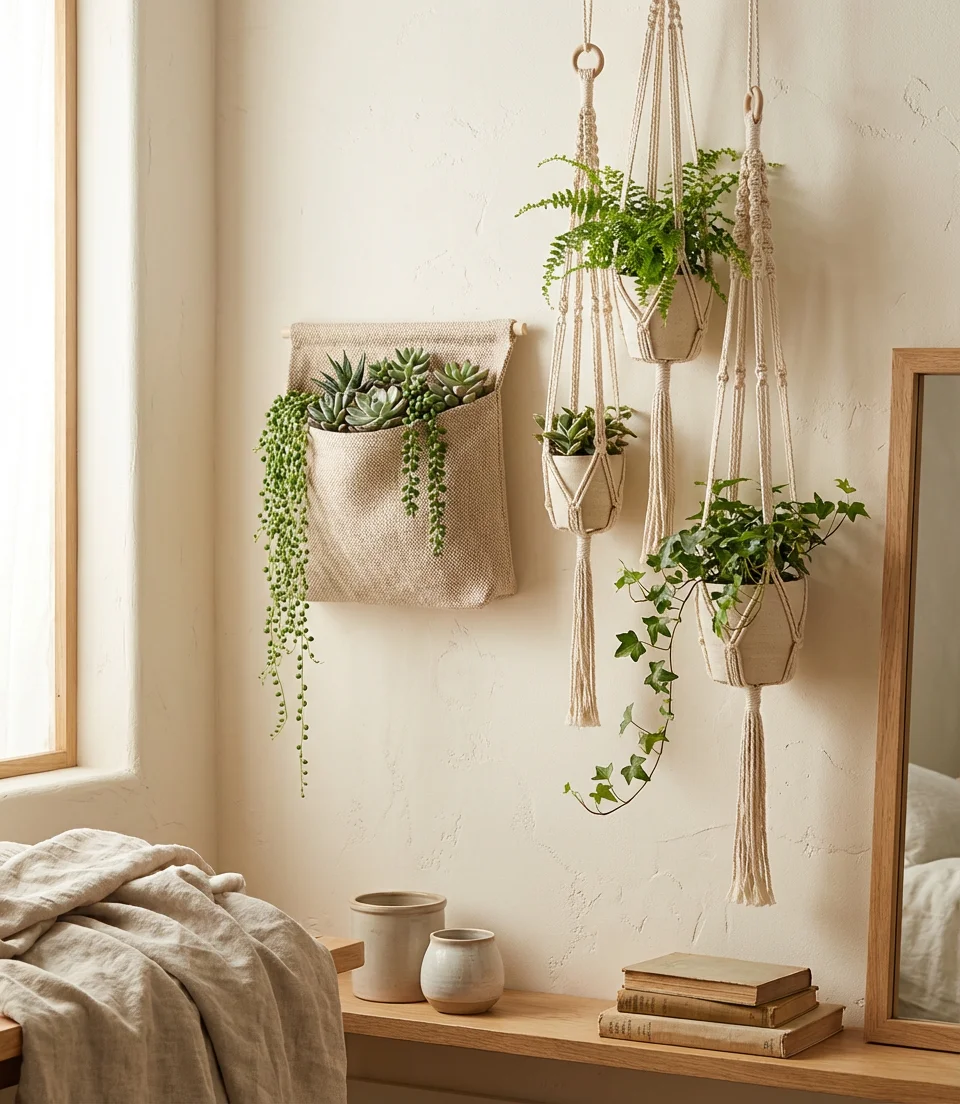
For couples who travel or keep irregular schedules, low-maintenance plants make the most sense in a bedroom: pothos and snake plants are nearly indestructible, thrive in low light, and have been studied for their mild air-purifying qualities. Peace lilies are particularly fascinating because they visibly droop when they need water—essentially requesting care rather than requiring a watering schedule. The one practical note: avoid flowering plants that release strong pollen near the bed, and keep soil consistently moist (not wet) to prevent mold in a closed bedroom environment.
19. Warm Wood Tones for a Cabin-Like Feel
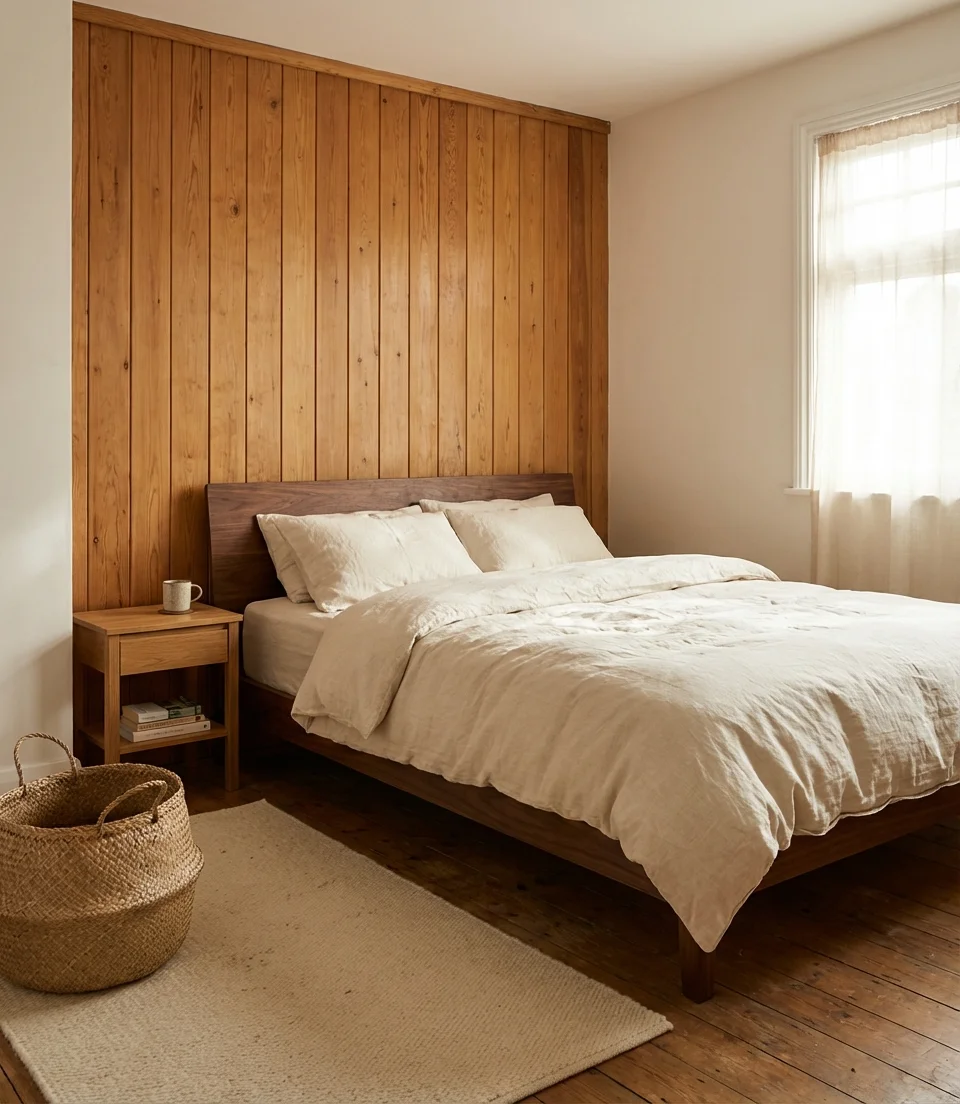
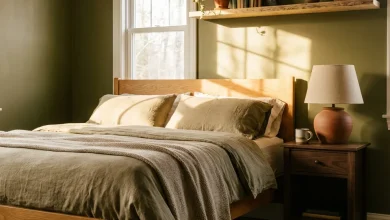
In 2026, the cozy, simple aesthetic that dominates Pinterest searches leans heavily on natural materials—and in a small bedroom, warm wood tones achieve this effortlessly. A walnut or oak bed frame, wood-paneled accent wall, or even a simple set of warm-toned shelves can shift the entire feeling of a room from sparse to genuinely inviting. For couples who want their bedroom to feel like a retreat from the city—a super cozy escape that channels mountain cabin or forest lodge energy—wood is the single most effective material to introduce, even in small amounts.
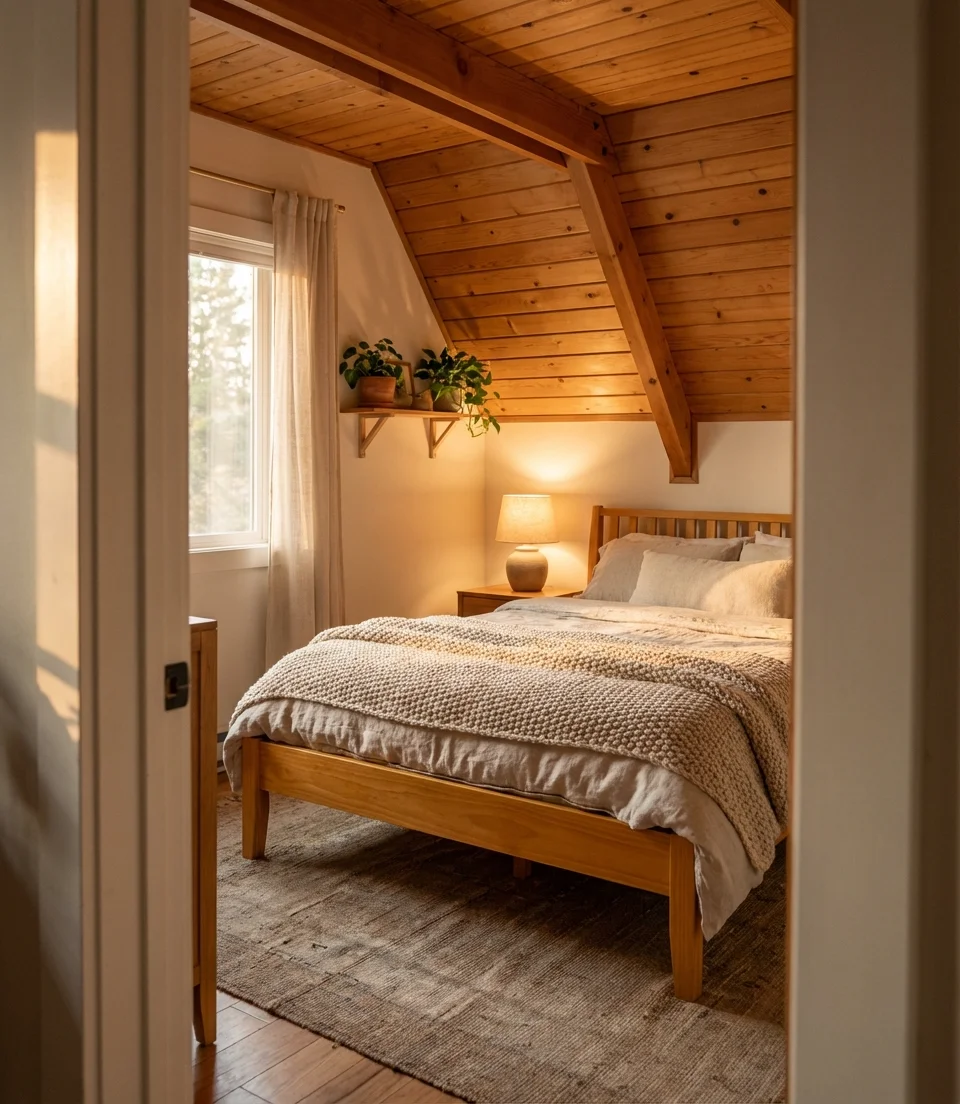
The trap most people fall into with warm wood tones is going too dark, too heavy, or too matchy—three pieces of the same wood stain can feel more like a furniture set than a curated room. The more intriguing approach is mixing wood tones intentionally: a walnut frame against blonde oak floors, a whitewashed pine shelf against dark wood furniture. This layered effect is exactly what makes boutique hotels feel so effortlessly designed—and it’s entirely achievable in a small apartment bedroom with careful selection of even just two or three pieces.
20. Smart Layout: Bed Placement Strategies
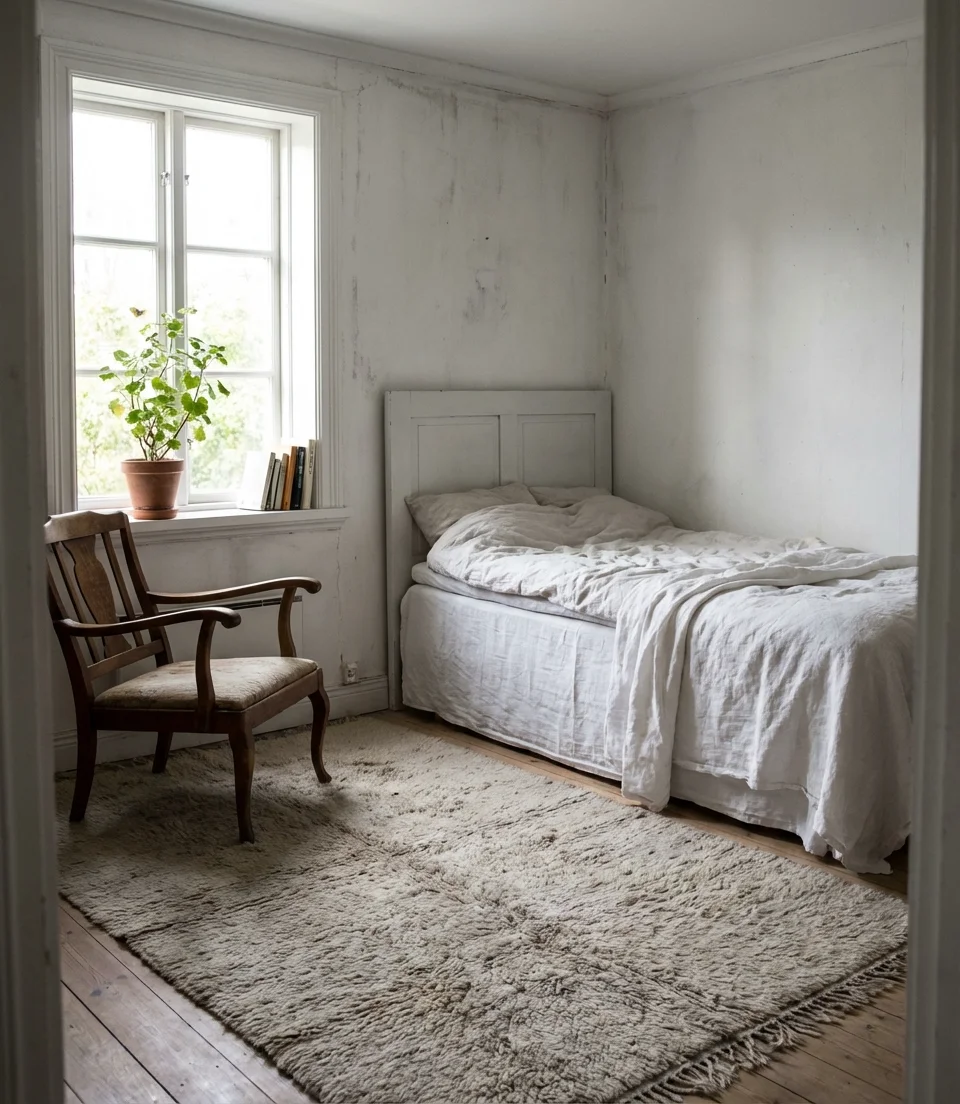
Most people default to placing their bed against the center of the longest wall—and while that often works, it’s usually more interesting and functional to explore other options in a small bedroom. A careful analysis of the layout often reveals better alternatives: placing the bed in a corner (accessible from only one side but freeing up enormous floor space on the other three sides), angling the bed diagonally (unexpected and visually dynamic in a very small square room), or creating a half-wall behind the headboard to section off the sleeping area in a studio apartment.
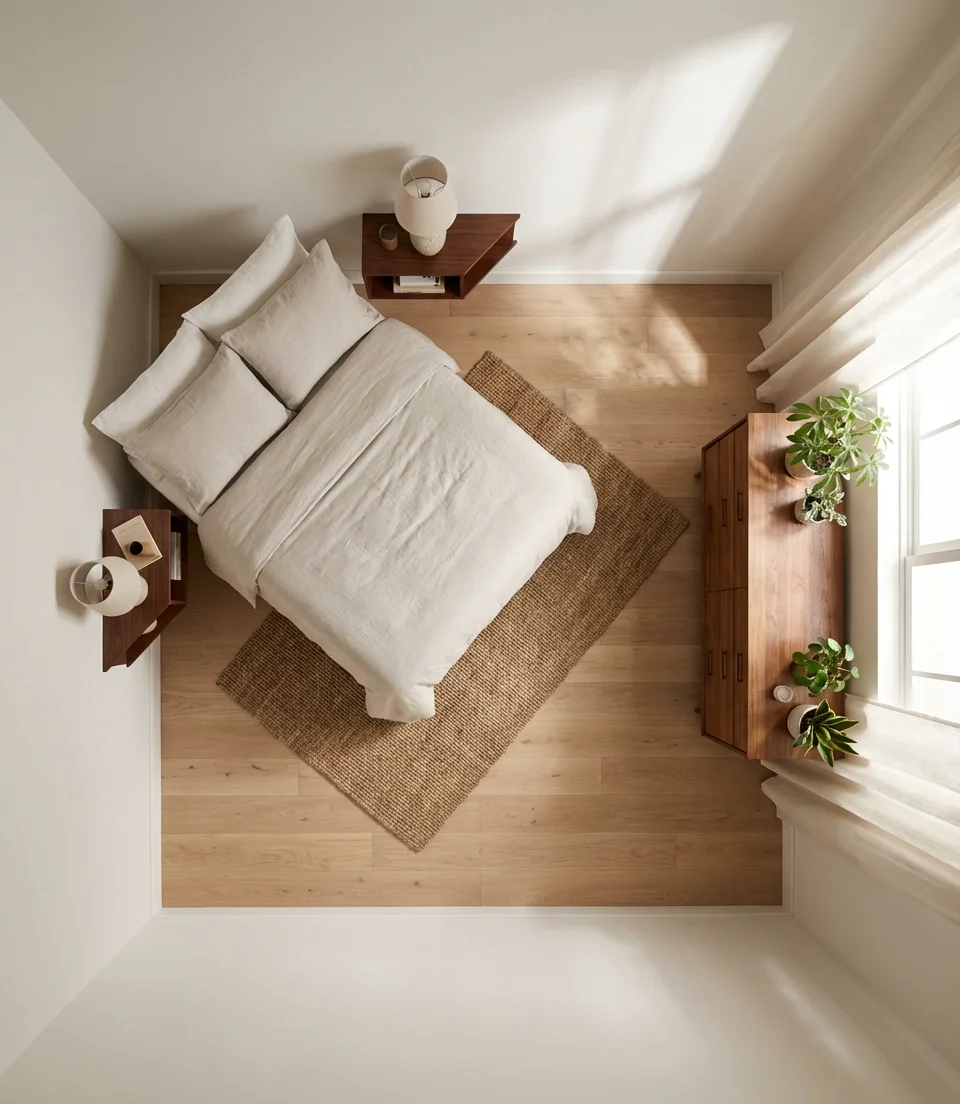
Before rearranging heavy furniture, use a free floor plan tool like RoomSketcher or even just graph paper to test different configurations. The key metrics to check: a minimum of 24 inches on the primary exit side of the bed (the side you typically get out of), a clear path to the bedroom door, and dresser drawers that can fully open without hitting the bed or wall. Couples who share the space should also think about which partner gets the “wall “side”—typically whoever doesn’t need to get up in the middle of the night takes that spot, which is itself a small act of thoughtful cohabitation.
21. Velvet Headboard as Focal Point
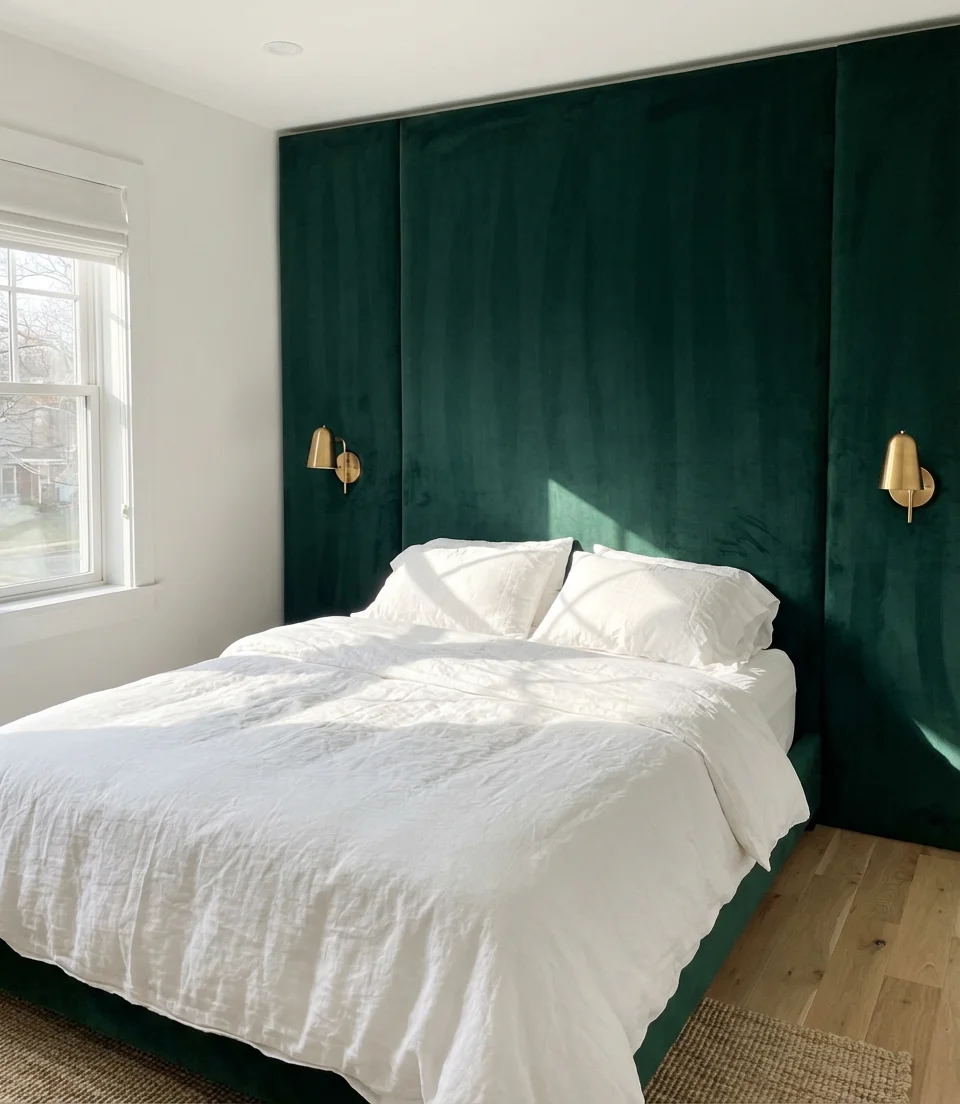
A large, upholstered velvet headboard is one of the fastest ways to make a small bedroom feel designed—the kind of change that transforms a room the moment you walk through the door. For couples who want that unmistakably romantic hotel-room energy, a floor-to-ceiling padded velvet headboard in deep emerald, dusty rose, or midnight blue does the work of an entire design intervention. Because it’s a single statement piece rather than a collection of things, it actually visually simplifies the room while making it feel more complete. Pair it with simple, solid-colored bedding so the headboard remains the undisputed focal point.
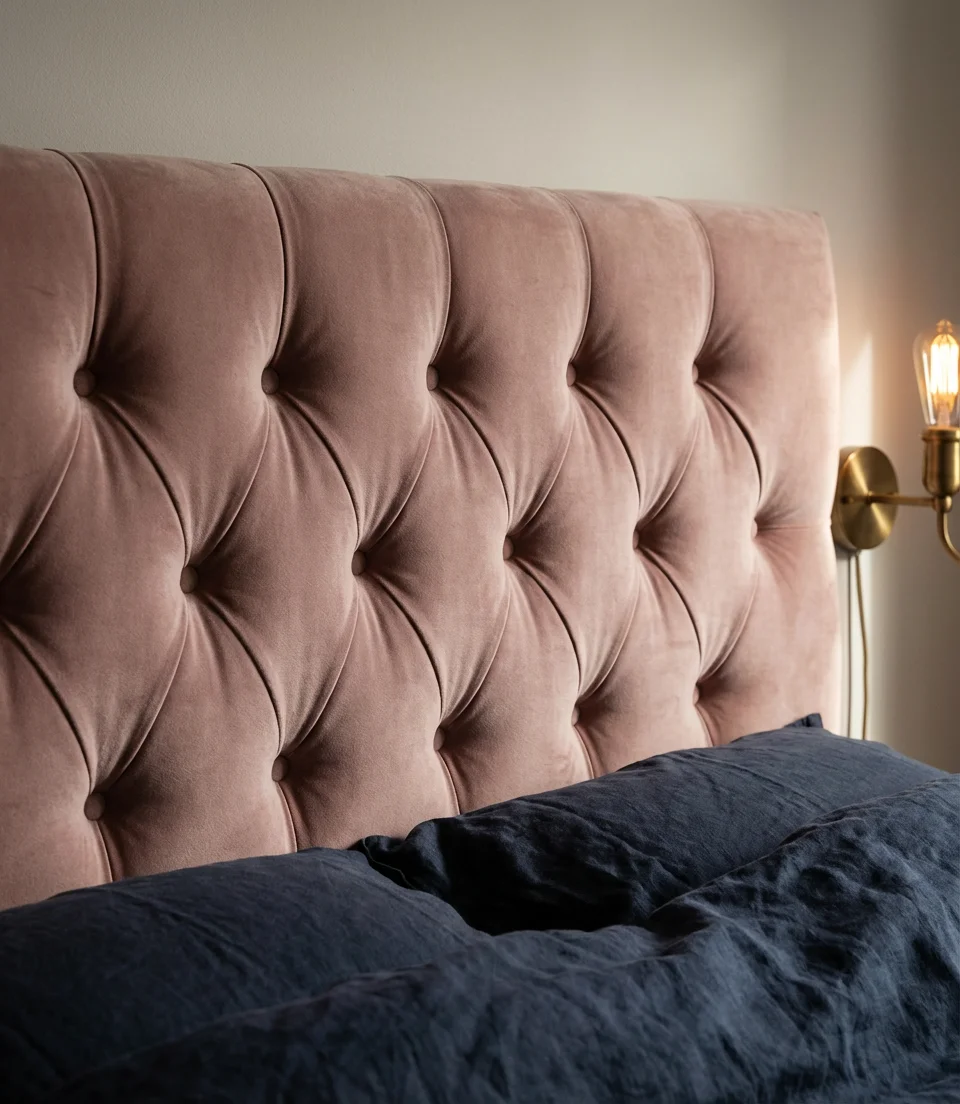
The DIY version of a dramatic headboard is surprisingly accessible: a piece of plywood cut to your desired shape, wrapped in foam batting and then your chosen fabric, and mounted to the wall with French cleats. The total material cost for a queen-sized version runs $80–$150—versus $400–$1,200 for a purchased upholstered headboard of equivalent quality. The one practical tip: choose a velvet with a relatively tight pile (like cotton velvet rather than crushed velvet) if you have pets, as tight-pile velvet is far more resistant to pet hair and shows wear more slowly.
22. Baby-Friendly Small Bedroom for New Parent Couples
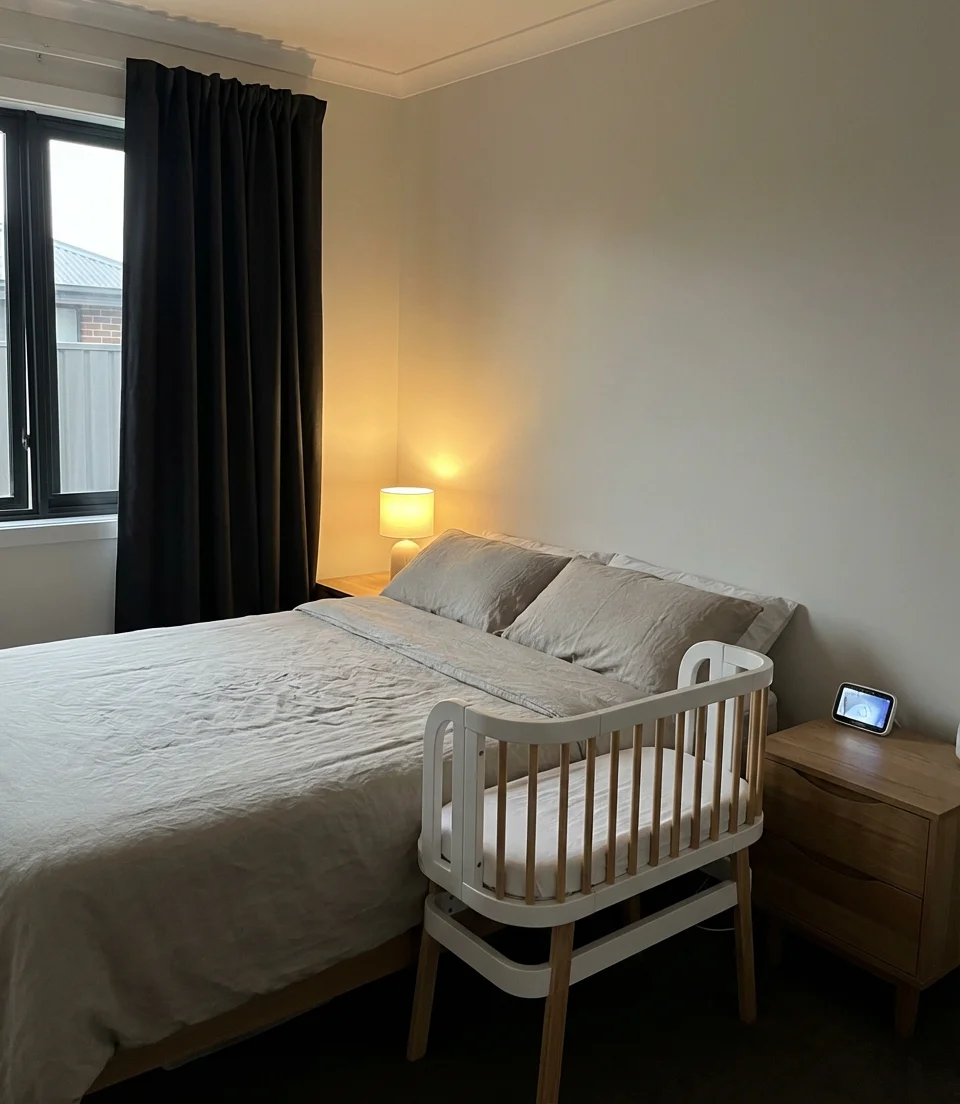
Many couples navigate the baby phase in a small bedroom—sharing a room with an infant is common in American apartments where a separate nursery simply isn’t available. Making this work beautifully requires a different set of priorities: a compact bedside bassinet that tucks against the bed, blackout curtains that allow the room to darken fully at any time of day, and a white noise machine that helps the baby (and both parents) sleep through ambient noise. The design challenge is keeping the room feeling like a modern adult space rather than a secondary nursery—which matters enormously for new parents’ mental health and relationship quality.
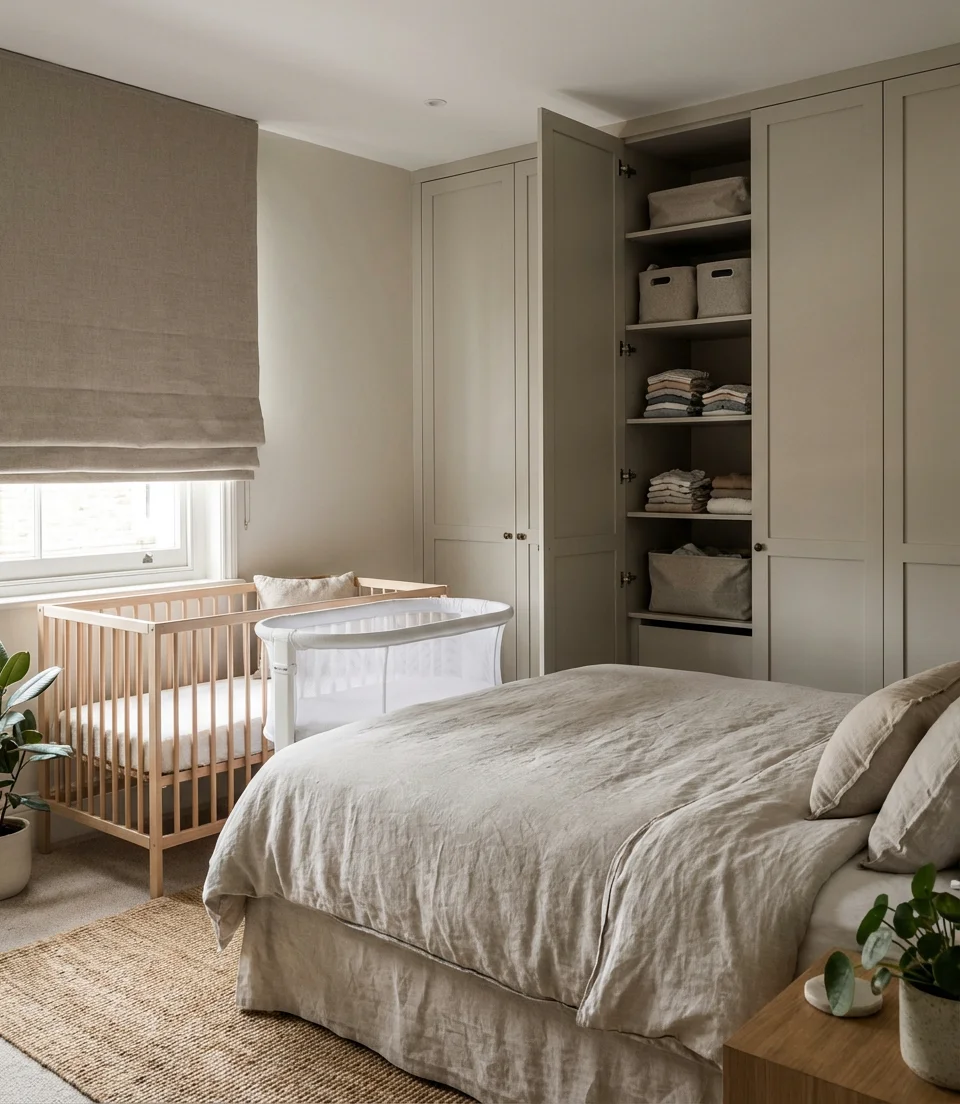
The key to keeping the room feeling adult is containment: baby items that are visible should be beautiful and few, while the rest live behind closed storage doors. A diaper changing station on top of a dresser (with a removable changing pad) eliminates the need for a separate changing table. Brands like Snoo, Halo, and Uppababy make bedside bassinets that are genuinely aesthetically considered—they fit into modern bedroom aesthetics far better than traditional white plastic nursery furniture and take up minimal floor space beside a queen or king bed.
23. Moody Jewel Tones for a Luxurious Feel
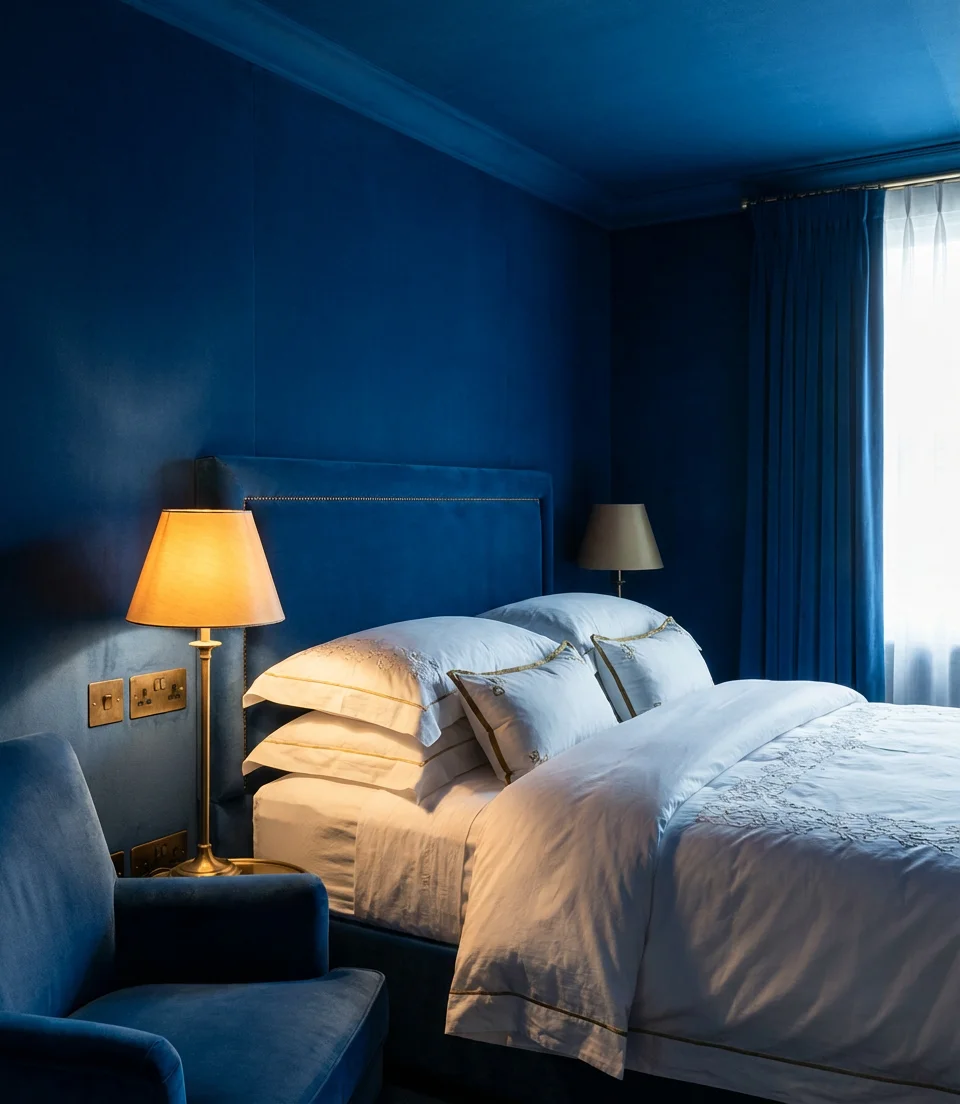
Rich jewel tones—sapphire, amethyst, deep teal, and burgundy—are having a significant moment in interior design, and for good reason: they make small bedrooms feel intentionally luxurious rather than accidentally cramped. The key is committing fully to the palette rather than dabbling. A deep teal room with complementary ochre and brass accents feels like a boutique hotel suite; the same teal as a single pillow on a beige background looks like an afterthought. For couples, this bold approach to color signals that the bedroom is a place you’ve truly claimed and designed with intention—which in itself elevates how the room feels to be in.
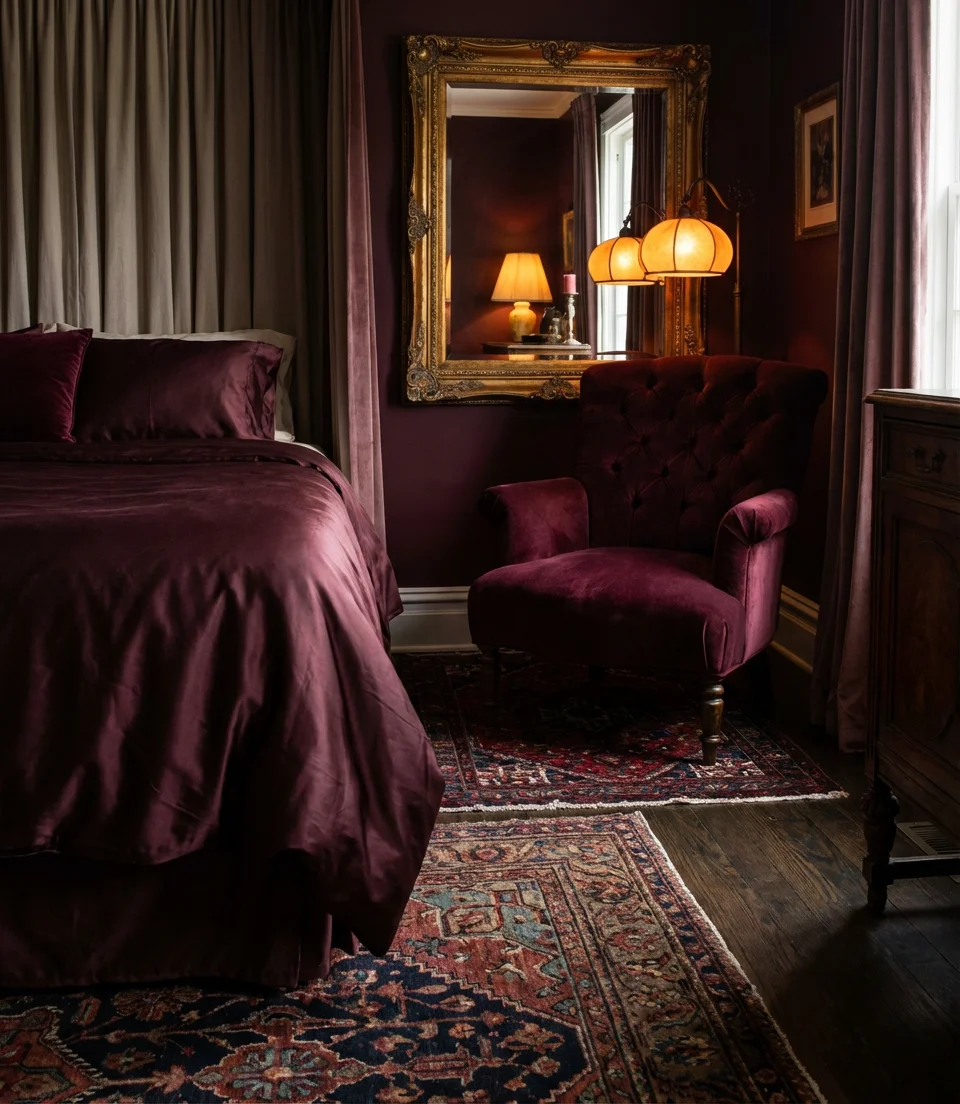
One designer trick that makes jewel-tone rooms feel grounded rather than overwhelming is painting the ceiling the same color as the walls—a technique called “color drenching.” When the room is bathed in a single saturated tone from floor to ceiling, it creates a cocooning effect that feels luxurious rather than claustrophobic. Pair this effect with warm artificial lighting (2700K or lower), and the room will glow like a jewel box at night. This approach works particularly well in bedrooms with limited natural light, where lighter colors would simply look washed-out and institutional.
24. Open Closet With Organized Styling
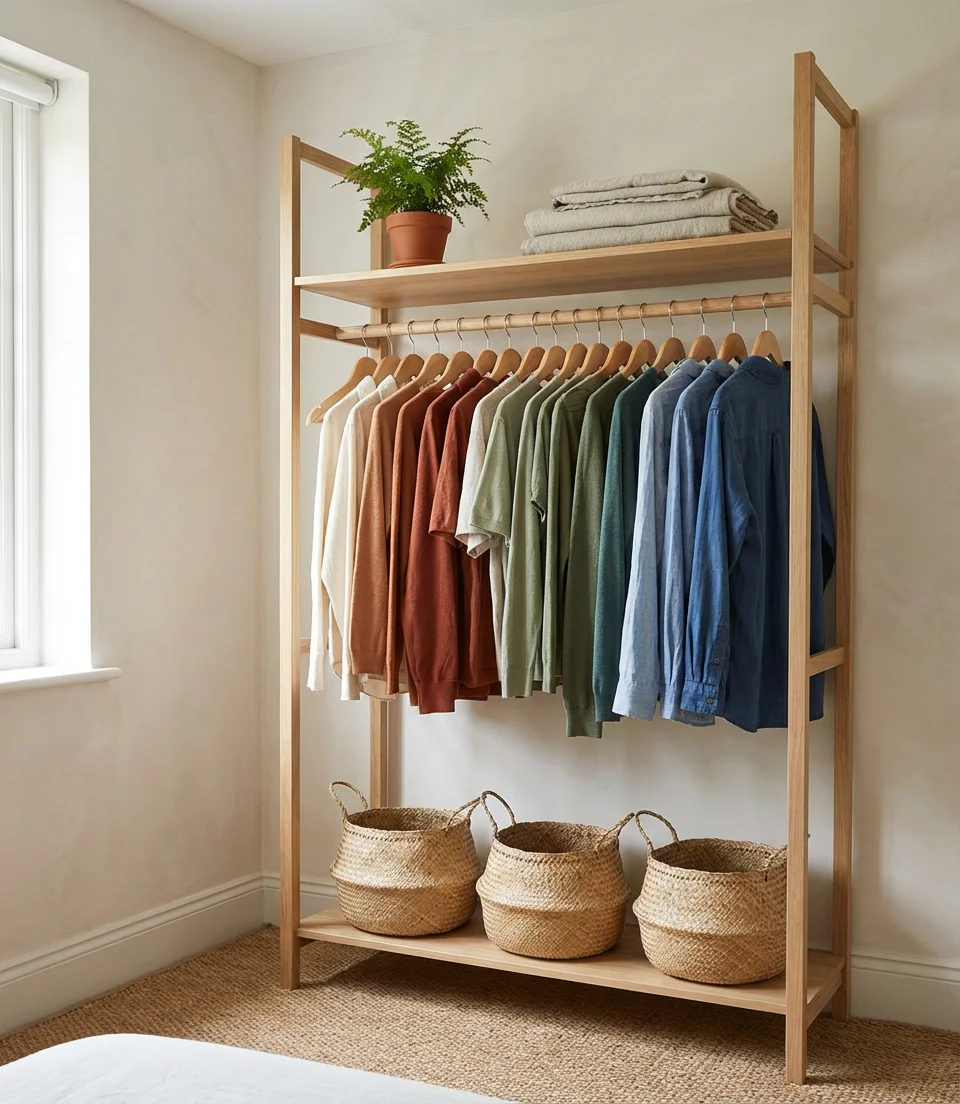
In apartments where a traditional closet simply doesn’t exist—or where the existing closet is too small to serve two people—an open wardrobe system can be one of the most aesthetically successful storage solutions a couple can implement. When an open wardrobe is well-organized, it reads as a design feature rather than a storage compromise. Matching hangers, color-organized clothing, uniform basket bins on lower shelves, and a few decorative objects mixed in with the practical items create something closer to a retail display than a messy closet. It’s an honest, confident approach to storage that works beautifully in the right hands.
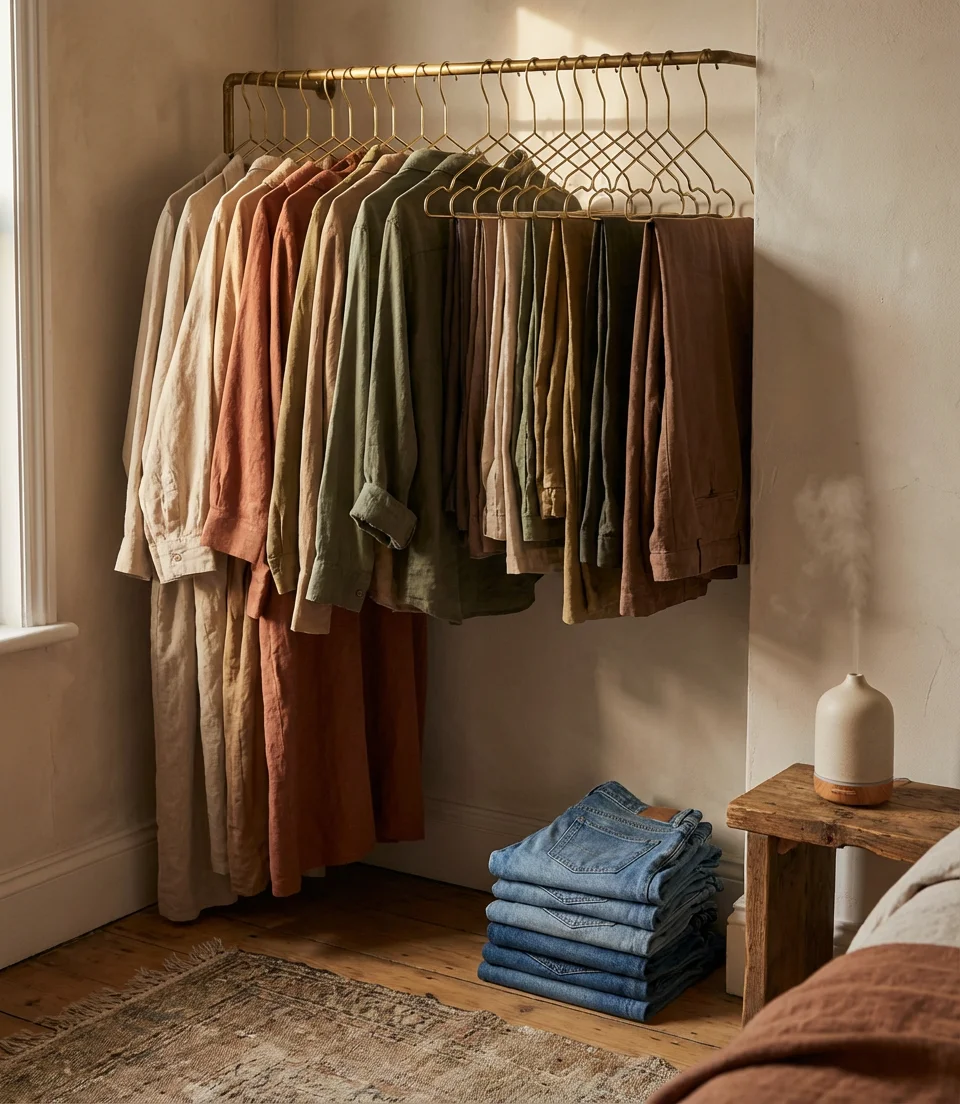
For this approach to work as a design feature rather than a source of visual chaos, the editing process is non-negotiable. Open storage only works when the contents are worth looking at—meaning the “hidden” wardrobe with closed doors is actually more forgiving than the open version for most couples. A beneficial starting point is the capsule wardrobe principle: keep only items you genuinely wear and love, sorted by type and then color within each type. The payoff is a room that functions as both storage and display—and the daily ritual of getting dressed becomes a genuinely pleasant experience rather than a stressful one.
25. Sconce Lighting + Statement Rug Combo
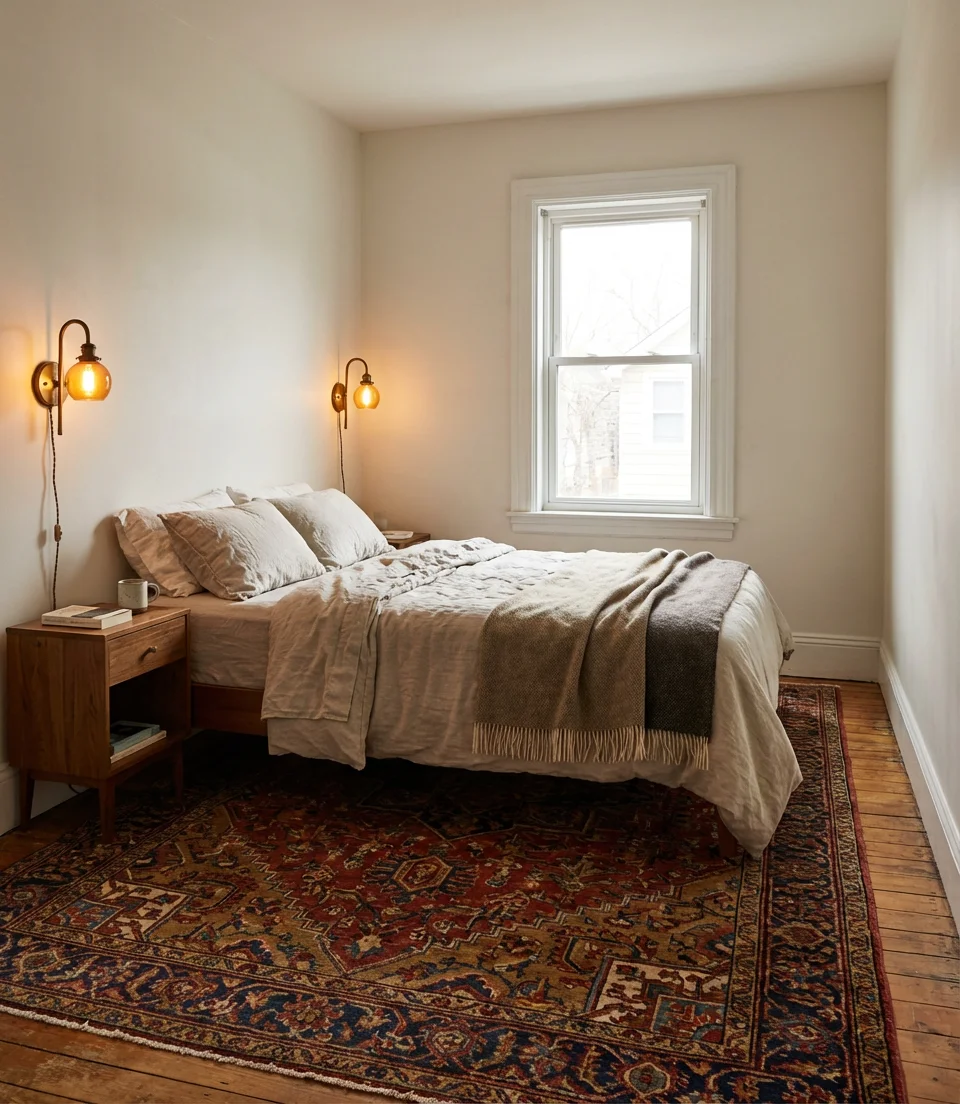
If you could only make two changes to a small bedroom, this might be the most impactful combination: replace your bedside table lamps with wall-mounted sconces, and add a large statement rug beneath and extending beyond the bed. The sconces free up nightstand surface area, eliminate lamp cords trailing across the floor, and add a warm glow at exactly the right height for reading in bed. The layout change that the rug creates is equally powerful—it defines the sleeping zone as a distinct area within the room, grounds the furniture, and adds texture and color that soft, cozy bedrooms genuinely depend on.
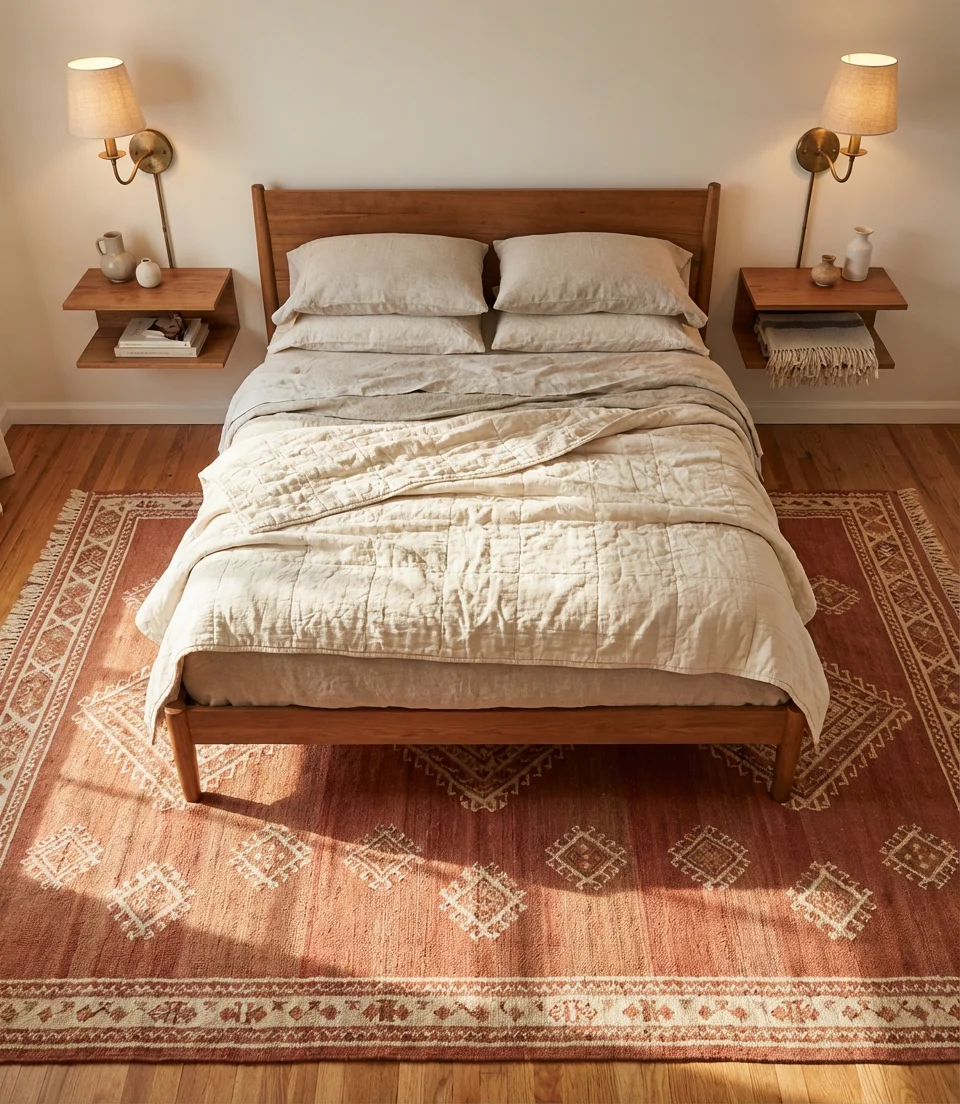
On rug sizing: the most common mistake in small bedrooms is choosing a rug that’s too small. A rug that only fits under the bed itself looks like a bathmat and makes the room feel even more cramped. The right size has at least 18–24 inches extending beyond the sides and foot of the bed—and yes, this may mean choosing a rug that takes up most of the floor, which is entirely correct. For the sconces, hardwired versions require an electrician, but plug-in sconces with fabric-wrapped cords have become genuinely beautiful alternatives that any renter can install in minutes without touching the electrical system.
A small bedroom can be one of the most romantic and beautifully designed spaces in your home—it just requires a different kind of creativity than a spacious room. The ideas in this list are meant to inspire rather than prescribe; pick two or three that resonate with you both as a couple and start there. We’d love to hear which ideas you’re considering or have already tried—leave a comment below, and let’s keep the conversation going. Your real-life experiences are always the most useful inspiration for someone else in the exact same situation.