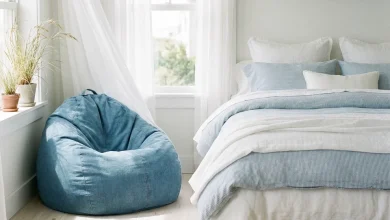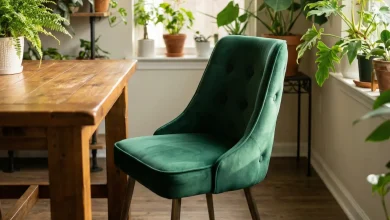

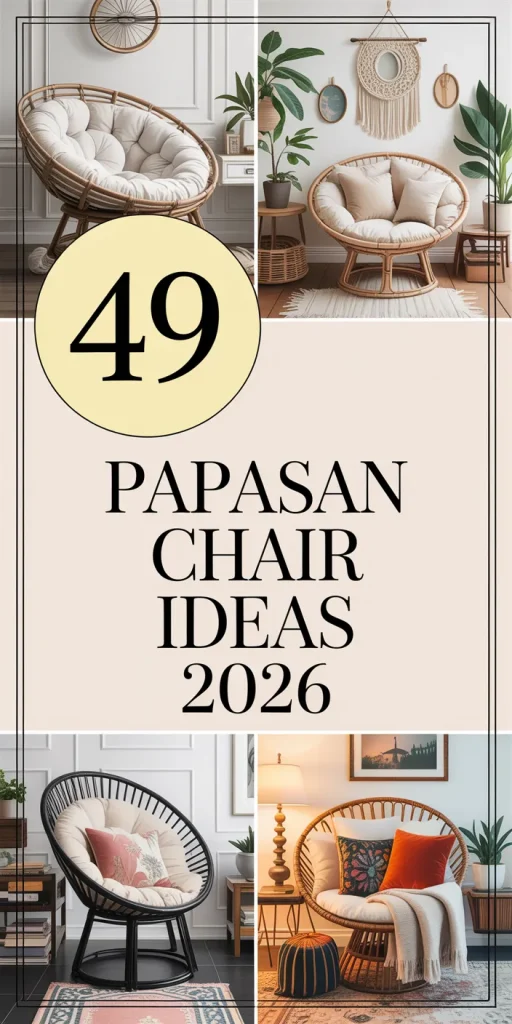
In 2026, the papasan chair is experiencing a significant surge in popularity, emerging as one of the most sought-after furniture pieces on Pinterest. What started as a retro staple from the 1970s has evolved into a versatile, style-forward piece that fits everything from minimalist apartments to boho-chic living rooms. Americans are rediscovering it for its comfort, its sculptural shape, and its surprisingly adaptable personality. Whether you’re building a cozy reading nook, refreshing a bedroom, or rethinking your balcony setup, this roundup of fresh papasan chair ideas will give you all the visual inspiration you need to make it work beautifully in your space.
1. The Classic Rattan Reading Nook

There’s something deeply satisfying about a reading nook built around a papasan chair—and the most timeless version still uses a natural rattan frame. Tucked into a corner with a small side table and a soft throw, this setup turns any underused wall space into a personal retreat. The bowl-shaped seat cradles you in a way that flat cushion chairs simply can’t replicate, making it ideal for long afternoon reads or slow Sunday mornings with coffee.
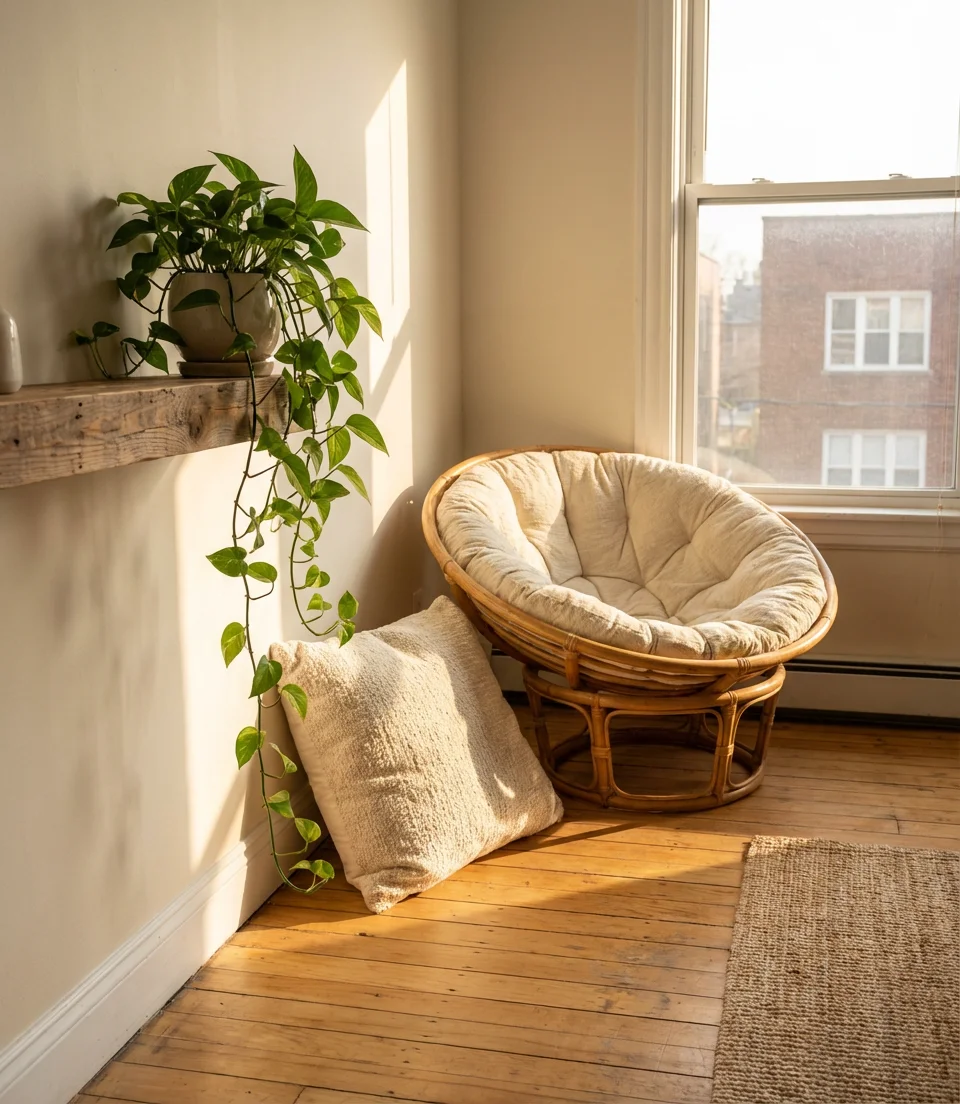
If you’re setting this layout up in a rental, a rattan papasan is one of the smartest investments you can make. It’s lightweight and easy to move, and the neutral tone pairs with virtually every color palette. Style bloggers in the Pacific Northwest have been using it as a statement anchor piece in otherwise minimal rooms—and it works every single time. Spend around $150–$300 for a quality frame, and you’ll have a piece that outlasts dozens of trendy alternatives, making it a worthwhile investment for those looking to enhance their home decor with a timeless element.
2. Double Papasan for Two
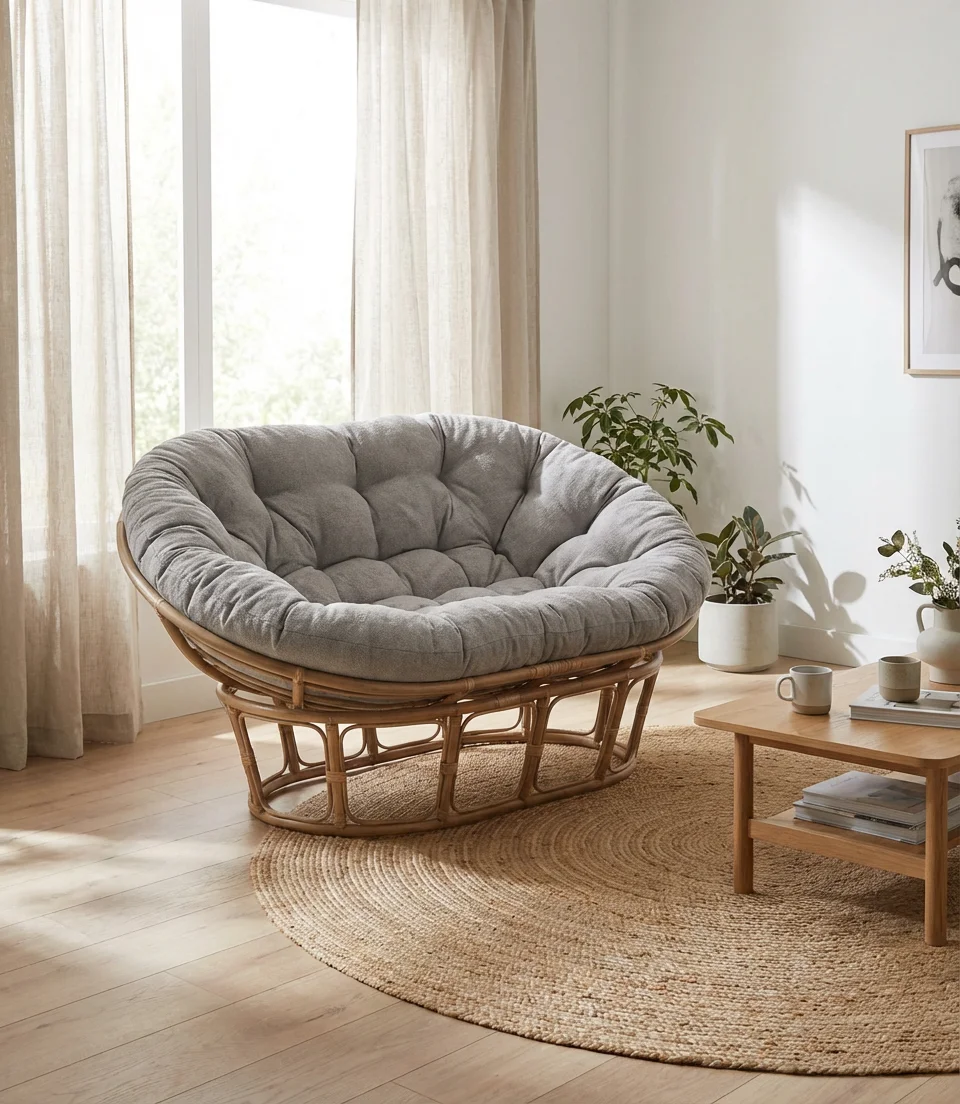
The double papasan—essentially an oversized version of the classic—is the ultimate couples’ chair. Wide enough for two people to curl up side by side, it functions beautifully in a living room as a low, relaxed seating option that invites you to slow down. It looks especially striking in open-plan spaces where it can float in the middle of the room, anchored by a round jute rug and a few floor cushions scattered nearby.
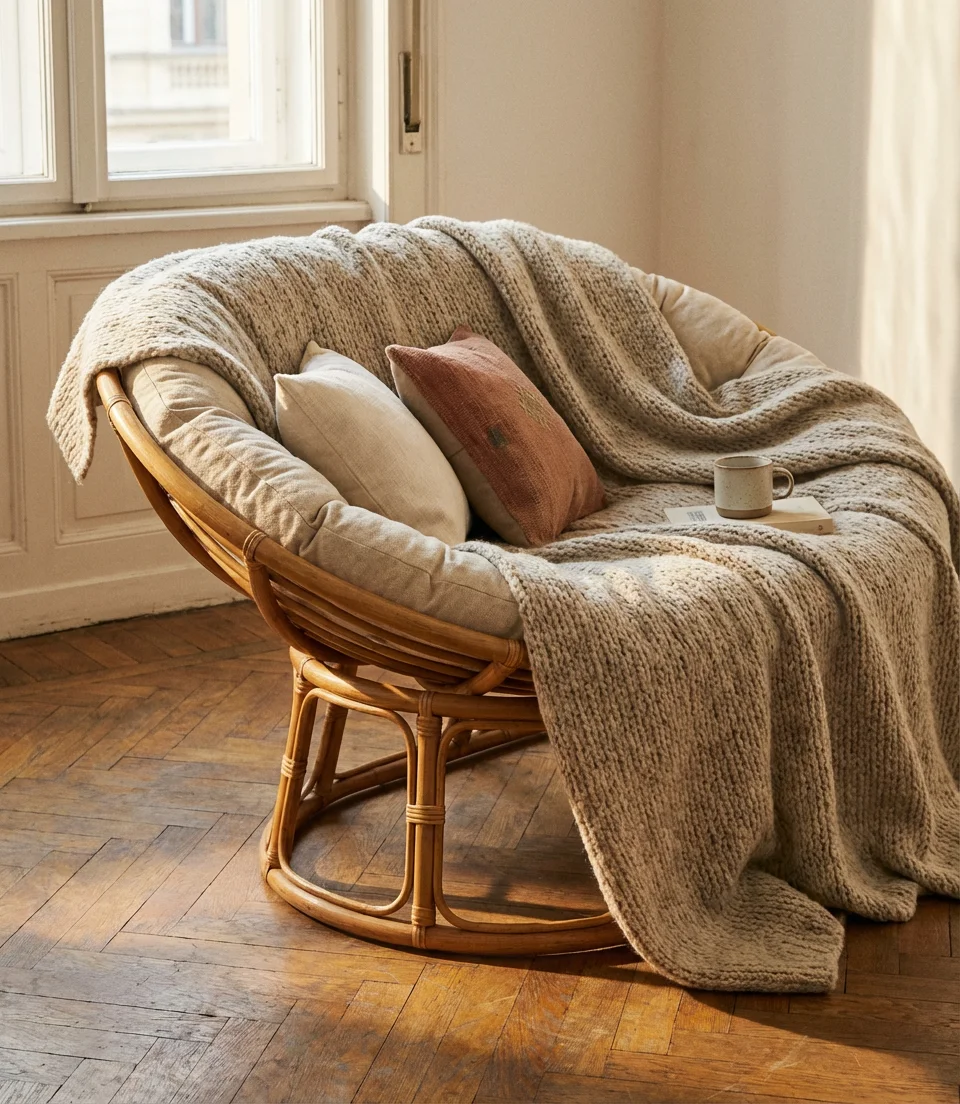
One thing most people don’t realize: the double papasan works just as well solo. Families with young kids often use it as a reading chair where a parent and child can comfortably snuggle together. A common mistake, though, is choosing a frame that’s too low for the room’s scale—make sure the chair height complements your coffee table and sofa sightlines before committing to a style.
3. Aesthetic Bedroom Corner Setup
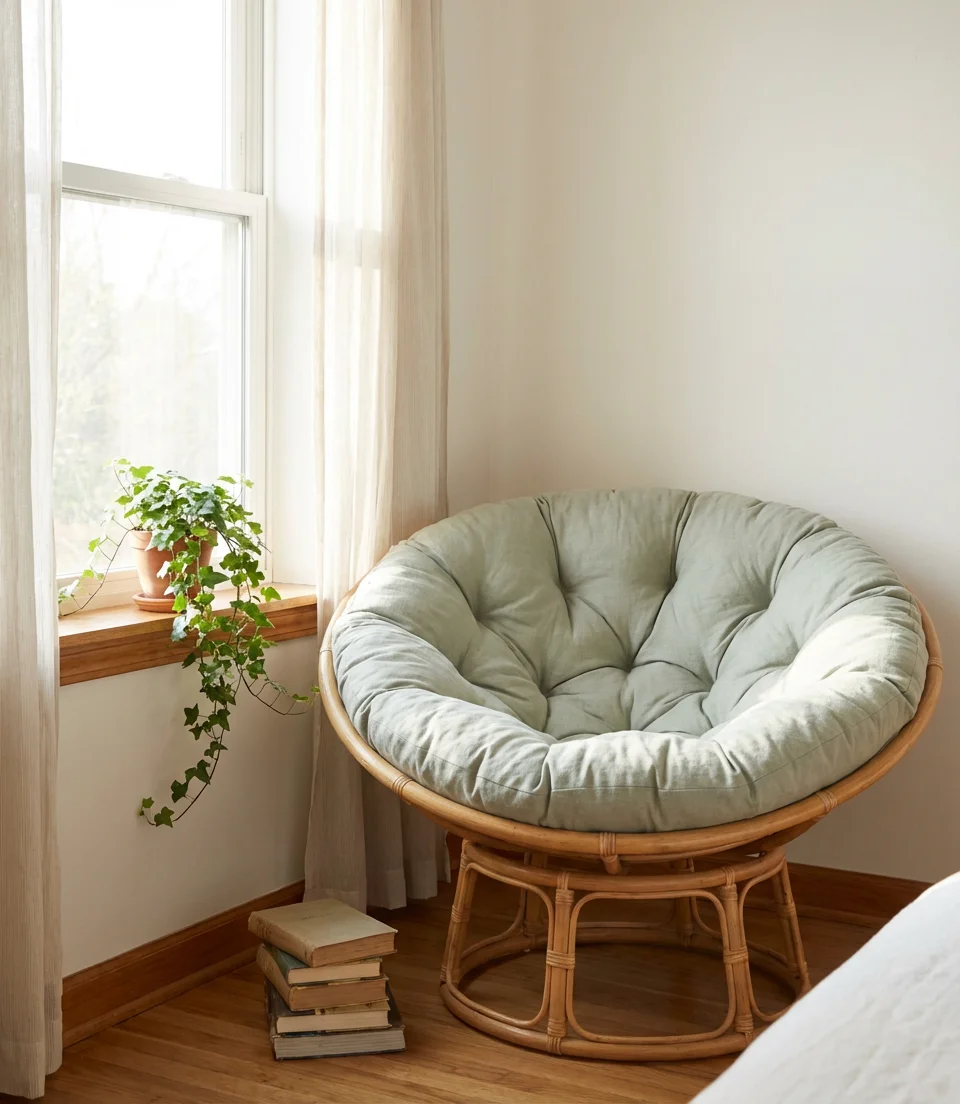
A papasan in the bedroom instantly upgrades the room’s bedroom aesthetic. That often-neglected corner near the window becomes a full moment—add a floor lamp, a small stack of books, and a linen cushion in a muted tone, and you’ve created something that looks straight out of a curated Pinterest board. It works particularly well in bedrooms that lack a dedicated sitting area or chaise lounge space.
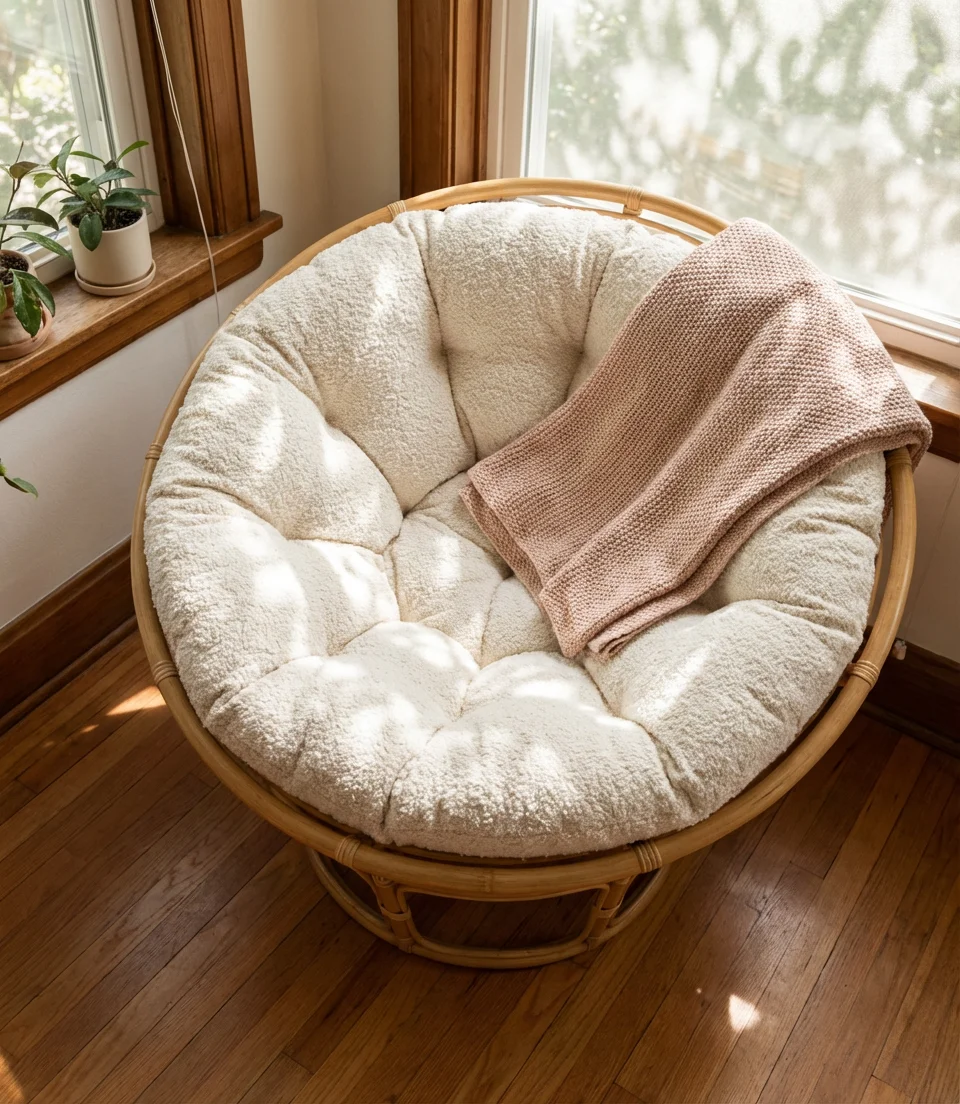
Interior designers in the Midwest have been recommending this approach for small primary bedrooms where a full accent chair simply won’t fit. The papasan’s round footprint is surprisingly compact relative to the visual comfort it delivers. Keep it simple: a neutral cushion, one throw, and one plant. Overloading the corner makes it feel cluttered, and the beauty of the setup relies on a sense of breathing room around the chair.
4. Pink Boho Living Room Accent
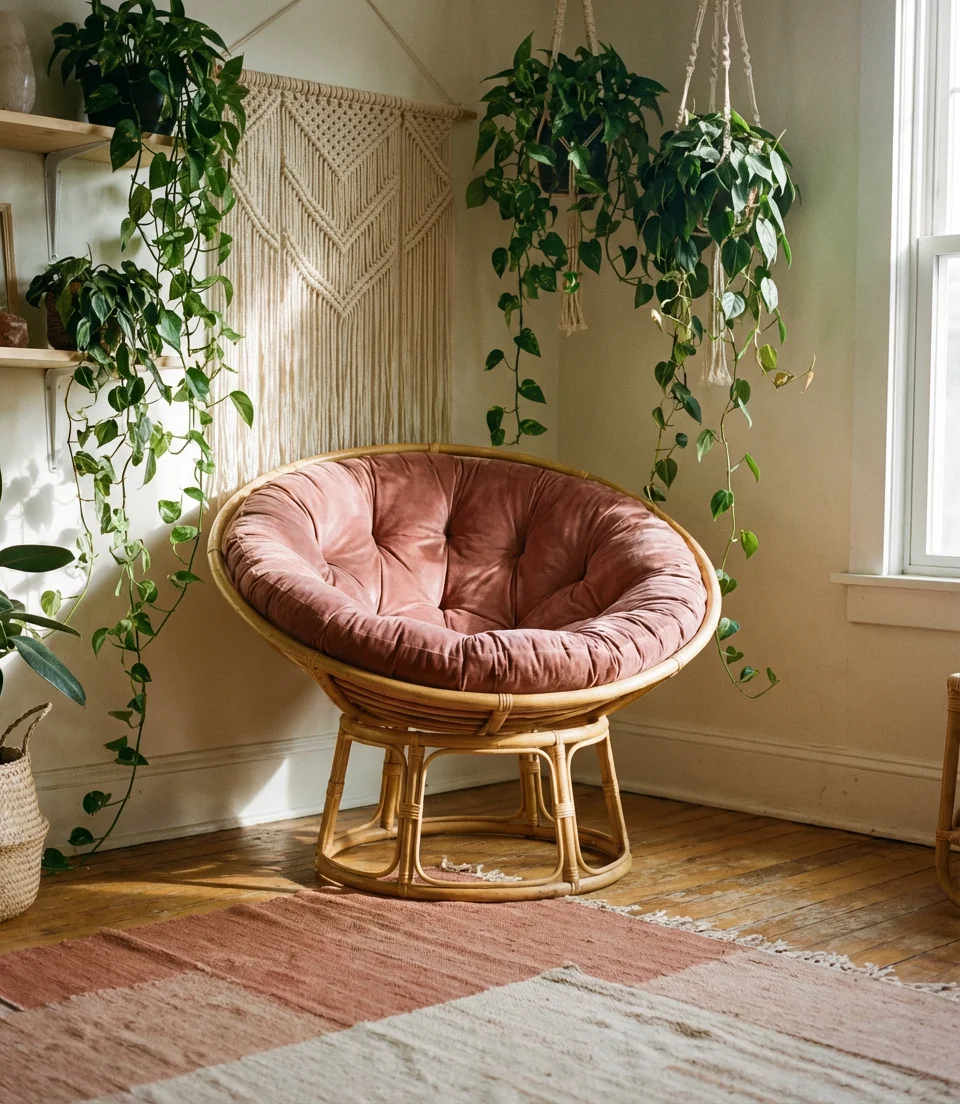
Dusty rose, blush, and terracotta-tinted pink—the pink papasan cushion has become a quiet staple in living room ideas across social media, and it’s easy to see why. The softness of the color against a natural rattan or dark wood frame creates a contrast that feels both playful and intentional. In a boho-leaning living room, it reads as the warmest seat in the house—the one everyone gravitates toward.
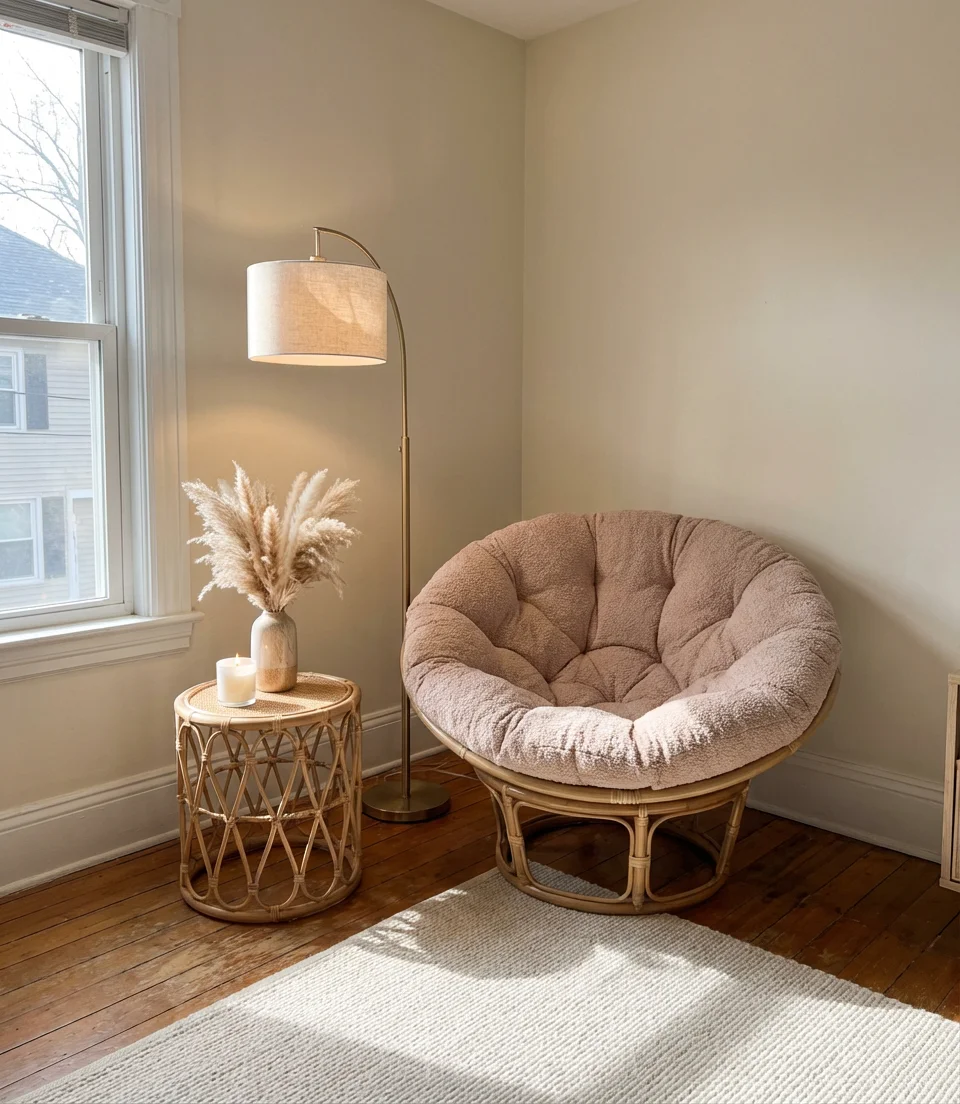
A young homeowner in Austin shared that her blush papasan became the most-commented piece every time she posted her apartment to Instagram—people couldn’t believe it was the same chair they remembered from college dorms. The key transformation? A high-quality, overstuffed cushion cover in a textured fabric such as boucle or velvet is the key transformation. It elevates the entire chair from dorm-basic to design-intentional, usually for under $80.
5. Black Frame, Monochrome Statement
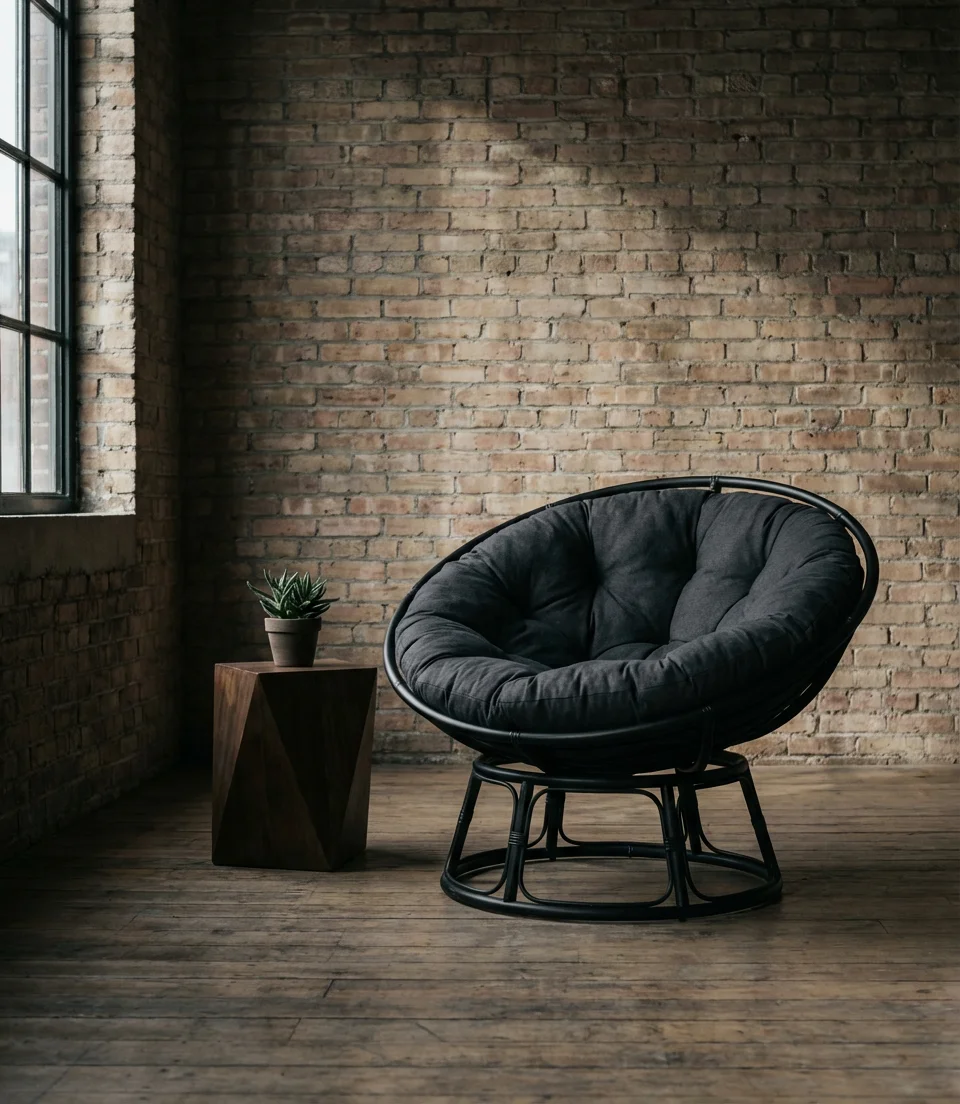 Not every papasan has to lean bohemian. A black metal or lacquered wood frame paired with a charcoal or white cushion creates a decidedly modern look that holds its own in contemporary interiors. This version works especially well in loft-style apartments, offices converted into studios, or any room where industrial and soft elements are already in conversation. It looks particularly sharp against white walls and concrete floors.
Interior design professionals love the monochrome papasan because it incorporates the chair’s iconic silhouette without appearing casual or retro. “It’s the same shape—but in black, it stops being a throwback and starts being a design choice,” one New York-based decorator noted. Pair it with a geometric side table and a bold pendant light above, and the chair becomes a visual anchor rather than an afterthought.
6. Cozy Reading Corner with Canopy
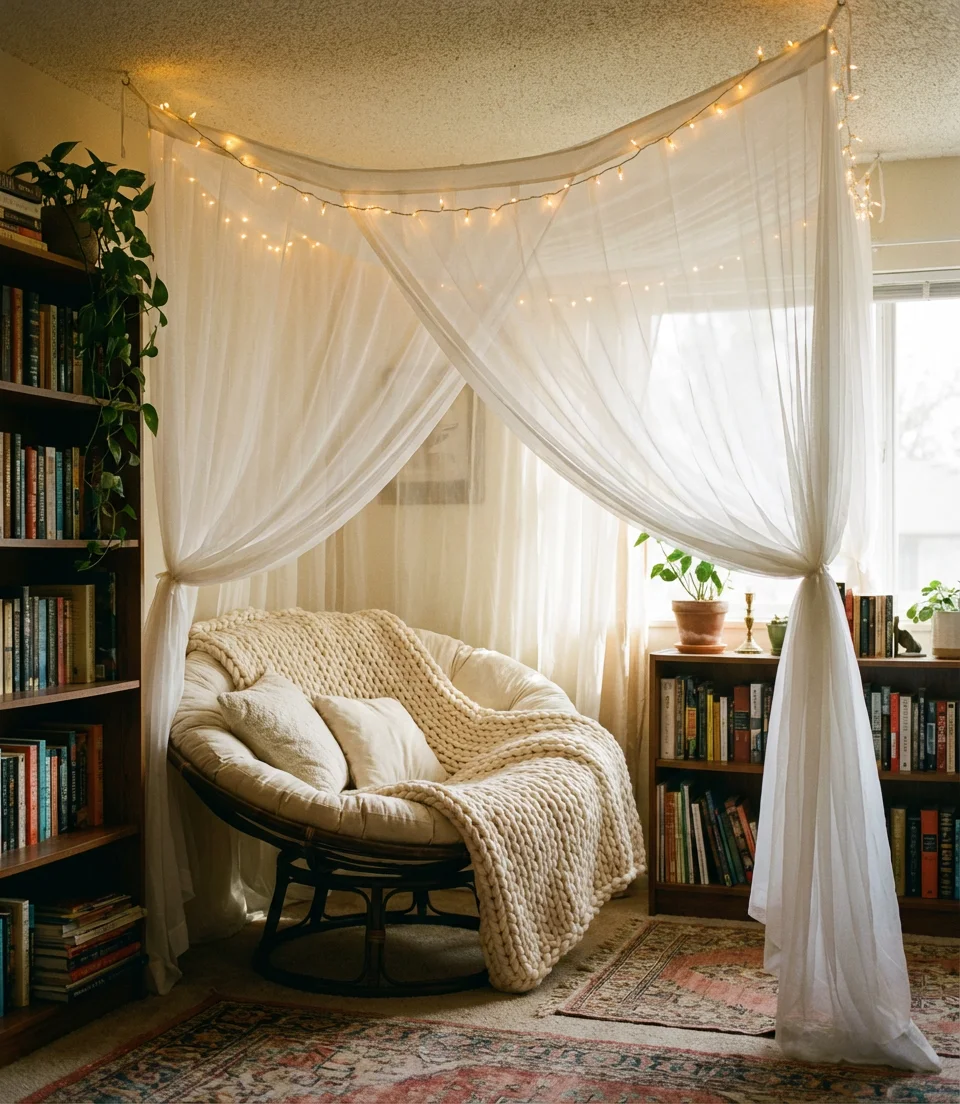
For the most immersive reading corner possible, pair your papasan with a simple canopy or curtain drop overhead. This cozy setup—beloved by Pinterest users hunting for reading nook aesthetic content—transforms a corner into a micro-sanctuary. Sheer white panels, fairy lights threaded through a hoop above the chair, and a thick cushion create a space that feels private without any construction required.
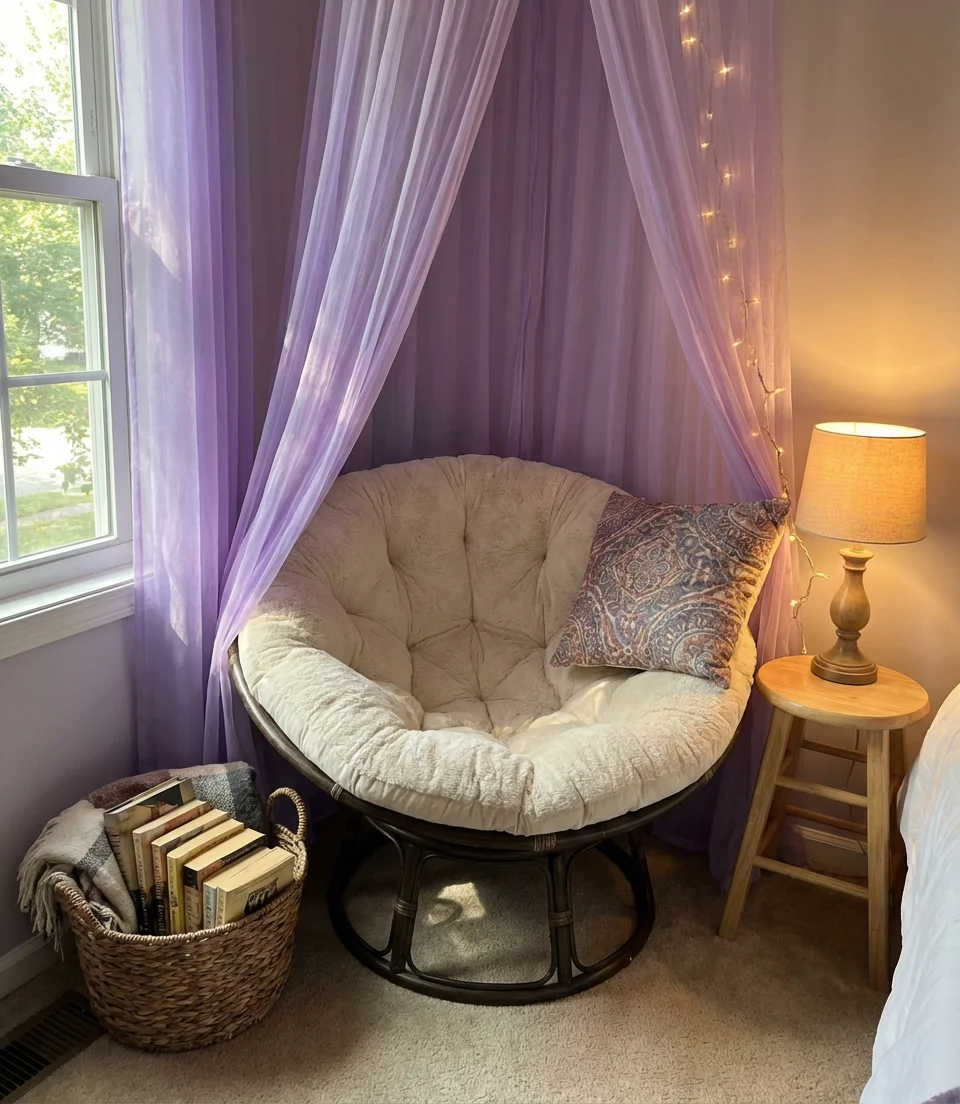
This approach works especially well in kids’ rooms and teen bedrooms, where the papasan doubles as both a reading spot and a personal retreat. Parents in family-friendly suburbs across the Southeast have started building these corners as intentional screen-free zones—places where the only entertainment are a book and a cozy seat. To enhance the intended sense of calm, opt for a soft color palette and warm lighting.
7. Green Cushion, Natural Palette
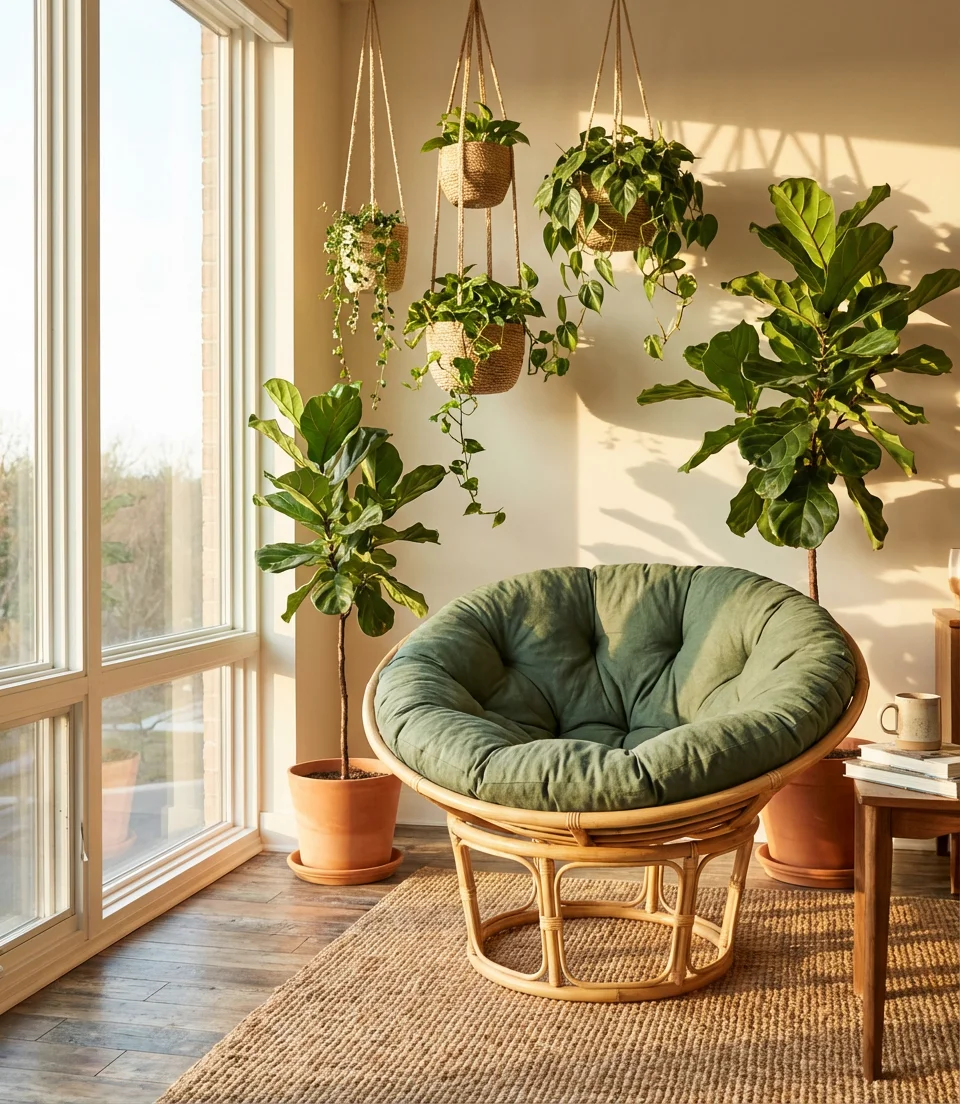
Sage, olive, and forest moss—green cushion tones are having a serious moment in 2026, and the papasan chair is one of the best canvases for them. Against a natural rattan frame, a green cushion reads as earthy and grounded, perfectly in step with the biophilic design trends dominating home decor right now. It pairs beautifully with trailing pothos plants, linen curtains, and warm wood flooring.
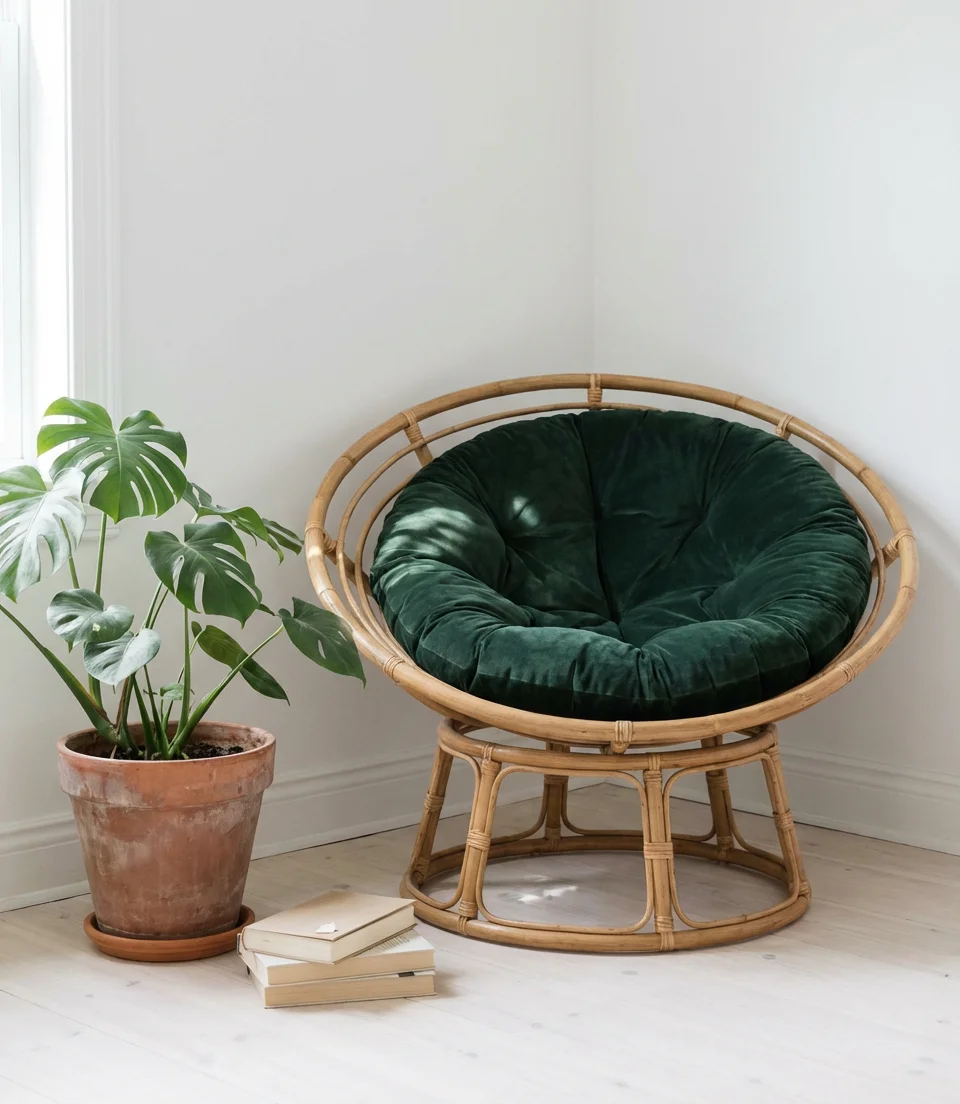
Where this design works best: living rooms with large windows and access to natural light, where the green cushion can pick up tones from indoor plants and outdoor greenery. In north-facing rooms with less light, opt for a lighter sage rather than a deep forest green to avoid the chair feeling heavy or dark. One simple rule: match the undertone of your green to the wood tones in the room for an effortlessly cohesive look.
8. Balcony Papasan Retreat
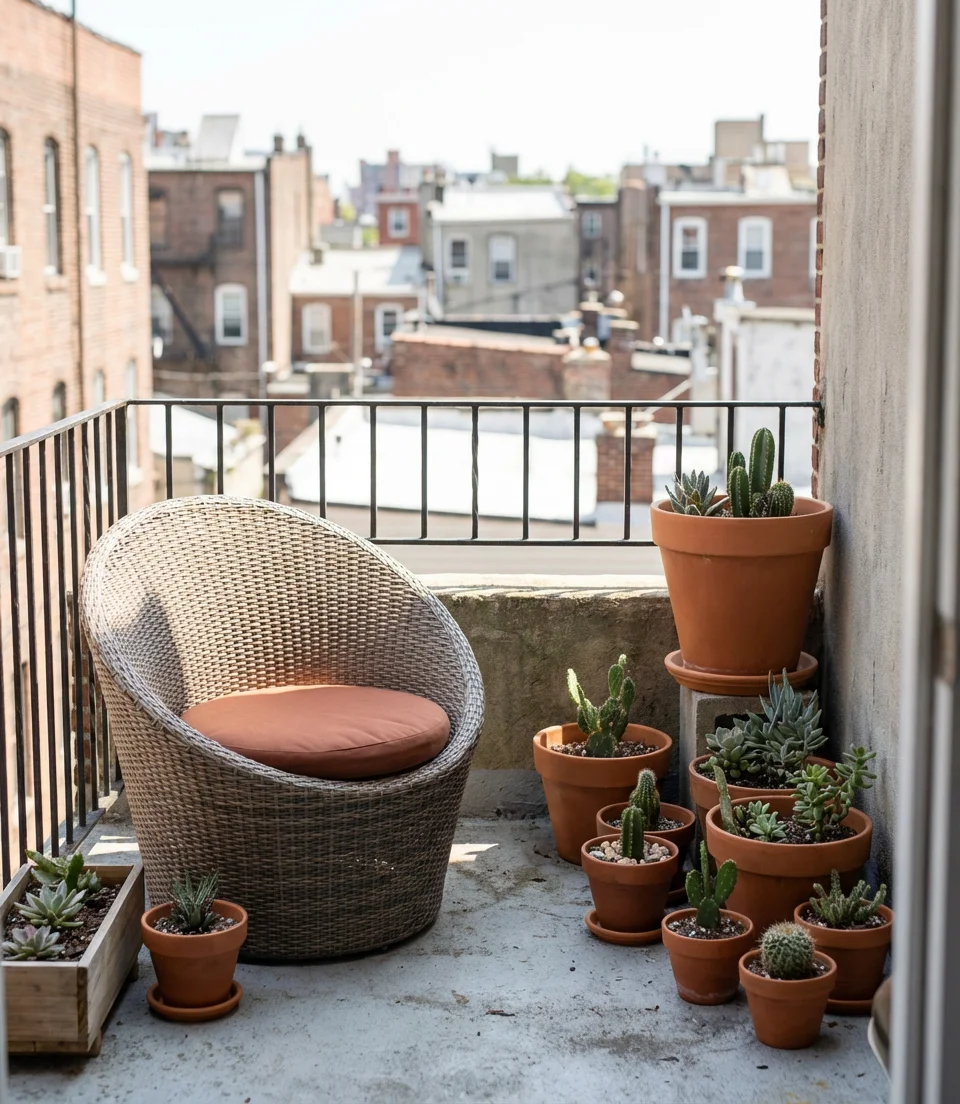
The balcony papasan is one of the most pinned outdoor furniture ideas for apartment dwellers, and for good reason. Even the tiniest balcony—a five-by-eight-foot city terrace—can fit a papasan chair and feel like an outdoor living room. Choose a weather-resistant frame (synthetic rattan or powder-coated metal) and an outdoor-grade cushion, and you’ve created a personal outdoor escape without a yard or patio required.
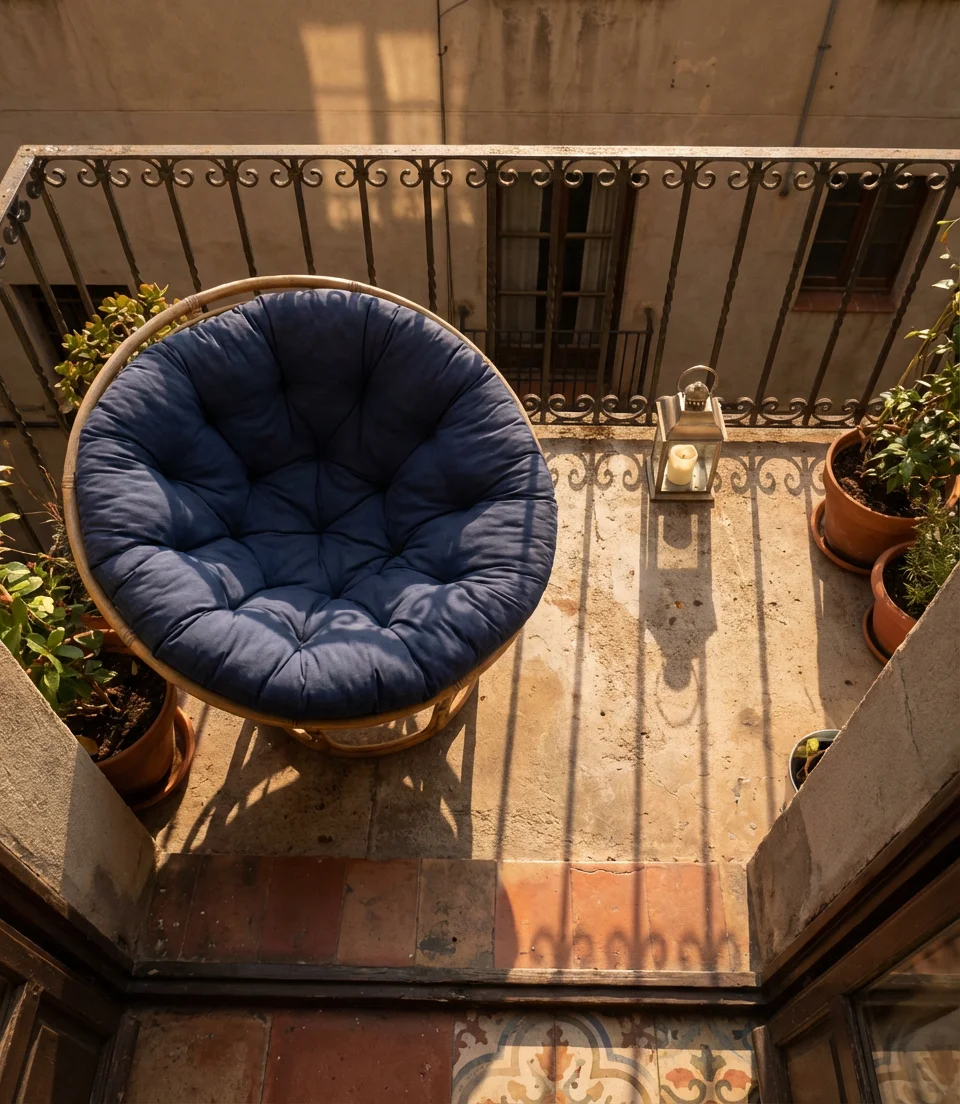
Apartment residents in cities like Chicago, Seattle, and Boston have embraced this setup as a way to get the most out of small outdoor spaces during warmer months. The key practical consideration: always secure cushions with ties or velcro to prevent them from blowing away in wind—especially on upper-floor balconies. Waterproof storage bags for the cushion are worth the investment because they extend the life of your setup through multiple seasons.
9. DIY Cushion Refresh
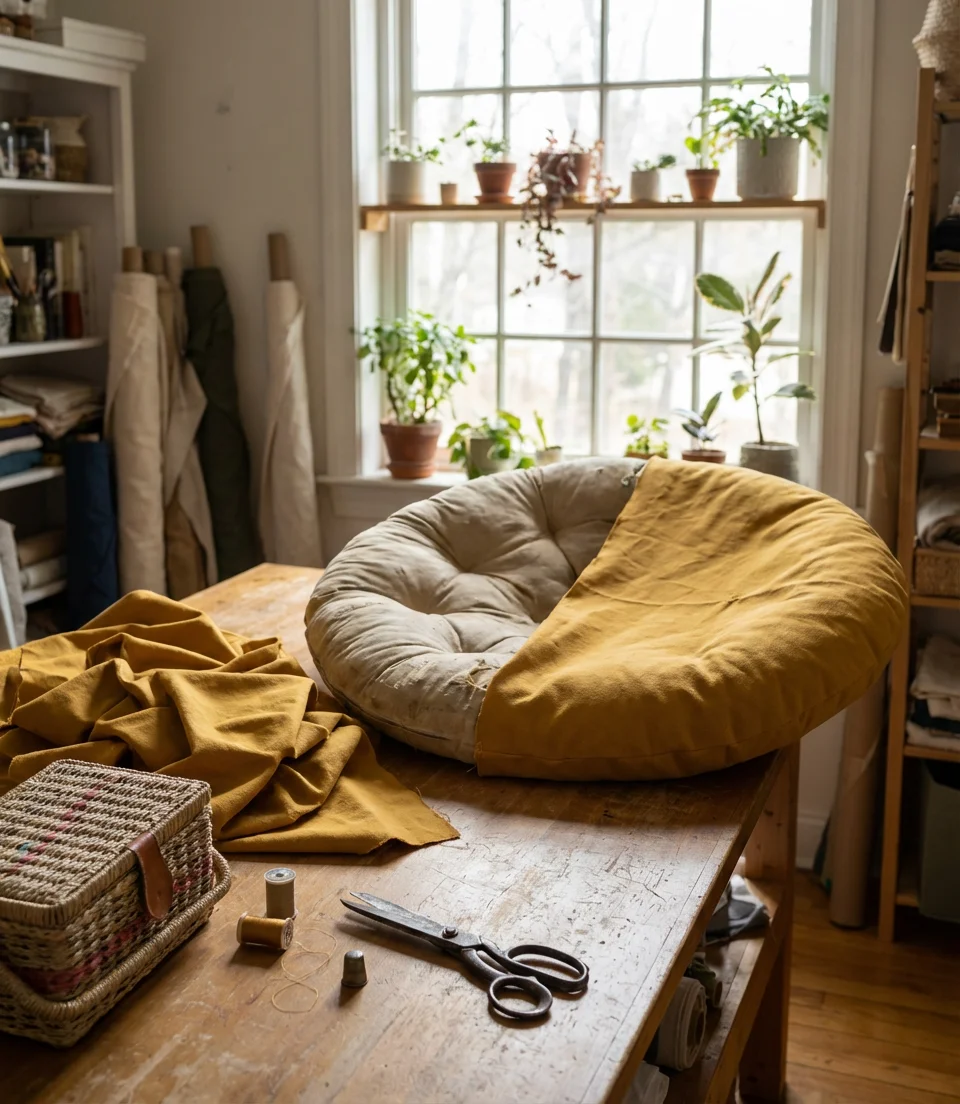
One of the most popular projects circulating on Pinterest right now is the cushion DIY—reupholstering or recovering an old papasan cushion to give it a completely fresh look. It’s more accessible than it sounds: remove the old cover, use it as a pattern, cut new fabric, and either sew or use fabric glue depending on your comfort level. The result can look completely custom and high-end for a fraction of the cost of buying new.

Craft communities in the American South have turned papasan cushion DIYs into a full weekend tradition—swap meets and fabric stores report increased traffic specifically for this project. Budget-wise, a yard and a half to two yards of upholstery fabric (around $20–$50) plus a zipper or velcro strip is all you need. The biggest mistake beginners make is underestimating the fabric yardage—always buy at least 20% more than you think you’ll need to account for cutting errors.
10. White Minimalist Living Room Look
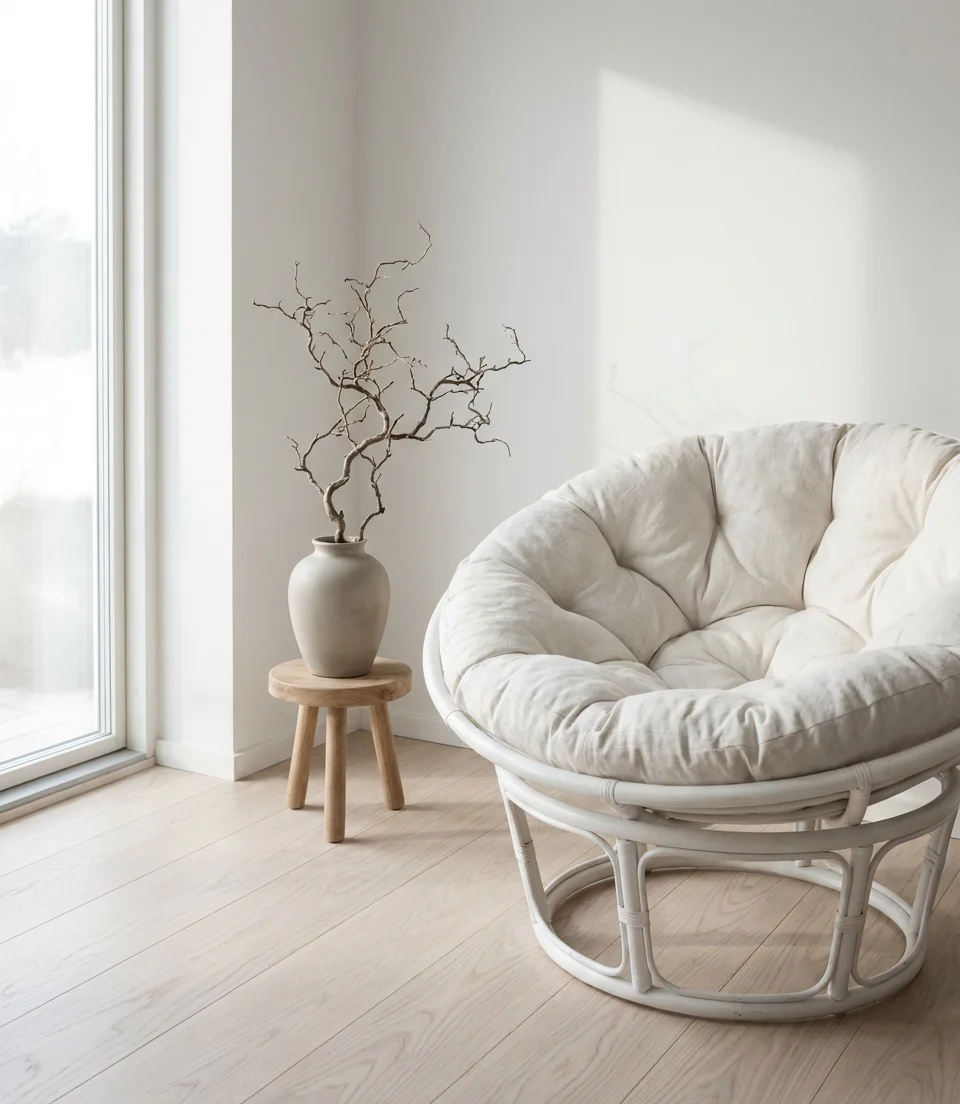
The ultimate minimalist statement is a papasan dressed in an all-white cushion against a bleached or light wood frame. In a living room layout that relies on clean lines and negative space, the rounded silhouette of the papasan becomes a sculptural counterpoint—soft geometry in a room of right angles. It works especially well in Scandinavian-inspired interiors where the goal is warmth without clutter.
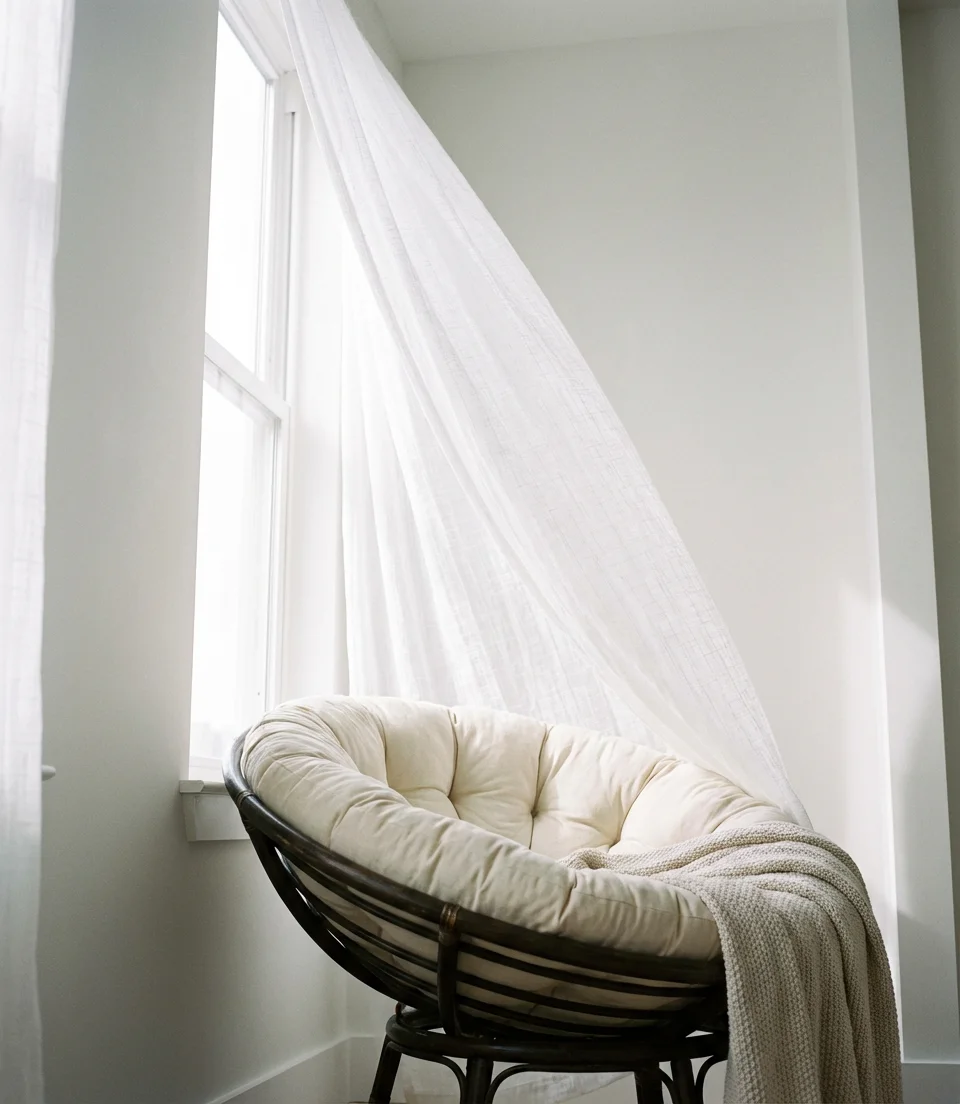
The honest trade-off with a white cushion is maintenance. In households with pets or young children, white requires either a removable, washable cover or a willingness to clean regularly. Many homeowners solve such issues by choosing an off-white or ivory tone in a performance fabric—it reads just as clean visually but hides daily wear far better. Sunbrella and Crypton are two brands worth exploring for high-performance papasan cushion covers.
11. Rocking Papasan Variation
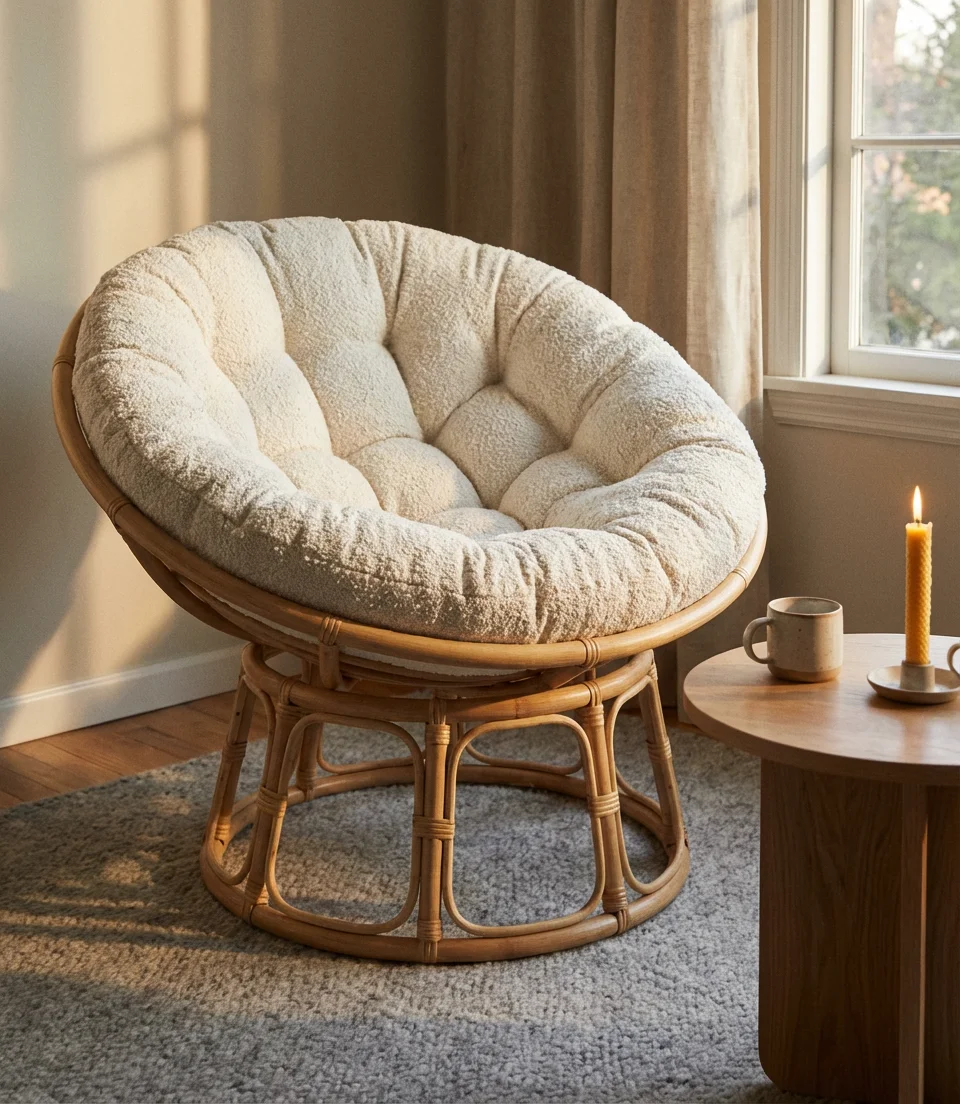
Less known but deeply loved by those who discover it: the rocking papasan swaps the standard base for a curved rocker that lets the whole seat gently sway. It’s the intersection of two classic comfort chairs—the rocking chair and the papasan—and the result is something that new parents, readers, and anyone who simply loves to move while they sit absolutely adore. The rocking motion adds a sensory layer that the standard version simply doesn’t offer.
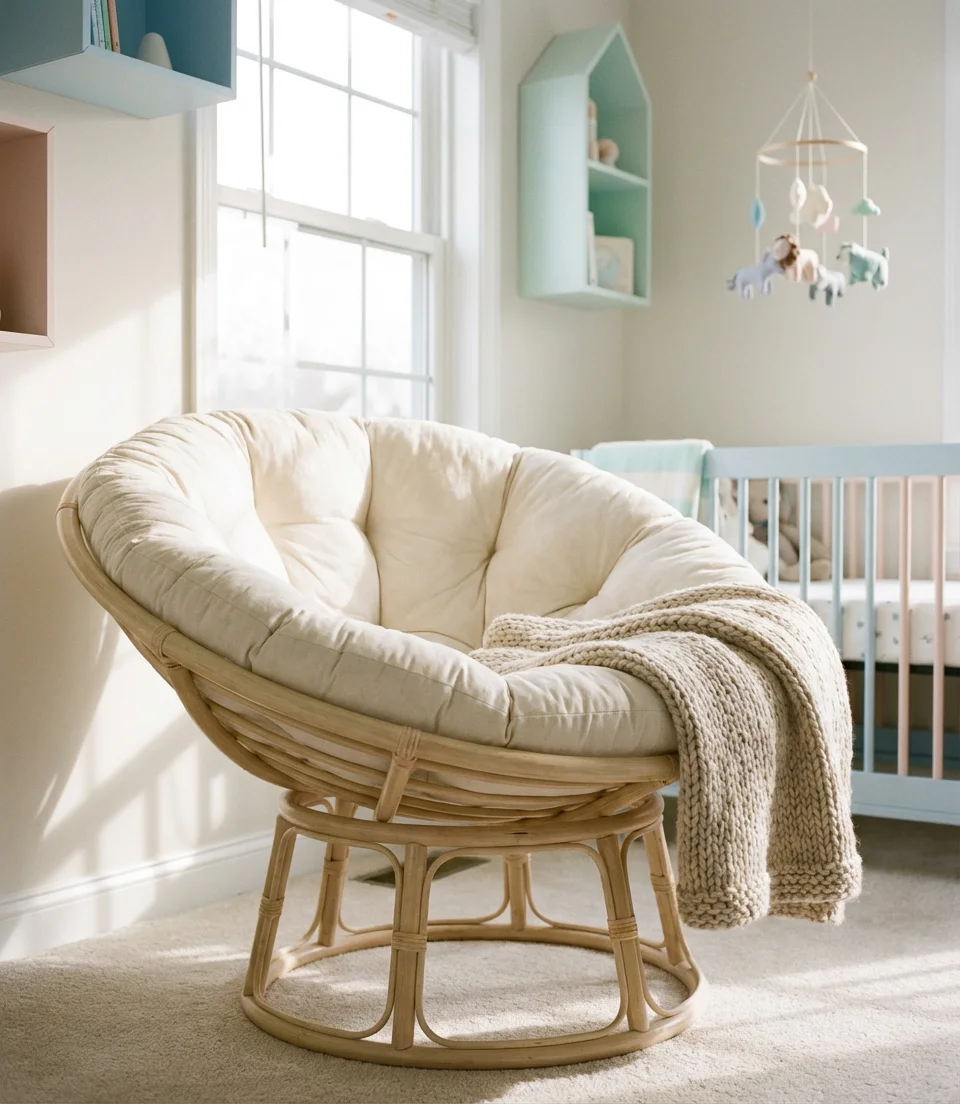
New parents in particular have become devoted fans of the rocking papasan as a nursery alternative to traditional gliders. It’s roomier, softer, and often more affordable than purpose-built nursery rockers. If you’re considering this version, verify the weight capacity carefully—rocking frames tend to have slightly lower limits than fixed bases, and you’ll want to ensure it’s rated appropriately for your use.
12. Corner Reading Nook Ideas for Small Spaces
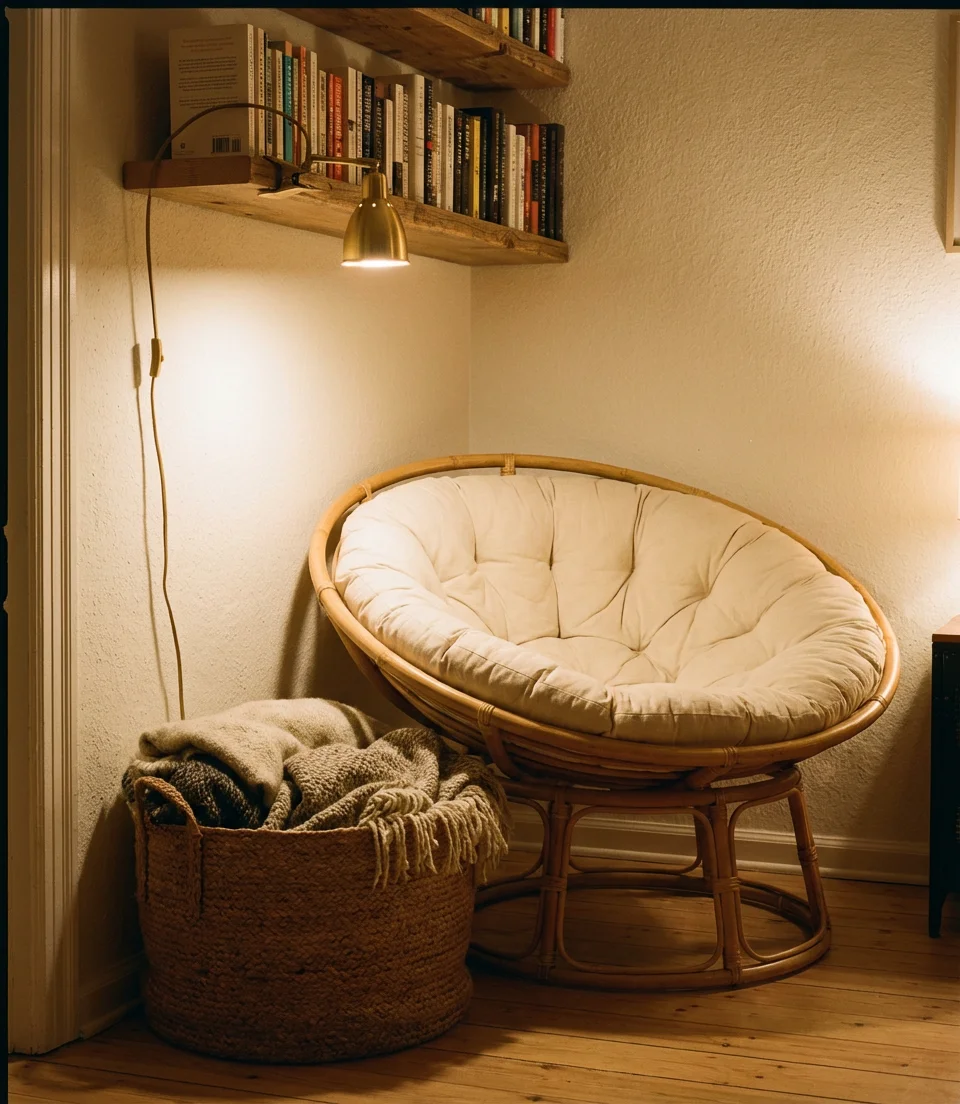
When square footage is limited, the papasan is one of the smartest corner ideas available for creating a reading nook. Its circular base takes up a relatively small footprint, and its vertical presence—especially with a tall, angled frame—fills a corner visually without blocking pathways. A floating shelf above, a clip-on reading light, and a basket for blankets on the floor complete the setup without requiring a single piece of built-in furniture.
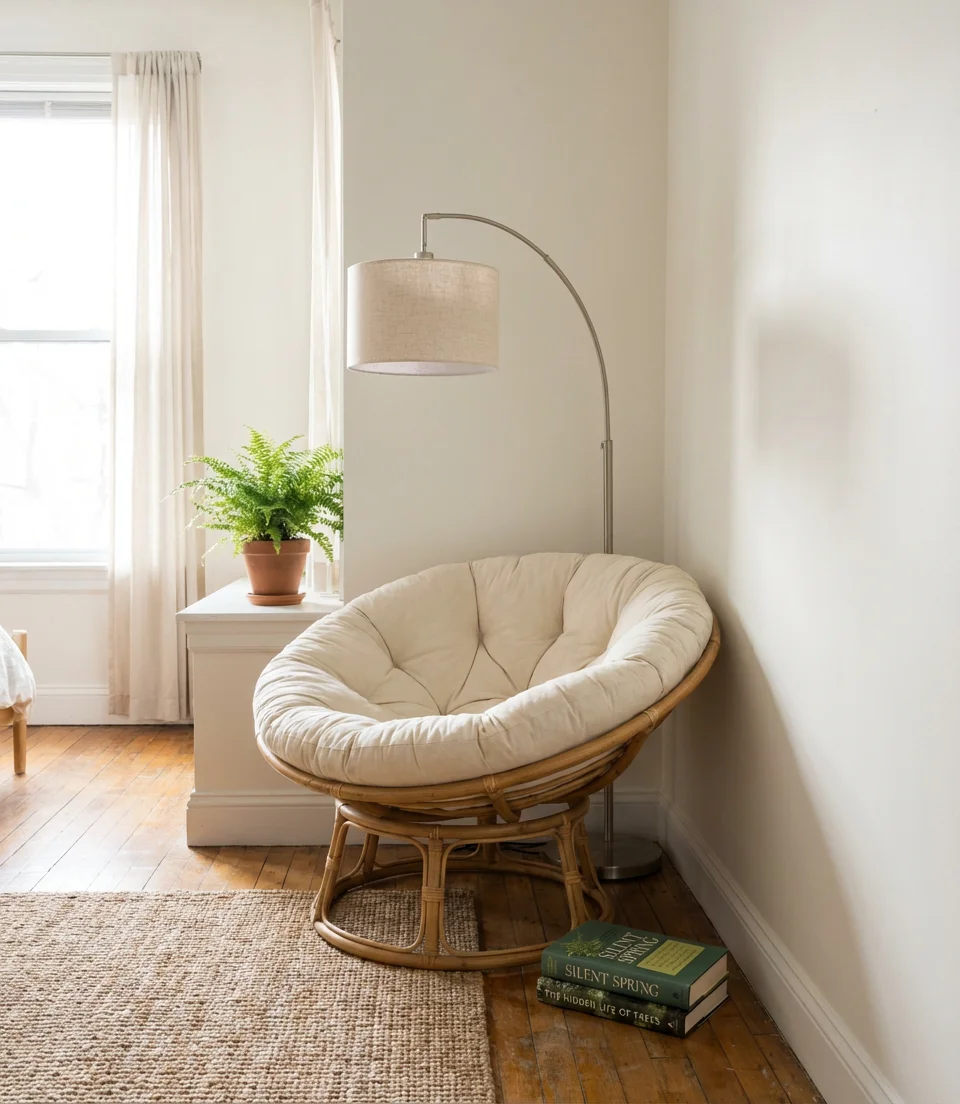
Real homeowners in New York City studio apartments have documented this setup across social media as a genuine game-changer for small-space living. The psychological benefit of having a defined “reading spot”—even in a studio—is hard to overstate: it gives the mind a place to shift into a different mode. Maintain the intended sense of intentional calm by keeping the surrounding decor minimal.
13. Living Room Layout with Papasan as Accent Chair

In a standard living room layout, the papasan functions beautifully as a secondary accent chair—angled beside a sofa rather than placed directly opposite it. This decor style for the living room gives the seating arrangement visual variety and breaks the predictable two-chairs-facing-the-TV formula. It signals a room designed for conversation and comfort rather than just media consumption, which is exactly the mood most homeowners are after.
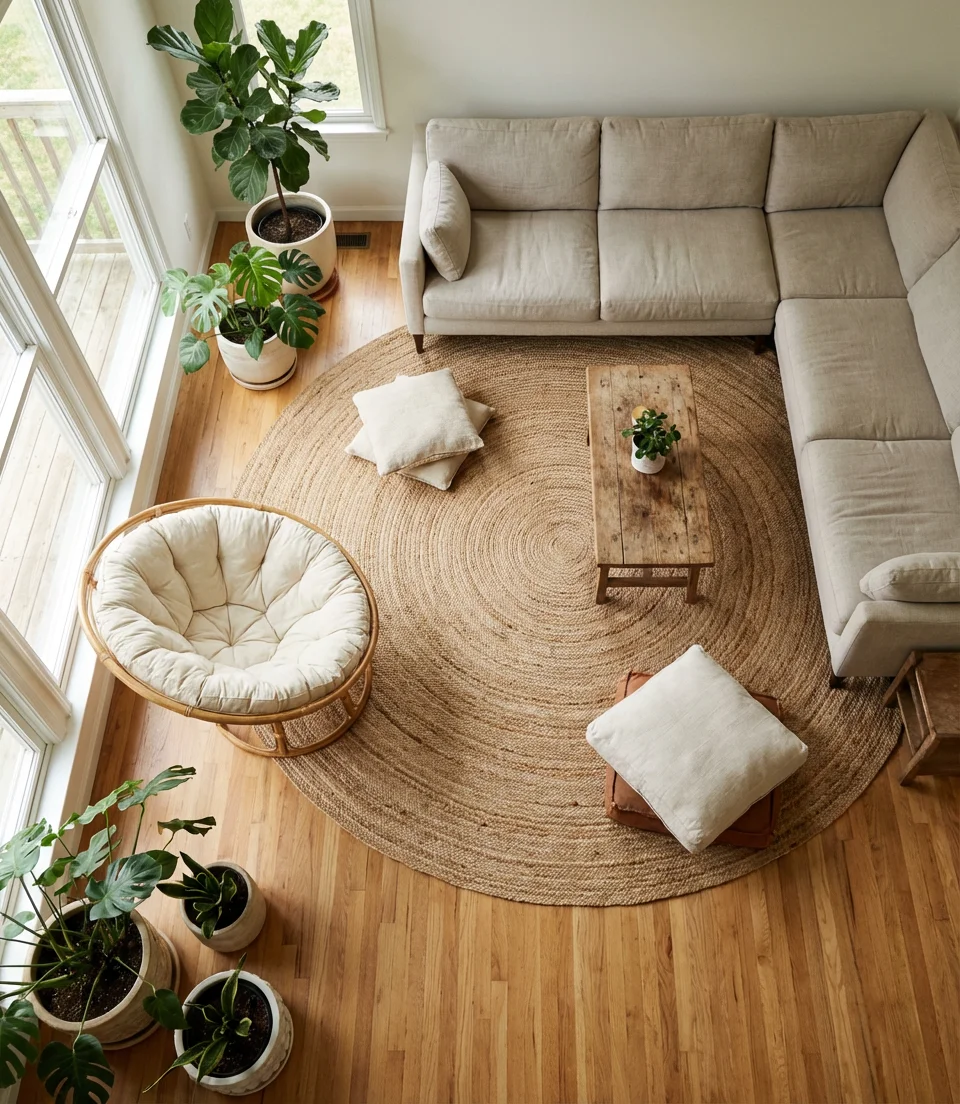
Interior designers recommend keeping at least 18 inches of clearance around the papasan base so it doesn’t feel hemmed in by other furniture. A common layout mistake is pushing it into a corner so tightly that getting in and out becomes awkward—the chair needs a little breathing room to function well and look right. Think of it as a destination in the room, not filler for an empty corner.
14. Papasan Cover Styling Techniques
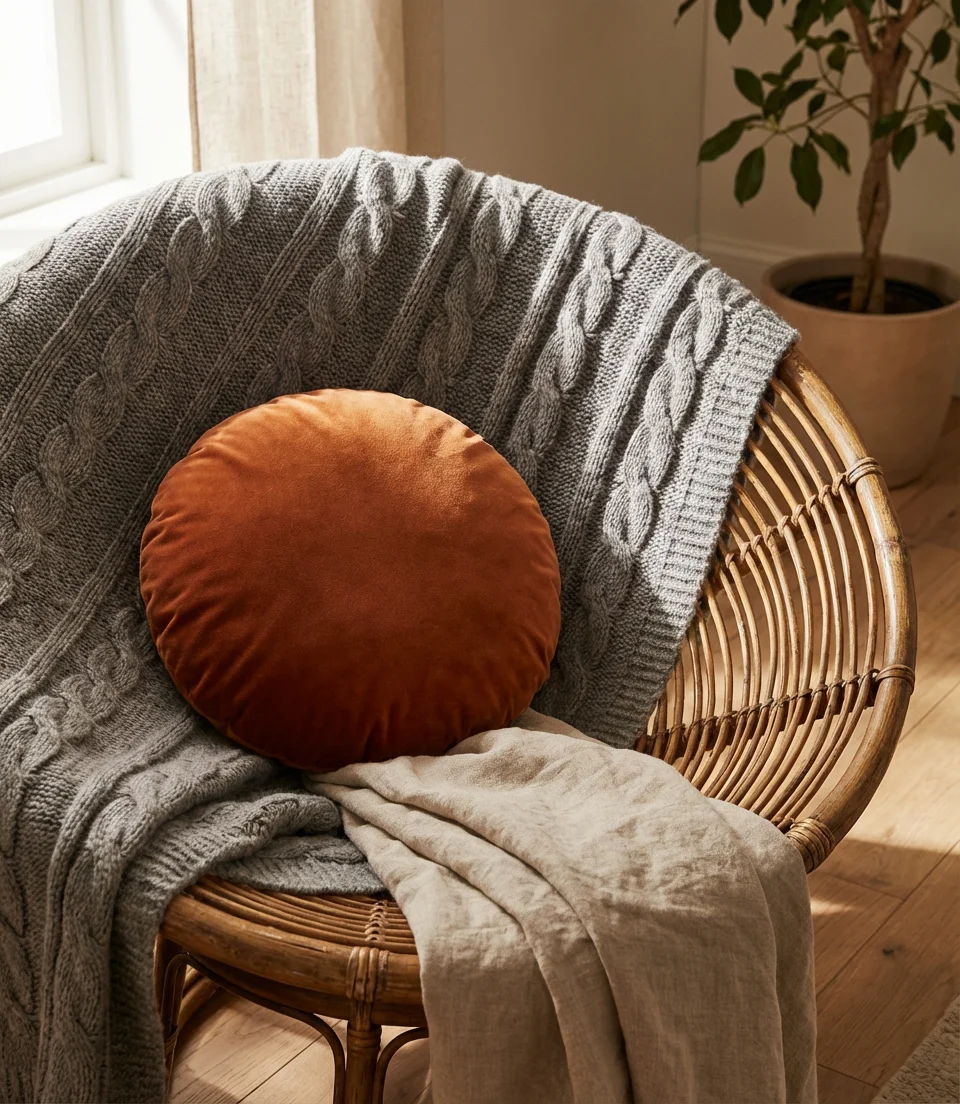
Beyond the cushion itself, how you style your papasan cover and drape additional layers over it dramatically changes its personality. A chunky knit throw casually draped over one side adds texture and warmth. A folded linen blanket at the bottom adds a layered look. Even the way you position throw pillows—one large lumbar behind you versus two smaller round ones—shifts the aesthetic from casual to considered without any additional cost.
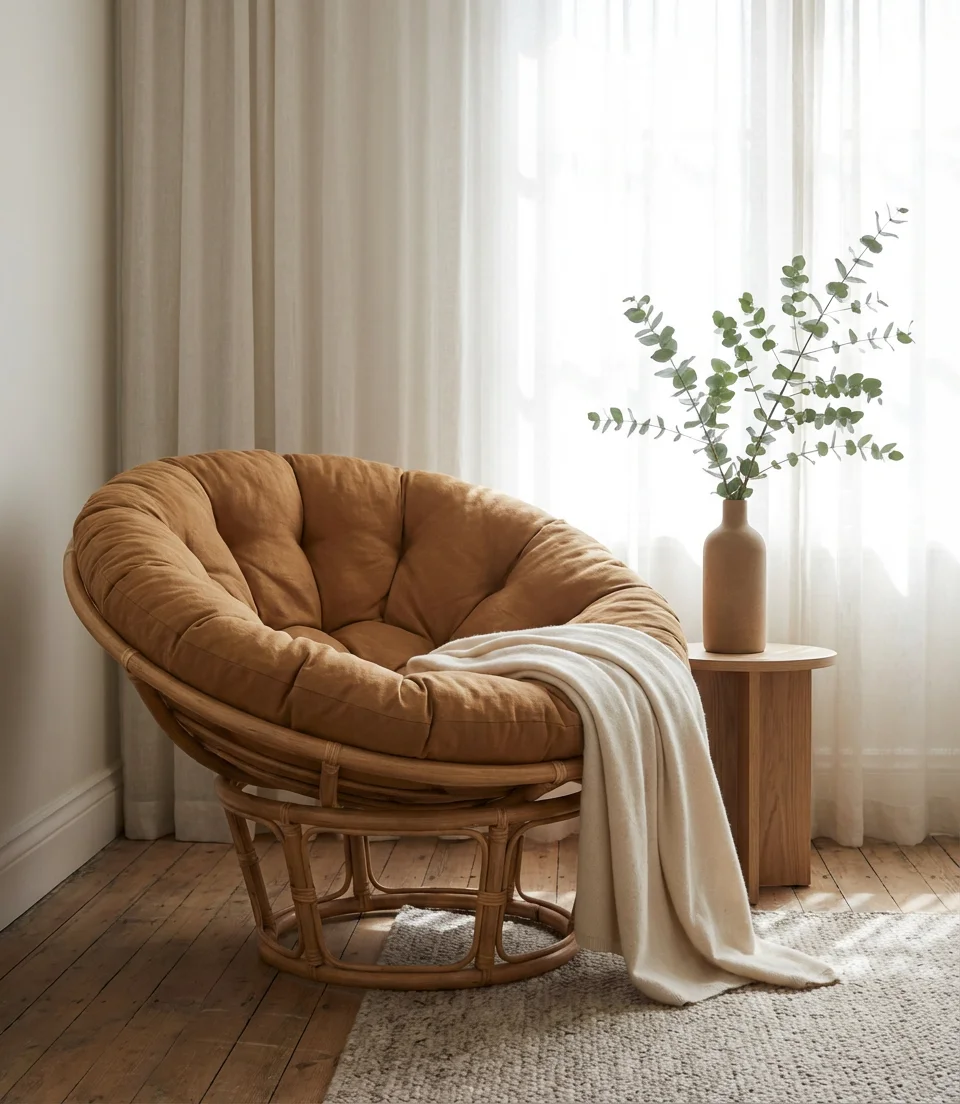
Styling professionals who work on home photoshoots note that the papasan is one of the most versatile props precisely because of how much its look changes with accessories. For fall and winter shoots, heavy textiles and warm-toned throws dominate. For spring and summer, linen covers in light neutrals with a single fresh flower on the side table create a completely different energy. The frame stays the same; the season changes everything around it.
15. Bedroom Ideas with Papasan as a Vanity Seat
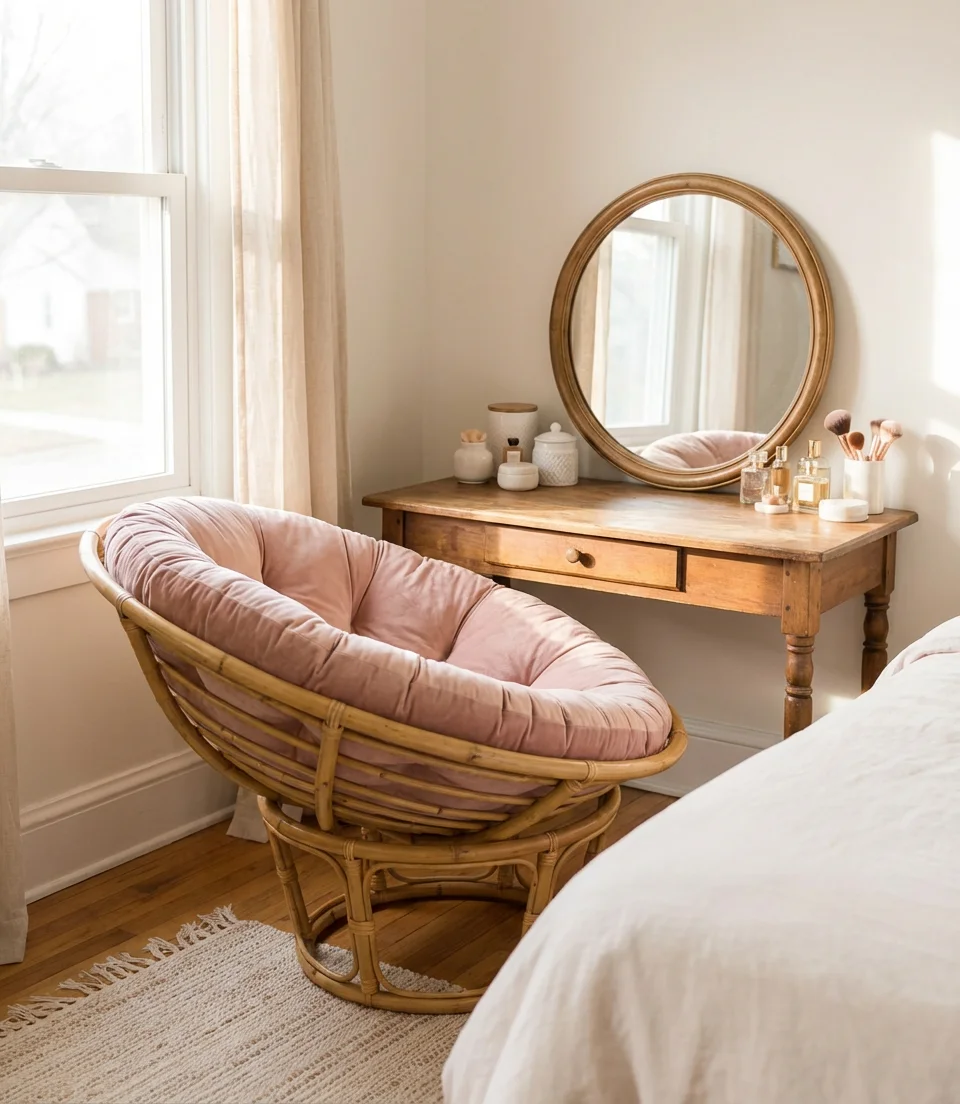
An unexpected but surprisingly practical bedroom idea: using a smaller papasan or half-papasan variant as a vanity seat. The low, cradled sitting position works well for a mirror set at the right height, and the softness of the cushion makes getting ready in the morning feel less rushed. In a bedroom aesthetic that leans feminine or maximalist, a papasan at the vanity adds a distinctive, personality-forward detail that standard stools can’t match.
“I replaced my vanity stool with a small papasan, and honestly it changed my whole morning routine—I actually sit down to do my makeup now instead of rushing through it standing up,” said one homeowner in a popular home decor thread on Reddit. The chair invites you to slow down, which is exactly the energy a morning routine benefits from. Just ensure the mirror height is adjusted accordingly, as most standard vanity mirrors are calibrated for a higher seated position.
16. Reading Nook Aesthetic with Fairy Lights
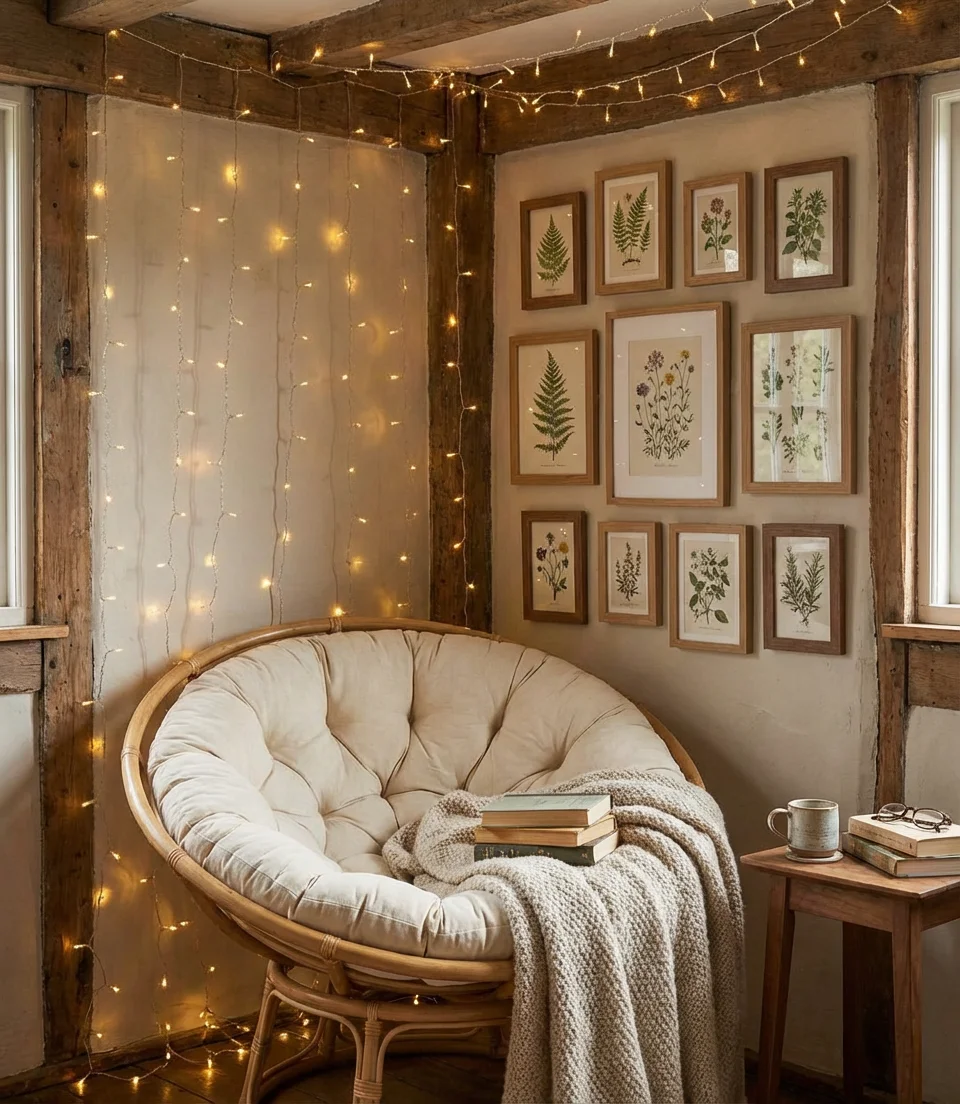
The reading nook aesthetic that gets the most saves on Pinterest is almost always the same combination: a papasan chair, warm fairy lights overhead or draped on a nearby wall, and a small gallery of framed prints or pressed botanicals beside it. It’s a formula because it works—the layering of warm light sources creates an atmosphere that no overhead ceiling light can replicate, and the papasan’s enveloping shape makes the space feel genuinely sheltered.
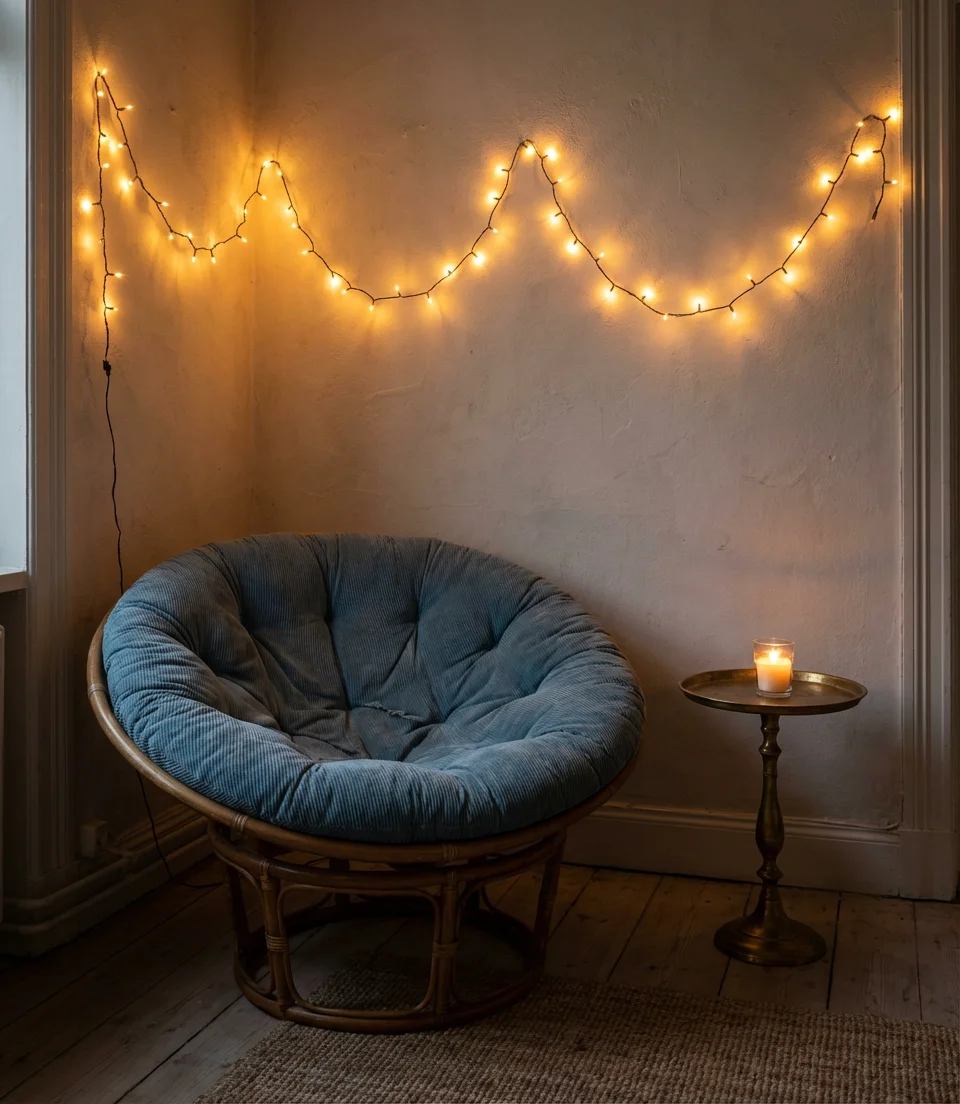
This setup is particularly popular among college students and young renters who want to create an atmosphere in a space they don’t own and can’t modify. String lights require no tools, no holes in walls (command hooks work perfectly), and can be taken down and reinstalled in a new space easily. The total investment for a dreamy fairy-light papasan nook—including the chair—typically ranges from $200 to $400, making it one of the highest visual returns per dollar in home decor.
17. Outdoor Papasan on a Covered Porch

A covered front porch or back deck is the ideal outdoor environment for a papasan chair—sheltered from direct rain but open to fresh air, it allows you to enjoy the chair’s full comfort without worrying about moisture damage. Balcony and porch setups in the American South have long embraced oversized, casual seating as part of outdoor living culture, and the papasan fits perfectly into that tradition. Add a small wicker side table, and you have a complete outdoor sitting area.
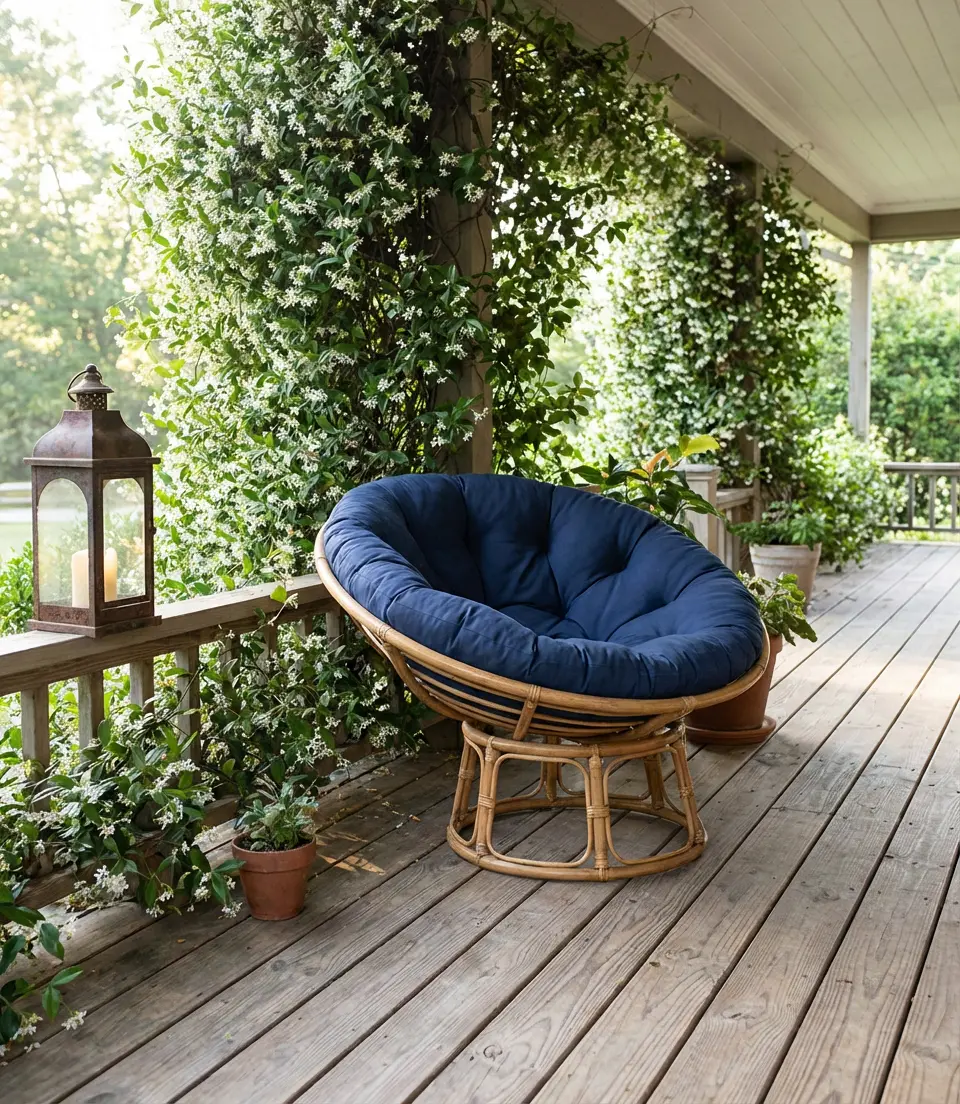
For longevity outdoors, a powder-coated steel frame will outlast natural rattan significantly in humid climates—important in states like Florida, Louisiana, and Georgia, where heat and humidity accelerate material breakdown. Choosing synthetic rattan over a steel frame often offers both aesthetic and practical benefits. Budget an extra $30–$50 for UV-resistant cushion fabric to prevent fading through summer sun exposure.
18. Corner Ideas with Built-In Bookshelf Surround
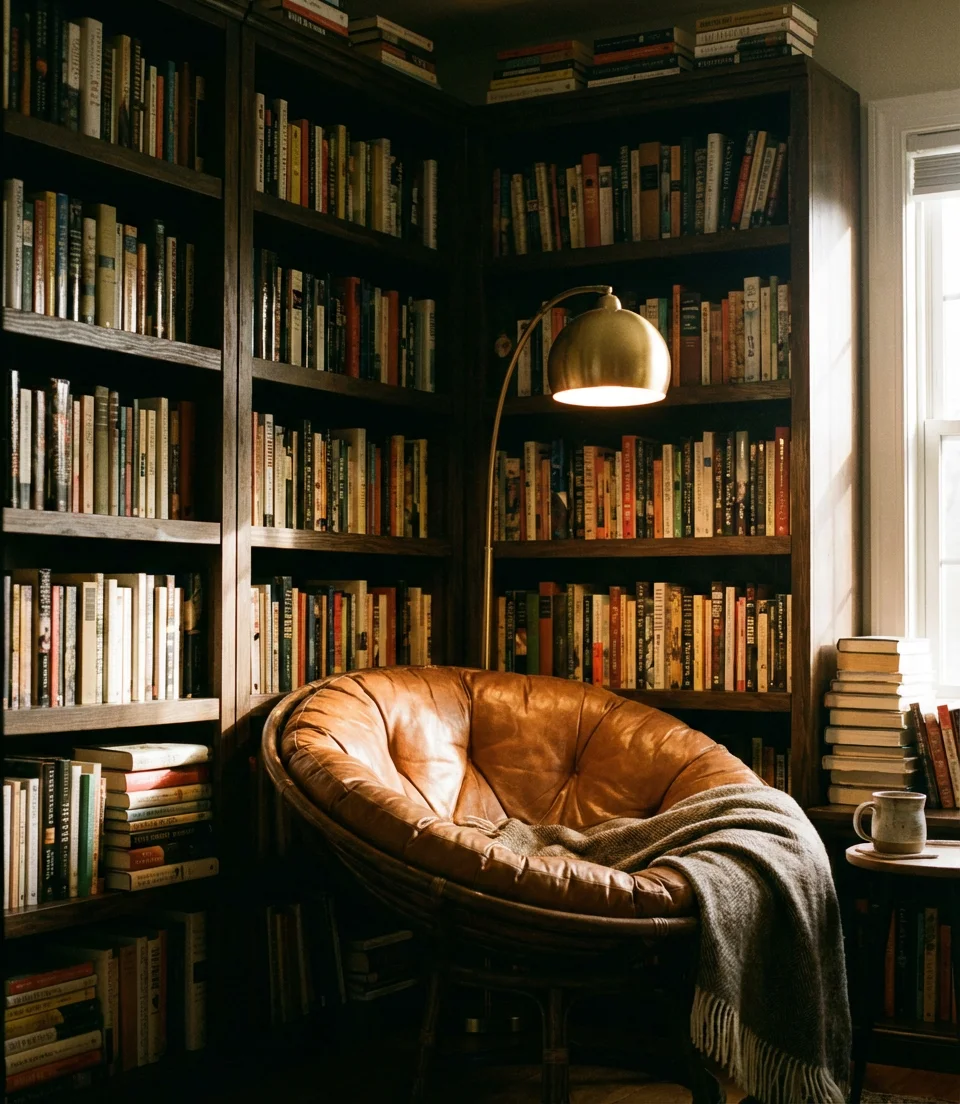
For the ultimate reading corner, place a papasan inside a built-in or freestanding bookshelf alcove—shelves on both sides, books at arm’s reach, and a warm light source above. This corner treatment turns a papasan into the centerpiece of a personal library rather than just a chair. It’s a design idea that works in homes with dedicated study rooms or living rooms large enough to dedicate a full corner to a reading vignette.

Homeowners who have built this setup report that it dramatically increases the amount of time they actually spend reading—the immersive environment encourages longer sessions. If built-ins aren’t an option, two tall IKEA Billy bookcases flanking a papasan chair achieve a very similar effect for a fraction of the cost. The key is ensuring the shelves are deep enough that books don’t crowd the chair from either side.
19. Aesthetic Living Room with Woven Textures
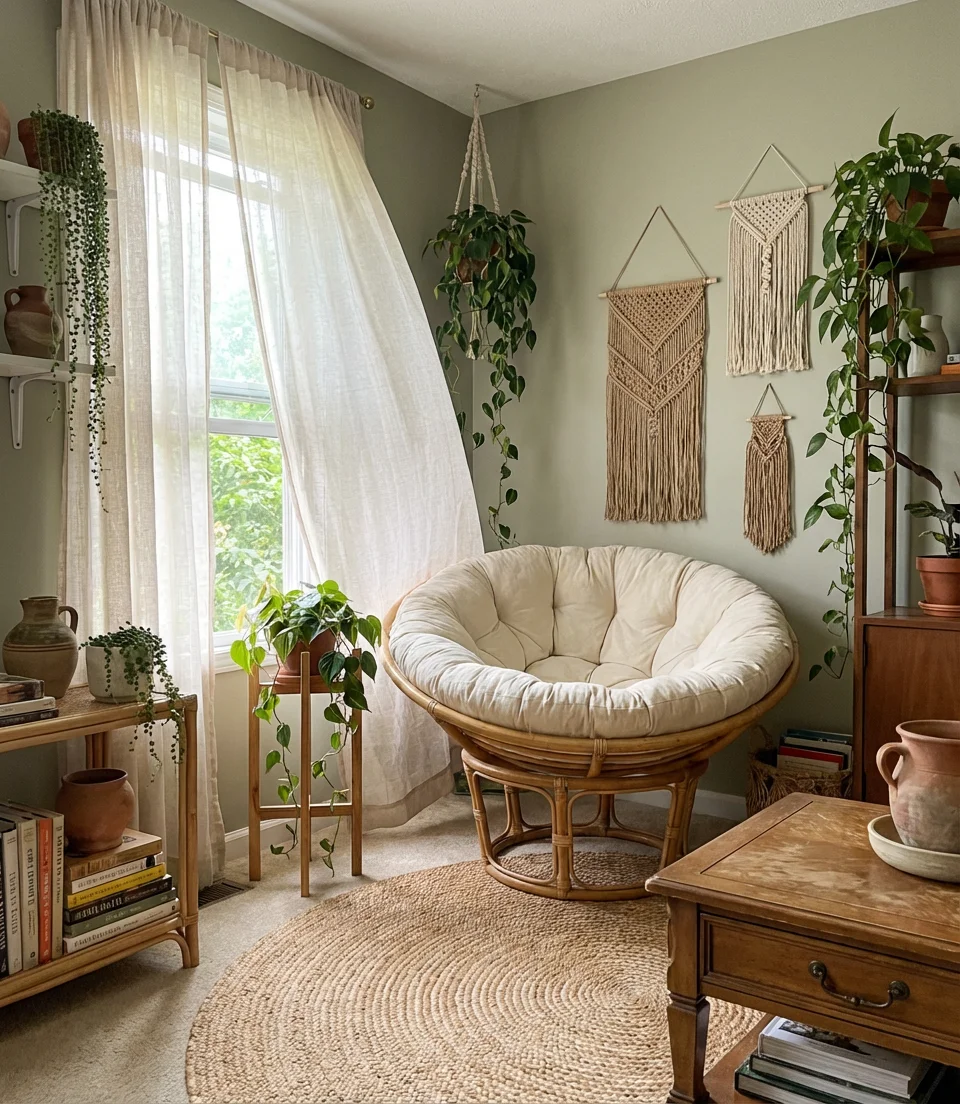
When every textile in a room shares a woven, natural quality—jute rugs, macramé wall hangings, linen curtains—a rattan papasan becomes the organic centerpiece that ties it all together. This aesthetic approach to living room decor ideas draws on the same visual language of texture over color, creating warmth through material rather than hue. The result is a room that feels hand-crafted and personal rather than catalogue-assembled.
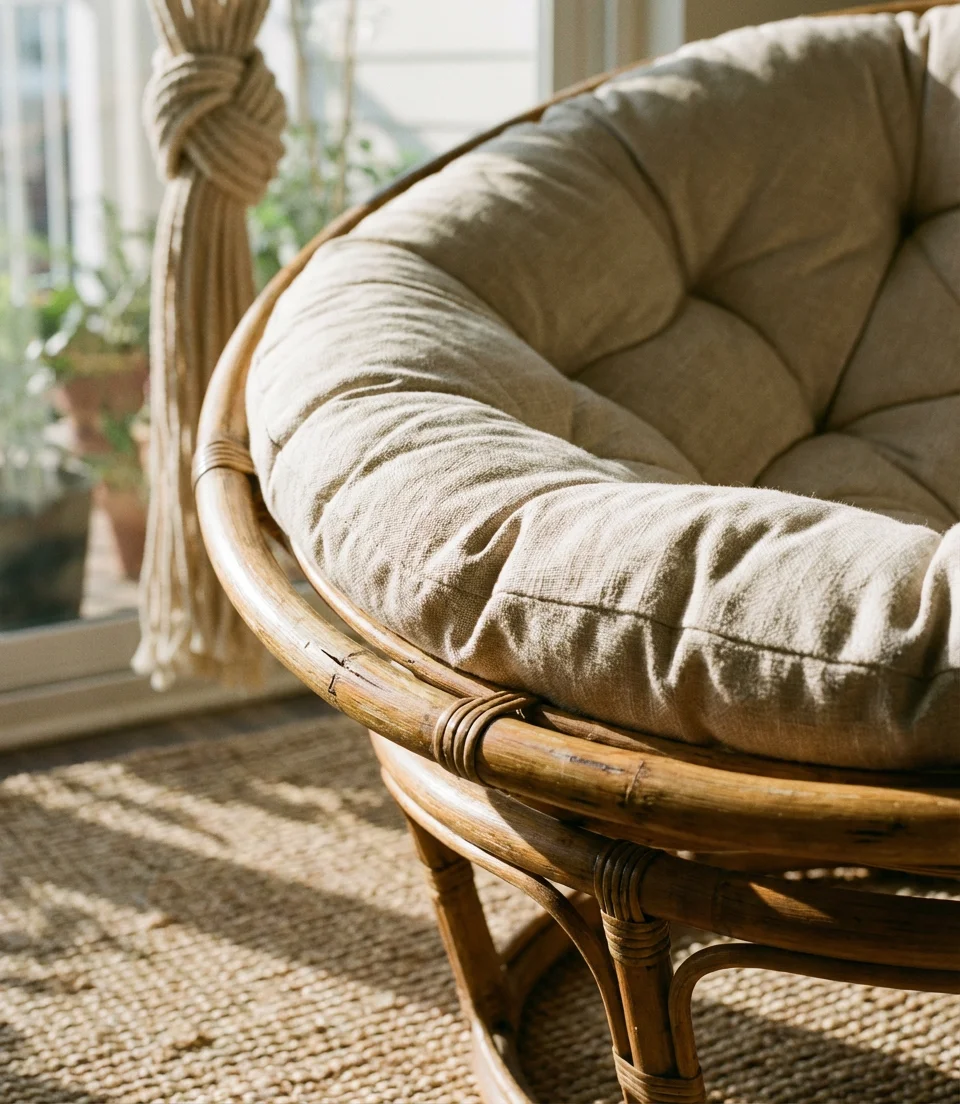
This style is particularly well-suited to open-plan living rooms in homes with exposed wood beams, terracotta tile, or brick walls—architectural details that already carry natural material energy. The papasan, in this context, doesn’t stand out as an eccentric choice; it reads as the obvious one. Keep the cushion in a warm neutral—cream, oat, or light caramel—to let the rattan frame do the visual work.
20. Kids’ Bedroom Reading Nook Ideas
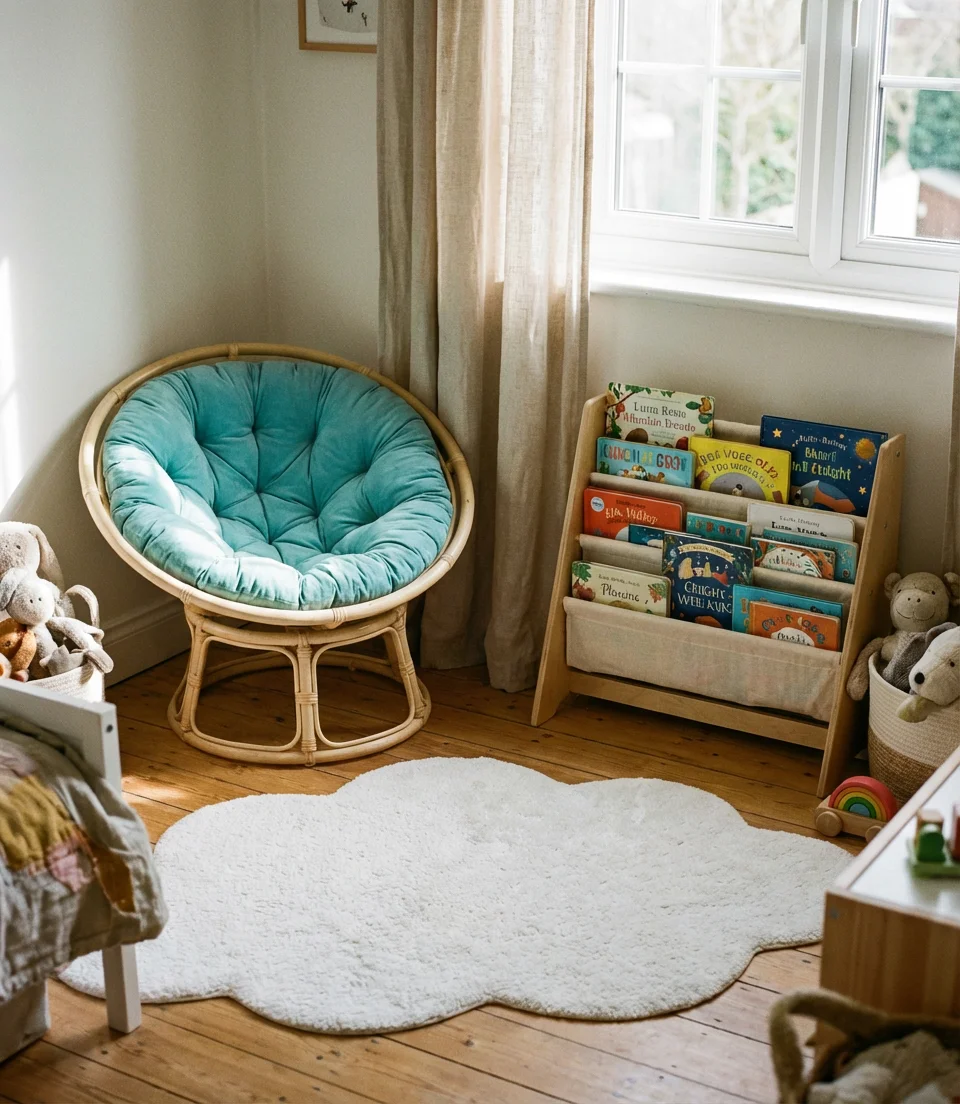
In a child’s room, a small papasan chair is practically magical—it’s low to the ground, perfectly sized for little bodies, and transforms immediately into a reading nook idea that kids will actually use. Pair it with a low floating shelf of picture books within reach and a soft rug, and you’ve built a bedroom corner that encourages independent reading from an early age. The round shape also makes it toddler-safe—no sharp edges to worry about.
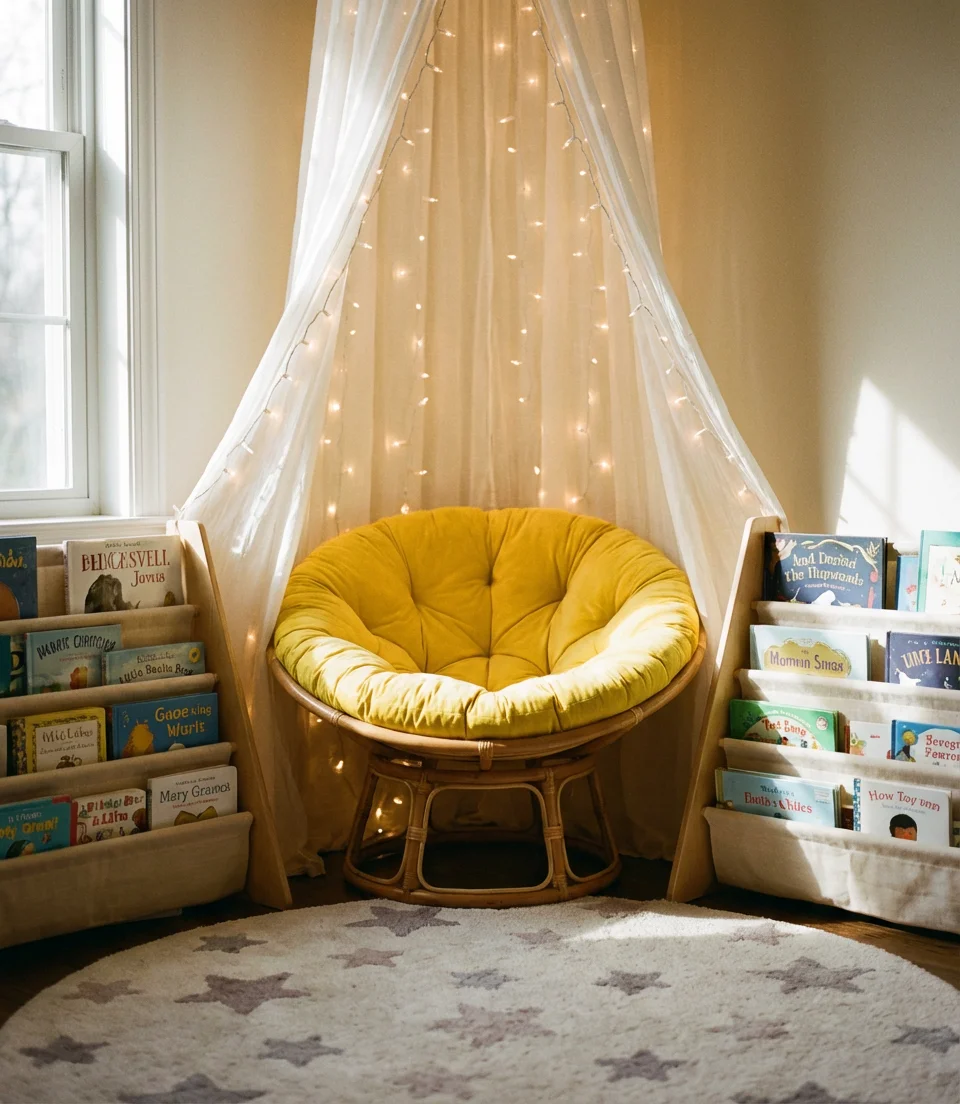
Child development specialists increasingly recommend dedicated reading spaces in children’s rooms as a way to build positive associations with books early on. Having a chair that’s “just theirs”—in a color they chose, in a corner they helped decorate—gives children a sense of ownership over their reading habit. In a kid’s room, washable cushion covers are essential; opt for options with zipper closures that can be easily washed in the washing machine.
21. Papasan in a Home Office Corner
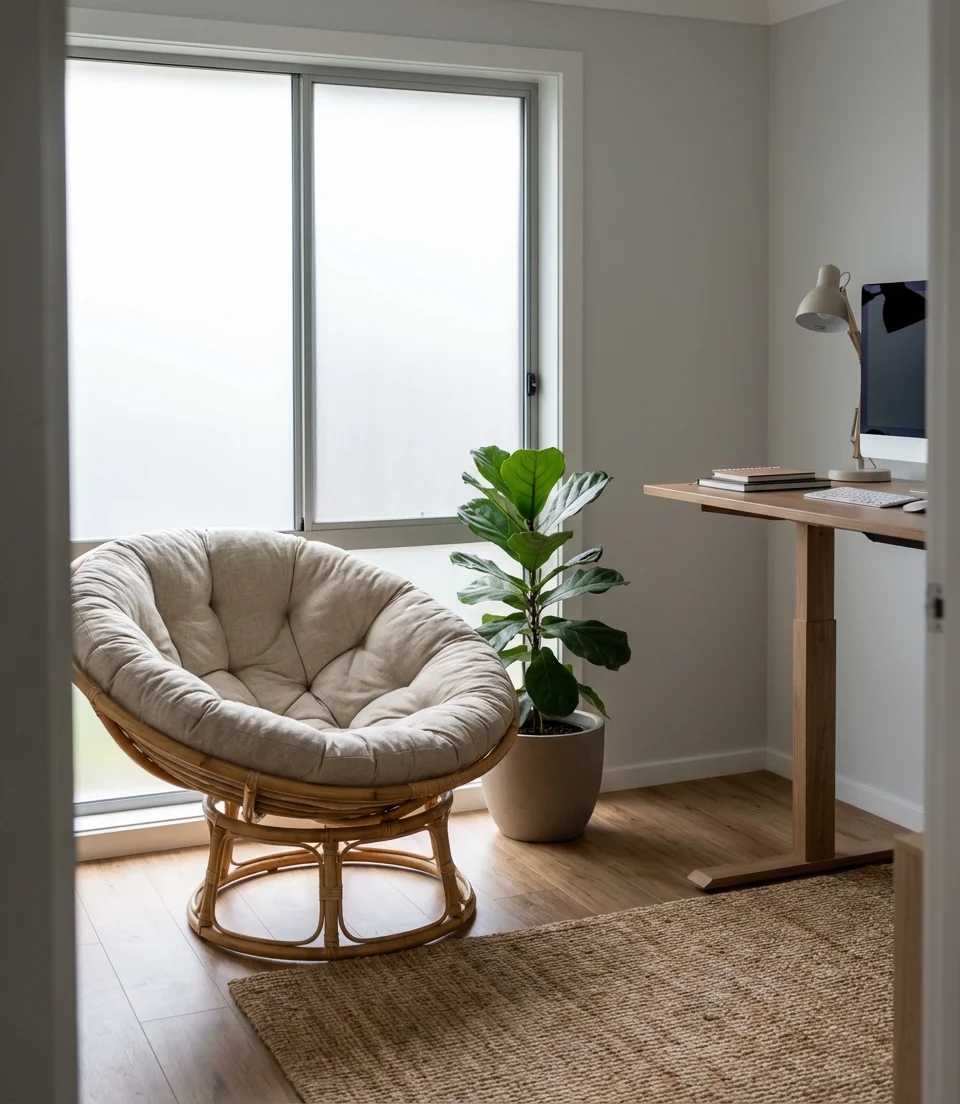
The post-pandemic home office has evolved from a functional workspace into a multi-purpose room—and a papasan in the corner of a home office creates an essential decompression zone within the work environment. When you need a break from the desk but don’t want to leave the room, having a comfortable seat nearby is a genuine productivity tool. It’s a small design decision with an outsized impact on how the room feels day to day.
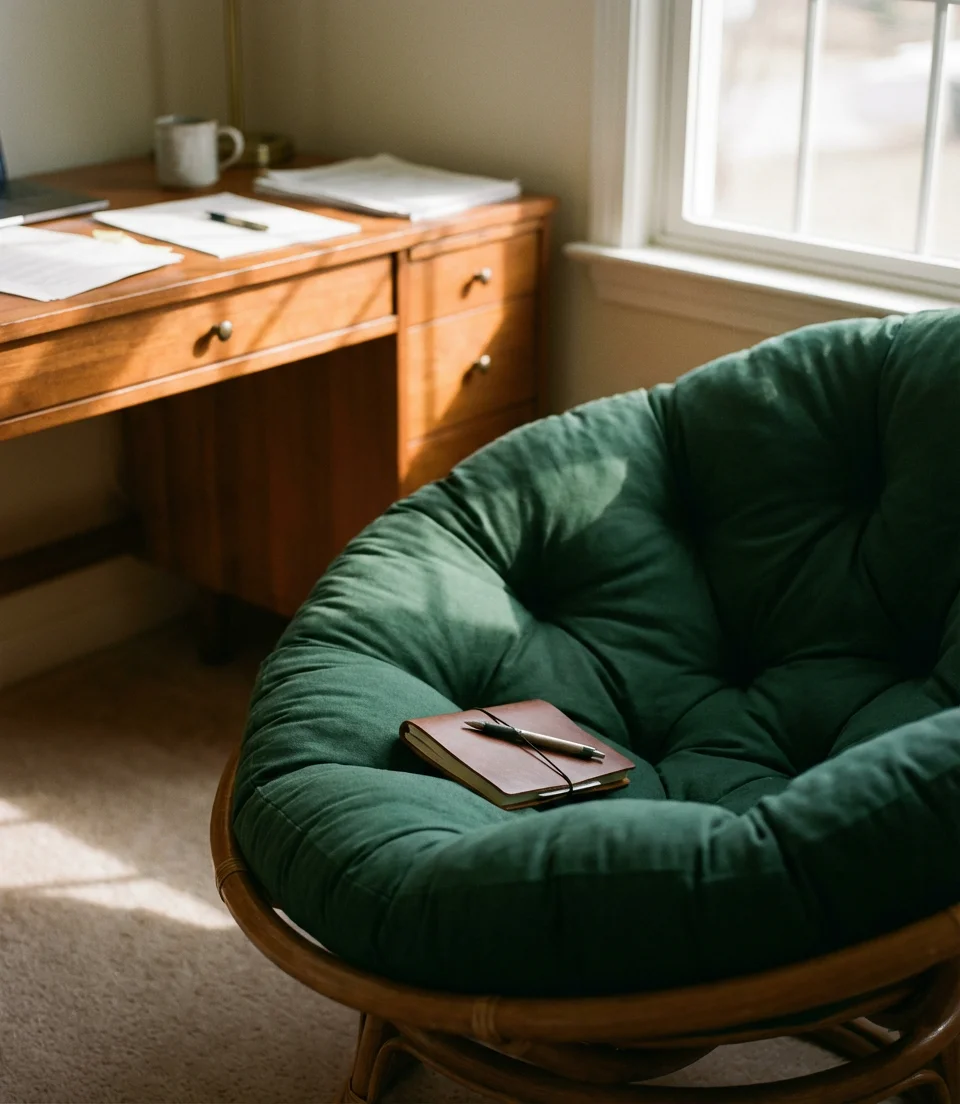
Remote workers across the country report that having a distinct “thinking chair” separate from their work chair helps them mentally shift into a different mode—brainstorming, reading, or simply resting their eyes. Keep the papasan in the office visually aligned with the room’s overall palette so it doesn’t read as out of place. A dark frame with a neutral cushion integrates cleanly into most professional home office color schemes.
22. Cozy Winter Papasan Setup
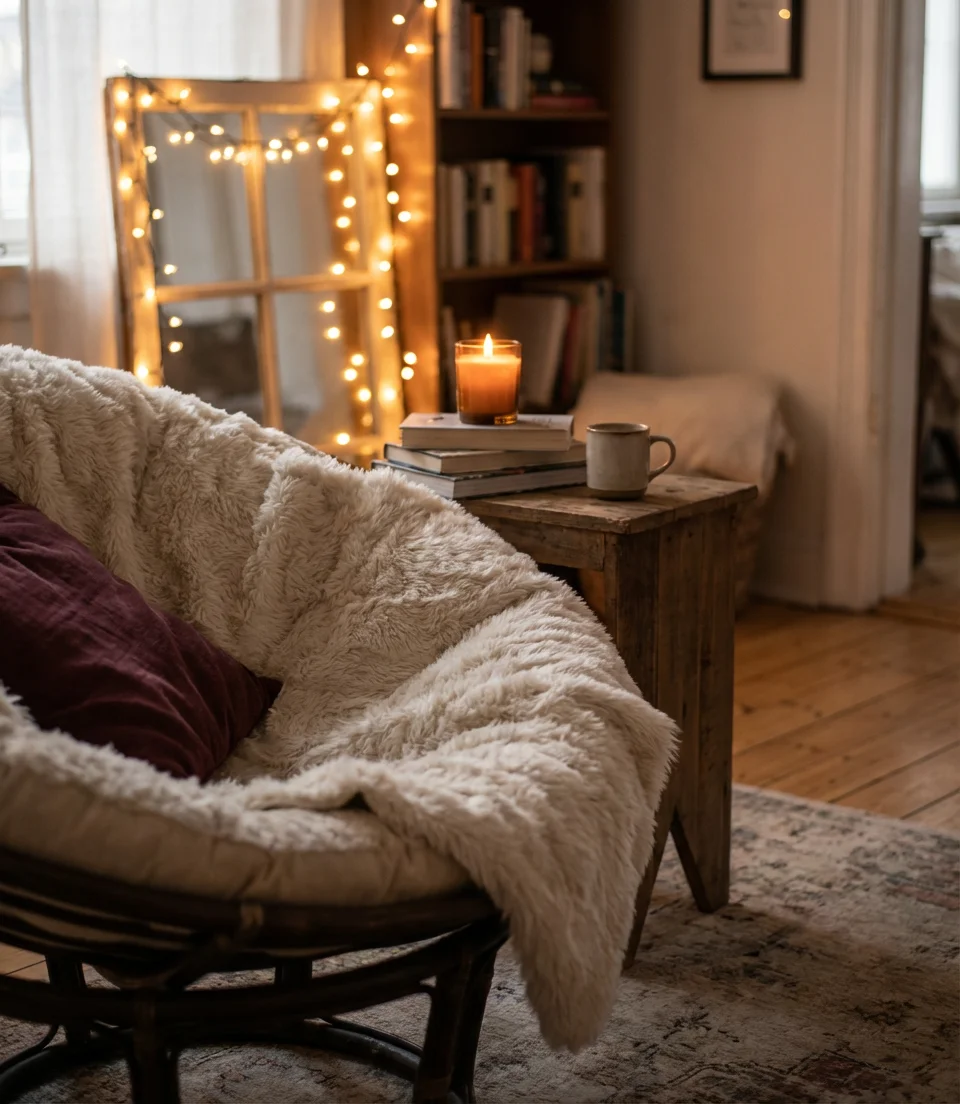
When the temperature drops and the days shorten, the papasan chair transforms into the coziest seat in the house. Layer it with a faux-fur throw, a chunky cable-knit blanket, and an oversized pillow, and it becomes the kind of chair you don’t want to leave. This winter living room ideas approach turns the papasan into a seasonal statement piece—swap out the cushion cover for something deeper (charcoal, burgundy, or dark teal) to signal the shift in season.
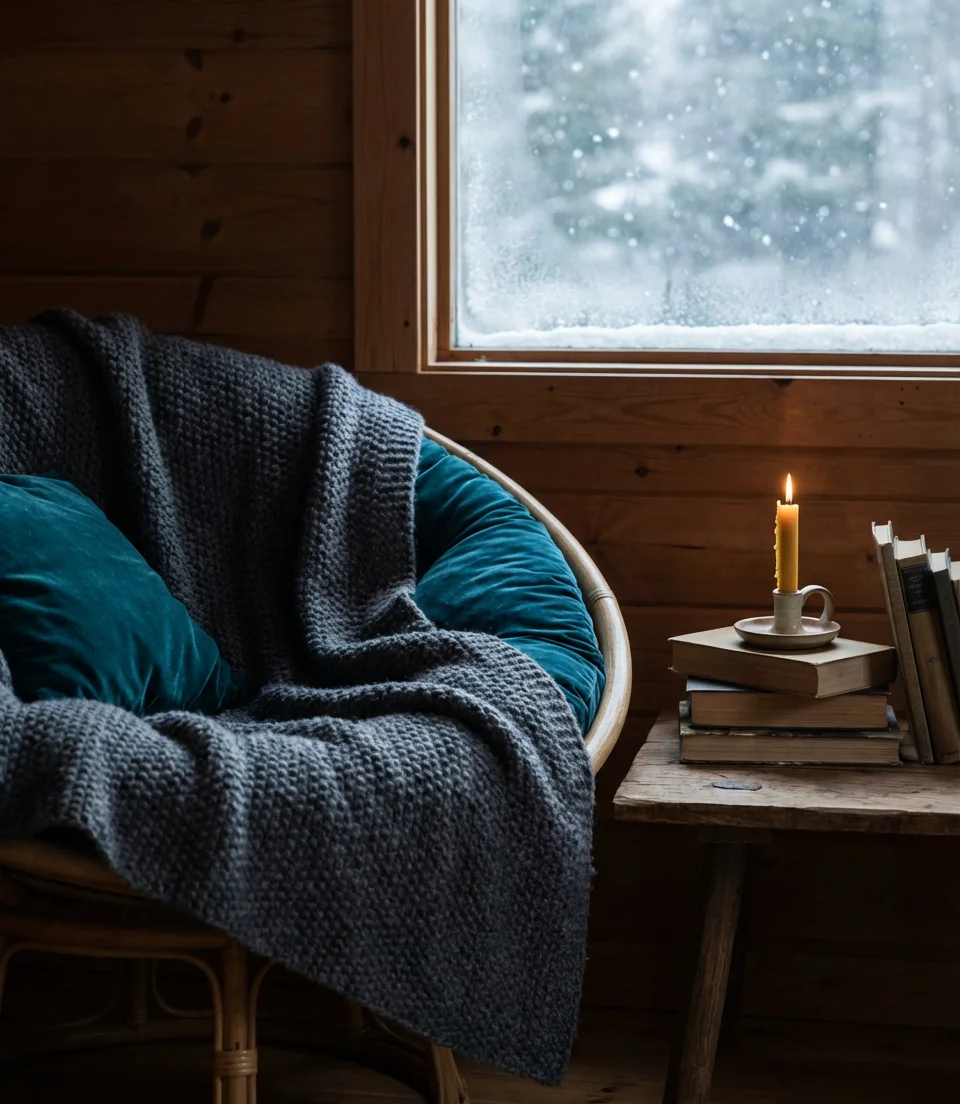
The hygge design philosophy—beloved in Scandinavian countries and increasingly embraced across American homes—is practically built around the papasan concept: a soft, enveloping seat, warm lighting, and layered textiles. If you haven’t tried swapping your cushion cover seasonally, this is the year to start. It’s one of the lowest-cost, highest-impact ways to refresh your living room feeling four times a year without buying anything new.
23. Papasan with a Custom Cushion Color Pop
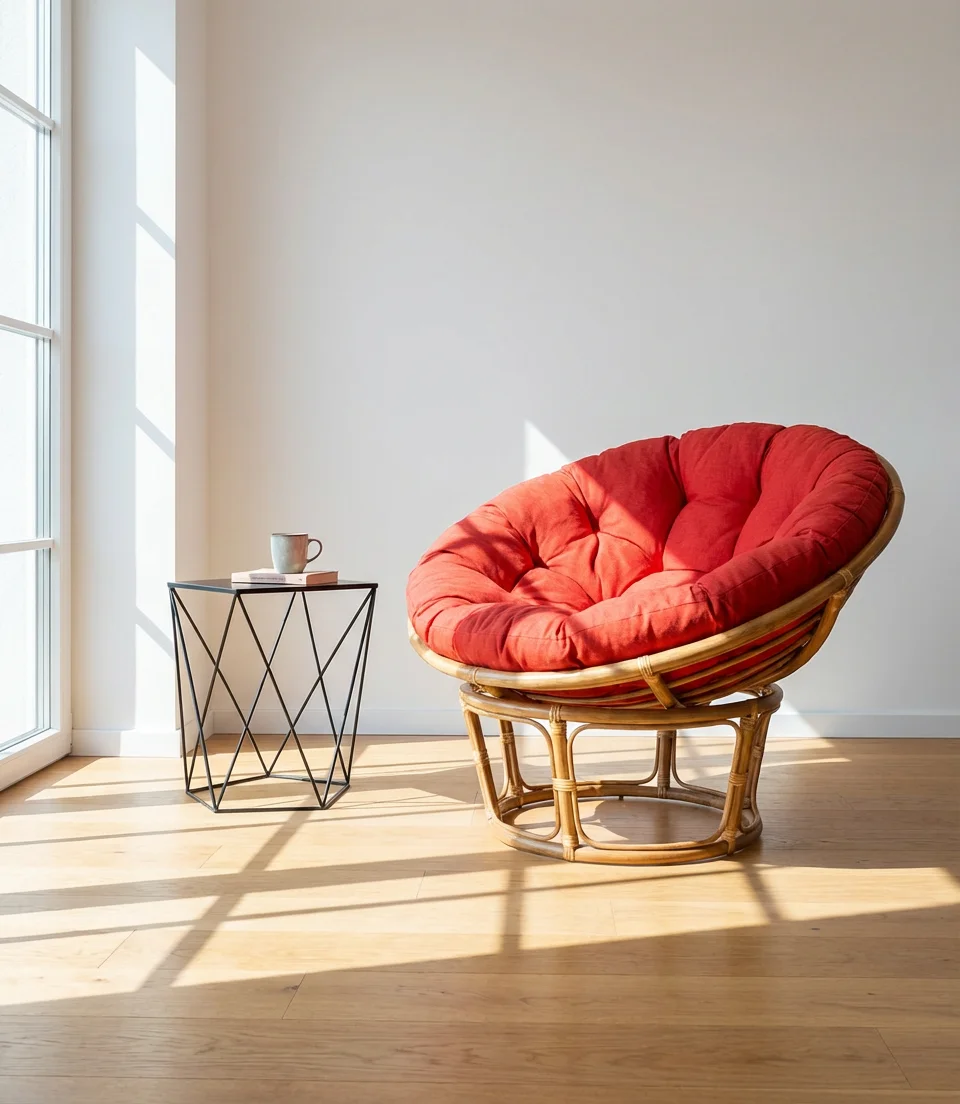
When you want the papasan to be the unambiguous focal point of a room, a bold cushion color is the answer. Electric blue, sunflower yellow, deep terracotta, or poppy red—a color-pop cushion against a natural rattan frame creates an instant focal point that pulls the eye the moment you enter the room. This works especially well in neutral living room designs, where one strong color accent is the entire design strategy.
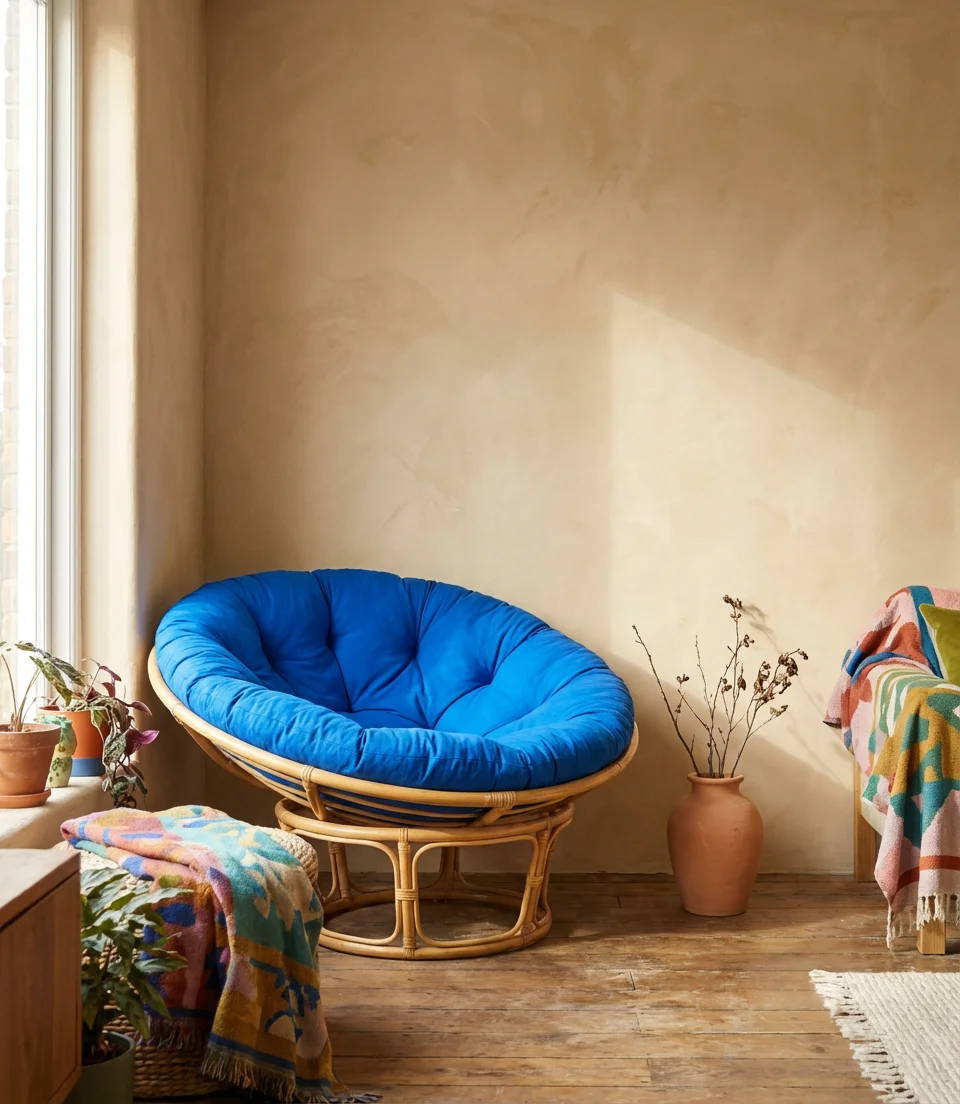
Color theory in interior design suggests that a single bold accent in an otherwise neutral room actually makes the whole space feel more sophisticated, not less. The papasan cushion is an ideal vehicle for this strategy because it can be swapped out for a modest investment when you’re ready for a change. Etsy sellers and custom cushion shops have made it easier than ever to get a papasan cushion in exactly the color and fabric you want—often for $50–$120.
24. Papasan Reading Nook Ideas for Teens
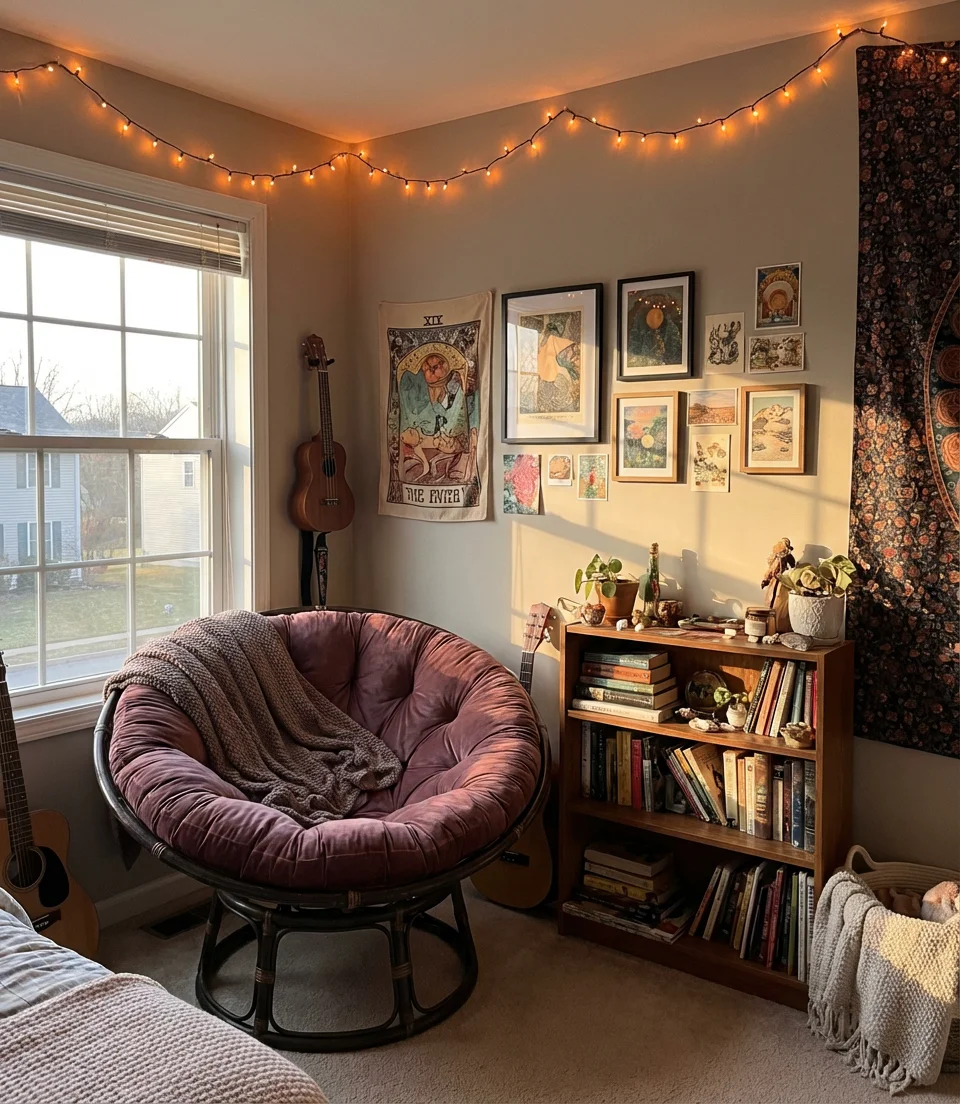
Teenagers are a surprisingly loyal papasan demographic—and building a reading nook ideas corner in a teen’s room around this chair taps into exactly the kind of personal, cozy space they crave. In a bedroom aesthetic context, let the teen lead on the cushion color and styling—whether it skews maximalist with posters and string lights or minimal and moody with dark tones and a single task lamp, the papasan adapts to every personality.
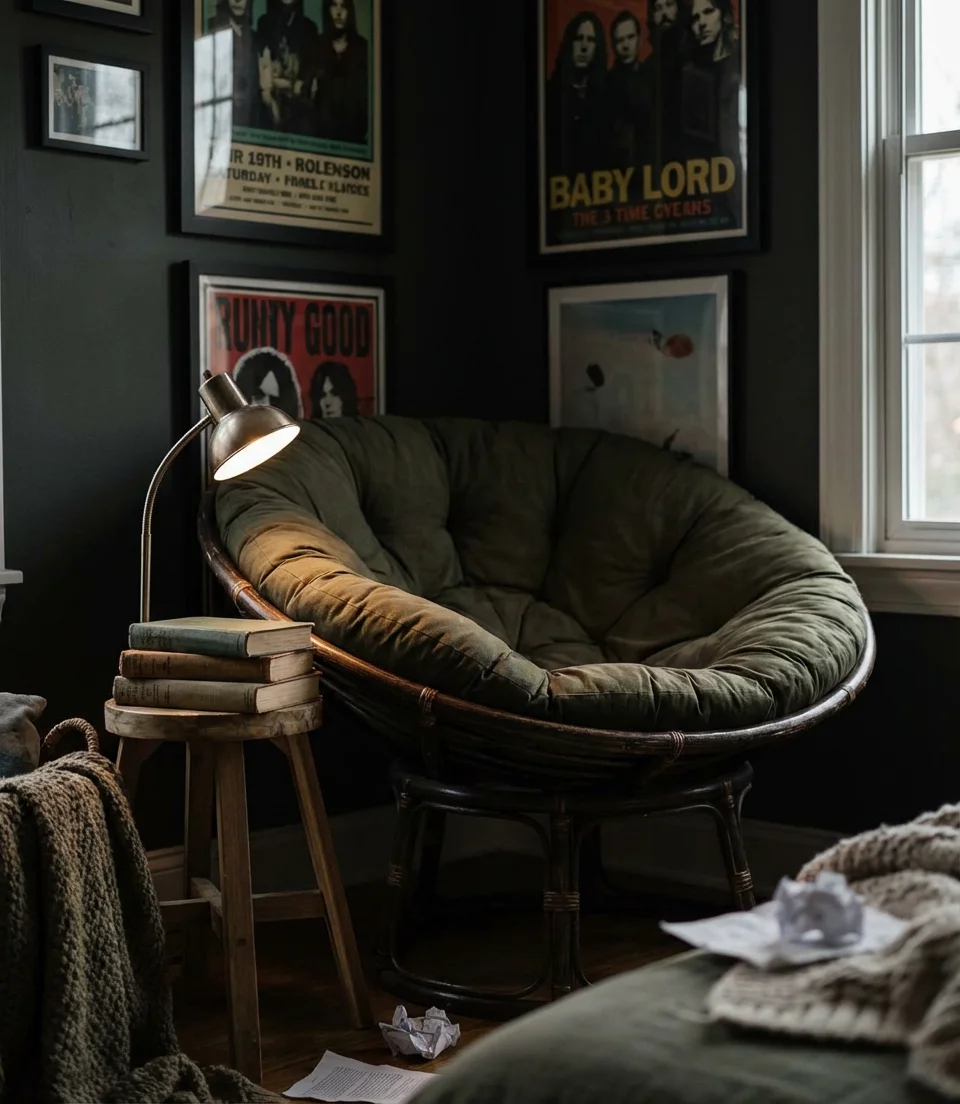
The deeper value of a dedicated reading nook for teens is the creation of a phone-free zone—a space that by its nature invites a different kind of attention. Some parents have reported that simply having the chair in the room and keeping a small stack of books beside it leads to more organic reading, without any rule-setting required. The environment shapes the behavior. That’s not a design concept—that’s practical parenting backed by behavioral research.
25. The Timeless All-Natural Papasan Statement
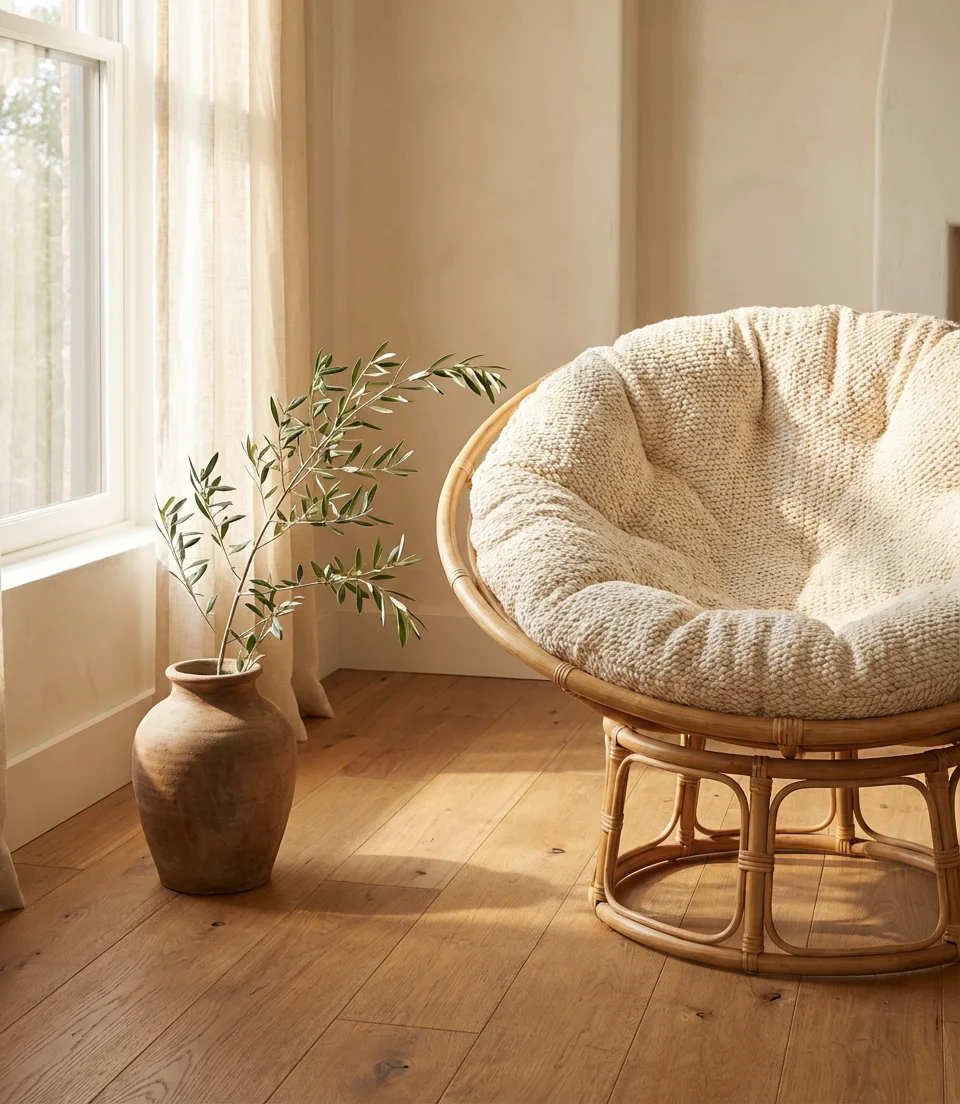
At its most essential, the papasan chair is a study in natural materials working in harmony: a woven rattan frame, a simple cotton or linen cushion, and nothing else added. In a room full of manmade materials—MDF furniture, synthetic textiles, plastic accents—the all-natural papasan reads as a quiet act of intention. It’s a piece that connects a modern interior to something older and more tactile, and that contrast is exactly what gives it staying power.
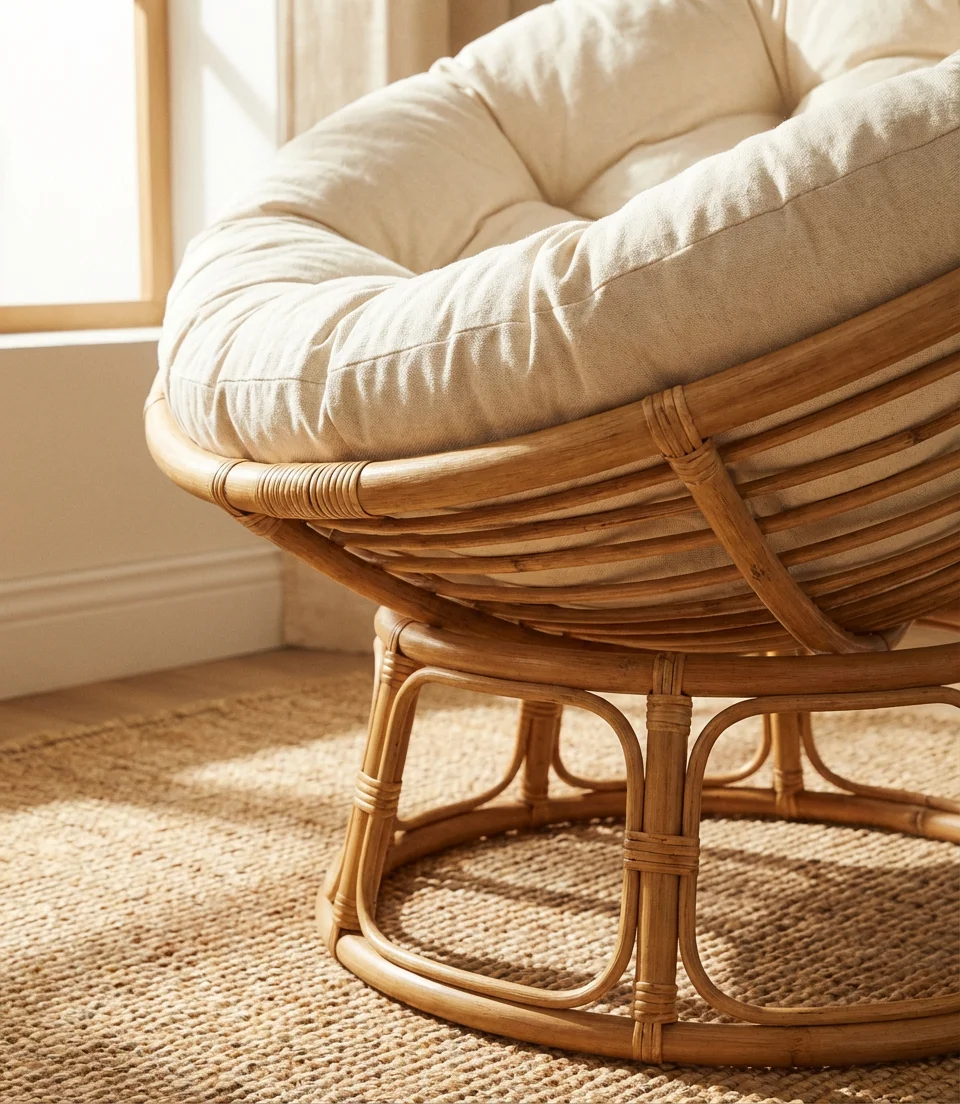
For over five decades, the papasan chair has been in continuous production, enduring every upswing and downswing in design trends. What keeps it relevant isn’t nostalgia—it’s genuinely excellent design. The rounded form, the natural materials, and the deep cradle of the seat: these are functional qualities that hold up regardless of what style era we’re in. In 2026, as interiors trend toward warmth, texture, and organic form, the papasan isn’t a throwback. It’s perfectly suited for the current era.
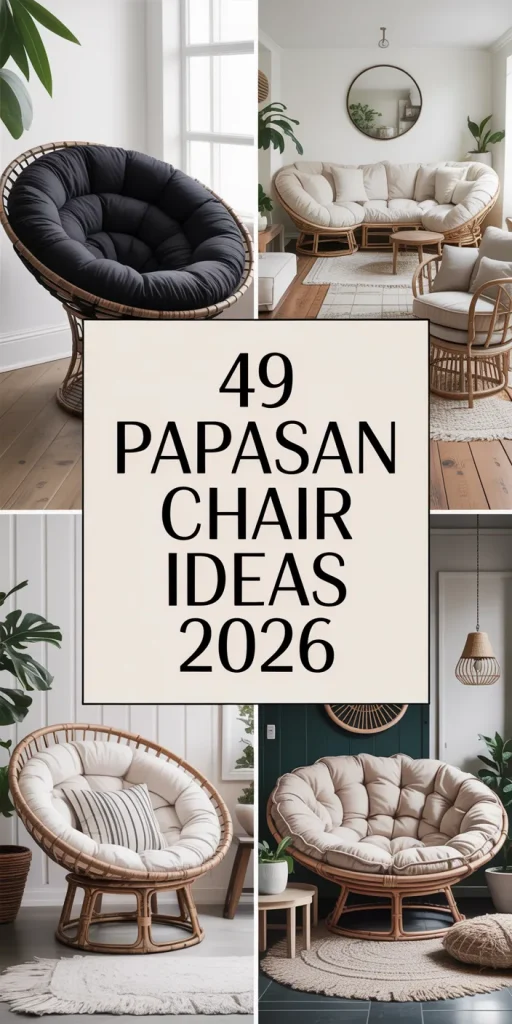
Has one of these papasan chair ideas caught your eye? Whether you’re finally committing to that reading nook you’ve been pinning for months or rethinking your living room layout entirely, we’d love to hear what resonates with you. Drop your ideas, questions, or photos of your own papasan setups in the comments—the best inspiration often comes from real homes, not styled shoots.