48 Walk In Shower Ideas 2026: Transform Your Bathroom Into a Spa-Like Retreat

Walk-in showers have become the centerpiece of modern American bathroom design, and in 2026, homeowners are searching for layouts that blend spa-like luxury with everyday practicality. Whether you’re planning a bathroom remodel, looking to replace tub installations with sleeker alternatives, or working within a small bathroom footprint, the right walk-in shower can transform your daily routine. Pinterest users are drawn to visual inspiration that solves real spatial challenges—from doorless entries that maximize openness to clever tile patterns that add personality without overwhelming budgets. This collection of fresh ideas offers something for every style and constraint, helping you create a shower that’s both beautiful and built for how you actually live.
1. Rustic Stone Walk-In Shower with Natural Textures
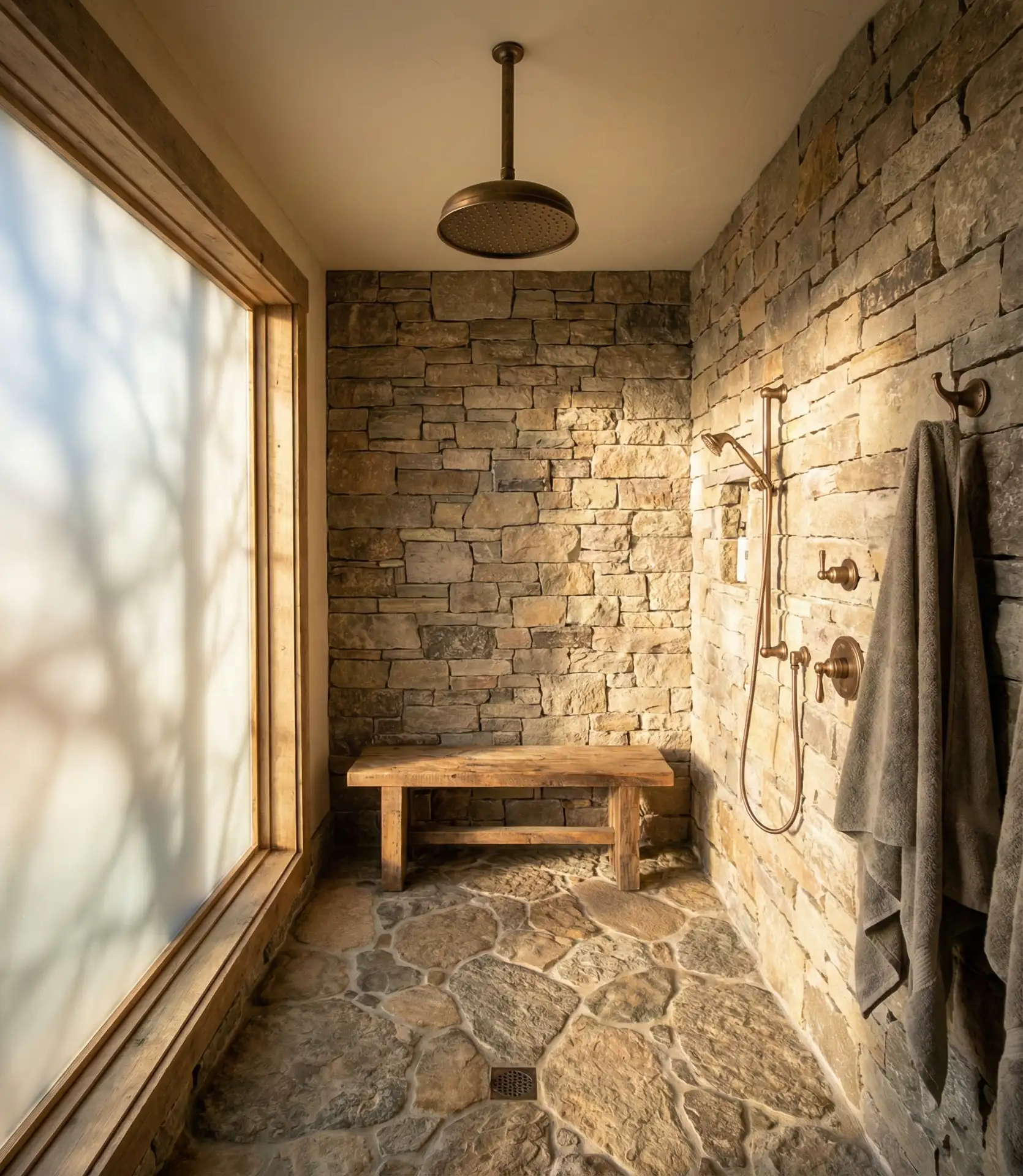
A rustic walk-in shower brings the outdoors inside, using stacked stone walls and river rock flooring to create a cabin-like retreat. This design works particularly well in homes with exposed wood beams or mountain-adjacent locations, where the natural materials echo the surrounding landscape. The textured surfaces provide slip resistance underfoot, while the earthy tones create a calming, grounded atmosphere that feels worlds away from stark white tile.
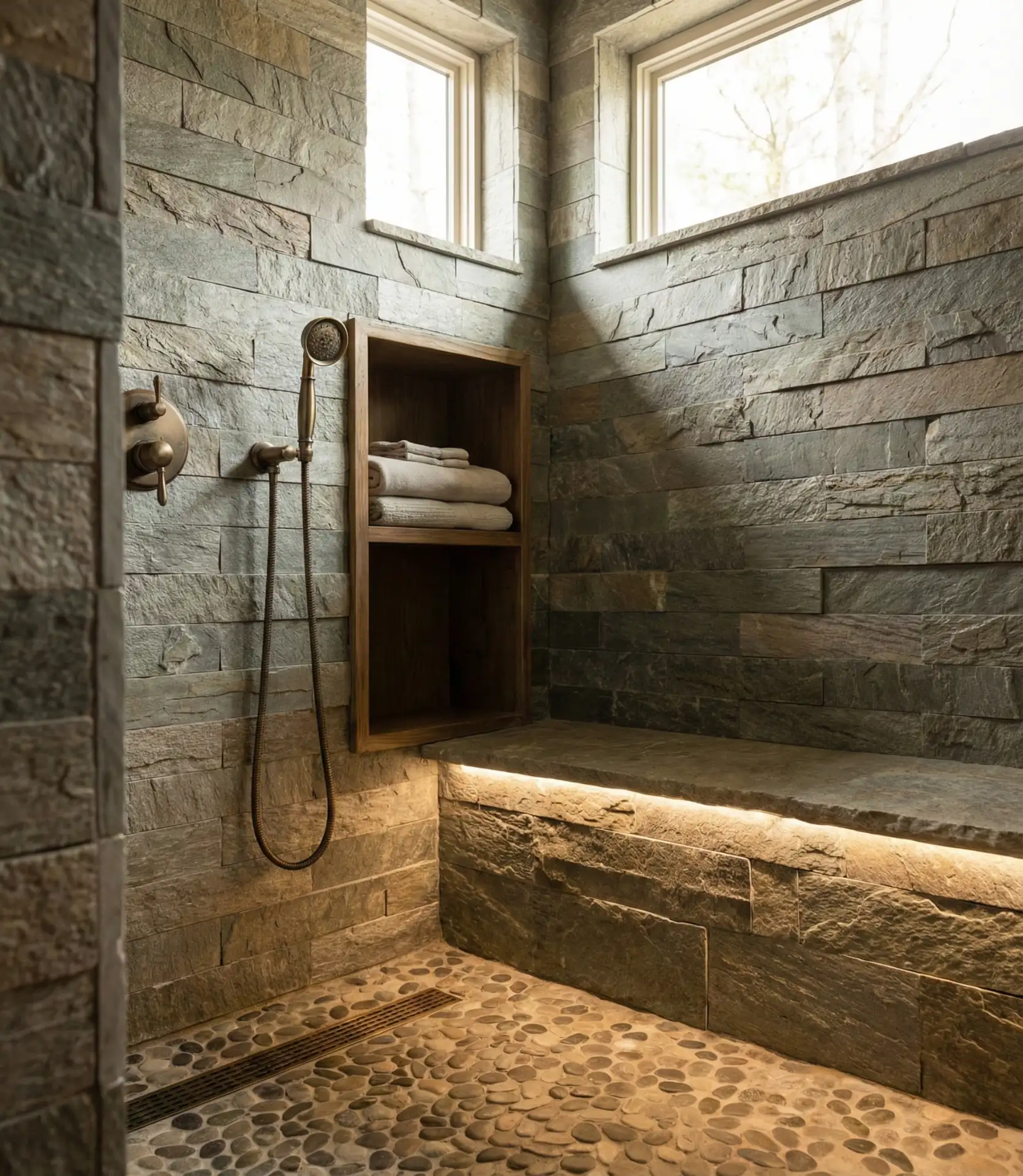
Where it works best: mountain homes, lodge-style bathrooms, and any space aiming for a retreat aesthetic. The stone’s thermal mass stays cool underfoot in summer and feels less jarring than cold porcelain in winter months. Homeowners often pair this style with a teak mat or bench to soften the organic feel, creating a layered sensory experience that goes beyond visual appeal.
2. Small Bathroom Walk-In Shower with Corner Entry
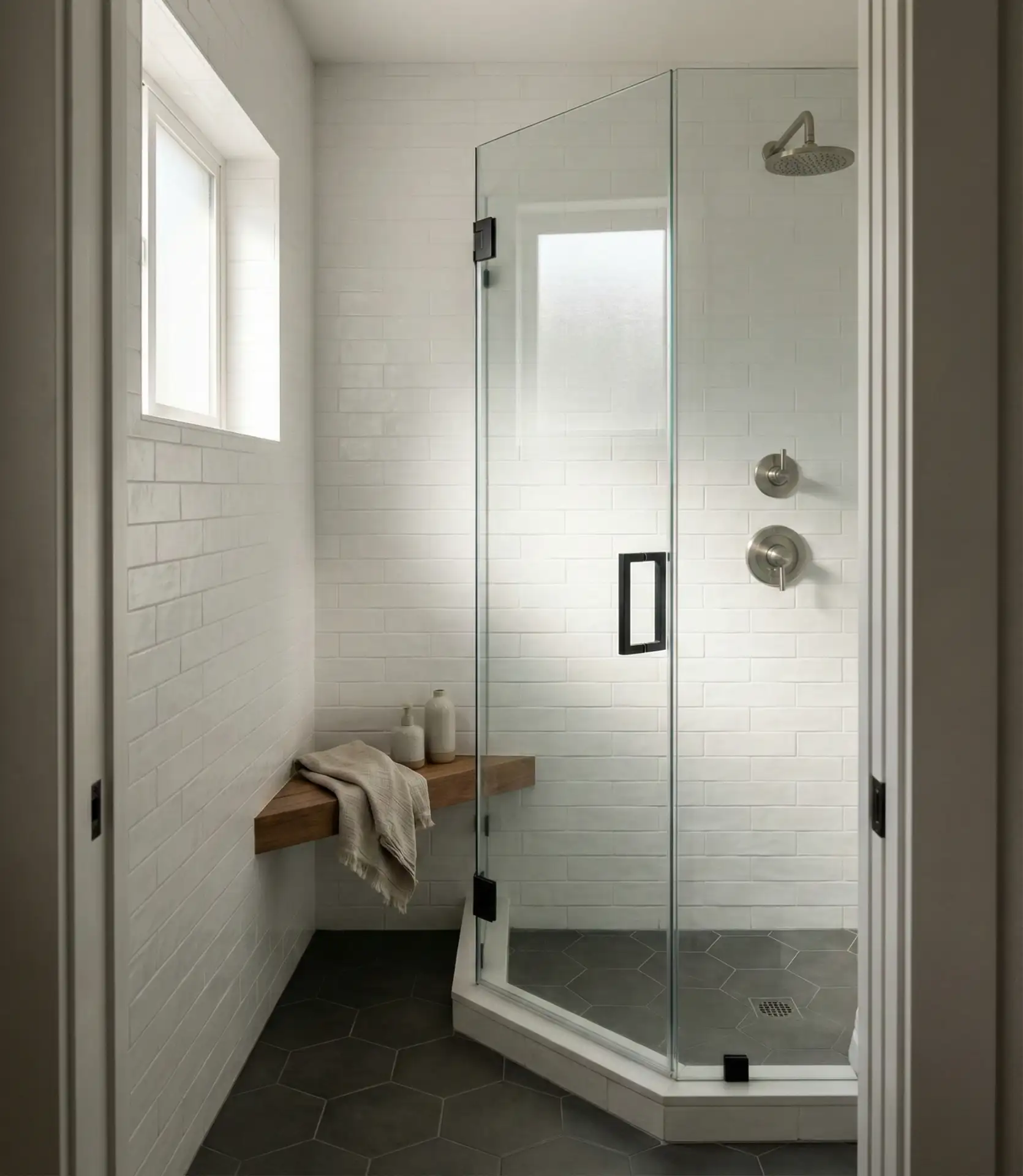
Maximizing a small bathroom often means claiming the corner for your shower, using a neo-angle or curved entry to preserve floor space. This layout allows the rest of the room to flow freely, making even a 5×7 bathroom feel less cramped. Glass panels that extend only partway eliminate the boxed-in feeling while still containing spray, and frameless hardware keeps sight lines clean and modern.
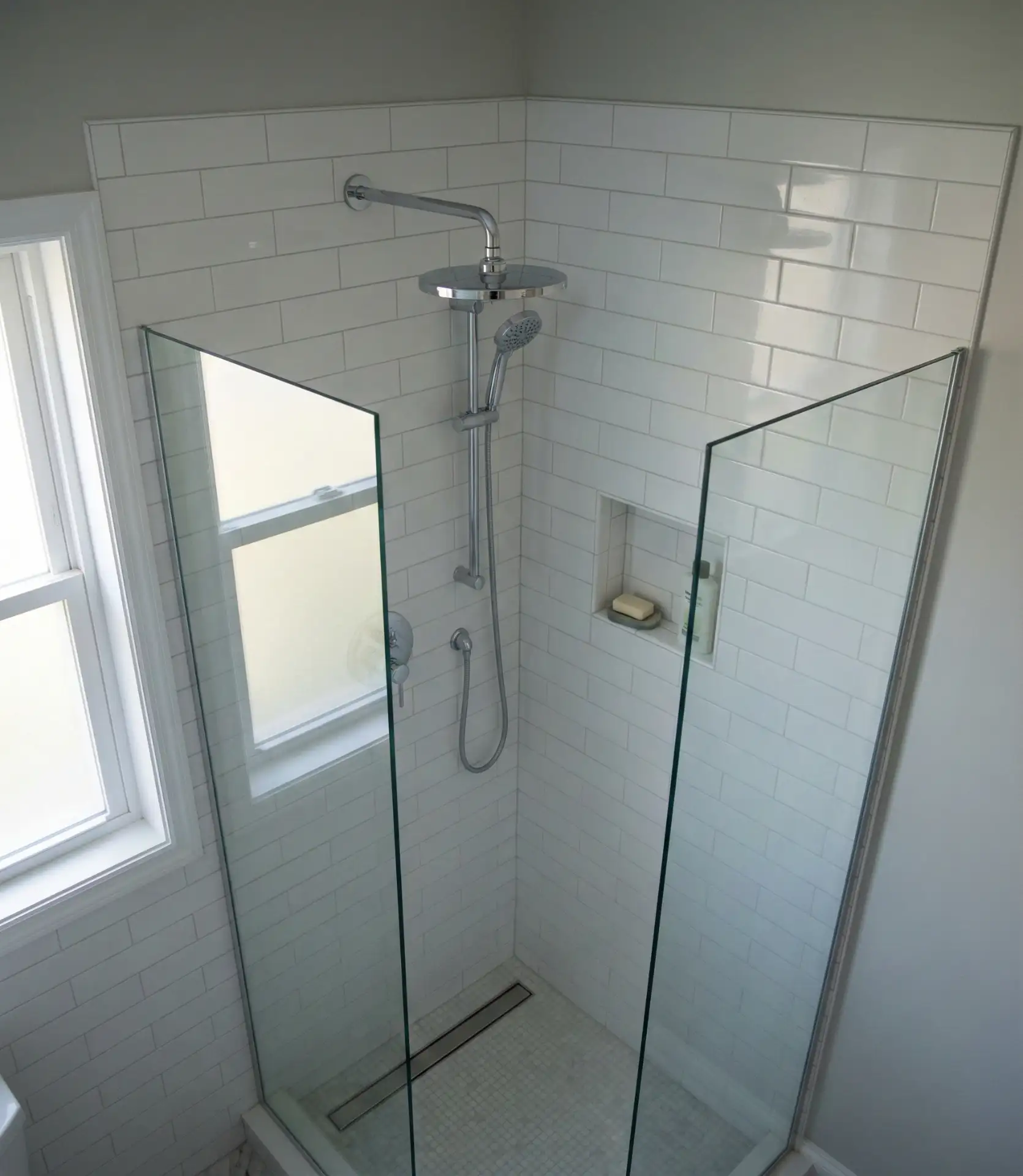
Common mistake: Installing the showerhead directly facing the entry, which creates a spray zone anyone walking by has to navigate. Instead, angle the head toward the back corner so water stays contained even when the door is briefly open. Pair this with a slightly raised threshold—just an inch or two—to prevent water creep without creating a tripping hazard.
3. Black Framed Walk-In Shower with Industrial Edge
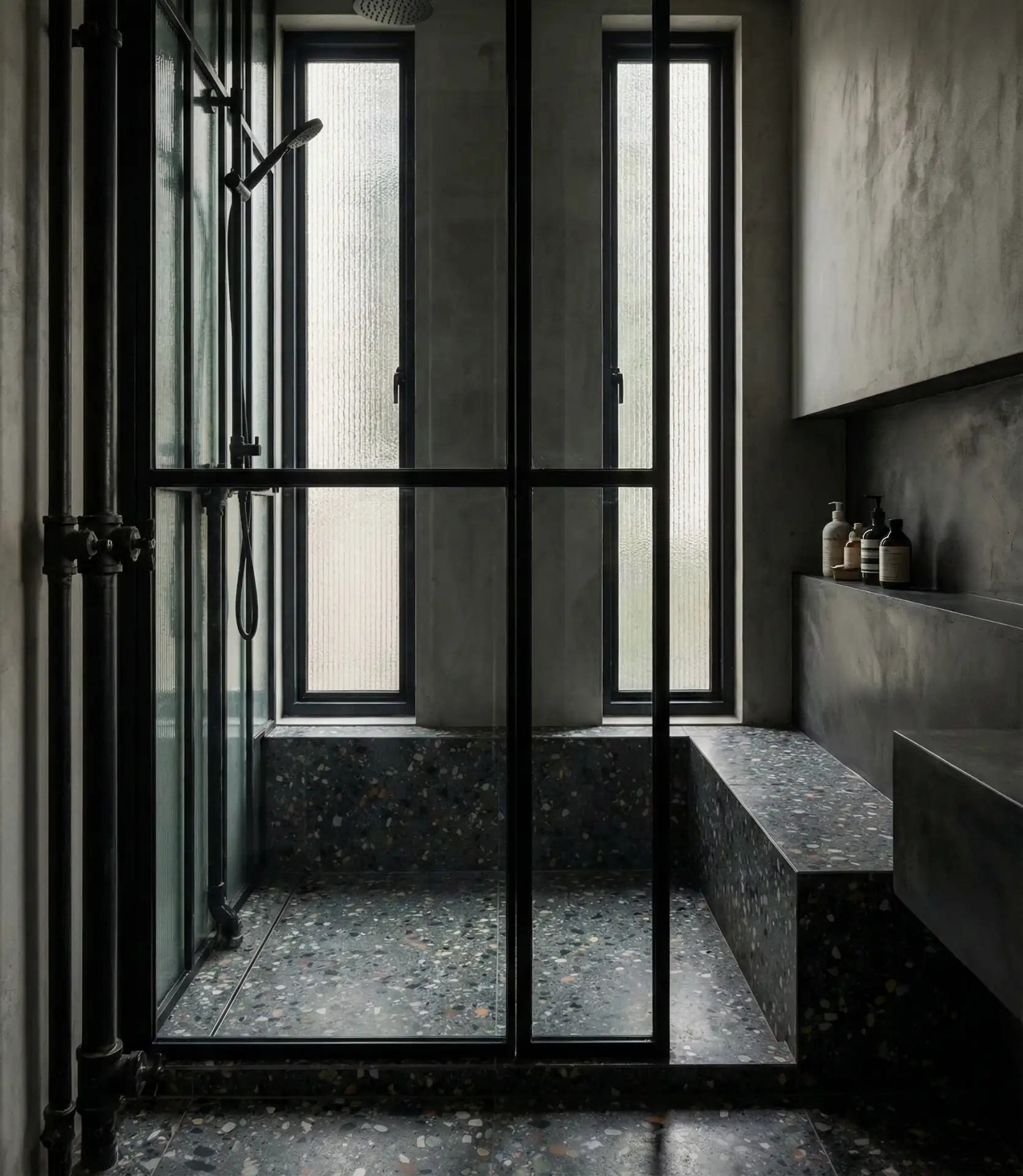
Bold black metal framing has replaced the all-glass aesthetic in many modern bathroom renovations, offering crisp architectural lines that anchor the space. The dark frames create natural segmentation, making small showers feel purposeful rather than cramped, while the grid pattern adds visual interest without requiring complex tile work. Paired with matte black fixtures and hardware, this approach delivers a cohesive, gallery-like feel.
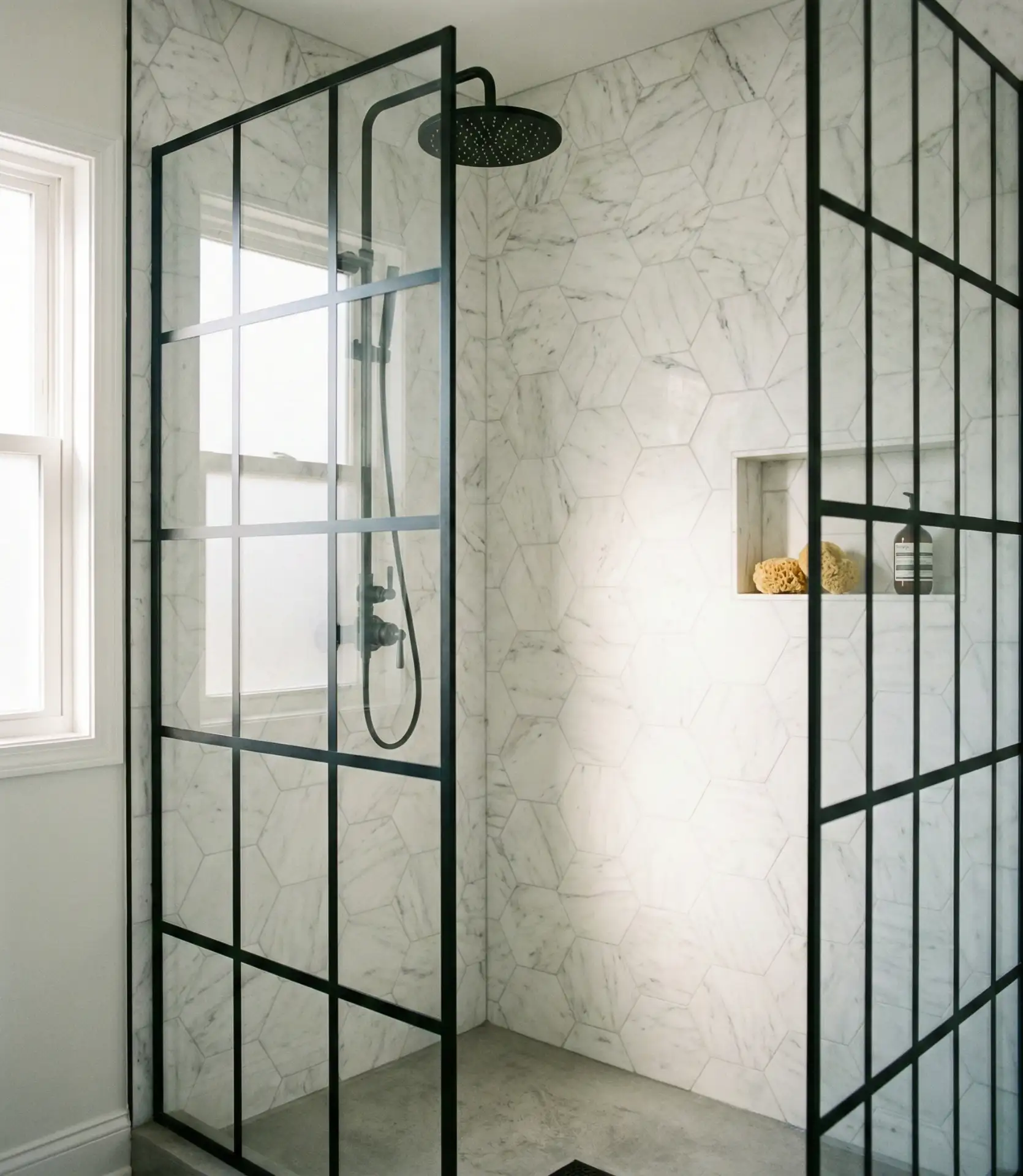
Budget angle: Black frames often cost 20-30% more than standard chrome or brushed nickel, but you can offset this by choosing simpler tile—the frames do the design heavy lifting. A basic white subway tile looks dramatically different when bordered by black metal, eliminating the need for expensive accent walls or intricate mosaics.
4. Doorless Walk-In Shower with Half Wall Privacy
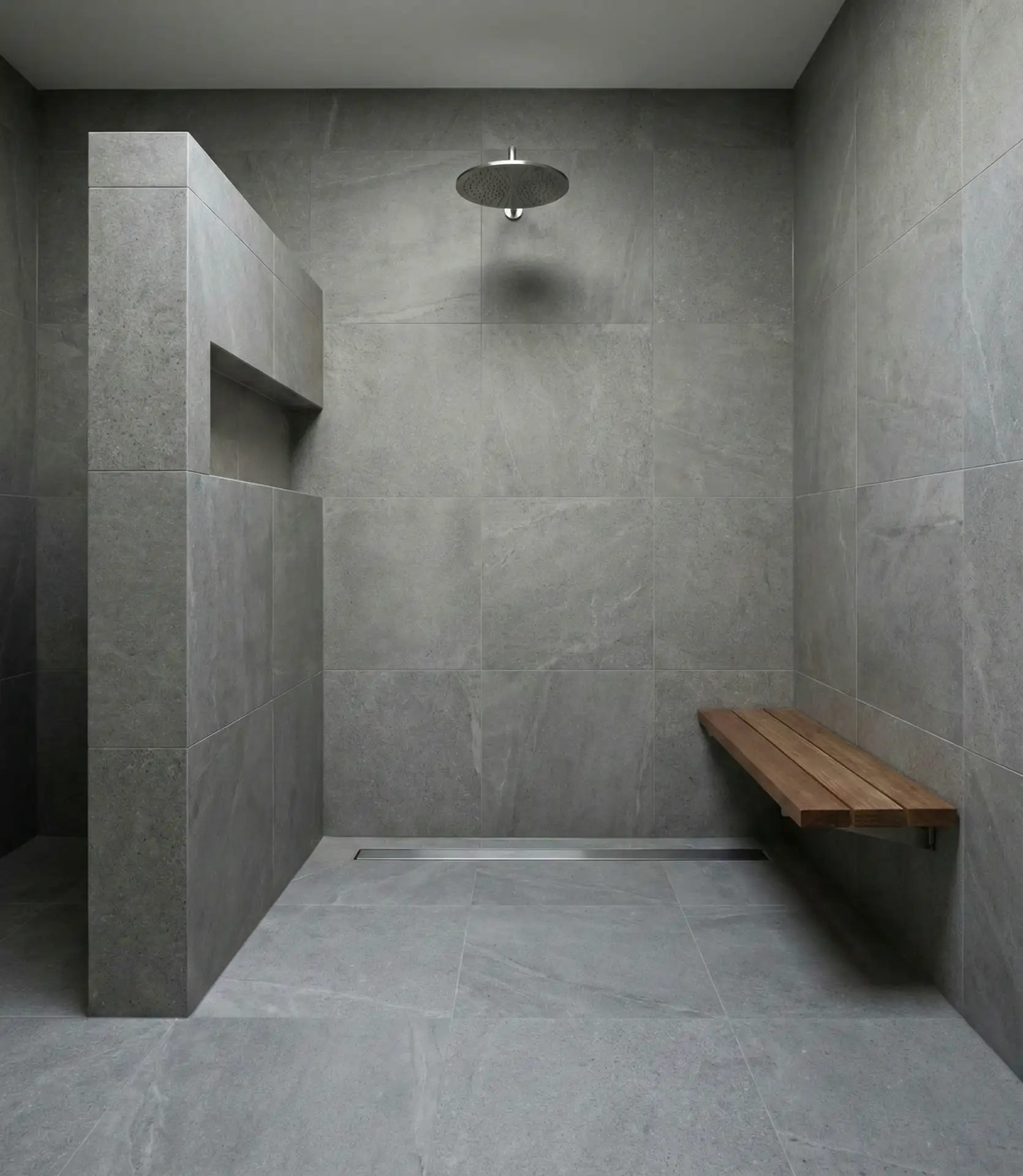
The no-door walk-in shower continues to dominate searches, with the half-wall variation offering privacy without total enclosure. This design typically features a 36-48 inch pony wall that shields bathers from the doorway while maintaining the open, airy feeling that makes doorless showers so appealing. The wall also provides a convenient ledge for toiletries, eliminating the need for bulky caddies or multiple built-in niches.
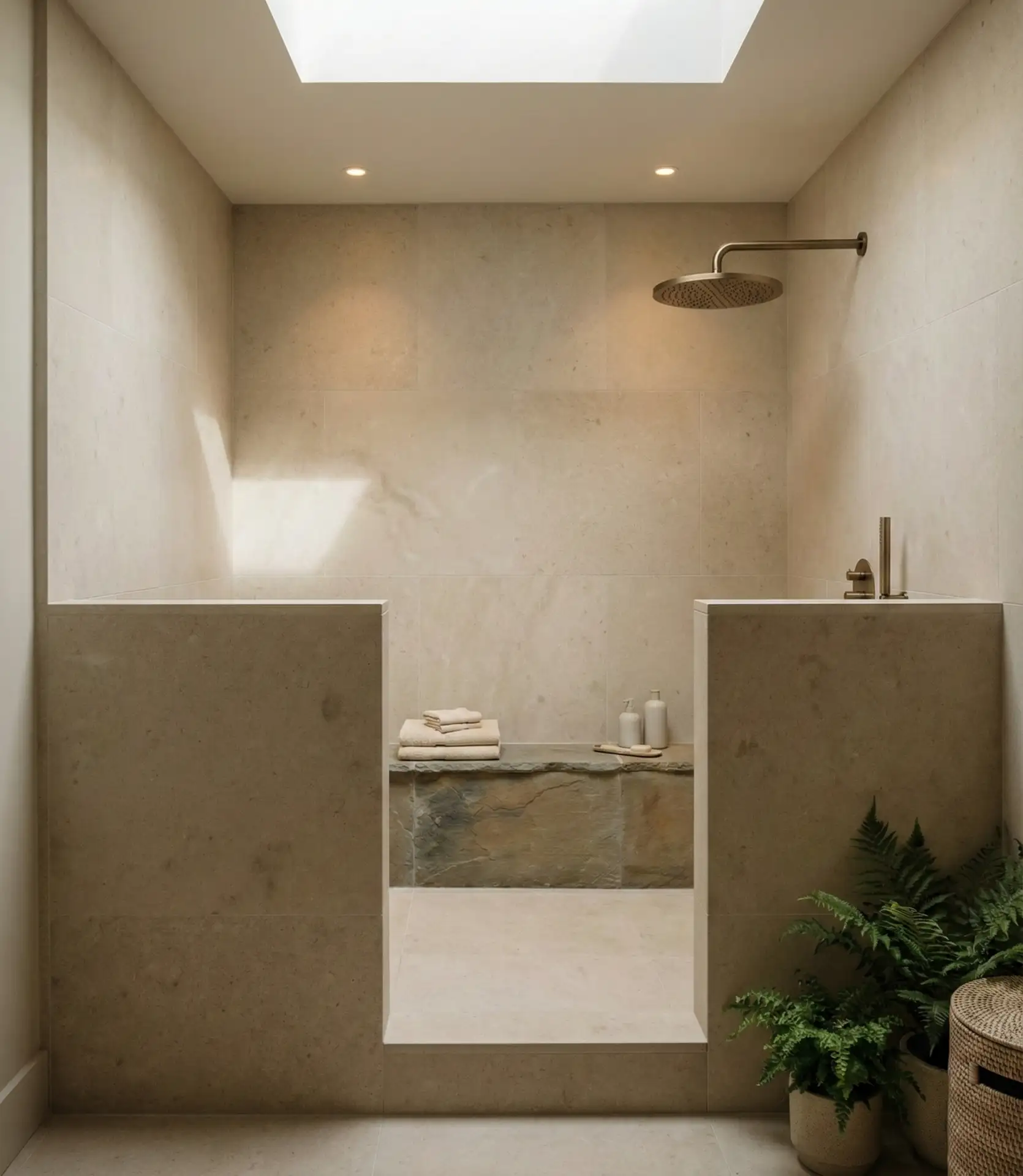
Real homeowner behavior: Most people overestimate how much spray escapes from a properly designed doorless shower. The key factors are showerhead placement at least 6 feet from the opening, adequate square footage (minimum 36×60 inches), and a slight floor slope toward the drain. When these elements align, you won’t need a squeegee for the bathroom floor after every shower.
5. White Subway Tile Classic with Timeless Appeal
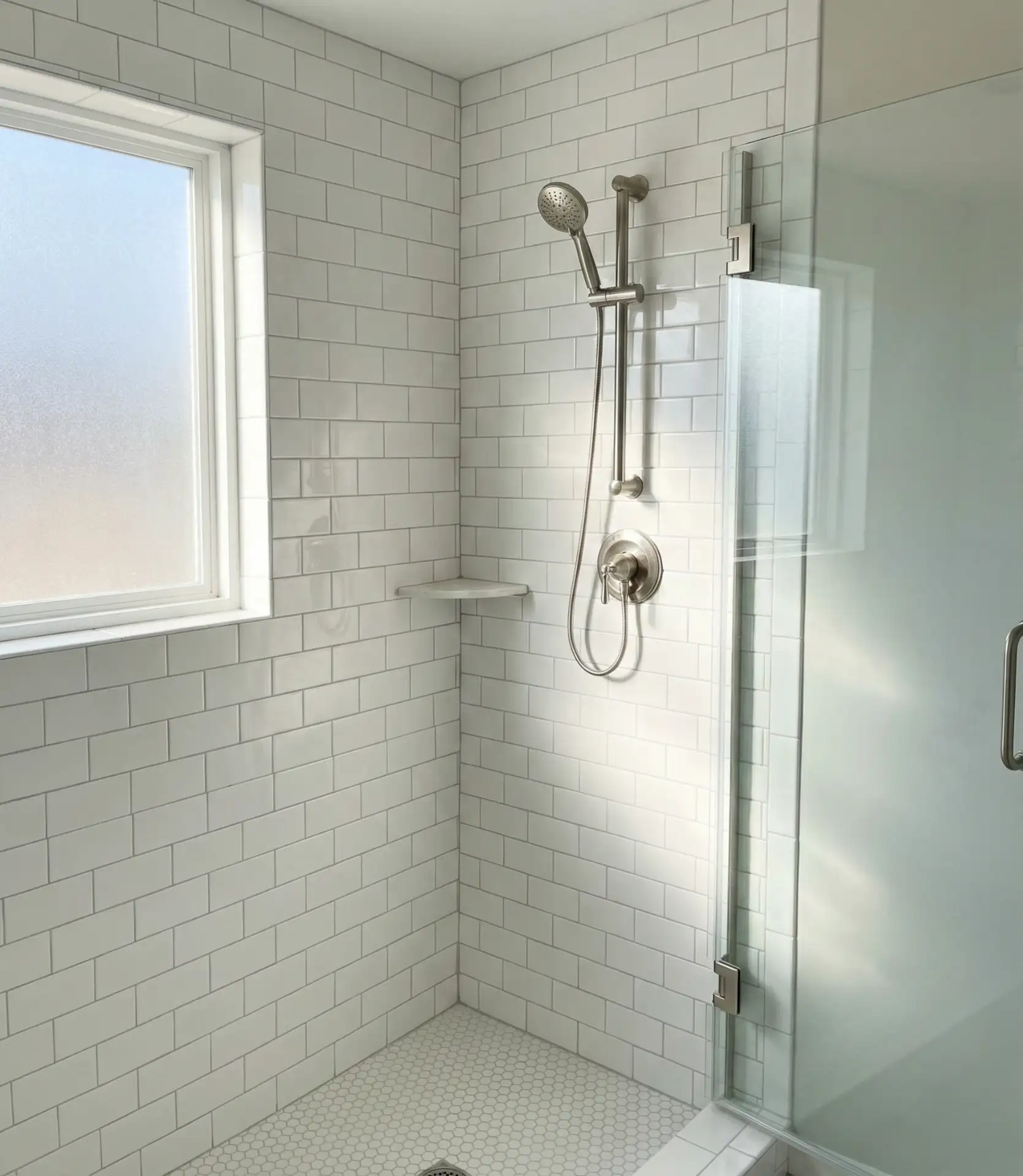
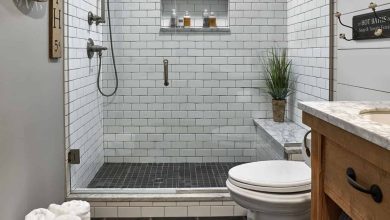
White subway tile remains the foundation of countless walk-in shower designs because it provides a clean backdrop that won’t compete with evolving fixture trends. The 3×6 inch format creates subtle texture through grout lines while reflecting light in smaller bathrooms, making the space feel larger than its actual footprint. Laid in a traditional offset brick pattern or a modern vertical stack, this material adapts to nearly any aesthetic direction.
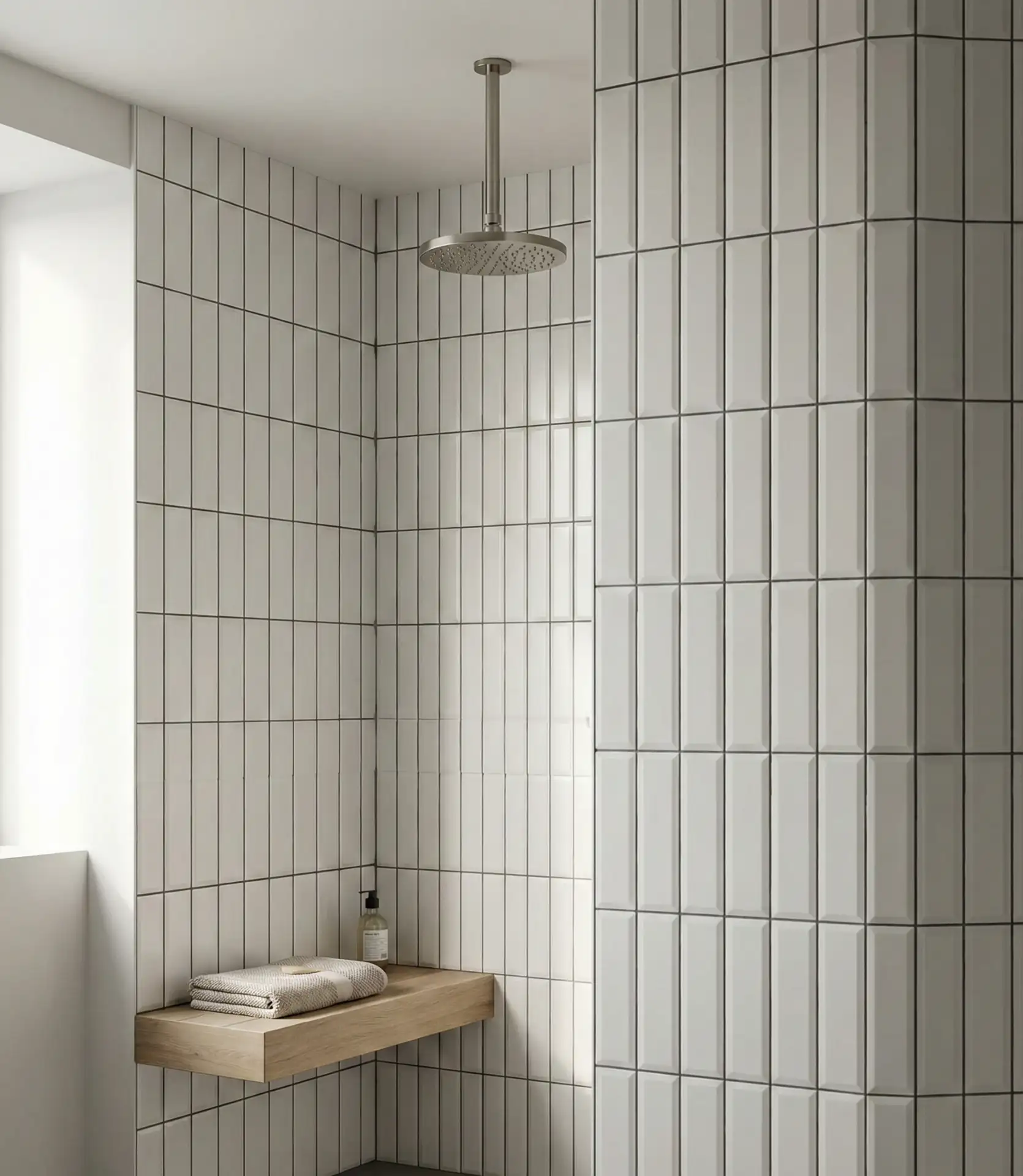
Practical insight: White tile shows hard water spots and soap residue more visibly than darker alternatives, but it’s also the easiest surface to clean. A quick daily squeegee pass takes 15 seconds and prevents buildup, while the bright surface makes any missed spots immediately obvious—unlike dark tile, where mineral deposits accumulate unnoticed for weeks.
6. Master Bath Double Shower with Dual Controls
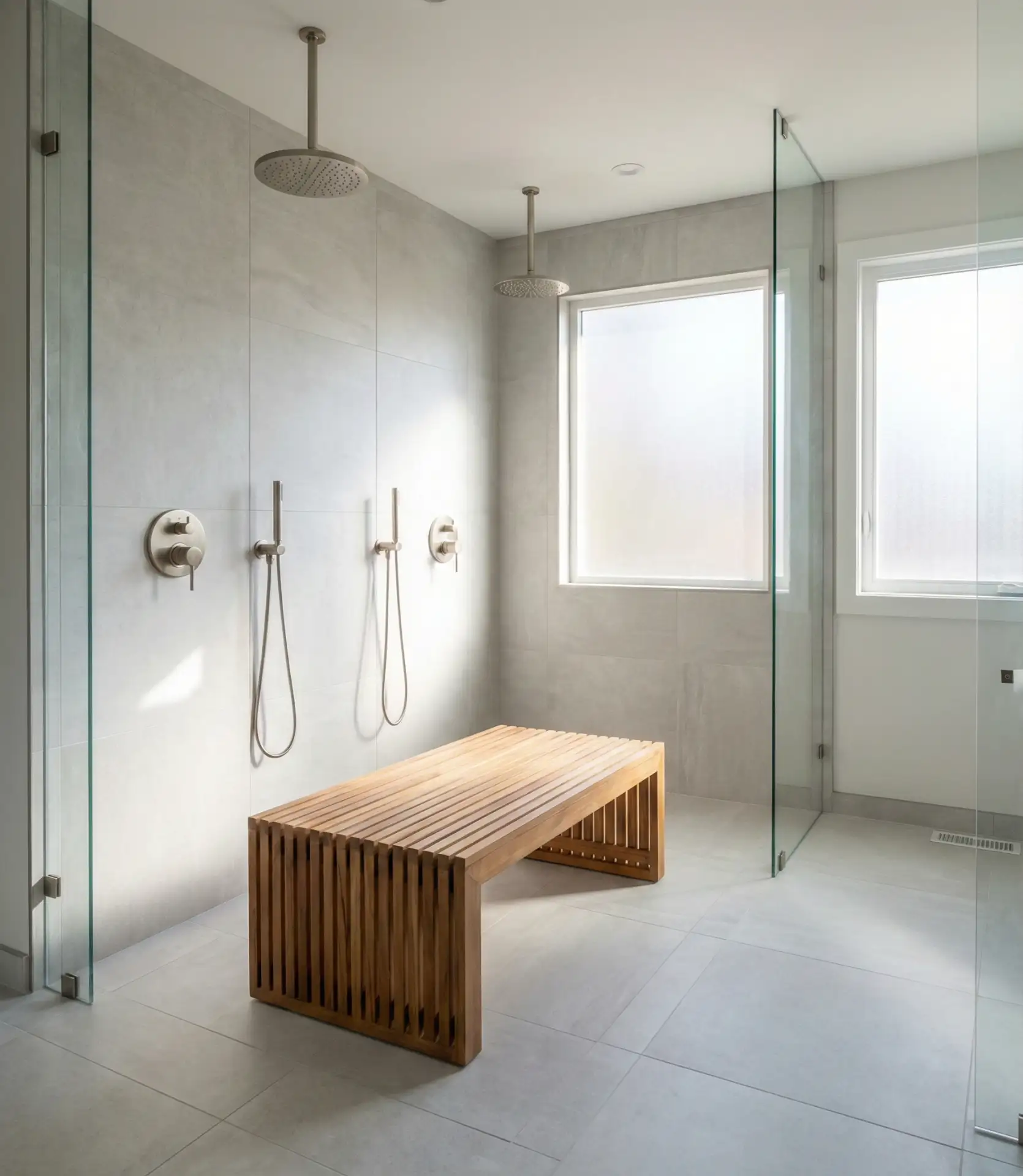
A double walk-in shower transforms your master bath into a true couples’ retreat, with separate showerheads and controls allowing two people to shower simultaneously with their preferred temperature and pressure. This layout typically requires at least 60 inches of width, with dual rainfall heads spaced far enough apart to avoid cross-spray. The large footprint also accommodates a central bench or built-in seating that doesn’t interfere with standing room.
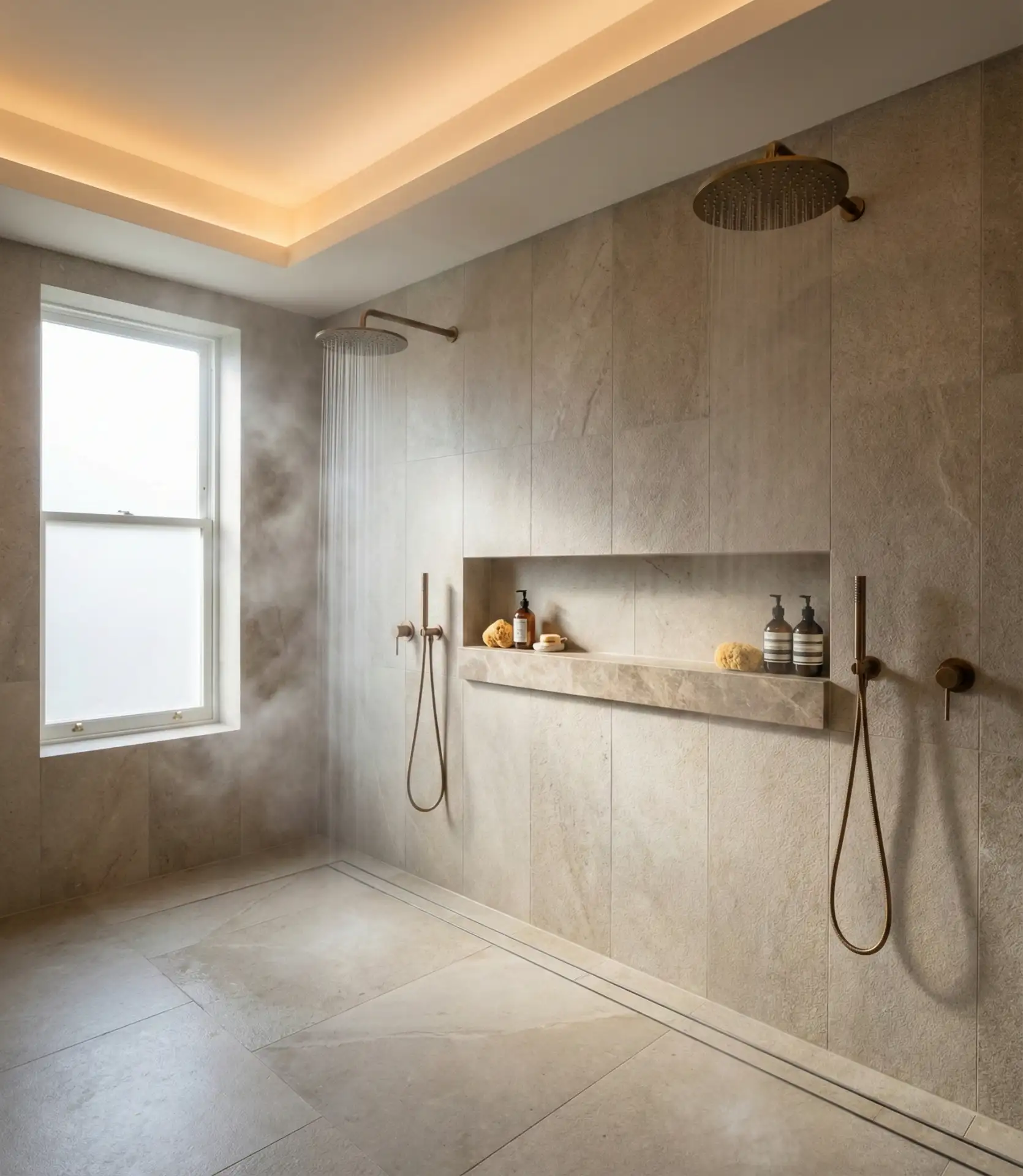
American lifestyle context: In regions with water restrictions like Southern California or the Southwest, some couples compromise with a single high-flow head on a sliding bar instead of dual fixtures. This preserves the side-by-side experience during low-pressure months while staying compliant with local conservation codes that limit flow rates to 1.8-2.0 gallons per minute.
7. Small Master Bath Walk-In with Smart Storage
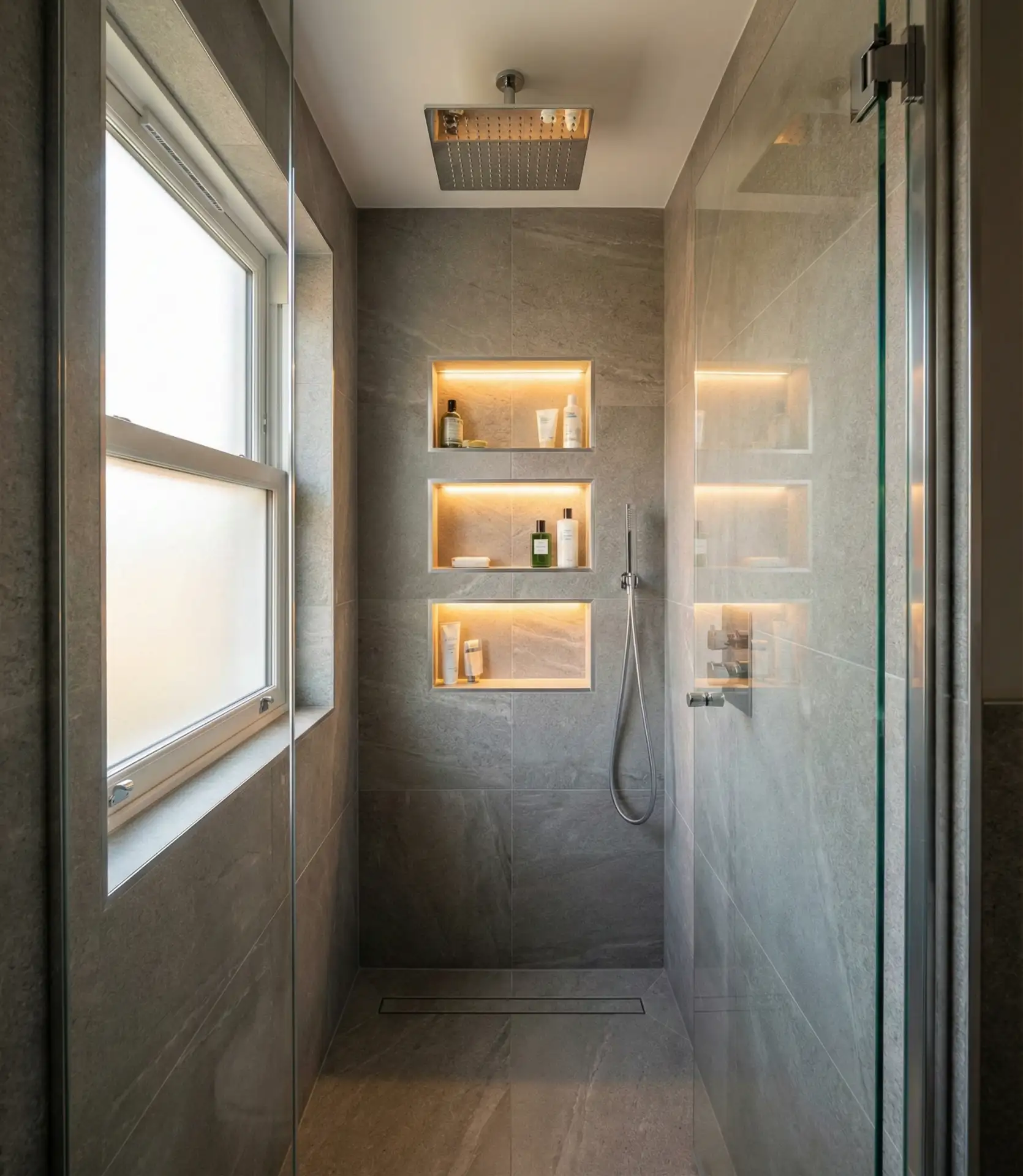
When your master suite bathroom runs tight on square footage, a small master bath walk-in shower can still feel luxurious through strategic built-in storage. Recessed niches at elbow height keep shampoo bottles from cluttering the floor, while a narrow floating shelf along one wall provides staging space without protruding into the spray zone. This approach maintains clean lines while solving the practical reality that two people’s products need somewhere to live.
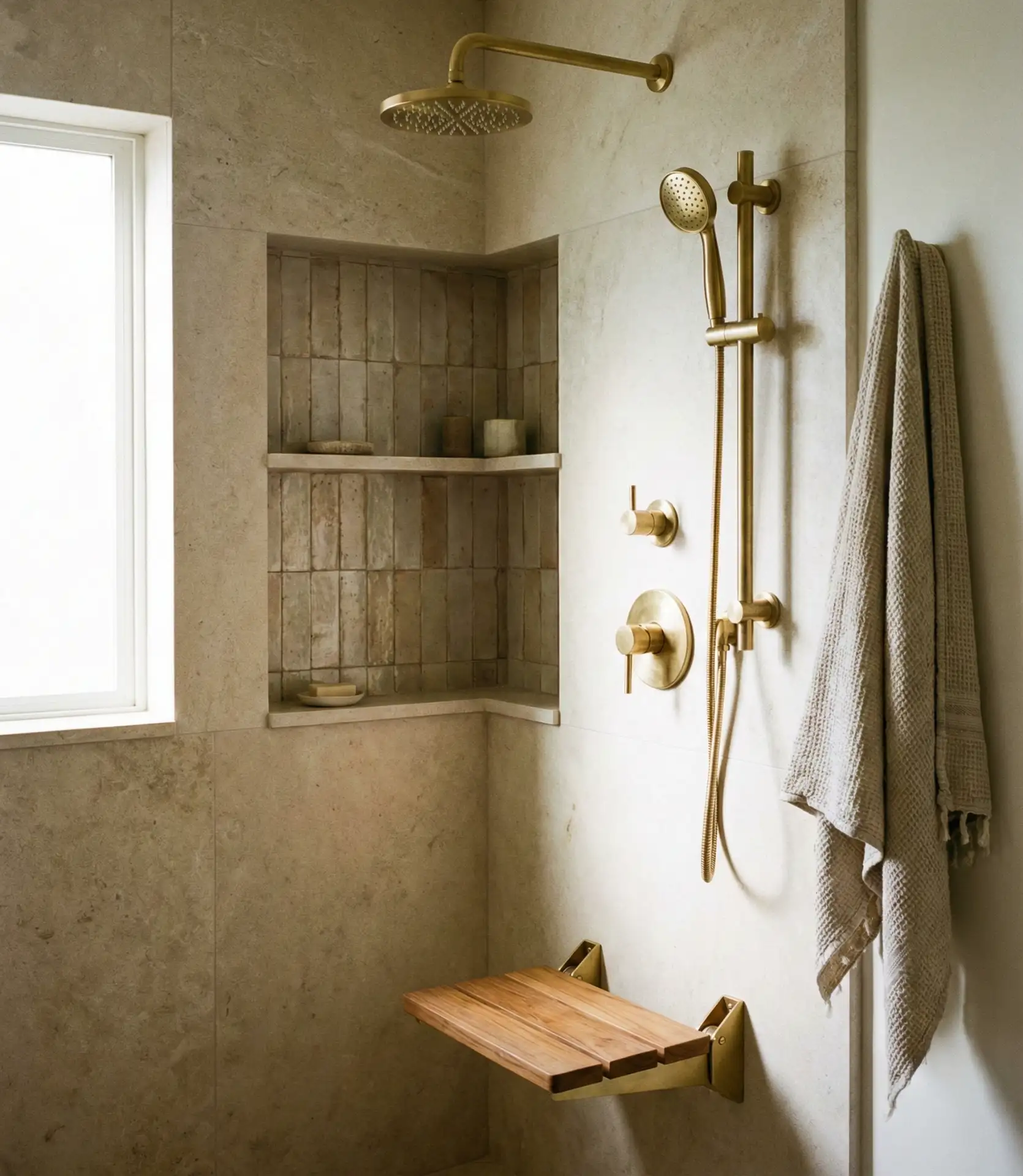
Expert-style commentary: Designers recommend sizing niches to 12×6 inches minimum—large enough for standard shampoo bottles but not so deep they create awkward reach-in moments. Placing them between studs (typically 14.5 inches apart) avoids structural cuts, and lining them with a contrasting tile creates visual interest without adding square footage.
8. Walk-In Shower with Curtain for Flexible Styling
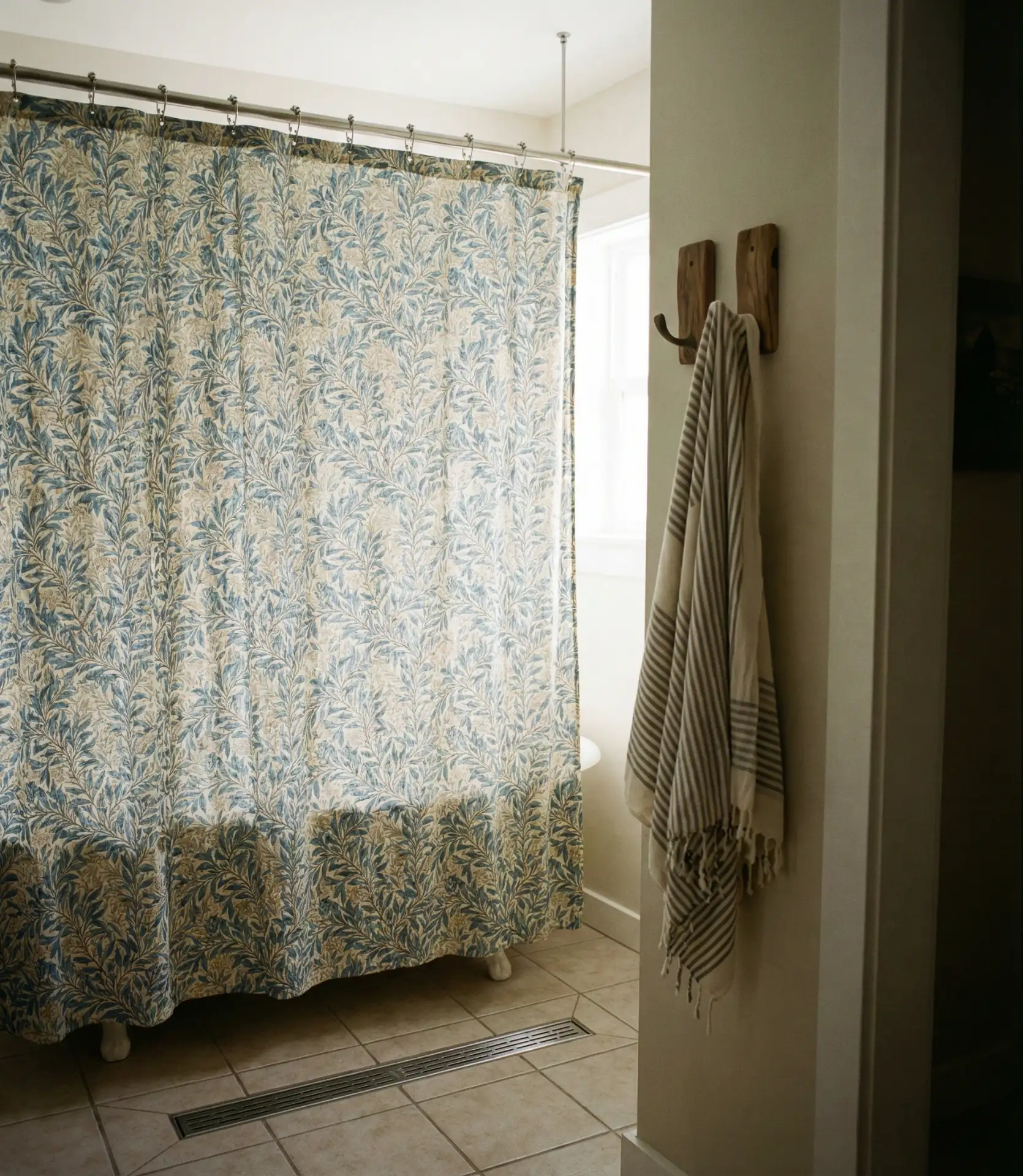
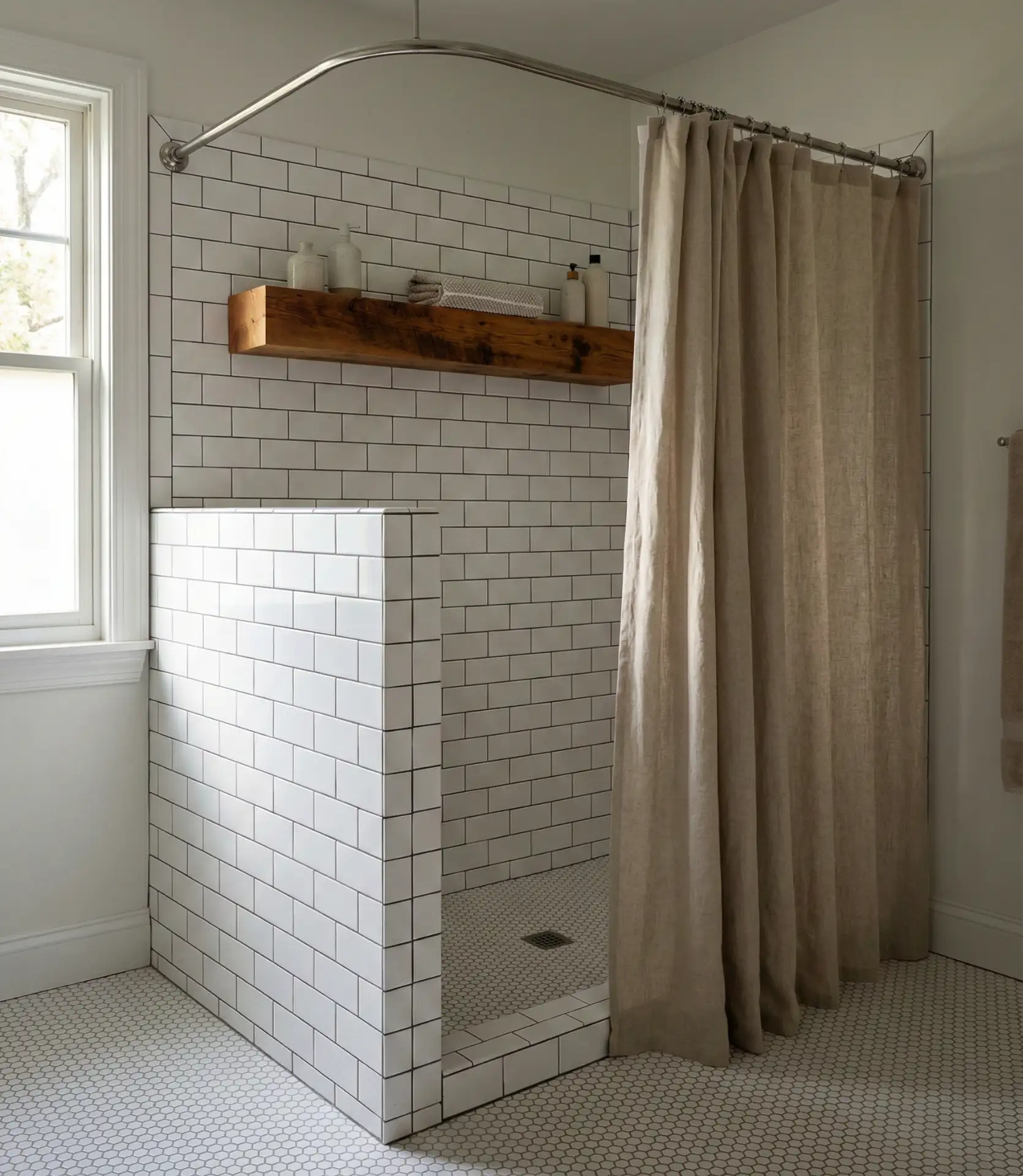
The with-curtain approach offers a budget-friendly alternative to glass panels, allowing you to change the room’s look seasonally for the cost of a new fabric panel. A curved or straight ceiling-mounted track defines the shower zone while keeping the space feeling open when pulled back. This solution particularly appeals to renters or those planning short-term stays who want shower containment without permanent installation costs.
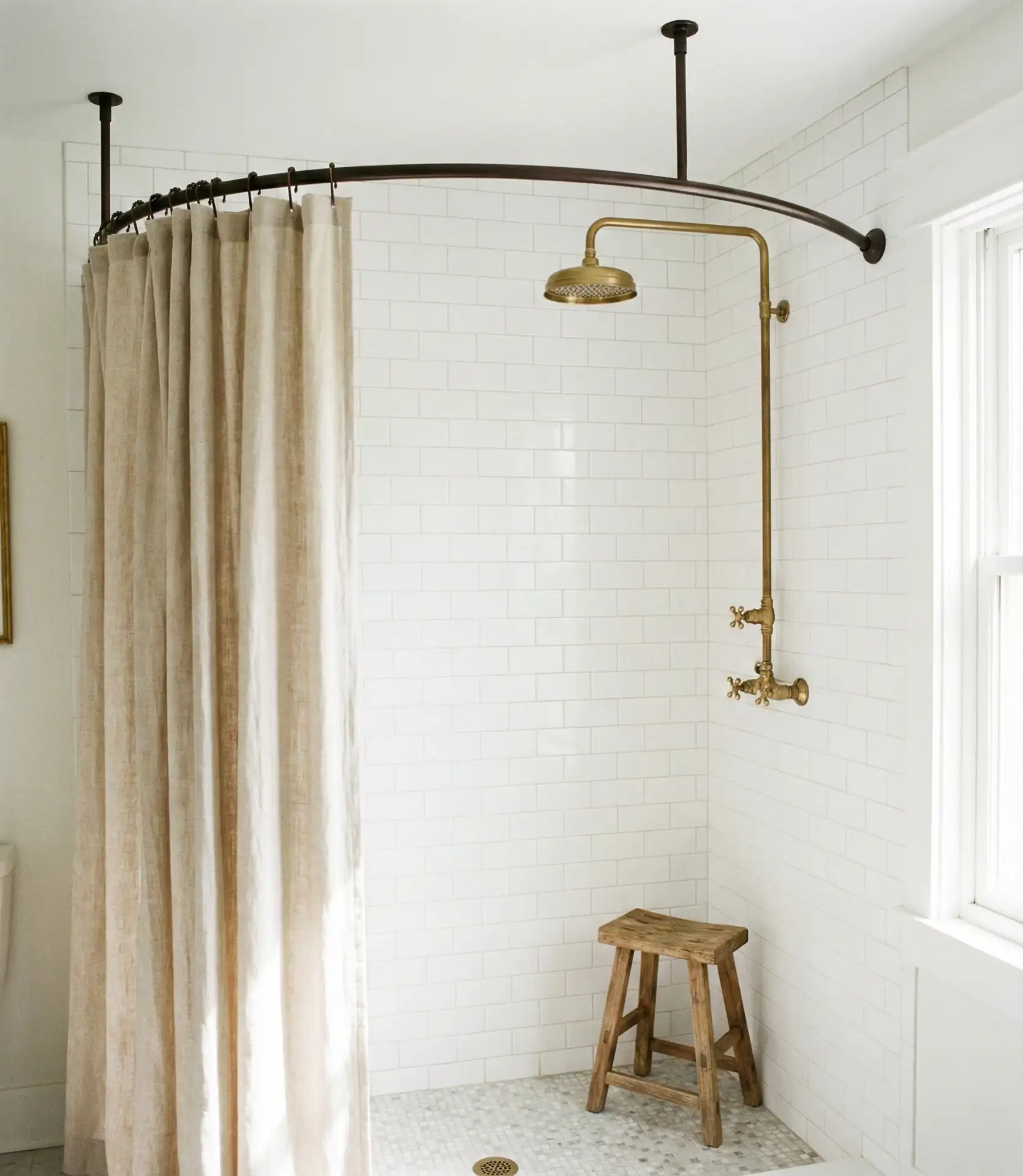
Budget angle: Quality shower curtains range from $25 to $80, compared to $800 to $2,500 for frameless glass panels and installation. Over five years, even replacing the curtain annually for variety costs a fraction of permanent enclosures. Pair with a weighted hem or magnets along the bottom edge to prevent billowing and cold-air drafts during showers.
9. Bathroom Remodel with Tub-to-Shower Conversion
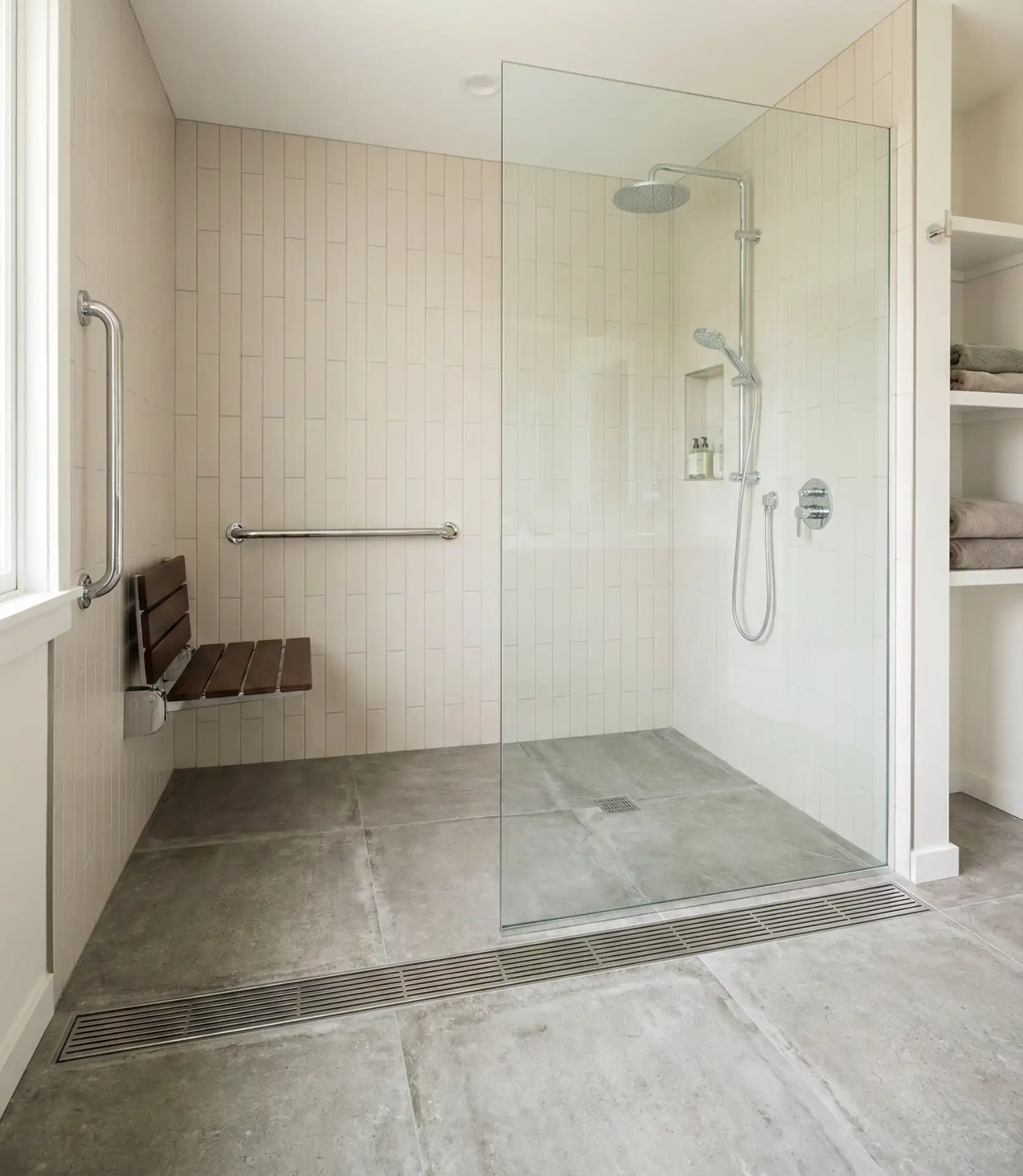
Choosing to replace tub installations with a walk-in shower has become the most popular bathroom remodel decision for aging-in-place and mobility-conscious homeowners. Removing a standard 60-inch tub suddenly provides enough room for a spacious, barrier-free shower with a bench and grab bars that don’t look institutional. The zero-threshold entry eliminates the 14-inch step-over that becomes increasingly difficult with age or injury.
Real homeowner behavior: Many people worry this change will hurt resale value, but data from the National Association of Realtors shows that in single-family homes with multiple bathrooms, converting one tub to a shower has minimal impact on sale price—especially in markets where buyers skew toward 45+. If you have young children, keeping at least one tub elsewhere in the home addresses the bathing issue.
10. Dark Moody Tile with Dramatic Impact
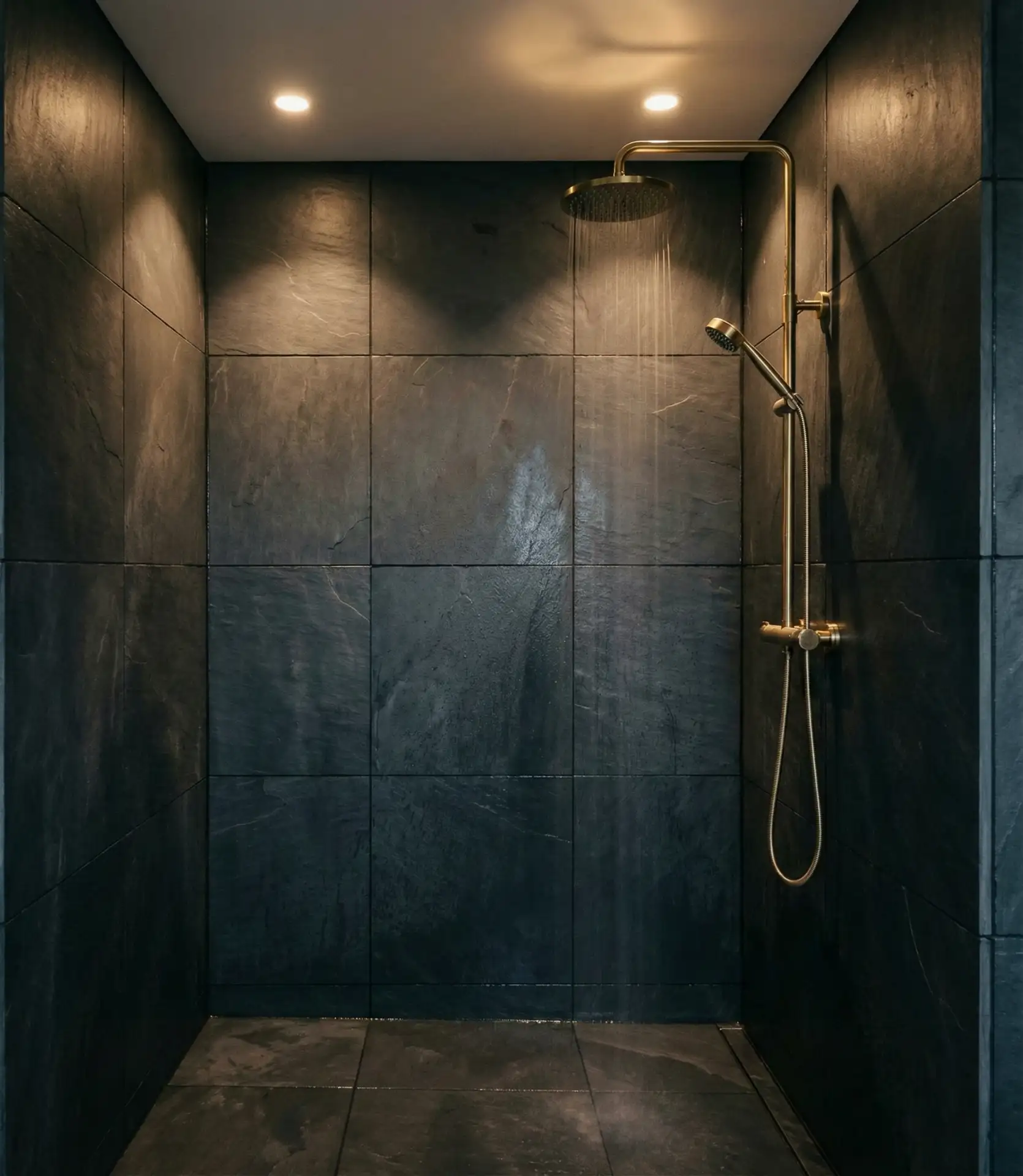
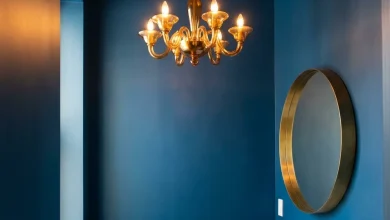
Dark tile creates a cocoon-like atmosphere that feels luxurious and intimate, especially when paired with warm brass or matte gold fixtures. Charcoal, navy, or near-black porcelain shows water spots less than white surfaces and creates a dramatic backdrop for spa-style lighting. This palette works particularly well in bathrooms with no natural light, where the enveloping darkness feels intentional rather than gloomy.
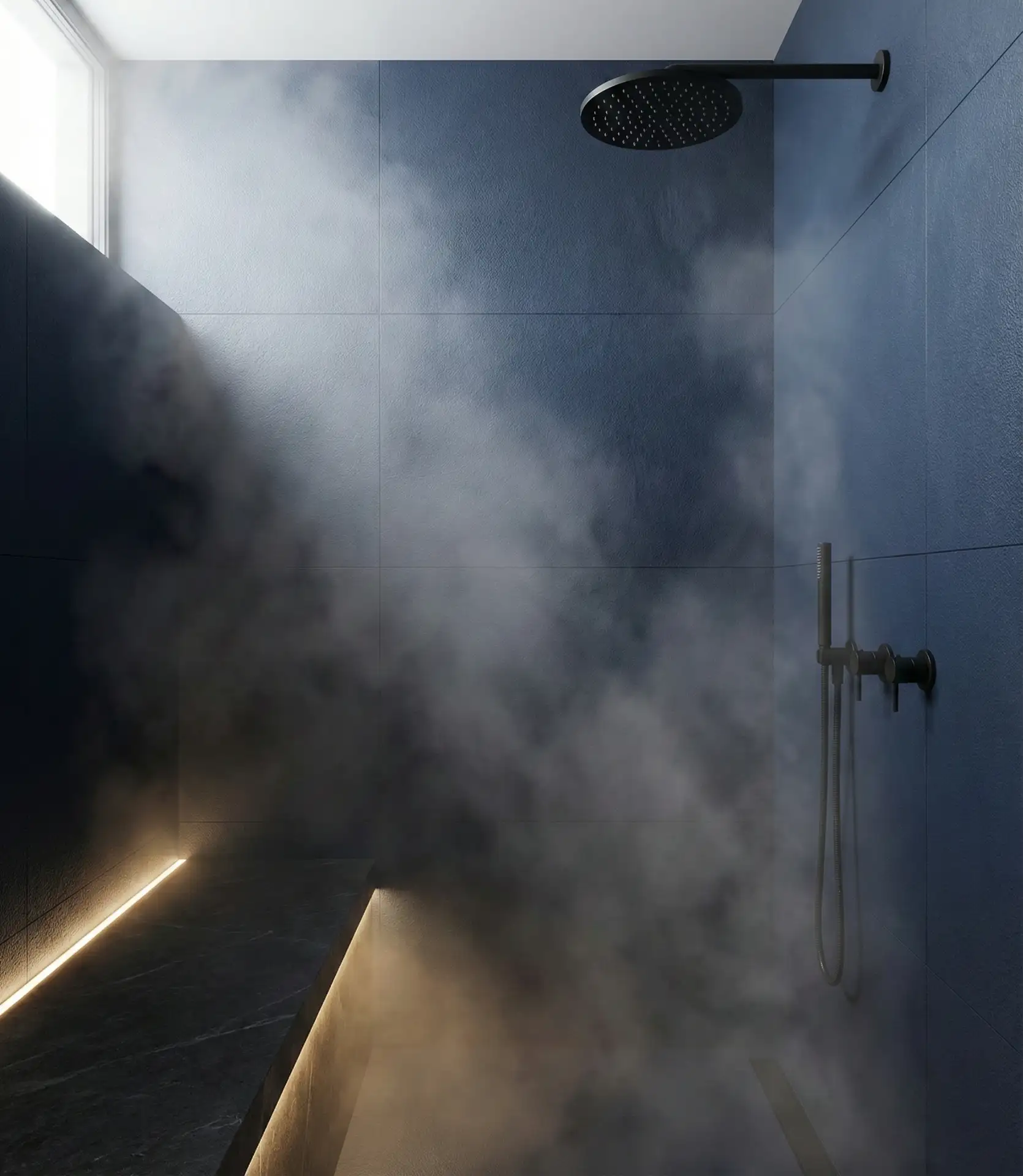
Practical insight: Dark tile requires more grout cleaning attention in the first few months as residues show up as lighter streaks against the deep background. Once you establish a quick post-shower wipe-down routine, though, the surface maintains its look better than white tile, where every drip creates a visible mineral trail that needs scrubbing.
11. Blue Tile Accent Wall for Coastal Calm
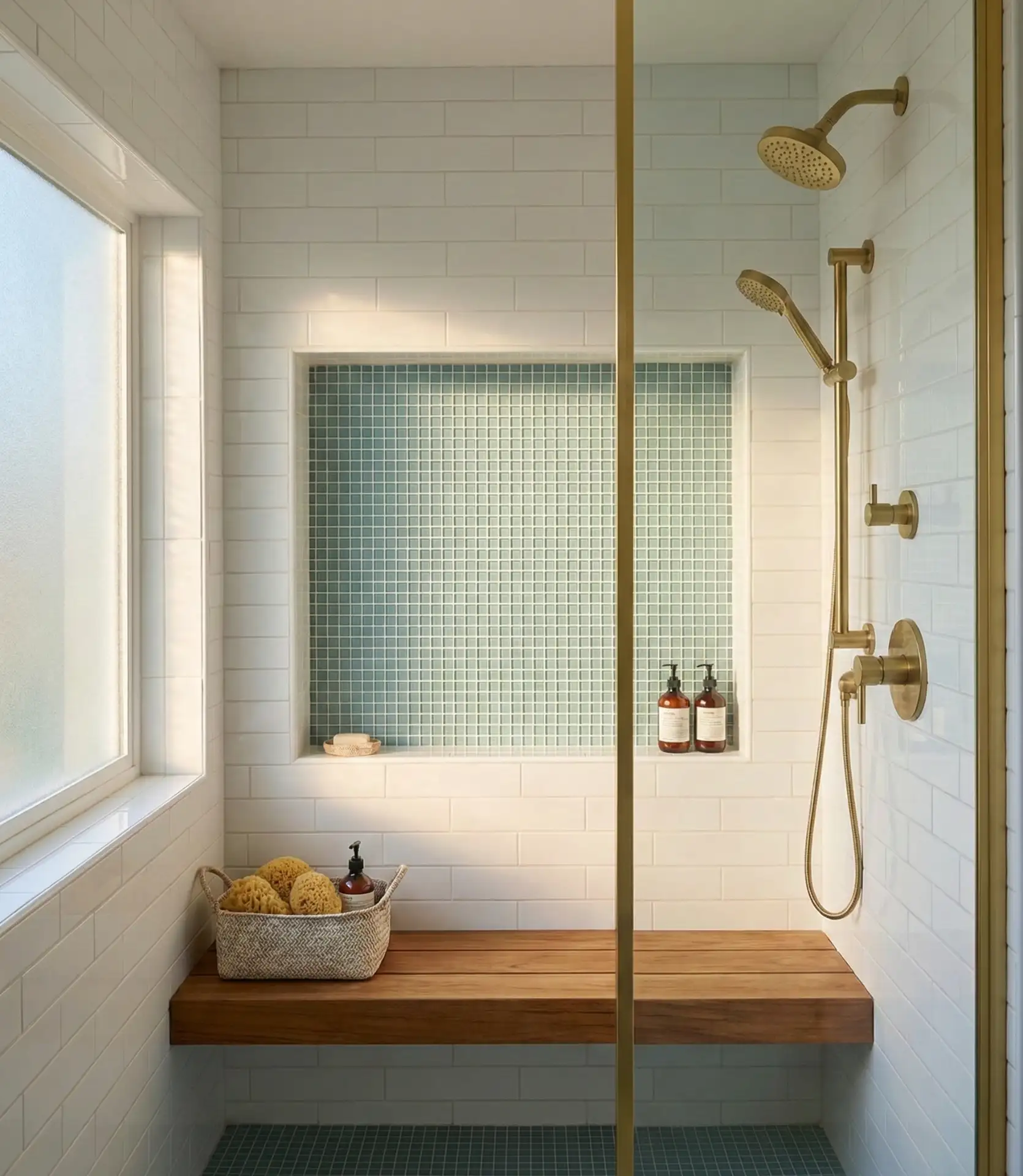
A blue tile feature wall brings ocean-inspired tranquility without overwhelming the space, especially when you limit the color to one surface and keep surrounding walls neutral. Shades from soft aqua to deep navy work in bathrooms of any size, with lighter tones expanding small spaces and saturated hues creating focal points in larger layouts. Pairing blue tile with natural wood elements or brushed brass fixtures enhances the organic, beachy feel.
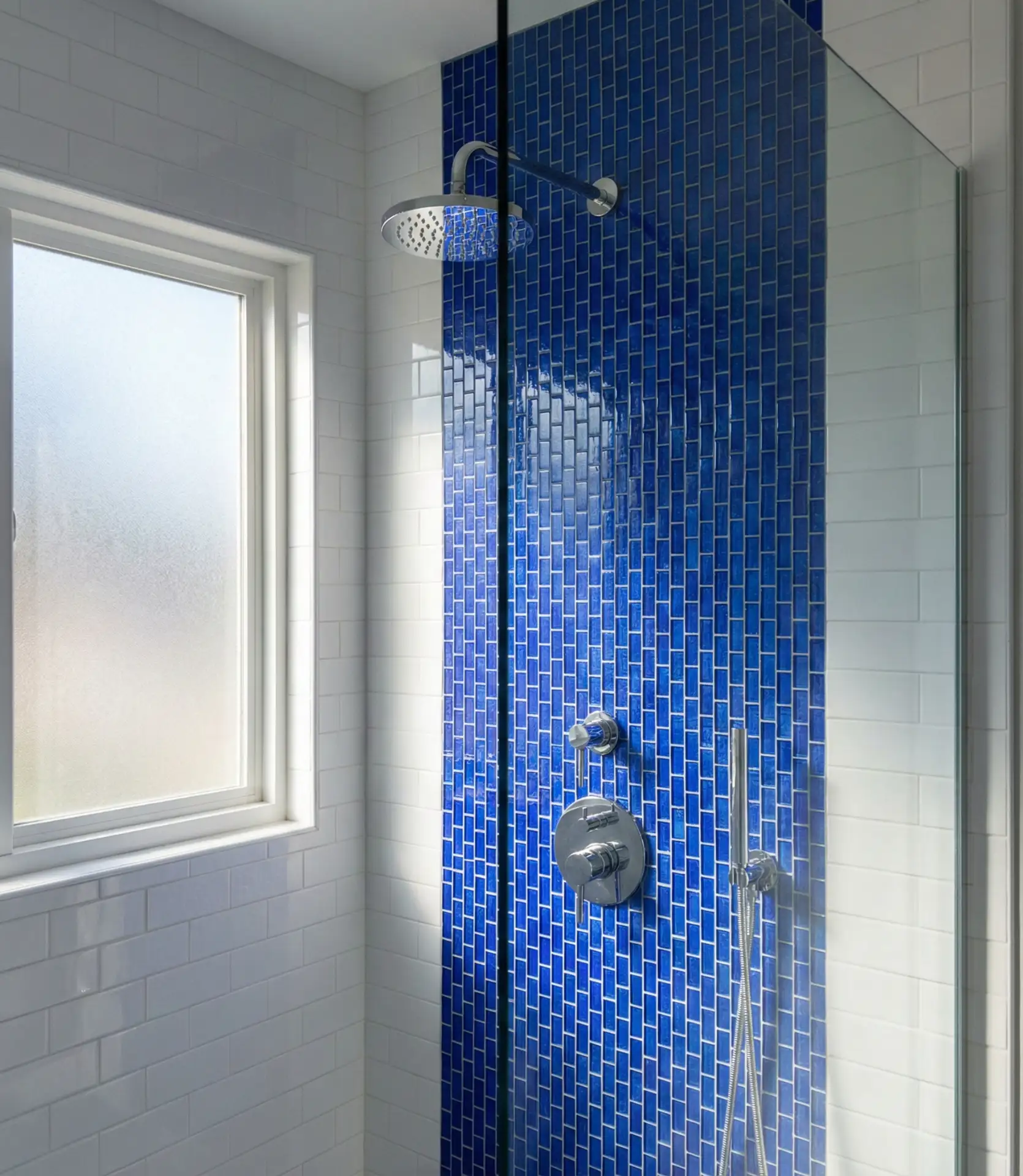
Regional context: Blue showers trend strongest in coastal states—Florida, California, and the Carolinas—where the color palette echoes everyday surroundings. Inland, homeowners often choose blue as a visual escape, creating a mental vacation space within their daily routine. The shade you select matters: cool blues feel crisp in hot climates, while warmer teal tones add coziness in northern regions.
12. Walk-In Shower on a Budget with DIY Finishes
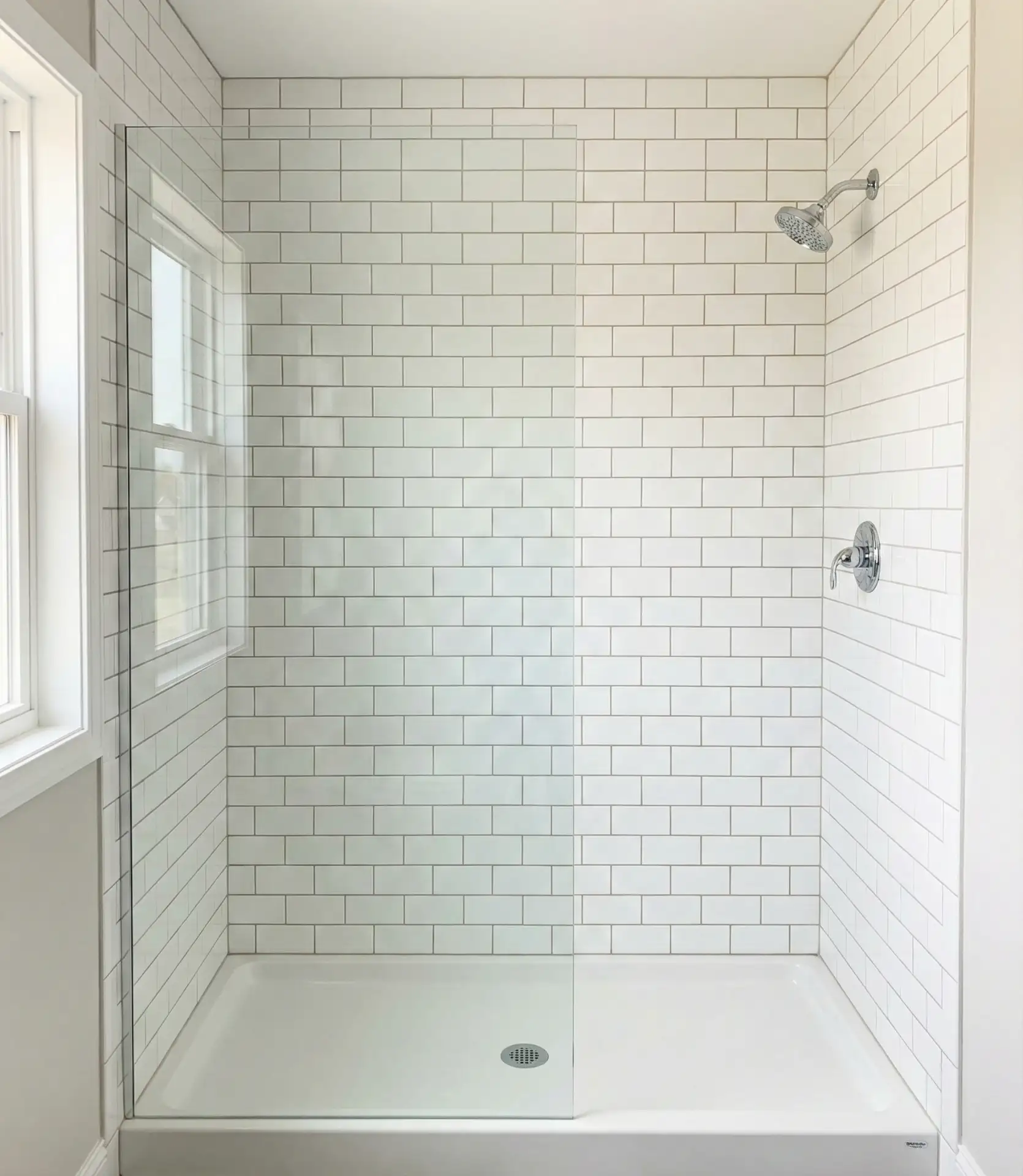
Creating a stylish walk-in shower on a budget means prioritizing where you spend and where you save—splurge on waterproofing and plumbing, and economize on finishes. Builder-grade white tile in a simple pattern costs $2-4 per square foot installed, while choosing a prefab shower pan instead of custom tile work saves $500-1,000. A basic frameless glass panel or even a quality curtain on a ceiling track delivers the look for a fraction of heavy glass enclosure costs.
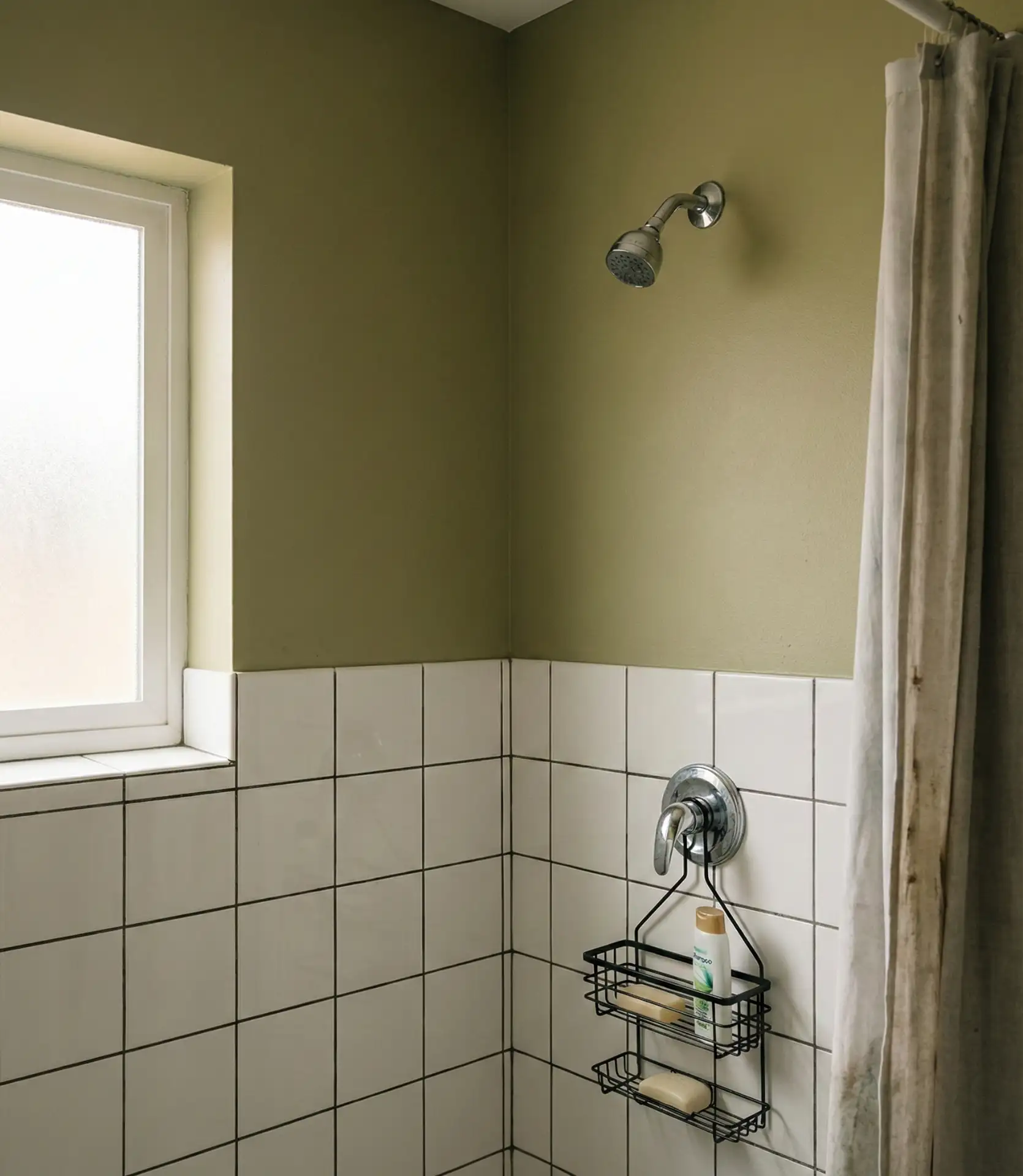
Budget breakdown: A basic 36×48 walk-in shower conversion runs $3,500-$6,000 professionally installed in most U.S. markets. You can cut this by 30-40% with sweat equity—laying your own tile, installing the pan, and handling demo work—while leaving licensed plumbers to handle valve and drain connections. Paint-grade waterproof panels like Schluter Kerdi-Board reduce tile square footage without sacrificing durability.
13. Walk-In Shower Ideas with Built-In Bench Seating
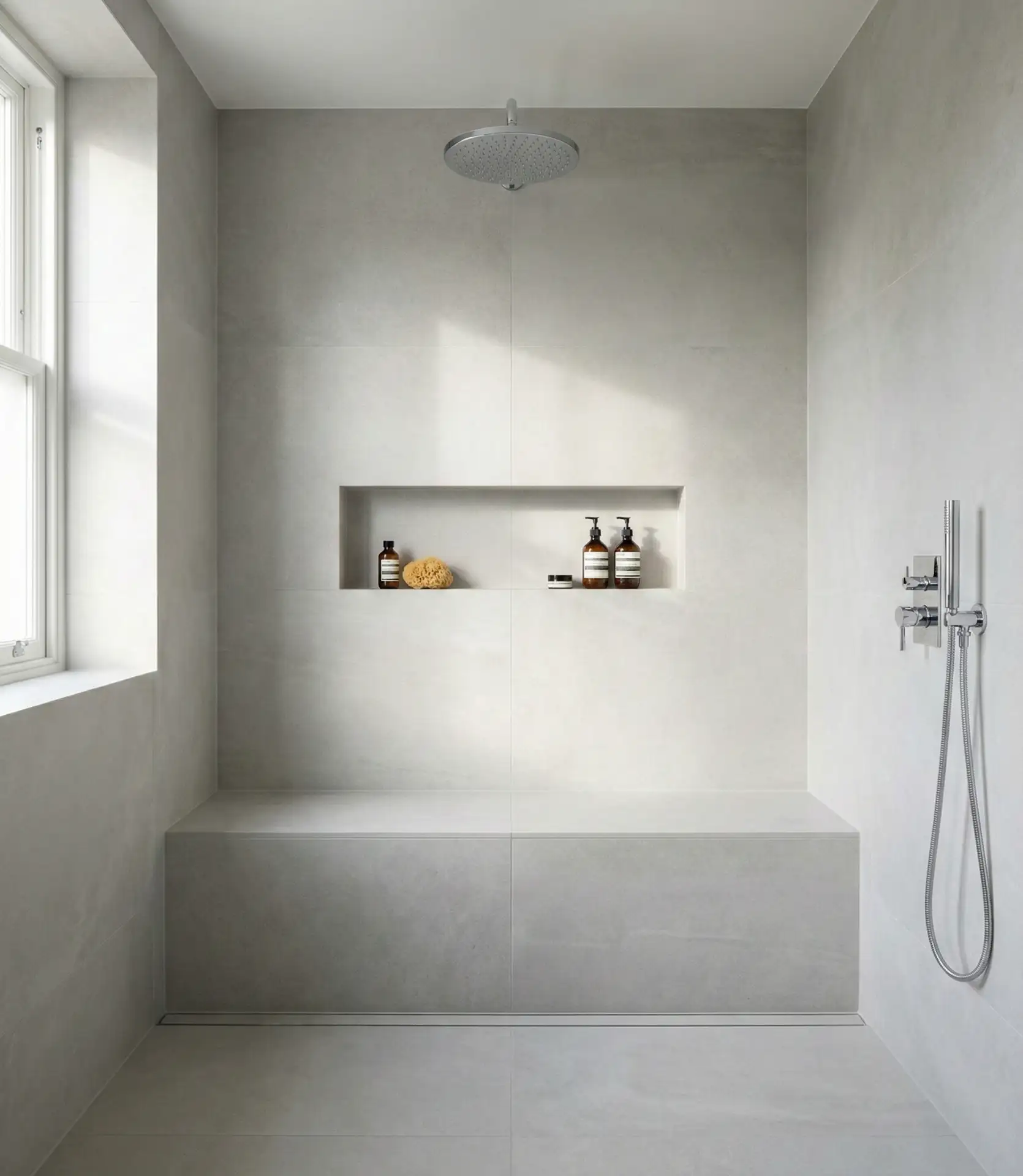
A bench design transforms your shower from a quick rinse-off space into a place where you can sit and decompress. The bench serves multiple purposes—shaving platform, seat for those with mobility concerns, resting spot during long showers, and staging area for bath products. Built-in tile benches integrate seamlessly with wall materials, while teak or synthetic wood options add warmth and contrast against cool porcelain surfaces.
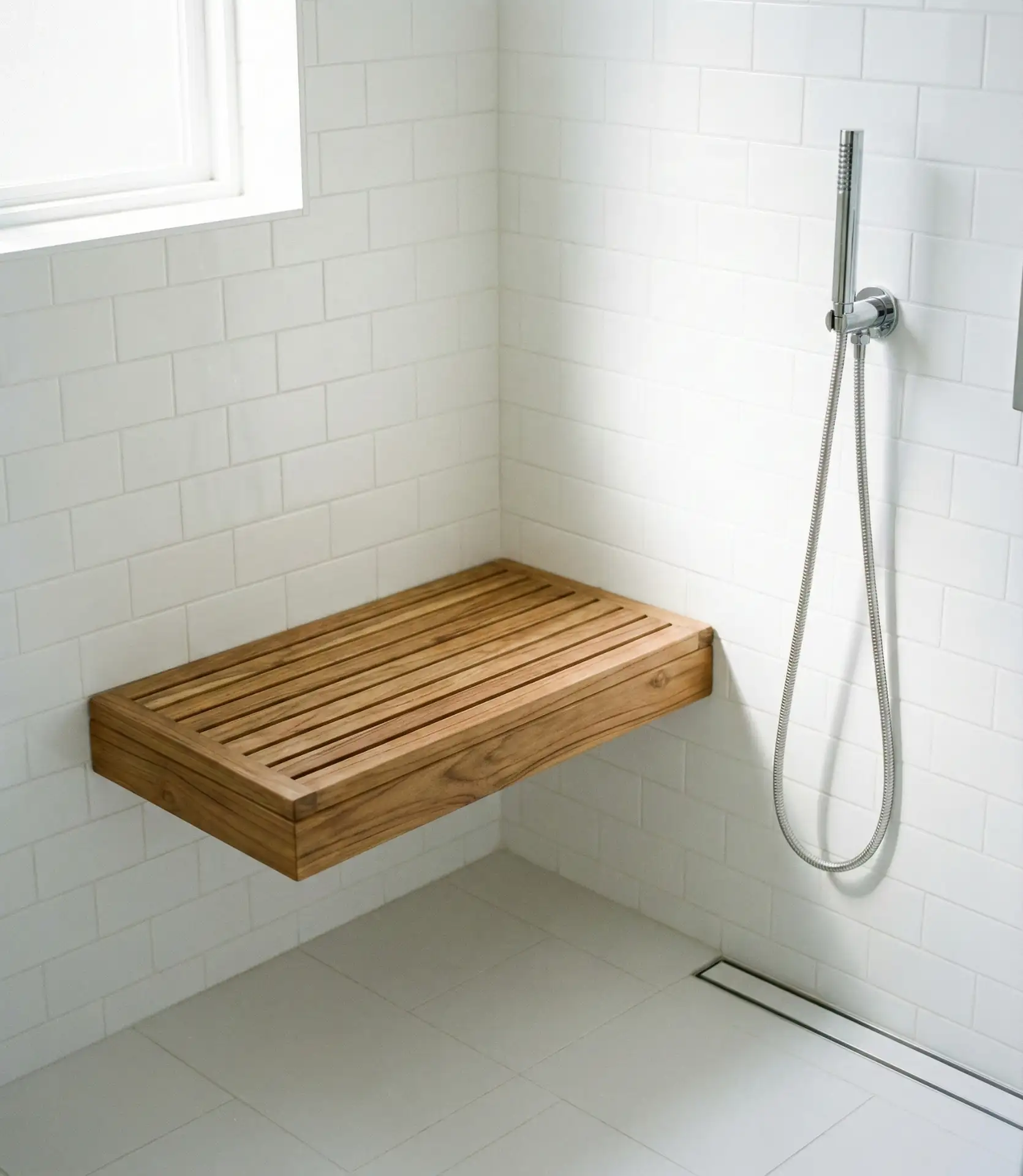
Common mistake: Building the bench too high (standard chair height of 18 inches) makes it uncomfortable for shower use—most people prefer 14-16 inches, which accommodates seated shaving and rinsing. Also, avoid placing benches directly under the showerhead; position them perpendicular or opposite so sitters don’t get unwanted spray while relaxing.
14. Large Walk-In Shower with Multiple Spray Zones
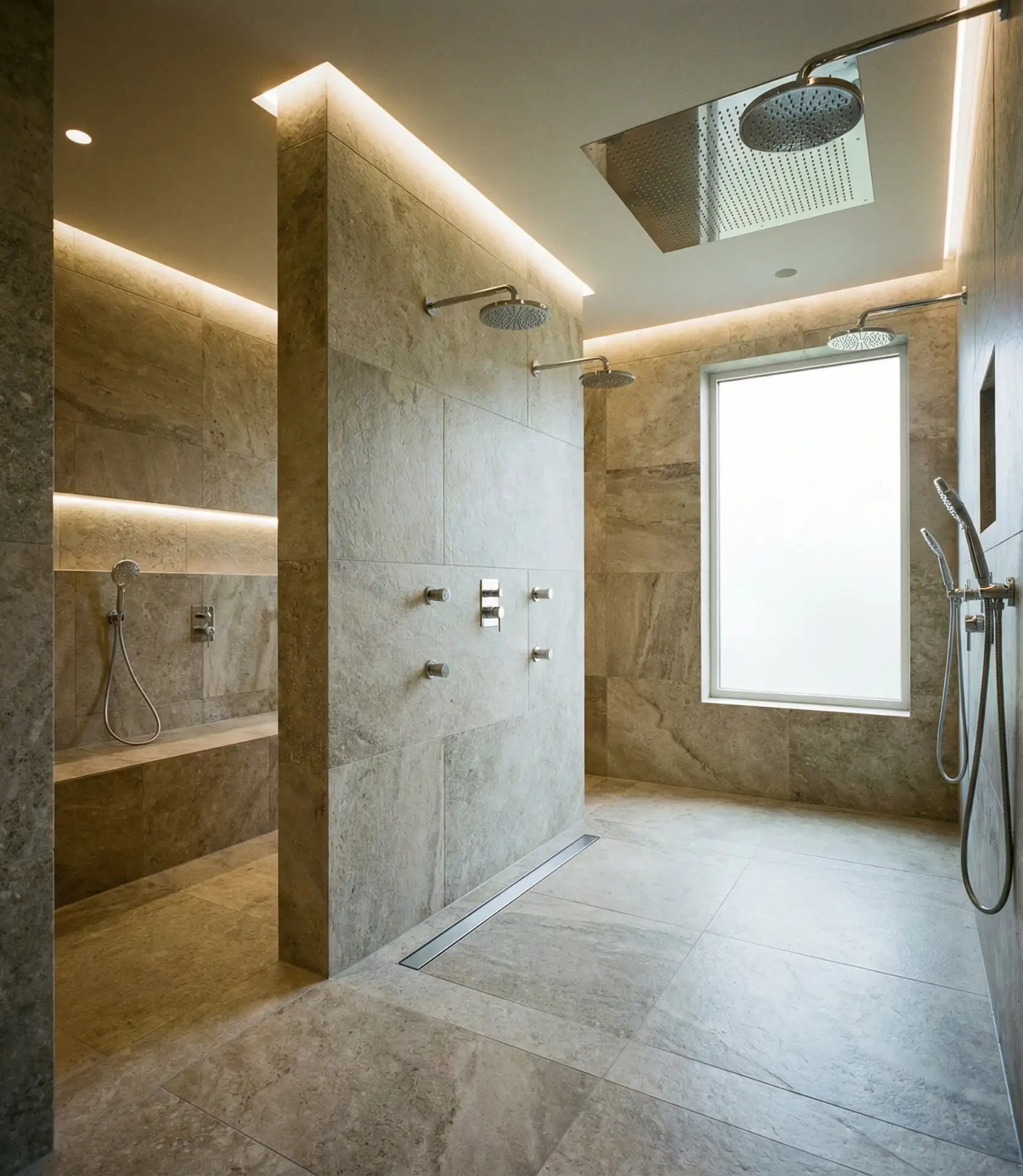
When you have the square footage, a large walk-in shower becomes a true wet room experience with body sprays, a rainfall head, and a handheld wand creating an enveloping water experience. This setup typically requires a 60×60 inch minimum footprint and upgraded plumbing to handle multiple simultaneous fixtures. The spaciousness also allows for a freestanding bench, a separate drying area, and room to move without constantly brushing against wet walls.
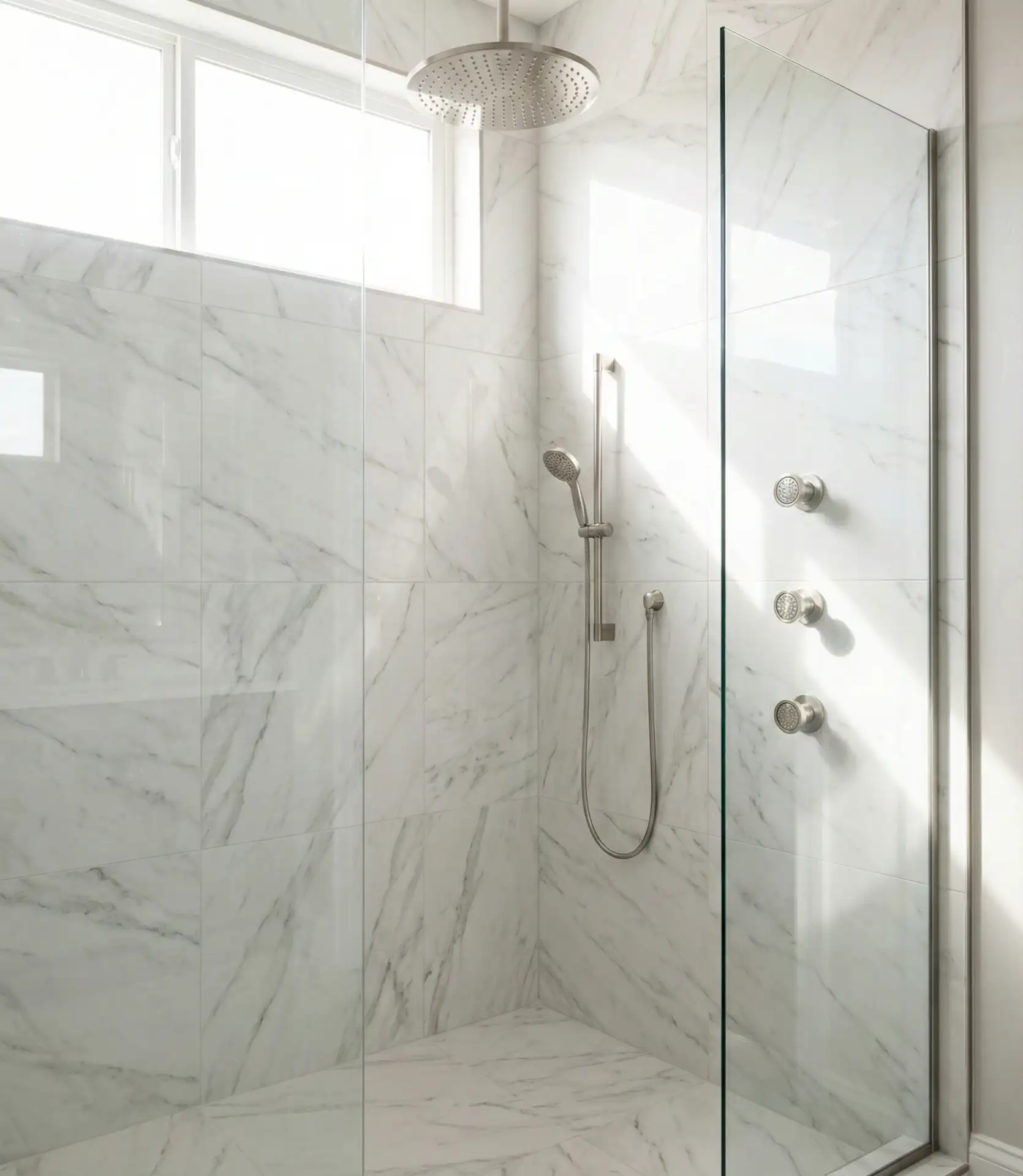
Micro anecdote: A friend with a four-spray shower admits she uses only the rainfall head 90% of the time—the body sprays get turned on for guests or when she’s trying to impress. The real luxury, she says, is the floor space to dry off inside the warm steam rather than stepping out into a cold bathroom.
15. No Glass Door Half Wall Design for Open Flow
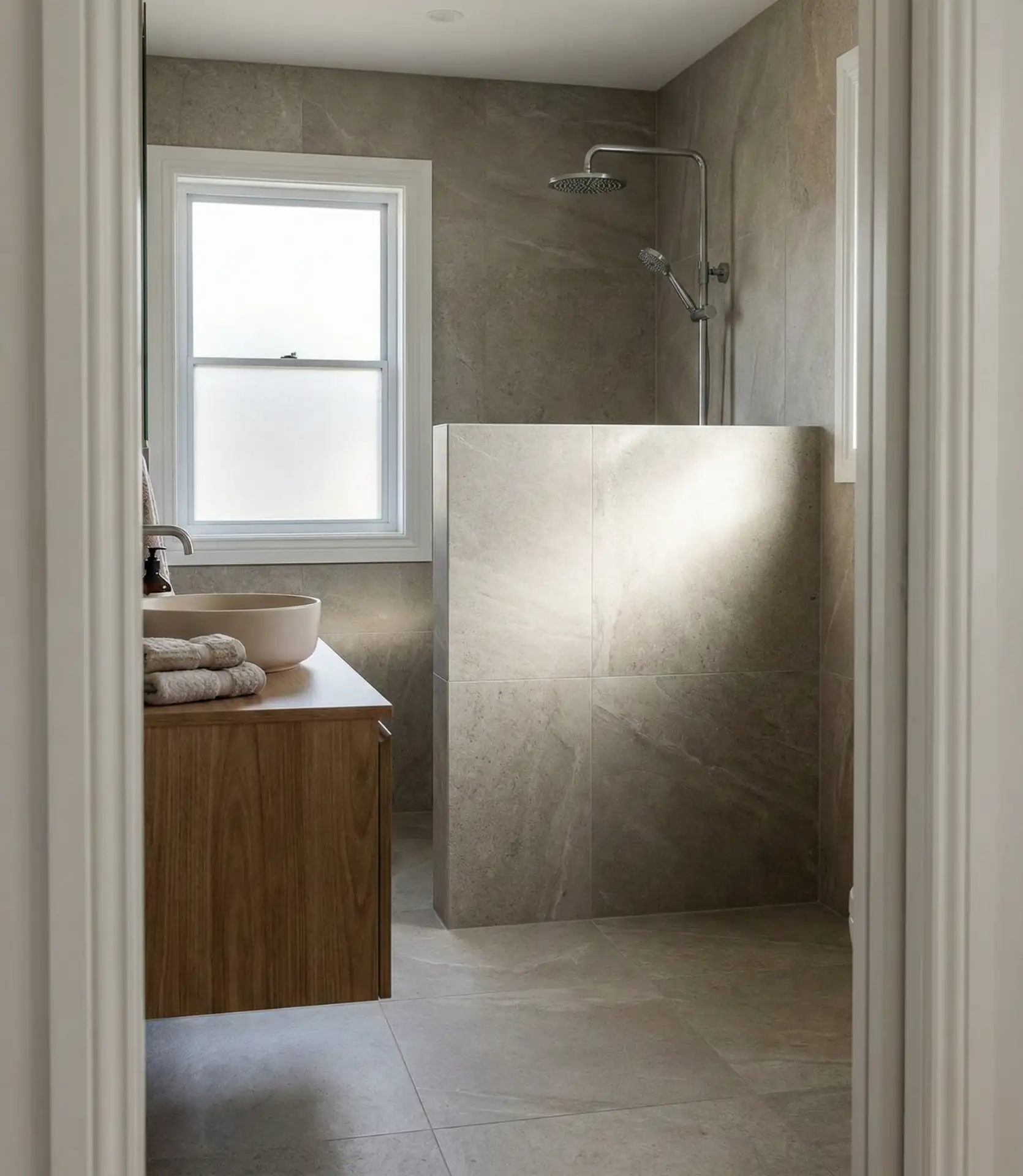
Combining no glass door entry with a half wall partition creates one of the most sought-after layouts in contemporary bathroom design. The partial barrier contains spray while preserving sight lines and making the room feel double its actual size. This configuration works best when the shower entry faces away from the main door, preventing hallway views directly into the shower while maintaining the open aesthetic.
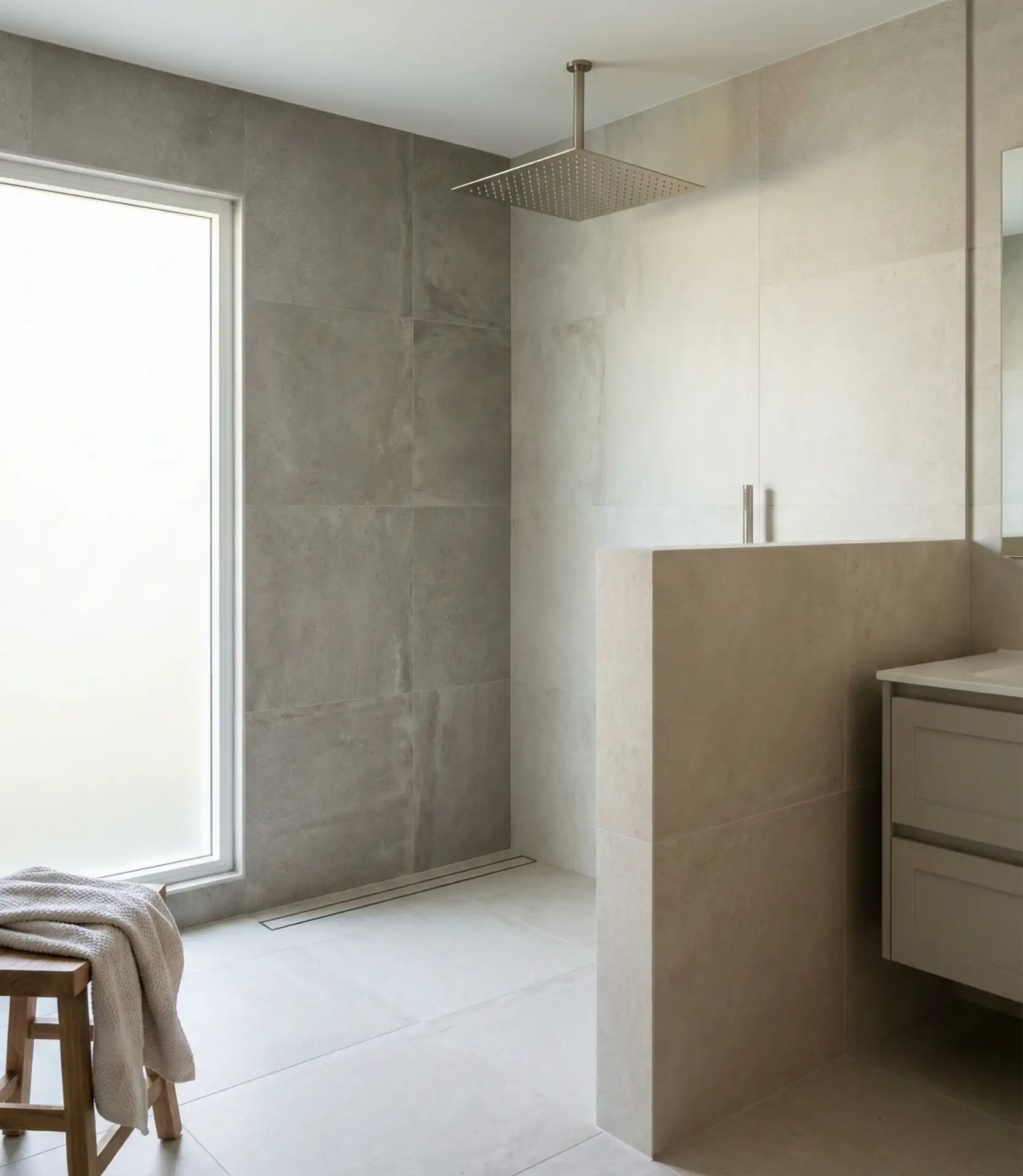
Where it works best: This layout shines in master baths where privacy from household traffic isn’t a concern and in warm climates where heat retention isn’t critical. Northern homeowners sometimes add a heated floor to offset the cooler air circulation, turning a potential drawback into a comfort upgrade.
16. Small Full Bathroom Walk-In Shower Maximization
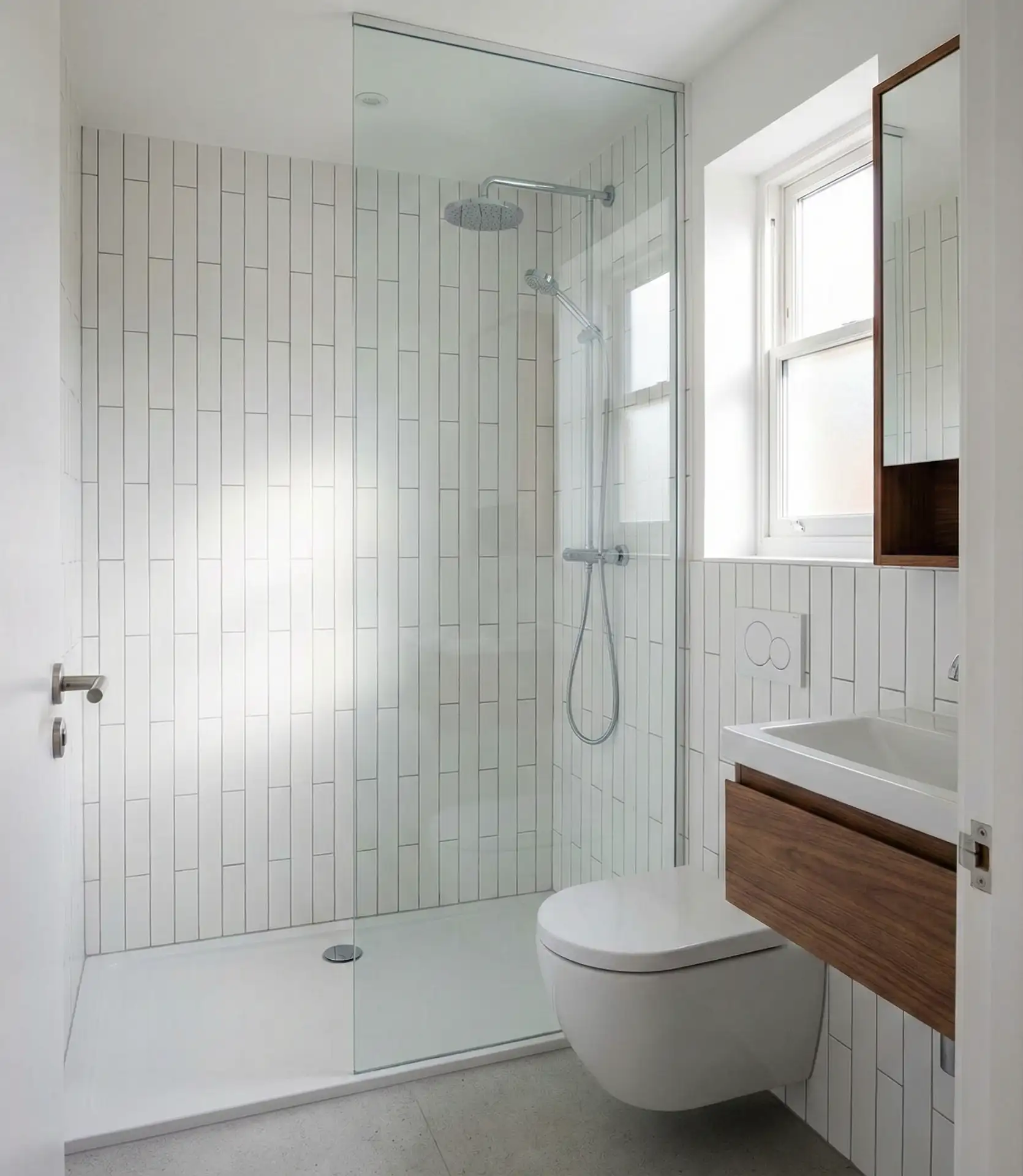
Transforming a small full bathroom with a cramped tub-shower combo into a walk-in layout often requires claiming every available inch. The shower typically expands to 36×48 inches minimum, with the toilet and vanity positioned to preserve clearances. Pocket doors or barn-style entry hardware recover the swing space a traditional door would consume, and wall-mounted toilets with concealed tanks shave another 6-9 inches of visual and actual depth.
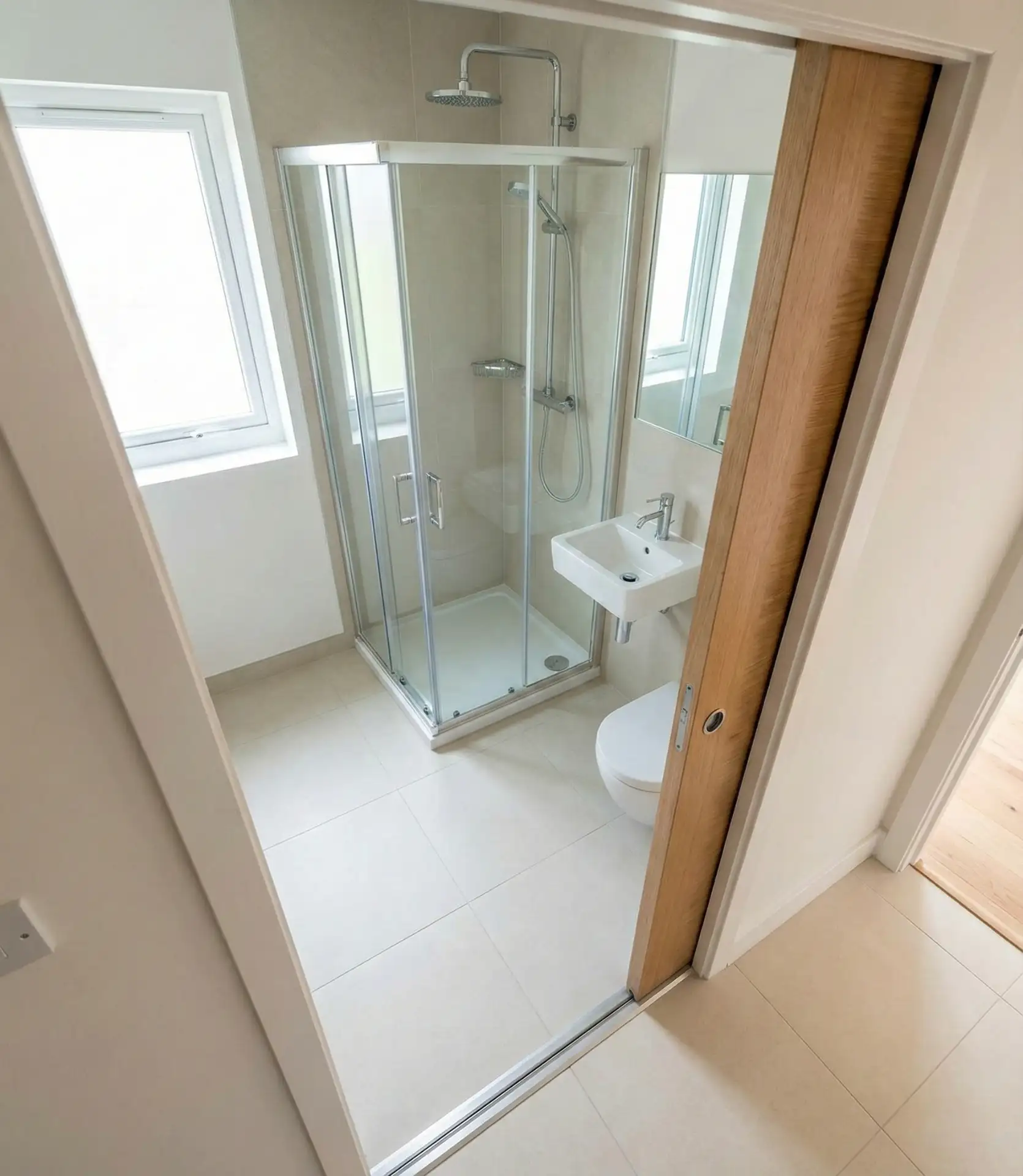
Expert-style commentary: The 5×8 bathroom—standard in many post-1970s homes—can accommodate a walk-in shower only if you’re willing to downsize the vanity to 24 inches and position the toilet with a bare-minimum 15-inch clearance from the shower wall. It’s tight, but the trade-off for a proper shower instead of a tub-shower combo satisfies most homeowners.
17. Walk-In Shower with Curtain and Half-Wall Hybrid
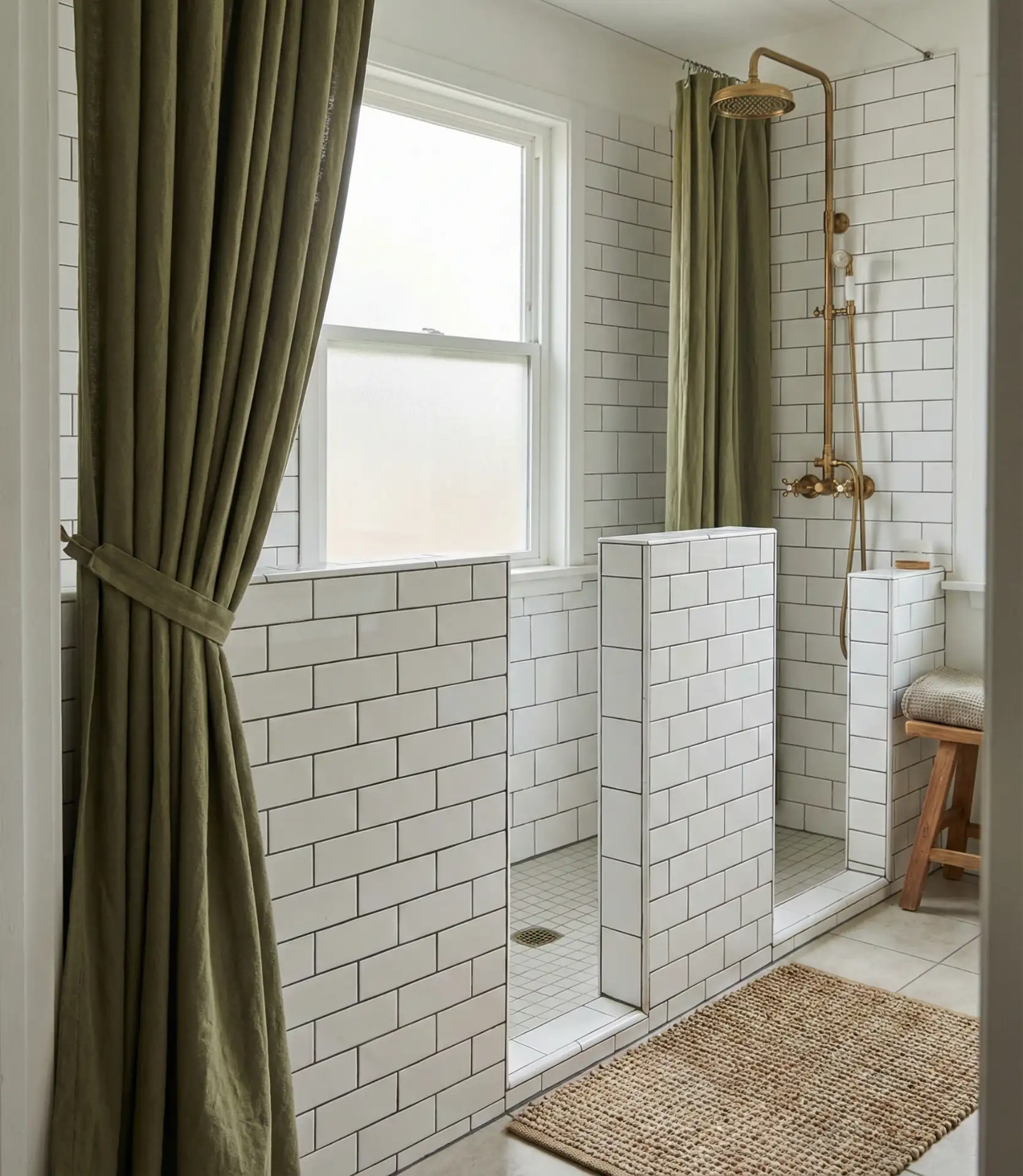
A hybrid approach uses a fixed half wall for the shower’s primary barrier, then adds a curtain across the remaining opening for splash control and privacy. This combination delivers architectural definition from the wall while keeping costs lower than full glass panels—you get structure without the $1,500+ price tag of frameless enclosures. The curtain also softens the look, preventing the clinical feel some people associate with all-tile showers.
Real homeowner behavior: Many people install the curtain track but rarely close the curtain day-to-day, using it only when guests visit or during especially vigorous showers. The fixed wall handles 80% of spray containment, making the curtain more of an aesthetic and occasional-use element than a daily necessity.
18. Corner Glass Walk-In Shower with Neo-Angle Entry
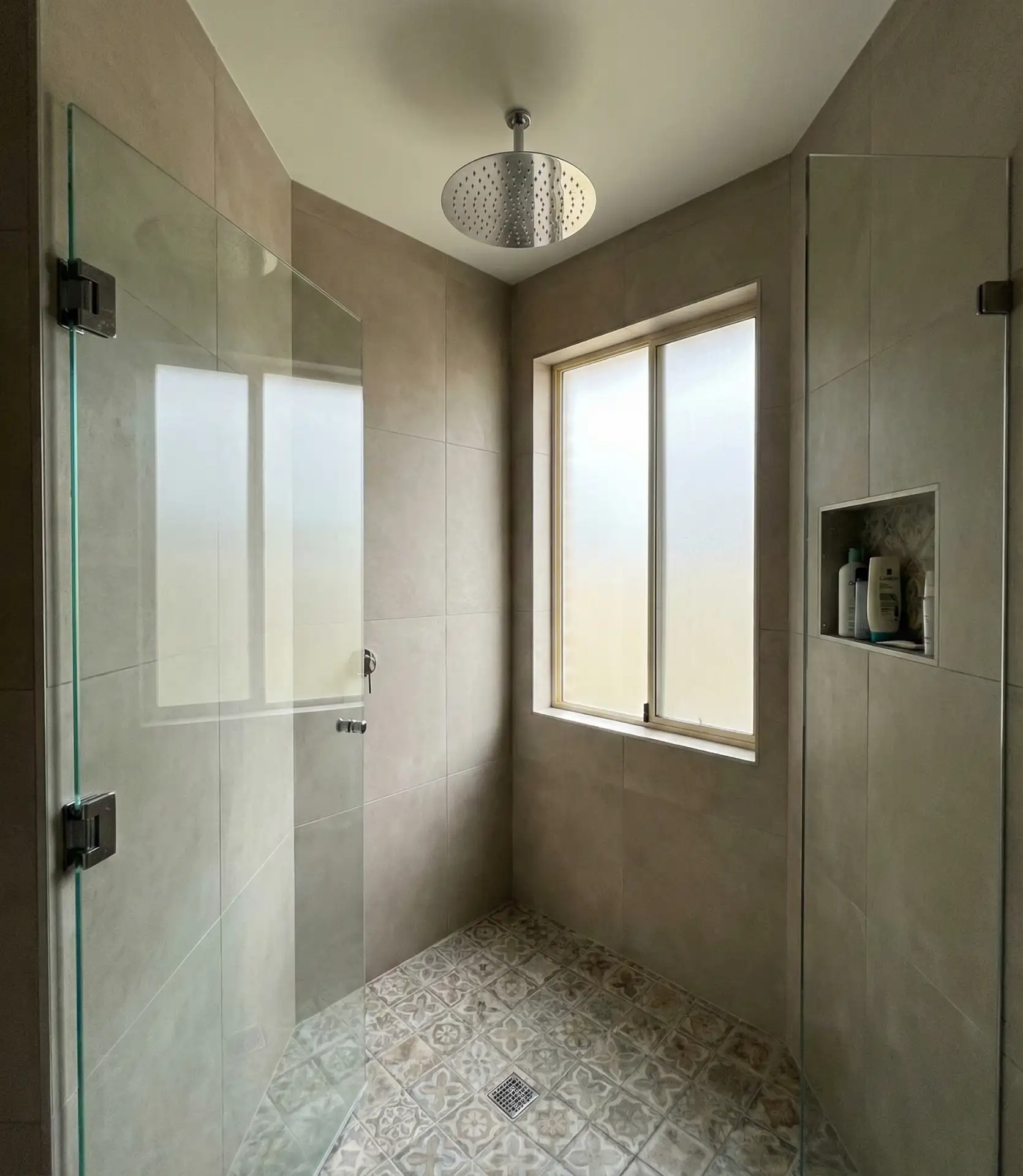
The corner glass shower with angled entry maximizes awkward bathroom layouts by claiming the least-usable floor space. Two walls handle the heavy lifting, while a single angled glass panel or door closes the remaining opening at 45 degrees. This geometry feels more spacious inside than a traditional square shower of the same square footage, and the diagonal entry adds visual interest when viewed from the bathroom doorway.
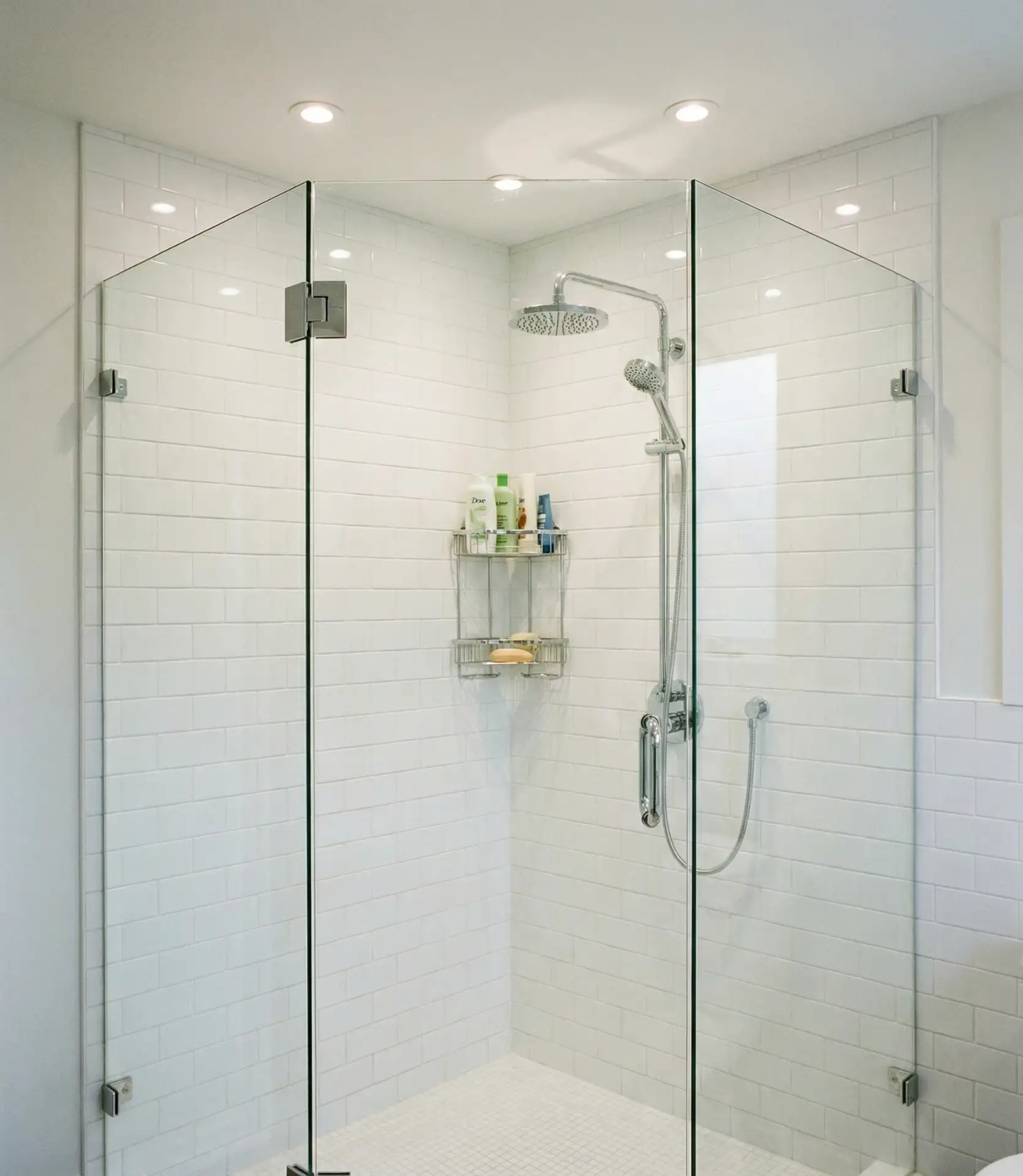
Common mistake: Installing the showerhead on the back corner wall instead of on one of the side walls. Back-corner placement creates an awkward spray pattern where you’re constantly dodging water to adjust temperature. Side-wall mounting lets you enter, adjust controls, and then step fully under the spray.
19. Master Bathroom Walk-In with Statement Tile
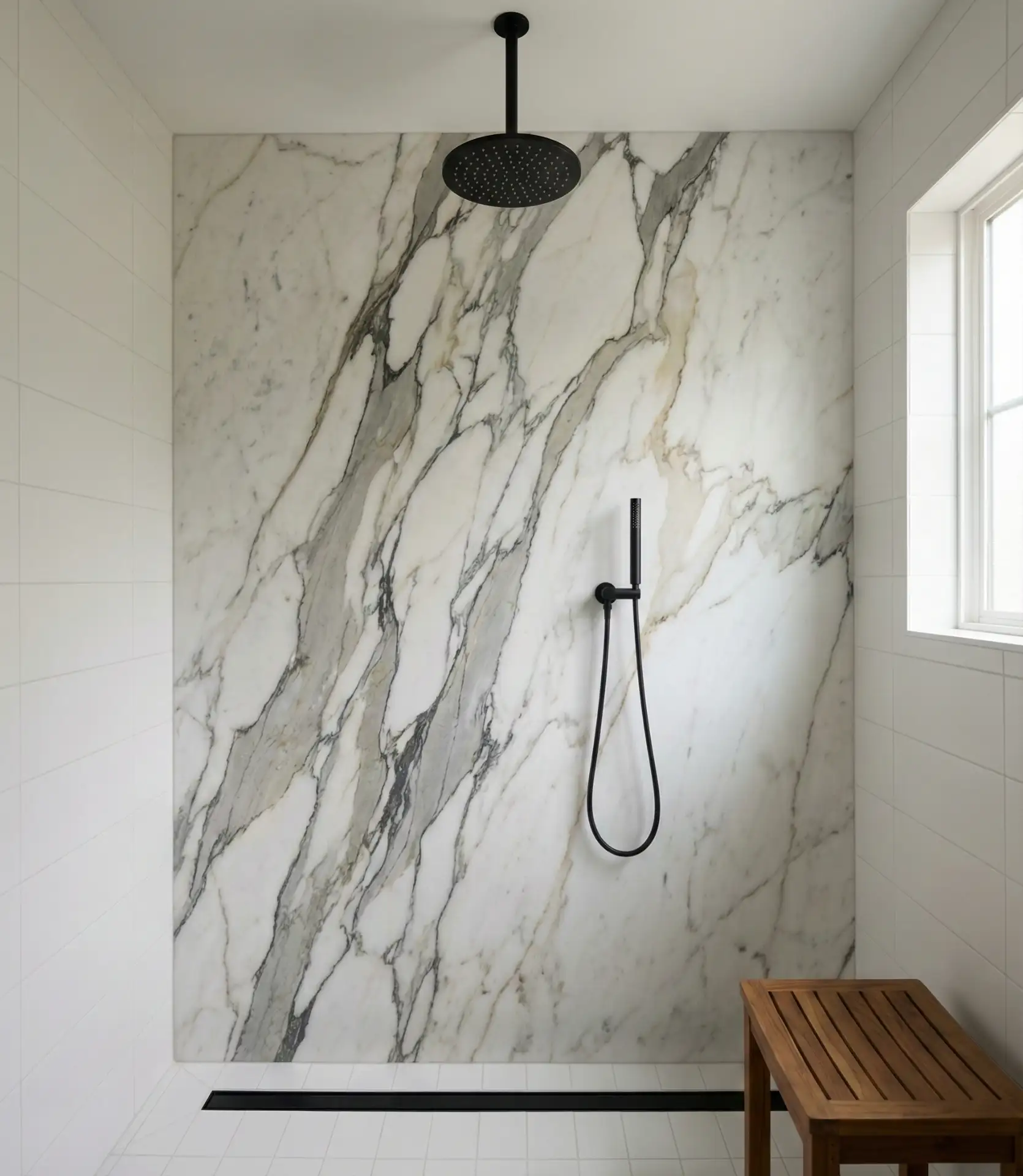
Your master bath shower deserves a design moment, and a feature tile wall delivers visual impact without requiring the square footage of a double shower. Encaustic patterns, geometric mosaics, or large-format book-matched slabs create a focal point visible from the bedroom or bathtub area. Limiting the statement tile to one surface keeps material costs manageable—you might spend $25-40 per square foot on specialty tile but need only 30-40 square feet total.
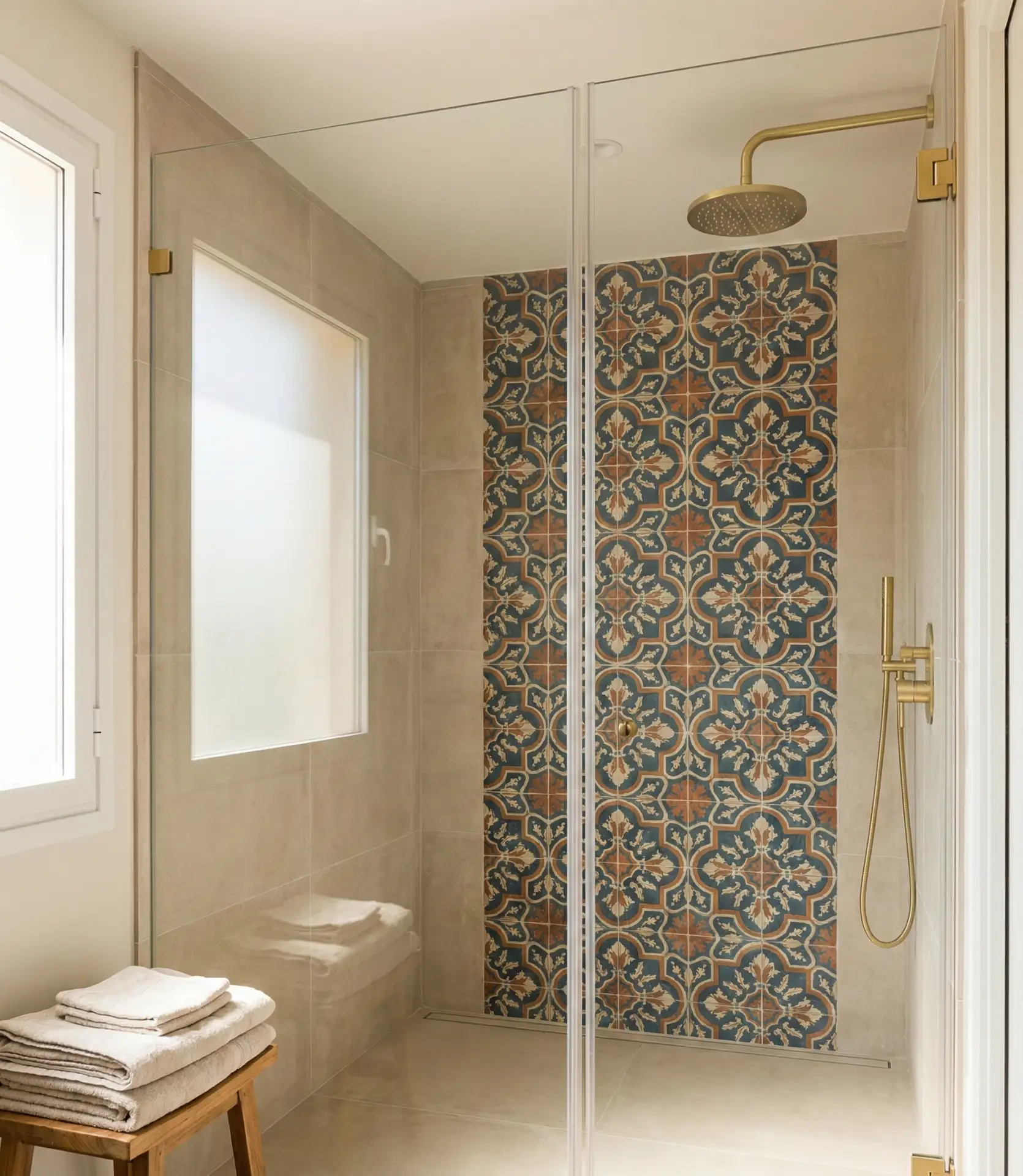
Budget angle: Specialty tile on just one wall (typically 8-10 square feet floor-to-ceiling in a standard shower) might add $300-500 to your material budget versus standard tile throughout. The visual payoff far exceeds the modest cost increase, creating the custom look without custom-home pricing.
20. Doorless Walk-In Shower with Linear Drain
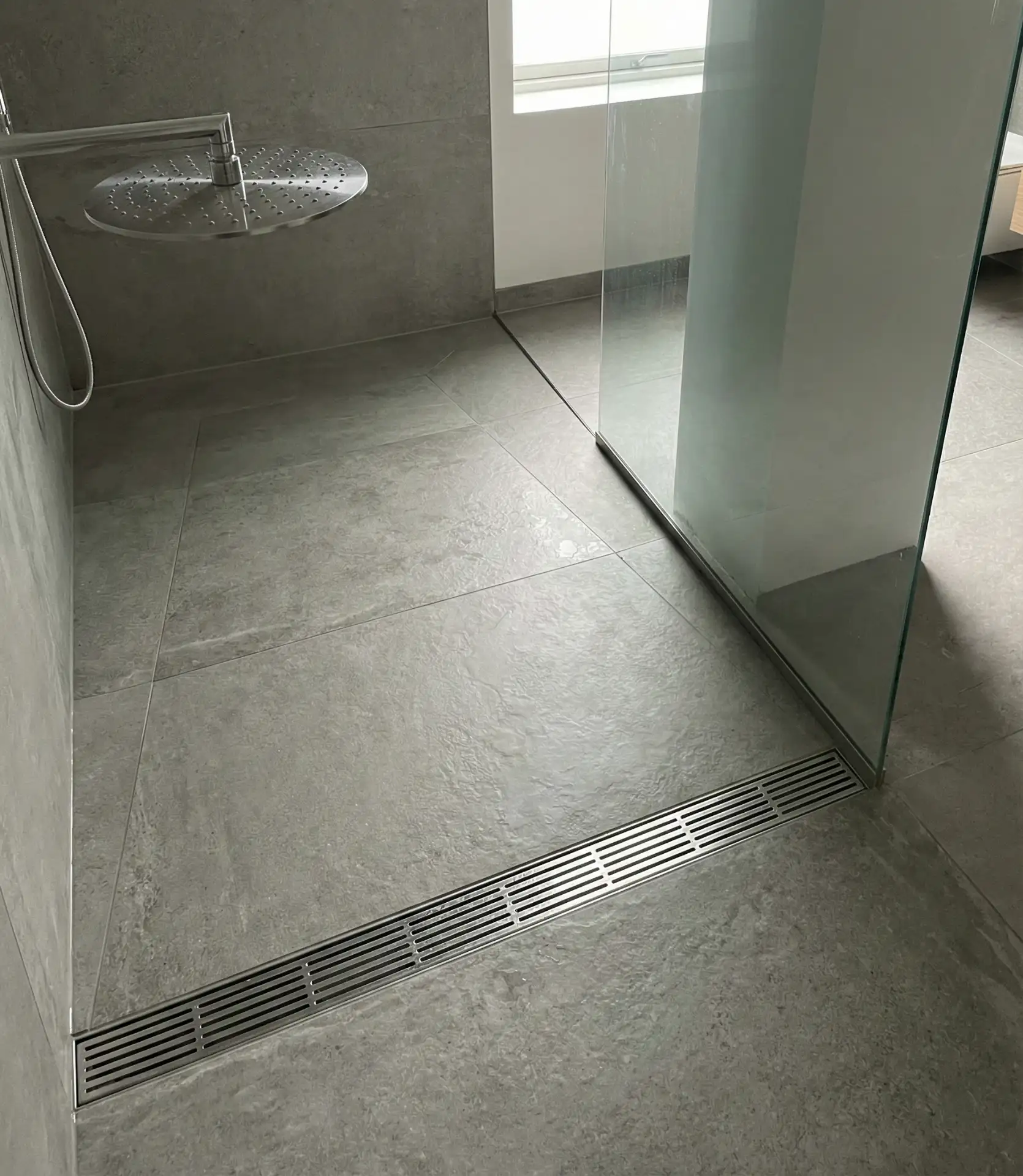
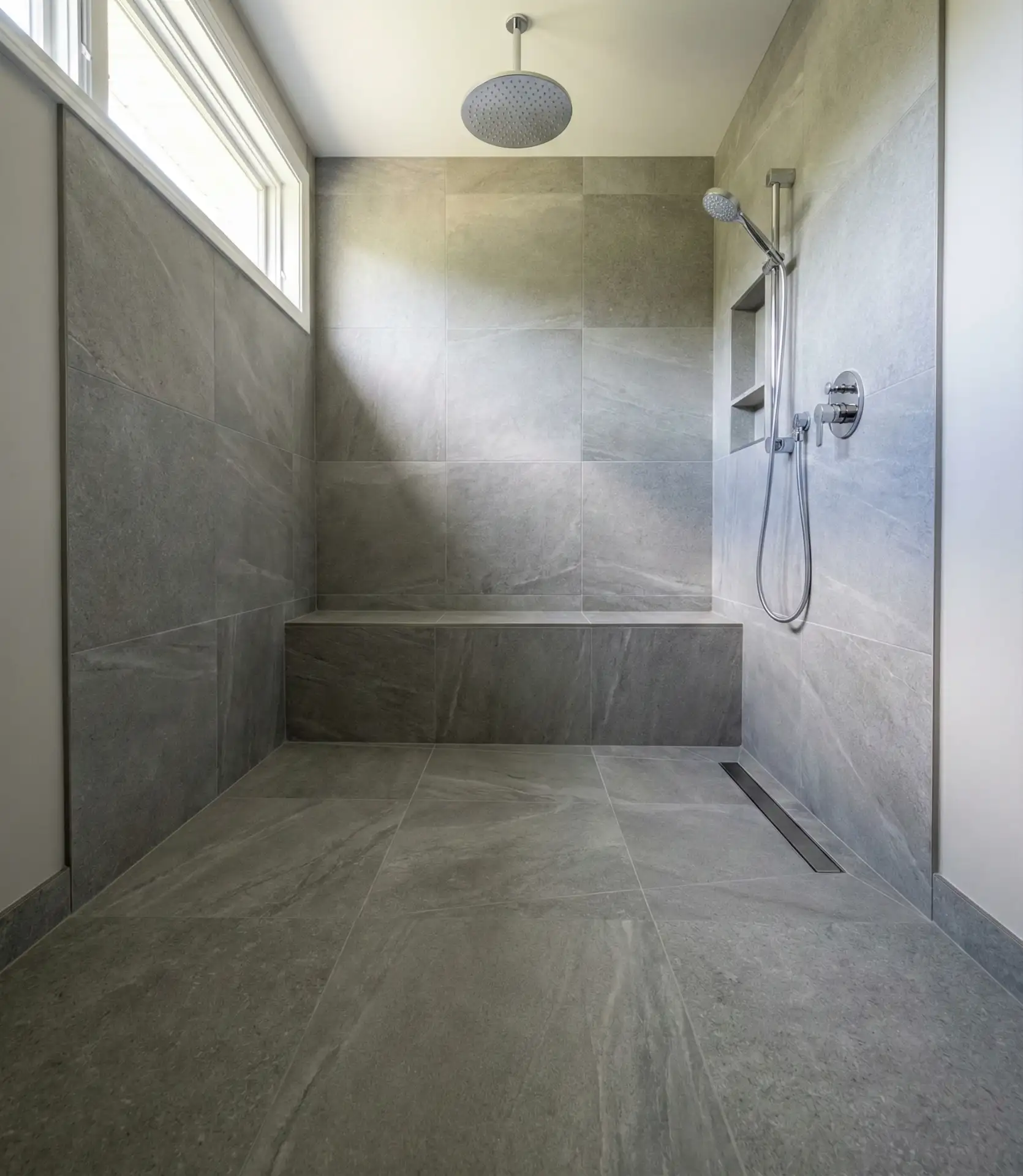
A doorless walk-in pairs perfectly with a linear drain positioned near the entry threshold, creating a sleek, uninterrupted floor plane. The channel drain—typically 24-36 inches long and 2-3 inches wide—allows for single-direction floor slope instead of the four-way pitch traditional center drains require. This makes large-format tile installation dramatically easier and creates clean, continuous grout lines that enhance the minimalist aesthetic.
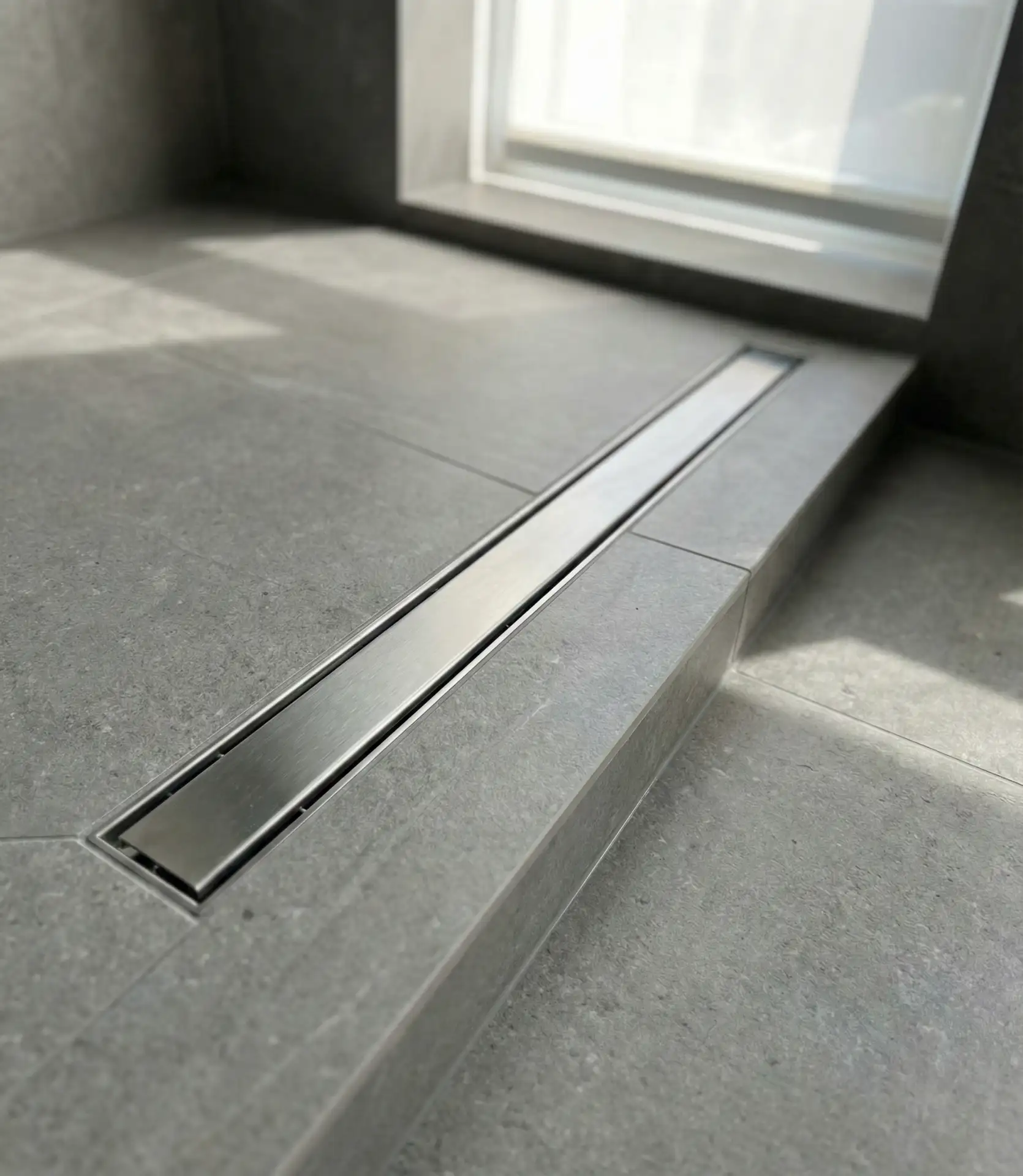
Practical insight: Linear drains cost $200-600 depending on length and finish, versus $50-150 for traditional center drains. The price difference reflects both the sophisticated drainage mechanism and the aesthetic upgrade—but you recoup some costs in easier tile installation since your installer doesn’t need to create complex multi-directional slopes.
21. Stone Accent Walk-In Shower with Natural Elements
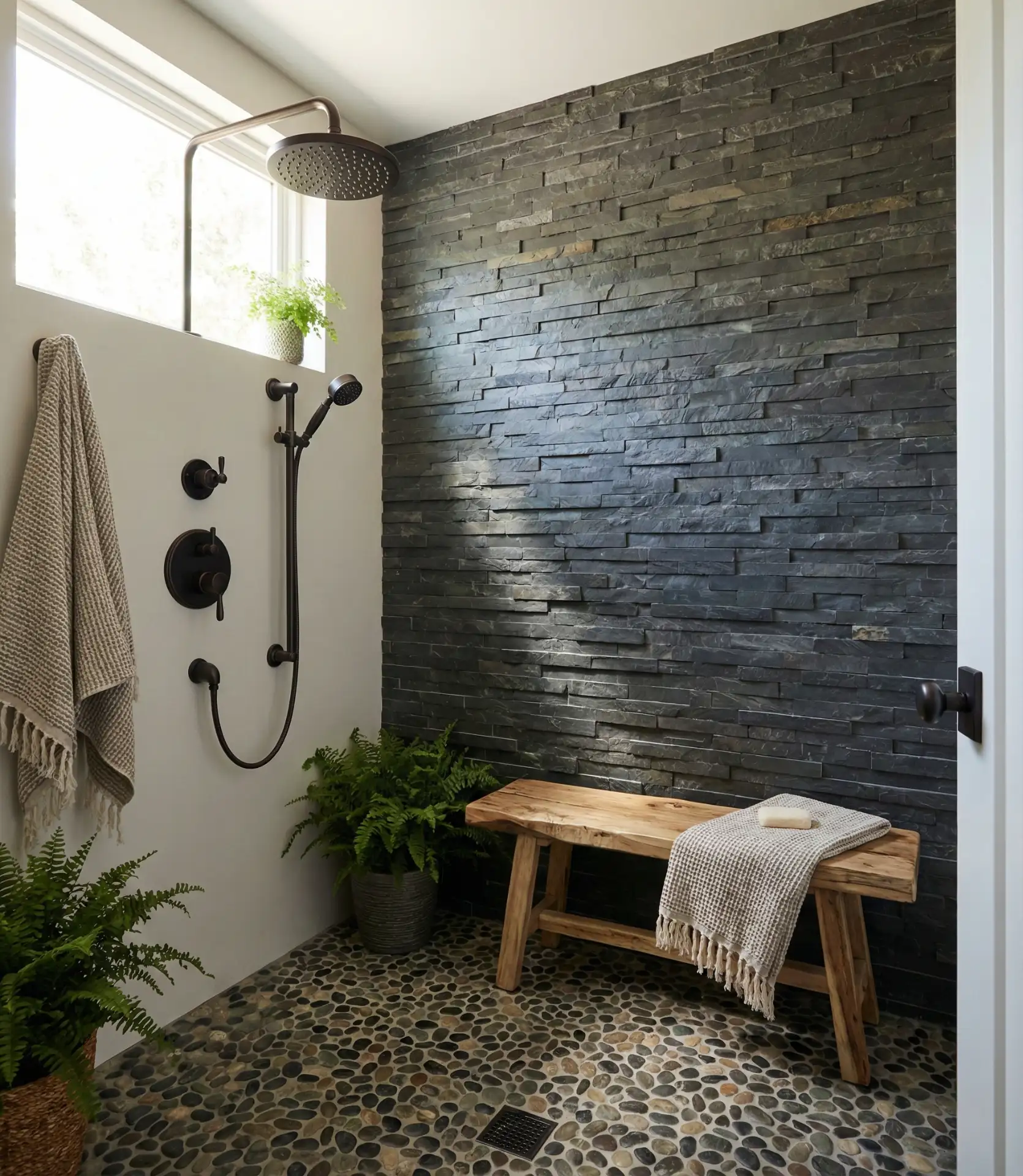
Incorporating stone elements—whether stacked ledgestone, river rock, or honed marble—brings textural depth that flat ceramic tile can’t match. A stone accent wall behind the showerhead creates a feature moment, while pebble flooring adds massage-like texture underfoot and natural slip resistance. This organic approach works beautifully in homes with mountain, desert, or lakeside aesthetics where bringing the outdoors in feels authentic rather than forced.
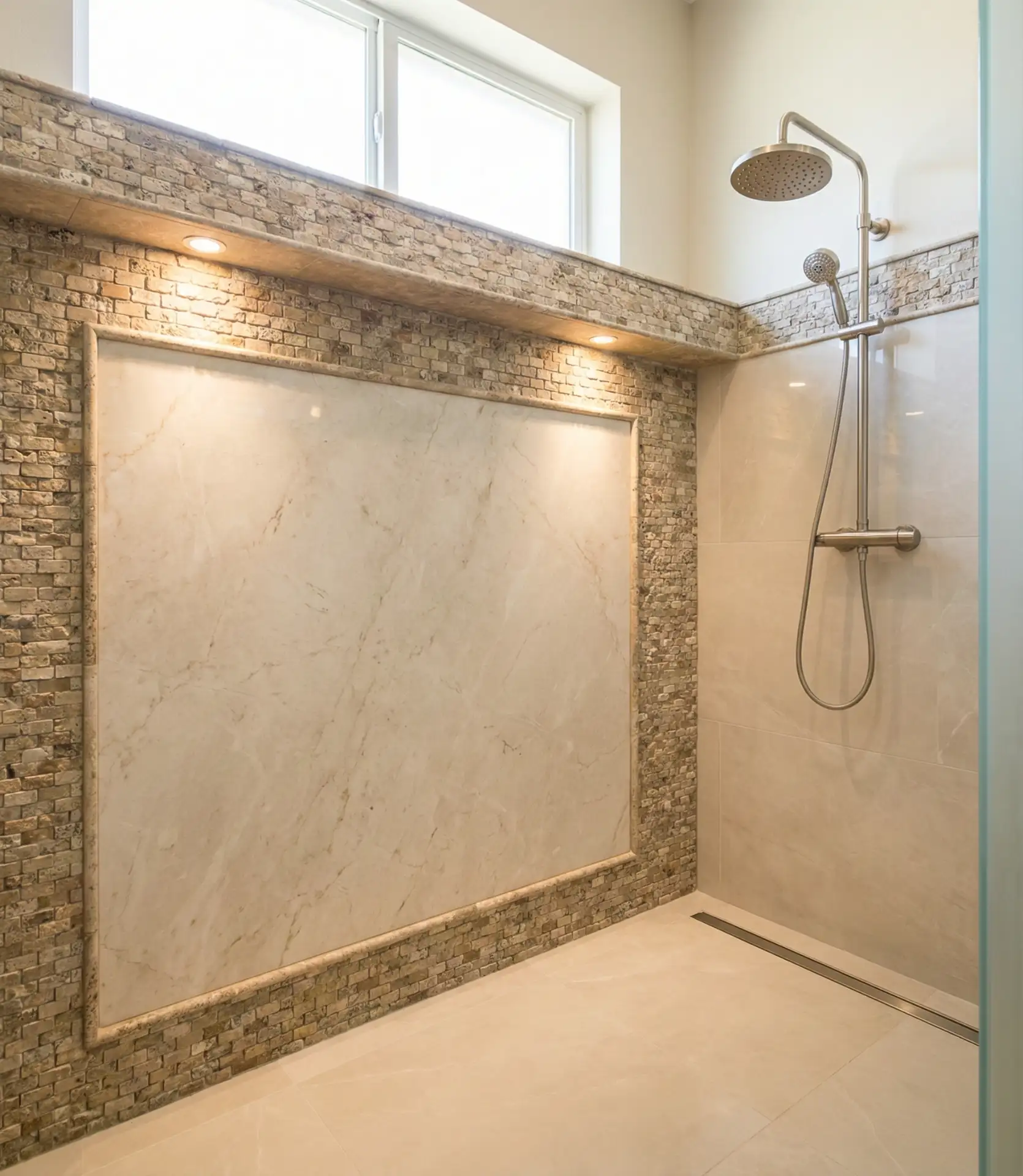
Regional context: Stone showers appear most frequently in Colorado, Montana, the Pacific Northwest, and the Southwest—regions where natural materials echo landscape elements. In suburban developments across the Midwest and South, homeowners increasingly choose stone as a counterpoint to the manicured, man-made surroundings, creating a retreat space disconnected from subdivision uniformity.
22. Walk-In Shower with Bench and Built-In Niches
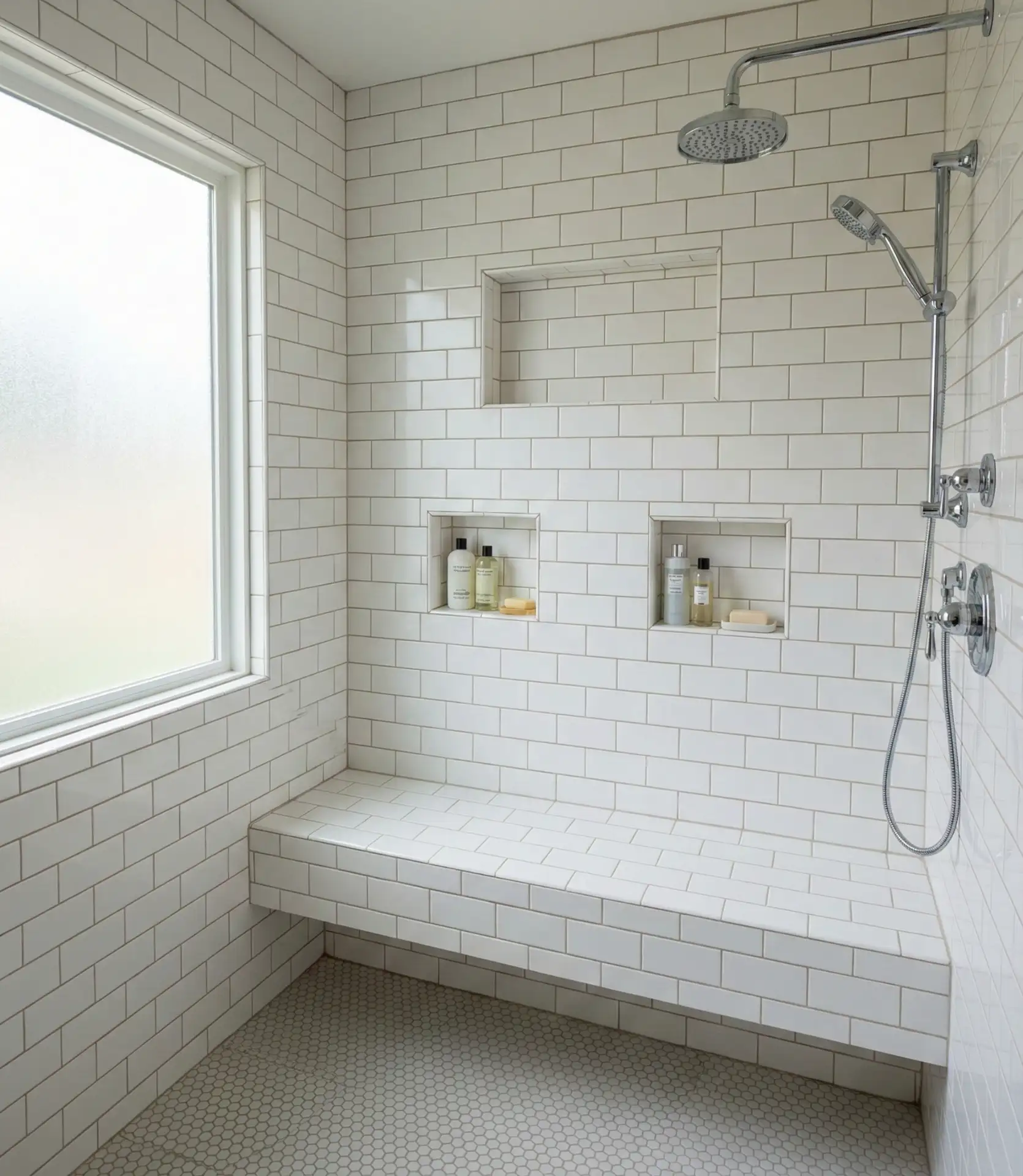
Combining a bench with multiple built-in niches creates a fully self-sufficient shower where everything has its designated spot. The bench provides seating and leg-propping for shaving, while niches at two heights—one at shoulder level for shampoo and another lower for razors and soap—keep the floor clear of clutter. This approach particularly benefits multi-person households where different users have different product collections and storage needs.
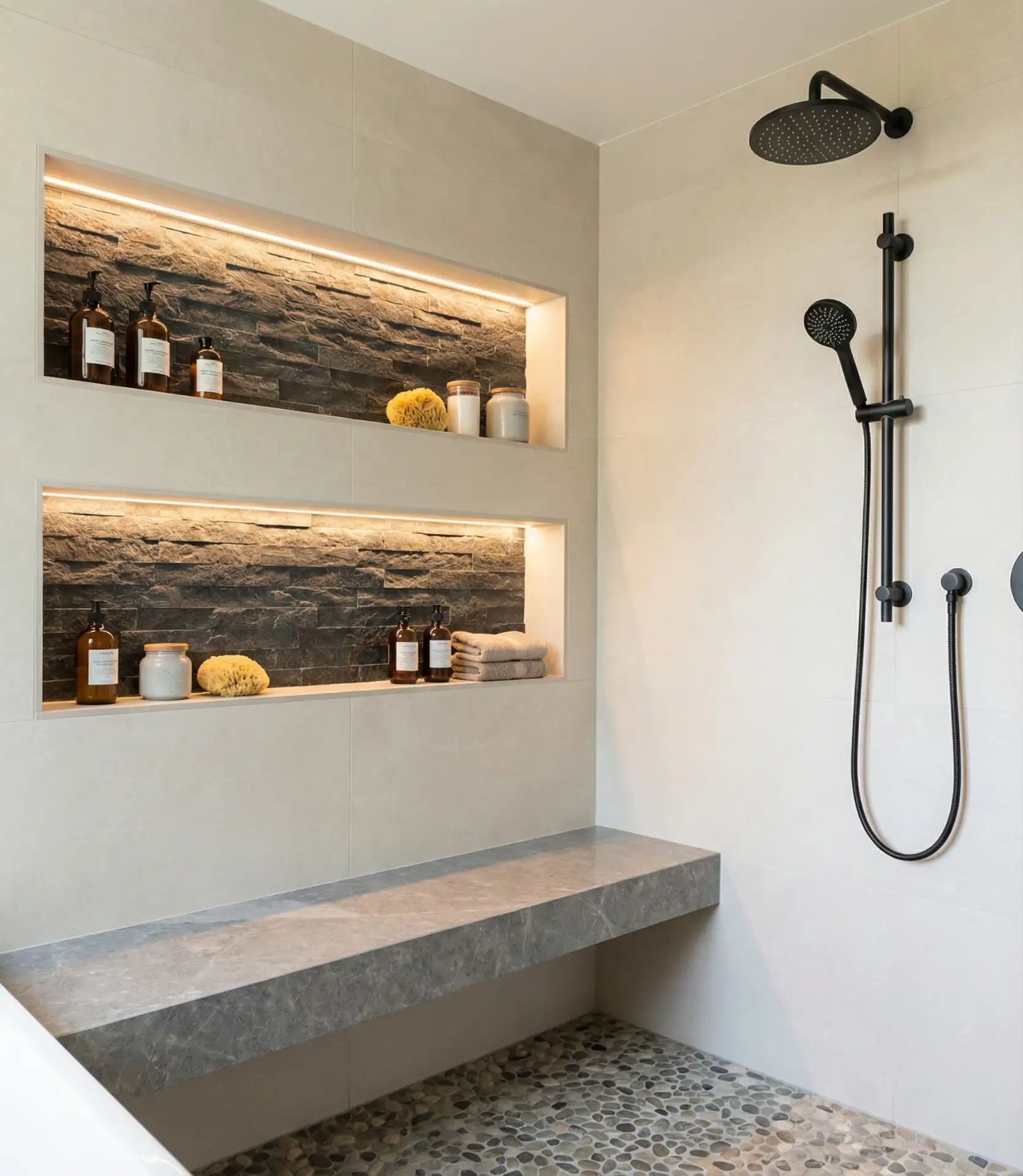
Expert-style commentary: Position niches between studs to avoid cutting structural members, and size them 14-15 inches wide to match standard stud spacing. Slope the niche bottom toward the drain slightly (just 1-2 degrees) so water doesn’t pool—standing water leads to mildew and soap scum buildup that’s harder to clean than vertical surfaces.
23. Black and White Contrast Walk-In Shower
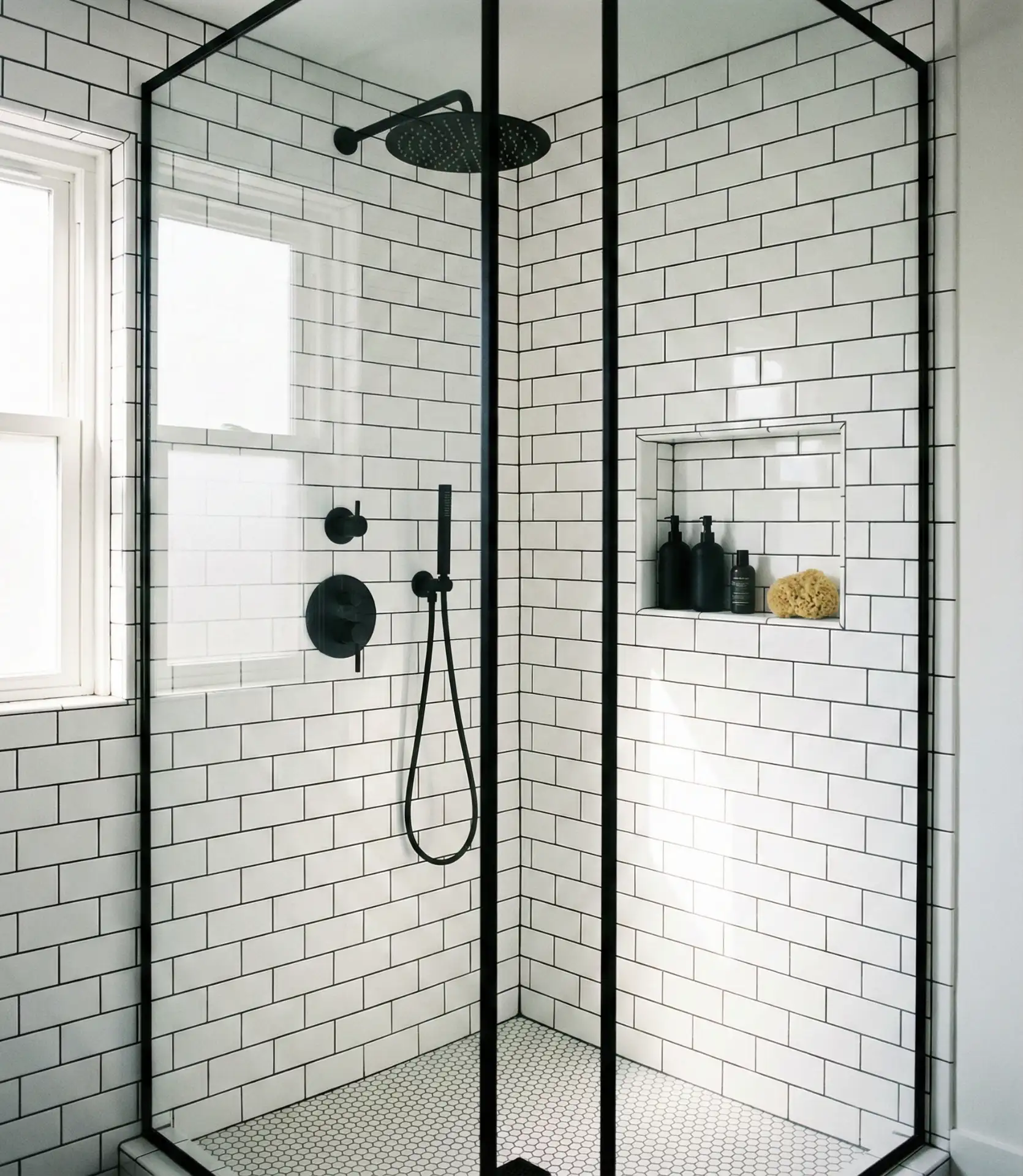
The timeless black and white palette creates crisp, high-contrast drama that photographs beautifully and never goes out of style. Black grout against white tile emphasizes geometric patterns, while matte black fixtures pop against light backgrounds. This combination works across design styles—traditional with subway tile and vintage fixtures, modern with large-format slabs and minimalist hardware, or transitional with mixed tile sizes and bridge-style valves.
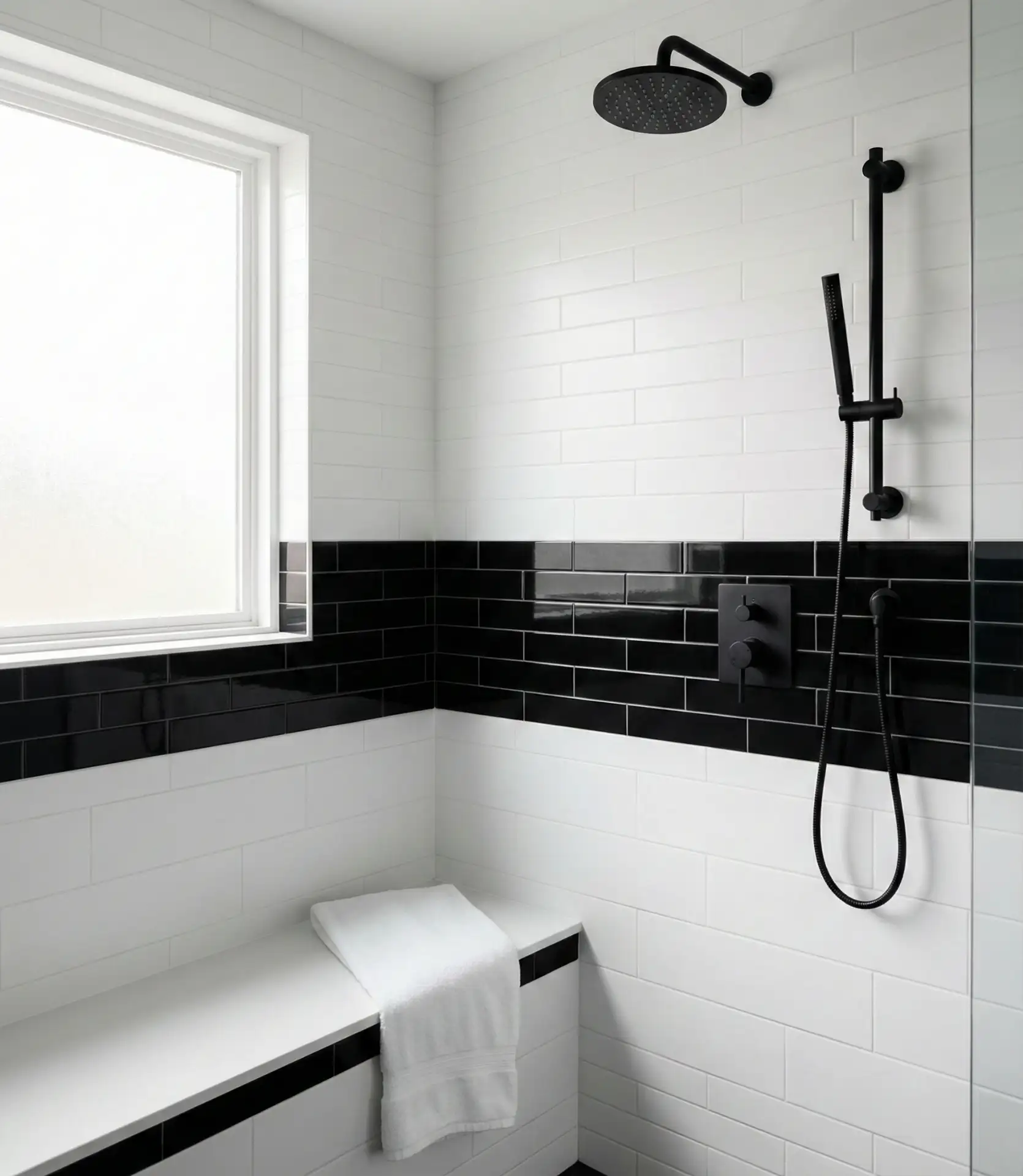
Micro anecdote: A designer friend installed a black-and-white shower in her spec home flip, worried it might be too bold. It became the listing photo focal point, and multiple buyers specifically cited the bathroom in their offers. The lesson: high contrast reads as confidence and intentionality, not risk.
24. Walk-In Shower Ideas with Door Options
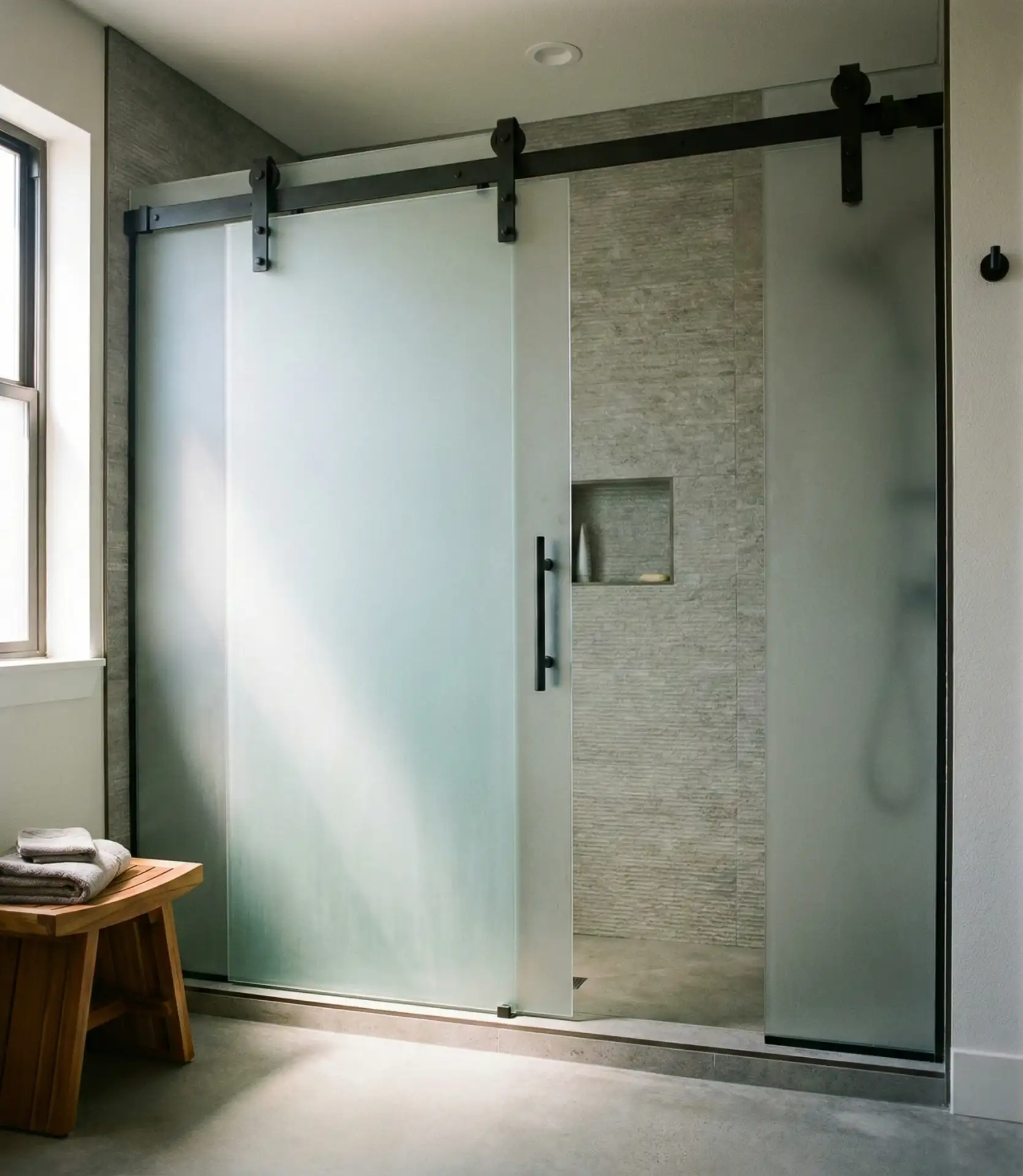
While doorless showers dominate design blogs, many homeowners prefer the heat retention and spray containment that a door provides. Modern door options range from frameless pivot panels to sliding barn-style glass that saves clearance space. The key is choosing hardware that complements your overall aesthetic—sleek chrome for contemporary, oil-rubbed bronze for traditional, or matte black for industrial-modern. Proper door selection maintains steam warmth, crucial in climates with cold winters.
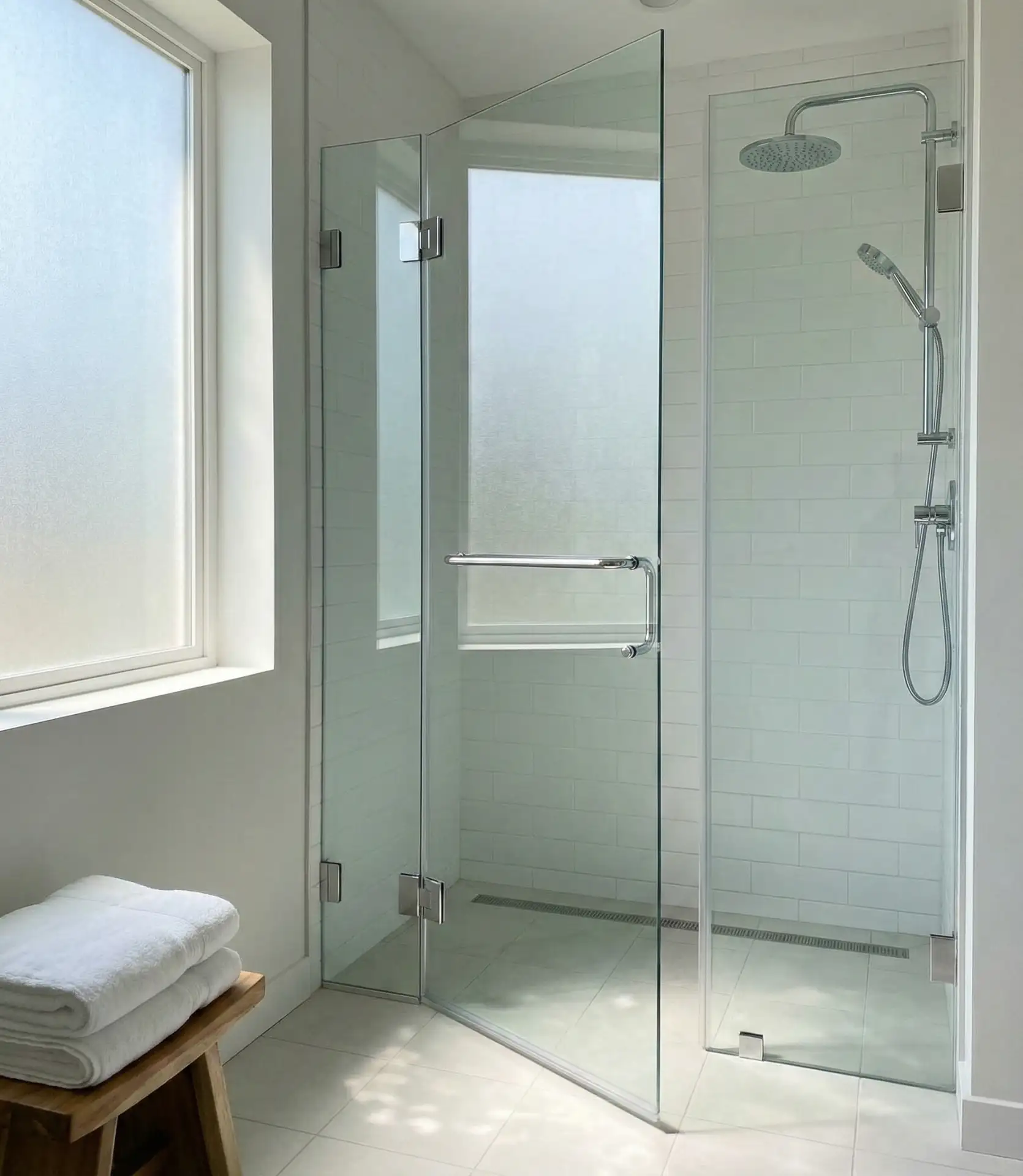
Where it works best: Enclosed showers suit basements and windowless bathrooms where ventilation is limited—the door helps direct steam toward the exhaust fan rather than letting it disperse into fabric window treatments or wooden cabinetry. In open-plan bathroom suites where the shower is visible from the sleeping area, a door also provides privacy without sacrificing the floating-glass aesthetic.
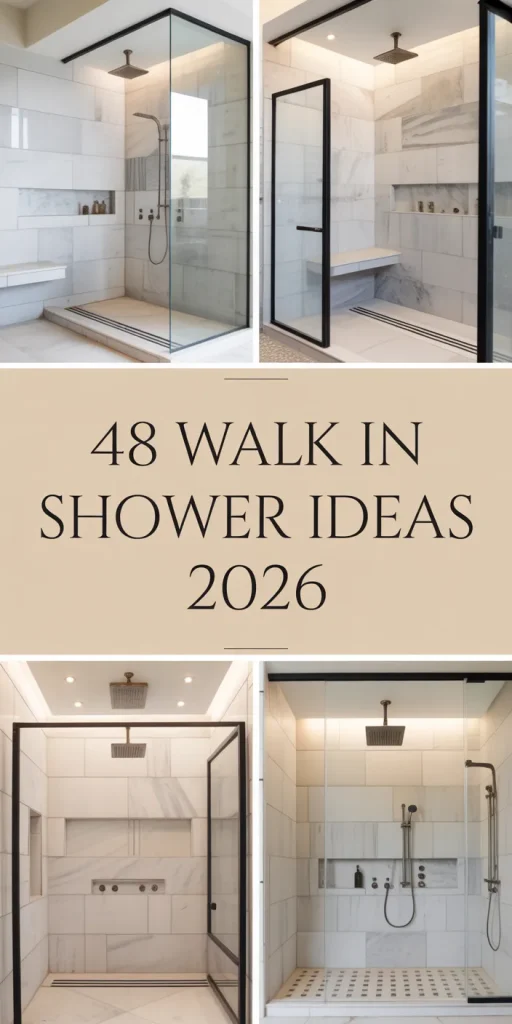
These walk-in shower ideas represent the full spectrum of what’s possible in 2026, from budget-conscious conversions to luxurious multi-head systems. Whether you’re drawn to the organic warmth of stone, the clean simplicity of white tile, or the bold drama of dark palettes, there’s an approach here that will work with your space, budget, and lifestyle. Share your favorite concept in the comments below, and let us know what features matter most in your ideal shower design.