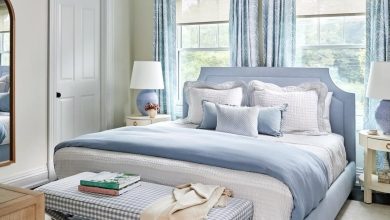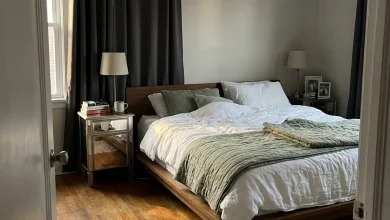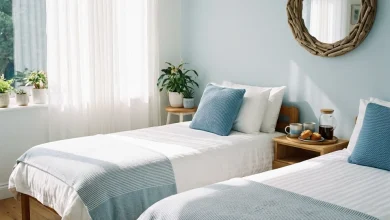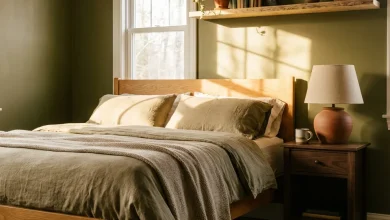
48 Tiny Bedroom Ideas for 2026 That Will Transform Your Small Space Into a Cozy Dream

Small bedrooms are experiencing a significant surge in popularity, a trend that has been long overdue. With more Americans renting apartments, converting lofts, and embracing intentional living in compact homes, the demand for smart, beautiful tiny bedroom designs has never been higher. Pinterest searches for small bedroom inspiration have exploded recently, and it’s easy to see why: people want spaces that feel personal, layered, and genuinely restful—not just functional. In this article, you’ll find some of the best tiny bedroom ideas for 2026, ranging from cozy romantic retreats to clever storage-forward layouts, all designed to help you get the most out of every single square foot.
1. Cozy Neutral Linen Layers
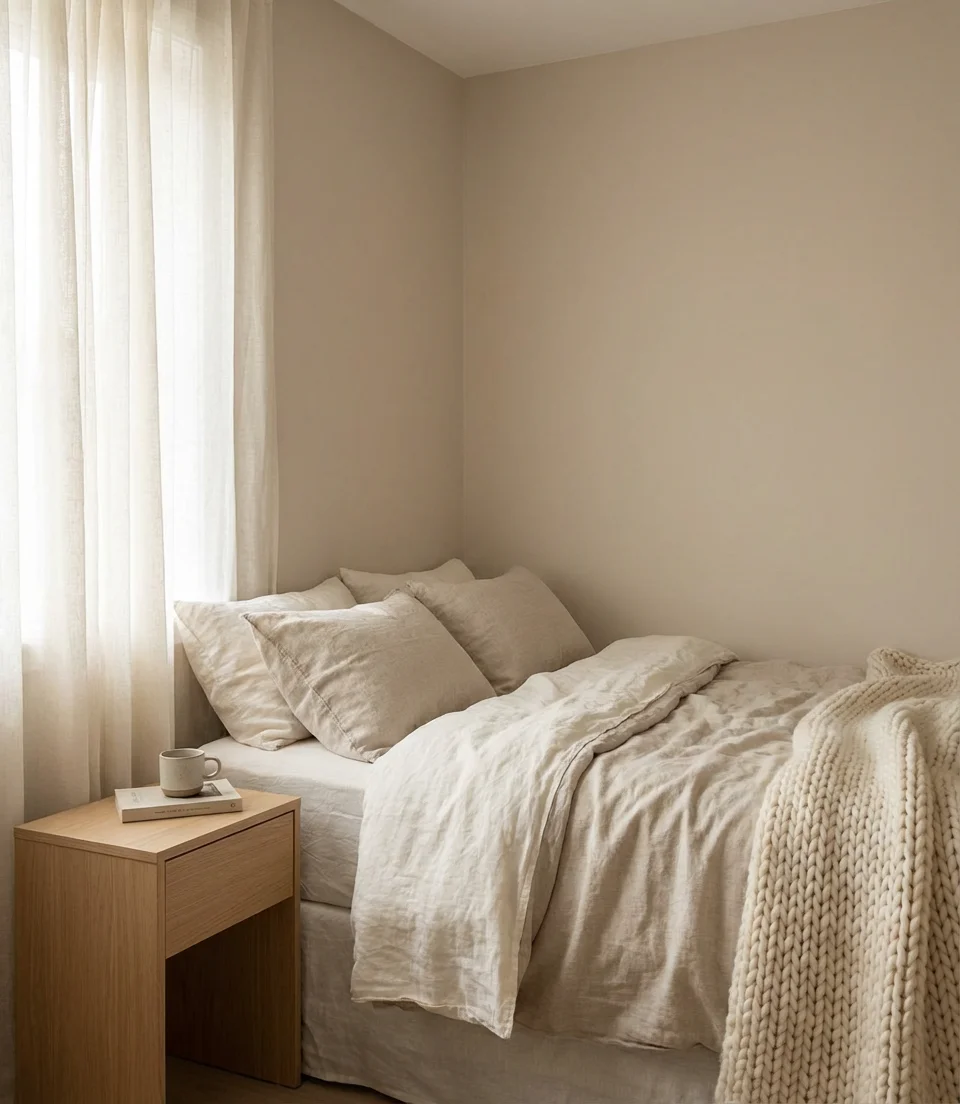
There’s a reason cozy neutral palettes keep topping Pinterest boards year after year—they simply work. Layering natural linen bedding in ivory, warm oatmeal, and soft taupe creates a bedroom that feels wrapped in calm. Stick to a maximum of three tones to create a cozy, relaxing atmosphere, and let texture take the lead: a chunky knit throw here, a raw-edge pillow cover there. This approach suits any small bedroom, but it particularly shines in rooms with limited natural light, where white can feel sterile but warm neutrals feel genuinely inviting.
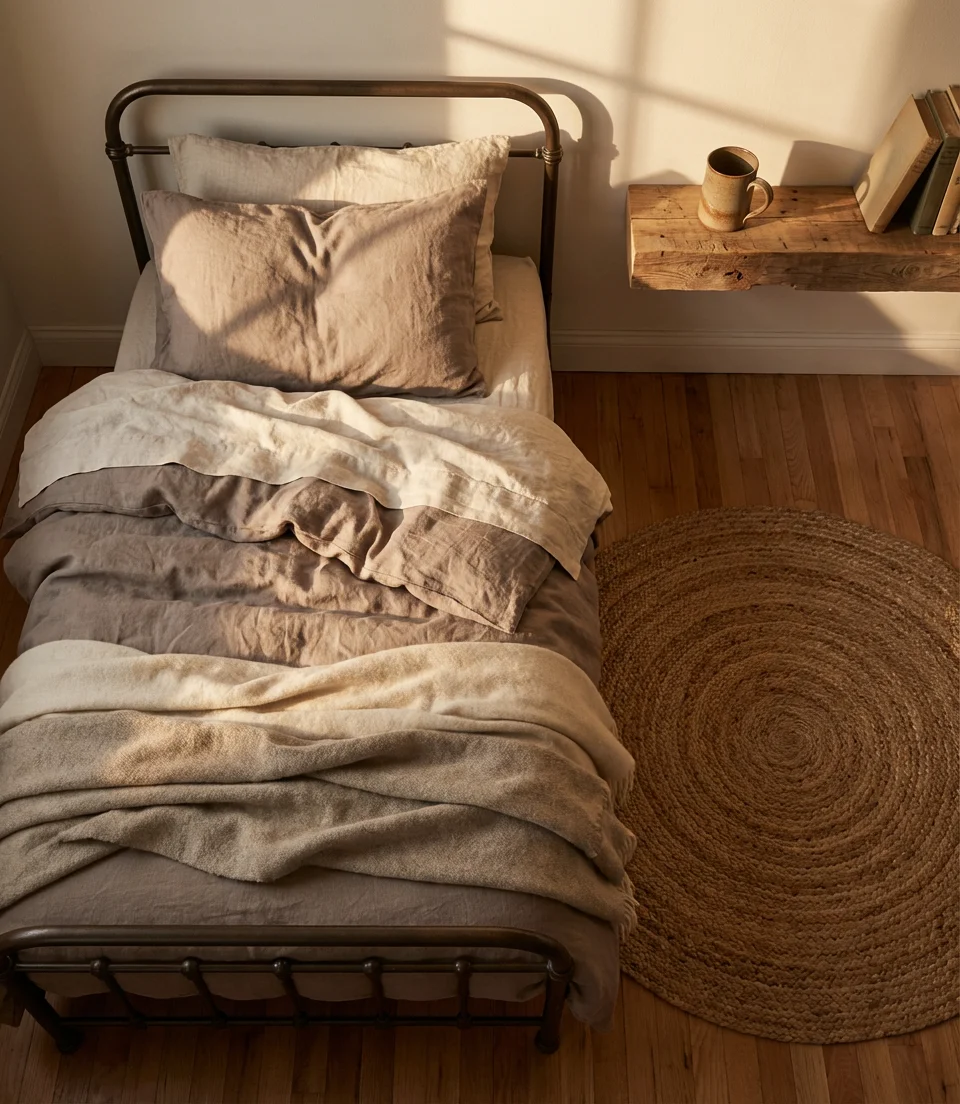
One practical trick designers swear by: limit your pillow count. It sounds counterintuitive, but two or three beautifully chosen pillows in complementary textures make a small bed look intentional rather than cluttered. Resist the urge to pile on. If your bedroom is under 150 square feet, visual editing is just as important as the pieces you add—and a well-layered neutral bed is the single fastest way to elevate the entire room.
2. IKEA Small Spaces Platform Bed
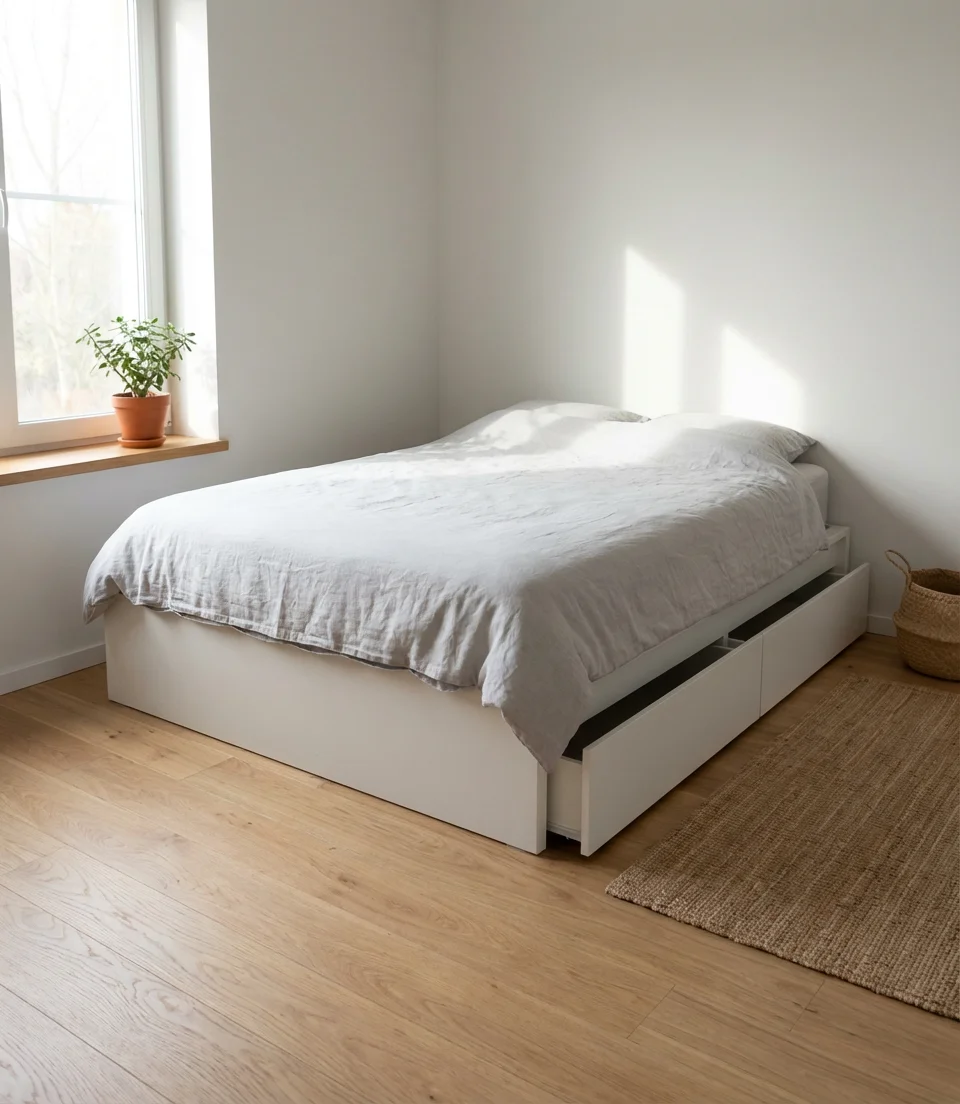
When it comes to furnishing a truly tiny room on a realistic budget, IKEA small space solutions remain some of the most reliable options on the market. The platform bed format—low-profile, clean-lined, often with built-in drawer storage underneath—is a game changer for rooms where every inch matters. IKEA frames like the MALM or BRIMNES series let you tuck away extra bedding, seasonal clothes, and shoes without sacrificing style. The low height also makes ceilings feel taller, which is a quiet psychological win in any compact room.
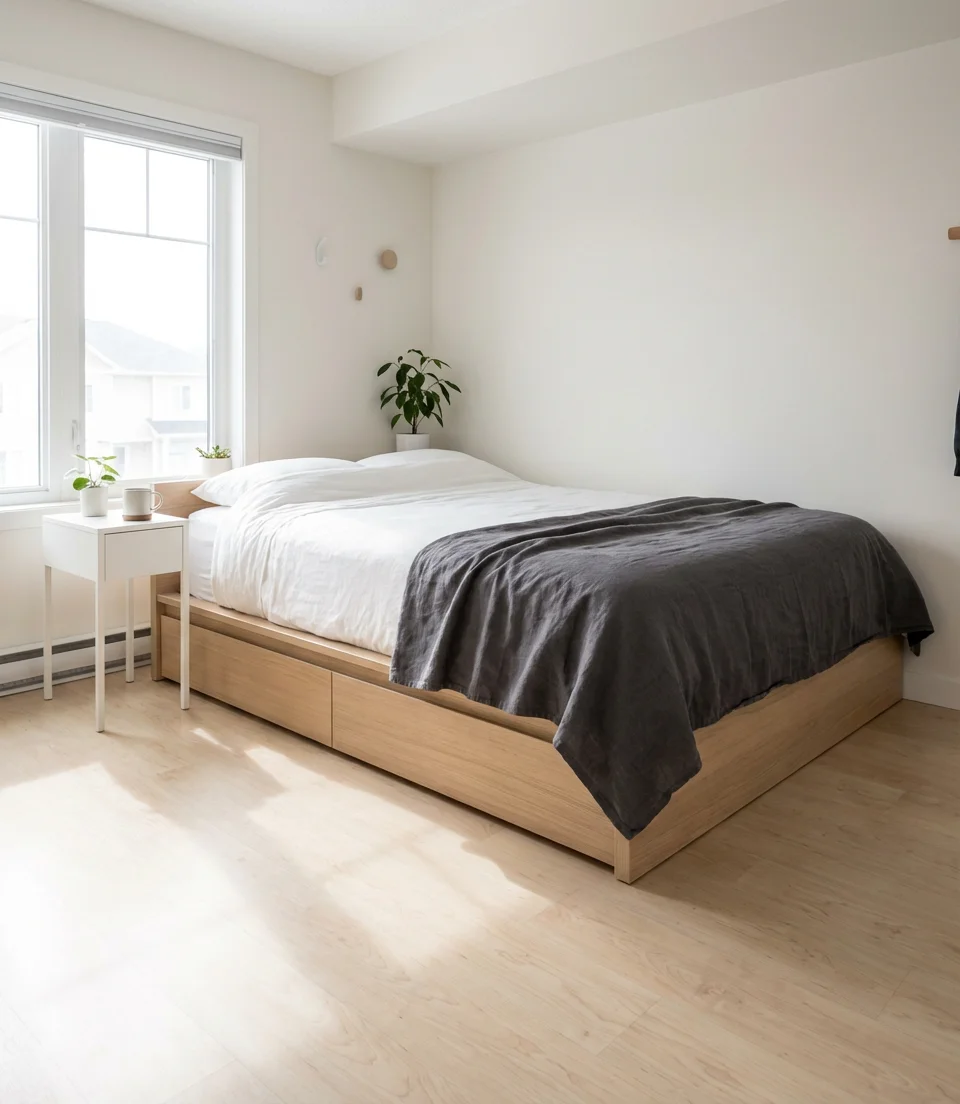
Budget-wise, a complete IKEA platform bed setup with storage drawers typically runs between $250 and $500 — a fraction of what custom built-ins would cost. The real savings, though, come from the eliminated need for separate dressers. Many small-space renters in New York, Chicago, and San Francisco have leaned into this exact setup, discovering that the drawer storage is genuinely roomy enough to replace a mid-size dresser entirely. It’s one of those pieces that earns its footprint ten times over.
3. Aesthetic Floating Shelves Wall
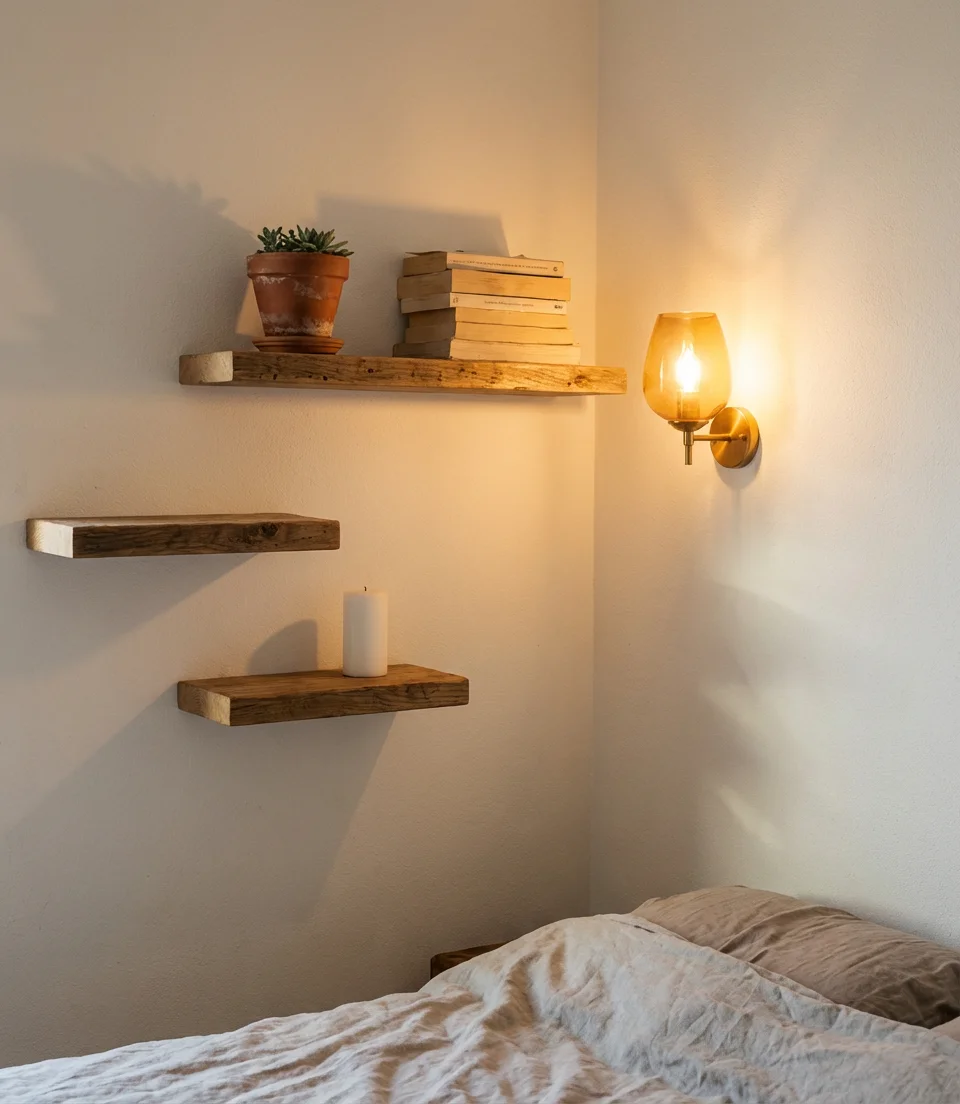
Vertical space is the most underused real estate in any tiny bedroom, and floating shelves are the most aesthetic way to reclaim it. A well-curated shelf wall—think slim wood planks at staggered heights, holding a small plant, a stack of books, a candle, and one or two objects with personal meaning—adds storage without eating into the floor plan. The key is intentional curation: the end result isn’t a dumping ground; it’s a considered display. The cozy aesthetic version employs warm-toned wood, terracotta pots, and soft candlelight to evoke the feel of a mood board.
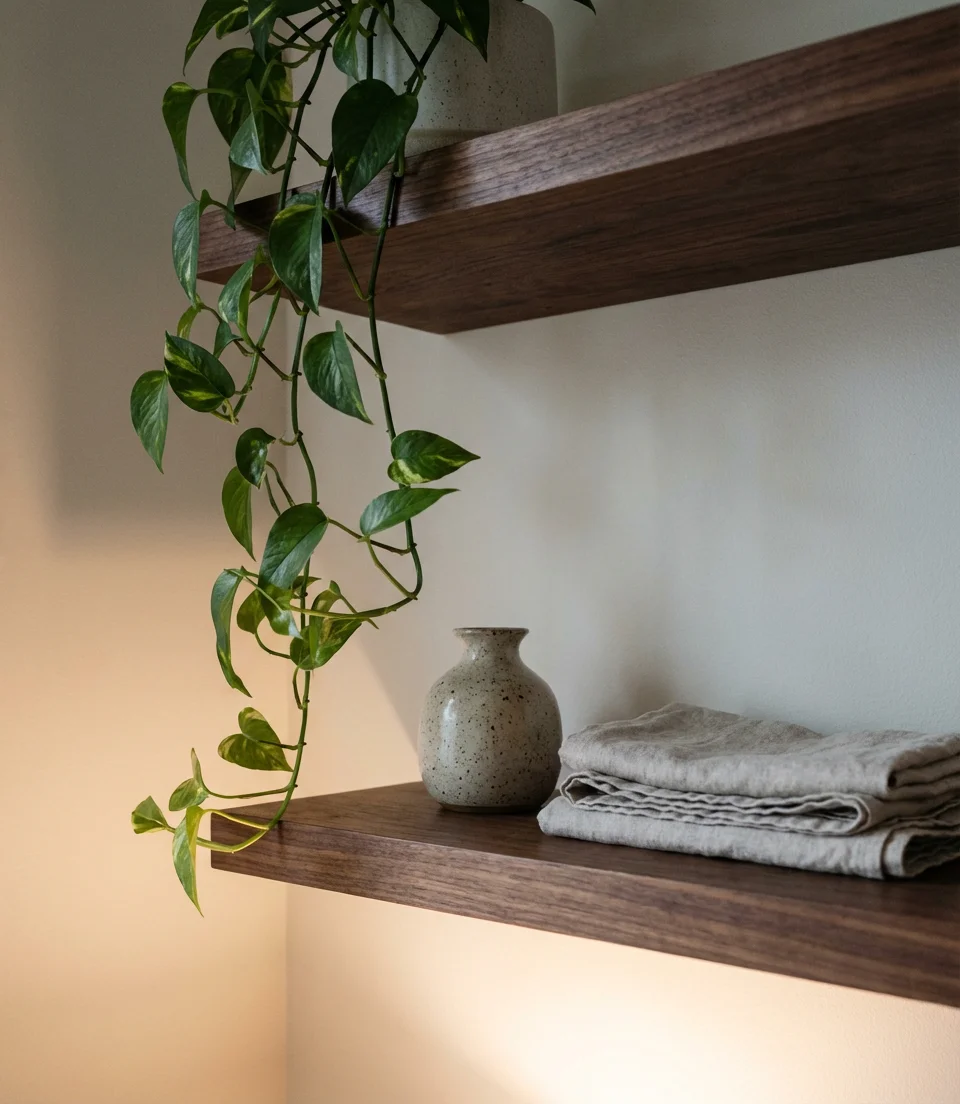
Where it works best: above the headboard or flanking a narrow window on either side. Those are spots where furniture physically can’t go, but shelves can—and doing so pulls the eye up and makes the room feel taller. A common mistake is spacing shelves too close together, which makes them feel cramped and difficult to style. Aim for a minimum of 12 inches of vertical clearance between each shelf, and you’ll be astonished by the luxurious appearance even the most basic bracket-and-plank setup can achieve.
4. Pink Dreamy Girl’s Tiny Bedroom
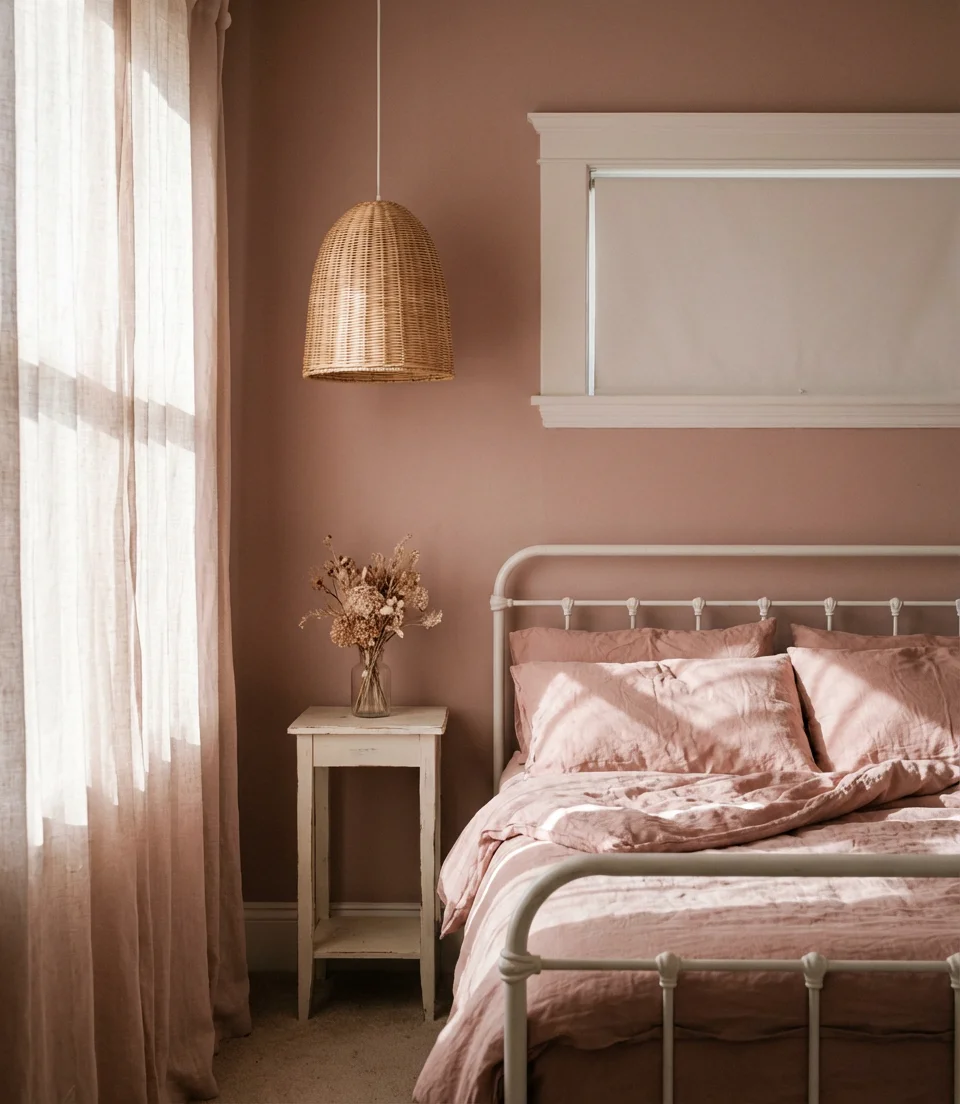
A soft, thoughtful pink palette can transform even the smallest bedroom into something that feels genuinely special. We’re not talking bubblegum pink—the looks that are taking over Pinterest right now lean into dusty rose, blush, and warm mauve, all of which read as sophisticated rather than juvenile. Combine these tones with white trim, natural rattan accents, and sheer linen curtains to create a bedroom that strikes the ideal harmony between dreamy and grown-up. This approach is equally beautiful for a children’s room or a young adult’s first apartment bedroom, and it photographs extraordinarily well.
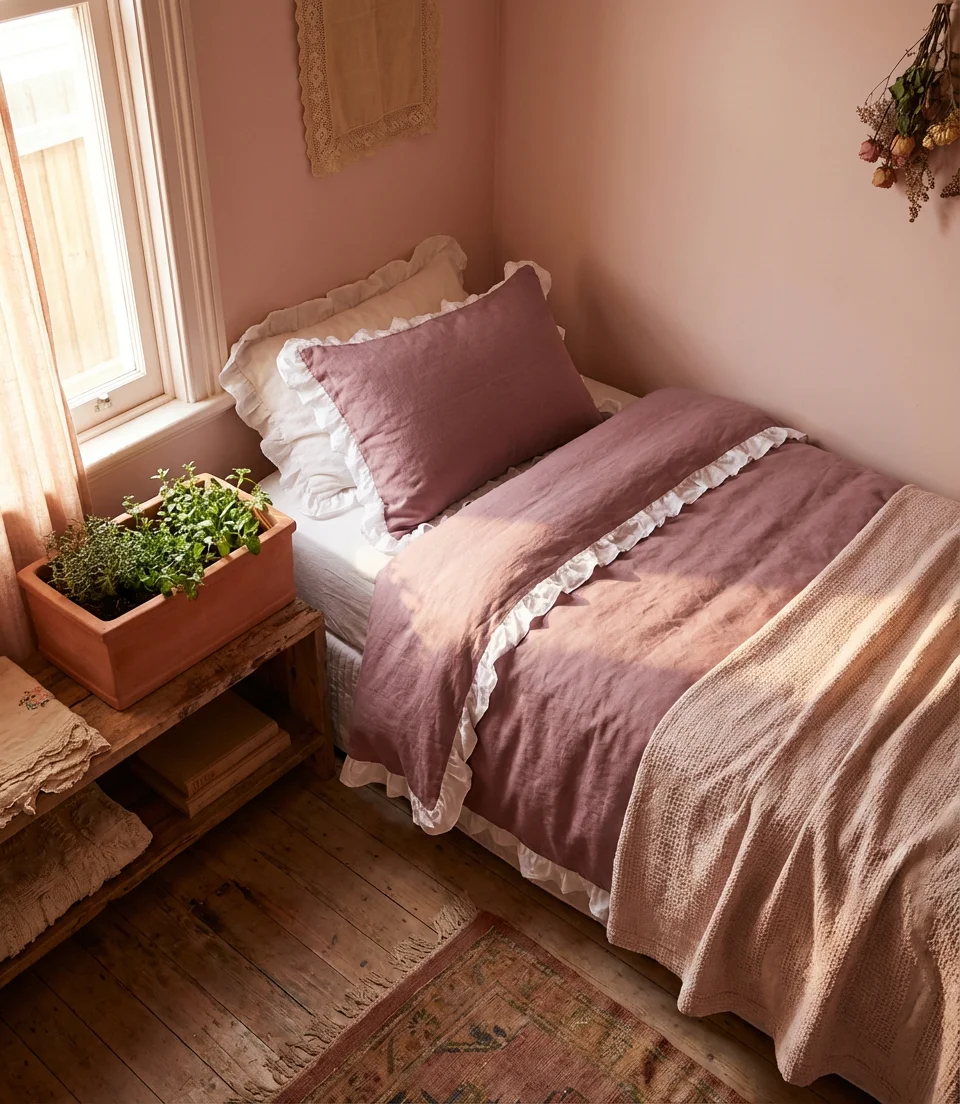
One real homeowner behavior worth noting: many people paint just one accent wall in their chosen pink and keep the remaining three walls white. This creates depth and drama without overwhelming a small room. It also makes the room feel larger—darker or richer tones on a single wall actually create the illusion of a recess, tricking the eye into reading the space as deeper than it is. A small amount of paint can significantly enhance the appearance of a bedroom of this size.
5. Couples Cozy Retreat with Warm Lighting
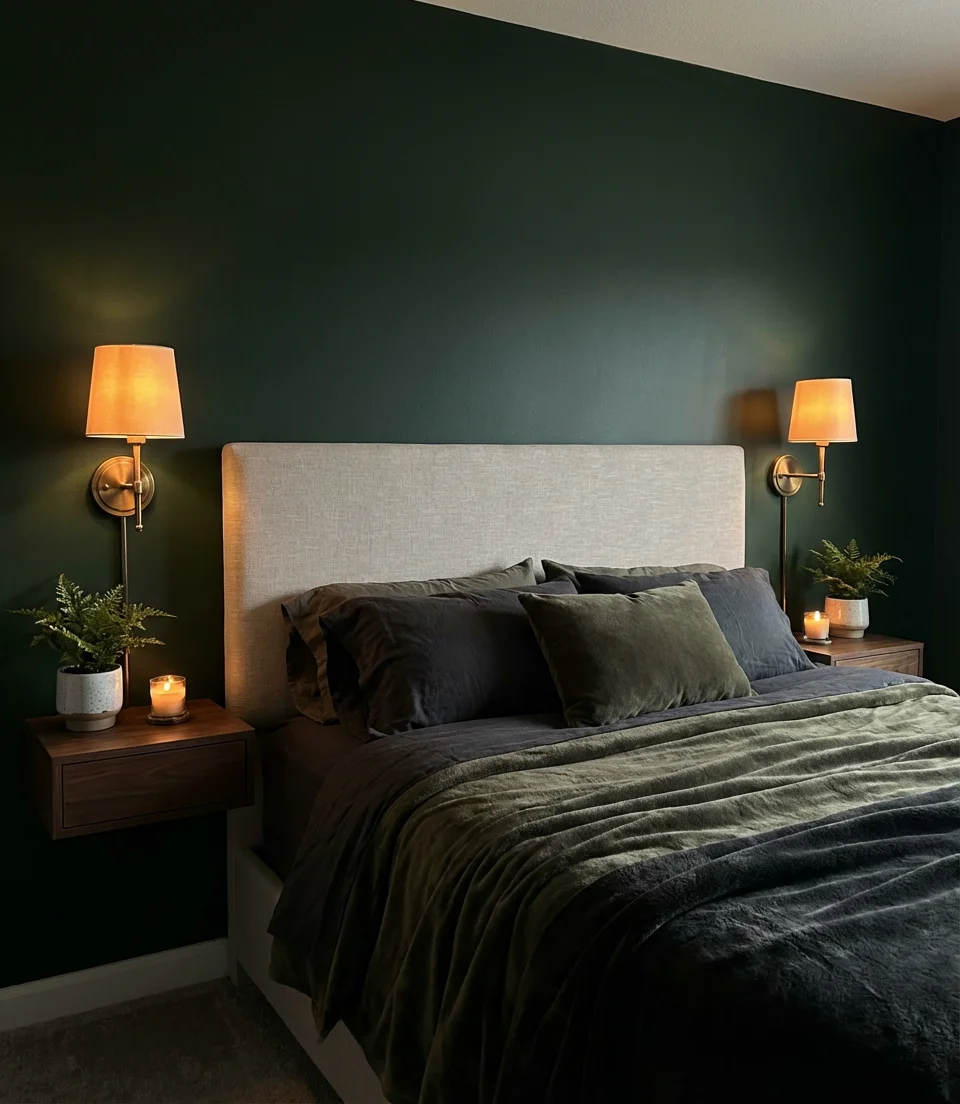
Designing a tiny bedroom for two people means thinking carefully about both function and atmosphere. Couples’ cozy spaces need dual nightstands—even if they’re tiny ledge shelves floating at the same height—and lighting that each person can control independently. Warm-toned Edison bulbs or dimmable sconces on either side of the bed do more for a romantic bedroom atmosphere than almost any other single investment. This advice holds particularly true for couples living in small city apartments, where the bedroom frequently serves as a refuge from the outside noise and pace.
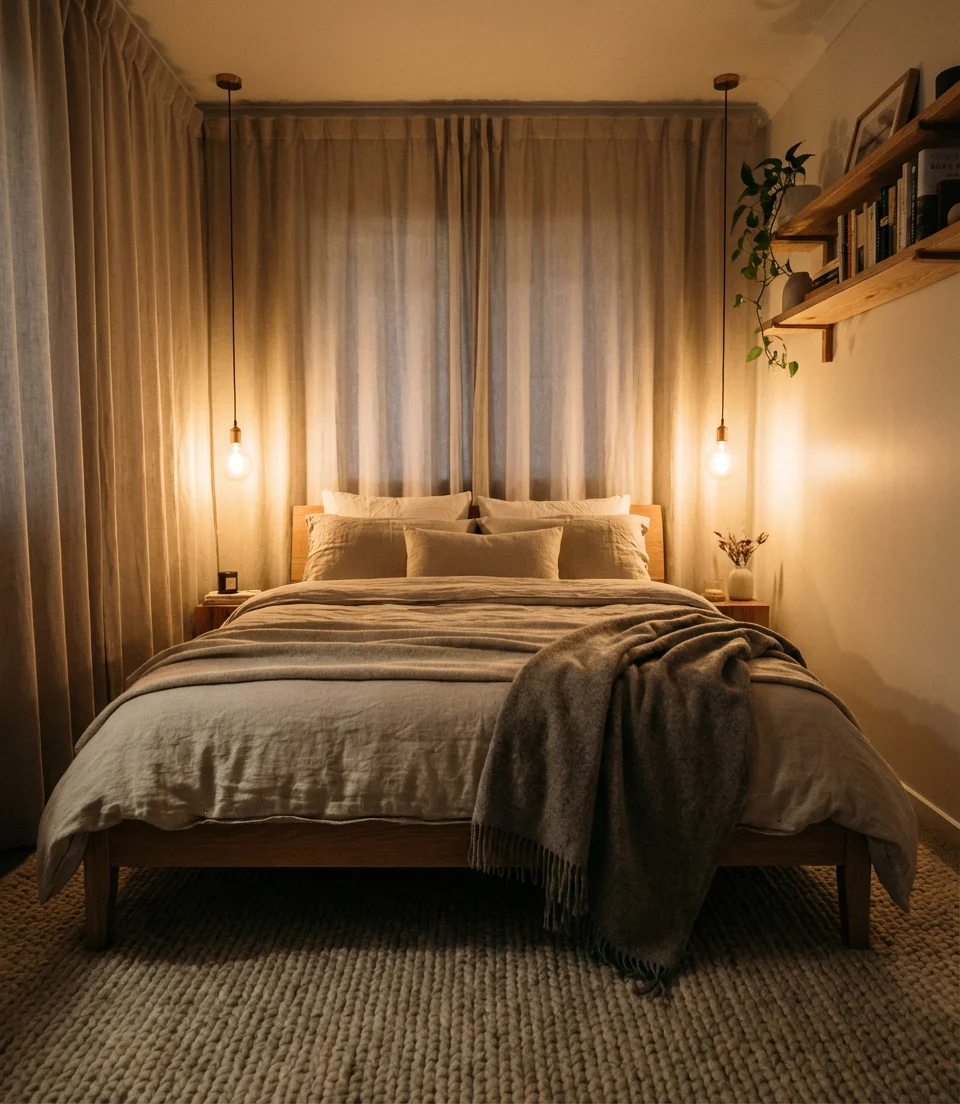
An expert-backed tip: mount your bedside lighting directly on the wall rather than using table lamps. Wall sconces or swing-arm lights free up the entire nightstand surface for the things that actually matter—a glass of water, a book, your phone. In a room where surface space is precious, that simple switch can genuinely change how the room feels to live in every single day. It’s one of those upgrades that costs under $100 but reads as a major design improvement.
6. Wardrobe Built-In Storage Solutions
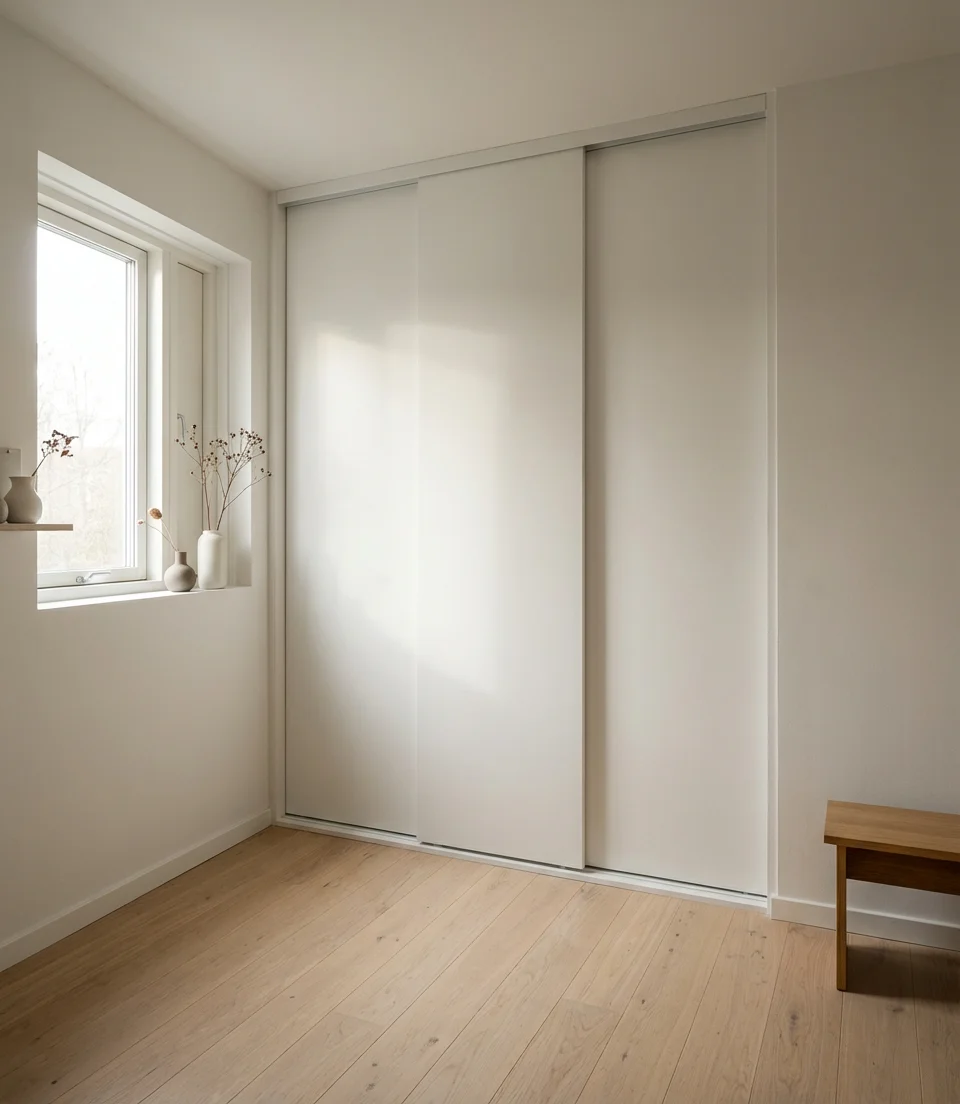
The wardrobe situation in a tiny bedroom can significantly impact the overall space. Freestanding armoires eat into precious square footage and can make a small room feel instantly cluttered, but a floor-to-ceiling built-in wardrobe along an entire wall? A floor-to-ceiling built-in wardrobe along an entire wall, however, presents a completely different story. When done right, a built-in wardrobe essentially disappears into the architecture, providing serious storage while keeping the room feeling open. Sliding doors—particularly mirrored ones—amplify light and create the illusion of a much larger space, which is why they show up in so many tiny bedroom inspiration posts.
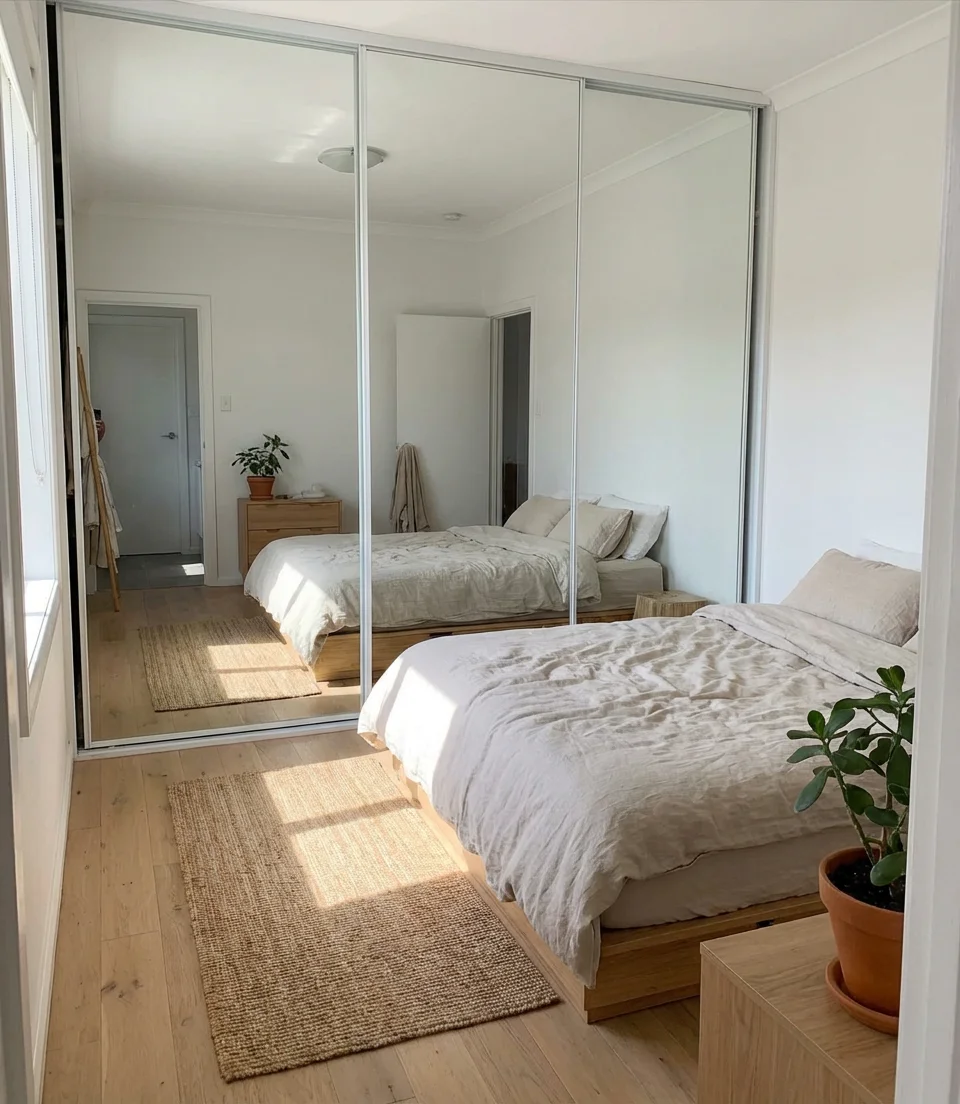
This is where regional context matters. Older American homes, particularly pre-war apartments and 1970s ranch-style houses, often overlooked closets, leaving tiny alcoves barely large enough to accommodate a week’s worth of clothes. A floor-to-ceiling IKEA PAX system or a custom-built wardrobe wall is one of the most common renovation decisions small-bedroom homeowners in the US make, and nearly universally, they wish they’d done it sooner. The storage density in relation to the footprint is truly unparalleled.
7. Bunk Bed Setup for Kids or Guests
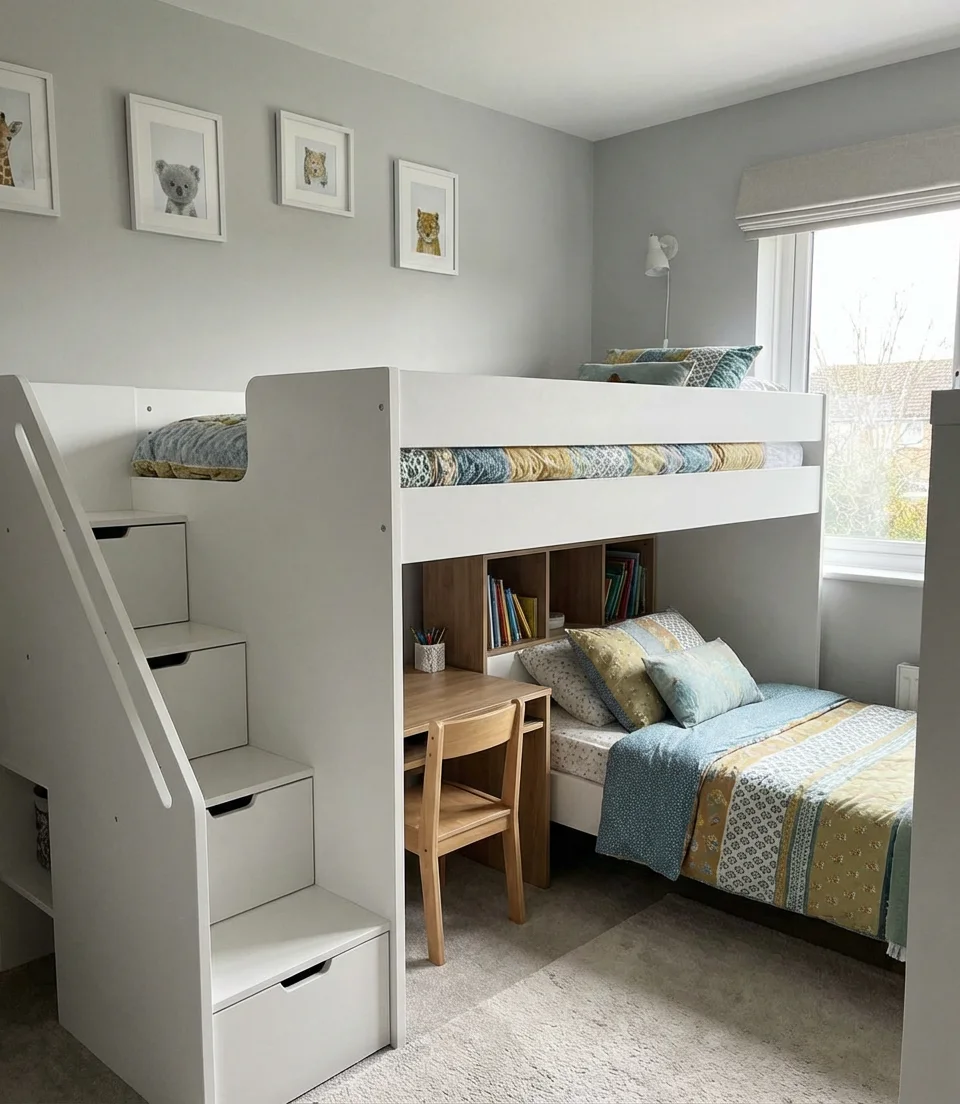
A well-designed bunk bed is one of the most efficient uses of vertical space in any tiny bedroom, especially for families. Modern bunk beds have moved far beyond the basic pine-plank designs of the past—today’s options include built-in staircases with integrated drawers, full-size lower bunks paired with twin uppers, and even loft-style configurations with a desk or reading nook below. For homes with children, a quality bunk setup essentially doubles the sleeping capacity of a small room while freeing up the floor for play, study, and movement.
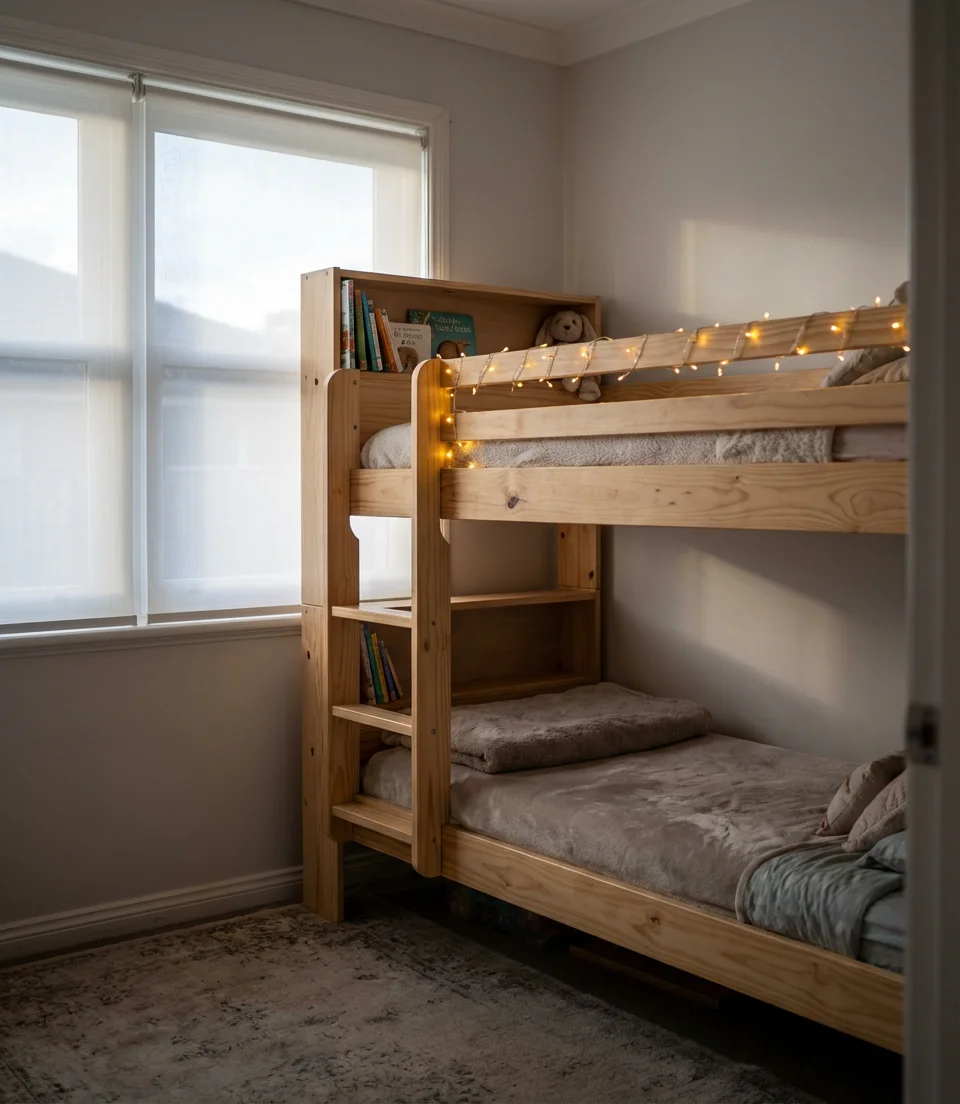
Parents often make the mistake of purchasing bunks that are excessively wide for the room, resulting in a lack of a walkway or visual breathing space. In a small room, the ideal width for a twin bunk is 38–42 inches, ensuring ample space for movement without causing suffocation. If possible, orient the bed lengthwise along the longest wall and place the foot of the bed toward the window—this keeps sightlines open when you walk in and makes the room feel far more spacious on entry.
8. Desk Nook Integrated Into Bedroom Layout
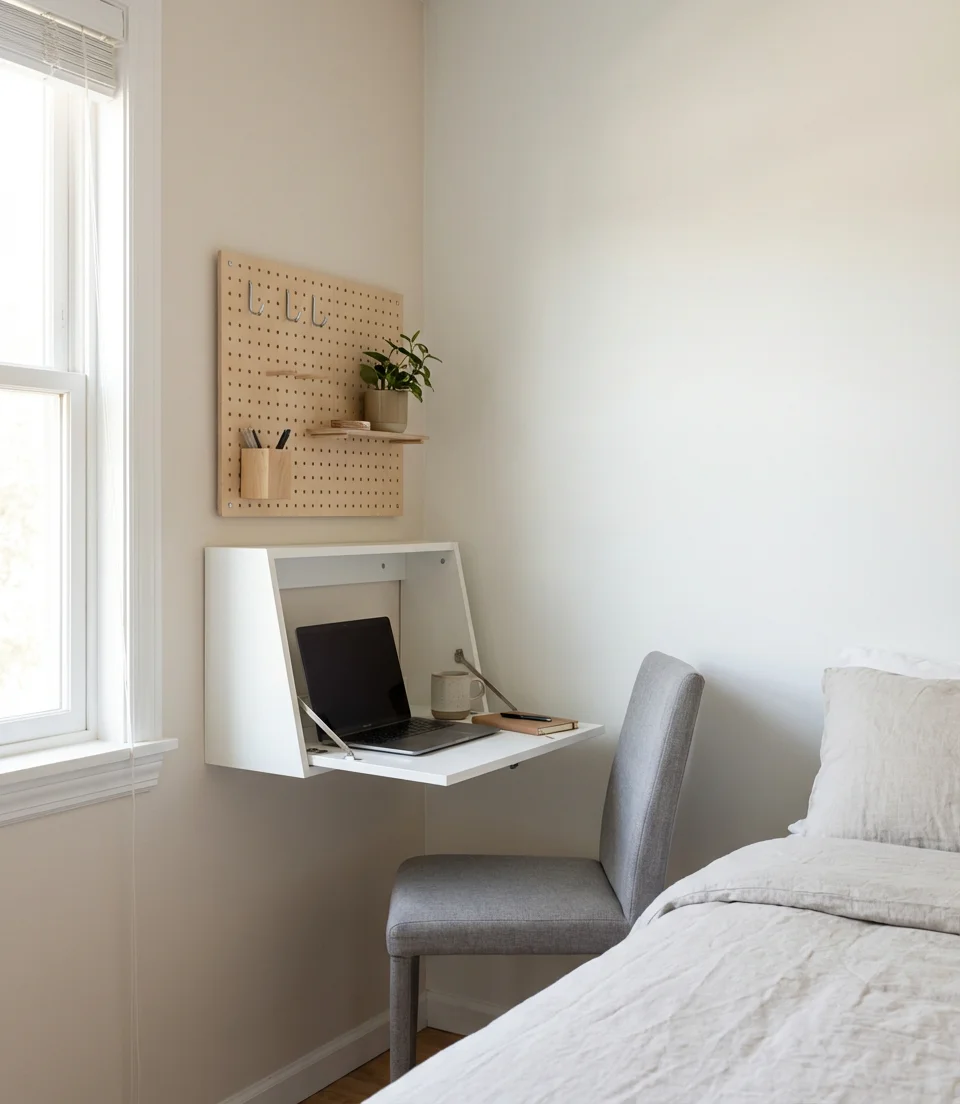
The rise of remote work has made the desk situation in small bedrooms one of the most-searched topics on Pinterest—and for good reason. Carving out a dedicated workspace in a tiny bedroom requires intention, but when it’s done well, the result is a room that genuinely works harder for you. The key is visual and physical separation: a floating wall-mounted desk takes up zero floor space and can be folded flush when not in use. Pairing it with a slim task lamp, a small pegboard for supplies, and a proper chair makes even a 40-inch-wide nook feel like a real workspace.
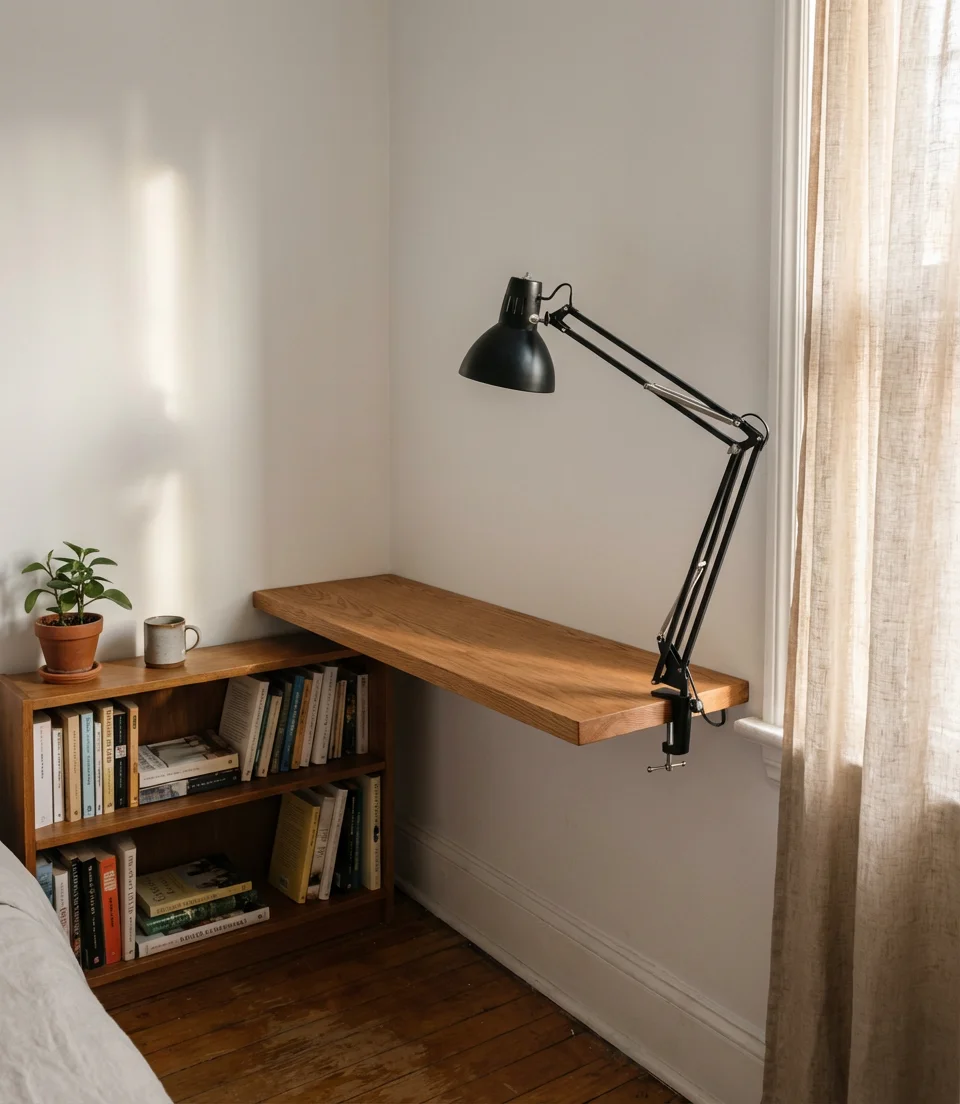
A micro-anecdote worth sharing: one designer working on studio apartments in Seattle started painting the desk nook wall a slightly different color than the rest of the room—a soft sage or warm clay—to psychologically separate the work zone from the sleep zone. Renters reported sleeping better almost immediately after the change. It’s a small gesture that sends a real signal to your brain: this corner is for work, and that bed is for rest. In a room where both happen, that boundary matters more than most people realize.
9. Queen Bed in a Super Small Room
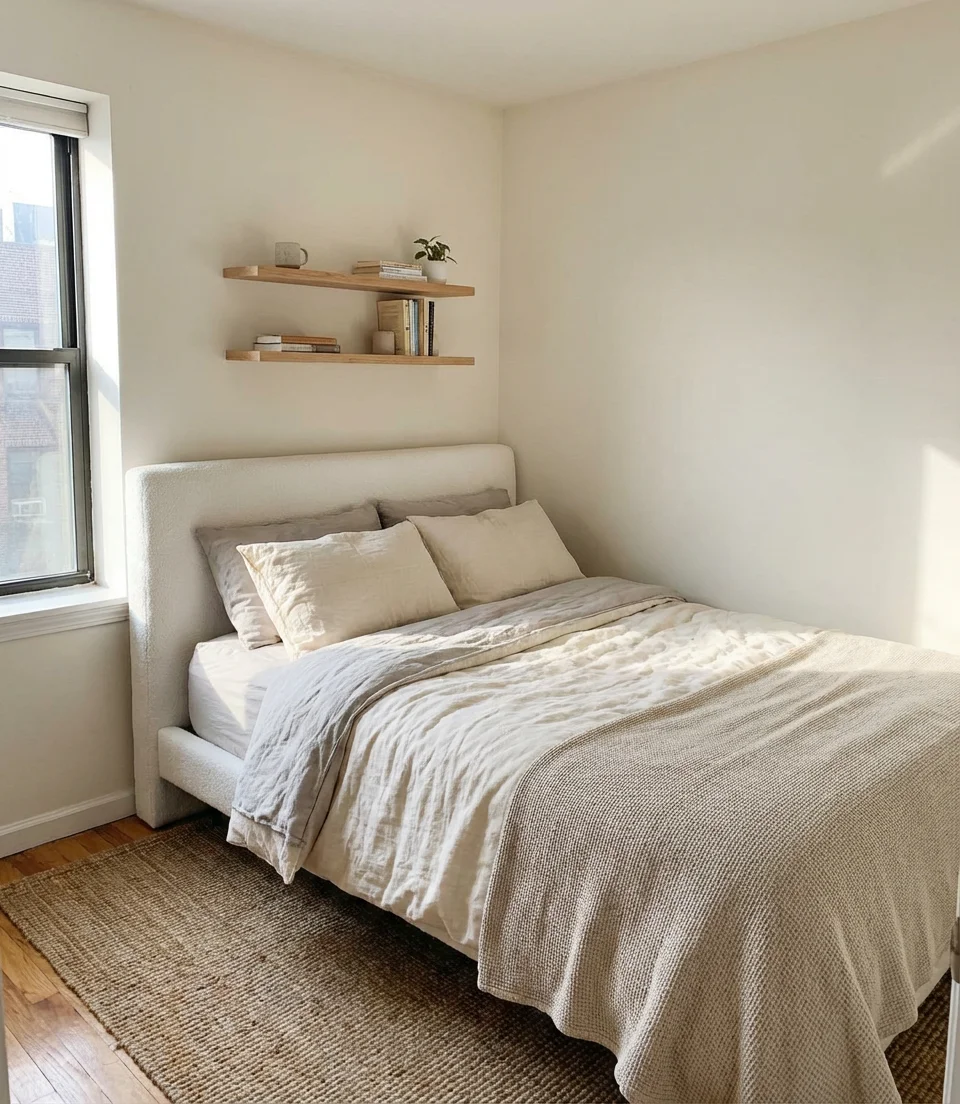
Yes, you can fit a queen bed in a tiny room—and no, it doesn’t have to look like a mistake. The trick lies entirely in how you arrange everything else. A queen requires at least 10 feet by 10 feet to feel workable, and in that footprint, you need to be ruthless about eliminating unnecessary furniture. Eliminate any dresser, bulky nightstands, and benches at the foot, leaving only the bed, wall-mounted shelves, and possibly a slim single floating shelf on each side. Push the bed into a corner if you only need one-person access, and suddenly you’ve gained 2 feet of open floor on one side.
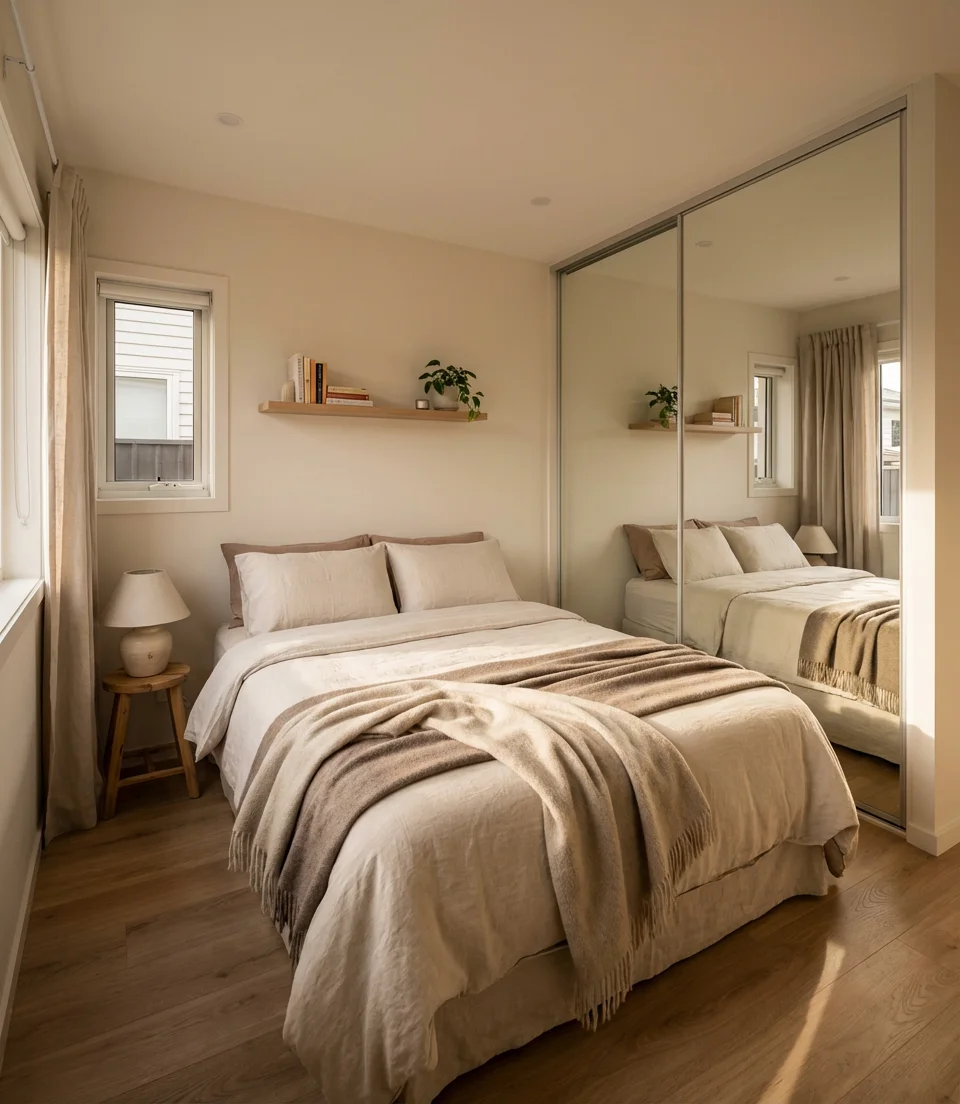
Where it works best: rooms with high ceilings that let you mount storage vertically and rooms with at least one large window that can flood the space with natural light. The queen-in-a-small-room setup works better in west- or south-facing rooms where the light is generous. If your room is north-facing and small, a well-lit queen can feel oppressive—in that case, upgrading your lighting to a combination of warm overhead and task lighting makes a significant difference in how livable the space feels.
10. Cozy Elegant Dark Accent Wall
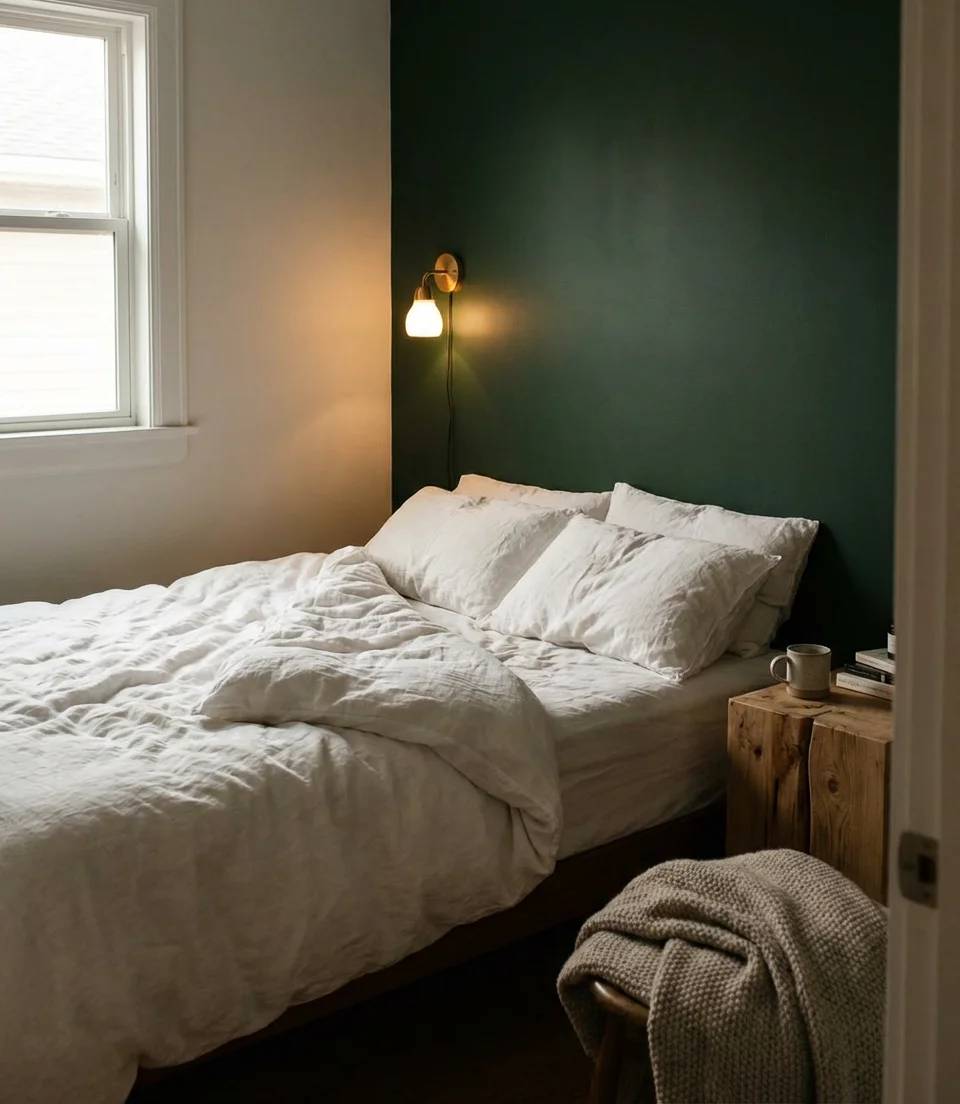
Painting a small bedroom a dark color is one of those design moves that sounds terrifying and ends up being transformative. A cozy, elegant dark accent wall—forest green, deep navy, charcoal, or moody terracotta—does something that light walls simply can’t: it makes the room feel like a destination. The darkness creates depth and intimacy, turning even a 120-square-foot bedroom into something that feels considered and rich. The aesthetic here is less “small room making the best of it” and more “intentional cocoon for someone with serious taste.”
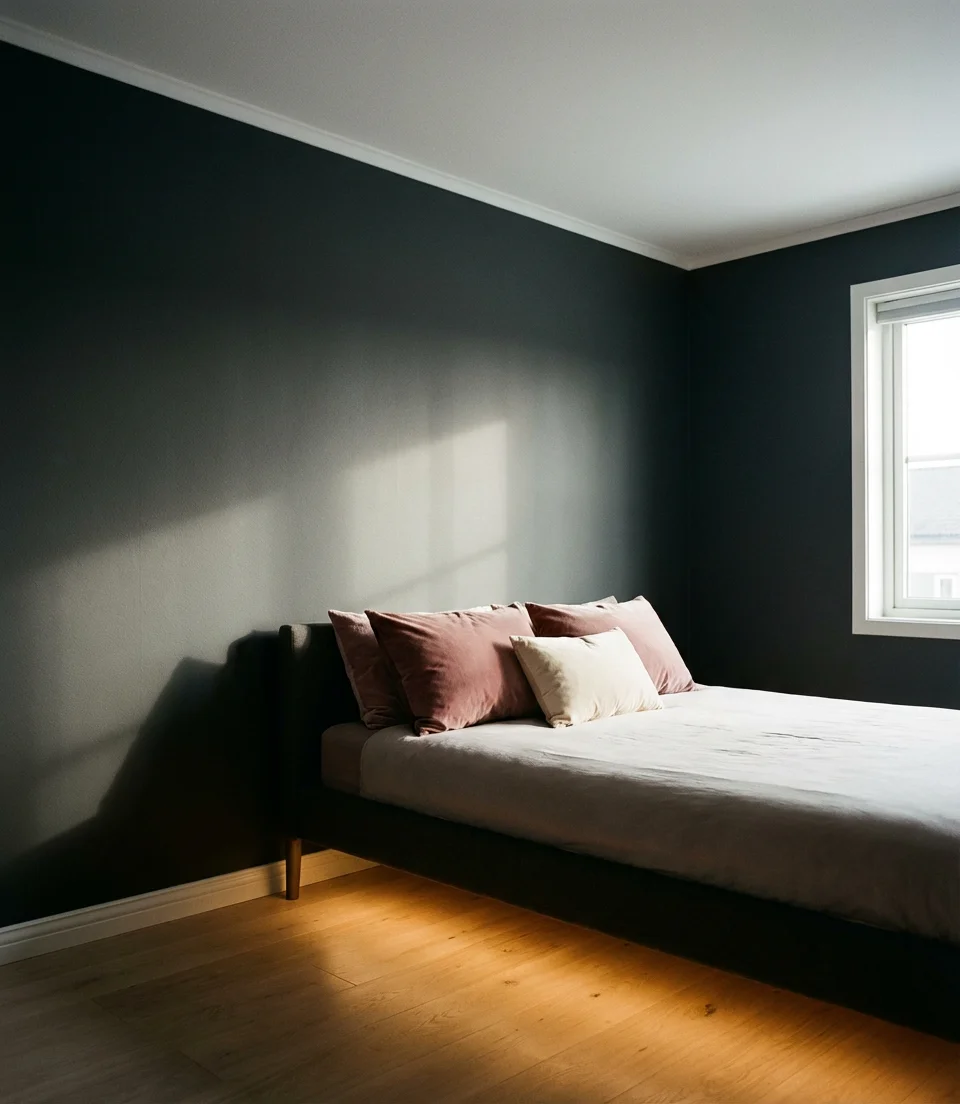
The most common mistake with dark accent walls is stopping too soon—painting just to the edge of the wall where it meets the ceiling or leaving the trim in a contrasting color, which draws attention to how small the room is. Instead, wrap the dark paint around onto the ceiling for 12–18 inches. This “ceiling dip” technique blurs the edges of the room and creates a canopy effect that makes the whole space feel enveloping rather than cramped. It’s a detail that separates excellent dark-wall bedrooms from truly spectacular ones.
11. Long Narrow Bedroom Layout Tricks
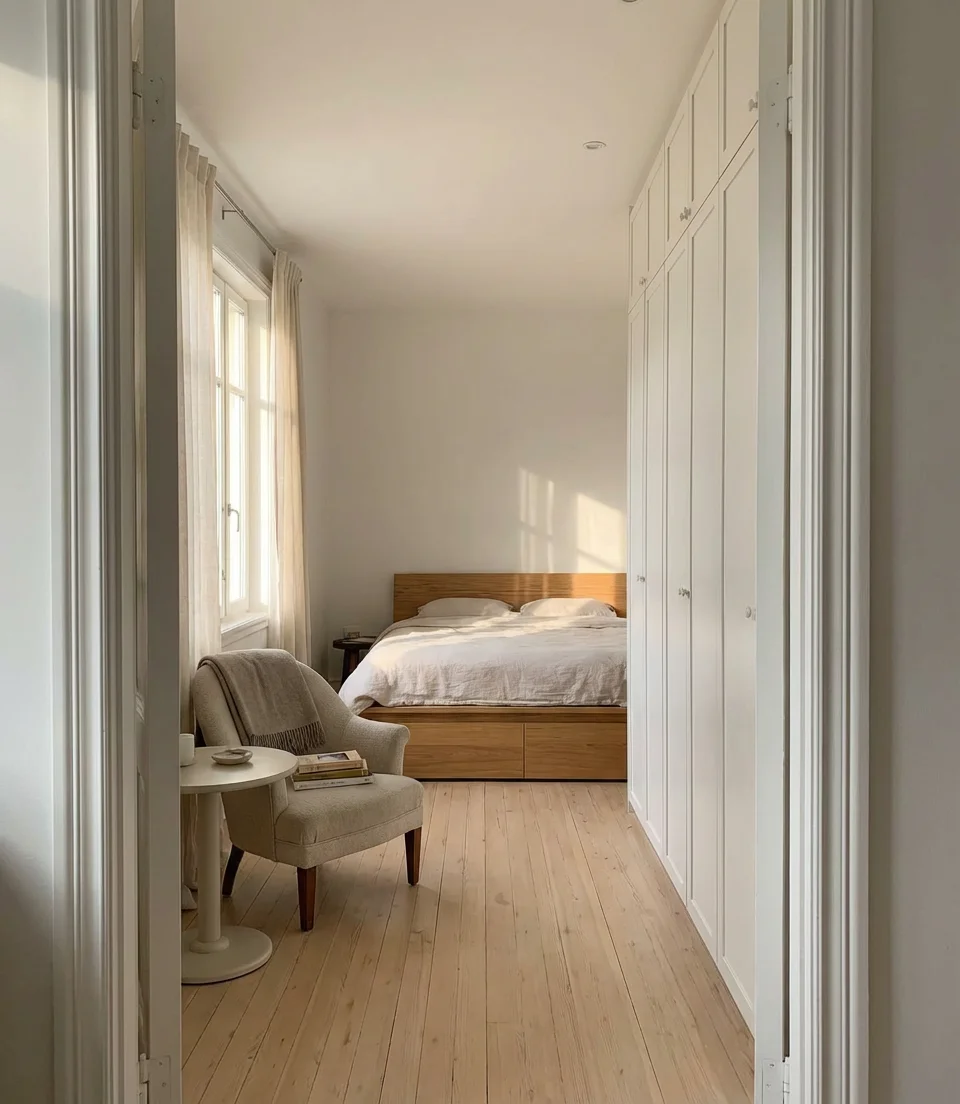
The long, narrow bedroom is one of the trickiest layouts to work with—and one of the most common in American row houses, older apartment buildings, and converted spaces. The instinct is to push the bed against the far wall and line everything else up on either side, creating a hallway effect that emphasizes the length and makes the room feel like a corridor. A better approach: place the bed crosswise at the far end of the room, parallel to the short wall, and use the remaining length for a slim wardrobe, a desk nook, or a seating area. This approach breaks the tunnel and gives the room distinct zones.
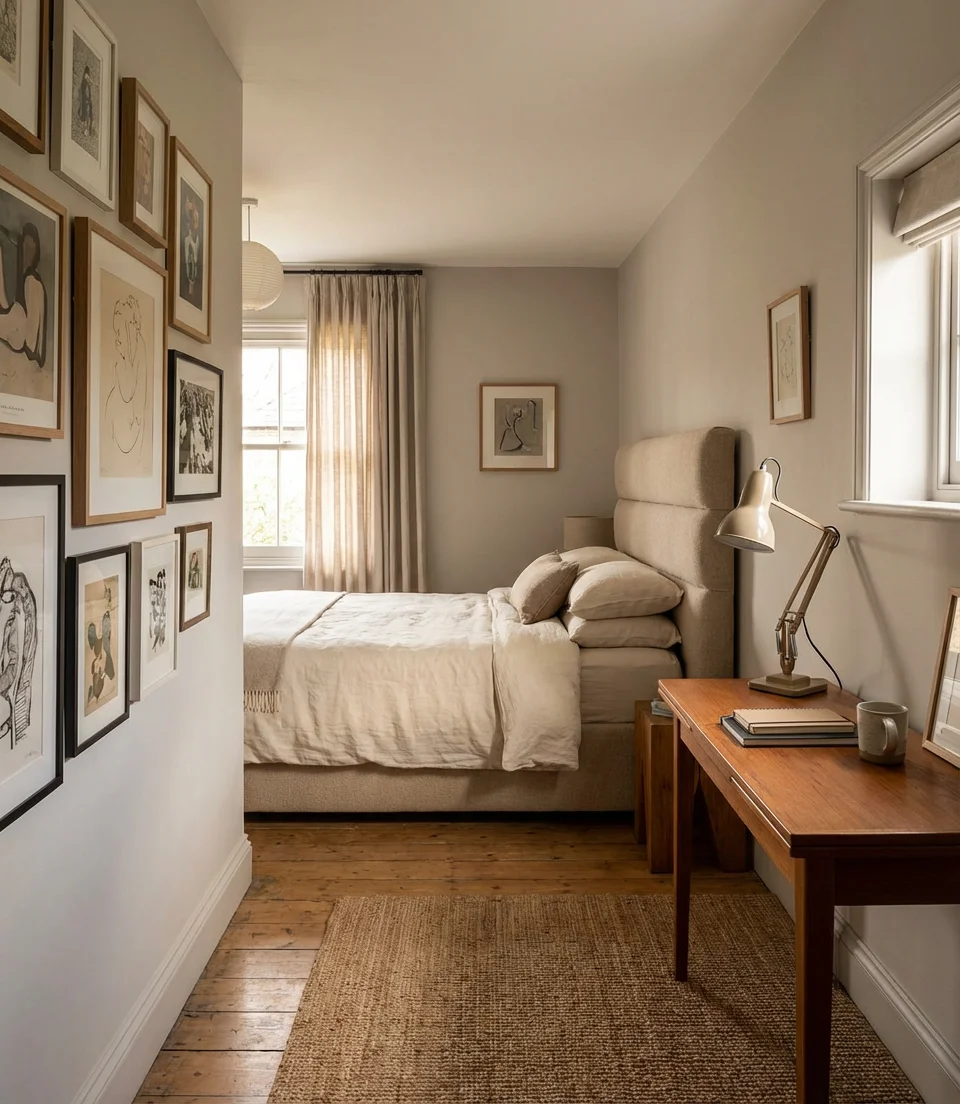
An American lifestyle note: many homeowners in the Northeast and Midwest deal with narrow bedrooms that are essentially glorified hallways—sometimes just 8 feet wide. In these rooms, the single most effective change is a large horizontal artwork or headboard on the short end wall. Anything that directs the eye toward the short wall effectively halts the “hallway brain” and establishes the room as a distinct space with a clear destination. Scale matters: go bigger than you think you should.
12. Very Small Room with Mirrored Surfaces
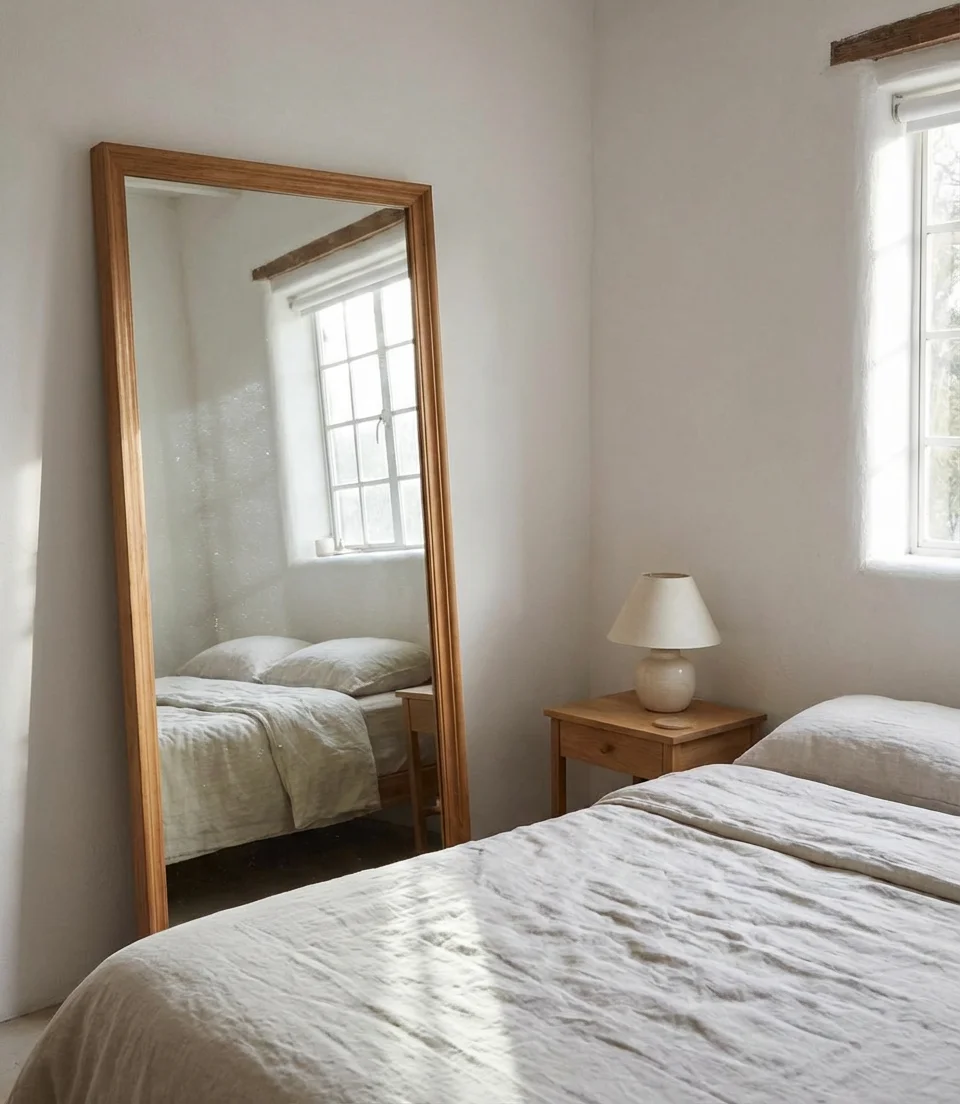
Mirrors remain the most effective trick in small-space design, effectively doubling the perceived size of a very tiny bedroom. But the approach matters—a single small mirror propped on a dresser does almost nothing. What works is scale: a large lean-to mirror against one wall, a full mirrored wardrobe door, or even a grouping of varied-size mirrors creating a gallery effect. The goal is to bounce light around the room and extend visual depth. Placing a large mirror perpendicular to a window in a room effectively creates a second window.
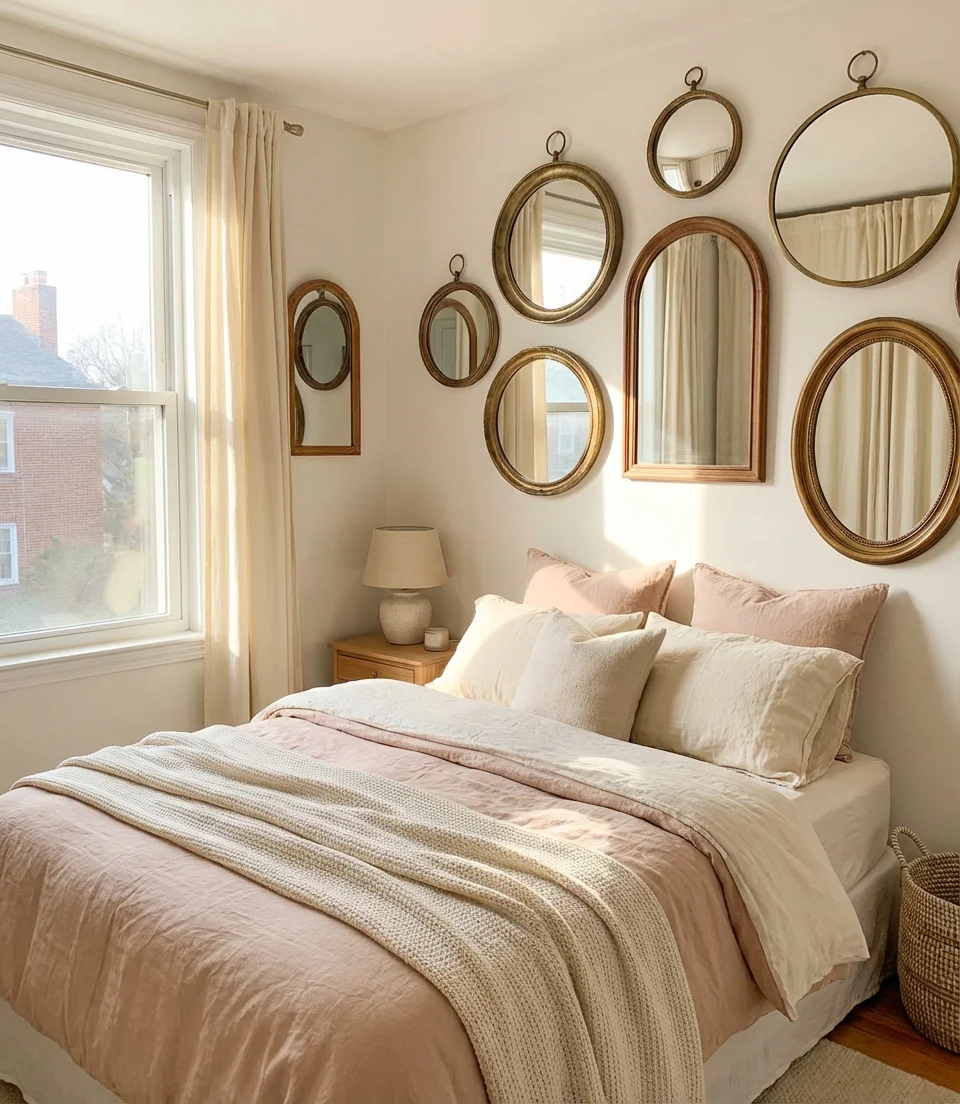
Real homeowner behavior worth noting: people who try mirrored surfaces in small bedrooms almost always wish they’d gone bigger, sooner. A full-length mirror leaning against the wall costs as little as $40 at a thrift store or big box retailer and genuinely transforms the room in a way that feels remarkable. The single most common feedback is, “I can’t believe it looks this much bigger.” If you’re only going to do one thing to visually expand your tiny bedroom, make it this.
13. Cozy, Simple, Minimalist Bedroom
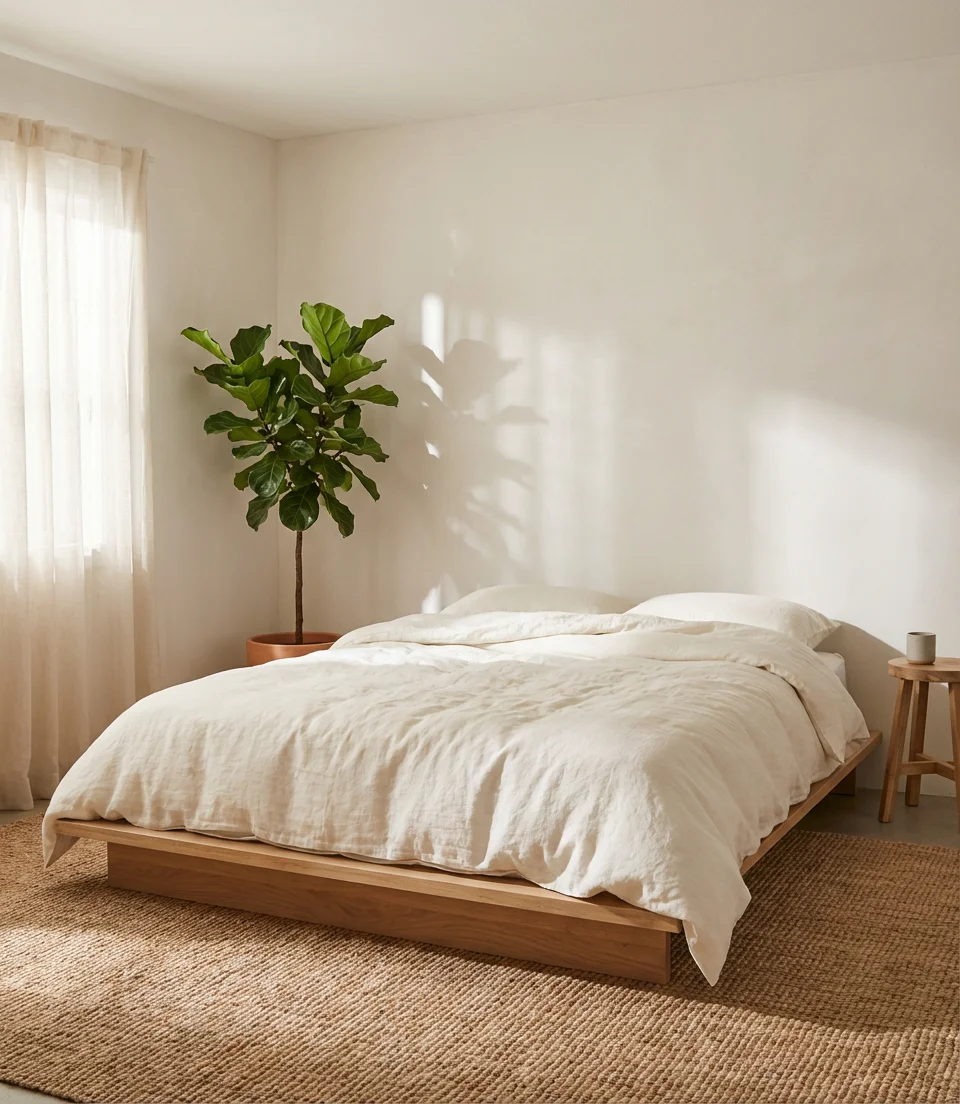
There’s a specific kind of calm that comes from a bedroom with almost nothing in it—and it’s not the cold, sterile minimalism of mid-2010s design blogs. The cozy, simple bedroom is warm minimalism: a low bed, a single plant, excellent bedding, one light source, and nothing more. It’s the approach championed by Japanese wabi-sabi design and the Scandinavian hygge tradition, and it’s having a major moment in tiny American bedrooms right now. The cozy part comes entirely from material quality and warmth of tone—linen over cotton, wood over plastic, and warm white over bright white.
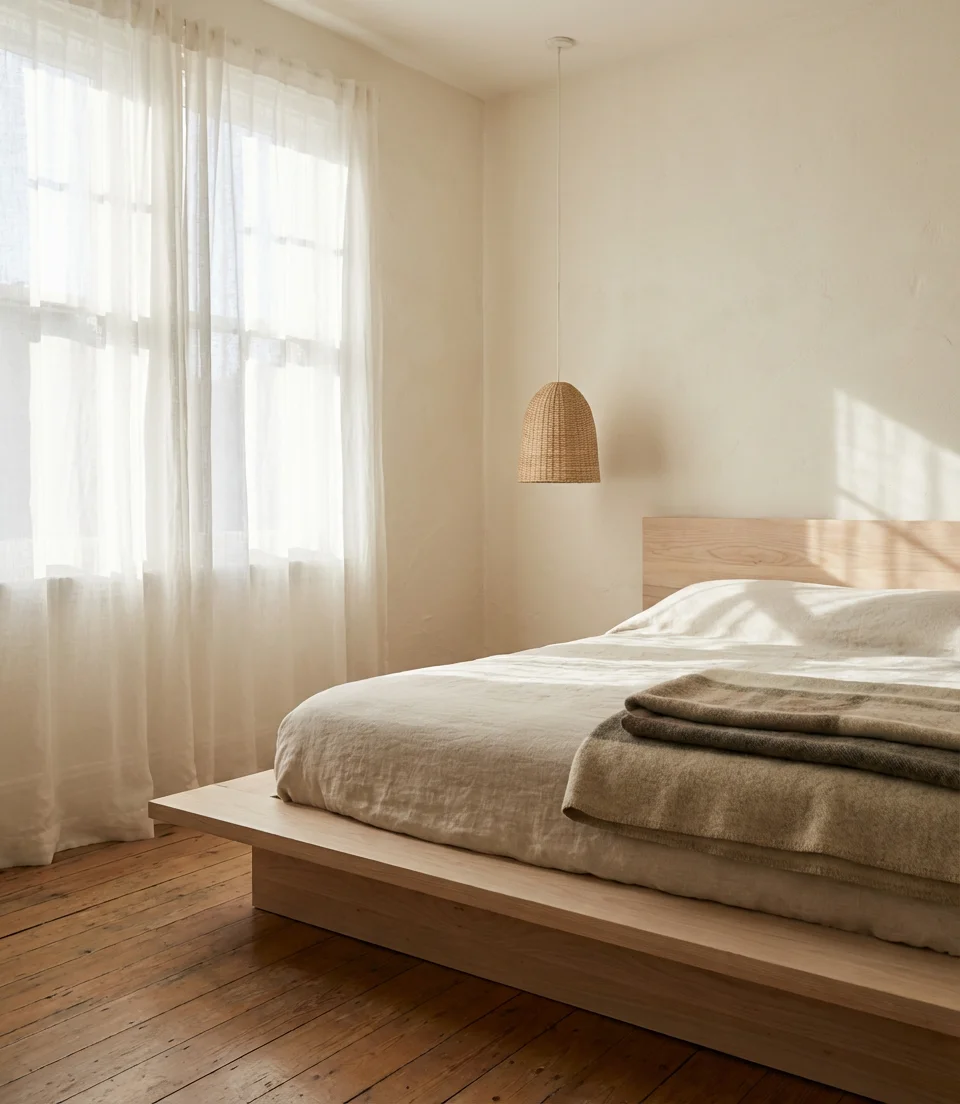
The practical challenge with this look is maintenance—a truly minimal bedroom shows every misplaced item, every wrinkle, and every object that doesn’t belong. This is actually why it works so well psychologically: when you commit to it, you start making daily decisions to keep things in their place. Several intentional-living advocates describe it as a feedback loop of calm: a tidy room reduces anxiety, making you more likely to keep it tidy, which further reduces stress. It’s a design choice that functions like a daily mindfulness practice.
14. Extra Storage Above the Bed
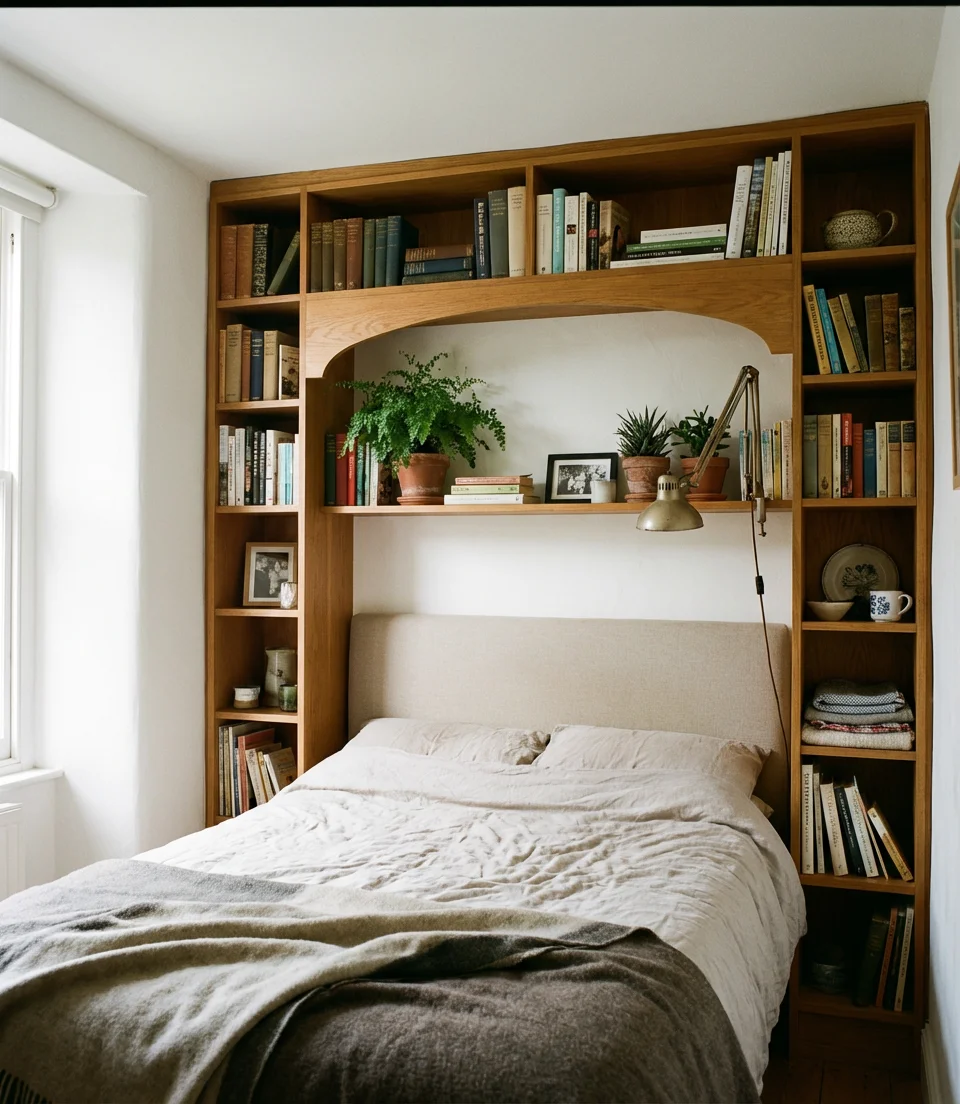
In a tiny bedroom, the wall above your headboard is likely underutilized, resulting in a missed opportunity. Installing extra storage above the bed, whether through a custom built-in shelving unit, a row of floating shelves, or a canopy-style storage frame, unlocks some of the most accessible real estate in the room. It keeps frequently needed items within reach—books, a water bottle, a reading lamp, and a phone charger—without consuming any floor or dresser space. When done well, the above-bed storage zone also creates a headboard-like visual anchor that makes the whole sleeping area feel deliberate and finished.
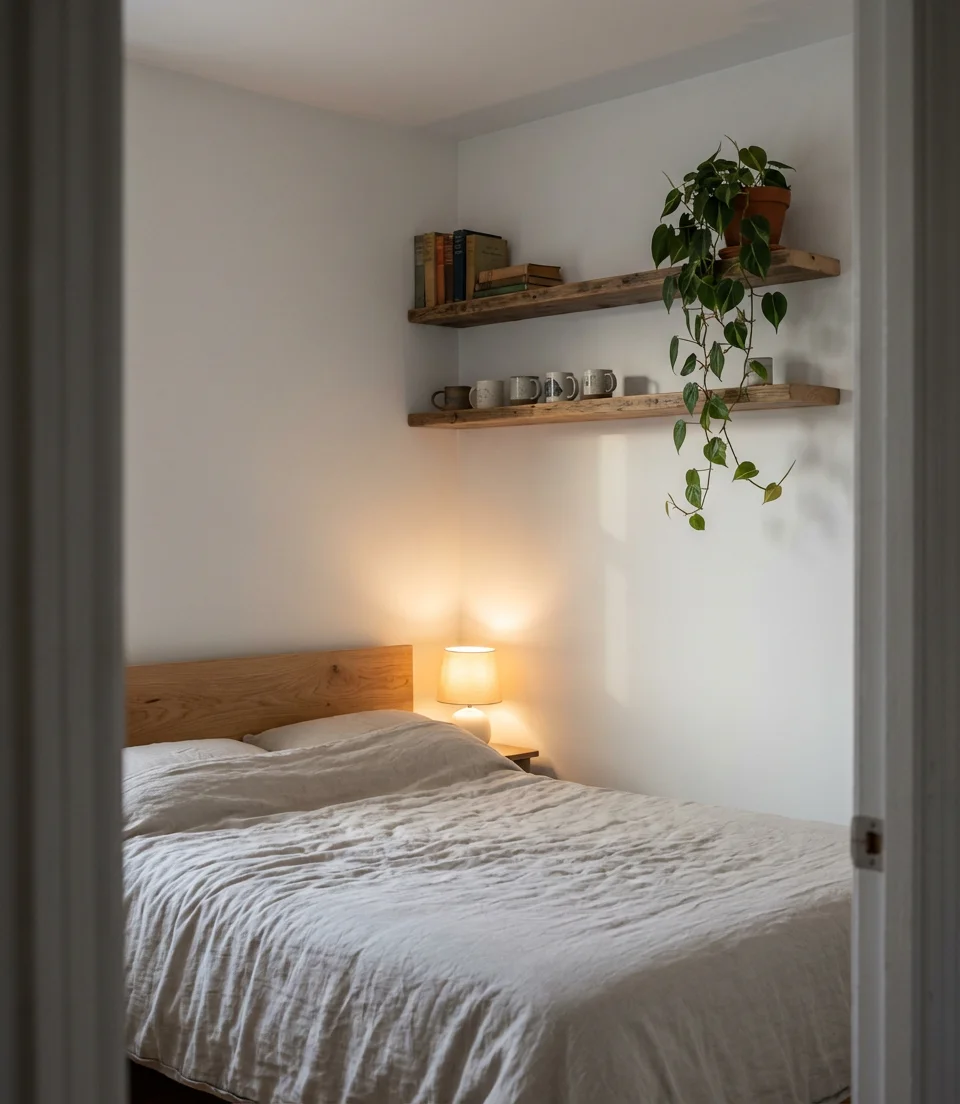
Expert commentary: interior designers consistently point out that the above-bed zone is the last place homeowners think to use and the first place they wish they had. In terms of ergonomics and accessibility, it’s perfectly positioned—you can reach it lying down or sitting up, without getting out of bed. The only caveat is weight: heavy items like stacked books directly above your head should be on properly anchored shelves rated for at least 50 lbs. Safety first, but don’t let it stop you from using this zone entirely.
15. Extremely Tiny Room with Murphy Bed
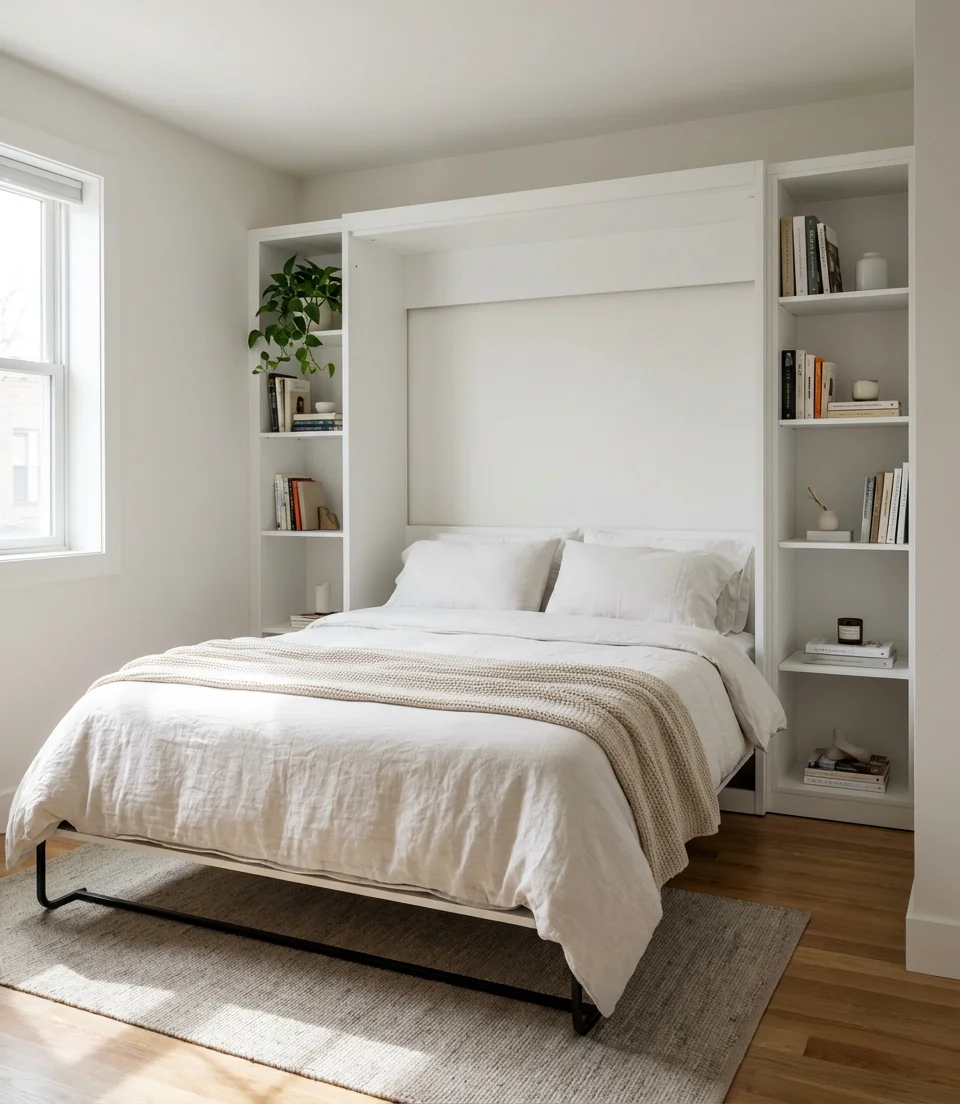
When a bedroom is extremely small—under 100 square feet, or even a studio alcove—a Murphy bed isn’t just a clever option; it’s arguably the only option that gives you a livable space. Modern wall beds have come a very long way from the clunky fold-down frames of the past: today’s versions integrate seamlessly into built-in cabinet systems, include a sofa or desk on the exterior face, and can be operated with one hand in under ten seconds. For a super tiny space that also needs to serve as a home office or living room during the day, a Murphy bed is genuinely transformational—not a compromise, but a solution.
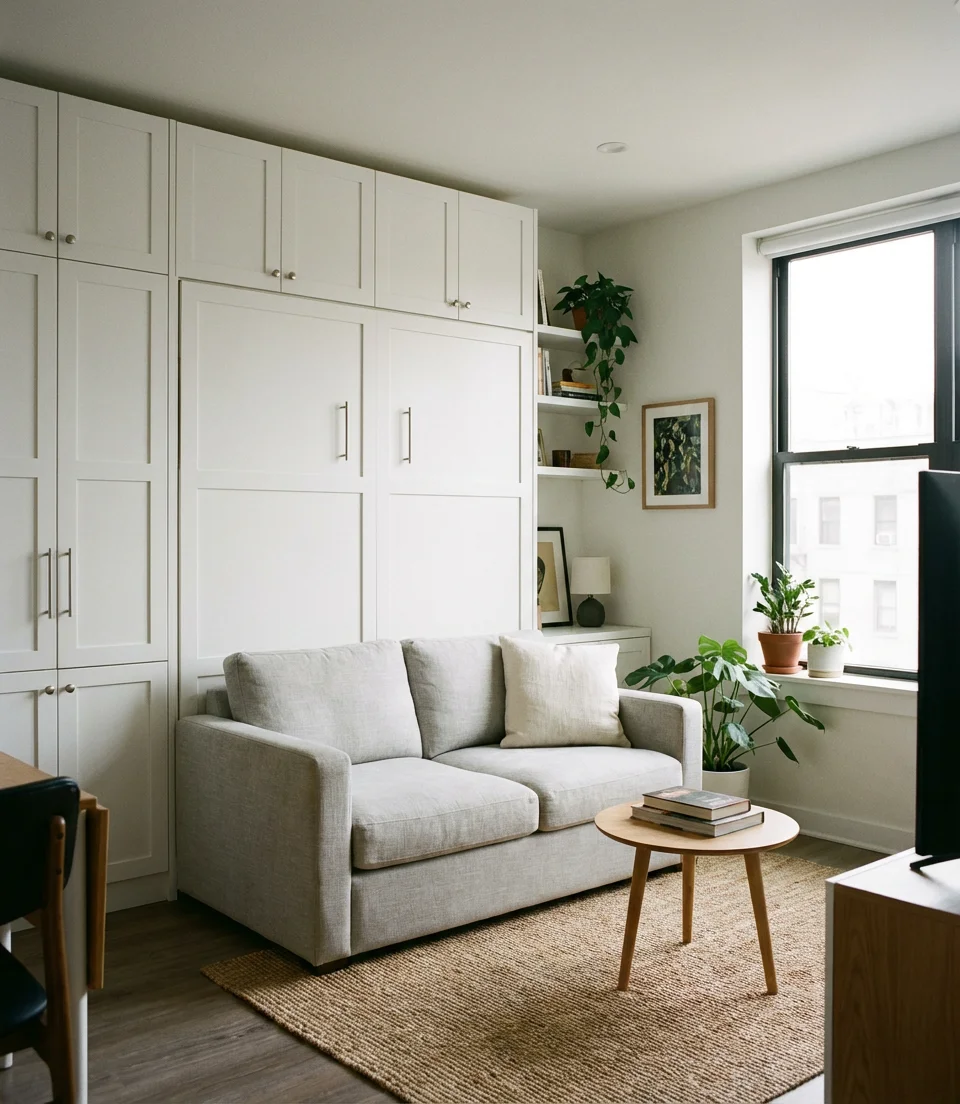
Budget-wise, Murphy beds range from around $1,500 for a basic DIY kit to $5,000+ for a fully integrated cabinet system. That sounds steep until you realize that in most American cities, a studio apartment with a dedicated sleeping nook rents for $300–500 more per month than one without. The bed pays for itself in avoided rent within a year. For buyers, the same logic applies: an enormous space with a well-done Murphy setup is genuinely more livable than a slightly larger space with no solution at all.
16. Bloxburg-Inspired Aesthetic Layout
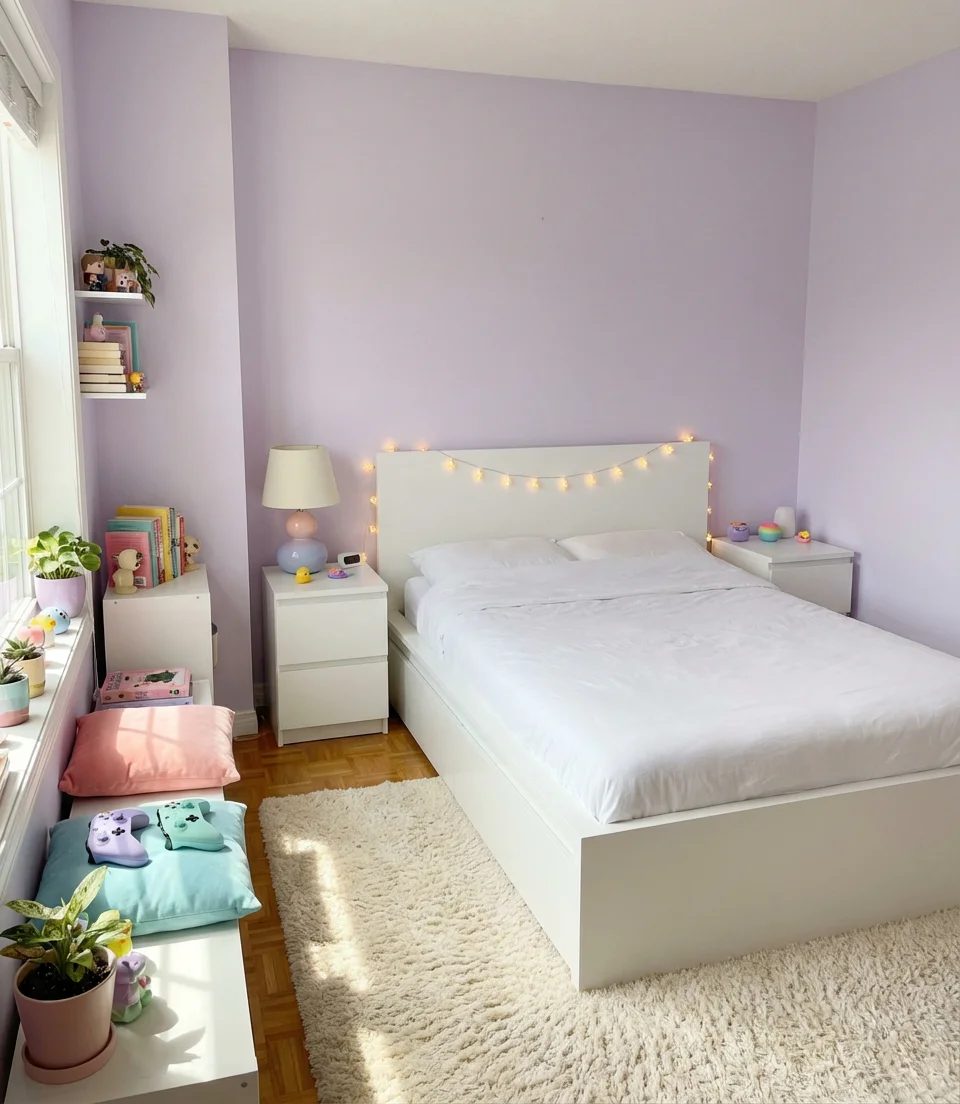
The Bloxburg design aesthetic—those clean, colorful, hyper-intentional bedroom layouts from the popular Roblox game—has quietly become a major influence on how real-world Gen Z decorators approach their bedrooms. Although it may seem a niche topic, the popularity of “Bloxburg bedroom ideas” is undeniable, garnering millions of views, and the aesthetic seamlessly integrates into real-world spaces. The hallmarks are a strong color palette (often pastel or bold monochromes), symmetrical furniture arrangements, and a sense that every single item was chosen deliberately. For a cozy aesthetic real-world version, swap the pixelated furniture for actual IKEA pieces and add textile warmth.
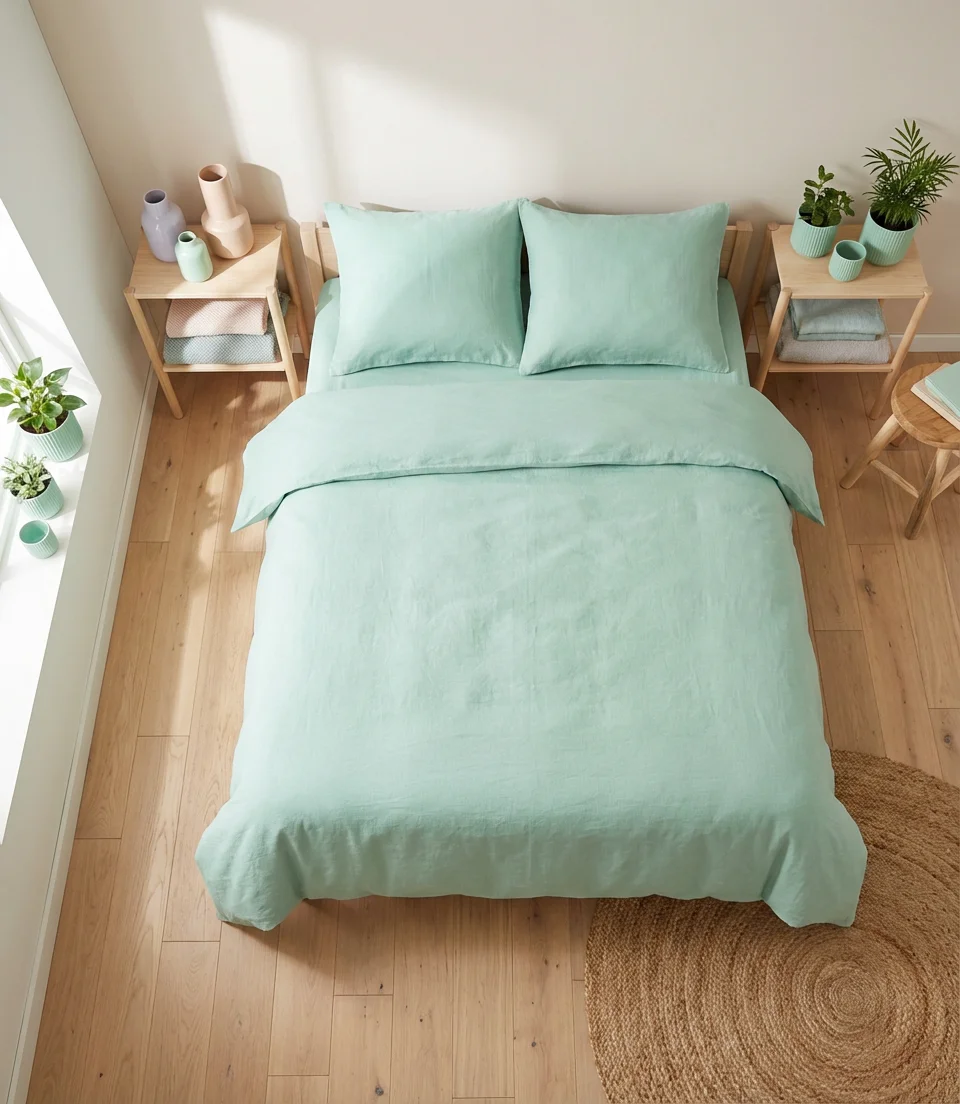
What makes the Bloxburg-inspired approach particularly effective in real tiny bedrooms is the discipline it demands: every item has to earn its place visually, not just functionally. This is actually a great framework for small-space decorating in general—imagine photographing your room from above (as you would see it in the game) and ask yourself whether each piece belongs. If it adds nothing to the visual story, it probably should not be there. It’s a surprisingly rigorous and effective design filter, especially for people who are new to decorating.
17. Minecraft-Inspired Block Shelving Feature
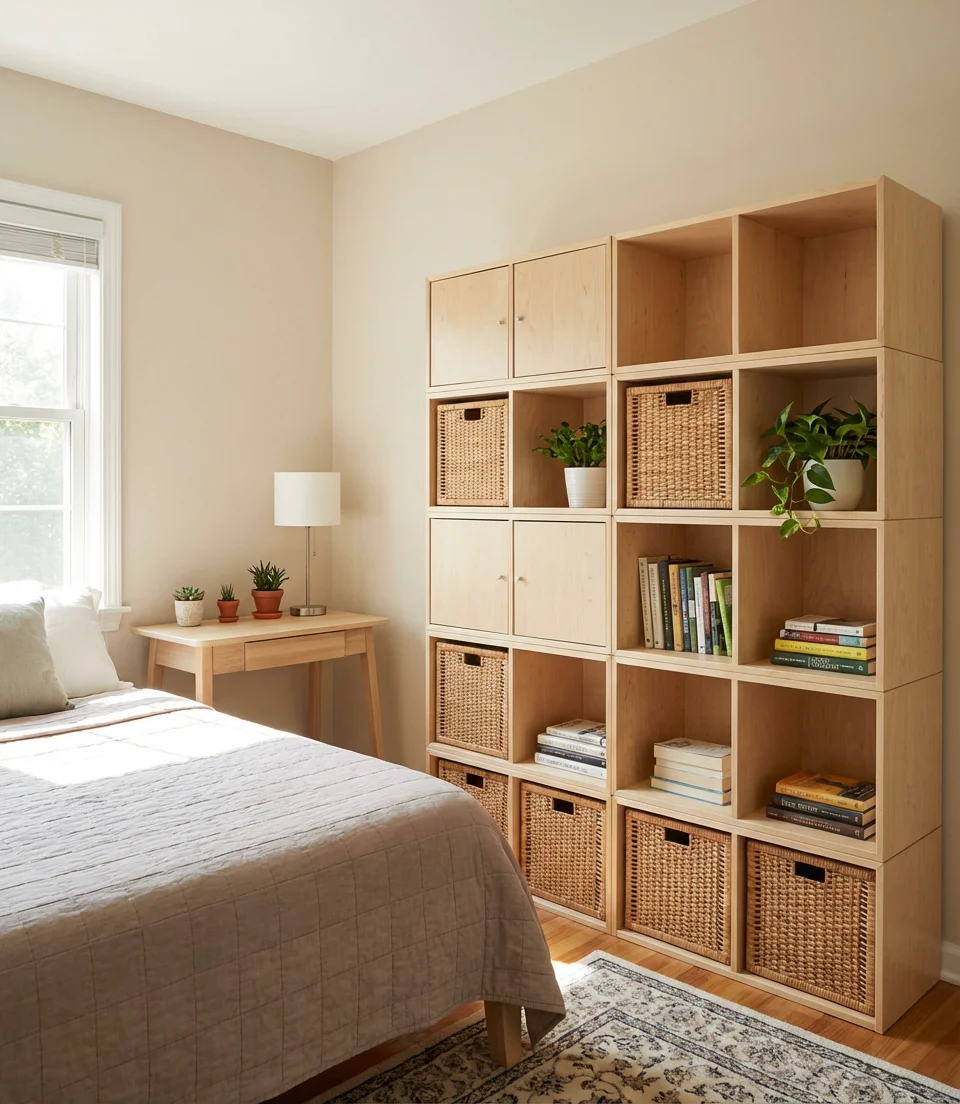
Gaming culture has left a real mark on interior design, and the Minecraft aesthetic—blocky, geometric, satisfyingly modular—has inspired a genuinely intriguing trend in small bedroom shelving. Cube shelving units in grid configurations, painted in bold monochrome or left as natural wood, bring that modular logic into real space in a way that’s both functional and visually intriguing. Each cube can hold a basket, a stack of items, a small lamp, or an open display—and the whole system can be rearranged or expanded as needs change. It’s the natural DIY spirit of the game translated into actual bedroom design.
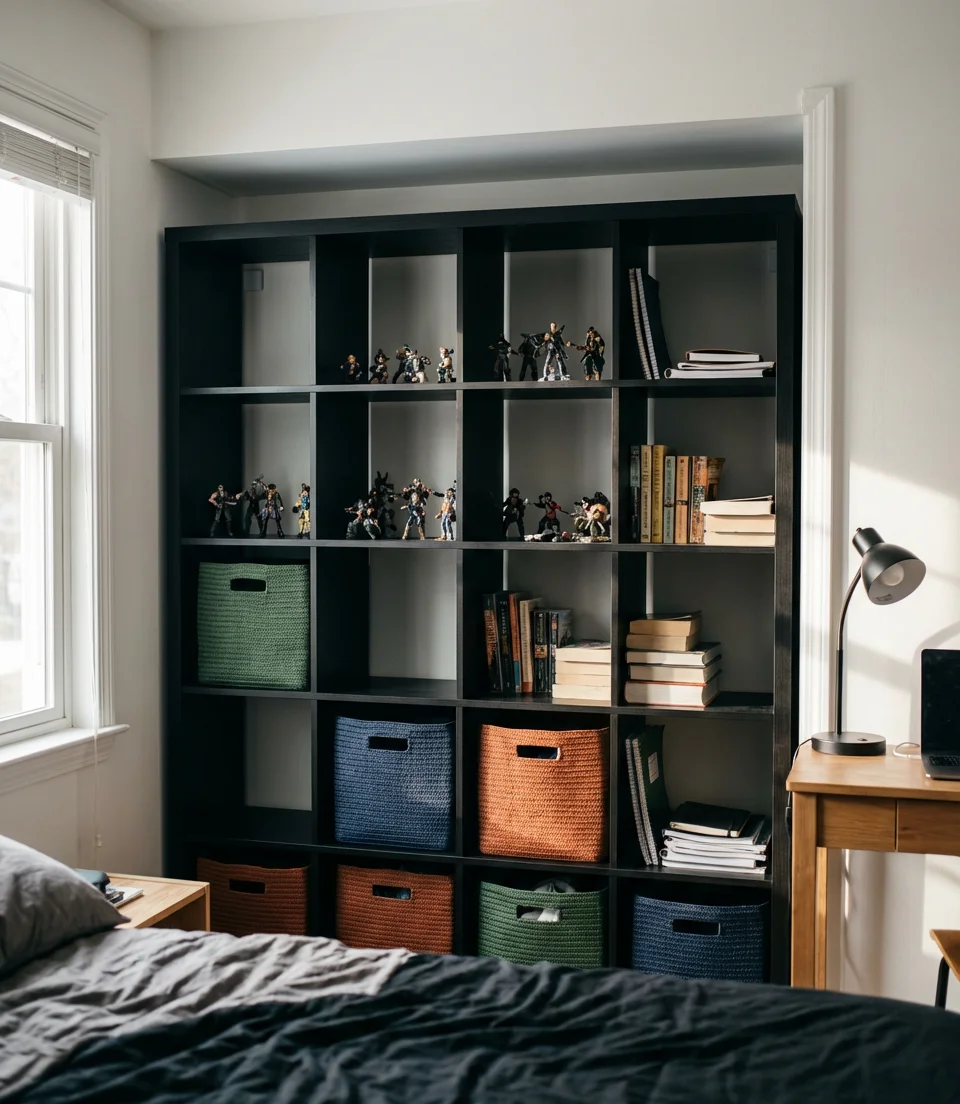
Where it works best: children’s and teen bedrooms and any room where the occupant values flexibility. The modular cube approach is perfect for growing kids whose storage needs change year after year—add more cubes as the collection of books, toys, or clothing grows, or reconfigure entirely when tastes change. Unlike built-in shelving, there’s no commitment, no installation damage, and no loss of investment when it’s time to move or redecorate. For renters especially, this kind of storage is a genuinely smart long-term choice.
18. Cozy Couples Canopy Bed in Tight Quarters
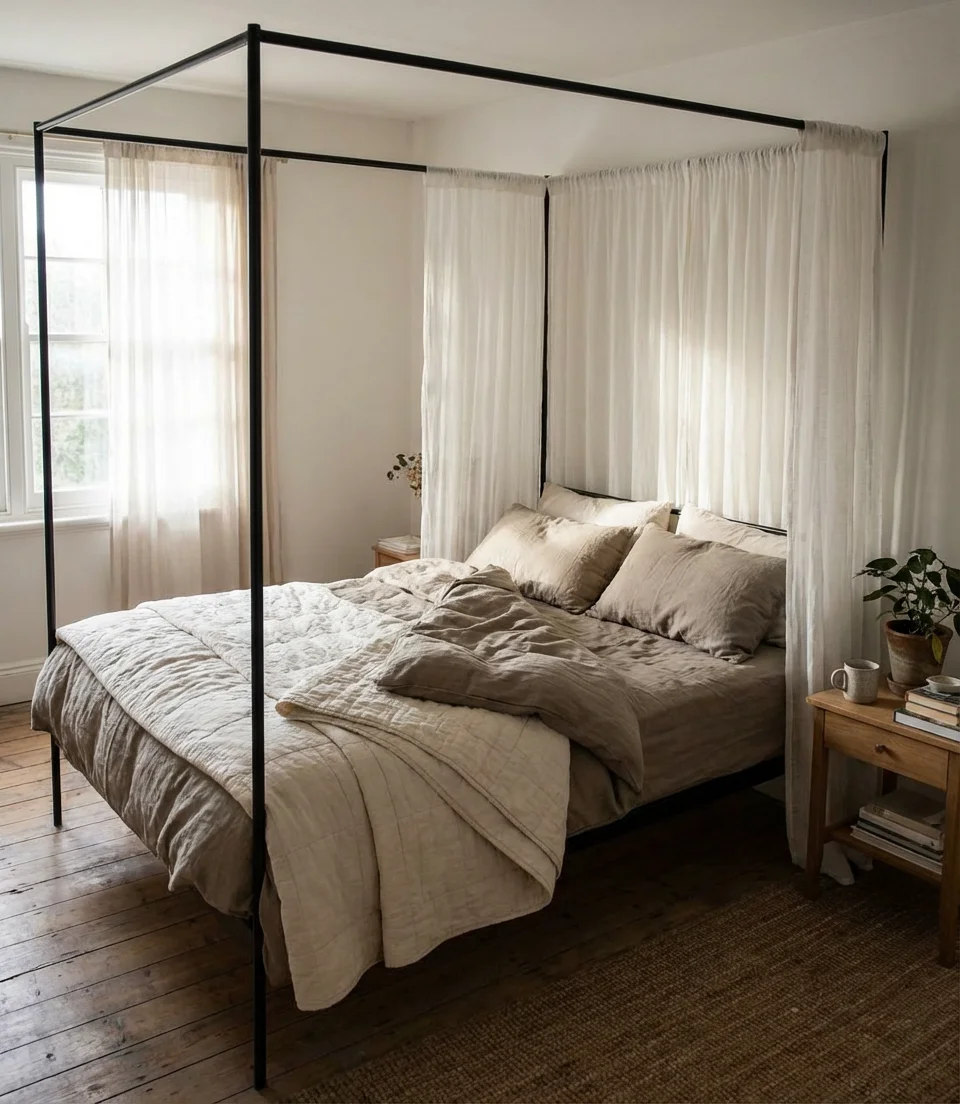
A canopy bed in a tiny room sounds audacious, but it’s one of the most effective ways to create that very cozy, intimate feeling that couples want from a shared bedroom without any additional floor furniture. The canopy frame—particularly a simple four-post style with sheer curtains—creates a room-within-a-room effect that psychologically enlarges the sense of the sleeping zone while making the whole space feel curated and special. Slim metal canopy frames take up minimal visual weight, and sheer or gauze curtains let light through while creating that magical, enveloping softness. It’s a high-impact move at an often surprisingly low cost.
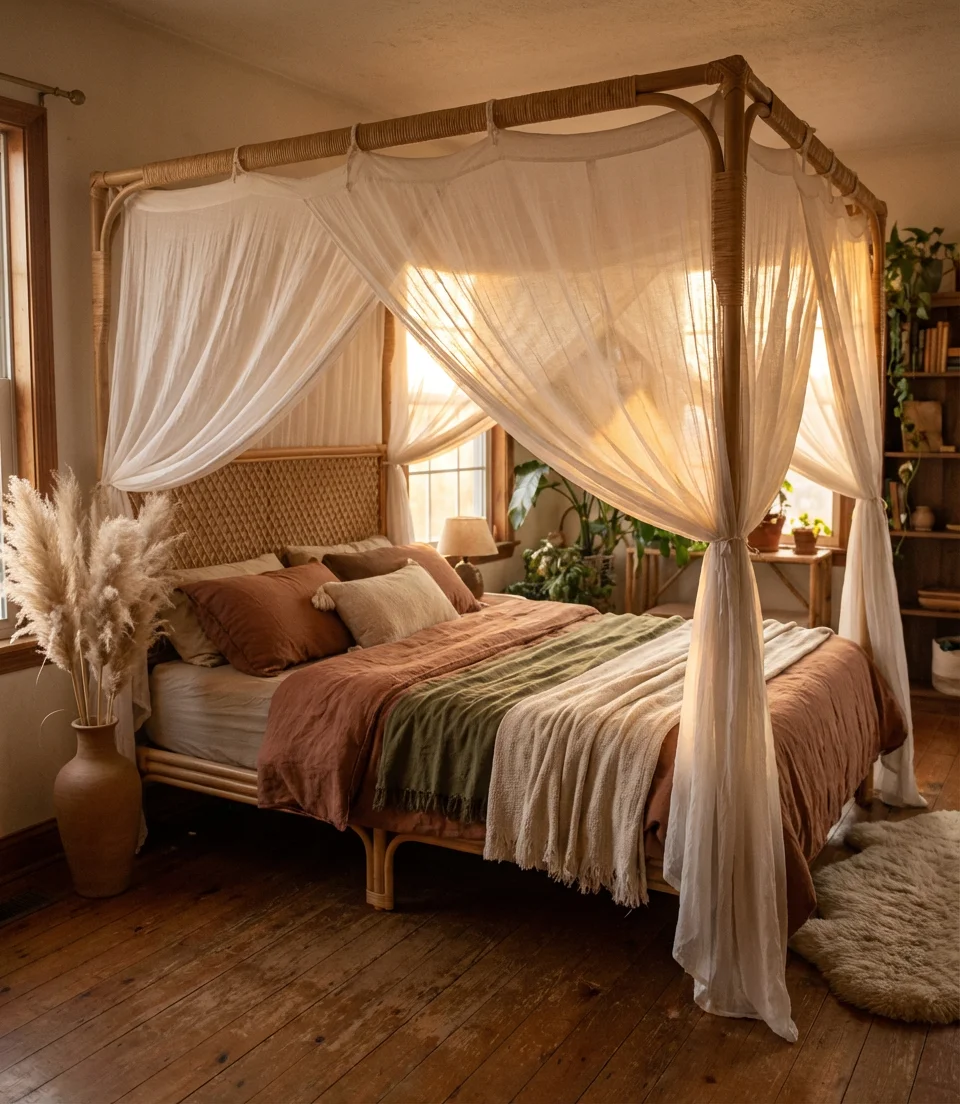
A micro-anecdote: a couple in a 9×10 bedroom in Austin draped a simple IKEA FYRESDAL canopy frame with $20 worth of sheer fabric and reported that their friends—every single one of them—asked who had redesigned their bedroom. The whole project cost under $150, took a weekend, and completely transformed how the room felt to be in. It’s one of those ideas that sounds impractical until you try it and realize it’s exactly the opposite.
19. Cozy Elegant Velvet and Brass Accents
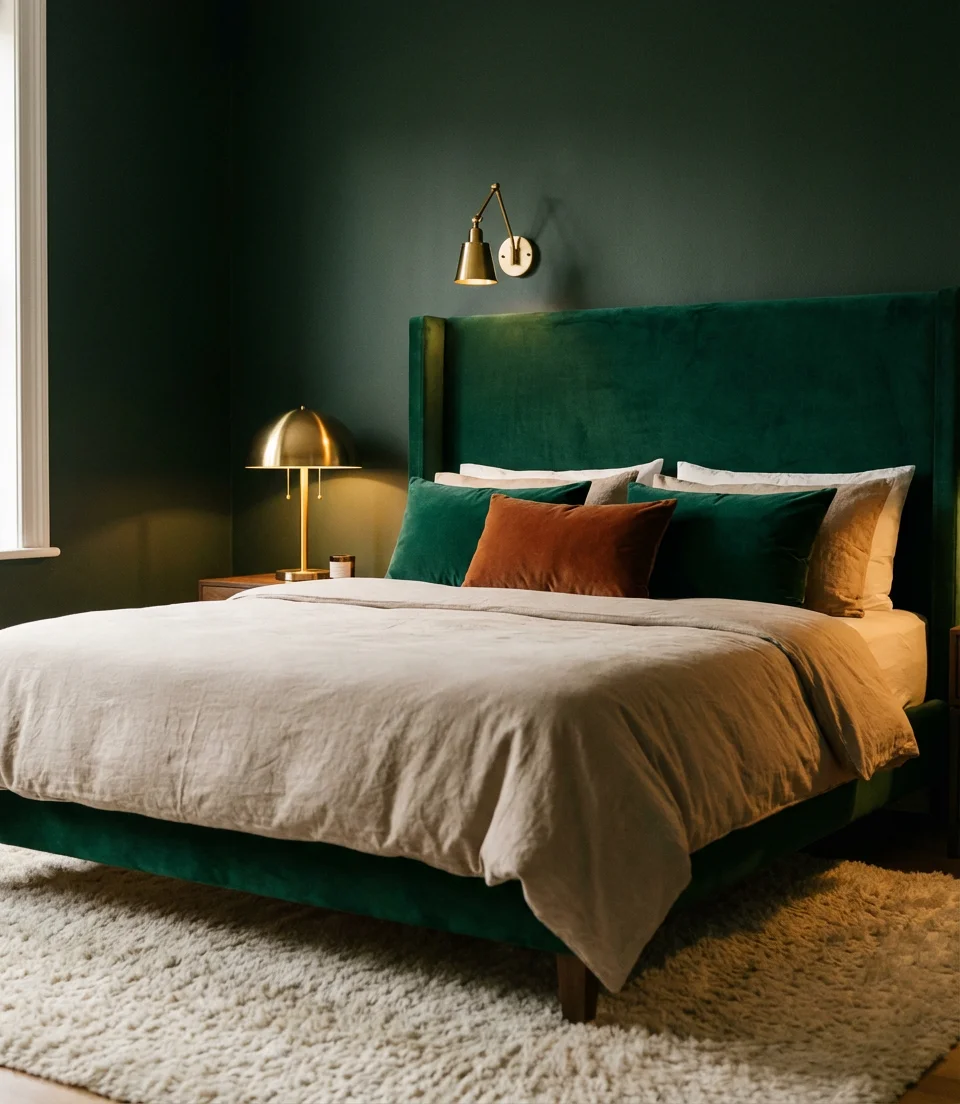
There’s a version of tiny bedroom design that leans fully into richness rather than restraint—and it is spectacular. The cozy, elegant approach using velvet textiles and warm brass hardware turns a small room into something that feels genuinely luxurious. Deep jewel-toned velvet—emerald, sapphire, and bordeaux—has a light-catching quality that makes a small bedroom feel opulent rather than cramped. Pair it with matte brass handles on the wardrobe, a brass pendant or sconce, and a plush rug, and the whole room reads as considered and high-end. This is one area where a small room genuinely has an advantage: it takes less fabric, fewer fixtures, and a smaller rug to make a big impression.
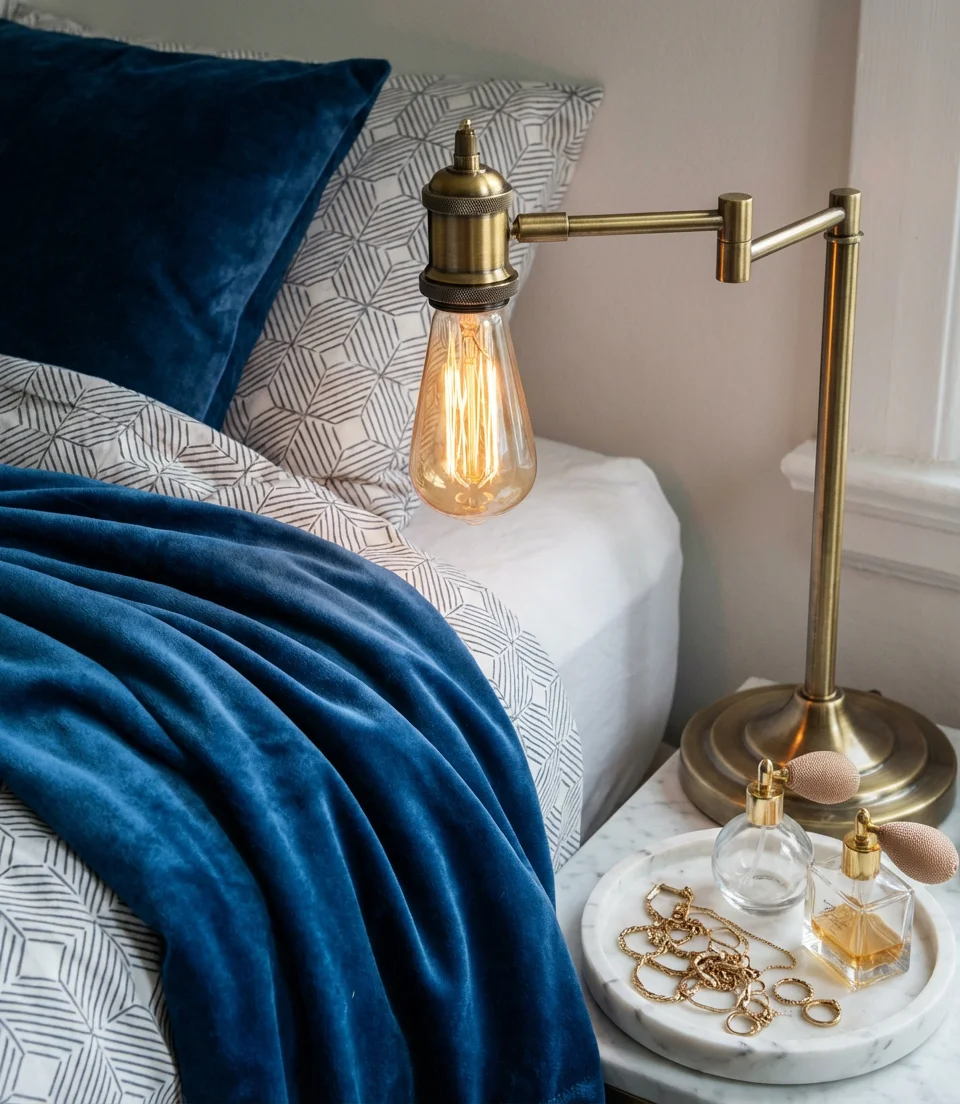
The practical insight here: velvet and rich textiles perform best in bedrooms that are kept consistently at a comfortable temperature and away from direct harsh sunlight. UV light fades the velvet relatively quickly. If your small bedroom gets strong afternoon sun, use a blackout or UV-filtering sheer beneath any decorative curtains—it protects your investment and keeps those rich colors looking deep and saturated for years rather than months.
20. Pink IKEA Small Space Girls’ Room
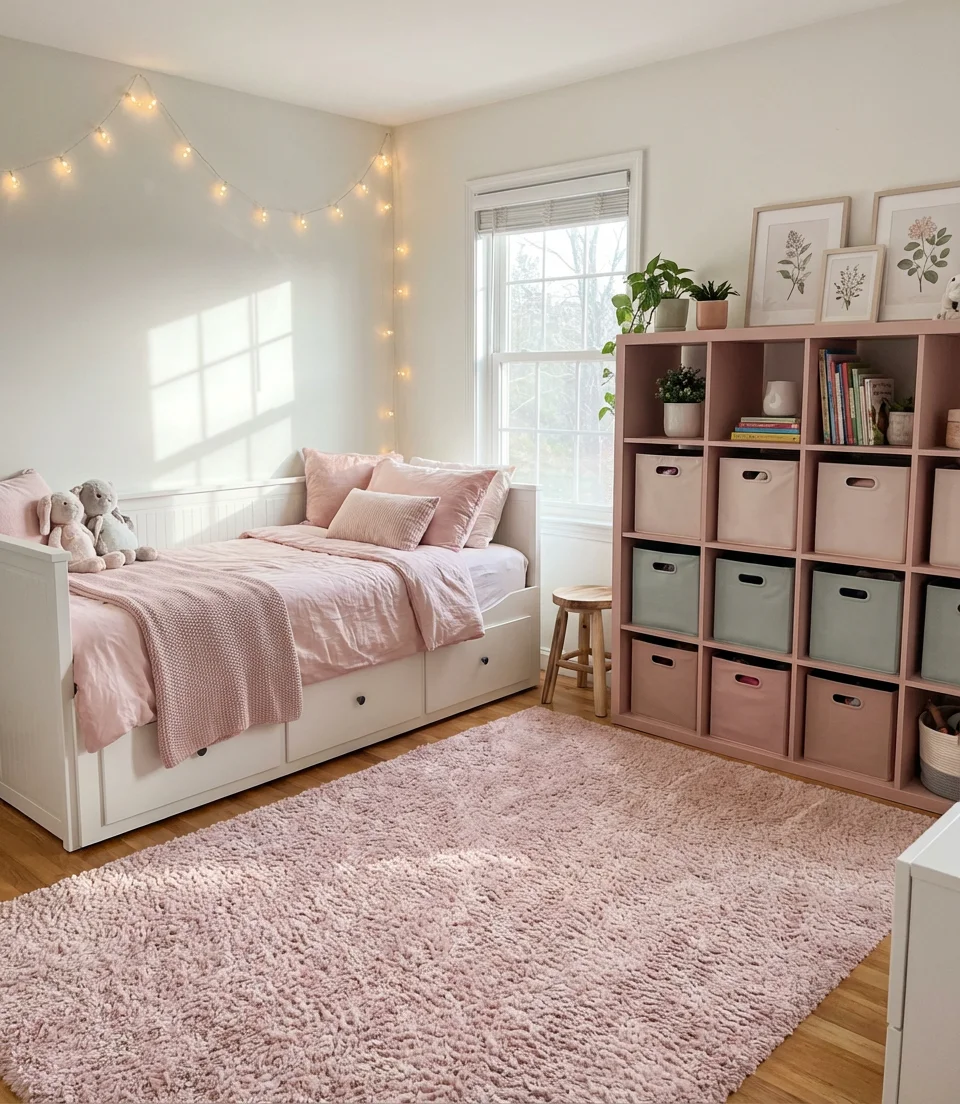
Combining the accessibility of IKEA with a soft, dreamy pink palette is one of the most popular approaches to small girls’ bedroom design on Pinterest right now—and it makes a lot of practical sense. IKEA’s modular systems can be spray-painted, wrapped in contact paper, or accessorized with third-party handles to completely transform their look at a fraction of the cost of custom furniture. The KALLAX unit in blush pink, a HEMNES daybed in soft white, and a SKOGSKLÖVER rug—the combination creates something that looks boutique and intentional on a real-family budget.
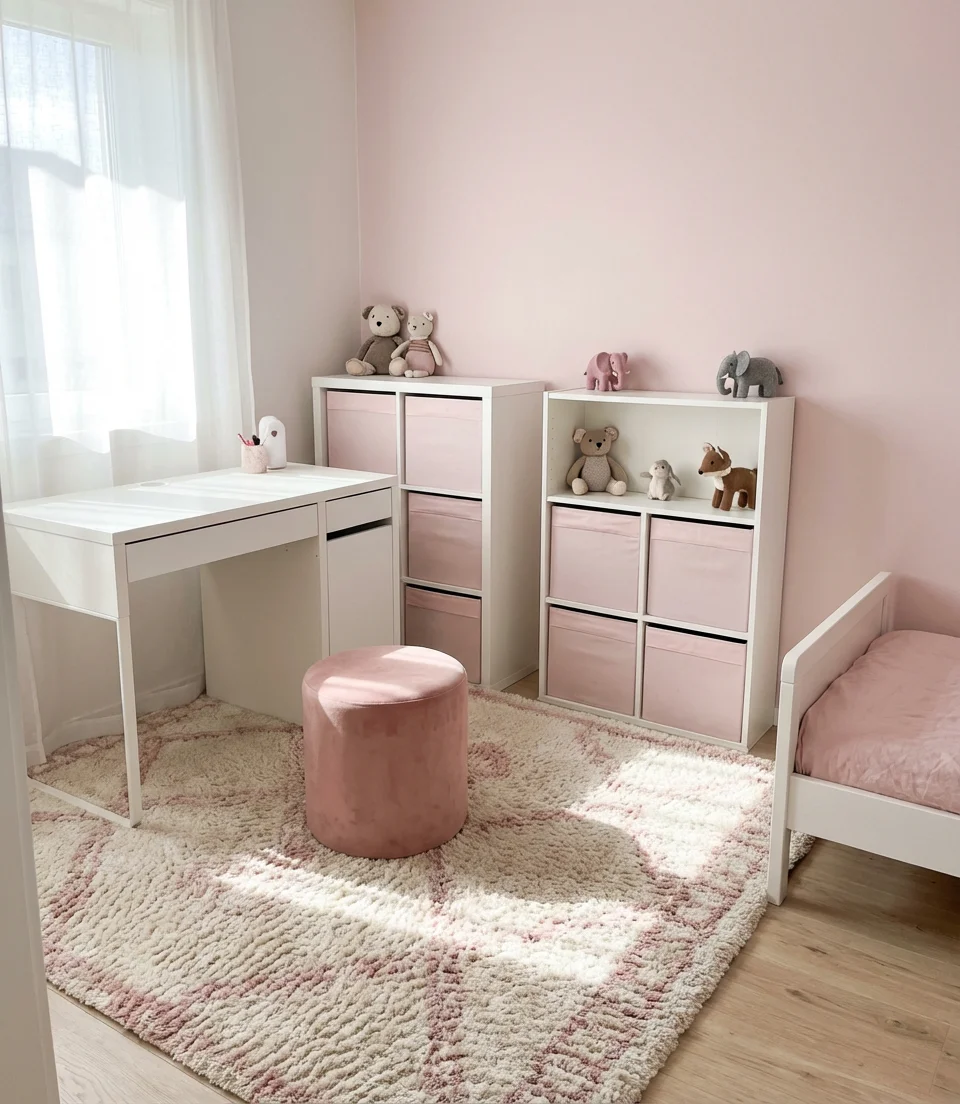
Real homeowner behavior: many parents report that letting their child choose the exact pink—from swatches that they themselves have narrowed down to two or three appropriate options—creates enormous buy-in from the child about keeping the room tidy. The ownership of the color choice translates into a sense of pride in the space. It’s a small psychological trick that makes a real difference in whether a kid’s bedroom stays organized or turns into chaos within a week of being decorated.
21. Cozy Reading Nook Corner in a Tiny Bedroom
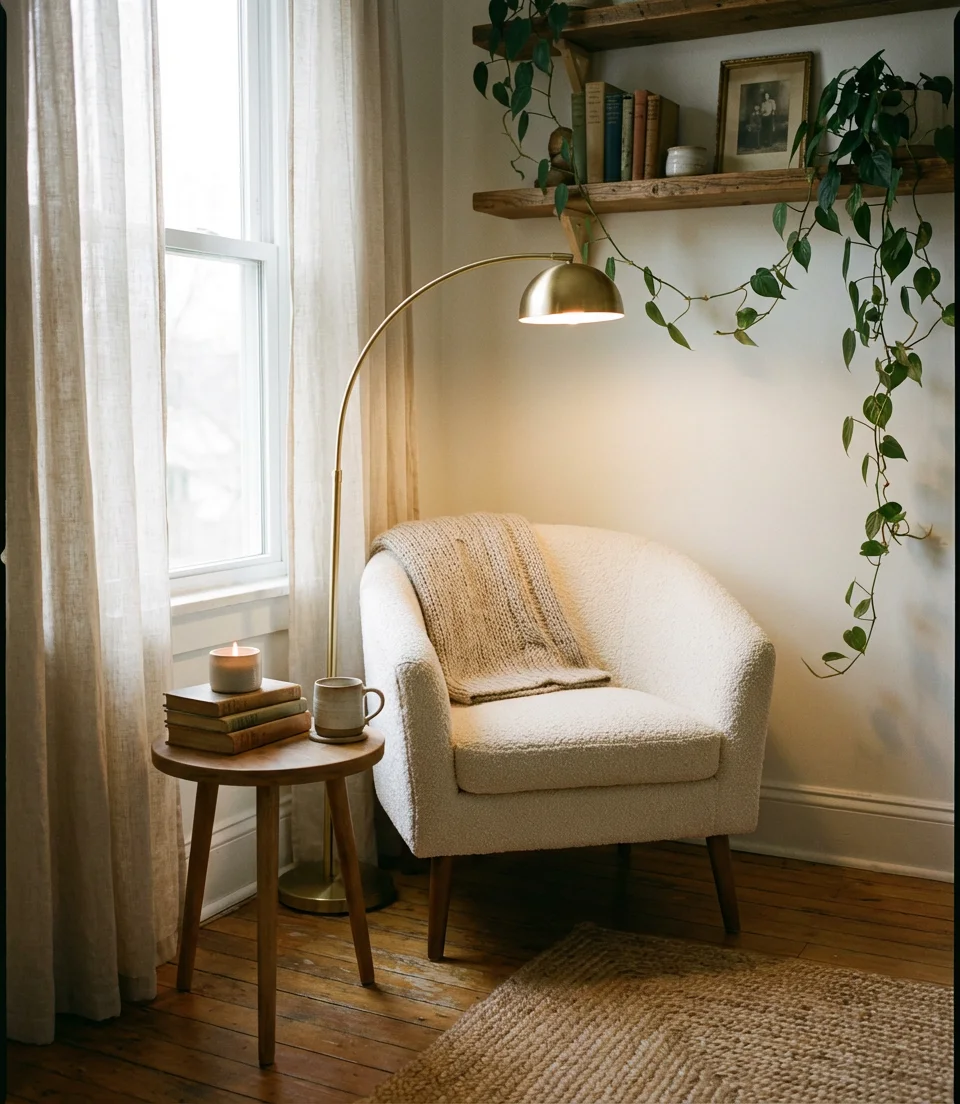
Even in the smallest bedroom, carving out a dedicated reading corner is one of the most meaningful design investments you can make. A cozy reading nook doesn’t need much: a small armchair or floor cushion, a task lamp that points exactly where you need it, and a shelf or basket close enough to hold your current stack of books. The reading corner signals to your brain—and to anyone who sees the room—that the area is a space for rest, story, and slowness. For a cozy aesthetic treatment, add a small throw blanket, a trailing plant, and a candle on a nearby surface, and you’ve created a corner people will genuinely want to spend time in.
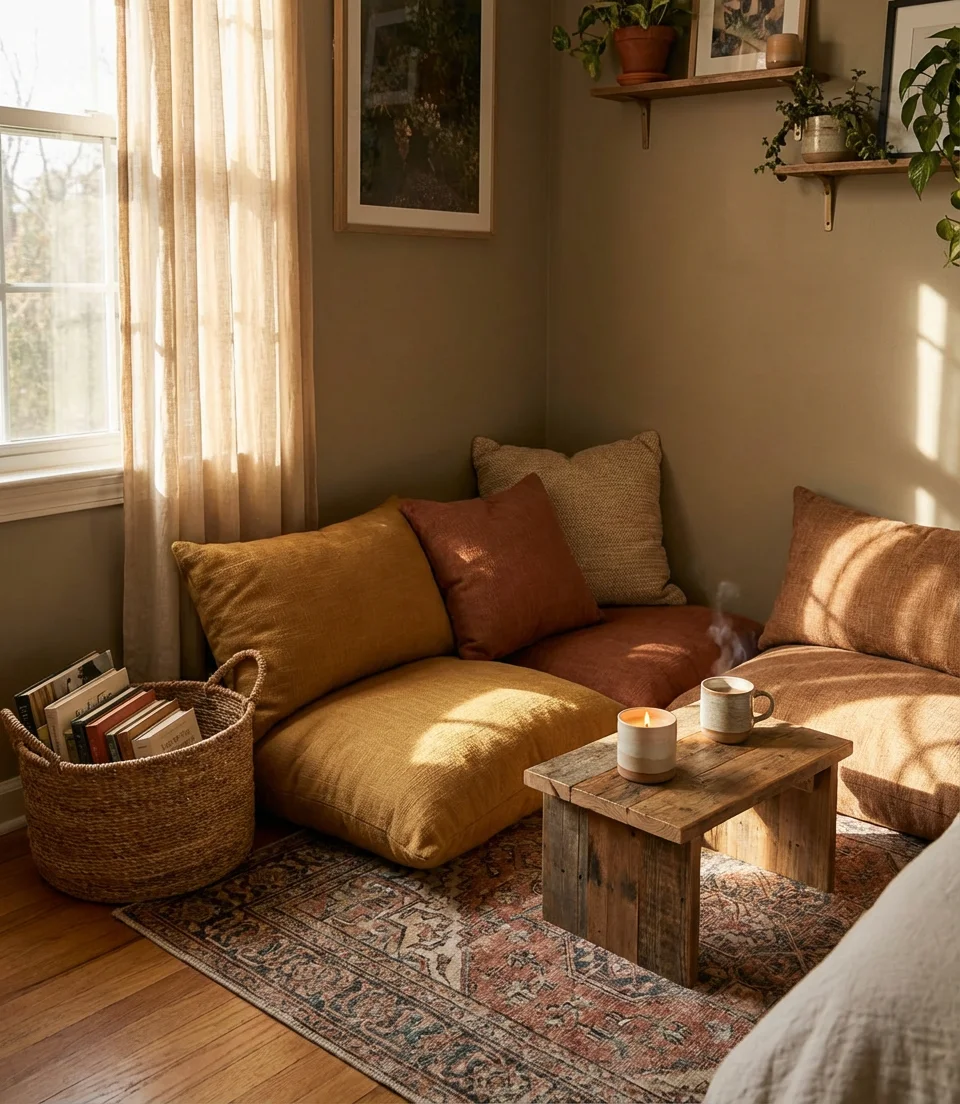
Where it works best: unused corners beside windows, or the space at the foot of the bed if there’s at least 4 feet of clearance. The window adjacency is particularly valuable—natural reading light is better for your eyes and creates a much more pleasant experience than even the best artificial lamp. If your tiny bedroom has a deep windowsill (6 inches or more), that sill itself can serve as a reading perch with a cushion—one of those gloriously functional solutions that costs almost nothing.
22. Aesthetic Gallery Wall Over the Headboard
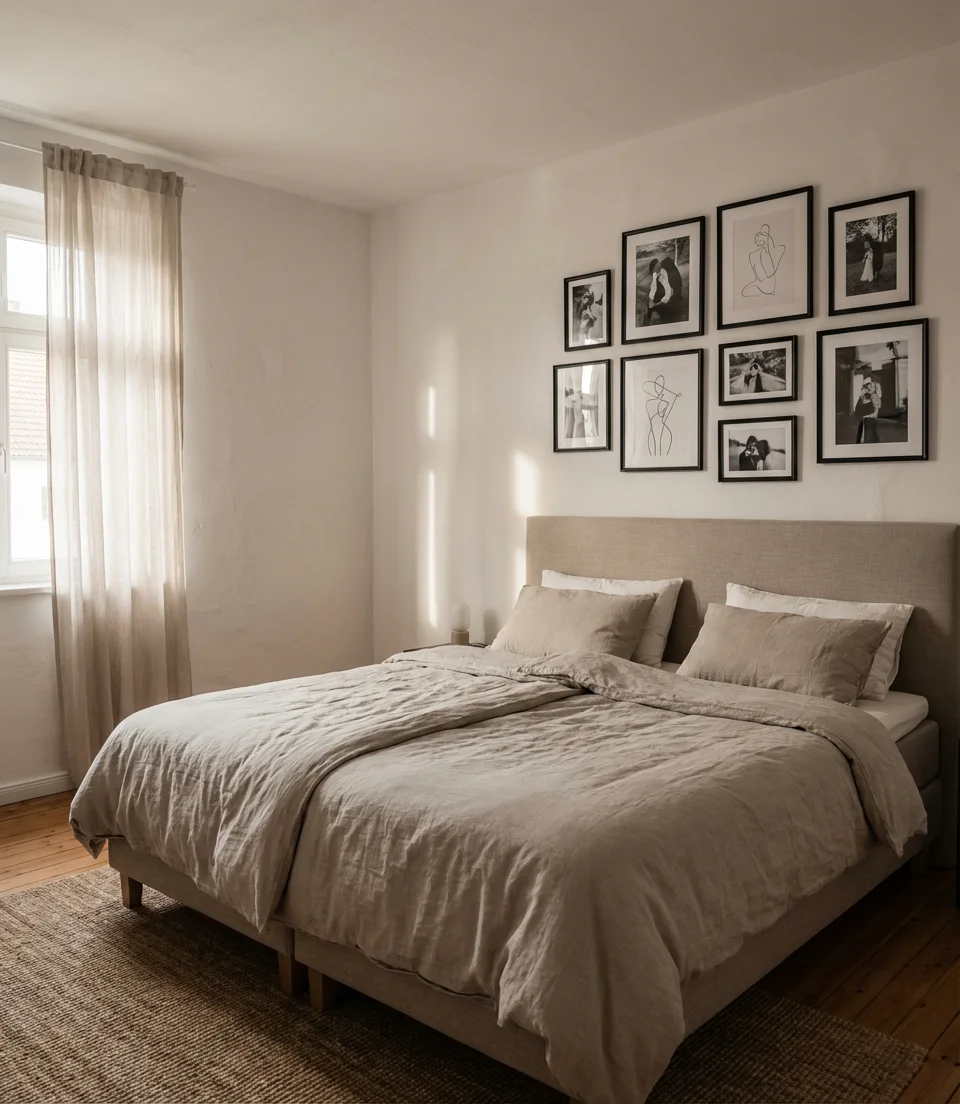
The wall behind your bed is the most visible surface in the room—it’s the first thing you see when you wake up and the backdrop to every photo taken in the space. An aesthetic gallery wall transforms this prime real estate into something that feels deeply personal. The key to a gallery wall that works in a small bedroom is scale and cohesion: choose a consistent frame color or style, limit your color palette to two or three tones, and make at least one piece large enough to anchor the arrangement. A combination of photography, simple line art, and one or two textural elements, such as a small woven piece or a dried botanical print, achieves a balance between being Pinterest-perfect and genuinely personal.
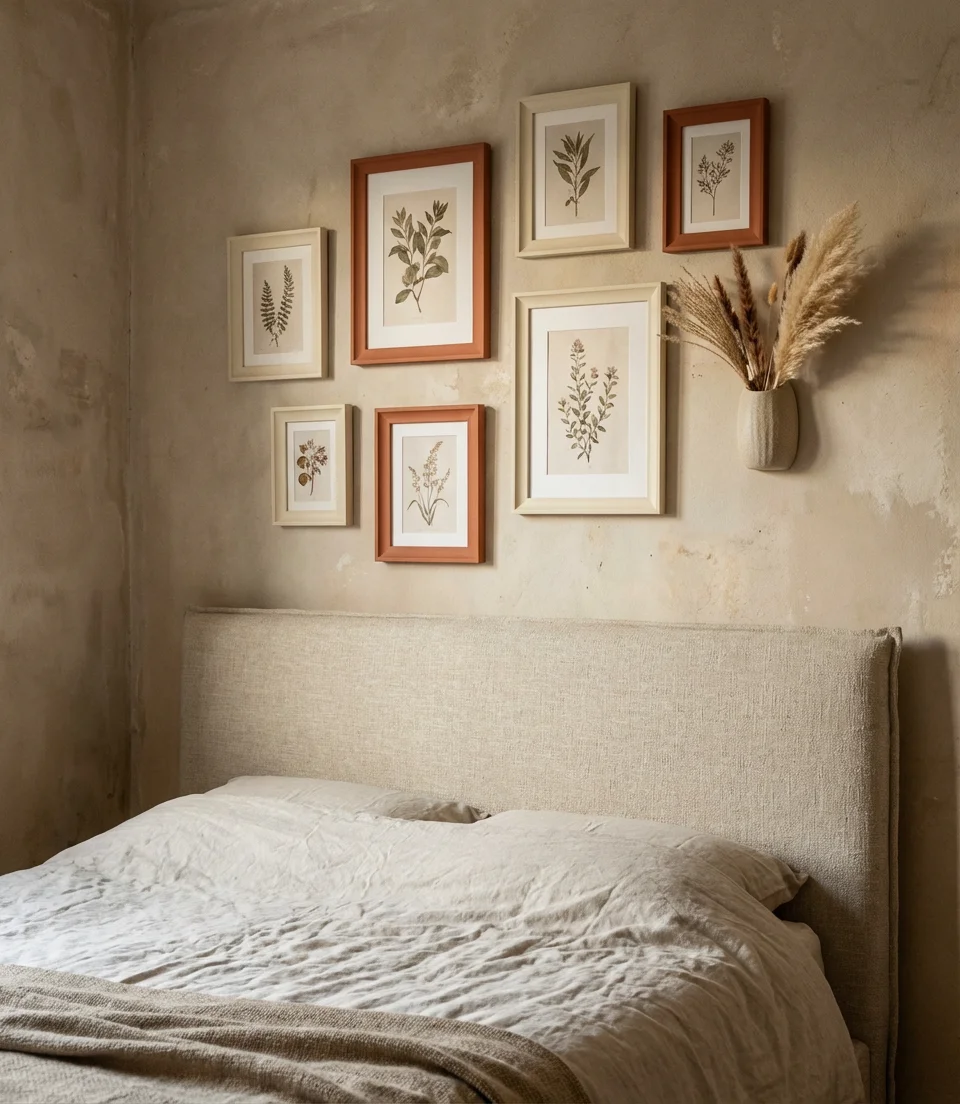
Common mistakes and how to avoid them: the most frequent gallery wall errors are frames hung too high (they should start just 6–8 inches above the headboard, not floating near the ceiling) and arrangements that are too sparse (which makes each piece look random rather than collected). Before putting a single nail in the wall, lay the entire arrangement out on the floor and photograph it from above. Observing the arrangement from above will provide a clear understanding of how the grouping will appear on the wall, allowing for endless rearranging without creating unnecessary holes.
23. Children’s Cozy Tent Bed Corner
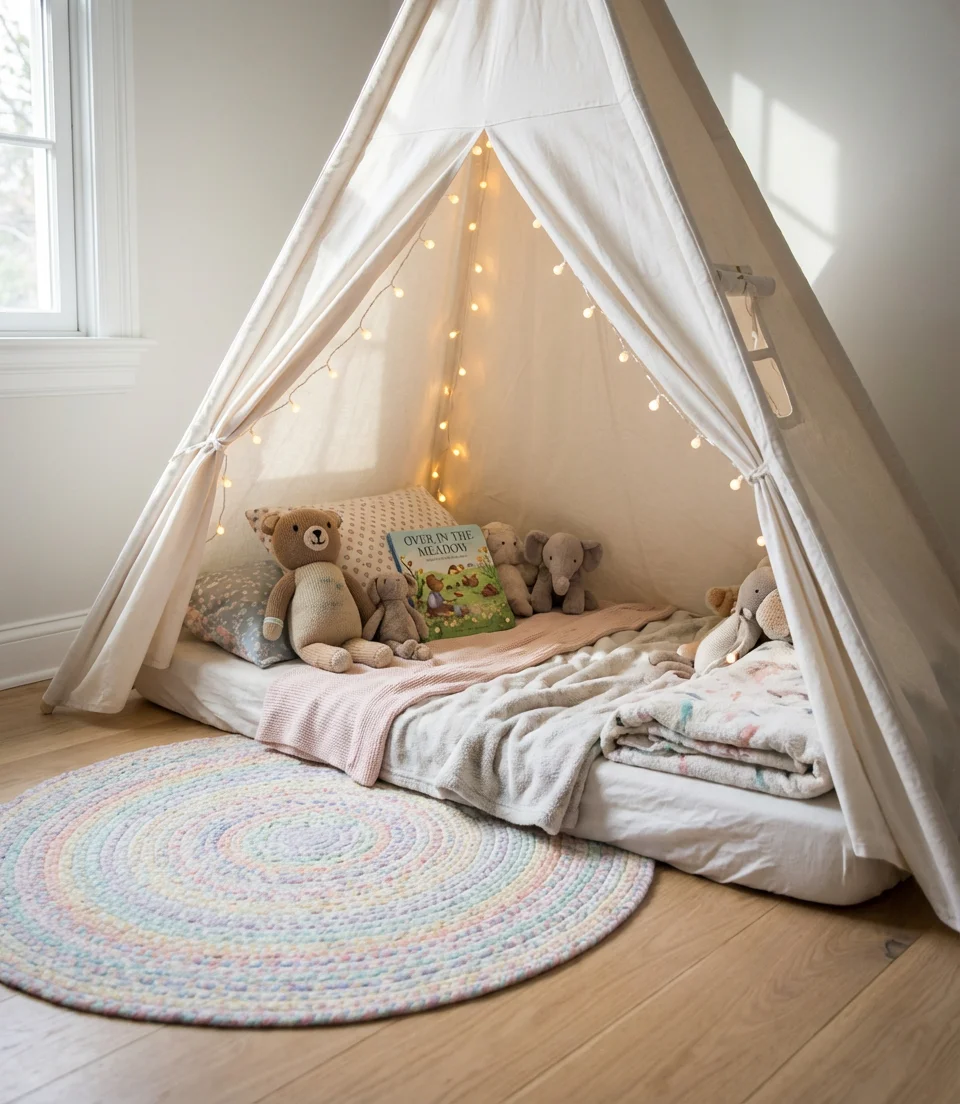
For a children’s tiny bedroom that sparks imagination and maximizes fun, a tent-style bed nook is one of the most beloved ideas on Pinterest. Whether it’s a fabric canopy stretched over a toddler bed, a full teepee-style frame in the corner, or a low loft bed with curtains that close for privacy, this approach gives kids their own cozy den within the already small room. The design incorporates the enclosed feeling children desire—that “fort brain” that enhances safety and excitement. For a cozy finishing touch, add a string of warm LED fairy lights inside the canopy and a small soft rug underneath.
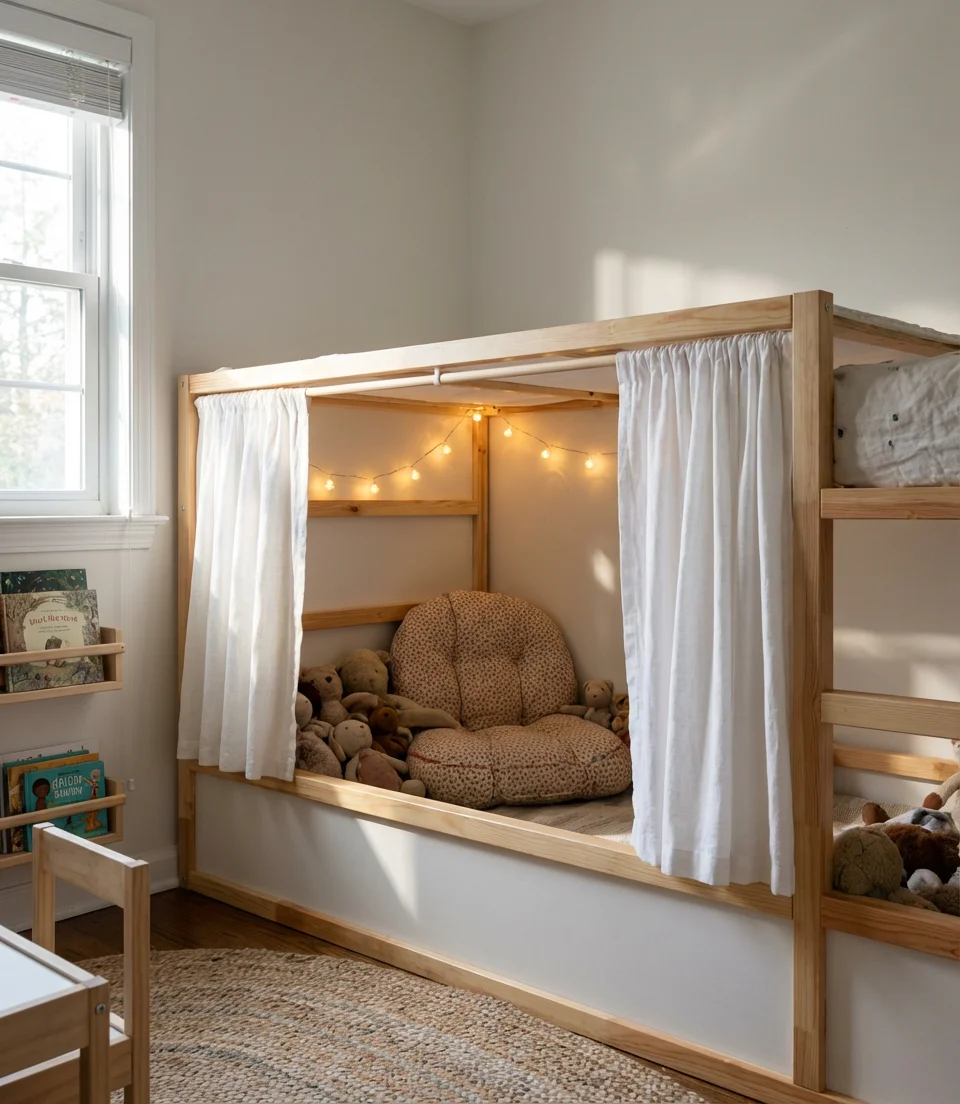
The shelter is one of those ideas that works best in rooms where the ceiling is standard height (8 feet) rather than unusually low. In a room with a 7-foot ceiling, a full tent or canopy frame can start to feel claustrophobic rather than cozy—in those cases, opt for a lower-profile fabric canopy that drapes directly from the ceiling on two points rather than a freestanding frame. It creates the same enclosed feeling with far less bulk and visual height. Measure first, dream second.
24. Tiny Bedroom with Smart Under-Bed Layout
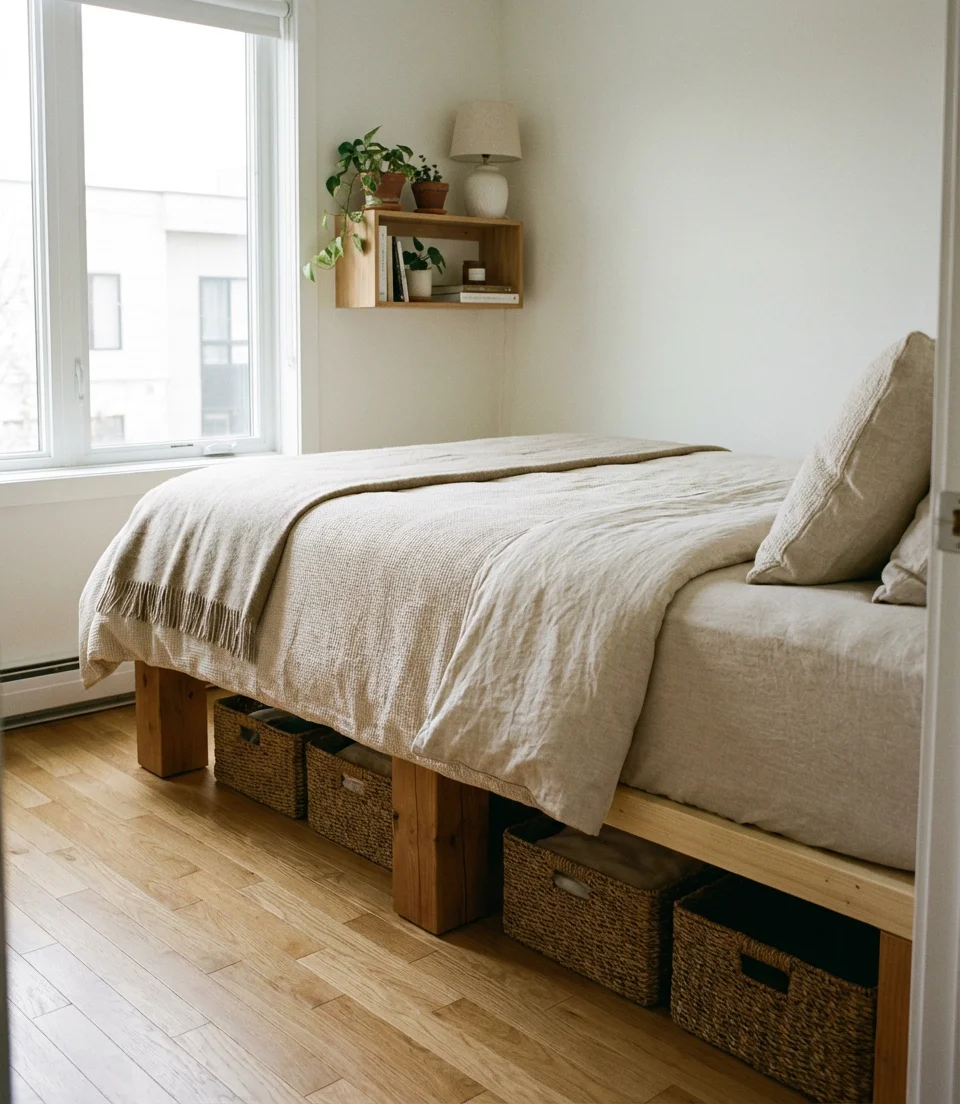
One of the most underutilized storage areas in American bedrooms is the space beneath the bed, especially in a tiny room. A smart layout approach to the under-bed zone can store an entire season’s worth of clothing, extra bedding, shoes, sports equipment, and more, all completely out of sight. Low-profile rolling bins, vacuum storage bags for bulky items, and purpose-built under-bed drawers (either freestanding or built into the bed frame itself) are the tools that make such storage happen. For this approach to work aesthetically, the bed needs to be high enough off the ground—ideally 12–16 inches—to allow bins to slide in and out easily.
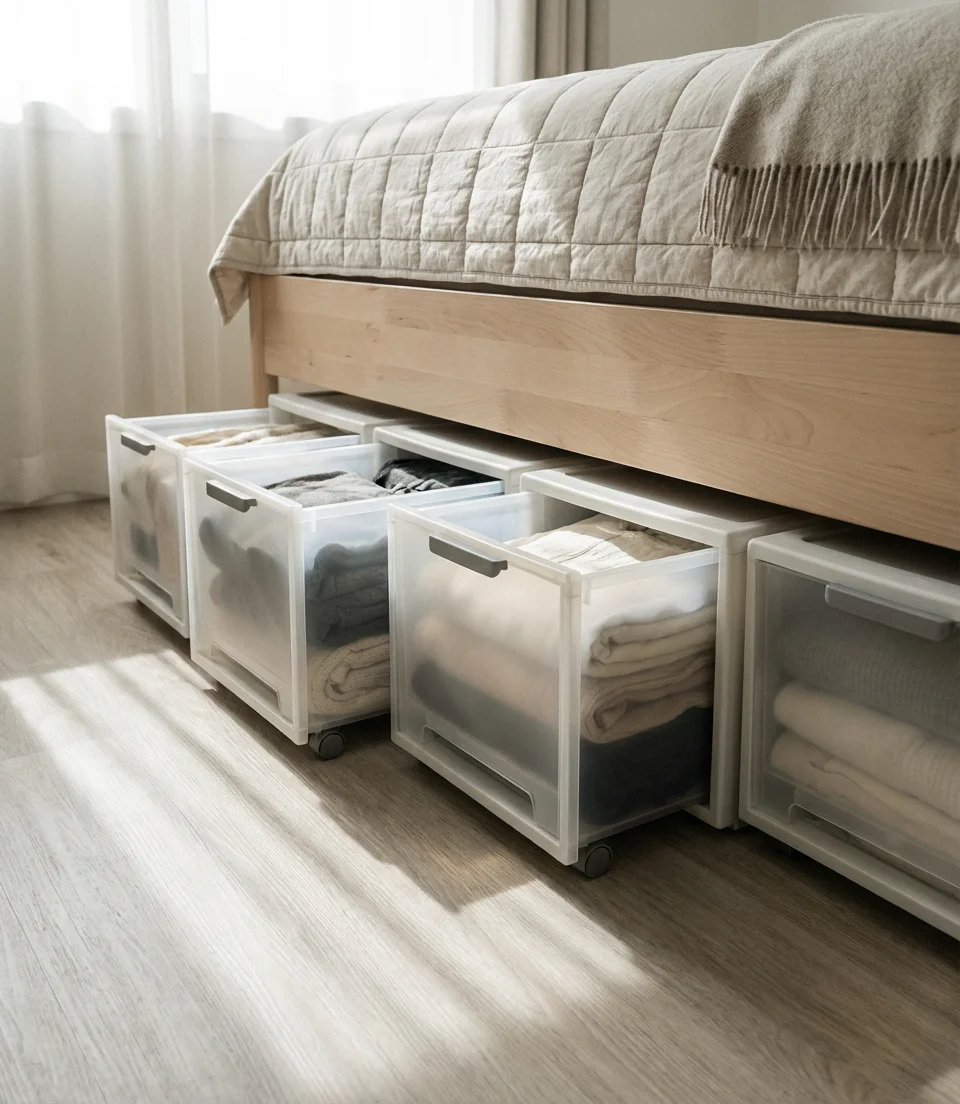
The full under-bed storage zone, when maximized, can hold the equivalent of a four-drawer dresser—and that’s a very conservative estimate for a queen-size bed. Eliminating the dresser entirely frees up 6–12 square feet of floor space, which in a tiny bedroom is genuinely transformative. It changes the entire feeling of the room to walk into. If you only make one storage upgrade to a small bedroom this year, making the under-bed zone work harder for you is almost certainly the highest-return move available—and it costs less than a luxurious dinner out.
Tiny bedrooms are endlessly creative spaces, and these ideas are really just a starting point for what’s possible when you think intentionally about every surface, every corner, and every inch of vertical space. Whether you’re working with a 90-square-foot studio alcove or a long, narrow rental bedroom that never quite felt like yours, the right combination of layout thinking, storage solutions, and personal style can turn it into somewhere you genuinely love to be. We’d love to know which ideas resonated most with you—drop a comment below and tell us which look you’re trying first, or share a photo of your own tiny bedroom transformation. This community is full of people figuring out the same beautiful puzzle, and the more ideas we share, the better all our spaces get.