
As we move into 2026, American homeowners are transforming their outdoor spaces into true extensions of their living areas, and the patio table has become the centerpiece of these transformations. Pinterest searches for patio table inspiration have surged as people seek fresh ways to style their backyards, patios, and outdoor dining areas. Whether you’re planning a complete makeover or simply refreshing your current setup, this guide offers inspiring ideas that blend functionality with style, helping you create an outdoor space that’s perfect for everything from casual family dinners to elegant entertaining.
1. Mosaic Tile Patio Table Revival

A mosaic patio table brings Mediterranean charm to any outdoor setting, with hand-laid tiles creating intricate patterns in blues, terracottas, and creams. Covered patios showcase the detailed surface of these tables beautifully, and when properly sealed, they exhibit surprising durability. The reflective quality of glazed tiles catches afternoon light, creating visual interest that changes throughout the day. 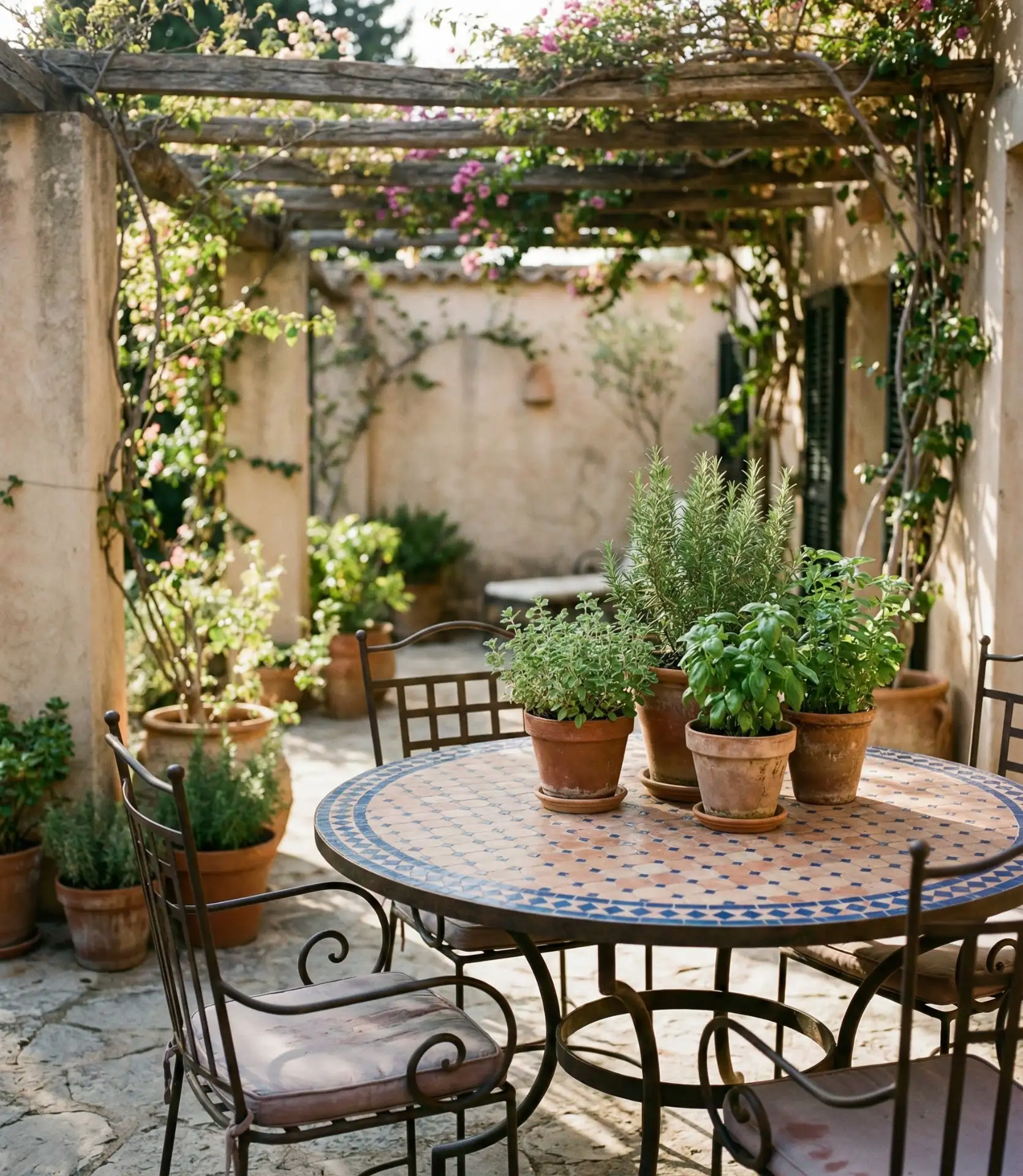
In the Southwest, mosaic tables have become particularly popular because they complement adobe architecture and desert landscaping naturally. The grout lines do require annual resealing in freeze-thaw climates, but in mild regions like Southern California and Arizona, these tables can last decades with minimal maintenance. Consider pairing yours with simple metal chairs to let the tabletop remain the visual focus.
2. Round Farmhouse Gathering Table
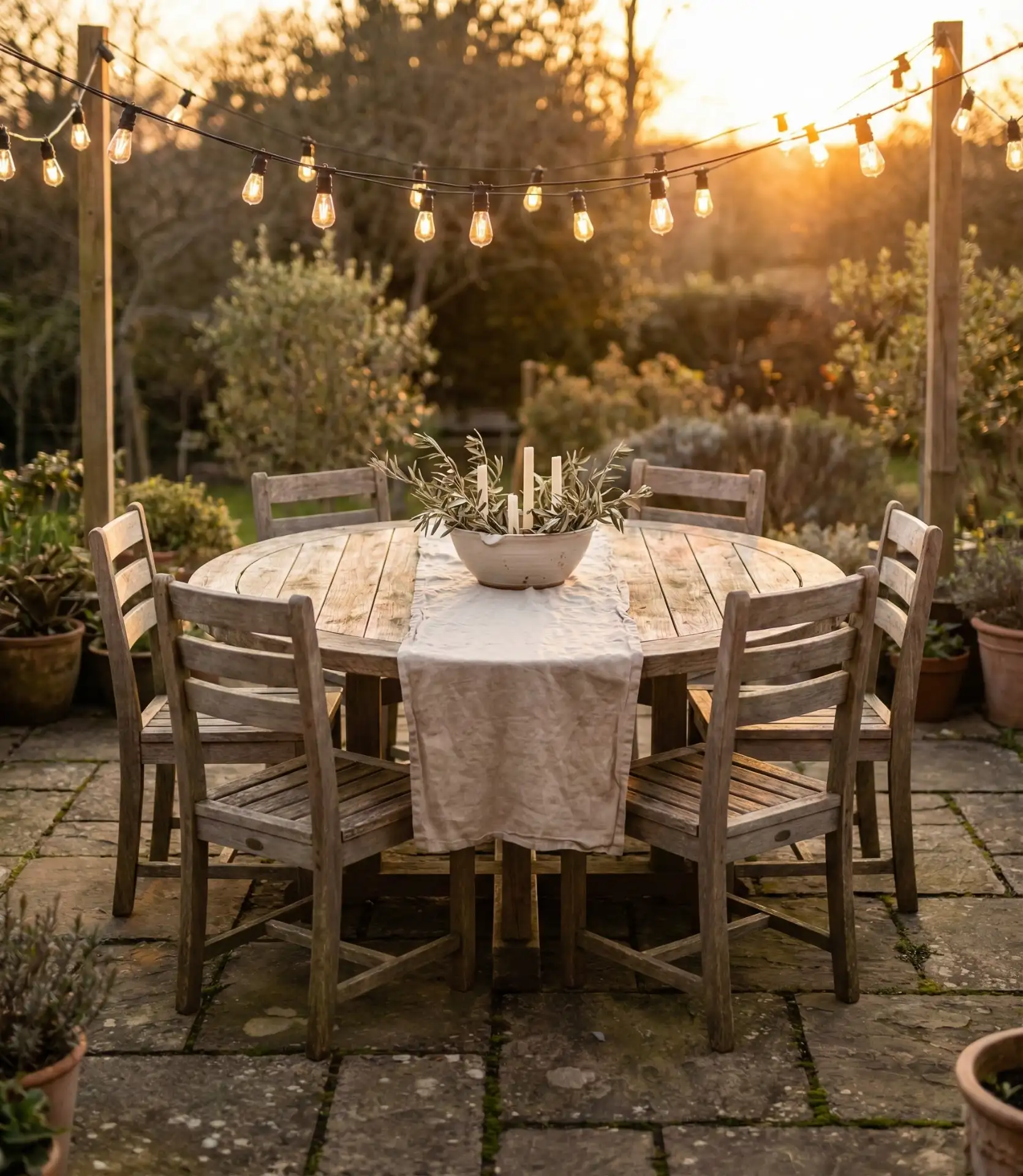
A round wooden table encourages conversation by eliminating the hierarchy of head-and-foot seating, making it ideal for family gatherings and dinner parties. Crafted from weather-resistant teak or acacia, these tables develop a beautiful silver patina over time, or you can maintain the original honey tones with seasonal oil treatments. The circular shape also maximizes seating capacity in smaller spaces. 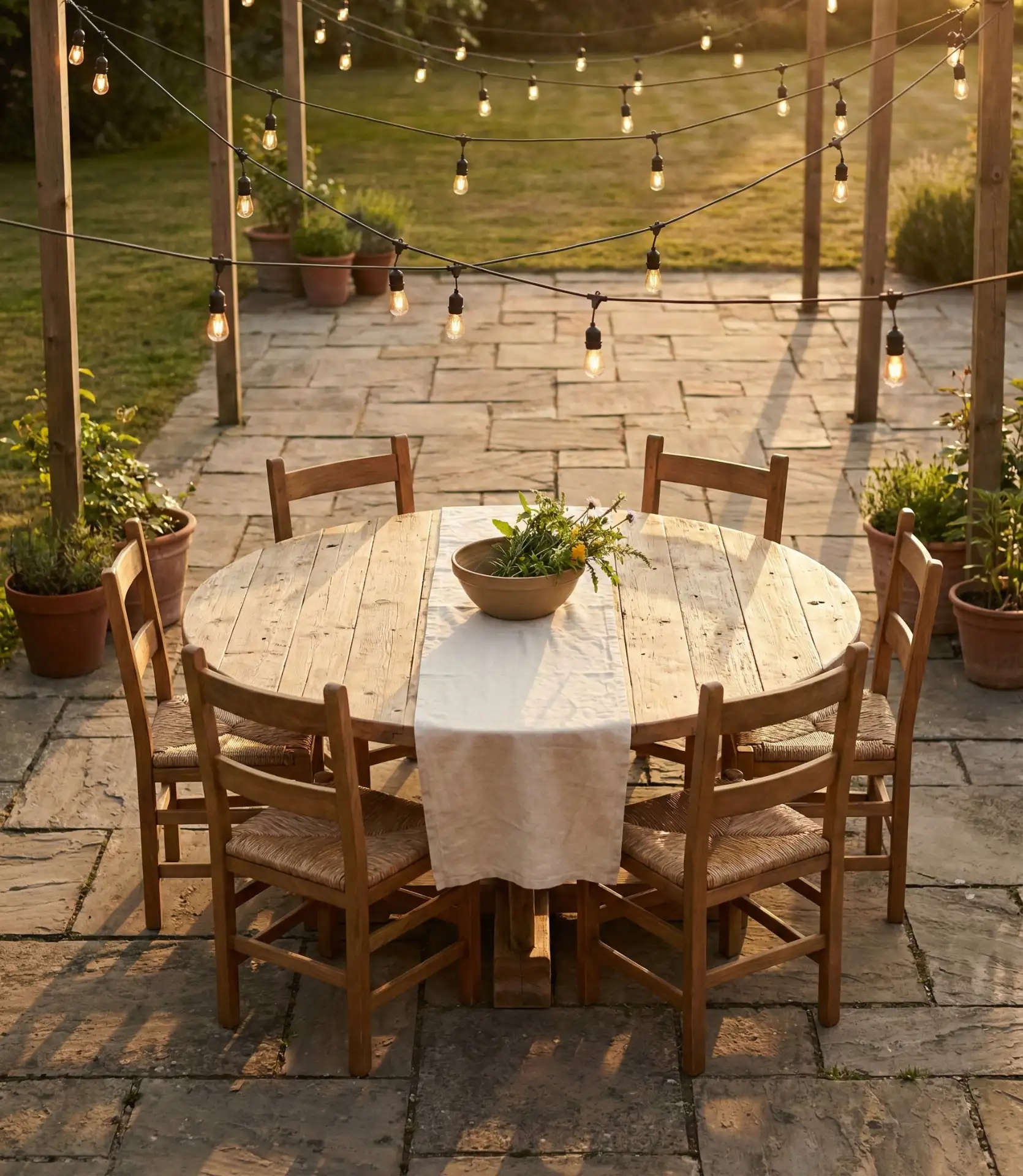
Round tables work best in square or circular patio spaces where they can be centered, creating natural flow around all sides. A 60-inch diameter comfortably seats six to eight people, while 48-inch versions suit smaller households. Budget-conscious homeowners often find excellent deals on teak rounds during end-of-season sales, typically 30%–40% off retail prices in late September.
3. Industrial Concrete Top Statement Piece
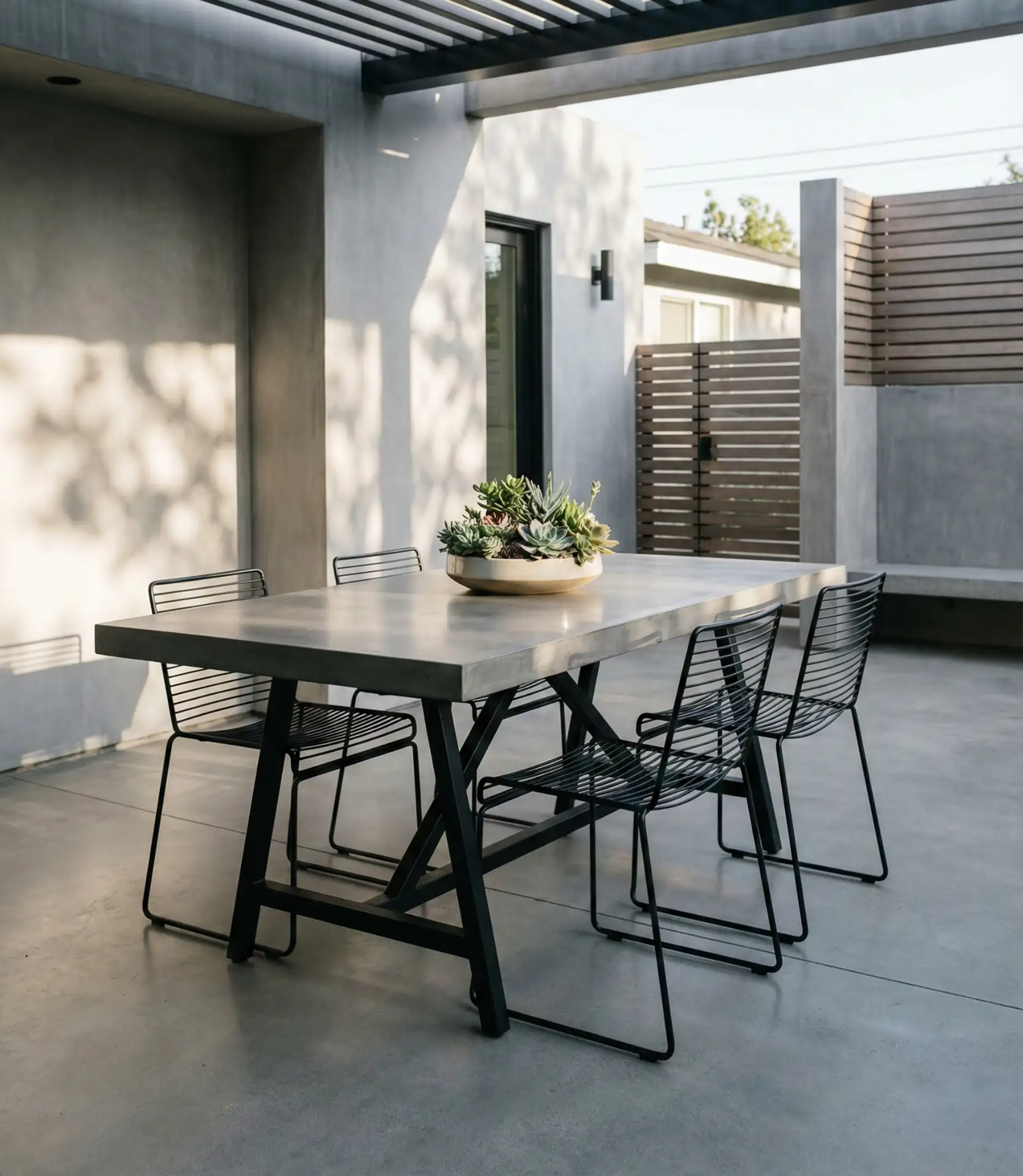
A concrete patio table delivers modern architectural style with its smooth, monolithic surface and substantial presence. These tables are incredibly durable, resisting scratches, heat, and weather without the need for covers, making them perfect for year-round outdoor use. The neutral gray tone provides a sophisticated backdrop for colorful table settings and seasonal decor ideas for centerpieces. 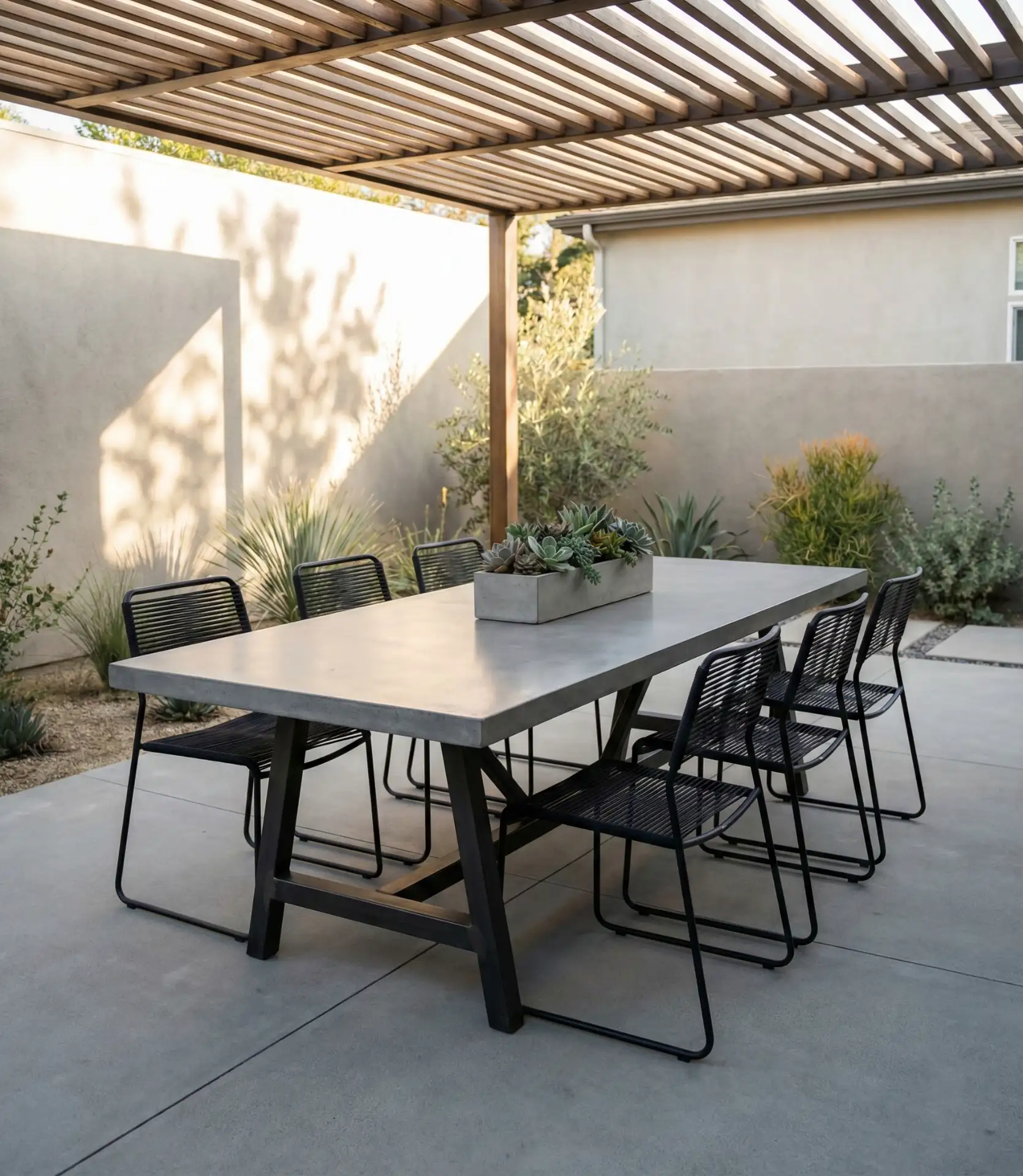
One misconception about concrete tables is that they do not require upkeep and do not require any maintenance. What they really mean is that they require upkeep for annual sealing so that they do not get stained with food and drink spills. Due to their heavy weight (usually over 200 pounds), they do not get moved around in the wind, but that means that a lot of thought has to be put into where they go during the initial placement. Concrete tables are particularly appealing to urban loft-style apartments with private terraces because of their bridge between the indoor artistic aesthetics and outdoor durability.
4. Glass-Top Modern Minimalism
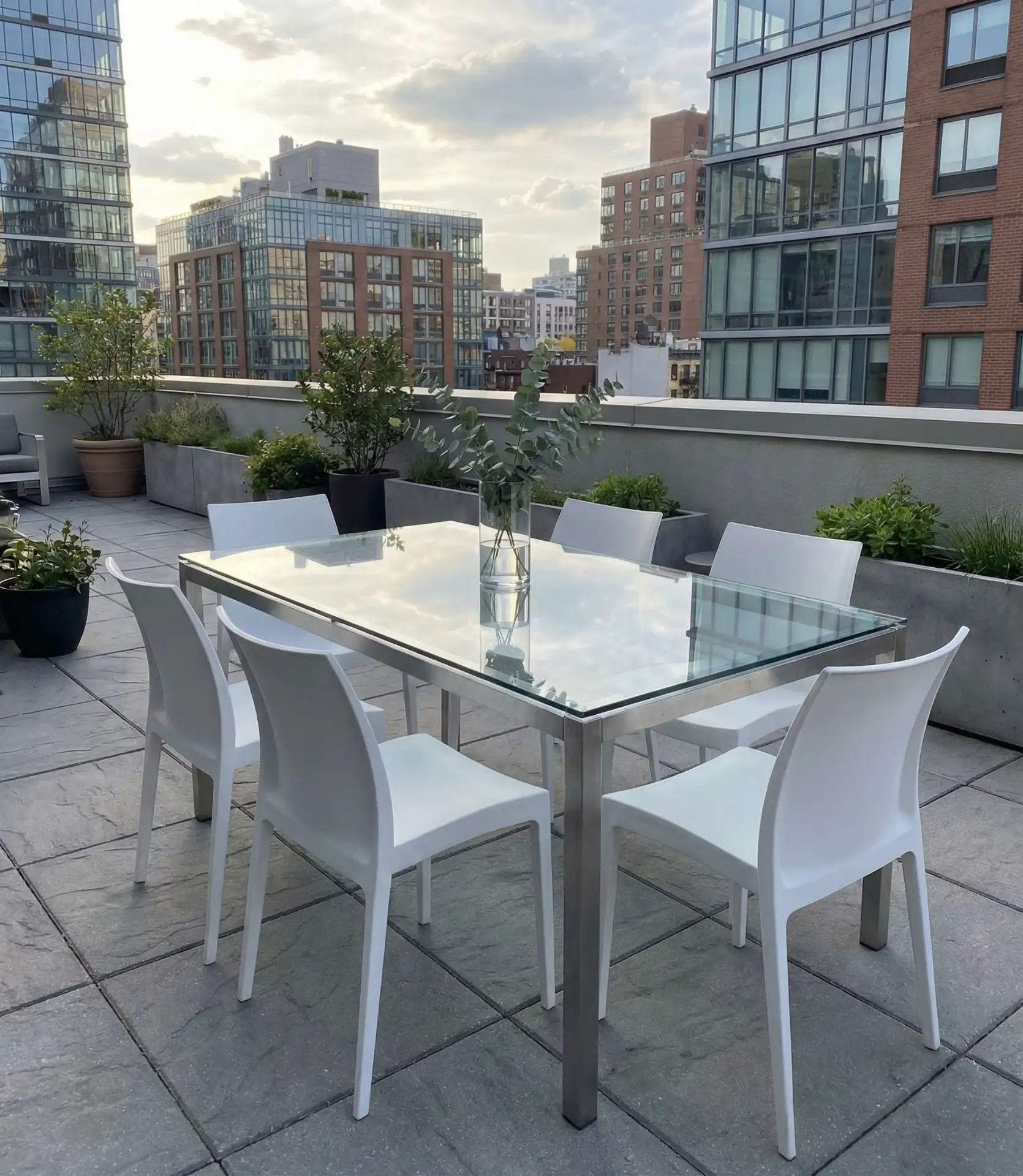
A glass-top table creates an airy, open feeling that’s especially valuable in smaller patio spaces where visual weight matters. Tempered glass surfaces resist shattering and can handle temperature fluctuations, while the transparent quality allows you to showcase a beautiful patio floor or base design. These tables pair beautifully with sleek metal frames for a contemporary aesthetic. 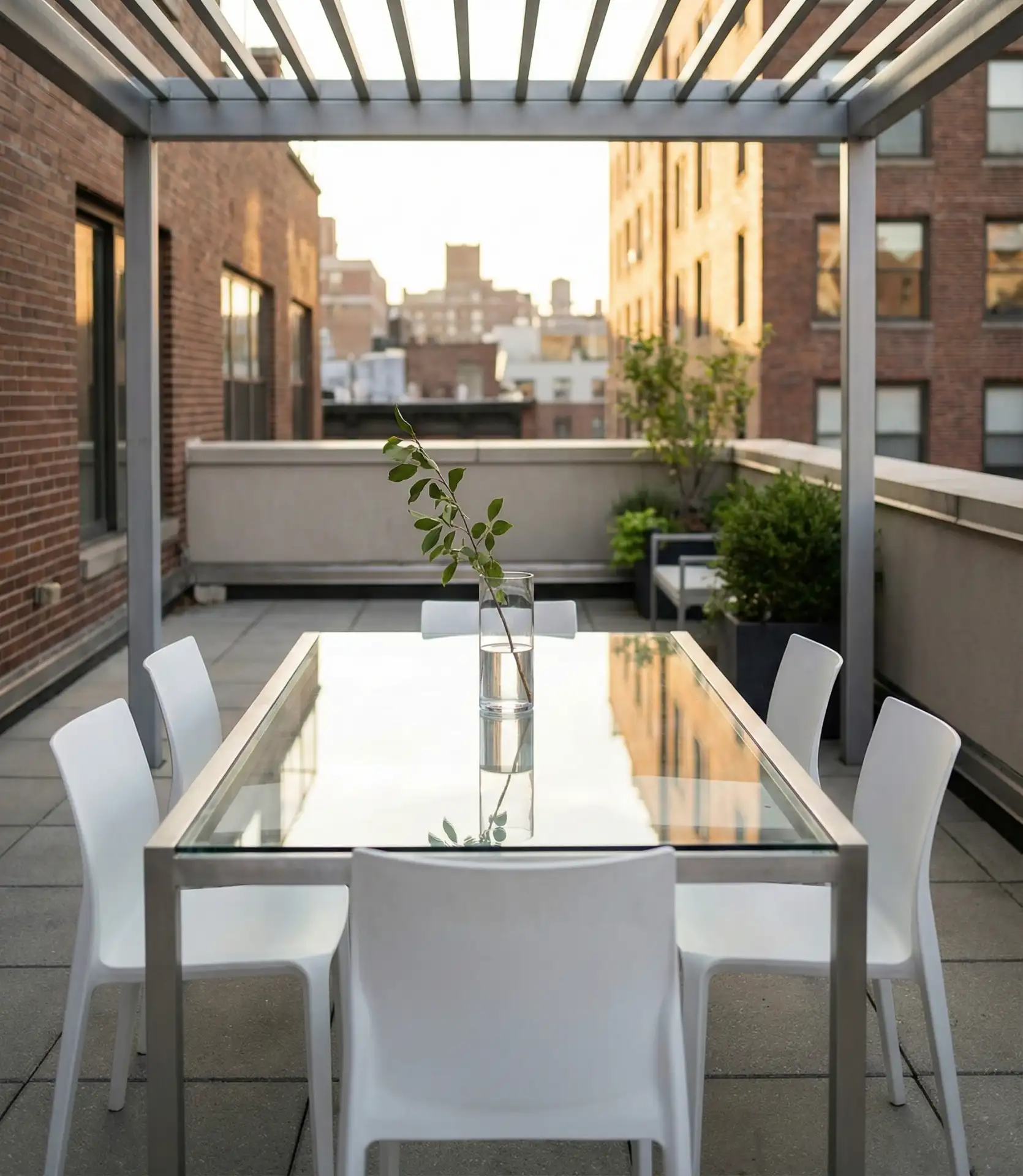
In coastal areas from Southern California to the Carolinas, glass-top tables have become increasingly popular because salt air doesn’t affect them the way it does wood or wicker. Keep a squeegee handy—quick wipes after morning dew or rain prevent water spots that can look messy. For families with young children, consider frosted or textured glass options that hide fingerprints better than clear surfaces while maintaining the light, open aesthetic.
5. Square Bistro Charm

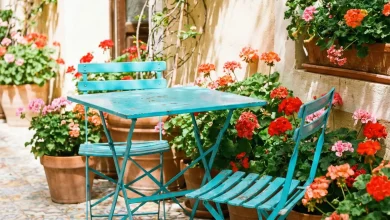
A square café-style table brings European bistro elegance to compact patios, balconies, and breakfast nooks. These smaller-scale pieces typically measure 28 to 36 inches per side, providing intimate seating for two to four people while leaving room for potted plants and movement. The geometric shape fits neatly into corners or against railings, maximizing usable space. 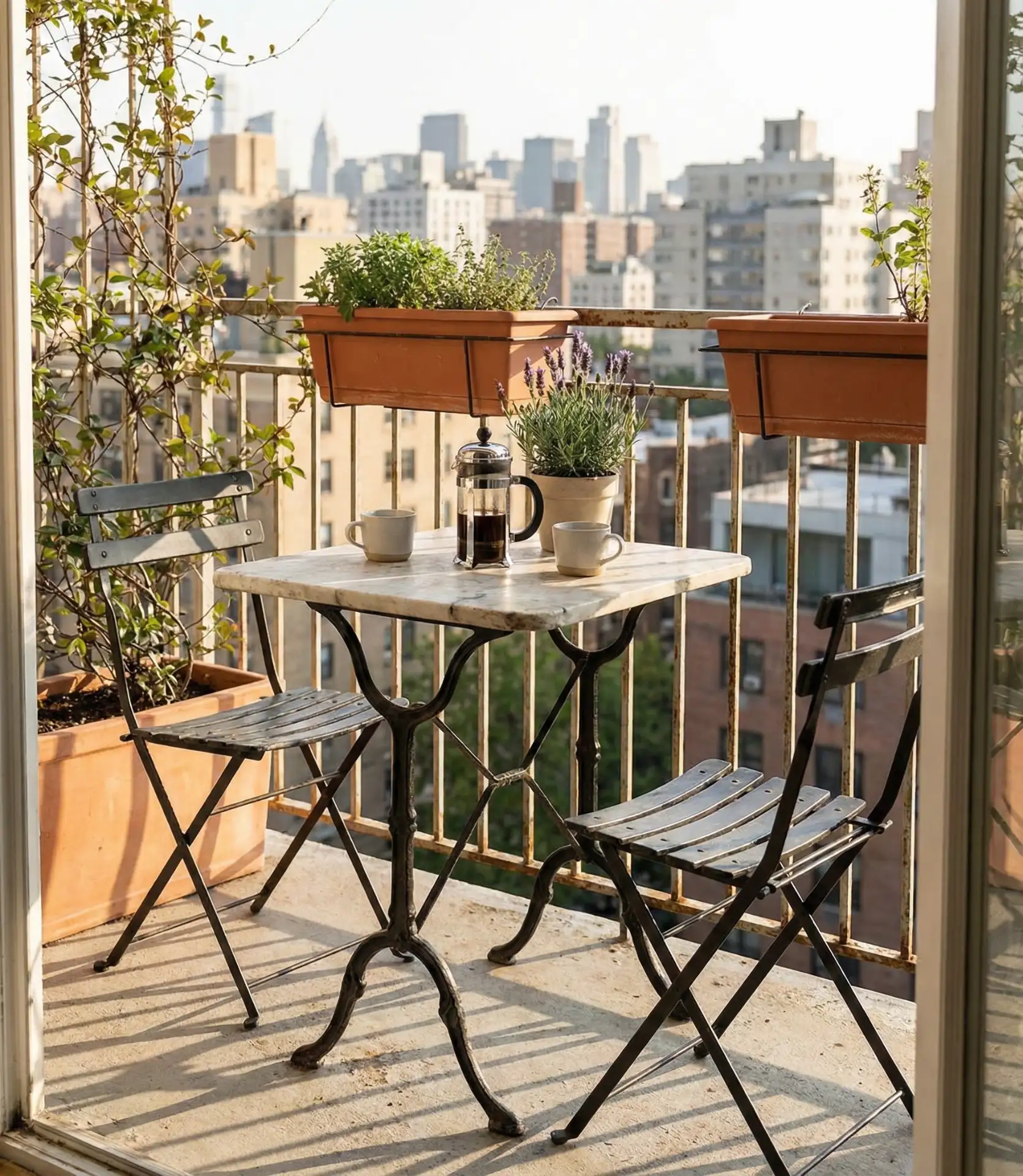
From Europe comes a squared bistro-style table with French bistro charm for compact patios, balconies, and breakfast nooks. These smaller pieces measure 28 to 36 inches per side, allowing intimate dining for two to four people while leaving room for bistro potted herbs. The geometric shape fits nicely into corners or against railings, maximizing usable space.
The adaptability of folding square tables can be particularly beneficial for urban areas where space is at a premium.
6. Wrought Iron Classic with Umbrella
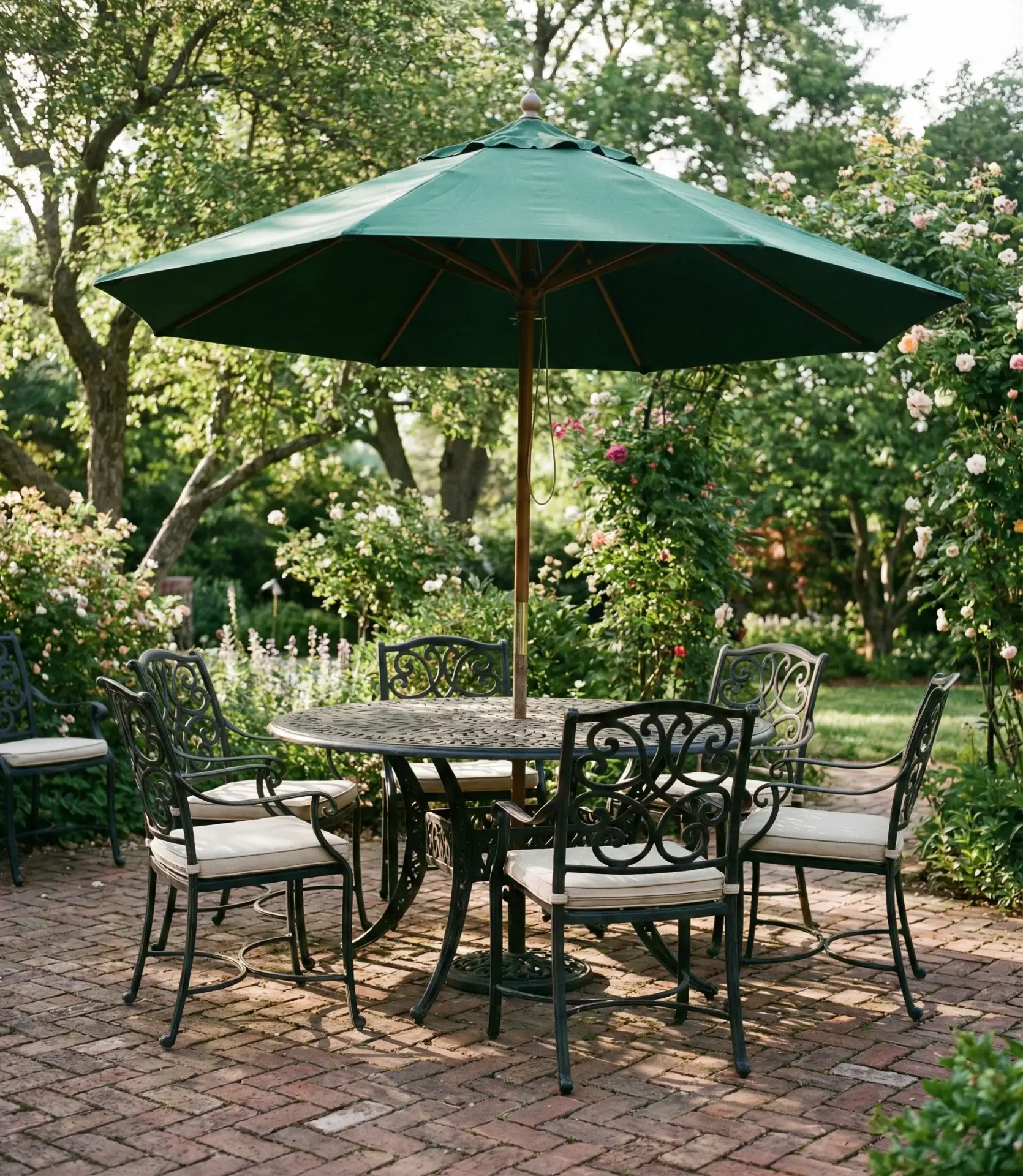
Combining tradition and elegance, a wrought iron table with an umbrella center hole offers practical sun protection as well. The metal can withstand decades of weather exposure and develops a rich patina, while the scrollwork design adds decorative interest without visual heaviness. Umbrella holes fit standard pole diameters from 1.5 to 2 inches. 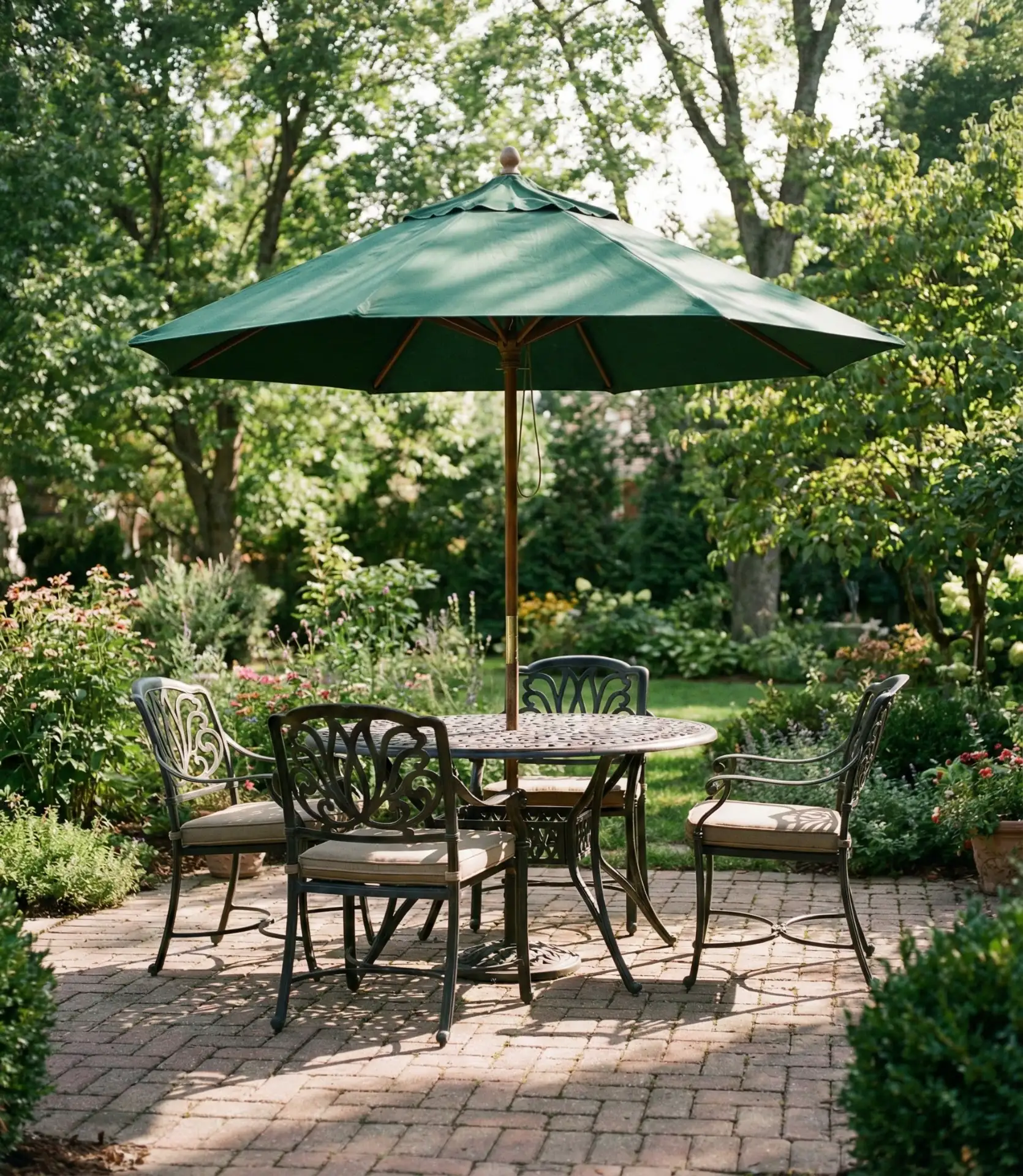
Where it works best: southern and midwestern gardens where wrought iron under an umbrella is not a concern. The classic wrought iron style is excellent with Colonial and Craftsman architecture. The metal does get hot in direct sun, so the umbrella is not just decorative; it is vital for comfortable midday dining. Touch up any chips in the powder coating to prevent rusting, especially in climates that tend to be humid.
7. Long Farmhouse Feast Table
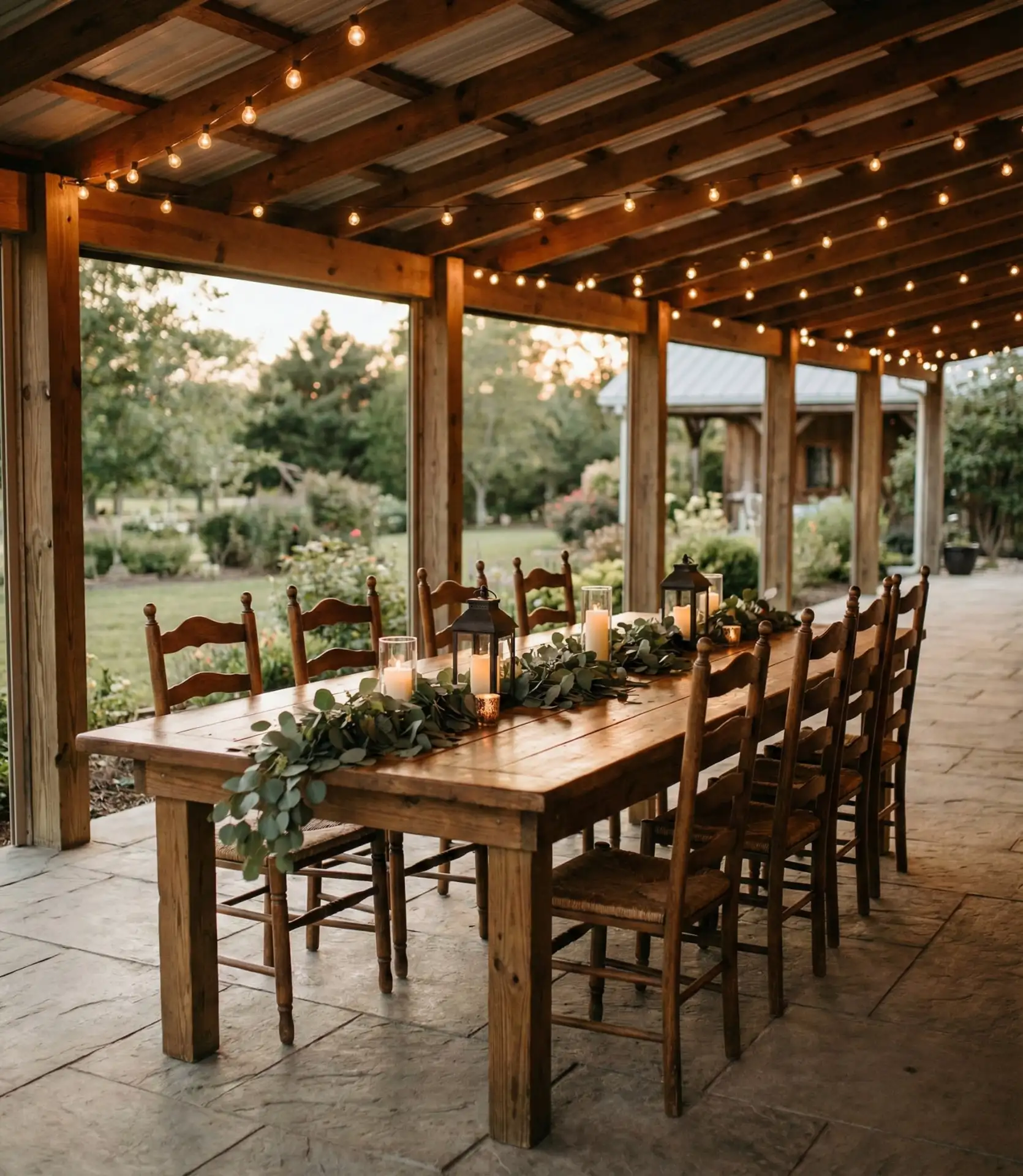
An 8- to 10-foot-long rectangular farmhouse table creates the ultimate outdoor dining experience, accommodating 10 to 12 guests for memorable gatherings. These large and substantial pieces make a bold statement and are ideal for large patios and backyard spaces.
The thick, sturdy legs and tabletop of the rustic construction provide uneven surfaces that embody the charm of rustic stability. 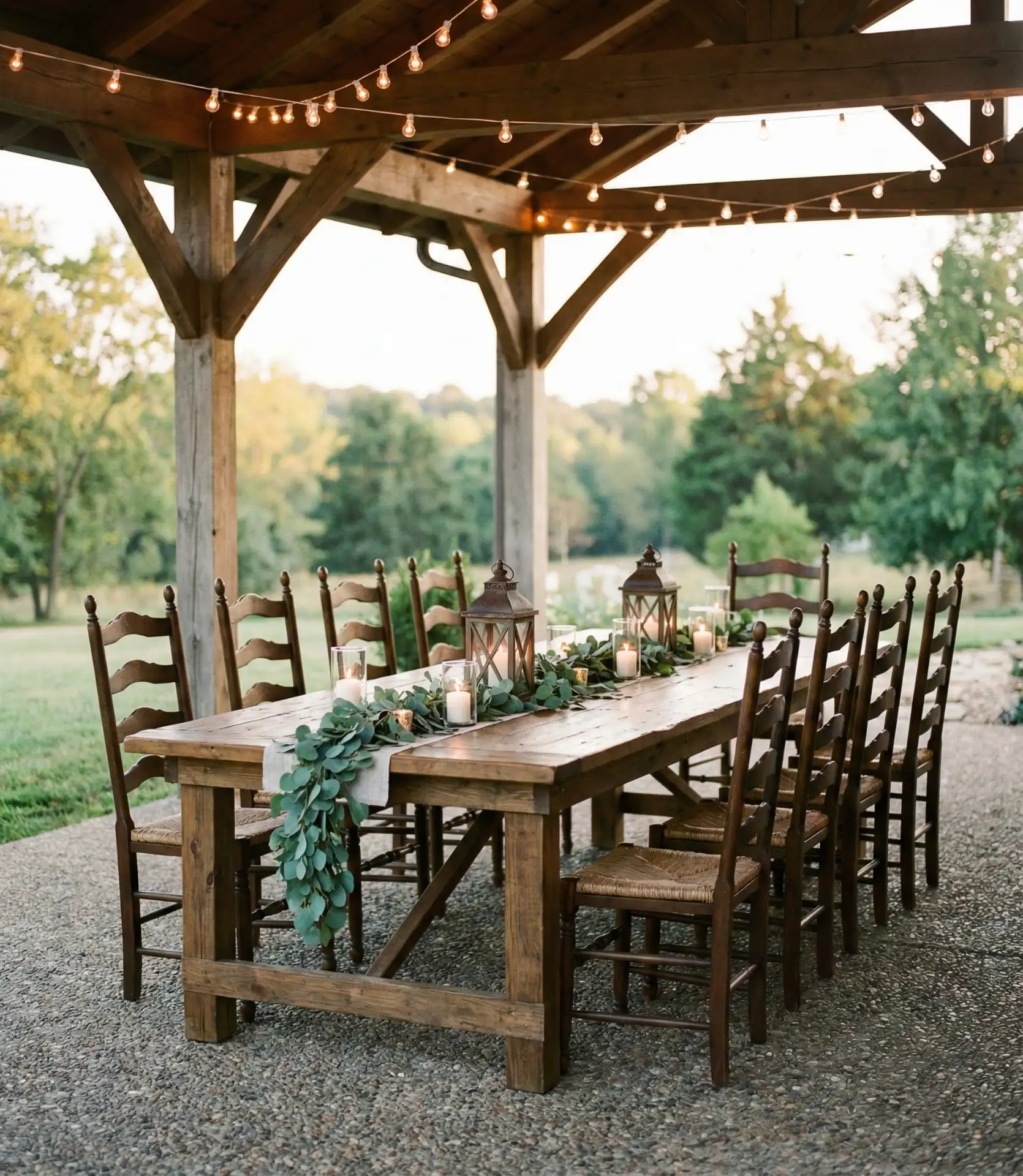
You can get long farmhouse tables for $3,000+ for premium teak and reclaimed wood designs and $800 for the basic treated lumber. Mid-range eucalyptus models, priced between $1,200 and $1,500, offer good resistance to wet weather and are also a great option. These tables transform ordinary dinners into memorable events.
8. Black Modern Sophistication
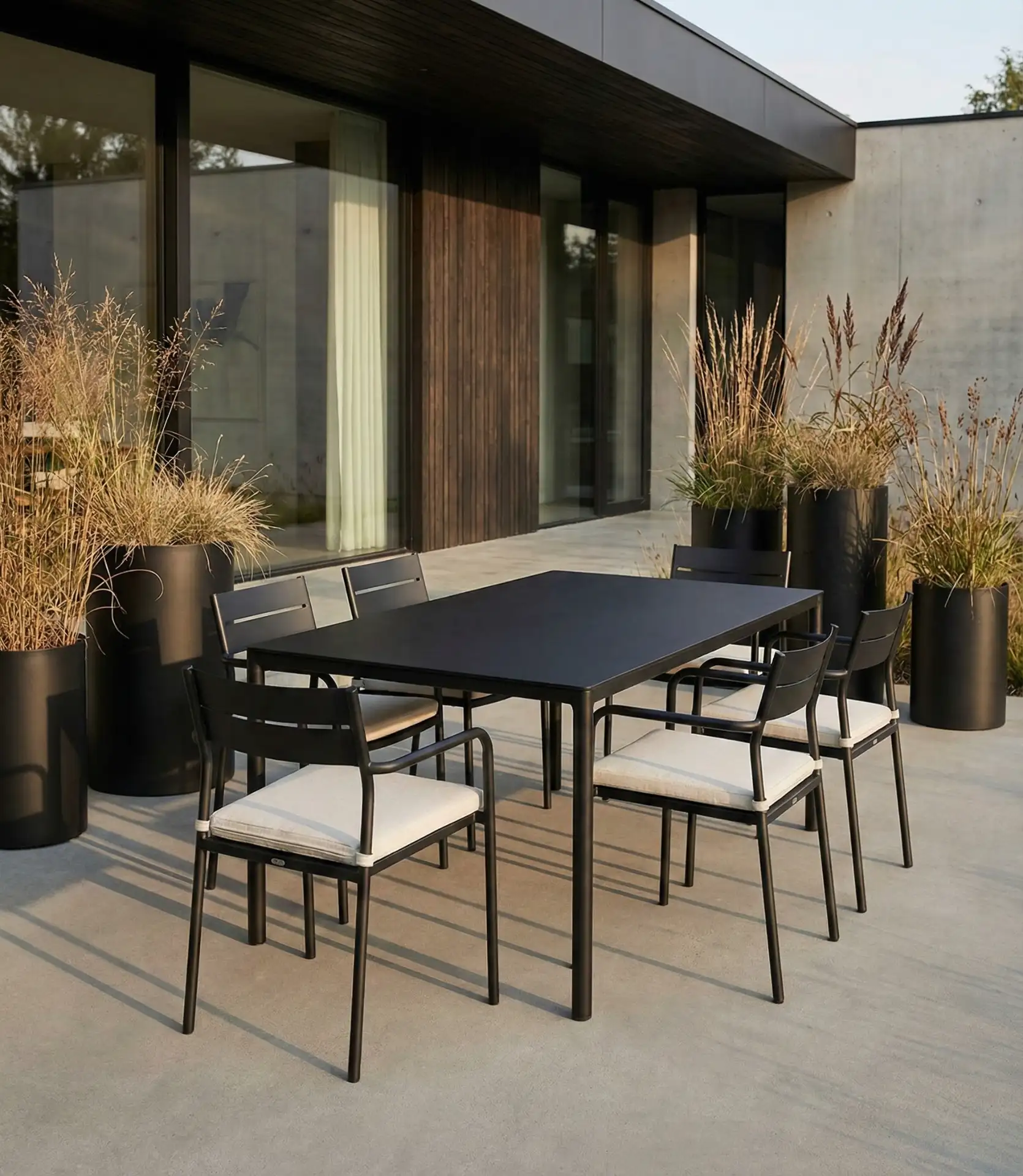
The black powder-coated metal table infuses outdoor spaces with unexpected sophistication and contemporary drama. The black eliminates contrast with the lighter surface, greenery, and patios. Lighter surfaces tend to scratch the black finish more easily. These tables anchor modern setting ideas that emphasize clean lines and geometric forms. 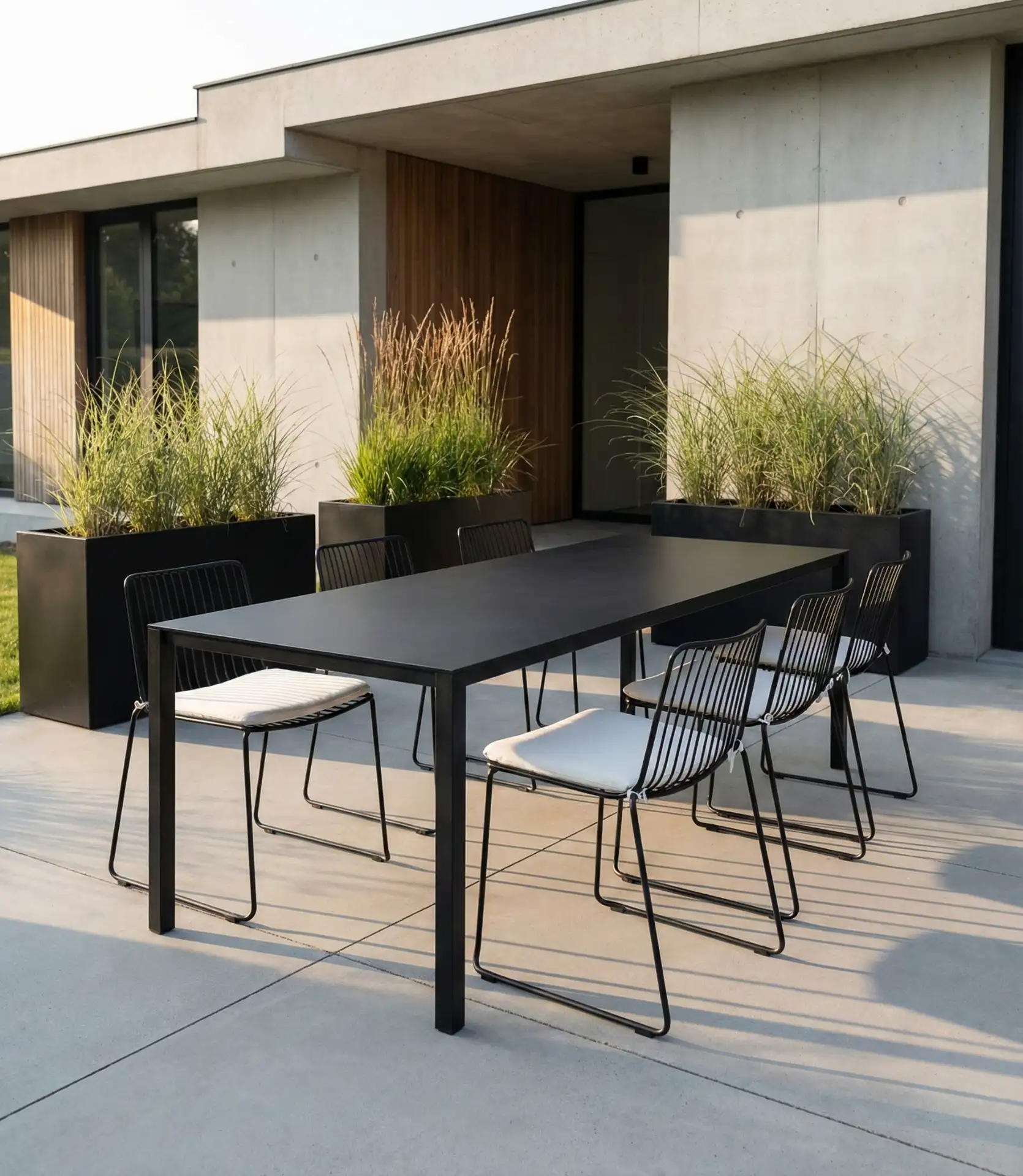
Practical insight: Black surfaces do absorb heat, so they’re better suited to shaded areas or climates where you primarily dine in the evening. The bold color choice works particularly well in monochromatic design schemes popular in urban areas, where the table becomes a sculptural element rather than just furniture. Pair with light-colored cushions and accessories to prevent the space from feeling too heavy or dark.
9. Complete Patio Set Coordination
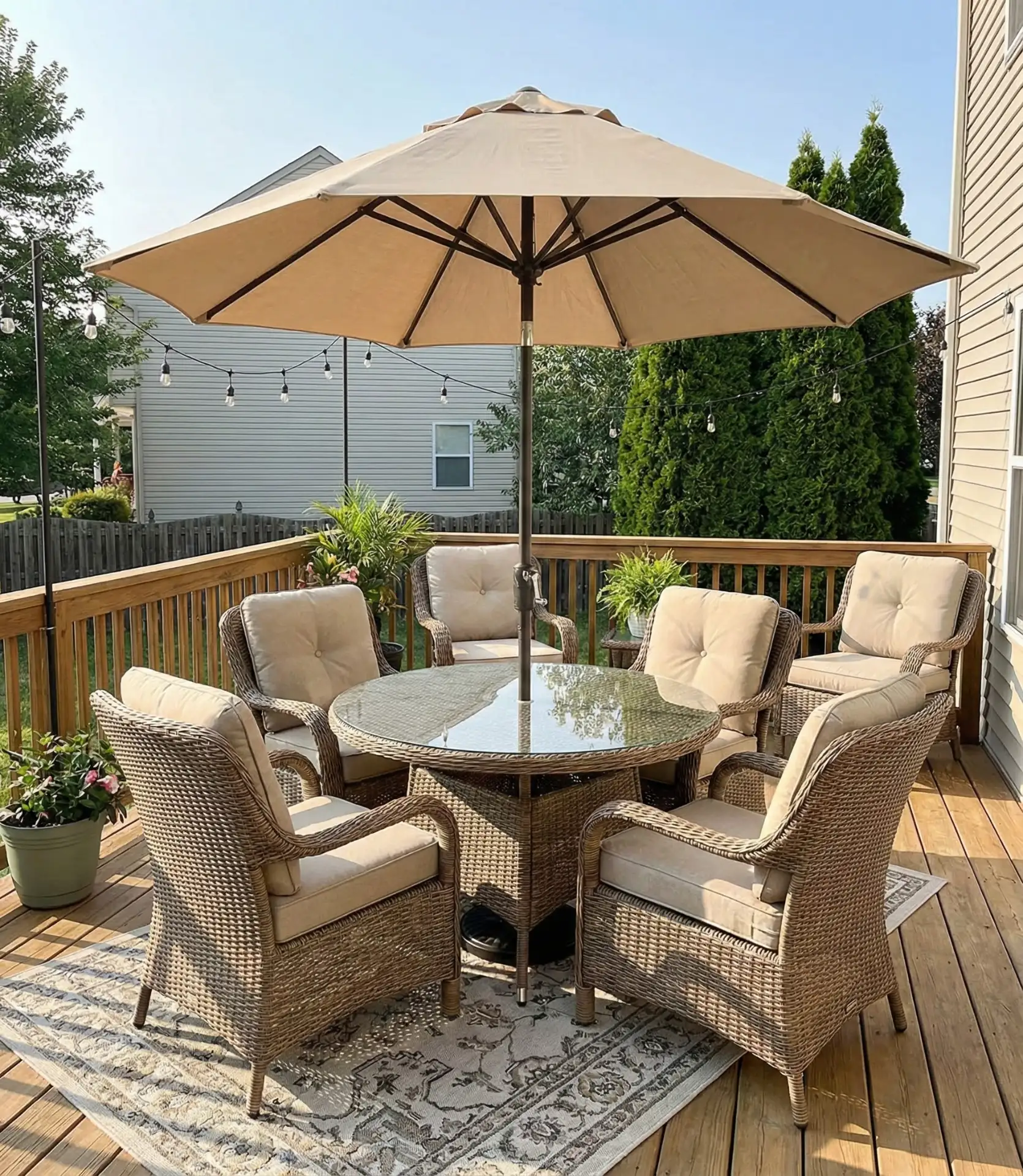
When there is a complete set that includes a table and chairs with an umbrella, there is no guesswork, and total proportional balance and style cohesion are achieved. These coordinated collection sets typically seat 4-6 individuals and include chair cushions specifically designed for the chair frames. This creates a polished and intentional look for the outdoor space. 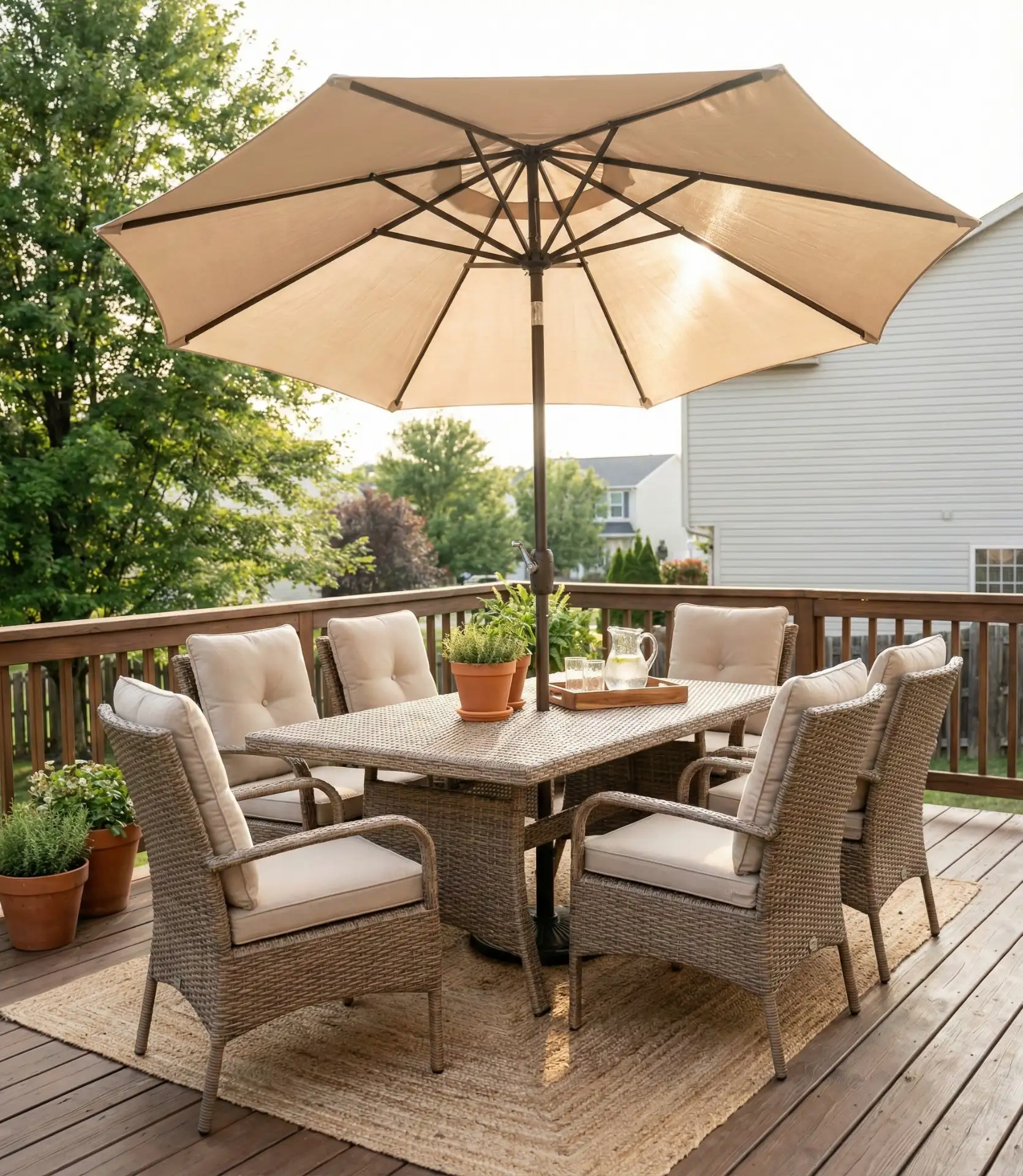
Studies on real homeowner behavior reveal that buyers often customize complete sets, swapping out chair cushions or different umbrellas based on their changing interests. A complete set typically costs $600–$2,500, depending on materials, and provides a substantial base. Umbrella compatibility is also solved with complete sets, as the sizes of the holes and base requirements are engineered to work together.
10. Reclaimed Wood Character Table
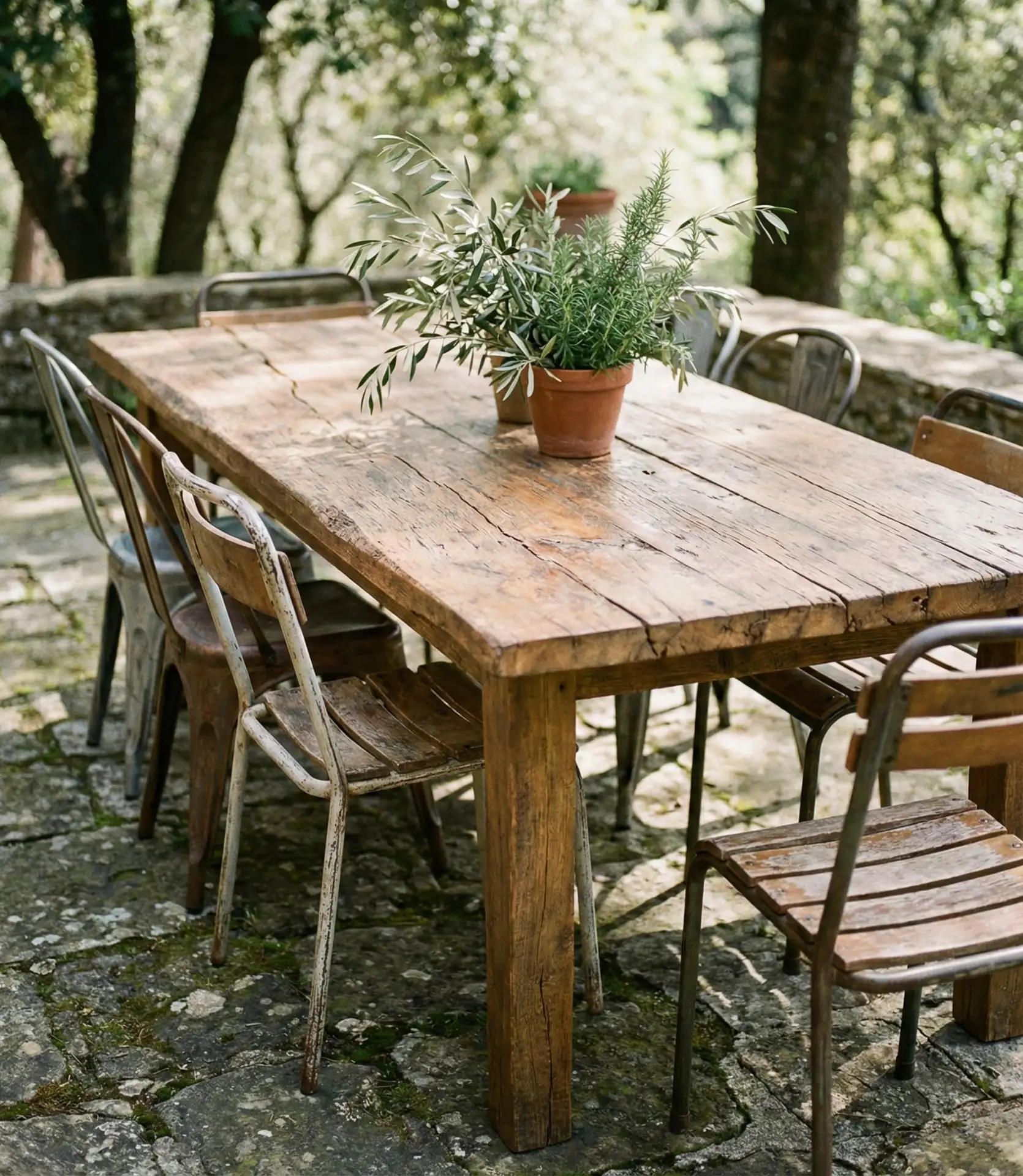
Every plank of a table made from reclaimed wood tells a different story. It brings a unique history and character to your patio with the distinct grain, nail holes, and weathering marks.
The selection of materials showcases environmental awareness by using reclaimed barn wood, old fencing, or salvaged timber. Each wood piece exhibits a spectrum of colors and textures, providing visual interest. 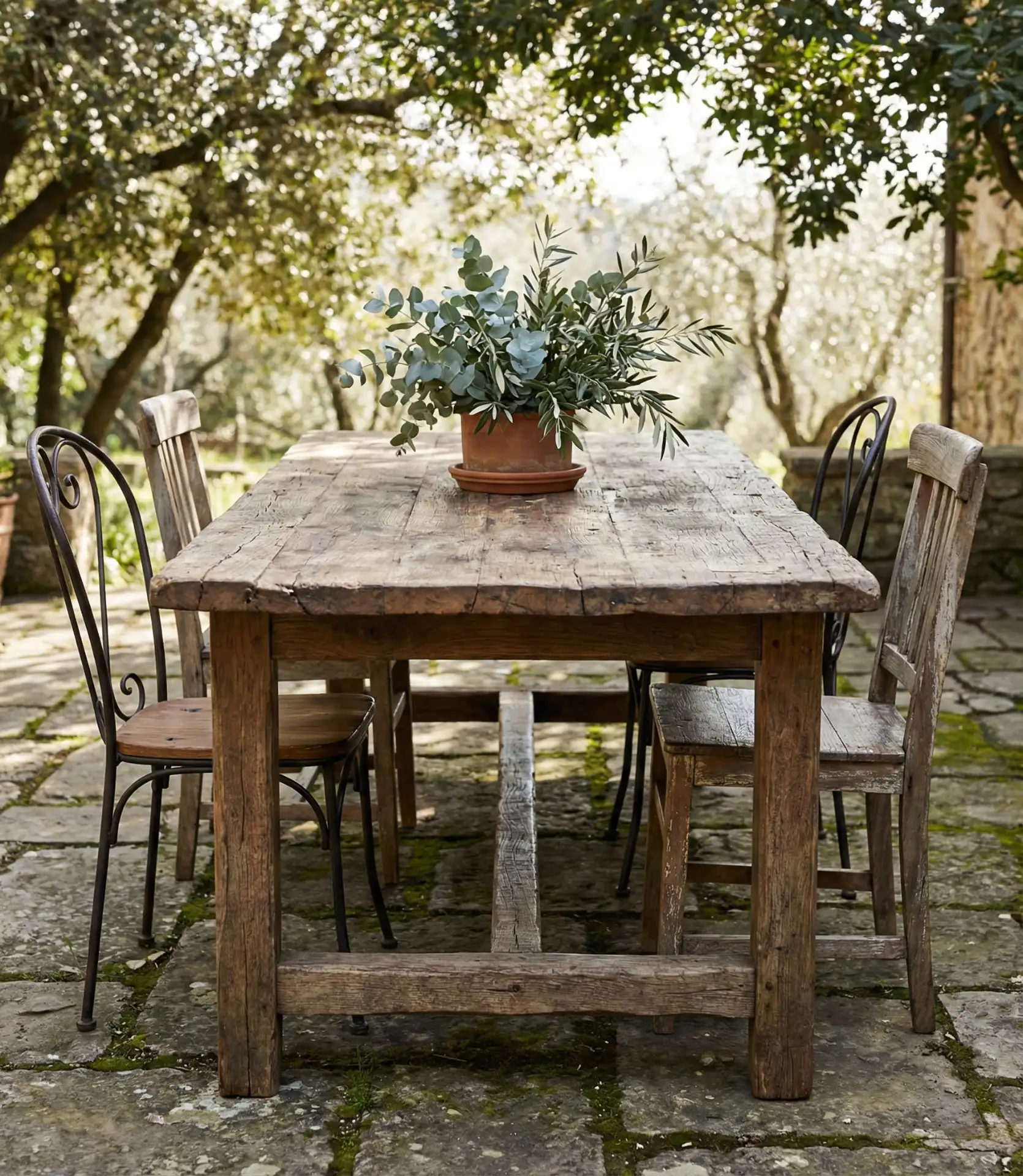
Expert commentary: Quality reclaimed wood tables, though rustic looking, retain and treat wood to prevent weathering and splintering. The most rustic versions look aged; however, they have protective finishes added to make them practical for everyday use. These tables tend to strongly resonate with homeowners in the Pacific Northwest and Northeast who appreciate craftsman-style architecture and embrace farm-to-table lifestyle values.
11. Pallet DIY Transformation
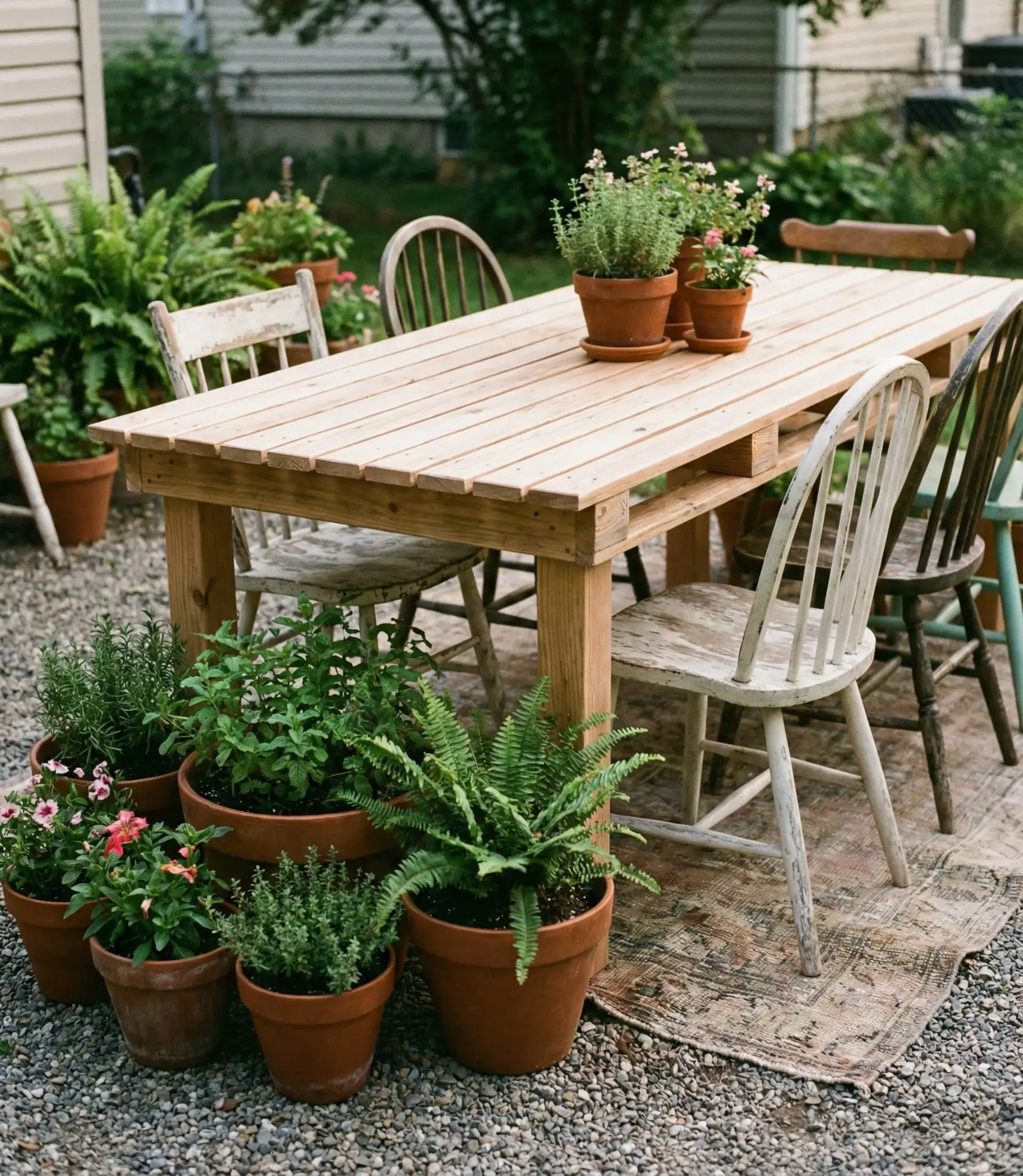
One of the most popular DIY projects, turning wood from shipping pallets into custom patio tables, offers a budget-friendly way to get creative and personalize your space. Using basic carpentry skills of sanding, cutting, and assembling, you can create a piece that aesthetically and functionally fits your individual style. The industrial-chic look and handcrafted style often draw interest from makers who want to create. They also appreciate the sustainability aspect and the satisfaction of handcrafted furniture. 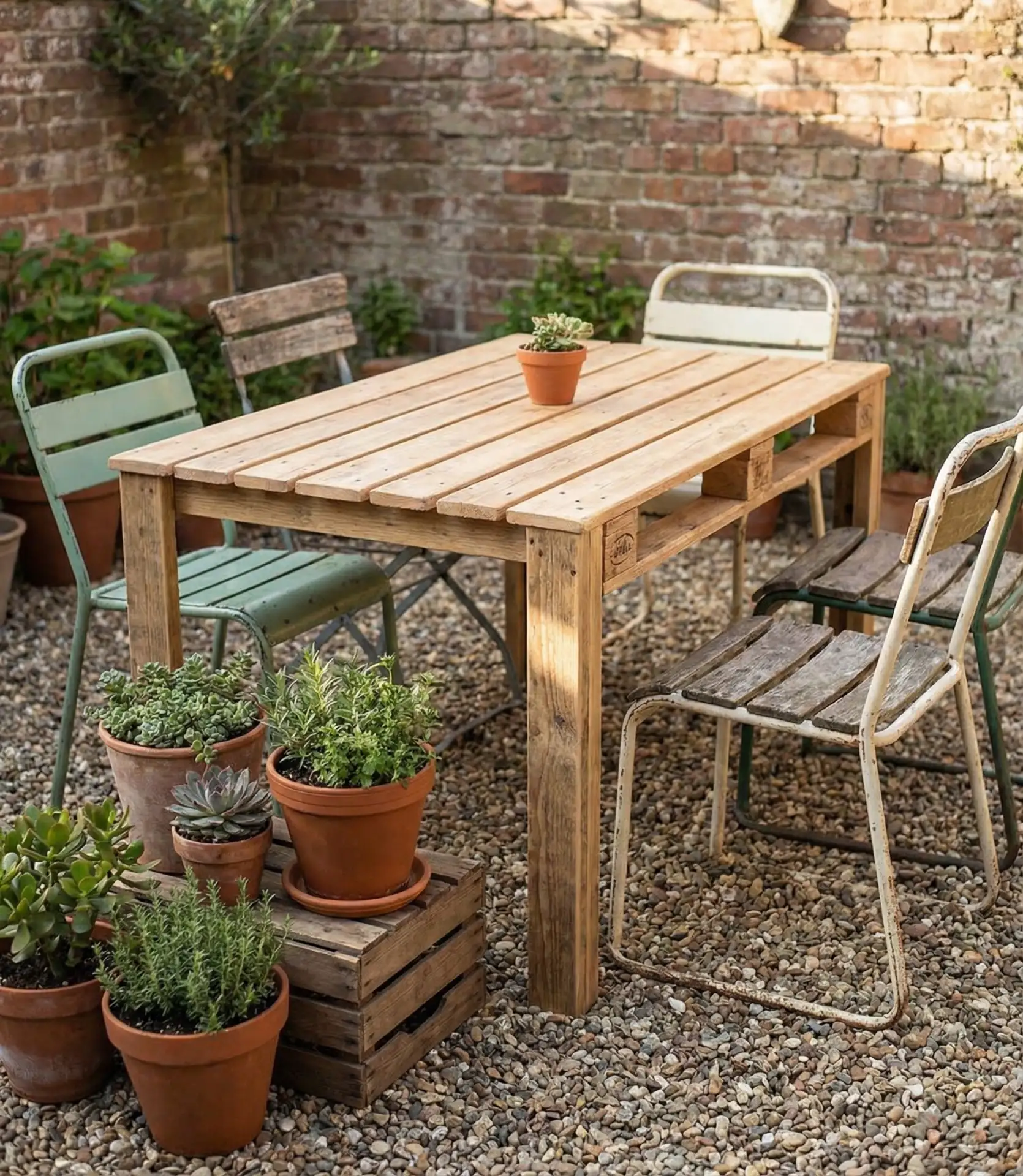
Common mistakes include using chemically treated pallets (marked with MB for methyl bromide), which aren’t safe for furniture, and inadequate sanding that leaves rough surfaces. Heat-treated pallets (HT marked) are the safe choice for DIY projects. The total material cost typically runs $50-$150, including pallets, screws, sandpaper, and sealant—making these tables an incredibly affordable option for creative homeowners willing to invest a weekend of labor.
12. Outdoor Centerpiece Showcase Table
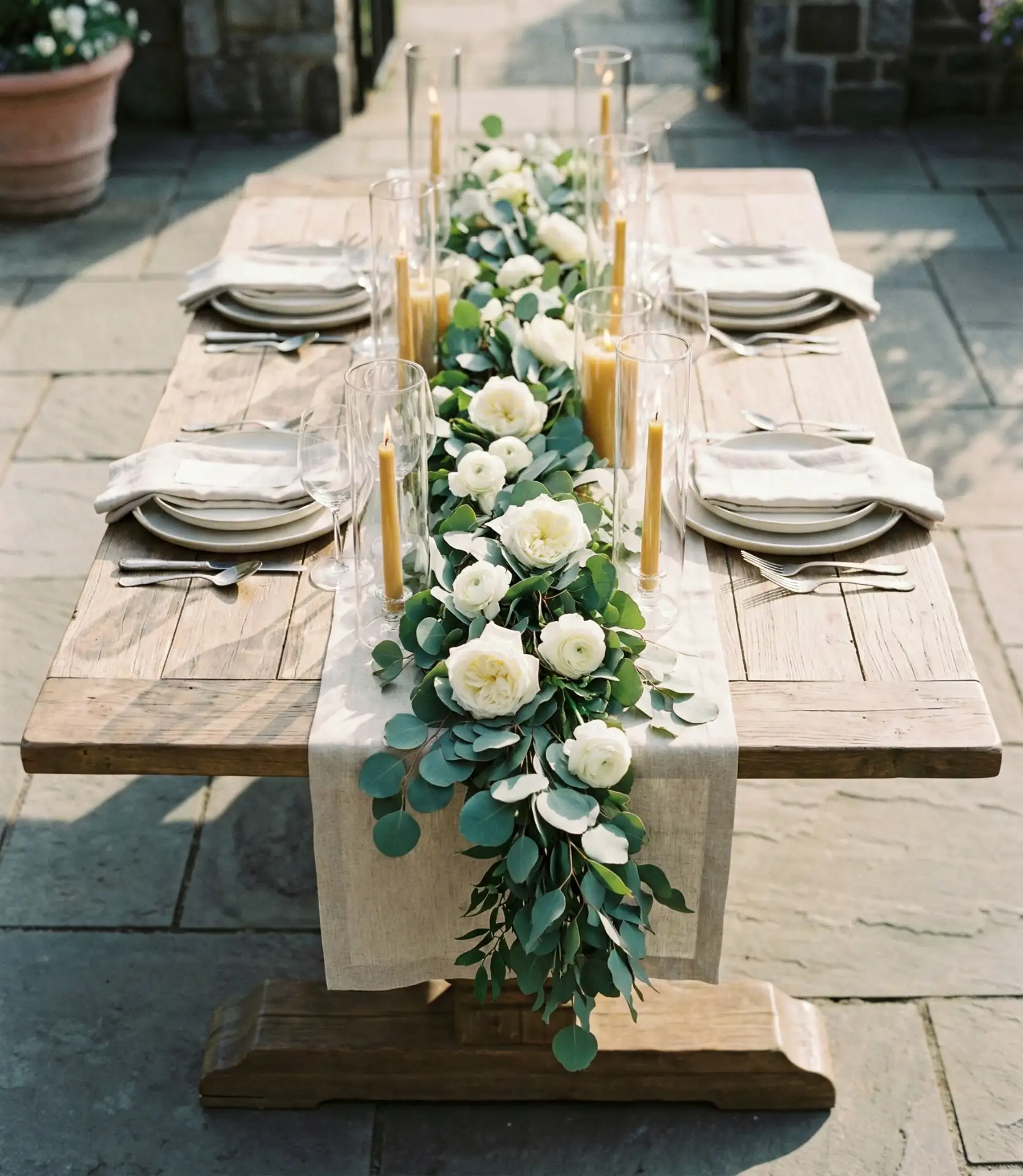
It’s much more than functional furniture—outdoor centerpiece displays treat your table arrangements as a work of art! From seasonal flowers and lanterns to sculptural pieces, your table becomes a canvas for imagination and creativity. Select a finish that coordinates with your decorative ideas—a neutral table surface can be perfect for seasonal decor changes. 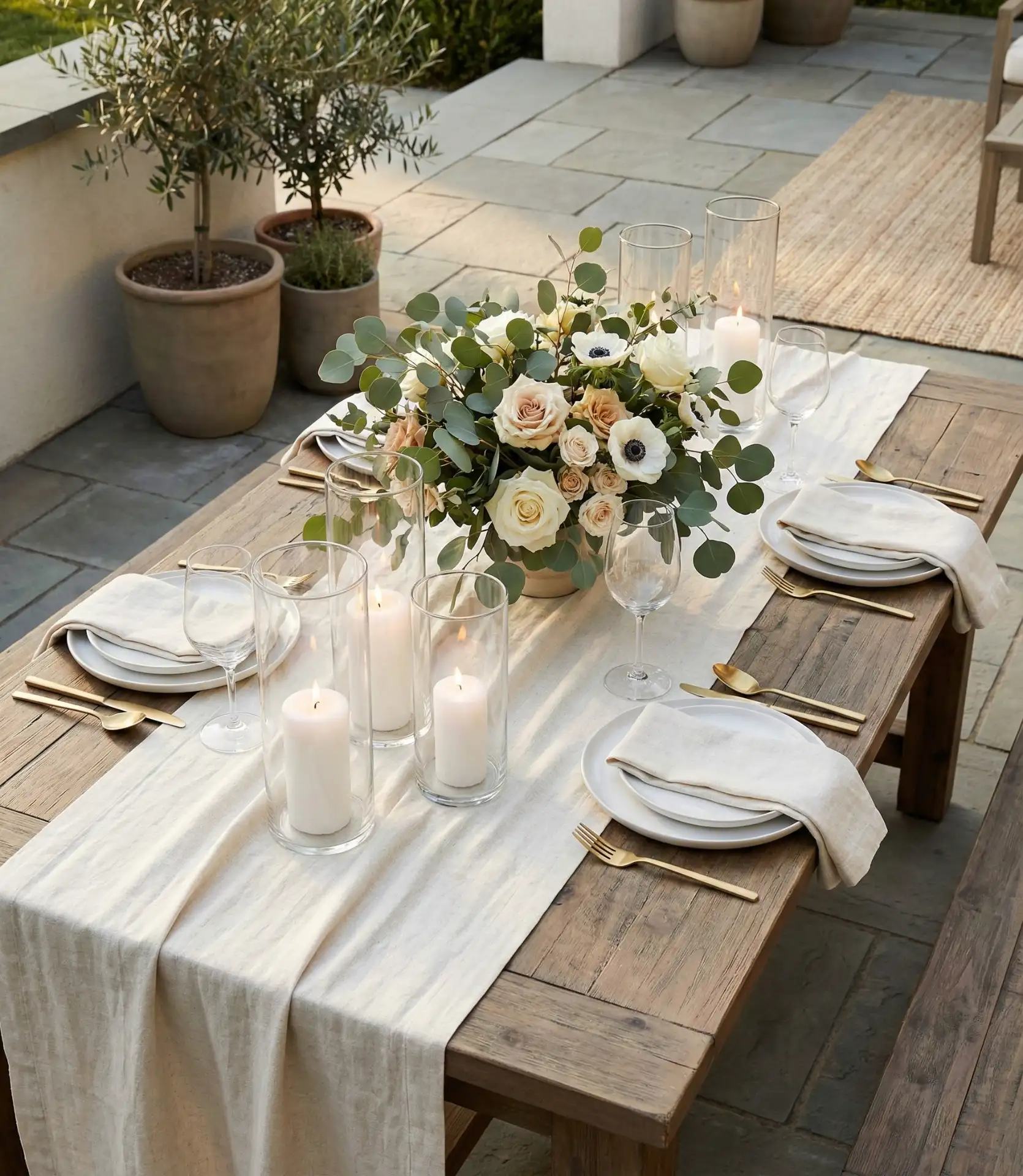
Where it works best: Semi-enclosed patios where decor pieces are shielded from wind and drastic weather changes, permitting the use of more fragile decor. In the southern U.S., displays of magnolia branches and citrus fruits are gorgeous, while southwest homeowners enjoy dried grasses and succulent displays. The trick is to use weather-appropriate decor elements. In exposed locations, permanent botanicals and silk flowers are weathered more so than fresh flowers.
13. Makeover Magic with paint.
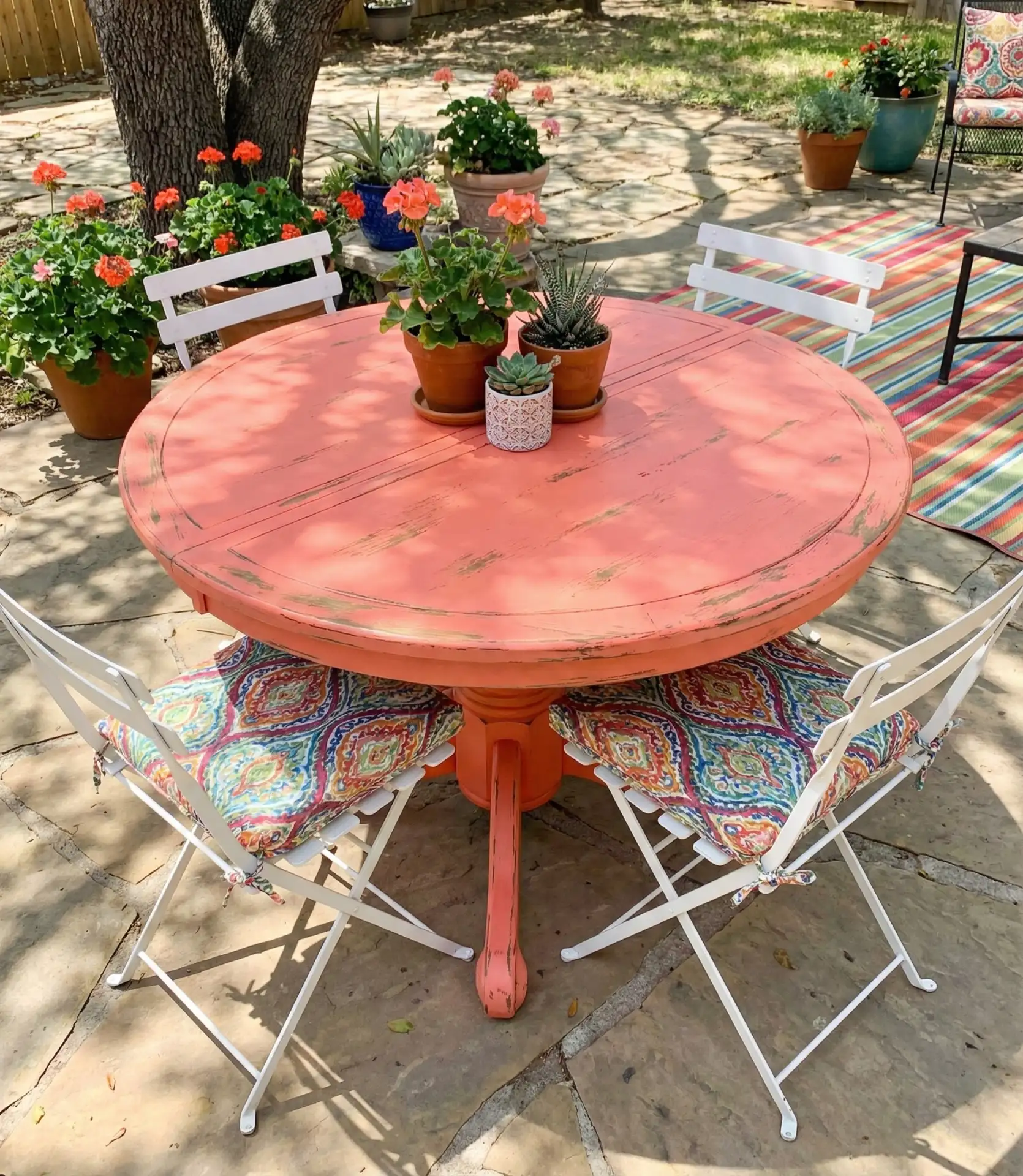
Incredibly satisfying and cost-effective—outdated patio tables are projects that can receive a fresh coat of exterior-grade paint to make a complete transformation. Now, outdoor furniture specialty paints come in hundreds of hues, like terracotta orange and coastal blue, facilitating full customization to blend with your home’s colors. Results that look professional and last are from proper surface prep—cleaning, sanding, and priming. 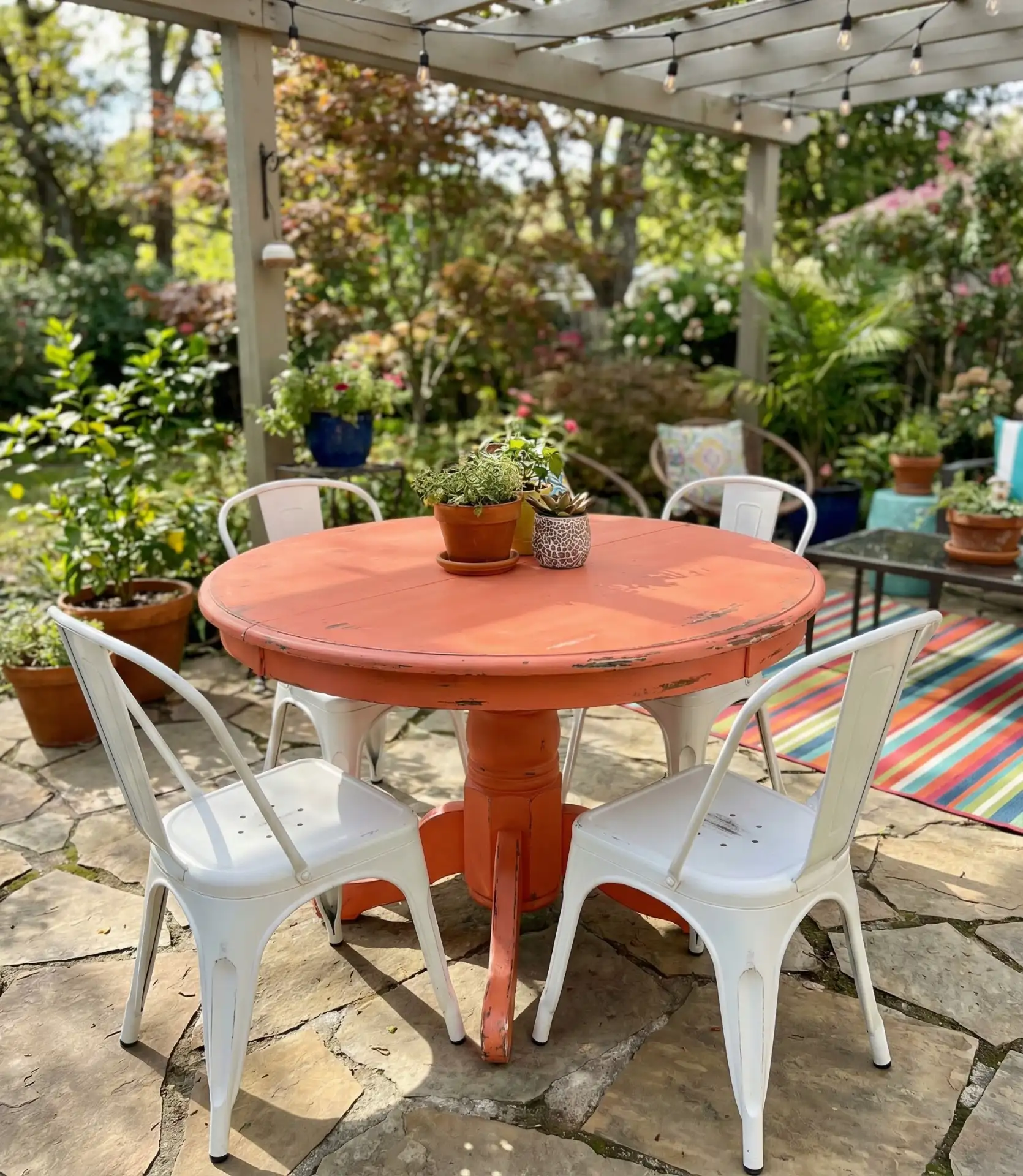
One of my neighbors extended the life of her outdoor furniture by creatively repainting her tired metal table. She spent $45 on paint and supplies rather than $500 on a new table. She successfully completed a weekend project to achieve the custom color she desired to complement her garden. The project economically extended the life of her table. For renters and cost-conscious homeowners, this approach has a particular appeal, as it fosters high-impact change without a lot of expense.
14. Complete Redo with New Materials
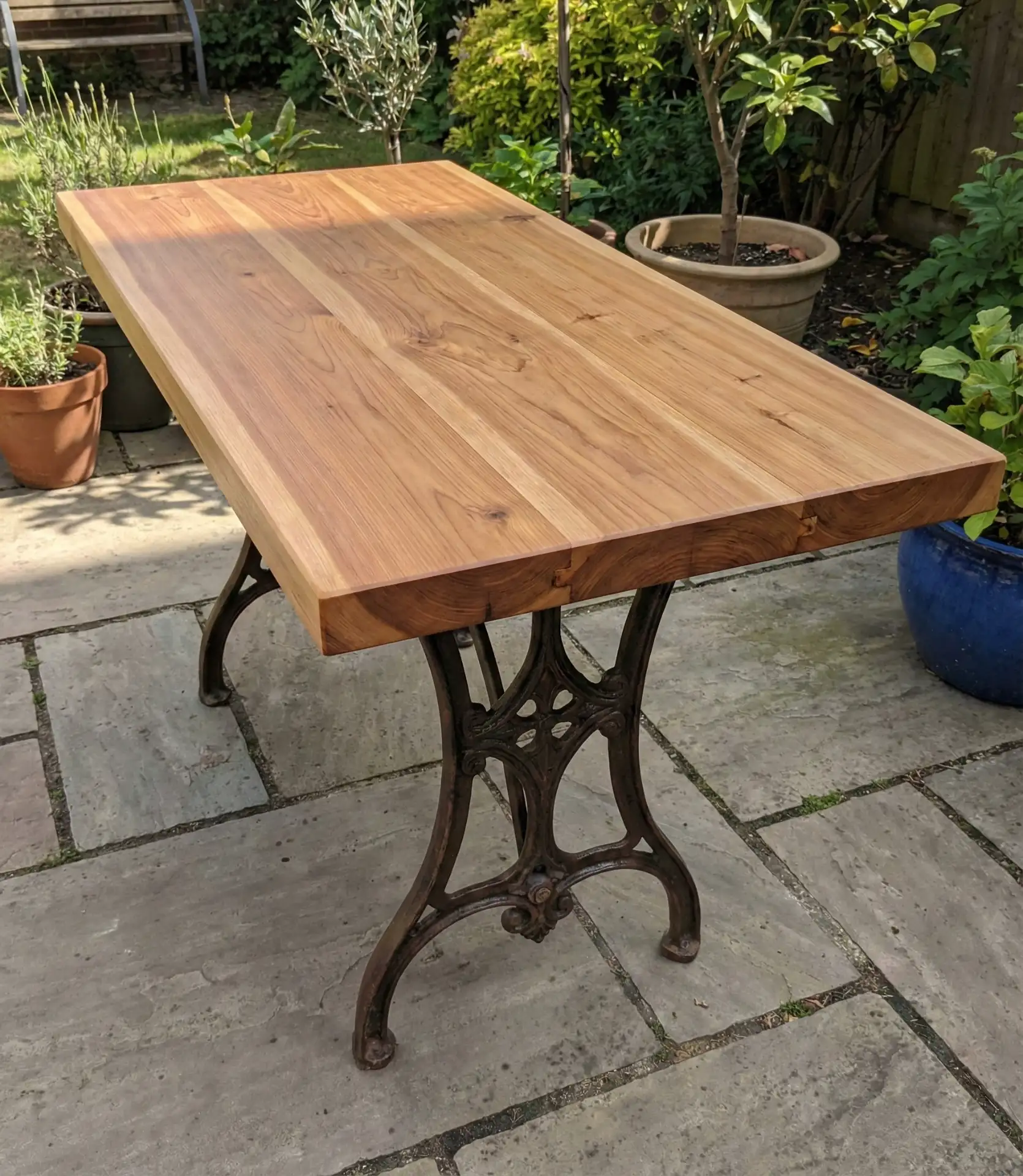
A full redo replacing the table surface or completely reimagining its structure creates a custom piece perfectly suited to your needs. This might mean adding a tile mosaic top to a plain base, replacing warped wood planks with new lumber, or converting a base to hold a different material entirely. The transformation process lets you keep sturdy structural elements while updating the aesthetic completely. 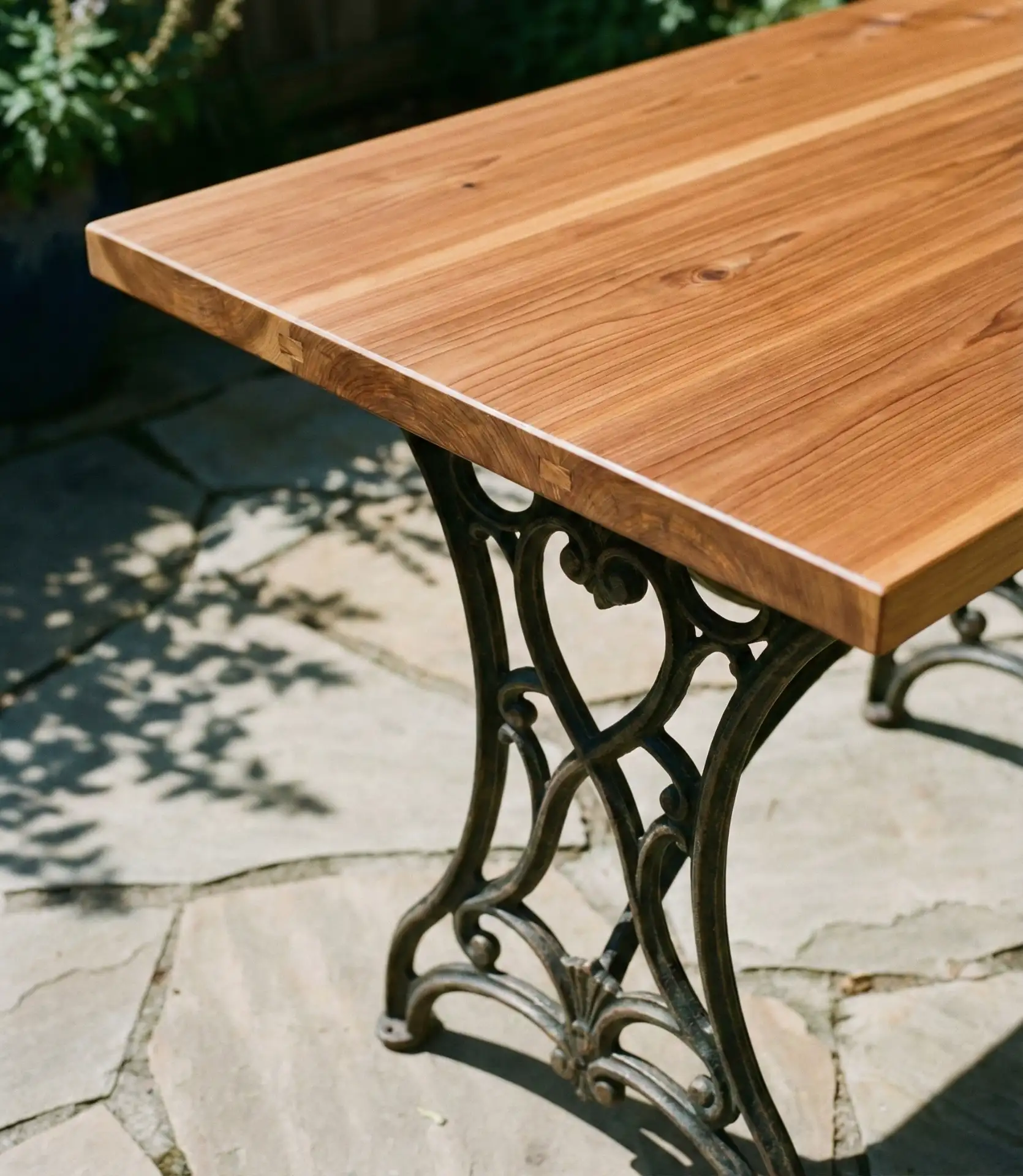
American regional context matters here—in the humid Southeast, replacing rotted wood tops while keeping rust-free metal bases is common, while in dry Western climates, the opposite often occurs. The investment typically ranges from $100 to $400 depending on materials chosen, still significantly less than purchasing new furniture. This approach works especially well for inherited or sentimental pieces that have good bones but need updating to match current style preferences.
15. Statement Centerpiece Table
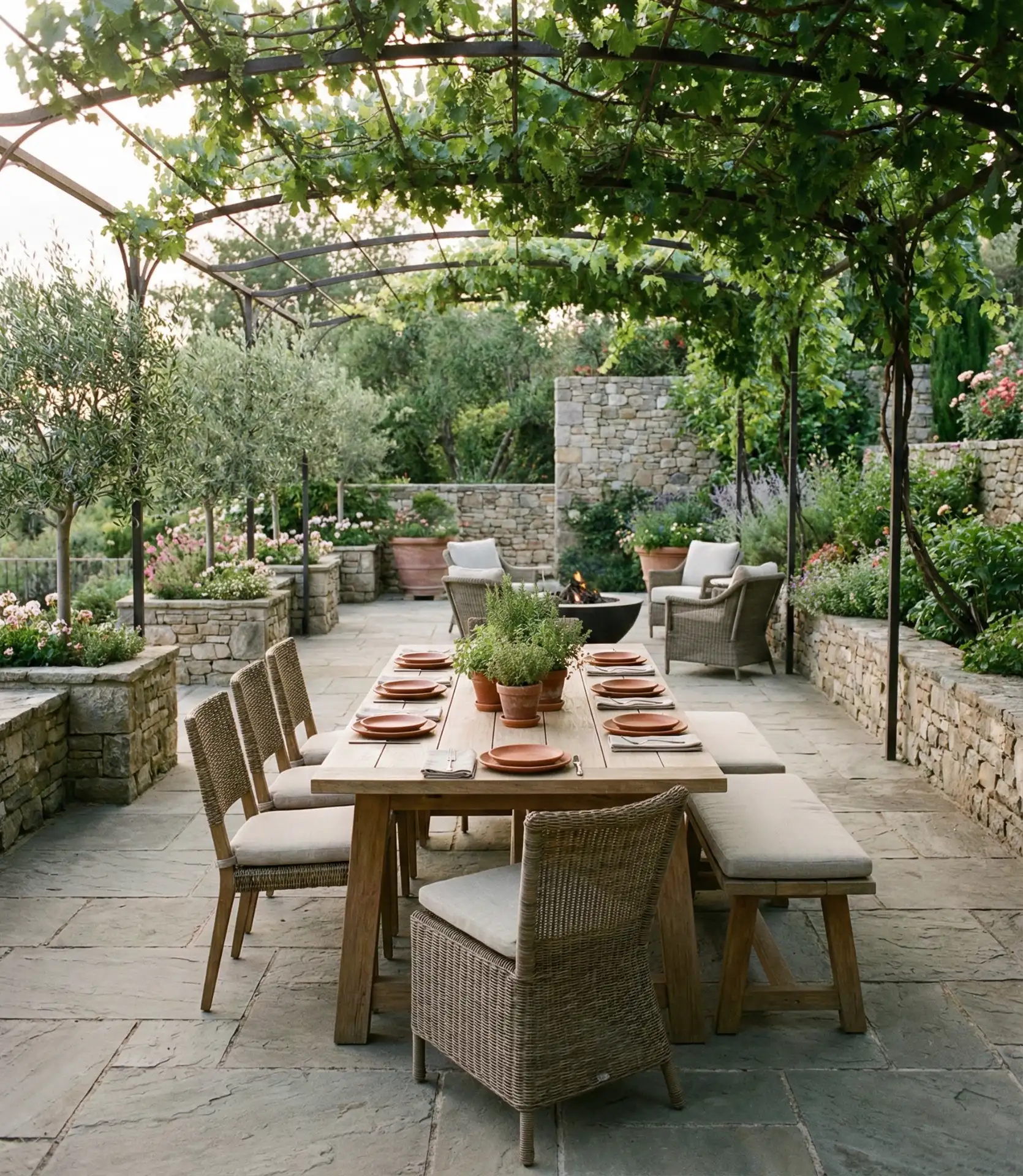
Positioning your patio table as the visual centerpiece of your outdoor room requires thoughtful placement and surrounding design. This means creating clear sightlines from key viewing points—your kitchen window, back door, or main living areas—so the table anchors the space visually. Consider how the table relates to other patio elements like fire pits, lounging areas, and landscape features. 
Practical insight: The table should be positioned at least three feet from walls or railings to allow chairs to pull out comfortably and people to move around freely. Overhead features like pergolas, string lights, or tree canopies help define the dining area and make the table feel like a place to go instead of just furniture. In open backyards, consider using a weatherproof outdoor rug to create a visual boundary that anchors the dining area.
16. Ideas for Outdoor Entertaining

Implementing creative ideas Outdoor dining transforms your patio table from basic furniture into an entertaining hub. Layer in elements like built-in beverage coolers, nearby serving carts, ambient lighting options, and weather-resistant sound systems to elevate the experience. Consider how your table setup facilitates the flow of gatherings, from casual cookouts to formal alfresco dinners. 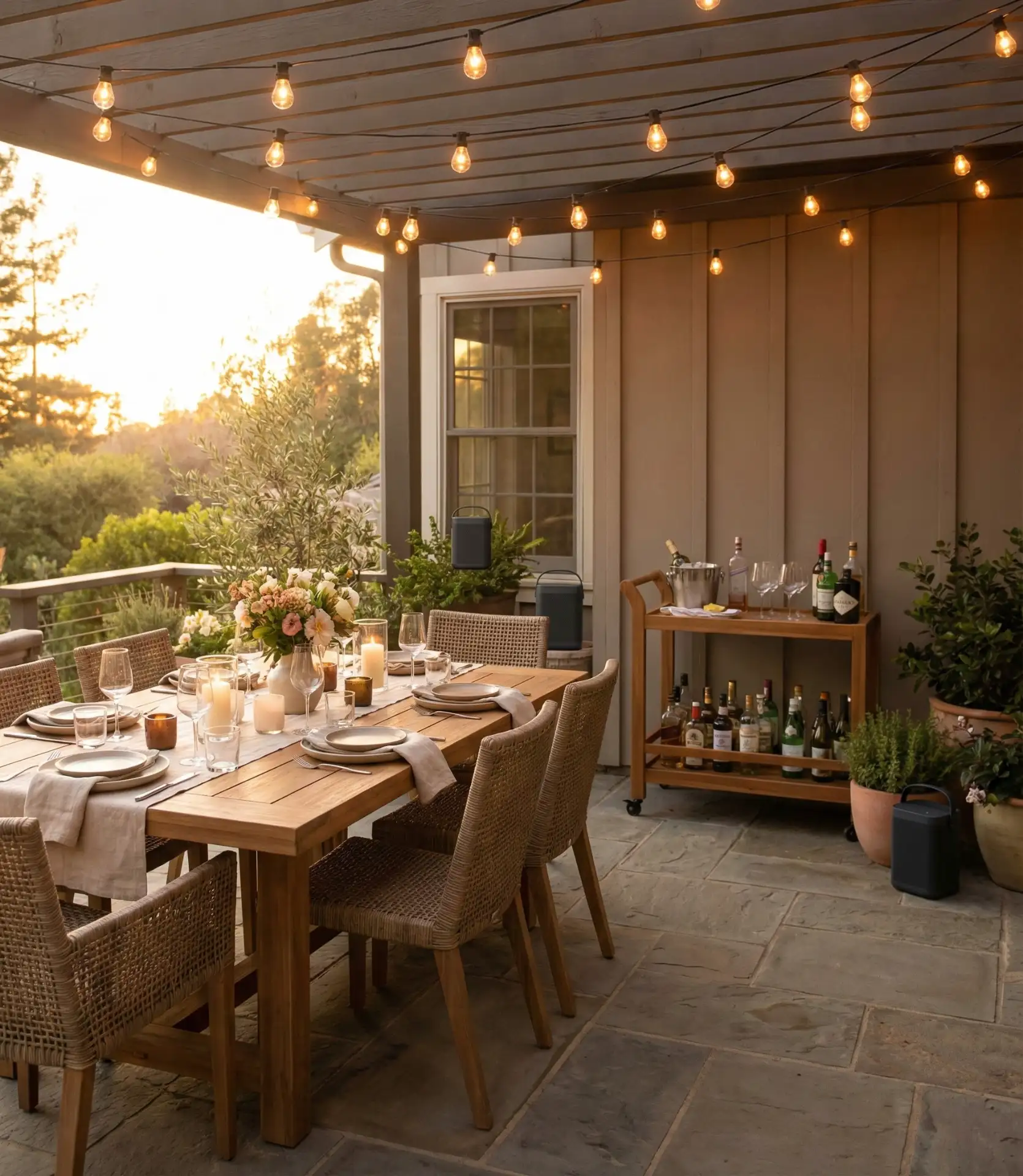
Frequent entertainers, according to real behavior analytics, typically keep a storage bench or deck box nearby, stocked with extra outdoor dishware, linens, and candles for spontaneous gatherings. A deck box is a convenience that reduces the hassle of running back inside and makes the experience of hosting a lot more enjoyable. There are also regional variations in serving styles; for example, Southerners may have a sweet tea station, and West Coast hosts are more likely to have wine fridges or craft cocktail service set up close to the dining area.
17. Large Family-Scale Table

For family events that include the extended family, a dining table that is 72 inches or longer provides adequate space for everyone. This allows for multi-generational gatherings that are a hallmark of American family tradition. Outdoor meals encourage guests to relax and enjoy the leisurely pace of dining with plenty of elbow room. Such large tables do mean that the backyard or patio needs to be of a considerable size. A minimum of 12 x 14 feet will facilitate comfortable circulation around the table. 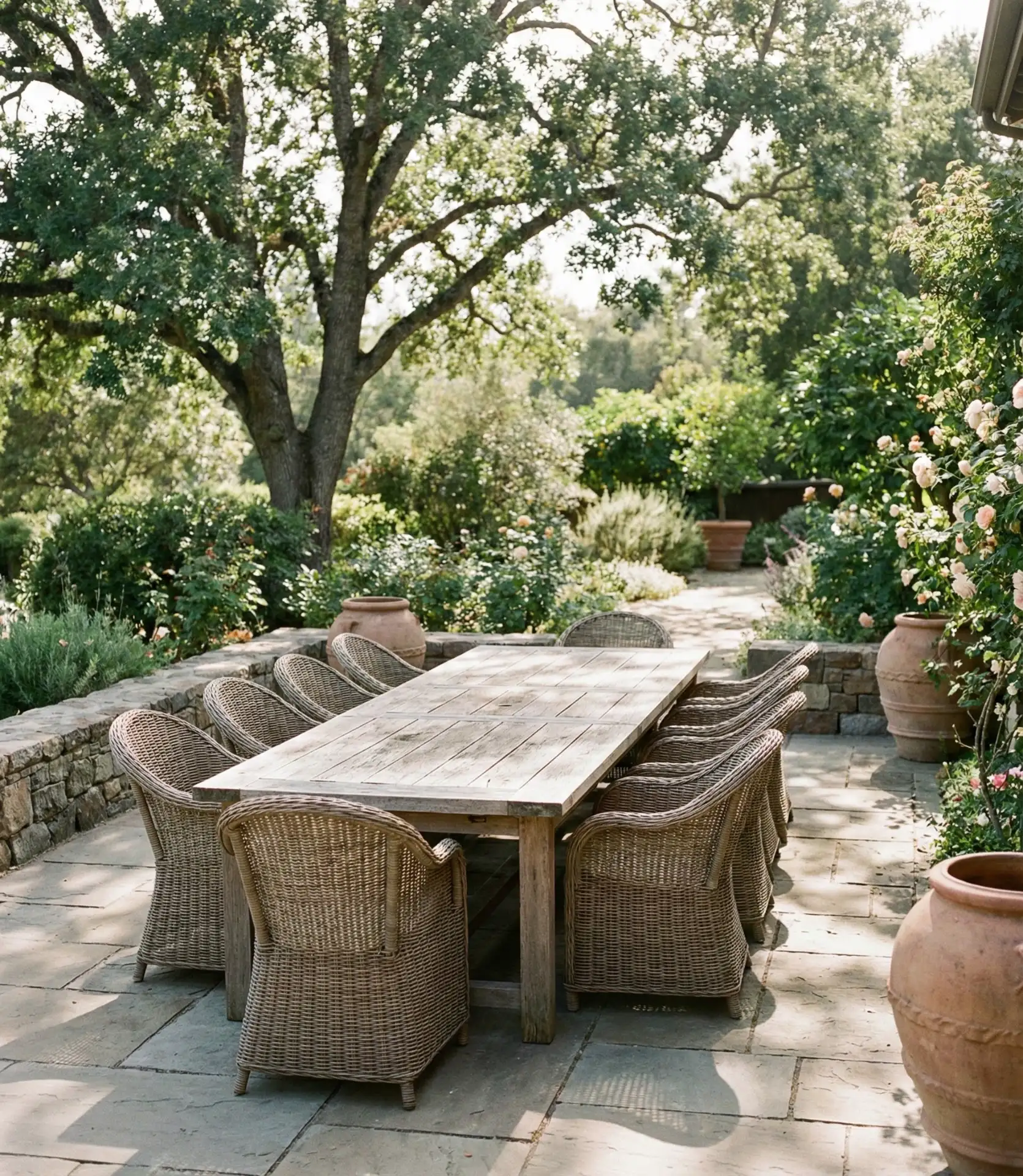
Ideal settings for our table collections include suburban home patios, where families host Sunday dinners, holiday dinners, and backyard parties. The Midwest and South are home to large outdoor dining, where summer food and fish fry parties are a popular way to bring together a large group of friends. During the off-season, table covers and roof overhangs are a beneficial way to protect them year-round.
18. Elegant Setting Ideas
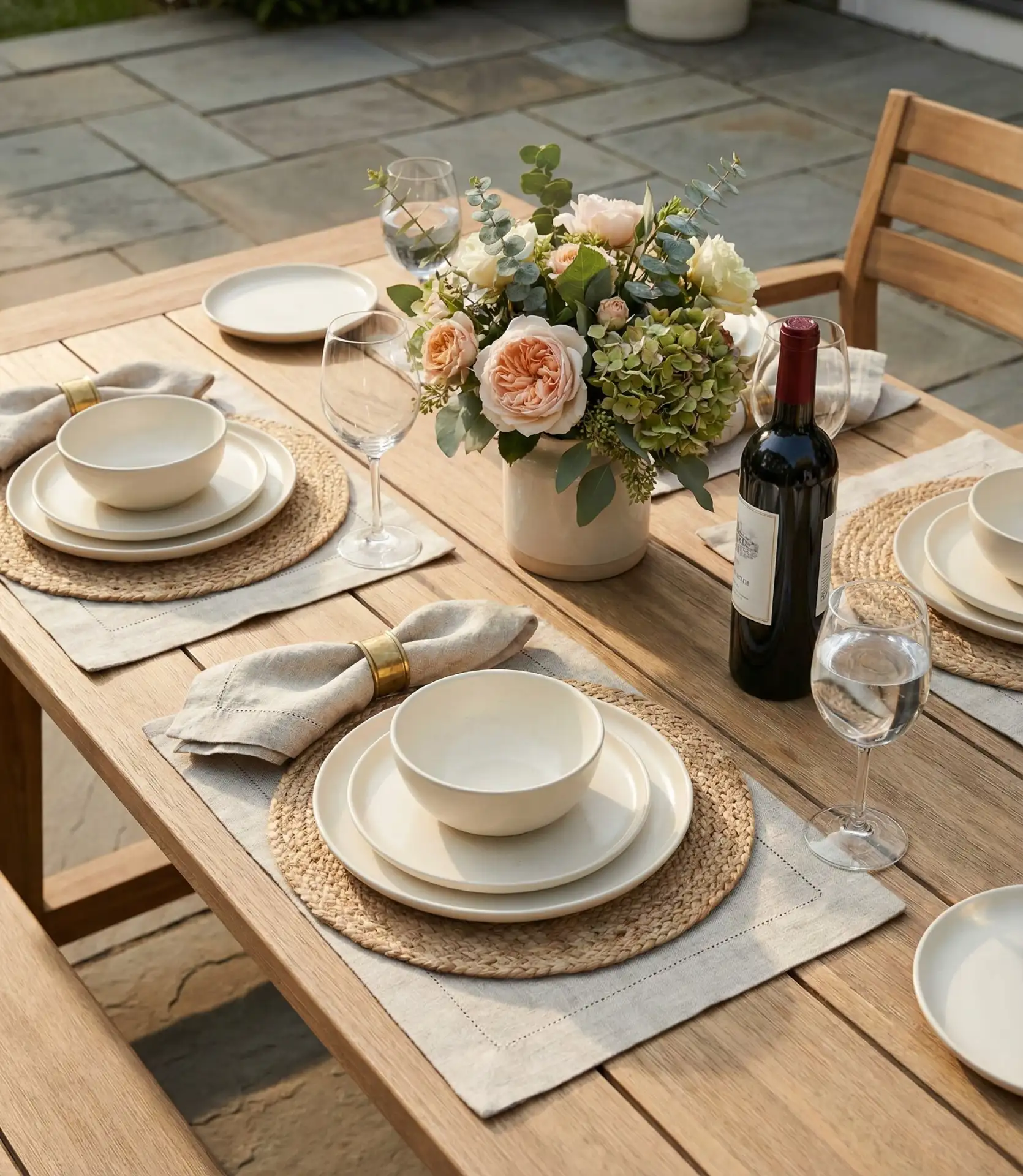
Sophisticated setting ideas are about elevating your outdoor dining experience. For this, you will need weather-resistant table linens, melamine or bamboo dishware, outdoor glassware, and centerpieces. All of these things are meant to elevate your experience and create a setting that will be comparable to your indoor dining experience while, of course, being practical for outdoor use. 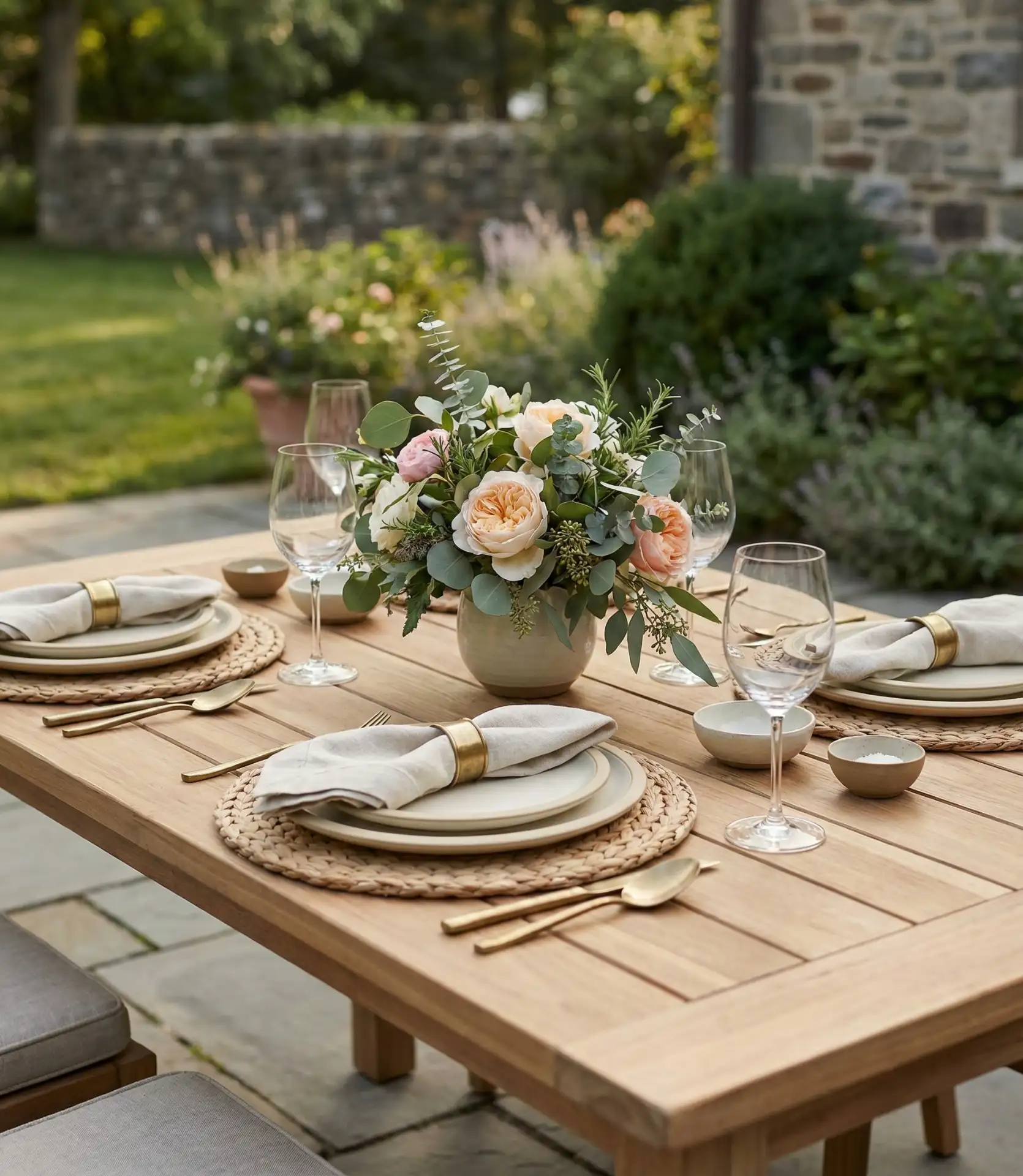
Budget angle: Building an outdoor table setting collection gradually over time makes more sense than a single large purchase. Start with quality basics—neutral placemats ($8-12 each) and simple dishware (sets around $60-80)—then add seasonal accent pieces. Many homeowners keep “outdoor versions” of their indoor style, using the patio as an opportunity to try bolder colors or patterns they wouldn’t risk inside. End-of-summer clearance sales offer excellent opportunities to stock up on table setting essentials at 50–70% off.
19. Round Conversation Table
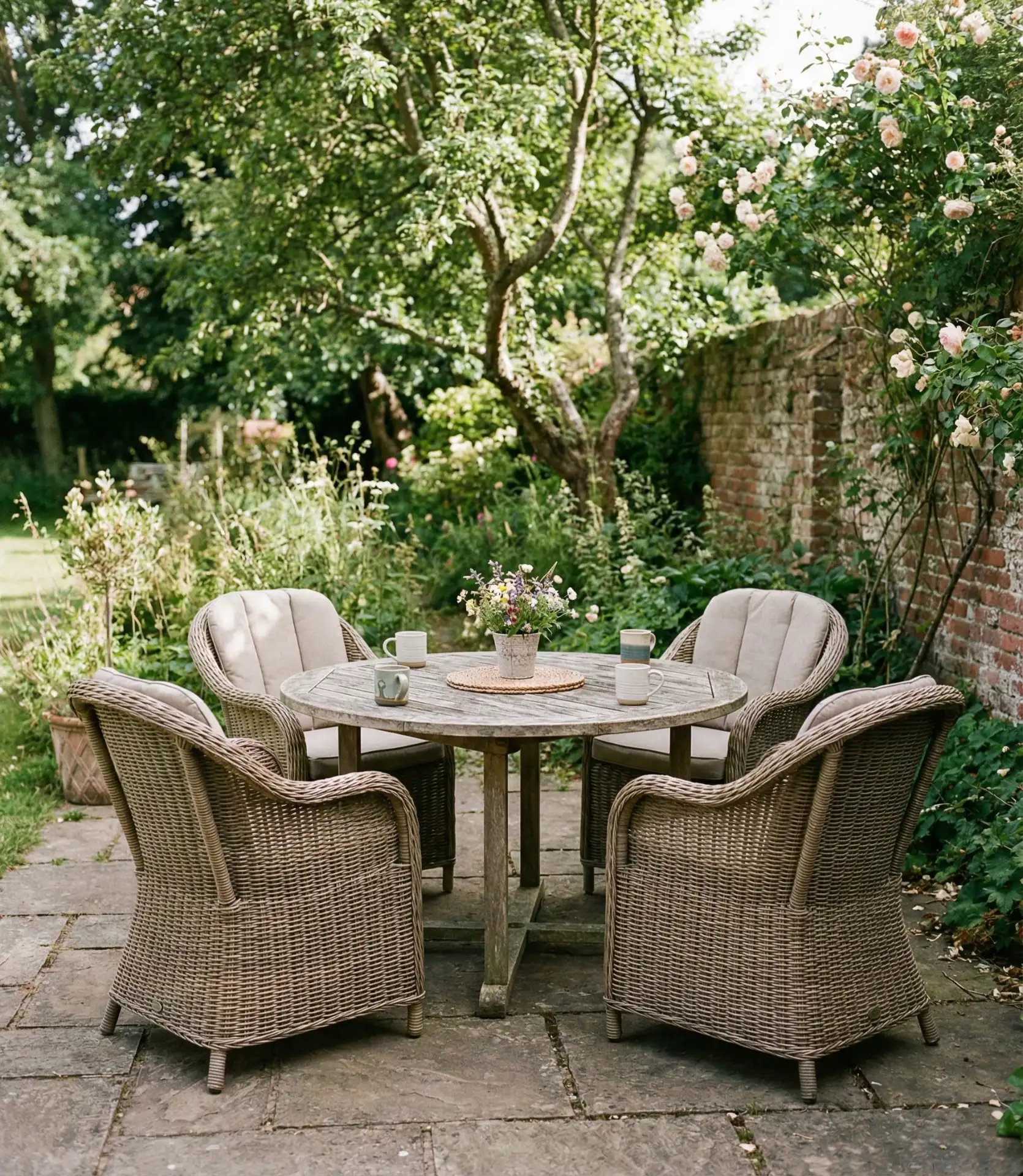
A round table configuration naturally facilitates face-to-face interaction and creates a more intimate dining atmosphere than rectangular alternatives. The absence of corners allows for flexible seating arrangements and easier movement around the space, while the circular shape feels inherently welcoming. This geometry works particularly well for couples or small families who prioritize conversation over formal dining structure. 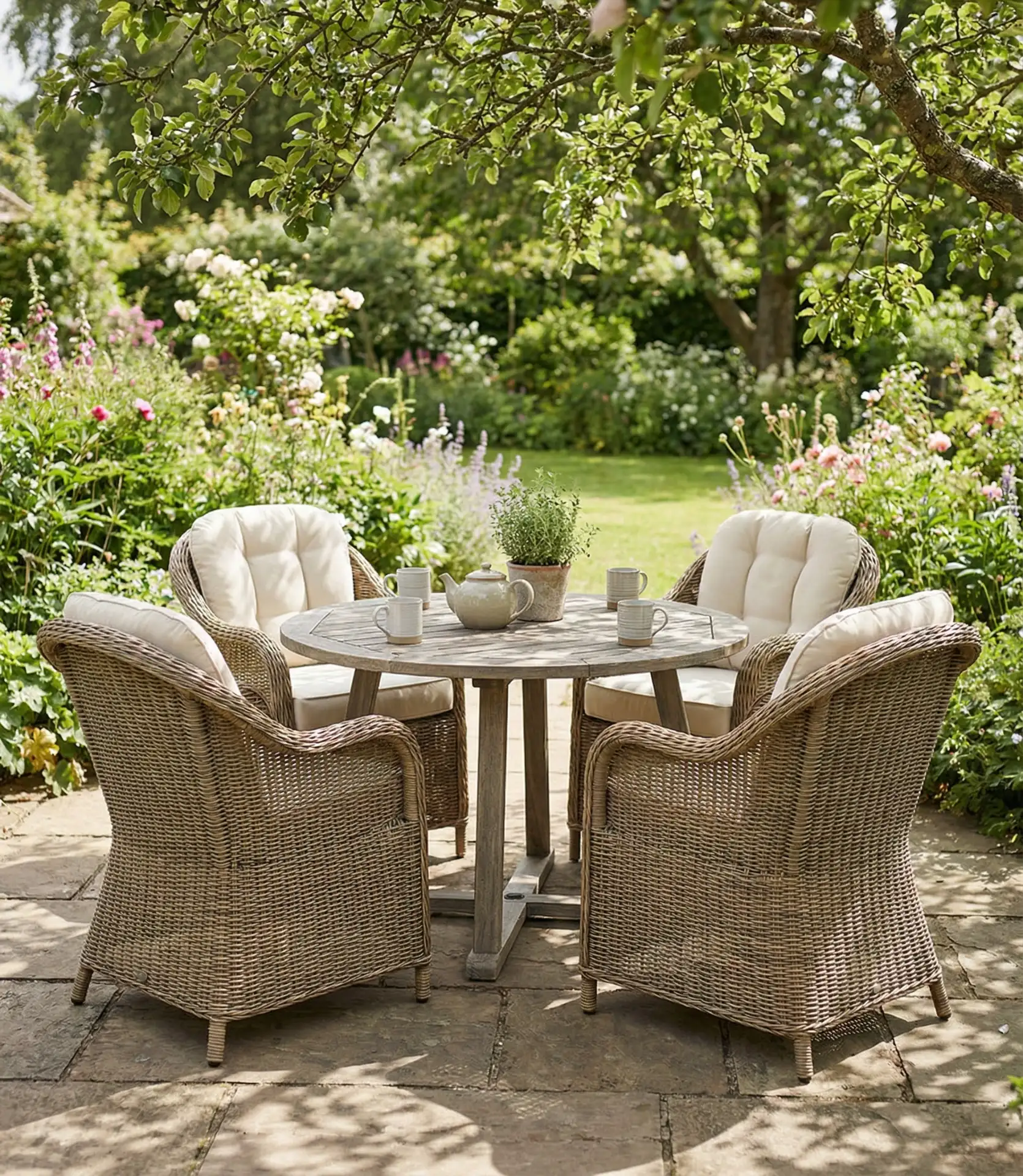
Expert-style commentary: Design professionals often recommend round tables for patios opening directly from kitchens or living areas, as the shape creates better traffic flow and doesn’t create awkward dead corners. The circular form also maximizes seating in compact spaces—a 48-inch round provides as much dining surface as a 48×36 rectangle but seats the same number more comfortably. This configuration makes rounds particularly popular in urban courtyards and townhome patios where space efficiency matters.
20. Decorative Table Styling
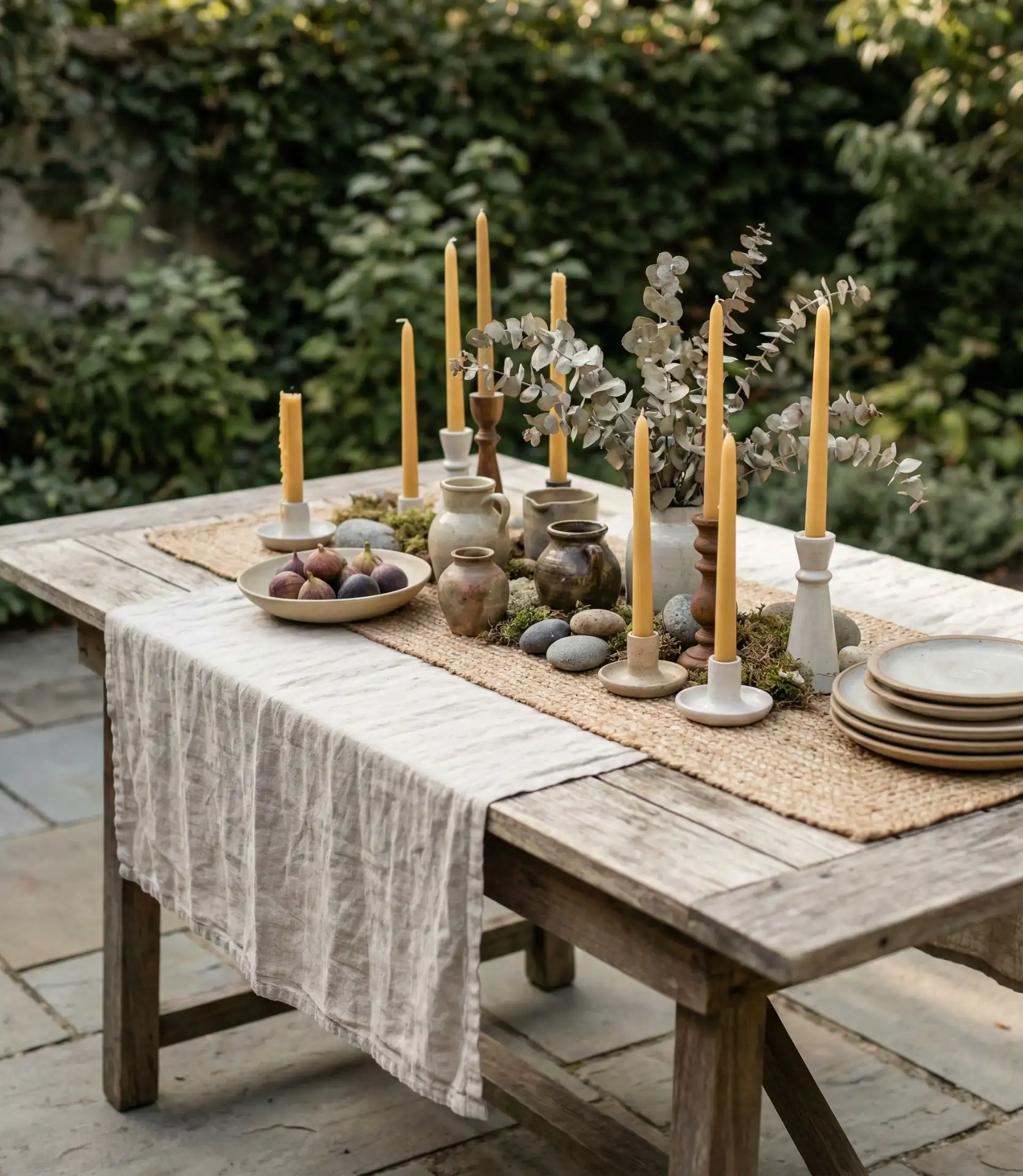
The relaxing atmosphere and stunning visual impact created by thoughtful centerpieces, strong decor ideas, and overall table styling result in beautiful decor that is perfect for photographs and visually appealing to share on Pinterest and Instagram, while also fostering inviting conversations and a relaxing environment.
Layer textures through runners, placemats, and natural elements like driftwood or stones collected from meaningful places. Use different heights to create dimensional interest with arrangements, and use risers, stacked books, or upside-down pots beneath tablecloths. 
Common mistakes include over-decorating to the point where there’s no room for actual dining or choosing delicate items that blow away in the slightest breeze. The best outdoor styling balances beauty with functionality, using weighted bases for candles and securing lighter elements. Seasonal rotation keeps the look fresh—spring pastels and florals, summer citrus and bright colors, fall pumpkins and harvest tones, and winter evergreens and metallics.
21. Umbrella-Ready Table Design
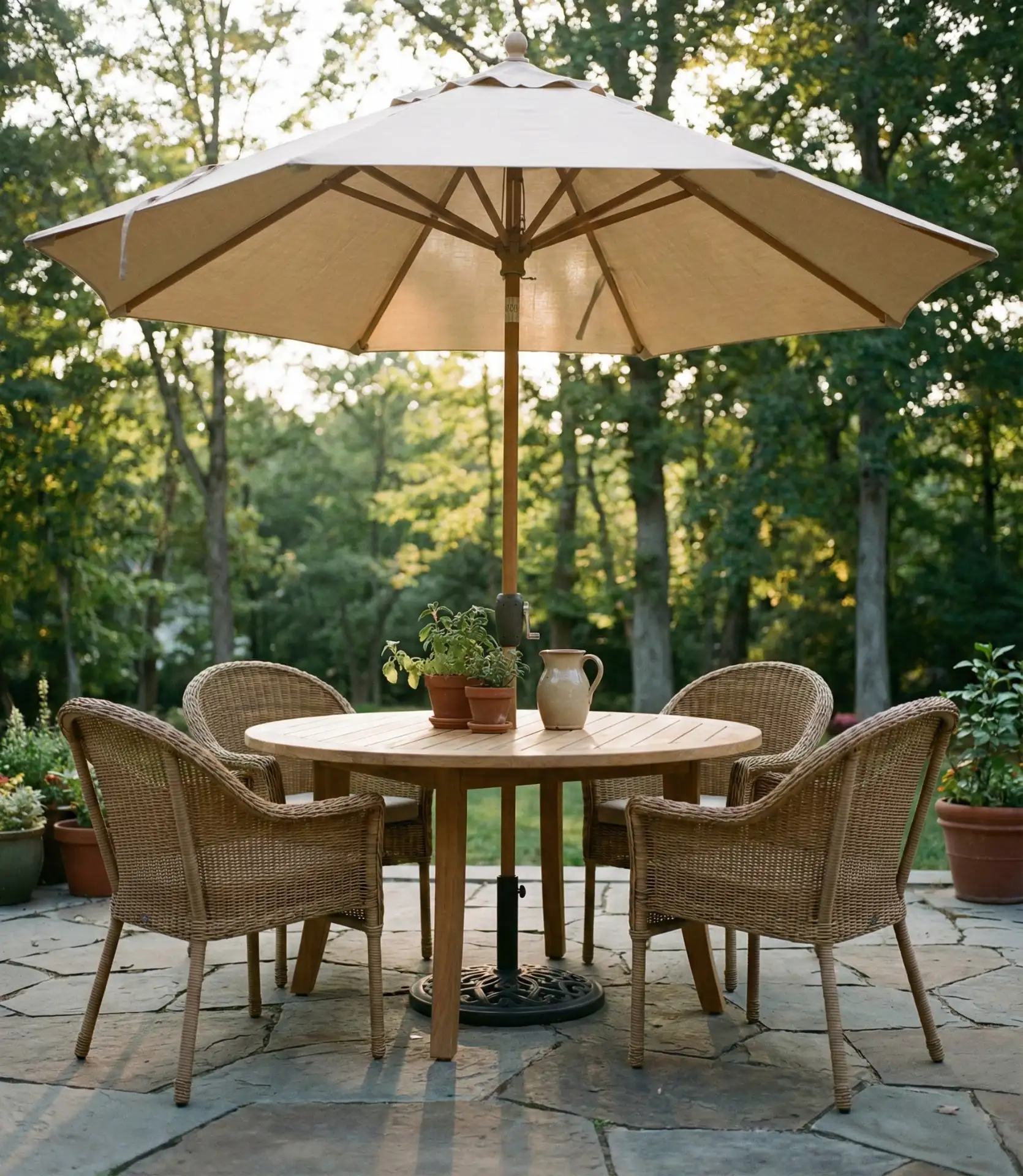
Choosing a table with a built-in umbrella hole provides essential shade flexibility for outdoor dining comfort. Standard holes accommodate 1.5- to 2-inch poles, though some larger tables feature oversized openings for commercial-grade umbrellas. The positioning matters—centered holes work for round and square tables, while rectangular tables often place slots slightly off-center to maximize shade coverage at the head positions. 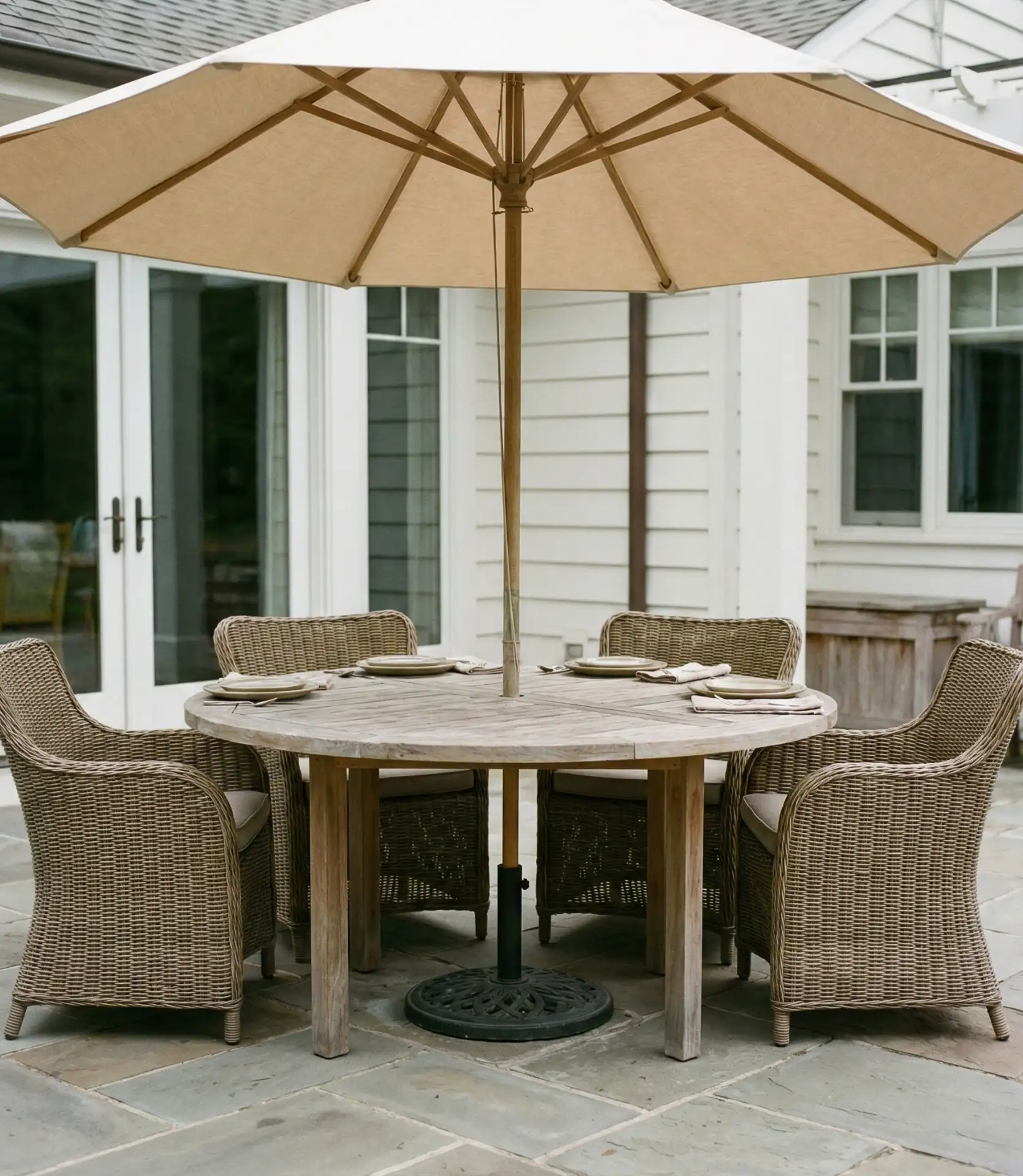
Real homeowner behavior reveals that people in the Sun Belt states—Arizona, Texas, Florida, and Southern California—consider umbrella compatibility non-negotiable, while those in cloudier Pacific Northwest climates often skip this feature. The umbrella itself requires a properly weighted base (typically 50+ pounds for 9-foot canopies) to prevent tipping in wind. Cantilever umbrellas offer an alternative for tables without holes, though they require different spatial planning.
22. Top Surface Selection Guide
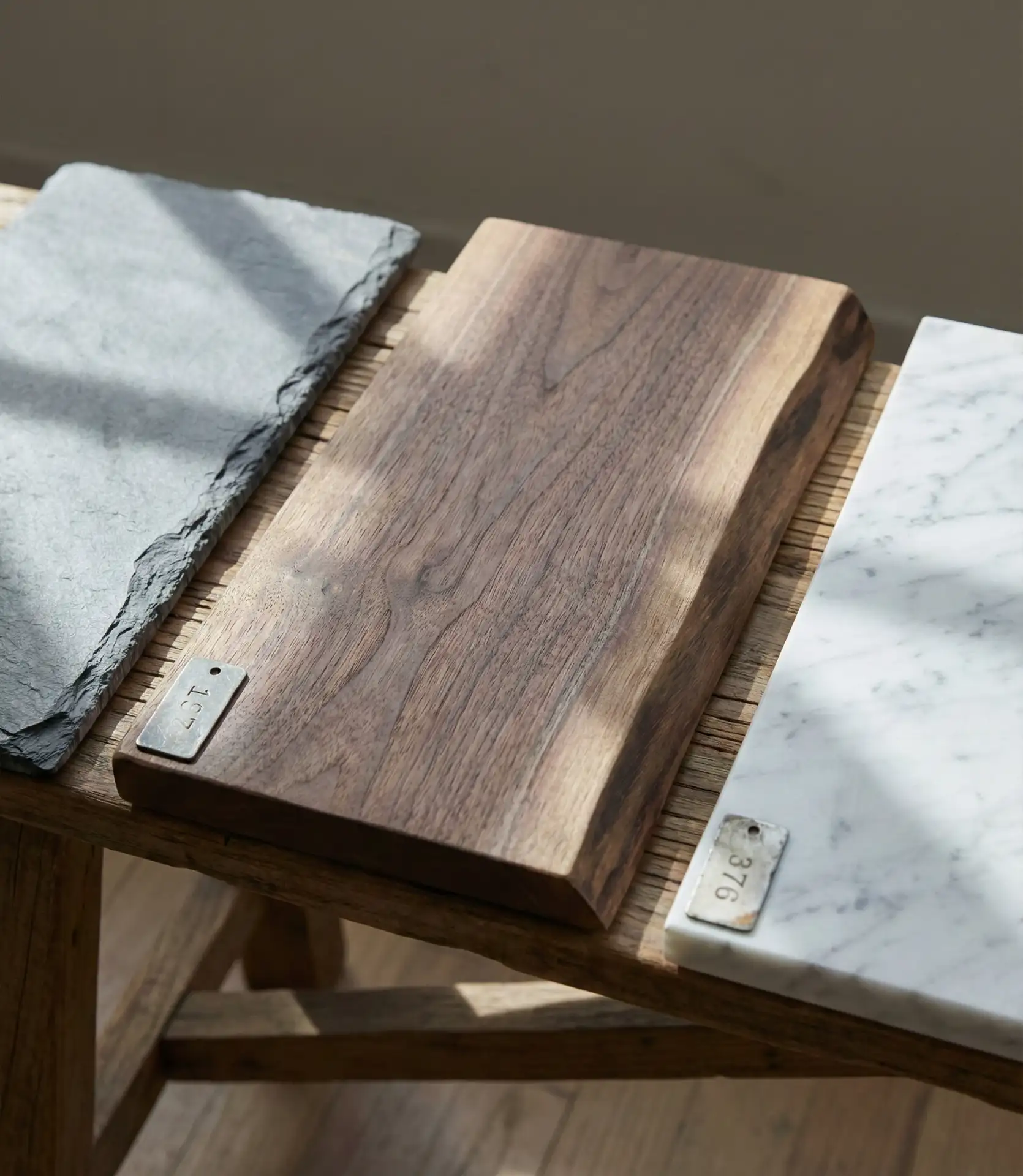
Selecting the right top material dramatically affects your table’s durability, maintenance requirements, and aesthetic contribution. Wood offers warmth and classic appeal but requires seasonal care, while stone and tile surfaces provide permanent beauty with minimal upkeep. Metal tops conduct heat and cold, making them better suited to covered areas, whereas composite materials offer middle-ground solutions. 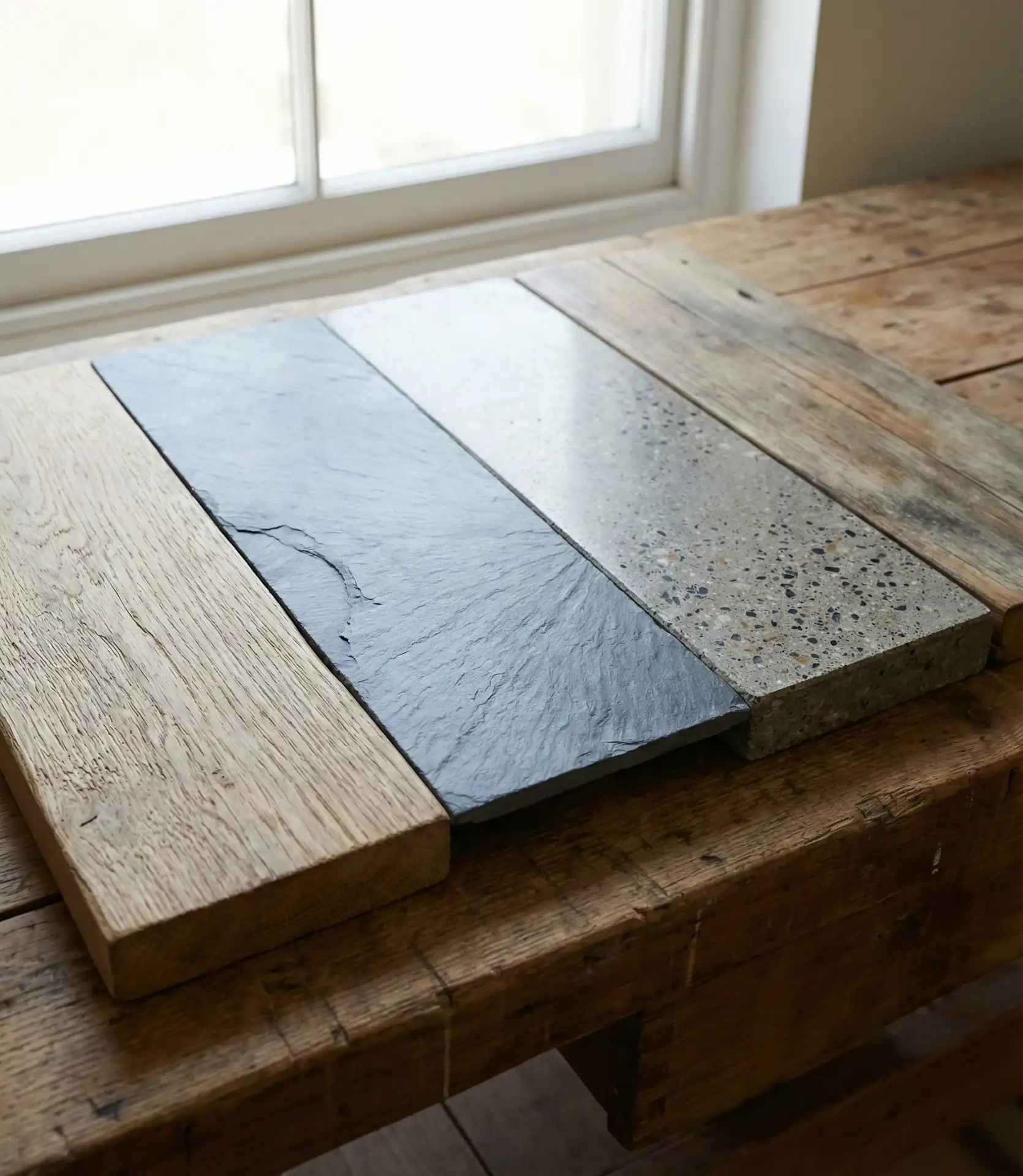
Practical insight: In freeze-thaw climates, avoid materials that can crack from ice expansion—unsealed concrete, certain ceramics, and low-grade composite woods don’t perform well. Coastal areas benefit from materials unaffected by salt air—aluminum, teak, and high-quality resin withstand seaside conditions that destroy lesser materials within seasons. The initial cost difference between materials (ranging from $200 for basic composites to $2,000+ for quality teak) often proves worthwhile over a 10- to 15- year ownership period.
23. Backyard Focal Point Arrangement
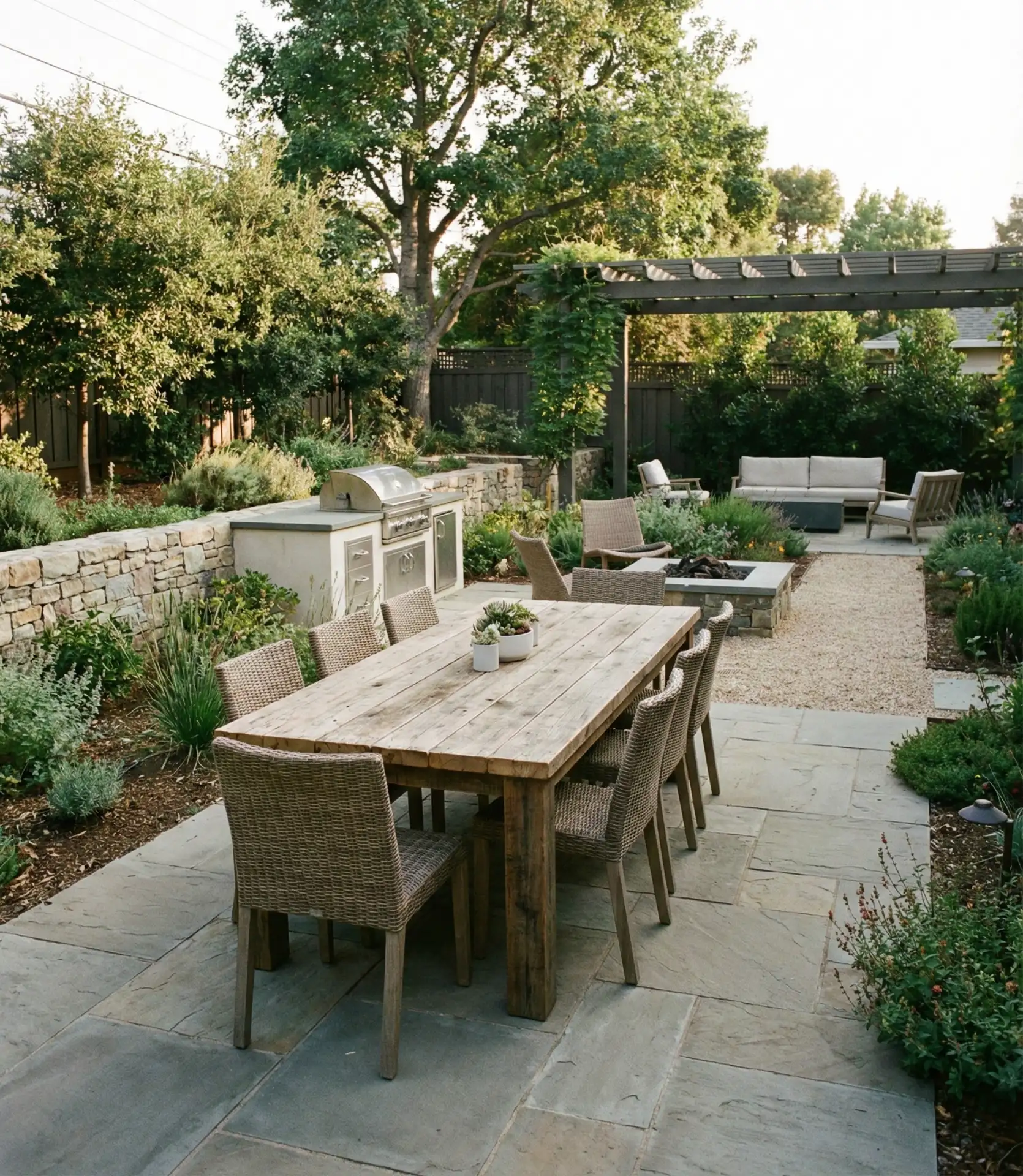
The patio table as the primary focus in the backyard design provides a logical point around which to encourage social interaction and draw people outdoors. Other design considerations include compatible views, the avoidance of direct sunlight, the distance to the house, and the relationship to other elements in the landscape, such as pools, gardens, or fire pits. The table is the pivot point for all other elements of the outdoor experience. 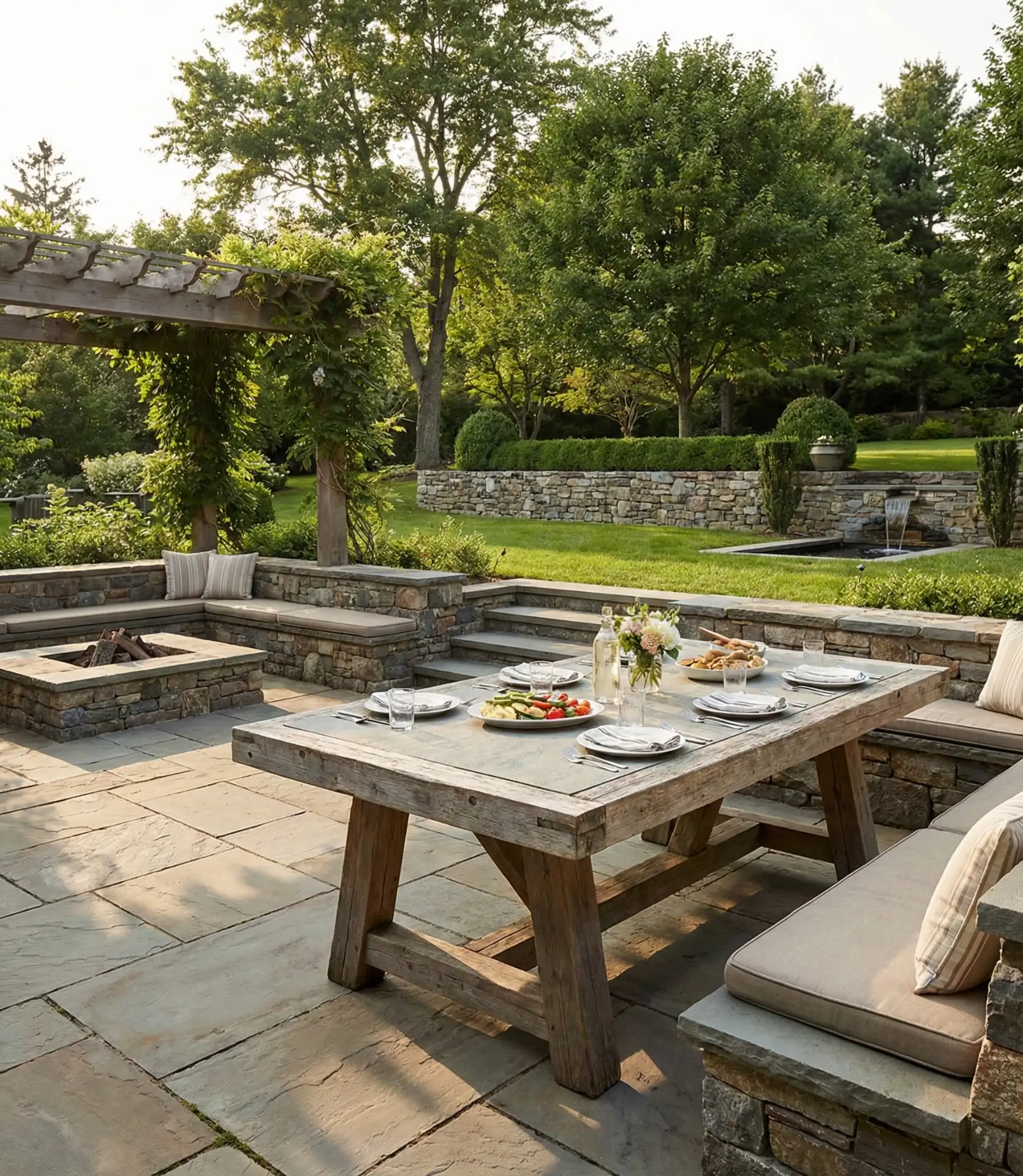
The American way of life presents an intriguing case in regional differences in the positioning of backyard tables. Southerners often position tables close to outdoor kitchens for easy serving. People in the Northeast position their tables to maximize exposure to the afternoon sun. West Coast homeowners often design several distinct outdoor areas, with the dining table as one of several features in a larger landscape plan. A seemingly excellent location in June might lose some comfort when the seasonal sun angle alters in August or when fall brings more exposure than the location can handle in October.
24. Chair and Umbrella Combination
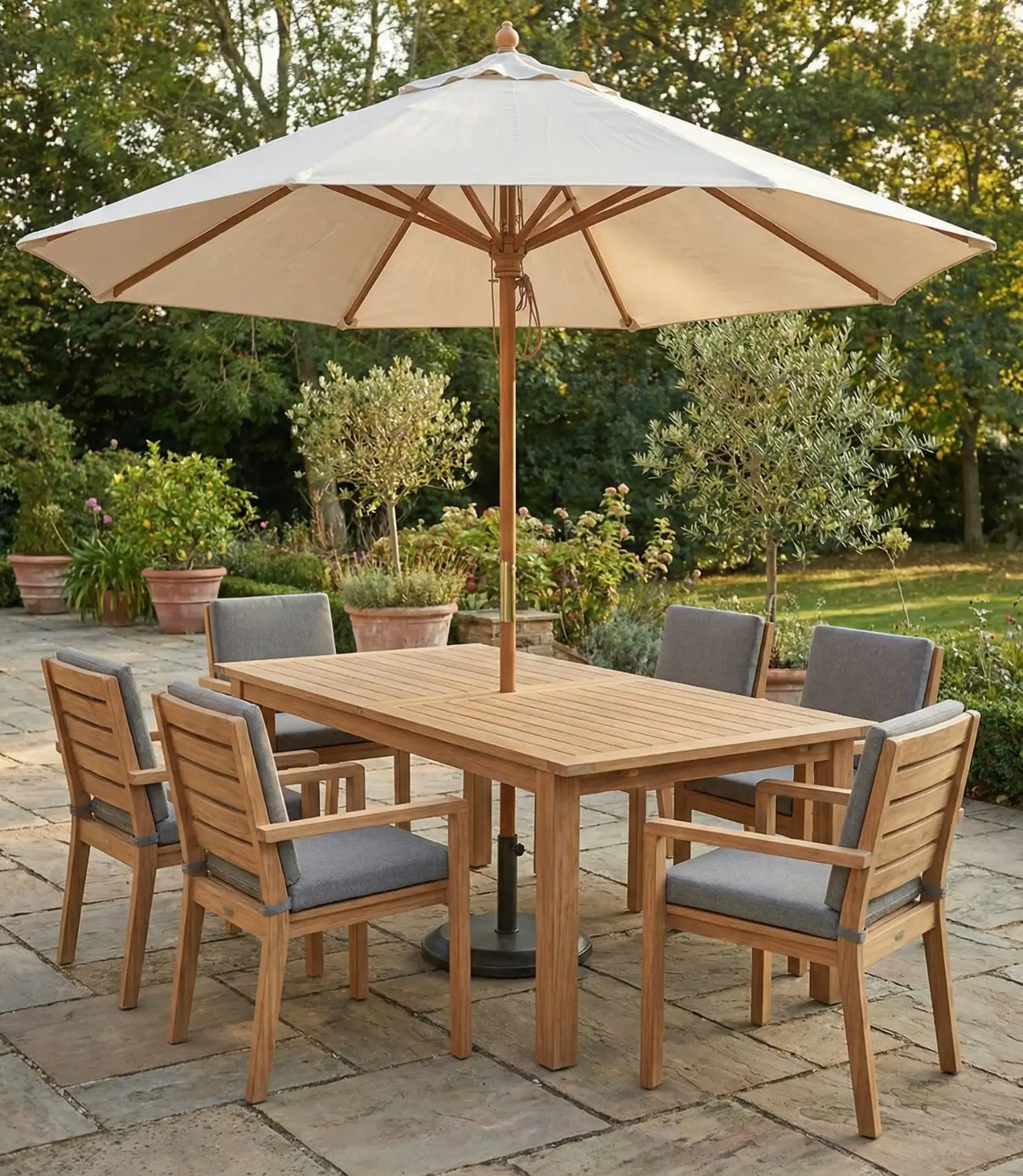
Coordinating the umbrella and chairs as a complete system achieves a balance between function and proportion at your outdoor dining set.
The rain shield’s upper part must cover the table’s rim by at least 18–24 inches, and the seats must provide enough room to slide arms comfortably under the lowest ribs of the umbrella. This vision in three parts gives the space a cohesive and sophisticated finish. 
A common mistake is using an umbrella that is too small; for example, 9-foot umbrellas are best suited for 60-inch circular or 72-inch oval tables, while larger tables require 11-foot umbrellas. The type of chairs should match the table and umbrella styles—a traditional striped umbrella and modern chairs clash, while chairs of the same style add a refined touch. Many stores now provide complete outdoor sets that only require a modest investment of about $1,200–$2,800, depending on the size and quality.

These designs for patio tables provide an array of options for different styles, budgets, and configurations of outdoor spaces. You’ll find your outdoor dining solution, whether it’s the classic sophistication of wrought iron, the modern style of concrete, or the rustic reclaimed wood. We would love to hear your thoughts in the comments, including the styles you wish to pursue for your patio transformation!