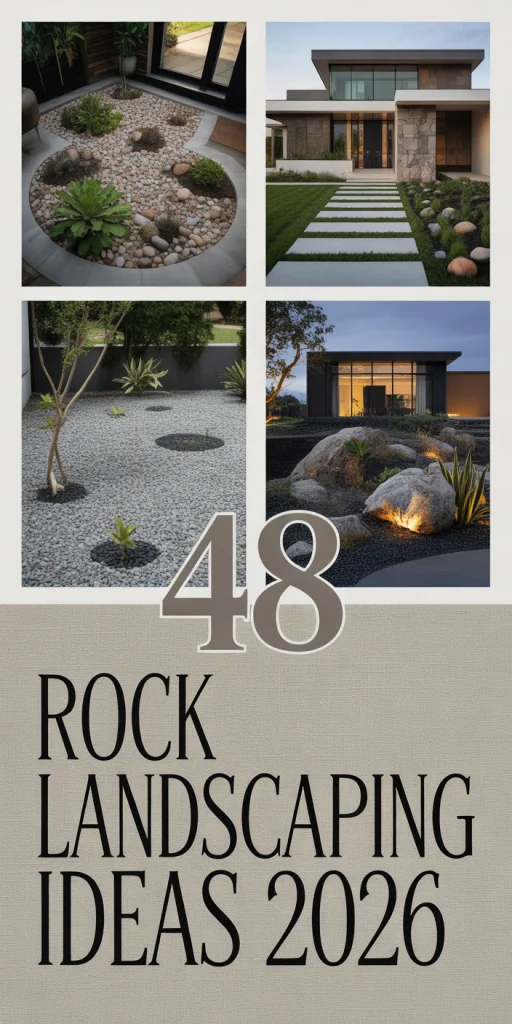
48 Rock Landscaping Ideas 2026: Transform Your Yard with Stunning Stone Designs

It is not surprising that rock landscaping has emerged as one of the leading home improvement topics that people are searching for on Pinterest in 2026, for it has become such a favorite topic. Americans have discovered that the use of stones to create a look of stone elements is the ideal combination of low maintenance, easy care, and the visual drama that grass simply cannot offer. Rocks can serve as the primary element in landscaping when addressing challenging slopes, reducing water consumption, or creating an outdoor space that looks professionally designed; thus, their application is highly versatile. Let us take a look at some wonderful rock landscaping concepts that will be suitable in a variety of climates, budgets, and yard sizes—these might be from understated to stunning changes.
1. Layered river rock borders with native grasses.
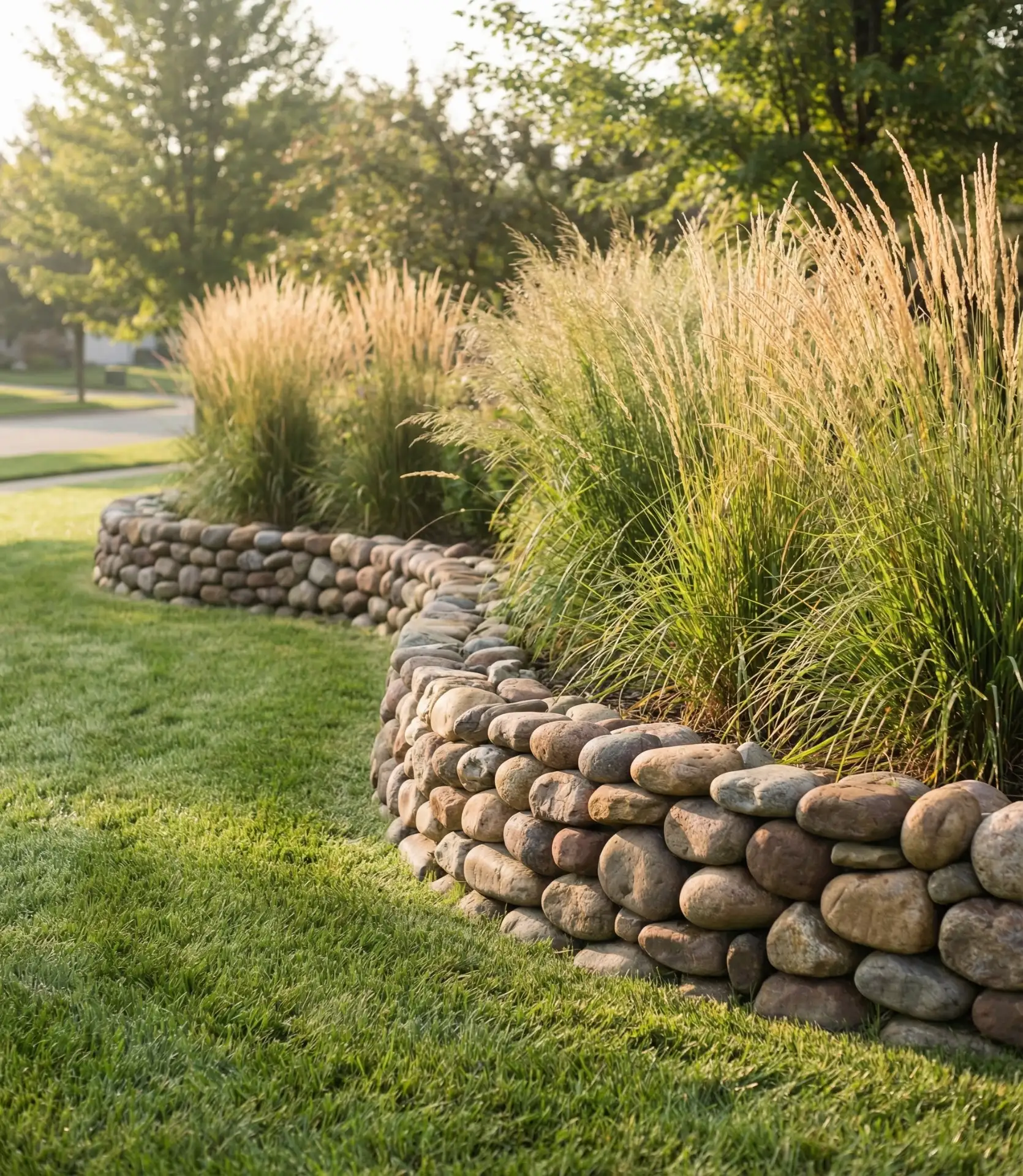
A meeting of river rock and native ornamental grasses results in a transitional area that blurs the boundary between the lawn and garden beds. This strategy is particularly effective in front yard design, where you seek to increase visual interest, not to block the view. Textured, smooth, rounded stones in gray, tan, and white offer a counterpoint against the vertical blade of grasses such as Karl Foerster or Mexican feather grass, hence generating a naturalistic design that appears both planned and accidental.
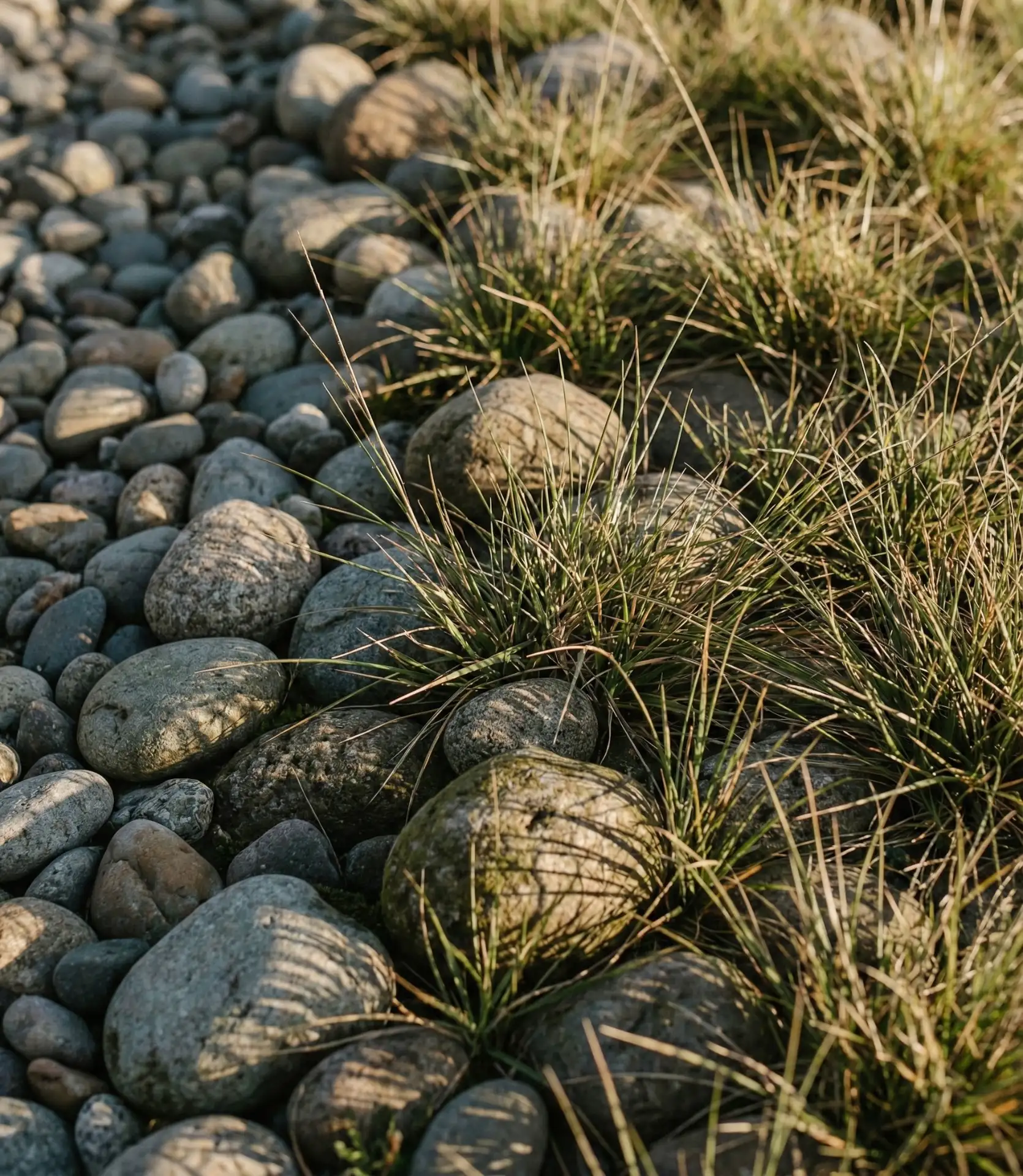
This design looks its best in areas where water conservation is critical, such as California, Arizona, or Texas; however, it can be adapted to any region. The secret is to use stone sizes ranging between two and four inches, which are sturdy enough to be stable even in torrential rains but small enough to resemble flowing, smooth lines. The cost of installation is usually around 40 to 60 dollars per linear foot of work if done by professionals, but DIY homeowners can save a lot of money renting equipment and buying bulk materials directly from local quarries.
2. Monochromatic White Stone Courtyard
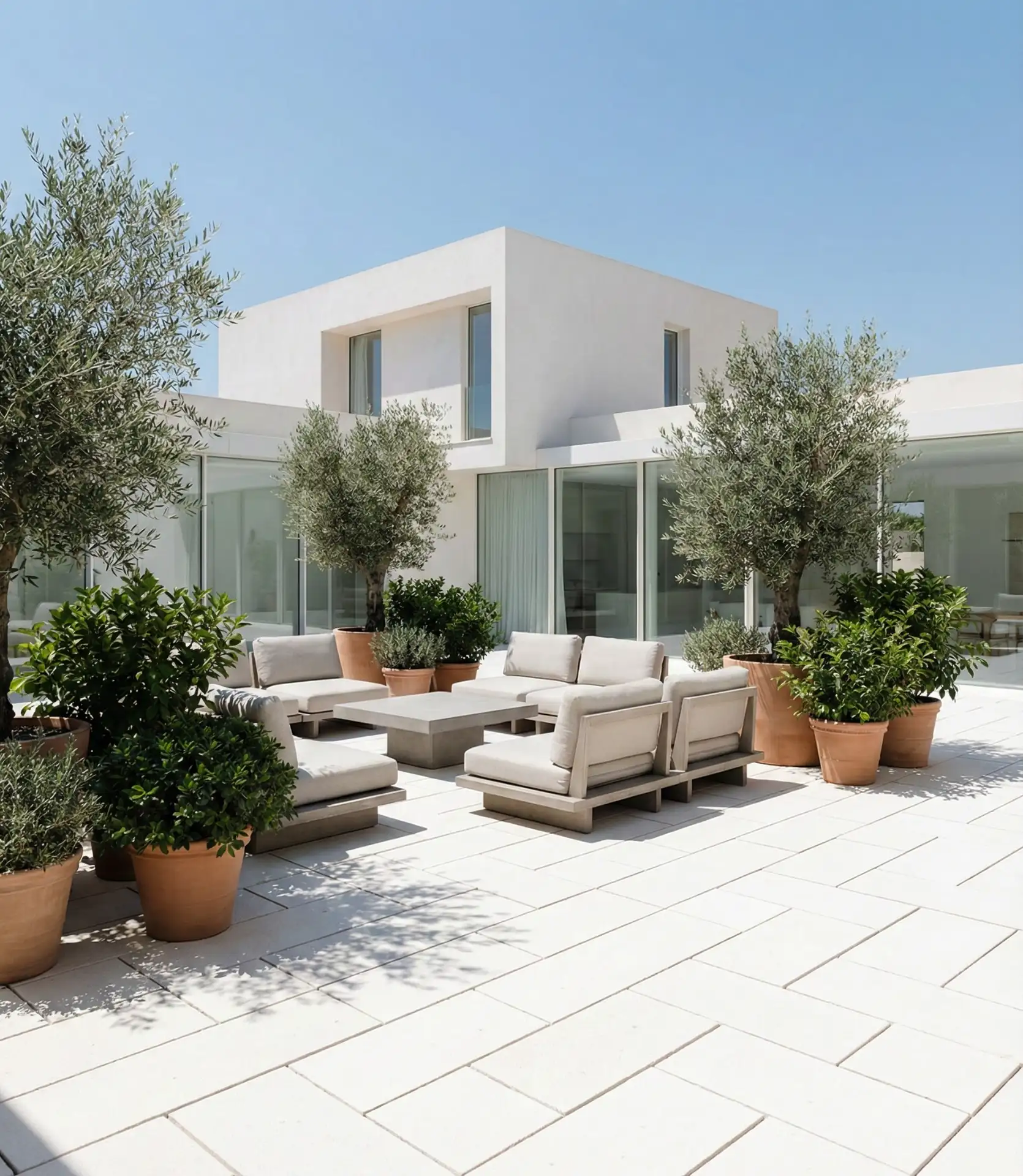
A white stone courtyard serves as one of the most effective ways to transform a backyard into a bright retreat and can also be a wonderful light-amplifying tool, which makes the area look bigger. Utilization of materials such as crushed marble, white limestone, and bleached river rock forms the base for the new clean and contemporary design that would center a rainbow of plantings. This style is especially suitable for urban spaces or small gardens, which can use the brightness to counter the feeling of being confined, and it also greatly suits modern constructions with straight lines and no fuss.
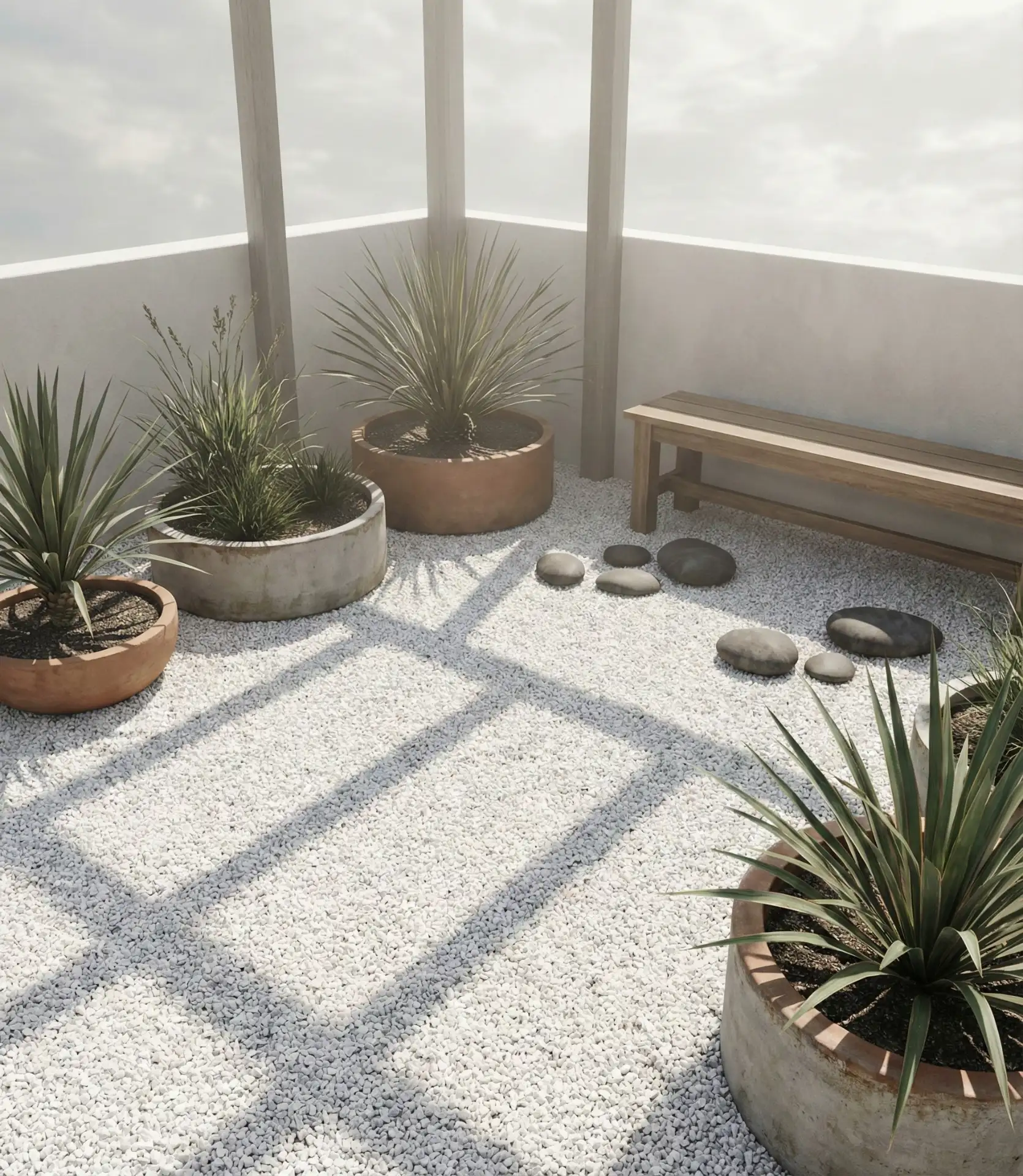
This layout is particularly ideal for areas that have a southern or western exposure because heat buildup in these places is less of a concern, as well as for shaded areas that benefit from extra reflected light. White stone enhances the look of the area; however, it requires some raking occasionally to stay that way, and, of course, in places where there are many fallen leaves, you must blow or rake the debris on a weekly basis during the fall. It is advisable to finish with either steel or aluminum borders to ensure that the stones remain in one place and to provide a distinctive visual contrast with the nearby garden beds.
3. Dramatic Black Lava Rock Beds
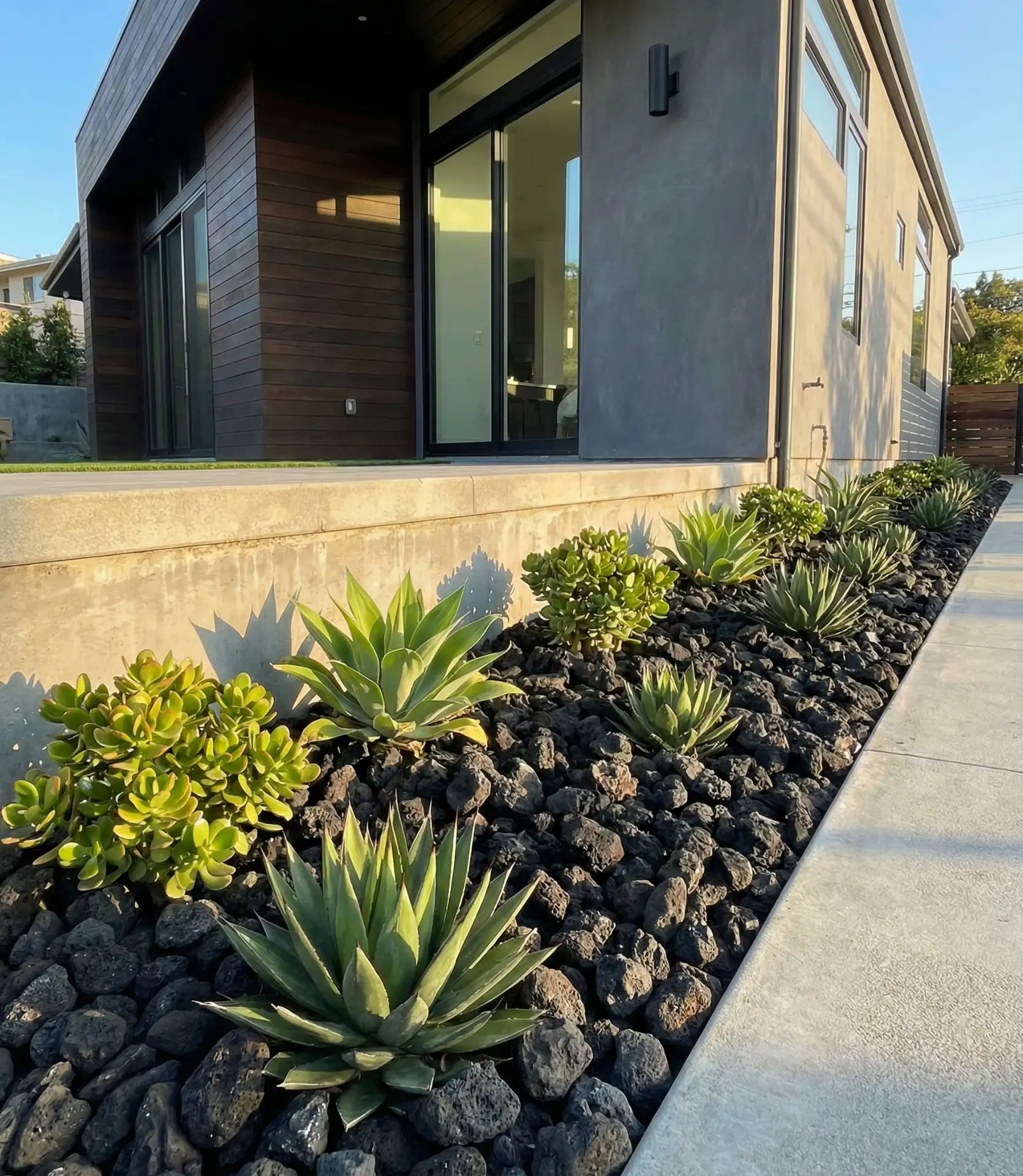
The mix of bright green succulents, silver-leafed plants, or colorful perennial flowers creates a stunning black volcanic rock landscape that stands out in rough areas. The lava rock’s porous structure ensures excellent drainage; in addition, its sharp, uneven shape produces the texture and art that is just not possible for round stones. The use of this design technique has practically exploded in the front yard landscaping scene at present. This style is especially appealing to those homeowners wanting a striking, Instagrammable, easily maintained, and seasonally abundant-looking garden.
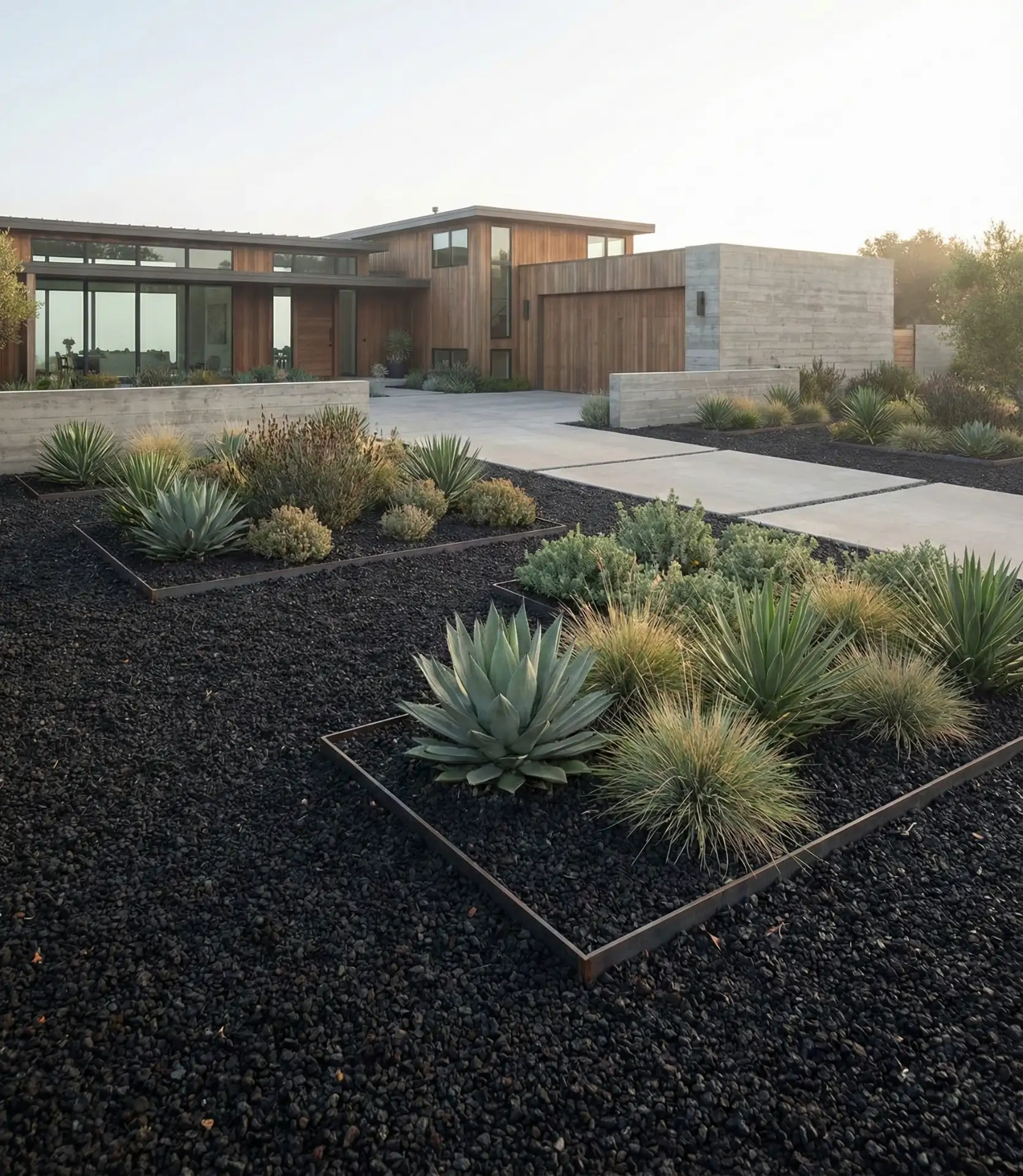
A Phoenix-based landscape designer once stated that black lava rock is indeed unexpectedly cool compared to the temperature it seems to have because of its dark color. The porous structure allows air circulation, making it usable even in desert summers. Despite this, it is advisable not to place it directly on the vinyl siding or near the windows, where the heat reflection becomes a problem. The usual price for this material goes from fifteen to thirty dollars per cubic yard; thus, it is economical for big yards, and it does not weigh so much. Besides, it is easier to handle than other stones (the ones that are heavier).
4. Mixed-Size Boulder Garden with Xeriscaping
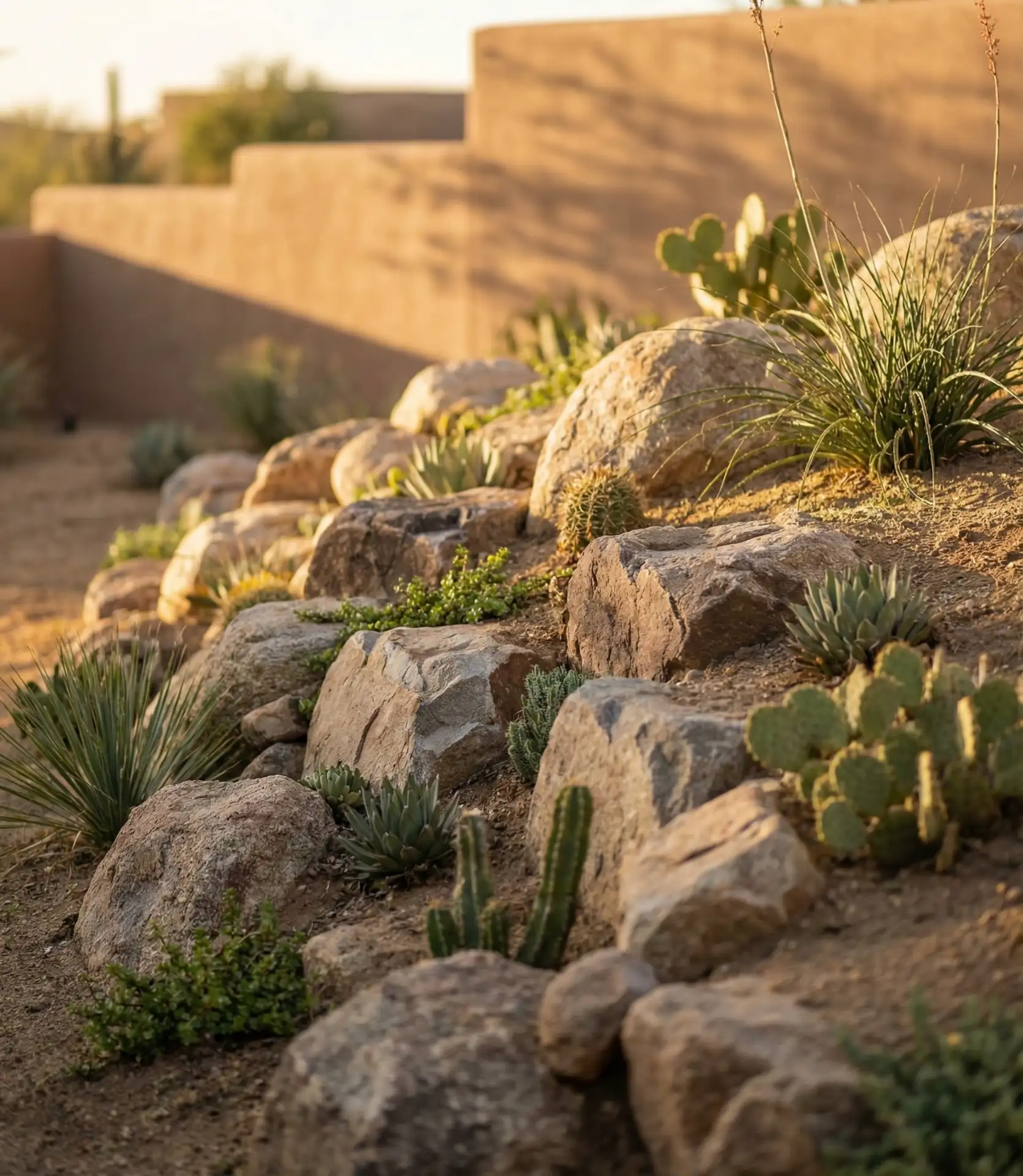
Gradient is a natural arrangement of stones in the mountains, formed by a variety of boulders, from the size of a softball to the weight of an average adult. The method is chiefly effective in sloping areas of the yard or in sideyard spaces where the visual anchors and erosion control are required. Framing the heavy focal stones with the likes of Russian sage, sedum varieties, or ornamental grasses that are resistant to drought is a fantastic idea for softening the hardscape while still keeping the low-water ethos.
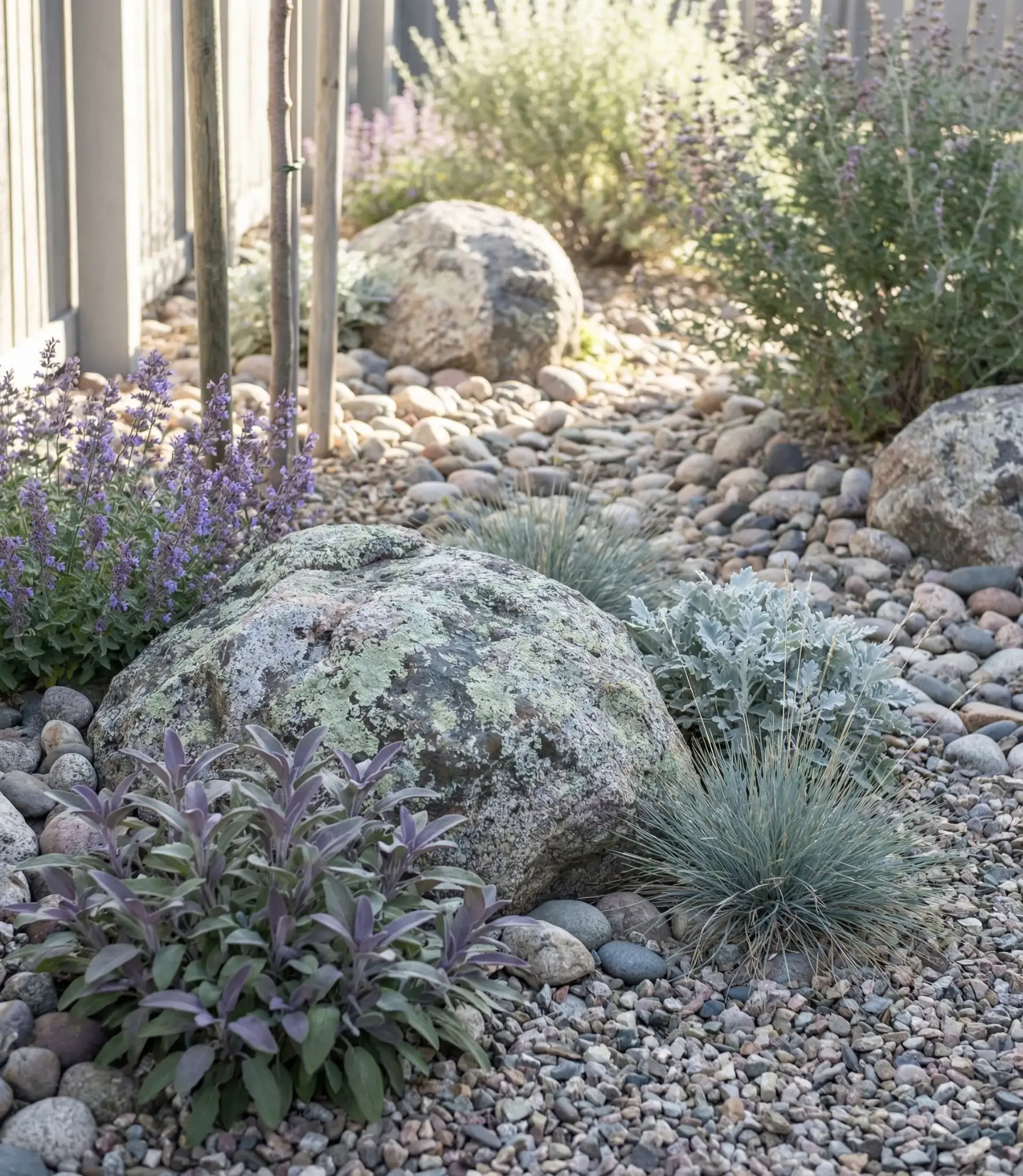
Statistics based on actual homeowners indicate that people generally buy boulders of the same size, which results in a man-made appearance. On the contrary, strive for a ratio in which your biggest boulder is three times bigger than your smallest feature rock. Arrange the stones in odd numbers—three, five, or seven—and bury at least one-third of each boulder so it will look like it naturally emerged from the ground rather than being placed on top. Boulder placement usually increases the material cost by $200–$500.
5. Terracotta-Toned Red Rock Accents
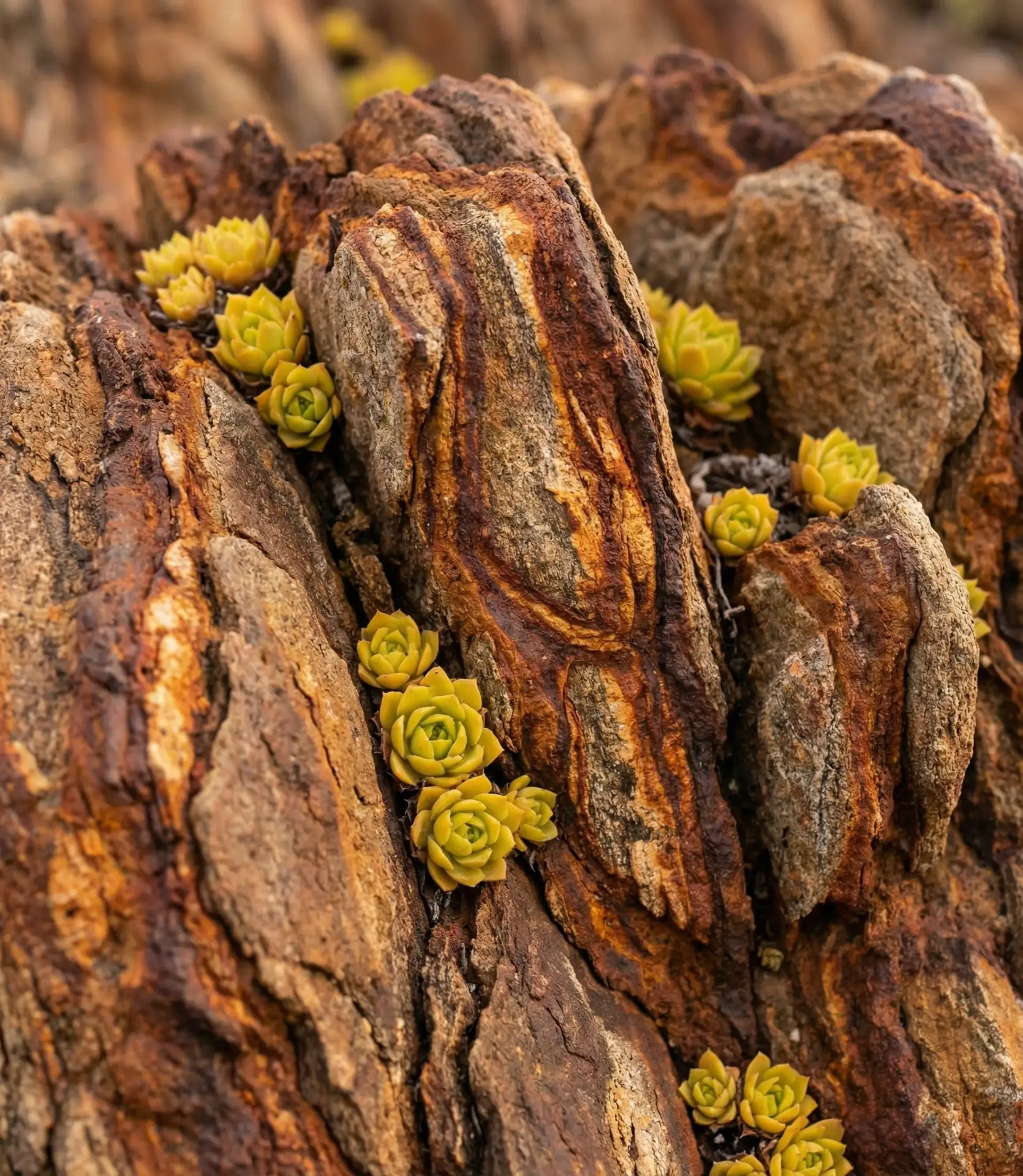
The use of red sandstone or iron-rich rocks adds warmth and brings earthy sophistication to the landscape, especially in places where the colors resonate with the natural ground. This color combination is perfect for Southwestern states but instead has discovered a very popular position in the Midwest and Southeast, where people prefer to move away from the traditional gray-based options. The colorful combination of red lava or sandstone boulders, warm-toned golden grasses, cool-toned purple salvias, and the vibrant green of chartreuse groundcovers creates an eye-catching option that stands out in photos and visually enriches the site almost year-round.
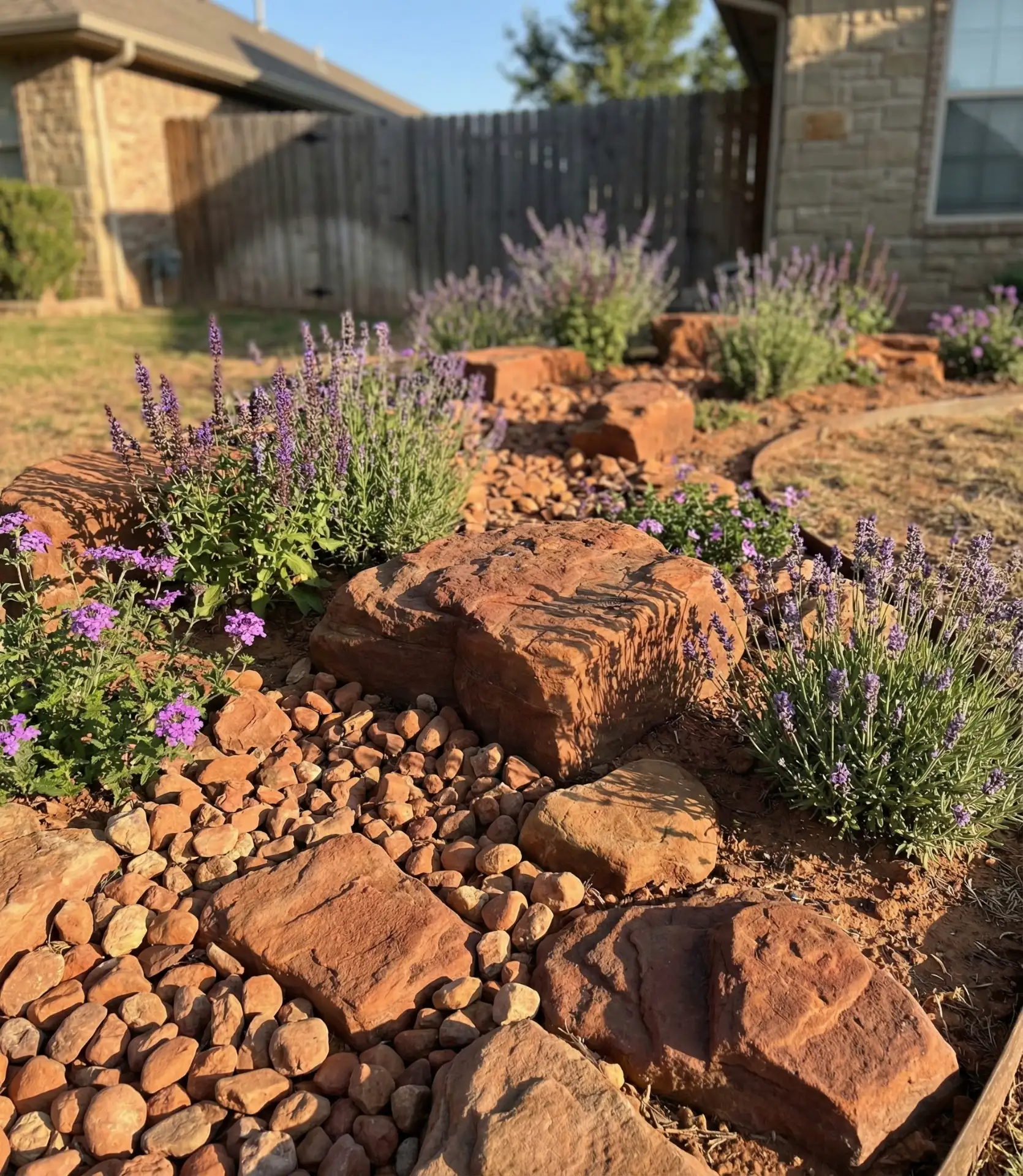
Red rock pricing is markedly regional, which is something that budget-conscious homeowners should know. According to the report, Colorado, Utah, and New Mexico, where it’s located, are the cheapest places to buy red rock. The locally sourced price is zero, but it can cost more than double or triple in areas that require long-distance shipping. In non-native regions where cost is a big issue, a wonderful alternative option is to use red rock only as an accent instead of the main material Keith Stone offers, combining it with a more affordable local stone, thus creating visual impact without the cost. A half-and-half arrangement not only gets you the warmth you want but also at a lower price.
6. Decomposed Granite Pathways with Rock Edging
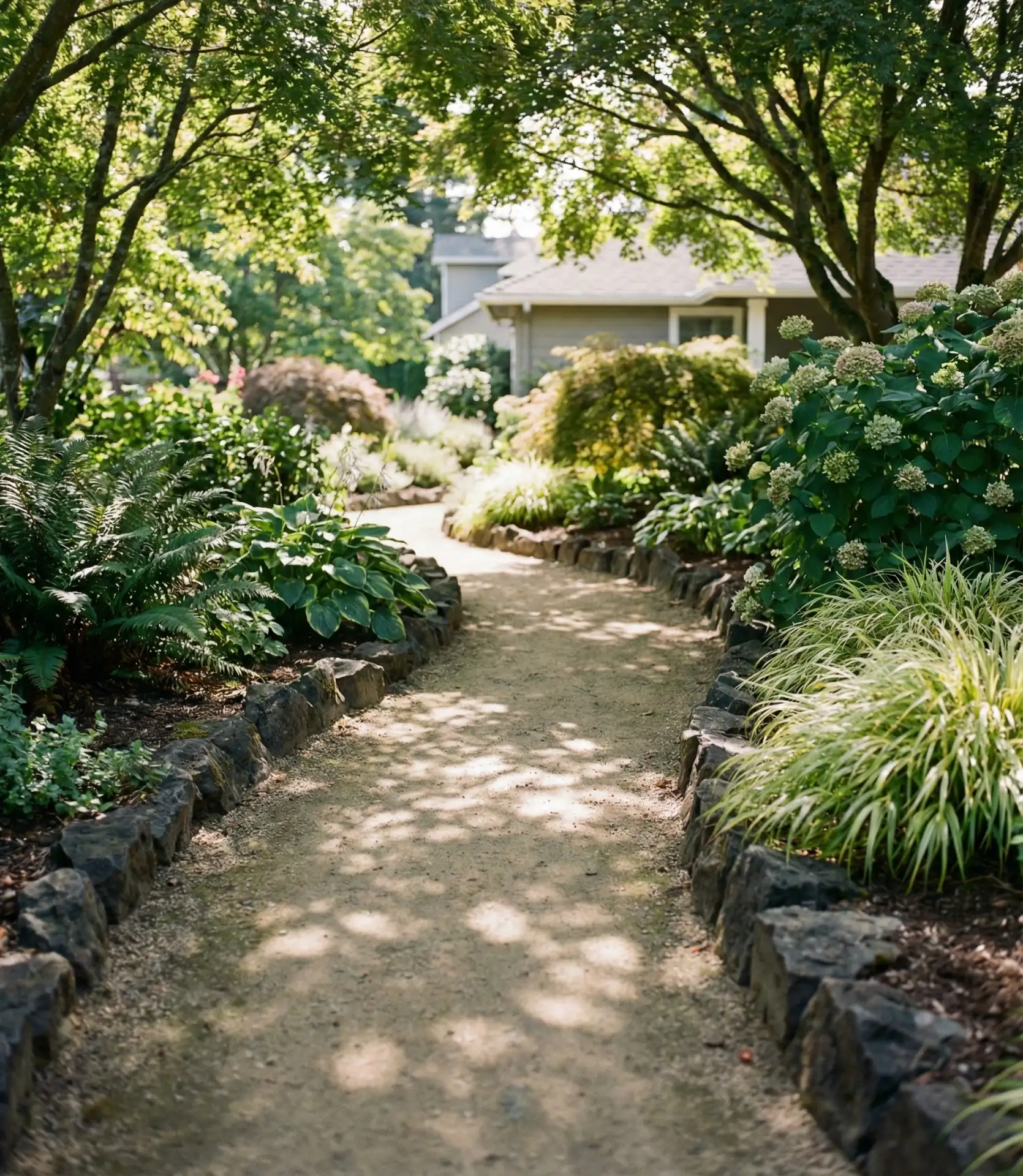
Decomposed granite is a material that is not only a permeable walking surface but also a comfortable one that harmonizes with almost all design styles. You can see it in use from a simple cottage garden to a high-tech approach. The path, bordered with a different type of stone, only has the evenly distributed ones, for example, white and black, colorful, or even river rock boundaries. These pathways not only retain their definition out of the edging but also prevent the migration of material. This is one of the easy DIY projects that makes the side of the house easier to access or creates pathways around the garden that look like they’ve been there forever.
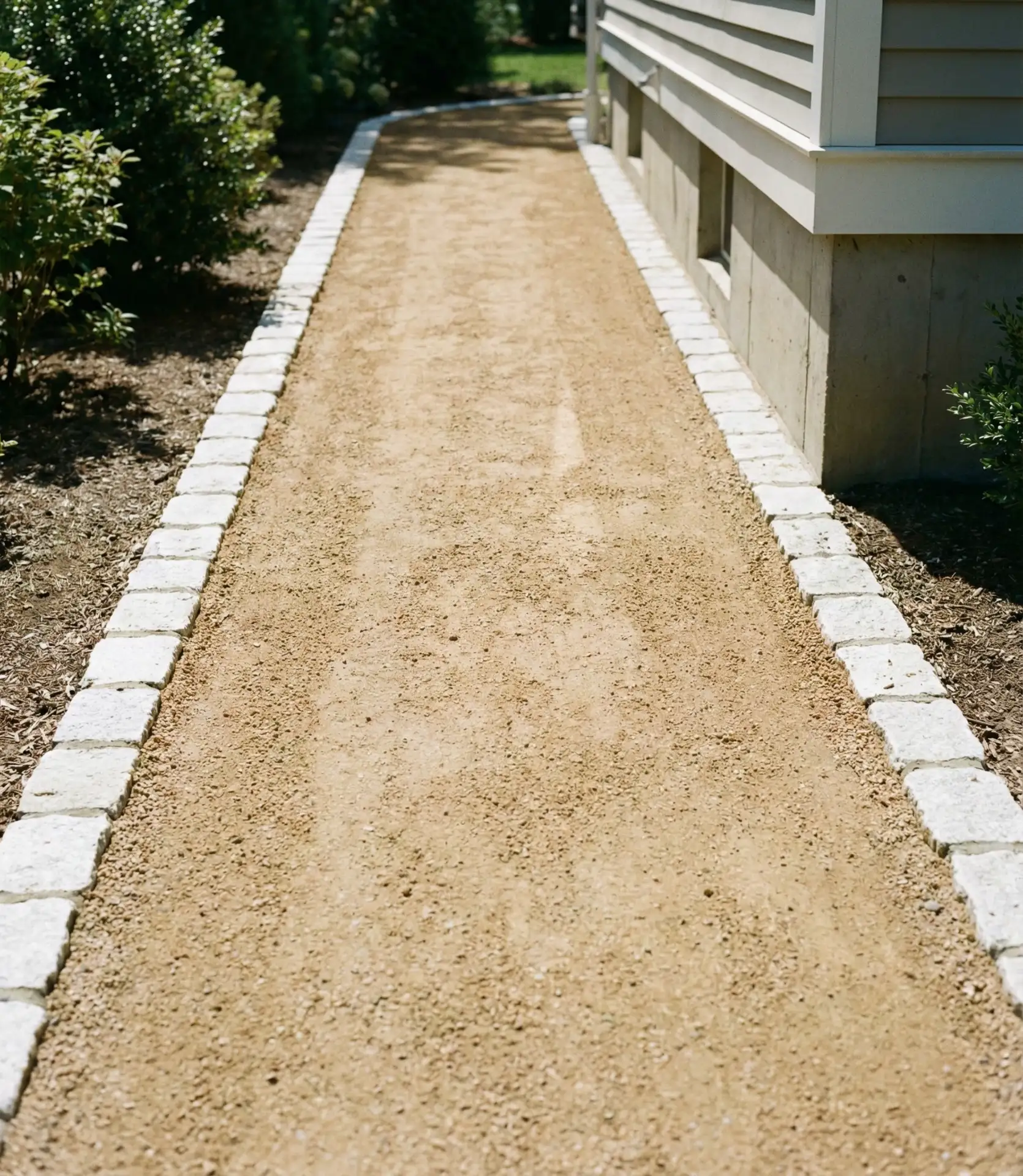
One of the most frequent mistakes is that people forget to perform the compaction step or even neglect the proper installation of edging, which eventually causes material to be washed away during the first heavy rain. The correct method is to dig three to four inches deep; if there is any doubt about the drainage, add a base layer of the crushed aggregate first, then compact the decomposed granite in a two-inch layer using either a plate compactor or a hand tamper. The edging should be slightly elevated above the path surface for effective material containment. If done properly, these pathways only require rare top-dressing for years.
7. Lighting-Enhanced Stone Walls and Beds
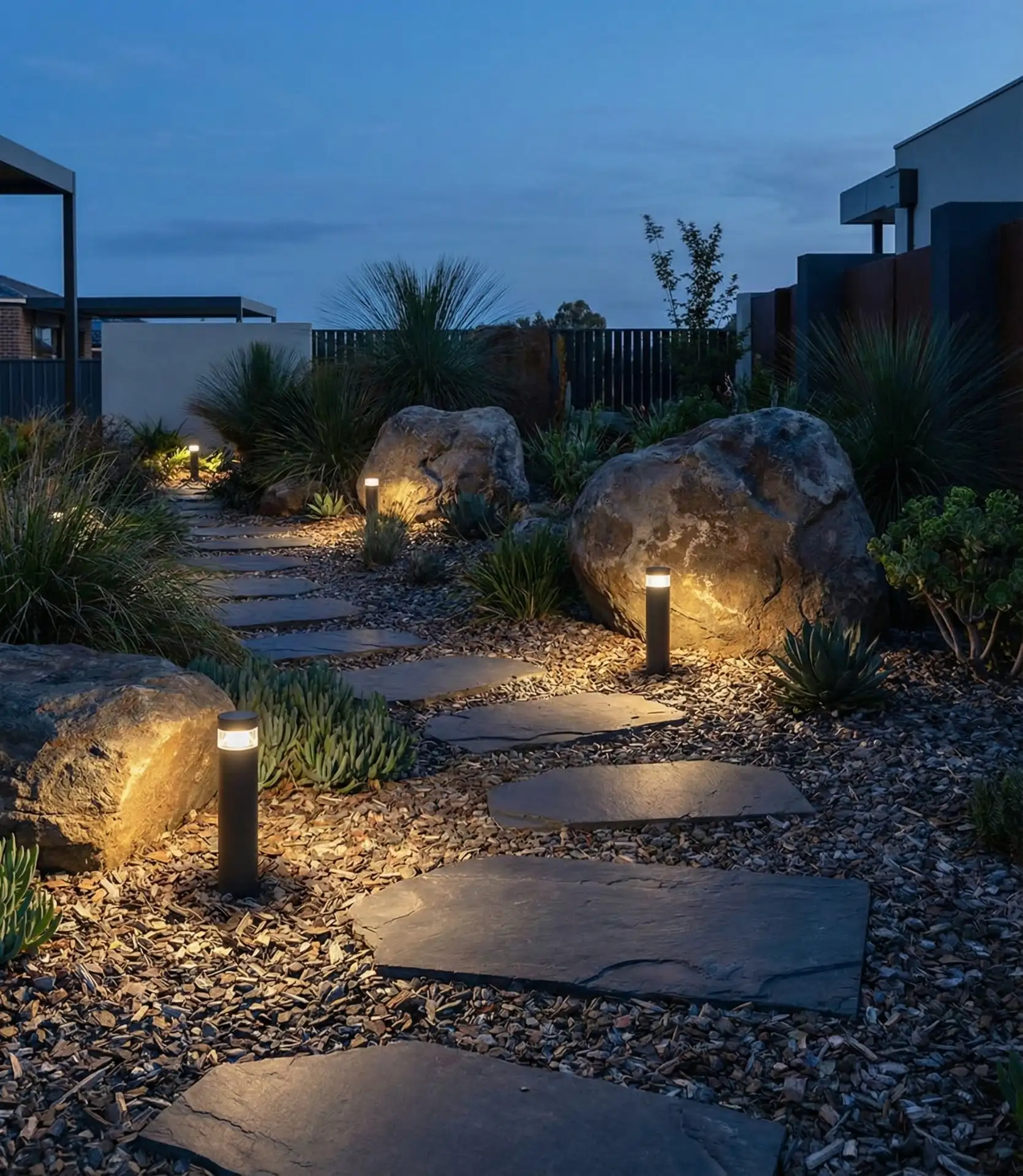
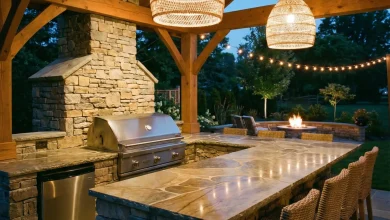
When coupled with artificial lighting, landscape becomes a rock art element that is visible not only during the day but that also extends your outdoor living hours as if an architectural element were introduced. For instance, positioning the uplights in a way to highlight giant boulders, using the washing effect of LED low-voltage lights over the surface of stone walls, or even installing the path lights among the gravel creates an appealing show and makes it safer to walk around the deck areas or the paths. The merger of the rough stone with the clever spotlighting gives a high-tech look that flat areas of landscaping can never have, whereby even ordinary yards feel as if they were designed by professionals.
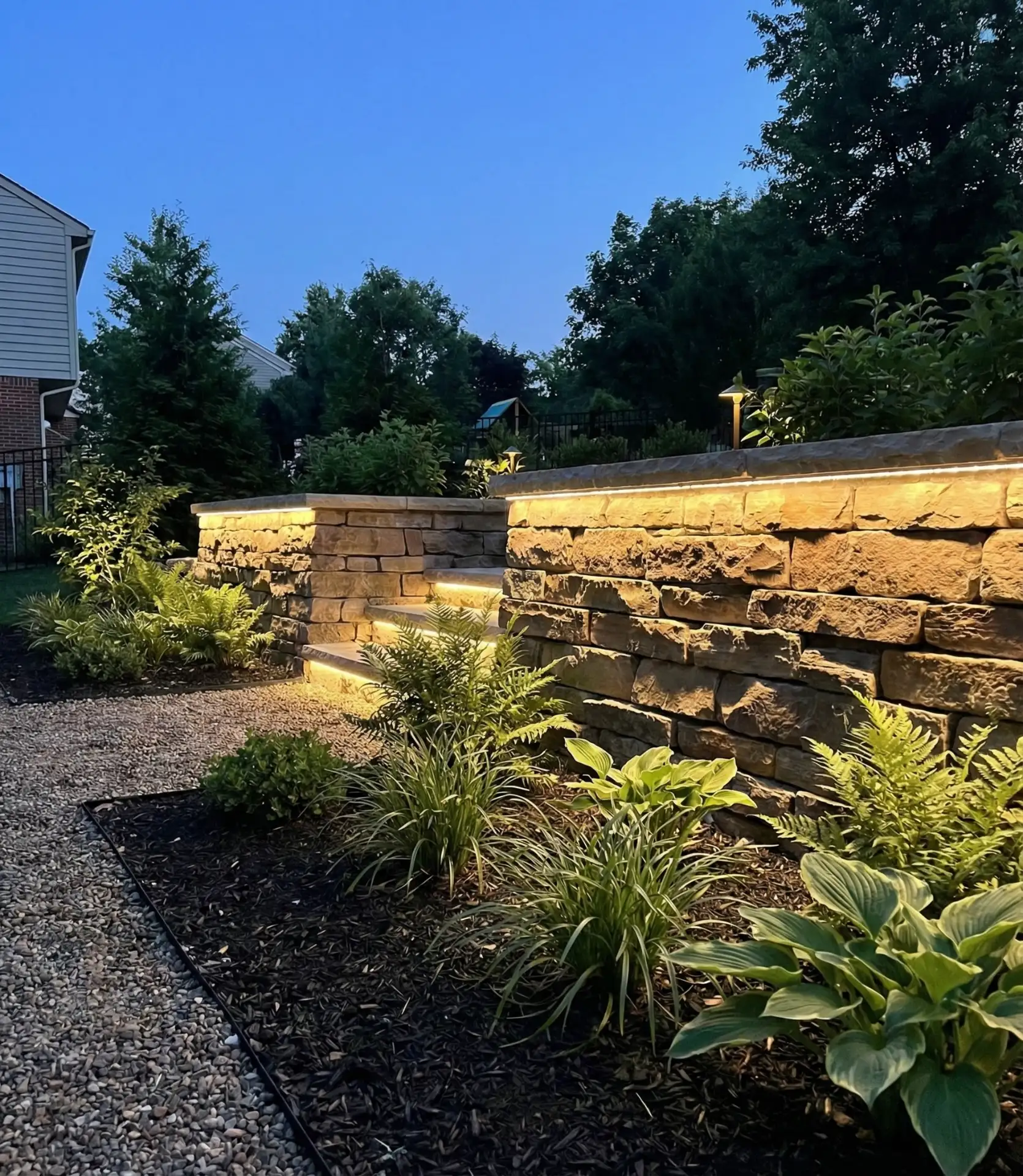
According to the recommendations of the expert designers, the installation of lighting is best done during the hardscape stage rather than retrofitting it later. Just imagine how simple it would be to run electrical lines if the stones were not present! For creating an almost invisible effect with the most natural look, it is best to use warm white linear LEDs at around three thousand Kelvin. Be careful not to overshoot the light. As a result, the goal is to make it look more subtle rather than be lit like a stadium. Although solar energy options have advanced significantly, they still function optimally in locations receiving more than six hours of direct sunlight. For the wire type with faultless operation, you should go with low voltage alone on timers or smart controls.
8. Minimalist Flat Stone Patio Spaces
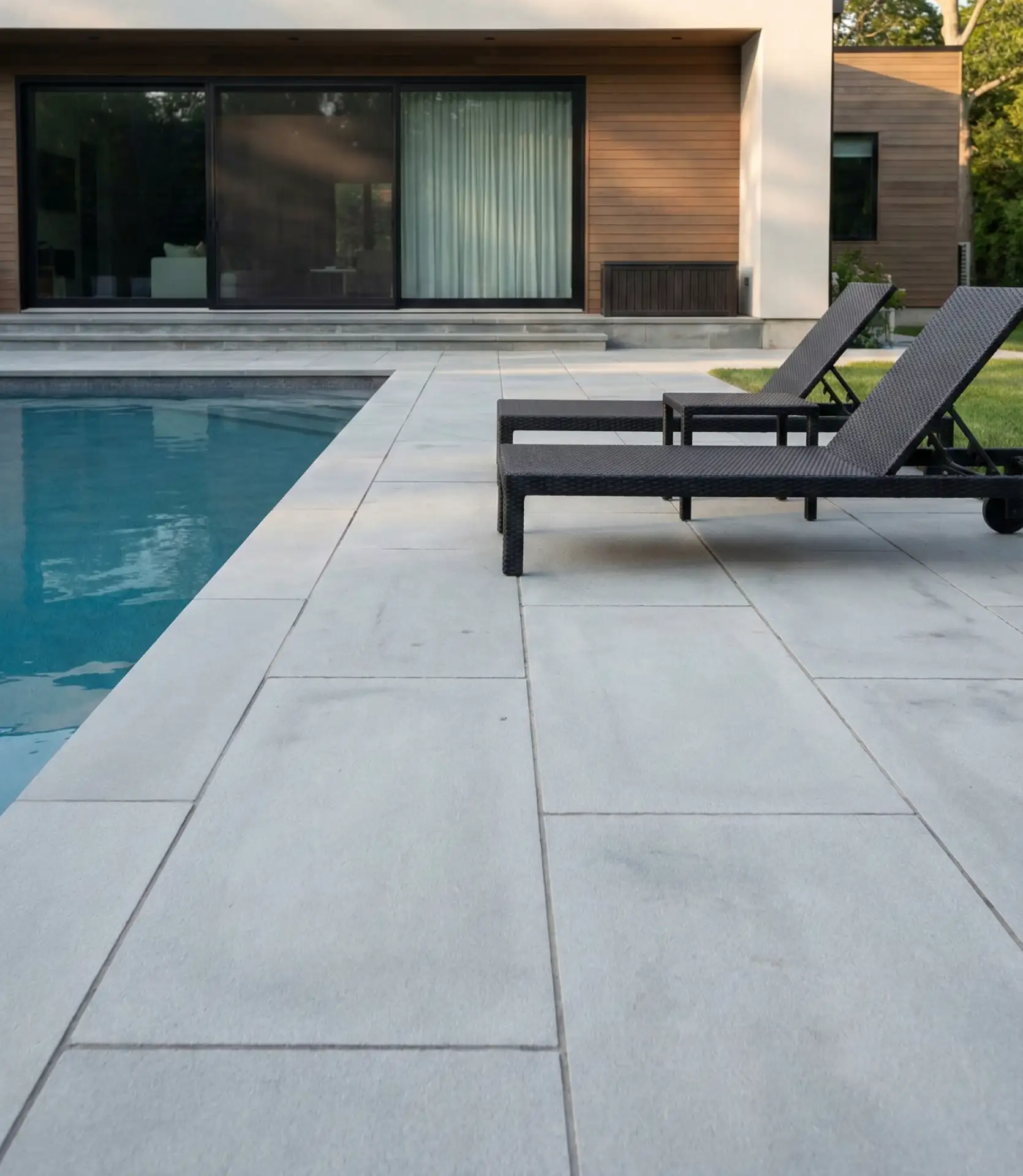
Large-format flat stones, such as Pennsylvania bluestone, Indiana limestone, or porcelain pavers, complement outdoor living areas by creating a seamless look with straight and contemporary lines. These applications are ideal for pool areas, where a comfortable barefoot surface is necessary, and they also serve as a transition between the house and garden. The small grout lines and large stones create a visually spacious area, and they are also easier to maintain than regular-sized bricks or small pavers, providing a neutral color scheme that allows furniture and plants to be the focal point.
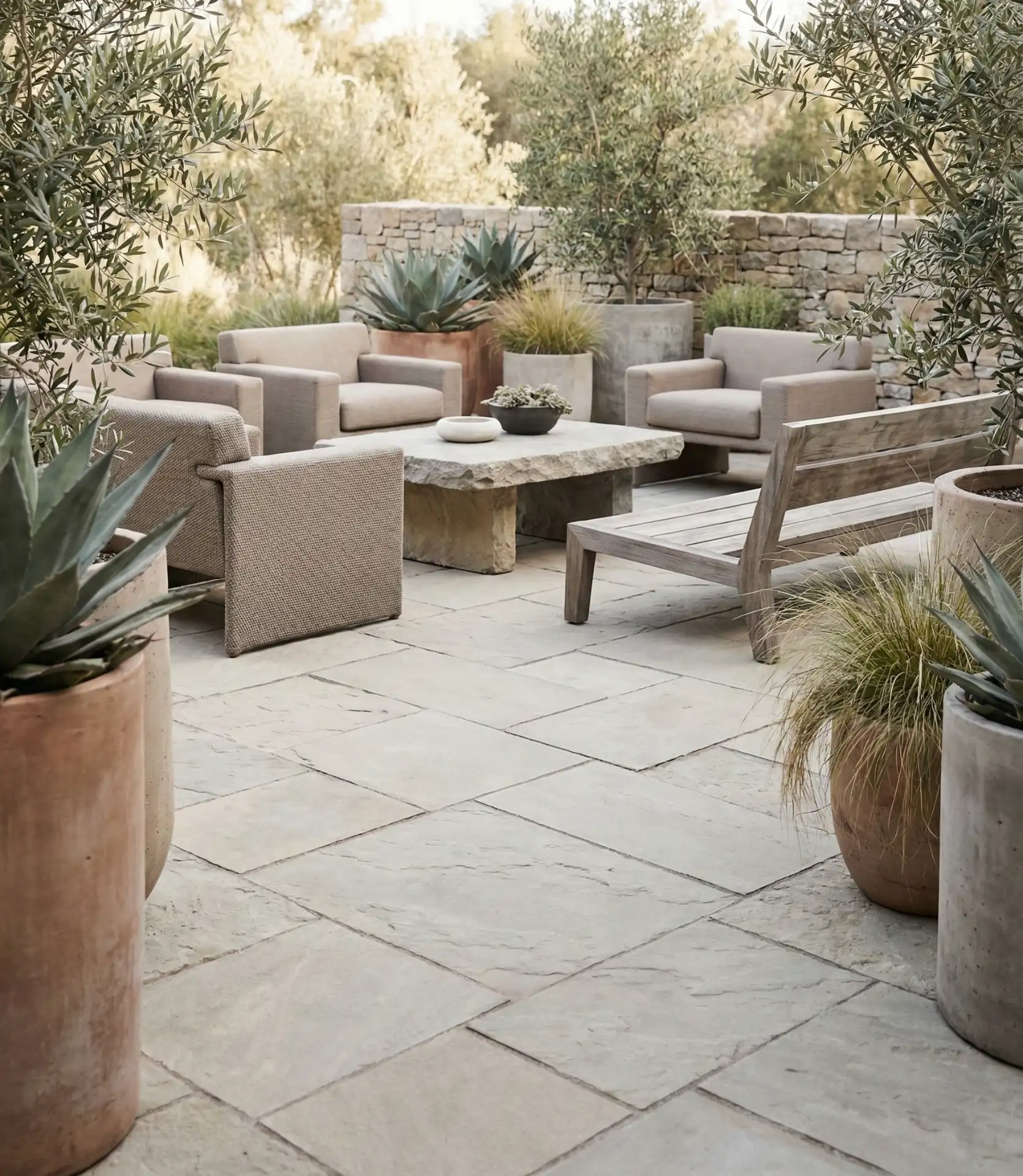
Areas with mild winters are ideal for this design, as the freeze-thaw cycle won’t affect improper stone installation. Please remember to have a thicker gravel base, suitable drainage, and stones that have been rated for freeze resistance in chillier areas such as Minnesota, Montana, and New England. Depending on the stone type and site preparation requirements, professional installation will cost you between $18 and $35 per square foot. The expense will return in due time; as long as you adhere to the correct installation methods, the stone patios will endure for over 50 years with only the need for occasional power washing.
9. Textured Bull Rock Foundation Plantings
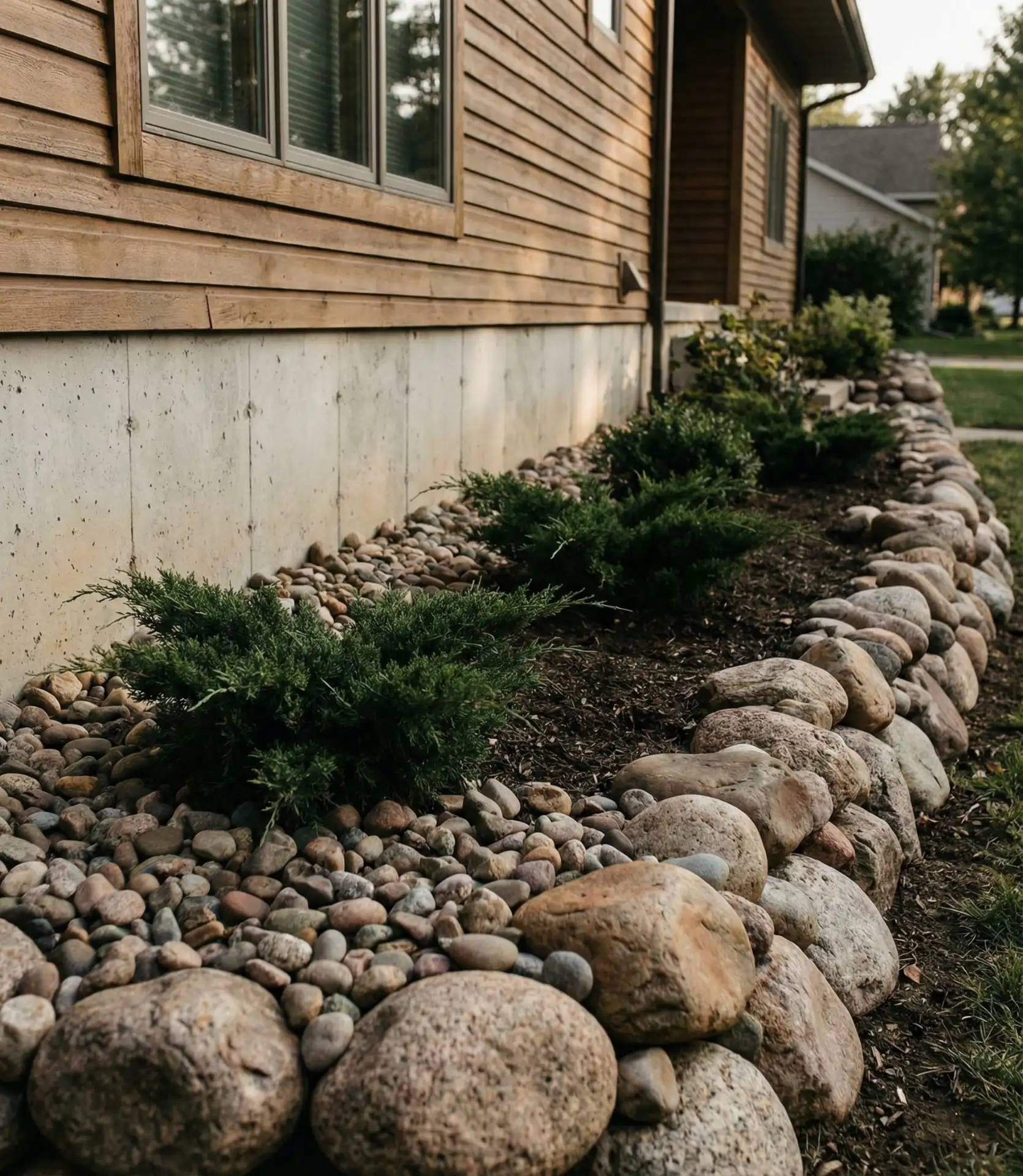
The house’s foundation is bull rock, large rounded stones that create a low-maintenance space. These splash-back preventers are simply placed next to siding and weed-resistant mulch cover styles. They stay especially effective on the outer edges of houses where mulch needs to be replenished all the time because of the nature of the material. The various colors of bull rock collections add visual appeal without clashing with the architecture, and the mass of the stone ensures it stays in place even during harsh weather.
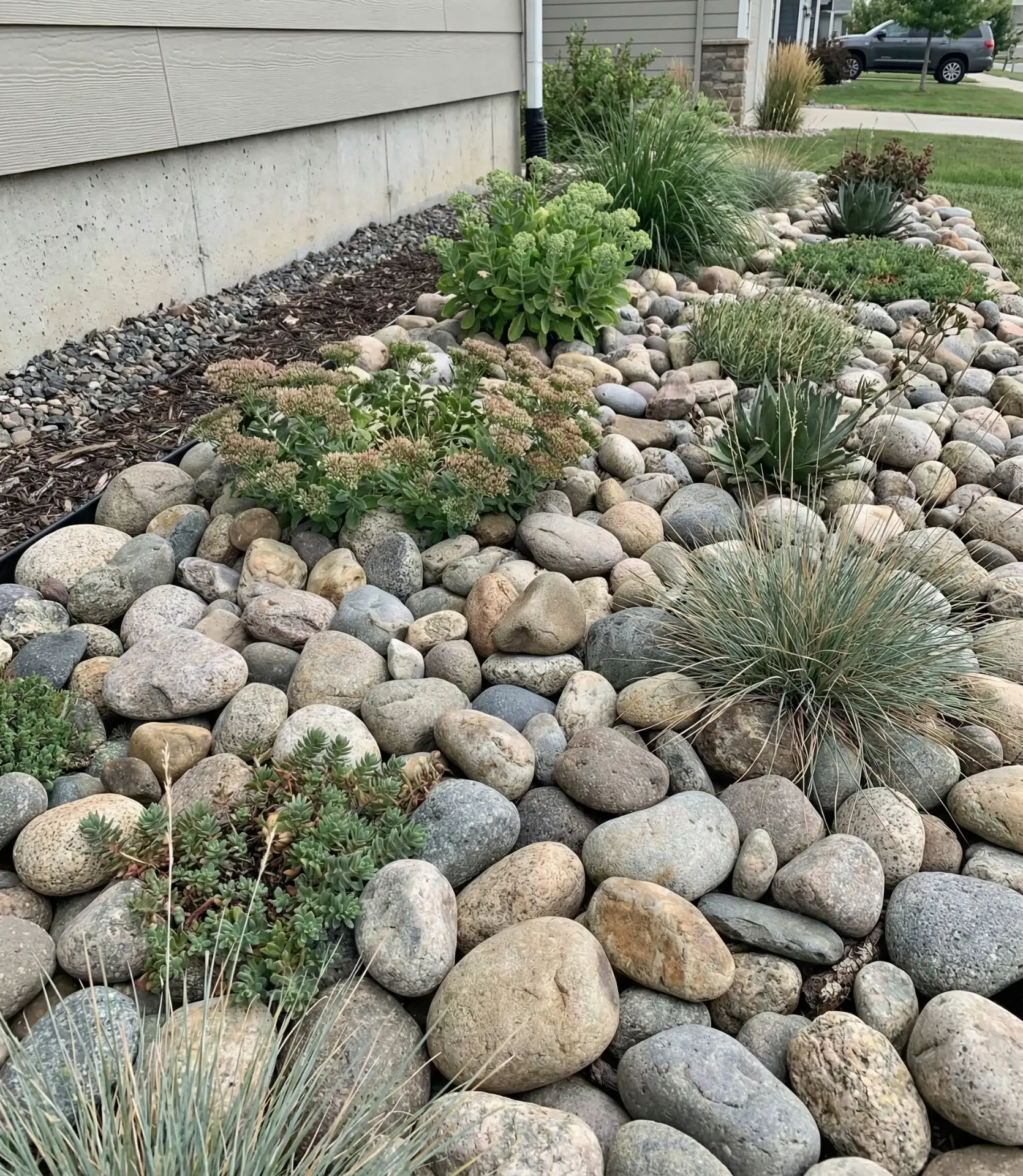
Homeowners, in their quest to beautify the area around trees, often make the mistake of stacking rock or mulch directly against the trunk of the tree, which causes moisture to be trapped and thus results in rot, diseases, and pest issues. Always ensure that you have a minimum of 6 inches of bare soil around your tree trunks and avoid making the mounds look like volcanoes, which may divert the water flow unnaturally. Bullrock creates an excellent decorative effect on the tree rings if placed at the proper distance, as it will provide a mature look, reduce grass cutting, and prevent string trimmer damage to the tree bark. It is normal for the material cost to be in the range of thirty to fifty dollars per ton, while one ton could cover roughly sixty to eighty square feet of area at a depth of three inches.
10. Simple Budget-Friendly Rock Mulch Beds
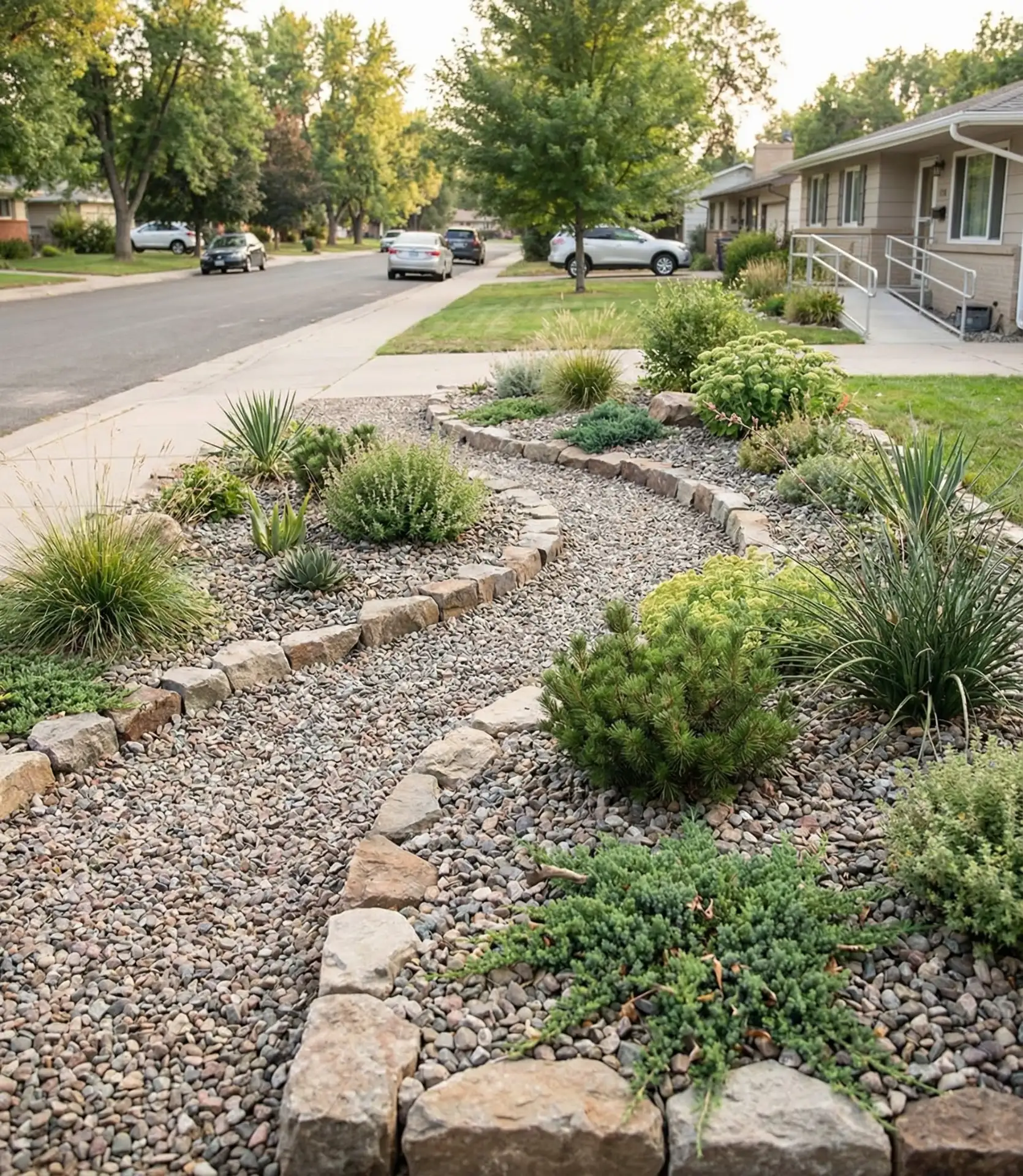
This is a beautiful idea, at first sight… Definitely it is worth it! Pea gravel, river pebbles, or crushed stone are materials that help you achieve the goal you want along with the local community by keeping the project budget-friendly. Small decorative aggregates can transform empty or dull spaces into green, harmonious, and beautiful places. Moreover, this paving requires minimal maintenance and enhances the elegance of the outdoor space.
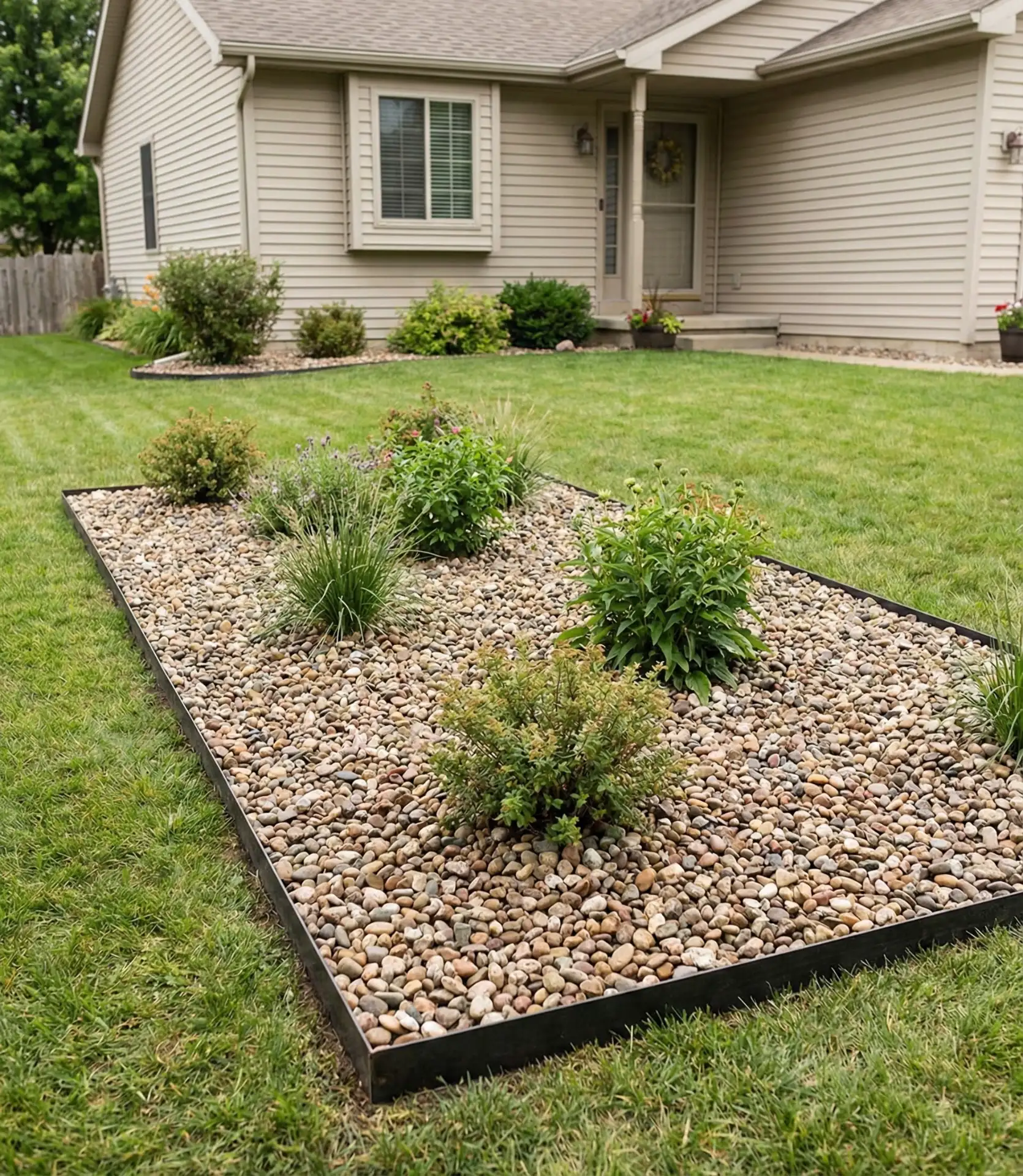
To correctly cover a large area, the first step is to recalculate the amount of material needed for purchase. Homeowners often underestimate the amount of materials they need, which can result in multiple trips and overpaying for delivered goods. It is commonly said that one cubic yard can cover up to 100 square feet if the depth of the fill is 3 inches. The recommended additional quantity is 10% of the one obtained in the calculations to balance the uneven ground and the one that will be settled after some time. A majority of the places that sell landscaping materials give free delivery on orders that exceed a certain amount; therefore, buying in bulk is more cost-effective as compared to buying bags from a big store, which can cost 3 to 4 times more for the same volume of the product.
11. Zen-Inspired Raked Gravel Garden
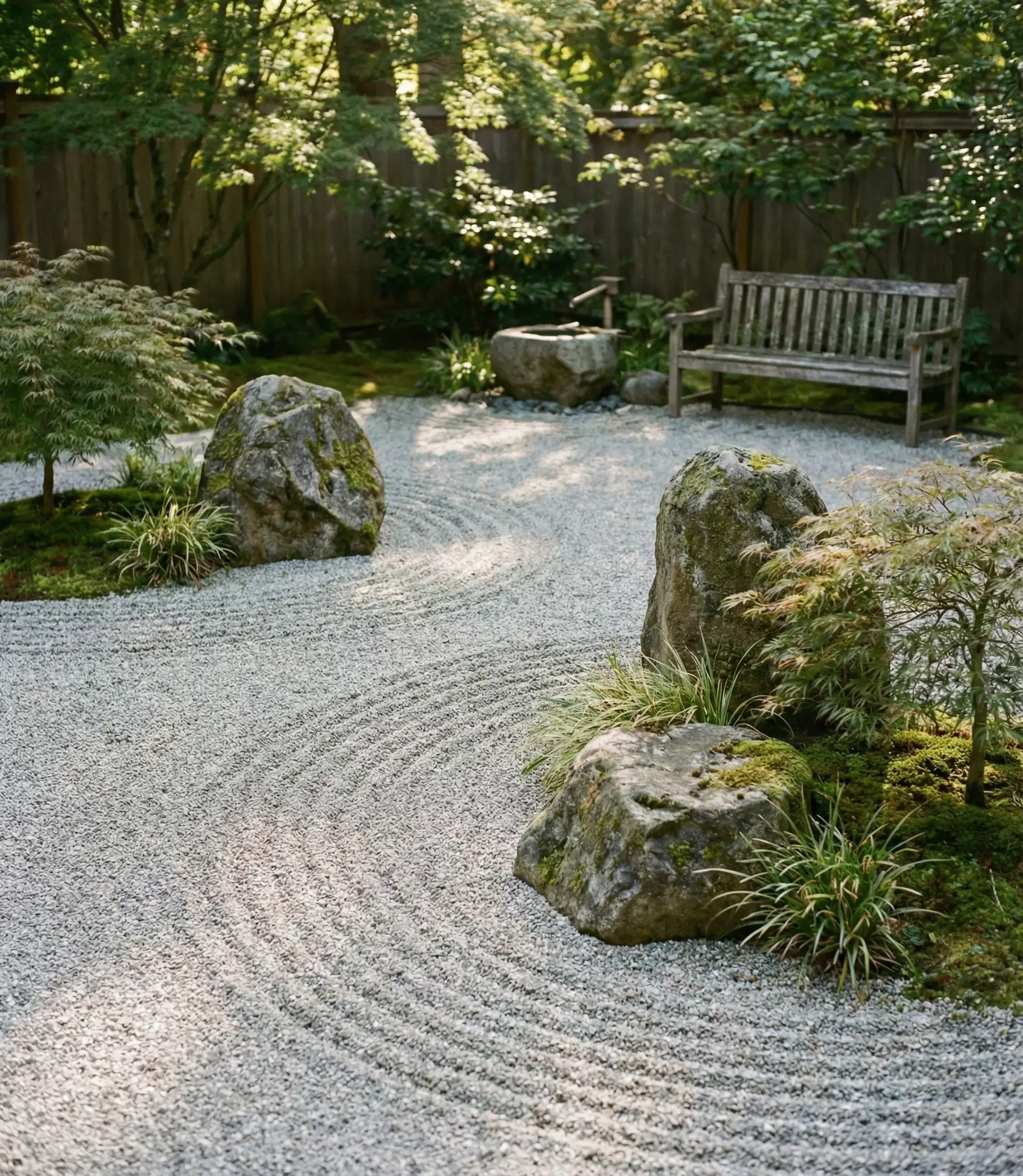
By incorporating this fine white or gray gravel feature into patterns, American backyards can embrace the aesthetics of Japanese gardens. This minimalist yet significant design suggests crushed granite or pea gravel as a canvas, while boulders balancing around act as the sculptural, main visual element. Raking the gravel creates ripples that suggest water flow and provides a therapeutic ritual, making this space both a mental and visual feature for homeowners seeking a peaceful outdoor area.
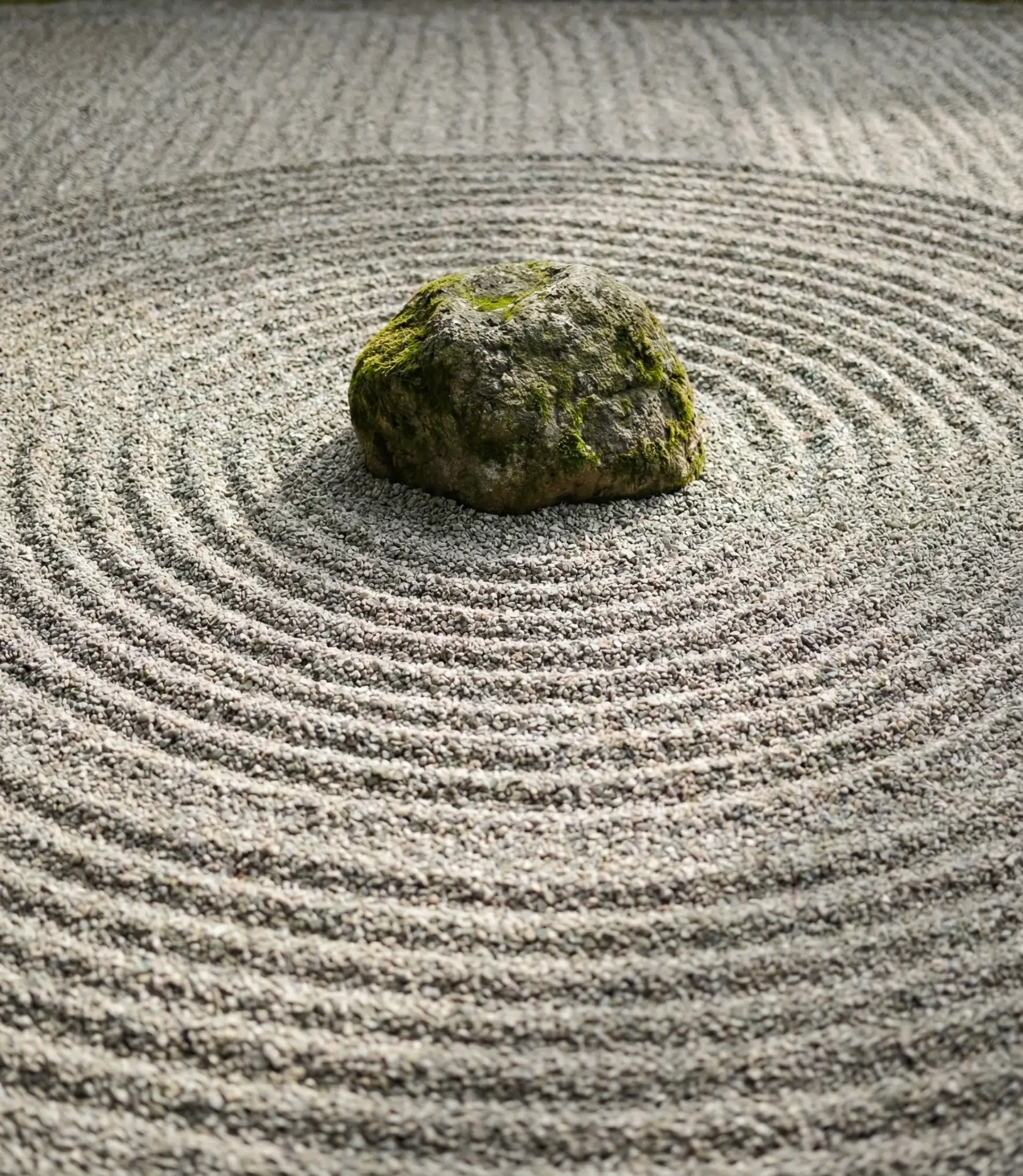
A Portland-based landscape architect commented that clients tend to be concerned about the maintenance in the beginning, but the majority of them discover that the weekly raking turns out to be more of a family ritual than just a task. The secret is the use of gravel that is between one-eighth inch and one-quarter inch in size—raking is easy to do, but it’s also heavy enough to stop the wind from moving it. To keep the material in place, delineate the periphery with timber, steel, or stone borders and calculate a depth of around 3 inches over compacted soil and landscape fabric to avoid the growth of weeds.
12. Colorful fieldstone mosaic paths
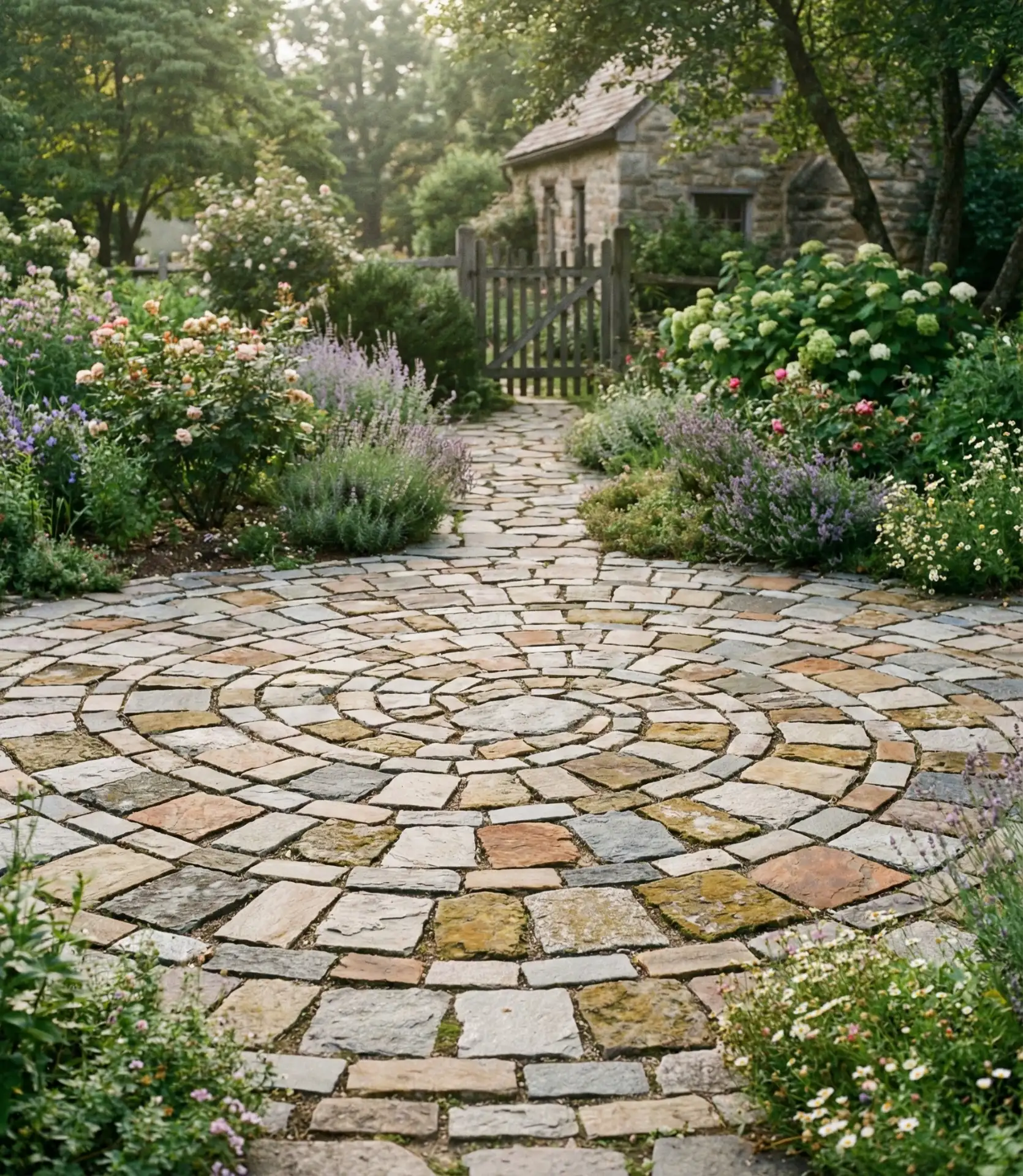
Collecting field stones from properties or obtaining them from a nearby source adds to the character and creativity of the design by using them to make unique and one-off pathway artworks. These flat stones can easily be placed in different arrangements, such as the mosaic of spirals, geometric designs, or flowing-like forms, not only to change the look of the paving stones but also visually to create outdoor art. This method would be very effective in a cottage-style garden or a fun and relaxed independent front yard design, rather than a traditional and formal one; additionally, the different colors of the natural stone make them visually interesting on their own.
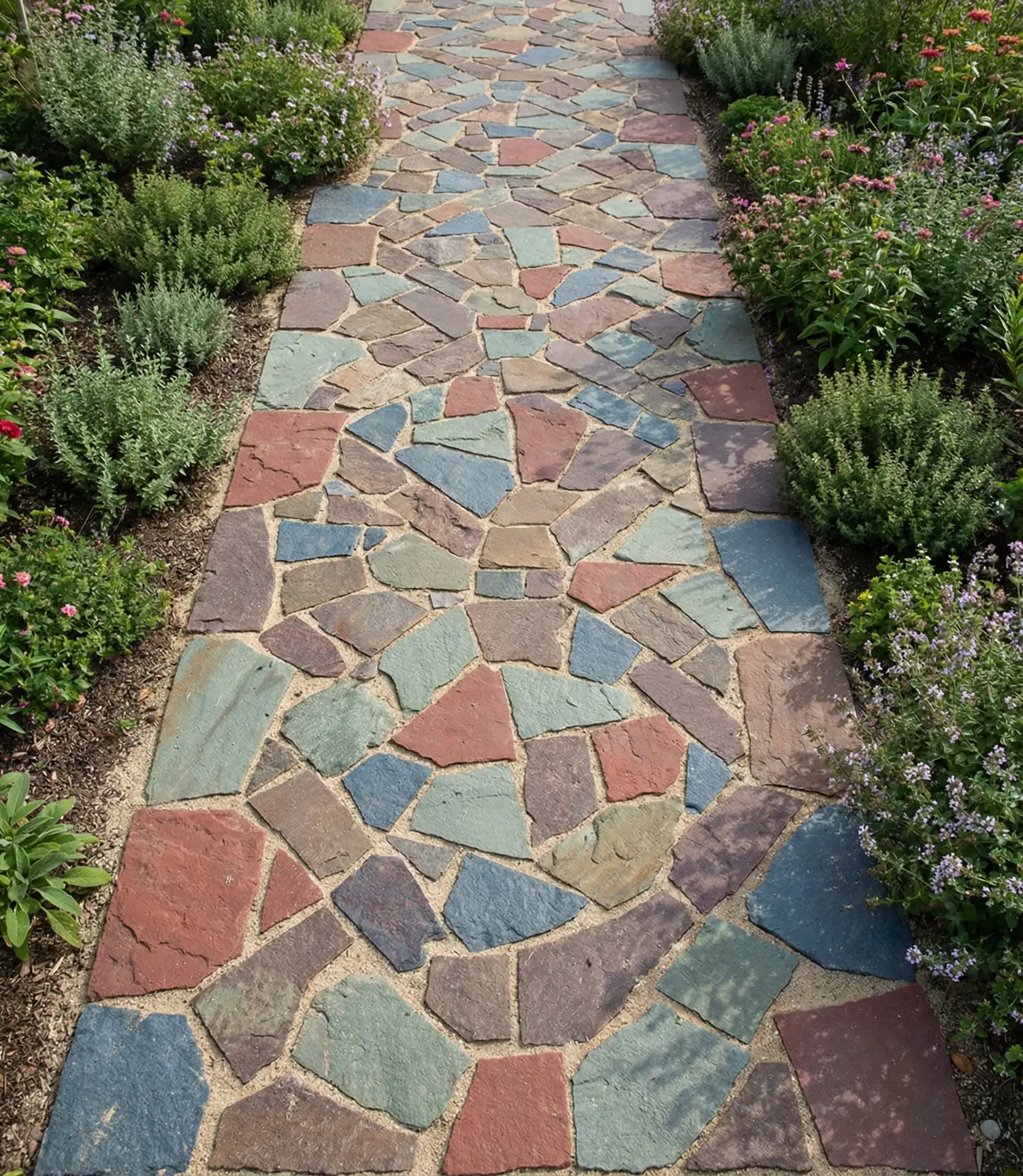
Are you looking for a perfect weekend DIY project? If you are an artist and have some spare time, this project can be an ideal one for you. Dig shallow, i.e., four to six inches deep, cover with a crushed gravel base, and resemble stones like a puzzle by arranging the tightest possible fit before you join them with polymeric sand or fine gravel. It demands a considerable amount of time; plan to dedicate the whole weekend to a section of ten feet, but the material cost still stays low, especially if you use stones already found. The aesthetic appeal comes from the fact that this will be a permanent storytelling path, which will age and gain more character over time due to moss and weathering.
13. Contemporary Black and White Contrast Design
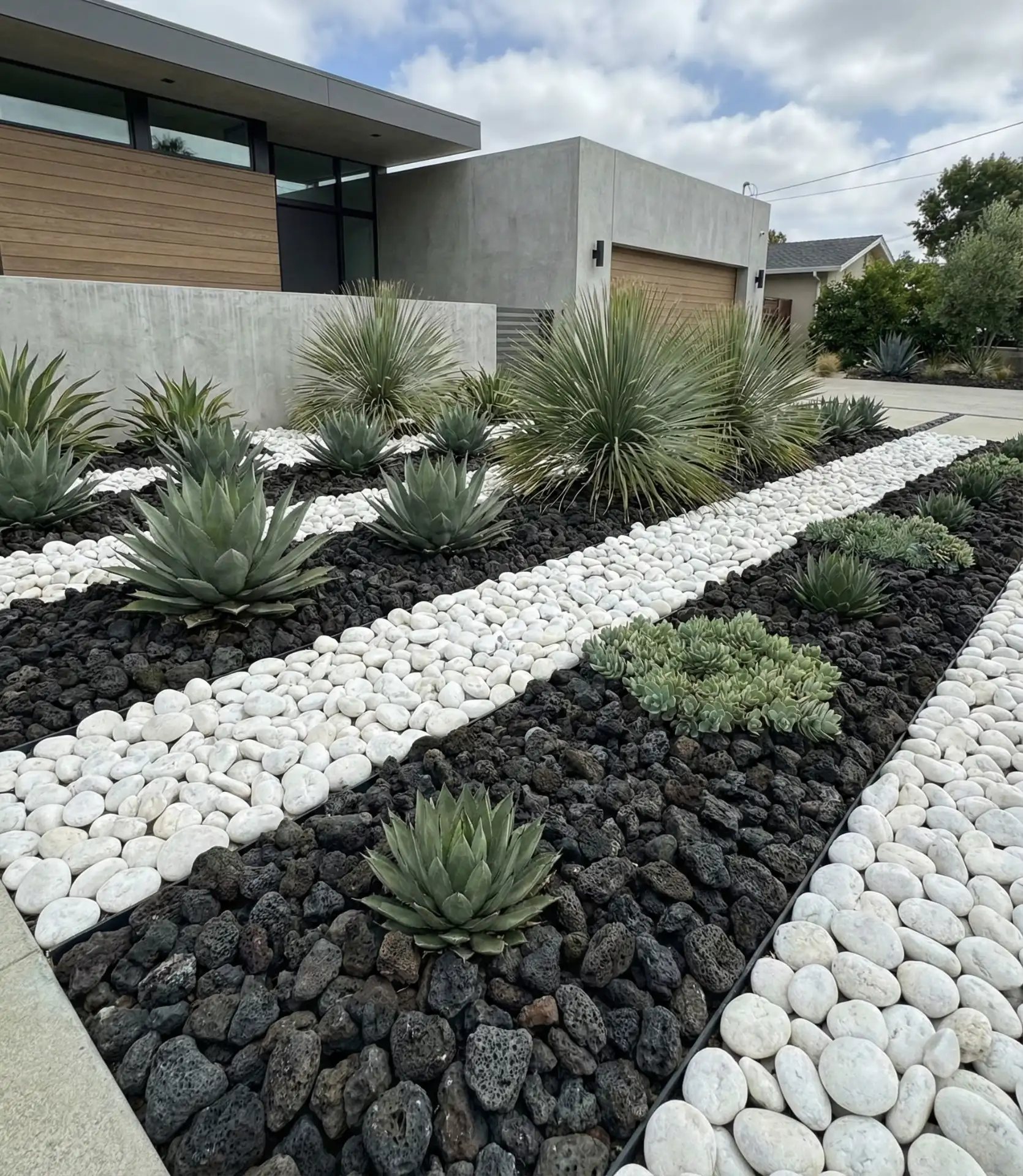
Pairing with white marble chips or limestone that forms a stark contrast with the black volcanic rock is a technique that will create impressive high-contrast designs that look great in photographs and work well in modern structures. This daring style can be used in home entrances where the first priority is to have a strong immediate visual effect as well as in side yards that might seem alone otherwise. The color differences lend brightness to the materials, creating clean geometrical-design patterns—two-color sections, parallel lines, or yin-yang curves that feel like modern art—to the outdoor settings.
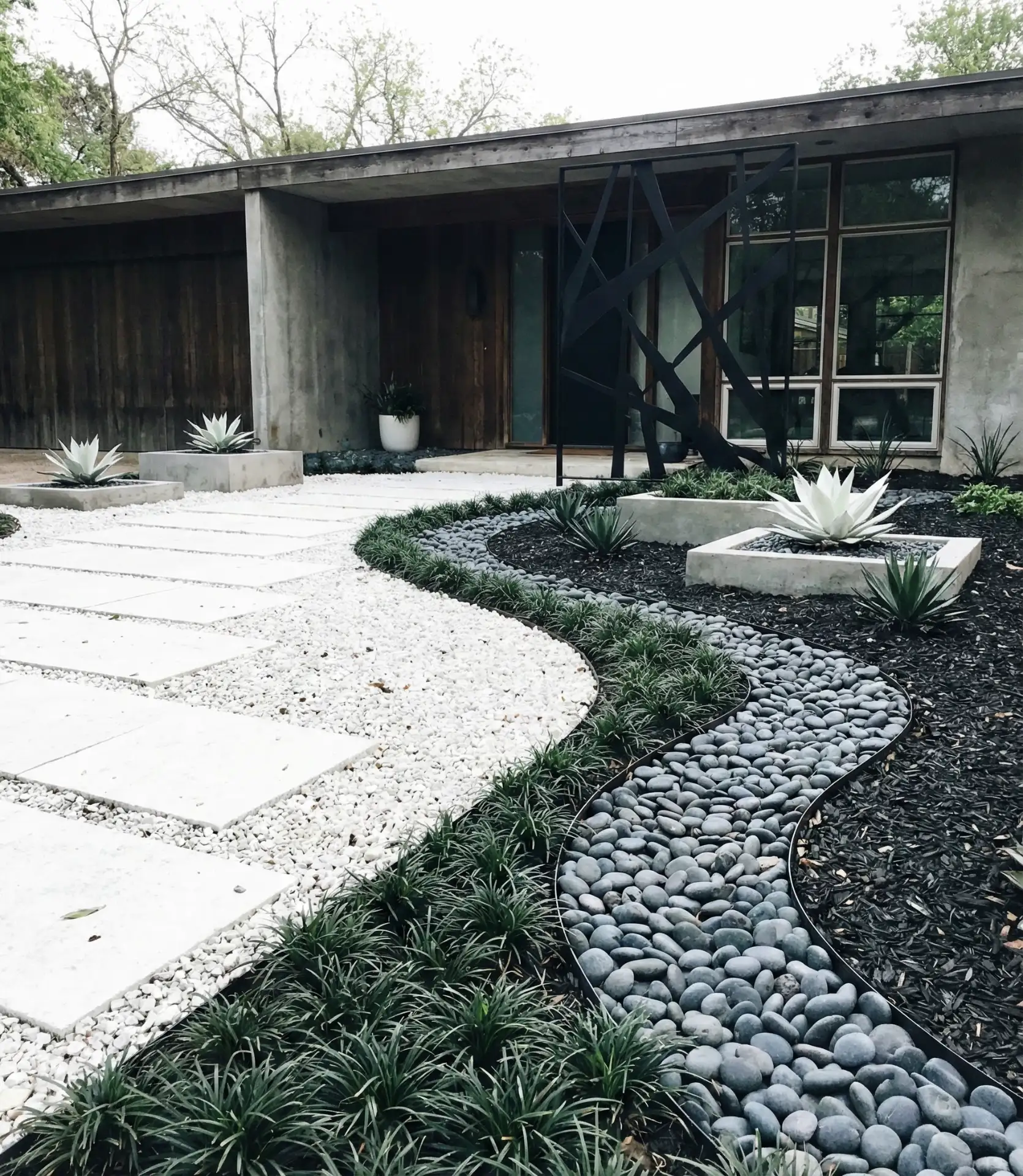
These are the types of properties whose exterior finish and neutral tones, like gray, white, beige, and natural wood siding, are most suitable. This design is particularly effective when the landscape itself provides color and dismisses clashing. This design will also be ideal for areas with a lot of sun because shadows will make the contrast more effective. Color zone planting, including trees and other features, should have borders that are edged precisely; therefore, choose metal or composite materials to prevent mixing, and if you want to reduce maintenance, place landscape fabric beneath each section. For additional, unobtrusive lighting impact, professionals have been known to install LED strip lighting along the lines for an after-dark effect that improves the design look.
14. Naturalistic Creek Bed with Large River Rock: A dry creek bed installation using large river stones is a creative solution for drainage issues while also adding a naturalistic landscape that suggests the presence of a water body.
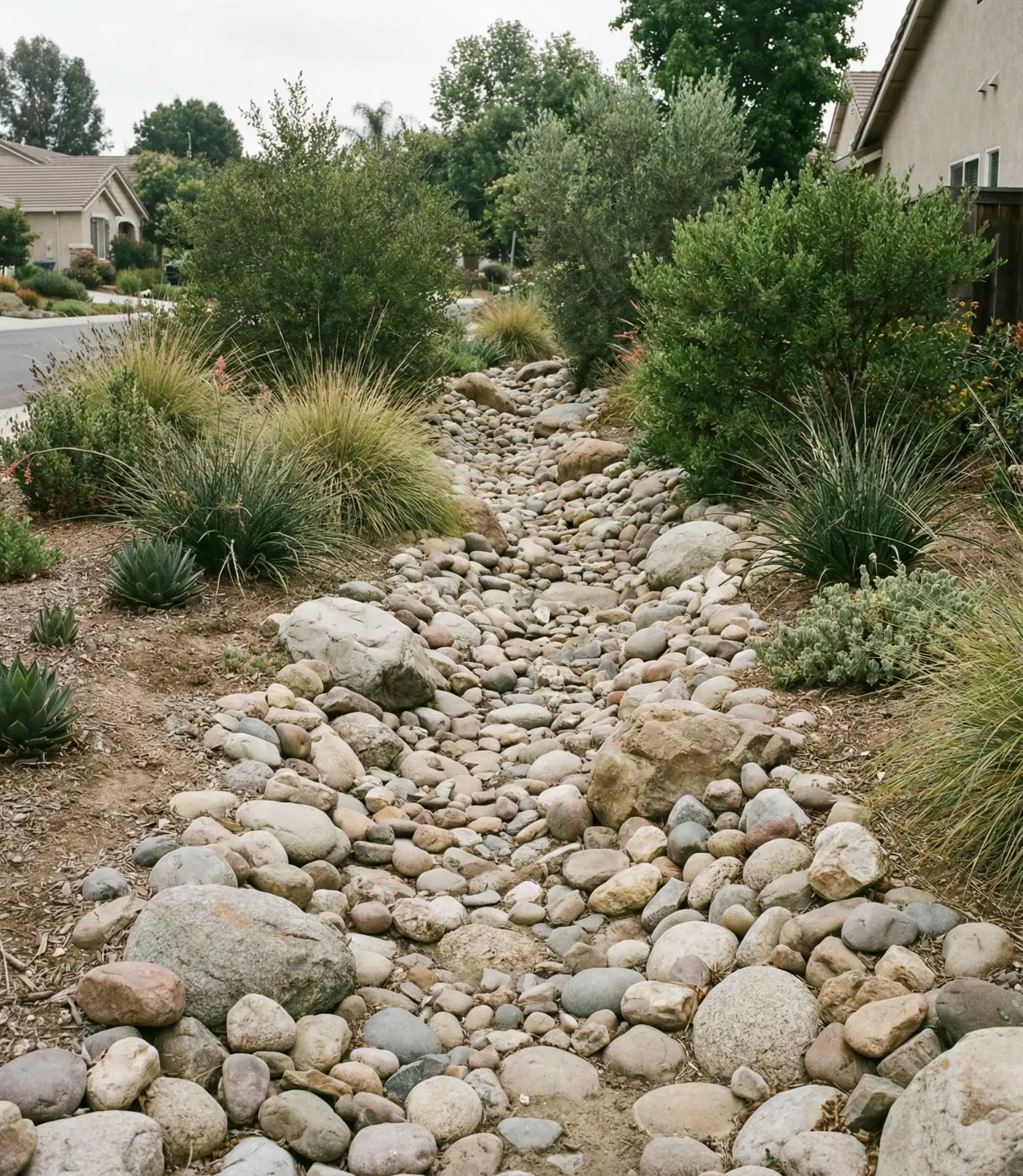
Dry creek bed installation with large river stone is a creative way to solve drainage issues at the same time as adding a naturalistic landscape suggesting a water body. This type of arrangement is the best choice for residential areas, particularly in locations with spot-down discharge or where runoff contributes to slope erosion problems. The flat, river-rolled stones that range from tennis ball size to foot size are organized to look like how water erodes a streambed naturally. The arrangement is typically made with larger stones anchoring the curves and smaller stones filling the channels.
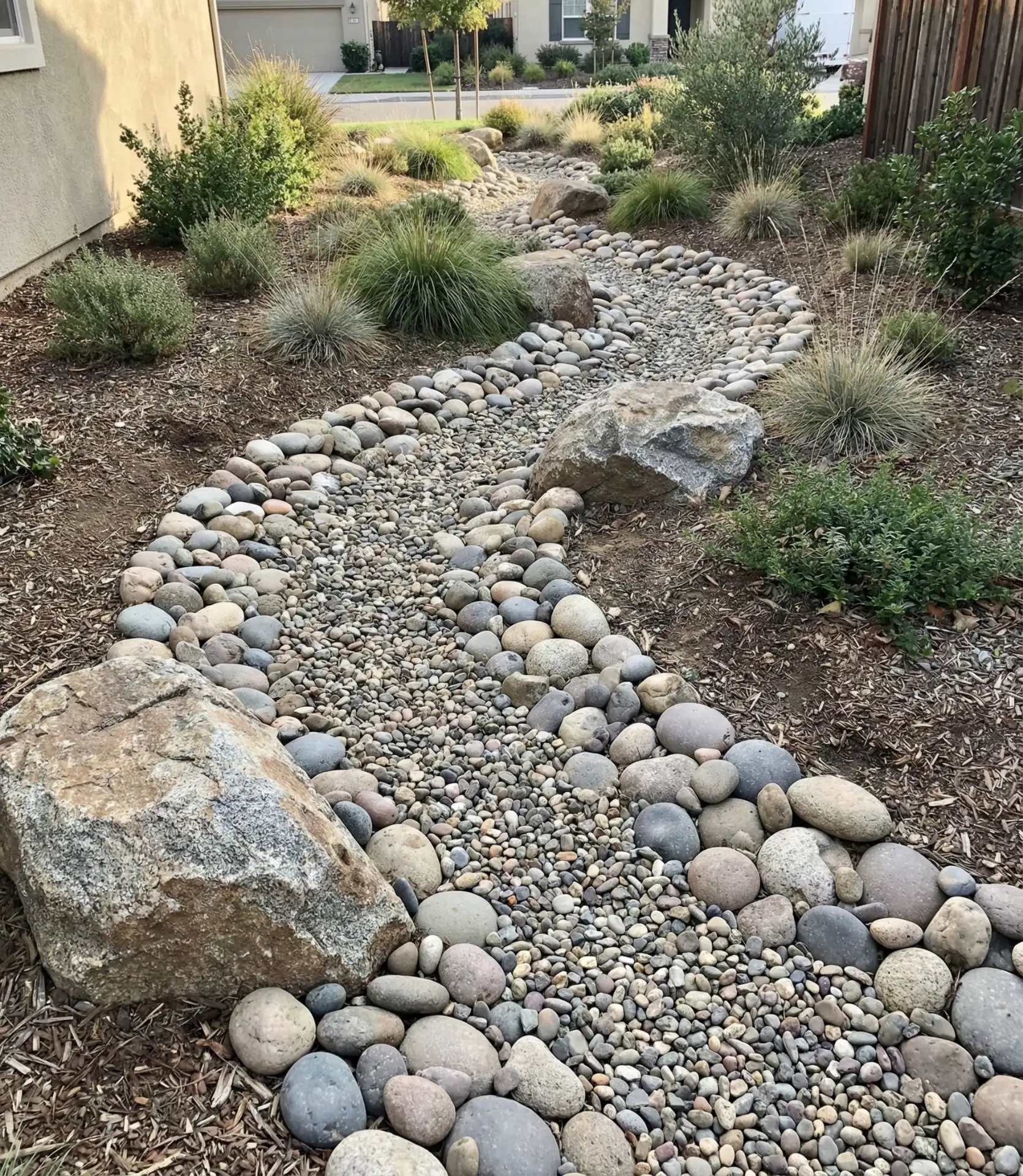
One of the most frequent fallacies perceives the creek bed as being homogeneous and straight—irrelevant to natural streams that bend and change dimensions. Draw irregular curves, increase the channel line in pools, and shorten it where streams would naturally speed up. Place your largest boulders first on the outside bends of the stream channel, where you would expect the water to deposit them, and then use smaller stones progressively toward the center. Wrap the trench in landscaping fabric to prevent settling and weed growth before laying down the stones. The most important thing to do is to observe the real water flow during rain to make sure that your decorative element is functioning properly as a drainage system.
15. Mediterranean Terrace with Stacked Stone Walls
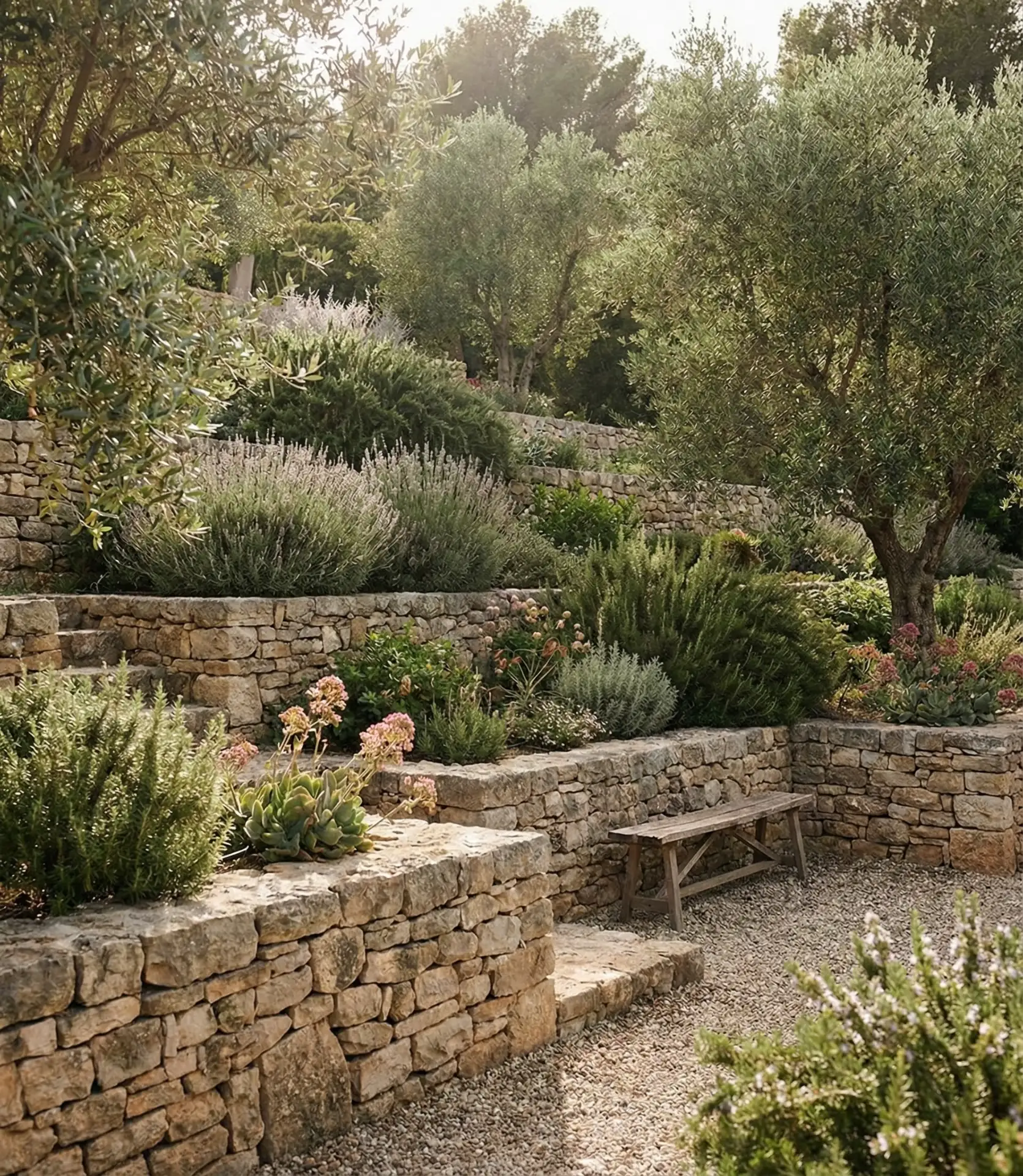
Zigzag walls of a stacked-stone type made possible through this method and dry-stack stone wall construction would be a scenic transformation of sloped backyards to areas used for living. The technology involves using different types of sedimentary rocks stacked in horizontal layers without any mortar; they stay in place thanks to gravity and careful arrangement. The walls can be used for planting to form individual outdoor areas, and they can also be utilized for slope stabilization on very difficult sites. The pairing with plants like the drought-resistant lavender, rosemary, and various ornamental grasses is a perfect addition to the lovely Mediterranean atmosphere that has been trending, especially in the Sun Belt of the USA.
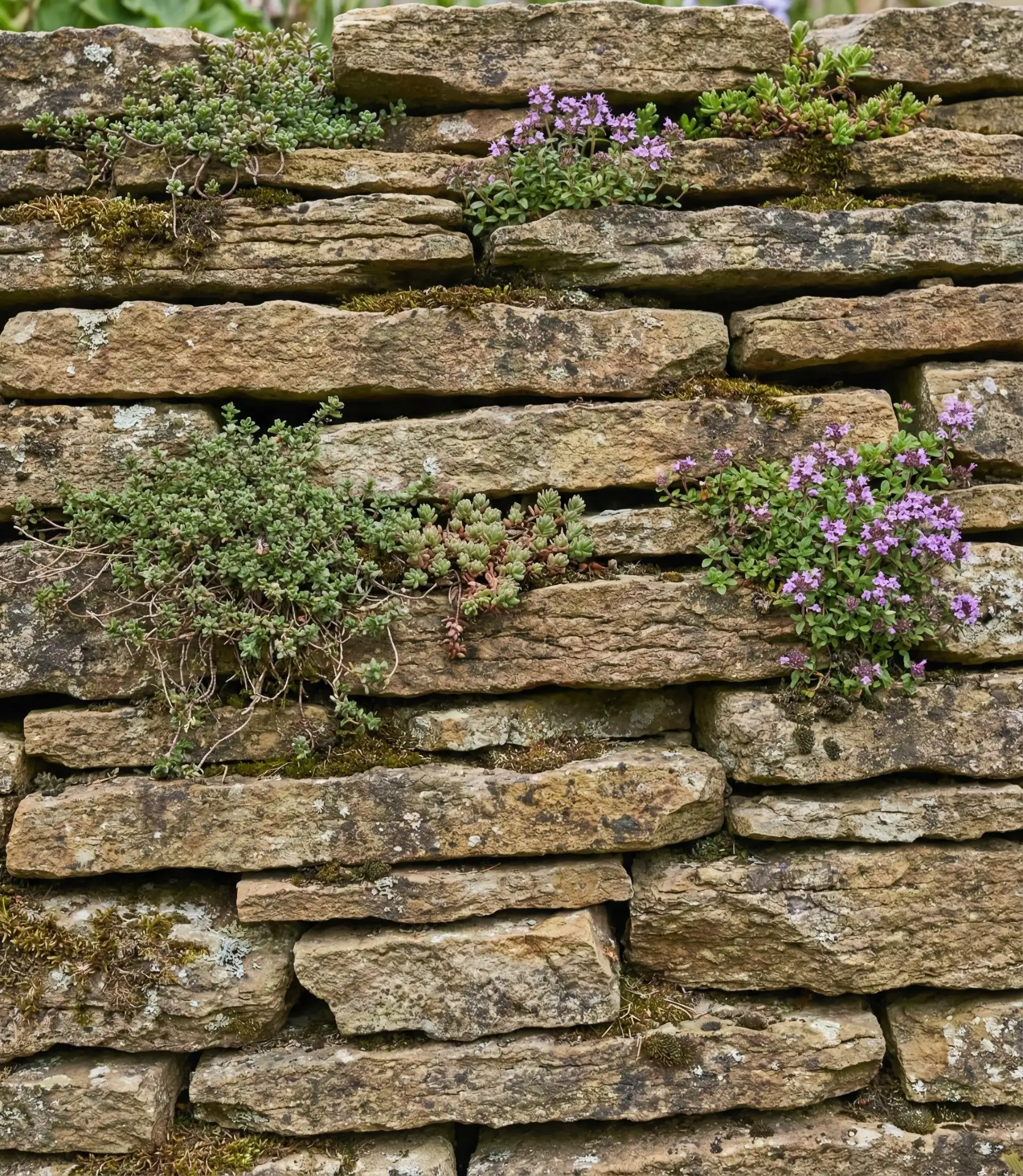
Real homeowners often underestimate the physical labor required to move and place the stones for retaining walls; additionally, building a wall that is three feet high requires a significant volume of stones—approximately one ton for every eight linear feet. Furthermore, the actual construction must include a gravel base, a backward lean, and drainage considerations. For walls less than three feet high, the standard approach is often do-it-yourself (DIY); however, for walls higher than three feet, it is necessary to involve a structural engineer in most jurisdictions. The price for the installation by the professionals will be anywhere between twenty-five dollars and fifty dollars per square foot of the wall surface, according to the stone that is chosen and the accessibility of the site.
16. Pebble Mosaic Patio Inlays
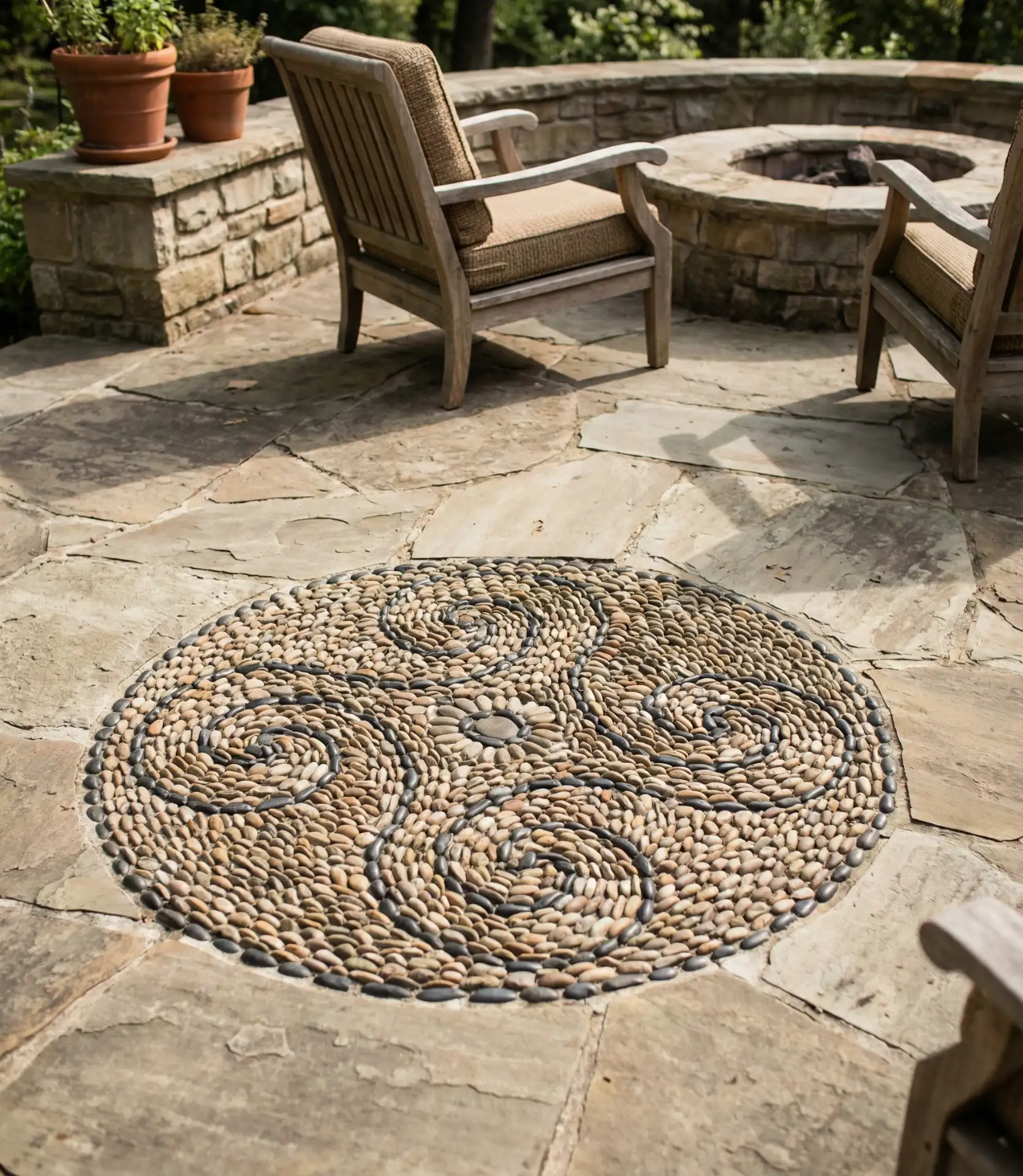
The addition of decorative pebble mosaics not only brings artisan craftsmanship to outdoor patios or walkways but also completely changes standard hardscaping models into bespoke designs. Homeowners can design planters, edges, and panels that contrast with the pavers or concrete surfaces by using small river stones in various colors, such as white, black, gray, and earthy tones. This method is not new, as it has ties with the ancient Roman and Greek designs, but it goes well in the contemporary backyard, providing an alternative texture and a sight that you do not get in industrially produced materials.
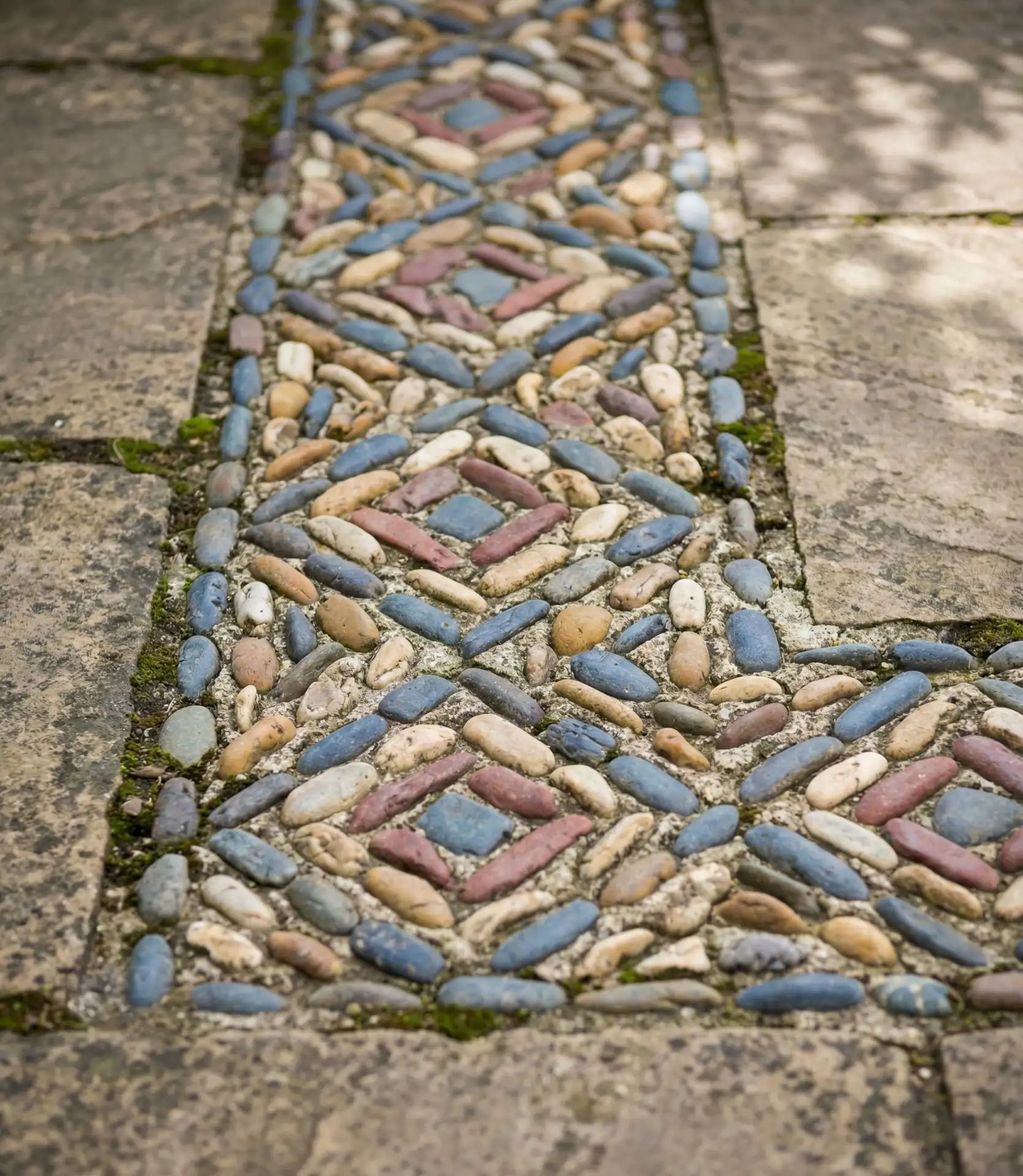
The die-hard but cost-saving approach to this unadorned patio is to stitch it with a mosaic pattern. The wood grains are arranged alongside each other, creating the picture line by line. The project involves gradually placing stones on the edge in the mortar, ensuring their attachment before the glue dries. Select the right shape, size, and type of pebble—stones with similar size, which are either 1 or 2 inches wide, work best for this. The walkway is a project you can do yourself; nevertheless, it is time-consuming and needs a lot of care; even a small one might take you two or more weekends to finish it. You will spend less than $100 on the materials while achieving a prom not less than medium size for those who are used to seeing.
17. Alpine Rock Garden on Elevated Beds
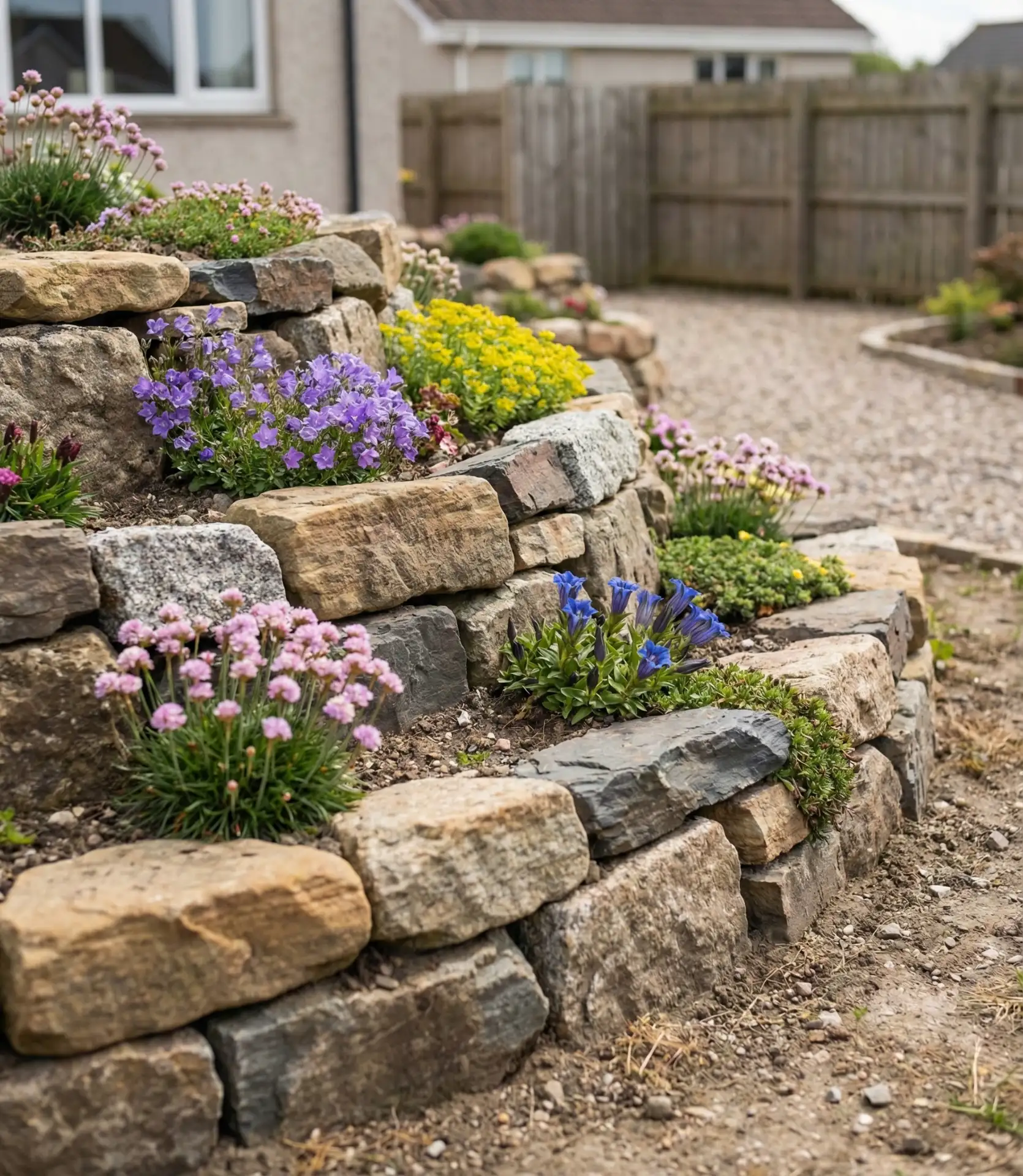
Indoor designs and remodeling are quite in demand nowadays, and they not only help ease the workload but also deliver more quality results. Rephrasey is an example of a rewriting chatbot that takes the input from the machine and rewrites it in a human style. In doing this, it strives to achieve a human-like writing style. Rewritten texts are available in more than one online source.
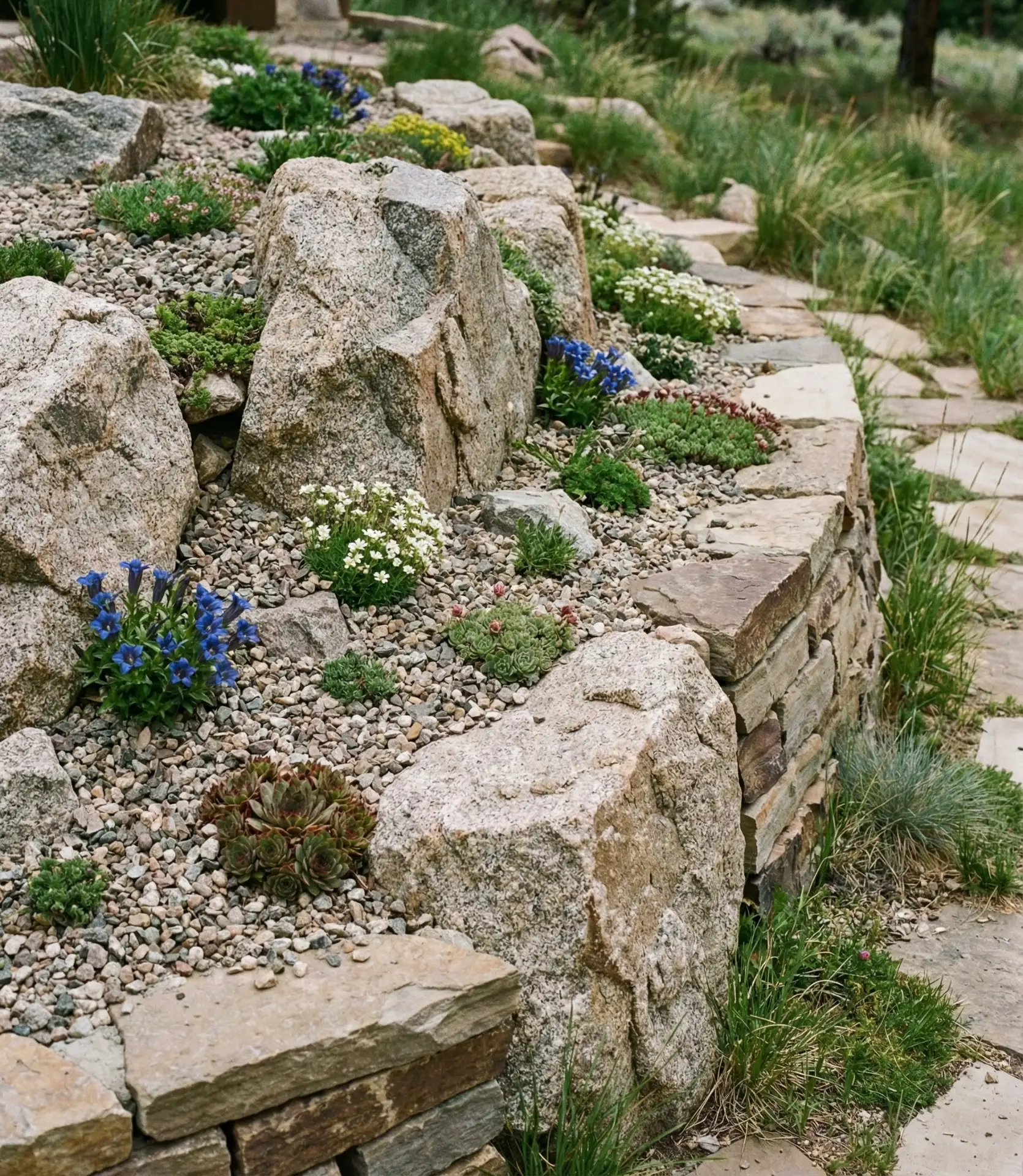
Professional gardeners are depending on specific soil formulation for alpine superiority, so they need to mix one-third quality topsoil, one-third coarse sand, and one-third fine gravel to further facilitate the proper drainage of these plants. Construct a mound at least 18 inches in height with a base diameter three times the height for the purpose of stability, and bury anchor boulders as deeply as possible so only one-third of the total amount is above the surface. Ensure proper construction from the start, ensuring not only a plant display that is easy to water and remains evergreen, but also incorporating a feature that enables the owner to showcase plants that typically require standard garden beds but are not readily available to them.
18. Gabion Wall Garden Features
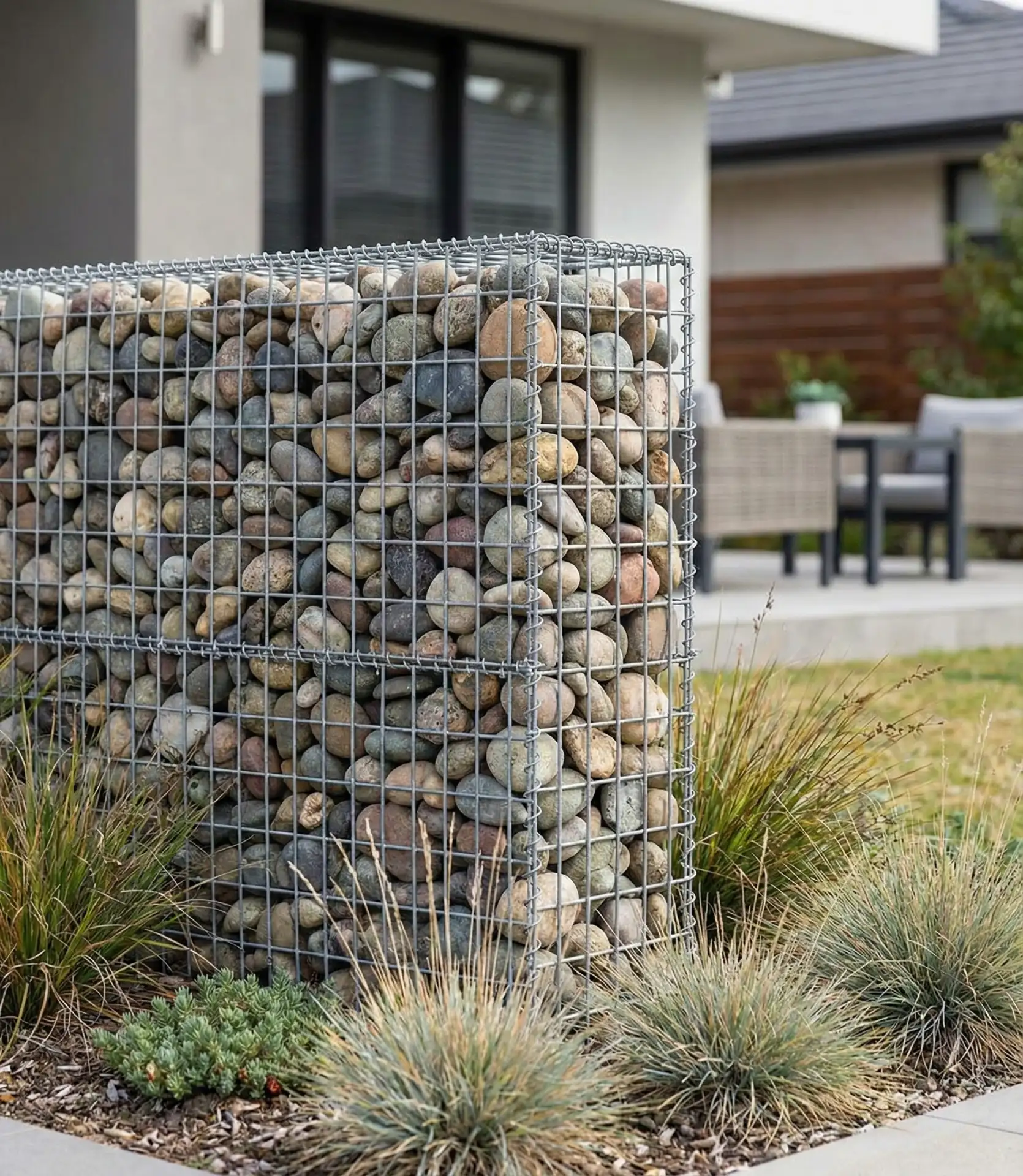
Wire mesh containers filled with stone are commonly used to make gabion cages, which are also a form of modern industrial retaining walls, planters, or sculptural elements that are both functional and beautiful. These outdoor installations combine sturdy design and functional qualities such as soundproofing or earth retaining. You can decide to stuff them with your choice of local field rock, uniform river stones, or even custom glass chunks. Their configurable build can create smart deck arrangements or freestanding privacy that are artistic to both sides.
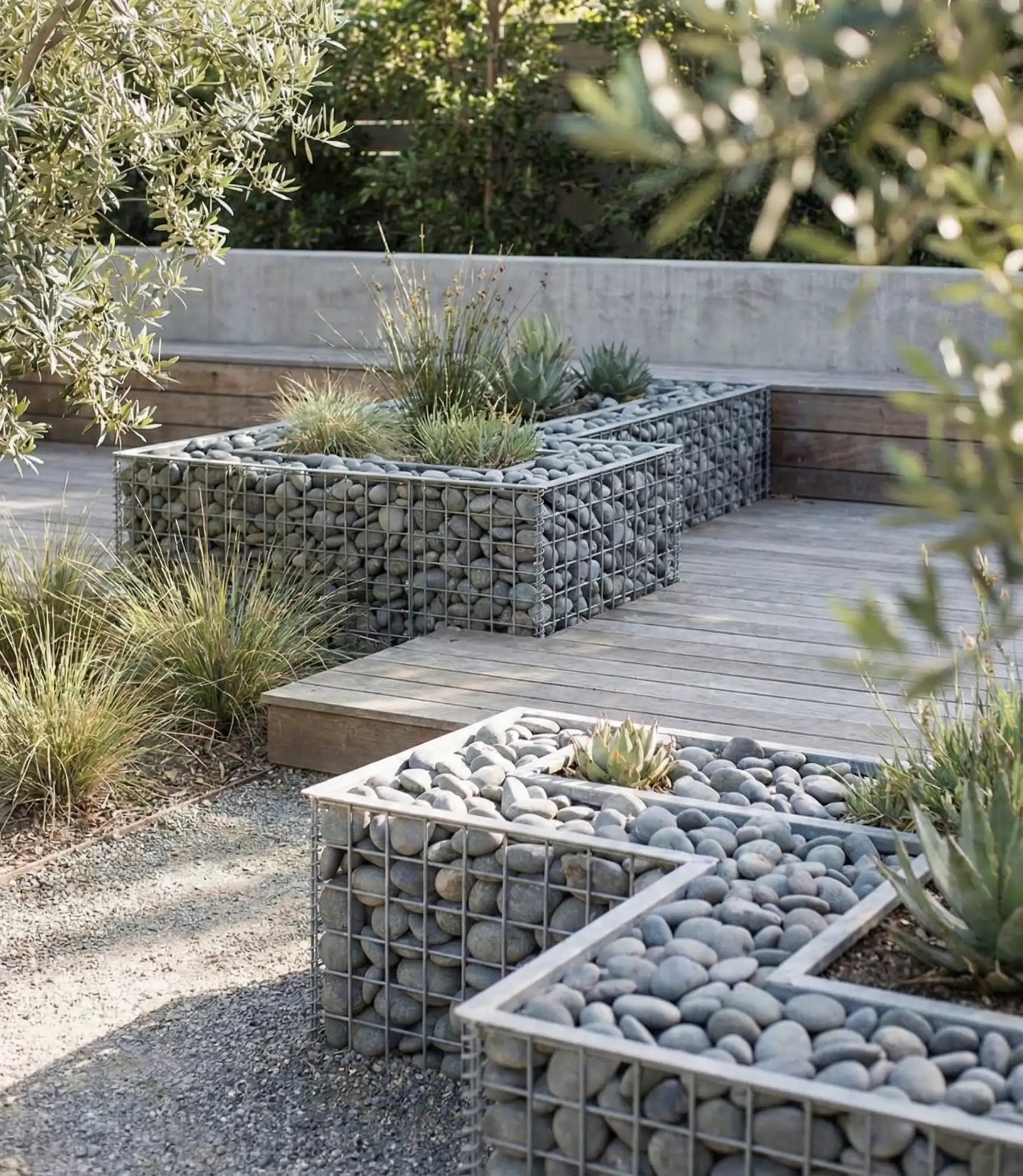
Budget considerations should account for both cage and fill material costs. The ten- to twenty-dollar-per-square-foot price of the use of prefabricated gabion baskets and the use of stone fill, which costs an additional twenty to forty dollars per ton depending on the local availability, form the basis of the total cost. A six-foot-long by three-foot-tall gabion wall can be built faster than traditional walls and requires about a ton of stone, making it cost-effective as well. Several homeowners express their feelings of appreciation for the do-it-yourself quality, which does not require the mixing of concrete or masonry skills, yet it is important that the cages are properly braced during the filling process to avoid the bulge that will result in the loss of clean geometric lines.
19. Succulent Garden with Decomposed Granite Base
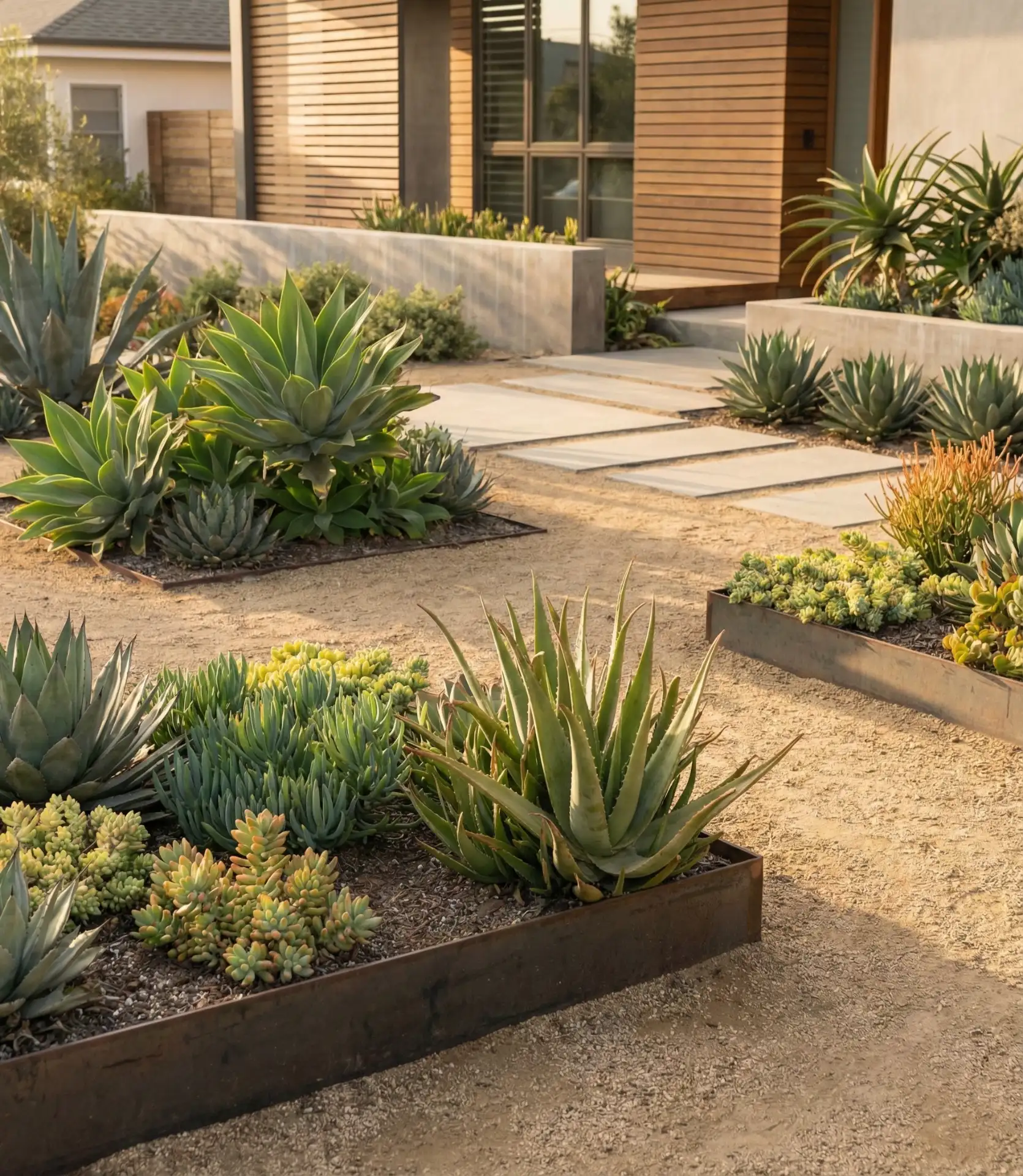
Low-water gardens are absolutely necessary for contemporary front yard designs, and one of the best ways to achieve that is by pairing succulent collections with decomposed granite or mulch-alternative crushed stone. The stone base of this design is of fine texture, providing excellent drainage, and becomes the background for the neutral tones that draw the eye first to the plants, which are prominent due to their shapes and shades, like agaves, echeverias, and aloes. This combination is currently one of the top trending plant arrangements in California and the Southwest, but it can also be used in any area desired by a homeowner, as it requires minimal irrigation and almost no maintenance while providing year-round visual appeal.
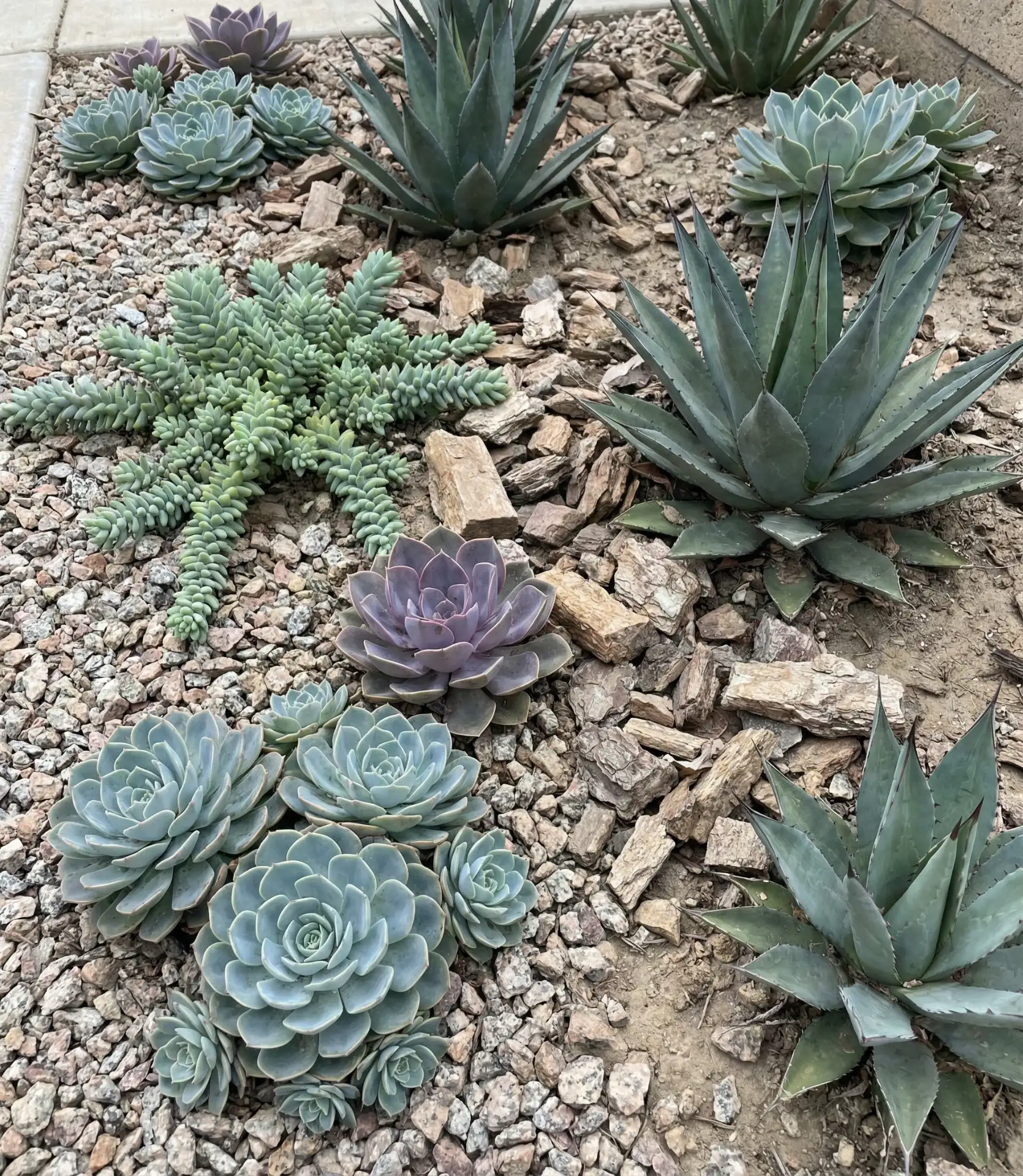
One of the prevalent mistakes is planting succulents in the decomposed granite substrate directly without amending the planting holes, which is the reason for poor root development even with excellent drainage. On the other hand, the practice is to dig planting pockets profoundly, fill them with a fifty-fifty mix of native soil and pumice or perlite, and then surround them with decomposed granite as mulch. Not only will plants grow rapidly, but the intended design will also be retained. The layer of stone mulch should be made two to three inches thick. The mulch will bury weeds, but it won’t be deep enough to stop the oxygen from circulating around the plant crowns that can rot in the humid climate.
20. Rustic Boulder Fire Pit Surround
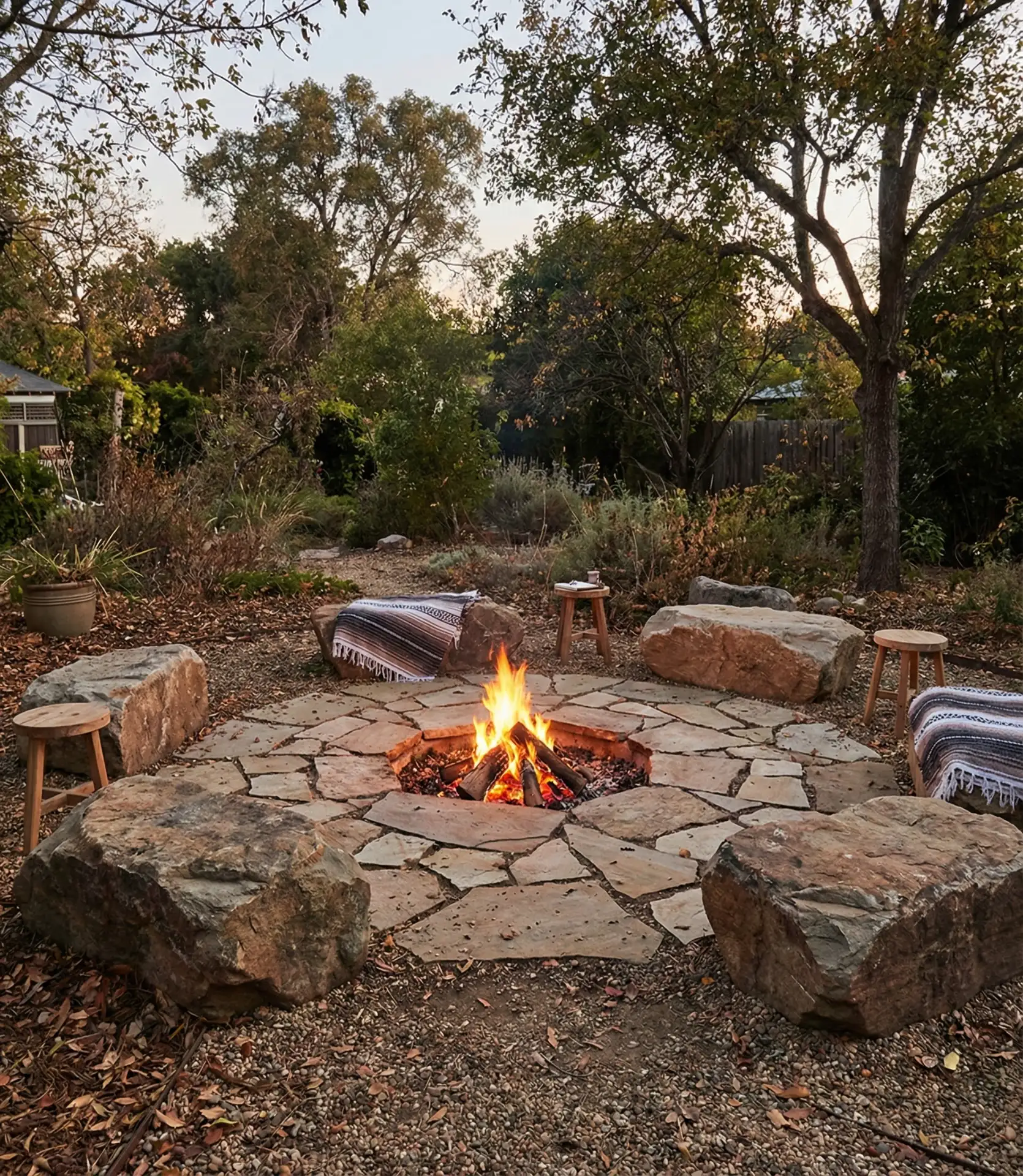
Massive natural stones organizing a seating area with a central fire pit create a hybrid of functionality and the aesthetic beauty of nature that canned furniture cannot achieve. Stone seats weighing about 300 to 800 pounds each are a wonderful permanent choice since they do not require any extra storage or maintenance. This is ideal for outdoor gatherings or poolside, where you want seating that feels like part of the landscape. Opt for the type of boulders that have relatively flat tops and provide stable bases for seating that is both comfortable and safe.
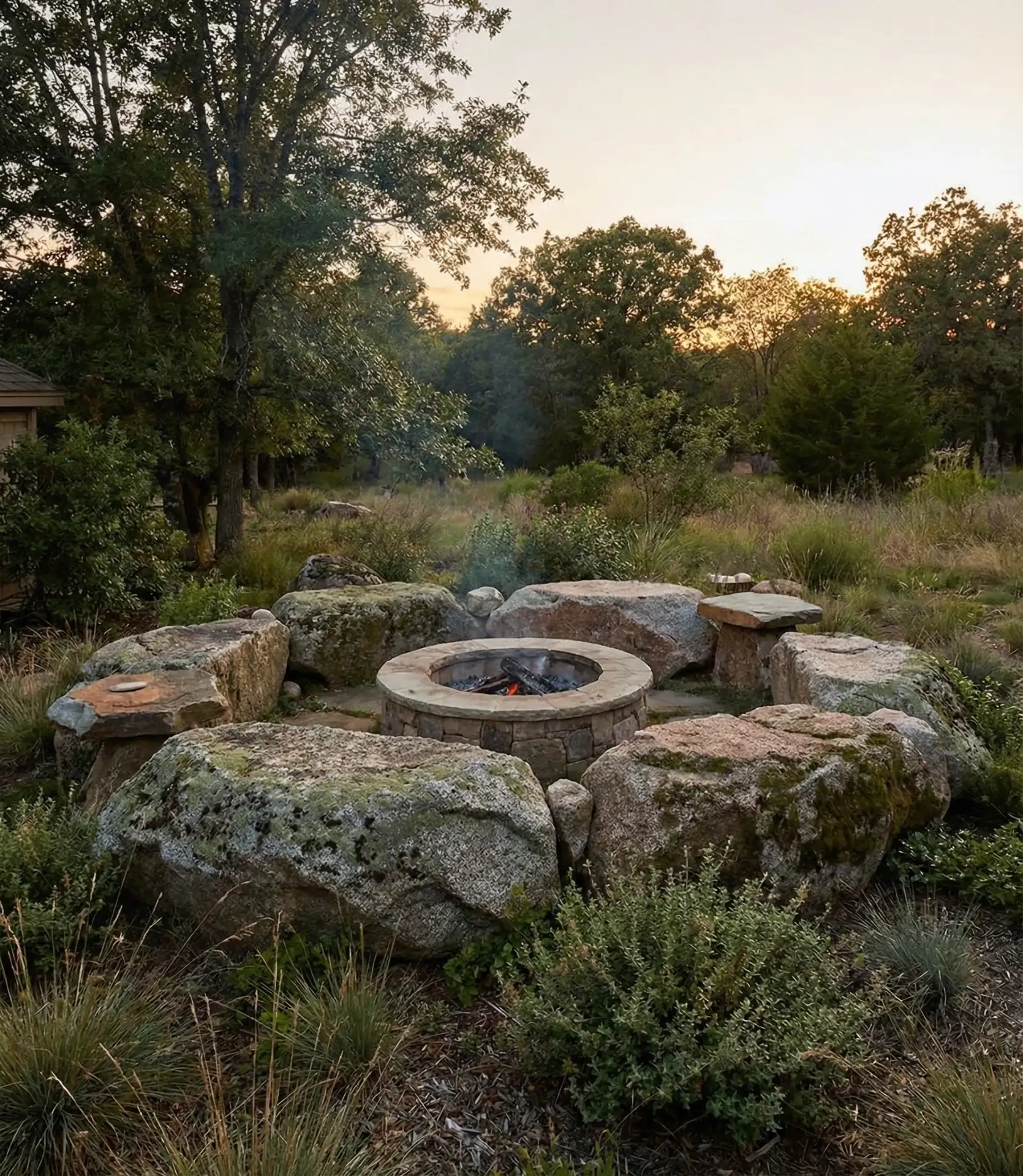
This layout is primarily suitable for extensive areas that can accommodate a twelve- to fifteen-foot-diameter circle, which zones out the combustion area and yet is close enough for people to chat. The design should see boulders spaced eighteen to twenty-four inches away from the fire pit, with gaps between the stones being varied so as to provide a free-form shape instead of a straight alignment. The majority of garden suppliers can bring and fit boulders by means of specific machinery, hiring them for a price between fifty and one hundred fifty dollars depending on the dimension of the stone and the way to the site. What you get back is a long-lasting meeting place, which is a center for outdoor hangouts, and that advantage costs you less than stylish furniture that needs replacing.
21. Permeable pavement and stone driveways
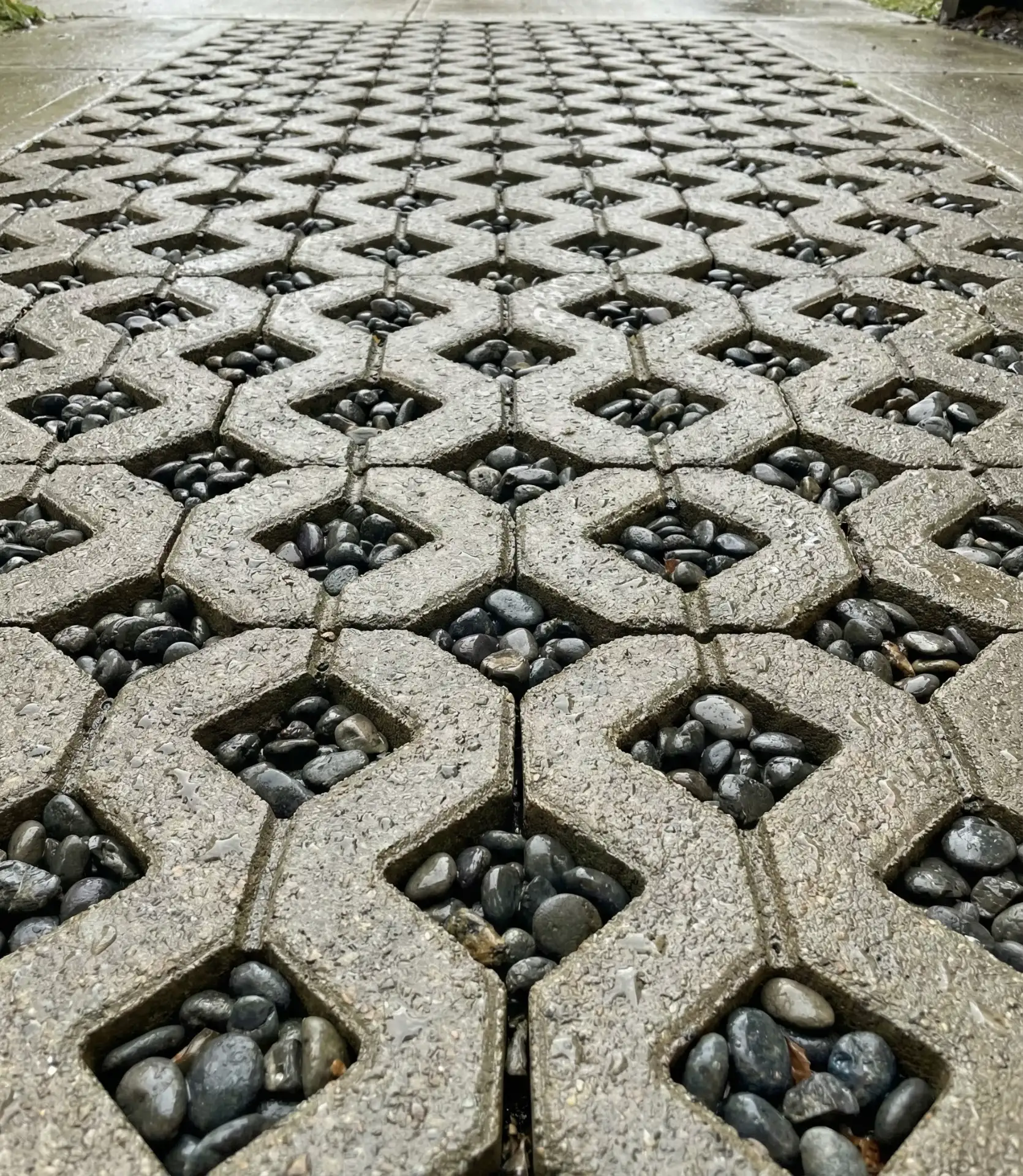
The process of installing permeable pavements with river rock or crushed stone joints has resulted in the creation of driveways that efficiently manage rain runoff while simultaneously providing firm traffic areas. This environmentally friendly form of construction has become popular both in municipalities with stringent runoff ordinances and among individuals who are worried about ecological effects. The so-called permeable pavers, special types of pavers with wide joints filled with small stones, help achieve the installation. This technique allows rainwater to infiltrate the surface instead of causing excessive flooding in the storm drains. This method is especially favorable in front of the house places, which are typically occupied by asphalt or concrete and feel disconnected from the current sustainability ideology.
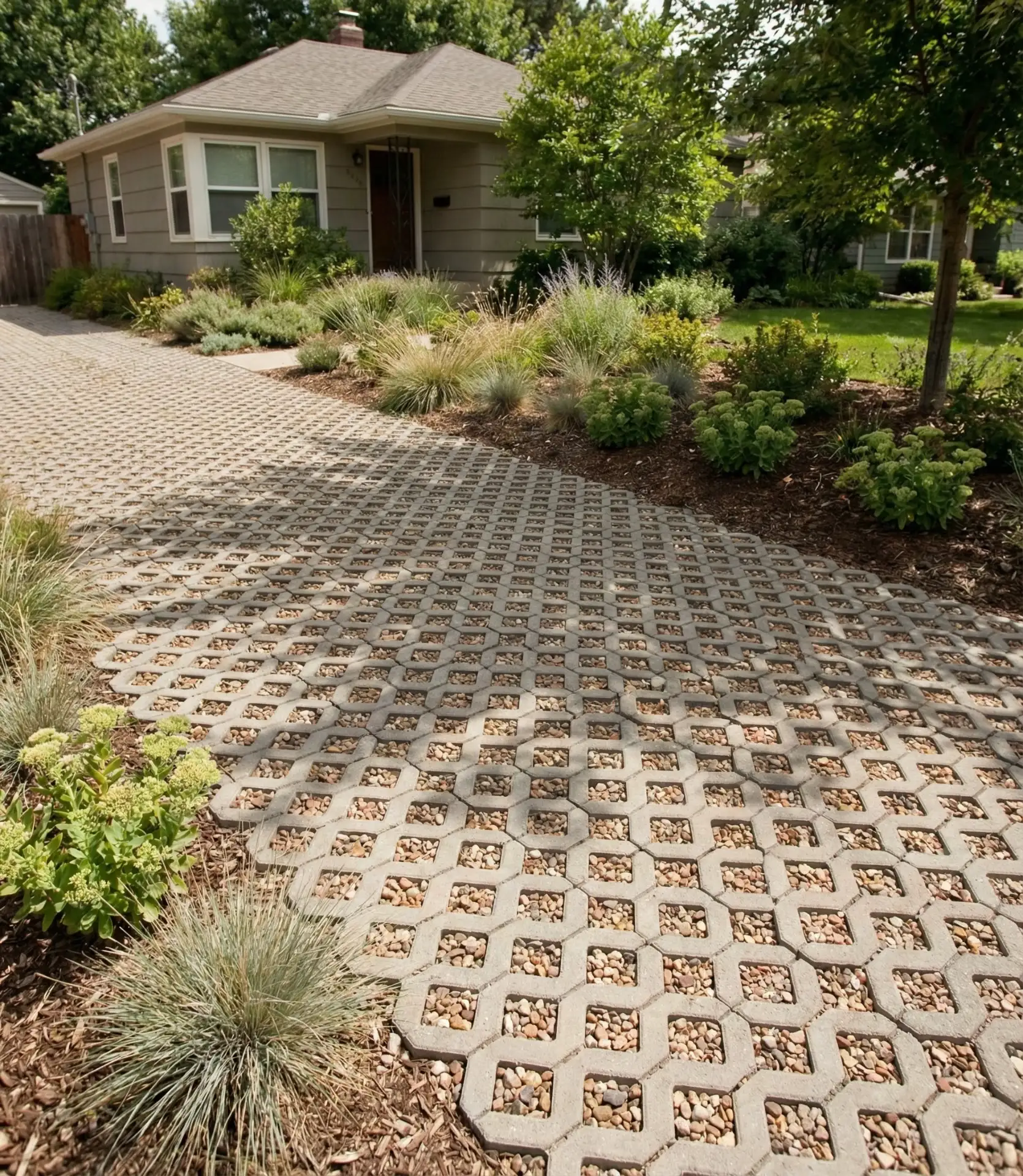
Set up is harder to learn than traditional paving because of specific base requirements—typically eight to twelve inches of open-graded aggregate that allows water passage while supporting vehicle weight. Although professional installation comes at a cost of 15 to 25 percent more than conventional pavers, it might qualify for municipal rebates or tax incentives in water-conscious regions. The only maintenance is occasionally adding joint stones and clearing the surface of the debris that might plug drainage paths, but these small tasks maintain a long-term ecological balance and also reduce stormwater management costs in some areas.
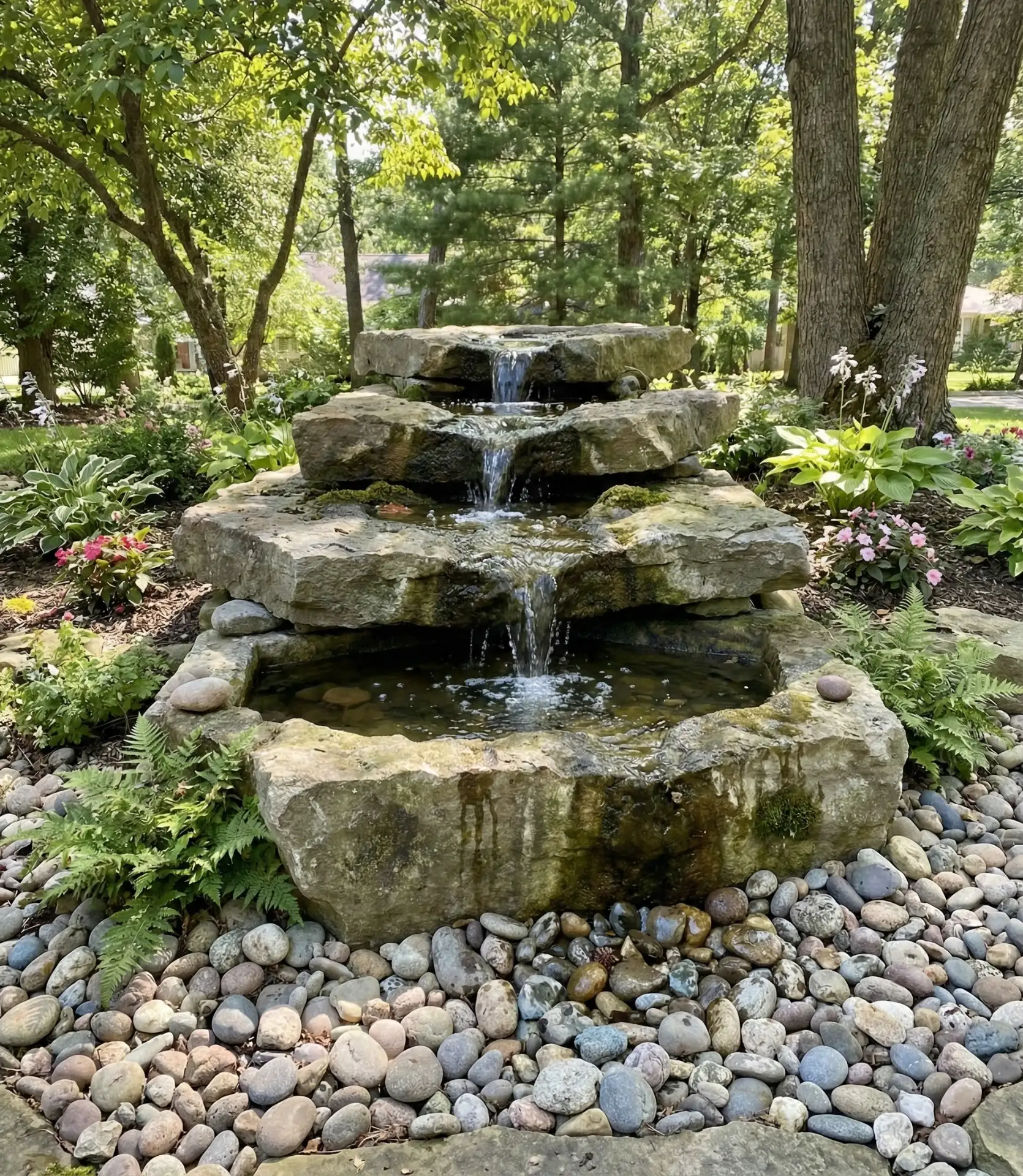
22. A tiered fountain with a natural stone basin
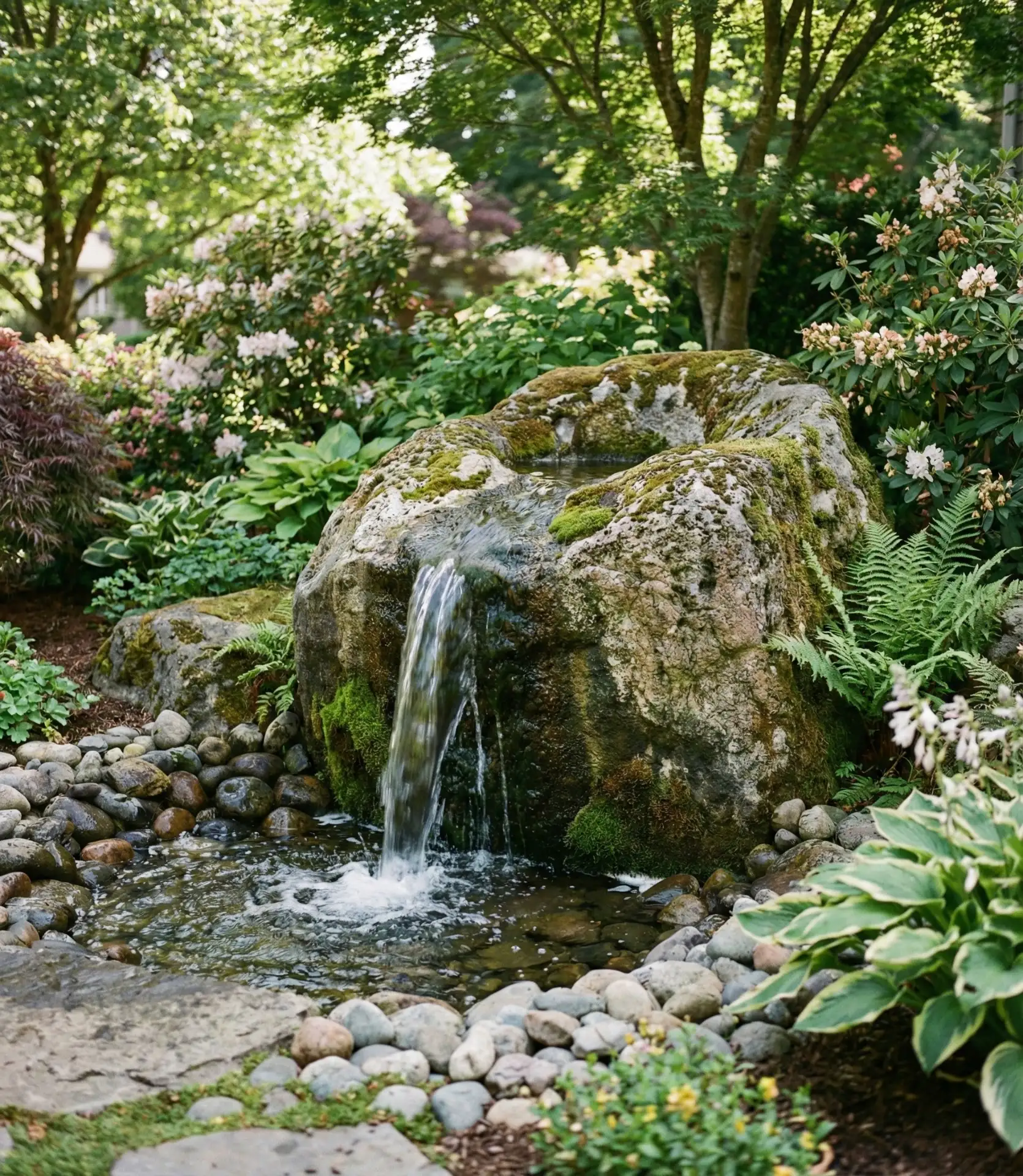
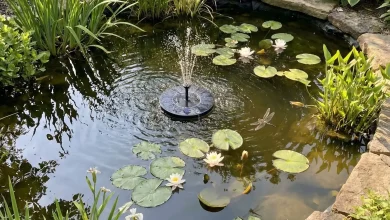
Adding water features with natural stone basins and nearby boulders changes a still rock area into a lively and active space with more movement and sound. A recirculating fountain set in an enormous hollowed boulder or a stone basin is an attractive centerpiece in residential front lawns or a courtyard. recirculating. The involuntary sound of water flowing over the intricate rock surfaces will be soothing, but it will also cover the street noise. This sound will also attract some birds and beneficial bugs. These concepts can be remarkably compact—only requiring a diameter of three feet or less—which makes them practical for small urban plots or even side yards.
Rock landscaping has become one of the most searched home improvement topics on Pinterest in 2026, and for good reason. American homeowners are discovering that stone elements offer a perfect blend of low maintenance, visual drama, and year-round beauty that grass simply can’t match. Whether you’re dealing with a challenging slope, seeking to reduce water consumption, or simply seeking to create an intentionally designed outdoor space, rocks offer limitless creative possibilities. In this article, we’ll explore inspiring rock landscaping ideas that work beautifully across different climates, budgets, and yard sizes—from subtle accents to bold transformations.
23. Mixed Texture Stone Pathway Border
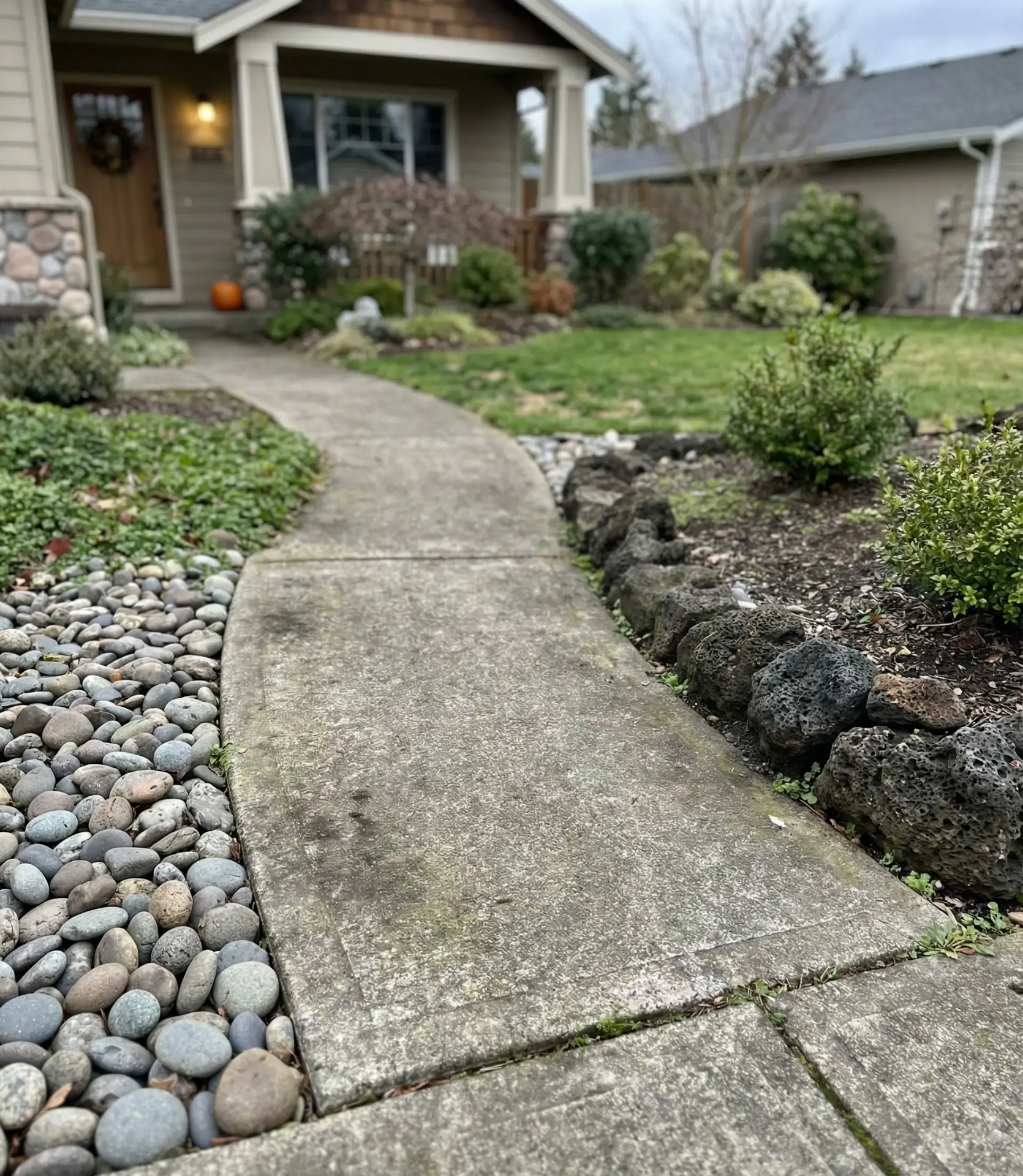
Lining walkways with contrasting stone textures—smooth river rock against rough lava rock, or white marble chips beside darker aggregates—creates visual definition that guides foot traffic while adding design sophistication. This technique elevates simple concrete or paver paths, transforming utilitarian surfaces into intentional design elements. The textural variety catches light differently throughout the day, creating subtle shifts in appearance that keep the landscape visually dynamic. This approach works particularly well for front yard paths where curb appeal matters but budget constraints limit full path replacement.
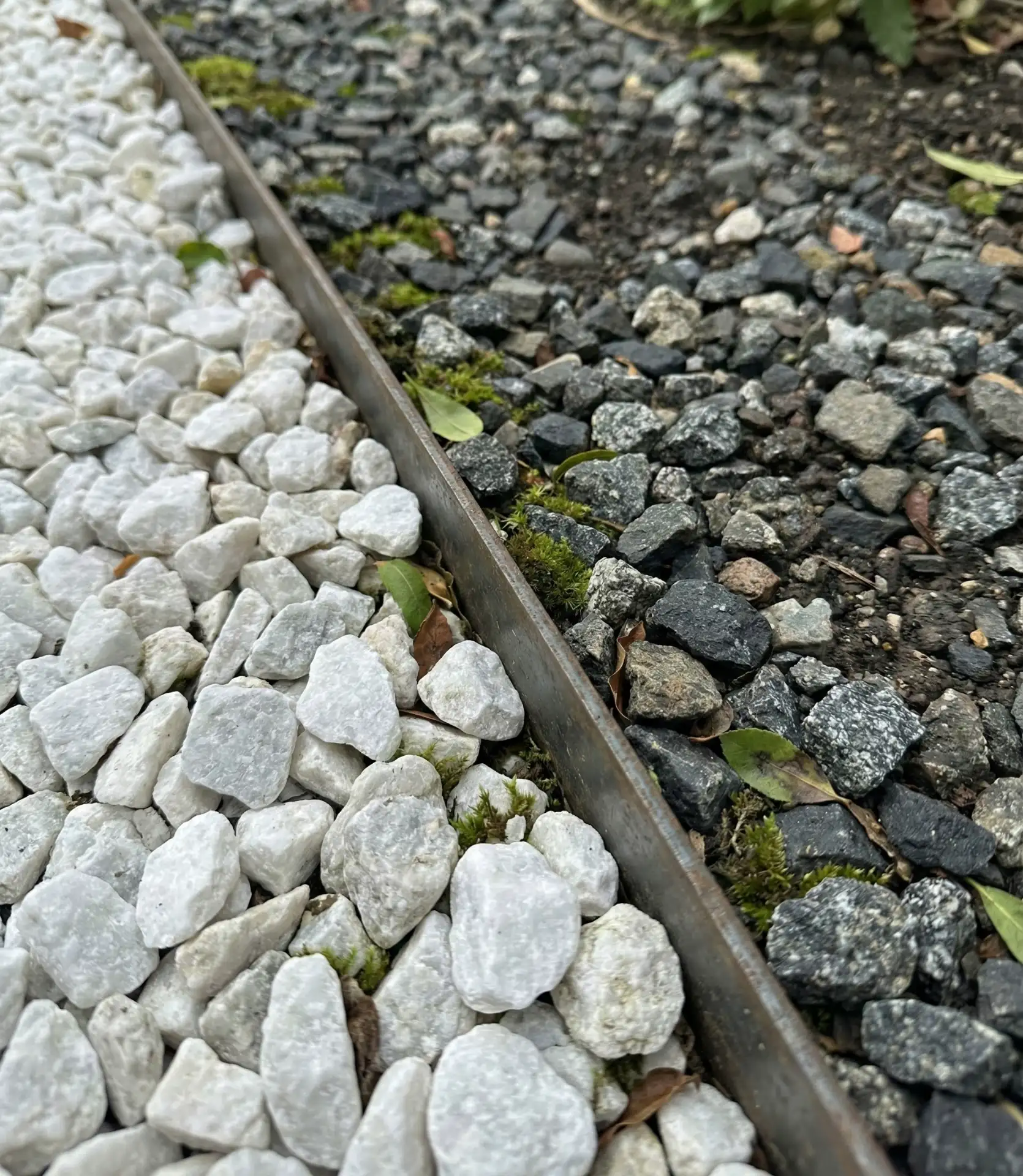
For front yard budget improvements, this technique delivers maximum impact per dollar spent. Calculate four inches of width for each border, which typically requires one cubic foot of stone per ten linear feet of path. Use landscape edging to separate textures and prevent mixing—plastic or aluminum strips work well and remain invisible when installed properly. The total material cost rarely exceeds one hundred fifty dollars for a twenty-foot pathway, yet the visual upgrade rivals much more expensive renovations. Install in a weekend with basic tools: shovel, rake, and tamper.
24. Sculptural Rock Column Garden Accents
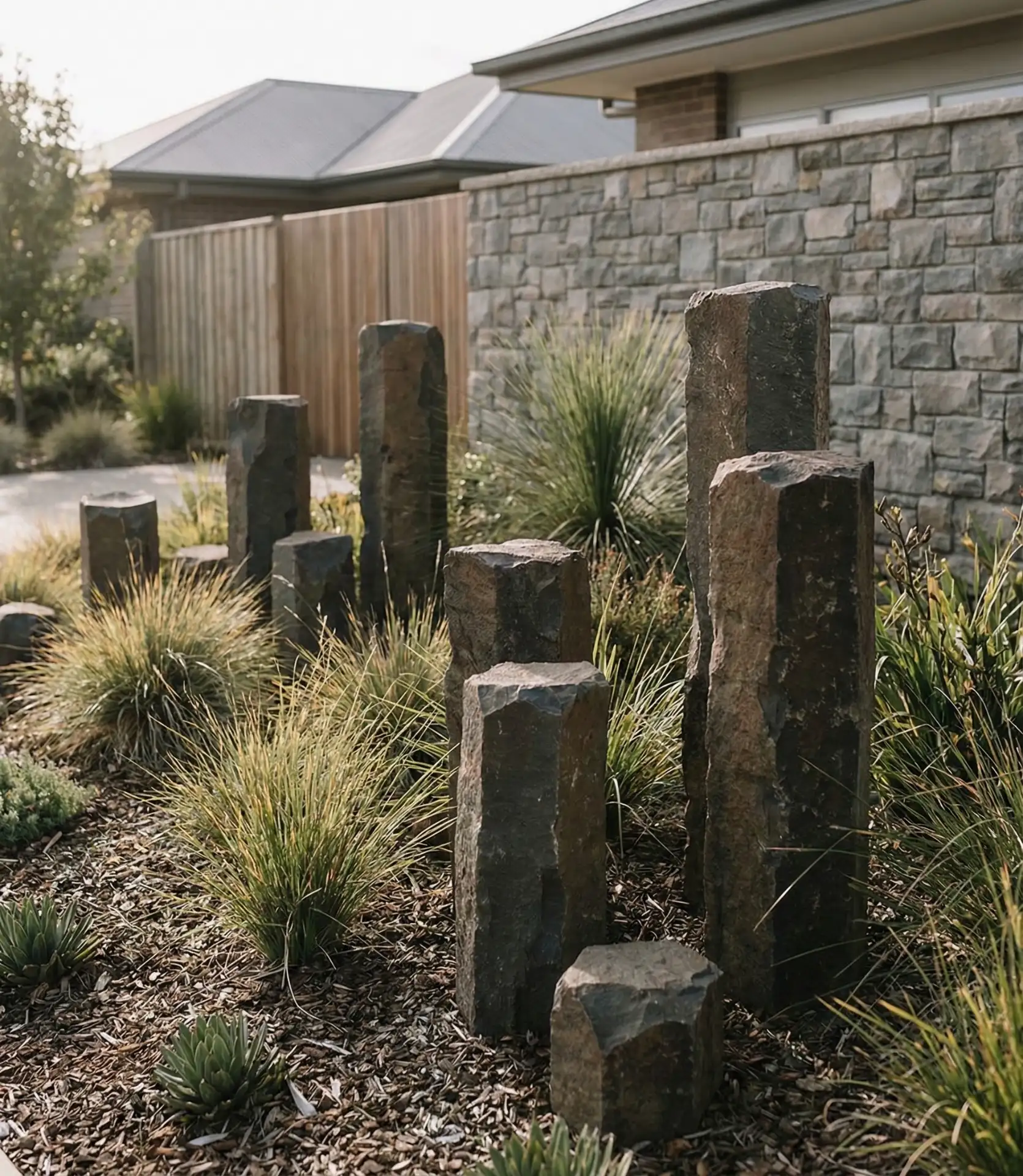
Using tall, vertical stone elements—naturally columnar basalt, stacked slate towers, or drilled boulder fountains—adds dramatic height and sculptural presence to otherwise horizontal landscapes. Large-area gardens brilliantly utilize these vertical accents as focal points, marking entrances or punctuating corners where visual weight is required. The upright orientation contrasts beautifully with spreading groundcovers or mounded shrubs, creating dynamic compositions that draw the eye upward. This approach has roots in Japanese garden design but translates effectively to contemporary American outdoor spaces seeking artistic distinction.
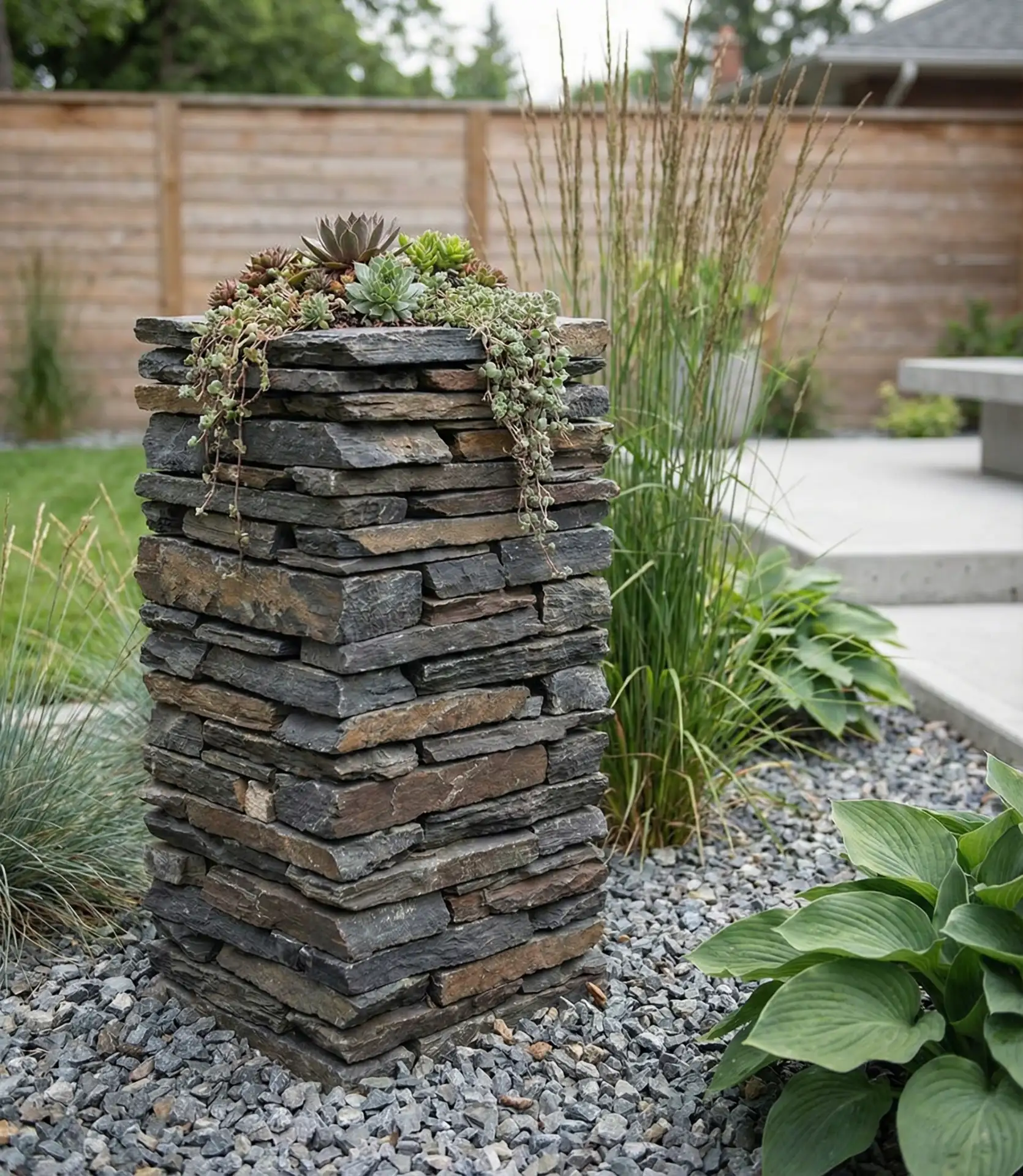
Common mistakes include installing vertical stones without adequate underground support, leading to toppling during frost heave or settling. Bury at least one-quarter to one-third of the stone’s height, setting it in concrete if it’s particularly tall or in an area with freeze-thaw cycles. Columnar stones range widely in price—expect fifty to three hundred dollars for two- to four-foot specimens, with premium pieces or rare stone types commanding significantly more. Position these features where they can be appreciated from multiple angles, and consider uplighting to extend their visual impact into evening hours.
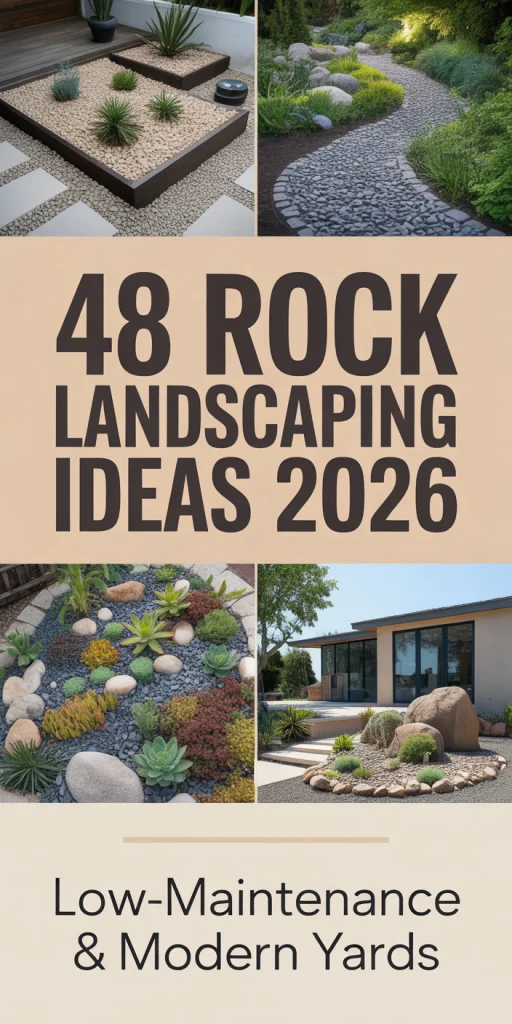
Rock landscaping has become one of the most searched home improvement topics on Pinterest in 2026, and for good reason. American homeowners are discovering that stone elements offer a perfect blend of low maintenance, visual drama, and year-round beauty that grass simply can’t match. Whether you’re dealing with a challenging slope, looking to reduce water consumption, or simply want to create an outdoor space that feels intentionally designed, rocks provide endless creative possibilities. In this article, we’ll explore inspiring rock landscaping ideas that work beautifully across different climates, budgets, and yard sizes—from subtle accents to bold transformations.