48 Pink Bedroom Ideas 2026: From Soft Blush to Bold Hot Pink — Find Your Perfect Style

In American bedroom design, pink is experiencing a significant surge, and this trend is expected to continue in 2026. From soft, barely-there blush walls to moody, drama-forward hot pink accents, the color has fully shed its “little girl’s room” reputation and grown into one of the most versatile, emotionally resonant shades in the interior design world. Pinterest searches for pink bedroom inspiration have exploded year over year, driven by homeowners who want spaces that feel both personal and put-together. Whether you’re decorating a primary suite, a teen’s retreat, or a cozy guest room, this roundup of fresh ideas will give you a visual roadmap—and a whole lot of motivation to finally commit to that pink you’ve been saving to your boards.
1. Blush and White Minimalist Retreat
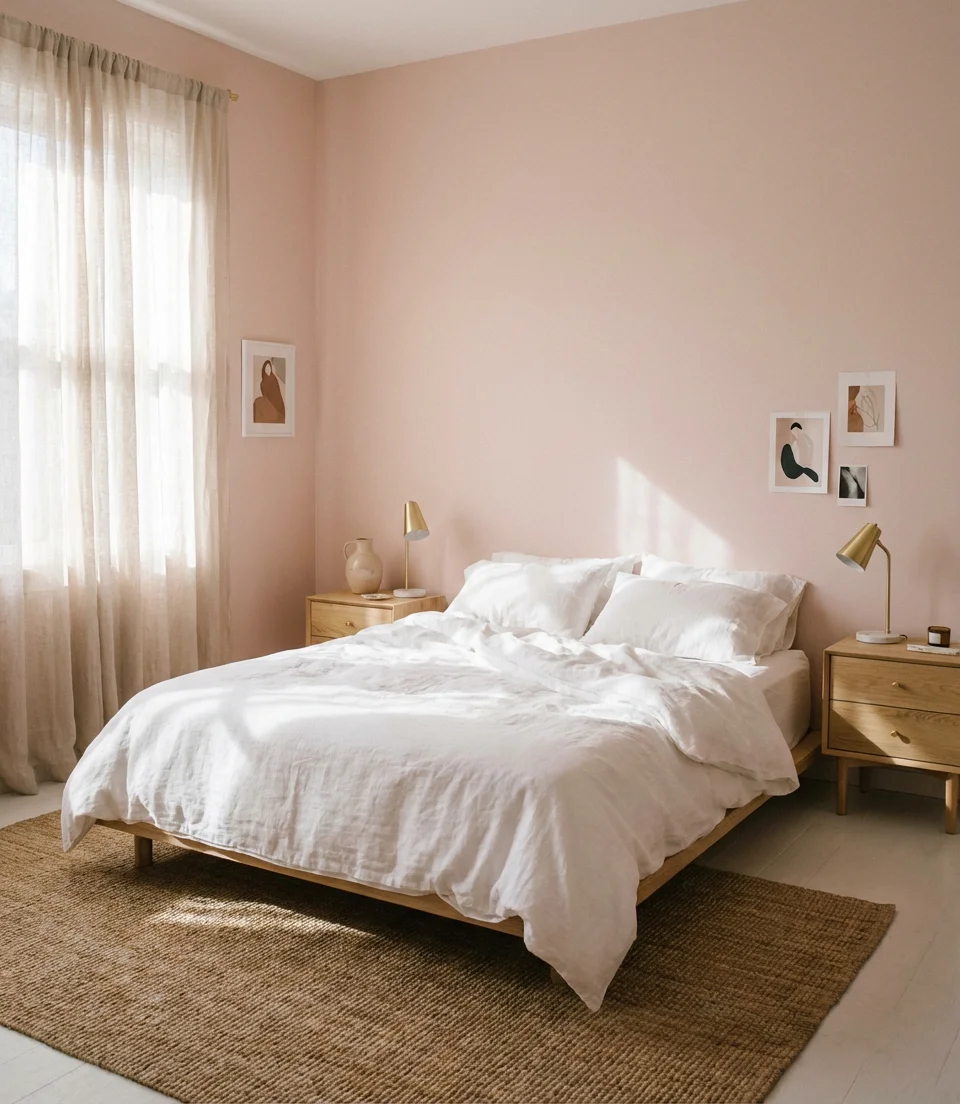
There’s a reason blush and white remain one of the most-pinned bedroom combinations year after year—this pairing is genuinely timeless. A soft blush on the walls pairs beautifully with crisp white bedding, natural wood nightstands, and linen curtains that let morning light filter in gently. The result is a room that feels calm, airy, and effortlessly polished without trying too hard. It works especially well in apartments and smaller primary bedrooms where keeping the palette tight prevents visual clutter.
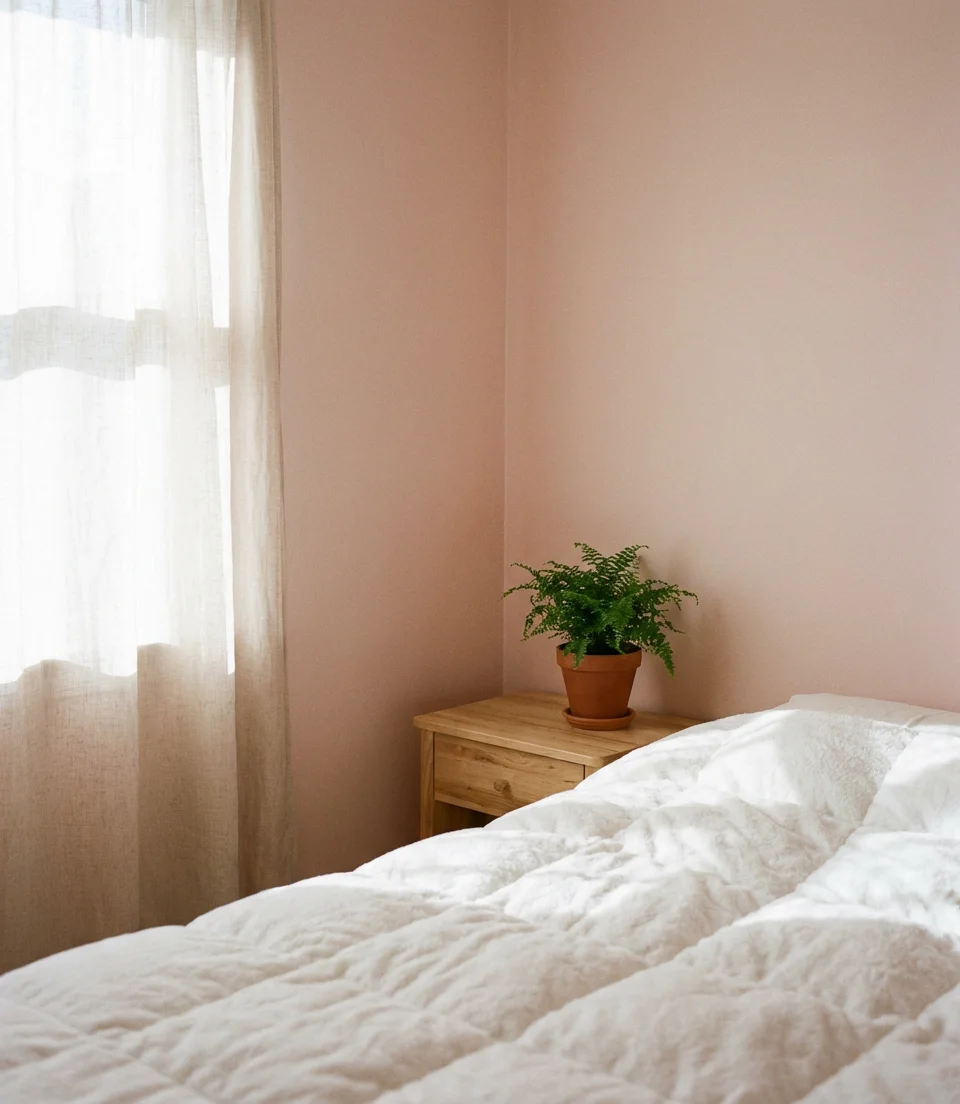
If you’re nervous about going all-in on pink, this palette is genuinely the best entry point. Interior designers often recommend starting with a single blush wall—the one behind your headboard—and building out from there with white and natural textures. The trick is in the undertones: choose a blush with warm peachy hints rather than a cool bubble-gum tone, and the room will read as sophisticated rather than sweet. A few gold or brass hardware details beautifully complete the look.
2. Dark Rose and Black Dramatic Suite
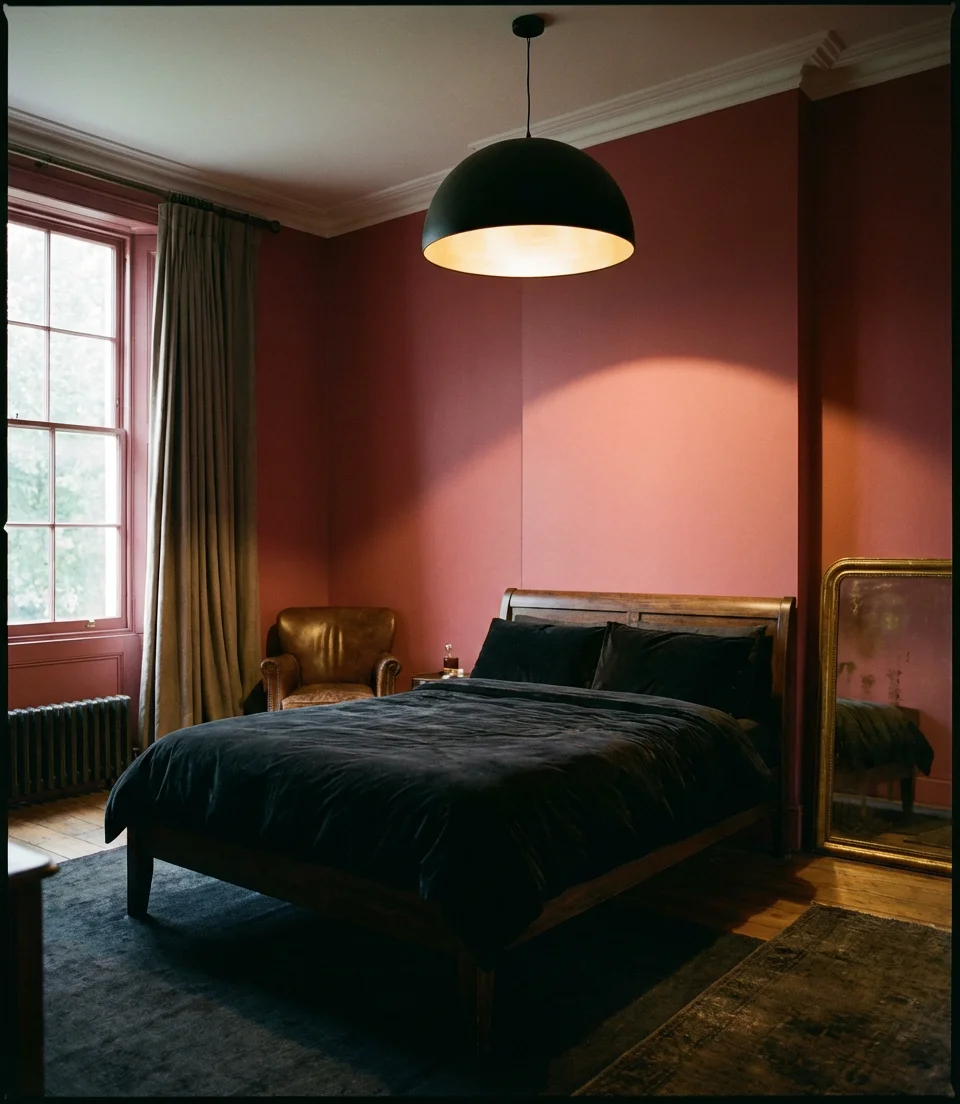
For those who want their bedroom to feel genuinely luxurious and a little mysterious, pairing dark rose with black accents delivers a moody elegance that’s hard to achieve any other way. Think deep rose-painted walls, matte black fixtures, black velvet throw pillows, and a pendant light with a dark shade that creates warm, intimate pools of light after dark. This combination works especially well in larger bedrooms or primary suites where you have enough square footage to let the drama breathe rather than overwhelm.
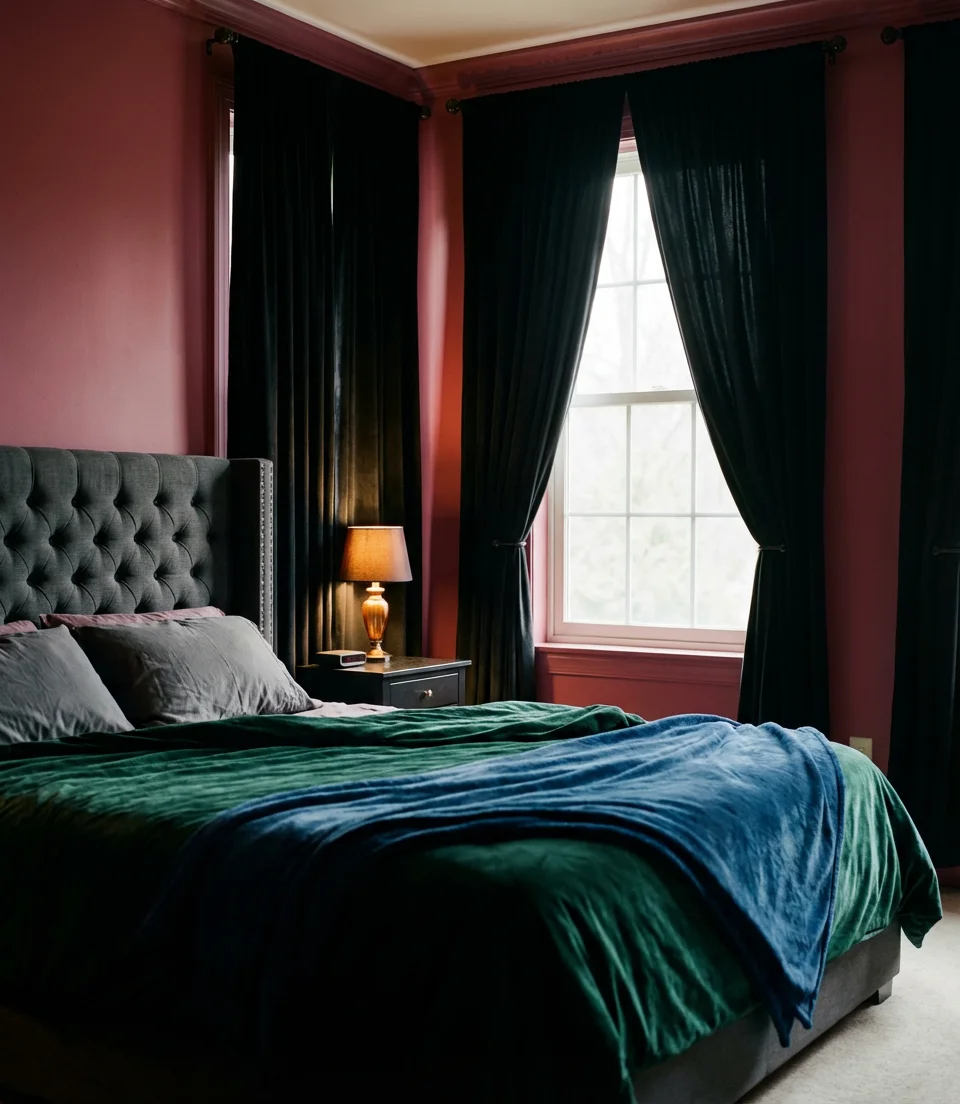
One common mistake people make with dark, moody bedrooms is underestimating the importance of layered lighting. A single overhead fixture simply won’t do the job. You need a combination of bedside sconces, a floor lamp in a corner, and maybe even a small table lamp on a dresser to create enough warmth. The dark rose and black palette absorb light rather than reflecting it, so you’ll want at least three light sources working together to keep the room feeling cozy rather than just dim.
3. Dusty Pink Bohemian Sanctuary
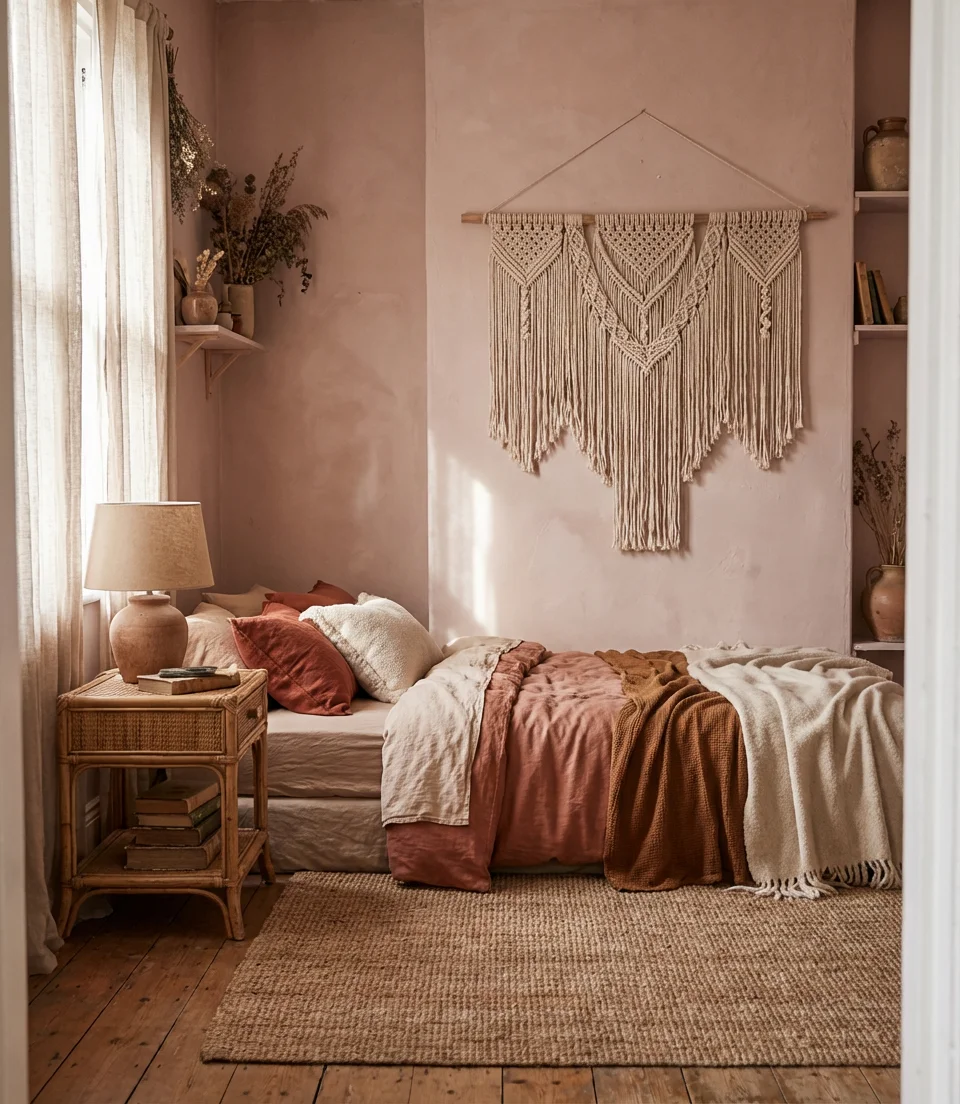
A dusty pink palette has an earthy, grounded quality that lends itself perfectly to bohemian-inspired bedroom styling. Layer a muted dusty rose wall with woven wall hangings, macramé, rattan furniture, and a mix of terracotta and cream textiles for a room that feels traveled, collected, and deeply personal. Bedrooms lacking architectural character benefit greatly from this aesthetic, as the layered textures and warm earth tones take the place of crown molding or built-ins in a more traditional space.
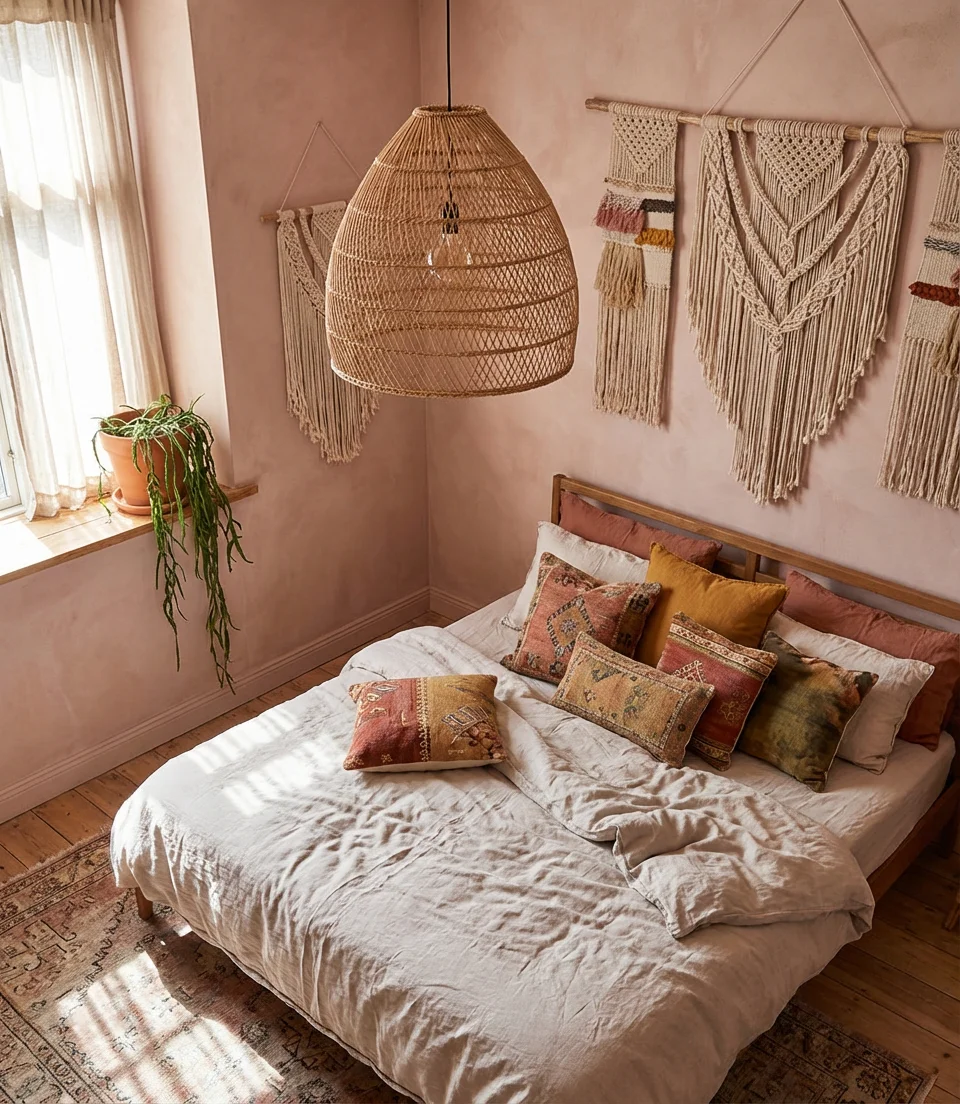
This look is surprisingly accessible on a budget. Many of the key pieces—macramé wall hangings, woven baskets, and layered vintage-style rugs—can be found at HomeGoods, World Market, or through Etsy sellers for well under $50 apiece. In fact, the boho aesthetic actively benefits from mixing price points, so a $20 rattan mirror from a discount store sitting next to a well-chosen splurge piece reads as intentional curation rather than budget decorating. The dusty pink wall color ties it all together with a cohesive, rosy warmth.
4. Pink and Sage Green Nature-Inspired Room
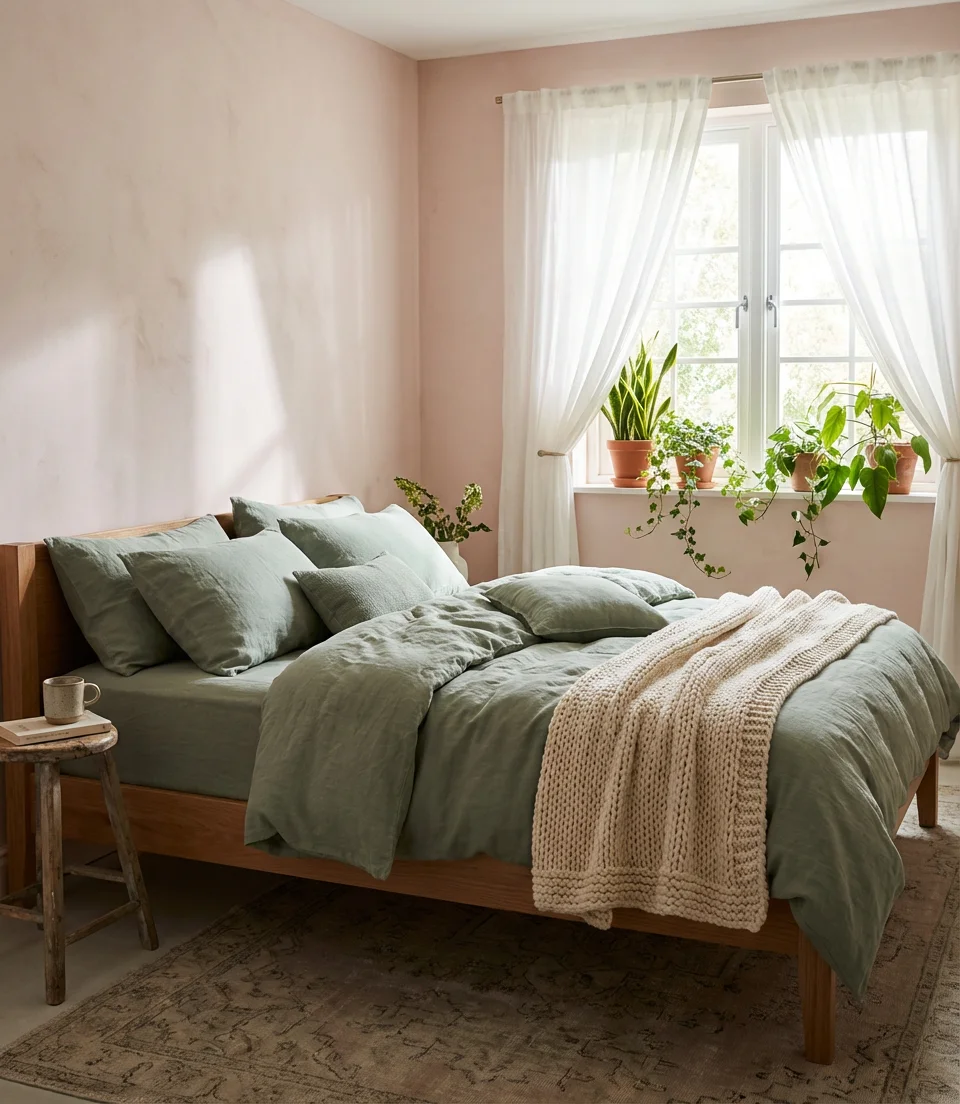
Pink and sage green is the color pairing that interior designers keep calling one of 2026’s freshest combinations—and spending five minutes on Pinterest will show you exactly why. These two muted, nature-forward tones share the same quiet, organic energy, and when paired together in a bedroom, they create a space that feels genuinely restorative. Soft pink walls with sage green bedding and live trailing plants bring the outside in without the room ever feeling themed or overdone. It’s a pale, dreamy combination that suits both modern and more traditionally styled homes.
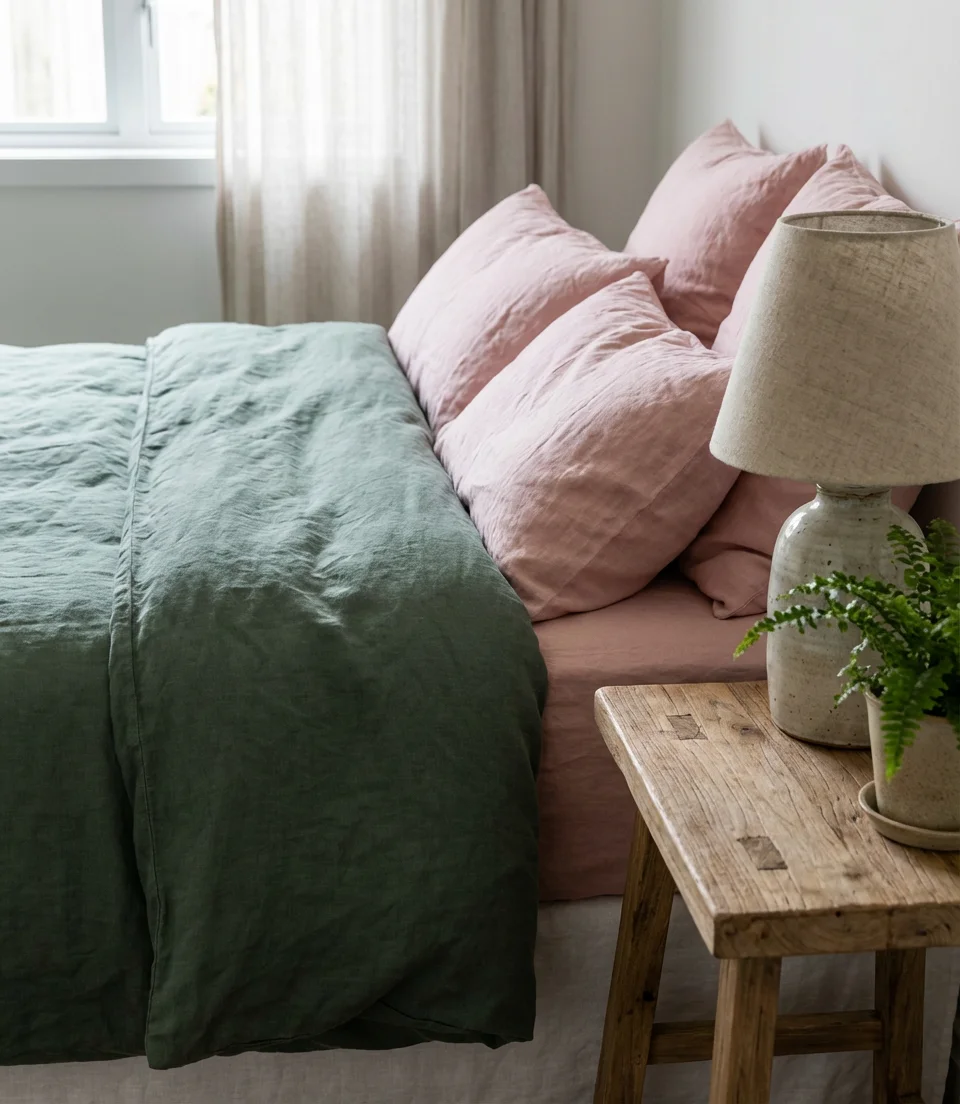
Where this look really shines is in bedrooms that face a garden or backyard or have a view of trees—the indoor palette echoes what’s happening outside the window, creating a seamless visual connection between the room and nature. If your bedroom doesn’t have that advantage, you can replicate the feeling with a large piece of botanical artwork, a full-height potted fiddle-leaf fig, or even a floral wallpaper feature wall in tones that pull pink and green together. The organic quality of the palette does most of the work.
5. Hot Pink and White Bold Statement Bedroom
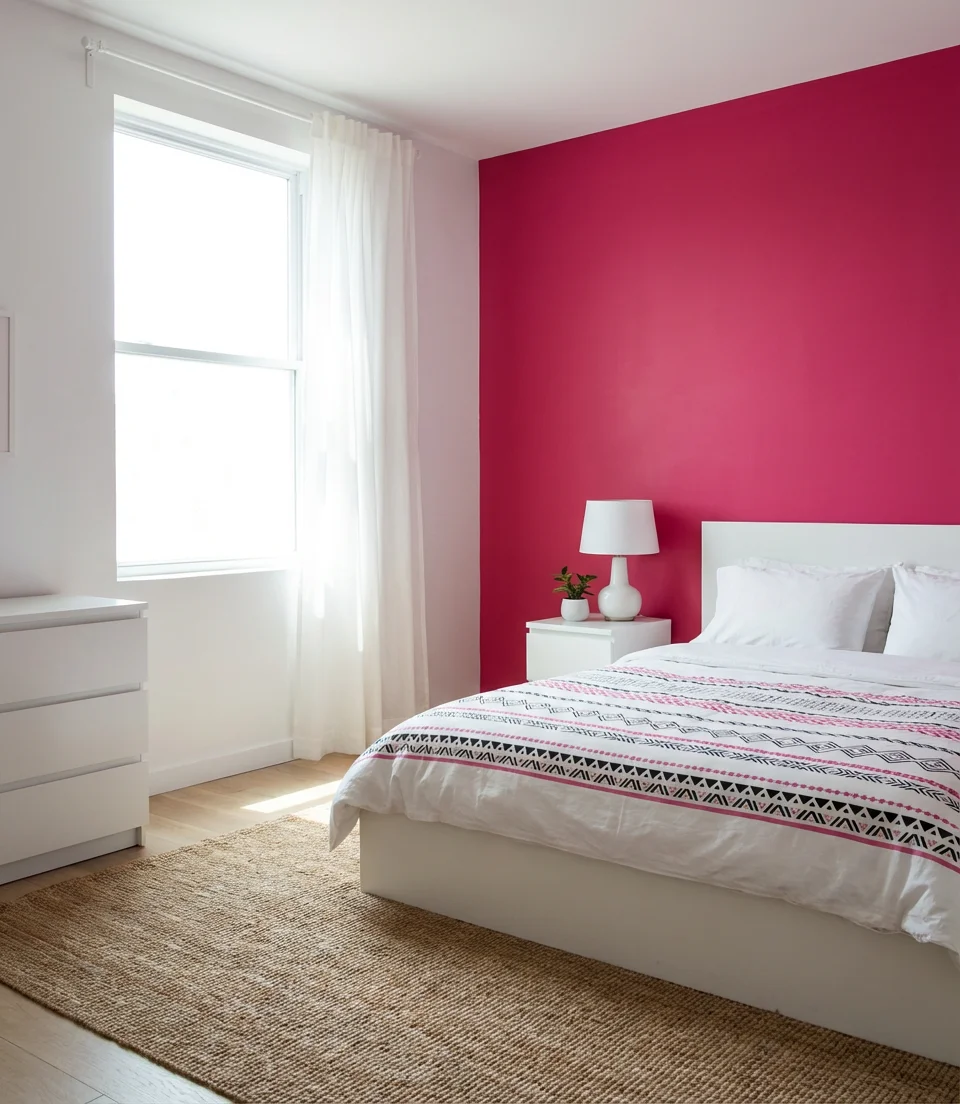
If there’s one trend that 2026 is fully owning, it’s the return of unapologetically hot pink—not as an accent, but as a full commitment. A room with a hot pink feature wall, crisp white furniture, and clean-lined modern pieces makes a confident, joyful statement that’s impossible to walk past without smiling. This isn’t a shy decorating choice, and that’s exactly the point. It signals a homeowner who’s done playing it safe and has decided that their bedroom should feel like a place they’re genuinely excited to be in.
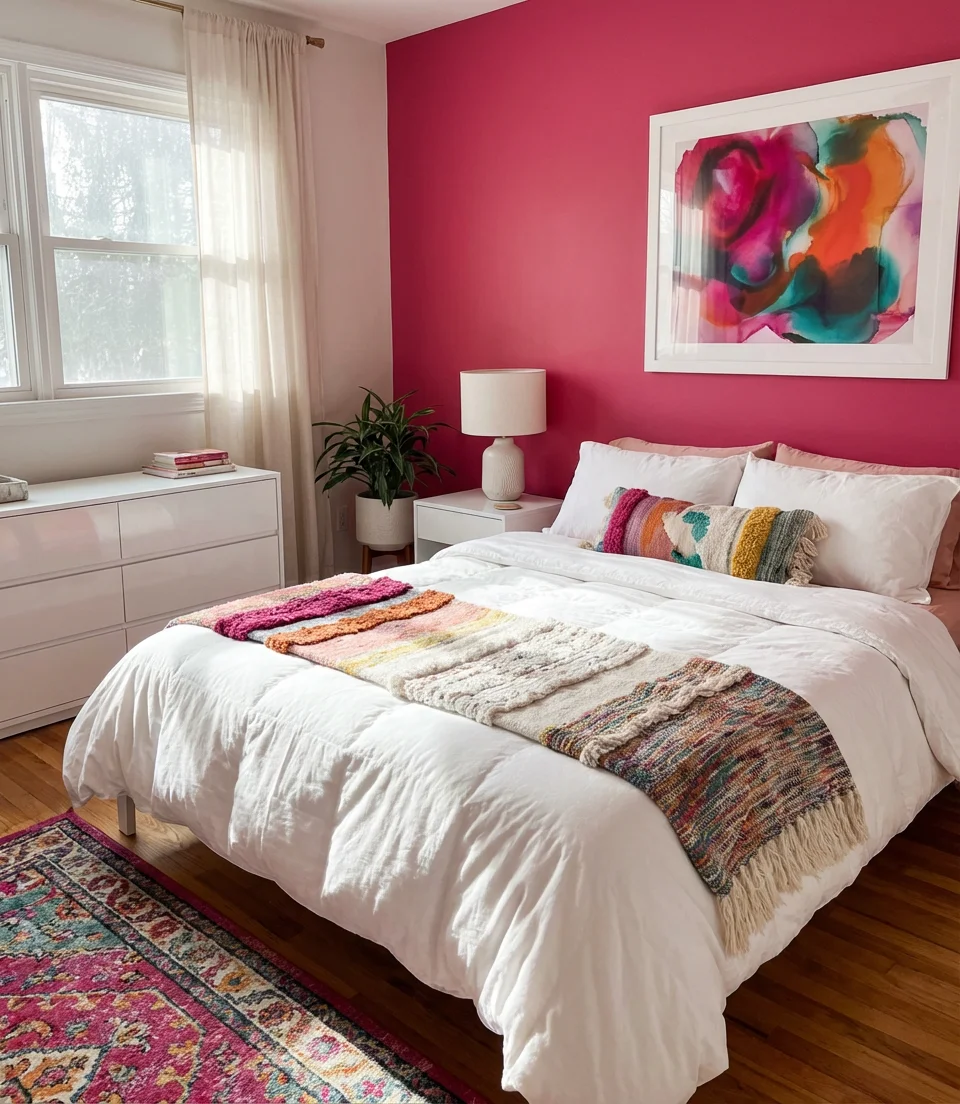
A real homeowner in Austin, Texas, shared that after years of beige walls and “safe” decorating choices, she painted her bedroom a bold fuchsia, and it completely changed how she started her mornings—the room made her feel energized in a way the neutral palette never did. That personal shift is something designers hear regularly: color affects mood in concrete, measurable ways, and hot pink in particular triggers an emotional warmth and optimism that neutrals simply can’t replicate. Keep the rest of the room simple and let the color do all the talking.
6. Blush Pink and Grey Modern Bedroom
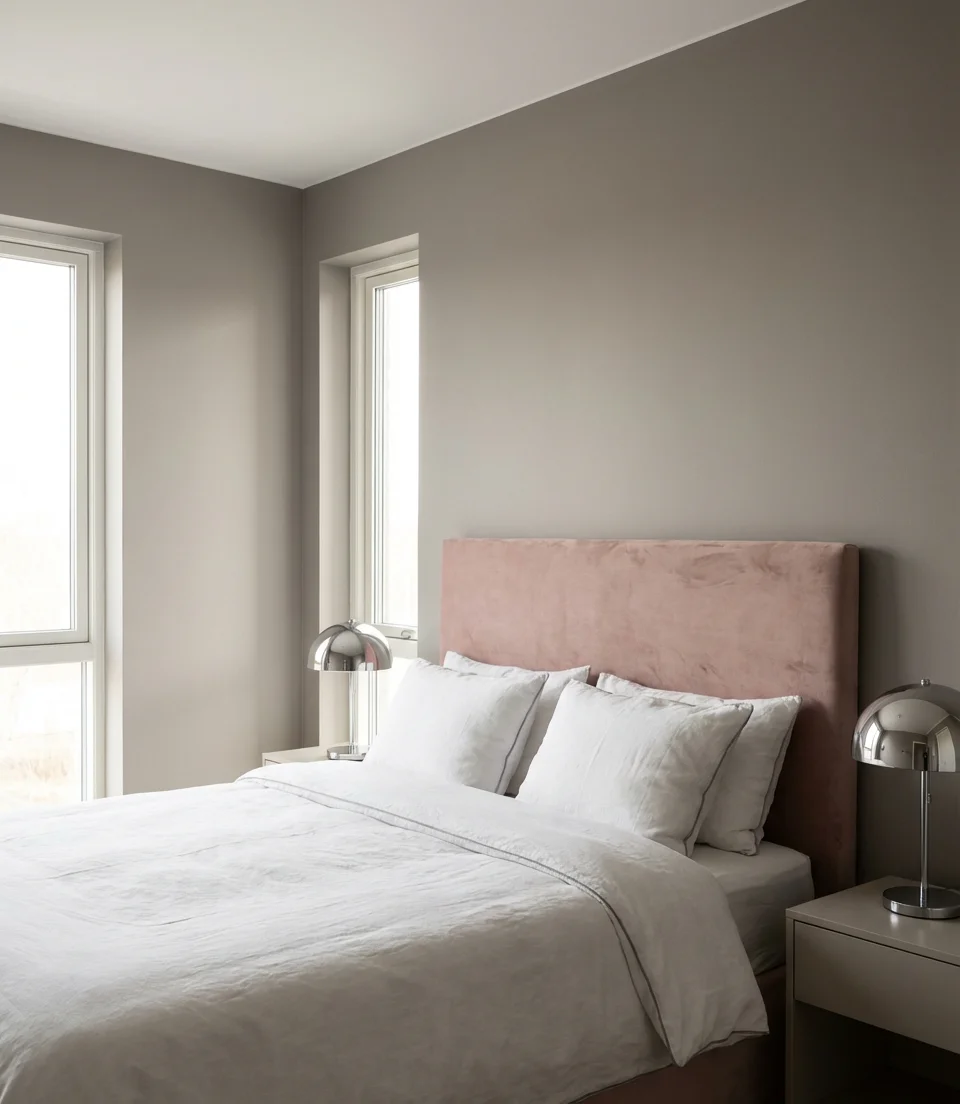
Grey is the ideal moderator of bold color palettes, and nowhere does it work more elegantly than alongside blush pink in a modern bedroom. Warm grey walls—think a mid-tone with slight warm undertones rather than a cold blue-grey—pair beautifully with blush textiles, a velvet upholstered headboard in a mauve or dusty rose tone, and silver or chrome hardware details. The combination feels mature and restrained while still carrying that unmistakable warmth that pure grey alone can never quite achieve.
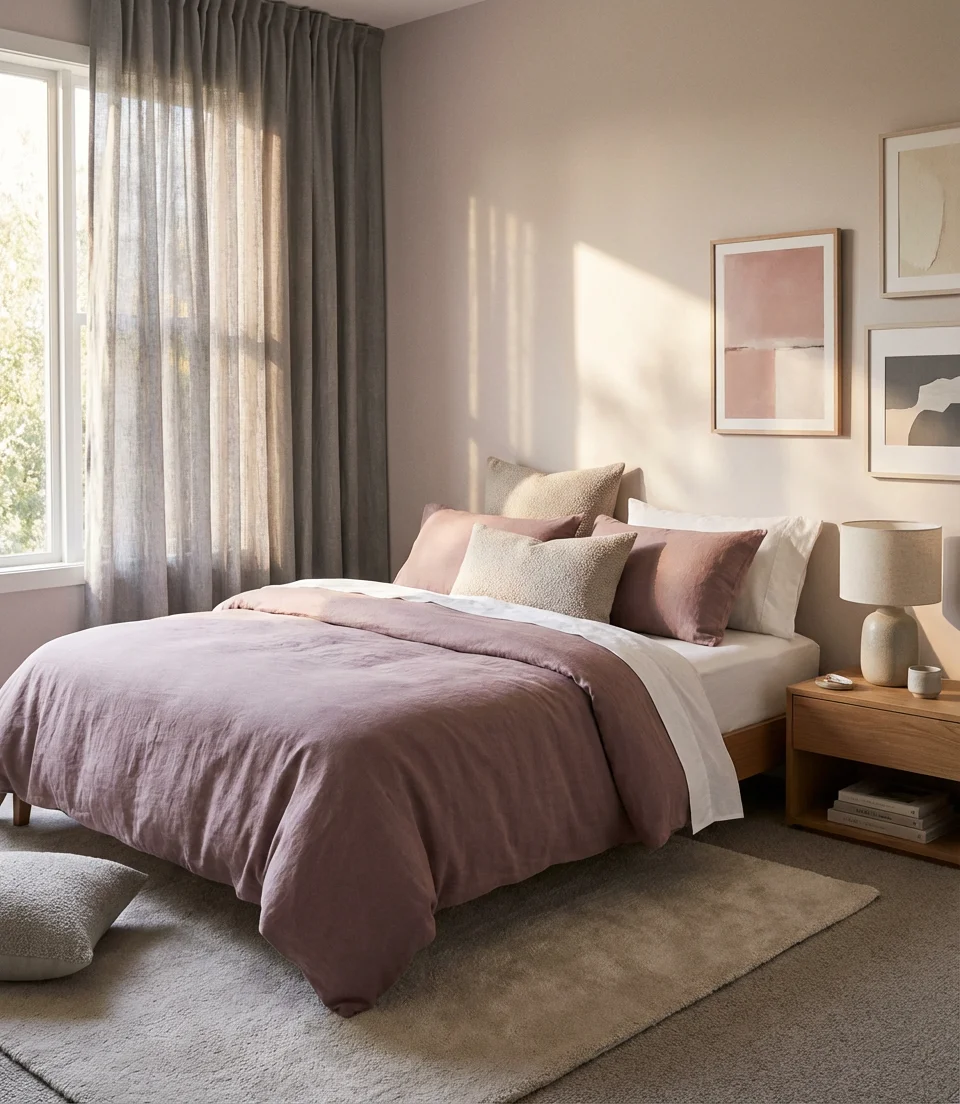
This palette is particularly popular in new construction homes across the Midwest and South, where open-plan living means the bedroom often needs to feel connected to adjacent spaces rather than wildly different from them. Blush and warm grey thread through multiple rooms naturally, making the overall home feel cohesive and designed rather than room-by-room decisions stapled together. If you’re decorating a new build or recently purchased home with a blank canvas, starting with this palette gives you tremendous flexibility as you layer in furniture and art over time.
7. Cute Pink Kids Bedroom with Playful Accents
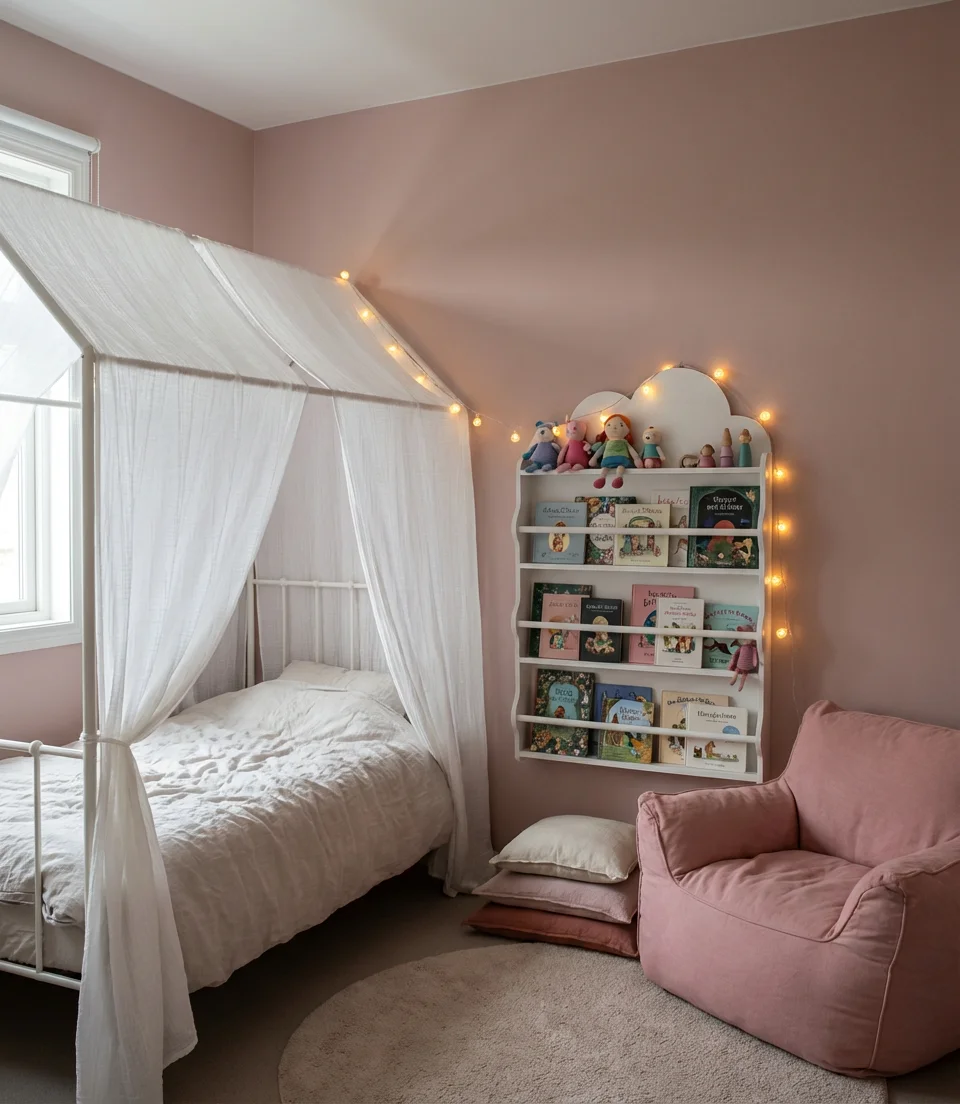
A charming pink bedroom for younger kids should feel like a place where imagination lives—not just a room that happens to be pink. The best children’s pink bedrooms balance color with purposeful playfulness: think a soft pink wall with a whimsical cloud-shaped bookshelf, a canopy bed draped in sheer white fabric, a cozy reading nook with a poufy chair, and a rug with a fun pattern that anchors all the activity. The goal is to create a space that sparks joy without overwhelming the senses or creating visual chaos.
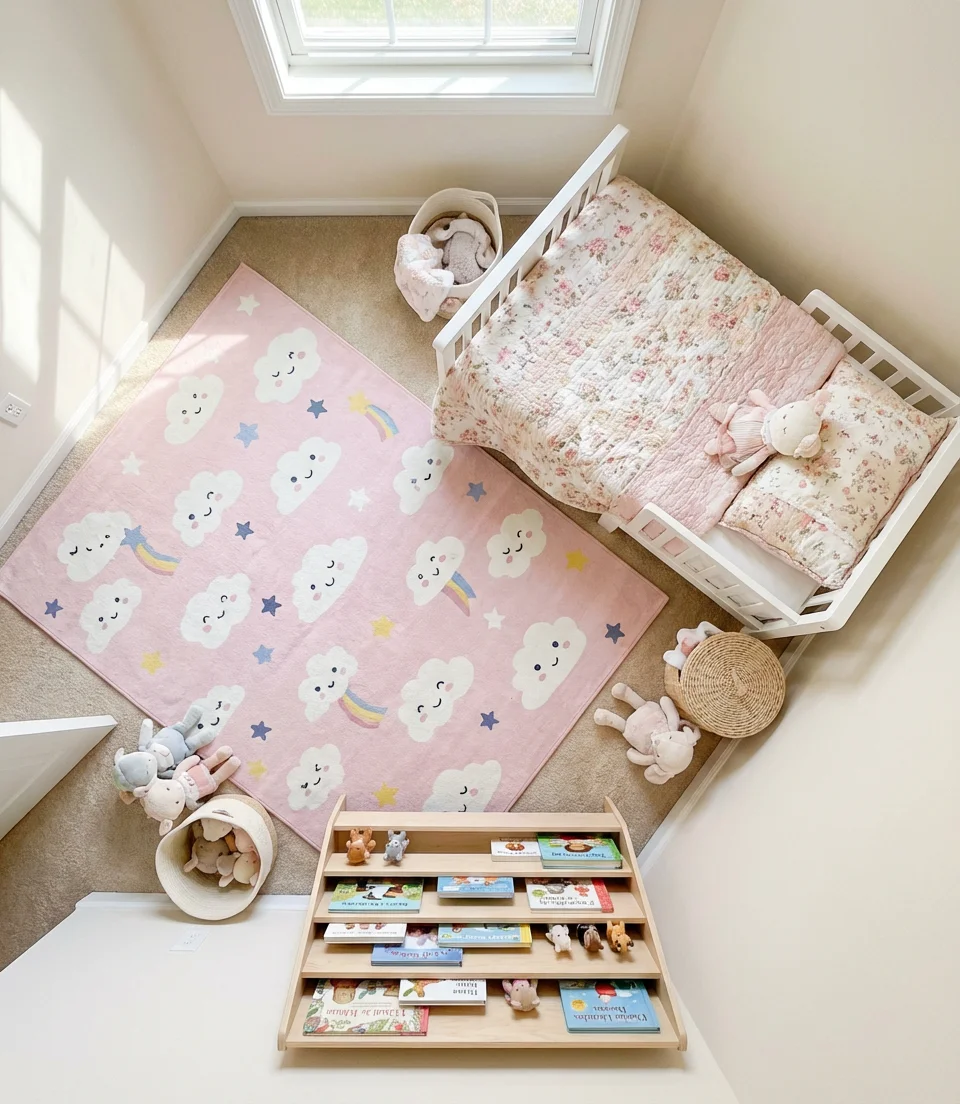
One practical insight for parents: resist the urge to go too theme-specific when designing a child’s pink bedroom. Unicorn- or princess-themed rooms look adorable in toddlerhood but often feel dated by age seven or eight, requiring a complete redo. Instead, let the pink be the foundation, and choose furniture and accents that can grow with your child—a classic white bed frame, a bookshelf she’ll use through middle school, and a few interchangeable accent pieces like pillow covers and wall prints that can be swapped out as her tastes evolve.
8. Pink and Brown Earthy Warm Bedroom
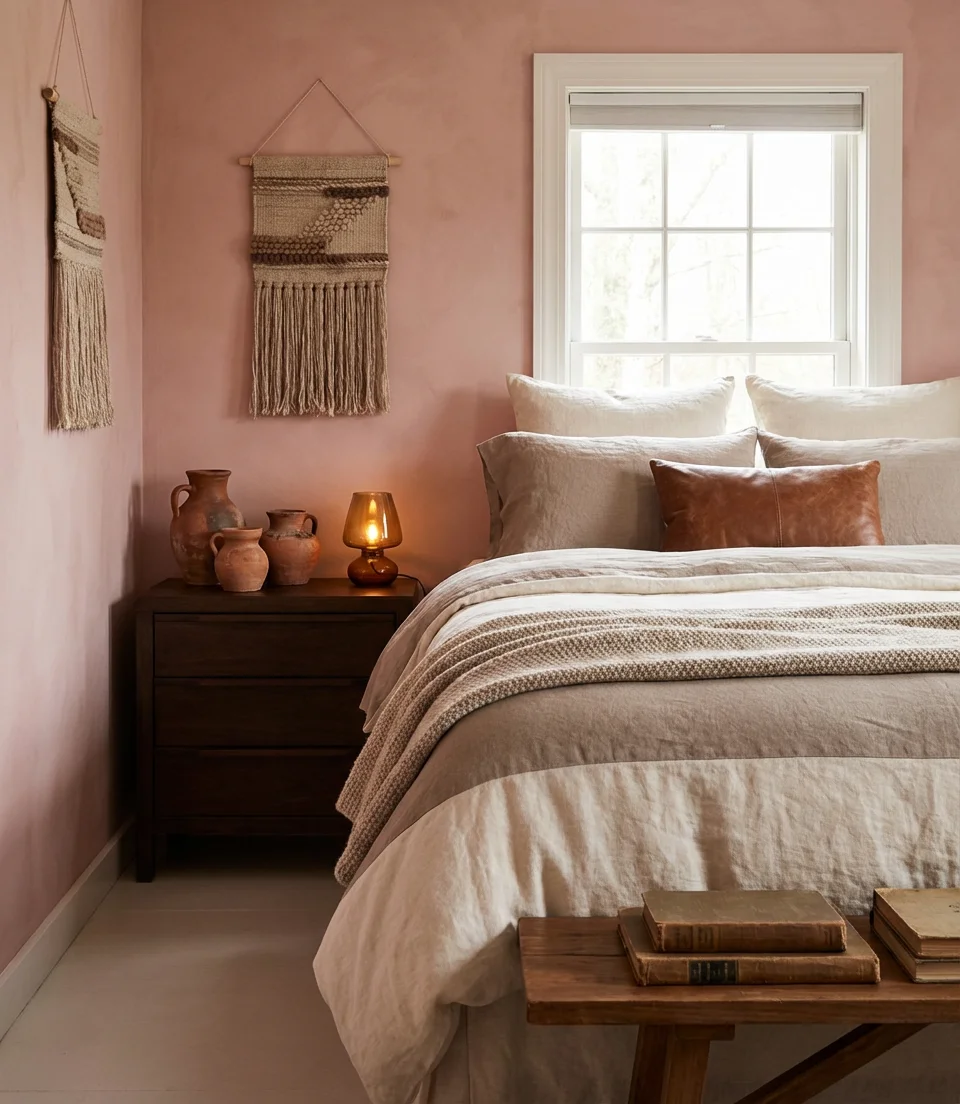
Pink and brown is one of the most underrated bedroom color combinations—perhaps because it sounds unexpected until you see it executed well, at which point it looks completely inevitable. A warm rose pink pairs brilliantly with rich chocolate brown wood furniture, leather or suede accents, and natural linen or canvas textiles. The brown grounds the pink and prevents it from feeling too sweet or frivolous, while the pink warms up the brown and stops it from feeling heavy or masculine. Together, they create a bedroom with genuine depth and warmth.
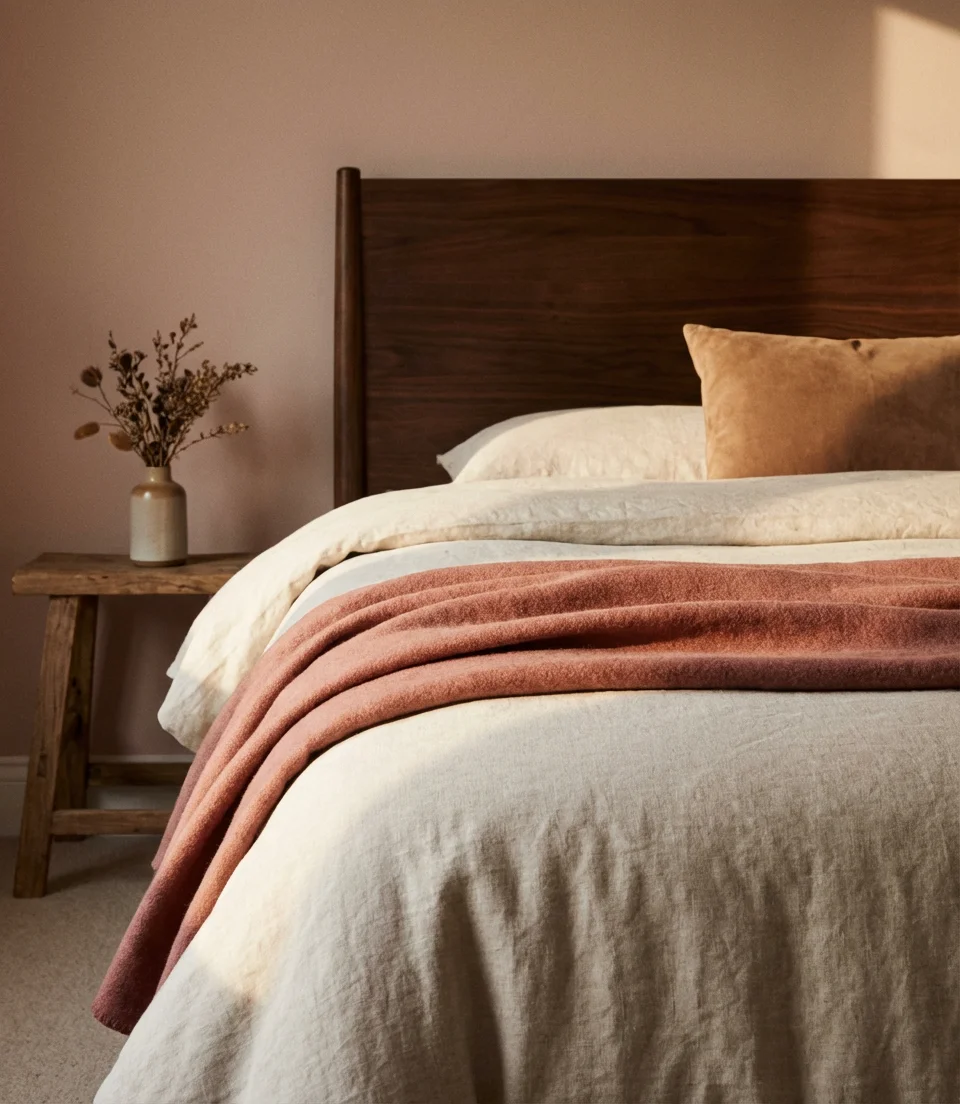
This combination works especially well in bedrooms with wood floors and exposed wooden ceiling beams—architectural features that are common in craftsman-style homes, older bungalows, and farmhouse-style builds across the Pacific Northwest and New England. The warm wood tones already present in the architecture act as a natural bridge between the pink and brown you bring in through paint and furniture, meaning the room feels layered and intentional rather than like two colors fighting for dominance. Let the existing wood set your brown baseline and build from there.
9. Teen Girl Pink Bedroom with Edge
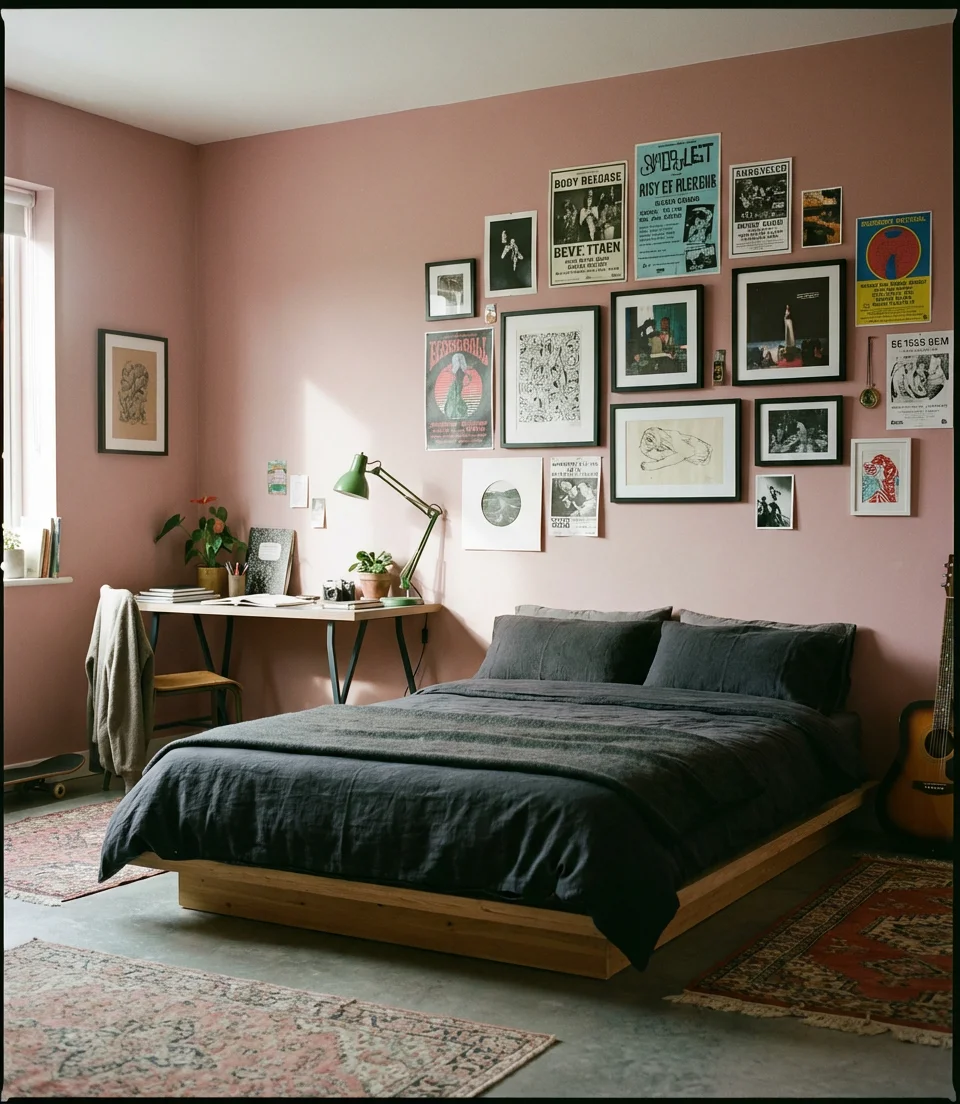
Designing a pink bedroom for teens requires a different approach than a child’s room—it needs to feel age-appropriate, personal, and genuinely cool rather than adorable. The design features a muted pink with strong graphic elements, a gallery wall that mixes posters and personal art, a loft or platform bed for a sense of privacy and space, and a dedicated desk area for studying, all of which hit the marks. Treating pink as a foundation tone that can coexist with edgier dark accents, bold typography prints, and modern tech-friendly furniture is crucial.
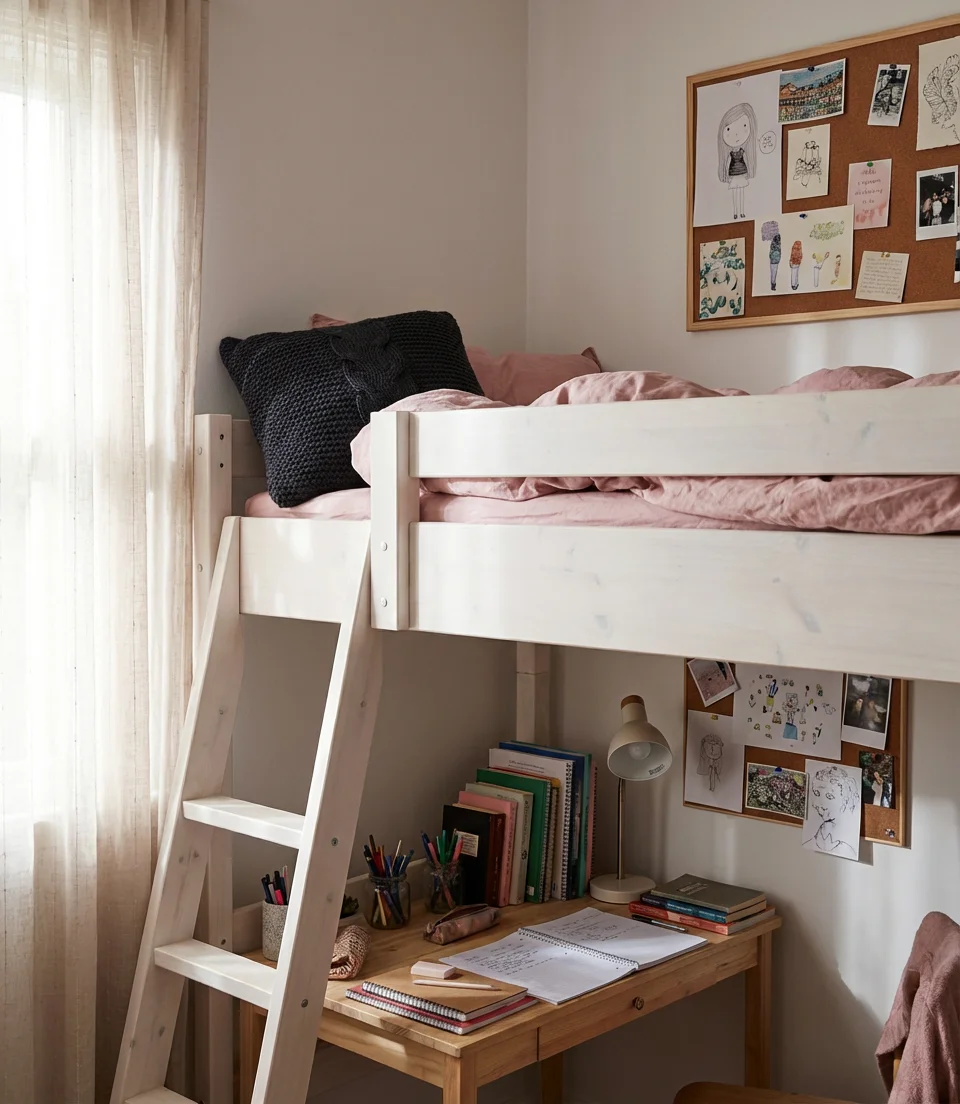
Interior designers who specialize in teen spaces often emphasize the importance of giving teenagers real agency in the design process—not just picking a paint color from two pre-approved options, but genuinely collaborating on furniture layout, art choices, and accent colors. A teenager who helped design her own room is far more likely to keep it relatively tidy and take ownership of the space. The pink foundation gives parents a starting point they feel comfortable with, while the teen’s choices layered on top make it feel authentically hers.
10. Soft Pink and Beige Serene Minimalism
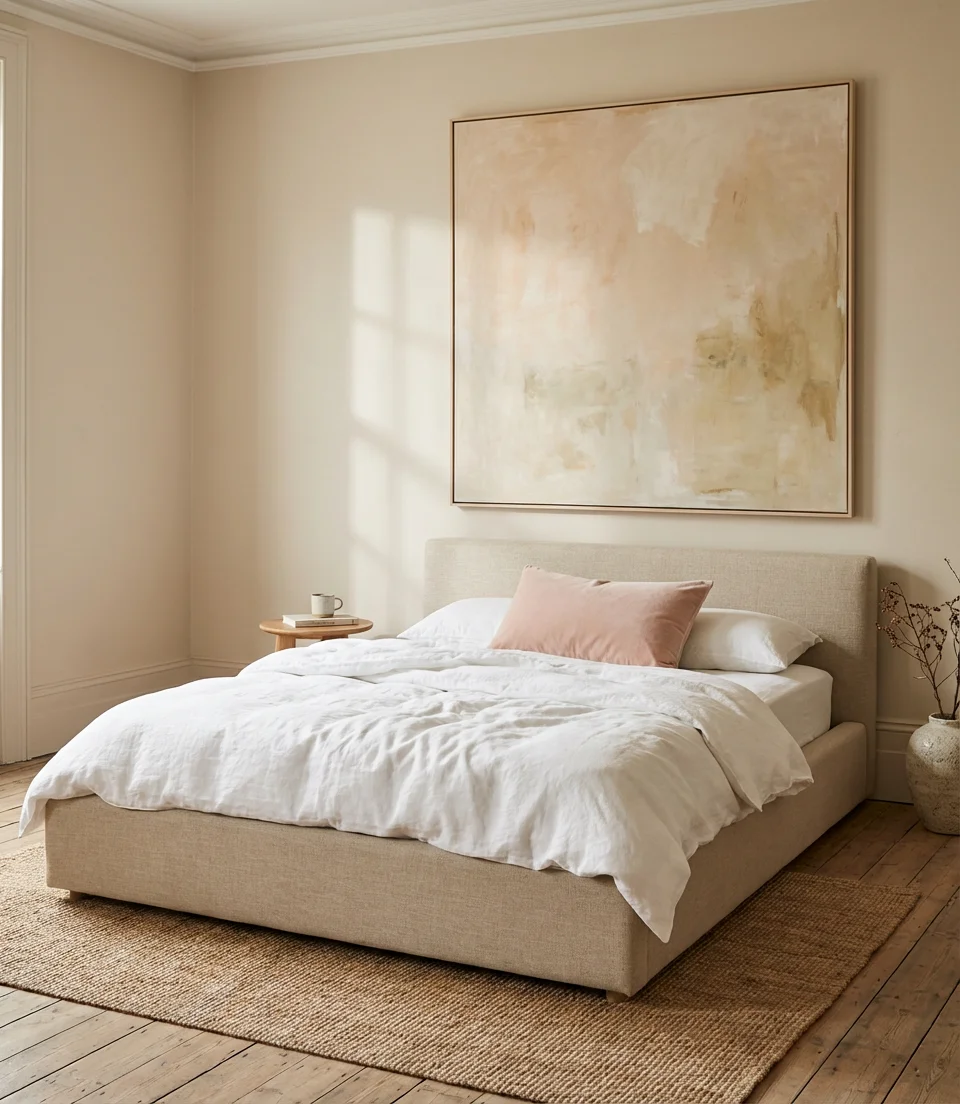
The combination of soft pink and beige has become a defining palette of the modern quiet-luxury bedroom trend—a movement that prizes restraint, quality materials, and a deliberate absence of visual noise. Imagine barely-there pink plaster walls, a linen upholstered bed in warm oatmeal, a single oversized art piece with muted tones, and bedside tables with clean lines and no hardware. Every element serves a purpose, ensuring the room feels like a thoughtful respite after a long day. It’s the bedroom version of “less is more” taken seriously.
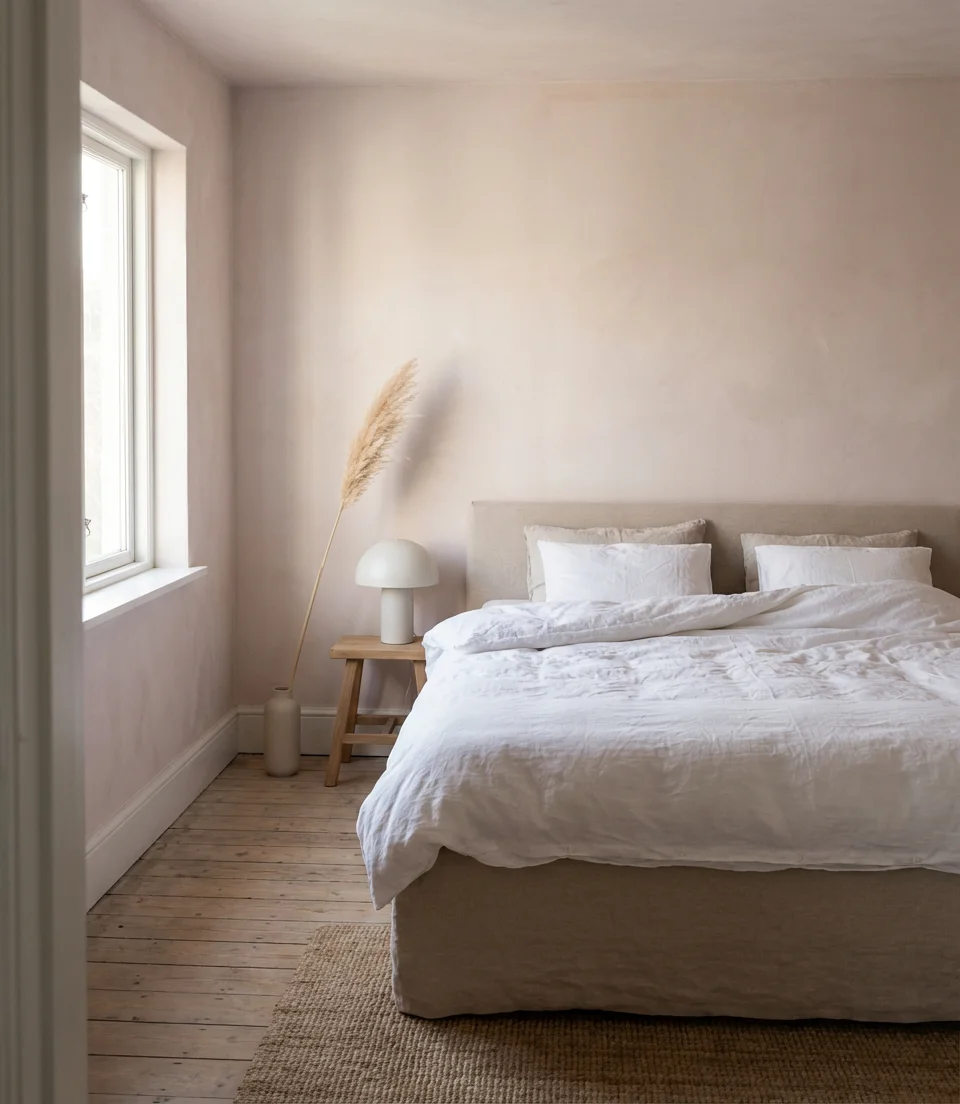
This look has particular resonance for Americans who’ve been influenced by Scandinavian and Japanese design principles—the idea that a calm, uncluttered environment has a direct and positive effect on sleep quality and mental clarity. Research in environmental psychology consistently supports this: bedrooms with fewer objects, softer tones, and limited visual stimulation are associated with lower cortisol levels and faster sleep onset. The soft pink and beige palette takes that principle and gives it a warmth that cold, clinical minimalism often lacks.
11. Light Pink and Gold Glamorous Bedroom
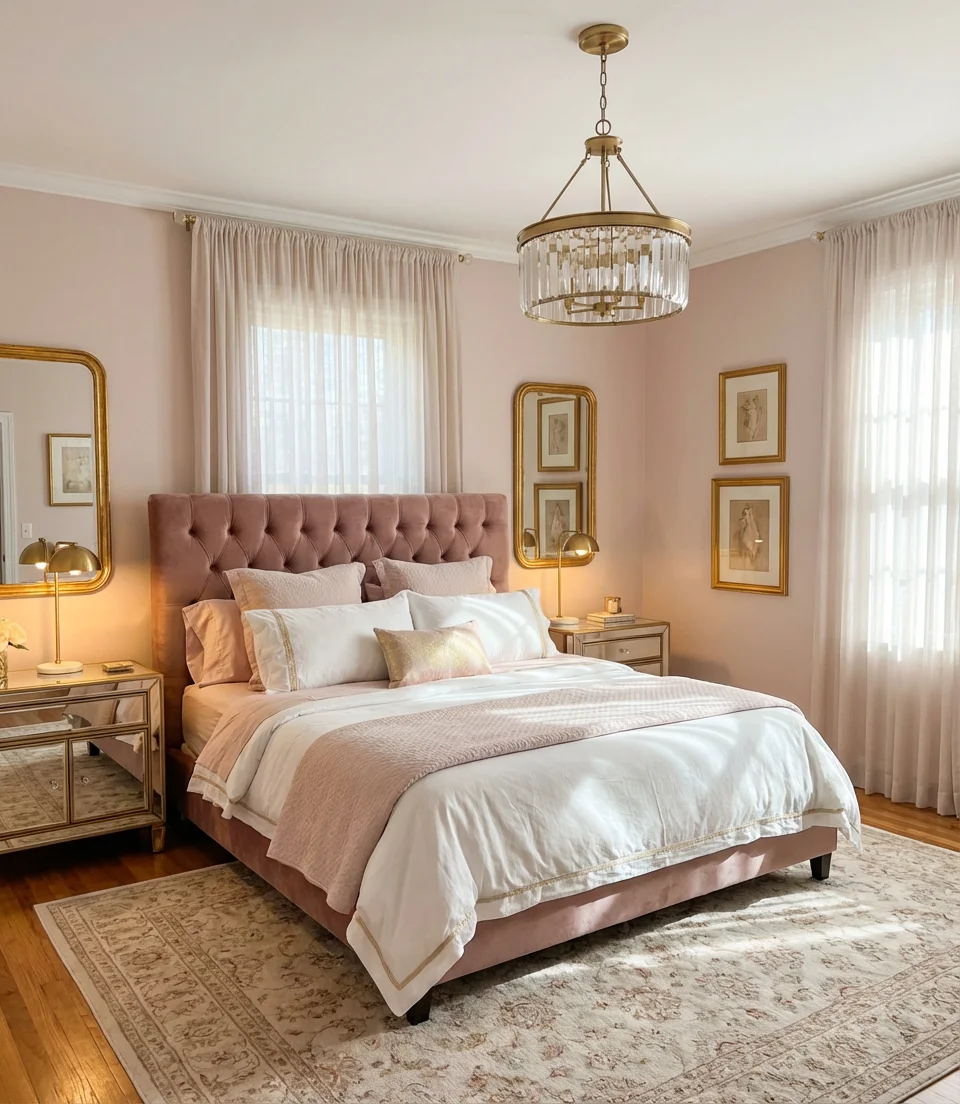
Light pink and gold is the classic Hollywood Regency combination for a reason—it communicates effortless glamour without tipping into gaudy excess when handled with restraint. A pale pink on the walls or as the dominant textile color, combined with warm brushed gold hardware, a tufted headboard, mirrored nightstands, and a chandelier with warm-toned bulbs, creates a bedroom that feels like a luxurious retreat. The key is keeping the gold genuinely warm and brushed rather than bright or shiny—cool chrome would break the spell immediately.
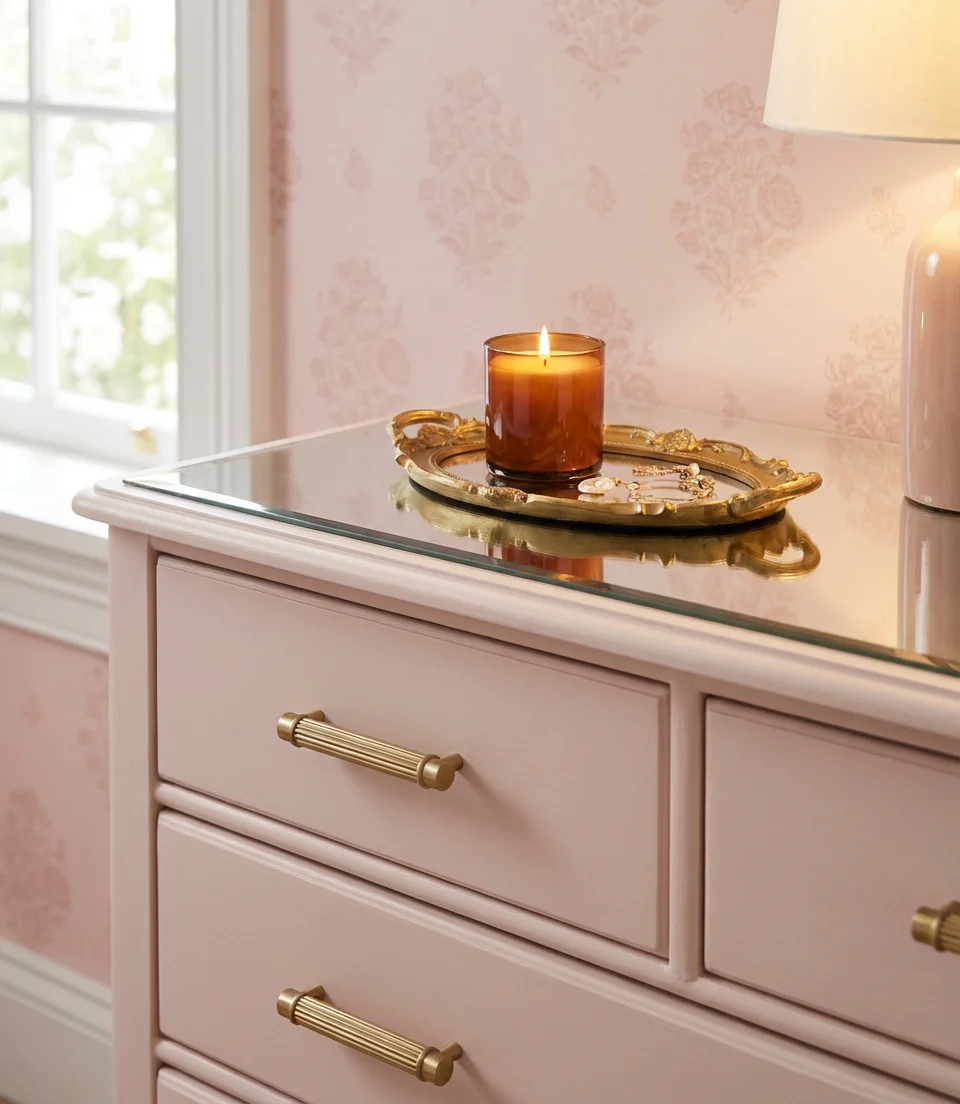
For a full glamour-bedroom makeover, you don’t necessarily need to start from scratch. Hardware swaps are one of the most cost-effective ways to shift a bedroom’s character dramatically: replacing basic knobs and pulls on existing dressers and nightstands with brushed gold versions costs anywhere from $30 to $100 total and can completely transform the room’s personality. If you combine this with a new light pink duvet cover and a couple of metallic accent pillows, you can significantly enhance the look without having to replace all the furniture.
12. Pink and Navy Blue Sophisticated Contrast
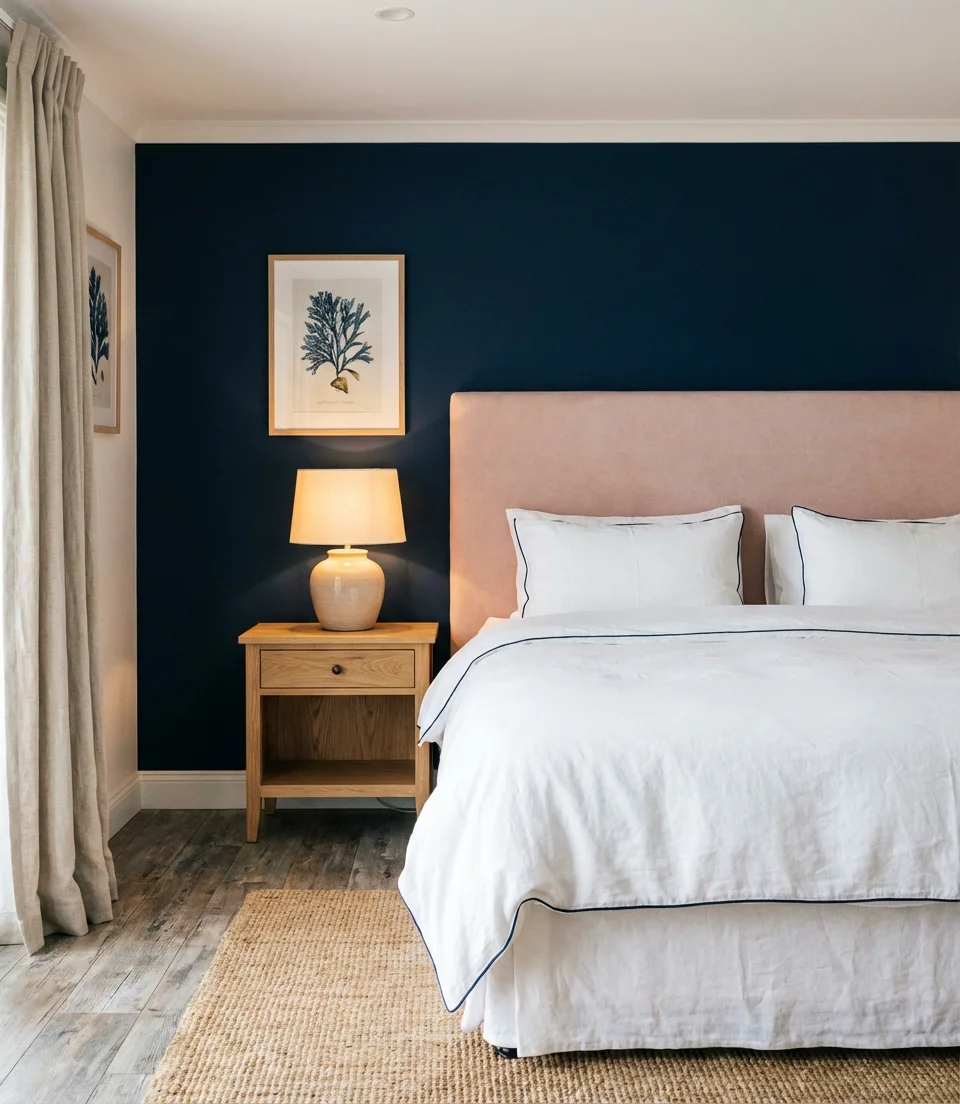
Pink and navy sounds like an unusual combination until you see it—then it looks completely and obviously right. The deep, grounded confidence of navy blue and the warmth of blush or dusty pink create a bedroom that feels both sophisticated and inviting, equally suited to adult couples or older teens who want something decidedly non-generic. A navy blue accent wall behind a blush pink upholstered headboard, complemented by white bedding with navy piping, is a starting point that immediately reads as intentionally designed rather than assembled from whatever was on sale.
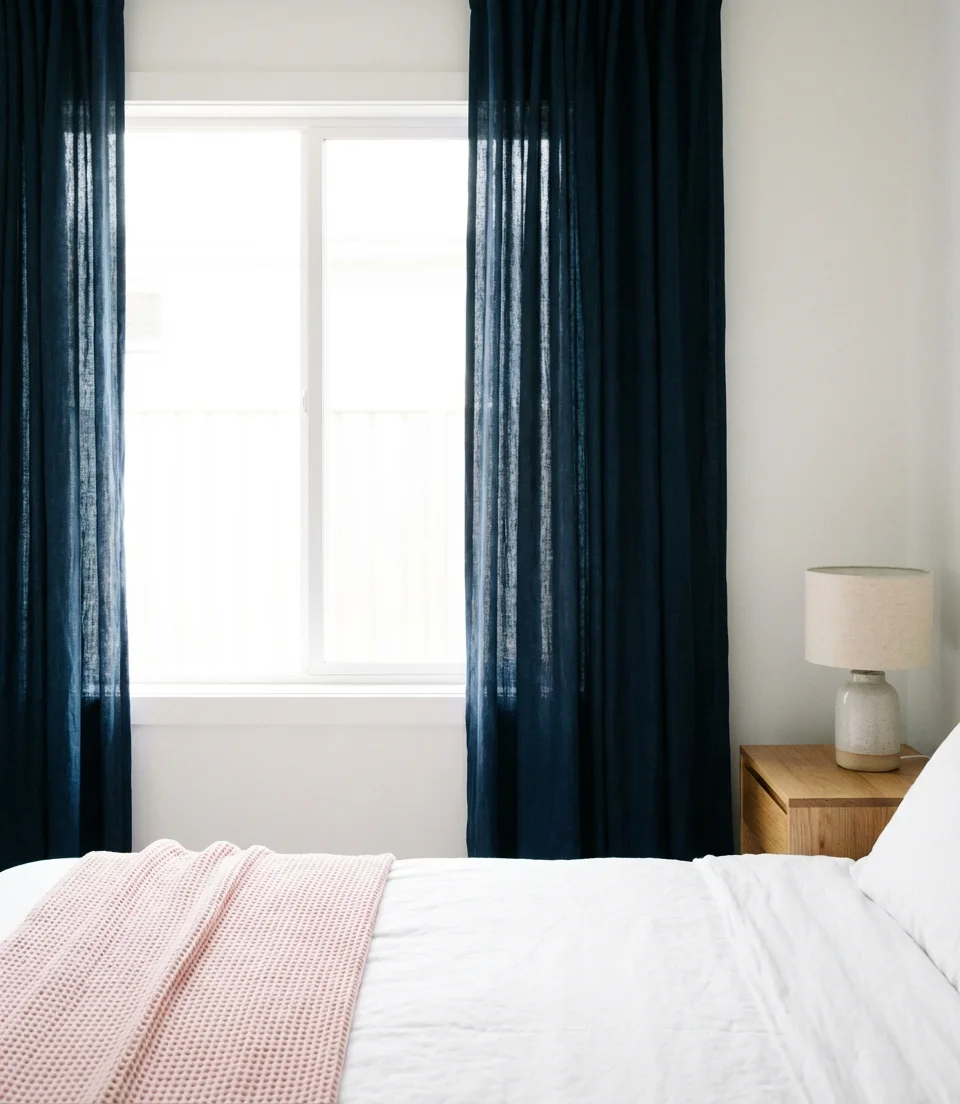
This combination is particularly well-suited to coastal homes and beach houses along the Atlantic seaboard and Gulf Coast, where navy already feels native to the architecture and styling vocabulary. Adding pink warms up what can sometimes be a cold, nautical-feeling palette and makes the bedroom feel more like a personal refuge than a hotel suite. If you’re in a coastal rental or vacation property, navy and pink is also a smart palette choice because it photographs well and tends to appeal to a broad range of guests without feeling generic.
13. Girly Pink Canopy Bed Dream Room
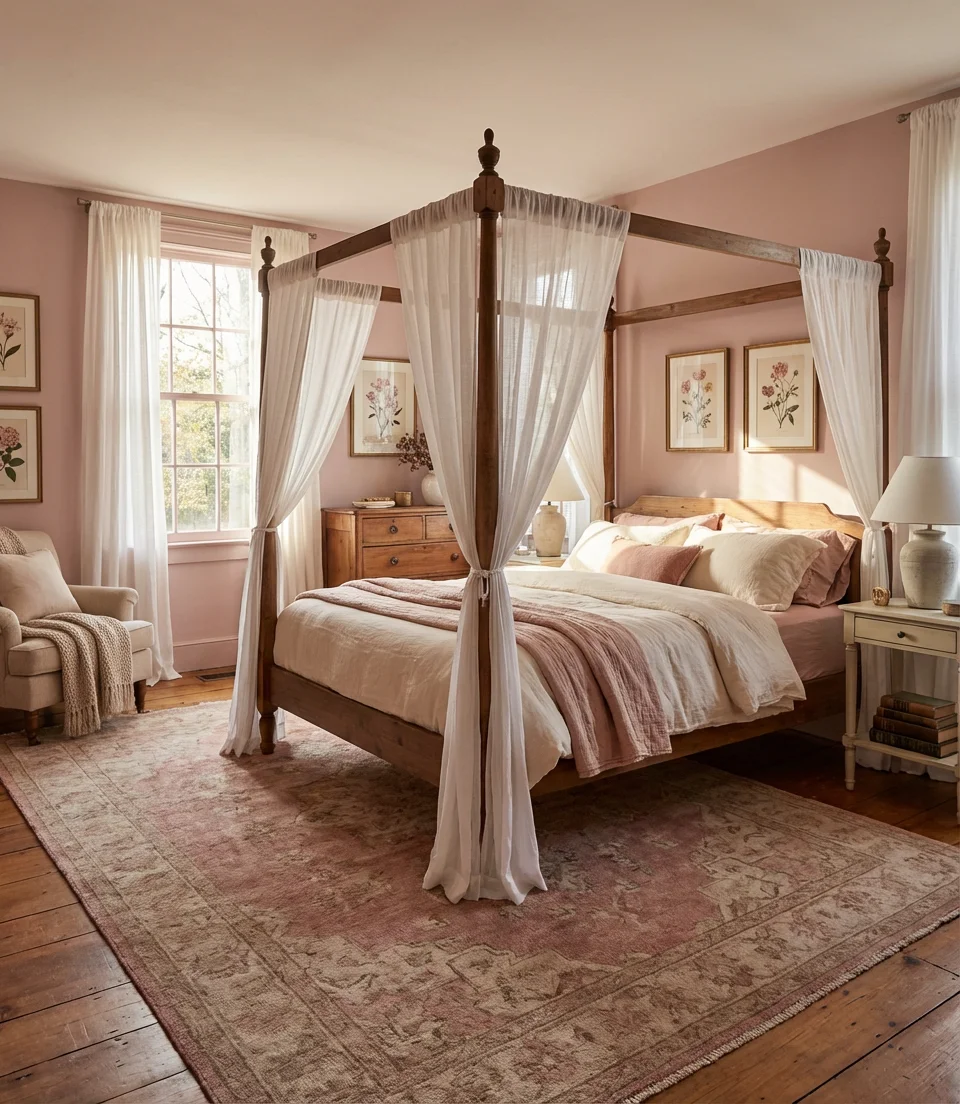
Sometimes the most honest approach to a bedroom is leaning fully into what you actually love—and for many women, that means a genuinely, unapologetically girly room with a canopy bed as the centerpiece. A four-poster or canopy bed draped in sheer pink or white fabric, surrounded by soft pink walls, a plush area rug in a slightly deeper rose tone, and delicate floral accents creates a bedroom that feels like something out of a French countryside novel. It’s romantic, personal, and completely at odds with the idea that adult women need to choose “grown-up” over beautiful.
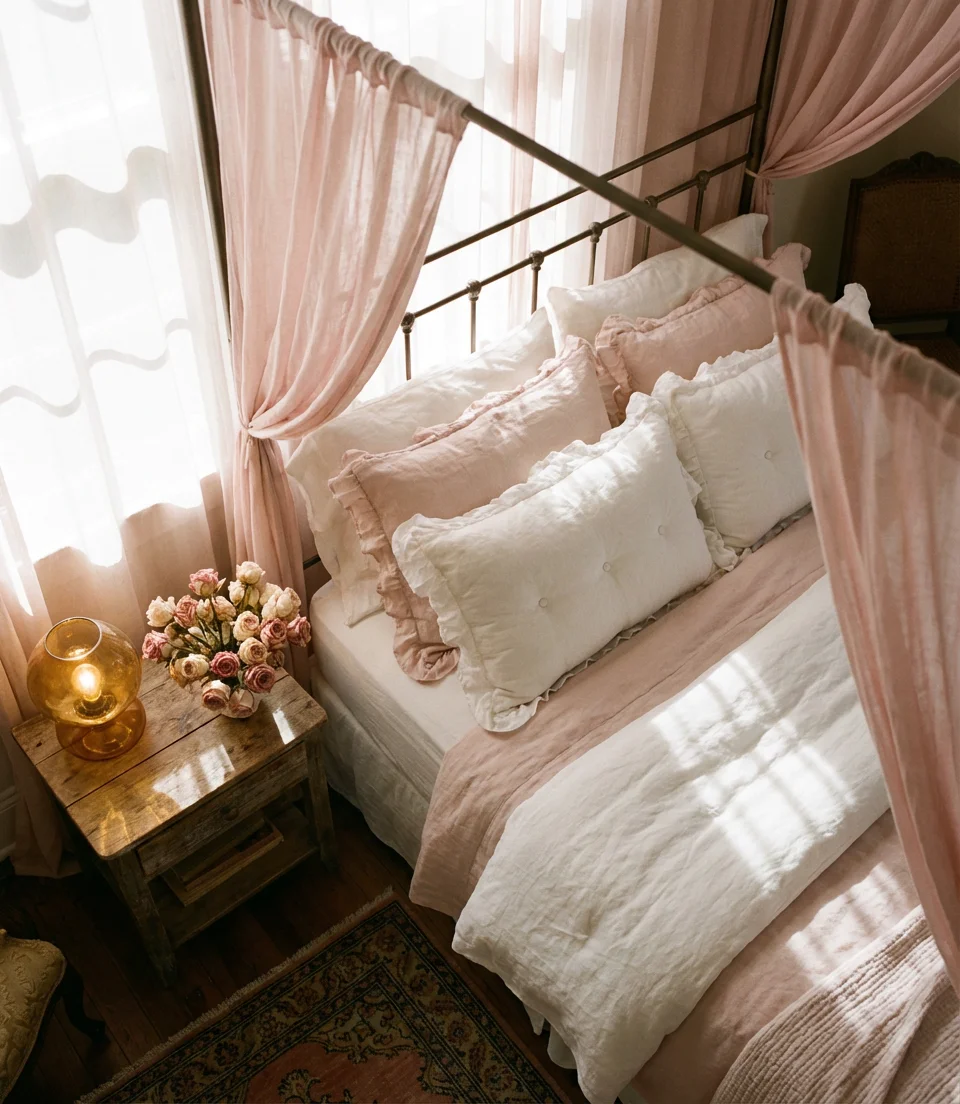
The canopy bed is experiencing a genuine resurgence in American interior design—searches for the style are up significantly on both Pinterest and major furniture retail sites. Part of the appeal is the sense of enclosure and intimacy a canopy creates, which sleep researchers note can feel psychologically similar to a weighted blanket: comforting, contained, and safe. Waking up inside a soft pink canopy creates an effect that is very hard to replicate with any other design choice, whether you choose a full architectural four-poster frame or a simple ceiling-mounted canopy rod with cascading fabric.
14. Pink and Red Bold Maximalist Bedroom
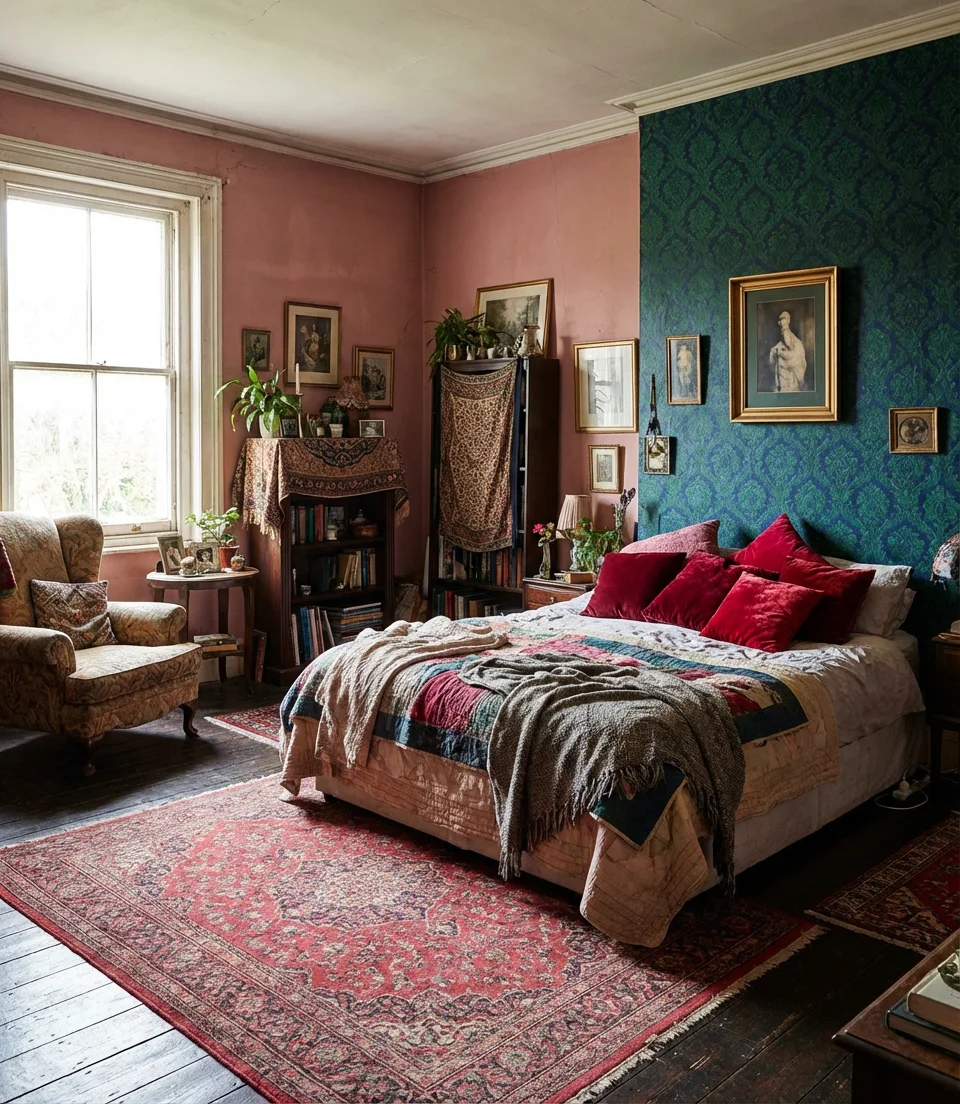
Pairing pink with red is one of those design “rules” that was broken decades ago and never looked back. In a maximalist bedroom, a deep dusty rose wall with red velvet accent pillows, a vintage red Persian rug, and bold patterned wallpaper in jewel tones creates a room that buzzes with visual energy and personality. This palette may not be for everyone, but for homeowners who find minimalism sterile and restrained boring, it’s a room that finally feels right. Layer pattern upon pattern confidently—the pink acts as the unifying warm undertone that prevents it all from feeling like visual shouting.
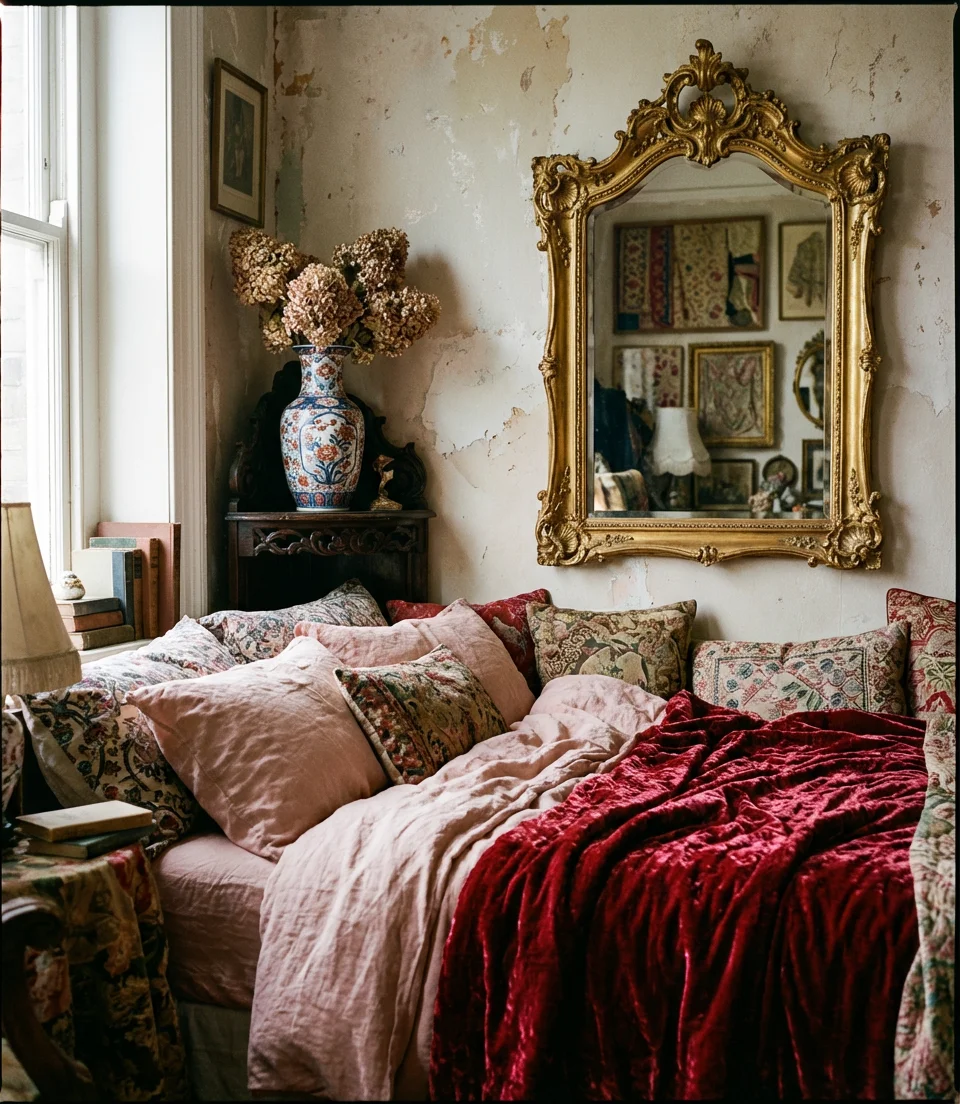
American homeowners aged 30–45, who came of age aesthetically in the 1990s and early 2000s, have a particularly enthusiastic audience for maximalism as a design philosophy—a period when maximalist interiors were genuinely cool before minimalism swept them aside. There’s a nostalgic comfort in rooms that are busy, warm, and full of things that matter personally. The pink and red combination, rooted in passion and warmth, taps into that emotional register in a way that feels more honest than a carefully curated capsule palette.
15. Pale Pink Scandinavian-Inspired Bedroom
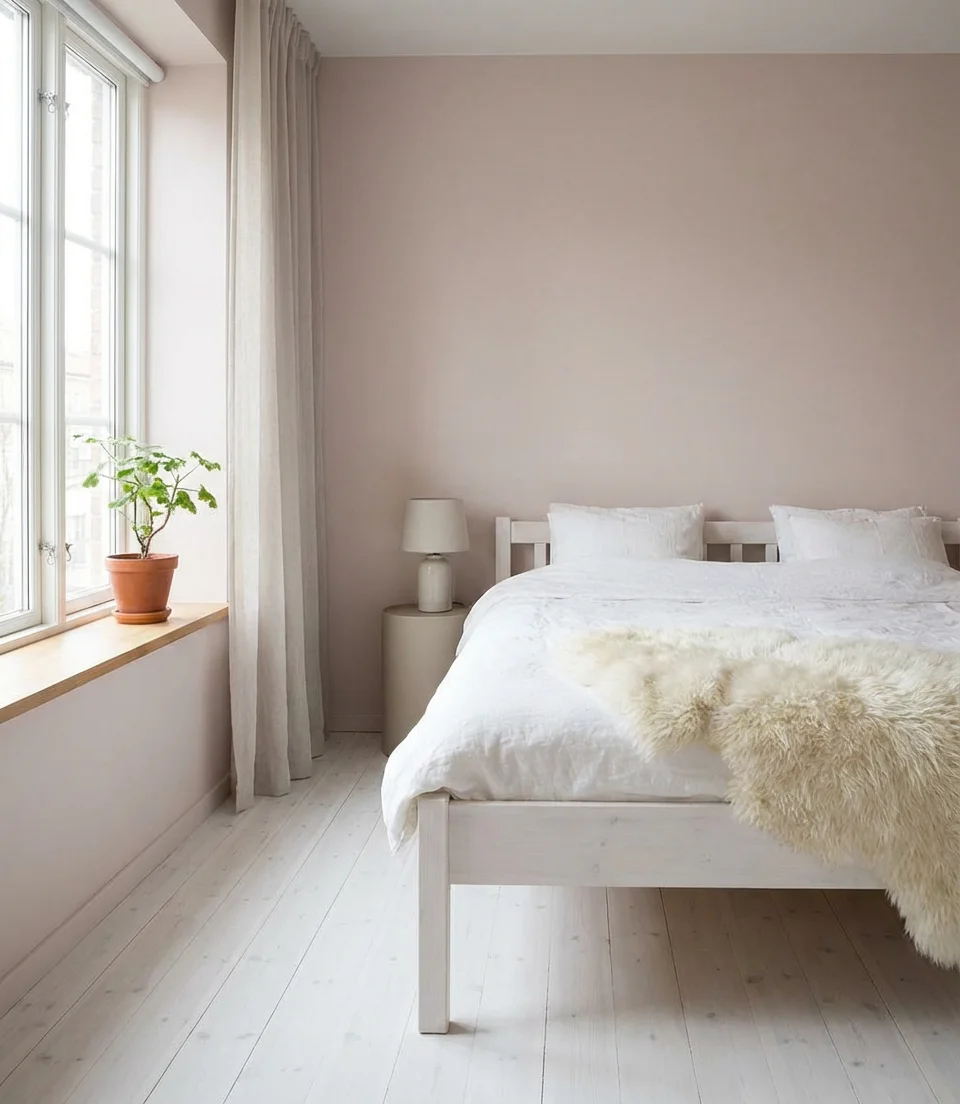
Scandinavian design has always understood that a touch of warmth prevents minimalism from tipping into cold austerity—and pale pink is one of the most effective ways to deliver that warmth. A barely-there pink wall in a chalky matte finish, simple white-painted wood furniture with clean Scandinavian lines, a sheepskin throw at the foot of the bed, and a single potted trailing plant on the windowsill create a bedroom that is simultaneously minimal and genuinely cozy. The light pink tone works particularly well in rooms with limited natural light, adding warmth without darkening the space.
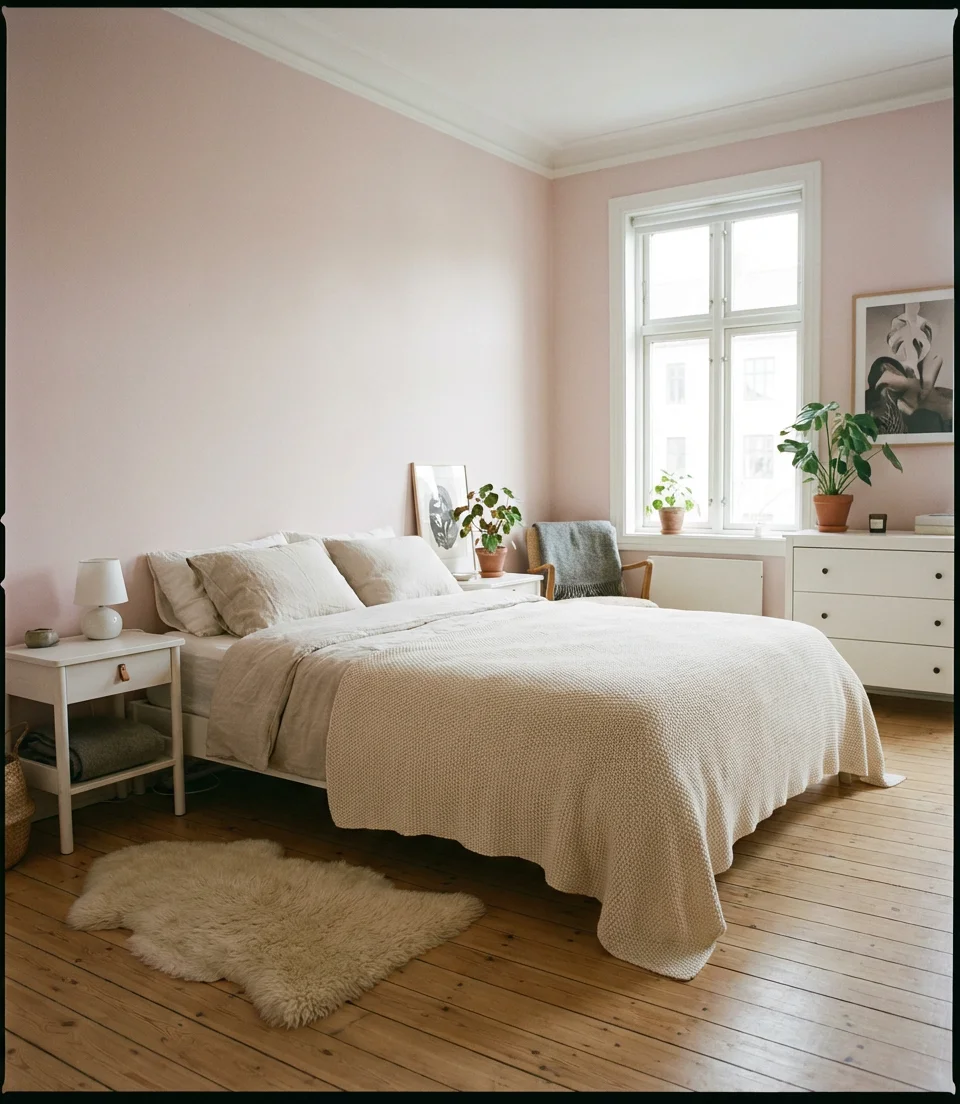
This instance is where it works best: a medium-sized bedroom in a townhouse or condo with north-facing windows that tend to feel chilly and grey on overcast days. The pale pink on the walls acts like a permanent light filter, giving the room a softly warm glow even when the actual light coming through the window is flat and cool. Pair this ensemble with warm-toned LED bulbs in your bedside sconces and a cream or ivory ceiling, and even on a rainy Tuesday morning the room will feel like somewhere you actually want to be.
16. Pink Aesthetic Bedroom with Neon Accents
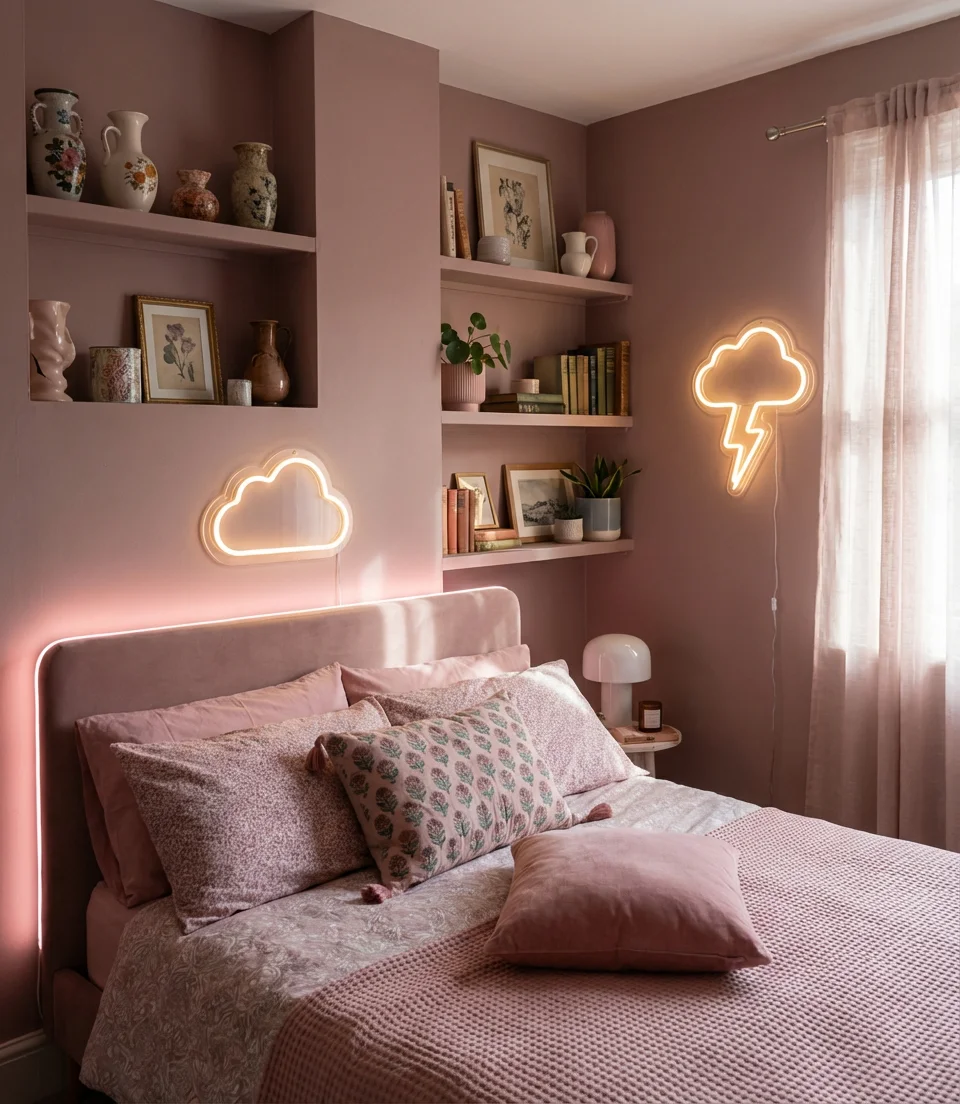
The “pink aesthetic” bedroom is a fully realized design language that has evolved from social media mood boards into a genuine interior style—and in 2026, it’s more sophisticated than ever. A dusty or muted pink as the base tone, accented with a neon sign in a contrasting warm color, LED strip lighting behind the bed or desk, and a carefully curated mix of vintage and modern decor objects creates a room that feels intentional, current, and deeply personal. The girly and maximalist elements are present but filtered through an editorial eye that makes it feel polished rather than random.
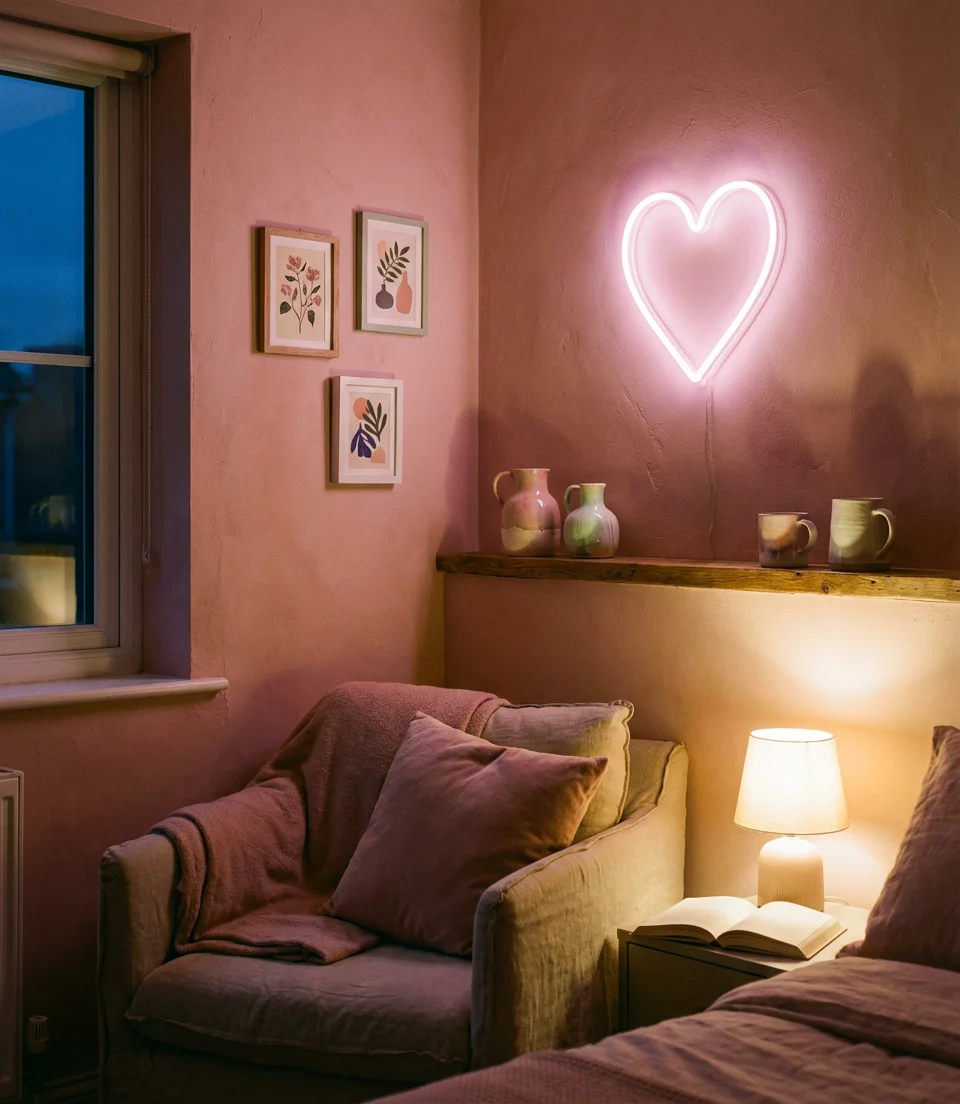
One expert-style note worth taking seriously is that restraint almost always makes the difference between an “aesthetic bedroom” that looks cohesive and one that resembles an accumulation of trending items. Pick one or two statement pieces—a neon sign, a gallery wall, a statement lamp—and let them be genuinely special rather than filling every surface. A neon sign in warm pink or orange tones positioned above or behind the bed can serve as both a design focal point and a practical ambient light source, doubling its value in the room without adding visual clutter.
17. Pink and Yellow Cheerful Sunny Bedroom
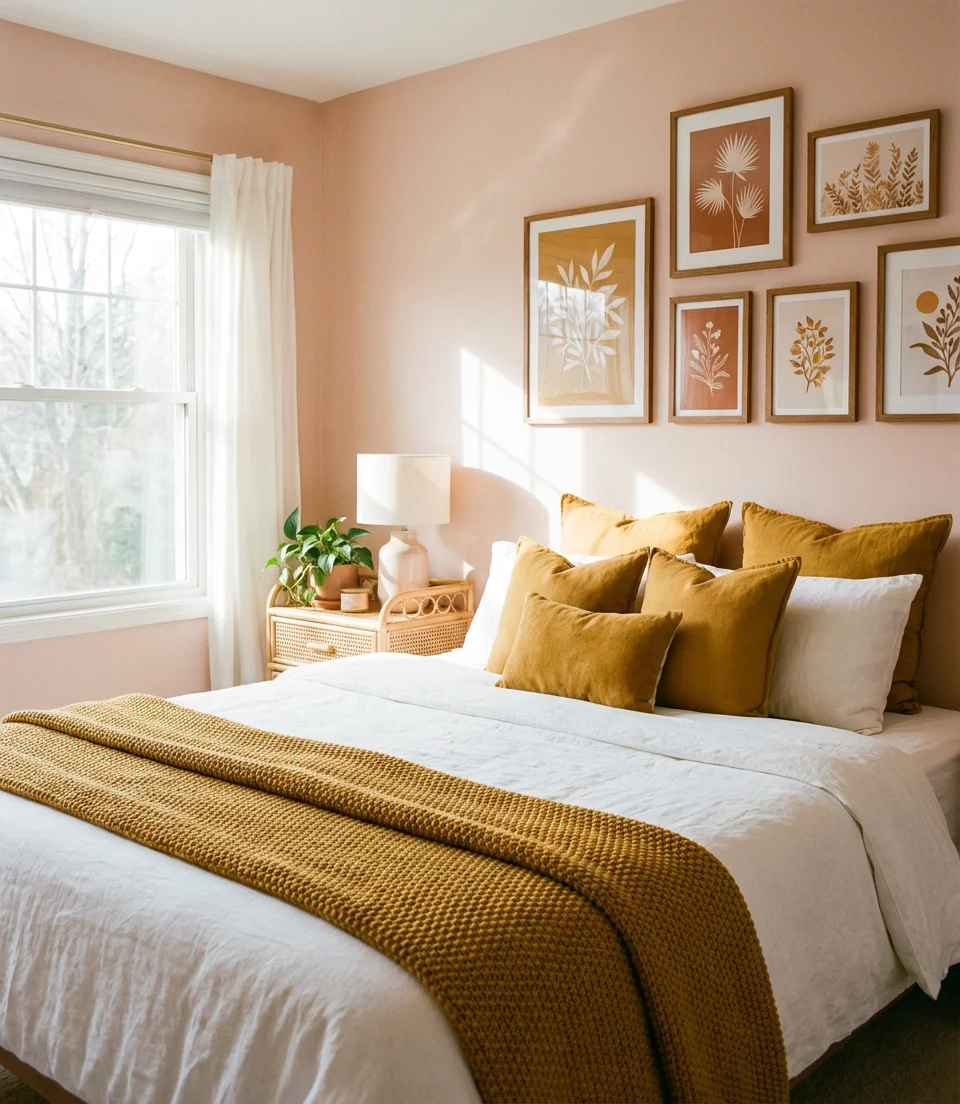
Pink and yellow is a color combination that immediately communicates optimism, and in a bedroom, that kind of positive energy is a genuinely underrated asset. A warm blush pink wall paired with golden yellow throw pillows, a mustard-toned blanket, vintage-style botanical prints in warm tones, and natural rattan or wicker accents creates a space that feels like a permanent sunny day regardless of what’s happening outside your window. The two colors share warm undertones that prevent them from clashing—unlike cool pink with bright lemon yellow, which can feel jarring and overly stimulating.
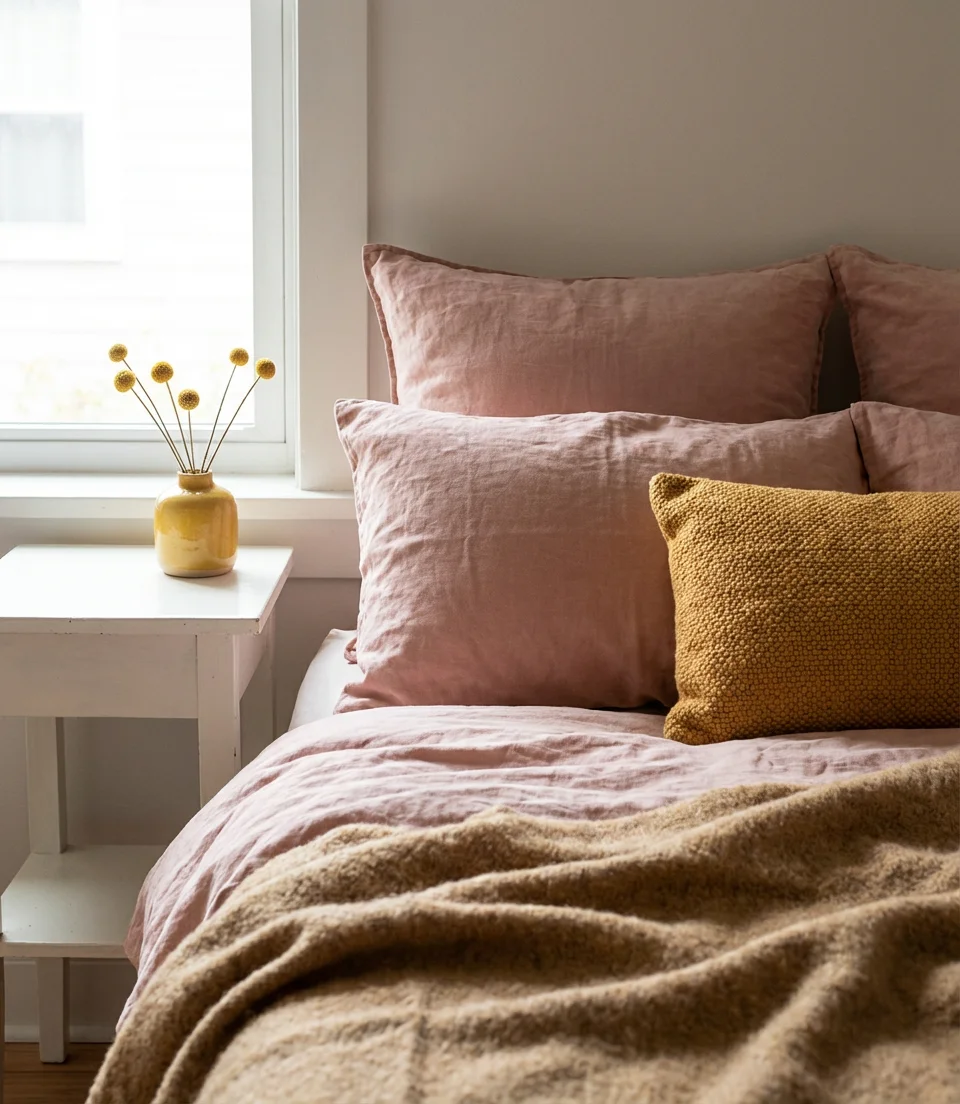
This combination has a particularly strong following in warmer American climates—the Southwest, Florida, and Southern California—where the color palette echoes the natural tones of desert sunsets, citrus groves, and sun-bleached landscapes that residents see outside their windows every day. If you’re decorating a bedroom in Phoenix or San Diego, pink and yellow isn’t a bold choice—it’s a natural reflection of your environment. Even in northern states, bringing those warm tones indoors can have a genuine mood-lifting effect during the darker winter months.
18. Deep Blush and Green Botanical Bedroom
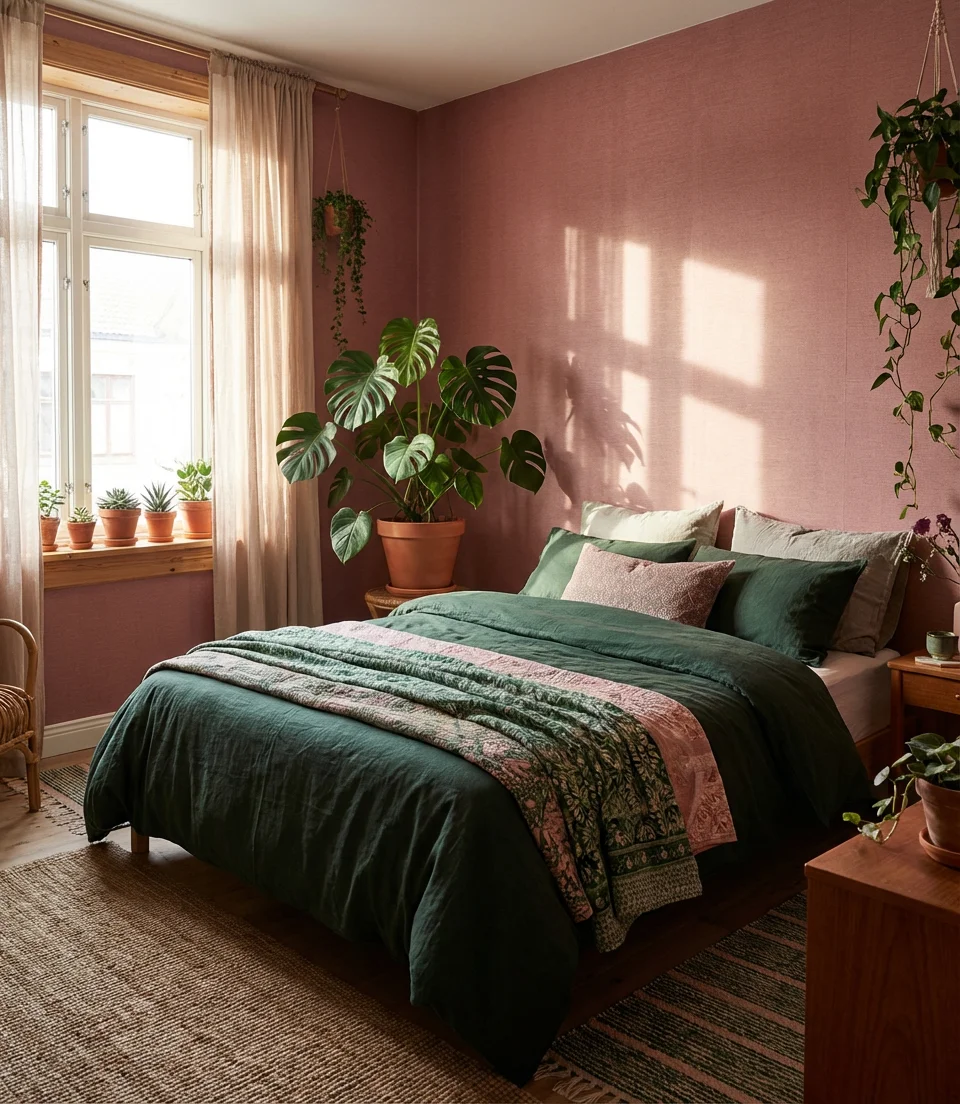
A deeper blush pink—closer to a faded rose or dusty raspberry—combined with rich botanical green creates a bedroom that feels lush, grown-up, and distinctly 2026. Think a deep blush wallpaper with a subtle texture or pattern, a bedspread in a deep forest green, and an abundance of real plants ranging from a large monstera in the corner to small succulents on the windowsill. The visual richness of this combination comes from the interplay of warm and cool tones—the pink carries warmth, while the green introduces a refreshing, natural coolness that prevents the room from feeling heavy.
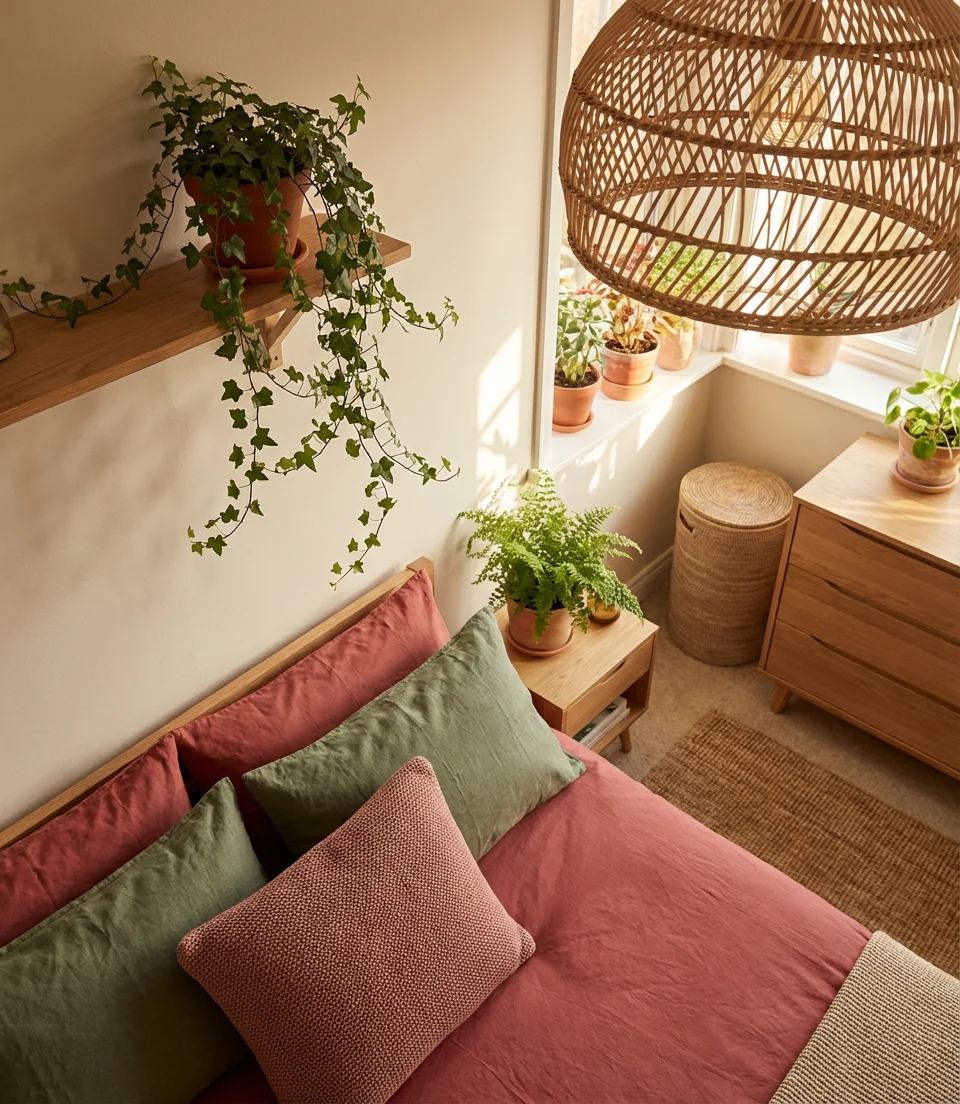
This is genuinely one of the most asked-about bedroom aesthetics among women in their 30s and 40s right now—particularly those who have moved past the minimalist beige phase and want something more layered and expressive. The botanical element brings in a living quality that no amount of art or accessories can fully replicate. Having real plants in a bedroom also has measurable benefits: studies consistently show that living things improve air quality, reduce stress hormones, and even marginally improve sleep quality. The combination of blush and green infuses your bedroom with both beauty and functionality.
19. Rose and Gray Contemporary Bedroom
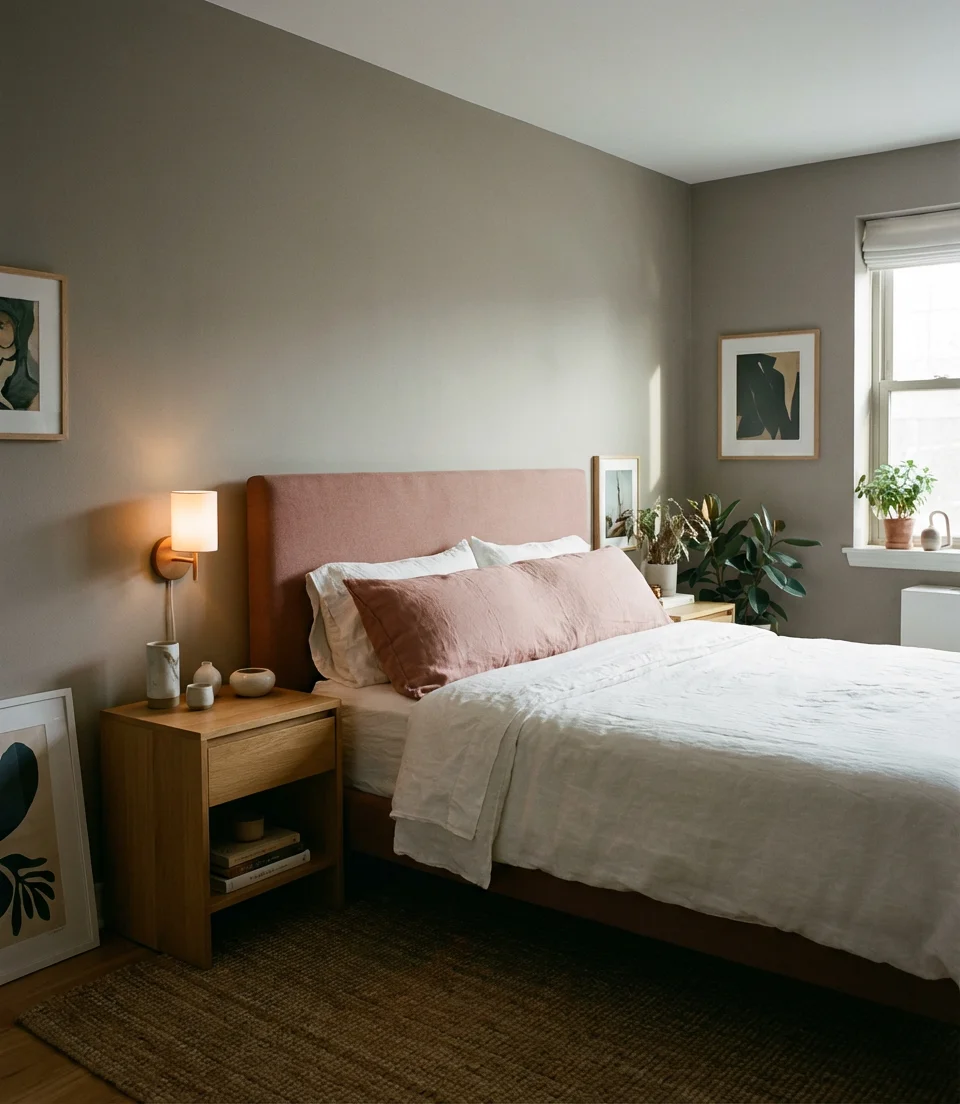
The pairing of rose and gray has earned its place as a modern classic—it appeared in showrooms and editorial spaces half a decade ago and has since proven it has genuine staying power rather than being a passing trend. A medium-warm gray on the walls sets a sophisticated, neutral foundation, and roses enter through an upholstered headboard, a woven throw, or a set of rose-toned linen pillow shams layered over white bedding. The palette reads as grown-up and collected without being stuffy or overly traditional, which is why it performs so consistently well across age groups and housing styles.
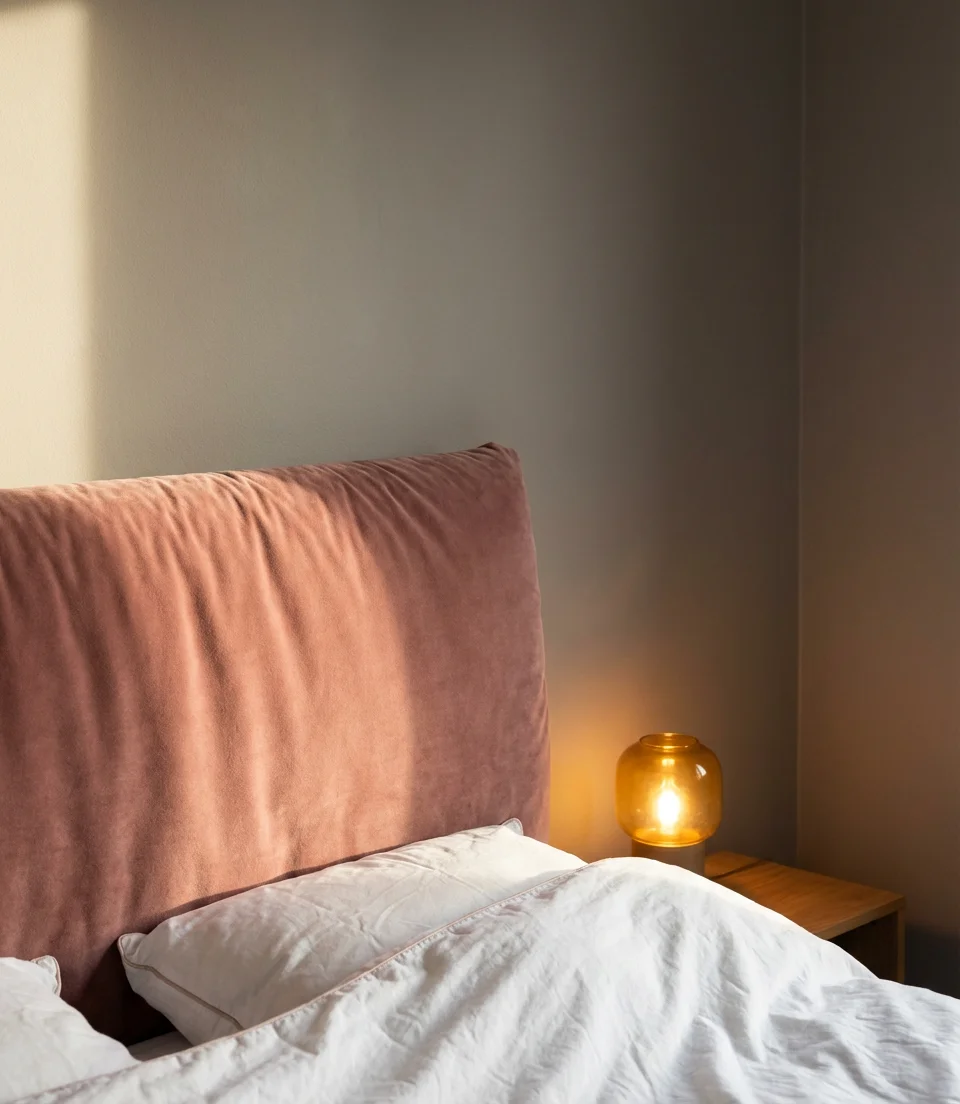
A real pitfall to avoid with this combination: choosing the wrong shade of gray. A blue-toned or “cold” gray will fight with the warm rose tones and make the room feel visually tense rather than harmonious. Always test gray paint samples under your bedroom’s actual lighting conditions—natural daylight, evening lamplight, and morning light all read gray tones differently. Hold a swatch of your rose textile next to each gray sample under every light condition before committing. The right warm gray will look like it was made for your rose accents; the wrong one will make you repaint within six months.
20. Pink and White Teen Room with Study Zone
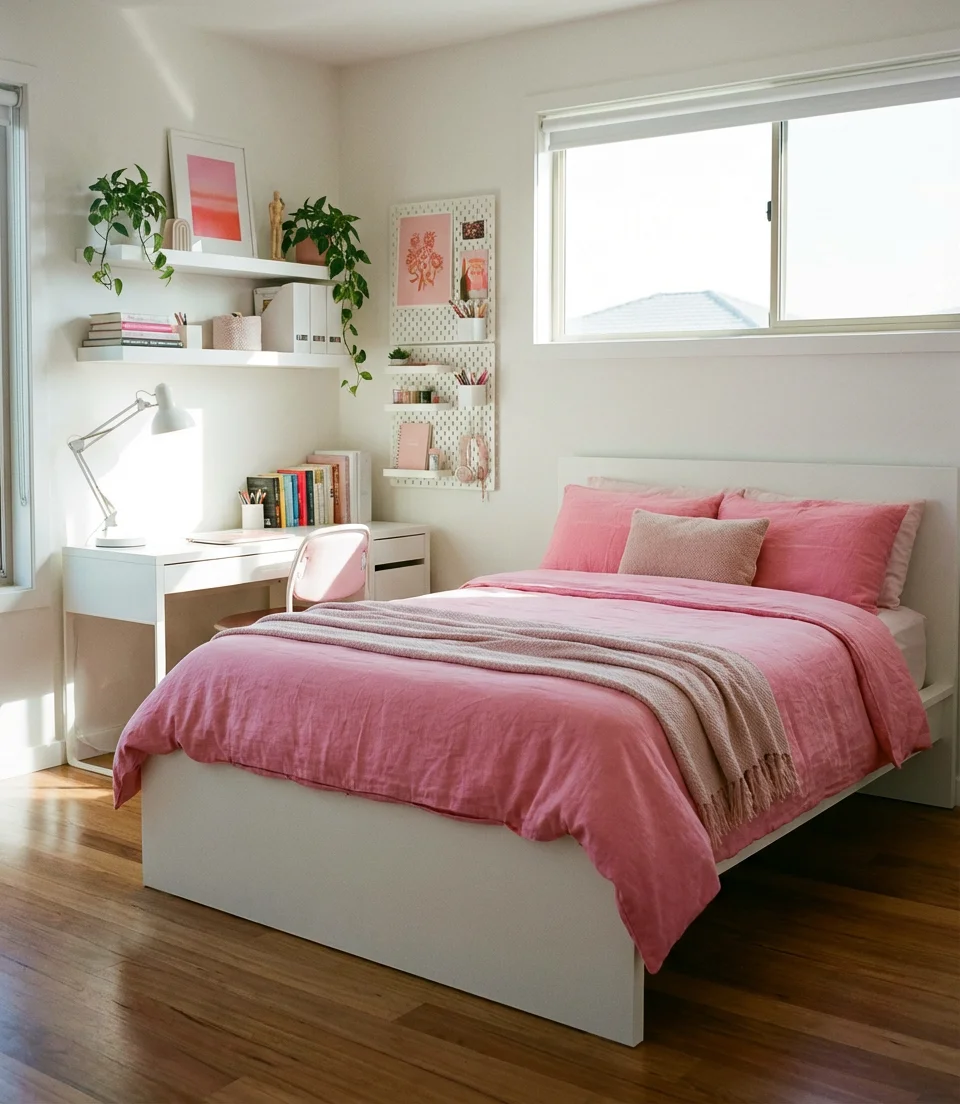
A bedroom designed for a teen needs to do double duty—it has to be a place where they genuinely want to relax and also a functional workspace where real studying happens. A pink and white palette keeps the room feeling fresh and energized rather than sleepy, while a dedicated study corner with a white desk, task lighting, and organizational shelving communicates that the space takes the academic side seriously. The pink tones keep the room feeling personal and expressive, while the white furniture and clean organization give it a clarity that supports focus during homework hours.
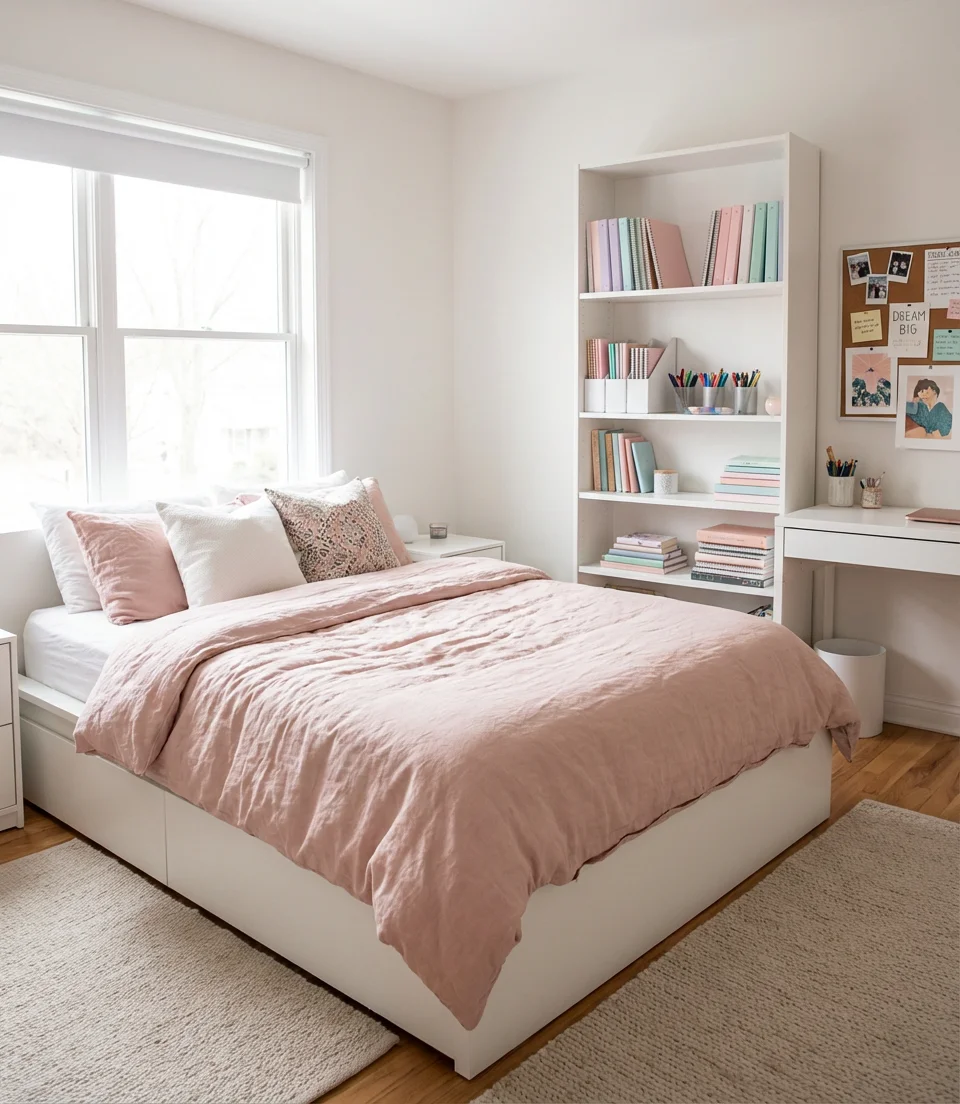
An American lifestyle reality worth building around: most teenagers do their homework in their bedrooms rather than at a dedicated desk elsewhere in the house, which means the study zone in a teen’s bedroom is far more important than many parents account for when designing the space. Position the desk near a window for natural daylight during afternoon study sessions, invest in a powerful task lamp for evening work, and make sure there’s adequate shelf or drawer space for school supplies so the desk surface can actually stay clear enough to be functional. The pink and white palette creates an environment that’s stimulating enough to keep focus but not overly clinical.
21. Blush Pink Velvet Luxury Bedroom
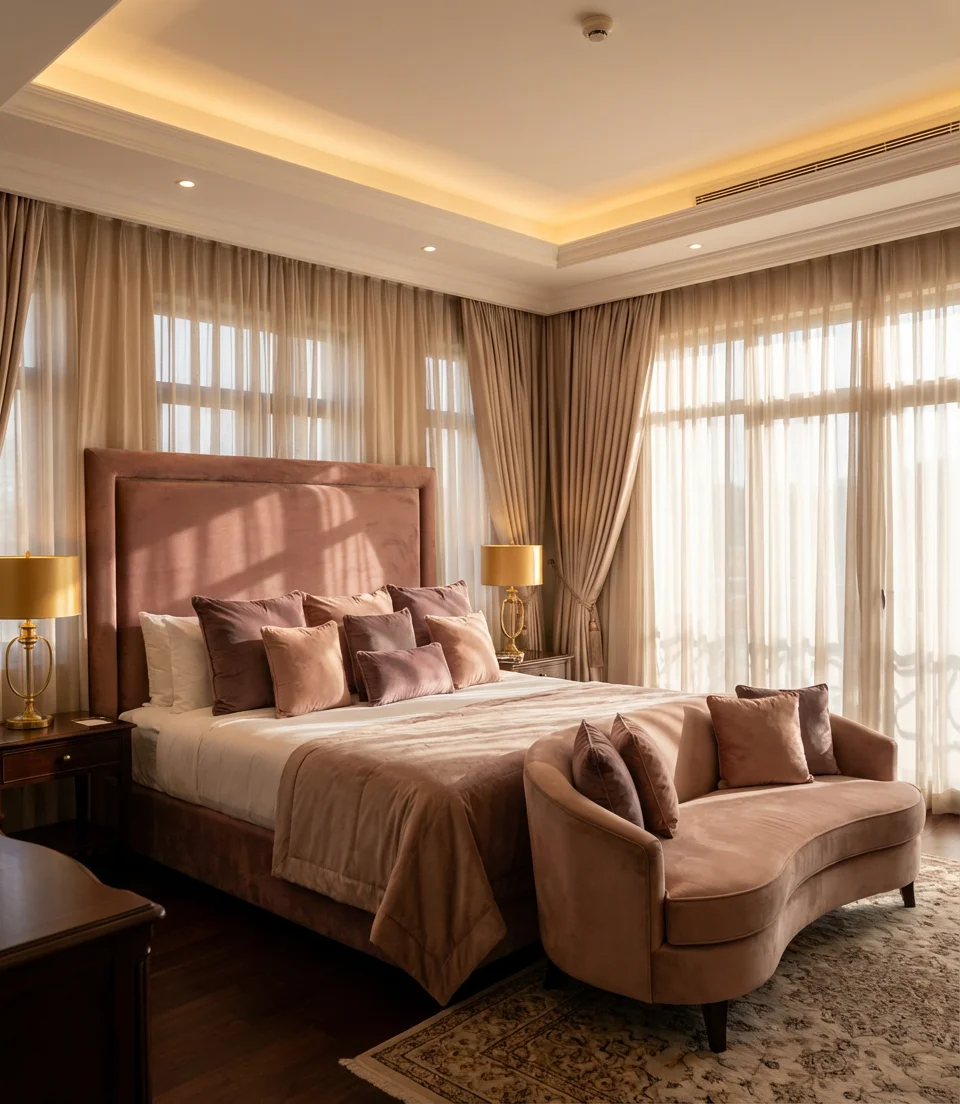
Few material choices transform a bedroom from nice to genuinely luxurious as effectively as velvet—and in blush pink, it becomes something close to irresistible. A velvet upholstered headboard in a dusty rose or antique blush tone, paired with velvet throw pillows, a plush velvet bench at the foot of the bed, and soft ambient lighting, creates a room that feels like a five-star suite rather than a home bedroom. The tactile richness of velvet has a sensory quality that photographs beautifully and feels even better in person—it invites touch and signals genuine investment in comfort and quality.
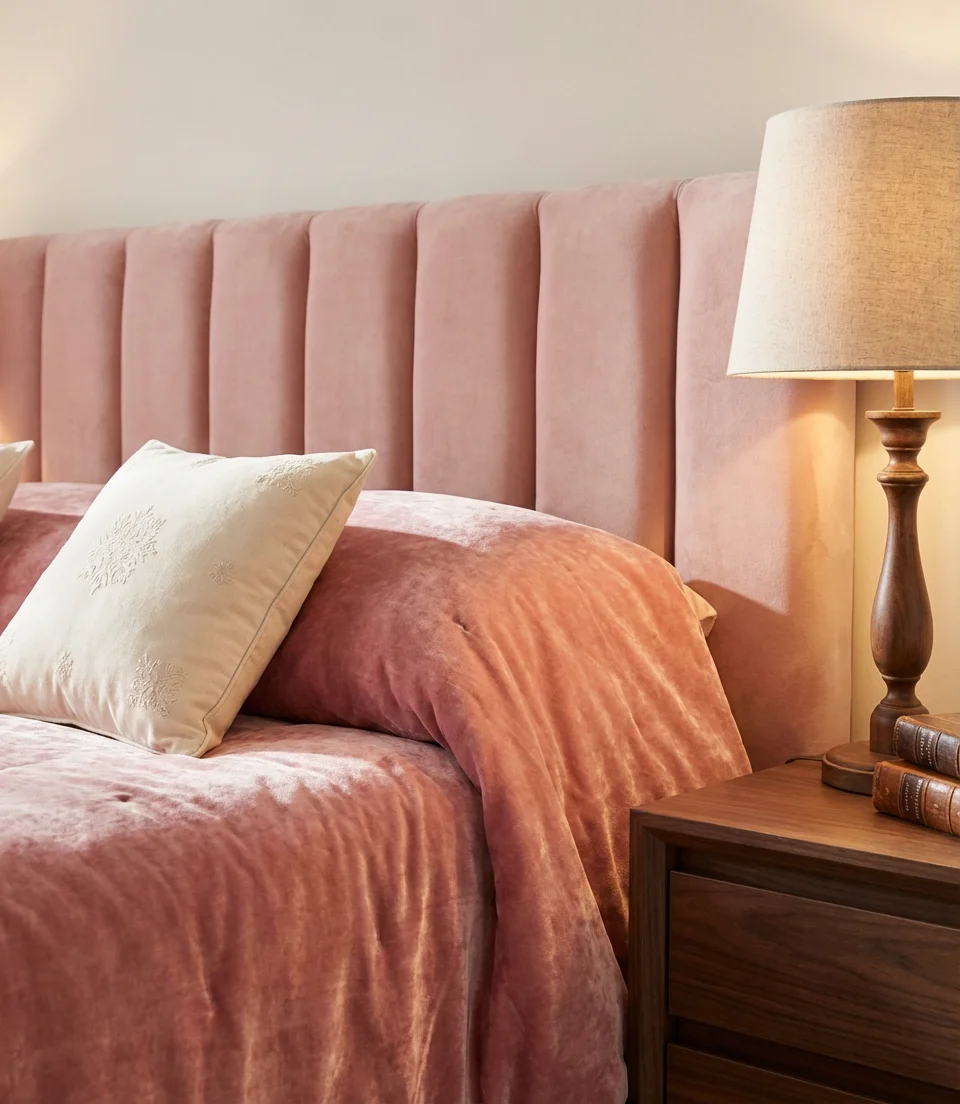
The investment doesn’t need to be as large as the look suggests. While a custom velvet headboard can run anywhere from $600 to several thousand dollars, pre-made velvet headboards in blush or dusty rose tones are available at Wayfair, CB2, and Amazon starting around $150–$250. Pair that with velvet throw pillows from HomeGoods (often $20–$40 apiece), and you’ve established the material vocabulary of the look for well under $400. The key is that velvet’s visual weight and texture do so much work that you actually need fewer pieces than in a lighter-fabric room to achieve a fully realized, luxurious result.
22. Warm Pink and Wood Japandi Bedroom
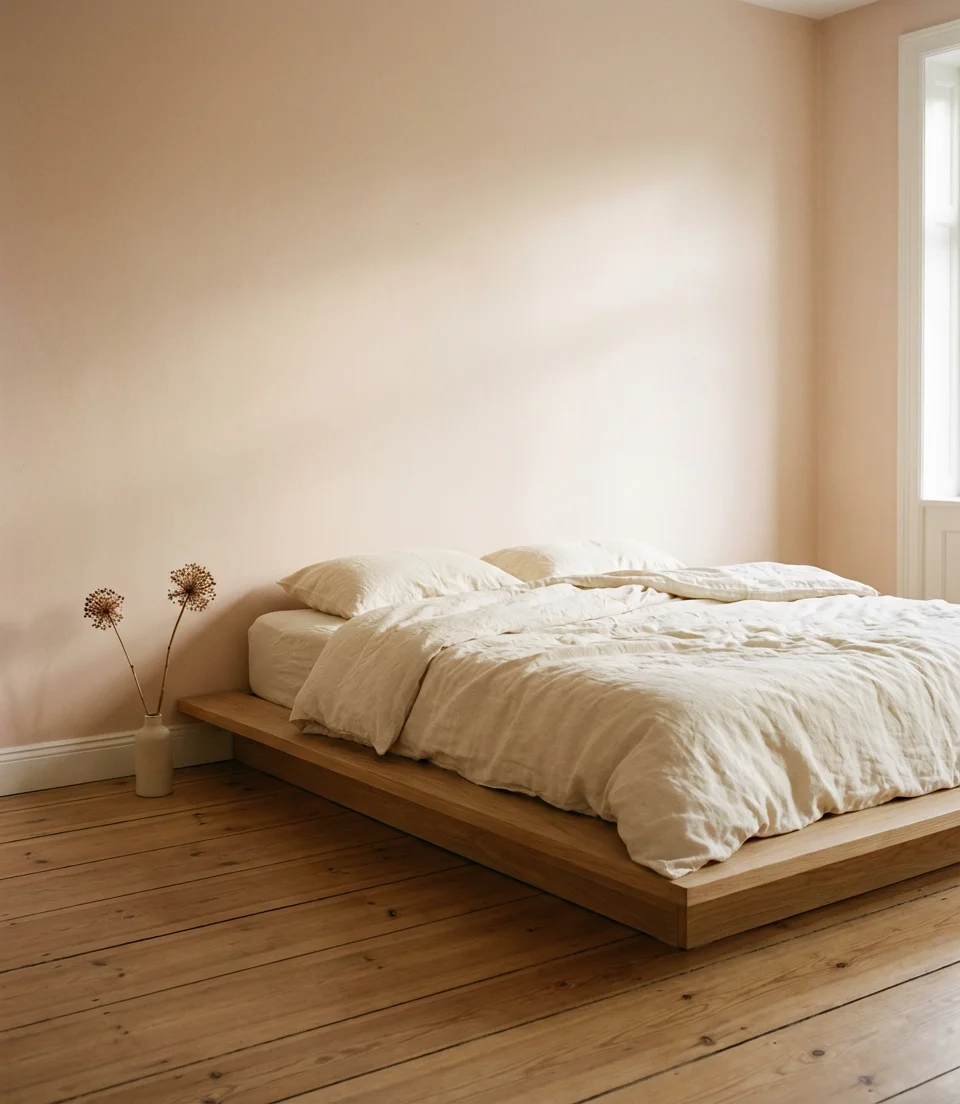
Japandi—the design philosophy that merges Japanese minimalism with Scandinavian warmth—has been one of the dominant bedroom aesthetics of the last few years, and adding a warm pink element gives it a freshness and softness that the traditional neutral-heavy Japandi palette sometimes lacks. A low platform bed in light natural wood, walls in a very pale warm pink or sand tone, clean linen bedding in warm off-white, and one or two carefully placed ceramic objects or dried botanical stems create a room that feels both deeply calm and quietly alive. The beige and pink tones work in perfect harmony with the natural wood.
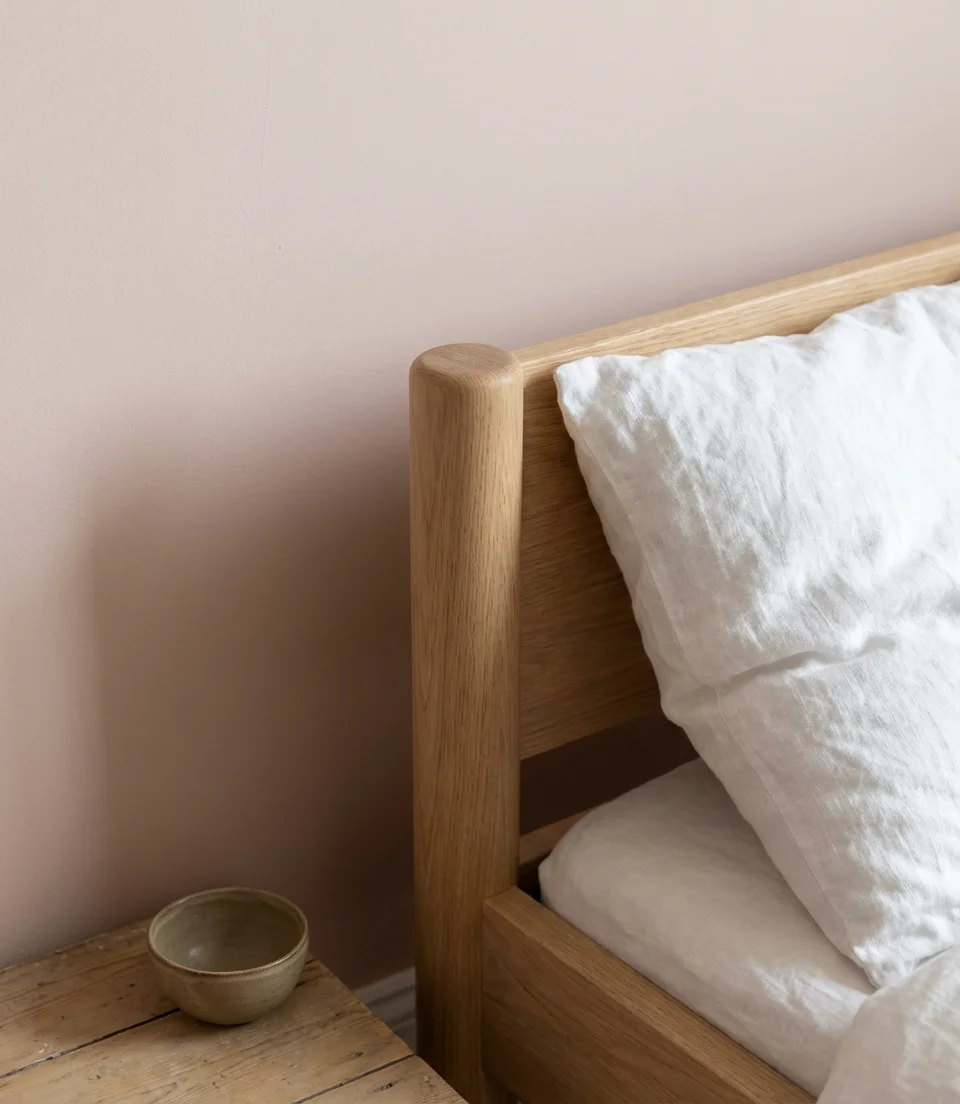
What makes the Japandi approach particularly well-suited to the American market right now is that it aligns directly with how many people want to feel in their homes post-pandemic: less stimulated, more grounded, and in relationship with natural materials rather than synthetic ones. The addition of warm pink to the classic Japandi formula is the 2026 update that makes it feel current rather than already done. It’s also a palette that ages extremely well—five years from now, a warm pink Japandi bedroom will look considered and personal rather than dated, which can’t be said for every design trend that gets widely adopted.
23. Pink Maximalist Gallery Wall Bedroom
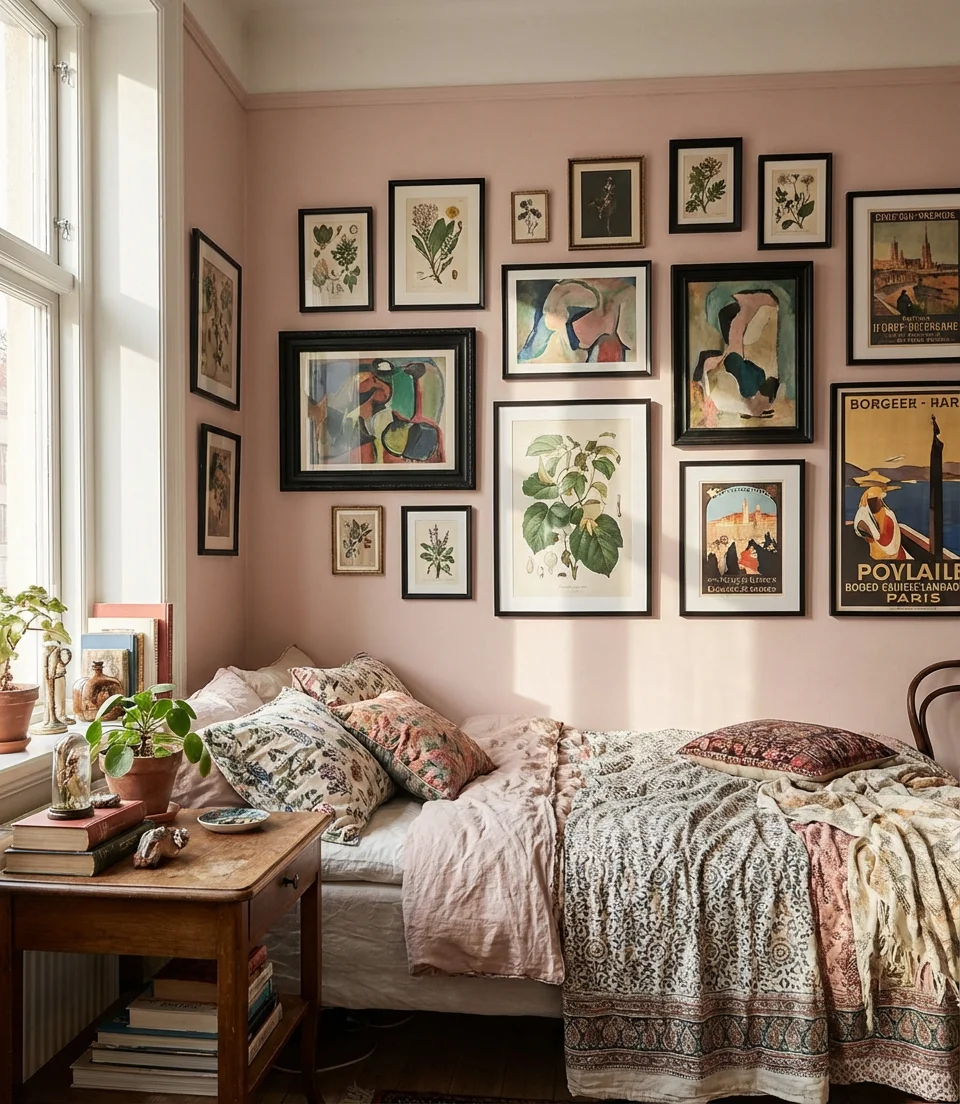
A gallery wall is one of the most powerful tools in a bedroom decorator’s kit, and when anchored by a warm pink wall, it becomes the kind of feature that stops guests in their tracks. The key to a pink gallery wall that reads as curated rather than cluttered is using a consistent framing style—all black frames, all natural wood, or all white—while letting the art itself vary widely in subject, scale, and tone. Against a dusty or blush pink backdrop, botanical prints, abstract art, vintage travel posters, and personal photography all coexist beautifully. The pink unifies what would otherwise be a disparate collection.
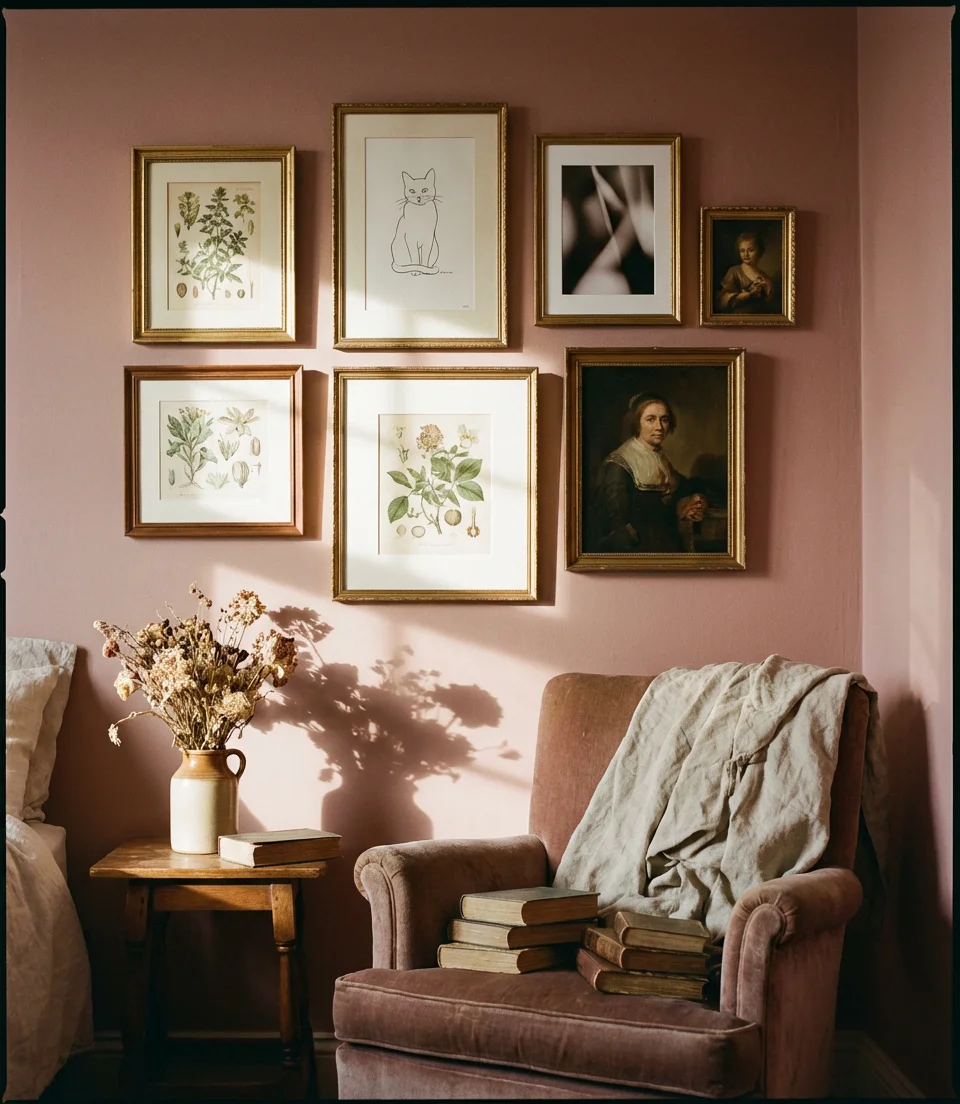
Putting together a gallery wall on a real budget is entirely achievable—and arguably more interesting than buying a pre-matched set. Thrift stores, estate sales, and local art markets are full of individual prints and small original works that cost almost nothing and carry genuine visual character that mass-produced art can never replicate. A collection of fifteen to twenty small pieces in matching black frames creates a museum-like impact when arranged across a pink wall from floor to ceiling, for a total cost that might be $50–$150 if you shop secondhand with patience and intention. The pink wall serves as the unifying element that ties everything together.
24. Cozy Pink Winter Bedroom with Layers
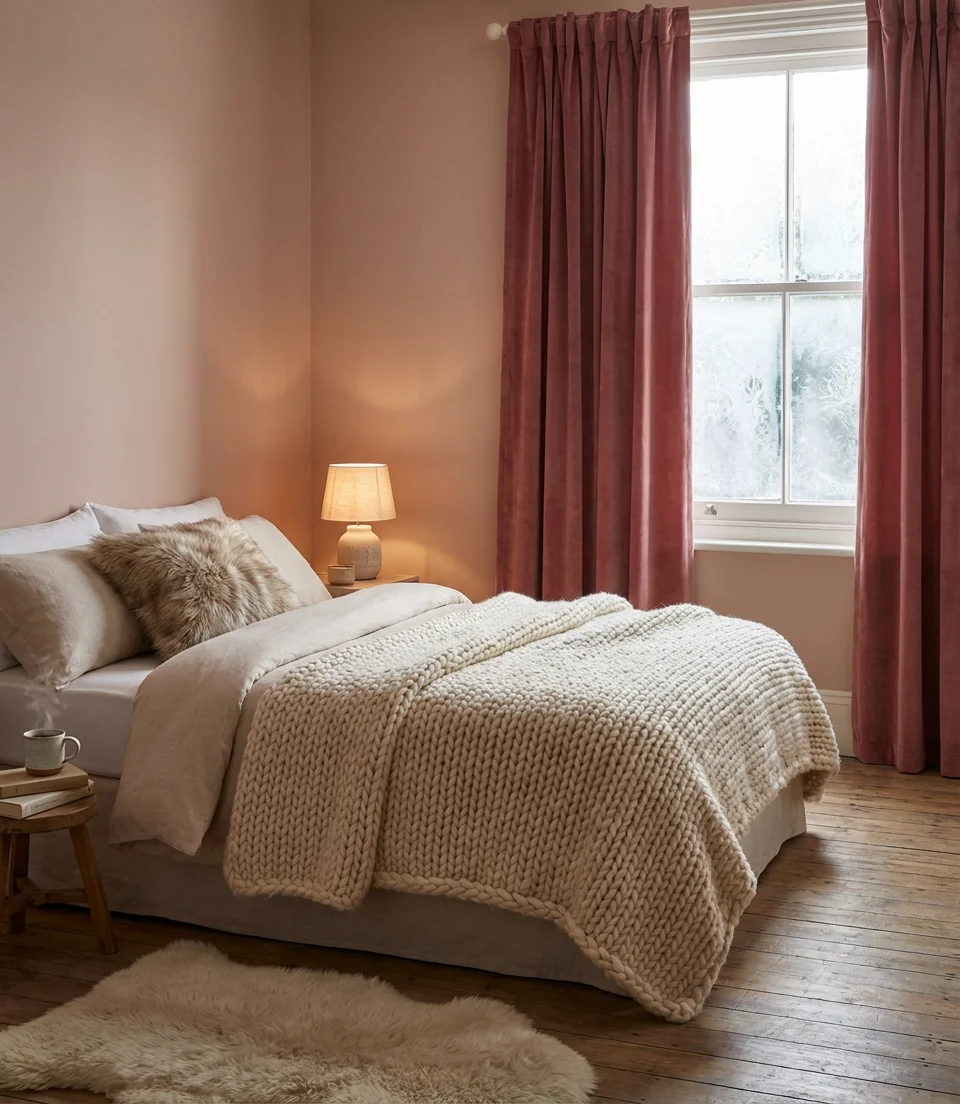
There’s a particular kind of bedroom magic that only happens in winter—when the light is low, the temperature drops, and a room that’s been thoughtfully layered with textiles becomes its own private universe. A warm, muted pink wall forms the backdrop, and from there the layers build: a chunky knit throw in cream, a faux fur accent pillow, a sheepskin on the floor beside the bed, and thick velvet curtains in a slightly deeper rose that block out the early dark of winter evenings. The cozy, warm quality of the room doesn’t require anything expensive—just a genuine commitment to softness and warmth as design values.
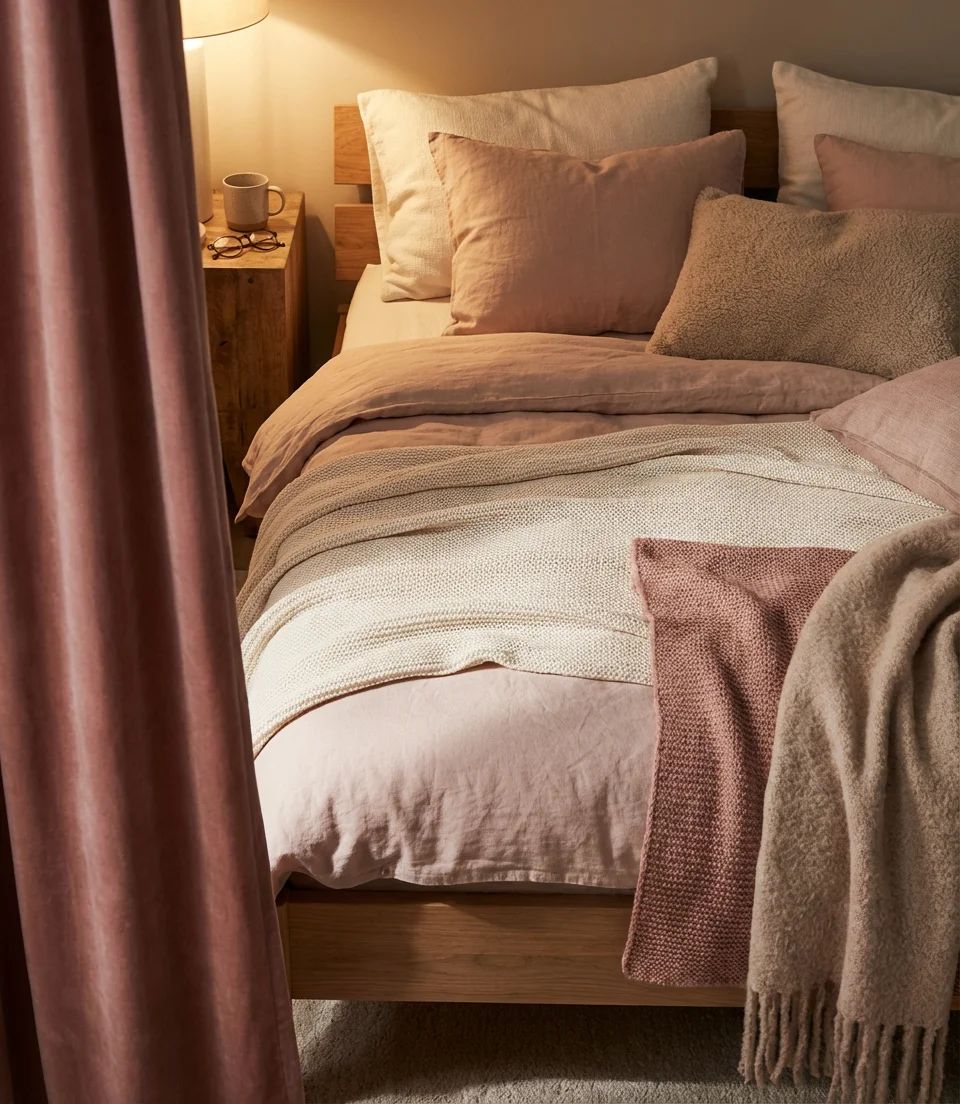
This style is a bedroom design approach that makes particular emotional sense for Americans in northern states who deal with four to five months of cold, grey weather every year. The hygge principle—the Danish concept of deliberate, warm coziness as a form of well-being—has deeply resonated in American culture for good reason. A pink winter bedroom isn’t just about aesthetics; it’s about intentionally designing a space that makes you feel warm, safe, and genuinely glad to be home when the weather outside is doing its worst. Layer thoughtfully, light warmly, and let the pink do the heavy lifting.
This idea later; hopefully your Pinterest boards are overflowing, and at least one or two combinations are already starting to feel like yours. Pink exhibits endless adaptability, ranging from a subtle hint of blush to a bold declaration in magenta, with a version that suits every type of home and individual. We’d love to know which ideas resonated most with you: Please leave a comment below expressing your preferred direction, or share a photo if you’ve already made the change. Making a bold paint decision could lead to your next favorite bedroom.