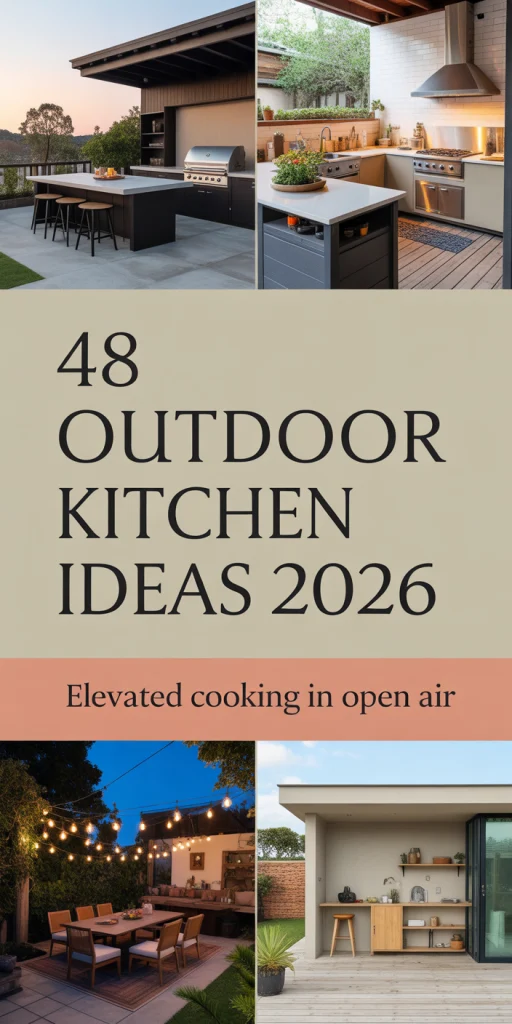
48 Outdoor Kitchen Ideas 2026: Budget-Friendly to Luxury Designs for Every Backyard

Once just a grill, outdoor kitchens have become actual cooking and entertaining venues. As they expand and improve in function and appearance, they certainly equal the indoor kitchens in style. With 2026 just around the corner, American homeowners may be taking a break from the work of Scamp Ranch and spending quality time on Pinterest. They craft plans and visualize design ideas that capture a balance of beauty and functionality, whether for large sprawling backyards or compact and cozy patio gardens. This guide features a diversified selection of outdoor cooking designs and ideas that vary from low-cost and easy DIY to high-end and provide all the comforts of being fully covered. We have tailored and adapted these designs and ideas for outdoor cooking spaces to accommodate various lifestyles, local climates, and square footages. This guide highlights the efforts involved in poolside entertaining, rustic retreats, and various other outdoor spaces, providing exquisite ideas for each.
1. Budget-Friendly Cinder Block Grill Station
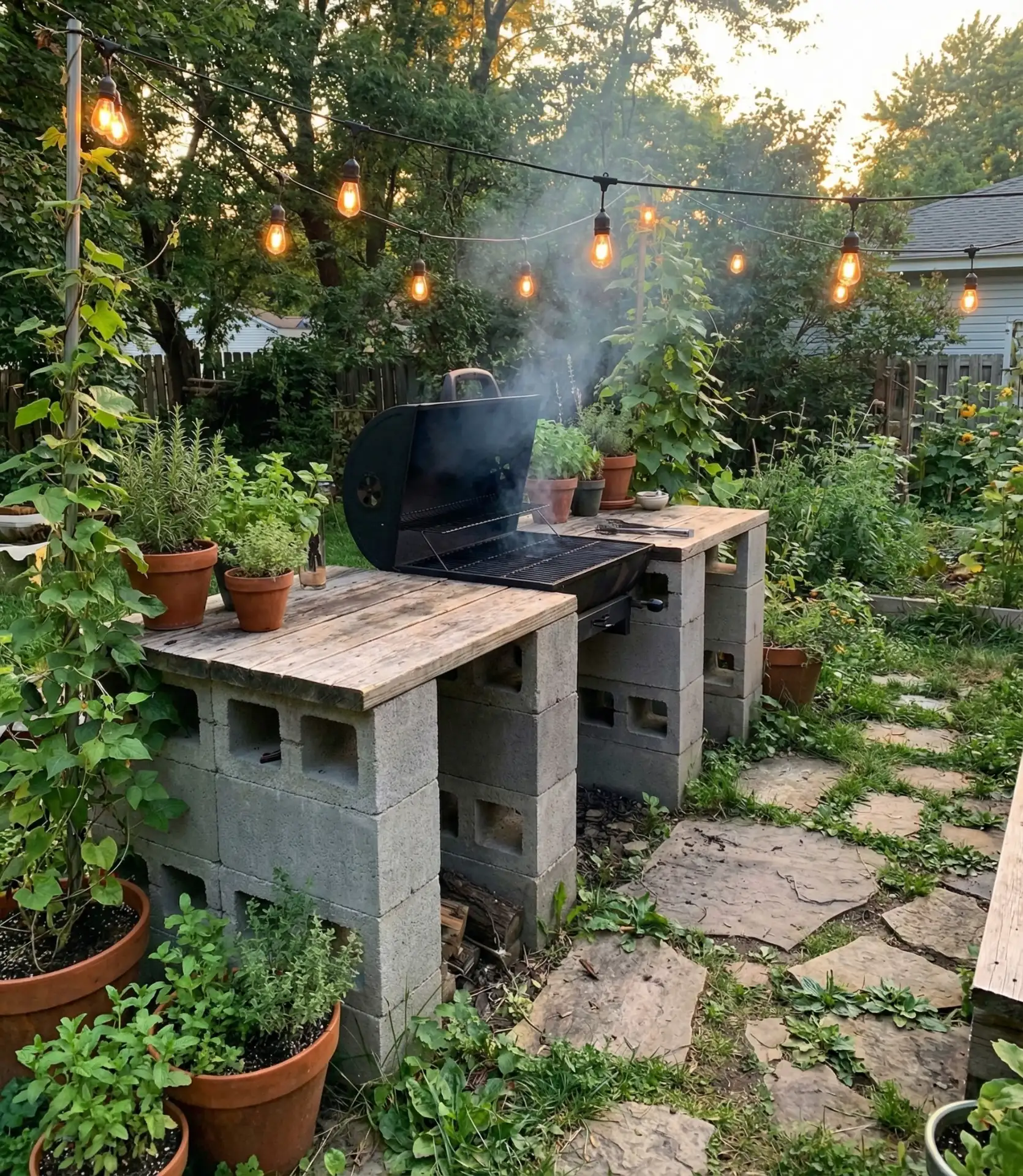
A grill station cinder block design offers one of the most affordable paths to a permanent outdoor cooking setup. This DIY approach uses standard concrete blocks stacked and mortared to create a sturdy base for your grill, with room for a small prep counter on one side. The raw industrial look of cinder blocks actually complements rustic backyards beautifully, especially when you add reclaimed wood countertops or top the blocks with natural stone. Most homeowners complete this project over a long weekend for under $500, including materials.
The beauty of this setup is its flexibility—you can always upgrade later by facing the blocks with tile, stone veneer, or stucco to match your home’s exterior. Many Texas and Arizona homeowners favor this design because the blocks stay cool even in intense heat, and the open structure allows excellent airflow around the grill. Just make sure to seal your concrete blocks before use, as untreated cinder can absorb moisture and deteriorate quickly in humid climates. Adding a small roof or pergola overhead transforms the unit from a basic grill station into a genuine outdoor kitchen.
2. A compact, small backyard kitchen layout
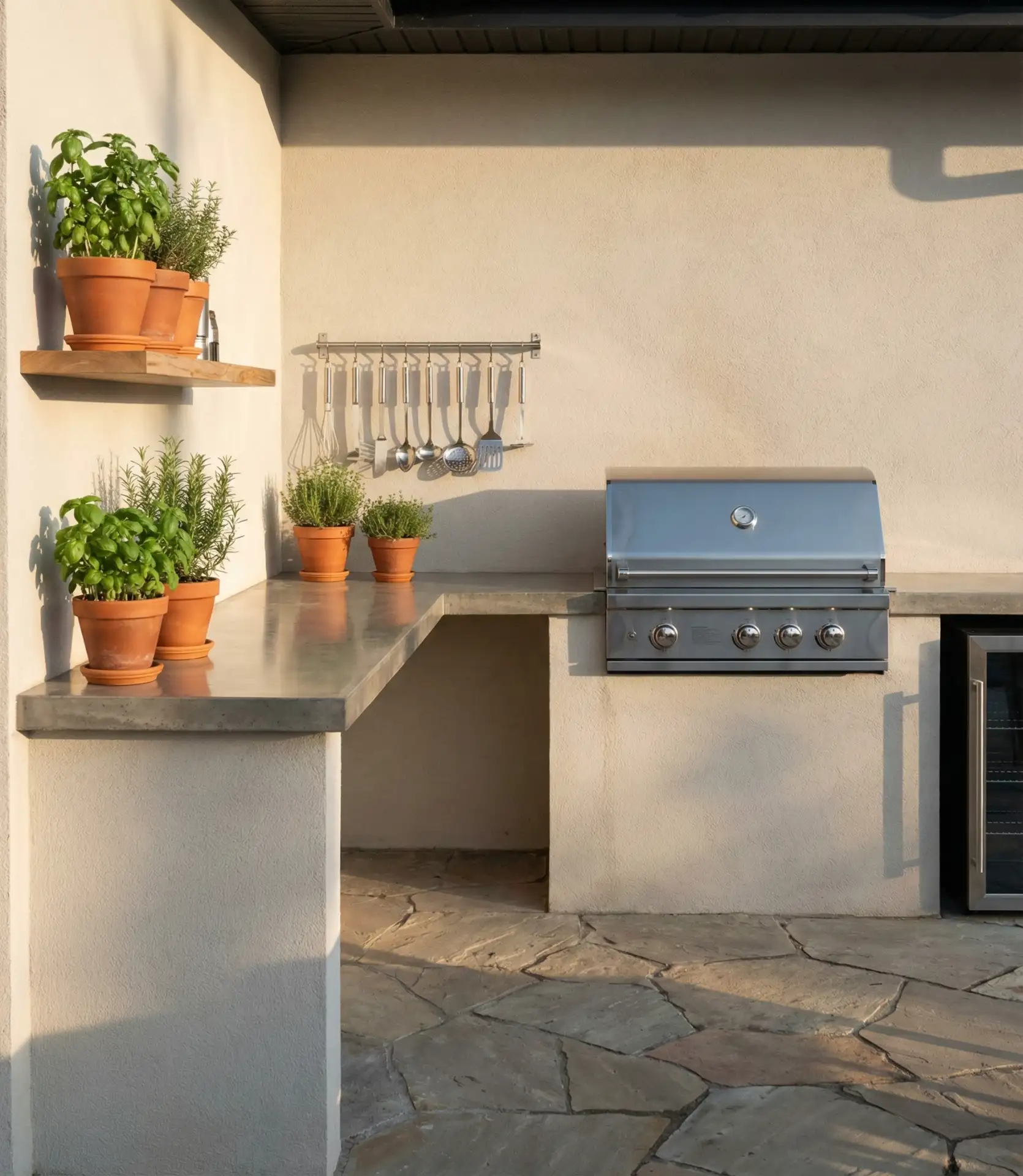
When you’re working with a small backyard, the key is creating a layout that maximizes every square foot without feeling cramped. An L-shaped or galley-style configuration works beautifully for small spaces, positioning the grill at one end and a compact prep counter at the other. This straightforward layout ensures the cook can easily access everything while maintaining ample space in the center for mobility. Urban homeowners in places like Brooklyn and San Francisco have mastered this approach, often incorporating vertical storage and fold-down counters to preserve precious patio space.
A common mistake with small outdoor kitchens is trying to cram in too many features—a sink, refrigerator, grill, and storage all competing for space. Instead, focus on what you’ll actually use most. If you typically grill burgers and vegetables, a quality grill and one good prep surface might be all you need. Real homeowners often skip the outdoor sink entirely, finding it easier to prep ingredients inside and carry them out, which also saves thousands on plumbing. Instead of becoming an expensive outdoor monument, the result is a functional, uncluttered space that you actually use.
3. A covered rustic kitchen with a pergola
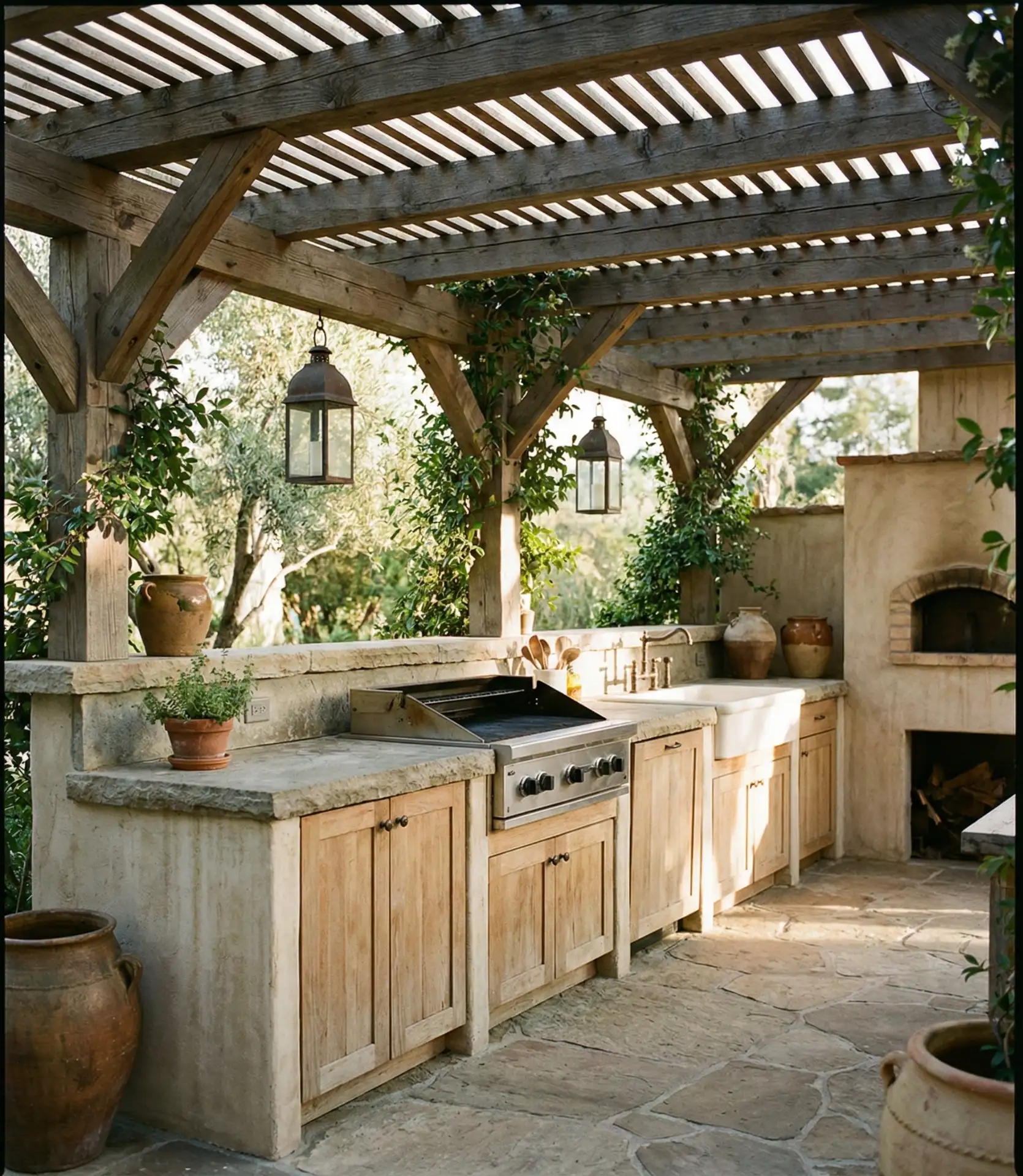
A covered rustic outdoor kitchen extends your cooking season well beyond summer, providing shelter from unexpected rain and harsh midday sun. The covered structure—whether a full roof, pergola with retractable canopy, or solid pavilion—transforms a basic cooking area into an all-weather entertaining hub. Rustic materials like rough-hewn timber beams, natural stone counters, and weathered brick create a warm, inviting atmosphere that feels more like an extension of a mountain cabin than a suburban backyard. This style particularly resonates in the Pacific Northwest and mountain regions, where outdoor living happens year-round despite unpredictable weather. 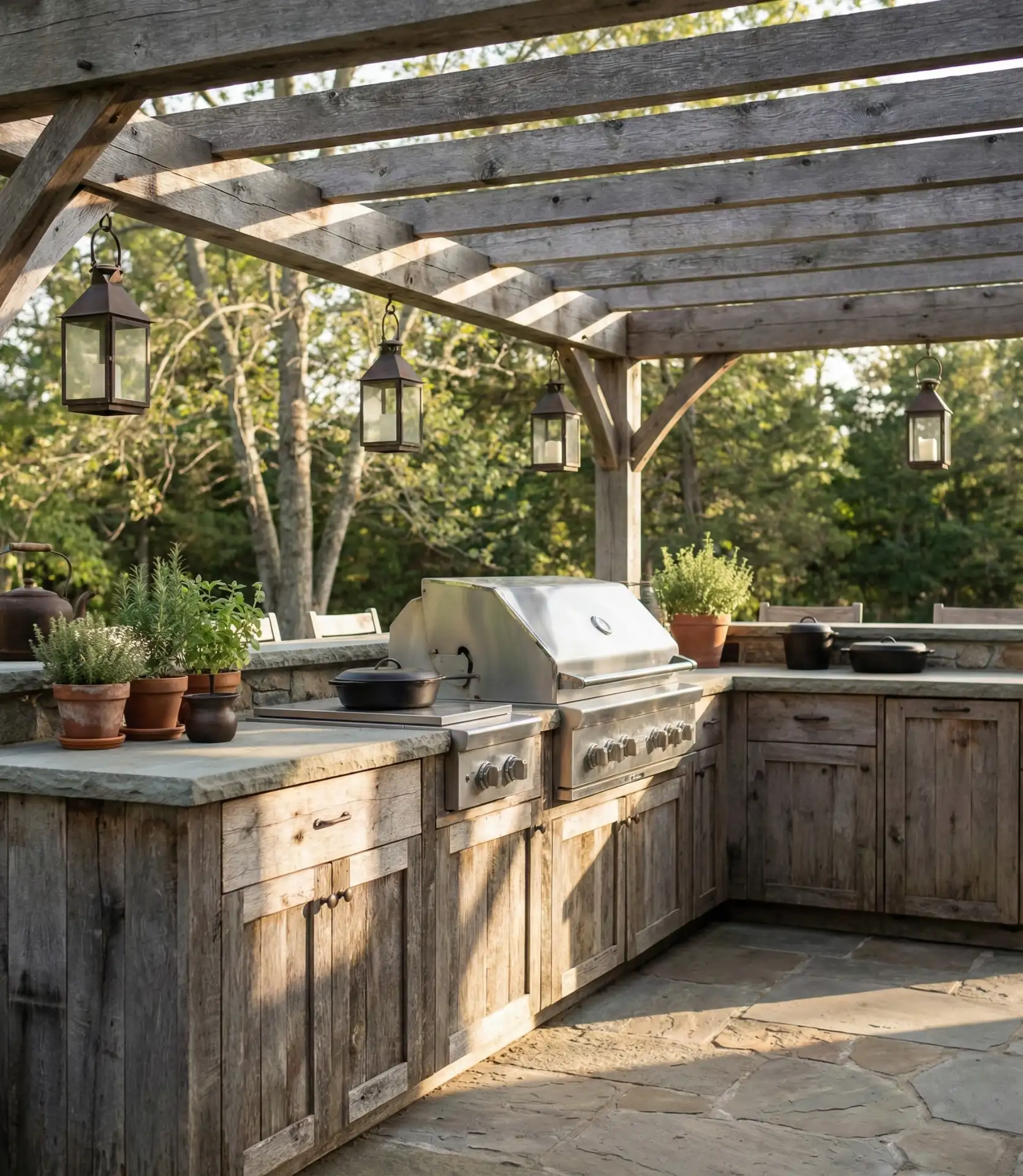
This setup works best in transitional climate zones, where you need sun protection in the summer but want to avoid the closed-in feeling of a fully enclosed space. The vertical posts of a pergola naturally define the kitchen area without blocking sightlines to the rest of your yard, and the overhead beams provide a framework for hanging pendant lights, plants, or even outdoor curtains. In the South, homeowners often add ceiling fans to the structure, creating comfortable airflow even on humid August evenings when cooking over a hot grill would otherwise be unbearable.
4. A poolside kitchen for backyard pool integration

Integrating an outdoor kitchen with your backyard pool creates the ultimate entertaining destination, eliminating the need for wet guests to trek through the house for snacks and drinks. A pool and kitchen combination works best when positioned 10-15 feet from the pool edge—close enough for convenience but far enough to avoid splashing and excessive moisture around cooking equipment. Modern designs often incorporate a swim-up bar element or pass-through window that serves poolside loungers directly. Florida and Southern California homeowners have perfected this layout, creating resort-style backyards that host pool parties from May through October. 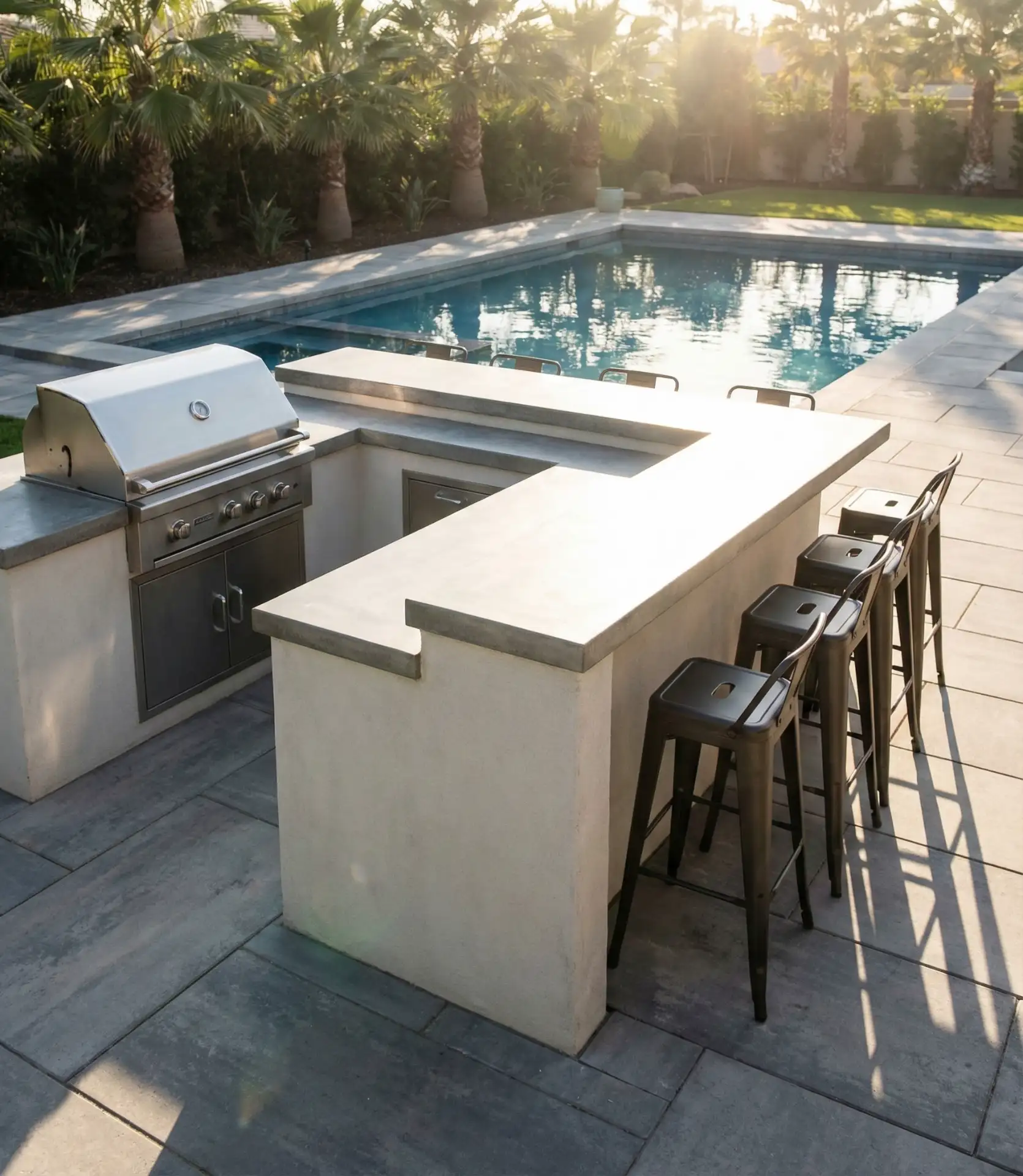
Three years ago, my neighbor installed a poolside kitchen and reports that their family uses the built-in beverage cooler more frequently than the grill itself. Having cold drinks within easy reach of the pool has significantly transformed their backyard experience. When planning your layout, consider wind patterns carefully; you don’t want smoke from the grill blowing directly over swimmers. Furthermore, choose slip-resistant flooring materials around the kitchen zone, as wet feet are inevitable when you’re serving hungry kids fresh from the pool.
5. Mediterranean-Inspired Brick Kitchen
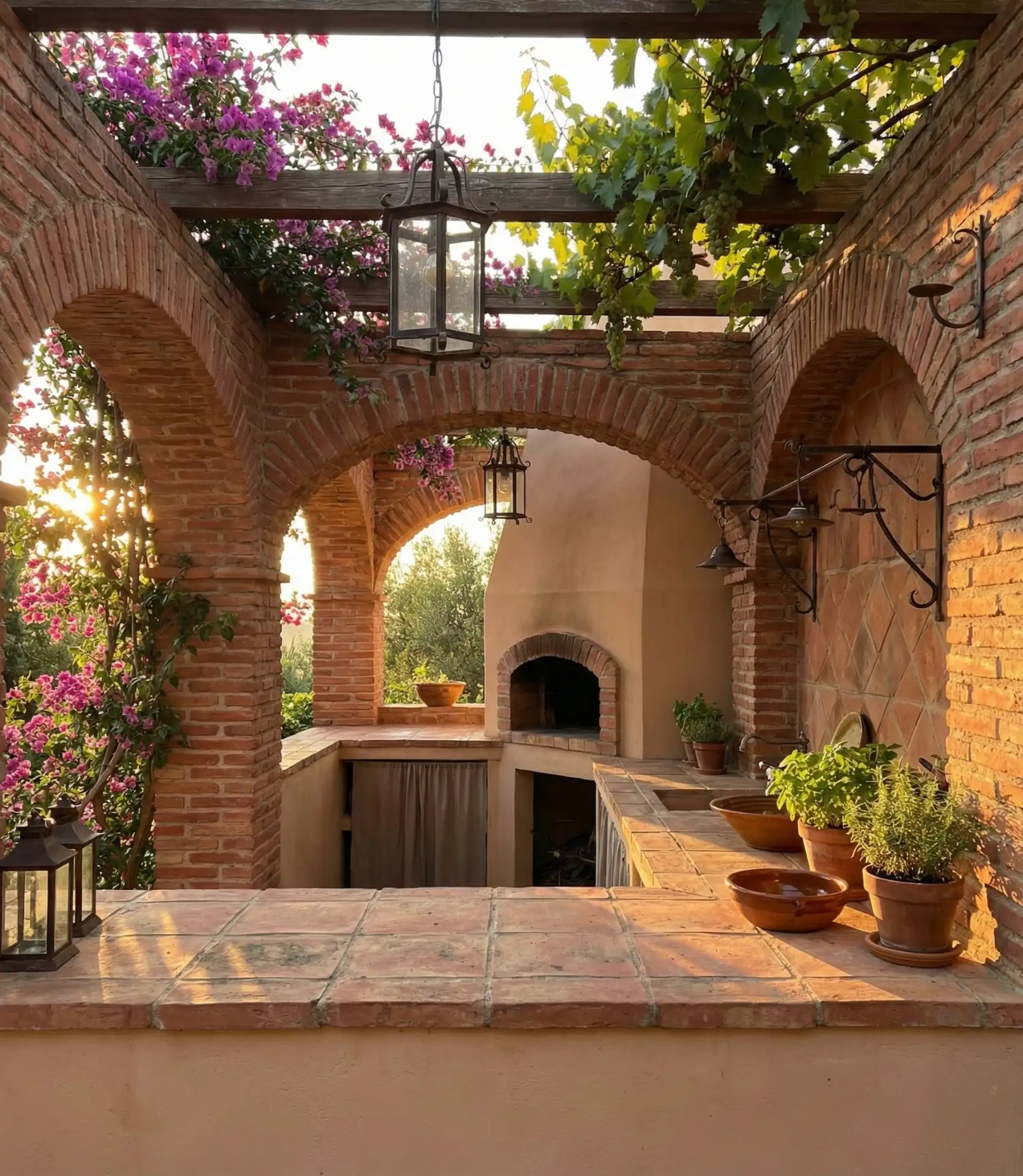
A Mediterranean outdoor kitchen built with warm brick brings Old World charm to American backyards, evoking the cooking spaces of Italian villas and Spanish courtyards. This style typically features a substantial brick oven or grill surround, arched openings, terra-cotta tile accents, and wrought iron details. The brick structure provides excellent heat retention and creates a focal point that looks like it’s been part of the landscape for decades rather than a recent addition. This approach particularly suits homes with Mediterranean, Spanish Colonial, or Tuscan architecture, creating visual continuity between house and yard. 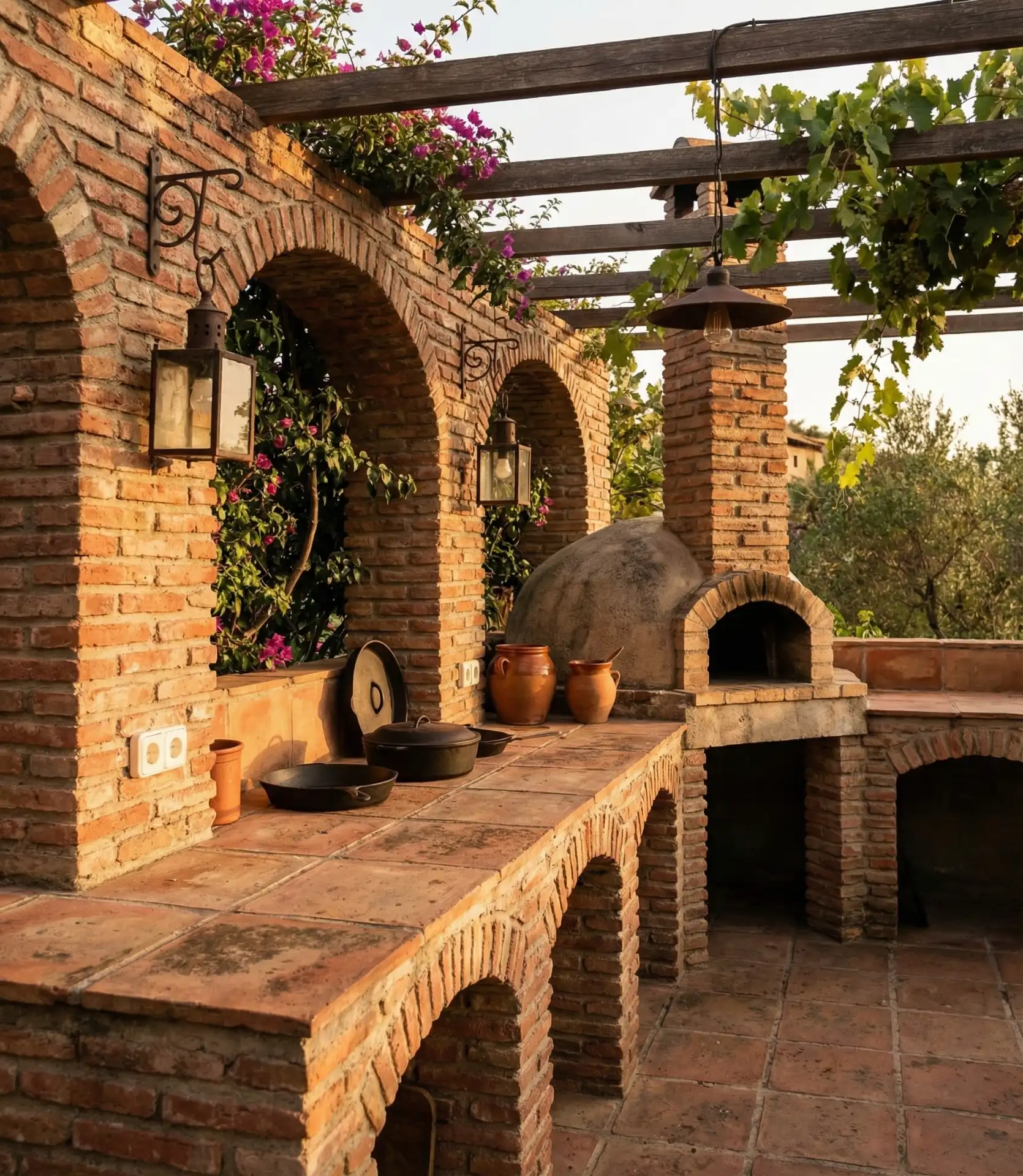
The practical advantage of brick extends beyond aesthetics—properly constructed brick structures can last generations with minimal maintenance, unlike wood components that require regular sealing and staining. Expect to budget $3,000-$8,000 for a professionally built brick outdoor kitchen, depending on size and complexity. The investment pays off in durability and timeless style that won’t look dated in ten years. Many homeowners in California wine country and the Southwest favor this design, pairing the brick kitchen with drought-tolerant landscaping and gravel patios that complement the Mediterranean aesthetic.
6. Pallet Wood DIY Kitchen Station
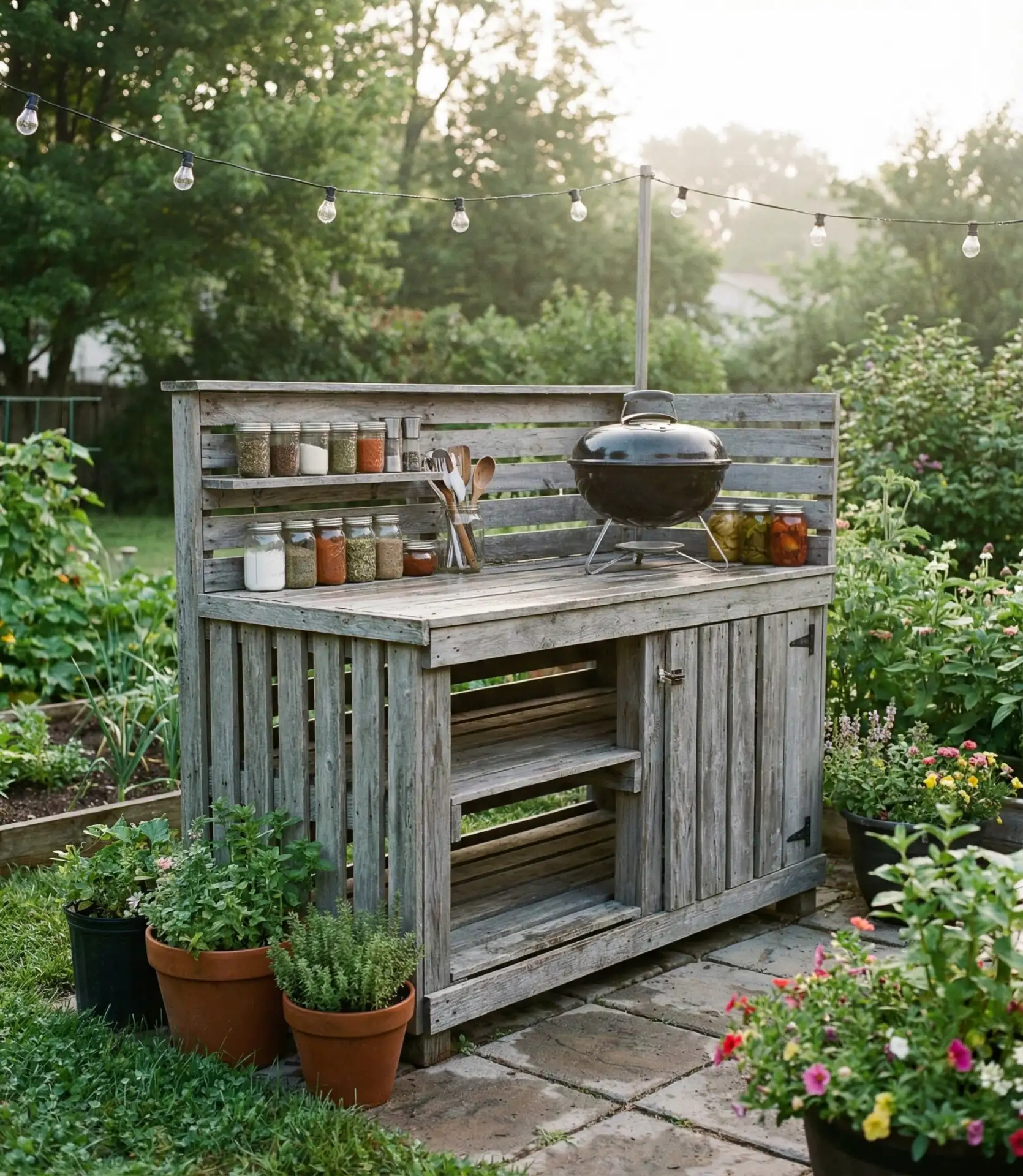
Building an outdoor kitchen from pallet wood represents the ultimate on-a-budget DIY project, often completed for under $200 in materials. Free or cheap pallets can be disassembled and repurposed into prep tables, storage shelves, and even decorative backsplashes that add rustic character to your cooking space. This approach requires more sweat equity than cash—you’ll spend weekends sanding, treating, and assembling the wood—but the result is a completely custom setup built to your exact specifications. The weathered, reclaimed look of pallet wood fits perfectly with farmhouse and industrial design trends that continue to dominate Pinterest. 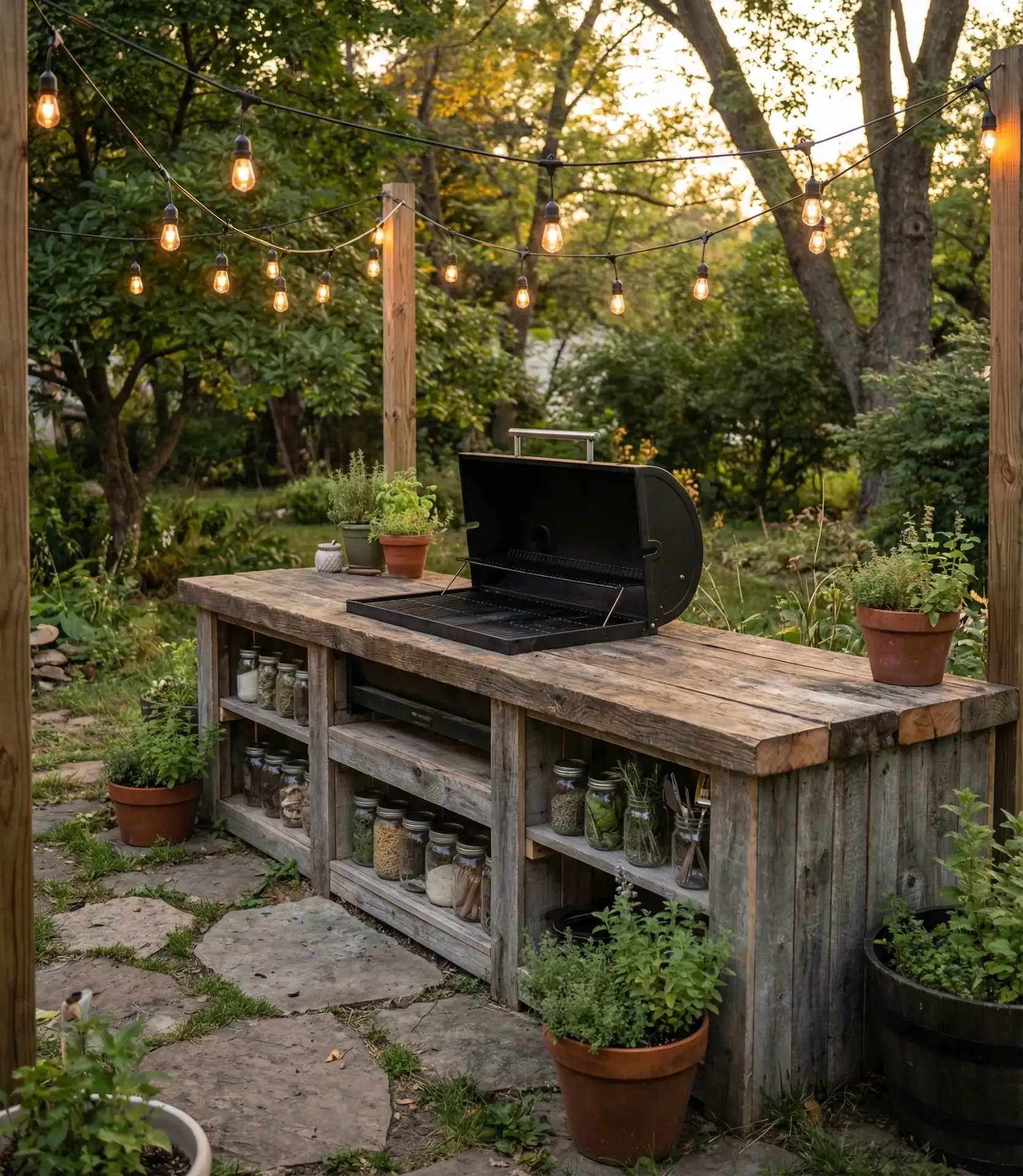
Expert DIYers emphasize the importance of properly treating pallet wood before use—untreated pallets can splinter, harbor insects, or introduce chemicals from previous cargo. Always choose heat-treated (HT) pallets rather than chemically treated (MB) ones, then sand thoroughly and apply multiple coats of outdoor wood sealer. The open nature of pallet construction actually provides excellent ventilation for outdoor kitchens, preventing moisture buildup that can damage enclosed cabinetry. This style works particularly well for young homeowners or renters who want an attractive outdoor cooking space without a major permanent investment.
7. Premium Traeger and Blackstone Combo Setup
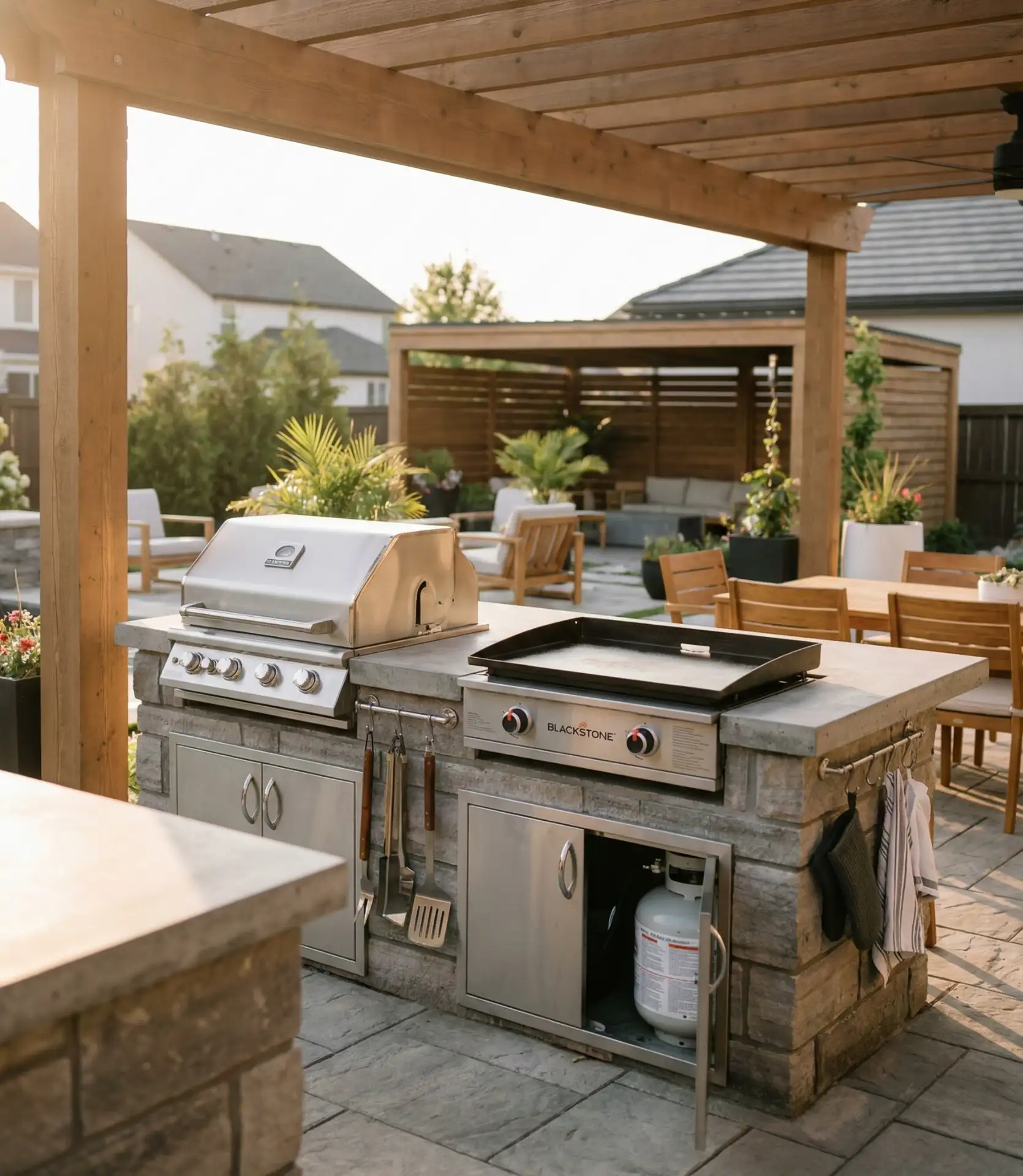
Combining a Traeger pellet grill with a Blackstone grill station creates the ultimate versatile outdoor cooking platform, giving you both low-and-slow smoking capability and high-heat griddle cooking in one setup. This Traeger and Blackstone pairing has become increasingly popular as American outdoor cooks realize that different foods demand different cooking methods. The Traeger excels at brisket, ribs, and anything requiring hours of smoke, while the Blackstone’s flat-top surface handles breakfast hash, smash burgers, and hibachi-style vegetables. Serious outdoor cooks in Texas and the Midwest often build custom stations that house both units with shared prep space between them. 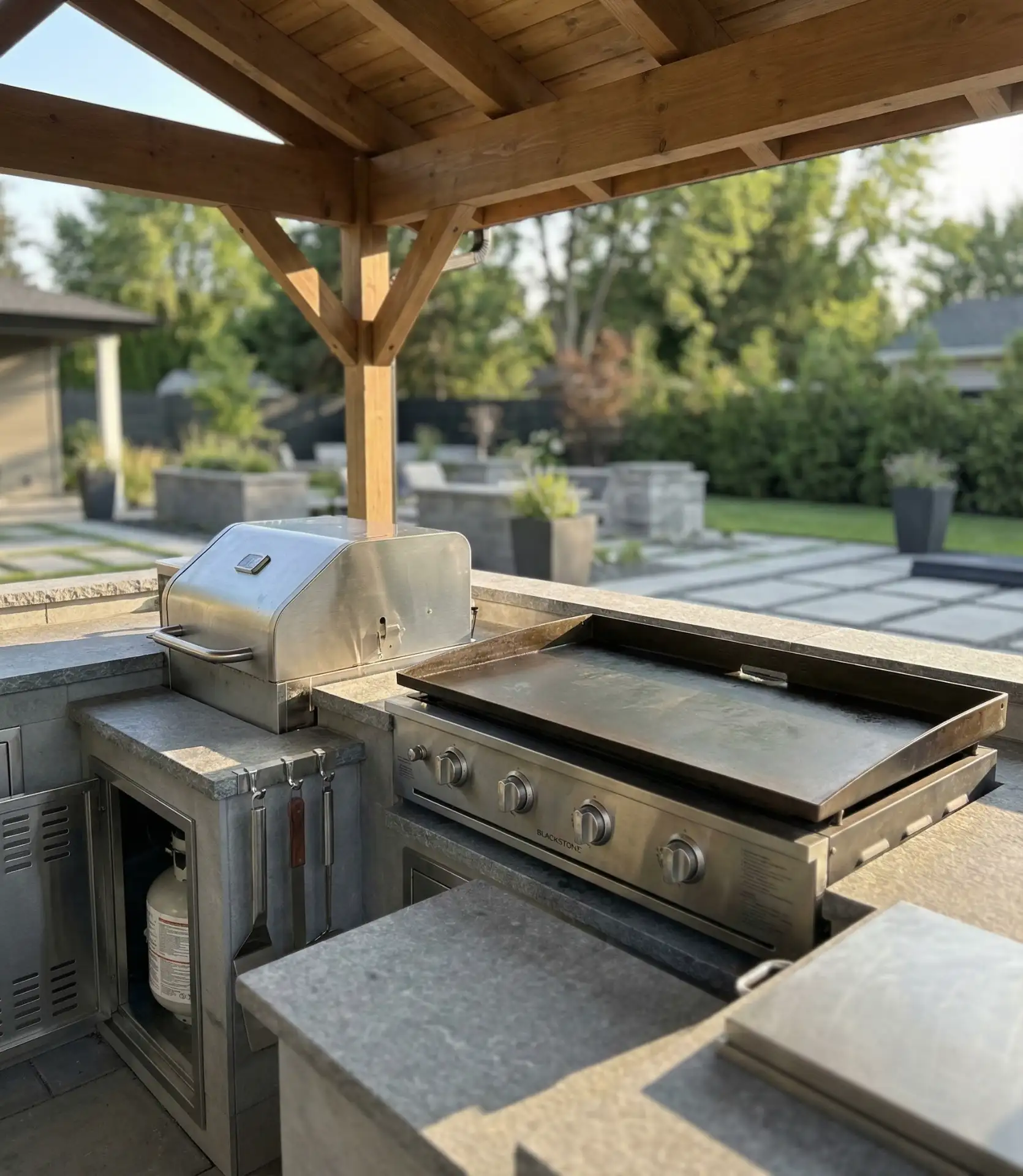
This dual-cooker approach works best when you regularly entertain large groups or simply love spending weekends experimenting with different cooking techniques. The setup requires significant space—plan for at least 12 feet of linear counter to comfortably accommodate both units plus working room. Budget $2,500-$4,000 for quality units and a basic surround, or significantly more for a fully integrated built-in design with custom stonework. The investment makes sense for households where outdoor cooking isn’t an occasional hobby but a central part of how you feed your family and friends throughout the year.
8. Big Green Egg Built-In Station
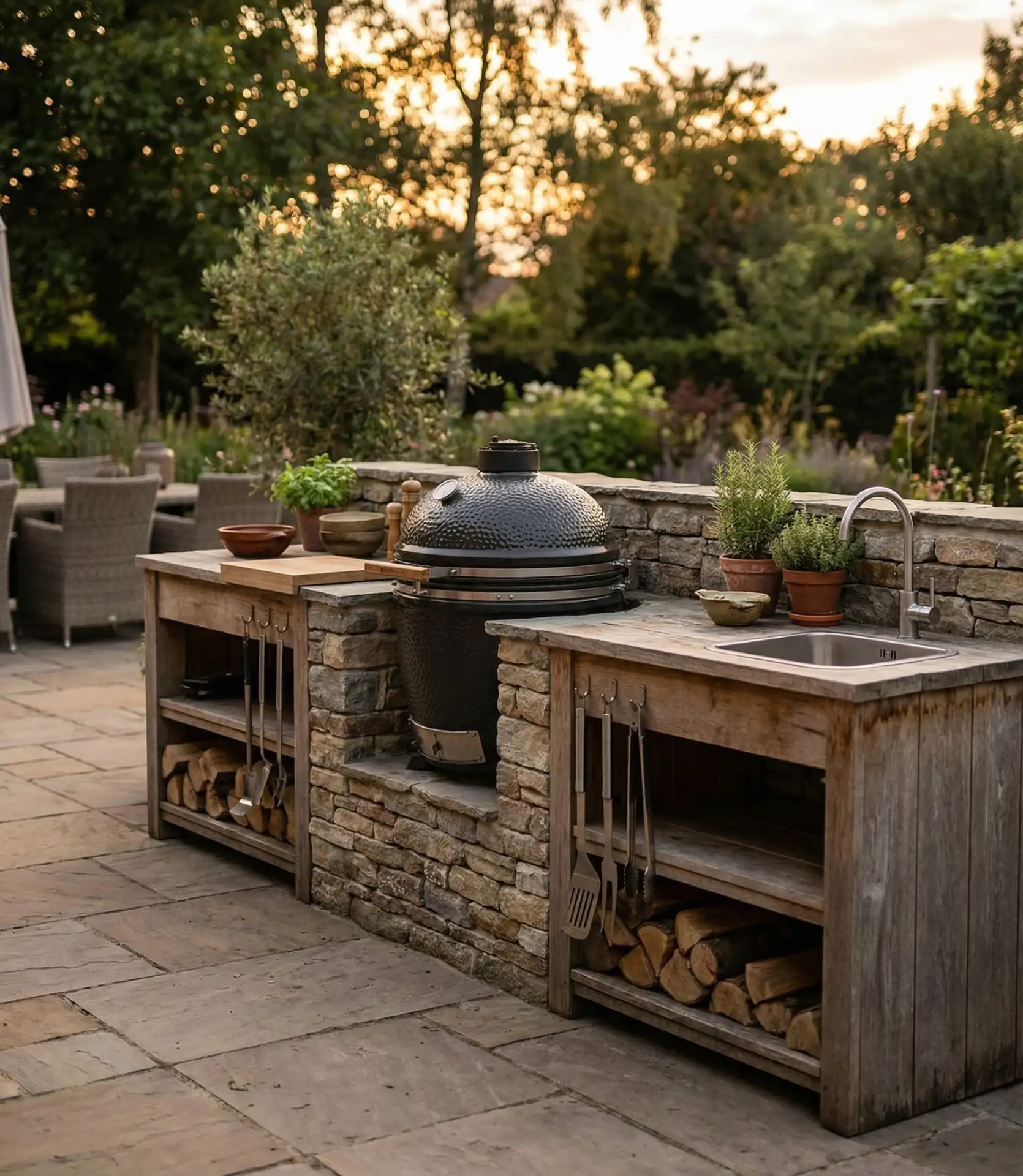
The Big Green Egg has achieved cult status among outdoor cooking enthusiasts, and building a permanent station around it elevates it from a portable cooker to the centerpiece of your outdoor kitchen. A proper built-in setup provides a stable, heat-resistant platform for the heavy ceramic cooker while adding prep space, storage for charcoal and accessories, and a more finished, intentional look. The egg-shaped kamado design works beautifully as a visual focal point, especially when surrounded by stone or brick that complements its curves. This style particularly appeals to homeowners who view outdoor cooking as a serious pursuit rather than casual grilling. 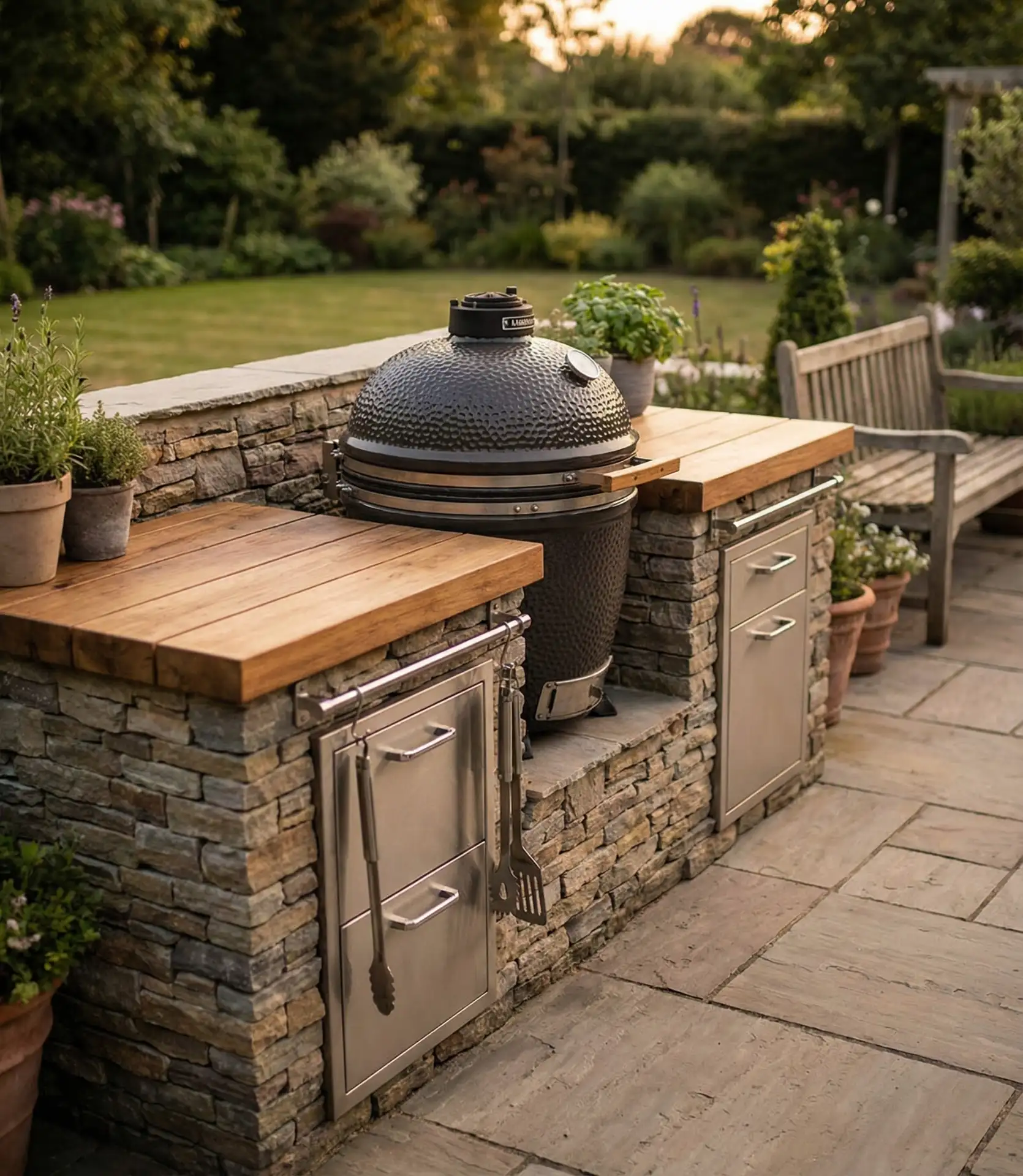
Where this setup shines is in its versatility—the Big Green Egg functions as a grill, smoker, oven, and even pizza oven, making it a legitimate one-cooker solution for those who don’t want to maintain multiple units. In the Southeast and Mid-Atlantic regions, you’ll find dedicated outdoor kitchens built entirely around a single large or XL Big Green Egg, often with a side burner for sauces but little else. The ceramic construction holds temperature remarkably well, which means it actually uses less fuel than conventional grills while providing precise heat control for everything from searing steaks to baking bread.
9. Modern Indoor-Outdoor Kitchen Connection
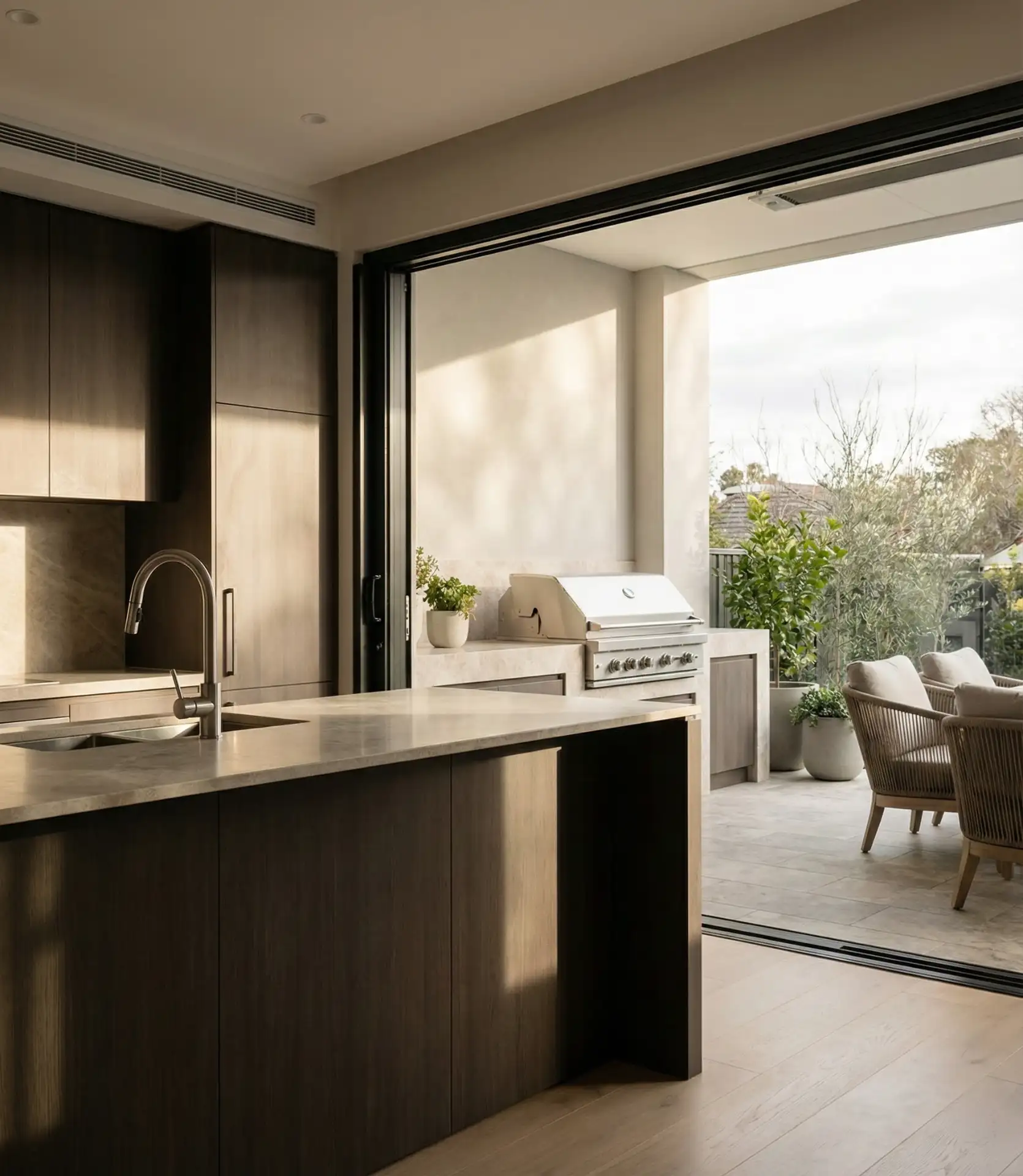
An indoor-outdoor kitchen design blends the interior and exterior of the house, which is ideal for entertaining.
A common choice for modern designs is folding glass doors that connect the kitchen to an outdoor dining and cooking area that are both made with the same materials for coherence. The indoor kitchen has a prep area, dishes, and a fridge, while the outdoor kitchen keeps things simple with grills and the serving area for a streamlined workflow. The style is designed for the West Coast, where outdoor spaces are assumed to have a mild temperature.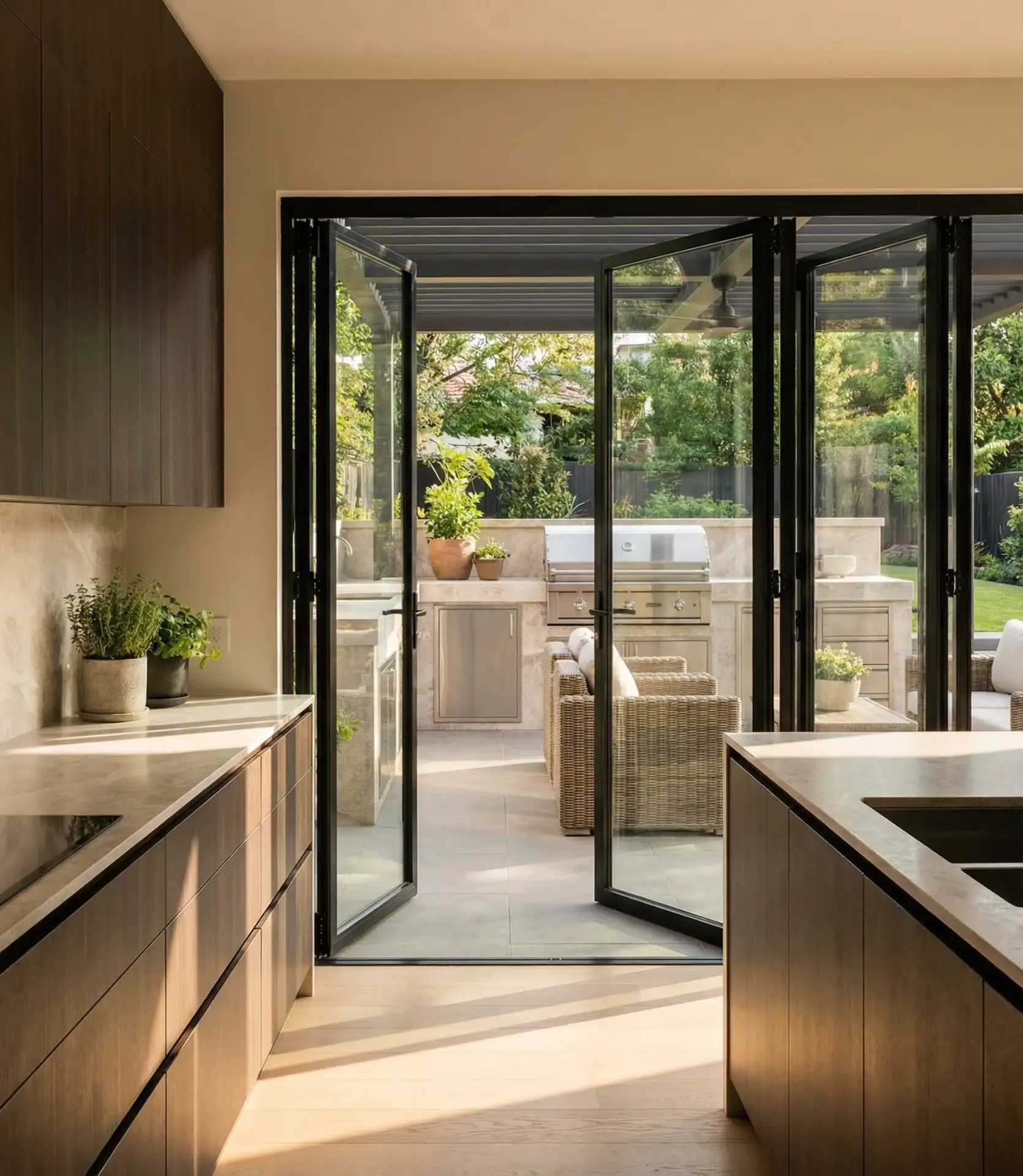
Real homeowners with this setup report that it entirely changes how they entertain—the cook never feels isolated from guests, and the easy back-and-forth access means you’re not trying to do everything outdoors or constantly running inside for forgotten ingredients. However, this design requires careful planning during construction or renovation, as you’ll need to coordinate flooring levels, ensure proper drainage, and possibly extend HVAC to maintain comfort when doors are open. The investment is substantial, often $30,000–$60,000 for a complete indoor-outdoor remodel, but for households that entertain frequently, the functionality justifies the cost.
10. Simple Summer Kitchen Essentials
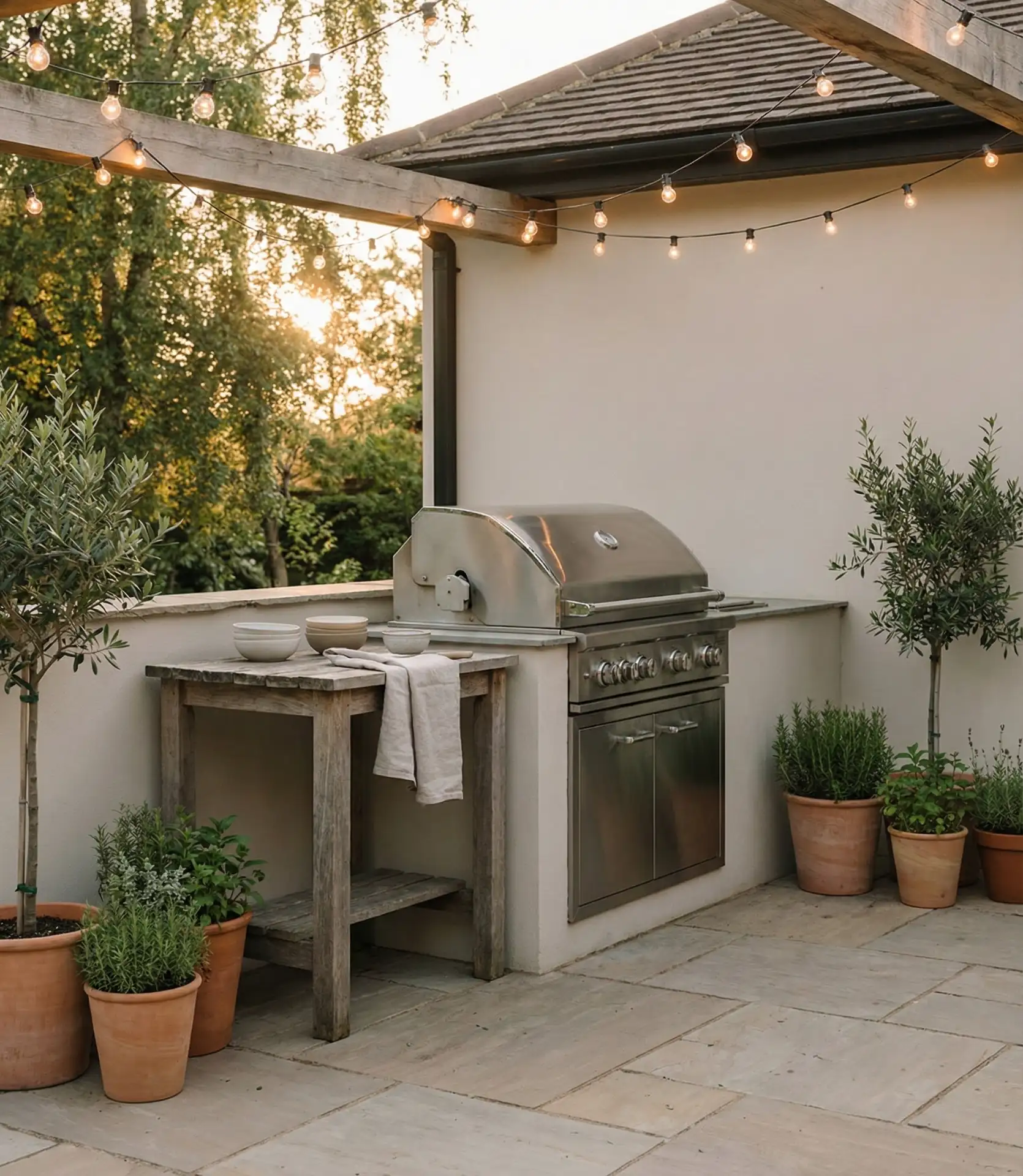
Occasionally the best outdoor kitchen is the simplest one—a simple summer setup focused on the true essentials without unnecessary complications. This minimalist approach centers on a quality grill, one solid prep surface, adequate lighting, and perhaps a small beverage cooler, skipping the bells and whistles that often go unused. The beauty of keeping things simple is that you’ll actually use the space regularly rather than treating it as a special-occasion showpiece. Many backyard cooks find that a streamlined setup encourages more spontaneous outdoor meals rather than elaborate productions that require hours of planning. 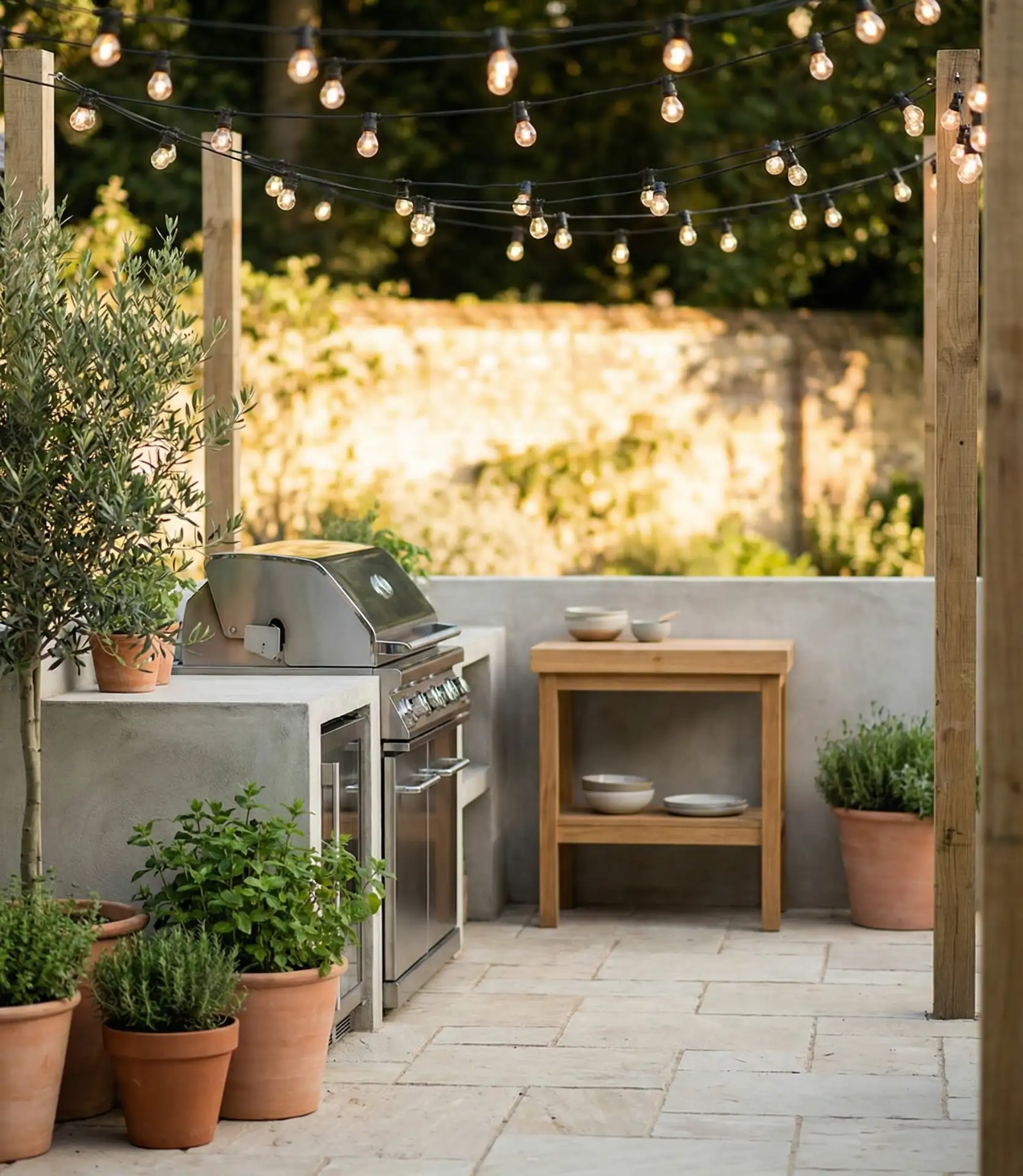
A common mistake is assuming you need every outdoor kitchen feature you see on Pinterest—the sink, refrigerator, pizza oven, and bar seating. Most families realistically use their outdoor kitchen for grilling burgers and vegetables, not preparing four-course meals from scratch outside. Start with the basics and add features only after you’ve identified genuine needs through actual use. This measured approach typically costs $1,500-$3,000 and can be assembled over a few weekends, creating a functional cooking space that grows with your habits rather than overwhelming your budget and backyard from day one.
11. Sleek Stainless Steel Modern Kitchen
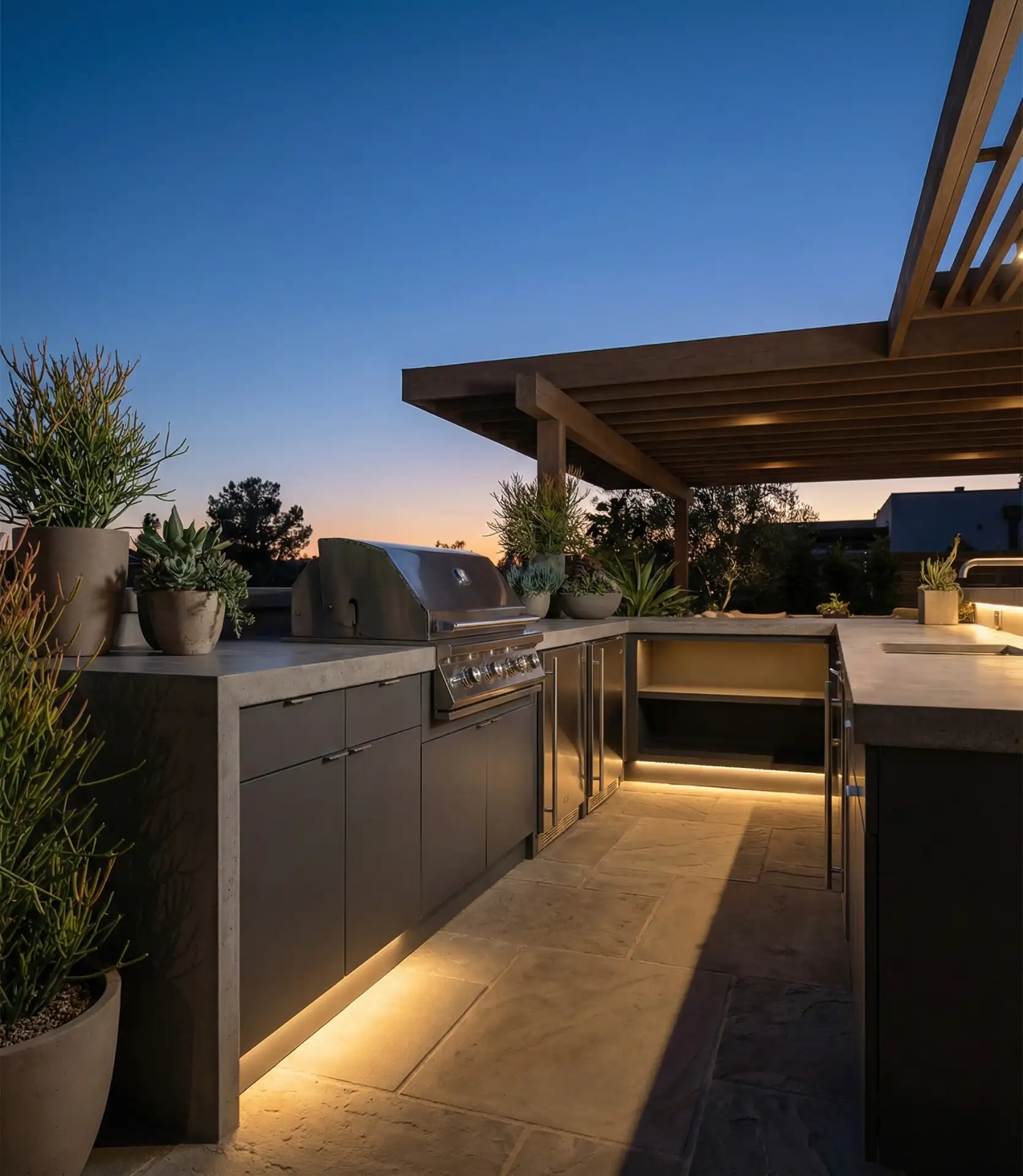
This modern outdoor kitchen is a dream come true for those who love to cook. The kitchen boasts the same professional appliances found in indoor commercial kitchens. This modern design features weather-resistant stainless components and emphasizes sleek and clean horizontal lines with no embellishments. This design is high-end and sophisticated and it’s perfect for the design-conscious homeowner. The reflective surfaces are a lovely contrast to the other materials in the kitchen and catch sunlight beautifully. The materials not only look appealing but are also very high quality. They won’t rust or degrade, no matter how long they are exposed to the elements. This polished and sophisticated rust look is preferred in modern suburban and urban homes all over the US, especially in cities with a lot of modern architecture like Austin, Seattle, and Denver. 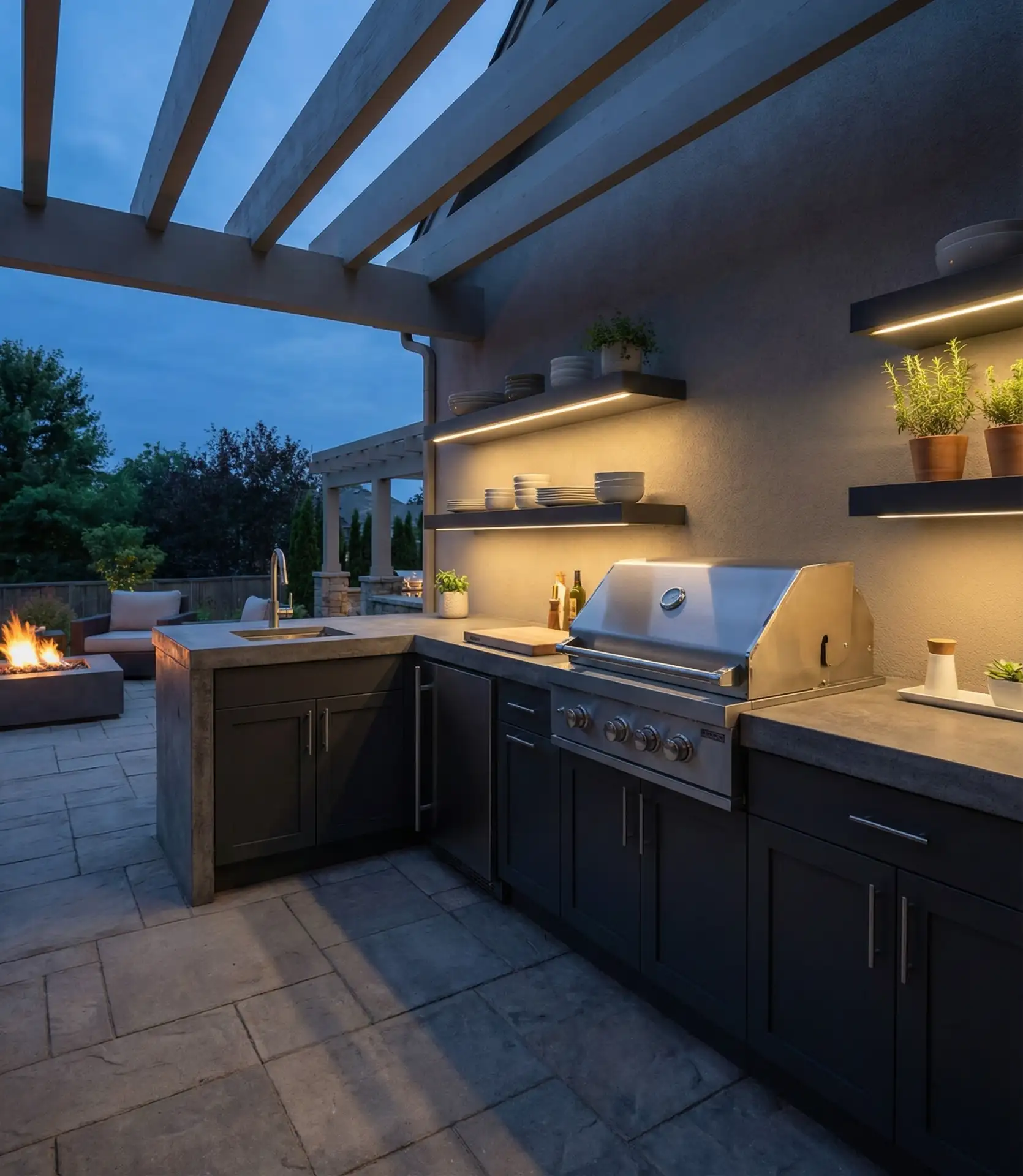
Stainless steel kitchens are practical and effortless to clean with just soap and water. These outdoor kitchens also won’t get bacteria buildup or degrade like cheaper materials and can look brand new for years with a little maintenance. Marine grade 316 is highly recommended for coastal areas, as 304 is more likely to corrode with salt water. A decent stainless steel outdoor kitchen with professional-grade appliances will cost around $8000 to $15000, although it can become much more expensive with custom designs. Such a kitchen is a good investment for serious cooks who intend to stay in the house for a long time, since it will save a lot of time and money in the long run.
12. Cozy Corner Kitchen for Small Spaces
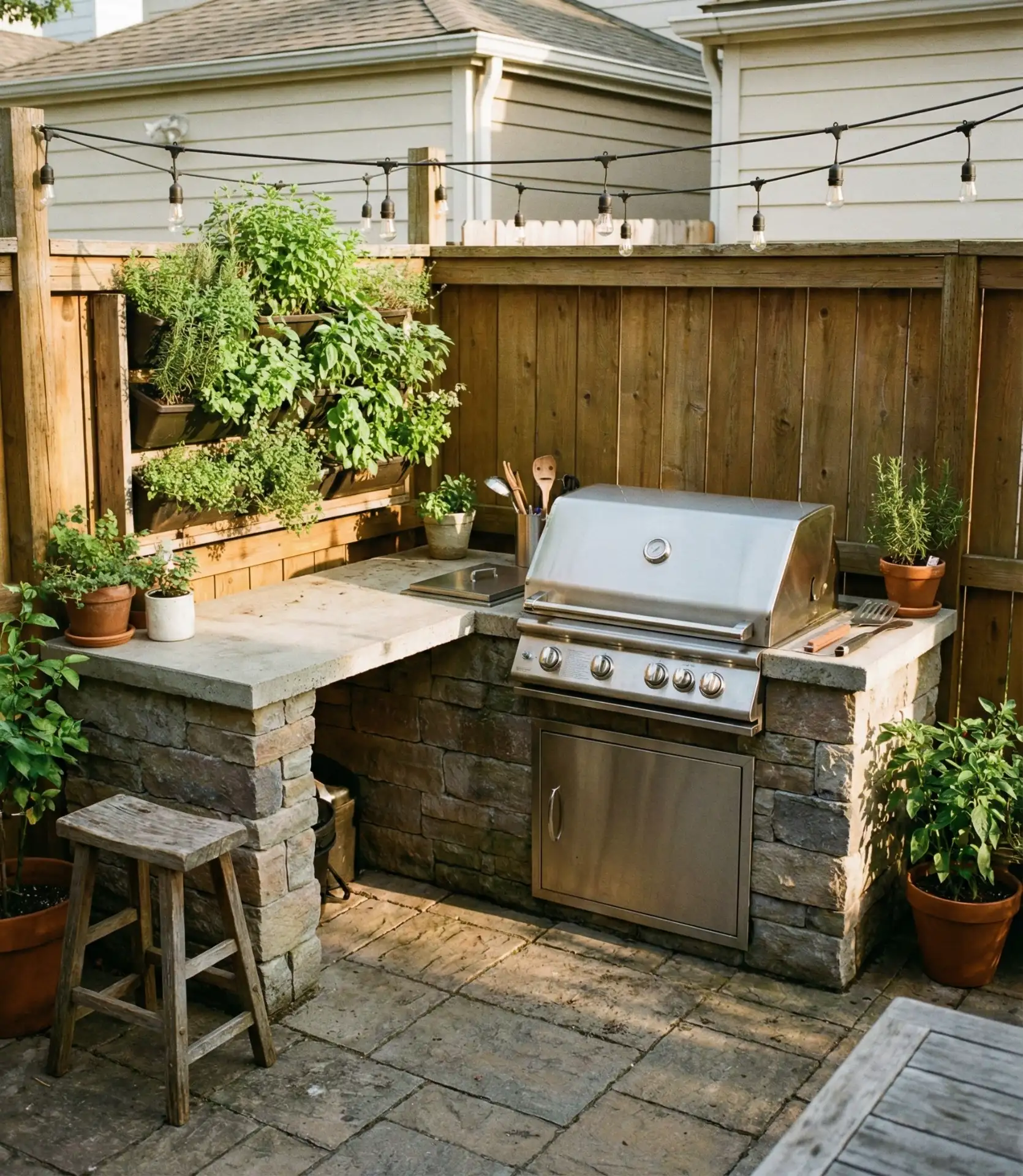
Maximizing an outdoor kitchen’s footprint efficiency can make it feel intentional rather than cramped. This design works well for small spaces where a full linear outdoor kitchen would dominate the patio. L-shaping the grill and prep counter against two walls or fences gives the patio a defined cooking zone and keeps the small backyard’s center free for dining and lounging. This design also works for providing natural wind protection for the grill, making it more comfortable to cook on breezy days. Townhouse and condo owners with small patios have embraced this philosophy with enthusiasm.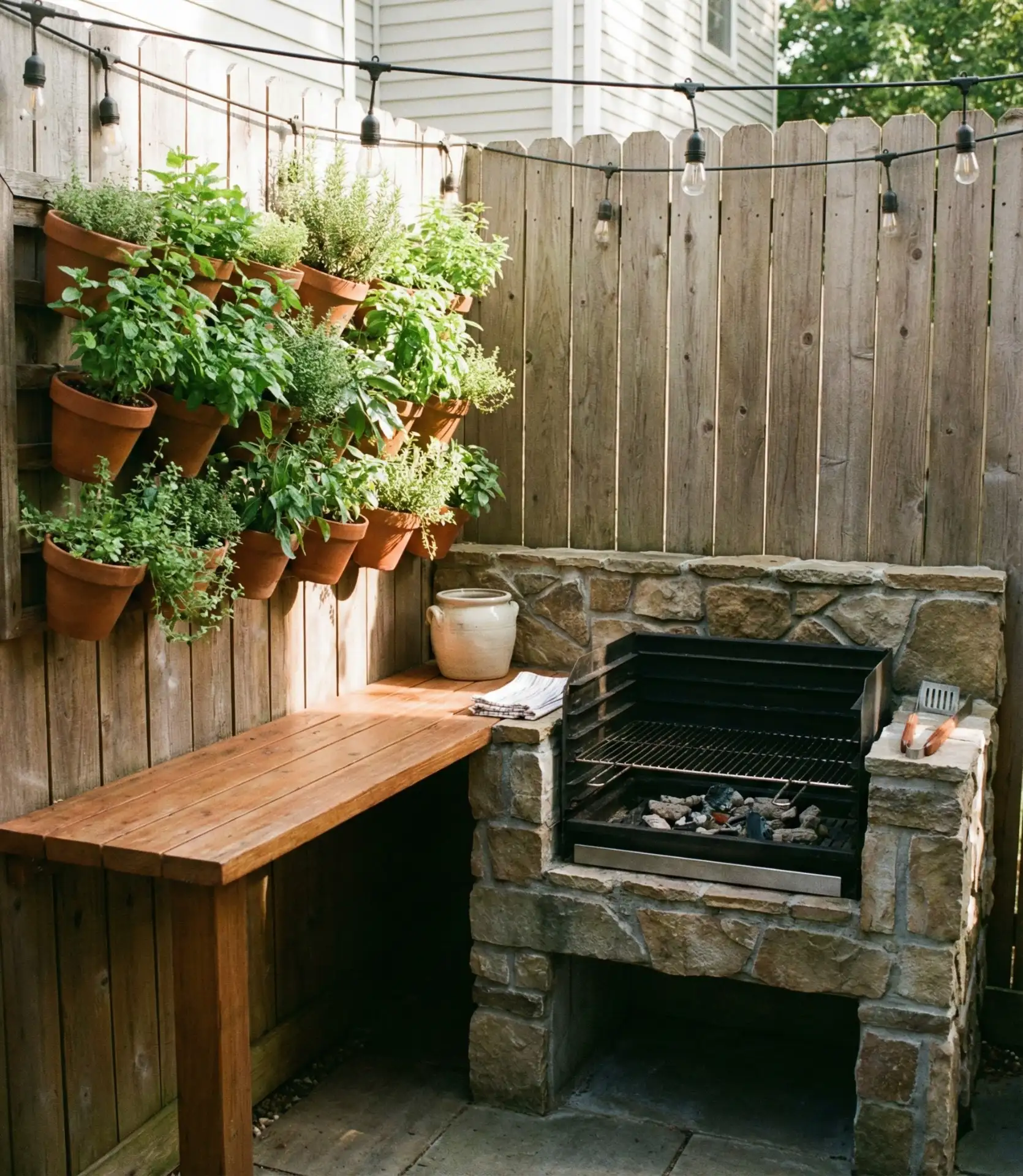
Protected spaces like covered porches or tight, sheltered courtyards are ideal for this design. Because the patio is small, the space feels cozy and more usable than kitchens set up on larger patios. This was the case for my cousin, who set up a kitchen at the corner of her 10×12 patio. She feels her setup is more usable than her friend’s larger outdoor kitchen plus patio setup.
Implementing a fold-down counter extension that can be put flat to the wall is a fantastic way to optimize usable space in smaller areas.
13. Farmhouse-Style Reclaimed Wood Kitchen
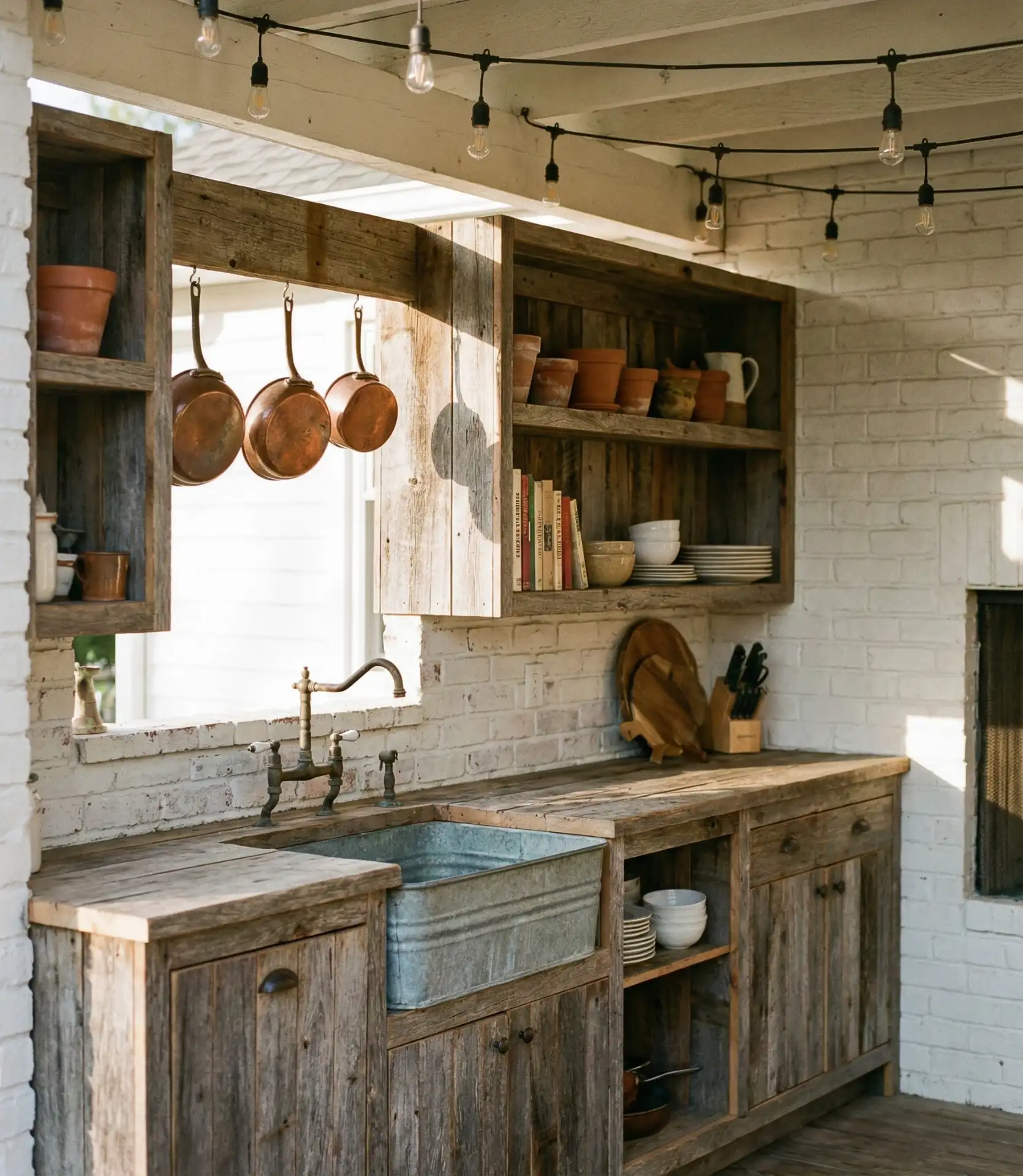
A farmhouse outdoor kitchen built using reclaimed barn wood and vintage materials will add a one-of-a-kind warmth and character that new builds can’t replicate. This rustic style celebrates imperfections in design, such as weathered wood grains, aged metal hardware, and vintage solid pieces that tell a story. Many DIY enthusiasts and off-grid construction lovers love this approach because it results in the creation of a one-of-a-kind space, with reasonable costs to source the materials at salvage yards, estate sales, and demolition sites. The weathered aesthetic pairs beautifully with rustic landscaping and gravel pathways with cottage-style home gardens. This look is especially popular in rural properties and suburban homes across the midwestern and southern regions of the U.S. that are looking to attach a farmhouse to the countryside. 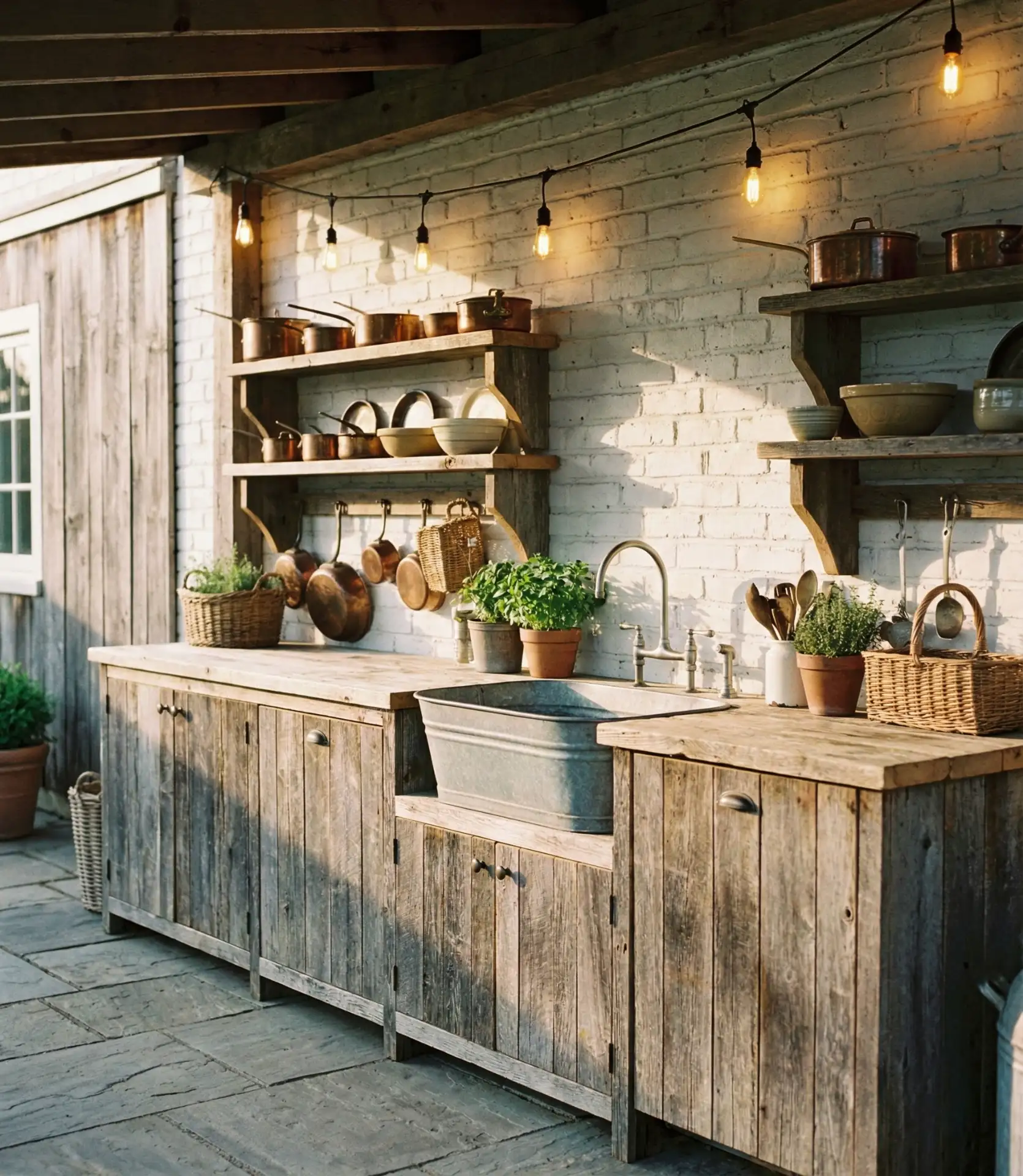
Expert builders caution that reclaimed wood requires careful inspection and treatment before outdoor use—check for rot, insect damage, and structural integrity, then apply proper sealants to protect against moisture. The beauty of this style is its forgiving nature; new wear and aging actually enhance the aesthetic rather than diminishing it. Expect to invest considerable time hunting for the right materials, but costs typically remain modest—most farmhouse outdoor kitchens come together for $2,000-$5,000 depending on appliance choices. The result is a cooking space that looks like it’s been part of your property for generations.
14. Budget-Conscious Paver Base Kitchen

Building your outdoor kitchen foundation with concrete pavers offers a budget-friendly alternative to poured concrete slabs while providing a stable, level surface for your cooking setup. This affordable approach uses interlocking pavers to create the floor and can extend vertically to form the grill surround and counter base. The modular nature of pavers means DIY installation is genuinely achievable over a weekend, and future modifications or repairs simply require lifting and replacing individual pavers rather than jackhammering concrete. Homeowners on a budget appreciate that quality pavers cost $3-$8 per square foot installed versus $8-$15 for stamped concrete, making a significant difference on larger projects. 
Real homeowners who’ve built paver-based kitchens emphasize the importance of proper base preparation—excavate 6-8 inches, add compacted gravel, then sand before laying pavers to prevent settling and shifting. The color and pattern options with pavers are extensive, allowing you to match existing hardscape or create visual interest with contrasting borders. This foundation approach works particularly well in climates with freeze-thaw cycles, as individual pavers can shift slightly without cracking like monolithic concrete slabs. Add a paver backsplash and countertop edging to tie the whole design together for a cohesive, finished look.
15. Desert-Inspired Southwestern Kitchen
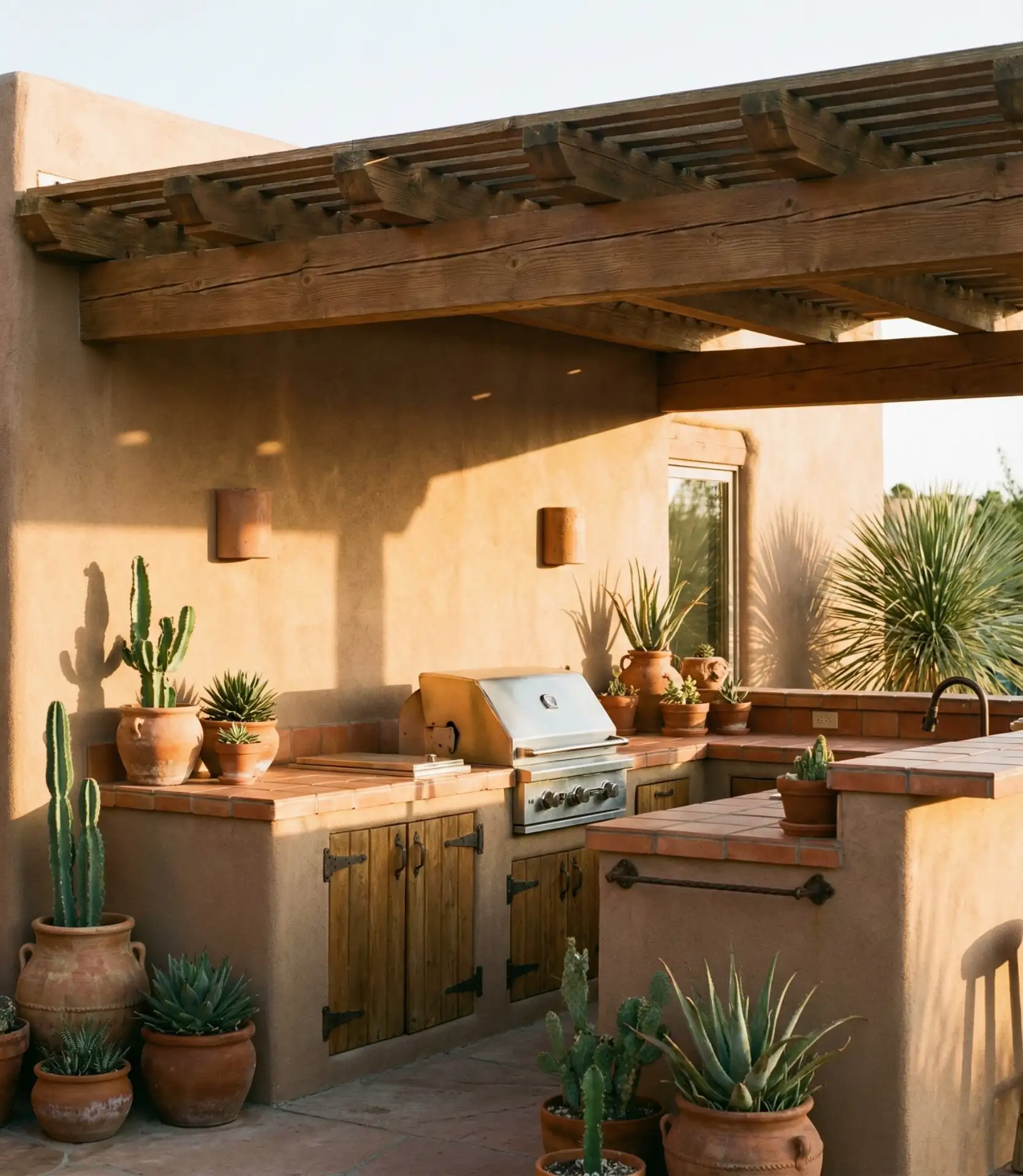
A Southwestern outdoor kitchen embraces the warm earth tones, natural textures, and rustic craftsmanship of desert architecture, creating a space that feels like an extension of the landscape rather than an imposition upon it. This regional style features stucco finishes in terracotta and adobe shades, saltillo tile counters, wrought iron accents, and often a traditional clay chimenea or built-in fireplace alongside the grill. The covered ramada-style roof provides essential shade in the intense southwestern sun while maintaining airflow. Homeowners in Arizona, New Mexico, and Southern California naturally gravitate toward this aesthetic that honors local building traditions and climate realities. 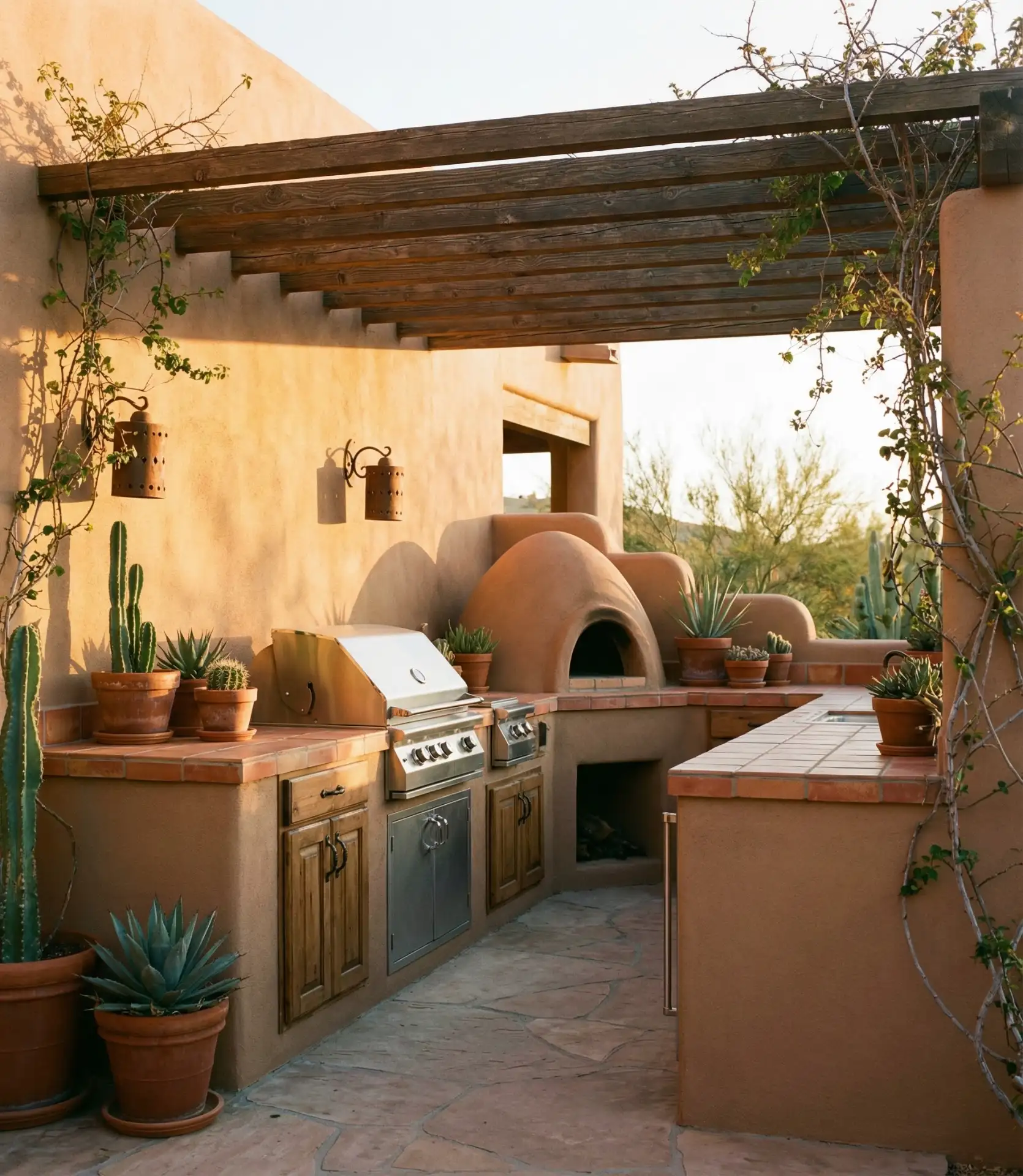
This style works best in arid climates where the stucco and tile materials can breathe without moisture concerns. The thermal mass of thick stucco walls and tile surfaces actually helps moderate temperature swings, staying cooler during scorching afternoons and radiating warmth during chilly desert evenings. Many southwestern outdoor kitchens incorporate a kiva-style fireplace that serves double duty as a gathering spot and additional cooking surface for cast-iron pots. The color palette of warm earth tones, deep blues, and sunset oranges creates a welcoming environment that complements native landscaping and feels authentic to the region.
16. Compact Apartment Balcony Setup
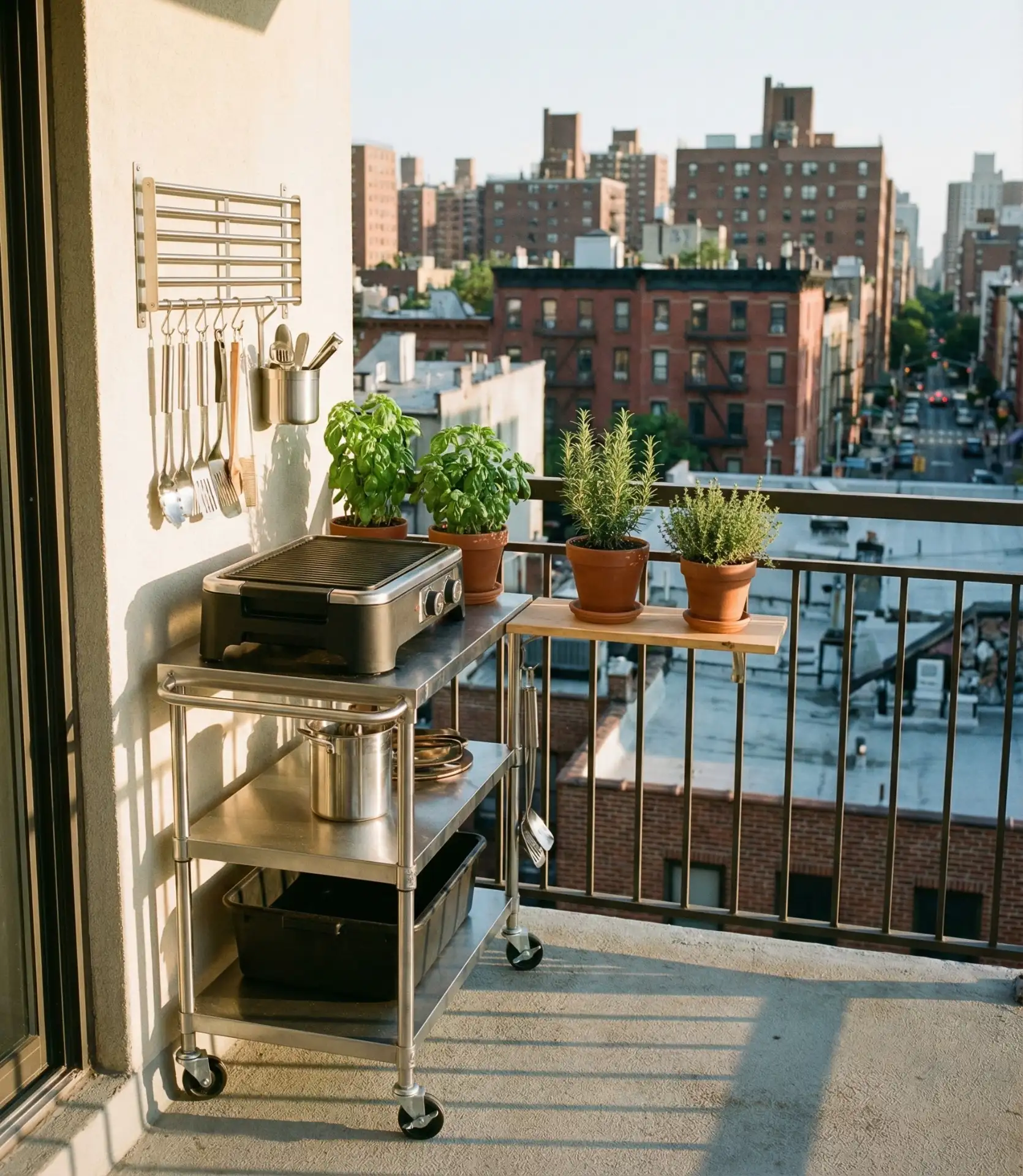
You don’t need a sprawling backyard to enjoy outdoor cooking—a thoughtfully designed balcony kitchen brings grilling to apartment and condo living. This ultra-compact layout for small spaces typically centers on an electric grill or small gas unit approved for balcony use, paired with a narrow rolling cart that provides prep space and storage. Simple vertical organization becomes crucial here, with wall-mounted magnetic strips for utensils, hanging planters for herbs, and fold-down shelves that maximize every square inch. Urban dwellers in cities with strict fire codes have gotten creative, discovering that quality electric grills now deliver results nearly comparable to gas while meeting building requirements. 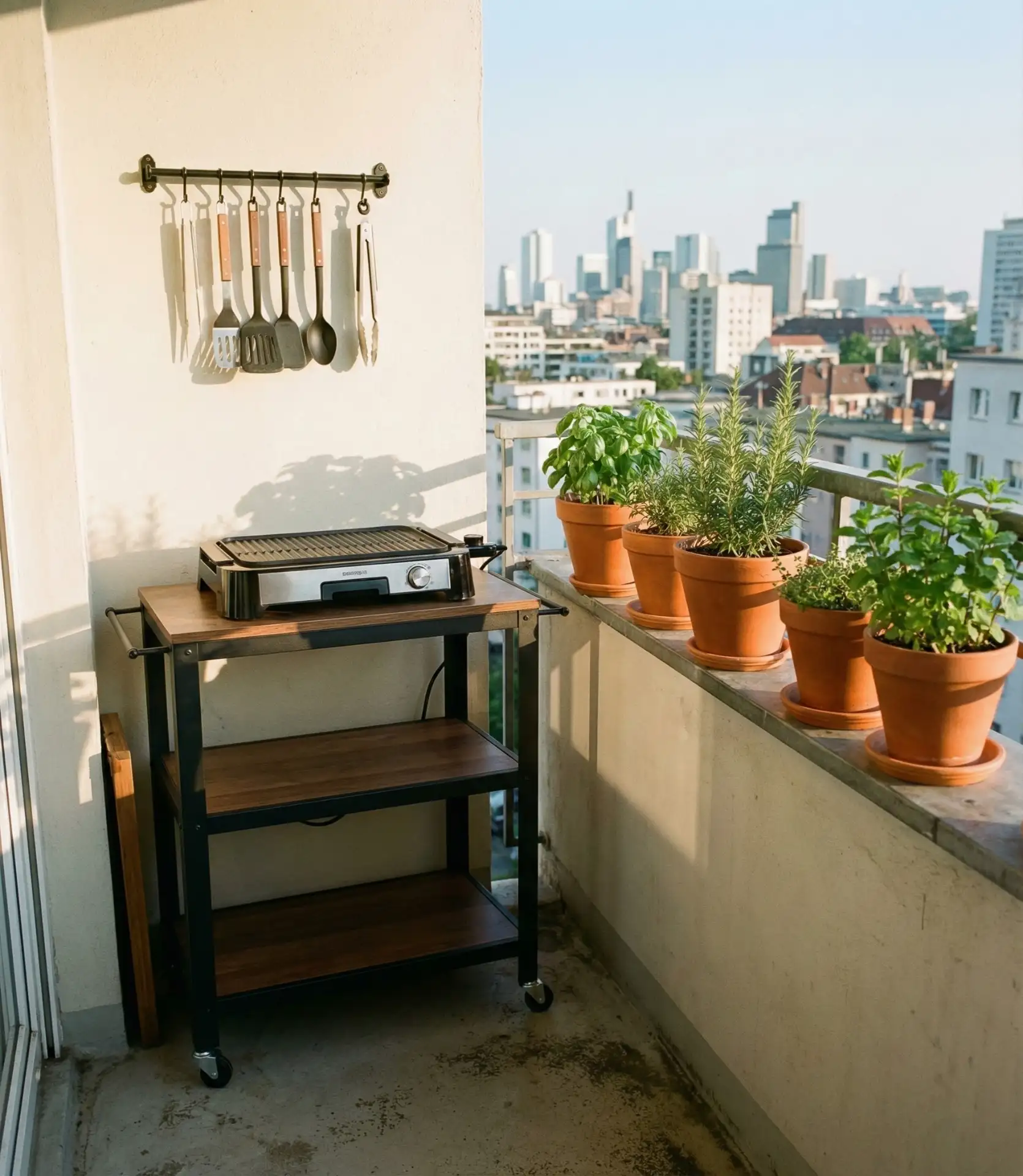
A common mistake with balcony grilling is failing to check building regulations before purchasing equipment—many apartments prohibit charcoal and open-flame gas grills but allow electric models. Always verify your lease terms and local fire codes to avoid expensive mistakes. Real apartment dwellers report that a well-organized balcony kitchen gets used more frequently than a full outdoor kitchen because there’s no intimidation factor—it’s just an extension of your regular cooking routine. Focus on quality over quantity with equipment, choosing one excellent compact grill and a few essential tools rather than cramming in features you won’t realistically use.
17. Entertainment-Focused Bar Kitchen
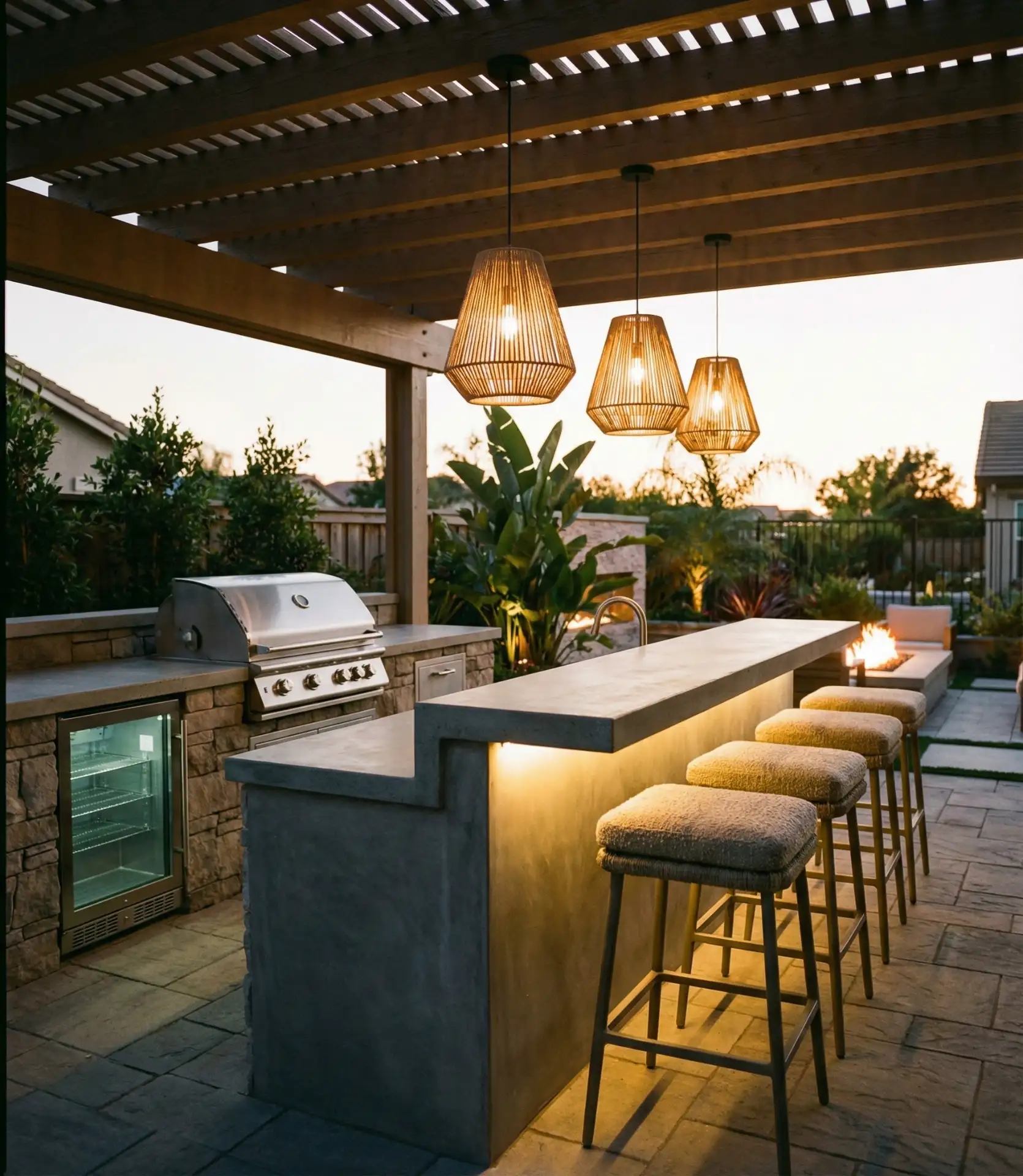
An outdoor kitchen designed primarily for entertaining shifts focus from intensive cooking to serving and socializing, featuring an expansive bar with seating for backyard gatherings. This layout prioritizes guest comfort with an 8–12-foot bar counter, comfortable stools, overhead lighting, and often a built-in beverage cooler or kegerator. The cooking equipment takes a supporting role—perhaps a simple grill station or Blackstone grill positioned to one side where the host can cook while conversing with seated guests. This configuration works brilliantly for households that host regular gatherings where food is important but conversation and drinks are the main event. Suburban homes with active social calendars increasingly choose this entertainment-first design. 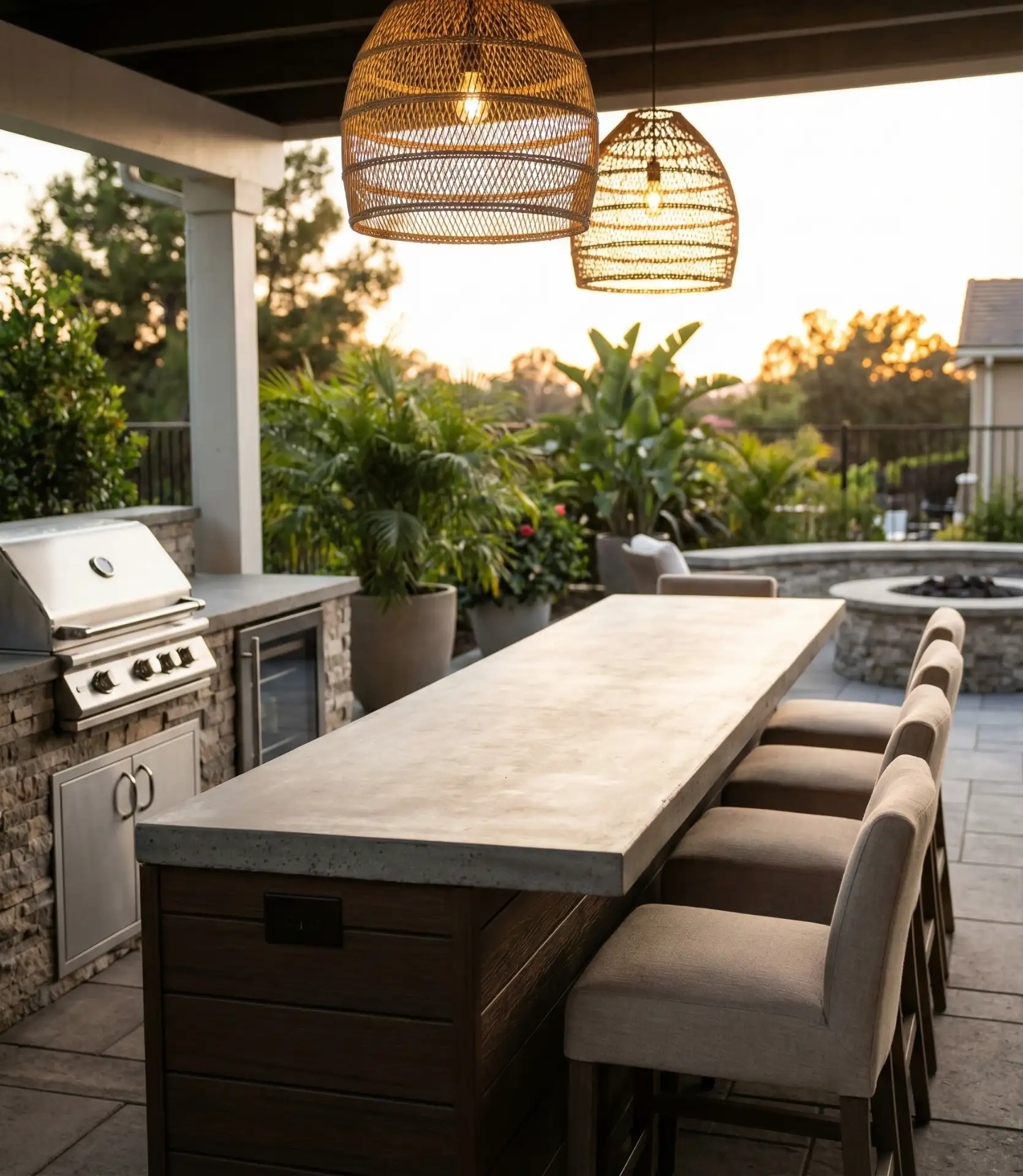
Where this setup excels is in creating an inclusive, entertaining environment where the cook isn’t isolated from guests. The bar becomes the natural gathering spot, pulling people away from clustering awkwardly in the middle of the yard. Consider the bar height carefully—a standard 42-inch bar height feels formal and upright, while a 36-inch counter height accommodates both standard chairs and feels more relaxed. Many homeowners add a lower section at 30 inches to create varied seating options and accommodate guests with mobility concerns. The investment typically runs $5,000-$12,000 depending on materials and appliances, but for serial entertainers, the functionality justifies every dollar.
18. All-Weather Enclosed Kitchen Pavilion
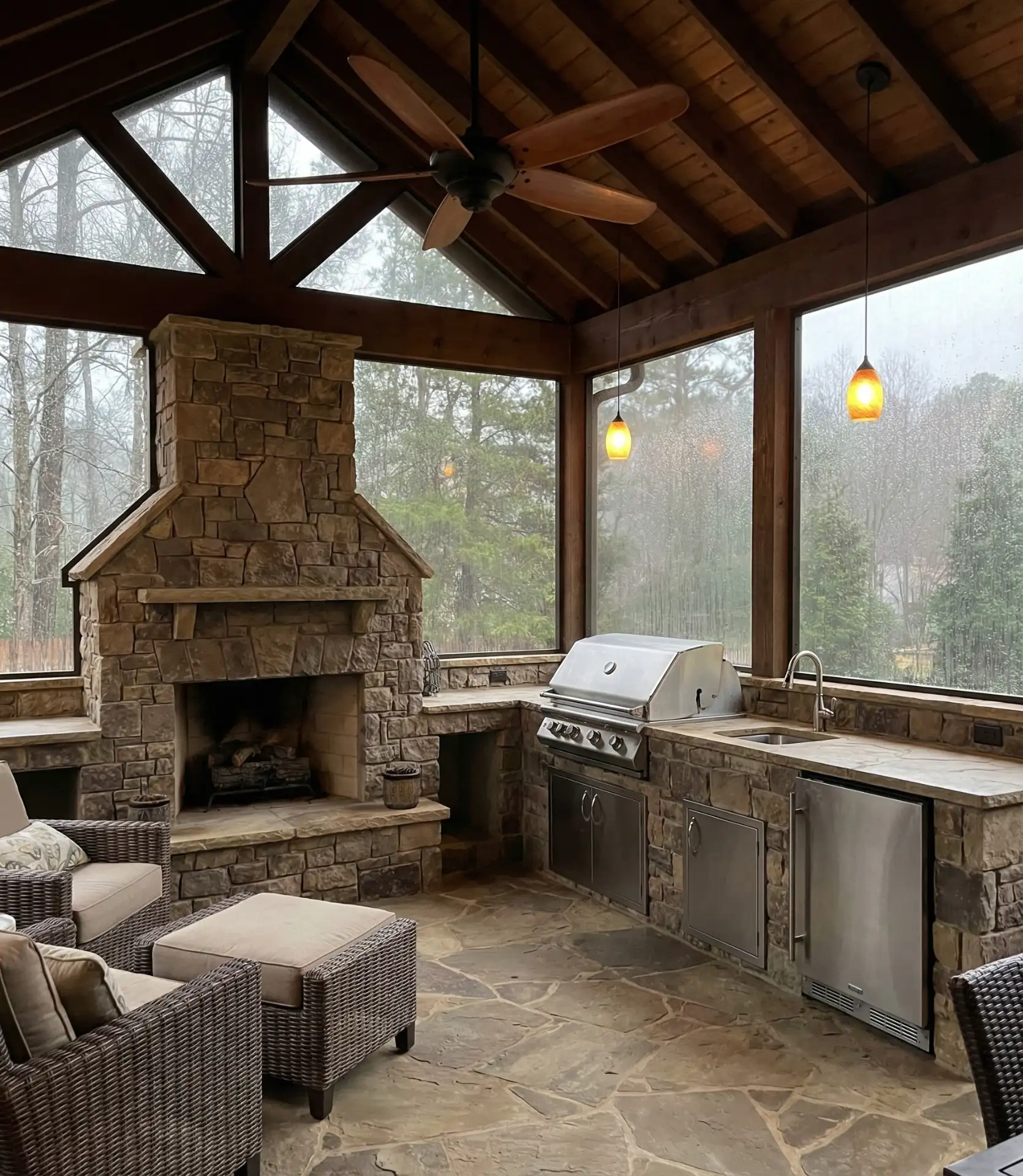
For the majority of climates, this major structure with a solid roof and more than two fully opened walls, and often retractable screens or glass, can protect you and your cooking equipment from the wind, rain, and harsh sun. These light rain coverings let you cook and also protect your appliances and cabinetry investment. Homeowners living in the northern states such as Minnesota, Wisconsin, and Maine build these weather-resistant structures more often as a result of not wanting to let their outdoor kitchen go to waste for 8 months. The pavilion becomes a true 3-season room and gets the comfort and functionality of rivaling the indoor spaces. 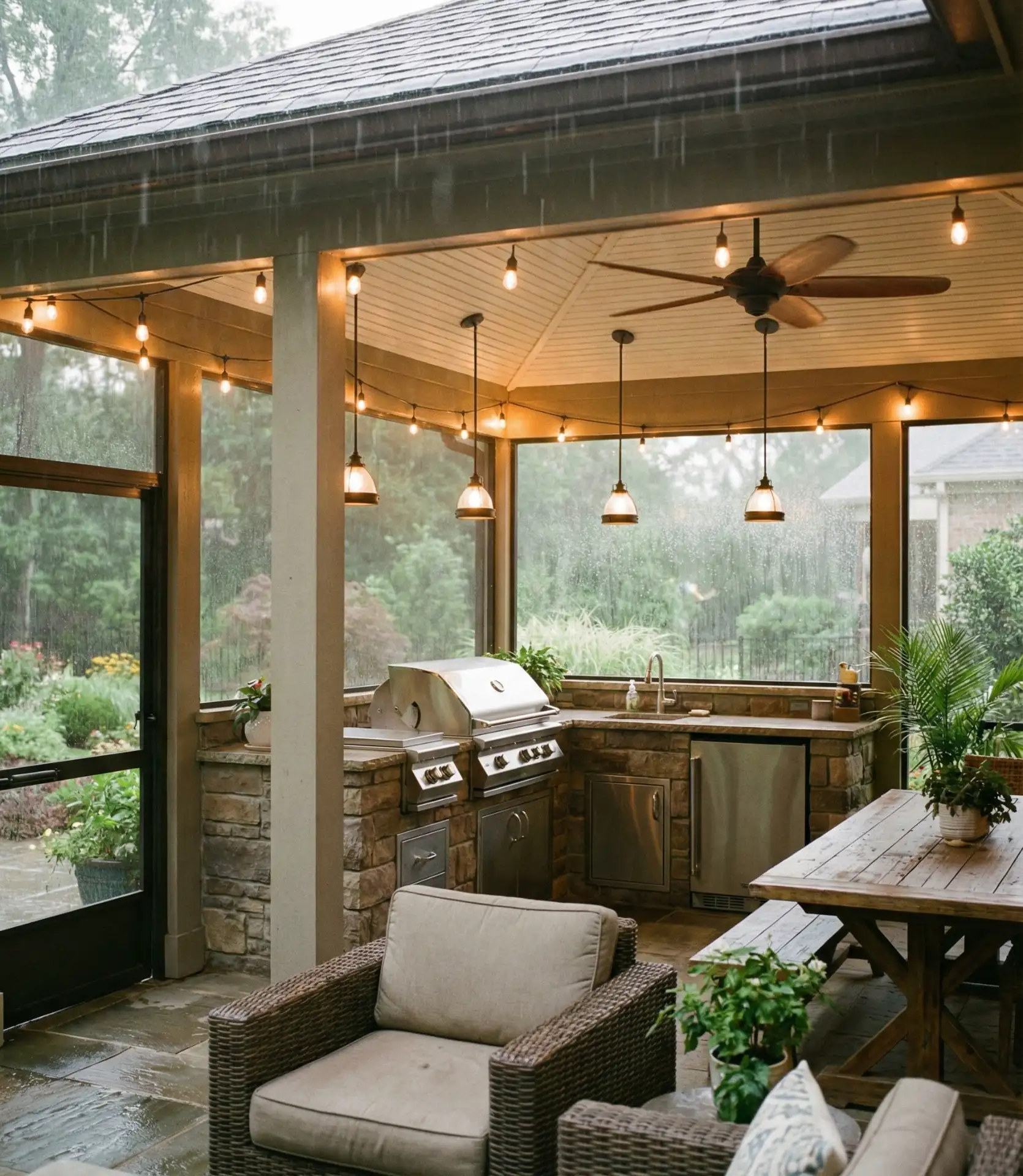
Expert builders emphasize proper ventilation in enclosed outdoor kitchens—you’ll need a commercial-grade hood vent or open sections near the roofline to exhaust smoke and cooking fumes safely. The structure must also comply with local building codes, often requiring permits, engineered plans, and electrical inspections that free-standing grills don’t trigger. Budget $15,000-$40,000 for a quality pavilion, including structure, foundation, utilities, and cooking equipment. The structure represents a significant investment, but homeowners in unpredictable climates find that the ability to use their outdoor kitchen regardless of weather transforms it from an occasional luxury to an essential living space they rely on weekly.
19. Minimalist Concrete Modern Design
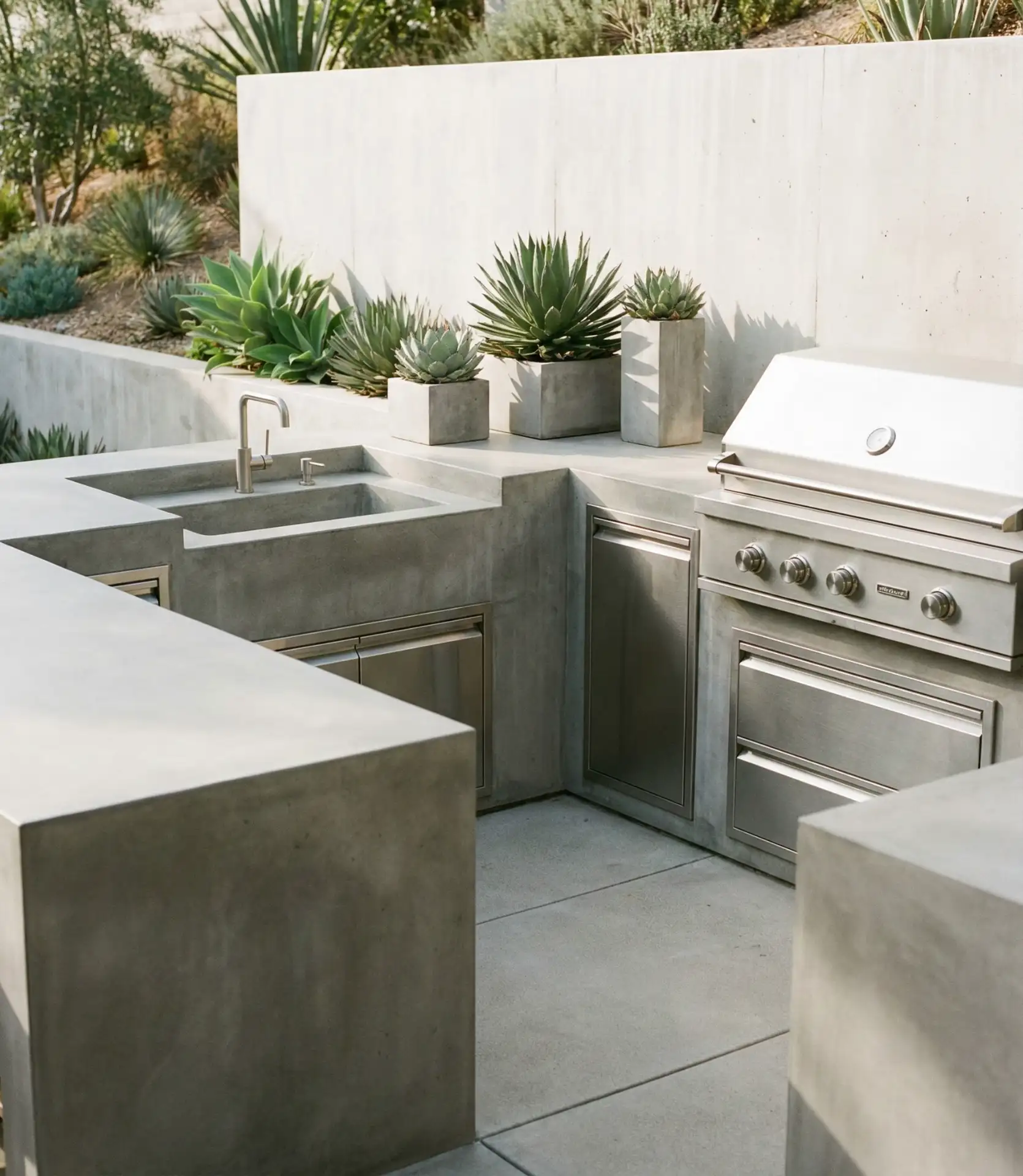
A modern outdoor kitchen featuring poured concrete counters and clean geometric forms creates a sophisticated, gallery-like environment that celebrates materials and craftsmanship. This minimalist contemporary approach strips away decorative elements, letting the beauty of smooth concrete surfaces, precise edges, and carefully considered proportions speak for themselves. The monolithic quality of concrete creates visual continuity and a sense of permanence that lighter materials cannot match. Architecture enthusiasts and design-forward homeowners, particularly in cities like Portland, Austin, and Denver, embrace this industrial-modern aesthetic that pairs beautifully with contemporary home architecture and landscape design. 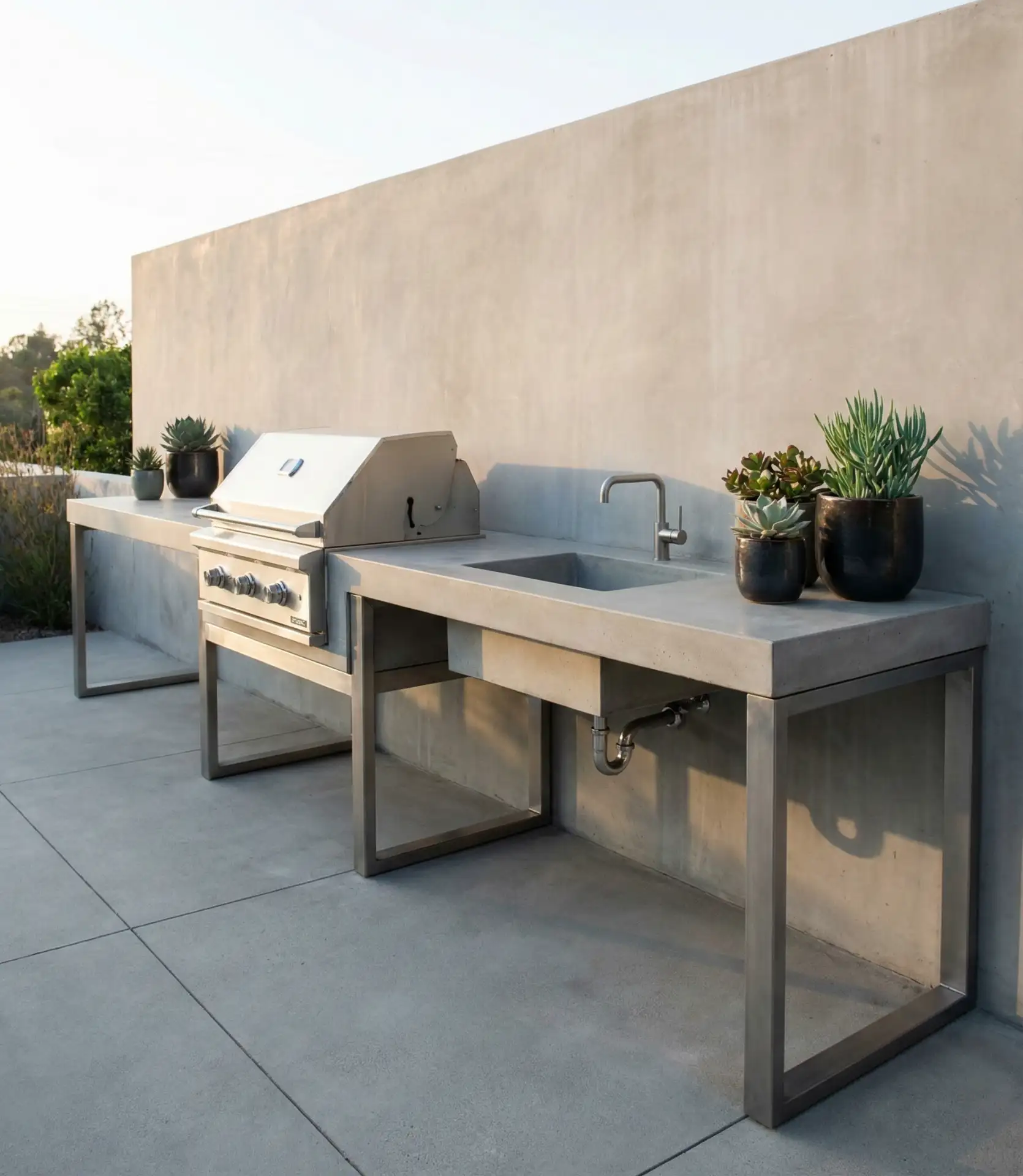
The practical consideration with concrete is that it requires proper sealing to resist staining from oils, acids, and wine—resealing every 1-2 years maintains the surface’s appearance and protection. Professionally poured concrete counters cost $75-$150 per square foot installed, making them a premium choice that competes with natural stone in price. However, concrete offers unmatched customization—you can integrate sinks, trivets, and even embedded lighting during the pour, creating seamless features impossible with tile or stone. The thermal mass of concrete also helps regulate temperature, staying surprisingly cool even on hot afternoons when positioned in partial shade.
20. Classic Charcoal Grill Focus Station
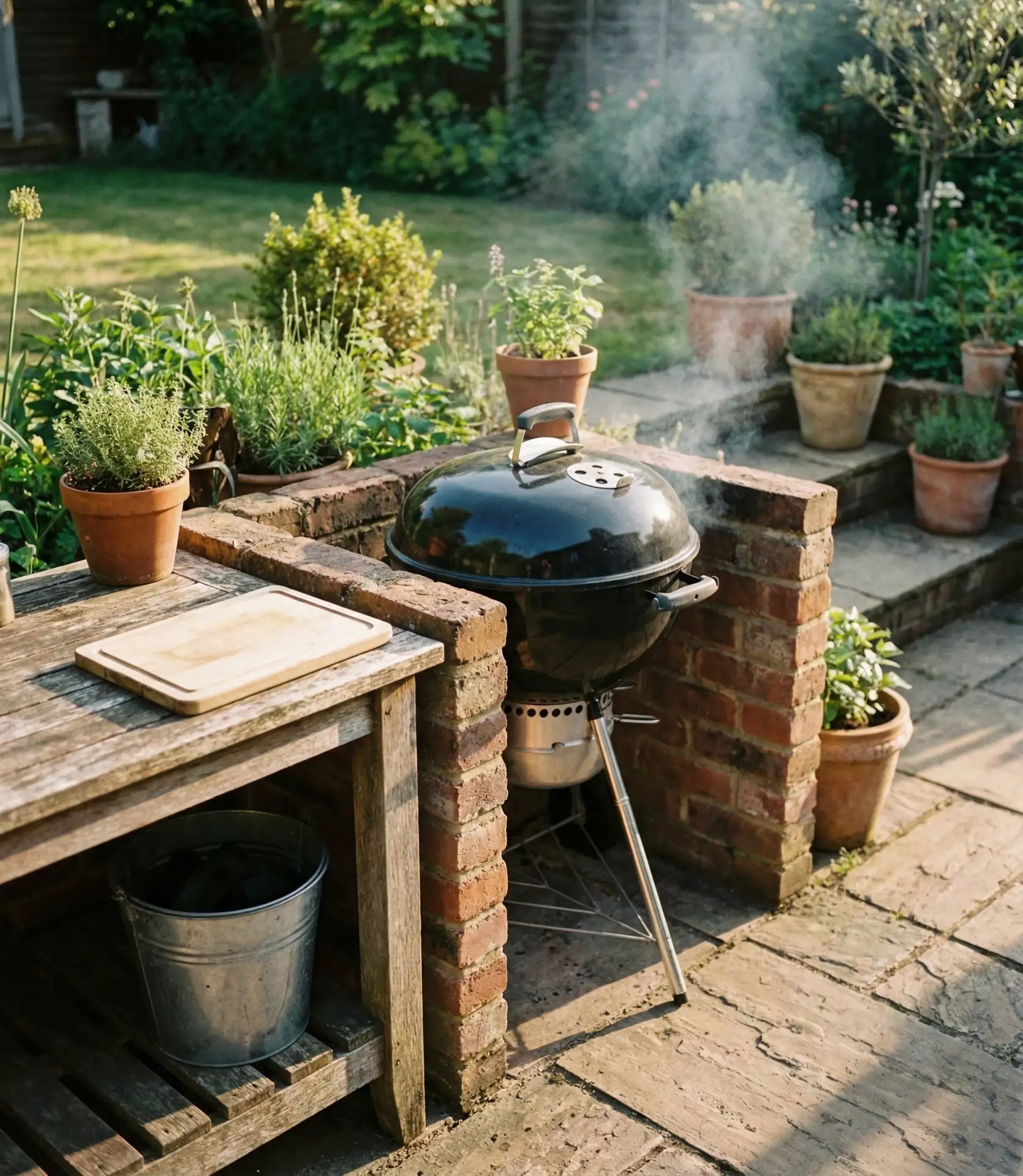
For purists who believe real outdoor cooking requires the charcoal and the resulting smoke, a traditional charcoal and smoke grill provides modern convenience. This simple setup includes a grill station designed to accommodate a Weber kettle, kamado cooker, or offset smoker, accompanied by prep space and storage to hold charcoal and wood chunks, as well as fire-starting supplies. The rustic appeal of charcoal cooking, managing heat zones during the fire ritual, and developing the smoky flavor on outdoor grills is quite traditional. Summer weekends across America still smell like charcoal smoke for a valid reason. 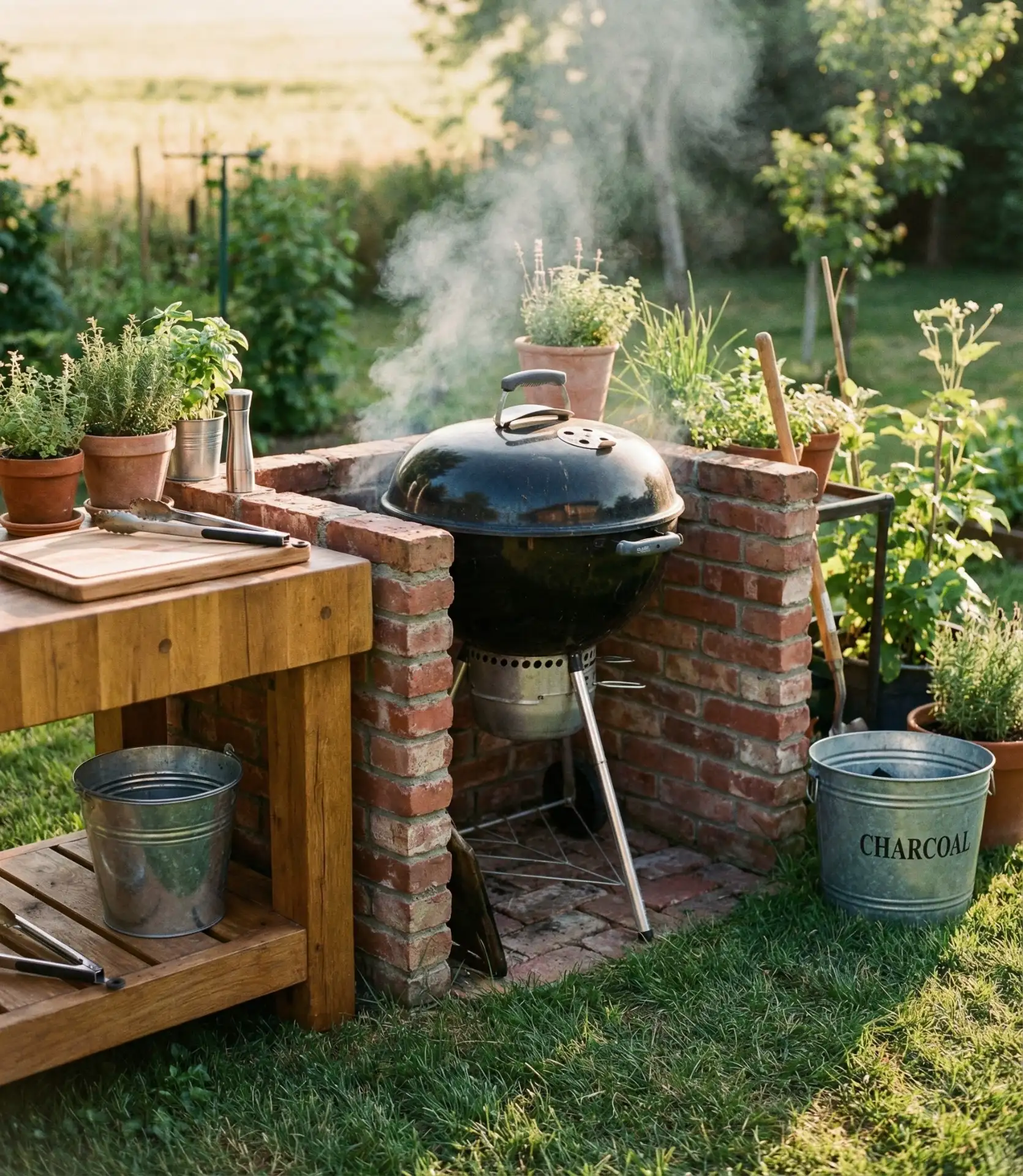
One of the outdoor kitchens where the largest mistake involves burning charcoal is the lack of proper ventilation. There must be adequate space over the grill and all around to allow smoke to escape freely. Never use a low cover, low ceilings, or closed-in spaces around the grill. Keep the charcoal station more than 10 feet from the house’s windows. Always take into account any prevailing winds to prevent smoke from distancing neighbors or house occupants. A well-built charcoal station typically costs between $800 and $2,500, significantly less than gas-powered outdoor kitchens. There is no doubt that the work’s expenses are balanced out by the savings. However, for those who are die-hard charcoal fans, the far superior taste and the overall experience in cooking over a fire make the extra time in fire management and cleanup worth it.
21. Multi-Level Terraced Kitchen Design

A terraced outdoor kitchen built into a sloped backyard transforms challenging topography into an architectural feature, creating distinct zones for cooking, prep, and serving at different elevations. This layout uses retaining walls and stepped platforms to establish natural separations between the grill level, a lower bar seating area, and perhaps an upper prep counter that connects to the house. The vertical arrangement provides excellent sightlines across the entire entertaining space, while the shape follows the land’s natural contours rather than fighting them. Hillside properties in California, Colorado, and the Pacific Northwest particularly benefit from this approach, turning what could be an awkward slope into a dynamic, multi-functional outdoor living environment. 
Where this design truly excels is in creating intimate spaces within a larger outdoor area—the cook on the upper level can interact with guests at the bar below without everyone crowding into one flat plane. The construction requires professional engineering to ensure retaining walls are properly built and drainage is managed to prevent erosion. Expect to budget $12,000-$25,000 for a professionally designed terraced kitchen, as the site work and structural elements add considerably to costs. However, homeowners with sloped lots often find this investment more practical than extensive grading to create a flat entertaining space, and the resulting design offers far more visual interest than a standard level patio.
22. Portable Modular Kitchen System
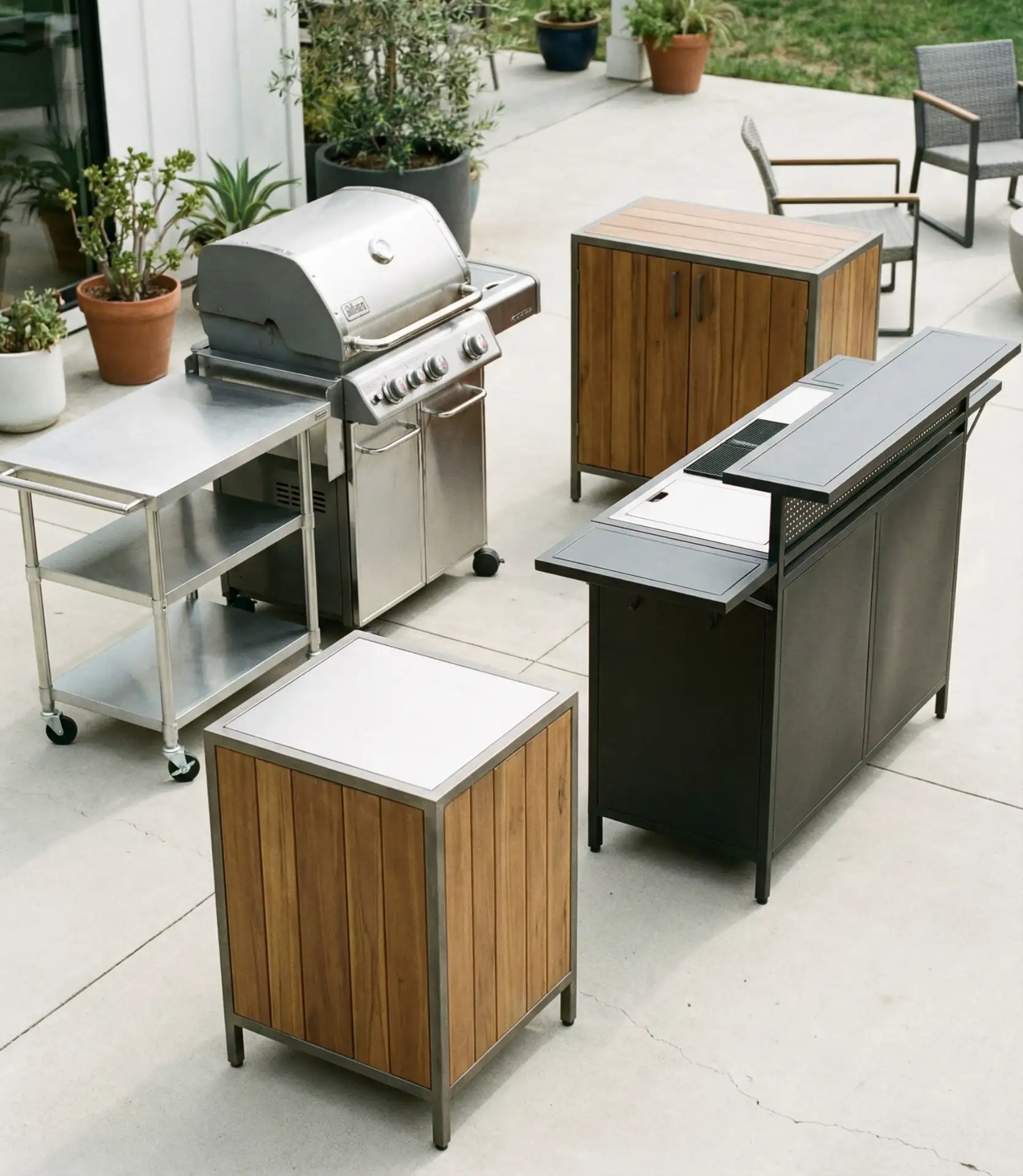
A modular outdoor kitchen composed of separate, movable components offers ultimate flexibility for renters, frequent movers, or homeowners who want to reconfigure their layout seasonally. This affordable system typically includes a quality portable grill, a rolling cart for prep space, a freestanding storage cabinet, and perhaps a compact bar cart—all pieces that can be rearranged, taken with you when you move, or stored away during winter. The simple approach appeals to younger homeowners and urban dwellers who aren’t ready to commit to permanent built-in structures but still want functional outdoor cooking capability. This flexibility particularly suits military families, graduate students, and professionals who relocate frequently but refuse to sacrifice outdoor entertaining. 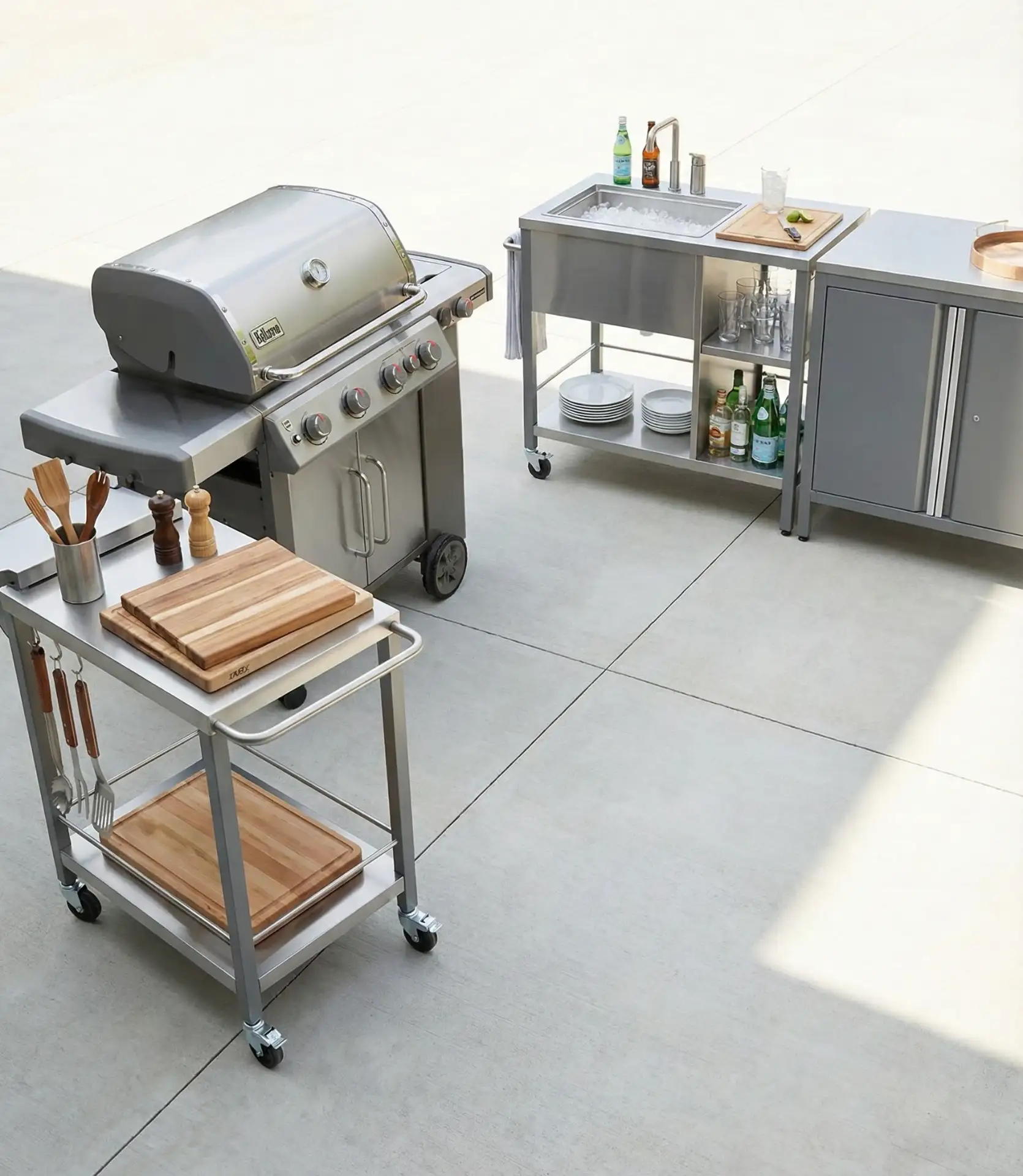
Real homeowners with modular setups report surprising advantages beyond mobility—they rearrange components for different party sizes, roll the grill closer to the house during cold weather, and even bring pieces to friends’ homes for joint cooking events. The key is choosing quality individual pieces that coordinate visually even though they’re not a matched set. Budget $2,000-$4,000 for a complete modular system with decent appliances, which is considerably less than built-in alternatives. Look for weather-resistant materials like stainless steel, powder-coated aluminum, and marine-grade polymer that can handle outdoor conditions without the protection of a permanent roof structure.
23. Traditional Brick Pizza Oven Kitchen
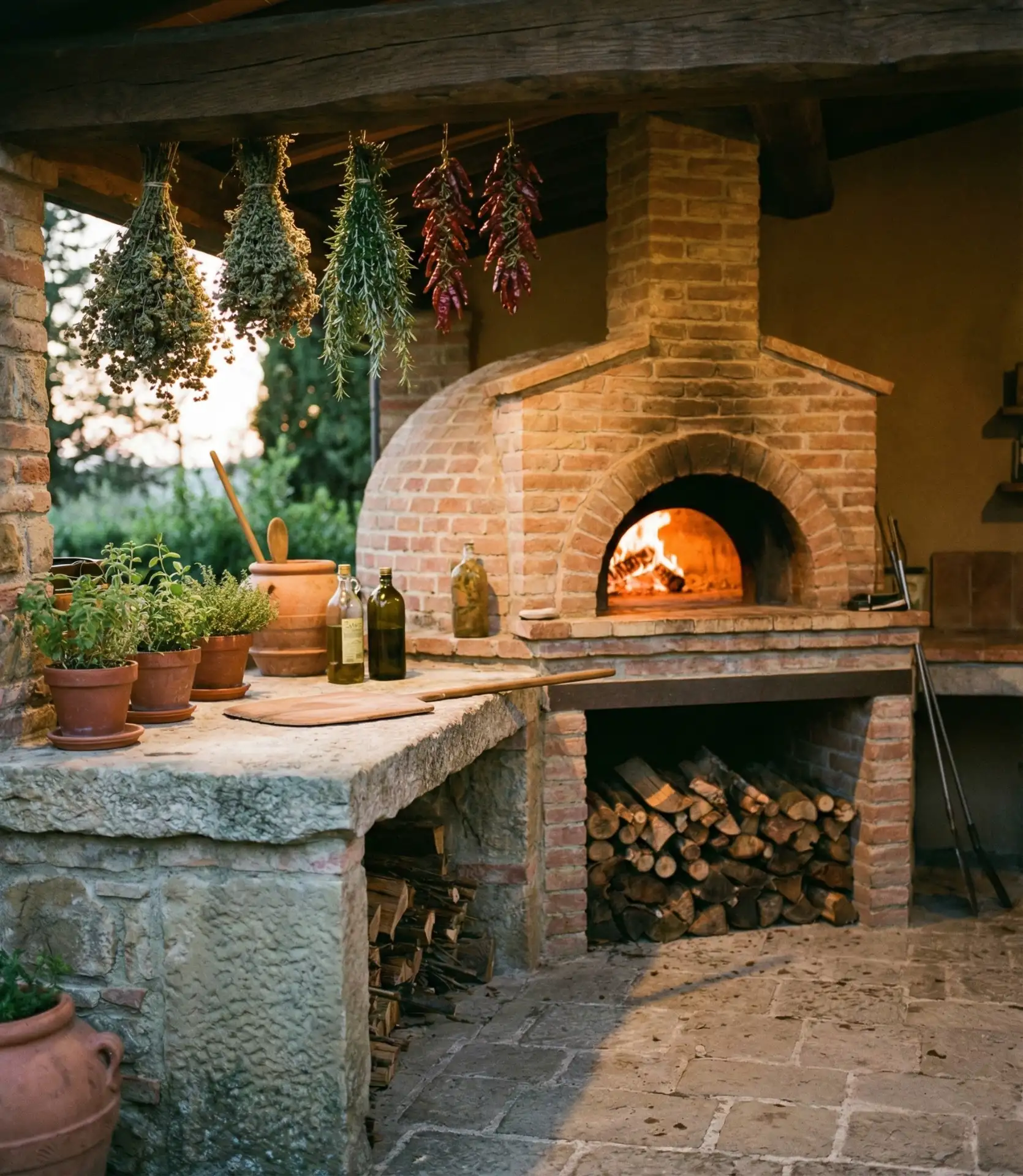
An outdoor kitchen centered around a wood-fired brick pizza oven brings authentic Italian cooking to your backyard and creates a focal point that is functional and sculptural. The domed brick oven is the showstopper, reaching 800+ degrees for Neapolitan-style pies in 90 seconds. This rustic, European-style design includes a covered prep work and dough area, wood storage, and a secondary grill for other ovenless dishes. The look of the Mediterranean-style brick oven pairs well with stucco, terracotta, and natural stone for an atmospheric old-world design. 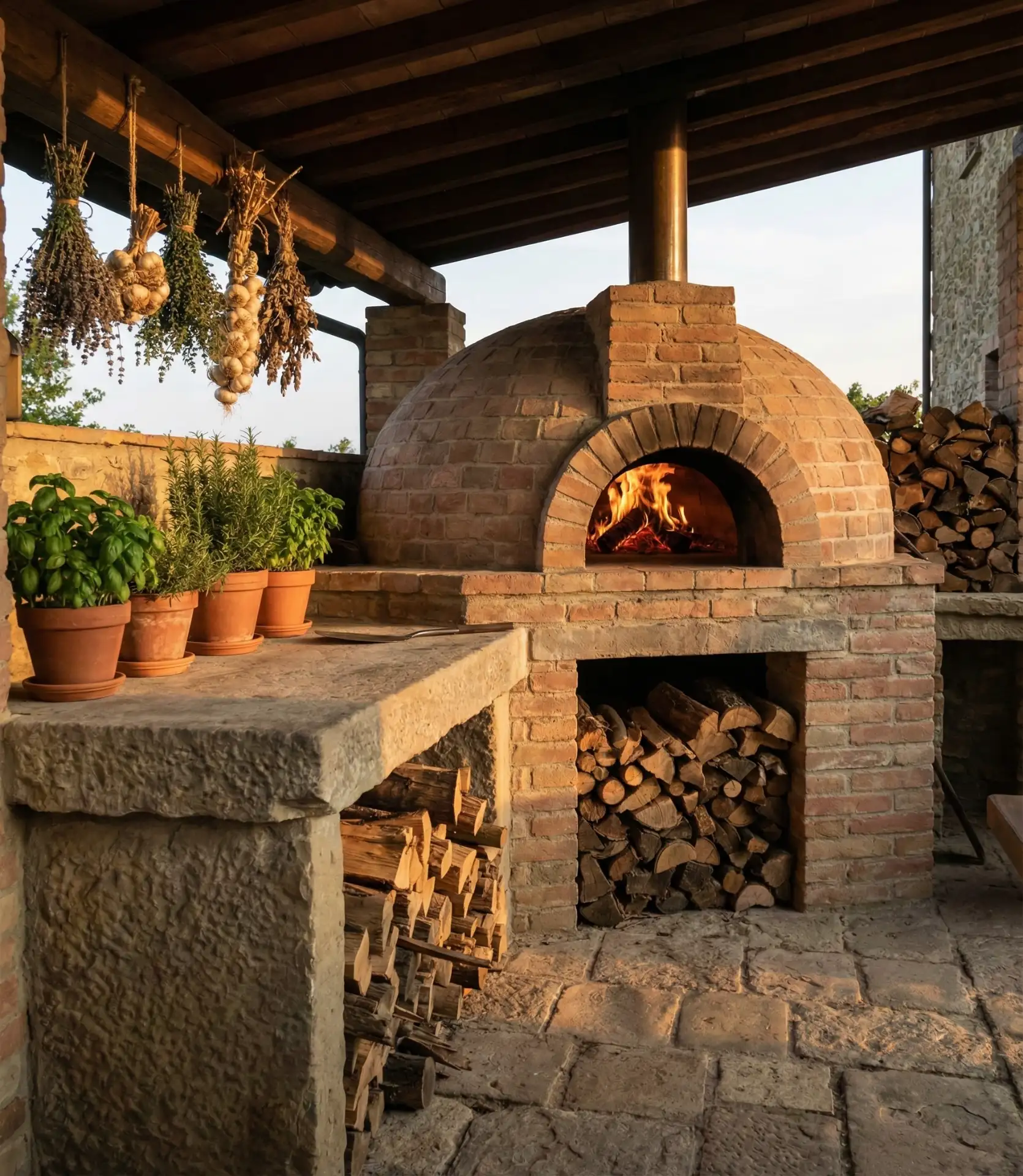
A neighbor who built a brick pizza oven 3 years ago says it’s their most used appliance, making everything from pizza to roasted vegetables to crusty bread. The oven effectively cooks multiple dishes simultaneously, maintaining its heat for hours even after the fire has extinguished. Professional builds of a traditional brick oven are pricier because of the specialized masonry skills required. The cost is $4,000 to $12,000 depending on size/complexity.
24. Coastal-Inspired Weatherproof Kitchen
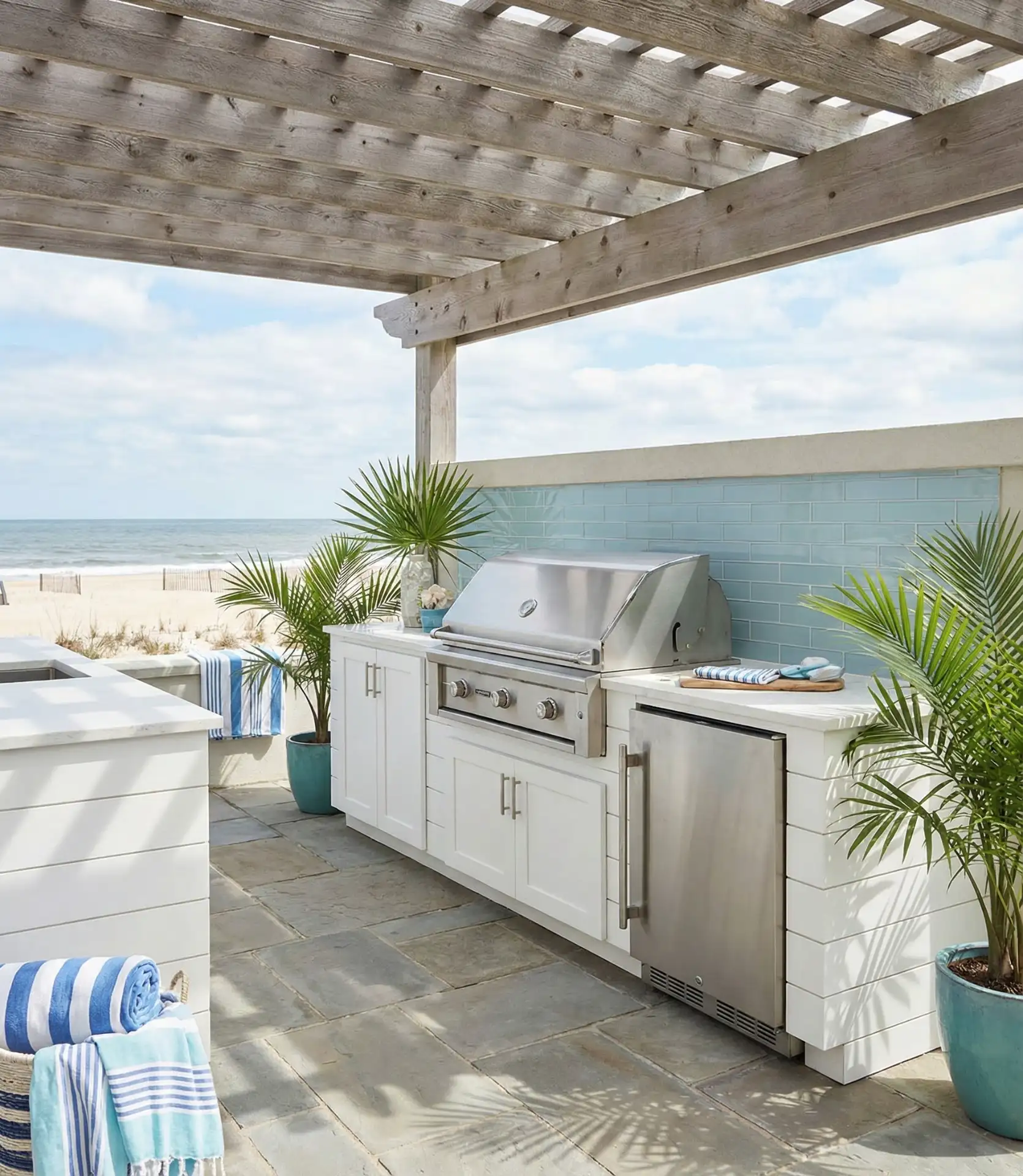
A coastal outdoor kitchen designed specifically for beachfront or waterfront properties must prioritize weather resistance while embracing the relaxed aesthetic of seaside living. This specialized design features marine-grade stainless steel appliances, synthetic wicker or teak cabinetry that withstands salt air, and a covered structure to protect against sudden coastal storms. The color palette typically draws from the natural environment—soft blues, sandy neutrals, weathered gray wood tones—creating a breezy, vacation-home atmosphere even in permanent residences. Modern coastal kitchens blend this casual aesthetic with high-performance materials that can handle the harsh corrosive effects of ocean air, something that destroys ordinary outdoor equipment within a few years. 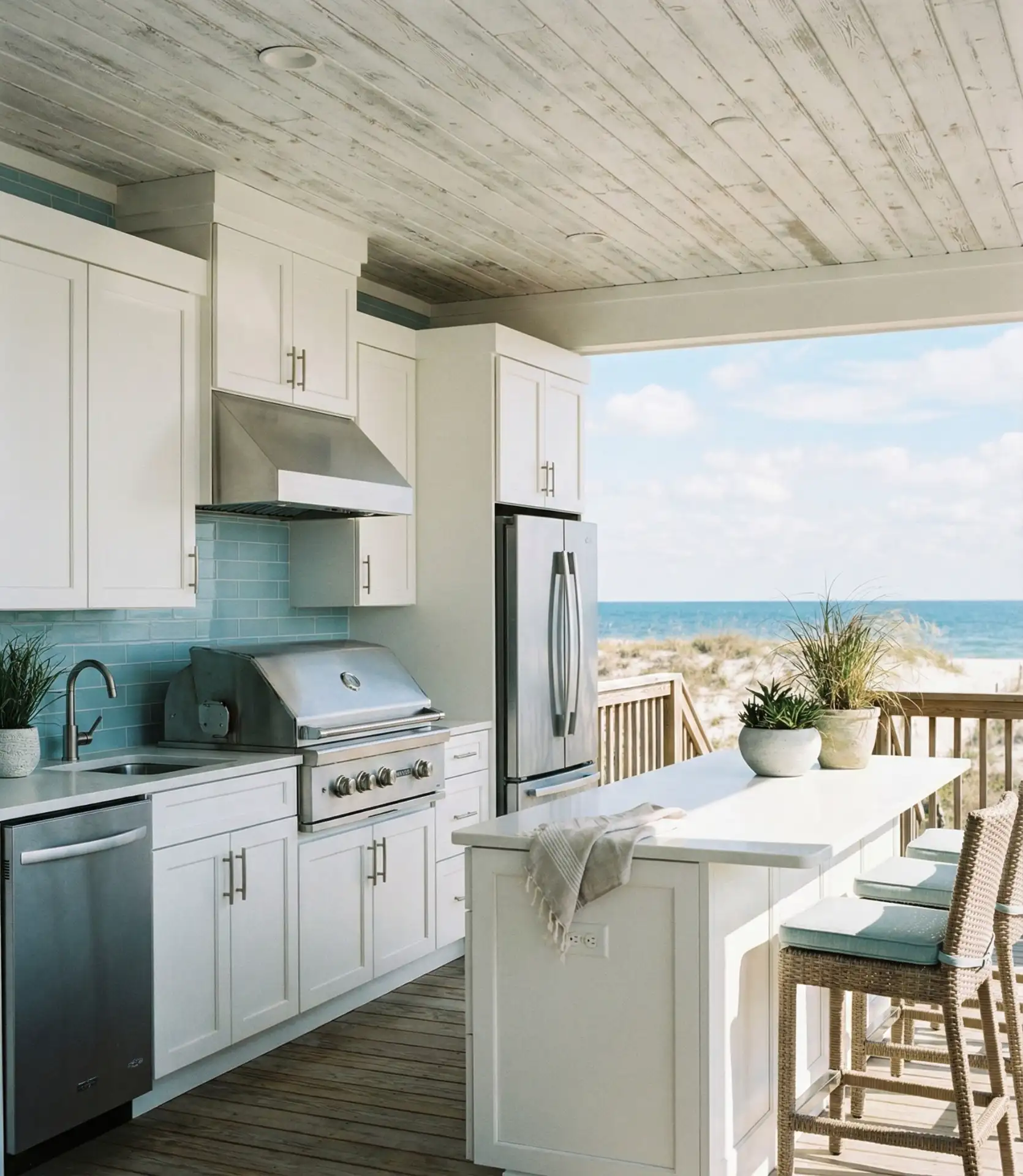
Coastal homeowners learn quickly that standard outdoor kitchen materials fail rapidly in salt air—regular stainless steel develops rust spots within months, and unsealed wood warps and degrades from constant humidity. Invest in 316 marine-grade stainless steel rather than the common 304 grade, and choose synthetic materials like HDPE or PVC for any cabinetry rather than wood, no matter how well sealed. The upfront cost runs 20-30% higher than inland installations, typically $10,000-$20,000 for a well-equipped coastal kitchen, but the longevity justifies the premium. Properties from the Carolinas through Florida and along the California coast require these special considerations, as does any home within a few miles of saltwater.
25. Vintage Repurposed Industrial Kitchen
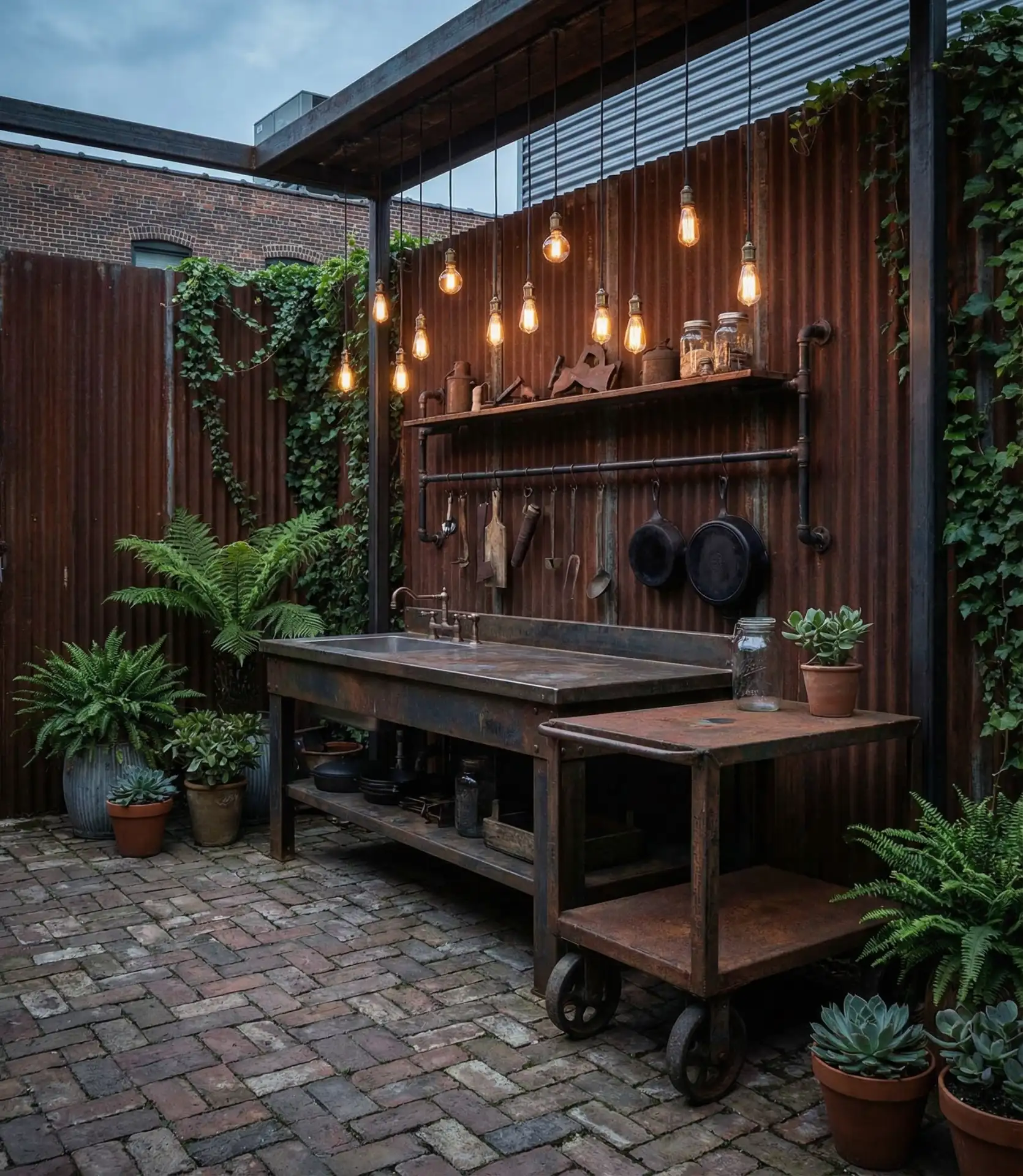
An outdoor kitchen built from salvaged industrial elements—old factory carts, reclaimed metal panels, vintage hardware, and repurposed commercial equipment—creates a unique rustic industrial aesthetic that’s impossible to replicate with new materials. This DIY-friendly style celebrates the patina and history of used items, transforming retired industrial pieces into functional cooking components. A metal workbench becomes a prep table, a salvaged door serves as a cabinet front, and vintage industrial lighting provides illumination—each element tells a story while serving a practical purpose. The raw, honest aesthetic appeals to creative homeowners who view their outdoor space as an evolving art project rather than a finished showpiece, particularly in urban lofts, converted warehouses, and properties with existing industrial architecture. 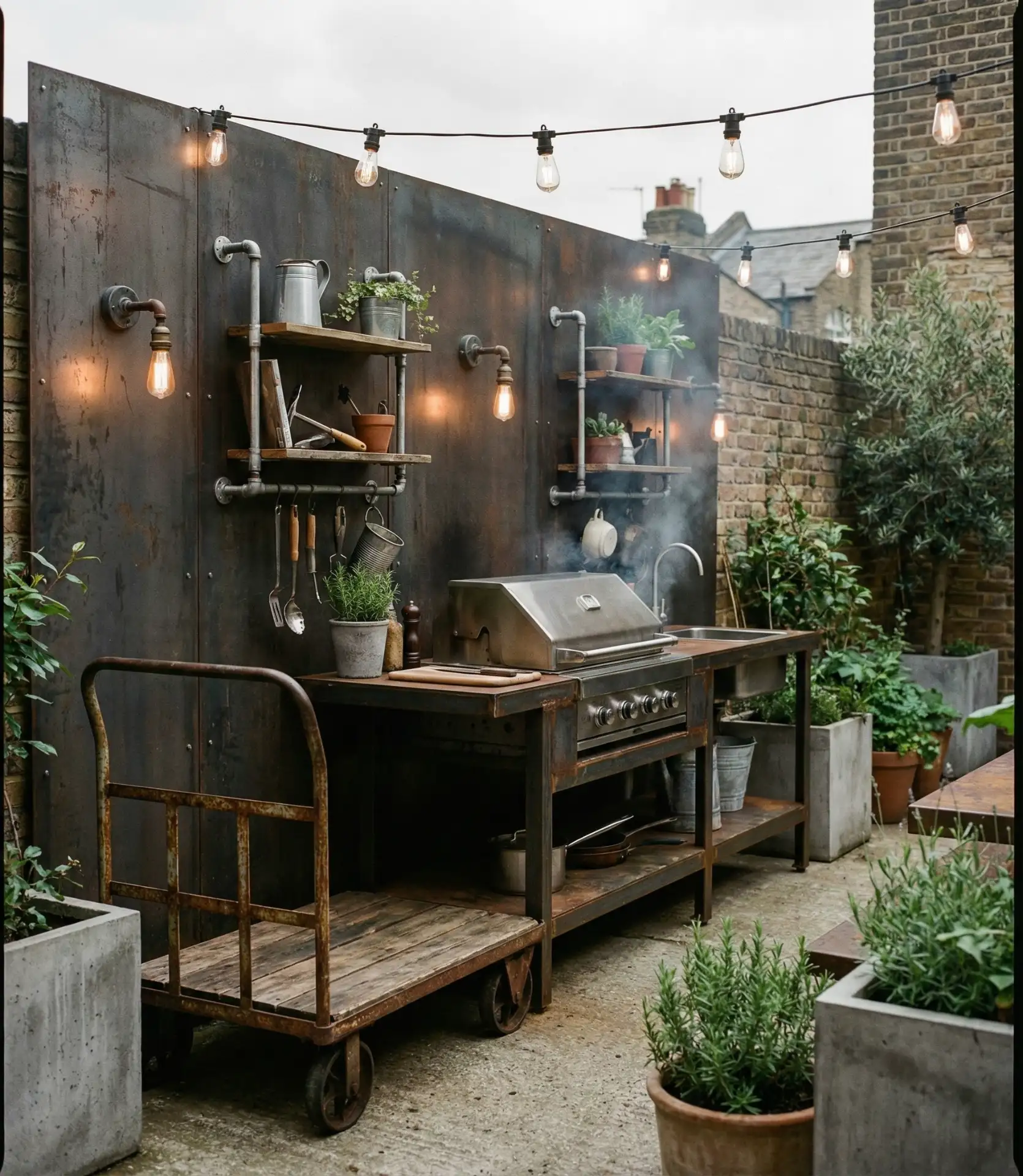
The hunt for materials becomes part of the creative process—scouring architectural salvage yards, auctions, and online marketplaces for pieces with the right character and scale. This approach typically costs less than buying new, with most repurposed kitchens coming together for $1,500-$4,000 depending on appliance choices, though finding the perfect vintage pieces requires patience and persistence. Common mistakes include choosing items based purely on aesthetics without considering functionality or failing to properly weatherproof materials that weren’t originally meant for outdoor use. Apply rust-inhibiting treatments to metal, seal wood thoroughly, and ensure all electrical components are properly rated for outdoor exposure to create a kitchen that’s as durable as it is distinctive.
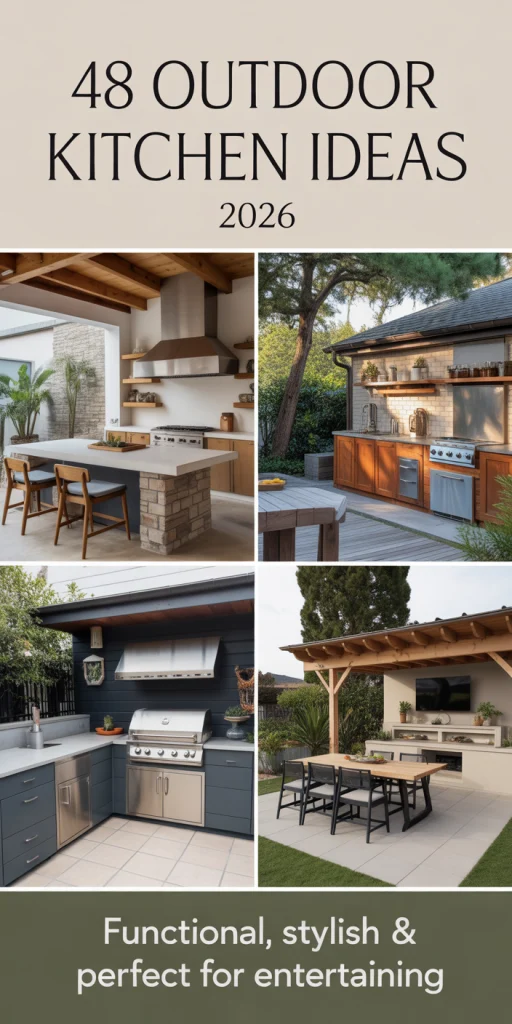
From budget-friendly cinder block stations to sophisticated multi-level terraced designs, these outdoor kitchen ideas demonstrate that there’s no single “right” way to create your ideal cooking space. Whether you’re drawn to the rustic charm of reclaimed wood and brick, the sleek minimalism of concrete and stainless steel, or the practical flexibility of modular systems, the best outdoor kitchen is one that aligns with your actual cooking habits, available space, and budget realities. The homeowners who get the most enjoyment from their outdoor kitchens are those who resist the temptation to overbuild and instead focus on creating functional spaces they’ll genuinely use throughout the season. What’s your backyard vision—are you leaning toward a simple weekend DIY project or planning something more substantial? Share your outdoor kitchen dreams, challenges, or questions in the comments below, and let’s help each other create spaces that bring more cooking, gathering, and living outdoors.