48 Outdoor Gazebo Ideas 2026: Modern, DIY and Cozy Backyard Designs for Every Budget

As we move into 2026, outdoor living spaces continue to dominate American home improvement trends, with gazebos becoming the centerpiece of backyard transformations. Pinterest searches for gazebo inspiration have surged as homeowners seek to create intimate gathering spots that blend style with function. Whether you’re drawn to minimalist modern designs or cozy traditional structures, this guide presents fresh gazebo concepts that reflect how Americans are reimagining their outdoor rooms. Discover ideas that suit every space, style, and lifestyle, ranging from budget-friendly DIY builds to luxurious covered retreats.
1. Minimalist Steel Frame Gazebo
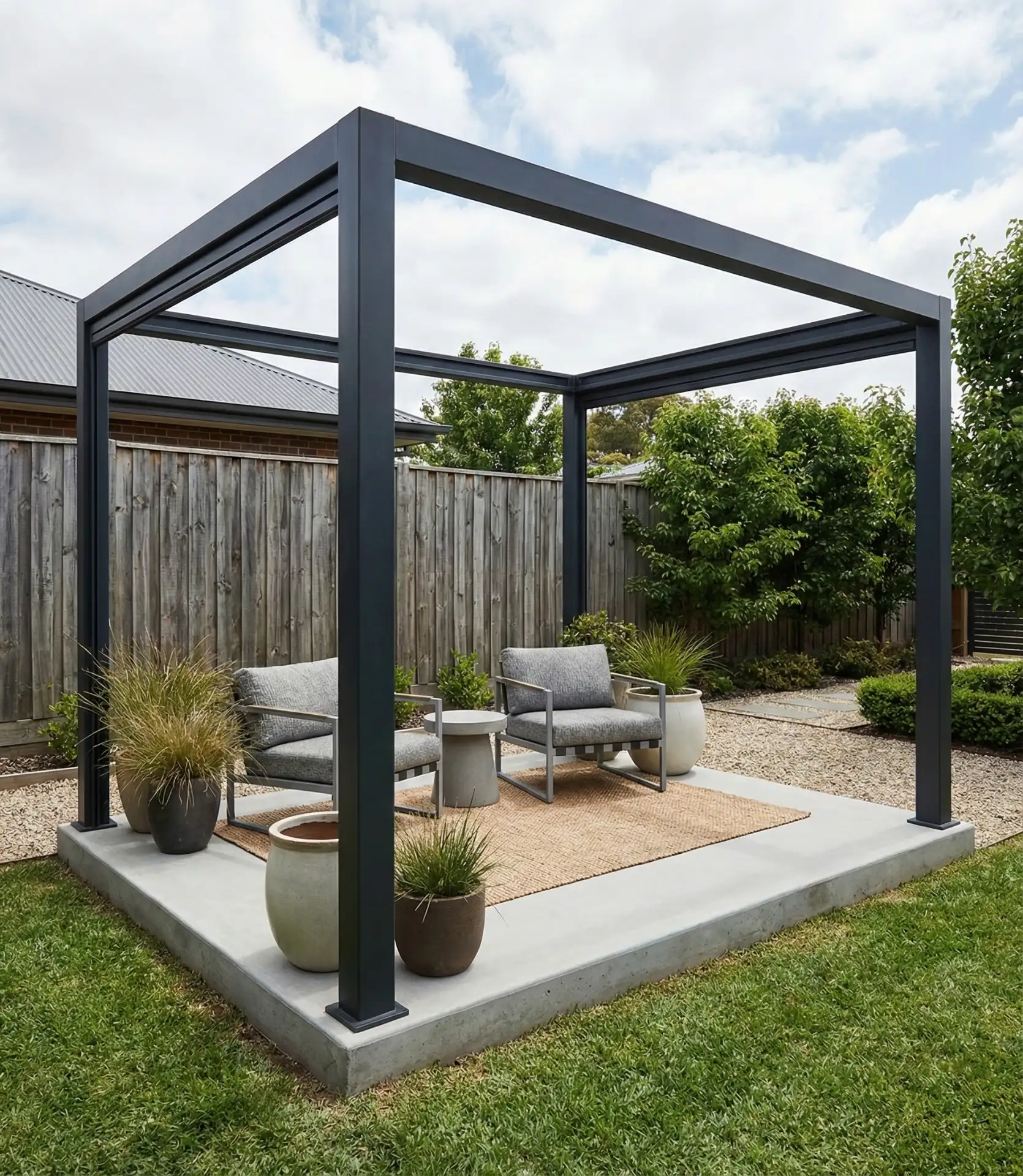
Clean lines define this modern gazebo design featuring powder-coated black steel beams and an open-air canopy. Perfect for modern backyard aesthetics, this structure creates visual impact without overwhelming small backyard spaces. The geometric framework allows natural light to filter through while providing just enough shade for afternoon gatherings. Pair it with concrete pavers and low-maintenance plantings for a truly contemporary look. 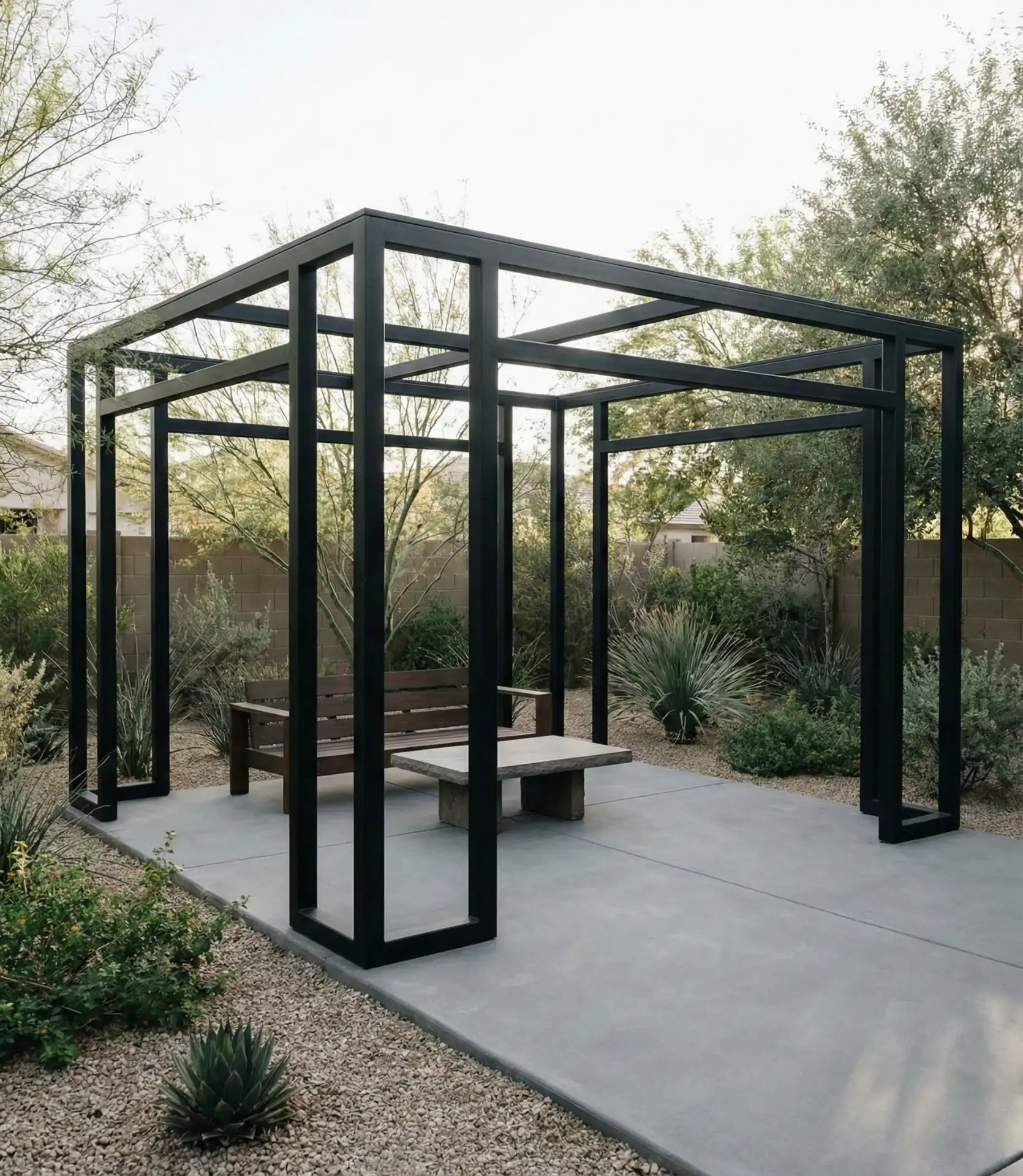
This design works best in urban and suburban yards where neighboring structures already establish a modern vocabulary. The open framework means you’ll want to position it strategically—consider afternoon sun angles and prevailing winds. Steel gazebos typically start around $2,500 for prefab kits, though custom-welded versions can reach $8,000 depending on size and finish quality.
2. Draped Fabric Bohemian Retreat
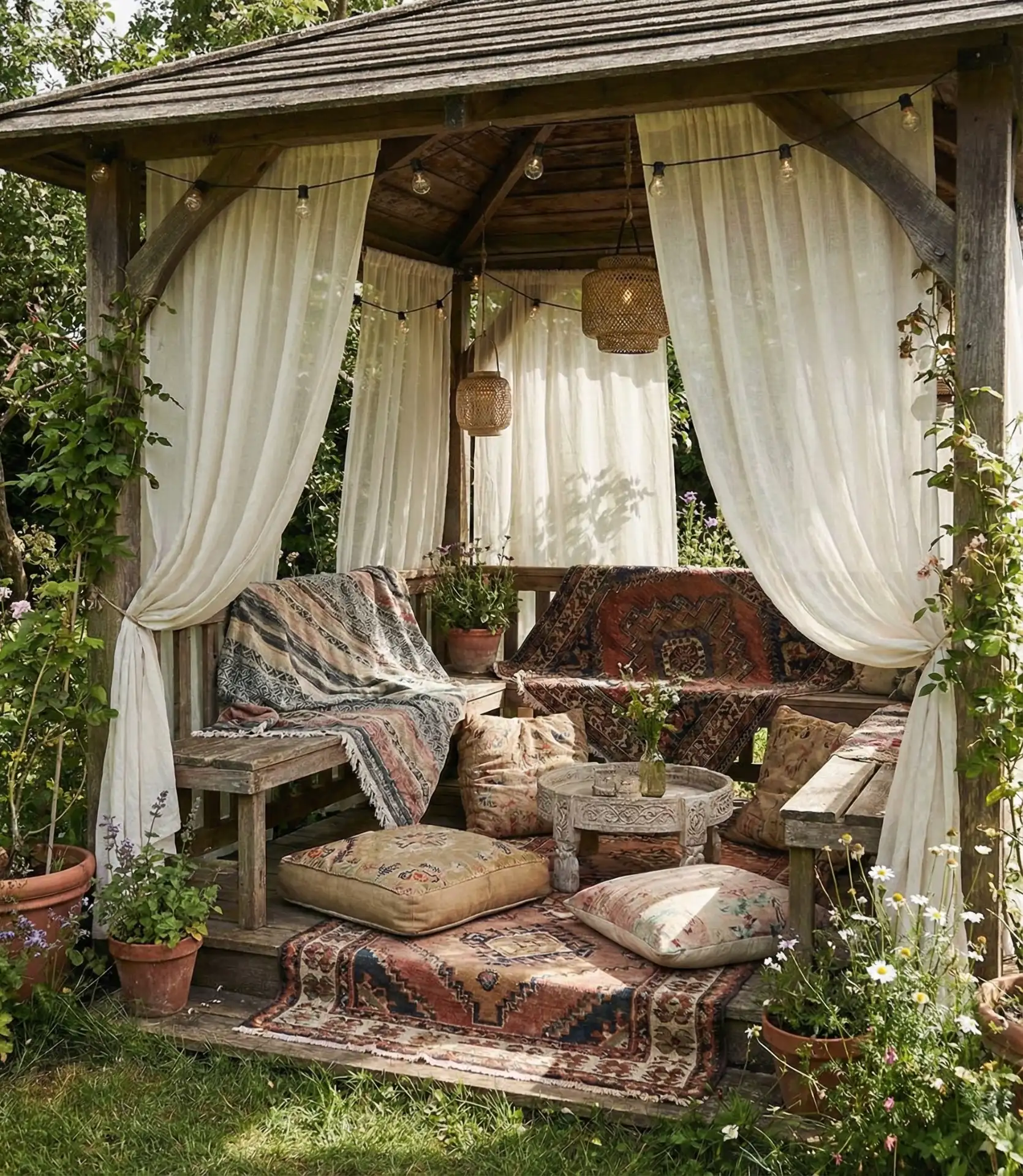
Transform a basic gazebo structure into a dreamy escape with flowing white curtains and layered textiles. This cozy approach turns any covered frame into an intimate sanctuary perfect for decor enthusiasts who love texture and movement. Sheer fabrics billow gently in the breeze while providing privacy and filtering harsh sunlight. Add floor cushions, vintage rugs, and string lights to complete the bohemian atmosphere. 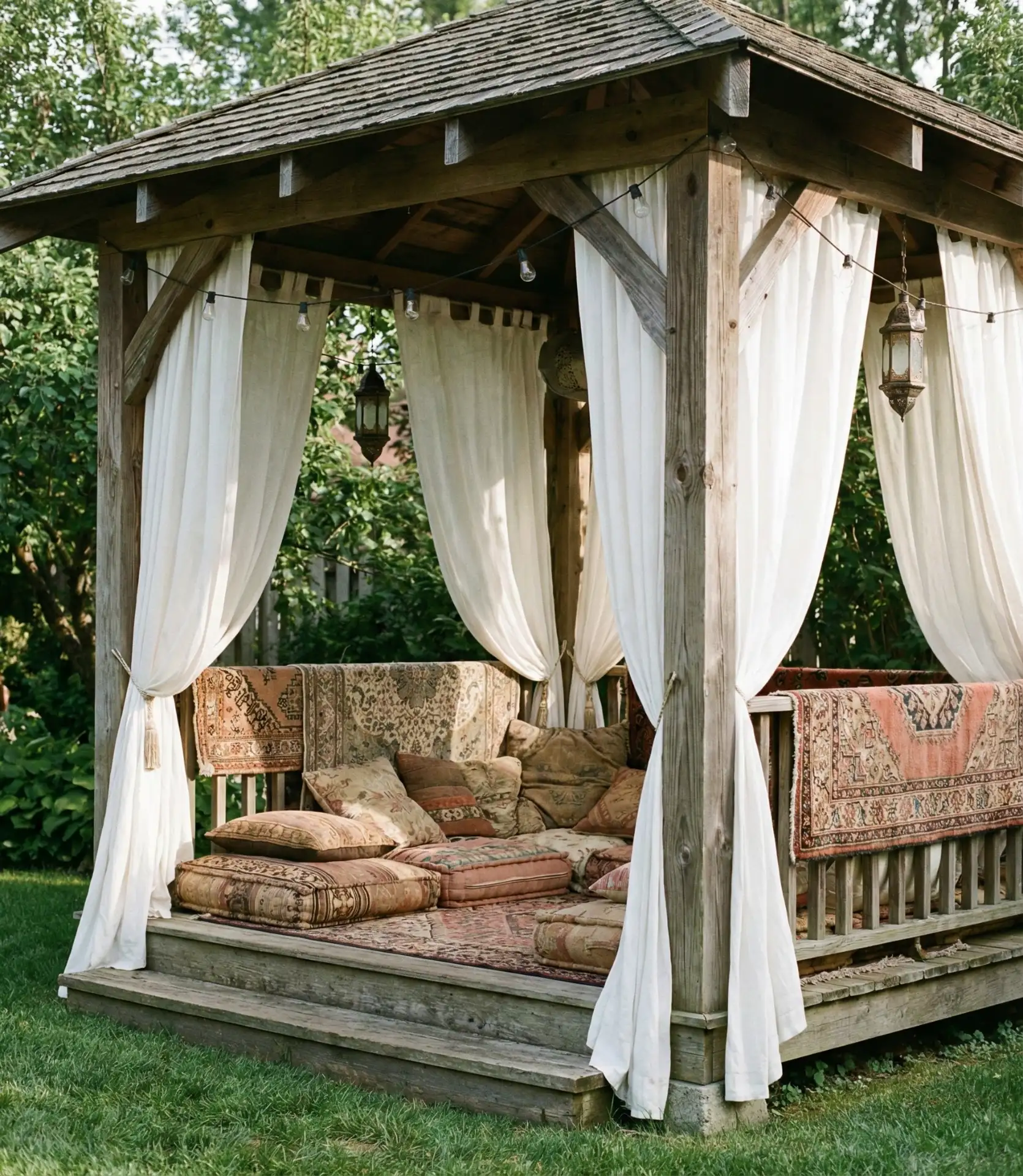
A friend in Charleston uses outdoor-grade canvas panels she swaps seasonally—linen whites for summer and warmer ochre tones for fall. This flexibility keeps the space feeling fresh without requiring permanent changes to the structure itself.
3. Rustic Cedar Pergola-Gazebo Hybrid
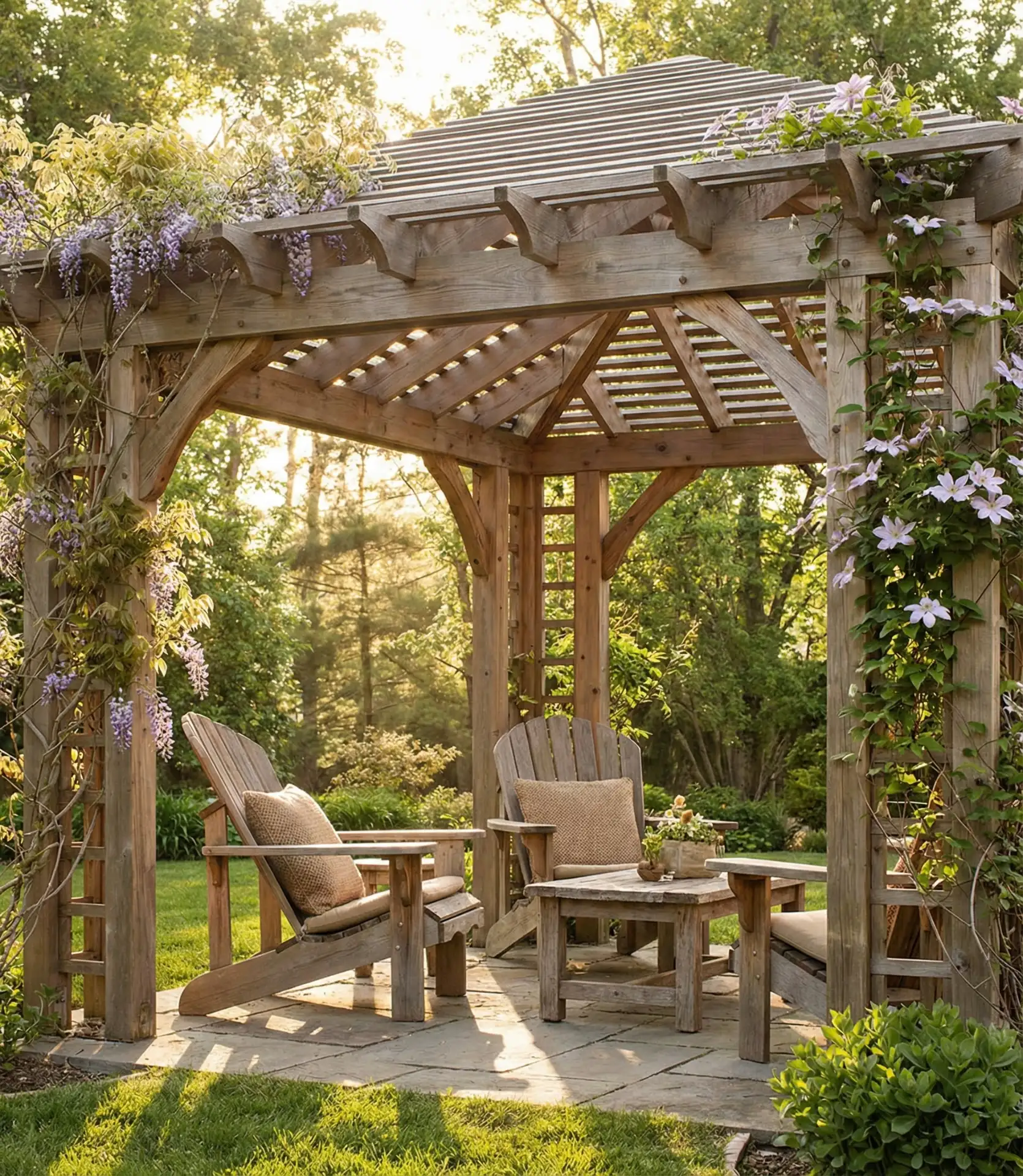
Blending the open-beam charm of a pergola with the shelter of a gazebo creates this versatile backyard DIY wood project favorite. Natural cedar weathers beautifully over time, developing a silver-gray patina that complements beautiful backyard garden settings. The partial roof coverage offers filtered shade while maintaining an airy feel, ideal for decor seating areas where you want protection without full enclosure. Climbing vines and hanging plants enhance the organic aesthetic. 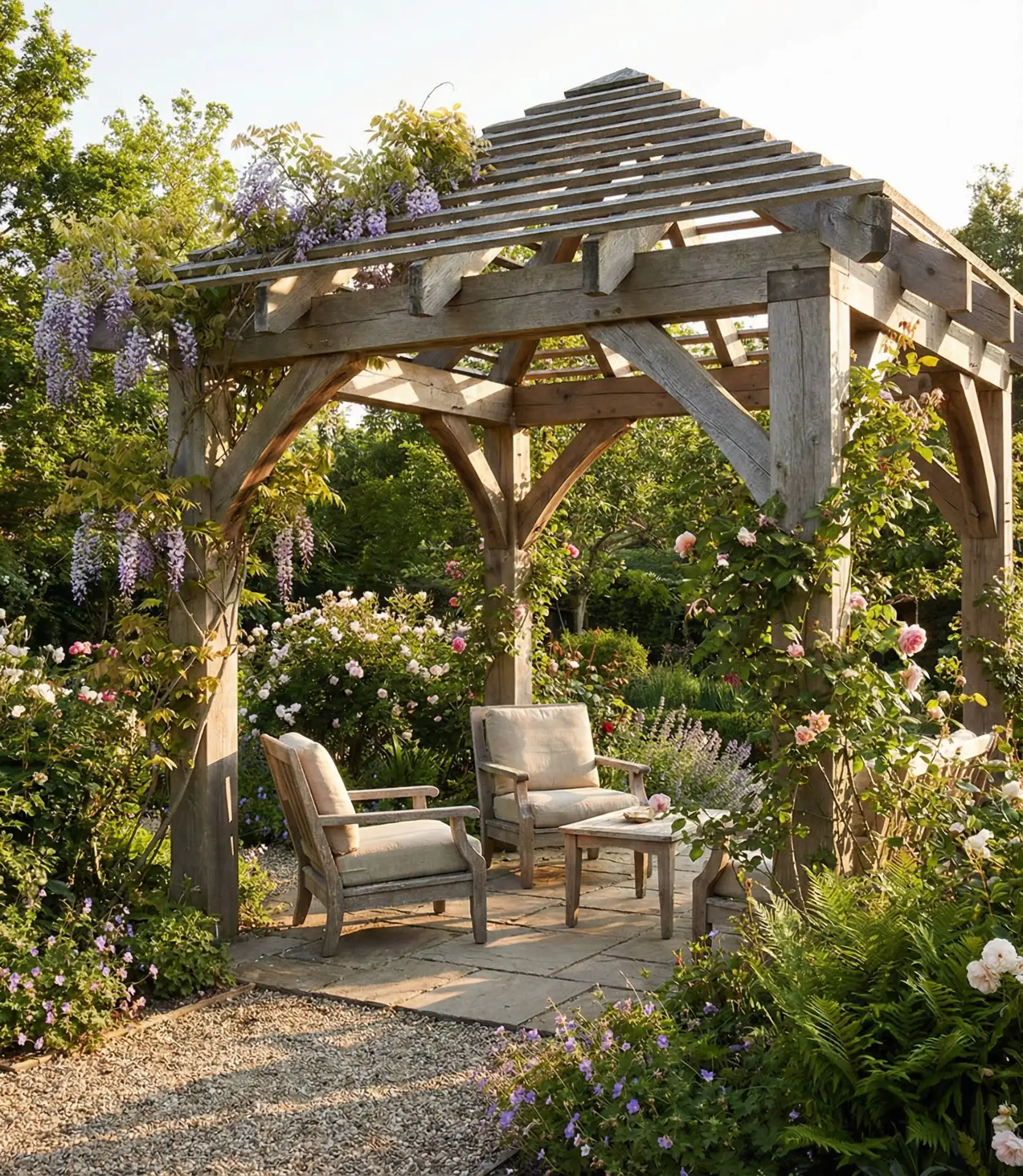
In the Pacific Northwest, where moisture is constant, homeowners often treat nearly all lightweight southern yellow pine with clear sealant every two years. In drier climates like Arizona or Nevada, the wood can naturally weather without much maintenance besides an annual inspection for split wood or loose fasteners.
4. Screened Garden Room
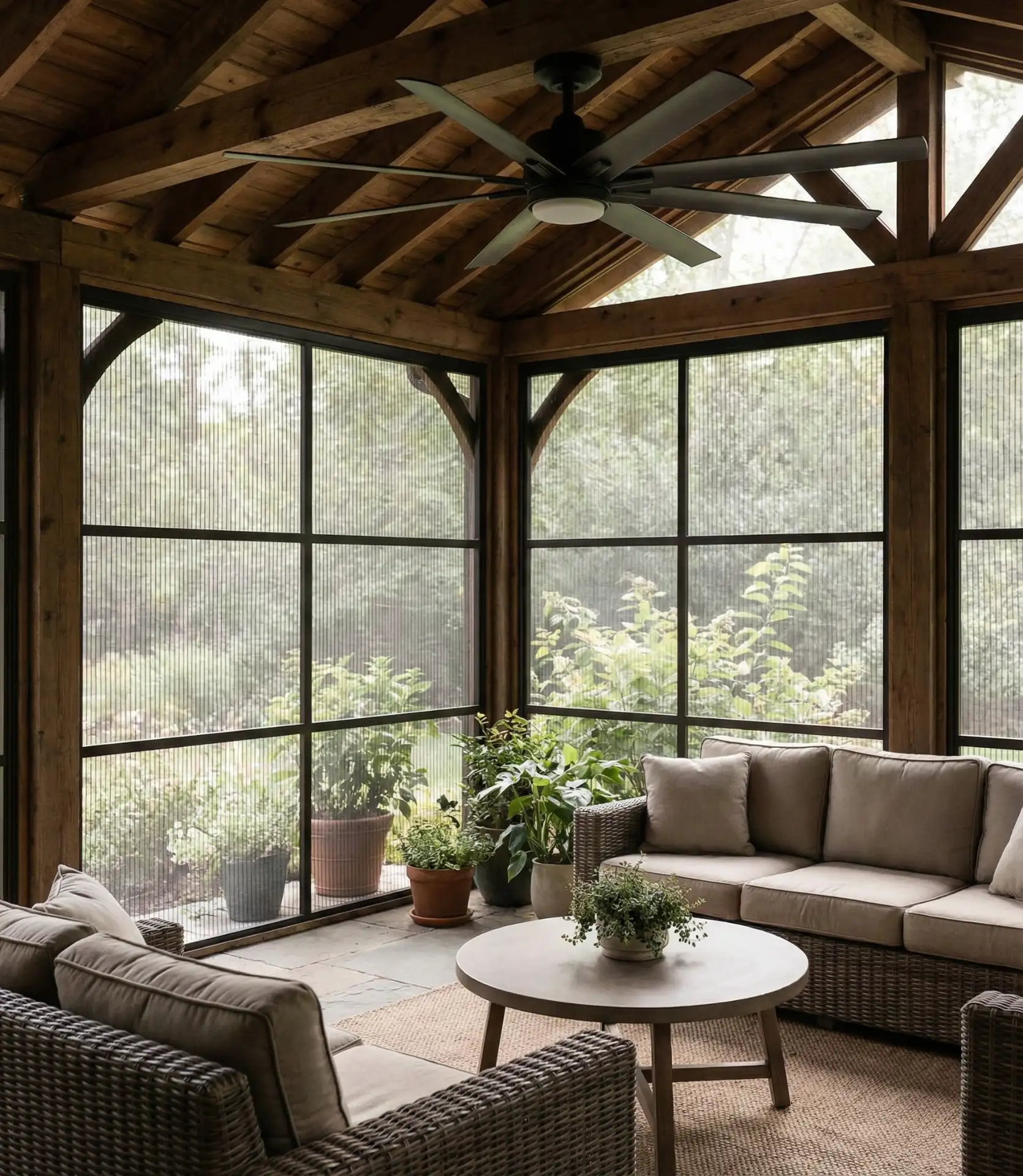
In regions where mosquitoes are prevalent, floor-to-ceiling screening can turn an ordinary gazebo into an outdoor living space with protection. This practical design retains the spacious intimacy of fully enclosed spaces while offering panoramic views of the garden and cross ventilation. The plant-rich landscapes of the surrounding backyard are visually highlighted by the nearly invisible dark bronze or black screening, which draws the eye. For air movement on muggy summer nights, a ceiling fan is a welcome addition. 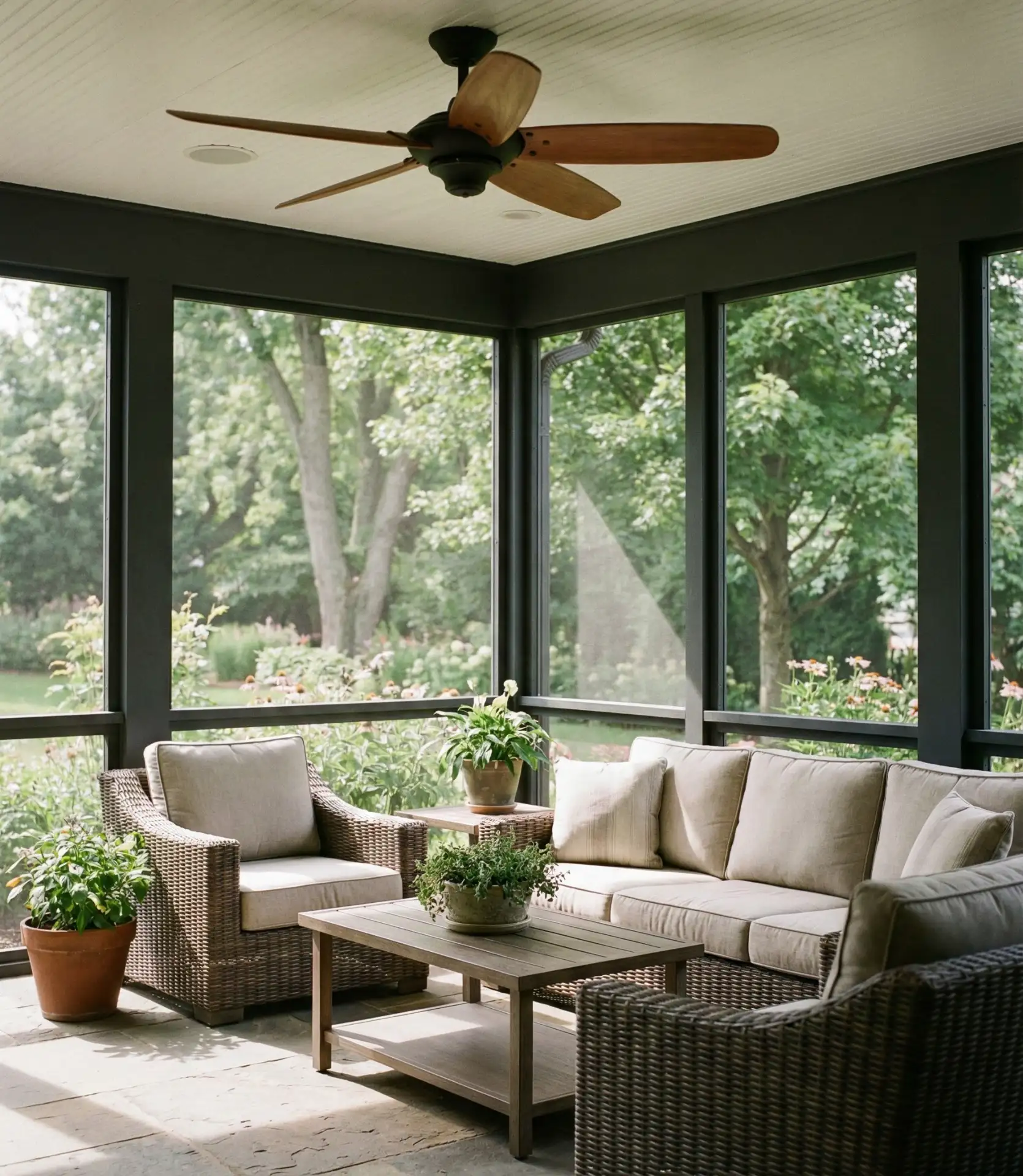
With screened gazebos, the greatest error is selecting too fine a mesh, which greatly restricts airflow. For adequate bug protection with noticeably better ventilation—important for those sticky August afternoons when outdoor spaces can feel suffocating—choose 18×16 fiberglass screening rather than the superfine 20×20.
5. Multi-Level Deck Integration
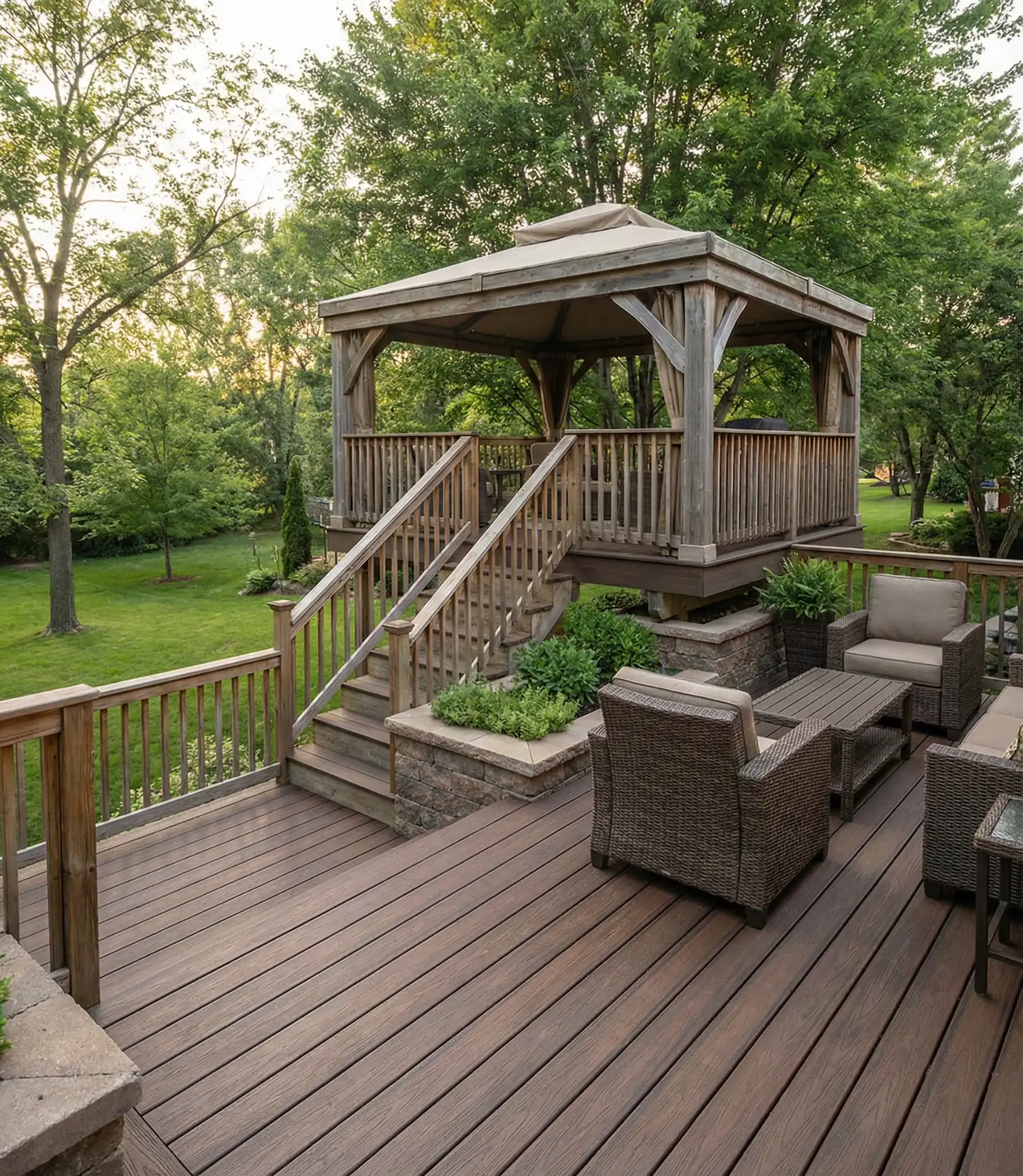
Position your gazebo as the crowning feature of a tiered decor deck system, which differentiates outdoor zones. The gazebo fits the uppermost tier, providing a focal point viewable from the house and the backyards below. This added height offers better sight lines, improved drainage, and more defined areas for dining, lounging, and open lawn. Integrated planter boxes and cascading stairs provide a visual connection between the different levels. 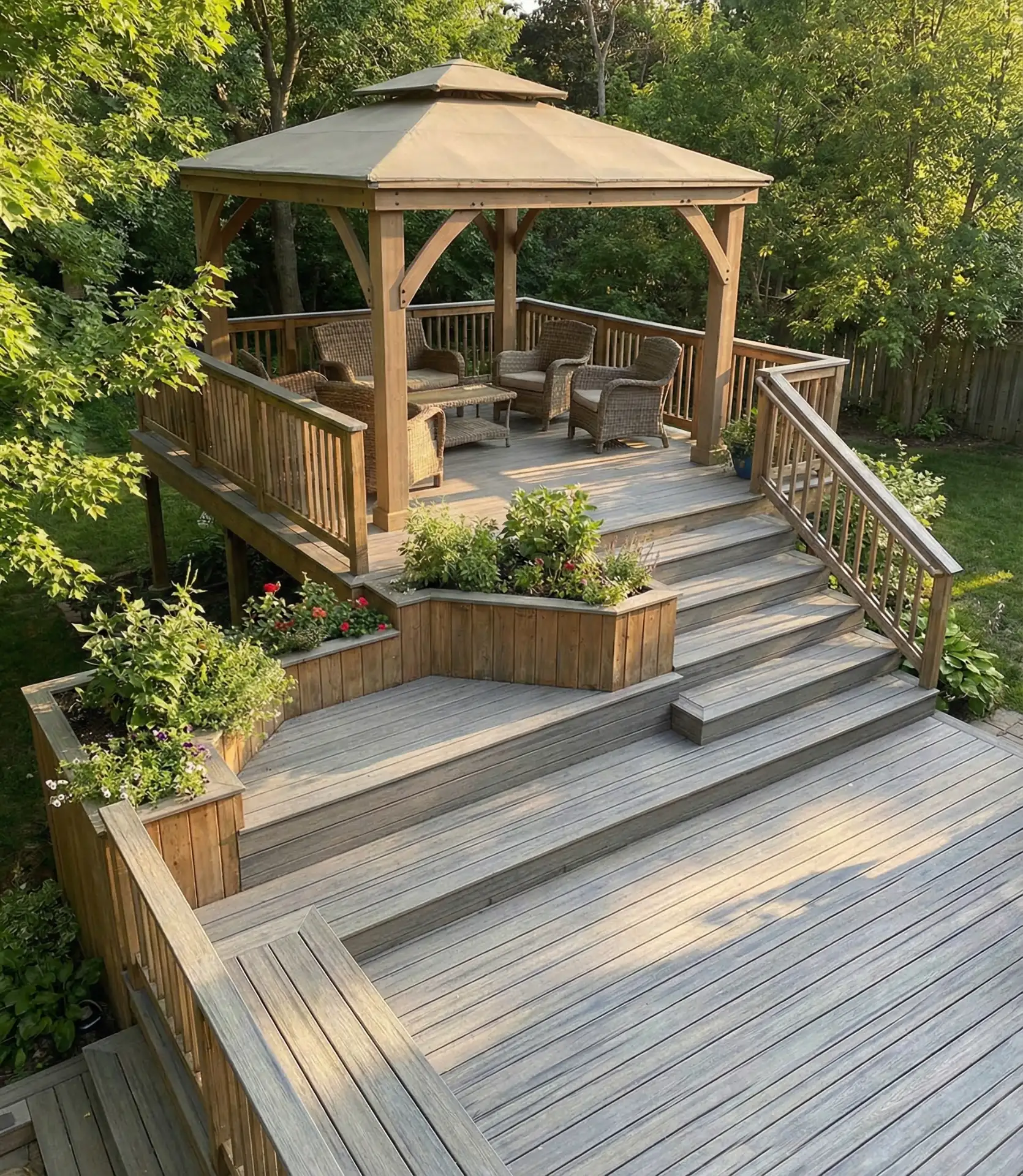
This design approach works especially well for sloped properties such as suburban Atlanta or hillside homes in Colorado. The elevation offers optimal water runoff management and creates a resort-like layered landscape, which helps modest yards feel more expansive and more carefully designed.
6. Vine-Covered Living Canopy
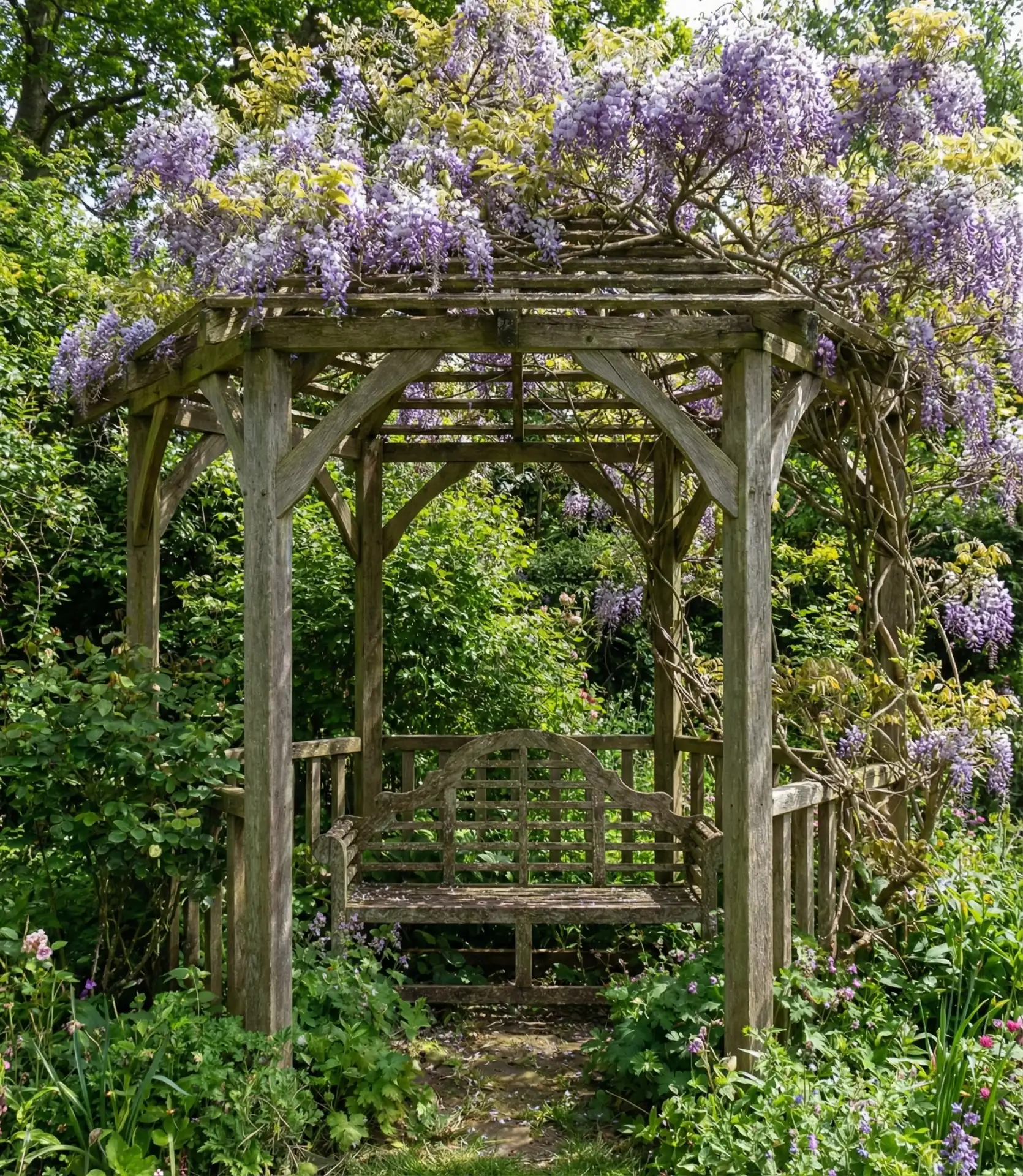
Train wisteria, clematis, or grape vines across a simple frame to create a beautiful backyard garden feature that evolves with the seasons. This living gazebo offers simple charm while providing increasingly dense shade as vines mature. Spring blooms deliver fragrance and color, summer foliage creates cool shelter, and autumn leaves provide a final show before winter reveals the elegant framework. The organic approach suits backyard DIY enthusiasts willing to nurture the structure over time. 
Homeowners on a budget appreciate this method, too: A basic pressure-treated frame costs about $800-1,200 in materials, and there is an annual cost of $30-60 for each of the perennial vine plants. After three seasons, you will have coverage that would cost thousands with traditional roofing materials. Plus, the living canopy cools the space with transpiration.
7. Fire Feature Focal Point
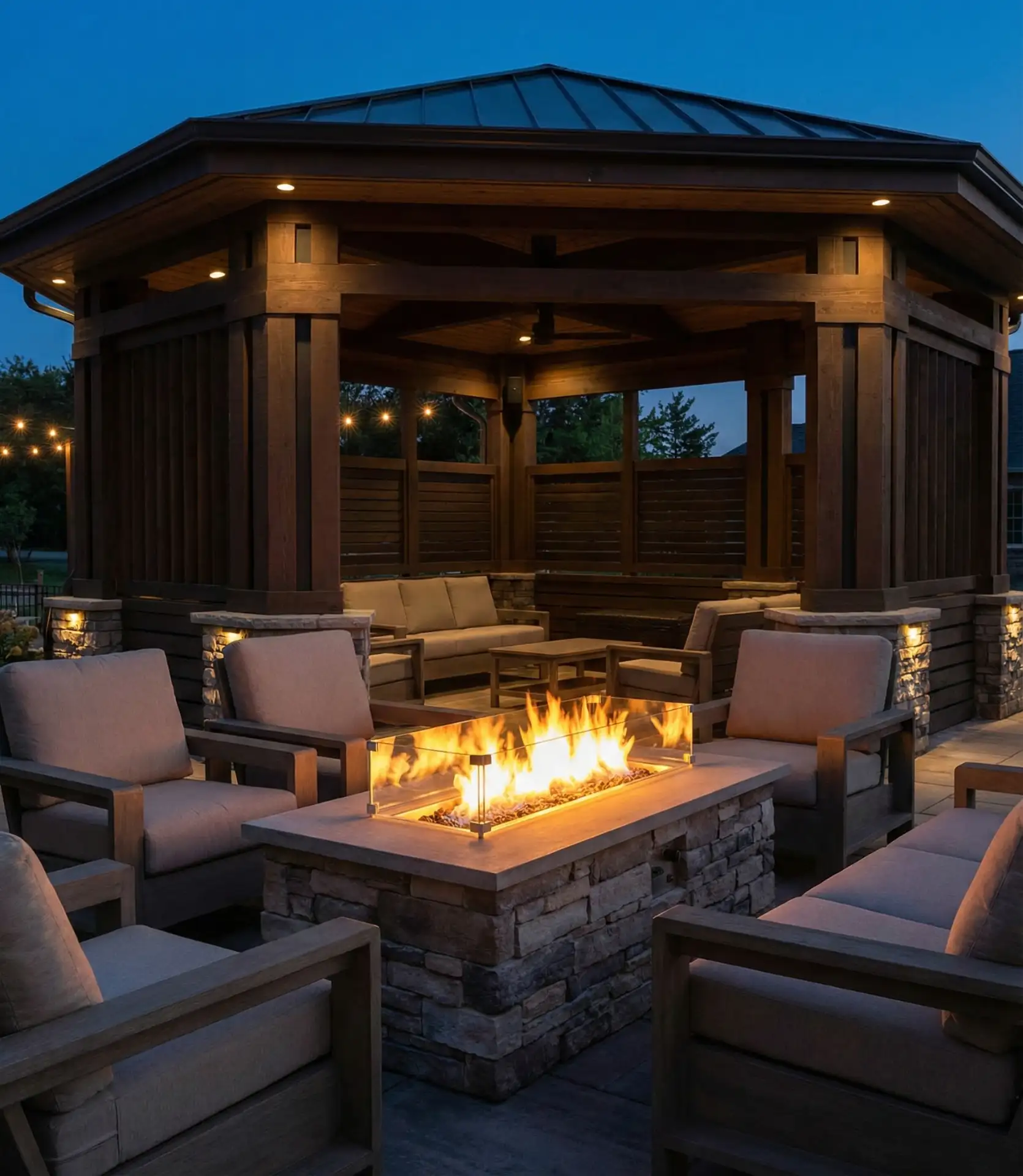
Your gazebo design should include a built-in fireplace or a contemporary fire table that allows you to use your gazebo during cooler months. This arrangement provides a natural gathering spot, allowing everyone to sit around the fire. A stone or brick surround will give a weighty look to the feature and help it retain and radiate heat, even after the fire goes out. Place the surround in a horseshoe shape to encourage conversation and keep fire sight lines clear. 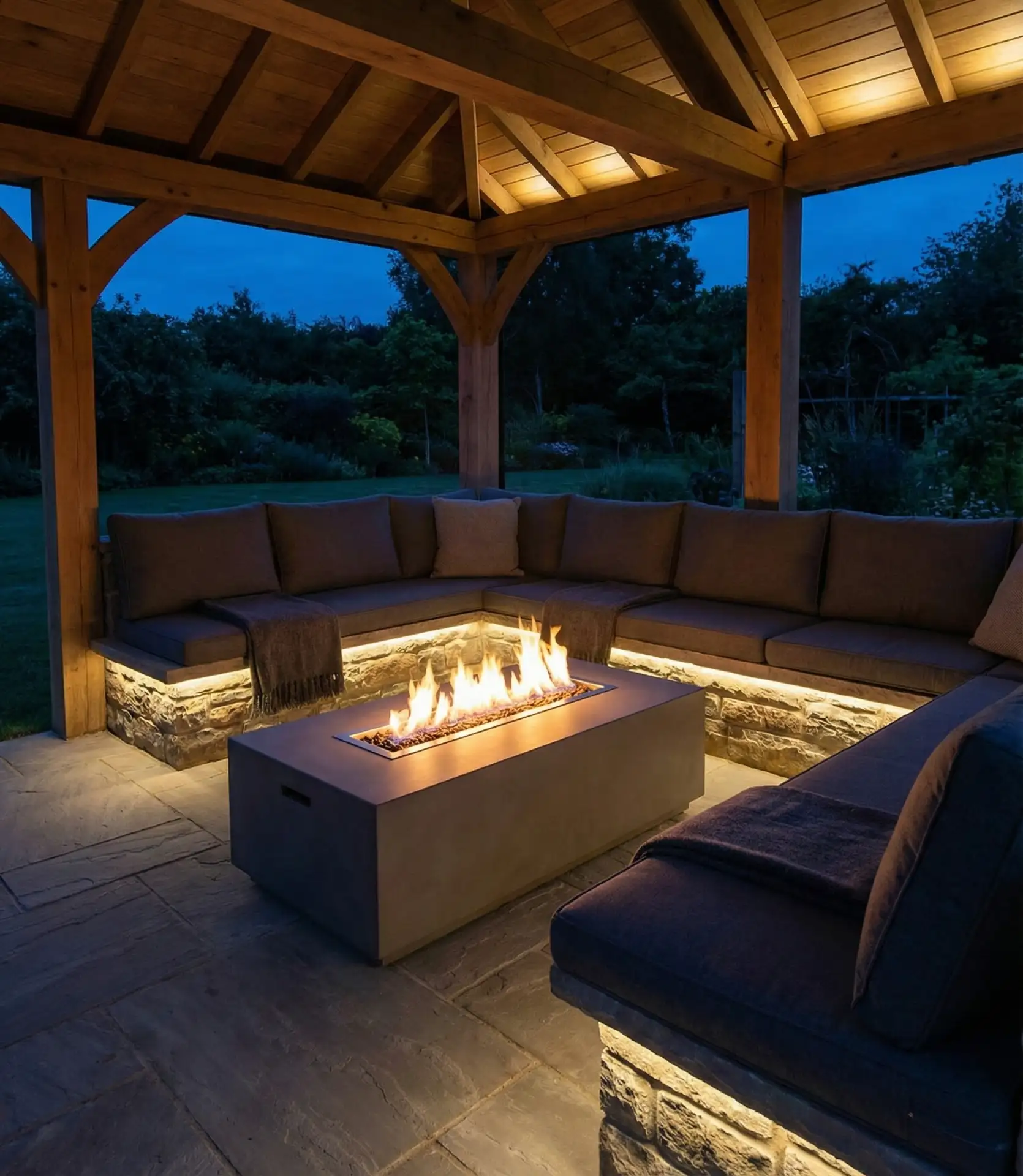
Prior to installation, check your local building codes, as fire features need to be a certain distance from any permanent roof structures. There is typically a required professional installation for propane or natural gas systems, but portable fire tables offer a wonderful solution for renters and are a low-commitment, flexible way to test around a fire before adding permanent features.
8. All-Season Enclosed Room
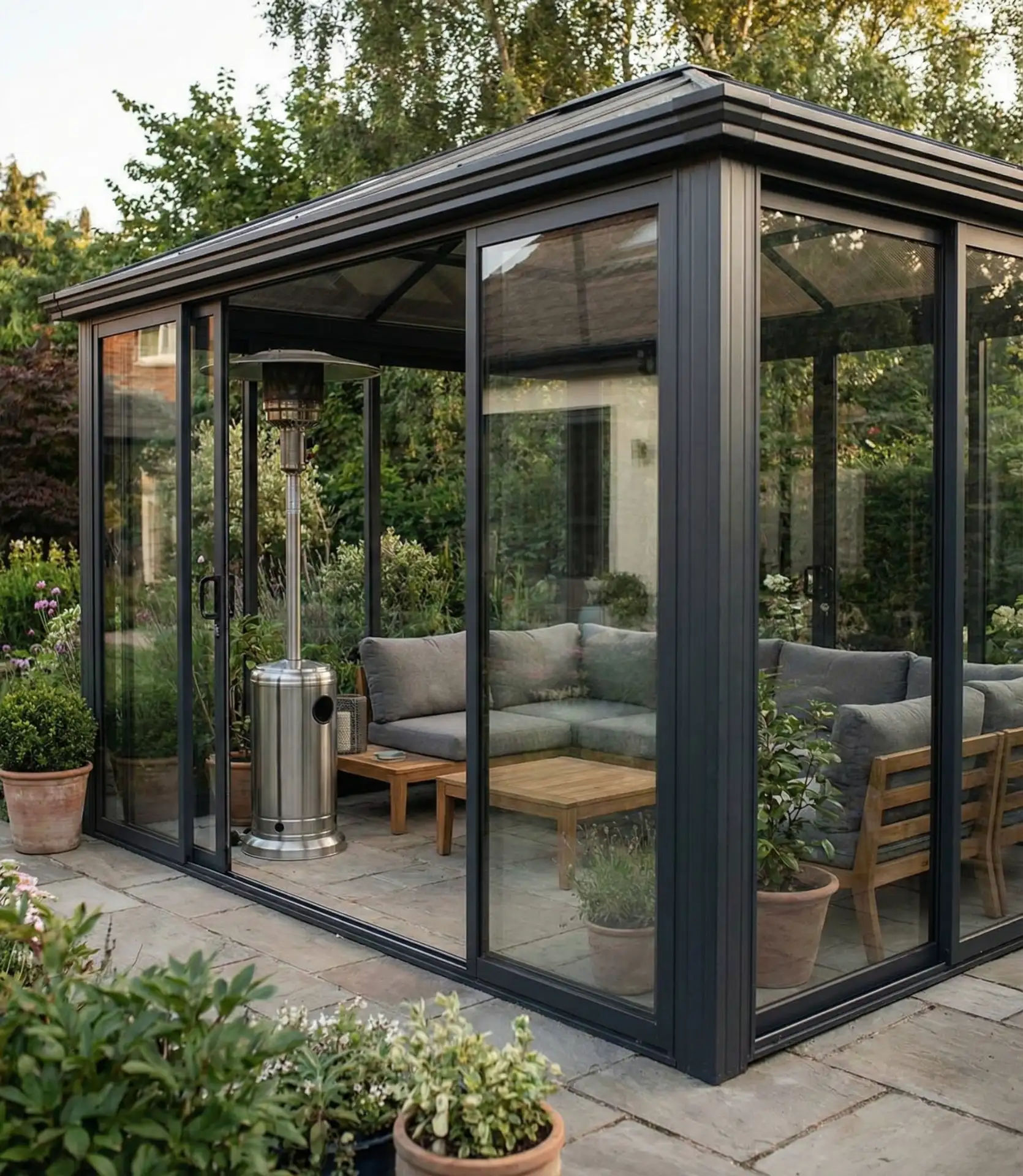
Install retractable glass panels or windows that transform your covered gazebo from an open-air pavilion to a weatherproof sanctuary. This adaptable design addresses the reality of backyards across varied American climates where conditions shift dramatically between seasons. Sliding glass doors provide unobstructed views during pleasant weather, then seal out wind, rain, and cold when needed. Add a compact outdoor heater and ceiling fan for true four-season functionality. 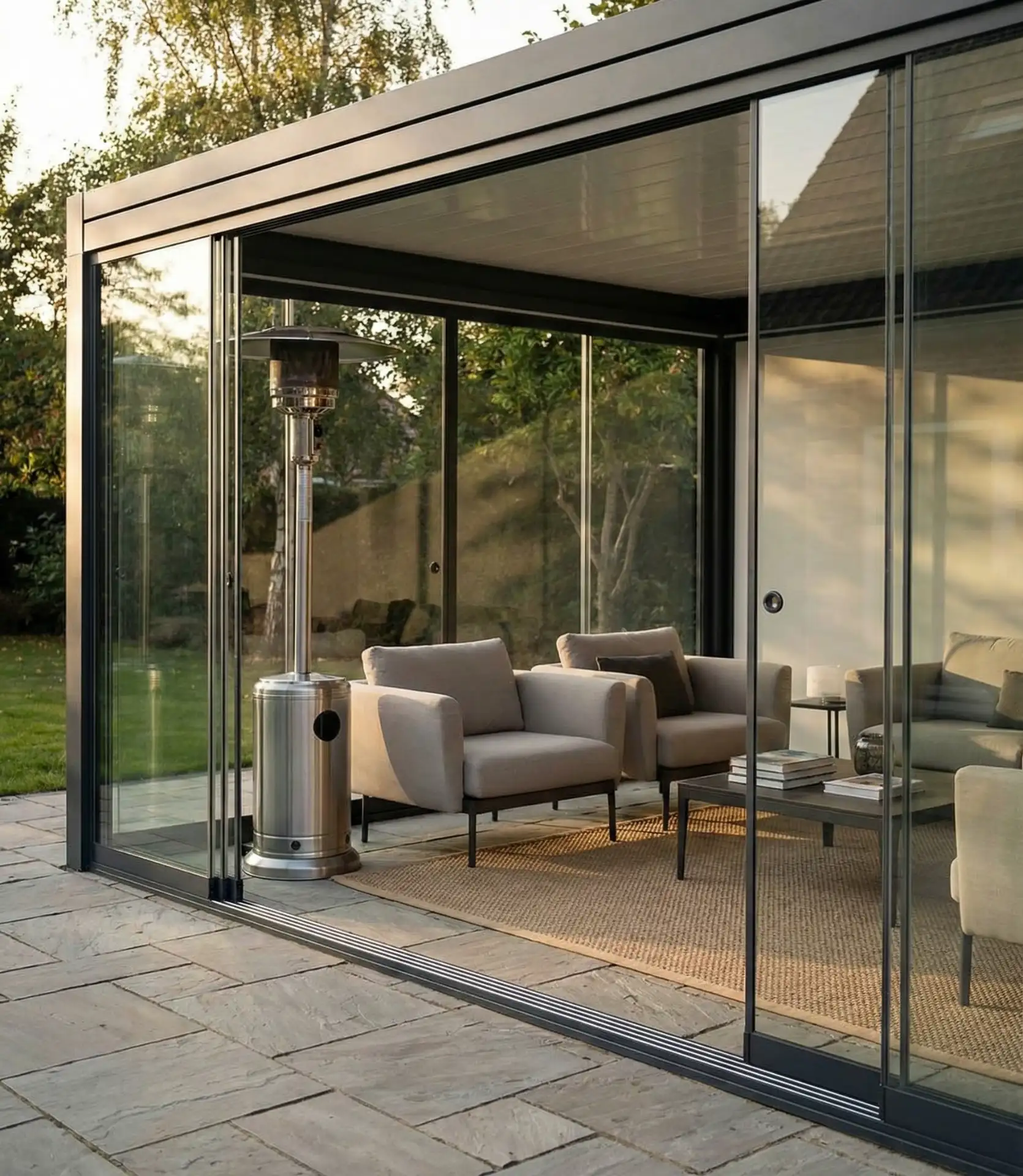
In Minnesota, my sister added accordion glass doors to her gazebo. Now her family can use the yard all year round. Instead of closing off the yard from May to September, they can entertain in the winter and celebrate birthdays in the yard in March and go well into November. This is a giant improvement for her $15,000 investment.
9. Floating Deck Platform
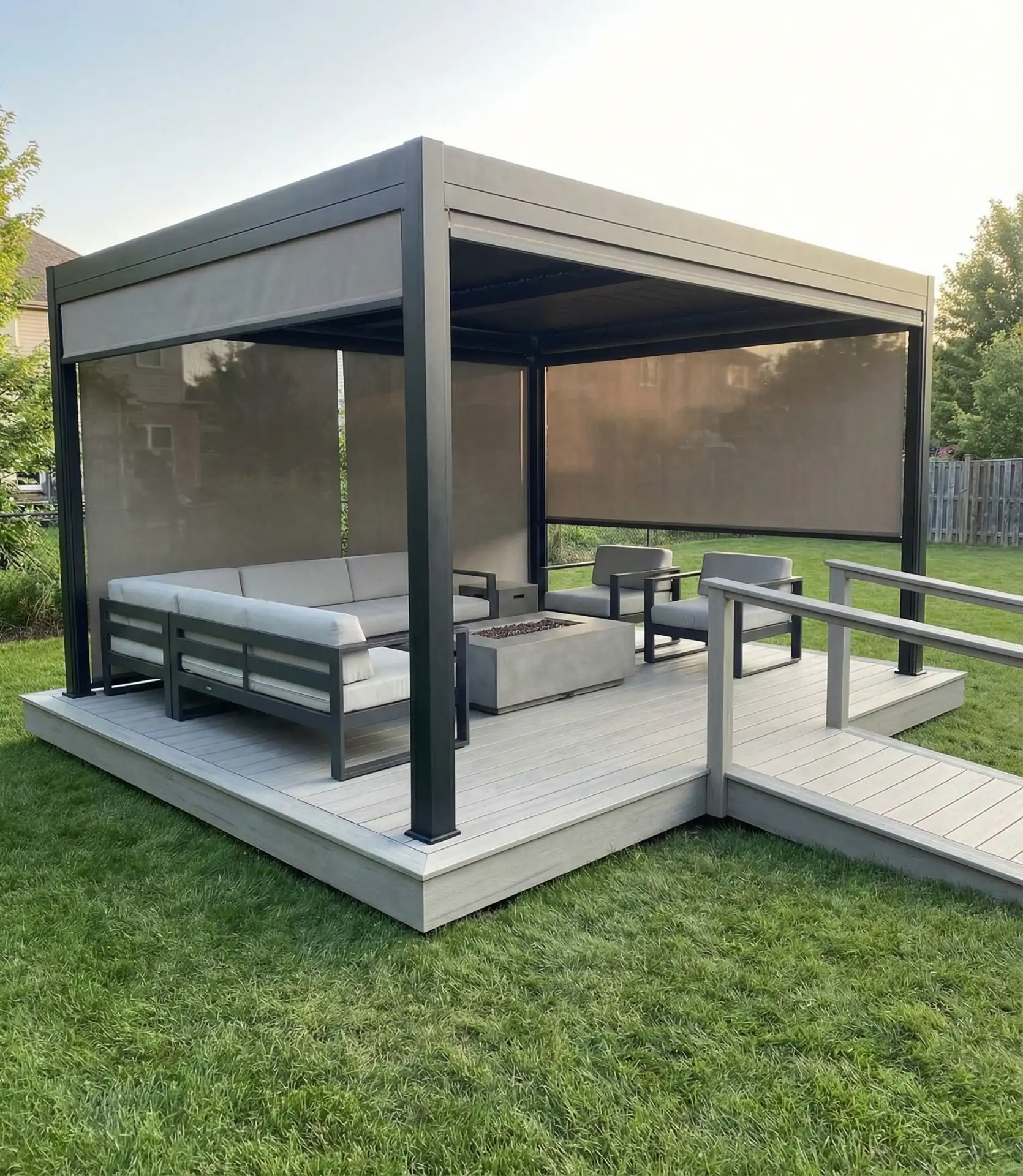
Engage in your backyard by building a gazebo on floating decks that don’t need deep footing or a permanent foundation. This solution is great for renters but different for homeowners. The deck creates a level platform that raises the gazebo and visually defines the space. The composite materials require less maintenance and give modern lines that go well with the gazebo. 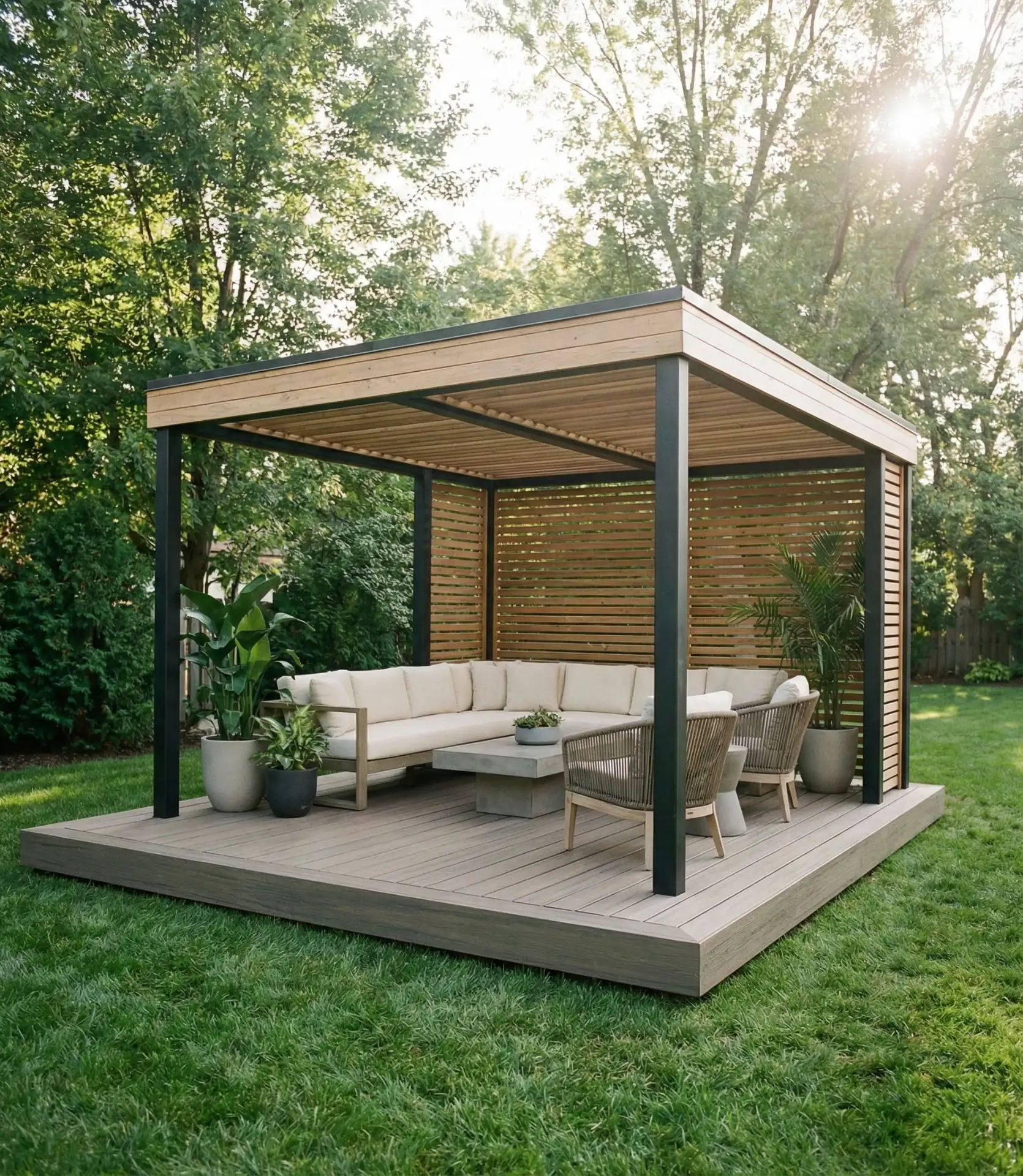
A big mistake is to omit the right ground prep, and that’s also true for floating decks. Installations need a gravel base and a fabric to keep weeds and the deck from settling.
Utilize the additional day to do groundwork properly, as it will make the difference between a platform that stays level for a decade versus one that will develop annoying dips and wobbles in two years.
10. Outdoor Kitchen Hub
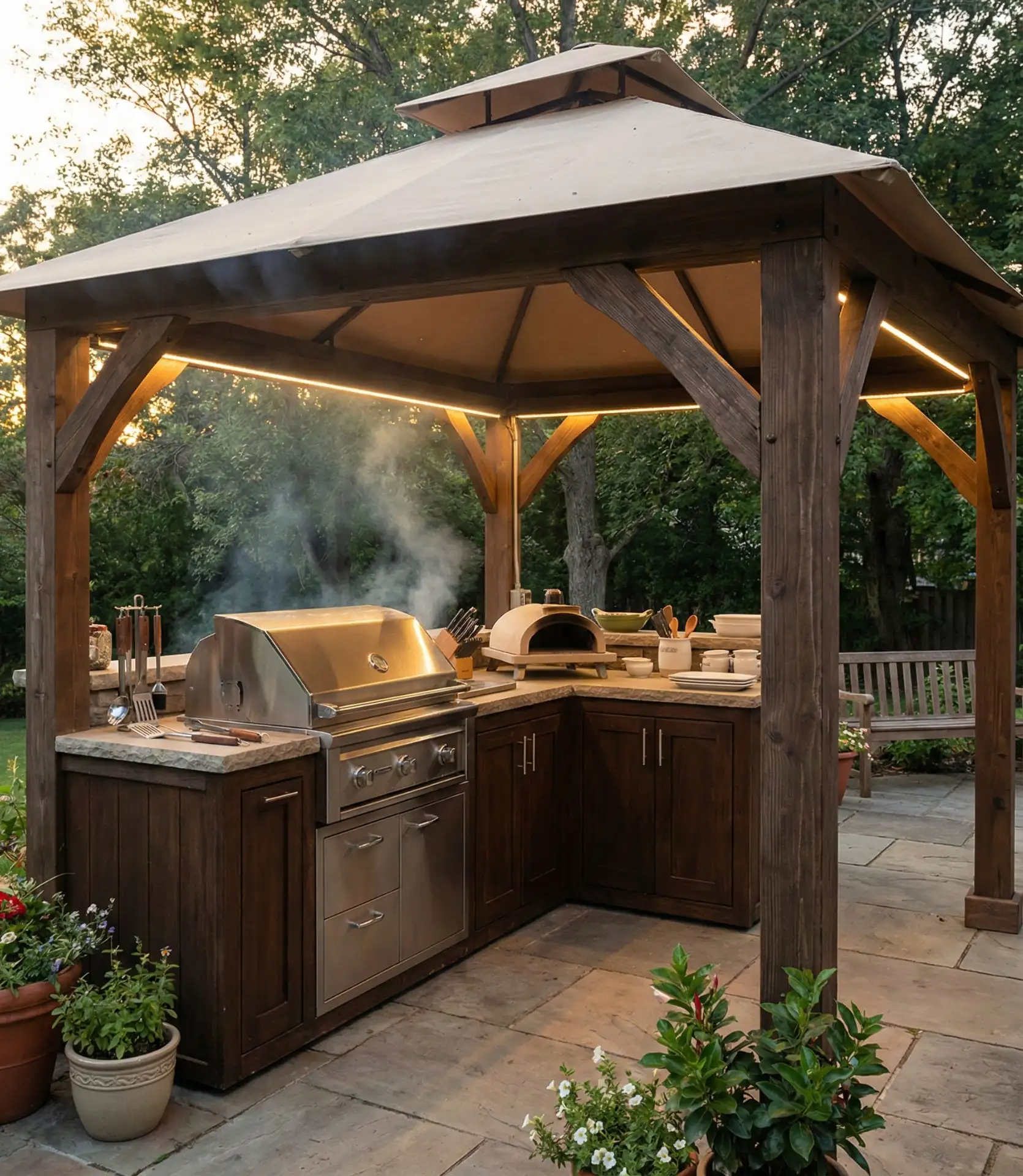
Design your gazebo to accommodate a complete kitchen setup with a built-in grill, counter space, and storage. This configuration protects cooking equipment from the weather and creates a natural gathering point for entertaining. Incorporate electrical outlets for small appliances, task lighting above prep areas, and hooks for utensils. With the covered structure, you can cook without worries 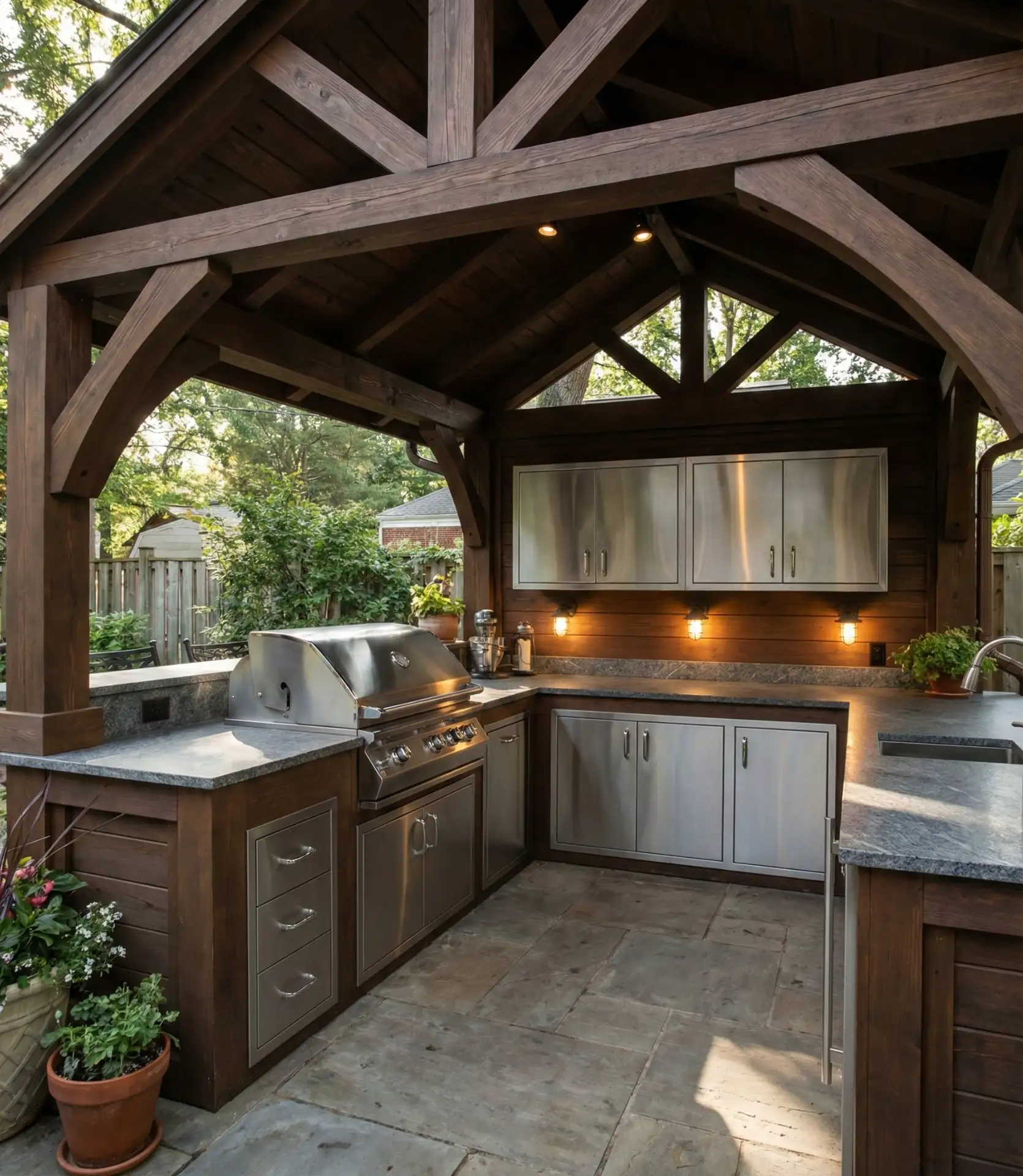
In Texas and California outdoor cooking is almost year-round, and during this period kitchen gazebos will be in heavy use. Smart homeowners orient the structure so that the prevailing breezes carry smoke away from seating areas—usually the grill side faces away from the house and towards the main entertaining zones.
11. Poolside Cabana
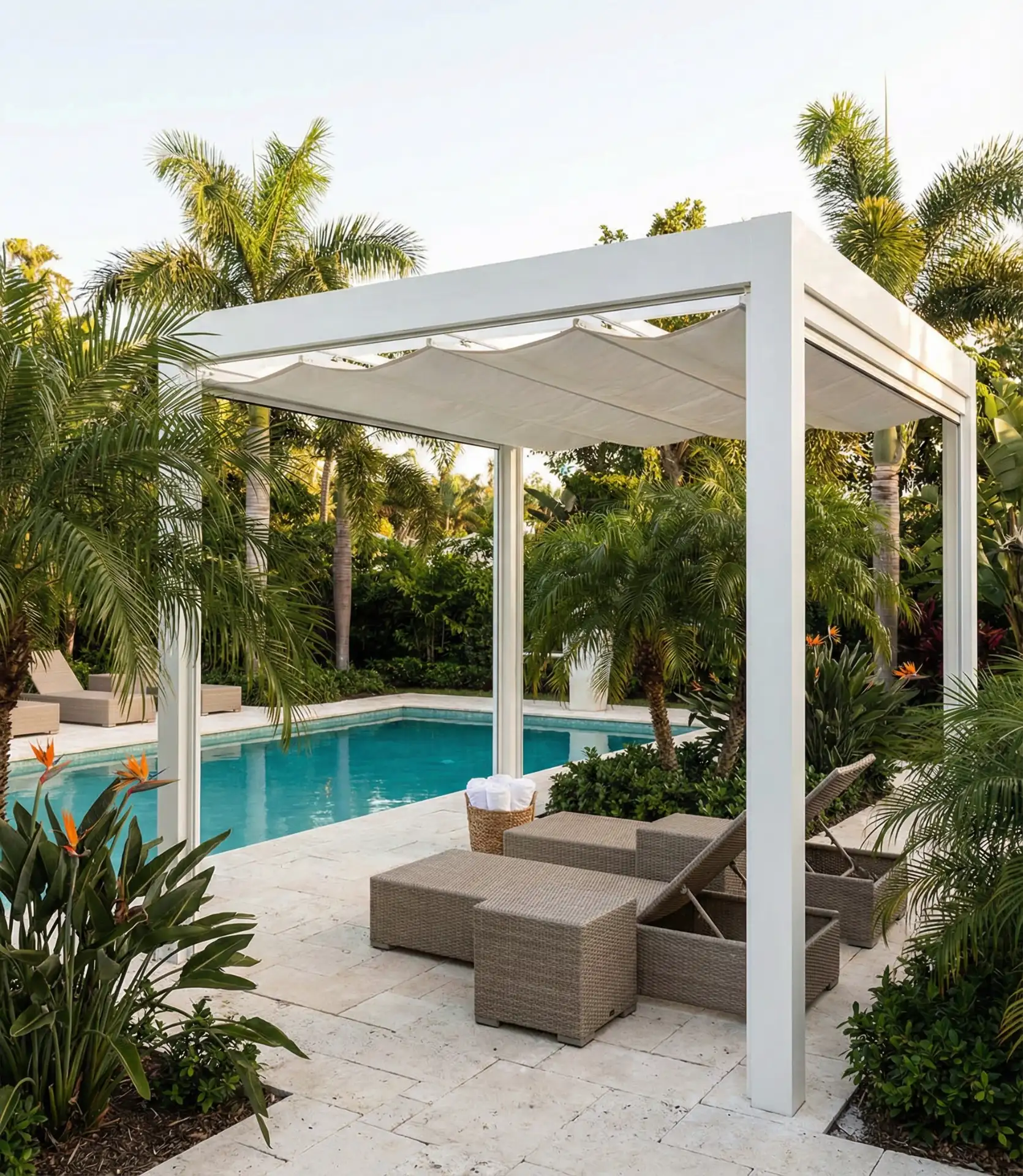
Adjacent to your pool, a simple gazebo will also serve as a changing area, and moisture-resistant furnishings will withstand constant wet foot traffic from swimmers.
Include hooks for towels, a bench for resting, and perhaps a small refrigerator for a few cold drinks. The covered structure gives important shade during peak sunlight, making time by the pool safer and more comfortable. 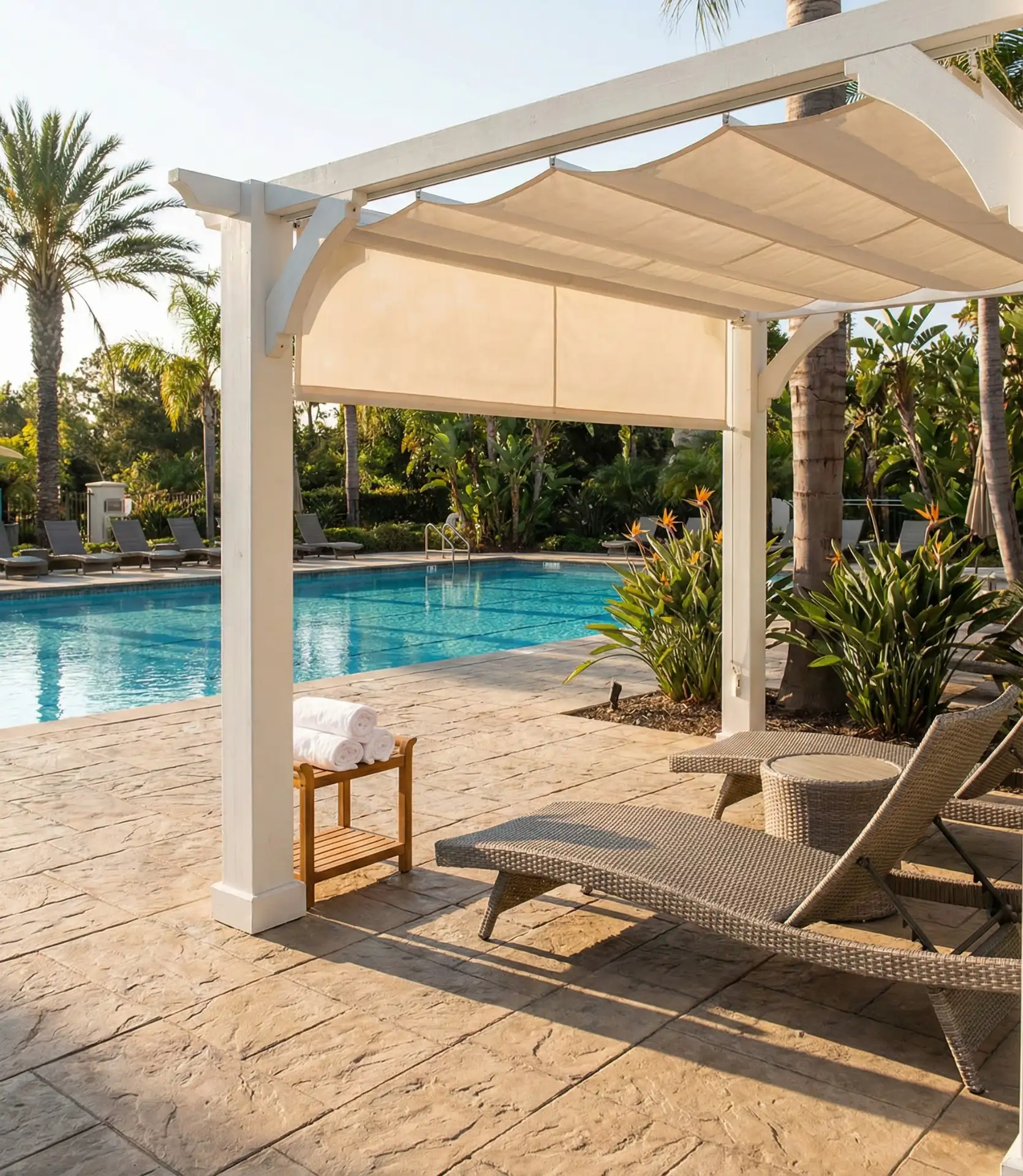
For basic vinyl prefab pool cabanas, the starting price is $1,800. Custom models, such as cedar or composite versions, differ in price based on size and features, ranging from $5,000 to $12,000. The investment is particularly justifiable for families with kids who need regular breaks from the sun, as well as in southern states where the pool season lasts eight months or longer.
12. Corner Nook Design
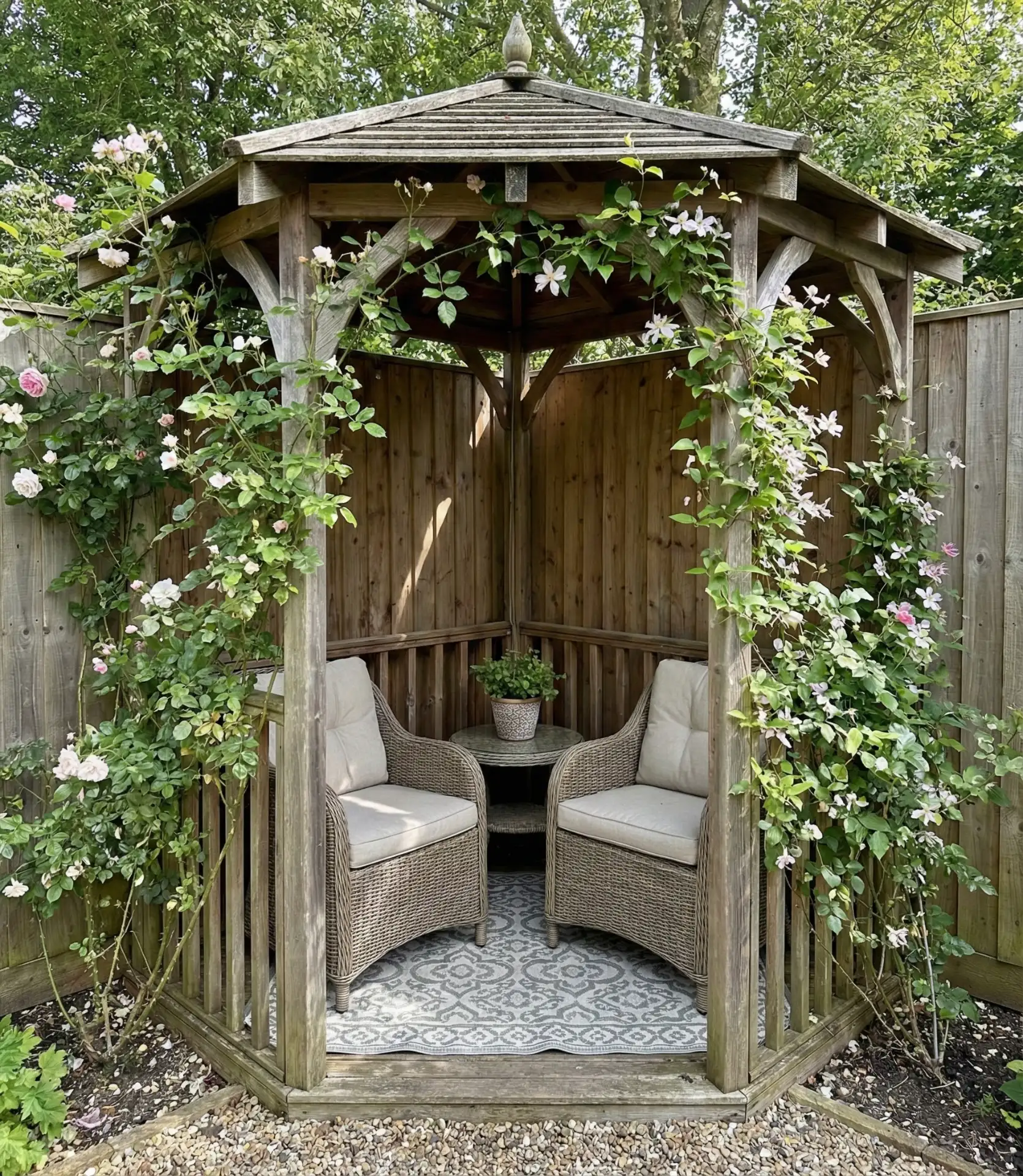
When not in use, a small gazebo can be placed in a corner of the property, making a lovely space for a secluded cozy retreat while not taking up the open green areas. The existing fence offers two walls, making it a lovely place for a private space without construction walls. Climbable plants can be added to the fence to integrate it a little more with the surrounding area. 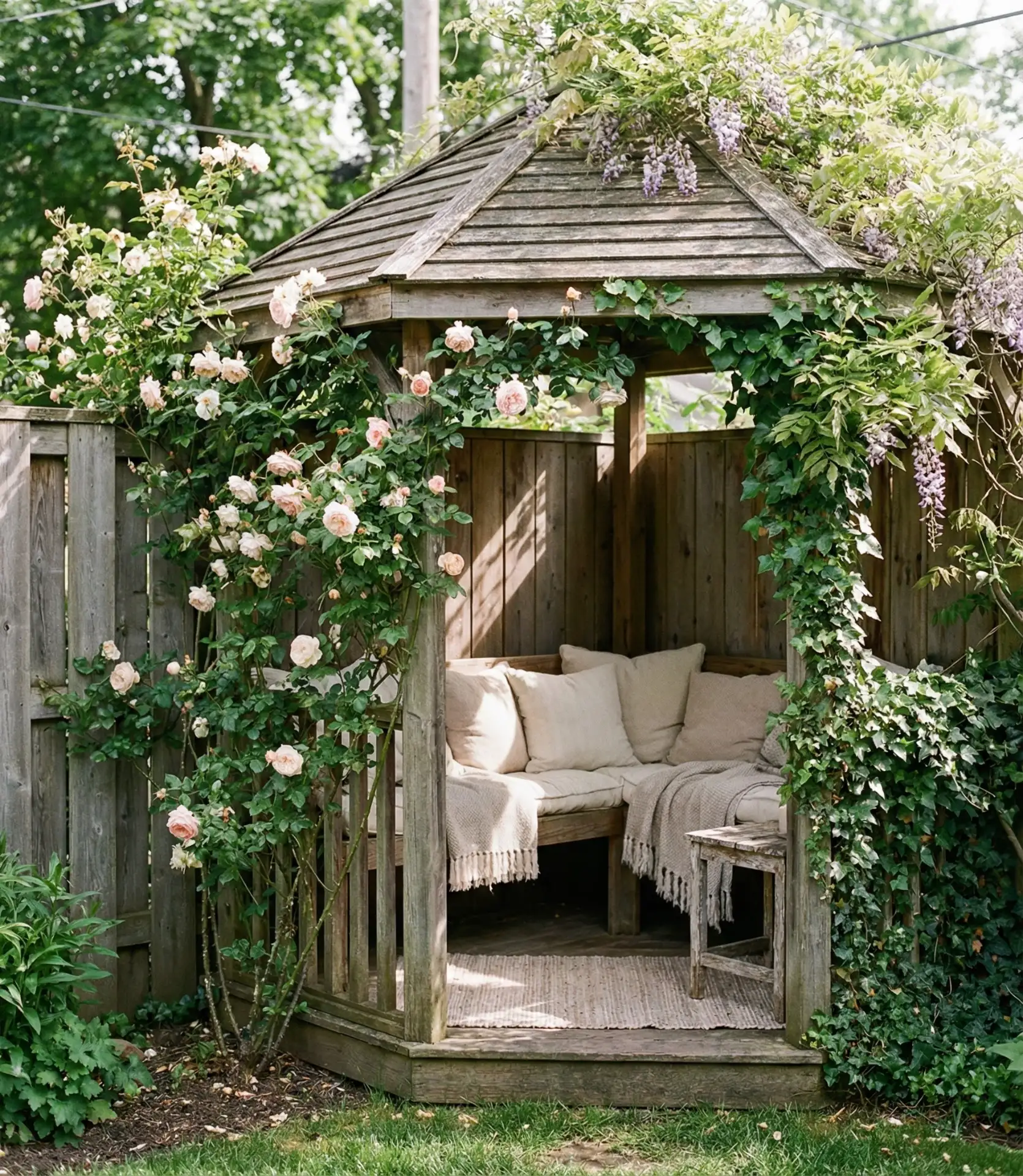
Urban and suburban homeowners with smaller lots particularly appreciate this layout. By utilizing a corner, you preserve open yard space for activities while still gaining a dedicated outdoor room. The backing fences also provide excellent mounting points for hanging lanterns, planters, or even a small shelf for drinks and books.
13. Treehouse Style Gazebo Elevated
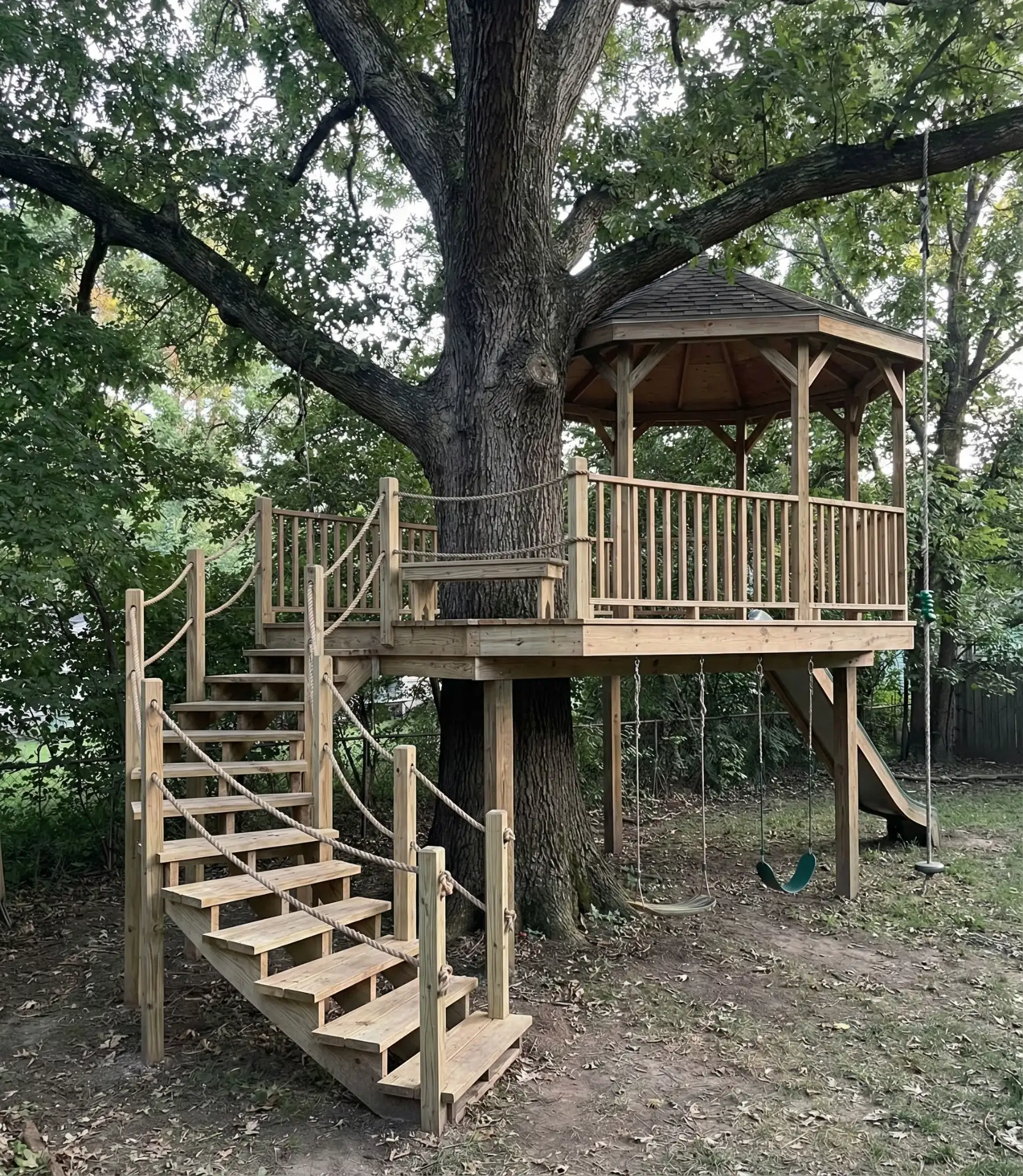
For an elevated view of your backyard, consider raising your gazebo on posts or incorporating mature trees into the design. This approach creates visual interest by offering better views and improved air circulation. Kids especially love the treehouse quality. It broadens the appeal of the structure across generations. For safe access, include sturdy railings with a secure stairway or ladder to the elevated platform. 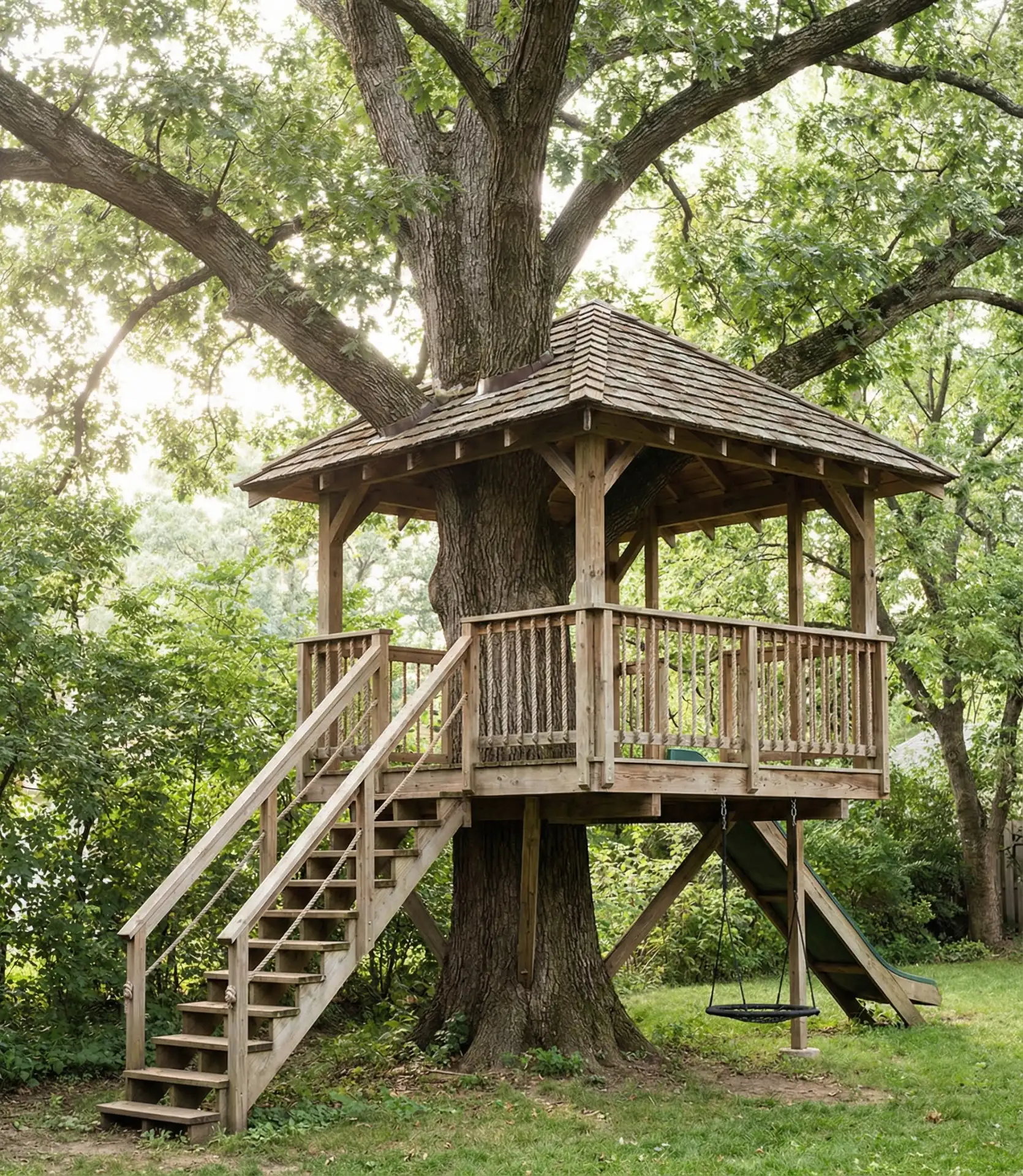
A neighbor in Oregon built her elevated gazebo around an old oak. She says the increased airflow makes those humid summer evenings pleasantly bearable. The elevation also keeps the space cleaner. Less dust and debris blow in compared to ground-level structures, so there’s less sweeping and overall maintenance.
14. Paradise Tiki Style Bar
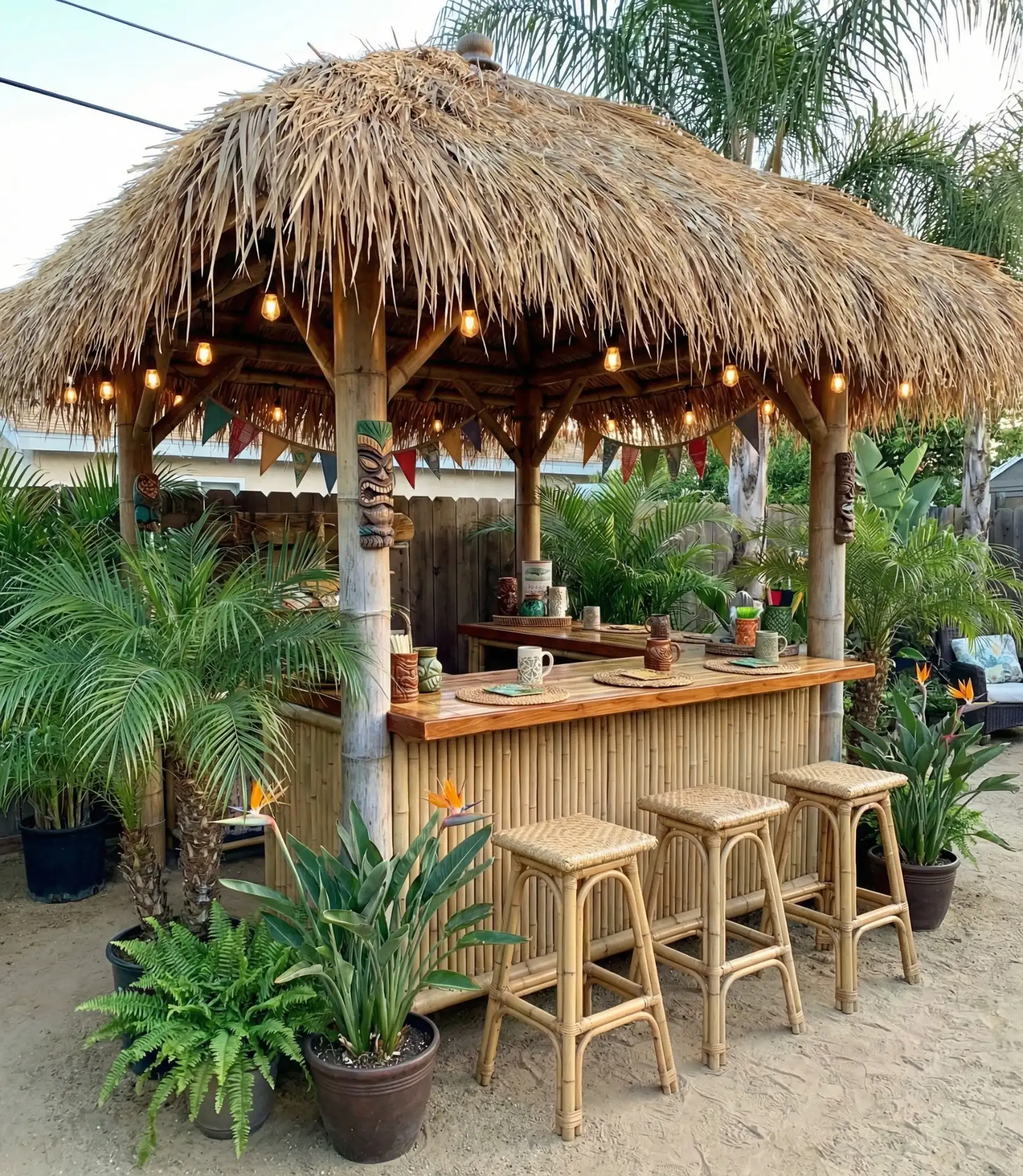
For tropical vibes, go for a bar-centered gazebo with a thatched roof, bamboo details, and bright decor. This design plays with your expectations of backyard entertaining and makes it feel like a vacation. To enhance the experience, add a built-in bar with counter seating, shelves for glassware and bottles, and string lights to your decor for a wonderful nighttime atmosphere.
Large planters filled with tropical plants around the structure finish the resort vibe. 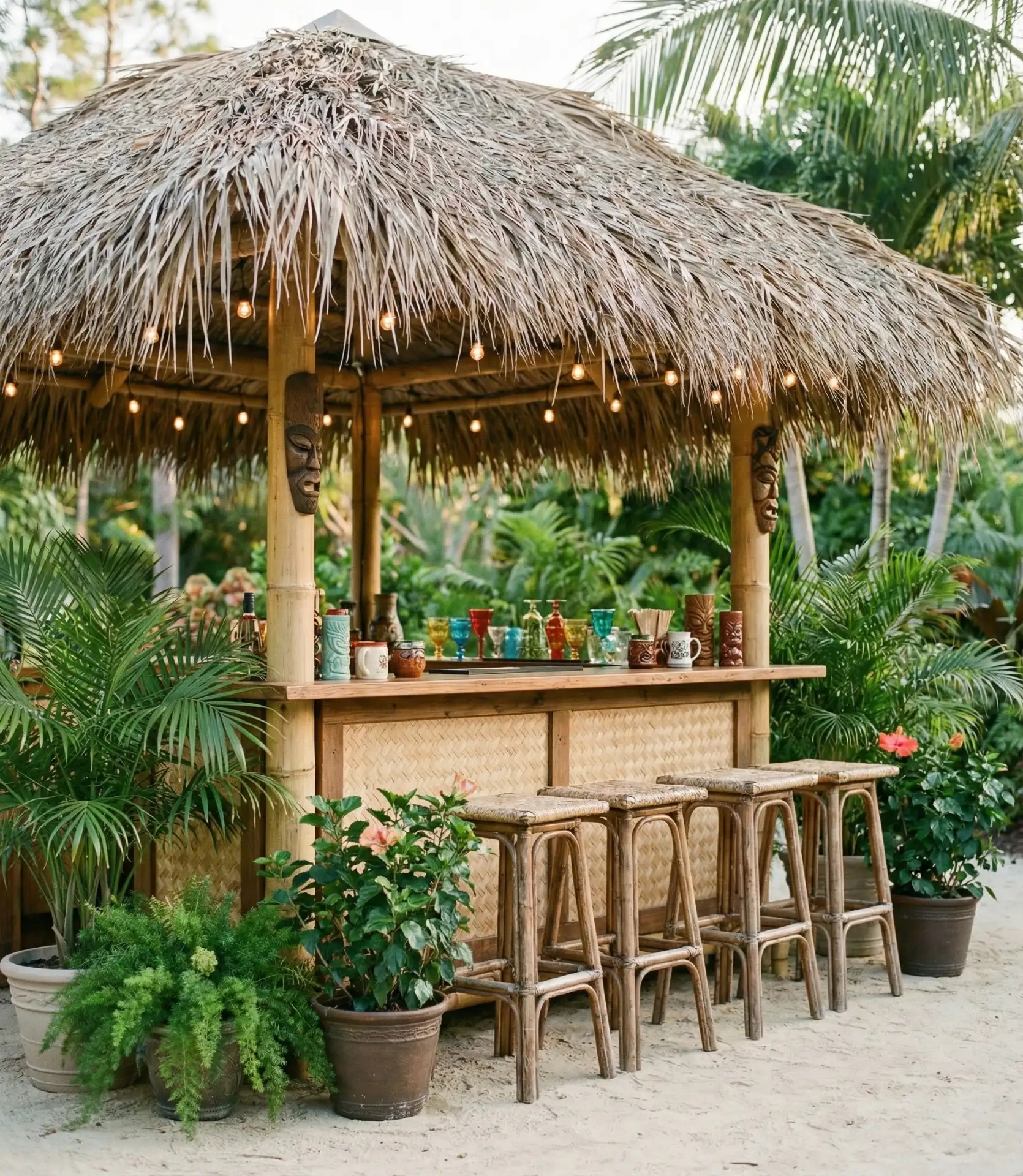
While tiki bars are often associated with the ocean, they have also developed a following in landlocked states, where they provide a warm escape from the winter. In regions with extreme temperatures or heavy snow loads, synthetic thatch, which lasts 10-15 years, is a practical choice over natural palm that needs replacement every 3-5 years.
15. Minimalist Shade Sail Integration
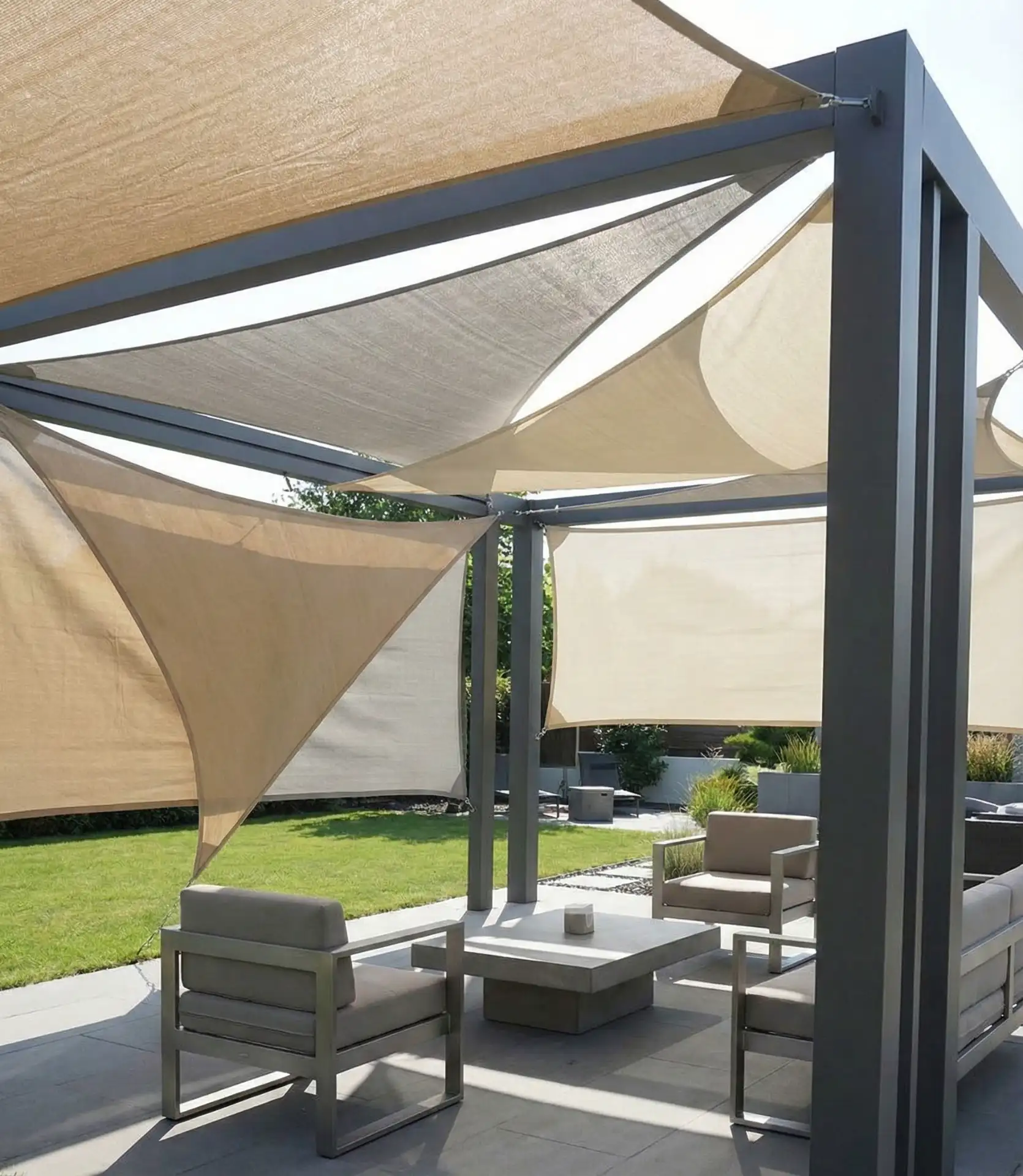
For a contemporary, modern look, combine a simple post framework with fabric sails that have been tensioned. This combination is highly functional. The sails are cut at different angles to provide a beautiful shape and are visually dramatic while also offering excellent protection from UV rays. Overlapping sails in different colors can provide a beautiful color combination that is also visually appealing. The modular design also makes it easy to adjust to your decor or patio. This lightweight system is ideal for wind-prone areas where solid roofs would cause uplift issues. 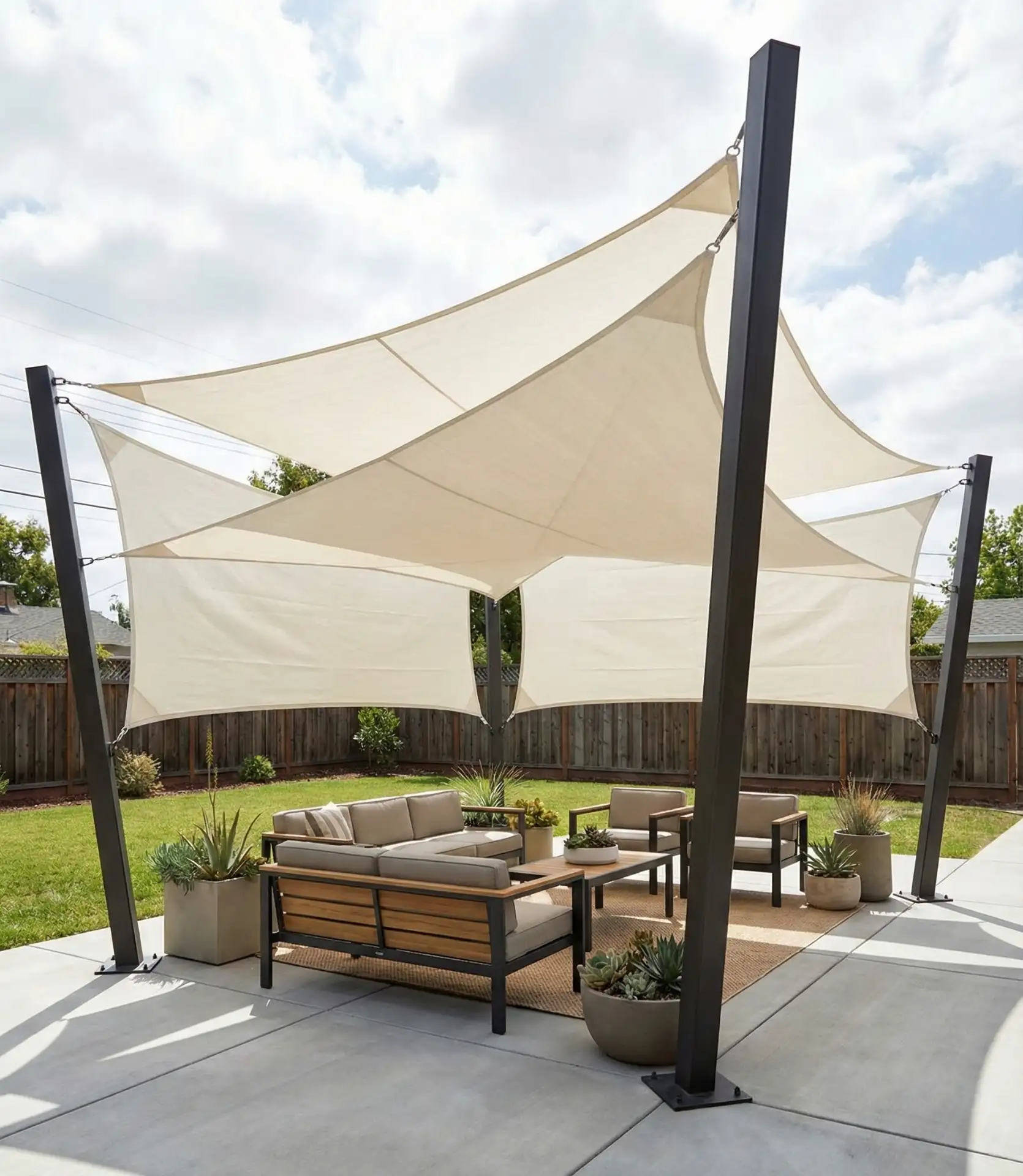
A professional installer is necessary to properly tension the sails and ensure safety, but the effort is well worth it. Per sail, expect a cost of around $300-800, which depends on the size and quality. For installation, it will be an extra $200-500.
The fabric usually has a warranty of five to ten years for UV degradation, and most can be removed for the snow season in heavy snow areas.
16. Garden Shed Combination
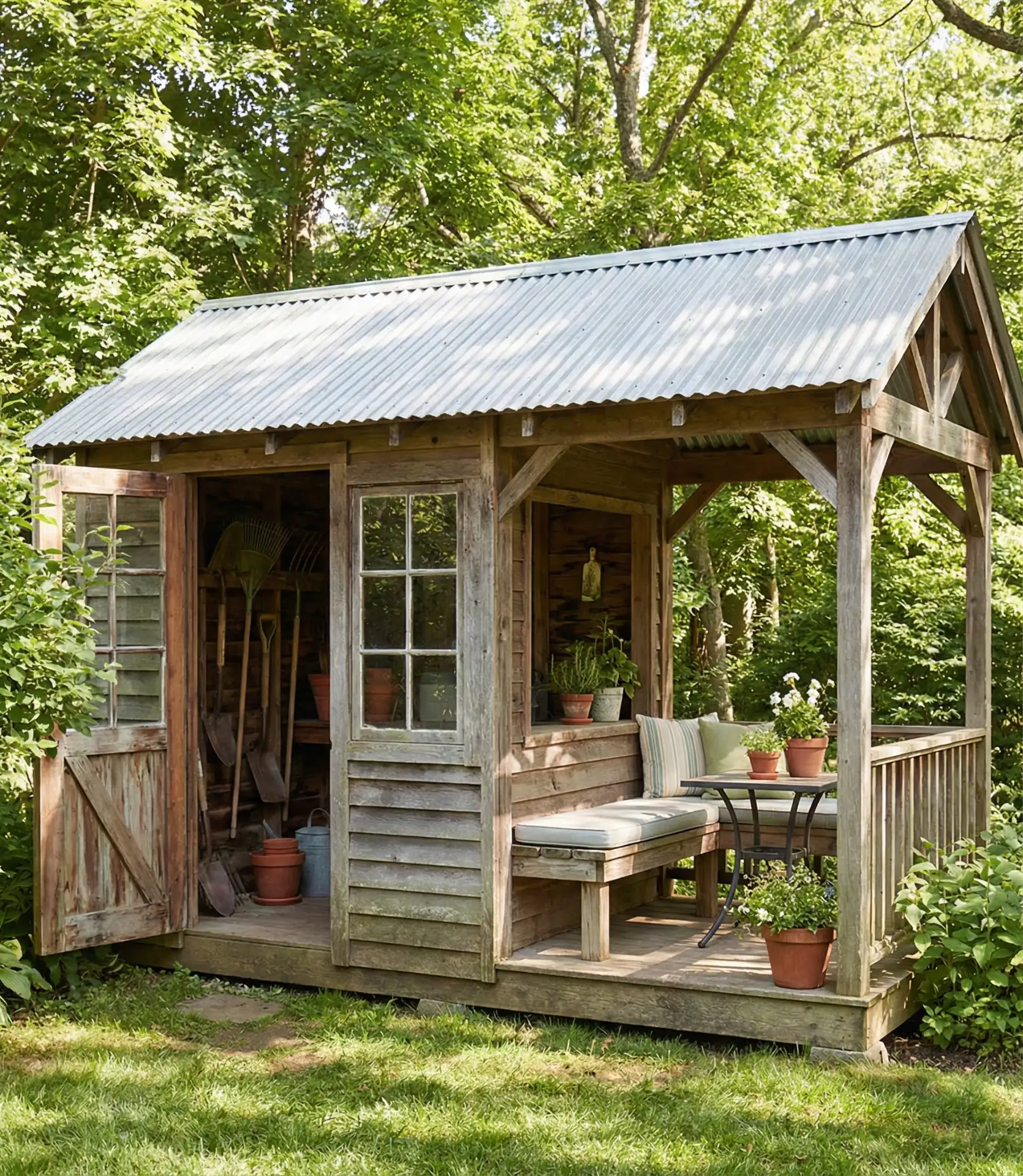
You can merge the storage functionality and the sitting area by creating a structure that is half shed, half gazebo. This solution for practical backyard DIY projects fulfills two needs in one footprint. The enclosed shed section can hold garden tools, cushions, and other outdoor equipment. The open gazebo portion offers decorative seating areas for relaxation. A shared roofline and materials provide a cohesive look that is intentional rather than improvised. 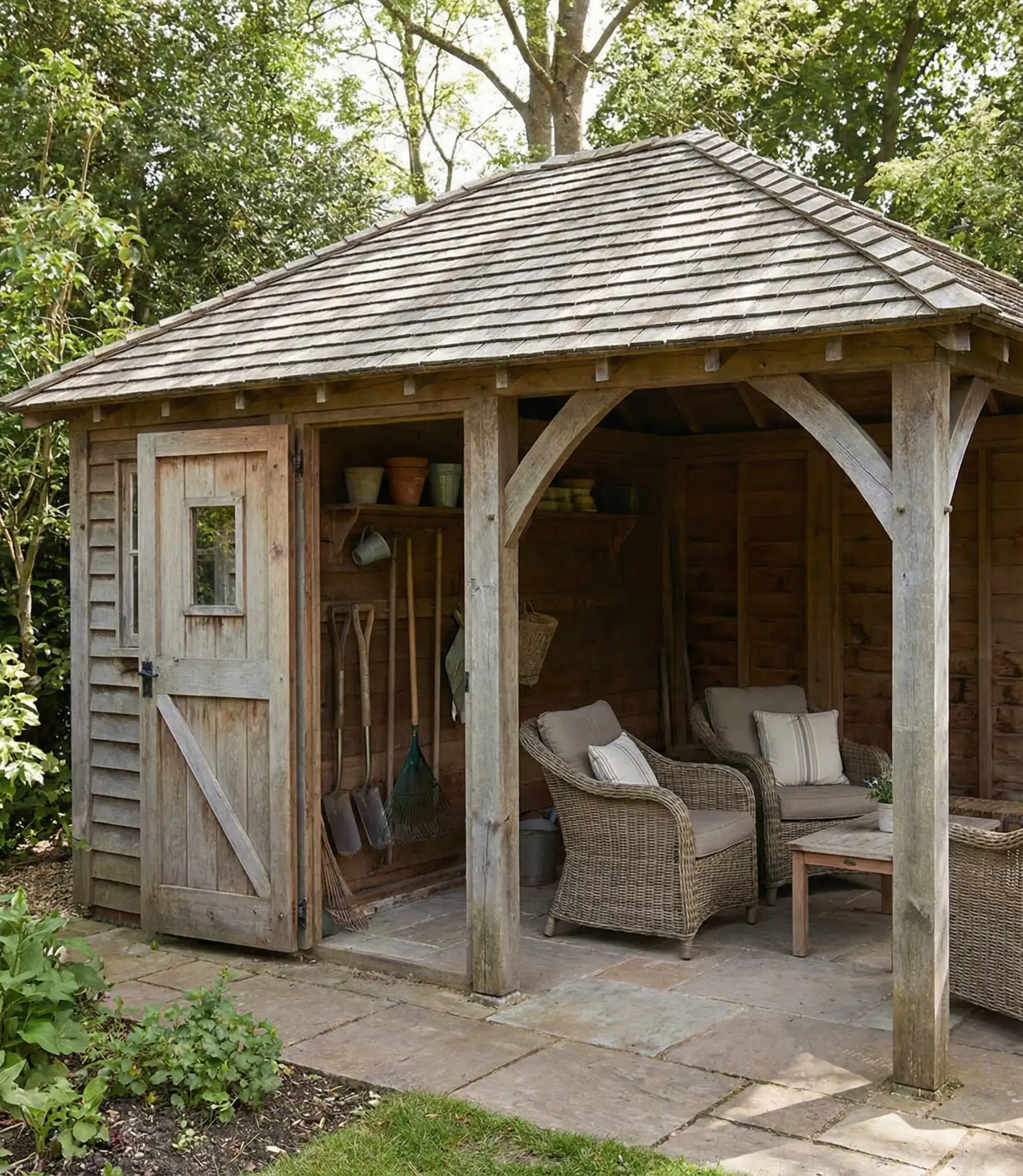
This dual-purpose design especially makes sense for those homeowners who are dealing with limited yard space or have tight HOA guidelines for the number of outbuildings allowed. One structure is counted as one installation, so it can potentially bypass the restrictions while providing double the functionality. It is also more economical than building two separate structures. The combined shared foundation and roof system can save 20 to 30 percent.
17. Cottage Garden Centerpiece
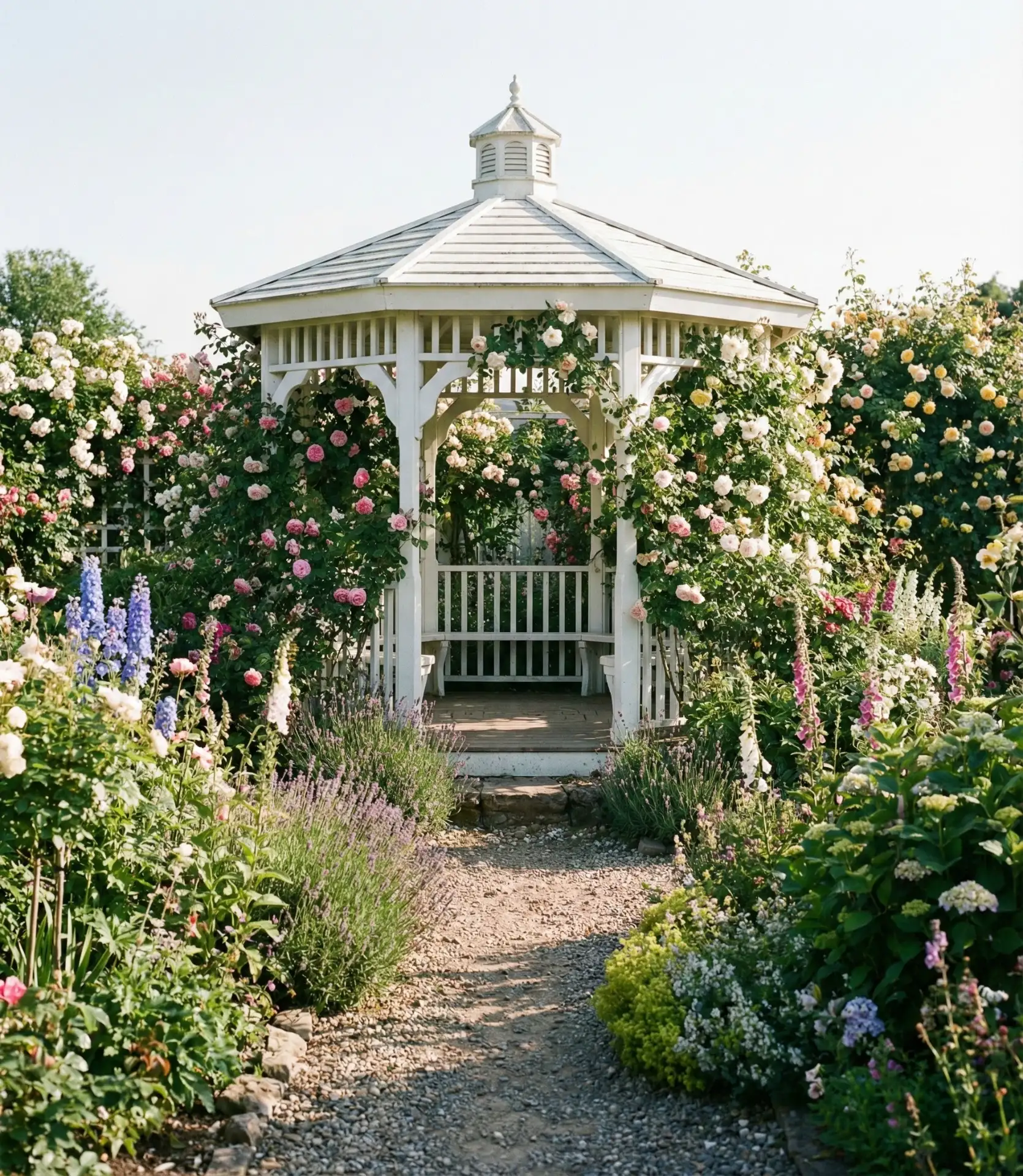
Place a white-painted gazebo at the heart of a densely planted backyard’s beautiful garden filled with perennials, roses, and flowering shrubs. This romantic design creates a focal point visible from multiple vantage points throughout your yard. Gravel or brick pathways leading to the gazebo enhance the cottage aesthetic while keeping shoes clean in wet weather. The structure provides a destination that encourages strolls through the garden to appreciate seasonal blooms. 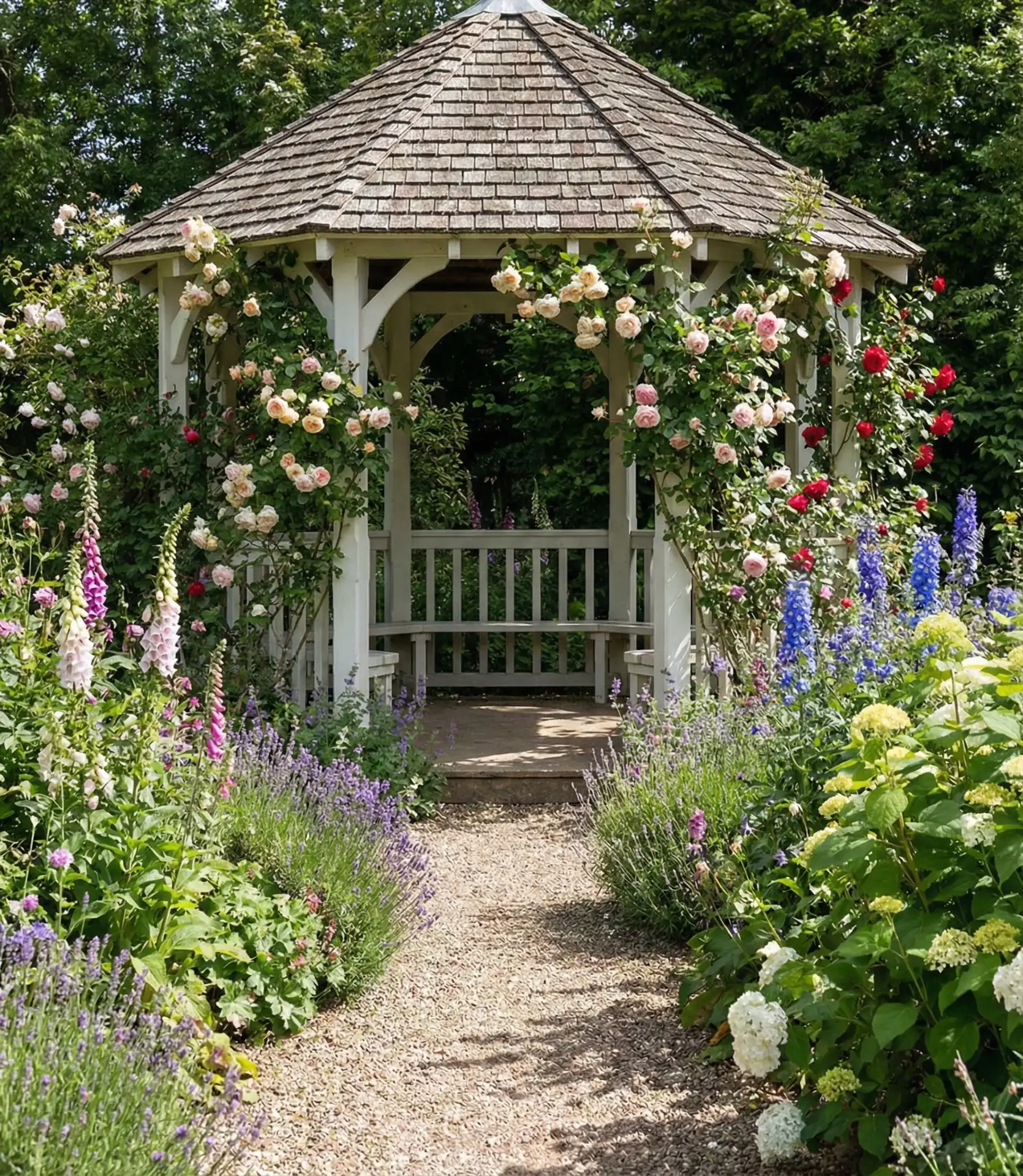
Experienced gardeners know this layout requires commitment—those gorgeous English-style borders need regular deadheading, dividing, and seasonal care. But for plant enthusiasts, the gazebo becomes both an observation point for monitoring garden progress and a shaded retreat during the hottest part of weeding days.
18. Industrial Loft Aesthetic
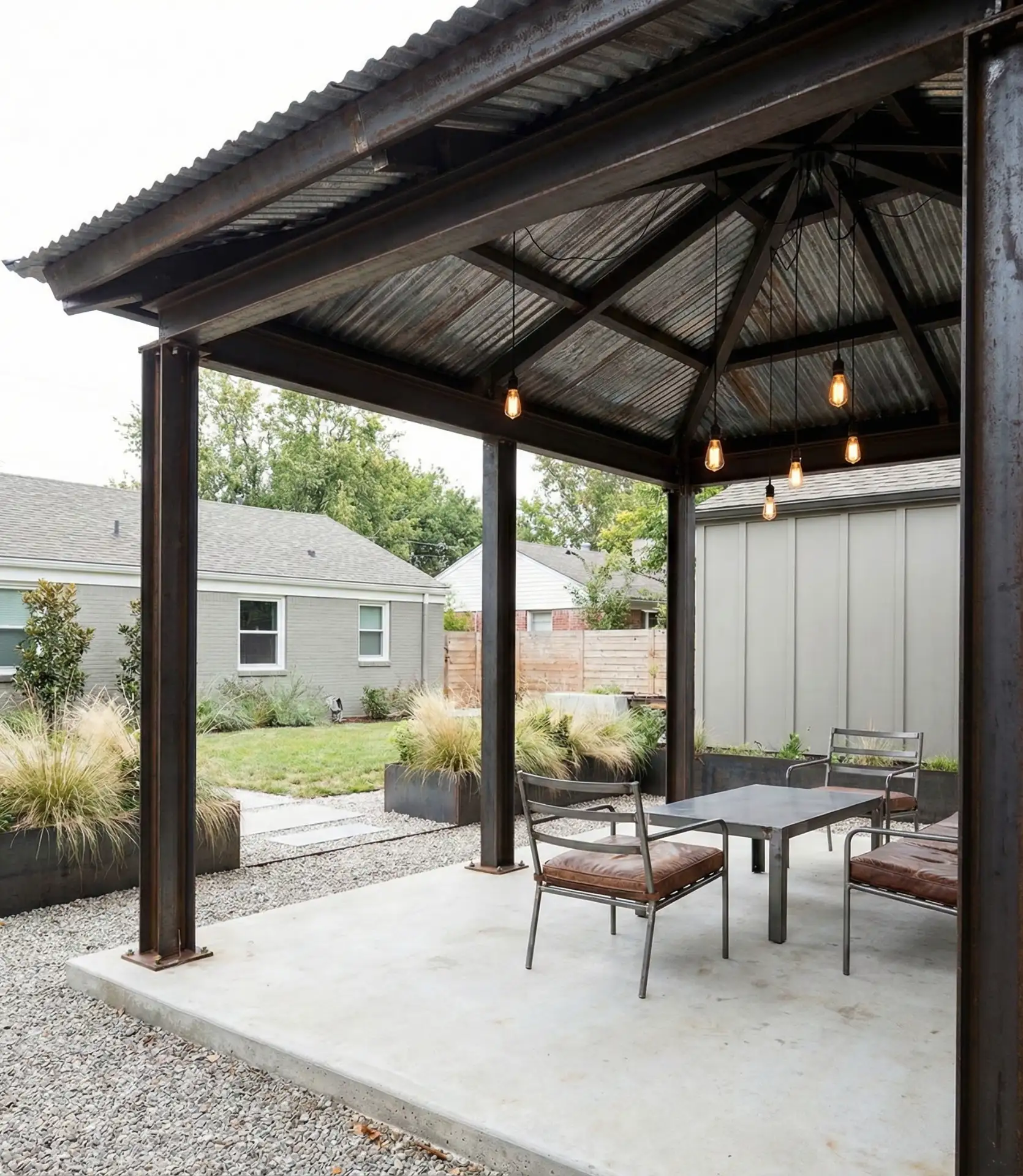
For an urban modern edge, embrace raw materials with a gazebo with open steel beams, corrugated metal roofing, and concrete flooring. This style aligns with contemporary architecture and caters to homeowners’ preferences for an industrial aesthetic. Edison-bulb string lights and metal furnishings mesh with the design and maintain functionality for the outdoors. The use of honest materials makes for minimal maintenance, as both metal and concrete age with grace. 
Urban homeowners in renovated warehouse districts or modern suburban developments particularly love this aesthetic. The industrial approach is genuinely more affordable than the traditional wood gazebos. The corrugated roofing for the gazebo runs $3-5 per sq ft, whereas cedar shingles can run $8-15 per sq ft. Plus, you don’t have decorative trims or other finishings.
19. Daybed Lounge Setup
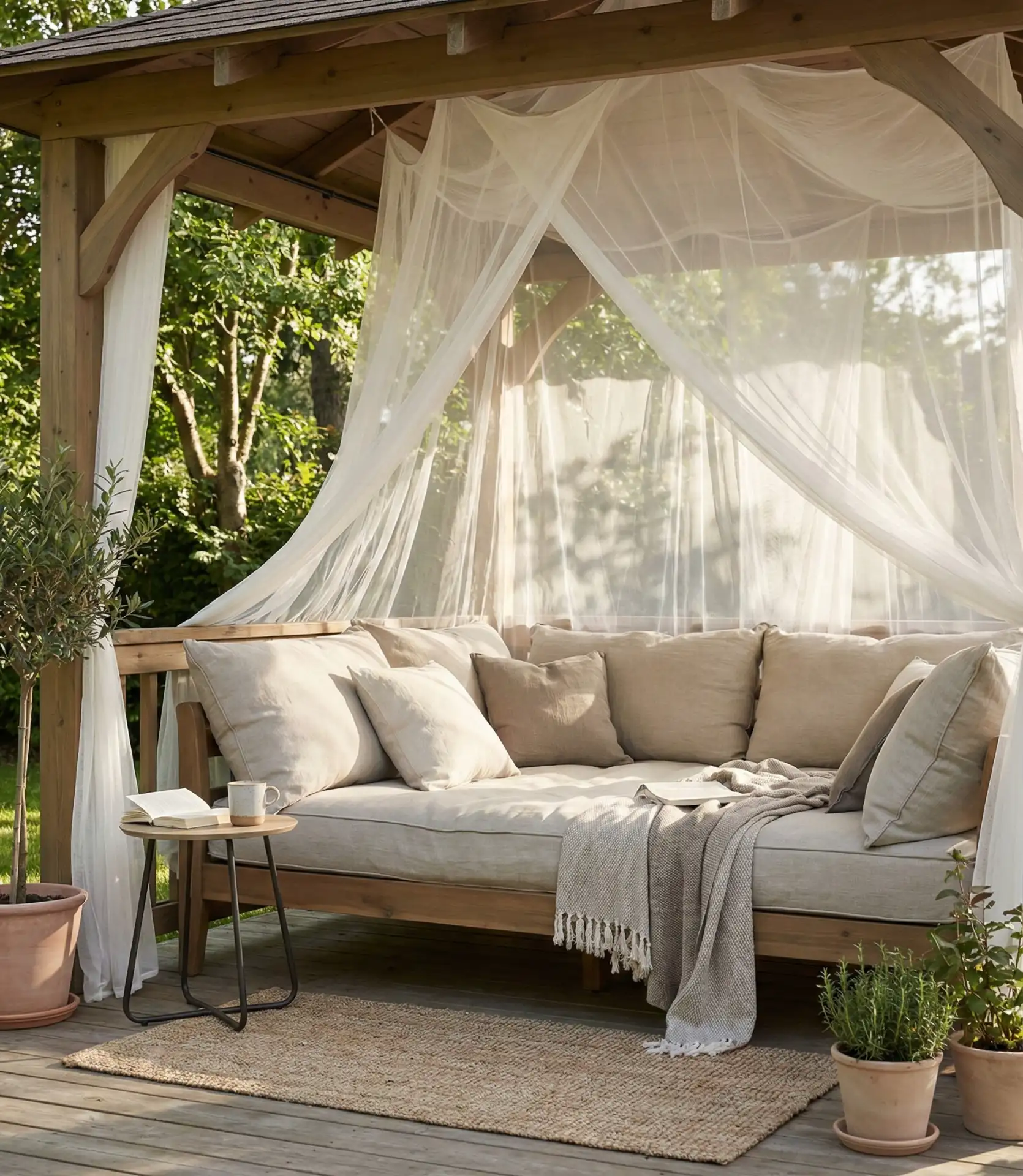
Design your gazebo primarily as a relaxation zone by centering it around a large outdoor daybed or hanging swing bed. This cozy configuration prioritizes comfort and afternoon naps over formal entertaining. Weather-resistant mattresses and pillows invite lounging with books or tablets. Sheer mosquito netting draped from above creates a dreamy, protected cocoon perfect for simple unwinding after long days. 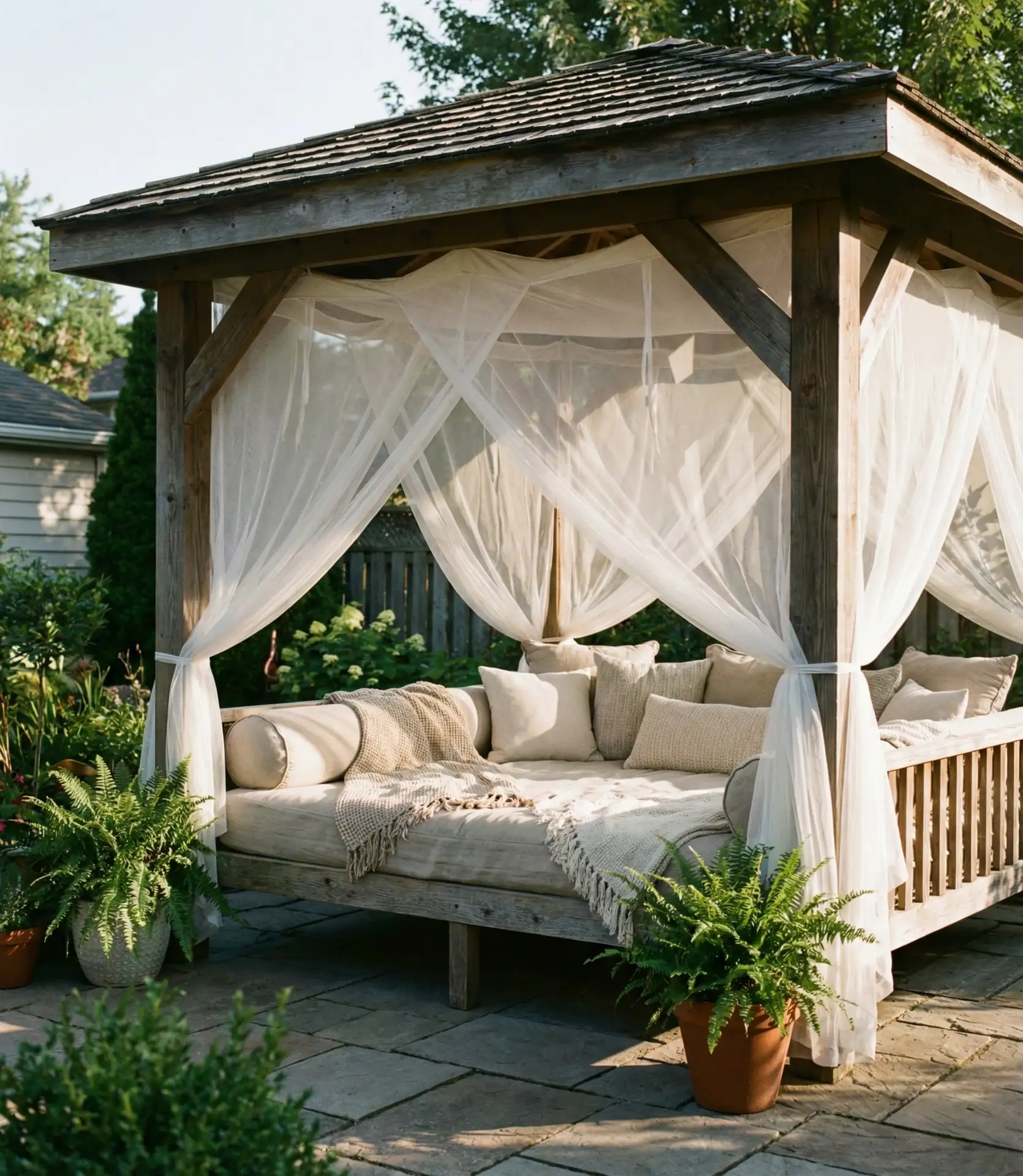
A relative in South Carolina sent me a picture of a bed swing she installed in her gazebo. She says it has become the most popular spot on their property. Even her teens, who usually sit in front of screens all day, spend hours there reading and talking. The bed swing does more than offer a relaxing place to spend time. The soothing motion of the swing makes it an especially relaxing place to be.
20. Solar-Powered Smart Structure
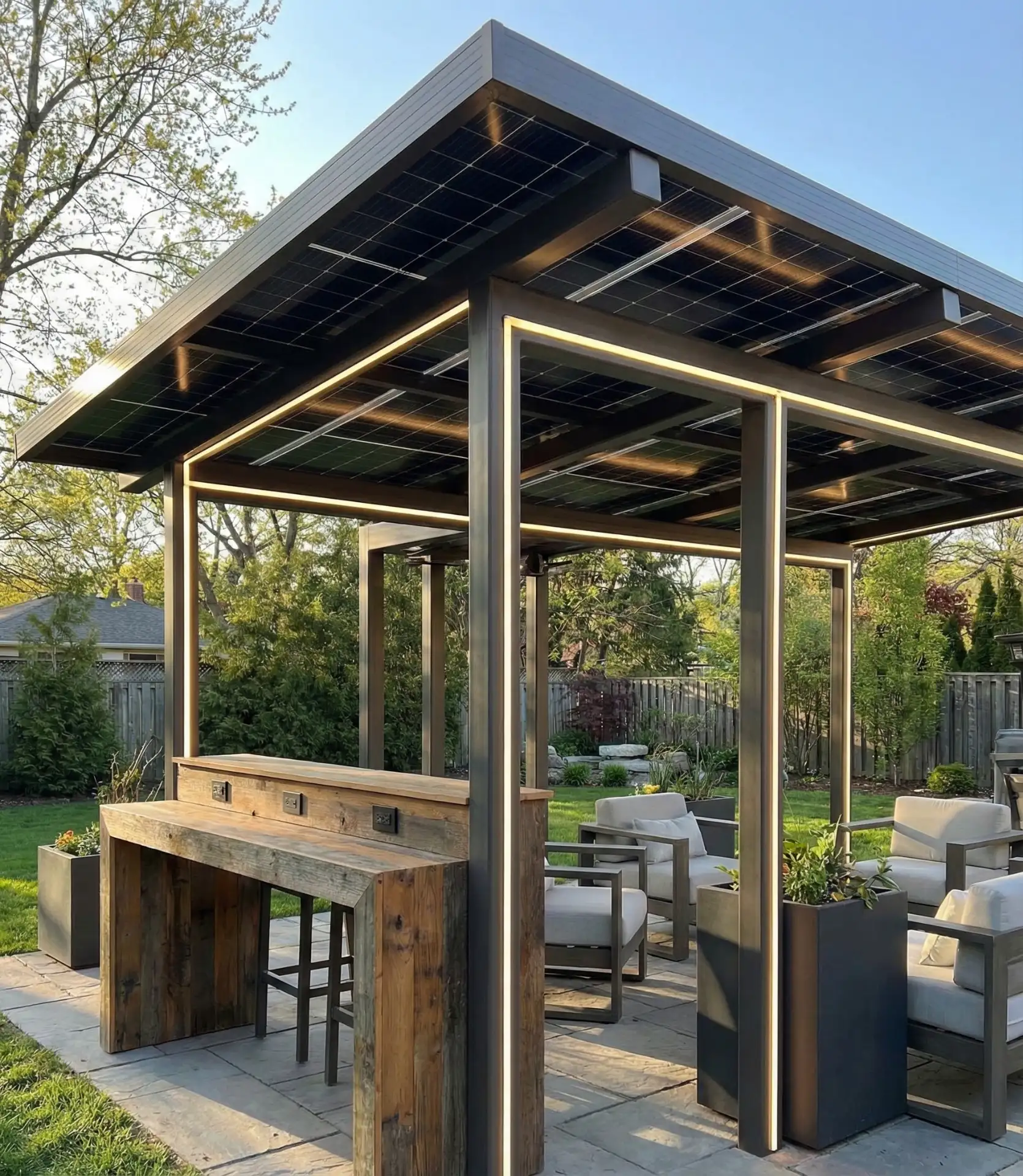
You can now add solar panels to the roof of your gazebo to power your lights, speakers, and charging stations. That way, you don’t have to run electrical lines. Solar collection keeps the battery charged to power USB outlets, Bluetooth speakers, and LED strip lights. The battery will even run the gazebo after the sun goes down, so you can enjoy the space later in the evening. 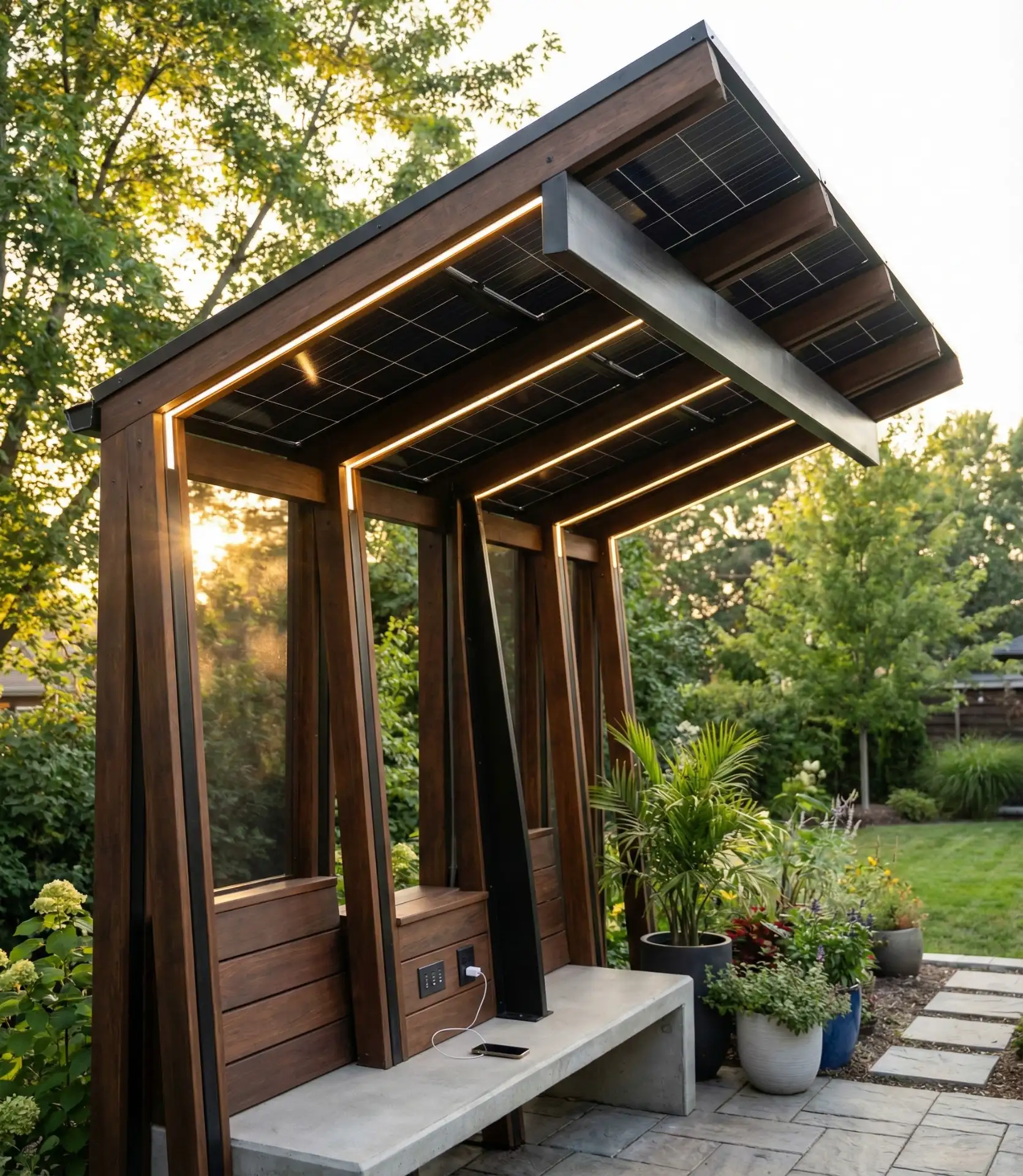
Solar gazebo kits have dropped dramatically in price—basic systems now start around $2,500 complete, whereas trenching electrical lines 50+ feet can easily cost $1,200-2,000 in labor alone. The technology has matured to the point where even cloudy regions like the Pacific Northwest can harvest enough energy for lighting and basic electronics.
21. Rustic Log Construction
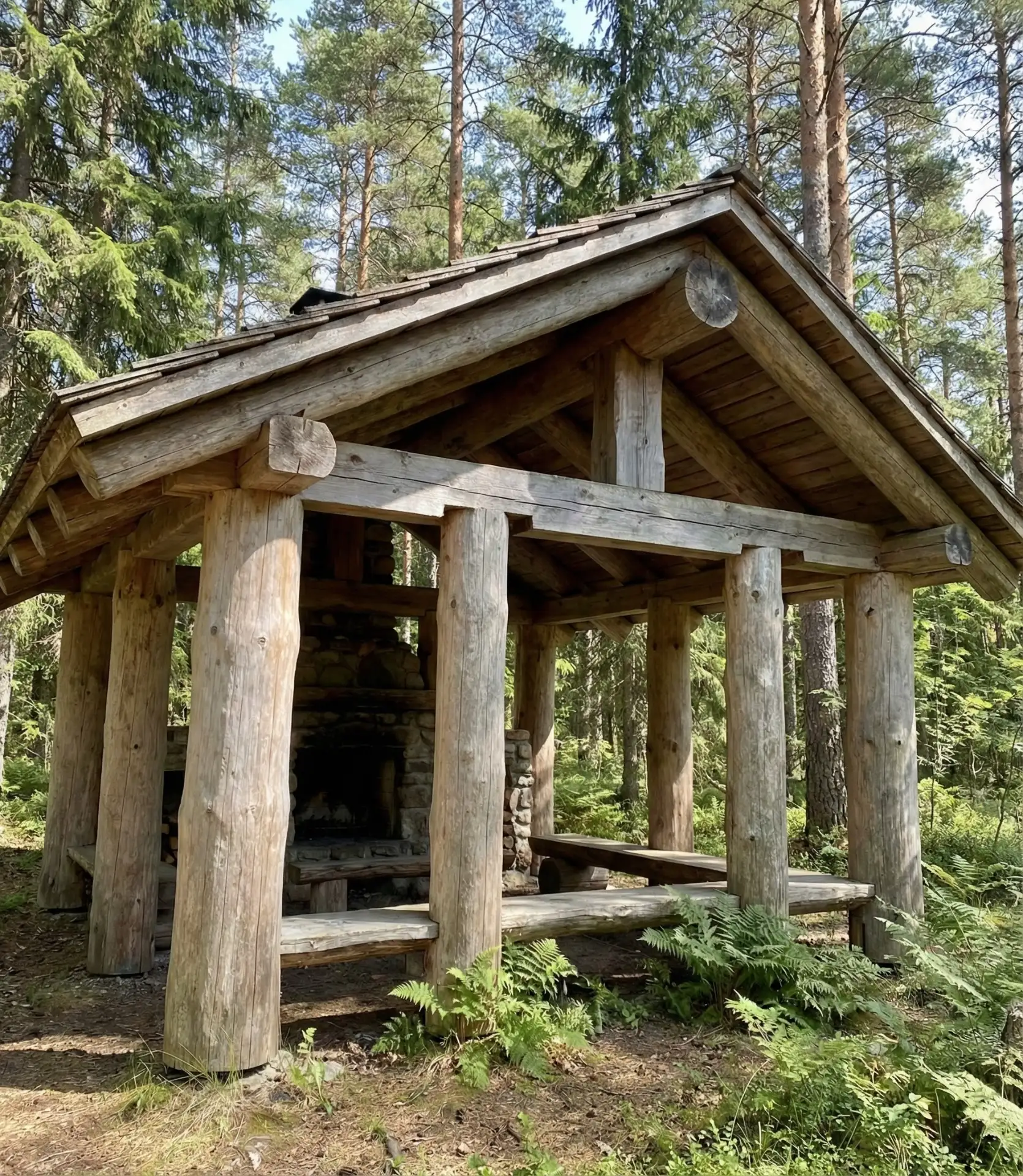
Full log construction creates a substantial gazebo that feels more like a permanent outdoor room than a temporary structure. This large approach suits properties with cabin aesthetics or wooded settings where the heavy timber scale feels appropriate. Natural log posts and beams develop a beautiful weathered patina over time, requiring only occasional sealing. The massive construction provides excellent wind resistance and longevity measured in decades rather than years. 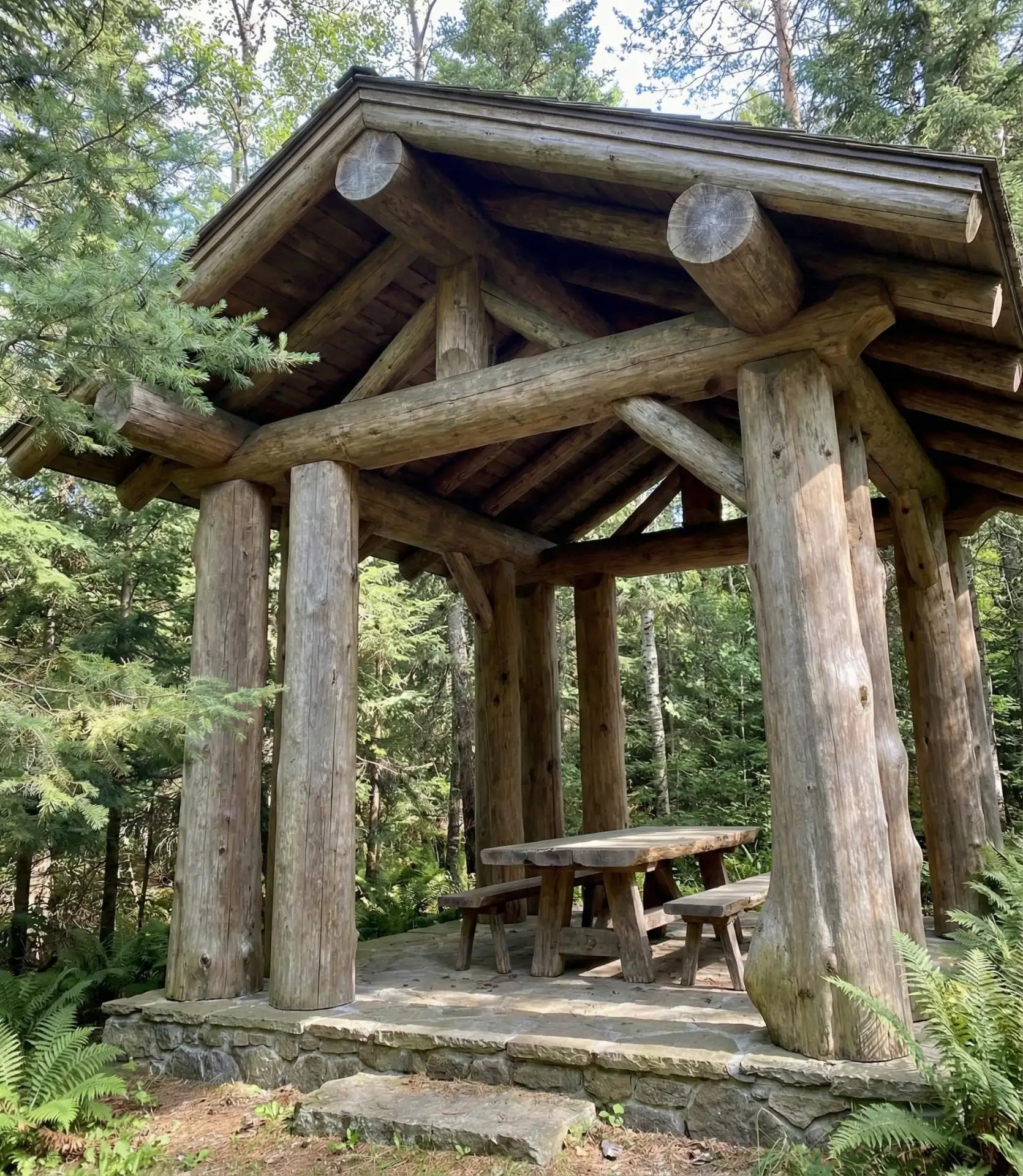
Common mistakes include undersizing the foundation for log structures—the substantial weight requires properly engineered footings that extend below frost lines. Skimping here leads to settlements and structural issues within a few years. Work with a structural engineer if you’re tackling the structure as a DIY project, or hire contractors experienced specifically with log building.
22. Mediterranean Stucco Style
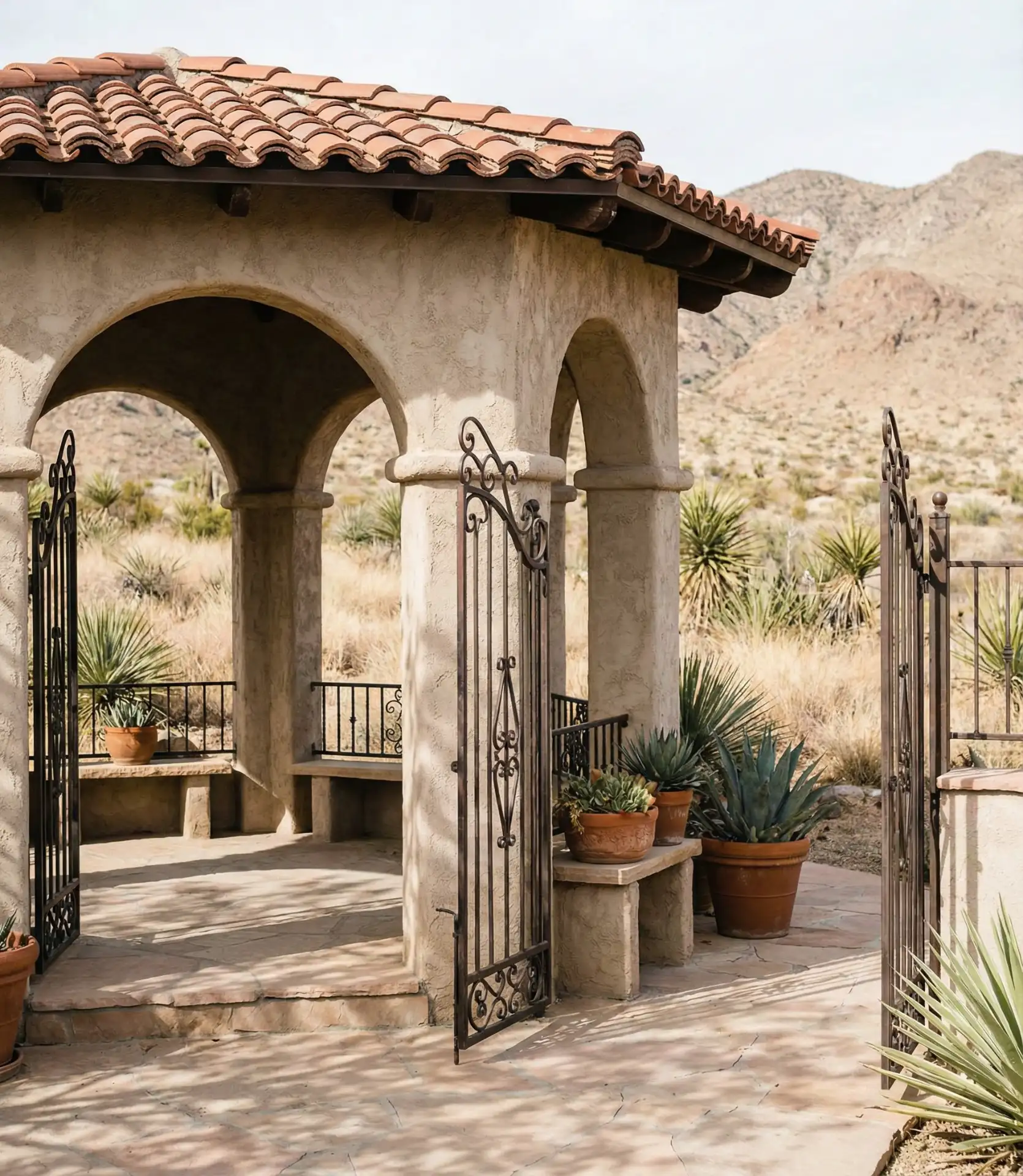
Textured stucco columns and a clay tile roof create a gazebo that complements Spanish, Italian, or Mediterranean home architecture. This unique design works beautifully in southwestern and southern California landscapes where the aesthetic already dominates. Arched openings, wrought iron details, and terracotta accents reinforce the Mediterranean vocabulary. Position it near herb gardens or citrus trees to complete the Old World ambiance. 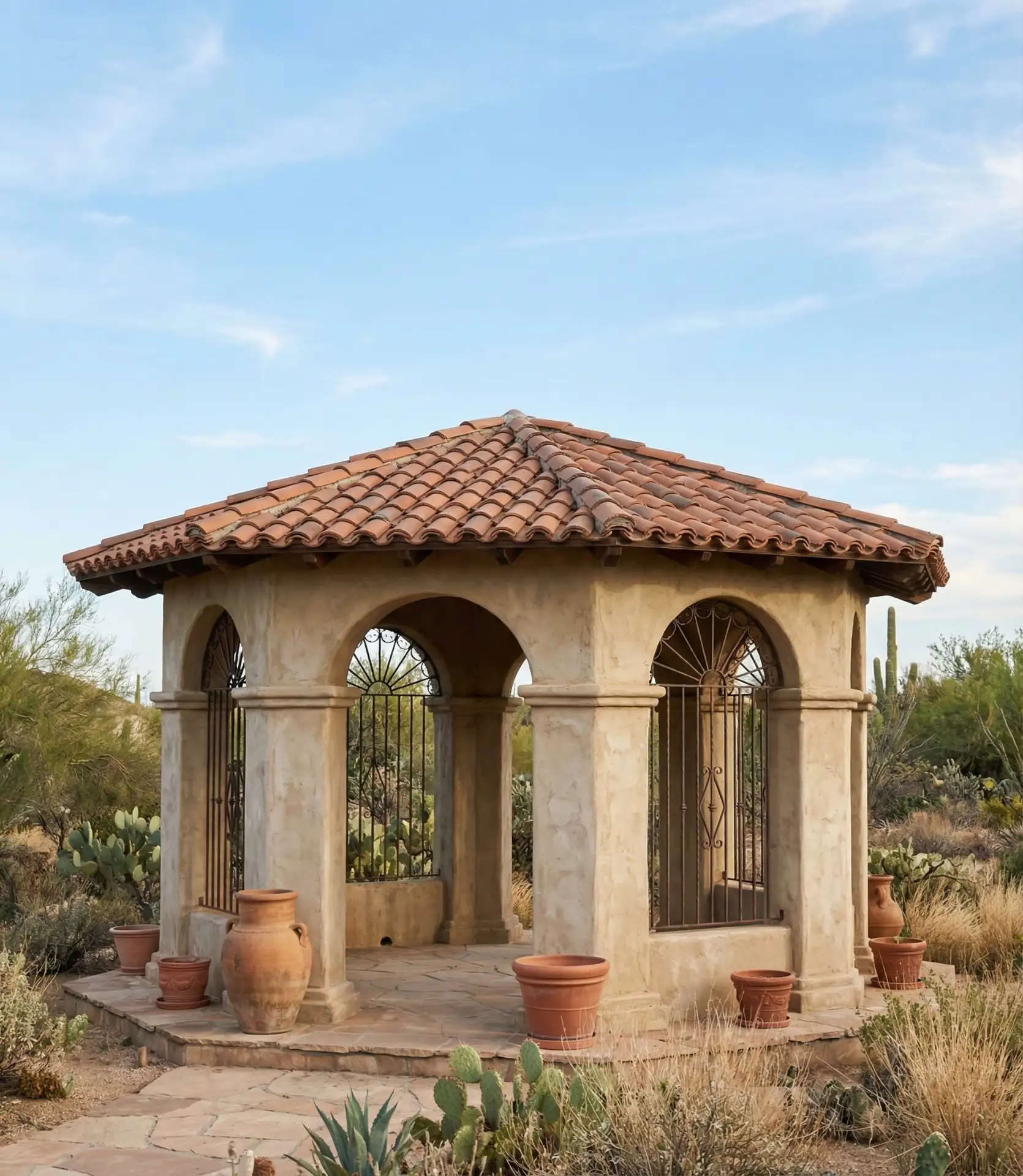
In the states of Arizona, New Mexico, and Southern California, the style feels completely fitting and actually does well under extreme heat—stucco has excellent thermal mass, and tile roofs reflect solar radiation. Other materials also better handle the big swings in temperature and UV exposure, which reduces long-term maintenance in harsh climates compared to wood alternatives.
23. Pallet Construction Budget
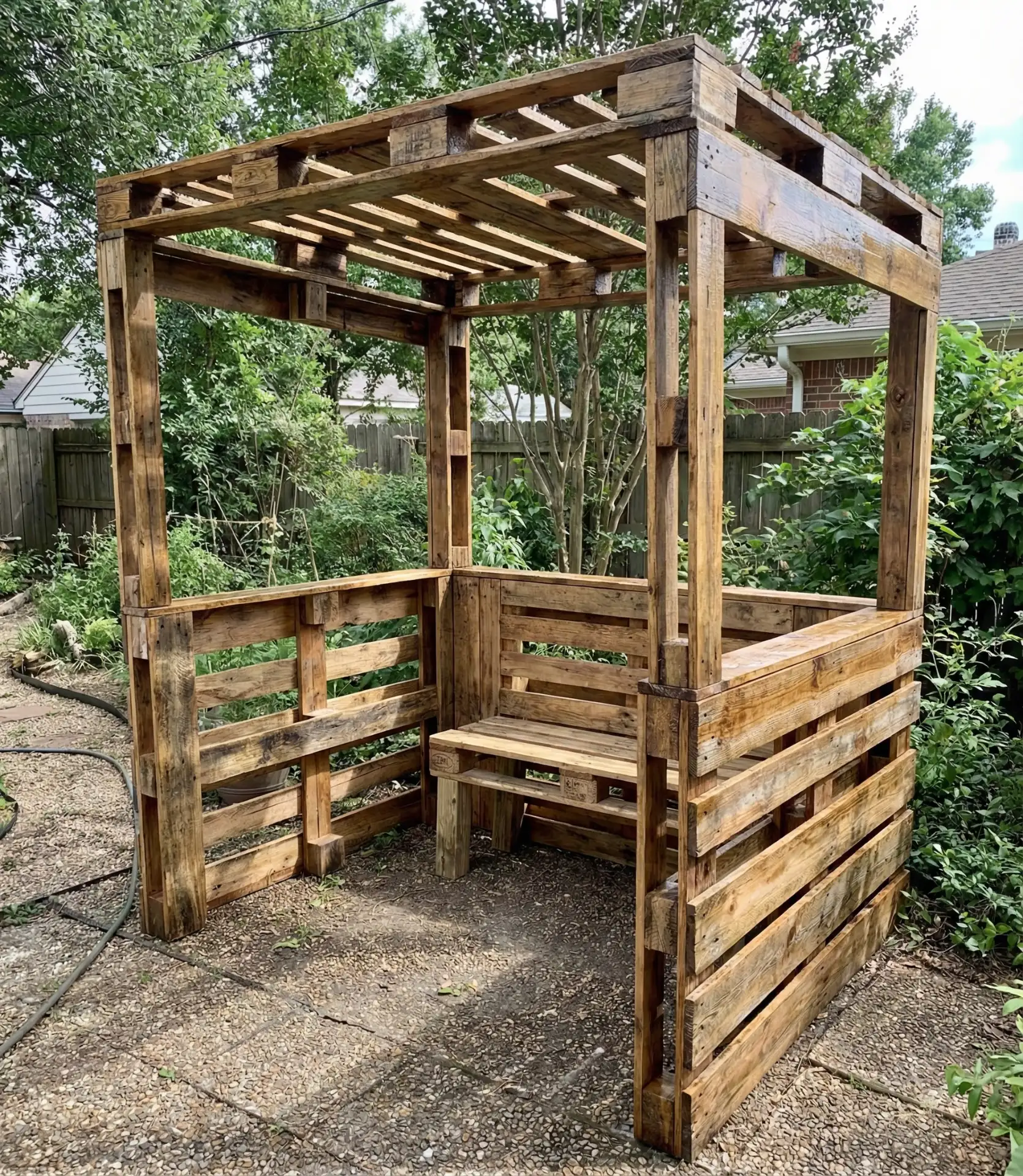
Reclaimed wooden pallets offer a cheap building material for backyard DIY projects for enthusiasts willing to invest sweat equity. Deconstructed and rebuilt, pallets create rustic walls, flooring, and decorative elements with authentic character. This approach appeals to both budget-conscious builders and those seeking sustainable repurposed materials. Sand, seal, and paint the wood to protect against weather while maintaining the casual, handcrafted aesthetic. 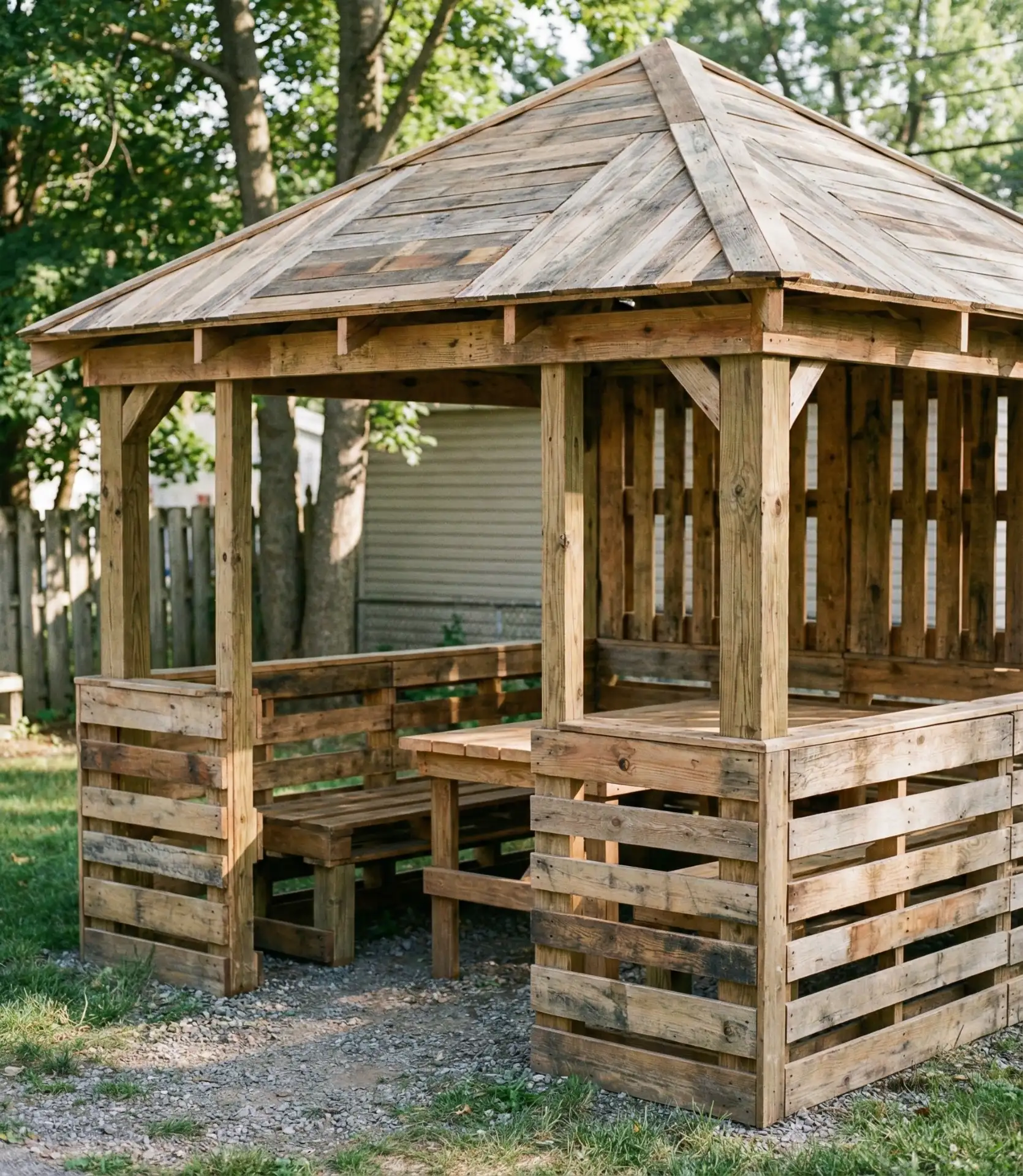
Pallets are inexpensive and easily available from businesses, warehouses, and construction sites—just remember to check the pallets for heat treatment (look for the HT stamp) instead of chemical treatment. If you get free pallets, your material costs will be under $300 for fasteners and sealant. The only tradeoff is the amount of work to deconstruct the pallets, which requires some time and patience to avoid splitting the boards.
24. Japanese-Inspired Pavilion
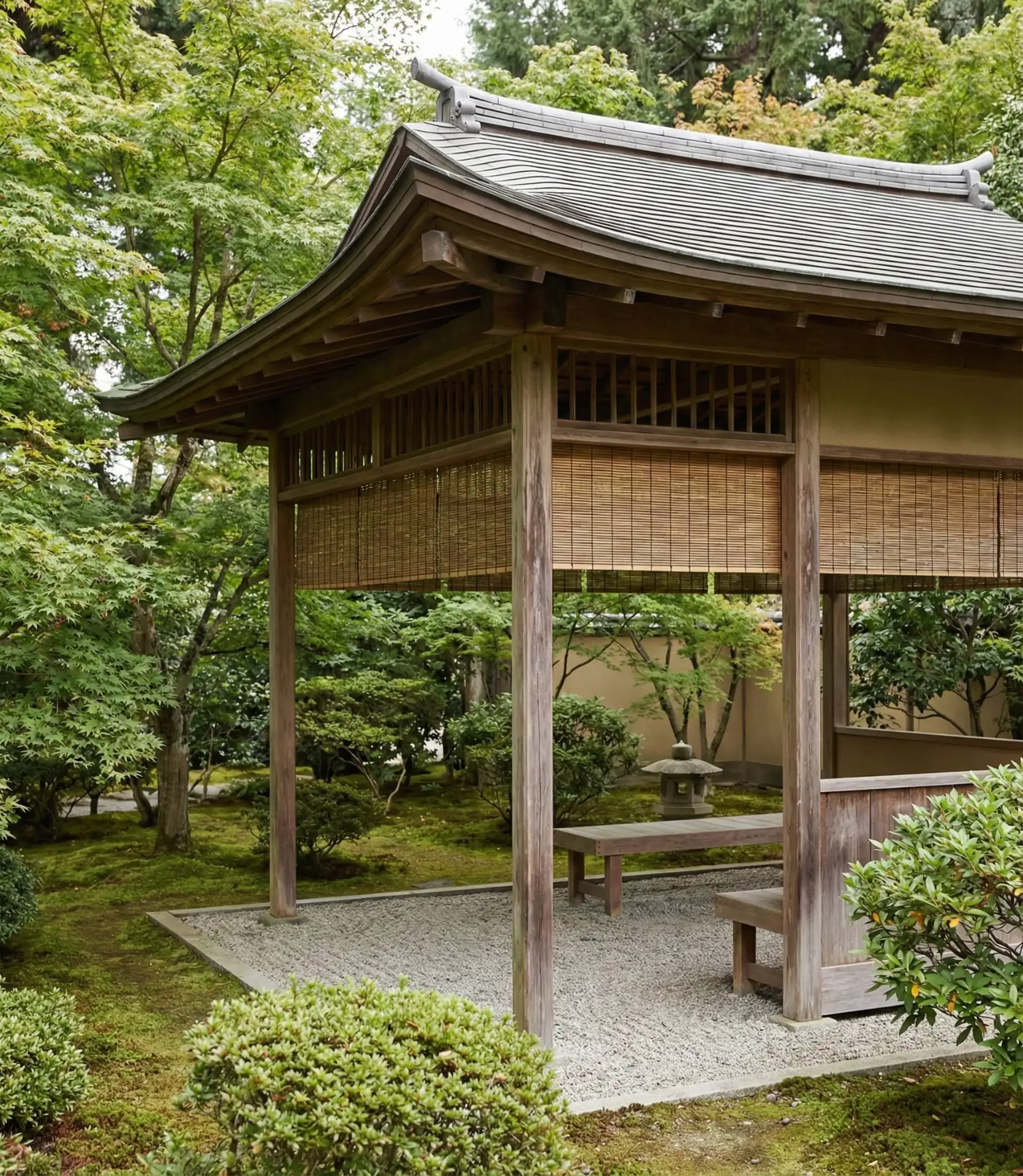
A gazebo with clean lines, natural wood, and a roof with a slight upward turn brings Japanese garden aesthetics to mind. This design is simple yet sophisticated and emphasizes quality materials over elaborate decorations. For a meditative atmosphere, use gravel for the flooring, and install minimal bamboo screens and furniture. A nearby water feature and low-voltage landscape lighting will enhance the contemplative quality, making it ideal for relaxing in your backyard or at a garden. 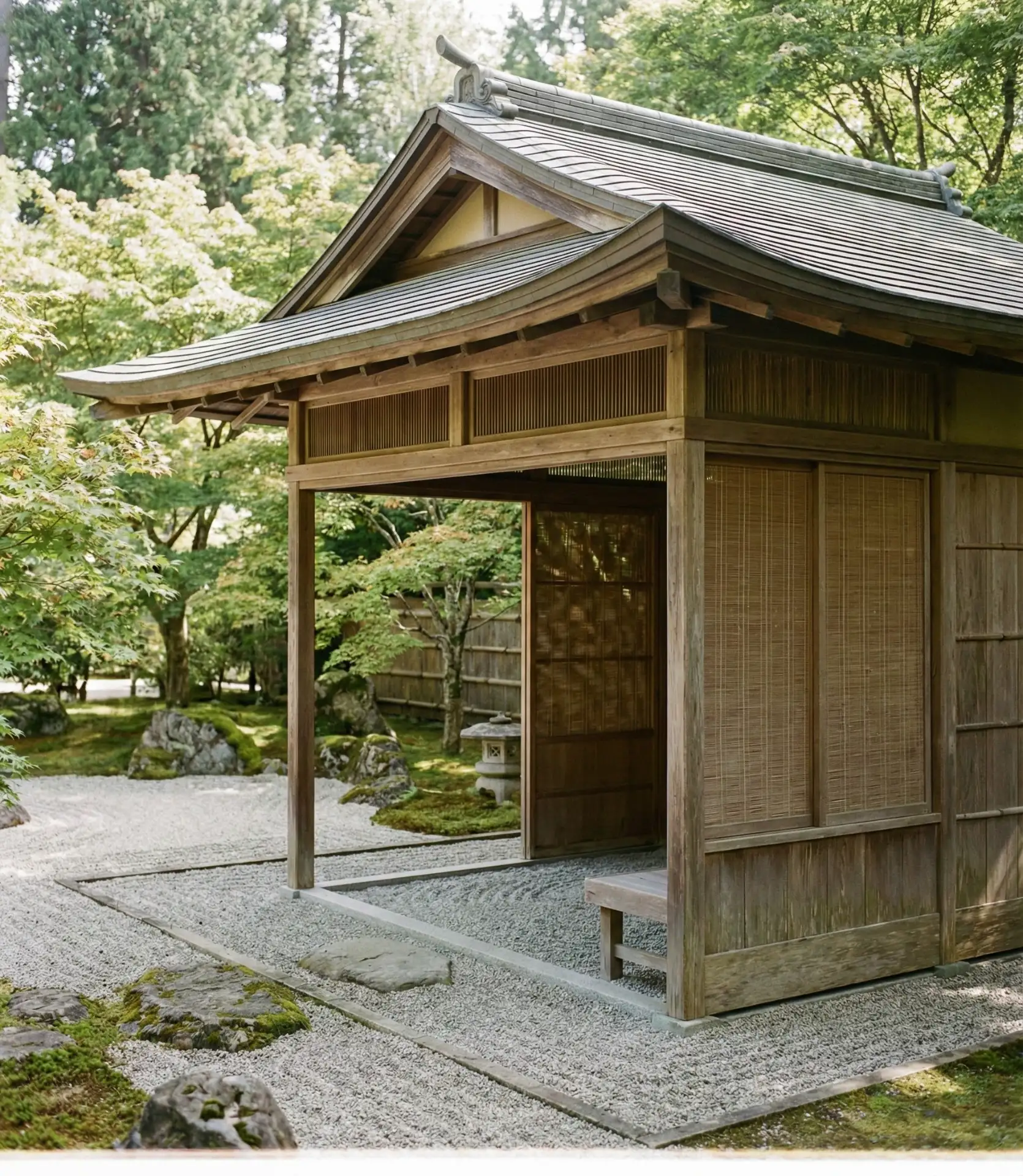
Homeowners from the West Coast particularly appreciate this style, as it complements both modern and traditional styles. It also gracefully ages; the design is made with wood and copper that develops a natural beauty over time, unlike other, more trendy styles that look worn and outdated after a few years.
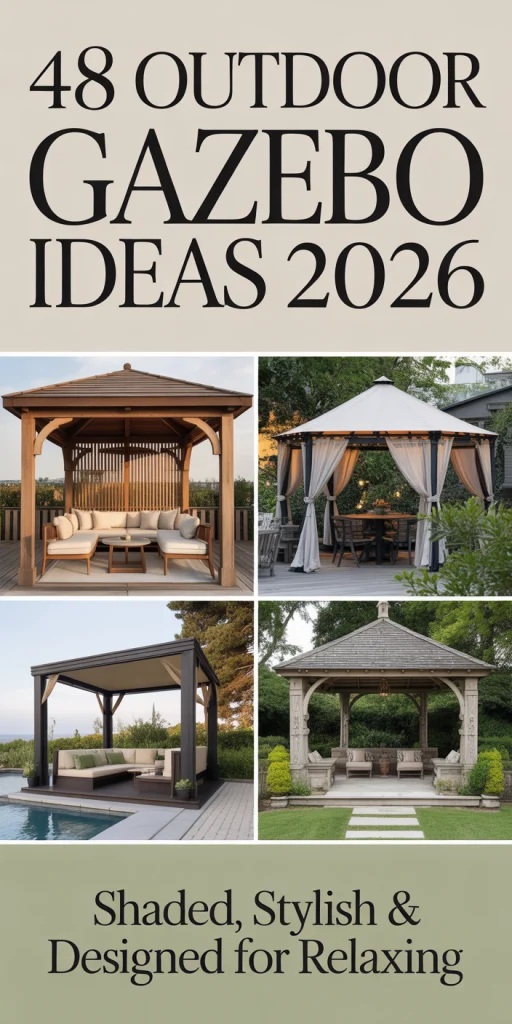
The gazebo ideas show how design thinking can create purposeful outdoor living spaces. It doesn’t matter if you like modern minimalism, rustic, or something else. The most important thing is to choose a design that fits your style and does what you want. We invite you to tell us which idea best fits your plans. Please leave us your questions and comments to let us know your favorites.