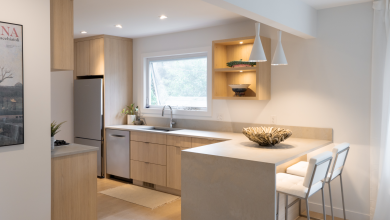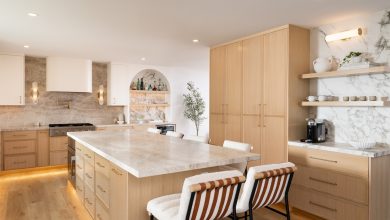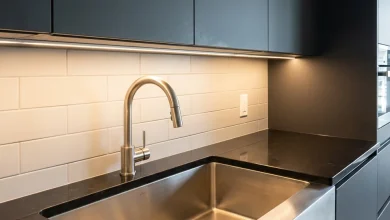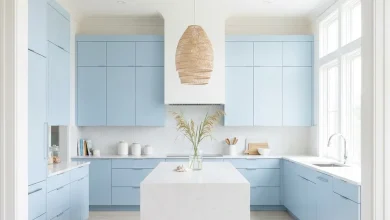

Open kitchen living rooms are having a serious moment right now, and if your Pinterest feed looks anything like the rest of America’s, you already know why. In 2026, the way we design our homes has shifted dramatically—toward spaces that feel connected, breathable, and genuinely livable rather than staged for a catalog shoot. Whether you’re renovating a small apartment, rethinking a barndominium floor plan, or simply trying to make your existing space feel bigger and more intentional, the open kitchen-living concept offers something for every style and budget. This article walks you through real, actionable ideas that blend the best of current interior design trends—from Japandi calm to bold paint choices—so you can find the look that actually fits your life.
1. Seamless Scandinavian Flow Between Kitchen and Living Room
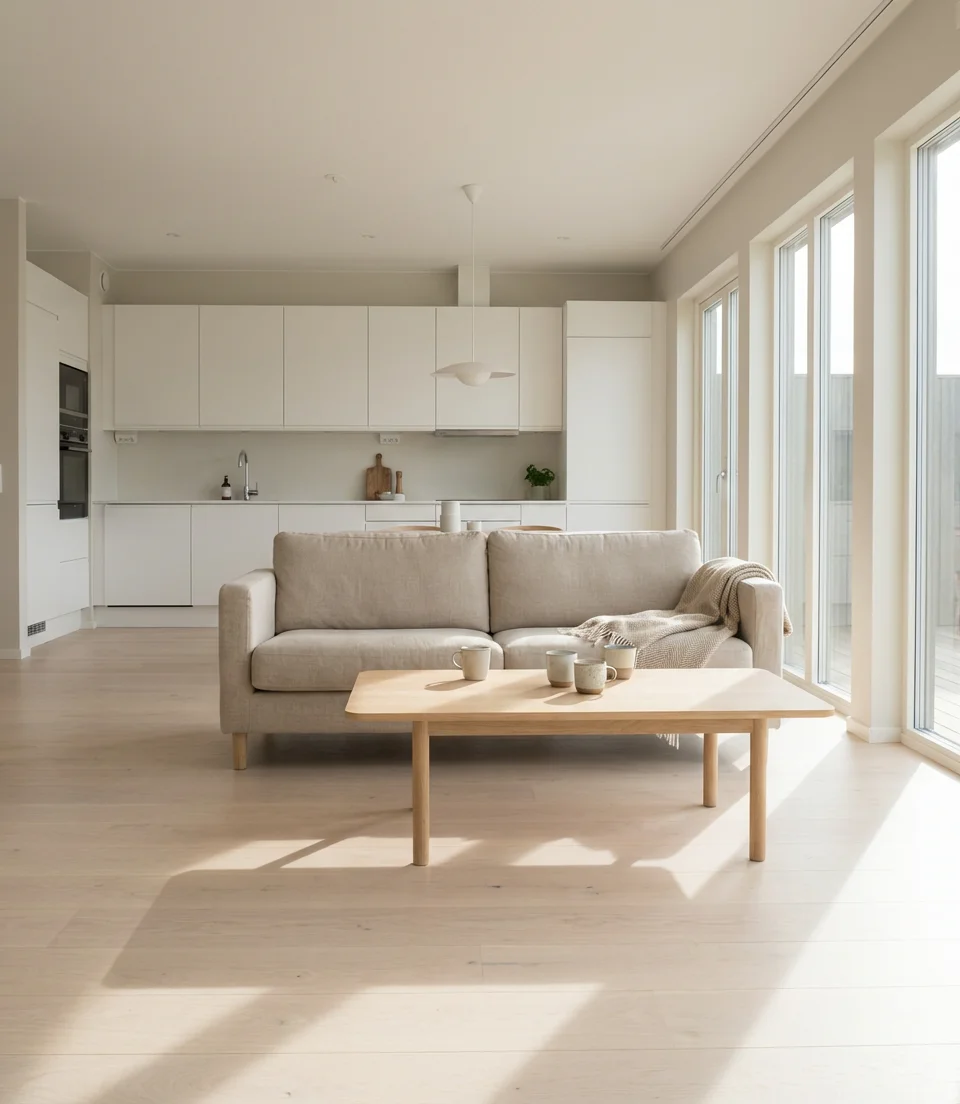
There’s a reason Scandinavian interiors keep dominating Pinterest saves year after year—they make open-plan spaces feel effortless without feeling cold. In this layout, the kitchen and living room share a single visual language: pale wood tones, matte white cabinetry, and minimal clutter. The trick is continuity. When your flooring, color palette, and materials speak the same language from the stove to the couch, the eye reads the entire room as one cohesive, calm space rather than two competing zones fighting for attention.
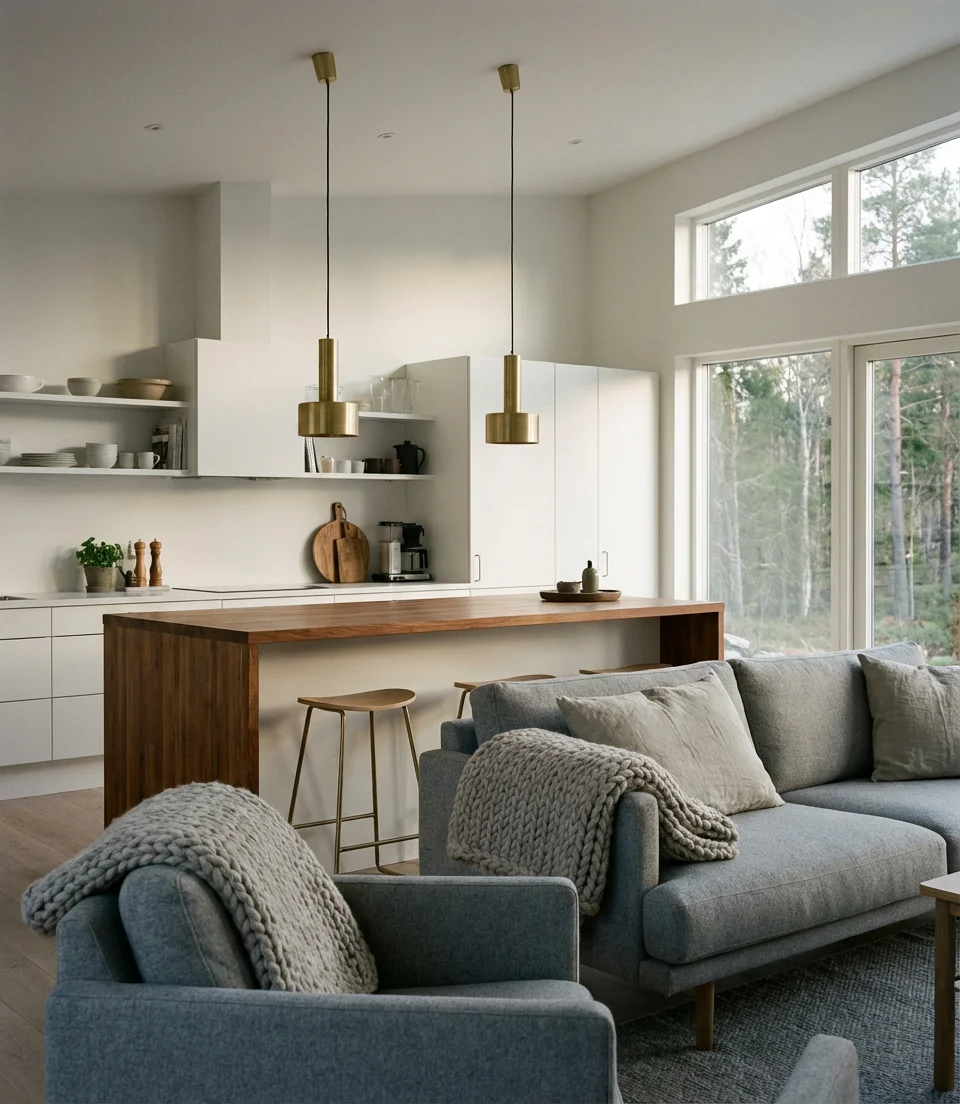
Where this technique works best is in apartments or compact townhouses where you can’t afford to lose any square footage to walls. A designer trick worth borrowing: run a single material—like continuous oak flooring or a shared marble-look tile—from the kitchen straight into the living zone without interruption. That unbroken floor plan visually expands the space by roughly 30%, and it costs nothing extra if you plan it from the start of your renovation rather than retrofitting it later.
2. Japandi Kitchen-Living Room with Warm Neutral Tones
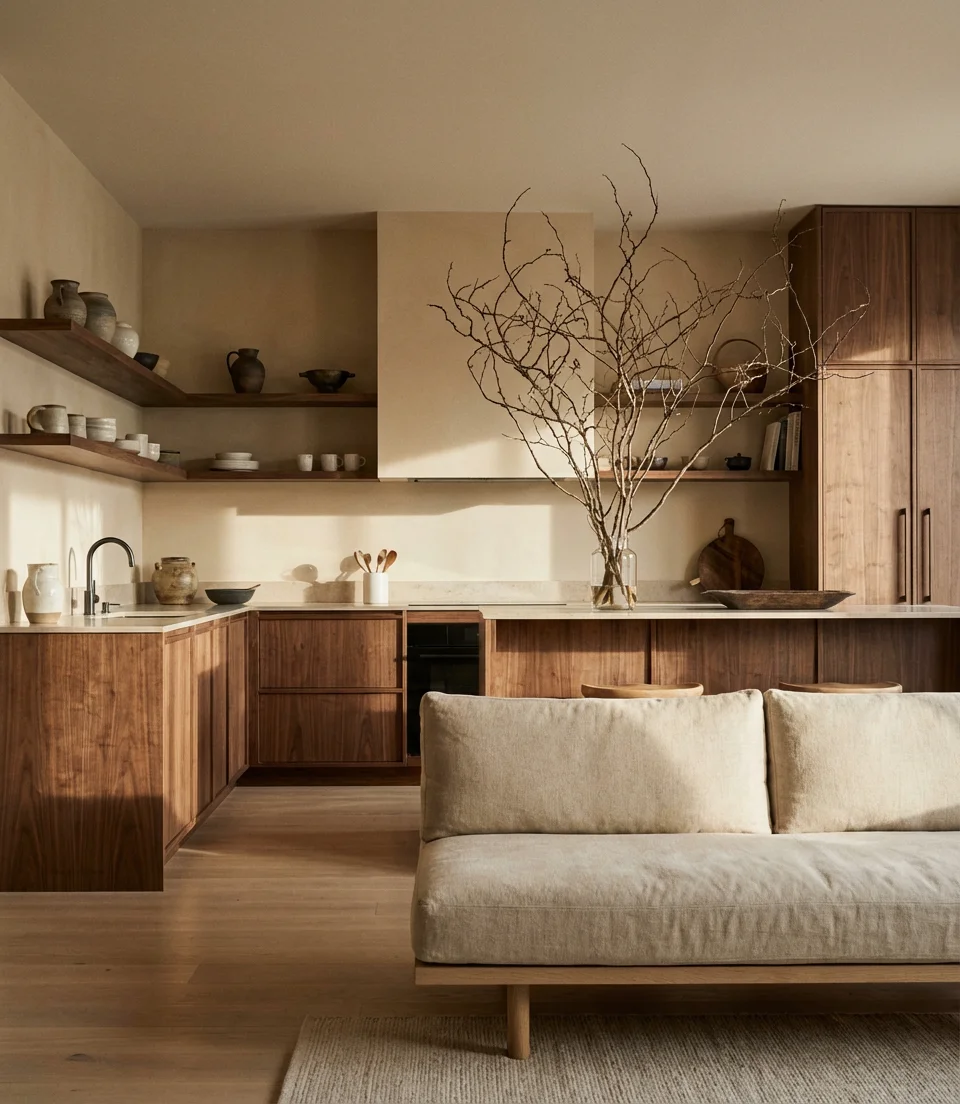
The Japandi aesthetic—that quietly confident blend of Japanese minimalism and Scandinavian warmth—has officially moved from trend to staying power in American homes. In an open kitchen living room concept, it shows up as low-profile furniture, handcrafted ceramic accessories, and a palette that lives somewhere between greige and sand. The result is deeply calming without feeling sterile. Think walnut lower cabinets, a concrete countertop, a low linen sofa, and a single statement bonsai or sculptural branch that ties both zones together visually.
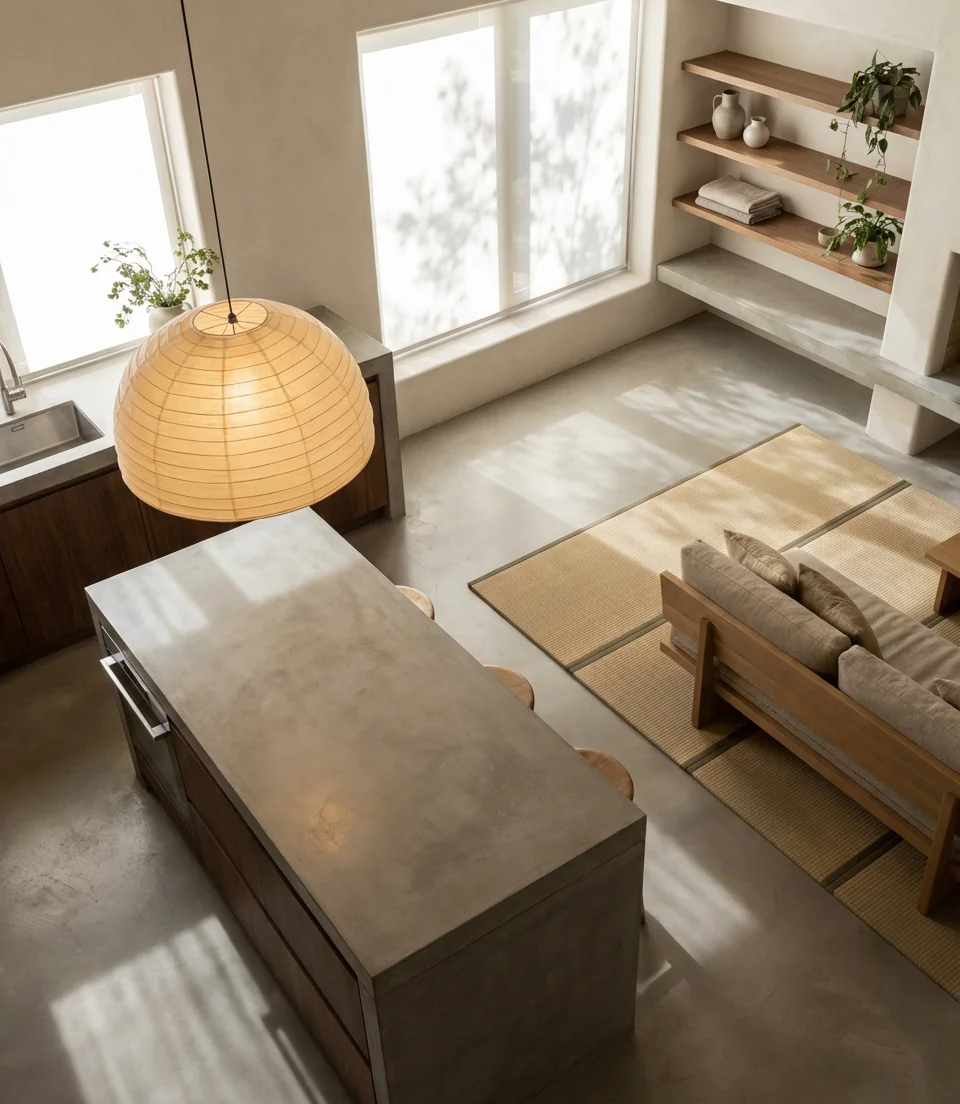
One thing homeowners consistently get wrong with Japandi is over-accessorizing—the whole point is restraint. A beneficial rule: if you can remove one item from a surface and the room still feels complete, remove it. Interior stylists who work in this aesthetic often say that Japandi spaces should feel like you just cleaned up for company, even when you haven’t touched them all week. That sense of intentional emptiness is what makes the space feel genuinely elevated rather than just beige.
3. IKEA-Based Open Kitchen Living Room for Small Apartments
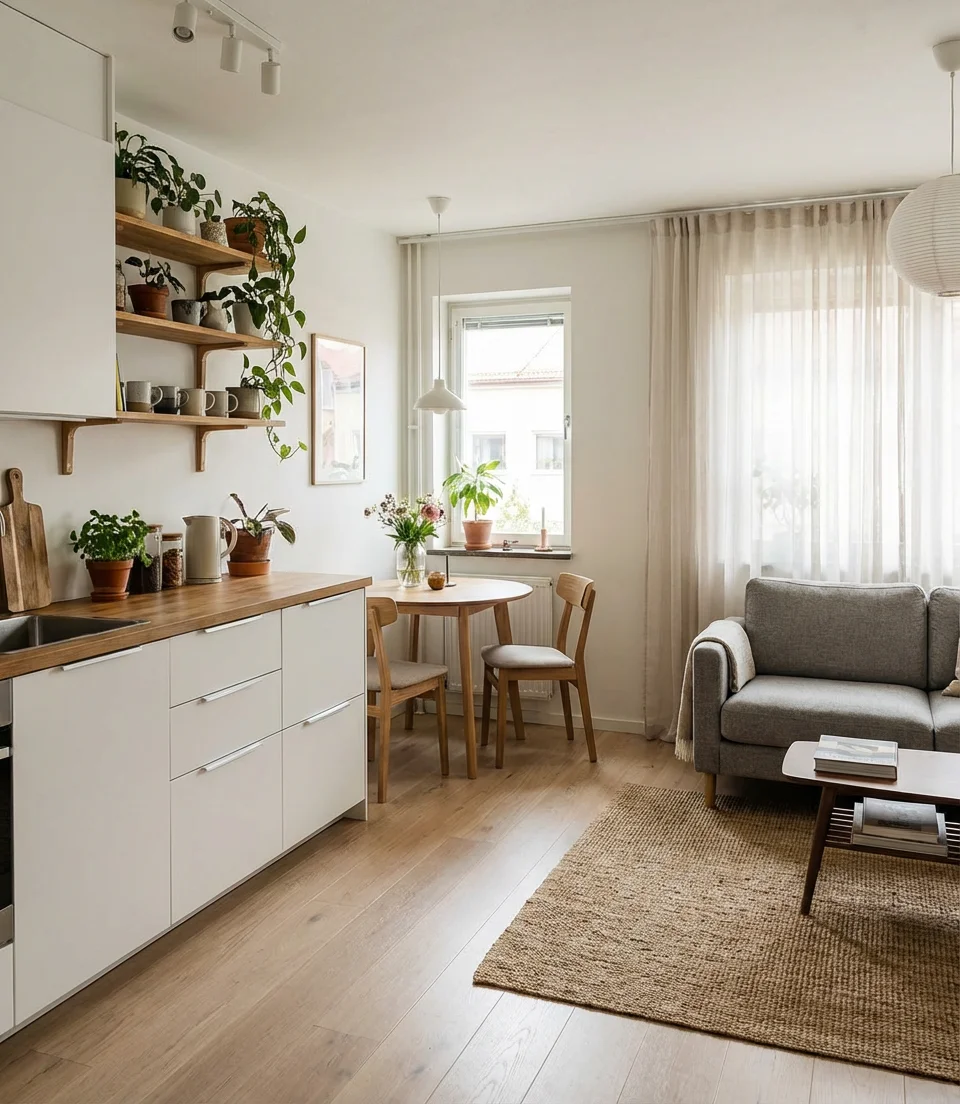
Let’s be real: most of us aren’t working with a designer budget, and that’s exactly where IKEA earns its cult following. For a small apartment open kitchen living room, IKEA’s SEKTION or ENHET kitchen systems pair remarkably well with their KALLAX shelving and EKET wall units to create a cohesive, built-in look that costs a fraction of custom cabinetry. The key is in the finishing details—swapping out standard hardware for something more considered (unlacquered brass pulls, matte black knobs) and adding custom panels where budget allows to make it look intentional rather than off-the-shelf.
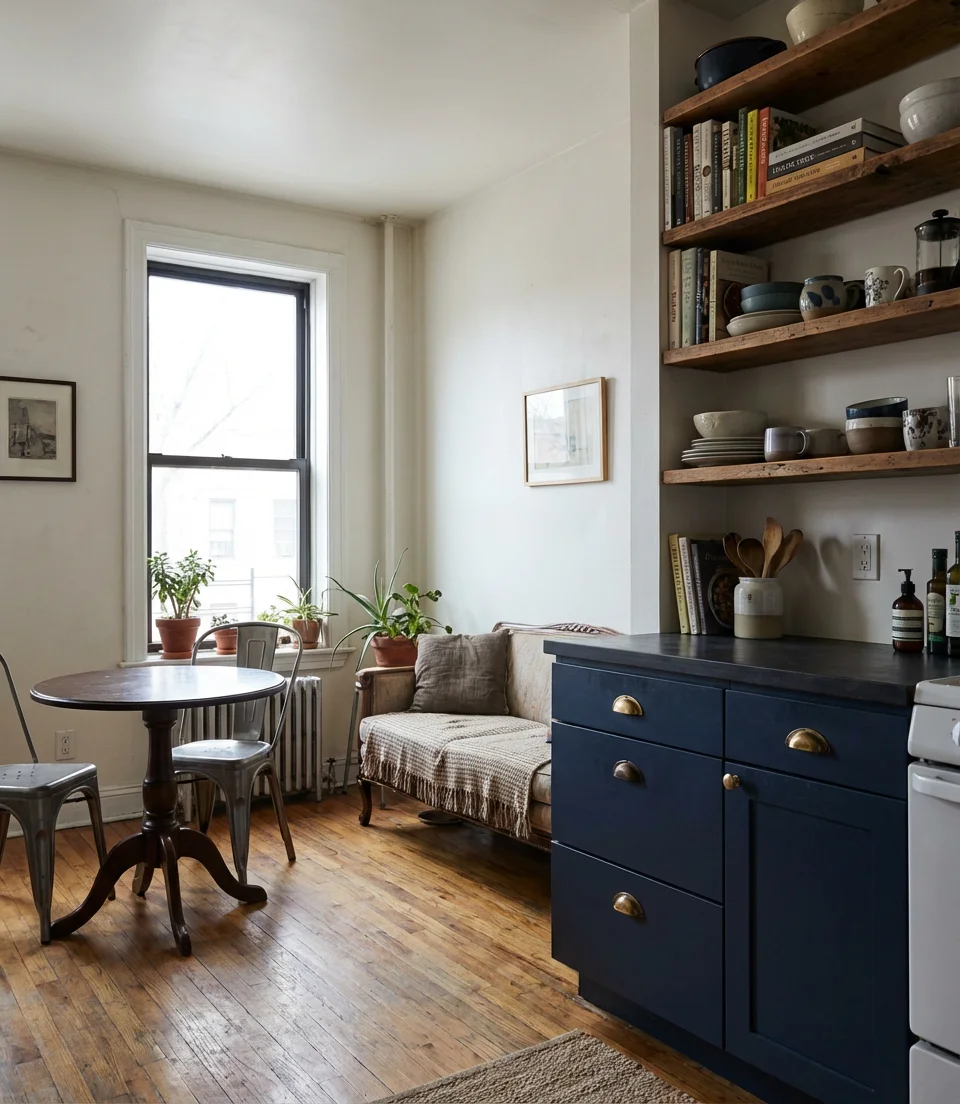
Budget reality check: a full IKEA SEKTION kitchen with upgraded fronts (like those from Semihandmade or Reform) typically runs between $3,000 and $8,000 installed—compared to $15,000–$30,000 for fully custom cabinetry. For renters or first-time buyers who want the look without the lifetime commitment, this is genuinely one of the smartest investments you can make in a space you’re still figuring out. The modularity also means pieces can move with you if you ever do.
4. Cased Opening Between Kitchen and Living Room
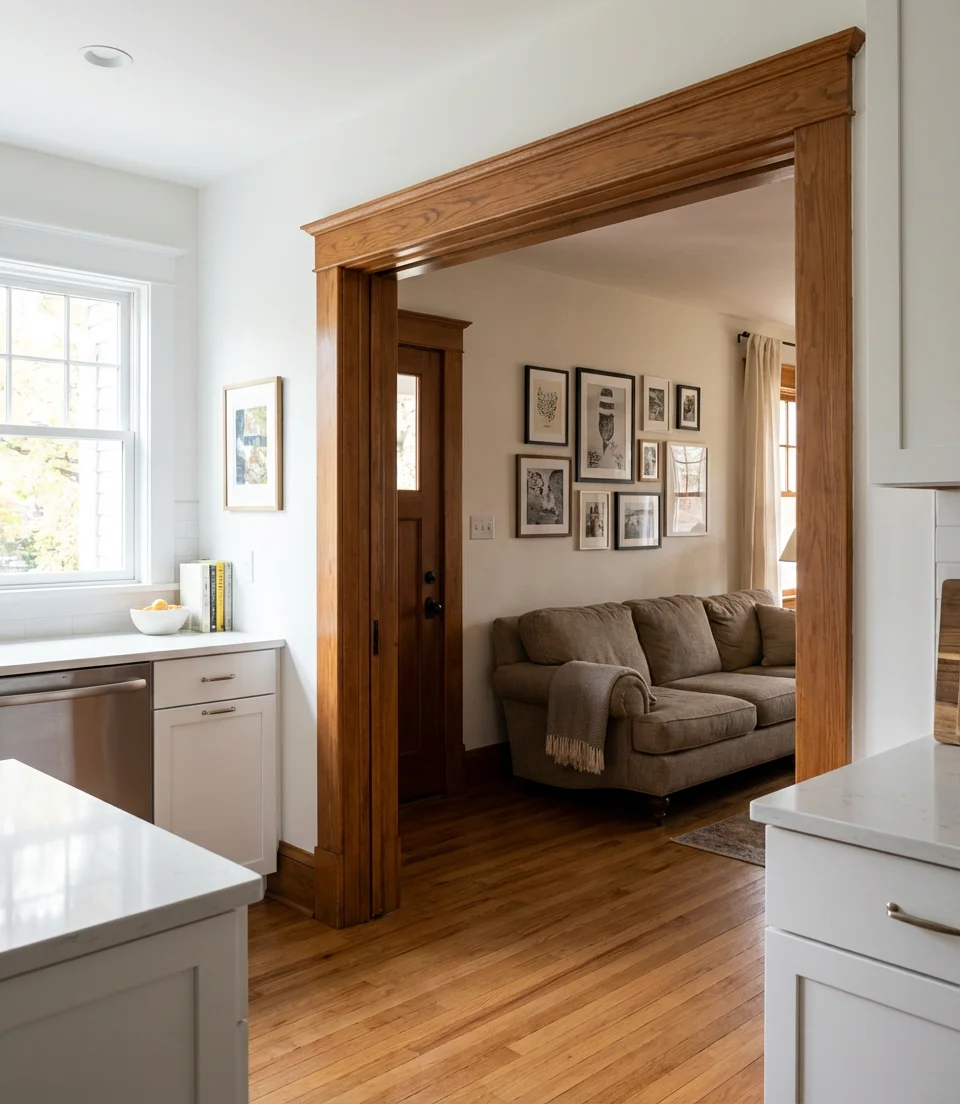
A cased opening is one of those architectural moves that feels custom and considered without being structurally complicated—it’s essentially a wide, trimmed doorway that connects two spaces without a door. In an open design for the kitchen and living room, a cased opening creates soft separation: you get the visual connection and light flow of a fully open plan, but there’s still a clear architectural threshold that helps define each zone. It’s particularly useful if you want the living room to feel like a distinct retreat rather than an extension of the kitchen.
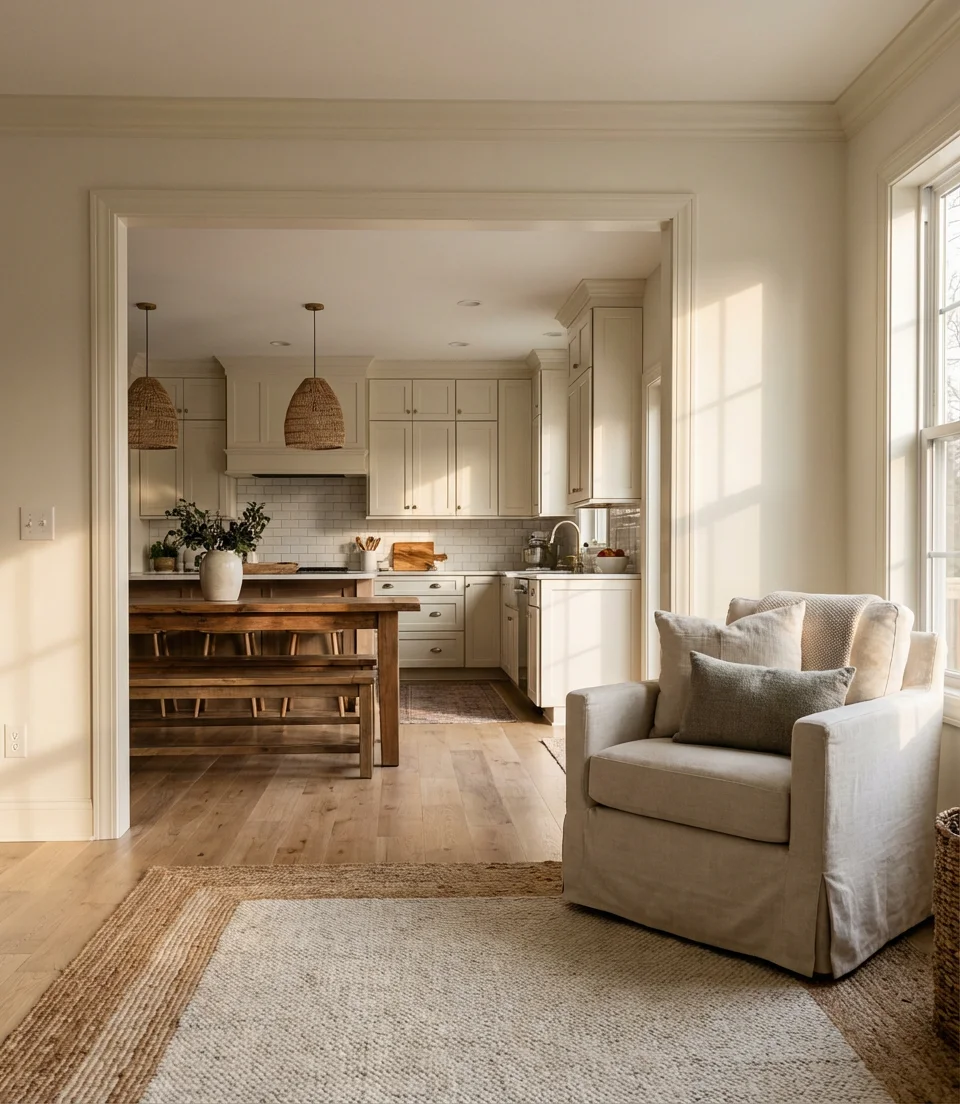
This approach is especially popular in older American homes—craftsman bungalows, colonial revivals, Cape Cods—where knocking out an entire wall would feel architecturally wrong. A cased opening respects the bones of the house while modernizing the flow. One thing to get right: the trim profile. Match it to the existing trim throughout the home, and it reads as original. Miss that detail, and the whole thing can look like a renovation patch job instead of a deliberate design decision.
5. Open Kitchen Living Room Paint Colors That Actually Work
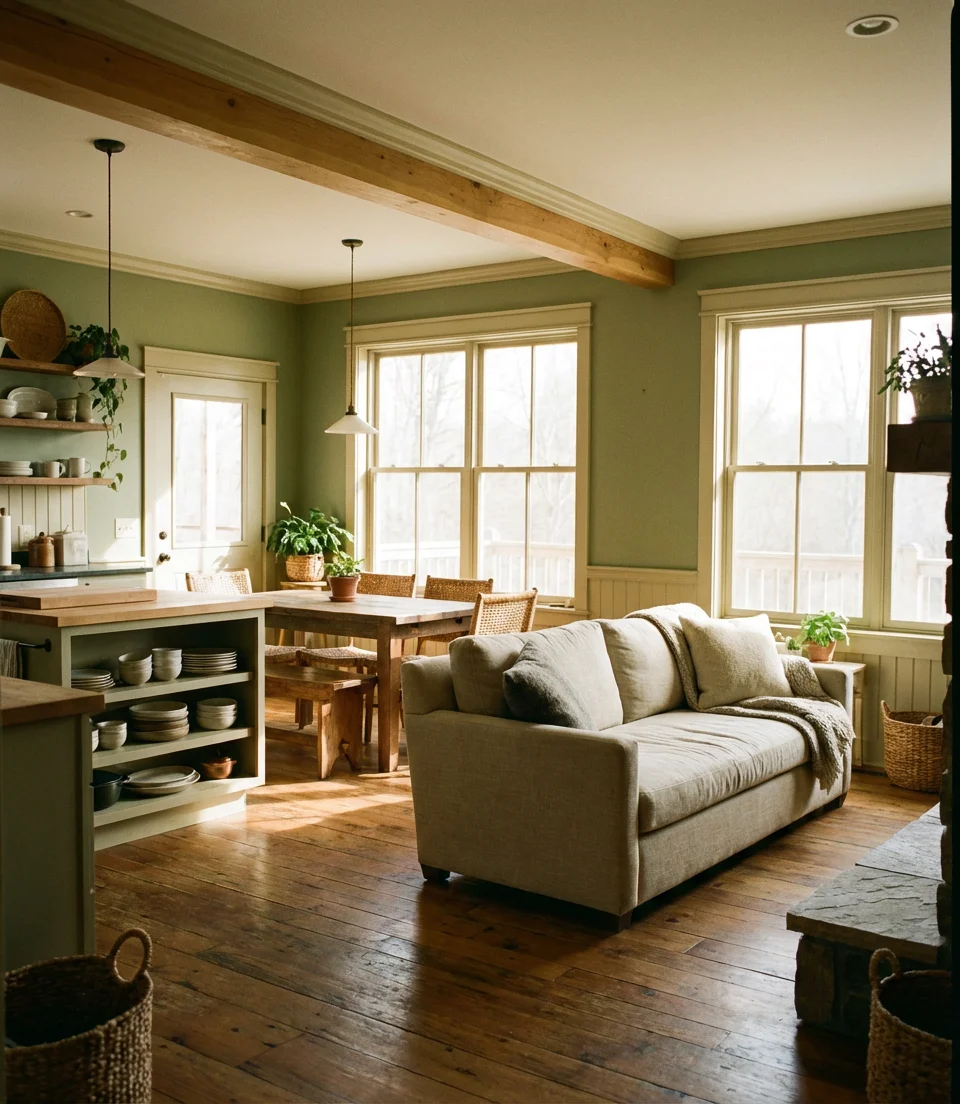
Choosing paint colors for a combined kitchen and living room is genuinely one of the hardest decisions in interior design—because every undertone looks different under cooking light, natural afternoon light, and evening lamp warmth all in the same room. The colors that consistently perform well in open-plan spaces in 2026 are warm whites with yellow or pink undertones (not blue or gray), deep earthy greens like sage or olive, and soft terracottas that feel modern without veering into trendy. These shades absorb light beautifully rather than reflecting it harshly.
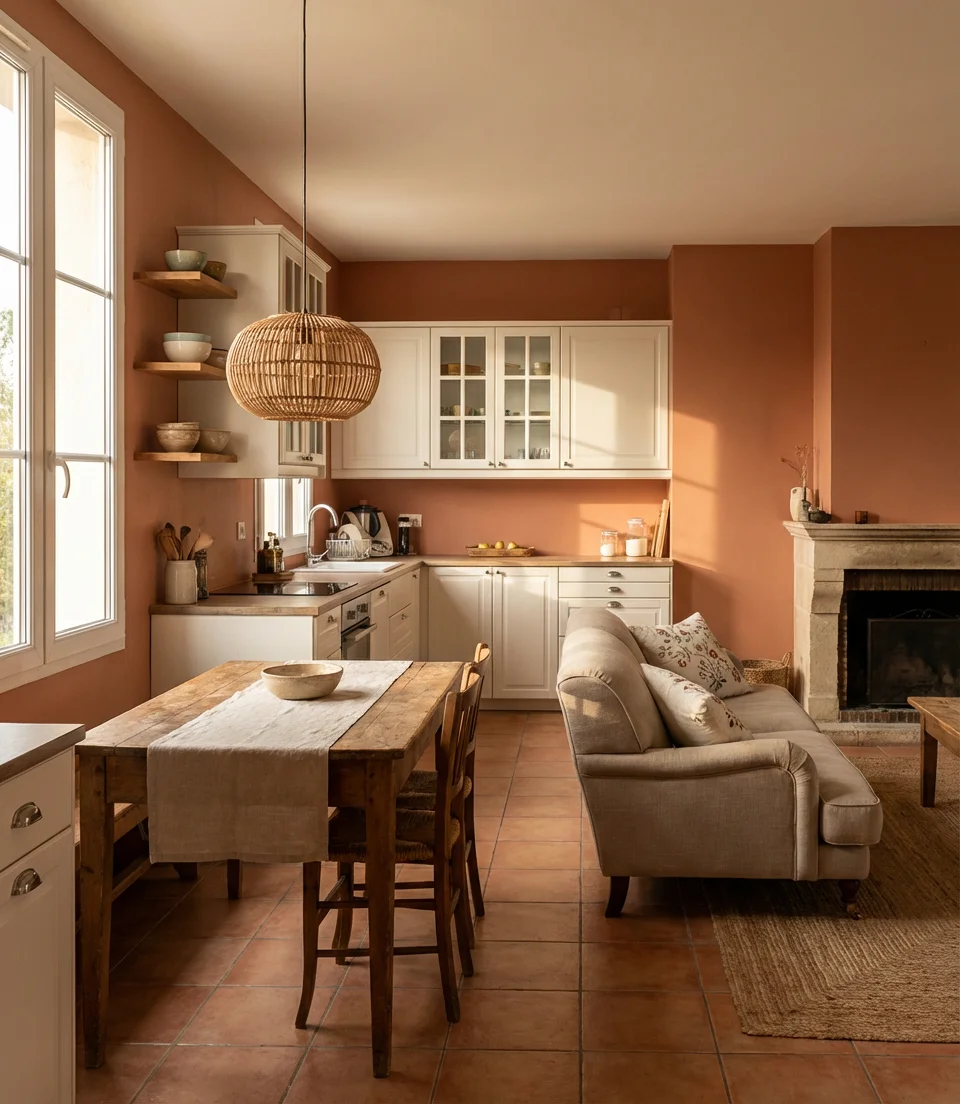
What is the most common mistake people make when choosing colors? People often make the mistake of testing a paint chip against their cabinets under store lighting, only to discover at home that it appears completely different. Always test a large painted swatch—at least 12 by 12 inches—on your actual wall and observe it at different times of day before committing. Benjamin Moore’s Pale Oak (OC-20) and Sherwin-Williams’ Accessible Beige remain the most reliably warm, crowd-pleasing bases for open-plan spaces, but don’t be afraid to go darker on an accent wall flanking the kitchen island.
6. How to Arrange Furniture in an Open Kitchen Living Room
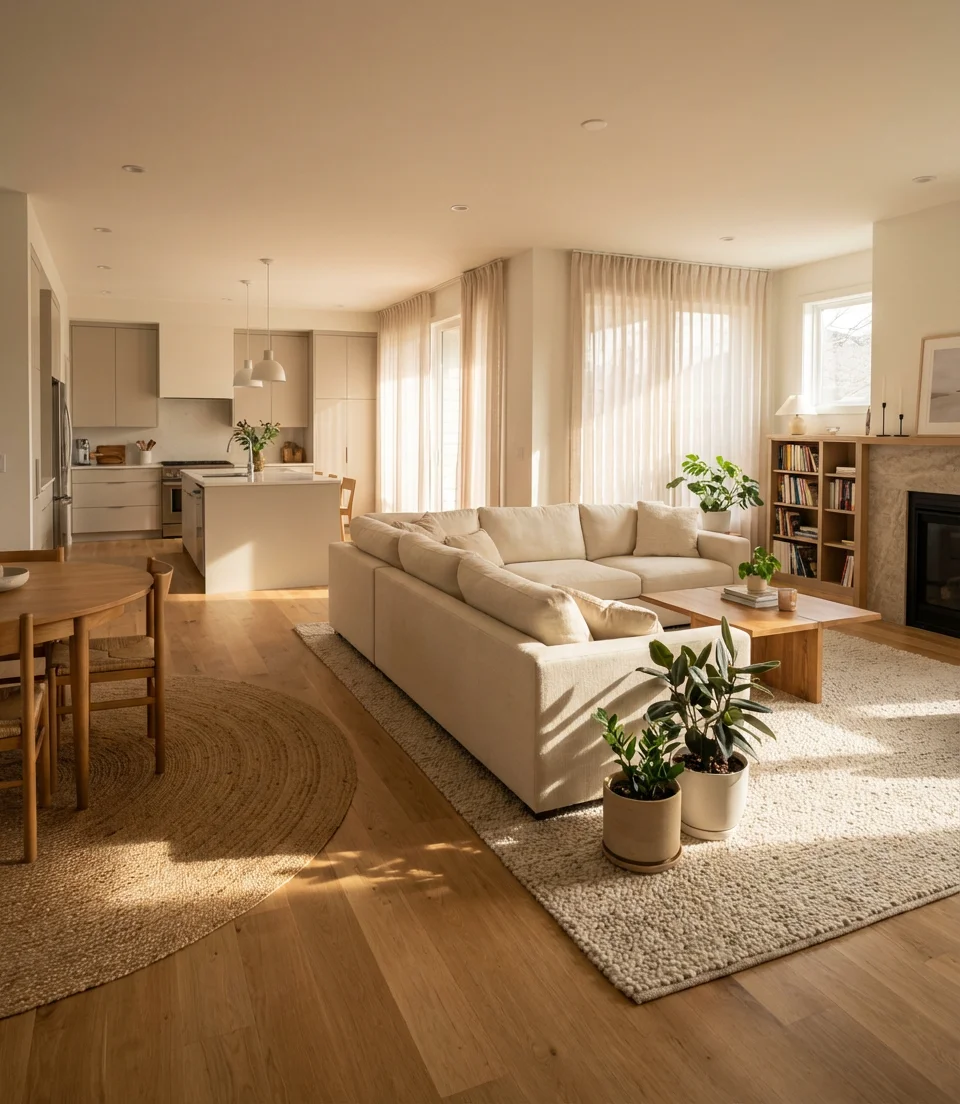
Knowing how to arrange furniture in an open-plan space separates a room that feels pulled together from one that feels chaotic and aimless. The single most important rule: anchor each zone with a rug. A well-placed rug under the dining table and a separate rug under the couch and coffee table act as invisible room dividers—they tell the eye “this is the eating zone” and “this is the lounging zone” without any walls or partitions. Scale matters enormously; most people choose rugs that are far too small, which makes furniture float awkwardly rather than feel grounded.
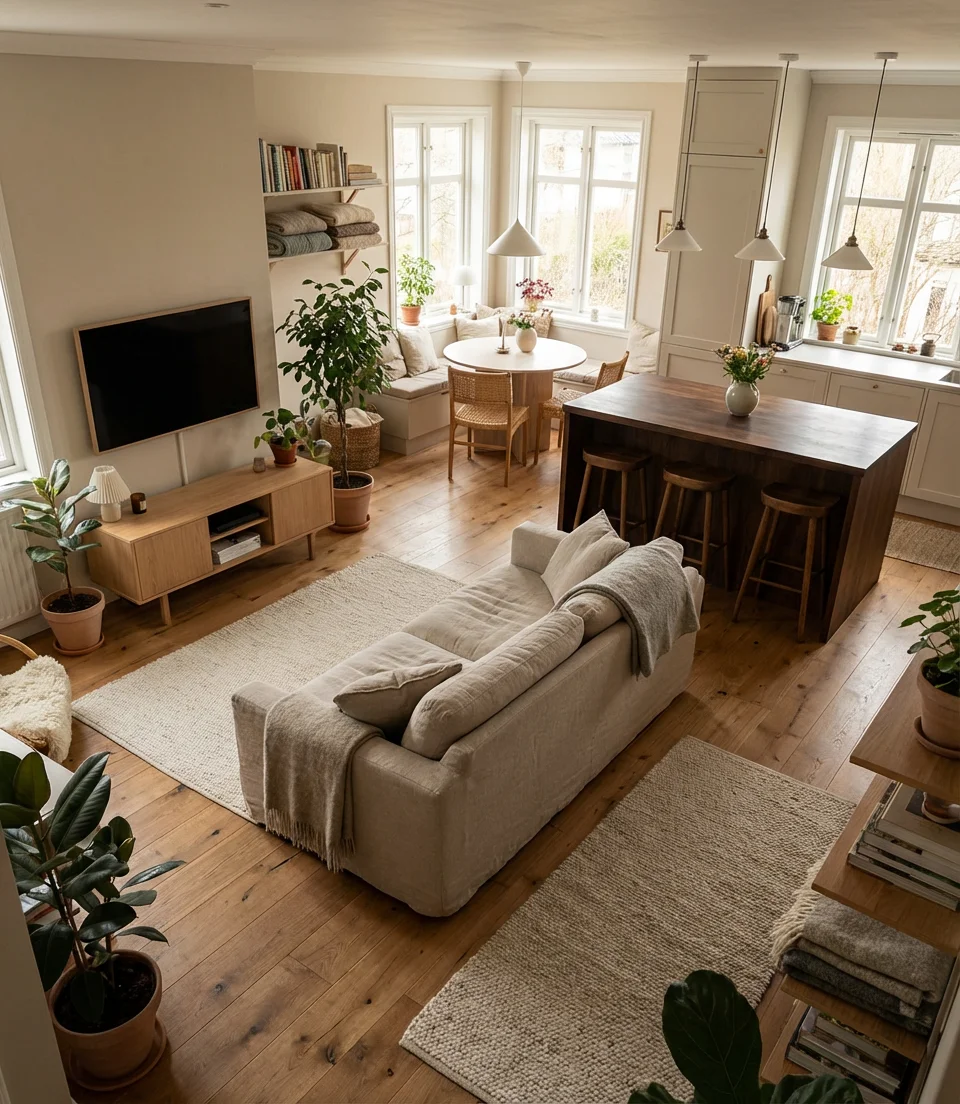
A real homeowner in Chicago shared that she’d rearranged her open-plan furniture seven times before a designer friend pointed out her sofa was blocking sightlines from the kitchen. Once she rotated it 90 degrees—keeping the back of the sofa facing the kitchen island rather than a wall—the whole space suddenly felt intentional. The sofa back actually created a natural zone boundary and gave the kitchen a cleaner visual backdrop. It’s a simple fix, but it changes everything about how a room functions.
7. Semi-Open Kitchen Plan for Townhouses
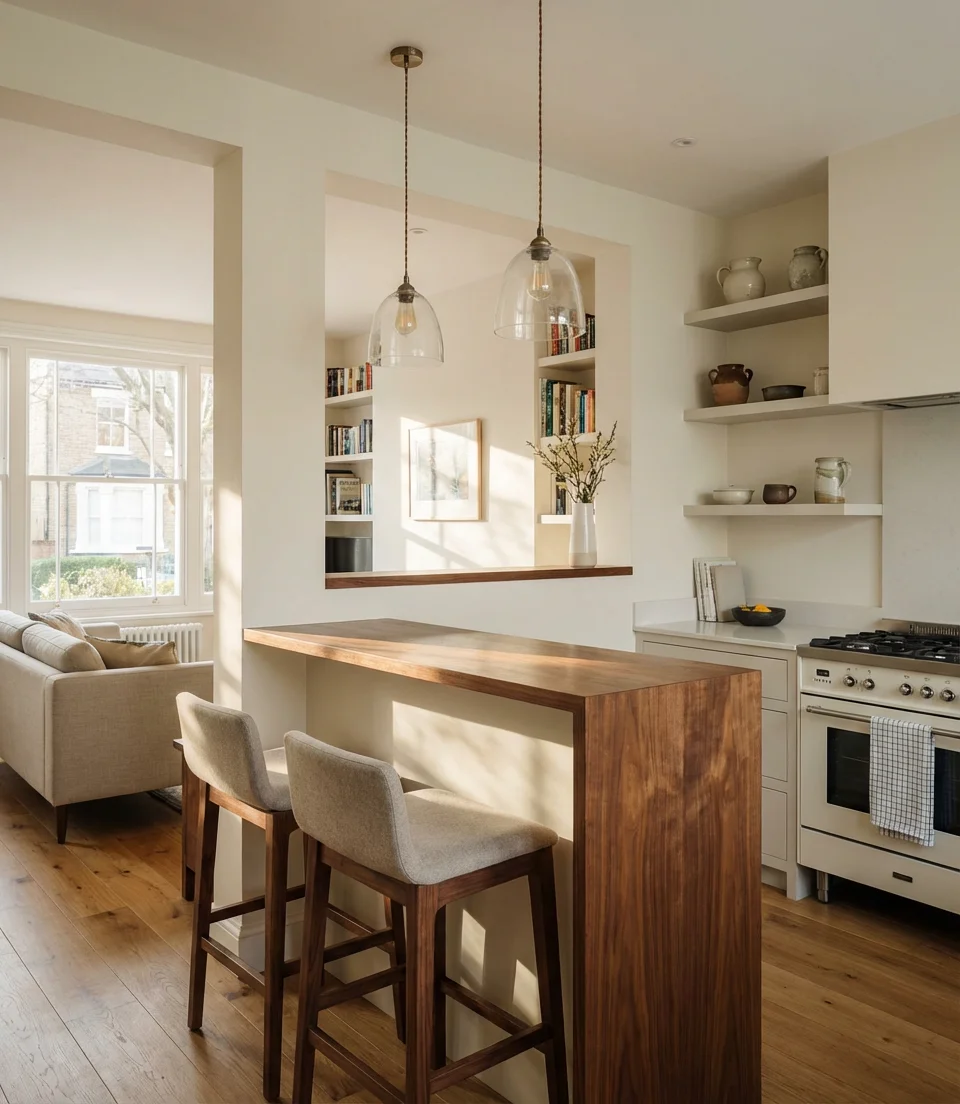
Not every home—and not every homeowner—wants a fully open kitchen. The semi-open plan is having a genuine revival right now, and townhouse layouts are where it makes the most sense. Here, the kitchen maintains some visual separation from the living area—usually through a half wall, a raised bar counter, or a strategic pantry cabinet arrangement—while still allowing light and conversation to flow freely. This design allows you to enjoy the benefits of a kitchen that can be closed off from mess and cooking smells without feeling confined or isolated from the rest of the home.
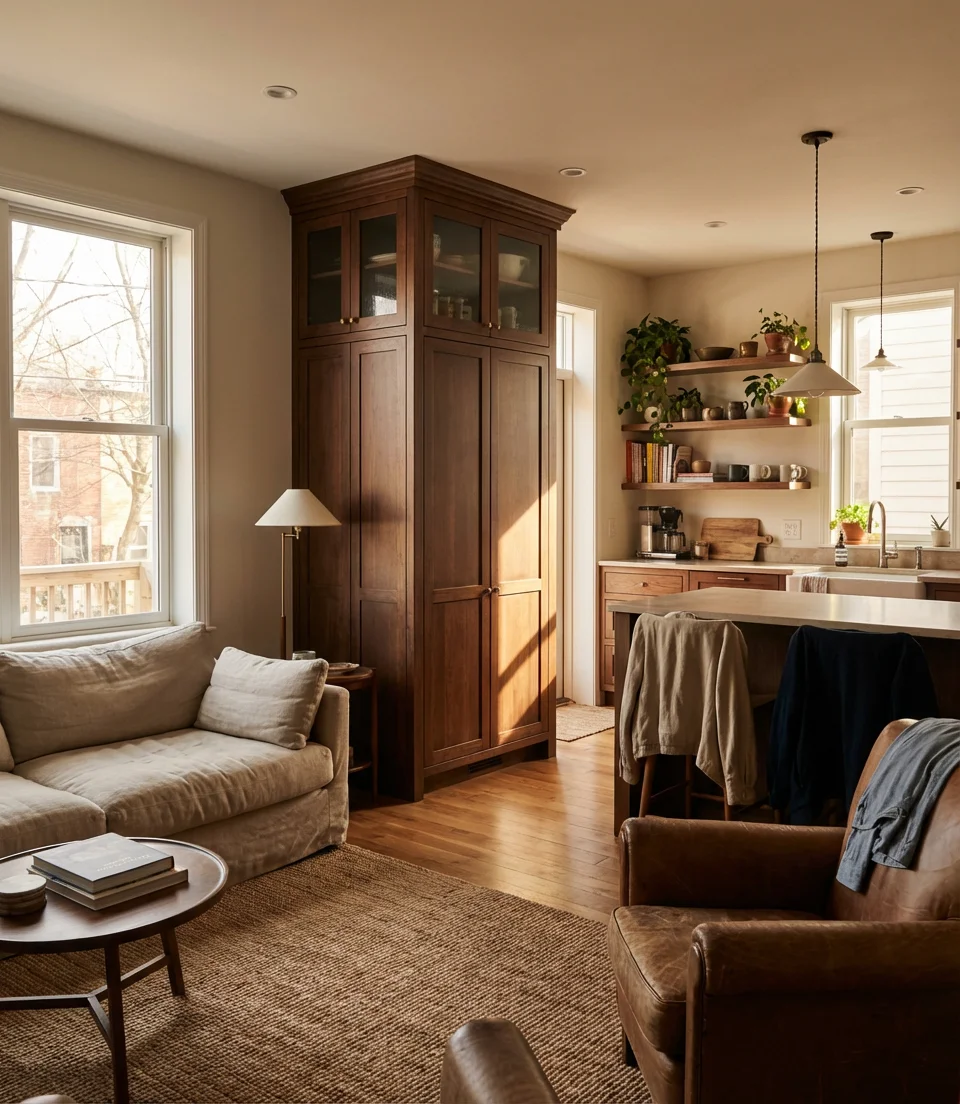
This arrangement works best in narrow two- or three-story townhouses where the kitchen is on the main floor and privacy from street-level views matters. A half wall—typically 42 inches high—can double as a serving ledge, a wine rack, or a spot for bar stools, turning what might feel like an awkward structural remnant into genuine functional real estate. If you’re in a rental or can’t touch walls, a tall freestanding bookshelf or a kitchen cart placed strategically achieves nearly the same visual effect without any construction.
8. Barndominium Open Kitchen and Living Room Floor Plans
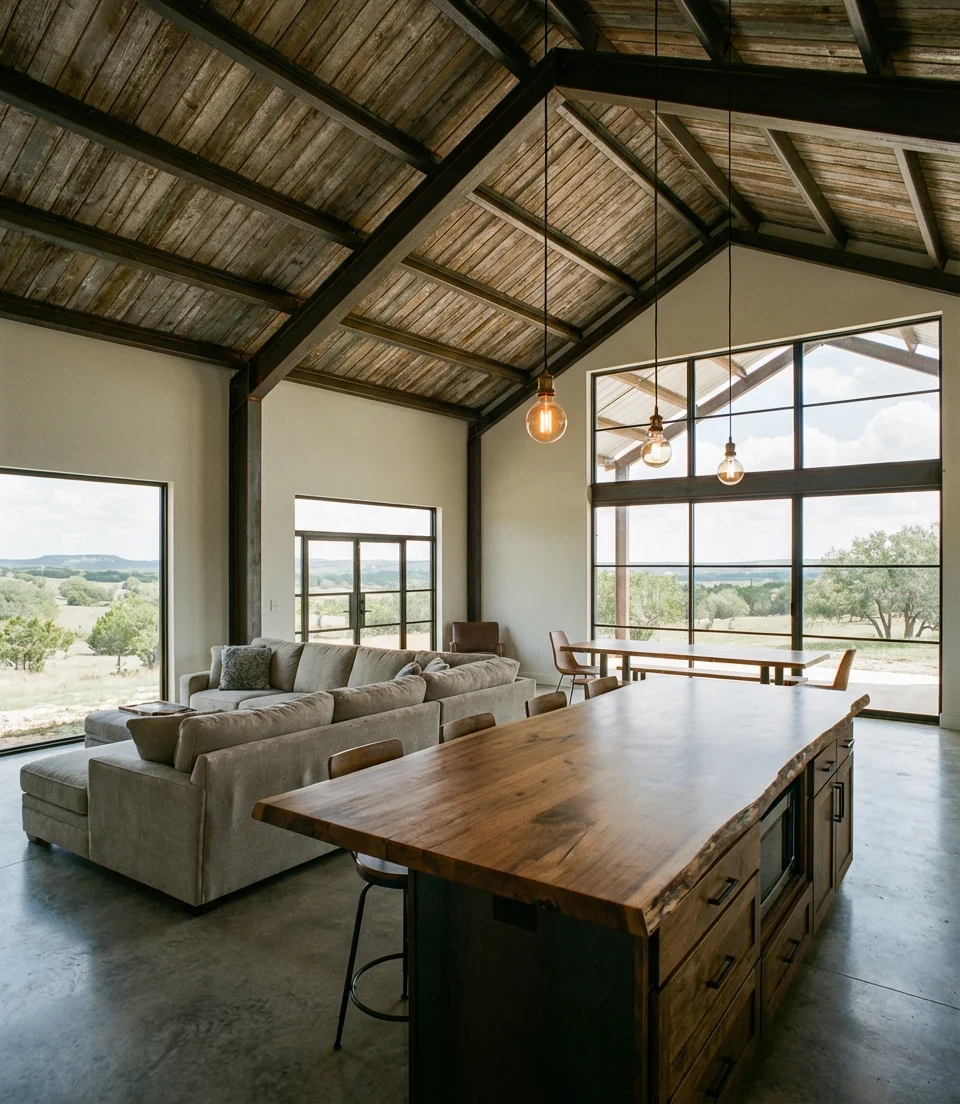
If there’s one housing trend that captures the American love of space, flexibility, and a certain rugged elegance, it’s the barndominium. These converted or purpose-built metal structures are exploding in the South and Midwest—and the floor plan possibilities for their open kitchen living rooms are extraordinary. With soaring 14- to 20-foot ceilings, exposed steel trusses, and wide-open square footage, a barndo kitchen-living combo can feel like a boutique hotel without any of the stuffiness. The challenge isn’t adding space; it’s creating warmth and intimacy within it.
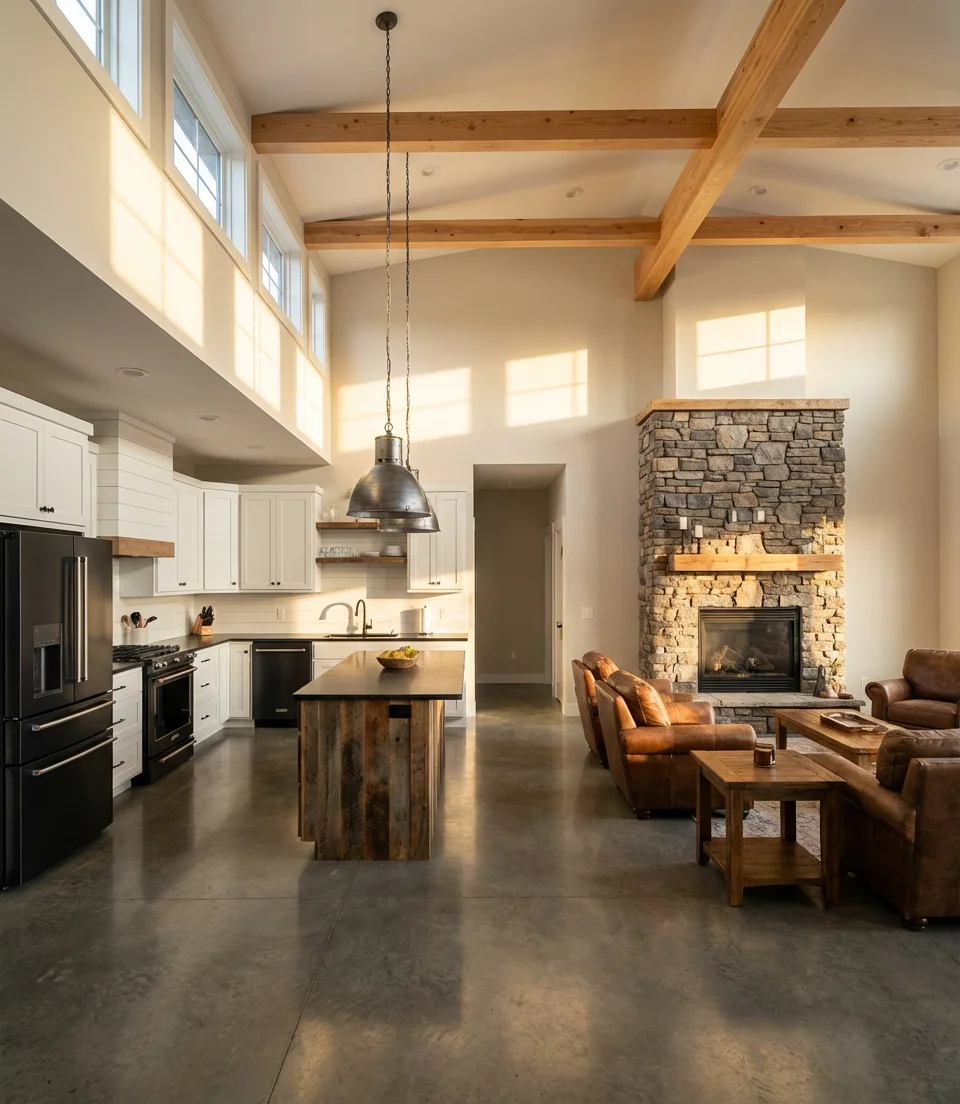
Texas and Oklahoma builders who specialize in barndominiums consistently recommend one layout principle: keep the kitchen island perpendicular to the main living axis so it reads as a furniture piece rather than a barrier. This way, someone sitting at the island and someone on the sofa naturally face each other instead of turning away—which embodies the social promise of open-plan living in a structural way. Polished concrete floors with in-floor radiant heating make the massive square footage feel genuinely cozy through cold winters.
9. Small Space Open Kitchen Living Room Ideas
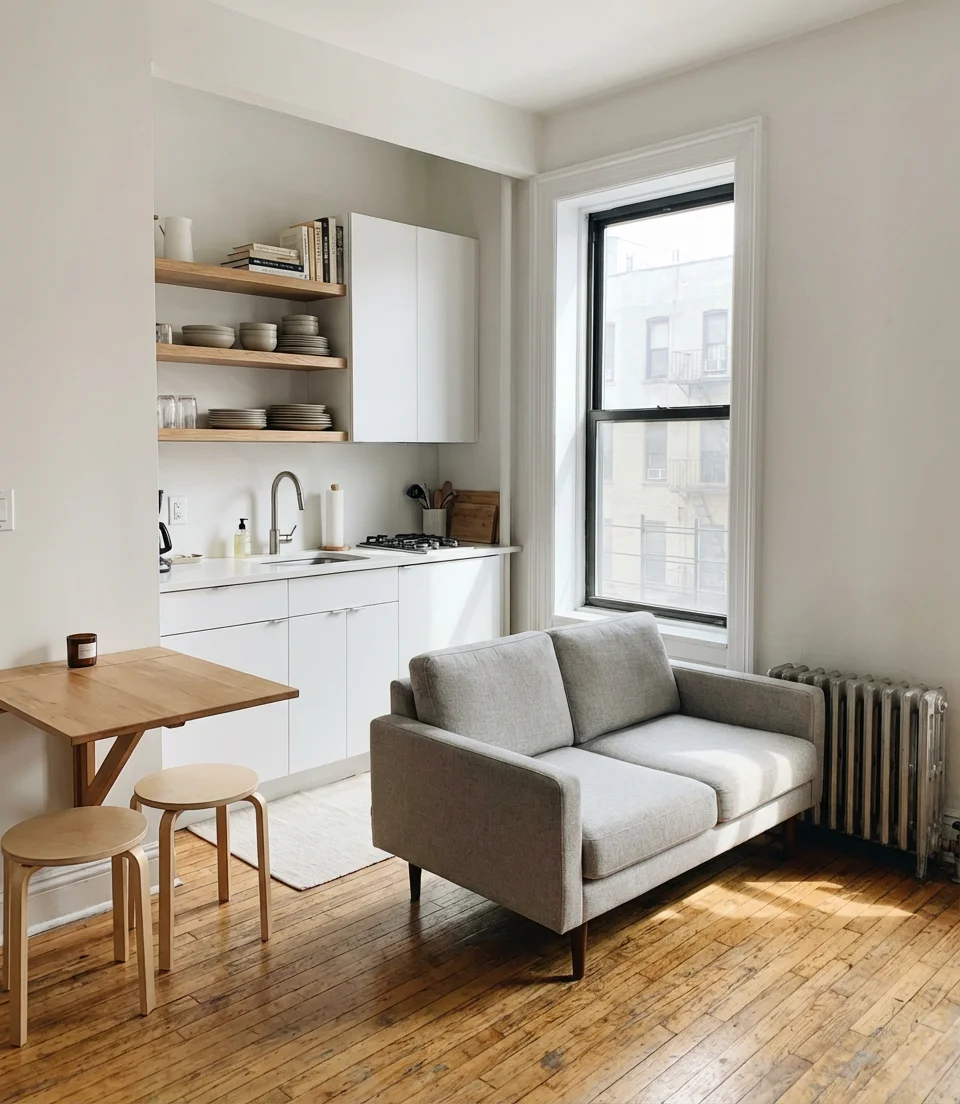
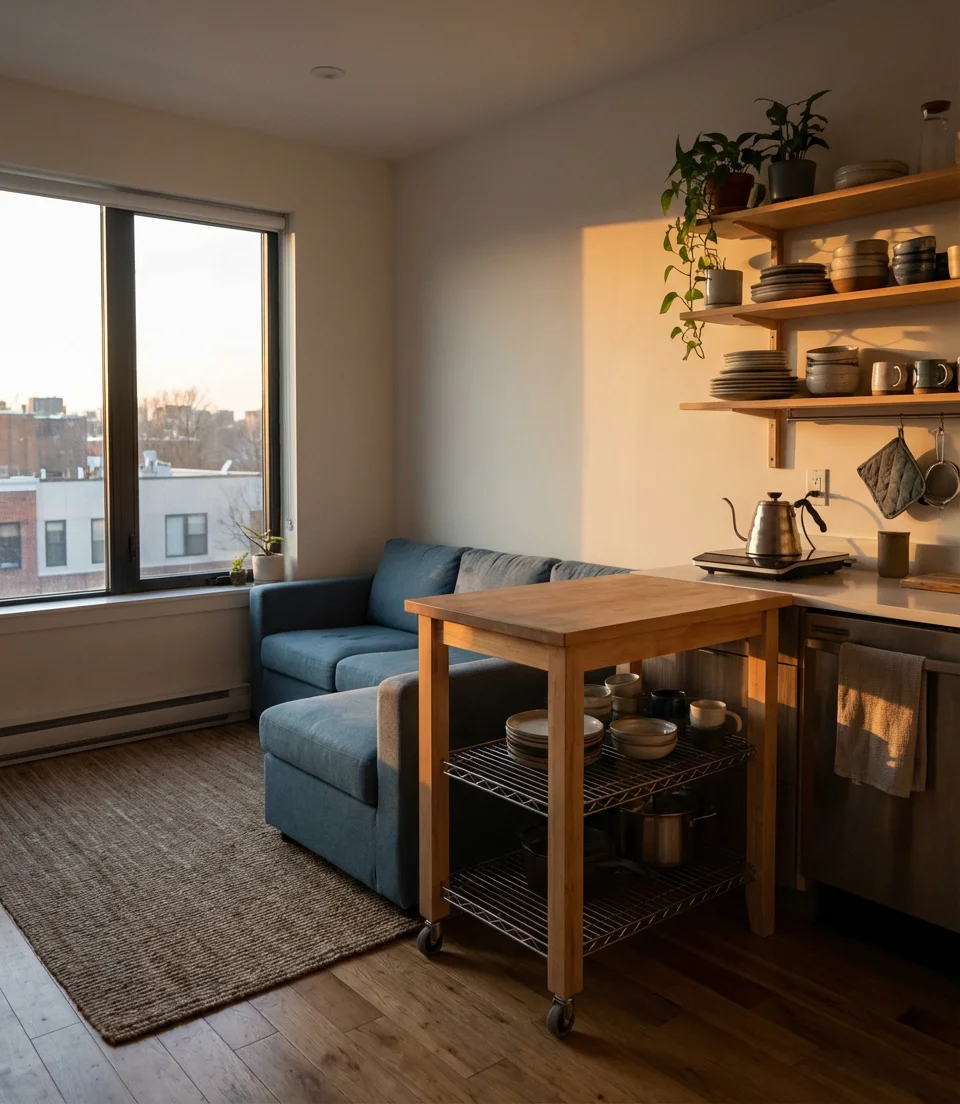
Working with a small space doesn’t mean settling for a cramped, compromised version of the open kitchen living room—it means being smarter about every single decision. In studios or sub-600-square-foot apartments, the open plan isn’t a design choice; it’s a given. The goal becomes making it feel intentional. Vertical storage, handle-free cabinetry, and a palette of two or three cohesive tones keep the eye moving upward and outward rather than getting caught on clutter. A compact kitchen cart on wheels can double as an island by day and tuck away when you need floor space for a yoga mat or a dinner party.
Mirrors are the most underused tool in small open-plan spaces. A large mirror placed on the wall opposite a window—or even opposite the kitchen—effectively doubles the perceived size of the room and bounces cooking light back into the living zone. Interior designer Emily Henderson famously uses this trick in every small-space project she takes on, noting that a single well-placed mirror does more work than any furniture arrangement change ever could. It’s a $200 fix that reads like a $20,000 renovation.
10. Dining Room Integrated Into Open Kitchen Living Plan
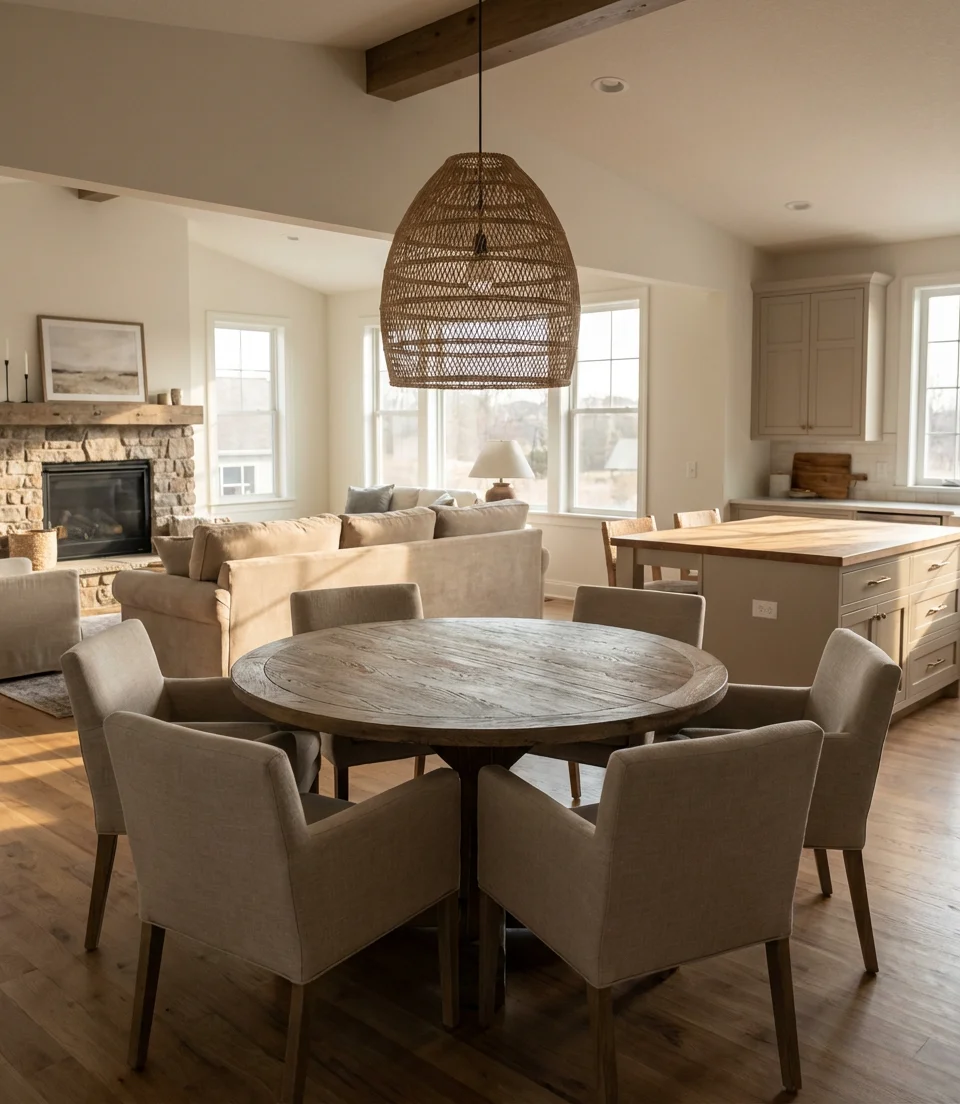
The three-in-one—kitchen, dining room, and living room in one connected space—is the defining floor plan of modern American family life. The dining zone often presents the most challenging aspect, as it must balance the functional energy of the kitchen with the relaxed, low-key atmosphere of the living area. A dining table that’s too formal makes the whole space feel stiff; one that’s too casual makes dinner feel like eating in front of the TV. In 2026, a round or oval table made of natural wood, paired with upholstered chairs, is the ideal choice—approachable enough for Tuesday nights, yet elegant enough to impress guests.
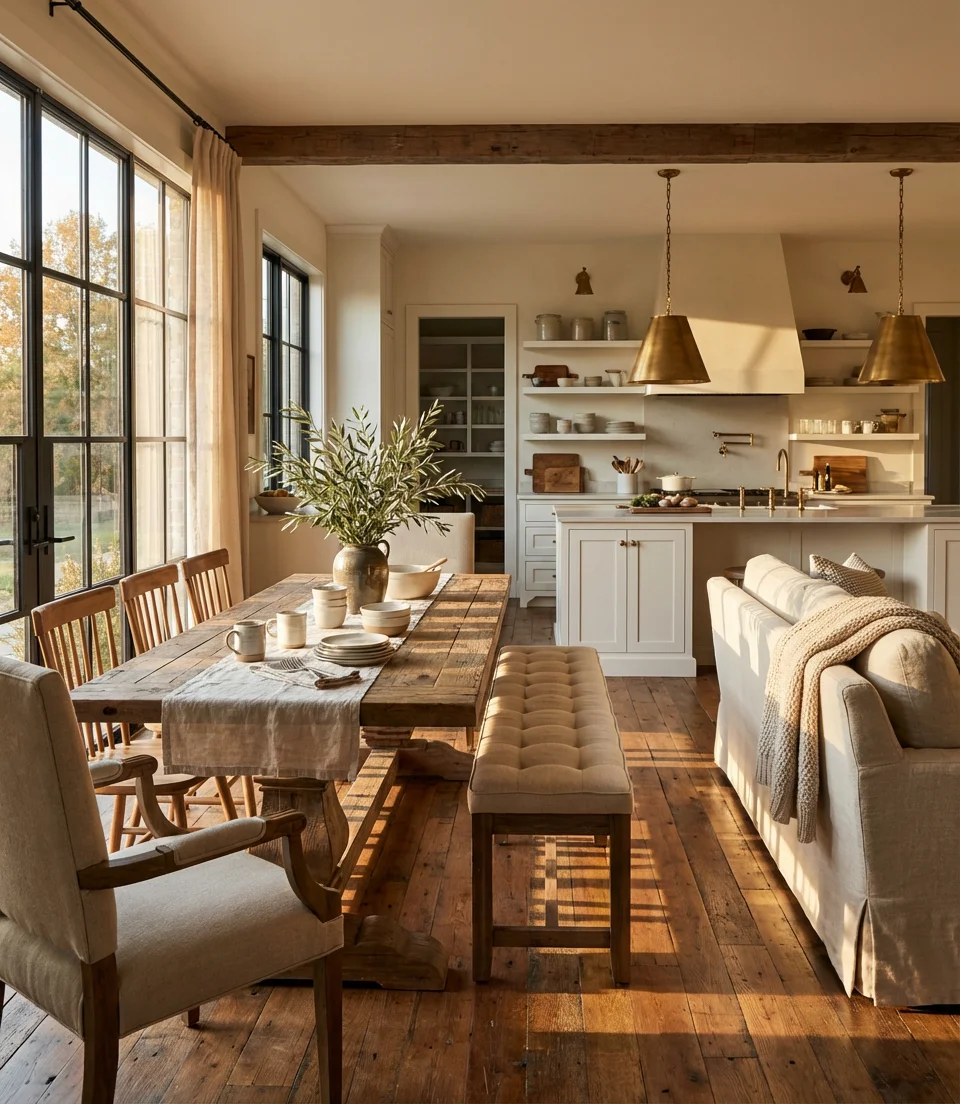
For families with young children—the dominant demographic Googling “open kitchen living room” on a Saturday morning—the integrated dining plan offers an underrated safety benefit: sightlines. When you’re cooking dinner, you can see the dining table and the sofa from the stove. You’re never fully removed from what’s happening in the room. That continuous awareness, however mundane it sounds, is something parents who’ve lived with it consistently say they’d never give up, even when the kids are older and the visual supervision matters less.
11. Kitchen Island as the Anchor of the Open Living Space
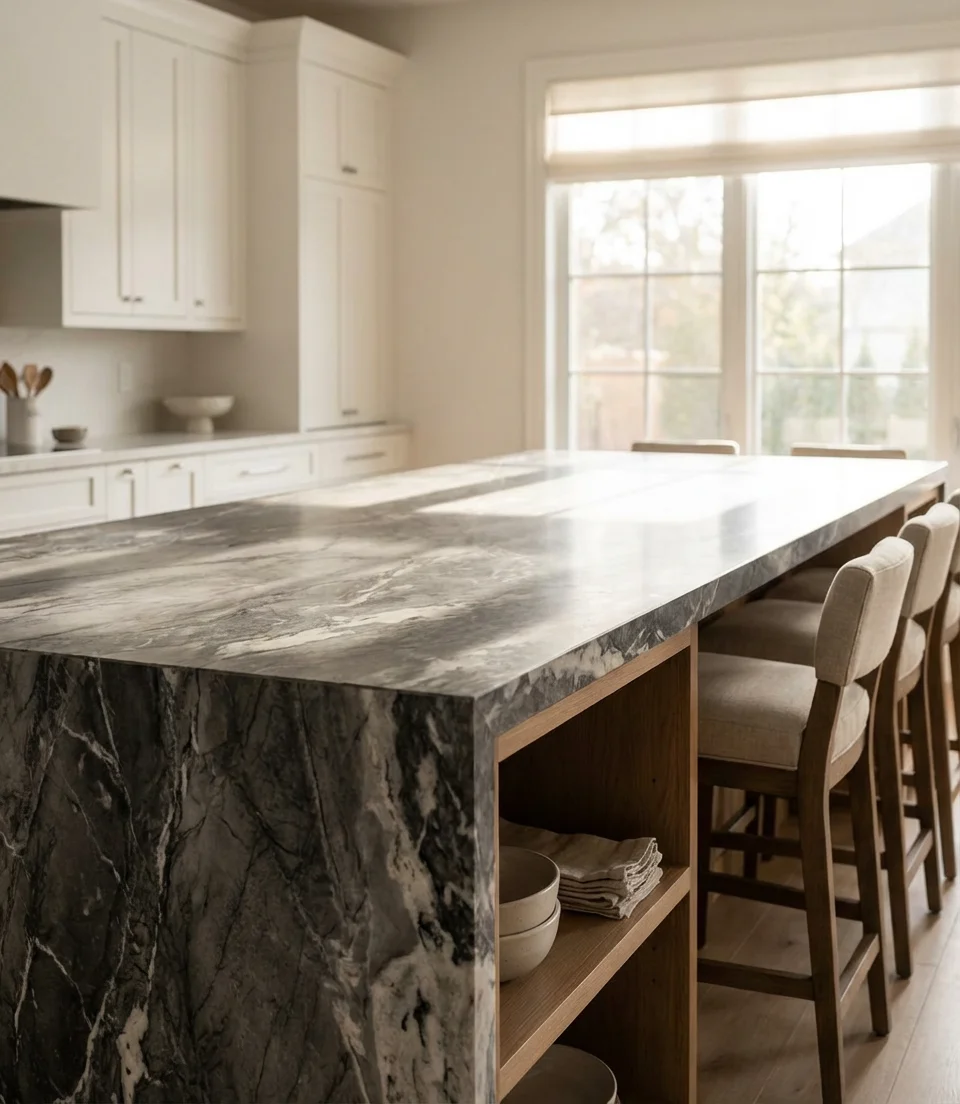
The kitchen island is the MVP of the open-plan home, and in 2026, interior design has elevated it from a functional prep surface to the genuine social centerpiece of the space. When positioned correctly, a well-designed island acts as a natural gathering point, a visual separator between cooking and living zones, and an additional seating surface—all at once. The most successful island layouts this year feature a waterfall edge in a contrasting material (think dark marble against white painted cabinetry), seating on the living-room-facing side, and integrated storage below that faces the kitchen.
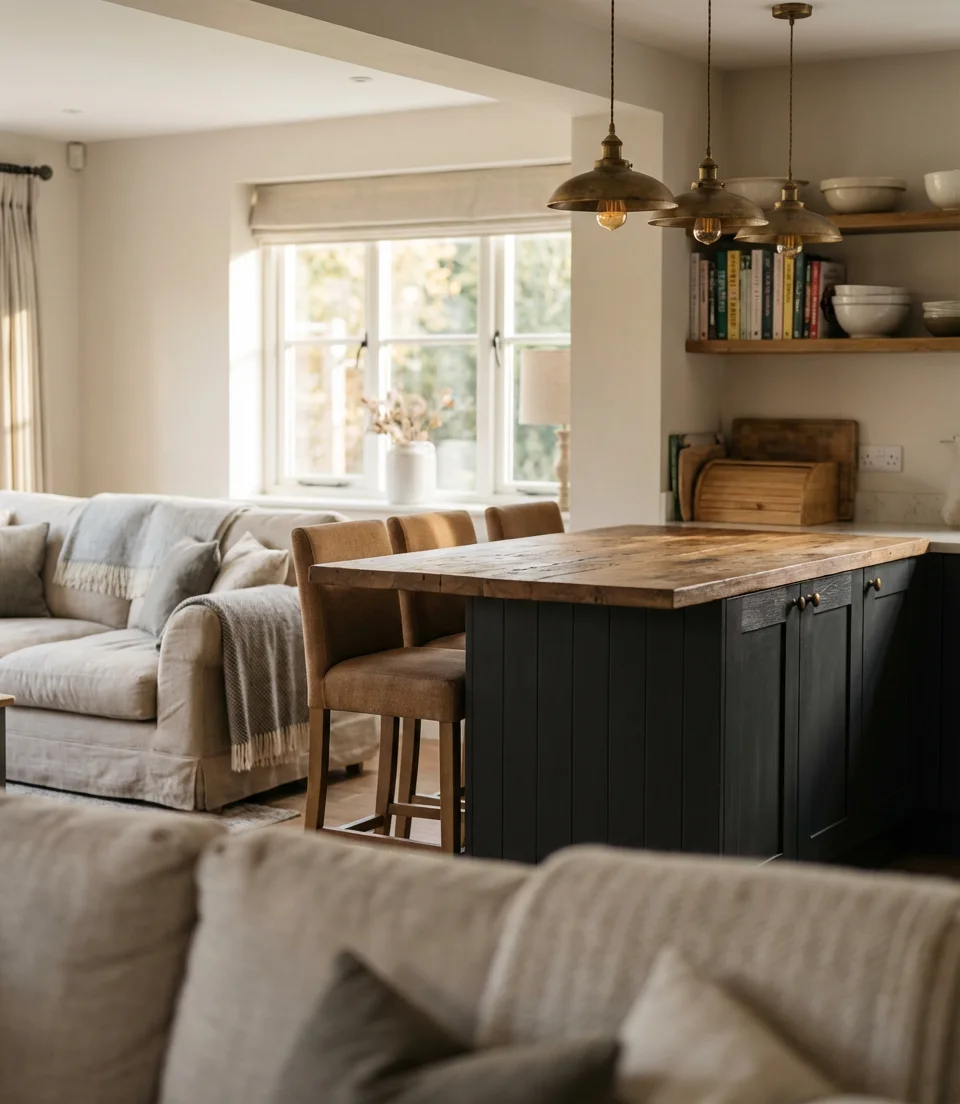
The biggest mistake people make in open-plan renovations is going too big. An island needs a minimum of 42 inches of clearance on all working sides—and many homeowners with custom-built islands end up with traffic jams every time two people are cooking together. If you’re drawing your plan, mock the island up with cardboard boxes or tape on the floor before finalizing dimensions. It takes twenty minutes and saves you from a $10,000 mistake you’d have to live with for the next decade.
12. Low-Profile Sofa Placement in Open Kitchen Living Room
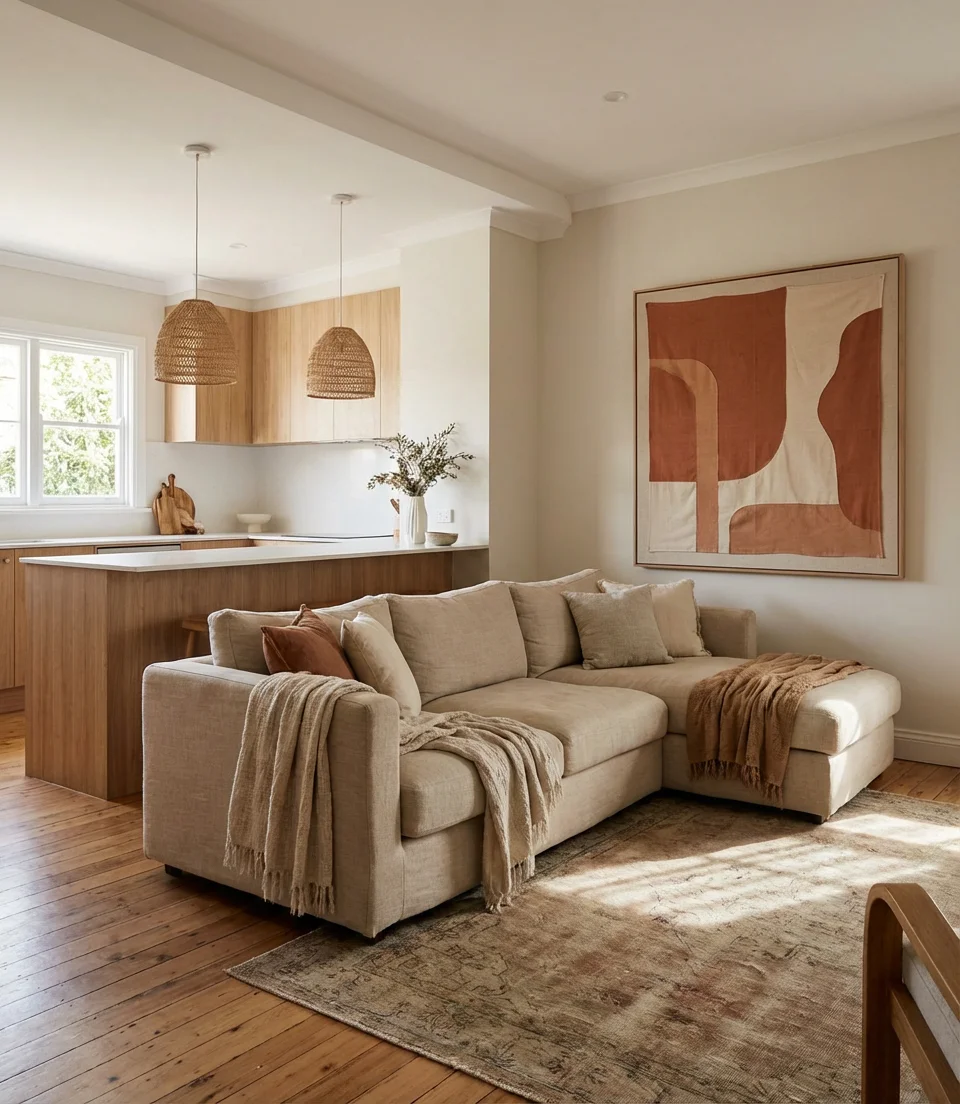 The couch is the furniture choice that makes or breaks an open-plan space more than any other. In a kitchen-facing living configuration, sofa height matters more than most people realize. A traditional high-backed sofa creates a visual wall, dividing the space in half; a low-profile modern sofa, with a seat height of approximately 14-16 inches and a back height of 28-30 inches, allows sightlines to flow uninterrupted from the kitchen to the windows on the far wall, thereby making the entire space appear larger. This phenomenon is why low-slung Scandinavian-style sofas and modular sectionals are so dominant in open-plan interiors right now.
Fabric choice matters as much as form in an open kitchen context. Cooking smells, grease, and humidity migrate into the living zone more than most people anticipate. Avoid heavily textured boucle or velvet on a sofa that faces an open kitchen—these fabrics are beautiful, but they trap odors and are nearly impossible to spot clean. Performance fabrics like Sunbrella-grade upholstery or tightly woven wool blends offer the same visual warmth with dramatically better resilience. Many Reddit communities focused on home decor have dedicated threads on this exact issue, and the consensus is overwhelming: go with performance fabric near any open kitchen.
13. Open Kitchen Living Room Ideas for Apartments
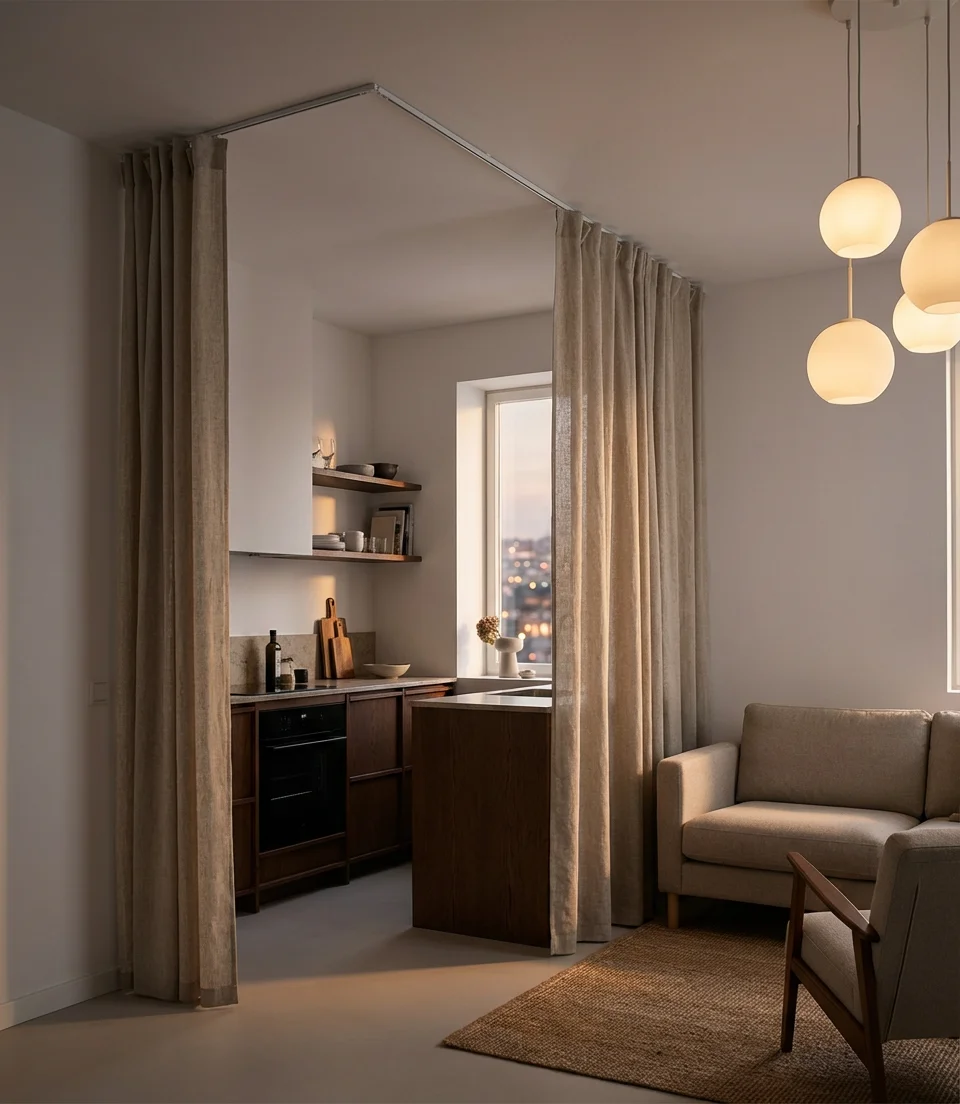
If you live in an apartment with an open kitchen, the floor plan doesn’t dictate your arrangement. Smart renters and owners alike are using creative decor strategies to make open-plan apartments feel both bigger and more organized. Curtains on a ceiling-mounted track are one of the best tools here—hung from a track that spans from the kitchen edge to the far wall, a curtain can section off the kitchen entirely for dinner parties or hide a mountain of dishes when the doorbell rings unexpectedly. It adds softness, drama, and flexibility without a single nail hole.
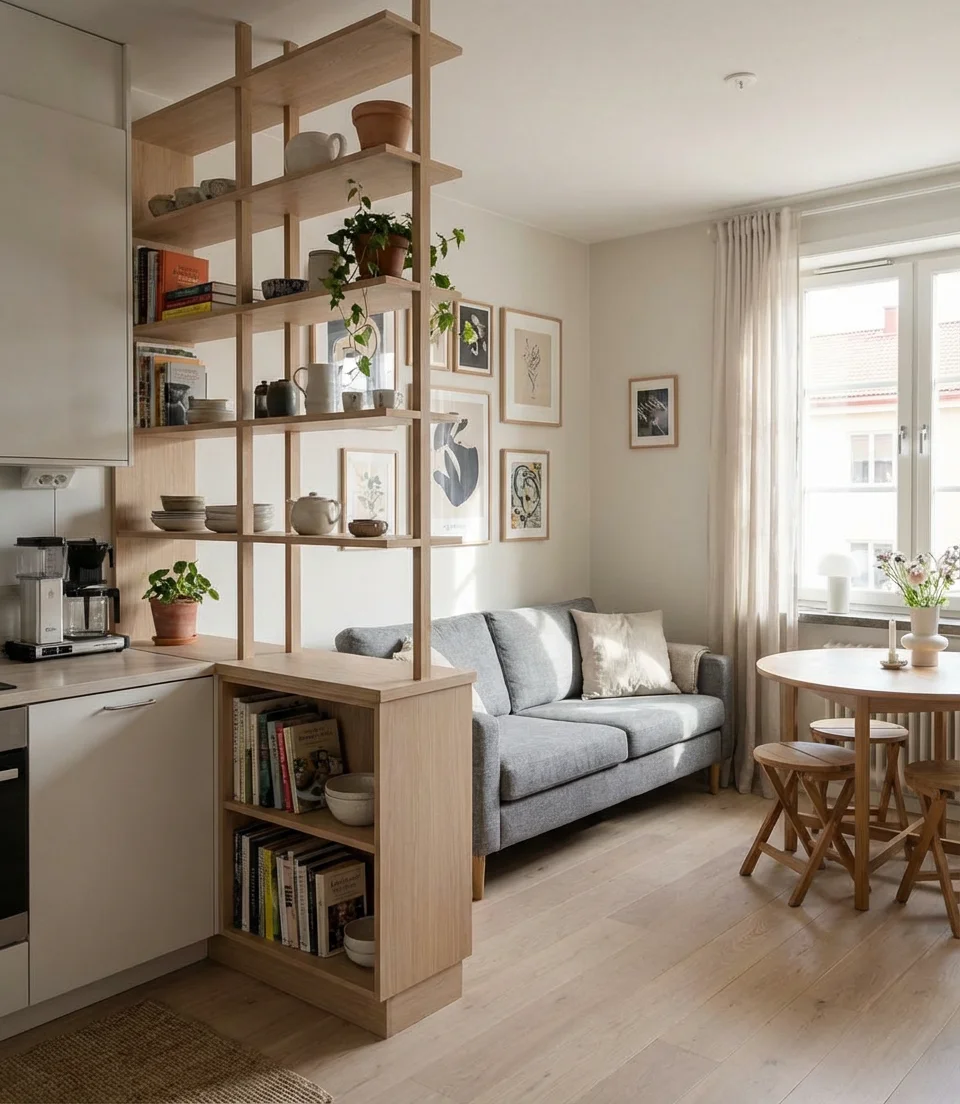
Another overlooked apartment trick: go monochromatic. When your kitchen cabinetry, walls, and living room furniture all share the same tonal family—say, all warm whites with wood accents—the eye stops registering where one zone ends and another begins, and the space reads as a single, large, harmonious room. It’s the opposite of the common instinct to use different colors to “define” zones, which tends to make a small apartment feel even more fragmented and busy than it actually is.
14 Decor Ideas That Bridge the Kitchen and Living Room
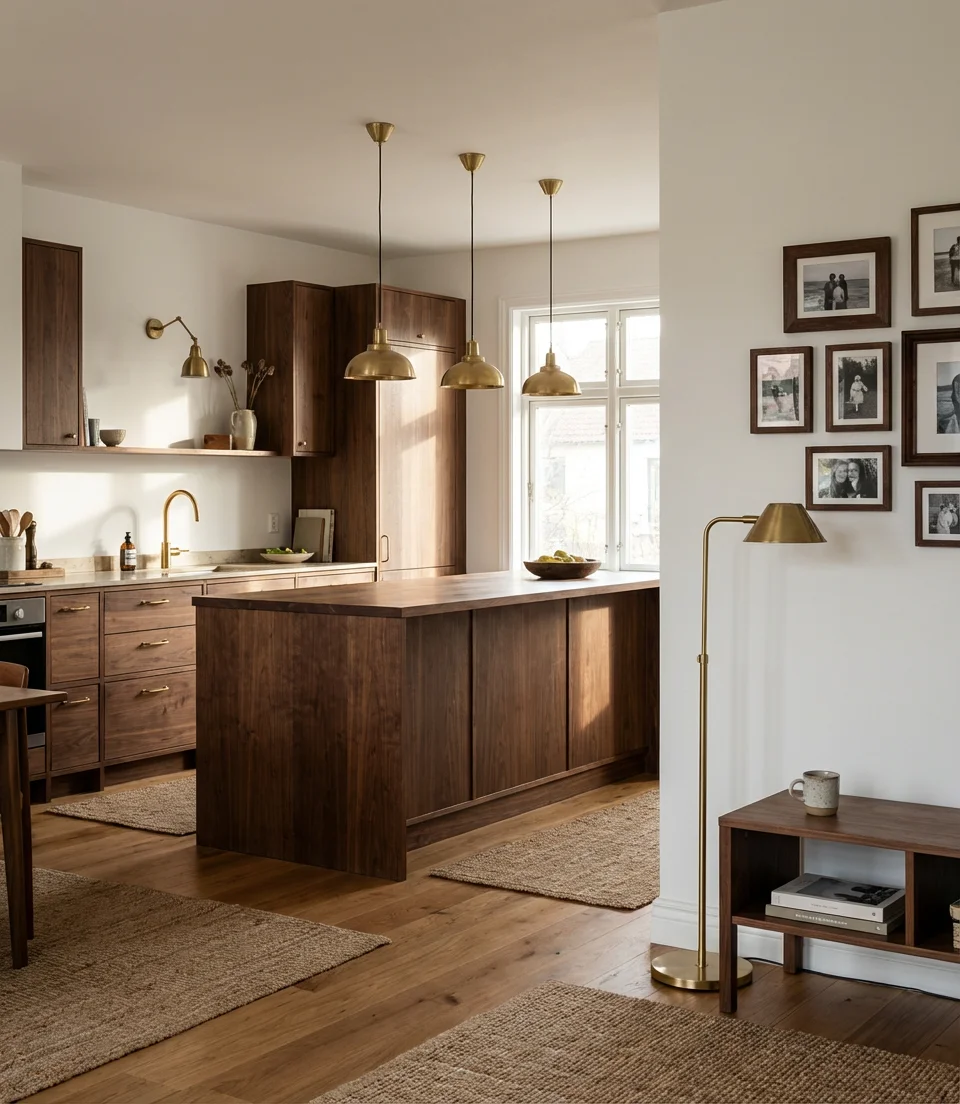
The most cohesive open-plan spaces share a repeating visual motif—a material, color, or shape that appears in both the kitchen and living zones, creating a visual conversation between the two areas. In practical terms, this might mean using the same hardware finish on both kitchen cabinet pulls and living room furniture legs or echoing the tone of your kitchen island in the legs of your coffee table. This kind of deliberate decor through-line is what separates a space that was “professionally designed” from one that just looks like two rooms pushed together.
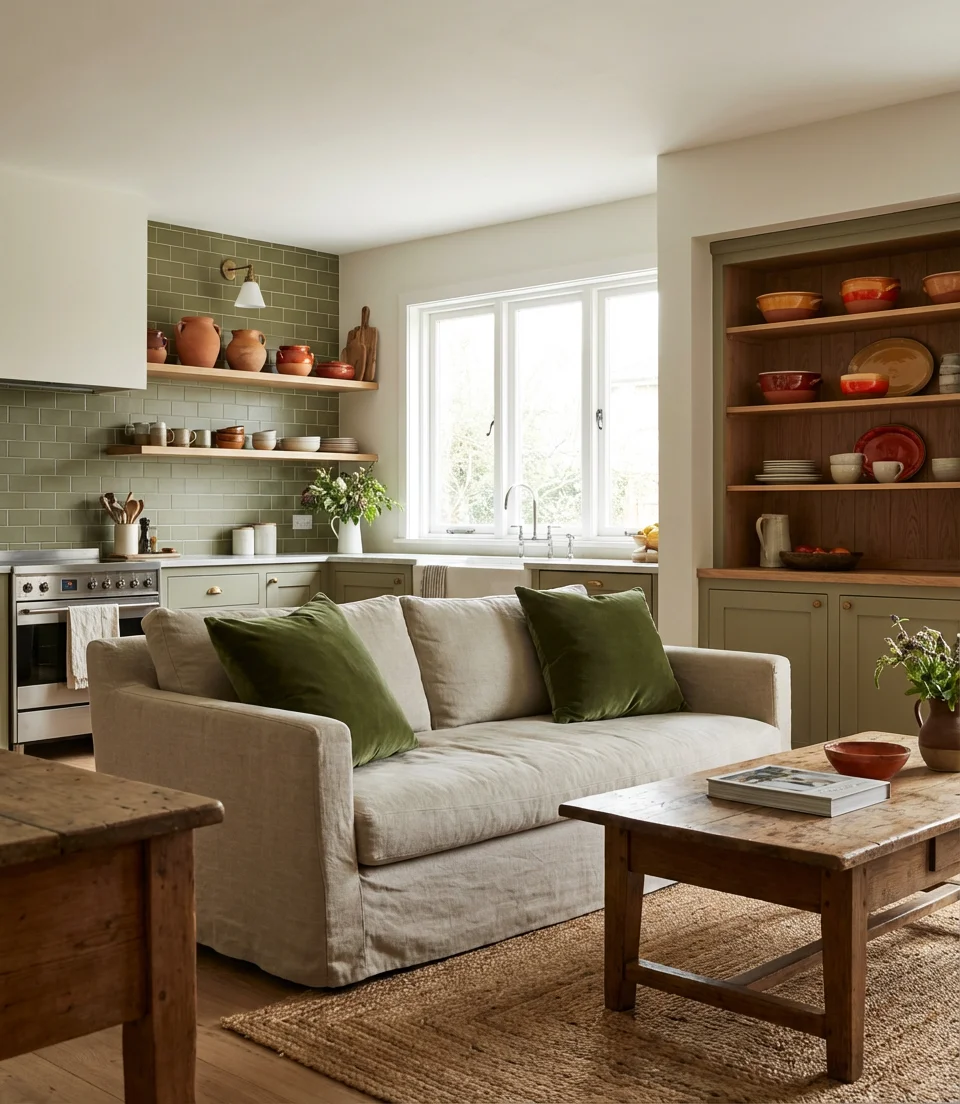
Textiles are the easiest and most affordable way to build this visual bridge—and they’re completely reversible if you change your mind. A kitchen runner in a warm sage or terracotta, repeated in throw pillow colors on the sofa, creates instant visual continuity. Plants are another powerful cohesion tool: a cluster of trailing pothos on the kitchen open shelving, echoed by a statement fiddle leaf in a basket planter near the sofa, creates a living, breathing material thread running through the entire space. No design degree required.
15. Modern Farmhouse Open Kitchen Living Room
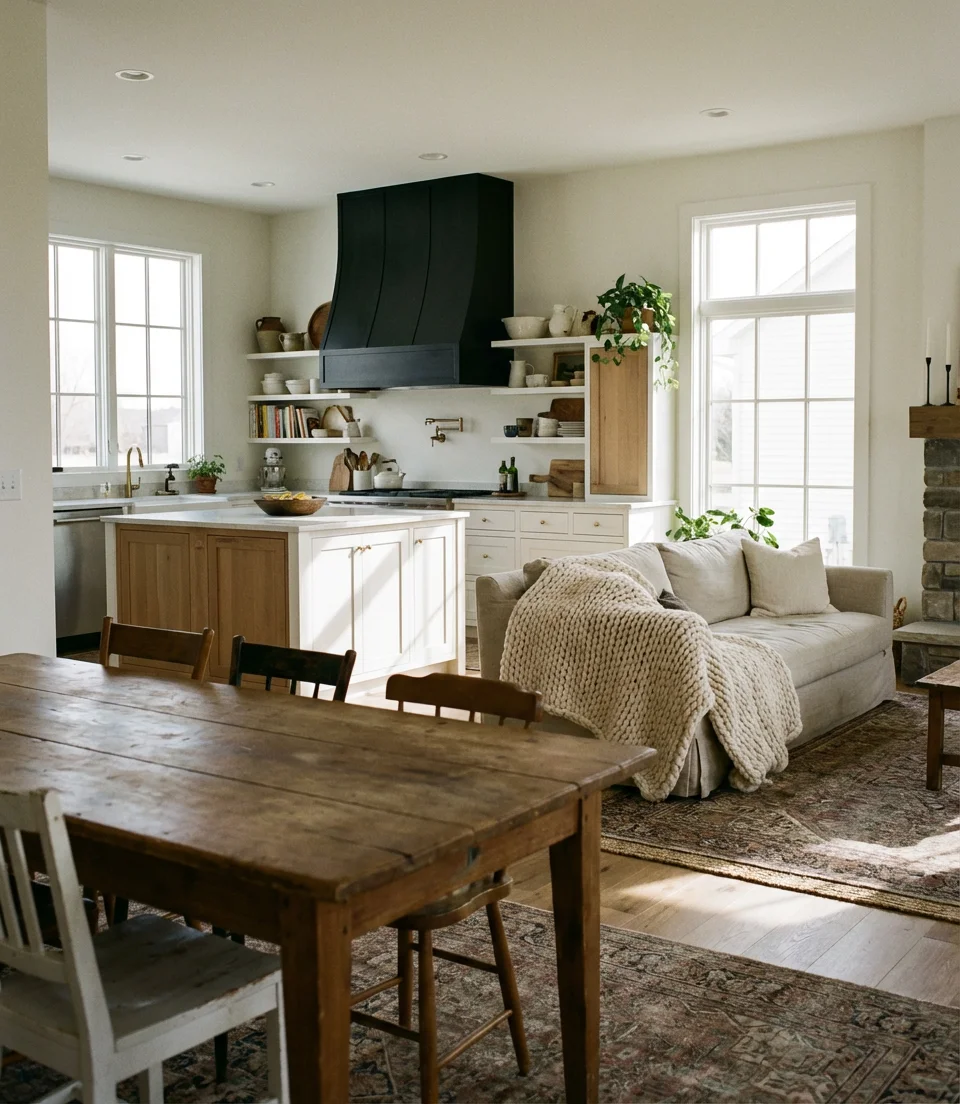
The modern farmhouse aesthetic has matured beautifully since its shiplap-and-barn-door peak—and in 2026, it’s leaner, warmer, and far less clichéd. Today’s farmhouse design for an open kitchen and living room leads with patina and craft rather than matching sets: a worn wood dining table that’s clearly had a previous life, open shelving with mismatched but intentional ceramics, and a kitchen range hood in matte black or hammered plaster that reads as sculpture. The ideas that define this era of farmhouse style center on materials that age gracefully rather than materials that simply look old from day one.
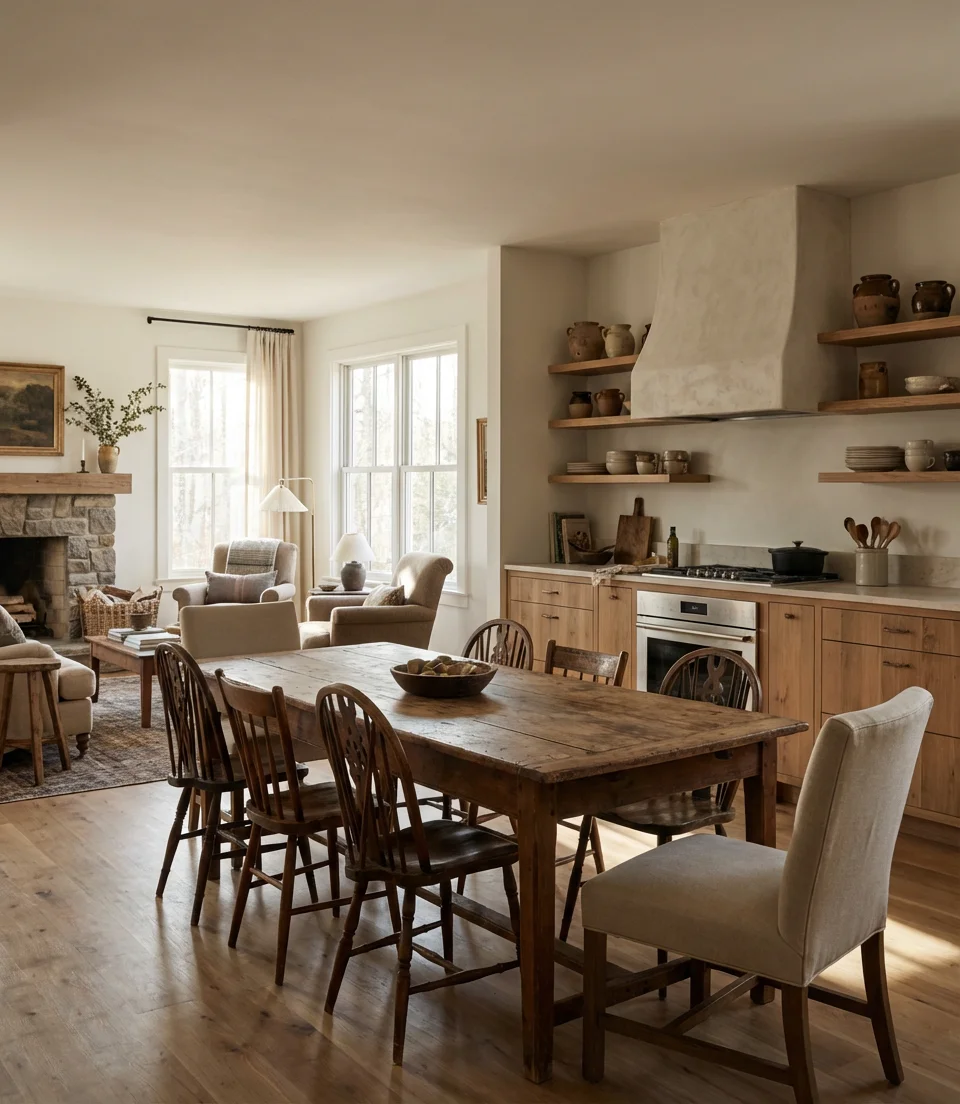
Where this type of architecture works best is in homes with existing traditional architecture—exposed ceiling joists, original wood floors, and brick fireplace surrounds. These homes already possess the fundamental elements of farmhouse authenticity; the objective is to modernize the kitchen and living areas to feel contemporary without sacrificing the unique character that initially made the house unique. The sweet spot is often achieved by modernizing just the kitchen (new appliances, updated hardware, fresh paint) while leaving the living area’s original architectural details completely untouched.
16. Open Kitchen Living Room with Dark Accent Wall
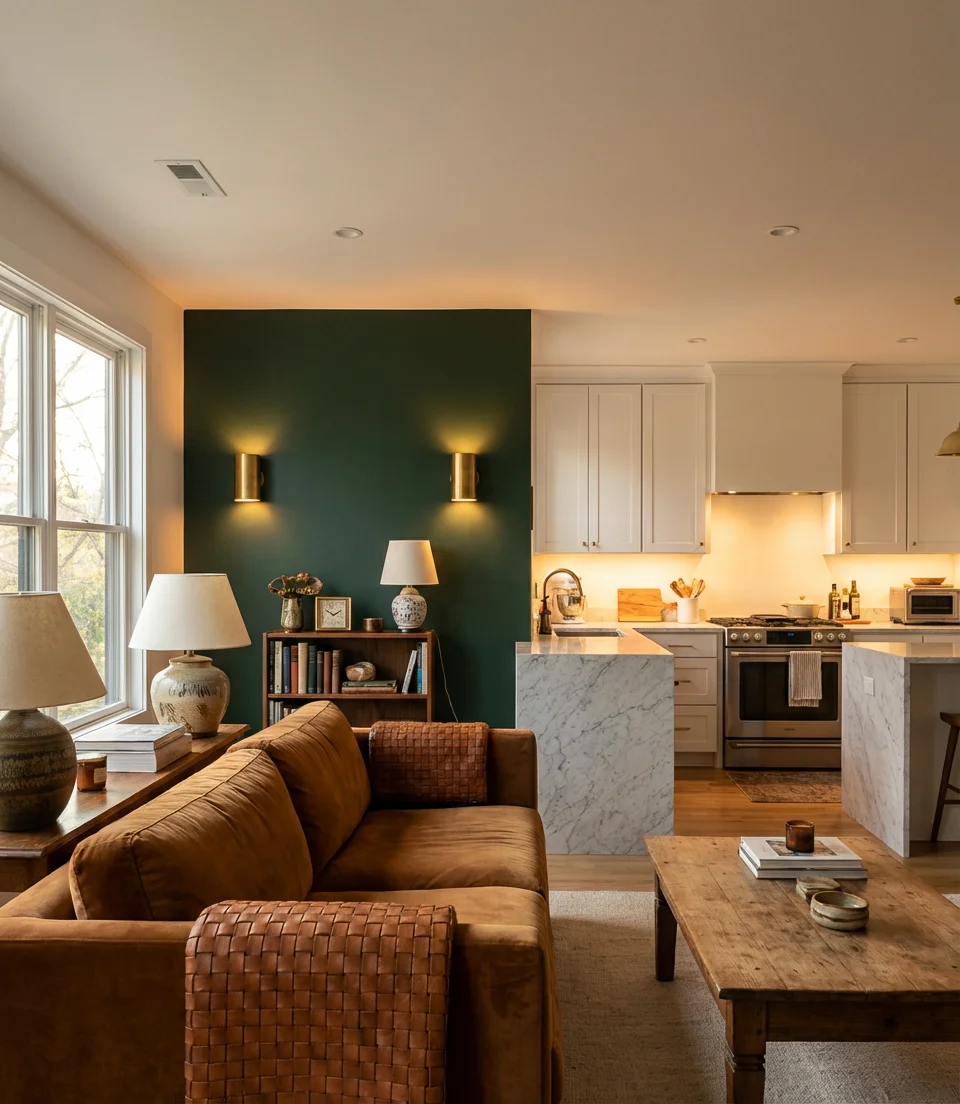
Dark paint colors in open-plan spaces have finally shed their reputation as risky or space-shrinking—and designers are using them with confidence to create dramatic, gallery-like living environments. In an open kitchen living room, a single dark accent wall (charcoal, deep forest green, or inky navy) positioned at the far end of the living zone does something remarkable: it creates depth and draws the eye through the space rather than stopping it. The kitchen, with its typically lighter cabinetry and reflective surfaces, pops brilliantly against the contrast. The result reads as intentional and editorial rather than gloomy.
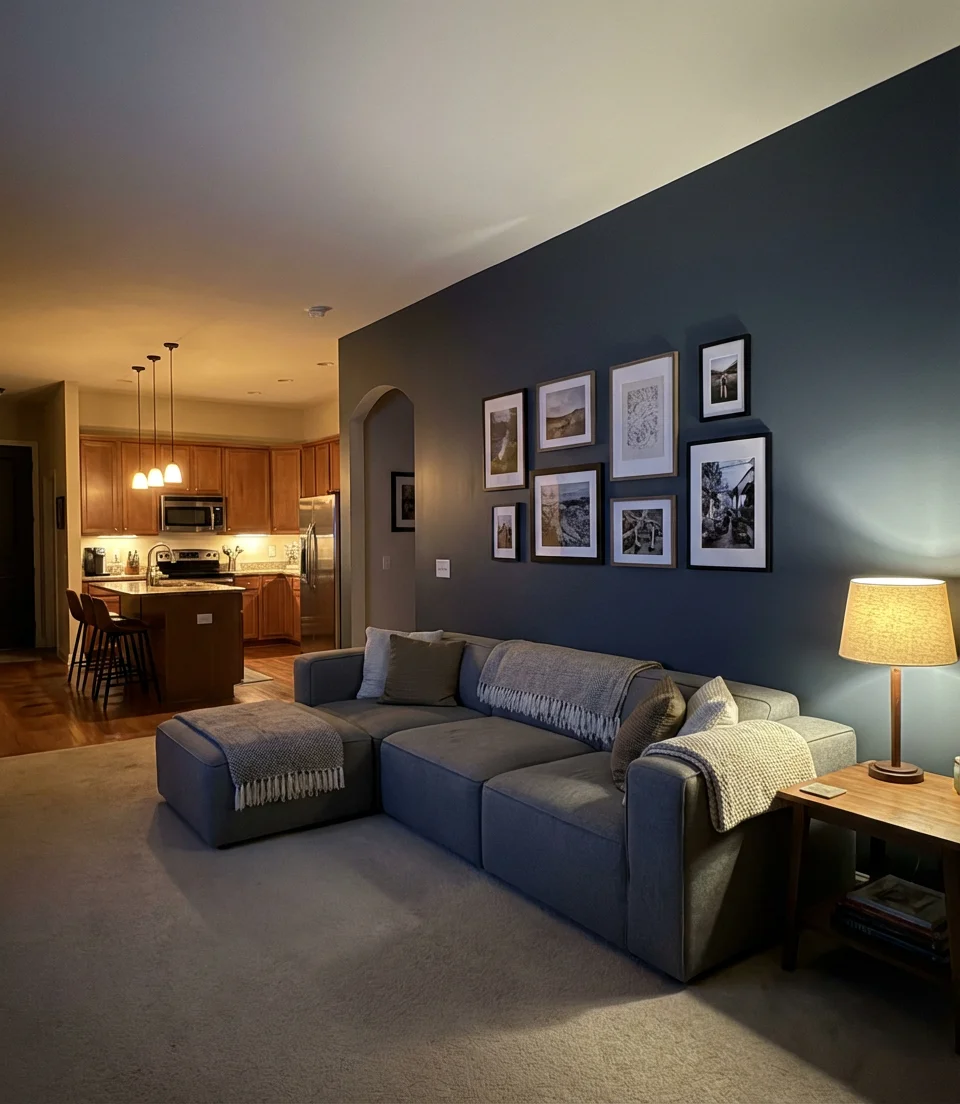
A professional interior painter in the Pacific Northwest who specializes in open-plan color work offers this insight: when painting a single dark wall in an open-plan space, extend the color three to five inches onto adjacent walls before stopping. This wrapping technique makes the dark color feel like an architectural decision rather than a paint-job accident, and it gives the room a custom, boutique-hotel quality that a flat, single-wall application simply can’t match. It’s a thirty-minute extra step that adds thousands of dollars of perceived value to the space.
17. Japandi-Inspired Open Plan with Integrated Shelving
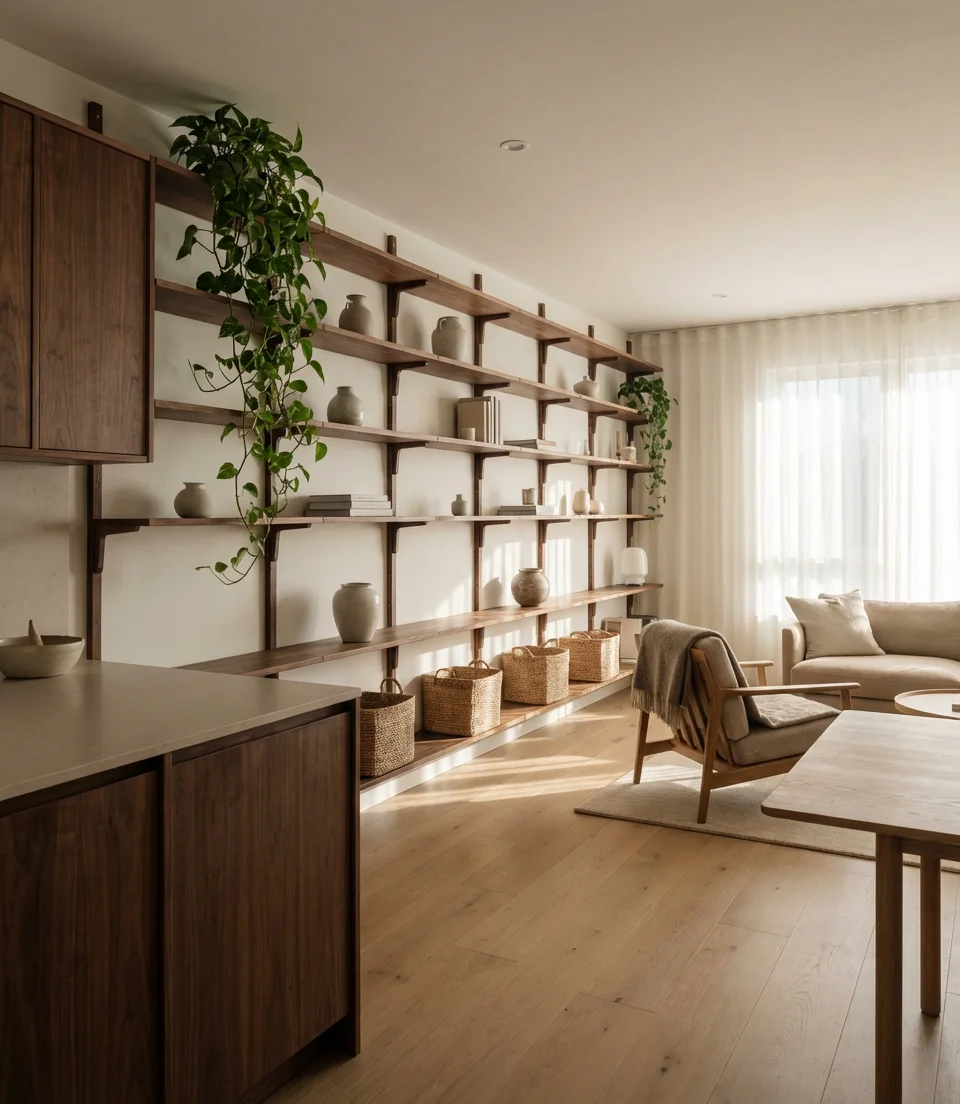
Integrated shelving that runs from the kitchen into the living zone is one of the most powerful continuous elements in open-plan interior design—and in a Japandi concept, it becomes almost architectural in its quiet authority. Think floor-to-ceiling shelving in a warm walnut finish, beginning in the kitchen zone with cookbooks and ceramics, transitioning into the living area with a handful of meaningful objects, a trailing plant, and a small lamp. The shelving acts as a literal spine for the space, unifying both zones without any hard separation or division.
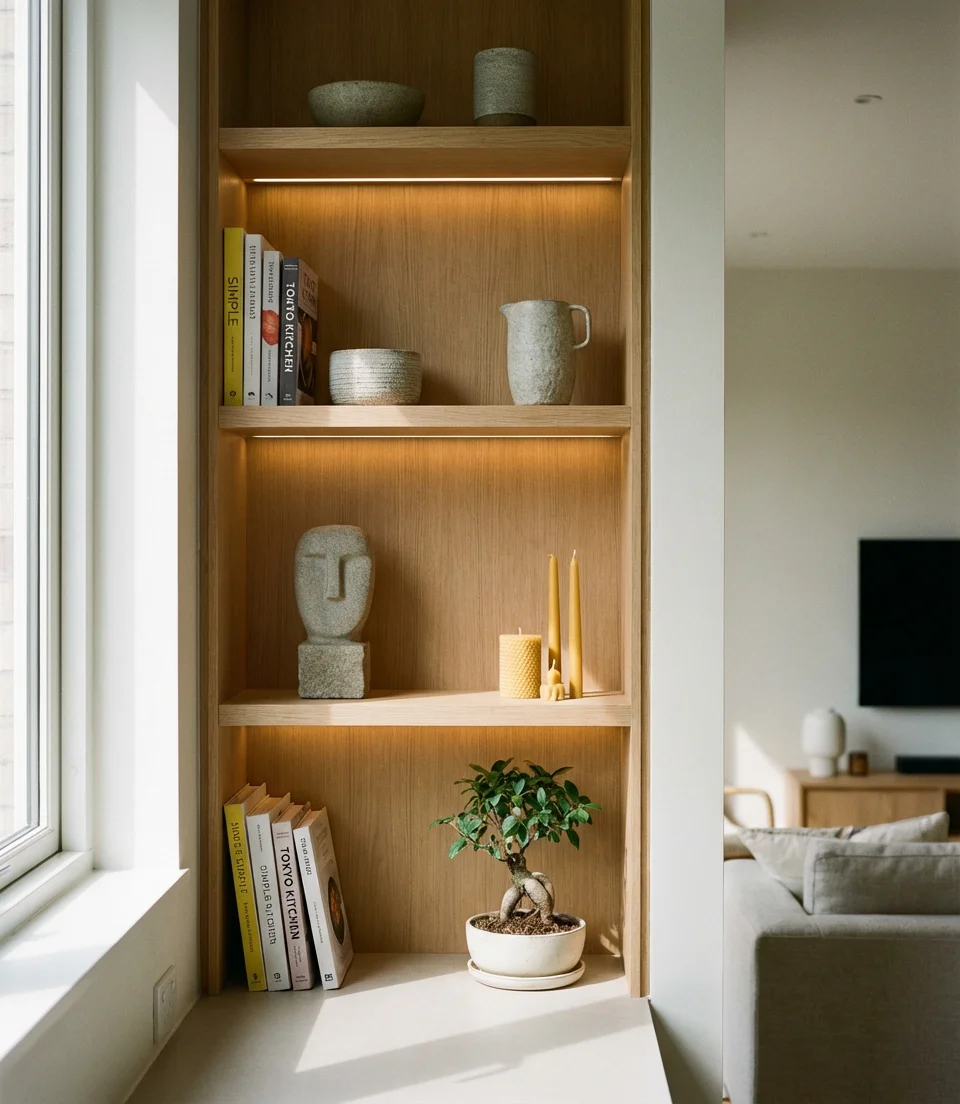
The styling rules for this kind of integrated shelving are stricter than for a standalone bookcase. Every shelf section should have no more than three to five objects, with generous negative space between them. Vary the heights and textures rather than lining everything up uniformly. And crucially: anything stored on these shelves that’s visible from the living room should be considered display—which means no stacked plastic containers, no loose papers, and no clutter, even in the kitchen-facing sections. What’s visible from the sofa is your gallery.
18. Open Kitchen Living Room Layout for Narrow Spaces
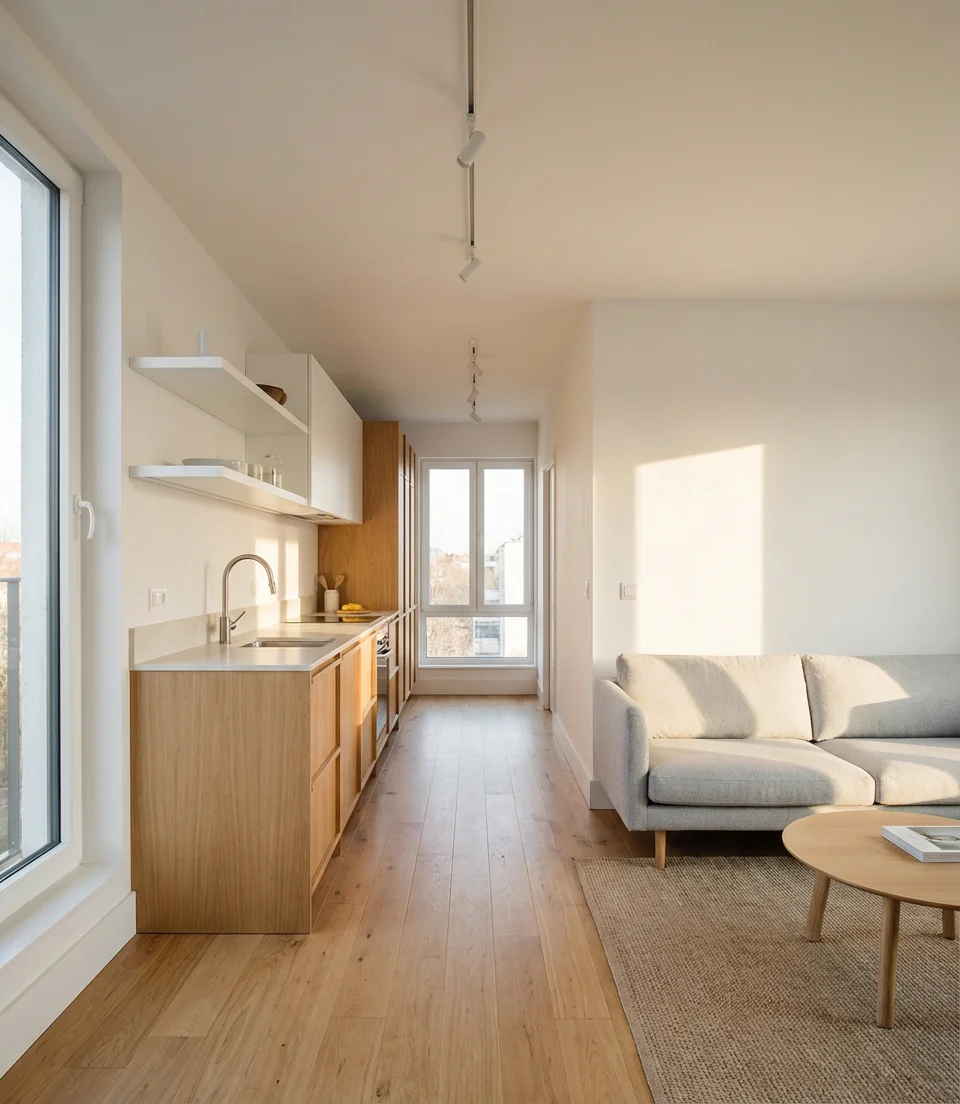
Narrow rectangular floor plans—the kind common in row houses, townhouses, and older city apartments—present a specific challenge for open kitchen-living room layouts: how do you arrange both a kitchen and a living area in a space that’s only 12 to 14 feet wide without everything feeling squeezed and airless? The answer lies in the galley kitchen configuration, which runs kitchen functions along one long wall and frees the opposite wall for a sofa arrangement facing inward. This single-wall kitchen approach maximizes usable living room width while keeping the kitchen highly efficient.
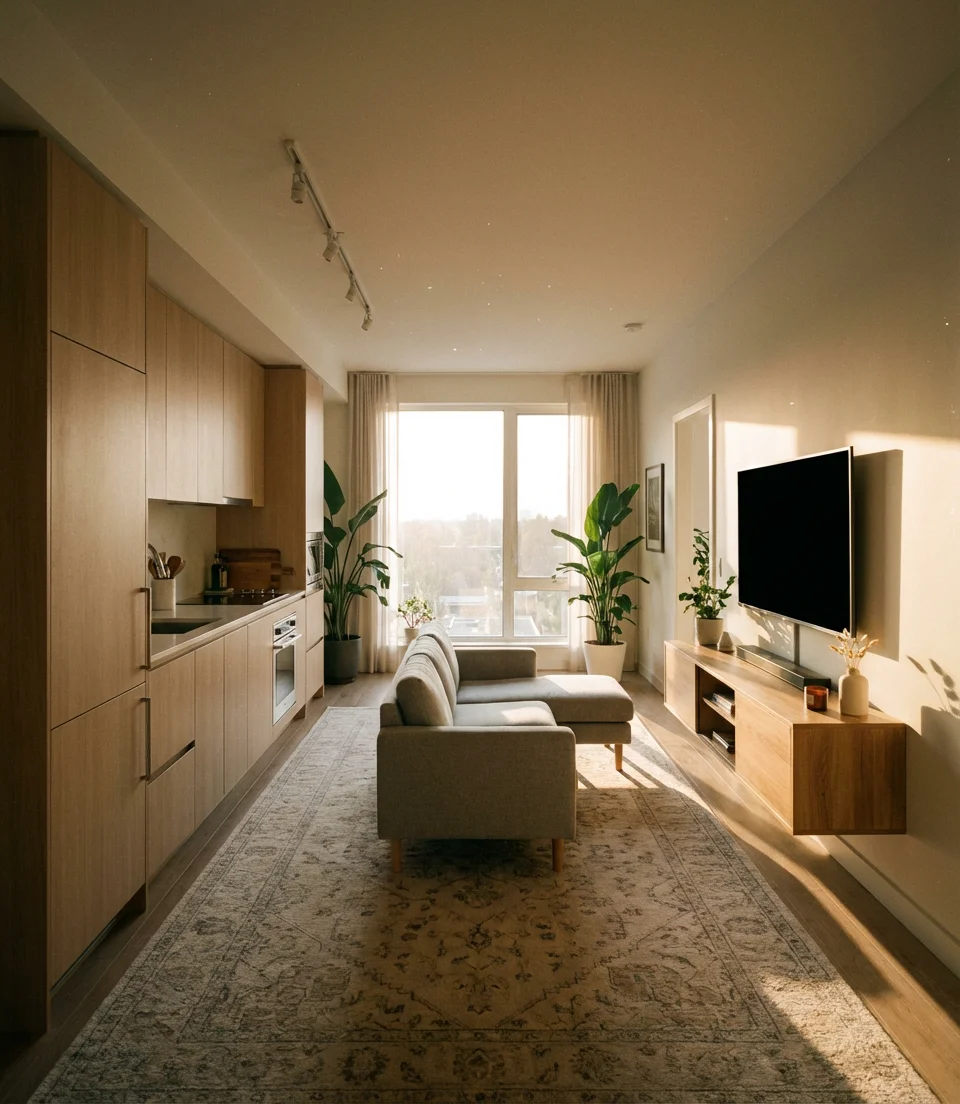
The most effective trick in a narrow open plan is to use furniture that doesn’t interrupt the sightline from the front to the back of the space. Transparent furniture—acrylic or glass coffee tables, open-framed chairs, and lucite side tables—works brilliantly because it allows the eye to travel the full length of the room without visual interruption. Several NYC interior designers who specialize in railroad apartments swear by a single acrylic coffee table as the most transformative piece in a narrow open-plan layout. It’s not a gimmick; it genuinely works.
19. Open Kitchen Living Room with Exposed Brick and Wood Beams
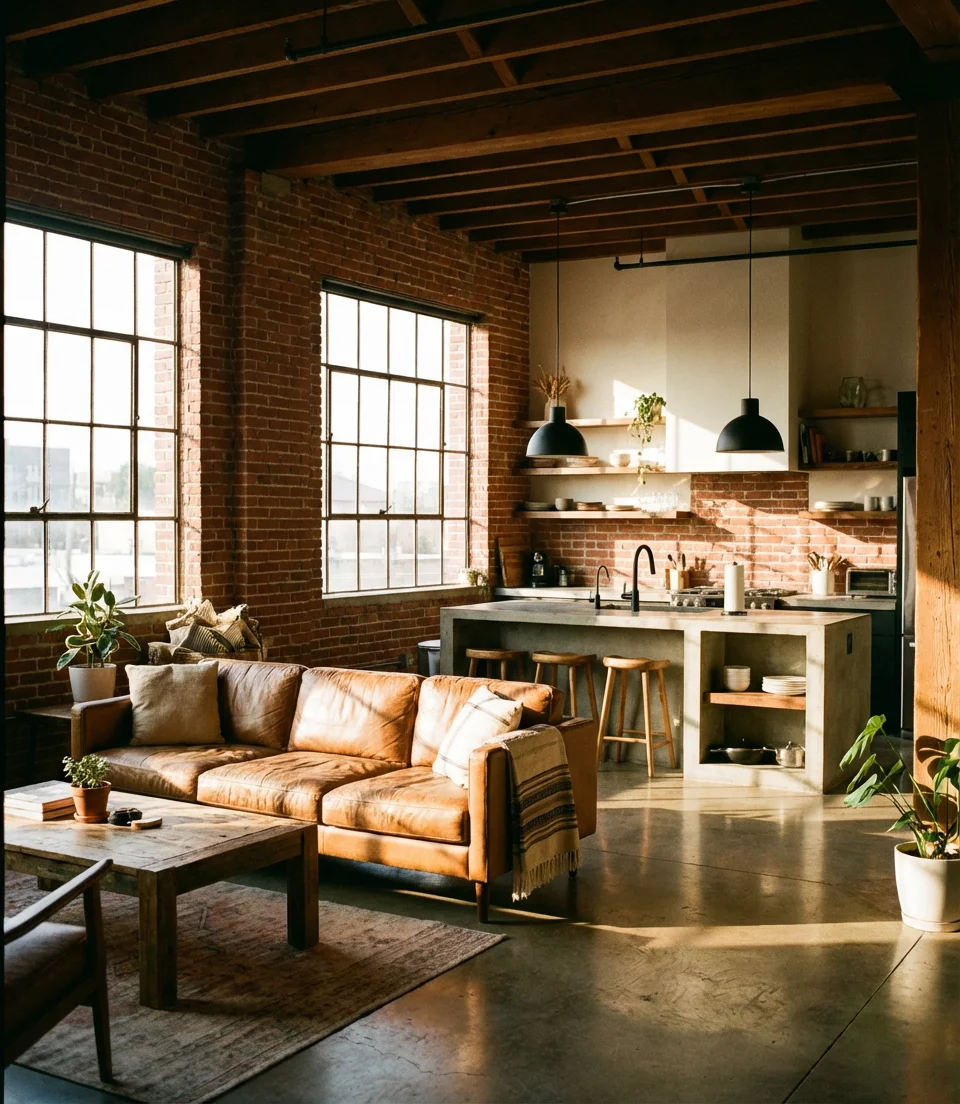
Raw materials—exposed brick, aged wood ceiling beams, and stone floors—are the architectural dream of the open kitchen living room because they bring a depth and character that no amount of purchased decor can fully replicate. In renovated industrial lofts, converted warehouses, and older American city homes where these bones exist, the open plan practically designs itself: you let the materials do the heavy lifting and keep furnishings relatively simple and grounded. The danger is in over-furnishing—too many pieces competing with strong architectural elements creates visual noise rather than richness.
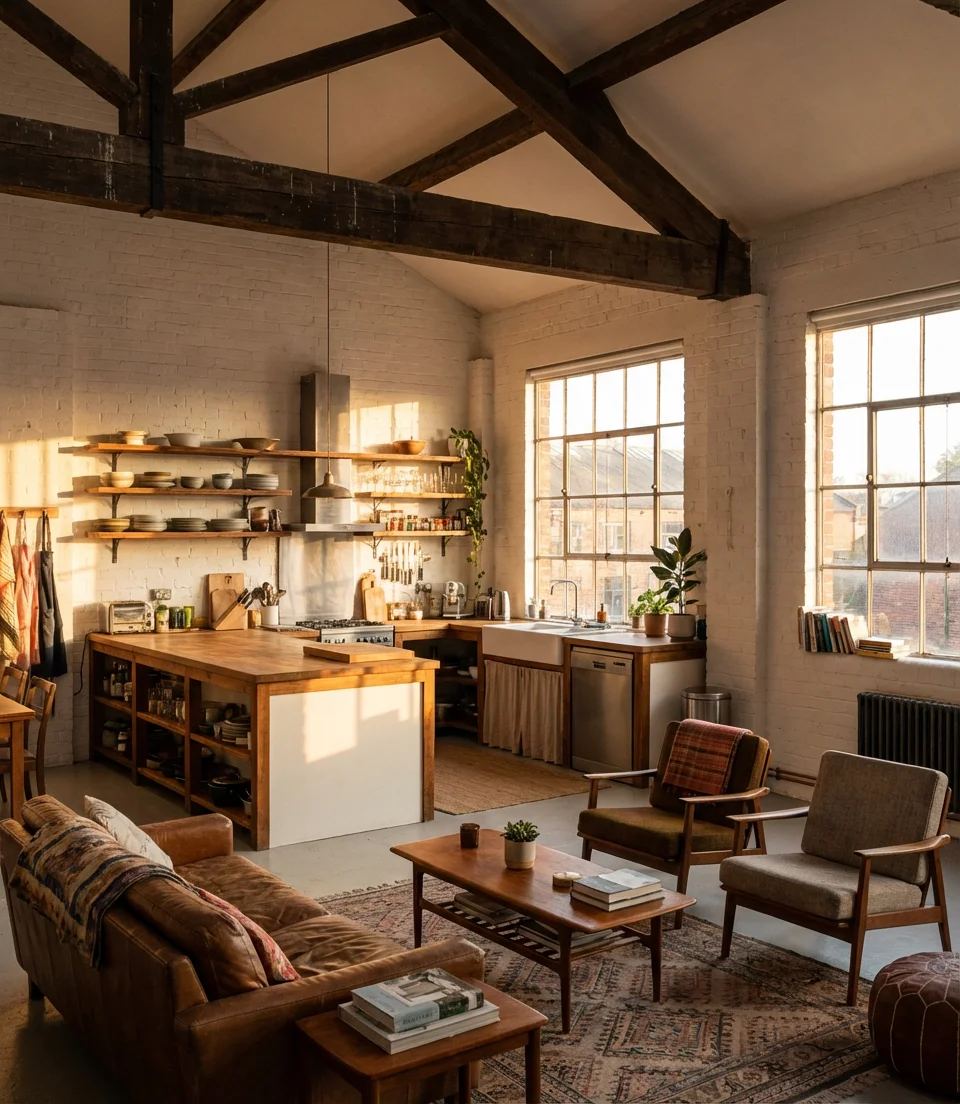
Homeowners who move into buildings with these original features sometimes make the mistake of painting the brick or beam to “modernize”—and almost universally regret it. Painted brick is nearly impossible to reverse and eliminates the very quality that made the space desirable in the first place. If the color of raw brick feels too warm or orange for your palette, a German smear or limewash technique can cool it slightly while preserving the texture and visual depth that makes the material irreplaceable.
20. Color-Blocked Open Kitchen Living Room
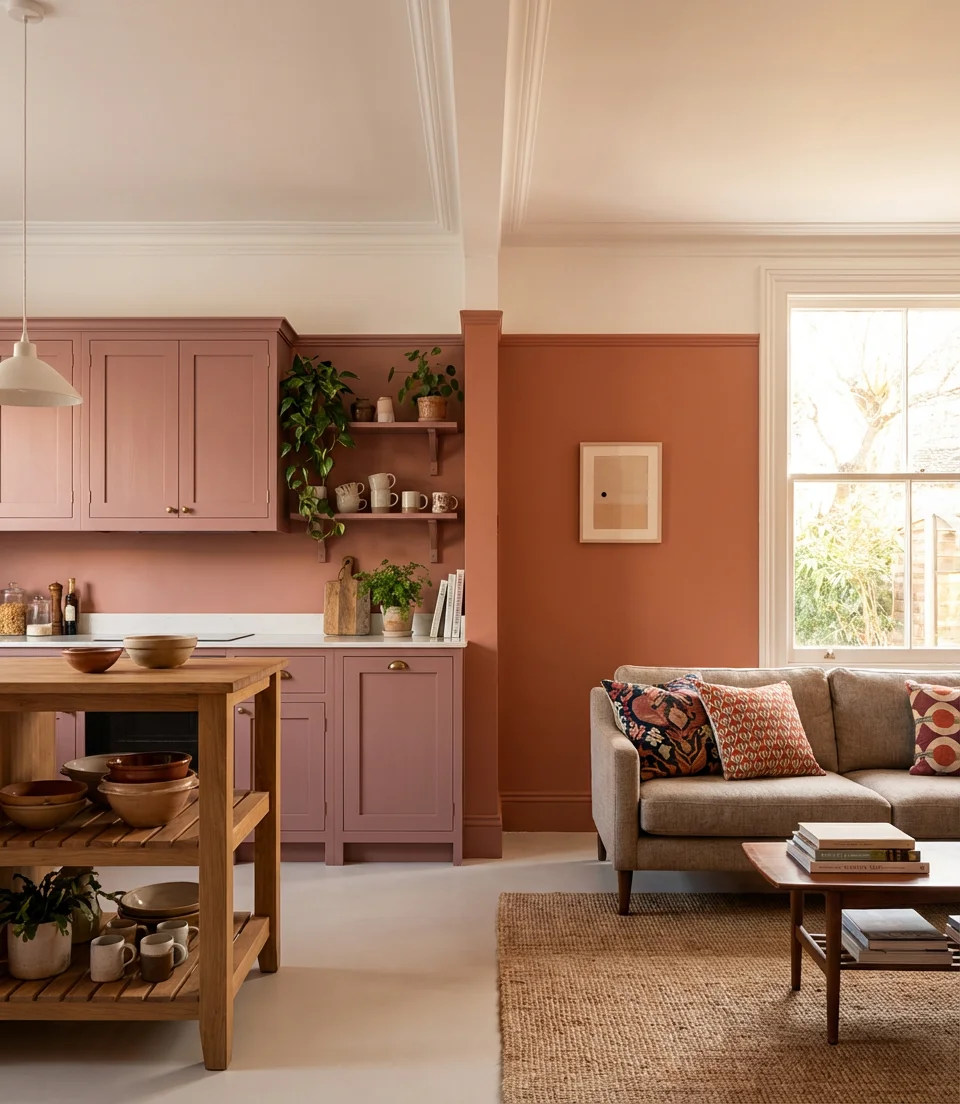
Color blocking in open-plan spaces is having a moment that feels genuinely fresh rather than trend-chasing—and it’s one of the most affordable ways to give a combined kitchen and living room a strong, confident identity. The design principle is simple: assign one bold color to the kitchen zone and a harmonious (not identical) color to the living zone, with a neutral transition element—the ceiling, the trim, or the floor—uniting them. Could the dusty rose kitchen cabinetry lead into a warm terracotta living room? Stunning. Sage green kitchen with a navy wall in the living room? Equally compelling when the connecting elements are carefully managed.
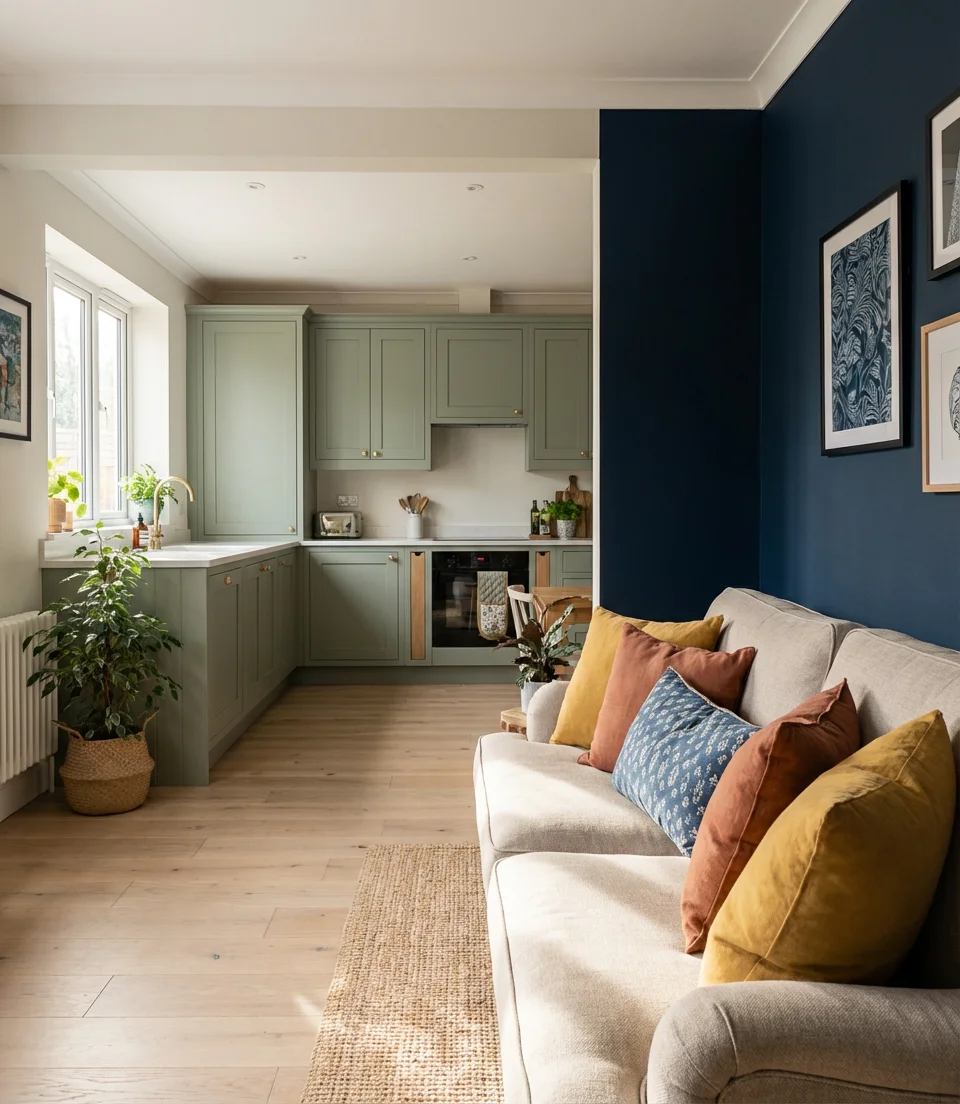
The common mistake with color blocking is choosing colors that are too close in value—two medium-toned colors of similar lightness end up looking muddled rather than intentionally blocked. The most successful color-blocked interiors use at least one light and one significantly darker tone, even within the same color family. Consider contrasting hues such as pale sage and deep forest green, or powder blue and inky slate; this contrast not only makes the blocking legible and intentional, but also prevents it from appearing as an accidental two-coat job due to a lack of one color.
21. Open Kitchen Living Room with a Double-Sided Fireplace
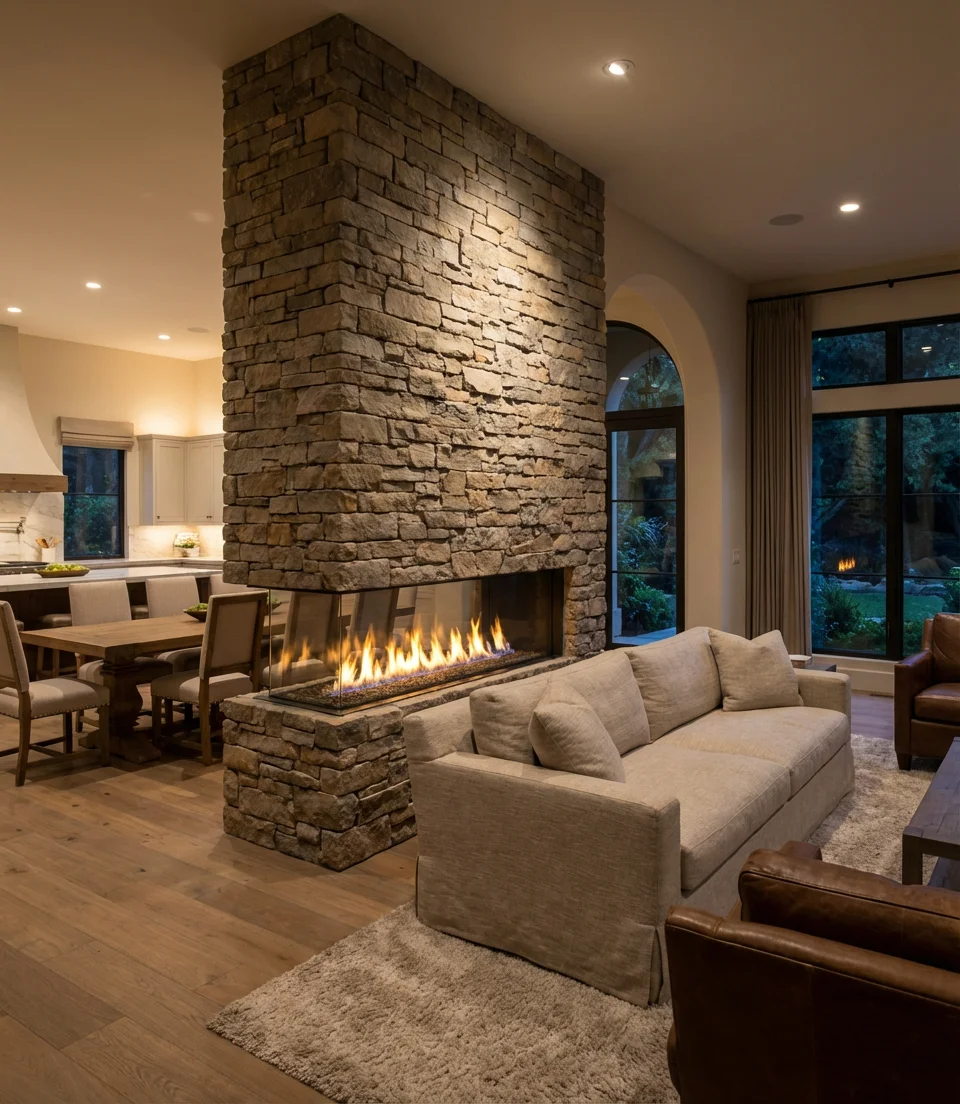
Few architectural features serve the open kitchen living room as elegantly as the double-sided fireplace—a design element that’s aspirational but increasingly achievable through modern gas and ethanol insert options that don’t require a full masonry installation. In a combined space, a see-through fireplace positioned between the kitchen dining area and the living zone creates a stunning focal point from both sides while providing both warmth and a dramatic visual boundary that separates the spaces without closing them off. The flickering light plays differently on tile, stone, and textile surfaces on each side, creating two distinct moods within one shared space.
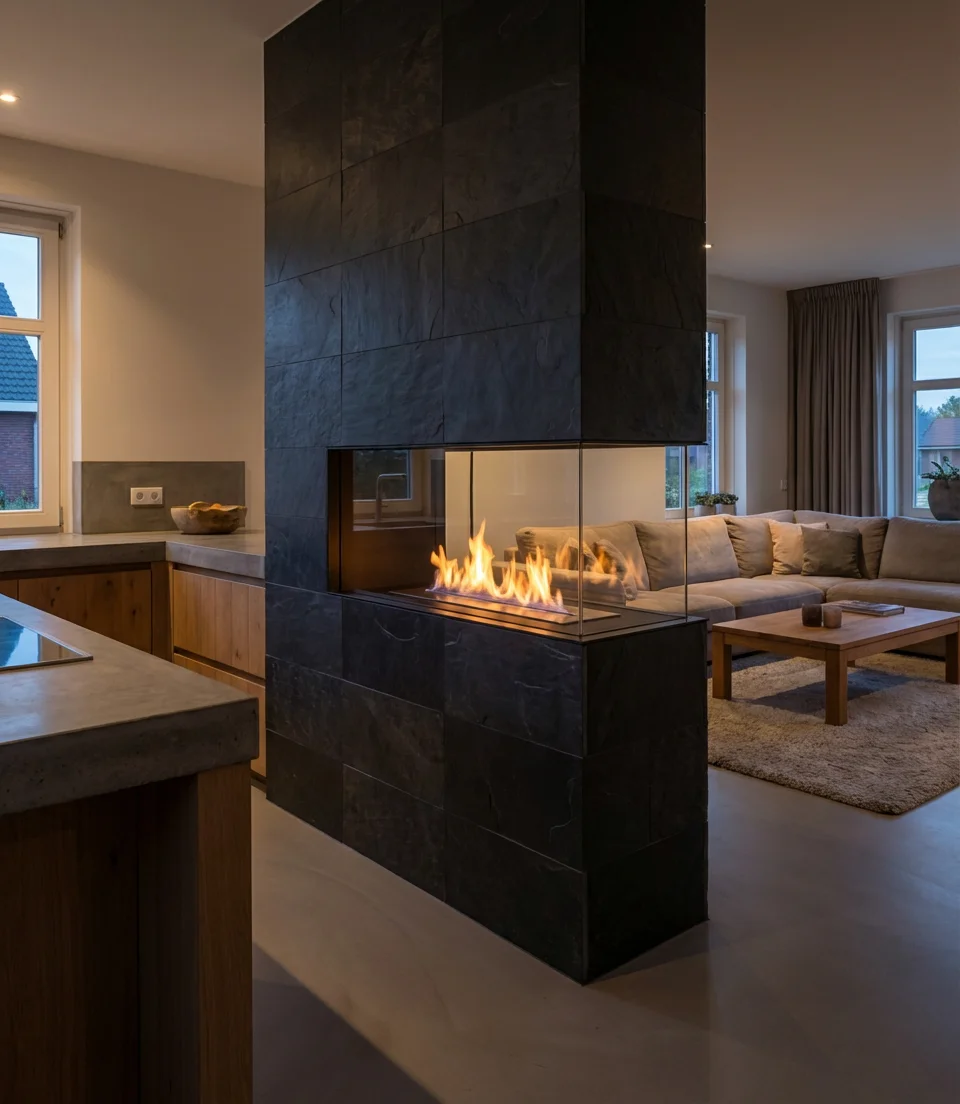
The practical consideration most homeowners overlook with double-sided fireplaces is the flue and ventilation—traditional wood-burning models require a significantly larger chase and flue than a single-sided fireplace, which adds meaningful structural cost. Gas or ethanol linear fireplace inserts by companies like Escea or Ortal can be installed in a fraction of the time and at roughly half the cost of a masonry build, while delivering a visual impact that’s nearly indistinguishable from a custom stone feature. For a planned renovation, a fireplace is one luxury item that consistently delivers an outsized return on investment.
22. Biophilic Open Kitchen Living Room with Indoor Plants
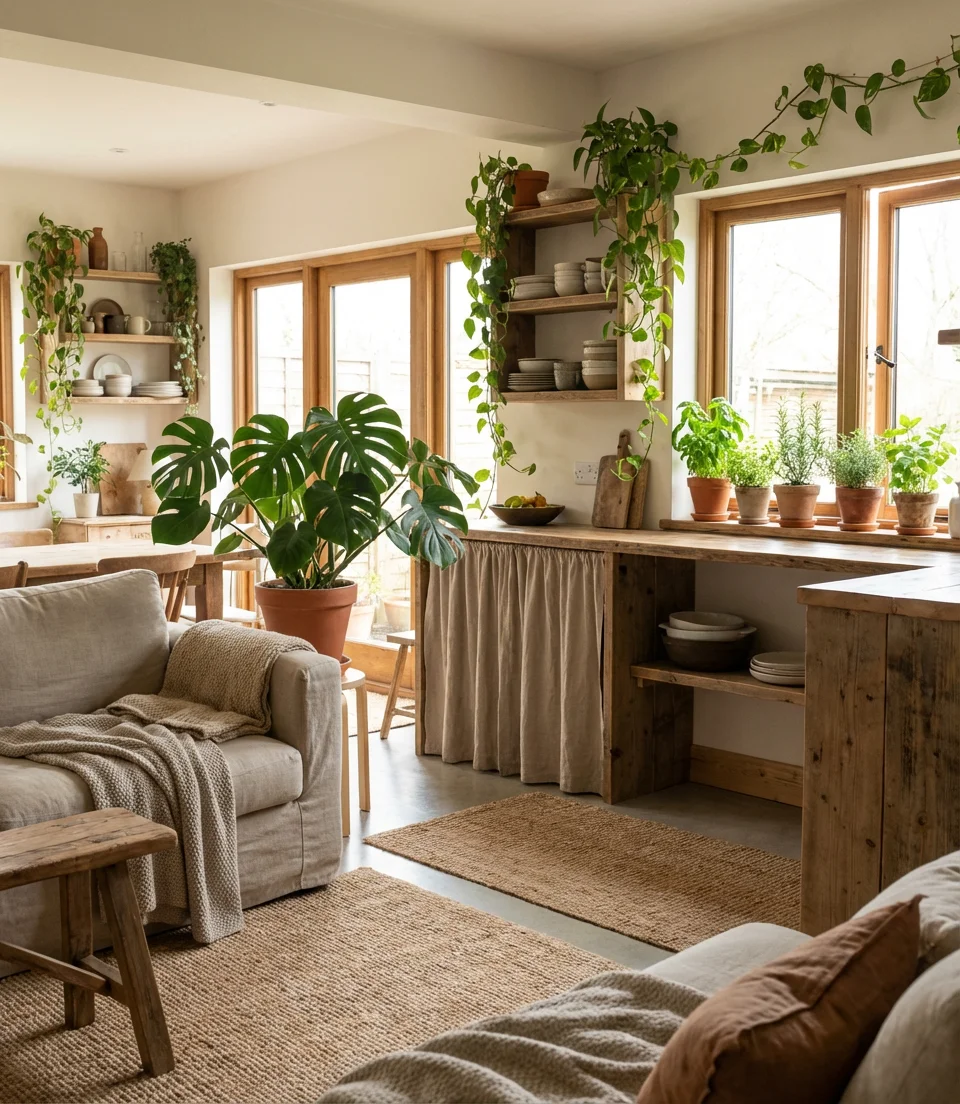
Biophilic design—incorporating natural elements like plants, water, wood, and stone into living spaces—has moved from a wellness trend to an established mainstream practice in American homes, and the open kitchen living room is its natural home. A kitchen with a properly lit herb garden on the windowsill, trailing pothos on open shelving, and a large architectural plant (banana leaf, monstera, or olive tree) anchoring the living zone creates an interior that feels genuinely alive and restorative. The key is treating plants as furniture rather than accessories—they should have designated spots and scale, not just be scattered randomly as afterthoughts across surfaces.
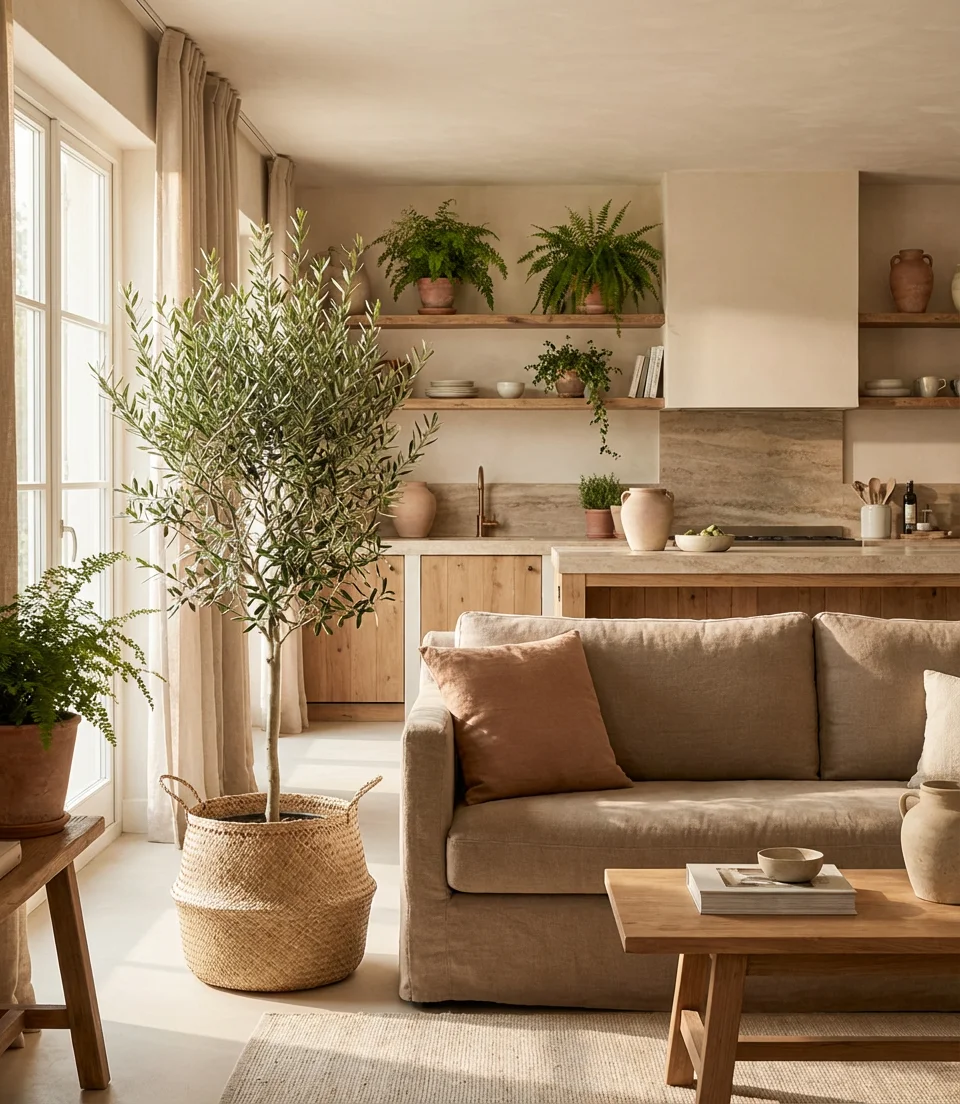
The best light sources for an open kitchen living room plant arrangement are east-facing windows for the kitchen herb garden (gentle morning light, not hot afternoon exposure) and north- or east-facing positions in the living zone for large-leaf architectural plants that prefer indirect brightness. If your space is south-facing—which gets intense afternoon light—choose drought-tolerant, sun-loving varieties like olive trees, citrus, or rubber plants that won’t burn. A grow light hidden behind kitchen shelving can supplement natural light in darker urban apartments without any visible tech interruption.
23. Open Kitchen Living Room in a Converted Industrial Space
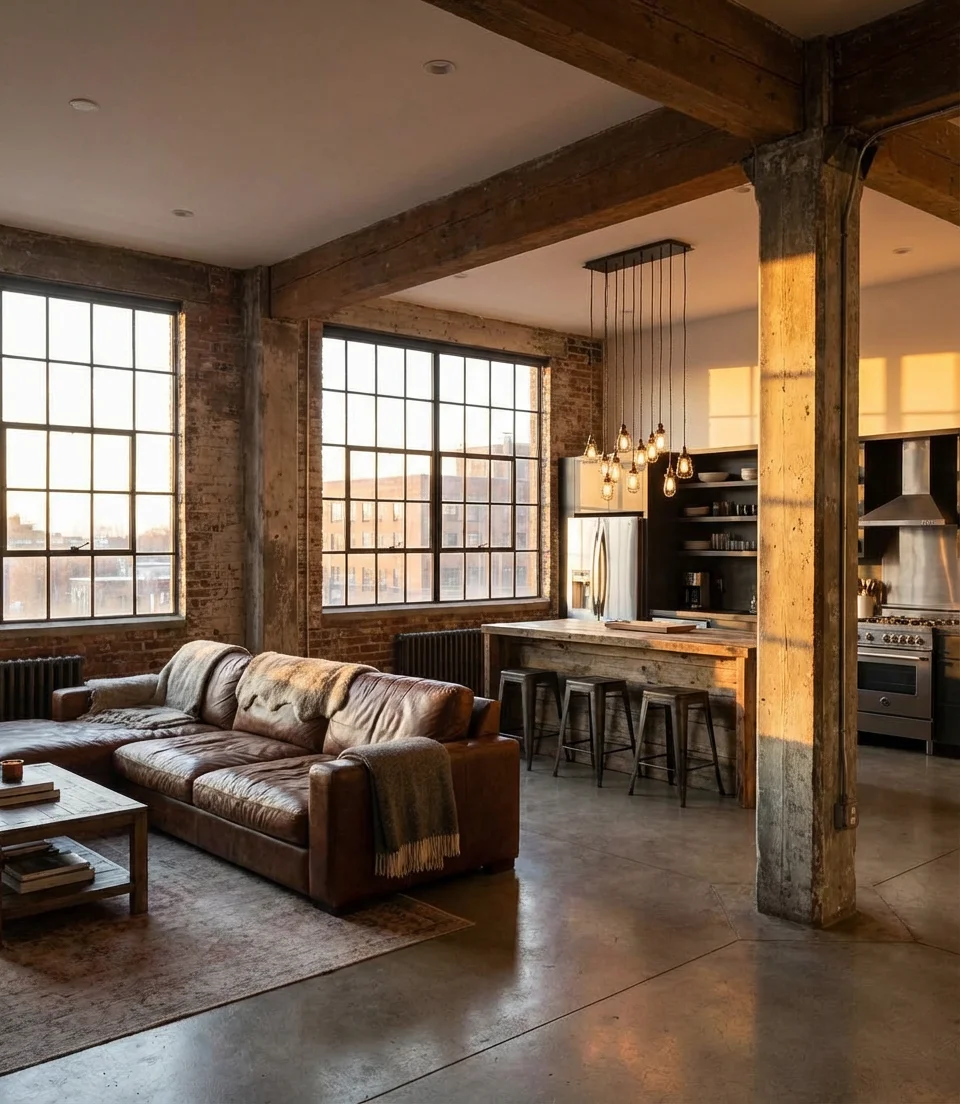
Converted warehouses, former factories, and repurposed commercial buildings represent some of the most exciting open layouts for kitchens and living rooms in America right now—particularly in cities like Detroit, Pittsburgh, Philadelphia, and Los Angeles, where industrial building stock is being creatively transformed into residential spaces. The defining challenge is warmth: industrial architecture gives you incredible bones but can feel cold and echoey without careful material and textile layering. The most successful conversions use the raw architecture as a backdrop while introducing deliberately warm elements—aged leather, handwoven textiles, warm wood, and vintage lighting—to bring human scale to vast spaces.
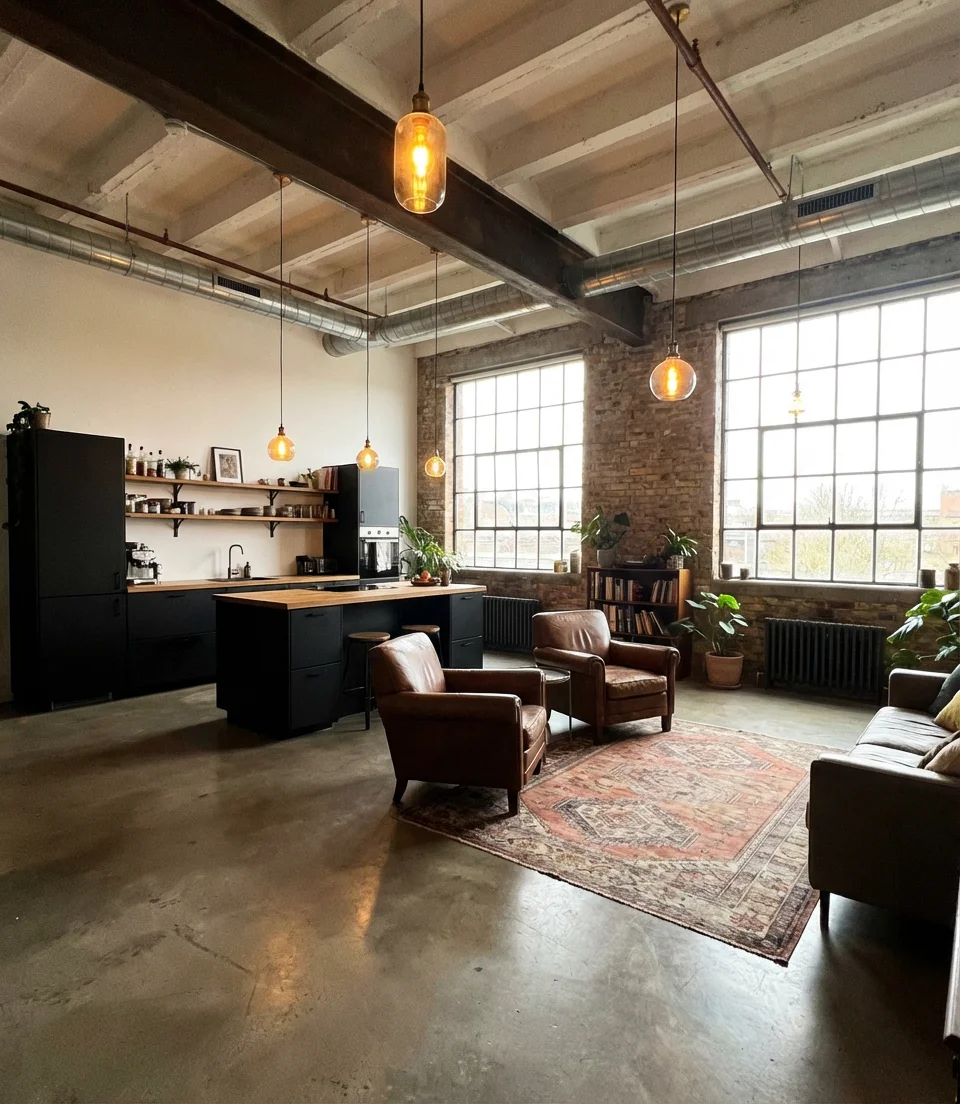
Sound is the invisible design problem in converted industrial open-plan spaces that most people don’t anticipate until they move in. Hard surfaces everywhere—concrete, steel, glass—create an echo chamber effect that makes normal conversation feel like a cafeteria. Large area rugs, upholstered furniture with textured fabrics, wall-hung textile art, and acoustic ceiling panels (which now come in beautiful woven designs) can reduce reverberation by 40 to 60 percent and turn a technically impressive but uncomfortable space into a genuinely pleasant place to spend an evening.
24. Open Kitchen Living Room with a Reading Nook or Snug Corner
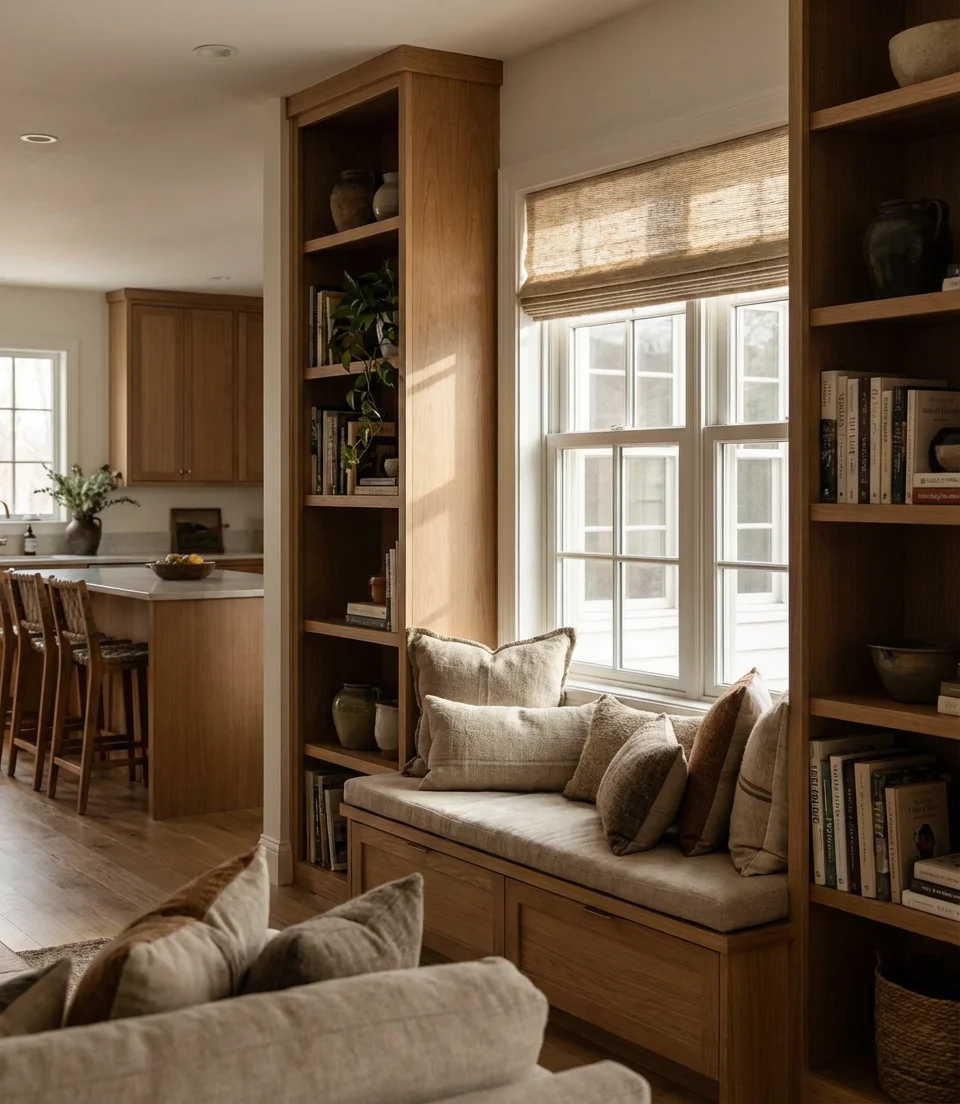
One of the genuine criticisms of fully open kitchen living rooms is that they can feel relentlessly social—there’s nowhere to tuck away, to be in the house but slightly apart from the action. The solution that’s gaining real momentum in American home design is the deliberately carved-out snug corner or reading nook within the open-plan space: a window seat with built-in storage, a deep armchair flanked by bookshelves, or a bay window bench with cushions and a low table. These micro-spaces offer intimacy and enclosure within a larger open room, satisfying the human need for both connection and retreat within a single space.
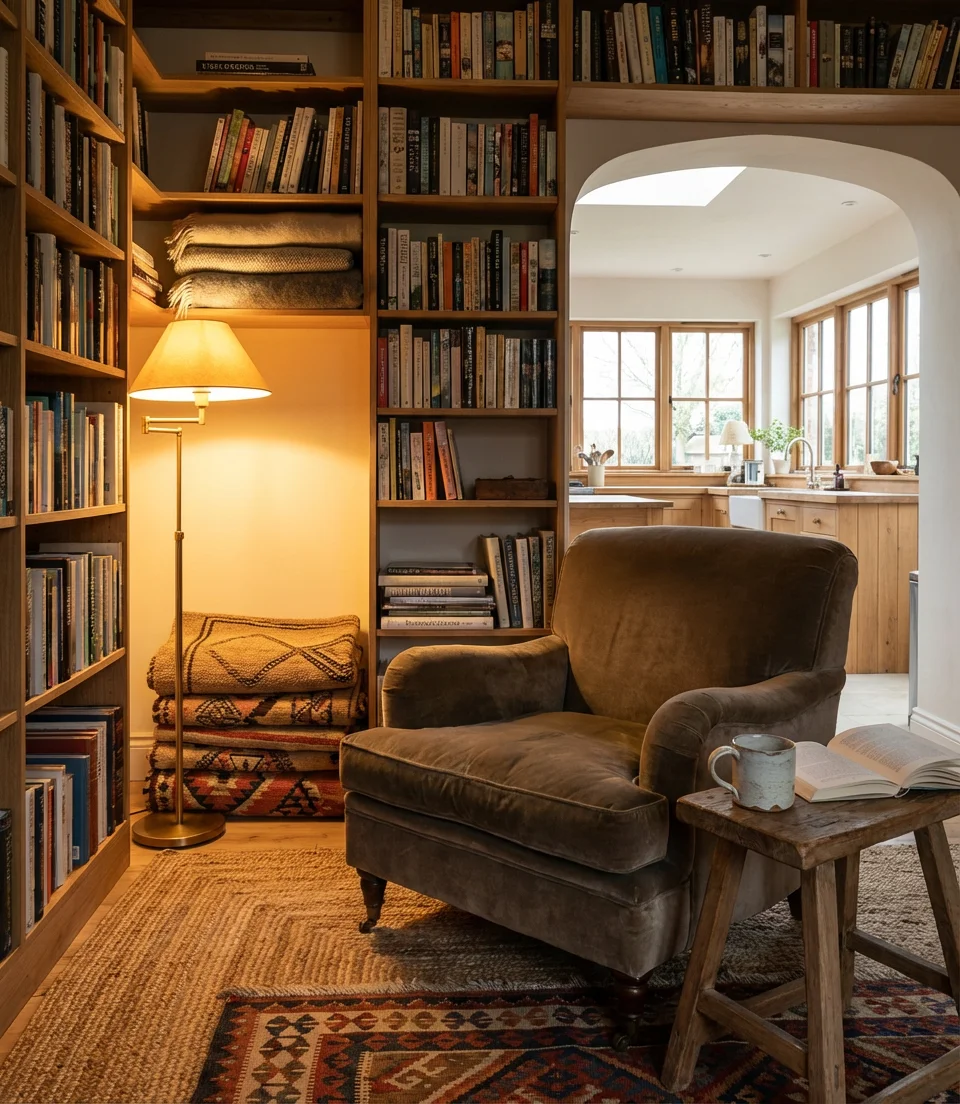
This type of design works best in homes where the open plan has an awkward alcove, an underused corner, or a bay window that isn’t currently being treated as a feature. Built-in window seats with hinged storage lids can add anywhere from $1,500 to $4,000 installed, but they’re one of the few renovation investments that buyers and appraisers consistently respond to with enthusiasm. In real estate listings, homes with built-in seating nooks in open-plan areas consistently photograph better and generate more online engagement than comparable homes without them.
25. Open Kitchen Living Room Plan for Multi-Generational Homes
The multi-generational household is one of the fastest-growing housing models in America—driven by rising costs, changing family structures, and a genuine cultural shift toward intergenerational living. The open kitchen living room in this context needs to work across very different use patterns simultaneously: a grandparent reading in the morning, teenagers doing homework in the afternoon, and parents cooking dinner for everyone in the evening. The most successful floor plans for multi-generational open living layer the space with distinct activity zones—each with its lighting level, acoustic privacy strategy, and furniture scale—while keeping the visual and social connection of the open plan intact.
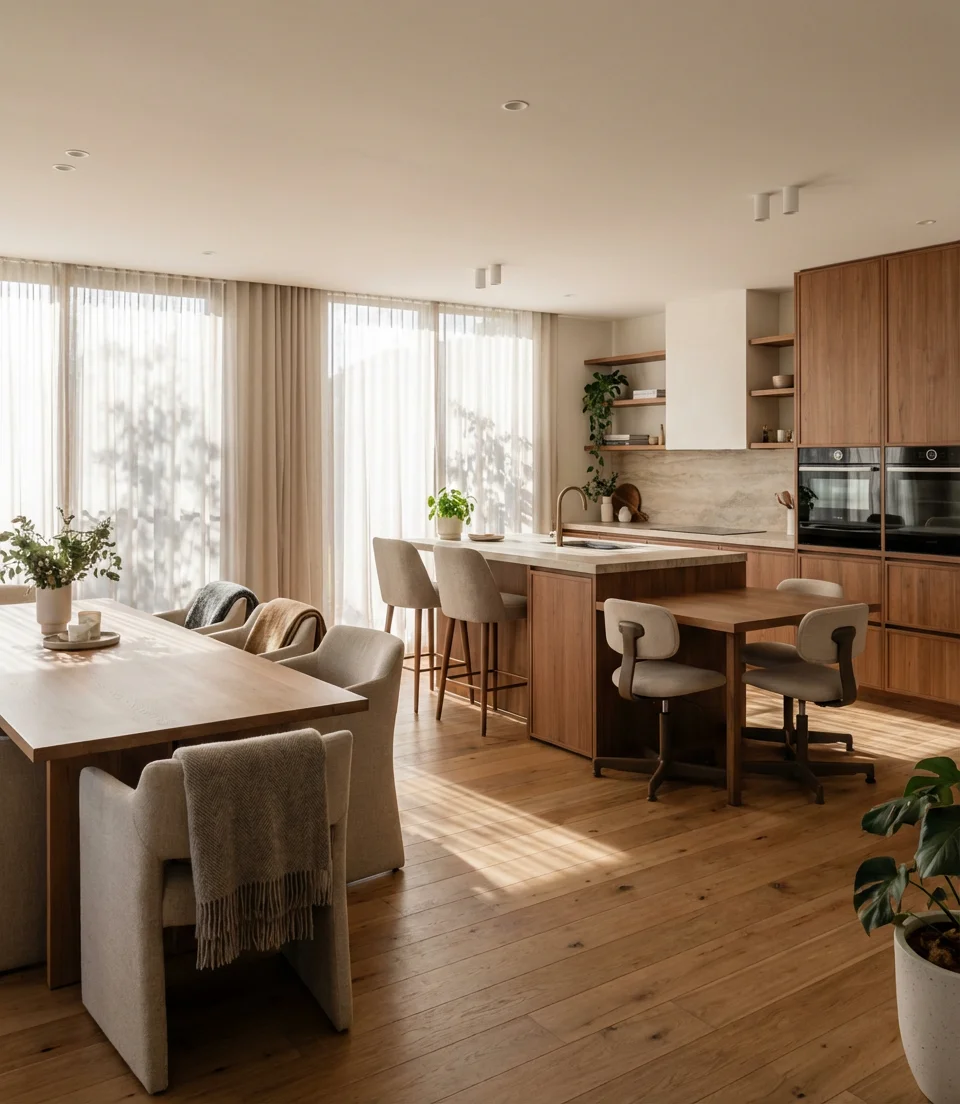
Accessibility is the design consideration most families delay thinking about until it becomes urgent—and retrofitting an open-plan kitchen living room for a family member with mobility challenges is significantly more expensive than designing for it from the start. Wide clearances around the kitchen island (48 inches minimum), lever-style cabinet hardware, pull-out lower shelves, and a mix of seating heights at the kitchen table are all modifications that cost little or nothing extra when planned initially but can run several thousand dollars as retrofits. Designing with a 20-year lens rather than a right-now lens is the most underrated form of smart home planning there is.
Whether you’re dreaming up a complete renovation or just trying to make your existing space feel better tomorrow morning, the open kitchen living room has never offered more creative possibilities than it does right now. There’s no single right answer—just the version that fits your life, your budget, and the way your household actually moves through the day. We’d love to hear which of these ideas resonated with you most. Drop a comment below with your favorite concept or share what your own open-plan space looks like—your input genuinely helps other readers find their path too.