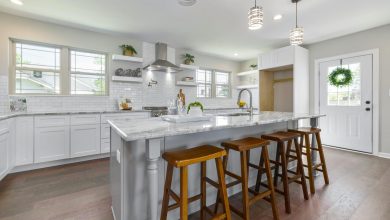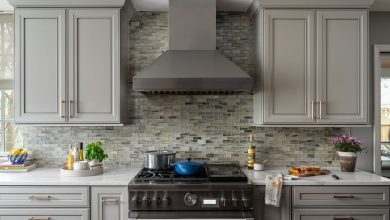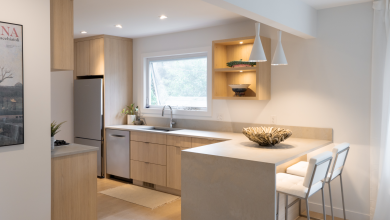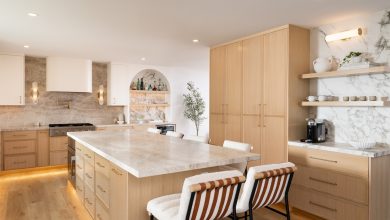

Kitchen countertops have become the defining feature of modern American homes, and 2026 brings a fresh wave of innovation that balances beauty with practicality. From bold statement surfaces to budget-friendly updates, homeowners are searching Pinterest for countertop ideas that reflect their personal style while standing up to daily use. Whether you’re planning a full renovation or simply refreshing your space, this year’s trends offer something for every taste and timeline. The choices ahead blend timeless materials with contemporary finishes, proving that the heart of your kitchen can be both functional and breathtaking. Here are inspiring countertop ideas to guide your next project.
1. Sleek Black Quartz with Minimalist Hardware
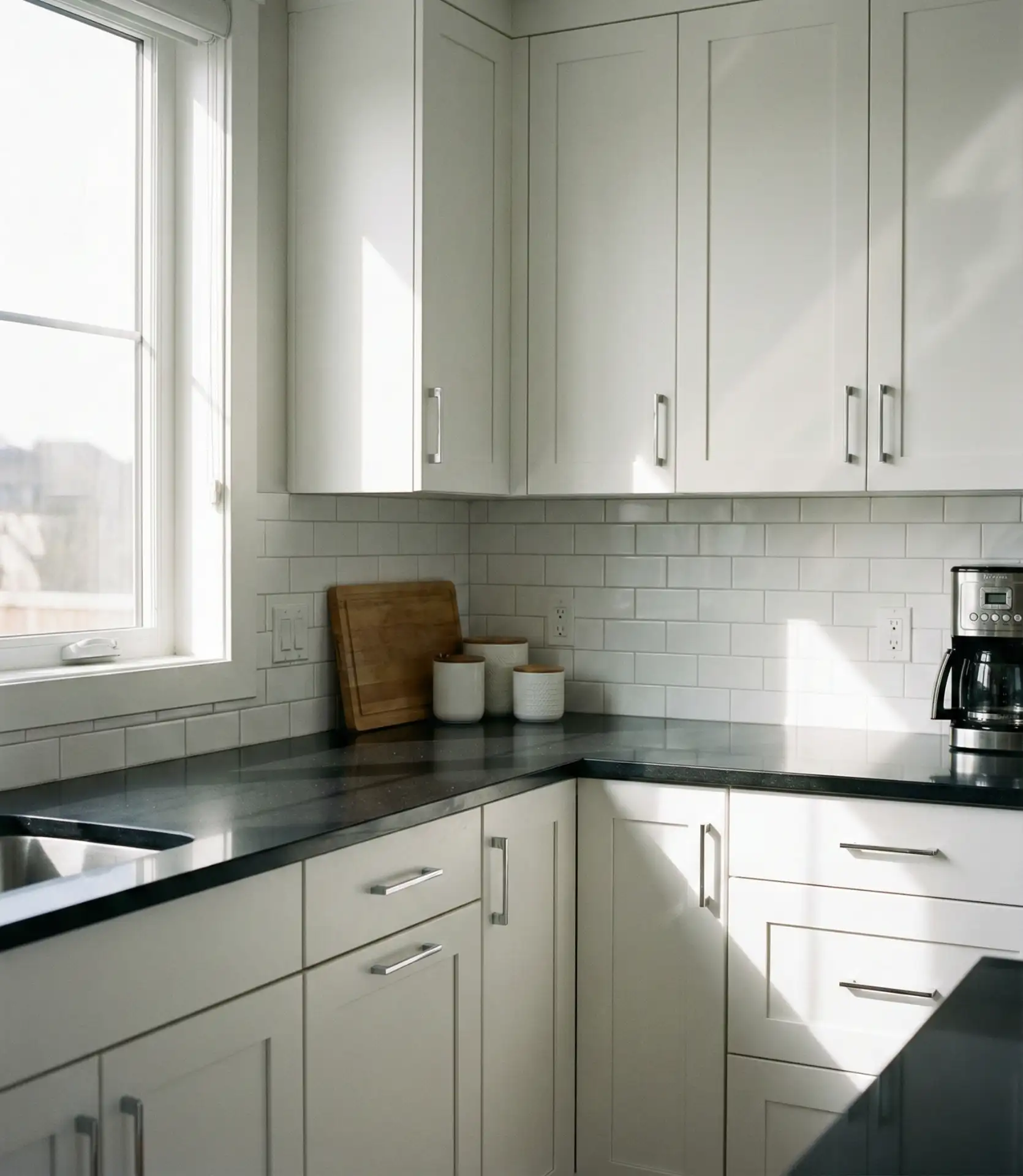
A black quartz countertop paired with white cabinets creates a striking contrast that feels both modern and inviting. This combination works beautifully in urban kitchens where clean lines and bold statements define the design. The deep surface anchors the room without overwhelming smaller spaces, and its non-porous nature makes it ideal for busy households. Pairing it with simple chrome or matte black fixtures keeps the focus on the countertop’s dramatic presence.
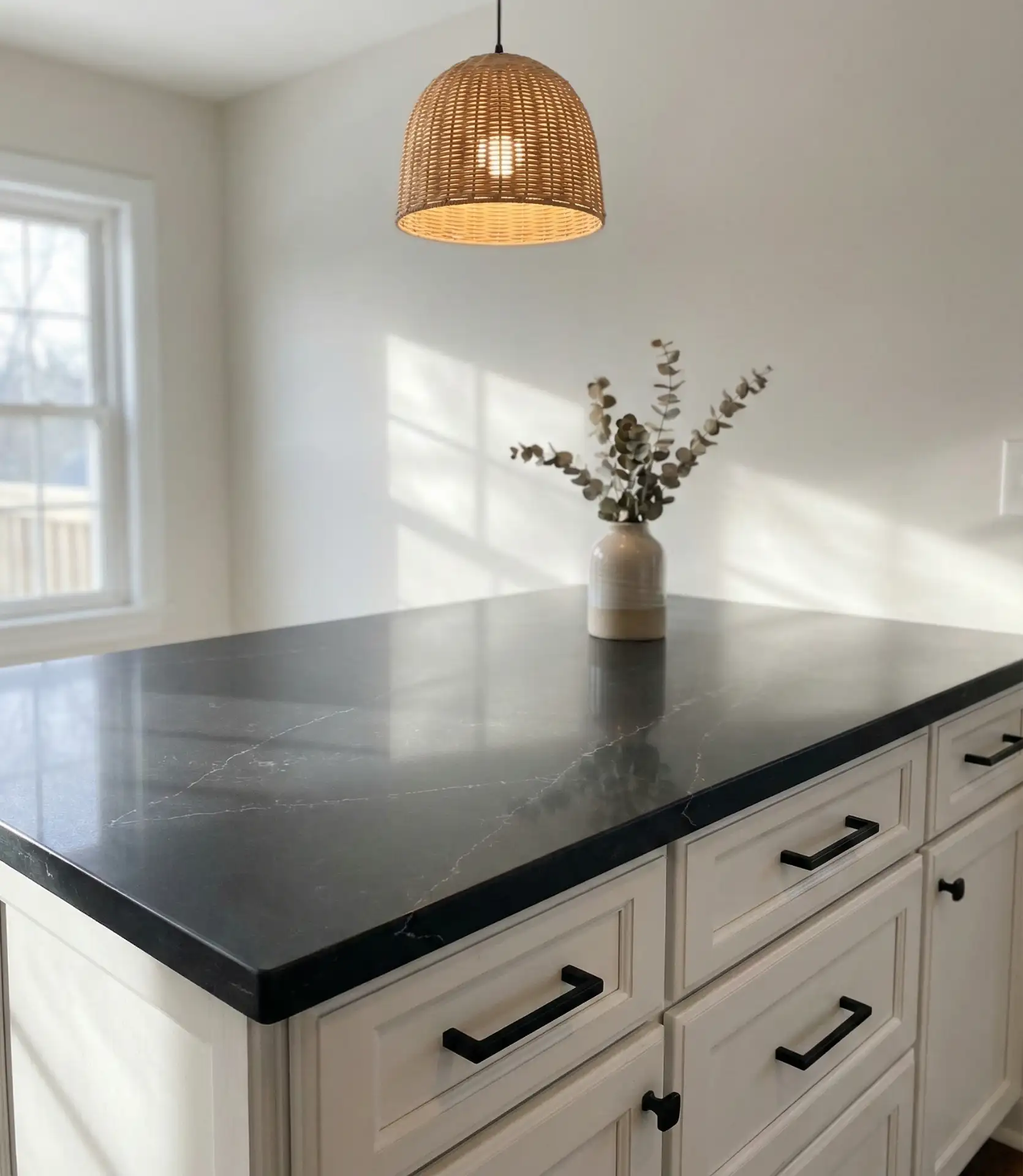
In the Midwest and Northeast, where kitchens serve as gathering spaces year-round, black quartz offers durability that handles everything from holiday baking to weeknight dinners. The surface resists staining from wine, coffee, and oils, which means less stress during entertaining. Homeowners appreciate that it doesn’t require sealing like natural stone, saving time and maintenance expenses over the years.
2. Warm Quartz with Honey-Toned Veining
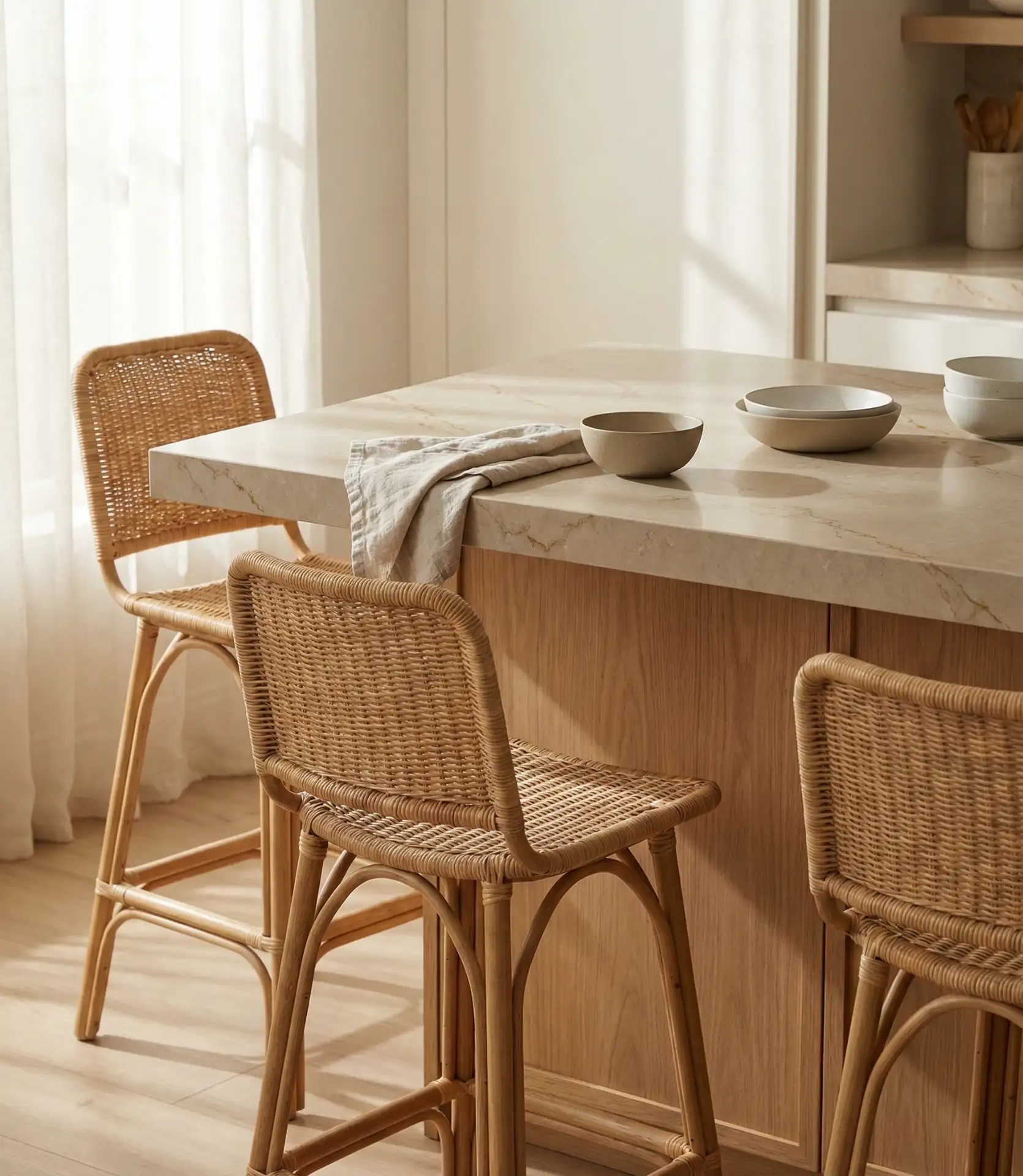
Warm quartz countertops bring a softer, more organic feel to kitchens that lean toward farmhouse or transitional styling. These surfaces feature creamy backgrounds with subtle veining in caramel, gold, or taupe, offering visual interest without the boldness of marble. They pair effortlessly with natural wood cabinetry and brass or gold hardware, creating a cohesive look that feels collected over time. This option suits homes where comfort and approachability take priority over stark minimalism.
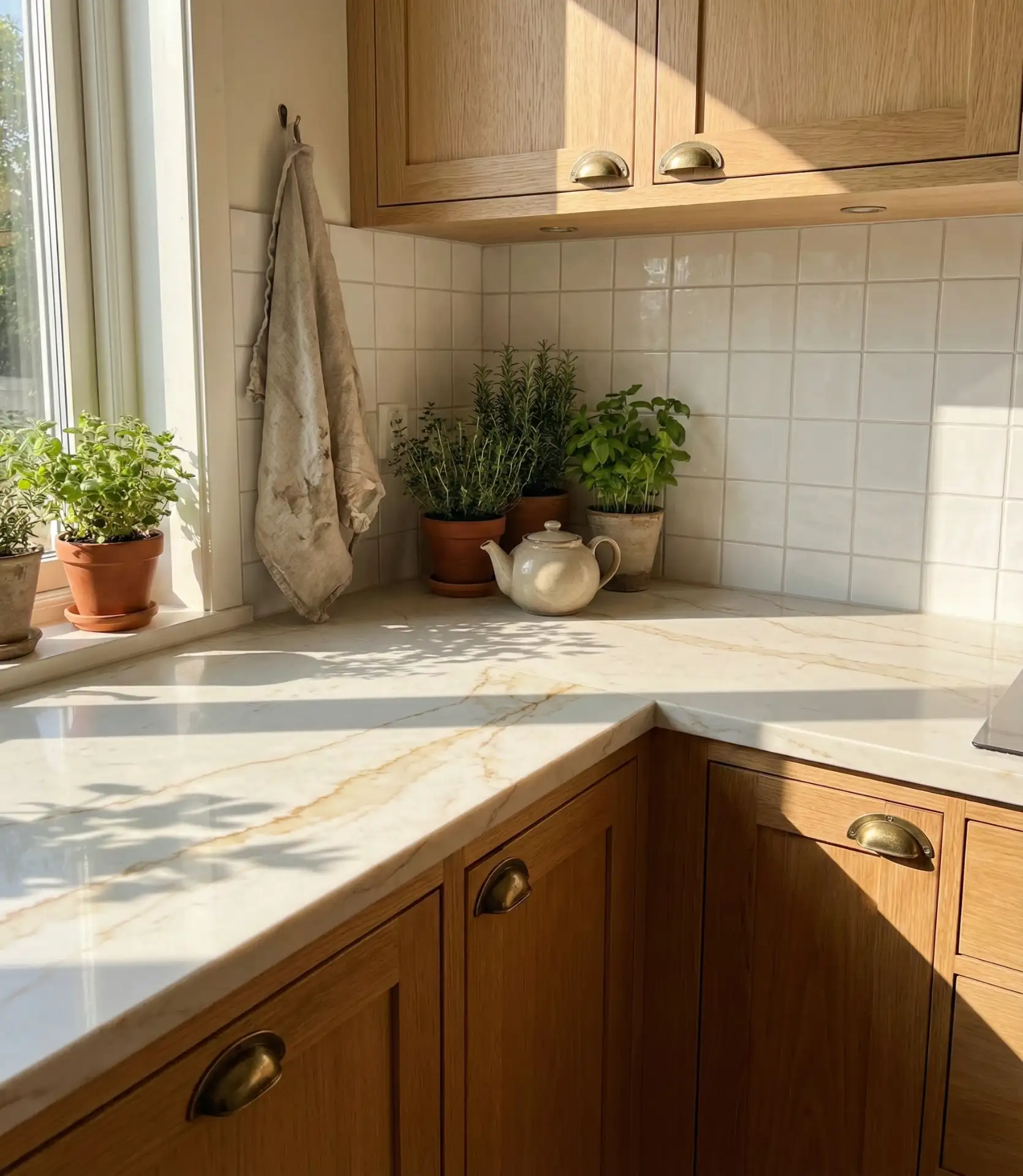
One common mistake is choosing a warm quartz that’s too yellow-toned, which can clash with cooler lighting. Always request a sample to view under your kitchen’s actual light conditions—both natural and artificial—before committing. This prevents the countertop from appearing sallow or dated once installed.
3. Polished Quartzite for High-Traffic Zones
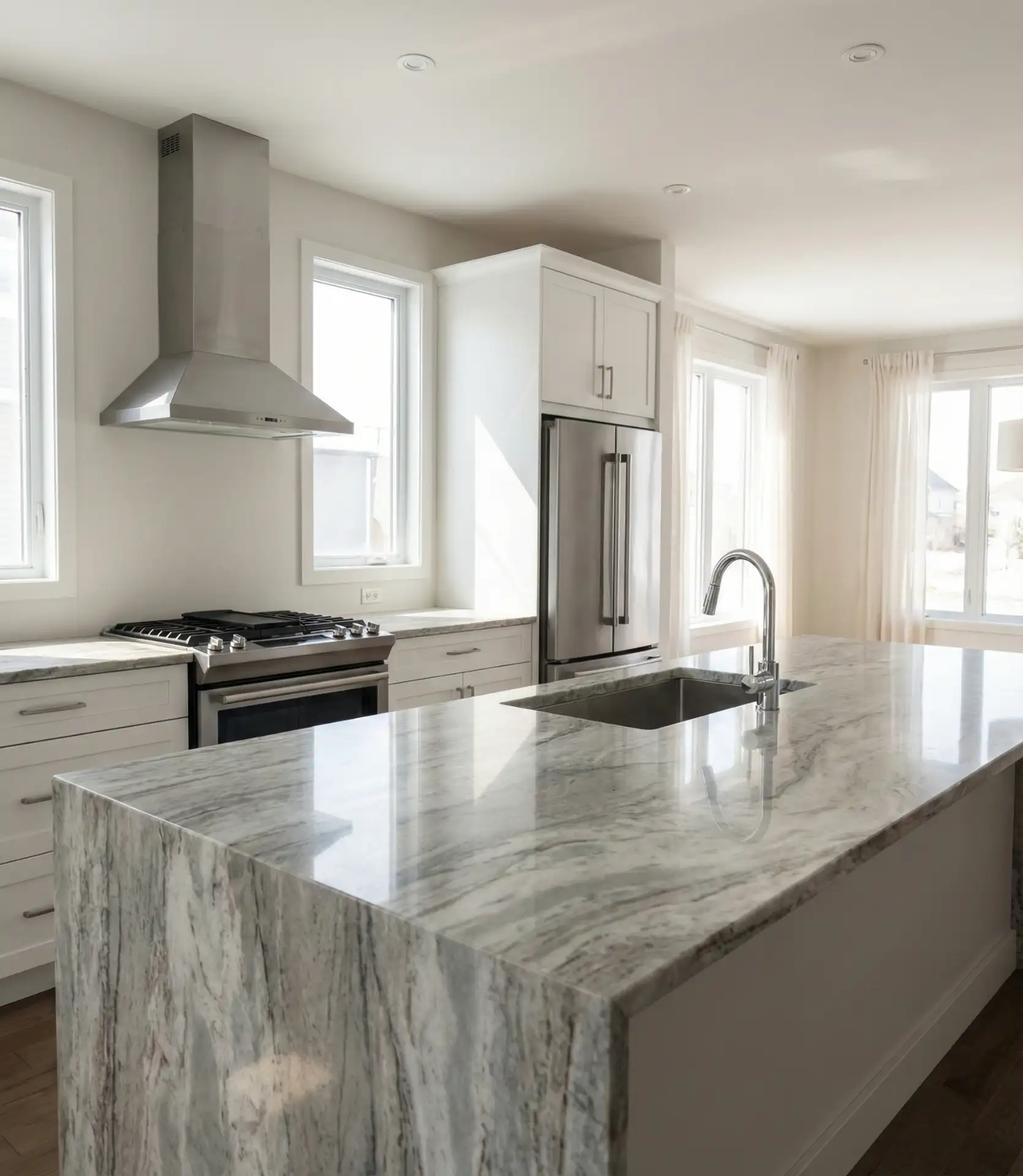
For families who cook daily, quartzite delivers the beauty of marble with superior durability. This natural stone resists heat and scratching better than softer materials, making it a practical choice for active kitchens. The polished finish enhances its natural patterns—think soft grays, whites, and occasional gold flecks—while reflecting light to brighten the space. It’s particularly popular in Southern California and Texas, where open-concept layouts demand surfaces that perform as well as they photograph.
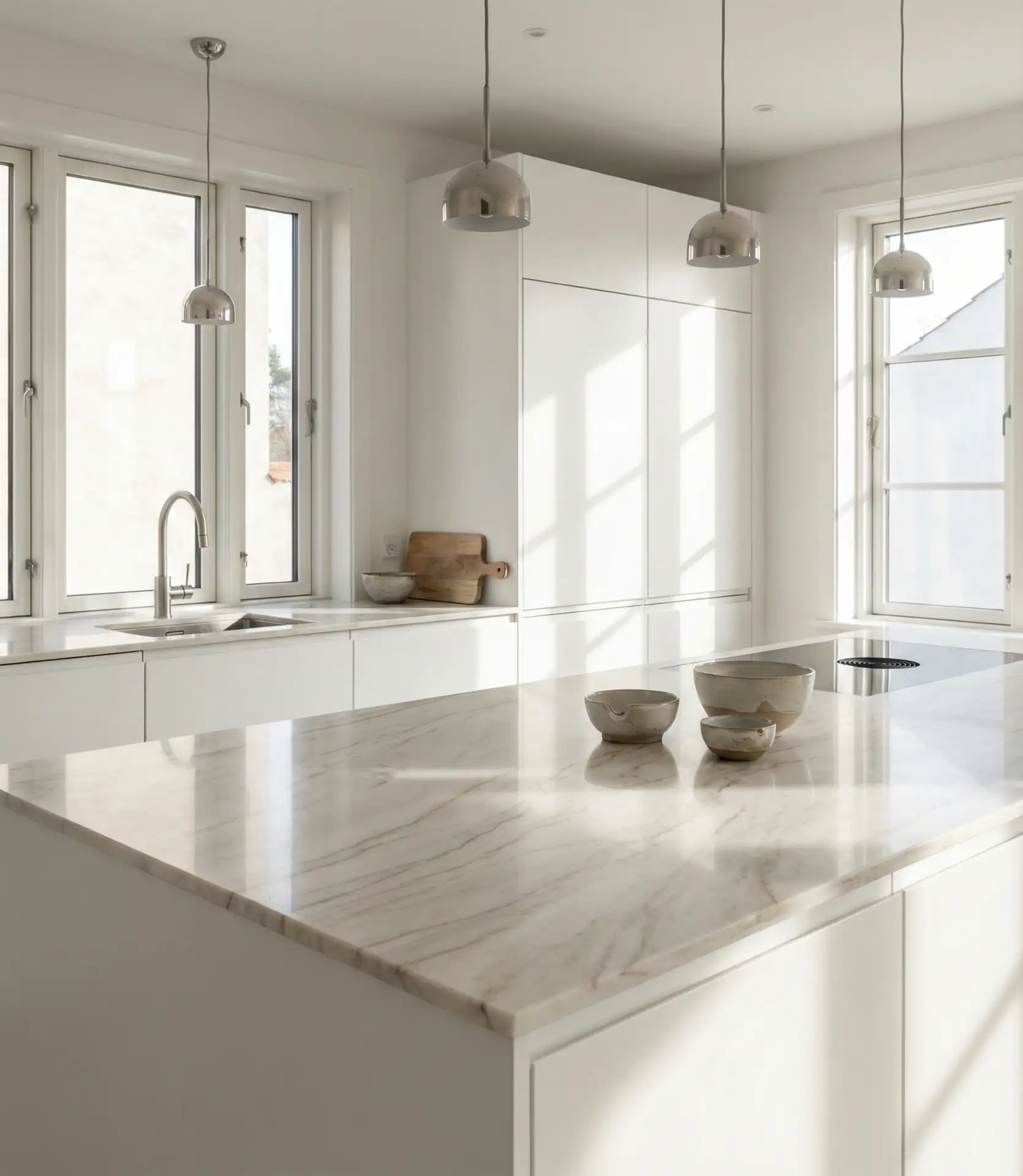
A designer in Austin recently shared that quartzite has become her go-to recommendation for clients who want marble’s elegance without the upkeep. She noted that sealing it once a year is typically enough to maintain its resistance to stains, which appeals to homeowners who lack time for intensive maintenance routines.
4. Dark Granite with Flecked Detail
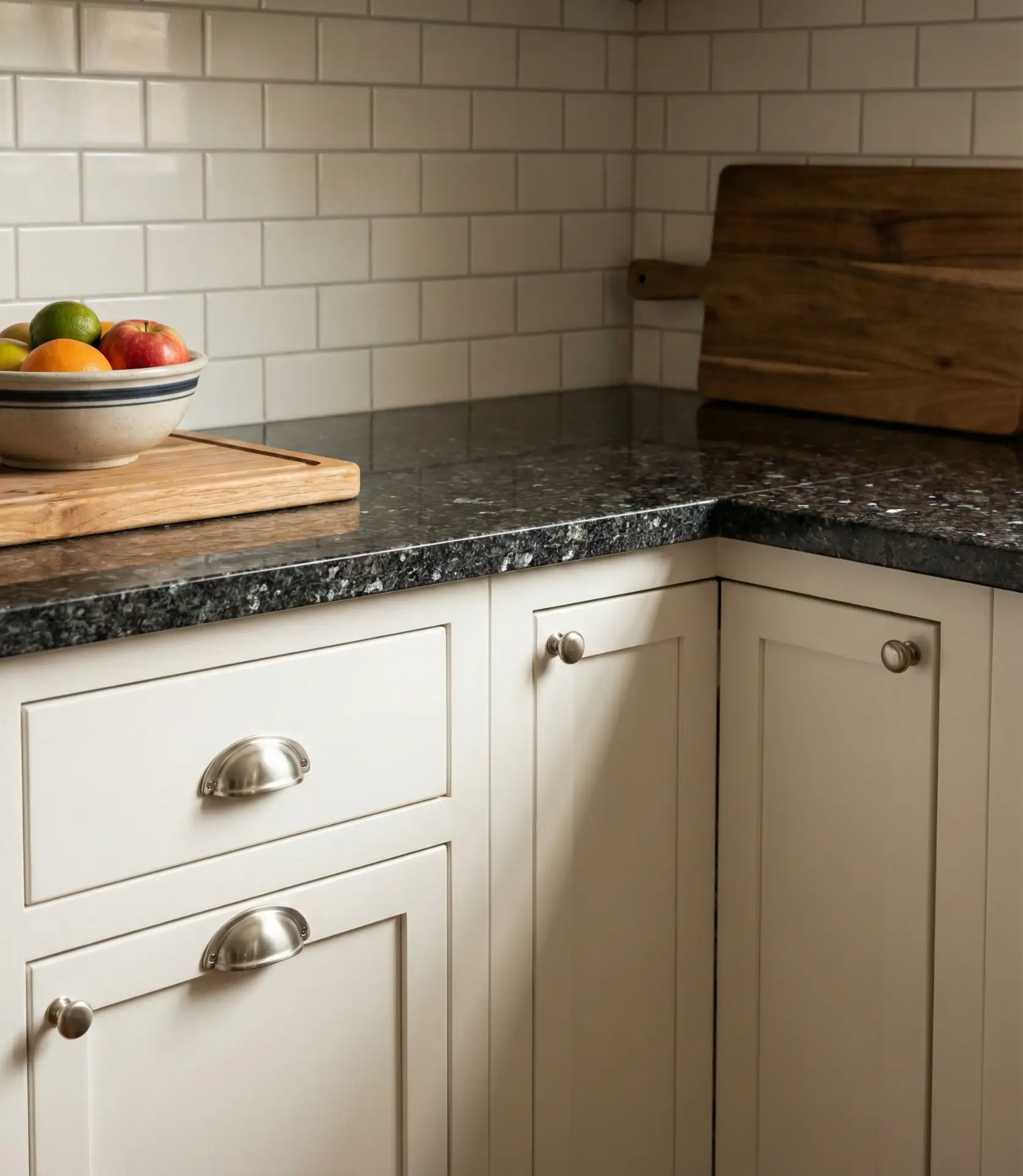
A dark granite countertop offers timeless appeal and exceptional resilience, especially in kitchens that see heavy use. The naturally occurring flecks and mineral deposits create depth and movement, ensuring no two slabs look identical. This material pairs beautifully with both white cabinets for high contrast and medium-toned wood for a more grounded aesthetic. Granite remains a top choice for resale value, as buyers recognize its longevity and low-maintenance reputation.
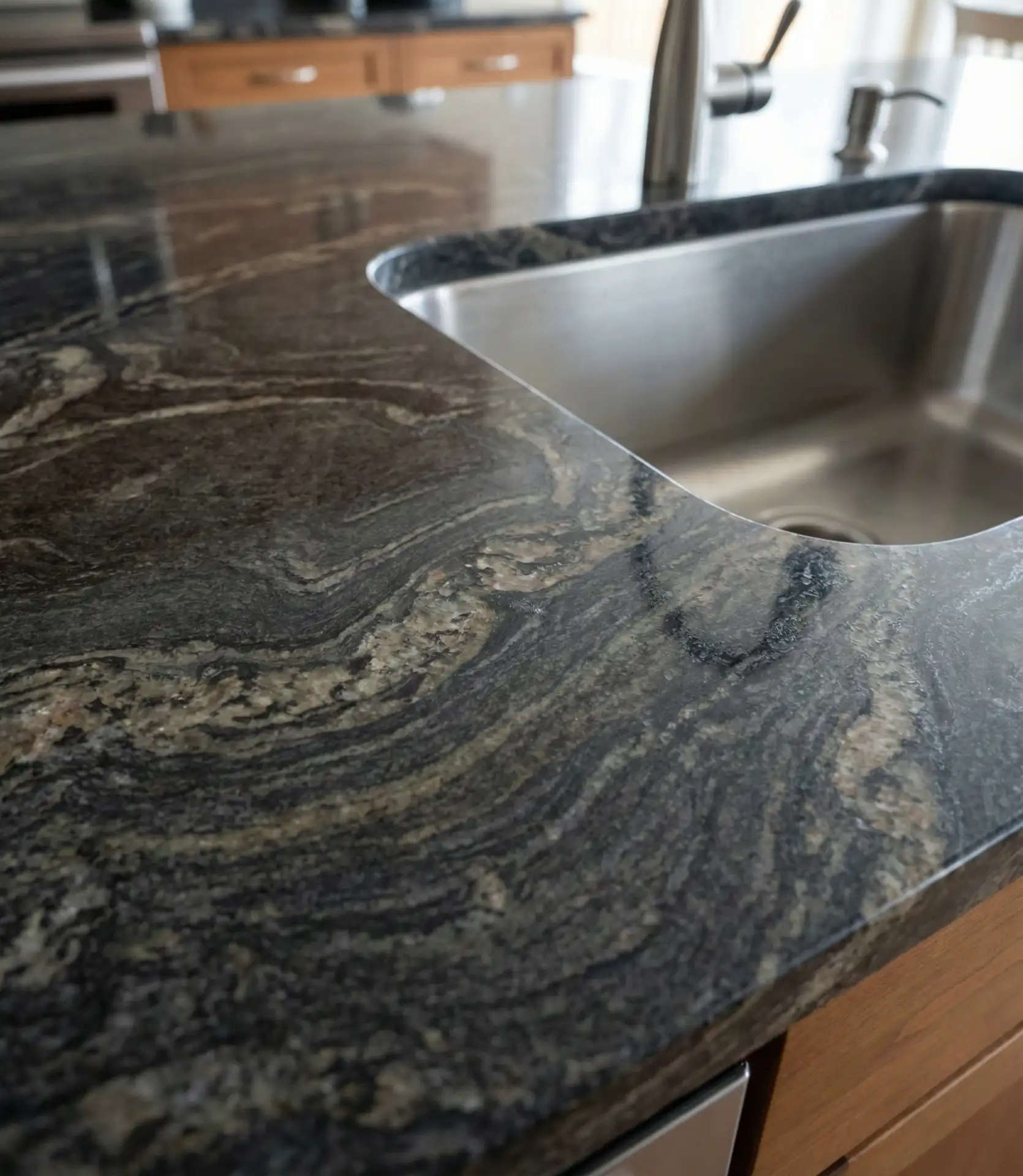
Granite works best in traditional or transitional kitchens where classic materials anchor the design. It’s less suited to ultra-modern spaces that favor uniform surfaces, but it thrives in homes with architectural details like crown molding or inset cabinetry. Many homeowners in the Northeast prefer it for its ability to hide minor wear and spills between cleanings.
5. Butcher Block Wooden Countertop Islands
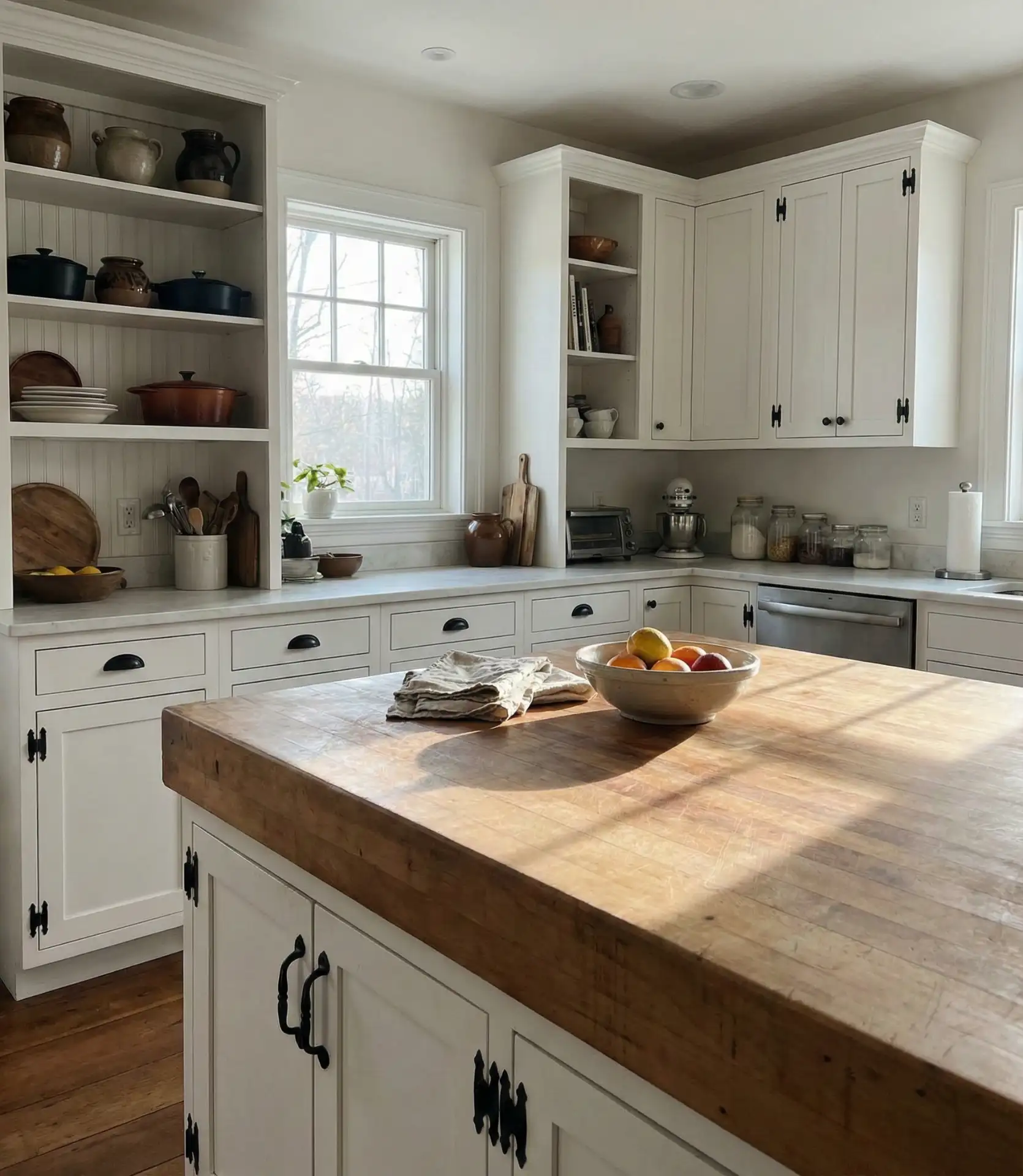
A wooden butcher block island brings warmth and texture to kitchens dominated by harder surfaces. This choice creates a functional prep zone that’s gentle on knives and develops a beautiful patina over time. It’s especially effective in farmhouse or cottage-style kitchens where natural materials enhance the overall decor. Pairing wood with white perimeter countertops in quartz or marble balances practicality with charm.
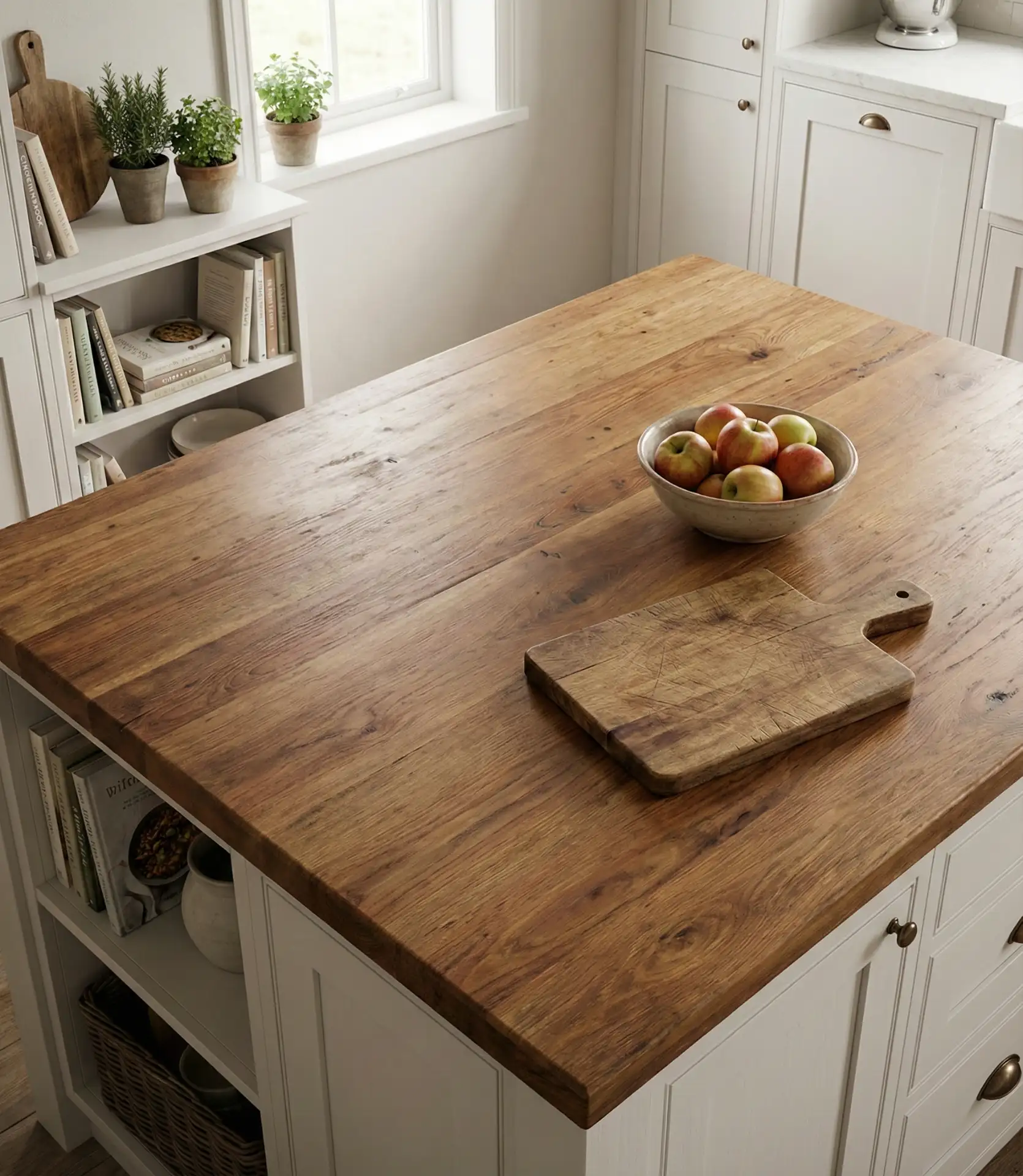
Real homeowner behavior shows that wood countertops require regular oiling—about once a month for the first year—but many find this ritual meditative rather than burdensome. The surface can be sanded down if it becomes scratched or stained, offering a level of renewability that stone simply can’t match.
6. Industrial Concrete Countertops
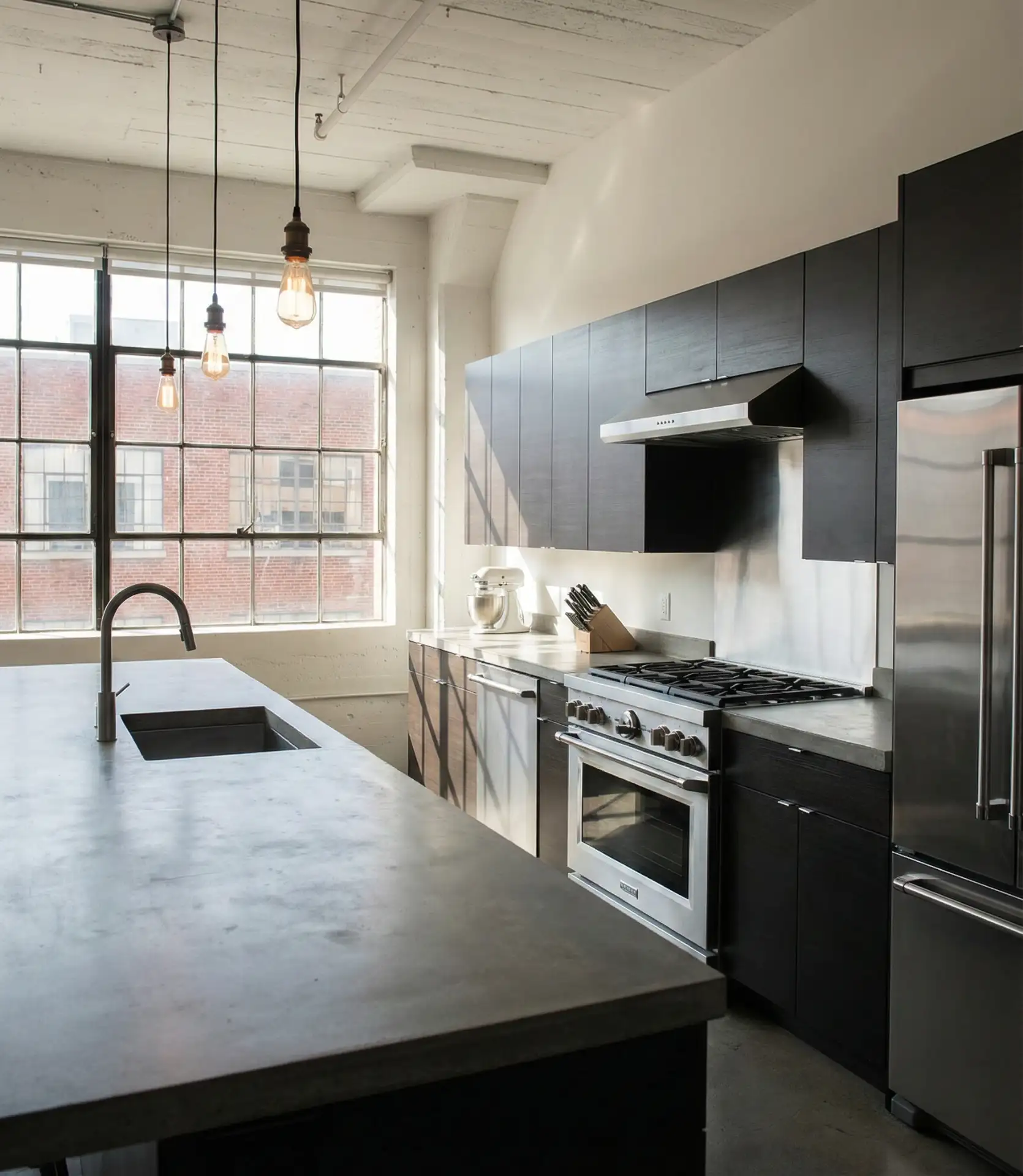
Concrete countertops deliver an urban, industrial edge that appeals to loft dwellers and fans of modern design. These surfaces can be customized in color, finish, and thickness, allowing for truly unique installations. They work particularly well in open kitchens where the countertop becomes a focal point, and their matte texture contrasts beautifully with sleek stainless steel appliances. Concrete also supports integrated sinks and drainboards for a seamless look.
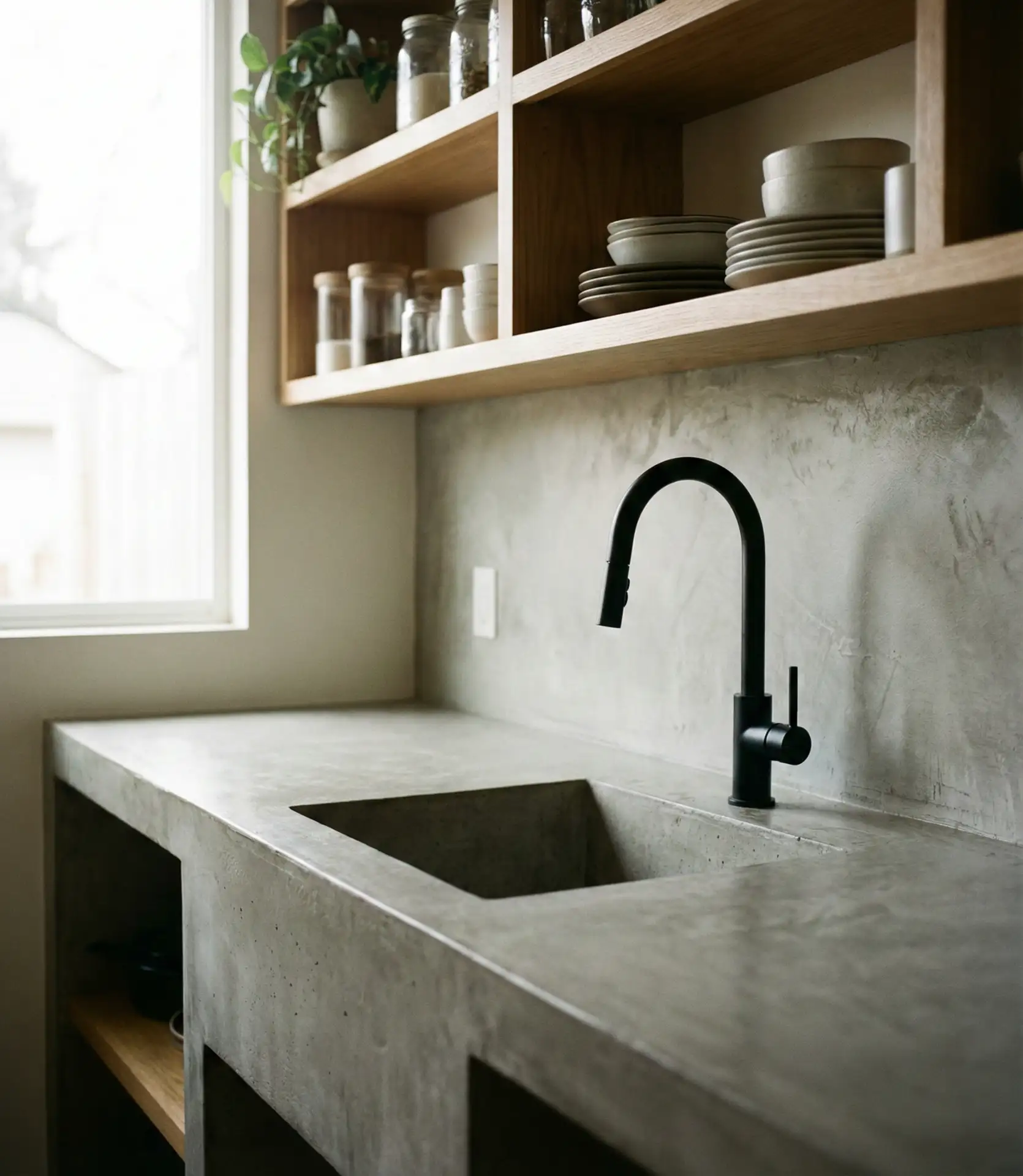
Concrete countertops typically cost between $65 and $135 per square foot installed, which positions them in the mid-to-high range. The investment pays off in customization and durability, though homeowners should know that hairline cracks can develop over time and are considered part of the material’s character rather than a defect.
7. Classic White Quartz with Subtle Veining
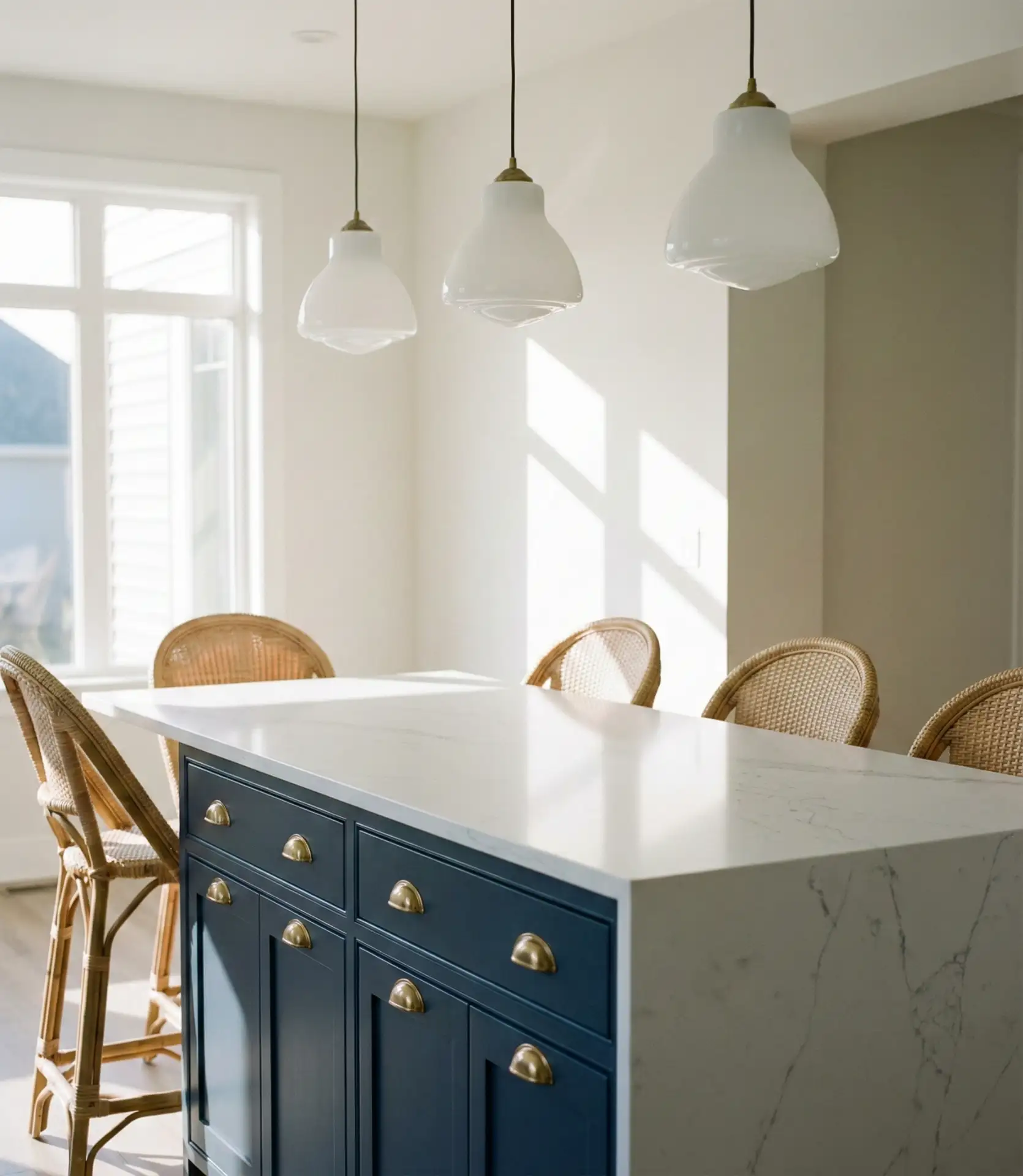
A white quartz countertop remains the most requested surface in American kitchens, offering brightness and versatility that suits nearly any style. The engineered stone provides a cleaner, more uniform appearance than natural marble while eliminating concerns about etching from acidic foods. It’s the foundation for countless kitchen countertop 2026 designs, from Scandinavian minimalism to coastal casual. Pairing it with gray or navy cabinets creates dimension without sacrificing the light-reflecting properties homeowners love.
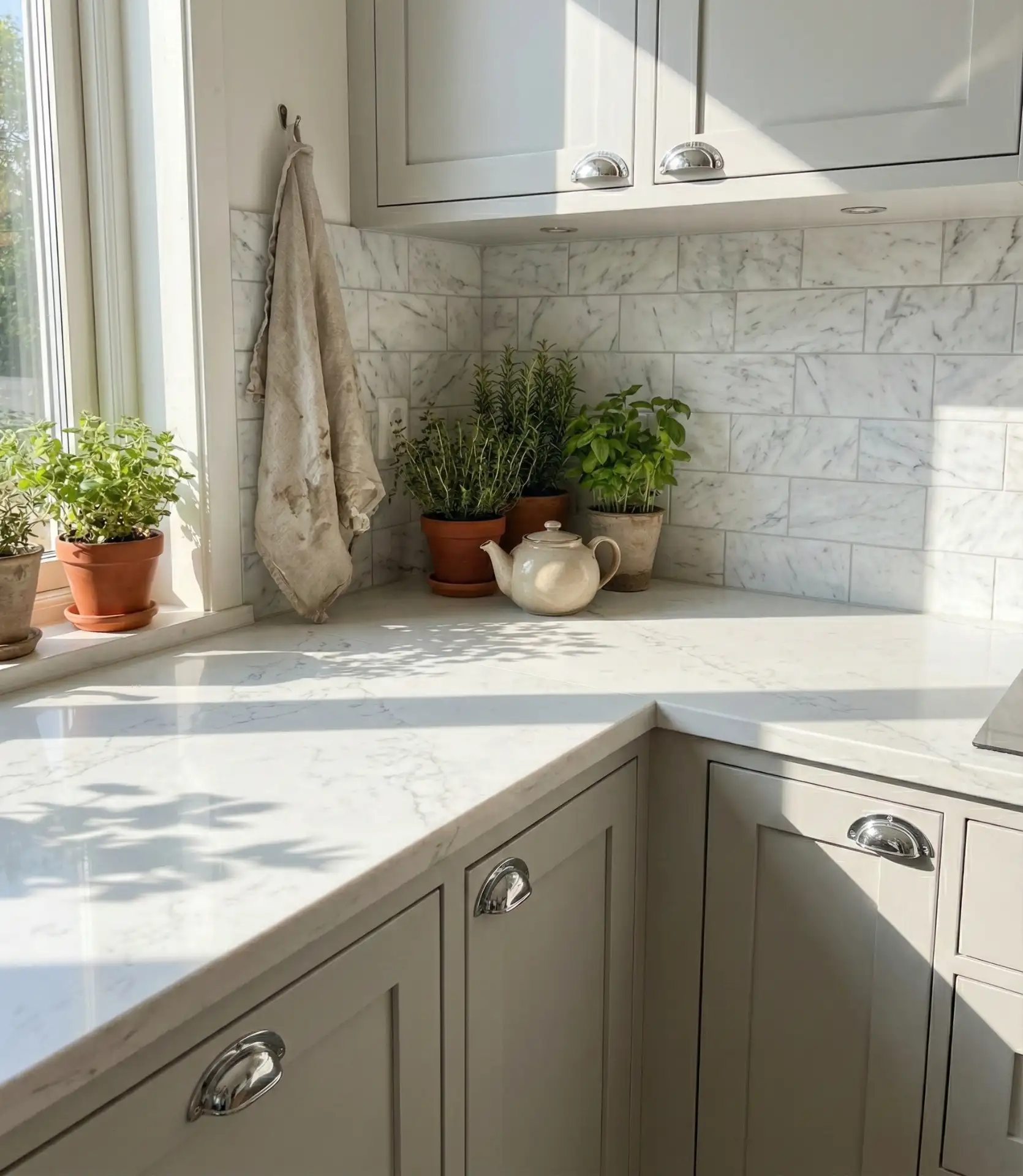
In practical terms, white quartz performs exceptionally well in households with children or frequent entertaining. Its non-porous surface resists bacteria and stains, and it requires nothing more than soap and water for daily cleaning. This ease of maintenance explains why it continues to dominate Pinterest searches and contractor recommendations alike.
8. Playful Terrazzo Countertops
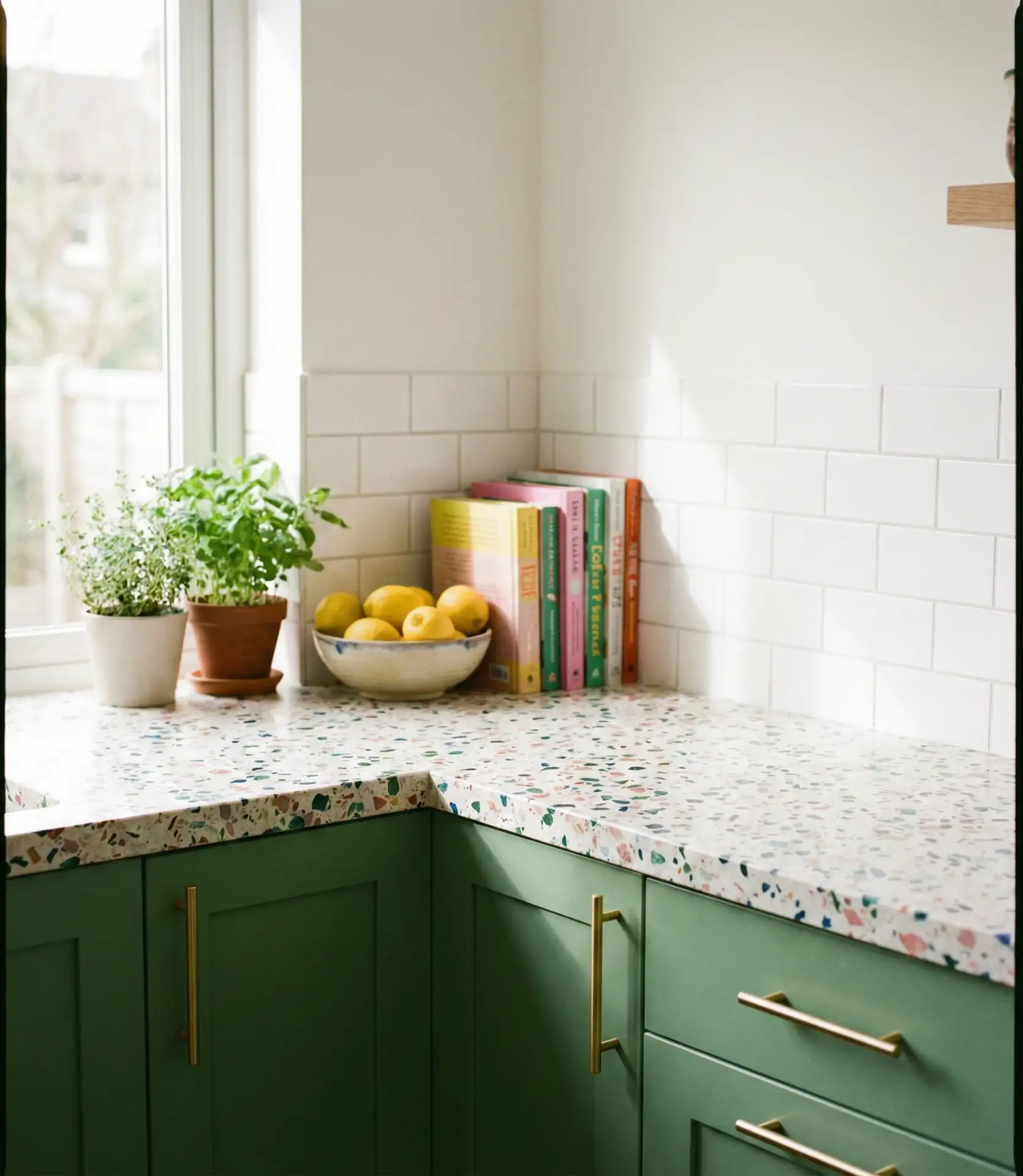
Terrazzo has made a vibrant comeback, bringing speckled charm and retro energy to contemporary kitchens. This composite material features chips of marble, quartz, or glass suspended in cement or resin, creating surfaces that range from subtle neutrals to bold multicolor statements. It’s particularly effective as an accent—think a coffee station countertop or a small prep area—where it adds personality without overwhelming the space. Terrazzo pairs surprisingly well with green cabinetry or brass fixtures for an eclectic, collected look.

Expert designers recommend using terrazzo in kitchens with simple cabinetry and minimal patterns elsewhere, as the material itself provides plenty of visual interest. It’s also worth noting that darker terrazzo blends hide spills and crumbs better than lighter versions, making them more forgiving for everyday use.
9. Forest-green marble statement slabs
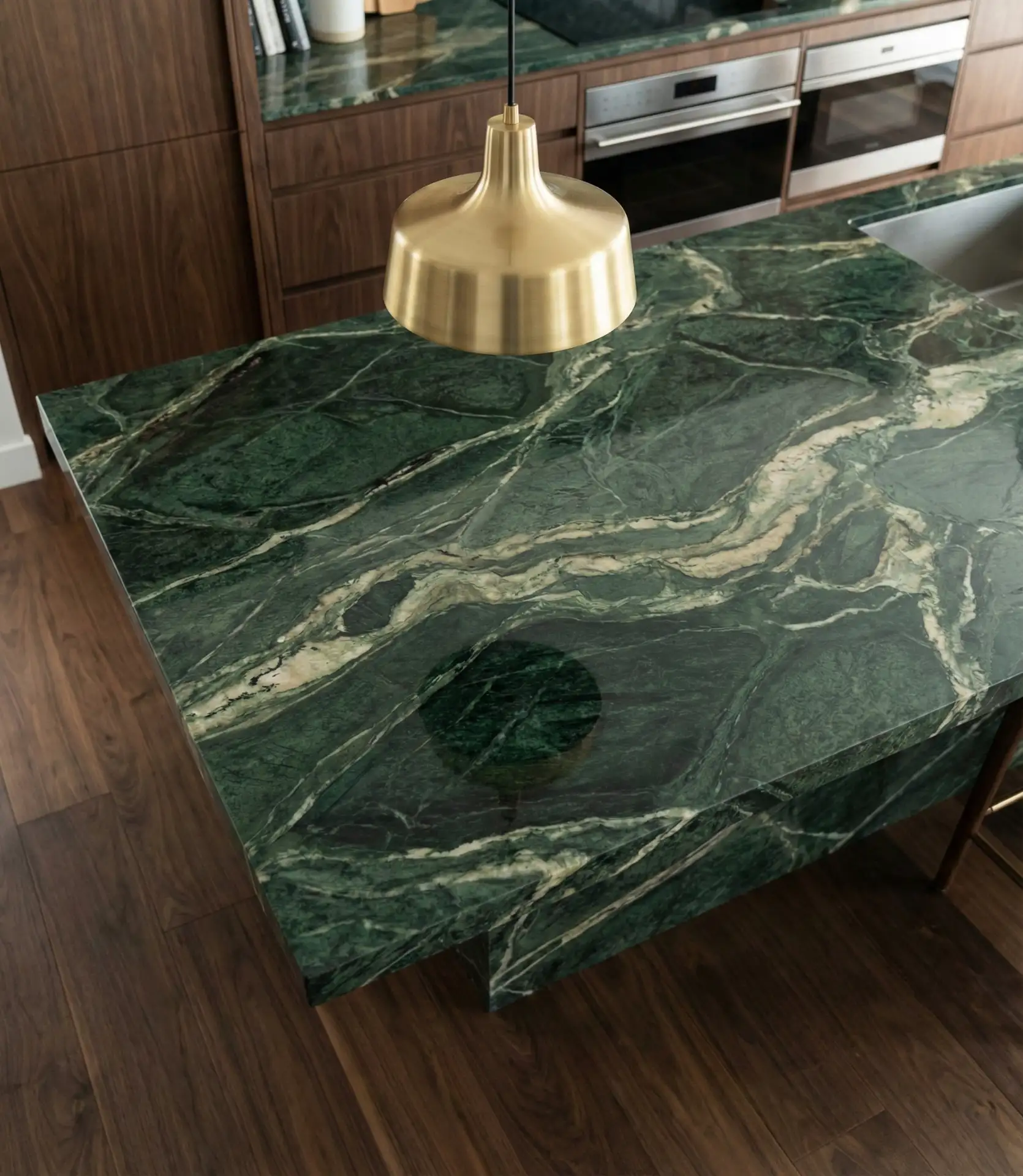
Green marble countertops offer a dramatic departure from neutral palettes, introducing rich color and luxurious veining to modern kitchens. This natural stone works beautifully in spaces that embrace dark tones or botanical themes, creating a connection to nature while maintaining elegance. Pairing green marble with matte black cabinetry and gold accents produces a moody, sophisticated atmosphere that’s been trending on Pinterest throughout 2025 and into 2026. The stone’s unique patterns ensure each installation becomes a true focal point.
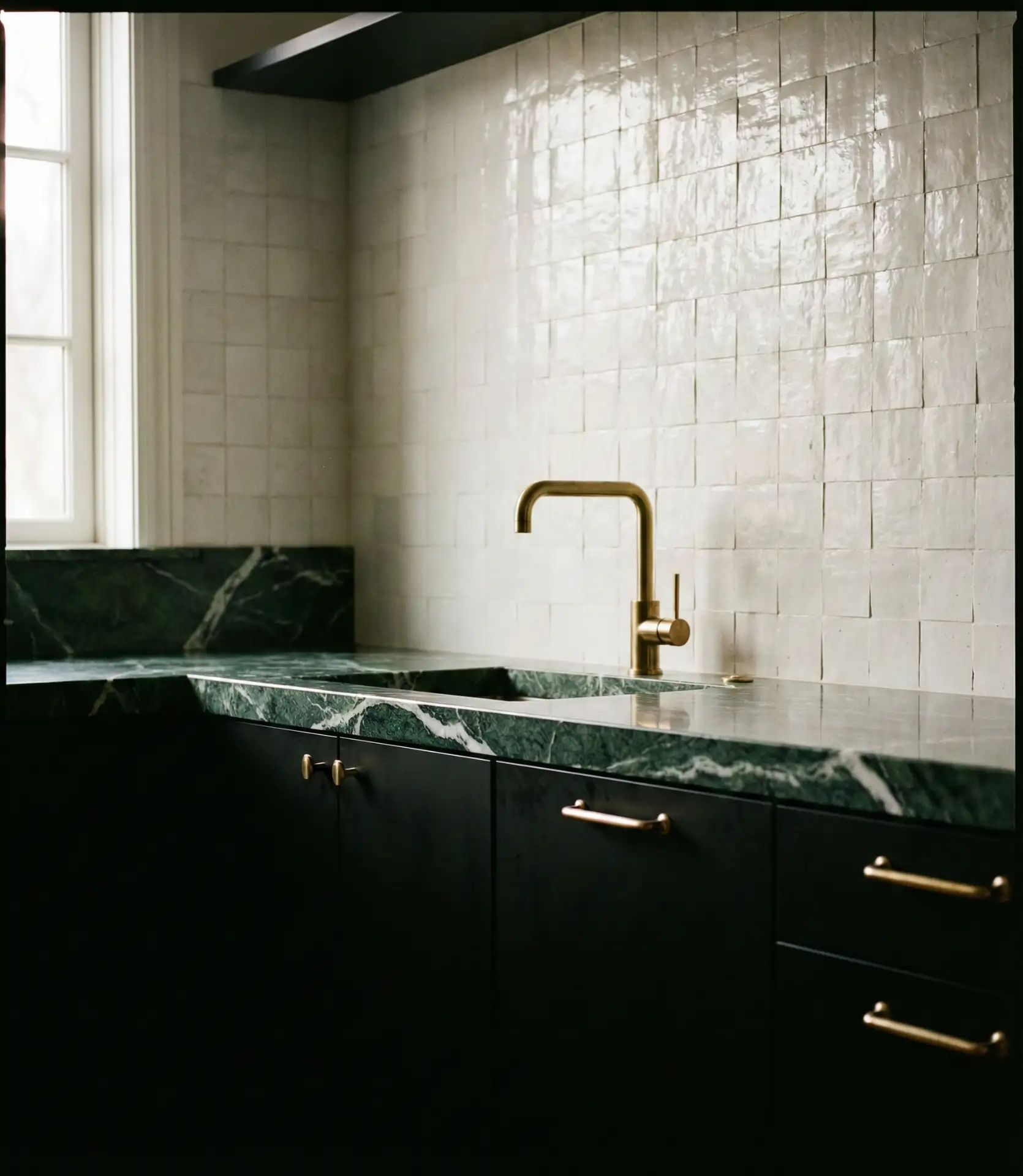
Green marble works best in kitchens with abundant natural light or strong artificial lighting, as it can read too dark in poorly lit spaces. Homeowners in Pacific Northwest cities like Portland and Seattle have embraced this material for its ability to bring warmth and depth to rooms that might otherwise feel cold during long gray winters.
10. Veined Black Marble for Drama
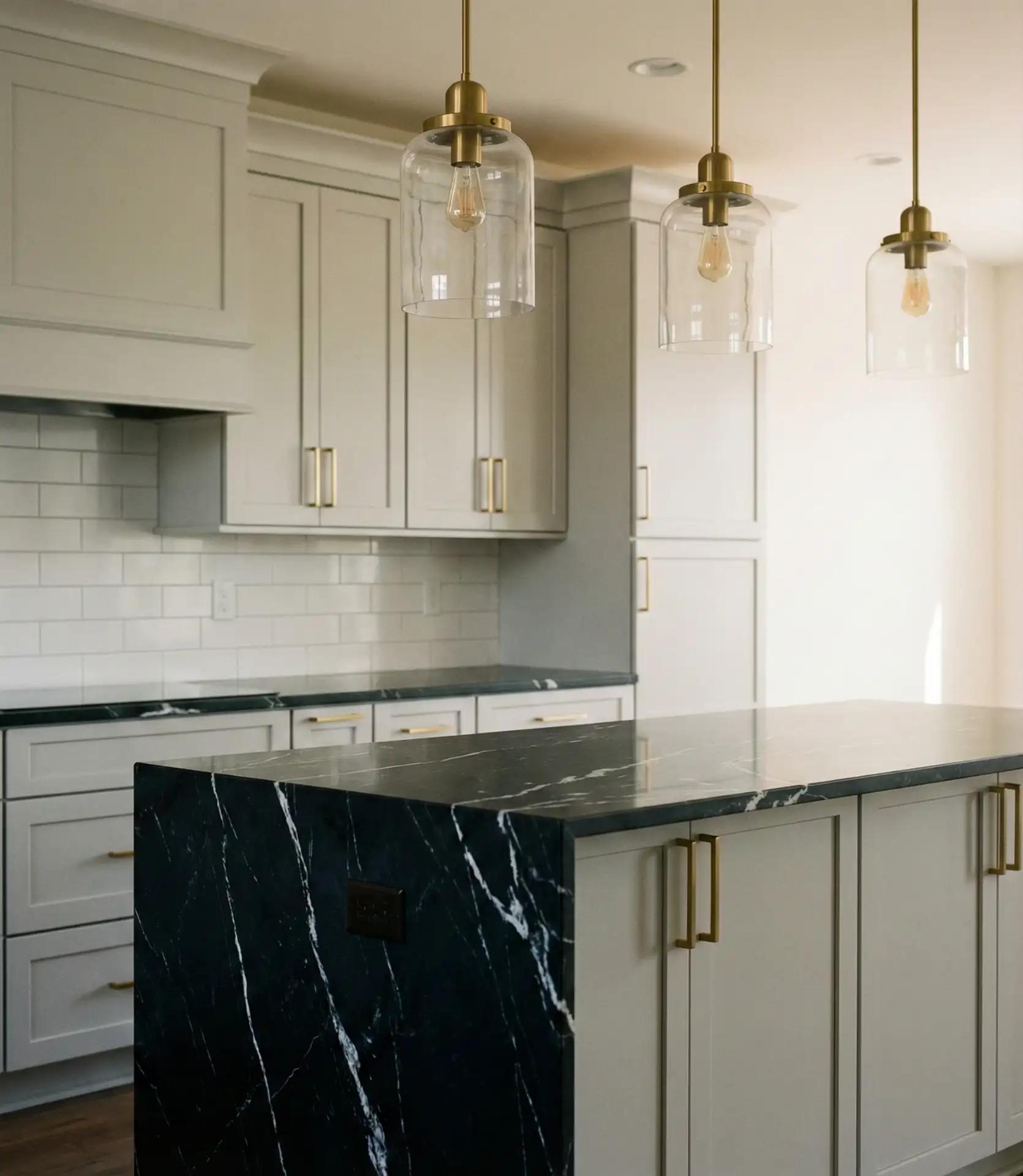
Few materials command attention like black marble with bold white or gold veining. This stone creates instant drama and works particularly well in kitchens designed to impress, from penthouses to chef-inspired spaces. The high-contrast veining becomes the room’s artwork, reducing the need for additional decor or busy backsplash treatments. It pairs elegantly with warm metals and simple cabinetry that lets the stone take center stage.
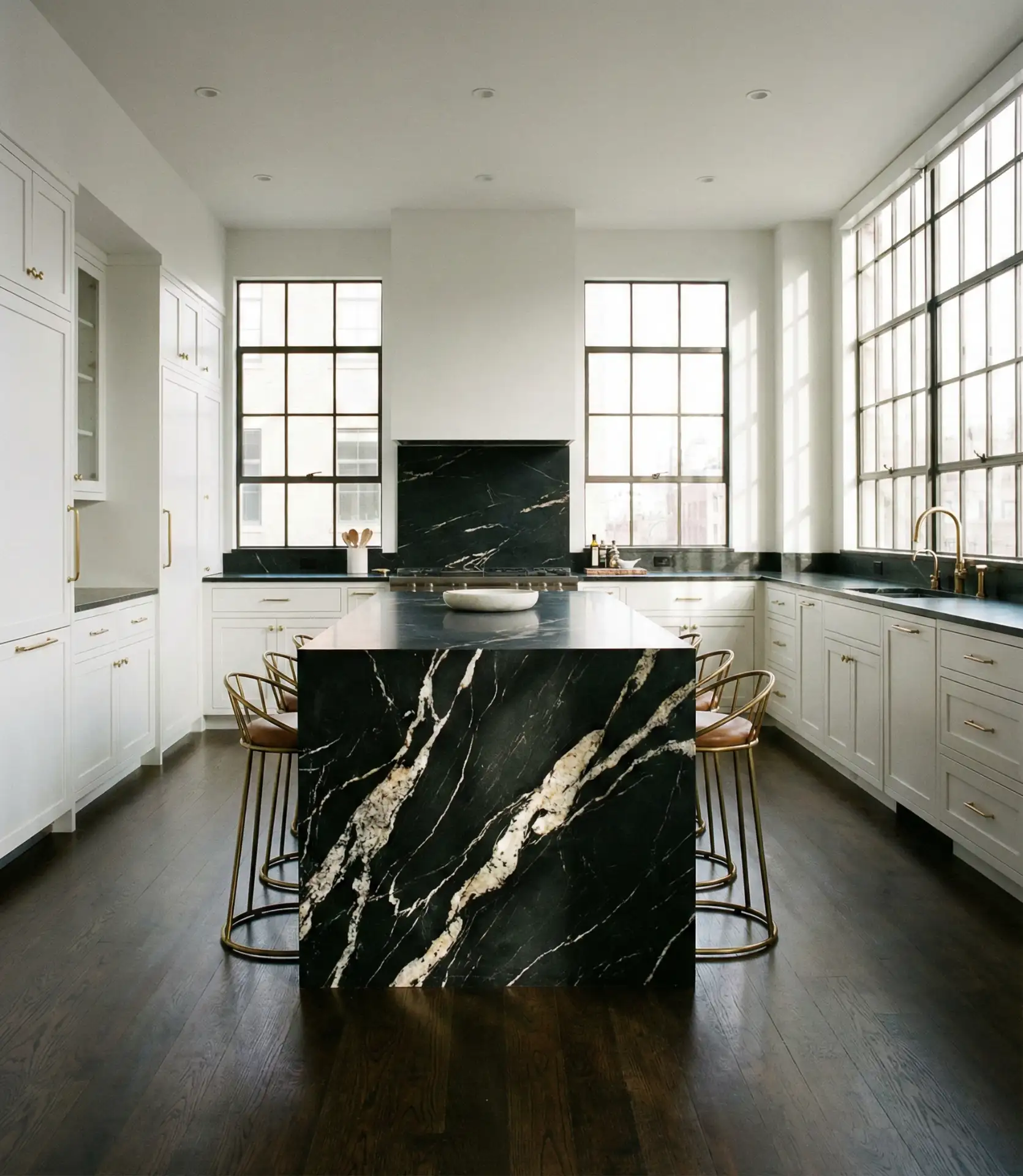
One practical insight: black marble shows water spots and fingerprints more readily than lighter surfaces, so it requires wiping down after each use to maintain its polished appearance. This makes it ideal for homeowners who don’t mind the upkeep in exchange for unmatched visual impact.
11. Warm Travertine for Mediterranean Vibes
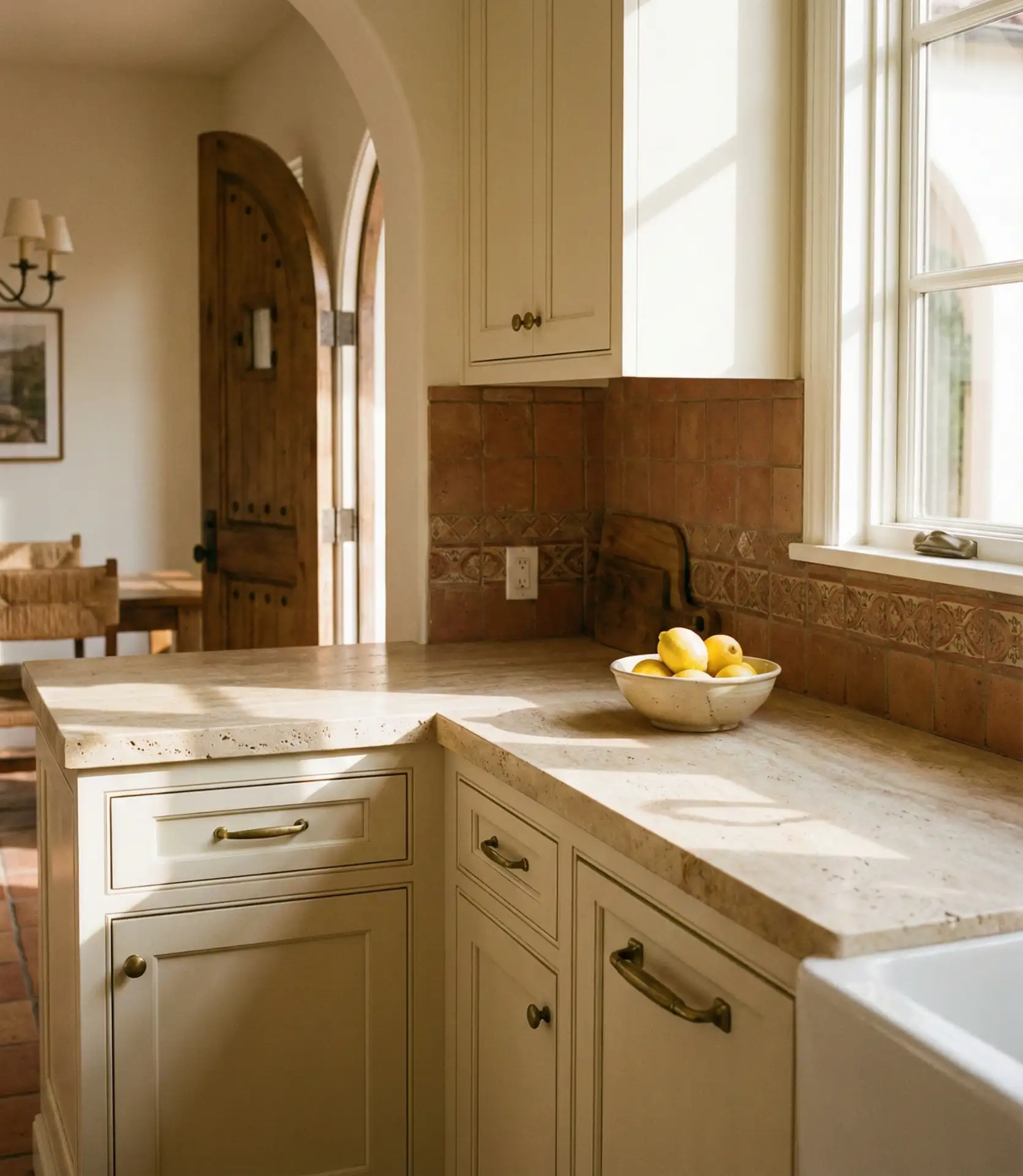
Travertine countertops bring a soft, earthy texture that evokes European kitchens and sun-soaked villas. This sedimentary stone features natural pitting and tonal variation in shades of beige, cream, and gold, creating surfaces with organic character. It’s a beautiful choice for kitchens that lean toward Mediterranean, Spanish, or rustic Italian styling, especially when paired with terracotta tiles or wrought iron details. The honed finish offers a velvety feel that’s both tactile and visually soothing.
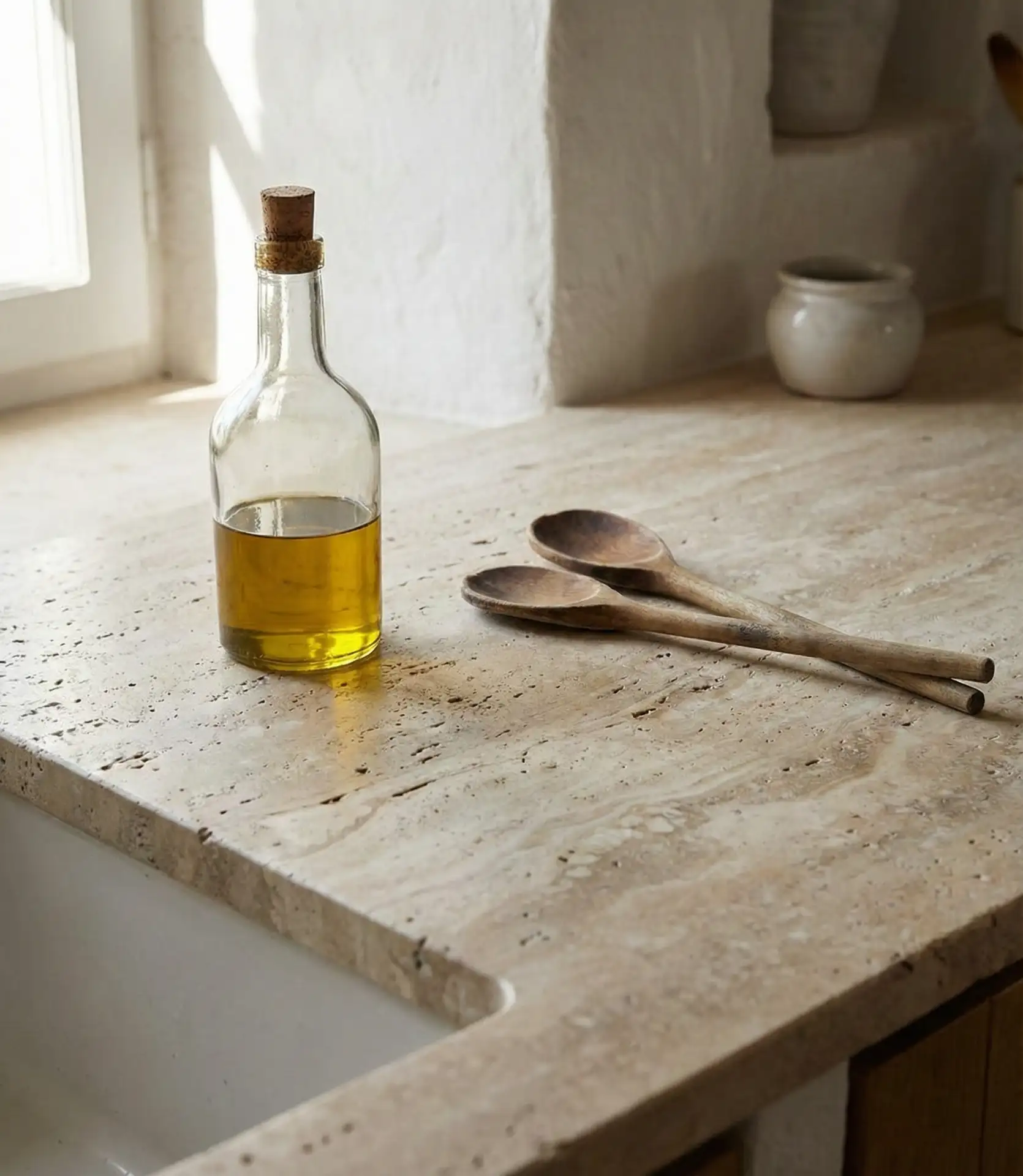
Travertine performs beautifully in kitchens where authenticity and warmth matter more than high-gloss perfection. It requires sealing to prevent stains, but many homeowners appreciate how the stone ages gracefully, developing a patina that tells the story of meals shared and memories made.
12. Smooth Soapstone for Subtle Sophistication
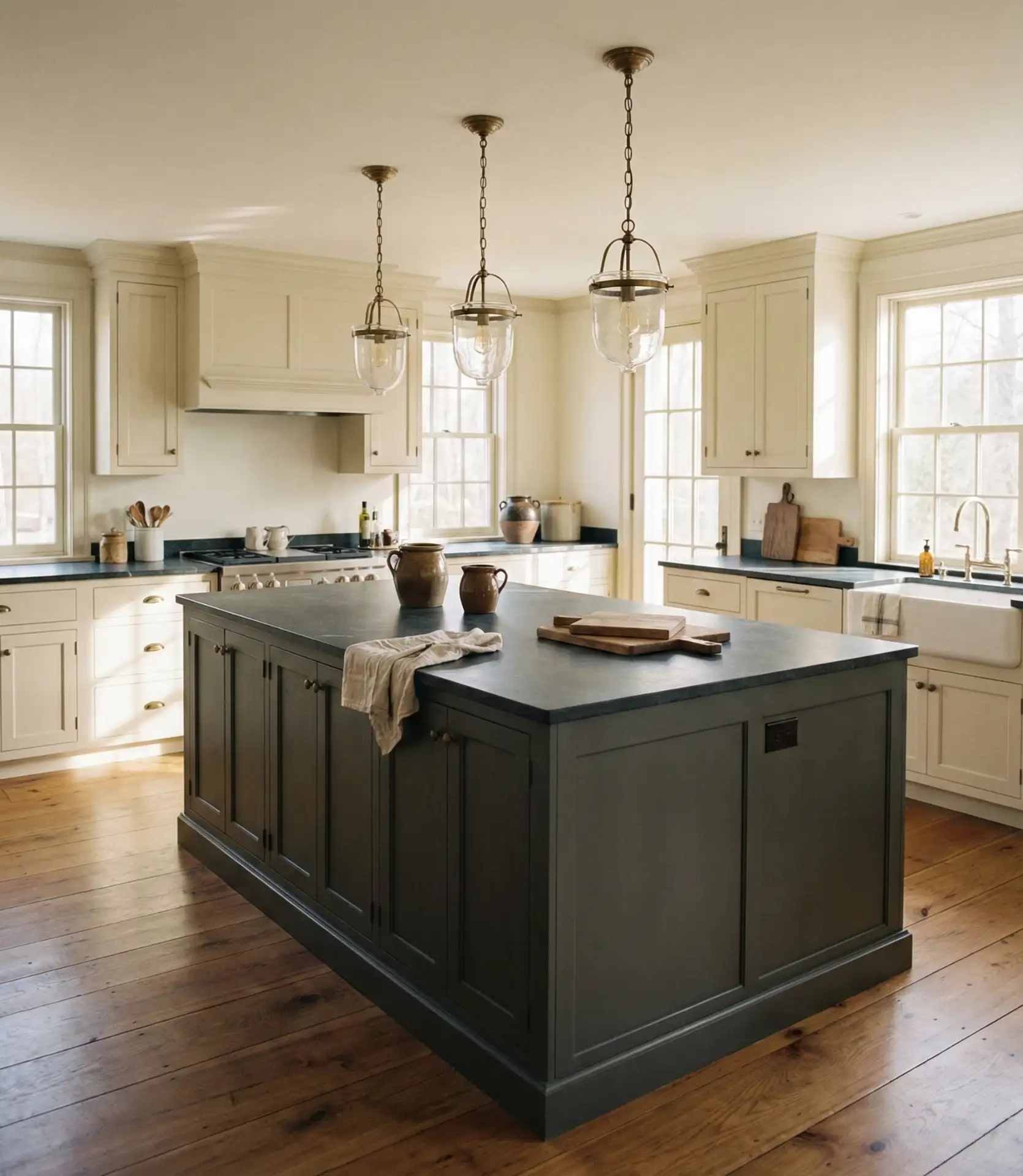
Soapstone delivers a matte, almost chalky appearance that darkens and develops character over time. This metamorphic rock resists heat and bacteria naturally, making it both practical and beautiful for serious cooks. The surface typically ranges from soft gray to charcoal, with subtle veining that’s far more understated than marble. Soapstone works particularly well in historic homes or colonial-style kitchens where authentic materials enhance period architecture.
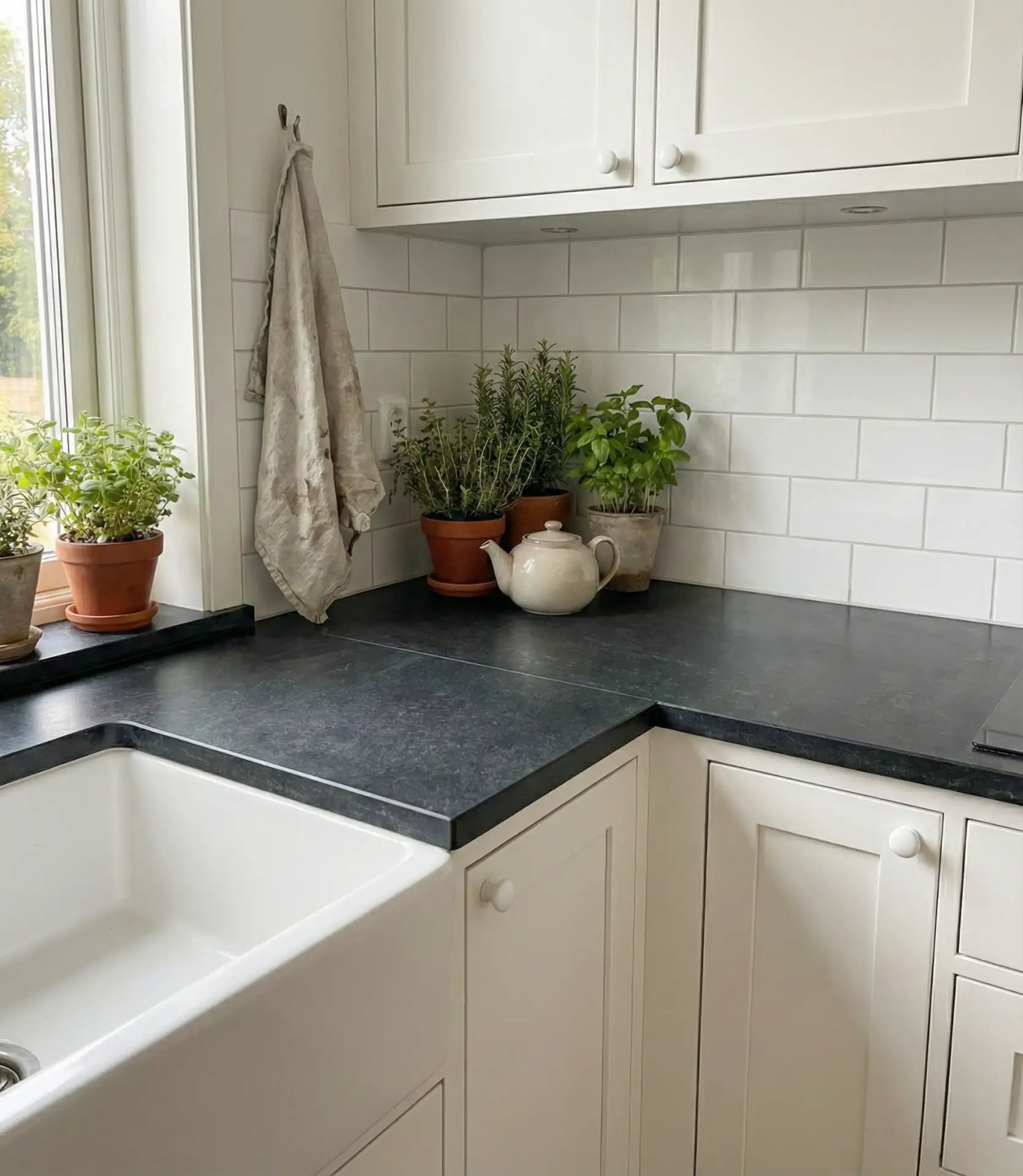
Typical costs for soapstone range from $70 to $120 per square foot installed, positioning it as a premium choice. Many homeowners treat the surface with mineral oil to enhance its natural darkening process and bring out the stone’s depth, though this step is optional and based purely on aesthetic preference.
13. Taj Mahal Quartzite Elegance
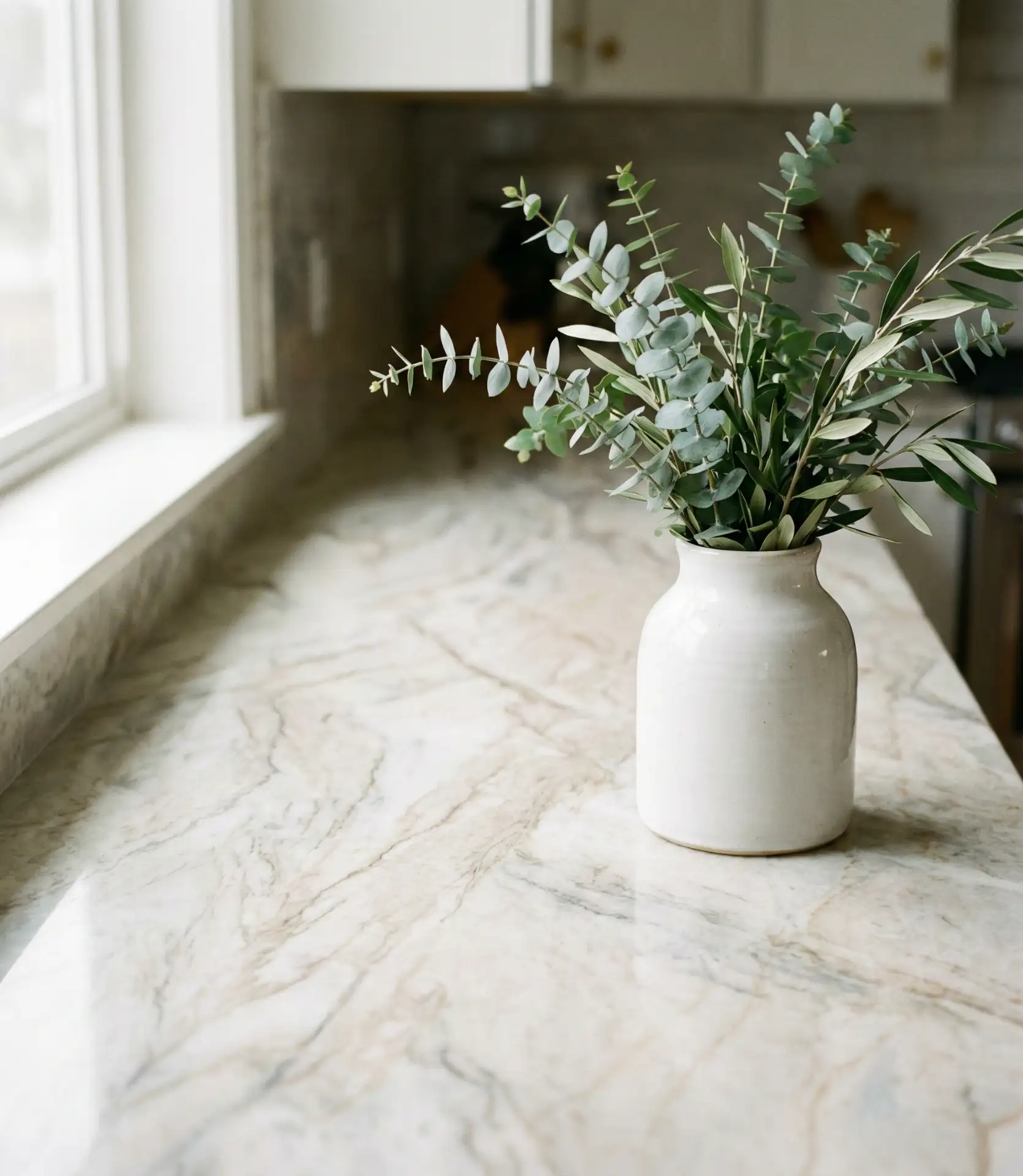
Taj Mahal quartzite has become one of the most sought-after stones in luxury kitchen designs, offering soft white and beige tones with delicate gold and gray veining. This natural stone mimics the look of marble but provides greater durability and heat resistance. It’s particularly popular in kitchens where homeowners want the sophistication of marble without worrying about etching it with lemon juice or wine. The stone’s subtle movement creates visual interest without overwhelming the space.
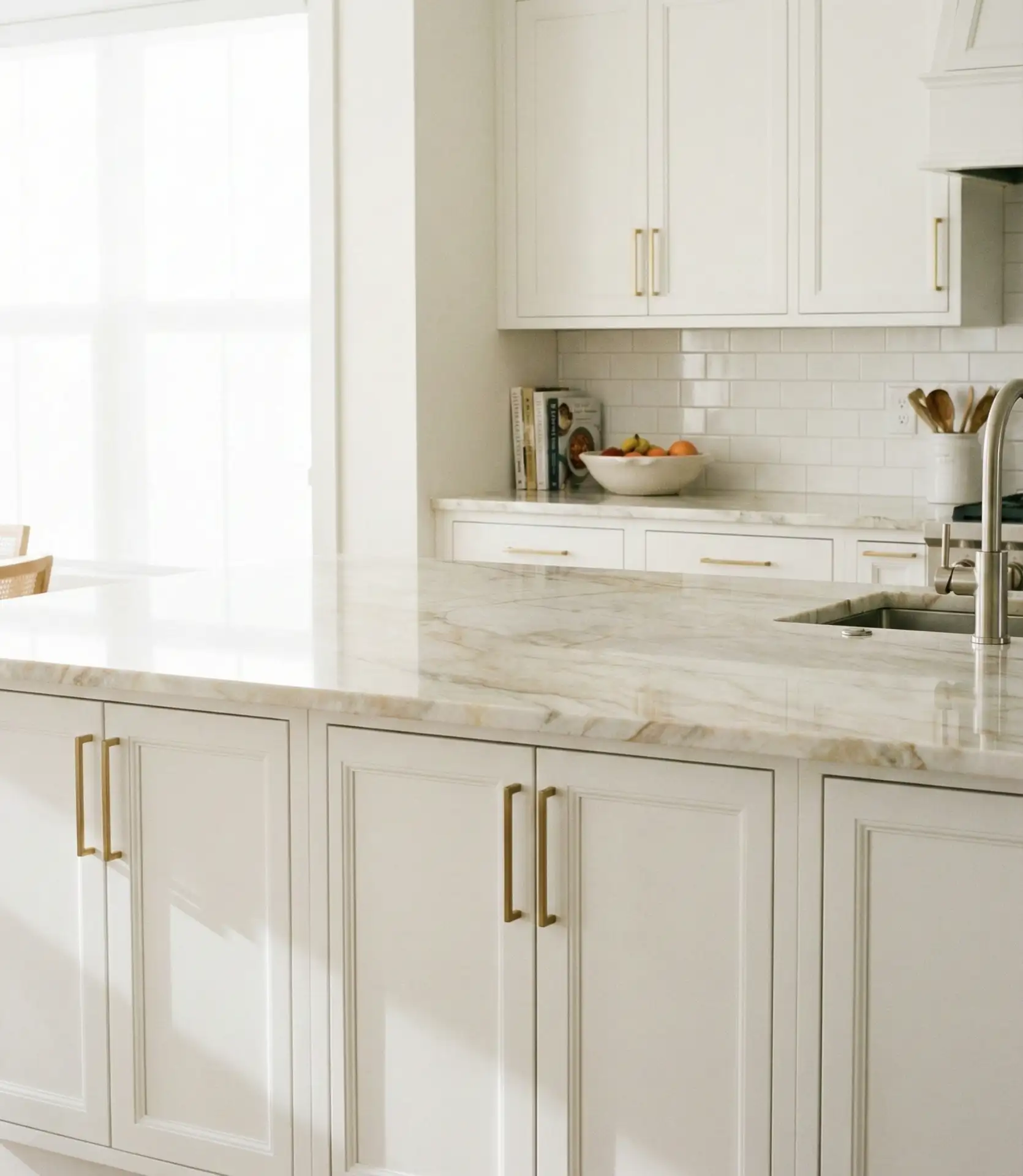
This material works best in traditional or transitional kitchens where elegance and timelessness are priorities. It’s less suited to ultra-modern spaces that favor uniform surfaces, but it excels in homes where architectural details and quality materials define the aesthetic. Homeowners should expect to seal it annually to maintain stain resistance.
14. Dedicated coffee corner with a floating shelf
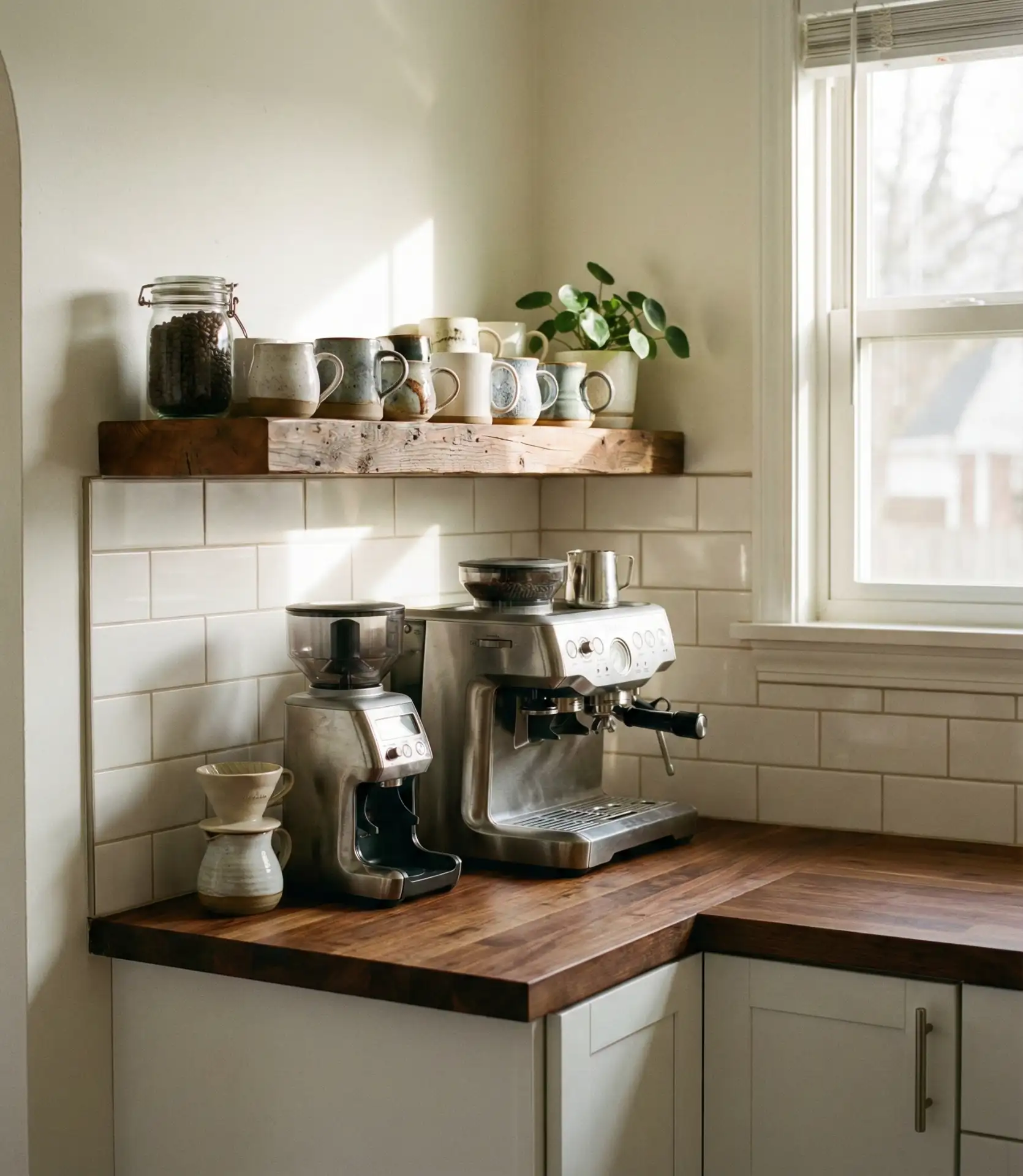
Creating a dedicated coffee corner with its own small countertop section has become essential in modern American kitchens. This zone typically features a different material or finish than the main counters—perhaps a wooden butcher block or a remnant of dark quartz—to visually separate the space. Installing a floating shelf above provides storage for mugs and supplies while keeping the counter clear for your machine and daily ritual. This setup works in kitchens of any size and transforms a simple appliance into an intentional decor moment.
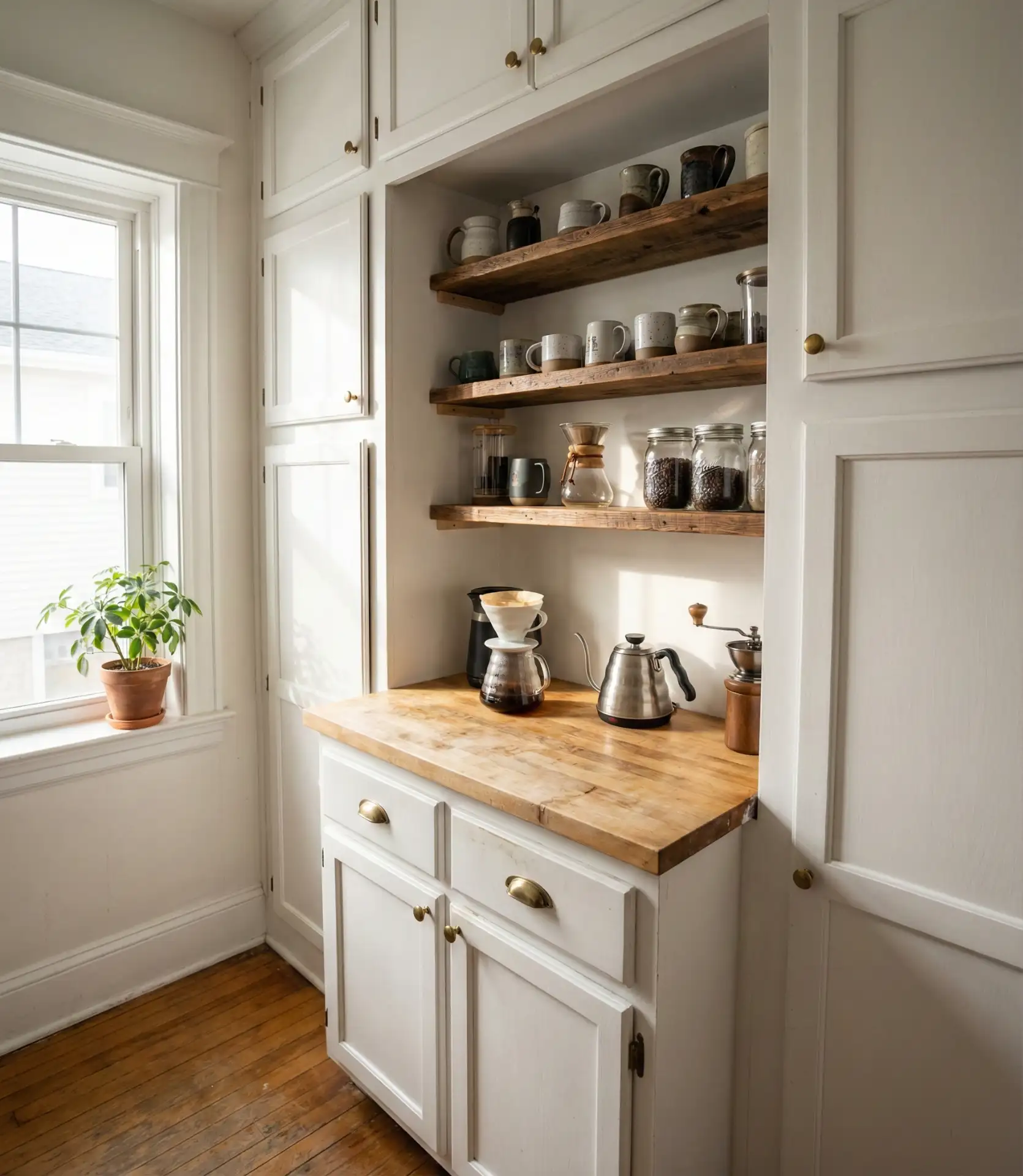
Many homeowners report that designating a coffee station improves their morning routine by keeping everything in one accessible spot. It also prevents countertop clutter in the main prep areas, which is especially valuable in smaller kitchens where every inch of workspace counts.
15. Grey Quartz with Marble-Like Movement

Grey quartz countertops strike a perfect balance between the starkness of white and the boldness of black, offering versatility that suits countless kitchen styles. Modern formulations replicate the veining and movement of natural stone so convincingly that guests often mistake them for marble. This material pairs beautifully with white cabinets for a soft monochromatic look or with navy and charcoal tones for more drama. The consistency of engineered quartz means you can achieve a book-matched or continuous pattern across large islands.
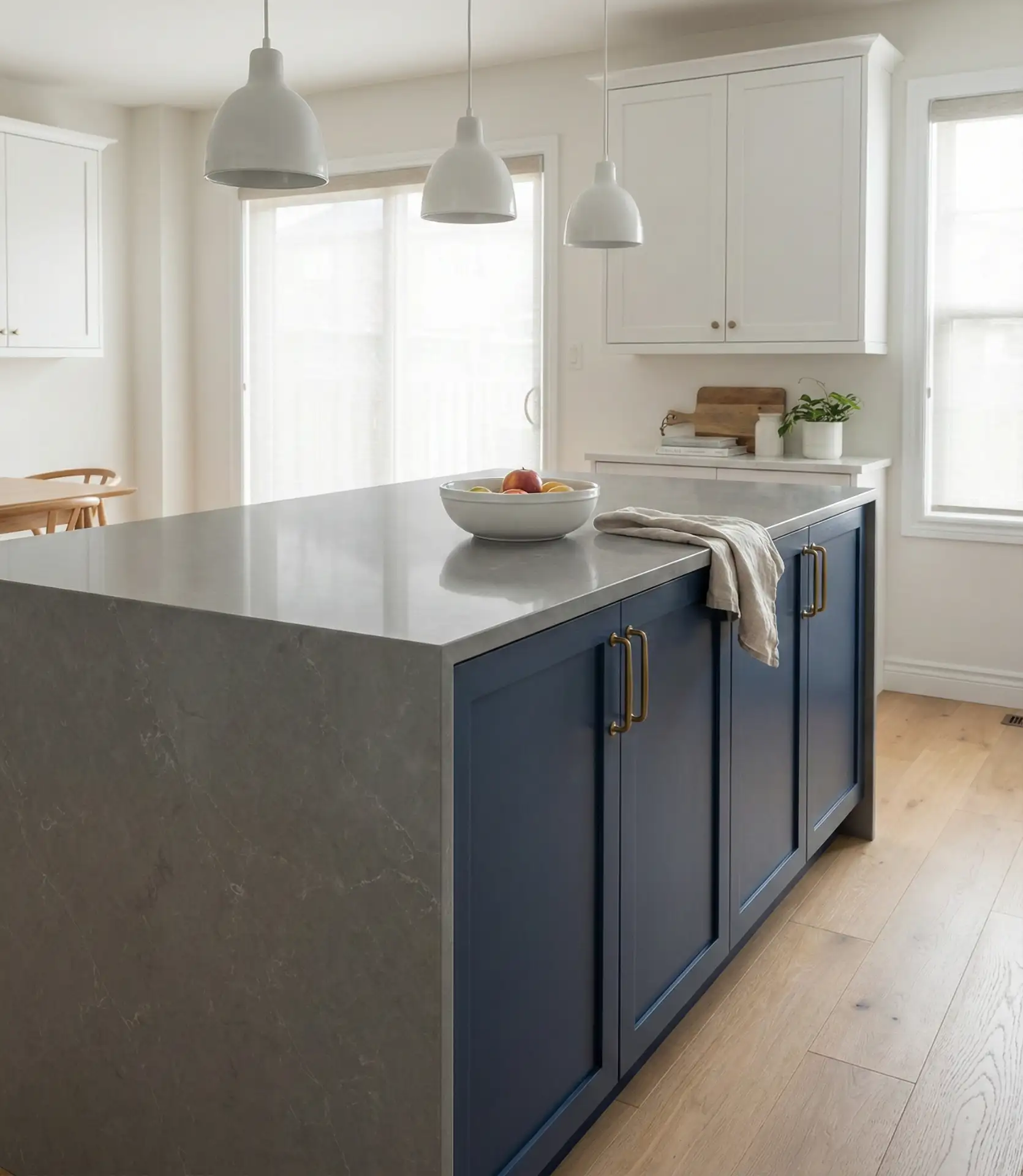
In the Pacific Northwest and Northeastern states, gray quartz has become the new neutral, replacing beige granite as the go-to choice for resale value. It photographs beautifully for listing photos and appeals to buyers across age groups and style preferences.
16. Budget-Friendly Laminate Updates
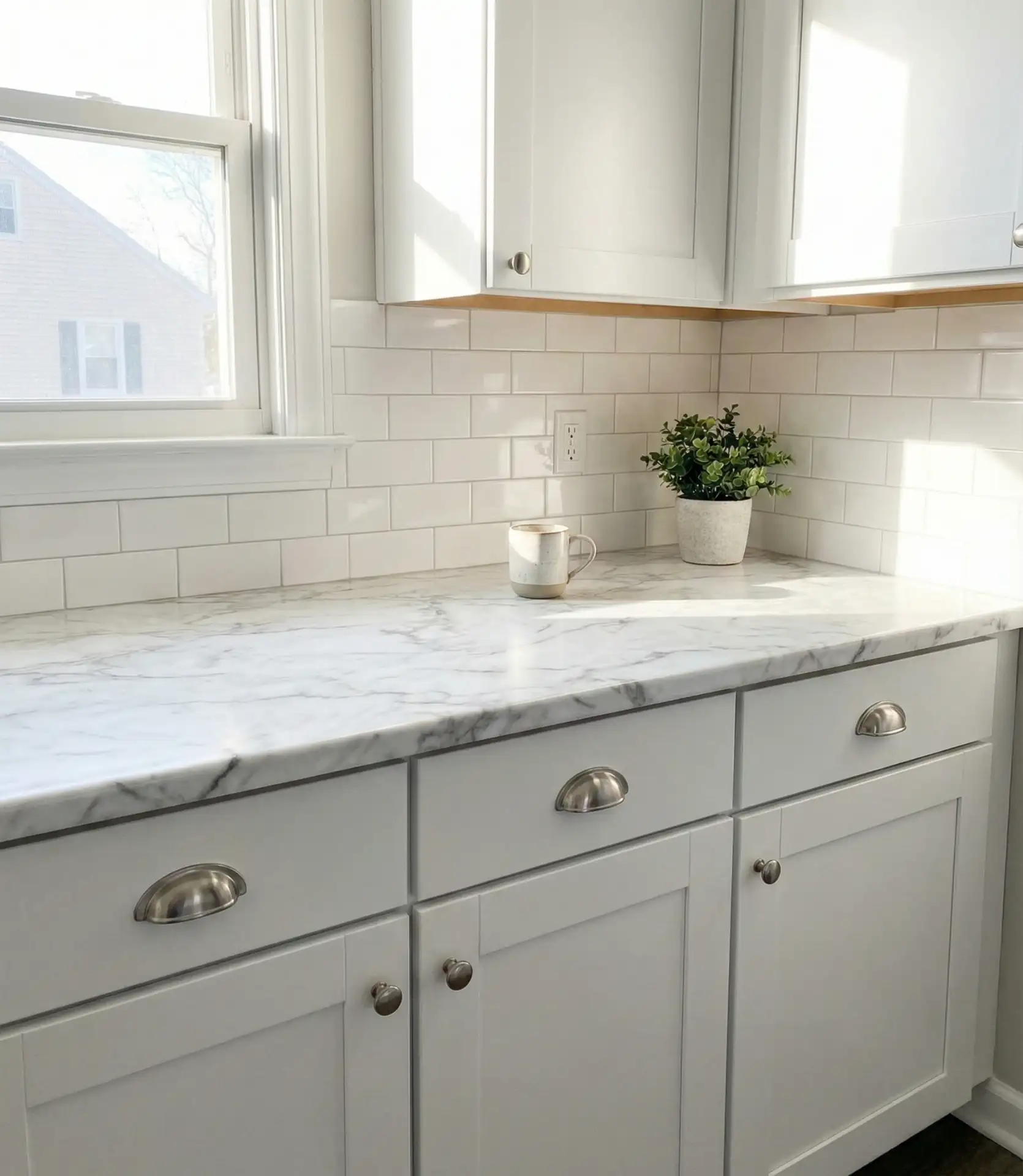
Modern Formica and laminate countertops have evolved dramatically, now offering patterns that convincingly mimic marble, concrete, and even wood at a fraction of the cost. These surfaces provide an excellent solution for rentals, starter homes, or kitchens being updated on a budget. Installation is straightforward and DIY-friendly for those with basic skills, making it possible to achieve a fresh look for under $1,000 in many cases. Pairing updated laminate with new hardware and a fresh backsplash can completely transform a dated kitchen.
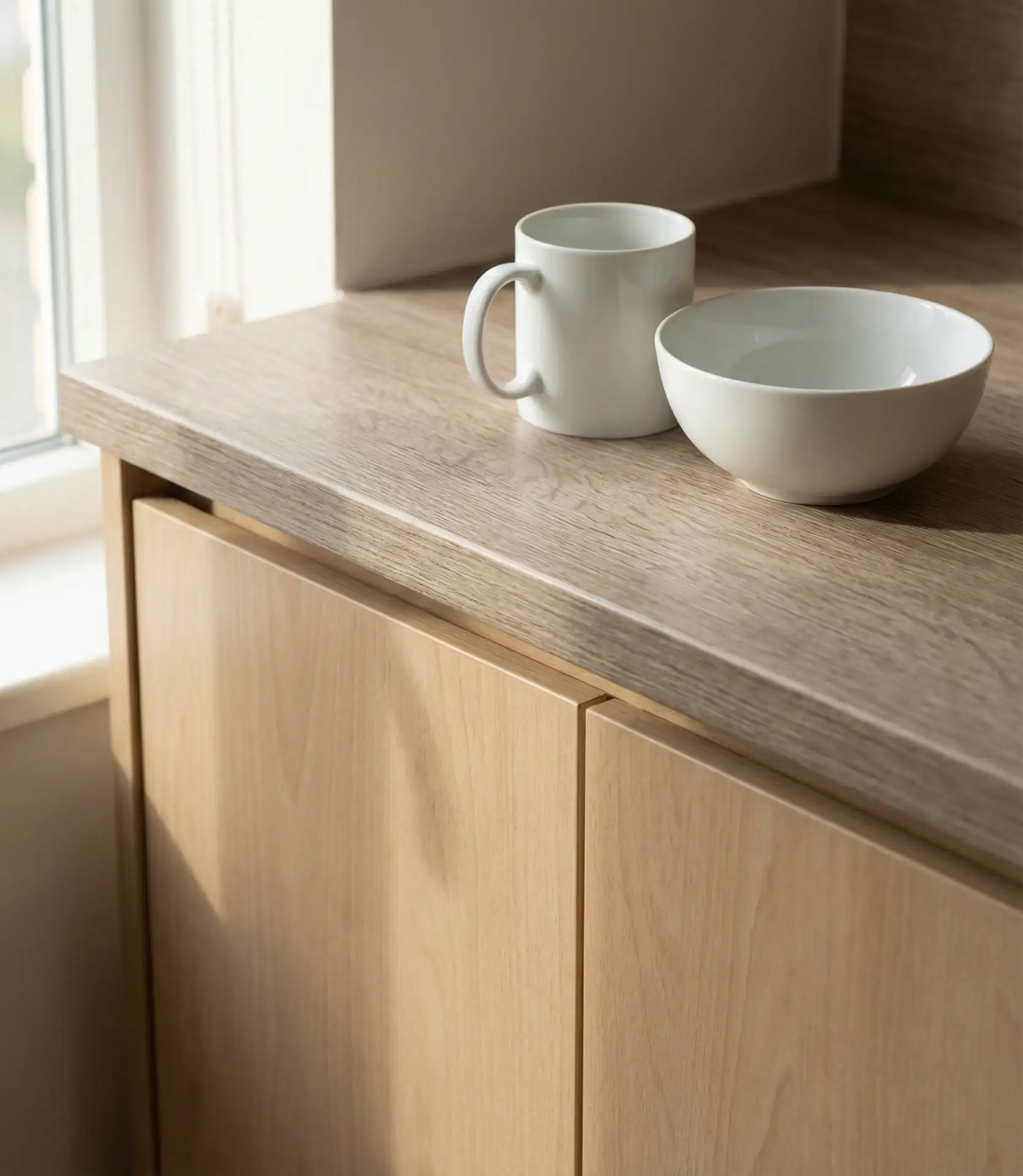
Laminate typically costs between $10 and $40 per square foot installed, making it the most accessible option for complete kitchen makeovers. While it won’t last as long as stone, it serves well for those planning to sell within five to seven years or for homeowners who enjoy updating their spaces more frequently.
17. Dark Quartz with Understated Veining
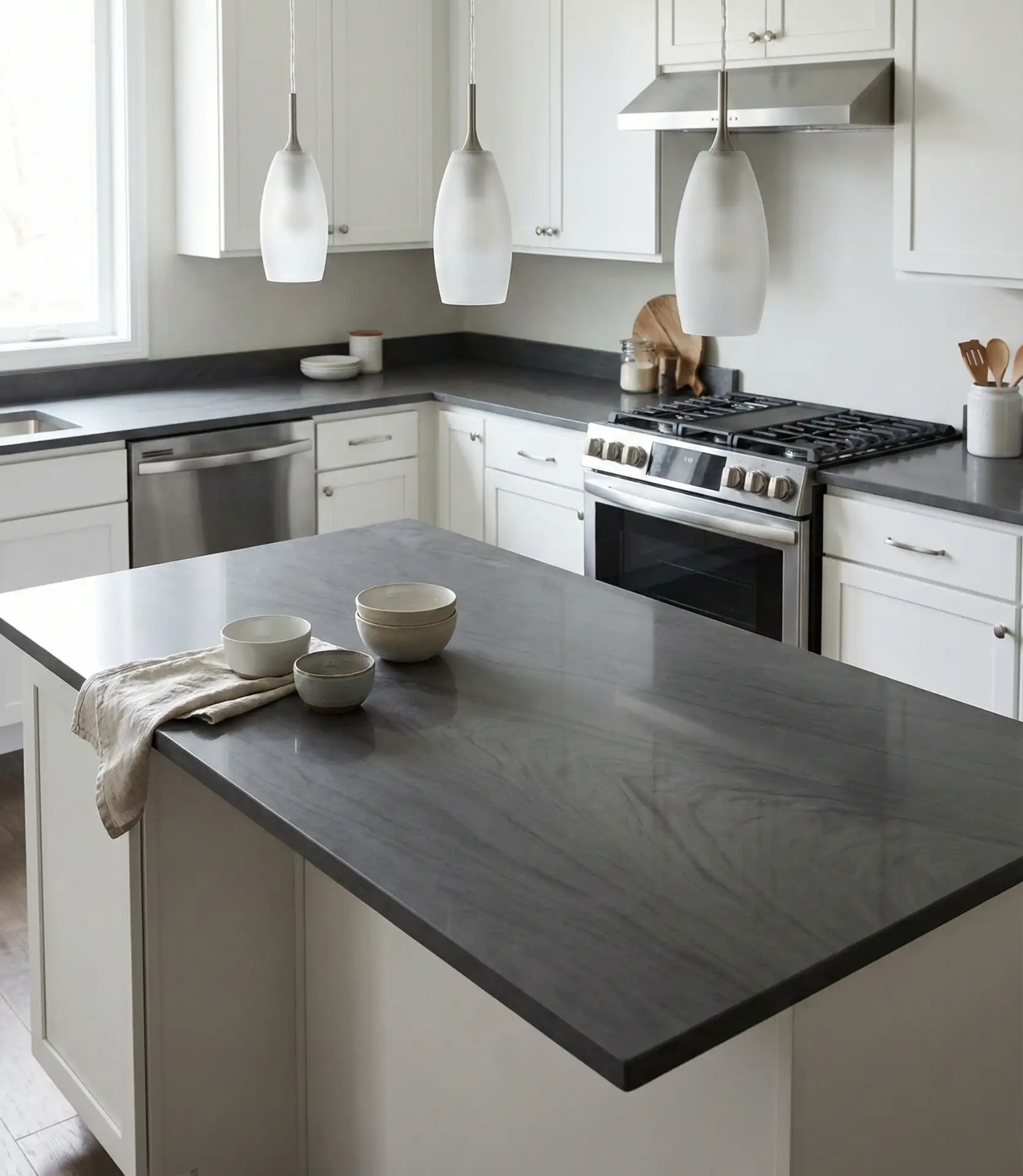
Dark quartz countertops with subtle veining offer drama without the high maintenance of natural black marble. These surfaces anchor contemporary kitchens while providing practical benefits like stain resistance and durability. The engineered material allows for consistency across large islands and perimeter counters, creating a seamless look that’s difficult to achieve with natural stone. This choice works particularly well when paired with lighter cabinetry or warm wood tones to prevent the space from feeling too heavy.
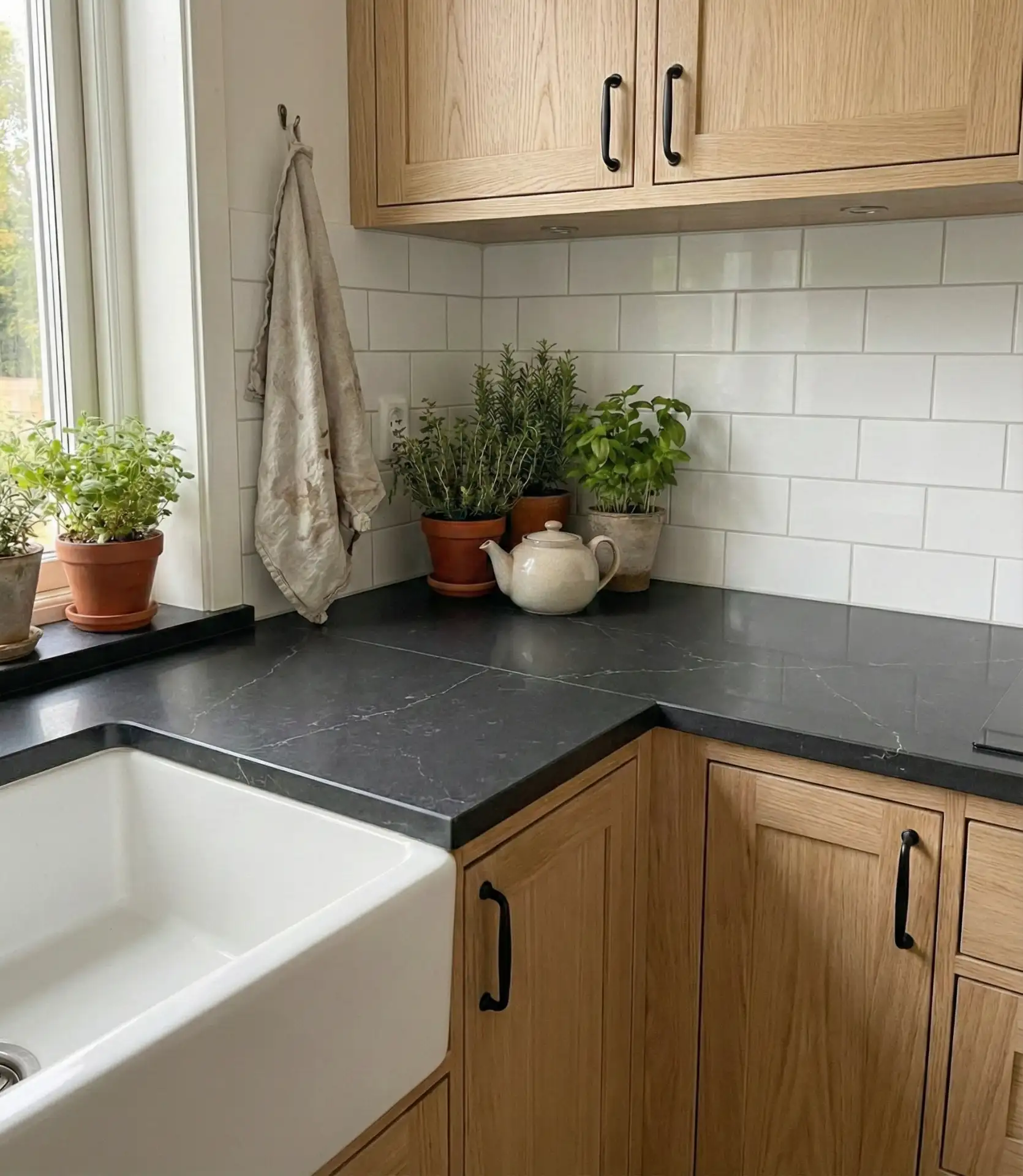
A common mistake is choosing dark quartz without considering your lighting plan. These surfaces can make a kitchen feel smaller or dimmer if not properly lit, so invest in under-cabinet lighting and adequate overhead fixtures to showcase the material’s depth and maintain a welcoming atmosphere.
18. Stainless Steel for Professional Function
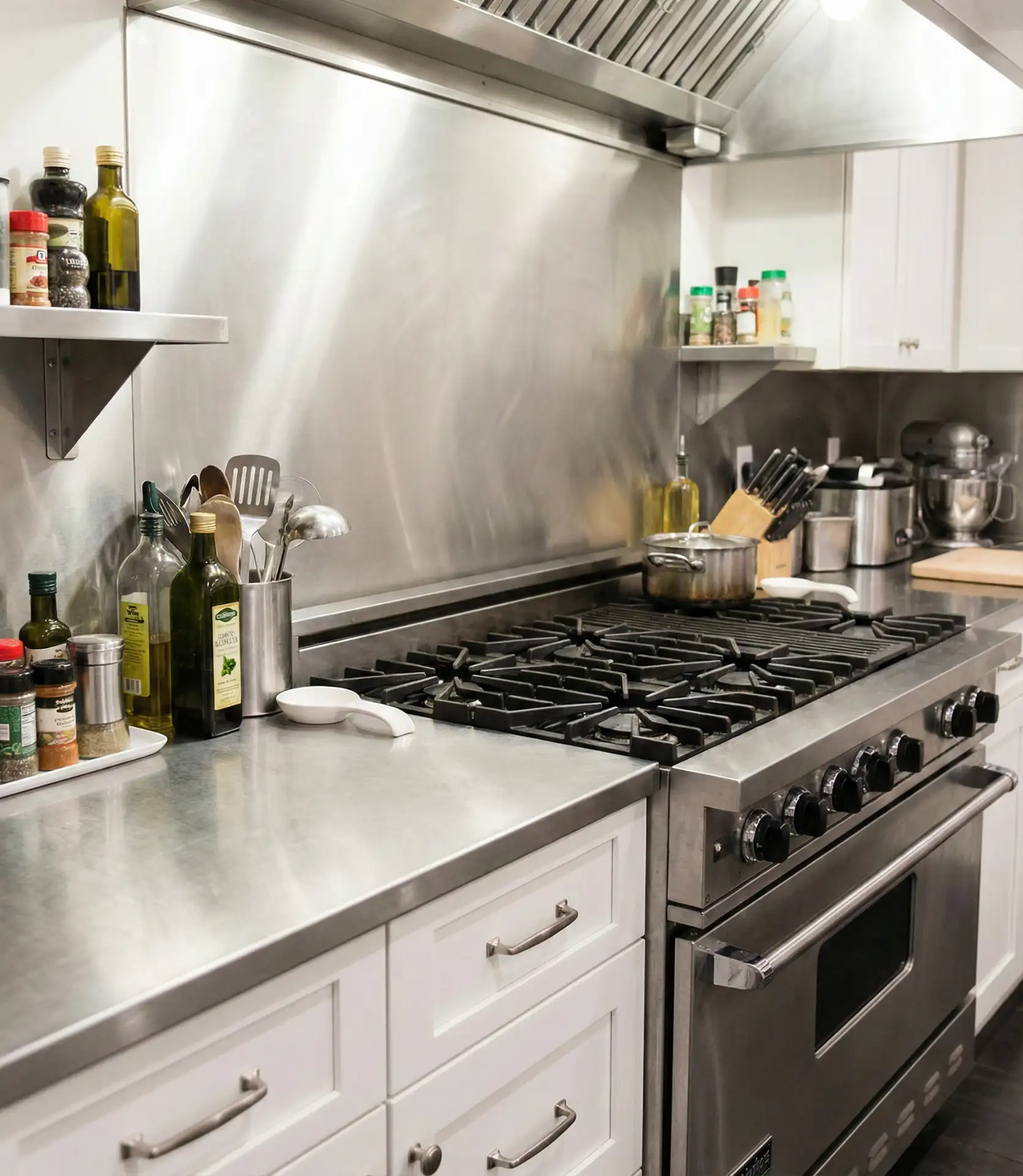
Stainless steel countertops bring commercial kitchen functionality to residential spaces, offering unmatched heat resistance and antimicrobial properties. This material appeals to serious home cooks who value performance over traditional aesthetics. The reflective surface bounces light around the room and pairs well with industrial or ultra-modern design schemes. Stainless works particularly well as a section of countertop near the range, where hot pots can be placed directly on the surface without concern.
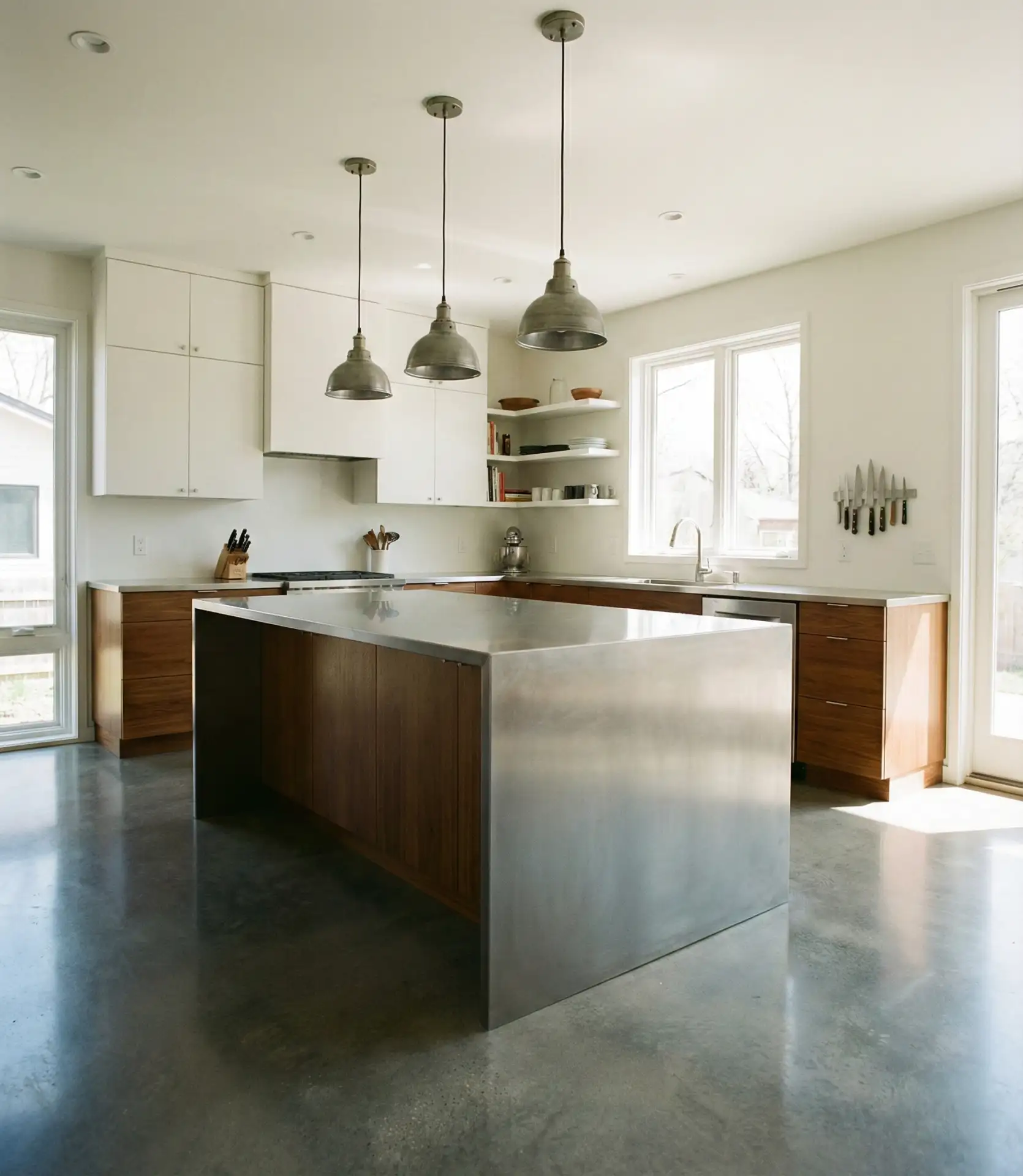
In commercial-grade residential kitchens across cities like New York and San Francisco, stainless steel has become a mark of serious culinary intent. Homeowners appreciate that it’s fully recyclable and requires nothing more than basic cleaning, though it does show fingerprints and scratches as part of its working patina.
19. Integrated Coffee Station with Tile Detail
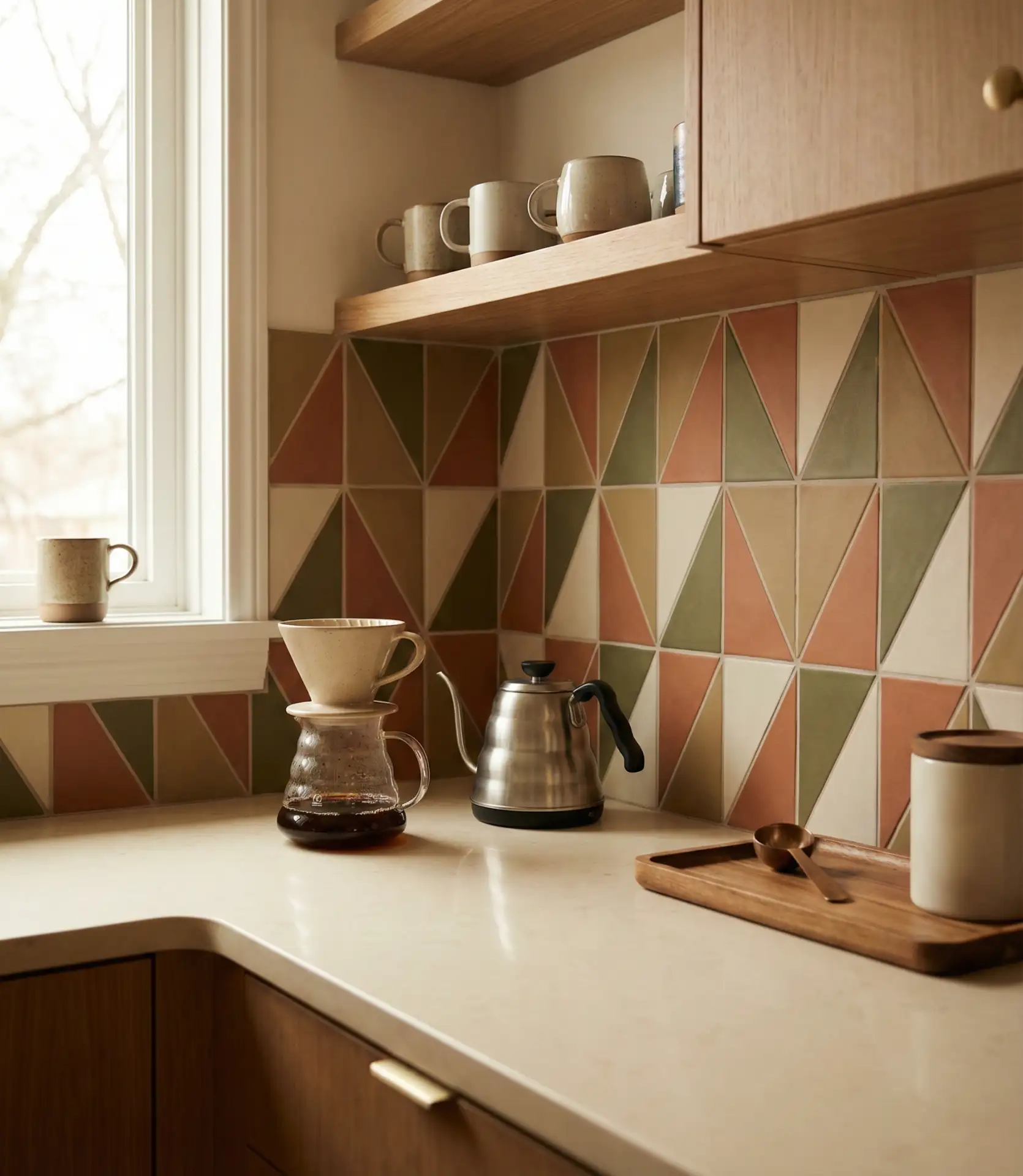
An integrated coffee station featuring decorative tile creates a charming focal point that elevates your daily routine. This approach uses the same countertop material as the rest of the kitchen but distinguishes the area with patterned cement tiles or colorful ceramic as a backsplash treatment. The tile decor adds personality and makes the coffee zone feel intentional rather than incidental. This idea works beautifully in kitchens where you want visual interest without committing to a pattern throughout the entire space.
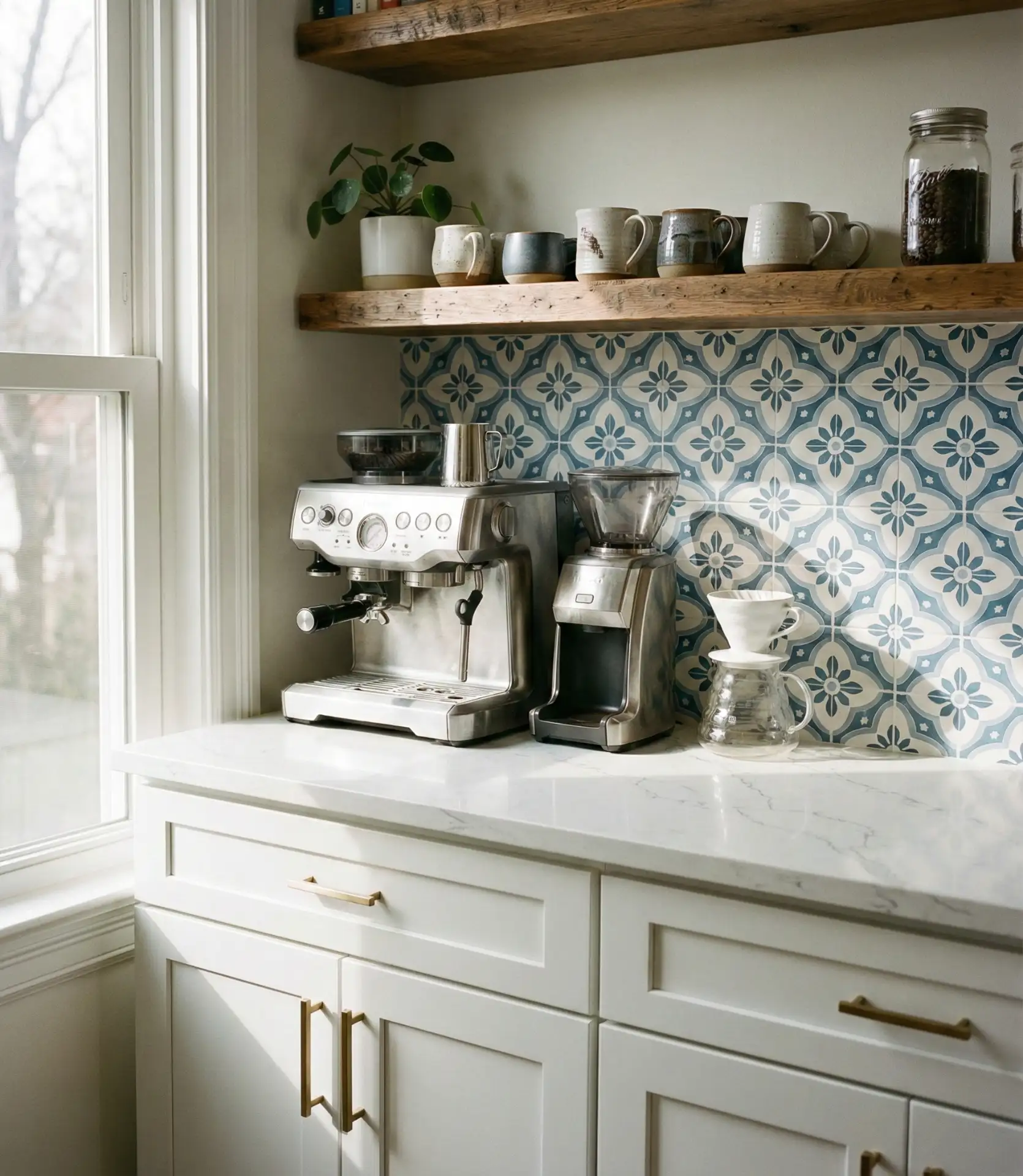
Expert designers suggest limiting decorative tile to small areas like coffee stations to prevent visual overwhelm. This targeted approach allows you to embrace bold patterns or colors without the commitment or expense of tiling an entire kitchen, and it creates natural conversation starters.
20. Forest-green cabinetry with brass and marble
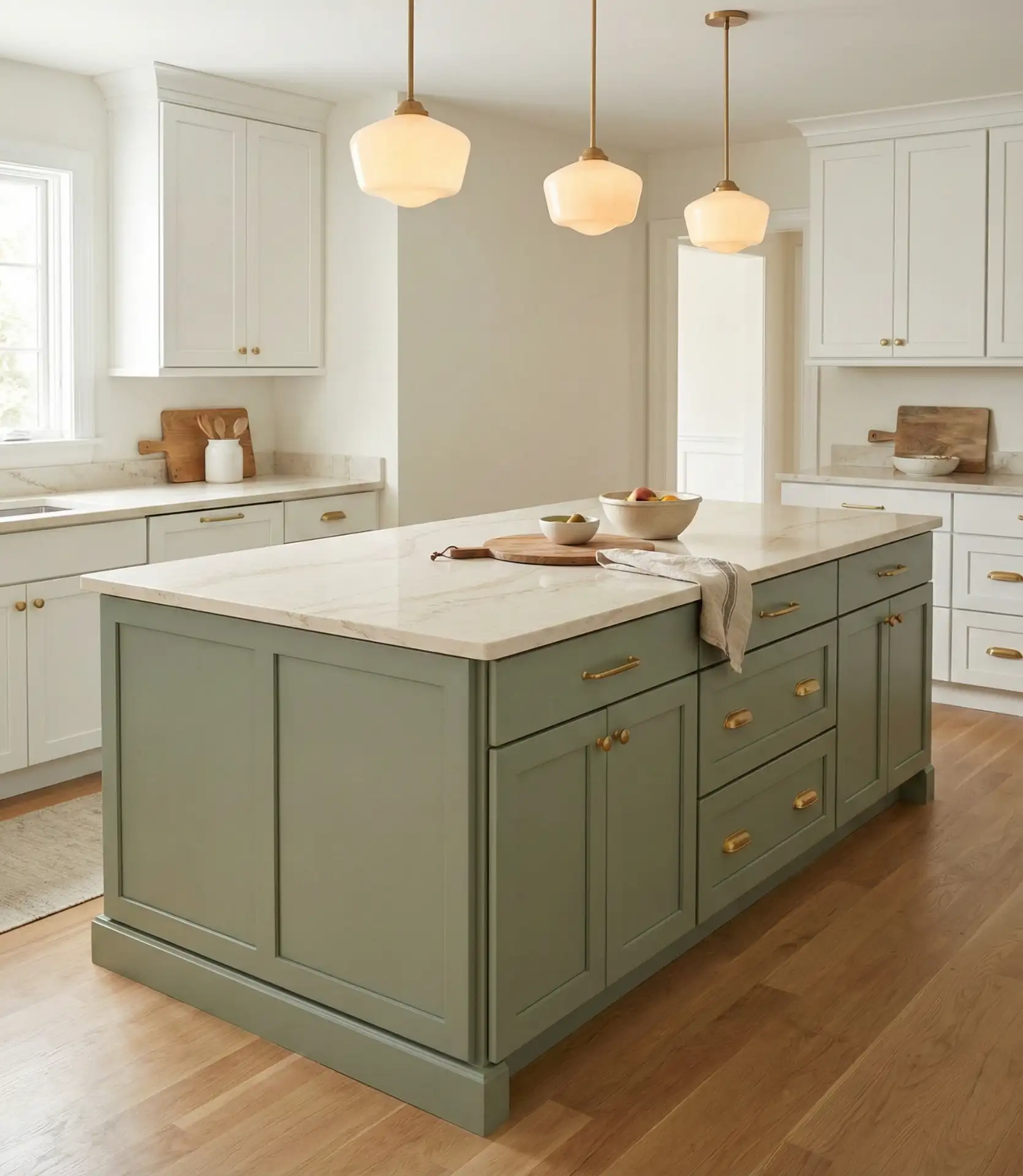
Green cabinets paired with white or warm quartz countertops create a fresh, botanical-inspired kitchen that feels both current and timeless. This combination works particularly well when accented with brass hardware and fixtures, which warm up the cool green tones. The countertop serves as a neutral canvas that prevents the bold cabinetry from overwhelming the space while allowing the green to remain the star. This palette thrives in kitchens with ample natural light, especially those facing gardens or green spaces.
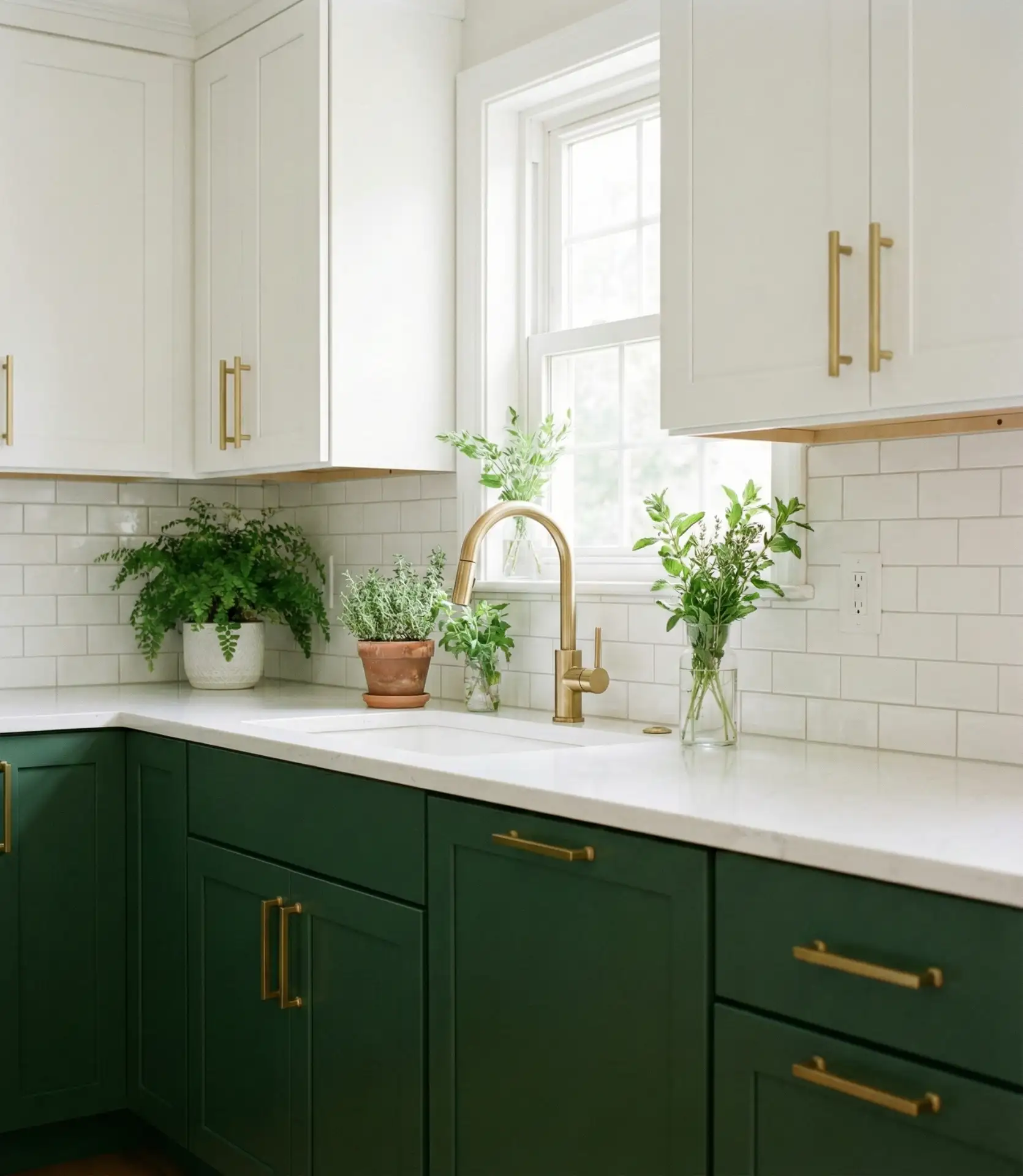
Real homeowner feedback shows that green cabinetry has excellent longevity because it reads as a classic color rather than a trend. Unlike some bold choices that feel dated after a few years, green maintains its appeal because it connects to nature rather than fashion cycles.
21. Smart Organization with Drawer Inserts
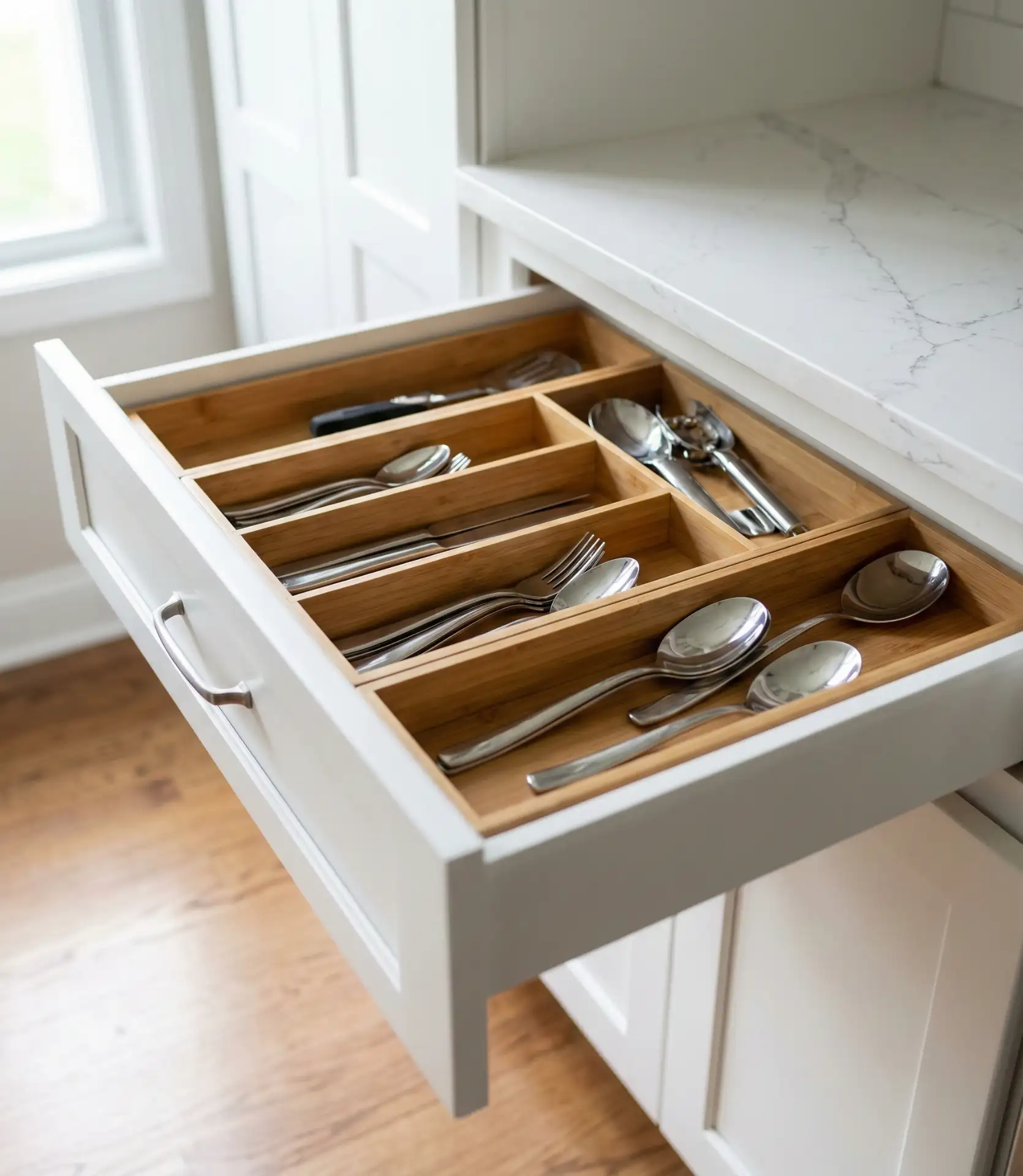
While countertops often steal the spotlight, smart organization beneath them transforms how a kitchen functions daily. Custom drawer inserts for utensils, spices, and tools keep items accessible and counters clear, which makes any surface—from granite to quartz—more effective. This investment pays off in reduced daily frustration and improved cooking flow. Pairing beautiful countertops with thoughtful storage ensures the space works as well as it looks, which matters more than material choice for many homeowners.
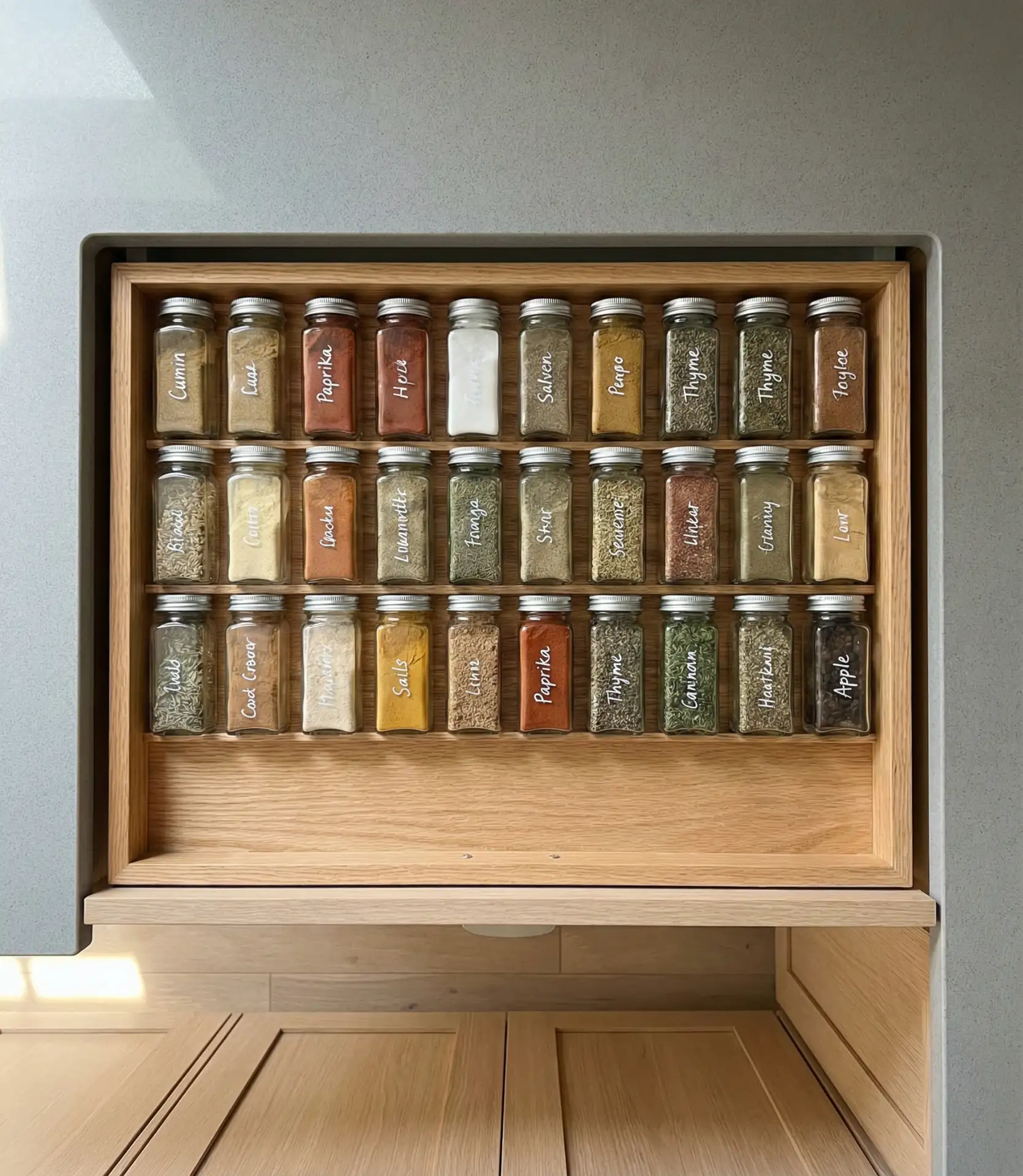
Kitchen designers across the country emphasize that organization should be planned before countertop installation, as it influences the placement of outlets, the size of drawers, and even the overhang of islands. Kitchens designed with this integrated approach genuinely facilitate cooking and daily living.
22. Mixed Material Strategy for Visual Interest
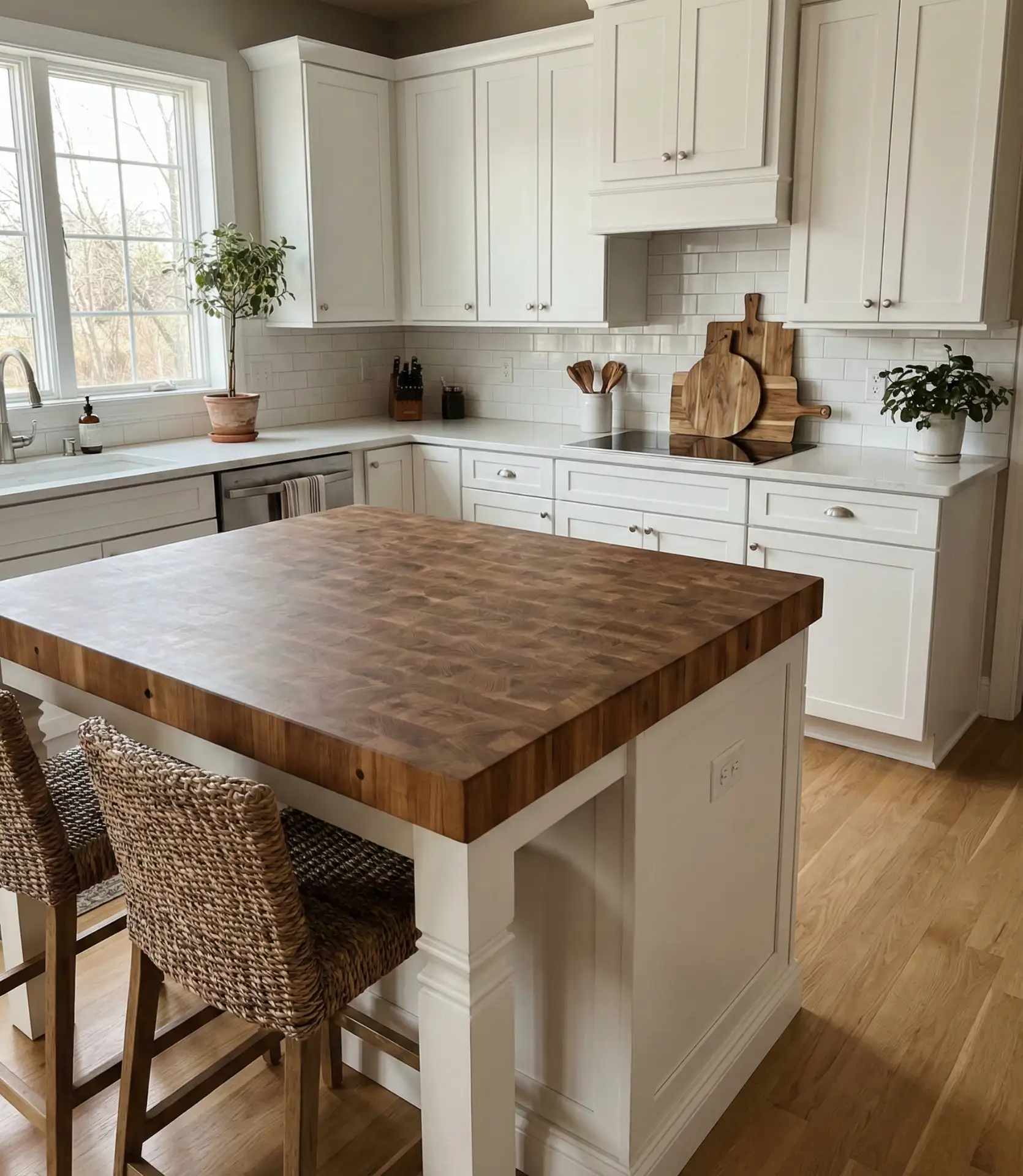
Combining different countertop materials within one kitchen creates layers of texture and visual interest while allowing each zone to serve its specific purpose. A common approach pairs white quartz on perimeter counters with a wooden butcher block island or a black marble section for baking. This strategy lets you incorporate materials that might be too bold or high-maintenance for the entire kitchen but work beautifully as accents. It’s particularly effective in large, open kitchens where distinct zones benefit from differentiation.
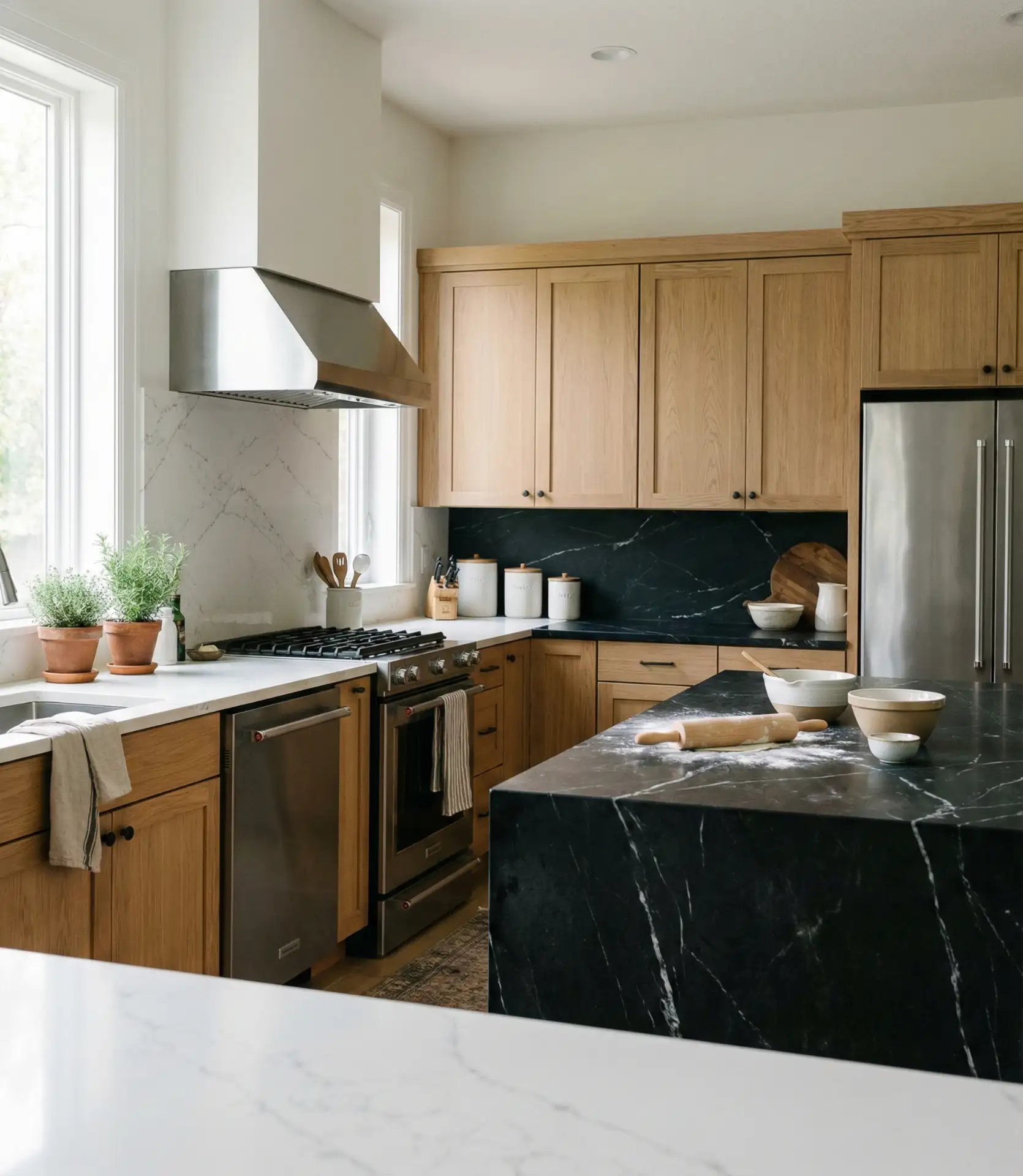
This approach works best in kitchens where the materials share a common element—perhaps they’re all cool-toned or all matte-finished—to maintain cohesion. Without this thread connecting them, the space can feel disjointed rather than intentionally layered.
23. How to Style Your Countertops Daily
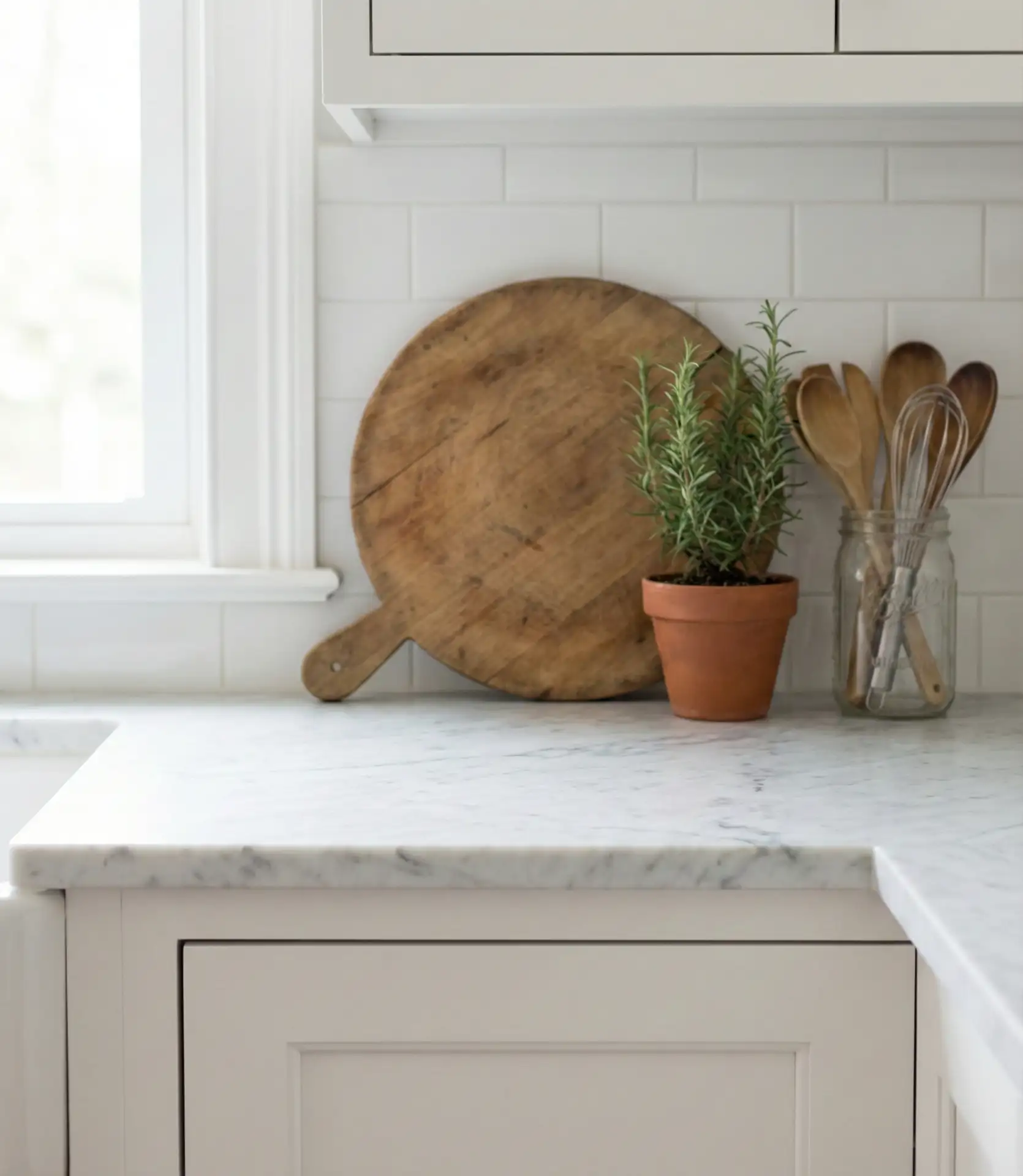
Learning to style kitchen countertops transforms them from purely functional surfaces into design moments that make the space feel intentional. The key is restraint: a wooden cutting board propped vertically, a small plant in a ceramic pot, and perhaps a canister of utensils near the stove create warmth without clutter. This approach works regardless of whether your counters are quartz, marble, or granite, and it’s easily adjusted for seasons or moods. The goal is making the kitchen feel lived-in and welcoming rather than sterile or staged.
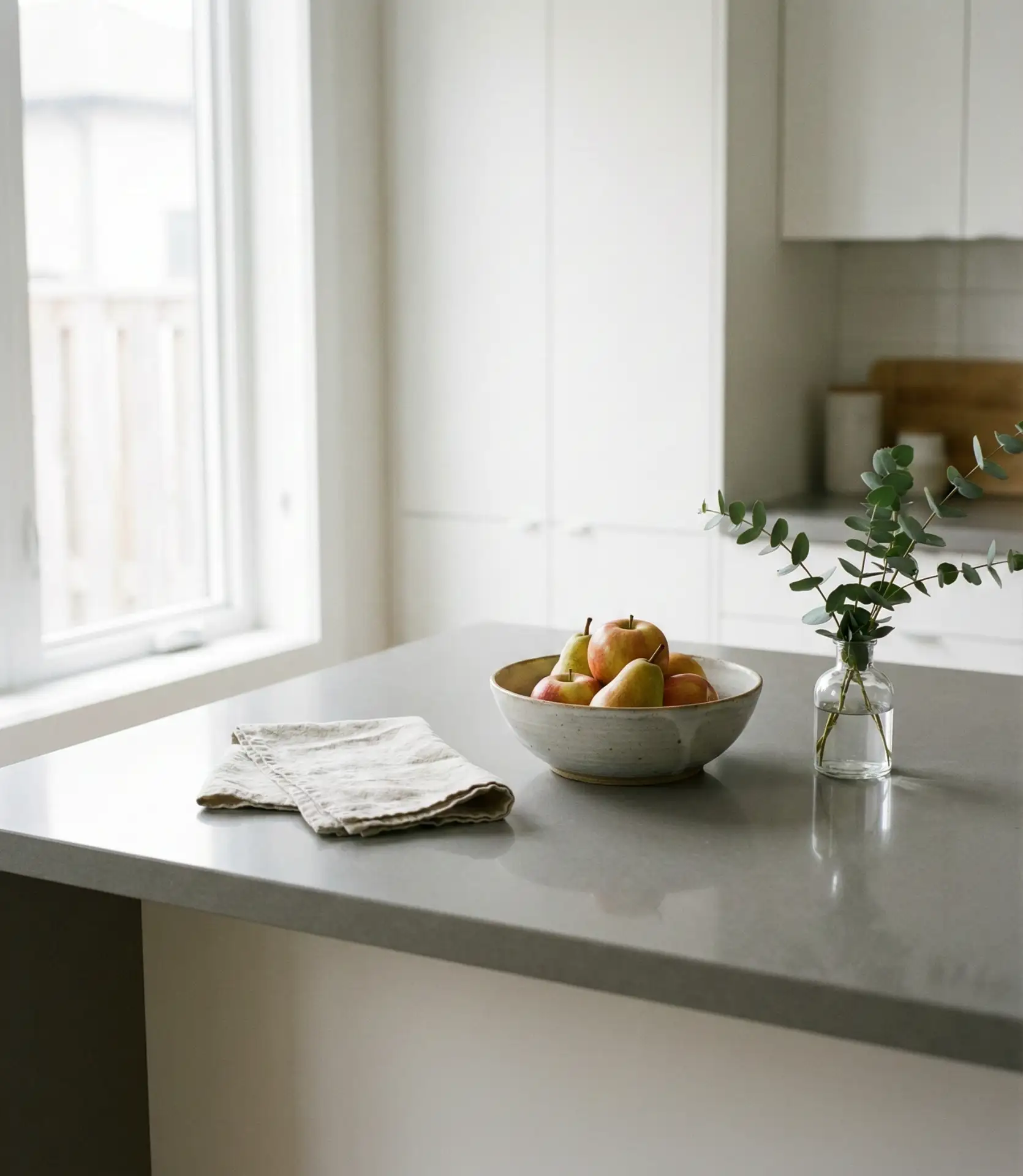
Interior stylists recommend the “rule of three” for countertop decor—grouping items in odd numbers creates visual balance that feels natural. They also suggest varying heights and textures to add dimension and editing ruthlessly to ensure that everything on display either serves a purpose or brings genuine joy.
24. Coordinating Countertops and backsplashes
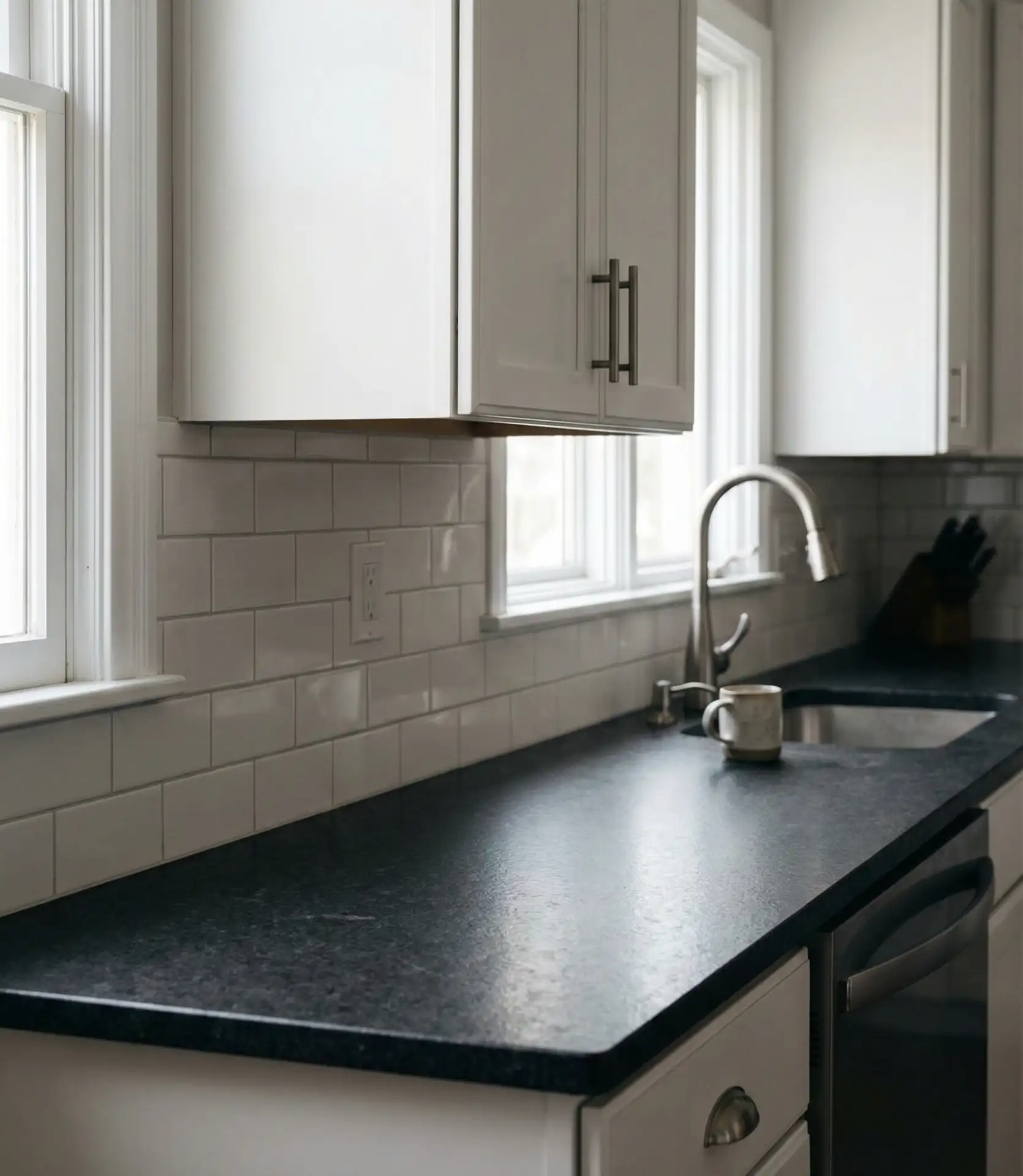
The relationship between your countertop and backsplash defines the kitchen’s overall aesthetic more than any other pairing. A simple approach pairs neutral counters with patterned backsplash tile, allowing each element to shine without competing. Alternatively, a bold dark or veined countertop works beautifully with a simple subway tile or slab backsplash that provides breathing room. Understanding this balance helps create kitchens that photograph well and feel harmonious in person, which explains why it’s such a common search topic among homeowners planning renovations.

A landscape architect in Colorado recently shared that she always selects the countertop first, then chooses the backsplash to complement it rather than the reverse. This approach ensures the larger, more permanent surface gets priority, while the backsplash—which is easier and less expensive to change—adapts to support the overall vision.
Kitchen countertops anchor every design decision and daily ritual in your home, which is why choosing the right one matters so much. Whether you’re drawn to the drama of black marble, the warmth of butcher block, or the practicality of quartz, there’s a solution that fits your lifestyle and vision. These ideas prove that 2026’s trends honor both function and beauty, giving you permission to create a kitchen that works as hard as it inspires. What countertop direction are you leaning toward? Share your thoughts and questions in the comments below.