
Shared kids’ bedrooms are having a serious design moment in 2026. Whether you’re working with a small room for two siblings, trying to carve out individual space in a tight floor plan, or searching Pinterest for that elusive setup that actually works long-term—you’re not alone. American families are getting more creative than ever with how they use every square foot, and the results are genuinely stunning. In this guide, you’ll find real, actionable ideas covering everything from bunk beds and room divider solutions to gender-neutral palettes and smart storage systems that make shared spaces feel personal, not cramped.
1. The Classic Bunk Bed Setup Done Right
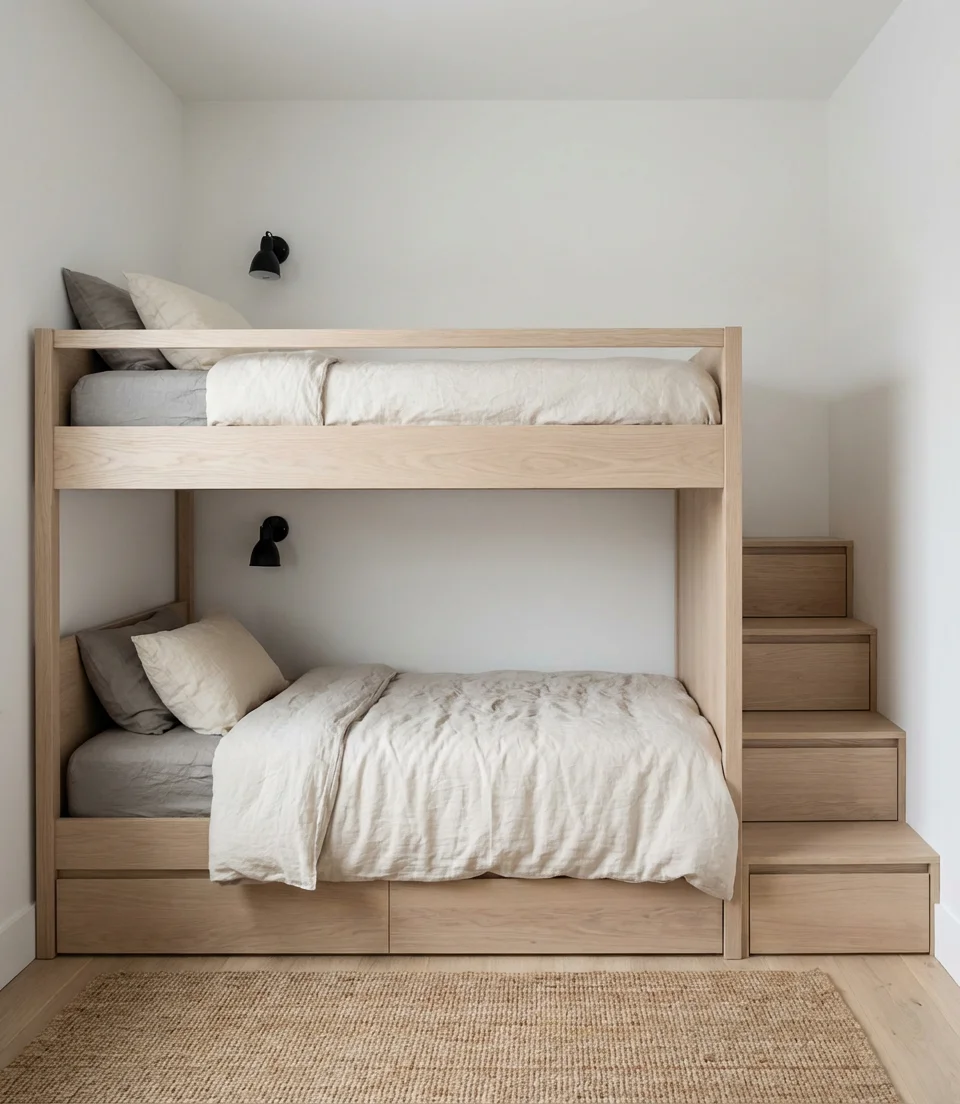
When space is limited, bunk beds continue to be the most popular choice. A well-chosen bunk can free up an entire wall’s worth of floor space, leaving room for a desk, a reading nook, or a small play zone. For a small room shared by two kids, look for a full-over-full or twin-over-twin frame with built-in storage steps—each drawer doubles as a stair and a dresser, which is a genuinely brilliant use of vertical space in any compact layout. The market in 2026 has never offered more thoughtful, well-designed options at every price point.
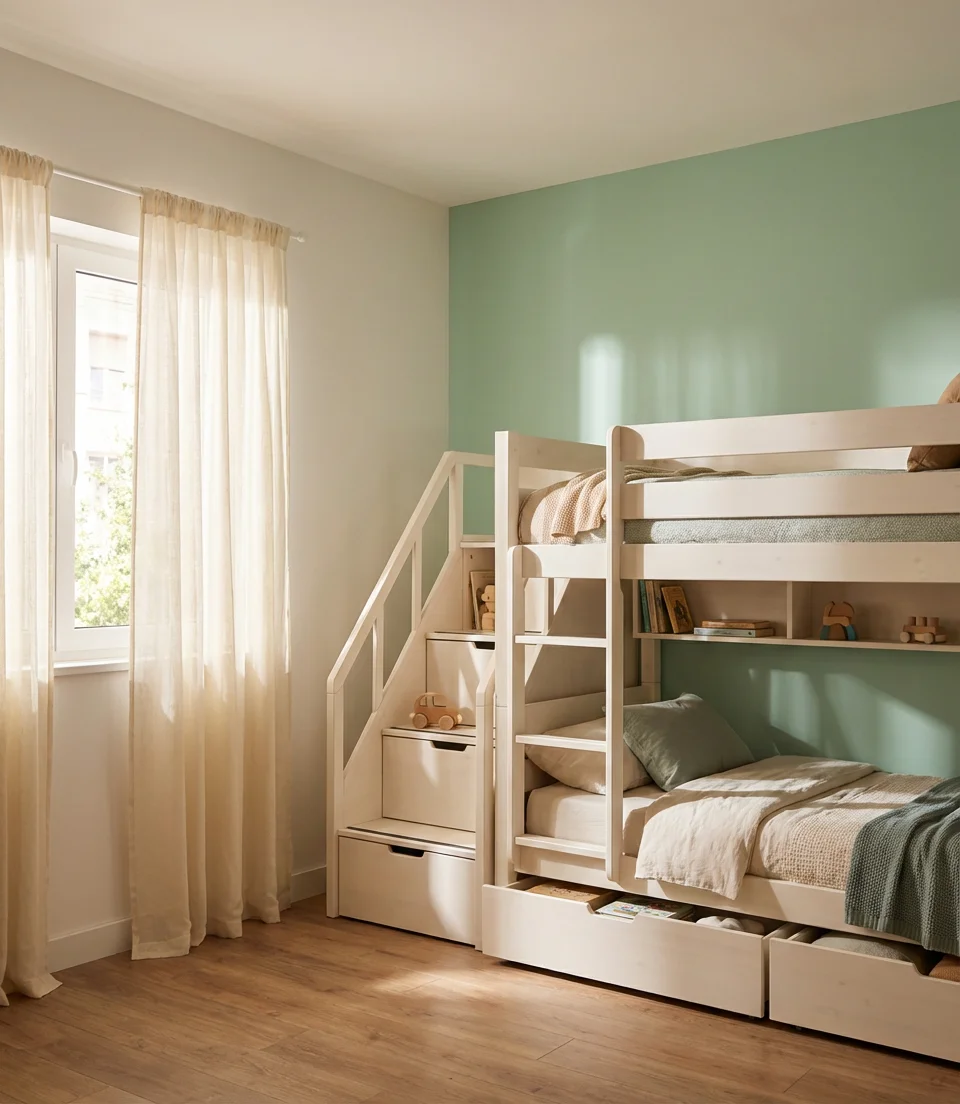
The key mistake most parents make when buying bunk beds is going too tall for the ceiling height. You want at least 30 to 33 inches of clearance between the top mattress and the ceiling so the upper bunk doesn’t feel like a coffin. Measure twice, order once—and always check that the ladder placement works with your door swing before it arrives at your door.
2. Two Twin Beds Side by Side With a Shared Nightstand
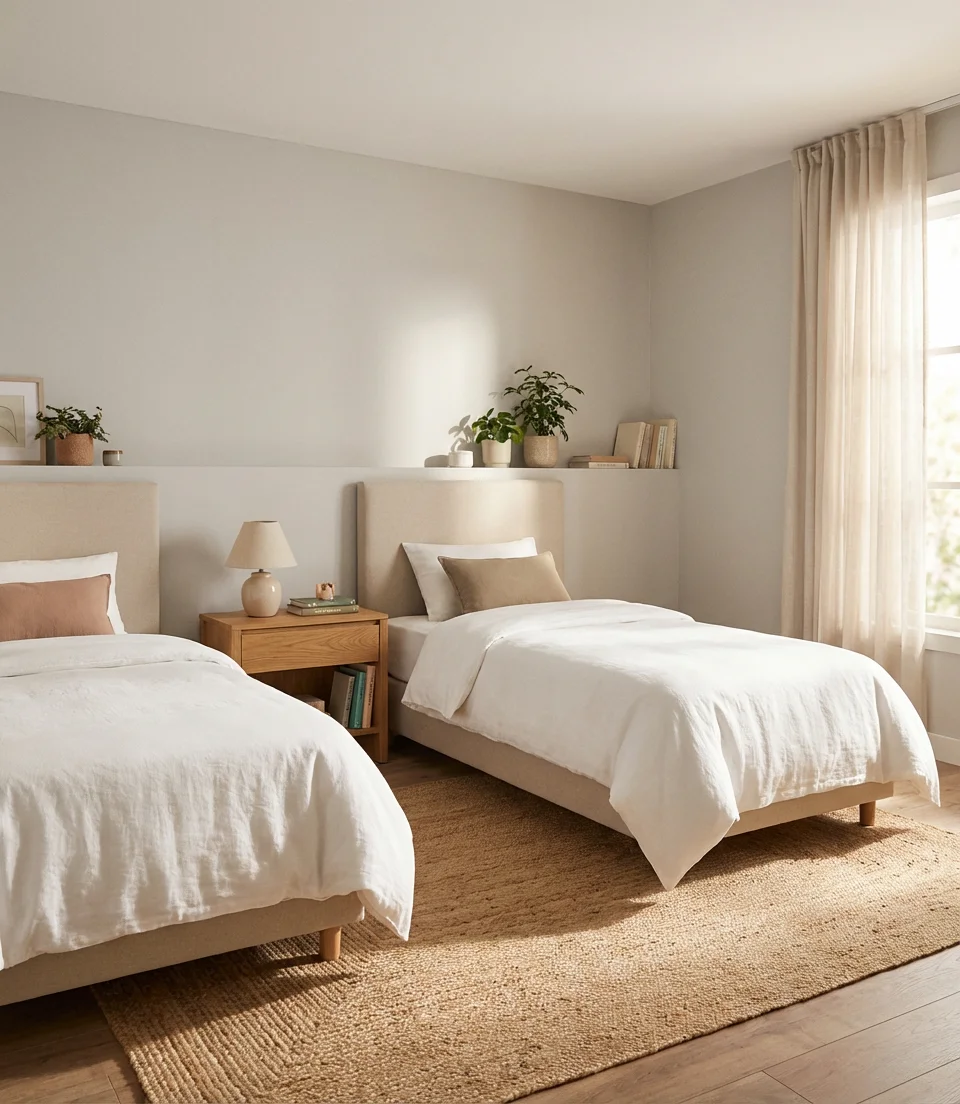
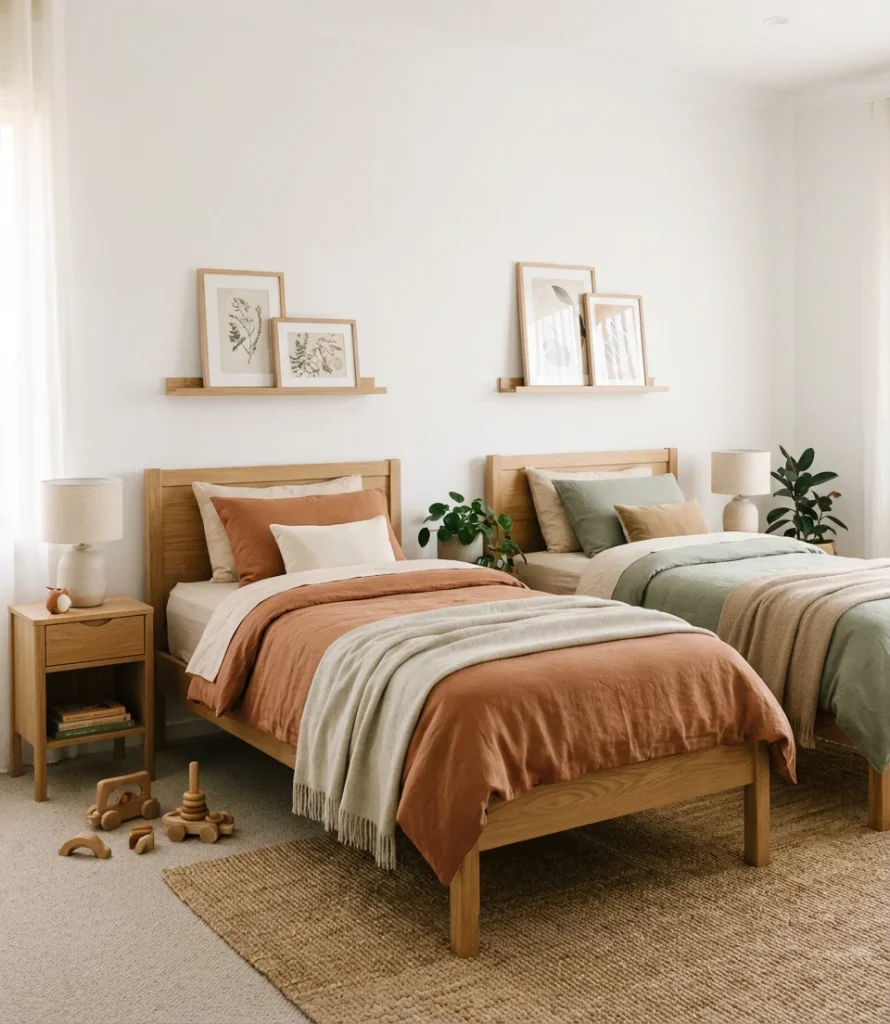
Placing 2 twin beds in one room side by side with a shared nightstand in between is one of the most classic American bedroom configurations—and it still works beautifully in 2026. This hotel-inspired layout keeps things symmetric, which naturally makes a room feel more spacious and calm. Choose matching frames in a neutral wood or white finish to create visual continuity across the whole space without making either kid feel like they got the lesser half of the room.
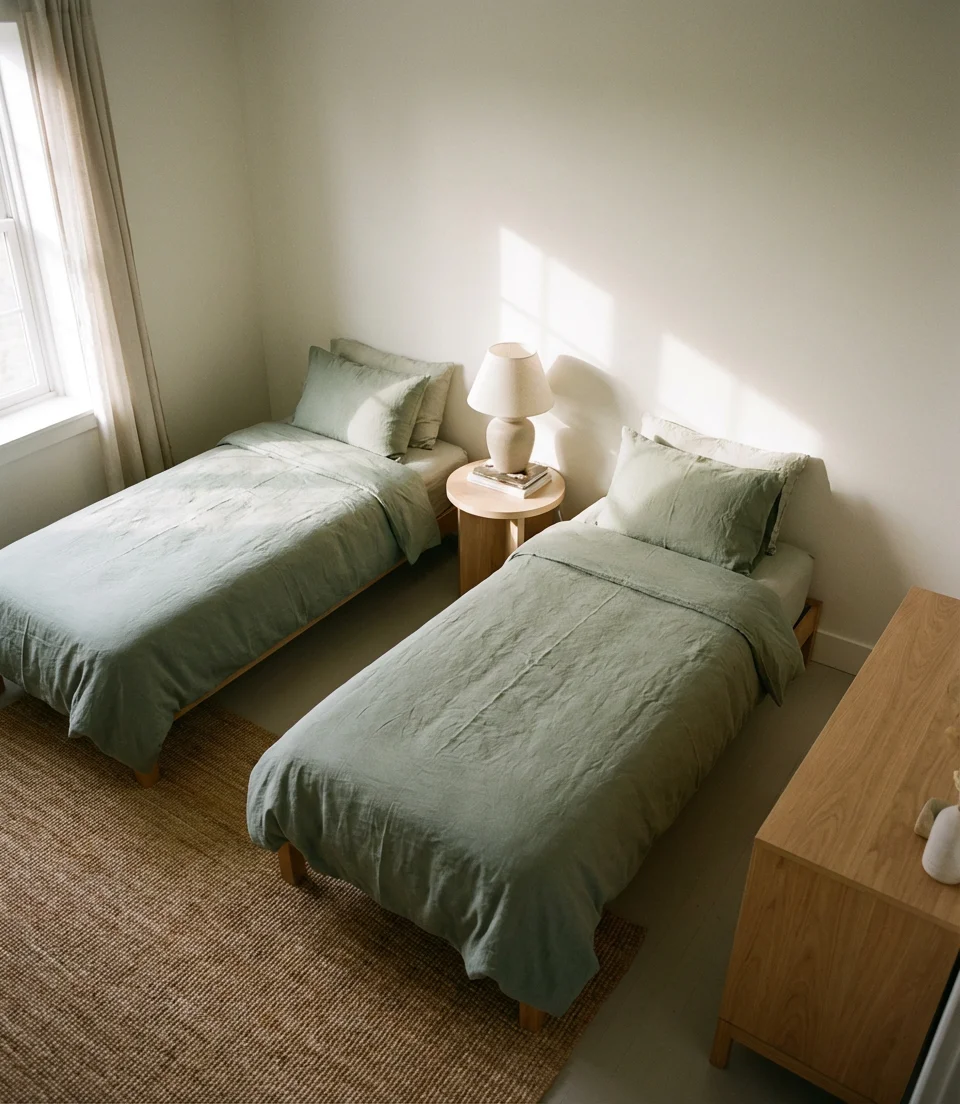
This layout works best in rectangular rooms that are at least 10 feet wide. In the Midwest and South, older homes often feature long, narrow kids’ rooms, making this setup fit almost perfectly. Place the beds against the longest wall, run a low shared dresser along the opposite side, and you’ll still have a clear traffic path down the middle for easy morning routines.
3. Using a Curtain as a Room Divider
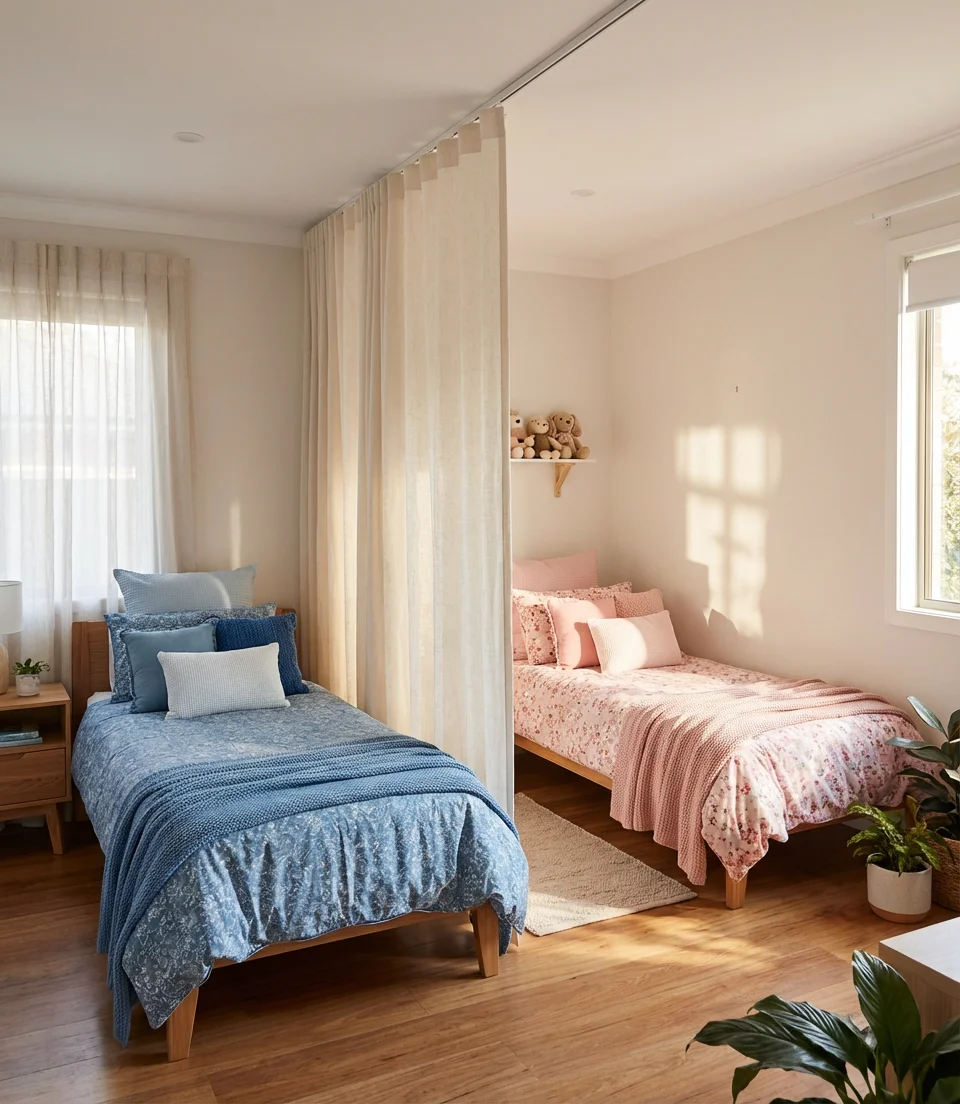
A floor-to-ceiling curtain is one of the most budget-friendly room divider ideas you’ll find—and it’s far more stylish than a temporary wall or a bookshelf shoved in the middle of the floor. A ceiling-mounted curtain track allows you to split the space in a room for two kids of different ages or genders when privacy is needed and to open it up during the day. Linen, velvet, and even blackout fabrics all work depending on how much light control you want on each side.
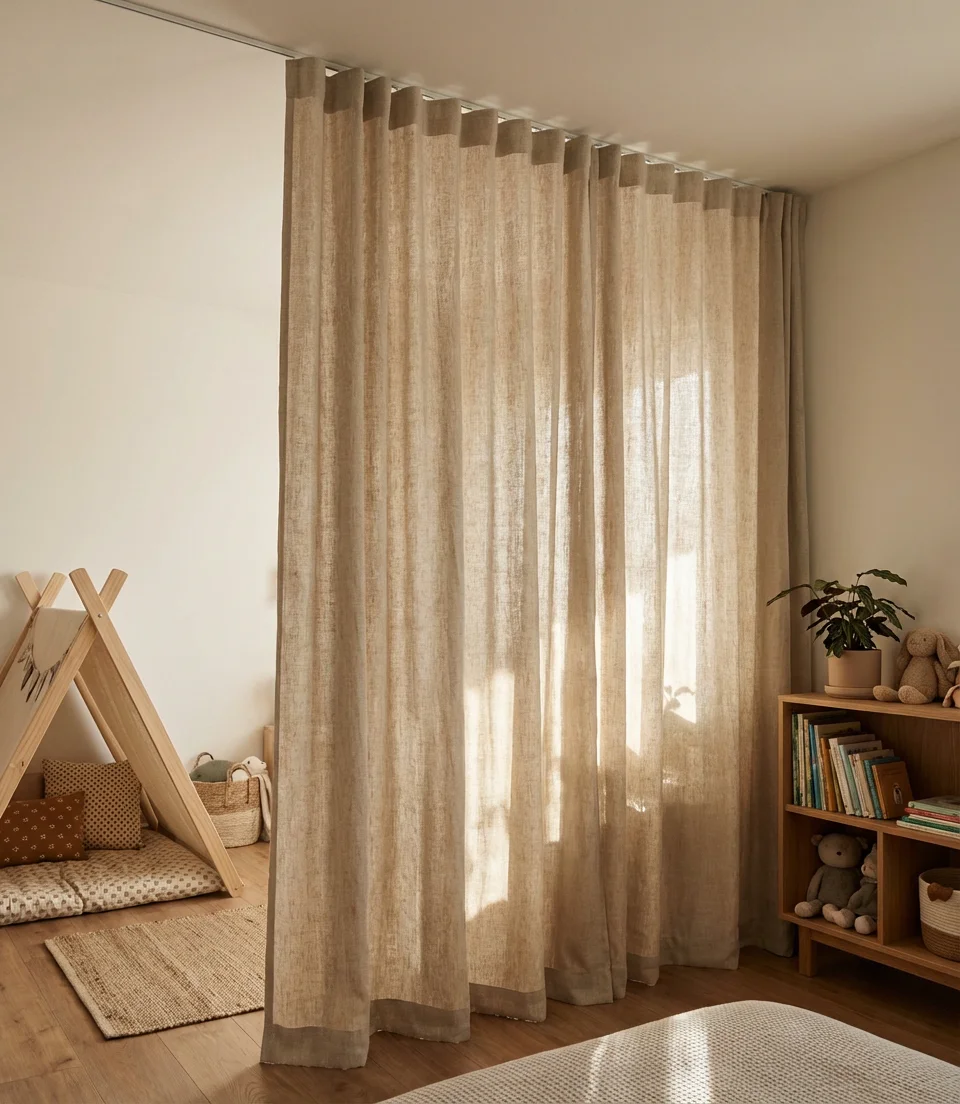
A linen curtain divider can run anywhere from $40 to $200 depending on the fabric and length—far less than a custom partition wall. For a renter or a family that might reconfigure the room in a year or two, it’s an especially smart investment. Look for IKEA’s KVARTAL or VIDGA track systems, which mount cleanly to the ceiling and support heavier fabrics without sagging over time.
4. IKEA Hacks for a Shared Kids’ Room
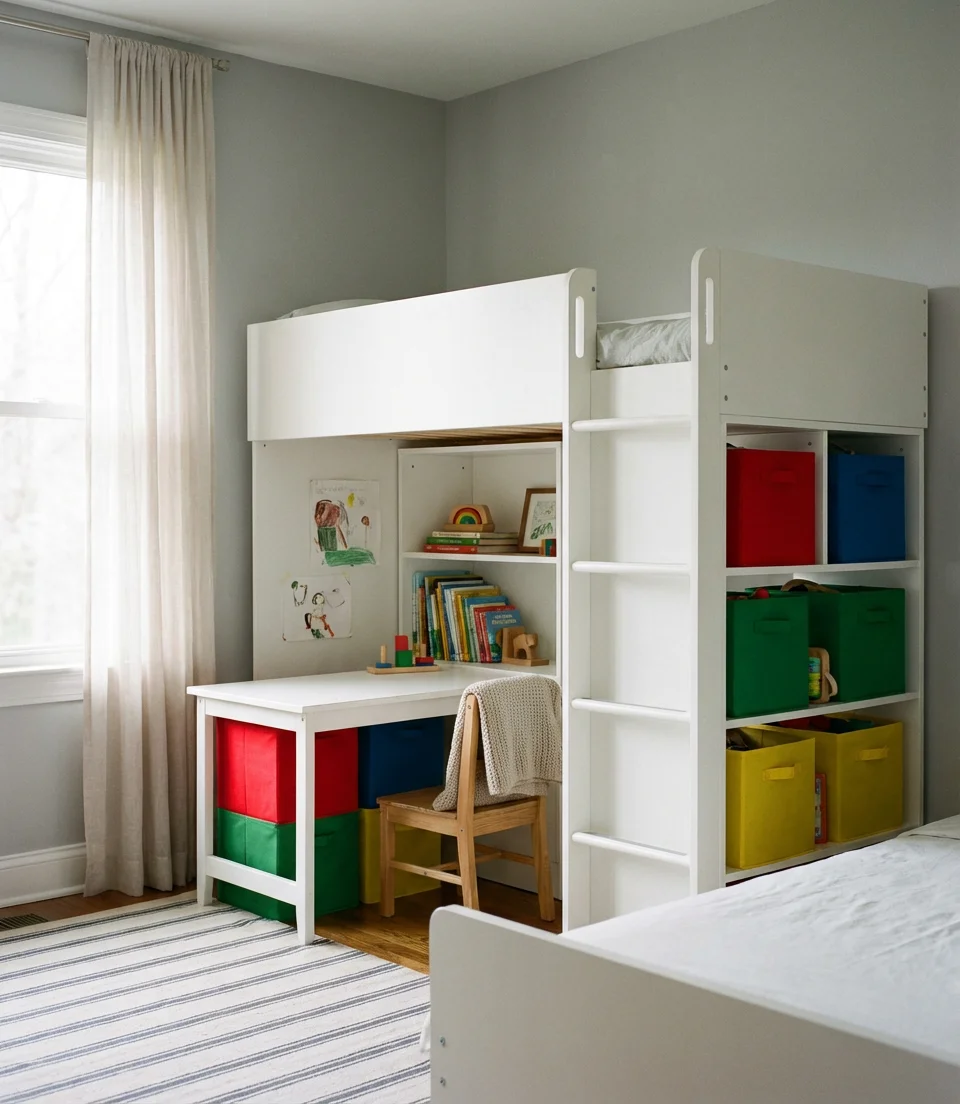
IKEA remains the ultimate starting point for a shared kids’ room in 2026 — not because of the catalog look, but because of the modular flexibility. The STUVA system, for example, can be configured as a loft bed with a desk underneath, a combination wardrobe with open shelving, or a low storage bench at the foot of each bed. Mix and match components to create a layout that fits your specific room dimensions without paying custom furniture prices.
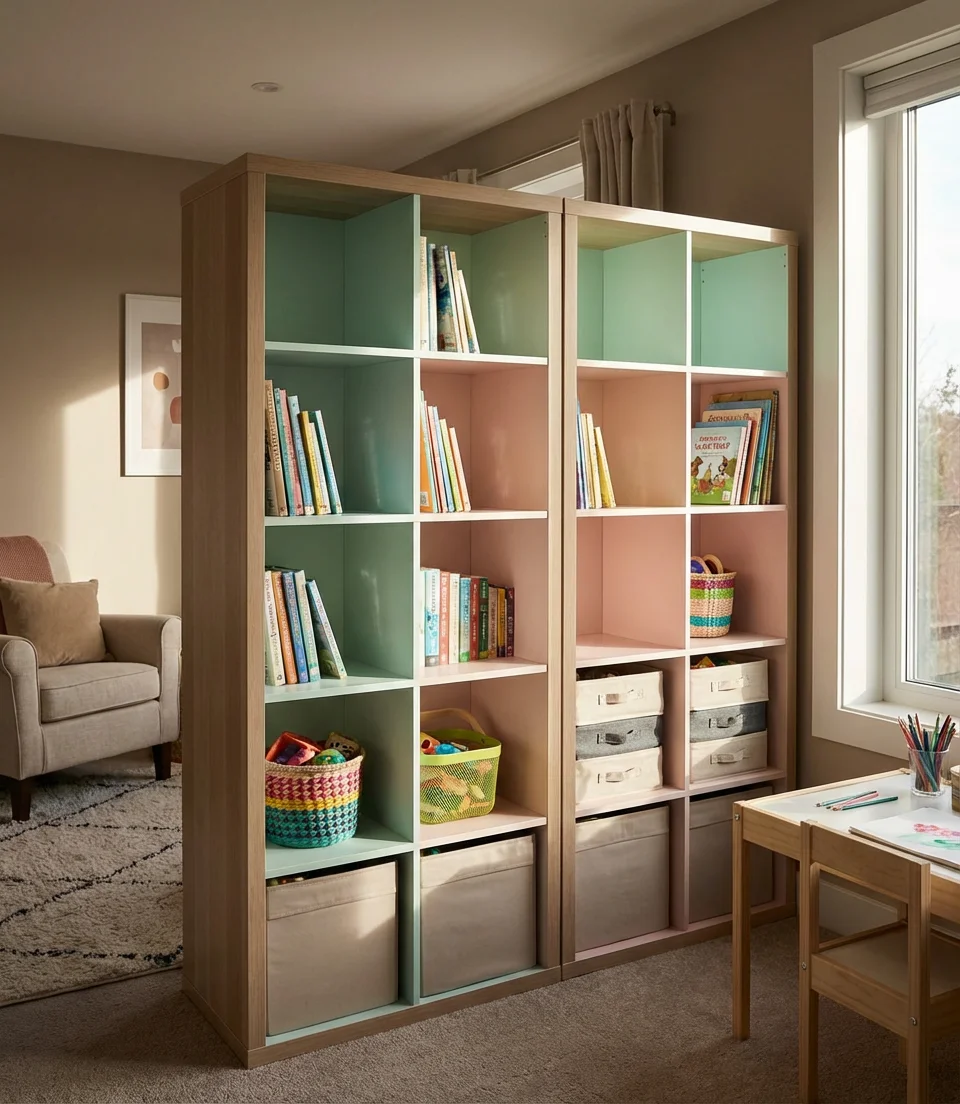
One real homeowner trick that works especially well: paint the back panels of IKEA KALLAX shelving units in each child’s favorite color, then use them as a visual room divider in the center of the space. It provides storage on both sides, marks each kid’s territory without a rigid wall, and adds a pop of personality to what could otherwise be a very plain room.
5. A Neutral Palette That Works for Any Gender Combo
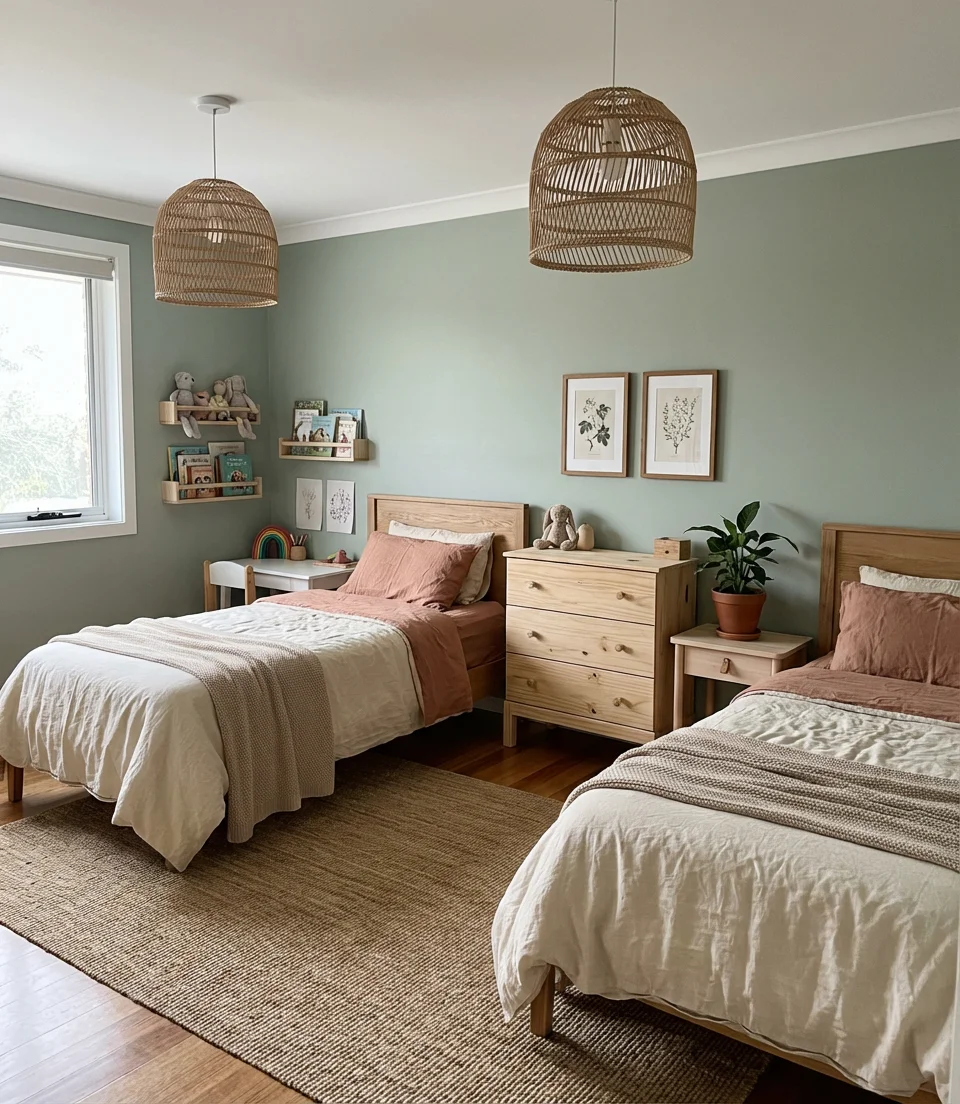
Designing a unisex room for siblings sharing a space is one of the most common challenges parents face—and going neutral is almost always the right move. Think warm whites, soft taupes, sage greens, and earthy terracottas rather than the worn-out pink-and-blue divide. These tones age gracefully as kids grow, and they create a calm, cohesive backdrop that lets each child’s bedding and accessories inject personality without clashing visually across the room.
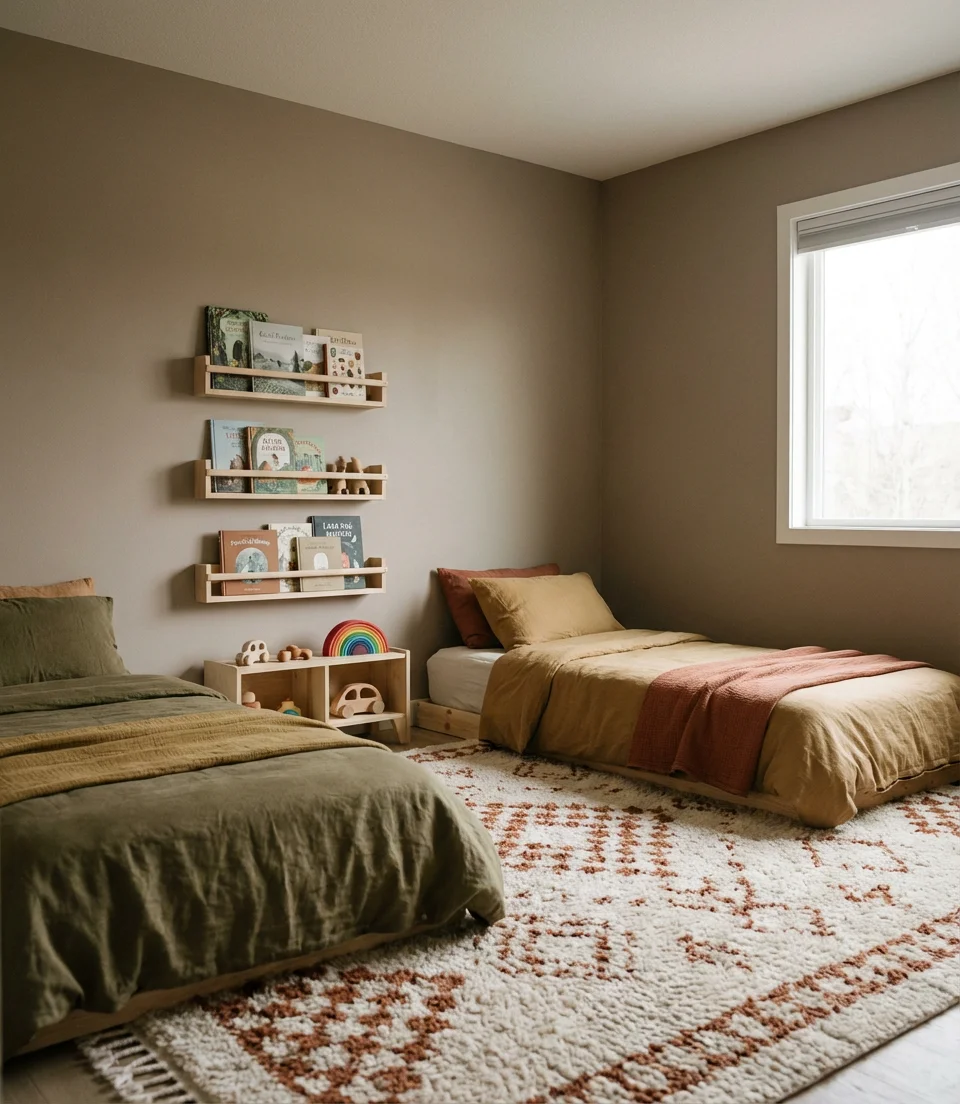
Interior designers who specialize in children’s spaces often recommend choosing one wall color and two wood tones at a maximum and letting textile choices do the heavy lifting for personality. Each child gets their own duvet cover, pillow arrangement, and small wall section—that micro-personalization within a unified palette is what makes shared rooms feel thoughtful rather than generic.
6. Loft Beds for Older Kids With Study Space Below
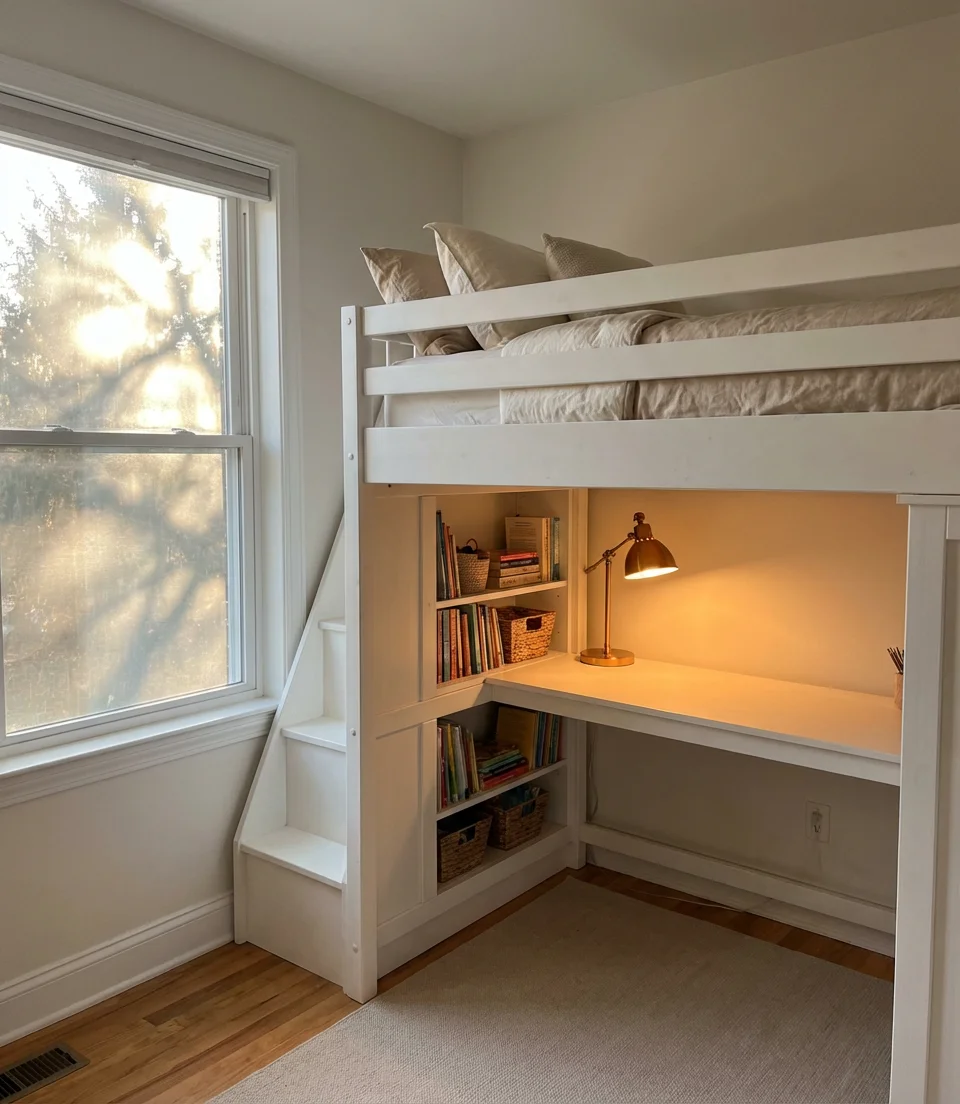
For older kids sharing a room—tweens and teens especially—a loft bed configuration that tucks a desk underneath is a game-changer. Instead of two separate beds eating up all the floor space, each child gets a sleeping space above and a dedicated study zone below. It creates a sense of a private mini-suite within a shared room, which is psychologically important as kids move into middle school and need their own defined territory for homework, reading, and decompressing after school.
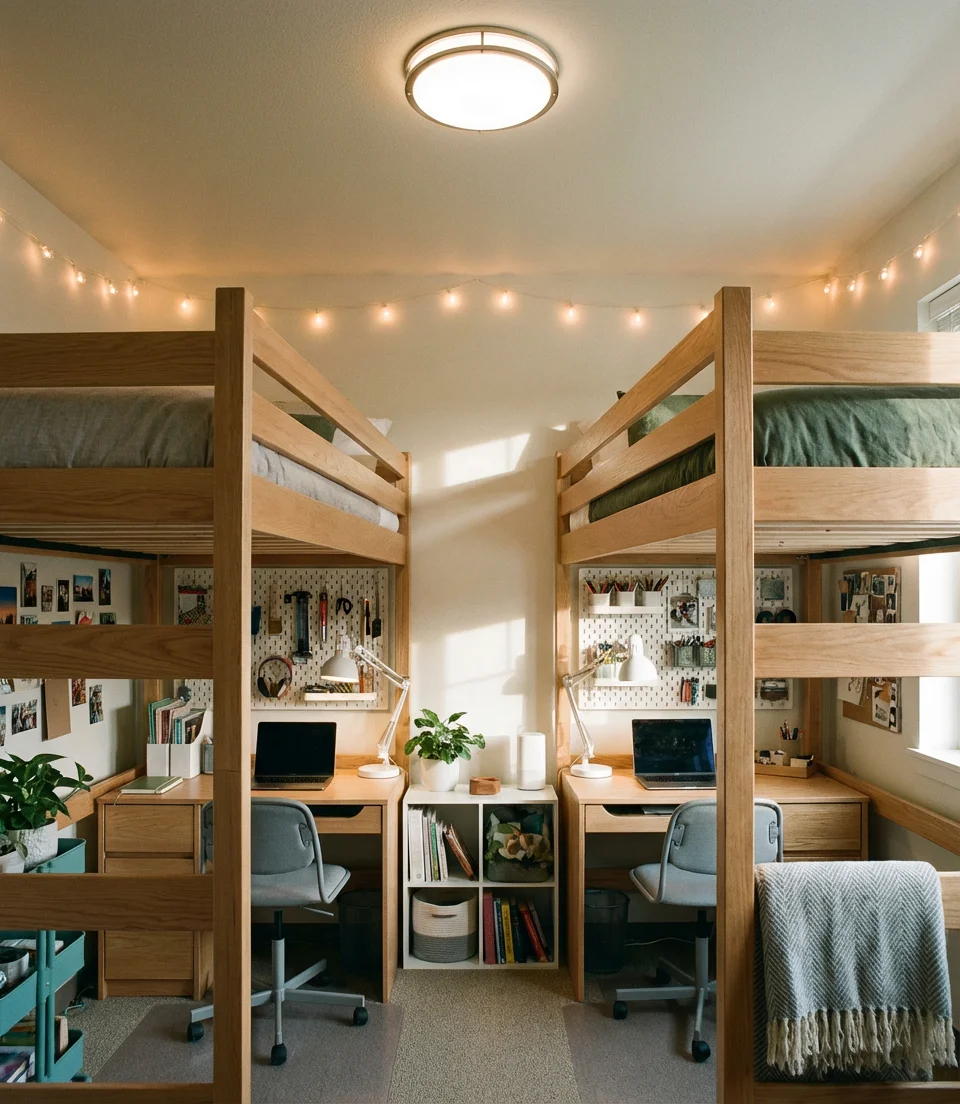
This setup works best when ceiling height allows at least 7.5 to 8 feet of clearance—anything lower and the loft feels stifling. In newer construction homes across the Sun Belt and Pacific Northwest, where ceiling heights often run 9 feet or more in secondary bedrooms, this layout is nearly perfect. Add individual task lighting under each loft, and you’ve essentially created two personal workstations in the footprint of one.
7. Beds for 3 Kids in One Room
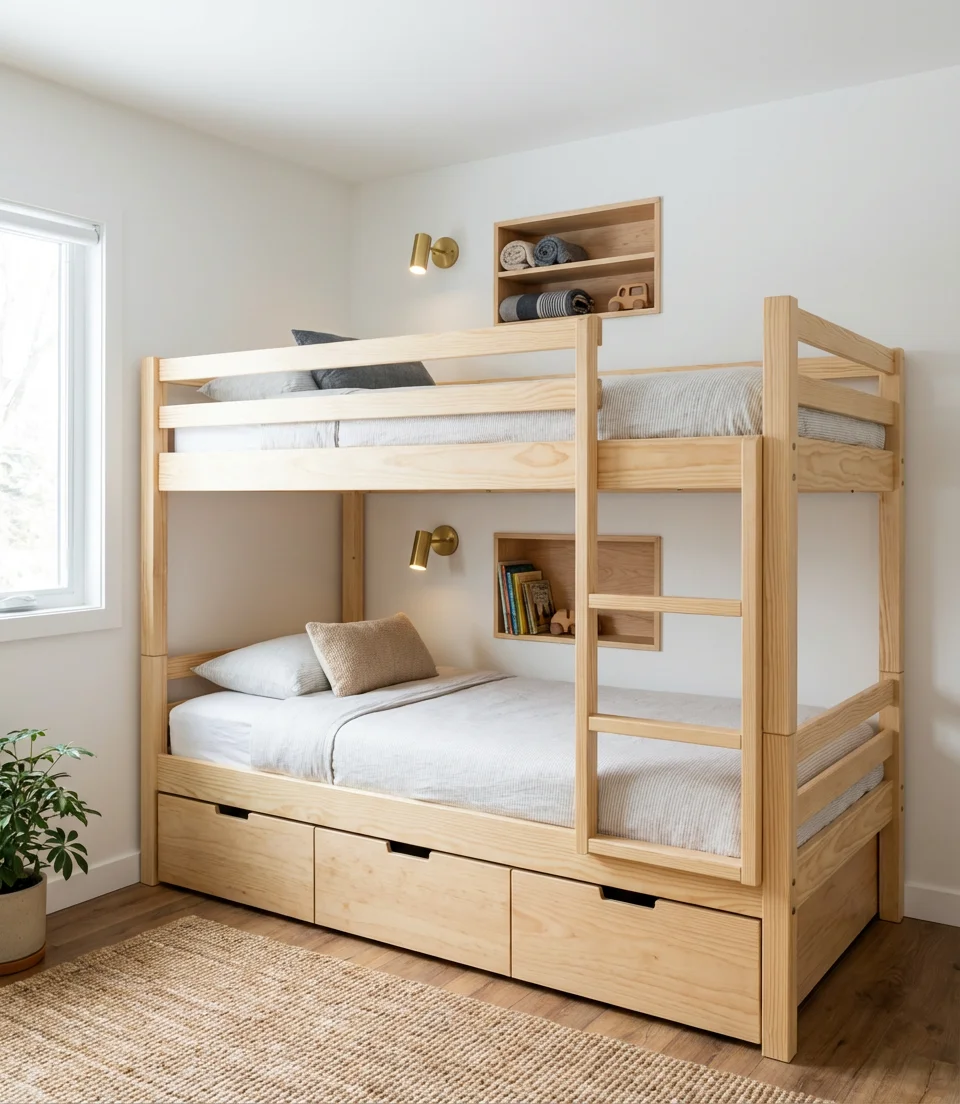
When you need beds for three children in a single space, the triple bunk or L-shaped bunk configuration is your most space-efficient option. A standard triple bunk stacks all three vertically and works well in rooms with high ceilings, while the L-shaped version puts two bunks on one wall and a single perpendicular bunk on the adjacent wall—creating a cozier, cabin-like sleeping arrangement that also frees up the center of the small room for play or a shared dresser.
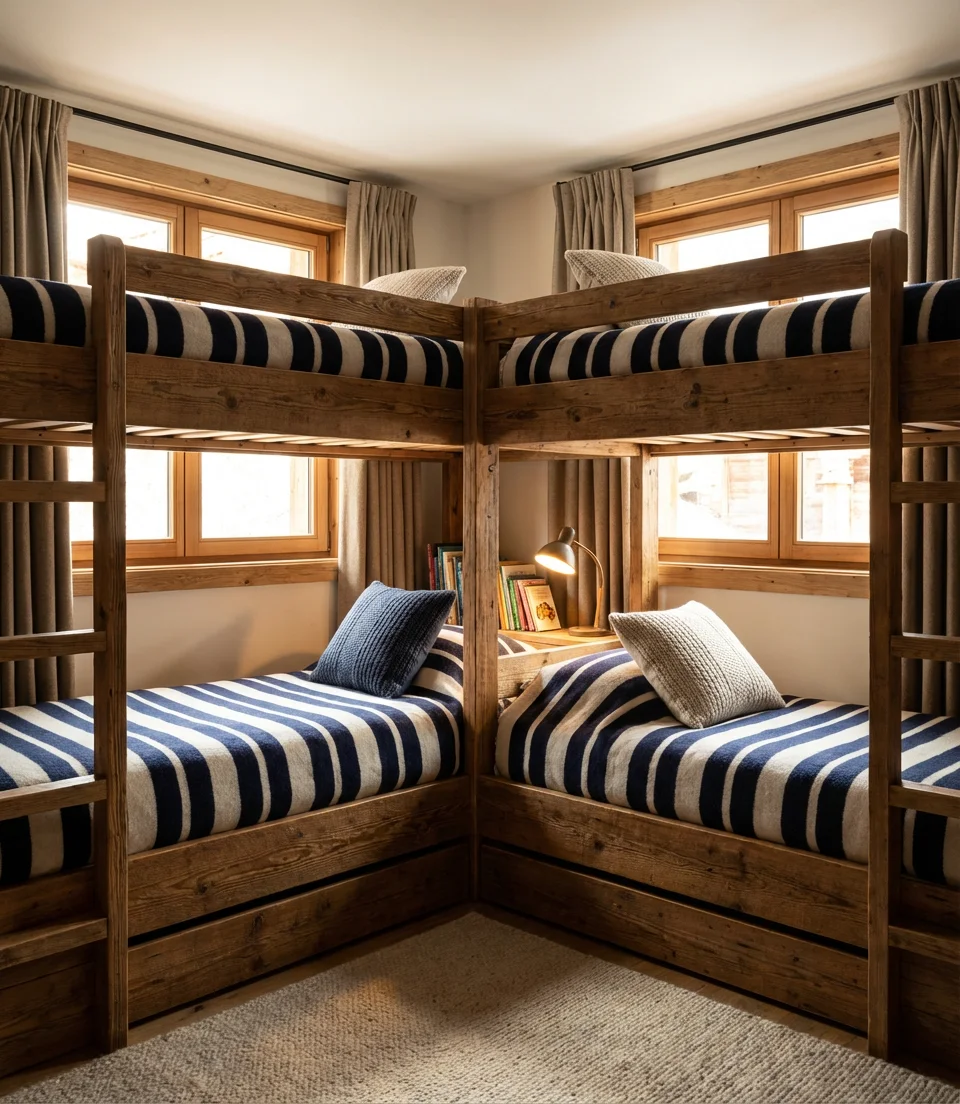
Families with three kids often find that the hardest part isn’t the beds—it’s the storage. Each child needs their own clearly labeled space for clothes, school supplies, and personal items, or the room descends into chaos within a week. Pull-out drawers under the lowest bunk, individual cubbies on the wall above each pillow, and one small rolling cart per child can solve most of the organizational chaos without a major renovation.
8. How to Split a Room Visually Without a Wall
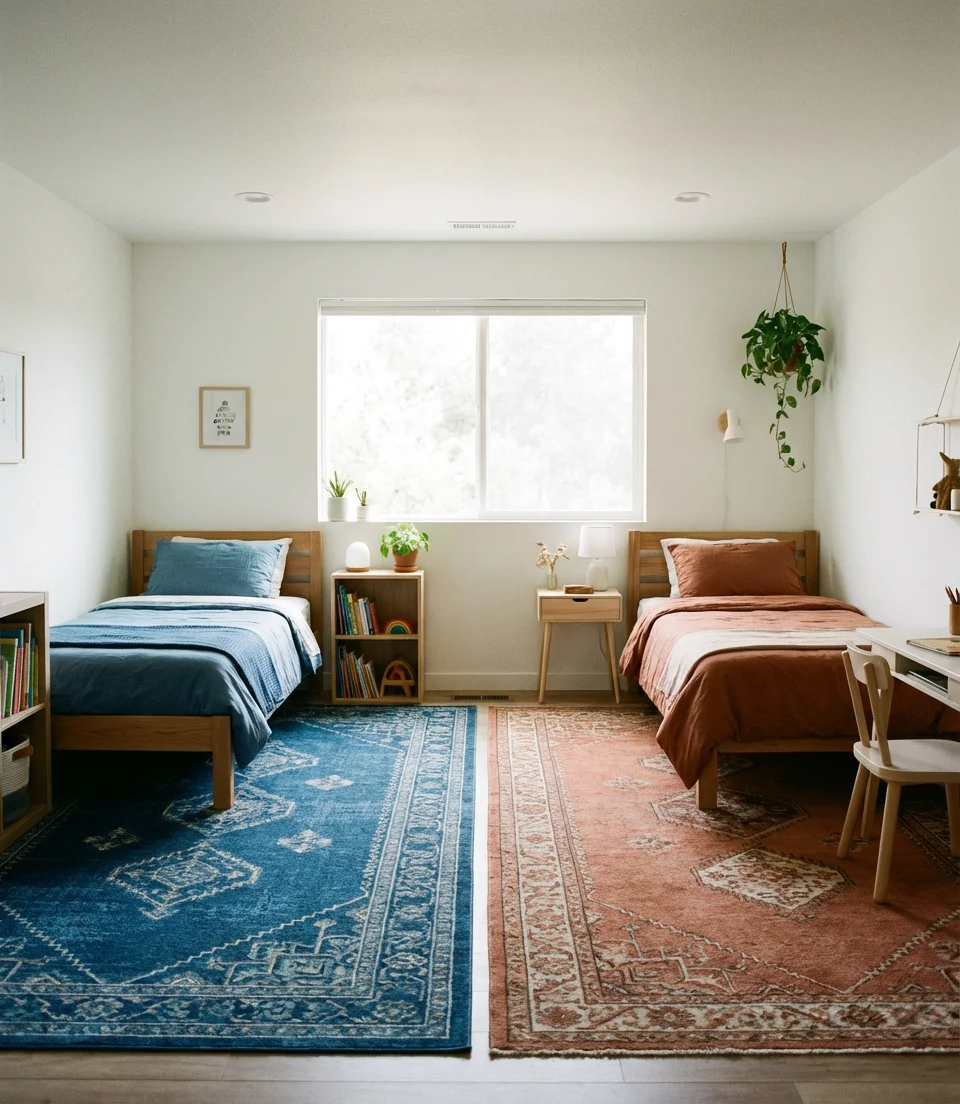
Learning how to split a room without actually building a wall is one of the most-searched design challenges for parents—and for good reason. A thoughtfully placed bookshelf, a low storage unit, or even a consistent change in rug defines two zones without blocking light or airflow. This approach works especially well in a small space where any physical partition would feel suffocating. The goal is visual separation that preserves a sense of openness; both kids need to sleep and play comfortably.
Two different area rugs—one for each sleep zone—are arguably the simplest and most effective visual split you can make in a shared bedroom. Choose rugs that share one common color to keep things cohesive but are distinct enough in pattern to mark each child’s territory. It takes about 20 minutes to install, costs under $200 for both, and it genuinely changes how the room reads spatially.
9. Room Divider Ideas Using Bookshelves
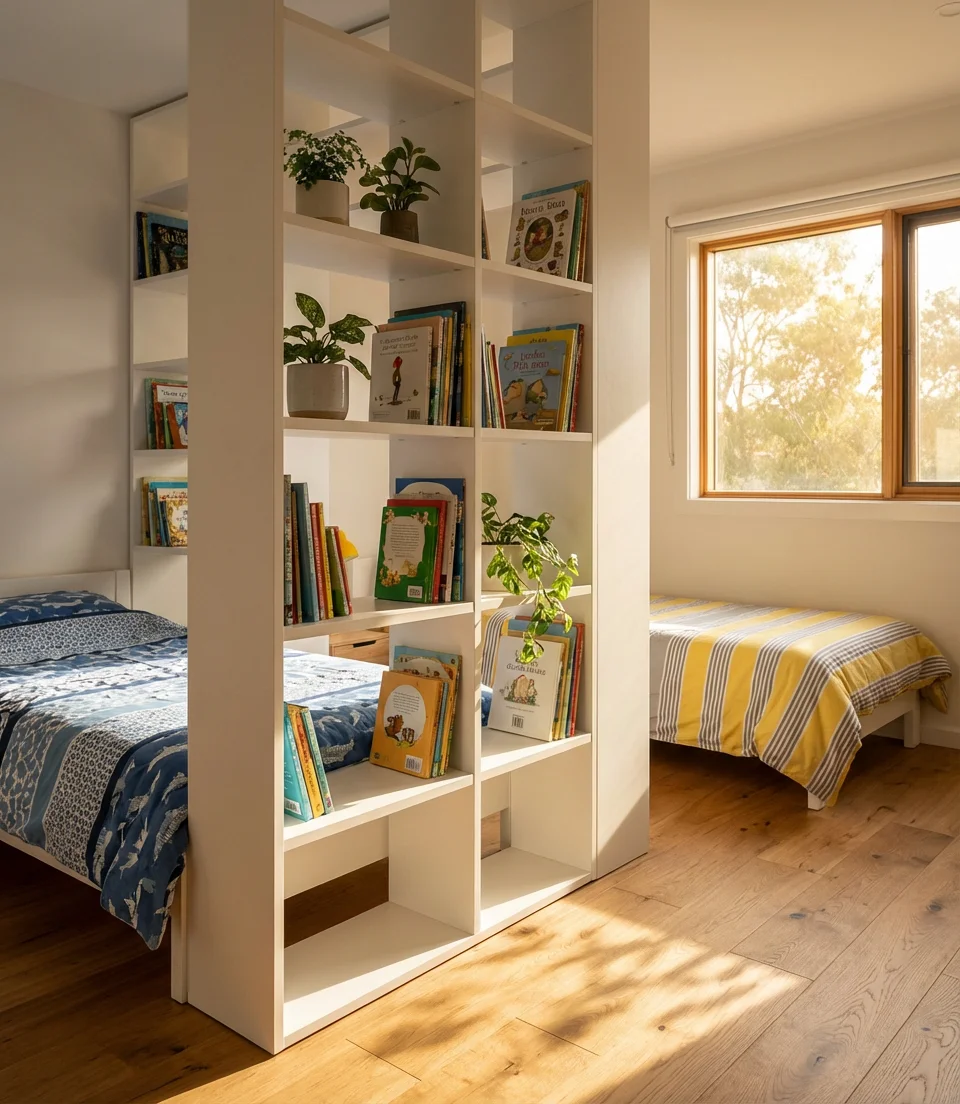
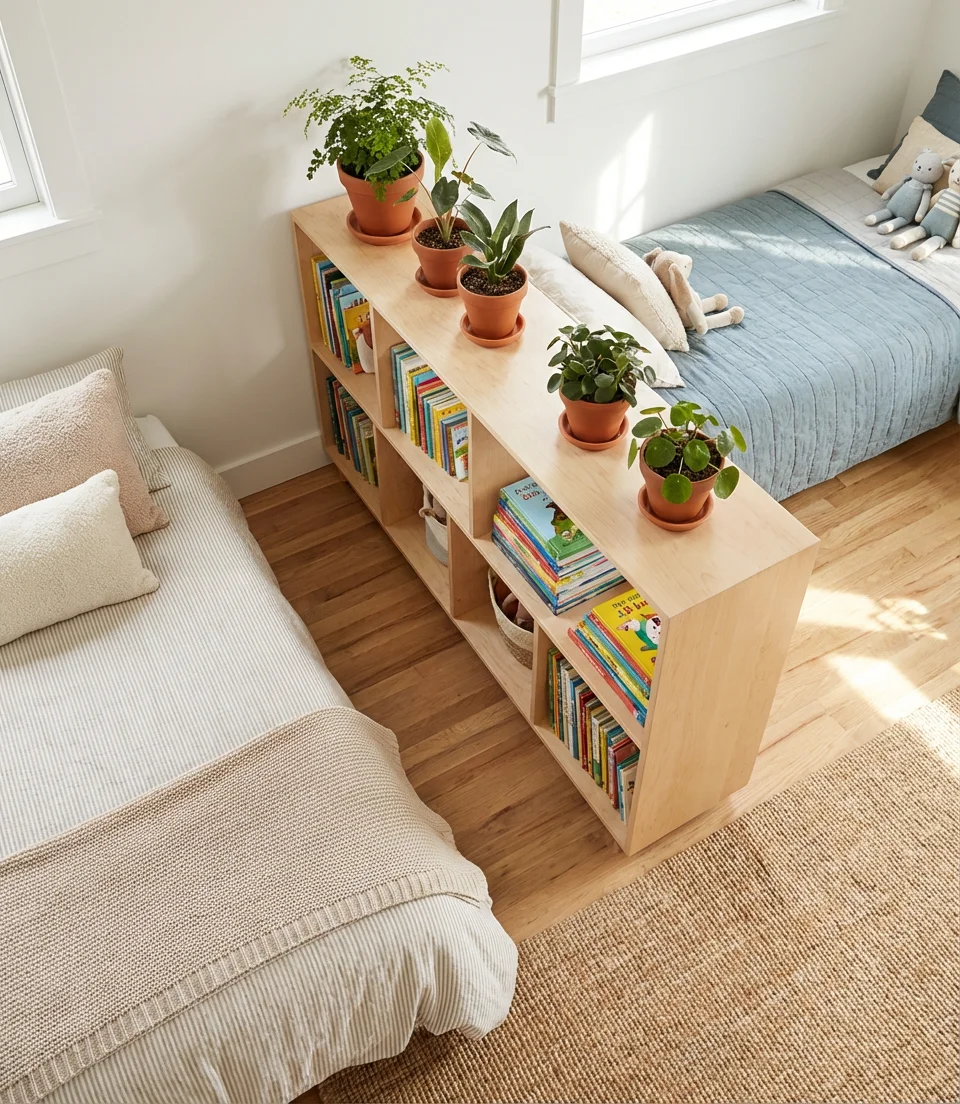
A bookshelf used as a room divider solves two problems at once: it creates a sense of separation between each child’s zone and adds desperately needed storage to a shared space. For the best result, choose an open-backed unit so light filters through between sections—a solid-backed shelf can make both halves feel boxed in. Position it perpendicular to the main wall, anchor it securely to the ceiling or floor for safety, and you have an architectural element that doubles as a functional storage wall perfectly suited to a small room with a 3-person or 2-person arrangement alike.
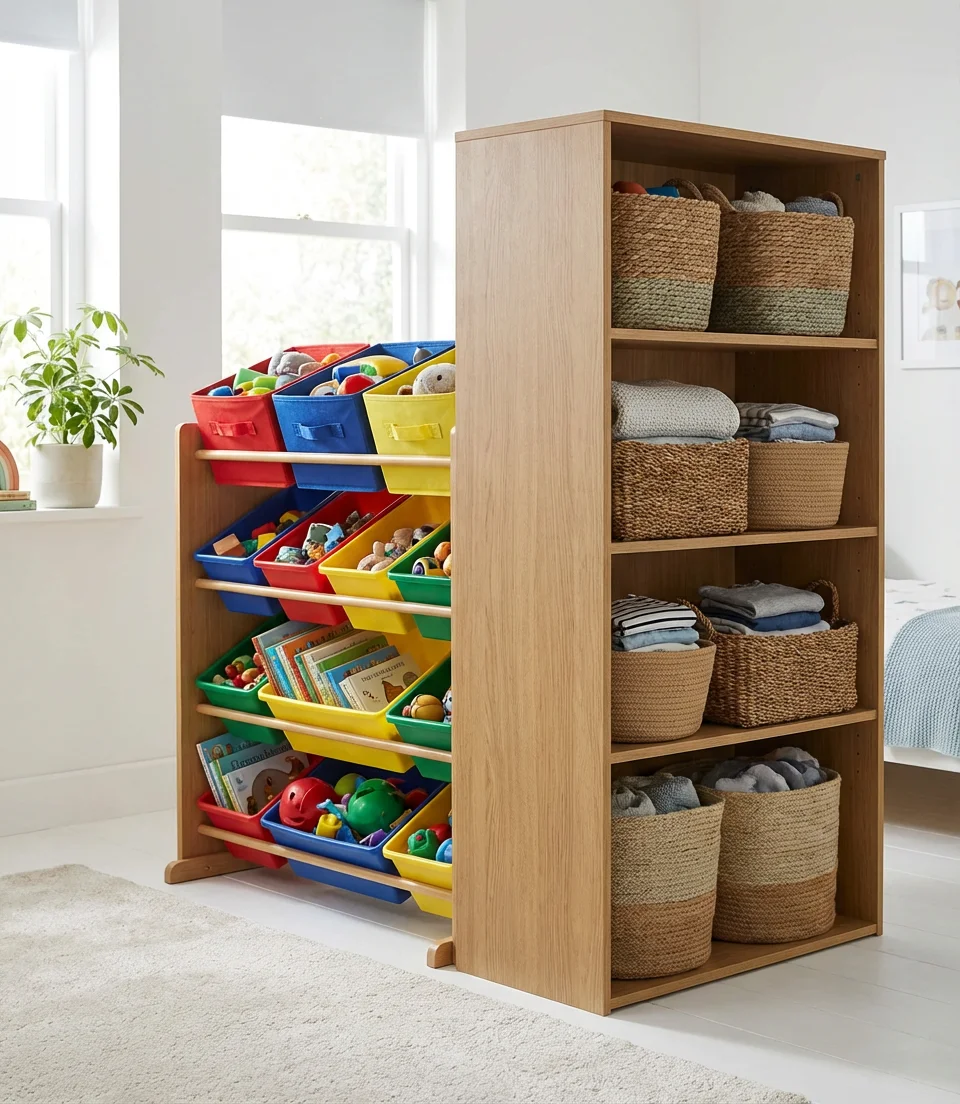
One common mistake with this approach is choosing a shelf that’s too tall and too deep, which ends up dominating the room rather than organizing it. Aim for a unit that reaches about 60 to 66 inches high—tall enough to define the zones but short enough to keep the upper portion of the room visually open. Units from IKEA’s KALLAX or Billy lines are ideal because they’re shallow, affordable, and simple to anchor safely.
10. Ideas for Sisters Sharing a Small Space
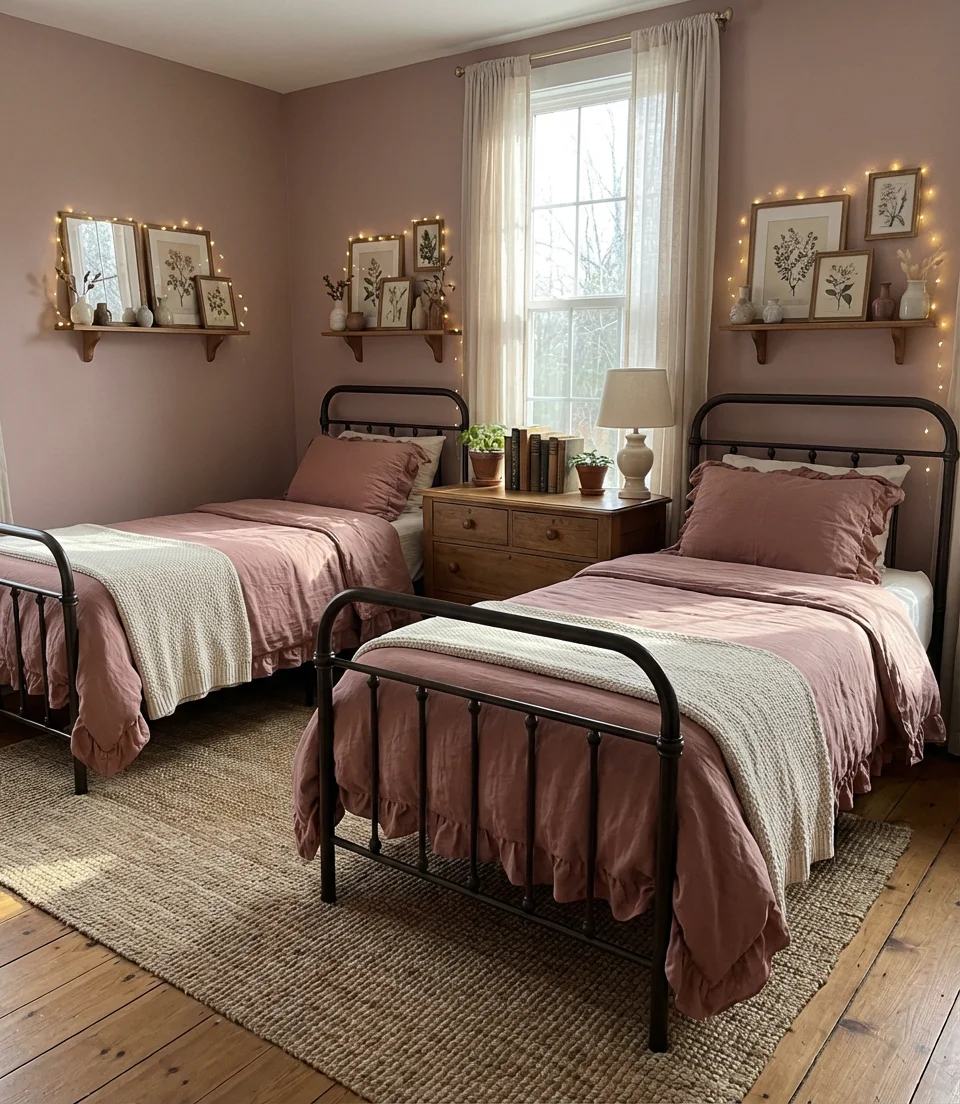
Designing a room with ideas sisters will actually love requires balancing the shared aesthetic with each girl’s individual personality—especially when ages differ. One approach that consistently works well is choosing a sophisticated base palette (dusty rose, cream, and warm wood) and letting each sister personalize her bed wall with artwork, a string of lights, or a small gallery arrangement. The shared elements feel unified, while the personal touches make each zone feel genuinely hers, turning what could feel like a compromise into something both girls are proud to show friends.
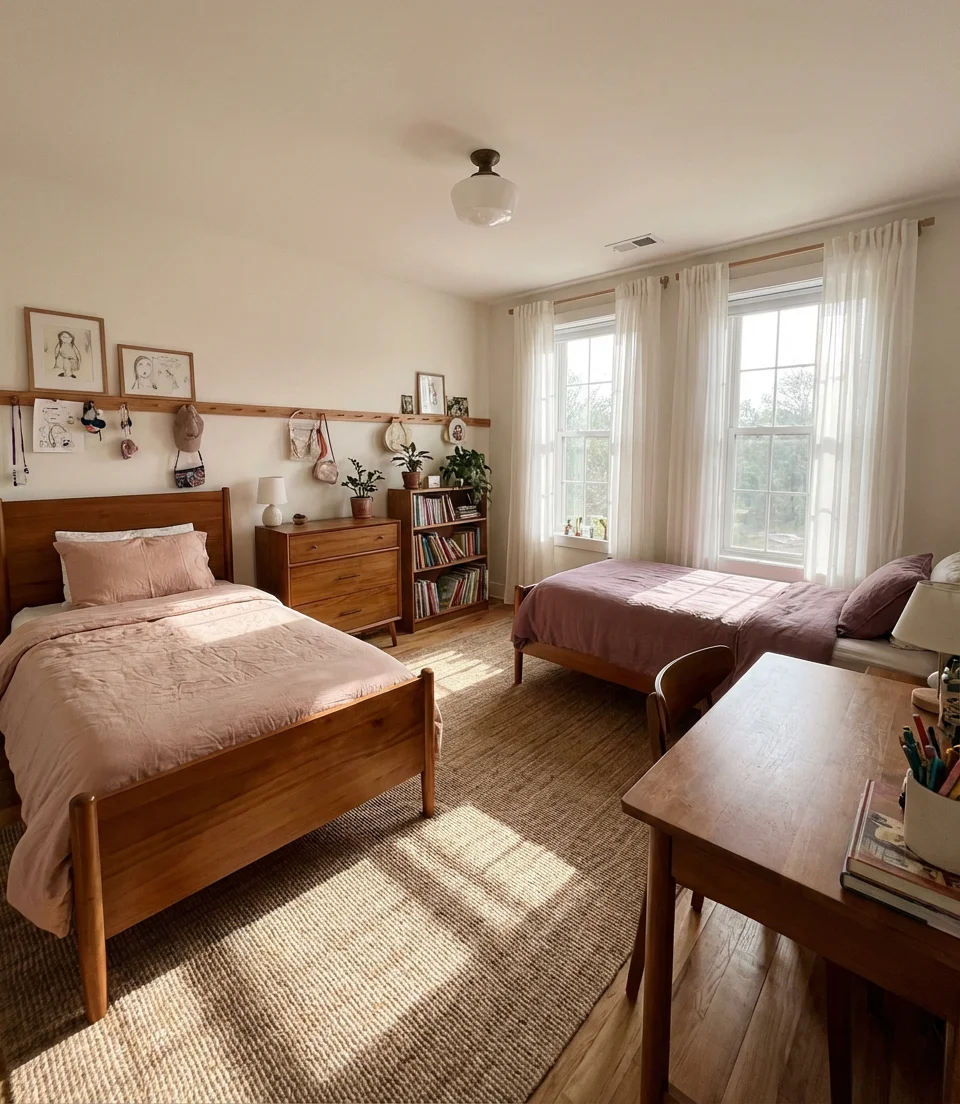
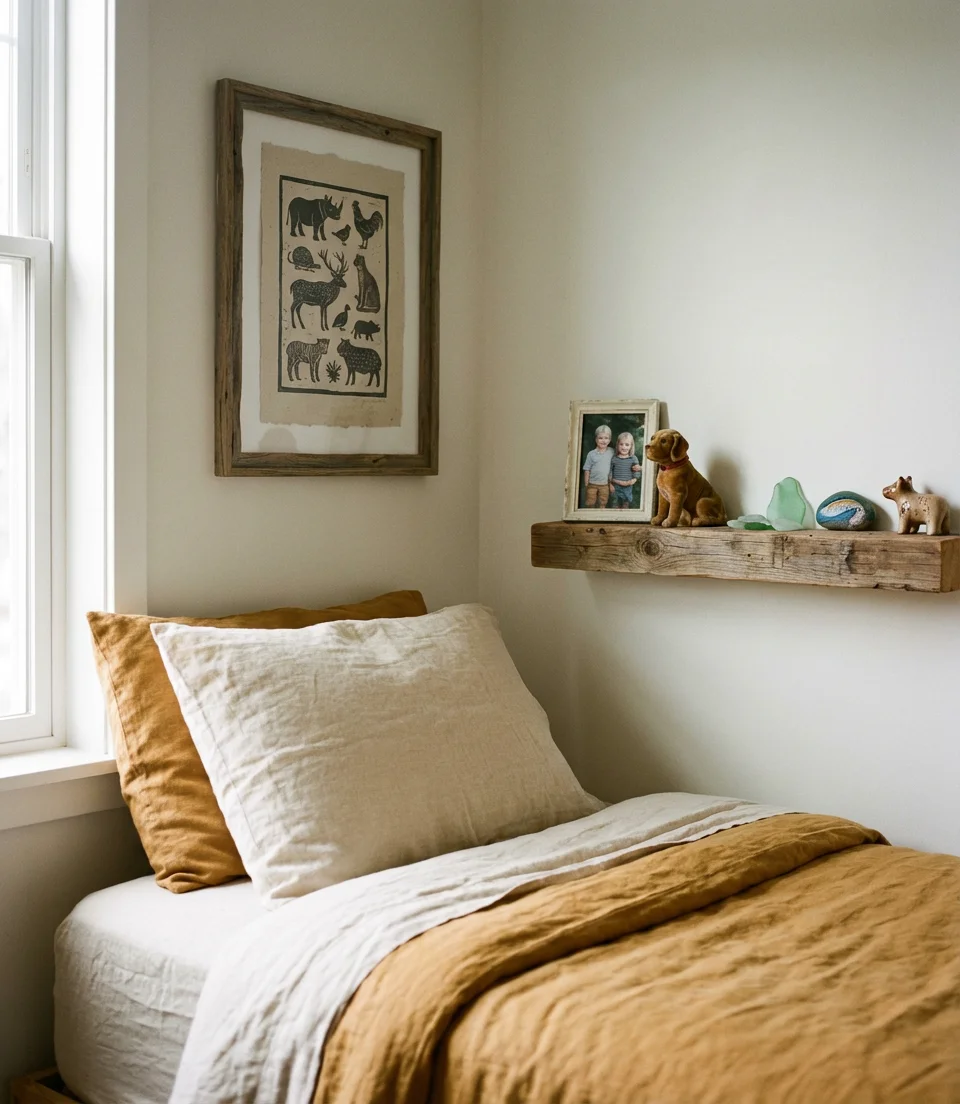
Consider giving each sister her own dedicated “display ledge”—a simple picture rail or floating shelf at bed height where she can rotate artwork, trinkets, and photos independently. It’s a low-cost way to give kids genuine design agency within the room, which child development experts note reduces sibling conflict around shared spaces significantly. When kids feel ownership over their zone, they tend to maintain it better too.
11. Boys’ Shared Room With an Adventure Theme
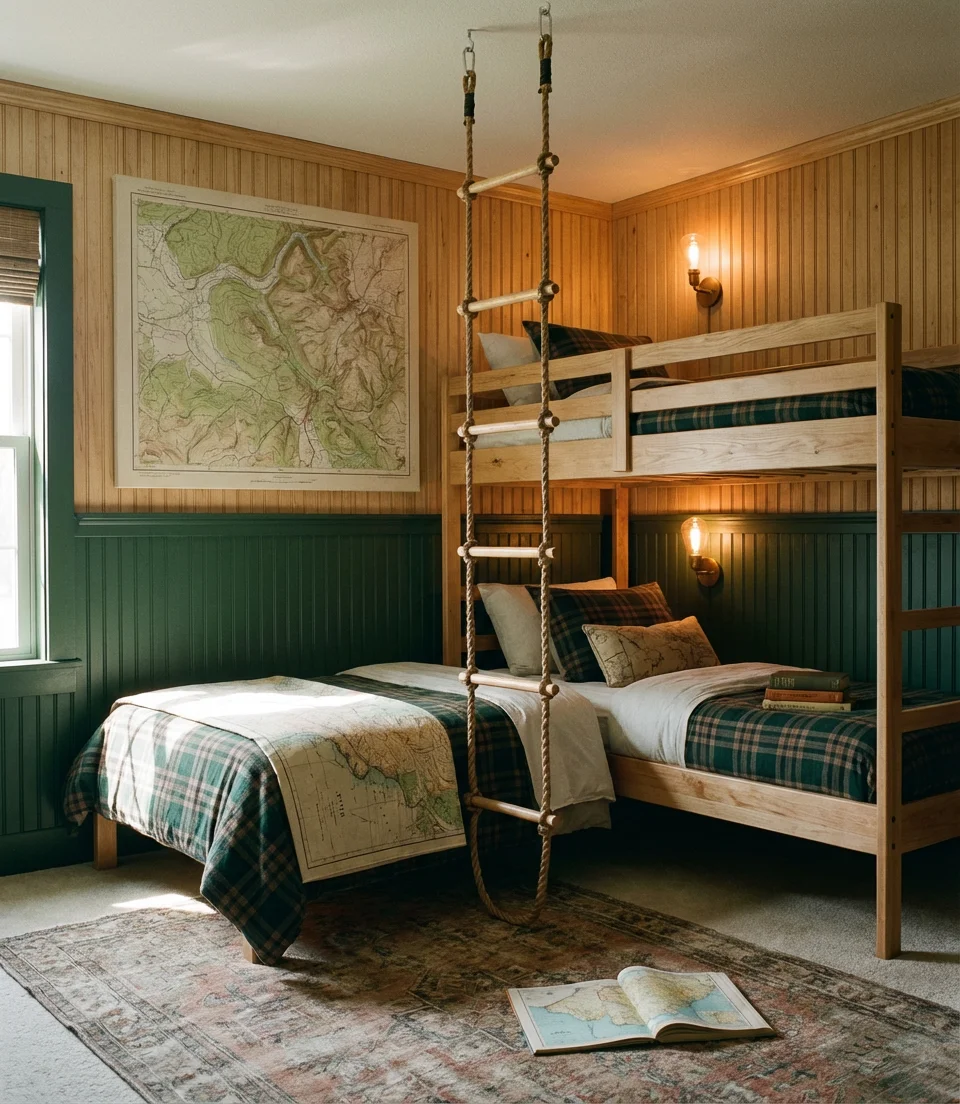
A shared room for boys doesn’t have to default to sports pennants and primary colors. In 2026, the most popular direction for brothers’ rooms leans into an adventure or nature theme—forest greens, warm charcoals, exposed wood accents, and topographic map prints. This kind of theme is flexible enough to grow with kids from age 5 to 14 without ever feeling babyish, which means you won’t be repainting in two years when interests shift from dinosaurs to soccer to whatever comes next.
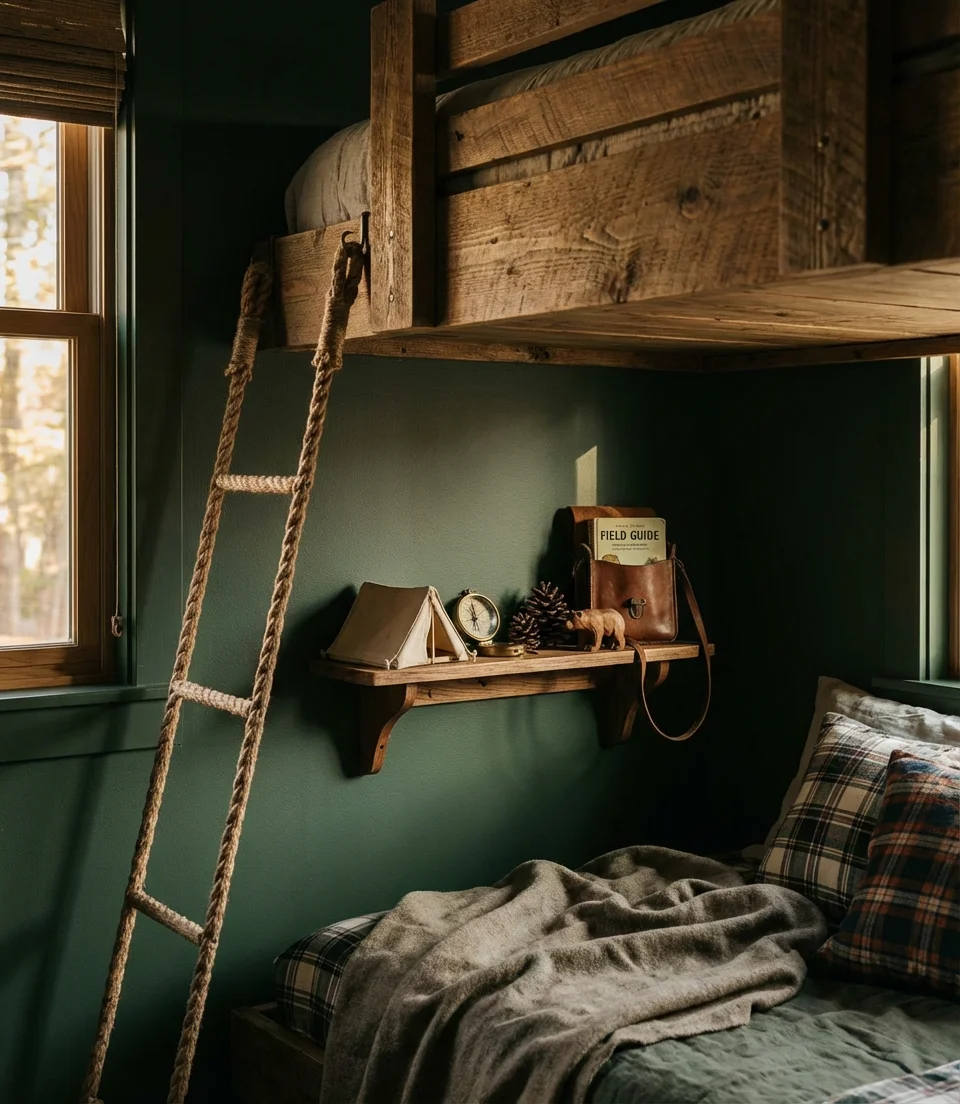
A family in Denver with two sons (ages 7 and 10) recently converted their shared bedroom using a climbing rope ladder attached to a loft bed, a topographic map as a canvas headboard, and deep forest-green painted wainscoting. The entire project cost under $800 in materials, and both boys now refer to their room as “the “cabin”—exactly the kind of emotional ownership that makes sharing a space sustainable for years.
12. Boy and Girl Sharing One Room Gracefully
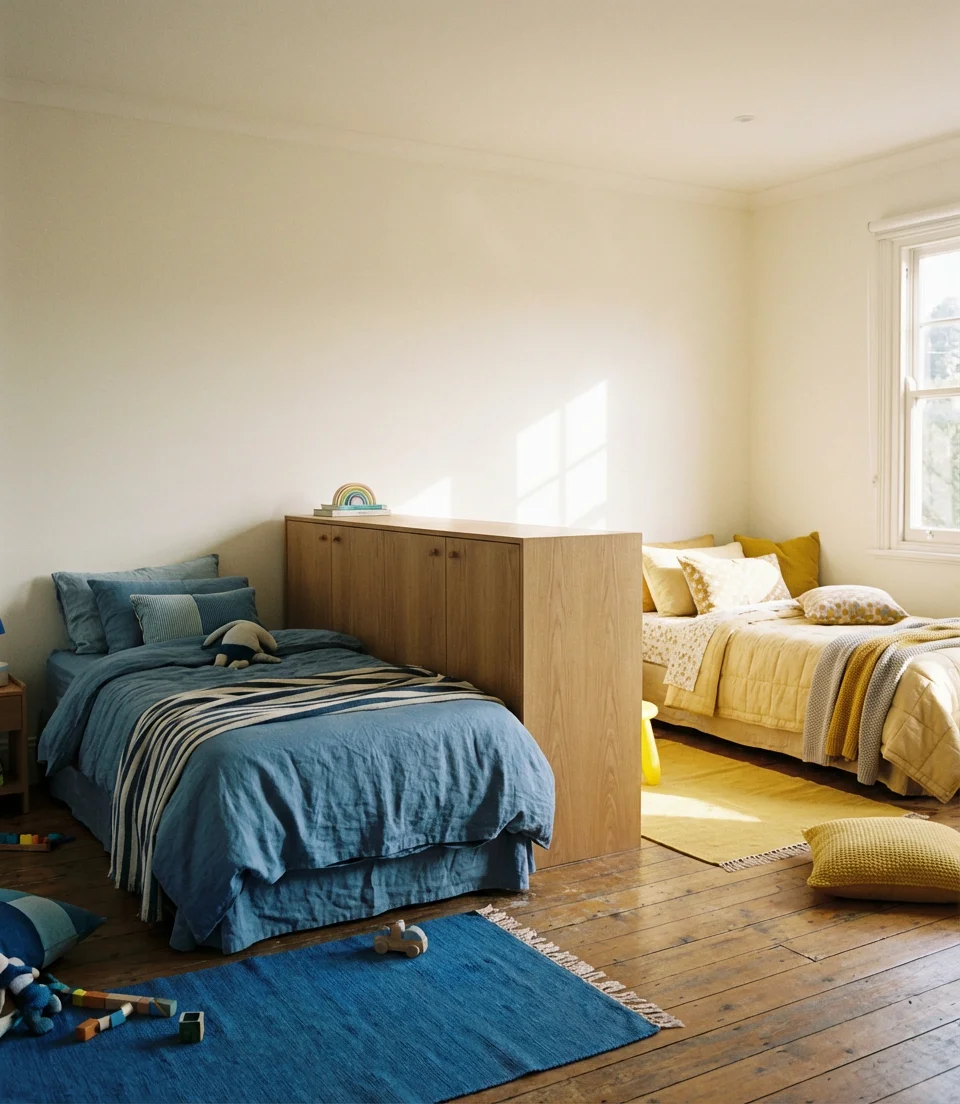
When a boy and girl share a bedroom, the design challenge is real—but it’s also a wonderful creative opportunity. The most effective rooms for mixed-gender siblings lean into a strong neutral structural palette (think warm whites, natural oak, and concrete-effect textures), with each child’s zone differentiated through accessories rather than architecture. This way, as interests evolve or one child’s taste changes dramatically, a simple bedding swap refreshes the feel without a full room overhaul, keeping the decor flexible for years.
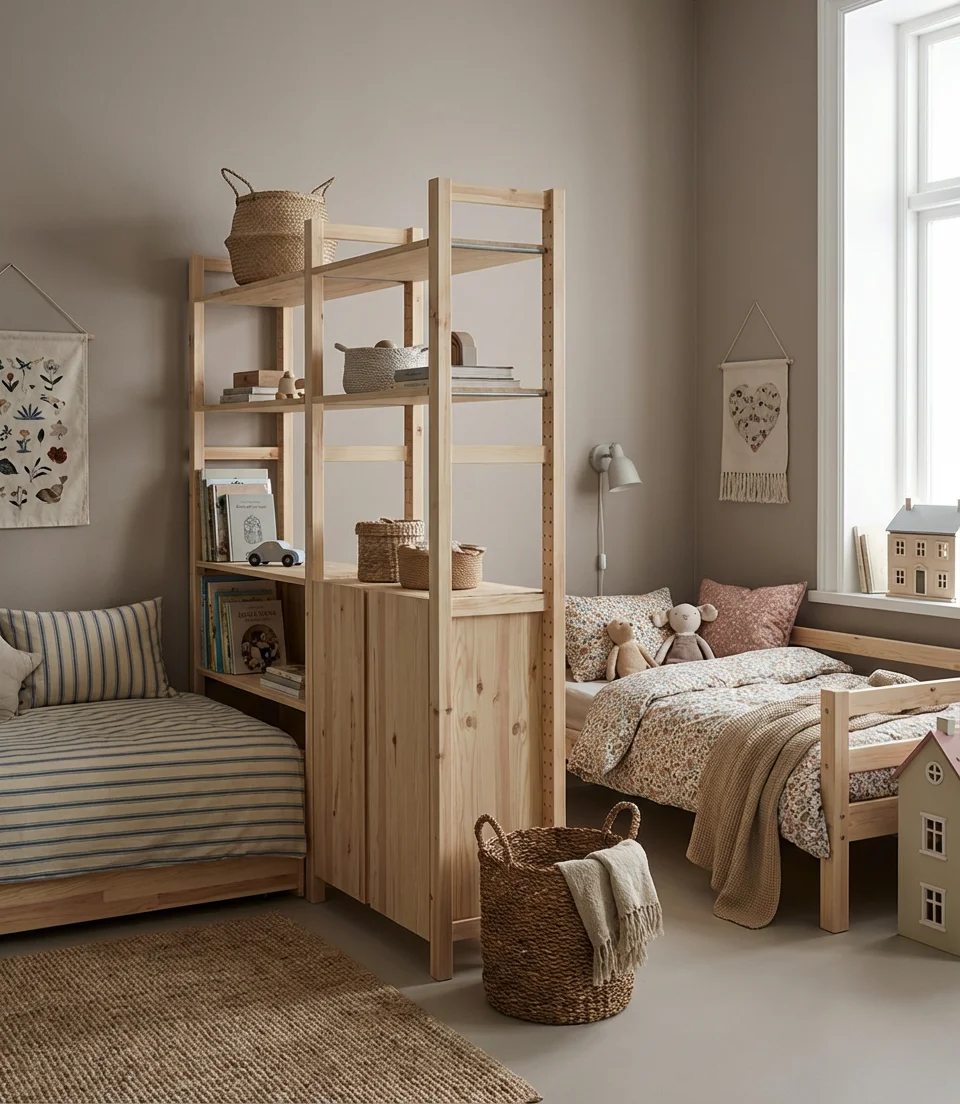
Privacy becomes increasingly important as kids grow, particularly when they’re of different genders. A freestanding wardrobe placed strategically between the two sleep zones can create a visual buffer without a permanent wall. As children get older—into late elementary or middle school—consider upgrading to a curtain track system that closes at night, giving each child a genuine sense of their own enclosed space within the shared room.
13. Small Room Layout Tricks That Actually Work
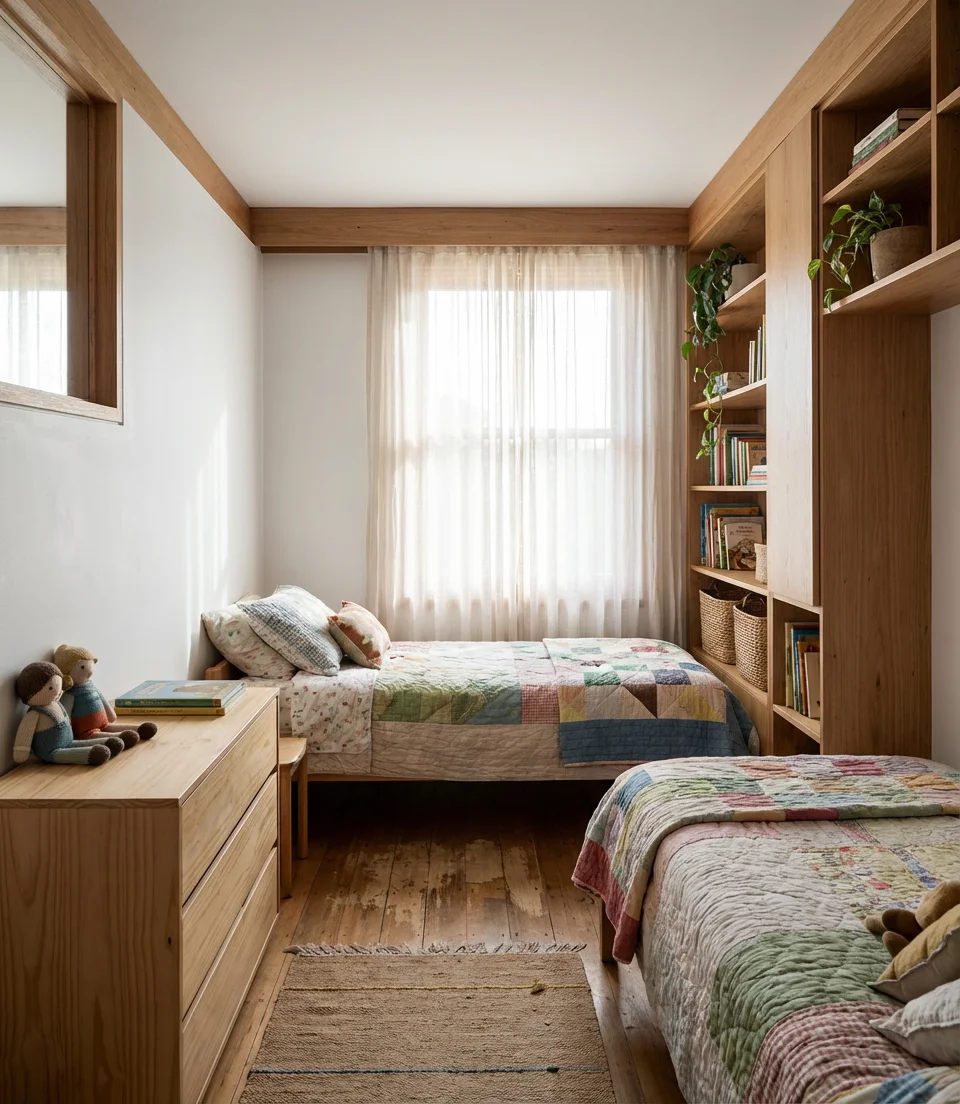
Mastering a good layout in a small space shared by two kids is mostly about respecting wall real estate. Push beds to the walls—never float them in the center of the room—and use the floor’s open center as the activity zone. This tip sounds obvious, but a surprising number of shared kids’ rooms lose this principle immediately when parents try to create symmetry. While symmetry is wonderful, it cannot be sacrificed for playable floor space and the unavoidable LEGO pile.
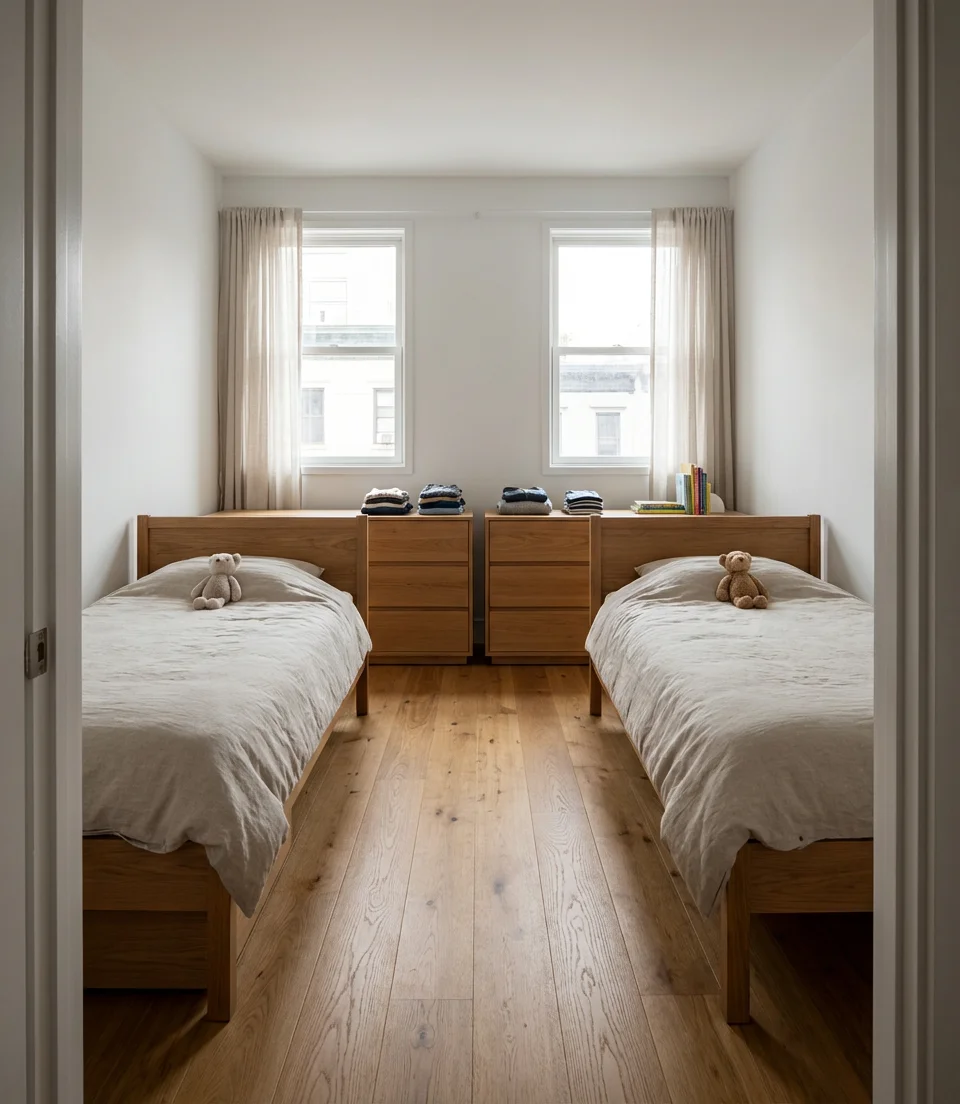
In rooms under 120 square feet, the best layout almost always involves one wall of vertical storage—floor-to-ceiling shelving or a combination wardrobe unit—opposite the bed wall. Keep furniture low elsewhere to preserve sightlines. A room that reads visually open feels more spacious than the actual square footage suggests, and kids spend more time in it willingly when it doesn’t feel cluttered or cramped.
14. Organization Systems That Keep Shared Rooms Tidy
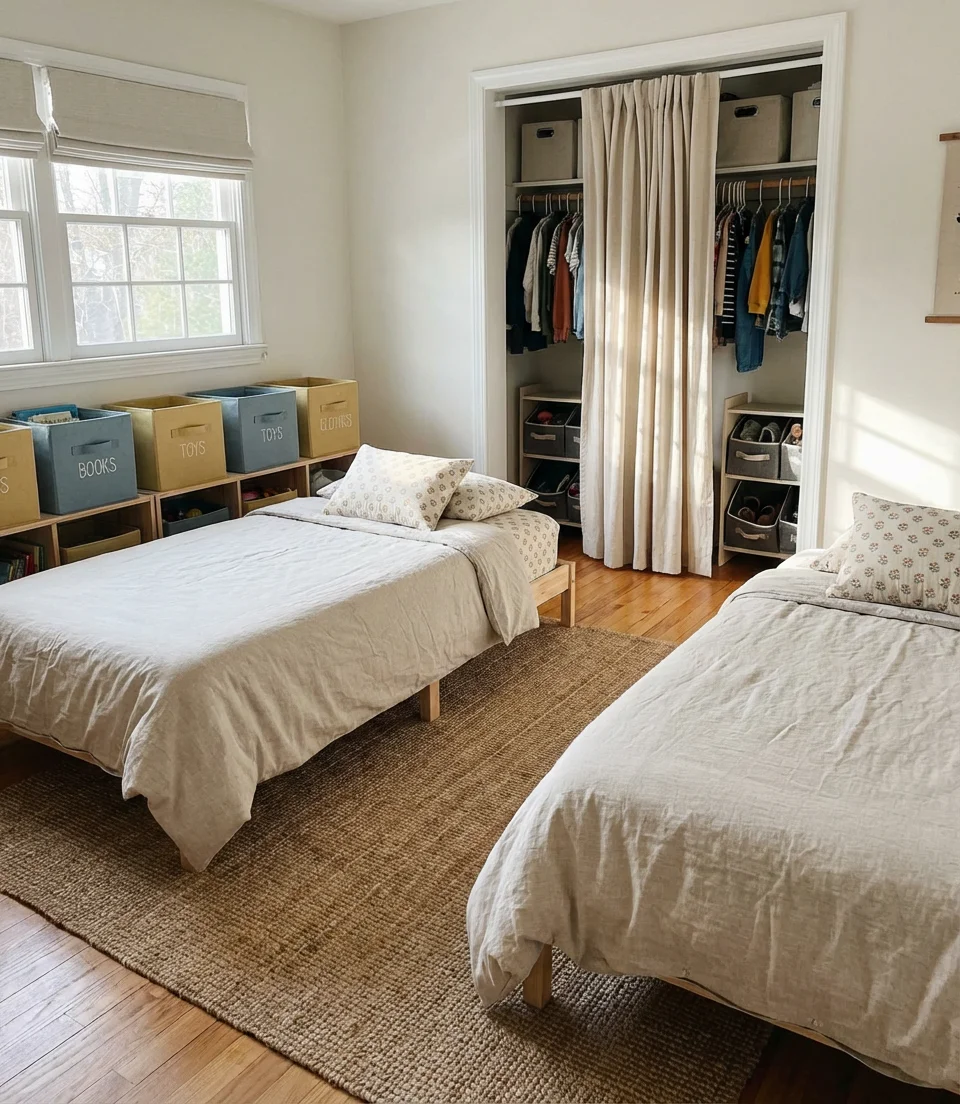
The biggest long-term success factor in any shared kids’ room isn’t the design—it’s the organization. Two children in one room means double the stuff, and without clear systems for where things live, even a beautifully designed space devolves within a week. Color-coded bins, labeled cubbies, and clearly divided closet sections give kids the visual cues they need to maintain their zones without constant parental intervention and daily battles over what belongs where.
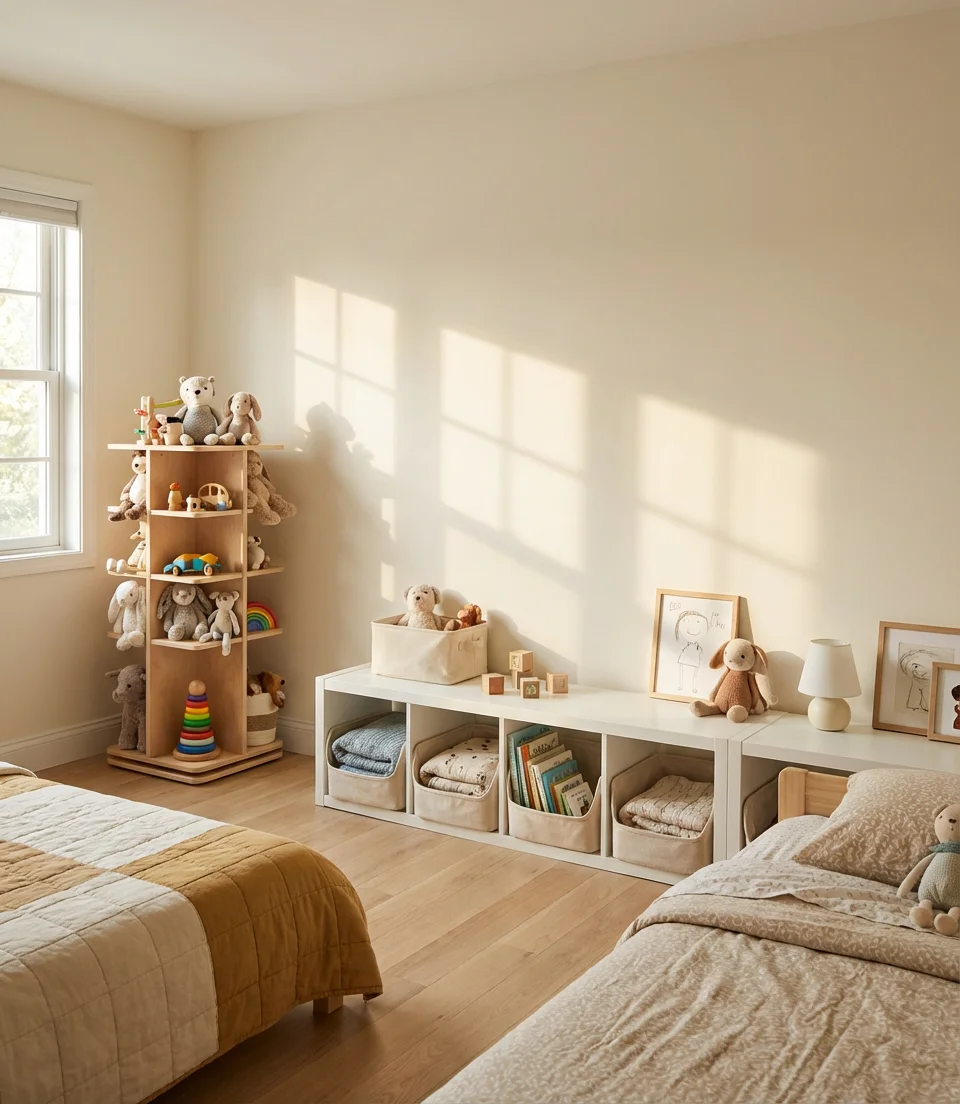
The families who report the most success with shared kids’ room organization almost universally credit a “less is more” philosophy. Rather than giving kids unlimited storage that fills with clutter, they enforce a seasonal toy rotation—a third of toys out, two-thirds stored away. The room stays functional, kids appreciate what’s accessible, and the shared space feels manageable for everyone living in it.
15. Inspiration From Scandinavian Kids’ Room Design
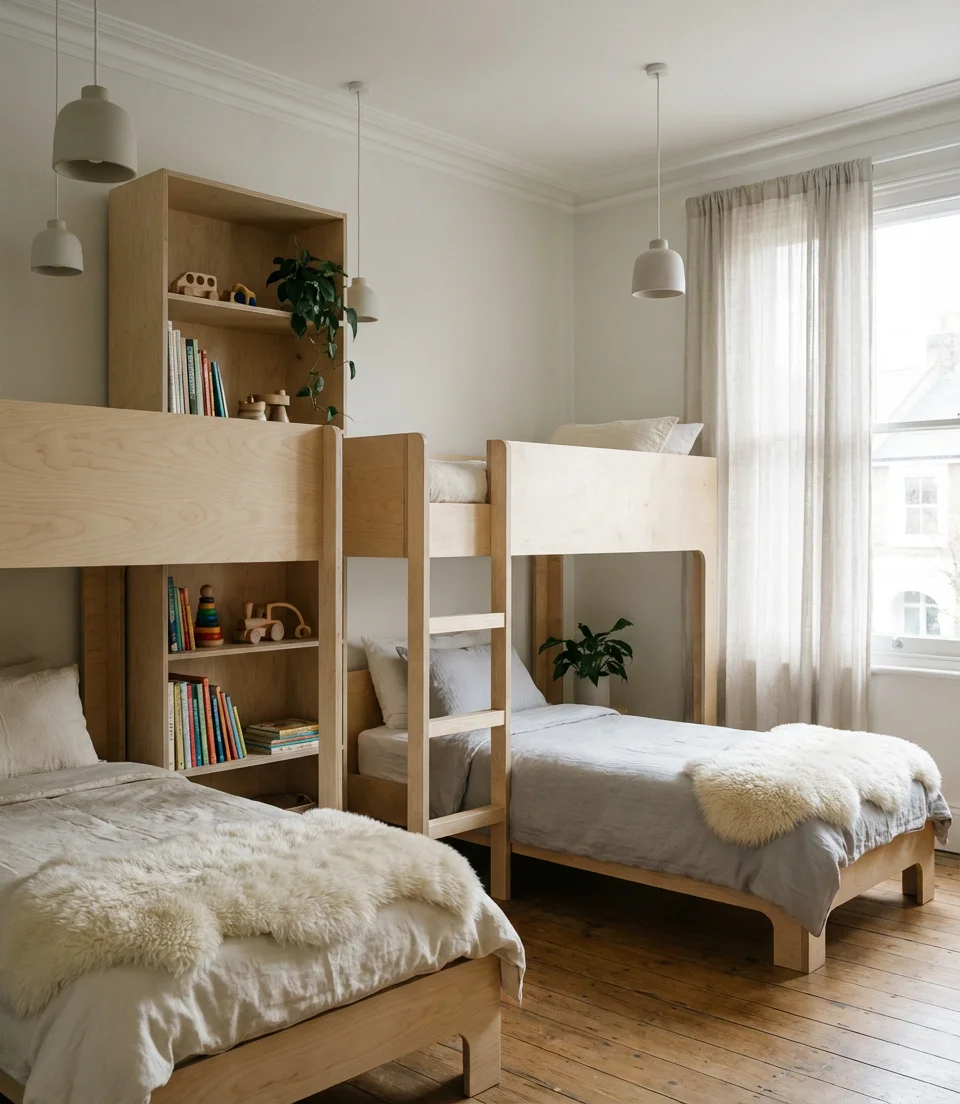
Scandinavian design has quietly become the dominant inspiration source for American parents designing shared kids’ rooms—and it’s easy to see why. The principles are practically built for small shared spaces: clean lines, light wood tones, functional furniture with hidden storage, and a restrained color palette that keeps the room feeling calm rather than chaotic. The approach also treats children as capable of living with quality materials, resulting in rooms that hold up longer and look better over time.
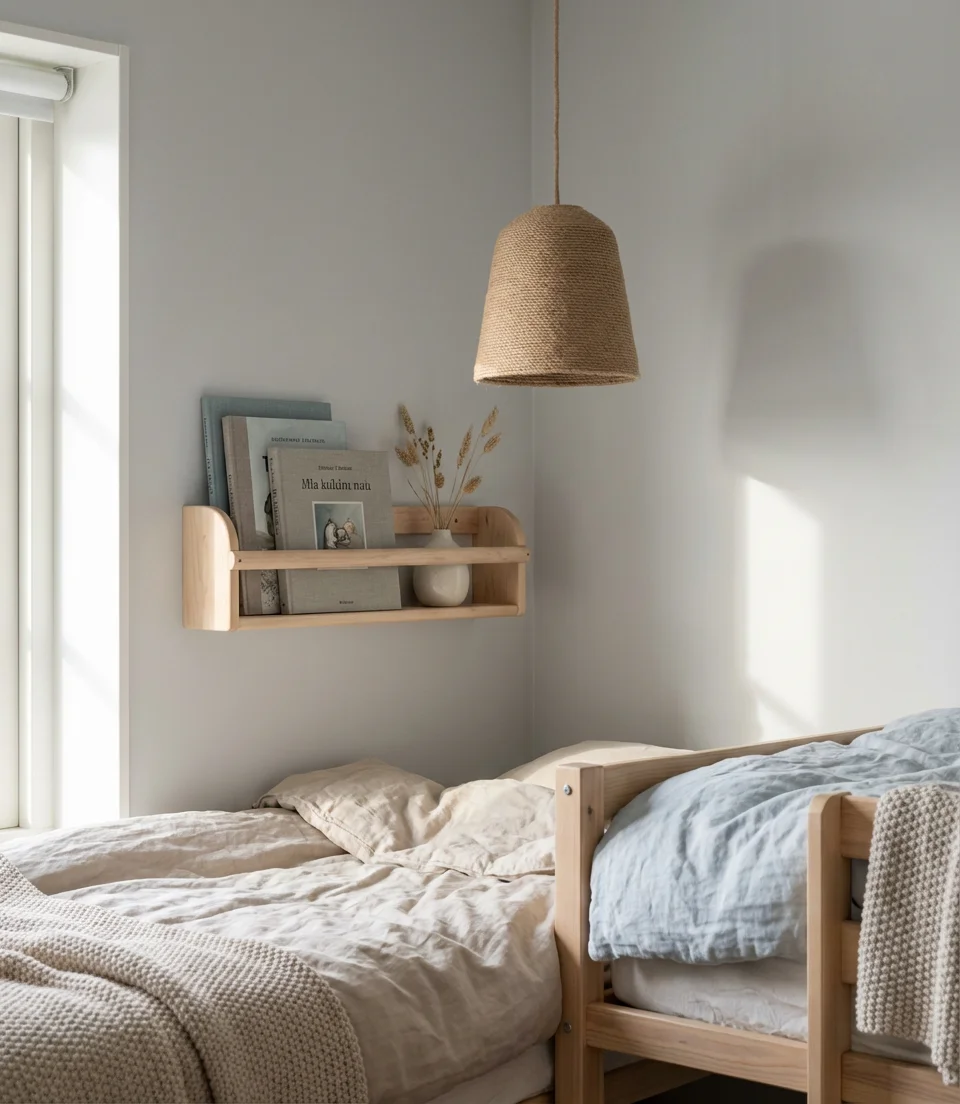
The details that make Scandinavian-inspired kids’ rooms particularly successful are the small ones: a sheepskin rug at the foot of each bed, simple pendant lighting over each sleep zone, and birch plywood shelving rather than plastic-coated particleboard. None of these upgrades are expensive individually, but together they elevate the entire room from a functional box to a space kids genuinely want to spend time in—which means less fighting over the television in the living room.
16. The L-Shaped Bunk Configuration for Tight Corners
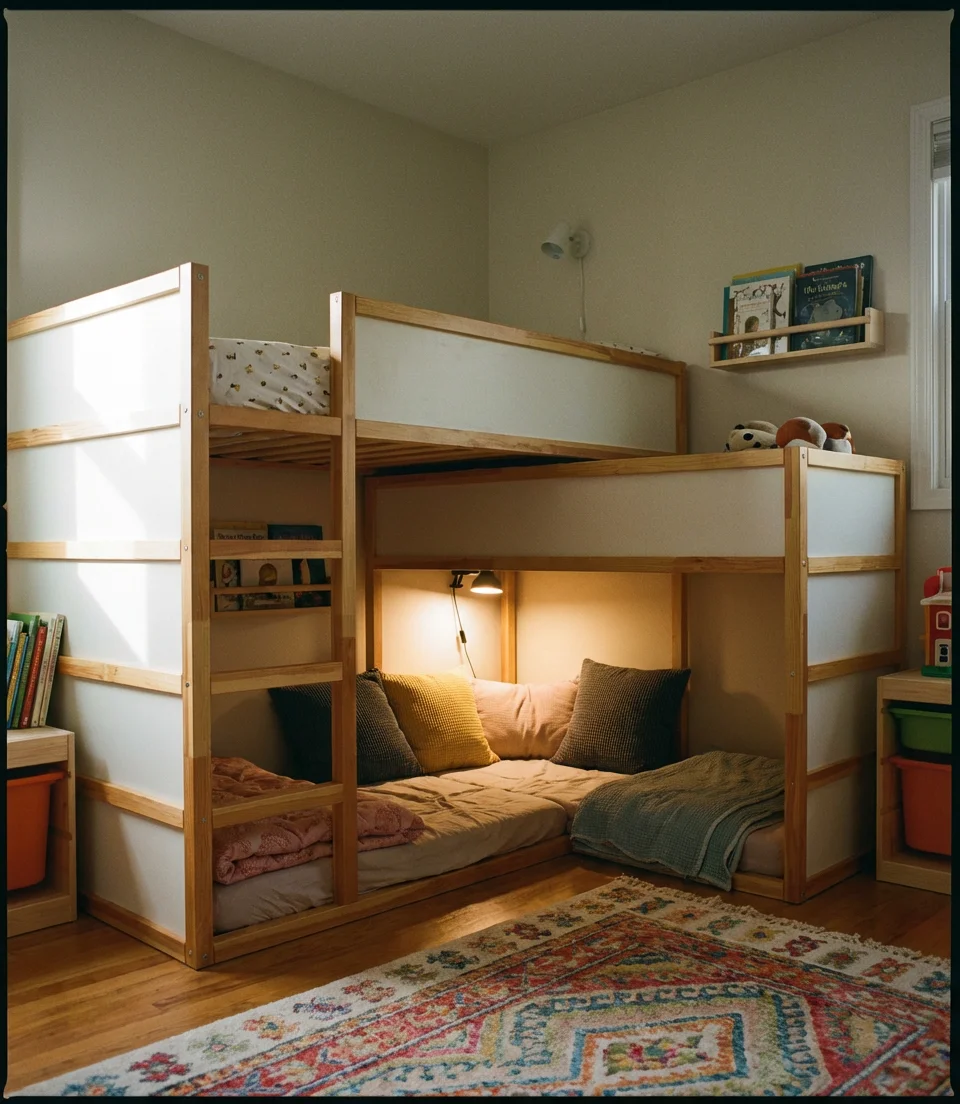
The L-shaped bunk is having a serious moment among parents seeking ideas for bunk beds that don’t feel institutional. Unlike a traditional stacked bunk where both kids sleep directly above each other, the L-configuration places one bed perpendicular at the bottom, creating a cozy nook underneath the upper bunk that can double as a reading corner or play space. This layout works particularly well in rooms with a corner alcove or a slightly irregular floor plan where a straight bunk wall simply doesn’t fit cleanly.
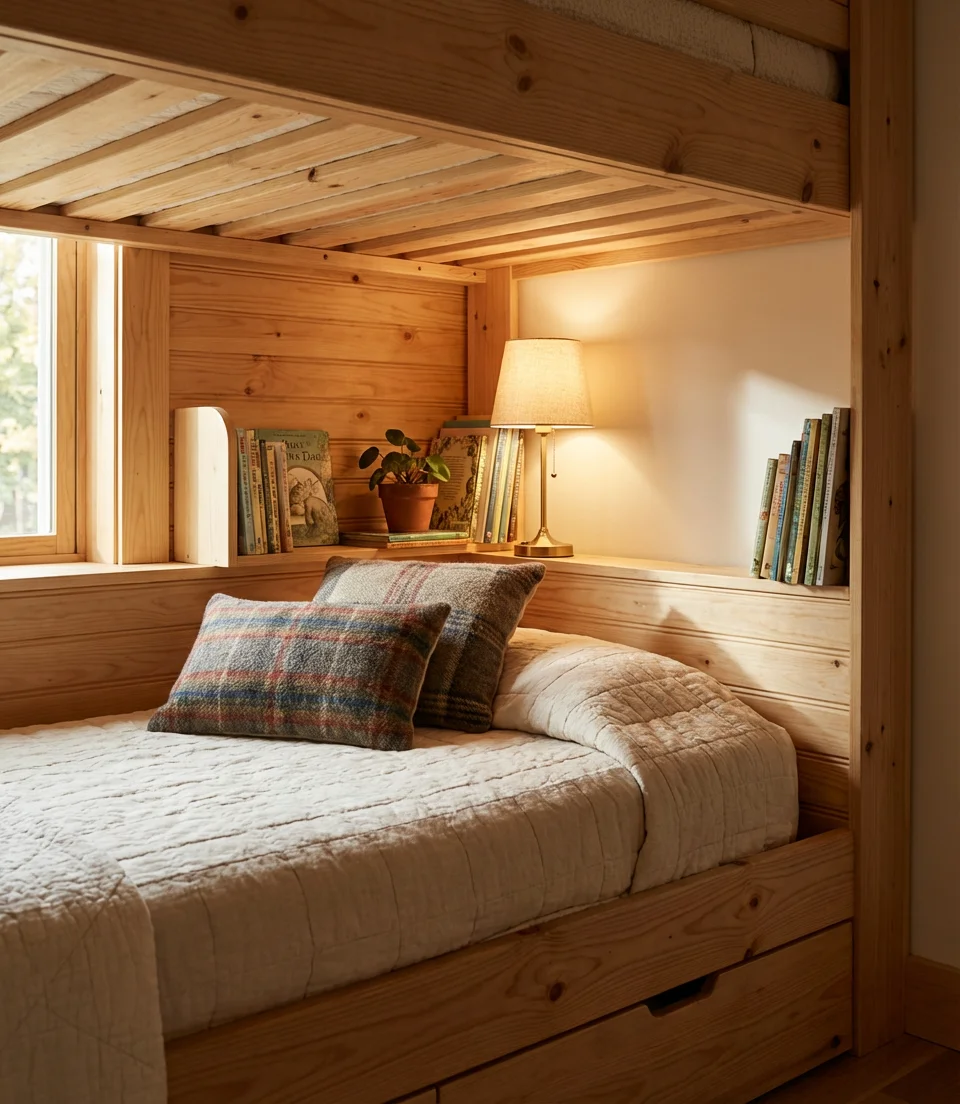
The lower nook created by an L-bunk is one of those bonus spaces that kids will cherish. Add a small reading light, a few throw pillows, and a low shelf for books, and you’ve created a private retreat within the shared room—something every child craves. The psychological value of having a defined hideout within a shared space is significant, especially for introverted children who need a quiet corner to recharge after a full day at school.
17. Decor That Grows With Kids—Not Against Them
One of the most common design regrets parents express is over-theming a shared kids’ room with decor that has a minimal shelf life. A room painted with cartoon characters or plastered with one licensed property looks outdated within 18 months as kids’ interests shift. The smarter play is to build a timeless structural foundation—quality bed frames, neutral walls, solid wood furniture—and use easily swappable accessories like bedding, wall art, and throw pillows to reflect kids’ current obsessions without a full renovation.
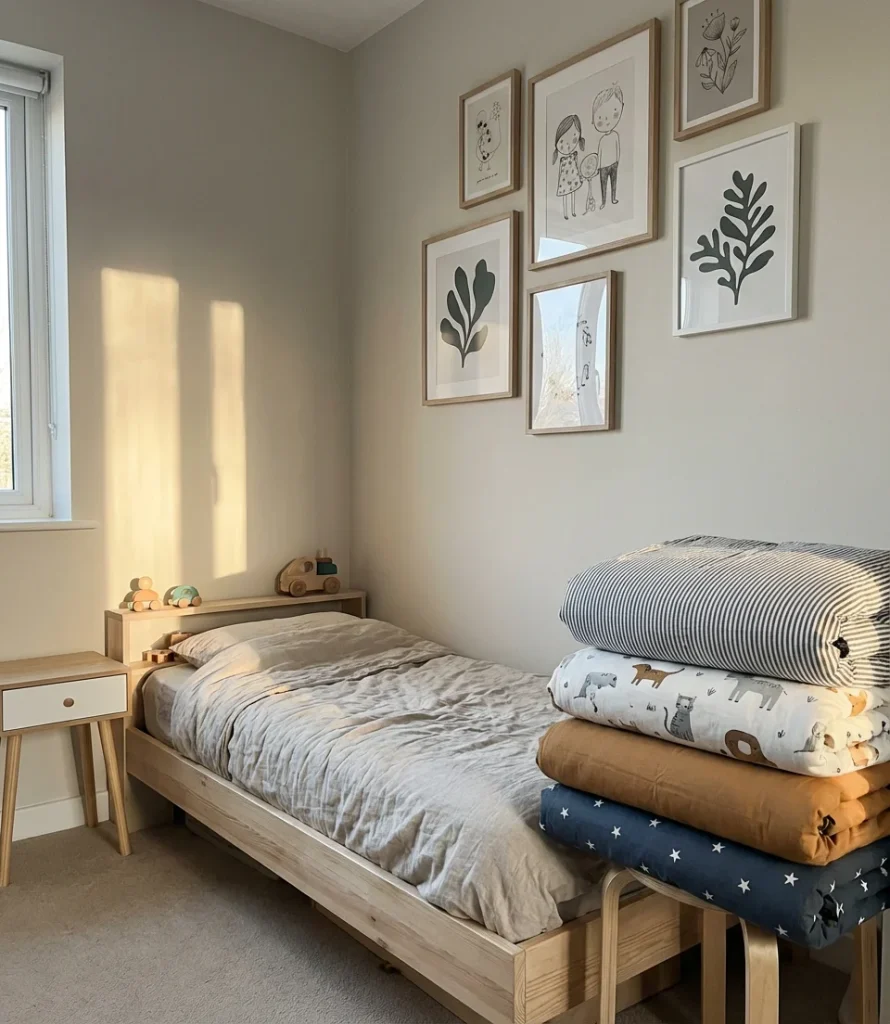
Experts in children’s interior design consistently recommend treating kids’ room decor the way you’d treat a living room gallery wall: curate it intentionally, update it seasonally, and don’t commit the structural elements to anything too specific. A dinosaur duvet can be swapped for a space-themed one next year—but dinosaur wallpaper on all four walls is a much more expensive problem when interests inevitably move on.
18. Using Vertical Space in a Small Shared Room
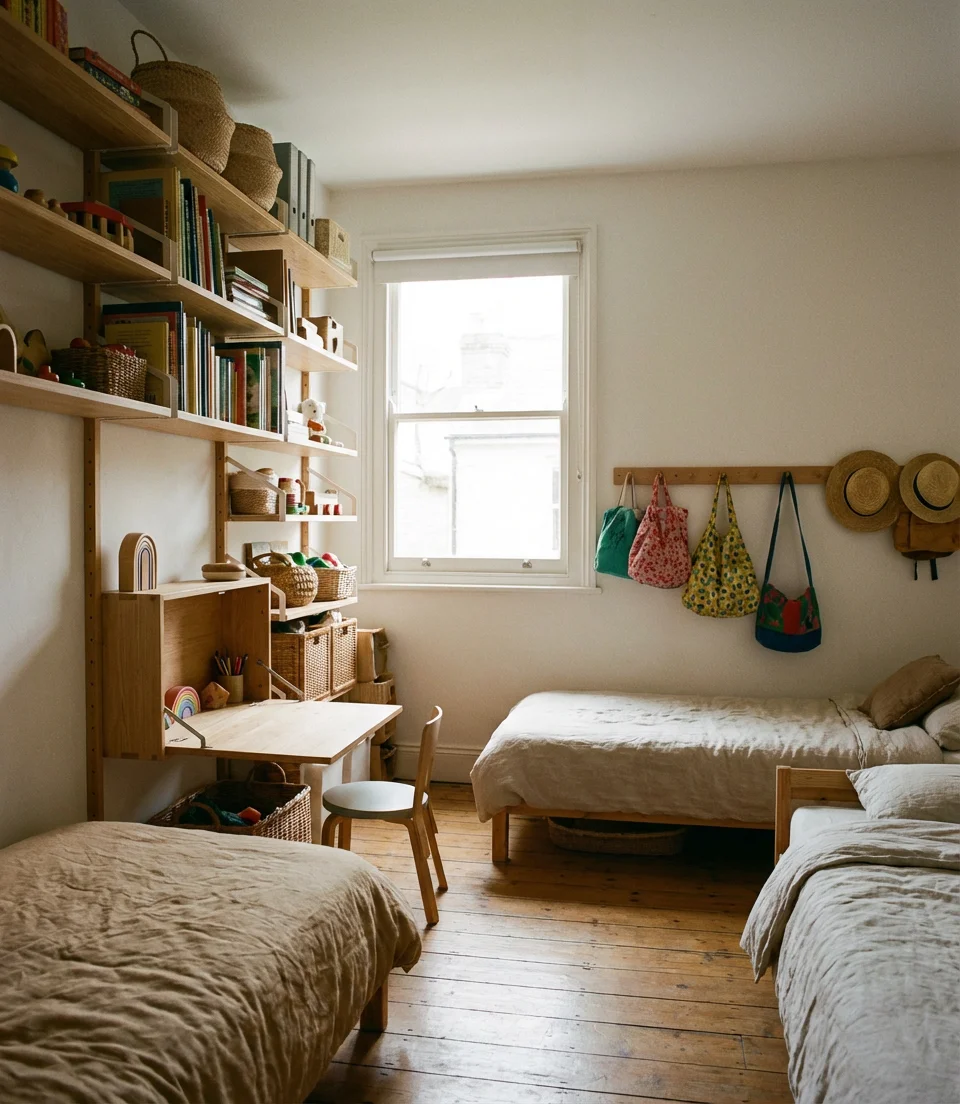
In any small space housing two kids, the floor is always at a premium—which means the walls become your best ally. Vertical shelving systems mounted directly to the wall, wall-mounted desks that fold flat when not in use, and peg rail systems for backpacks and daily items all reclaim floor square footage by moving organization upward. In a 10×10 room shared by two kids, smart vertical storage can effectively double the usable living area without changing a single structural element in the room.
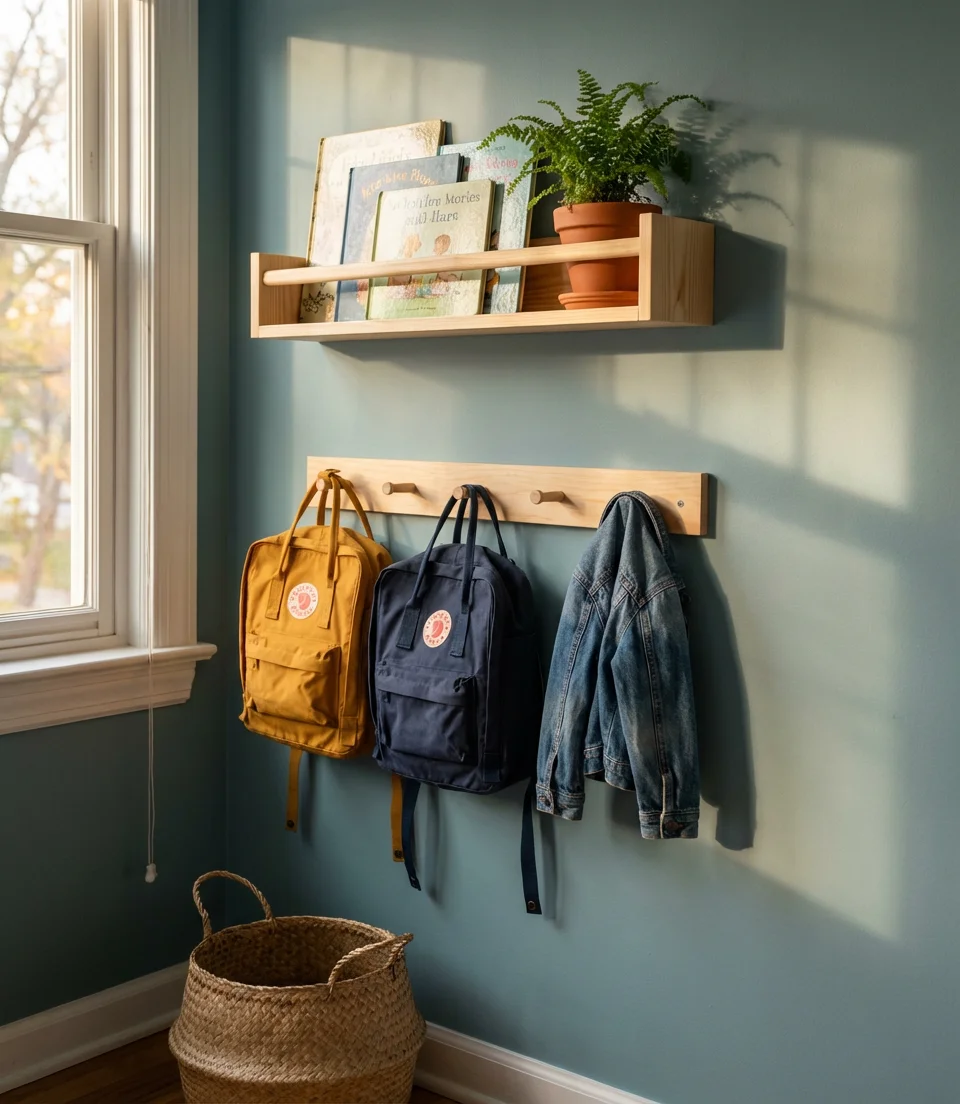
Wall-mounted storage also has a safety advantage that floor-standing furniture doesn’t: it can’t tip over. In homes with young children, this matters more than most parents realize until something nearly falls. Anchored wall shelving, mounted peg rails, and wall-hung fold-flat desks all stay put during the energetic daily chaos of a shared kids’ room—which is both safer and, honestly, more calming to look at than a room full of freestanding furniture competing for floor space.
19. A Shared Room That Doubles as a Play Space
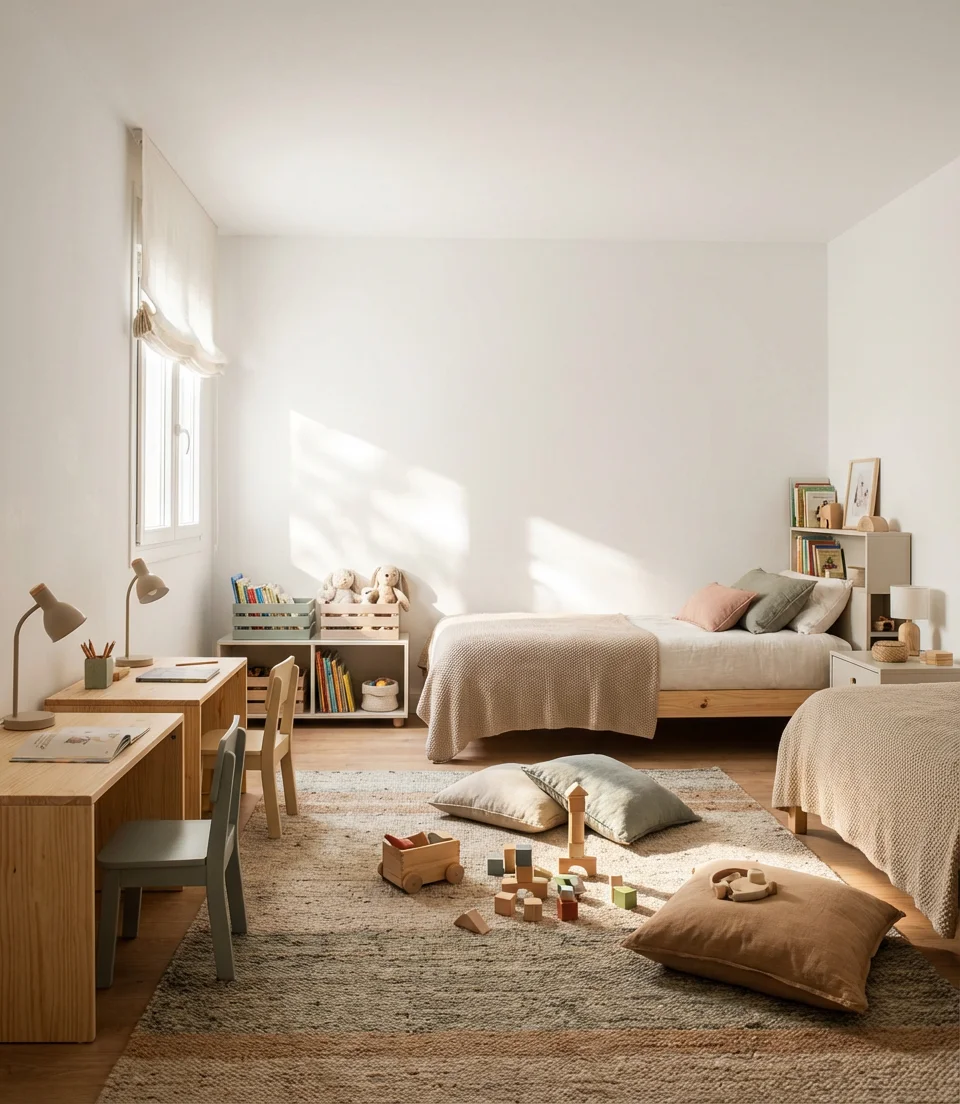
The best shared kids’ rooms aren’t just bedrooms—they’re full activity zones that handle sleeping, studying, and playing without feeling cluttered. The trick is zoning by activity rather than by child. Dedicate one corner to the sleep area, one section to study and creative work, and the center floor to open play. When activities have defined homes in the room, kids naturally gravitate to the right zone—and cleanup becomes more intuitive because items have a clear place to return to after use each day.
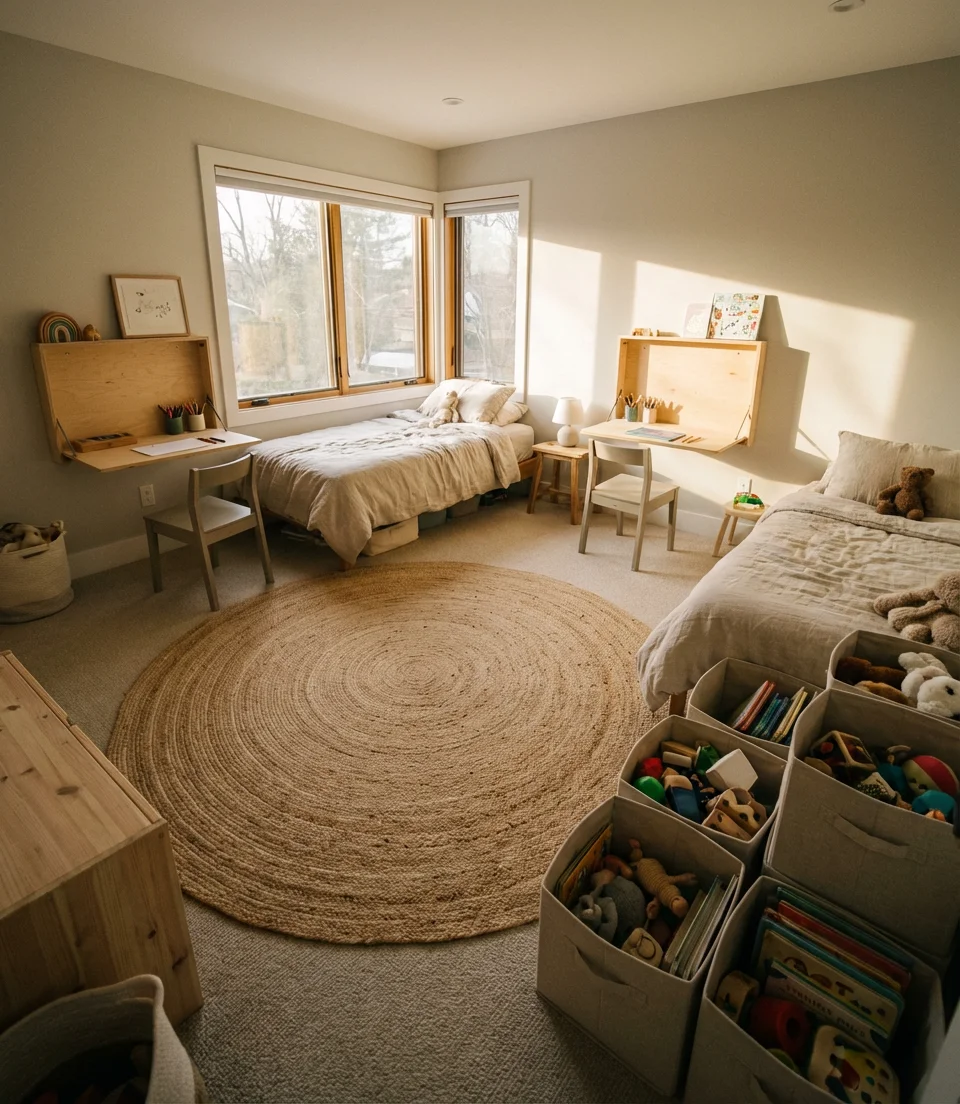
This layout approach also scales gracefully as kids grow. When the primary activity shifts from floor play to desk homework around age 8 or 9, you can simply retire the play mat, expand the desk zone, and add more task lighting—without touching the furniture footprint. The room evolves with the children rather than requiring a full redesign every few years, which is both budget-friendly and less stressful for everyone.
20. Cozy Reading Nooks Built Into a Shared Room
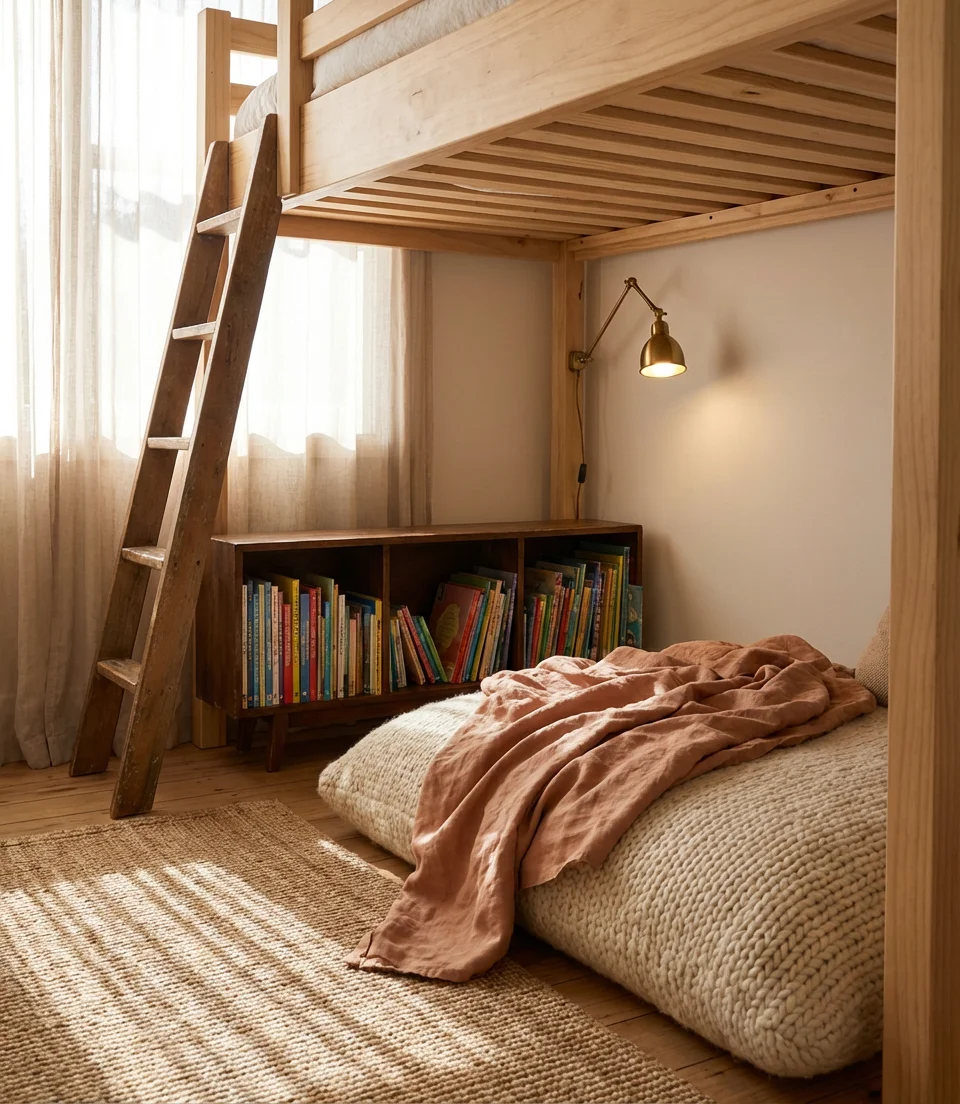
A small room shared by two kids might seem like the last place to carve out a dedicated reading nook—but it’s often more achievable than parents expect. The dead space beneath a loft bed, the corner beside a window, or the end of a bunk configuration can all become a cozy retreat with minimal investment: a cushion, a small low shelf for books, and a clip-on reading light. For kids who love books, having a defined nook within the shared room is transformative for their relationship with reading and the space itself.
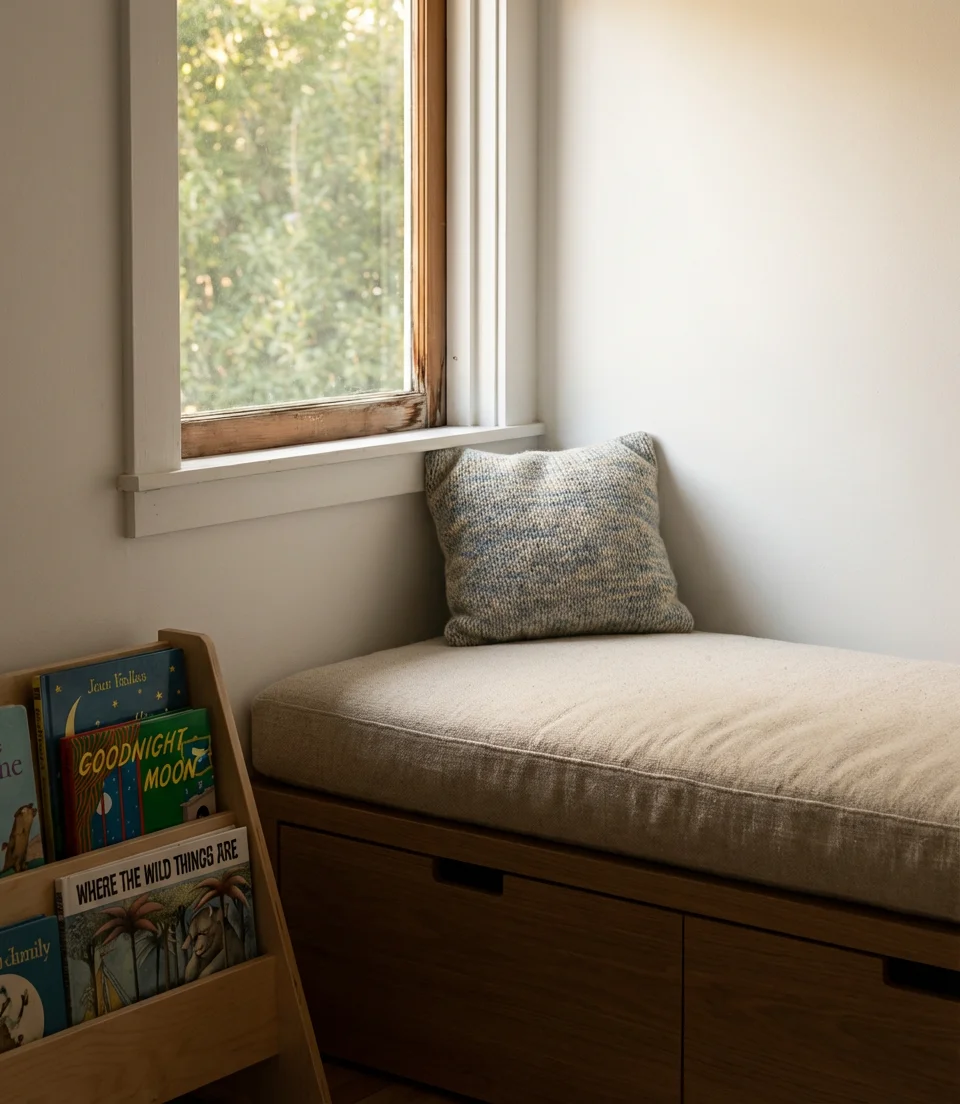
From an American family lifestyle perspective, parents who build reading infrastructure into kids’ rooms consistently report more independent quiet time—children retreat to the nook voluntarily, especially after school. That 20 to 30 minutes of independent reading in a cozy corner is something pediatric occupational therapists and educators emphasize as genuinely valuable for children’s focus and calm—and it’s a design investment that pays dividends in family life far beyond the aesthetic.
21. How Parents Make Shared Rooms Work Long-Term
The most successful shared kids’ rooms aren’t just beautifully designed—they’re designed with the kids’ input. Parents and children who collaborate on room decisions from the beginning tend to have far less conflict over the shared space long-term. When a child feels genuine ownership over how their zone looks and functions, they’re more invested in maintaining it and more willing to compromise on shared elements. Even young kids can make meaningful choices about their bedding, their shelf arrangement, or the color of their storage bins.
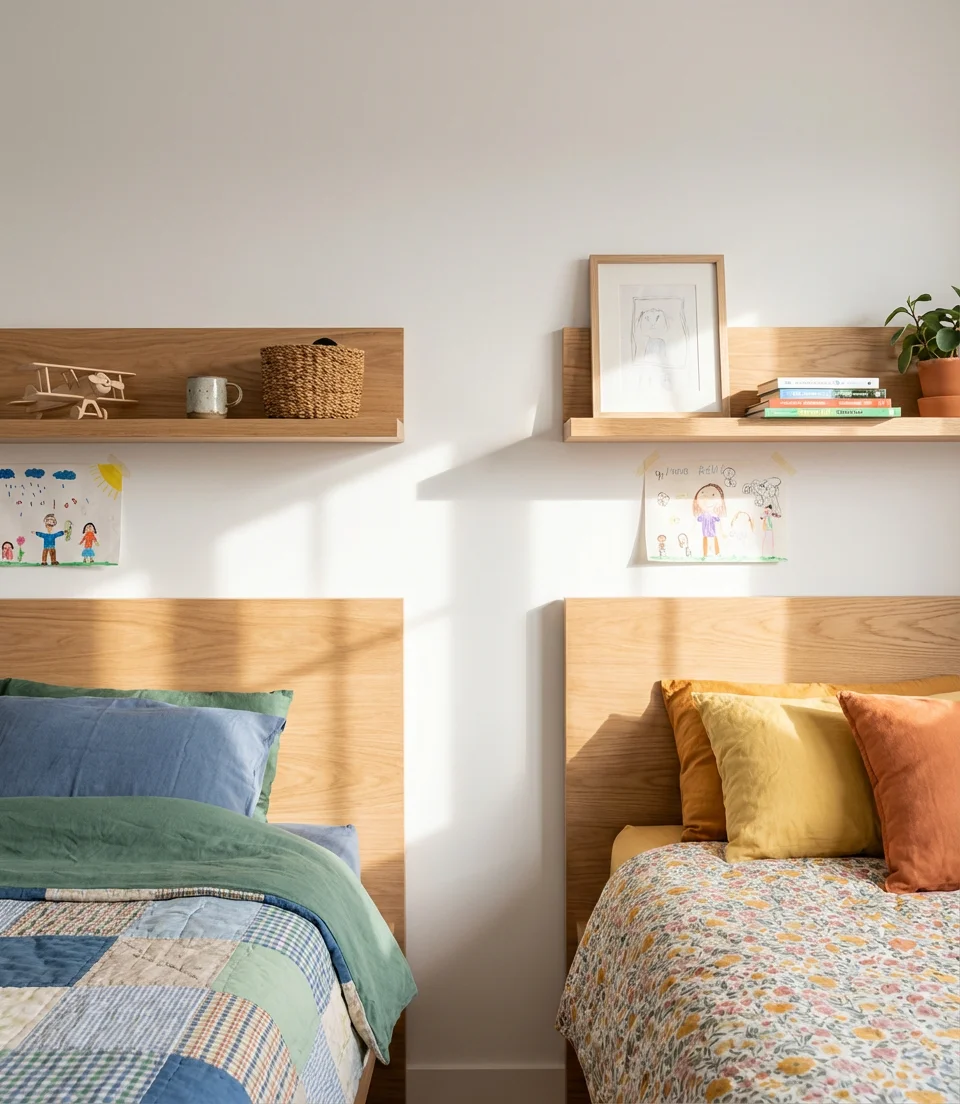
Child psychologists who work with family dynamics often highlight that sibling conflict over shared bedrooms peaks when kids have no private territory they fully own. The solution isn’t a bigger room—it’s a clearer one. Distinct beds, distinct storage, distinct display spaces, and a shared neutral zone in the center create a psychological framework that helps kids navigate shared living more successfully than any amount of additional square footage ever could.
22. Smart Storage Under Beds and in Dead Spaces
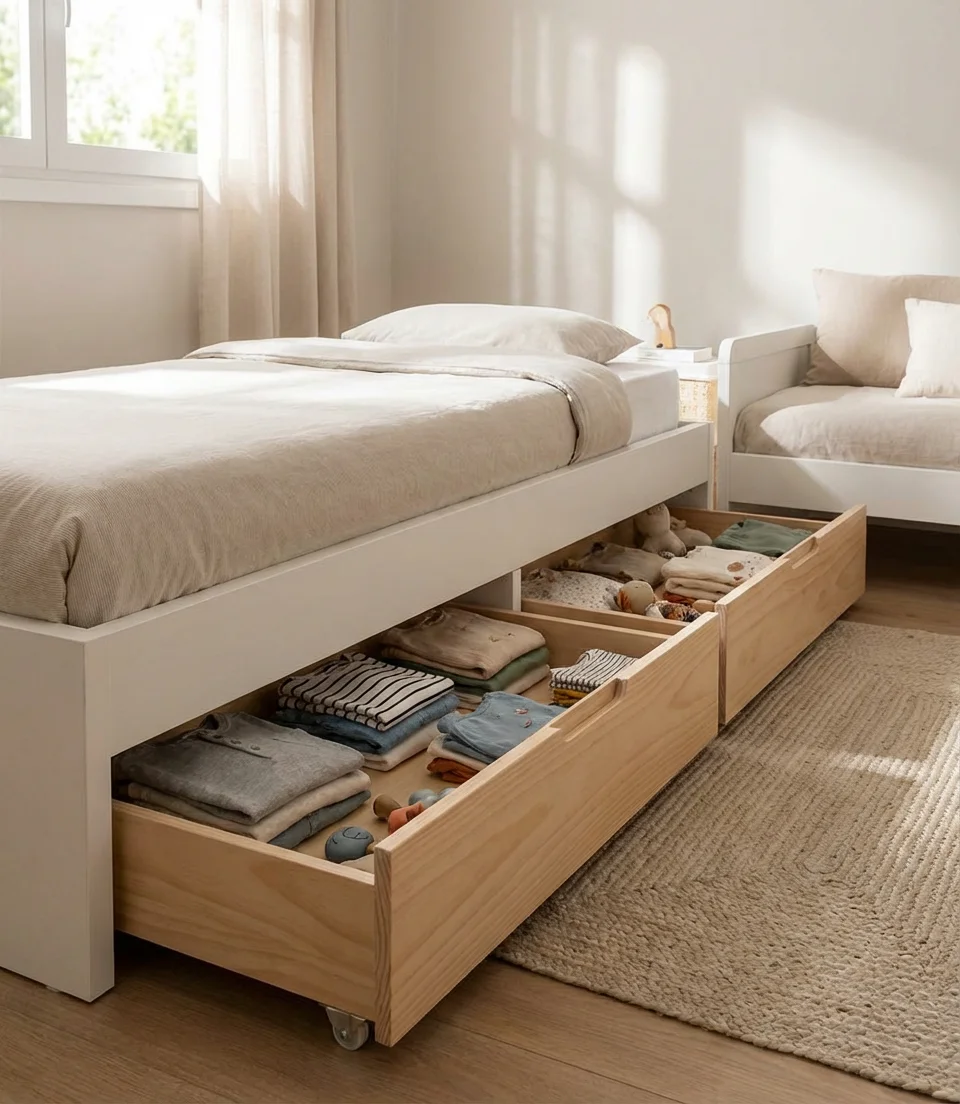
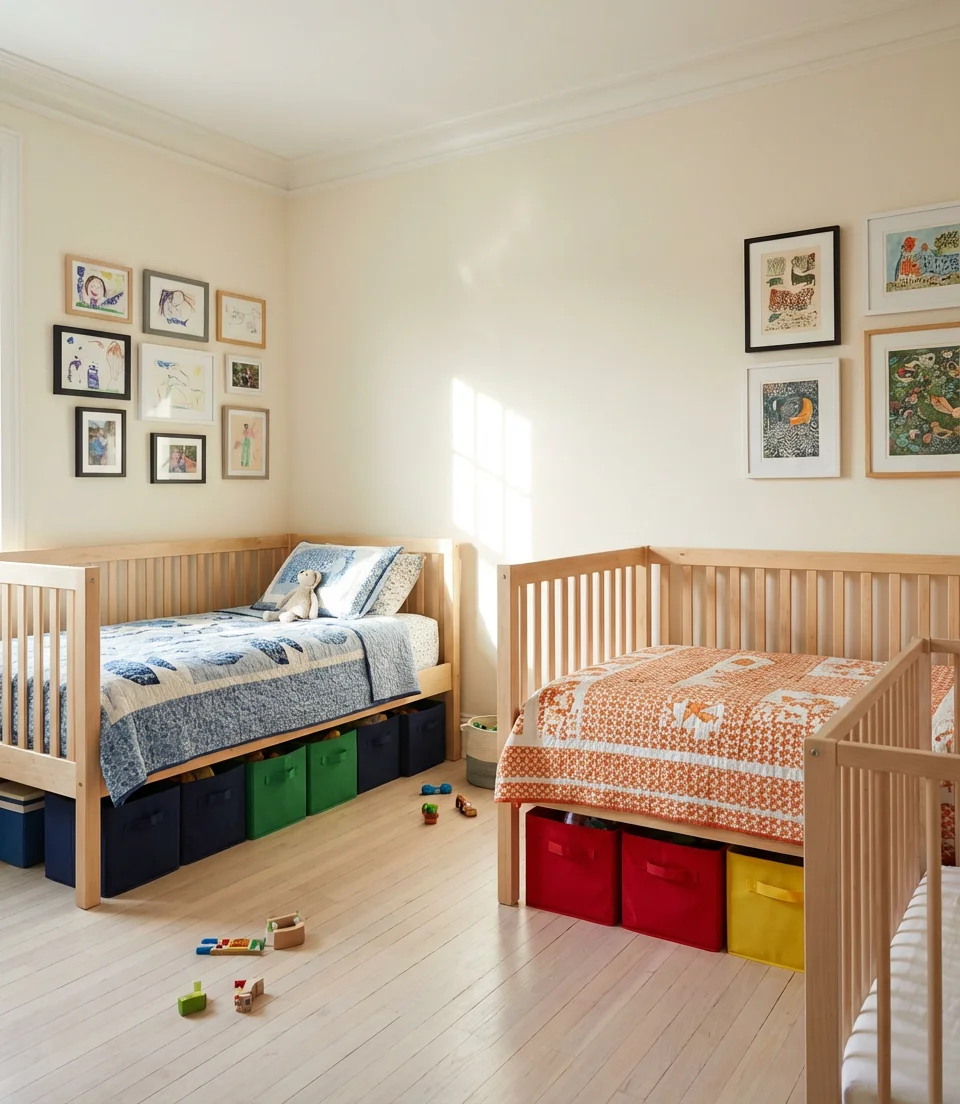
Under-bed storage is the most underutilized real estate in most shared kids’ rooms—and fixing that is one of the highest-ROI moves you can make. Low-profile rolling drawers, flat storage bins, and even built-in drawer platforms beneath a platform bed can hold off-season clothing, extra bedding, and bulky toy sets that don’t need daily access. In a room where floor space is already stretched between two children, reclaiming those 12 to 15 inches beneath each bed is genuinely significant for daily organization.
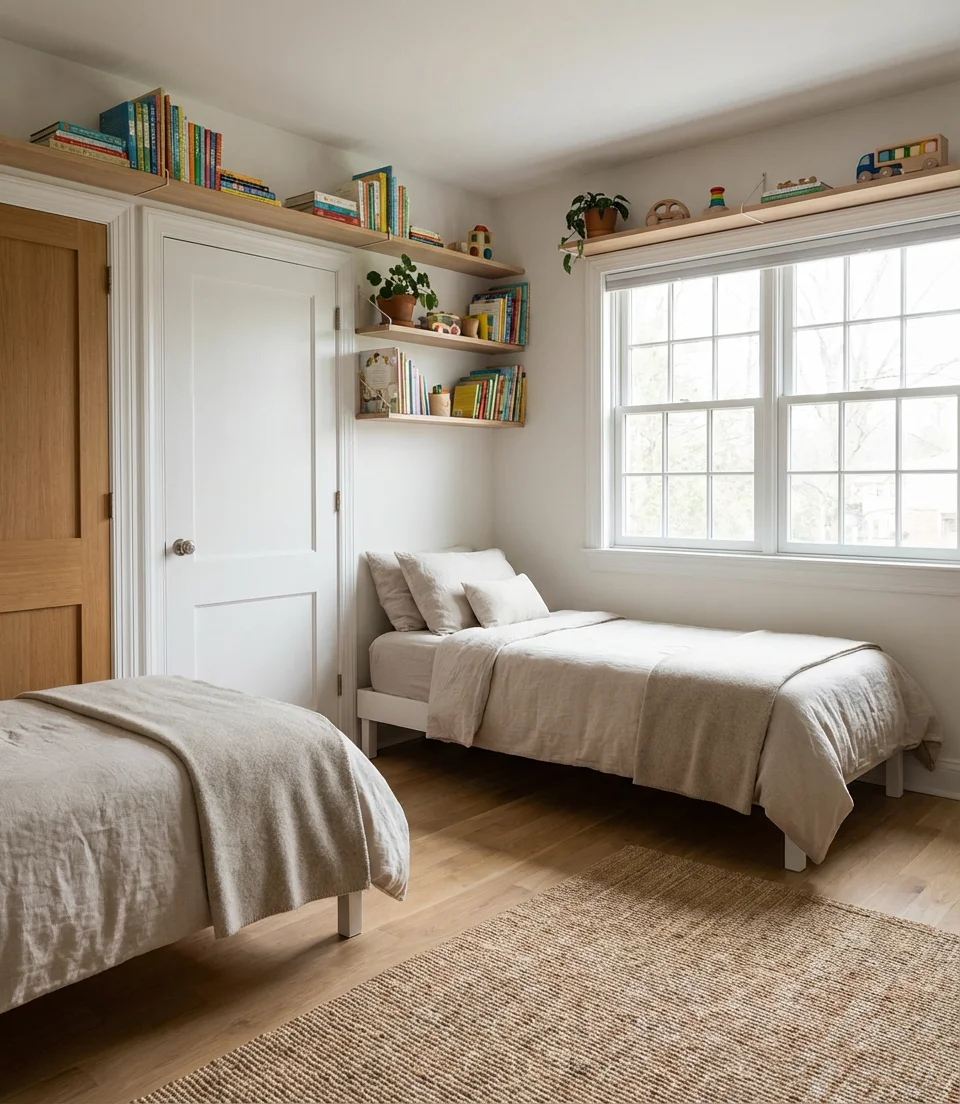
Don’t overlook the dead space above the door, along the top of window frames, or in any shallow corner alcove—all of these can hold low-profile floating shelves for books, trophies, or decorative objects. In a shared room where each child needs individual storage, these small satellite shelves add up to meaningful square footage. The key is keeping them lightweight and properly anchored to wall studs—a floating shelf loaded with heavy books needs solid support behind the drywall.
23. Mixing Different Bed Heights in One Room
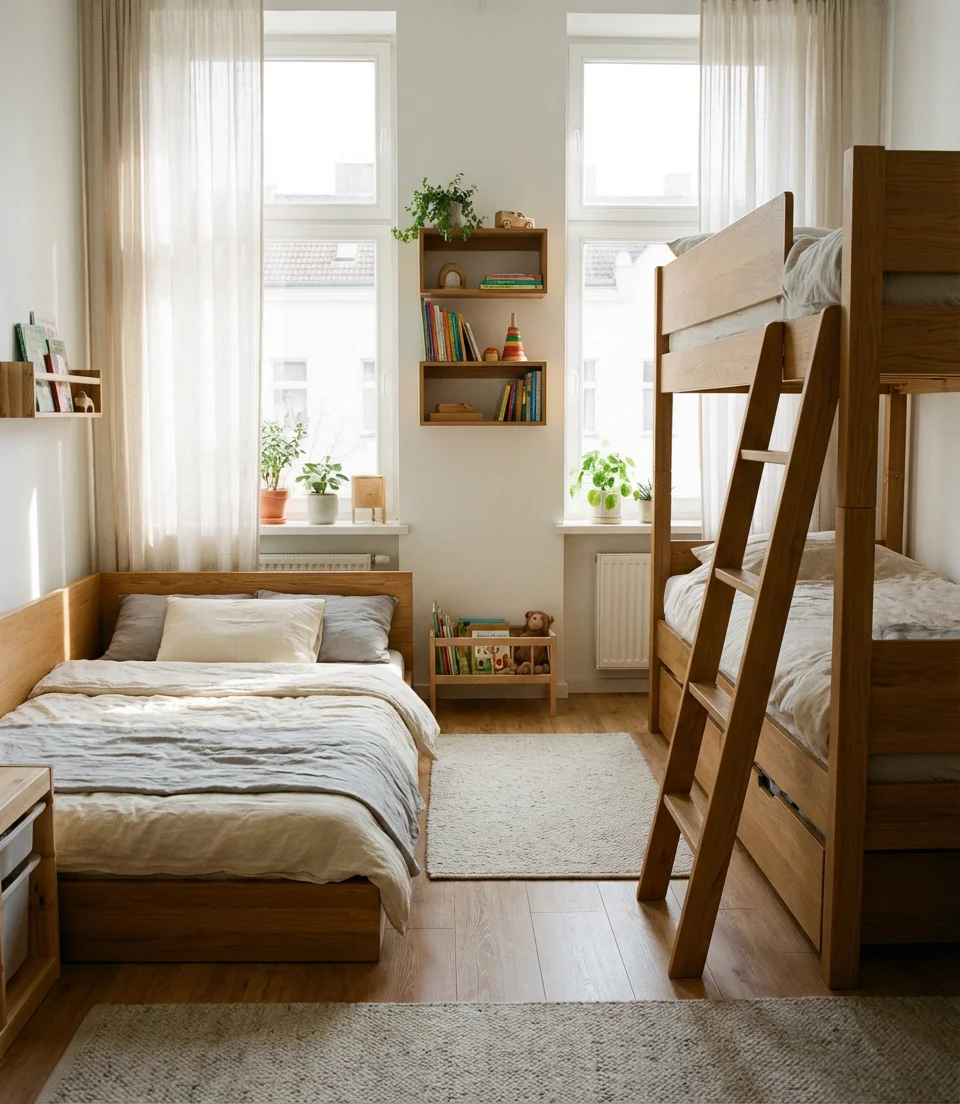
When siblings have a significant age gap, mixing bed heights in one shared room can be both a safety decision and a design statement. A toddler-height low floor bed or daybed for a younger child paired with a loft or elevated bed for an older sibling creates visual dynamism while keeping each sleeping arrangement developmentally appropriate. The contrast in heights also naturally defines each child’s zone without any additional dividers—the room reads as two distinct spaces simply through the vertical differentiation between the beds.
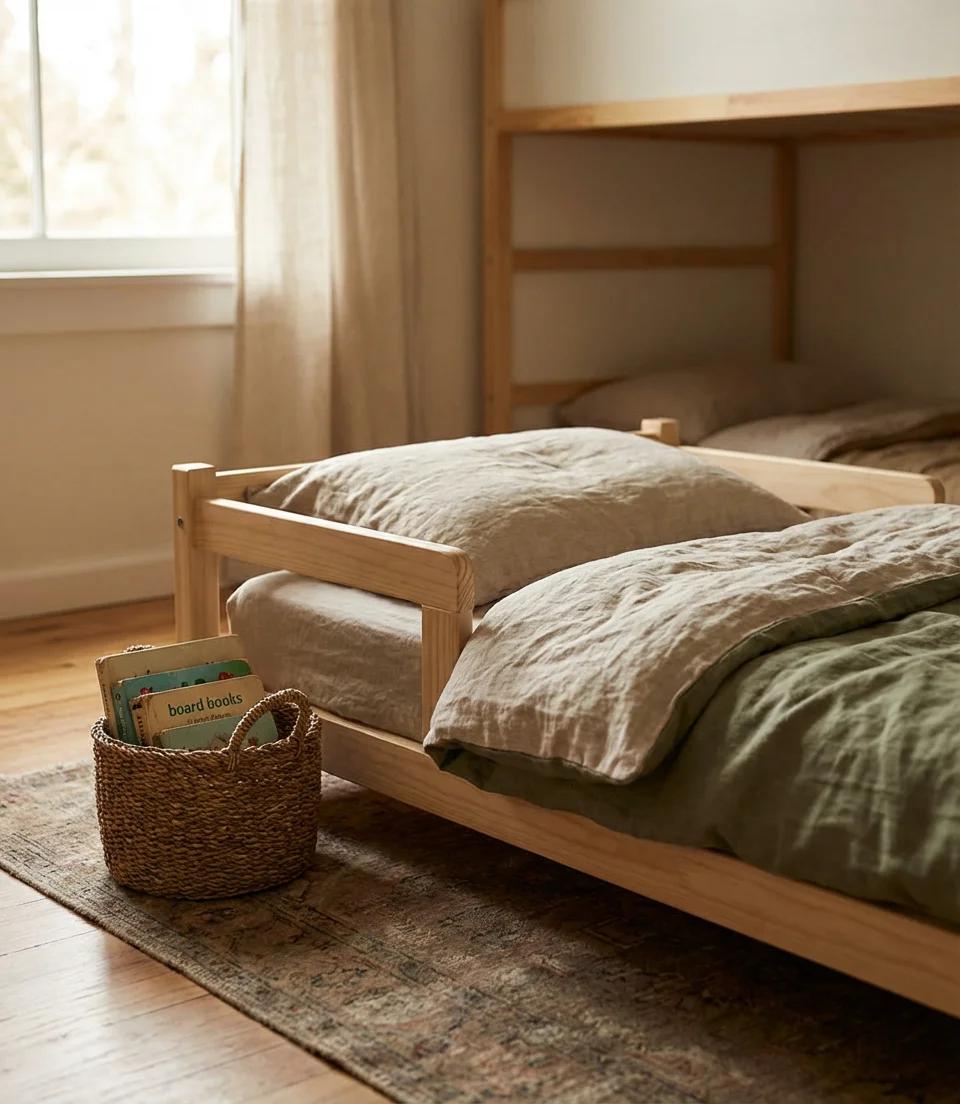
The floor bed trend, which gained momentum in Montessori-influenced design several years ago, has fully entered mainstream American nursery and toddler room design. For a shared room where the youngest child is under 5, a floor-level mattress with a simple wooden frame eliminates fall risk entirely and gives the toddler the independence to climb in and out safely—while the older child enjoys the adventure of an elevated sleeping space right beside them.
24. Making a Shared Room Feel Special for Both Kids
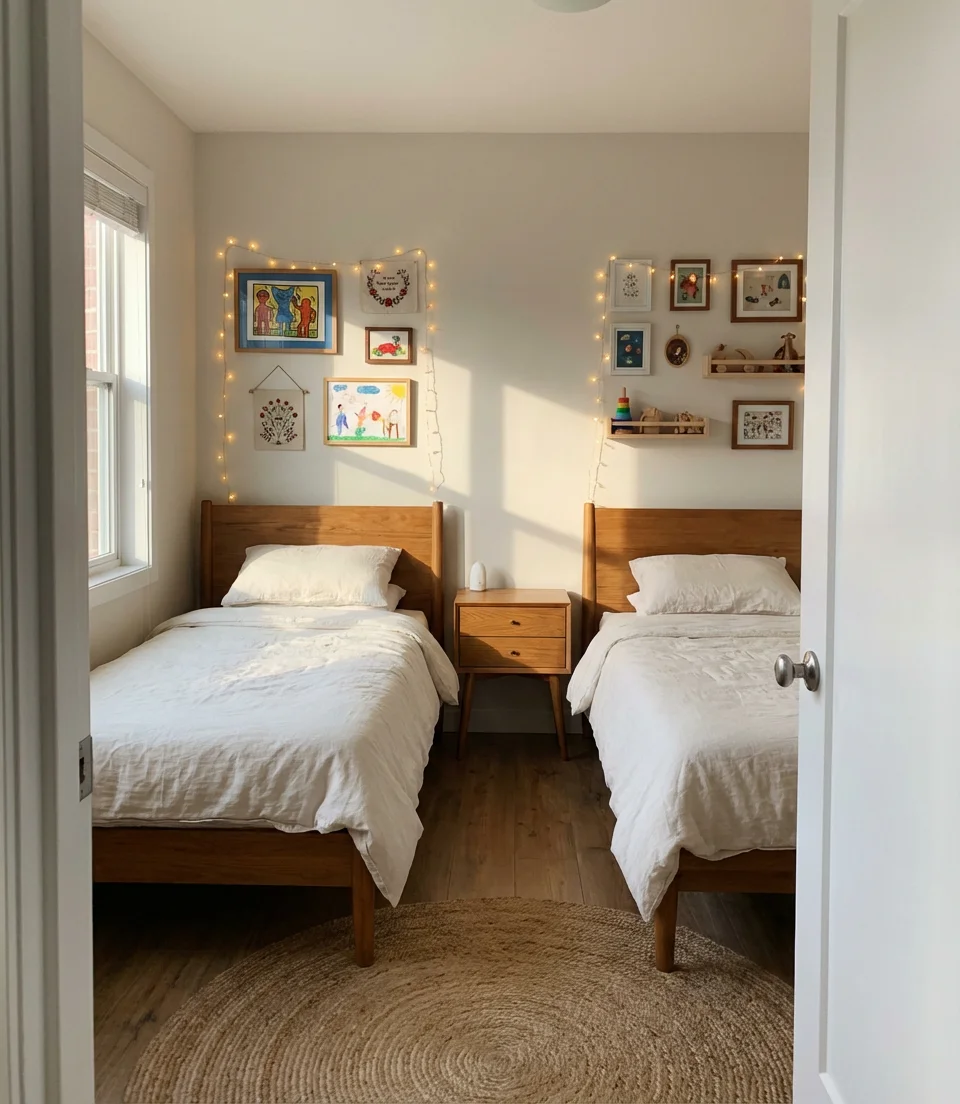
The final—and most important—element of a great shared kids’ room is that it genuinely feels special to both children living in it. Each child should be able to point to something in the room and say, “That part’s mine.” Whether it’s a decor choice they made themselves, a color they picked for their storage bins, or a small personal gallery wall above their bed, those moments of individual expression are what transform a shared room from a compromise into something both kids genuinely love coming home to every single day.
Designing a shared kids’ room is ultimately an exercise in empathy—for each child’s need for both connection and privacy, for the practical realities of limited square footage, and for a family’s budget and long-term flexibility. The rooms that work beautifully year after year are rarely the most expensive or elaborately designed; they’re the ones planned with care, updated as kids grew, and built around the real humans who sleep, dream, and grow up in them every single day.
Shared bedrooms are one of the most searched and most saved topics on Pinterest for a reason—getting them right takes real thought, and the payoff in family harmony is enormous. If any of these ideas sparked something for your space, we’d love to hear about it in the comments below. Tell us what your biggest shared-room challenge is, which idea you’re planning to try first, or share a photo of a setup that’s worked beautifully for your family.