48 Kids Room Ideas 2026: Fun, Colorful & Creative Designs Your Child Will Obsess Over

If you’ve spent any time scrolling Pinterest lately, you already know that kids’ room design has quietly become one of the most inspiring corners of the internet. Parents in 2026 aren’t just picking a paint color and calling it a day—they’re building full-on worlds for their kids, complete with personality, function, and a whole lot of heart. Whether you’re starting from scratch, refreshing a hand-me-down space, or trying to make a tiny room work for two growing kids, this list has something for every family. Here are kids’ room ideas for 2026 that are beautiful, practical, and genuinely fun to live in.
1. Colorful Shared Room with Kallax Storage
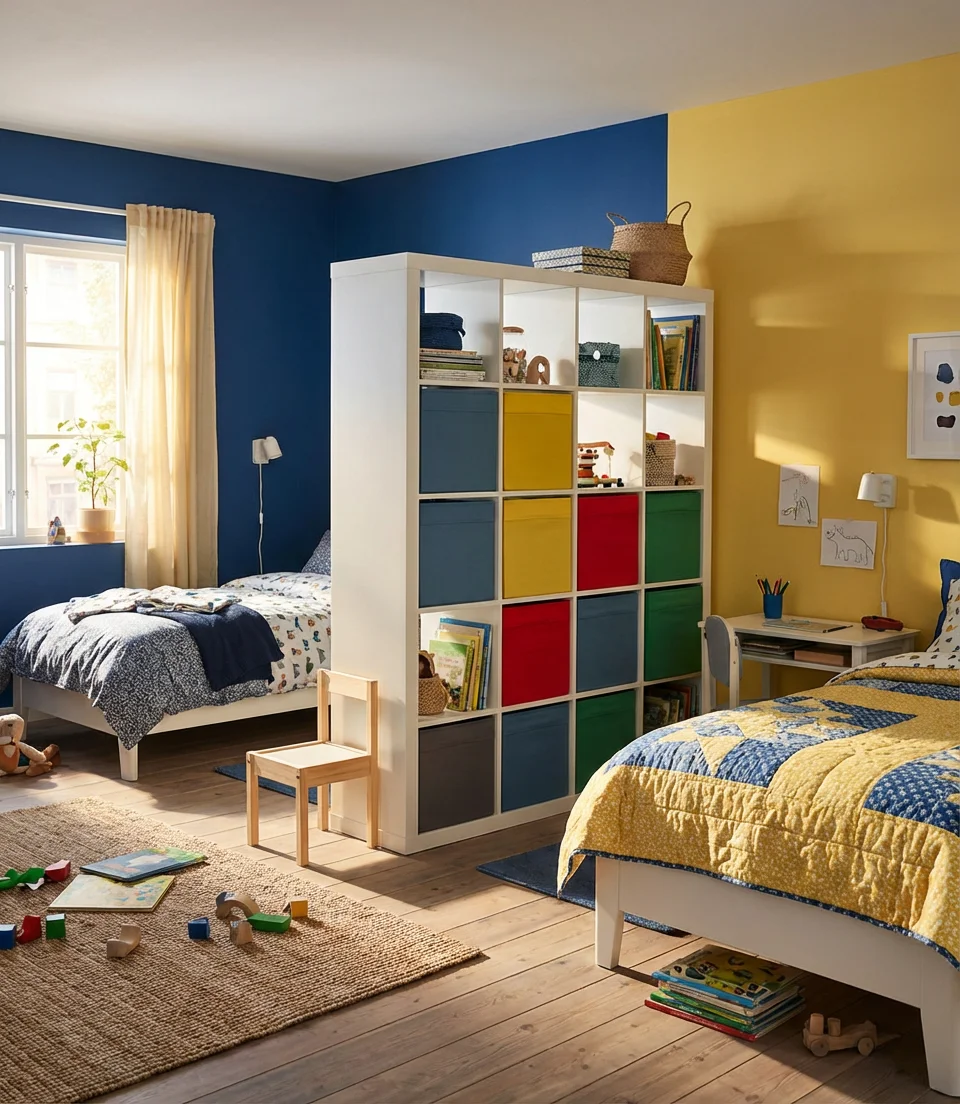
When two kids share a room, the real challenge isn’t just the square footage—it’s giving each child a space that feels like theirs. A colorful layout anchored by a Kallax shelf unit from IKEA does exactly that. You can assign each side of the room a signature hue—say, cobalt blue for one kid and sunflower yellow for the other—while the neutral white shelving ties it together. It’s a shared room strategy that actually works, visually and practically.
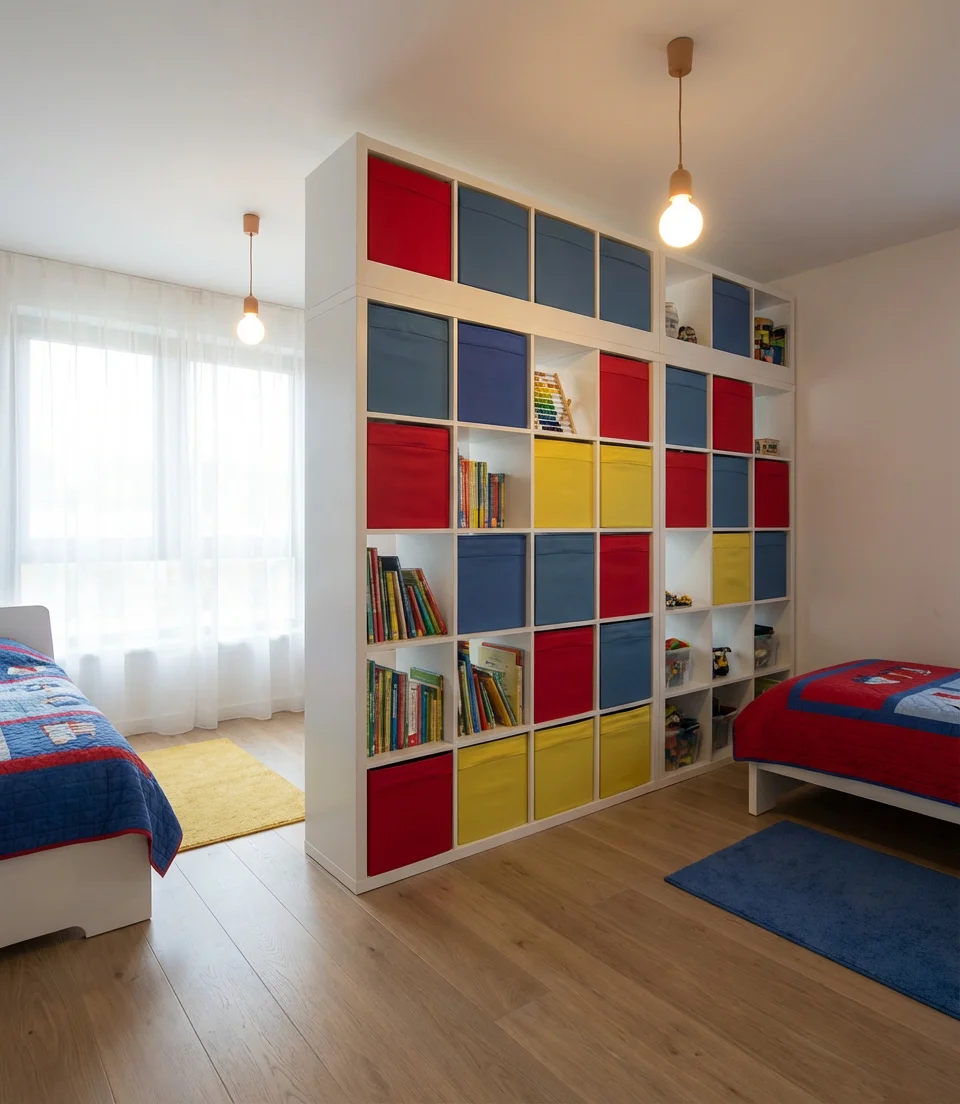
The Kallax is an indispensable tool for organizing kids’ rooms. At around $80–$130 depending on the configuration, it’s one of the most budget-friendly investments you can make. Bins, baskets, and colorful inserts let you customize it endlessly as kids grow. Unlike bulky toy chests that become bottomless pits, open cubbies encourage kids to actually put things away—because they can see exactly where everything lives.
2. Minecraft-Themed Bedroom for Boys

There’s a reason why Minecraft has remained popular for so long—it’s essentially a digital version of Lego, and kids are captivated by it. A Minecraft-themed room for boys in 2026 doesn’t have to feel like a plastic toy store exploded in there. Think pixel-art murals in earthy greens and browns, a creeper-green accent wall, and bedding that nods to the game without screaming it. Done right, it looks intentional and cool rather than chaotic.
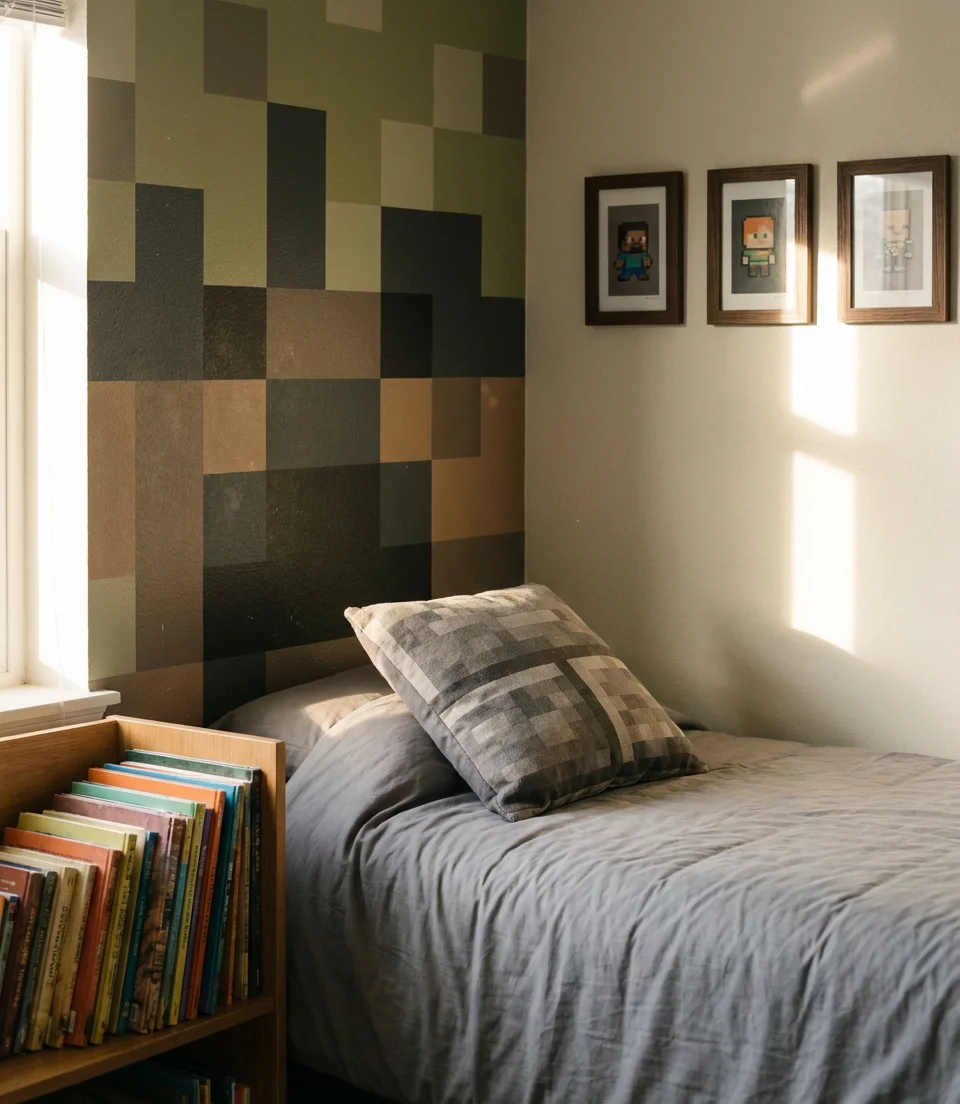
The most common mistake parents make with themed rooms is going too literal—covering every surface in branded merch. Instead, pick one or two statement pieces (a mural, a custom duvet, or a pixelated throw pillow) and let the rest of the room breathe in neutral tones. Your kid will thank you in three years when they’re still proud of their room instead of embarrassed by it.
3. Whimsical Girls Bedroom in Pink and Purple

The whimsical girls’ bedroom is having a serious moment in 2026 — and it’s evolved far beyond the bubblegum-pink walls of decades past. We’re talking dusty rose canopy beds draped with fairy lights, purple velvet accent cushions, mushroom-shaped nightlights, and hand-painted cloud murals that make a ceiling feel like a sky. It’s dreamy without being babyish, and that distinction matters more and more as girls grow into strong opinions about their spaces.

Interior designers who specialize in children’s spaces often point out that girls between ages six and ten are the most design-opinionated humans on the planet. Getting them involved in the process—even just letting them choose between two paint swatches or pick the canopy style—creates a sense of ownership that means they’ll actually keep the room tidy. Including them in the design process greatly enhances their involvement.
4. Simple Neutral Room That Grows with Your Child
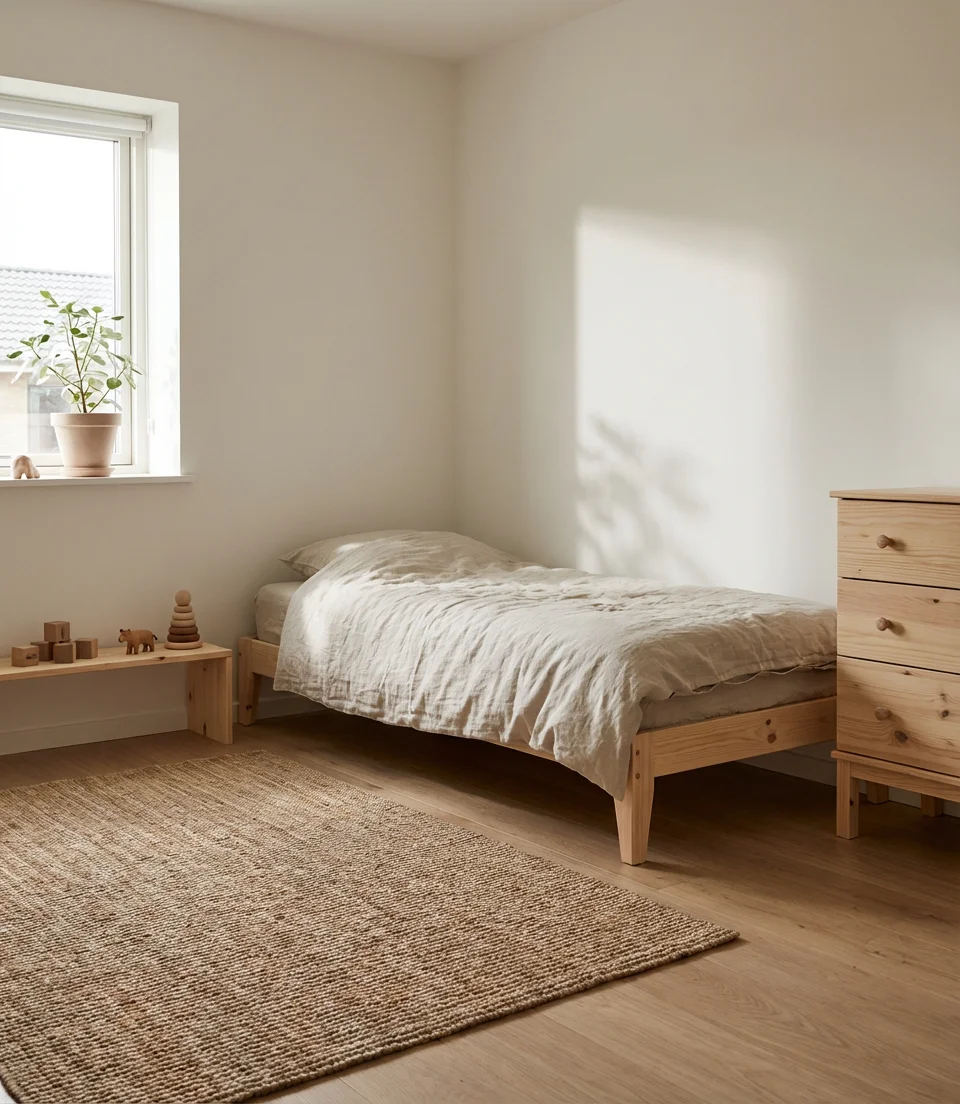
Not every parent wants to redecorate every three years, and honestly, that’s the smartest approach. A simple, neutral kids’ room—warm whites, soft oatmeal tones, natural wood furniture—serves as a flexible backdrop that you can update with accessories as your child’s taste evolves. This approach is especially popular in modern American homes where parents want a space that’s calming for sleep but still warm and inviting during play hours.
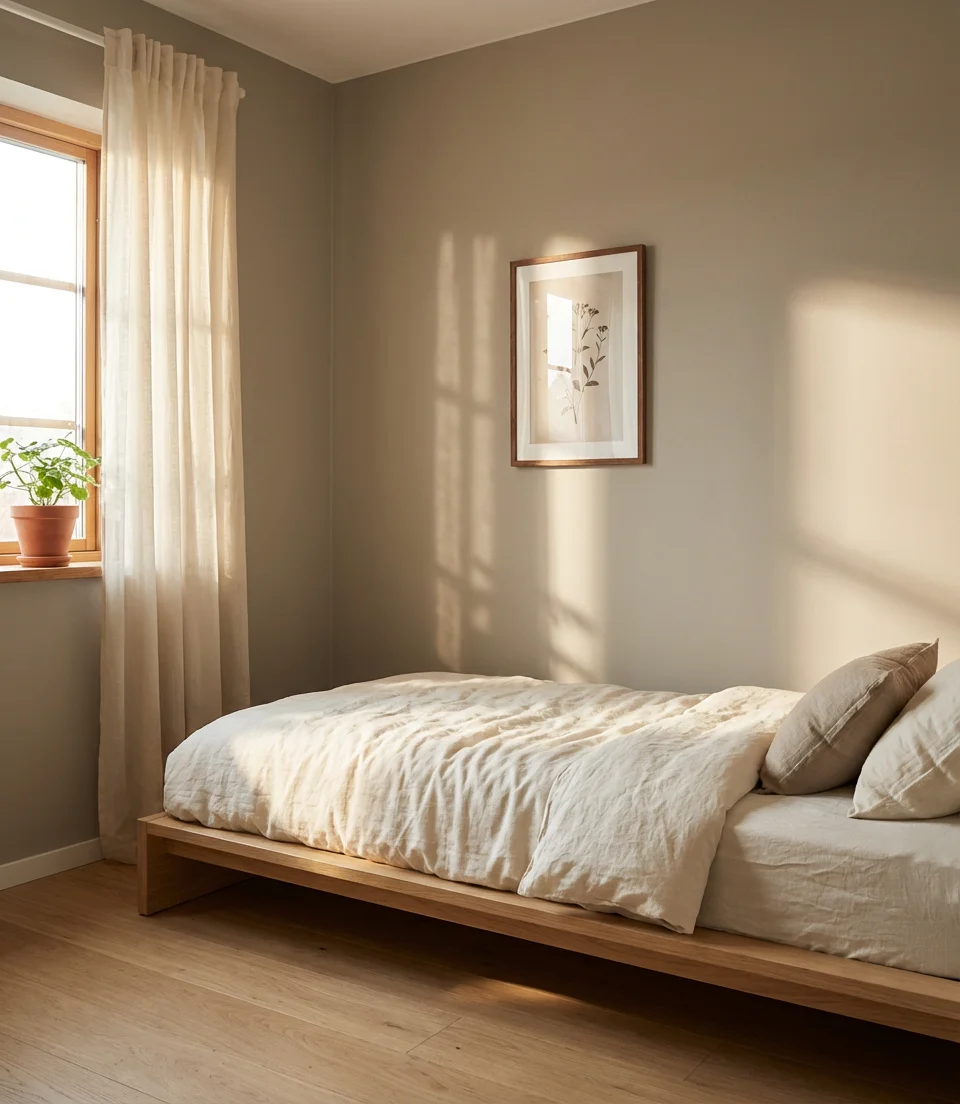
One family in Portland did exactly this—painted their toddler’s room in a warm greige, added natural pine furniture, and used removable wall decals for personality. Six years later, they swapped the decals for framed prints and added a reading nook, and the room still looks beautiful. The bones never needed changing. That’s the real value of a neutral foundation done thoughtfully.
5. Bunk Bed Setup for Small Spaces
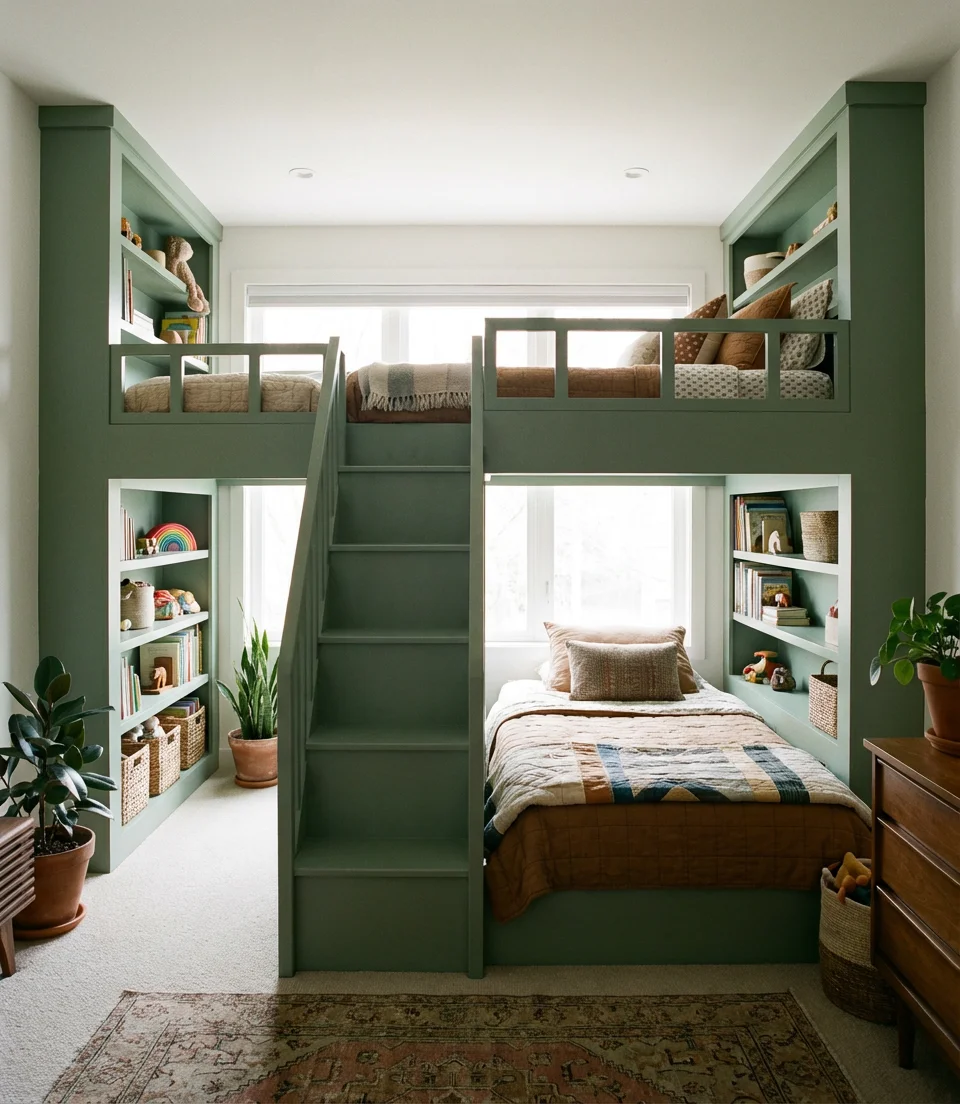
The bunk bed remains one of the most practical inventions in kids’ room history, and in 2026 the designs have gotten genuinely stunning. For small spaces, a floor-to-ceiling bunk with integrated storage stairs (no ladder—stairs!) and built-in shelving underneath transforms a 10×10 room into a fully functional kids’ haven. It’s a vertical solution that doubles as a design statement, especially in custom wood finishes or painted in a deep matte color.
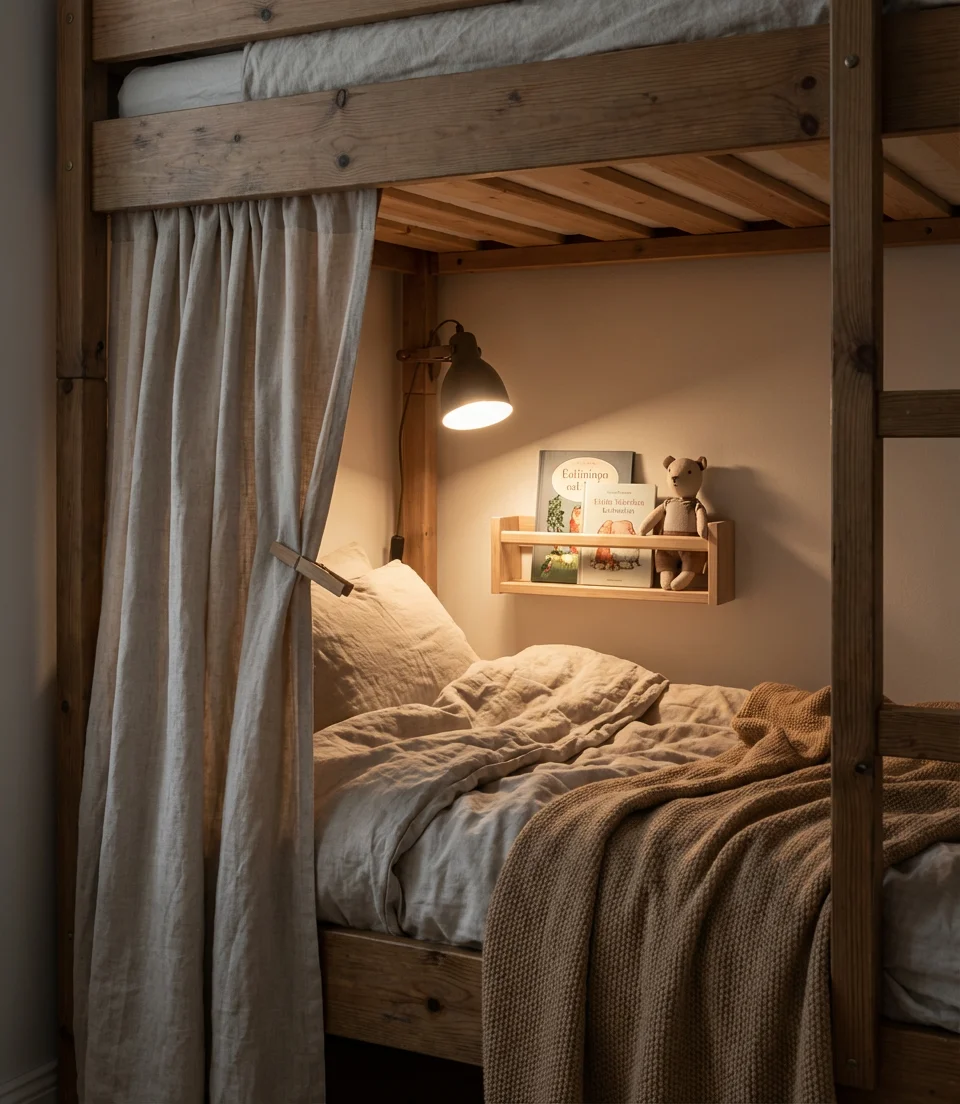
Bunk beds work best in rooms where the ceiling height is at least eight feet—ideally nine. Anything lower and the top bunk starts to feel claustrophobic for older kids. If you’re in a standard apartment or older home with lower ceilings, consider a loft bed instead, where only one sleeping surface is elevated and the space below becomes a desk zone, reading nook, or play area.
6. Toca Boca-Inspired Playful Aesthetic
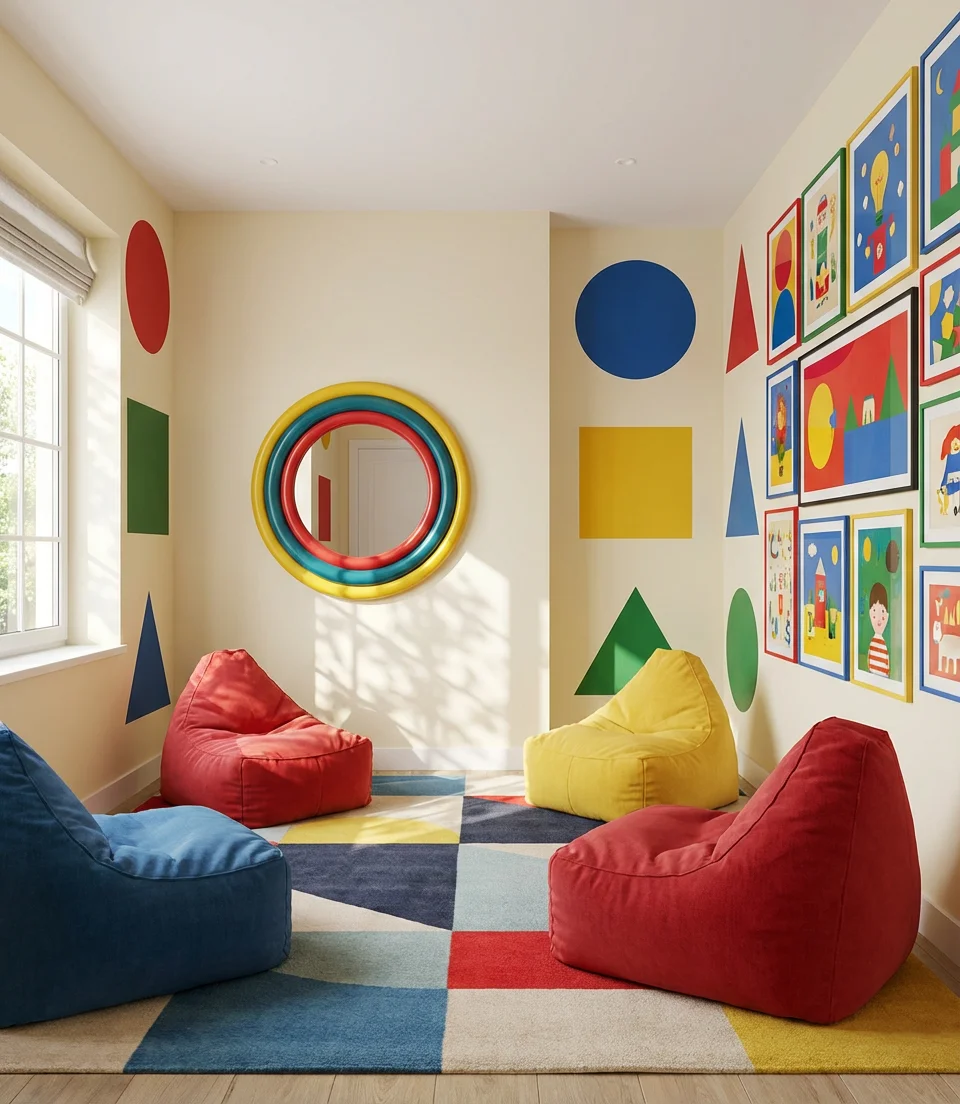
If your kid is obsessed with Toca Boca—the wildly popular app series with its bright, rounded, maximalist visual world—then you already have a design language to work from. The aesthetic is bold and blocky: primary colors with no apology, oversized shapes, and a sense that everything is slightly larger than life. Consider incorporating chunky round mirrors, primary-colored bean bags, and creating a gallery wall featuring Toca-style illustrated prints. It’s loud, joyful, and completely intentional.

This style works especially well in dedicated playrooms or in rooms where a child spends most of their active, daytime hours. If the room also doubles as a bedroom, you can soften the palette slightly for the sleeping area—warmer tones on the bed wall, with the more energetic Toca-style elements, which are playful and vibrant design features inspired by the Toca Boca brand, reserved for the play corner. Balance keeps the energy right for both play and rest.
7. Modern IKEA Room on a Budget
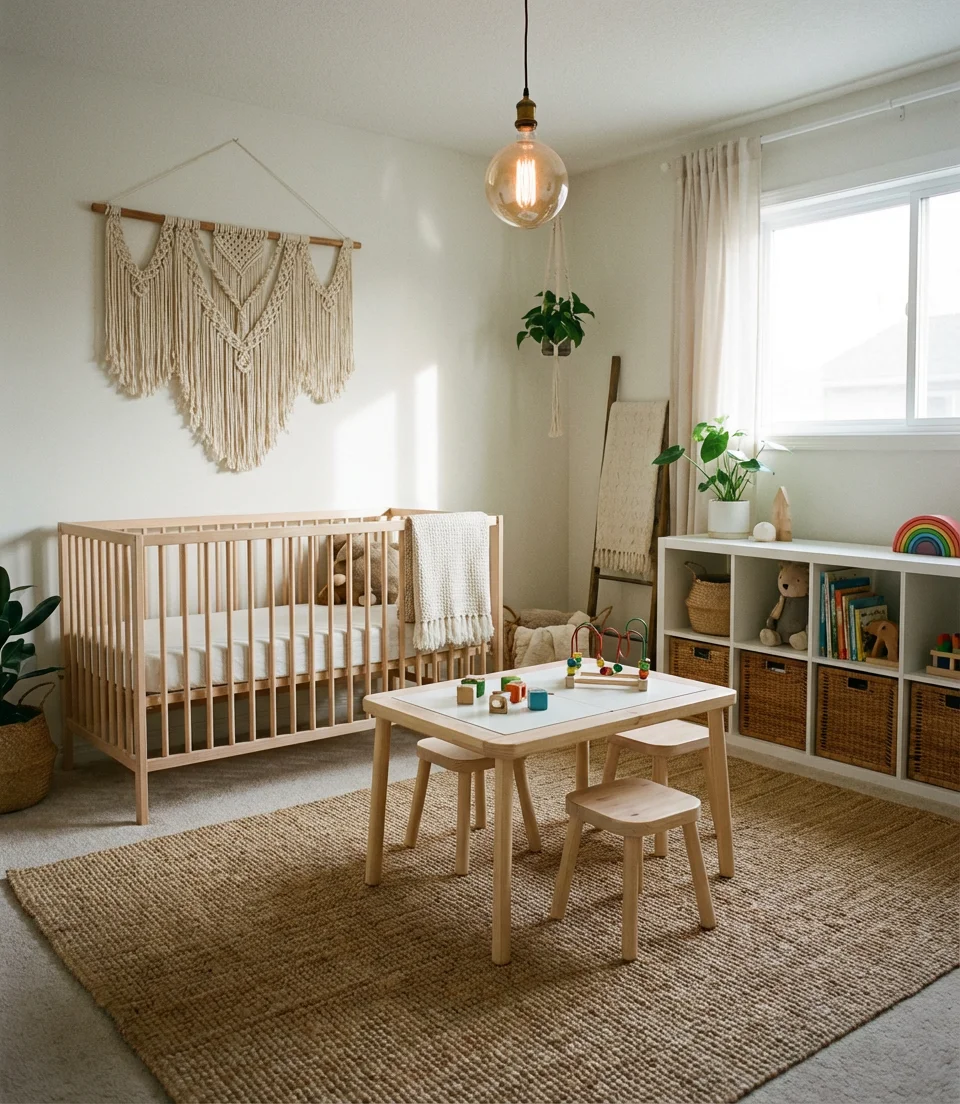
Let’s be honest—most American families are furnishing kids’ rooms on a real-world budget, and IKEA continues to deliver. In 2026, the trick to a truly modern IKEA kids’ room is mixing their pieces with a few elevated touches: a handmade macramé wall hanging, a vintage rug from an estate sale, or a statement pendant light that looks like it cost three times what it did. The furniture becomes the backbone, and the accessories carry the personality.

A well-styled IKEA kids’ room can confidently compete with far more expensive setups. The key is restraint—don’t buy everything from the same collection. Mix the Sundvik crib with a Flisat table, add a non-IKEA rug and lamp, and suddenly the room looks curated rather than catalog-direct. Most design-savvy parents spend $600–$900 total and end up with spaces that look like they belong in a magazine.
8. Bloxburg-Inspired Dream Bedroom
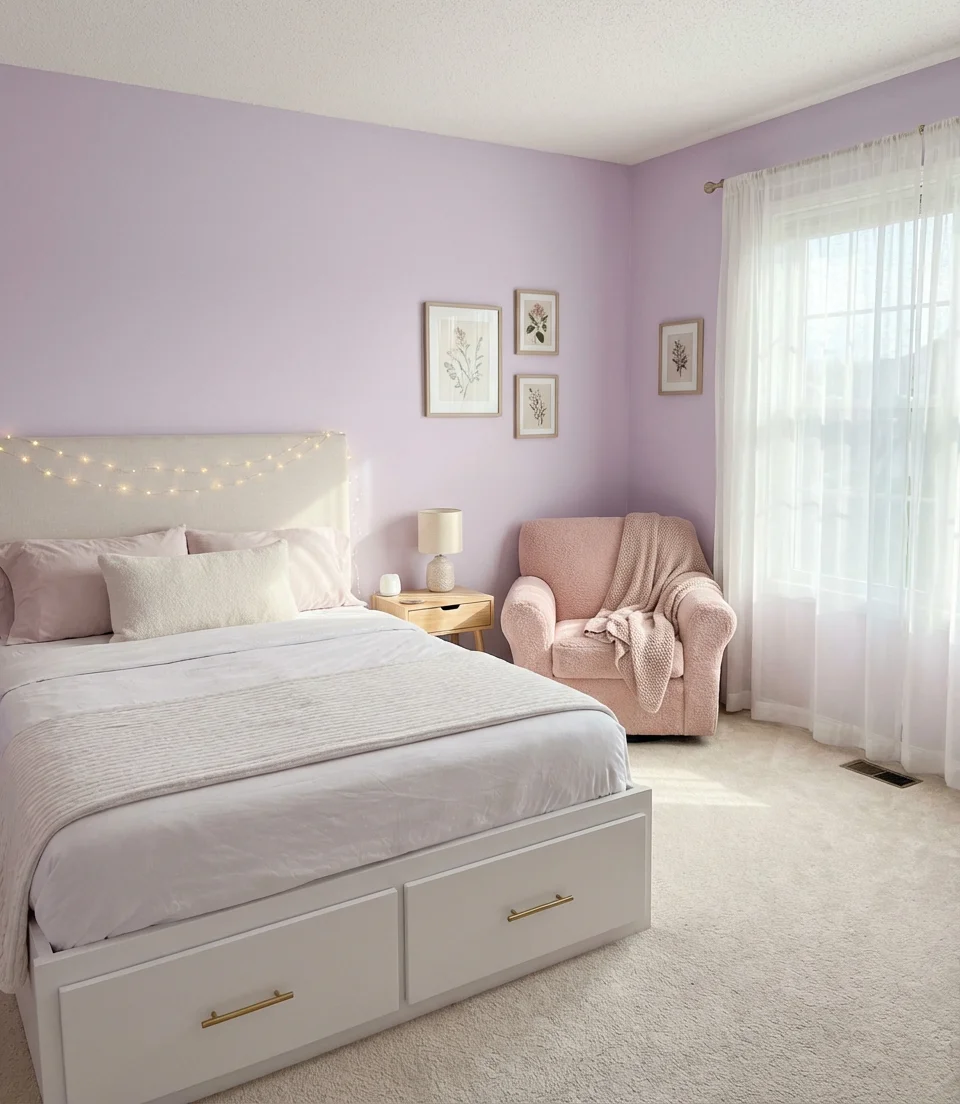
If your child spends hours designing their perfect house in Bloxburg on Roblox, chances are they already have a very clear vision for their real bedroom too. Bloxburg-inspired rooms lean into pastel palettes, clean lines, and a cozy-preppy vibe—think soft lavender walls, white furniture with gold hardware, a little reading corner with a plush armchair, and string lights along the ceiling. It’s the aesthetic their digital world just brought into reality.
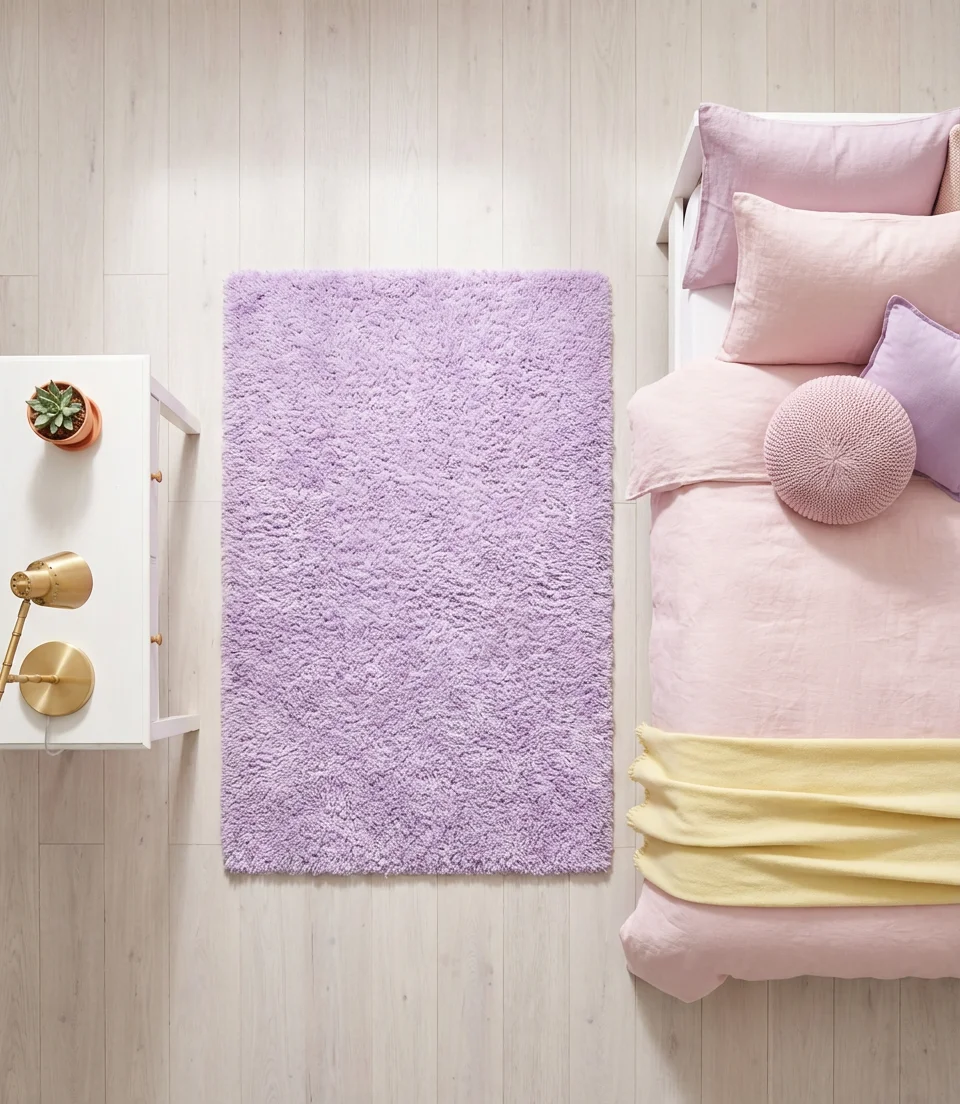
What makes this style particularly practical is how achievable it is. Most of the elements—white platform beds, pastel accent pillows, and a small vanity—are widely available at Target, Walmart, and Amazon at accessible price points. The result feels aspirational without requiring a designer budget. It’s one of those rare cases where a kid’s digital obsession actually translates into excellent real-world taste.
9. Fun Theater-Style Media Corner for Kids
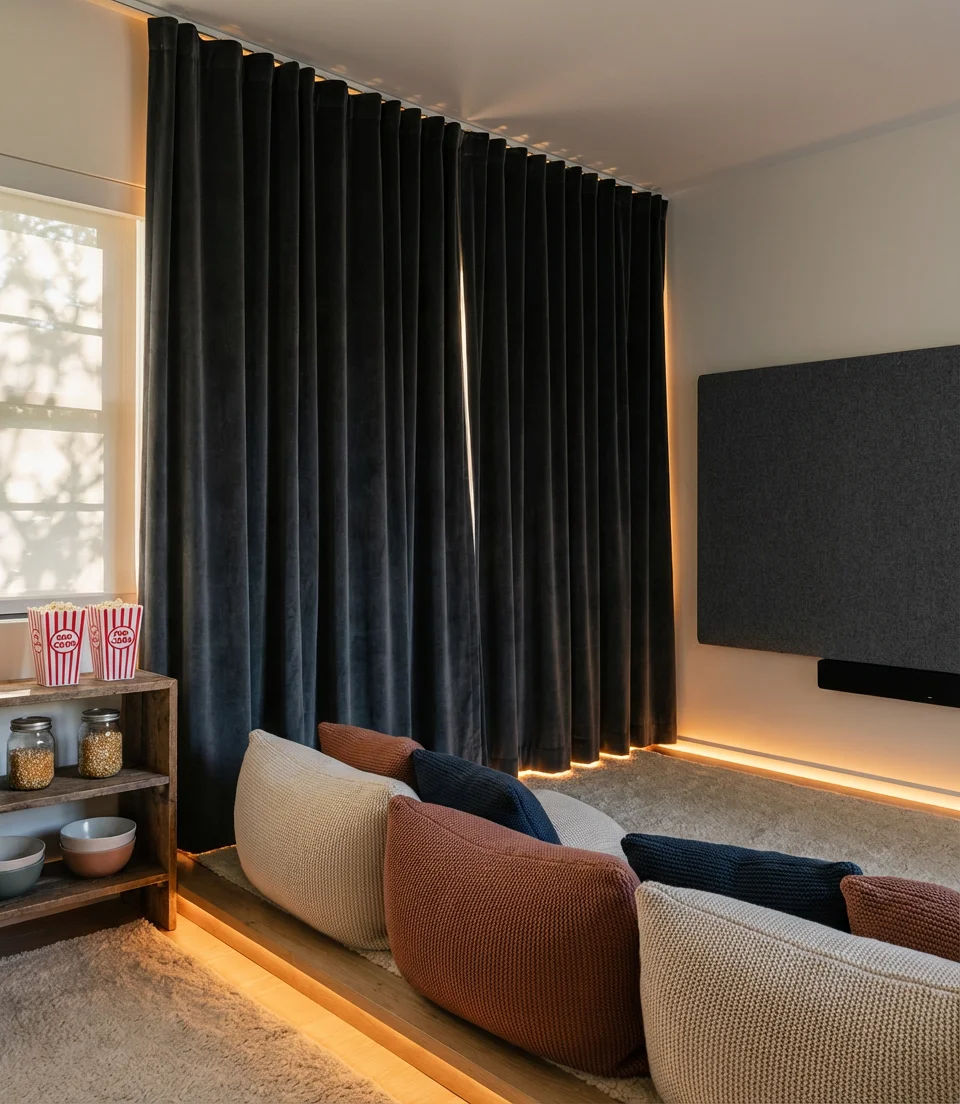
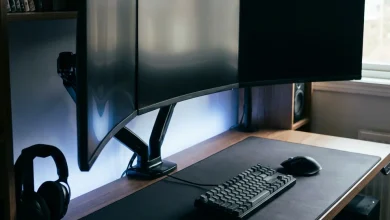
More families are carving out dedicated screen-time zones within kids’ rooms, and the theater-style media corner has become a genuinely fun design concept in 2026. Picture a low platform with plush stadium-style floor cushions arranged in a slight arc, blackout curtains on a track, a wall-mounted screen, and a small popcorn-themed accent shelf. It’s purposeful about where screen time happens, which actually helps parents set boundaries more naturally.
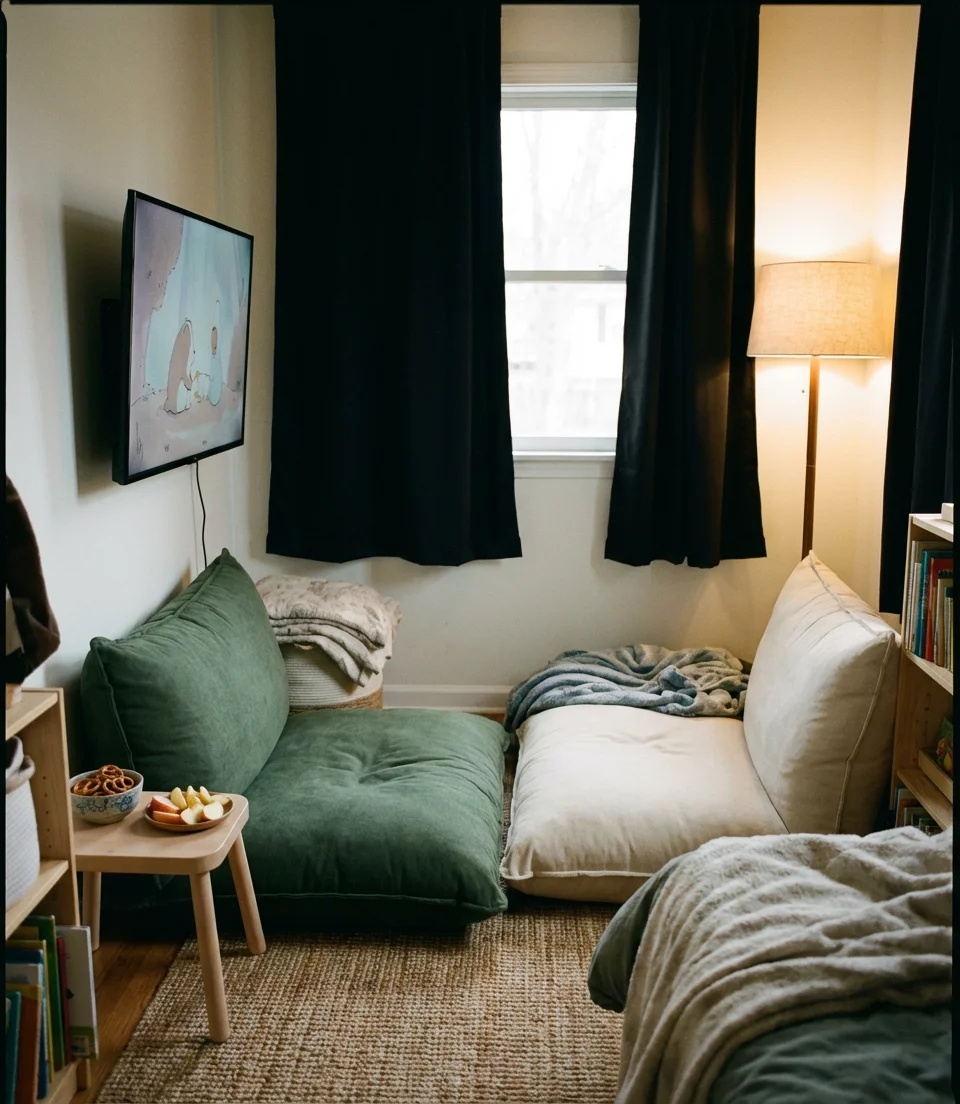
Child development experts often suggest that having a designated, comfortable space for screen time—rather than allowing devices everywhere—helps kids regulate their consumption better. When the “theater corner” is somewhere special and cozy, kids actually look forward to it rather than defaulting to screens out of boredom. The physical design reinforces the habit. It’s a small psychological win, cleverly hidden within a really cute room idea.
10. Sims 4 Aesthetic for Tween Bedrooms
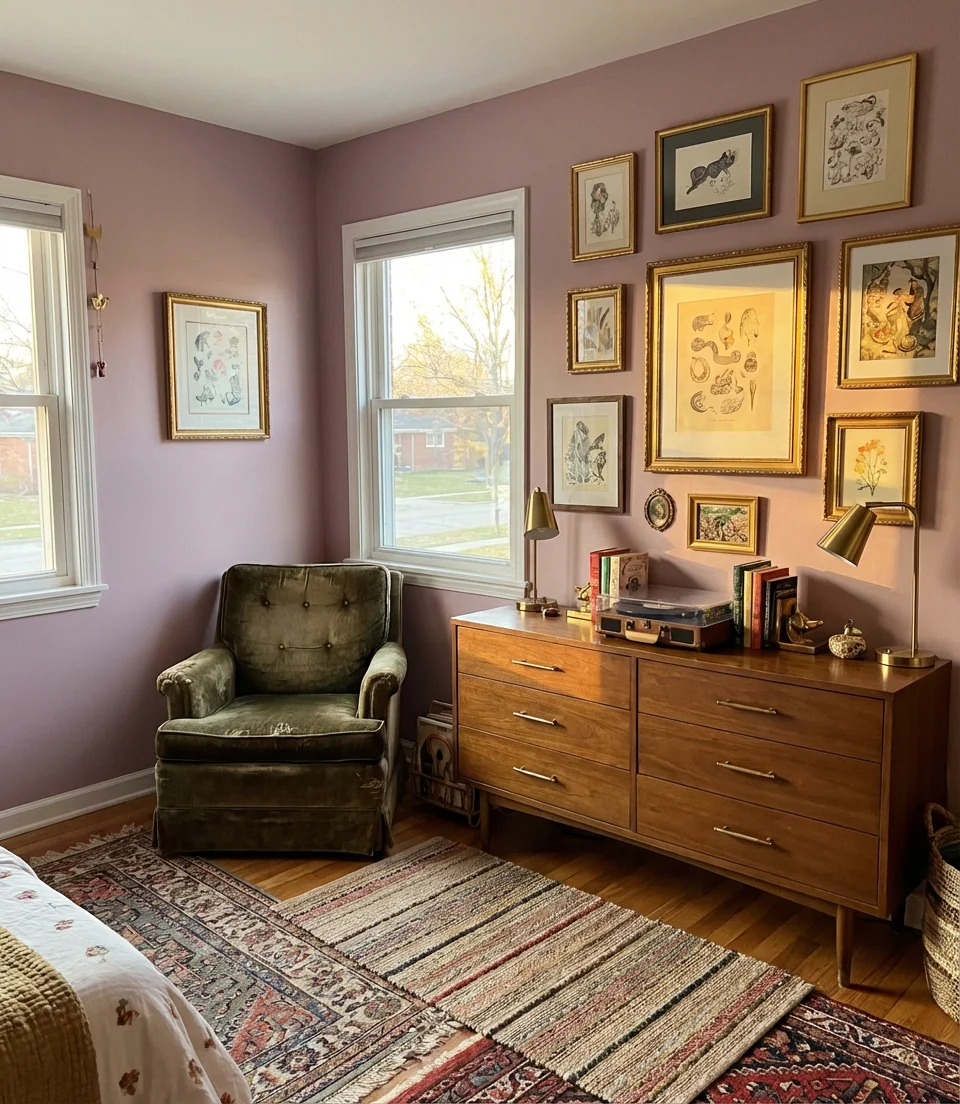
The Sims 4 has a dedicated tween fanbase who spends serious time designing virtual homes—and their real bedroom preferences show it. The aesthetic tends toward eclectic-cool: a mix of mid-century and maximalist touches, unexpected color combinations, gallery walls with mismatched frames, and little personality moments everywhere. A Sims-inspired tween room feels like a character’s carefully curated world, not just a bedroom.

For tweens in that 10–13 range, having input into their room’s design is genuinely important for their developing sense of identity. Letting them lead on a Sims-inspired mood board—and actually building it with them—creates a bonding experience that goes well beyond interior design. Parents who do these tasks consistently report their kids taking better care of their rooms because they’re proud of them. Ownership changes everything.
11. Avatar World Fantasy Room
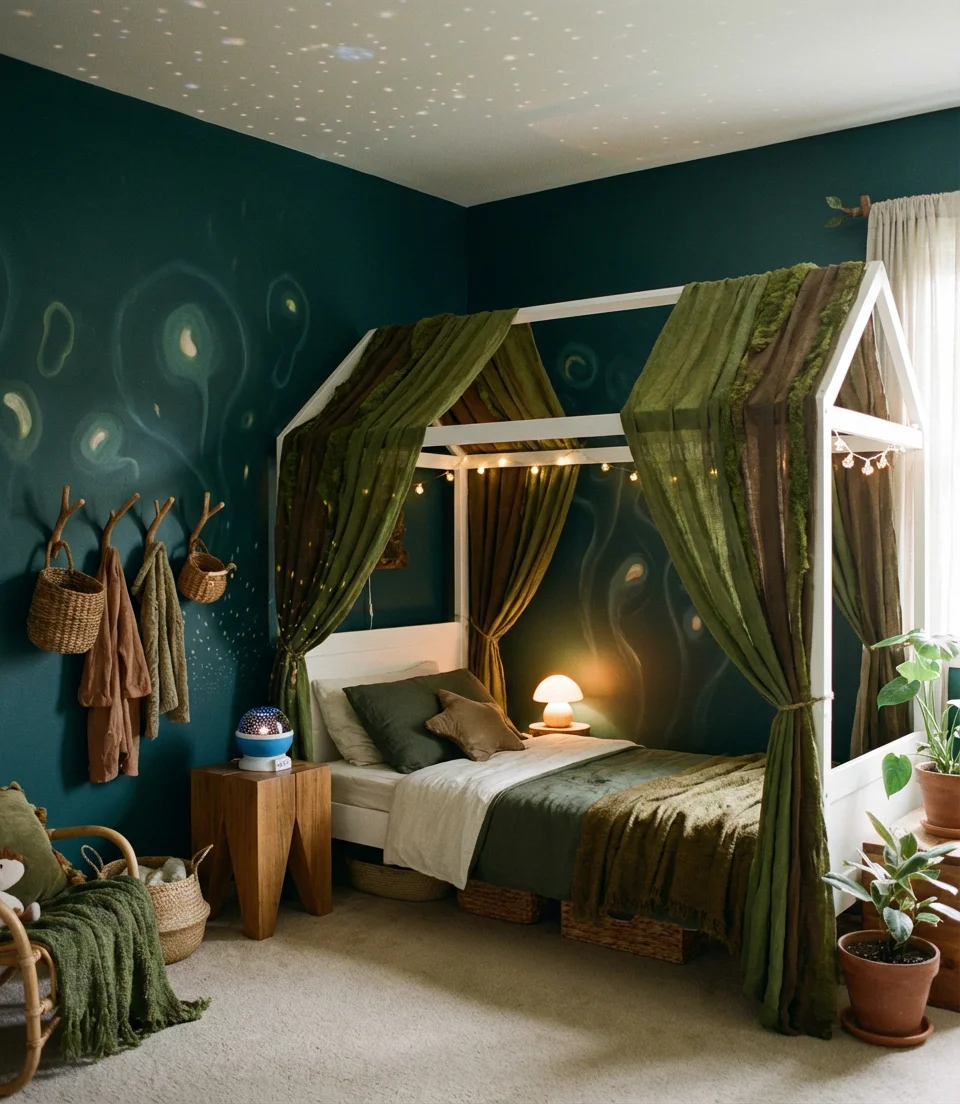
Inspired by the rich visual world of Avatar—whether the beloved animated series or the lush landscape of Pandora—an Avatar-world bedroom leans into deep teals, bioluminescent-style lighting elements, and organic, nature-forward shapes. Think deep forest green walls with painted glowing accents, a tent-style bed canopy in earthy fabric, branch-shaped hooks, and a constellation projector that shifts the ceiling into something magical each night.
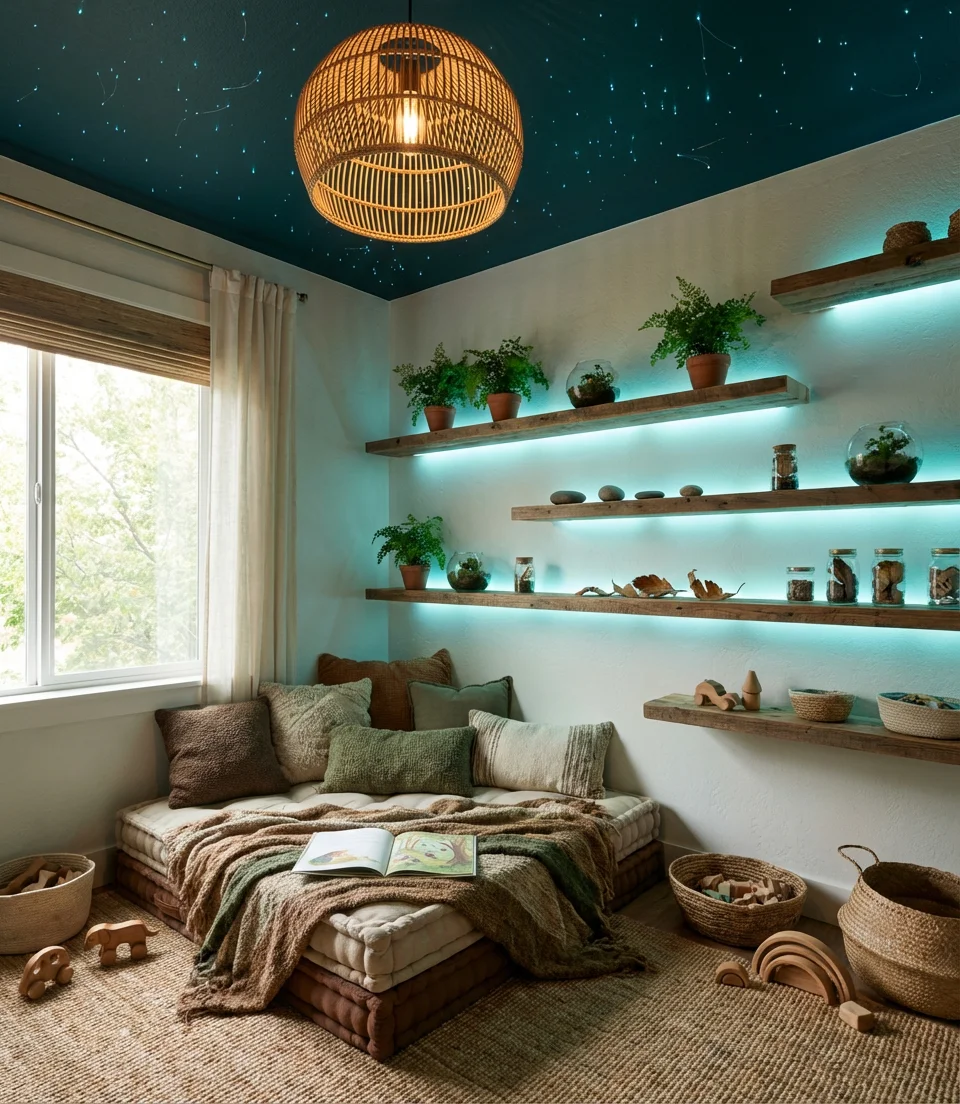
This concept works beautifully in rooms where you want something thematic but with genuine artistic integrity—not cartoon branding, but world-building. Parents, already drawn to biophilic interiors and nature-inspired palettes, particularly favor this concept in the Pacific Northwest and Northern California. The room becomes less of a “themed space” and more of an immersive environment that a child genuinely disappears into.
12. Cute Reading Nook Bedroom for Small Rooms

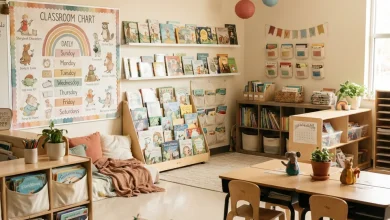
Creating a dedicated reading nook within a child’s bedroom is a highly impactful upgrade, particularly in small rooms where every square foot counts. The classic approach: use a window alcove, bay window seat, or even a simple floor-level platform tucked under a loft bed. Add a cushion, a few throw pillows, a small bookshelf at arm’s reach, and soft overhead lighting. This can be completed in a single afternoon and has been a beloved space for years.
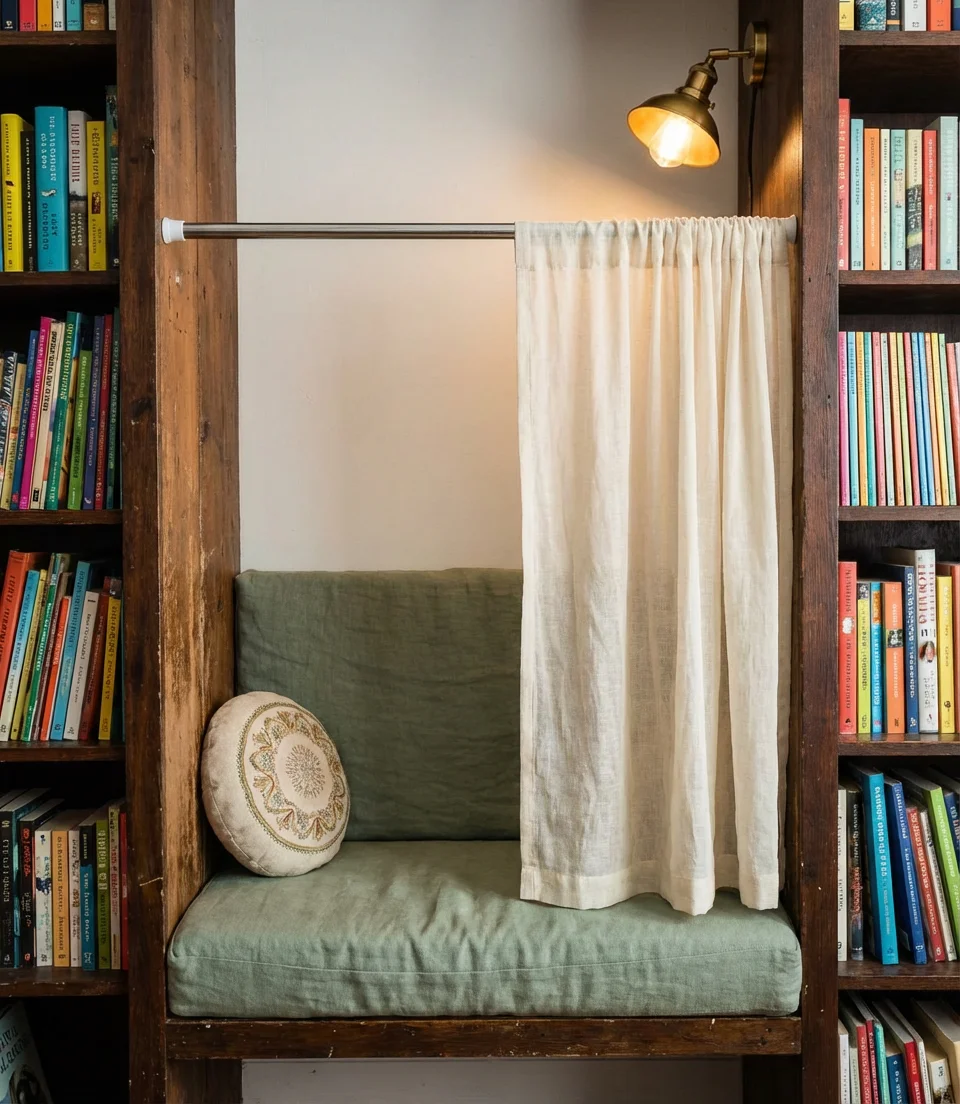
Reading nooks don’t require a renovation. One of the most popular DIY approaches in American homes right now involves using two Billy bookcases from IKEA placed side by side with a plywood shelf across the top for seating—total cost around $150–$200 including the cushion. Add curtains on a tension rod for a sense of enclosure, and you’ve created a private little world that kids genuinely retreat to. The design is simple, budget-friendly, and surprisingly powerful.
13. Indian-Inspired Vibrant Kids Room
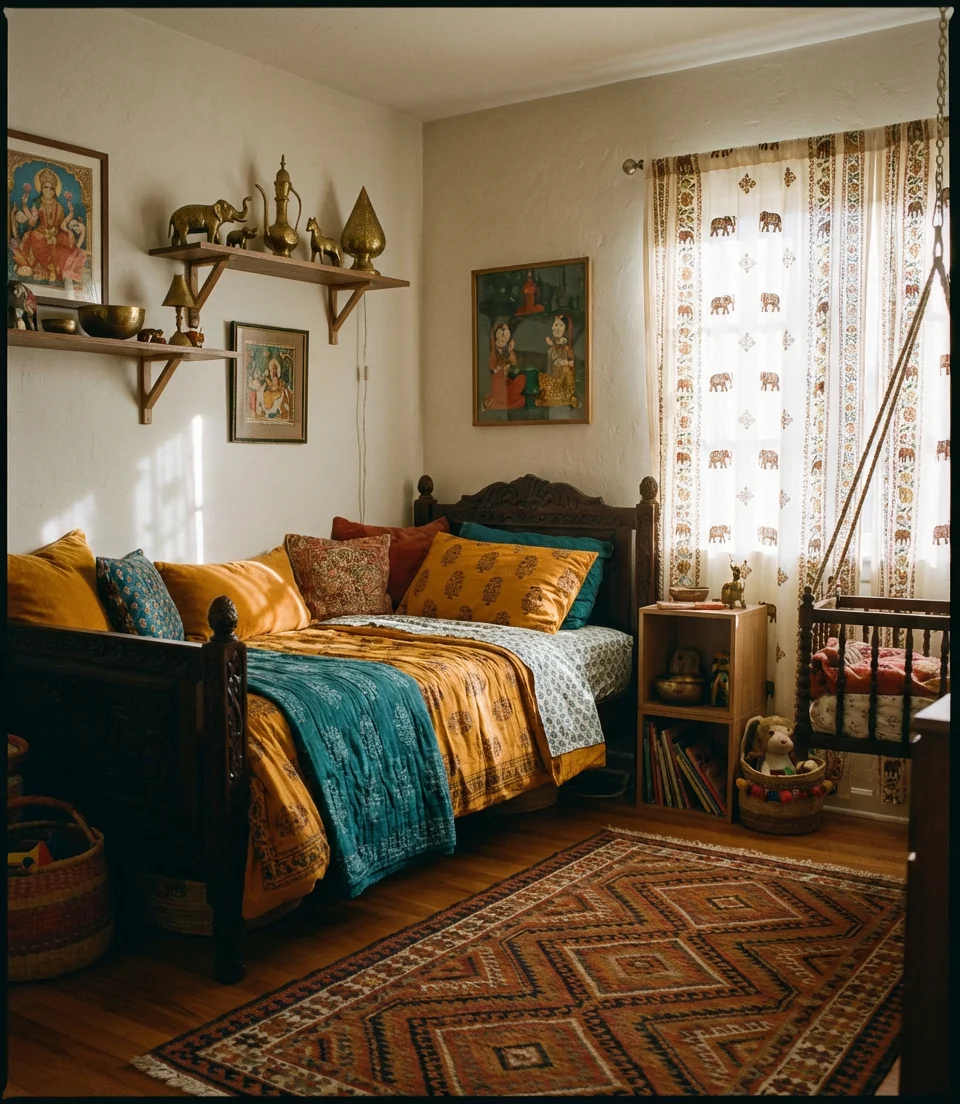
An Indian-inspired kids’ room offers Indian-American families—and anyone attracted to the bold, layered beauty of South Asian design— a stunning way to honor cultural heritage while creating a genuinely beautiful space. Think saffron and teal as dominant tones, block-printed cotton bedding, jharokha-style carved wood headboards, hand-knotted rugs with geometric patterns, and brass accents on shelving. It’s rich, warm, and completely distinctive.

What makes this approach so meaningful is the storytelling built into the objects themselves. These objects, such as a block-print bedspread from Rajasthan, a brass elephant figurine from a grandparent’s home, and a hand-painted tile serving as a nightstand trivet, transcend beyond mere decorative elements. They’re conversation starters and cultural anchors that connect a child to something larger than themselves. Design as identity is something kids carry with them long after they’ve moved out.
14. Stray-Game Inspired Urban Aesthetic for Boys
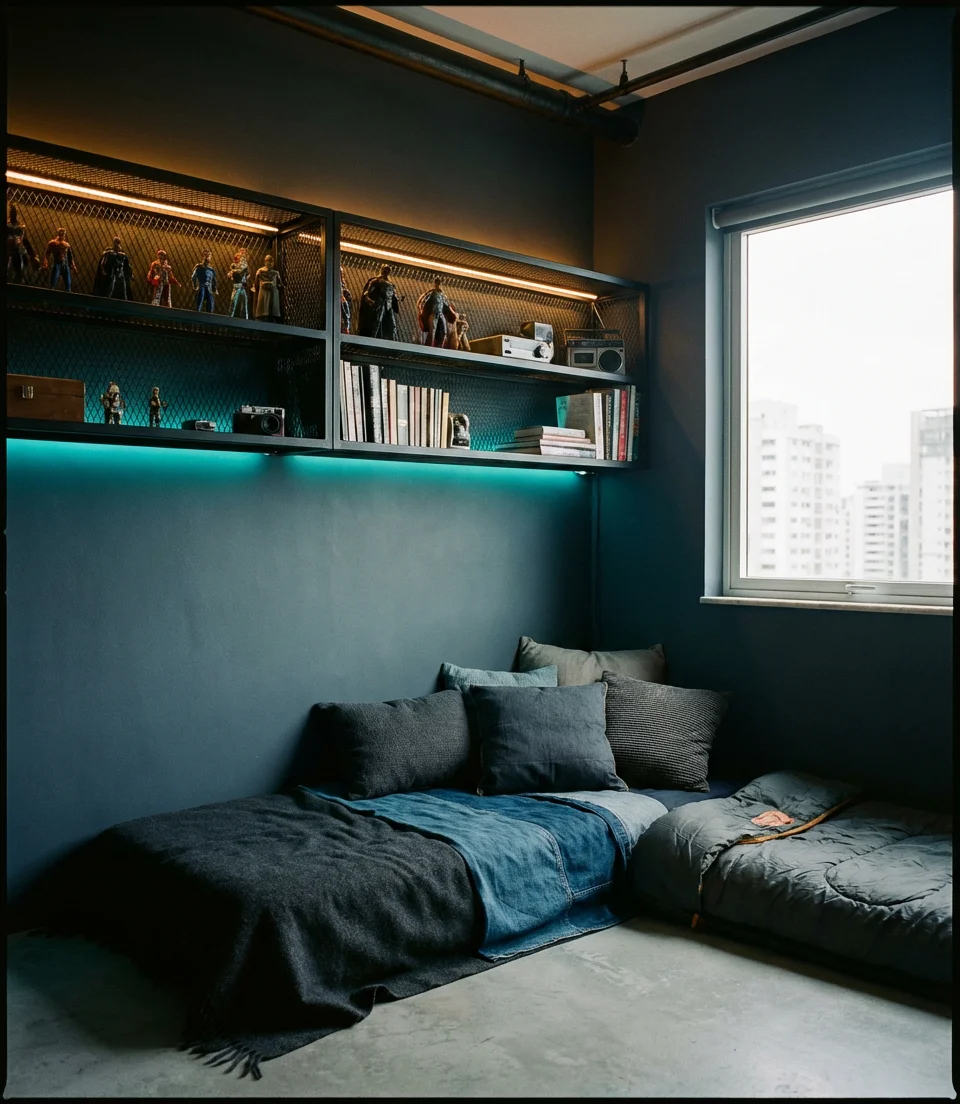
The indie game Stray—where you navigate a neon-lit cyberpunk city as a cat—has inspired a surprisingly cozy visual aesthetic that translates beautifully into bedroom design, especially for boys who love atmospheric, moody spaces. Think deep slate walls, neon LED strip lighting in amber and teal, urban-industrial elements like metal mesh shelving, and a floor-level cozy corner with layered blankets and plush cat companions. It’s cool without trying too hard.
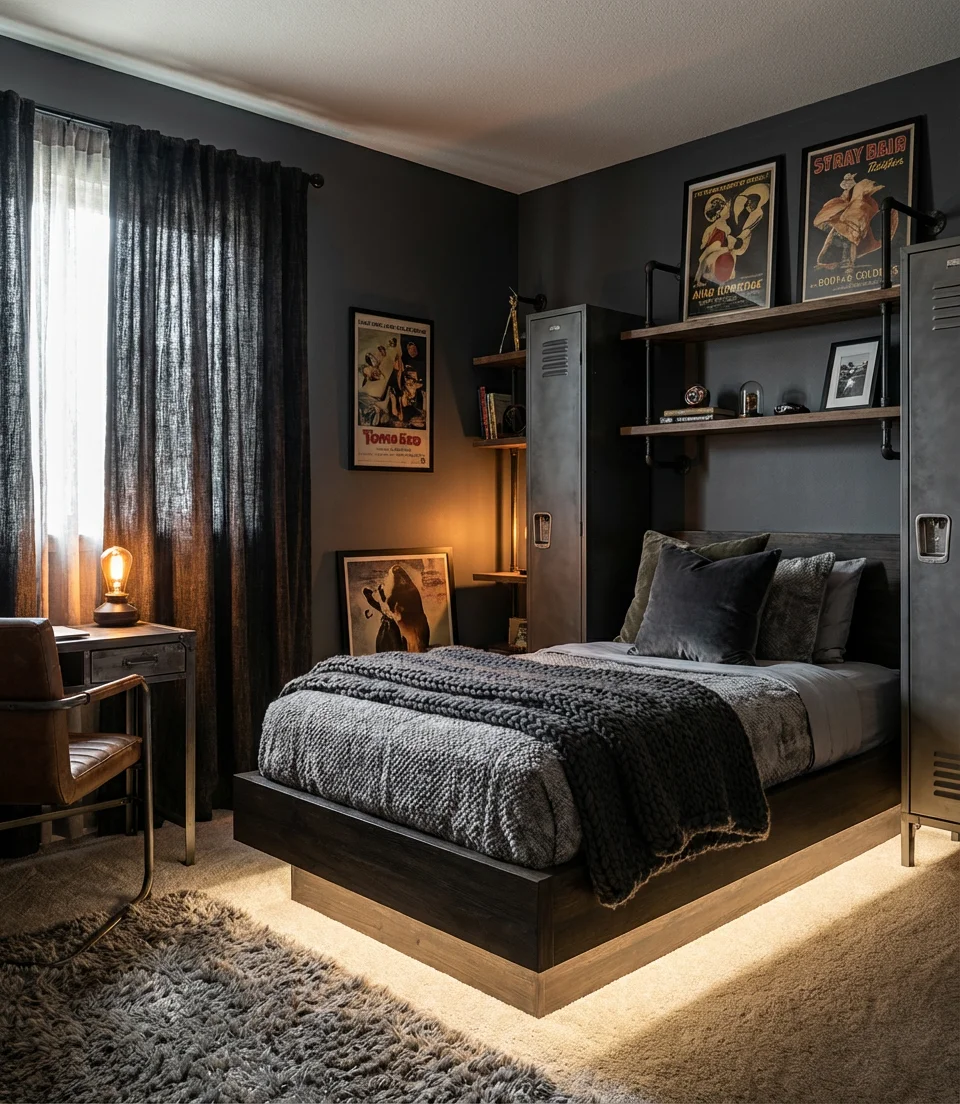
The dark, moody palette this style calls for can feel like a risk in a small room—but with the right lighting, it actually creates a sense of depth and coziness rather than constriction. Use warm LED strips tucked behind shelves and under the bed frame to create an ambient glow. Keep the ceiling light bright and separate so the mood lighting is a layer you add, not the only source. Layered lighting is what separates a moody room that works from one that just feels dark.
15. Foster Care Transition Room—Warm and Welcoming
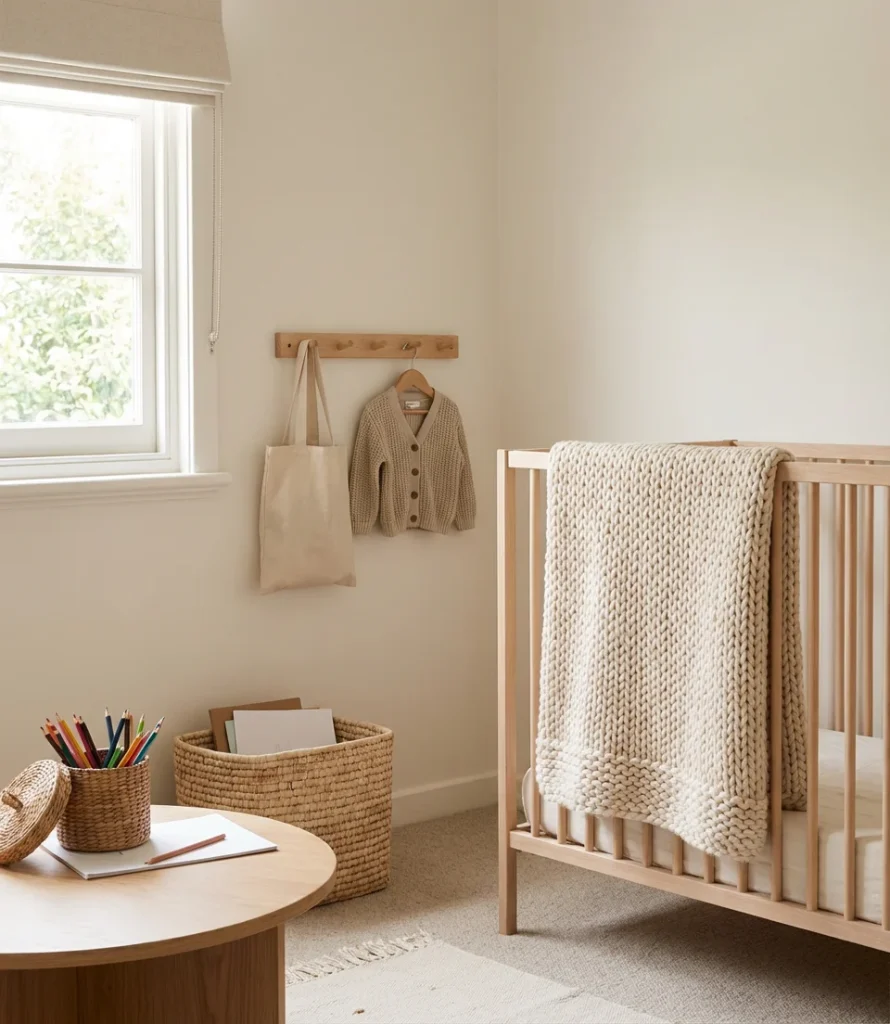
Designing a room for a foster child comes with its own emotional architecture. The goal is warmth without overwhelming personalization—a space that says “you belong here” from the first night, while still leaving room for the child to make it their own over time. Soft, inviting neutrals with a few thoughtful touches—a name tag on the door (easily swapped), a cozy reading basket, and a small art supply station—strike the right balance between comfort and gentle welcome.
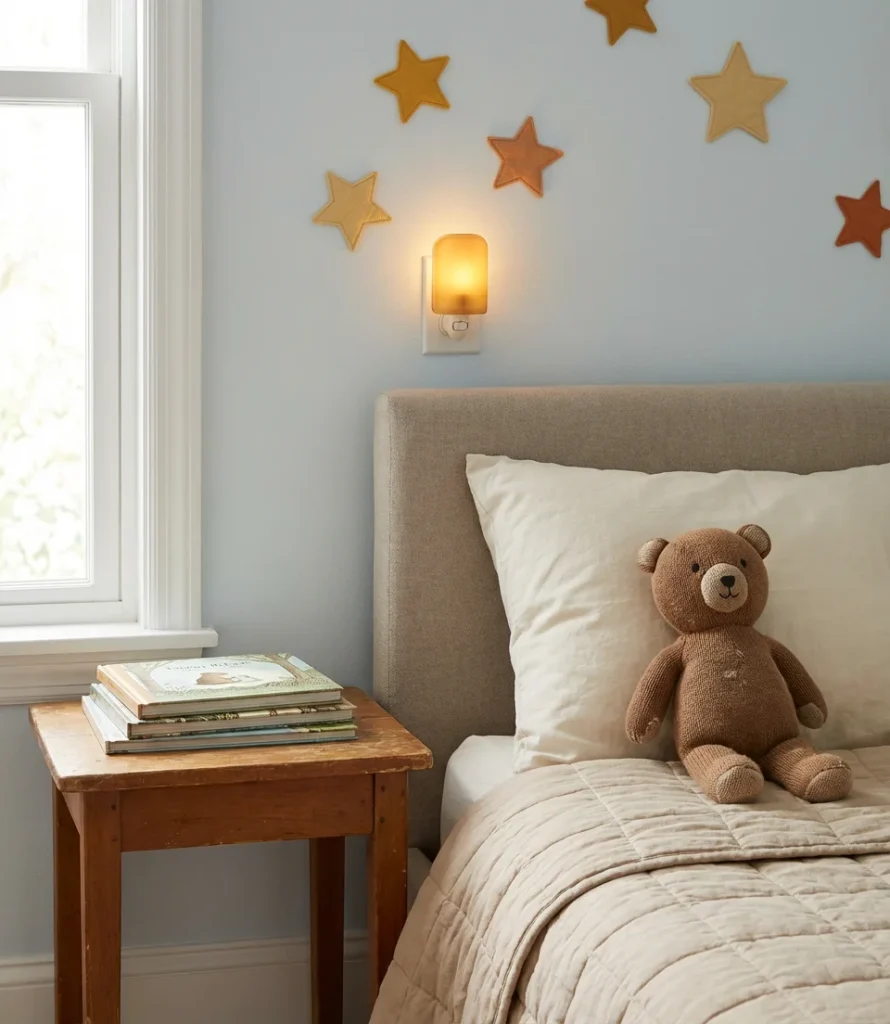
Child welfare advocates consistently emphasize that the physical environment matters enormously for children in transition. A bedroom that feels safe, uncluttered, and genuinely cozy can meaningfully reduce anxiety in those critical first days. Many foster families keep a small “personalization kit”—removable wall decals, a choice of two or three bedding sets, a few blank art frames—so the child can immediately begin making choices about their space. Agency, even in small things, is profoundly grounding.
16. Scene-Style Moody Tween Room
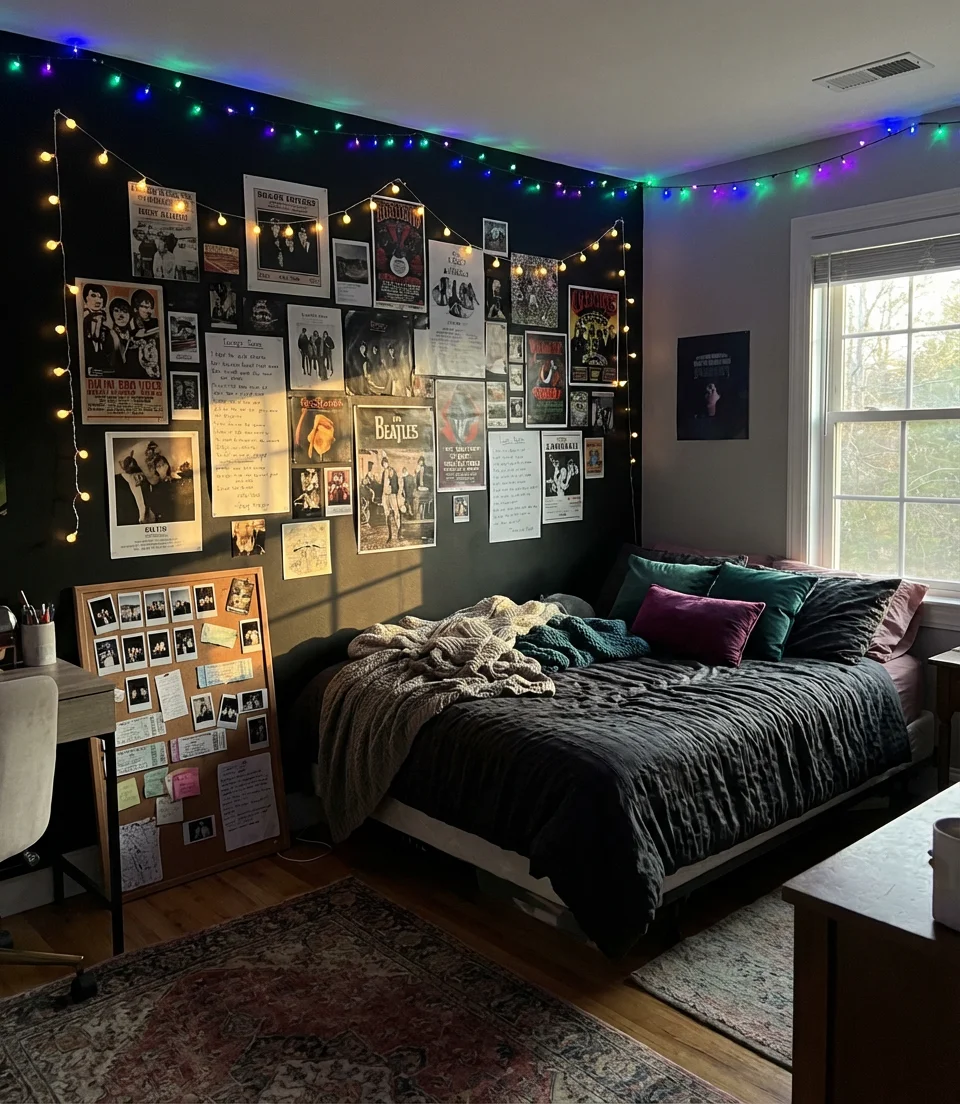
The scene aesthetic has made a full comeback in 2026 — think My Chemical Romance posters, galaxy-print everything, a wall of polaroid photos, and an unapologetically dramatic dark color palette. For tweens who lean emo or alternative, this room style is deeply personal and deeply meaningful. Black accent walls, string lights in deep jewel tones, band-inspired art prints, and a maximalist layering of textures make the bedroom feel like an extension of their identity rather than something imposed by a parent.
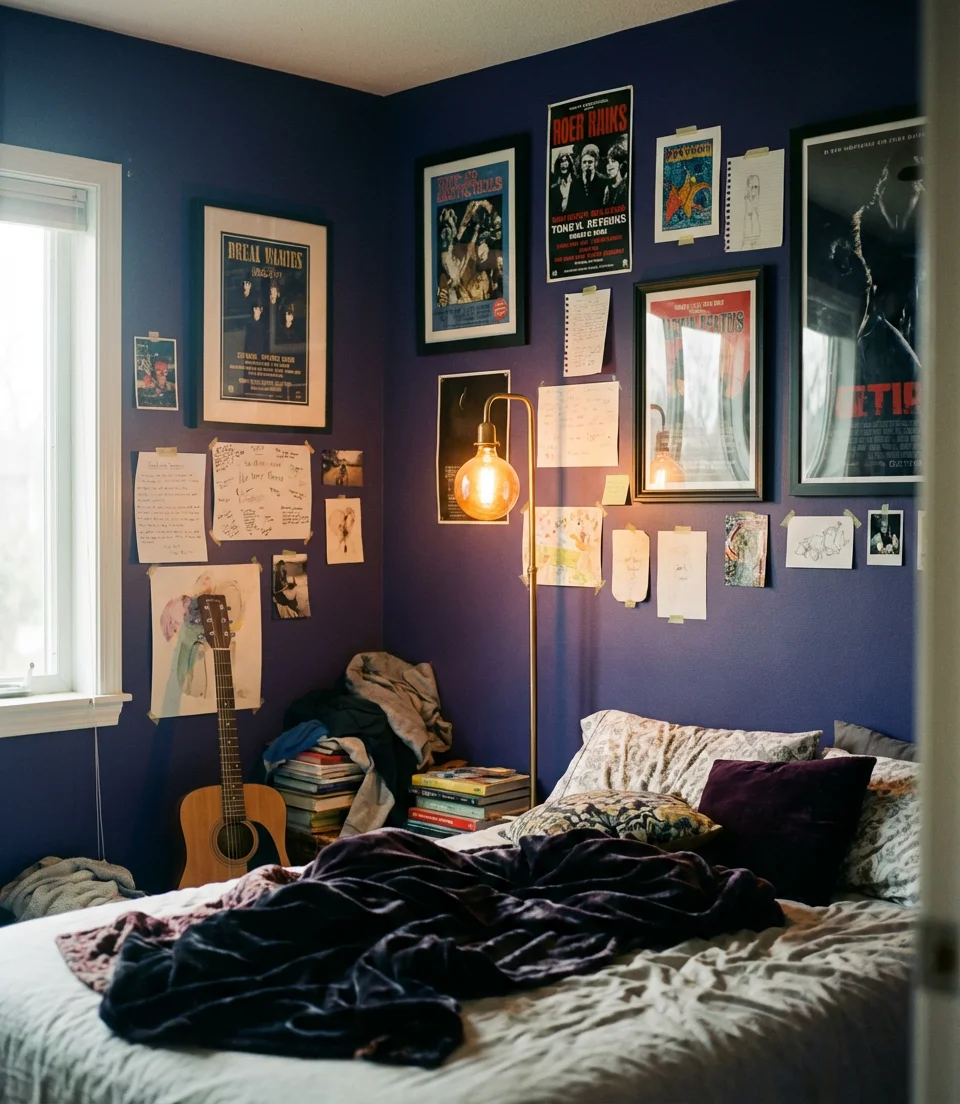
The most important thing parents can do with this style is resist the urge to “clean it up.” What reads as chaotic to an adult is carefully intentional to a tween with a scene aesthetic. The layered posters, the string of fairy lights over a corkboard covered in notes and photos—that’s not mess, that’s curation. Respecting your child’s preferred design language, even if it’s not your own, fosters trust and communication within the family.
17. Weird and Wonderful Maximalist Kids Room
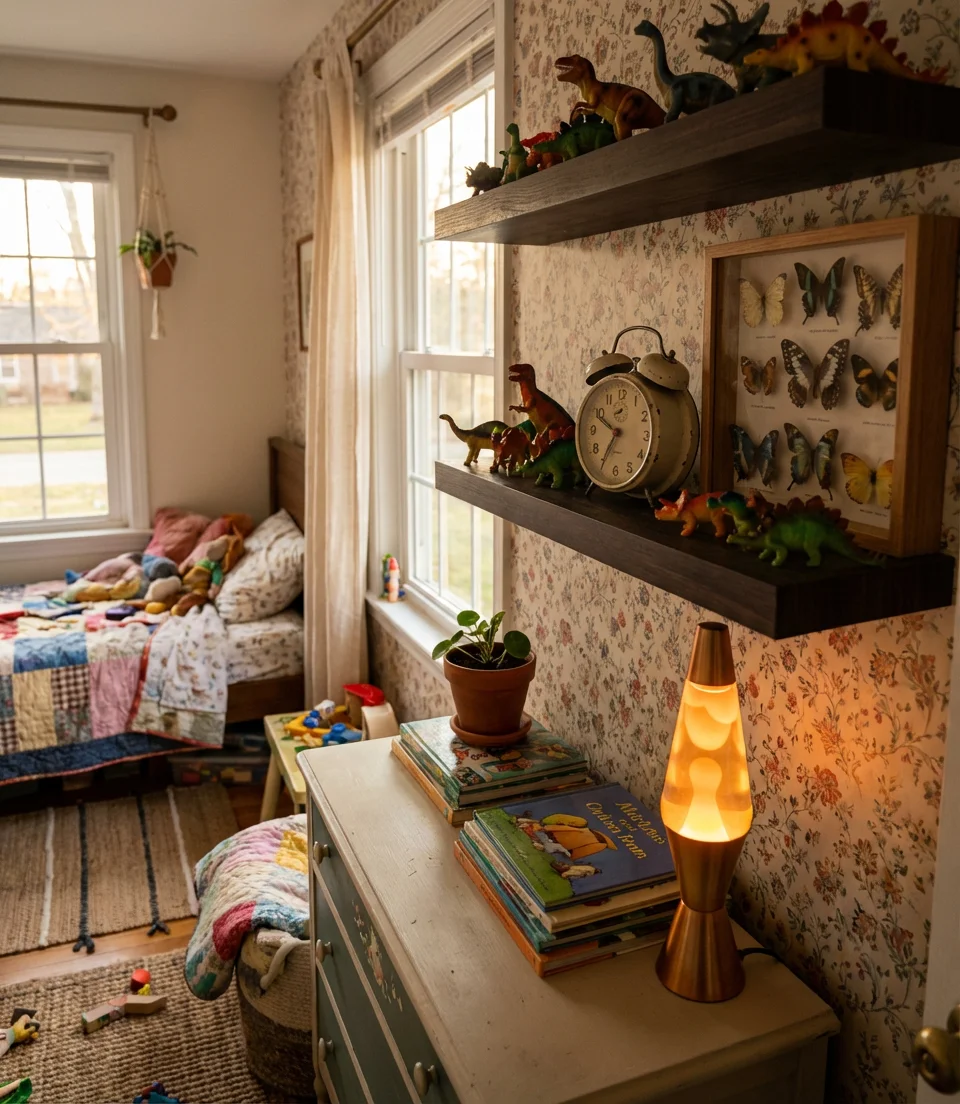
Some kids are just weird—gloriously, enthusiastically, brilliantly weird—and their rooms should reflect that. The maximalist kids’ room in 2026 is a celebration of obsessions: dinosaurs mixed with astrology, vintage toys displayed as art, and a taxidermy-inspired fake butterfly collection next to a lava lamp. There’s no single aesthetic thread except “I love all of these things equally.” And honestly? It’s one of the most joyful room styles you can create, precisely because it follows no rules.

The practical challenge of maximalism is keeping it from tipping into actual clutter. The secret is containment: everything has a designated display spot, shelf, or hook. Deliberately displaying objects, as opposed to simply piling them, transforms maximalism into something intentional and interesting, rather than overwhelming. Floating shelves, shadow boxes, and pegboard walls serve as invaluable tools in this context, allowing collections to breathe and maintaining visual organization.
18. Modern Purple Bedroom for Girls

Purple is the color of 2026 in children’s design, and not the lavender-purple of ten years ago. We’re talking deep plum accent walls, mauve-toned bedding in textured boucle, lilac geometric wallpaper, and amethyst-toned accessories that catch the light. For a modern girl’s bedroom, this palette strikes a balance between sophistication and playfulness, mature enough to evolve with them and bold enough to exude excitement at the moment.
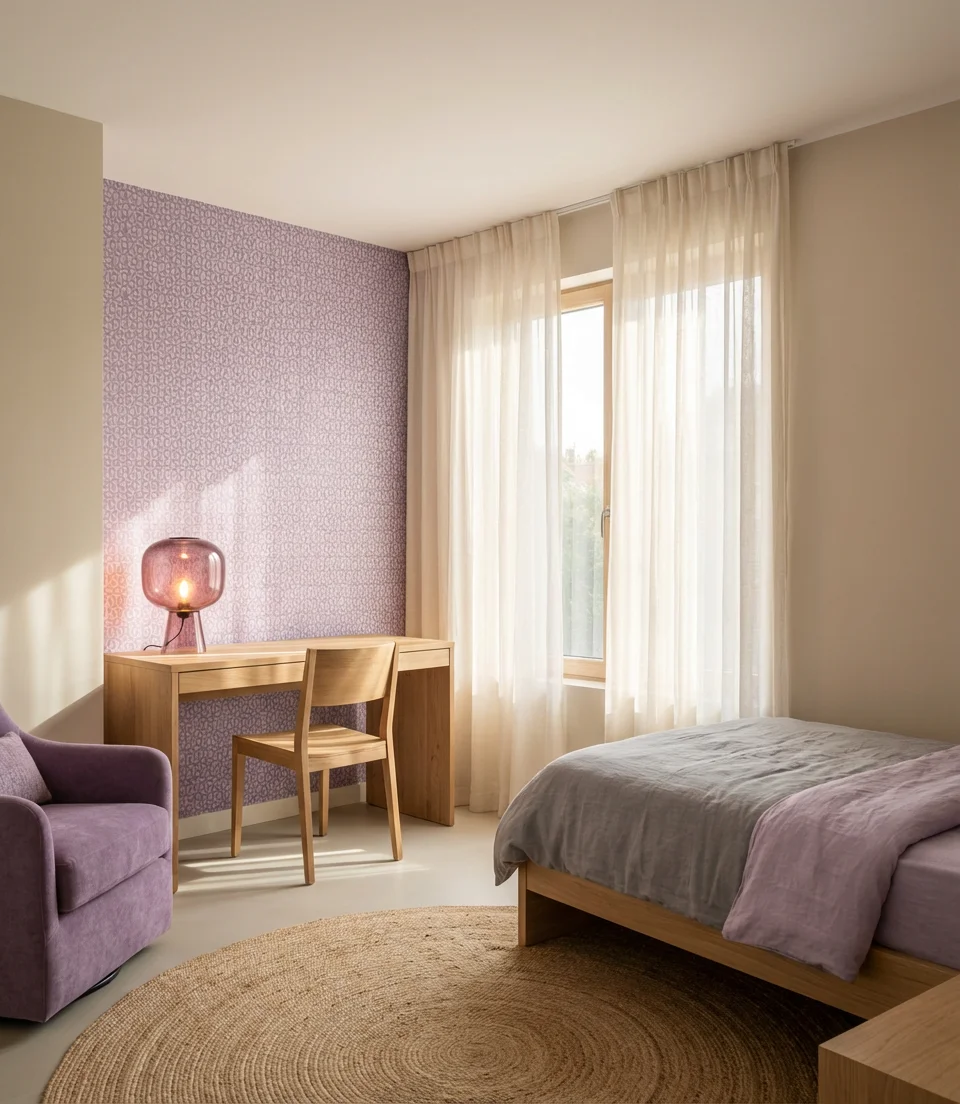
When working with deep purple as your anchor color, the key is balancing it with warm neutrals rather than cool whites. Ivory, warm beige, and natural wood tones prevent the room from feeling heavy or cold. A plum accent wall paired with an oatmeal-colored linen bedspread and honey oak floating shelves creates a room that feels rich without being oppressive. It’s a grown-up approach to a traditionally “little girl” color, and it works beautifully.
19. Pink Boho Room for Young Girls
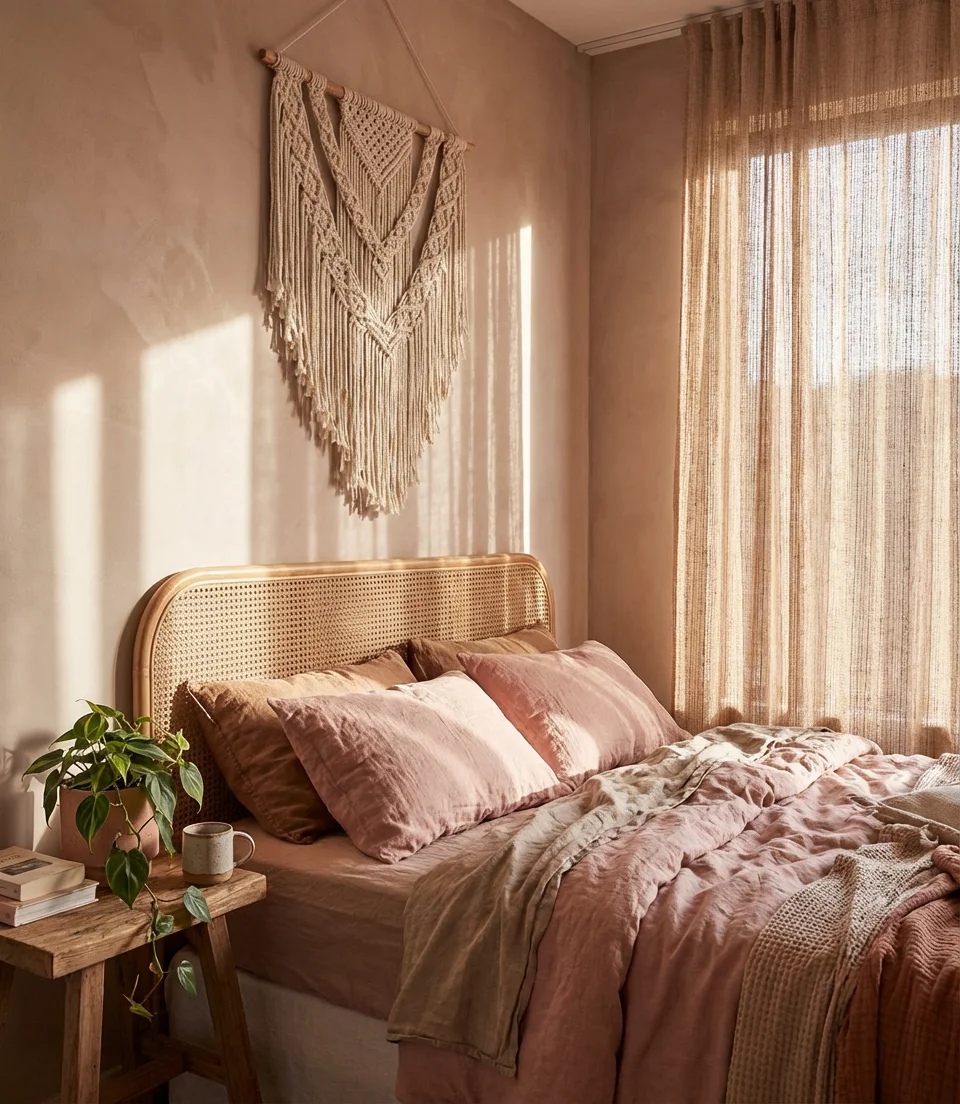
The boho-pink girls’ room shows no signs of fading—if anything, it’s matured into something more intriguing. In 2026, it’s dusty rose and terracotta rather than hot pink, woven wall hangings instead of plastic decals, and rattan furniture that brings in warmth and texture. The overall effect is soft, earthy, and layered: a space that feels handmade rather than mass-produced. For parents who want something distinctly non-corporate in their daughter’s room, this is the direction.
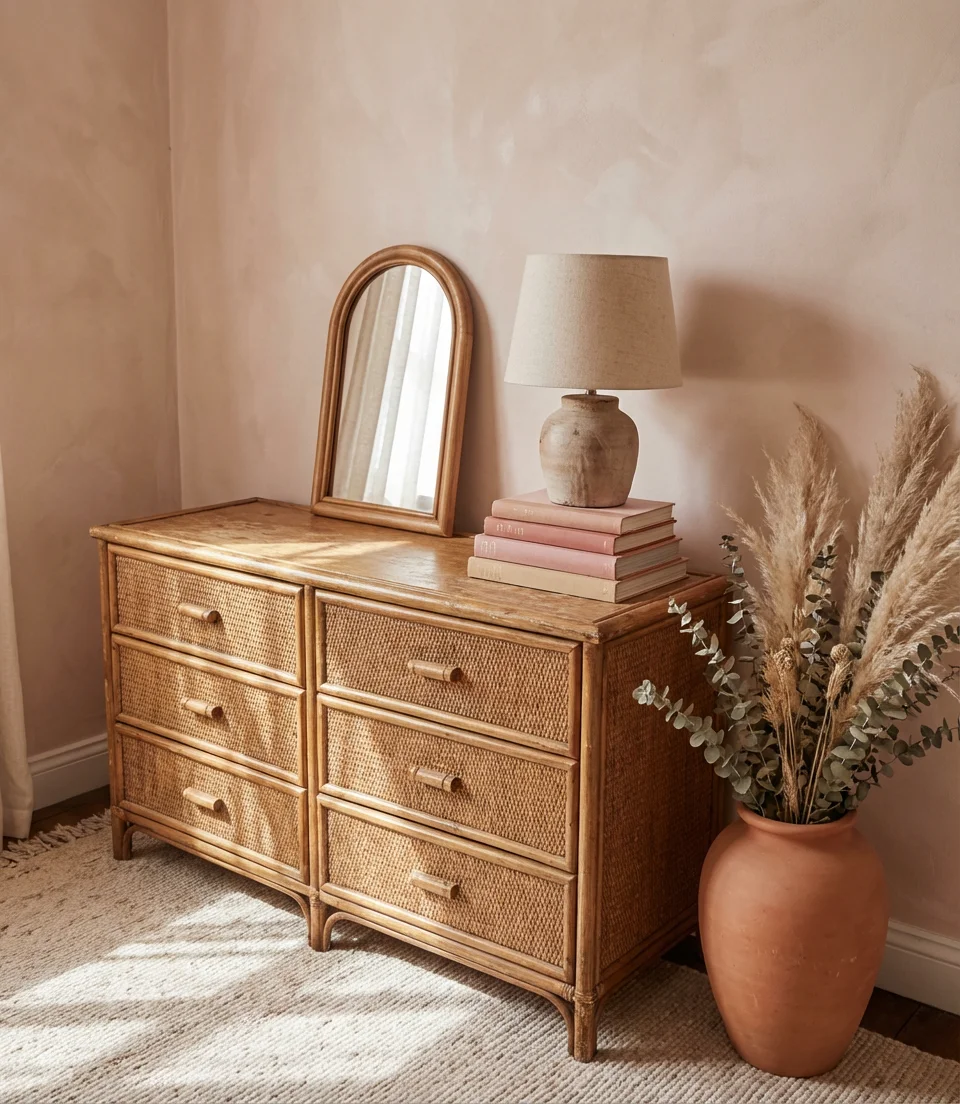
Building a boho room doesn’t require a big budget—it actually rewards thrifting and secondhand finds. A vintage rattan headboard from Facebook Marketplace, a macramé wall hanging from Etsy, a hand-thrown ceramic lamp from a local artist’s market—these pieces give the room a soul that no big-box store can replicate. Many parents in the boho design community talk about the joy of building these rooms over time, adding pieces slowly rather than buying a whole set at once.
20. Fun and Colorful Room for Small Apartment Kids
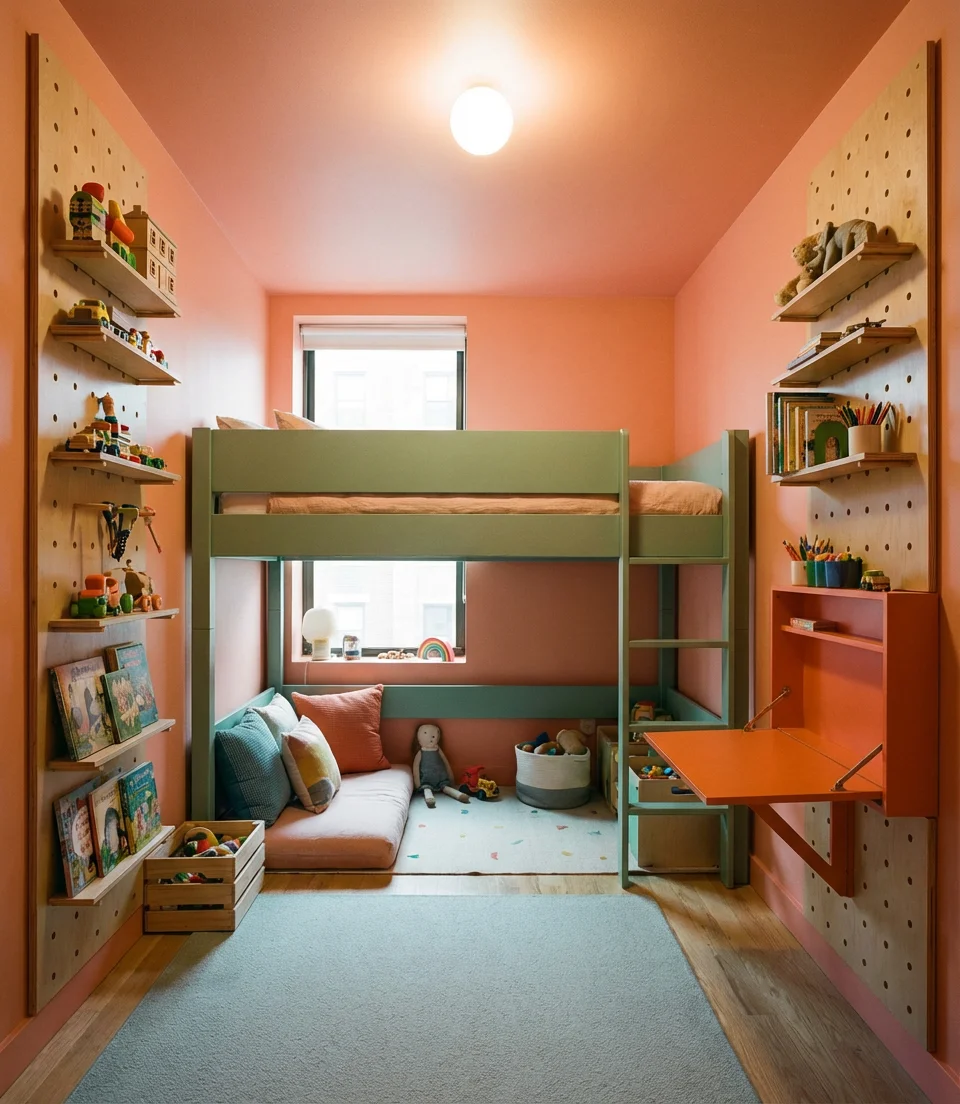
Raising kids in a city apartment means getting creative with small spaces, and 2026’s design solutions are better than ever. A fun and colorful approach to a compact kids’ room—vertical storage, murphy-style fold-down desks, and loft beds with play zones below—can make a 90-square-foot room genuinely feel like enough. Treating every inch as intentional, rather than as a compromise, is the key.
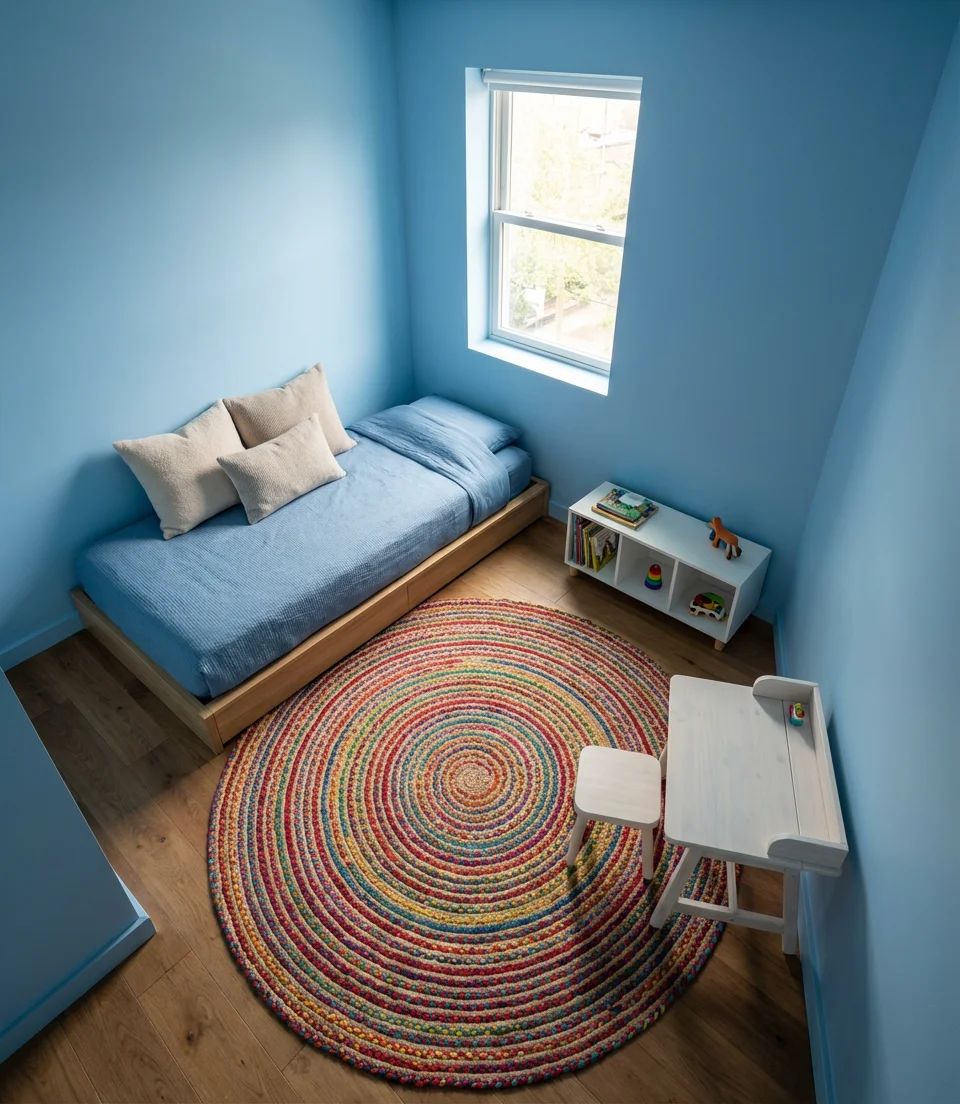
Color plays a surprisingly important role in how spacious a small room feels. Contrary to the old rule that small spaces need white walls, a well-chosen bold color used consistently—walls and ceiling the same hue—actually makes a room feel larger by eliminating visual boundaries. Monochromatic rooms in soft coral, sage green, or sky blue create a wrapped, cozy feeling that small kids actually love. It’s counterintuitive but remarkably effective.
21. Gender-Neutral Modern Nursery to Toddler Room
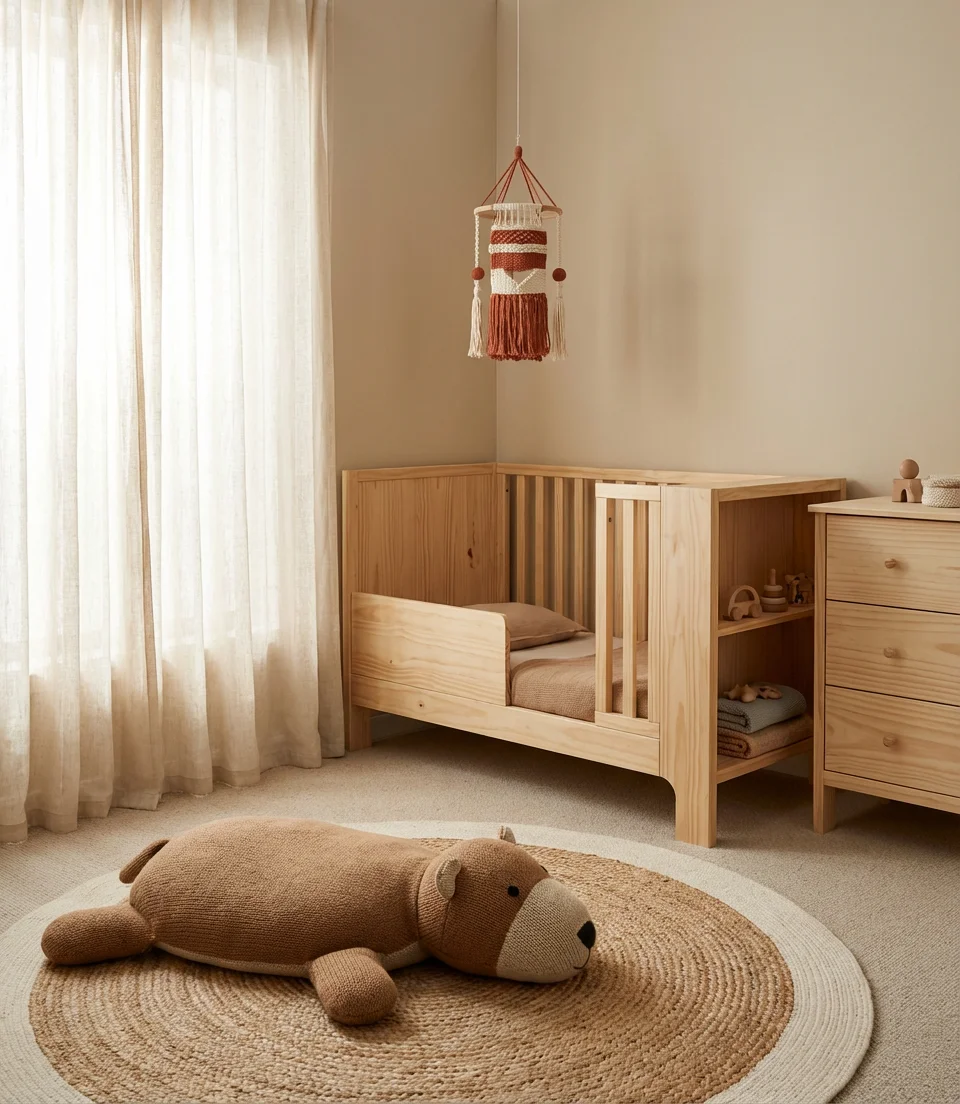
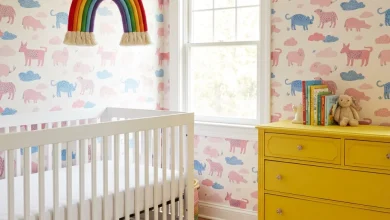
The gender-neutral nursery-to-toddler room is one of the most practical design concepts of 2026. Warm sand walls, natural pine furniture, terracotta accents, and woven textiles create a space that works beautifully for any child—and transitions seamlessly from newborn to age five without a single repaint. This approach is especially popular among parents who expect more than one child or who simply want a room that isn’t loaded with gender signaling from day one.
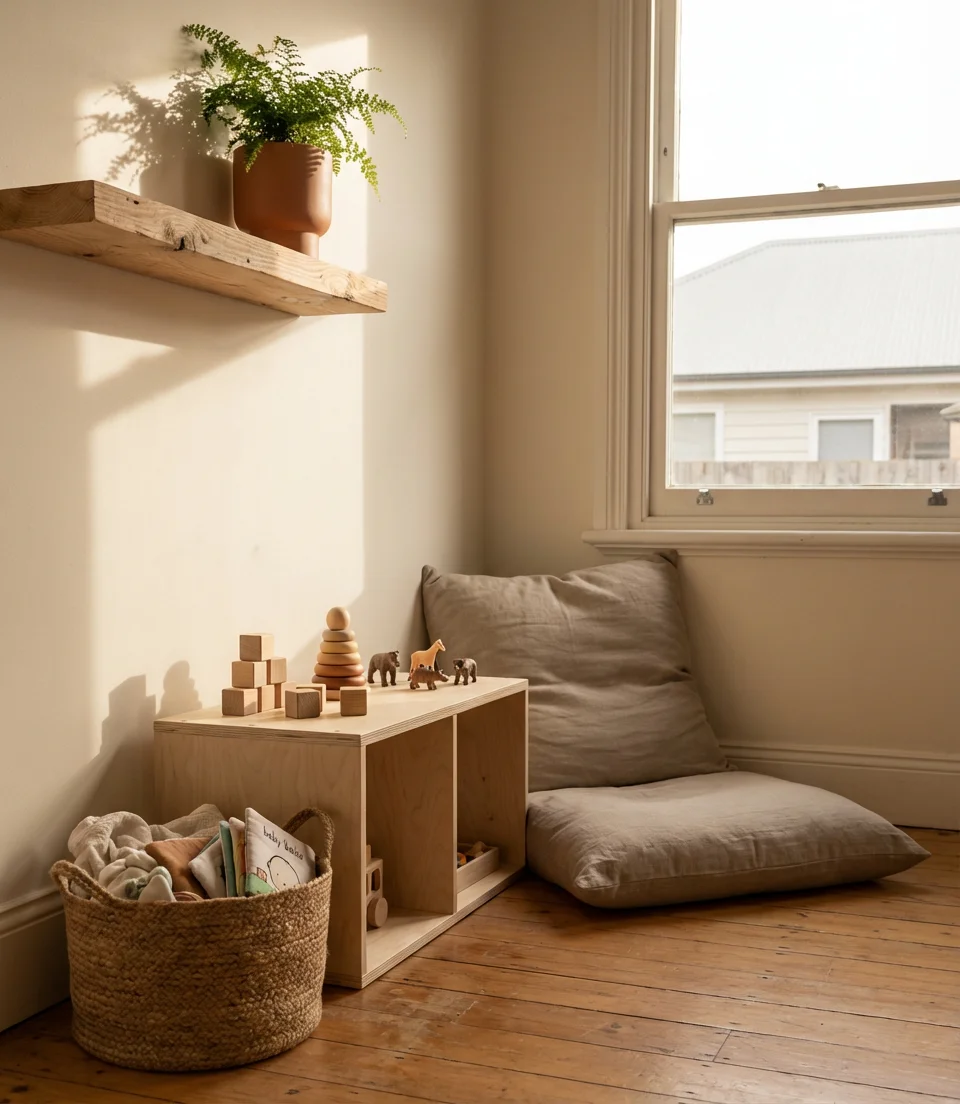
Where it works best is in homes with open floor plans or connected siblings’ rooms, where visual cohesion across spaces matters. A neutral palette in the kids’ zone creates a calming through-line. As the child grows, parents can inject personality through art, textiles, and accessories—all easy to swap out—while the neutral foundation holds steady. It’s genuinely the most future-proof approach to kids’ room design available.
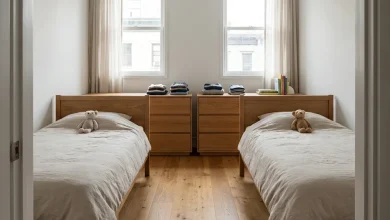
22. Cute Shared Boys Room with Bunk Beds and a Theme
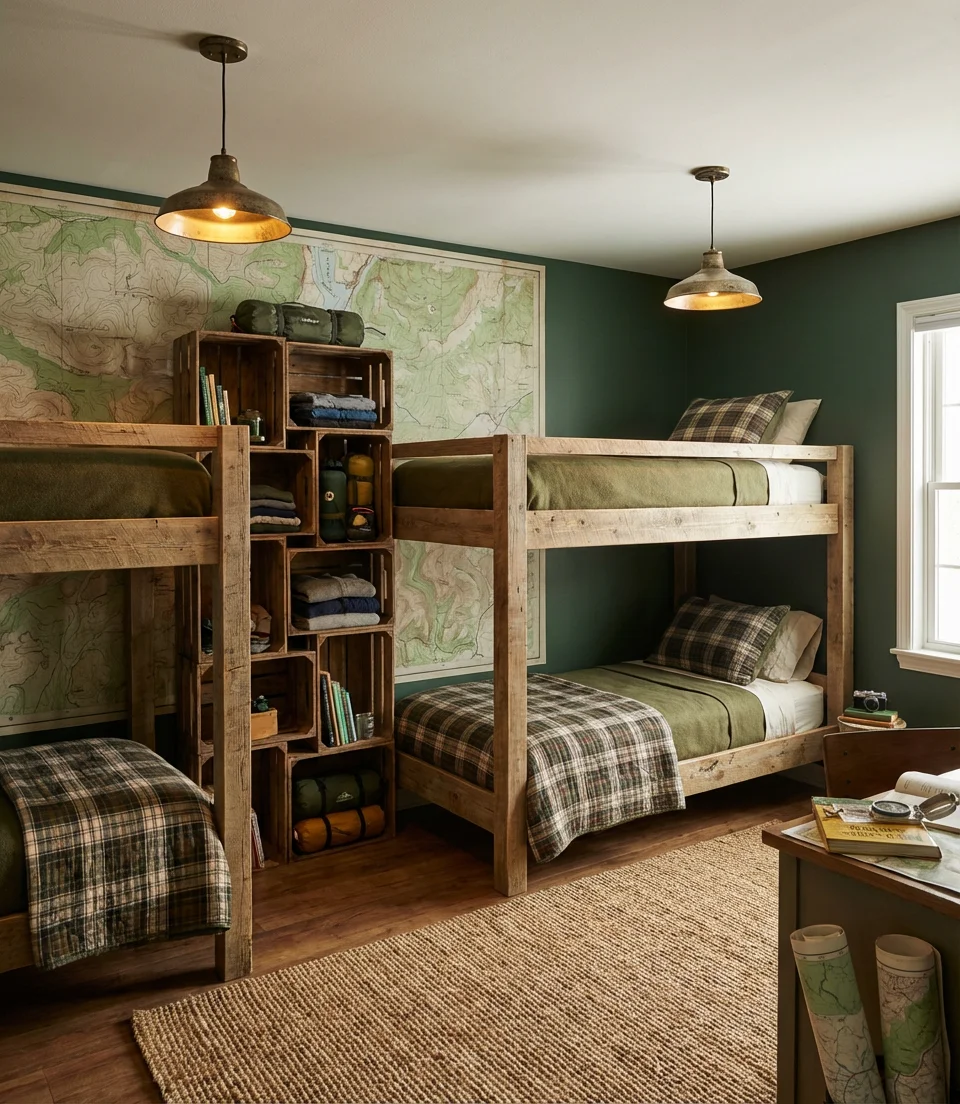
Shared rooms for boys work best when there’s a unifying theme that both kids can buy into—and in 2026, popular choices include adventure/exploration, retro space, and nature-wilderness vibes. A charming bunk bed setup in a woodsy adventure theme—hunter green walls, a topographic map mural, built-in cubbies for each kid’s treasures, and matching olive-colored bedding—gives brothers a shared identity in the room while still allowing individual touches on each bunk level.
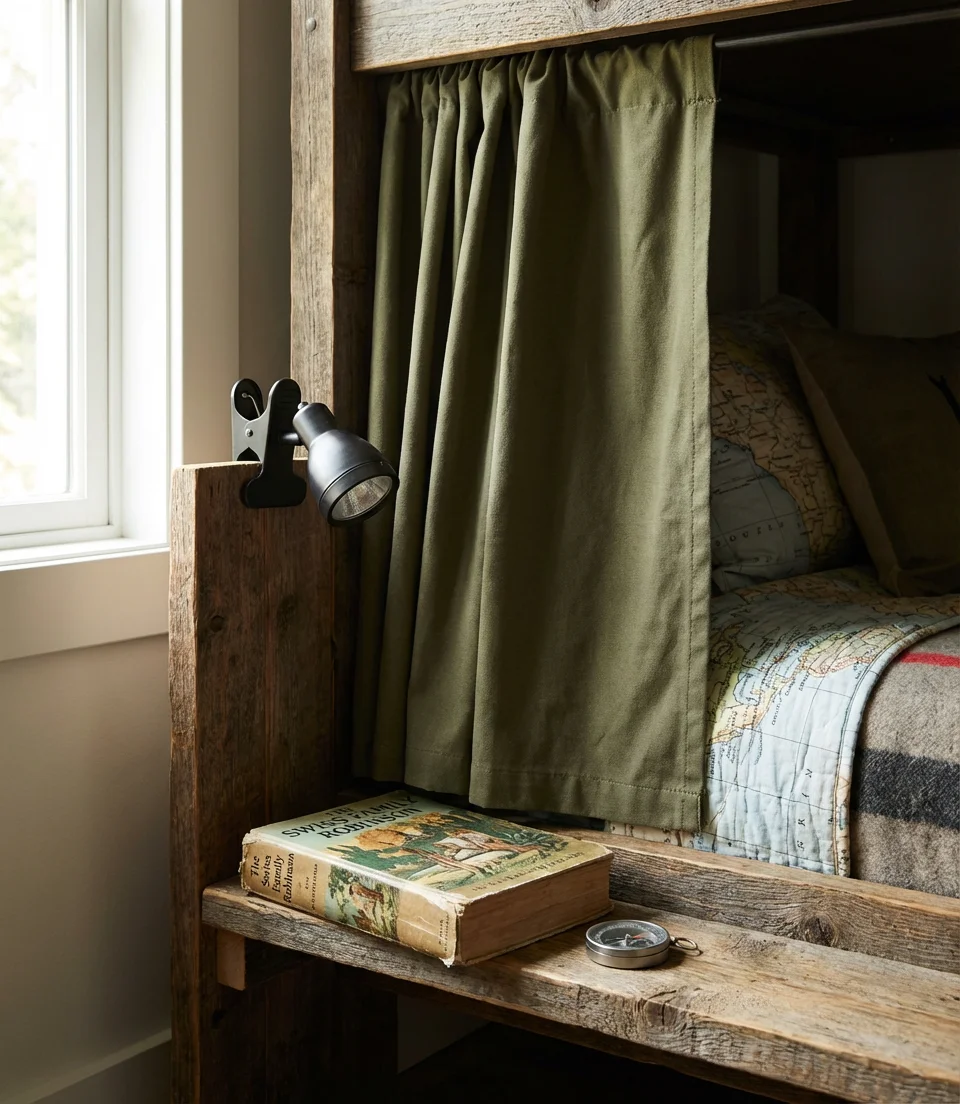
One of the most important but overlooked elements in a shared boys’ room is noise and light separation at bedtime. If the kids are different ages, the older one often stays up later, and the light from a shared lamp can disrupt the younger one. Clip-on reading lights at each bunk, a blackout curtain or curtain panel that can be drawn across the lower bunk, and dedicated shelf space for each child’s nighttime books and essentials go a long way toward peaceful nights.
23. Aesthetic Bedroom for Girls Who Love Detail

For girls who curate their aesthetic with the care of a professional stylist—usually in the 11–16 age range—the bedroom is a genuine creative project. An aesthetic bedroom in 2026 might pull from cottagecore (a style inspired by rural life and nature), dark academia (a focus on classic literature and scholarly pursuits), clean minimalism (a design approach emphasizing simplicity and functionality), or retro Y2K (a revival of early 2000s fashion and culture) depending on their current obsession. The shared thread is intentionality: every item in the room is chosen, positioned, and considered. Nothing is accidental, and the result is a space that feels deeply personal.

The best thing a parent can do for an aesthetic-minded tween or teen is give them a real budget and real authority over decisions. When the kid is the one searching for the perfect vintage desk lamp on eBay or the perfect shade of sage green paint, even $300–$400 can make a significant difference. These rooms tend to be impeccably cared for because they’re deeply owned by the person living in them. Investment—emotional and financial—changes how we treat our spaces.
24. Fun Activity-Based Room That Sparks Creativity
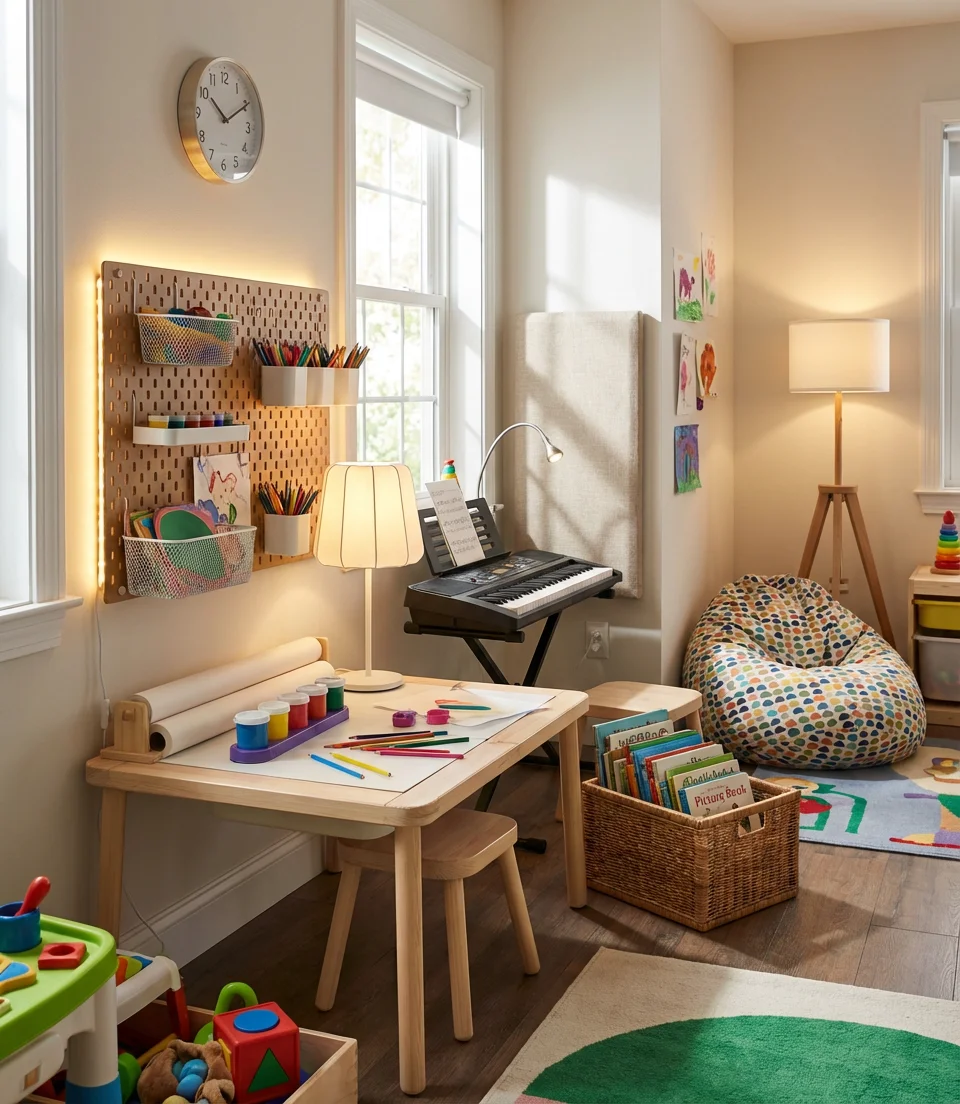
The most forward-thinking kids’ room design of 2026 isn’t just about how it looks—it’s about what it enables. A fun, activity-based room is designed around what the child actually does: a low art table with a pegboard supply wall, a music corner with a small keyboard and acoustic panels, a building zone with Lego sorting bins, and a cozy soft corner for reading and downtime. Each zone supports a different mode of creativity without the room feeling chaotic.
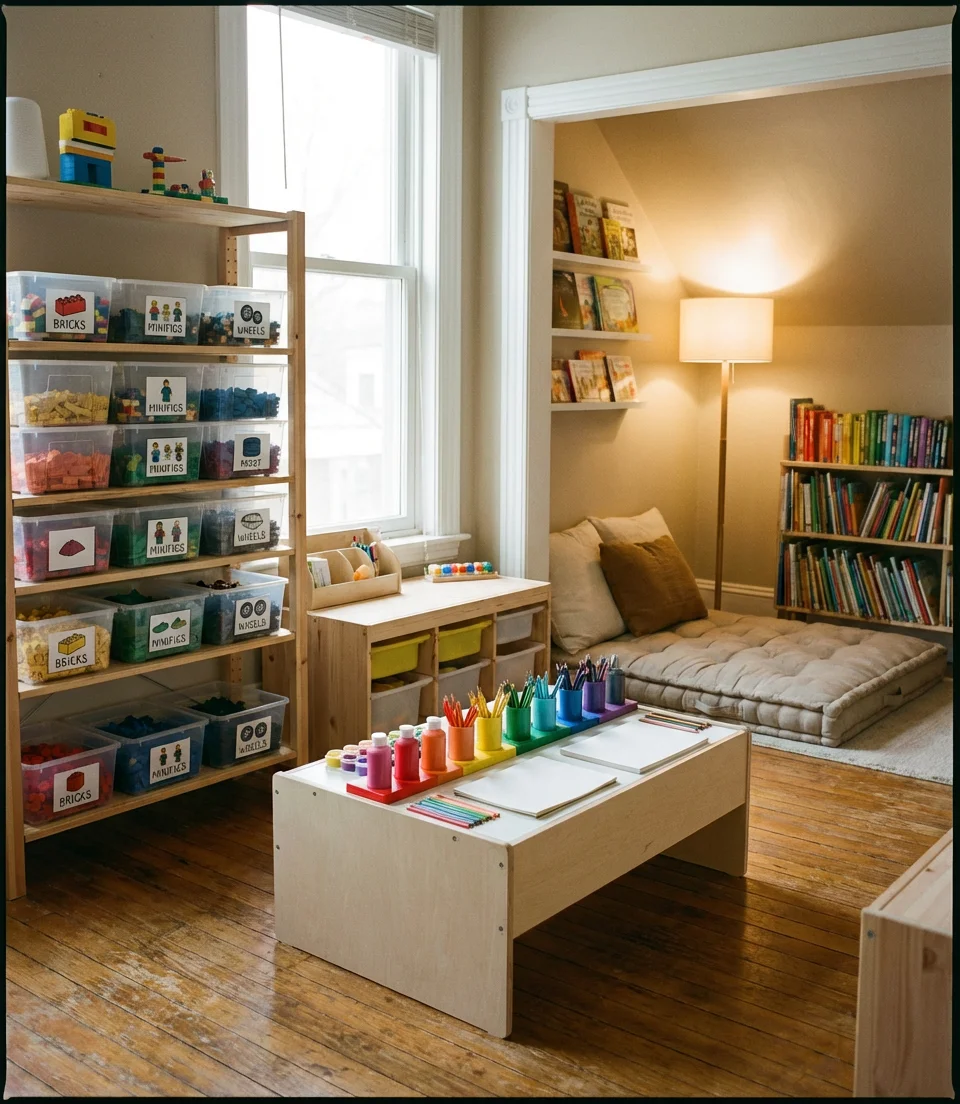
Activity-based design works in rooms of any size because the zones don’t need to be large—they need to be dedicated. A two-foot-wide strip of pegboard above a small desk is enough to define an art zone. A beanbag in a corner with a basket of books creates a reading zone. The power is in the intention: when a space clearly communicates, “this is where you do this thing,” children engage with it more consistently and with more focus. Function drives behavior, and conduct builds habits.
There’s never been a more exciting time to design a child’s bedroom—the ideas, materials, and possibilities available to American families in 2026 are genuinely remarkable. Whether you’re drawn to a maximalist wonderland, a calming neutral retreat, or something in between, the right kids’ room is the one that makes your child feel seen. We’d love to hear what direction you’re heading in—drop your ideas, questions, or room transformations in the comments below. Which of these ideas sparked something for you?