
Home libraries have evolved far beyond traditional floor-to-ceiling bookcases and leather wingback chairs. In 2026, American homeowners are reimagining reading spaces to fit their actual lives—whether that’s a cozy corner in a studio apartment, a moody nook tucked under the stairs, or a whimsical fantasy retreat inspired by favorite fictional worlds. Pinterest searches for home library ideas have surged as people seek spaces that blend function with personal style, from Ikea hacks that maximize tiny rooms to vintage-cozy setups that feel like stepping into another era. This guide explores fresh approaches to creating your dream library, no matter your budget, square footage, or aesthetic preference.
1. Cozy Corner Reading Nook
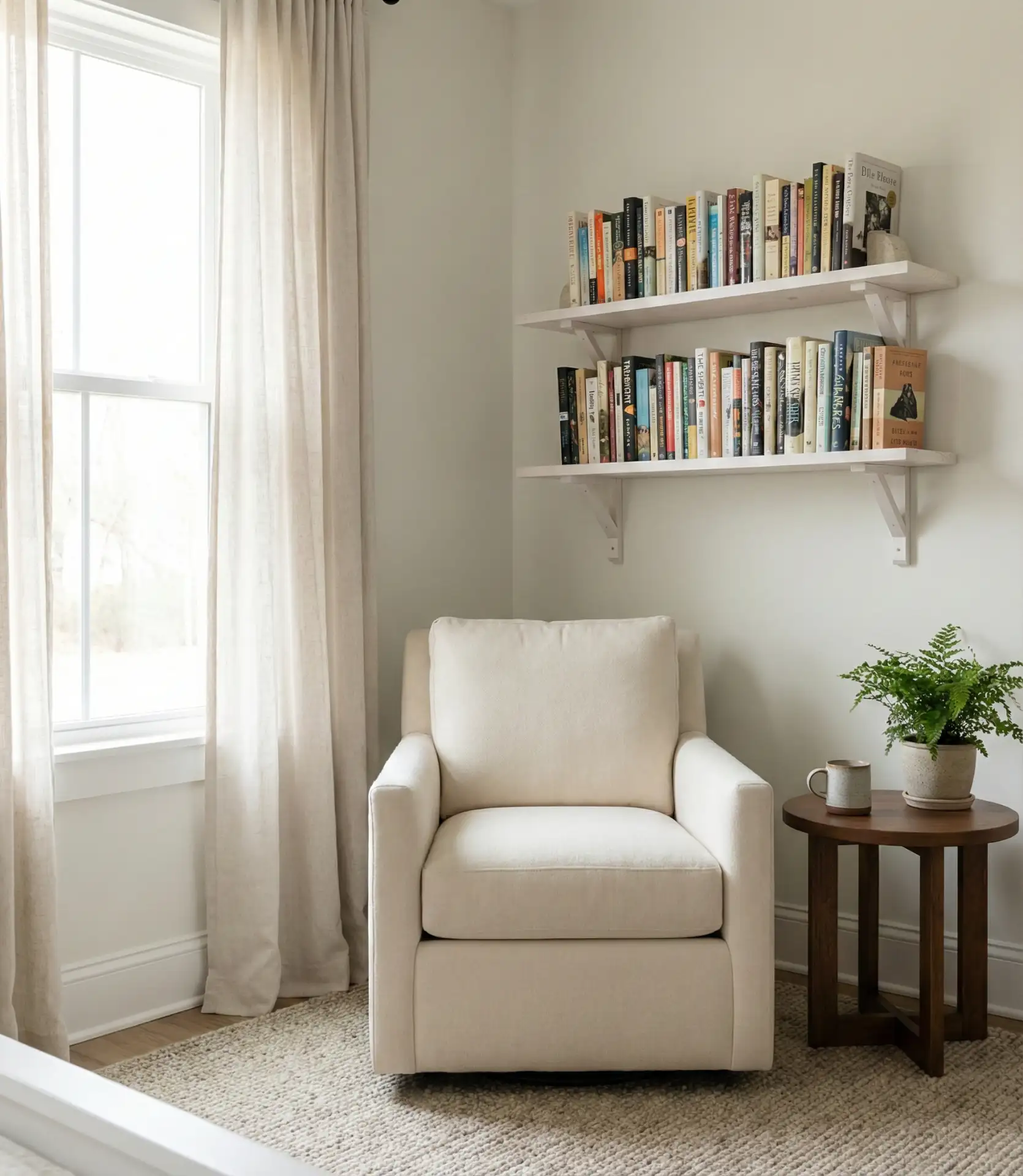
Transform an unused corner into a cozy reading retreat by installing floating shelves on two walls and adding a plush armchair or floor cushion. This approach works beautifully in small rooms where every square foot counts, creating a dedicated literary space without committing an entire wall. Layer in a small side table for your coffee mug and reading glasses, and you’ve got a functional library that feels intimate rather than overwhelming.
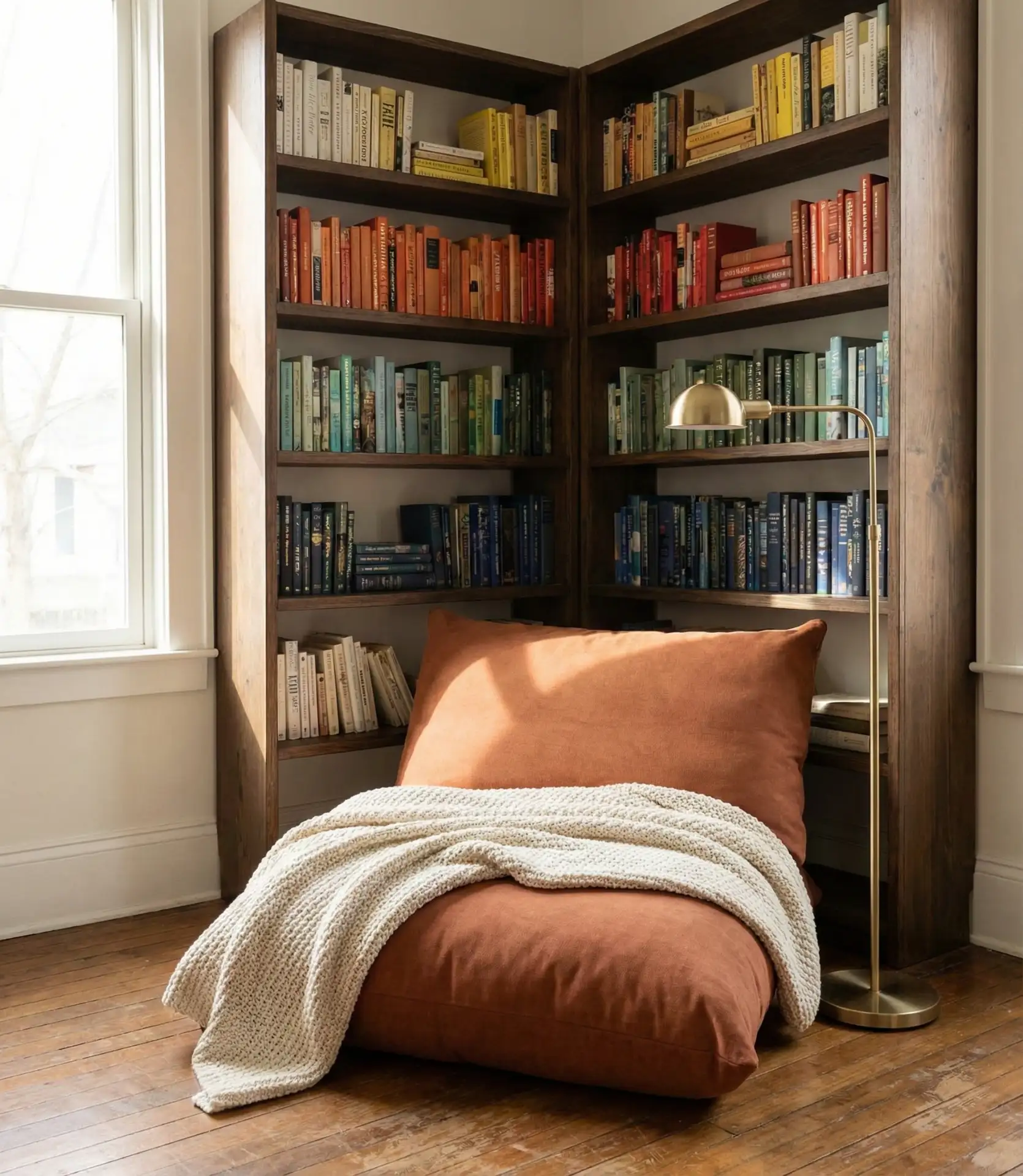
Where it works best: Bedrooms, living rooms with awkward corners, or even wide hallways that don’t see much traffic. The key is choosing a spot with decent natural light during your preferred reading hours—early risers should face east, while evening readers do well with western exposure. This setup typically costs between $200 and $600 depending on whether you DIY the shelving or hire a carpenter.
2. Dark Moody Library Walls
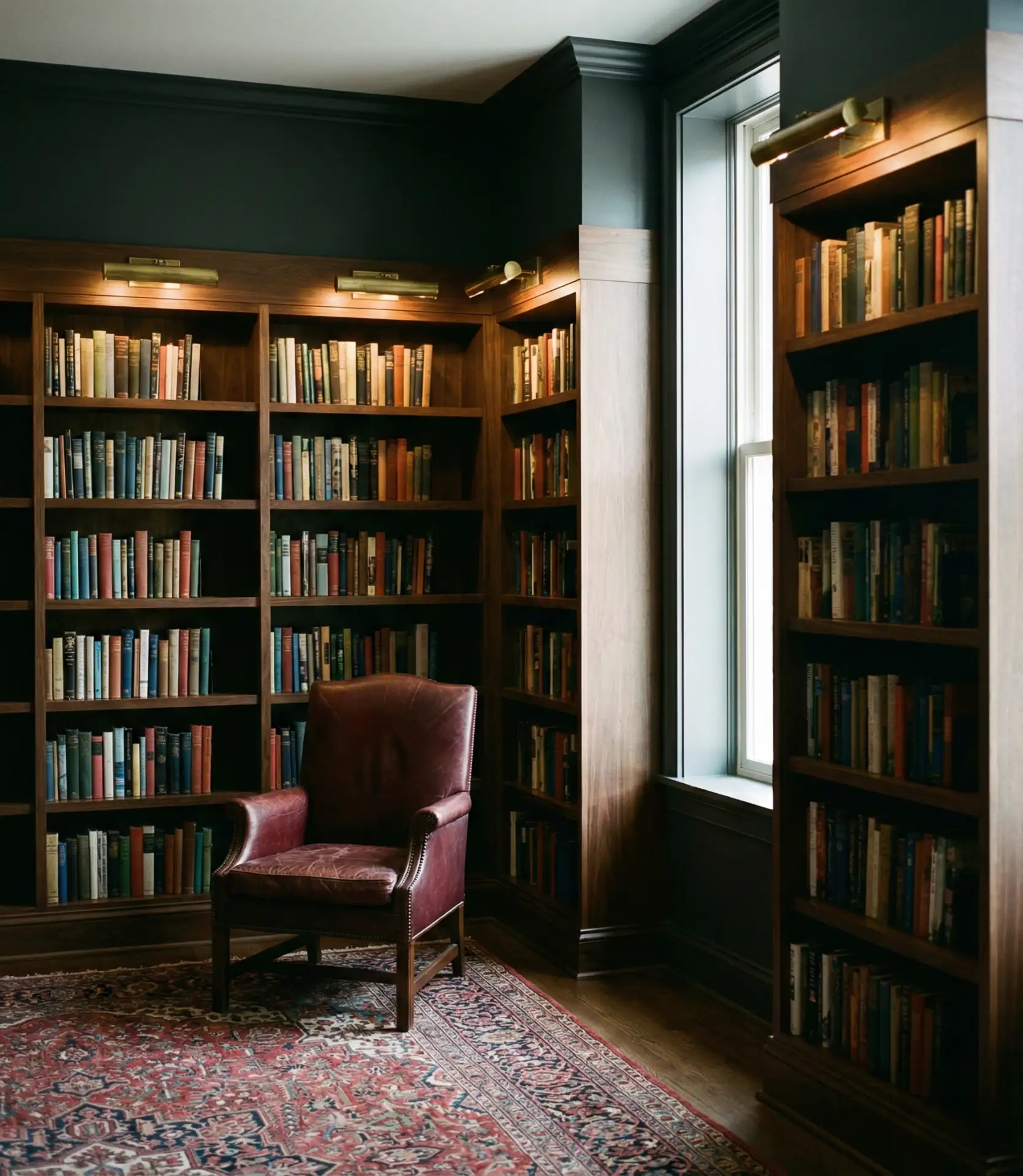
Rich, dark paint colors like charcoal, forest green, or navy create a moody atmosphere that makes books feel like treasured objects rather than mere decor. This cozy dark aesthetic has exploded on Pinterest because it photographs dramatically and feels sophisticated without requiring expensive materials. Pair deep walls with brass or gold accents—think picture lights above shelves or metallic bookends—to add warmth and prevent the space from feeling cave-like.
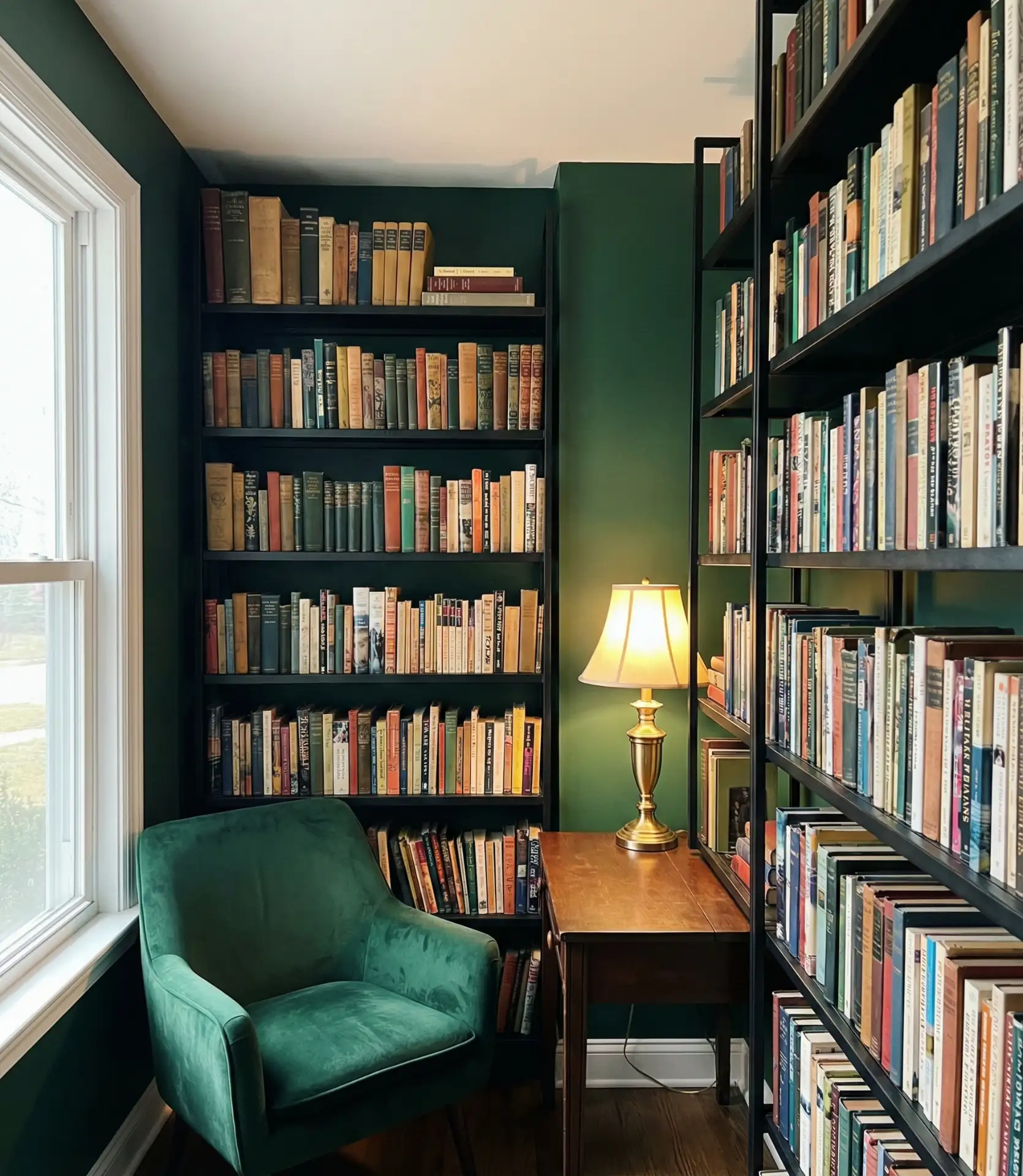
A designer friend recently converted her guest bedroom this way and discovered an unexpected benefit: the dark walls actually make the space feel more intimate and focused, perfect for concentration. She spent about $150 on premium paint and noticed guests now gravitate toward that room during parties, treating it like a quiet refuge from the main gathering spaces.
3. Ikea Billy Bookcase Hack
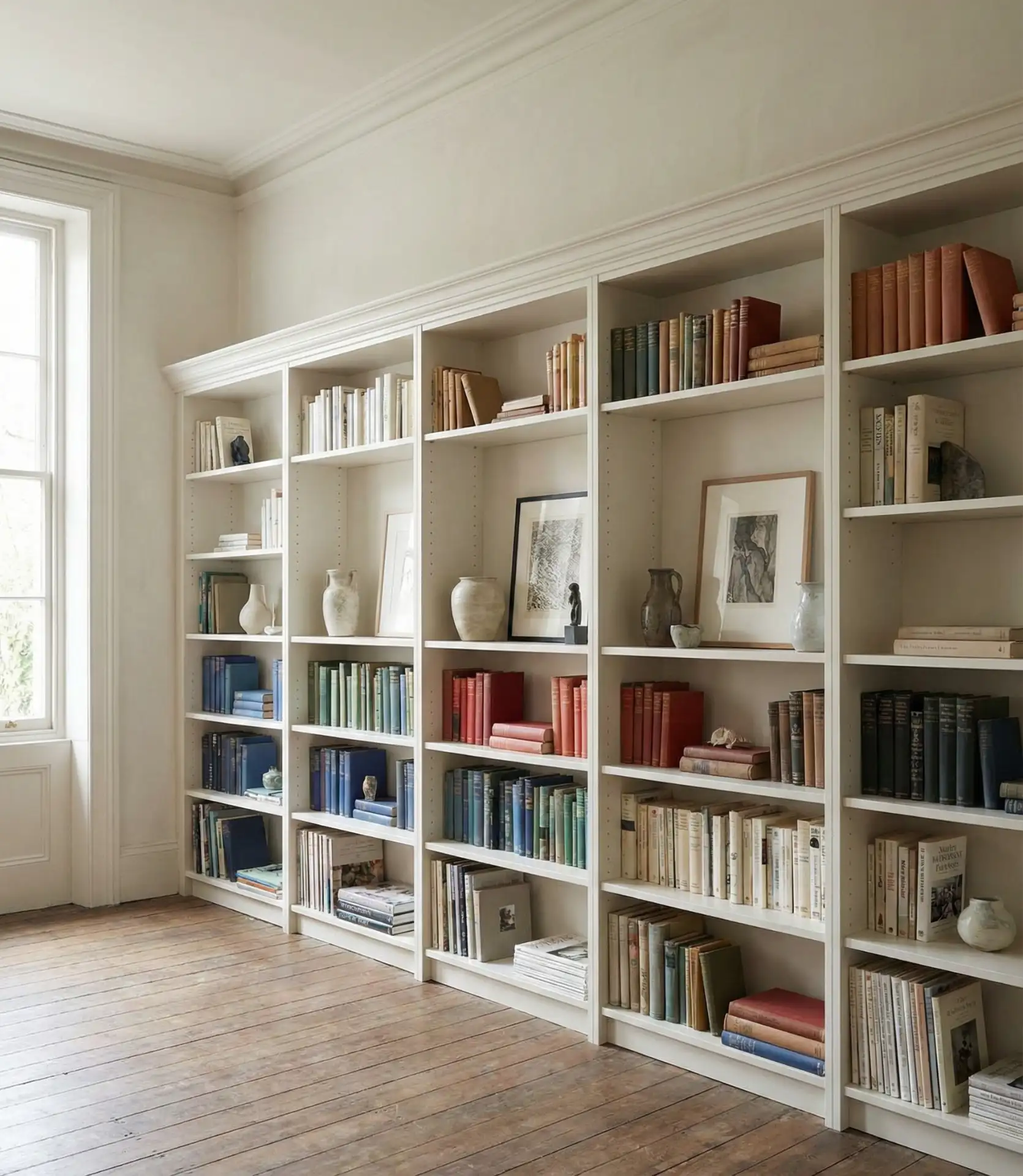
The Ikea Billy bookcase remains America’s most popular budget library solution, but smart Ikea hacks elevate it from dorm-room basic to custom built-in. Add crown molding to the top, attach multiple units side-by-side with a continuous base trim, and paint everything the same color as your walls for a seamless look. For under $400, you can create what appears to be a $2,000 custom installation.
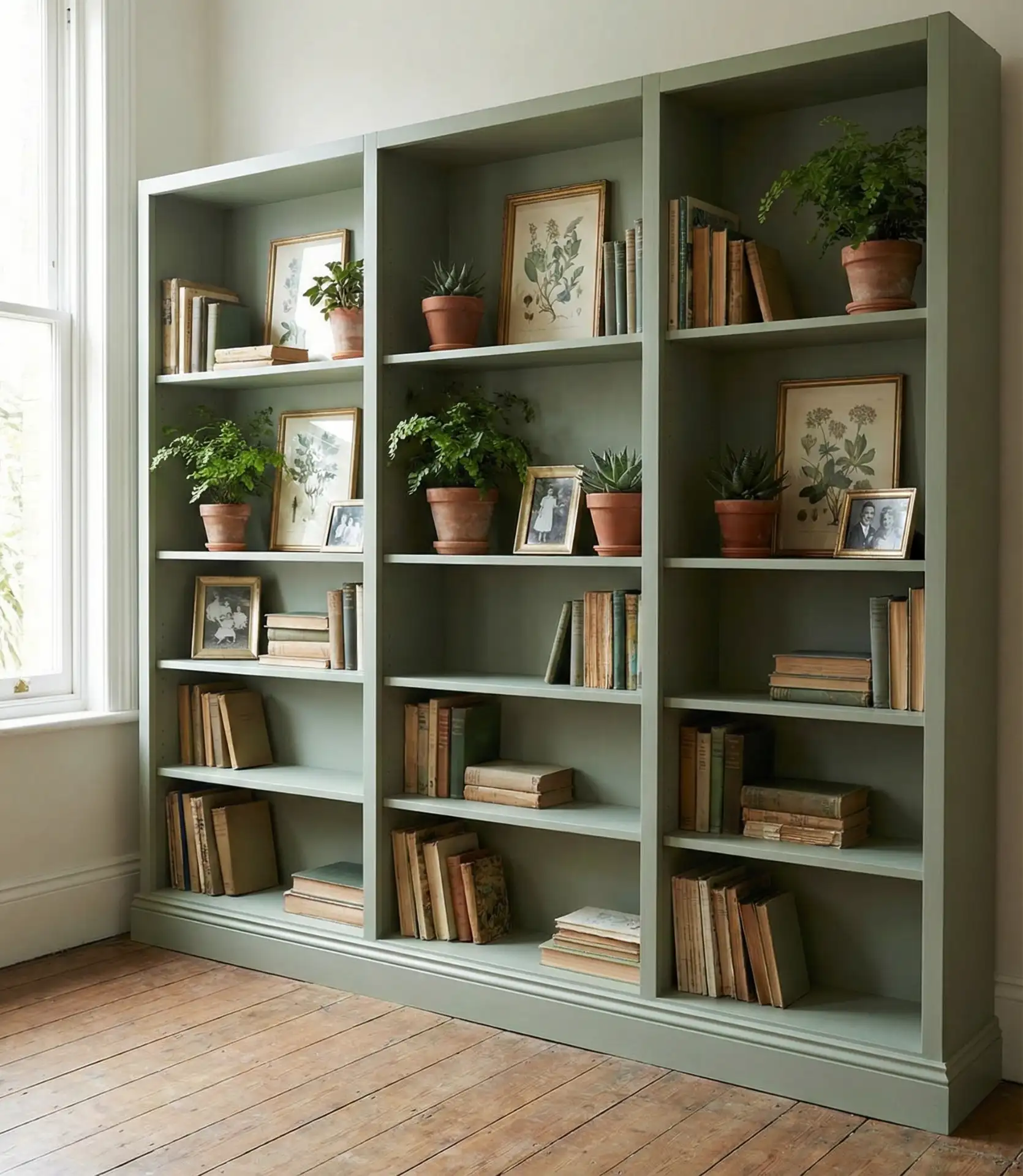
Common mistake: Trying to move Billy units after they’re assembled and filled with books. The particleboard construction can’t handle the weight distribution, and you risk collapse. Instead, position empty units first, secure them to the wall and each other, then add books gradually while checking that shelves remain level.
4. Ladder Library System
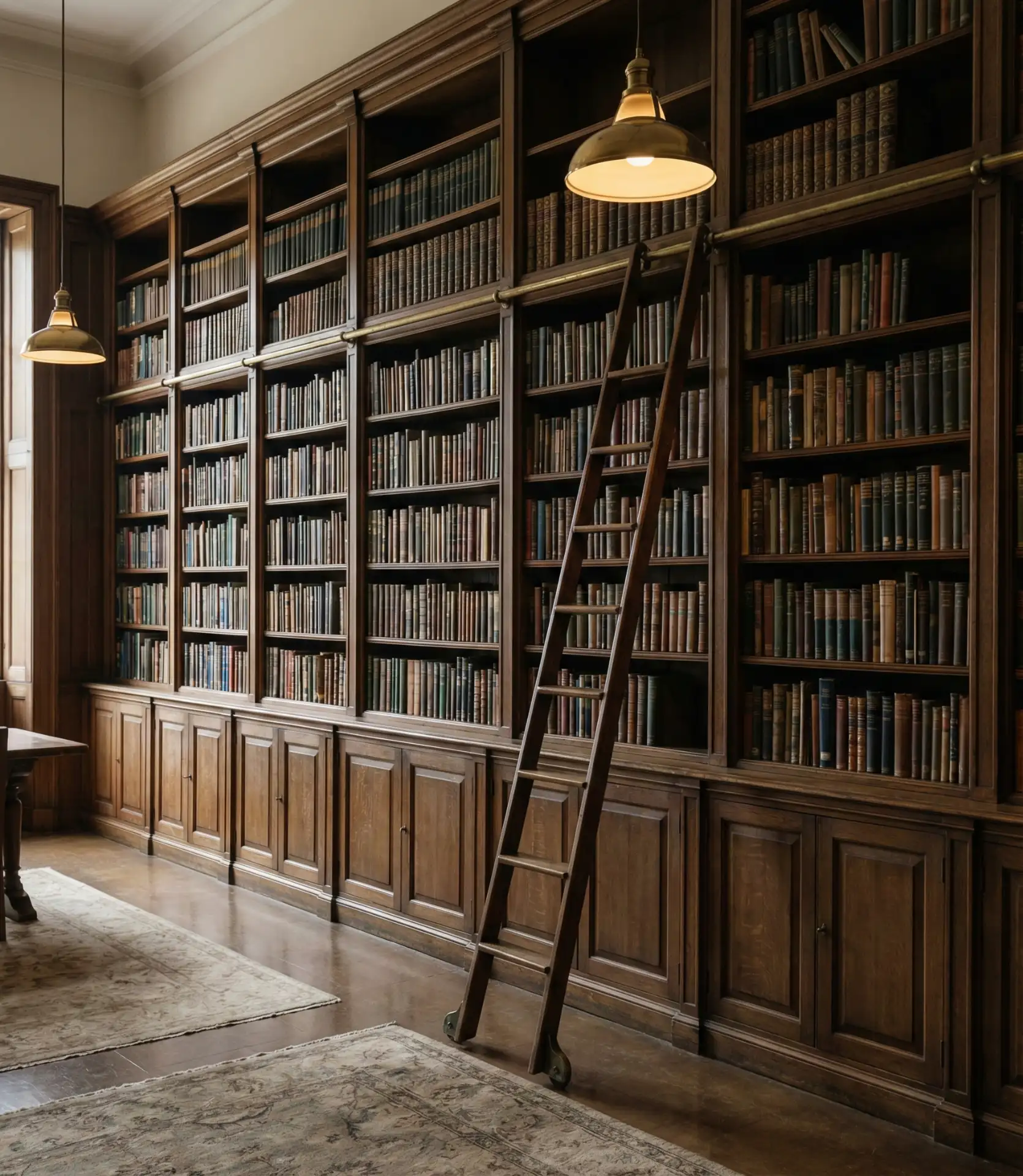
A rolling ladder attached to a track system transforms any wall of books into a statement piece that’s both functional and visually striking. This classic detail works in homes with ceiling heights of 9 feet or taller, allowing you to maximize vertical space while adding architectural drama. The aesthetic combines vintage coziness with modern industrial elements, making it surprisingly versatile across various design styles.
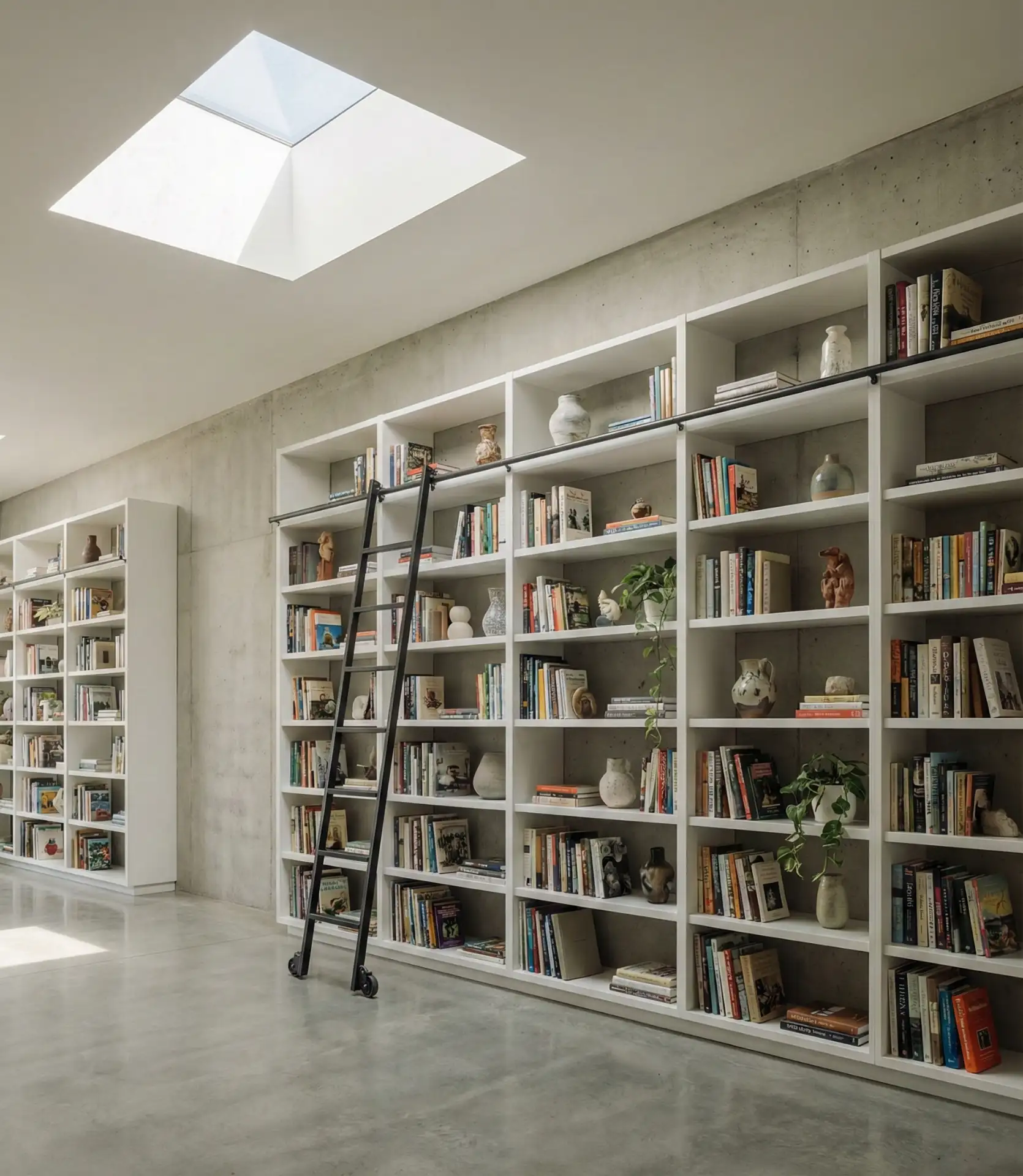
In American homes, ladder systems work particularly well in two-story entryways, home offices with vaulted ceilings, or primary bedrooms in older homes with generous ceiling heights. While newer suburban construction often features 8-foot ceilings that render ladders impractical, the Southwest and older East Coast cities tend to possess the architectural foundations for this element.
5. Tiny Under-Stair Library
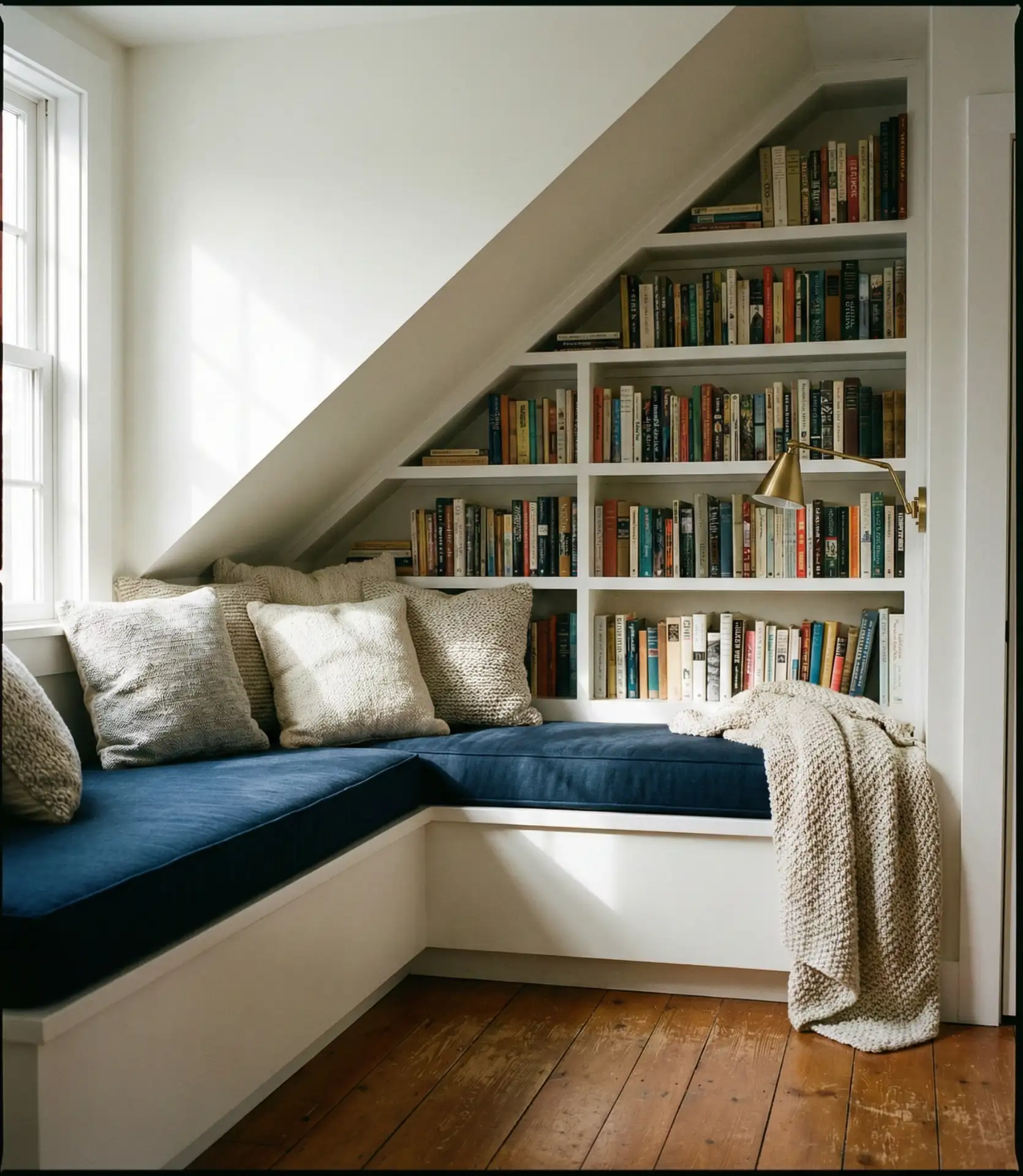
You often waste the unique real estate beneath your staircase on storage or leave it empty. Convert it into a tiny library by installing custom shelving that follows the angled ceiling line, adding a cushioned reading bench if the height allows. This Harry Potter-inspired solution appeals to book lovers who want to maximize every inch without sacrificing living space elsewhere.
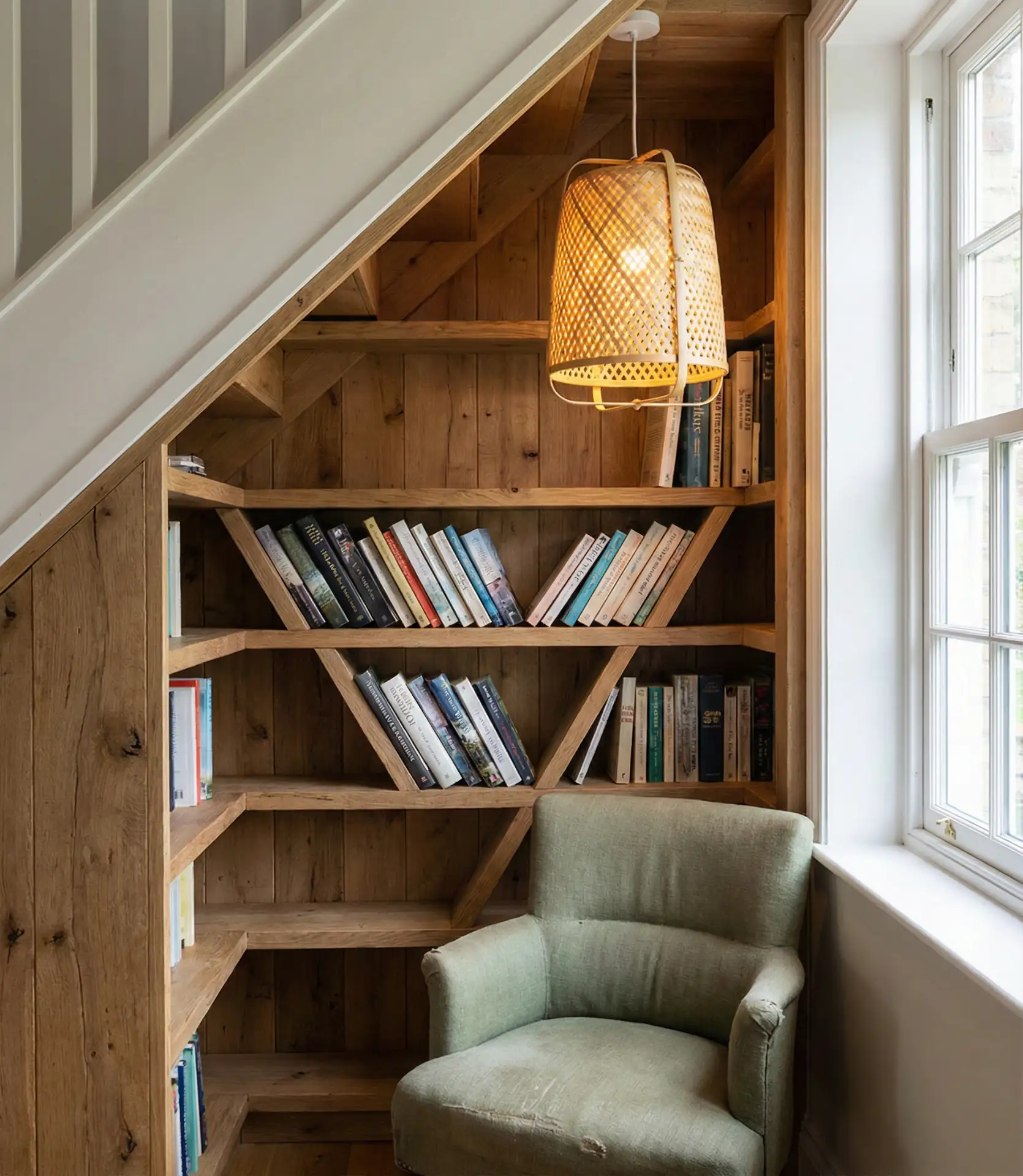
Practical insight: Measure your staircase opening at multiple points before ordering shelving. The angled ceiling means standard shelf depths won’t work throughout—you’ll need progressively shallower shelves as you move down toward the narrowest part. Most homeowners spend $300–$800 on this conversion, with custom carpentry pushing toward the higher end.
6. Green Botanical Library
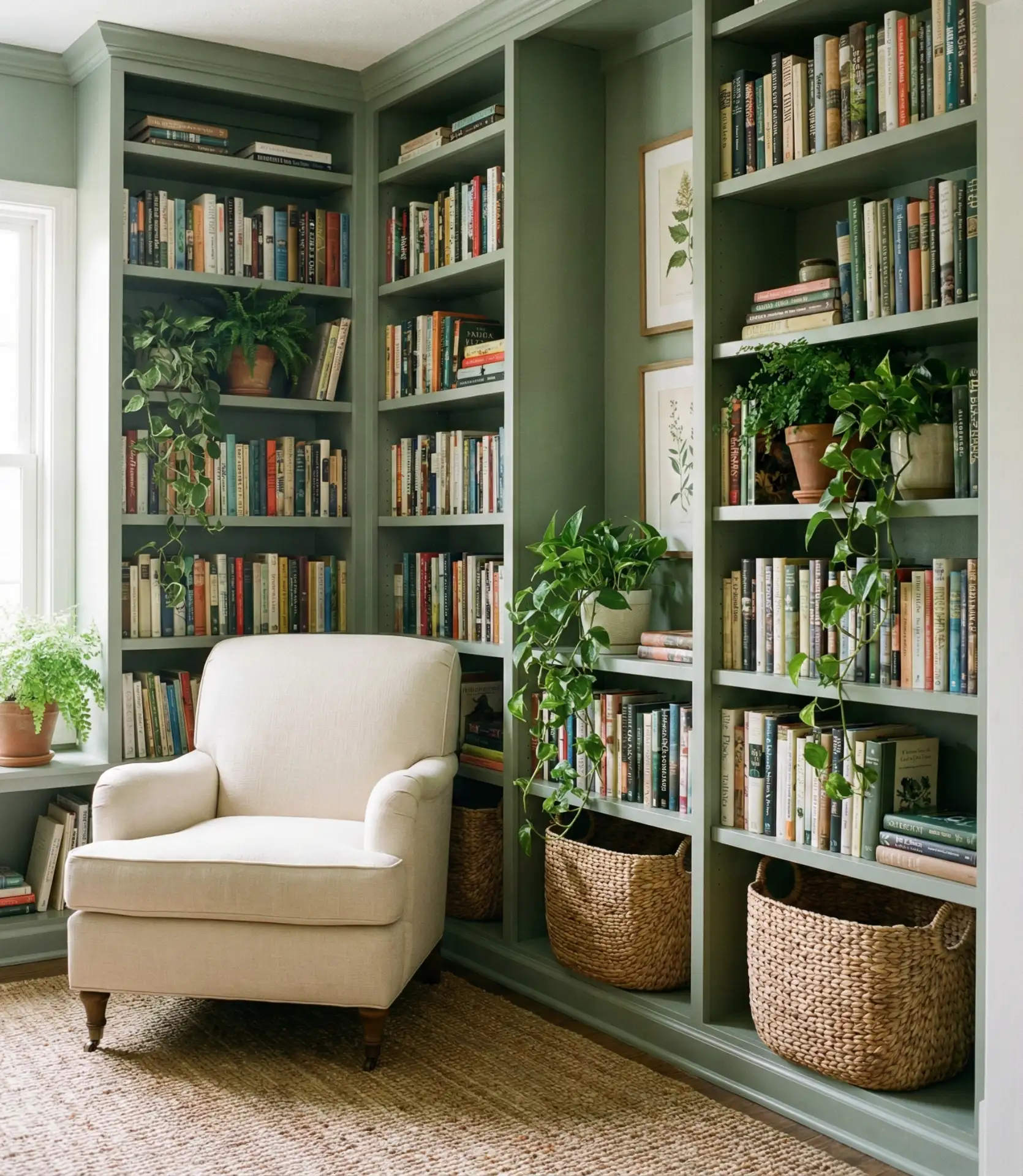
Painting built-ins or shelving in shades of green—from sage to emerald—creates a calming backdrop that makes book collections feel like they’re part of a garden conservatory. This aesthetic trend combines especially well with live plants interspersed among books, creating a biophilic reading space that feels both sophisticated and refreshing. The look photographs beautifully for Pinterest, which partly explains its surging popularity among younger homeowners.
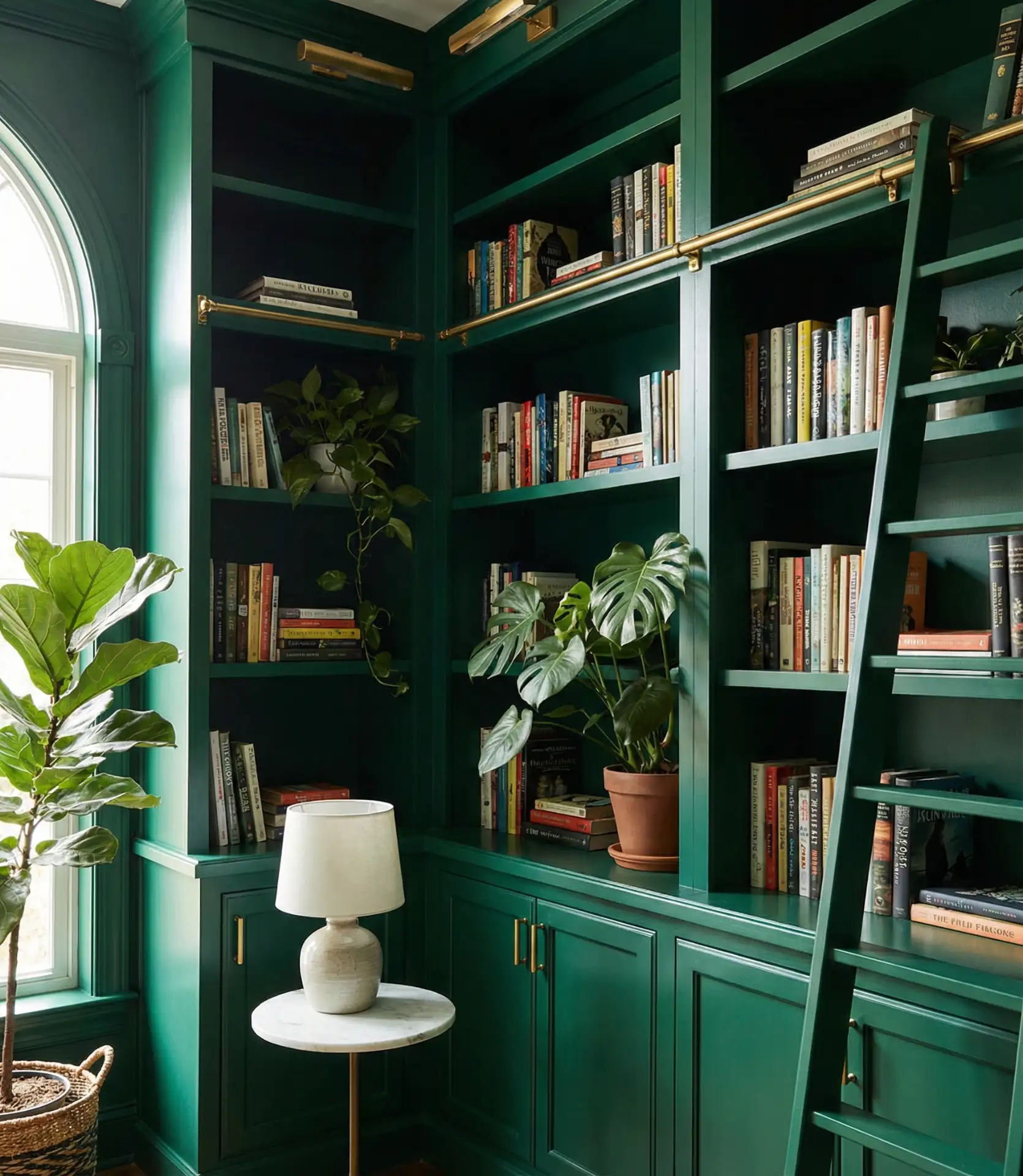
Real homeowner behavior shows that people who commit to green libraries tend to expand their plant collections over time, eventually treating the space as much like a greenhouse as a reading room. The key is choosing low-light-tolerant plants like pothos, snake plants, or ZZ plants if your library doesn’t get direct sun—something common in interior rooms or basement conversions.
7. Cozy Bedroom Library Wall
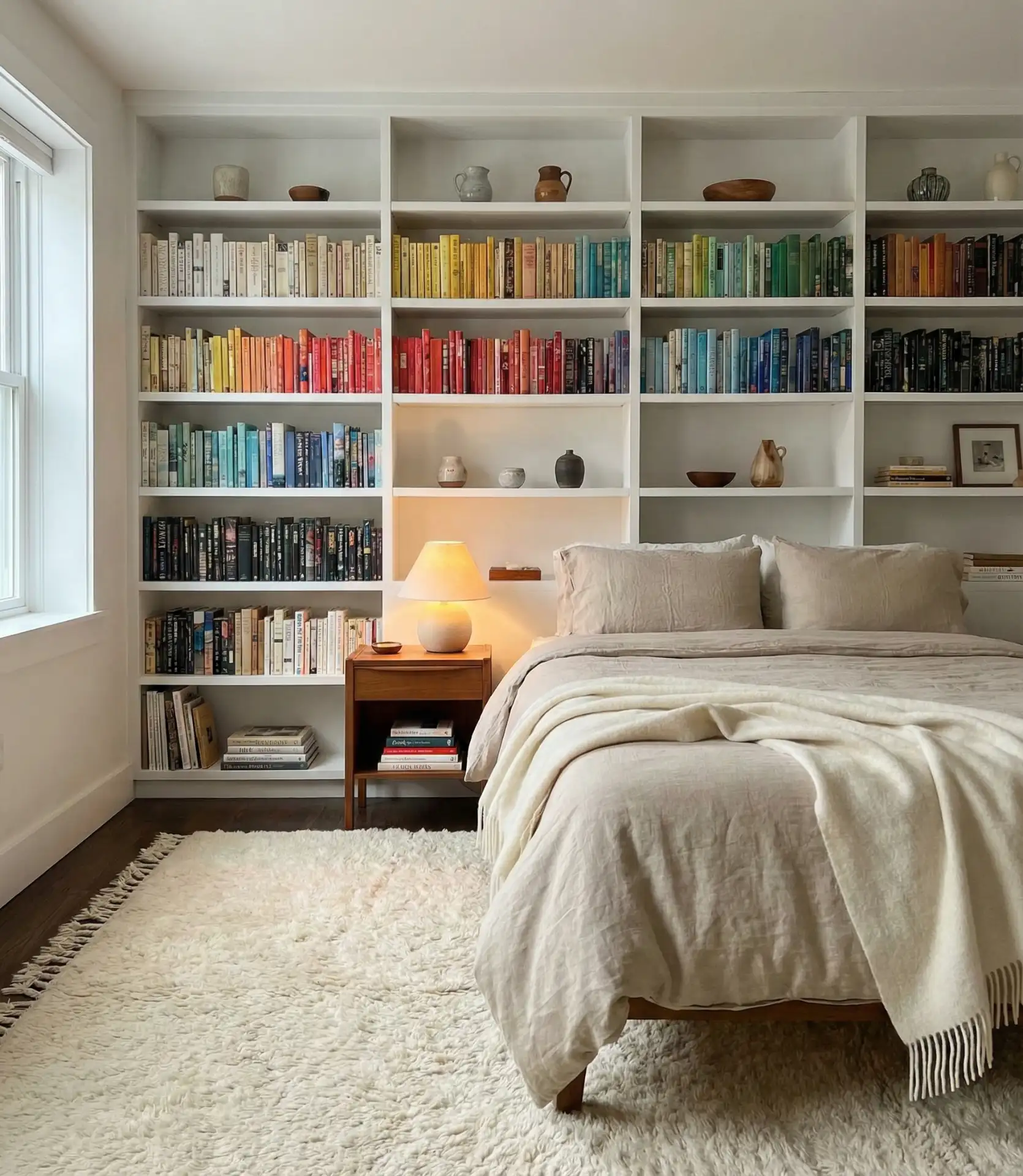
Installing floor-to-ceiling bookshelves on the wall opposite or adjacent to your bed transforms cozy bedrooms into personal sanctuaries perfect for before-bed reading. This layout works especially well in small rooms where a separate reading area isn’t feasible—your books become functional decor that also provides sound dampening and visual warmth. Choose shelving that’s at least 10 inches deep to accommodate hardcovers without them protruding.
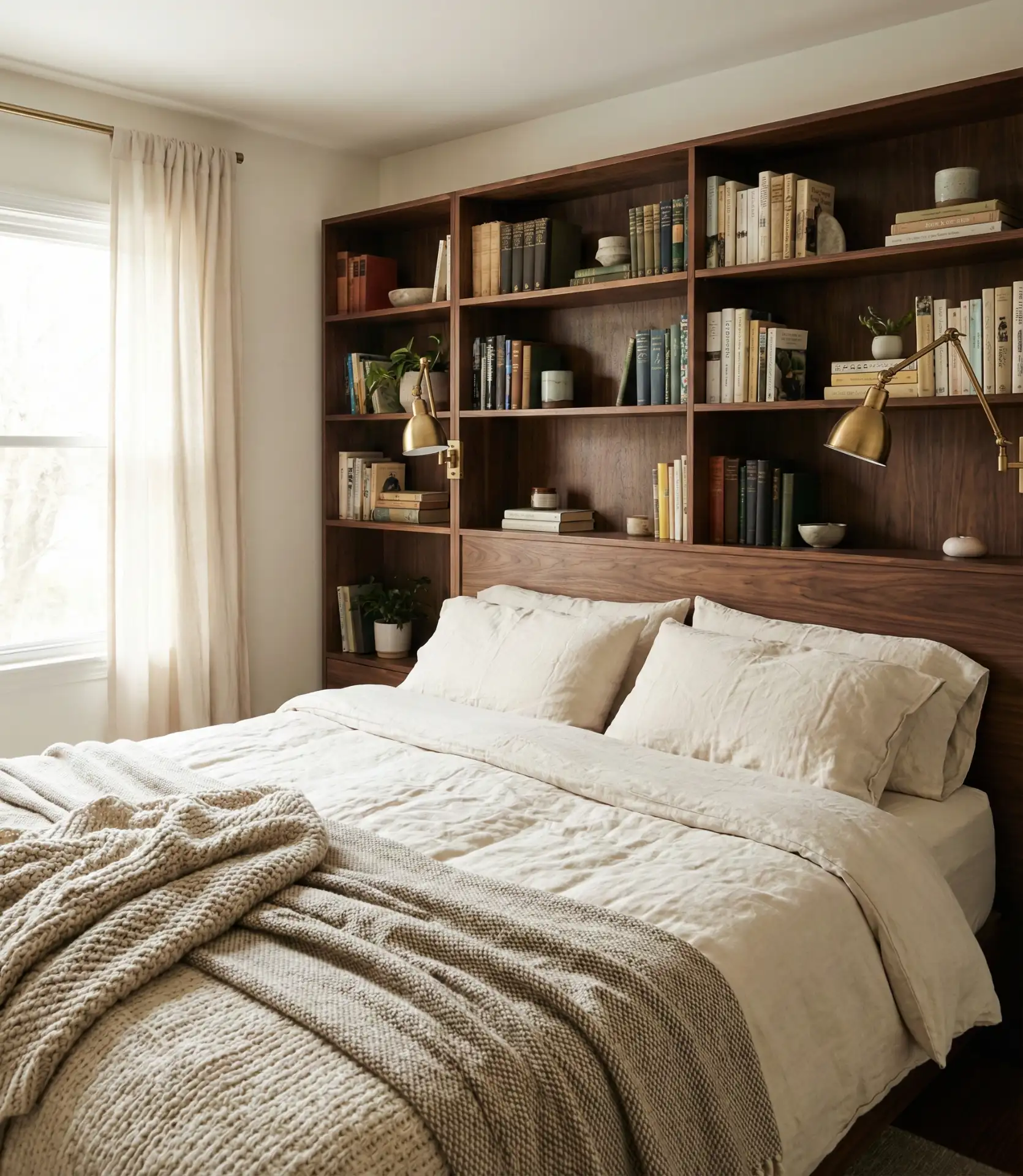
Expert perspective: Interior designers recommend leaving the top two shelves partially empty or filled with lightweight decorative items rather than books. This prevents the visual weight from feeling too heavy above where you sleep, and it’s also practical—you won’t want to climb a ladder in the middle of the night if you decide to switch books.
8. Rustic Reclaimed Wood Shelving
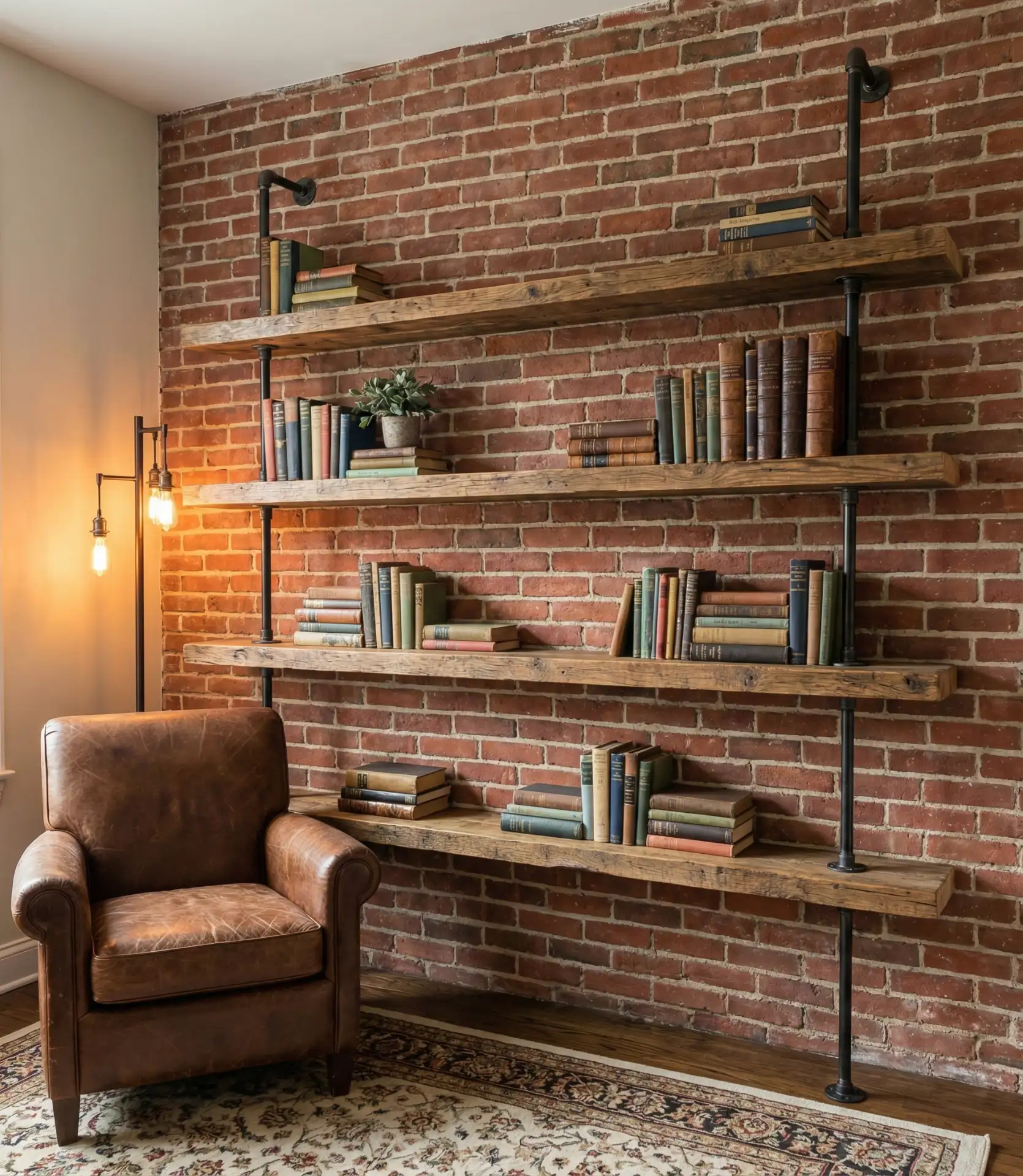
Shelves crafted from reclaimed barn wood or weathered planks bring rustic character to home libraries while supporting sustainable design principles. The natural imperfections, nail holes, and varied grain patterns tell a story that new lumber simply can’t match, creating warmth that balances out the formality of book collections. This approach pairs beautifully with industrial pipe brackets or simple metal corbels for a modern-rustic hybrid.
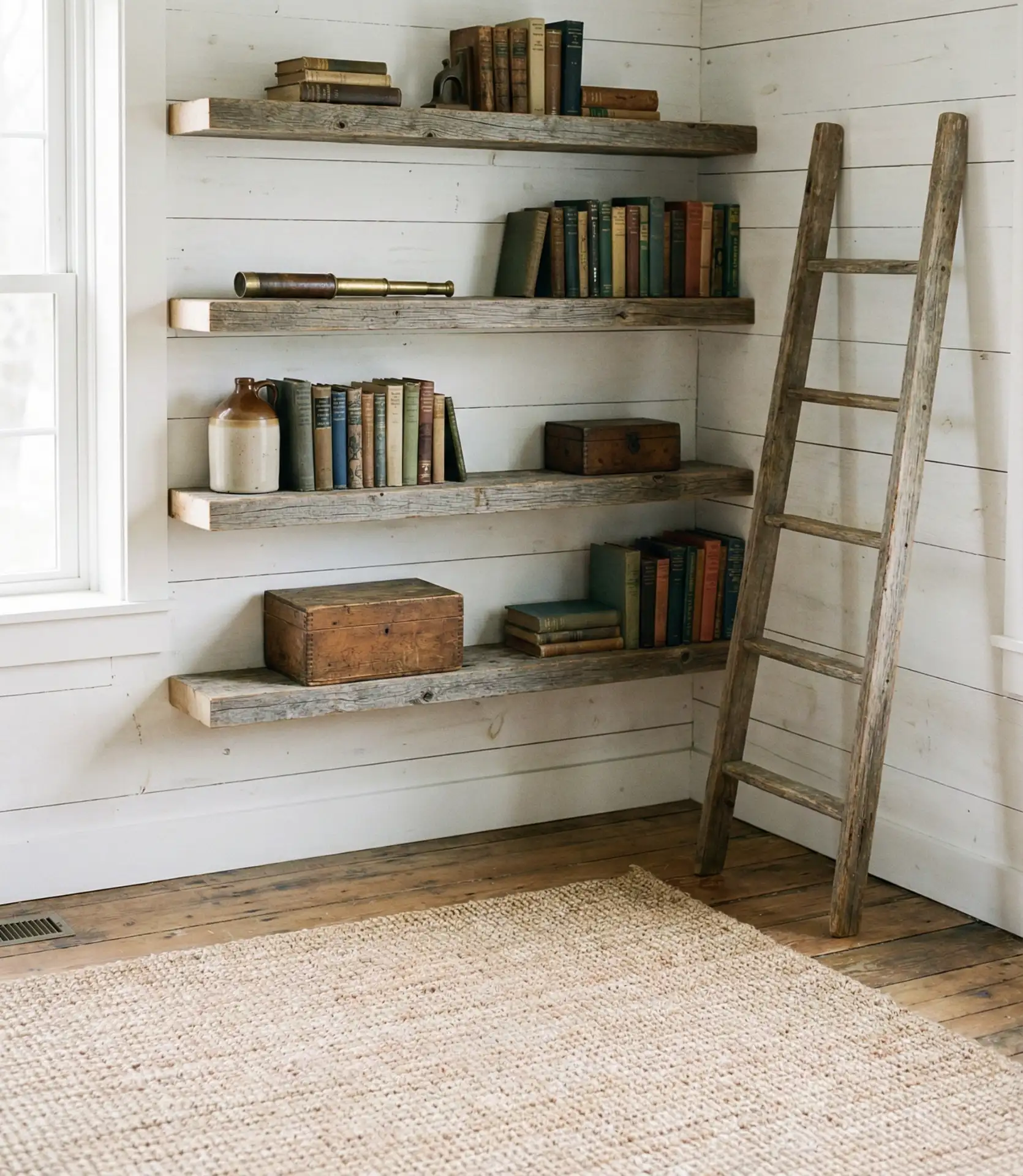
Budget angle: Reclaimed wood costs vary wildly depending on your source. Architectural salvage yards charge $8-15 per square foot, while Craigslist and Facebook Marketplace often yield free barn wood if you’re willing to do the demolition work yourself. Factor in another $100-200 for mounting hardware and finishing supplies like furniture wax or matte sealant.
9. Whimsical Fantasy Library Design
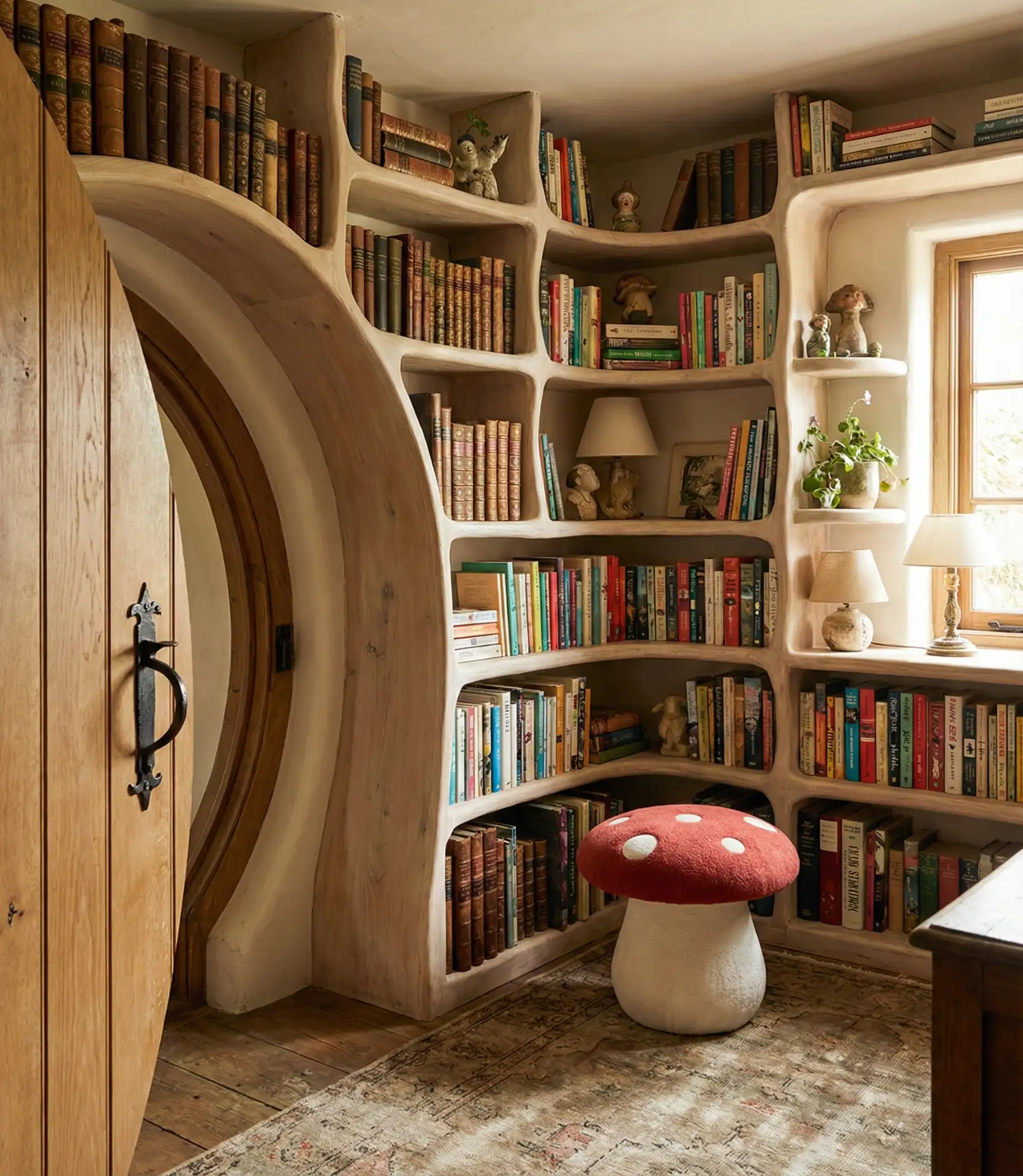
Create a whimsical reading space inspired by fantasy worlds like Narnia, Middle-earth, or your imagination by incorporating unexpected elements—a round hobbit-style door leading into the library, star-pattern LED lights in the ceiling, or shelving with Gothic arch details. This theatrical approach resonates with readers who want their home library to feel like an escape into another realm, turning a practical space into something genuinely magical.
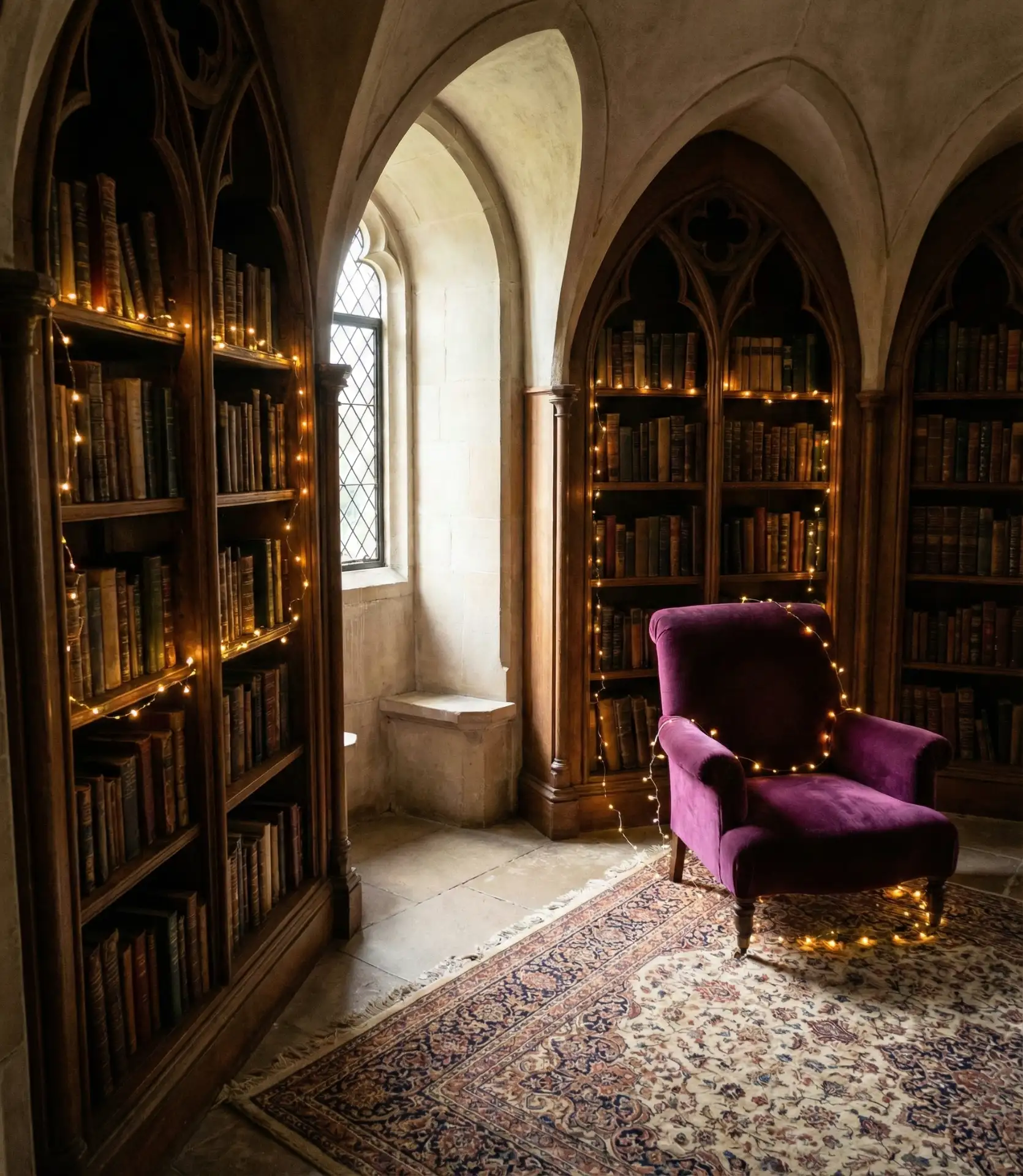
One family in Portland transformed their basement into a Narnia-themed library complete with a wardrobe entrance and gas lamp-style sconces. Their kids actually increased their reading time by 40% after the renovation, proving that environment genuinely influences behavior. The project cost about $3,500 but became the most-used room in their house.
10. Rental-Friendly Freestanding Shelves
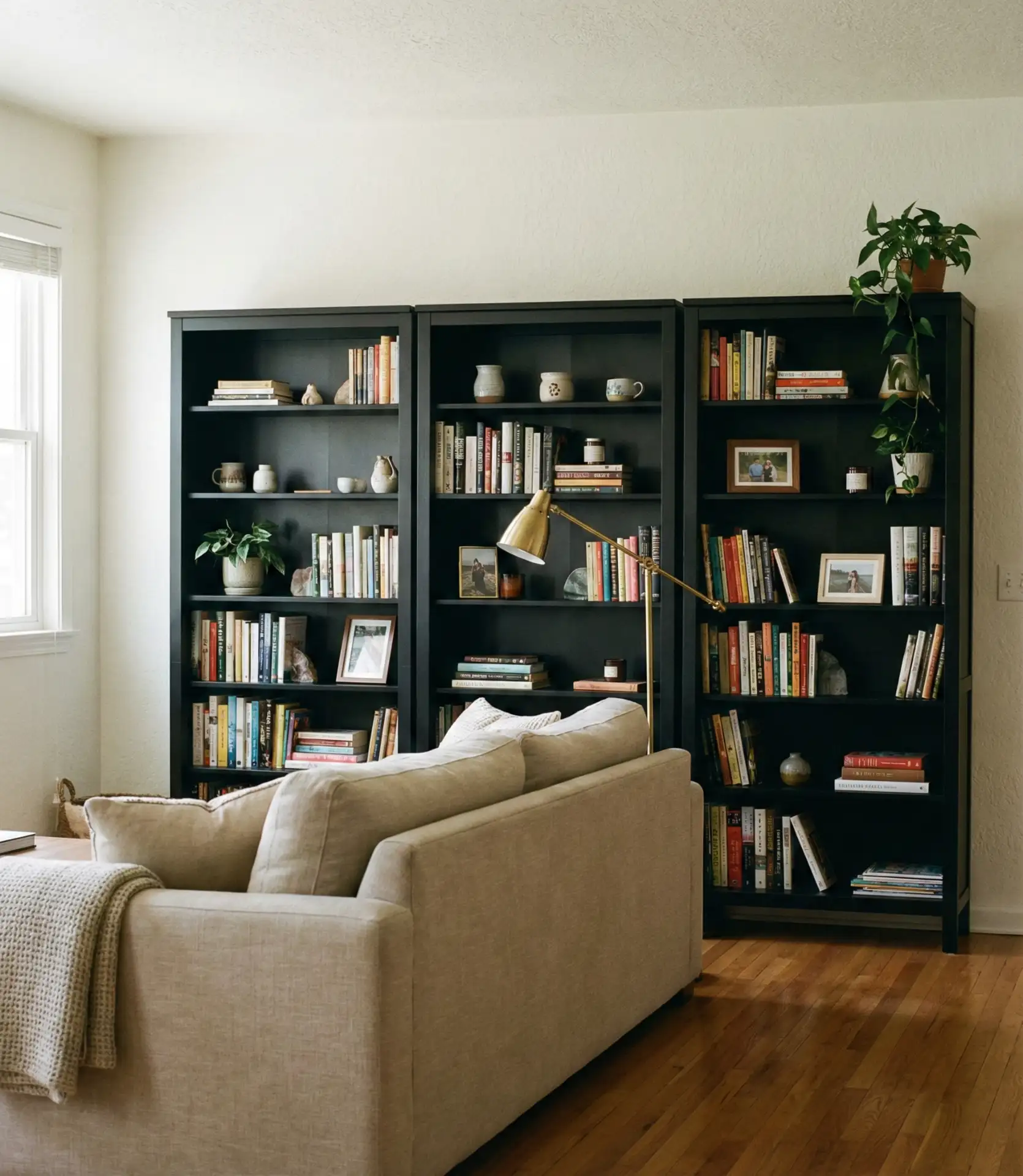
Tall freestanding bookcases arranged strategically create a library feel in rental spaces without requiring permission for built-ins or wall modifications. Line up matching units along one wall, securing them to each other and anchoring them to the baseboard with rental-safe hooks. This modular approach means you can take your library system with you when you move, unlike permanent installations.
Where it works best: It works best in open-plan apartments and rentals where wall modifications are not possible. Freestanding units also work beautifully as room dividers in studio apartments, creating the sense of separate living and sleeping zones while housing your book collection. Just ensure any unit taller than 6 feet is properly secured to prevent tip-over accidents.
11. Cozy Modern Minimalist Library
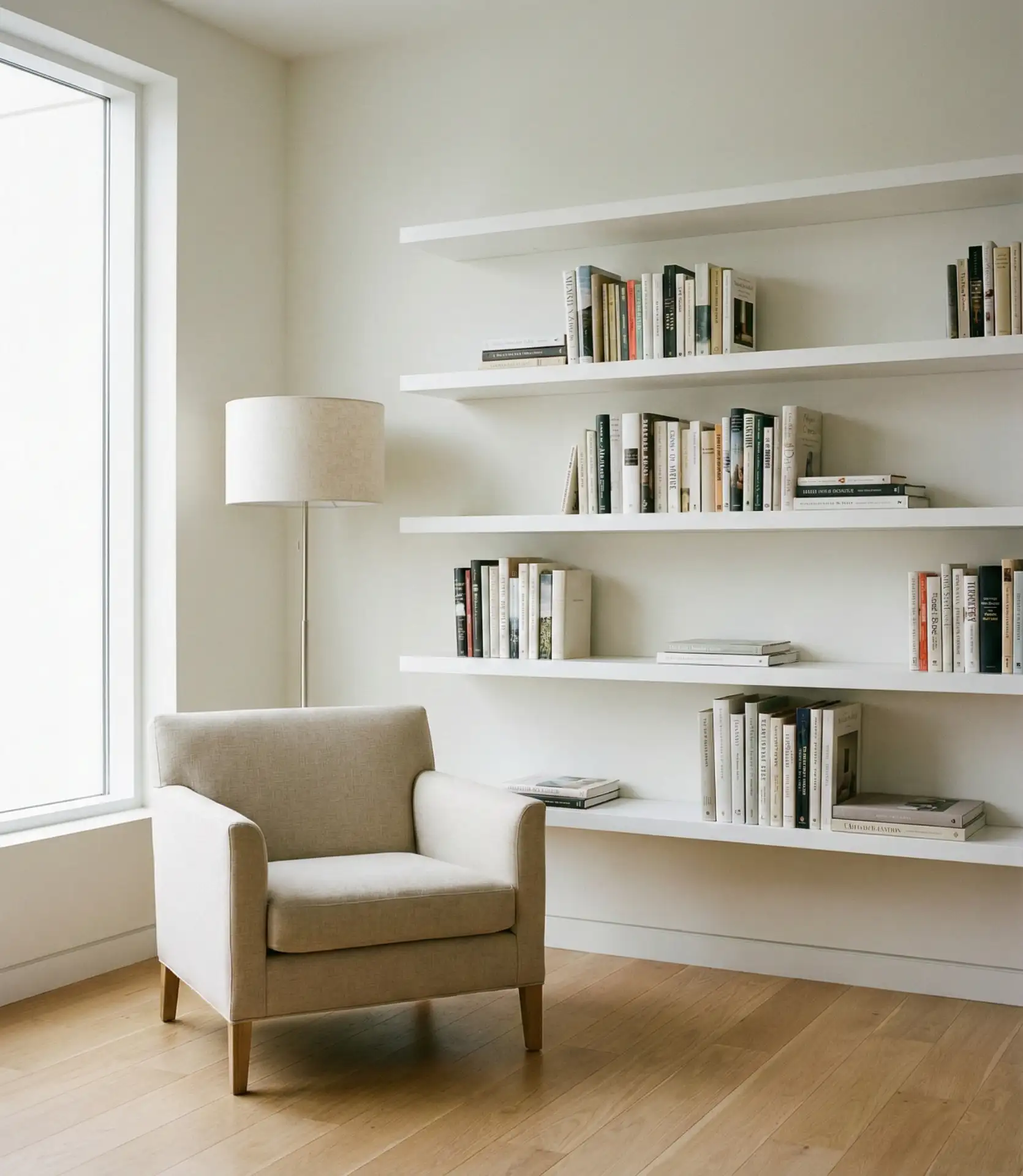
A cozy modern library strips away ornaments in favor of clean lines, neutral colors, and curated book displays, where each volume is intentionally chosen and visible. This aesthetic appeals to readers who want their library to feel calm and uncluttered rather than overcrowded, often limiting collections to 100–200 carefully selected books rather than accumulating thousands. White or light wood shelving keeps the look airy while still providing that essential cozy warmth through textiles and lighting.
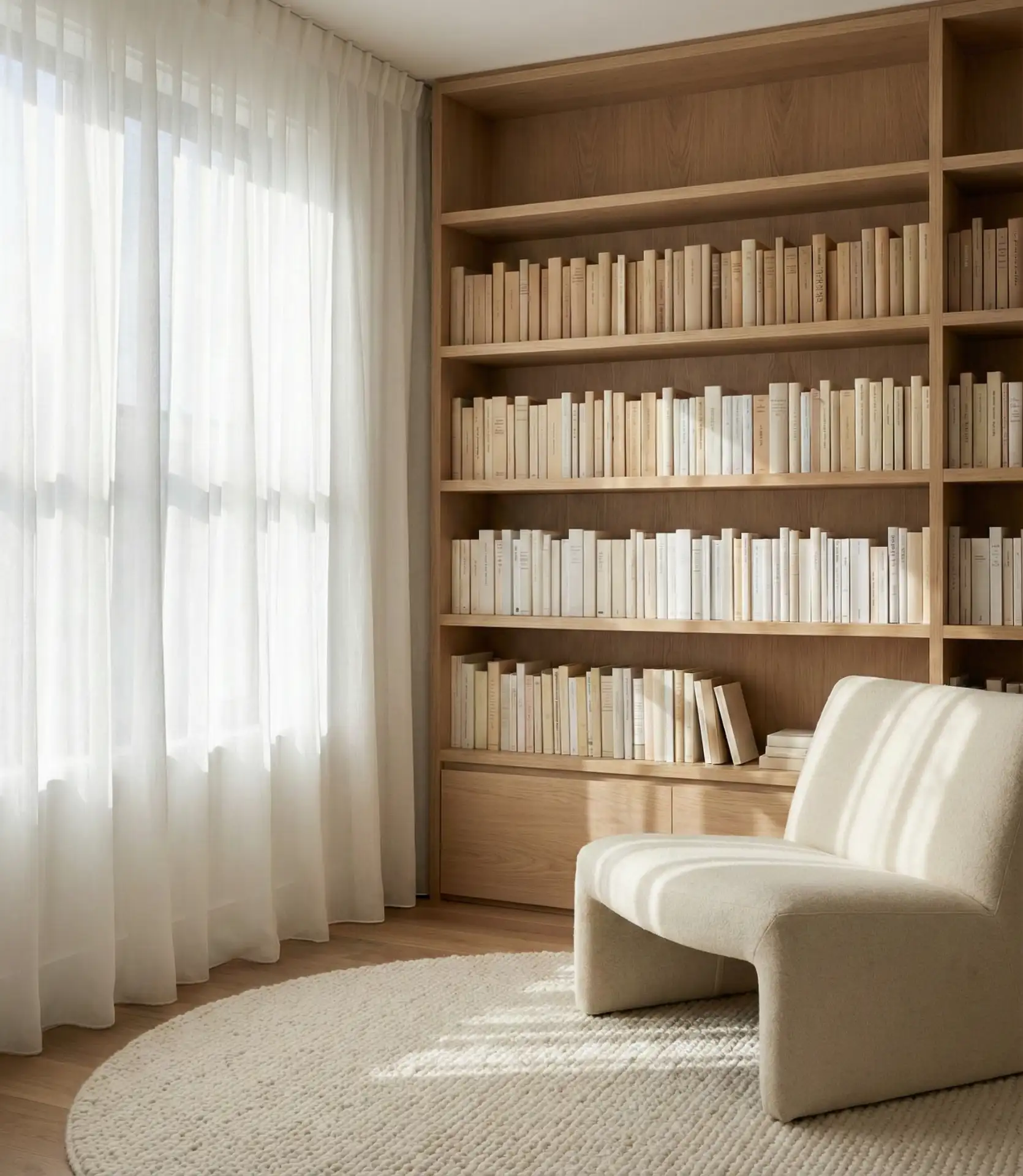
Practical insight: This style requires ongoing curation—you’ll need to regularly assess your collection and donate or sell books that no longer serve you. The visual restraint is what creates the peaceful atmosphere, so resist the urge to fill every available inch of shelf space. Leave 30–40% of the shelving open or occupied by a few sculptural objects.
12. Harry Potter-Inspired Hidden Library
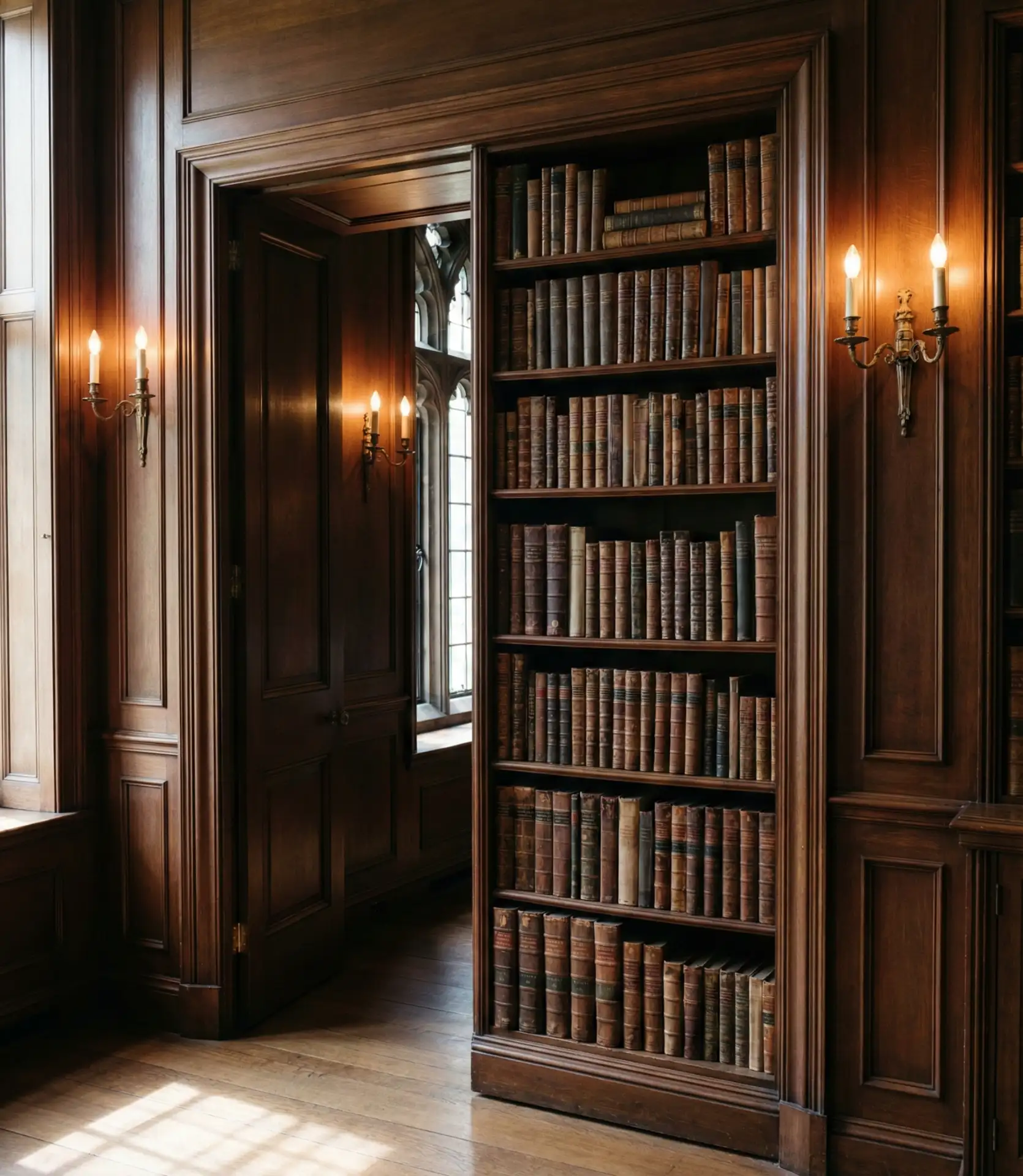
A bookcase that doubles as a hidden door leading to a secret reading room captures the magic of Harry Potter and other beloved stories about discovering enchanted spaces. This involves installing a bookshelf on a pivot hinge or sliding mechanism, creating genuine surprise and delight whenever someone discovers the hidden library beyond. While more complex to execute, these installations have become increasingly affordable with prefabricated hardware kits now available online.
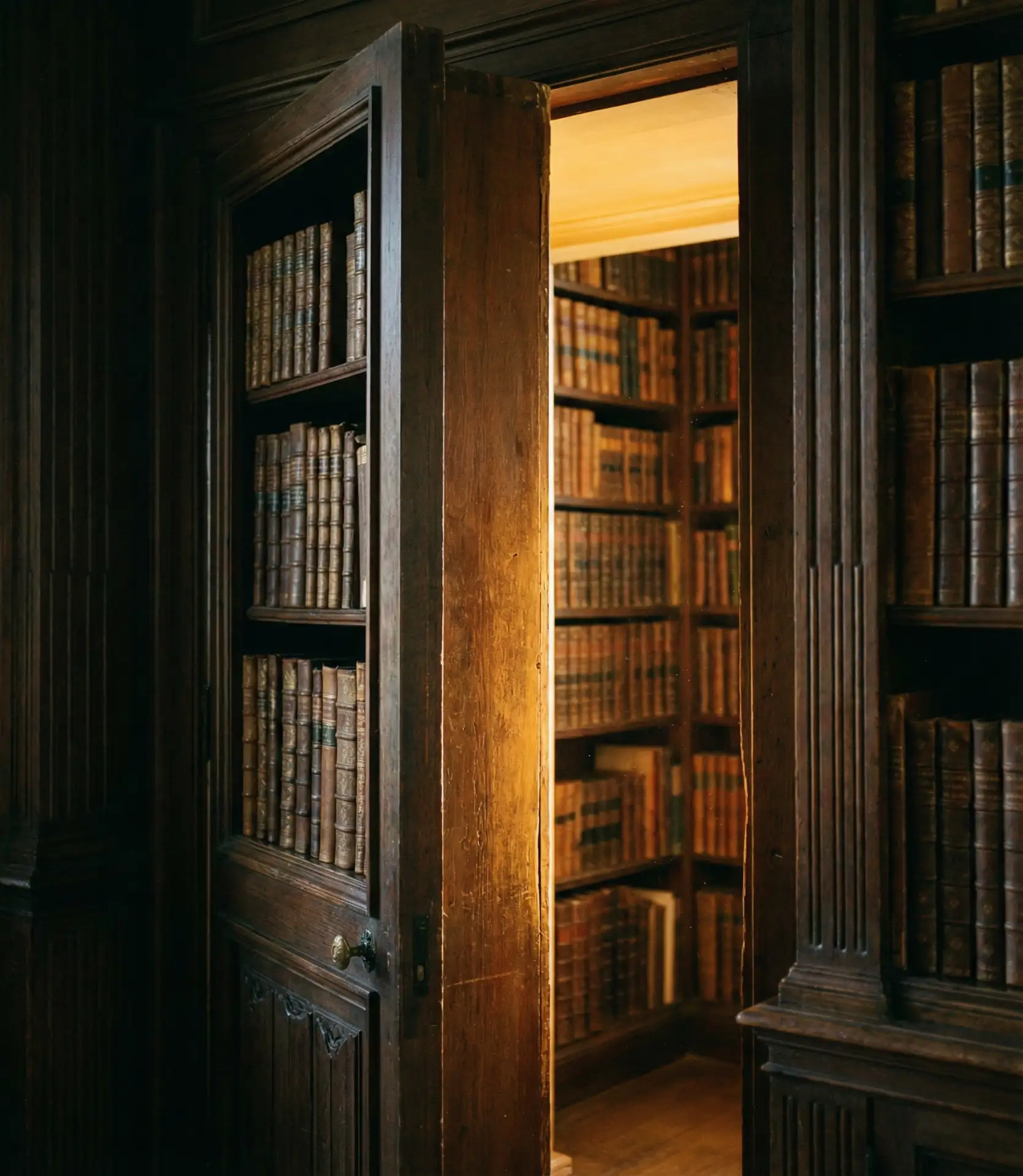
Common mistake: Installing the bookcase door without proper weight distribution. Books are heavy, and a standard door hinge won’t support a fully loaded shelf. You need either heavy-duty pivot hinges rated for 150+ pounds or a floor-mounted track system that bears the weight from below rather than relying solely on the frame attachment points.
13. Dream Window Seat Library
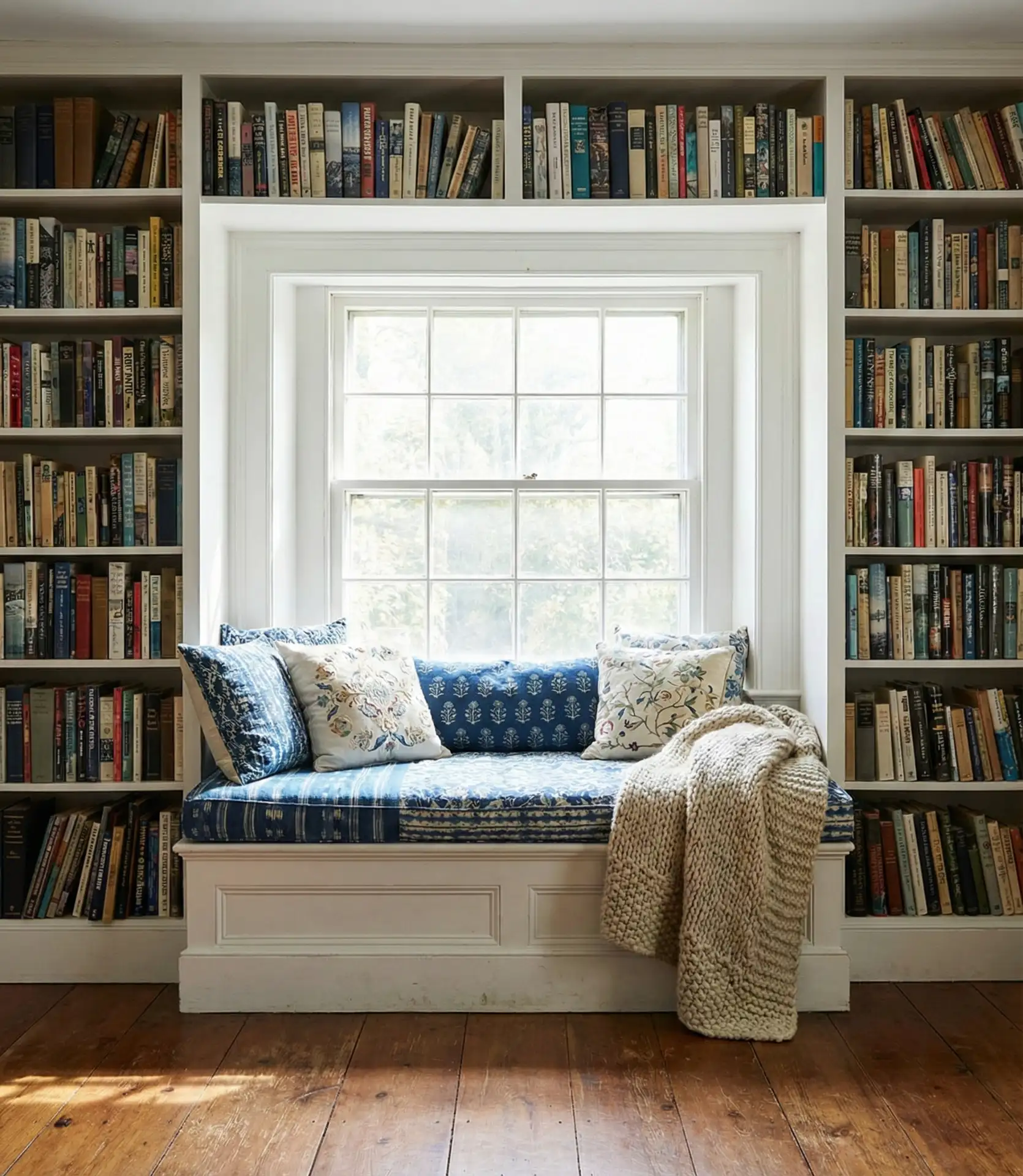
A dream library setup frames a window seat with built-in bookshelves on either side, creating an architectural focal point that combines the best elements of natural light, comfort, and accessibility. This classic configuration works particularly well in older homes with bay windows or deep-set window frames where there’s already a natural alcove. The window seat provides cushioned seating, while built-ins maximize vertical storage without eating into floor space.
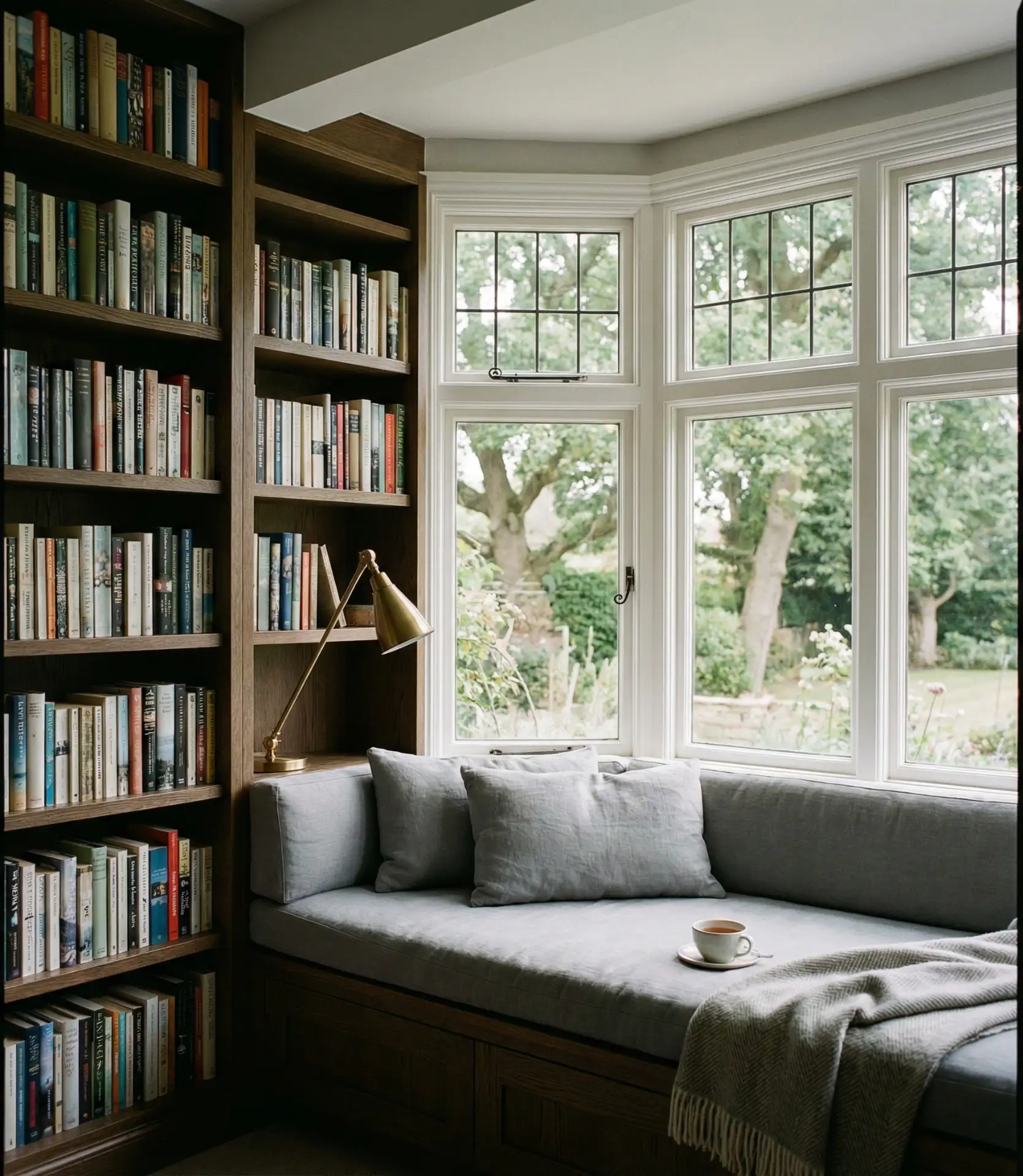
Regional context matters here: Pacific Northwest homeowners love this setup for rainy day reading with views of evergreens, while Southwest residents often add UV-filtering window film to protect book spines from intense sun exposure. In the Northeast, these become prime spots during fall foliage season, basically serving as a theater box for nature’s show.
14. Vintage Cozy Traditional Study
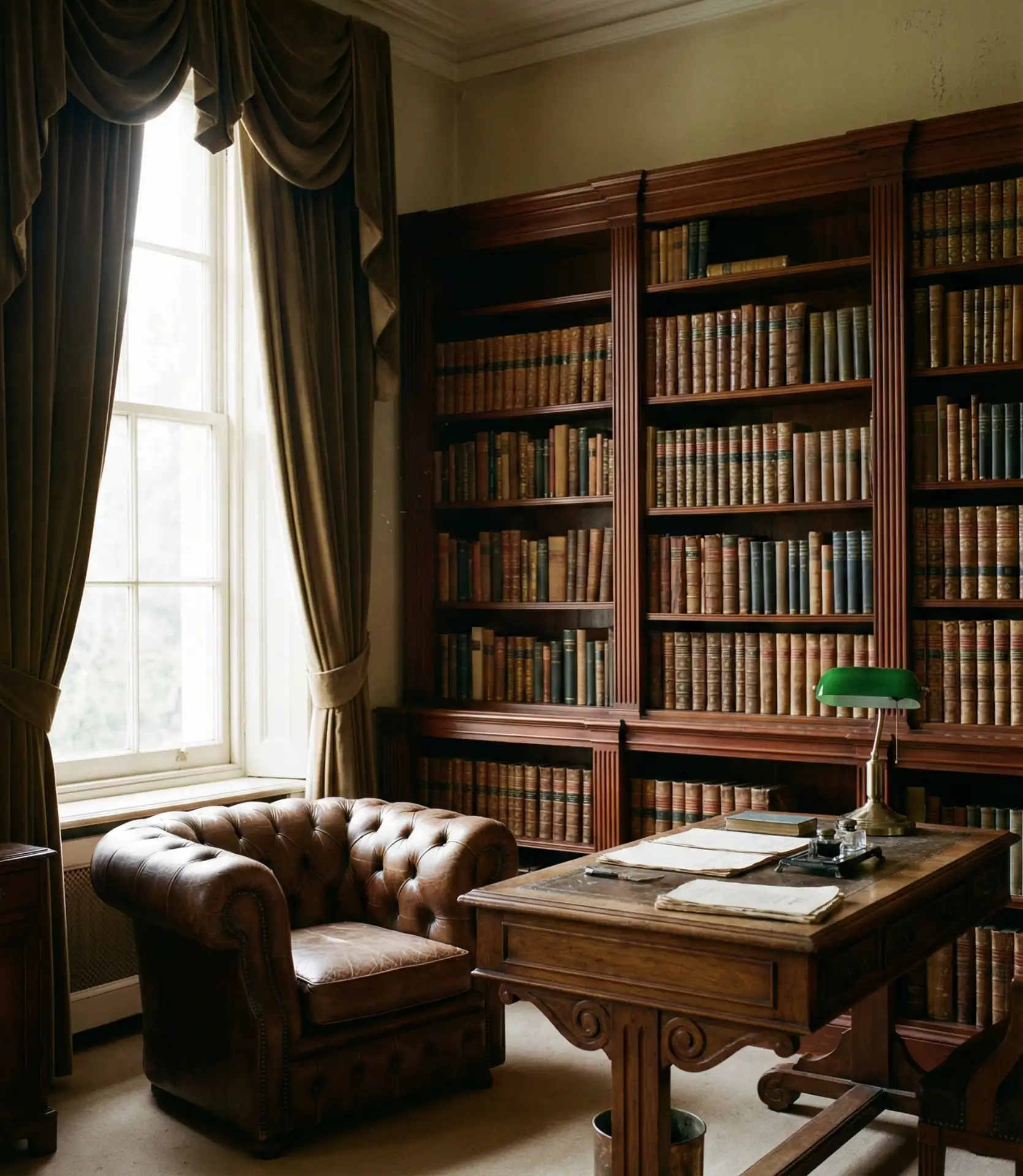
Rich wood paneling, leather furniture, and warm lighting define the vintage cozy library aesthetic that channels gentlemen’s clubs and historic universities. This timeless approach emphasizes quality over quantity—investing in a few excellent pieces like a genuine leather chair, a substantial wooden desk, and built-in shelving in cherry or walnut. The look suits readers who want their library to feel established and serious, a place where important thinking happens.
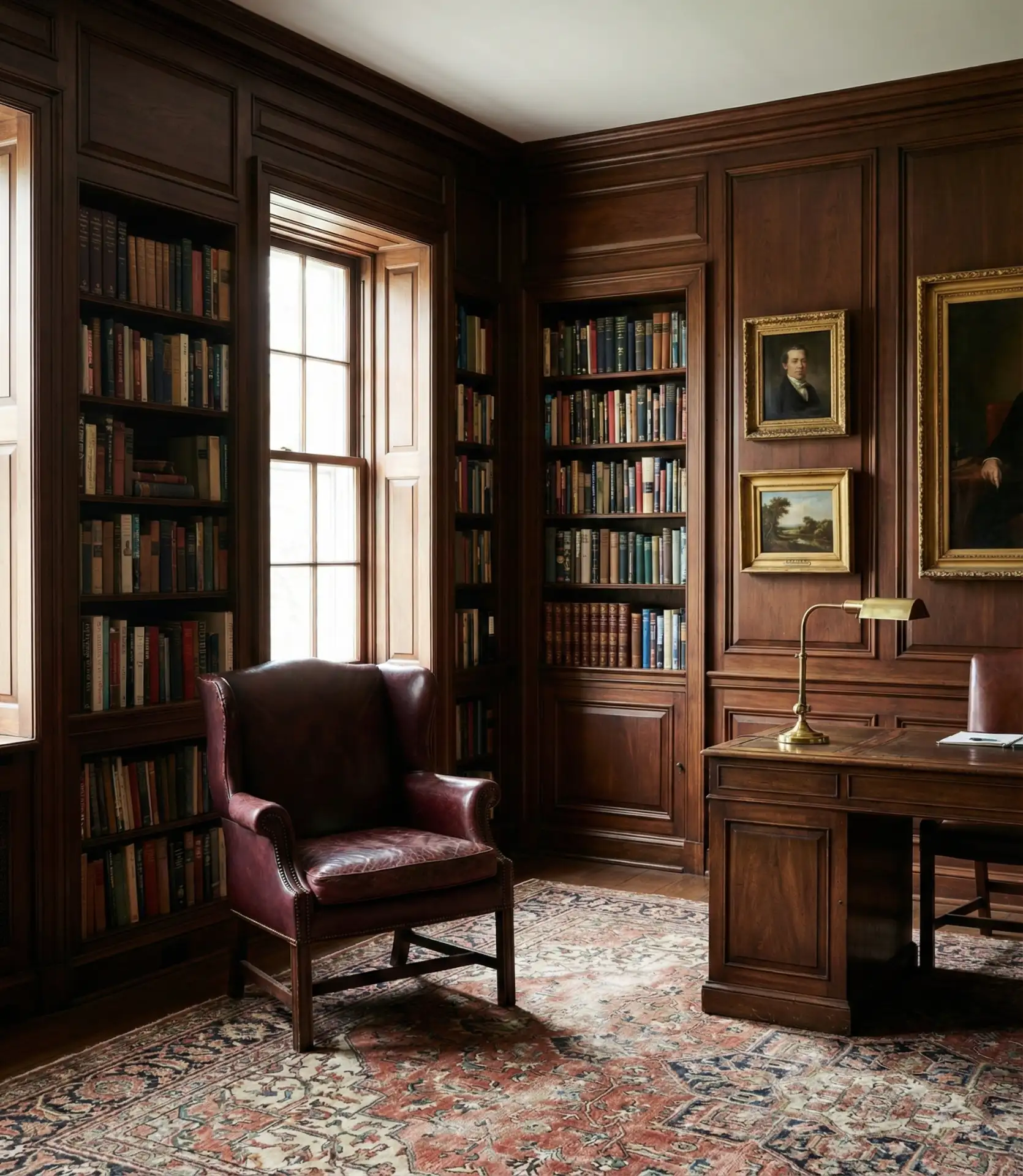
Budget perspective: Authentic vintage furniture runs expensive—$1,500+ for quality leather seating—but the look can be approximated affordably by mixing one investment piece with budget items. Spend on the chair or desk where you’ll directly experience the quality, then save on bookshelves by staining pine to mimic walnut. Estate sales and auctions often yield genuine period pieces at a fraction of retail prices.
15. Aesthetic Color-Coordinated Shelves
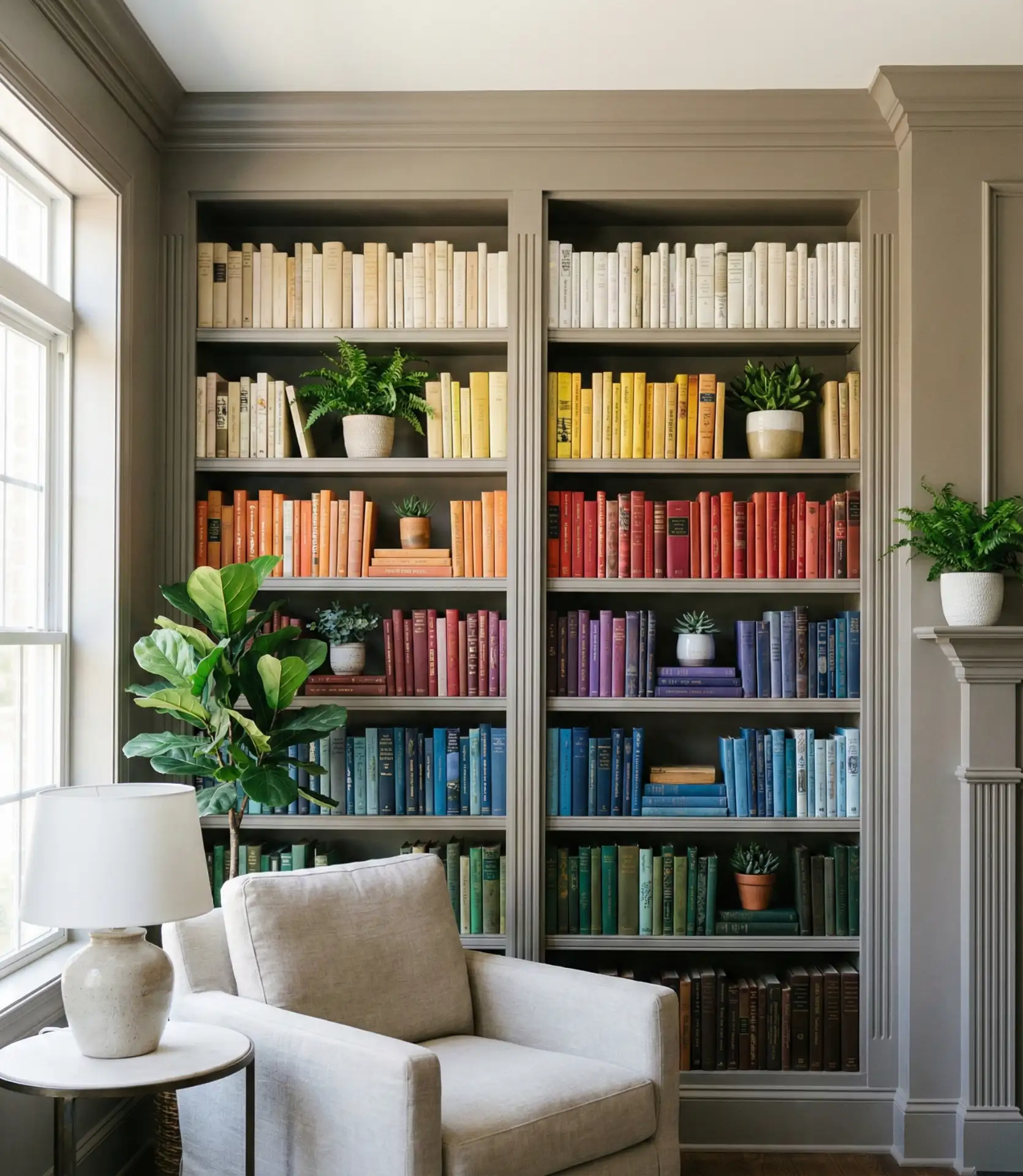
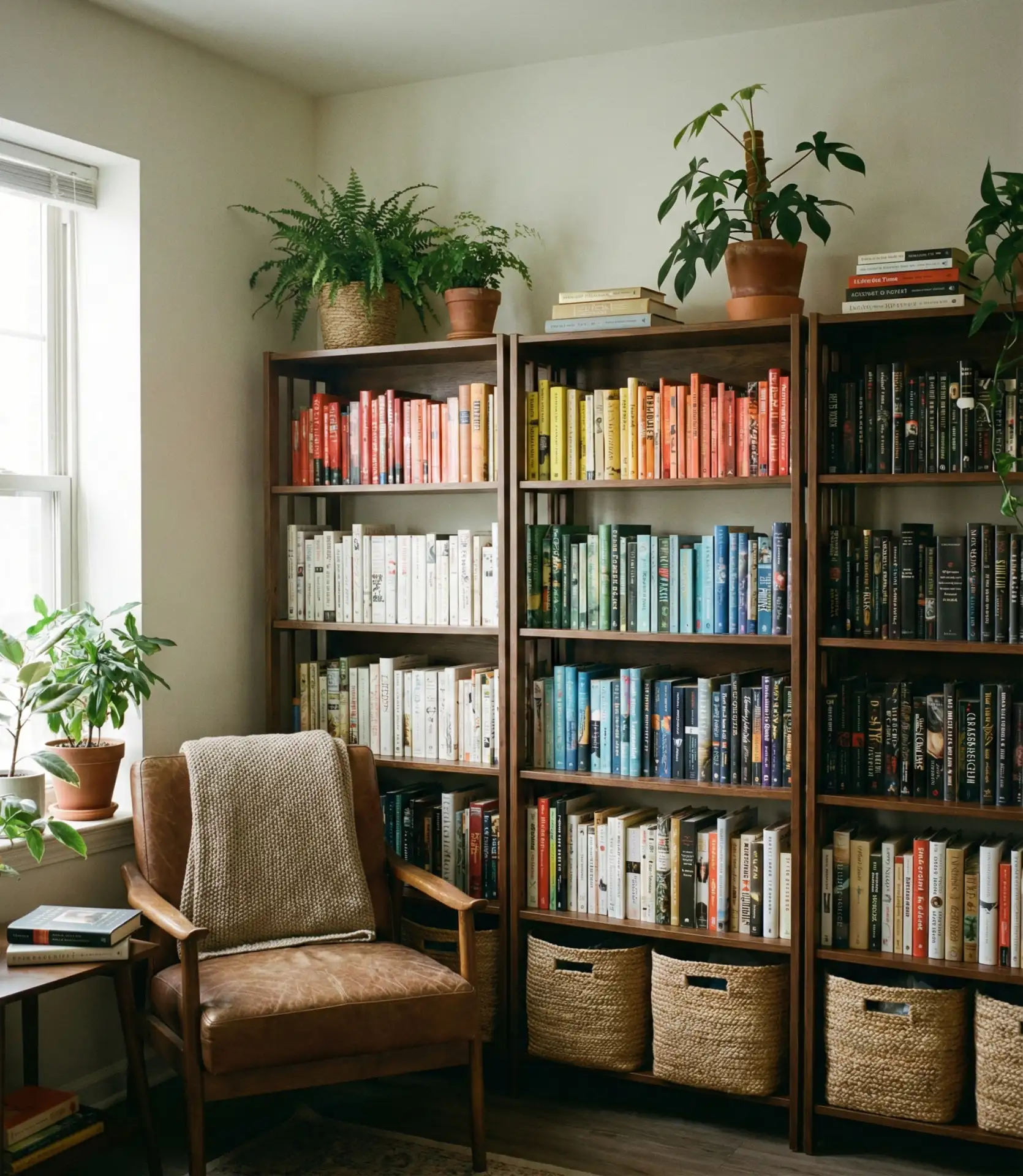
Organizing books by color rather than author or genre creates an intensely aesthetic library that photographs beautifully and brings graphic impact to any room. This approach has exploded on Pinterest because the rainbow effect transforms book spines into wall art, though purists argue it makes finding specific titles harder. The compromise many adopt: organize fiction by color for the visual effect, but keep reference and nonfiction in logical groupings.
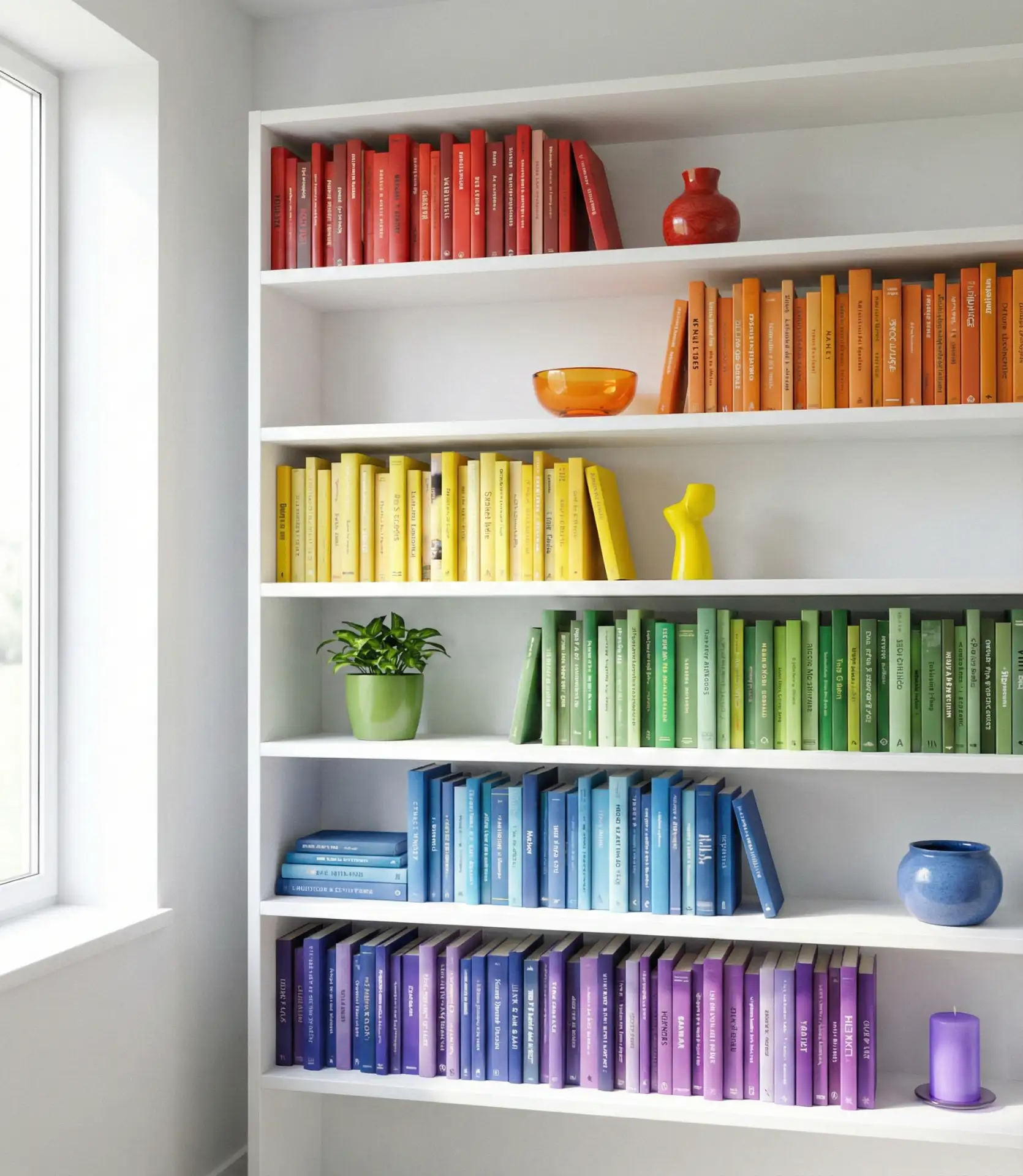
Real homeowner behavior reveals that people who organize by color initially worry about finding books but quickly develop visual memory for where titles live within their color sections. One reader reported that after two months, she could locate any book faster than with her previous alphabetical system because the color acted as a stronger spatial anchor than the author’s name.
16. Cosy Reading Corner with Textiles
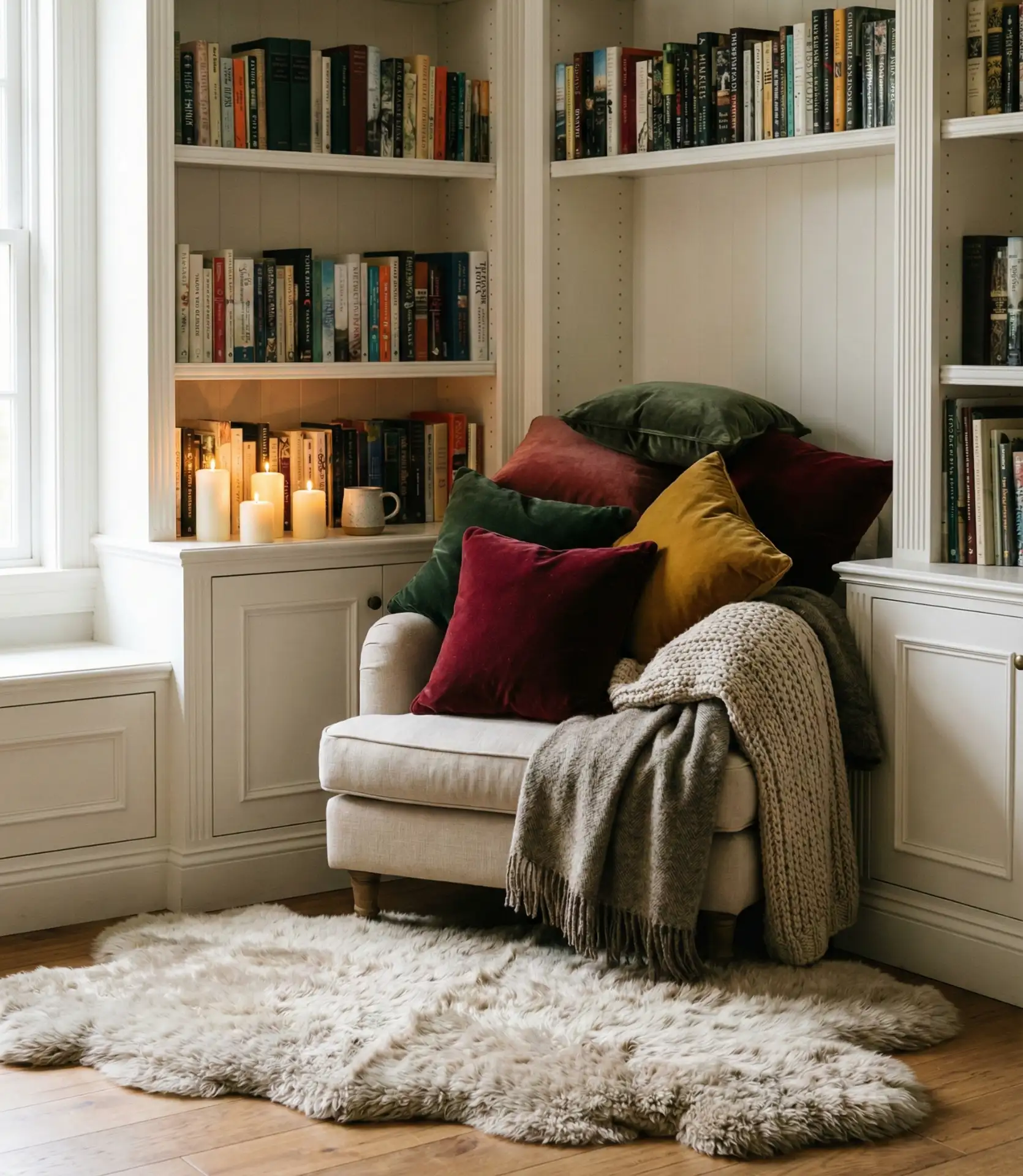
Layering multiple textiles—thick rugs, throw blankets, oversized pillows—transforms a simple bookshelf corner into an irresistibly cozy retreat that begs you to curl up with a novel. This approach prioritizes comfort and tactile warmth over architectural perfection, creating what Scandinavians call “hygge” and what Americans increasingly seek as an antidote to screen time. The key is mixing textures: smooth velvet with chunky knits, soft linen with faux fur.
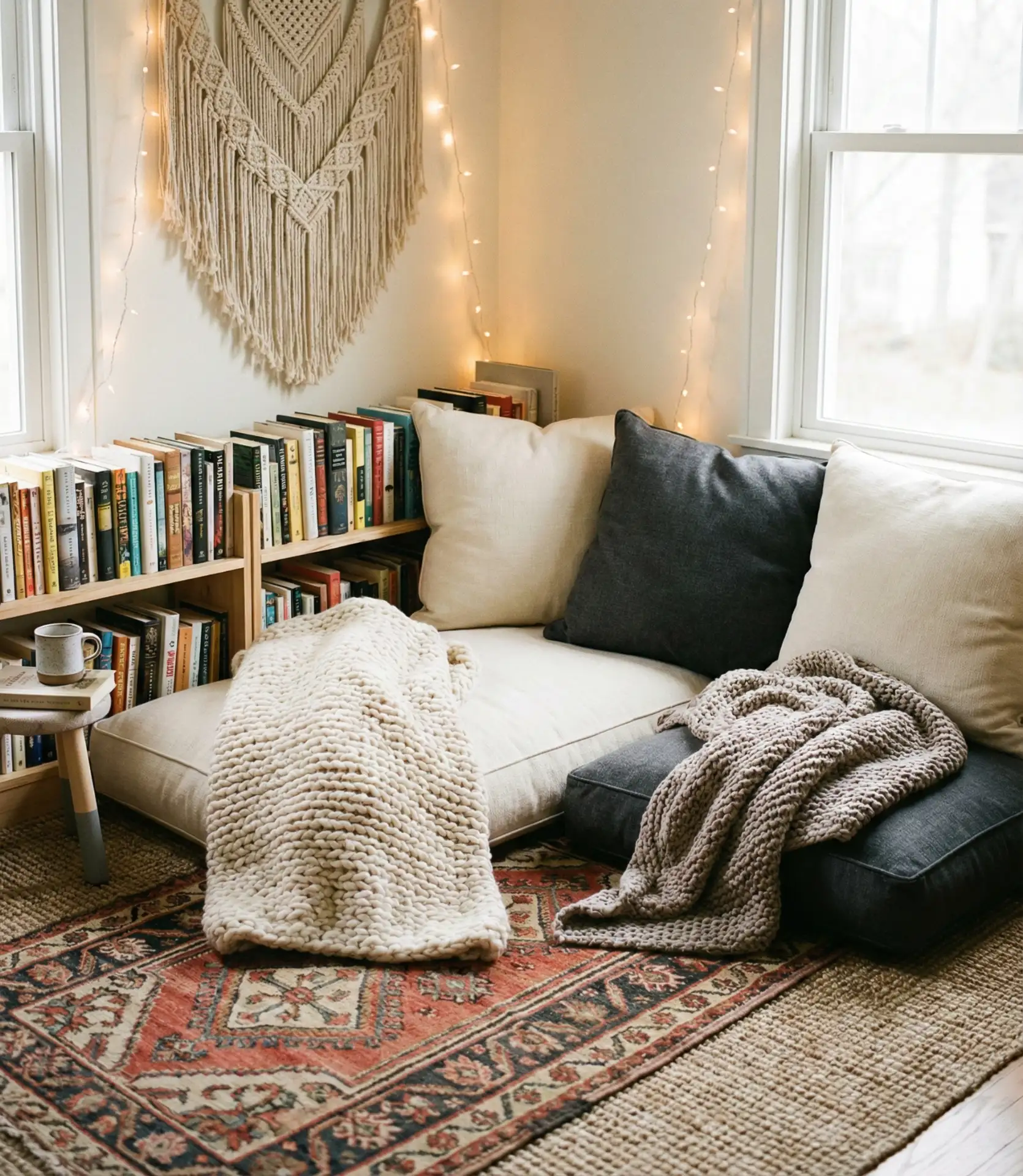
Where it works best: Cooler climates, obviously, but even Sun Belt residents create these cozy corners for air-conditioned summer reading. The textile-heavy approach also provides acoustic dampening in open-plan homes, making the library corner feel like a genuine retreat from kitchen noise and TV sounds. Budget around $200-400 for quality textiles that will hold up to regular use.
17. Book Lovers Display Library
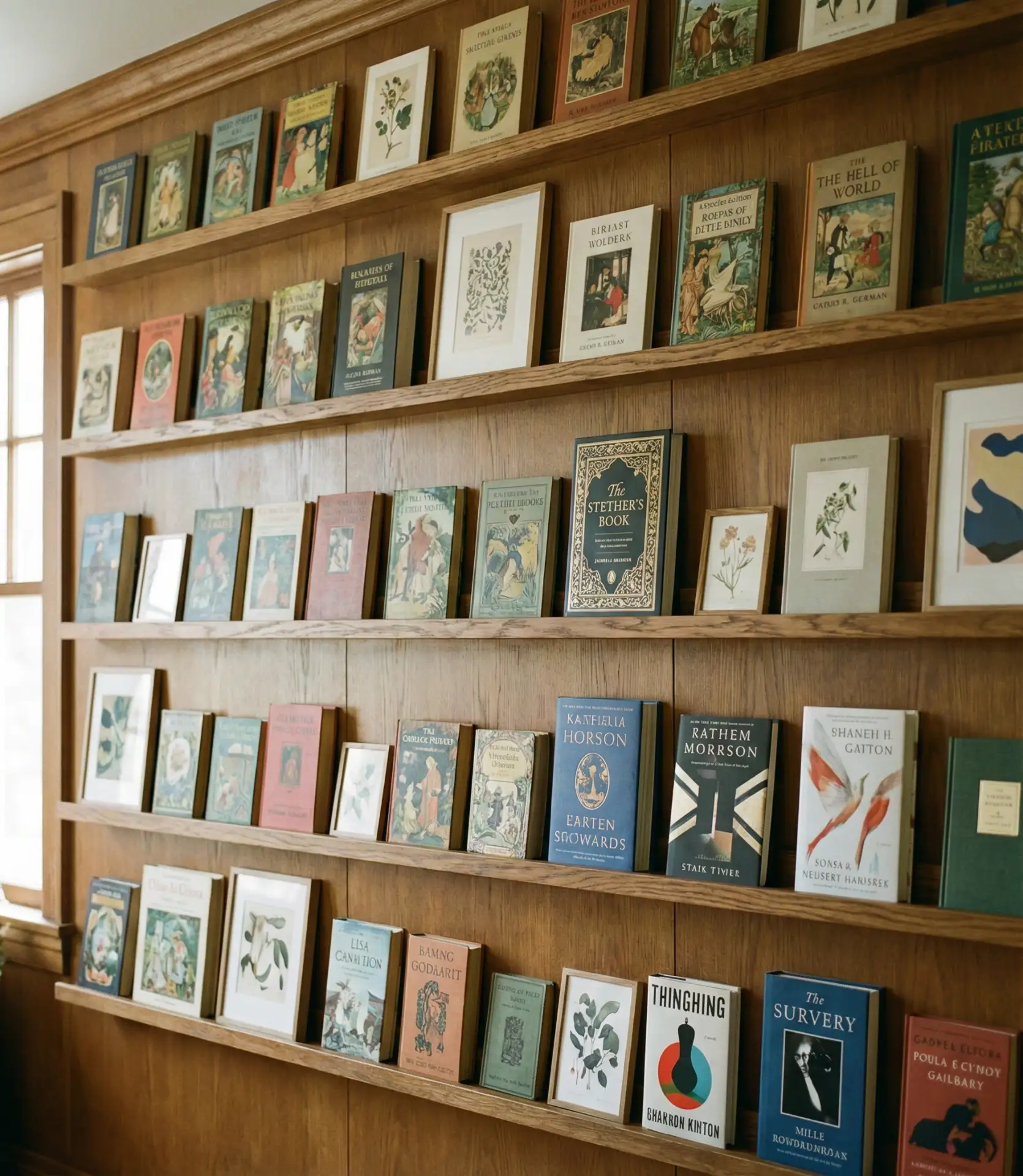
Devoted book lovers often prefer libraries where favorite volumes face forward like art rather than being spine-out on traditional shelves. This display approach uses picture ledges, floating shelves, or bookcase shelves with a front-facing lip to showcase beautiful covers, creating a gallery effect that celebrates books as objects. It’s less space-efficient but infinitely more personal, allowing you to rotate displays seasonally or based on current reading obsessions.
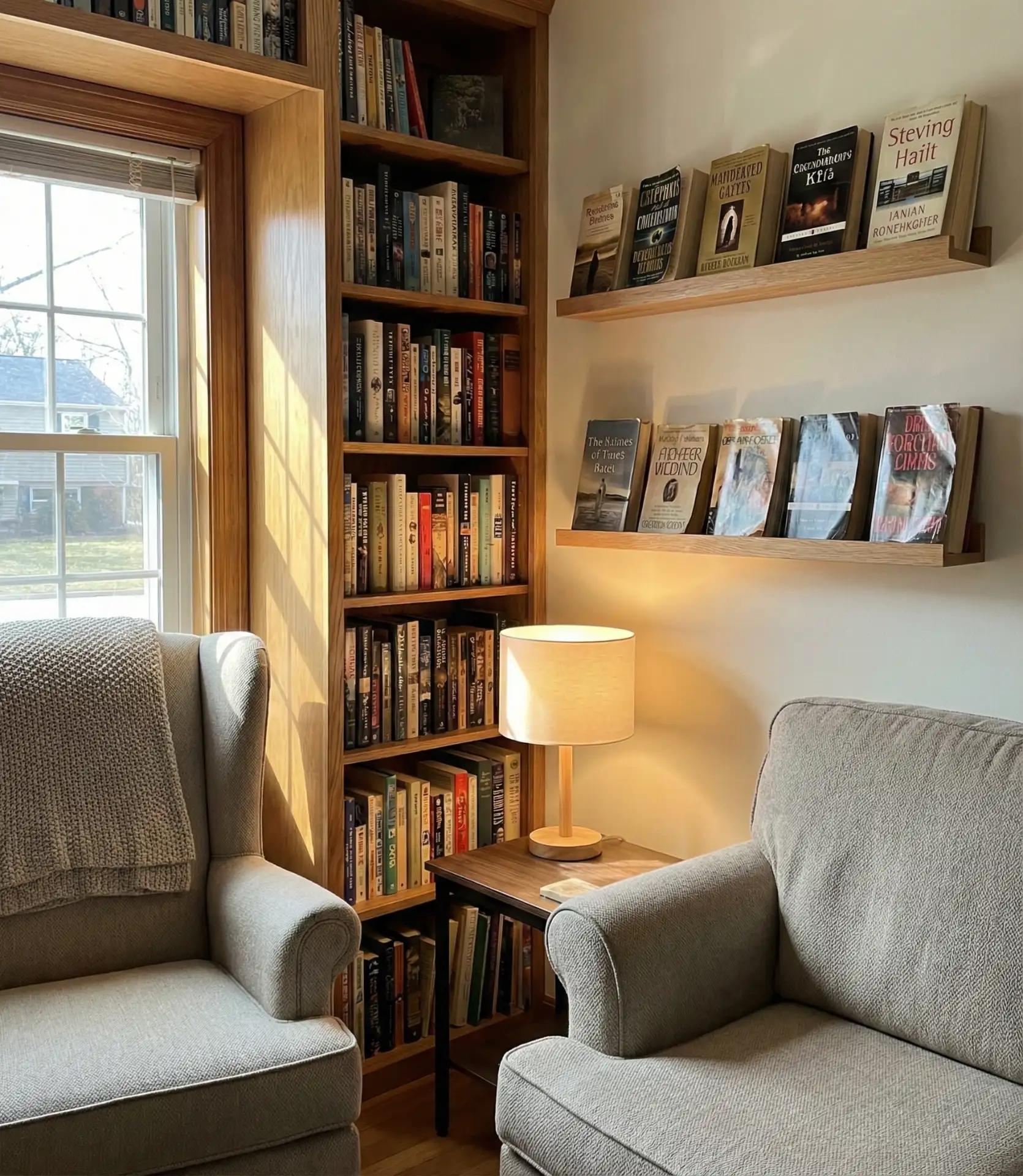
Expert commentary suggests this display method actually increases reading engagement because seeing covers triggers emotional connections to books in ways that spines don’t. Publishers spend millions on cover design for precisely this reason—facing covers outward leverages that investment in your home, making you more likely to reread favorites or finally crack open that beautiful edition you’ve been saving.
18. Bloxburg Gaming Library Setup
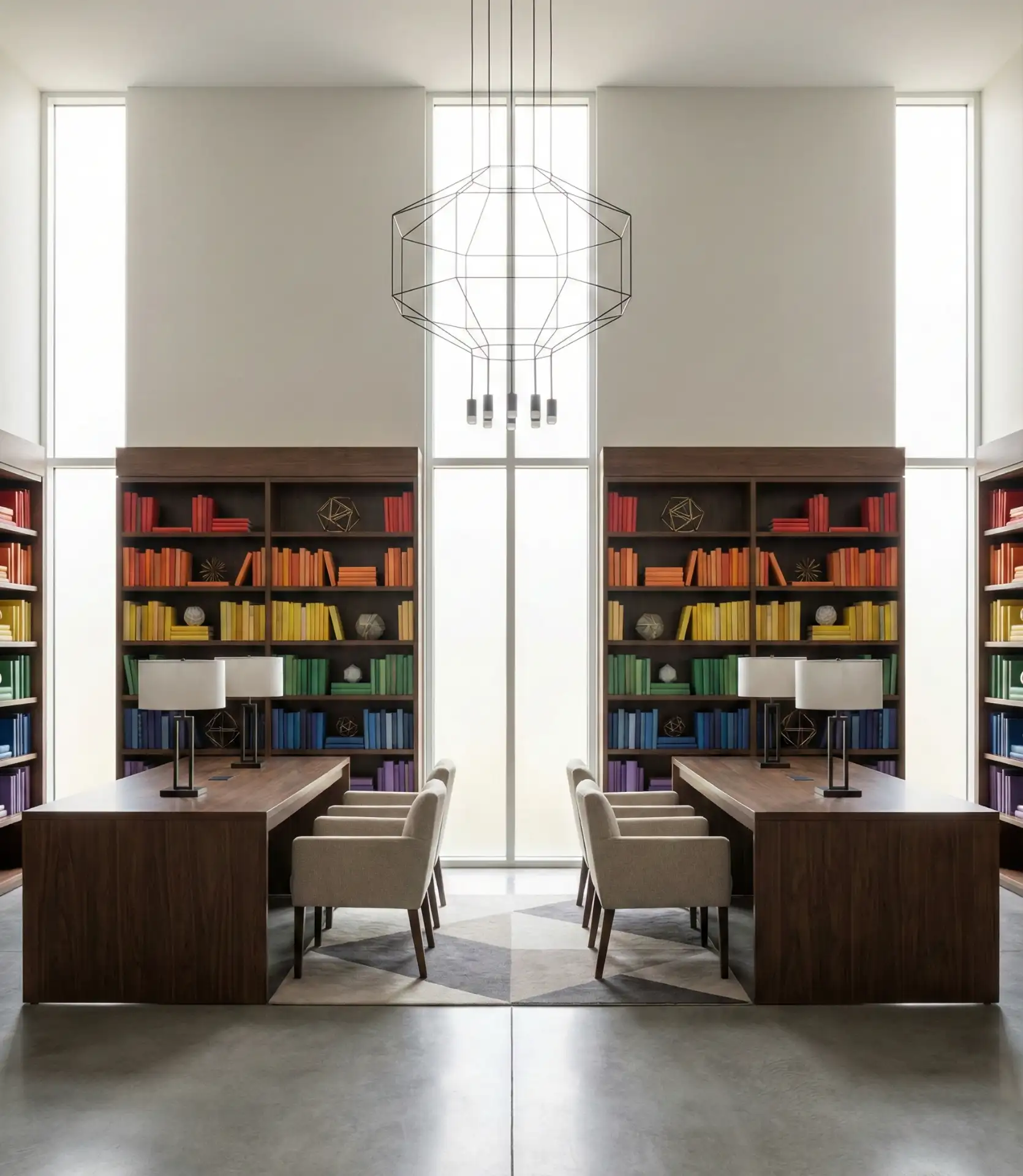
The popularity of building libraries in Bloxburg and similar virtual world games has influenced real-world design, with players recreating their favorite virtual libraries in actual homes. These tend toward symmetric, Instagram-ready layouts with matching furniture sets, perfect color coordination, and an almost dollhouse-like precision. Young homeowners who grew up designing spaces in games often gravitate toward this controlled aesthetic when creating their first real library.
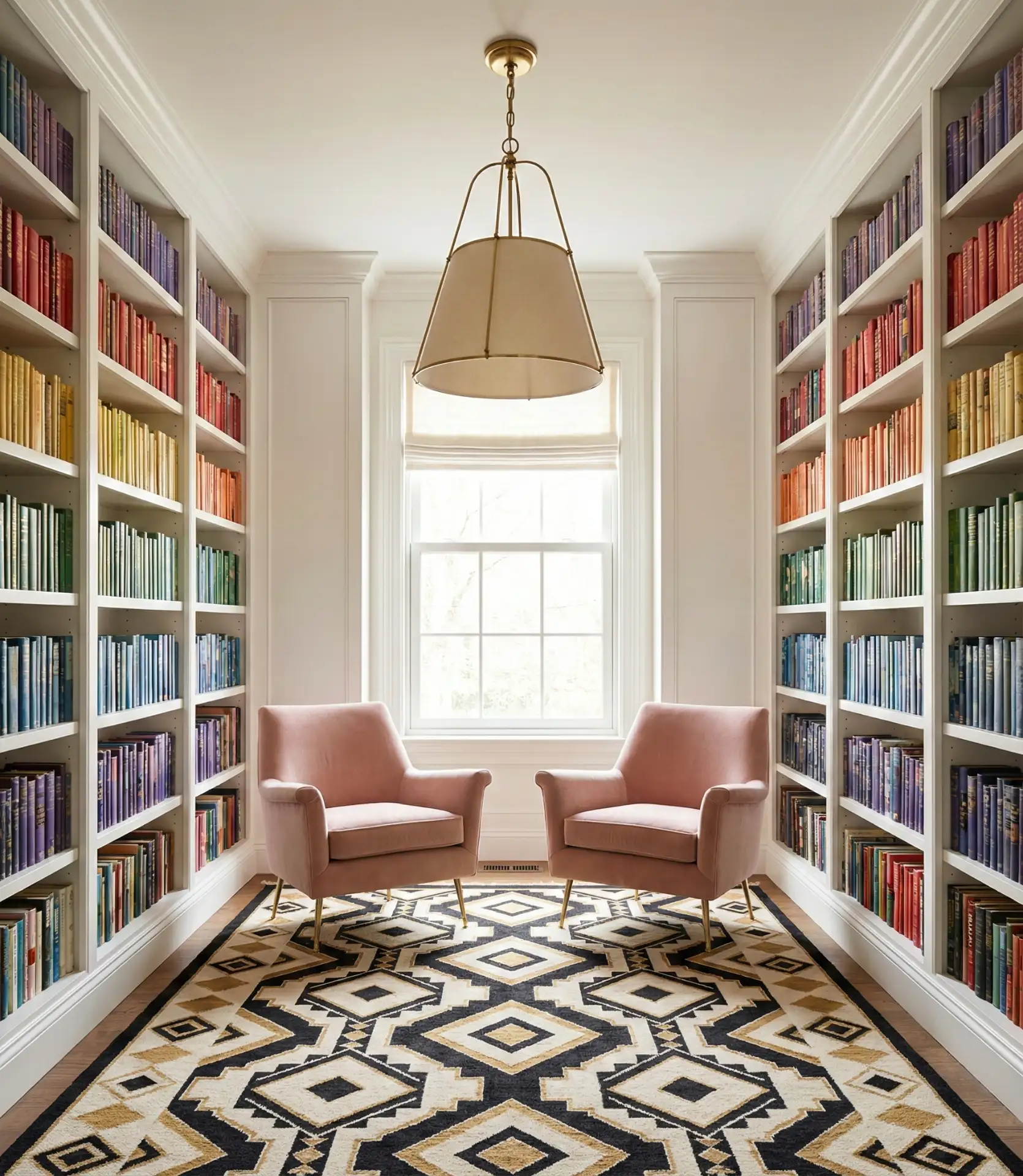
A 24-year-old in Austin explained that designing her library in Bloxburg first let her experiment with furniture arrangements and color schemes without financial risk, and then she recreated her favorite version in her actual apartment. The virtual planning saved her from costly mistakes and gave her confidence to tackle the project—an emerging design workflow that furniture retailers are starting to notice.
19. Unique Architectural Library Features
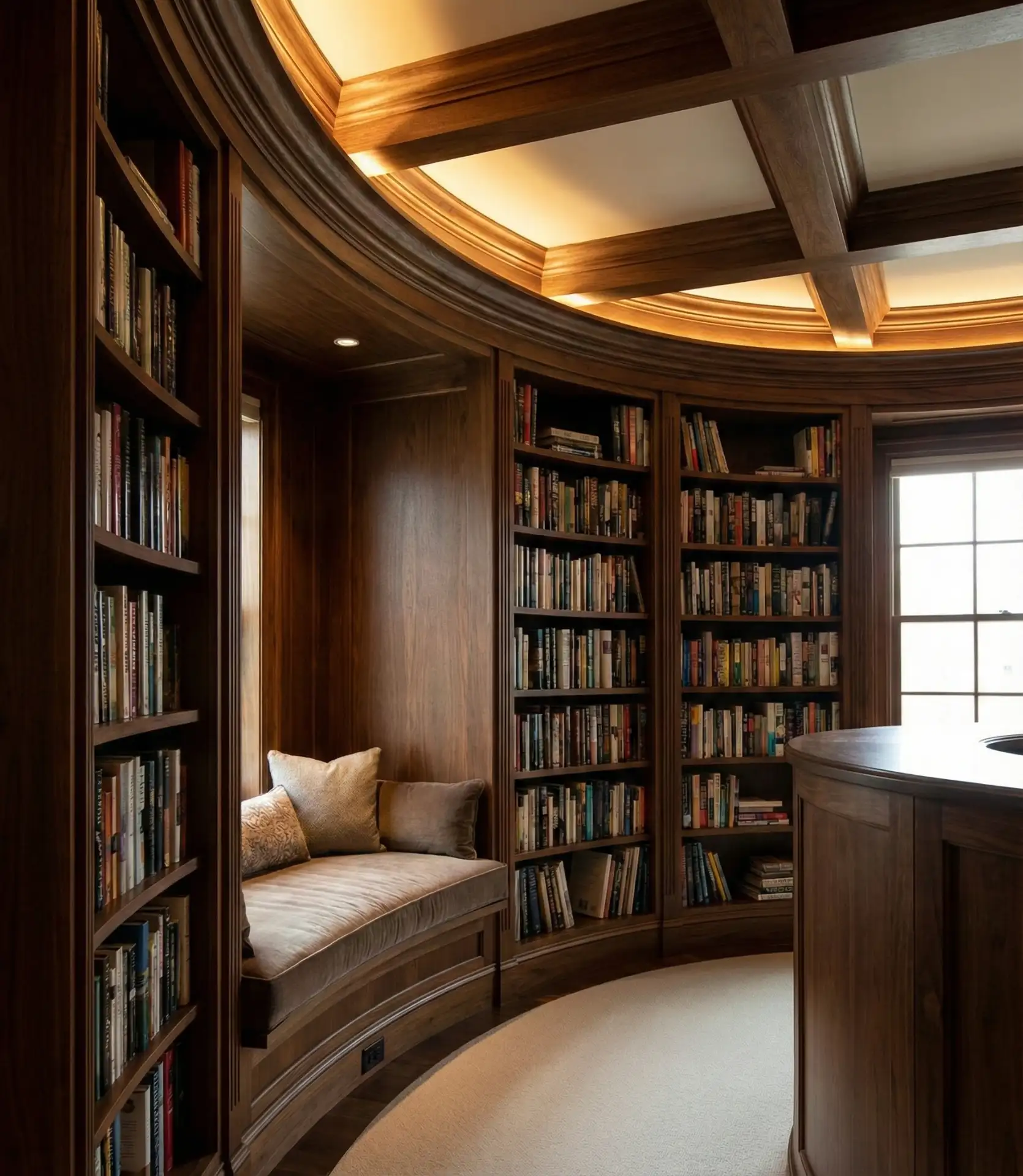
Truly unique libraries incorporate architectural elements beyond standard shelving—spiral staircases connecting different reading levels, curved walls with custom-fitted bookcases, or double-height ceilings with catwalk access to upper shelves. These ambitious projects turn libraries into genuine room statements that become home centerpieces rather than afterthoughts. While typically requiring professional design help, even partial versions of these ideas create memorable spaces.
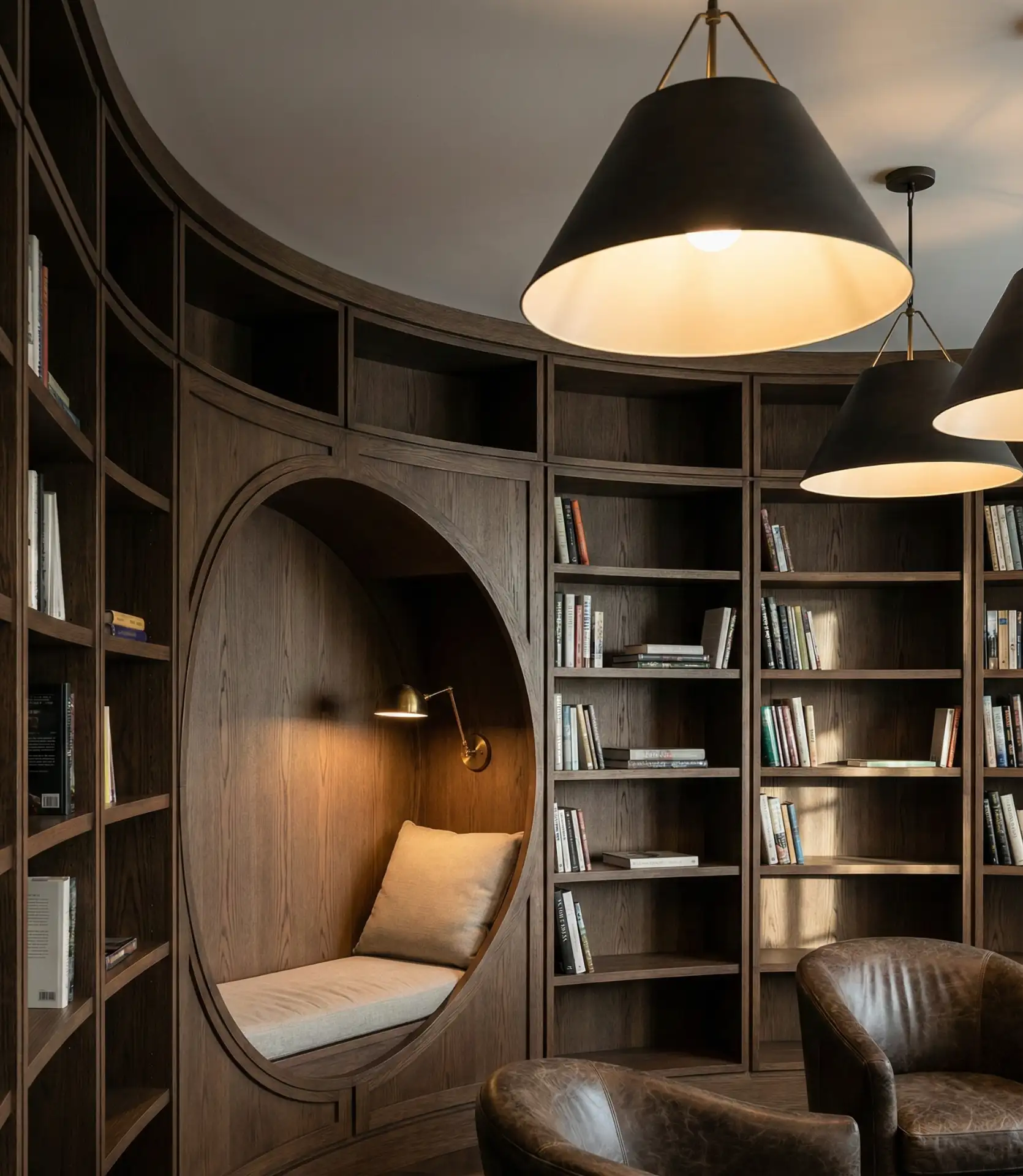
Where it works best: Homes with existing architectural features, such as double-height entryways, curved walls, or bonus rooms with odd shapes that don’t function as standard bedrooms, are the best places to implement these ideas. These spaces often feel awkward until you recognize them as perfect library candidates, where the unusual architecture becomes an asset rather than a puzzle to solve.
20. Tiny Apartment Bookshelf Wall
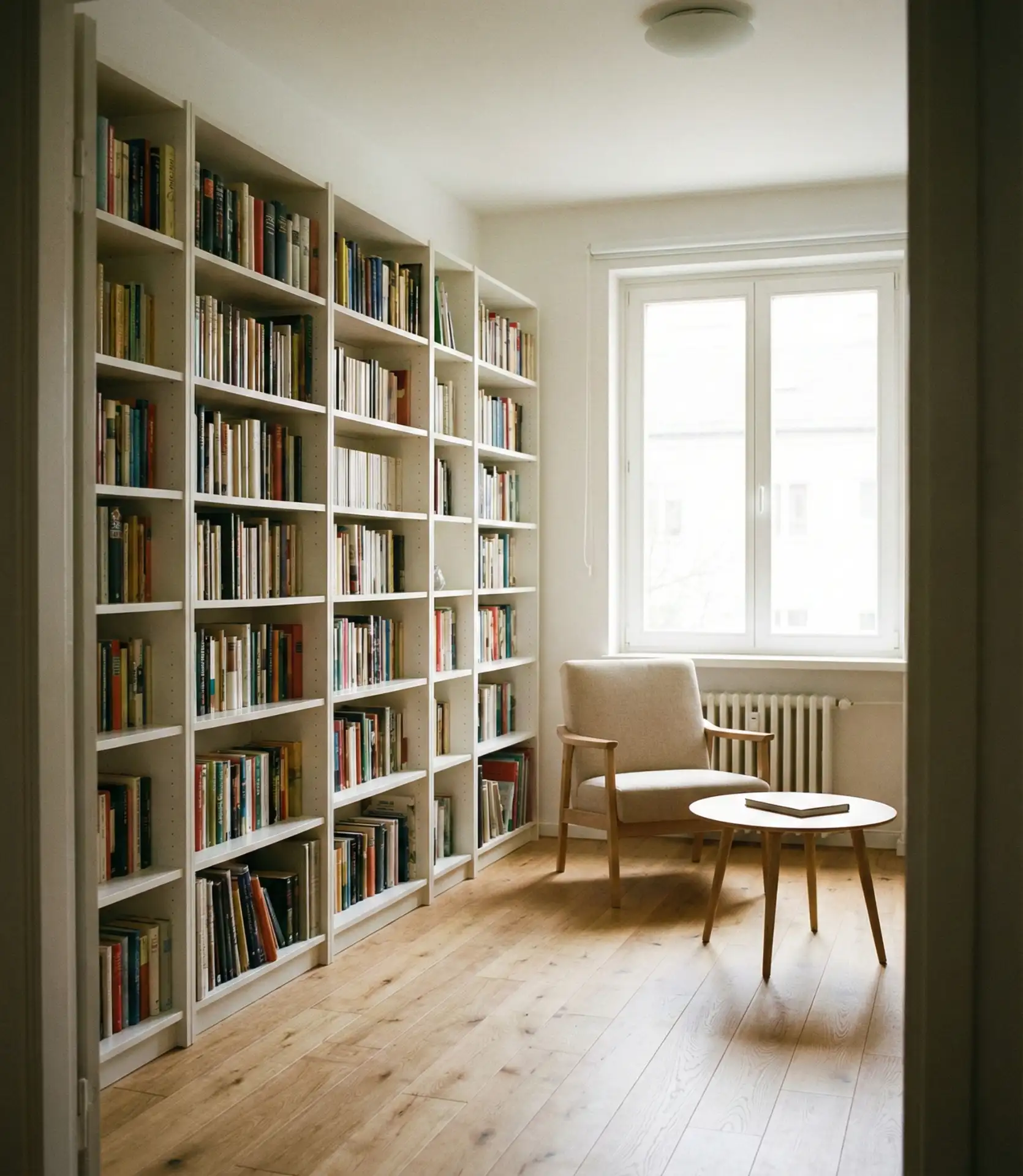
In tiny apartments where space is precious, dedicating one complete wall to floor-to-ceiling shelving actually makes the room feel larger by emphasizing vertical space and creating architectural interest. This counterintuitive strategy works because the wall of books provides visual depth and texture that plain walls can’t match, tricking the eye into perceiving more dimension. Choose slim-profile shelving (8-10 inches deep rather than 12) to minimize how much the bookcase projects into the room.
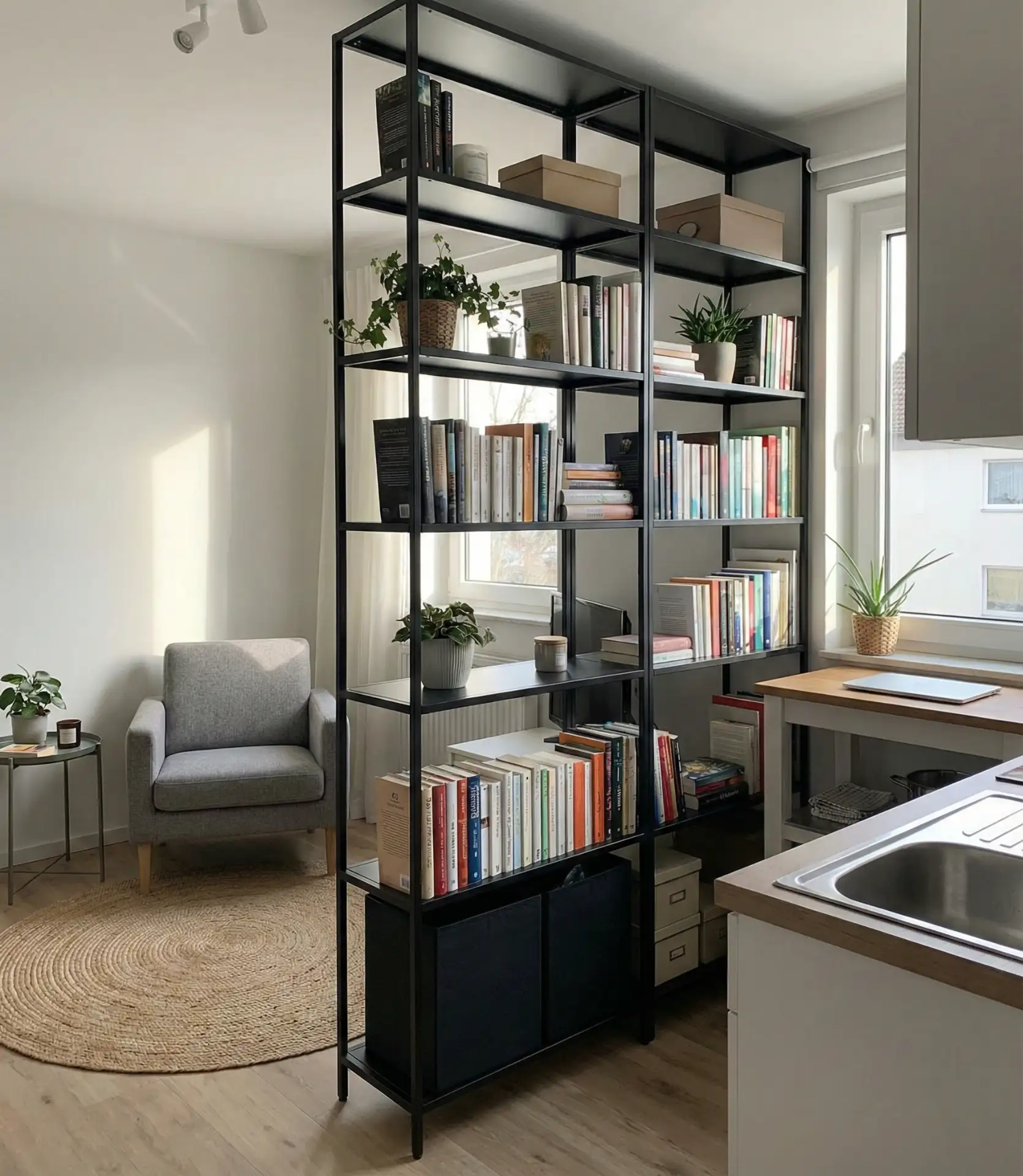
Practical insight: When working with truly minimal square footage (under 400 sq ft), consider shelving units that are 8 inches deep instead of the standard 10-12 inches. You’ll sacrifice some capacity for oversized art books, but you’ll gain back critical floor space. Most novels and paperbacks are 5–7 inches deep anyway, so the shallower shelves work fine for typical collections.
21. Moody Dark Academia Library
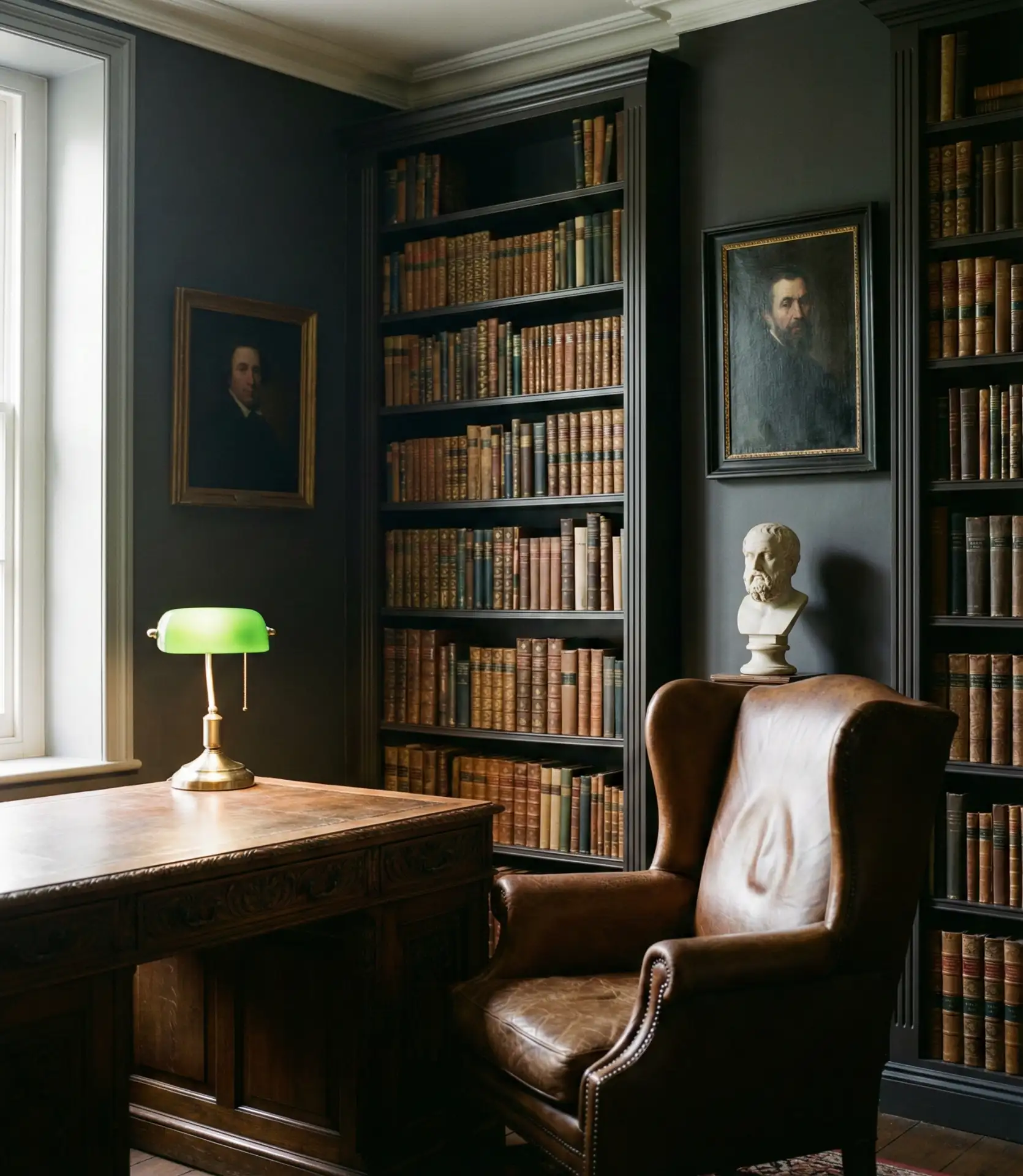
The dark academia aesthetic combines moody lighting, classic literature, rich textures, and an atmosphere of scholarly intensity that appeals to readers who romanticize the life of the mind. Think dark walls in charcoal or deep green, vintage desk lamps with green glass shades, leather-bound classics displayed prominently, and perhaps a globe or vintage typewriter as decorative elements. This theatrical approach to libraries has surged among younger homeowners who grew up with Harry Potter and The Secret History.
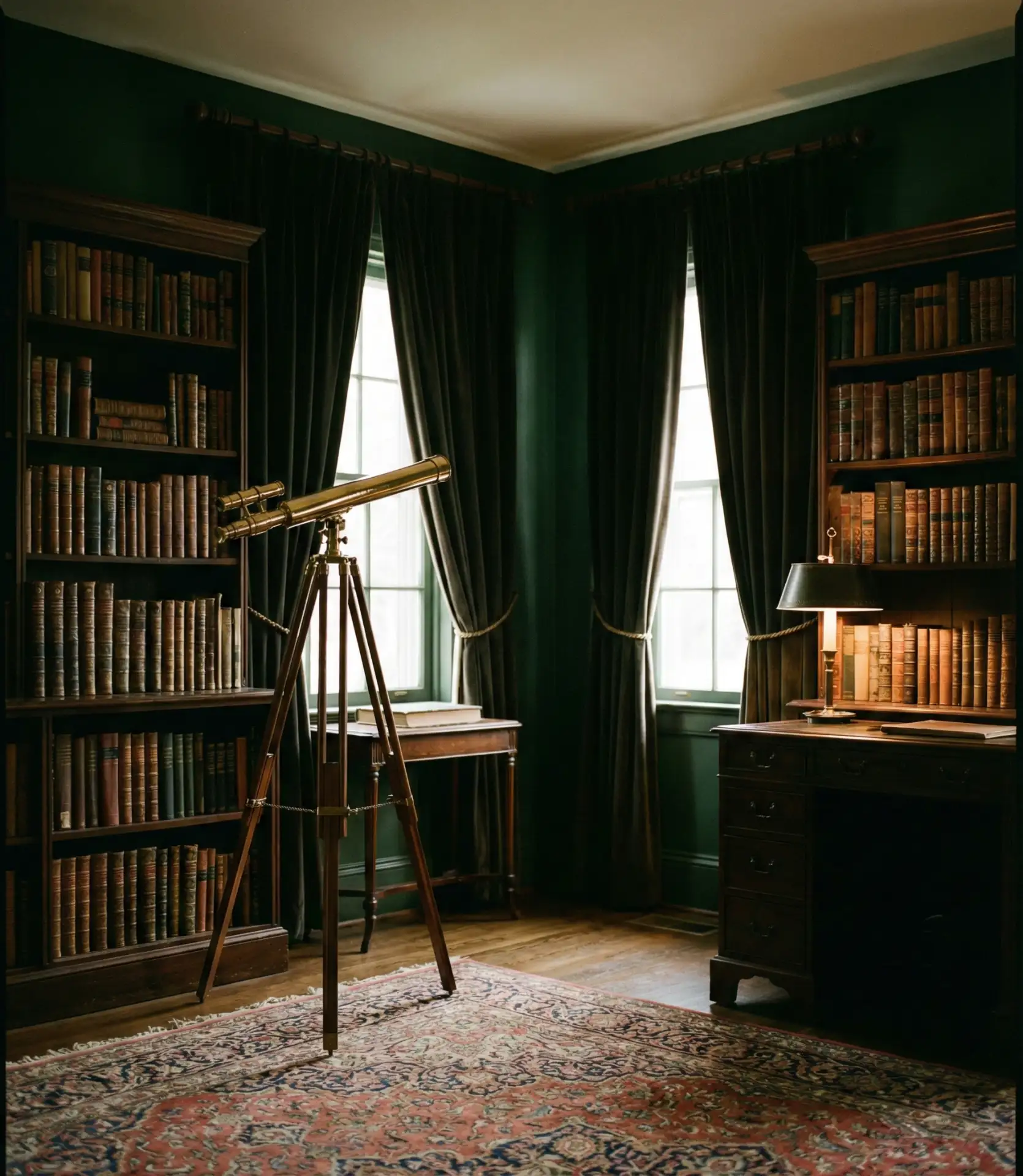
Common mistake: Going too dark without adequate lighting, which makes the space unusable for actual reading. Dark academia libraries need multiple light sources—overhead lighting for general visibility, task lighting at reading spots, and accent lighting on shelves. Install dimmer switches so you can adjust the atmosphere from “dramatic” to “functional” depending on whether you’re reading or just appreciating the vibe.
22. Minimalist Scandinavian Book Storage
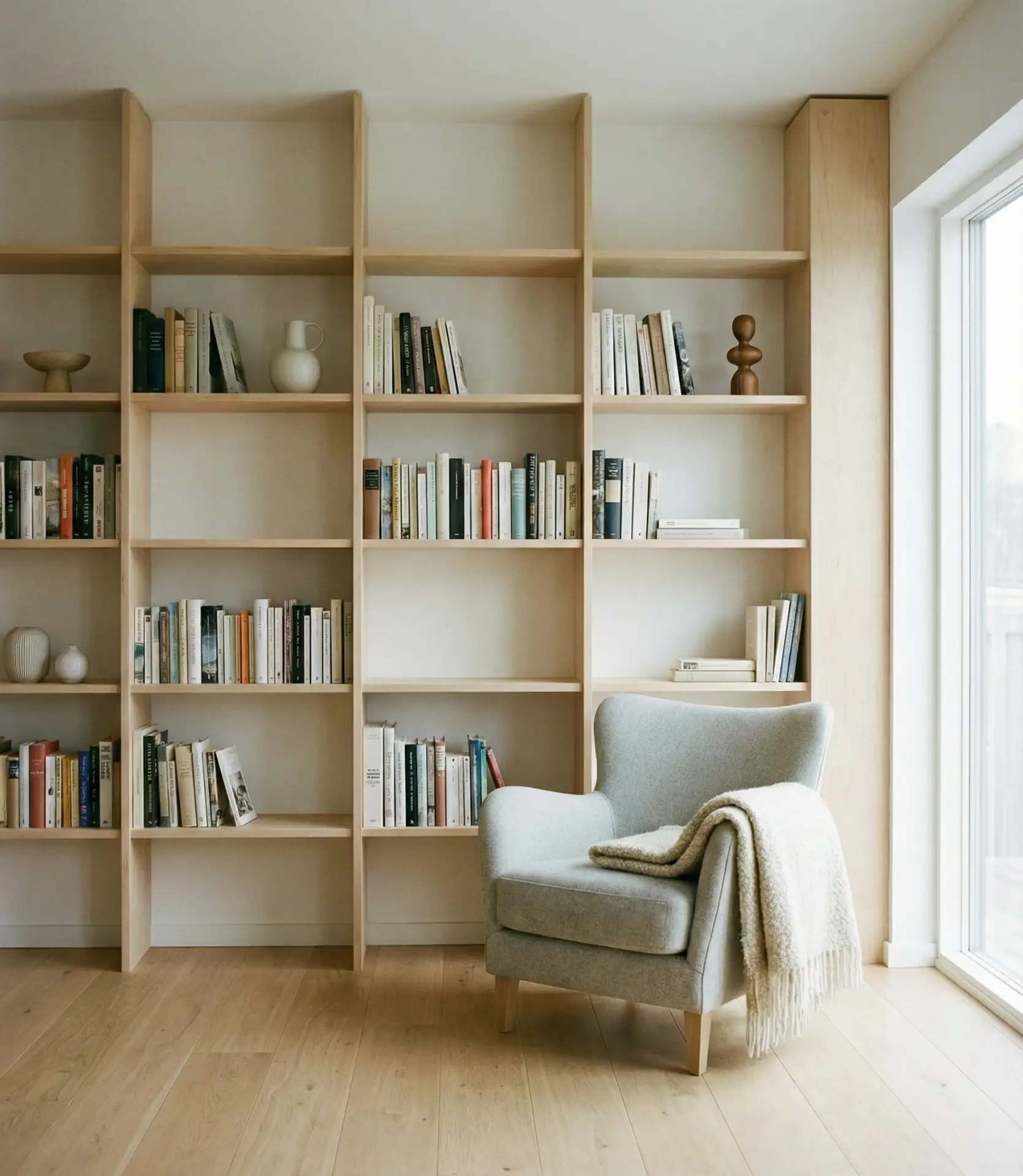
Scandinavian design principles applied to home libraries emphasize light wood tones, white walls, and curated collections displayed with breathing room between volumes. This approach treats books as functional objects that shouldn’t dominate the space, often limiting collections to 50-100 essential volumes rather than accumulating hundreds. The aesthetic appeals to readers who value quality over quantity and want their library to maintain the calm, uncluttered feeling of Nordic interiors.
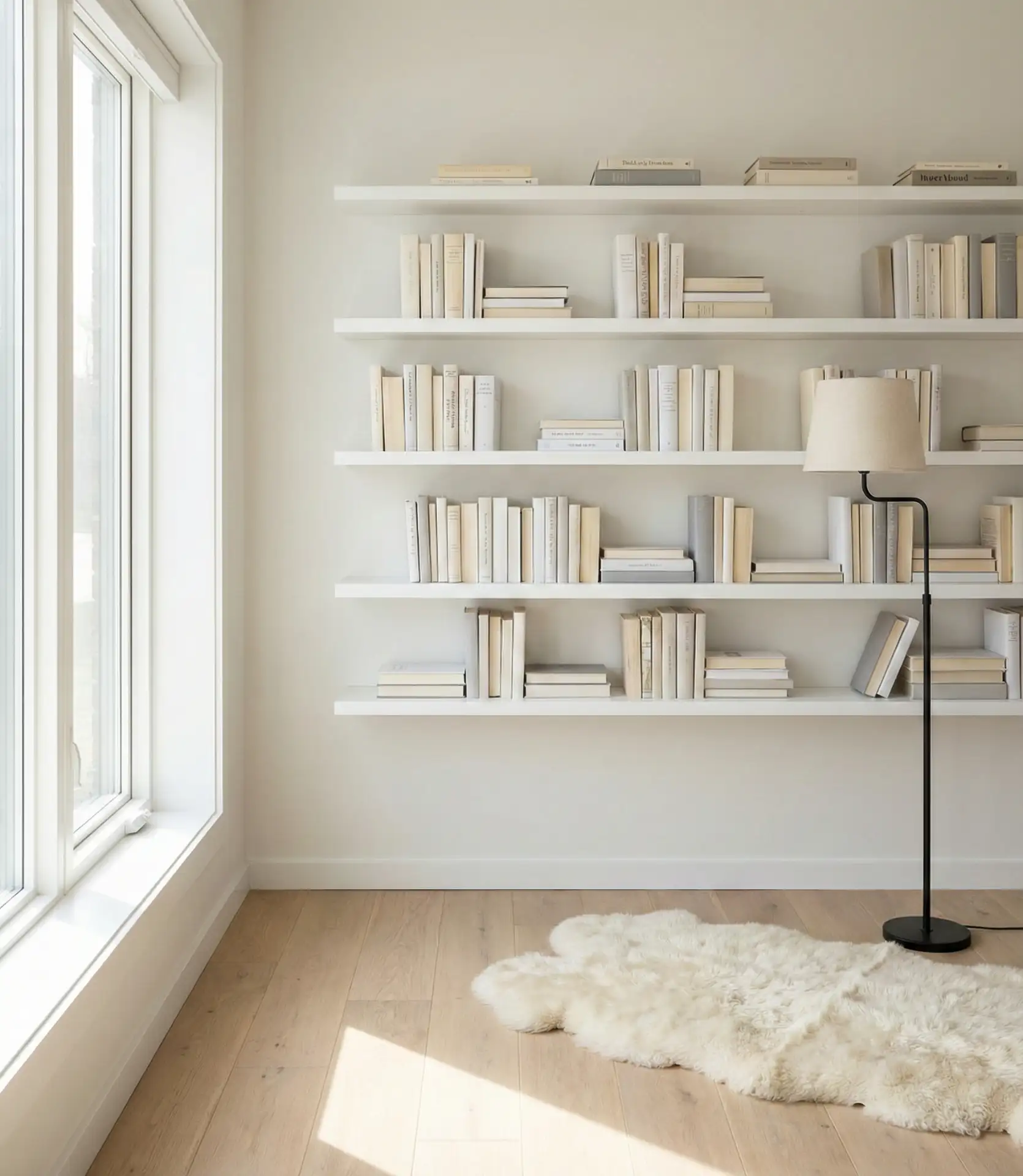
Real homeowner behavior shows that people who adopt this minimalist approach often become more intentional readers, finishing books more consistently because they’ve committed to owning only titles that truly matter to them. The visual restraint also makes the space more versatile—one couple uses their Scandinavian library as a meditation room in the mornings before it becomes a reading space in the evenings.
23. Eclectic Mix Book Display
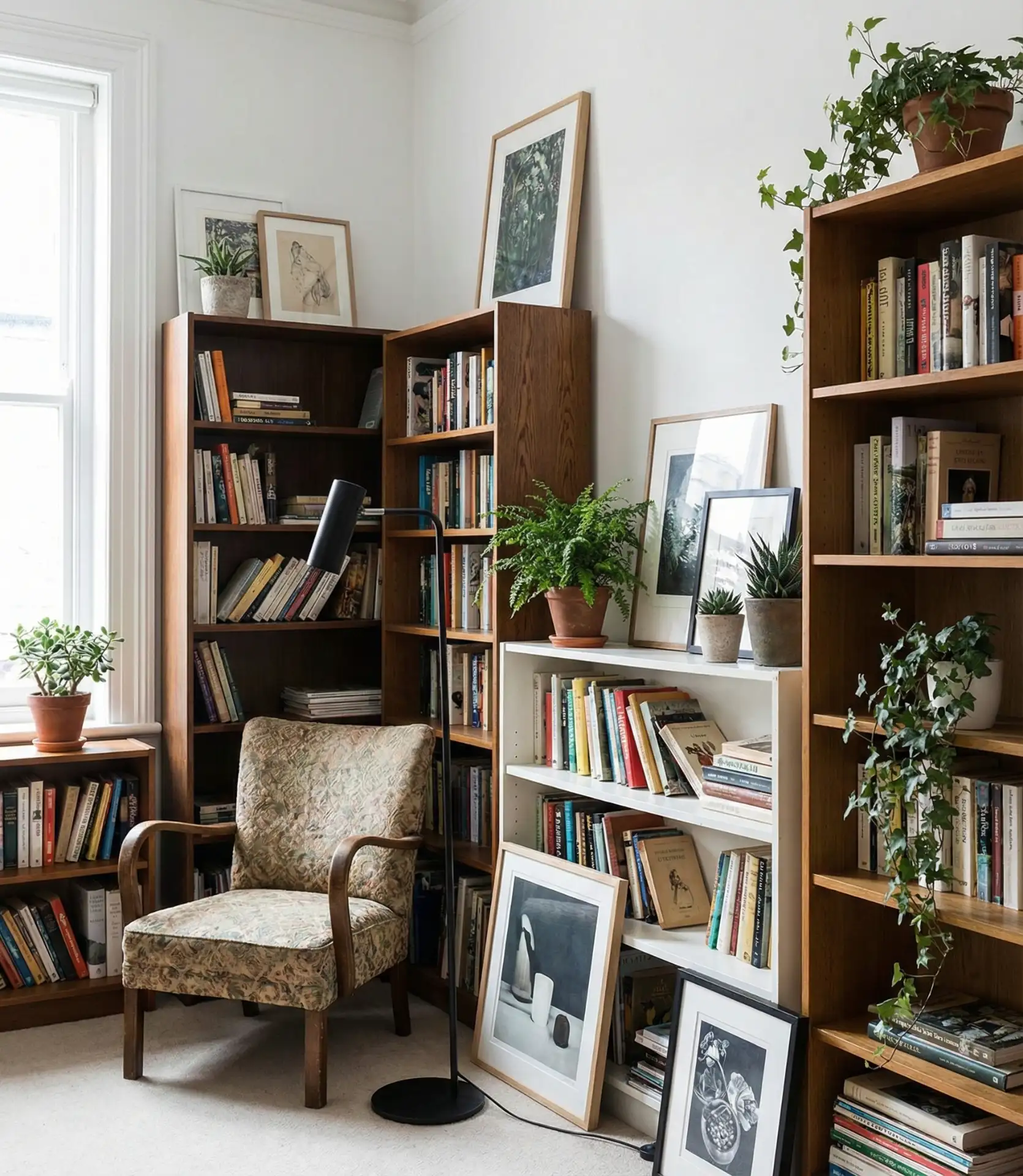
An eclectic library embraces mismatched furniture, varied shelf styles, and a collected-over-time feeling that reflects genuine reading interests rather than designer coordination. Mix vintage and modern pieces, combine open shelving with closed cabinets, and arrange books both vertically and in stacked horizontal piles—essentially treating your library as an evolving reflection of your reading life. This unique approach resonates with readers who reject Instagram-perfect aesthetics in favor of authentic, lived-in spaces.
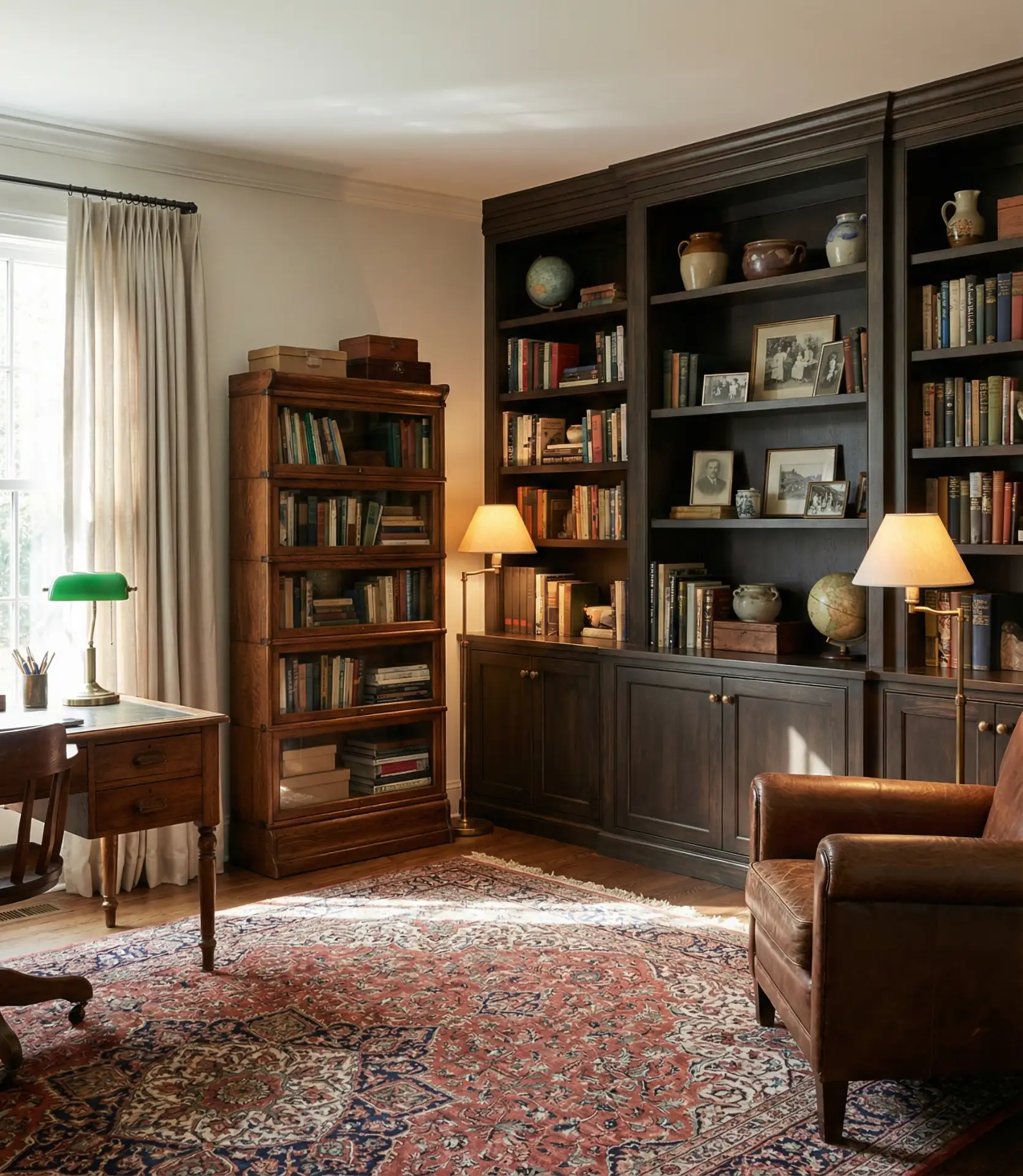
Expert perspective: Design purists sometimes criticize eclectic libraries as “cluttered,” but research on reading behavior suggests that diverse, personalized environments actually encourage more reading than pristine, styled spaces. When your library feels like a genuine extension of your personality rather than a staged set, you’re more likely to spend time there and engage with the books.
24. Multi-Purpose Library Office
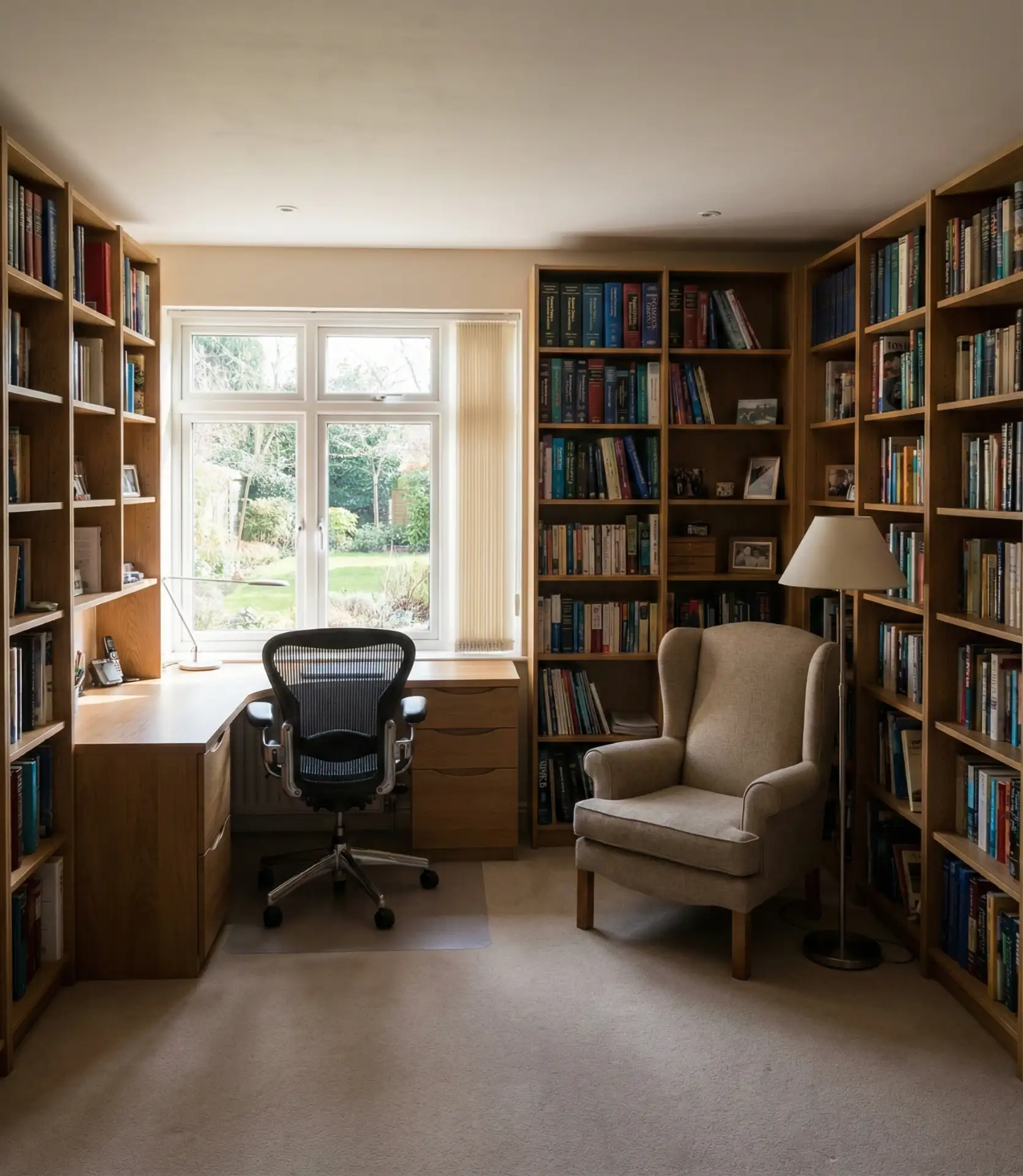
Combining your library with a home office creates a dual-purpose space where work and reading coexist, maximizing the utility of rooms that might otherwise serve just one function. Position your desk against one wall with bookshelves on the remaining three sides, or create zones within the room—a desk area for focused work and a reading chair area for leisure. This practical approach works especially well for knowledge workers whose professional and personal reading blur together anyway.
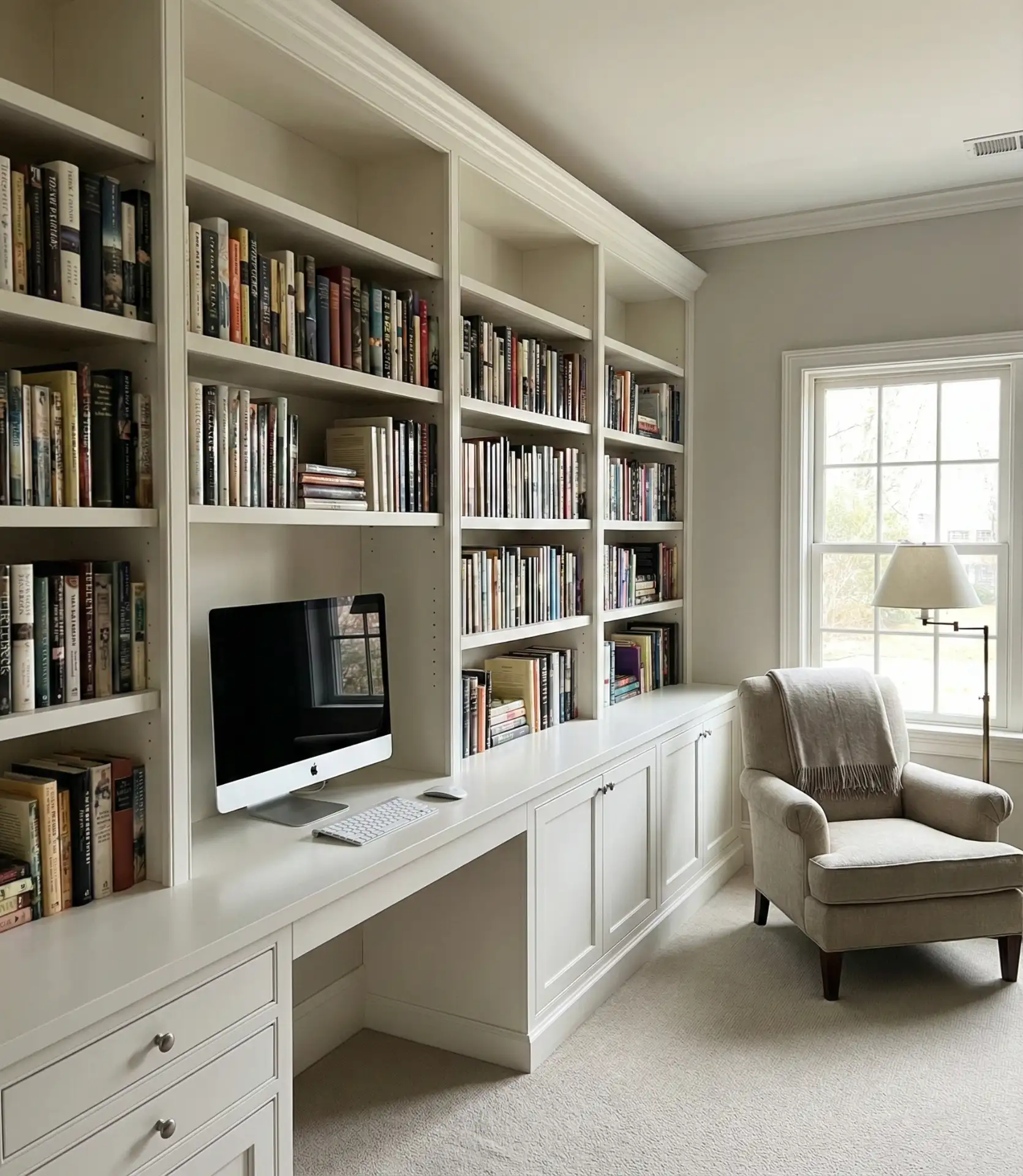
Where it works best: This approach is particularly beneficial for remote workers, freelancers, and individuals seeking both a dedicated workspace and a substantial home library. The combination actually improves both functions—having books visible during video calls provides visual interest and signals intelligence, while the desk provides a surface for sorting through reading piles or working on book-related projects. Budget $1,500-3,000 for quality desk, seating, and shelving that serve both purposes well.
Your home library should ultimately reflect how you actually read and live, not just how libraries look in magazines. Whether you’re working with a tiny rental corner or an entire dedicated room, these approaches offer starting points for creating a space that genuinely serves your relationship with books. Share your own library setup in the comments—we’d love to see how you’ve solved the puzzle of books, space, and personal style.