48 Black Accent Wall Living Room Ideas 2026 That Will Transform Your Space Instantly

Black accent walls are having a major moment in American living rooms in 2026, and for good reason. This bold design choice offers a dramatic backdrop that makes furniture pop, creates visual depth, and adds a layer of sophistication that lighter palettes simply can’t match. Whether you’re drawn to moody modern aesthetics or looking to anchor a room with high ceilings, a black wall can transform your space from ordinary to unforgettable. Homeowners across the country are turning to Pinterest for inspiration, searching for ways to incorporate this trend without overwhelming their homes. In this article, you’ll discover expertly curated ideas that show exactly how to make a black accent wall work in your living room—no matter your style, budget, or layout.
1. TV Wall Drama with Matte Black Finish
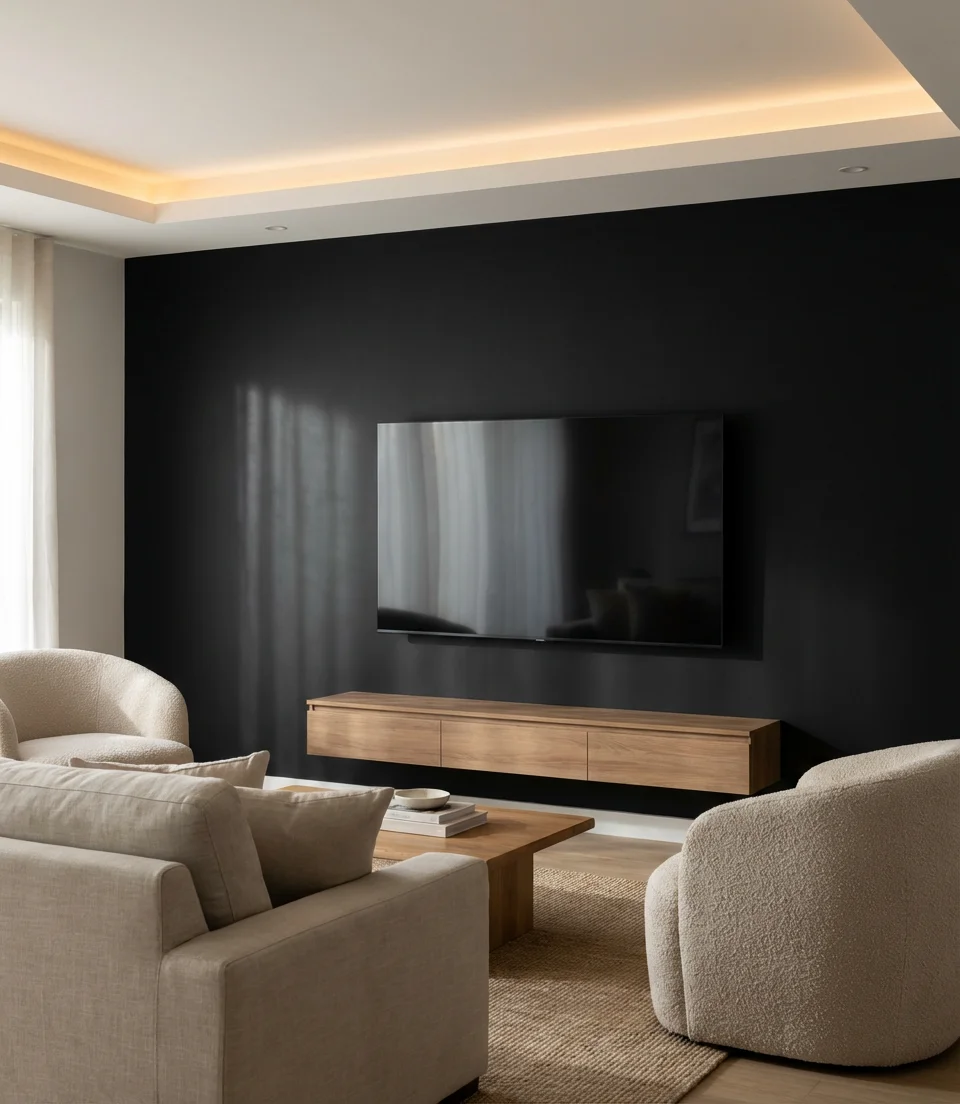
A matte black TV wall creates an immersive viewing experience by reducing glare and making the screen appear to float in space. This approach works especially well in modern living rooms where clean lines and minimal distraction are priorities. The flat finish absorbs light rather than reflecting it, which means your TV becomes the star without competing with shiny surfaces. Pair it with recessed lighting or LED strips to add dimension without breaking the sleek visual flow.
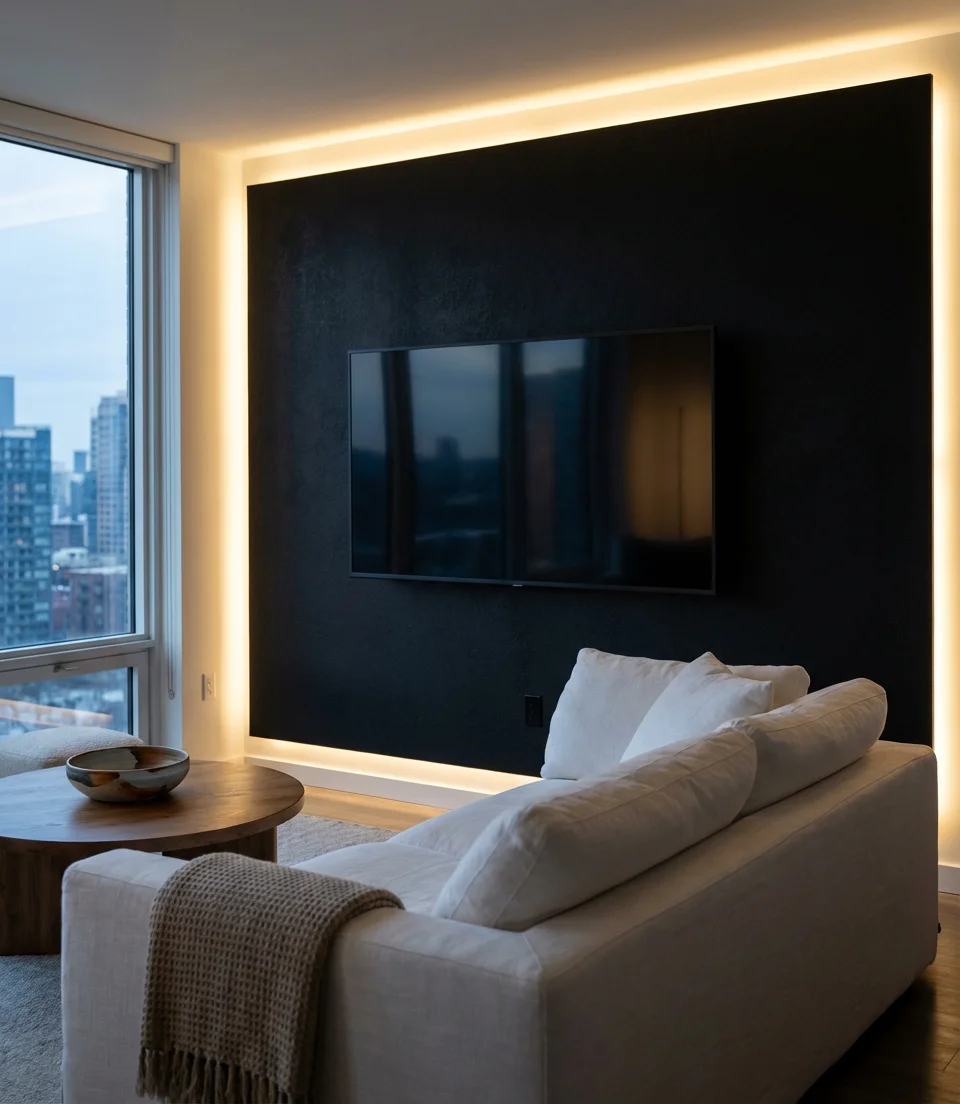
This setup is particularly popular in apartments and condos where square footage is limited. The dark wall visually recedes, which can actually make a small room feel larger when balanced with lighter furnishings. A common mistake is painting all four walls black—stick to one accent wall to maintain brightness and avoid a cave-like atmosphere. Use warm-toned wood or brass accents nearby to soften the boldness and keep the space inviting.
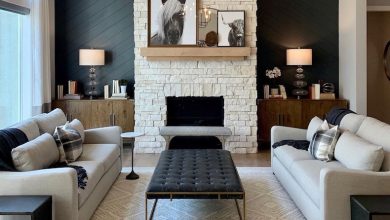
2. Tricorn Black with Fireplace Focal Point
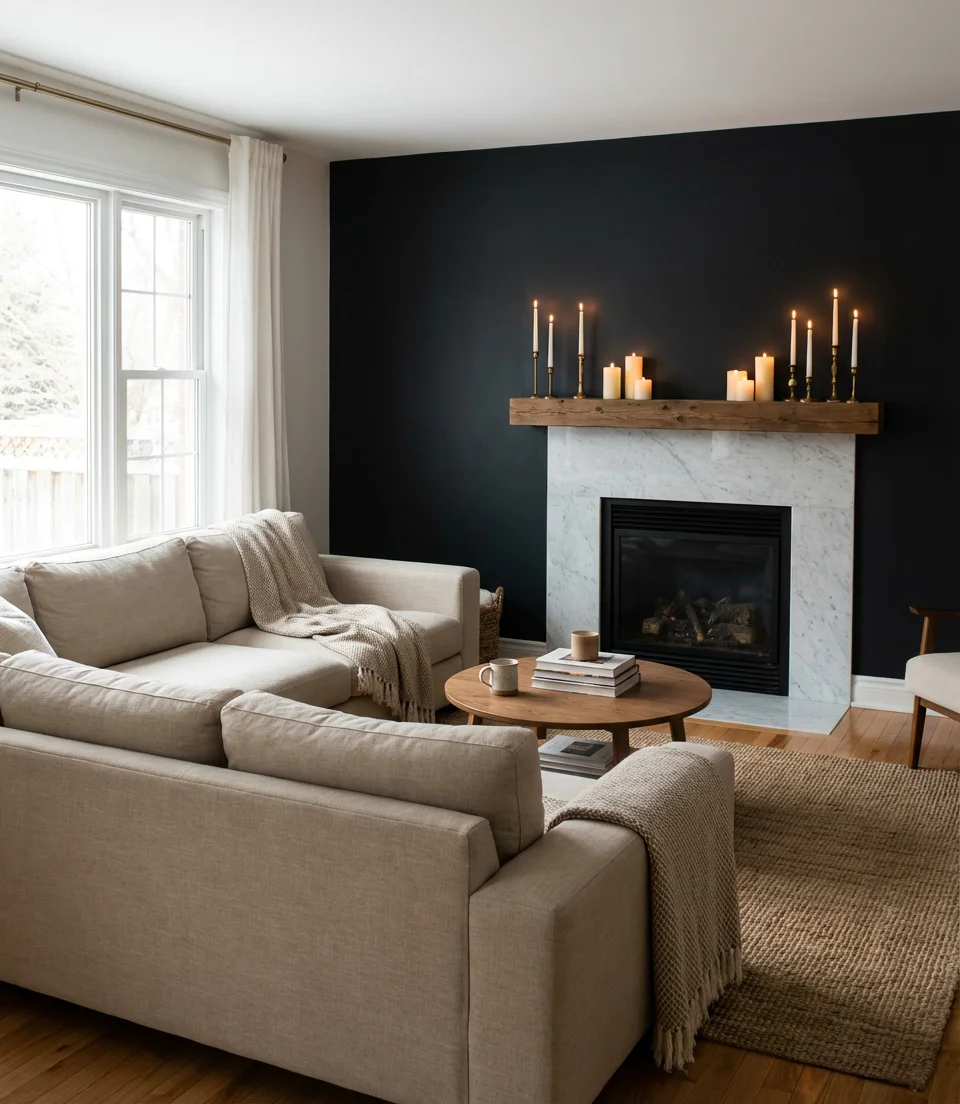
Sherwin-Williams Tricorn Black has become the go-to shade for homeowners wanting a true, rich black without any undertones. When applied to a fireplace wall, it transforms the hearth into a statement piece that grounds the entire room. This color reads as pure black in most lighting conditions, making it ideal for creating contrast against white walls or light-colored trim. The fireplace surround—whether stone, marble, or tile—gains instant visual weight and presence.
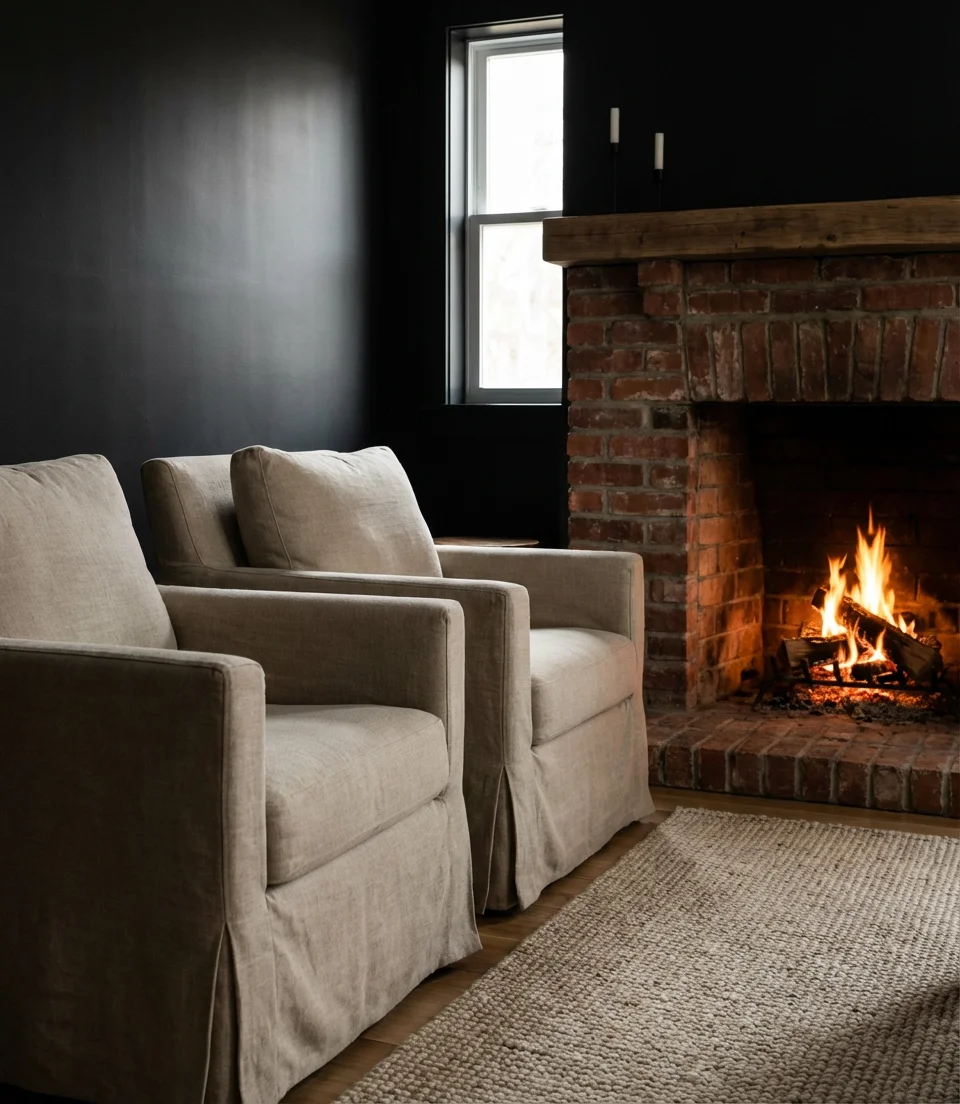
Where it works best: It works best in homes that receive abundant natural light, particularly those with south-facing windows. The dark backdrop needs daylight to prevent the room from feeling too closed-in during morning and afternoon hours. If you have a gas or electric fireplace, consider adding built-in shelving on either side of the black wall—it breaks up the expanse and provides practical storage while maintaining symmetry.
3. Charcoal Accent in Open-Concept Spaces
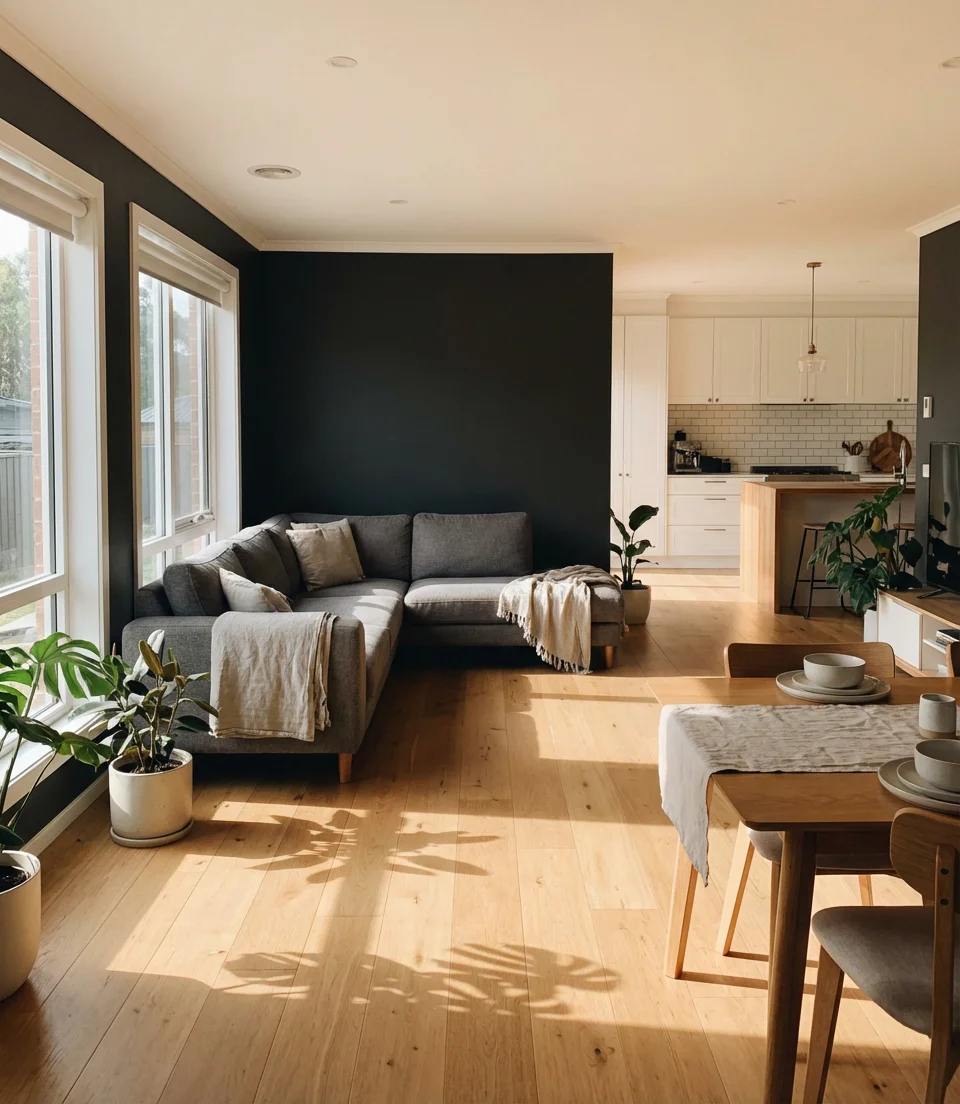
A charcoal accent wall can define the living area within an open floor plan without requiring physical dividers. This softer alternative to true black still delivers drama but feels less severe, making it easier to coordinate with adjacent dining room or kitchen zones. The slightly lighter tone picks up ambient light throughout the day, shifting from deep gray in the morning sun to nearly black in the evening hours. It’s particularly effective behind a sofa or entertainment center, creating a visual anchor that separates lounging space from cooking or eating areas.
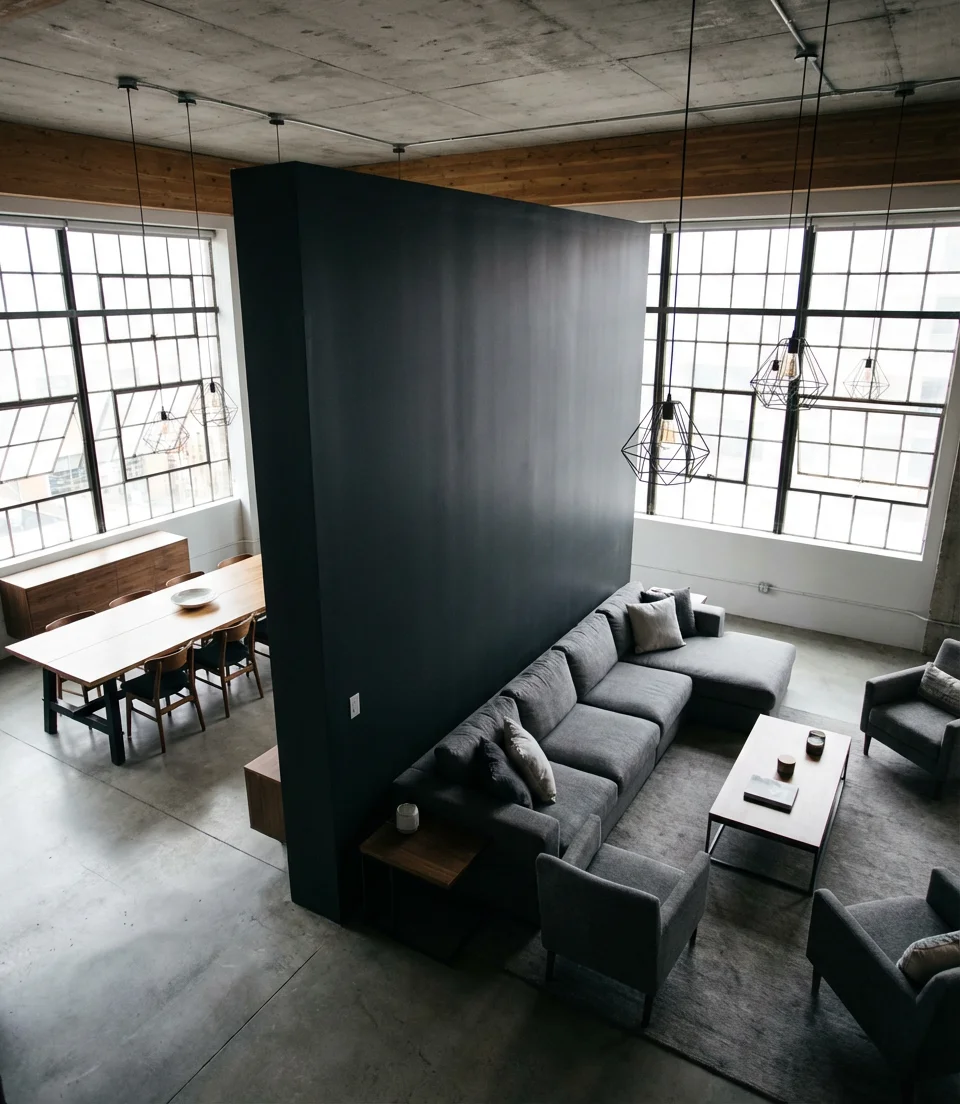
Real homeowner behavior shows that charcoal walls get touched up less frequently than pure black, since minor scuffs and fingerprints blend more easily. Families with young children often choose this shade for exactly that reason—it hides daily wear while still making a bold statement. Pair it with warm metallics like copper or rose gold to keep the space from feeling too industrial.
4. Vaulted Ceiling Showcase
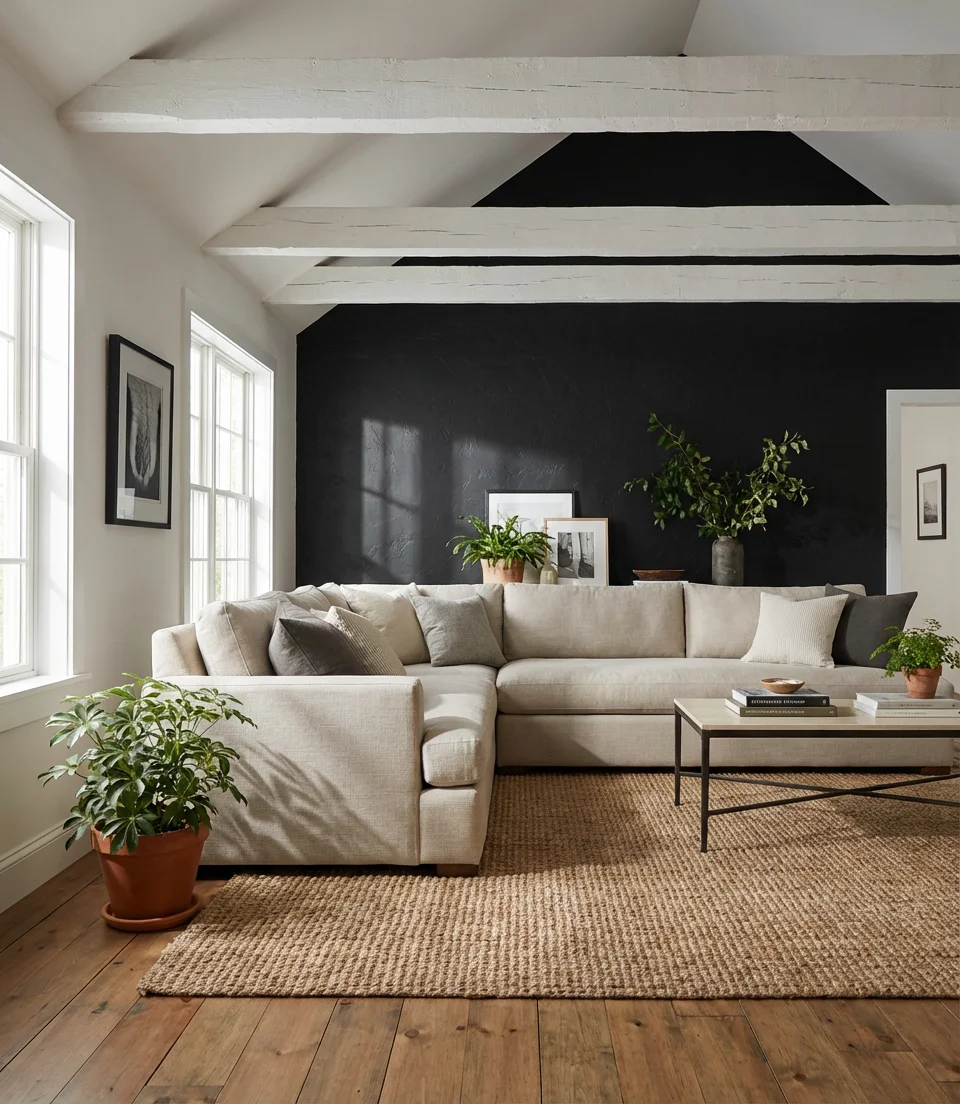
Painting the wall beneath a vaulted ceiling black draws the eye upward and emphasizes architectural height in a way that pale colors simply can’t. This technique works beautifully in large living rooms where the ceiling peaks create natural drama. The dark surface makes the white or light-colored ceiling appear even taller, almost as if it’s floating. Exposed beams gain new prominence when they cross a black backdrop, turning structural elements into decorative features.
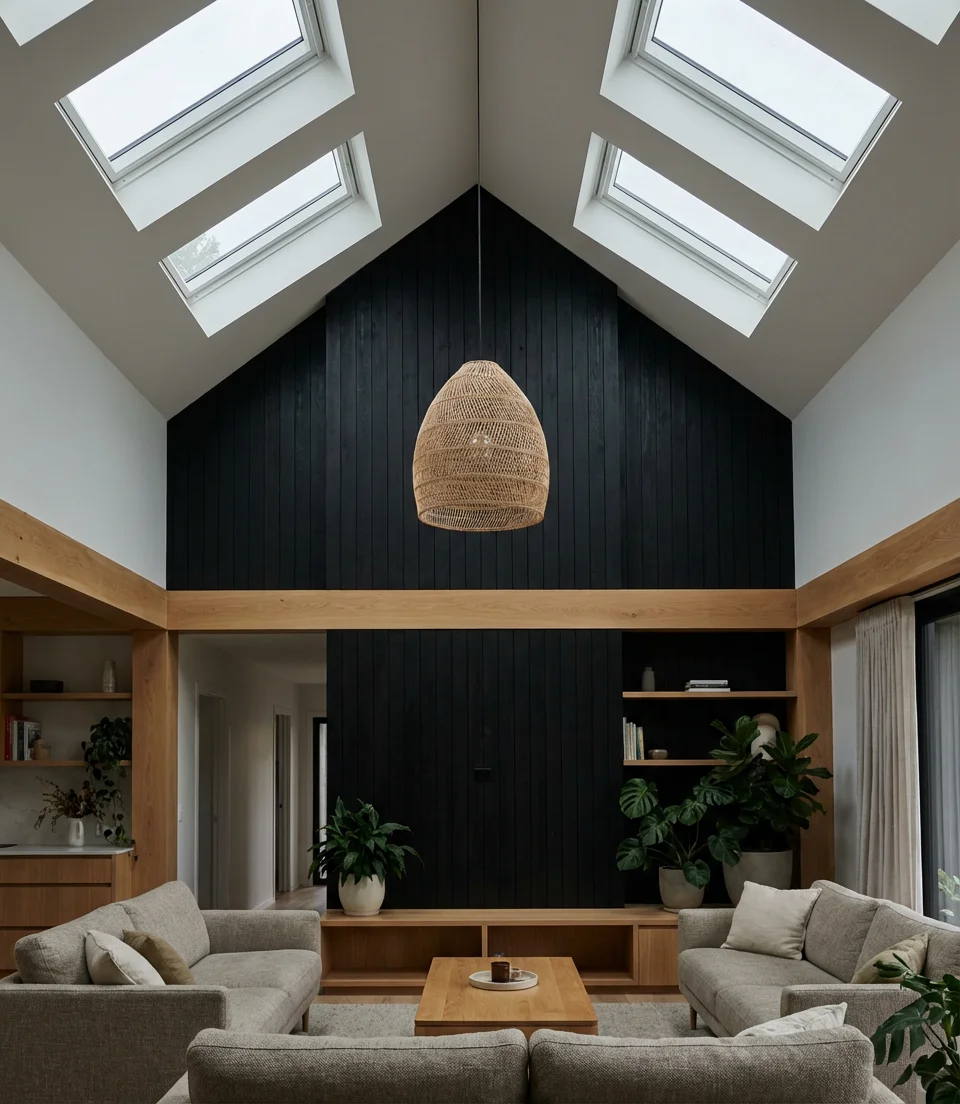
Budget-conscious homeowners appreciate that this look requires just one gallon of paint in many cases—the vertical surface is large but still a single plane. Professional painters typically charge less for vaulted accent walls than for multiple standard walls, since there’s no cutting-in around complex corners. The result feels customized and high-end without the custom price tag.
5. Farmhouse Contrast with Shiplap
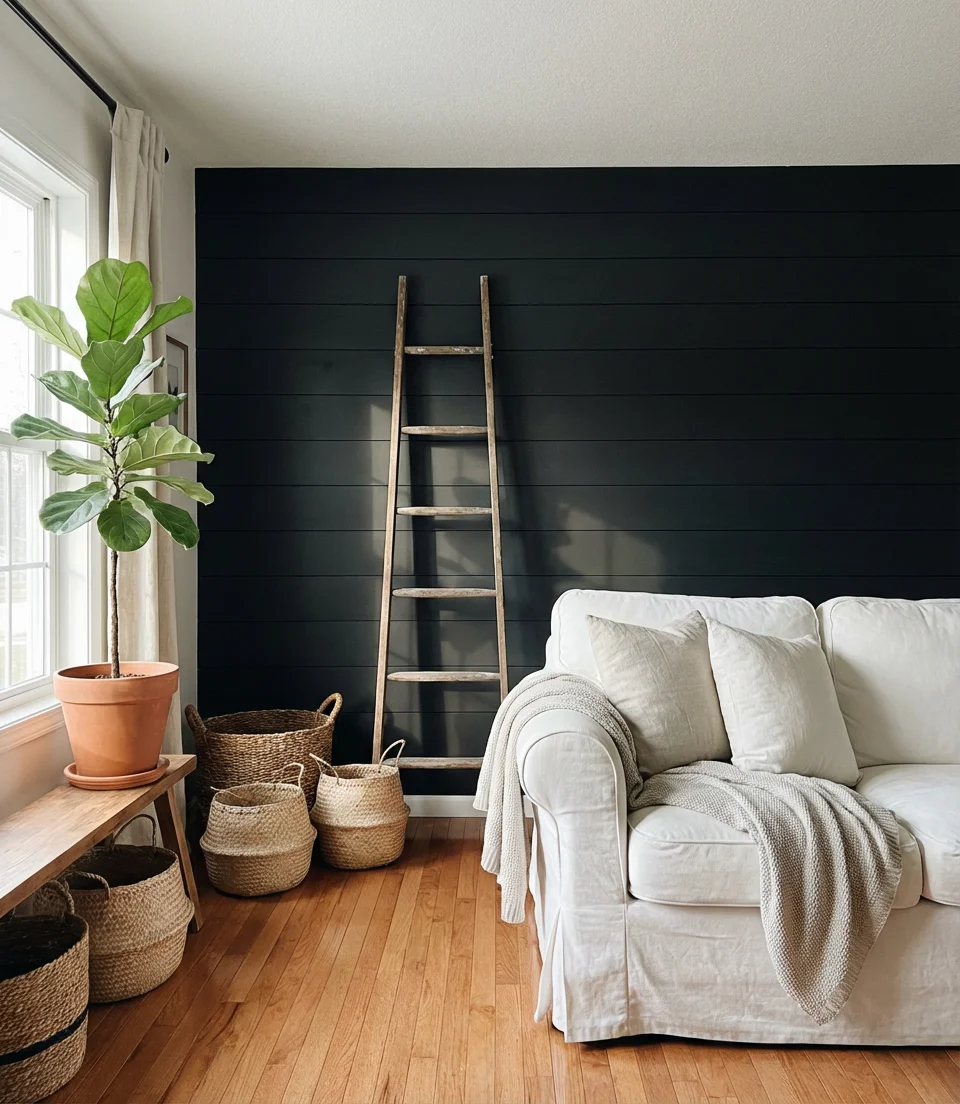
Black shiplap brings an unexpected edge to farmhouse living rooms that might otherwise skew too sweet or rustic. The horizontal lines of the planks add texture that prevents the dark color from feeling flat or one-dimensional. When installed on one accent wall, it maintains the cozy farmhouse vibe while introducing a modern, almost Scandinavian sensibility. Pair it with reclaimed wood furniture, linen upholstery, and plenty of greenery to balance the boldness with organic warmth.
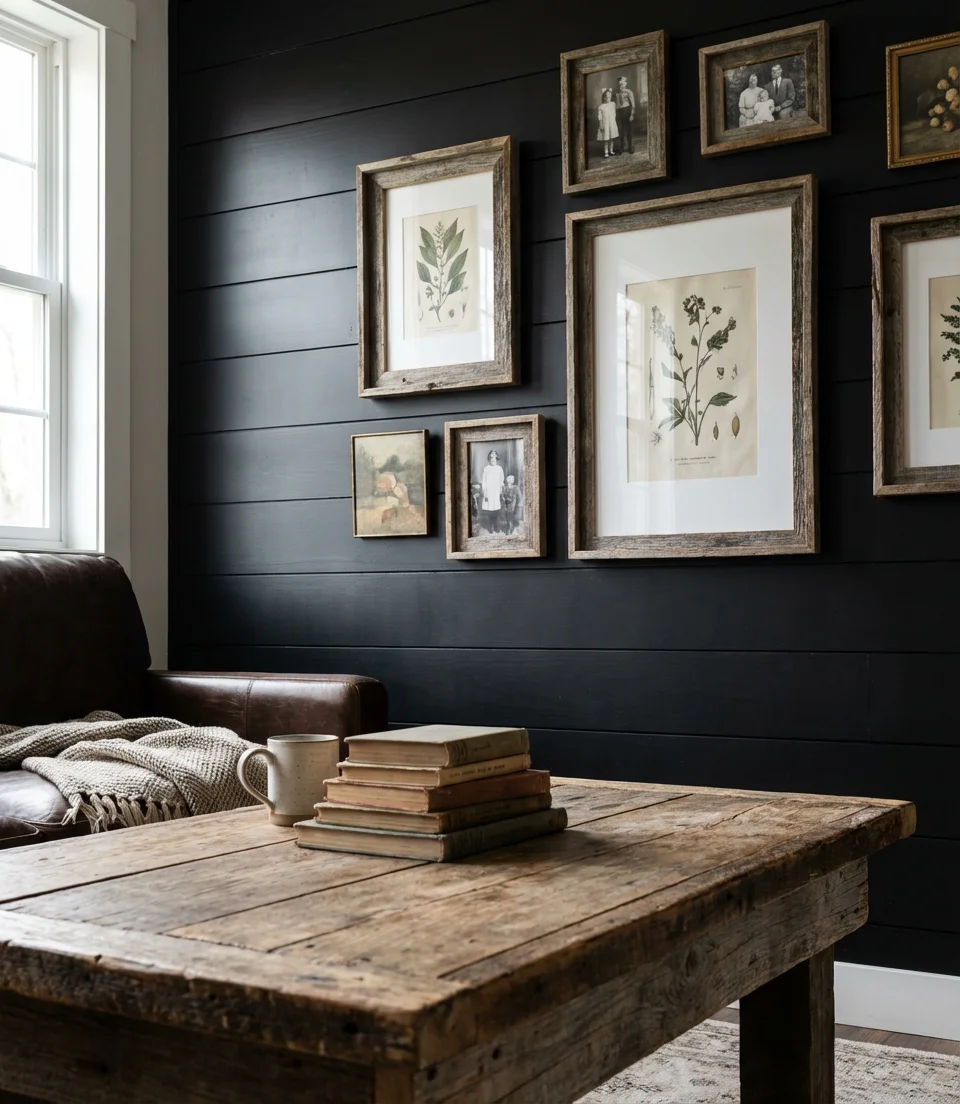
Practical insight: Installing shiplap horizontally makes standard-height ceilings appear wider, while vertical installation draws the eye up. Most DIY-savvy homeowners can complete a shiplap accent wall in a weekend using pre-primed boards from big-box stores. Prime again with tinted primer before applying black paint to ensure even coverage and true color depth.
6. TV and Fireplace Combo Wall
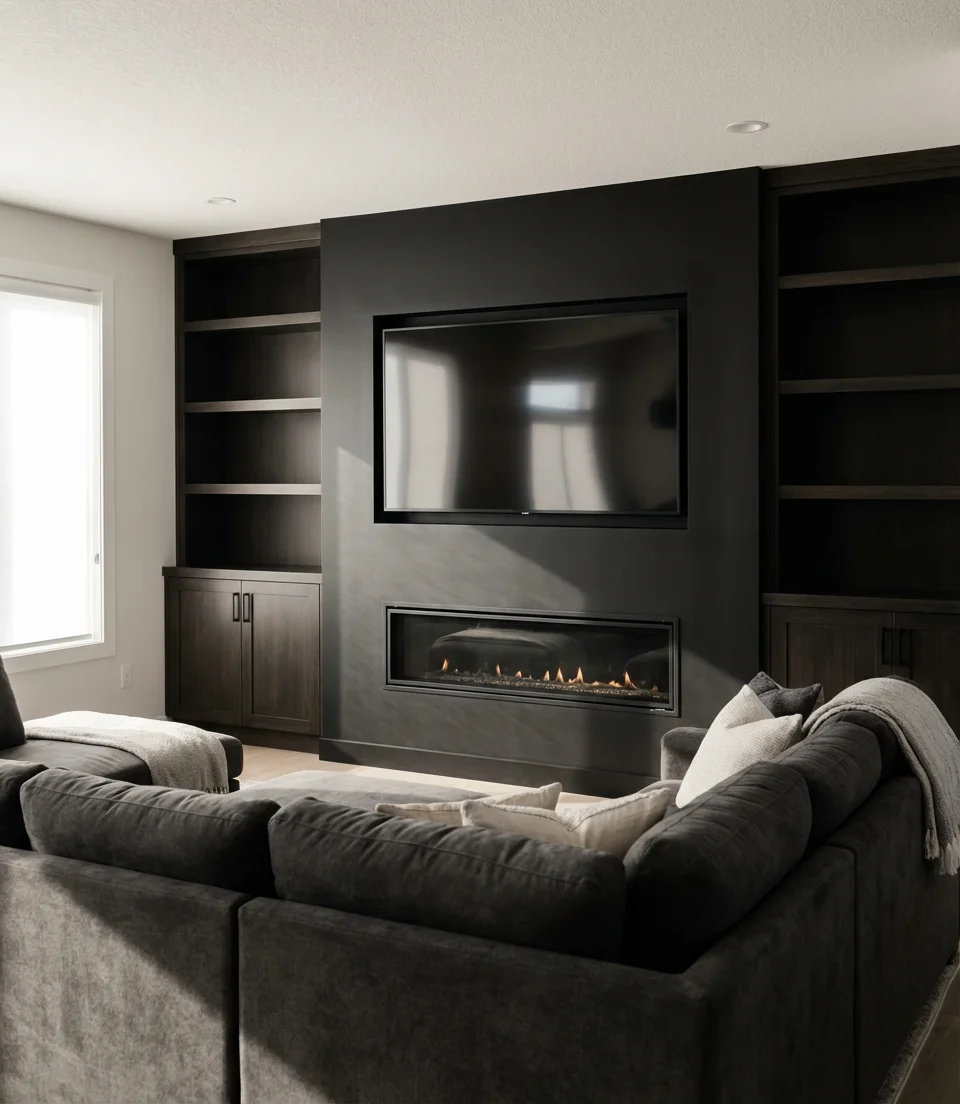
The TV fireplace combination wall benefits enormously from a black backdrop, as it unifies two competing focal points into one cohesive design statement. Mount the TV above a linear fireplace and paint the entire wall black to create a sleek, gallery-like surface. This arrangement is especially popular in new construction and renovations where homeowners want both entertainment and ambiance without visual clutter. The dark wall recedes, letting flames and screen content take center stage.
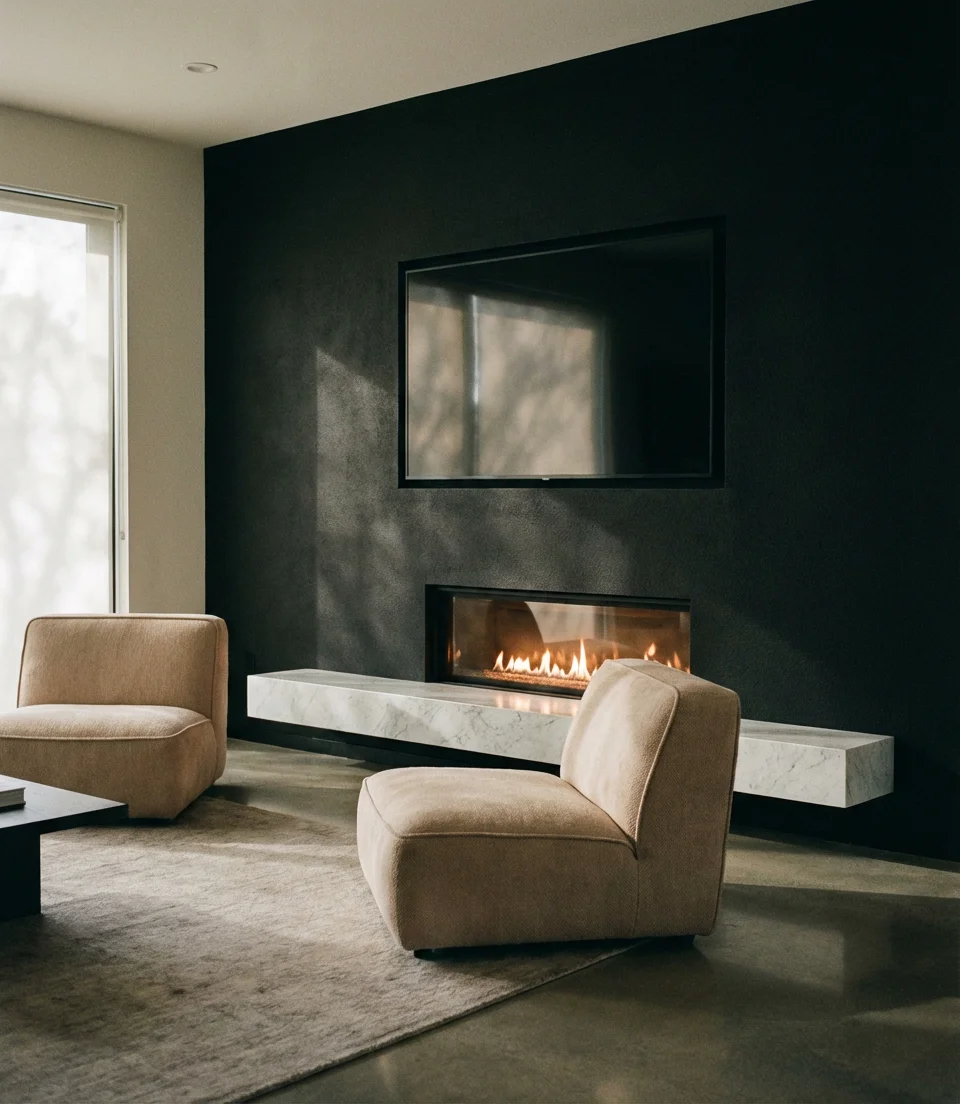
Here are some common mistakes and tips on how to avoid them: Mounting the TV too high strains necks during viewing. Aim for eye level when seated, even if it means the fireplace sits lower than you’d initially imagine. Also, ensure adequate ventilation around any heat source—consult manufacturer specs before painting or installing built-ins near a working fireplace.
7. Long Wall with Gallery Frames
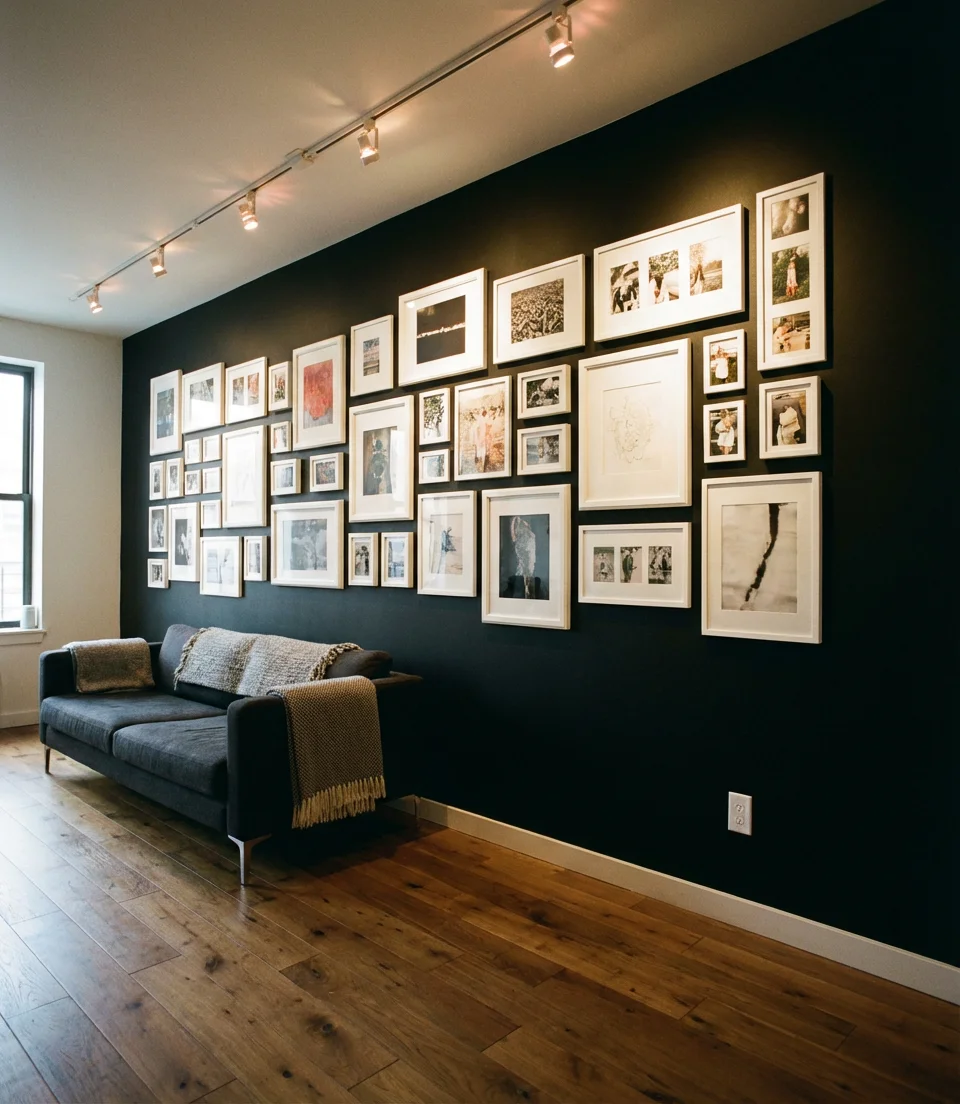
A long black accent wall provides the perfect canvas for an expansive gallery wall arrangement. The dark background makes white or metallic frames pop dramatically, creating a museum-quality display in your living room. This approach works particularly well in narrow or rectangular spaces where one wall dominates the room’s visual field. Artwork, family photos, and decorative mirrors gain new impact when surrounded by deep black rather than neutral beige or gray.
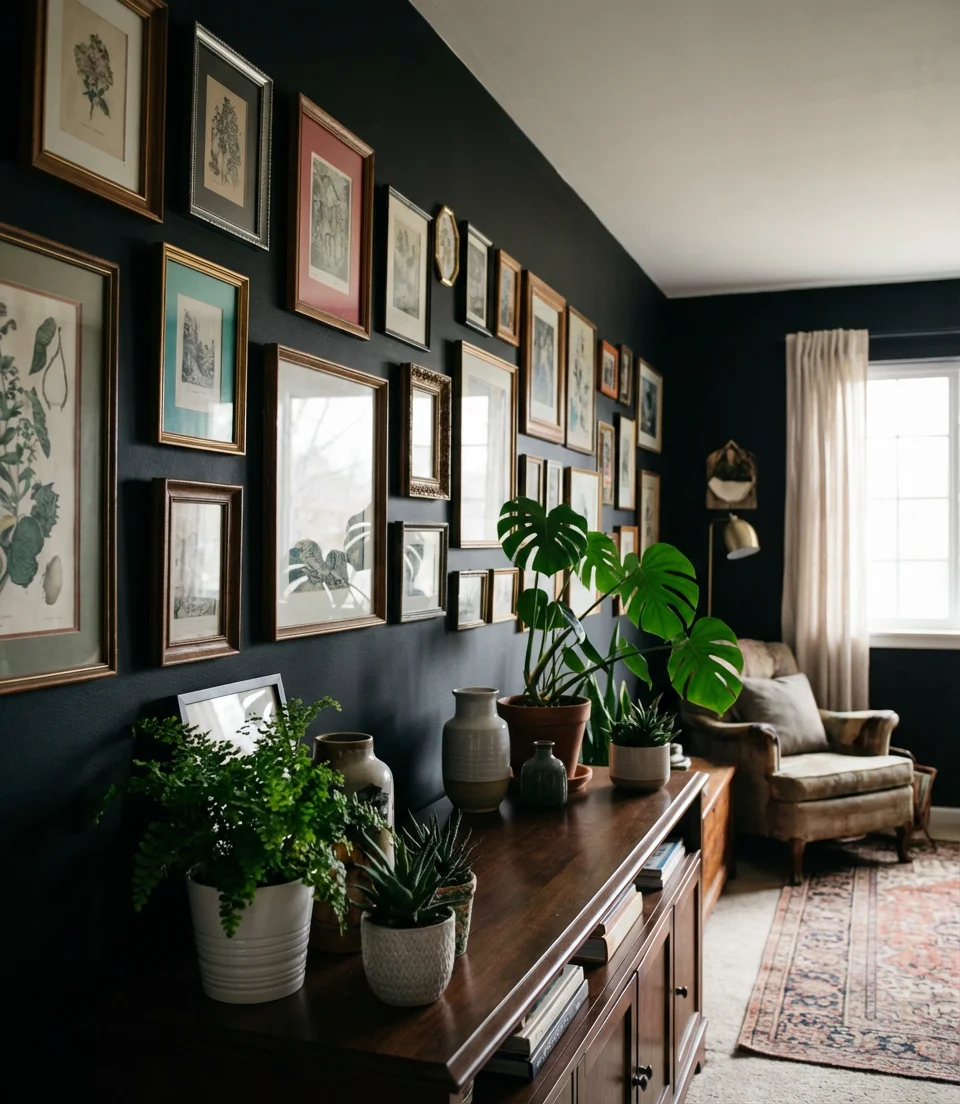
Expert-style commentary: Interior designers recommend planning your gallery layout on the floor before hammering a single nail. Use painter’s tape on the black wall to mark frame positions—the tape peels away cleanly and helps you visualize spacing. Aim for 2-3 inches between frames for a curated look that doesn’t feel crowded.
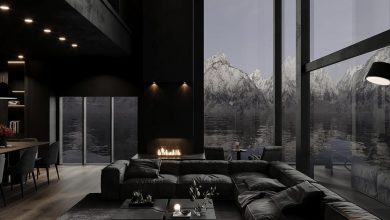
8. High Ceiling Statement in Lofts
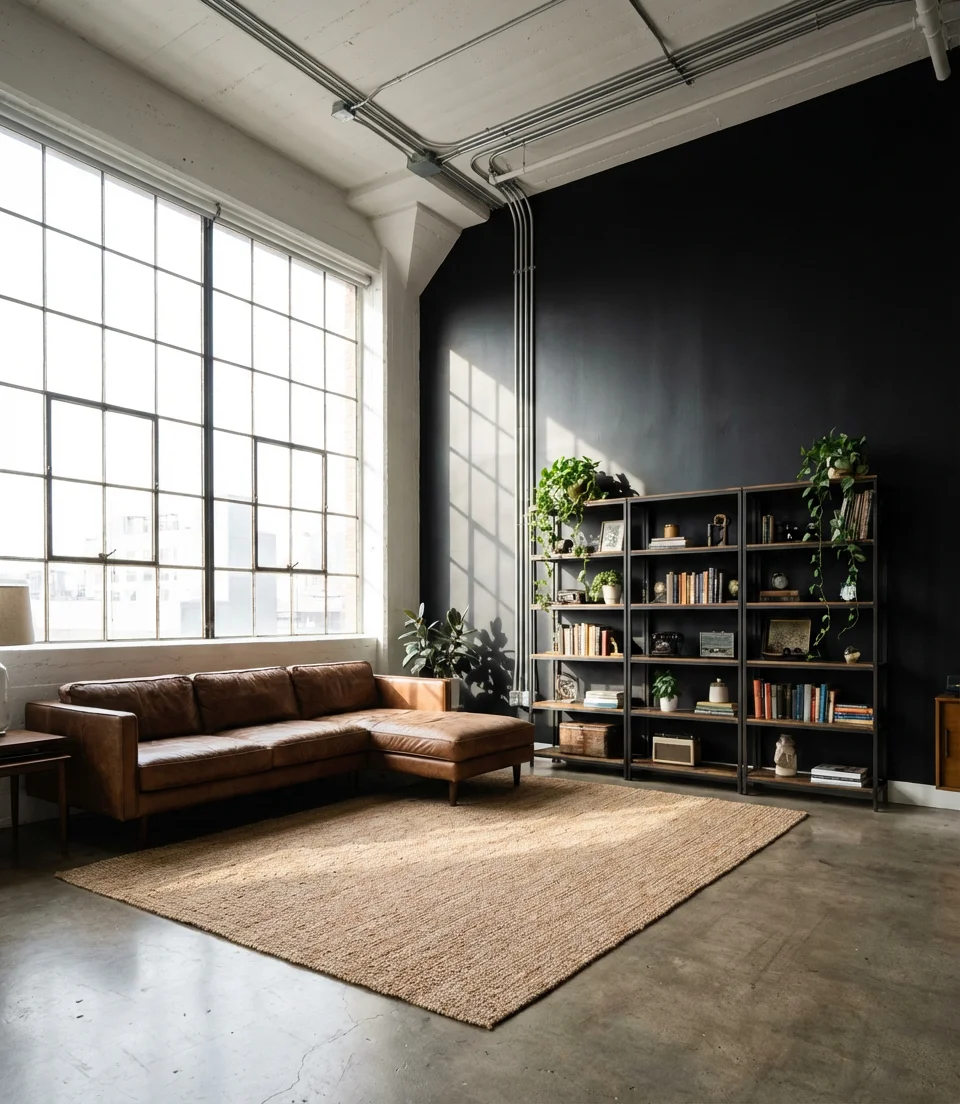
Industrial lofts and converted warehouses benefit from black accent walls that embrace their urban roots. High ceiling spaces can feel cold and echo-prone, but a dark wall adds warmth and acoustic dampening. Paint extends from floor to ceiling in one continuous sweep, emphasizing the vertical drama that makes loft living so appealing. The moody background is enhanced by the exposed brick, ductwork, and concrete floors, which don’t compete for attention.
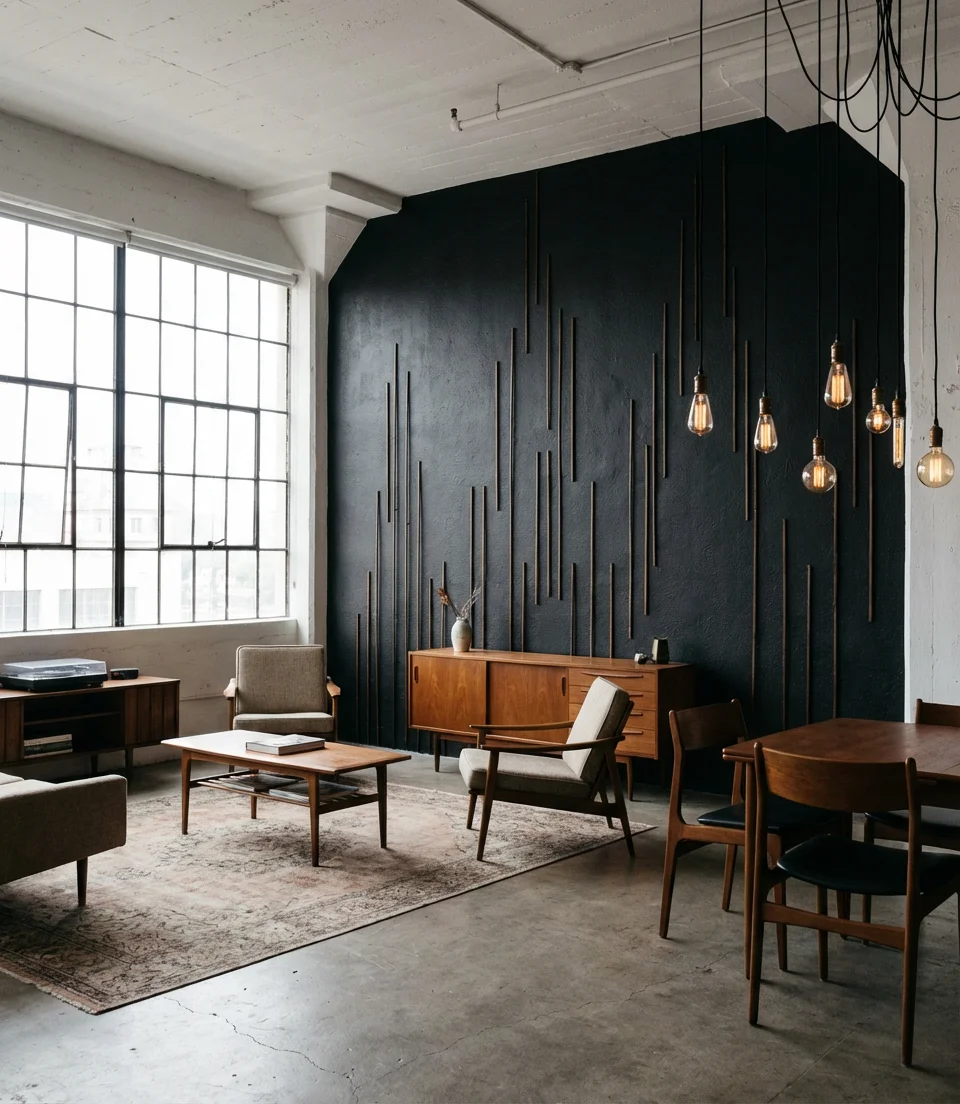
Real homeowner behavior in lofts leans toward minimalism—the black wall does the talking, so furniture can stay simple. A single statement piece like a vintage credenza or bold abstract painting is often enough. Avoid over-decorating, which can make the expansive space feel cluttered despite its size.
9. Wood Shelves Floating on Black
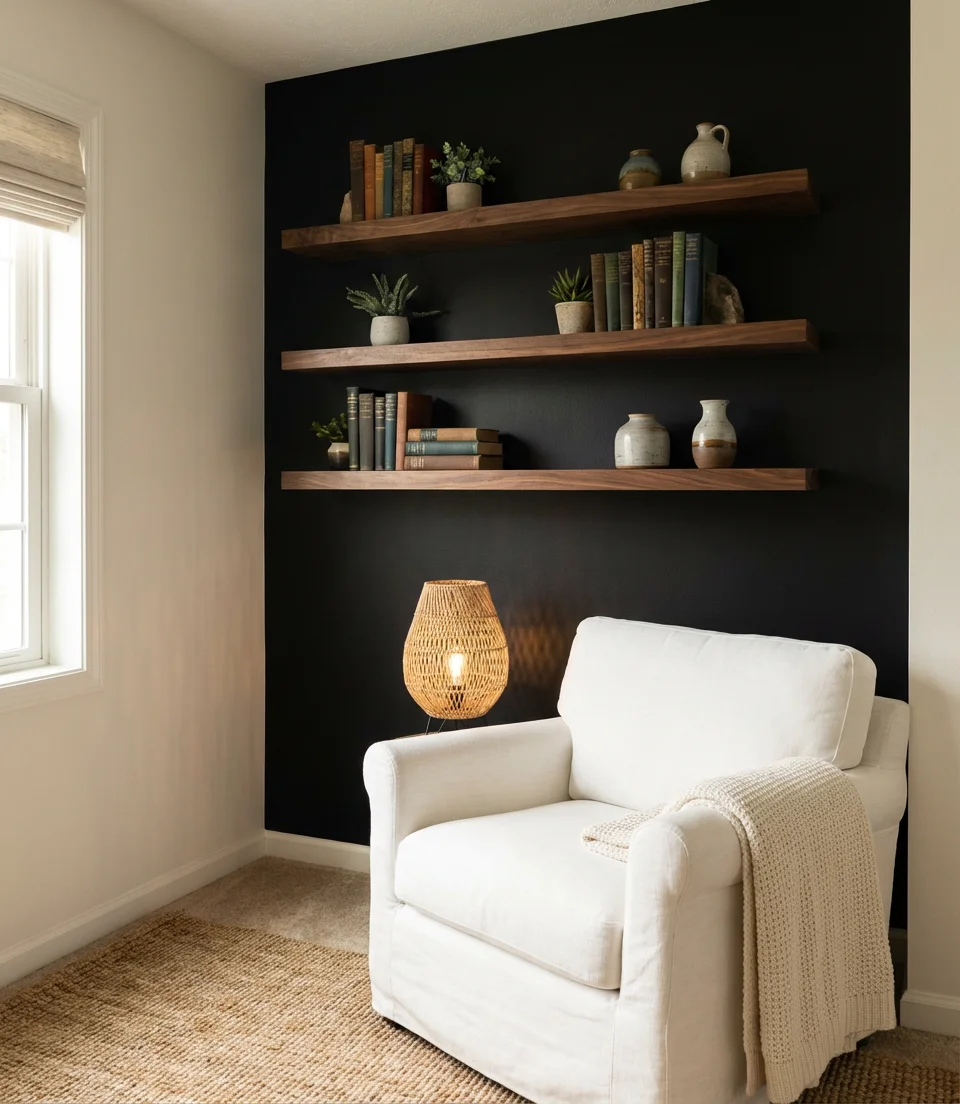
Wood shelves appear to levitate when mounted against a black accent wall, creating a stunning contrast between natural grain and dark paint. This combination works equally well in modern and transitional living rooms, offering both storage and style. The shelves break up the expanse of black while maintaining an open, airy feel—unlike bulky bookcases that can overwhelm a space. Use them to display books, plants, ceramics, or a curated mix of decorative objects.
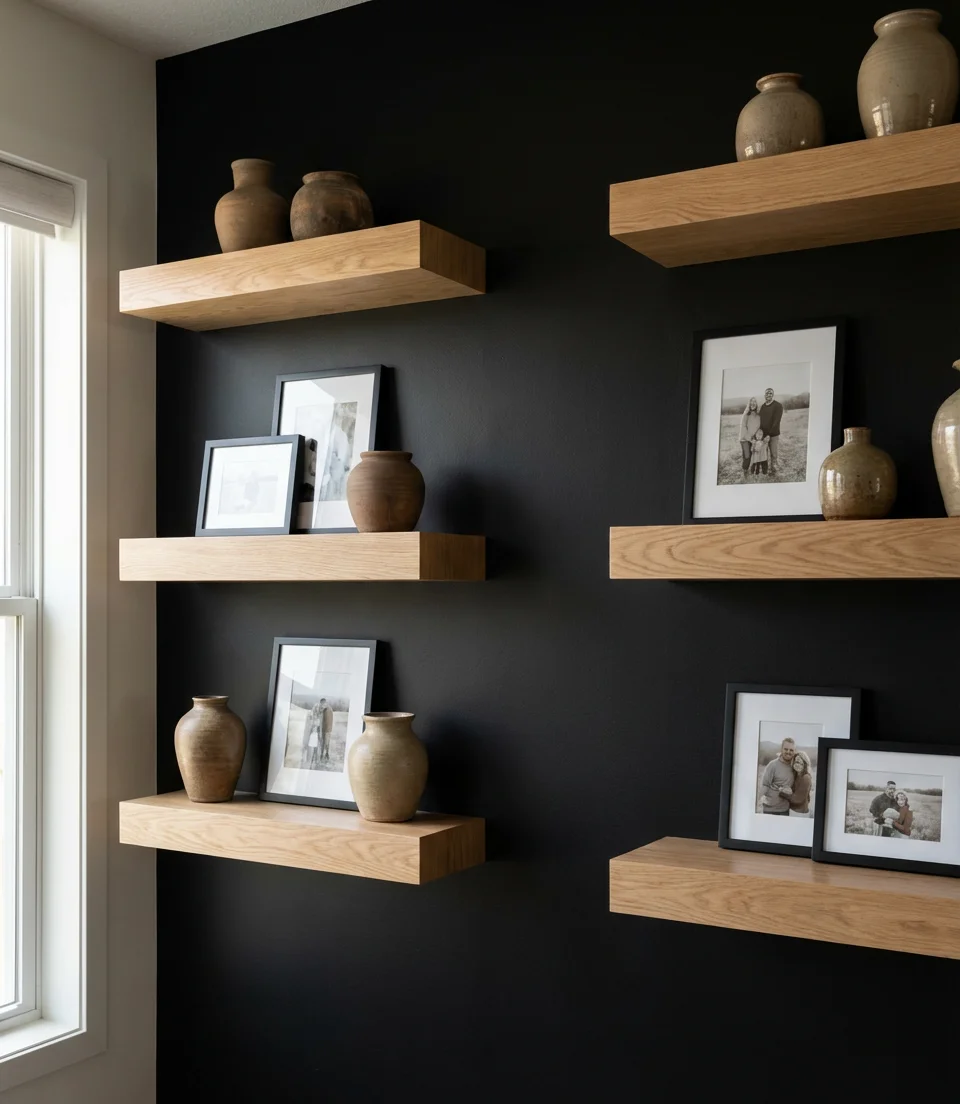
Where it works best: It works best in small to medium living rooms where floor space is limited. Floating shelves provide storage without the footprint of a console or bookcase. They also function well when placed in front of a TV or fireplace, achieving a built-in aesthetic at a significantly lower cost.
10. Blue Couch Against Black Drama
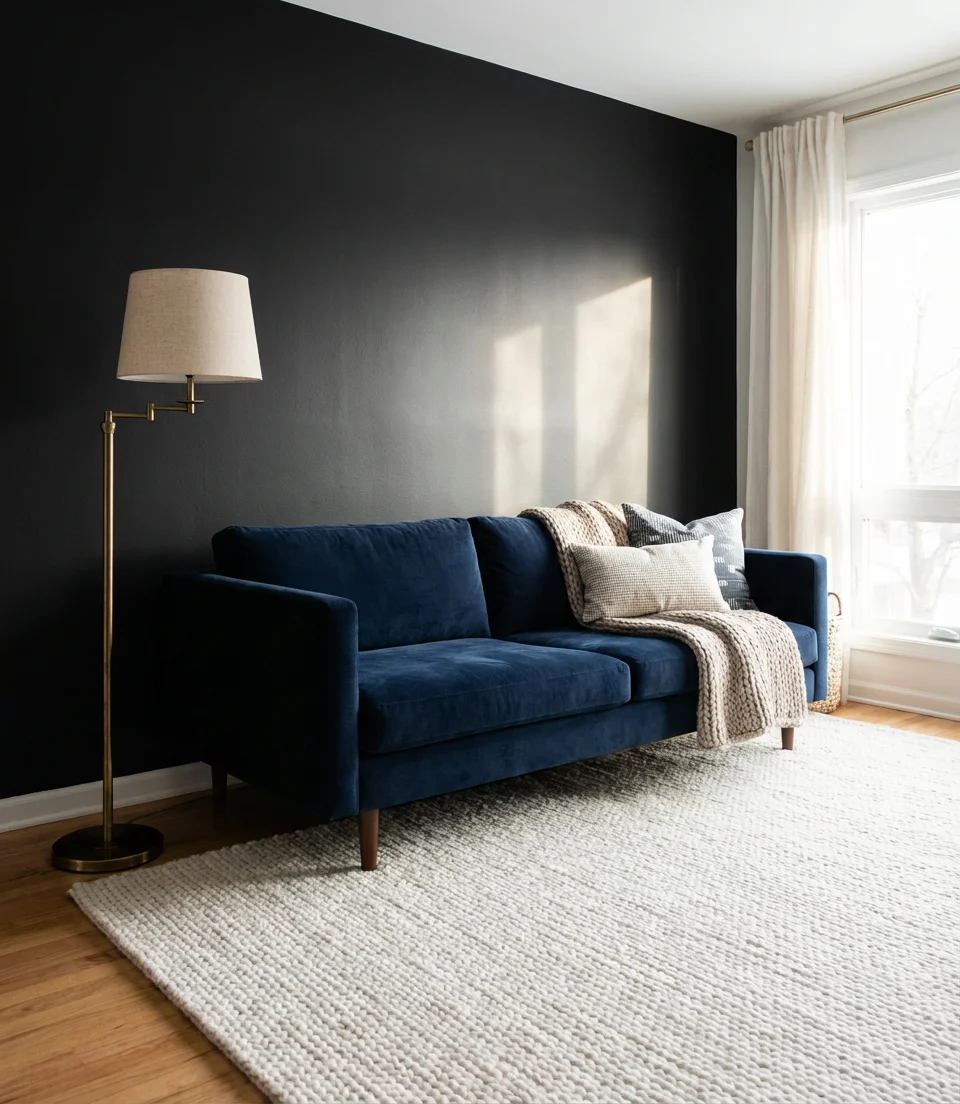
A rich blue couch positioned against a black accent wall creates a jewel-toned pairing that feels both luxurious and livable. Navy, sapphire, or teal upholstery gains depth and vibrancy when backed by black, making the furniture piece the undisputed star of the room. This color combination has become increasingly popular as homeowners move away from gray-on-gray schemes toward bolder, more saturated palettes. Add brass or gold accents through lighting and hardware to complete the upscale look.
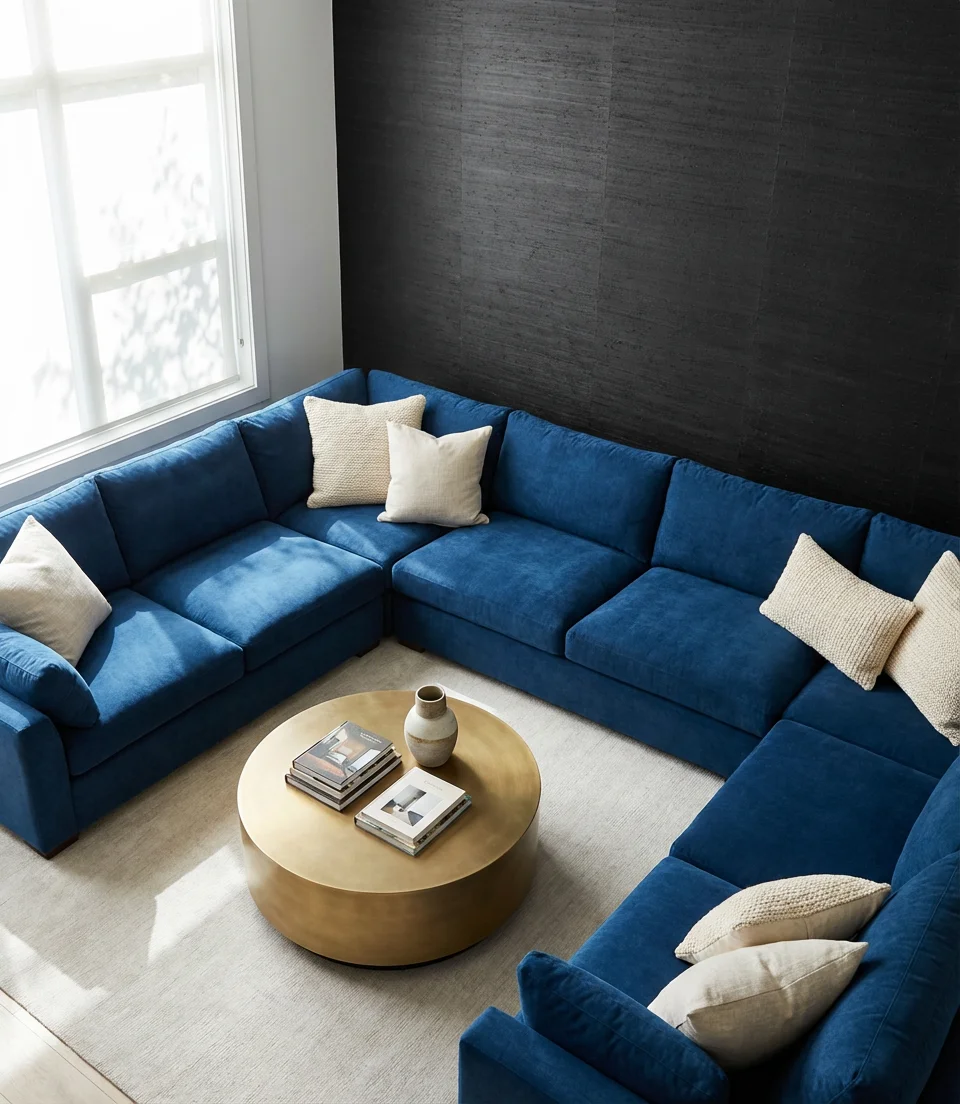
Practical insight: Test fabric swatches against your black wall sample before committing to a sofa purchase. Certain blues can read as dull or muddy against very dark backgrounds, while others practically glow. Velvet and textured weaves tend to perform better than flat linens in this pairing.
11. Entryway-to-Living Room Flow
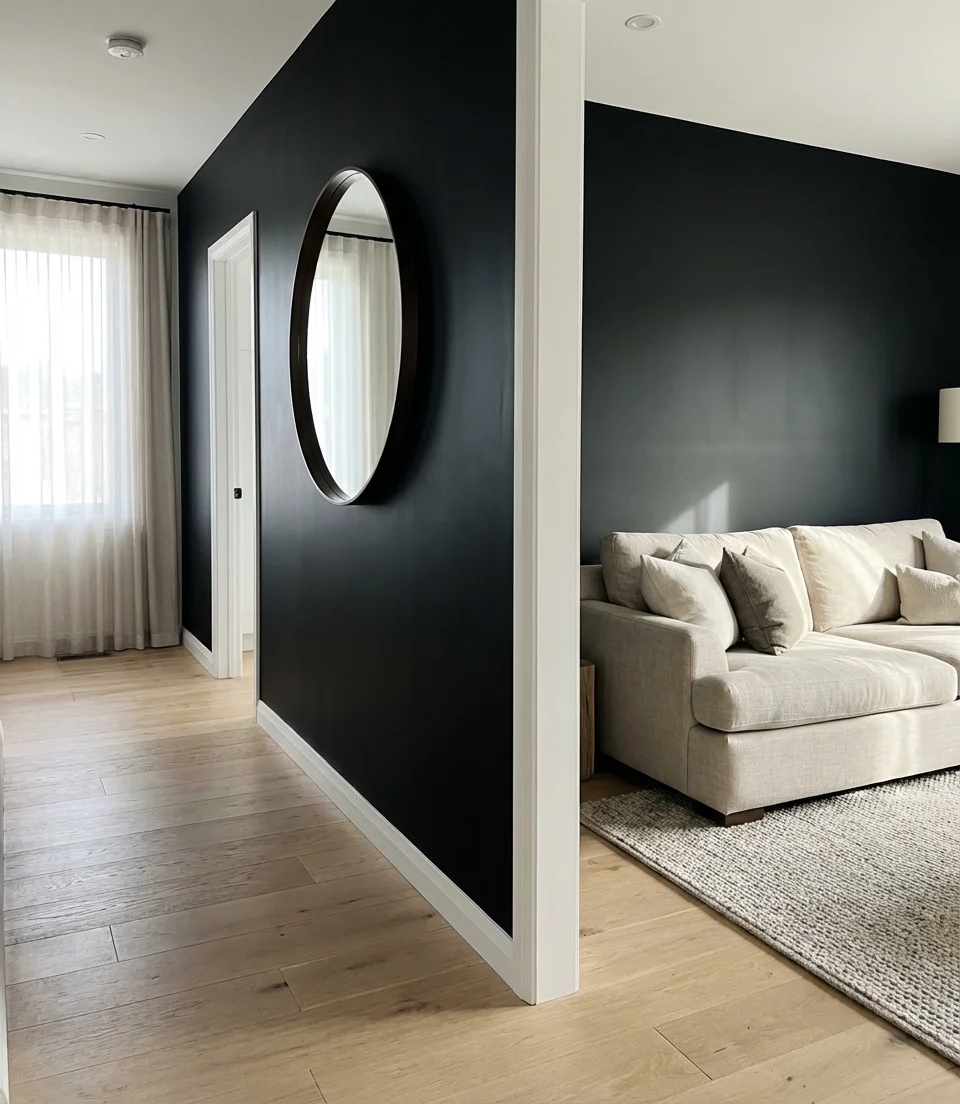
Extending a black accent wall from entryways into the living room creates sophisticated flow in open-plan homes. This continuous surface guides visitors naturally from the front door to the main living space while making a strong first impression. The dark wall acts as a visual spine that anchors both zones without requiring paint color changes or awkward transitions. Add console tables, mirrors, and lighting along the wall to define each area’s function while maintaining design cohesion.
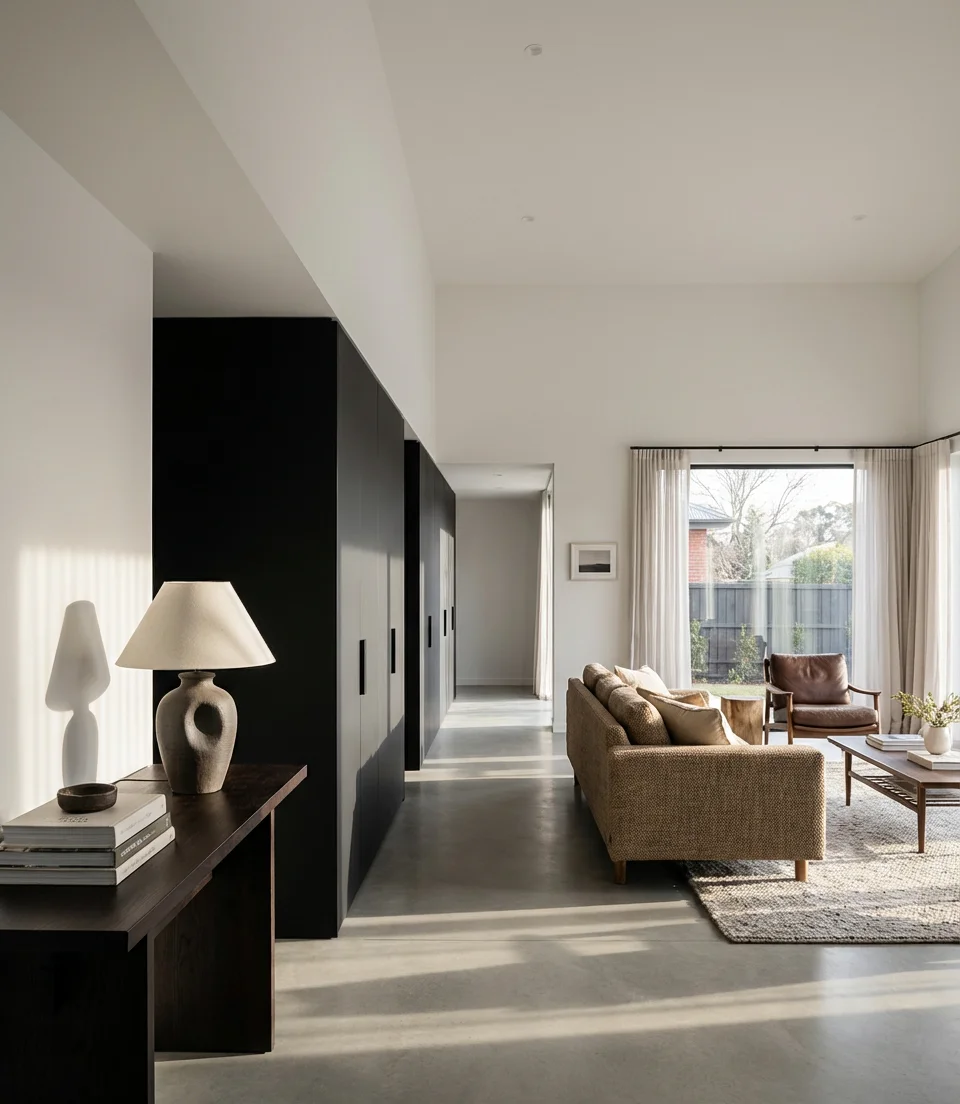
In the American way of life, homes with side or back entries often use this method to make the house look like it was planned and designed. The black wall signals that guests are entering a curated space, not just passing through a hallway. It’s particularly effective in suburban homes where entryways open directly into living areas.
12. Vintage Finds on Dark Backdrop
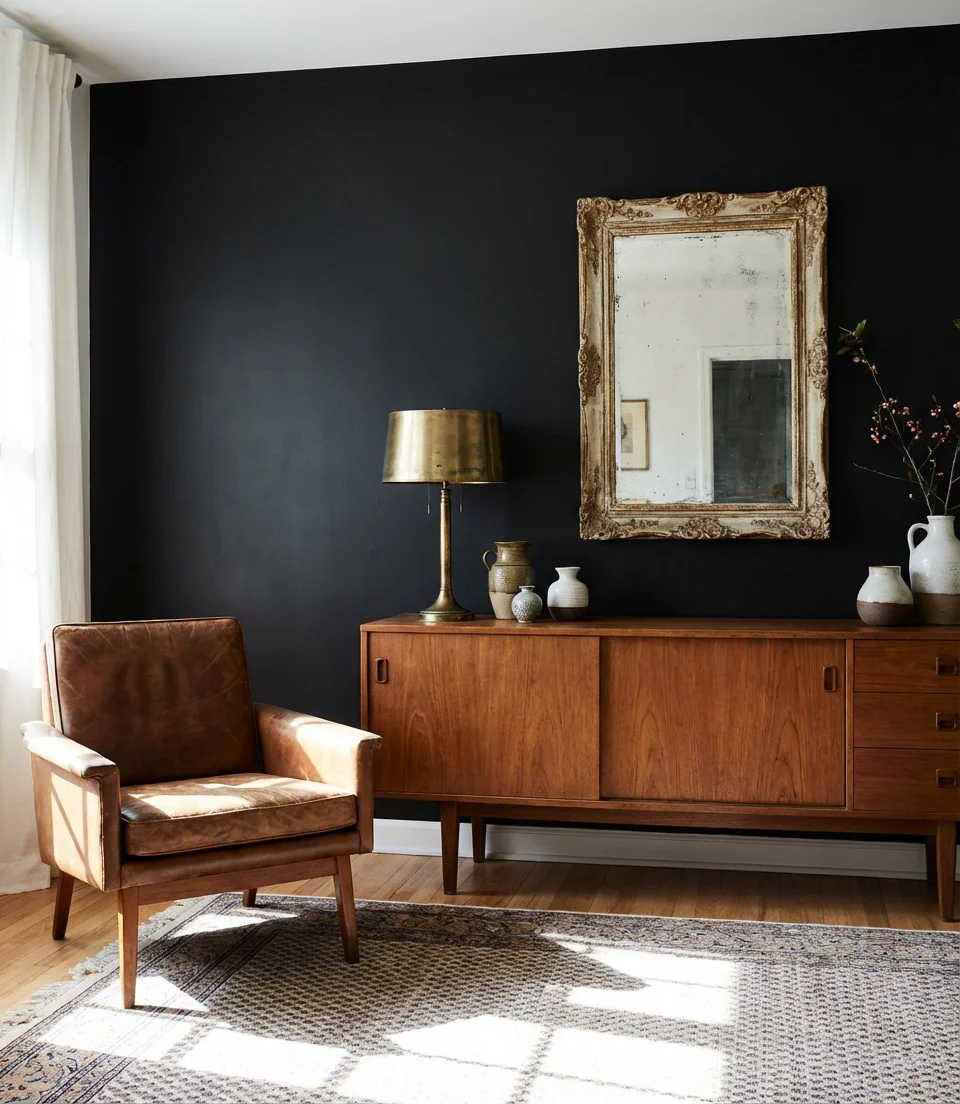
A black accent wall makes vintage furniture and decor items shine like treasures in an antique shop. The dark surface provides drama without competing with ornate details, carved wood, or aged patinas. Midcentury sideboards, Victorian mirrors, and retro lighting all gain renewed presence when displayed against black. This approach allows you to mix eras and styles with confidence—the unifying backdrop pulls disparate pieces into a cohesive collection.
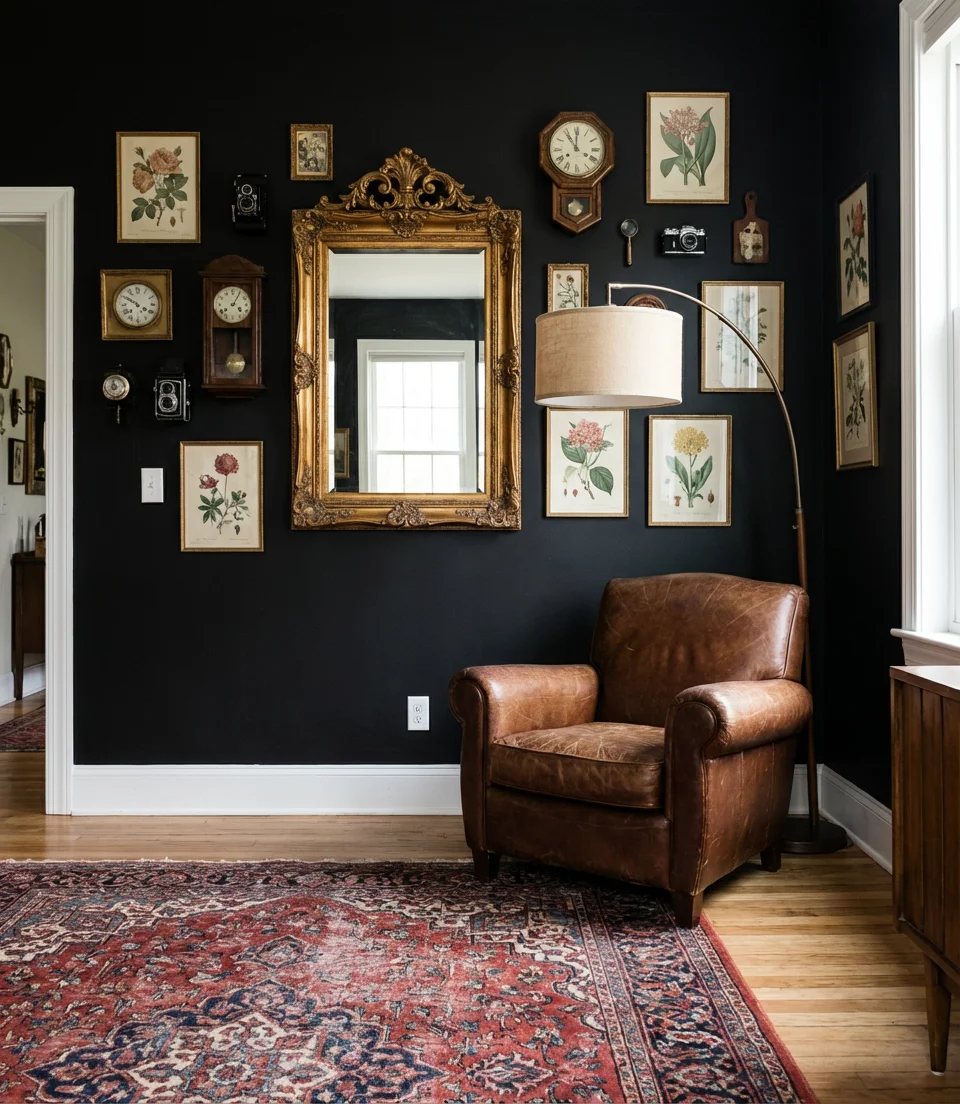
Here are some common mistakes to avoid: Don’t let the vintage pieces skew too matchy or theme-park-like. Mix in a few contemporary elements—a modern sofa, abstract art, or sleek lighting—to keep the space feeling current rather than like a costume d. The black wall already provides plenty of drama; your furnishings can lean into eclectic comfort.
13. Boho Texture Layers
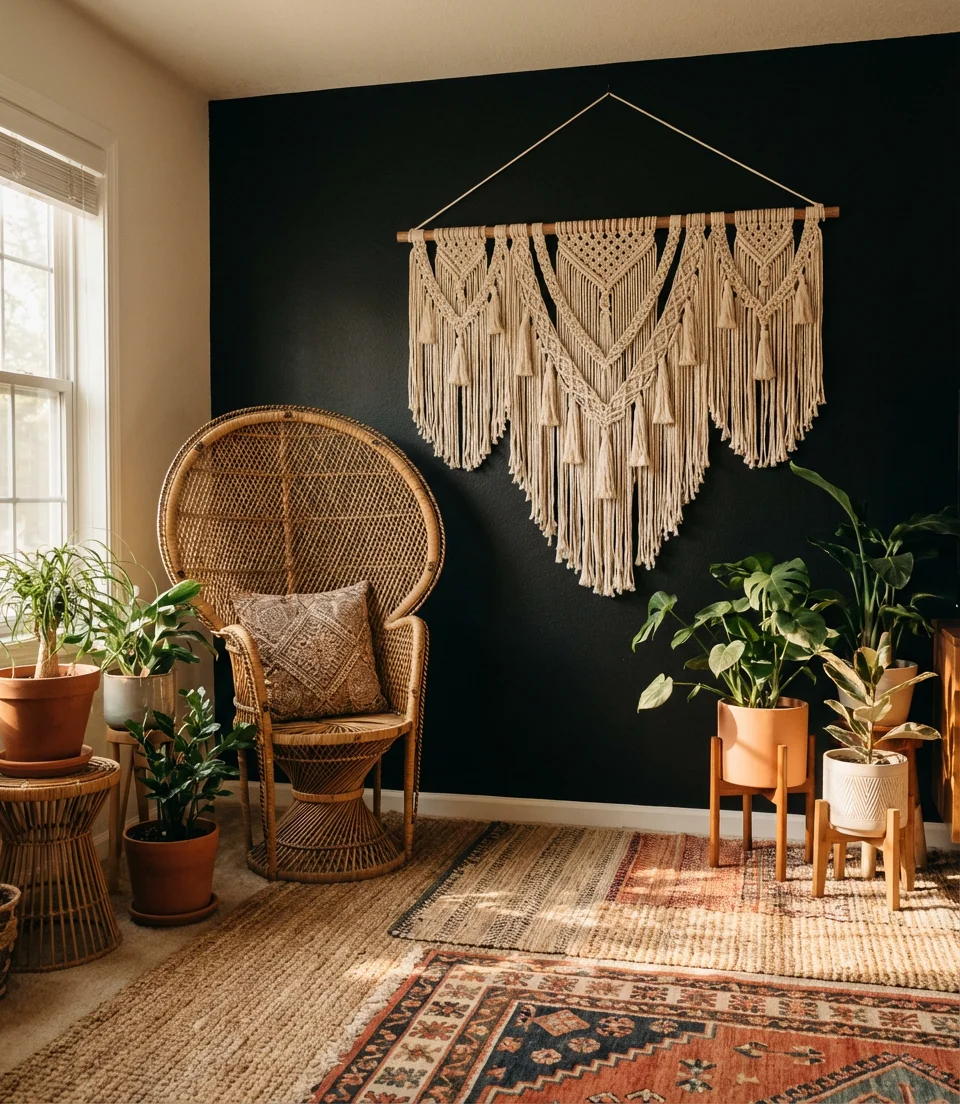
Boho living rooms get an unexpected upgrade when paired with a black accent wall. The dark backdrop intensifies the textures that define bohemian style—macramé wall hangings, woven baskets, rattan furniture, and layered textiles all pop against the moody surface. This combination proves that boho doesn’t have to mean all-white walls and light woods. Instead, the black adds depth and sophistication while still celebrating the relaxed, collected-over-time aesthetic.
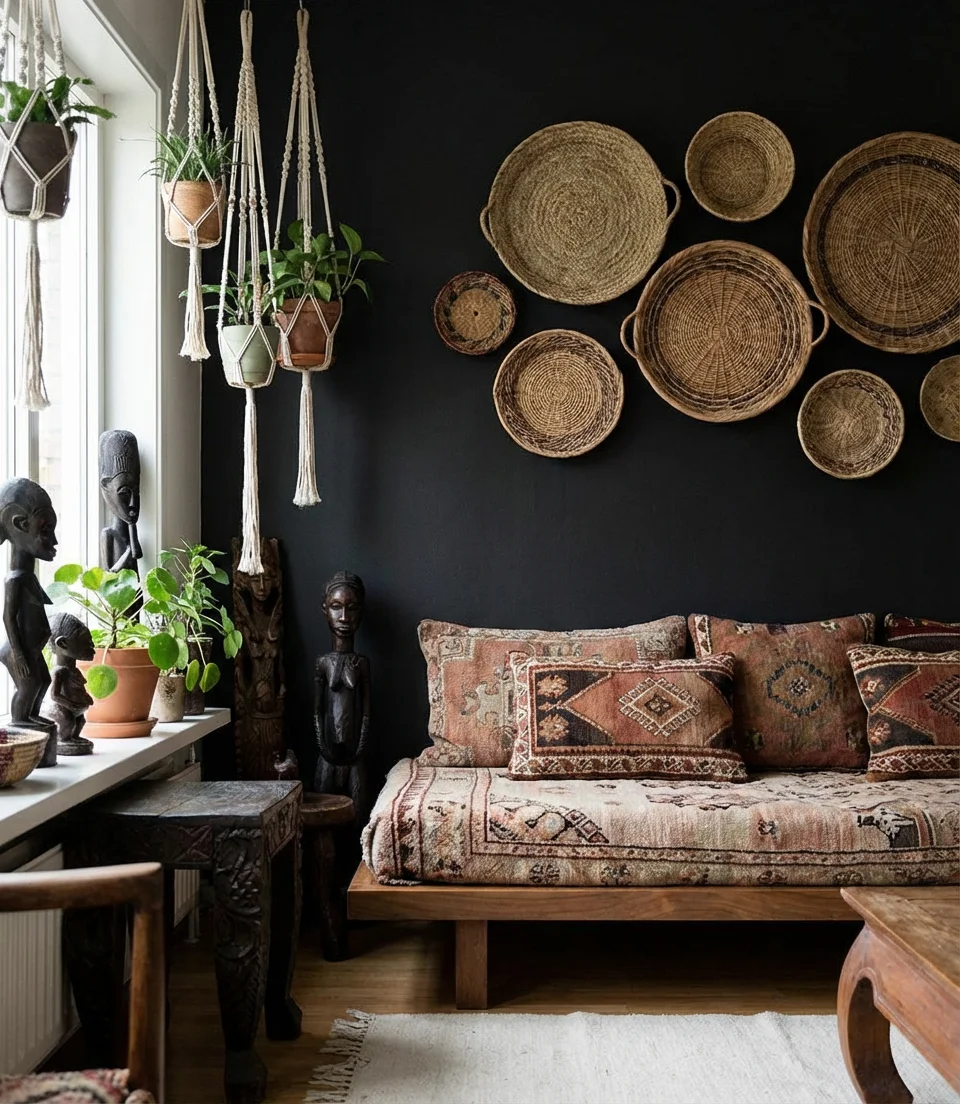
Real homeowner behavior in boho-black spaces tends toward maximalism—the dark wall can handle a lot of visual information without feeling cluttered. Lean into that freedom by layering textiles, mixing patterns, and displaying collections. The key is maintaining warmth through natural materials and plenty of greenery.
14. One Wall Wonder: Creating Impact in Small Rooms
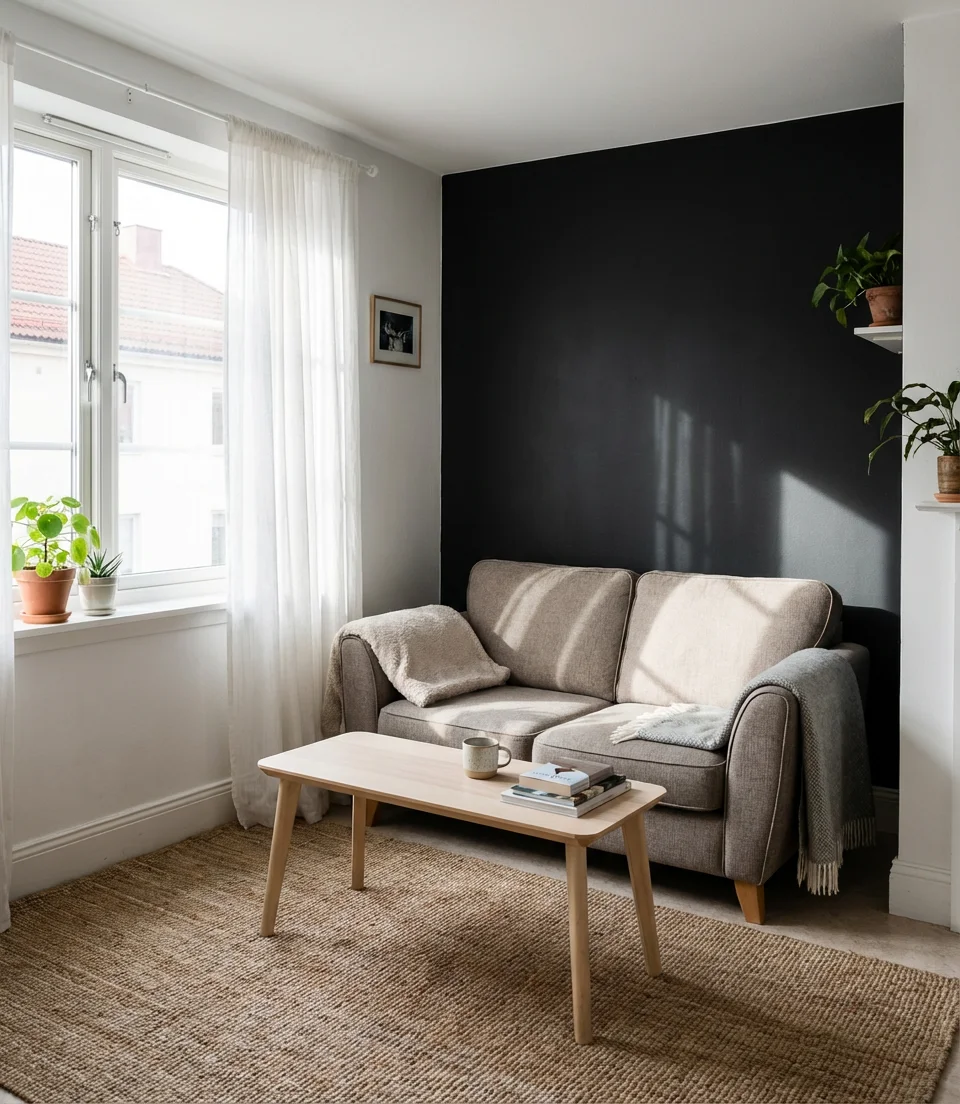
Choosing just one wall to paint black in a small living room creates impact without overwhelming limited square footage. The dark surface actually makes the room feel larger by adding depth and dimension that flat white walls lack. Focus on the wall behind your sofa or the one facing your entry—wherever your eye lands first. Keep the remaining three walls light and bright to maintain an open, airy feeling while still enjoying the drama of black.
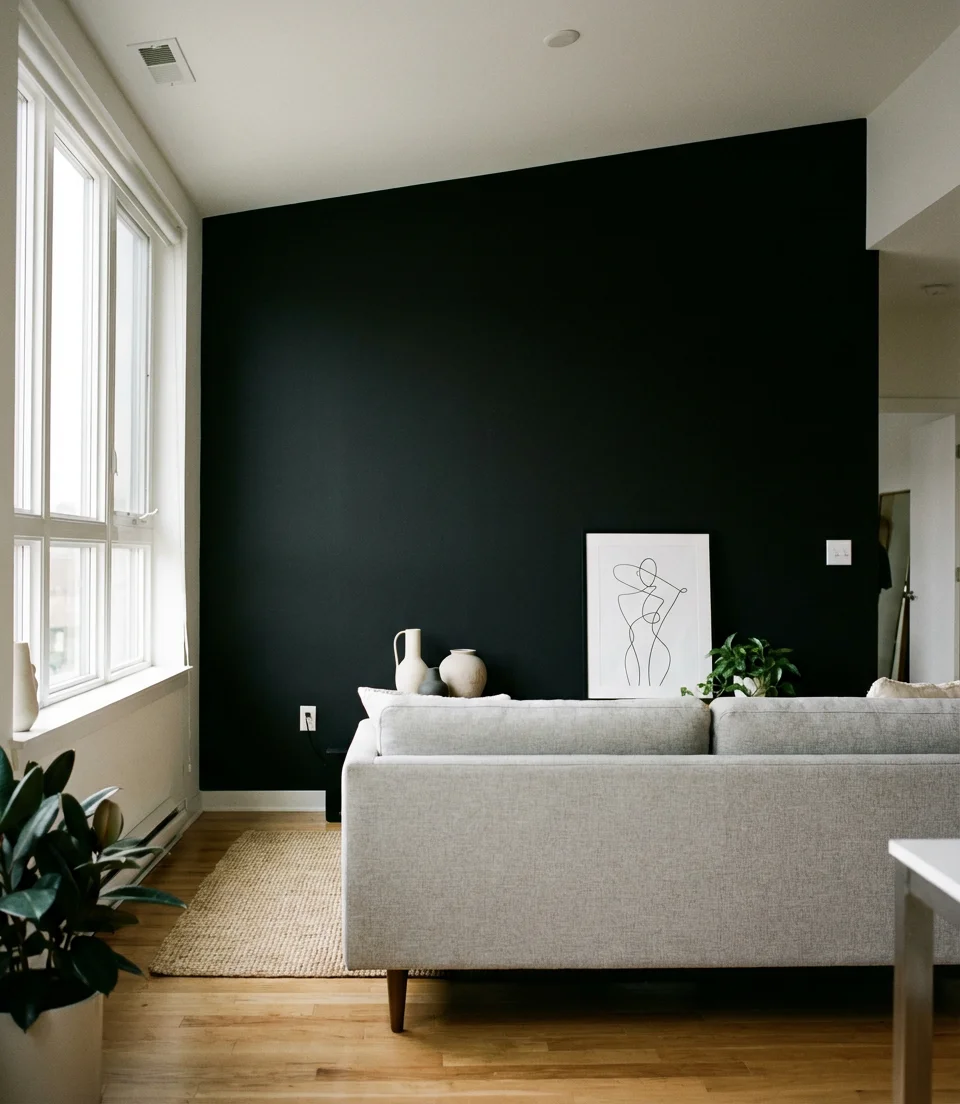
Budget angle: One accent wall requires minimal paint—often just a quart or single gallon—making the design an affordable weekend project. Premium paint brands offer better coverage and richer color, so splurge a bit if your budget allows. The improved finish quality will be noticeable in a high-impact location.
15. Western Rustic with Black Contrast
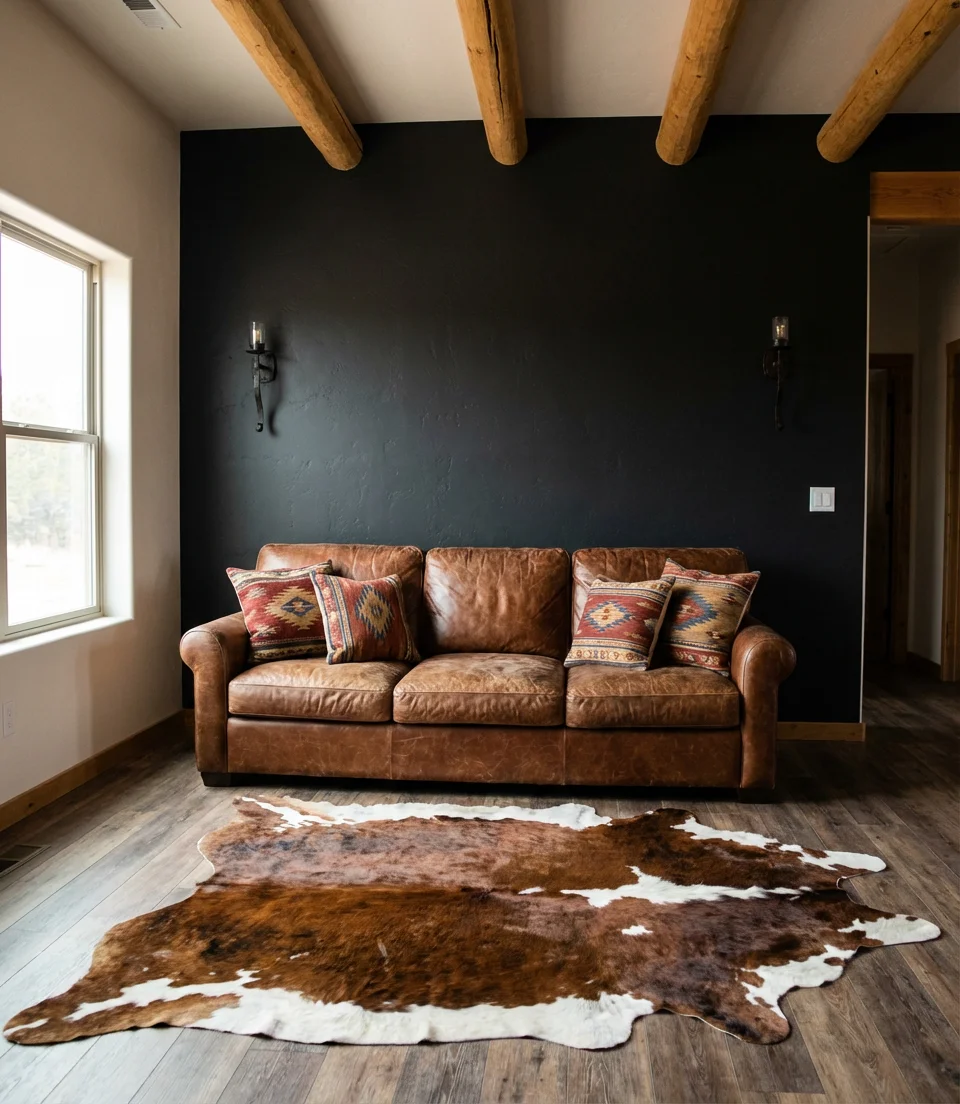
Western-inspired living rooms gain a modern edge when traditional rustic elements meet a black accent wall. Think weathered leather, cowhide rugs, and iron hardware set against a dark backdrop that feels more Santa Fe gallery than dusty saloon. The black wall allows you to embrace Western motifs without veering into kitsch—Navajo textiles, antler decor, and reclaimed wood all read as sophisticated design choices rather than theme-park props. Regional American style gets a contemporary refresh.
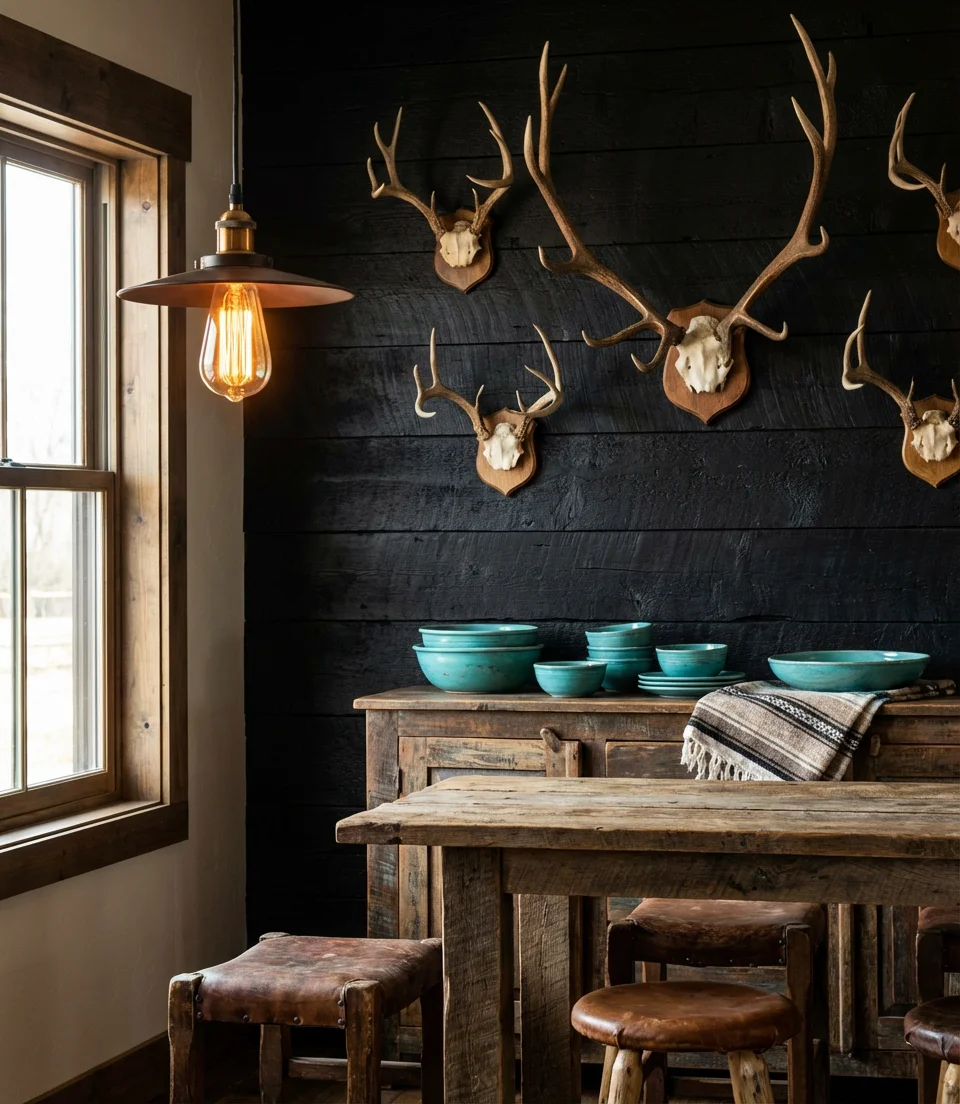
Where it works best: Southwestern homes and ranch-style properties where Western elements feel authentic to the architecture and location. The black wall signals intention—you’re making a design statement rather than defaulting to safe neutrals. It’s particularly effective in homes with adobe fireplaces or exposed vigas that benefit from a strong backdrop.
16. Gray Walls Meeting Black Accent
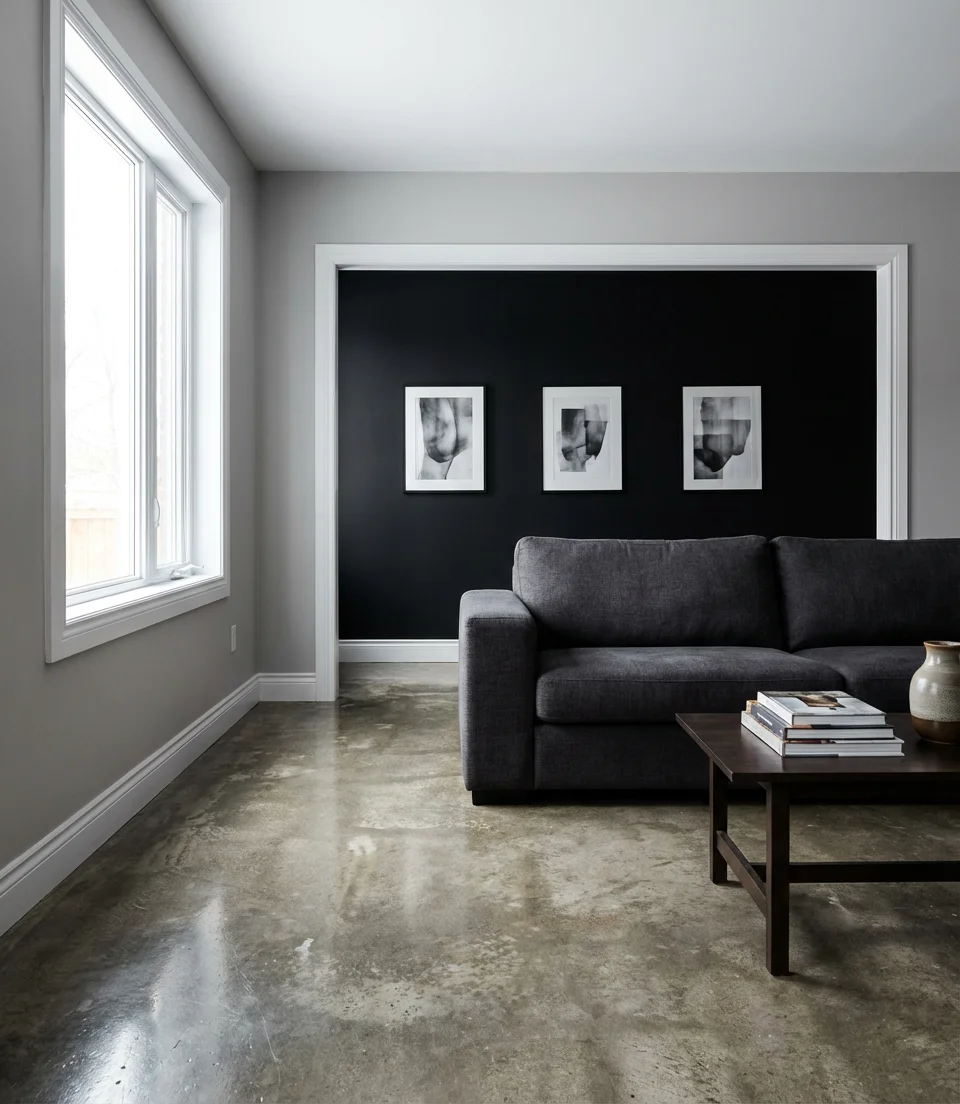
Pairing gray walls with a single black accent creates a sophisticated monochromatic scheme that’s anything but boring. The varying shades of gray provide subtle transitions that make the black wall feel intentional rather than jarring. This approach works beautifully in contemporary and transitional spaces where you want visual interest without introducing multiple colors. The contrast is dramatic enough to define zones while maintaining a calm, cohesive palette throughout the room.
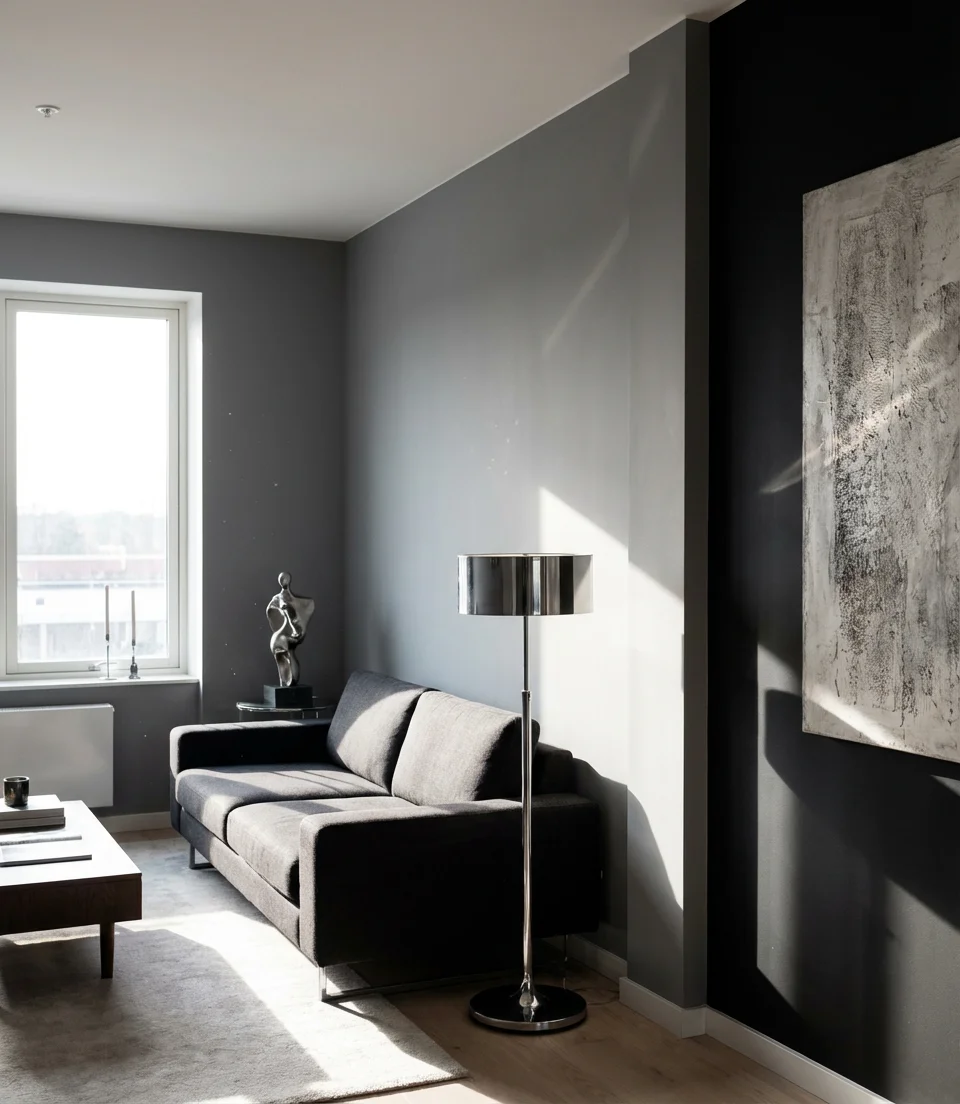
Expert-style commentary: The key to success here is choosing grays with the same undertone as your black. Cool grays with blue undertones pair best with true blacks, while warmer grays with brown or beige undertones need blacks that lean slightly warm. Test samples side-by-side before committing to ensure they harmonize rather than clash.
17. Dining Room Visibility from Living Space
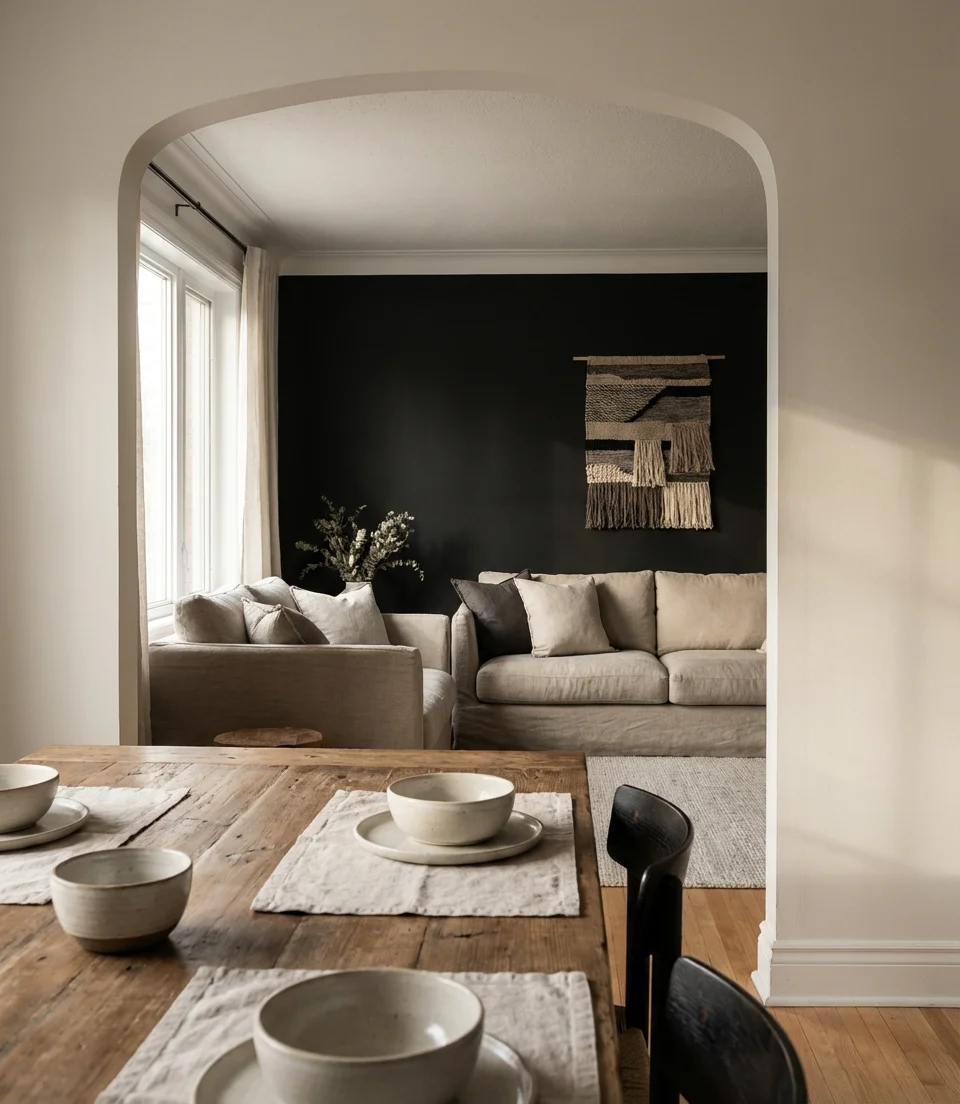
A black accent wall in the living room can visually connect to or frame an adjacent dining room, creating intentional sightlines in open-plan homes. Position the dark wall so it’s visible from the dining table, creating a dramatic backdrop that makes both spaces feel more designed. This technique is especially effective when the dining room features lighter walls—the contrast draws the eye through doorways and openings, making the entire floor plan feel larger and more connected.
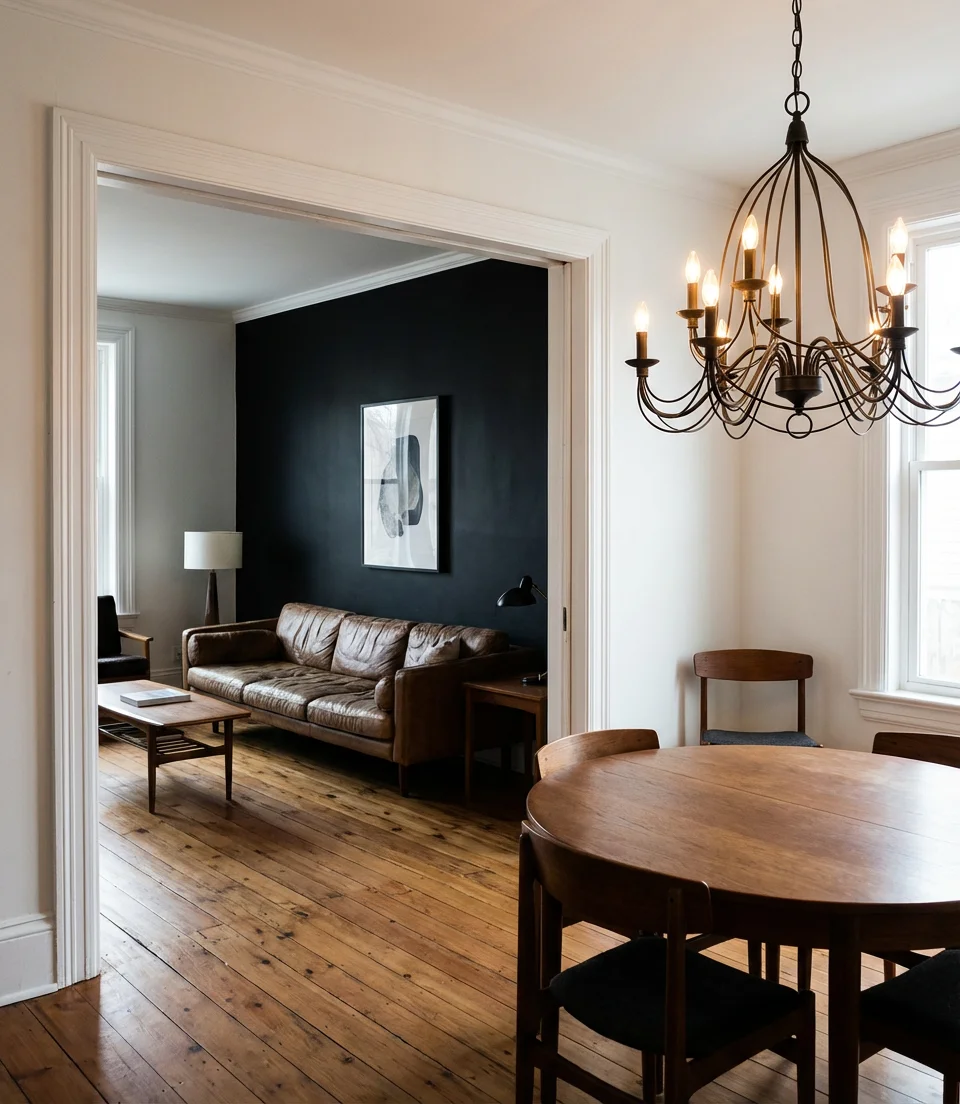
Real homeowner behavior shows that this setup encourages entertaining—the dramatic wall becomes a conversation piece visible from multiple rooms. Guests naturally migrate between spaces when the design creates visual interest that extends beyond a single zone. It’s a subtle way to make your home feel more social and inviting.
18. Flat Paint for a Moody Finish
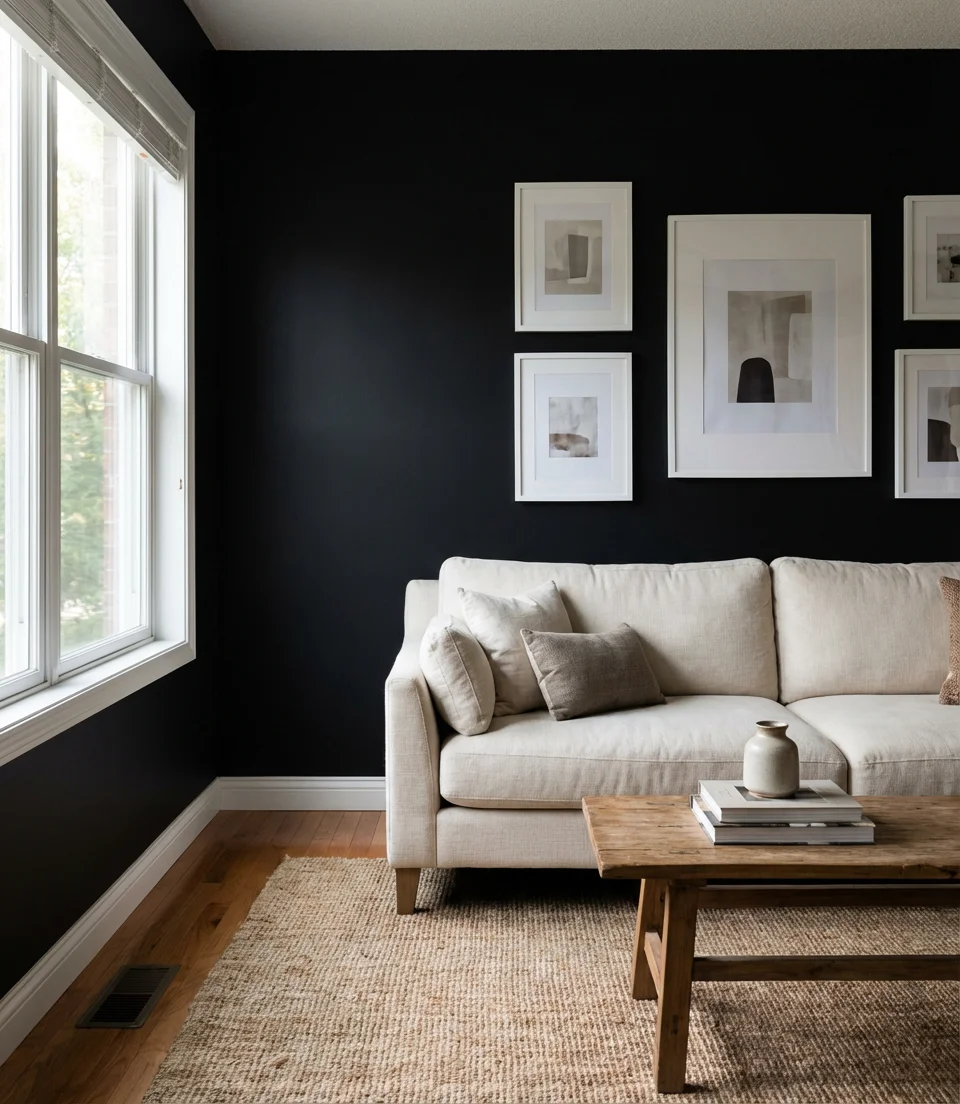
Flat or matte paint creates the moodiest, most velvety black accent wall finish available. Unlike satin or semi-gloss, flat paint absorbs light completely, making the wall feel like an infinite depth rather than a reflective surface. This finish is ideal for creating a gallery-like atmosphere or showcasing texture in the paint itself. However, it’s less durable than higher-gloss options—reserve it for low-traffic walls where it won’t be touched frequently or need regular cleaning.
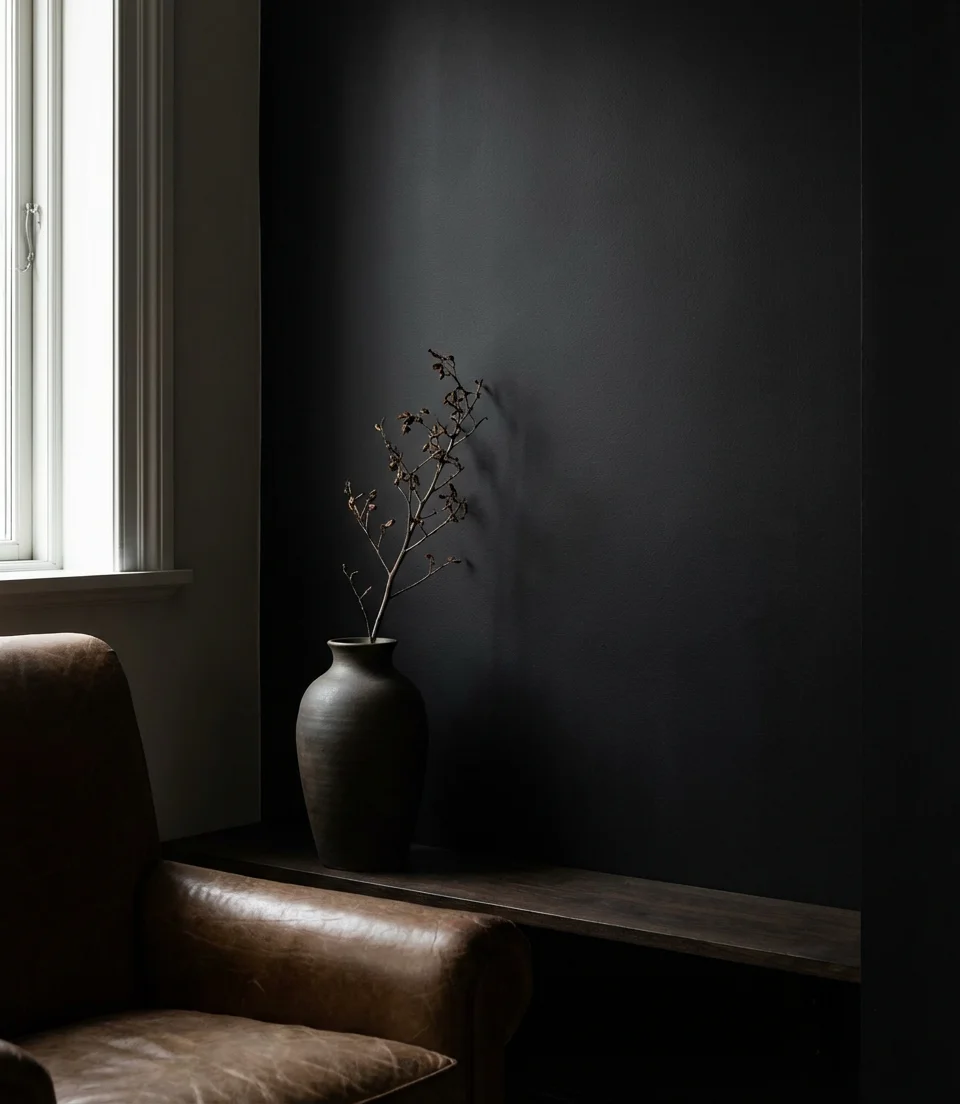
Practical insight: Flat paint requires excellent wall prep—every imperfection will show. Fill nail holes, sand smooth, and prime thoroughly before applying your black topcoat. The extra effort pays off in a professional-looking finish that feels like velvet rather than plastic.
19. Modern Minimalism with Clean Lines
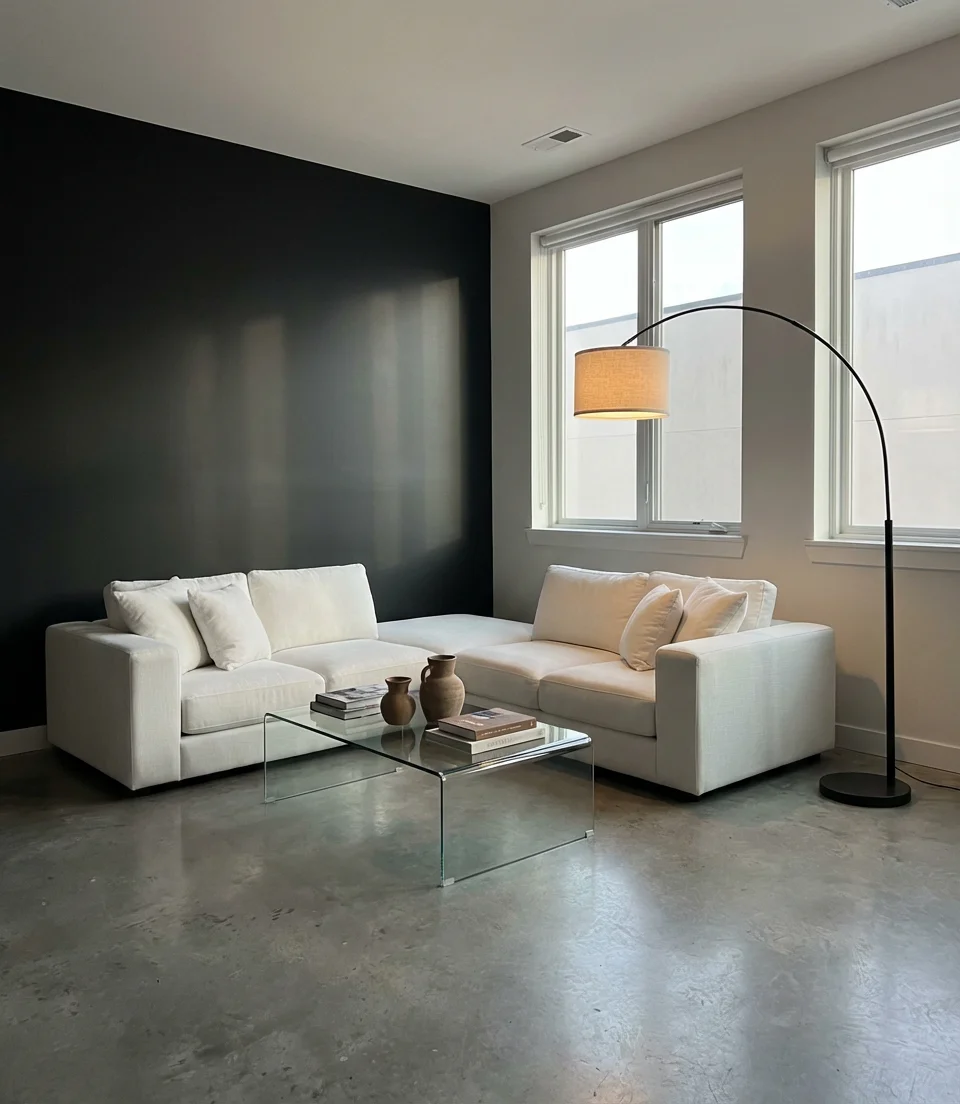
Modern living rooms thrive on the drama of a black accent wall paired with sleek, minimal furniture. The dark surface provides all the visual interest needed, allowing you to keep everything else pared back and purposeful. Think low-profile sofas, glass coffee tables, and sculptural lighting—each piece gets room to breathe against the bold backdrop. The outcome is minimalism with impact, proving that “less is more” doesn’t have to mean boring or cold.
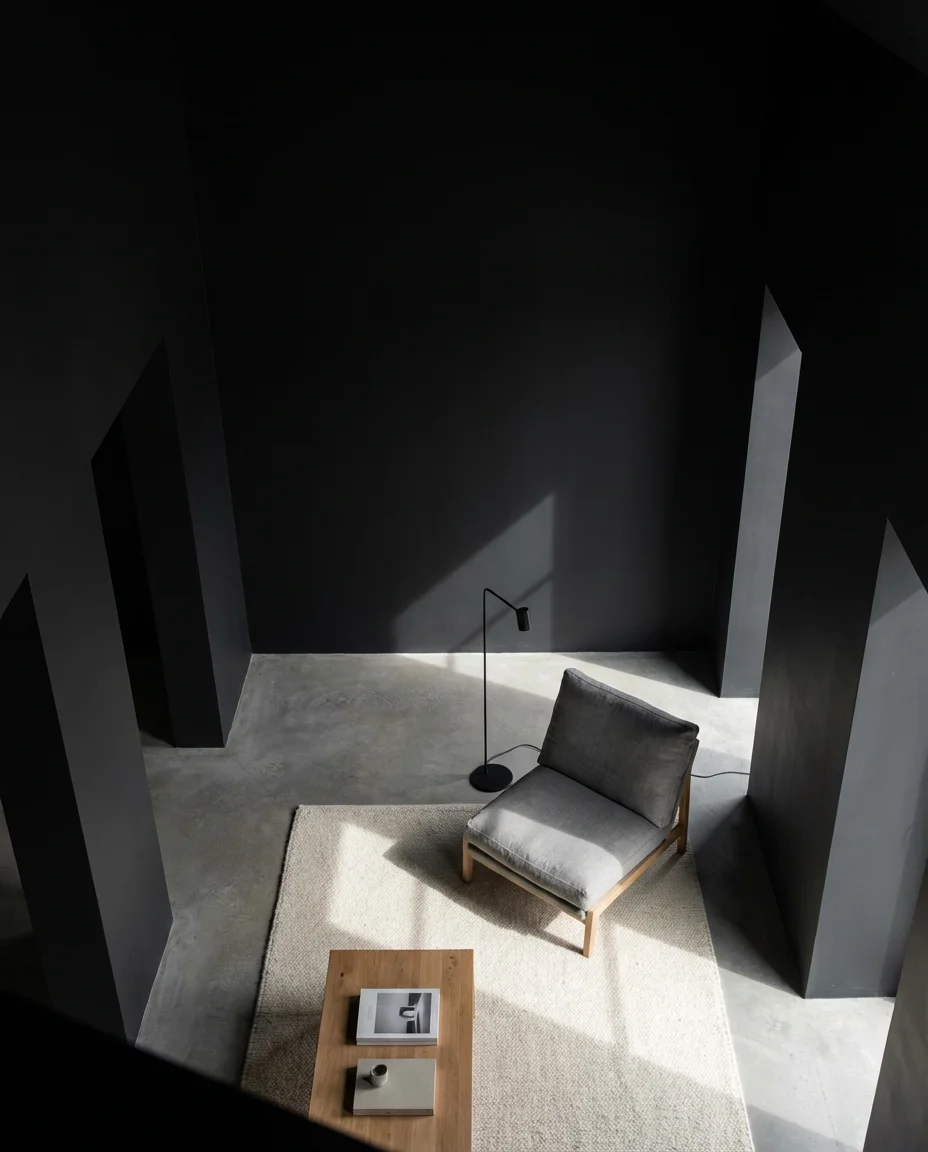
Here are some common mistakes in minimalism and tips on how to avoid them: Minimalism can become sterile if you are not careful. Add warmth through natural materials—a jute rug, wood side table, or linen throw. These organic elements prevent the black-and-white palette from feeling like a showroom rather than a home.
20. White Walls with Dramatic Black Punch
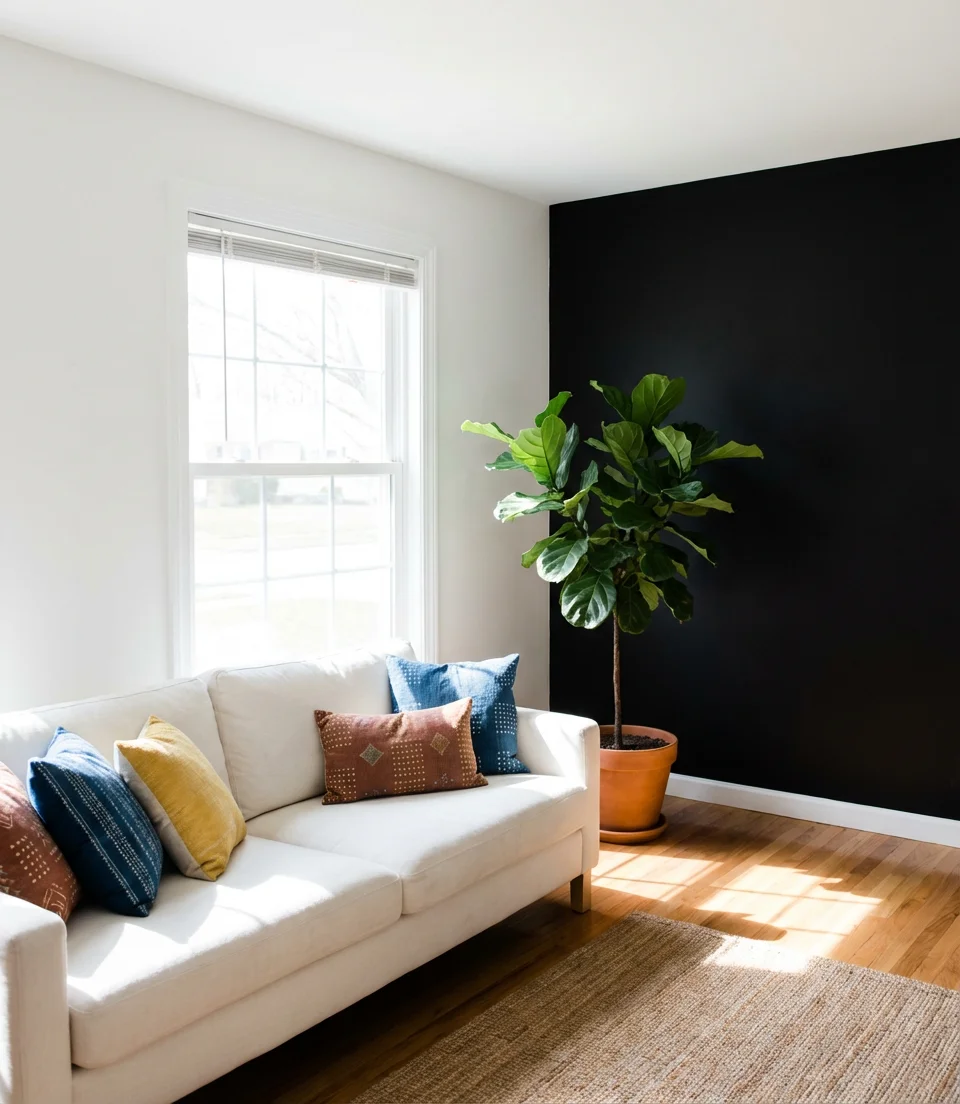
The classic combination of white walls with one black accent delivers maximum contrast and visual drama. This high-impact pairing creates a crisp, gallery-like environment that makes furniture and art pop. The white walls reflect light throughout the room, keeping it bright and open, while the single black wall provides a grounding focal point. It’s a foolproof formula that works in virtually any style of living room, from traditional to ultra-contemporary.
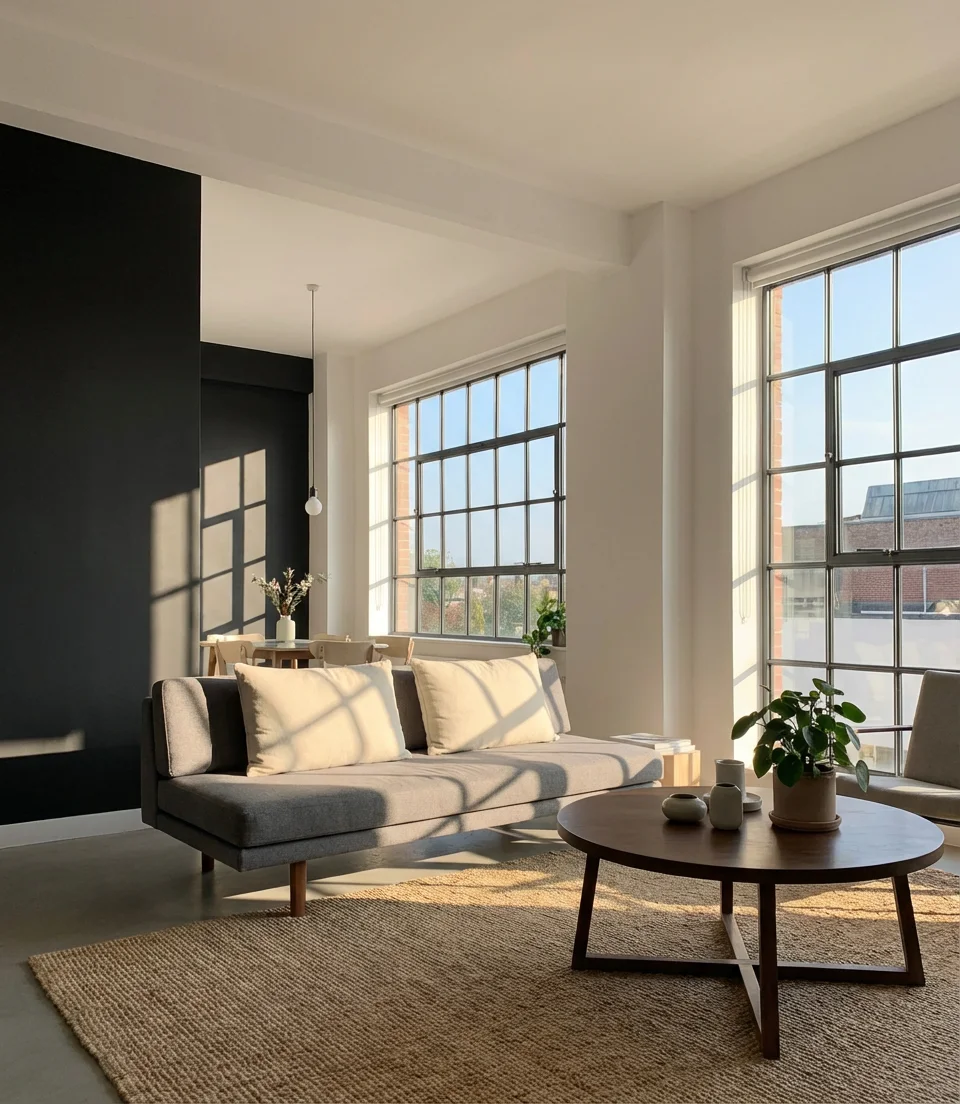
Budget angle: This layout is one of the most affordable ways to make a big impact. White paint is typically less expensive than custom colors, and you’re only buying black for one wall. Even with premium paint for both colors, you’ll spend far less than on wallpaper or complex treatments while achieving dramatic results.
21. Modern Ideas with Architectural Interest
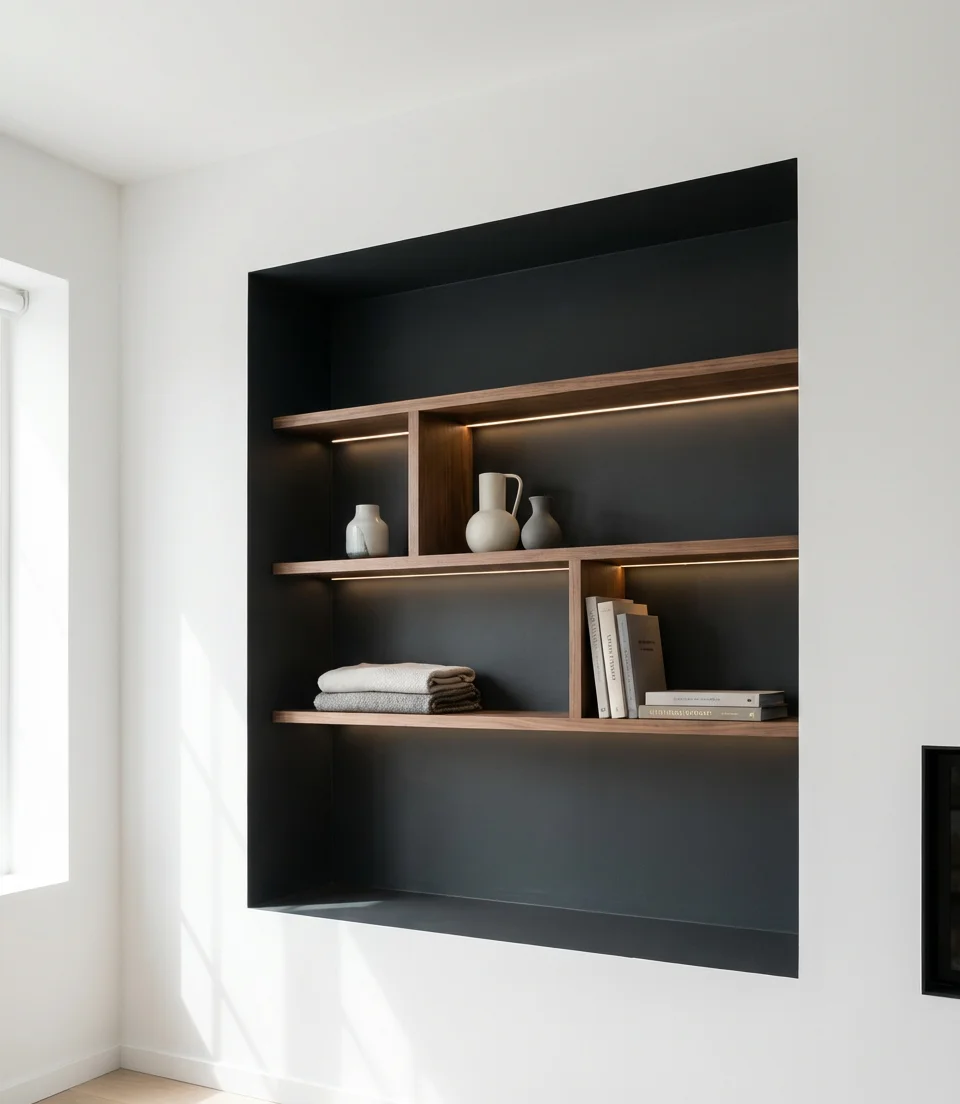
Black accent walls amplify architectural features like built-in niches, recessed panels, or geometric wall treatments. Paint these structural ideas black to create shadow and depth that makes them truly special. Modern homes with intriguing bones benefit enormously from this approach—the dark color highlights design elements that might otherwise go unnoticed. Consider painting just the recessed portions black while leaving surrounding surfaces white for an elegant, sophisticated contrast.
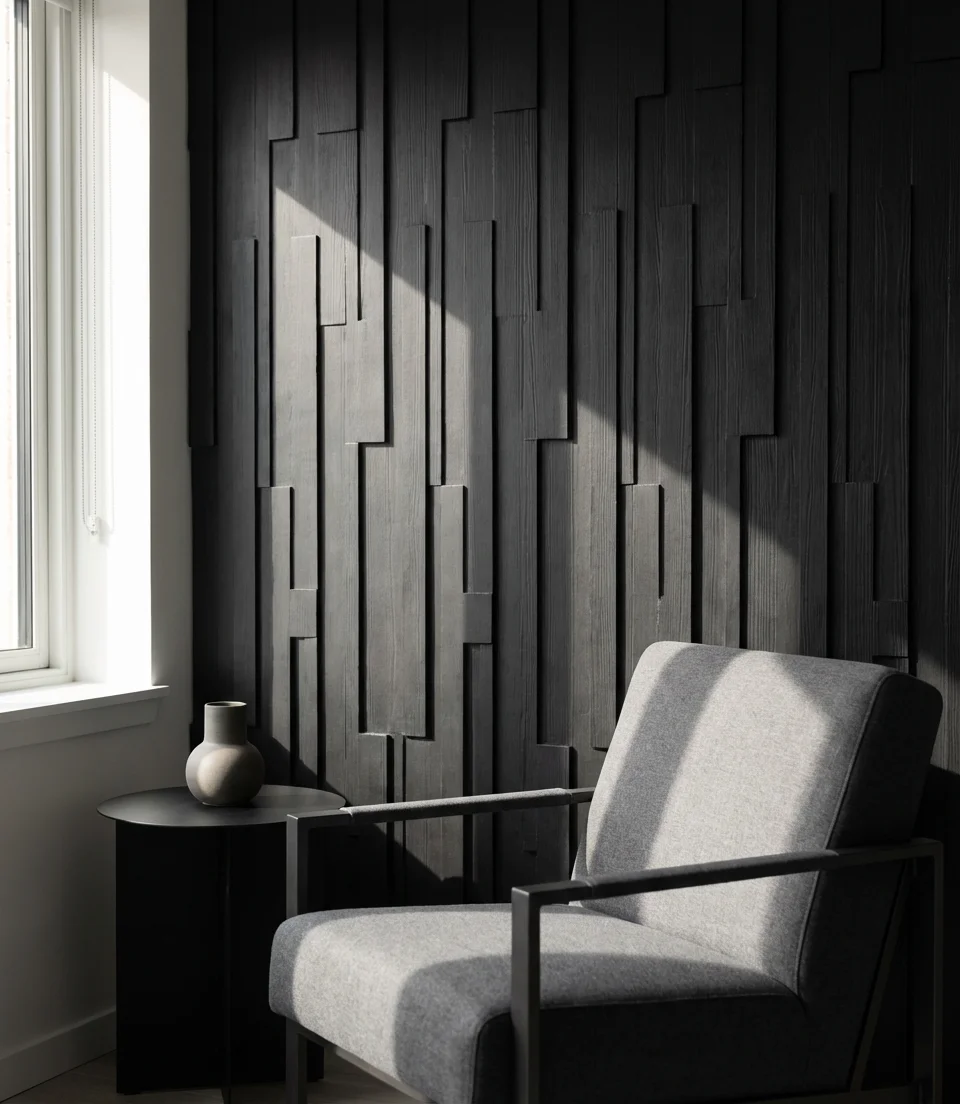
American lifestyle context: New construction homes often include architectural details specifically designed to be painted in contrasting colors. Builders increasingly offer black accent walls as a standard option or upgrade, recognizing that homeowners want move-in-ready drama. If you’re building or renovating, discuss accent wall opportunities with your contractor early in the process.
22. Living Room Decor Pop
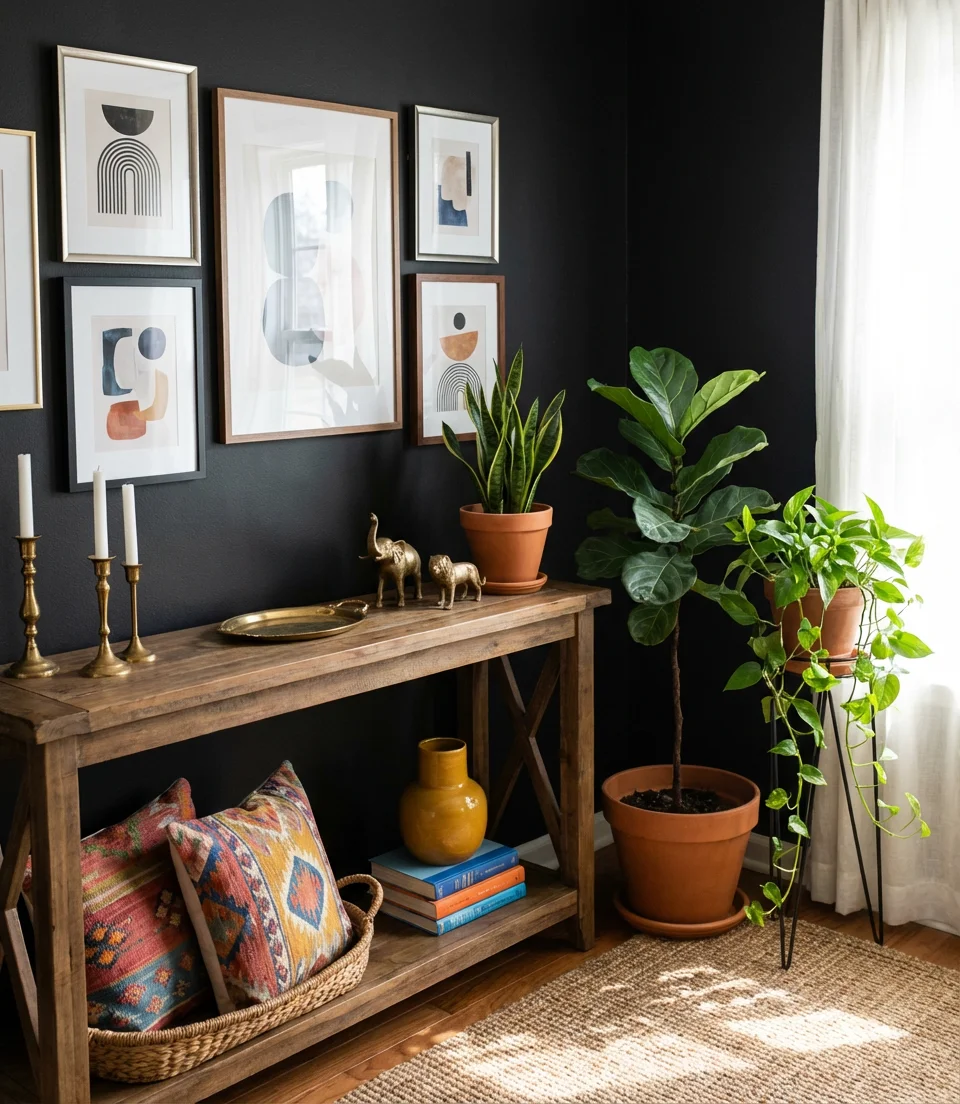
A black accent wall makes decor items shine like jewelry in a display case. A dark backdrop enhances the presence of brass candlesticks, colorful artwork, green plants, and decorative objects. This space is where you can have fun with styling—the black wall provides a neutral foundation that allows you to swap out accessories seasonally without needing to repaint. Metallics especially come alive against black, reflecting light and adding glamour to everyday living room spaces.
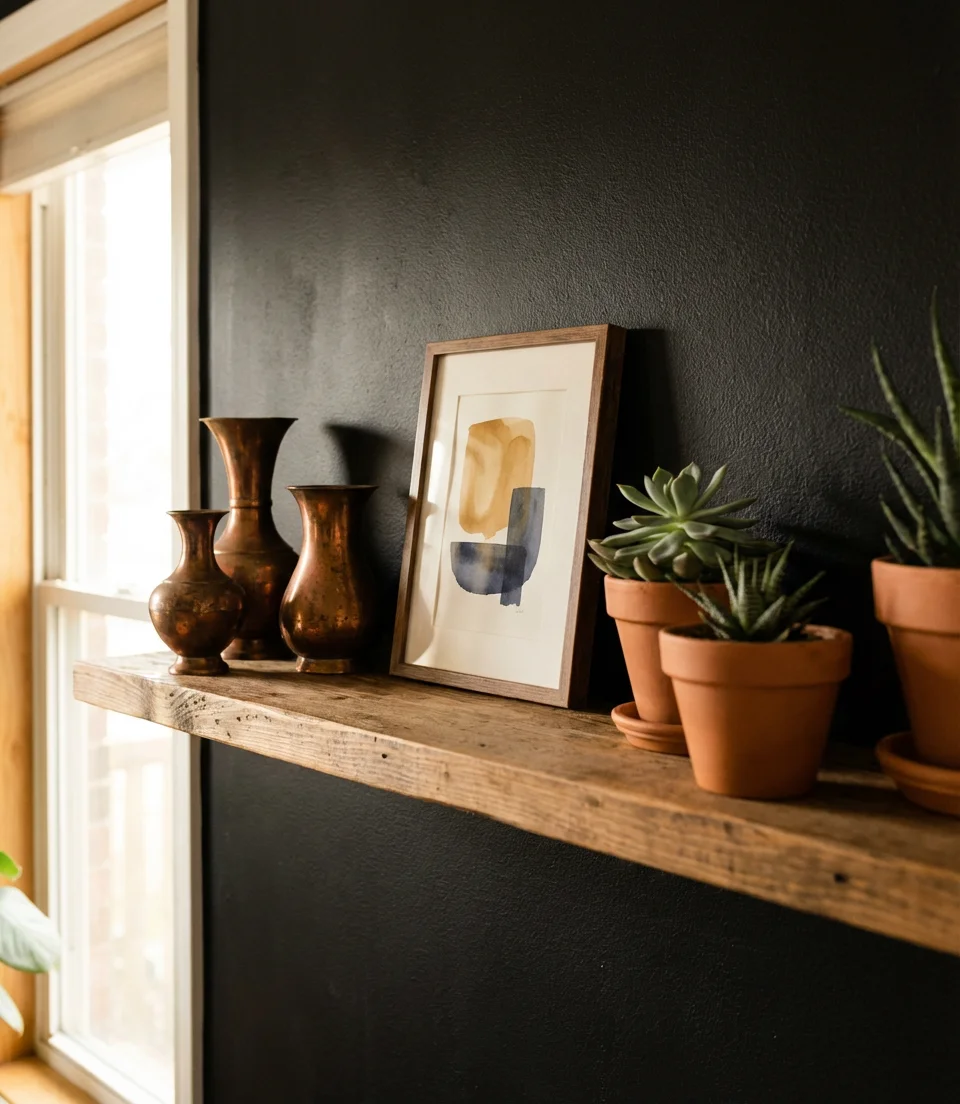
Real homeowner behavior shows that black accent walls actually encourage more frequent decor changes—people enjoy the “gallery wall” effect and find it easier to spot what works and what doesn’t. The dark background is forgiving while also making intentional styling choices more obvious.
23. Large Living Room with Bold Impact
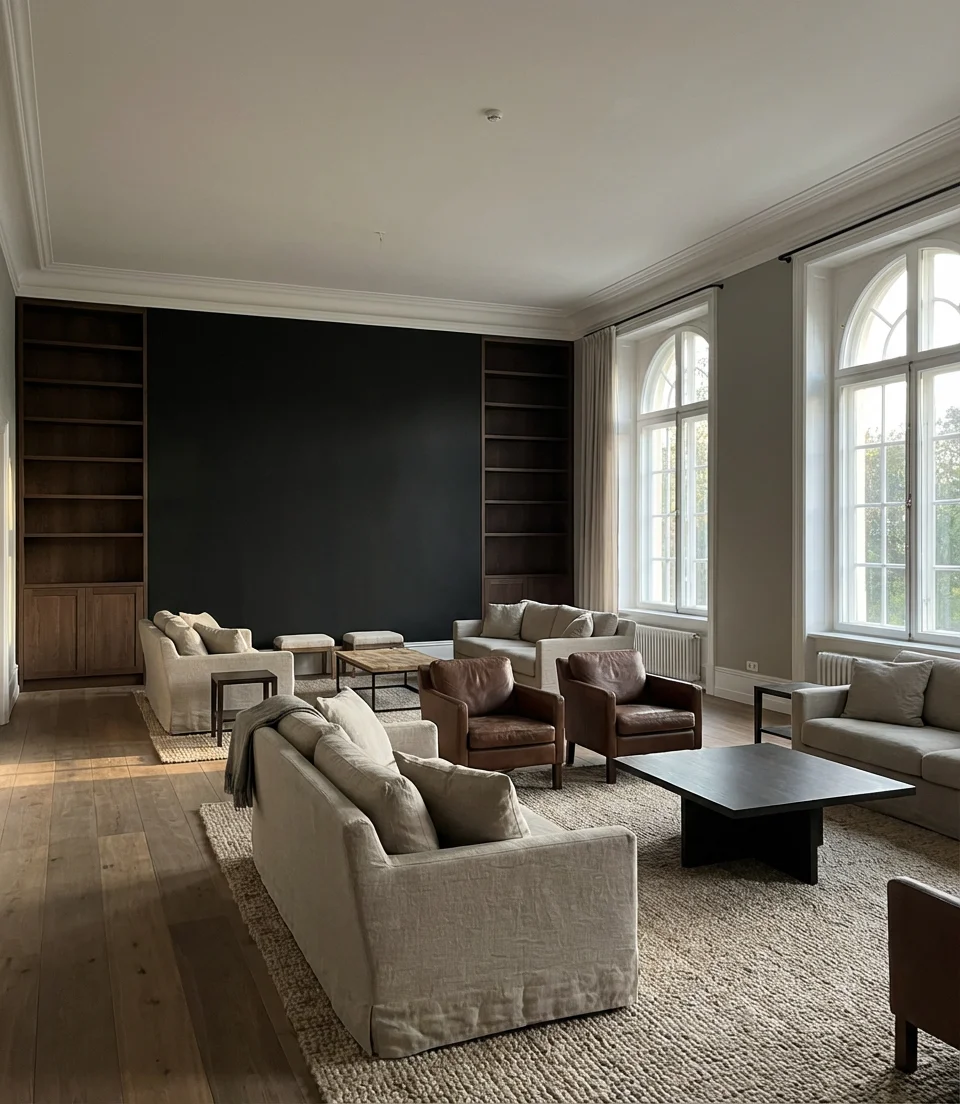
Large living rooms can feel cavernous and undefined without strong design anchors. A black accent wall provides instant structure, breaking up expansive square footage into more intimate zones. Paint the longest wall black to create a focal point that grounds oversized furniture arrangements. This approach is particularly effective in spacious rooms or combined living-dining spaces where you need to establish visual hierarchy without blocking sightlines with physical dividers.
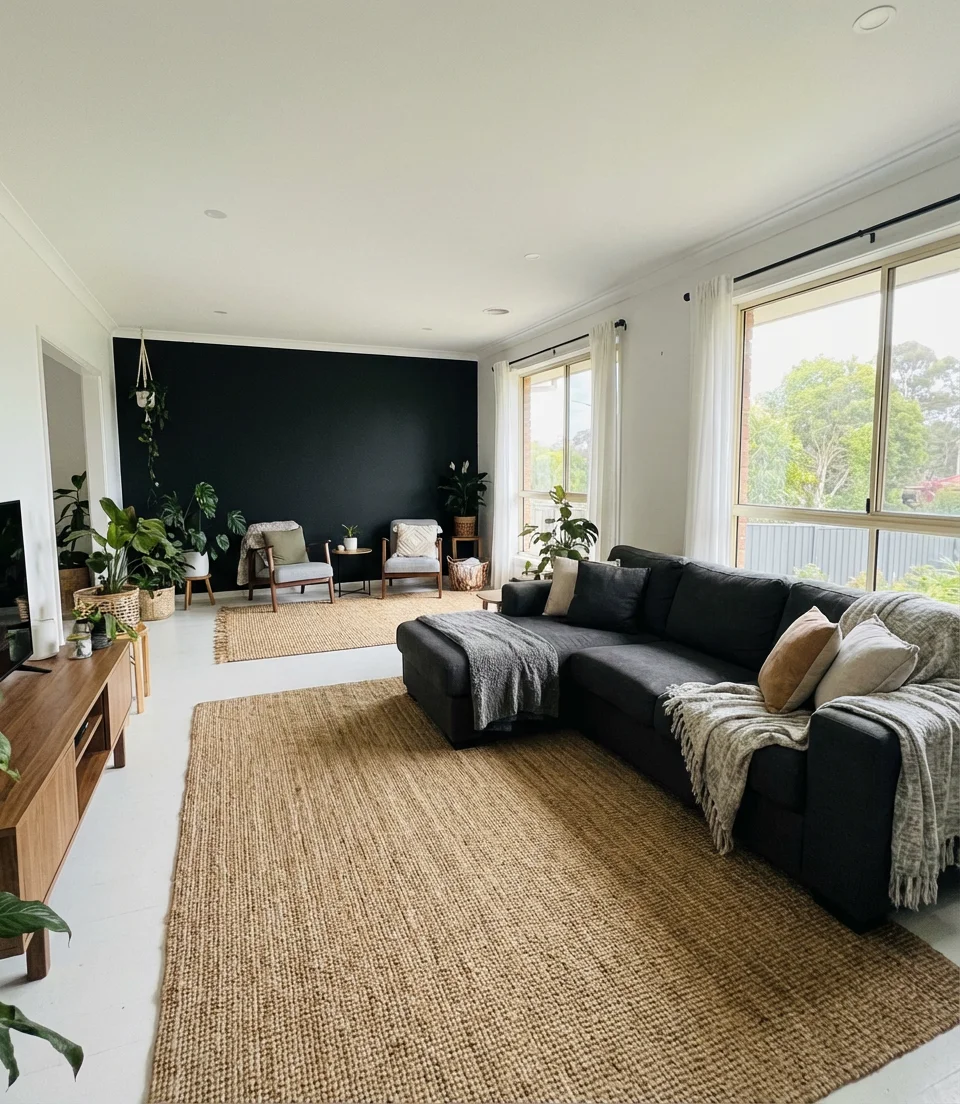
Where it works best: Open-concept homes where the living room flows into other spaces. The black wall creates definition without closing off areas, maintaining the airy feeling that makes open plans so desirable. It’s also effective in homes with abundant natural light—the dark surface needs brightness to balance it properly.
24. Curated Ideas for Personal Style
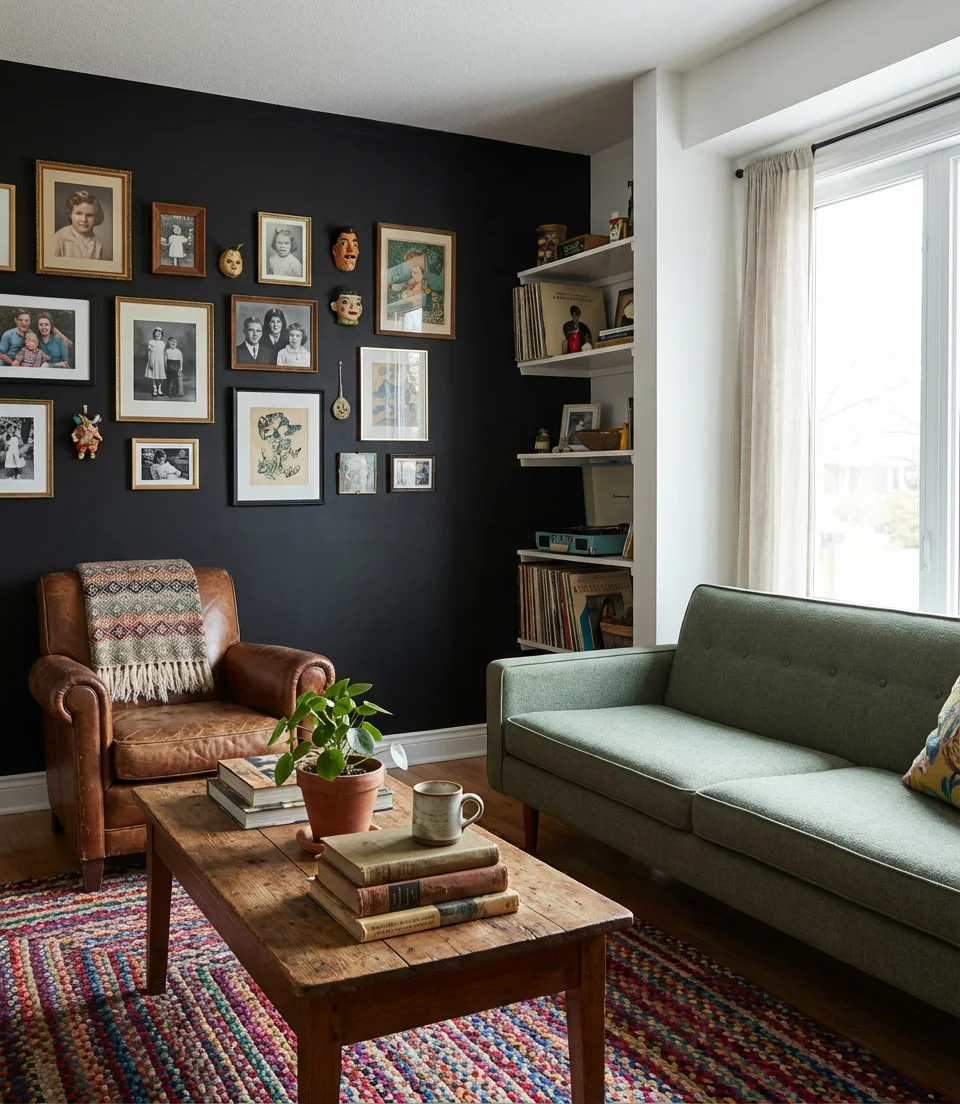
The beauty of a black accent wall lies in its versatility—it adapts to virtually any personal style while providing a strong foundation for your decor ideas. Whether you lean traditional, contemporary, eclectic, or somewhere in between, the dark backdrop supports your vision rather than dictating it. Use it to showcase collections, family photos, inherited furniture, or cutting-edge design finds. The black wall is your canvas; what you put on and around it tells your unique story.
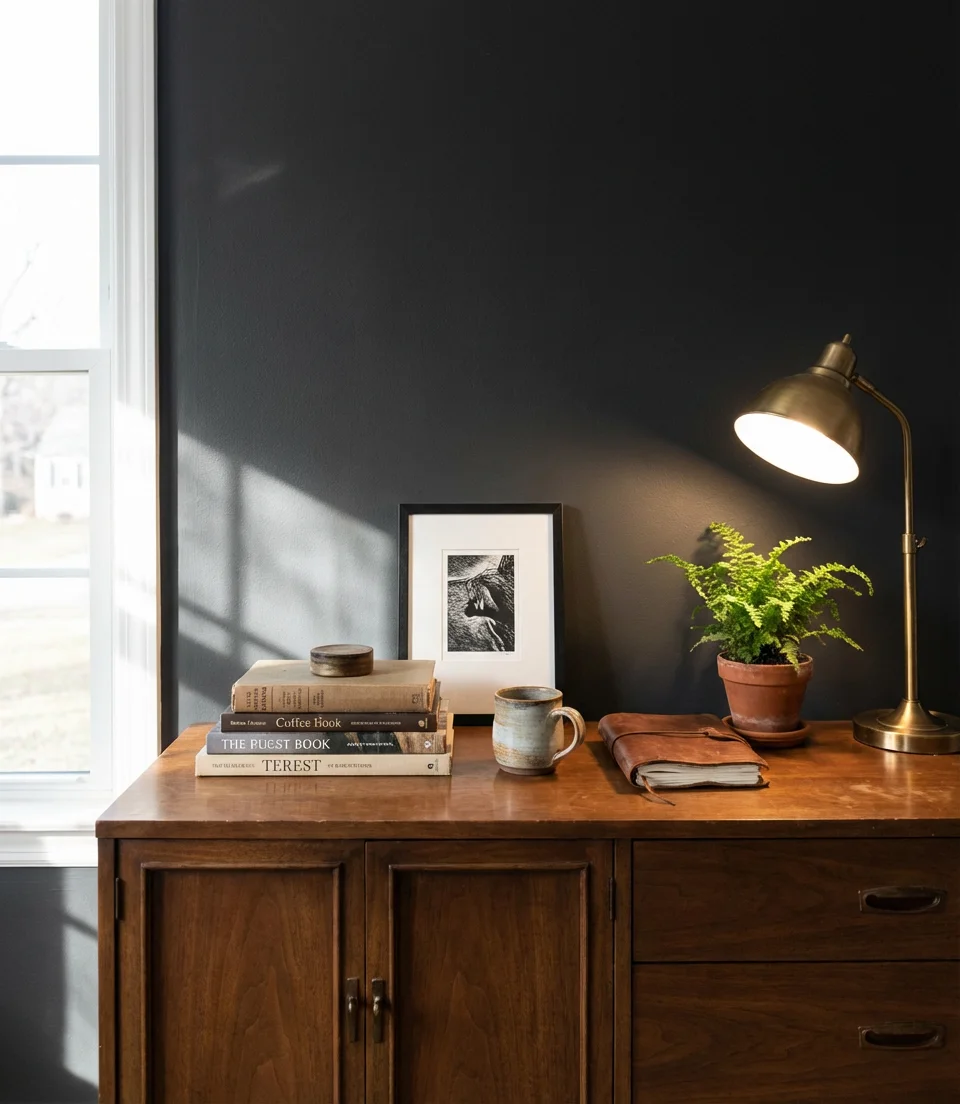
Expert-style commentary: The most successful black accent walls reflect genuine personality rather than following trends blindly. Start with what you love—whether that’s travel photography, modernist prints, or your grandmother’s quilts—and let the black wall serve as a unifying element. When you design based on authentic preference rather than Pinterest perfection, the room feels like home instead of a stage set.
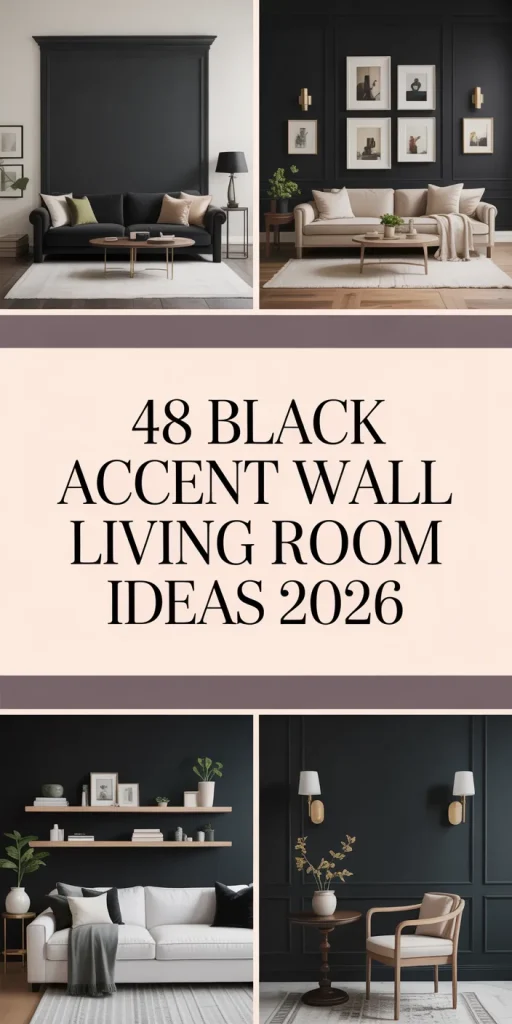
A black accent wall transforms living rooms from ordinary to extraordinary, offering drama, depth, and versatility that few design choices can match. Whether you’ve been inspired by matte finishes, architectural details, or the way your favorite blue couch would pop against a dark backdrop, there’s a black wall approach that fits your space and lifestyle. The key is choosing the right wall, preparing it properly, and styling it in a way that reflects your personal taste. Now it’s your turn—which of these ideas speaks to you? Share your thoughts or your black accent wall success stories in the comments below.