47 Stunning Staircases Ideas 2026: From Victorian Charm to Modern Floating Designs

As we move through 2026, staircases have evolved beyond mere functional transitions between floors—they’ve become statement pieces that define a home’s personality and flow. American homeowners are increasingly turning to Pinterest for staircase inspiration, searching for designs that blend aesthetic appeal with everyday practicality. Whether you’re renovating a century-old Victorian or planning a modern new build, the right staircase can transform your entire interior experience. From dramatic floating steps to cozy carpeted runners, today’s staircase trends embrace both boldness and warmth. In this guide, we’re exploring fresh ideas that capture what’s working beautifully in American homes right now.
1. Enclosed Staircase with Warm Wood Paneling
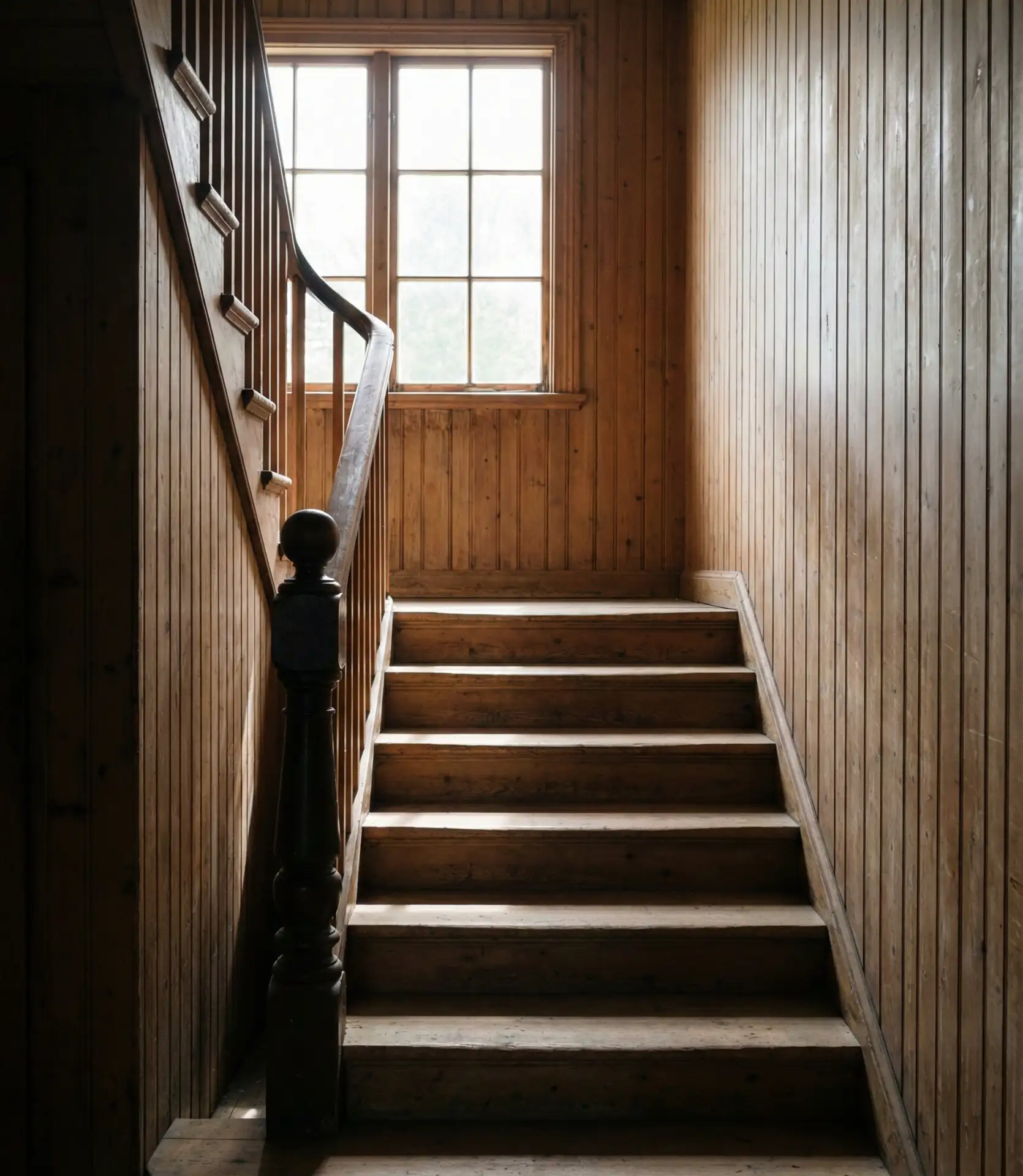
An enclosed staircase wrapped in rich wood paneling creates an intimate, protective feel that’s especially appealing in traditional homes. This design works beautifully in colonial and craftsman-style houses where the staircase sits near the entry, offering a welcoming transition from public to private spaces. The wood can be stained in honey tones for brightness or deeper espresso for drama, and the enclosed walls provide excellent soundproofing between floors.
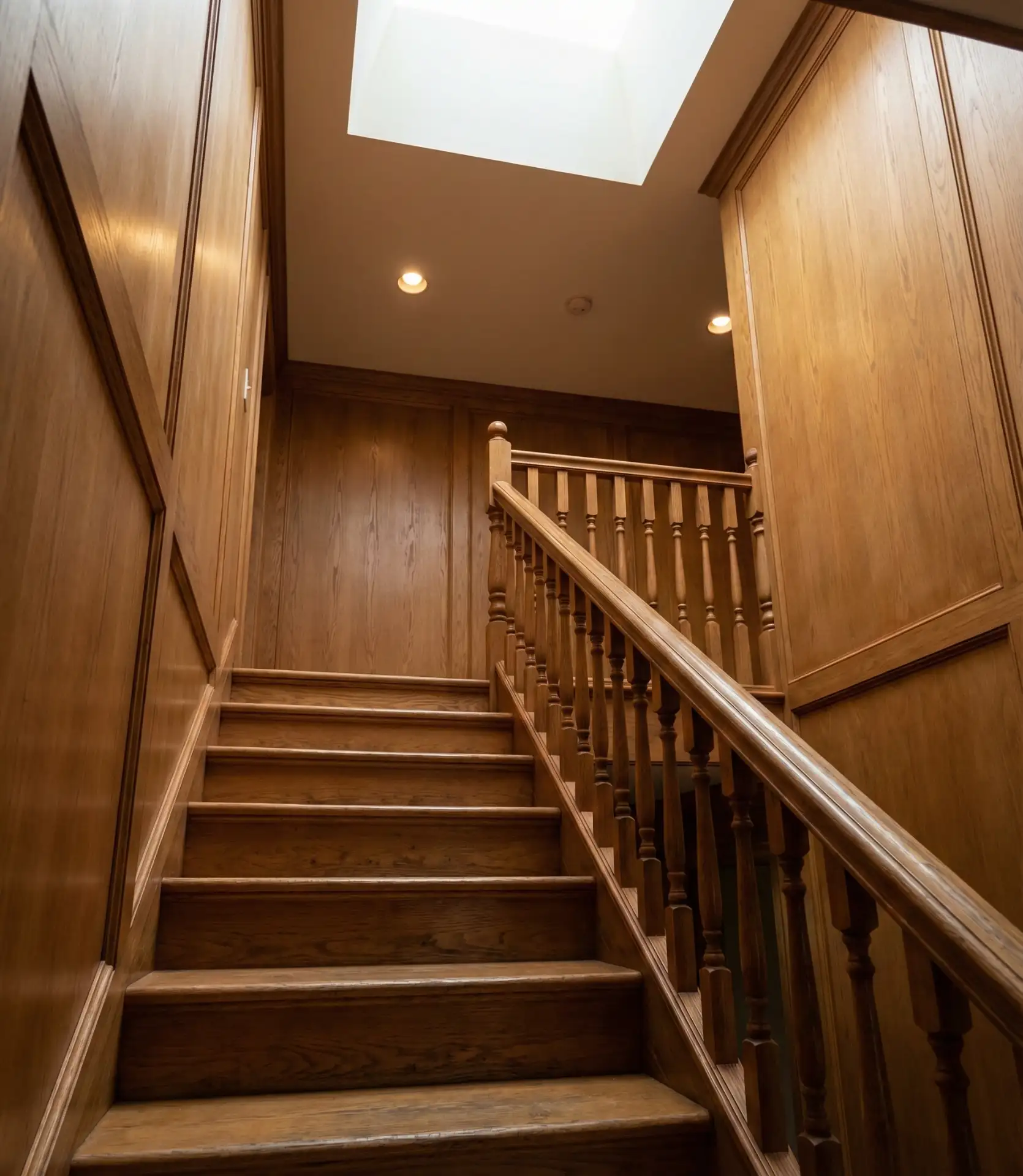
Where this style works best: Homes in the Northeast and Midwest appreciate the added insulation value of enclosed staircases during harsh winters. The contained design also helps maintain temperature control, reducing heating costs while creating distinct zones within your home. Many homeowners add wall sconces at regular intervals to prevent the space from feeling too cave-like, and a runner in a subtle pattern keeps footsteps quiet without overwhelming the wood’s natural beauty.
2. Narrow Staircase Maximized with Light Colors
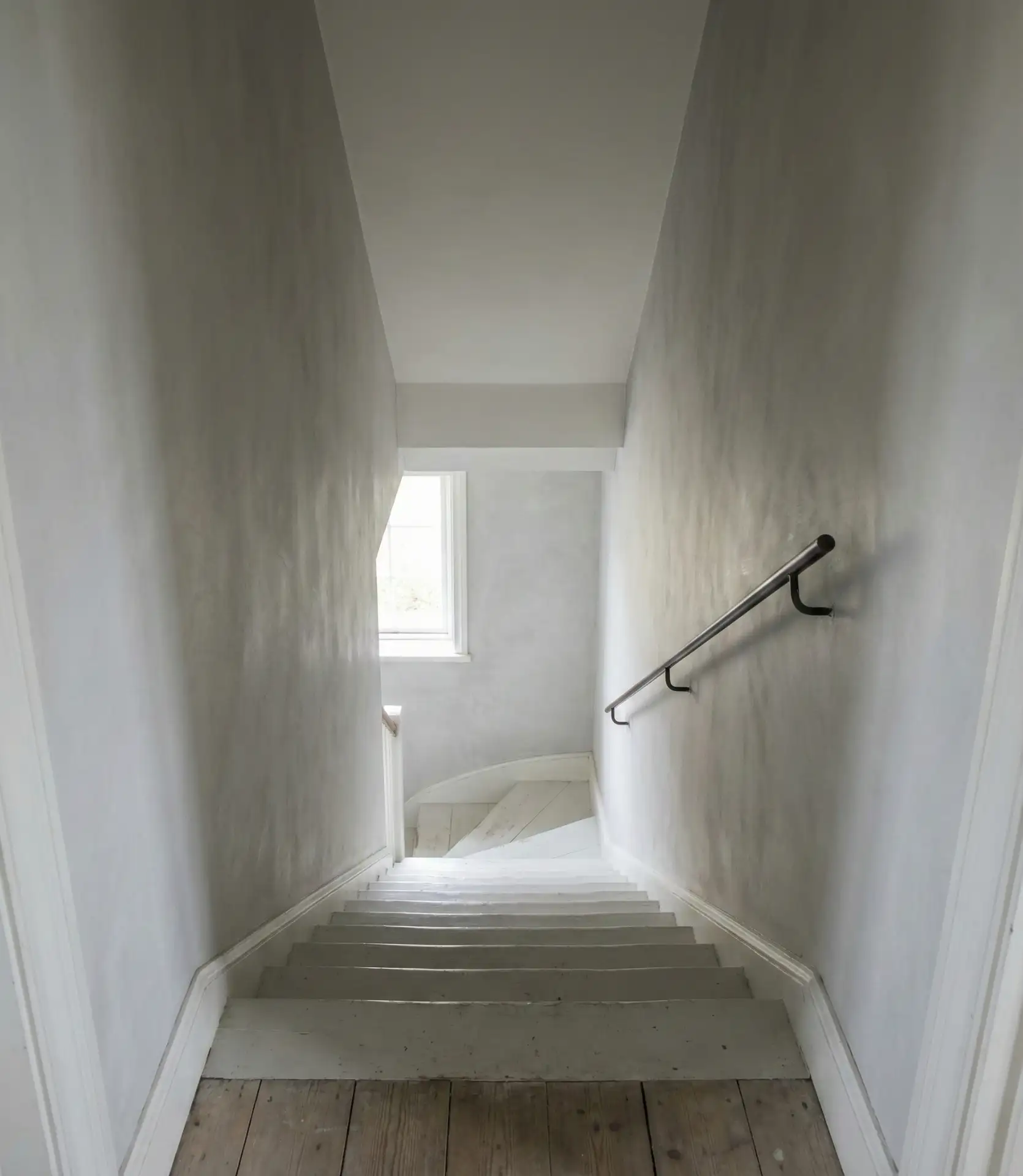
A narrow staircase doesn’t have to feel cramped when you use a smart color strategy. Painting risers, treads, and walls in soft whites or pale grays reflects available light and visually expands the space. This approach is particularly effective in older urban homes and townhouses where square footage is precious and stairwells were built tight. Adding a slim handrail in brushed nickel or matte black provides contrast without visual weight.
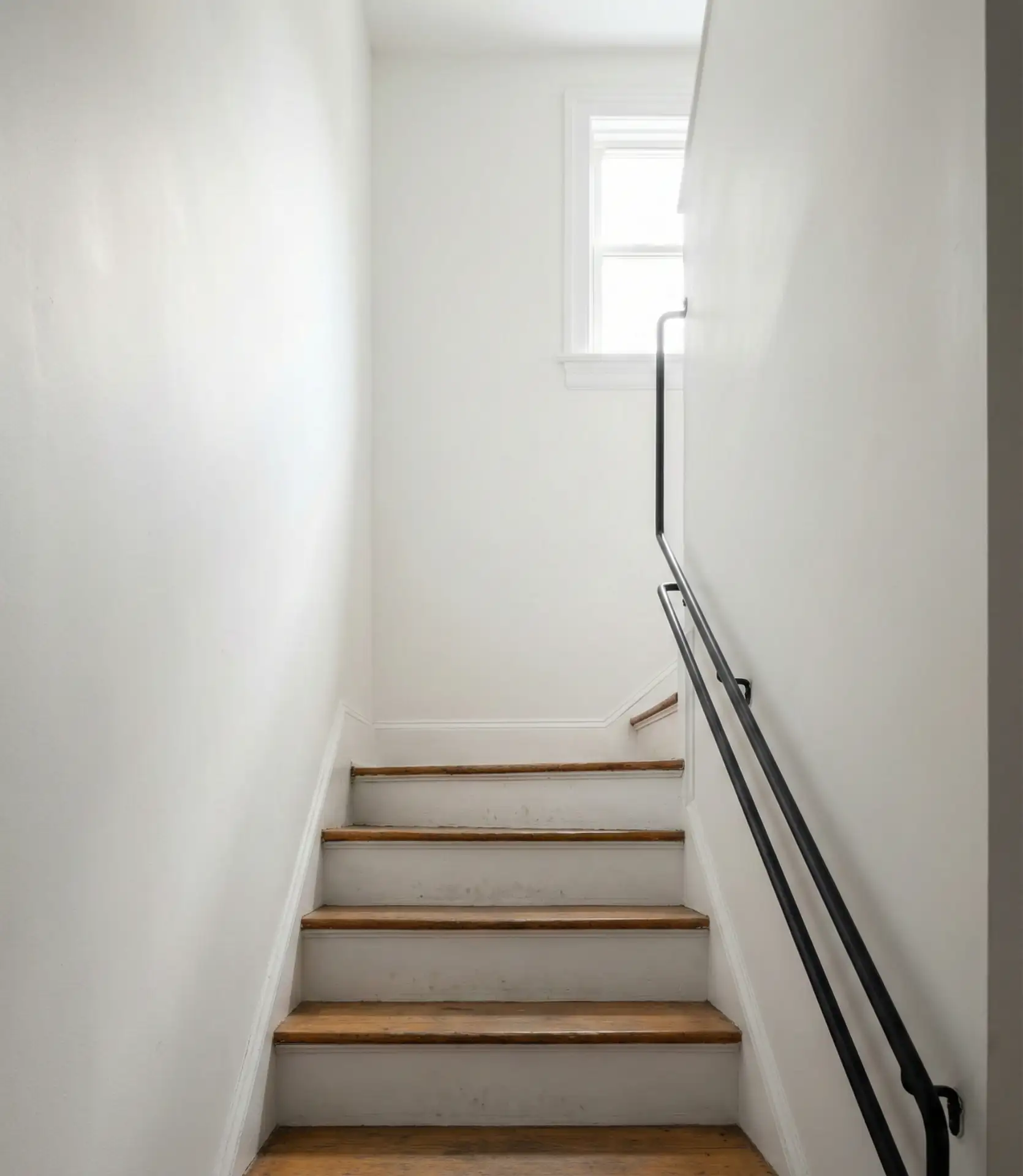
Real homeowner behavior shows that people living with narrow staircases often remove bulky furniture from adjacent areas to maintain flow, and they avoid hanging large artwork on stairwell walls that can make the space feel even tighter. Instead, a single vertical gallery of small frames or a narrow floating shelf for a trailing plant keeps things intriguing without encroaching on the limited width. Lighting becomes critical here—recessed LED strips under each tread create a floating effect that further enhances the sense of space.
3. Closed Staircase Transformed with Statement Wallpaper
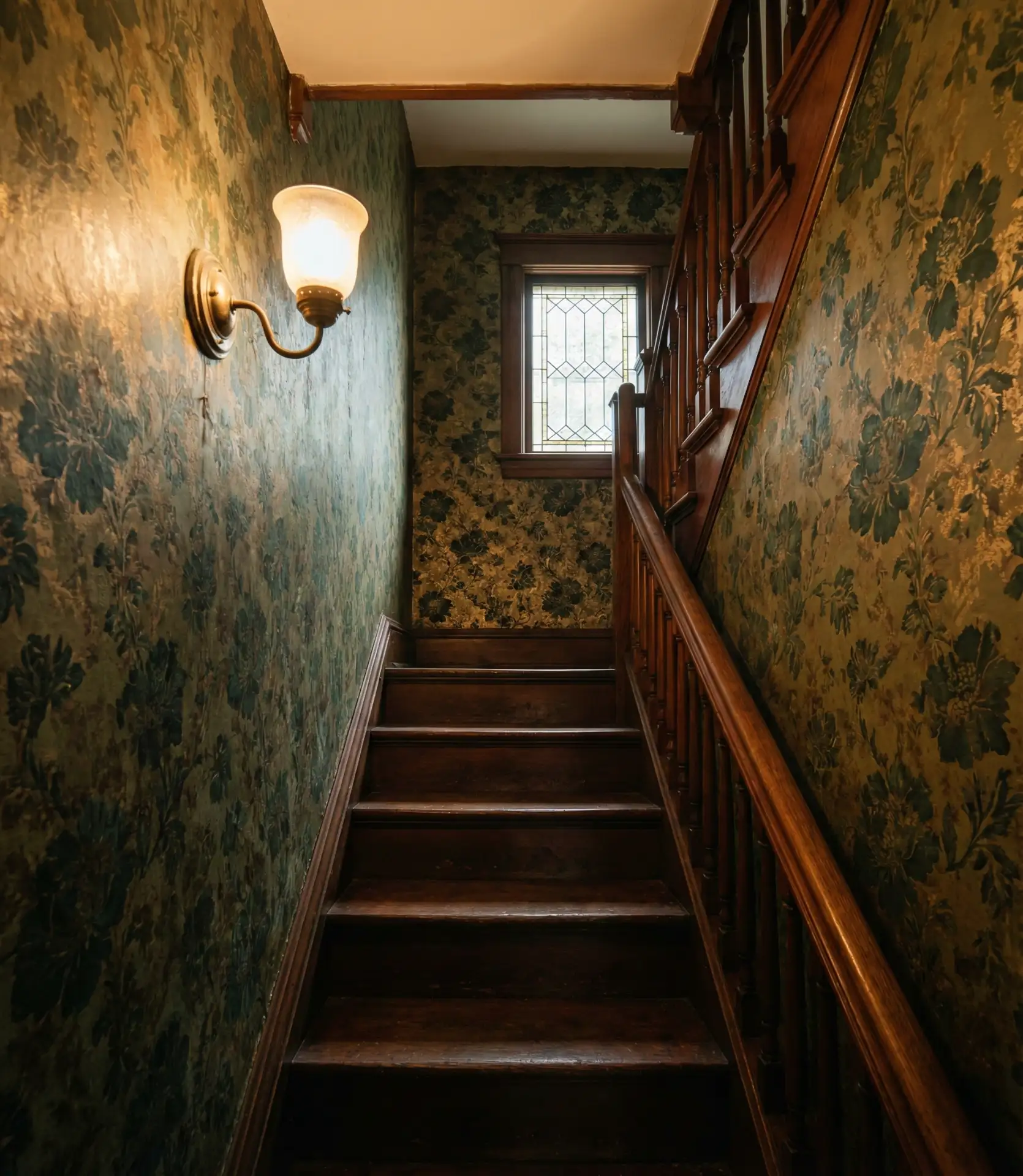
A closed staircase offers a rare opportunity to experiment with bold patterns without overwhelming your main living areas. Victorian homes particularly benefit from this treatment, as it highlights the original millwork against dramatic floral or geometric wallpapers. The enclosed nature means you can go maximalist here—think deep jewel tones, metallic accents, or oversized botanical prints that would feel too intense in an open-concept space.
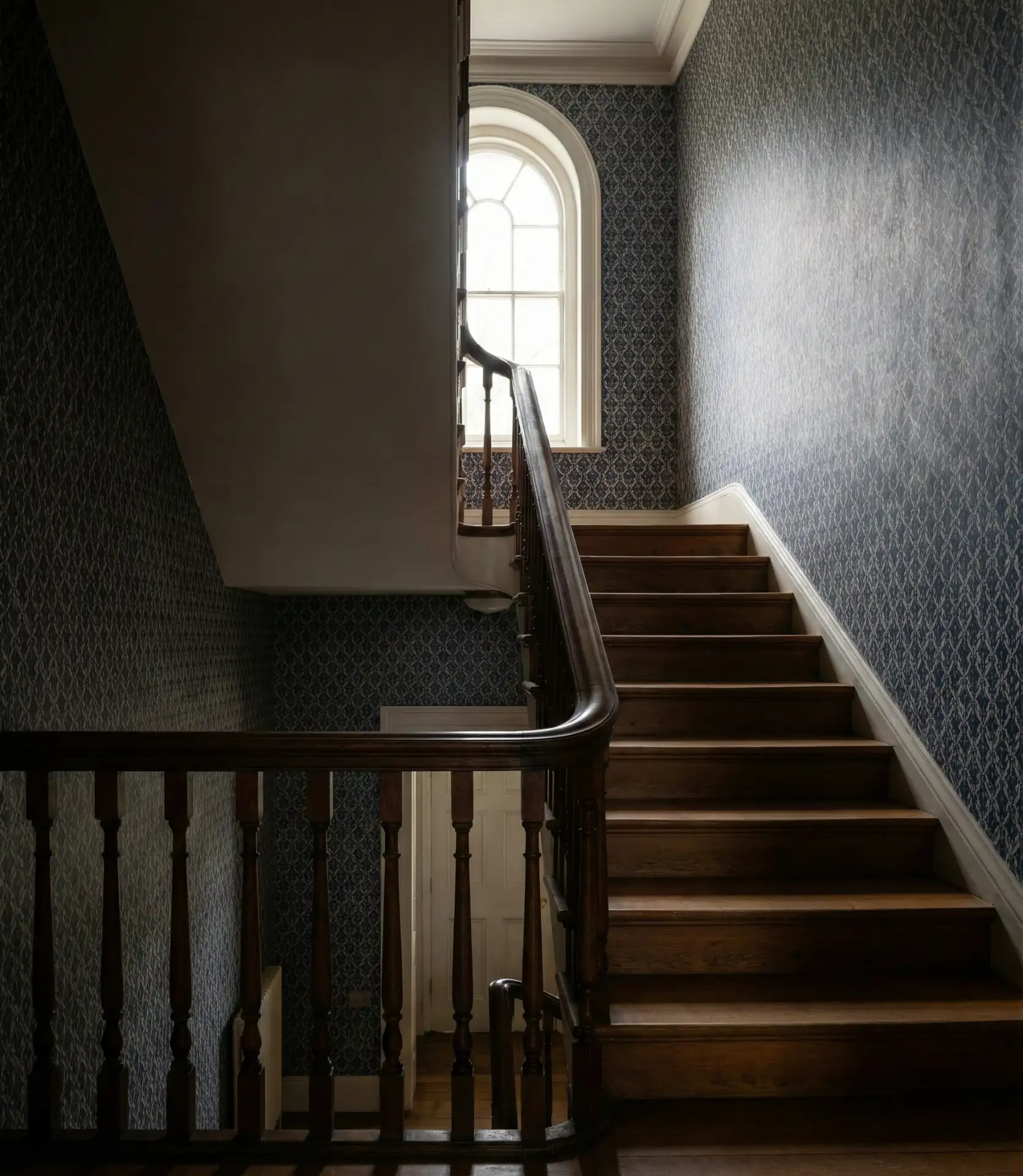
Budget angle: Wallpapering a staircase typically costs $400–$800 for materials and installation in an average-sized home, making it one of the most impactful updates you can do for under a thousand dollars. If you’re comfortable with DIY, peel-and-stick options have significantly improved and can reduce the cost in half. The key is proper surface prep—stairwell walls often have imperfections from years of bumps and scrapes, so filling holes and priming well ensures your pattern looks crisp and professional.
4. Carpeted Runner with Classic Binding
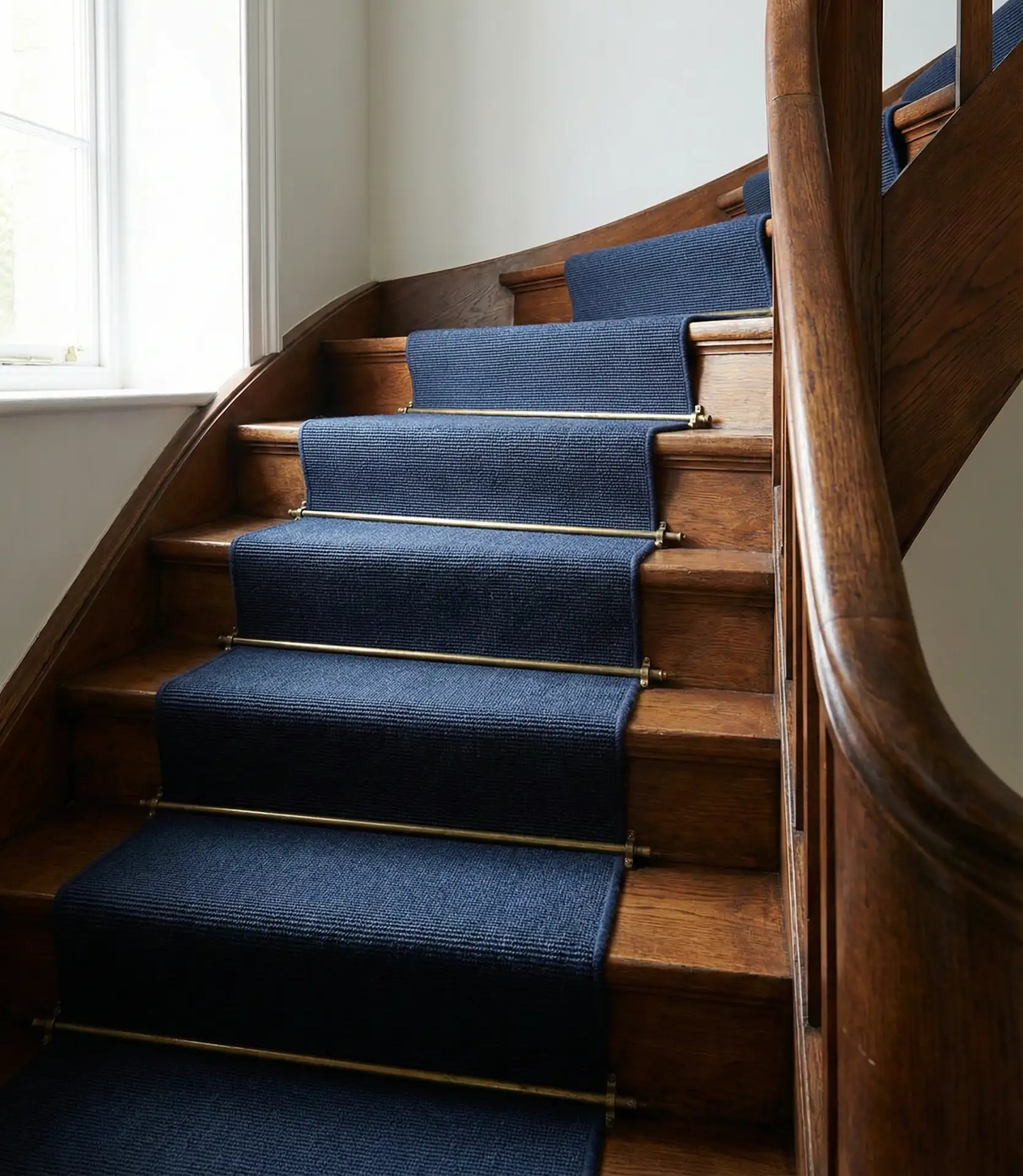
A carpeted runner down the center of your staircase delivers immediate warmth underfoot while protecting wood treads from daily wear. This traditional approach never truly goes out of style, and in 2026 we’re seeing a return to quality wool runners in muted stripes or subtle patterns. The exposed wood borders on either side maintain visual interest and make maintenance easier—you can remove and clean the runner without disturbing the entire staircase.
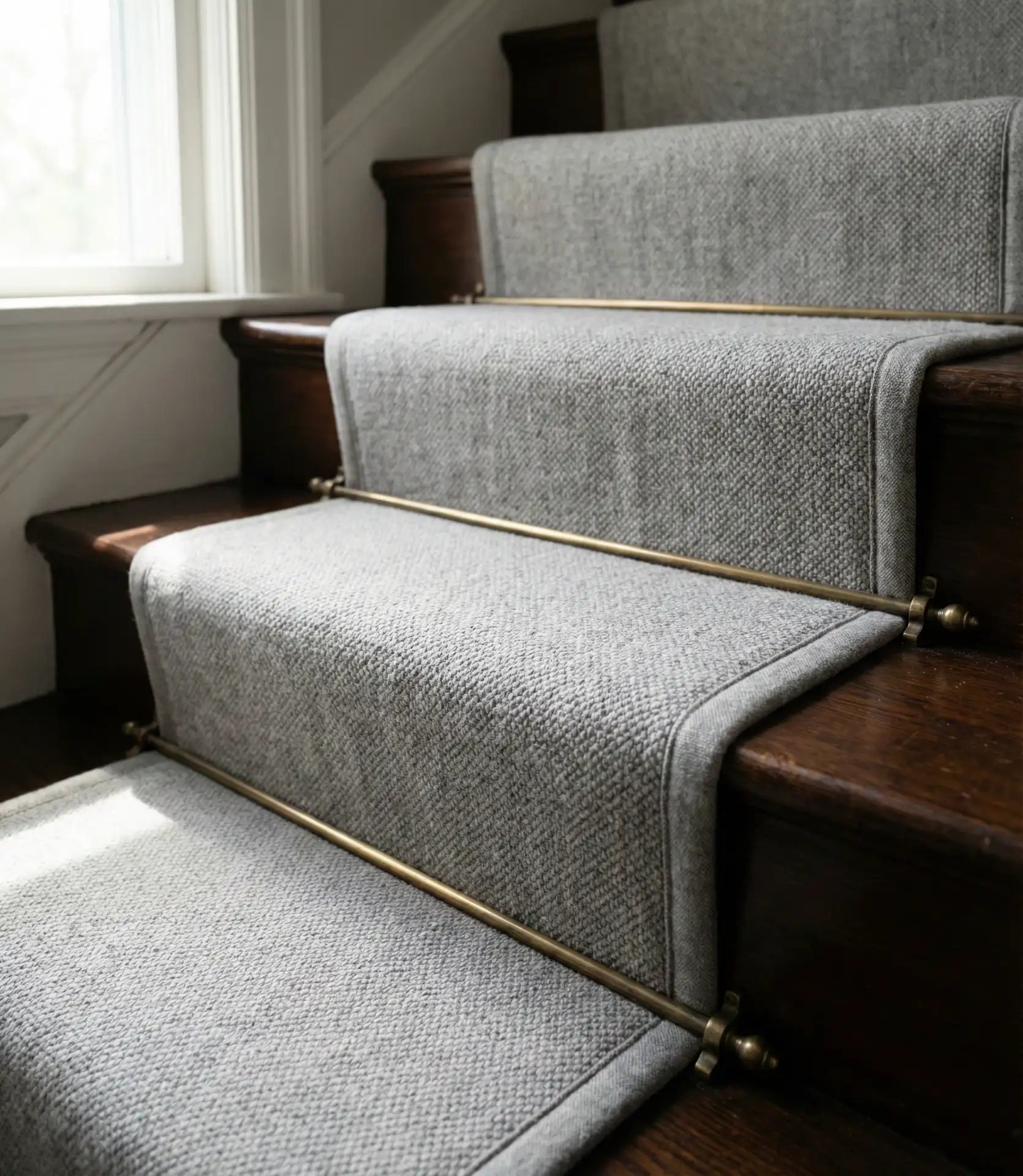
American lifestyle context: Families with young children or elderly relatives find carpeted stairs significantly safer than bare wood or stone. The cushioning reduces impact noise—critical in two-story homes where bedrooms sit above living spaces—and provides crucial traction. In regions like the Pacific Northwest, where indoor-outdoor living is common, a runner also traps dirt and moisture before it spreads throughout the house. Vacuuming takes just minutes with a handheld, and modern stain-resistant treatments mean even light colors stay looking fresh.
5. Victorian Staircase with Ornate Balusters
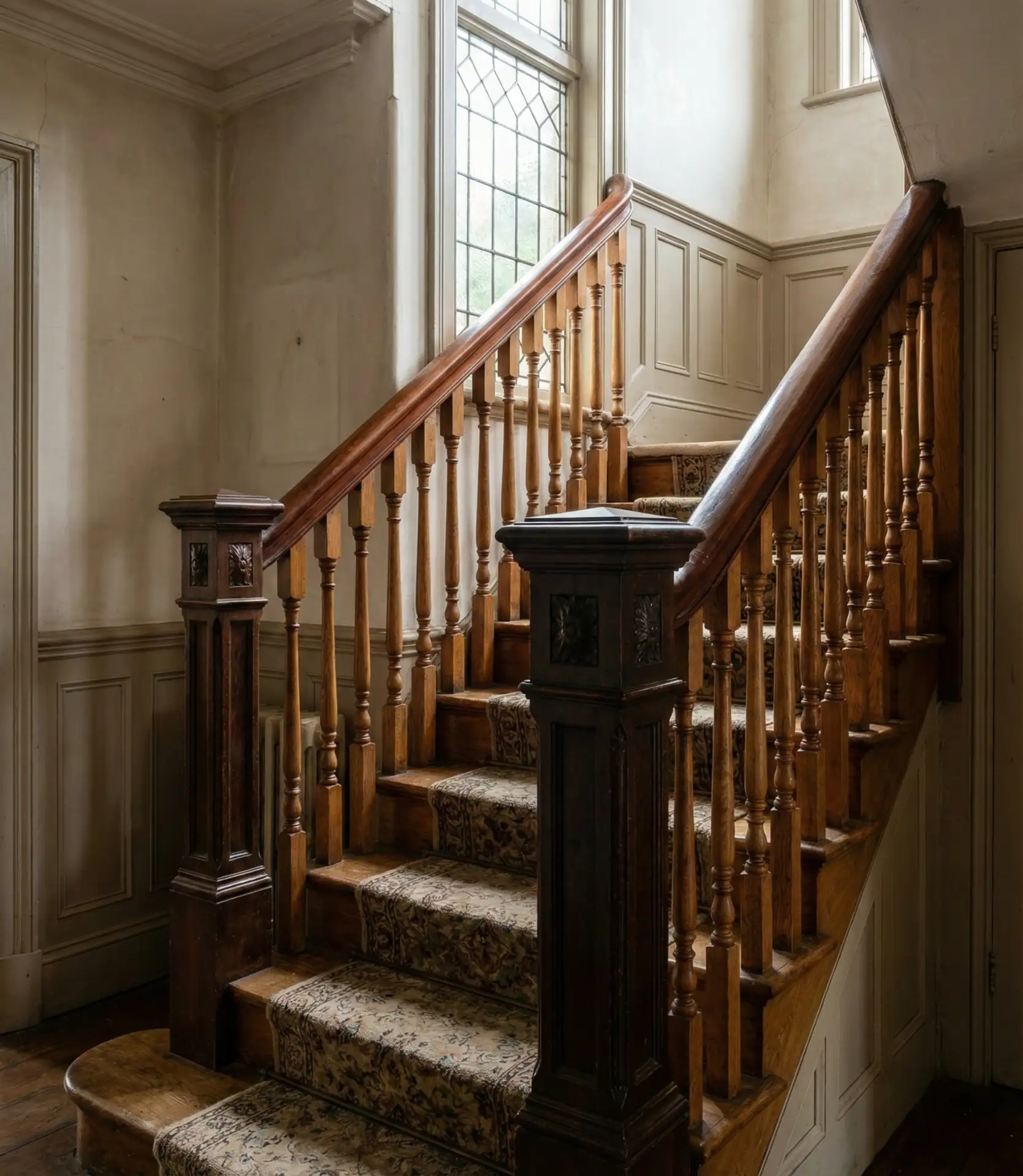
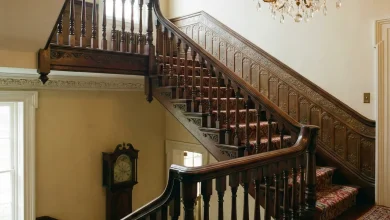
True Victorian homes feature staircases that command attention with turned balusters, carved newel posts, and rich wooden handrails. These architectural elements reflect the craftsmanship of the late 1800s and remain stunning focal points when properly restored. Dark stains like mahogany or walnut were period-appropriate, but many homeowners now lighten these pieces with careful stripping and natural finishes to brighten up traditionally dark entry halls.
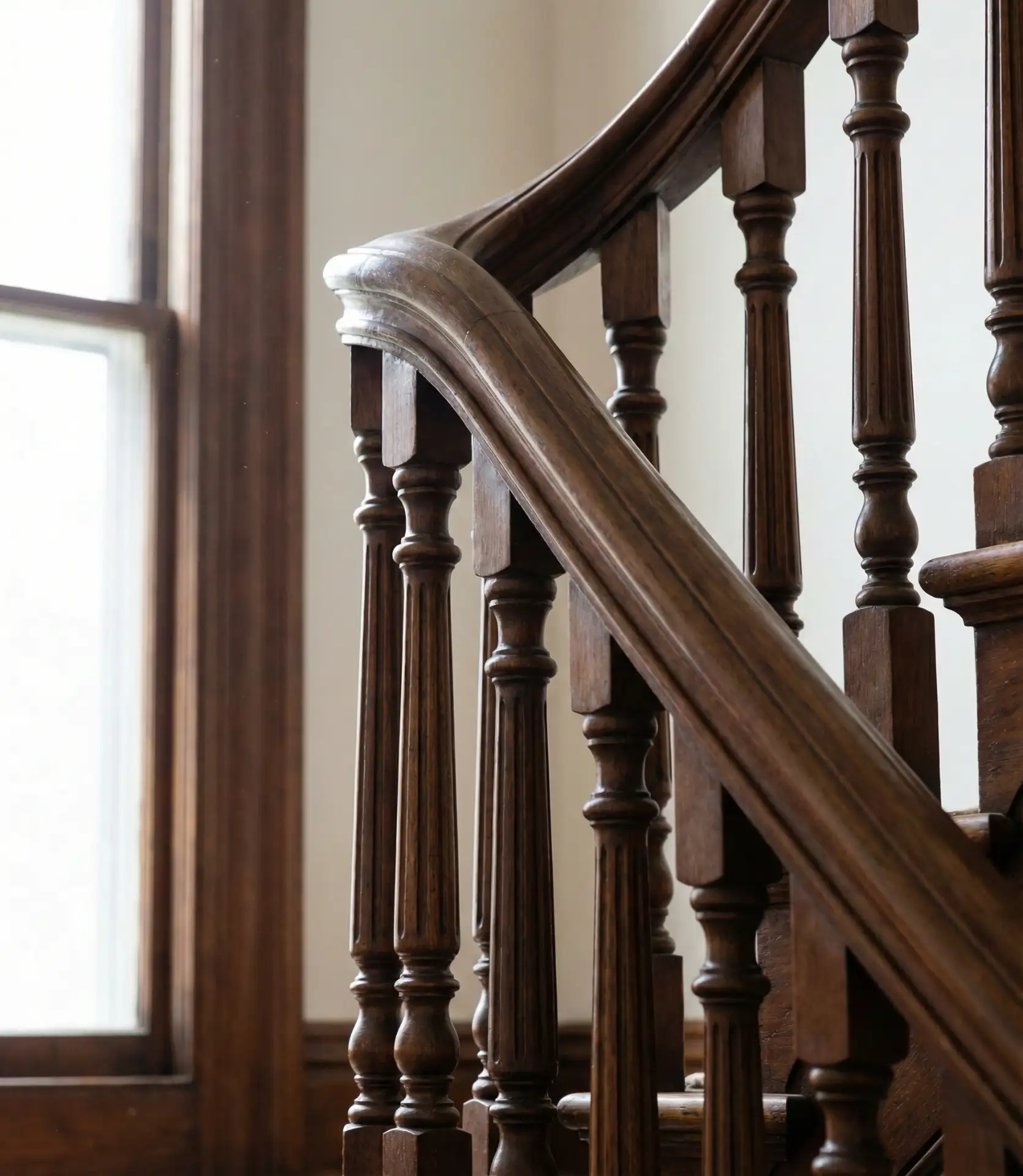
Common mistakes and how to avoid them: The biggest error with Victorian staircases is painting over original wood without testing what’s underneath. Many “painted” Victorians actually have gorgeous quarter-sawn oak or cherry hiding beneath layers of old paint. Before committing to a color, strip a small section in an inconspicuous area to see what you’re working with. If the wood is in good shape, restoration beats paint every time for both value and authenticity. Also resist the urge to replace ornate balusters with modern cable or glass—it destroys the architectural integrity that makes these homes special.
6. Unique Geometric Railing Design
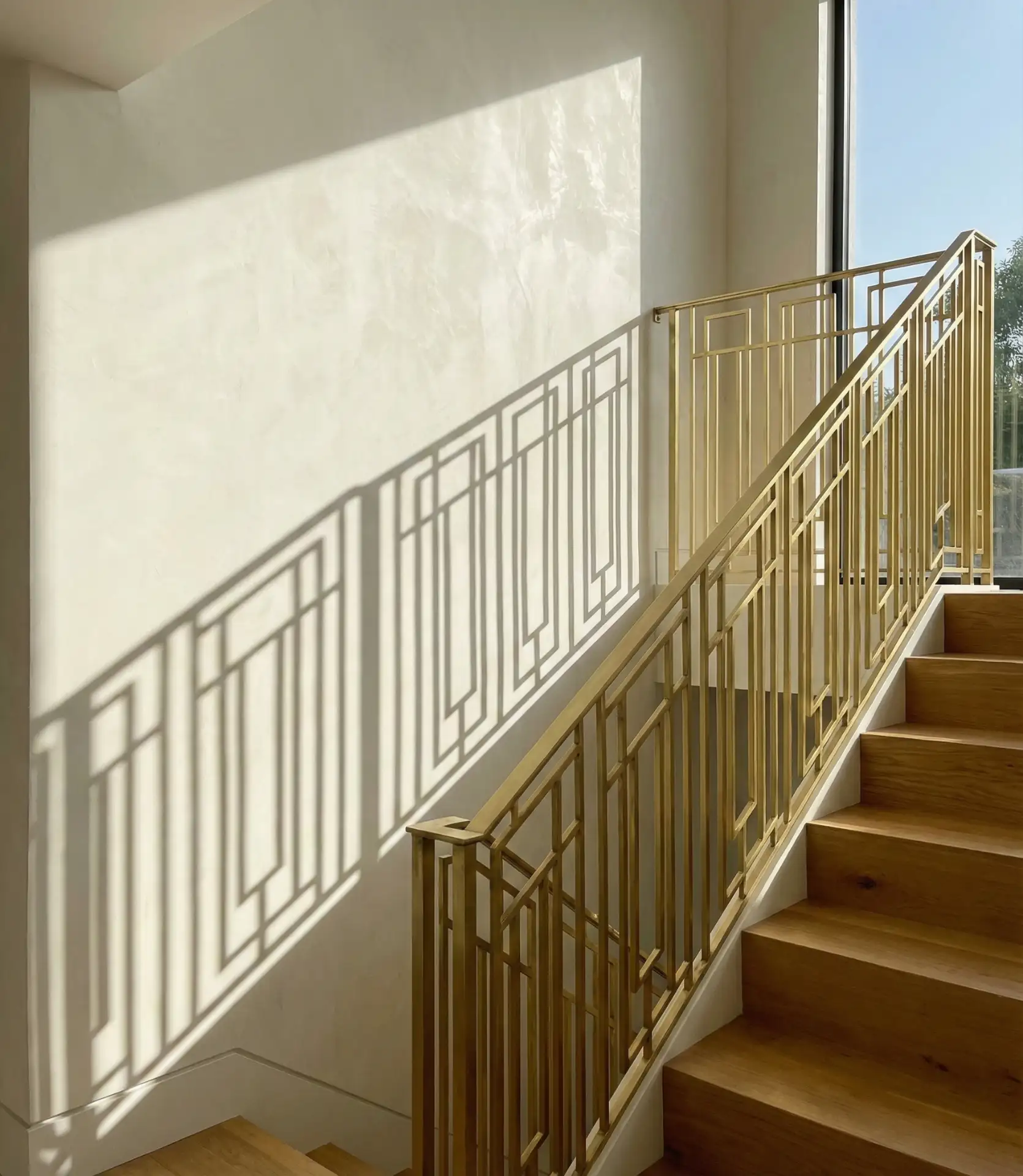
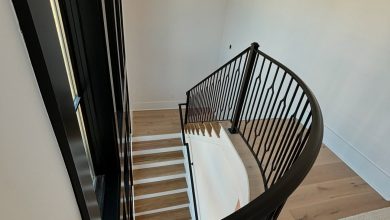
For homeowners craving a unique statement, geometric metal railings in matte black or brass offer sculptural impact. These custom designs feature angular patterns, hexagonal frames, or art deco-inspired lines that work beautifully in modern and transitional homes. The railing becomes functional art, drawing the eye upward and creating captivating shadow play when natural light hits the metalwork throughout the day.
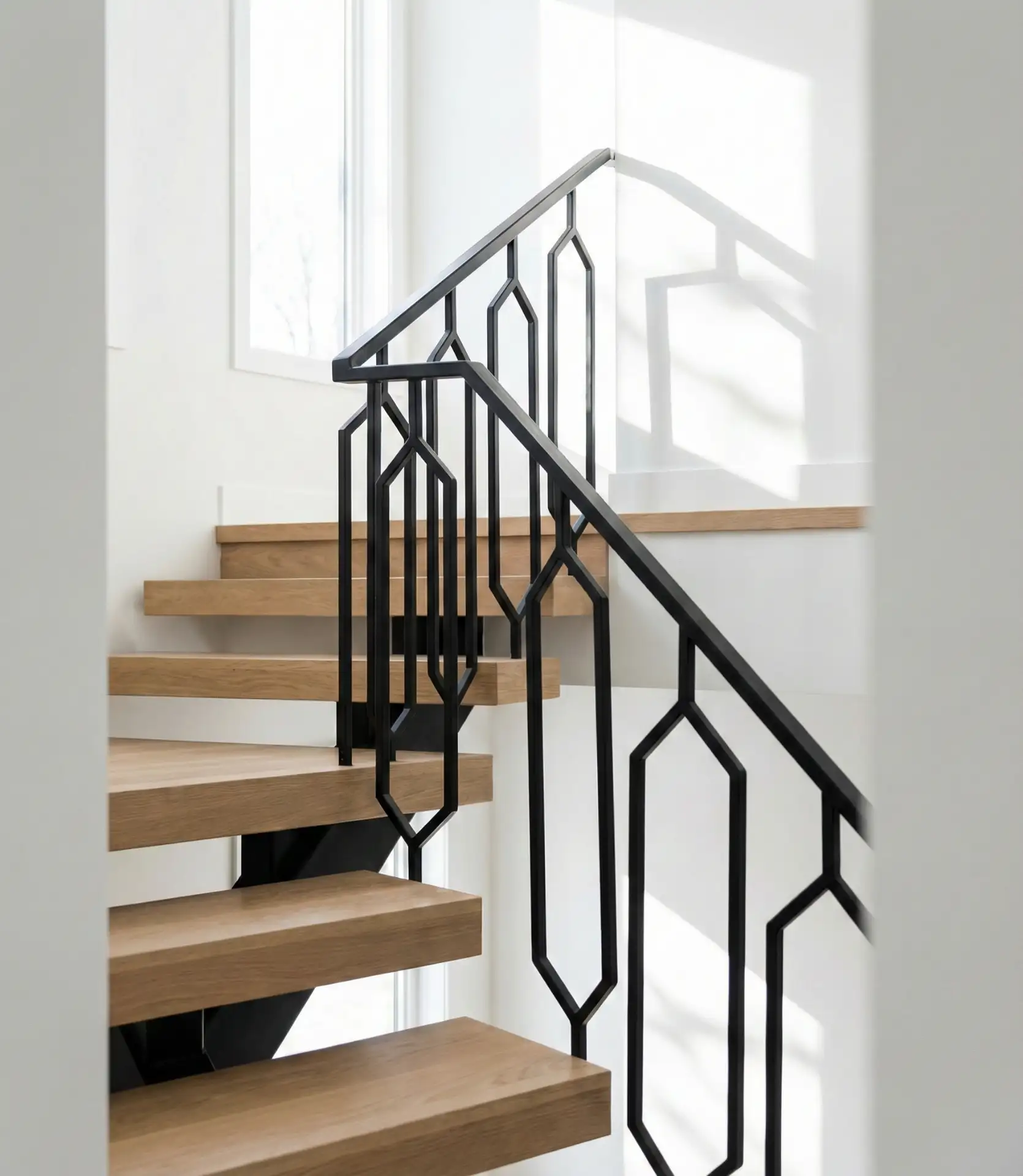
Practical insight: Custom metal railings typically require working with a local fabricator who can translate your Pinterest inspiration into code-compliant reality. Building codes dictate specific spacing between vertical elements (no more than 4 inches to prevent children from slipping through), handrail height (34-38 inches), and weight-bearing requirements. A skilled fabricator factors all this in while maintaining your design vision. Expect to invest between $3,000 and $8,000, depending on the complexity and length of the project, but the end result is truly unique and will become a focal point in your home.
7. Split-Level Entry with Open Risers
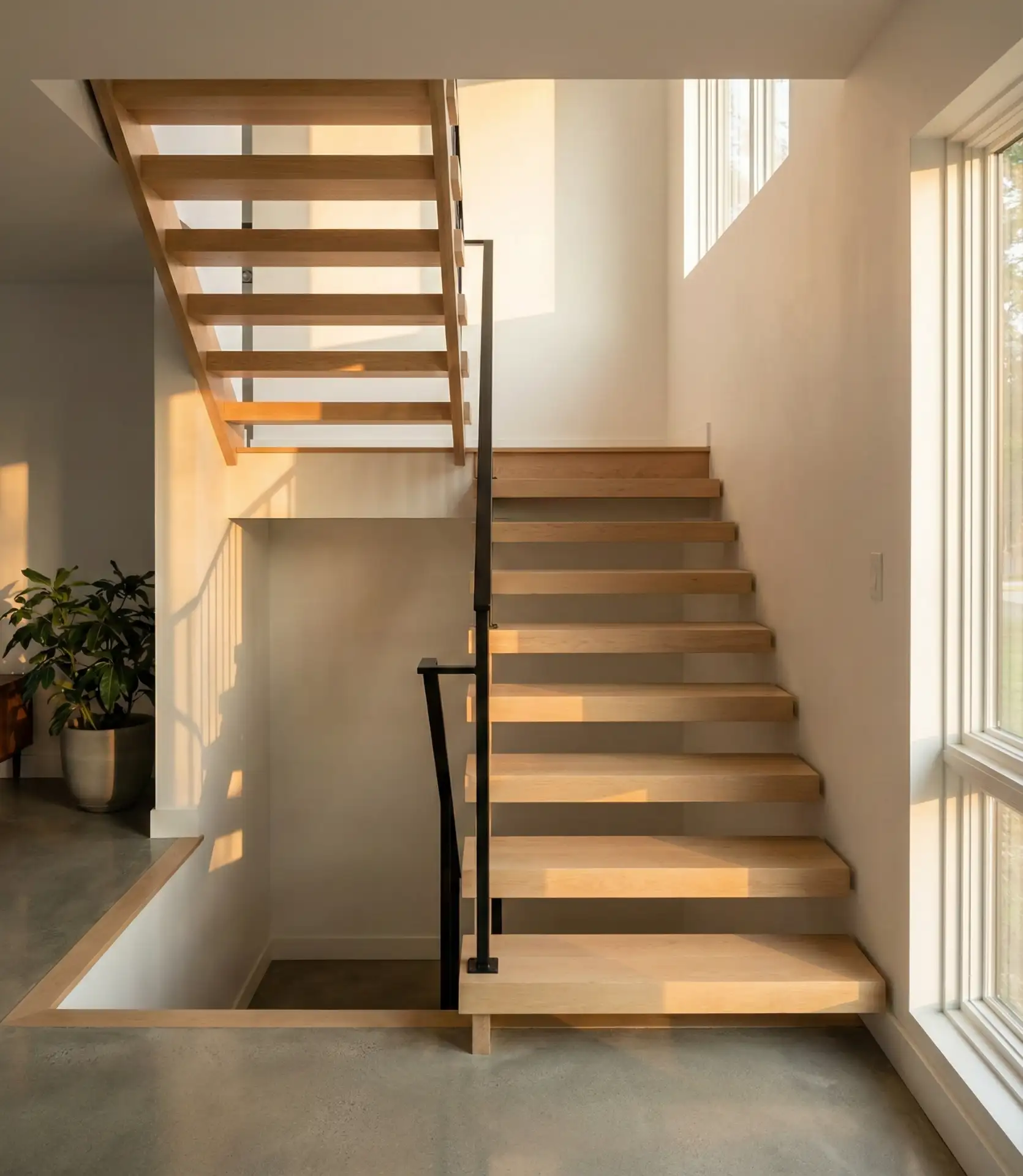
The classic split-level home gets a contemporary update with open risers that create visual flow between levels. Removing the solid backs of steps allows light to pass through, making the entry area feel more spacious and connected. This works particularly well when the staircase sits immediately inside the front door, a common layout in 1960s and 70s split-levels that are experiencing renewed popularity among younger buyers.
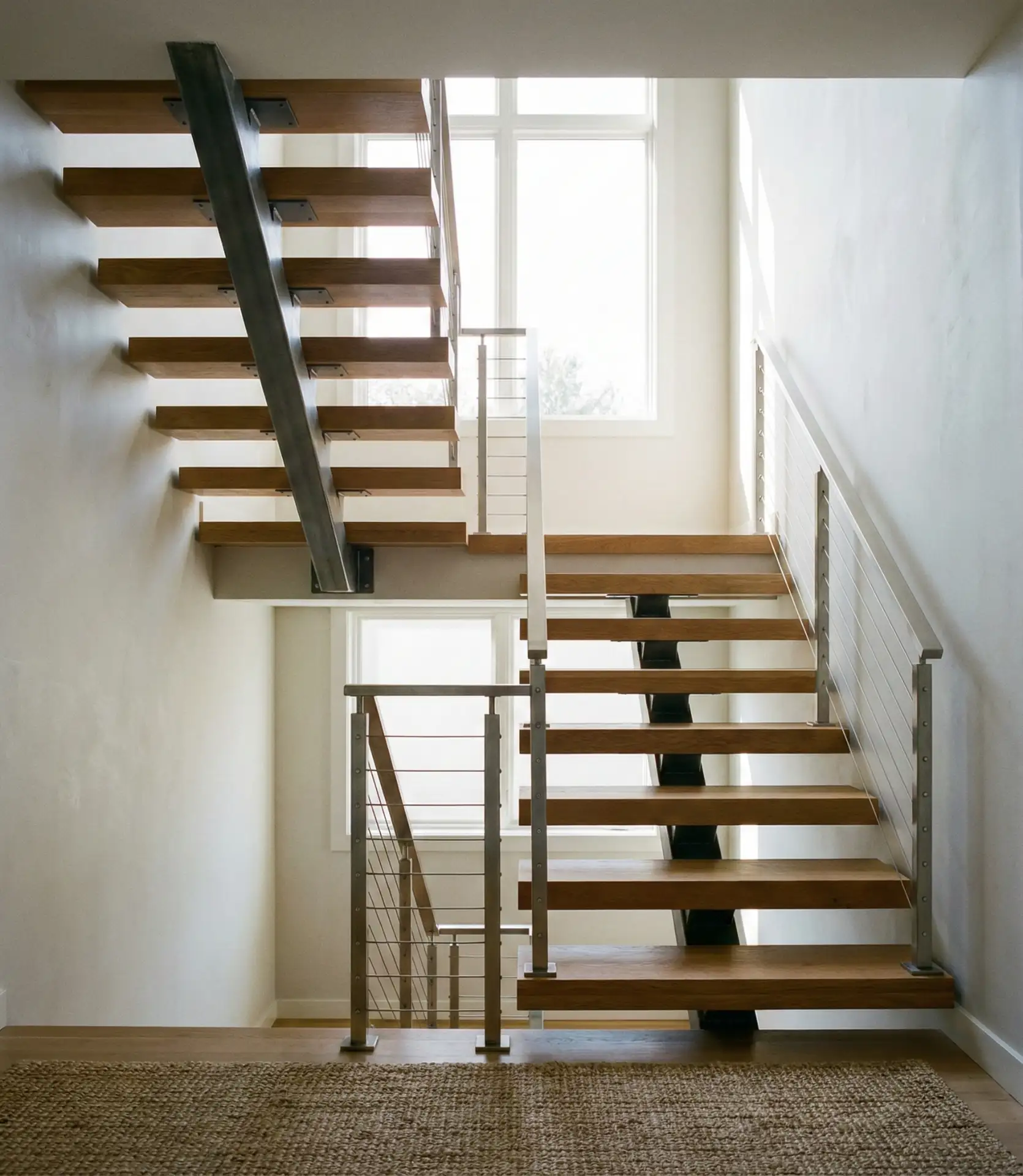
Regional context: Split-level homes are particularly common in suburban areas across the Mid-Atlantic and parts of California, where they offered affordable family housing in the postwar boom. Today’s renovations focus on opening up these compartmentalized floor plans, and updating the staircase is often the first step. Open risers immediately modernize the look, but they’re not ideal for households with small pets or toddlers who might try to climb through the gaps. Many homeowners compromise with a transparent acrylic panel behind the treads—you maintain the light-passing quality while adding safety.
8. Minecraft-Inspired Kid’s Play Staircase
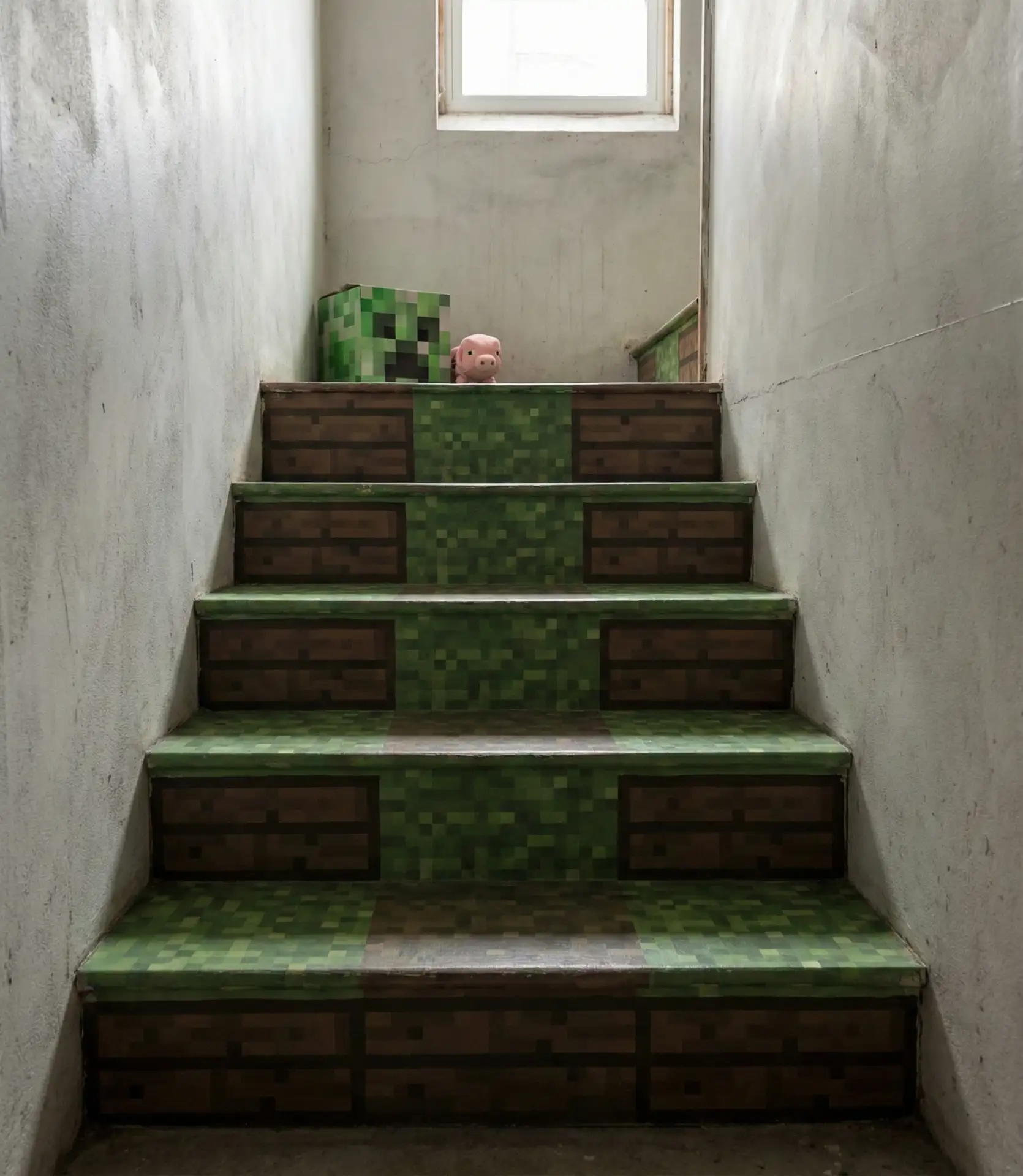 For families with gaming-obsessed kids, a Minecraft theme brings unexpected joy to a basement or loft staircase. Painting treads and risers in blocky patterns with earth tones—grass green, stone gray, and wood brown—creates a pixelated effect that’s instantly recognizable. This playful approach works best in casual spaces where the staircase leads to a rec room, game area, or kid’s bedroom, allowing you to keep main living areas more sophisticated.
Micro-anecdote: A family in Austin transformed their garage conversion staircase into a Minecraft masterpiece over a weekend, using careful painter’s tape to create the signature pixelated edges. Their kids now treat going upstairs like entering the game world, and the design cost less than $100 in paint and supplies—proof that personality doesn’t require a big budget.
9. Narrow Enclosed Staircase with Built-In Storage
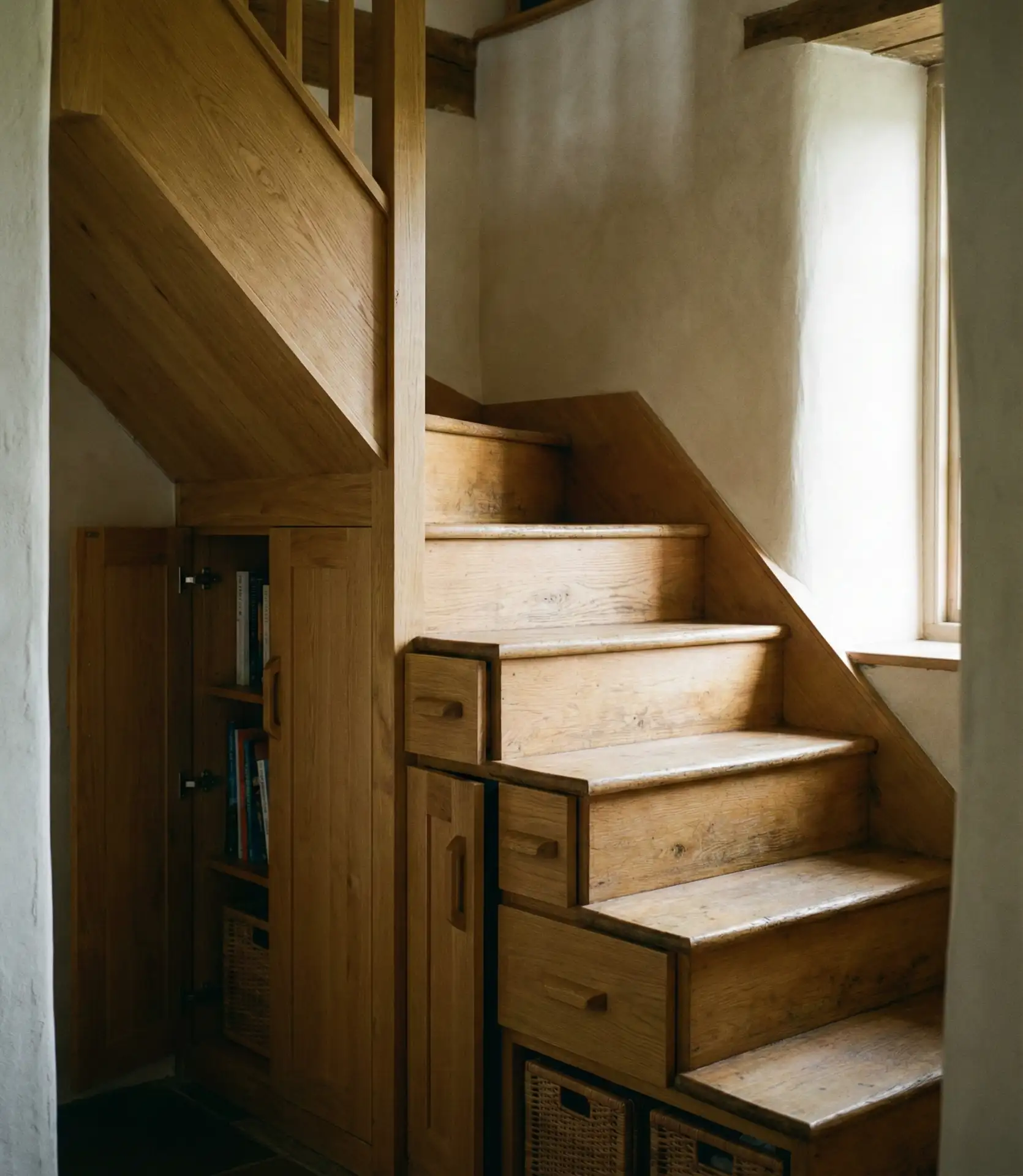
When you’re dealing with a narrow enclosed staircase in a small home, the space underneath becomes valuable real estate. Installing pull-out drawers, cubbies, or even a small coat closet maximizes every inch while keeping the stairway itself clear. This solution is particularly clever in rowhouses and older cottages where closet space is limited and the area under the stairs would otherwise go unused.
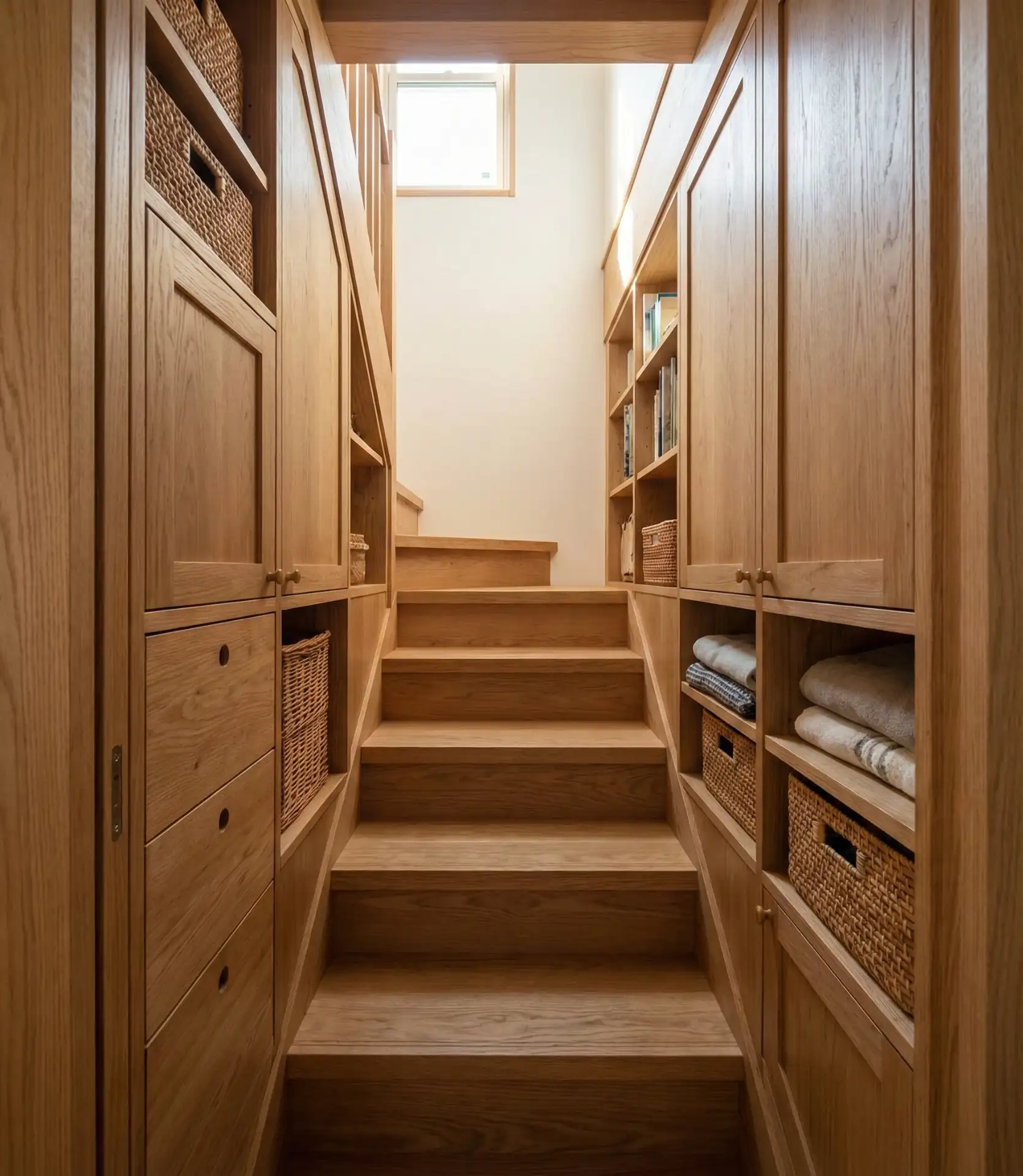
Expert-style commentary: Interior designers consistently recommend treating under-stair space as a design opportunity rather than an afterthought. The key is matching the storage solution to how your household actually functions—if you have kids, lower drawers for shoes and sports equipment make daily life smoother. For wine enthusiasts, a climate-controlled nook under the stairs beats a basement wine cellar for accessibility. The best implementations integrate seamlessly with surrounding trim work so the storage feels intentional rather than tacked on.
10. Dark Painted Staircase for Drama
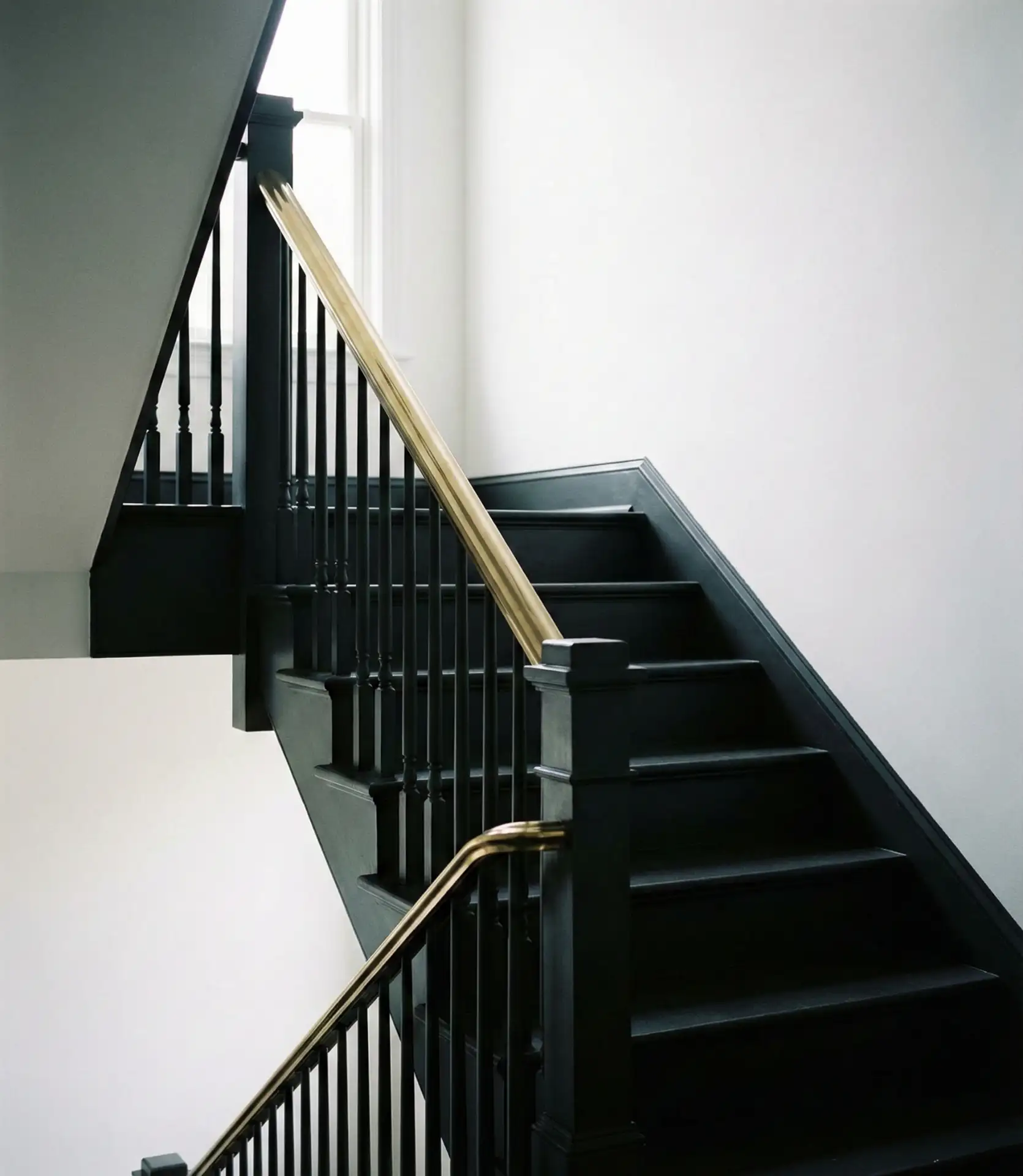
Painting your entire staircase in a dark color like charcoal, navy, or black creates instant sophistication and hides wear in high-traffic areas. This bold choice works surprisingly well in homes with ample natural light, where the darkness reads as intentional and moody rather than gloomy. Pairing dark stairs with white or cream walls provides essential contrast and prevents the space from feeling too heavy.
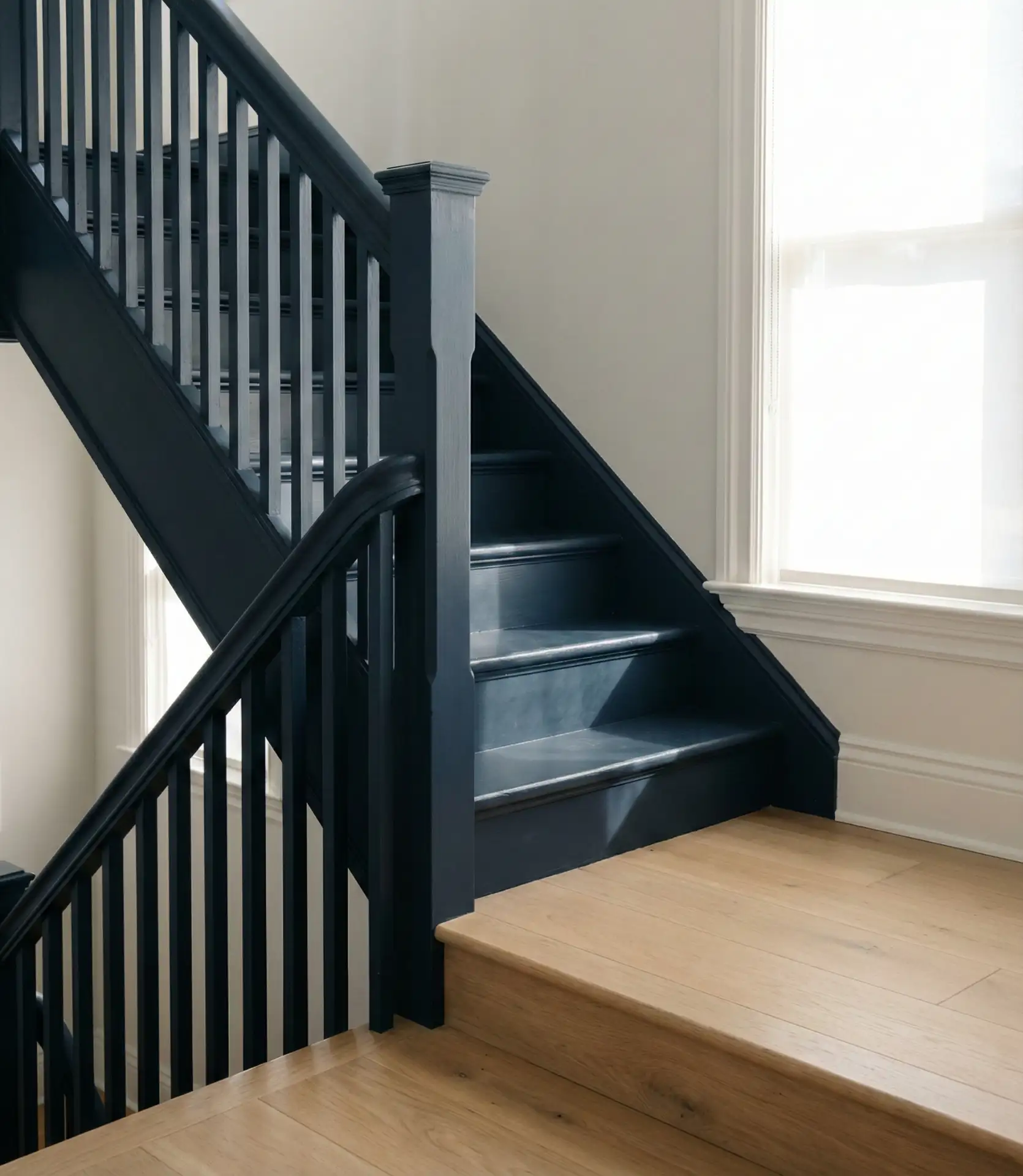
Real homeowner behavior: People who paint their stairs dark often become obsessed with finding the perfect shade that reads true to color in different lighting conditions. Testing samples directly on the risers rather than on poster boards is essential because horizontal and vertical surfaces reflect light differently. Most successful installations use a satin or eggshell finish rather than high-gloss—it’s easier to maintain and doesn’t show every scuff. Adding a clear polyurethane topcoat extends the life of your paint job, especially on treads that take the most abuse.
11. Cottage Charm with Painted Risers
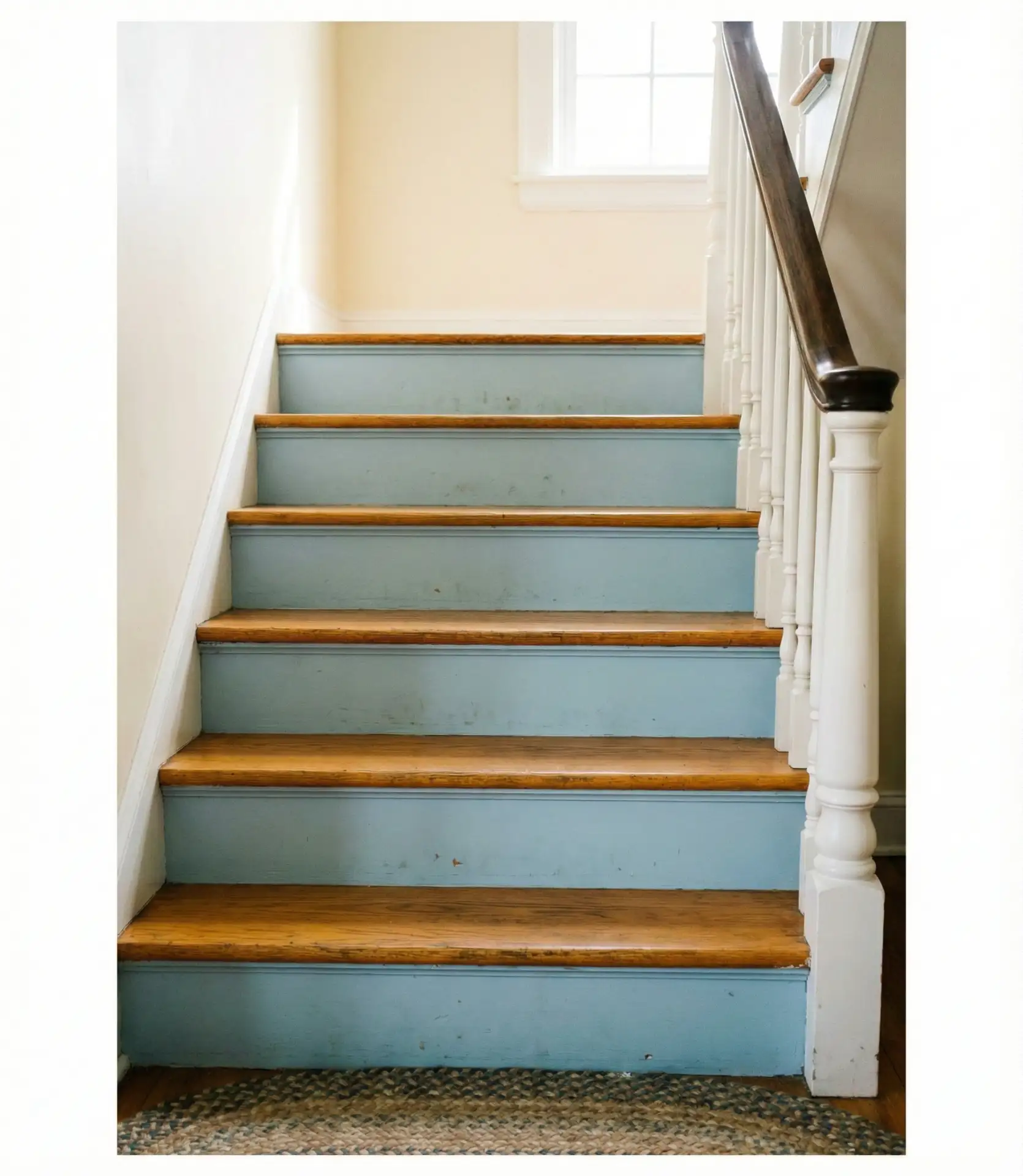
A cottage-style staircase balances rustic and refined by leaving wood treads natural while painting risers in soft white or pale blue. This two-tone treatment has farmhouse appeal without feeling too country, making it adaptable to both coastal cottages and inland retreats. The painted risers provide a clean backdrop that makes the wood grain on the treads pop, creating subtle visual interest on every step.
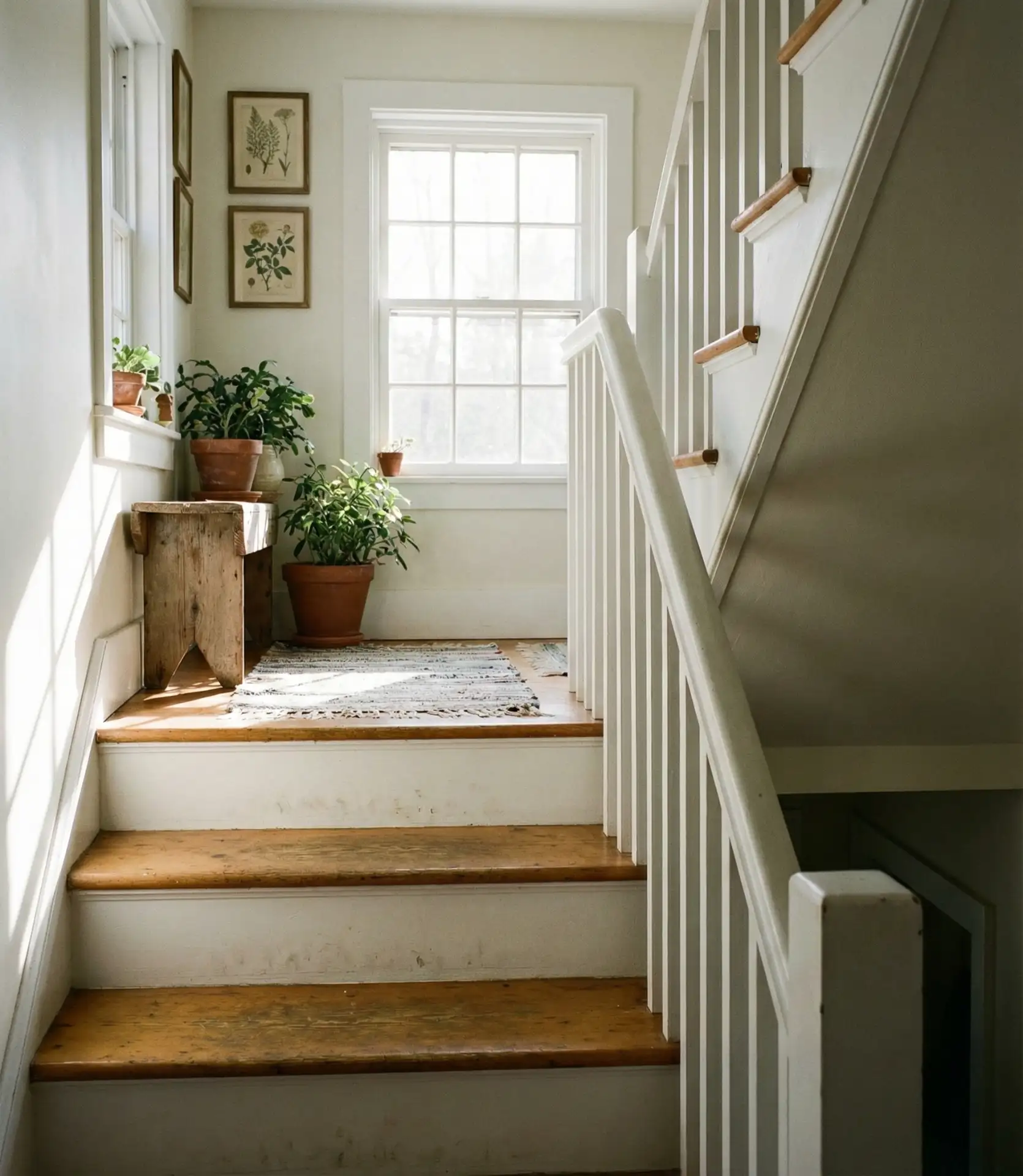
Where it works best: This look shines in beach communities along both coasts and in lake houses throughout the Midwest, where the casual elegance matches the laid-back lifestyle. It’s also budget-friendly—painting risers takes a fraction of the time and material compared to refinishing the entire staircase, and you can easily refresh the look every few years with a new coat of paint while leaving the wood treads untouched.
12. Grand Entry Staircase with Landing
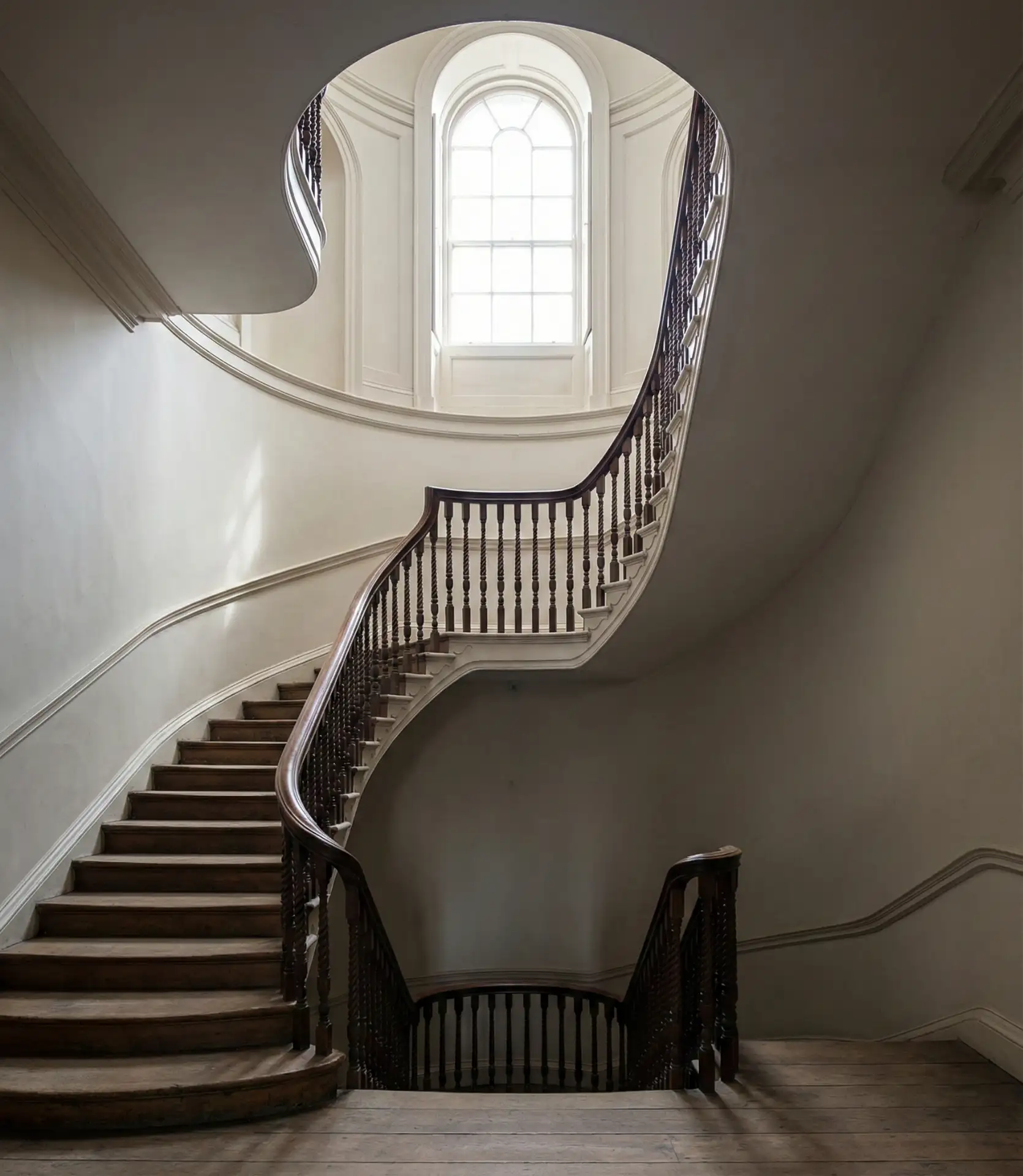
A sweeping entry staircase with a generous landing commands attention the moment you walk through the front door. This traditional layout appears in colonial, Mediterranean, and upscale suburban homes where the foyer doubles as entertainment space. The landing provides a natural spot for a statement piece—a console table, large mirror, or dramatic artwork—that anchors the vertical space and guides the eye upward.
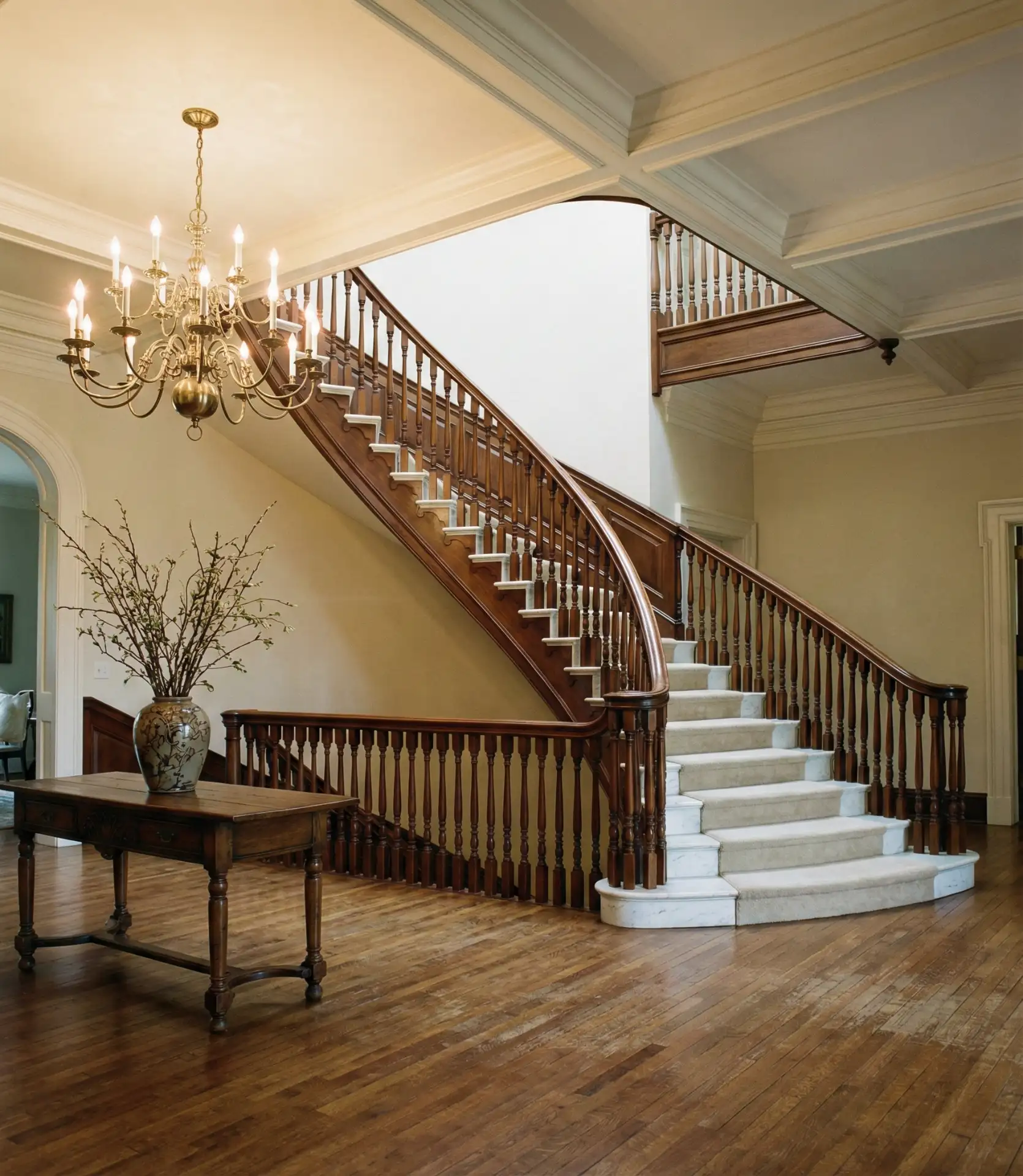
Budget angle: Although grand staircases typically feature in higher-end homes, their impact stems primarily from their proportions and effective lighting, rather than their expensive materials. Builder-grade homes with two-story foyers can achieve a luxe look by investing in quality lighting fixtures—a well-chosen chandelier or lantern runs $800–$2,000 but transforms the entire space. Adding picture frame molding to the walls alongside the stairs costs just a few hundred dollars in materials but delivers serious visual sophistication.
13. Underneath Storage Transformation
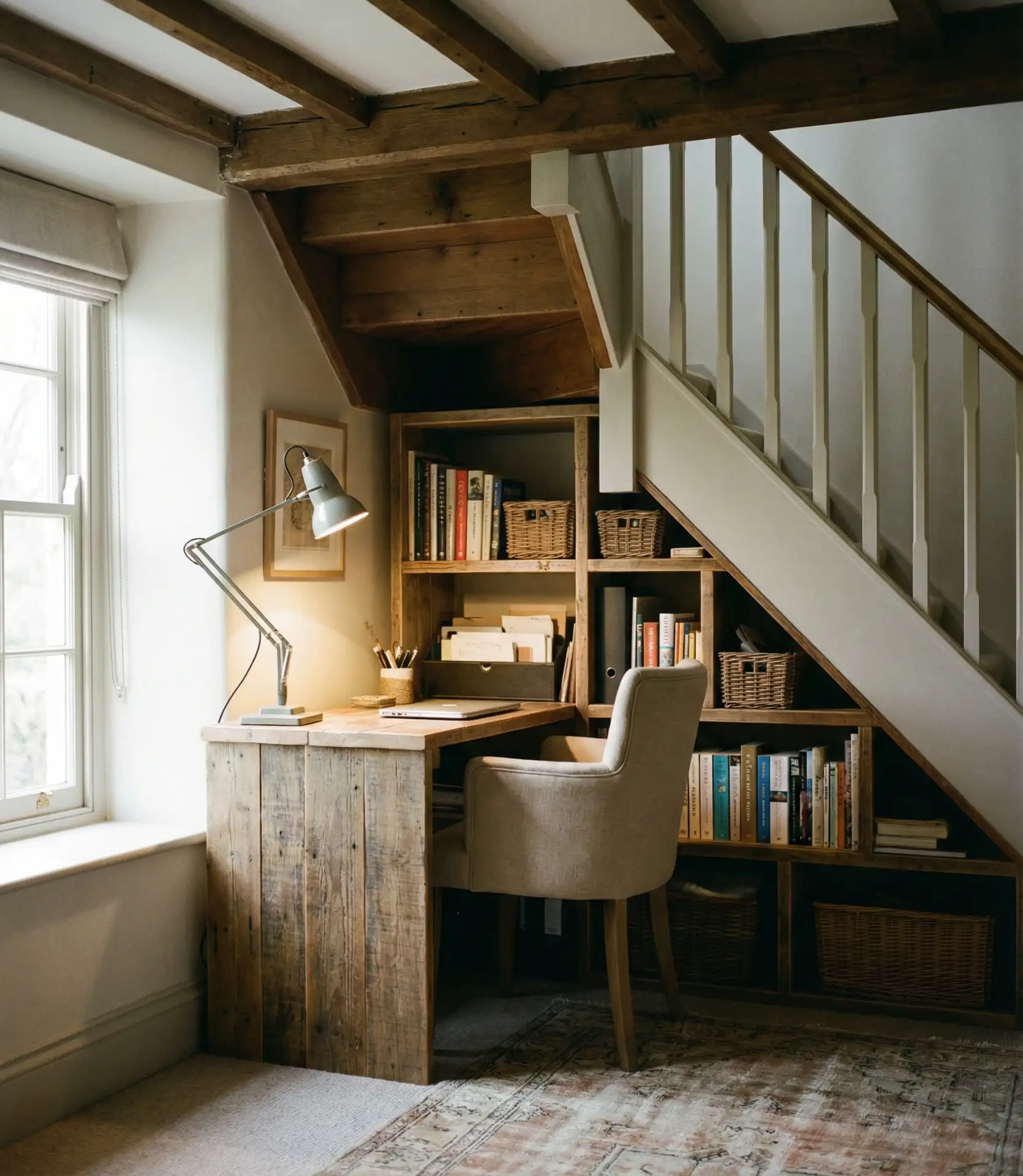
The space underneath your staircase offers surprising versatility beyond basic closets. Smart homeowners are creating mudroom nooks with hooks and bench seating, compact home offices with built-in desks, or even cozy reading corners with custom cushions and shelving. Treating this area as intentional square footage instead of dead space is crucial, particularly in homes where every room needs to function more efficiently.
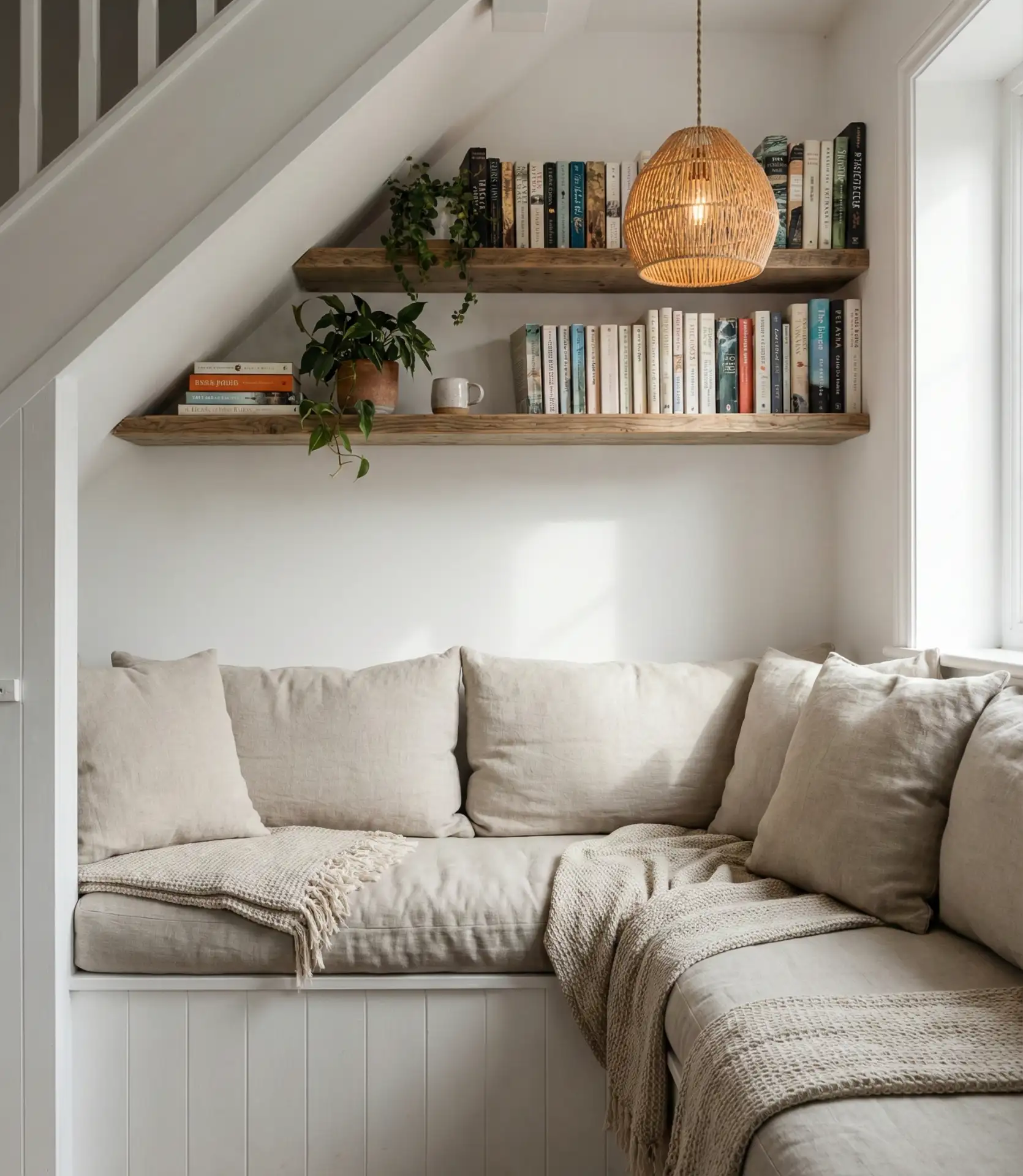
Practical insight: Building codes don’t typically govern under-stair spaces unless you’re adding electrical or plumbing, but headroom matters for comfort—you want at least 6 feet of clearance for a workspace or reading spot. Installing a door or curtain maintains the finished look while hiding any necessary storage chaos. The triangle shape of under-stair space actually lends itself to custom built-ins better than rectangular rooms because everything can be fitted precisely to the sloped ceiling.
14. Spiral Staircase Space-Saver
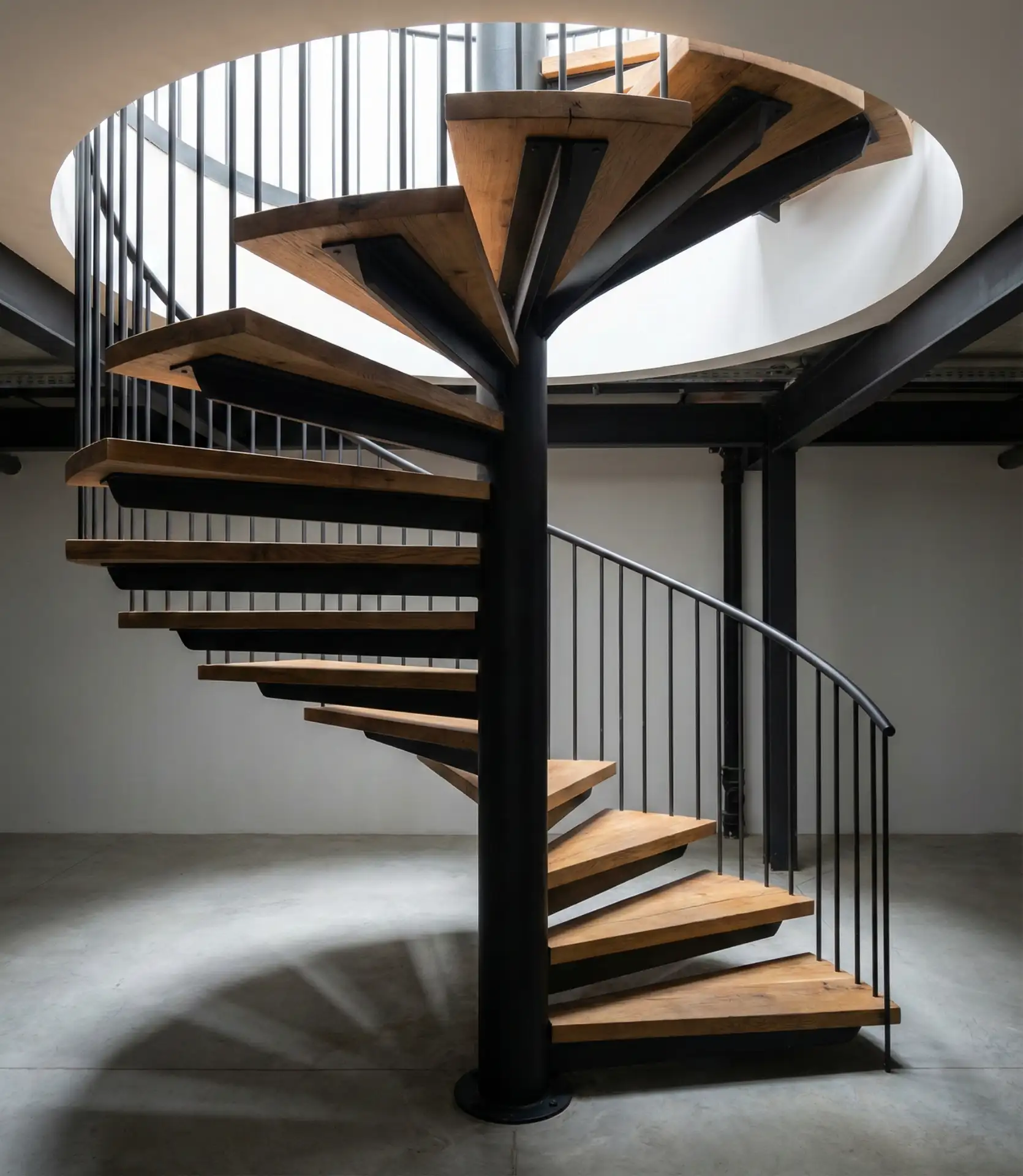
A spiral staircase solves the challenge of vertical circulation in tight spaces where a straight run wouldn’t fit. Modern versions in steel or wood bring sculptural beauty to lofts, tiny houses, and additions where every square foot counts. The circular form creates visual interest from every angle and works particularly well as a secondary staircase to a finished attic or basement studio.
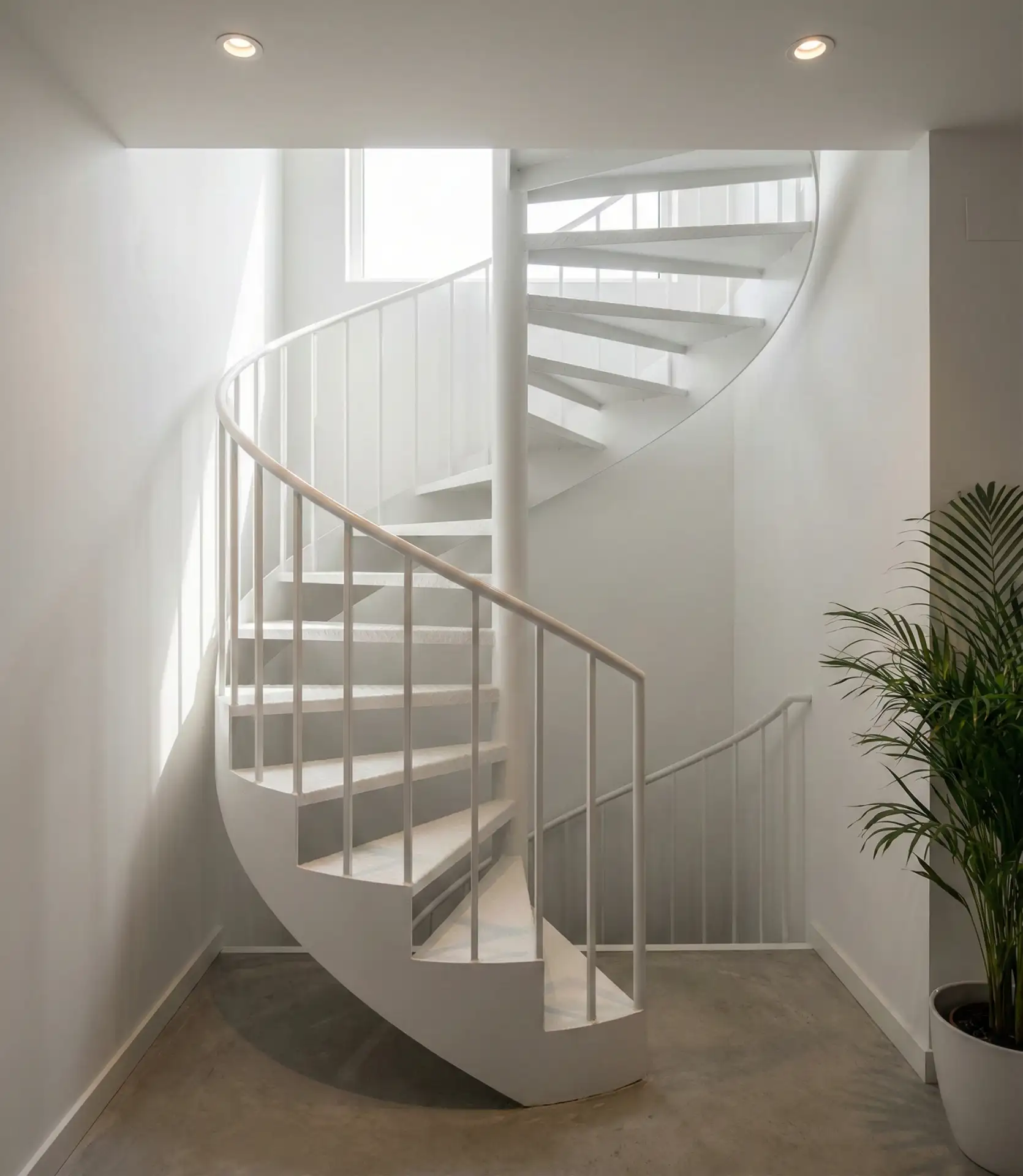
Common mistakes and how to avoid them: The biggest error with spiral staircases is underestimating how challenging they are for moving furniture or for people with mobility limitations. They’re fantastic for homeowners without accessibility concerns, but if you have elderly family visiting or anticipate aging in place, a traditional staircase with a full landing is safer. Also check local building codes—some jurisdictions restrict spiral staircases as primary egress routes and require a minimum diameter (usually 5 feet) for residential use.
15. Floating Wood Treads for Airiness
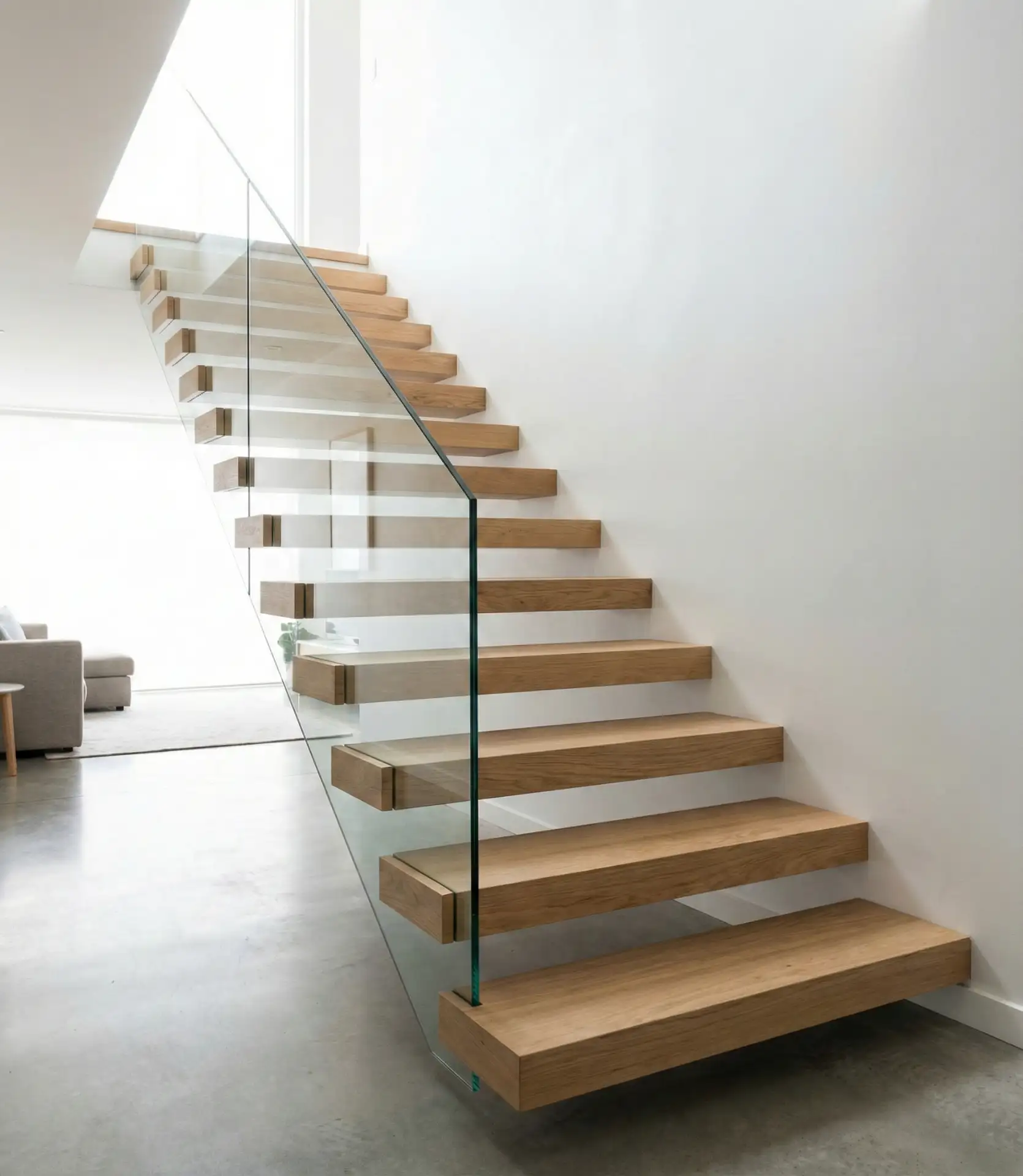
Floating treads attached to a steel spine or wall-mounted on hidden brackets define modern staircase design. This minimalist approach eliminates visual bulk, making it perfect for homes with open floor plans where the staircase sits in full view of living areas. Modern wood in light oak or walnut provides warmth against the industrial metal supports, balancing sleek and natural elements beautifully.
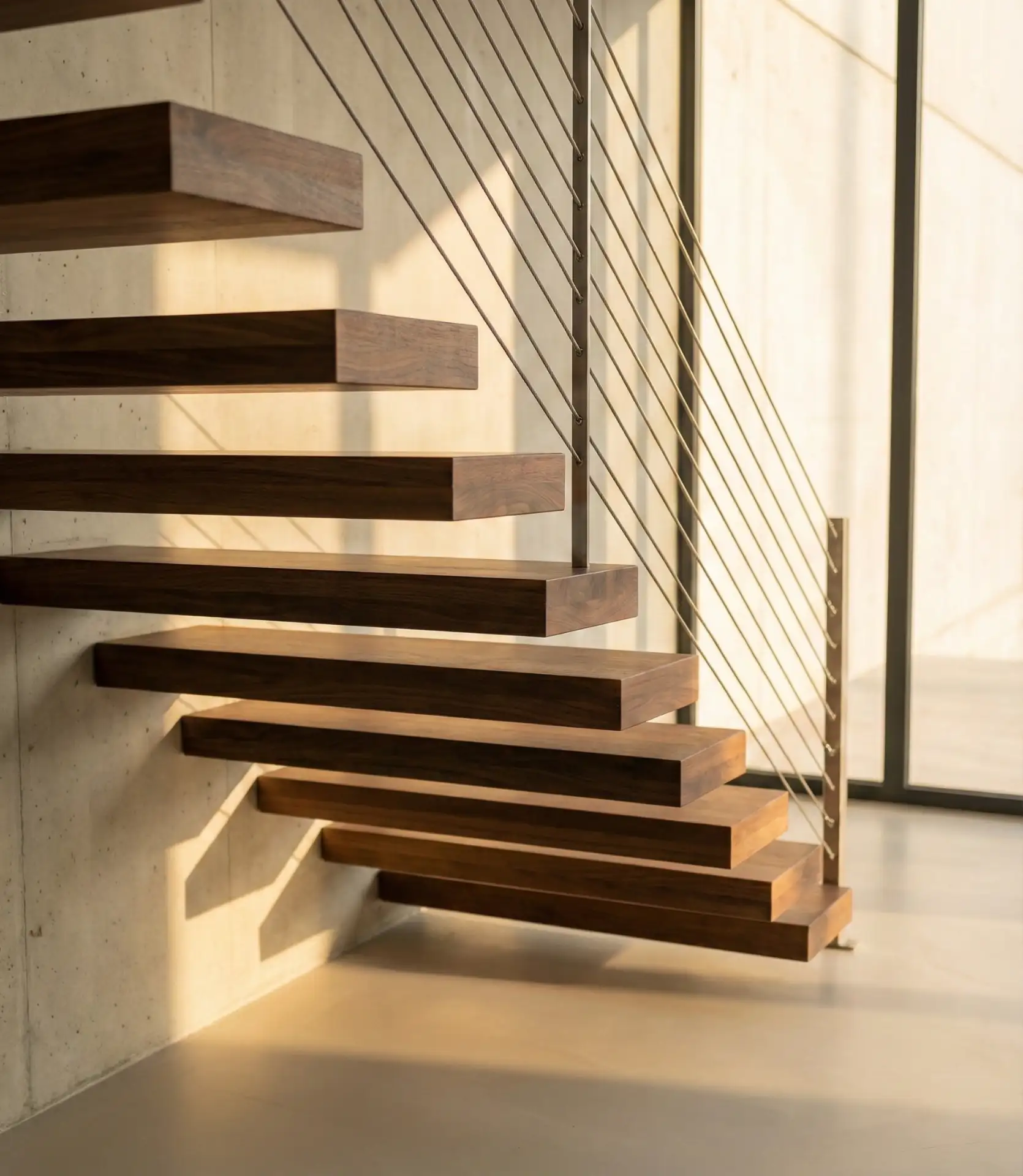
Regional context: Floating staircases are particularly popular in mountain homes across Colorado and the Pacific Northwest, where floor-to-ceiling windows and dramatic views make visual lightness essential. The open design doesn’t block sightlines to the landscape outside. They’re also a favorite in urban lofts and modern new builds where architectural drama is part of the home’s identity. Installation requires expertise—treads must be engineered to support weight without visible support beneath, typically using steel plates embedded in the wall structure.
16. Curved Elegance for Formal Homes
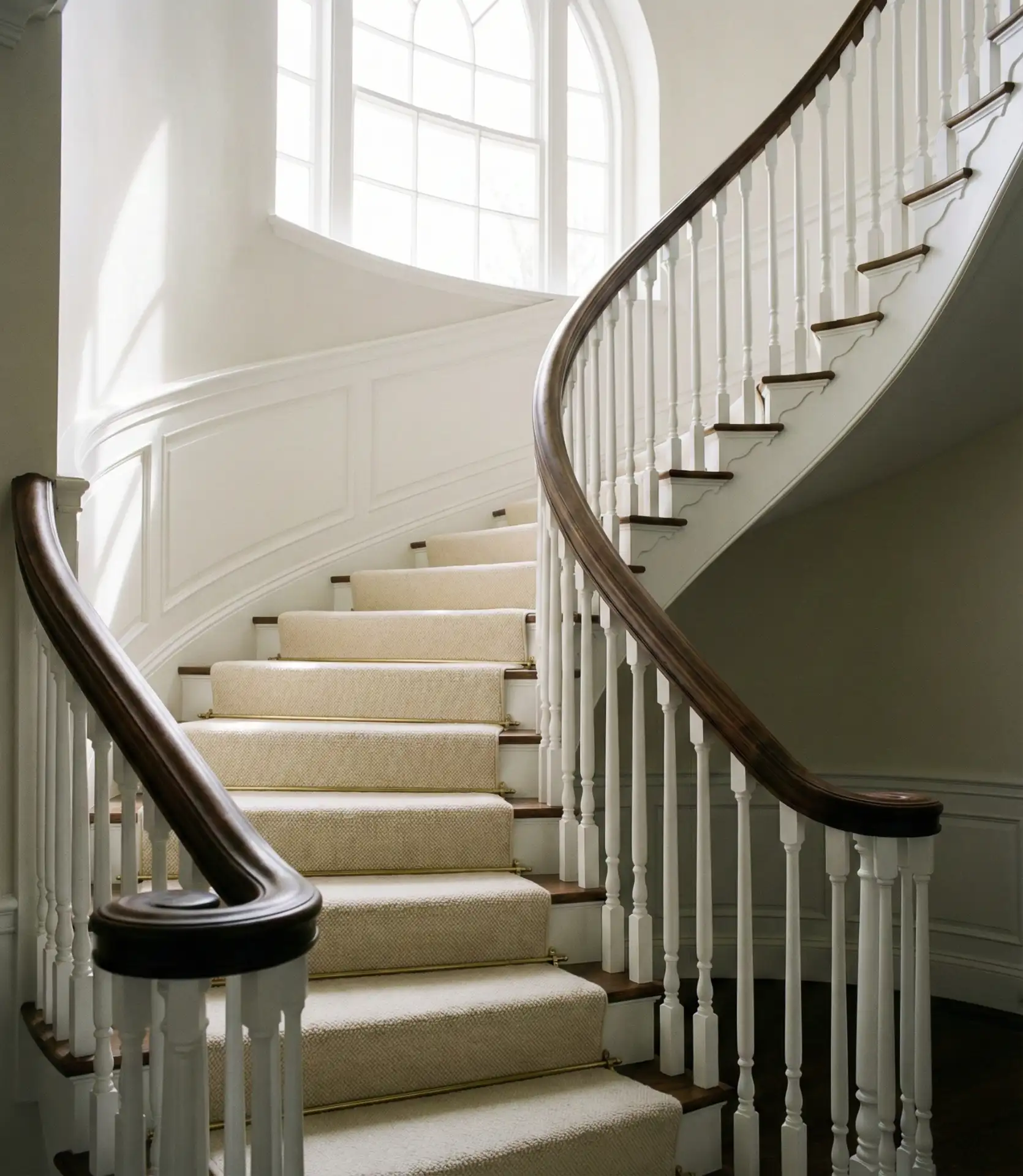
A curved staircase flowing gracefully from one floor to the next represents the pinnacle of traditional elegance. Unlike sharp switchbacks, the gentle arc creates a sense of movement and refinement found in historic estates and upscale custom homes. The continuous handrail following the curve requires skilled carpentry, and the result is a staircase that photographs beautifully from every angle—no wonder these are Pinterest favorites.
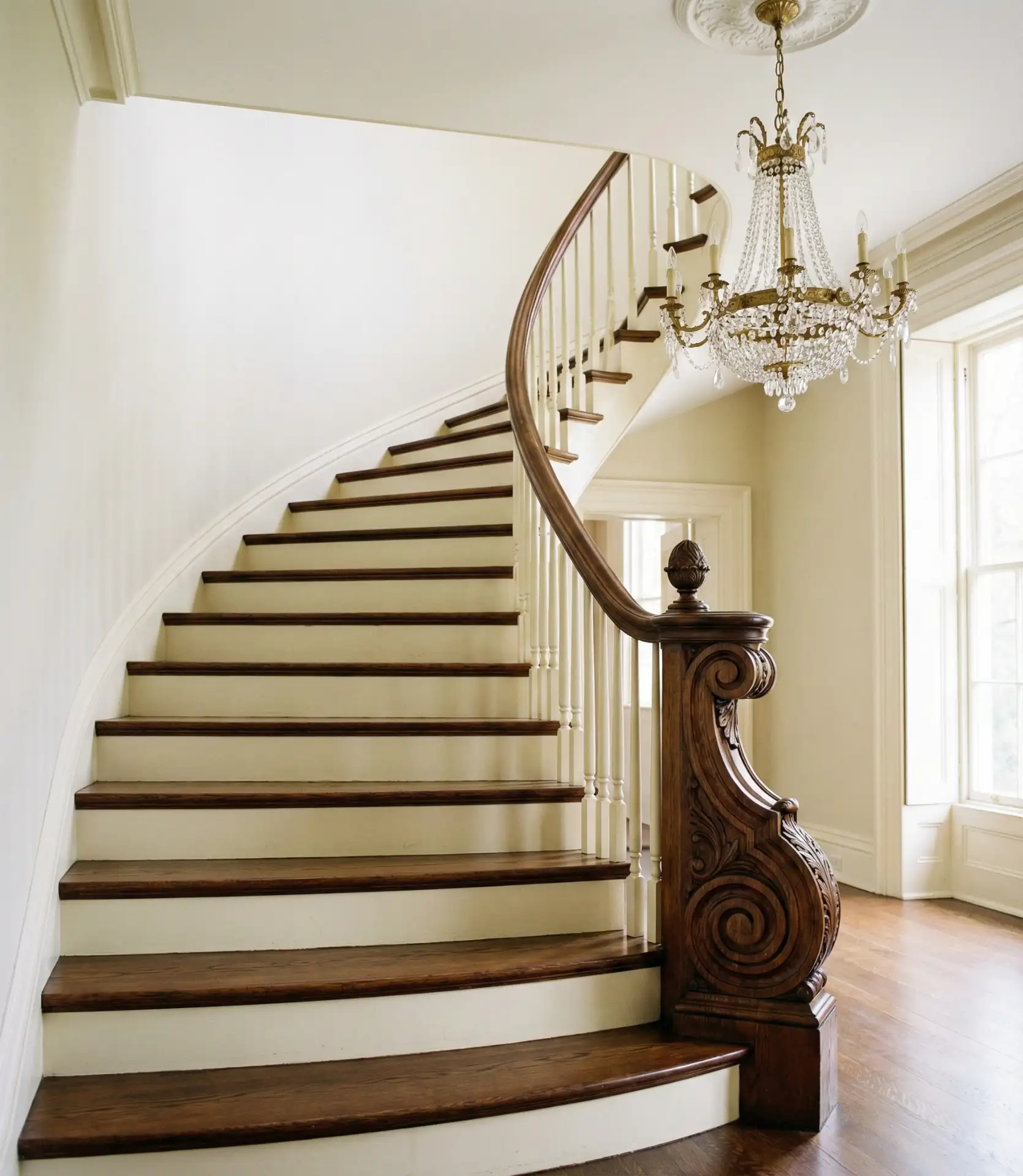
Expert-style commentary: Architects note that curved staircases require more floor space than straight runs or even L-shaped configurations, typically adding 15-20% to the overall footprint. However, they create a sense of arrival that straight stairs simply can’t match, which is why they remain the standard in luxury home design. The curve also provides a psychological transition—ascending or descending feels more ceremonial, making the staircase itself a destination rather than just a connector between floors.
17. Glass Panel Railing for Light Flow
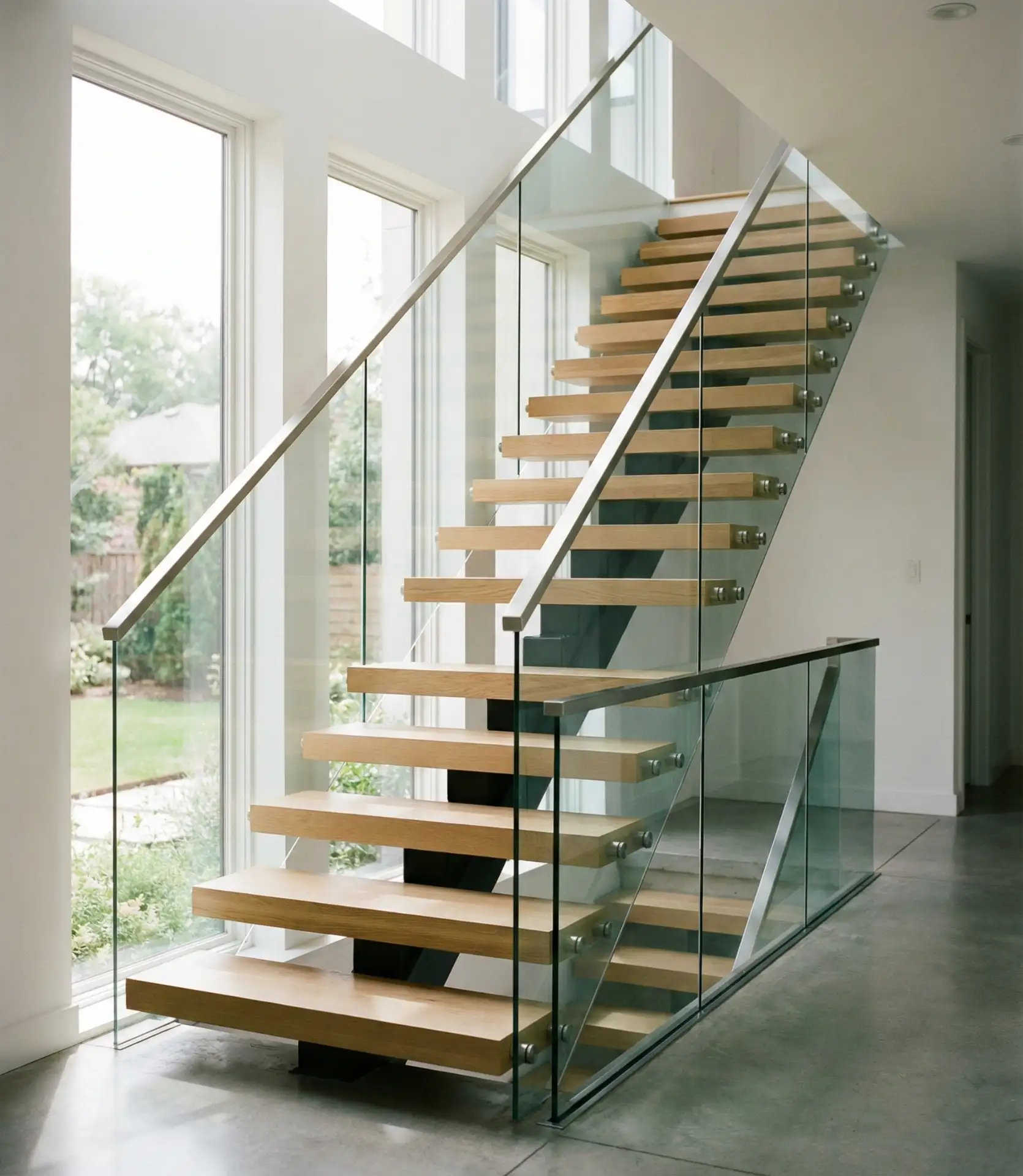
Glass railings maintain safety without blocking sightlines or natural light, making them ideal for modern homes with open concepts. Thick tempered glass panels fit into sleek metal channels, creating a transparent barrier that’s surprisingly sturdy while keeping the focus on your beautiful wood or stone treads. This approach works especially well when the staircase sits near windows—you preserve every bit of daylight flow through the space.
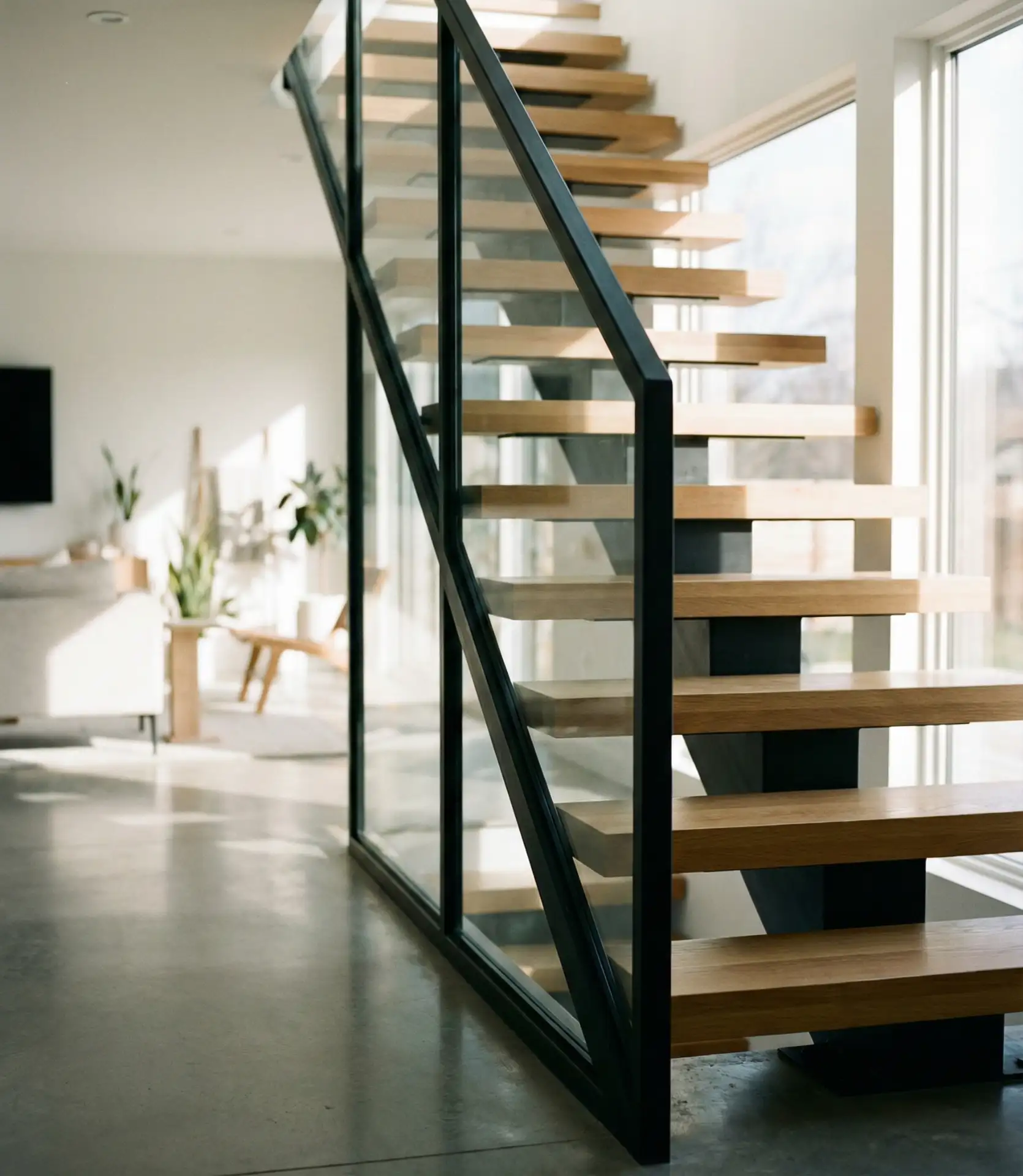
Maintenance reality: Glass railings require regular cleaning to maintain their crystal-clear appearance—expect to wipe down panels weekly in homes with kids or pets. The good news is that modern glass coatings resist fingerprints and water spots better than earlier versions, and a quick spray with glass cleaner keeps them looking pristine. For safety, building codes require tempered or laminated glass that won’t shatter into sharp pieces if impacted, so while it looks delicate, it’s actually incredibly durable.
18. Wood Staircase with Natural Finish
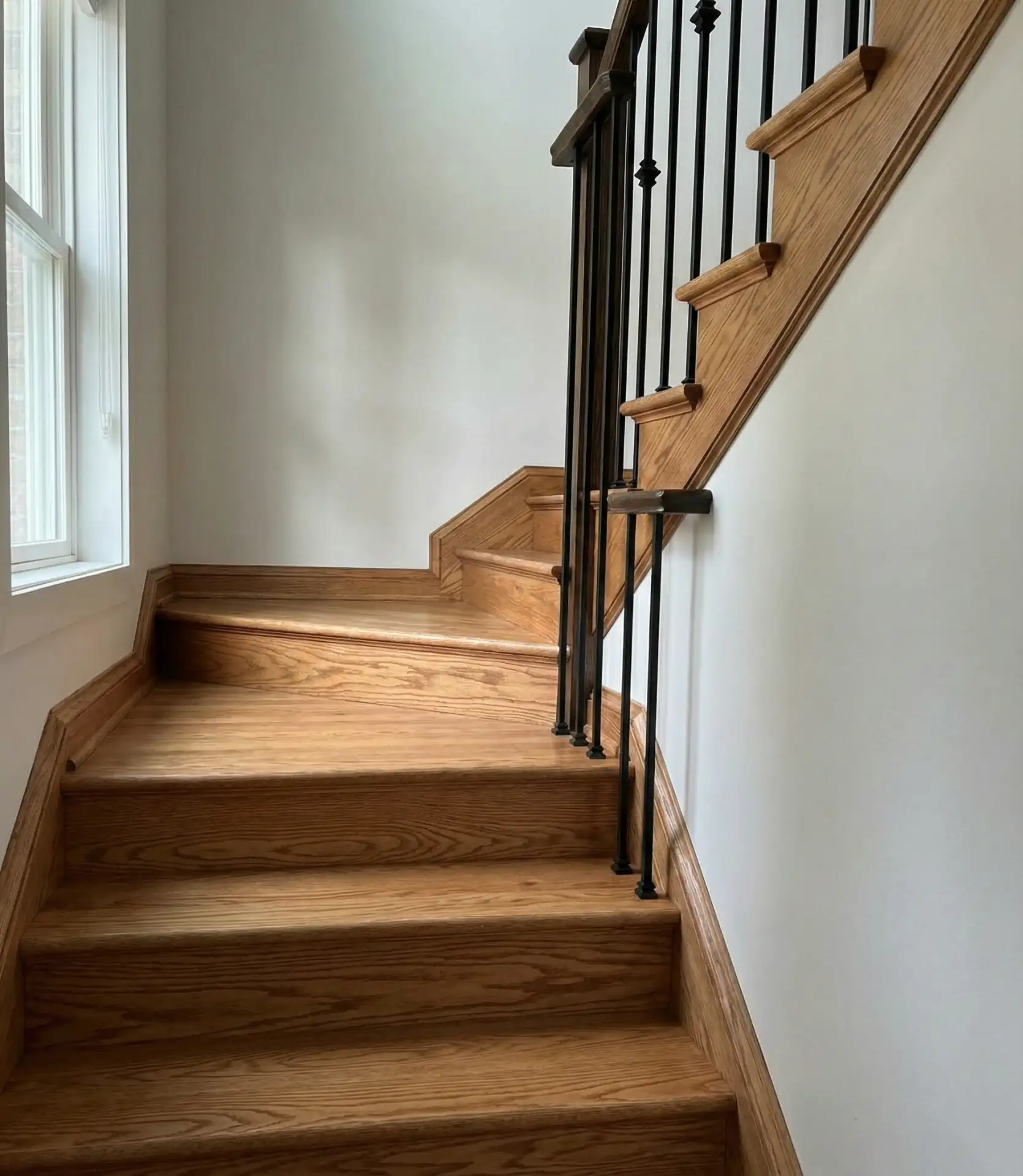
An all-wood staircase with a clear natural finish showcases the beauty of materials like red oak, white oak, or maple without competing colors or heavy stains. This modern wood approach highlights the grain patterns and allows the material to shine, typically paired with simple metal balusters or cable rails to prevent an overly uniform appearance. The natural finish works across styles from farmhouse to contemporary, proving that honest materials never go out of fashion.
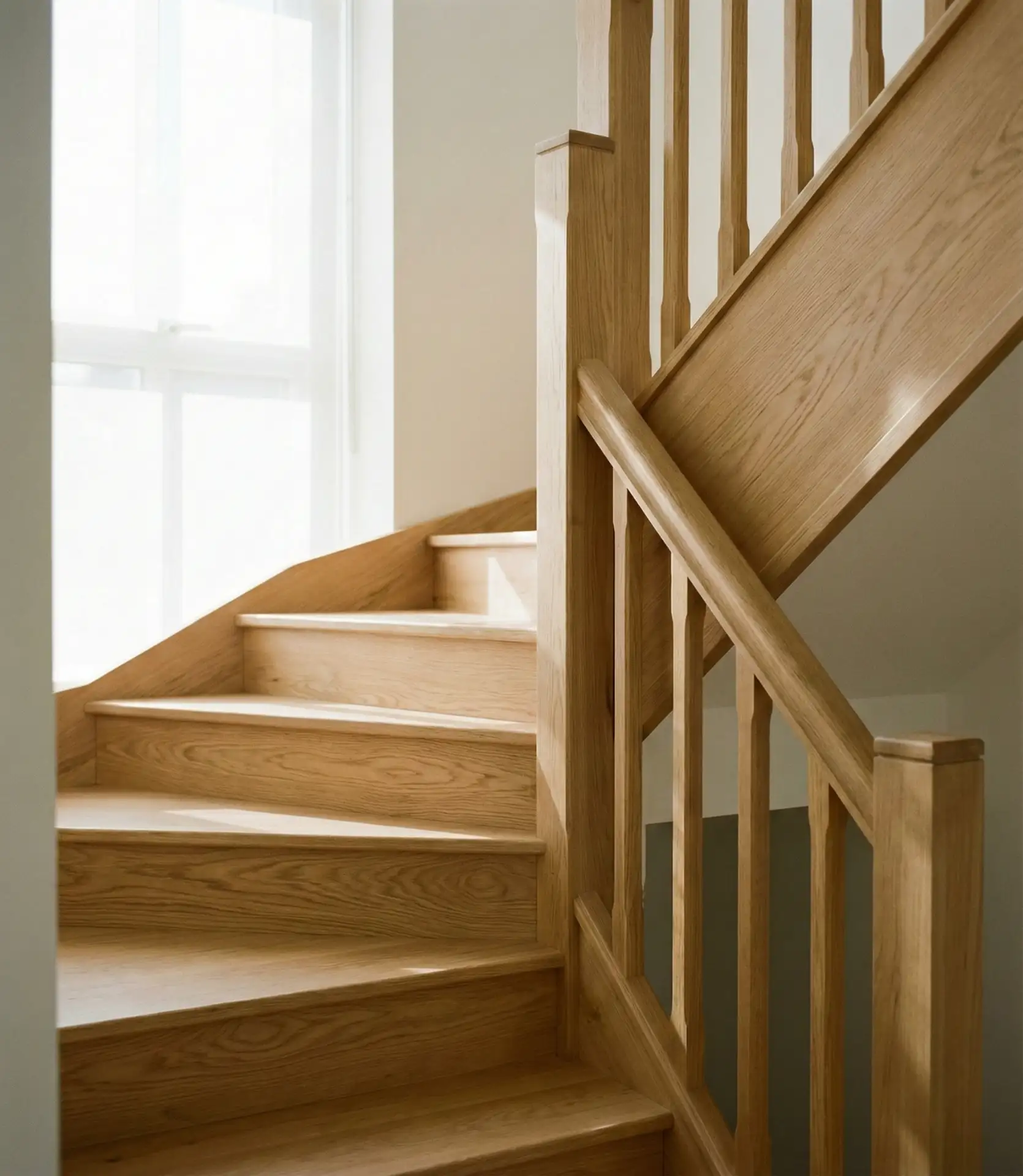
American lifestyle context: Natural wood staircases resonate particularly well in regions with strong craft traditions—New England, the Pacific Northwest, and parts of the Midwest where woodworking heritage runs deep. Homeowners appreciate the long-term value proposition: while paint can look tired after a few years, quality wood with a durable polyurethane finish lasts decades with just occasional cleaning. When scratches do appear, a quick buff and recoat refreshes the entire surface without the need for full refinishing.
19. Straight Run for Clean Simplicity
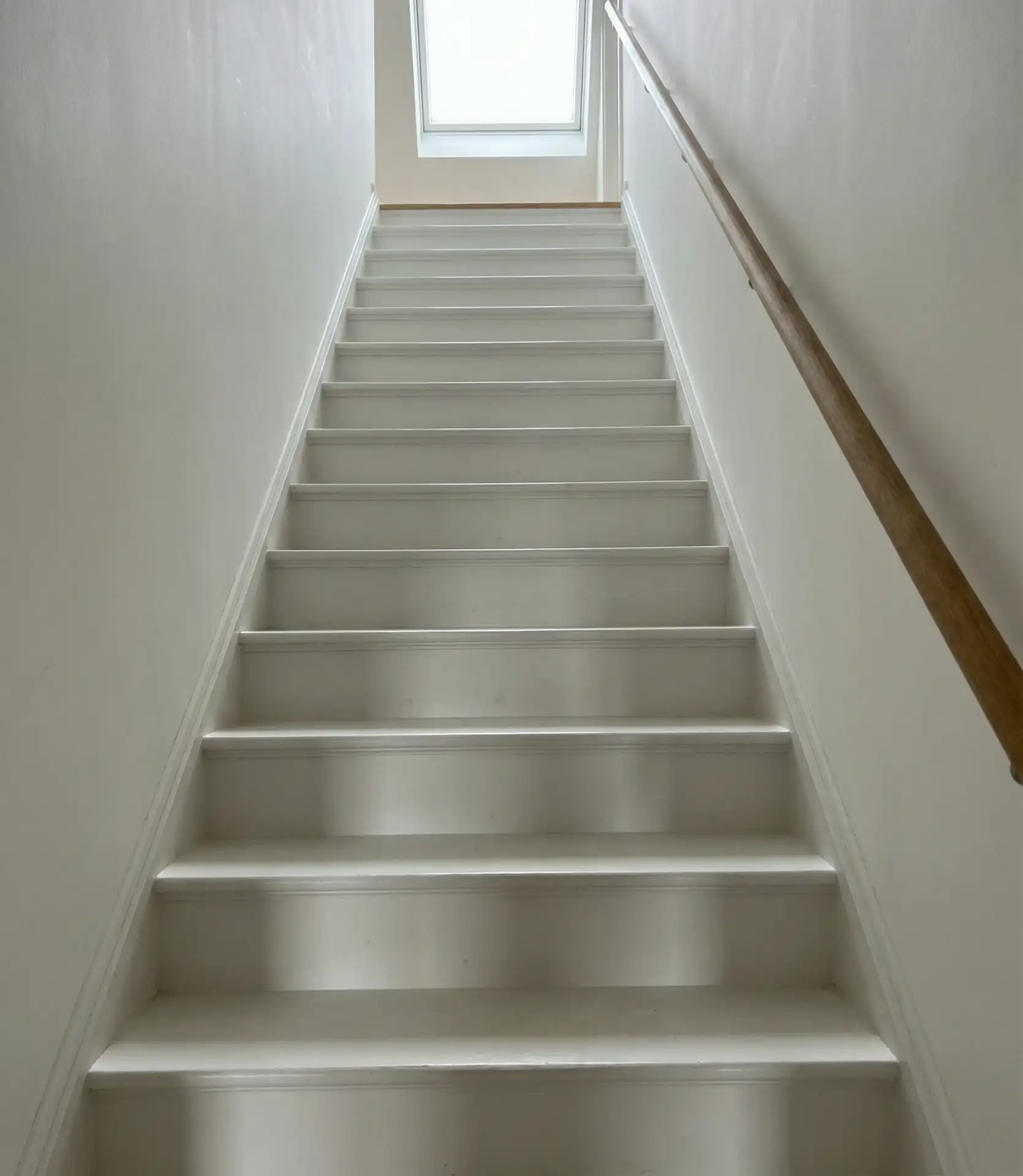
A straight staircase rising directly from one level to another offers the cleanest, most space-efficient design. There’s no landing, no turns—just a direct connection that works beautifully in modern homes where simplicity is the goal. This configuration requires the least square footage of any staircase type and creates a strong linear element in your architecture that can be played up with bold color treatments or beautiful materials.
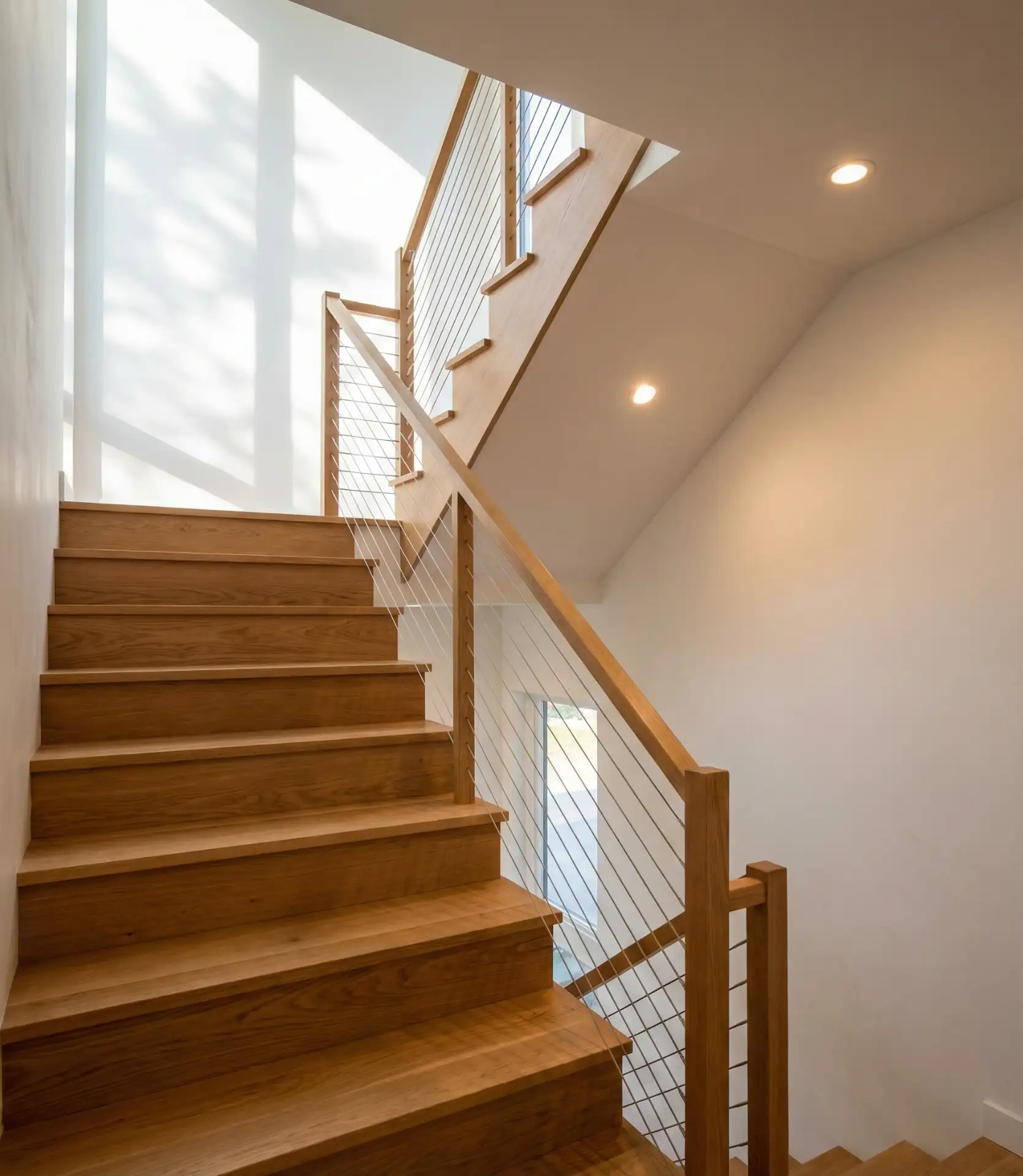
Where it works best: Straight stairs are perfect for homes with basements where the staircase runs along an exterior wall, in modern lofts where directness suits the aesthetic, and in tiny houses where you literally can’t afford the space for a landing. They’re also code-friendly—most jurisdictions allow straight runs up to 12 feet in rise without requiring a landing, though longer runs may need a break for safety. The one downside is that they feel steeper visually and physically than stairs with turns, so handrails on both sides help with safety and comfort.
20. Bloxburg-Style Gaming Aesthetic
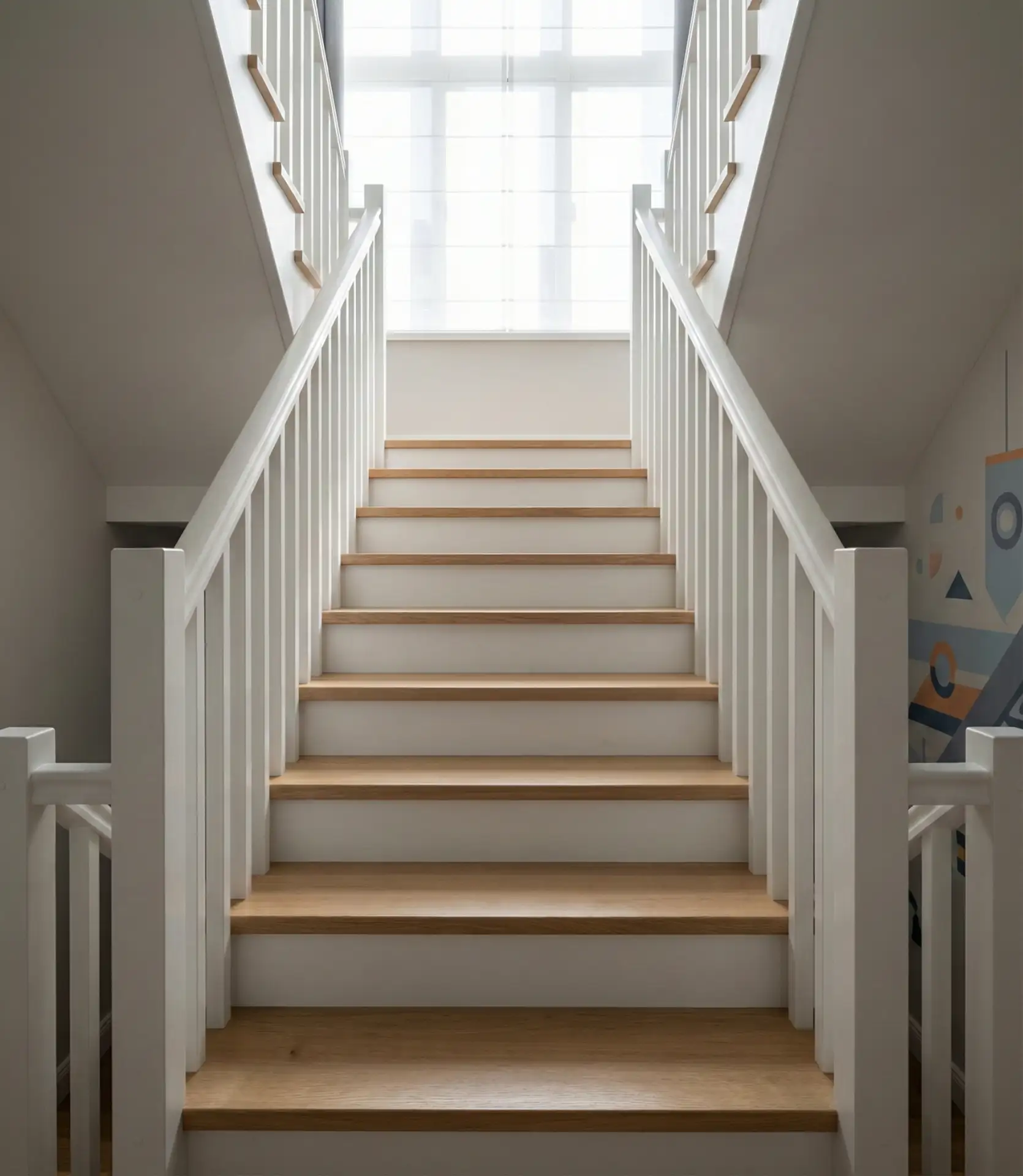
The Bloxburg gaming community has influenced real-world design with its love of clean, symmetrical interiors featuring white and light wood combinations. A Bloxburg-inspired staircase typically features crisp white railings, natural wood treads, and a polished, almost architectural model-home feel. This aesthetic appeals to young homeowners who grew up designing virtual spaces and want that same fresh, controlled look in reality.
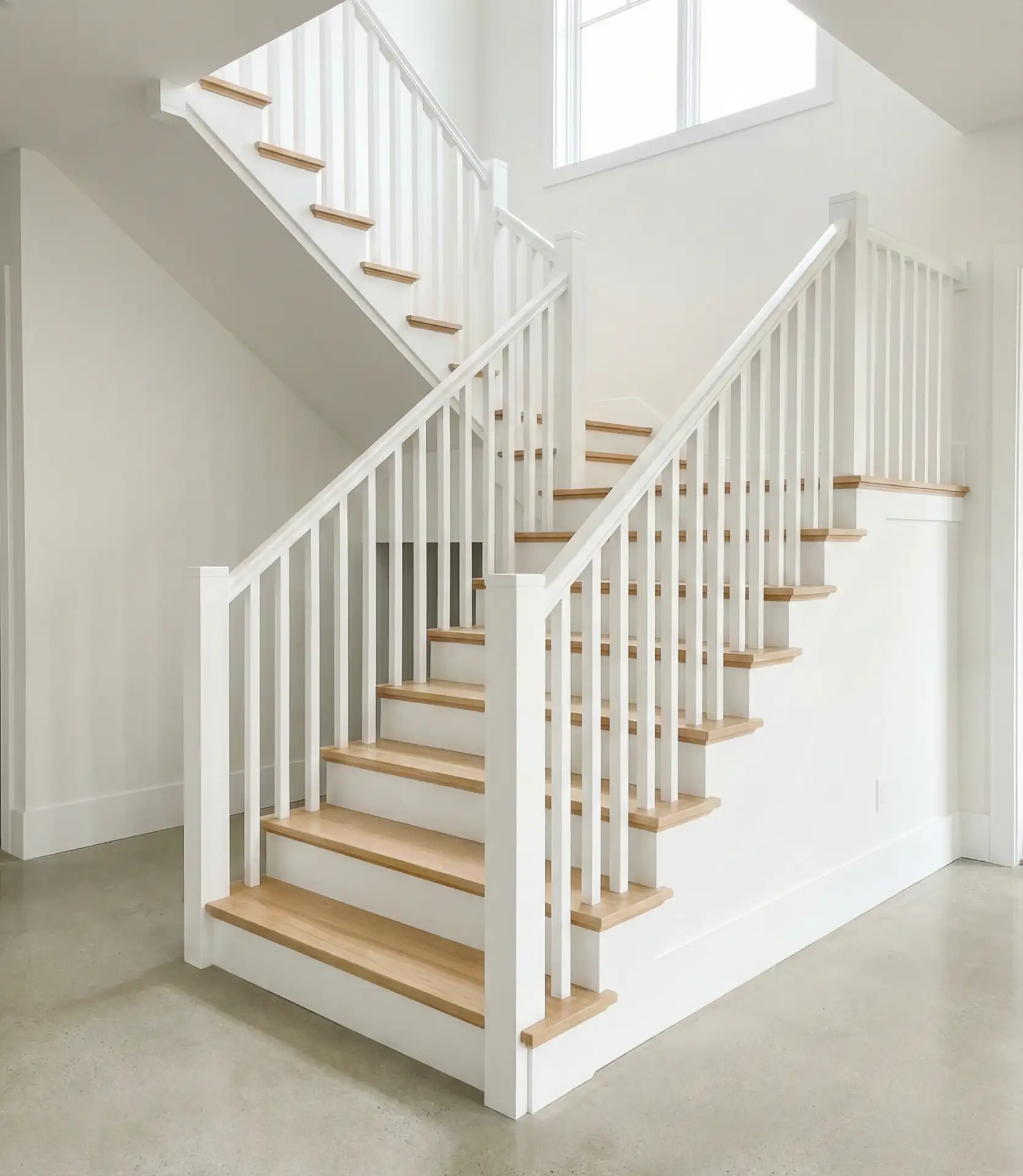
Micro-anecdote: A couple in suburban Phoenix painted their builder-grade staircase entirely white with blonde oak treads after obsessing over Bloxburg builds during quarantine. Their home instantly felt more intentional and design-forward, and they’ve noticed it photographs beautifully for social media—proof that gaming aesthetics translate surprisingly well to real life when executed with quality materials.
21. Short Staircase with Bold Pattern
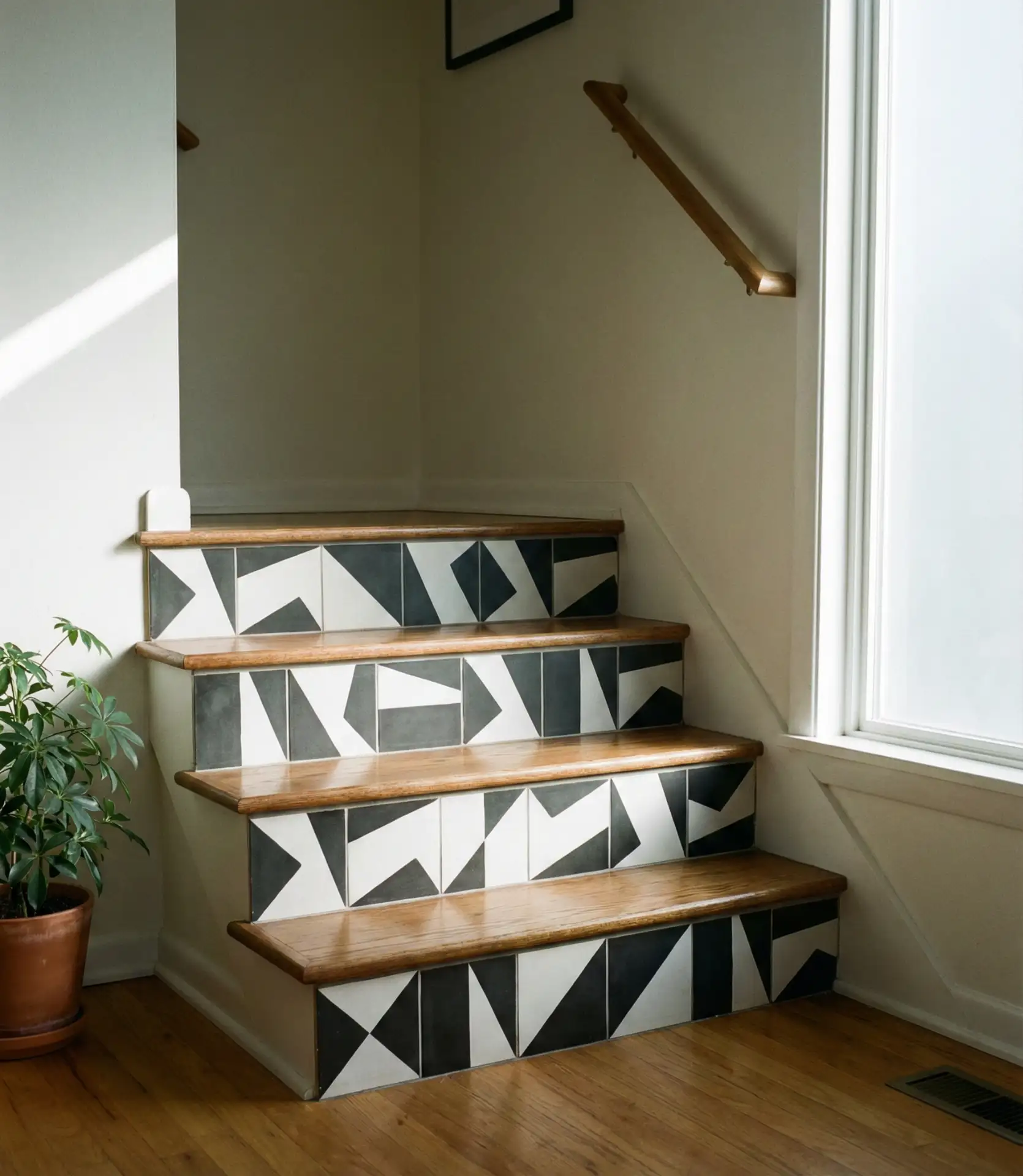
A short staircase—just 3-6 steps connecting a sunken living room or leading to a split level—becomes a design opportunity when treated to a bold pattern or color. Given the limited number of risers, you can boldly experiment with geometric tiles, painted patterns, or vibrant runner choices that could potentially overwhelm a full flight. The idea works particularly well in mid-century homes with multiple half-levels, where each mini-staircase can have its personality.
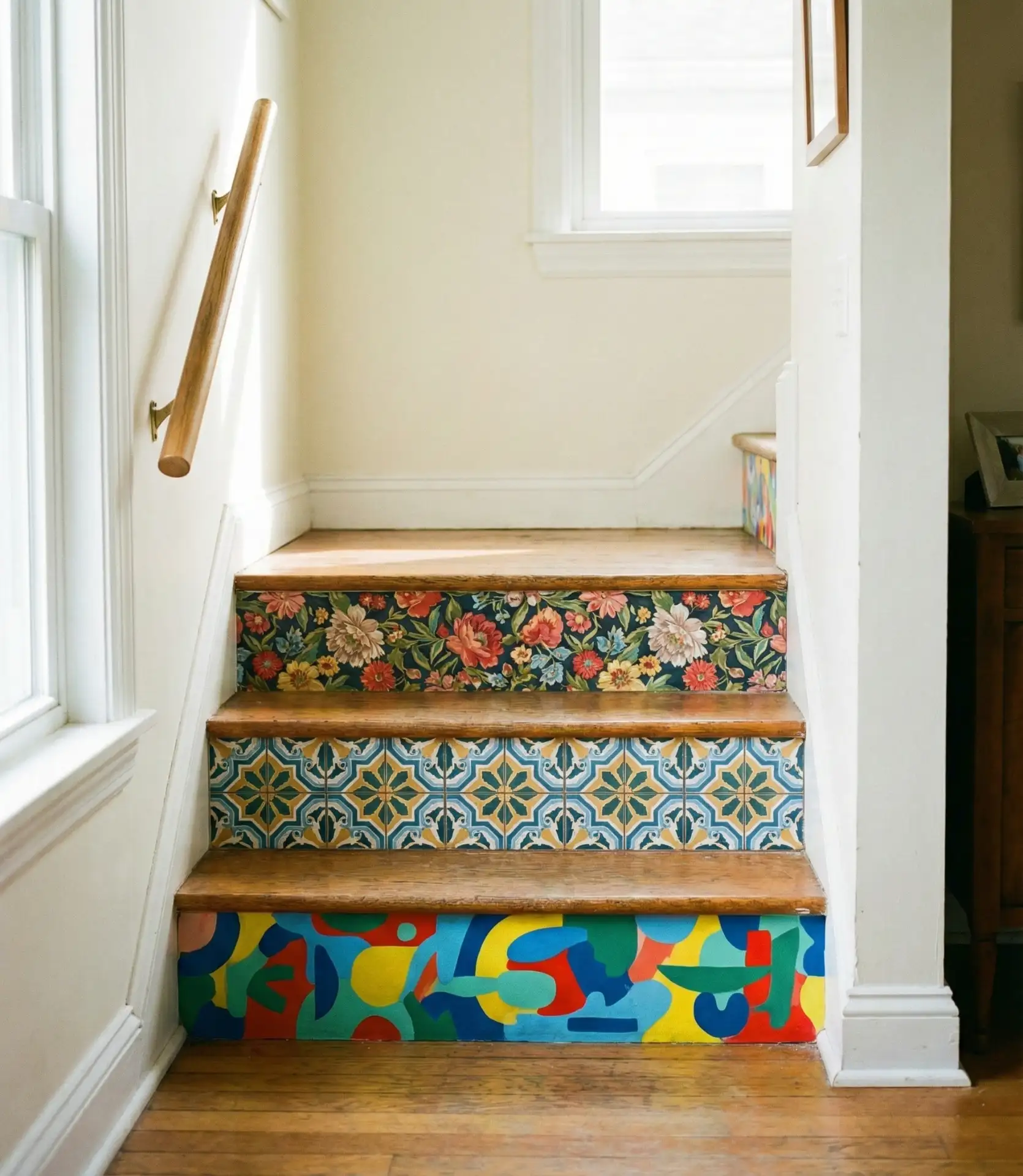
Budget angle: Short staircases are the perfect testing ground for DIY projects because mistakes are lower-stakes and material costs are minimal. A set of adhesive tile decals for 4-5 risers costs under $60, and you can completely transform the look in an afternoon. If you’re nervous about committing to color on a full staircase, start with a short section between levels—you’ll gain confidence and can always scale up to the main stairs once you love the result.
22. Black Drama for Contemporary Homes
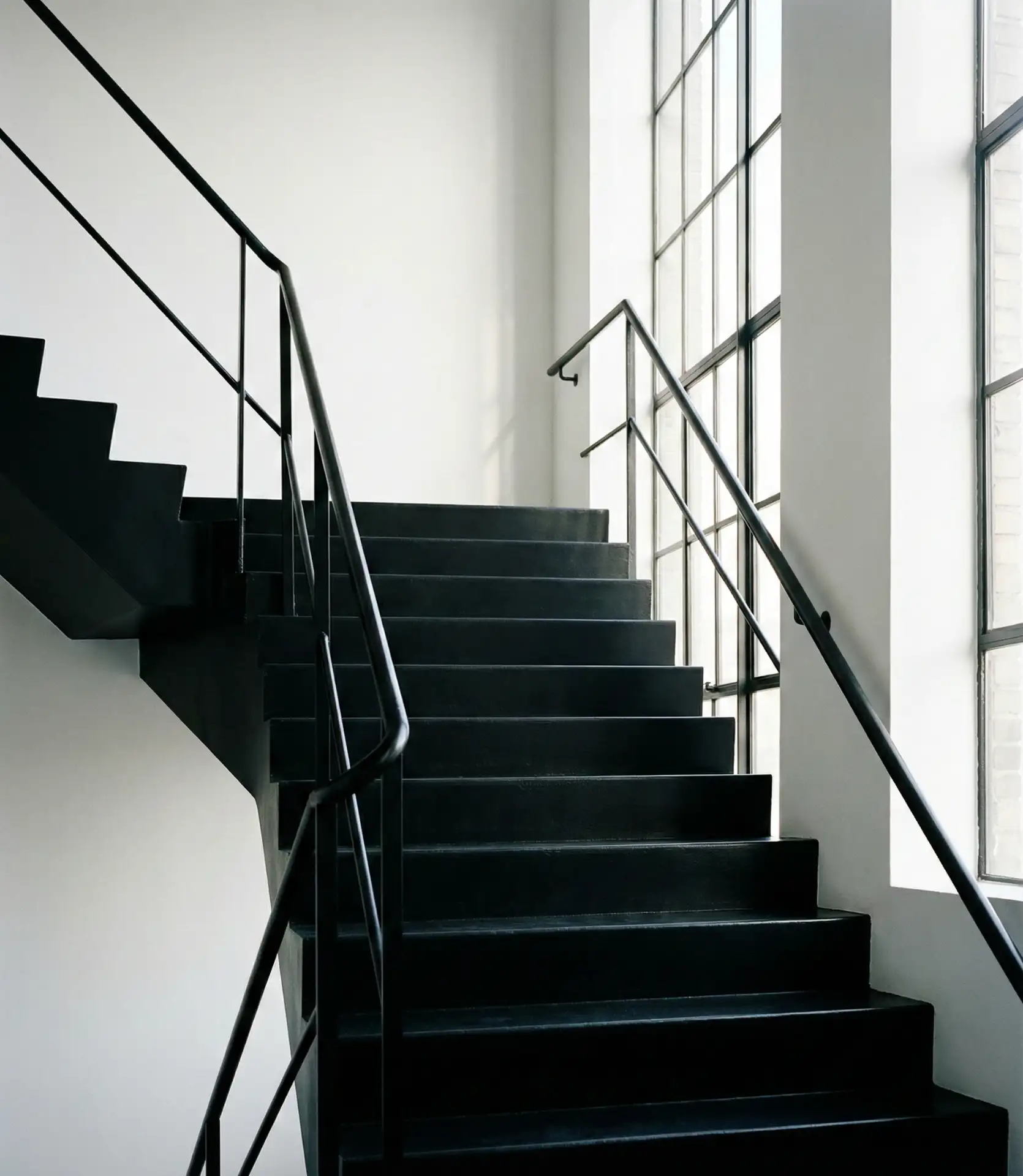
An all-black staircase makes an unapologetic statement in modern homes with abundant natural light. Painting treads, risers, and railings in matte black creates architectural drama and provides striking contrast against white or light wood walls. This treatment works especially well in homes with contemporary art collections or minimalist interiors where the staircase itself becomes a sculptural focal point.
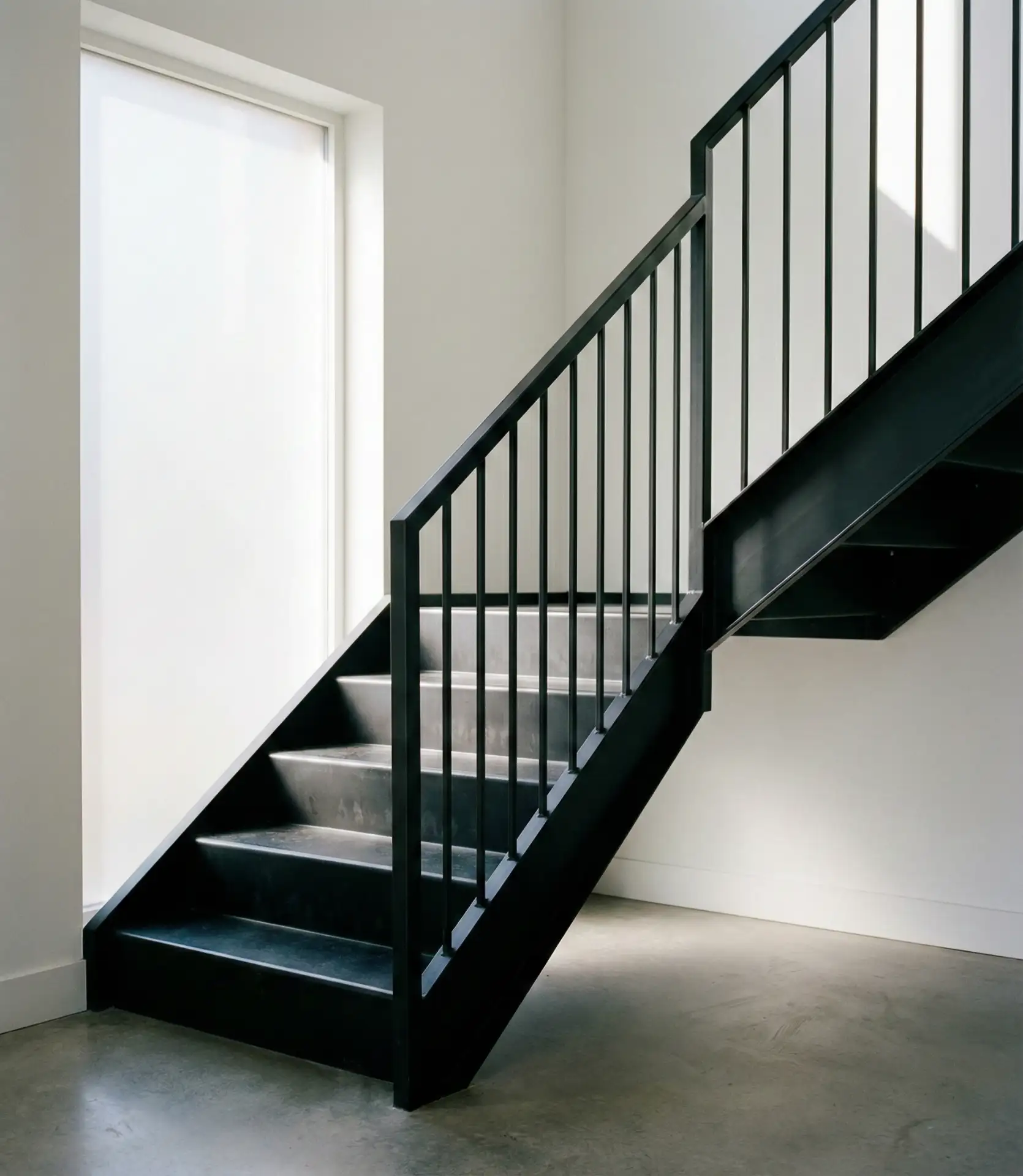
Real homeowner behavior: People who commit to black staircases often extend the bold choice throughout their home with other black elements—door frames, window trim, or light fixtures—creating a cohesive design thread. They also tend to be meticulous about cleanliness since dust and scuffs show more readily on dark surfaces. A weekly once-over with a microfiber cloth keeps things looking sharp, and many homeowners report that the wow factor makes the extra maintenance completely worthwhile.
23. Wooden Farmhouse Runner Treatment
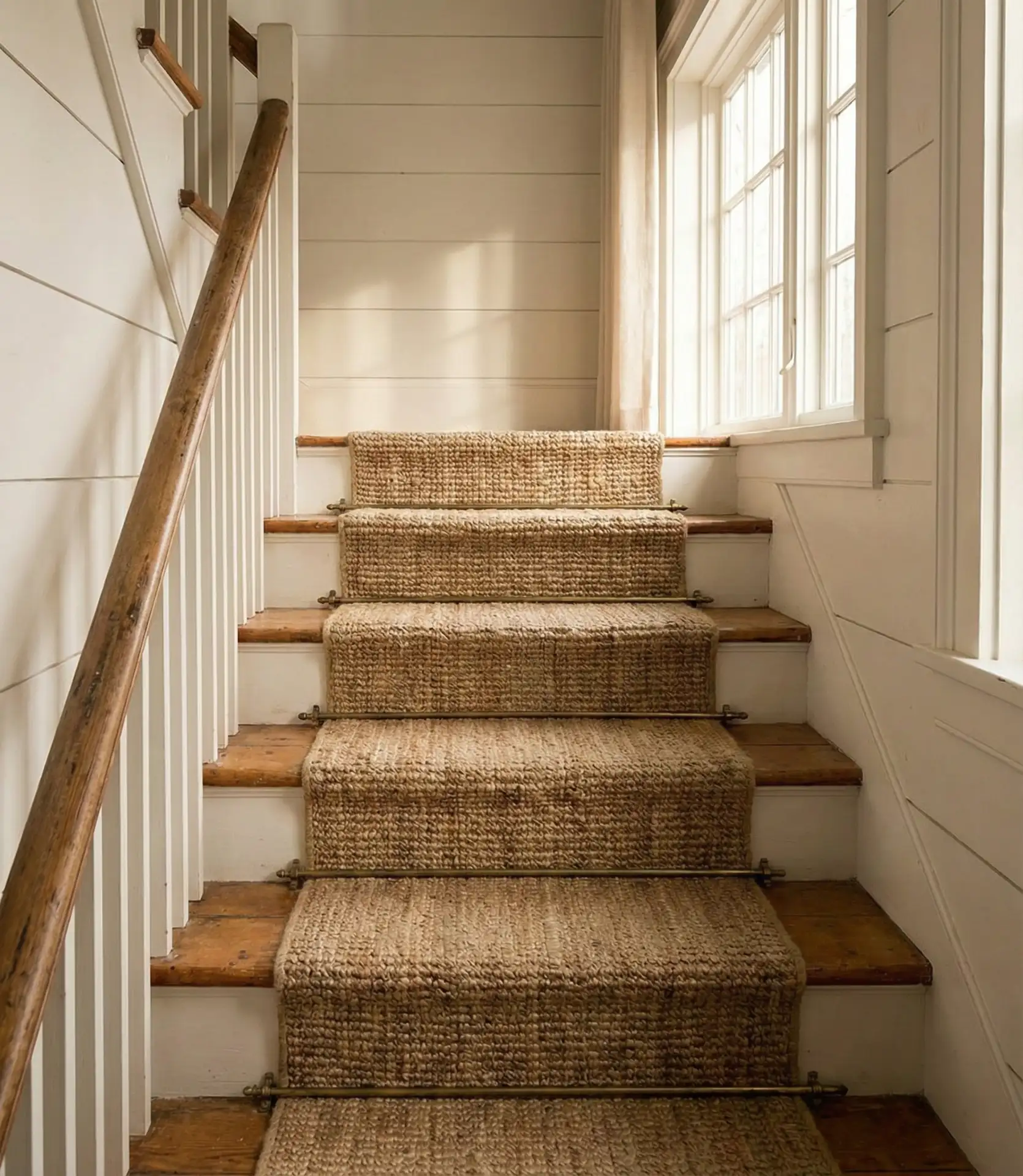
A wooden staircase gets instant farmhouse wood appeal with a jute or woven runner down the center, secured with classic brass stair rods. This combination of natural materials—wood and fiber—creates texture and warmth while protecting high-traffic areas. The look is relaxed but intentional, perfect for modern farmhouses that balance rustic elements with clean-lined contemporary furnishings.
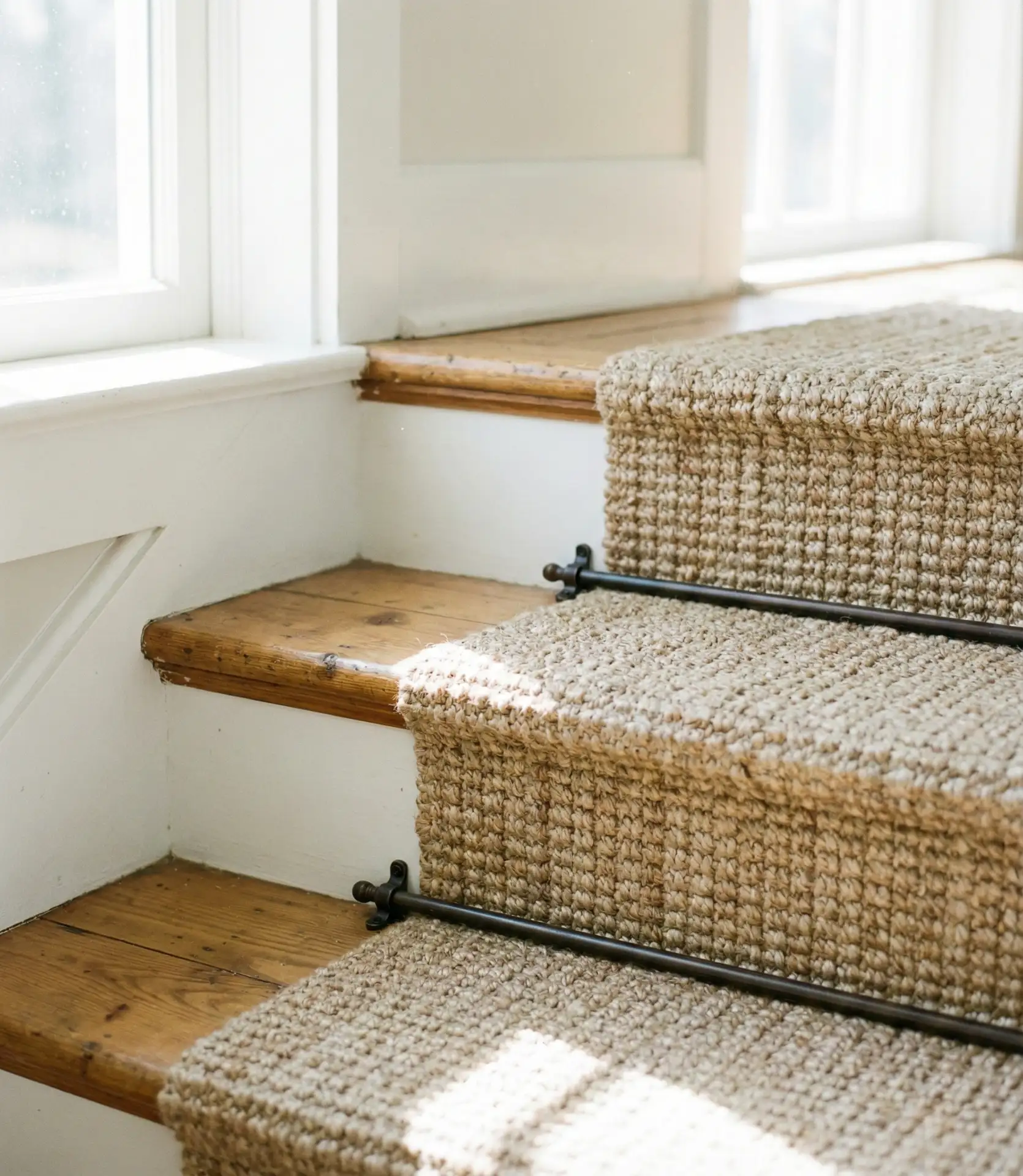
Practical insight: Natural fiber runners like jute, sisal, or seagrass are tougher than they look—they handle foot traffic beautifully and hide dirt between cleanings. However, they’re not ideal for homes with pets who might have accidents, as natural fibers absorb moisture and can be difficult to spot-clean. For a similar look with easier care, wool-jute blends offer the texture of natural fiber with better stain resistance. Installation takes just a couple hours with a staple gun and is completely reversible if you ever want to change the look.
24. Modern Granite Accent Steps
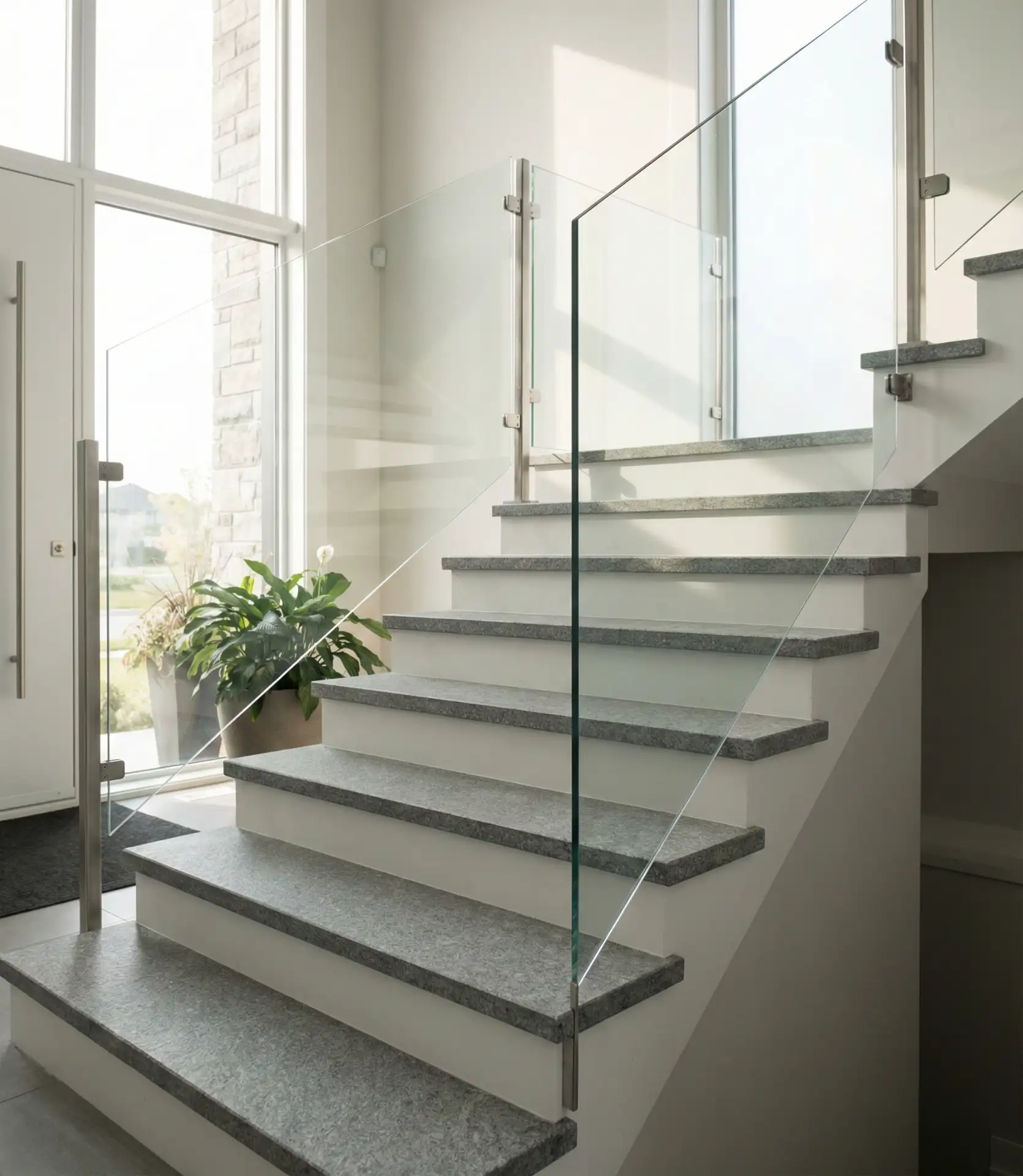
Modern granite treads bring lasting durability and upscale polish to high-end staircases, particularly in homes where the staircase connects to entry areas with tile or stone flooring. The cool, smooth surface of granite in shades like gray, black, or white provides sophisticated contrast when paired with metal or glass railings. This material choice speaks to permanence and quality, aging beautifully over decades with minimal maintenance.
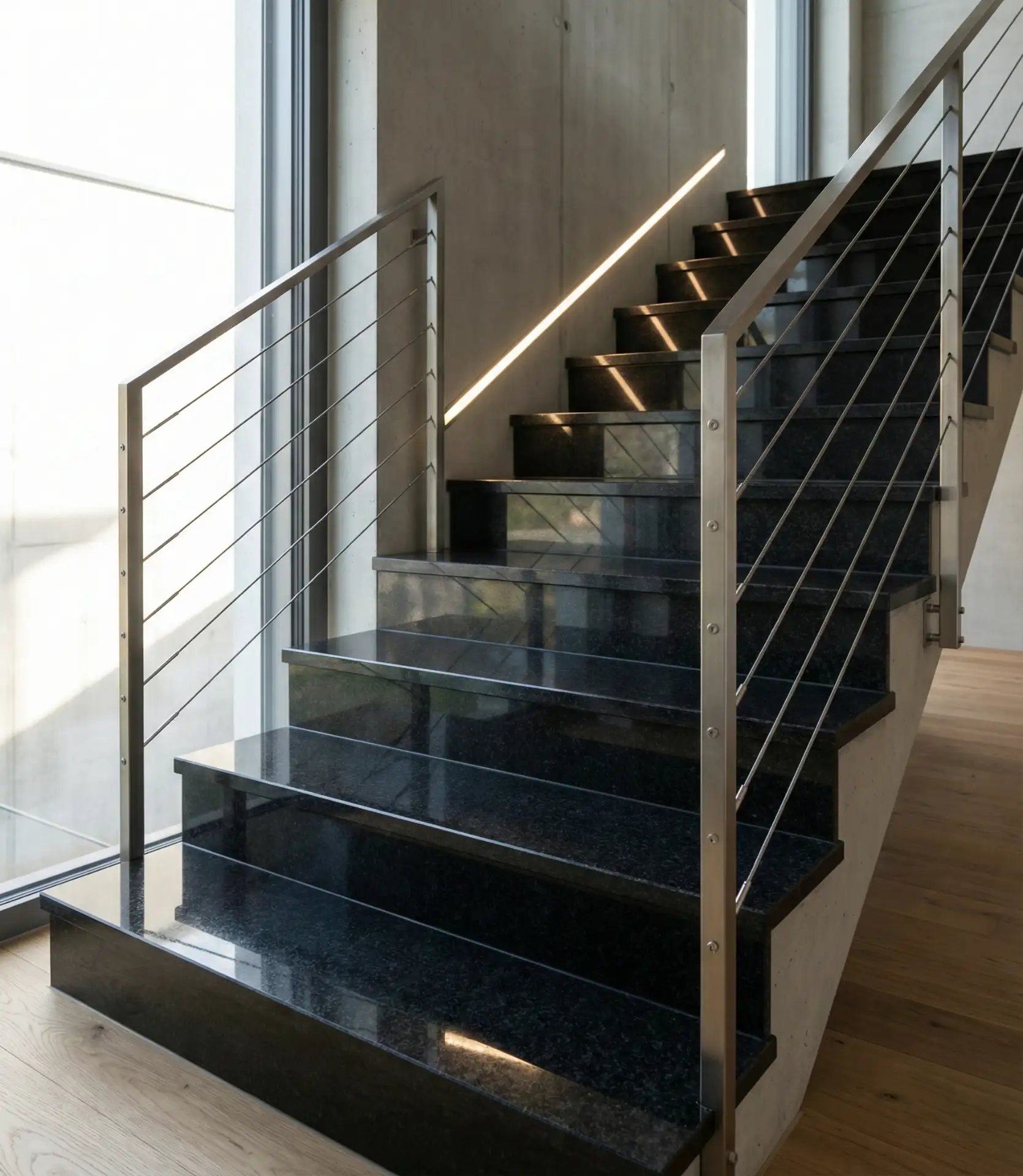
Expert-style commentary: Interior designers appreciate granite stairs because they seamlessly bridge indoor and outdoor spaces—if your entry opens to a stone terrace or patio, carrying that material language inside creates architectural continuity. The stone stays cool underfoot in the summer, which is particularly appreciated in warmer climates across the South and Southwest. While granite is a premium material with installation costs typically running $150–300 per step, it never needs refinishing, never shows wear patterns, and adds significant resale value to luxury properties.
Your staircase deserves thoughtful attention, regardless of your preference for the cozy nostalgia of carpeted Victorian stairs or the clean geometry of floating modern treads. These ideas represent what’s resonating with American homeowners in 2026—designs that balance beauty, function, and personal style. We’d love to hear which approach speaks to your home and your life. Share your favorite staircase idea in the comments below, or tell us about a staircase project you’re planning.