47 Stunning Home Office Design Ideas for 2026: From Minimalist to Luxury Spaces

As we move through 2026, the home office has evolved from a pandemic necessity into a thoughtfully designed space that reflects personal style and supports productivity. Americans are searching Pinterest more than ever for visual inspiration that balances function with aesthetics—whether that means carving out a small workspace in a studio apartment or designing a full executive suite in a suburban home. This year’s trends embrace everything from minimalist calm to luxury touches, with a strong emphasis on adaptability and wellness. In this article, you’ll discover distinct approaches to home office design that cater to different lifestyles, budgets, and aesthetic preferences, each offering practical solutions for creating a workspace that truly works for you.
1. Warm Minimalist Workspace with Natural Wood Accents
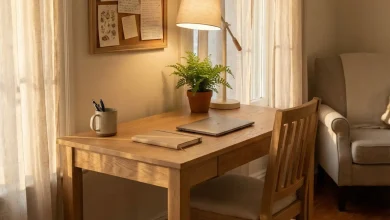
 This approach combines minimalist principles with organic warmth, featuring a clean-lined desk in light oak paired with a single sculptural task lamp and a low-profile ergonomic chair. The simple palette of whites, beiges, and natural wood tones creates a calming environment that reduces visual clutter while maintaining a welcoming atmosphere. A single potted plant and one carefully chosen art piece complete the look without overwhelming the senses, making this ideal for anyone who finds focus in restraint.
This design works best in bedrooms or studio apartments where the office needs to blend seamlessly with living spaces. The lack of visual noise means you can leave the workspace visible without it feeling like an intrusion on your home’s tranquility, and the neutral palette ensures it won’t clash with existing decor.
2. Japandi-Inspired Sanctuary with Low-Profile Furniture
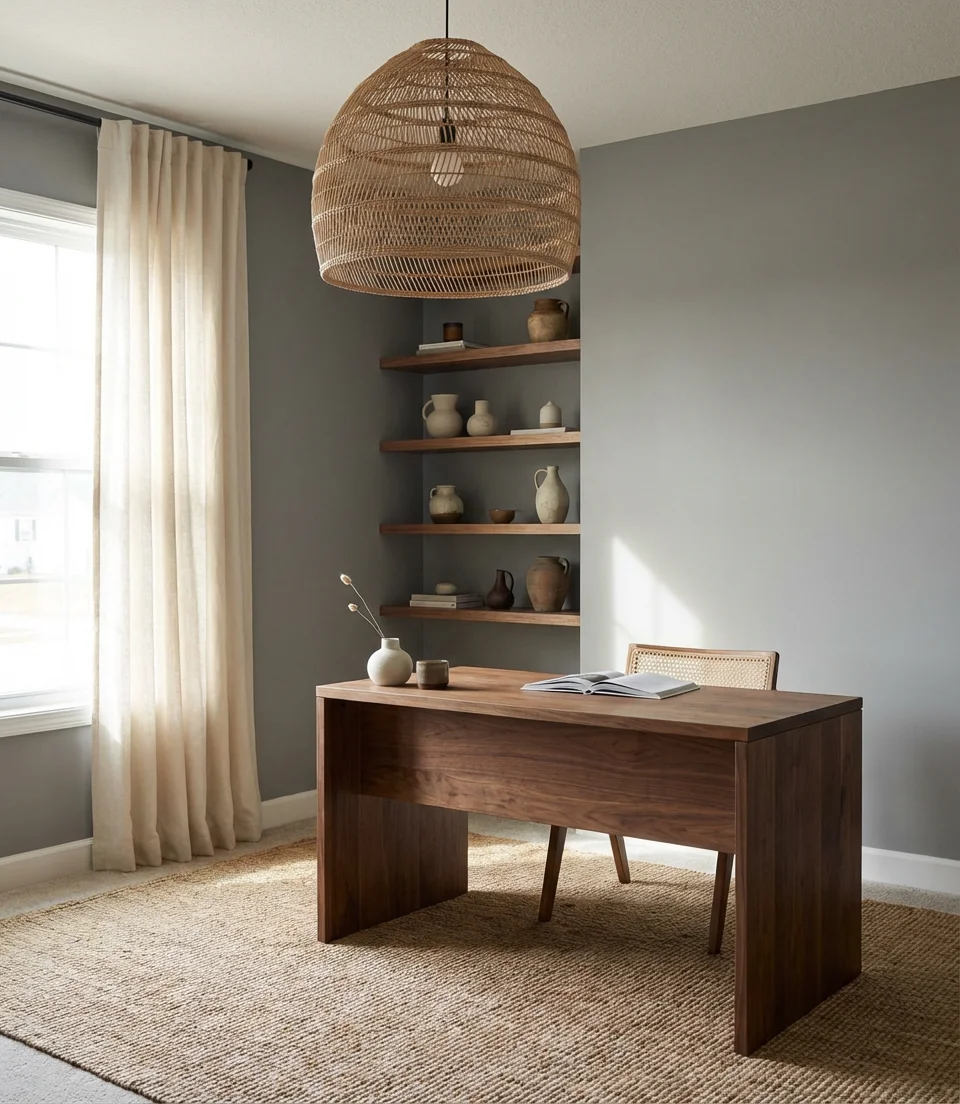
The Japandi aesthetic merges Japanese minimalism with Scandinavian functionality, resulting in a workspace that feels both grounded and serene. Picture a low walnut desk with subtle joinery details, a woven pendant light casting gentle shadows, and open shelving that displays only essential items in an artful arrangement. The color story stays muted—think charcoal, cream, and soft gray—with texture providing the visual interest through linen, wood, and ceramic elements.
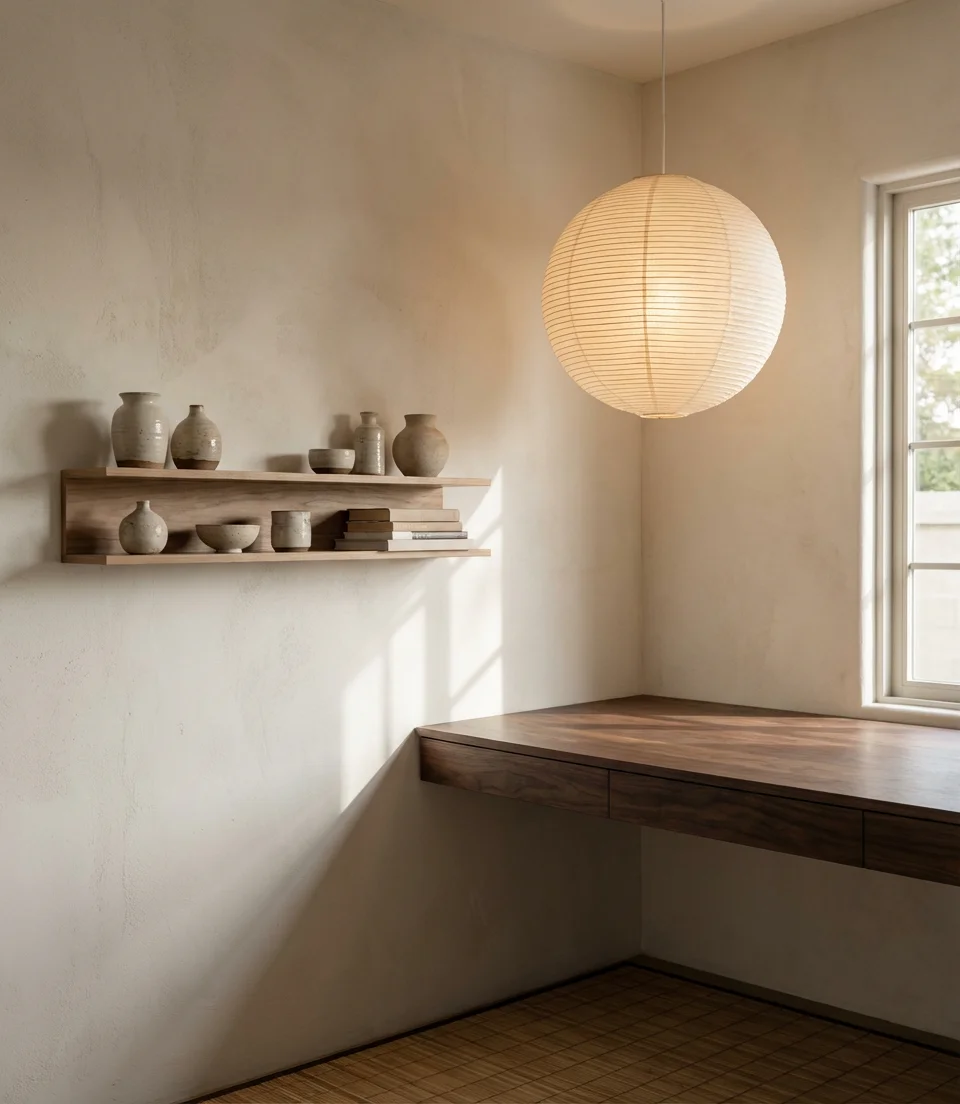
A common mistake with Japandi design is over-styling—this aesthetic thrives on restraint and intentionality. Avoid filling every shelf or adding too many decorative elements. Instead, let negative space do its work, choosing only pieces that serve a function or hold genuine meaning to you.
3. Industrial Loft Office with Exposed Brick and Metal
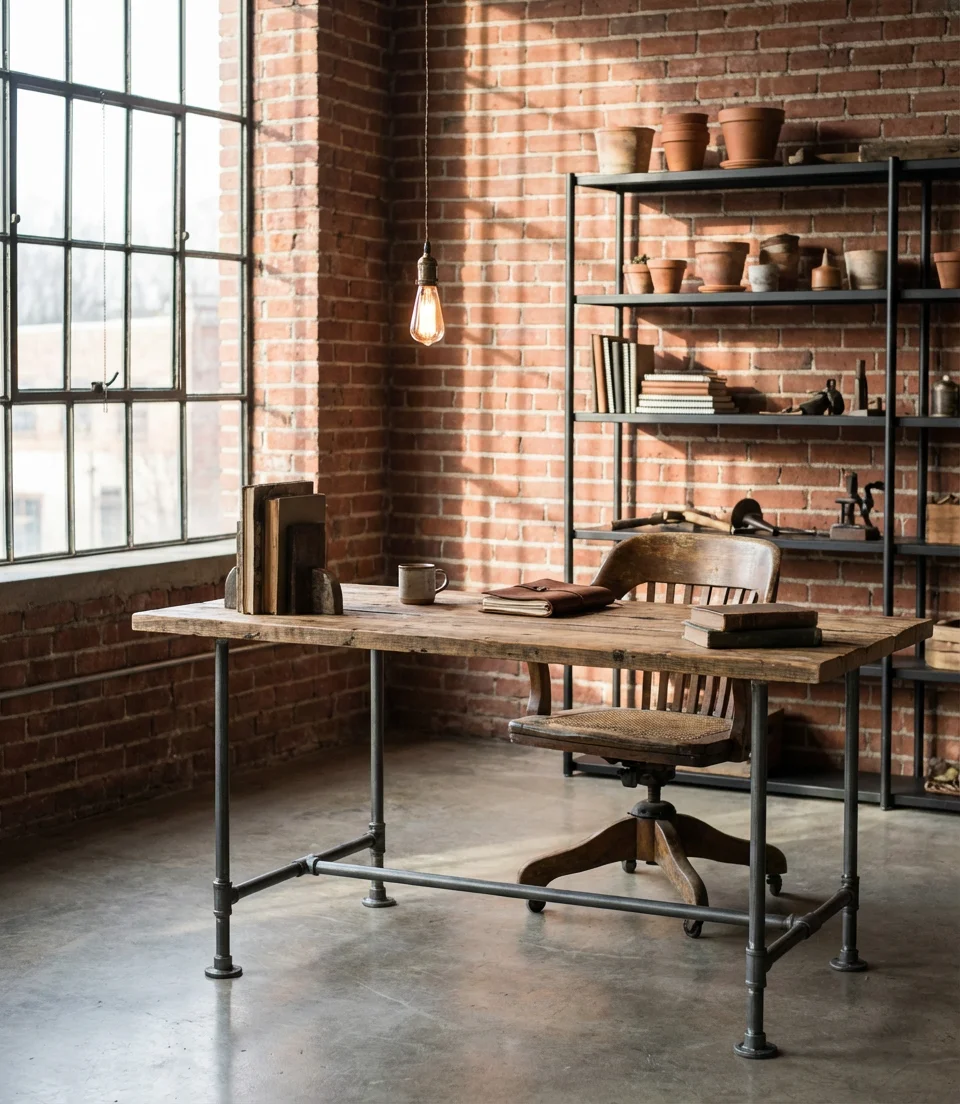
For those drawn to urban aesthetics, an industrial home office brings raw materials and architectural honesty to the forefront. This means exposed brick walls, a reclaimed wood desk with black metal legs, Edison bulb lighting, and open metal shelving that celebrates function over form. The palette leans into charcoal, rust, and weathered wood tones, creating a space that feels both rugged and refined—perfect for creative professionals who want their environment to reflect a maker’s sensibility.
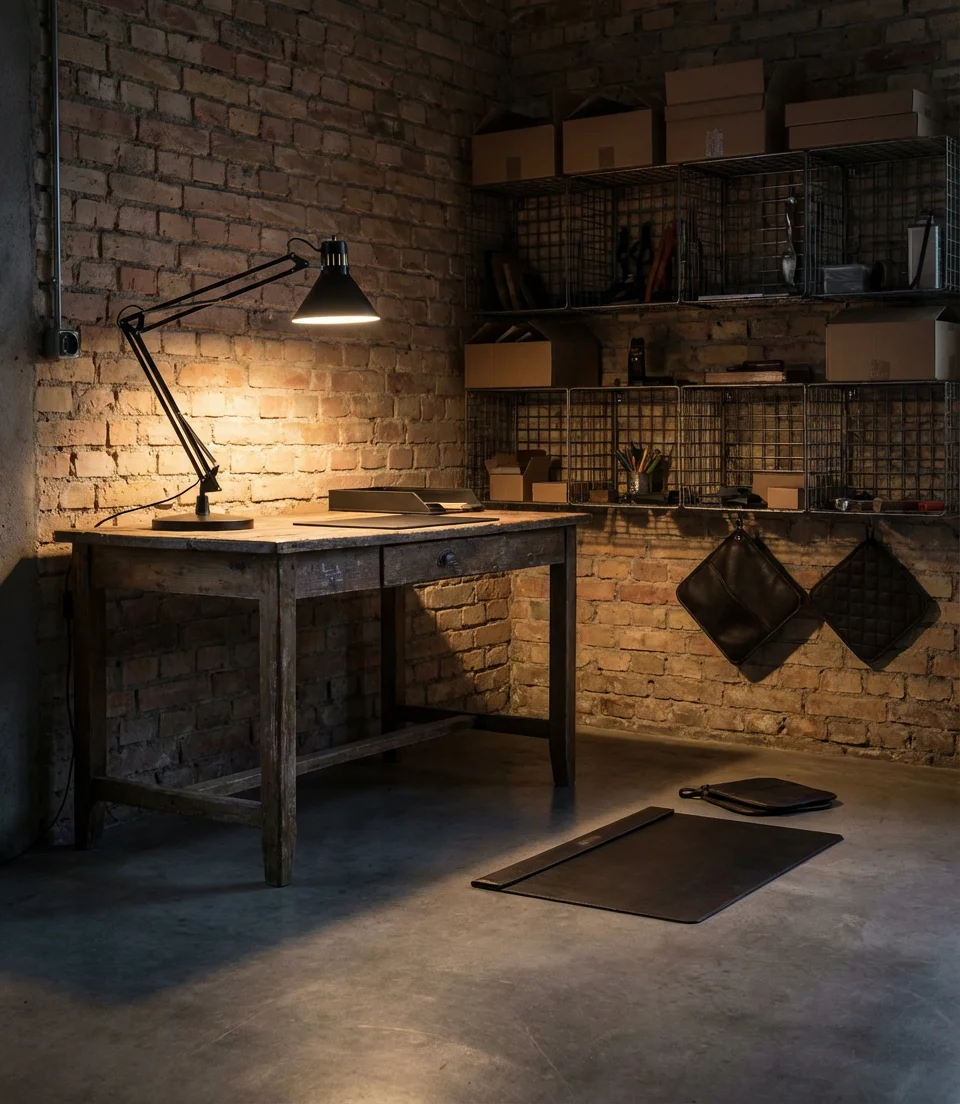
This style particularly shines in loft apartments or homes with existing architectural character, especially in cities like Chicago, Brooklyn, or Portland, where industrial conversions are common. The raw materials require less maintenance than you might think—just embrace the patina and occasional imperfection as part of the aesthetic.
4. Biophilic Green Office with Living Wall Elements
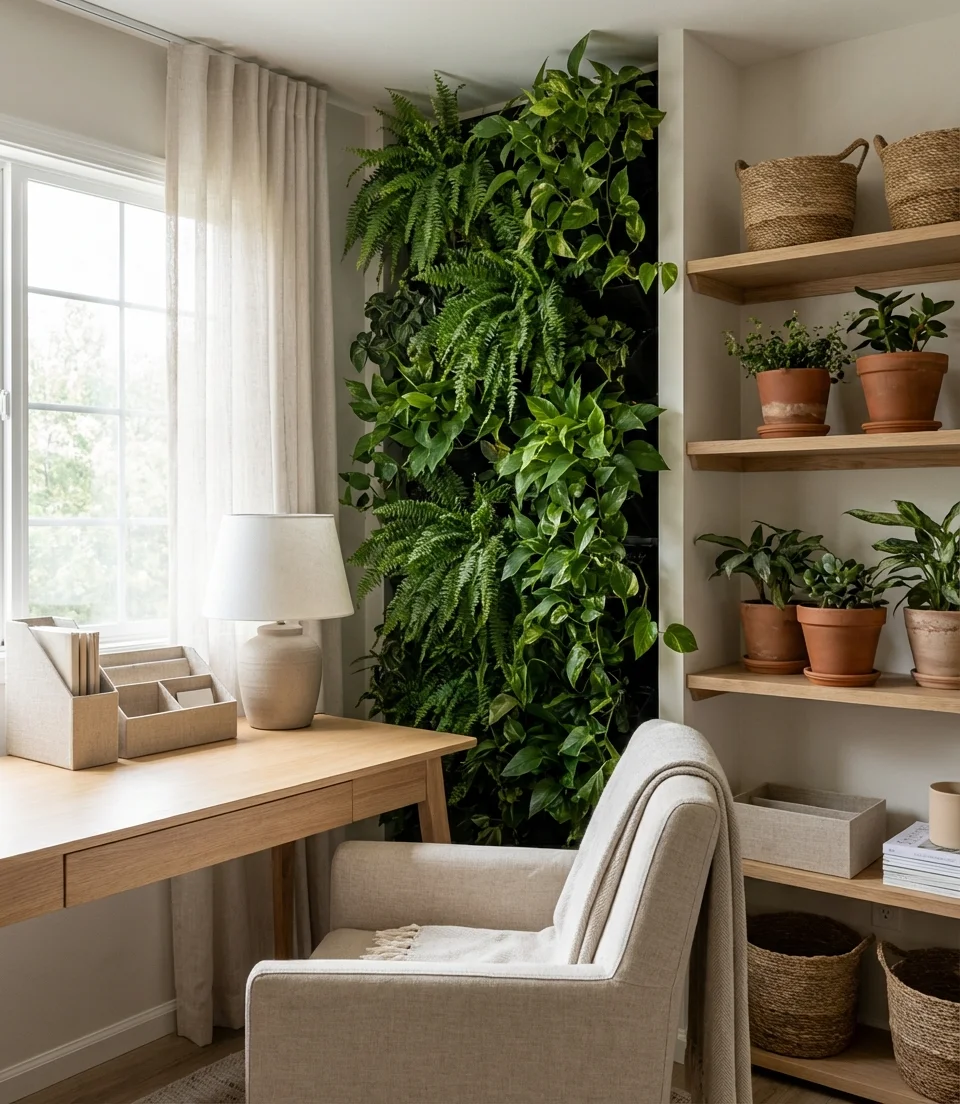
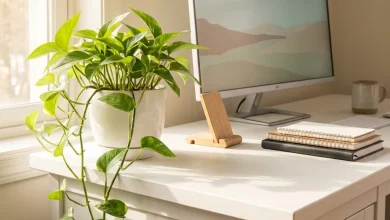
Bringing nature indoors has become more than a trend—it’s a wellness strategy backed by research on productivity and mental health. A green office design incorporates a vertical garden or living wall as a focal point, complemented by multiple potted plants, natural wood surfaces, and plenty of indirect sunlight. The cozy feeling comes from layering different leaf textures and allowing trailing plants to soften hard edges while maintaining enough open space to avoid a cluttered jungle effect.
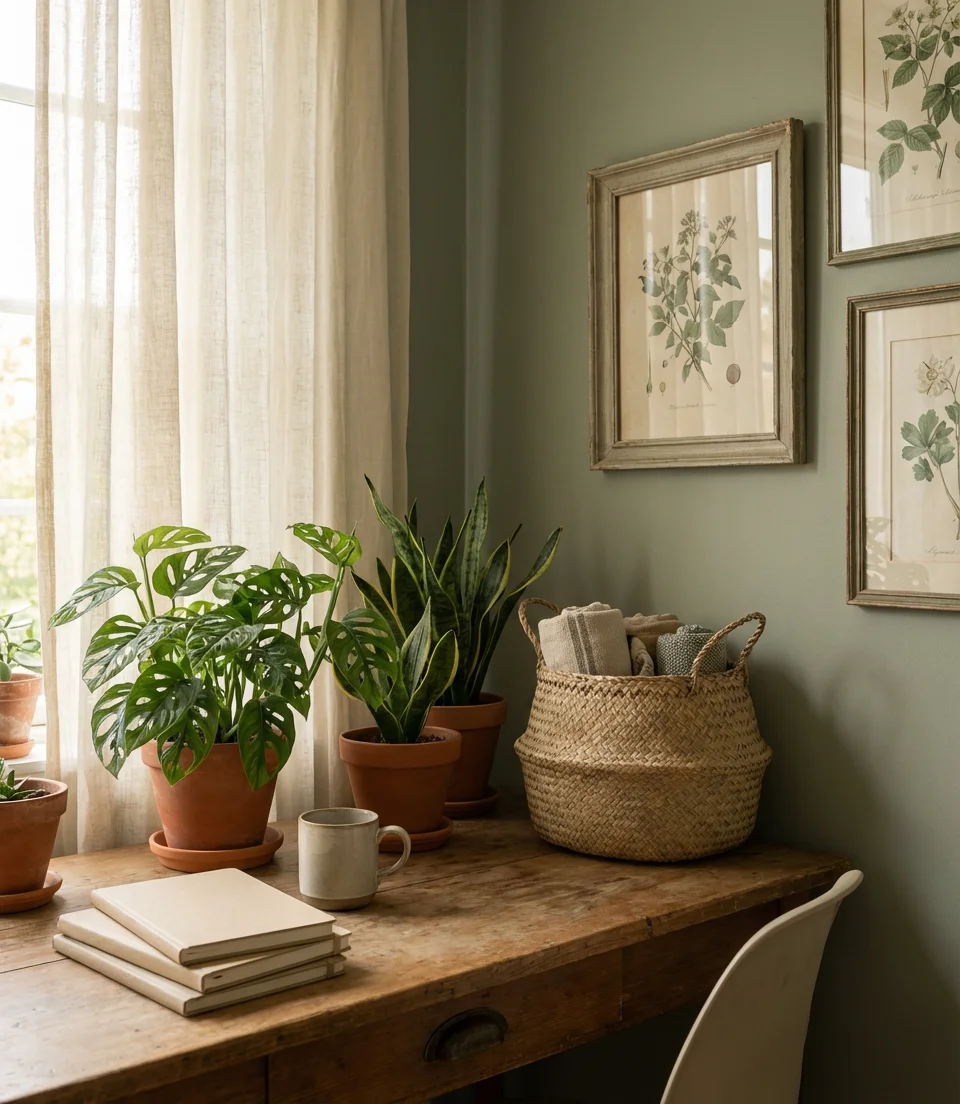
I worked with a client in Seattle who transformed a windowless basement office with full-spectrum grow lights and a modular plant wall system. Within weeks, she reported feeling less isolated during long work sessions, and her video call backgrounds became a conversation starter with clients who appreciated the commitment to sustainability.
5. Classic Executive Suite with Rich Wood Paneling
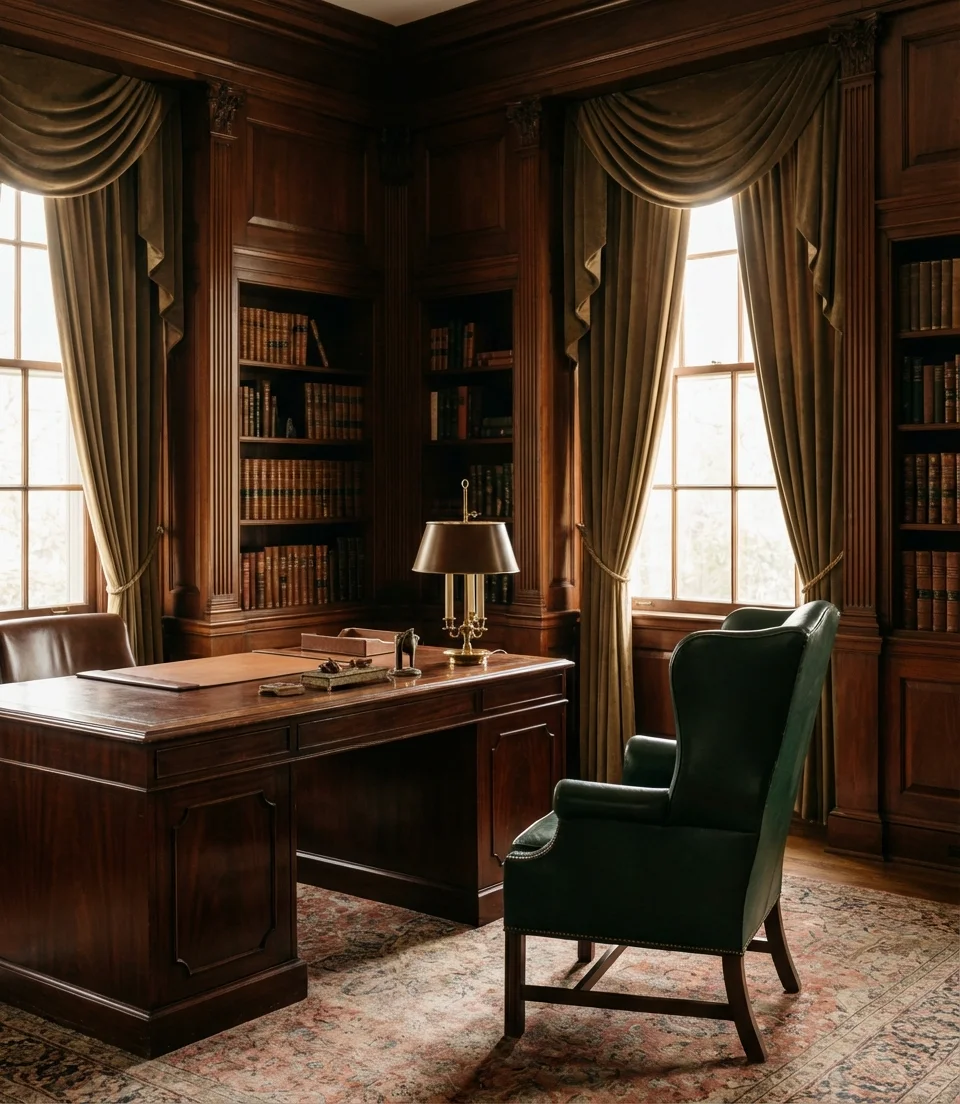
The classic approach to executive office design remains timeless, merely undergoing refinement. Consider incorporating substantial mahogany or walnut desks with traditional detailing, built-in bookshelves brimming with leather-bound volumes, and a wingback chair adorned with buttery leather. This aesthetic speaks to permanence and authority, with a color palette of deep browns, hunter greens, and burgundy accents that create an atmosphere of gravitas and tradition.
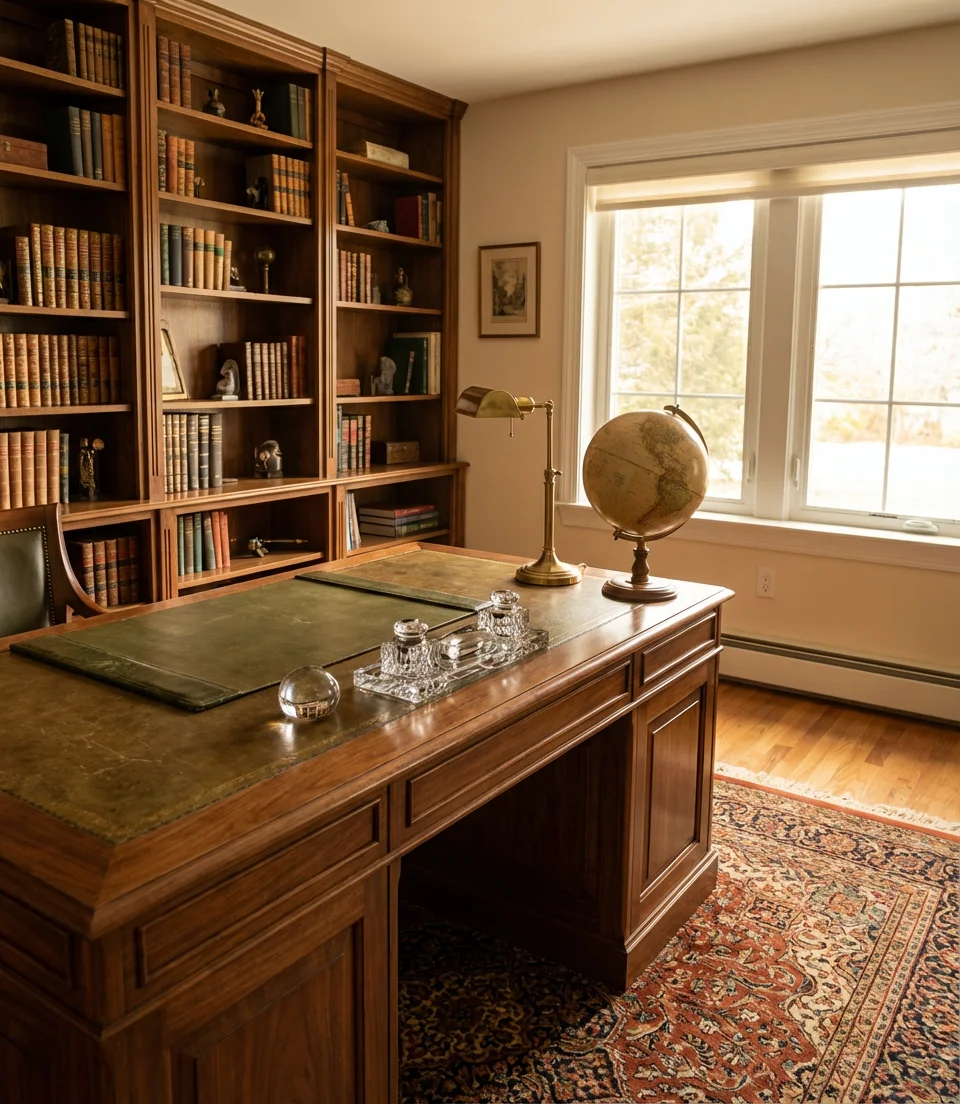
Where this look works best is in homes with traditional architecture—Colonial, Tudor, or Victorian styles—where the office can harmonize with existing millwork and proportions. Budget-conscious homeowners can achieve a similar feel by investing in one quality desk piece and using affordable wall paneling kits paired with stain to mimic the richness of solid wood.
6. Scandinavian Light-Filled Workspace with White and Birch
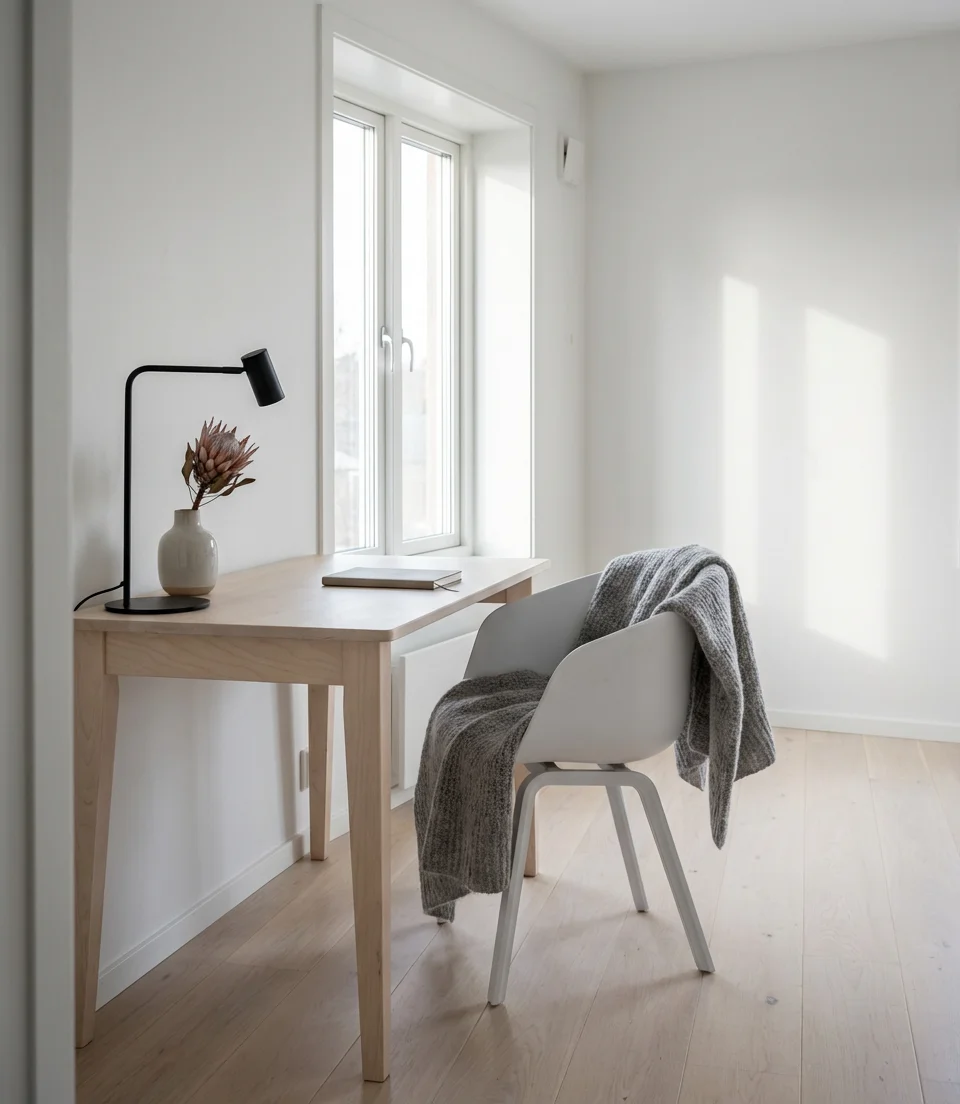
Scandinavian design principles center on maximizing natural light and creating warmth through simplicity, making them particularly suited to home offices. A pale birch desk paired with a white Eames-style chair, soft gray textiles, and minimal black accents creates a space that feels expansive even in compact square footage. The minimal approach means every object earns its place—a ceramic mug, a single vase with dried grasses, perhaps a small analog clock that adds quiet functionality without digital distraction.
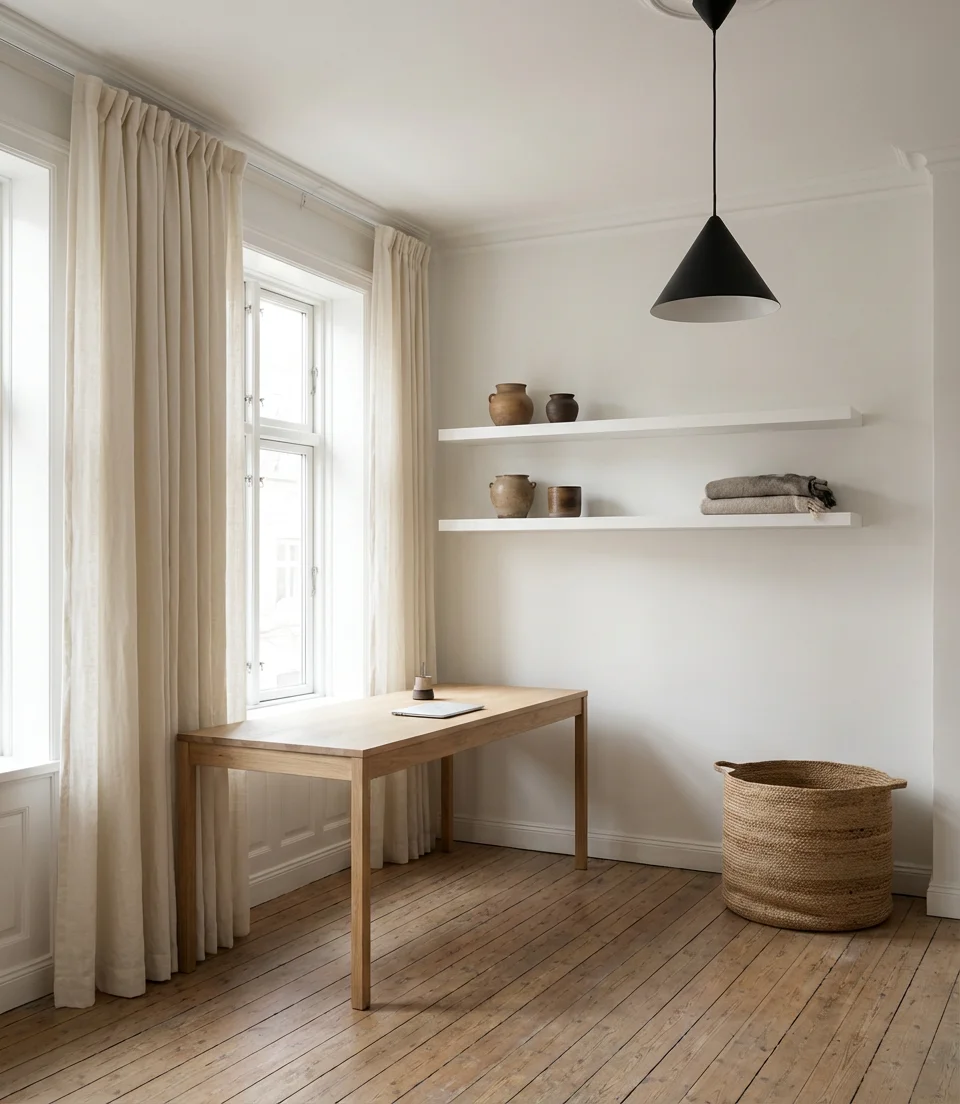
This design thrives in northern climates where maximizing daylight is essential to winter wellbeing—Minnesota, Vermont, or Pacific Northwest homes benefit particularly from this approach. The key is resisting the urge to add color; the palette’s restraint is what makes the space feel calm rather than clinical.
7. Contemporary Tech-Forward Office with Smart Integration
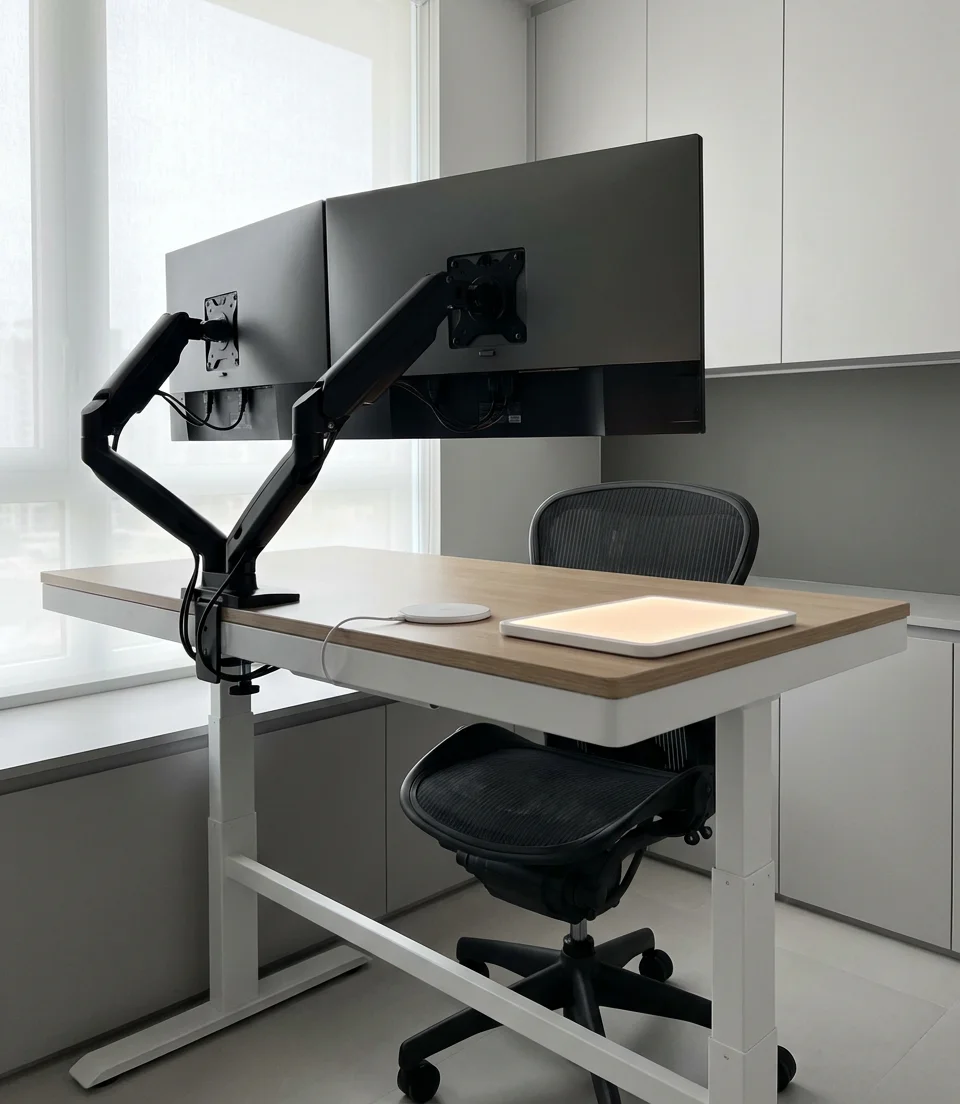
A contemporary office in 2026 seamlessly integrates technology without letting wires and devices dominate the visual landscape. This means an adjustable desk with built-in charging, hidden cable management systems, monitor arms that free up desk space, and smart lighting that adjusts color temperature throughout the day. The aesthetic stays clean and modern with a monochromatic palette punctuated by one accent color—perhaps a teal chair or copper accessories—while maintaining the functionality serious tech users require.
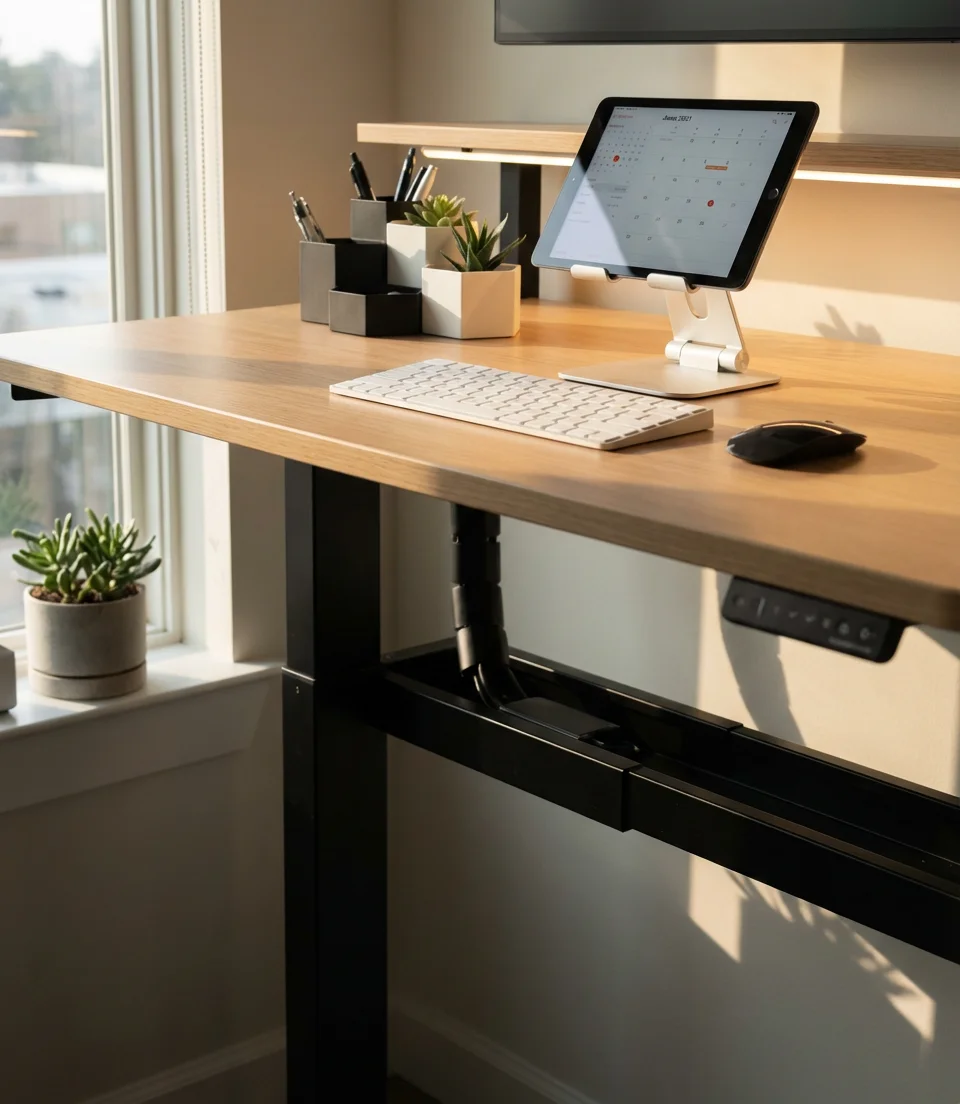
Real homeowners often struggle with where to hide power strips and charging cables—the most elegant solution involves desk grommets and under-desk cable trays that keep everything accessible but invisible. Spending an extra hour on cable management during setup saves endless frustration and maintains the clean lines that make contemporary design work.
8. Cozy Reading Nook Office Hybrid with Built-In Seating
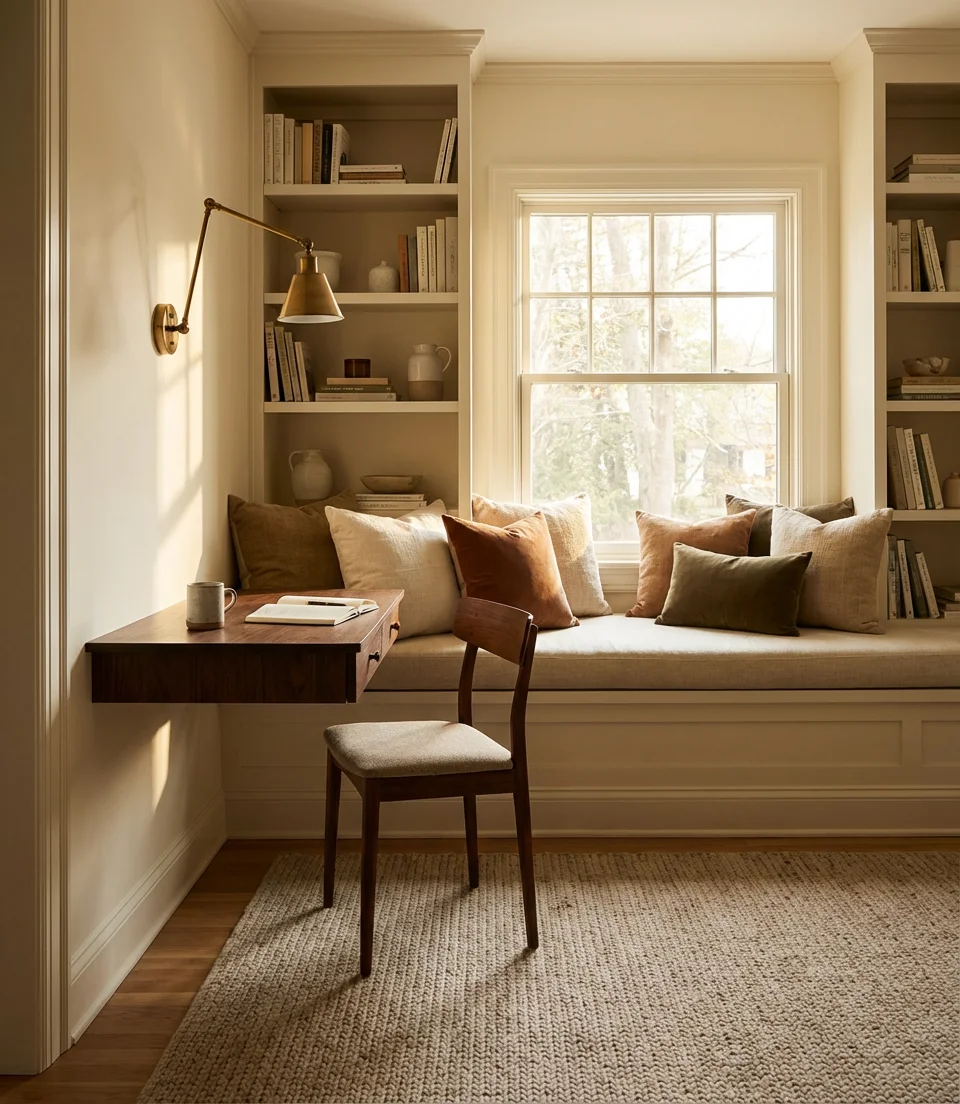
Not every work task happens at a desk, and this design acknowledges that by creating a cozy hybrid space with a window seat or built-in bench piled with cushions, positioned adjacent to a small writing desk. The interior feels residential rather than corporate, with warm task lighting from adjustable sconces, a soft area rug defining the zone, and shelving within arm’s reach for reference books or current projects. This approach works particularly well for writers, editors, or anyone whose work involves significant reading and contemplation time.
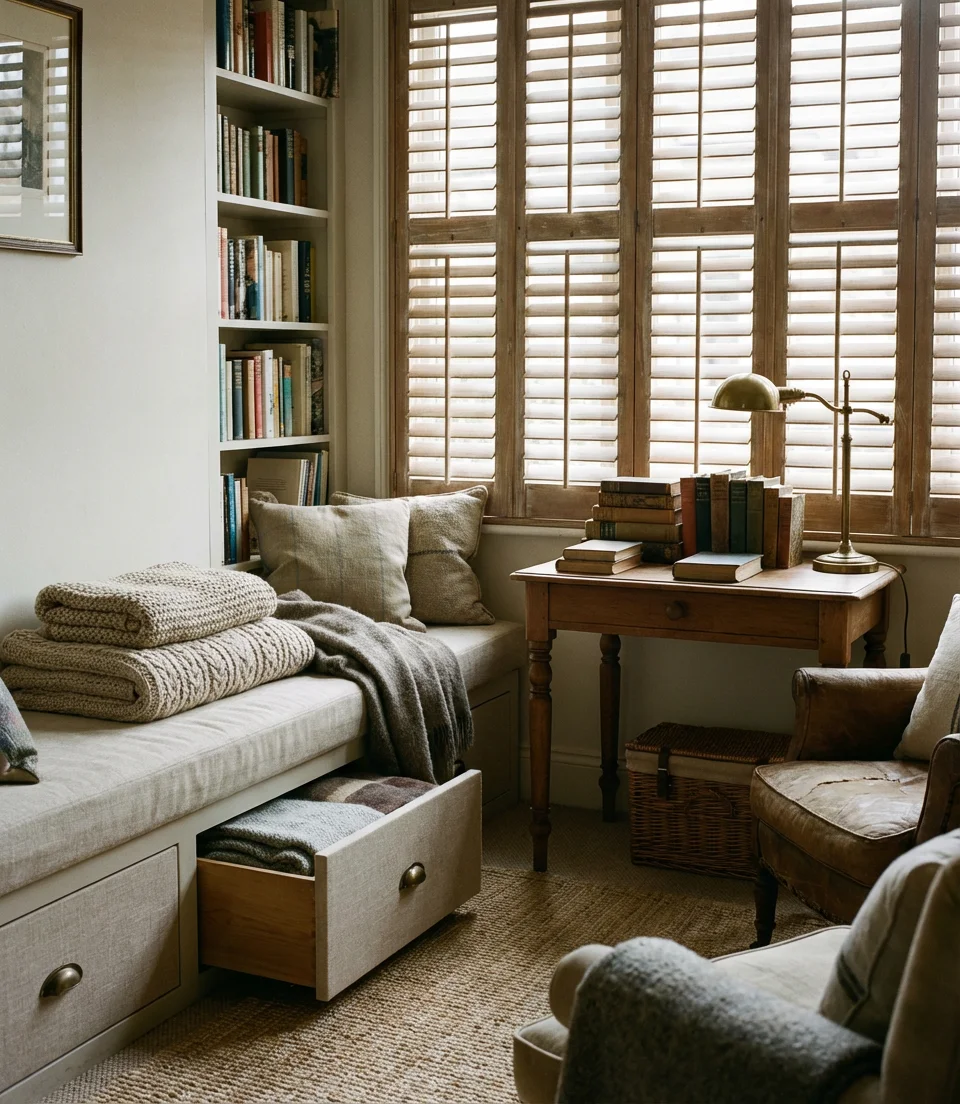
This approach suits period homes with alcoves or bay windows that would otherwise go underutilized. In craftsman bungalows across California or brownstones in Boston, these architectural features become productive spaces that honor the home’s original character while serving modern work needs.
9. Open Studio Layout with Flexible Zoning
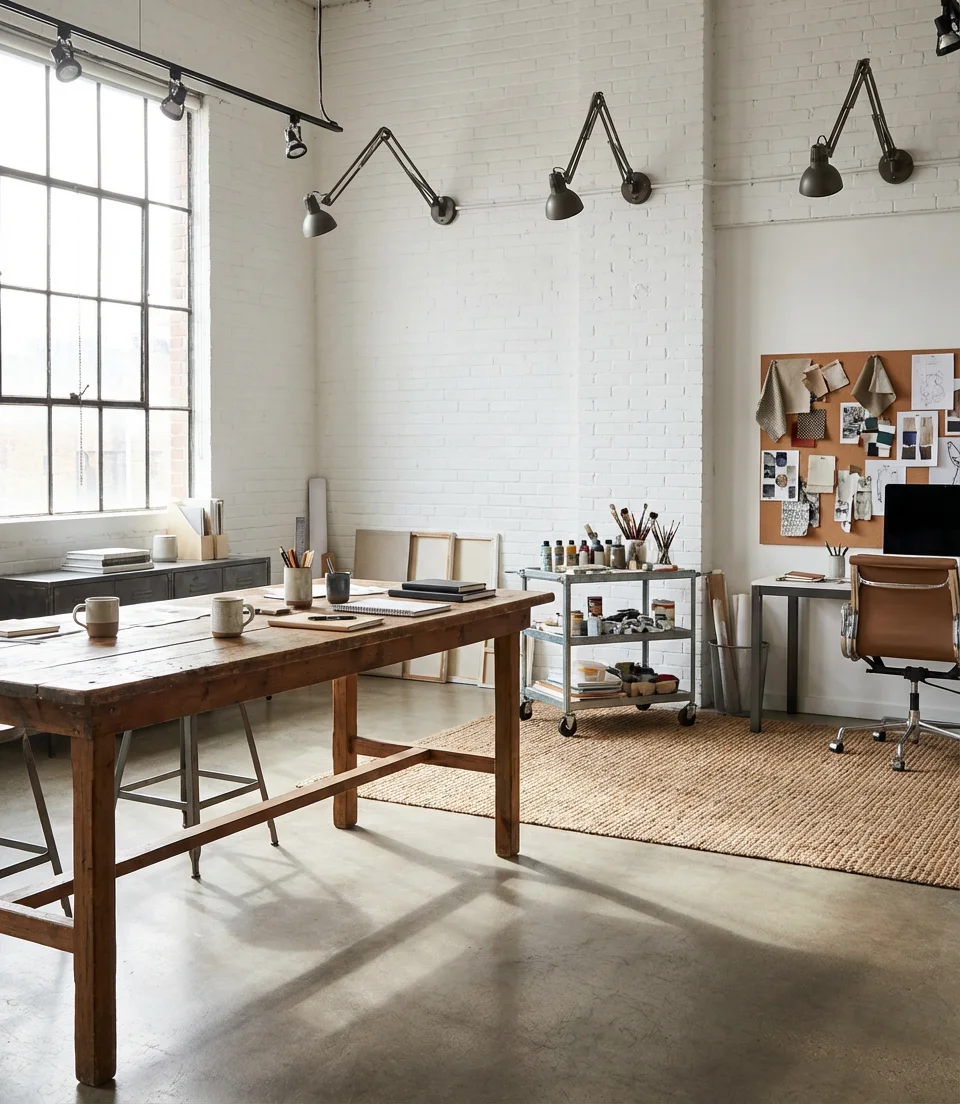
The open studio concept treats the home office as part of a larger creative ecosystem rather than a separate room. A large table serves multiple purposes—desk, crafting surface, meeting space—while a rolling cart holds supplies that can migrate around the room as needs change. The design emphasizes flexibility with modular furniture, area rugs that define different zones, and overhead track lighting that can be repositioned. This design is ideal for creative professionals who need space to spread out projects or collaborate with others occasionally.
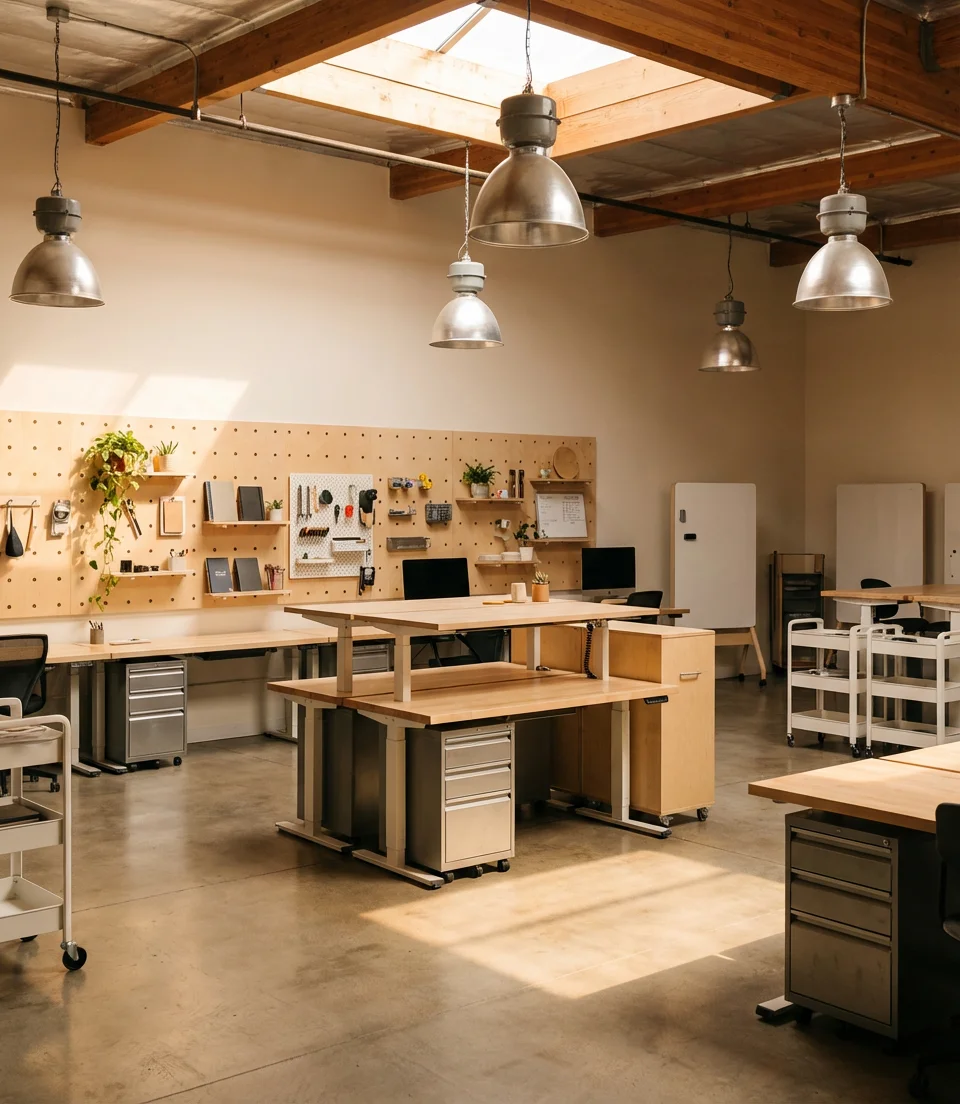
The common mistake here is trying to cram too much into the space or failing to establish clear zones. Use rugs, lighting, and furniture arrangements to create implied boundaries, even without walls. A $200 area rug can psychologically separate work from living space more effectively than any partition.
10. Small Space Murphy Desk with Vertical Storage
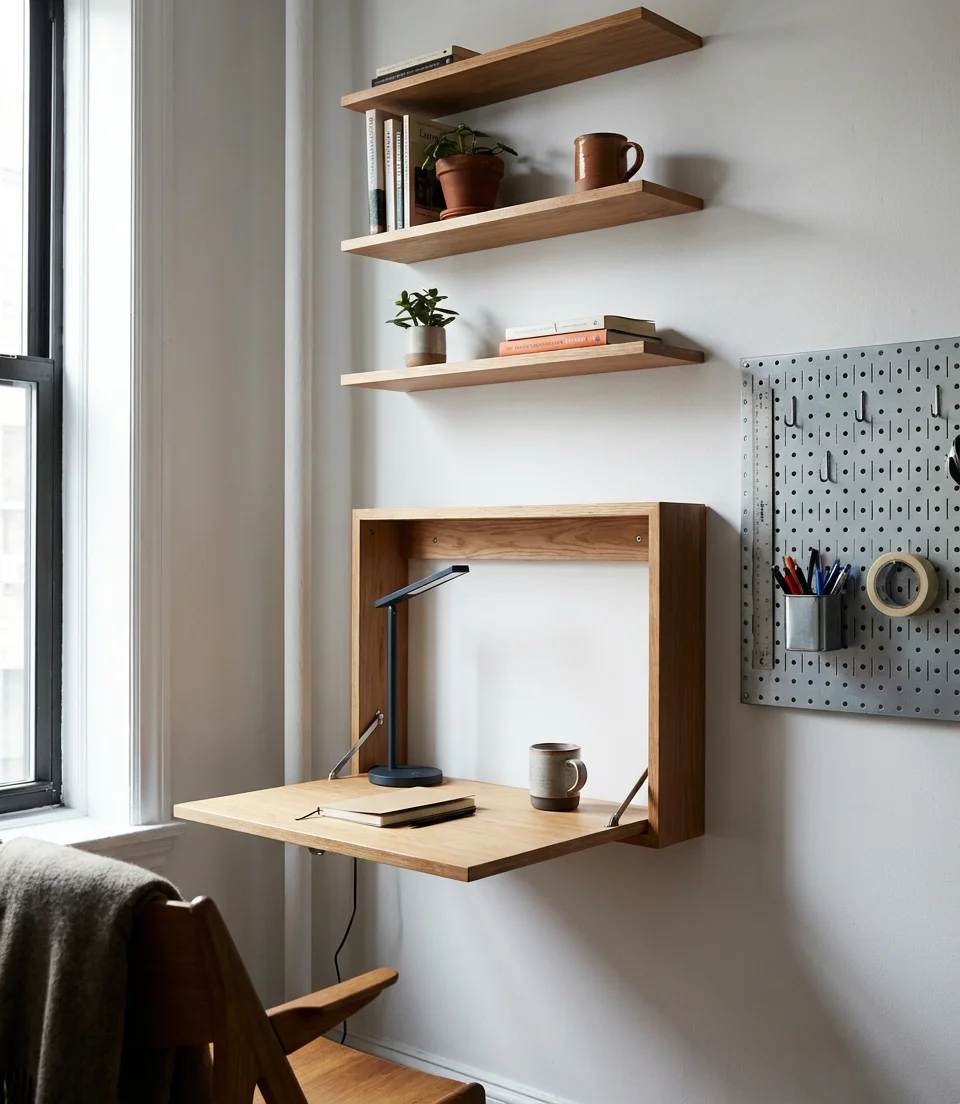
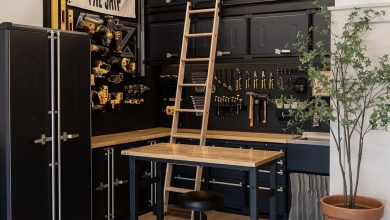
When space is limited, a wall-mounted fold-down desk transforms vertical real estate into a functional workspace. The desk surface folds up when not in use, revealing a narrow profile that might include a magnetic board or shallow shelves for supplies. Surrounding vertical storage—floating shelves, pegboard systems, or narrow cabinets—keeps essentials organized without encroaching on floor space. The simple color palette keeps the area feeling open rather than cramped.
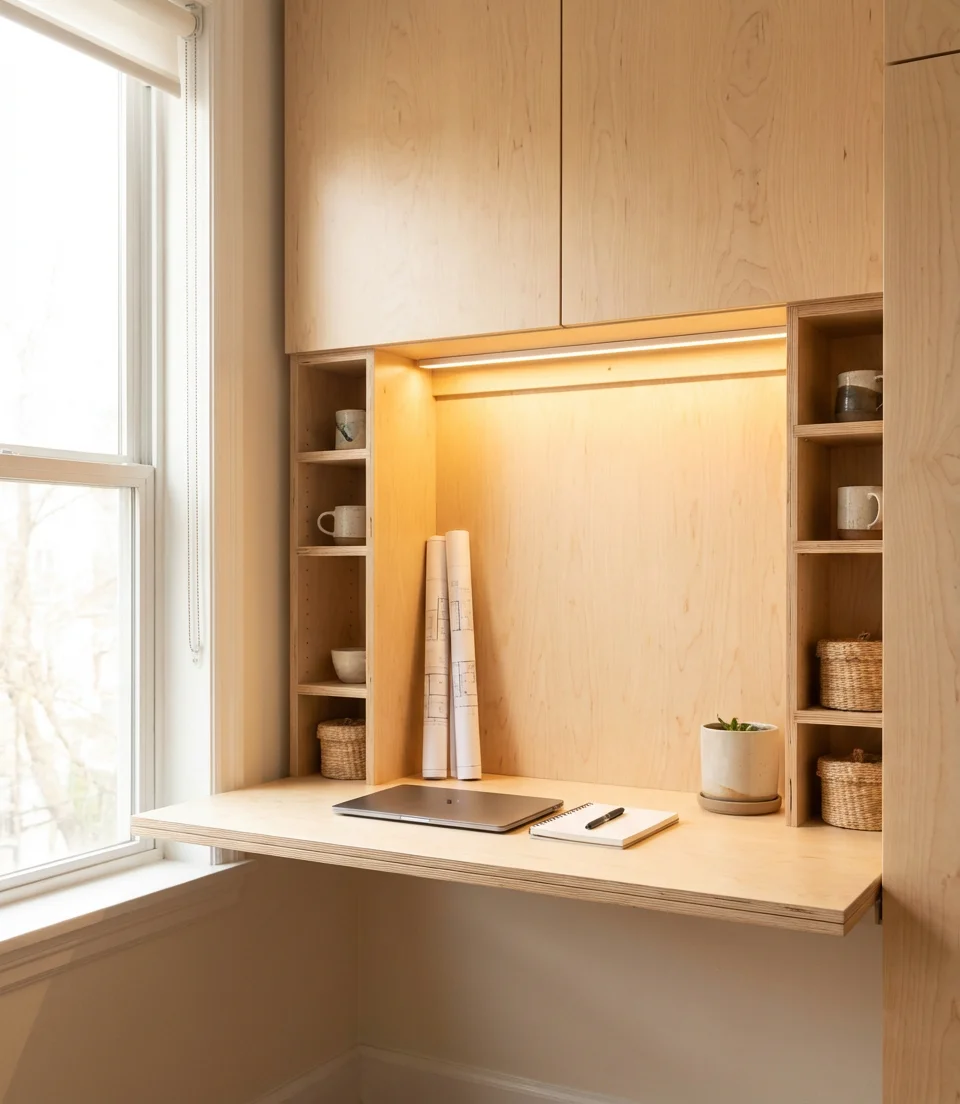
In urban apartments from San Francisco to Manhattan, where rent is calculated by the square foot, these solutions aren’t just clever—they’re essential. The investment ranges from $300 for DIY kits to $1,200 for custom carpentry, but the reclaimed floor space easily justifies the cost in tight quarters.
11. Luxury Home Office with Custom Millwork and Brass Details
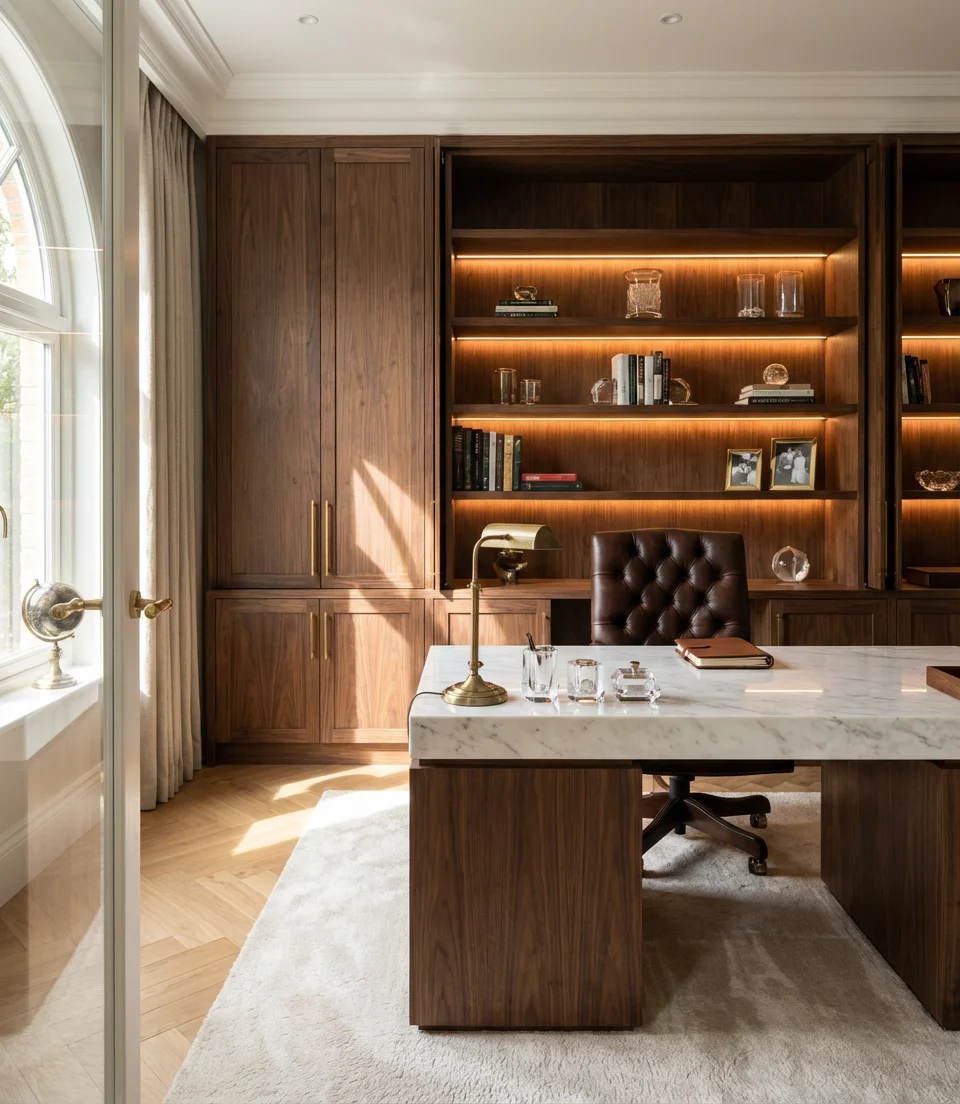
A luxury home office signals success through quality materials and custom details—think floor-to-ceiling built-ins with integrated lighting, a substantial desk in exotic wood or stone, and hardware in unlacquered brass that will develop character over time. The modern luxury approach balances traditional craftsmanship with contemporary lines, perhaps pairing Carrara marble tops with sleek leather seating and statement lighting from a recognized designer. Every detail feels considered, from the way drawer pulls catch the light to the satisfying weight of cabinet doors.
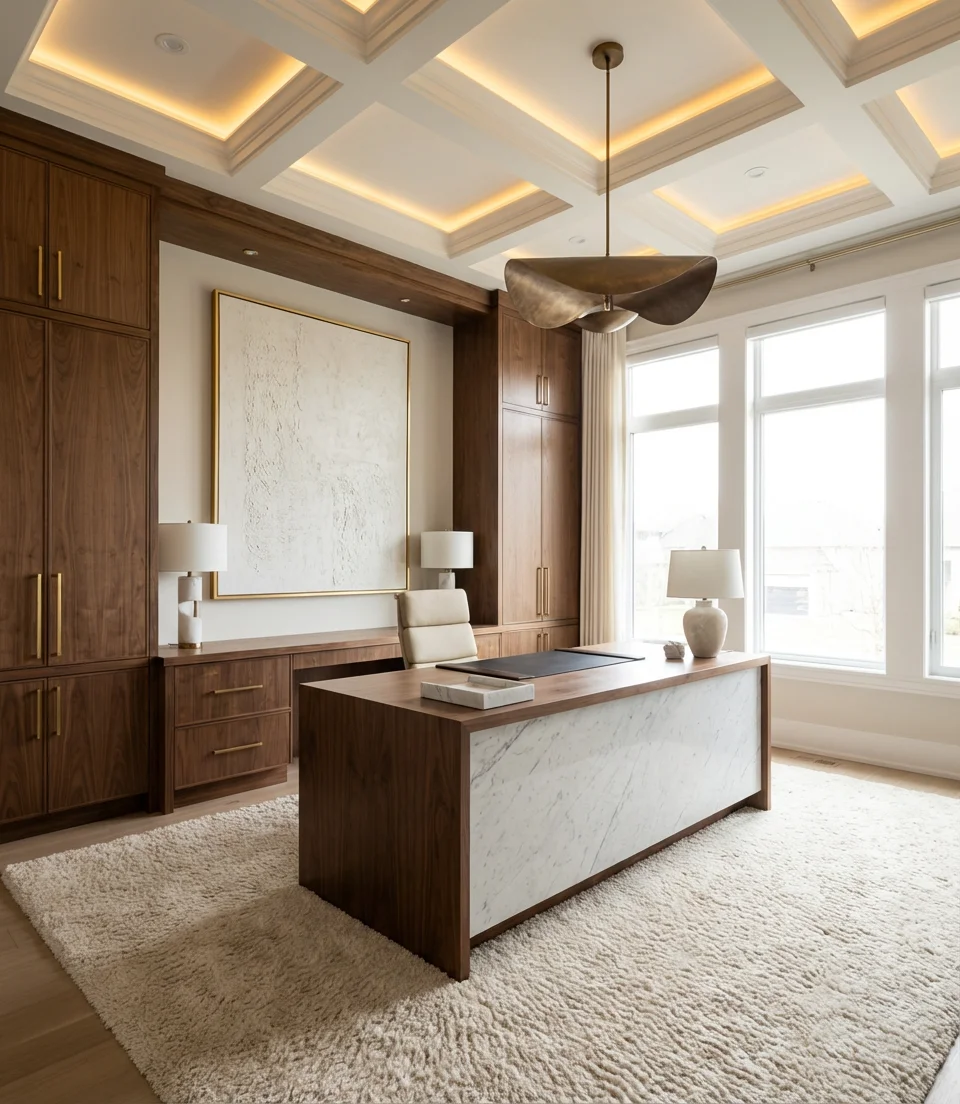
These spaces work best in executive homes or for professionals who regularly meet clients in their home office and need to project success. While custom millwork represents a significant investment—often $15,000 to $40,000 for a complete built-in system—the craftsmanship becomes a permanent home improvement that adds resale value beyond typical furniture purchases.
12. Modern Minimalist Office with Floating Desk and Hidden Storage
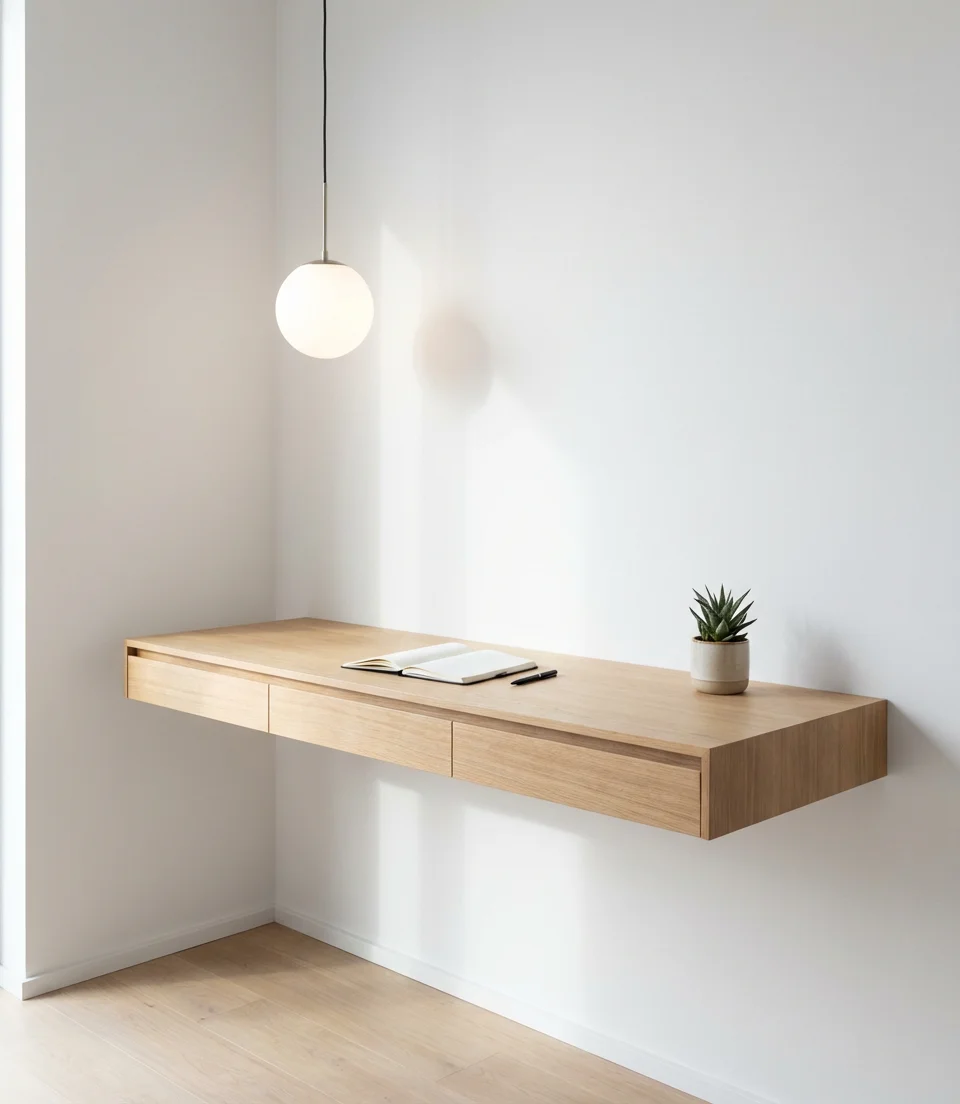
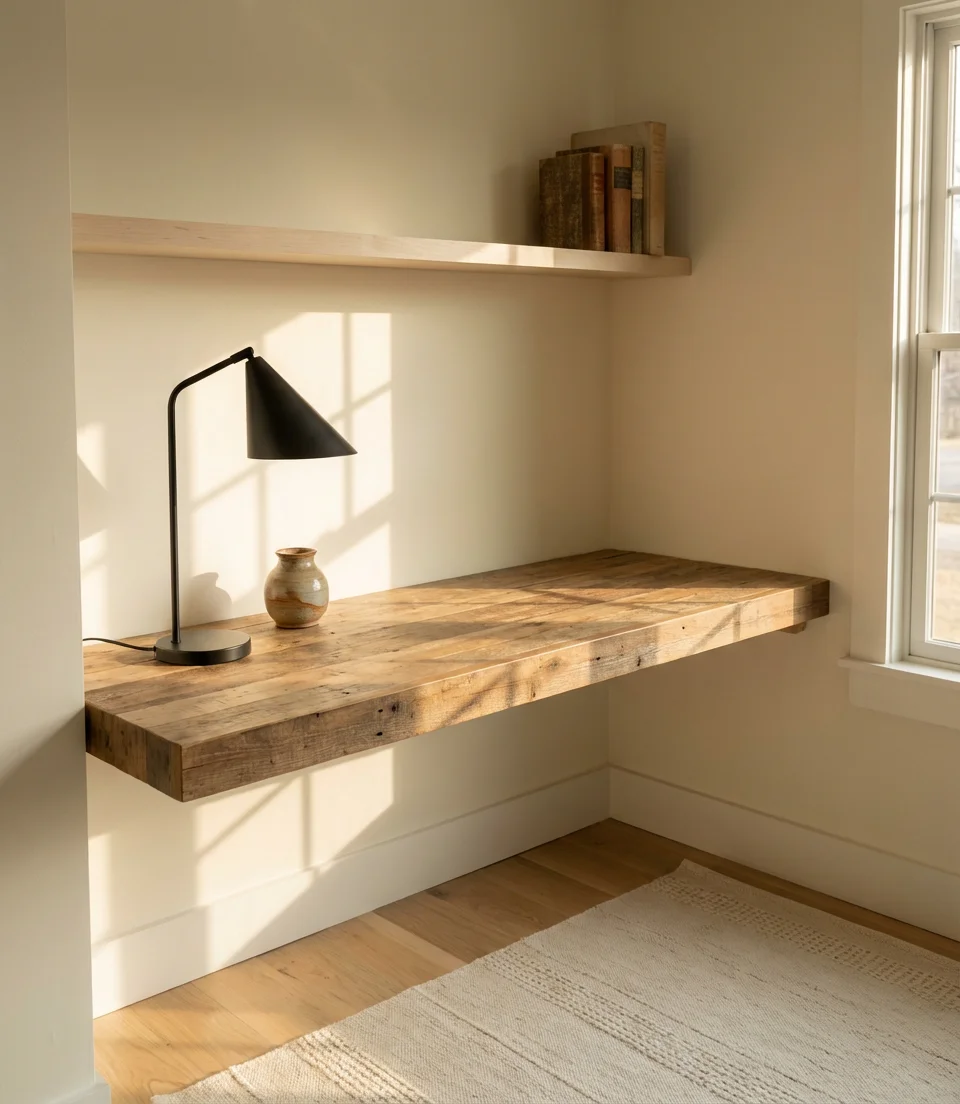
The modern minimalist approach pushes simplification to its logical conclusion—a floating desk cantilevered from the wall with no visible supports, paired with concealed storage that maintains clean sightlines. Every cable disappears into the wall, every supply tucks into handleless drawers that open with a touch, and the color palette restricts itself to two or three tones maximum. The result feels almost Zen-like in its refusal to accommodate visual clutter, creating a backdrop that allows focus to land entirely on the work at hand.
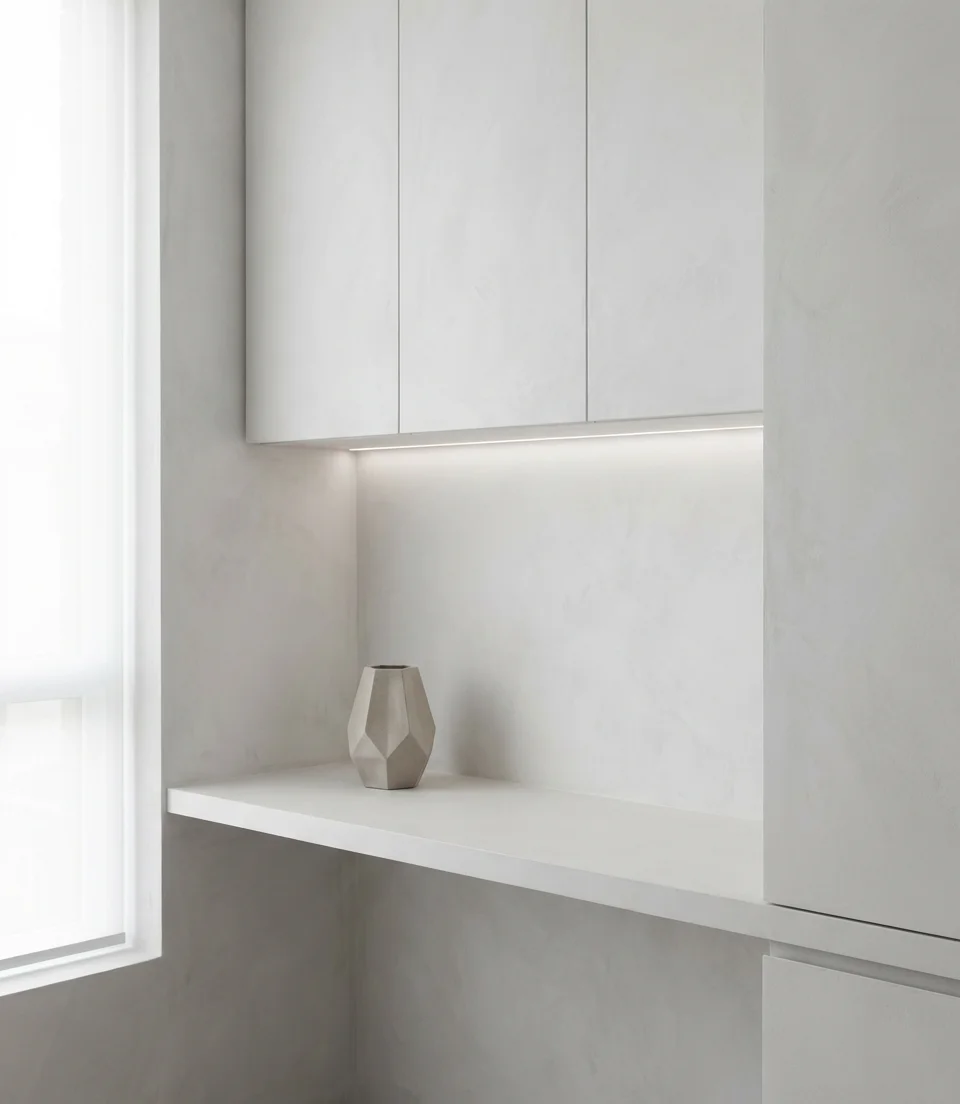
This aesthetic demands discipline—mail, coffee cups, and random notes have nowhere to hide, which means you’ll need rigorous daily habits to maintain the look. But for those who thrive on order, the mental clarity that comes from a completely uncluttered environment can significantly boost productivity and reduce decision fatigue.
13. Professional Video Recording Studio Setup
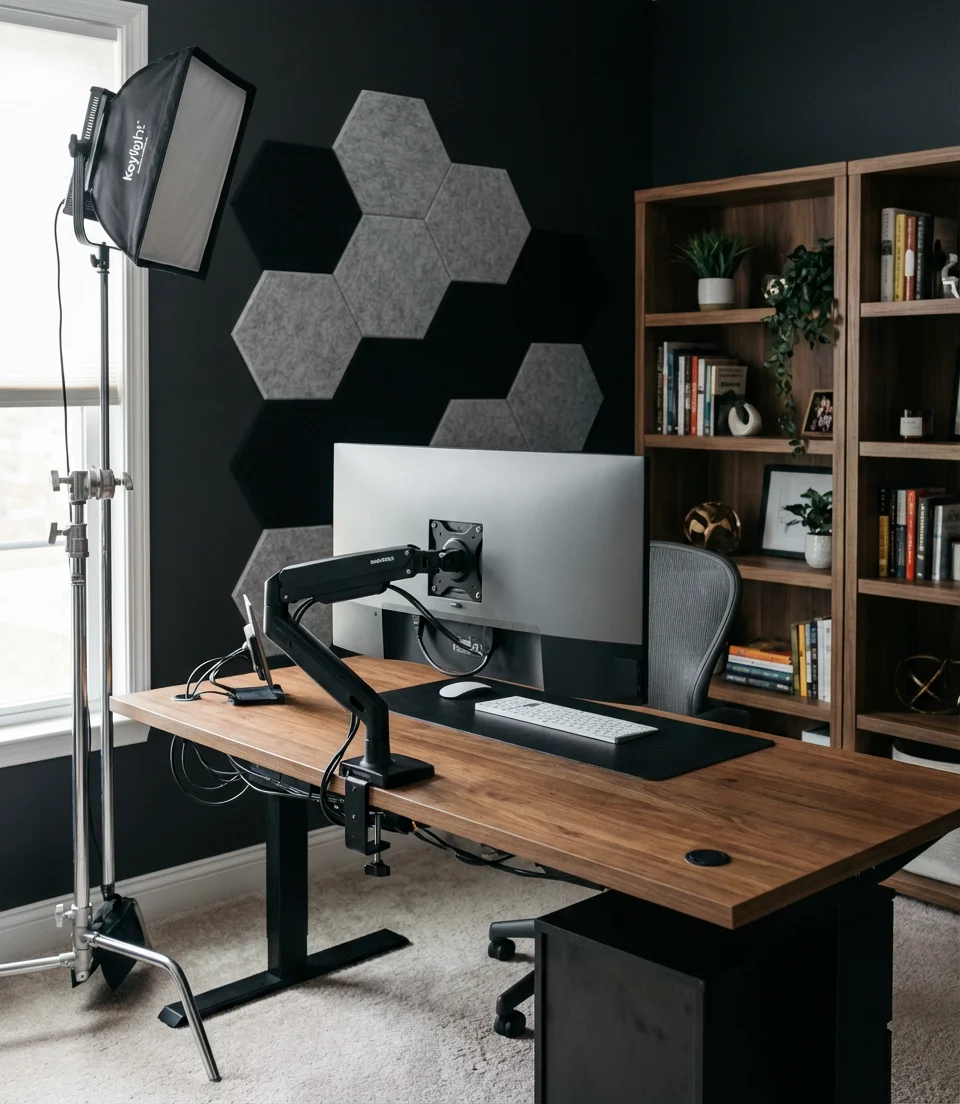
As video meetings and content creation become standard parts of many careers, the professional home office increasingly incorporates broadcast-quality elements. This means a dedicated camera position with key and fill lighting, acoustic panels disguised as decorative wall treatments, and a carefully composed background that reads well on camera—perhaps a styled bookshelf or subtle greenery. The modern challenge is making these technical requirements feel integrated rather than bolted on, using design elements like picture lights and floating shelves that serve dual purposes.
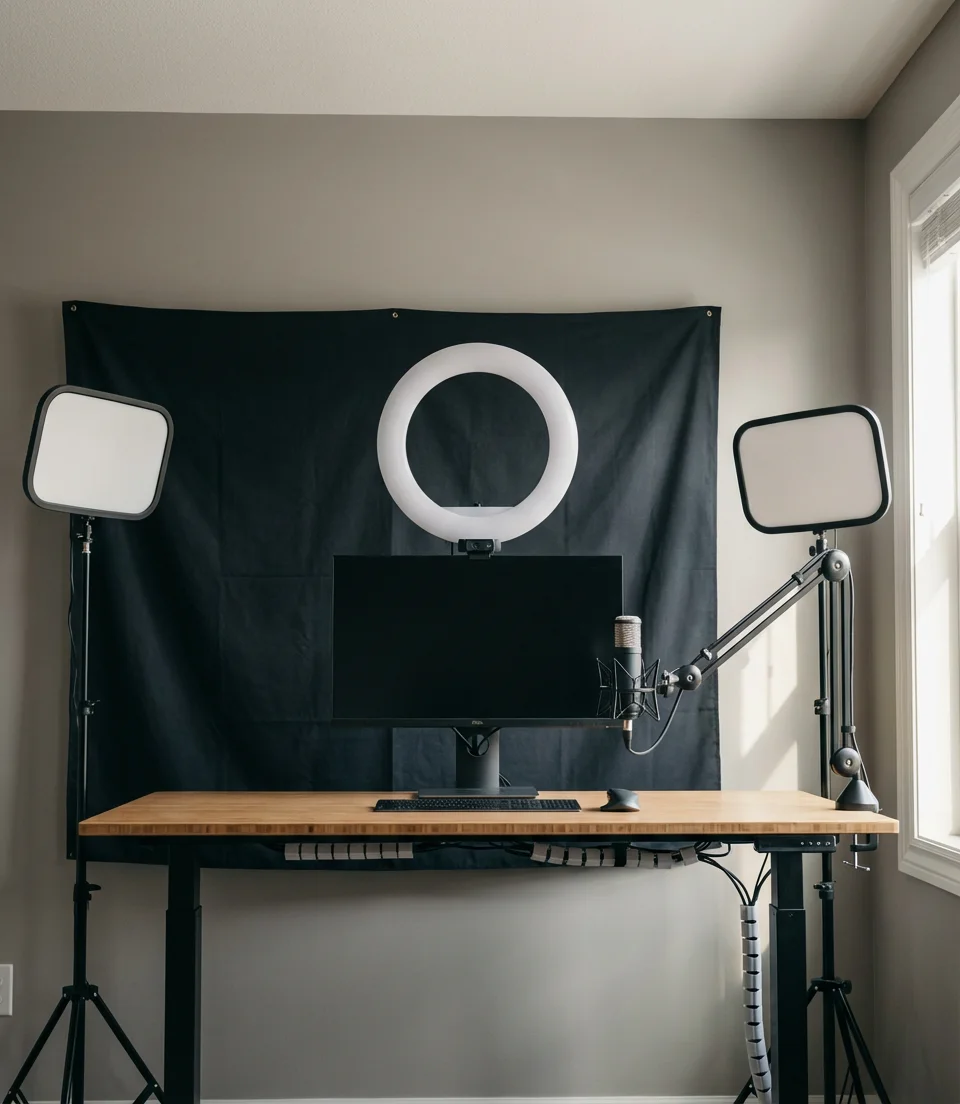
Real estate agents, therapists, consultants, and educators increasingly need this capability. The good news is that professional results don’t require a huge budget—a $300 investment in lighting and a $100 acoustic panel can transform video quality more than a $2,000 camera upgrade, and these elements can be incorporated into almost any office style.
14. Inspiration Gallery Wall Office with Curated Creativity
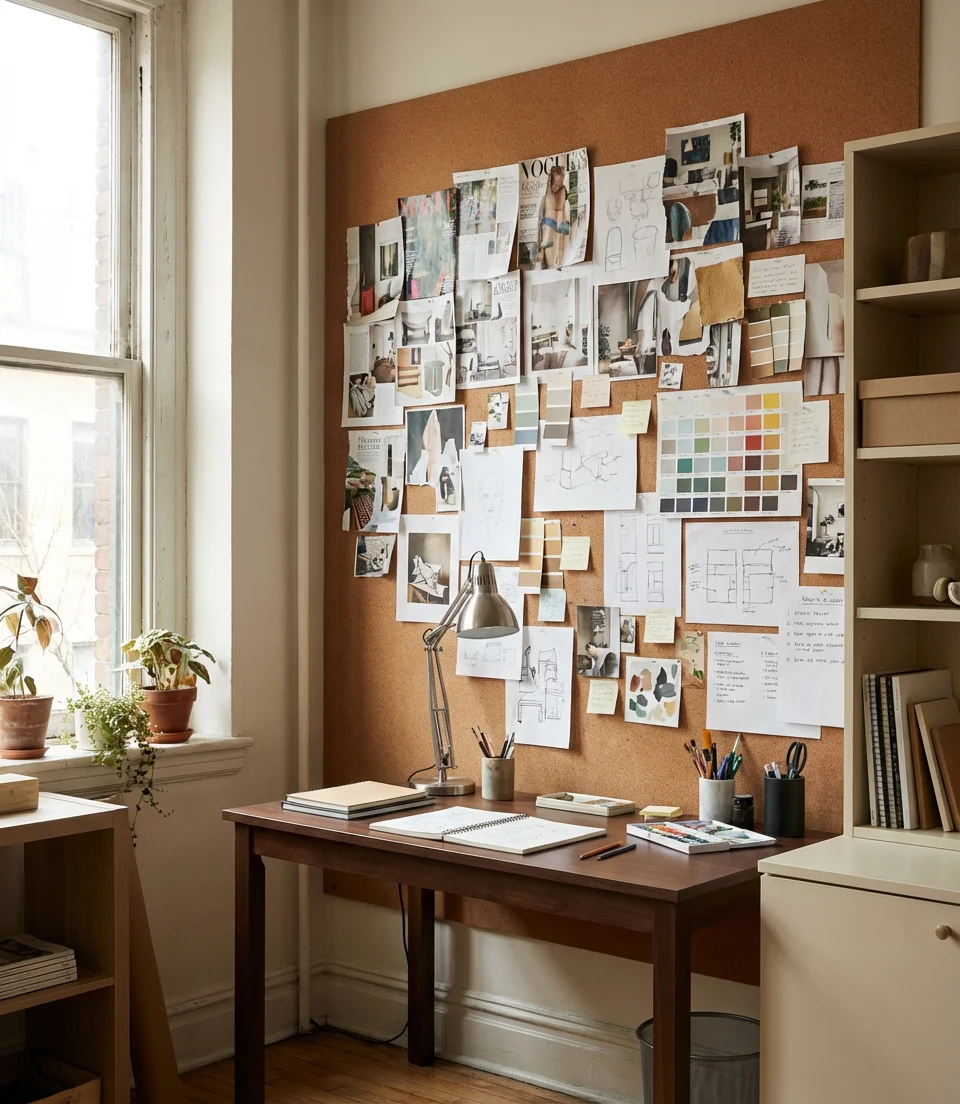
An inspiration-driven office caters to visual thinkers and creative professionals, offering a large-scale gallery wall or pinboard system for displaying, rearranging, and evolving ideas. This might include a grid of framed prints, a cork wall edge-to-edge, or a magnetic paint surface that accommodates changing displays. The desk itself stays relatively simple to provide counterbalance, but the wall becomes a working surface—part mood board, part reference library, and part visual journal of ongoing projects and aspirations.
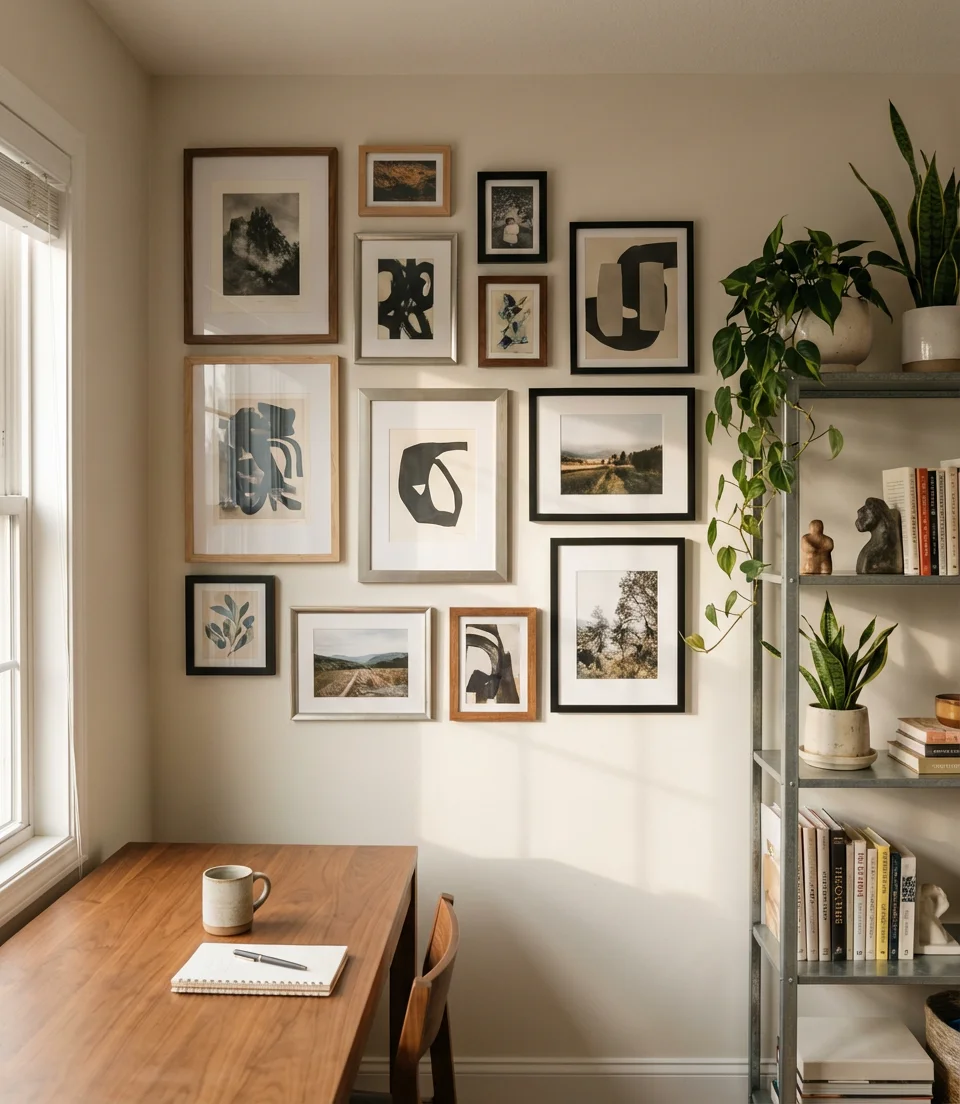
Where this layout works best is in homes with dedicated office rooms rather than shared spaces, since the visual density can overwhelm a bedroom or living area. The approach also suits industries where visual reference is essential—graphic design, interior design, fashion, and architecture—where the wall literally becomes a tool for work rather than just decoration.
15. Dual Workstation Office for Shared Spaces
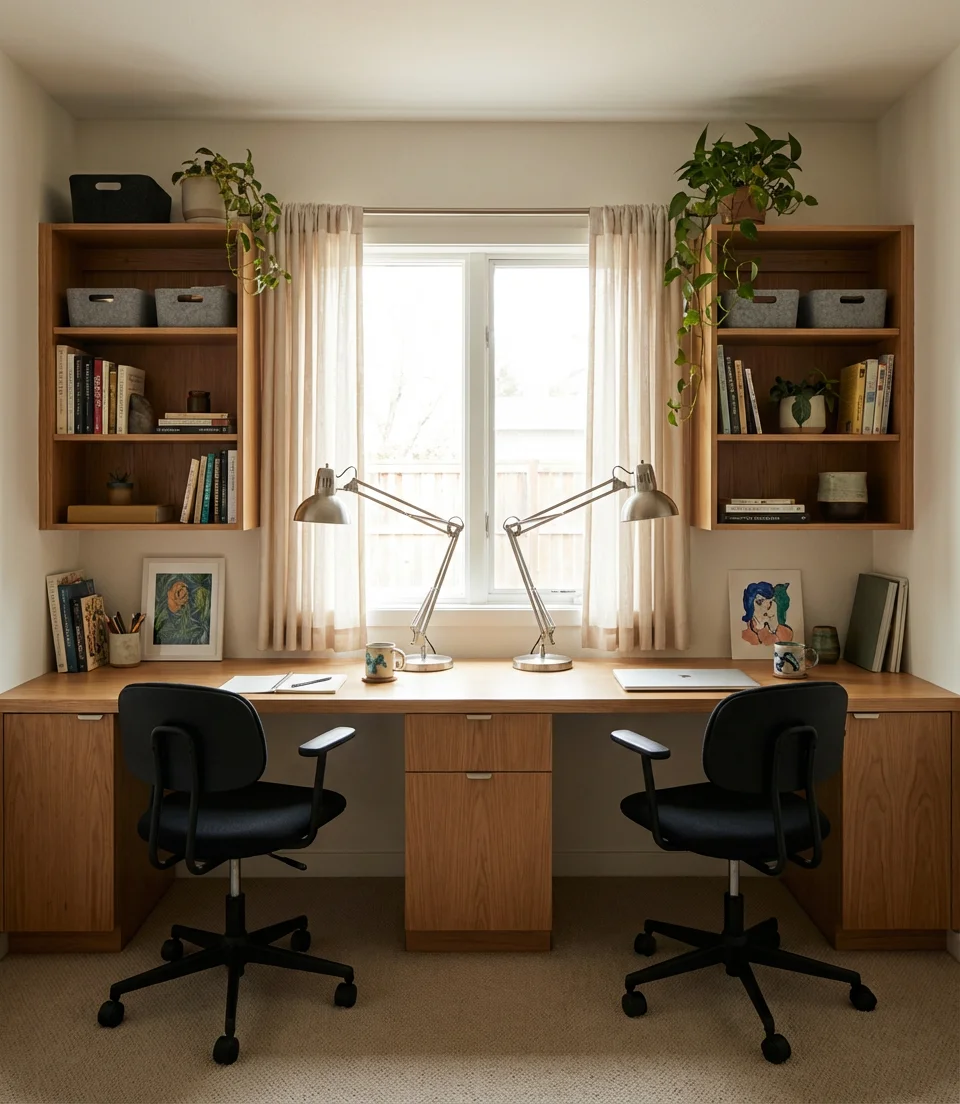
When two people share a home office, thoughtful design prevents territorial conflicts and ensures both users feel the space serves them equally. A long built-in desk spanning one wall with two distinct zones, back-to-back desks that provide privacy without isolation, or an L-shaped configuration that gives each person their wall orientation can all work. The key is providing equal access to natural light, adequate storage for both users, and some way to personalize individual areas while maintaining overall interior coherence.
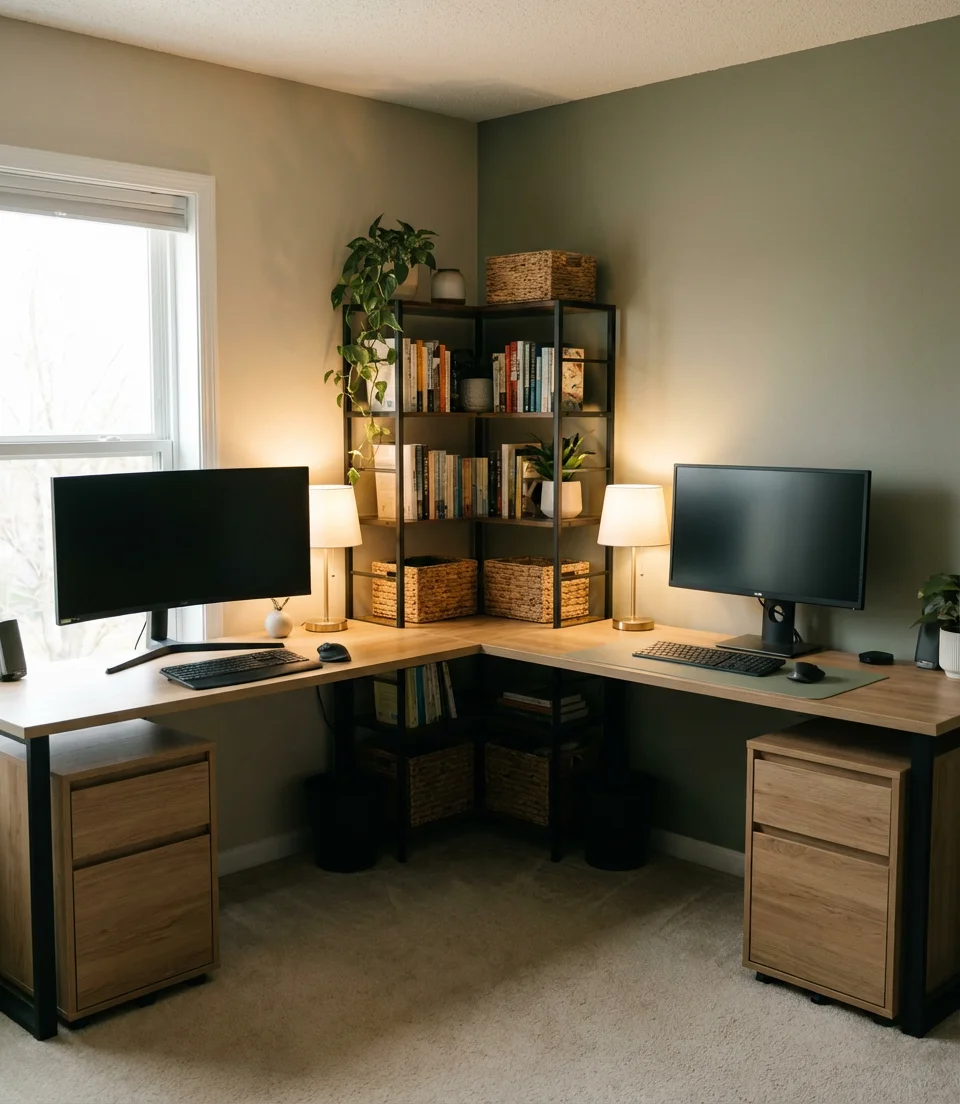
The most common mistake in dual offices is one person ending up with the “leftover” space or less favorable orientation. Measure carefully and ensure both positions have proper desk depth, excellent sightlines that avoid staring at walls, and enough electrical outlets and data connections. Spending an extra $500 on symmetrical custom desk sections saves years of low-grade resentment.
16. Cool Mid-Century Modern Office with Vintage Finds
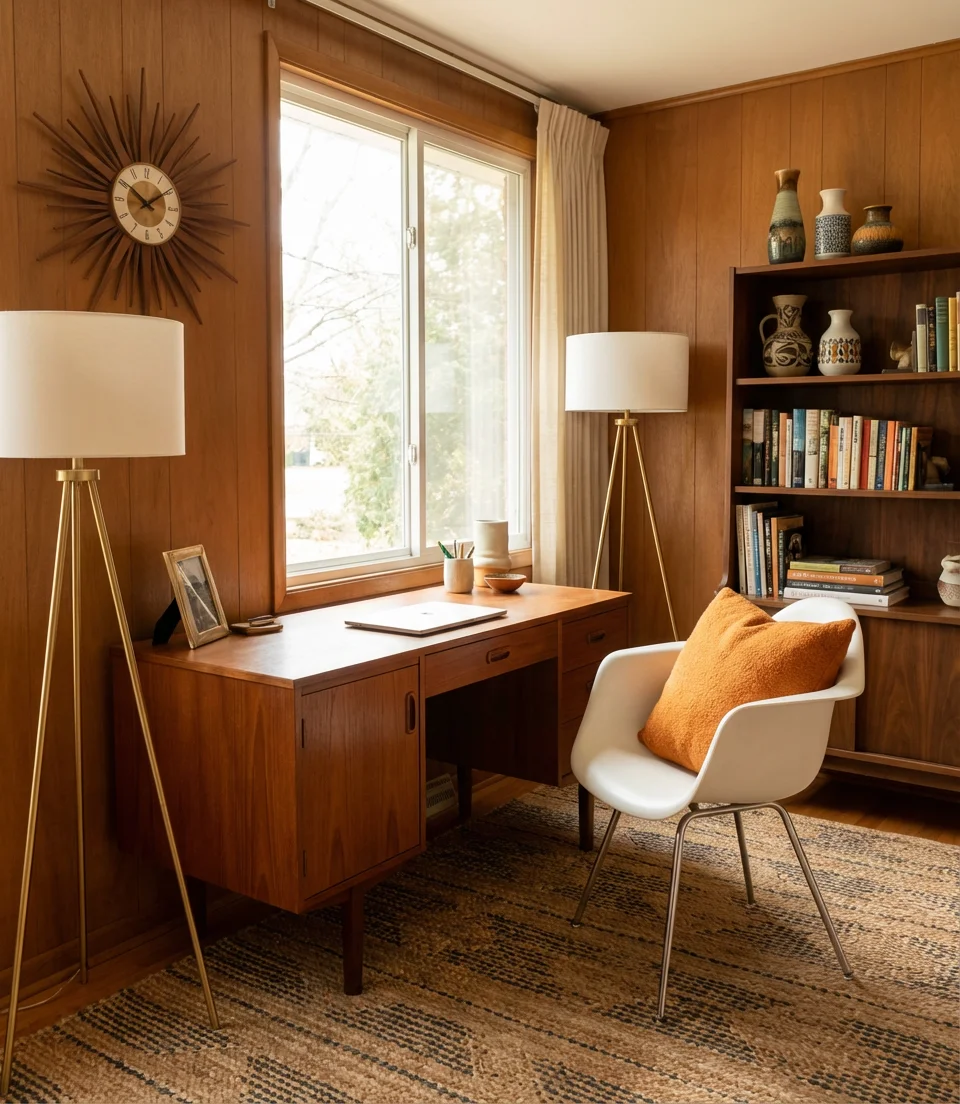
The enduring appeal of mid-century design lies in its organic curves, honest materials, and human-scale proportions—all of which translate beautifully to home offices. A cool interpretation might feature a teak desk with tapered legs, an Eames molded chair in fiberglass, a George Nelson clock on the wall, and ceramic accessories in burnt orange or avocado green. The aesthetic celebrates wood grain and sculptural form, creating spaces that feel both nostalgic and surprisingly contemporary in their clean-lined restraint.
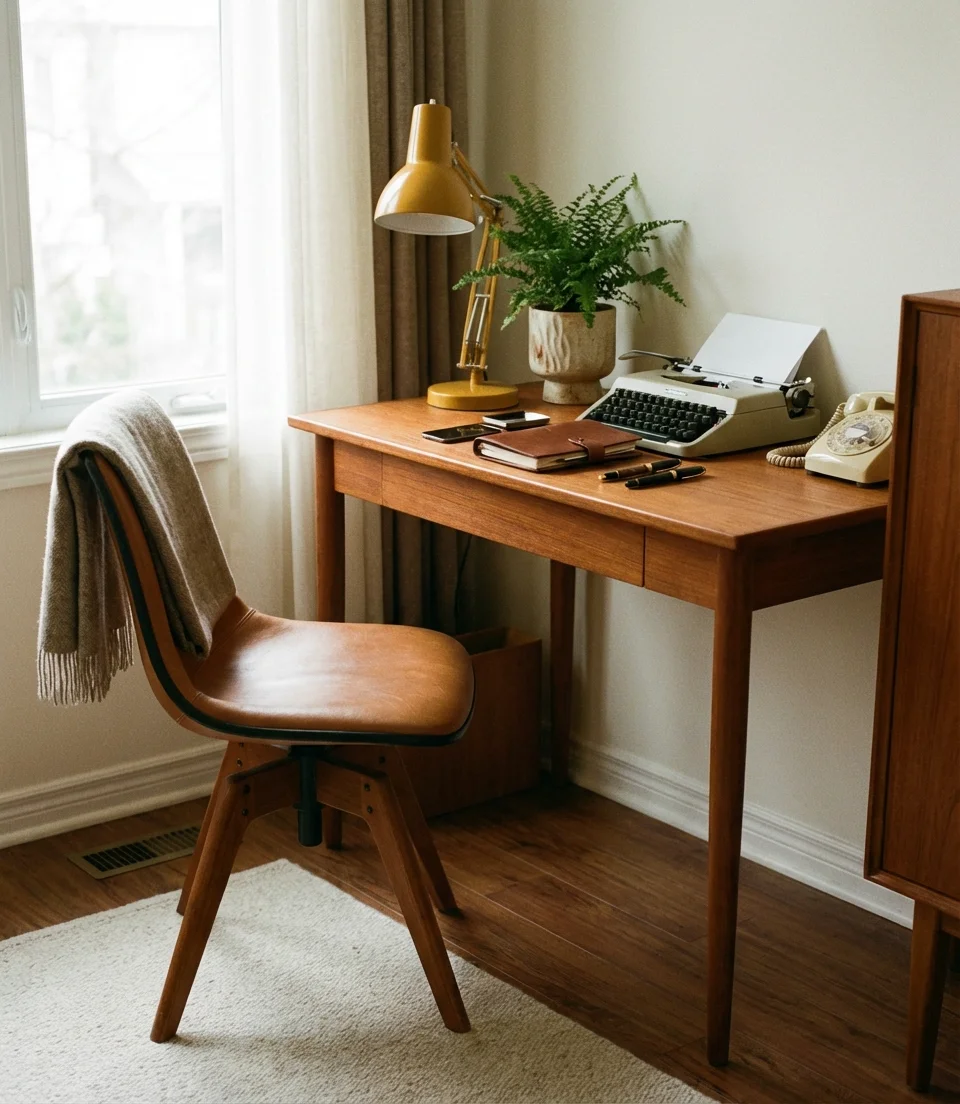
Authentic vintage pieces from the 1950s–70s have appreciated significantly in value, but reproductions from manufacturers like West Elm, Article, or Room & Board capture the style at accessible price points. The look works particularly well in ranch homes, split-levels, or any mid-century architecture where the office can harmonize with the building’s original design intent.
17. Adjustable Desk Office with Ergonomic Focus
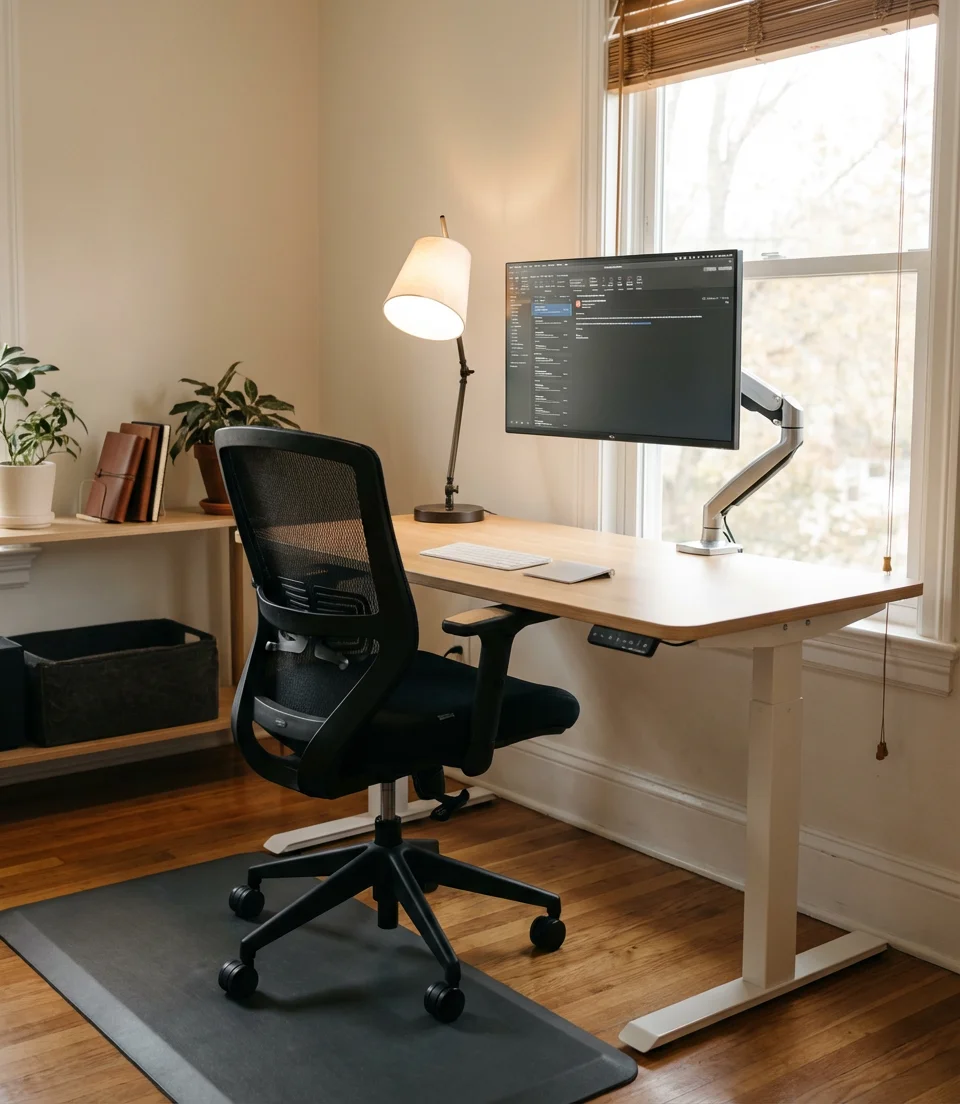
Many knowledge workers now consider prioritizing physical health through workspace design as essential. An adjustable desk serves as the foundation—electric height adjustment that moves smoothly between sitting and standing positions—paired with an ergonomic chair that supports proper posture, a monitor arm that positions screens at the correct eye level, and an anti-fatigue mat for standing intervals. The professional appearance doesn’t suffer when these functional elements come in quality finishes and thoughtful designs that prioritize both body mechanics and aesthetics.
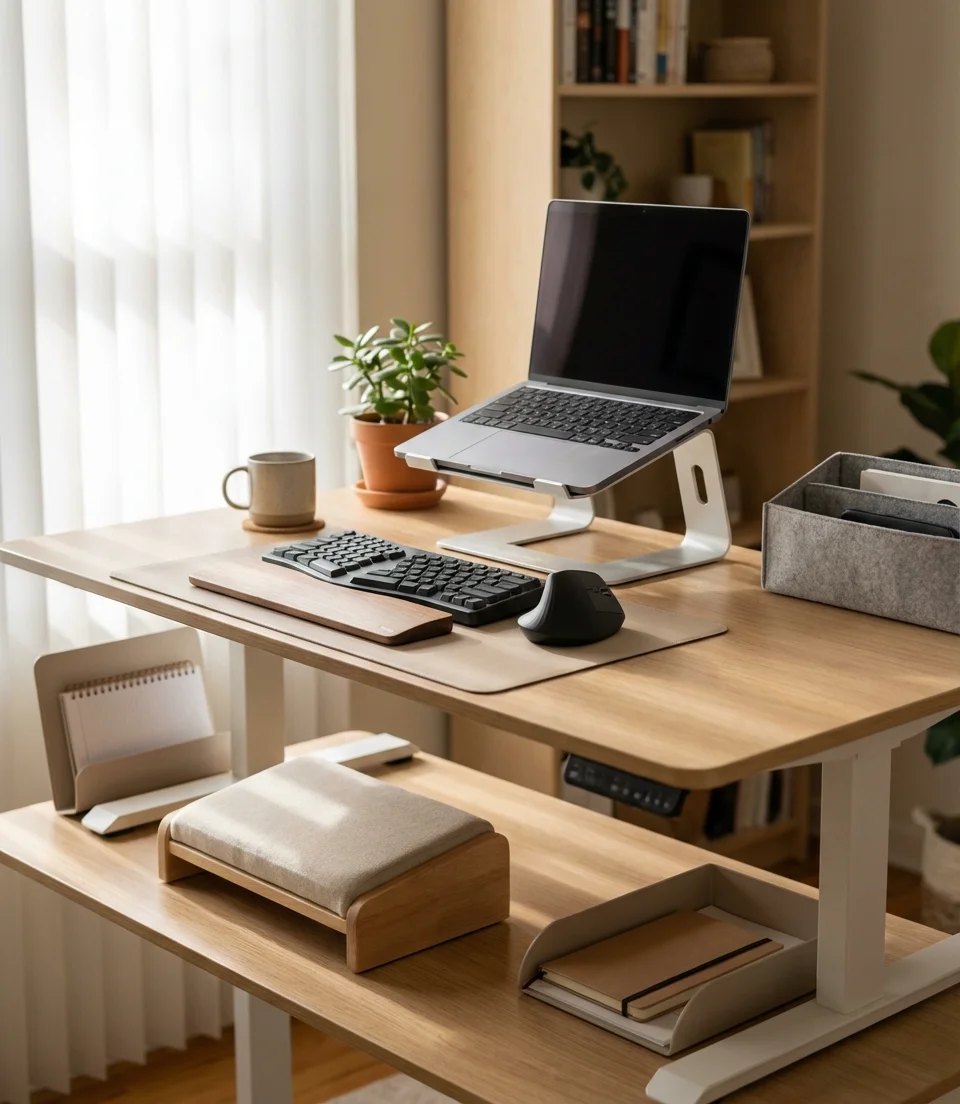
Across America, from tech workers in Austin to financial analysts in Charlotte, the shift to home-based work has made people more aware of how workspace affects their bodies. While a complete ergonomic setup might cost $1,500-$3,000, the reduction in back pain, neck strain, and long-term musculoskeletal issues easily justifies the investment for anyone spending 40+ hours weekly at their desk.
18. Dark Academia Office with Library Atmosphere
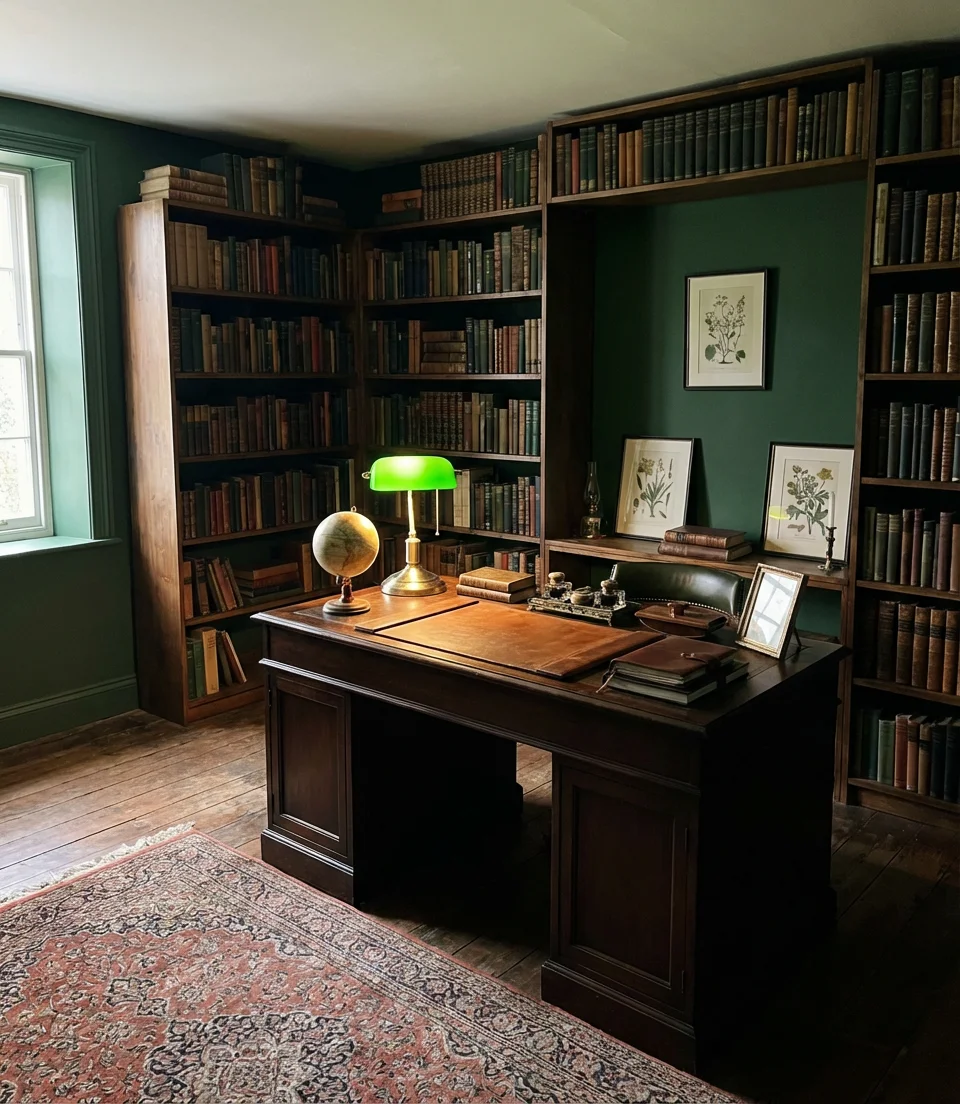
The dark academia aesthetic embraces the romance of scholarship through rich, moody colors and scholarly accents. Imagine walls painted in deep forest green or charcoal, floor-to-ceiling bookshelves packed with hardcovers, a desk lamp with a green glass shade casting warm pools of light, and vintage maps or botanical prints in gilded frames. The cozy atmosphere encourages deep focus and contemplation, feeling worlds away from the bright, airy offices that dominate inspiration boards—this is for readers, writers, and thinkers who find comfort in intellectual surroundings.
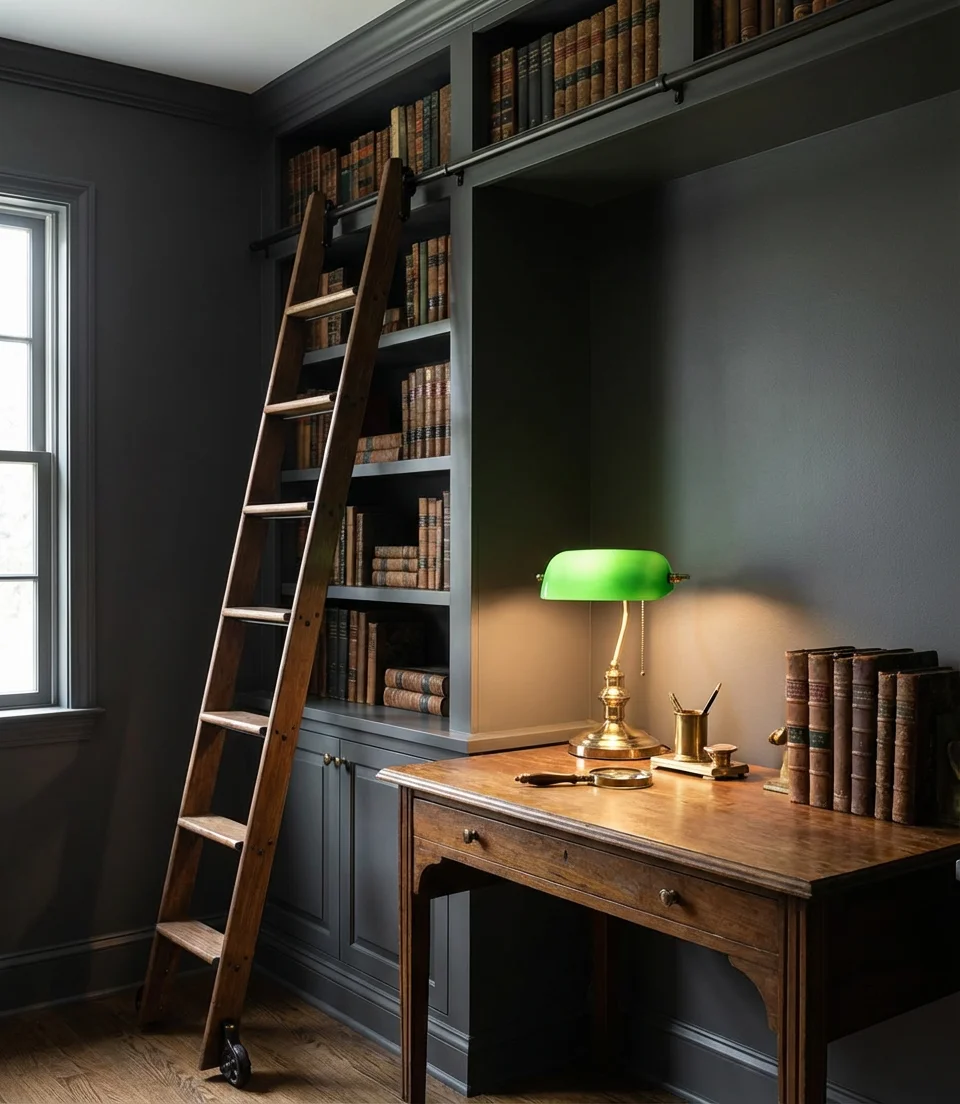
This color scheme works beautifully in older homes with existing architectural details—Victorian painted ladies in San Francisco, brownstones in Philadelphia, or historic homes throughout New England. The darker palette actually makes small rooms feel more intimate rather than cramped, though you’ll want to ensure adequate task lighting since ambient light won’t penetrate the way it would in lighter schemes.
19. Coastal-Inspired Office with Natural Textures
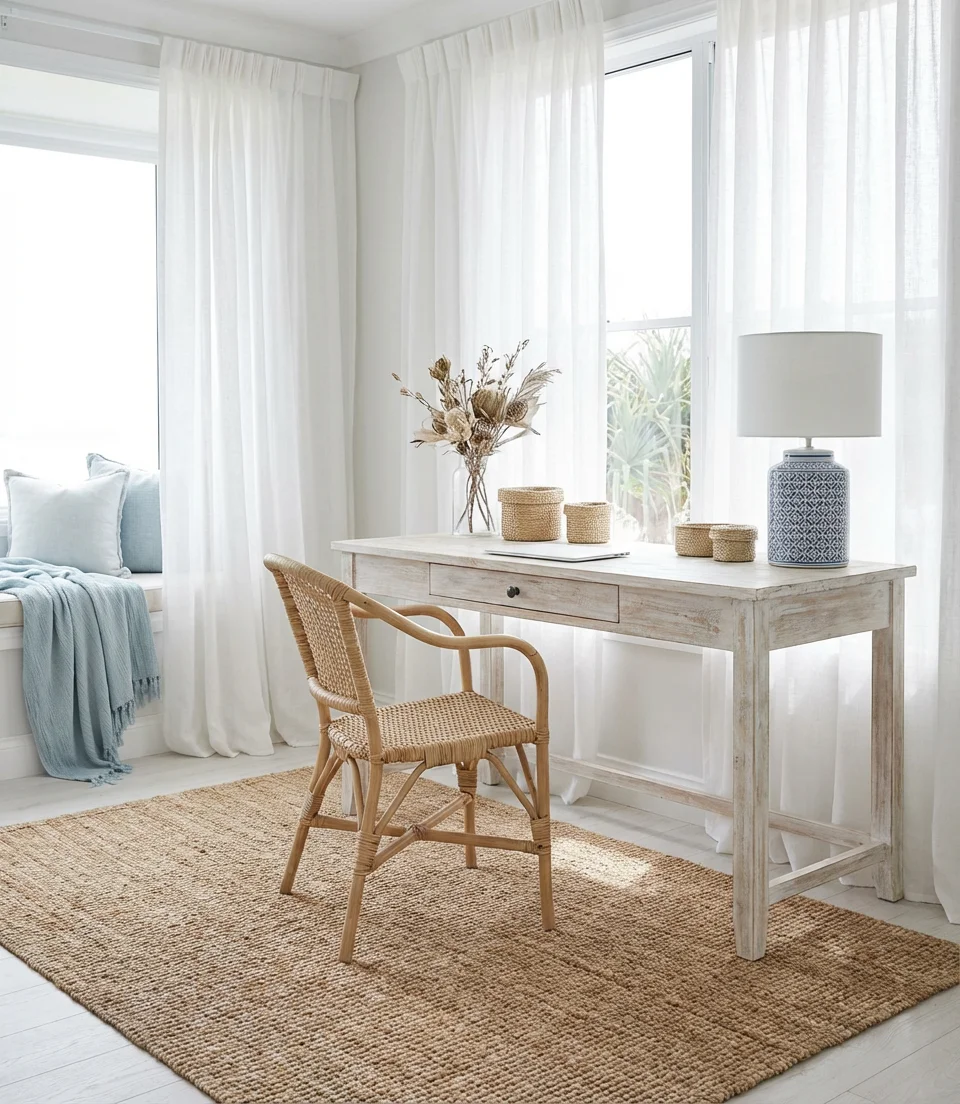
A coastal approach to office design brings beachy calm indoors through a palette of soft blues, sandy neutrals, and crisp whites, layered with natural textures like rattan, jute, and weathered wood. A whitewashed desk paired with a woven chair, sheer linen curtains that diffuse bright light, and subtle nautical touches—perhaps a piece of driftwood or coral—create an environment that feels like a permanent vacation. The simple aesthetic avoids literal beach kitsch in favor of materials and tones that evoke seaside living without announcing it.
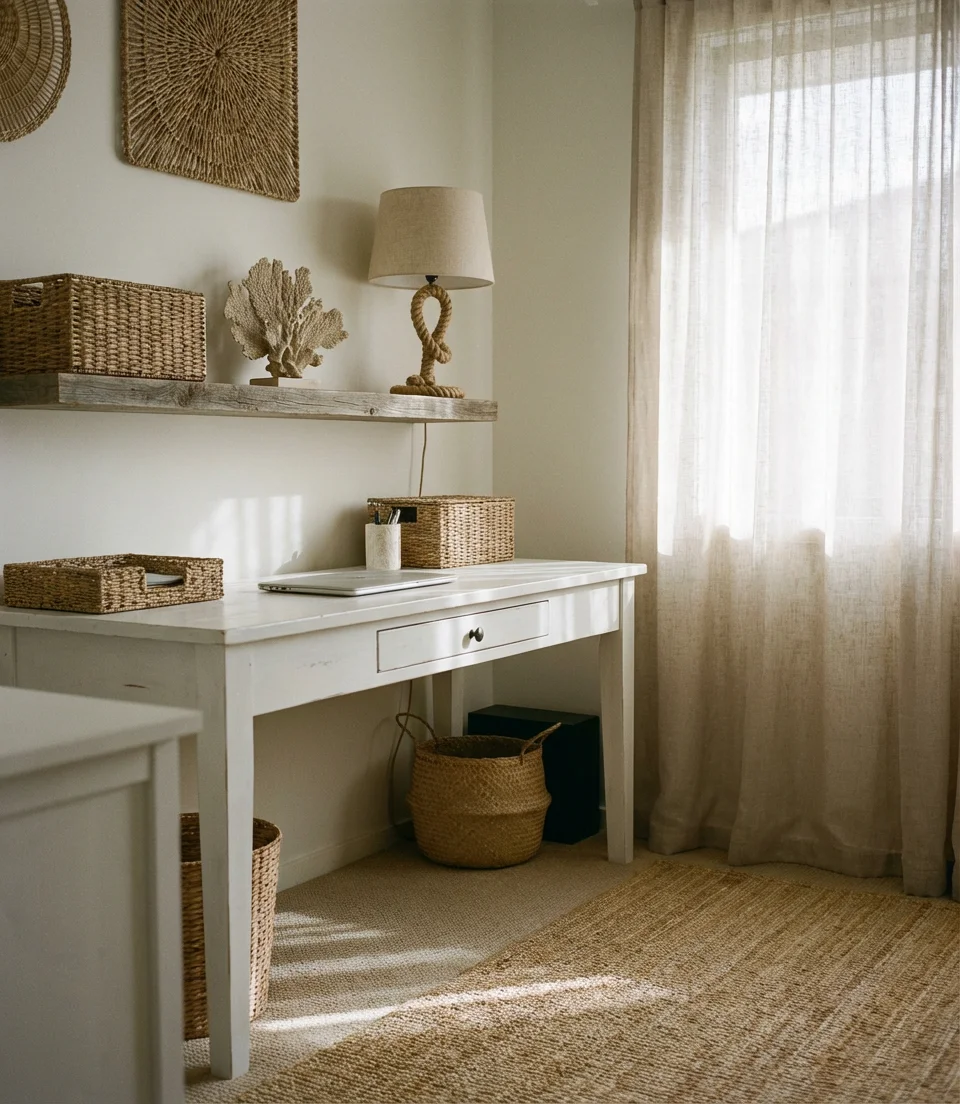
This style obviously thrives in actual coastal locations—beach houses in the Carolinas, Florida condos, California bungalows—but it also transplants successfully to inland locations where people want to capture that sense of ease and connection to nature. The light palette and natural materials work particularly well in rooms with ample natural light but without specific architectural distinction.
20. Artistic Maximalist Office with Bold Color and Pattern
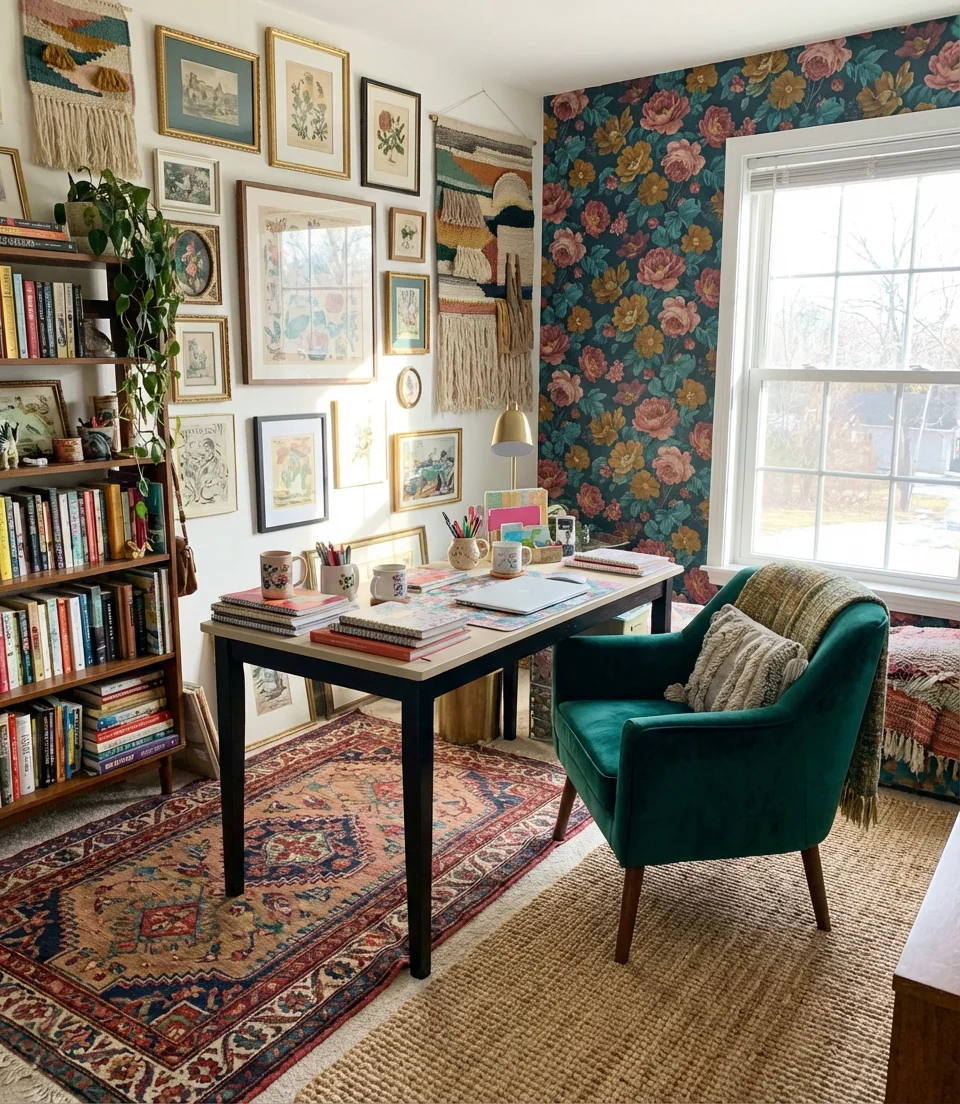
Not everyone finds inspiration in minimalism—some minds thrive on visual richness and creative abundance. A maximalist office might feature wallpaper in a bold pattern, a jewel-toned velvet chair, collected art in mismatched frames covering every wall, and a desk piled with colorful objects that spark joy and creativity. The cool factor comes from confident curation rather than restraint, creating a space that feels deeply personal and energizing rather than overwhelming. The key is intention—every element chosen deliberately rather than accumulated randomly.
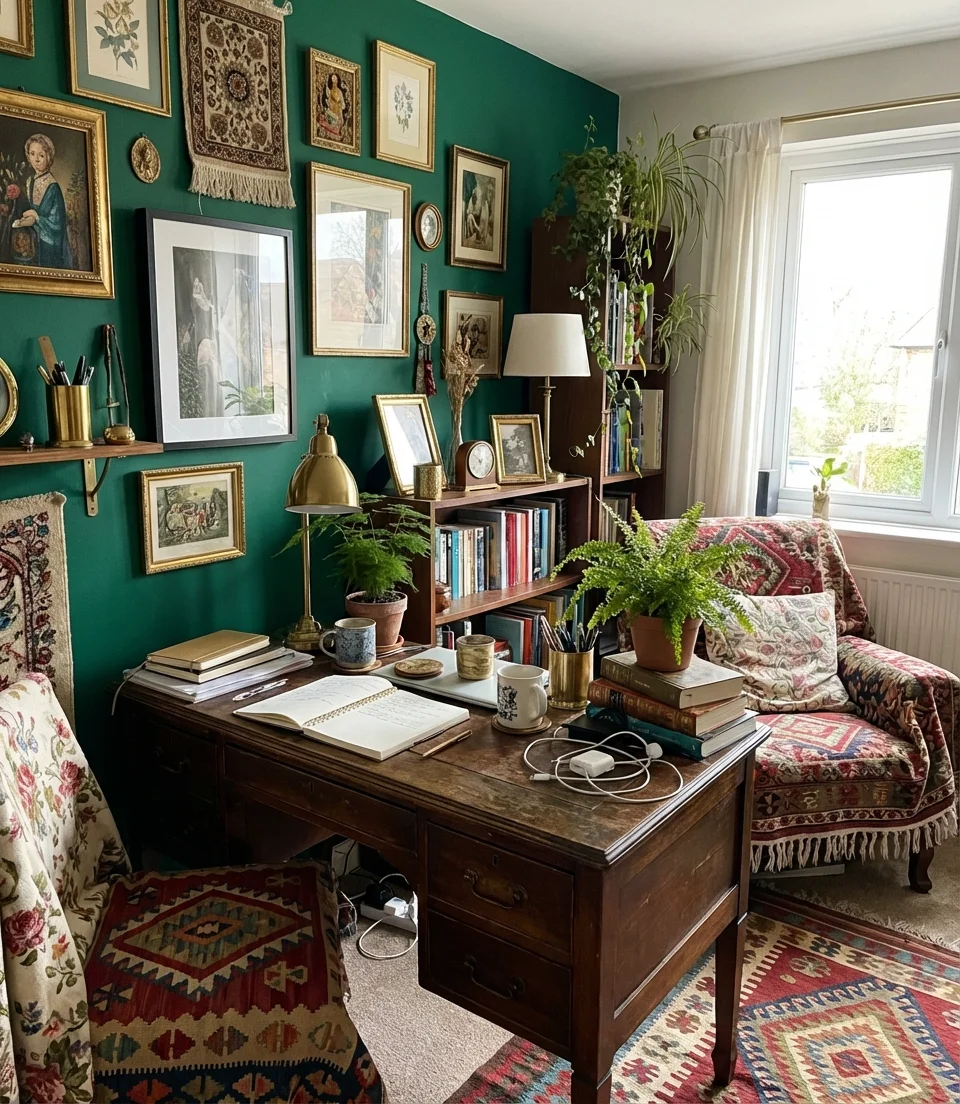
A design professor I know in Portland created a maximalist office that includes vintage textile samples, antique typography blocks, and collected ceramics from her travels—every object connects to her teaching or research. She reports that students love visiting the space precisely because it feels authentic and lived-in rather than styled, and it encourages them to develop their own aesthetic voices rather than following trending minimalist formulas.
21. Transitional Office Blending Traditional and Modern Elements
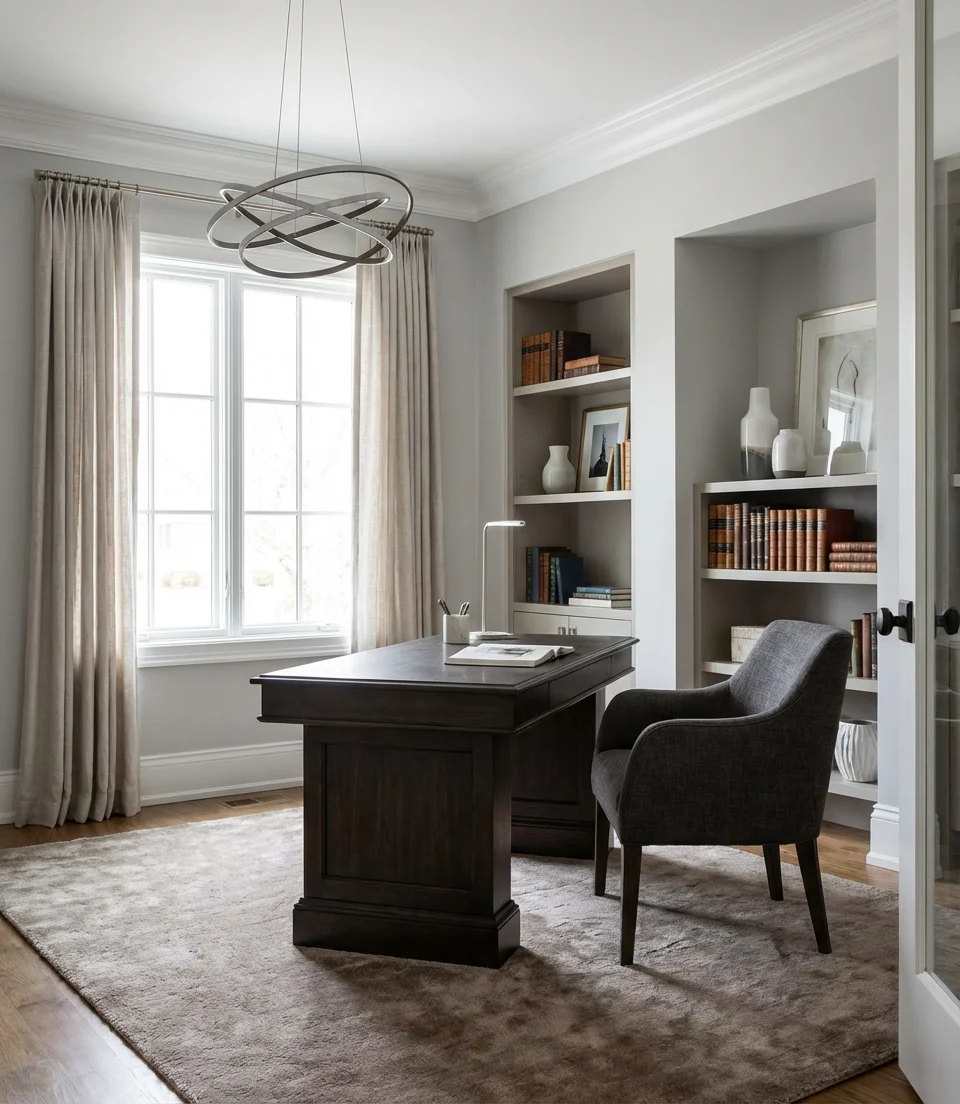
Transitional design strikes a balance between classic and contemporary elements, rendering it suitable for a diverse range of homeowners and architectural styles. This might mean a traditional wood desk with clean contemporary lines, classic molding paired with modern furniture, or neutral colors with both warm and cool tones balanced throughout. The approach avoids extreme statements in either direction, creating offices that feel current without being trendy and timeless without feeling dated—ideal for those who appreciate both heritage and innovation.
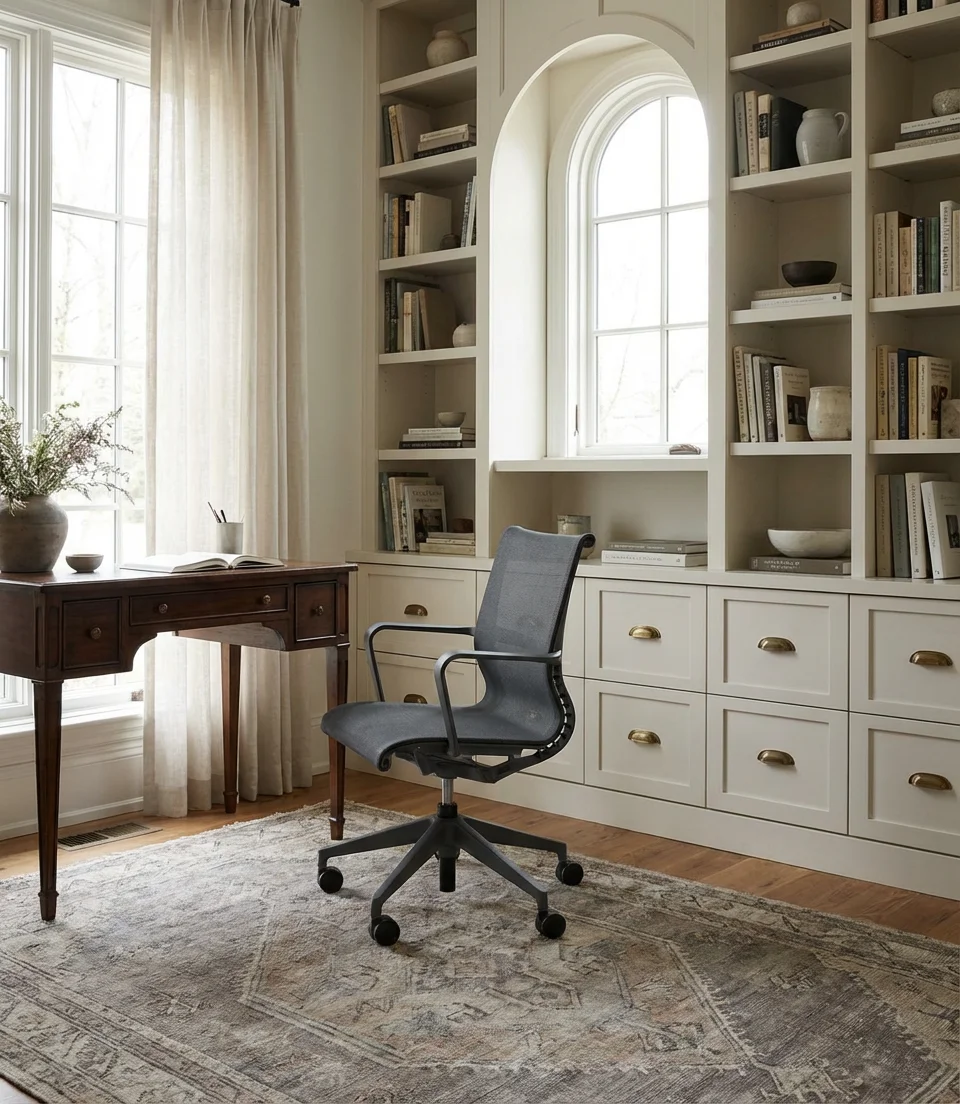
This approach works particularly well in suburban homes where the architecture itself might be transitional—builder homes from the 1990s-2010s that reference traditional elements without fully committing to historical styles. The furnishings can easily shift with the homeowner’s evolving taste since nothing is so extreme it demands replacement when preferences change.
22. Garden View Office with Oversized Windows
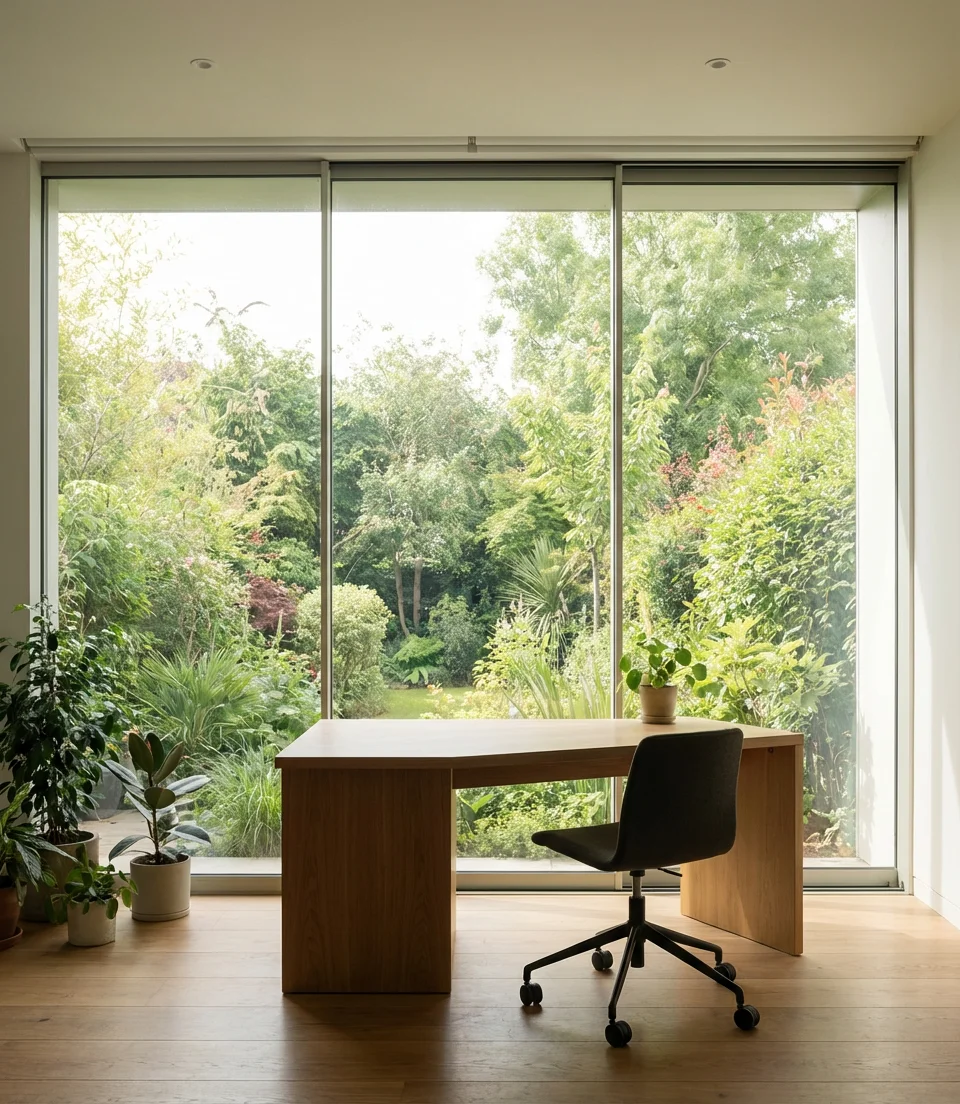
When you’re fortunate enough to have beautiful outdoor views, the office design should frame and enhance that connection rather than compete with it. Position the desk to face the window, keep window treatments minimal or absent, and let the garden become living artwork that changes with seasons and weather. The interior furnishings stay deliberately minimal to avoid visual competition—perhaps a simple table desk, one excellent chair, and very little else, allowing the eye to rest on the natural world beyond the glass.
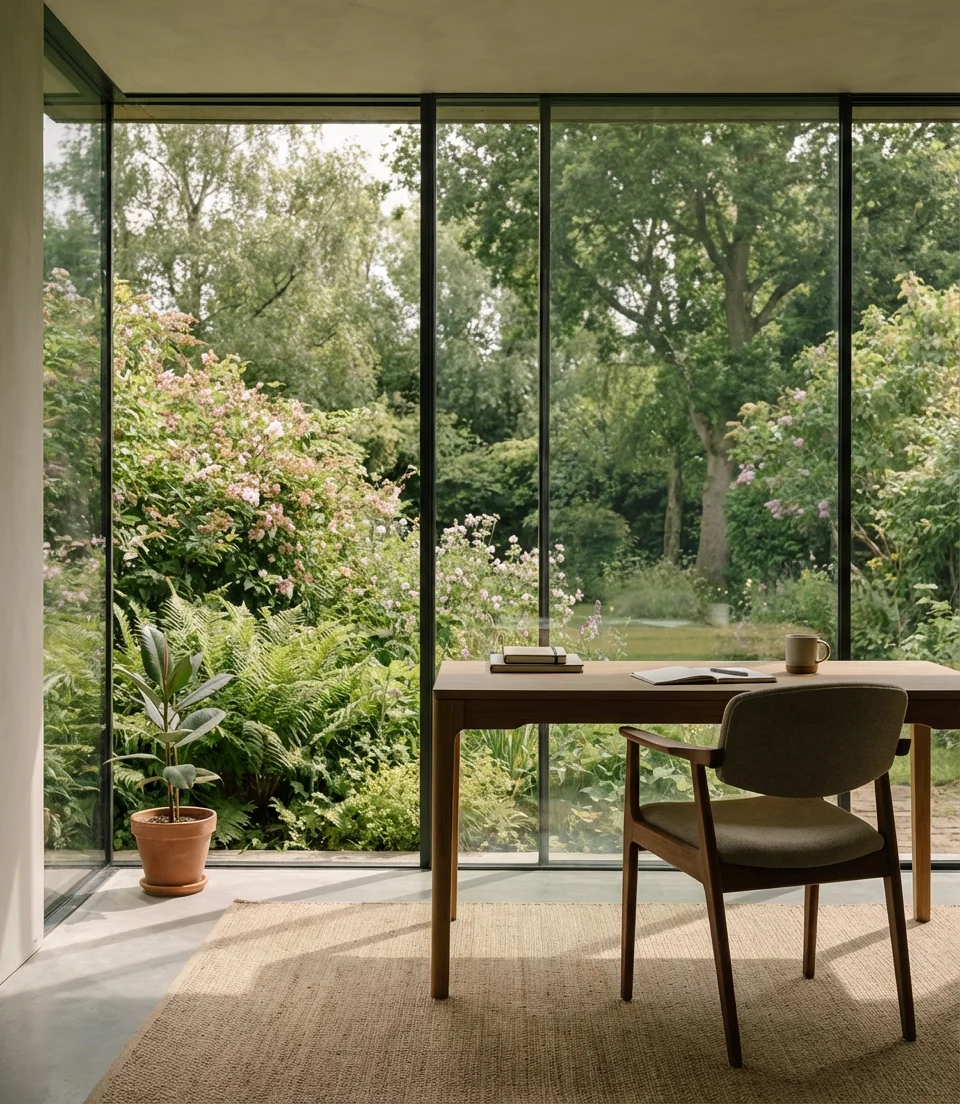
Where this style works best is obvious—homes with established gardens in the Pacific Northwest, California hillsides, or anywhere landscaping has matured. The challenge is managing glare and heat gain, which might require strategic exterior shade trees, UV-filtering window film, or thoughtfully positioned exterior awnings that block harsh angles without eliminating the view.
23. Converted Closet Office for Ultra-Compact Solutions
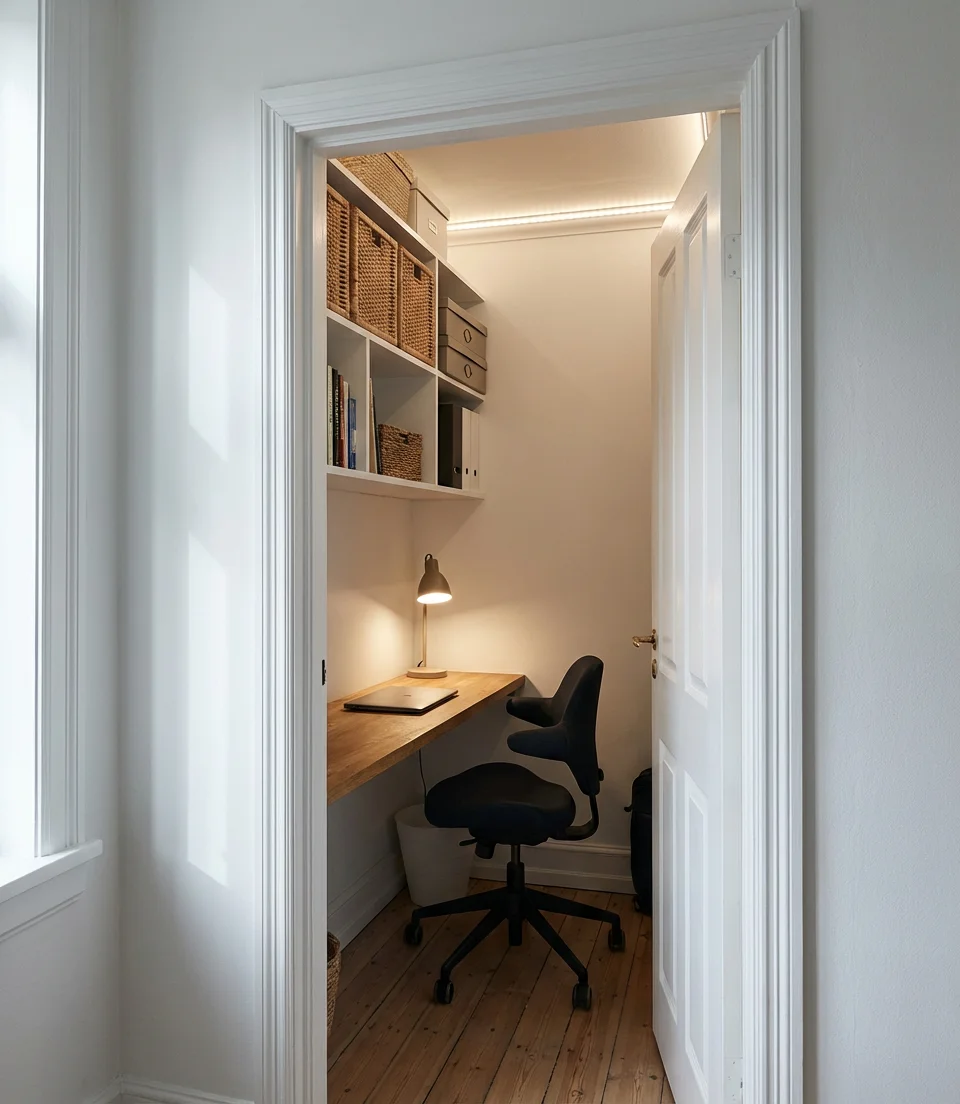
When bedroom privacy is required or when no other option is available, walk-in closets can serve as surprising small space offices. Remove the clothing rods, install a narrow desk at the right height, add task lighting since closets rarely have windows, and use the existing shelving for vertical storage. The contained space can actually aid focus by eliminating distractions, and closing the door at day’s end creates clear work-life boundaries. Keep modern aesthetics light and bright to counteract the inherent darkness of enclosed spaces.
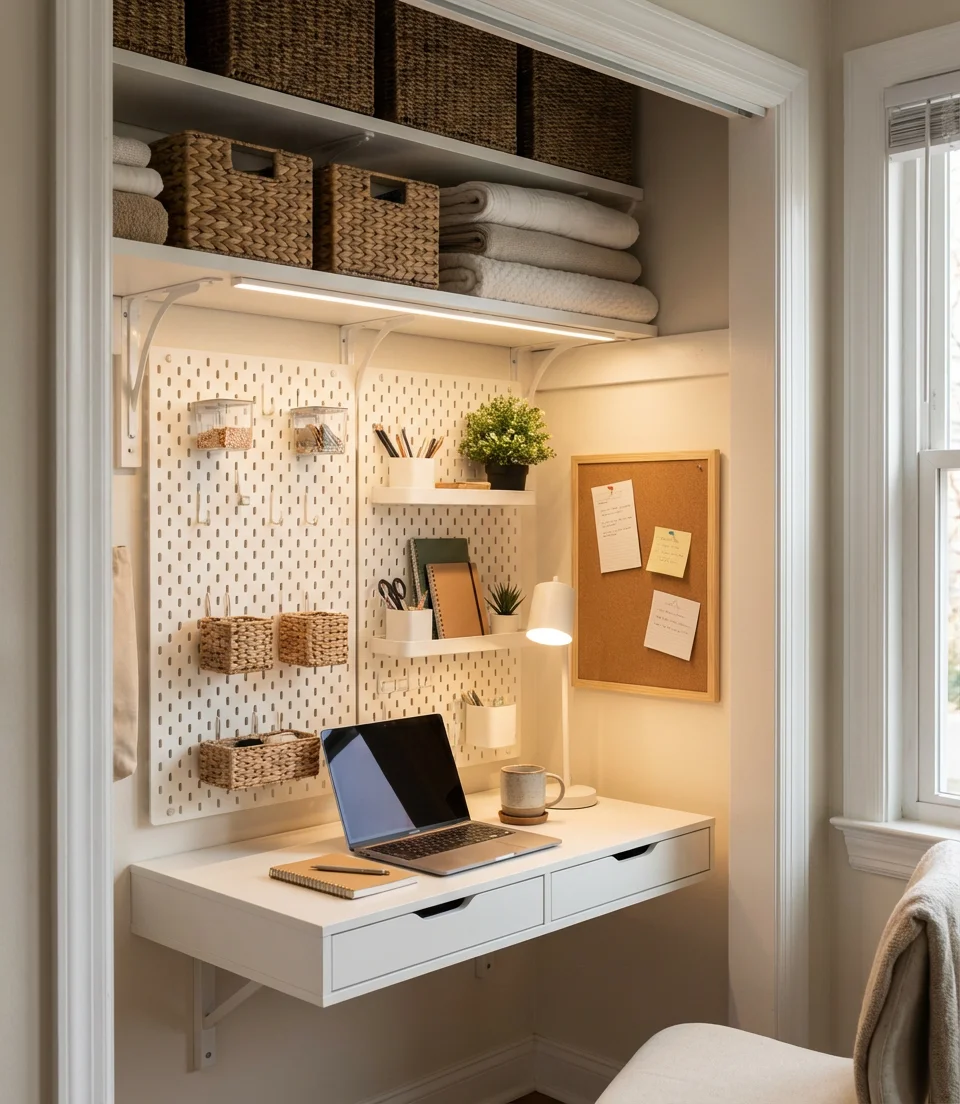
Real homeowners have successfully converted closets ranging from 4×6 feet to larger walk-ins, with 5×8 feet being the ideal size—enough room for a 24-inch deep desk and comfortable chair movement. The conversion typically costs $500-$1,500 depending on whether you DIY or hire a carpenter, making it one of the most budget-friendly dedicated office solutions for apartment dwellers or parents who need workspace that disappears when family is home.
24. Wellness-Centered Office with Natural Light Optimization
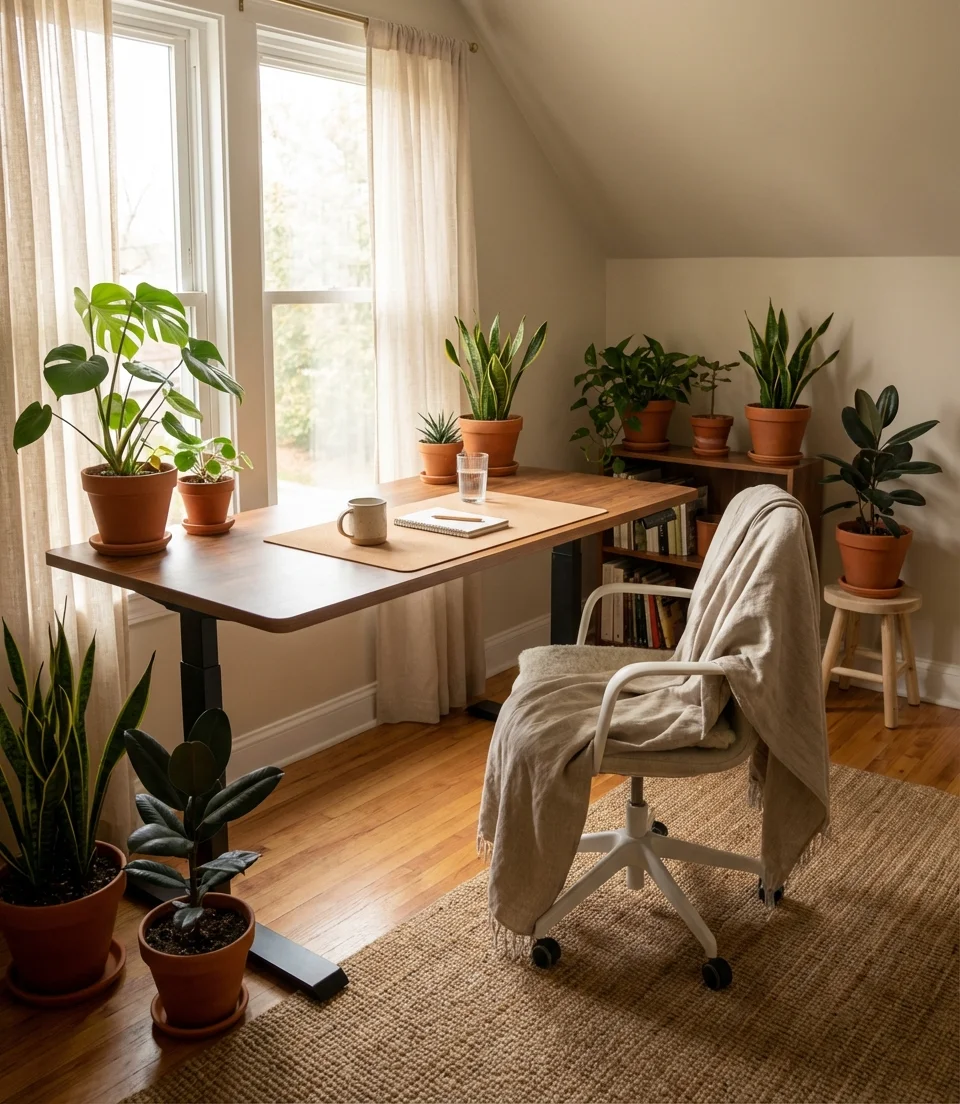
The final approach prioritizes well-being as the organizing principle, treating the office as a health intervention rather than just a work location. This means positioning the desk to maximize natural light exposure for circadian rhythm support, incorporating plants for air quality and biophilic benefits, using an adjustable desk to encourage movement, and selecting materials and finishes for low VOC off-gassing. The cozy aesthetic that emerges feels nurturing rather than clinical, with soft textures, warm woods, and a palette that promotes calm and concentration equally.
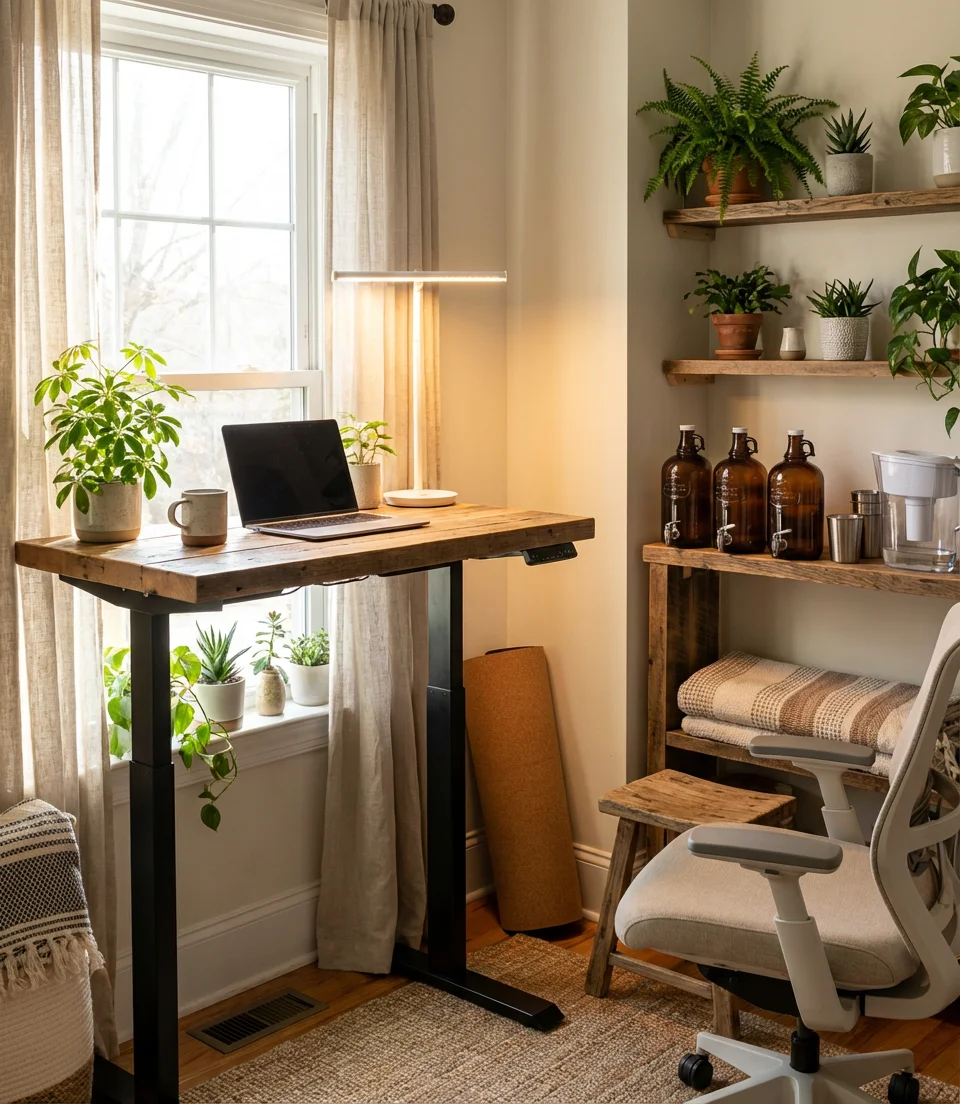
Research continues to validate what many workers intuitively feel—that workspace design directly impacts both productivity and mental health. While you can’t always change your home’s orientation or window size, even small interventions like adding a full-spectrum desk lamp, introducing three to five plants, and using a desk position that doesn’t force you to stare at a wall can measurably improve your daily experience of work.
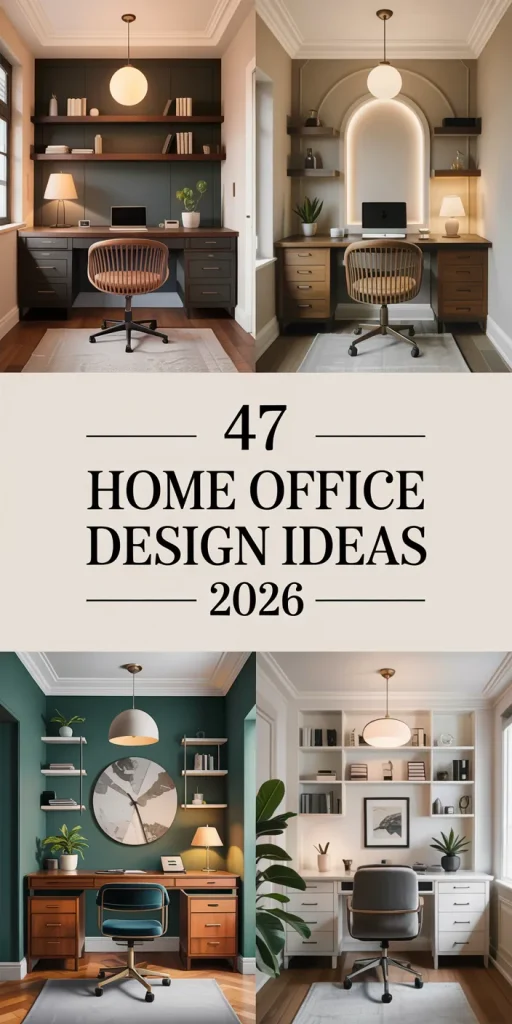
These approaches to home office design represent the breadth of possibilities available in 2026, from luxury built-ins to clever closet conversions, and from tech-forward setups to contemplative reading nooks. The best office for you depends on your work style, available space, aesthetic preferences, and budget—but somewhere in these ideas, you’ll find a starting point that resonates. Share your favorite approach or your own home office solutions in the comments below, and let’s continue learning from each other’s experiences as we refine these spaces that have become such central parts of our daily lives.