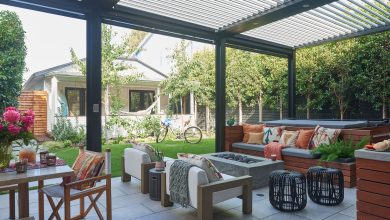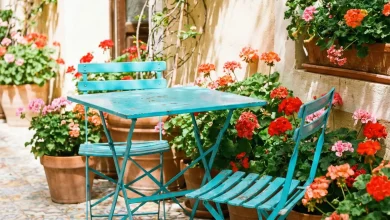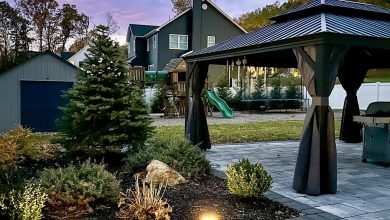

Paver patios continue to dominate outdoor living trends heading into 2026, with American homeowners seeking durable, stylish solutions that blend functionality with curb appeal. Whether you’re browsing Pinterest for budget-friendly transformations or dreaming of elaborate outdoor entertaining spaces, paver patios offer endless customization through materials, patterns, and layouts. From classic brick arrangements to modern concrete designs, these hardscaping projects deliver long-lasting value while creating beautiful extensions of your indoor living space. This guide showcases inspiring paver patio ideas that reflect current design preferences and practical installation approaches perfect for backyards across the country.
1. Herringbone Brick Paver Patio with Built-In Fire Pit
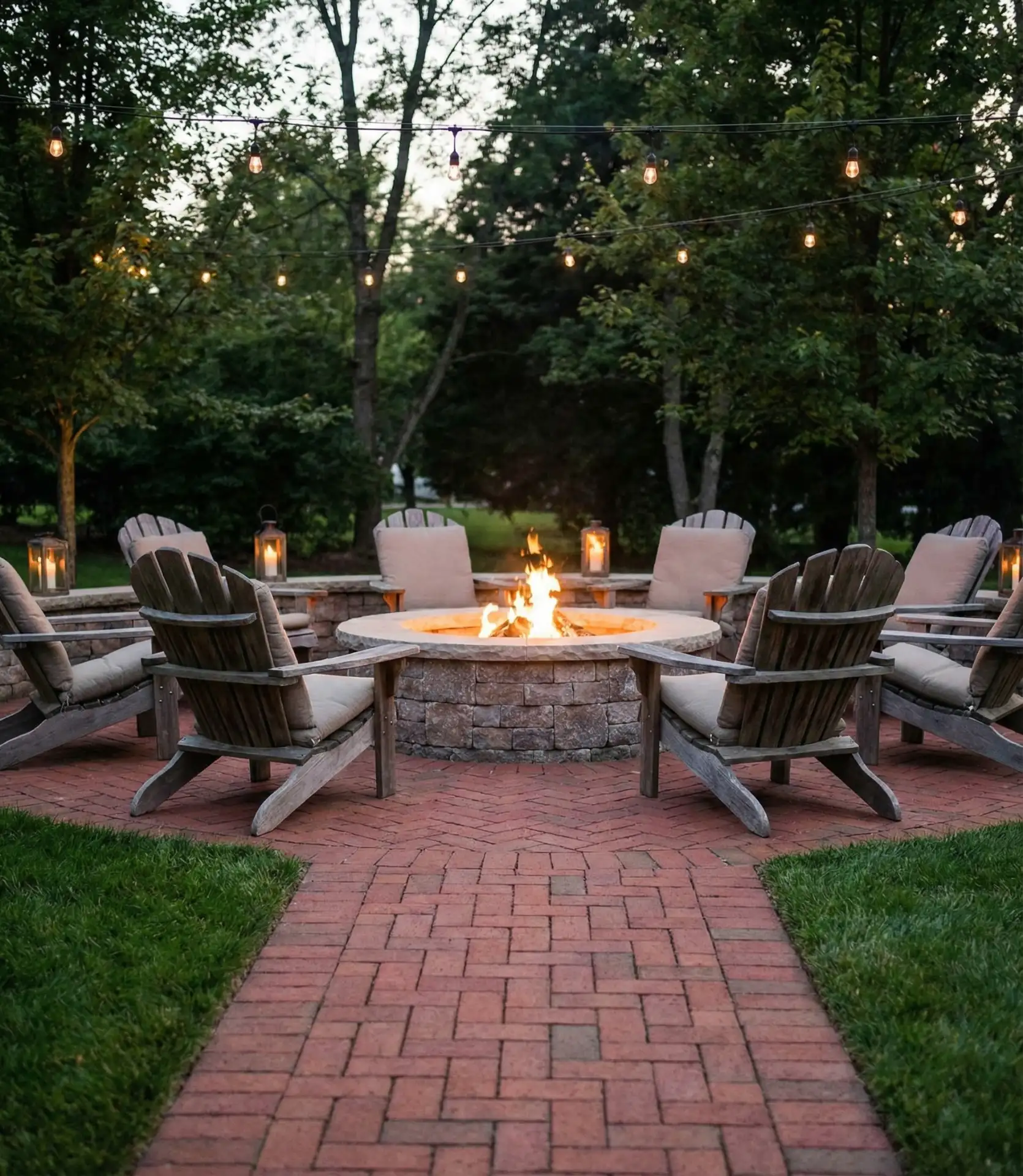
The timeless appeal of a herringbone pattern combined with warm brick pavers creates an elegant foundation for outdoor gatherings centered around a fire pit. This design works exceptionally well in traditional and transitional homes, where the zigzag pattern adds visual interest without overwhelming the space. Compared to running bond patterns, the interlocking arrangement provides superior stability, making it ideal for high-traffic entertaining areas where furniture moves frequently.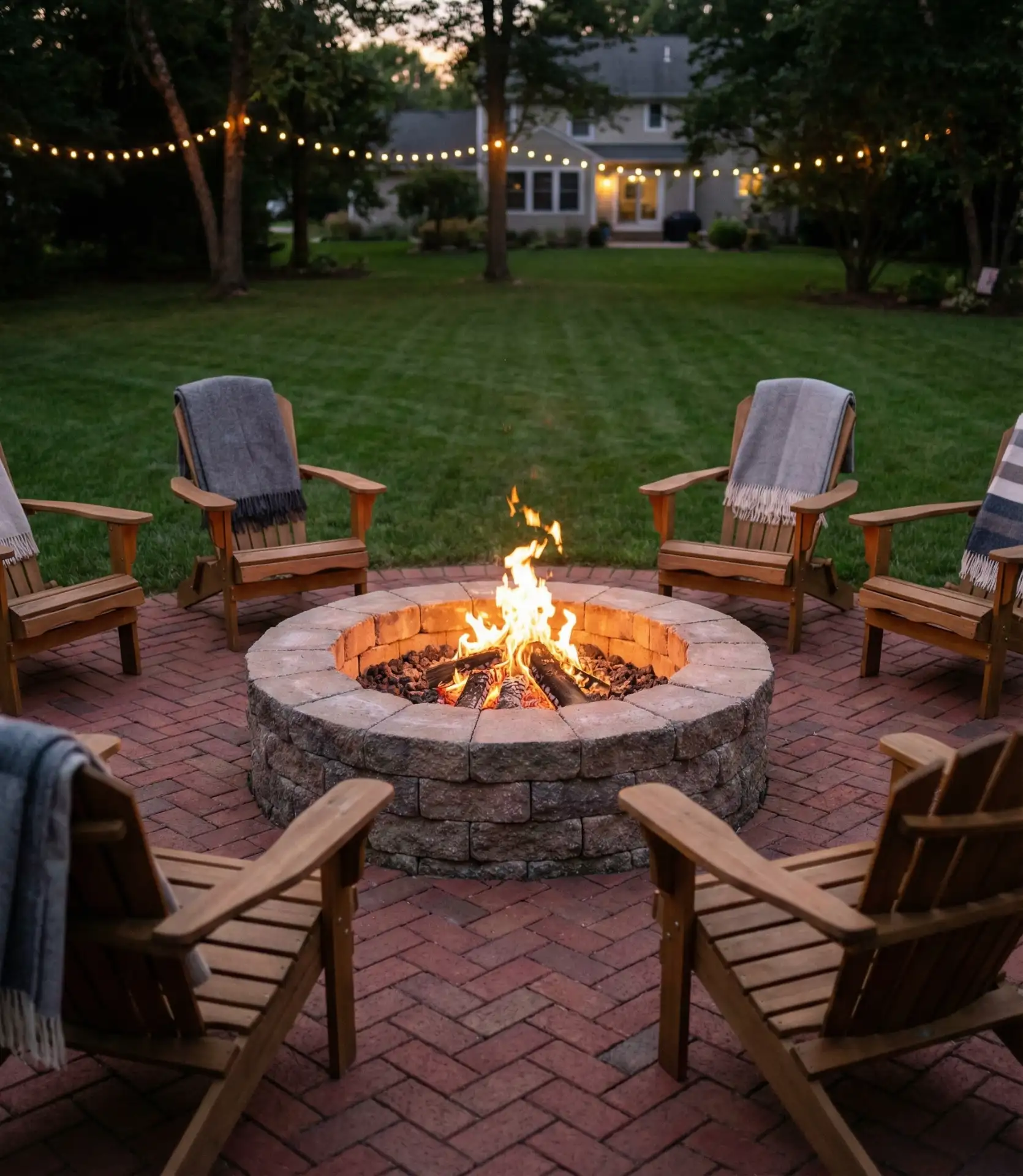
In the Midwest and Northeast, where fall and spring evenings require warmth, this configuration extends your outdoor season by months. The brick’s thermal mass absorbs daytime heat and releases it slowly, creating a naturally comfortable microclimate. Position the fire pit at least twelve feet from your house and consider local fire codes—many municipalities require permits for permanent fire features. The herringbone pattern looks beautiful, but it needs careful installation with the right edge supports to stop it from moving during the freeze-thaw cycles that often happen in
2. Budget-Friendly Concrete Paver Patio Extension
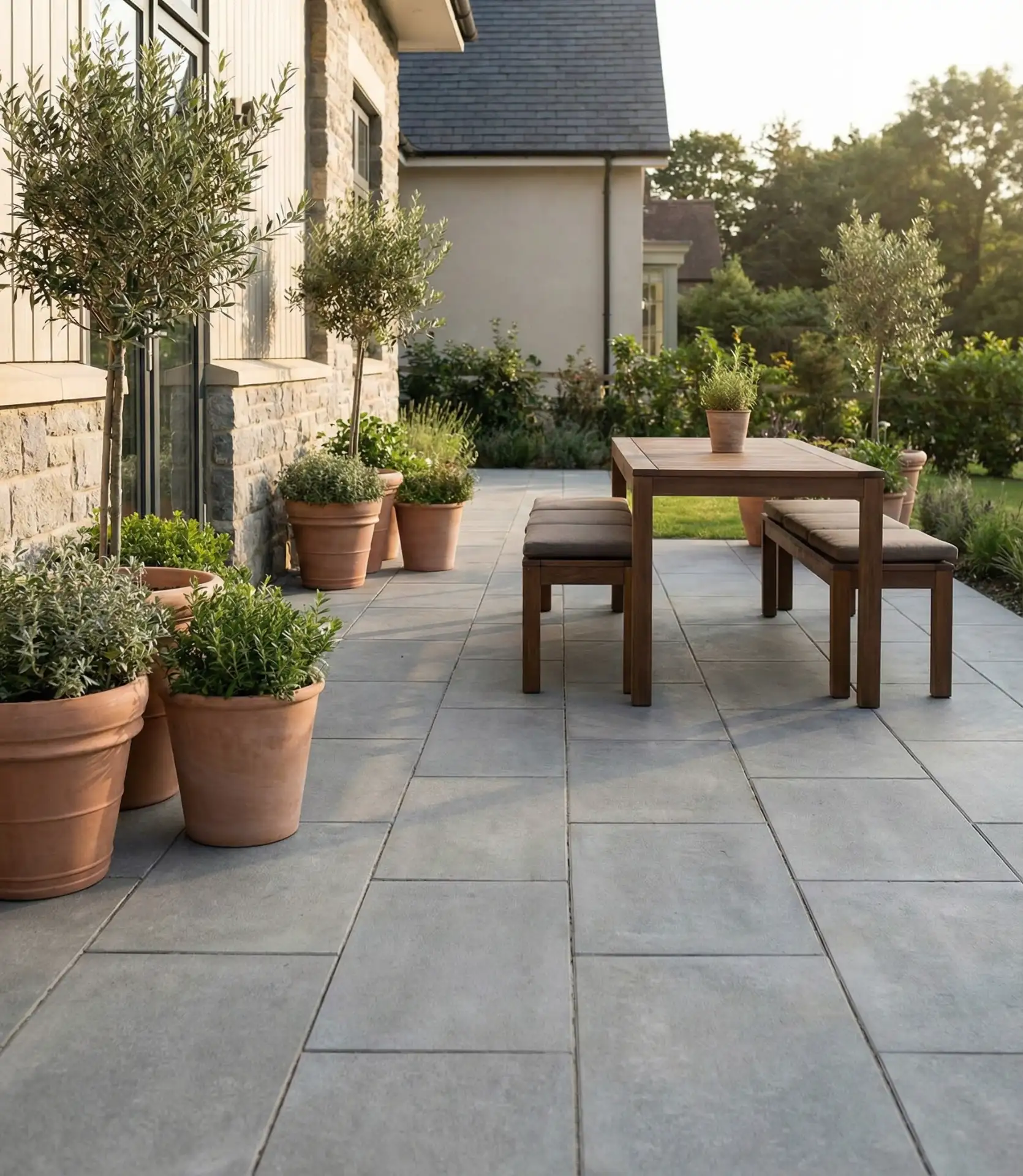
Expanding your living space doesn’t require a luxury budget when you choose concrete pavers for a practical extension. Modern manufacturing techniques have elevated these ideas on a budget, offering realistic stone textures and varied color palettes at a fraction of natural material costs. A well-executed concrete paver installation can seamlessly connect your existing deck or patio to yard features like pools, gardens, or outdoor kitchens, creating cohesive flow throughout your property. 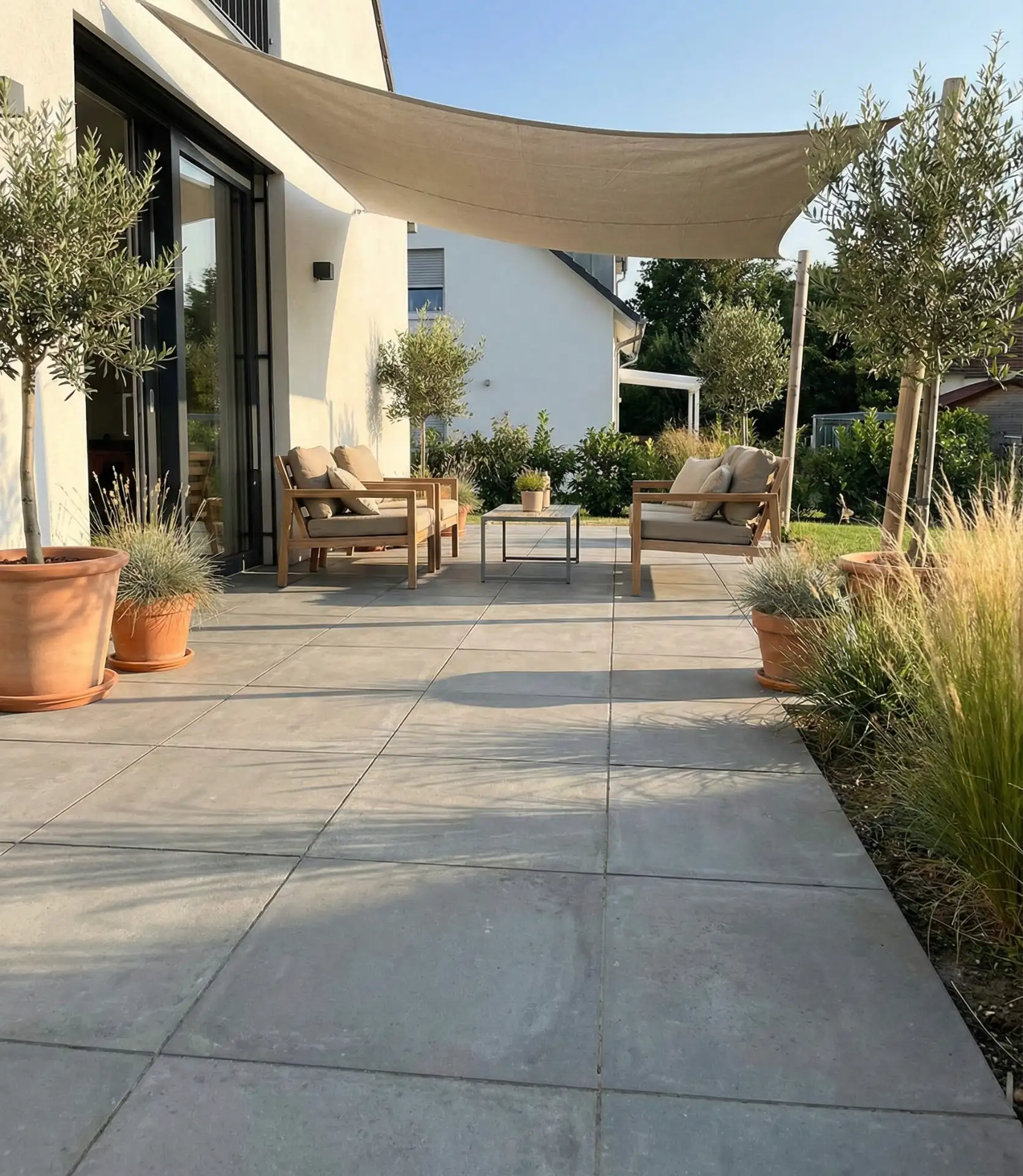
Expect to invest between eight and fifteen dollars per square foot for materials and DIY installation, compared to twenty-five to forty dollars for natural stone alternatives. The key to professional results lies in proper base preparation—a four-inch compacted gravel base topped with one inch of leveling sand prevents settling and drainage issues. Many homeowners underestimate this foundation work and end up with uneven surfaces within two seasons. Take time to rent a plate compactor and work in six-inch lifts when building your base, ensuring each layer is thoroughly tamped before adding the next.
3. Checkered Paver Pattern with Pea Gravel Accents
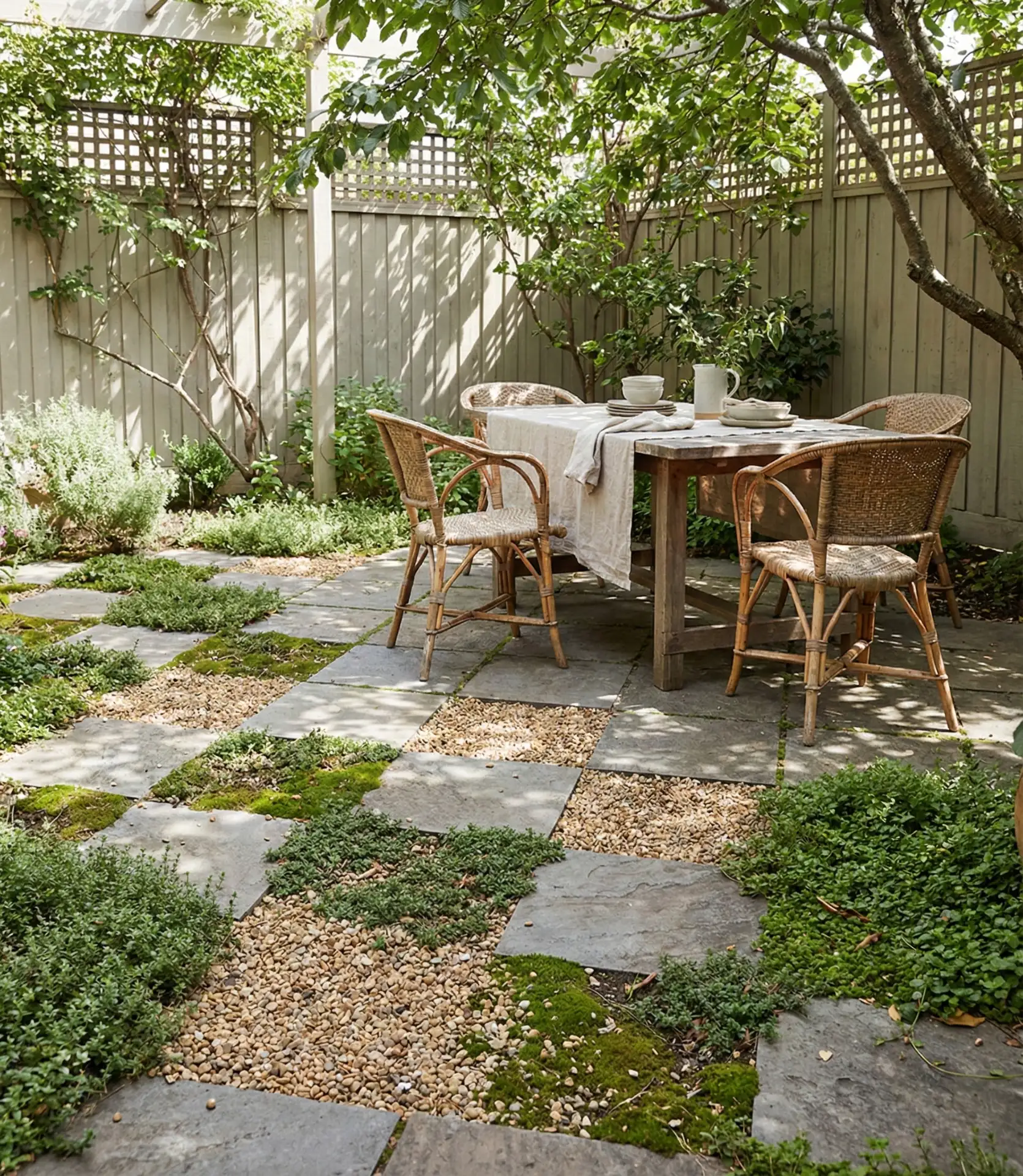
The playful, uneven geometry of a checkerboard layout gains visual appeal when alternating the squares of pavers with pea gravel insets. The alternating pavers and pea gravel create a soft and textured layout, which fits the more informal, cottage-style, and Mediterranean landscapes, unlike the more formal, rigid designs. The gravel squares also allow rainwater to infiltrate the gravel, which mitigates runoff, improves soil conditions for plantings, and keeps clear pathways for foot traffic. 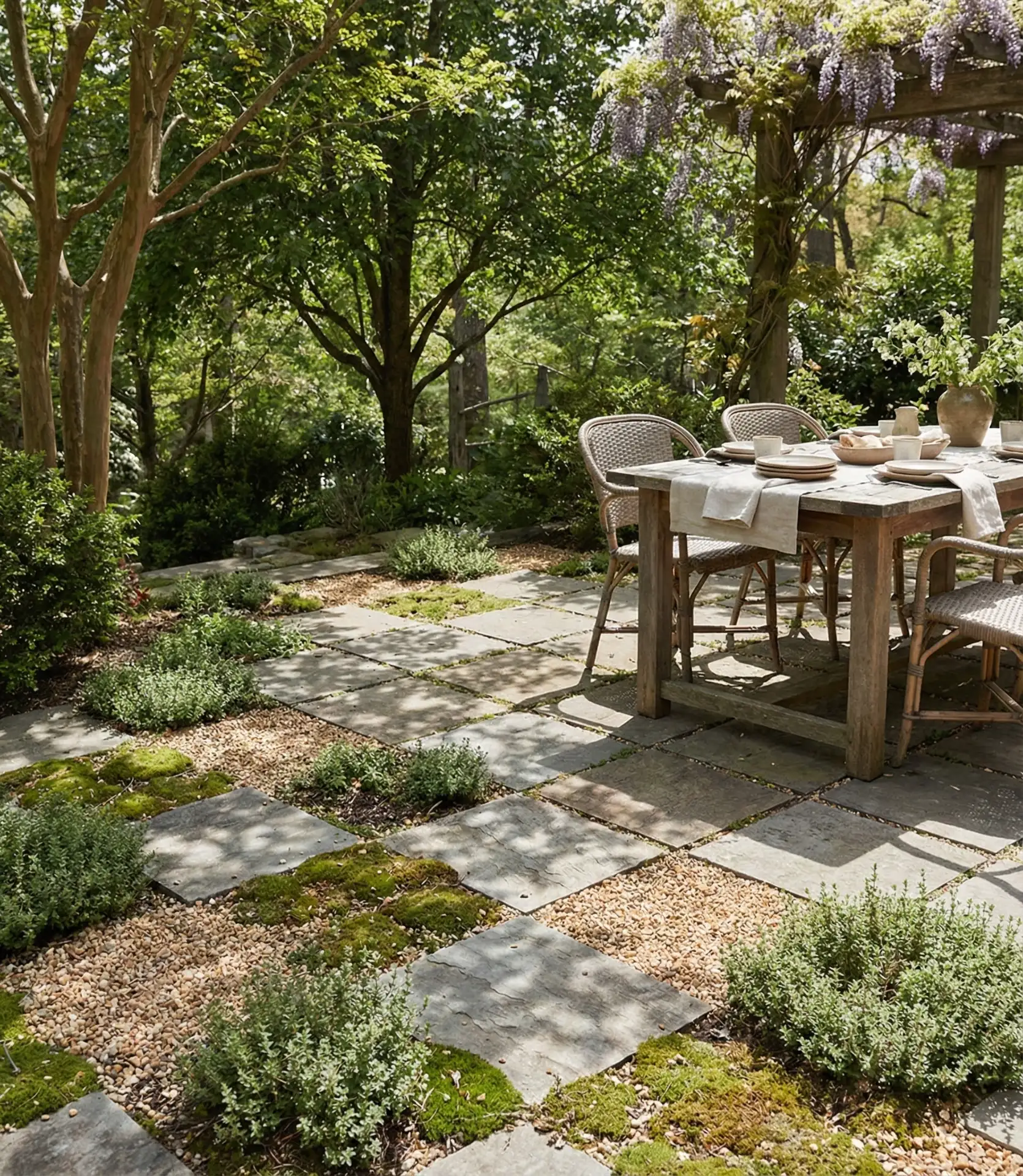
This design works best in areas with moderate amounts of rainfall like the Pacific Northwest and Mid-Atlantic. Southern California and Arizona homeowners also like the design for water-wise landscaping, though gravel does need to be raked occasionally. A neighbor in Portland installed this pattern 3 years ago and reports minimal maintenance on the gravel sections outside of raking once a month and top-dressing once a year.
She appreciates how permeable design also solves the puddling problems of the solid concrete patio.
4. Modern Large-Format Pavers with Pergola Integration
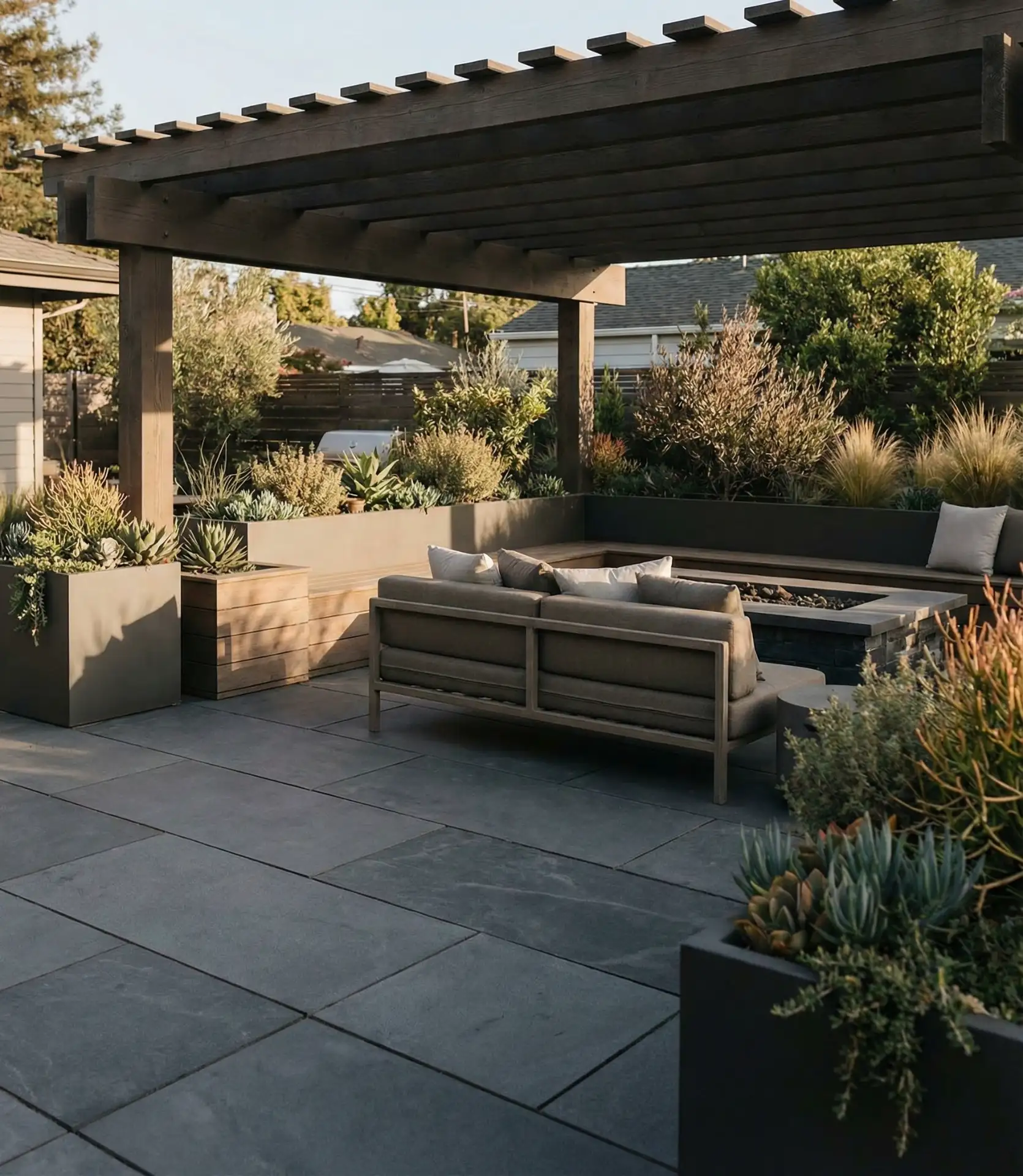
Minimalism and seamlessness characterize contemporary outdoor spaces. This is achieved through the use of large-format pavers, which minimize the grout lines and provide clean, uninterrupted surfaces and lines, especially with the architectural pergolas. This modern look is characterized by 24″ square pavers or larger, and more commonly, in neutral grays and warm taupes, which are appreciated in pergolas built with metals and wood. This look is especially suited for larger backyards where smaller, fractured, busy patterns would impede a pleasing flow. This style also provides a great opportunity to place focal point plantings.” 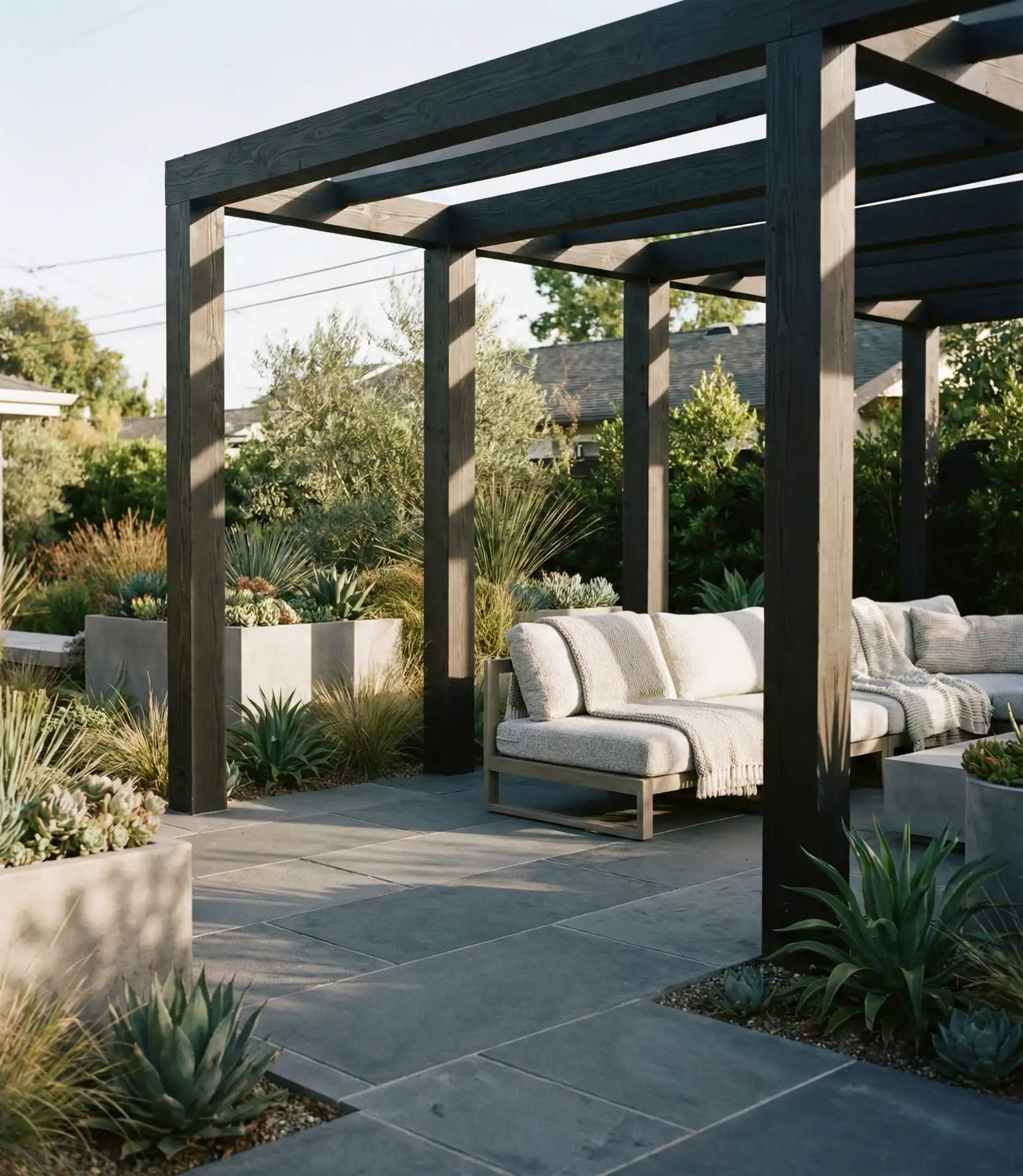
This aesthetic has also been adopted in Texas, Arizona, and Southern California, especially where clean lines provide a wonderful mid-century modern and desert contemporary look. There are some installation challenges since each paver is 60–90 pounds and may require two people or mechanical assistance to place. This style also increases the cost of professional installation, but the payoff is definitely worth it for more design-focused clients. Consider running the paver joints perpendicular to the pergola beams to strengthen the relationship of horizontal and vertical lines.
5. Raised Stone Paver Patio with Integrated Planters
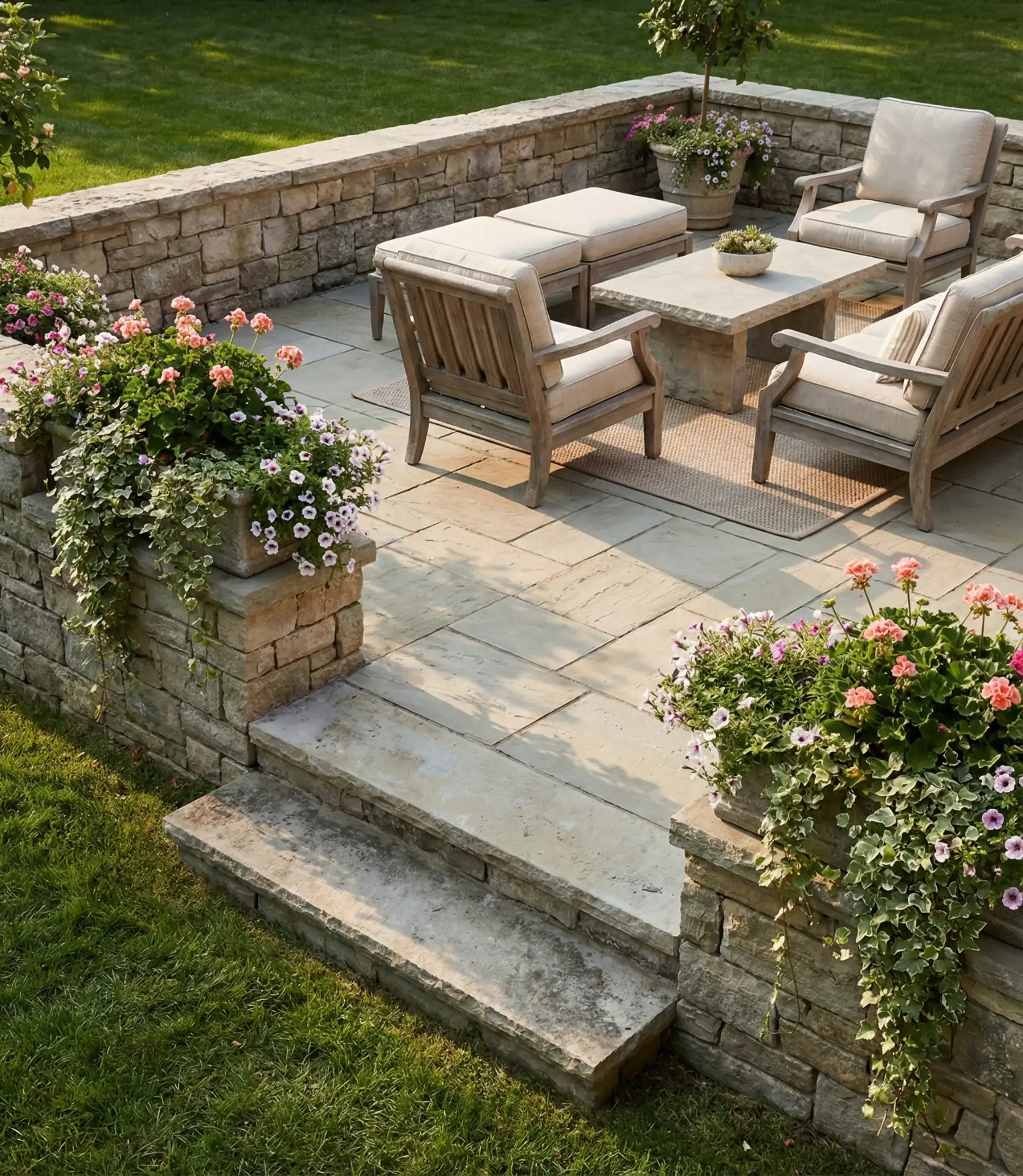
With your patio set above grade, it will improve drainage and let you create distinct outdoor rooms with recessed planters. This method works especially well on sloped sites where terracing can be functional and artistic. It lets you make problematic sloped sites into usable multi-level entertaining spaces. The tiered space also allows you to easily create natural separations between areas (dining, lounging, playing, and reading) without needing fences or screens. 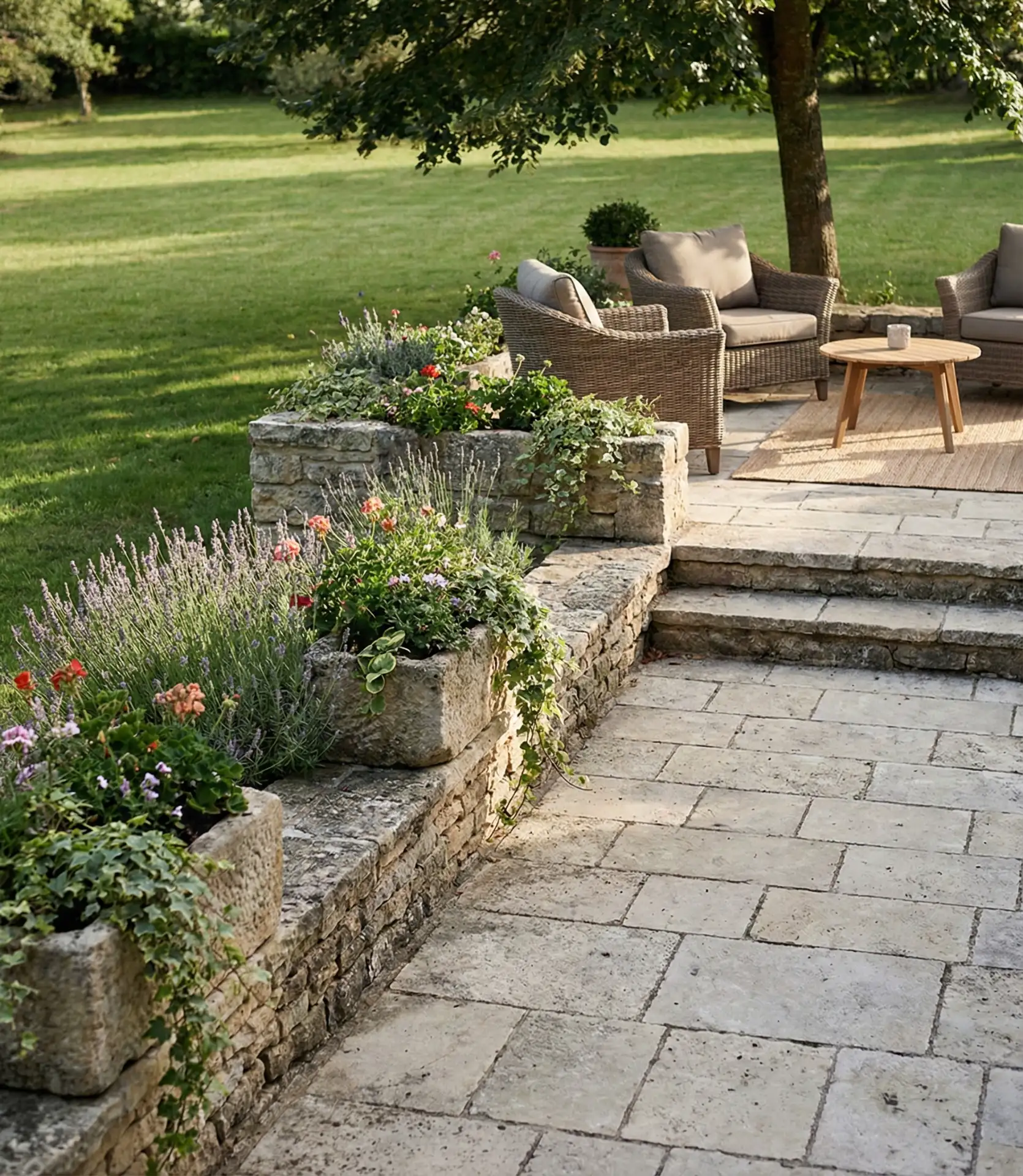
Sites with more than short 6-inch grade changes will benefit most. The hillside communities in Colorado, Tennessee, and the Pacific Coast all have this configuration most commonly. The raised design also helps the homeowner with limited mobility access the patio space and navigate the slope more easily. Expect to budget 30 to 50% more than ground-level installations due to the wall and base material needed. The low-voltage lighting between the walls is also a frequent suggestion by designers. It adds safety and ambiance and highlights the stone with natural textures, enhancing the overall installation.
6. DIY Paver Patio with Gravel and Cement Borders
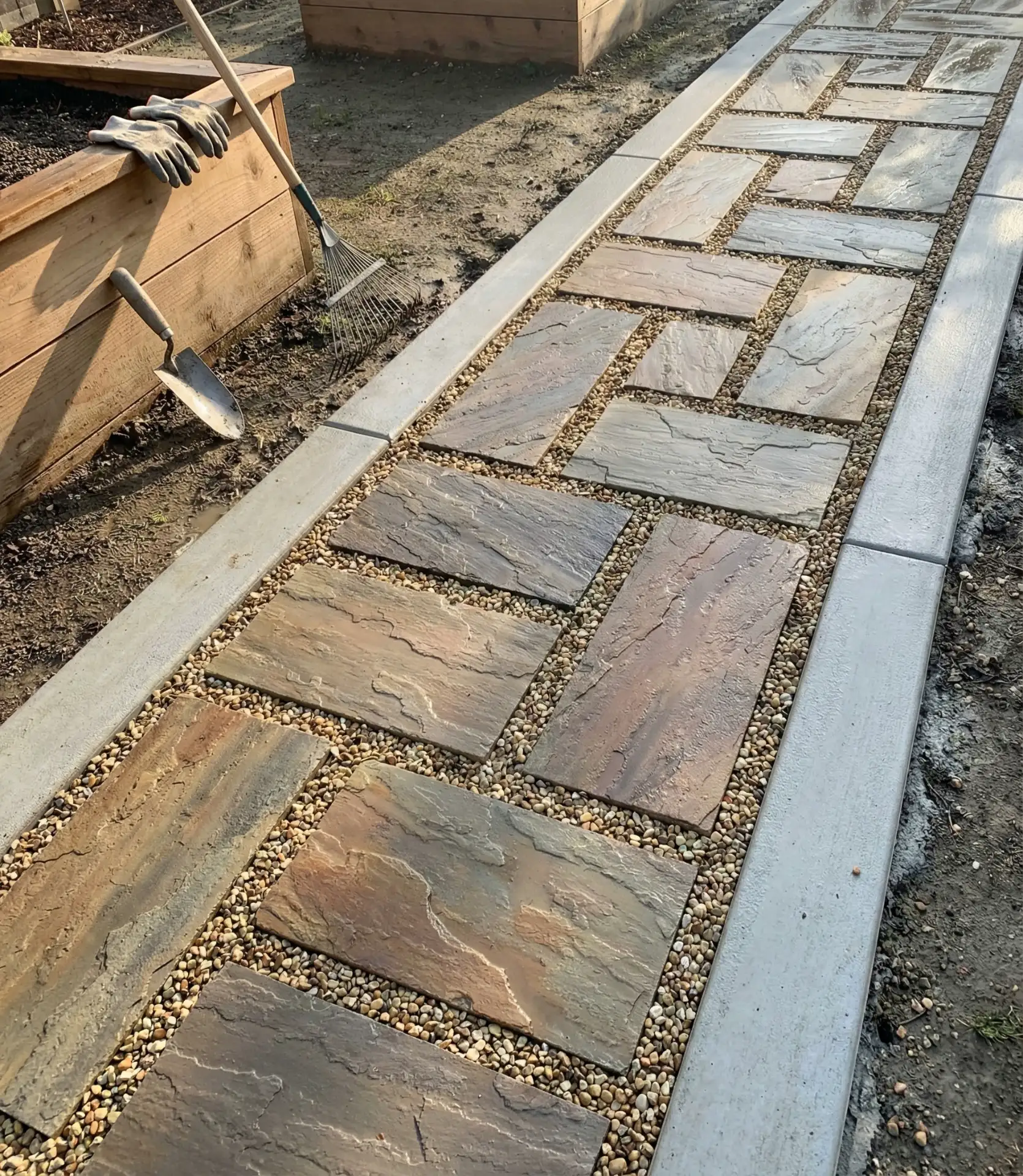
A weekend warrior can easily do a DIY paver installation of stones with a gravel and cement border to get a done operation without professional installation costs. This operation is also simple and quick to do with just a warrior! 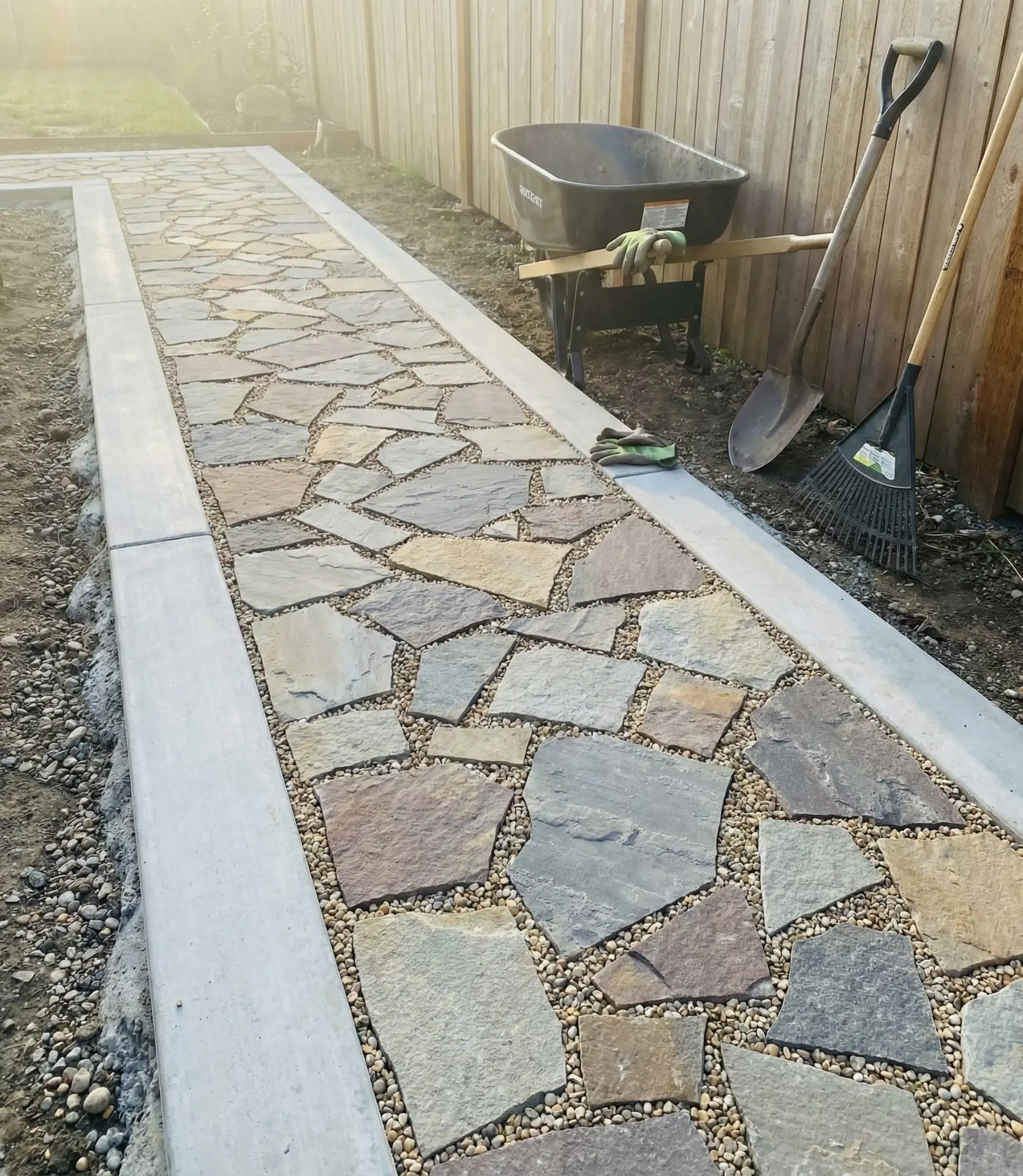
The biggest mistake DIY installers make is rushing the excavation phase—removing only two inches of soil when six inches is necessary for proper drainage and stability. Rent a sod cutter for the initial surface removal, then follow with a square-nose shovel to reach proper depth. Work during dry weather and plan for a full weekend per hundred square feet of patio. The gravel joints between pavers provide flexibility for minor adjustments and create a softer, more organic appearance than tight-fitted installations. This forgiving technique helps first-time installers achieve professional-looking results even without perfect precision.
7. Round Paver Patio Design for Intimate Gatherings
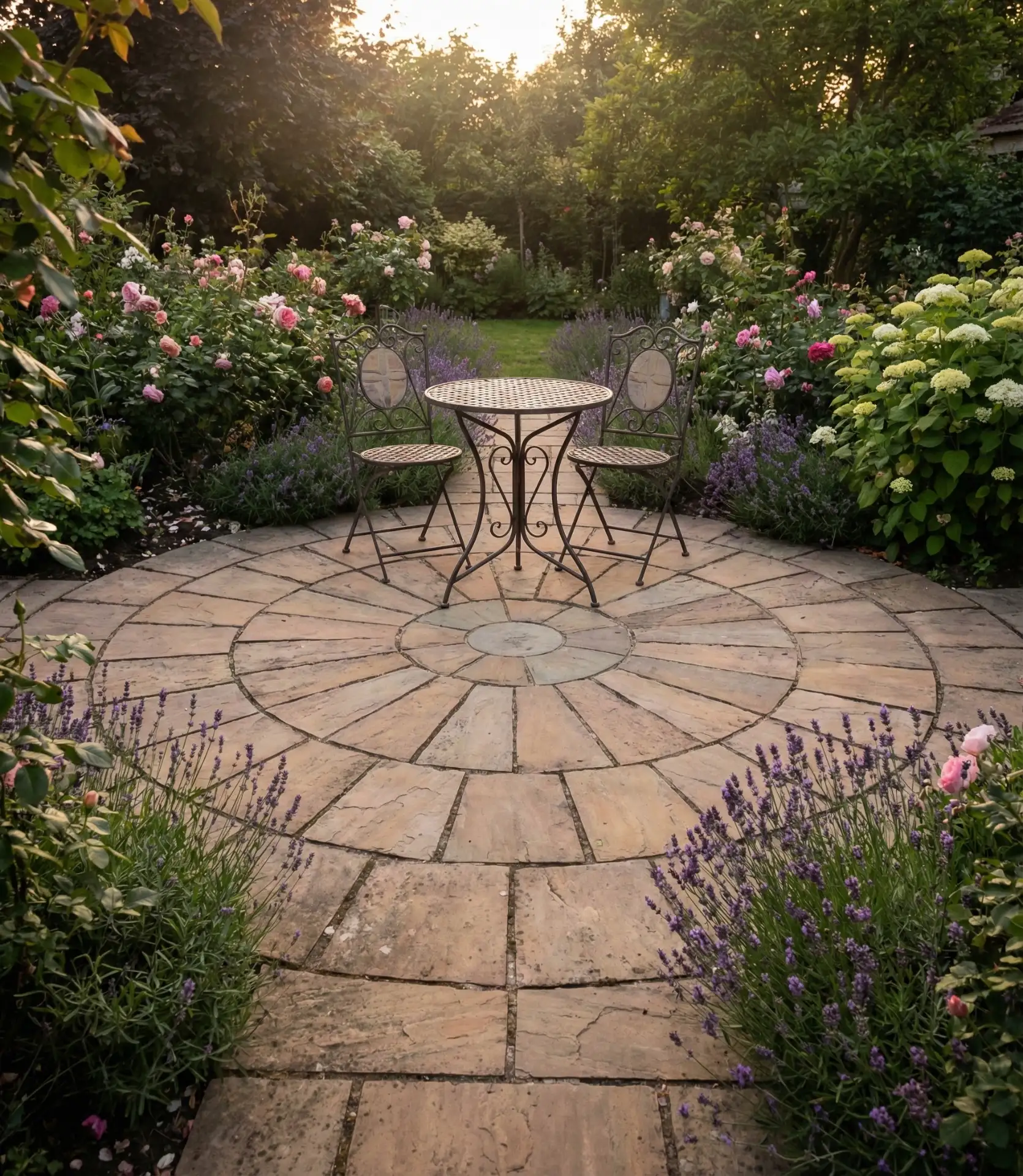
Breaking away from rectangular conventions, a round paver layout creates natural conversation zones that encourage social interaction and soften angular architecture. This design approach requires careful planning and often involves cutting pavers to achieve smooth curves, but the resulting space feels intentionally crafted rather than merely functional. Circular patterns work beautifully as destination points within larger landscapes—meditation areas, morning coffee spots, or evening cocktail zones that feel distinct from main entertaining spaces. 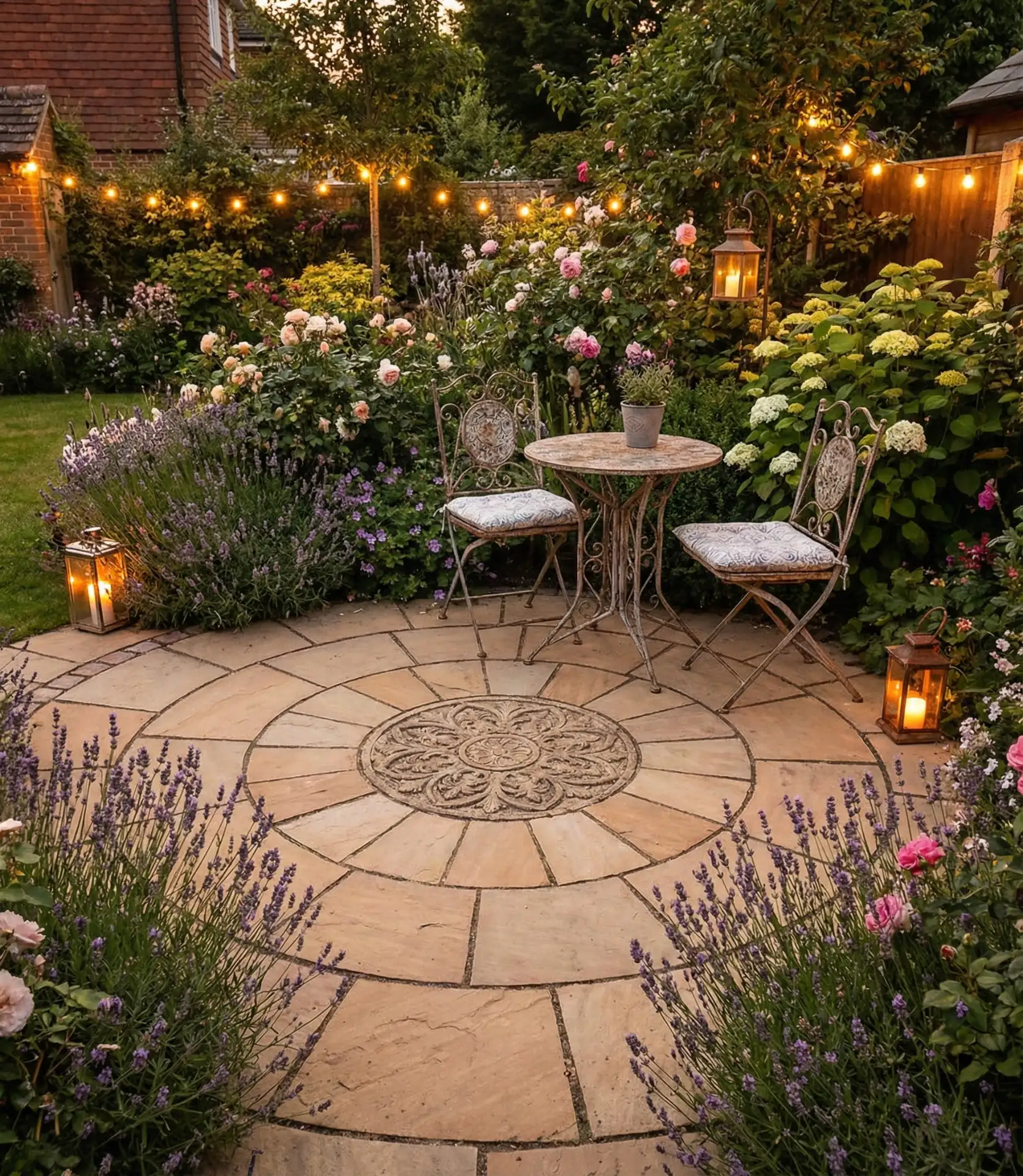
Compact urban yards and cottage gardens showcase this design most effectively, where every square foot demands purposeful planning. A couple in Charleston turned their narrow side yard into a round patio with a ten-foot diameter that fits four chairs and a small fire bowl perfectly. They report that the curved edges feel more spacious than their previous rectangular deck, which had consumed the same footprint but felt cramped. The installation required a skilled mason for the perimeter cuts, adding about twenty percent to labor costs compared to straight layouts.
8. Paver Patio with Artificial Turf Integration
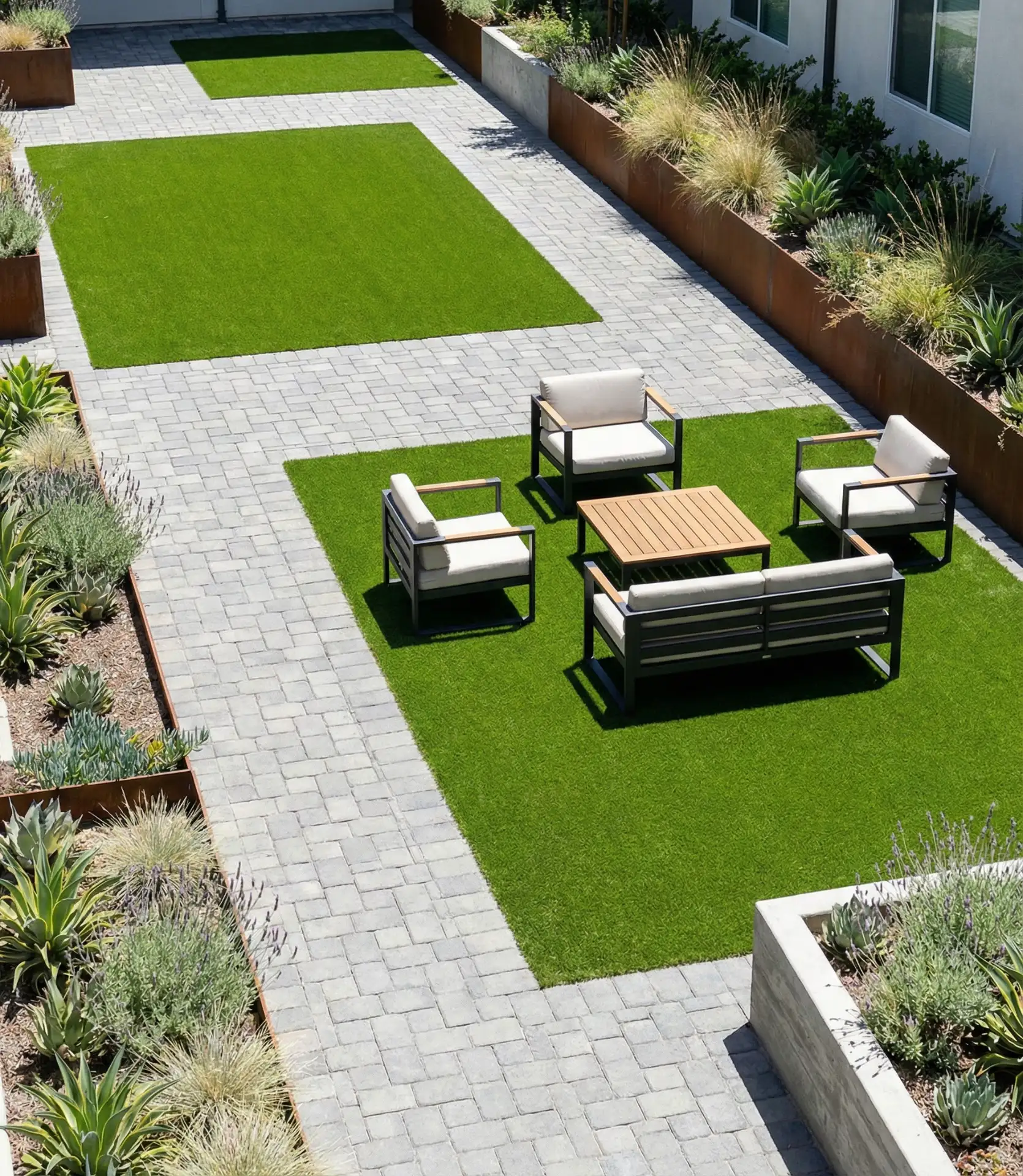
Combining hardscape and softscape elements, paver patios with artificial turf installations deliver year-round green aesthetics without irrigation demands or maintenance headaches. This hybrid approach appeals to water-conscious regions and busy homeowners who want lush surroundings without weekend mowing commitments. Placing artificial turf panels between paver paths or as carpet-like sections adds visual interest and helps separate different areas in open outdoor spaces. 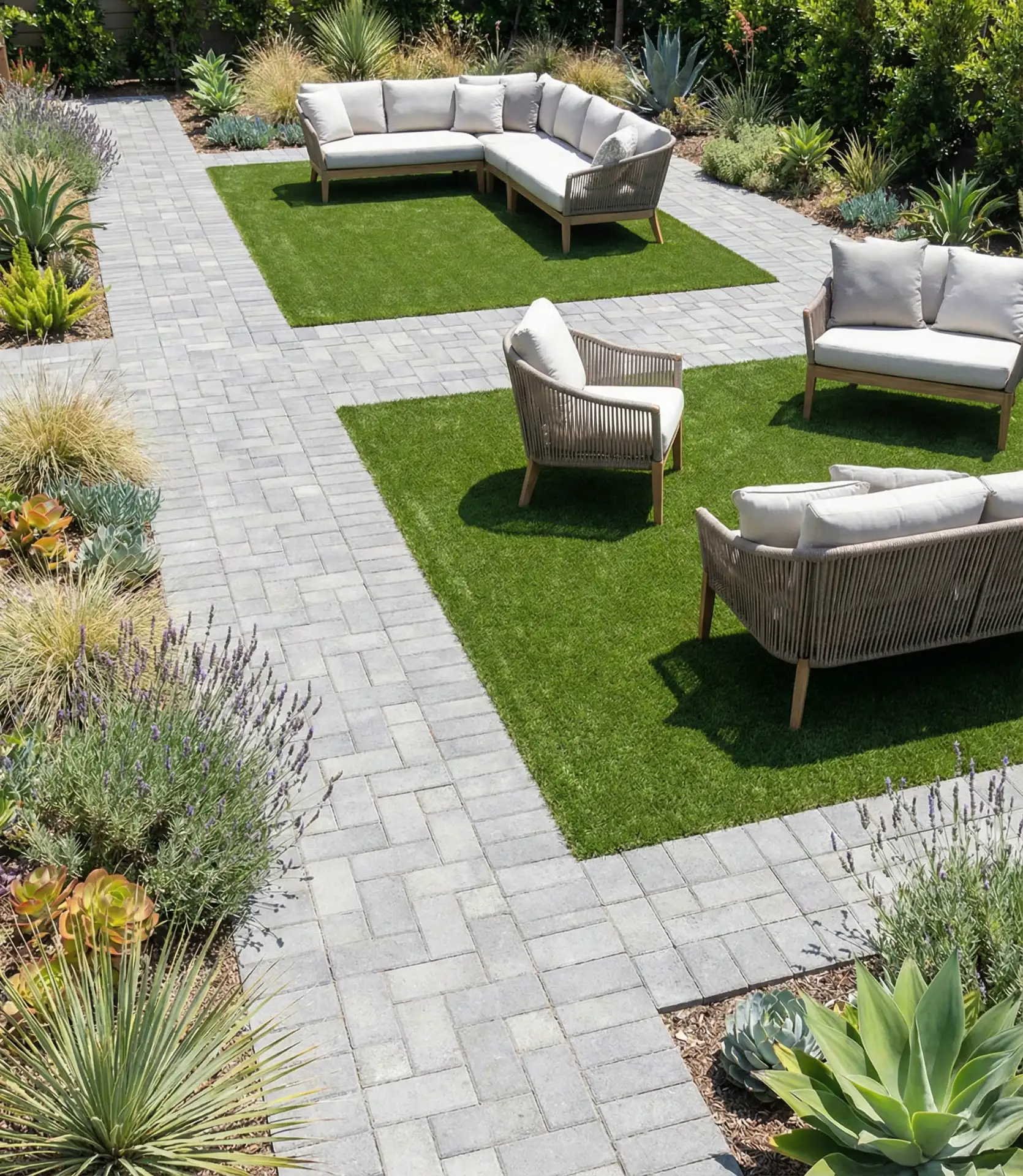
For AZ, NV, and SoCal, this water-efficient technology saves lawns from parched restrictions. Synthetic turf has improved with warranties and gradations for realism. Premium turf costs $40 to $60 psf. The turf requires hosing and brushing for maintenance, and the pavers offer stability and low maintenance.
9. Traditional Paver Patio Layout with Decorating Ideas
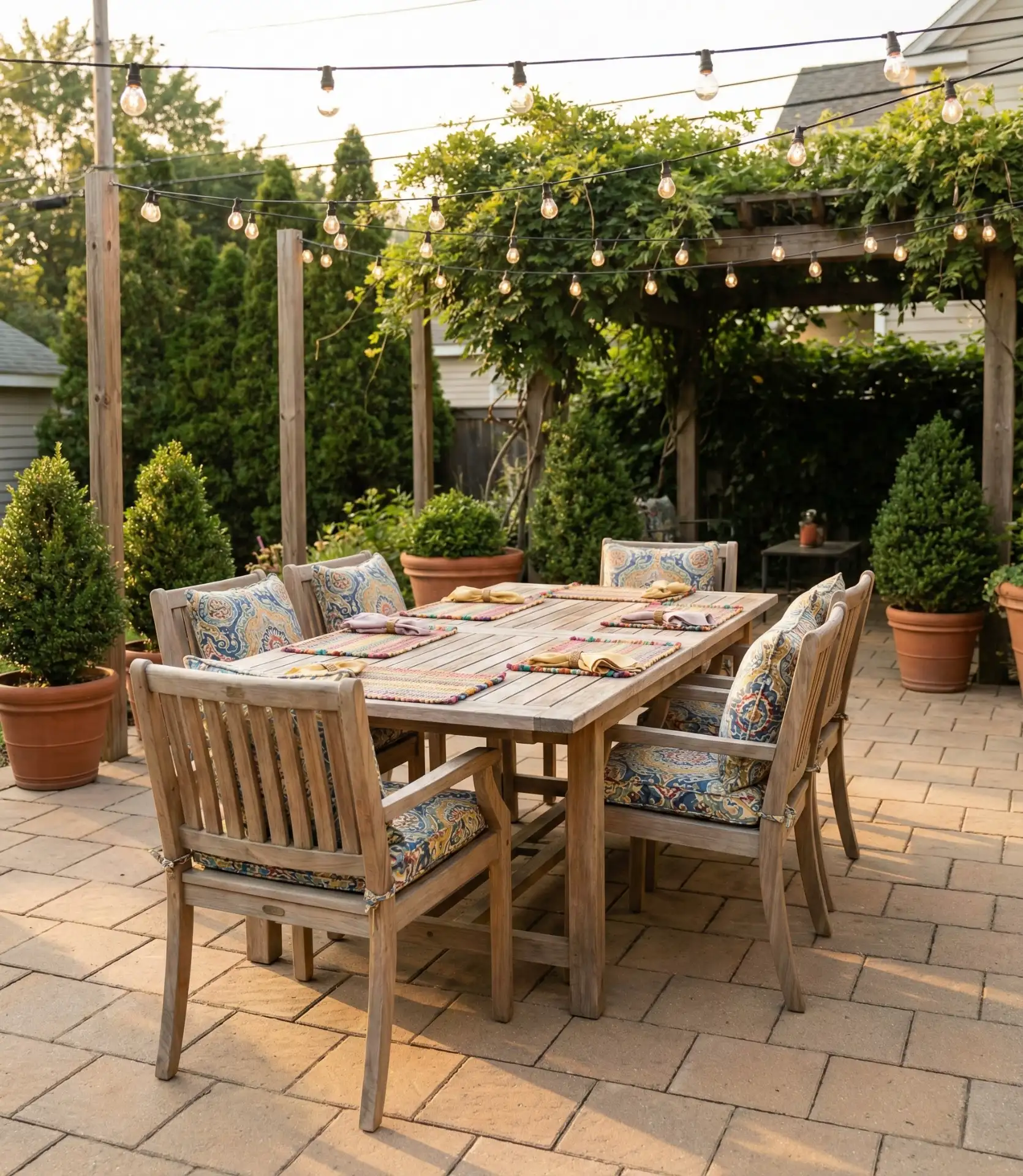
The classic running bond and grid patterns offer balance and symmetry for decoration and seasonal changes. The sturdy pattern is cost-effective, and most of the surface is available for the homeowner to customize with planters and trendy accessories. 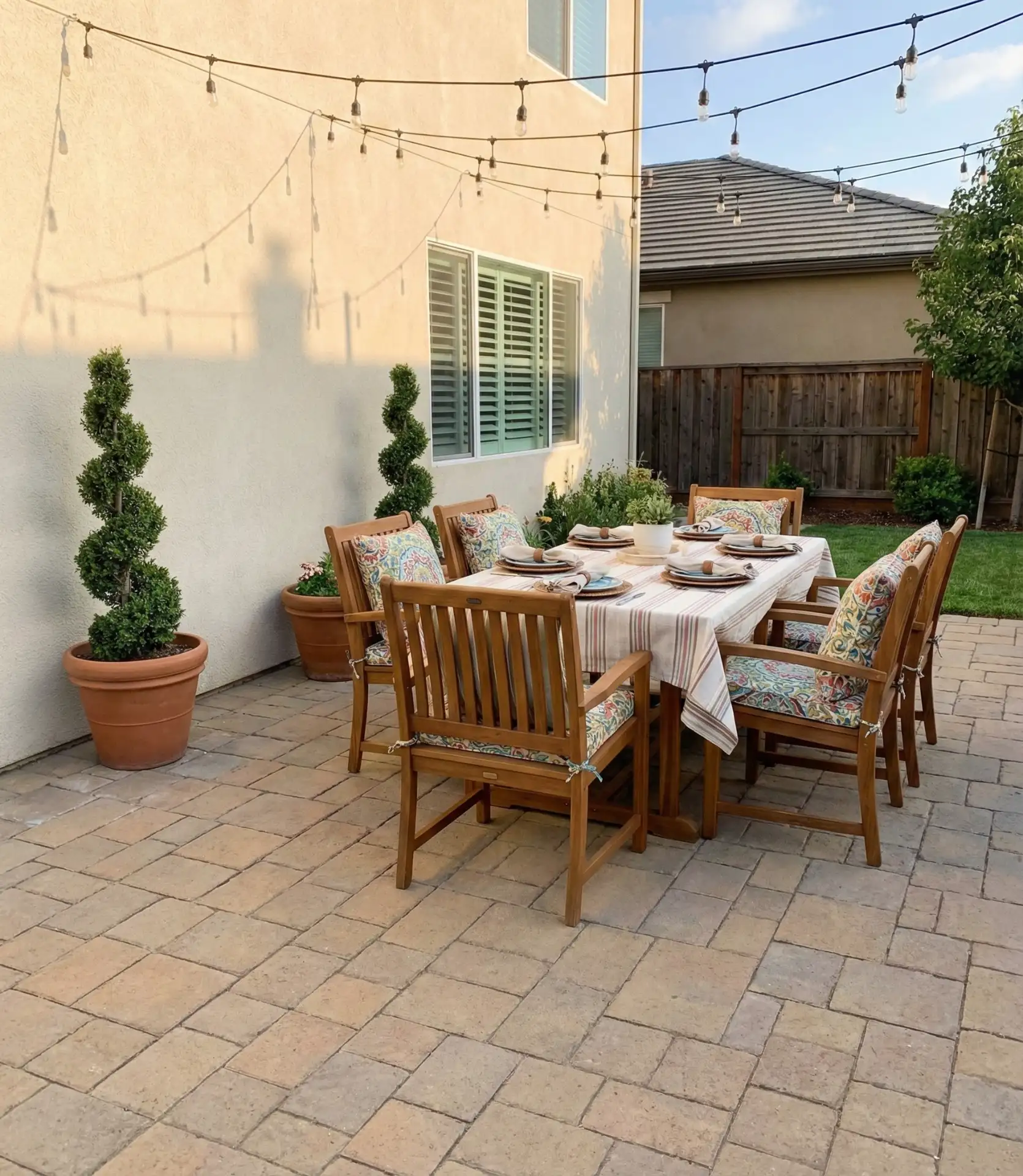
Homes with traditional, neutral patterns are more frequent recipients of redecoration than those with bold, permanent designs. A neutral look is more inviting for new textiles, decorative lighting, and moveable furniture.
Homeowners on the East Coast often change their homes’ exteriors according to the seasons. These often include pastel spring colors, bright summer colors, earthy autumn tones, and winter evergreens to change the decorations to fit the season. The simple paver pattern harmonizes and never competes with the seasonal decorations. It adds structure to the overall design and is reliable even with changing personal styles.
10. Ideas: Paving Stones Pea Gravel, and Mediterranean Courtyard
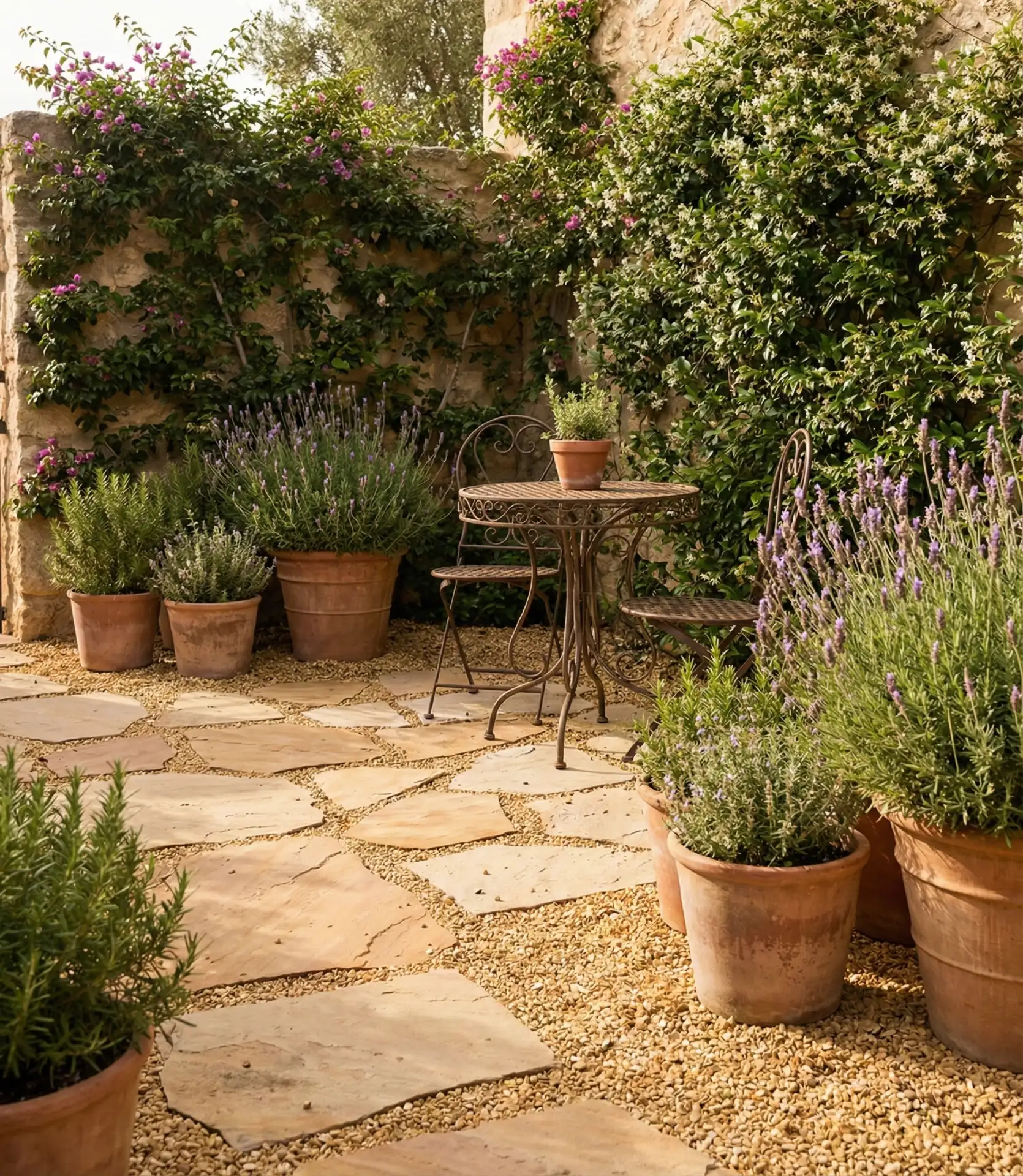
With a style influenced by European design, the combination of paving stones and pea gravel adds to the charm of a romantic courtyard while also providing excellent drainage. The use of irregular flagstone or tumbled pavers centered around gravel and beds of pea gravel brings to mind medieval and Spanish pavements. Most of these historical pavements are a combination of weathered stones and irregular layouts. They are not characterized by symmetry or formal uniform layouts. This style works well with overgrown gardens and old-style homes where a formal design will look out of place. 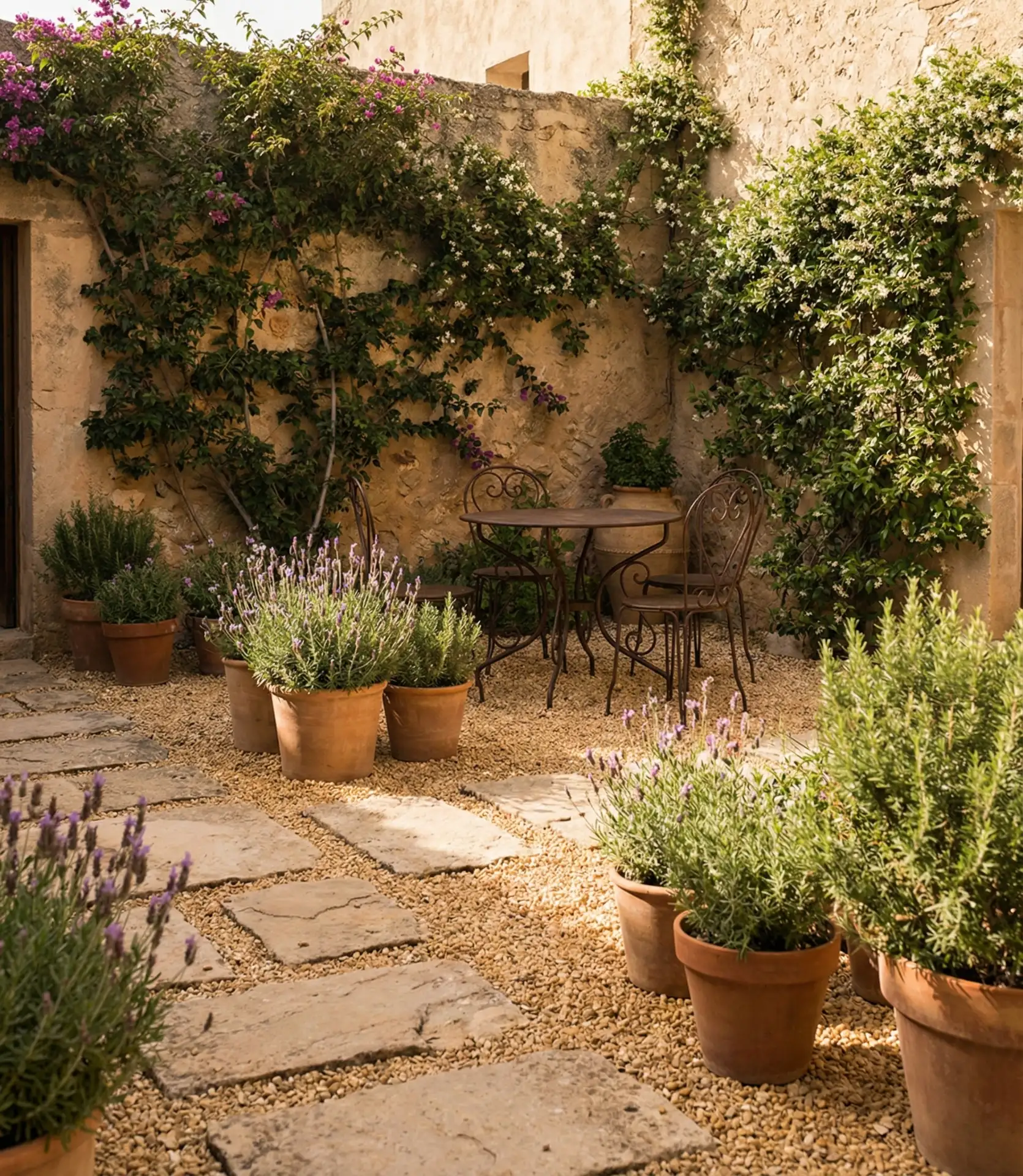
This style works best in California and the southwestern and southeastern parts of the US, where the climate is Mediterranean. In these regions, you can plant rosemary, lavender, and olive trees, which suit the design. The paving also improves drainage during heavy rainfall. It allows rainwater to pass and maintains a dry condition in between rain while also preventing puddling. Professional designers often suggest providing a fabric underlayment beneath the gravel to allow drainage while also preventing weeds.
To determine the precise distance for the first course of patio pavers, it is best to space the stepping stones 8 to 12 inches apart to get a comfortable stride length. It is also best to plan to redistribute gravel once a month for the first season, as the material tends to settle and reach equilibrium.
11. Paver Patio with Outdoor Kitchen and Cement Countertops
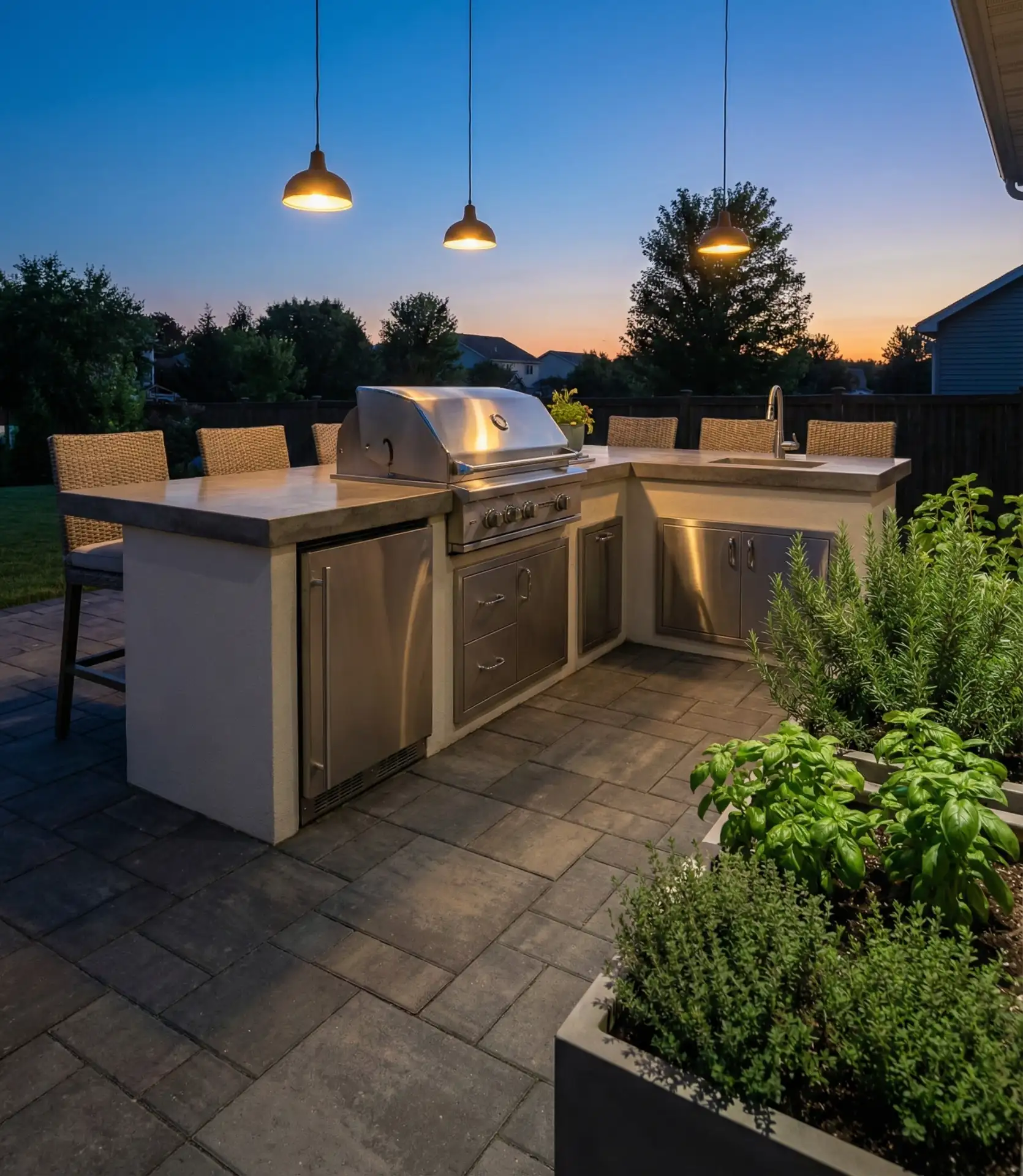
To transform your backyard into a culinary hotspot, it is first necessary to procure strong pavers to support built-in cooking stations and cement countertops. This design shifts outdoor cooking from merely grilling to prep, storage, and serving stations, elevating the whole experience. The paver foundation is paramount, as it can support the heavy cooking appliances and foot traffic in spill-prone zones around the cooking area. 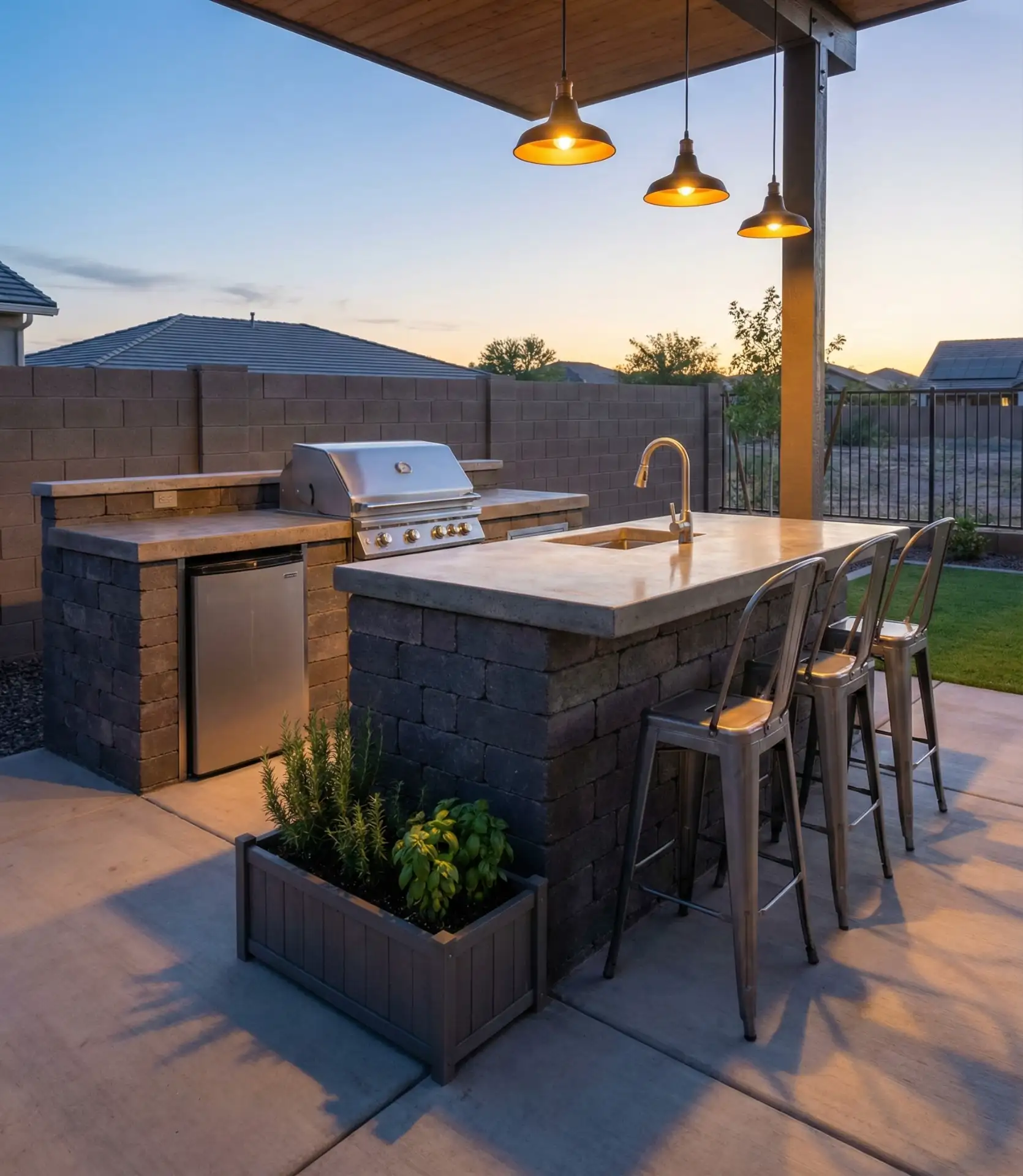
Budget between fifteen and thirty-five thousand dollars for complete outdoor kitchen installations, with pavers representing roughly fifteen percent of total costs. Florida, Texas, and California homeowners lead this trend, where year-round outdoor cooking justifies the investment. The cement countertops require sealing every two to three years to maintain stain resistance, but they offer custom color options and integral sinks that natural stone cannot match. Position your cooking zone downwind from main seating areas and ensure proper ventilation—many HOAs require minimum clearances from property lines for permanent outdoor appliances.
12. Small Space Paver Patio Ideas with Vertical Gardens
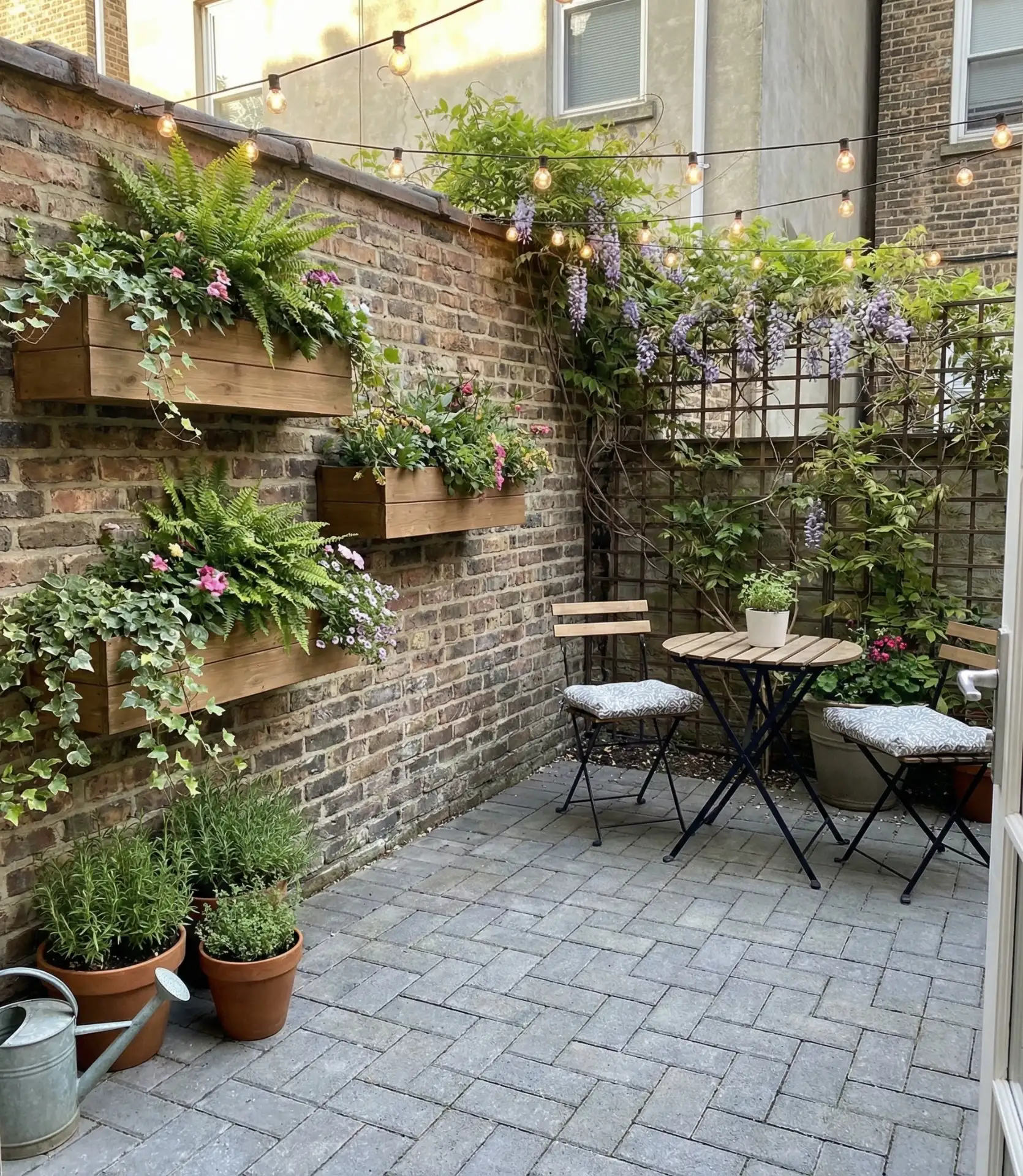
Maximizing limited square footage, compact stone paver installations paired with vertical planting systems create functional outdoor rooms in urban settings. These space-efficient ideas work brilliantly for rowhouses, condos, and starter homes where every inch counts. The vertical elements draw the eye upward, making small patios feel more expansive while adding lush greenery without consuming precious floor space needed for furniture and movement. 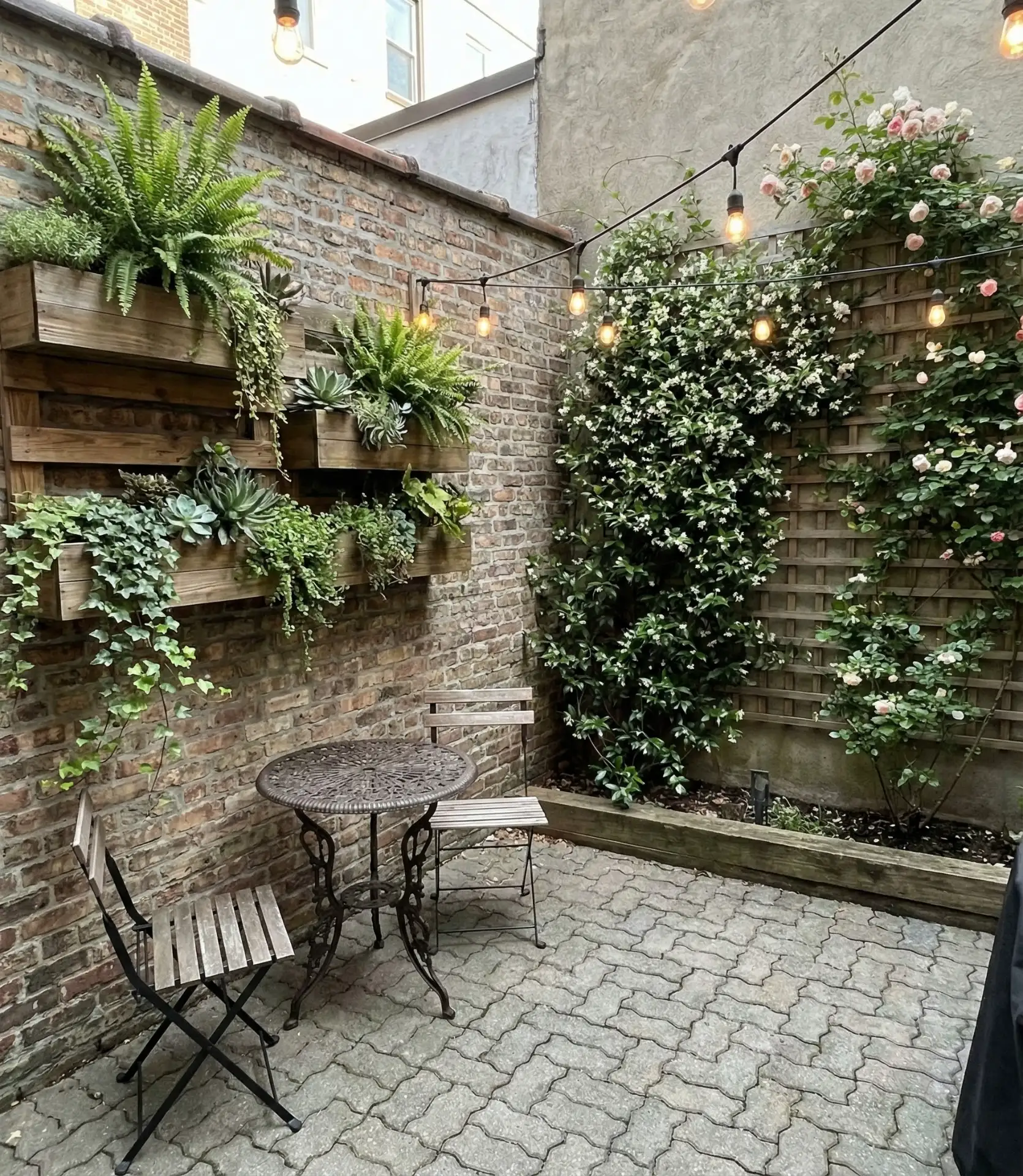
Brooklyn, San Francisco, and Chicago have embraced this high-density solution where outdoor space comes at premium pricing. A designer in Philadelphia recently completed a twelve-by-ten-foot patio that feels twice its actual size thanks to floor-to-ceiling greenery and light-colored pavers that reflect natural light. She notes that clients initially worry about maintenance, but modern irrigation systems with timers make vertical gardens nearly hands-off once established. The key is selecting pavers in light tones—grays, creams, and pale tans—that maximize brightness in spaces often surrounded by tall buildings or fences.
13. Rustic Brick Paver Patio with Gravel Pathways
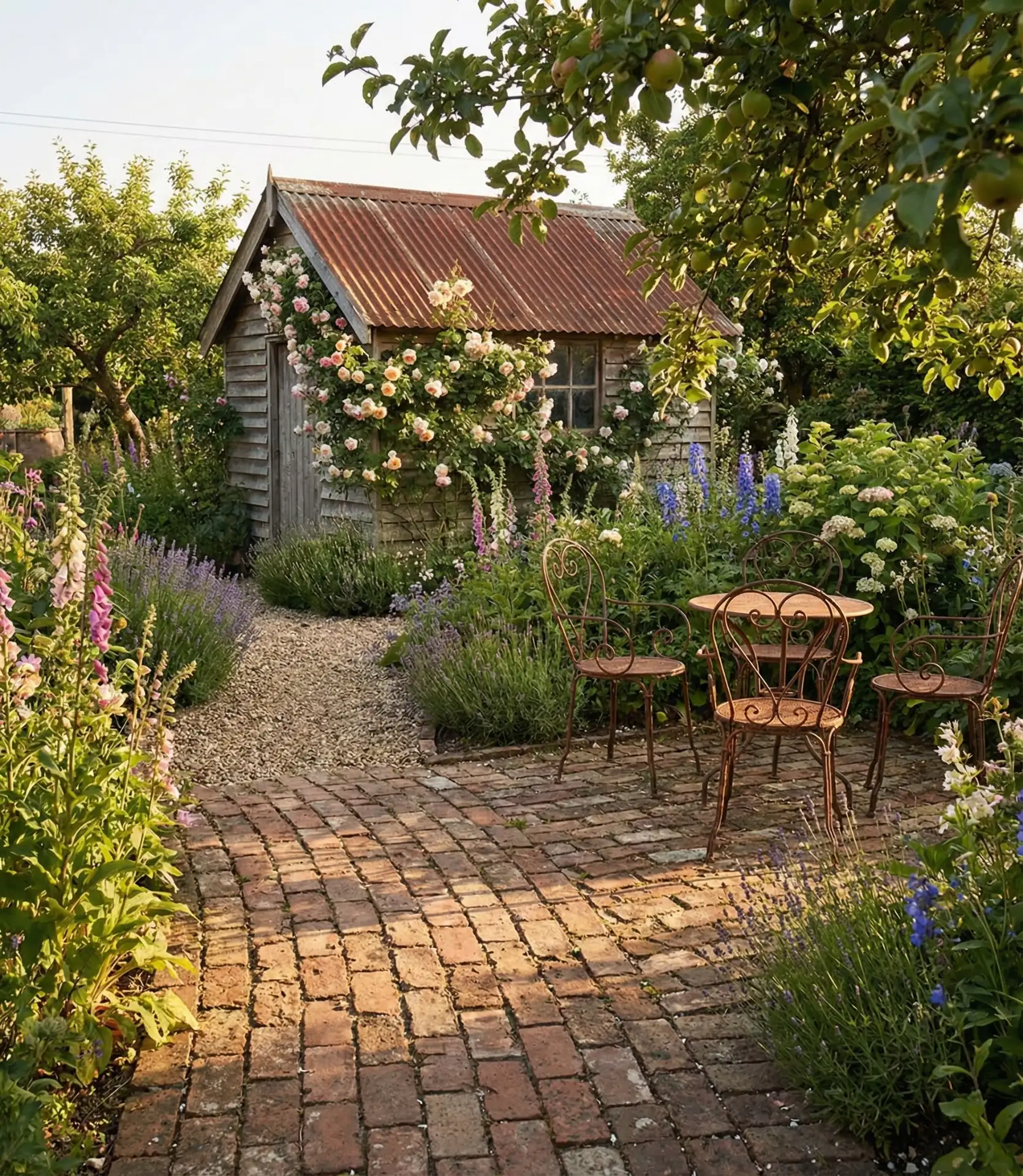
Weathered brick pavers combined with meandering gravel and crushed stone paths deliver farmhouse charm and cottage garden romance. This relaxed aesthetic celebrates imperfection—uneven mortar joints, varied brick tones, and organic transitions between materials create lived-in character that new installations often lack. The pea gravel pathways soften connections between the patio and garden beds, allowing plants to spill over edges and blur boundaries between hardscape and landscape. 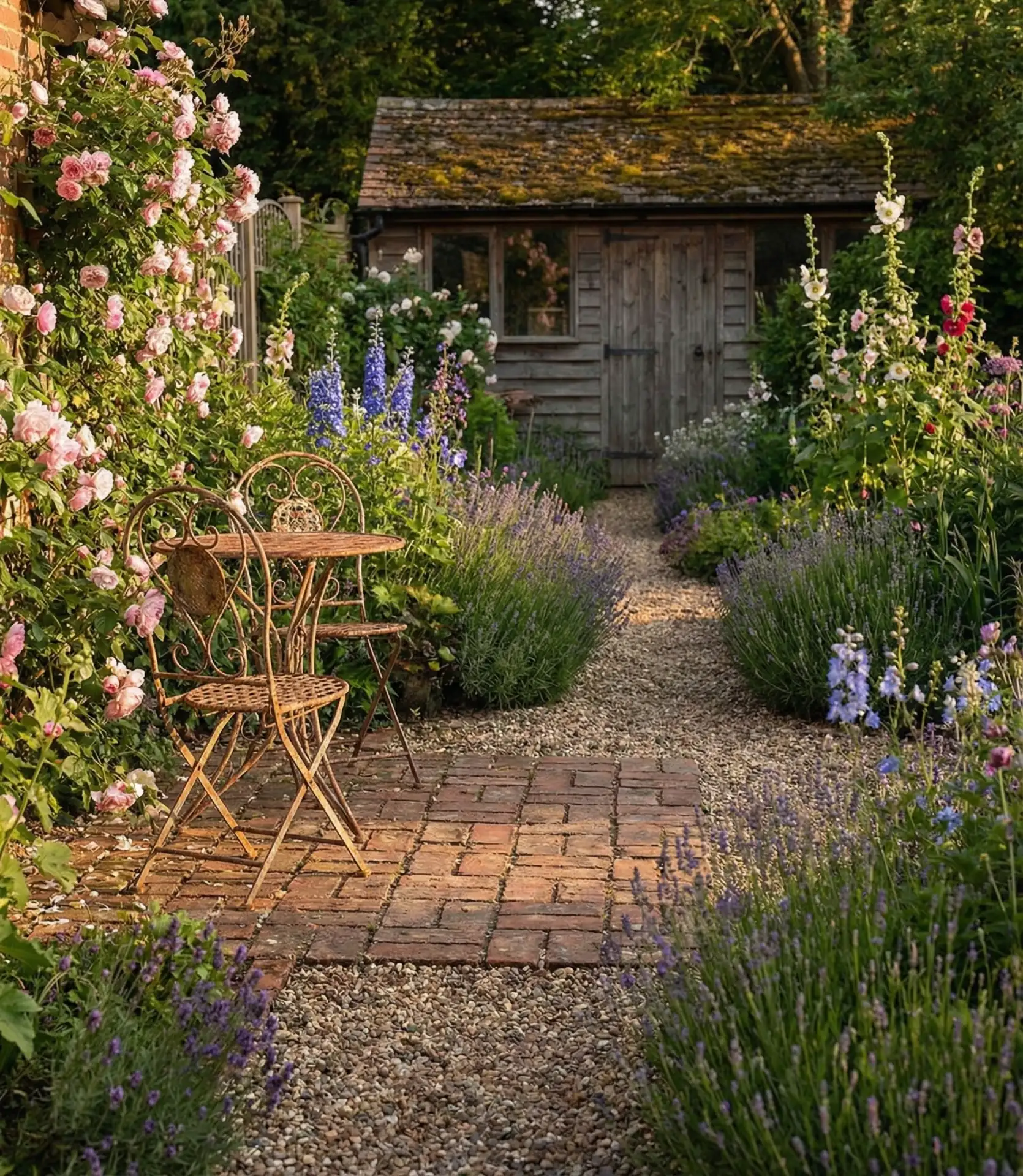
This style works best in established neighborhoods with mature landscaping—New England villages, Pacific Northwest suburbs, and Southern historic districts where heritage aesthetics reign. Reclaimed brick adds authenticity and costs less than new materials when sourced from architectural salvage yards. Expect to pay five to twelve dollars per square foot for used brick versus fifteen to twenty for new. The gravel pathways require fabric underlayment and metal edging to prevent migration into lawn areas, but they cost a fraction of solid paving while maintaining excellent drainage during spring thaw and summer storms.
14. Modern Paver Patio with Fire Pit Lounge Area
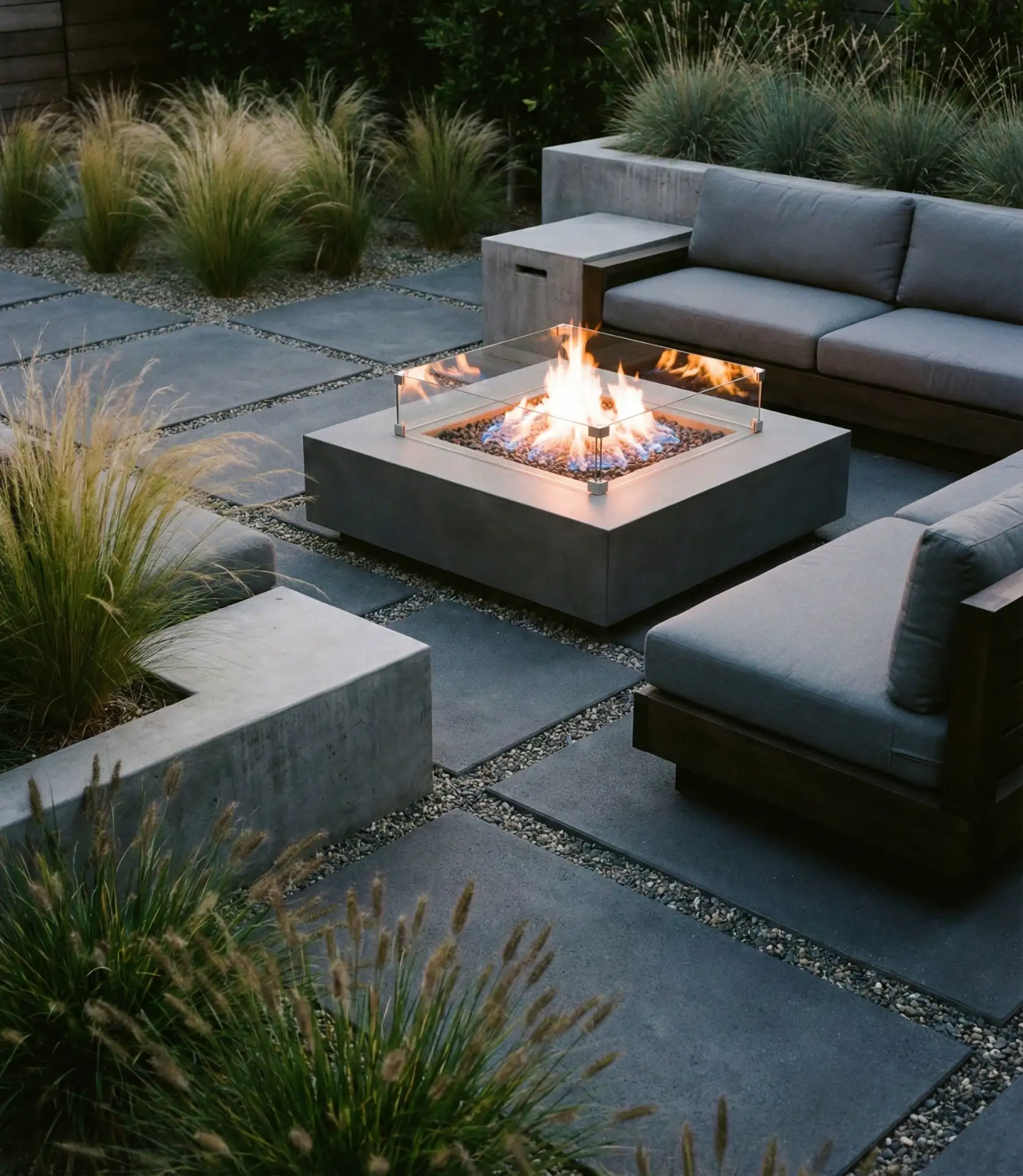
Contemporary modern design principles shine in expansive large-format installations centered around sleek fire pit features that anchor social zones. Clean lines, monochromatic color schemes, and geometric precision define this approach, where every element serves both functional and aesthetic purposes. The generously scaled pavers in charcoals, slate grays, or warm taupes create uninterrupted surfaces that showcase furniture and fire features as sculptural focal points. 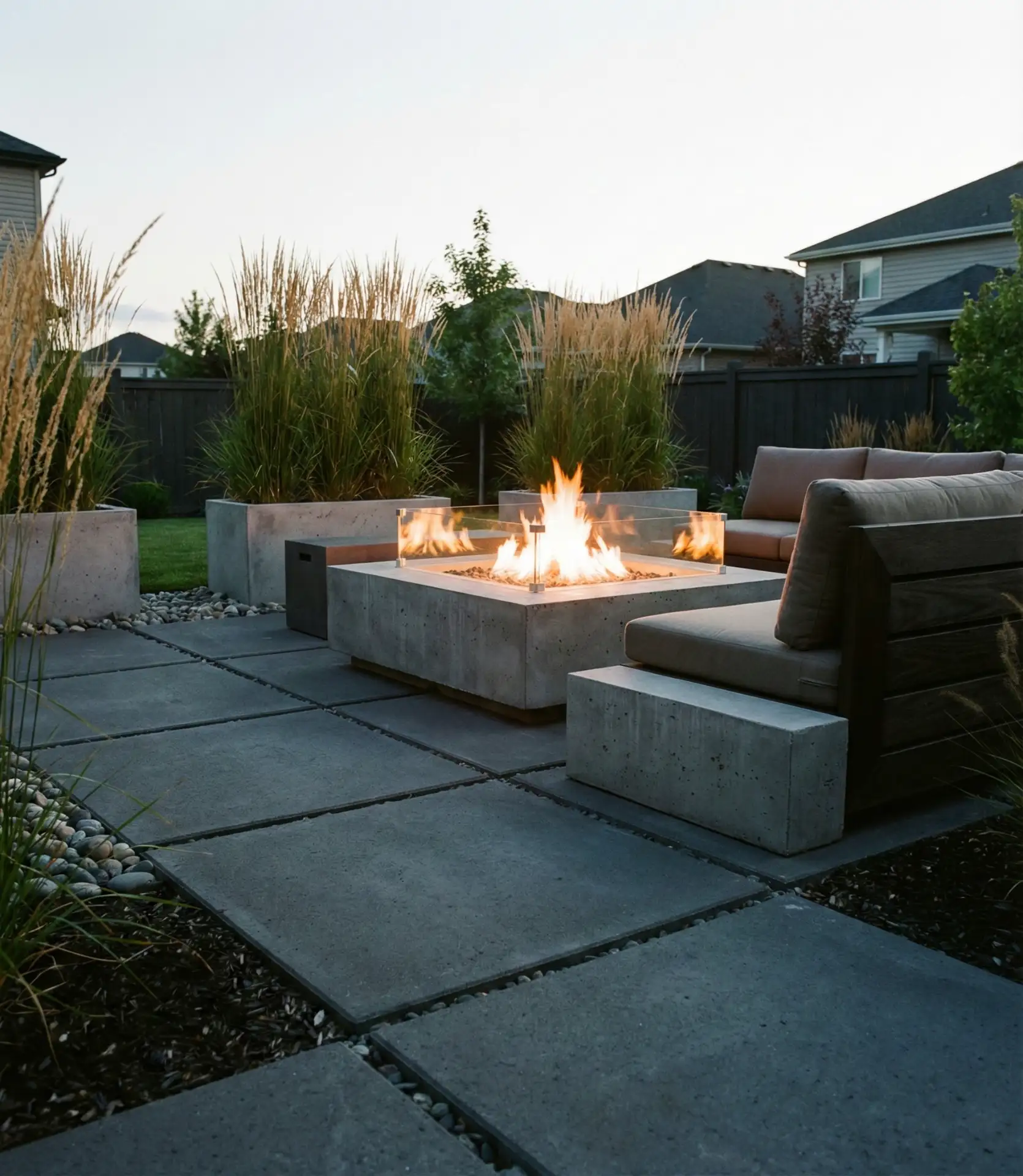
Properties with open floor plans that extend to glass walls benefit most from this seamless indoor-outdoor aesthetic, particularly in temperate West Coast markets and modern developments throughout the Sun Belt. Real homeowners investing in this style typically allocate thirty to fifty percent of their budget to the fire feature itself, choosing linear gas models with electronic ignition over traditional wood-burning bowls. The investment pays dividends in convenience and clean operation—no ash disposal, instant flames at the touch of a button, and consistent heat output that doesn’t fluctuate as logs burn down.
15. DIY Paver Patio Ideas on a Budget with Reclaimed Materials
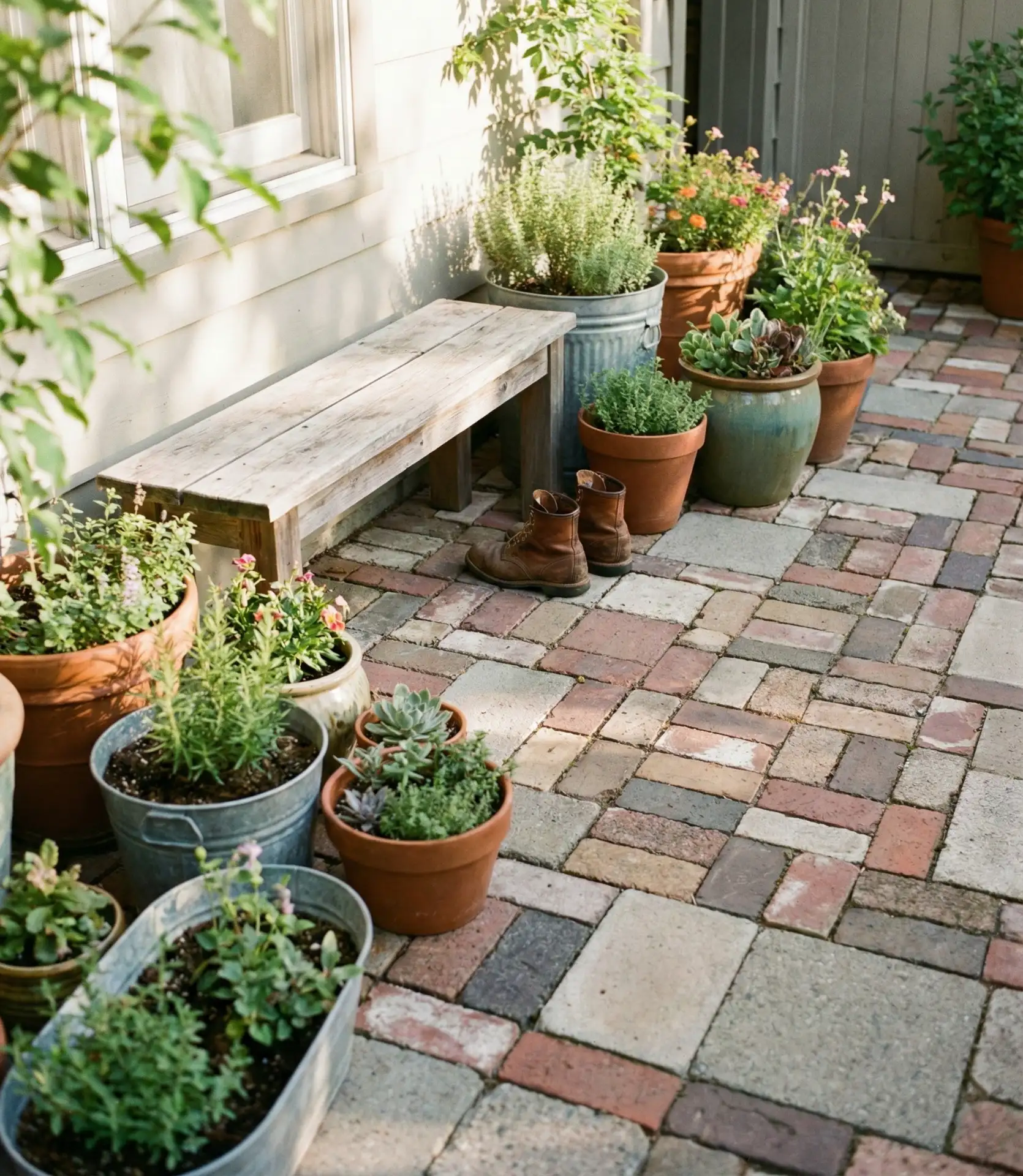
Resourceful homeowners stretch dollars by sourcing salvaged pavers for ideas on budget projects that deliver character-rich results through DIY installation. Demolition sites, architectural salvage yards, and online marketplaces offer discontinued pavers, surplus stock, and reclaimed materials at steep discounts. The mismatched nature of salvaged materials becomes a design feature rather than a limitation, creating one-of-a-kind patios with historical depth that new, uniform products cannot replicate. 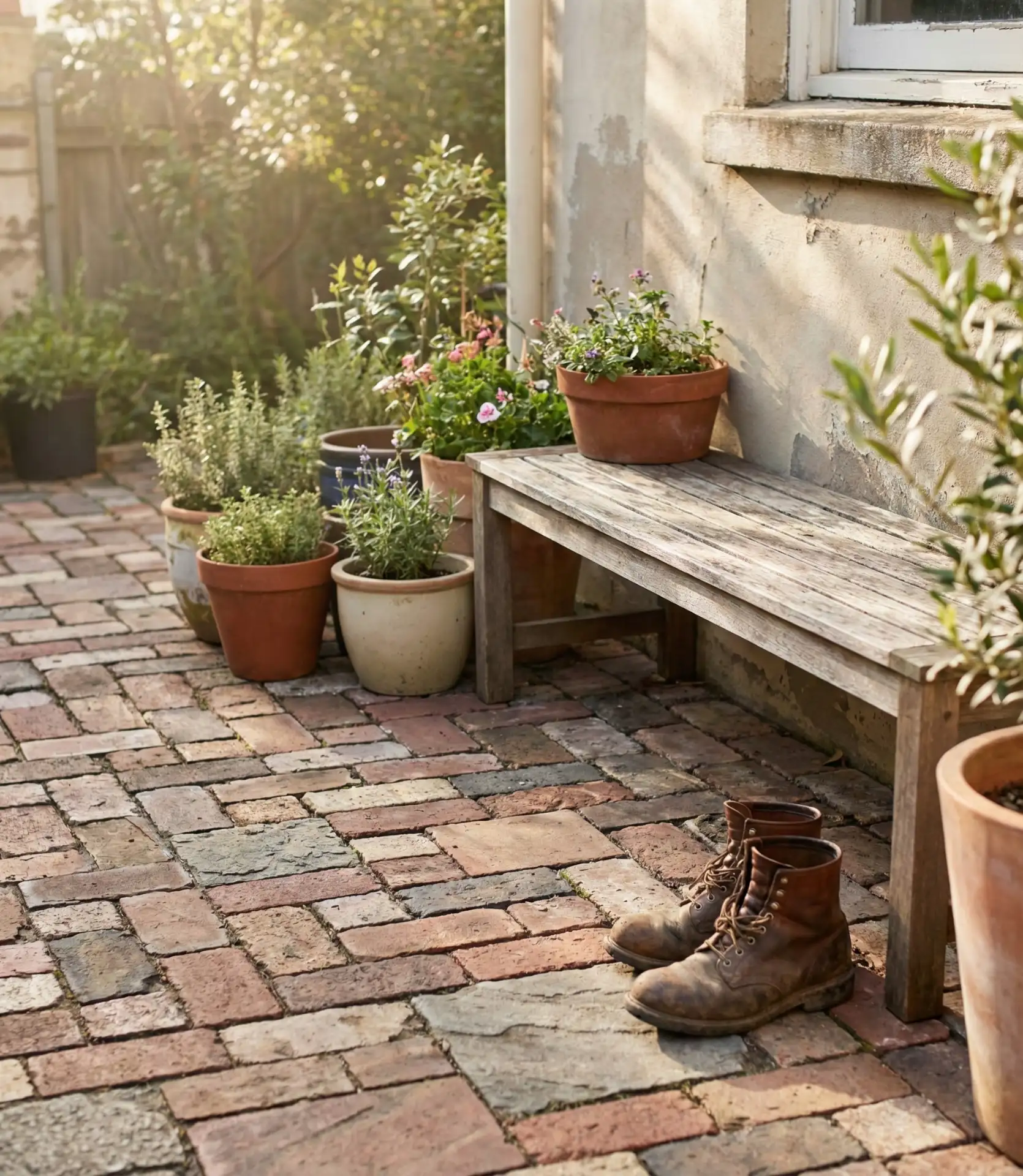
Expect to invest two to six dollars per square foot for salvaged materials versus eight to fifteen for new pavers—savings that allow larger installations or fund upgrades elsewhere in your landscape. The challenge lies in quantity availability, as salvage yards rarely stock enough matching pieces for big projects. Smart DIYers embrace this limitation by designing random patterns that accommodate mixed sizes and colors. Inspect reclaimed pavers carefully for structural integrity, rejecting any with deep cracks or crumbling edges that indicate frost damage or excessive wear that will shorten their remaining lifespan.
16. Geometric Paver Patio Design with Contrasting Borders
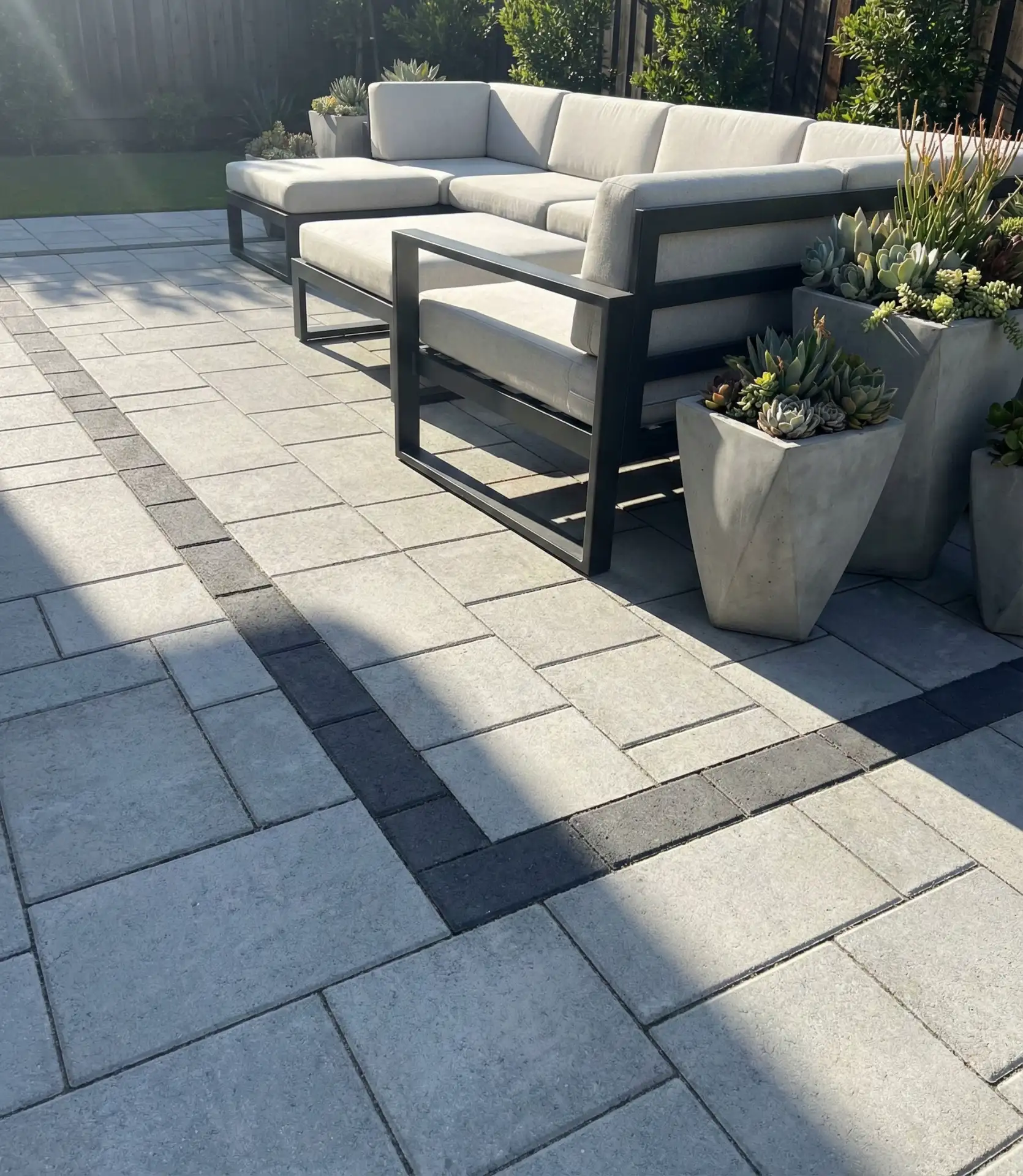
Bold patterns emerge when different colored pavers meet at the edges, creating eye-catching designs that highlight smaller areas within the overall layout. This design uses dark and light-toned pavers to frame the opened spaces and draw the eye across the area, guiding the flow of foot traffic. This design adds visual interest across the large pavements. With a carefully planned and skillfully installed design, the pavements rival detailed tile work. 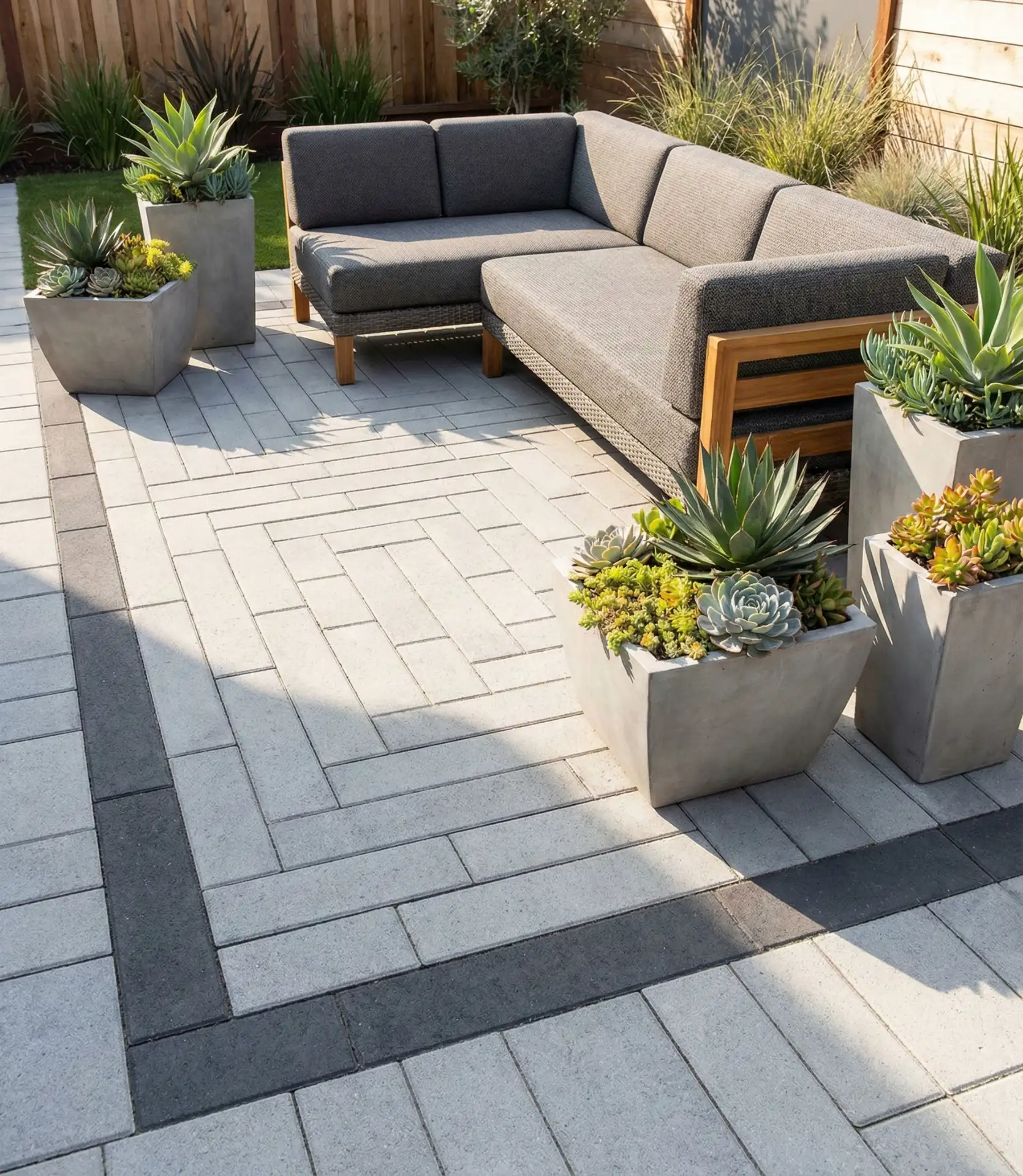
A common border design mistake is choosing a border thickness that is too narrow to create a border from a distance. Designers recommend using a 12” border on the outer designs to create a visible impact. A common border color design features a warm beige exterior paired with either a dark brown or light gray exterior that includes slate brown accents. This is a popular design with Arizona and Nevada homeowners, as the graphic design accents the desert modern architecture.
17. Paver Patio Extension with Pergola and Outdoor Dining
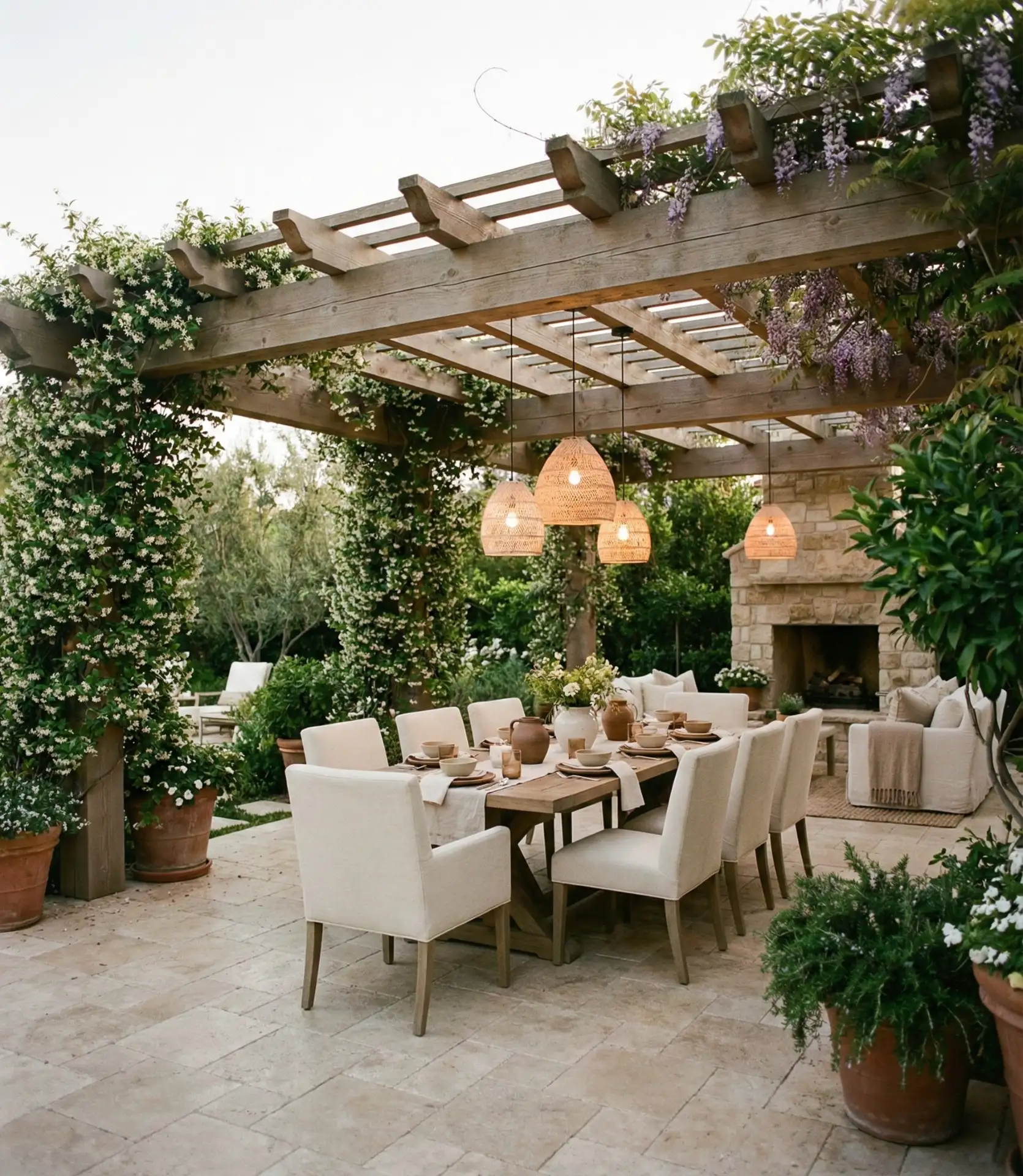
Strategic extension projects that add pergola-covered dining zones transform basic patios into resort-style retreats for family gatherings and entertaining. The overhead structure defines the space while providing crucial shade and architectural interest that anchors furniture arrangements. Quality paver installation beneath ensures stability for pergola posts while creating cohesive visual flow between covered and open sections of your outdoor living area. 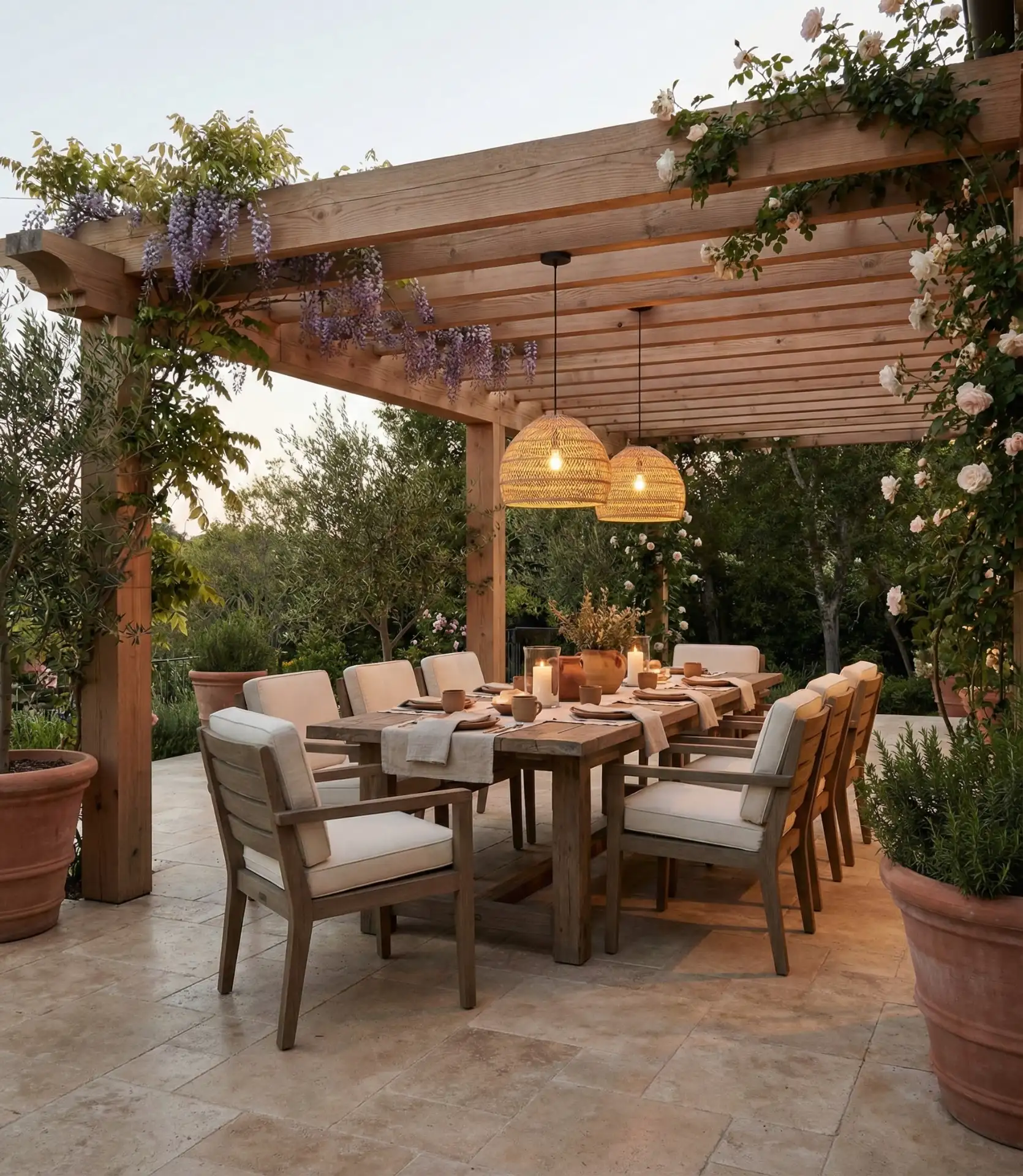
Where this design works best depends on sun exposure and regional climate—south-facing patios in hot climates demand substantial pergola coverage, while northern properties benefit from partial shade that doesn’t block precious warmth. The combined project typically costs twenty to thirty-five thousand dollars depending on materials and size, with the pergola representing roughly sixty percent of expenses. Many homeowners phase the work, installing pavers first and adding the pergola structure the following season when budgets recover. This approach allows you to test furniture arrangements and traffic patterns before committing to permanent overhead elements.
18. Natural Stone Paver Patio with Water Feature Integration
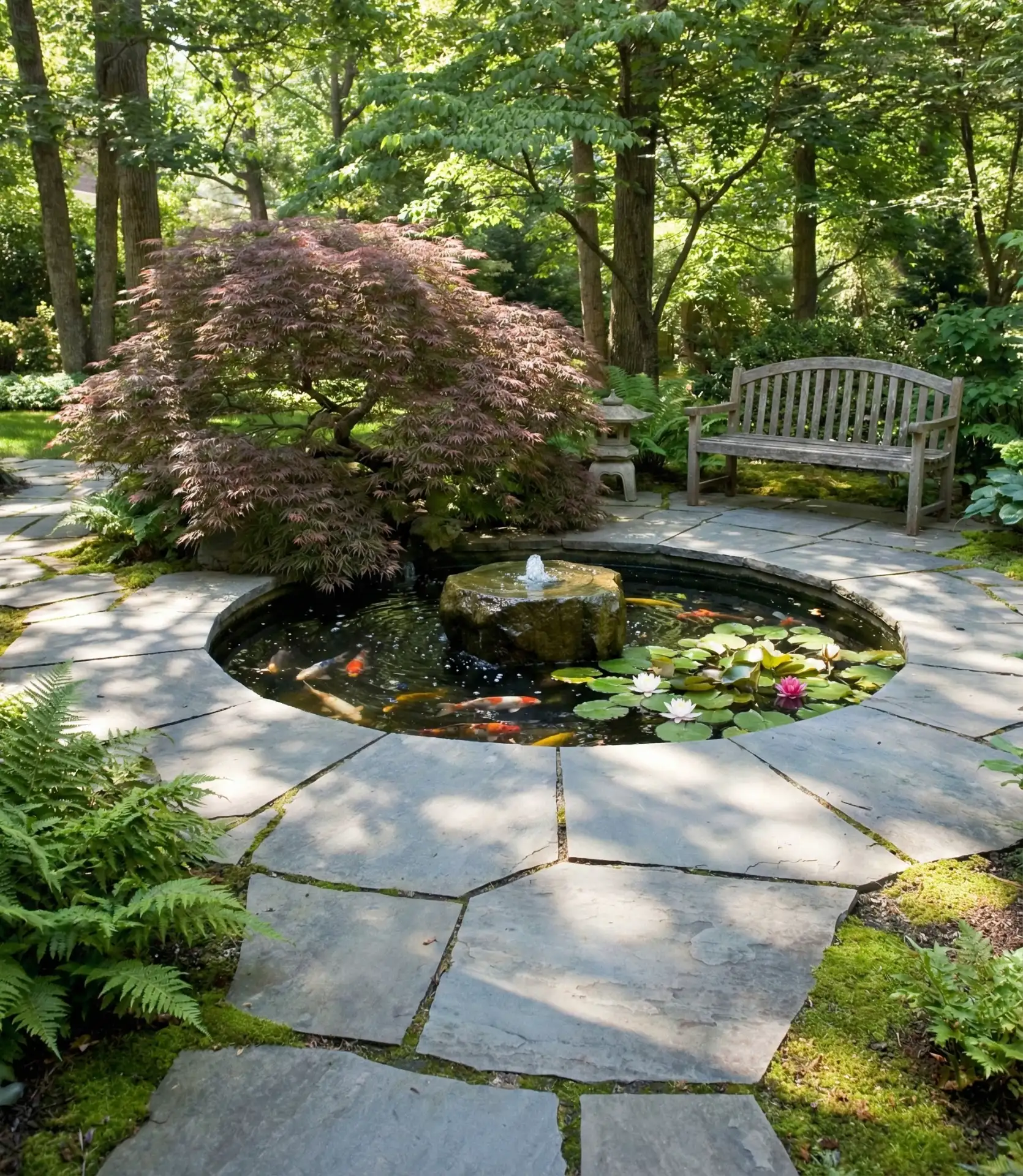
High-end and premium stone installations shine brightest with the classic addition of water. Specific outdoor acoustic features like fountains, ponds, or water walls can help achieve this. The soothing sound from these structures blends perfectly with the natural variations of the premium stones and irregular shapes that are often used for the installations. The more traditional, rustic, and organic touch flags, slates, or bluestones offer outlines that perfectly complement most water structures and help with the ratio.
Complete installation must include proper drainage during overflow events to mitigate erosion to paver bases during heavy rain or feature errors. 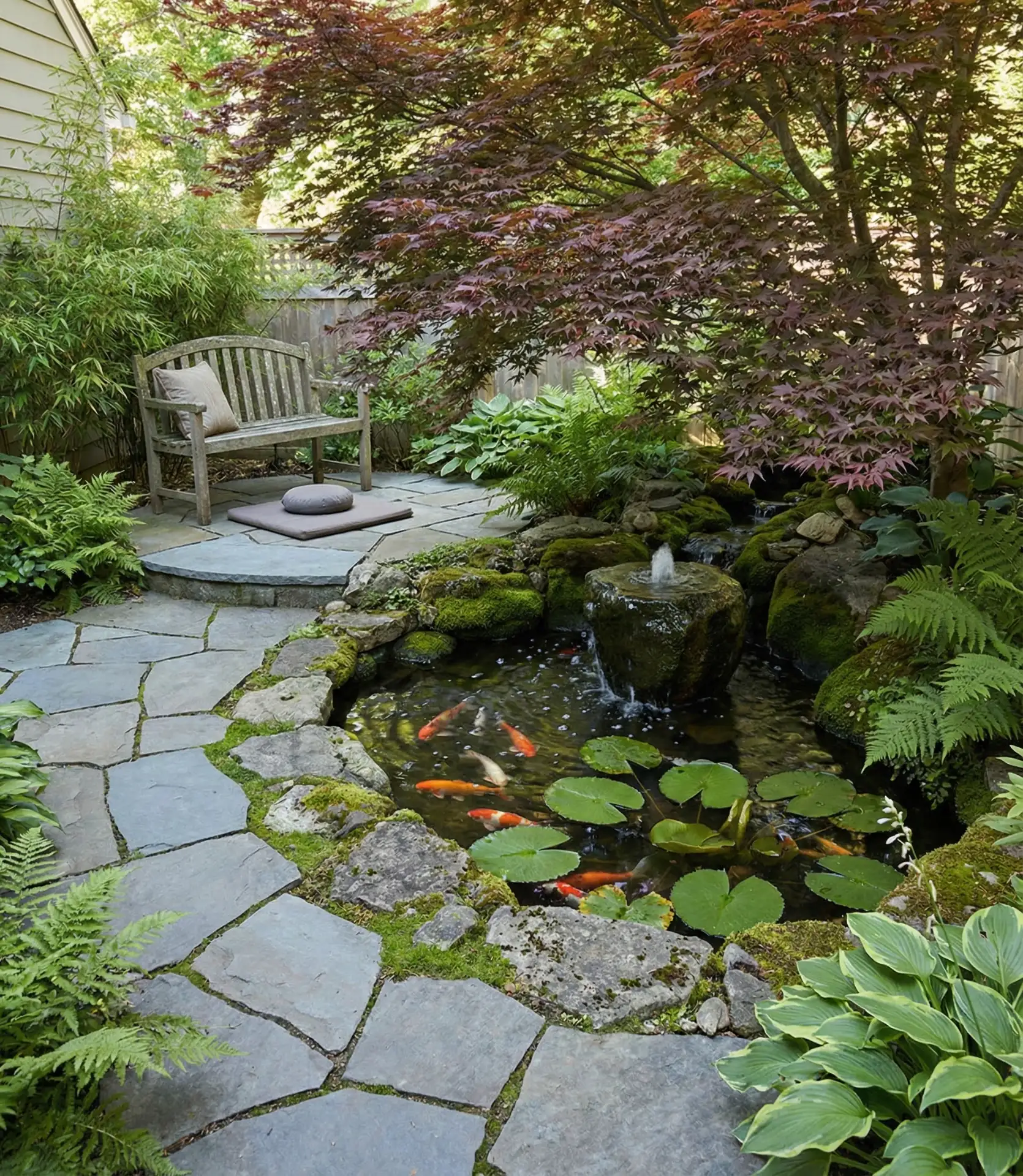
Virginia Landscape Architect designed the combination for clients wishing for a zen retreat in their suburban yard. She says the feature also masks traffic noises coming from a nearby highway and attracts birds and beneficial insects to the garden ecosystem. The stone pavers have no damage concerns from splashing, a benefit of the feature versus water-damaged wooden decks. Expect to pay an additional $3,000–$8,000 beyond the basic paver costs tied to professional installation of the water feature, complete with circulation, filtration, electrical, and other building code requirements.
19. Paver Patio with Raised Beds for Edible Landscaping
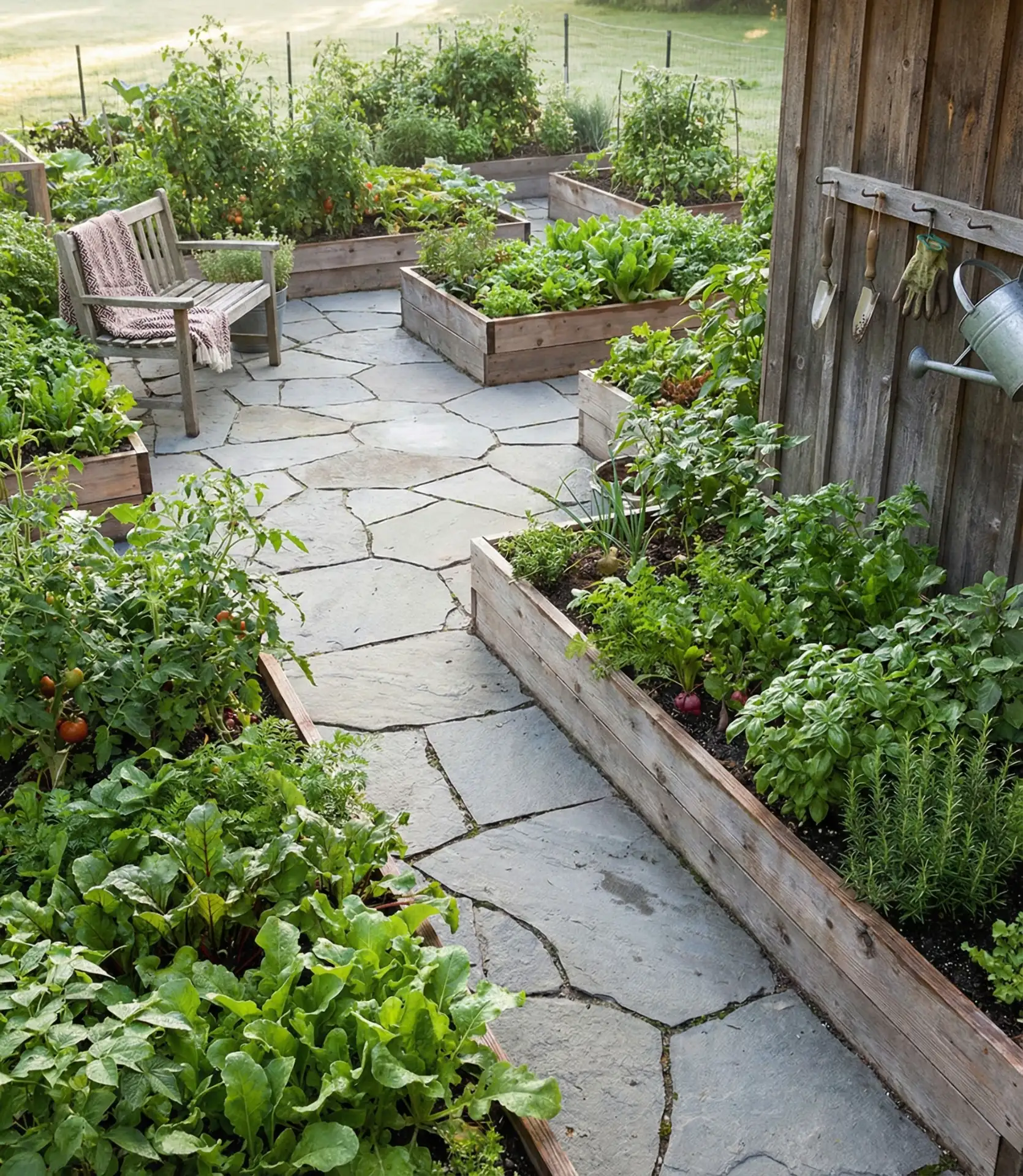
Combining hardscape entertaining areas with productive raised planting beds creates multifunctional backyard spaces that serve both social and practical needs. This integrated approach positions herb gardens, vegetables, and berry bushes at comfortable working heights directly adjacent to outdoor kitchens and dining areas. The pavers provide clean pathways that remain mud-free even after watering or rain, making harvest tasks pleasant rather than muddy chores that track soil indoors. 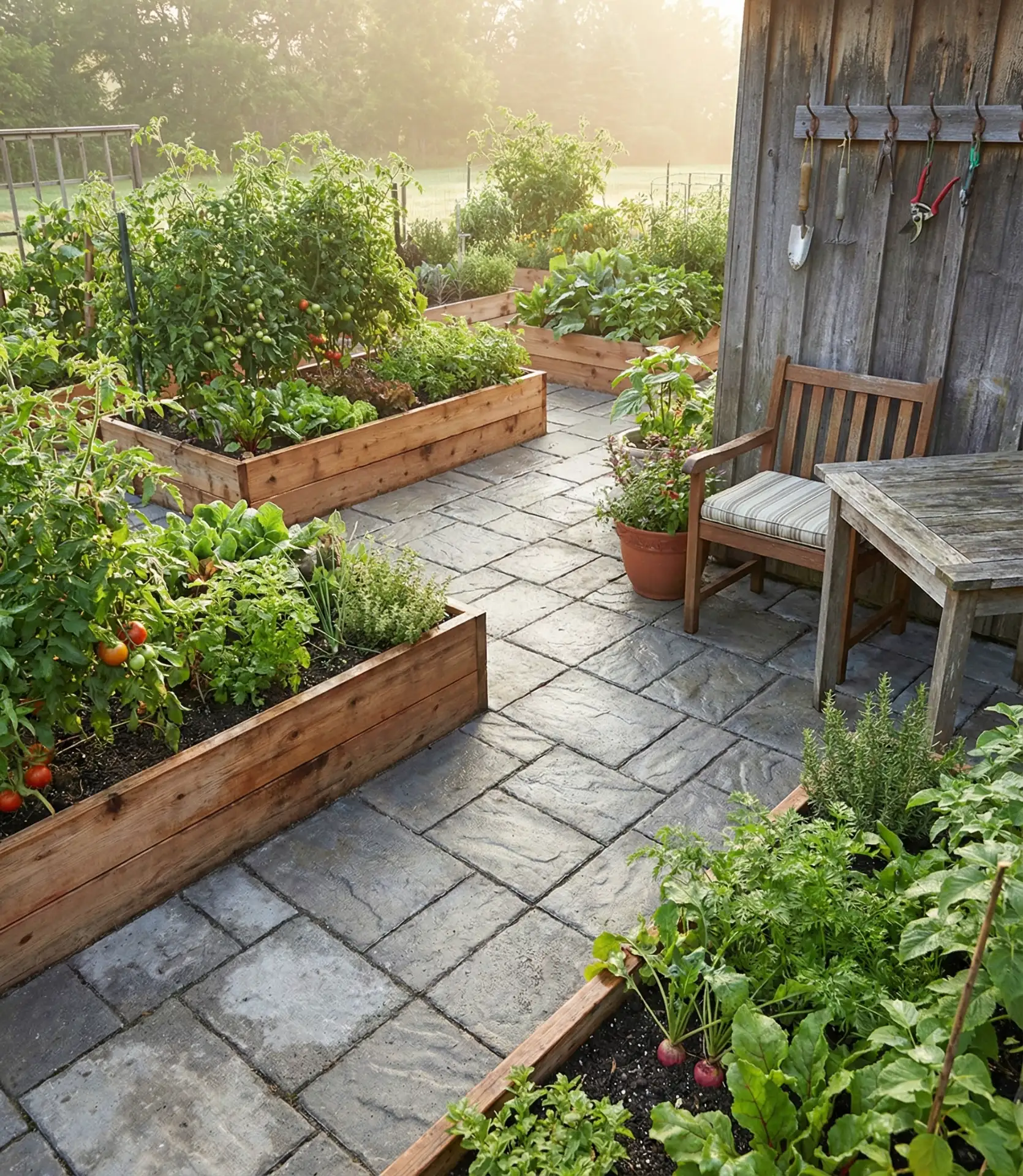
This trend has exploded in suburban and rural areas, where food security and sustainable living resonate with homeowners of all ages. The raised beds should sit eighteen to twenty-four inches high for comfortable gardening without excessive bending—crucial for aging gardeners or those with mobility limitations. Material costs run modest for the paver pathways but can escalate quickly for raised bed construction; expect forty to eighty dollars per linear foot for rot-resistant cedar or composite materials. The payoff comes in years of productive harvests and the satisfaction of walking straight from garden to grill with ingredients at peak freshness.
20. Contemporary Paver Patio with Decorating Ideas and Smart Lighting
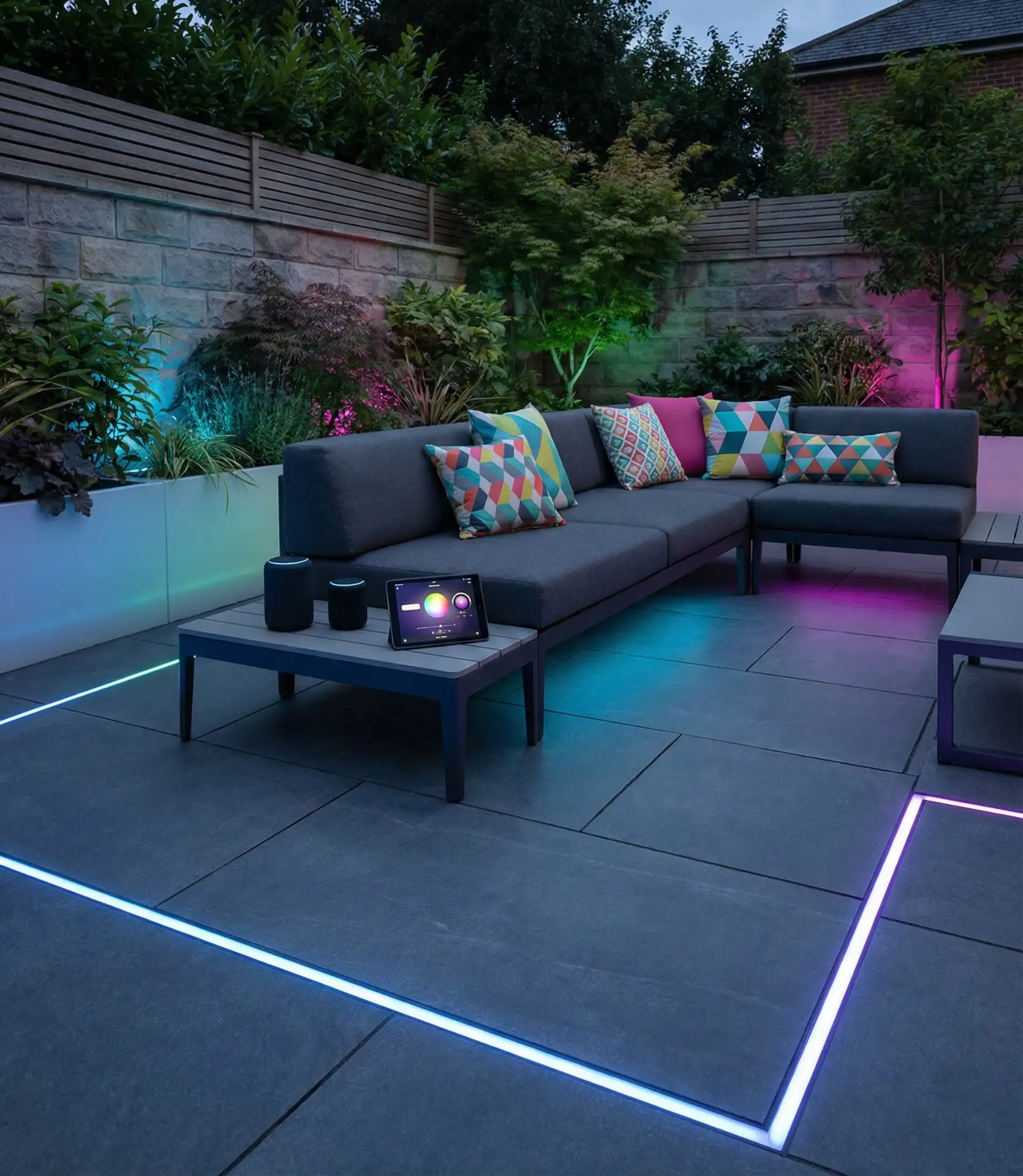
Forward-thinking homeowners layer neutral paver foundations with dynamic decorating ideas that include programmable LED systems for customizable ambiance and functionality. This tech-integrated approach allows instant atmosphere shifts from bright task lighting for dinner prep to warm, dimmed moods for evening relaxation. The simple paver installation provides reliable infrastructure, while smart accessories deliver the personality and adaptability that modern outdoor living demands. 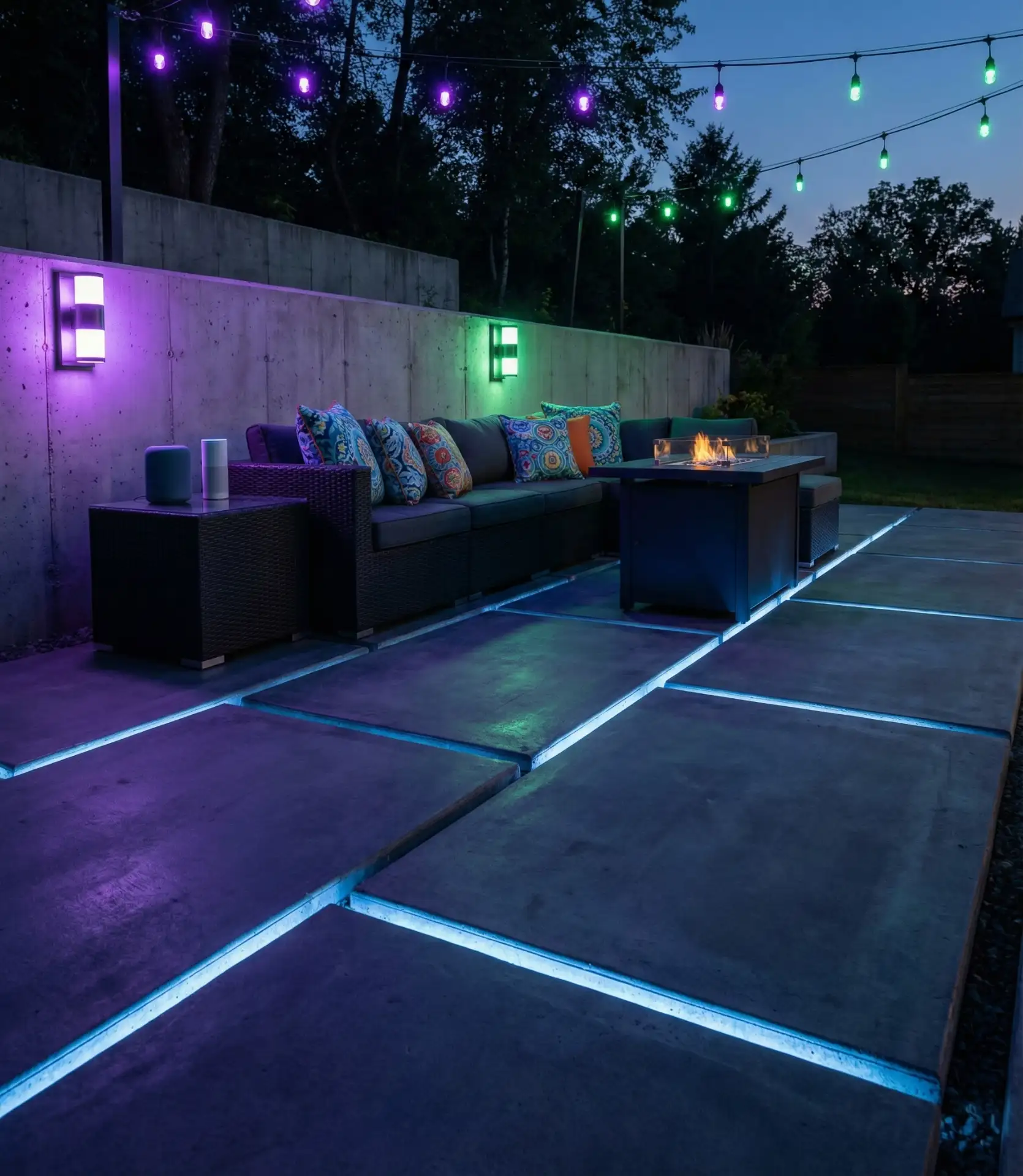
Young professionals and tech enthusiasts drive adoption of these systems, particularly in markets like Seattle, Austin, and Raleigh, where innovation-minded demographics concentrate. The initial investment for quality smart lighting runs eight hundred to two thousand dollars depending on zone complexity and control sophistication, but the systems last ten to fifteen years with minimal maintenance. Voice control integration means you can adjust lighting from inside the house or even while traveling, maintaining a lived-in appearance that deters potential intruders. The neutral pavers never compete with changing light colors, providing an ideal backdrop for seasonal themes—orange and purple for Halloween, warm whites for holidays, or vibrant hues for summer parties.
21. Checkerboard Paver Patio with Artificial Turf Squares
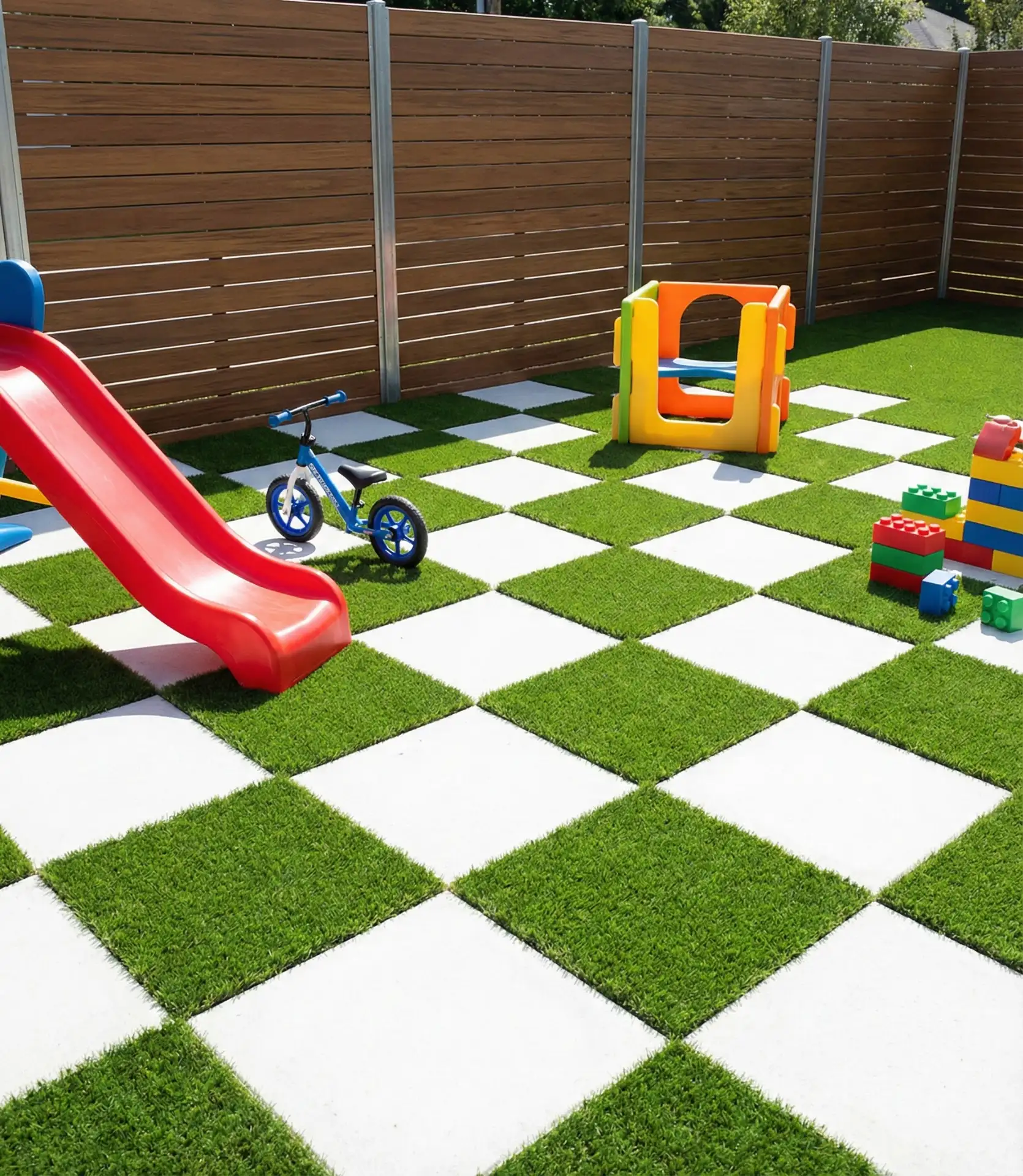
The playful geometry of a checkerboard pattern gains a contemporary edge when alternating concrete pavers with artificial turf squares in a bold grid layout. This artificial turf design merges the durability of hardscaping with the visual softness of green spaces, creating dynamic surfaces that work beautifully in modern family yards. The synthetic grass eliminates maintenance while providing cushioned areas where children can play safely, and the geometric precision appeals to design-conscious homeowners seeking Instagram-worthy outdoor spaces.
Southern California and Arizona communities have fully embraced this water-wise solution, where drought restrictions make traditional lawns unsustainable. The installation requires precise measurements—each square must be identical for the pattern to read cleanly, typically twenty-four by twenty-four inches or thirty-six by thirty-six inches depending on scale preferences. One family in Phoenix reports their checkerboard patio stays fifteen degrees cooler than solid concrete surfaces during summer months, as the turf sections don’t absorb and radiate heat the way stone does. The combination handles pool splashing and sprinkler overspray without puddling issues that plague solid installations.
22. Heritage Brick Paver Patio with Fire Pit and Outdoor Seating
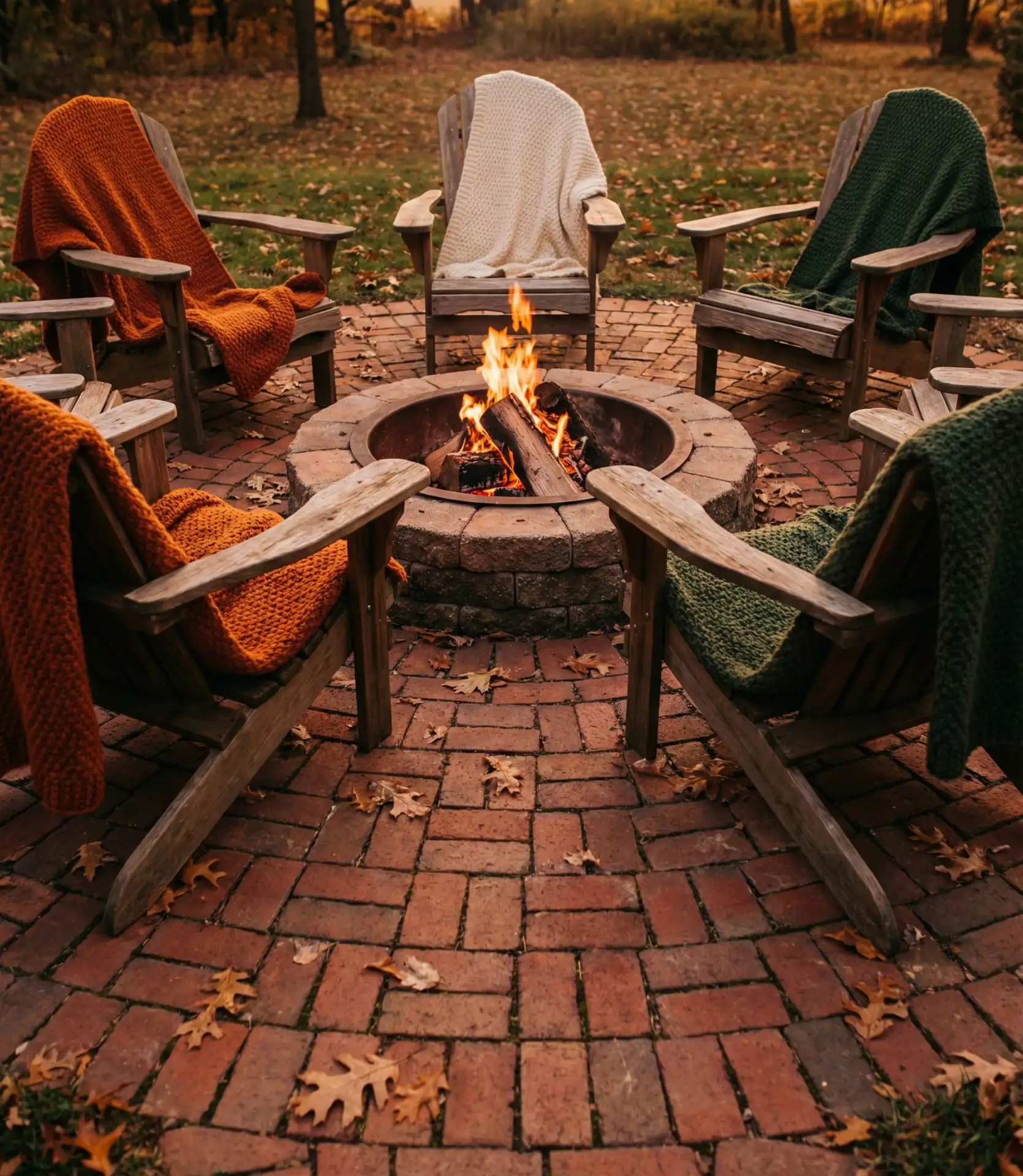
Traditional arrangements of bricks for a fire pit are circular, which create timeless assembly areas and showcase the classic American style of design. This patio design fits almost every style of home, which includes colonial and craftsman styles. The fire features naturally arranged circle seating for group conversations about the fire, which is opposite of the long sitting arrangements in indoor TV areas. 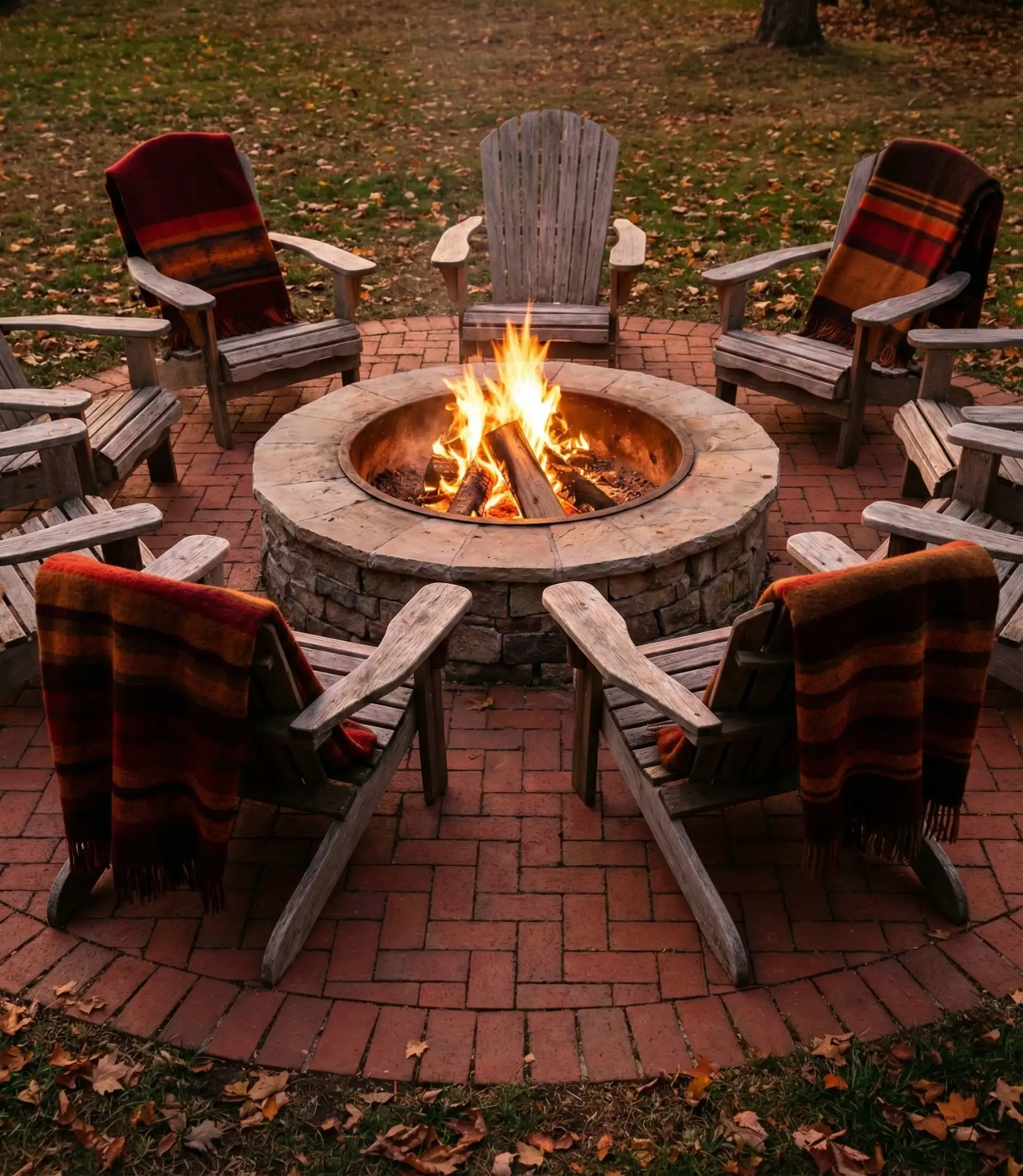
Successful arrangements of fire pits should have them spaced fifteen feet away from buildings or ten feet away from tree branches, which complies with fire safety arrangements in most towns. The pavers are resistant to heat and will not crack if set up correctly with solid bases and good drainage.
A common mistake homeowners make is oversized fire pits, as proportions are key to harmonious design; therefore, a diameter of thirty-six to forty inches works best, as they still have room to design safe, appropriate seating distances. Custom-built masonry fire pits can range from three to six thousand, while rest-on-top prefab fire pits cost between fifteen hundred and three thousand.
23. Multi-Level Raised Paver Patio with Integrated Steps
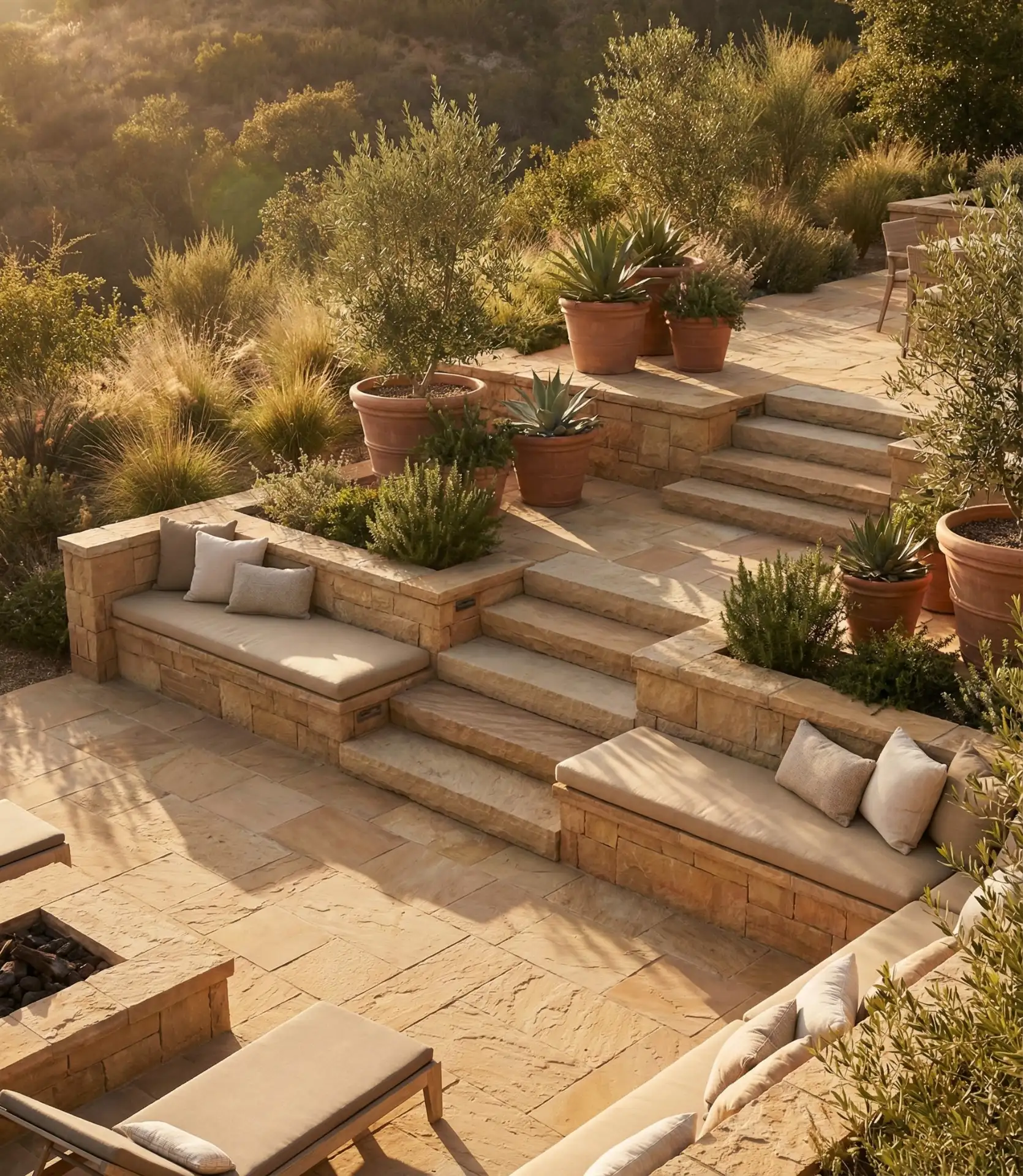
More challenging terrain may turn to design opportunities like raised paver construction, where distinct outdoor rooms are built at varying levels. This terraced design maximizes usable outdoor space, while the integrated step designs become more featured ground pieces, avoiding the common afterthought design. Elevated design changes function outline separation, where uppers can be focused on dining or conversation, while lower designs can be reserved for play, sun lounging, or relaxed areas. 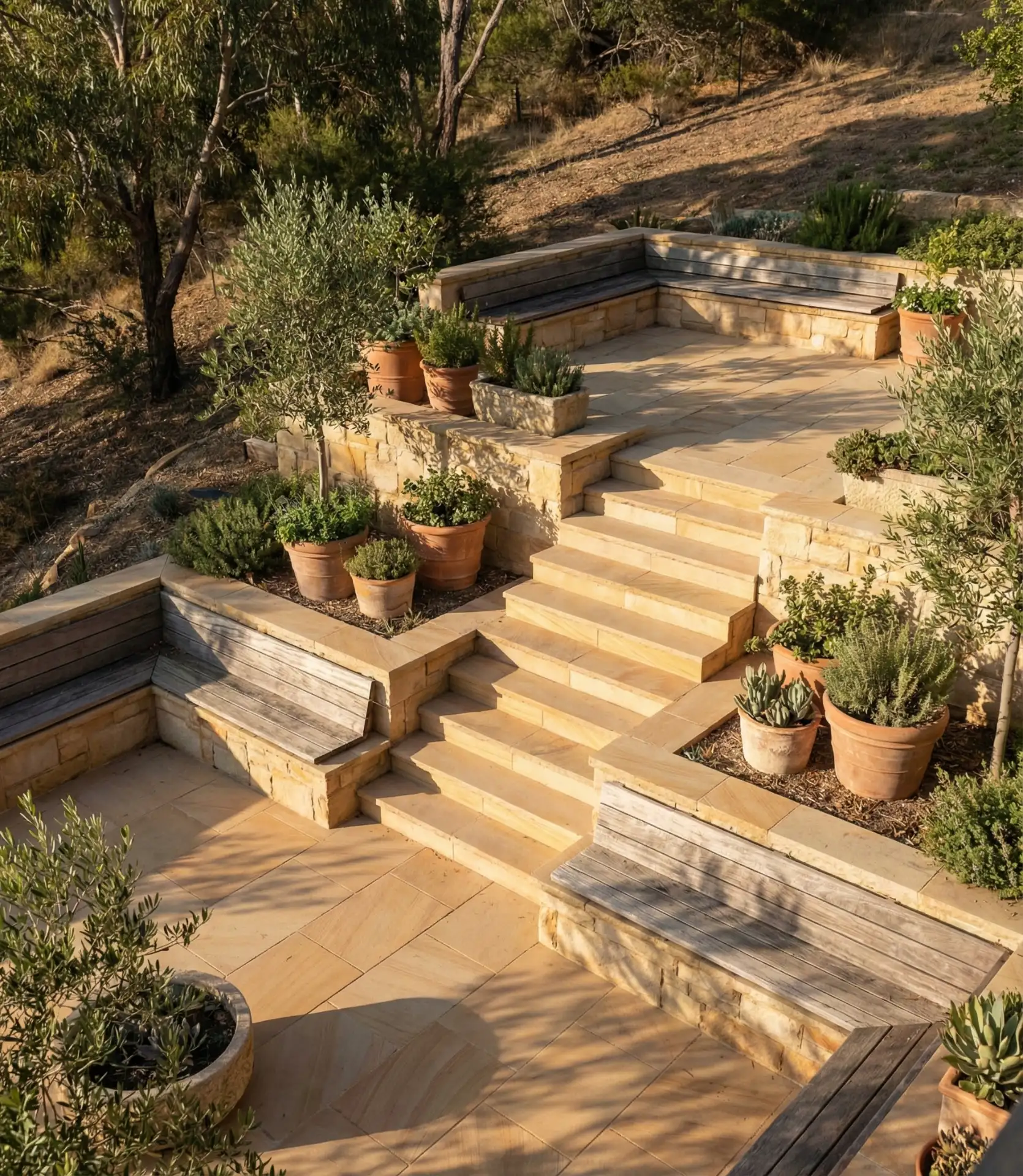
Properties throughout hilly regions—the Pacific Northwest, Appalachian foothills, and Rocky Mountain suburbs—benefit enormously from this solution that turns drainage challenges into architectural features. Where this technique works best is on lots with twelve to thirty-six inches of grade change across the patio footprint; steeper slopes require more extensive retaining walls that escalate costs significantly. A landscape contractor in Colorado Springs notes that clients initially balk at multi-level designs until they experience how the separated spaces encourage different activities—kids naturally gravitate to lower play zones while adults claim upper seating with better views. The stepped transitions also slow water runoff during storms, allowing greater absorption and reducing erosion downstream.
24. Open Concept Paver Patio with Concrete Accents and Gravel Borders
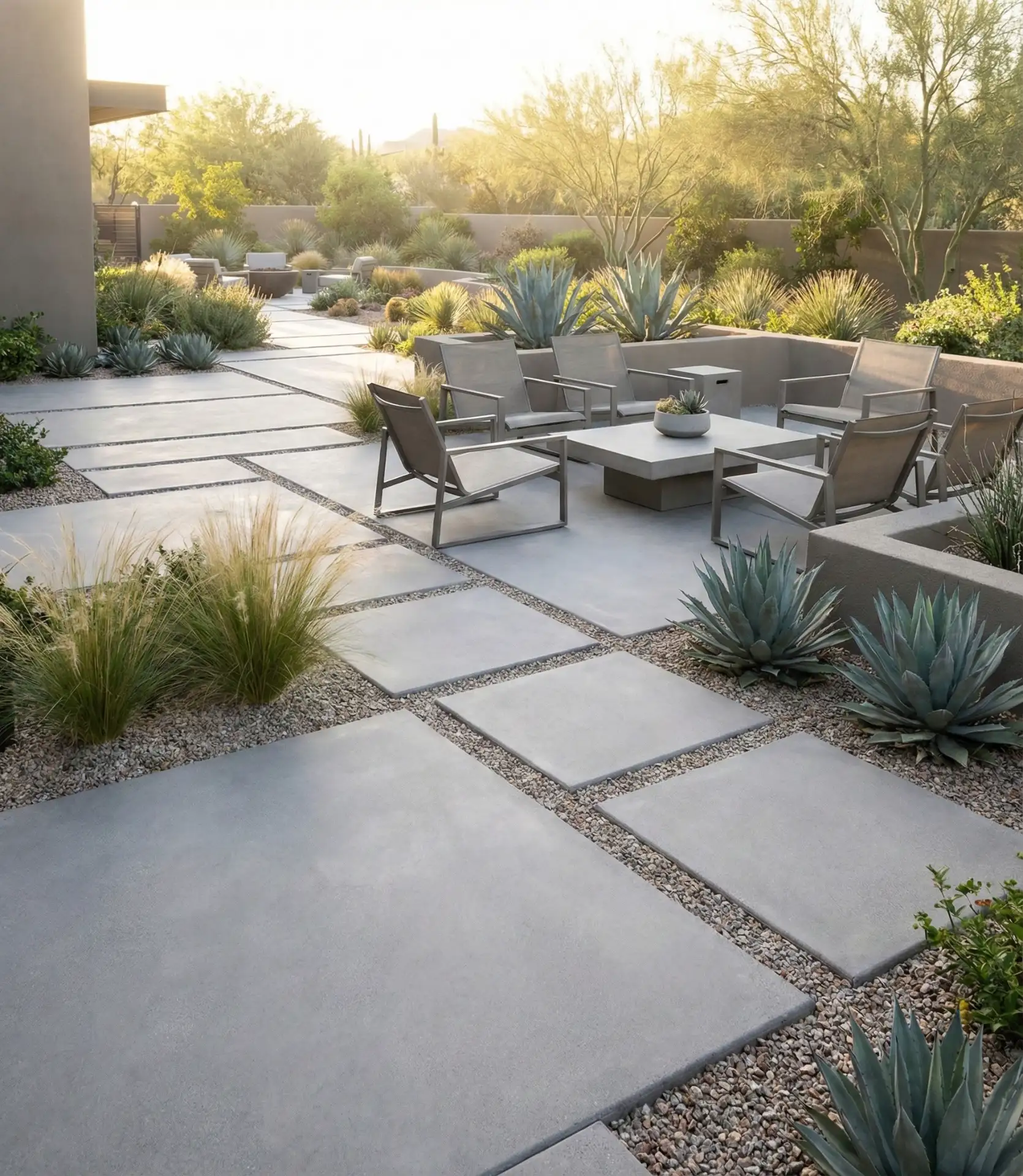
Expansive large-format installations that blend concrete pavers with gravel and decomposed granite borders create flowing spaces that resist visual fragmentation. This open-plan approach mirrors modern interior design principles where walls give way to fluid zones defined by materials and furniture placement. The gravel borders make it easy for plants to grow and for the seasons to change, while the solid paver field provides stable surfaces for heavy furniture and high-traffic areas. 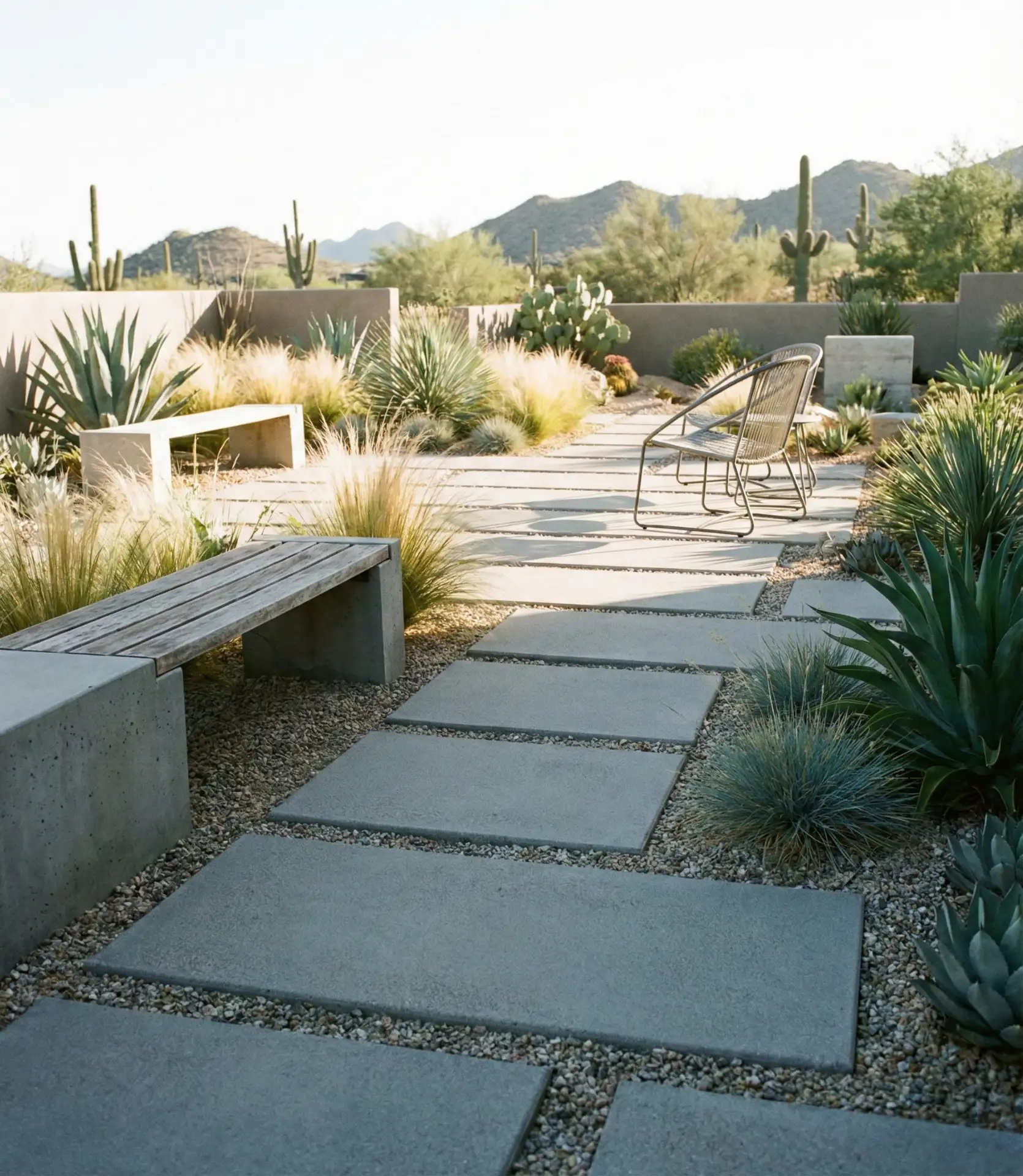
Expert-style commentary from landscape architects emphasizes that successful open-concept patios require careful proportion planning—the ratio of solid paving to soft borders should typically run seventy-thirty to maintain functionality while achieving visual balance. Texas, New Mexico, and Nevada properties showcase this aesthetic most effectively, where xeriscape principles demand water-efficient borders and the climate supports year-round outdoor living. The gravel sections cost significantly less than extending pavers throughout, allowing larger overall footprints within fixed budgets. Maintenance remains minimal with a suitable underlayment that prevents weeds, though occasional raking keeps borders tidy and prevents gravel migration onto paver surfaces during wind or heavy rain events.
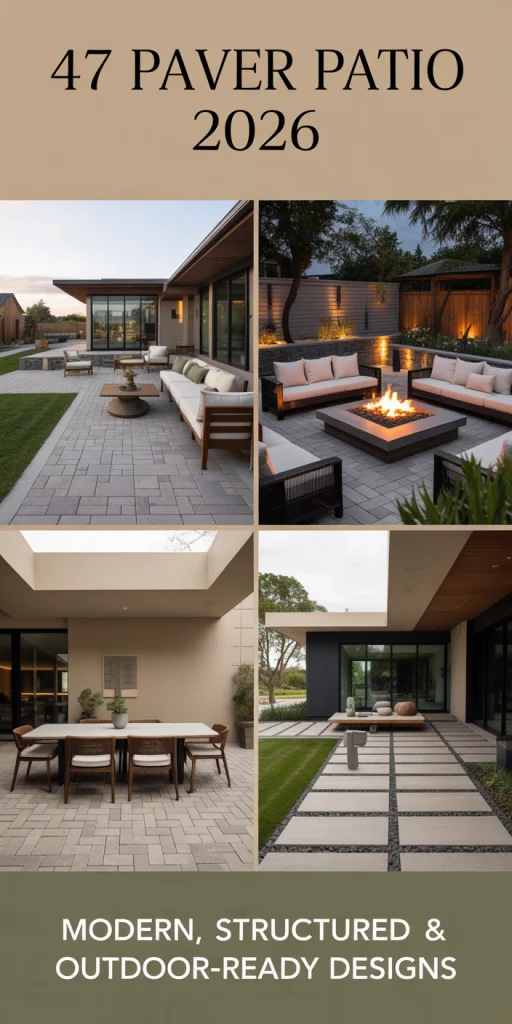
Whether you’re drawn to the timeless elegance of herringbone brick patterns, the modern minimalism of large-format concrete pavers, or the water-wise innovation of artificial turf integrations, these paver patio ideas demonstrate that outdoor living spaces can be both beautiful and practical. From budget-conscious DIY projects using reclaimed materials to luxurious multi-level terraces with outdoor kitchens, there’s a solution for every property type, climate zone, and design preference across America. The key to success lies in choosing materials and layouts that complement your home’s architecture, suit your regional weather patterns, and most importantly, reflect how your family actually uses outdoor space. We’d love to hear which designs inspired you most—share your favorite ideas, ask questions about installation techniques, or post photos of your own paver patio transformations in the comments below.