
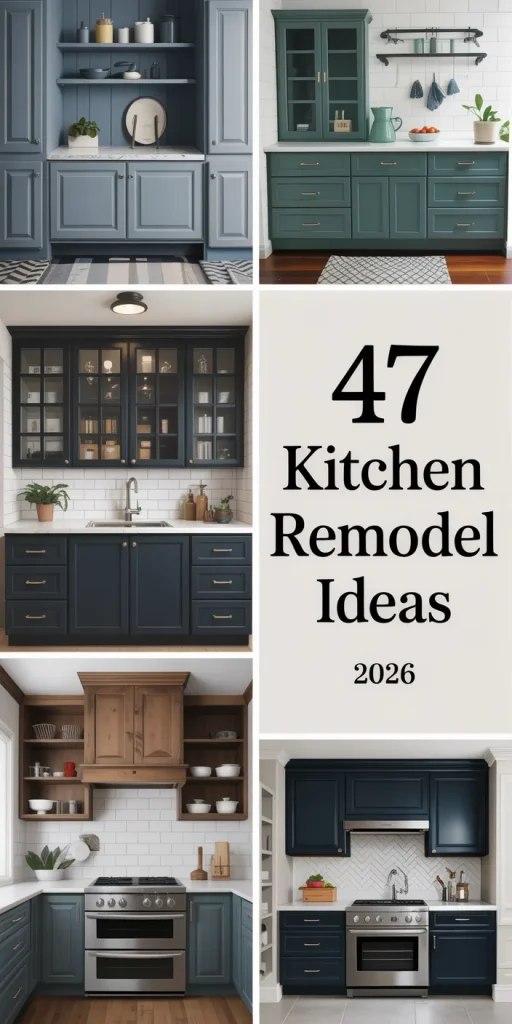
There’s something happening in American kitchens right now, and it’s hard to ignore. Homeowners across the country are rethinking everything—from the way they use cabinet space to the colors on their walls—and Pinterest feeds are overflowing with evidence of it. Whether you’re working with a tight galley layout, dreaming of a farmhouse transformation, or just trying to squeeze style out of a builder-grade starting point, the ideas circulating in early 2026 are more practical, personal, and achievable than ever. This article pulls together the freshest directions in kitchen remodeling, covering aesthetics, smart storage, and real-world budgeting so you can walk away with a plan that actually fits your life.
1. Warm White Cabinets With Brass Hardware
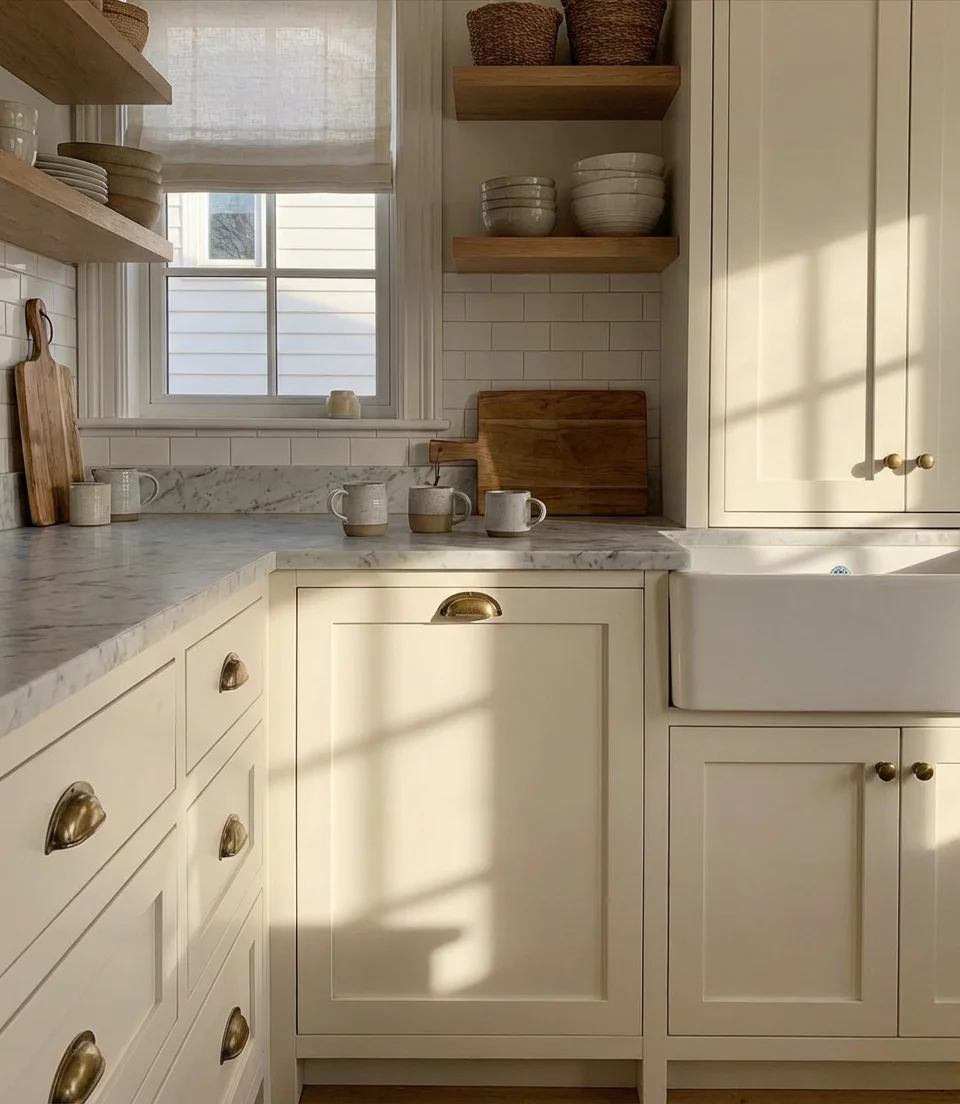
There’s a reason white cabinets remain the most-saved kitchen look on Pinterest year after year—they’re the ultimate blank canvas. But in 2026, the shift is toward warmer whites: creamy, slightly off-toned finishes that feel lived-in rather than sterile. Pair them with unlacquered brass or aged gold hardware, and the whole space reads as effortlessly elevated. This palette works beautifully in both traditional homes and new builds that need a character injection without a full gut renovation.
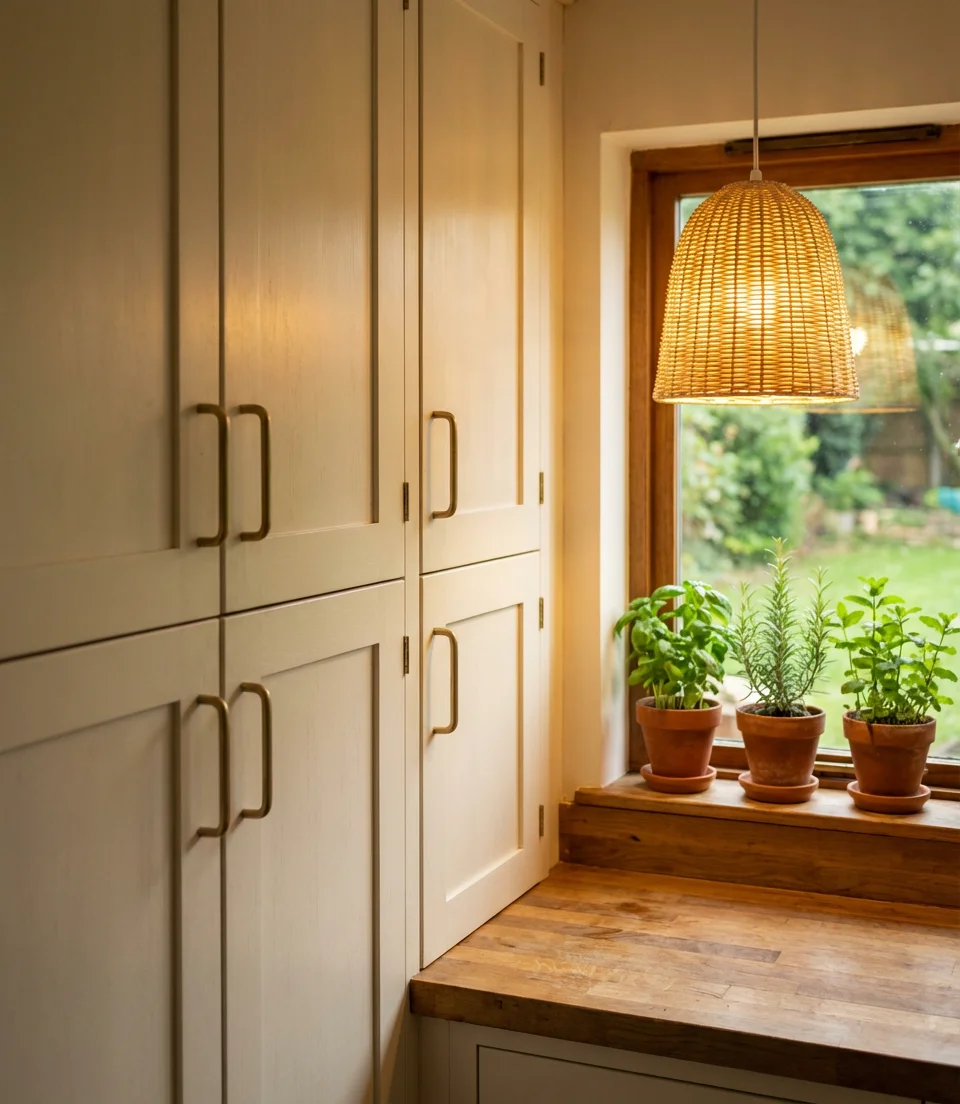
One of the most common mistakes homeowners make with white cabinets is choosing a cool, bluish-white paint—which can look stark under artificial lighting. Instead, opt for tones with yellow or pink undertones like Benjamin Moore’s White Dove or Sherwin-Williams Alabaster. Test samples at different times of day before committing. The brass hardware will warm up almost any white, but starting from the right base ensures you won’t repaint six months later.
2. Open Layout Galley Kitchen Refresh
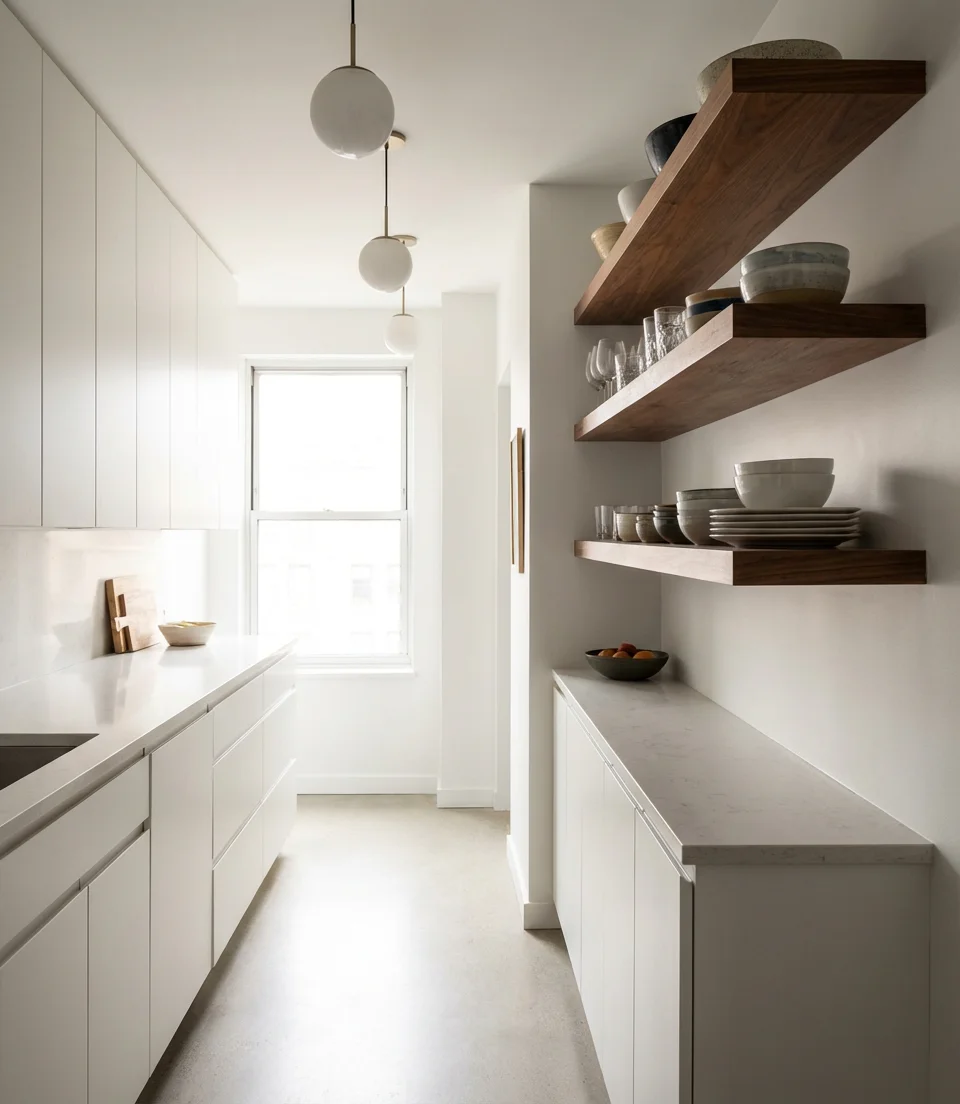
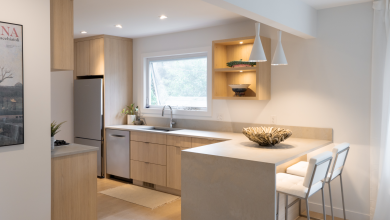
The galley kitchen has a reputation problem it doesn’t deserve. Yes, it’s narrow—but when the layout is handled thoughtfully, it’s one of the most efficient cooking configurations you can have. In 2026, designers are opening these spaces up by removing upper cabinets on one wall and replacing them with floating shelves or a pass-through window. That single change makes a small galley feel twice as large and connects the kitchen to adjacent living areas in a way that suits today’s open living preferences.
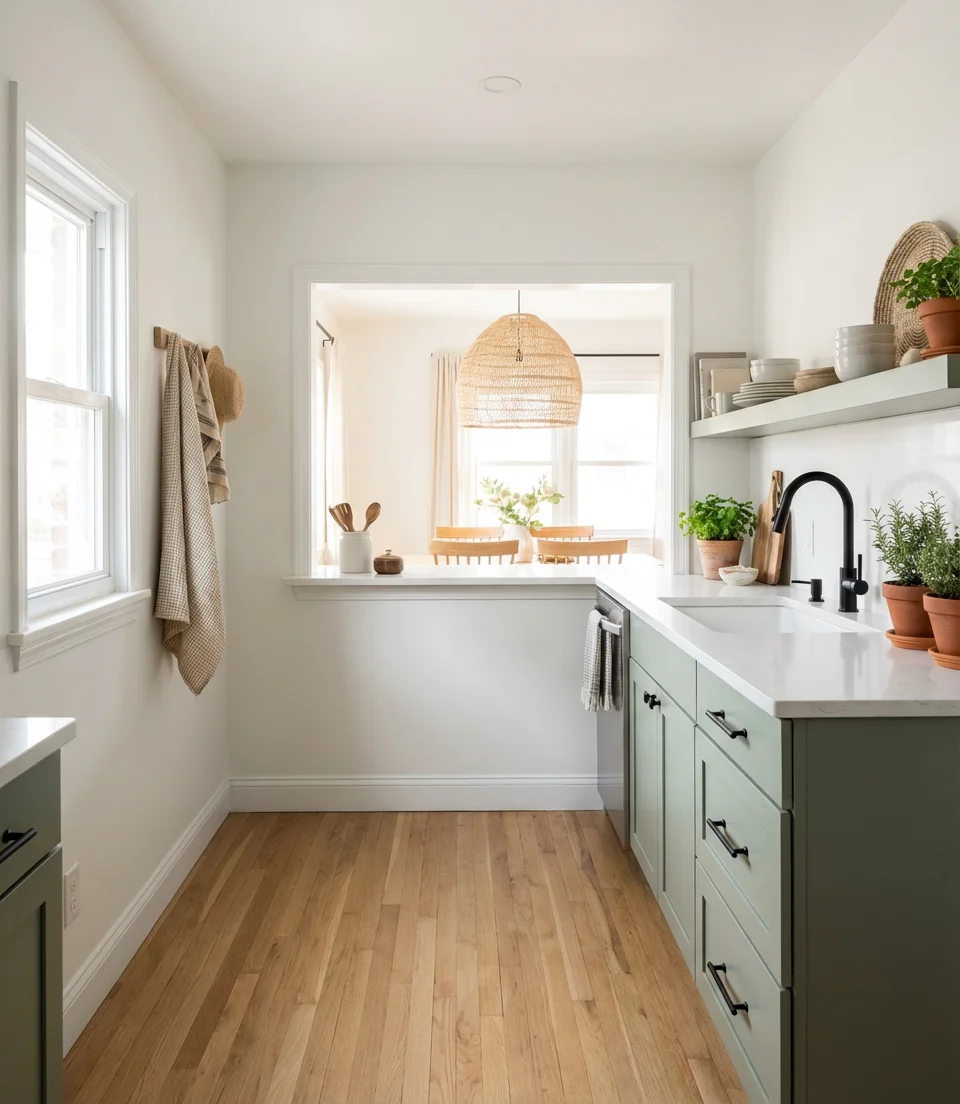
Galley kitchens work best in apartments, townhomes, and older single-family homes built before open floor plans became standard. They’re also ideal for solo cooks and couples—having everything within arm’s reach is actually a time-saver. The key is vertical storage: tall pull-out pantry units at each end of the galley can absorb what you lose by removing upper cabinets, keeping the space functional without feeling cramped.
3. Rustic Farmhouse Style With Modern Touches
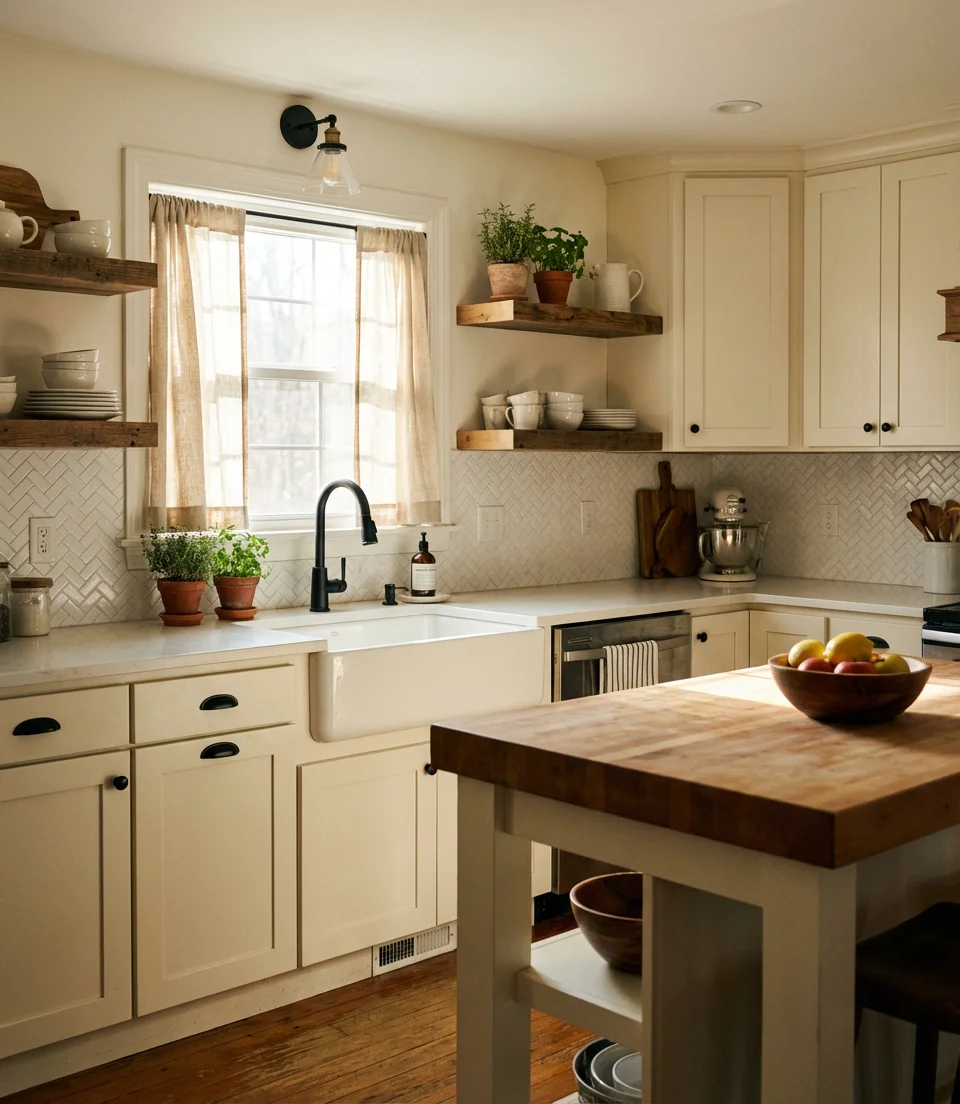
The farmhouse-style kitchen isn’t going anywhere—but the version dominating 2026 has shed the purely shiplap-and-mason-jar aesthetic and grown into something more nuanced. Think reclaimed wood open shelving mixed with sleek matte black fixtures, an apron-front sink paired with flat-front lower cabinets, and a subway tile backsplash in an unexpected stacked or herringbone pattern. This hybrid approach keeps the soul of rustic charm while making the kitchen feel current rather than costume-y.
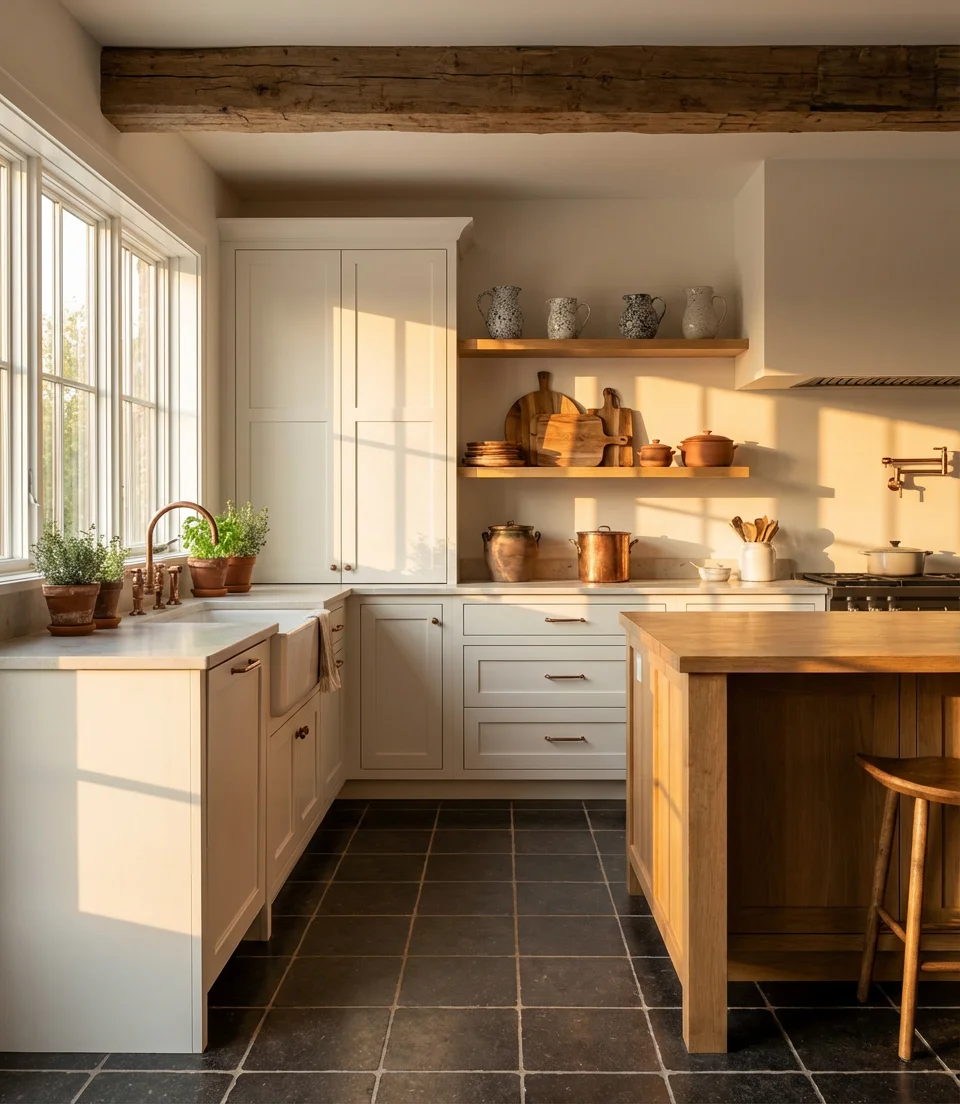
A homeowner in rural Tennessee described this blend perfectly: she kept the old farmhouse bones—the wide plank floors, the deep sink—but swapped her dated oak cabinets for painted white ones with simple hardware. The result cost her under $4,000 including labor, and transformed the room entirely. The lesson here is that you don’t need to gut a farmhouse kitchen to modernize it; selective updates to hardware, paint, and a single statement piece like an island or range can do all the heavy lifting.
4. Budget-Friendly Cabinet Painting Makeover
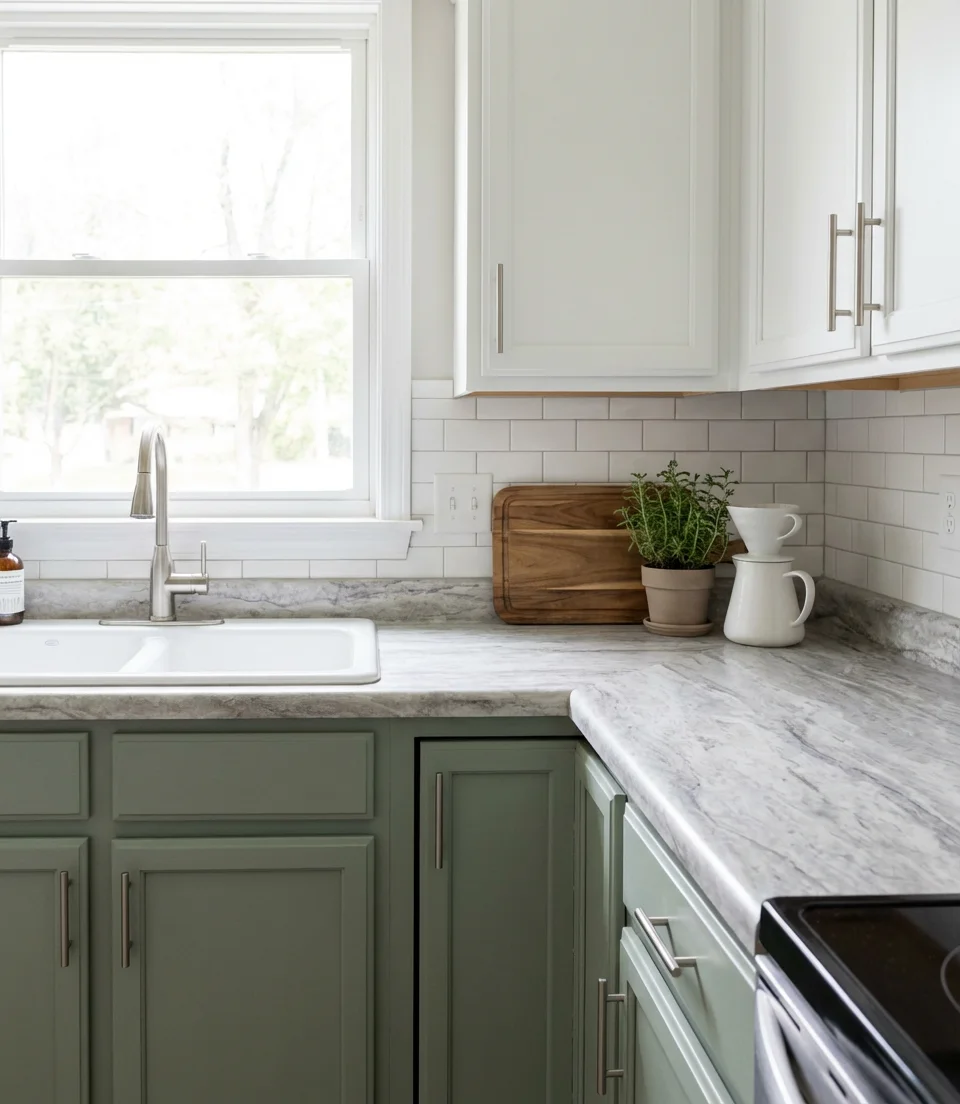
If you’re working with a budget and want maximum visual impact, painting your cabinets is the single best move you can make. Professionally painted cabinets typically run $1,200–$3,500 depending on kitchen size, but a committed DIYer with the right primer and a fine-finish sprayer can do it for under $400. The budget-friendly beauty of this approach is that it completely changes the personality of the kitchen—no demolition, no waste, no contractor scheduling delays. Colors in 2026 range from deep slate blues to earthy sage greens and warm terracottas.
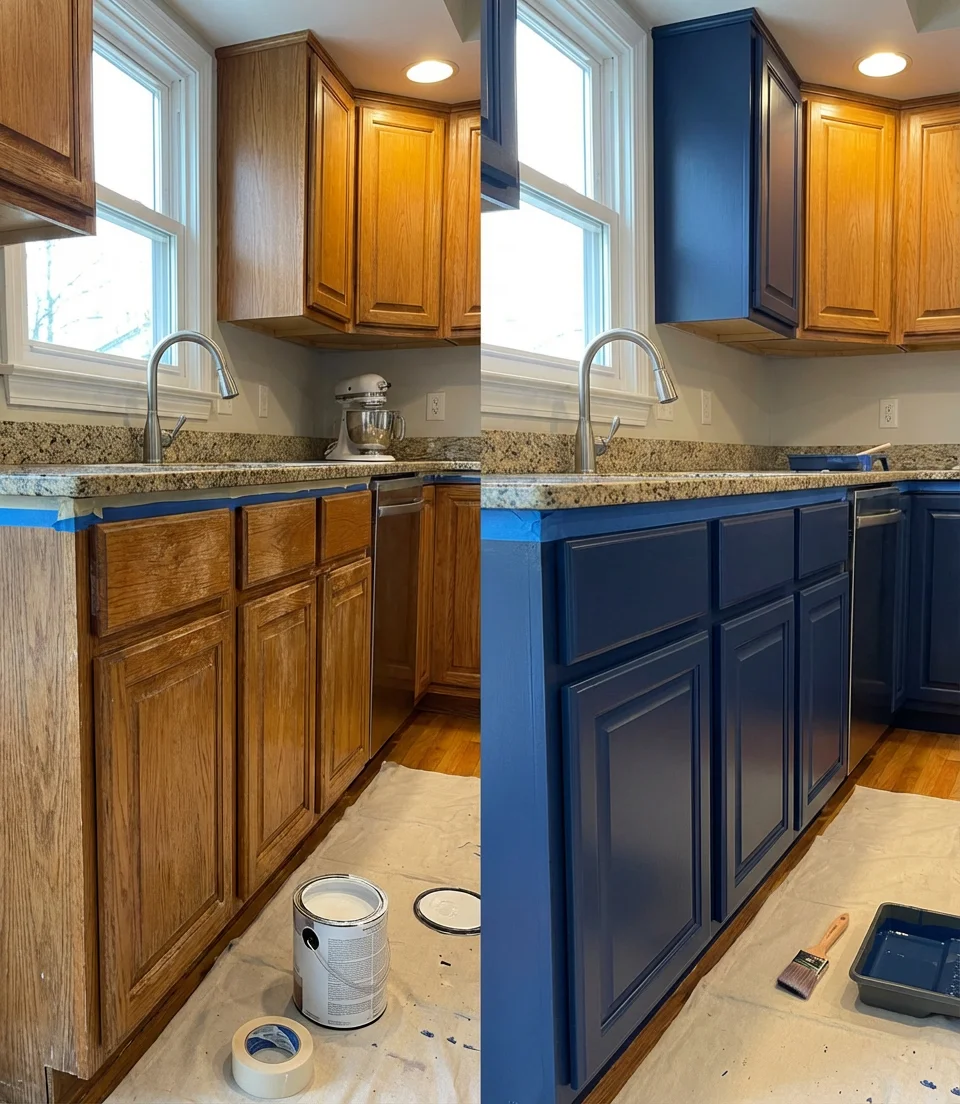
The most common mistake with DIY cabinet painting is skipping proper surface prep. Cabinets accumulate grease over years of cooking, and any residue will prevent paint from bonding correctly. Clean every surface thoroughly with a degreaser, sand lightly to scuff the existing finish, and apply a shellac-based primer before your color coat. By following these steps, you can ensure a paint job that lasts for a decade, rather than one that begins to peel within a year.
5. Tuscan Kitchen With Warm Stone and Terracotta
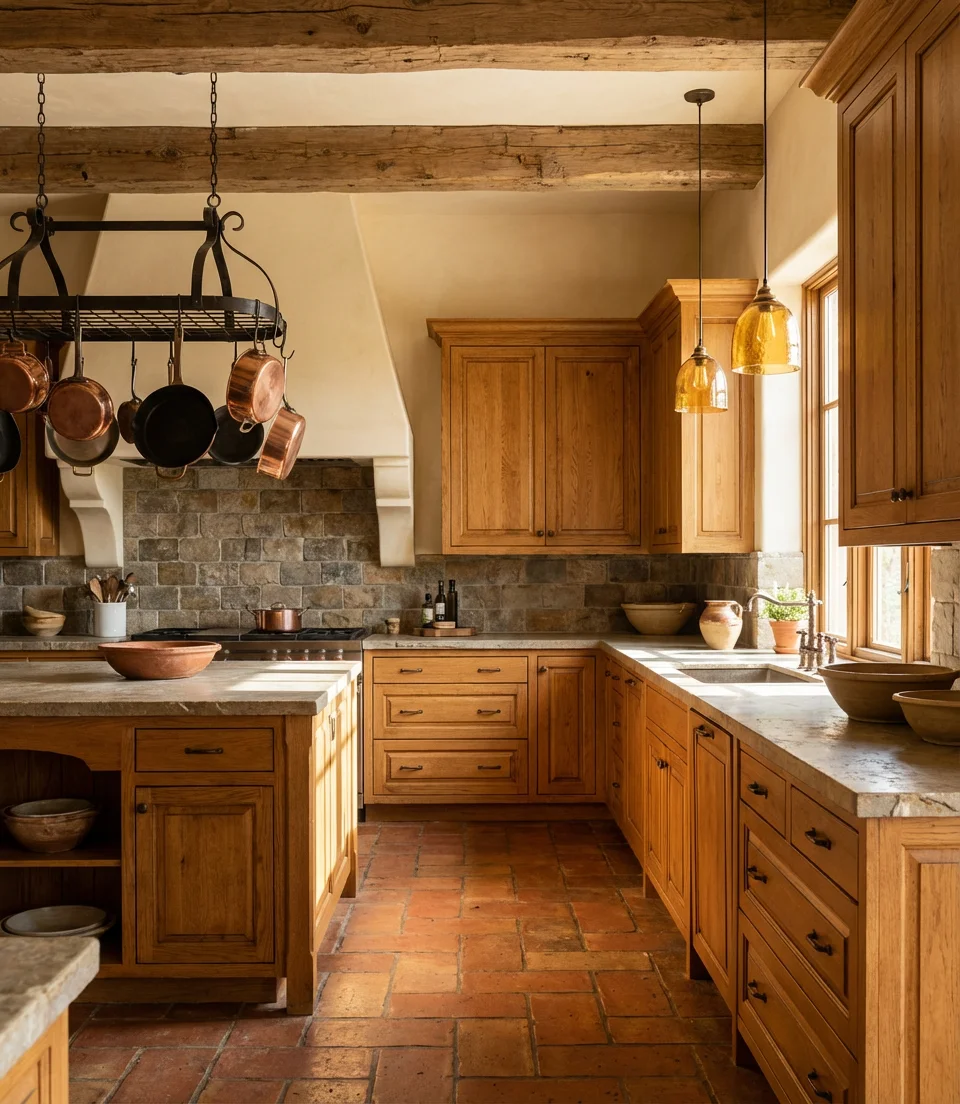
Tuscan kitchen design is experiencing a quiet resurgence, perfectly aligning with 2026’s broader trend towards warmth and natural materials. This style leans into aged stone, terracotta tile floors, exposed brick or textured plaster walls, and cabinetry in honey, walnut, or deep espresso tones. It’s a strong fit for homes in the Southwest and California wine country, where the climate and architecture already echo Mediterranean sensibility. The color combos that make it work are warm amber, sienna, deep olive, and cream used together rather than in isolation.
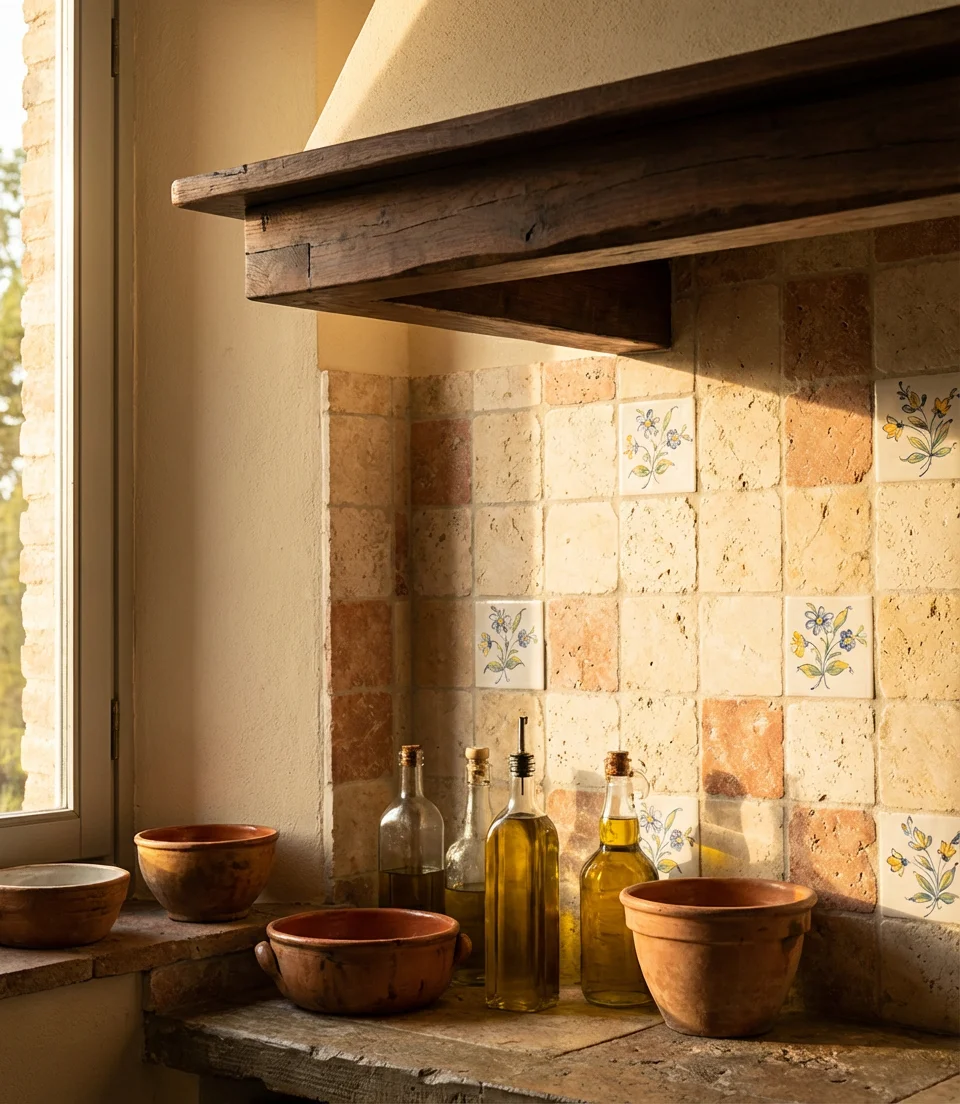
Tuscan kitchens are best suited to larger, more open floor plans where the visual weight of stone and dark cabinetry doesn’t feel oppressive. In smaller kitchens, you can effectively capture the essence by restricting the use of terracotta and stone to the floor and backsplash, while maintaining lighter-colored cabinets. A single wrought iron element—a pot rack, a light fixture, or a bar stool base—is often enough to anchor the whole look without overwhelming the space.
6. Small Kitchen Remodel With Big Storage Ideas
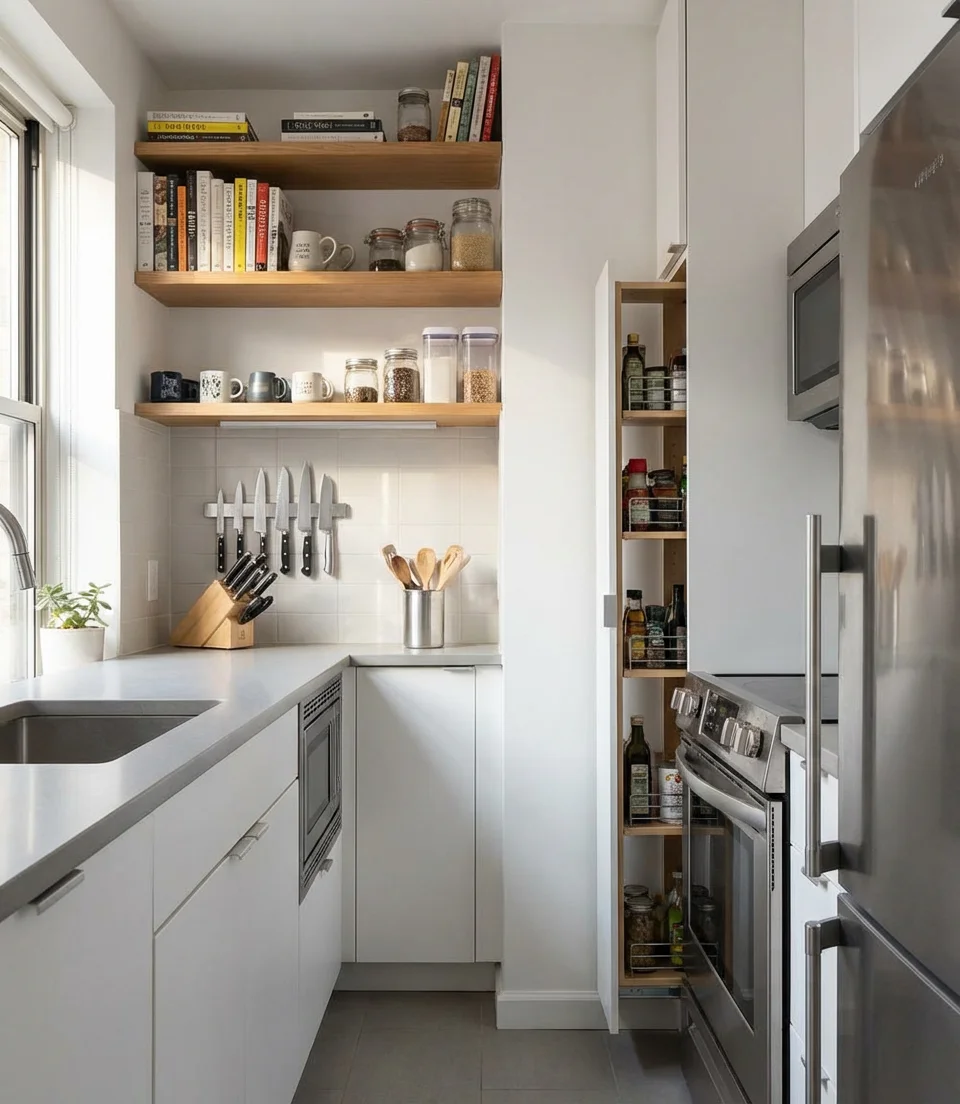
Small spaces demand creativity, and the best tiny kitchen remodels in 2026 are treating storage as a design feature rather than an afterthought. We’re talking magnetic knife strips as wall art, open lower shelving in place of base cabinets to create visual breathing room, toe-kick drawers beneath the cabinetry, and corner pull-out units that actually function. These choices are showing up in urban condos, guest cottages, and basement apartments where square footage is precious but the desire for a beautiful, functional kitchen is no less real.
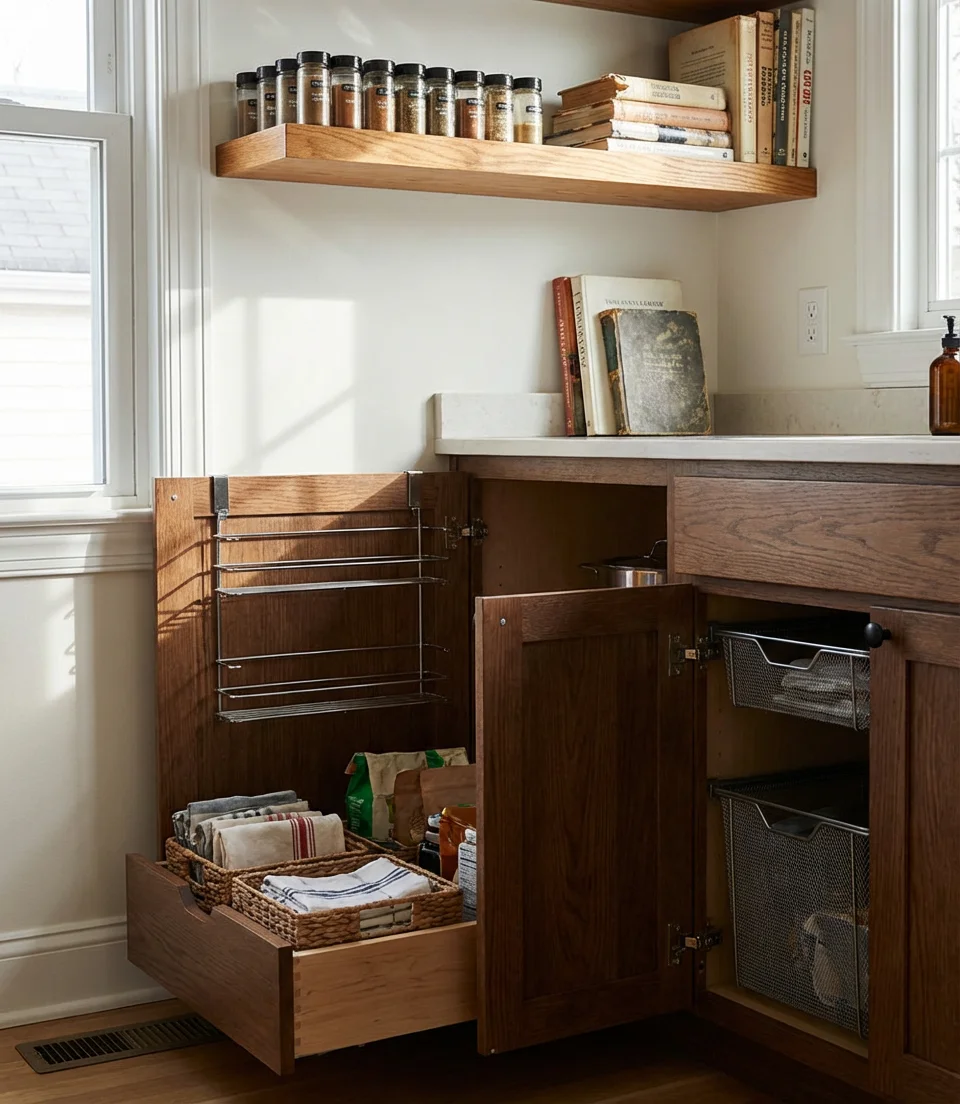
Interior designer Melissa Kim, who specializes in compact urban spaces, often points out that most small kitchen owners are dramatically underutilizing the vertical wall space between the countertop and the ceiling. Installing cabinets that go all the way to the ceiling—rather than leaving a gap—can add 20 to 30 percent more storage without changing the footprint at all. Pair that with slim pull-out spice racks beside the range, and you’ve essentially doubled usable kitchen real estate.
7. Contemporary Kitchen With Waterfall Island
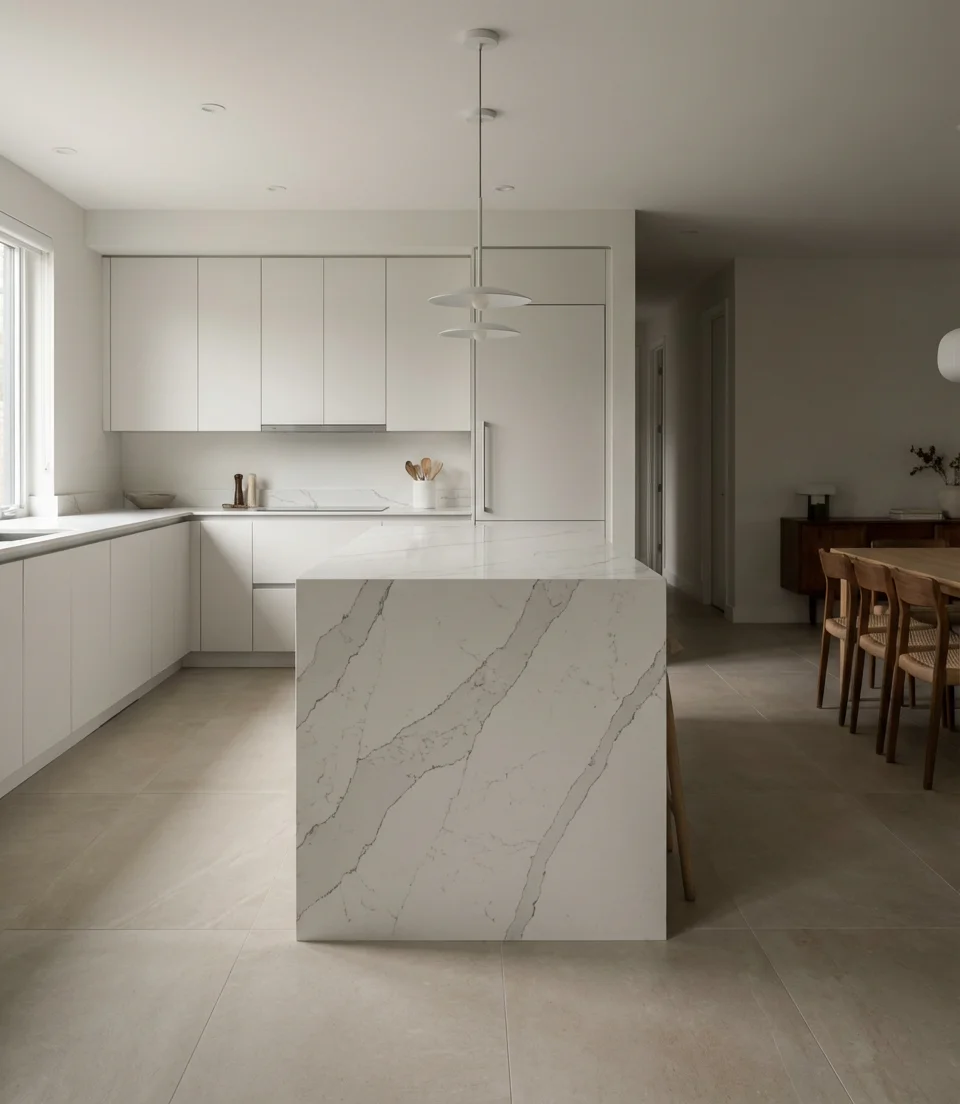
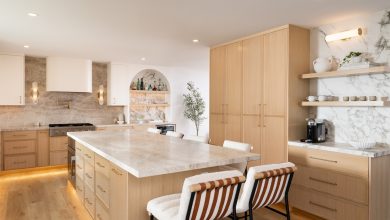
The waterfall island—where the countertop material cascades continuously down the side of the island to the floor—has been a hallmark of contemporary design for years, but in 2026 it’s becoming more accessible as engineered stone prices stabilize. The look is clean and architectural and works especially well in open kitchen layouts where the island is the room’s focal point. Dramatic veins matching marble-look quartz make the waterfall feel like a sculpture. Pair with flat-front cabinetry and integrated appliances for maximum visual cohesion.
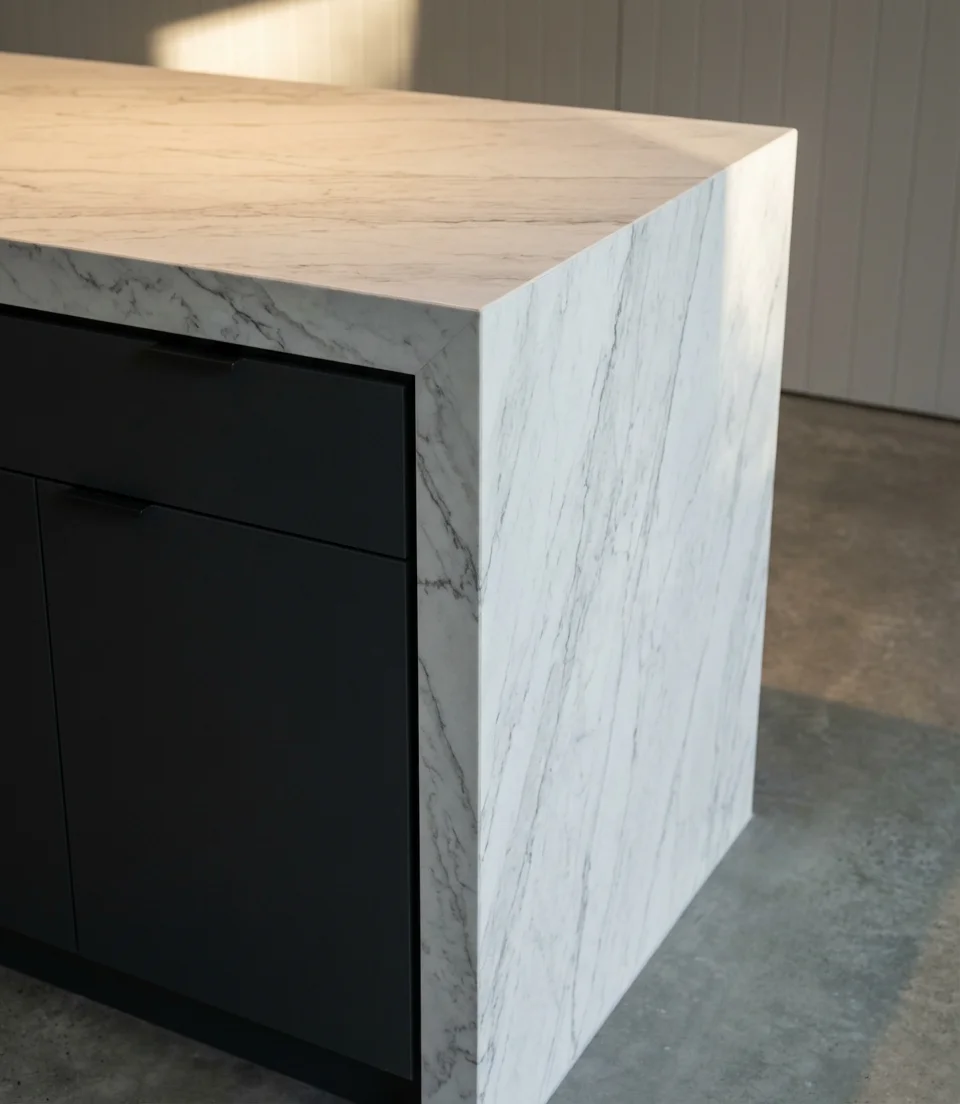
Waterfall islands work best when the kitchen has enough square footage to walk comfortably around all sides—generally, a minimum of 42 inches of clearance on working sides and 36 inches on the pass-through side. In smaller kitchens, a half-waterfall (one end only) achieves the sculptural effect without requiring the full island footprint. Budget for this feature at around $3,000–$8,000 depending on the material—premium quartzite and real marble sit at the higher end, while engineered quartz delivers a similar look for significantly less.
8. Builder-Grade Kitchen Upgrade on a Tight Budget
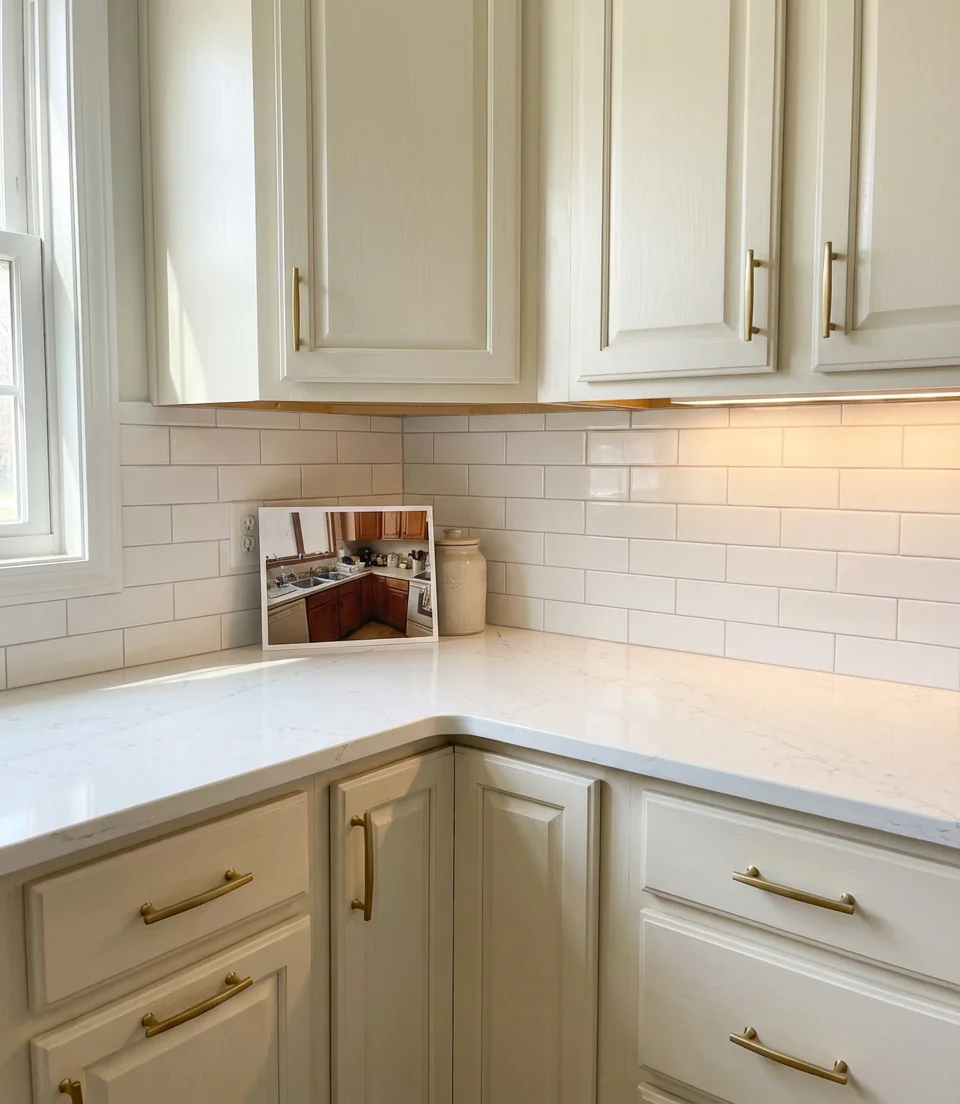
Most American homes built in the last 30 years came with builder-grade kitchens: honey oak cabinets, laminate countertops, and basic white appliances that feel as neutral as possible—and about as inspiring. The good news is that these kitchens are perfectly structural; they just need personality. In 2025 and heading into 2026, the most popular upgrades are new hardware, under-cabinet lighting, a fresh tile backsplash, and a countertop replacement—all of which can transform the space for $1,500 to $4,000 if you’re strategic.
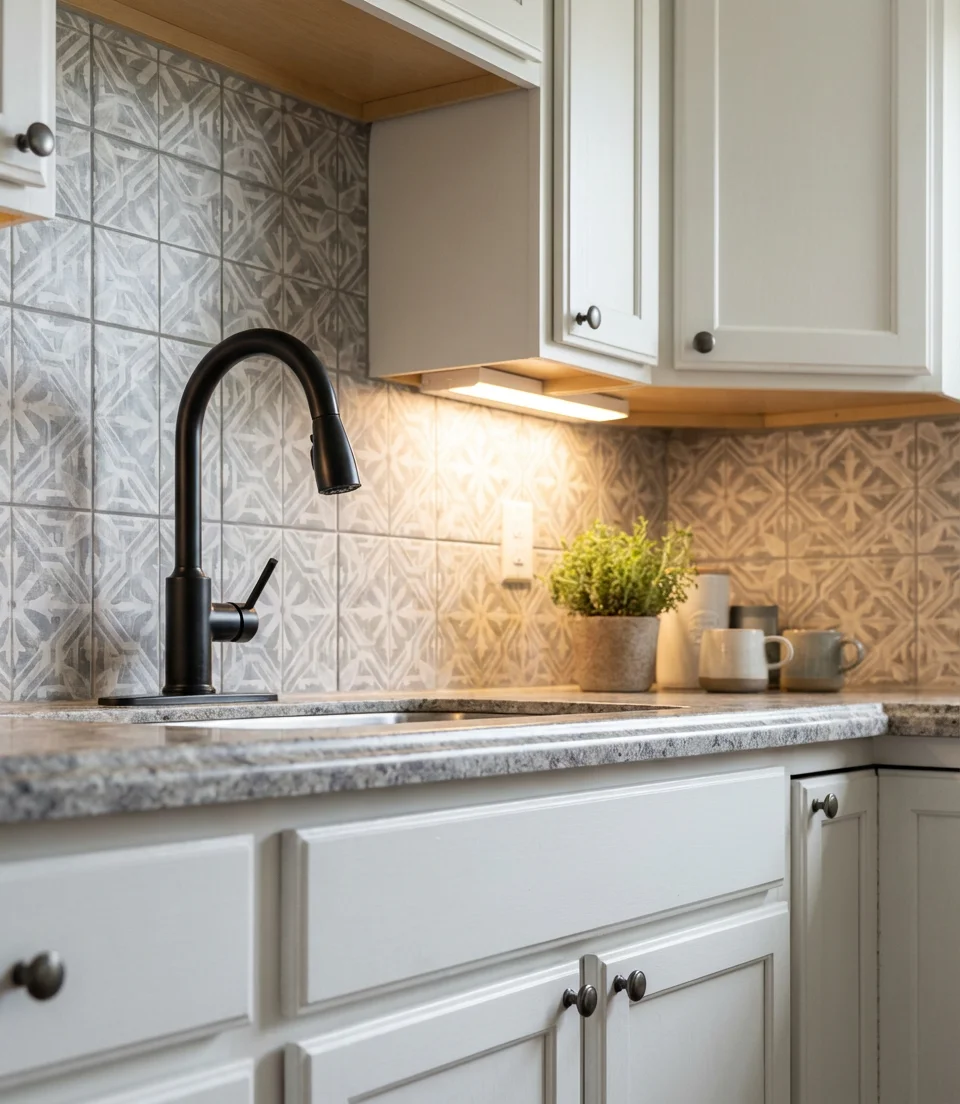
A couple in suburban Ohio documented their builder-grade kitchen refresh on social media after spending just $2,200. Their biggest impact items were painting the cabinets (they rented a sprayer from Home Depot), replacing the laminate with butcher block counters, and swapping every piece of hardware. “People think we did a full renovation,” one of them wrote. “We didn’t touch a single cabinet box.” It’s one of the most democratically accessible remodels available—no contractor required if you’re comfortable with a paintbrush.
9. Narrow Kitchen Layout With Smart Flow Design
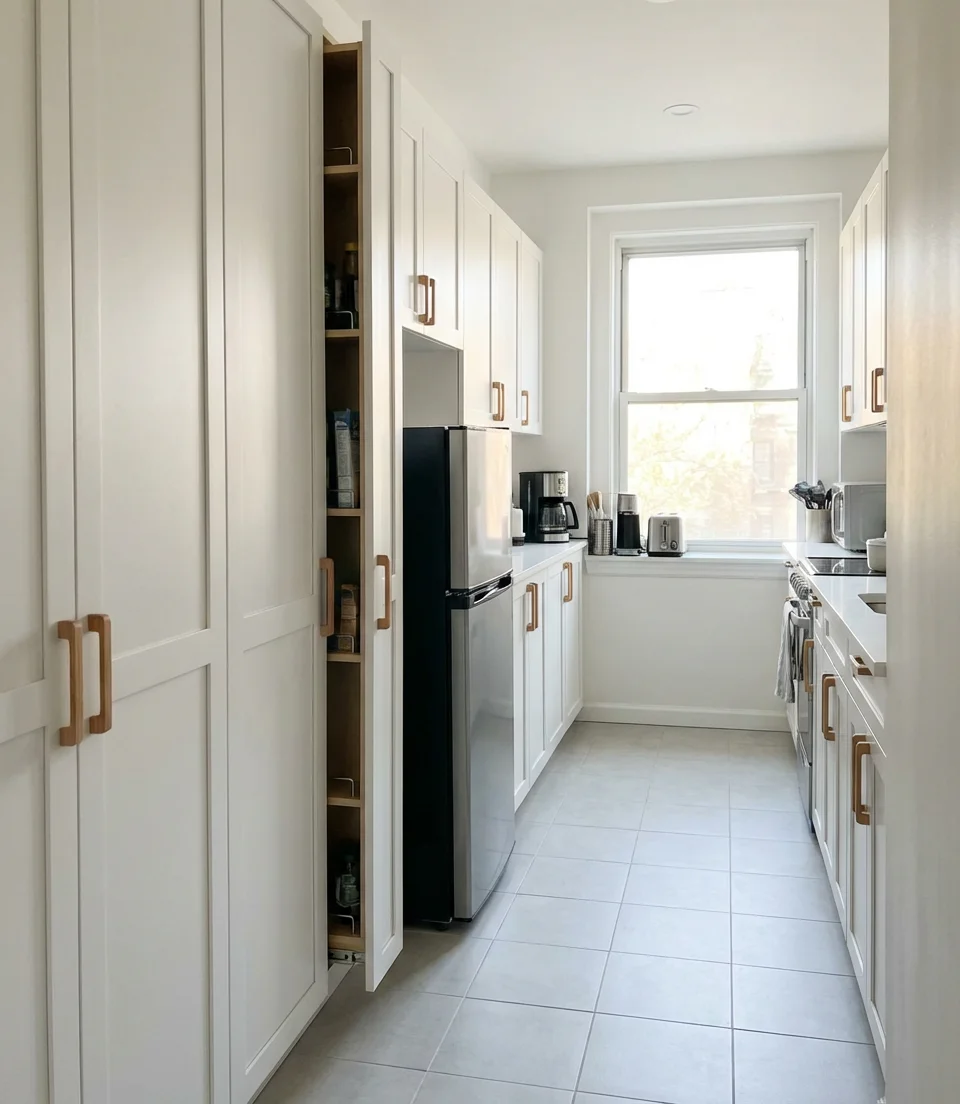
Working with a narrow kitchen is less about limitation and more about choreography. The best layout decisions in long, slim kitchens prioritize the work triangle: keeping the sink, range, and refrigerator within easy reach of each other without requiring unnecessary steps. In 2026, designers are leaning on pull-out pantry columns, compact drawer dishwashers, and counter-depth refrigerators to keep the movement path clear. When every inch has a purpose, even a slim 7-foot-wide kitchen can function beautifully.
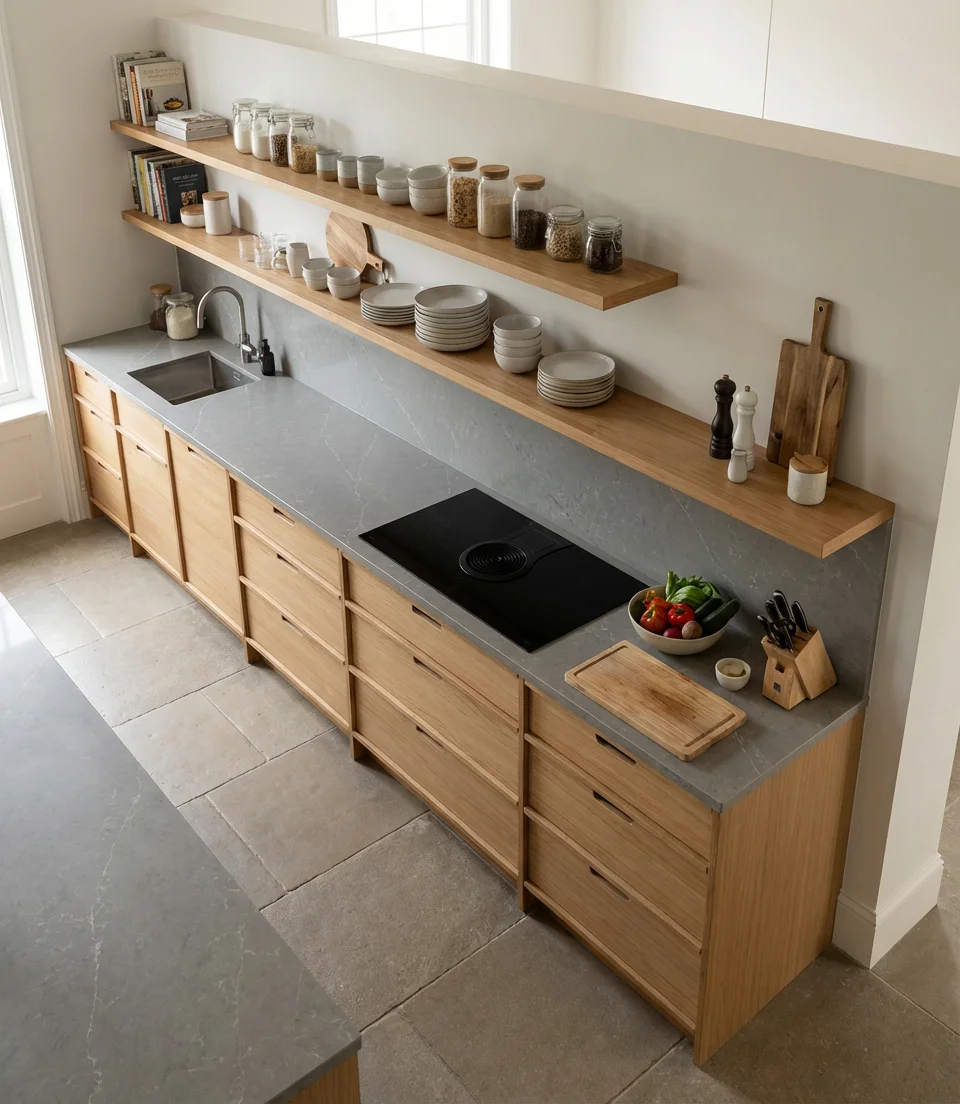
Narrow kitchens are most common in row houses, older bungalows, and urban apartments—particularly throughout the Northeast and Midwest. For these layouts, the single best thing you can do is eliminate visual clutter. Replacing upper cabinet doors with open shelves on just one side of the kitchen immediately lightens the look. And wherever possible, choose lighter countertop and cabinet colors: even a white countertop can make a narrow space feel 20 percent wider than it actually is.
10. Mobile Home Kitchen Remodel That Feels Custom
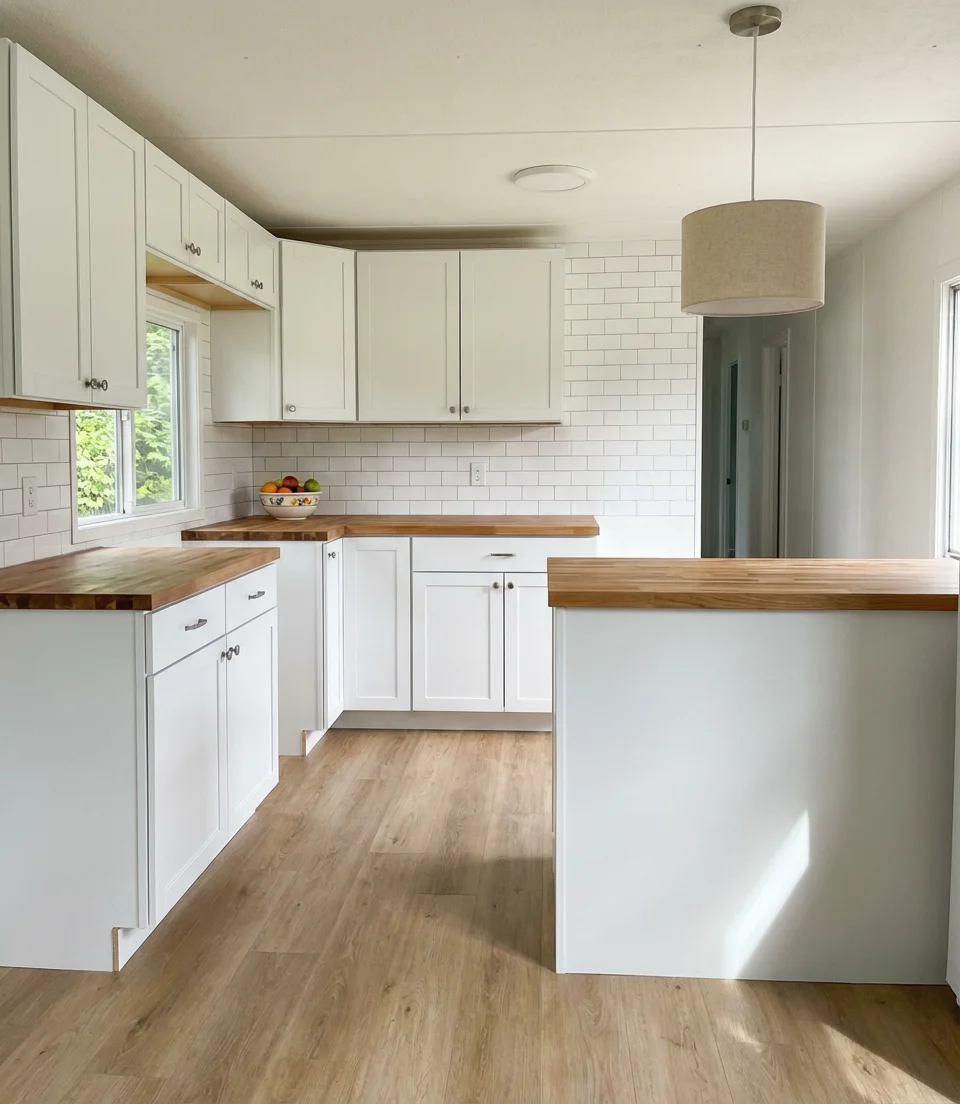
Millions of American families reside in mobile homes, and their kitchens should receive the same attention to design as any other stick-built house. The remodel approach for manufactured homes has evolved significantly—Pinterest boards dedicated to double-wide mobile kitchen makeovers are among the most saved in the home improvement category. Key upgrades include replacing dated laminate cabinets with IKEA Sektion systems (which fit standard mobile home dimensions), installing a new vinyl plank floor, and updating lighting. The result can look genuinely custom for under $5,000.
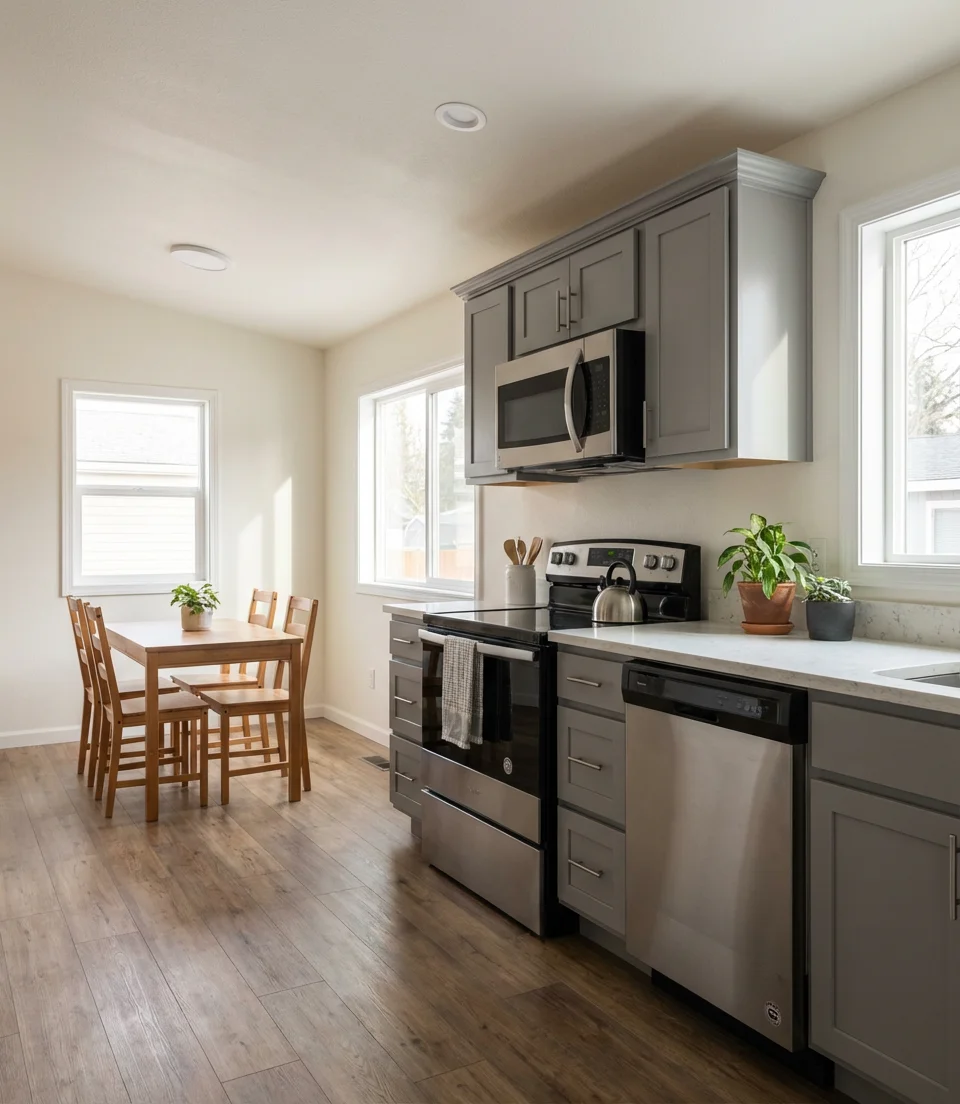
One practical consideration unique to mobile homes: the floors and walls are not always level or plumb, which can complicate standard cabinet installations. Always shim carefully and check for level at every step. Also, the subfloor in manufactured homes tends to be thinner than in stick-built construction, so use lightweight materials wherever possible to avoid putting stress on the structure. With those caveats addressed, there’s no reason a mobile kitchen can’t look and function like a custom remodel.
11. Camper and Van Kitchen Micro-Remodel
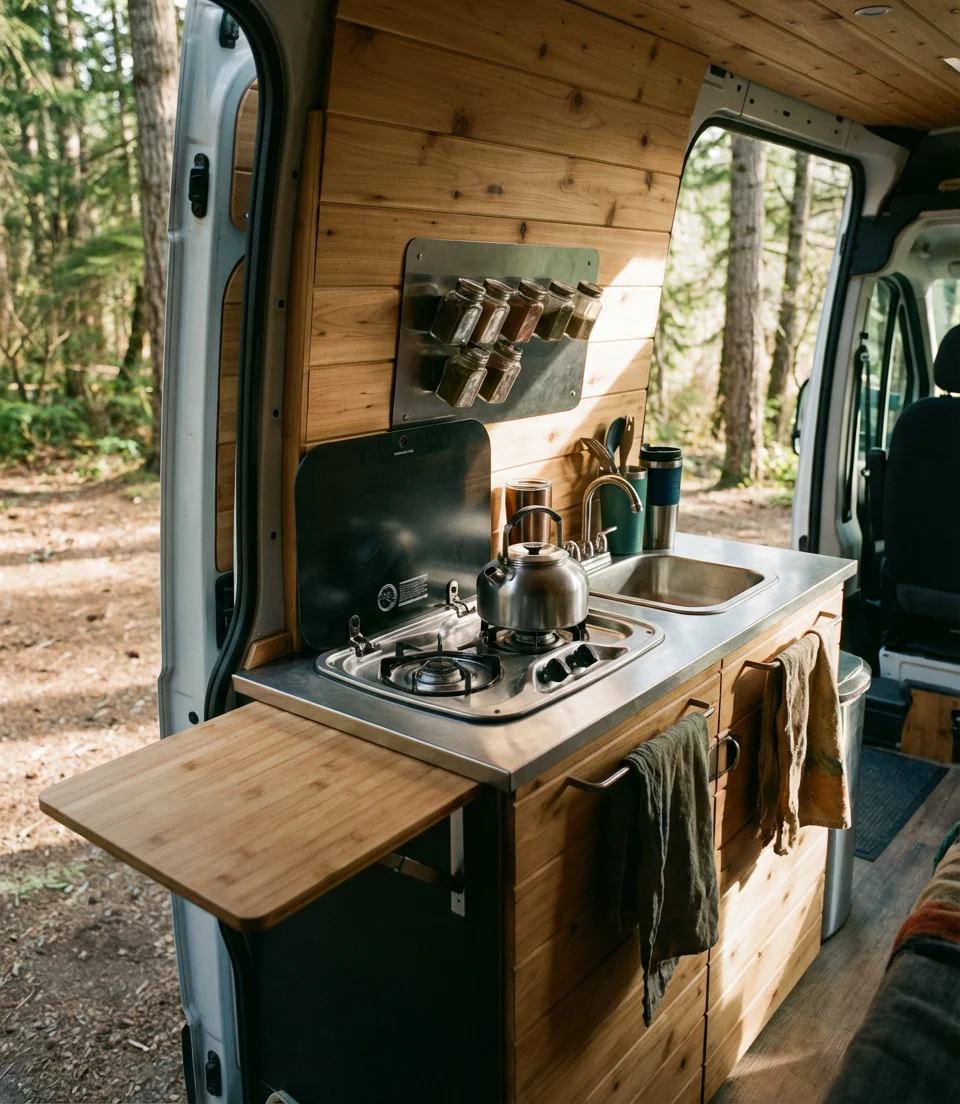
The van life and full-time camping movement has made the camper kitchen one of the most creatively remodeled spaces in American homes—even if “home” is on wheels. These micro-kitchens demand every design principle at once: maximum storage in minimum space, lightweight materials, durable finishes that survive road vibration, and aesthetics warm enough to feel like a real living space rather than an RV showroom. In 2026, cedar-lined walls, stainless steel counters, and modular pull-out drawers are defining the best builds.
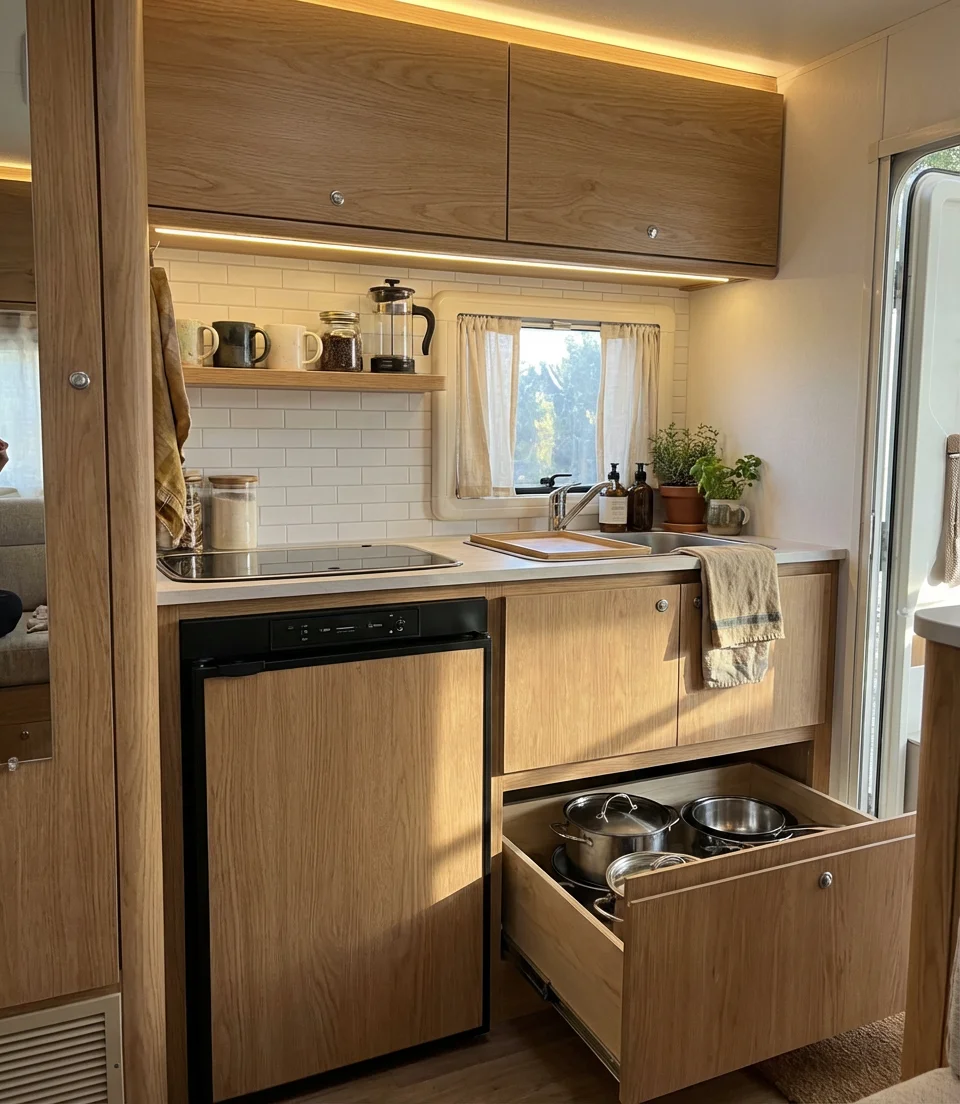
Weight is a crucial factor in every camper kitchen remodel. Real tile, full-size appliances, and solid wood cabinets can easily add 400 to 600 pounds to a build—which impacts fuel efficiency, axle ratings, and handling. The best van and camper builders opt for aluminum cabinet frames, composite or bamboo counters, and 12-volt appliances designed for marine and RV use. These choices keep the weight down without sacrificing the sense of a well-considered, fully functional kitchen.
12. Two-Tone Cabinet Color Combos for Visual Drama
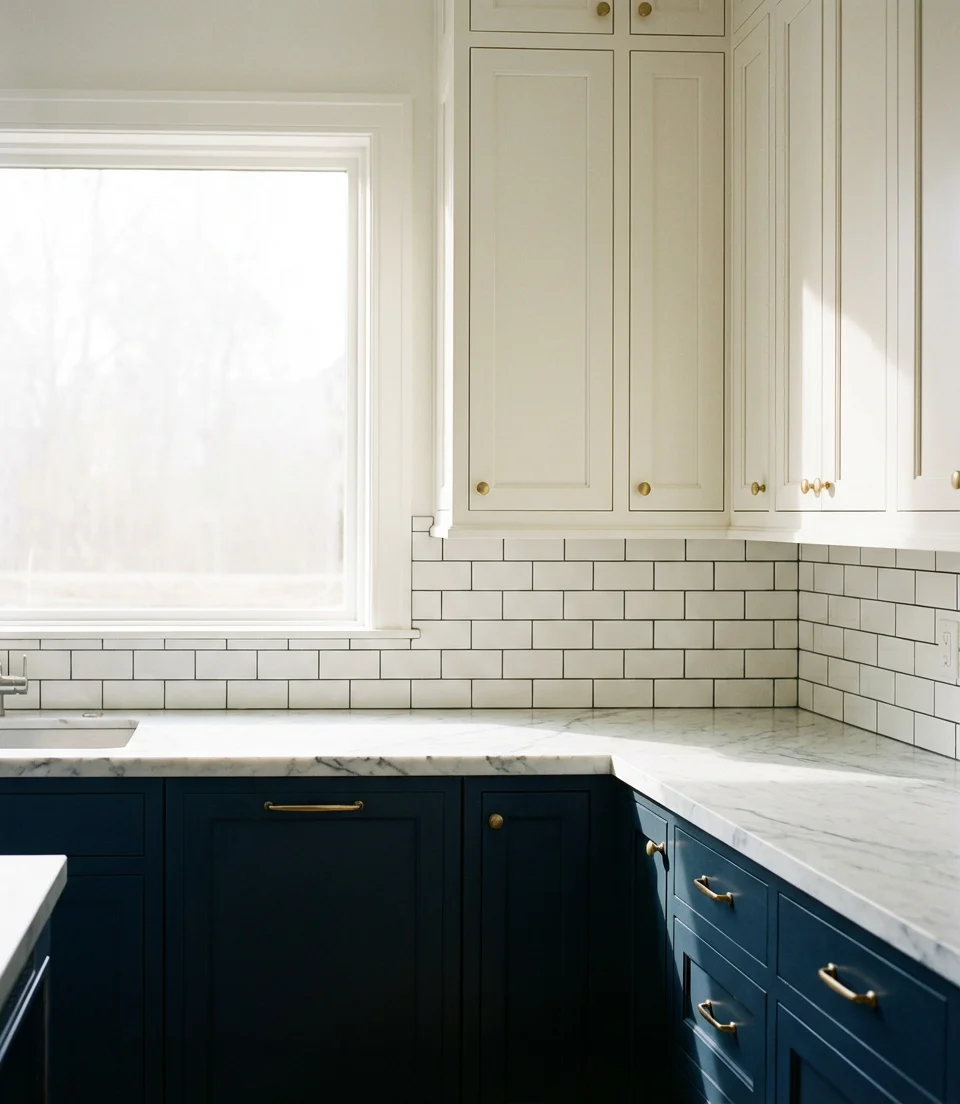
Two-tone cabinetry is one of the defining moves of the moment, and the color combos getting the most attention in 2026 are anything but safe. The trend is to pair navy lower cabinets with warm white uppers. Deep forest green lowers with natural oak uppers. Charcoal base cabinets complement blush or dusty pink uppers. The logic is simple: darker lowers ground the space and hide wear, while lighter uppers keep the room from feeling closed-in. It’s a strategy that works equally well in contemporary kitchens and more traditional settings.
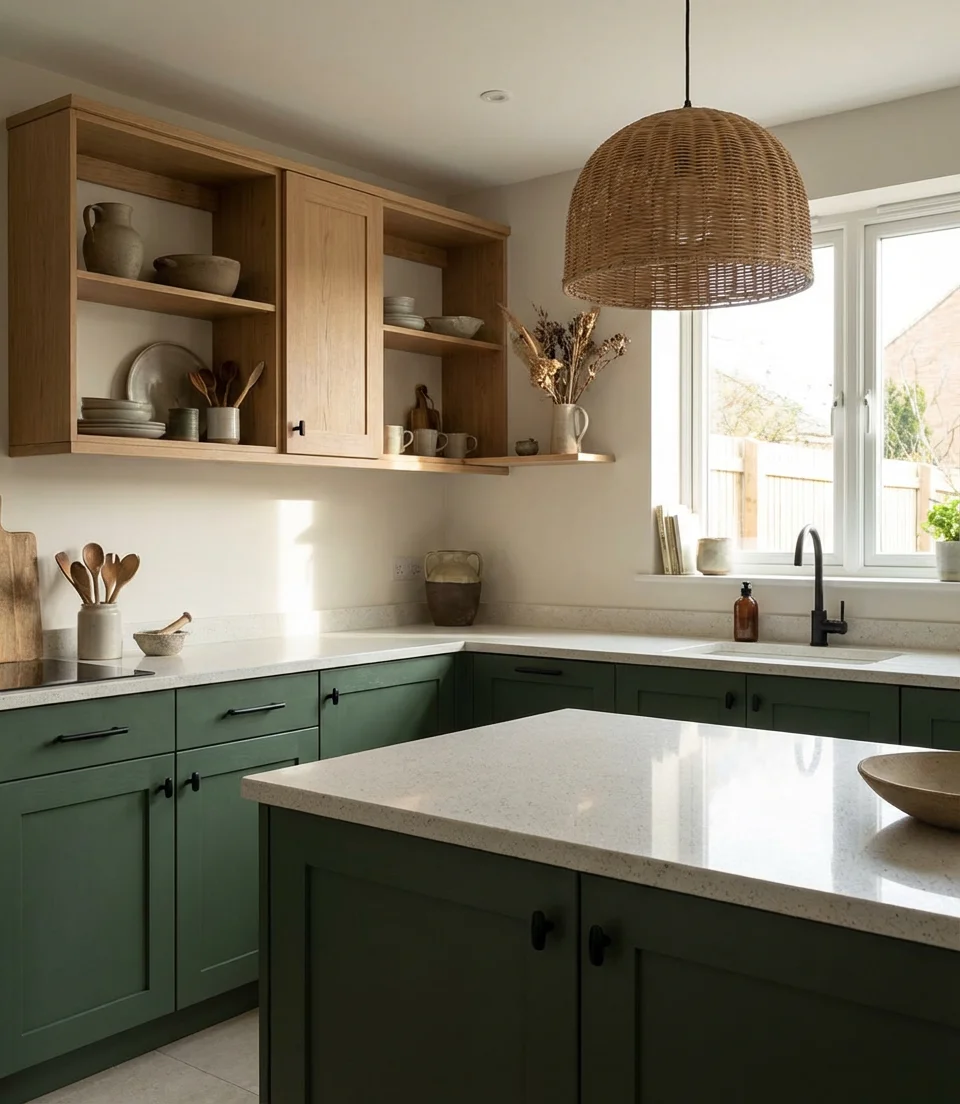
The key to a successful two-tone kitchen is maintaining visual continuity through hardware, countertop, and backsplash choices that bridge both colors. If your lowers are dark and your uppers are light, choose a countertop that references both—a white quartz with dark veining works well. Keep the hardware finish consistent throughout (all brushed brass or all matte black) so the eye reads the kitchen as intentional rather than mismatched. When done right, two-tone cabinets are one of the highest-impact updates you can make.
13. L-Shaped Kitchen Layout With Peninsula Seating
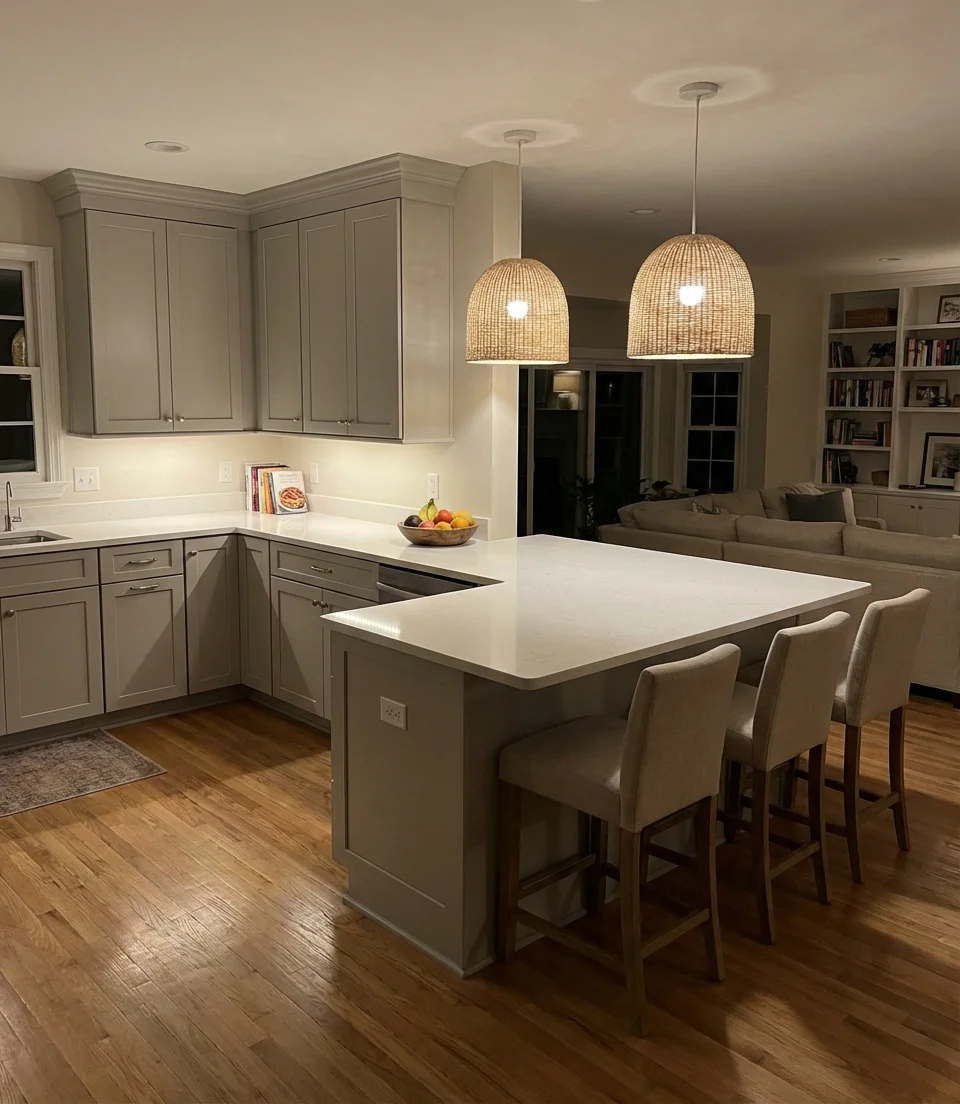
The L-shaped kitchen is arguably the most versatile residential layout ever developed, and adding a peninsula to one leg of the L transforms it into a social hub. In 2026, this configuration is especially popular in homes undergoing partial open floor plan conversions—where removing a wall creates an L-shape connecting the kitchen to the dining or living area. The peninsula acts as a natural boundary between cooking and living space while providing casual seating and extra prep surface without the cost or footprint of a full island.
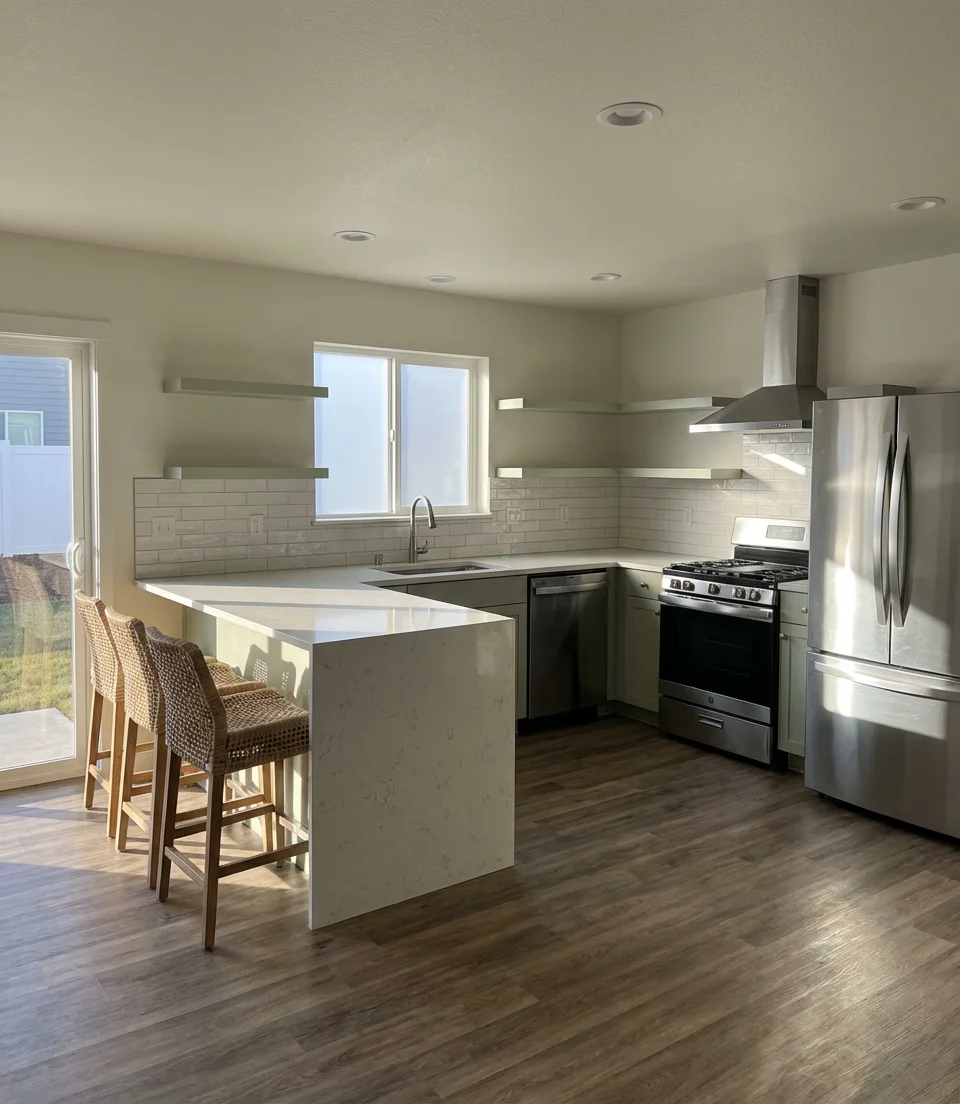
The peninsula is a smarter choice than a freestanding island in kitchens where traffic flow is tight. Because it’s connected to the wall on one side, it doesn’t require the 42-inch clearance on all sides that a freestanding island demands. Budget-wise, a peninsula extension typically adds $800 to $2,000 to a kitchen remodel depending on whether it includes cabinetry, a waterfall edge, or electrical outlets. It’s one of the highest-value additions per dollar spent in the residential kitchen space right now.
14. White Kitchen With Textured Backsplash Focal Point
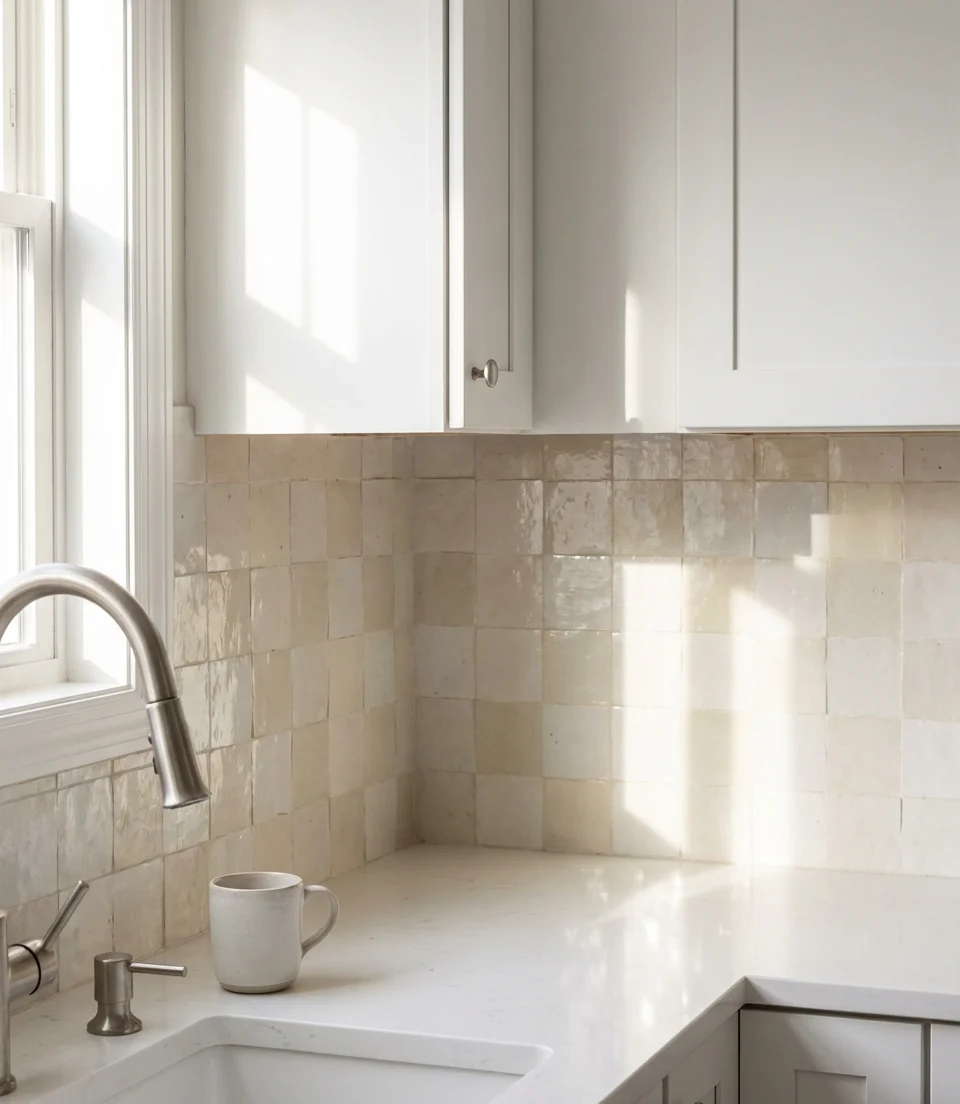
A white kitchen doesn’t have to be boring—the secret is introducing texture in at least one layer. The backsplash is the most logical place to do this, and in 2026 the options extend far beyond subway tile. Zellige tiles with their handmade irregular surfaces catch the light in ways no factory tile can replicate. Fluted or ribbed ceramic tiles add dimensional shadow. Limewash plaster applied directly to the backsplash wall creates a soft, Old World finish that’s both unexpected and deeply elegant in an all-white kitchen.
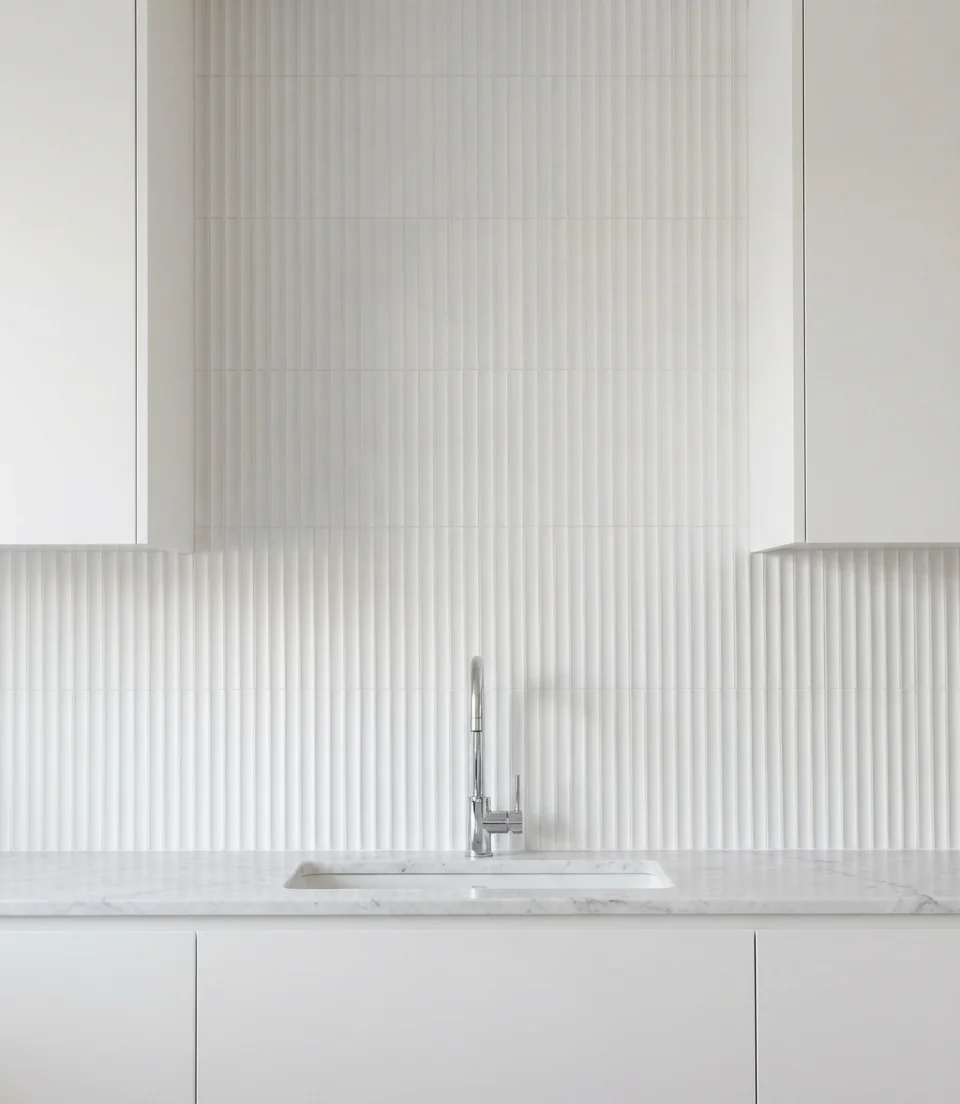
Zellige tile, while beautiful, comes with a few practical notes: because the pieces are irregular in size and surface, they require more grout and more skilled installation than standard subway tile. Expect to pay $25–$45 per square foot installed, compared to $12–$20 for standard subway. If the budget is tight, ribbed ceramic offers a similar textural effect at about half the price and installs like any standard tile. Either way, the flooring is one area where investing a bit more per square foot pays enormous visual dividends.
15. Best Kitchen Lighting Upgrade Plan
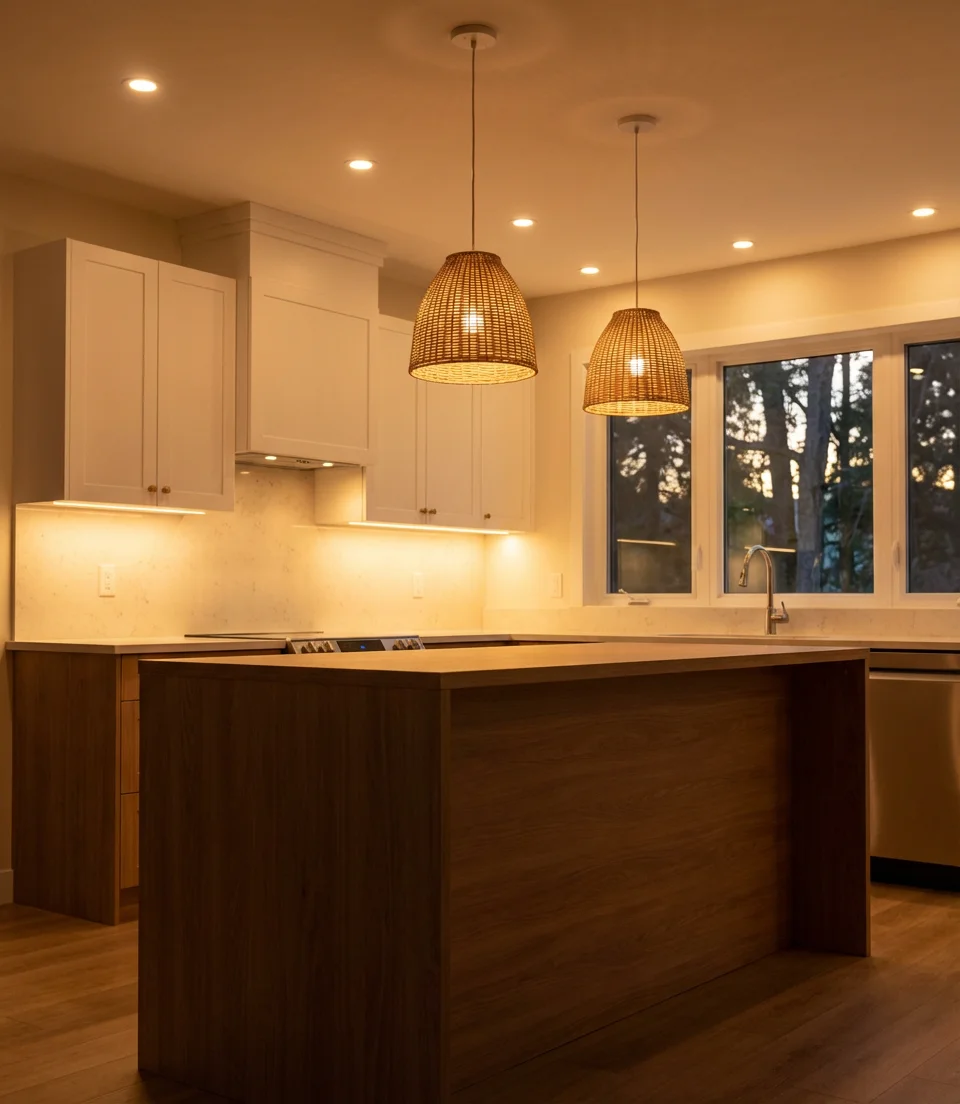
Fixing lighting, the most underestimated element in kitchen design, is often among the most cost-effective upgrades in any remodel. A layered lighting plan—recessed ceiling lights for general illumination, under-cabinet LEDs for task lighting, and a statement pendant or two above the island or peninsula—transforms how a kitchen feels at every hour of the day. In 2026, warmer color temperatures (2700K to 3000K) are replacing the cold, harsh LEDs that dominated homes built in the early 2010s, and the difference in atmosphere is remarkable.
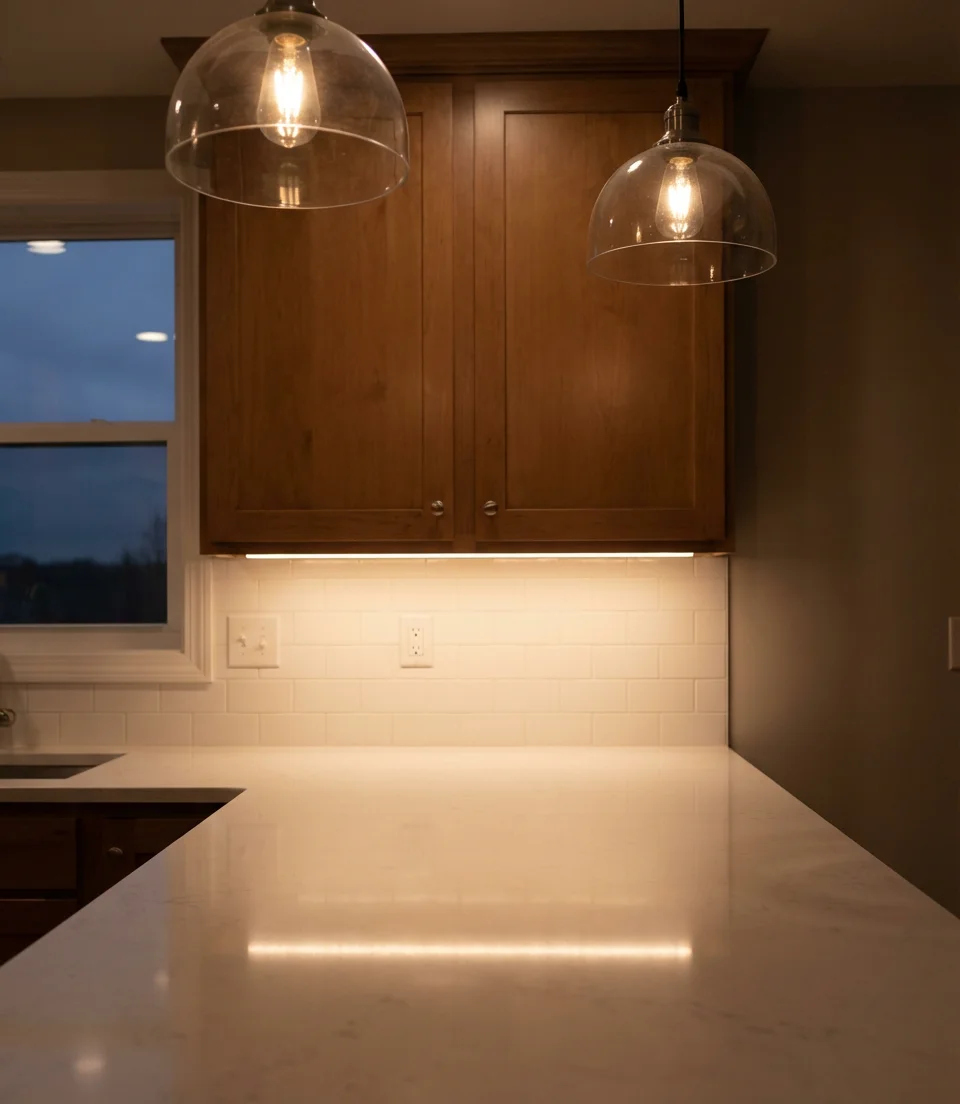
Americans tend to live in their kitchens in the evening more than any other room—homework at the island, cooking dinner, casual entertaining. Yet most homes still rely on a single overhead fixture that creates flat, unflattering light. Switching to a dimmer on recessed lights and adding under-cabinet lighting are changes that cost $300–$800 combined and have an outsized effect on the perceived quality of the entire space. It’s the kind of update that doesn’t show up on a listing appraisal but dramatically affects daily lived experience.
16. Traditional Kitchen With Crown Molding Cabinets
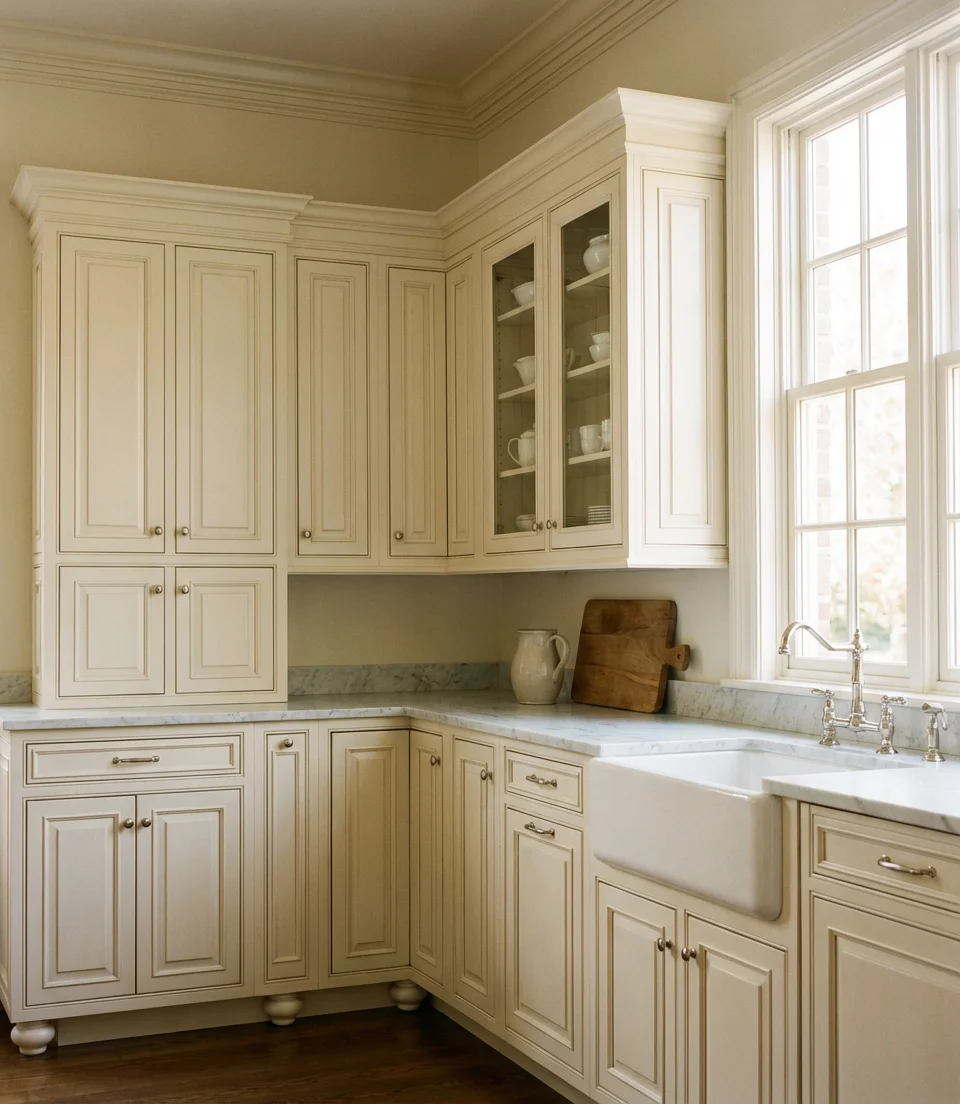
For homeowners who love architectural detail and a sense of permanence, the traditional kitchen remains aspirational in 2026. Crown molding on upper cabinets, raised-panel doors, furniture-style feet on the base cabinets, and deep drawer hardware in oil-rubbed bronze or polished nickel—these are the hallmarks of a kitchen that says “this house was built to last.” It’s a style that resonates particularly in the South and New England, where older homes reward rather than resist classical detailing. And paired with marble or soapstone counters, it reaches a level of timeless elegance few other styles can match.
The secret to crown molding that looks custom rather than tacked on is scale. The molding profile should be proportional to ceiling height: a 3.5-inch profile looks fine with 8-foot ceilings, but a 10-foot ceiling calls for a 5- to 6-inch profile. Many homeowners make the mistake of using builder-grade molding regardless of ceiling height, which results in a detail that looks like an afterthought. A skilled carpenter can usually install crowns on a typical kitchen’s cabinets in a single day, for $400 to $900 in labor alone.
17. Dark and Moody Kitchen With Dramatic Contrast
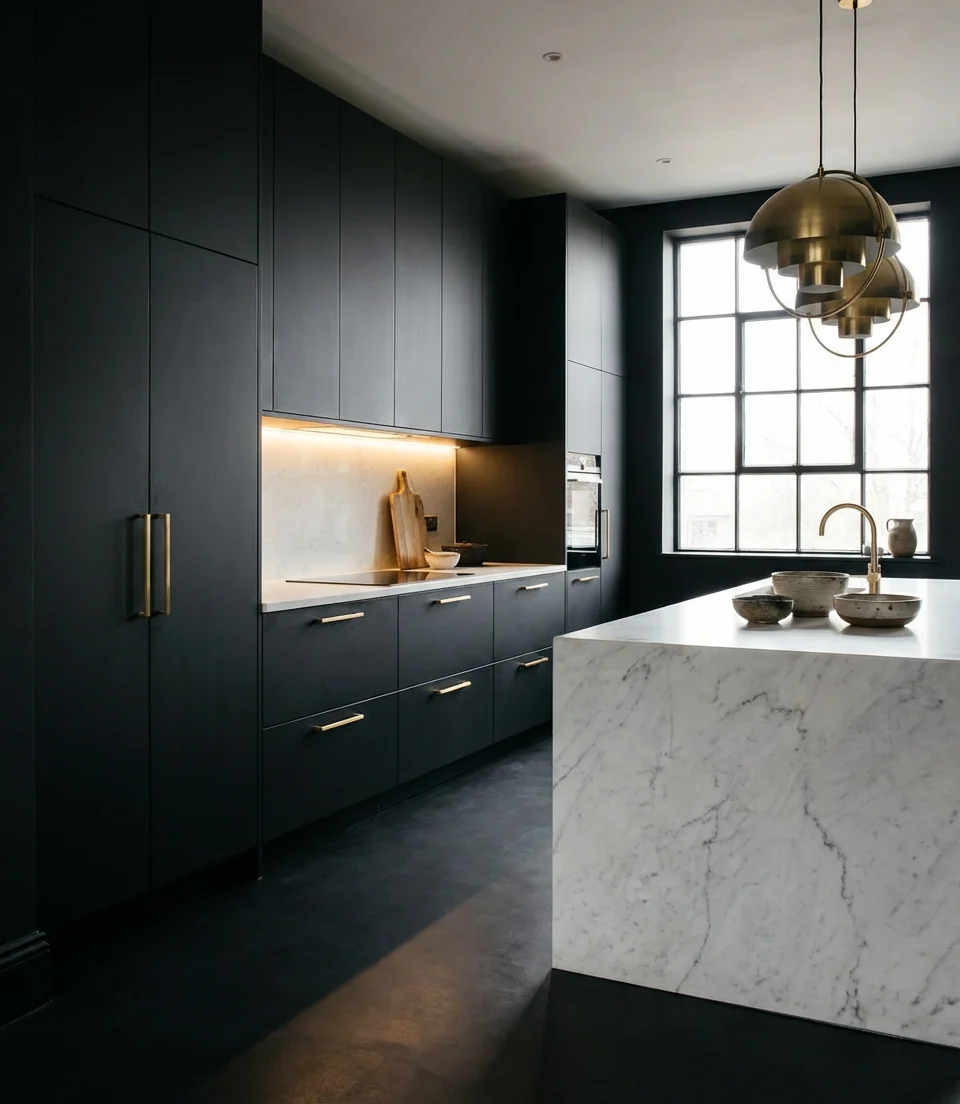
Not everyone wants a bright, airy kitchen—and 2026 is fully embracing that truth. Dark, moody kitchens with charcoal, deep navy, forest green, or even nearly-black cabinetry are showing up on the most-saved pages of every major design platform. The key to making a dark kitchen work is contrast: light countertops, metallic hardware, and strategic lighting that prevents the space from feeling like a cave. This aesthetic suits contemporary homes with strong architectural bones and works beautifully in spaces with generous natural light that can balance the depth of dark cabinets.
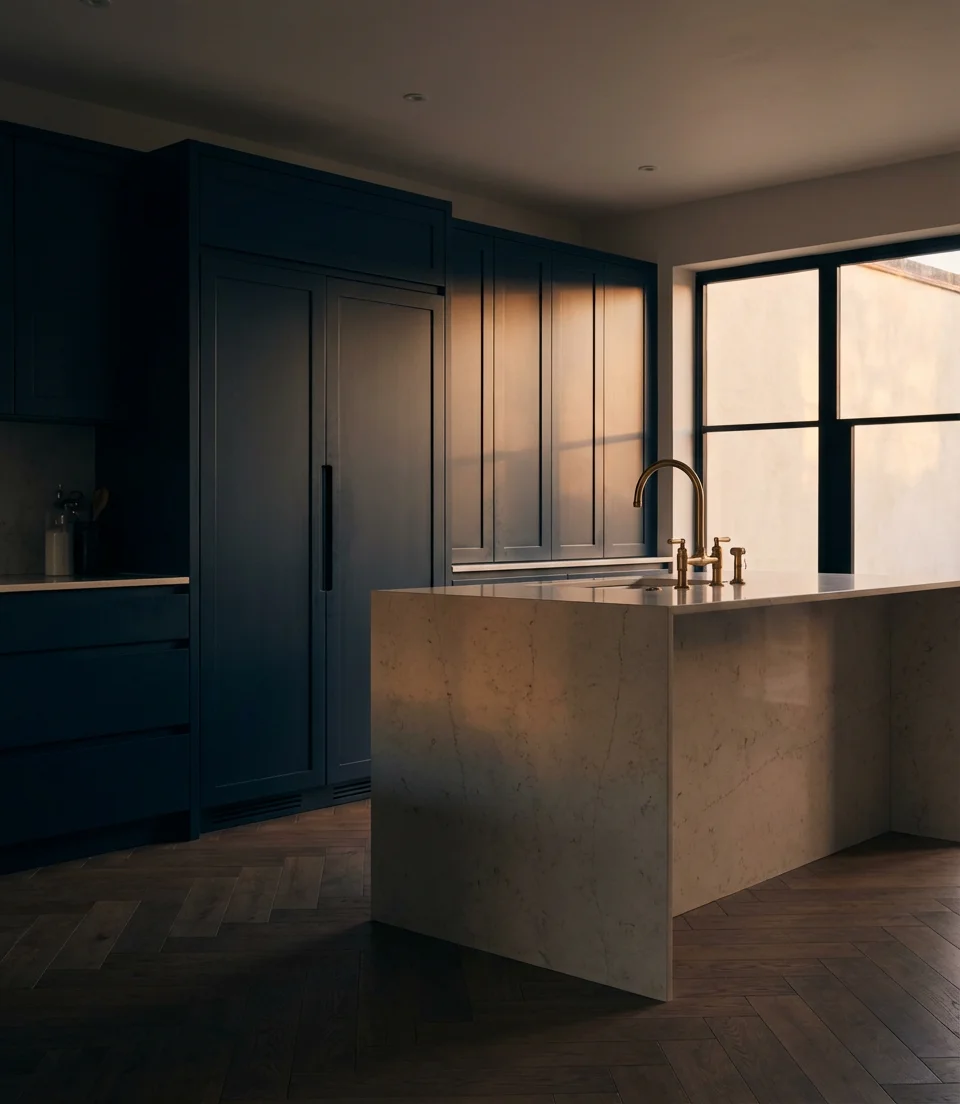
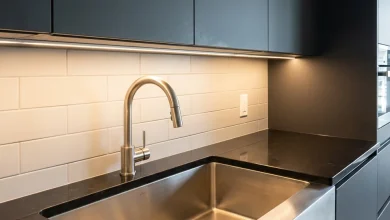
Dark kitchens work best with above-average lighting investment. If you’re committing to dark cabinetry, plan your lighting before you finalize your cabinet color—and budget for more of it. Under-cabinet LED strips become essential rather than optional, and recessed lighting should be spaced closer together than in a light kitchen. The investment is absolutely worth it: a well-lit dark kitchen photographs beautifully, creates an atmosphere unlike anything a white kitchen can offer, and tends to hide the minor wear and stains that afflict lighter finishes.
18. Rustic Wood Kitchen Island as the Star Element
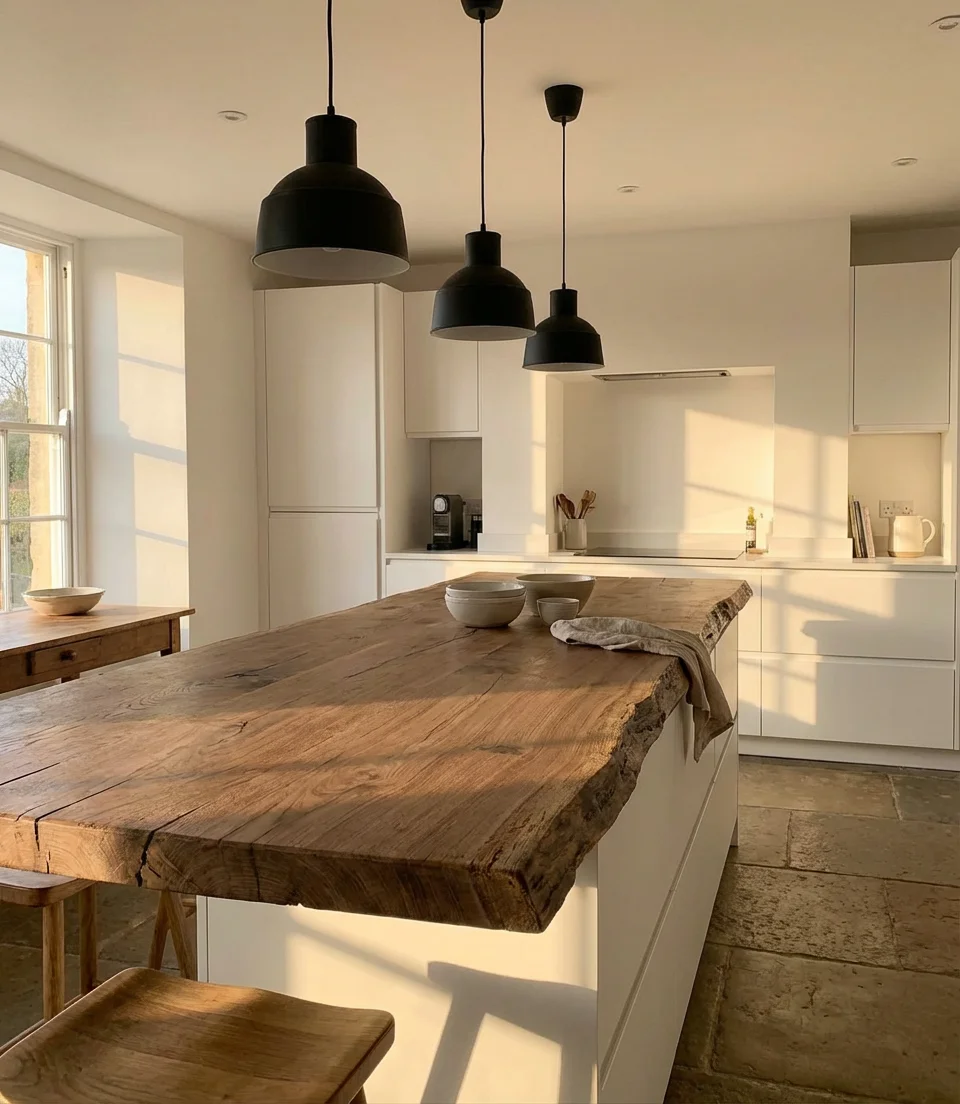
A rustic wood island in a kitchen that’s otherwise relatively modern or neutral creates the kind of instant warmth that no amount of styling can fake. Live-edge slabs as countertops, reclaimed barn wood wrapped around the island’s base, or distressed-finish furniture repurposed as a kitchen island—all of these are approaches that bring authenticity and character to a space. In 2026, the most compelling versions mix the raw material of the island with cleaner surrounding elements: white walls, simple upper cabinets, and restraint everywhere except the island itself.
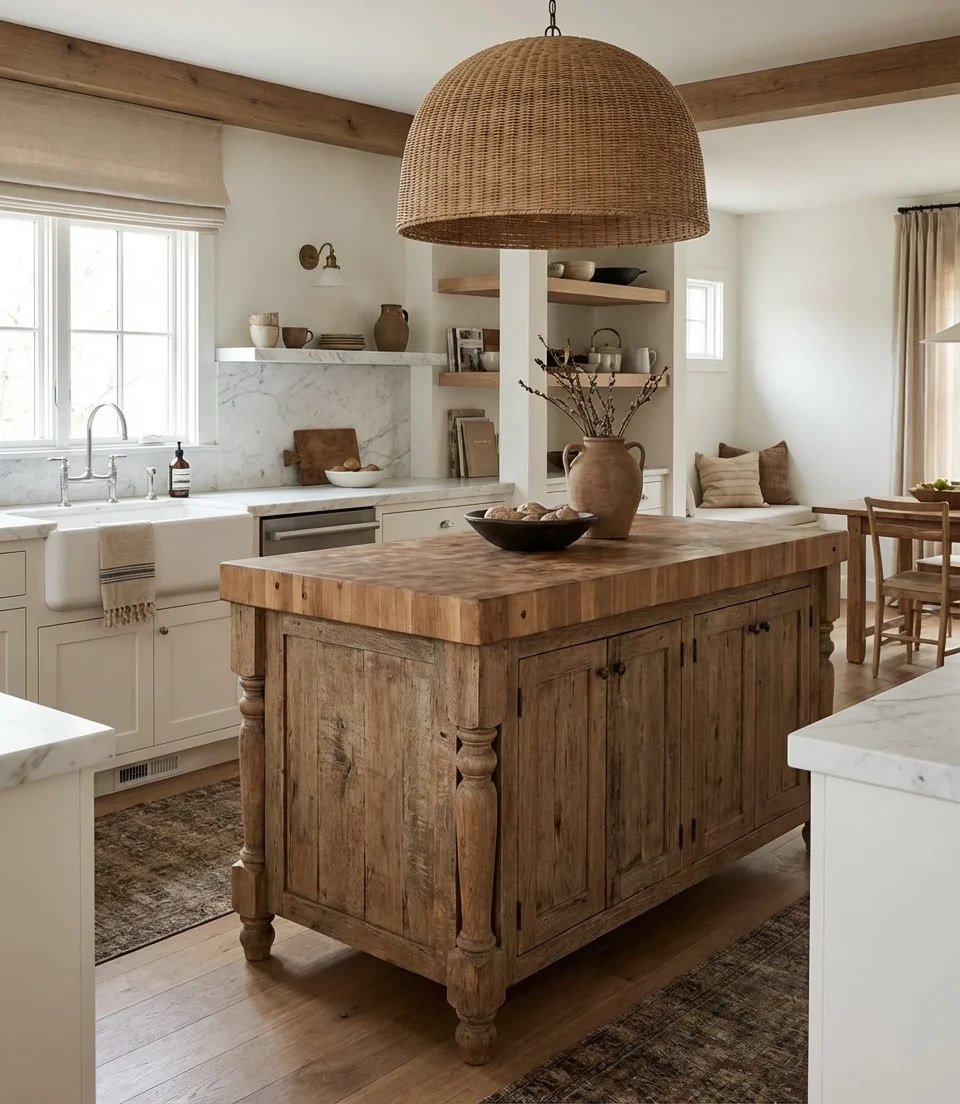
Live-edge wood islands are often sourced from local sawmills or specialty lumber yards, and the price varies wildly based on species, size, and slab availability. A walnut slab for a standard 4×2 foot island can run $800 to $3,000 — but the piece functions as art as much as furniture, and its uniqueness is precisely what makes it worth the investment. Always seal live-edge wood used as a kitchen countertop with a food-safe polyurethane or hardwax oil finish, and reapply annually to protect against moisture and knife marks.
19. Budget Kitchen Remodel With Peel-and-Stick Backsplash
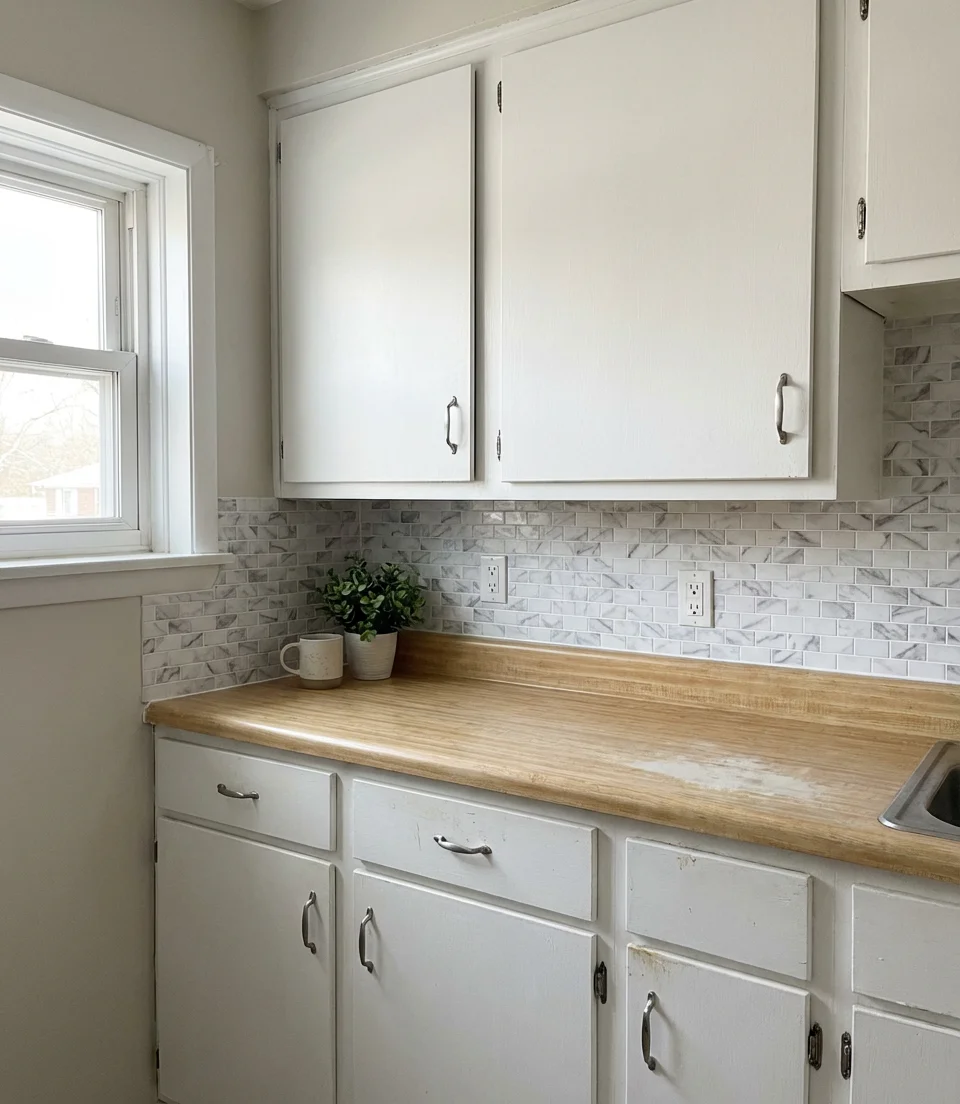
The peel-and-stick backsplash has grown up. Early versions of this product were obviously fake and bubbled within months, but the 2025 and 2026 generation of vinyl and aluminum mosaic peel-and-stick tiles is a genuinely viable option for renters, mobile home owners, and anyone working with a tight timeline and a budget-friendly mindset. The better brands are washable, heat-resistant near the range, and have adhesive strong enough to last several years without lifting. For a rental kitchen transformation, it’s close to unbeatable at $40 to $120 for a full backsplash.
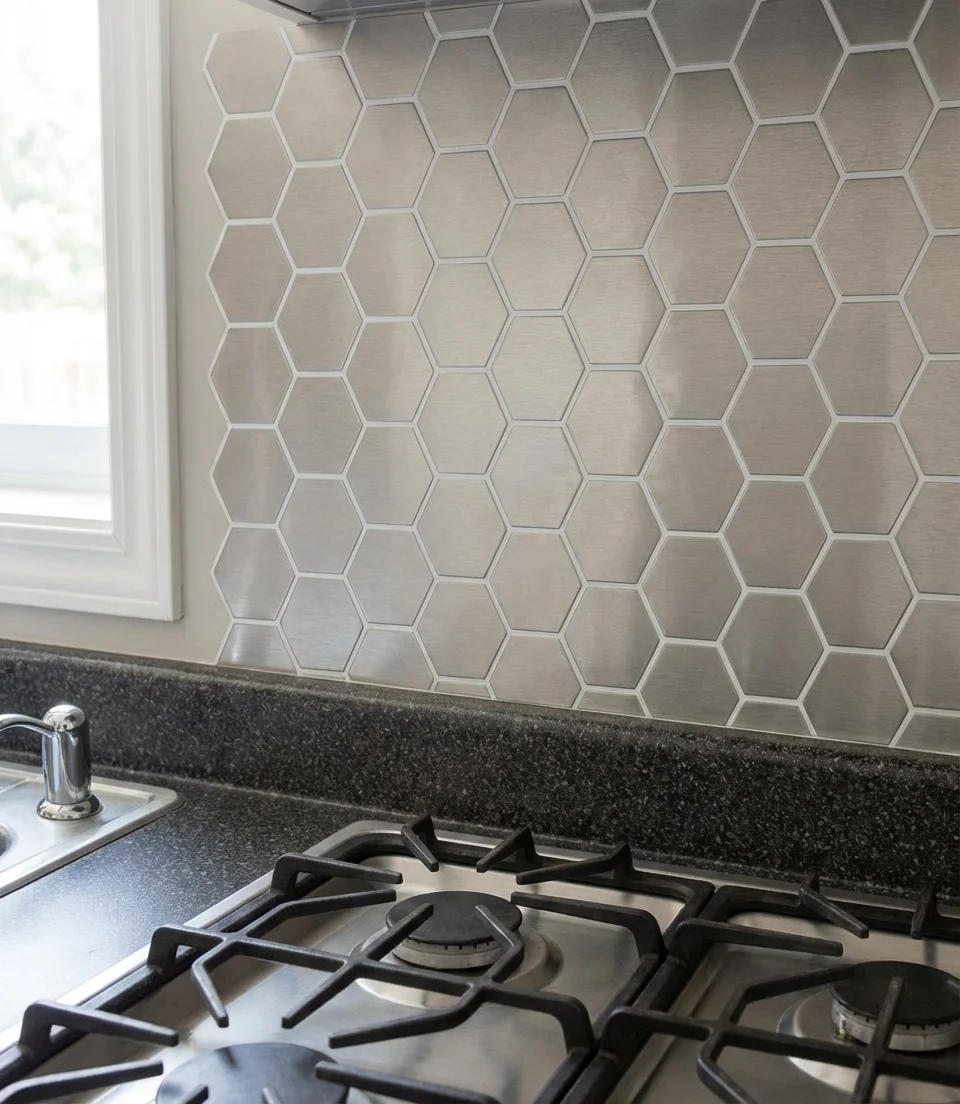
For best results with peel-and-stick tile, the existing wall surface needs to be clean, smooth, and dry—and this is where most application failures happen. Even trace amounts of grease from cooking will prevent adhesion near the range. Clean the wall with rubbing alcohol, let it fully dry for 24 hours, and apply each tile carefully without trapping air bubbles. Finish the edges with a paintable silicone caulk in a matching color for a result that photographs almost indistinguishably from real tile.
20. Farmhouse Kitchen With Shiplap Accent Wall
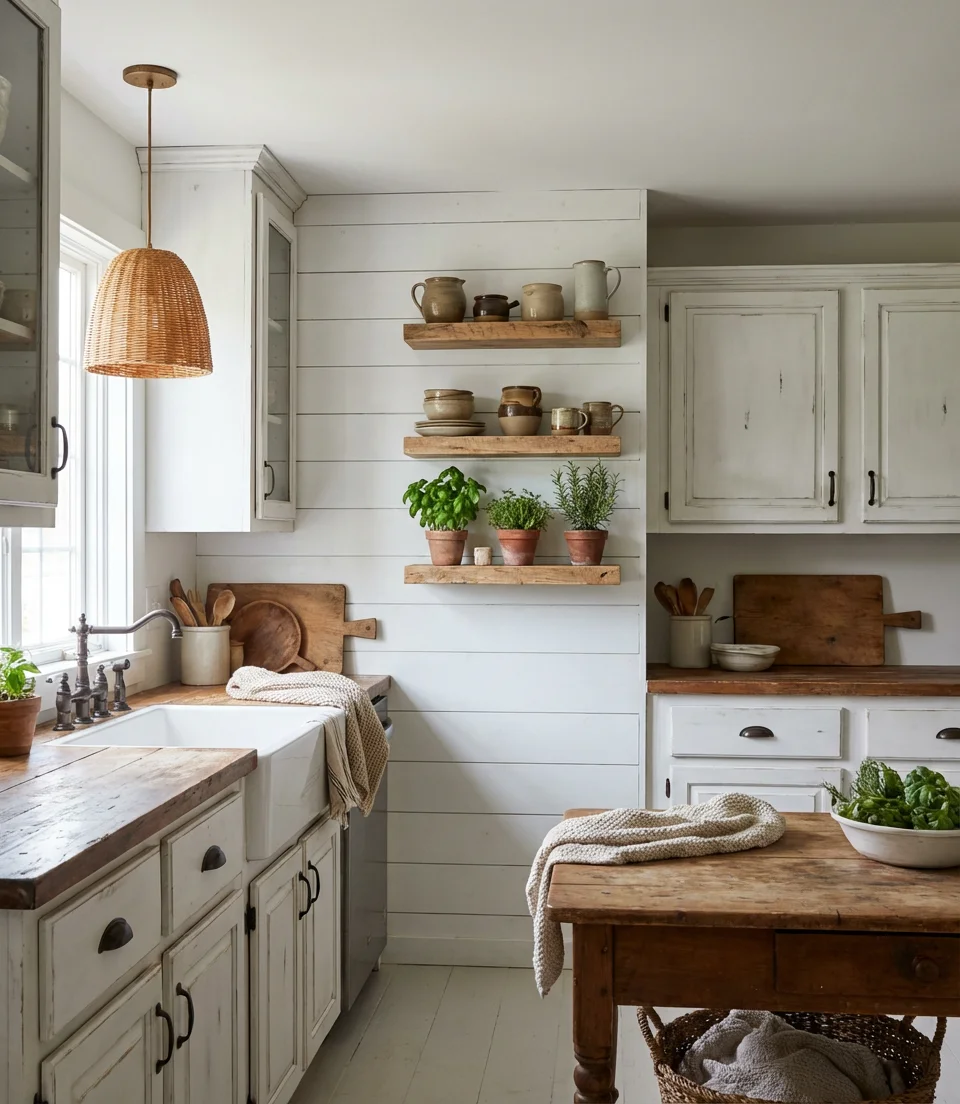
If you want to add farmhouse style without committing to it in every element, a shiplap accent wall—especially painted in a soft white or warm sage—does the job beautifully. This works particularly well on the wall behind floating shelves or open cabinetry, or on a range where a hood would otherwise be mounted. The horizontal lines of shiplap add visual rhythm and a sense of craftsmanship that plain drywall never achieves. It’s one of the fastest ways to add architectural interest to a new construction home that feels too box-like and flat.
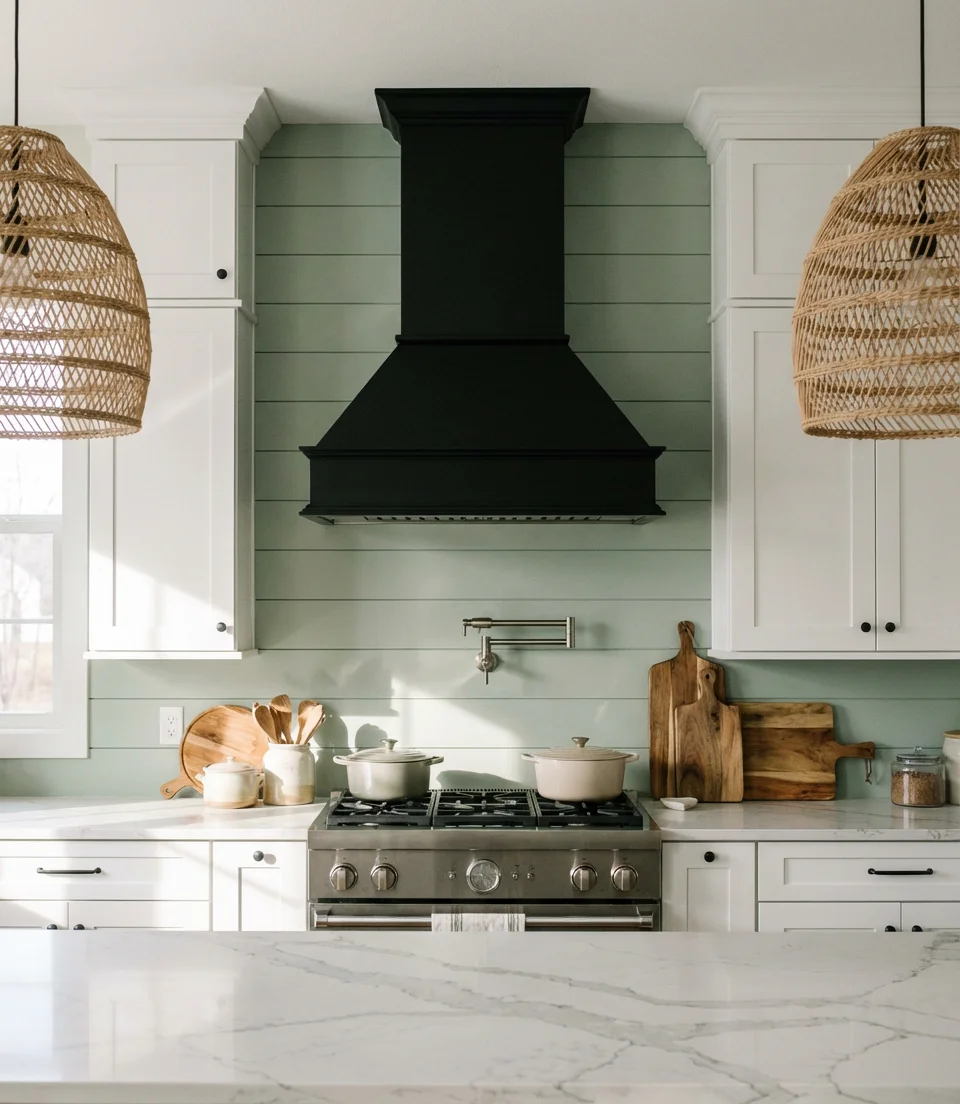
Shiplap installation is a genuinely accessible DIY project—most home improvement stores sell poplar or pine shiplap boards pre-cut, and the installation process is straightforward with a nail gun and a few hours. For a standard 8×10 foot accent wall, materials typically cost $150 to $350. The only caution: if you’re installing near a range, make sure there’s appropriate fire-rated drywall behind the shiplap, and don’t place it within the range’s required clearance zone as specified by the appliance manufacturer.
21. Small Open Kitchen With Island Bar Seating
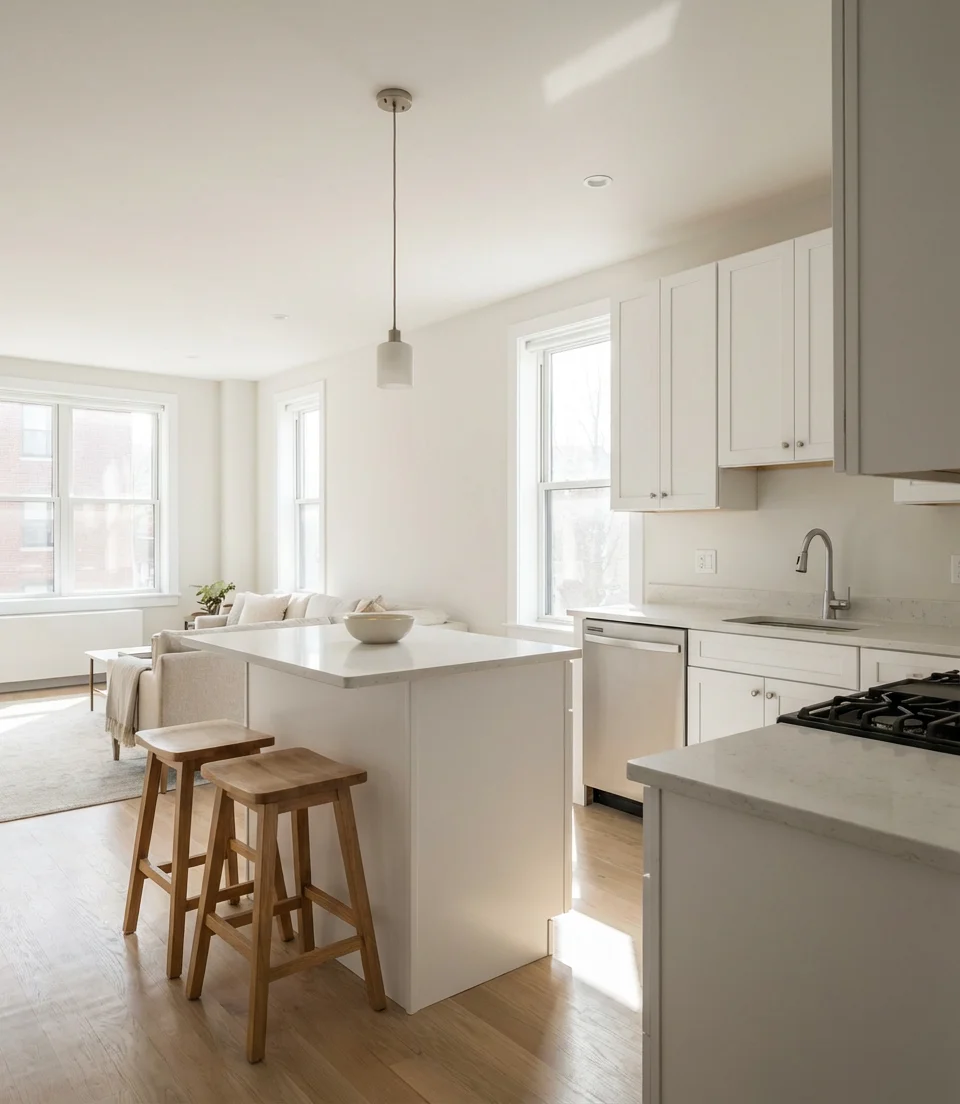
A small kitchen opened up to an adjacent living room with a compact island bar creates one of the most socially successful floor plan moves in residential design. It works especially well in starter homes, condos, and apartments where the kitchen was originally closed off by a wall that served no structural purpose. The island doesn’t need to be large—even a 24×60 inch rolling island with bar overhang seats two people and adds prep surface without requiring any permanent construction. For renters, the remodel is a weekend project; for owners, it’s a half-day renovation that changes how the whole home feels.
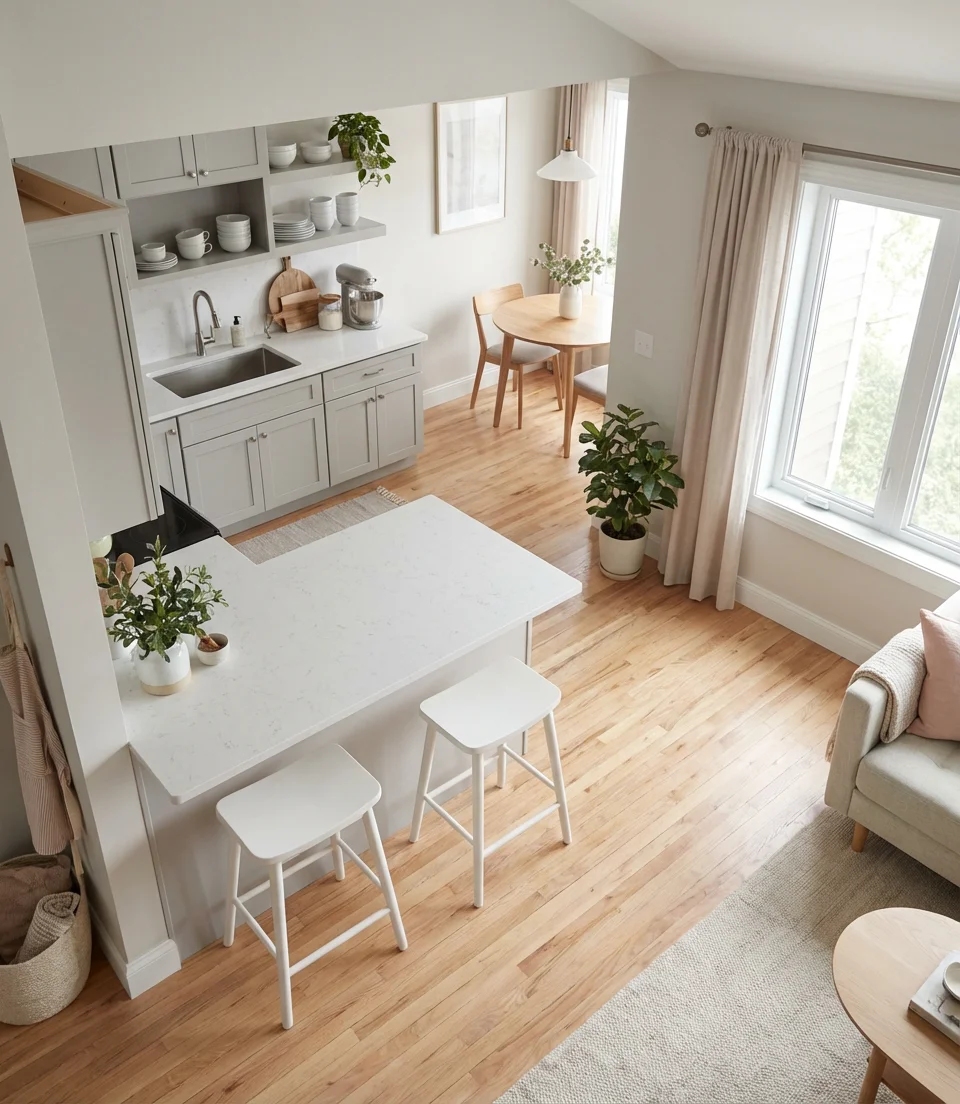
Real homeowners who make this change consistently report it as one of the best they’ve made—not because of the storage or counter space gained, but because of how fundamentally it changes social dynamics. Cooking stops being a solitary activity and becomes something you do while talking to people in the next room. Families with young children can prepare dinner while monitoring the living room. Few home improvements have this kind of daily quality-of-life impact per dollar spent.
22. Sage Green Kitchen With Natural Wood Accents
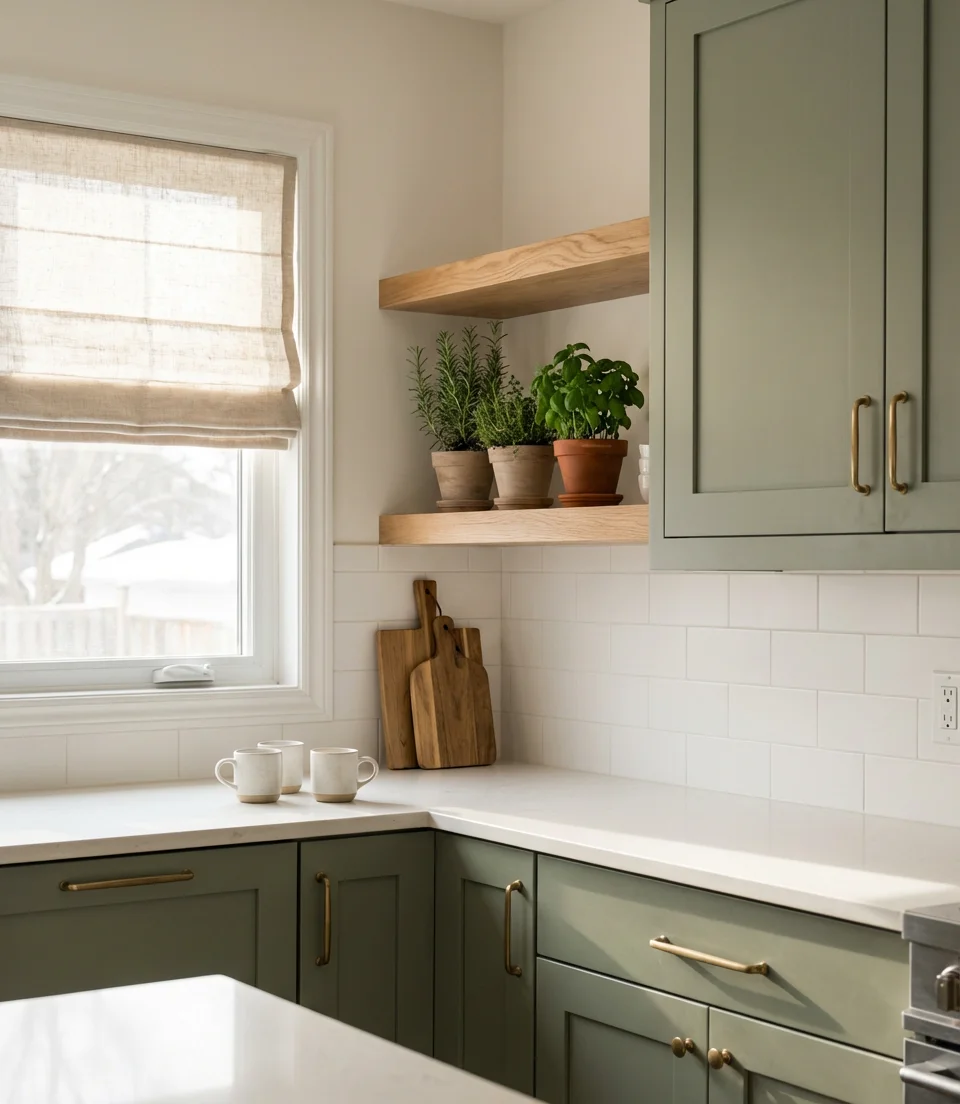
Sage green has been building momentum for three years, and in 2026 it’s firmly established as the defining cabinet color of the decade—right alongside navy and warm white. What makes it so enduring is its versatility: it reads as earthy and organic next to natural wood, feels clean and modern next to white quartz, and takes on a vintage quality next to brass or copper hardware. It’s one of the few colors that bridges the gap between the contemporary kitchen lover and the farmhouse style enthusiast, making it universally appealing across very different home aesthetics.
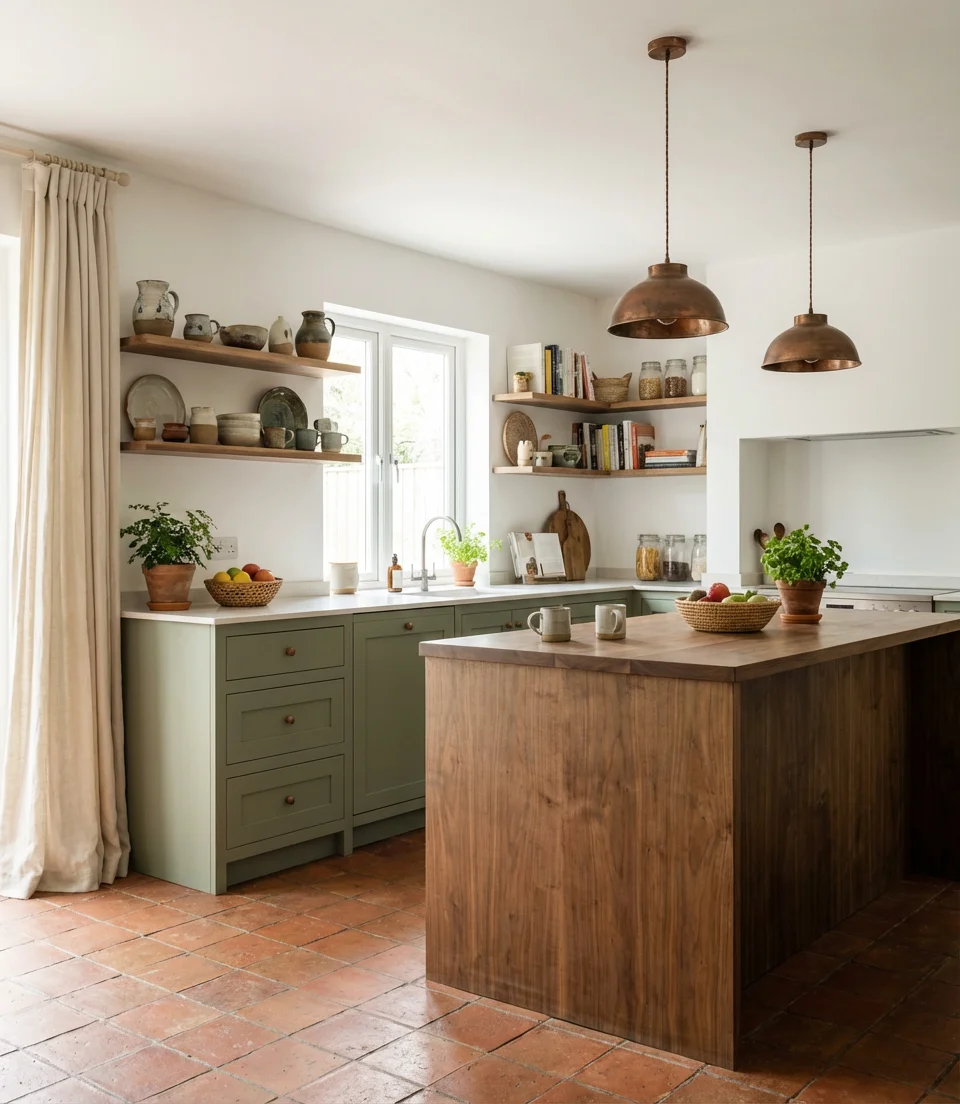
Sage green is a color that changes dramatically based on the light in your kitchen. In north-facing kitchens with cool, indirect light, it can lean toward gray-green—which is beautiful but different from how it looks in a sun-drenched south-facing space. Before committing to a paint or cabinet color, test a large sample board in your actual space at different times of day. The popular shades to consider include Farrow & Ball’s Mizzle, Benjamin Moore’s Rosemary, and Sherwin-Williams’s Rockwood Moss—each reads slightly differently, but all hit that perfect sage sweet spot.
23. Kitchen Remodel for Older Homes Without Losing Character
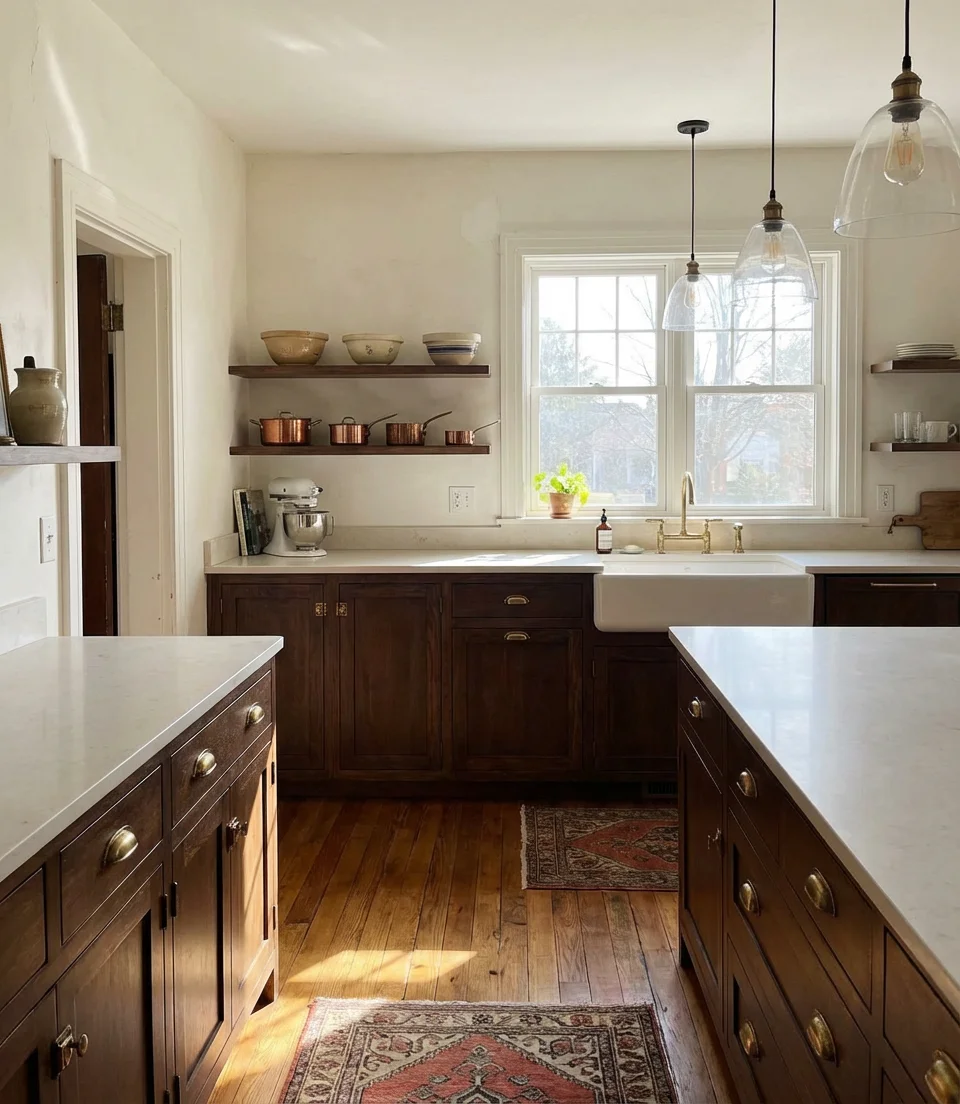
Remodeling the kitchen in a house built before 1970 is a different challenge than updating a newer home. These spaces often have quirks—irregular ceiling heights, plaster walls, vintage tile or linoleum that’s actually beautiful, original hardware—that deserve respect rather than demolition. The best approach in 2026 is selective modernization: keep what’s genuinely rustic and characterful, upgrade what’s functionally dated (usually appliances, lighting, and ventilation), and introduce new elements in a traditional spirit that feels continuous with the home’s age rather than in conflict with it.
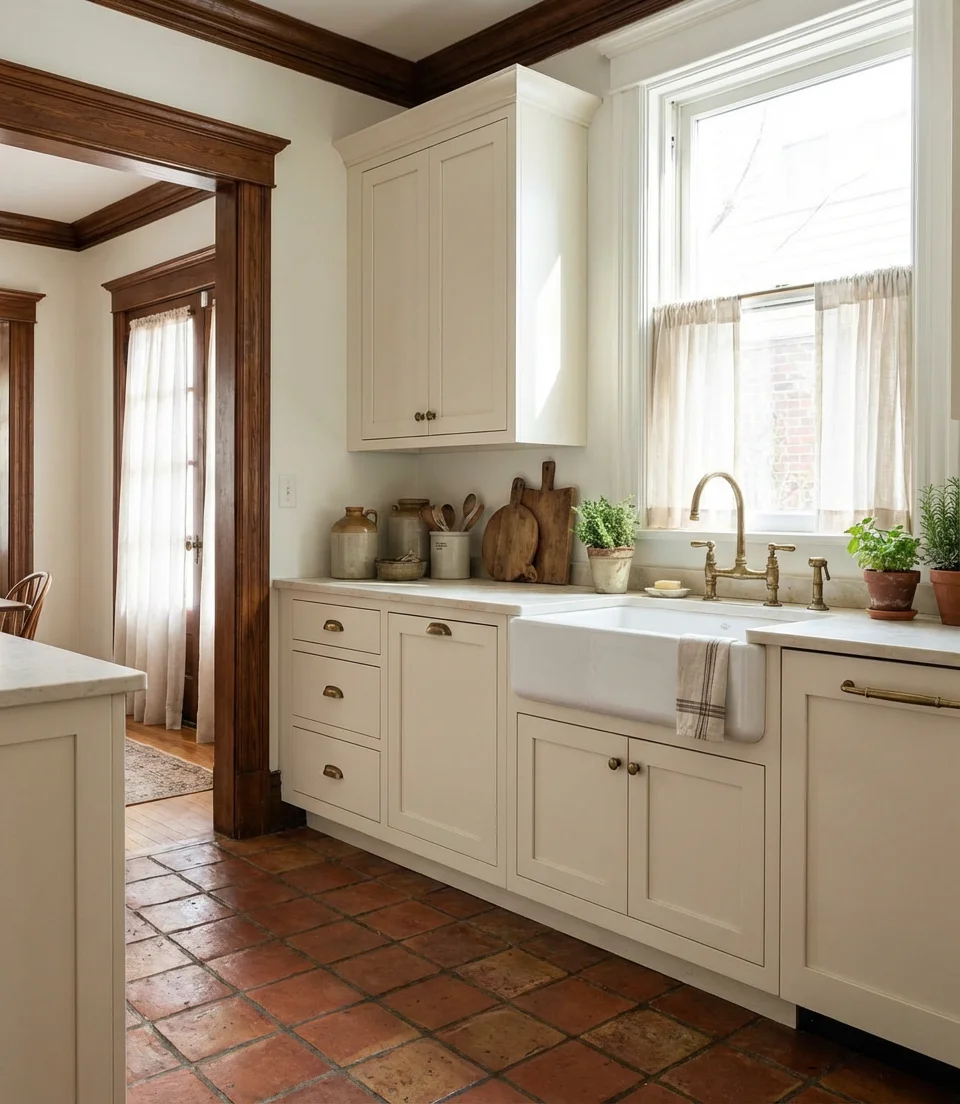
One of the most common mistakes in older home kitchen renovations is ripping out original details in pursuit of a “clean” look that ends up feeling generic and at odds with the rest of the house. Original hex tile floors, period hardware, wood bead-board ceilings, and glass-front cabinet doors are all elements with genuine historical value and market appeal. If they’re structurally sound, restore rather than replace. A $400 professional tile cleaning and re-grouting job on original hex floor tile can look better than new tile that costs ten times more.
24. Future-Forward Minimalist Kitchen With Hidden Storage
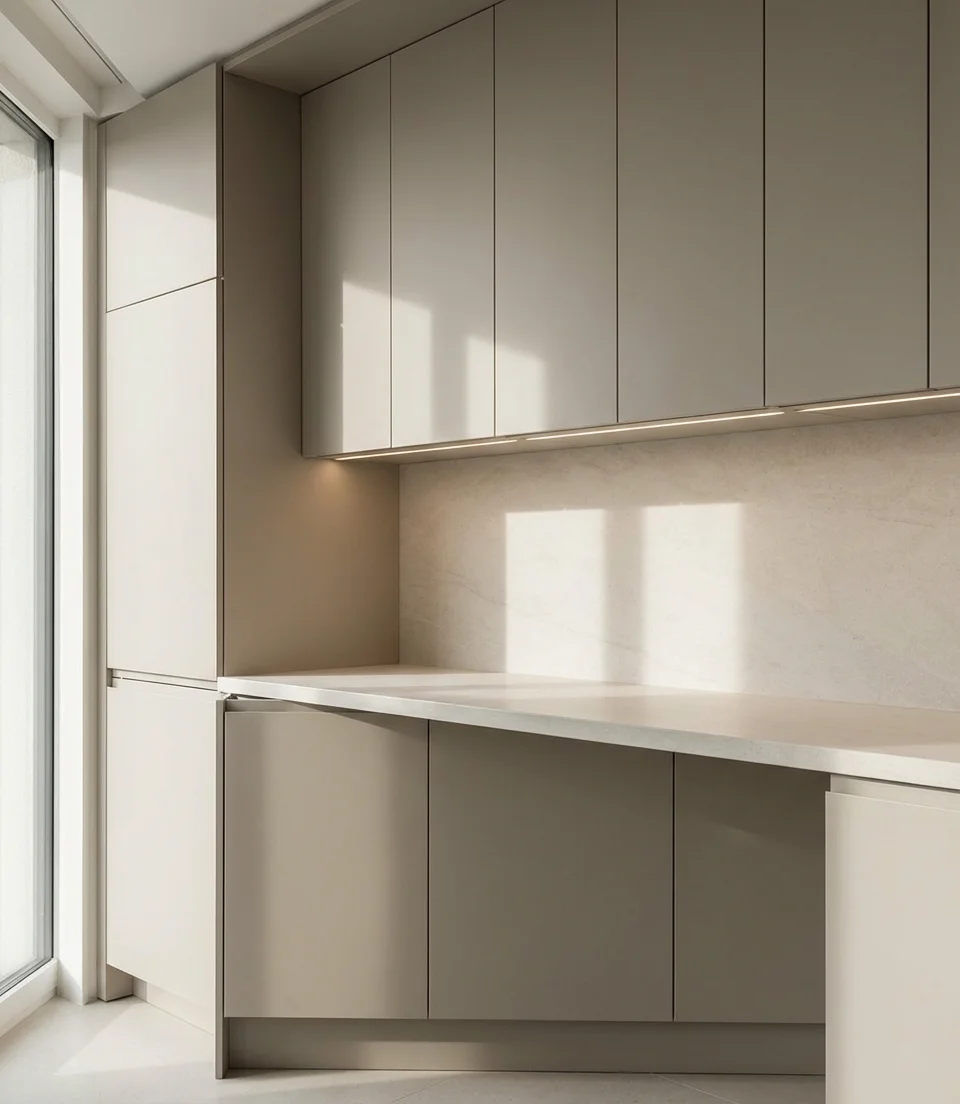
The most aspirational kitchen direction of 2026 is also the most disciplined: a fully integrated, handle-free minimalist kitchen where virtually everything—appliances, pantry, trash, charging station—disappears behind matching cabinet fronts. This look is influenced by European kitchen design traditions, particularly Scandinavian and German manufacturers, and it’s gradually filtering into the American market through mid- and higher-end remodels. It’s the best expression of the “everything in its place” philosophy, and it rewards buyers who find visual calm in an uncluttered environment.
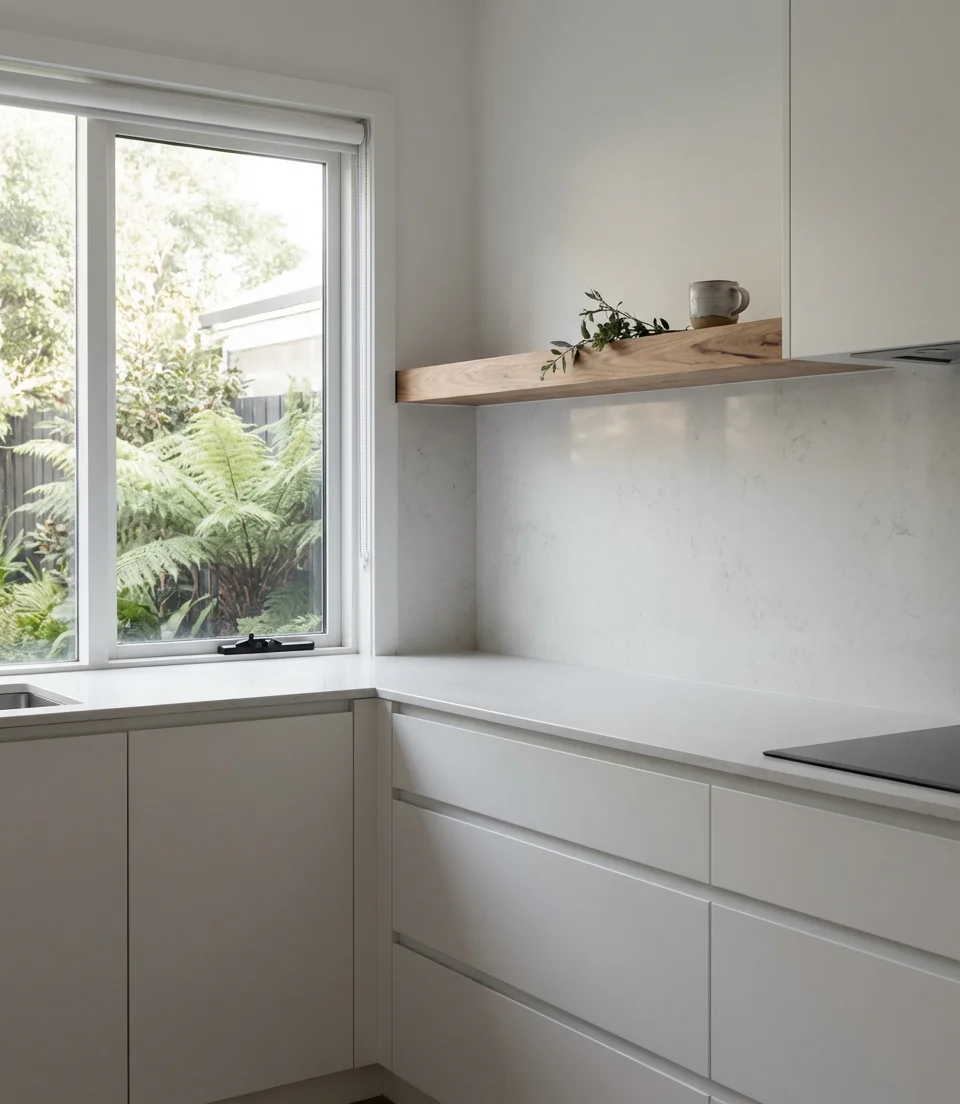
Push-to-open or touch-latch mechanisms—which eliminate visible hardware entirely—are now available at accessible price points through IKEA’s Sektion line and several other mid-range cabinet suppliers. The key functional investment is in interior organization: pull-out drawer inserts, drawer dividers, and built-in spice racks become absolutely essential when every surface is hidden. A minimalist kitchen fails when the interior is chaotic—the whole philosophy demands that the discipline extend behind the doors, not just in front of them.
There’s never been a better time to remodel your kitchen—whether you’re dreaming big or working with what you have, 2026 has an idea that fits your style, your space, and your budget. Which of these directions are you most excited about? Drop your thoughts in the comments below and let the community know what’s inspiring your next kitchen project—we’d love to see what you’re planning.