46 White Oak Kitchen Cabinets 2026: Ideas with Gold Hardware, Dark Floors & Backsplash Inspiration

White oak kitchen cabinets have become one of the most sought-after design choices in American homes heading into 2026, and it’s easy to see why. With their warm honey tones, subtle grain patterns, and incredible versatility, these cabinets offer a timeless foundation that works beautifully across modern, farmhouse, and transitional styles. Pinterest boards are overflowing with stunning white oak kitchens paired with everything from bold black countertops to soft terracotta floors, proving this wood’s ability to adapt to any vision. Whether you’re drawn to the clean lines of a slim shaker door or the rich character of quarter-sawn grain, white oak delivers both beauty and durability. In this article, we’ll explore inspiring ideas to help you design the white oak kitchen of your dreams.
1. White Oak with Gold Hardware Elegance
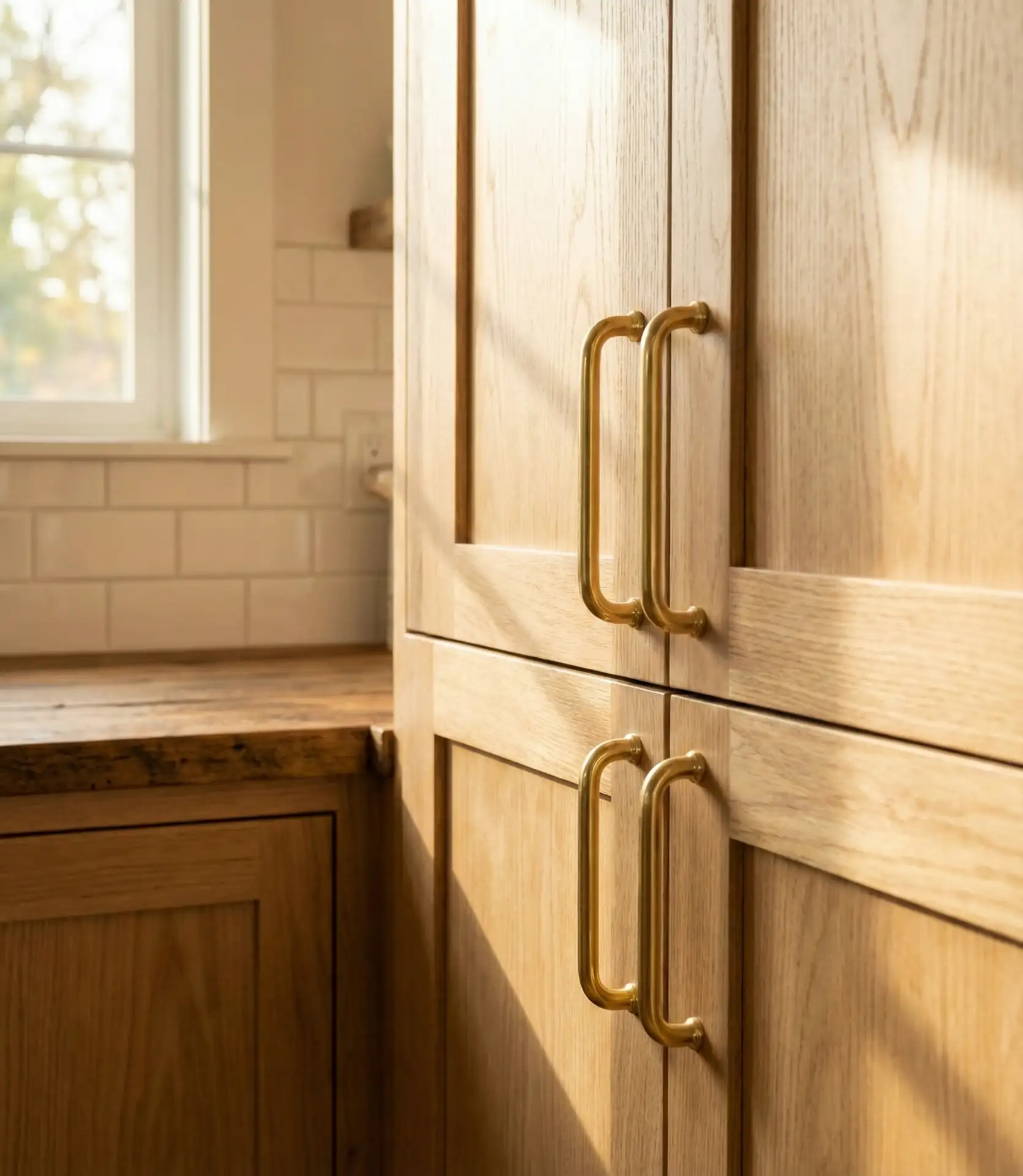
Pairing white oak cabinets with gold hardware creates an instantly elevated look that feels both warm and luxurious. The natural honey undertones in the wood complement the richness of brushed or polished gold pulls and knobs, resulting in a kitchen that feels custom and considered. This combination works beautifully in both modern spaces with clean lines and farmhouse kitchens where a touch of glamour balances rustic elements. The contrast between the organic wood grain and the metallic shine adds visual interest without overwhelming the space.
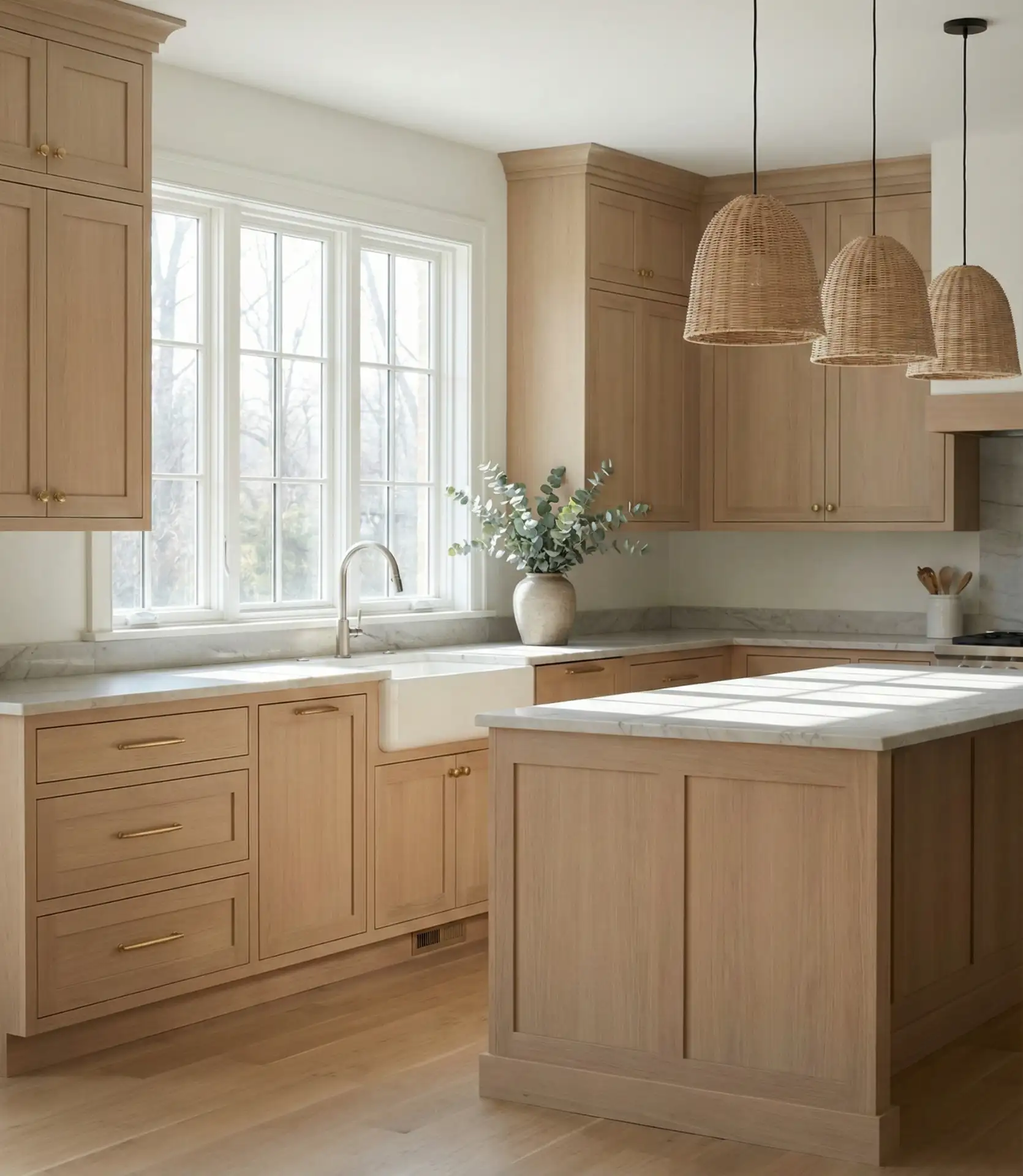
One common mistake homeowners make is choosing hardware that’s too small or too ornate for the simple beauty of white oak. Stick with substantial, streamlined pulls in a warm gold finish—avoid overly shiny or rose gold tones that can clash with the wood’s natural warmth. The hardware should feel like jewelry for your cabinets, not a distraction from them. Consider mixing round knobs on doors with longer pulls on drawers for a designer touch that adds dimension.
2. Quarter Sawn White Oak Character
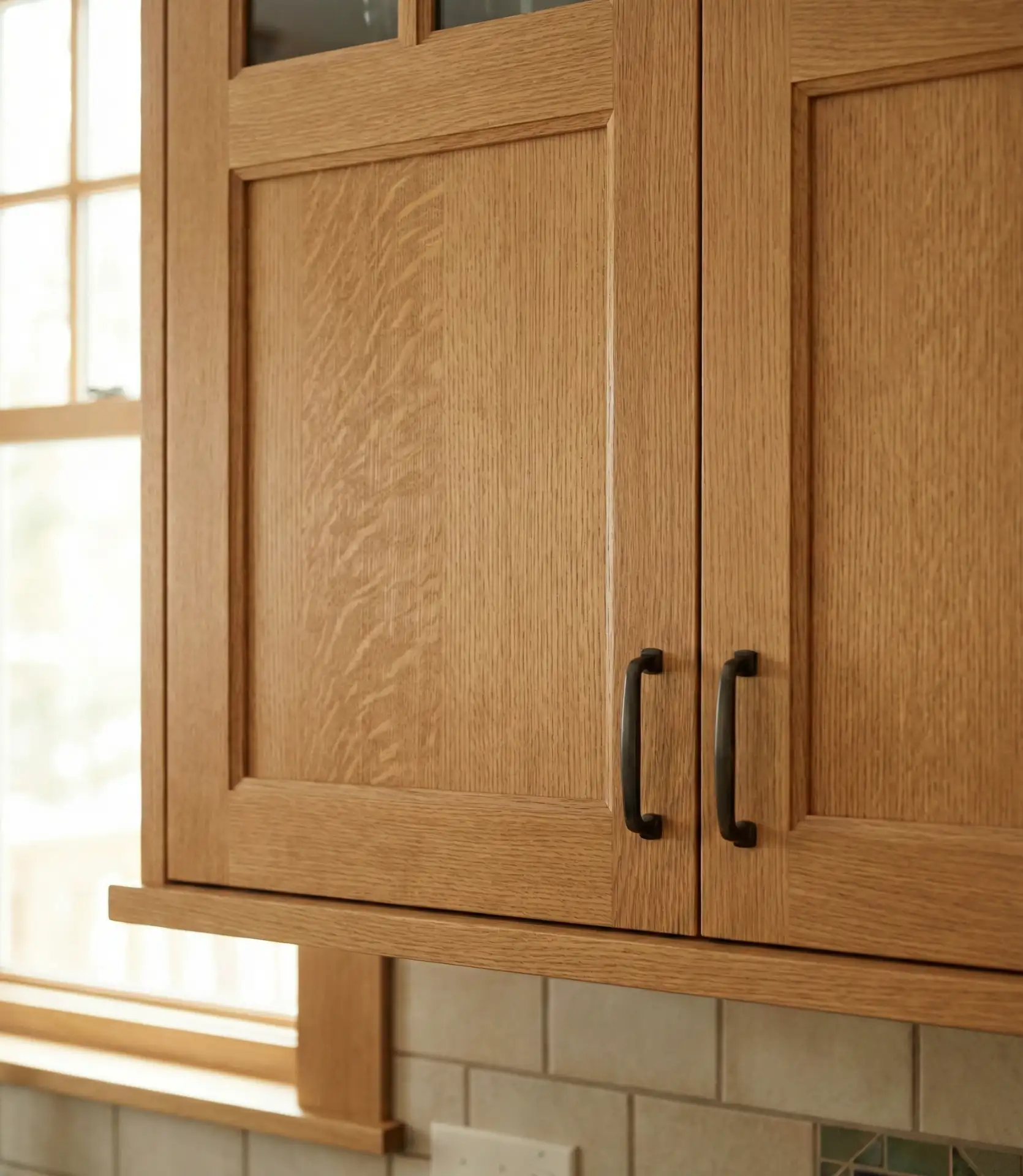
If you’re looking for maximum visual drama in your wood grain, quarter-sawn white oak delivers like nothing else. This cutting method reveals the wood’s distinctive ray fleck pattern—those beautiful ribbon-like stripes that dance across the surface. Quarter-sawn oak is also more dimensionally stable than plain-sawn, meaning your cabinet doors are less likely to warp over time. The striking grain pattern works particularly well in kitchens with a craftsman or transitional aesthetic, where the wood itself becomes a focal point rather than just a backdrop.
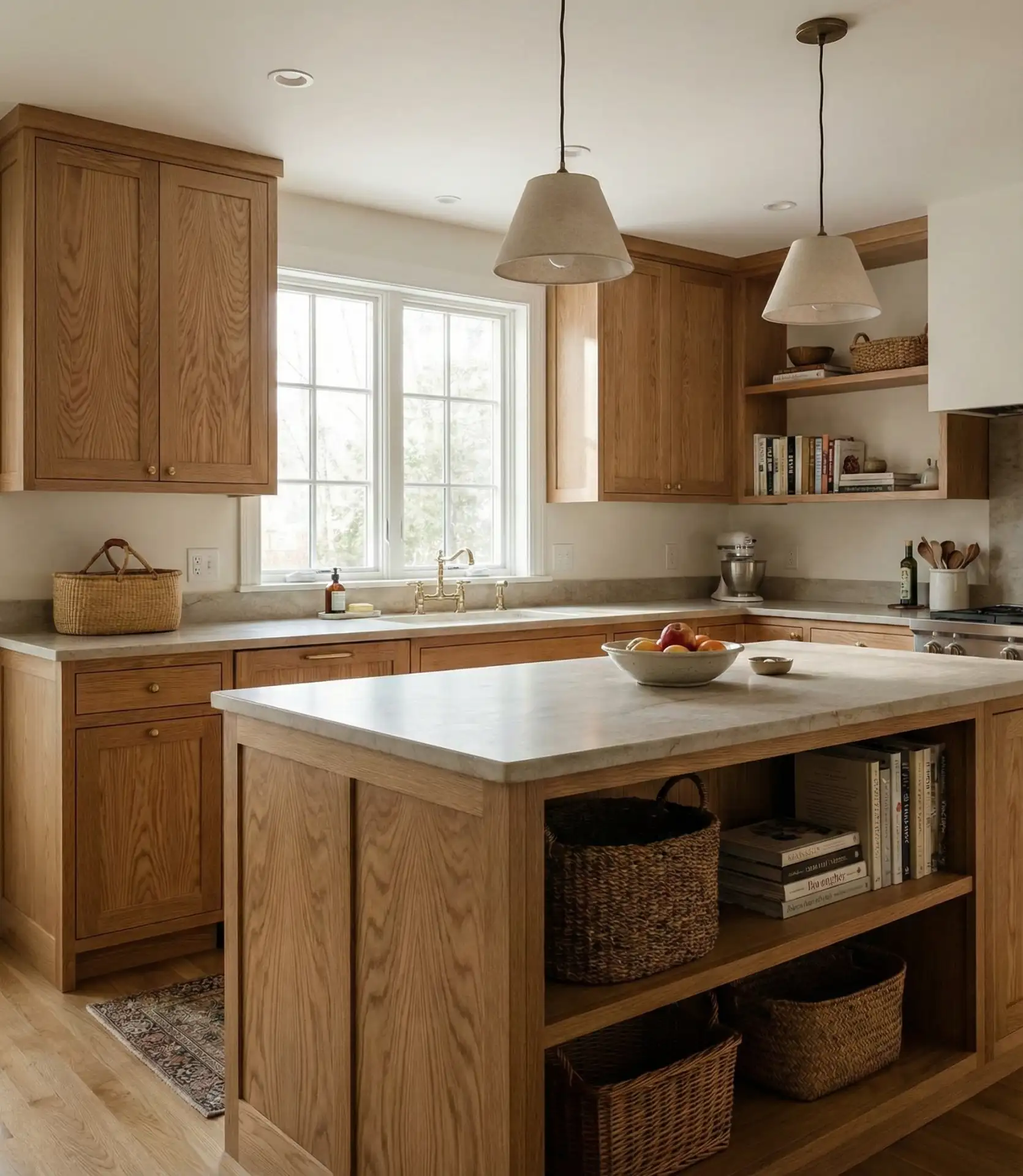
This characteristic works best in homes where you want the cabinetry to make a statement. Quarter-sawn oak has a more pronounced, formal appearance compared to rift or plain-sawn, so it suits larger kitchens where the grain won’t feel too busy. It’s especially stunning in homes with architectural character—think bungalows, Tudors, or newer builds with nods to historic craftsmanship. The investment in quarter sawn is worthwhile if you appreciate wood as a living material with personality.
3. Rift Sawn for Minimal Grain
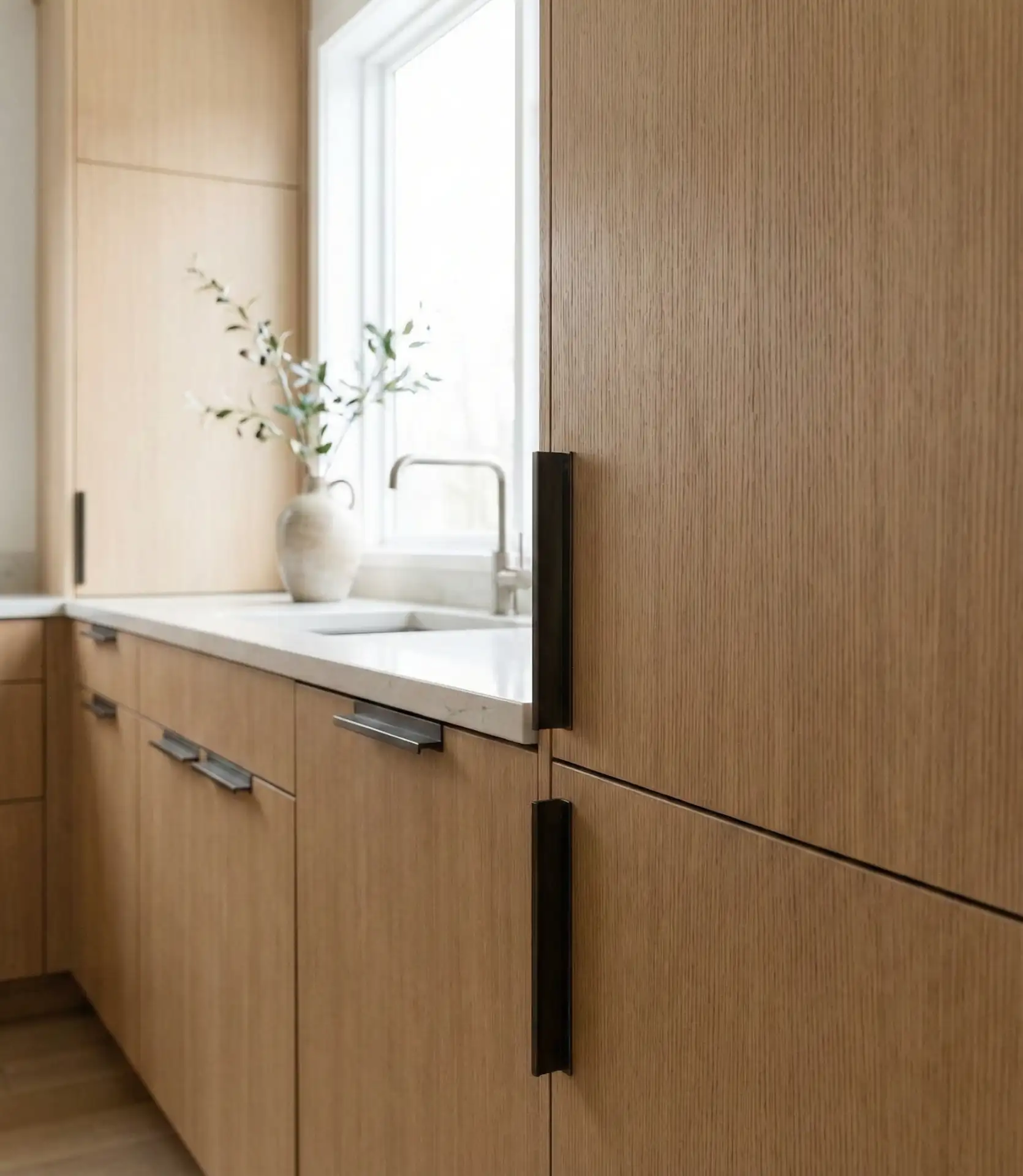
Rift-sawn white oak offers the opposite aesthetic from quarter-sawn—it’s all about clean, straight grain with minimal variation. If you prefer a more contemporary, streamlined look where the wood feels consistent and calm, rift is your answer. This cut is achieved by sawing perpendicular to the growth rings, resulting in tight, parallel grain lines that create visual harmony across all your cabinet doors. It’s the choice for modernists who love natural materials but want restraint in the pattern.
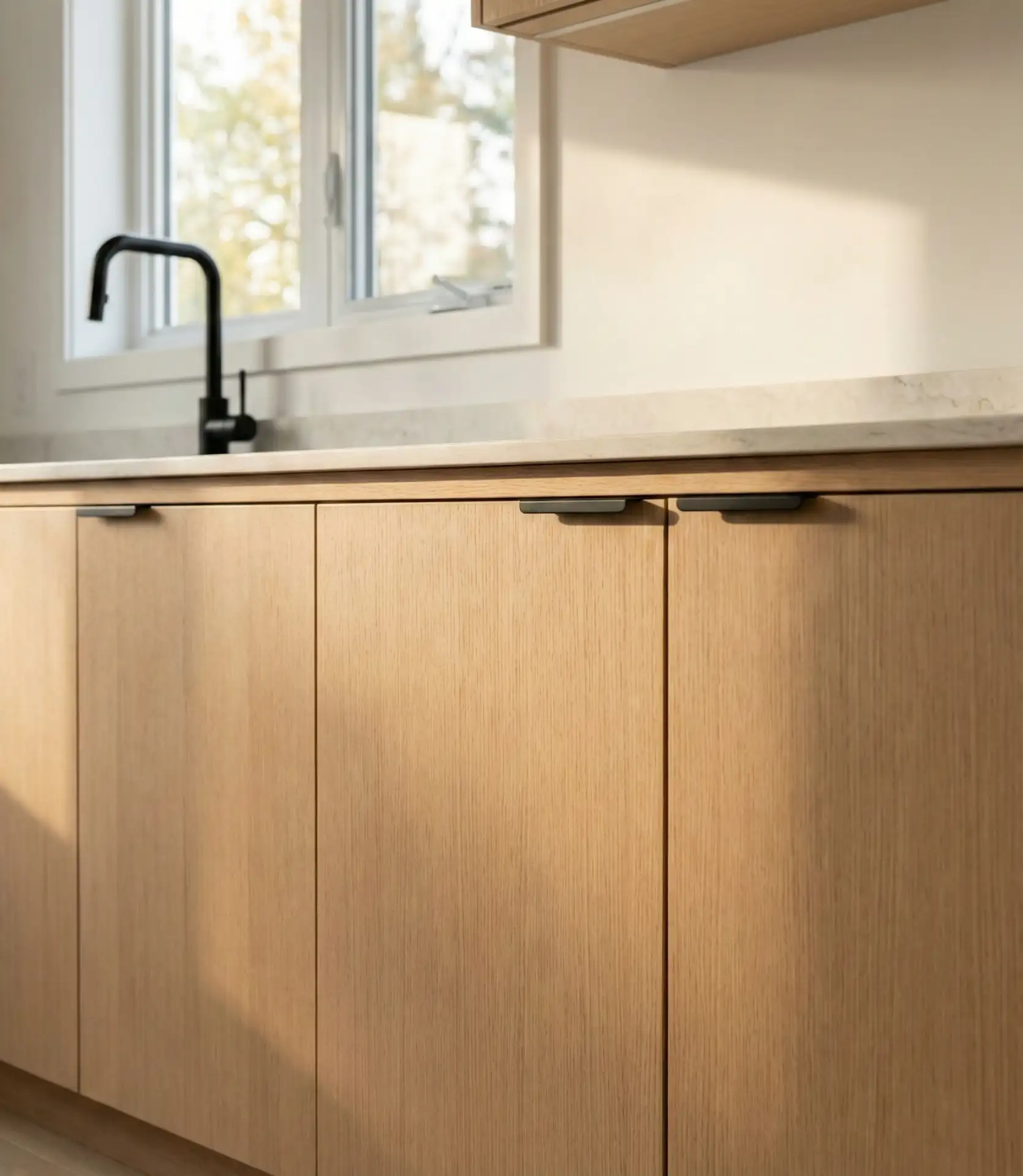
My neighbor recently renovated her 1960s ranch and chose rift-sawn white oak specifically because she wanted wood warmth without competing grain patterns. The result is sophisticated and gallery-like—the cabinets feel intentional rather than showy. Rift-sawn white oak is more expensive due to the increased waste in the cutting process, but if you prioritize a serene, unified look, it’s well worth the investment.
4. Natural Finish White Oak Beauty
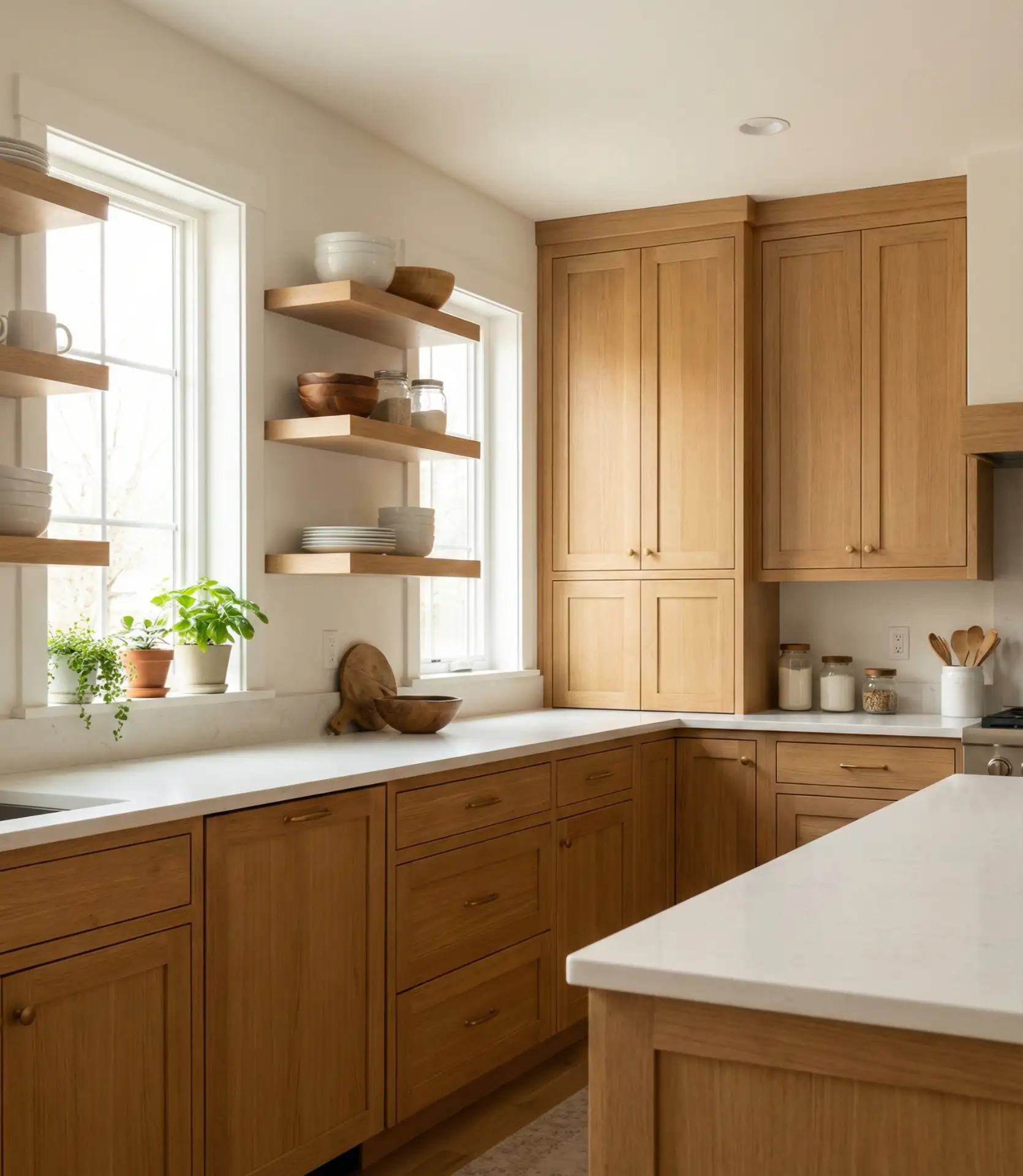
There’s something deeply satisfying about natural white oak left in its truest state—just a clear protective finish that lets the wood’s inherent color and grain shine through. A natural finish preserves the soft honey and wheat tones that make white oak so beloved while still offering durability against kitchen wear and tear. This approach works beautifully in Scandinavian-inspired kitchens, where organic materials and light wood tones create a sense of openness and calm. It’s also ideal for homeowners who appreciate the wood aging gracefully over time, developing a richer patina.
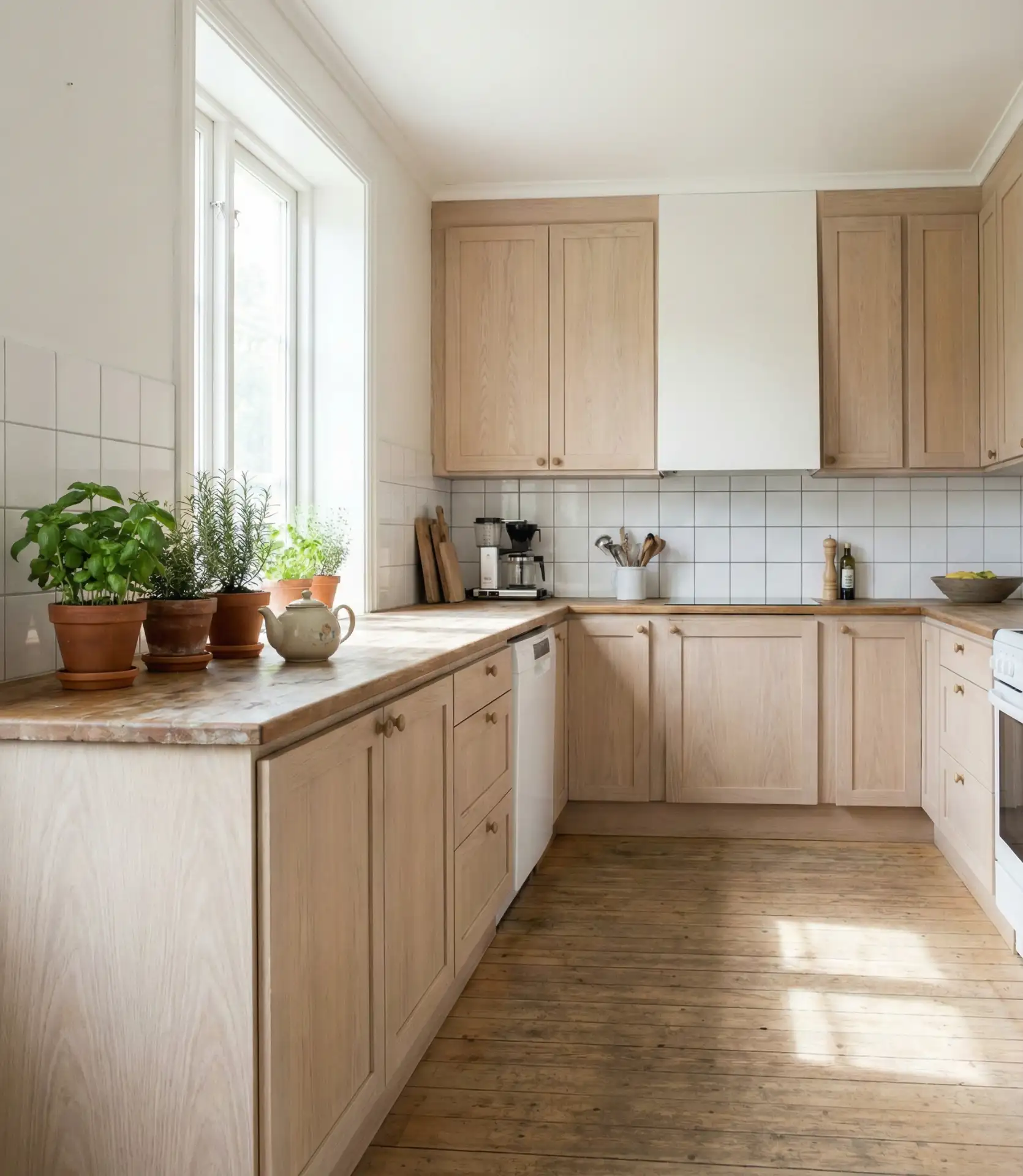
When considering natural finish options, understand that “natural” doesn’t mean no finish at all—you’ll still need a protective topcoat, typically a water-based polyurethane or hardwax oil. Water-based finishes keep the wood lighter and prevent yellowing over time, while oil-based options will add a slight amber warmth. Ask your cabinet maker for samples with different sheens—matte finishes are trending in 2026 for their understated elegance, while satin offers a bit more reflectivity and is easier to clean.
5. Rustic White Oak with Character Marks
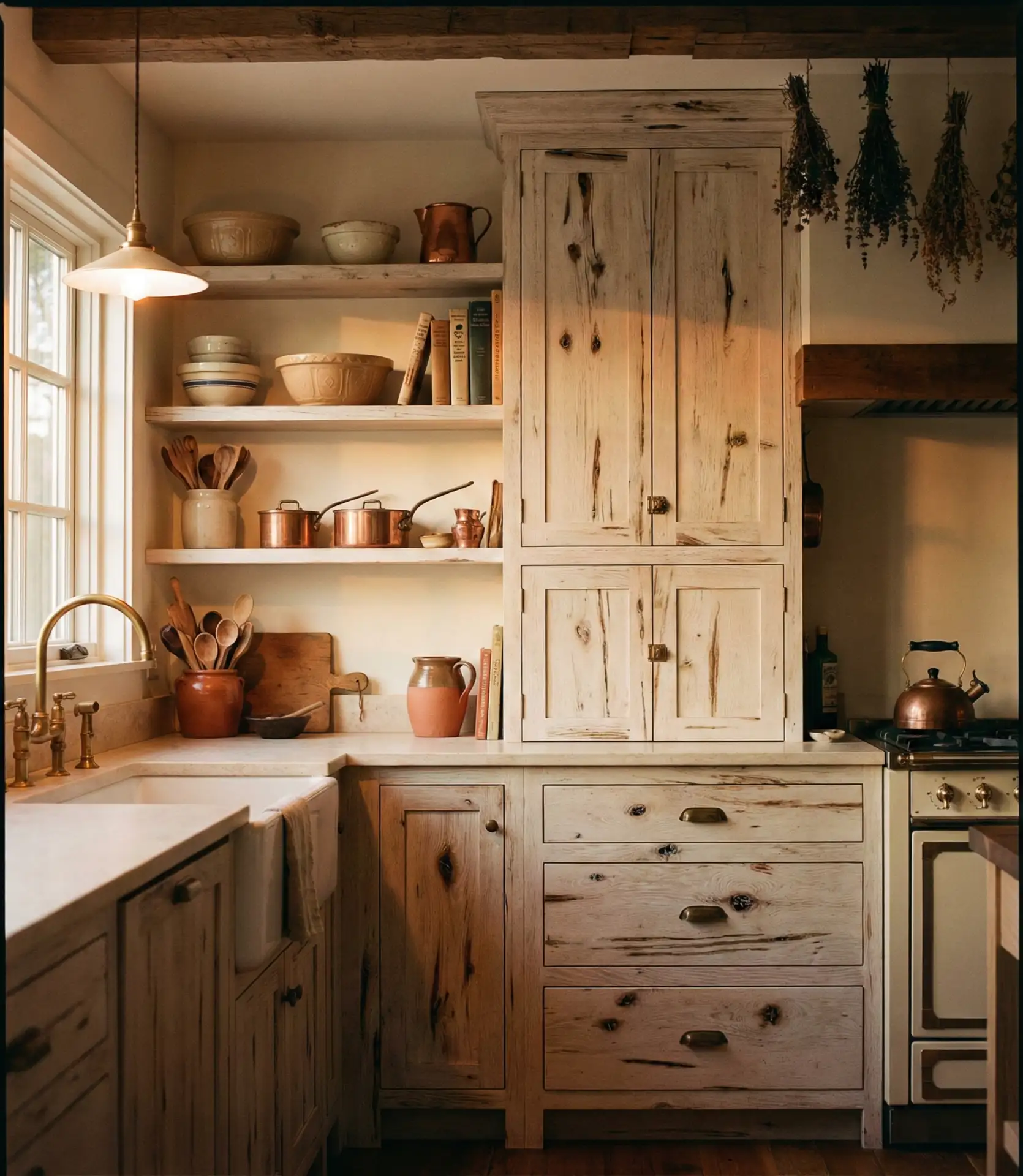
For those who love imperfection and authenticity, rustic white oak cabinets embrace knots, mineral streaks, and natural variations that tell the tree’s story. This grade of wood celebrates the organic rather than hiding it, creating kitchens with warmth and soul. Rustic white oak pairs beautifully with farmhouse aesthetics, where reclaimed looks and vintage touches feel right at home. The character marks add texture and visual interest, ensuring no two cabinet doors look exactly alike—perfect for homeowners who want their kitchen to feel collected rather than catalog-perfect.
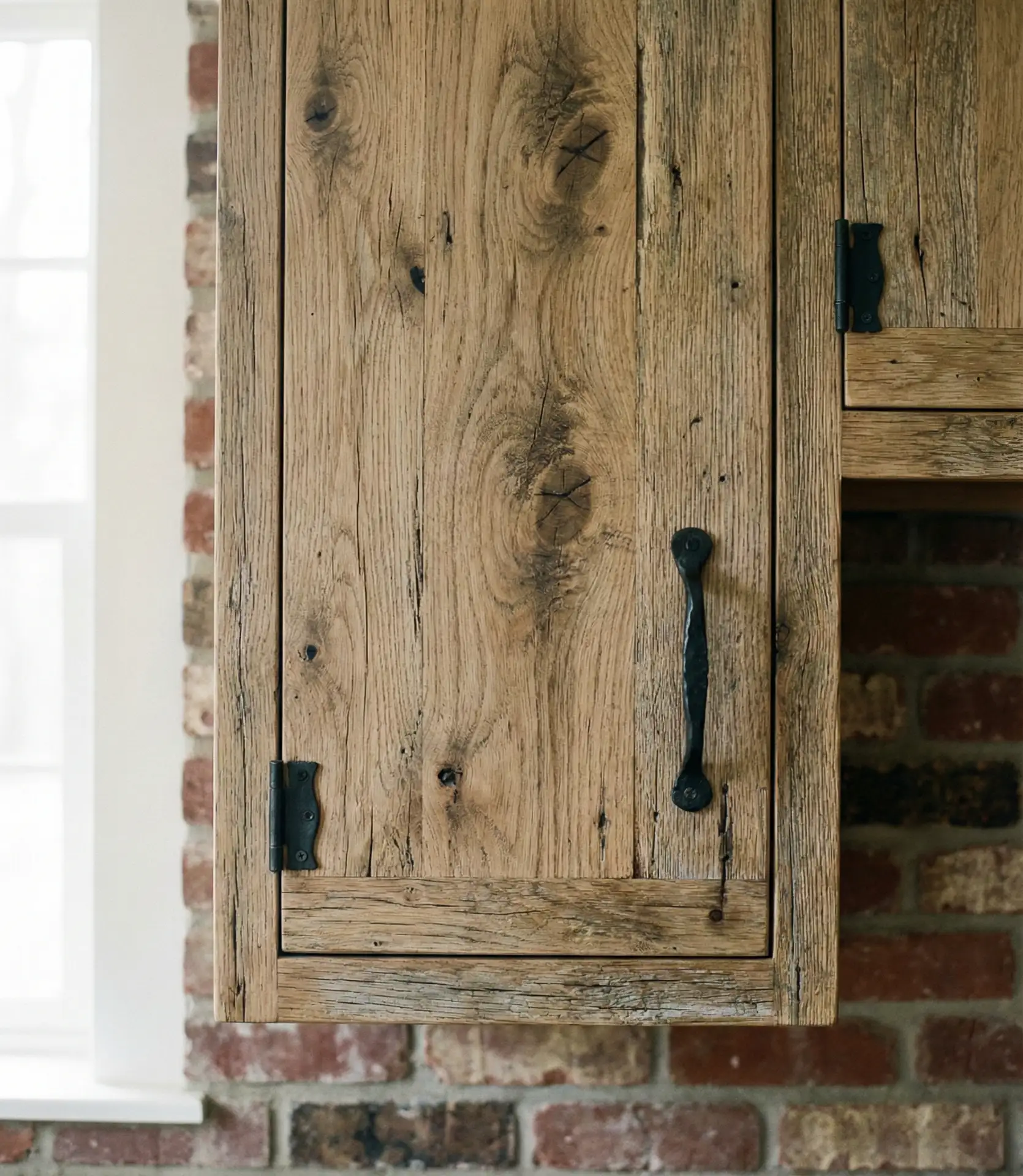
Budget-conscious renovators often find that rustic grades offer a more affordable entry point into white oak cabinetry since these boards would otherwise be rejected for higher grades. You’re getting the same species with all its structural benefits, just with more personality. Expect to pay 20–30% less than for select or premium grades, making rustic oak an excellent value for the visual impact it delivers.
6. Black and White Oak Contrast
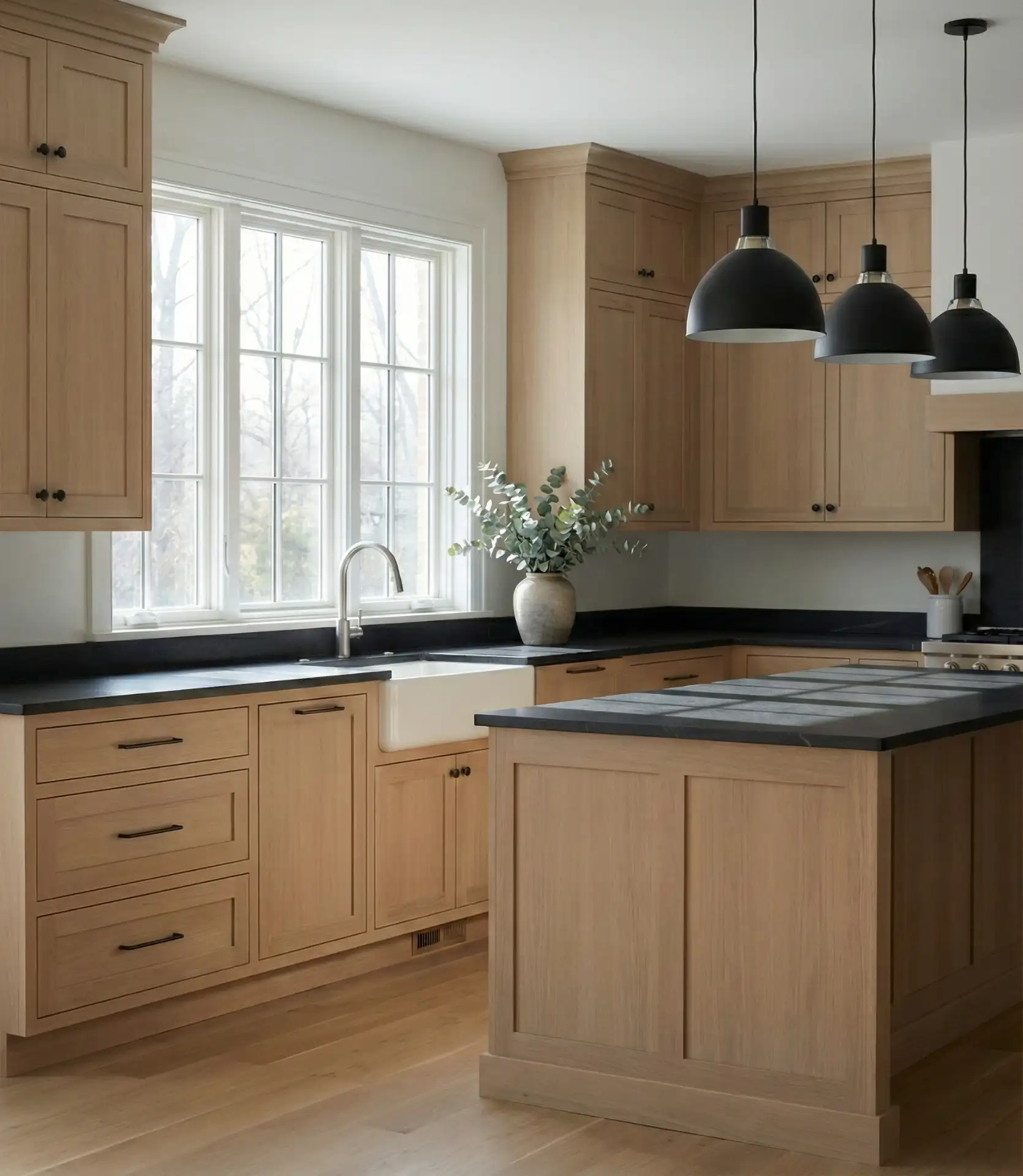
The pairing of warm white oak with crisp black elements creates a kitchen that feels both timeless and thoroughly modern. Whether you choose black countertops, black range hoods, or black hardware, the contrast makes the honey tones of the oak pop while grounding the space with drama. This color scheme has staying power because it balances warmth and coolness, organic and industrial. It’s particularly effective in urban homes and loft spaces where sophisticated edge matters.
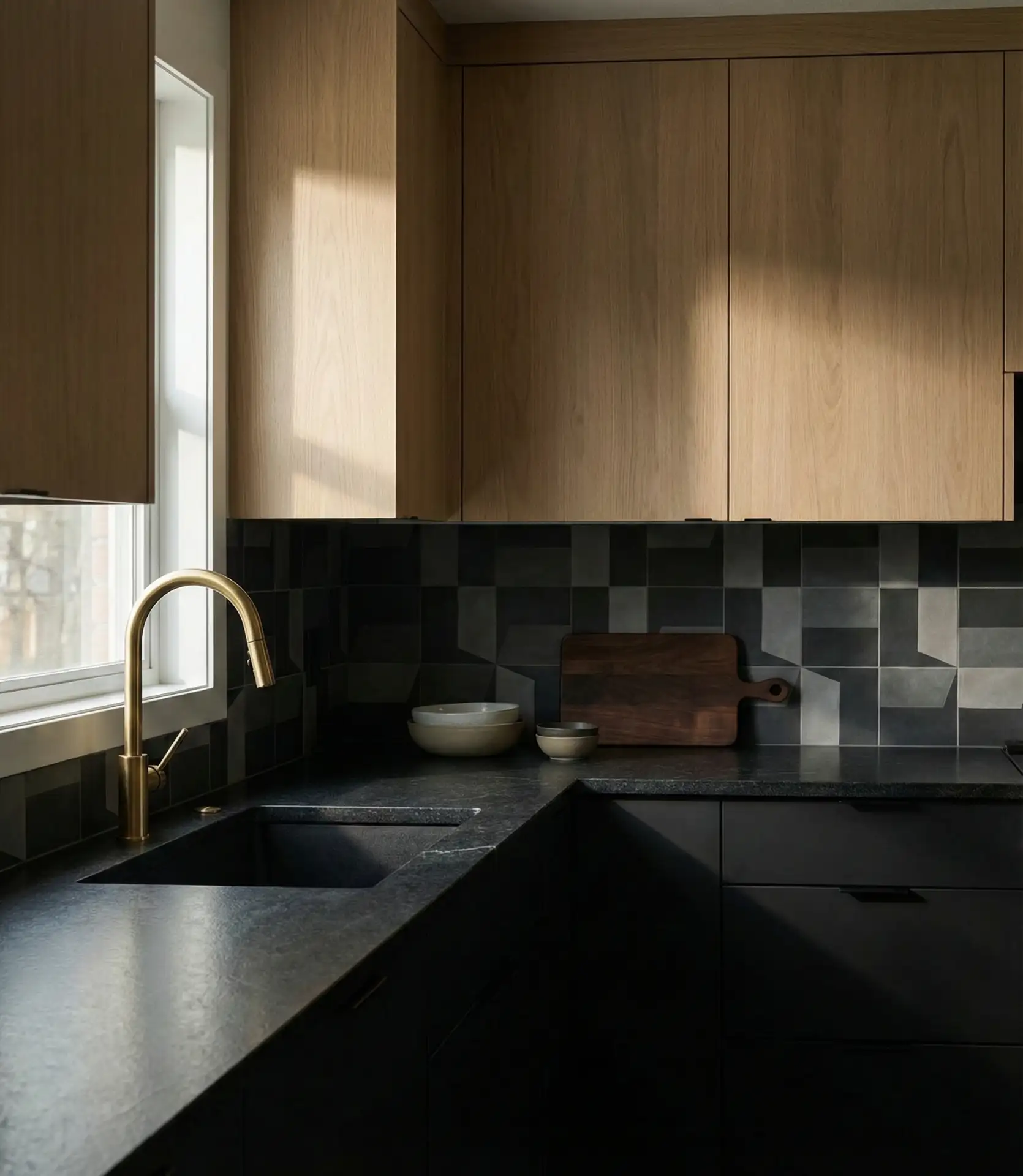
Experts often recommend starting with black hardware as your entry point to this look—it’s less commitment than countertops but still delivers impact. Black matte finish pulls and knobs are especially popular in 2026, offering a softer contrast than shiny black that can feel too stark. If you’re ready to go bolder, consider a black composite or granite countertop that brings depth without the maintenance challenges of absolute black stone, which shows every fingerprint and water spot.
7. Dark Counters with Warm Oak
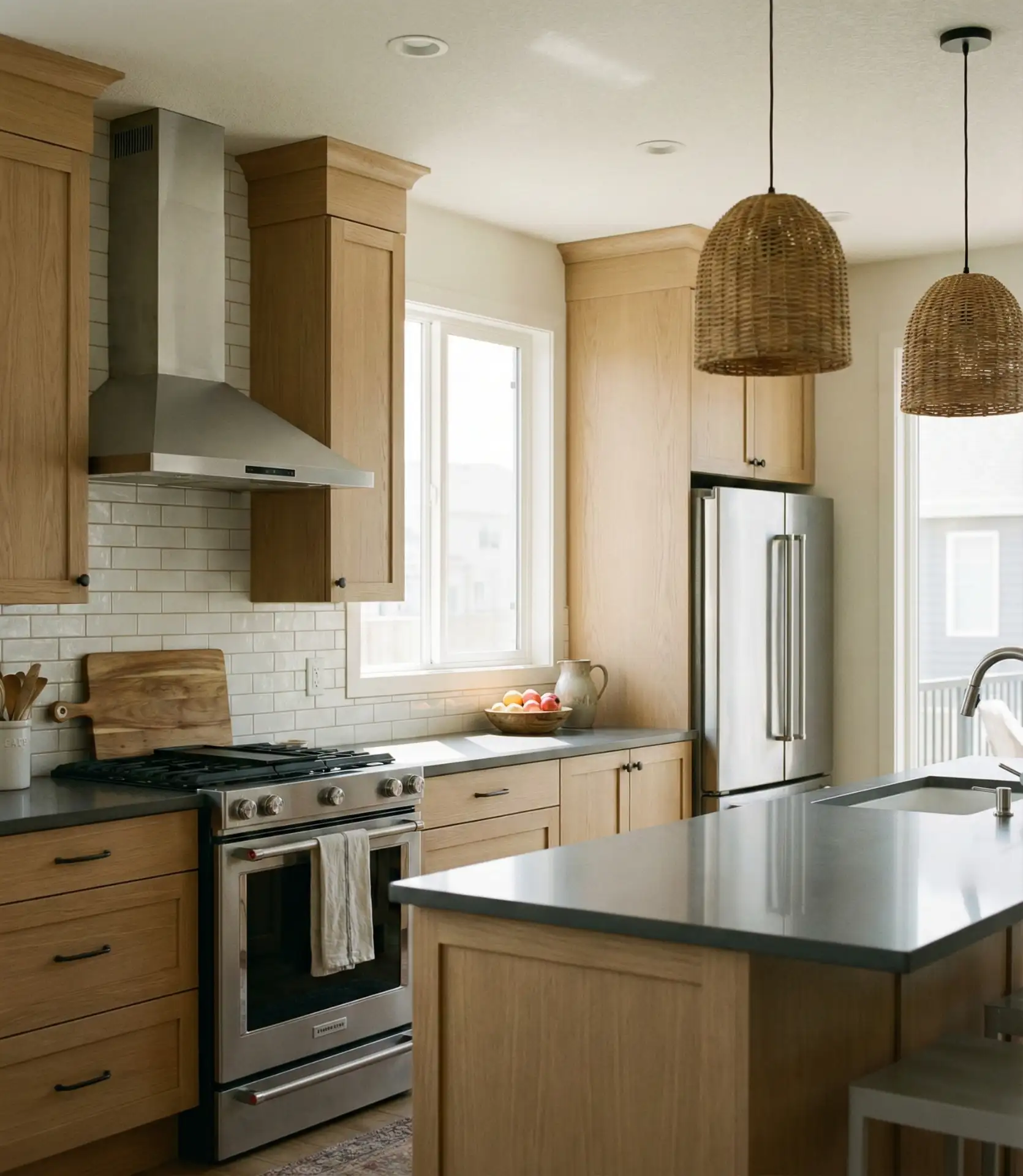
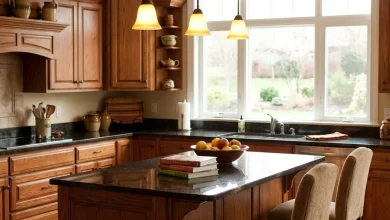
Choosing dark counters to complement white oak cabinets adds a layer of richness and practicality that homeowners appreciate. Deep gray, charcoal, or even chocolate brown countertops create a grounded foundation that lets the wood cabinetry feel lighter and more prominent. This combination is particularly smart for busy families—dark counters are forgiving when it comes to stains and wear, while the lighter cabinets keep the kitchen from feeling cave-like. The interplay between light wood and dark stone creates natural balance and visual interest.
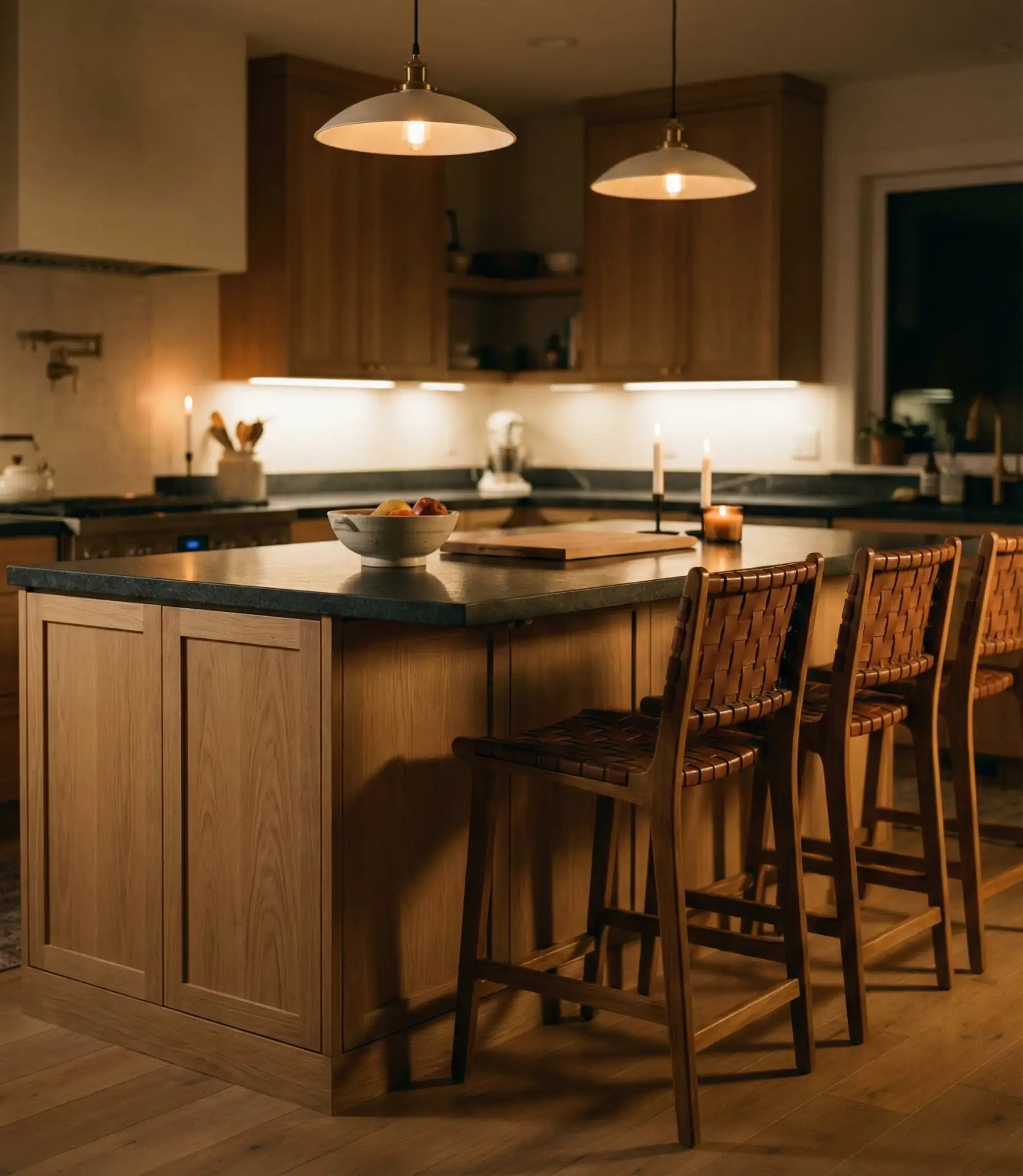
Real homeowners consistently report that dark countertops hide daily messes better than light ones, making them ideal for households with kids or avid cooks. One designer shared that her clients initially worried dark counters would feel heavy, but once installed with white oak, they realized the combination actually made their kitchen feel more dynamic and less one-note than the all-light scheme they’d originally planned.
8. Dark Wood Floors’ Grounding Effect
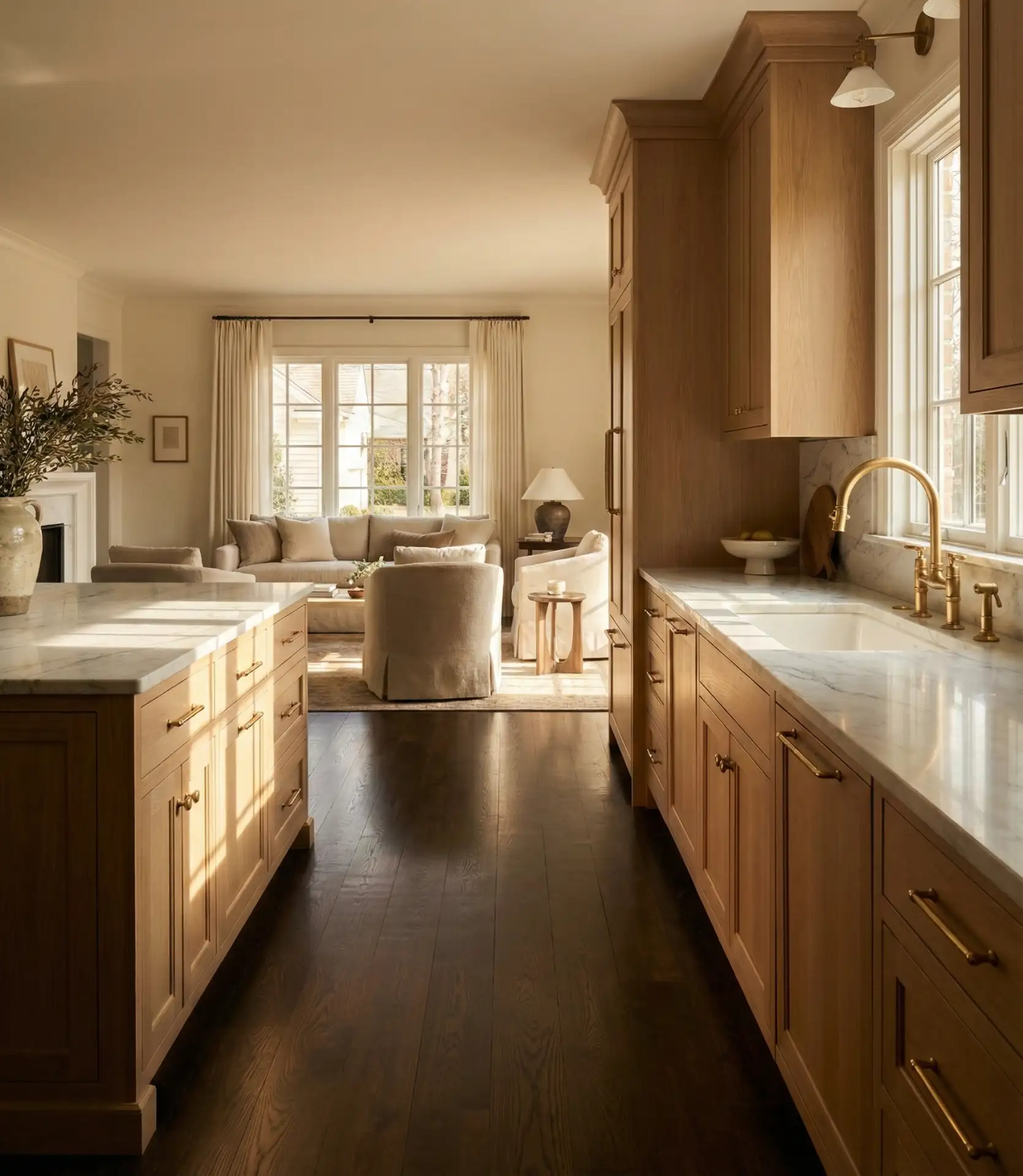
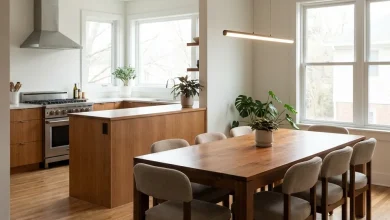
When you pair white oak cabinets with dark wood floors, you create a beautiful tension between light and dark that gives the kitchen architectural depth. The dark floors anchor the space and make the honey-toned cabinets appear to float, especially if you incorporate under-cabinet lighting. This approach works wonderfully in open-concept homes where you want the kitchen to feel connected to adjacent living spaces without blending into them. Walnut, dark oak, or espresso-stained hardwoods are all excellent companions to white oak cabinetry.
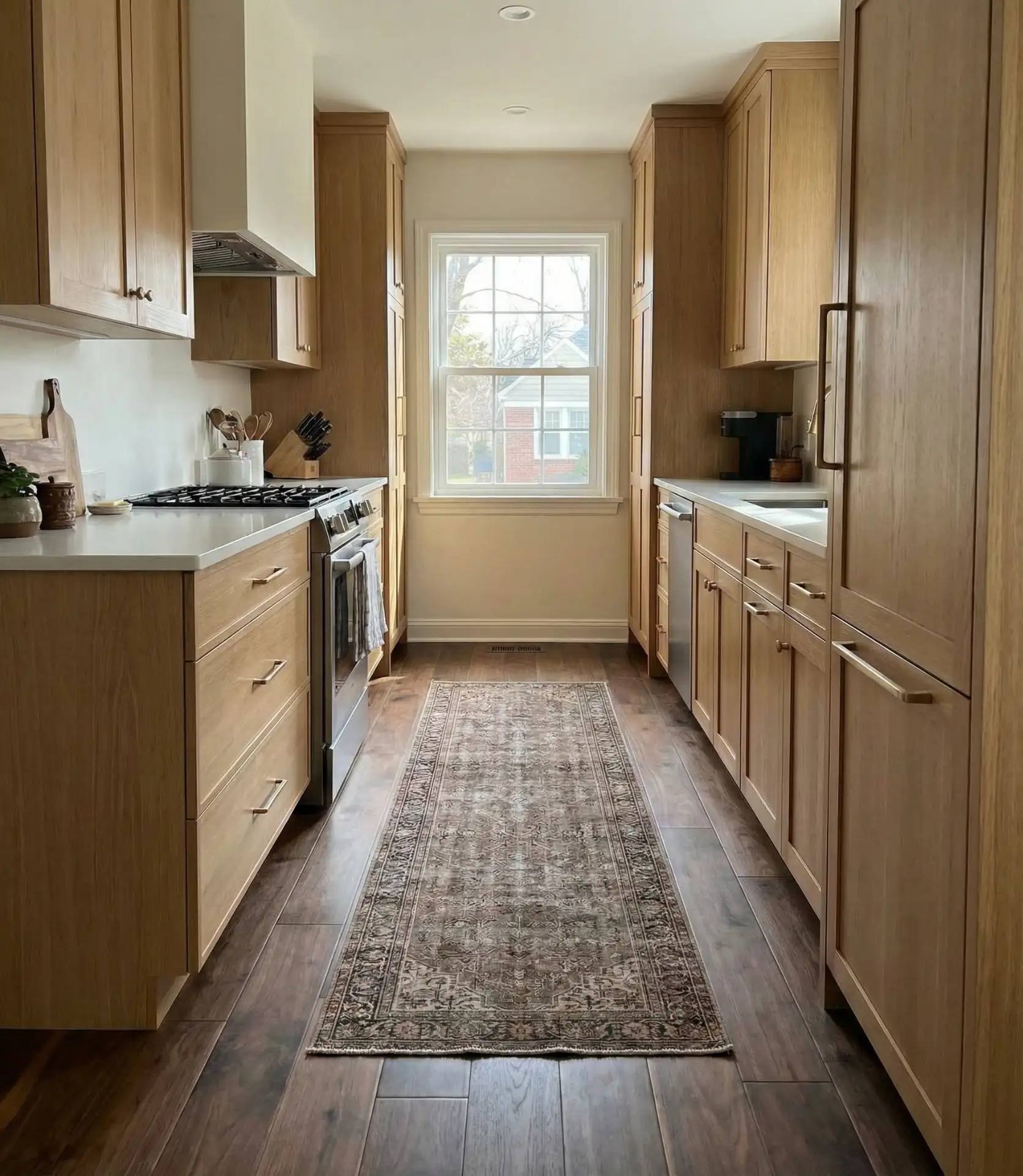
This combination works best in kitchens with ample natural light or generous ceiling height, where the dark floor won’t make the space feel closed in. In smaller or darker kitchens, consider a medium-toned floor instead—you’ll still get contrast without sacrificing brightness. Also avoid going too dark if your white oak has a deeper stain; you want clear visual separation between horizontal and vertical wood surfaces.
9. Slim Shaker Style Simplicity
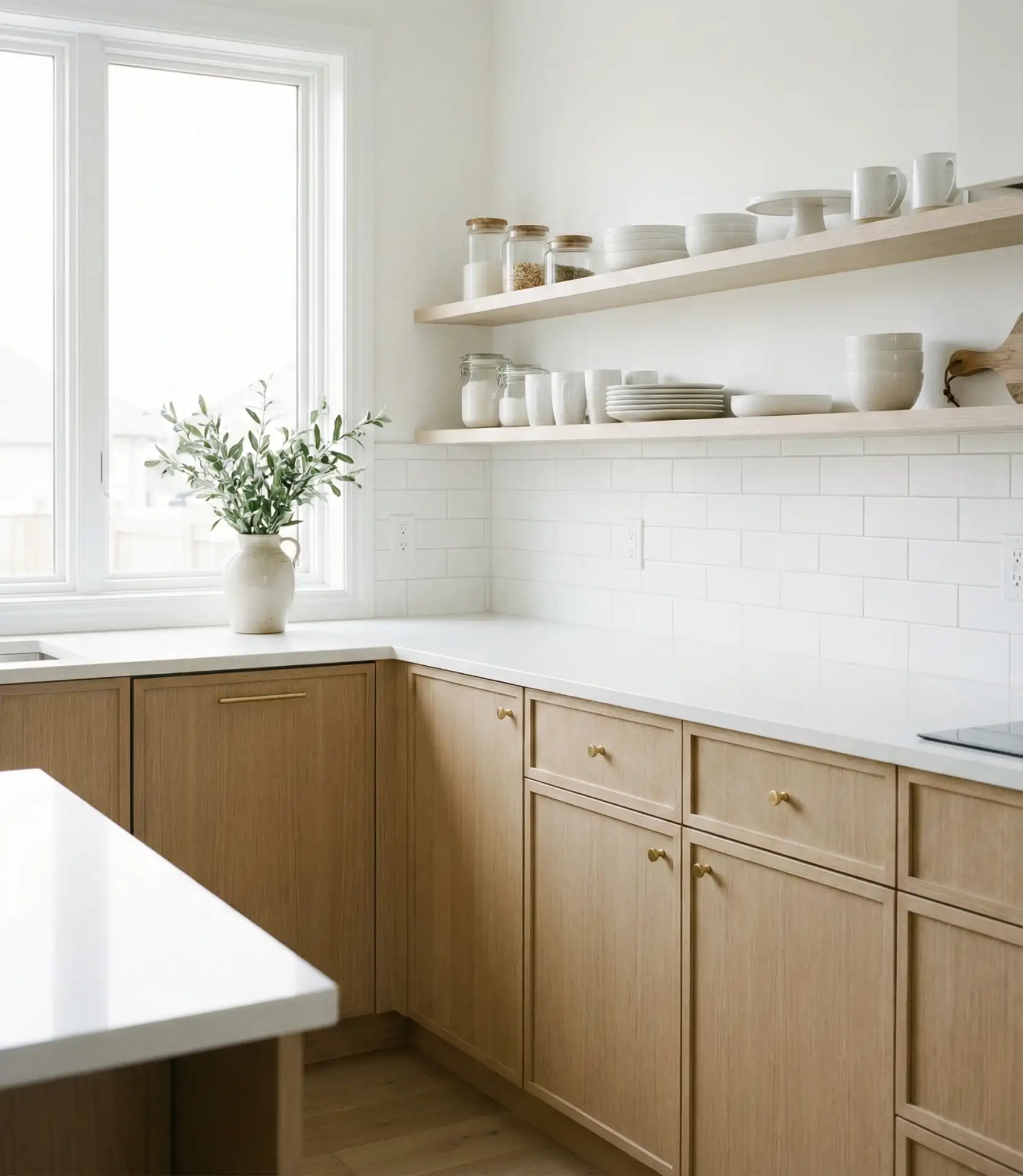
The slim shaker door style represents a refined evolution of classic shaker design—same clean lines and recessed panel, but with a narrower frame that feels more contemporary and less traditional. When executed in white oak, slim shaker cabinets walk the perfect line between modern and timeless, offering versatility that works with virtually any design direction. The narrower rails and stiles let more of the wood grain show through, making the natural beauty of the oak the star rather than the door design itself.
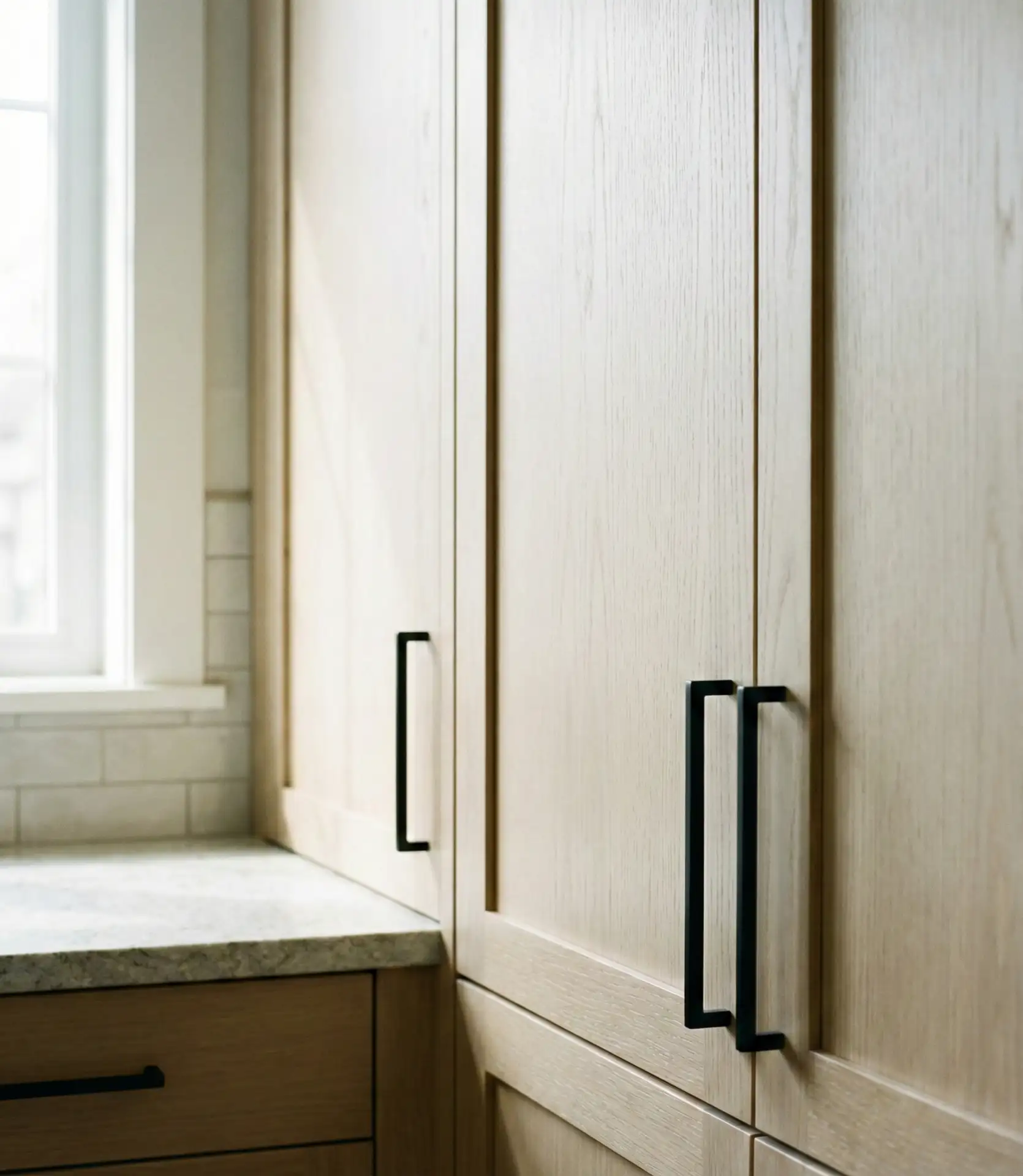
In the Pacific Northwest and California, slim shaker white oak has become the default choice for kitchen renovations because it speaks to the region’s love of natural materials without feeling too country or cottage-like. The style translates beautifully from coastal modern homes to mountain retreats to urban condos. It’s proof that good design doesn’t need to shout—sometimes the most impactful choice is one that simply gets out of the way and lets materials speak.
10. Backsplash Ideas for White Oak
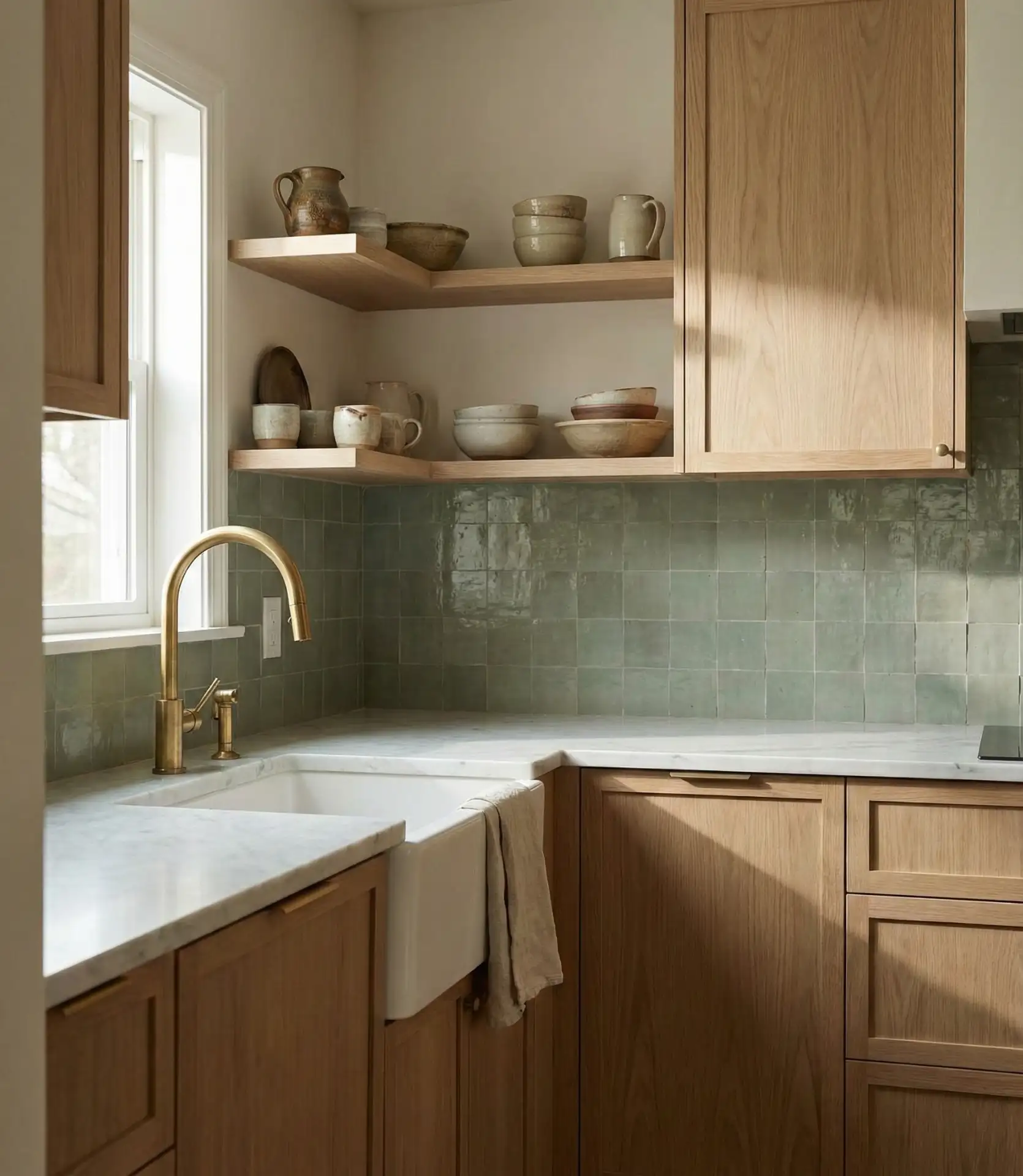
Selecting the right backsplash for white oak cabinets opens up a world of creative possibilities. Classic white subway tile creates a crisp, clean backdrop that never goes out of style, while natural stone like marble or travertine echoes the organic feel of the wood. For more personality, consider handmade ceramic tiles in soft glazes—sage green, pale blue, or warm terracotta all complement oak’s honey tones beautifully. Zellige tiles are having a major moment in 2026, offering subtle variation and crafted texture that pairs wonderfully with natural wood.
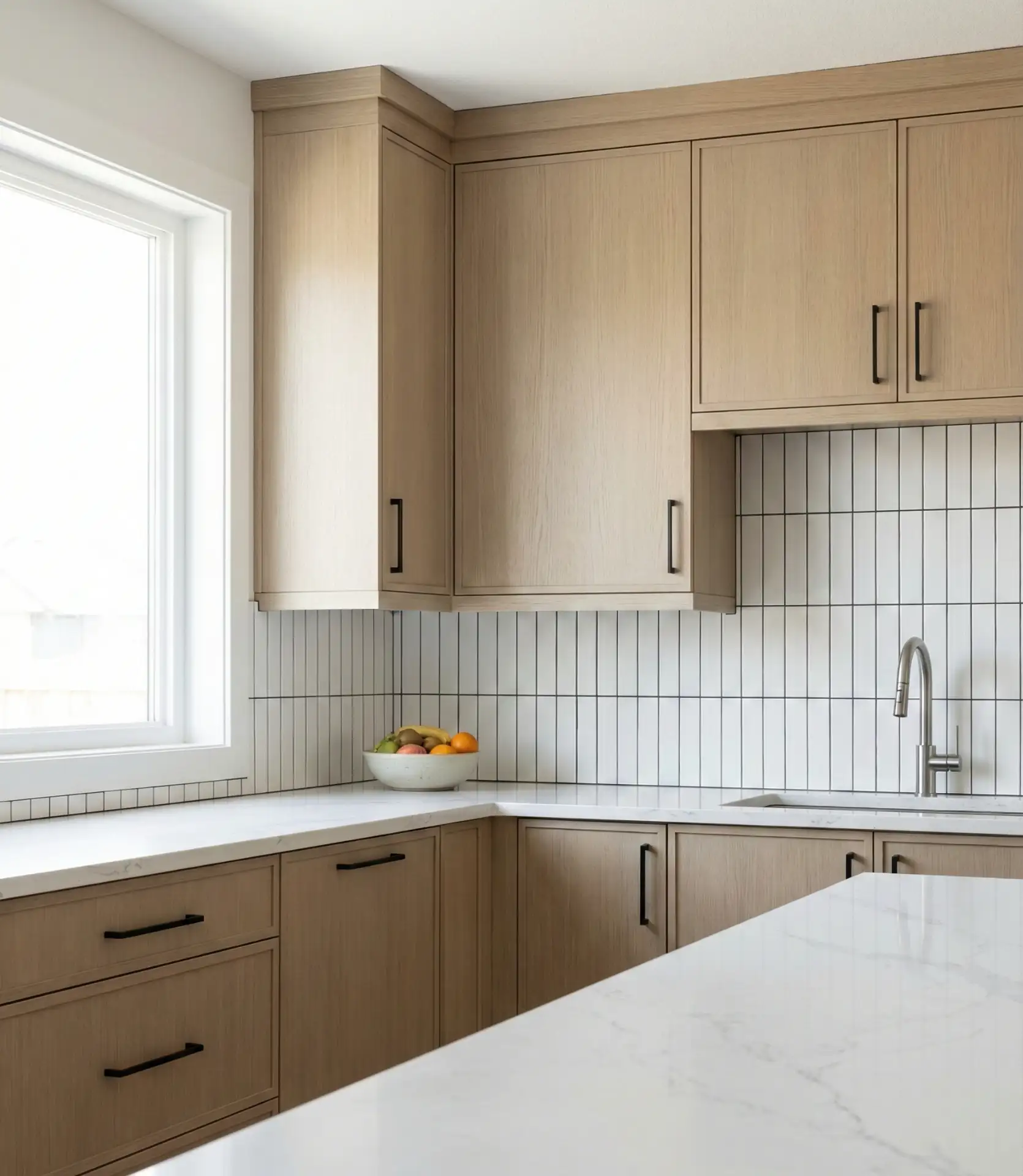
A common mistake is choosing a backsplash that’s too busy or dark, which can overwhelm the natural beauty of white oak. If you want a pattern, keep the colors soft and the scale appropriate—small geometric tiles in muted tones work better than large bold patterns. Similarly, very dark backsplashes can create a visual disconnect unless you’re also using dark counters to bridge the gap. When in doubt, bring home samples and view them against your actual cabinet wood in both natural and artificial light.
11. Dark floors with a white oak balance
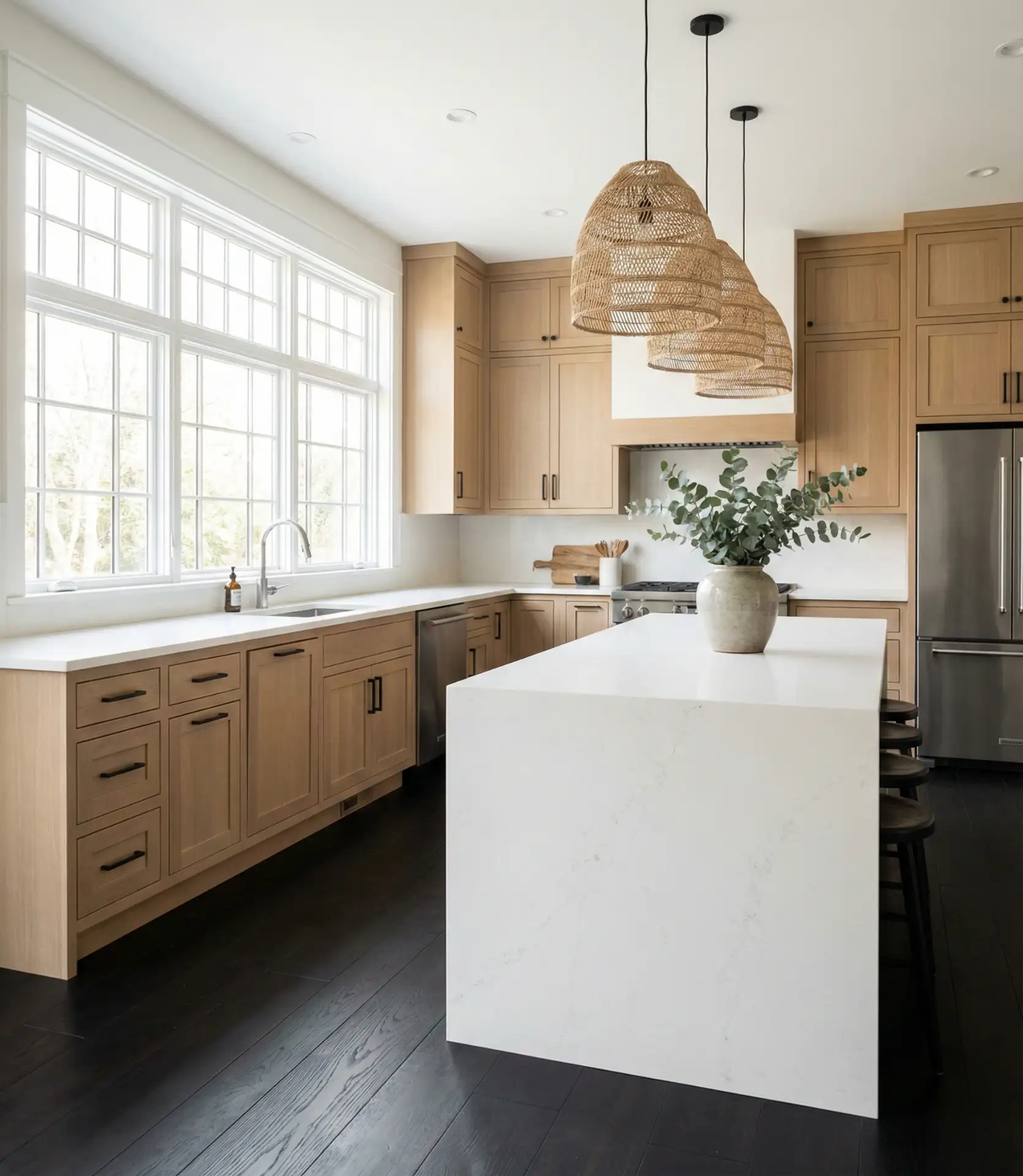
Returning to the theme of dark floors, which is a popular design dilemma, the key to making this work is ensuring you have enough light elements elsewhere to prevent the space from feeling bottom-heavy. With white oak cabinets and dark floors, consider lighter countertops, a bright backsplash, and plenty of windows or artificial lighting. The contrast is stunning but requires thoughtful balance. Area rugs can also help break up expanses of dark flooring while adding warmth and pattern.
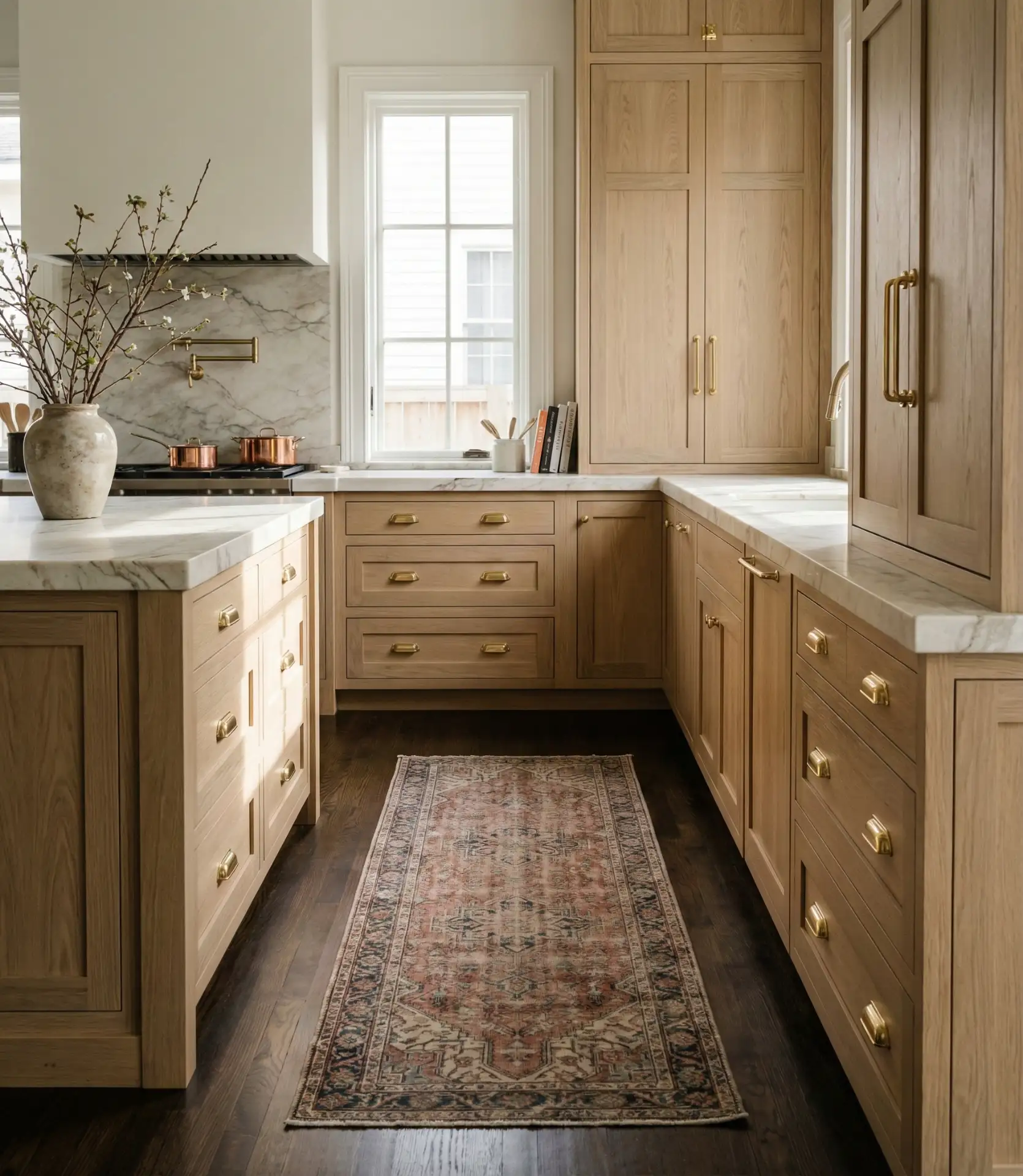
Practically speaking, dark floors in kitchens reveal every crumb and dust particle, causing frustration for those who are meticulous about cleanliness. However, they hide scuffs and wear better than light floors, so it’s a trade-off. Many homeowners find that engineered hardwood in dark finishes offers better moisture resistance than solid wood, making it a smarter choice for kitchen environments where spills are inevitable.
12. Taj Mahal Quartzite Pairing
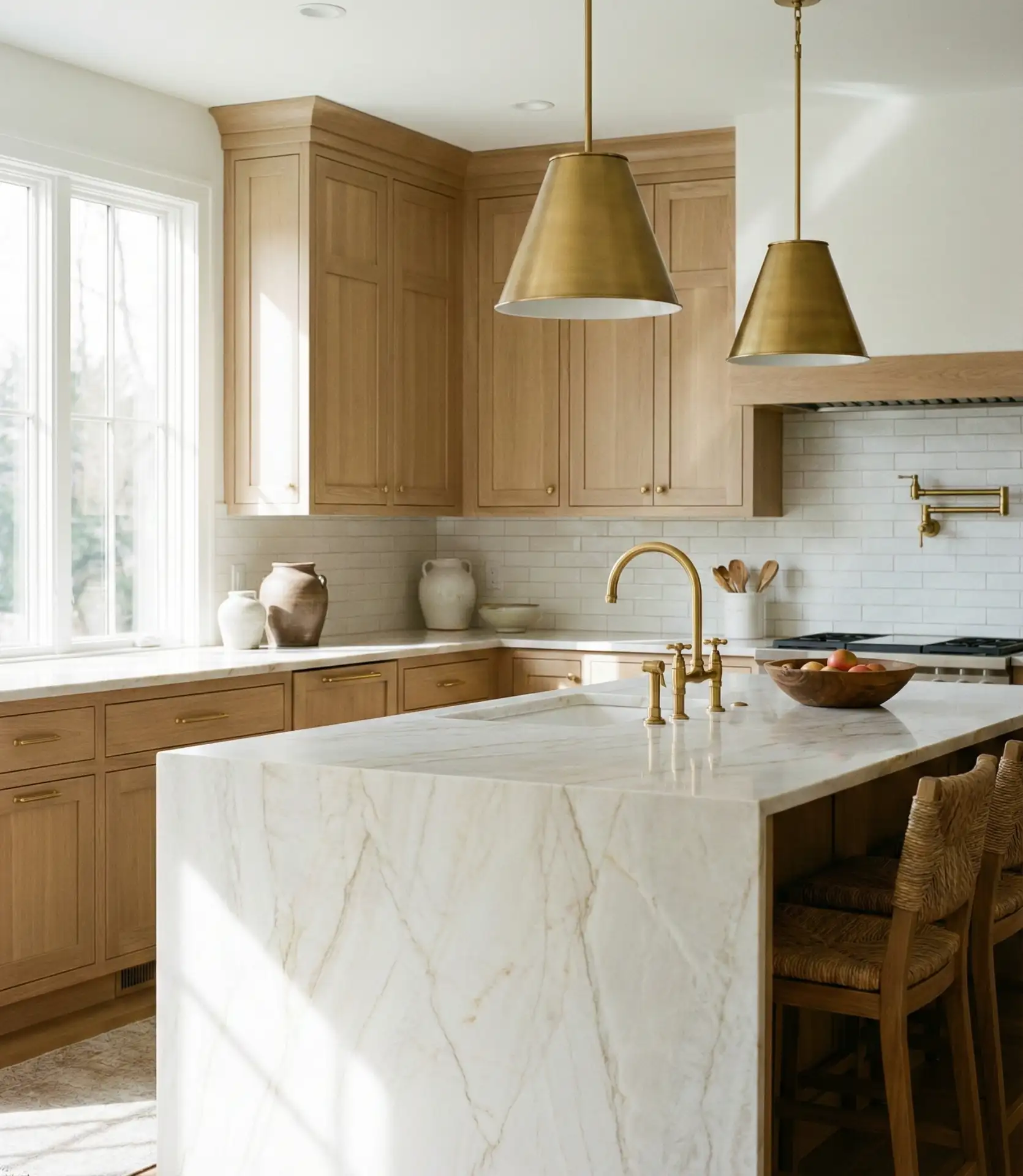
Taj Mahal quartzite has become the holy grail countertop for white oak kitchens, and it’s easy to understand why. This stunning natural stone features soft white and cream tones with delicate gold and gray veining that complements the warmth of white oak without competing with it. The subtle movement in Taj Mahal adds sophistication, while its neutral palette works with virtually any backsplash ideas or hardware choices. Though it’s pricier than many alternatives, homeowners consistently cite it as their favorite design decision.
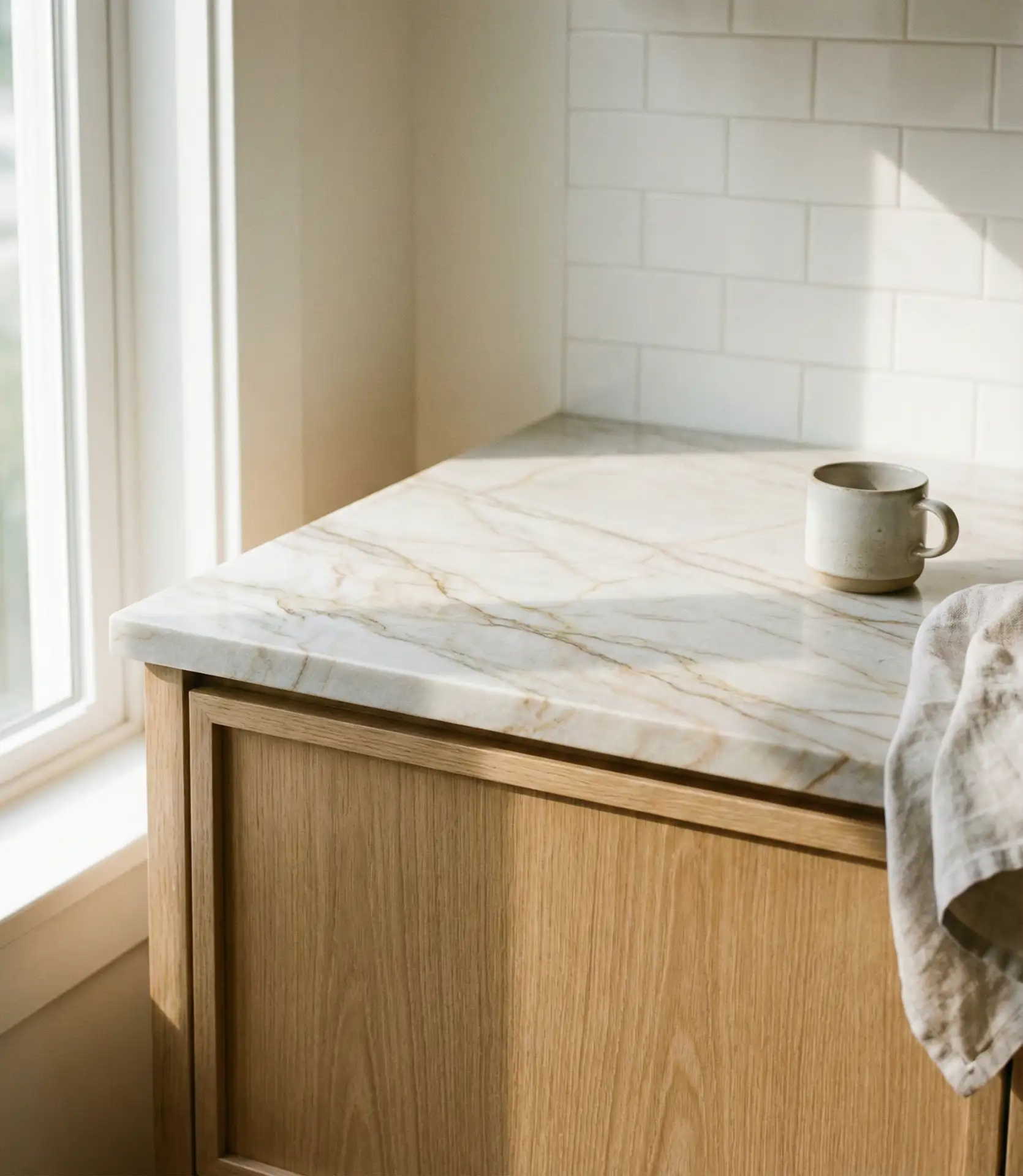
If Taj Mahal is outside your budget—and at $80-120 per square foot installed, it’s a significant investment—look at quartzite alternatives like Sea Pearl or Fantasy Brown, which offer similar soft movement at lower price points. Another option is high-quality quartz that mimics Taj Mahal’s look, such as Cambria’s Brittanicca or Caesarstone’s Calcatta Nuvo. You’ll sacrifice the status of natural stone, but you’ll gain stain resistance and easier maintenance.
13. Rift Sawn Precision and Consistency
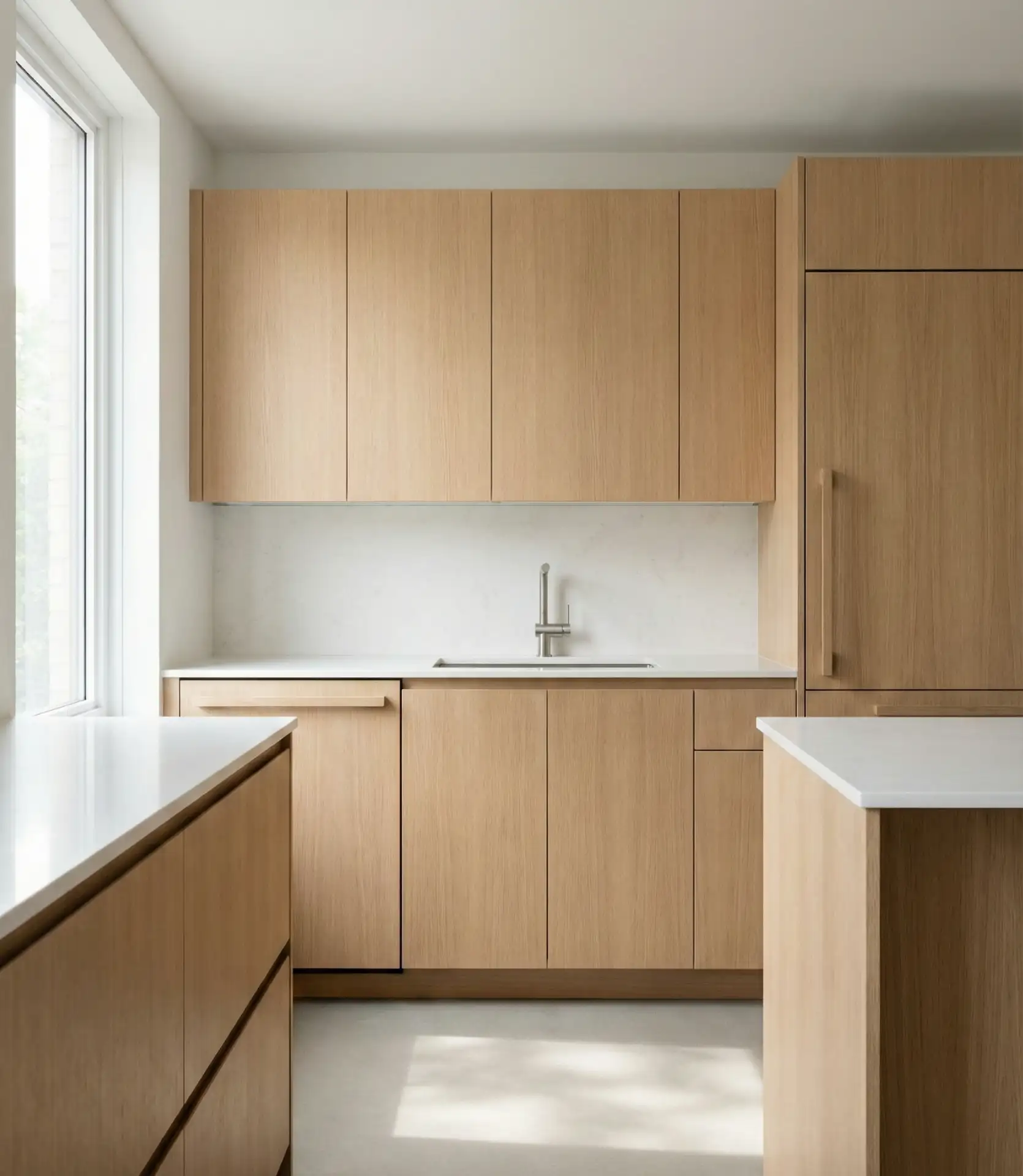
Circling back to rift sawn white oak because its appeal deserves deeper exploration—this cut method is increasingly requested by architects and designers who want wood warmth without visual noise. Rift-sawn oak displays straight, uniform grain that creates a sense of order and calm, making it ideal for contemporary and minimalist kitchens. Consistency across doors prevents your eye from focusing on grain variation, allowing you to appreciate the cabinetry as a cohesive whole. It’s the choice when you want the wood to be present but not the main character.
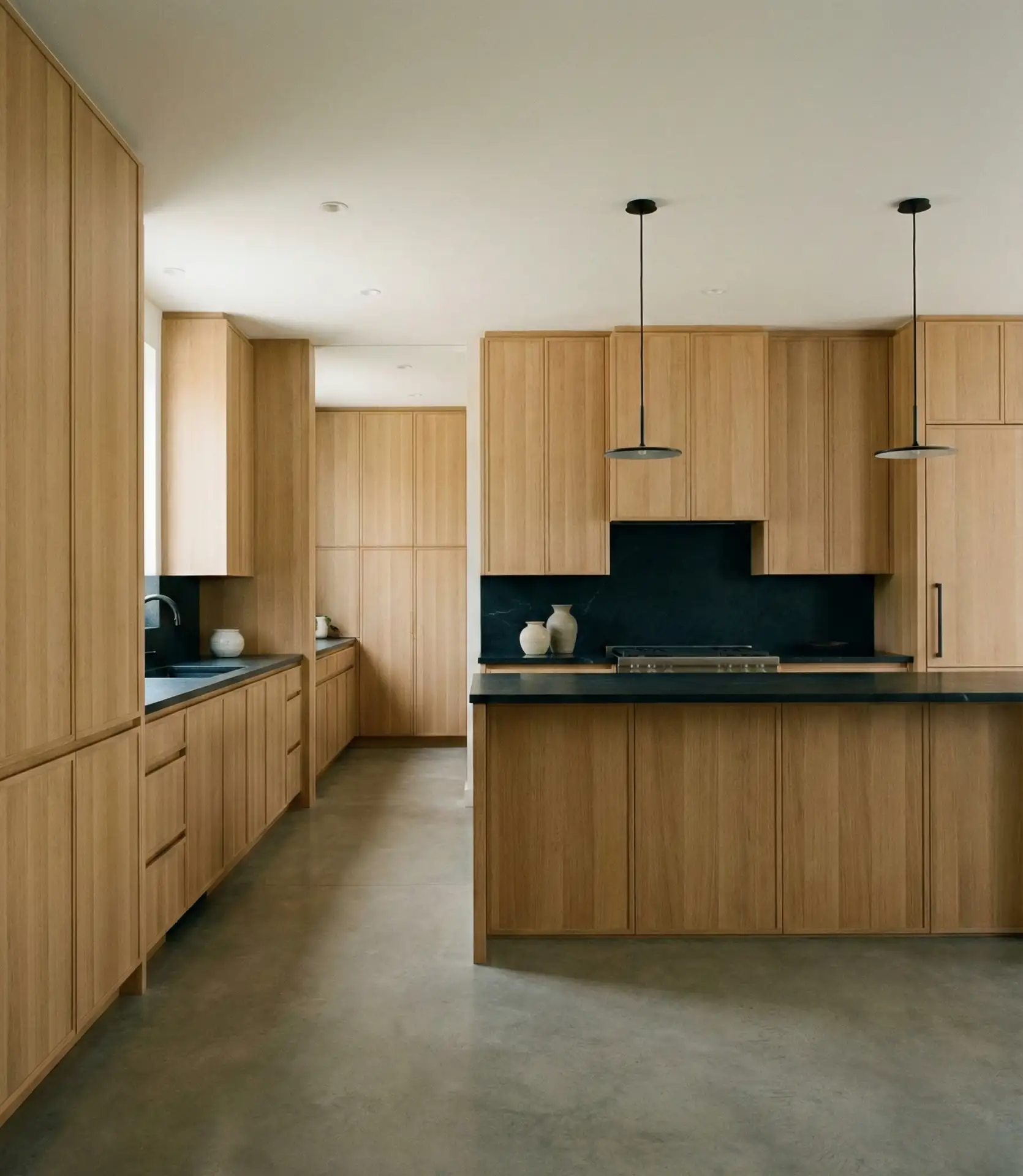
Expert cabinetmakers note that rift sawn is the most stable cut of oak, less prone to seasonal expansion and contraction than plain sawn. This means fewer gaps around doors and drawers over time and better long-term performance in climates with significant humidity swings. If you live in the South or Midwest, where summers are humid and winters are dry, this stability is worth considering alongside the aesthetic benefits.
14. Grey Floor Contemporary Touch
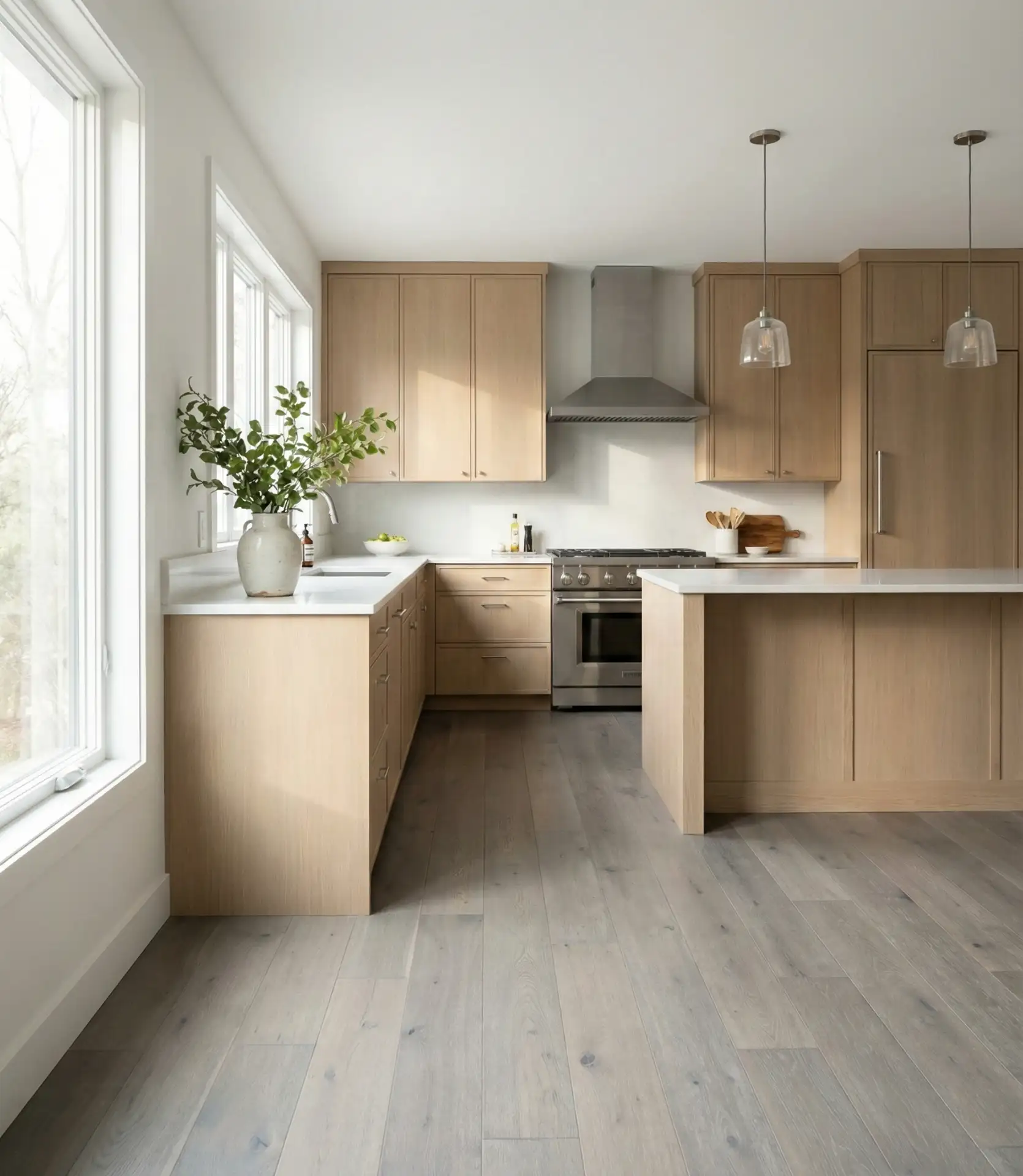
A gray floor offers a thoroughly modern foundation for white oak cabinets, creating a cooler, more contemporary palette than dark or medium wood tones. The combination feels fresh and current—the warm honey of the oak prevents the gray from feeling cold, while the gray keeps the wood from feeling too yellow or traditional. Grey floors work beautifully in loft-style kitchens, Scandinavian-inspired spaces, and transitional designs that bridge traditional and modern elements. Luxury vinyl plank in gray-washed oak tones is especially popular for budget-conscious renovations.

If you’re drawn to this look, be mindful of undertones—some gray floors lean blue or purple, which can clash with the warm undertones in white oak. Seek out gray floors with subtle brown or taupe undertones, commonly referred to as “greige,” as they complement natural wood more effectively. Bring home large samples and view them in your space throughout the day, since gray can look vastly different in morning versus evening light.
15. Black Counter Bold Statement
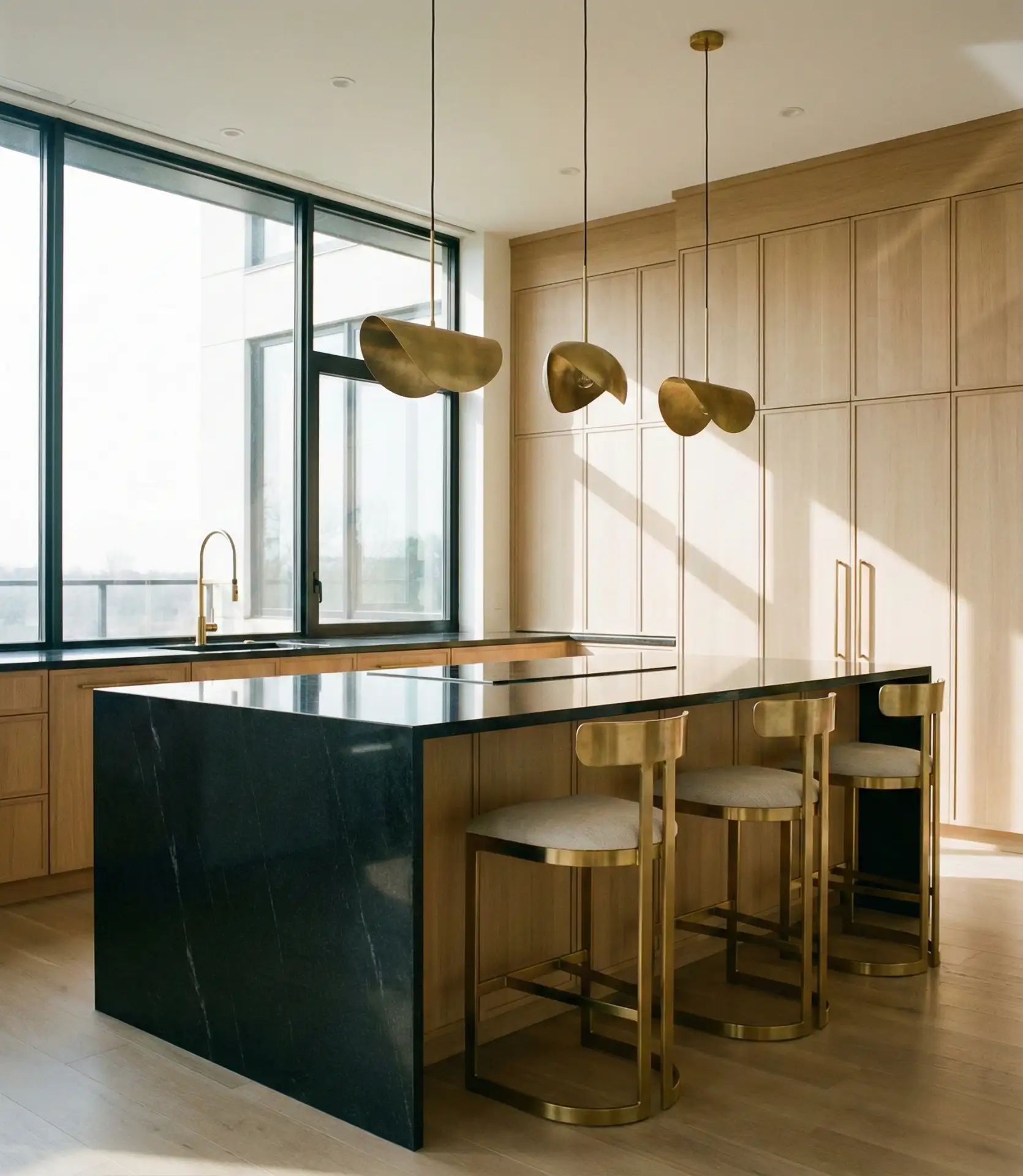
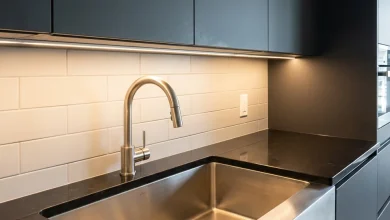
A true black counter against white oak cabinets is a high-contrast move that creates instant drama and sophistication. Whether you choose absolute black granite, soapstone, or black quartz, the effect is striking—the light wood seems to glow against the dark surface. This combination is particularly effective on kitchen islands, where the black counter can be a focal point while perimeter counters remain lighter. Black counter surfaces pair wonderfully with brass hardware for a glamorous touch or with matte black fixtures for a more masculine, industrial feel.
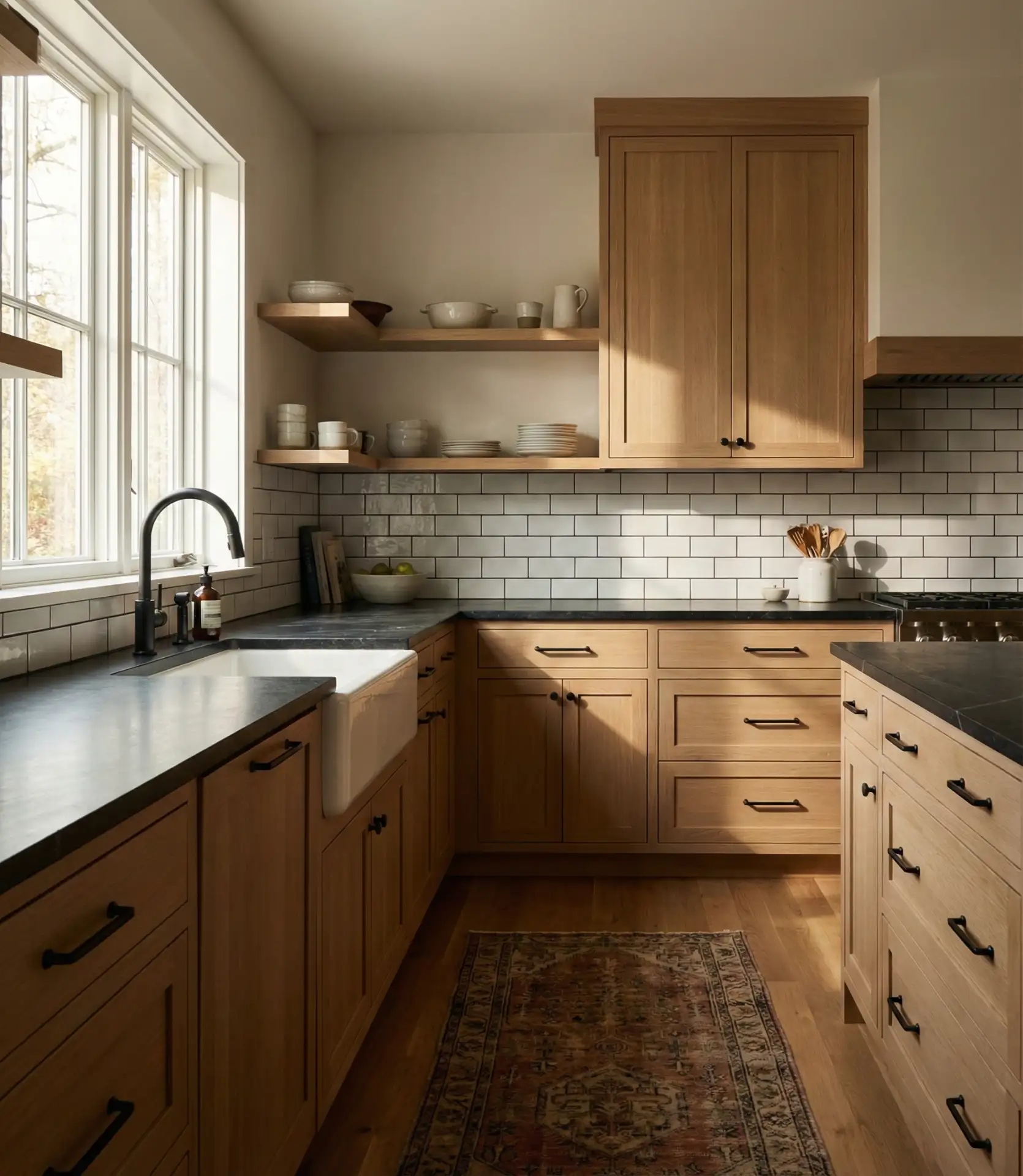
American homeowners in cities like New York, Chicago, and San Francisco gravitate toward this bold pairing because it feels urban and sophisticated without being cold. The wood brings essential warmth to what could otherwise be an austere scheme. Just be prepared for maintenance—black granite and quartz show water spots, fingerprints, and dust more readily than lighter surfaces, requiring frequent wiping to maintain that crisp, dramatic look.
16. Brass Hardware Warm Accent
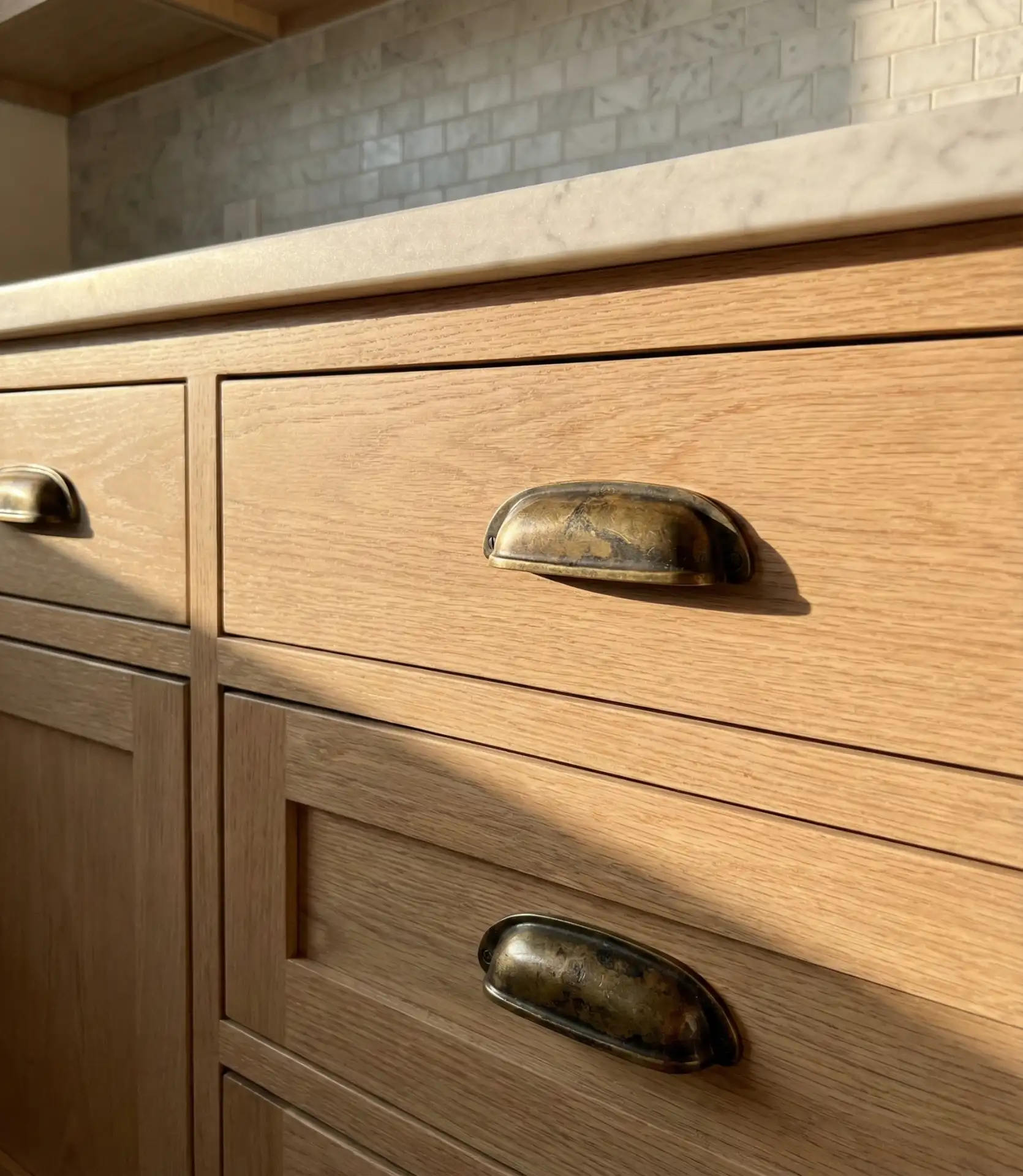
While we touched on gold hardware earlier, brass hardware deserves its spotlight because it brings a specific warmth and patina potential that polished gold doesn’t. Unlacquered brass hardware develops a living finish over time, darkening and showing character that feels authentic and collected. Against white oak, brass creates a warm-on-warm harmony that’s both elegant and approachable. The combination nods to mid-century design while feeling completely contemporary, making it a favorite in both farmhouse and modern kitchen style inspiration.
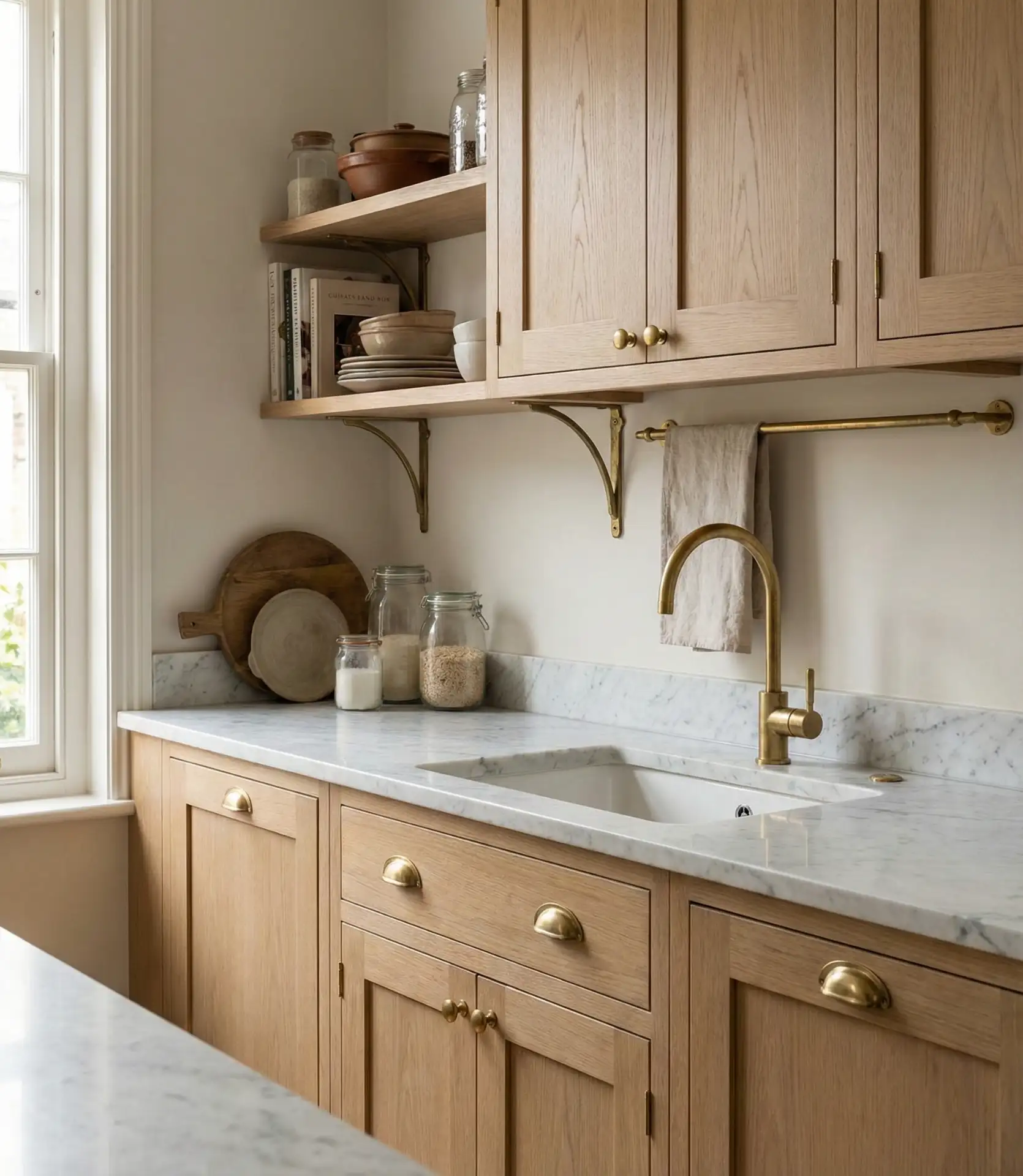
One thing that surprises people about brass is that it comes in many finishes beyond the bright shiny version. Satin brass, antique brass, and aged brass all offer different looks—some warm and bright, others more subdued and bronzed. For white oak cabinets, unlacquered or lightly antiqued brass tends to look most natural and sophisticated. Expect to pay $8-15 per pull for quality brass hardware, with more elaborate designs running higher—it’s an investment but one that transforms the entire kitchen feel.
17. Terracotta floor: Earthy Warmth
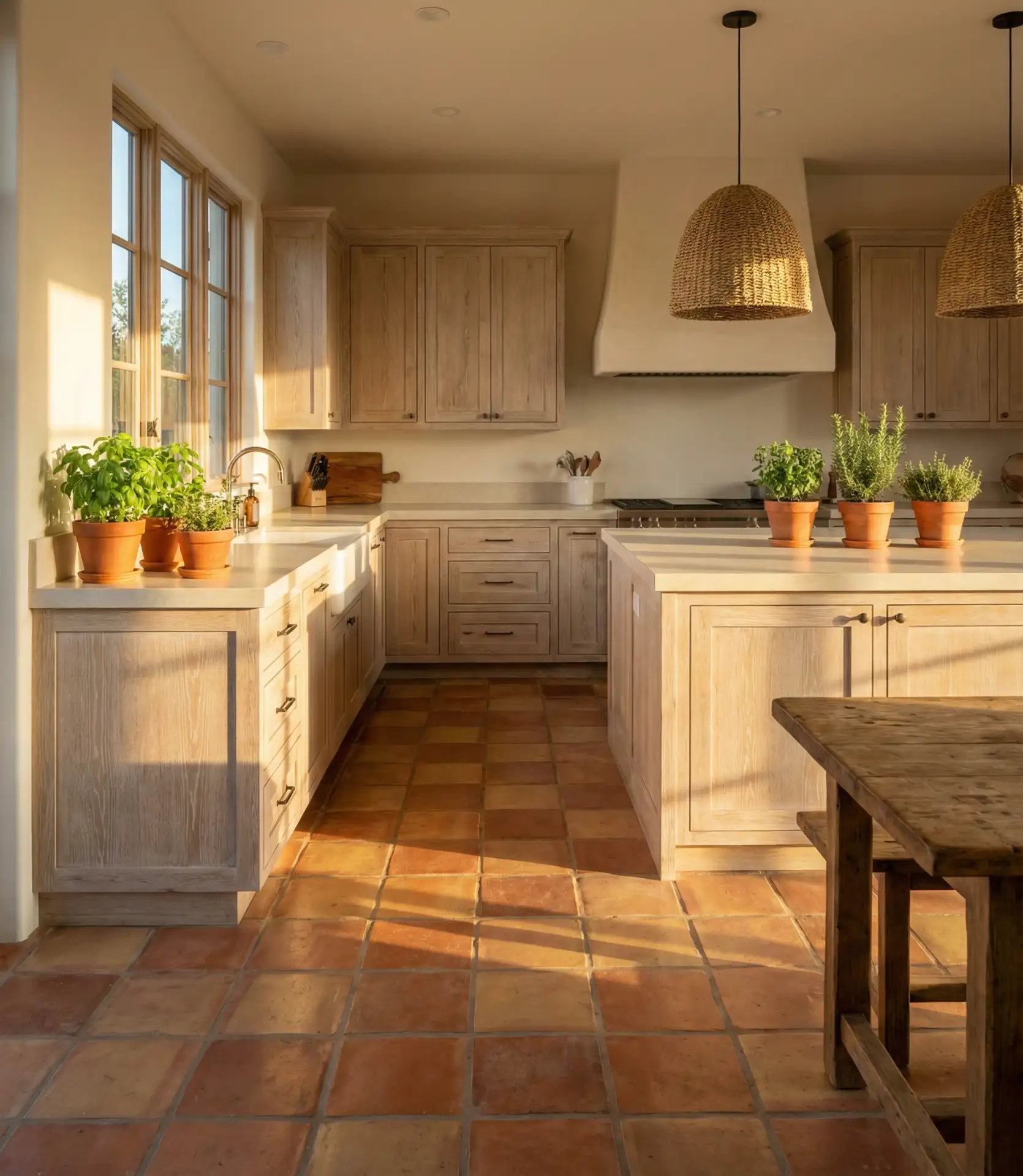
For a kitchen that feels warm, organic, and distinctly Mediterranean-inspired, pair white oak cabinets with a terracotta floor. The rosy-orange tones of terracotta clay tiles create a beautiful conversation with the honey warmth of white oak—two natural materials that feel like they’ve always belonged together. This combination is increasingly popular in California, the Southwest, and anywhere homeowners want to evoke European country charm. Terracotta floor tiles, whether traditional Saltillo or refined encaustic styles, bring texture, pattern variation, and a sense of history to modern kitchens.
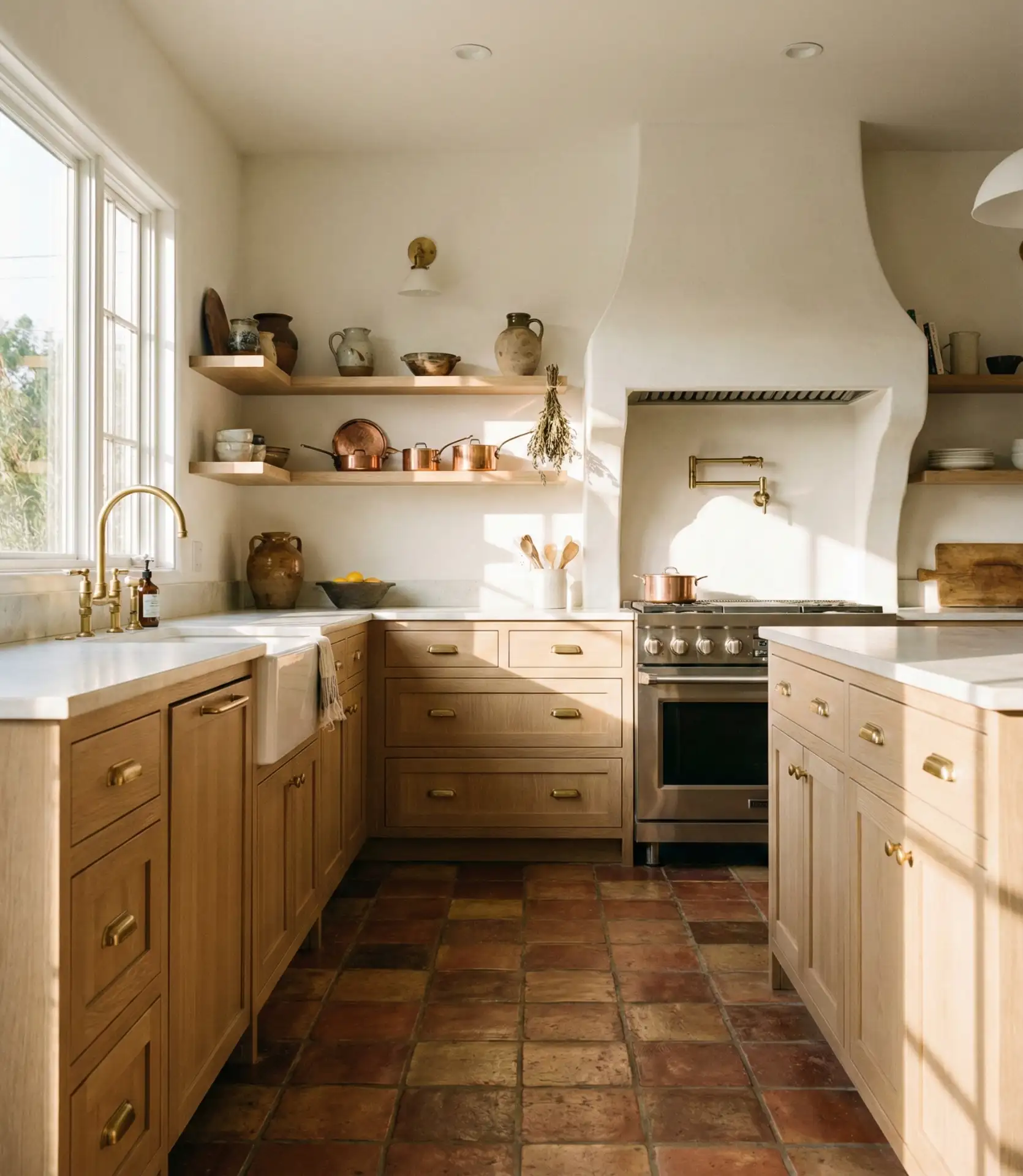
This style works best in homes with stucco or plaster walls, arched doorways, or other architectural elements that support the Mediterranean aesthetic. In a standard suburban home with drywall and builder-grade details, terracotta floors can feel disconnected from the rest of the architecture. However, if you’re all-in on creating a cohesive European-inspired kitchen, the combination of white oak and terracotta is incredibly rewarding—and unlike anything your neighbors will have.
18. Stain Color Customization
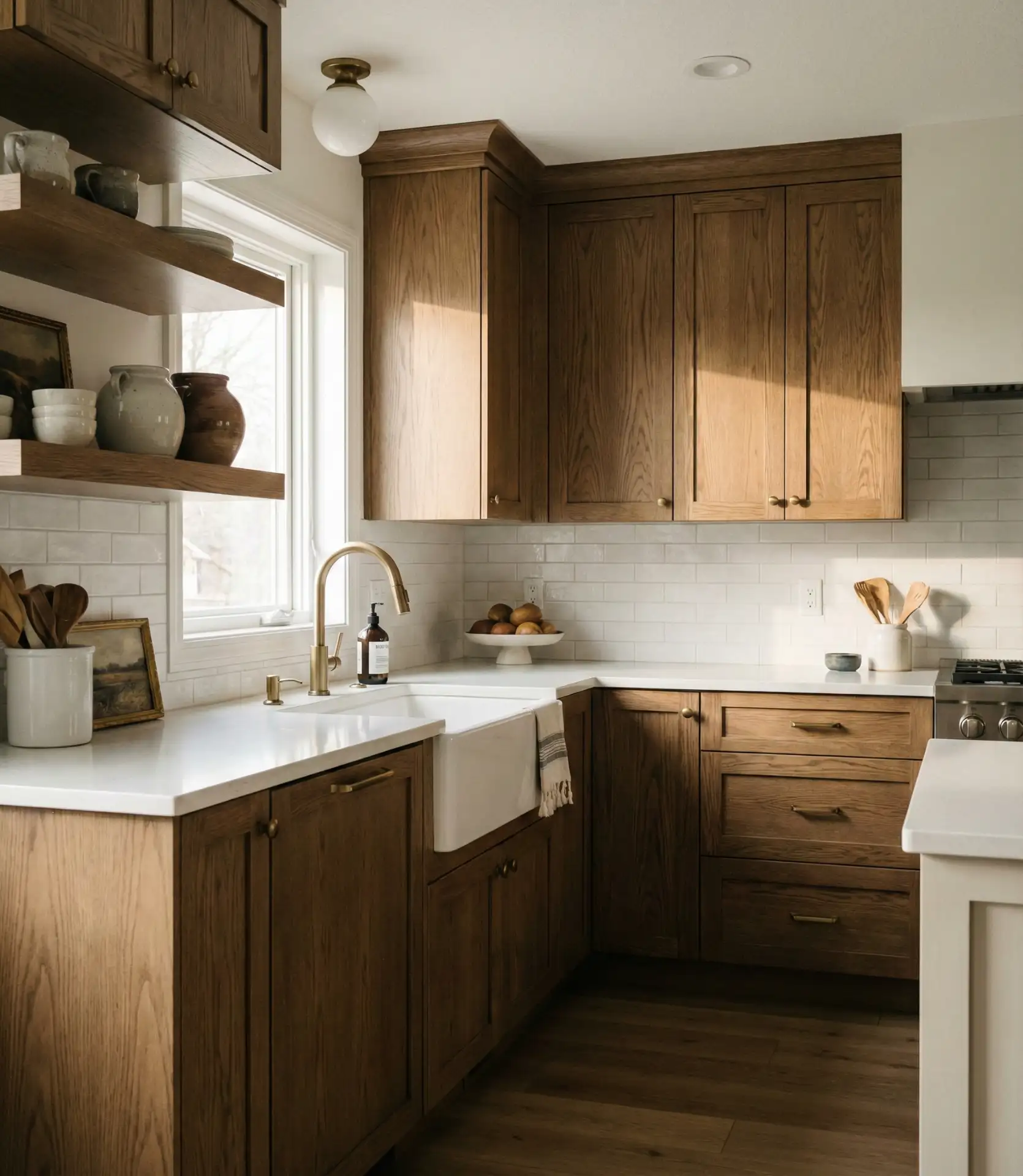
One of white oak’s greatest assets is how beautifully it accepts stain color, allowing you to customize the tone to match your vision exactly. While natural oak is gorgeous, a carefully chosen stain color can shift the mood entirely—from pale Scandinavian bleached tones to rich tobacco browns. Popular choices in 2026 include weathered gray stains for a driftwood effect, warm honey stains that enhance the natural color, and medium brown stains that bring out the grain while adding depth. The key is choosing a stain that complements rather than hides the oak’s natural character.
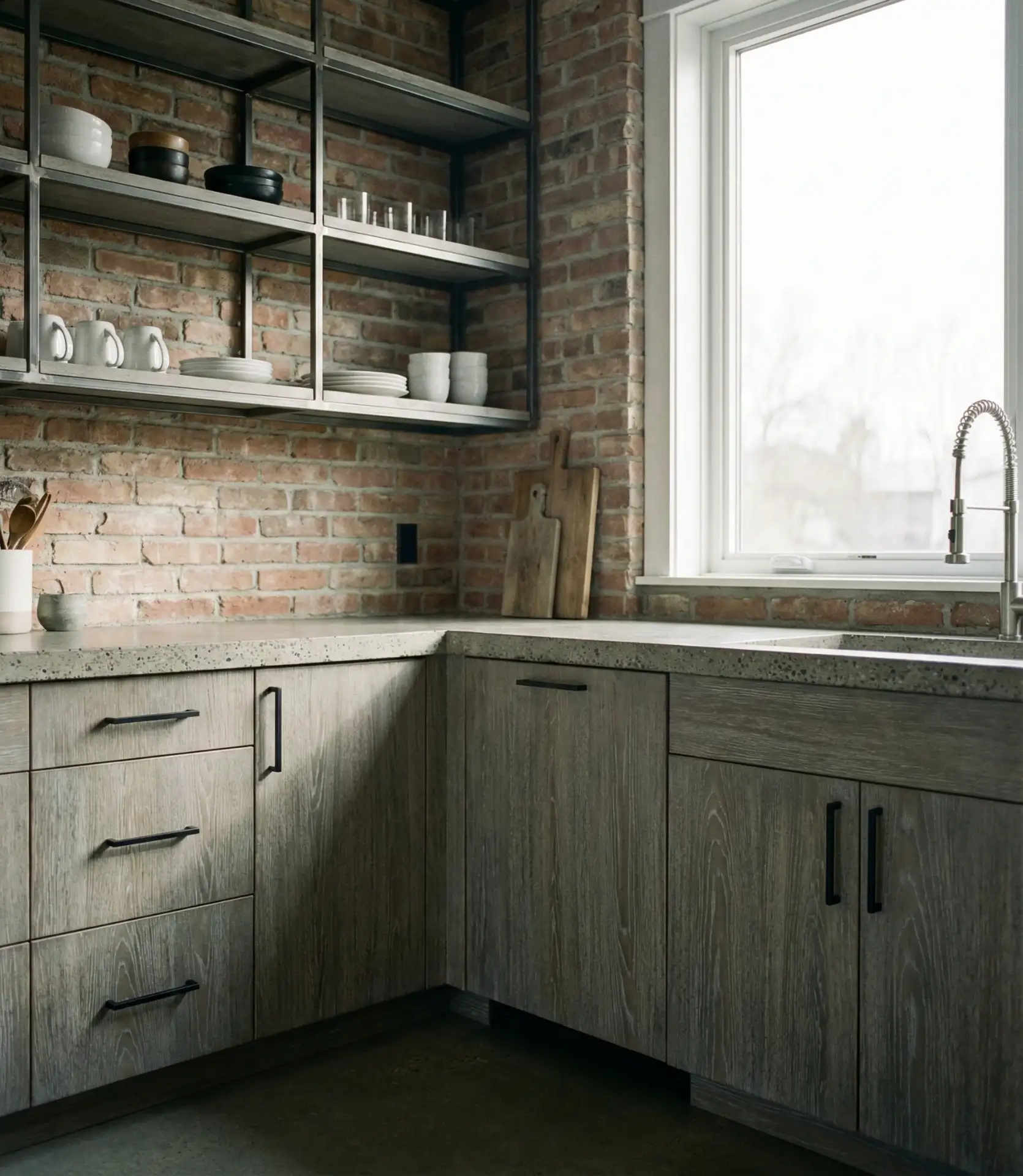
A critical tip: always request stained samples on the actual wood species and cut (quarter sawn vs. rift vs. plain) that will be used for your cabinets. Oak takes stain differently depending on the grain pattern—quarter sawn will show a more dramatic figure, while rift sawn will appear more uniform. View samples in your actual kitchen space at different times of day, since stain color can look vastly different under morning sun versus evening artificial light. Don’t rely on photos or samples in the showroom.
19. Finish the options for protection.
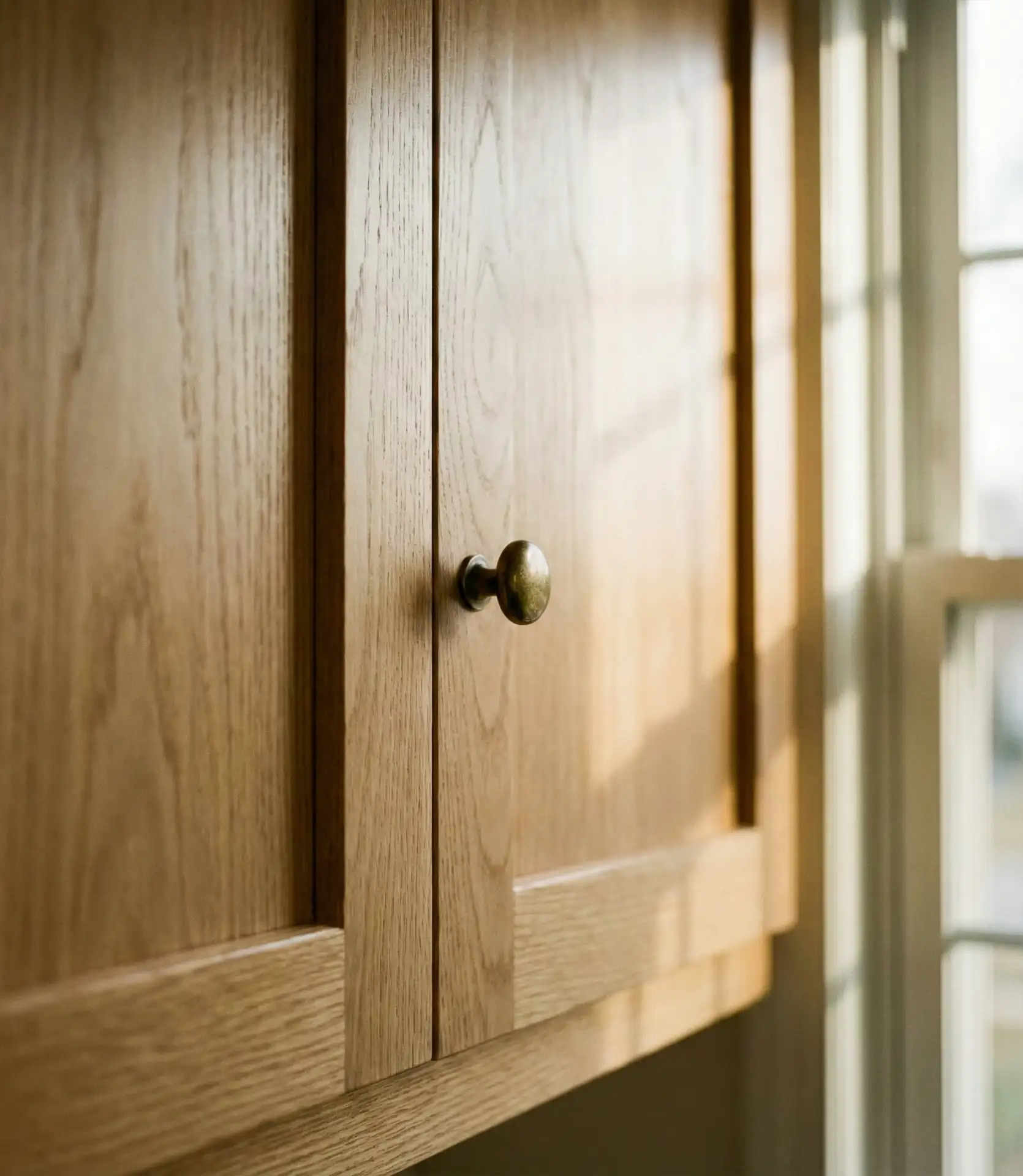
Beyond stain color, the protective finish options you choose dramatically affect your white oak cabinets’ appearance and durability. Water-based polyurethane is popular for its clarity—it doesn’t yellow over time and dries quickly, making it ideal for lighter stains or natural finishes. Oil-based polyurethane adds warmth and amber tones while providing excellent durability. For a more natural look, hardwax oil finishes penetrate the wood rather than sitting on top, creating a tactile, matte surface that feels like wood rather than plastic. Conversion varnish is the professional standard, offering superior durability and a beautiful hand-rubbed appearance.
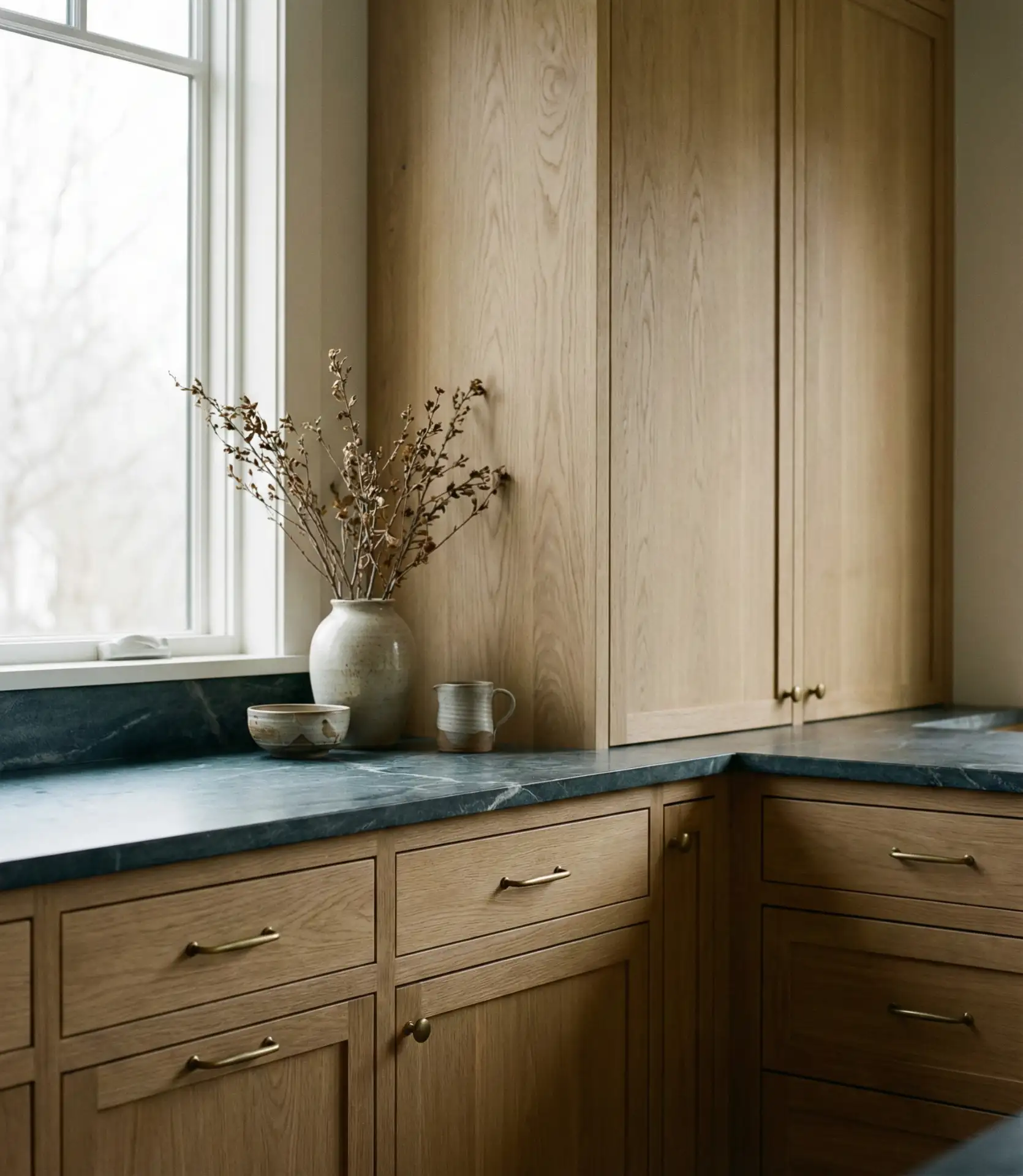
The sheen level matters too—high gloss shows every fingerprint and can feel dated, while dead matte can be difficult to keep clean. Most designers recommend satin or semi-gloss for kitchen cabinets, offering enough sheen to be wipeable without being shiny. Whatever finish you choose, make sure your cabinet maker allows for a cure time of at least two weeks before installation—rushing this process can lead to cabinets that feel tacky or smell chemical for months.
20. Green Island Color Pop
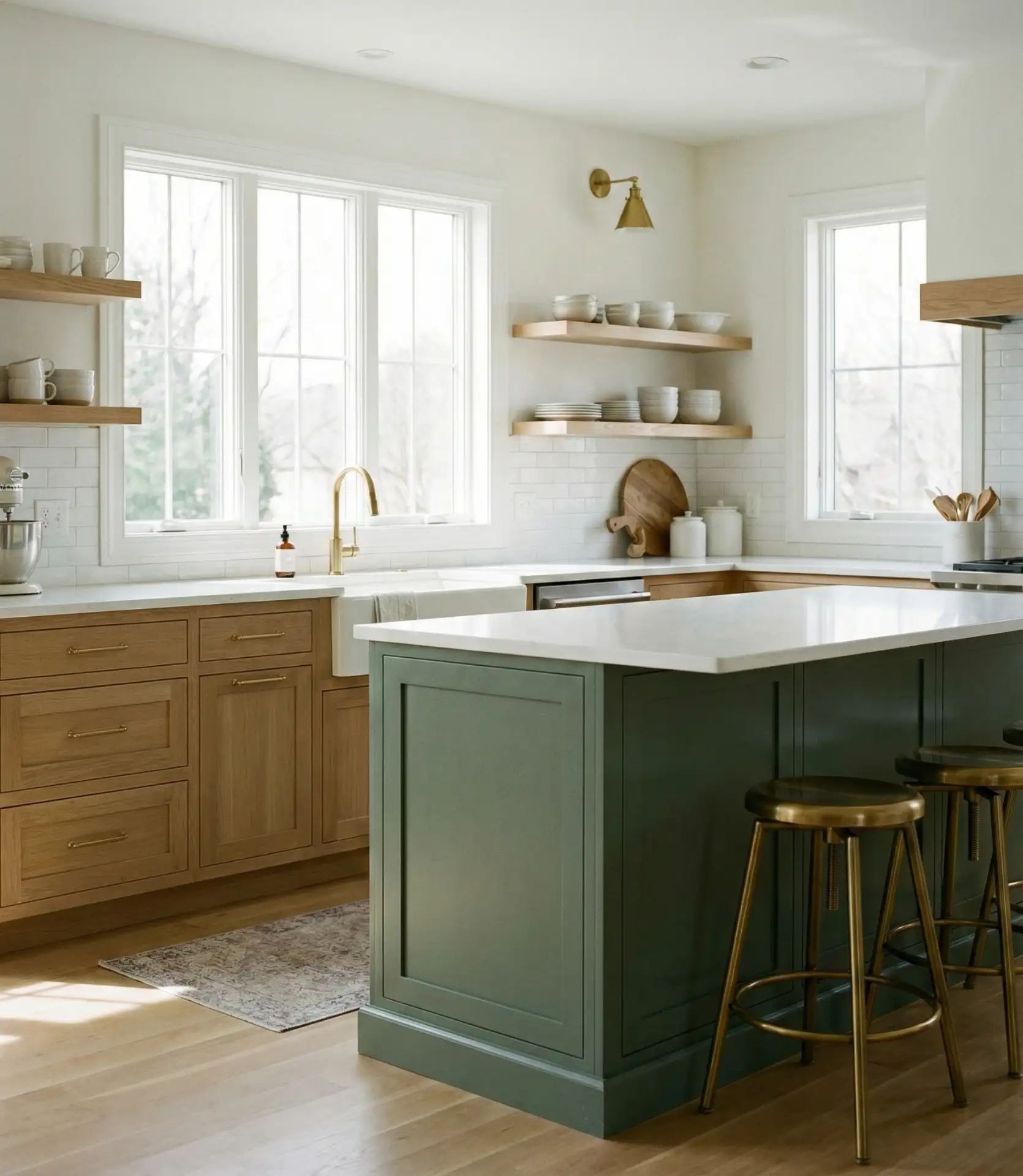
One of the hottest trends for 2026 is pairing natural white oak perimeter cabinets with a green island that serves as the kitchen’s jewel. Deep sage, forest green, or soft moss tones create a sophisticated color moment, while the surrounding oak keeps the space grounded and warm. This green and wood combination feels both fresh and timeless, bringing nature indoors in the most elegant way. The contrast between the painted island and wood cabinets adds visual interest and allows you to introduce color without overwhelming the space.
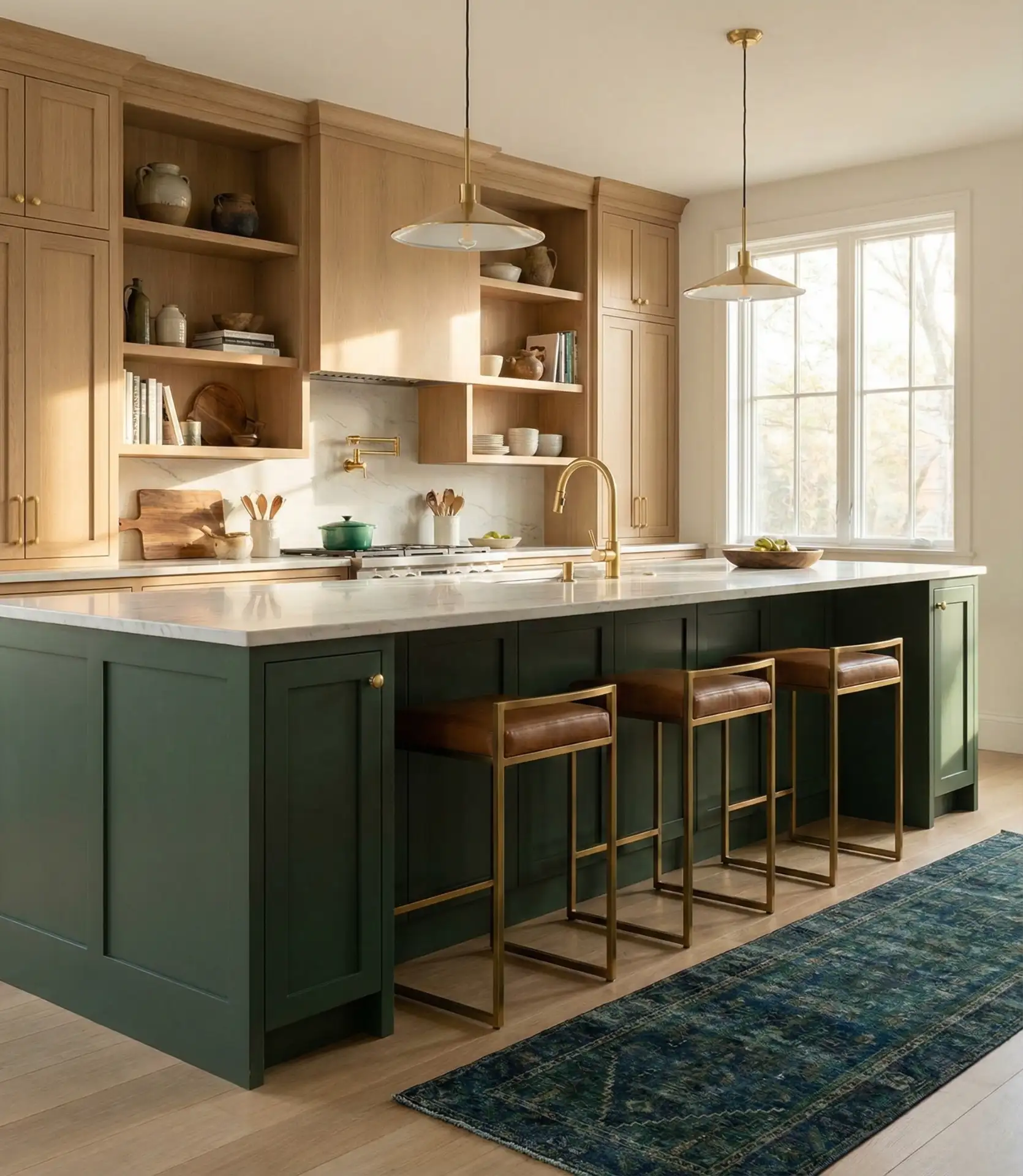
I recently toured a home in Portland where the homeowner had done exactly this—white oak uppers and a deep hunter green island—and the effect was stunning without being trendy. The key is choosing a complex, sophisticated green with gray or brown undertones rather than a bright grass green. Farrow & Ball’s Studio Green and Benjamin Moore’s Essex Green are both popular choices that complement oak beautifully without feeling too bold or fleeting.
21. Light and Airy Aesthetic
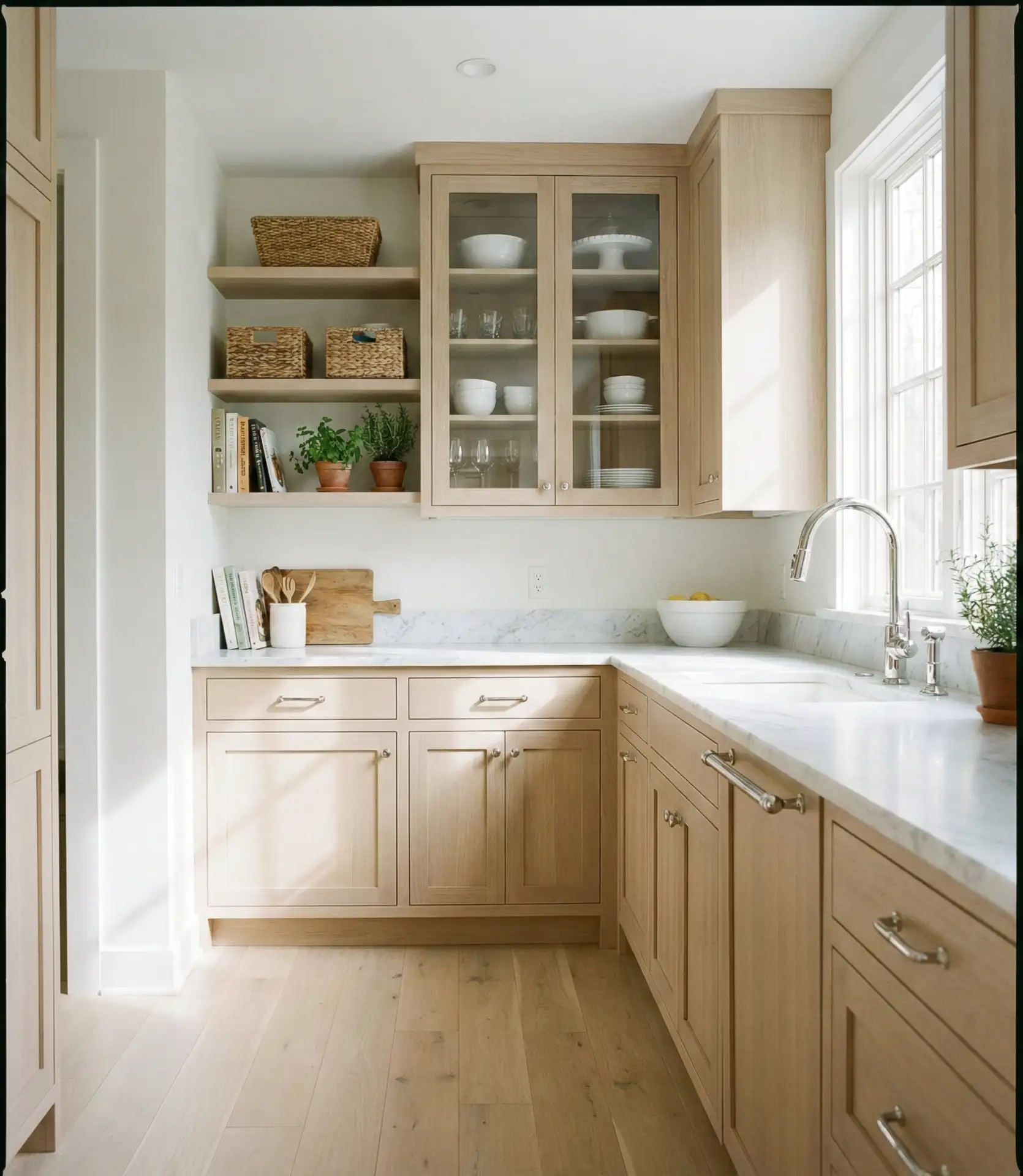
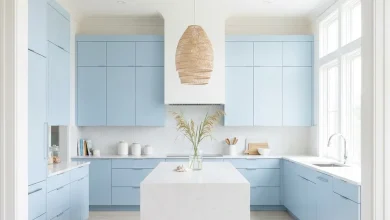
When the goal is a light and open kitchen that feels spacious and serene, white oak cabinets excel at providing warmth without heaviness. Pair them with white or pale gray countertops, a simple white backsplash, and plenty of natural light for an airy aesthetic that never feels cold. This approach is perfect for smaller kitchens or spaces with limited windows—the light wood reflects illumination rather than absorbing it, making the room feel larger. Keep accessories minimal and choose a natural or very pale stain to maximize the bright, open effect.
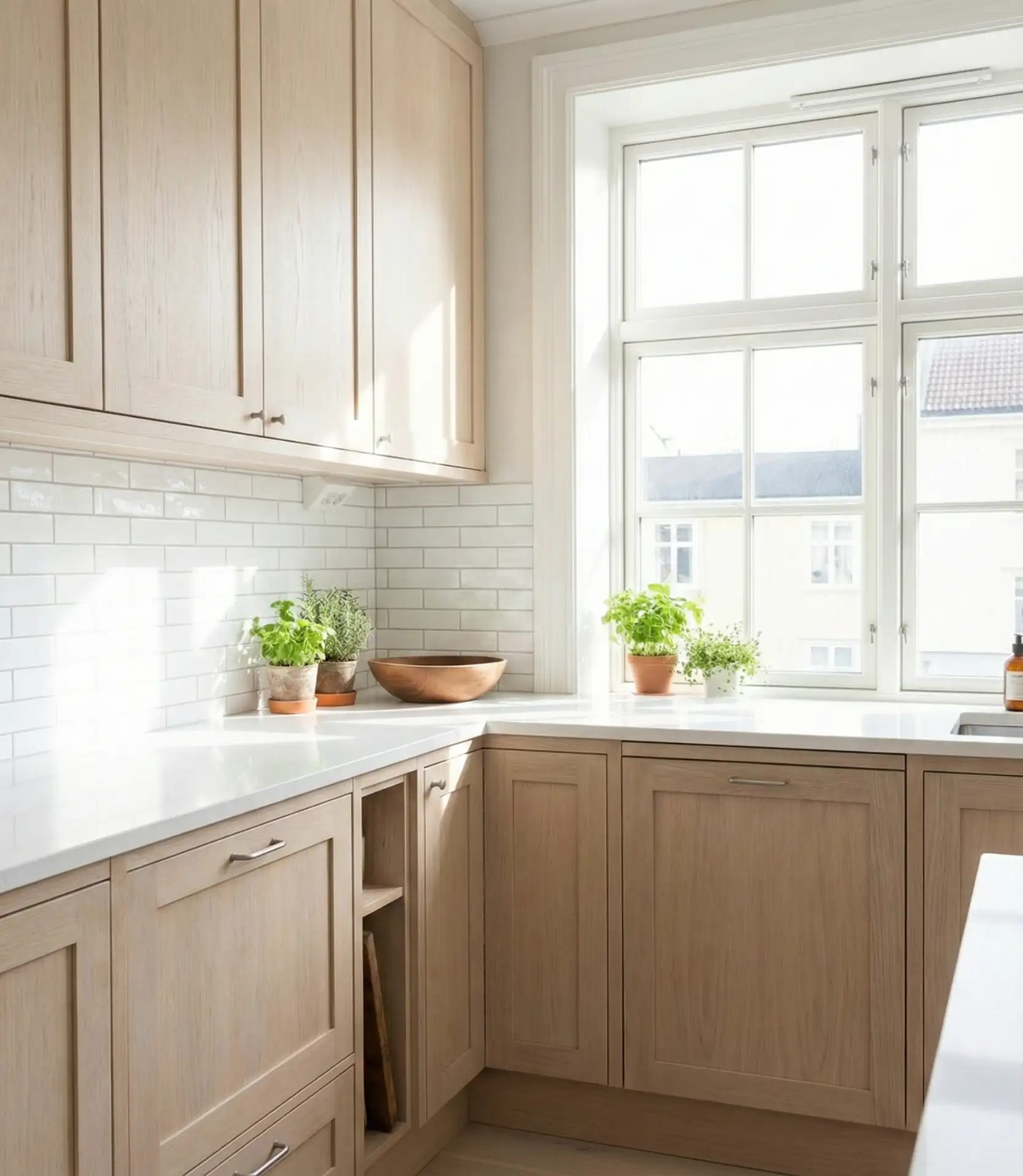
This design choice is particularly popular in coastal communities and mountain towns where homeowners want to bring the outdoors in and maintain a connection to the natural landscape. The light aesthetic works year-round but is especially appealing in the summer, when bright, breezy interiors complement warm weather. Avoid the temptation to add too many dark accents—even a black range or dark counters can interrupt the airy flow you’re trying to create.
22. Color Schemes That Work
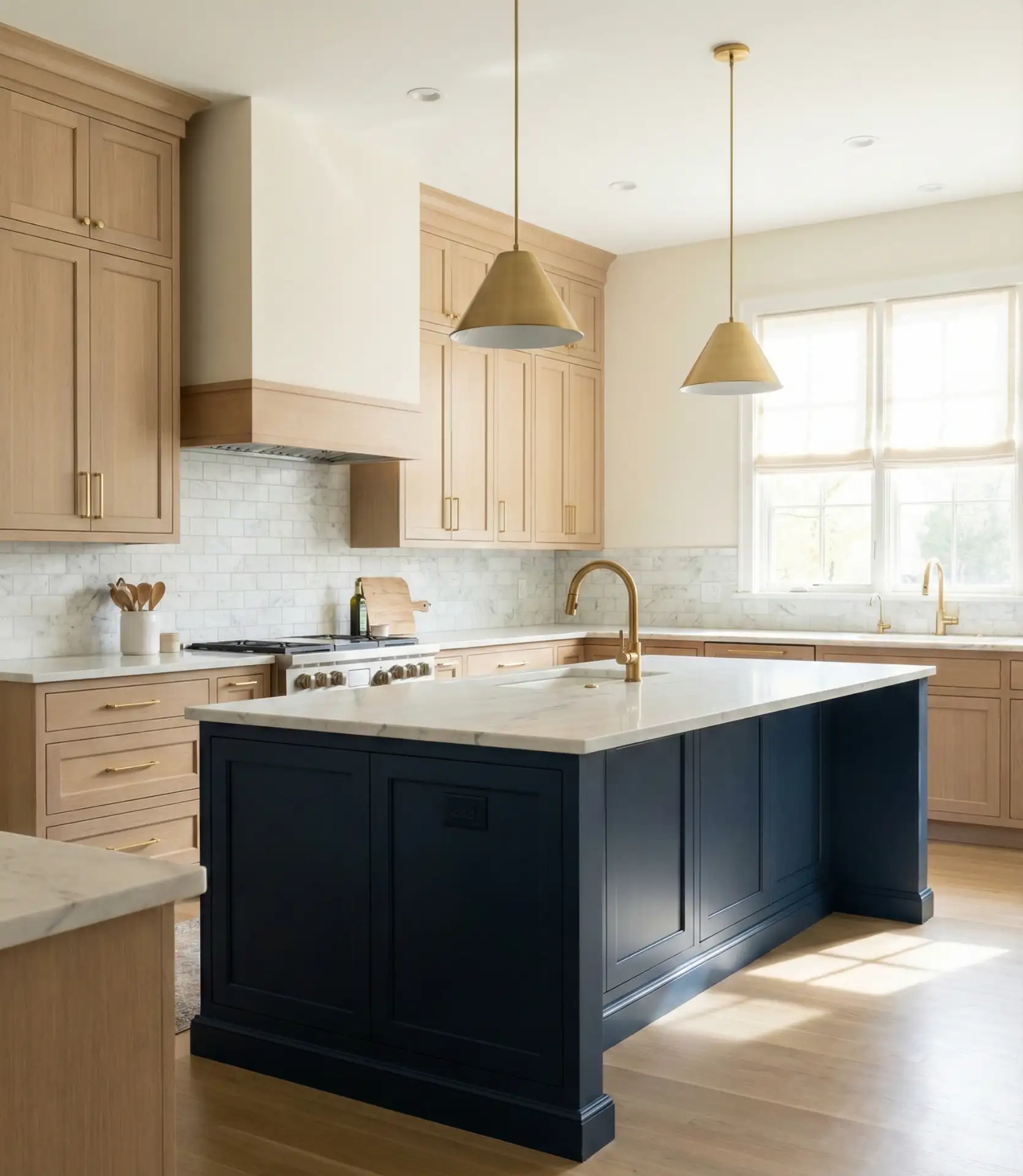
White oak cabinets serve as an incredibly versatile foundation for various color schemes, from monochromatic to high-contrast. Classic white and oak creates timeless appeal, while black and oak offers modern drama. For something softer, consider pairing oak with warm grays, soft blues, or muted greens—all create sophisticated color schemes that feel collected rather than trendy. Navy lower cabinets with white oak uppers are another winning combination that’s gaining traction. The key is choosing colors that either harmonize with oak’s warmth or contrast it intentionally, avoiding mid-tones that muddy the palette.
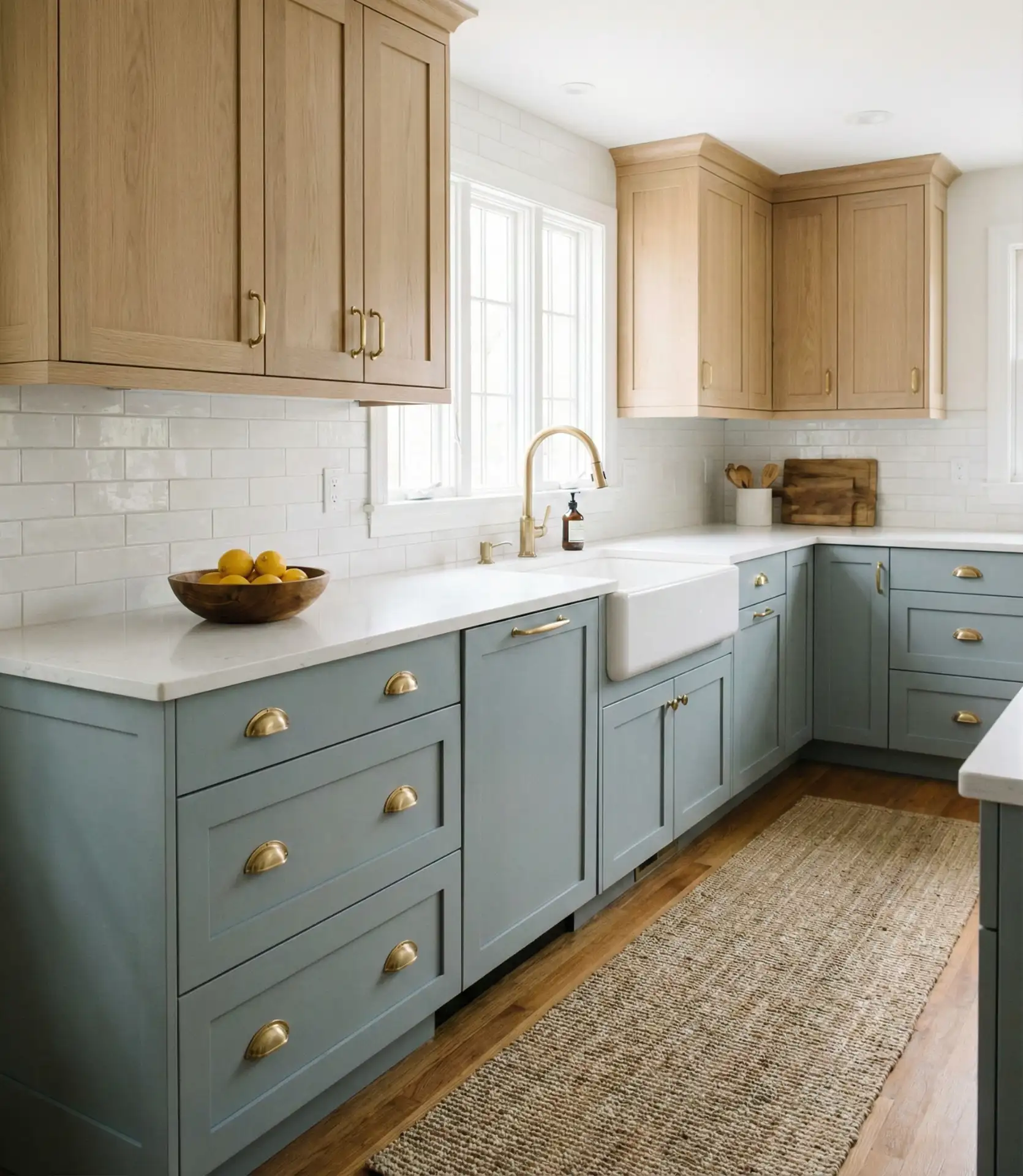
Pinterest mood boards are invaluable when planning your color scheme—save images of kitchens with white oak that appeal to you, then analyze what colors appear repeatedly in your saves. You’ll likely notice patterns that reveal your natural inclinations. Most successful color schemes include white oak plus 2-3 other colors maximum: a main countertop color, an accent color (on an island or in textiles), and a neutral backdrop. More than that, and the space can feel chaotic.
23. Stained White Oak Depth
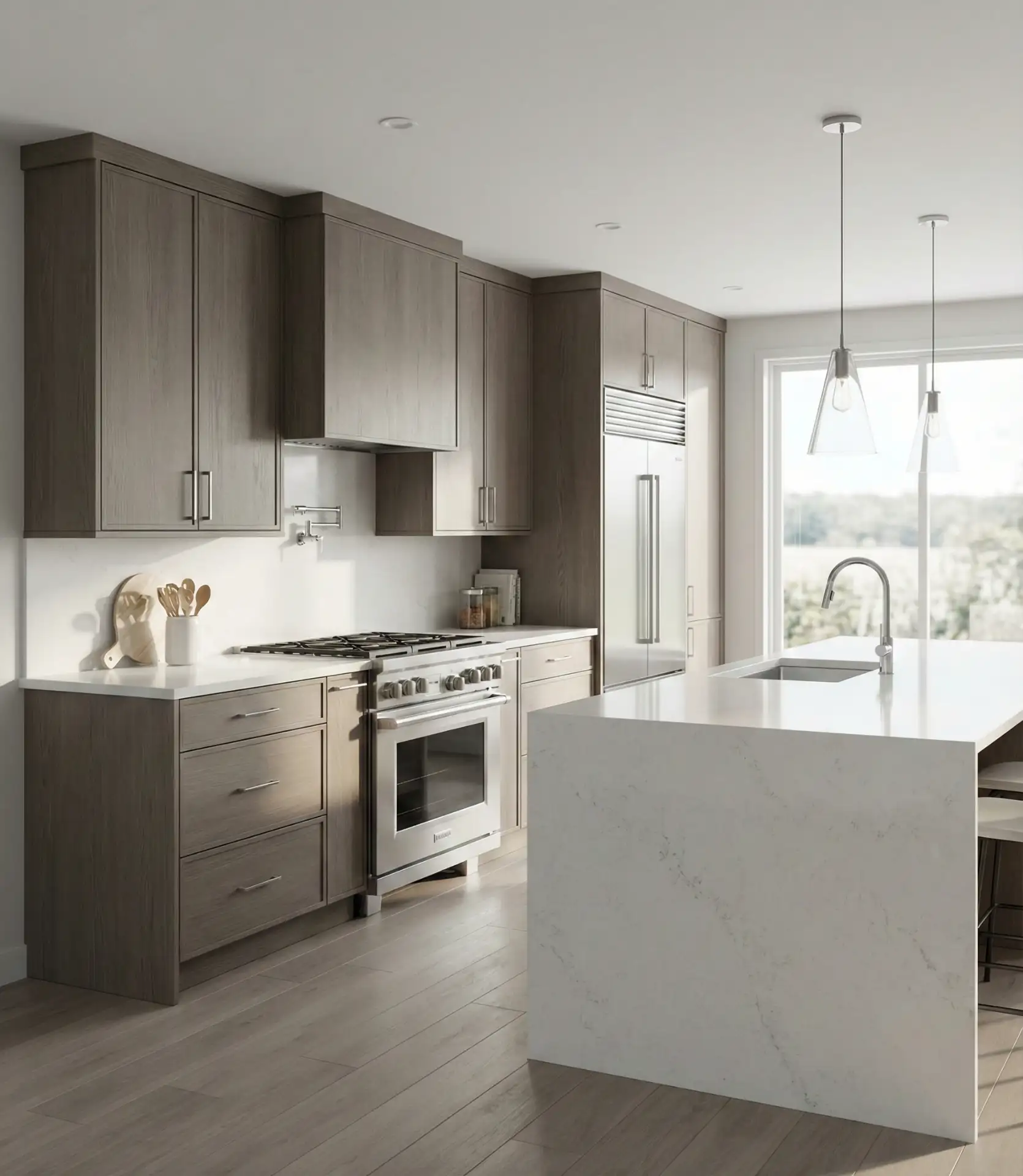
Stained white oak cabinets in medium to darker tones offer an entirely different aesthetic from natural or pale oak—they bring gravitas, richness, and a more formal sensibility. A quality stain enhances the grain while adding color depth that makes the cabinets feel more substantial. Stained oak in warm brown tones pairs beautifully with farmhouse elements like apron sinks and open shelving, while cooler gray-brown stains feel more contemporary. The advantage of staining is that you get wood’s warmth and texture while controlling the color to suit your overall design vision.
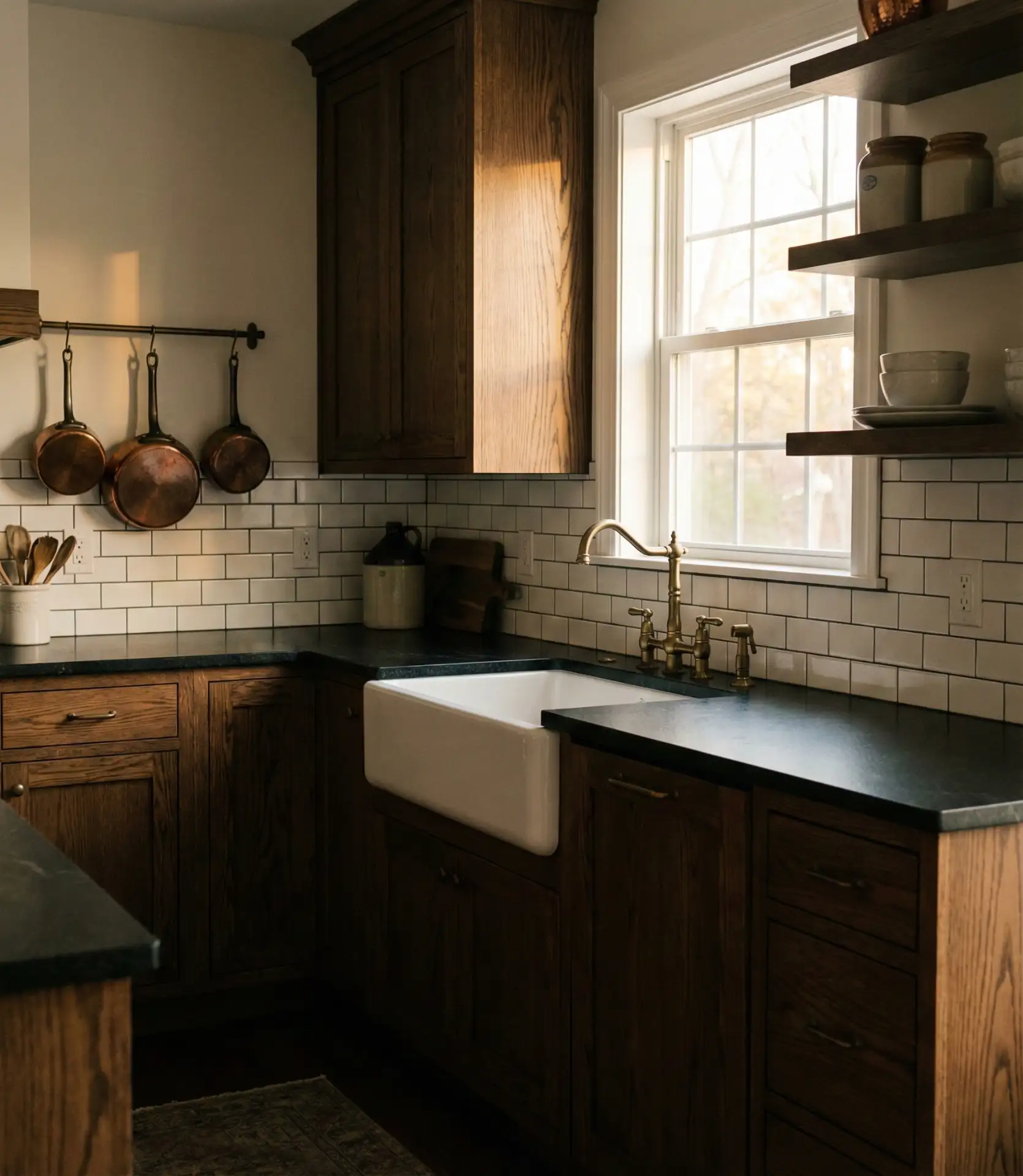
Real homeowners often choose stained oak when they want the prestige and beauty of wood cabinetry, but they need the cabinets to hide fingerprints and daily wear better than pale wood. Medium to dark stains are more forgiving in high-traffic family kitchens, showing less grime while still offering that natural material quality. Just remember that once you go dark, it’s difficult and expensive to lighten—refinishing cabinets is labor-intensive—so be confident in your choice before committing.
White oak kitchen cabinets offer endless possibilities for creating a space that’s uniquely yours, whether you’re drawn to modern simplicity, farmhouse warmth, or sophisticated glamour. From choosing the perfect grain pattern and finish to selecting complementary colors and materials, every decision shapes the final result. We’d love to hear about your white oak kitchen plans or see photos if you’ve already made the leap—share your thoughts, questions, and inspiration in the comments below.