
White kitchens remain one of the most sought-after design choices in American homes, and in 2026, they’re evolving beyond the stark, clinical spaces of the past into warm, layered environments filled with personality. Homeowners across the country are turning to Pinterest for fresh inspiration, searching for ways to blend timeless white cabinetry with unexpected textures, bold accents, and smart functionality. Whether you’re planning a full renovation or simply refreshing your current space, white kitchens offer endless flexibility to reflect your personal style while maintaining broad appeal. This year’s trends celebrate contrast, natural materials, and thoughtful details that make white kitchens feel both modern and inviting. Here are inspiring ideas to help you create a white kitchen that feels uniquely yours.
1. Warm White Cabinets with Walnut Accents
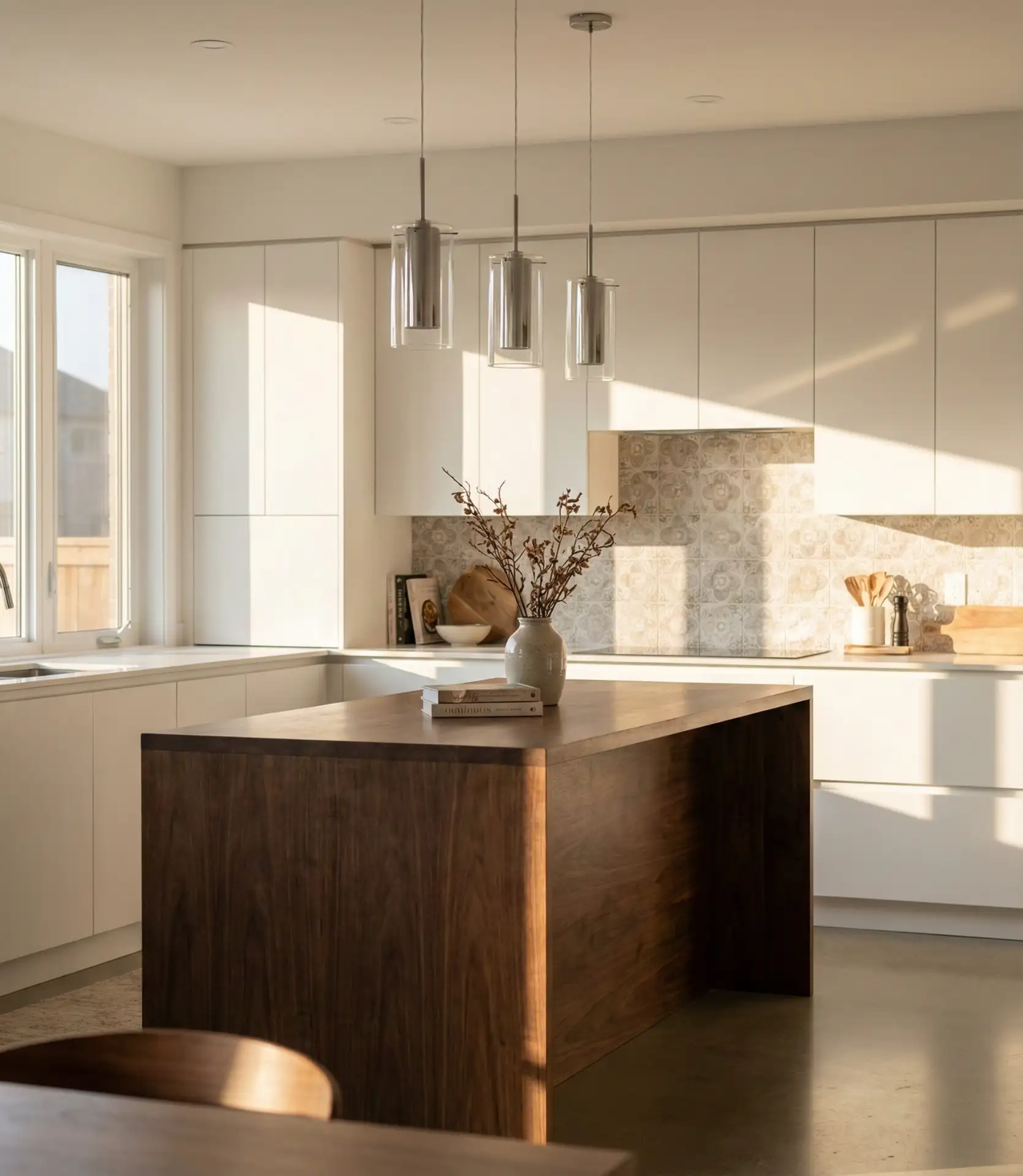
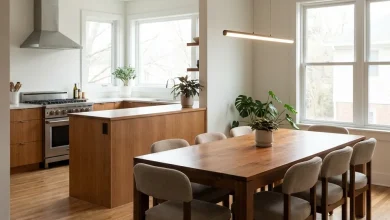
The combination of white cabinets and walnut creates a sophisticated balance that feels both contemporary and grounded. This pairing works beautifully in open-concept homes where the kitchen flows into living areas, as the warm wood tones prevent the space from feeling too clinical. The natural grain of walnut introduces organic texture while maintaining the bright, airy quality that makes white kitchens so appealing. Consider using walnut for floating shelves, a kitchen island base, or even as a contrasting material for cabinet interiors visible through glass-front doors.
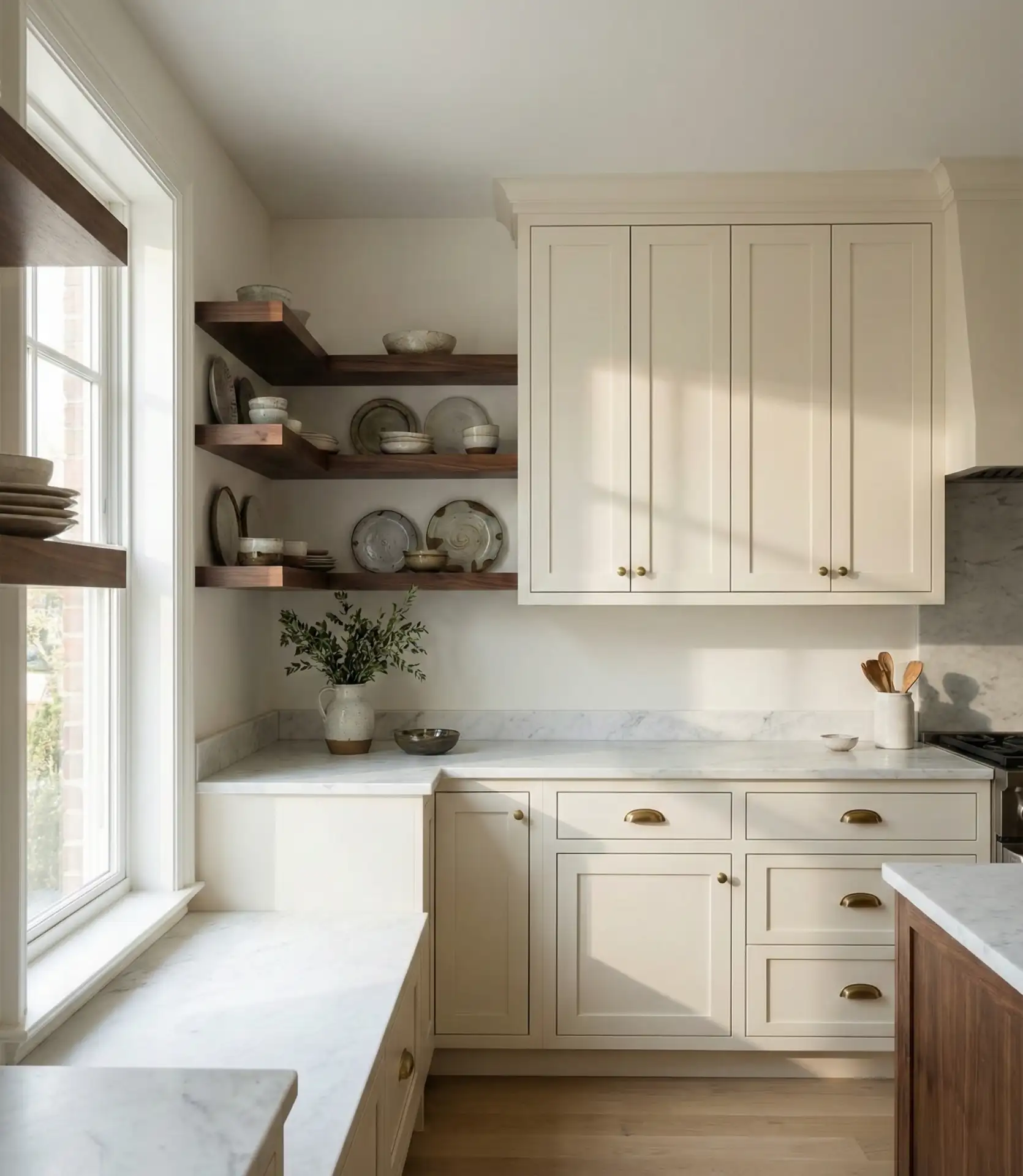
In the Pacific Northwest, where natural materials are especially prized, designers often recommend walnut accents to anchor white kitchens and create a connection to the surrounding landscape. The wood’s rich, chocolate tones develop a beautiful patina over time, actually improving with age rather than showing wear. This combination also photographs exceptionally well, which explains its popularity on visual platforms where homeowners seek inspiration for their own remodels.
2. Classic White Kitchen with Black Hardware
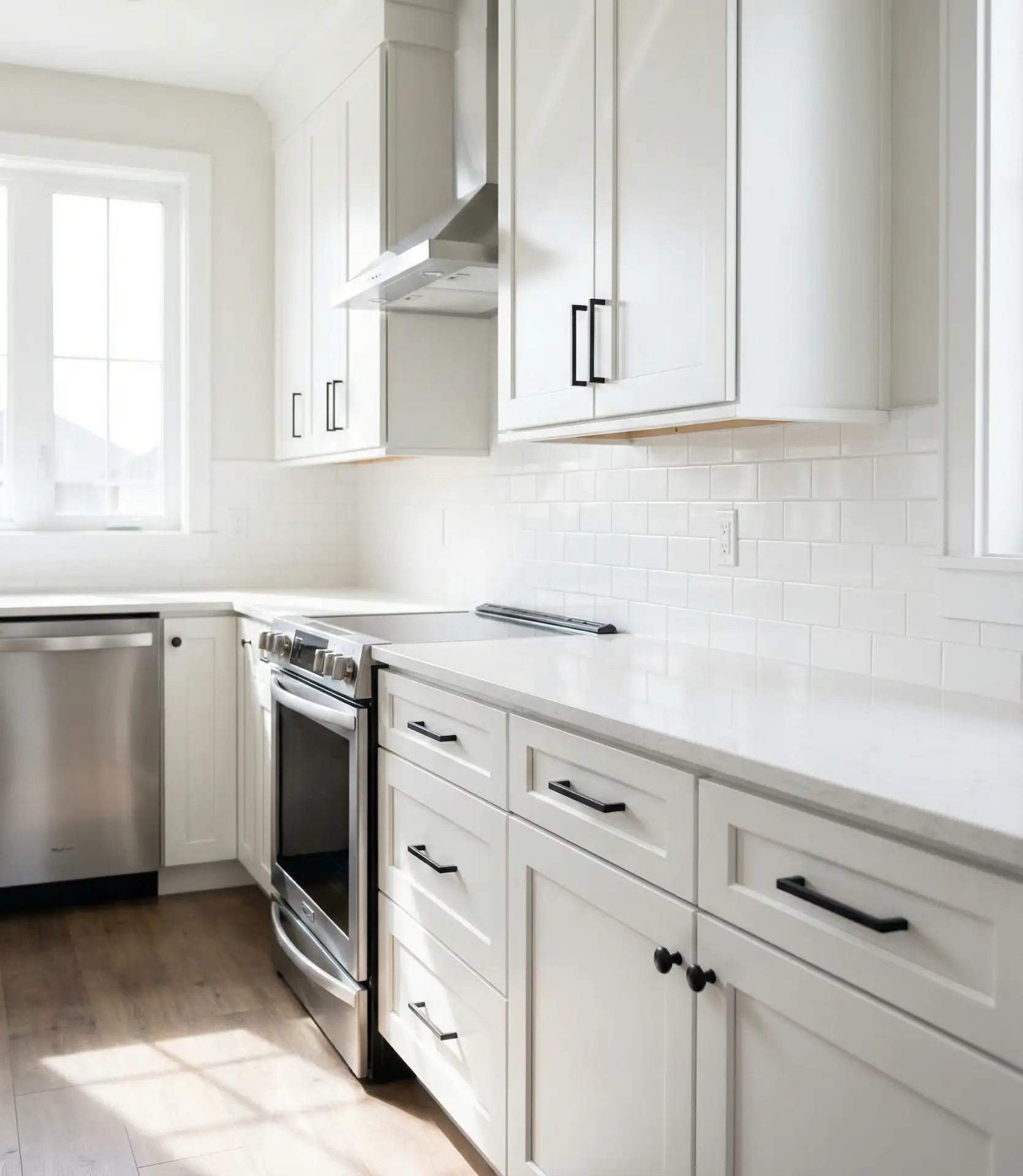
Nothing modernizes a classic white kitchen faster than switching to black hardware. This simple upgrade creates instant definition and visual interest without overwhelming the space or requiring a major renovation. The contrast draws the eye to cabinet lines and architectural details that might otherwise disappear in an all-white scheme. Matte black finishes continue to dominate in 2026, offering a sophisticated alternative to traditional chrome or nickel that feels both current and timeless.
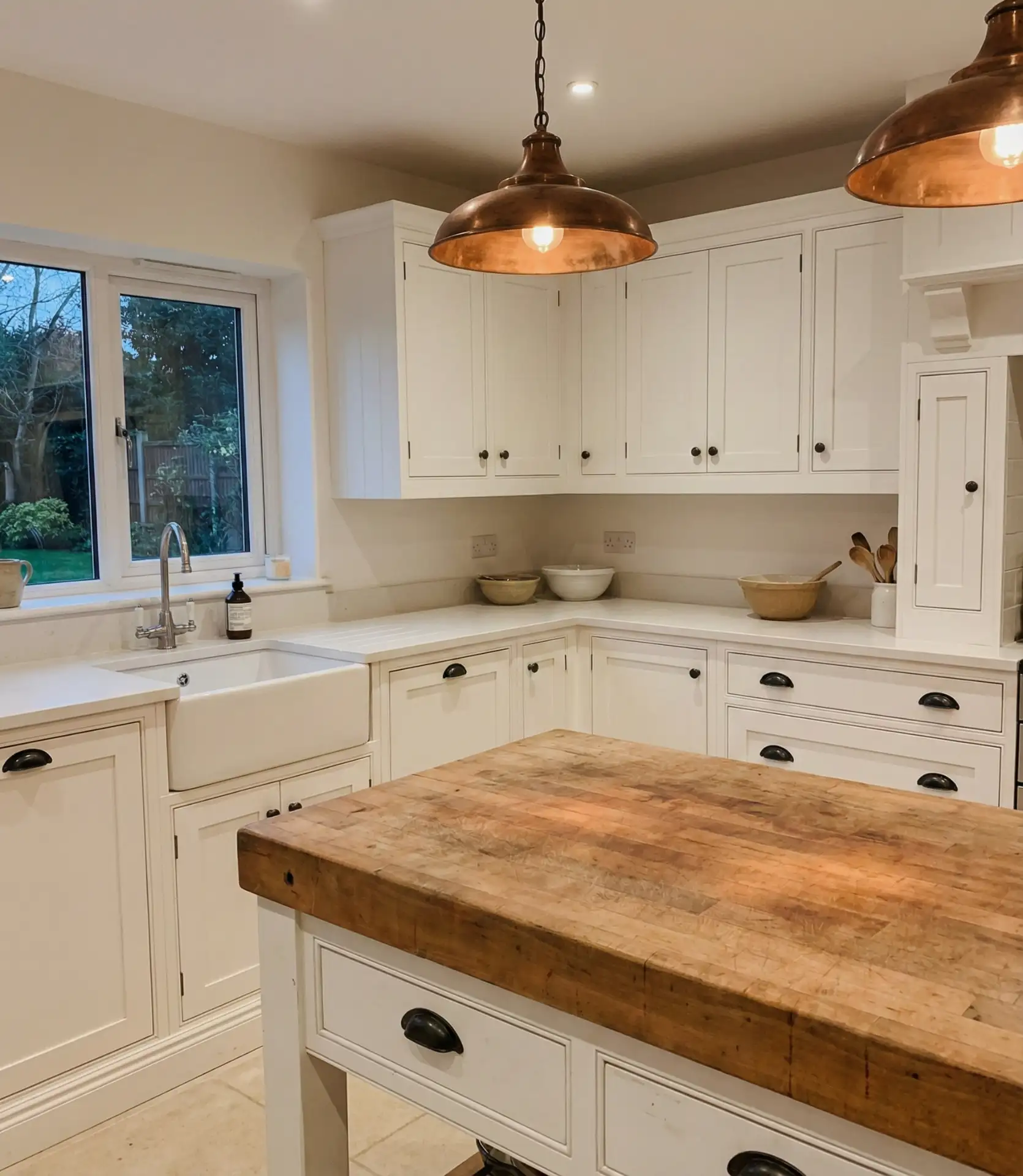
Many homeowners make the mistake of mixing too many metal finishes in their white kitchens, creating visual confusion. Committing to black hardware throughout provides cohesion and allows other design elements to shine. The beauty of this approach is its flexibility—black works equally well with warm whites, cool whites, and everything in between, making it a safe choice even if you’re unsure about your exact paint color.
3. White and Navy Two-Tone Design
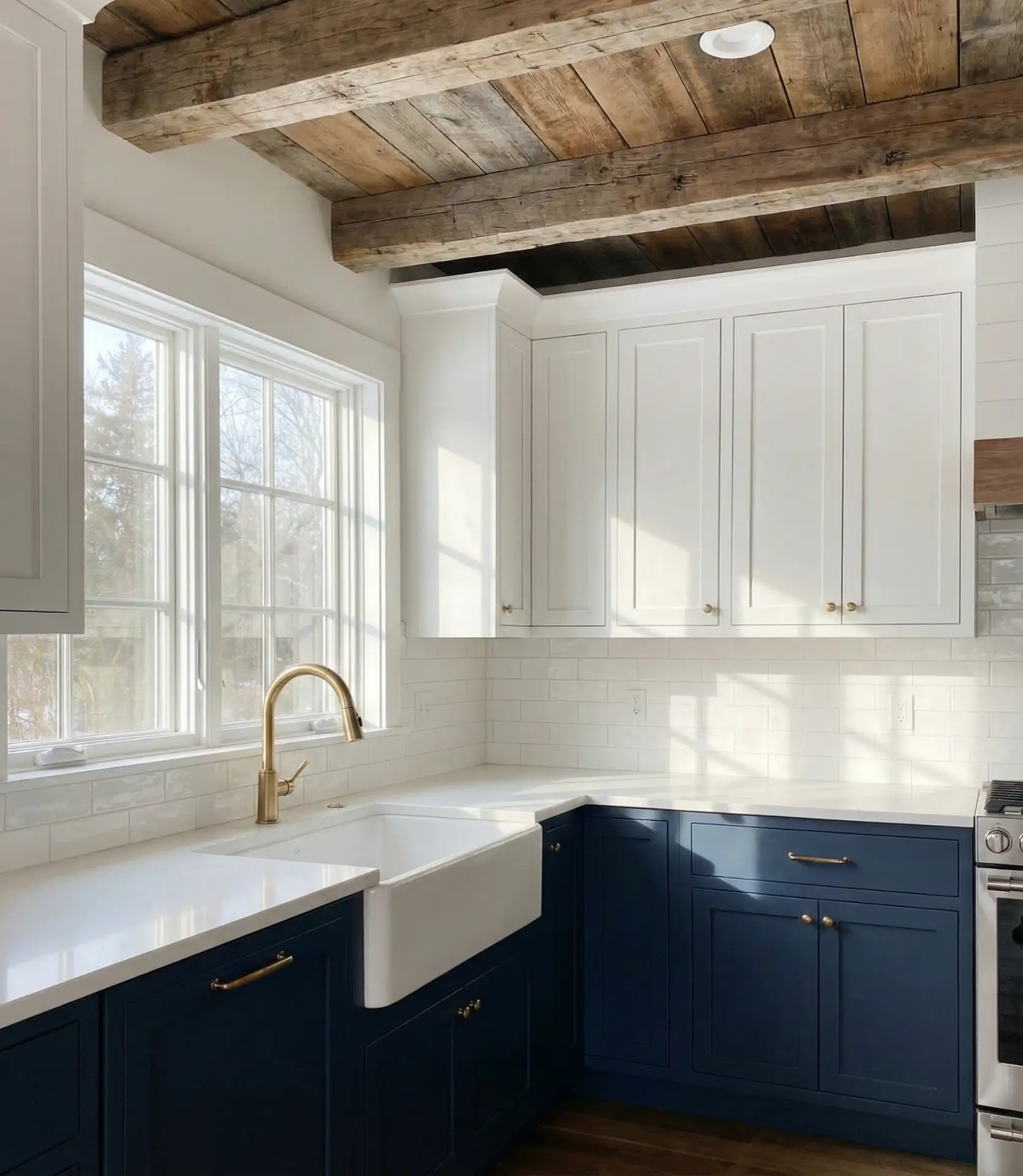
The pairing of white upper cabinets with navy lowers has become a signature look in American kitchens, offering a refined alternative to all-white schemes. This two-tone approach grounds the space while maintaining an open, airy feel overhead. Navy brings depth and sophistication without the starkness of black, creating a kitchen that feels intentionally designed rather than builder-grade. The darker lower cabinets also have a practical advantage—they show less wear and staining in high-traffic areas near the sink and dishwasher.
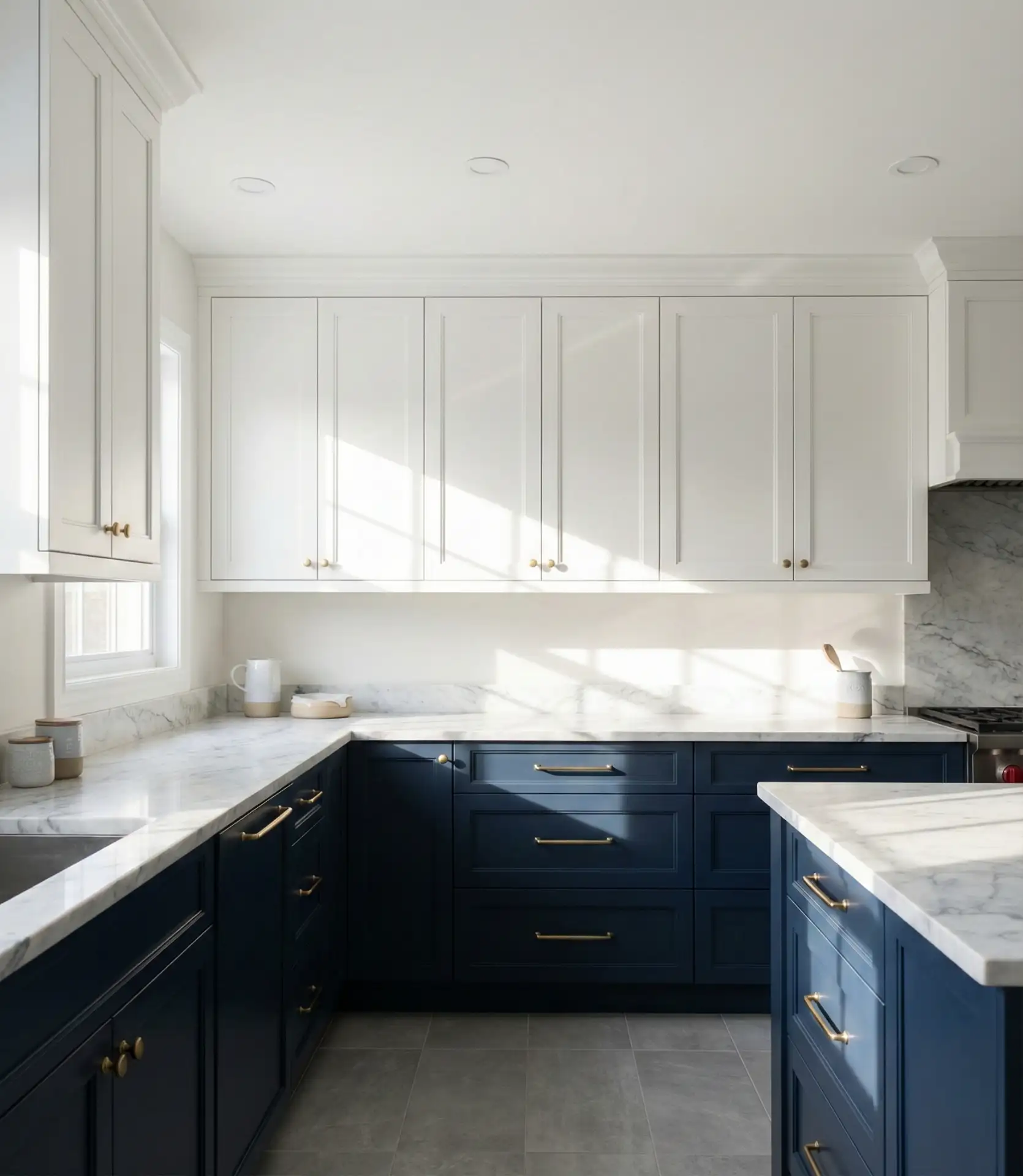
A designer in Charleston recently shared that navy-and-white kitchens outsell all-white kitchens in coastal markets by nearly two to one. Buyers appreciate the added character and the fact that the design feels complete rather than waiting for personality to be added later. The navy anchors the room and provides a backdrop that makes white countertops and dishes pop, creating natural focal points throughout the space.
4. White Kitchen with Green Backsplash
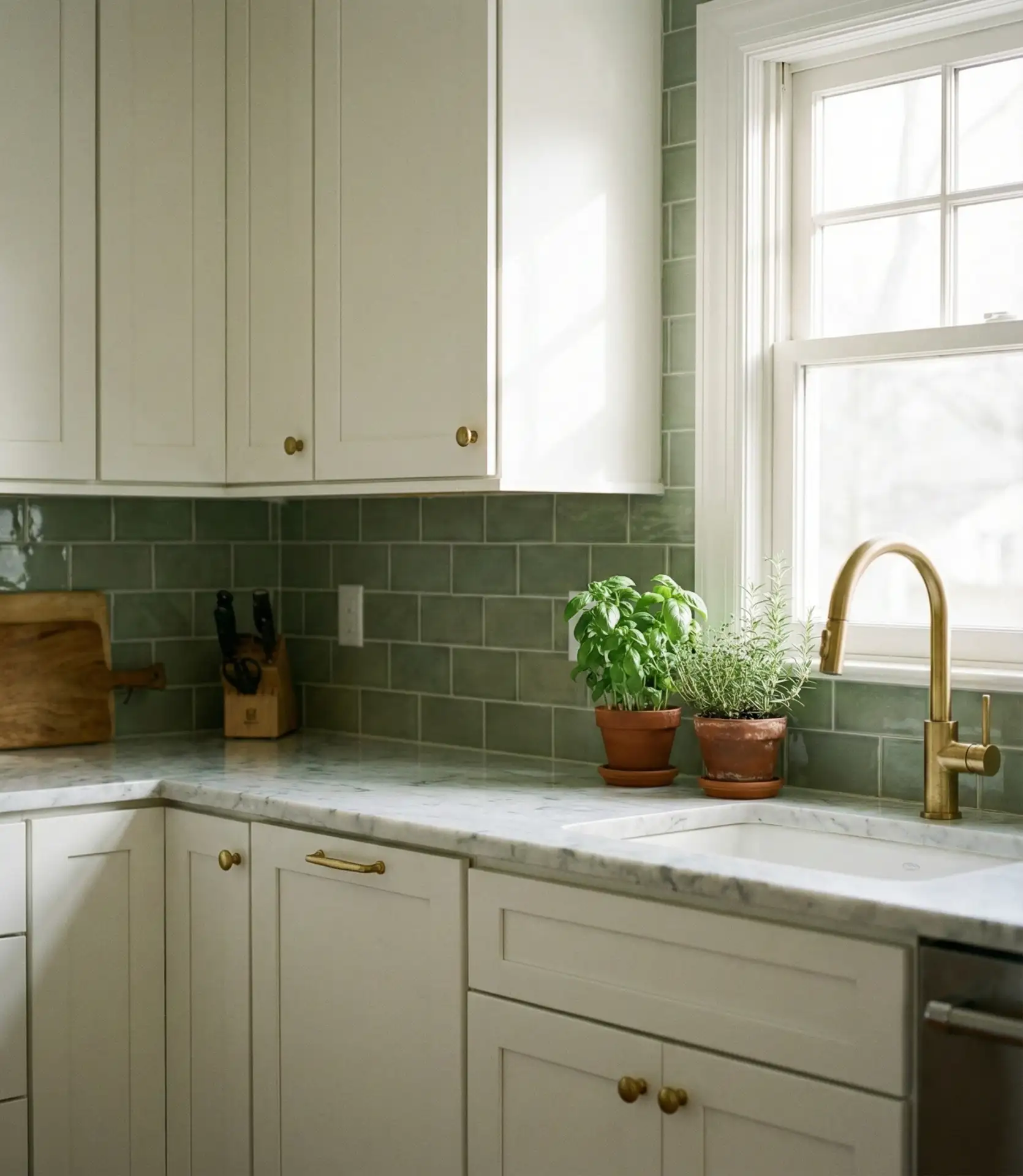
A green backsplash introduces an unexpected organic element to white kitchens, creating a focal point that feels fresh and contemporary. From sage to emerald to forest green, this color family brings life and energy to otherwise neutral spaces. The backsplash is an ideal place to experiment with color because it’s a relatively small, replaceable surface if tastes change. Green tiles pair beautifully with white cabinets, brass or gold hardware, and natural wood tones, creating a layered look that photographs beautifully for Pinterest boards.
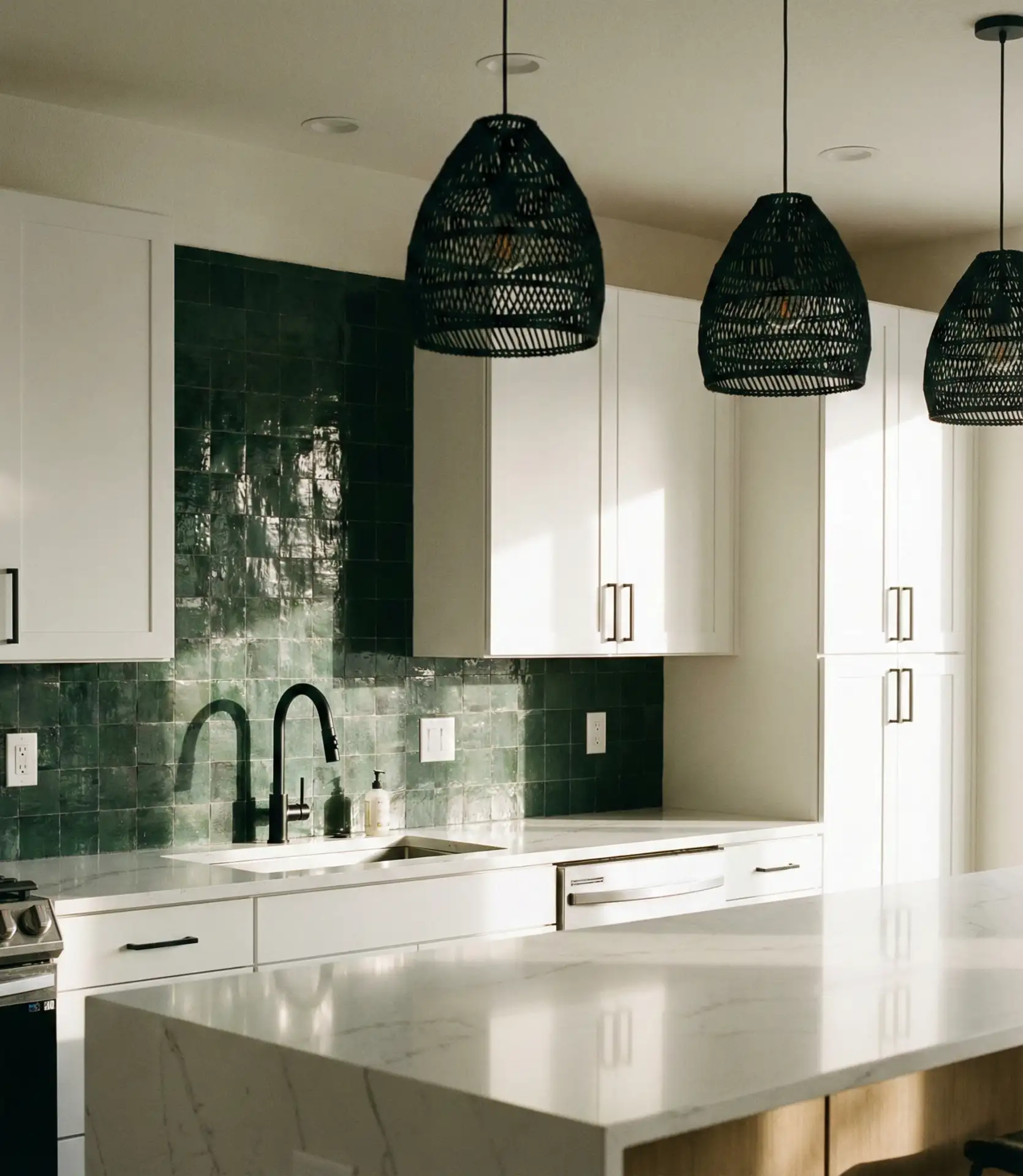
This combination works best in kitchens with ample natural light, where the green tiles can shift in tone throughout the day—appearing almost gray in morning shadows and vibrant in afternoon sun. In darker kitchens, particularly those facing north, consider lighter sage or mint tones that won’t absorb too much light. The green backsplash trend has grown steadily since 2024, particularly in the Mountain West and Pacific Northwest, where homeowners seek connections to natural landscapes.
5. White Cabinets with Black Countertops
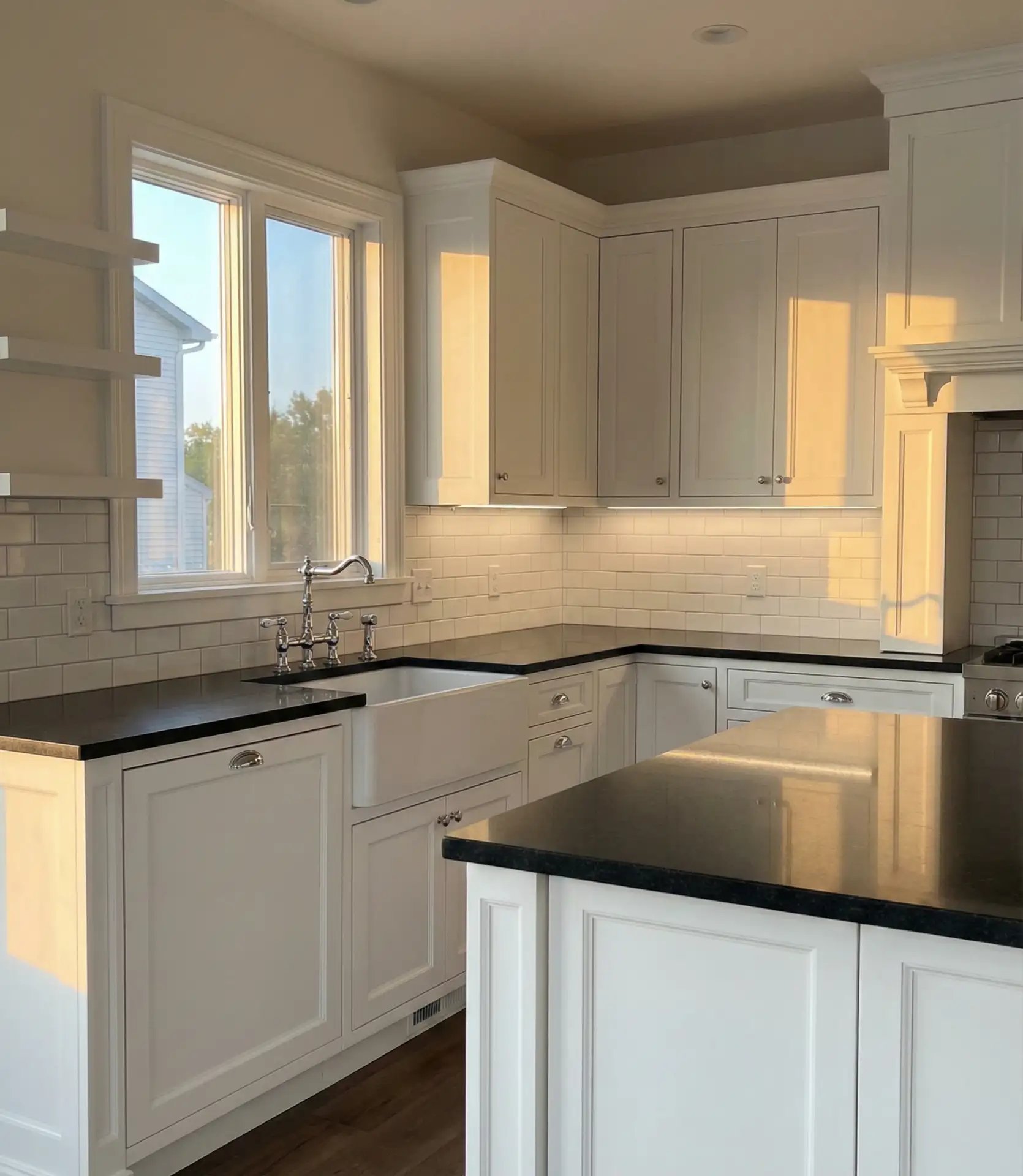
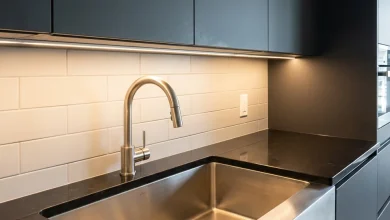
The dramatic contrast of white cabinets paired with a black counter creates instant visual impact and defines the kitchen’s work surfaces with clarity. This high-contrast combination has roots in traditional design but feels thoroughly modern when executed with clean lines and minimal ornamentation. Black granite, soapstone, or quartz countertops provide a durable, forgiving surface that doesn’t show every crumb or water spot, making them particularly practical for busy households. The dark counters also create a striking frame for food preparation and display.
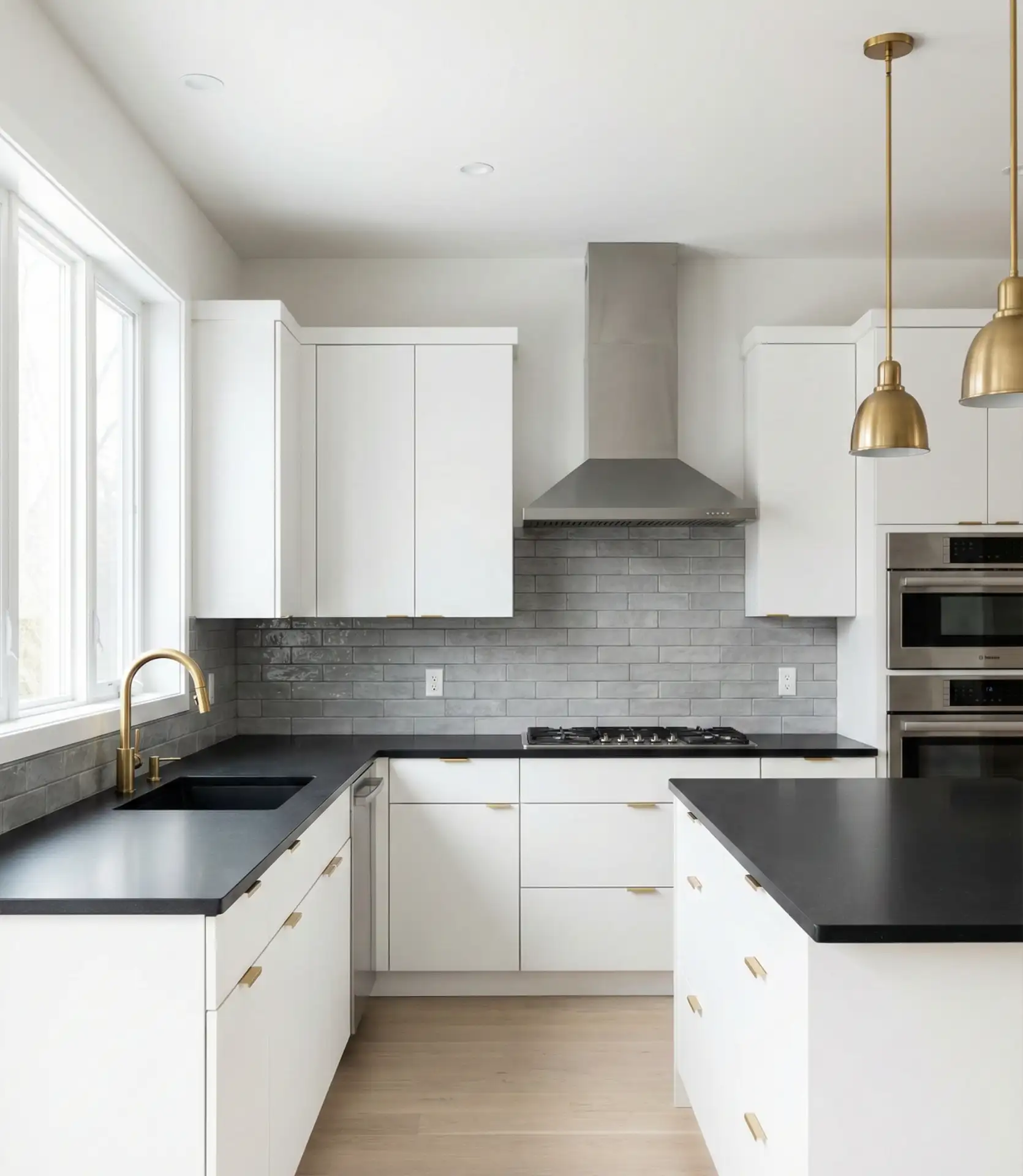
Budget-conscious renovators often choose this pairing because it delivers maximum visual impact without requiring exotic materials or complex installation. Black quartz countertops typically cost 15-25% less than marble or quartzite while offering superior stain resistance and durability. The investment goes into the cabinetry finish and hardware, where quality makes a visible difference, while the countertops provide a practical, affordable backdrop that grounds the entire design.
6. White Kitchen with Sage Green Accents
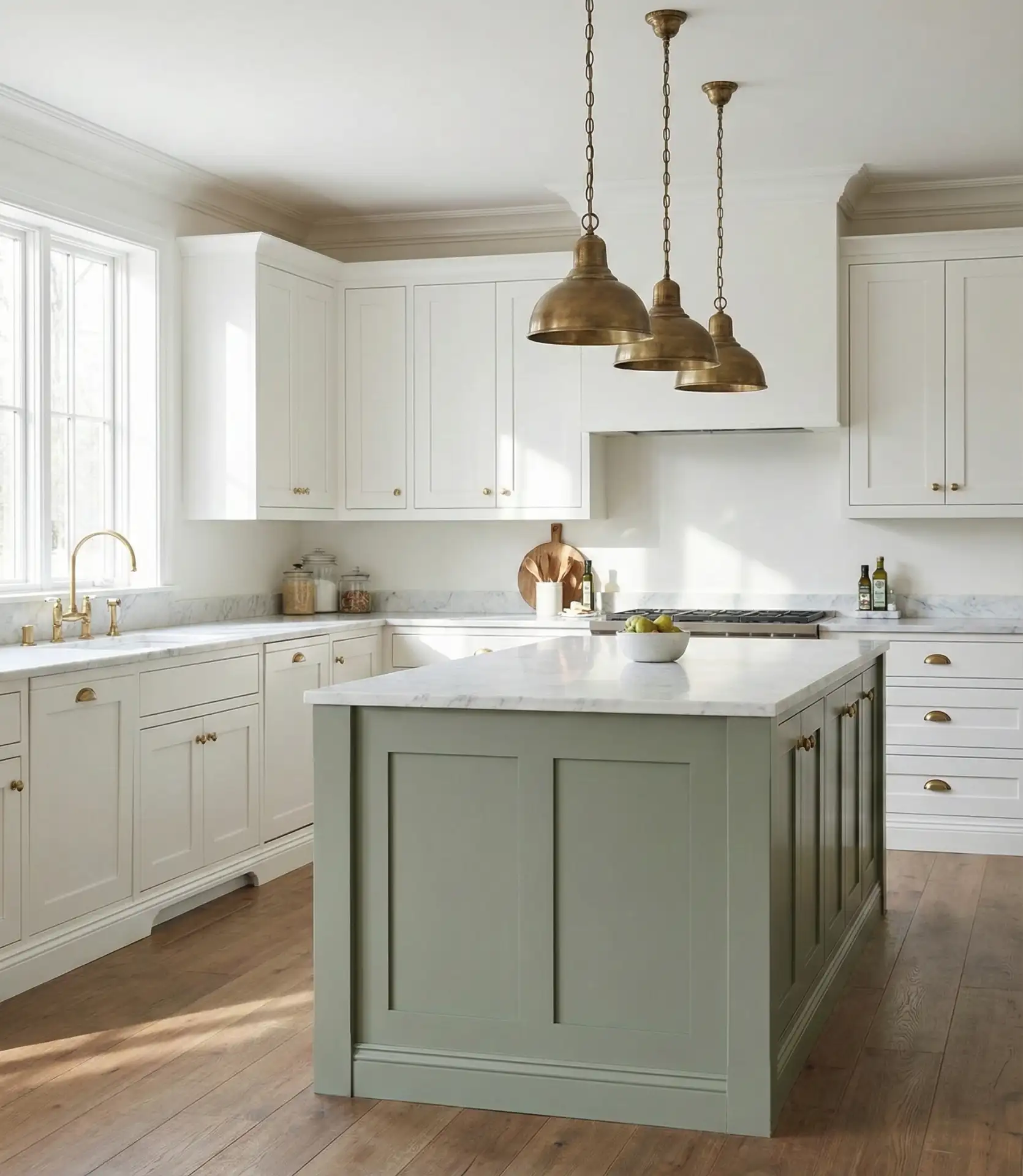
The soft, muted quality of sage green brings a calming, nature-inspired element to white cabinets without overwhelming the space. This color has surged in popularity across American homes, particularly in kitchens where homeowners want to introduce color in a subtle, sophisticated way. Sage works beautifully as an island color, on a single wall of cabinets, or through accessories like bar stools and window treatments. The color’s gray-green undertones prevent it from reading as too traditional or country-specific.
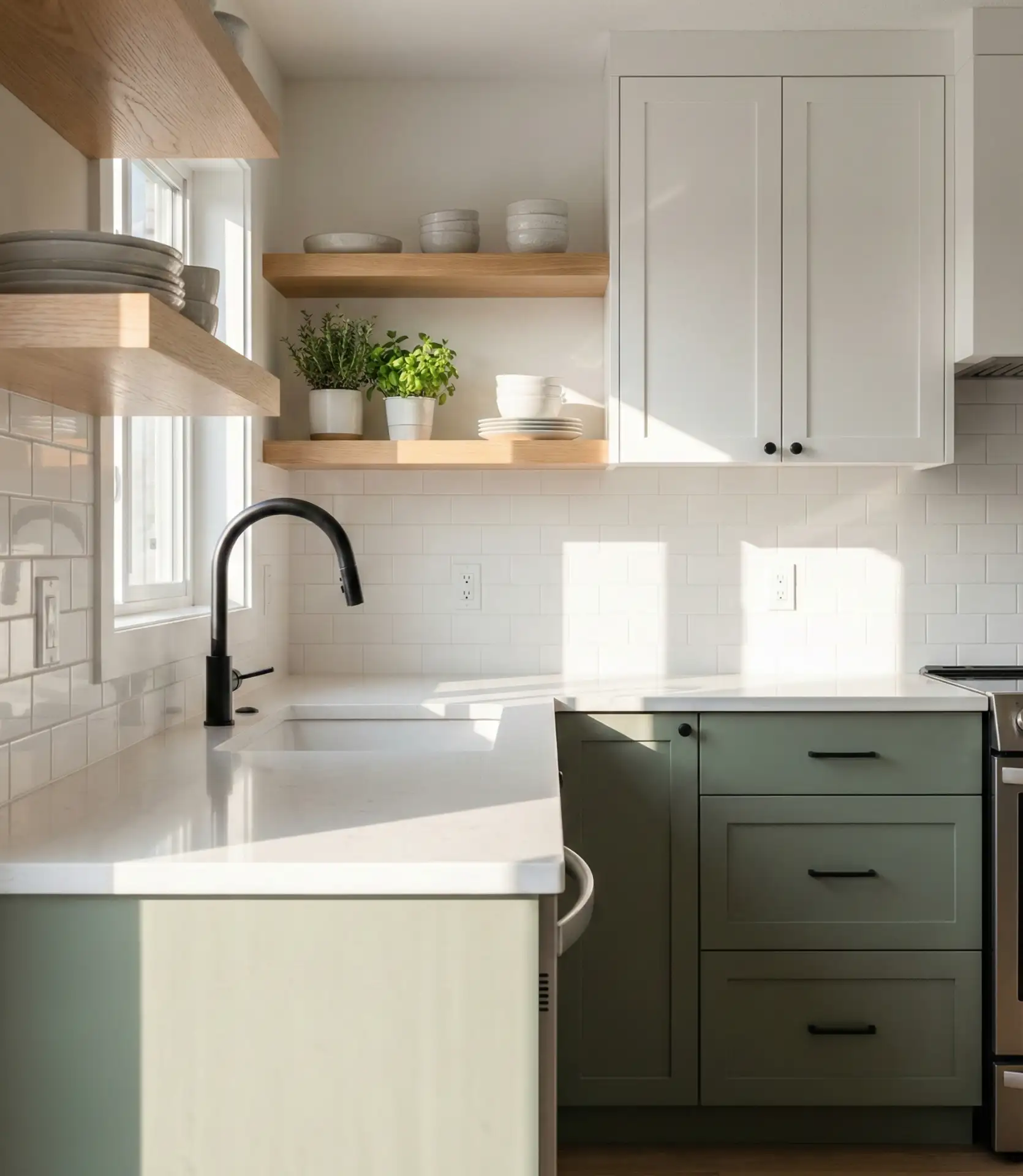
One common mistake is choosing a sage green that’s too yellow-based, which can appear dingy or dated in certain lighting conditions. Test your paint samples in both natural and artificial light, and look for greens with gray or blue undertones that maintain their sophistication throughout the day. In southern-facing kitchens with abundant warm light, cooler sage tones prevent the space from feeling too yellow or washed out.
7. White and Wood Scandinavian Style

The Scandinavian approach to white kitchens emphasizes natural wood elements, creating spaces that feel warm, minimal, and deeply functional. Light woods like birch, ash, or white oak complement white cabinetry without creating harsh contrast, resulting in a gentle, cohesive aesthetic. This style prioritizes quality over quantity, with clean-lined cabinets, thoughtful storage solutions, and carefully curated accessories. Open shelving in natural wood, wood countertops, or wood-toned flooring introduces organic texture while maintaining the bright, uncluttered feel central to Nordic design.
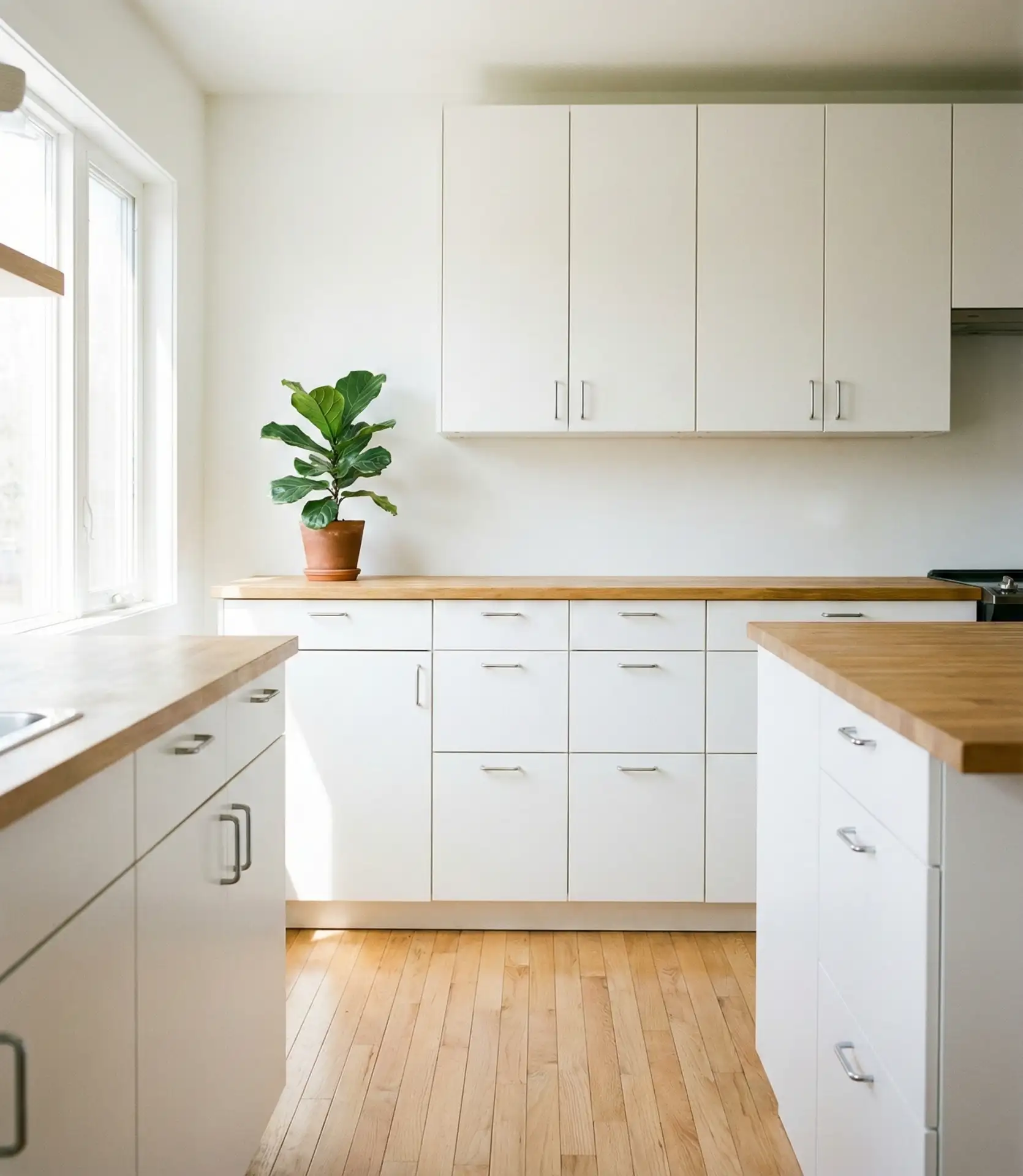
This aesthetic works particularly well in urban apartments and smaller homes where maximizing light and creating a sense of spaciousness is essential. The combination of white and light wood reflects light beautifully, making even compact kitchens feel larger and more open. Across the Midwest and Northeast, where winter days are short and dark, homeowners increasingly gravitate toward this bright, uplifting palette that combats seasonal gloom.
8. White Kitchen with Blue Island
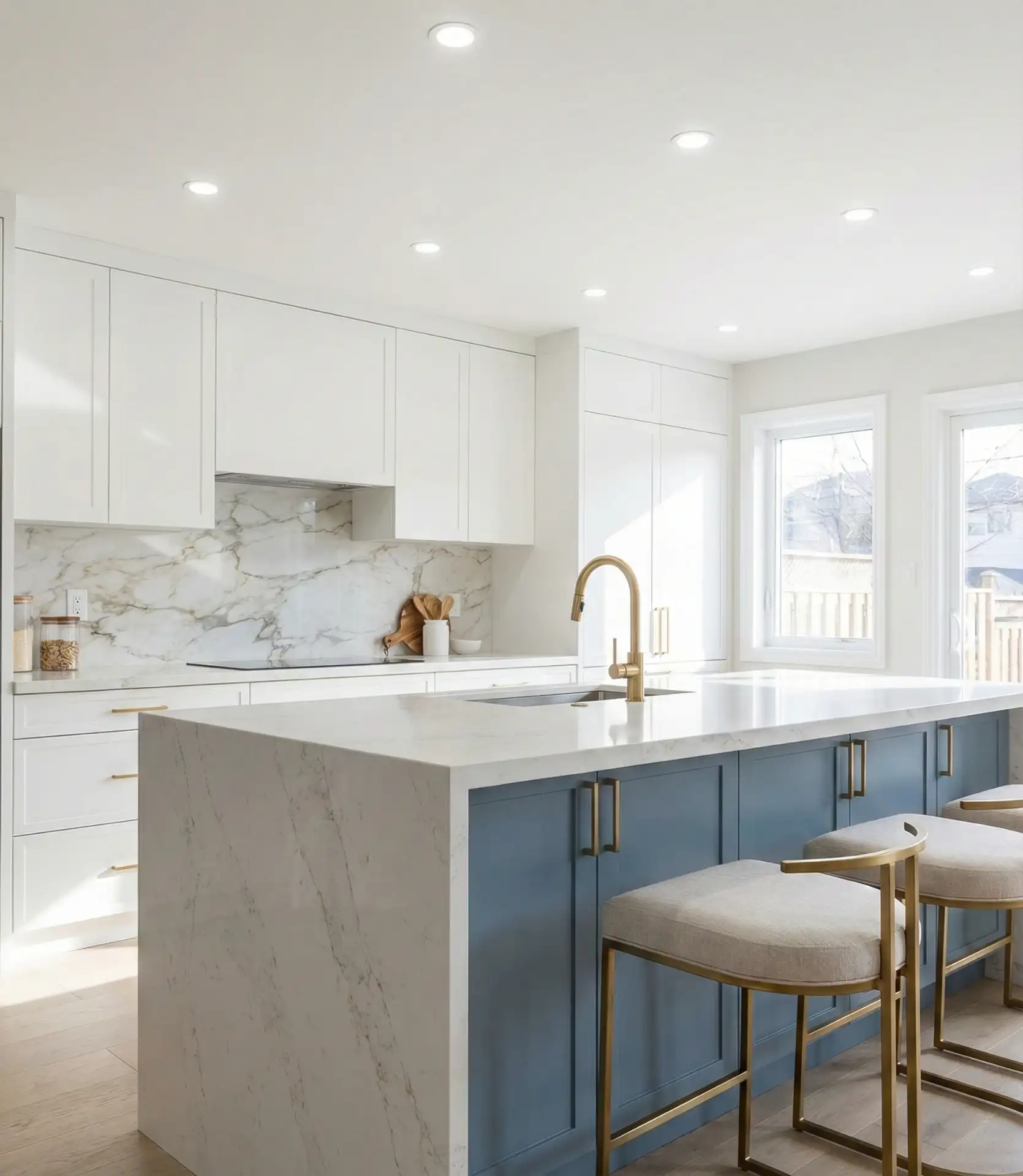
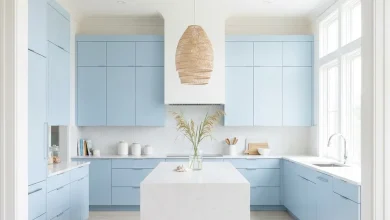
A blue kitchen island serves as a statement piece within an otherwise white kitchen, creating a natural gathering point and visual anchor. From powder blue to royal blue to slate, the range of blue tones offers something for every style preference. The island’s color creates separation between cooking and socializing zones while maintaining overall cohesion through the white perimeter cabinets. This approach allows homeowners to incorporate trend-forward colors in a manageable way—if tastes change, repainting an island is far simpler than replacing an entire kitchen.
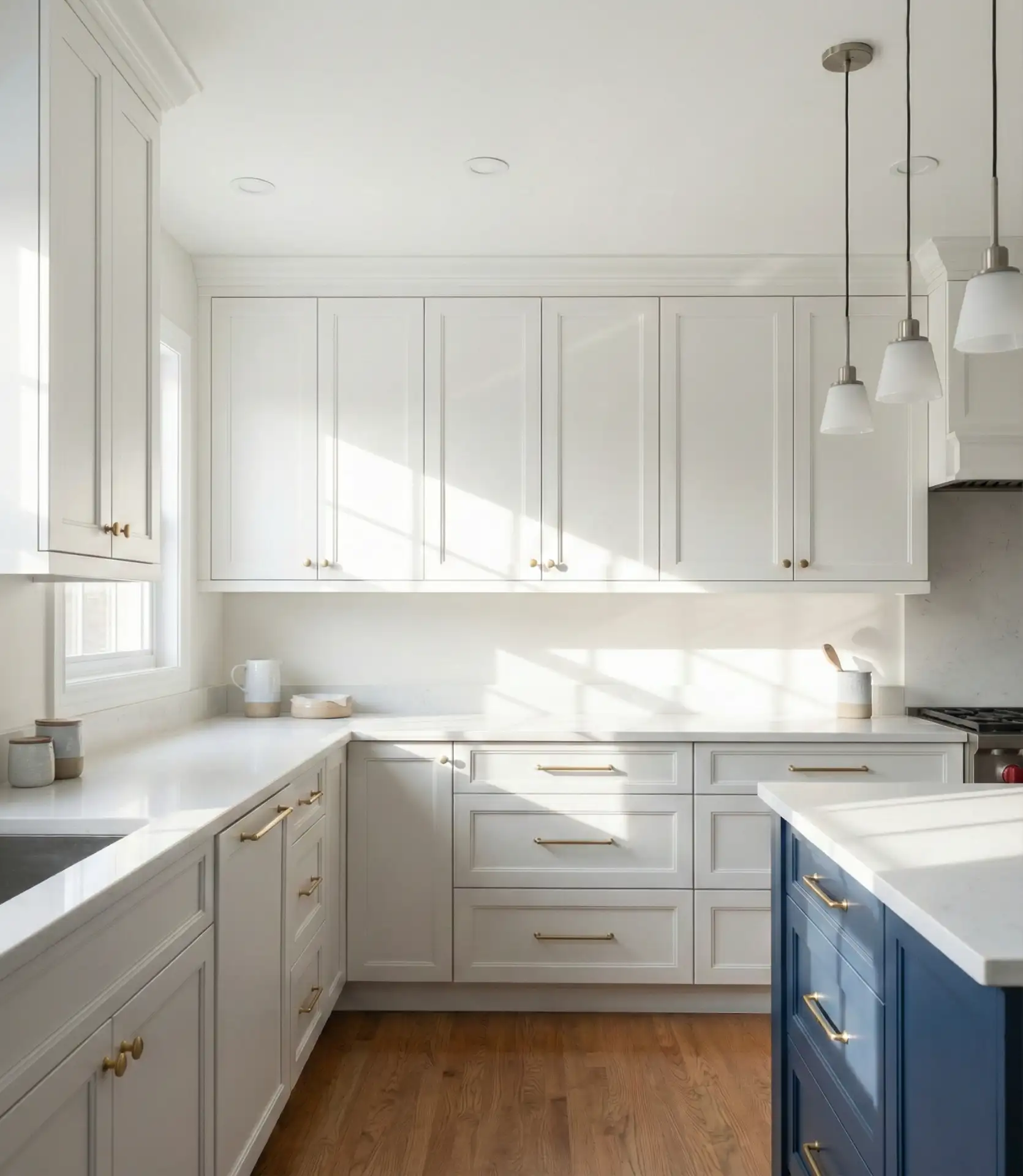
In New England coastal homes, designers report that homeowners often request variations of classic blues that reference the ocean and sky without being too literal or nautical. The blue island grounds the space and provides a counterpoint to all the white, preventing the kitchen from feeling too sterile or builder-basic. Consider how the blue will interact with your flooring and backsplash—cooler blues pair well with gray tones, while warmer blues complement beige and cream elements.
9. White Cabinets with Grey Accents

The combination of white cabinets with grey elements creates a sophisticated, neutral palette that feels current without being trendy. Gray can appear in countertops, backsplashes, islands, or flooring, providing subtle contrast that adds depth to the space. This pairing works across all design styles, from traditional to contemporary, making it a versatile choice for homeowners who want a kitchen that will remain relevant for years. The key is choosing the right gray tone—cool grays with blue undertones create a crisp, modern look, while warm grays with beige undertones feel softer and more transitional.
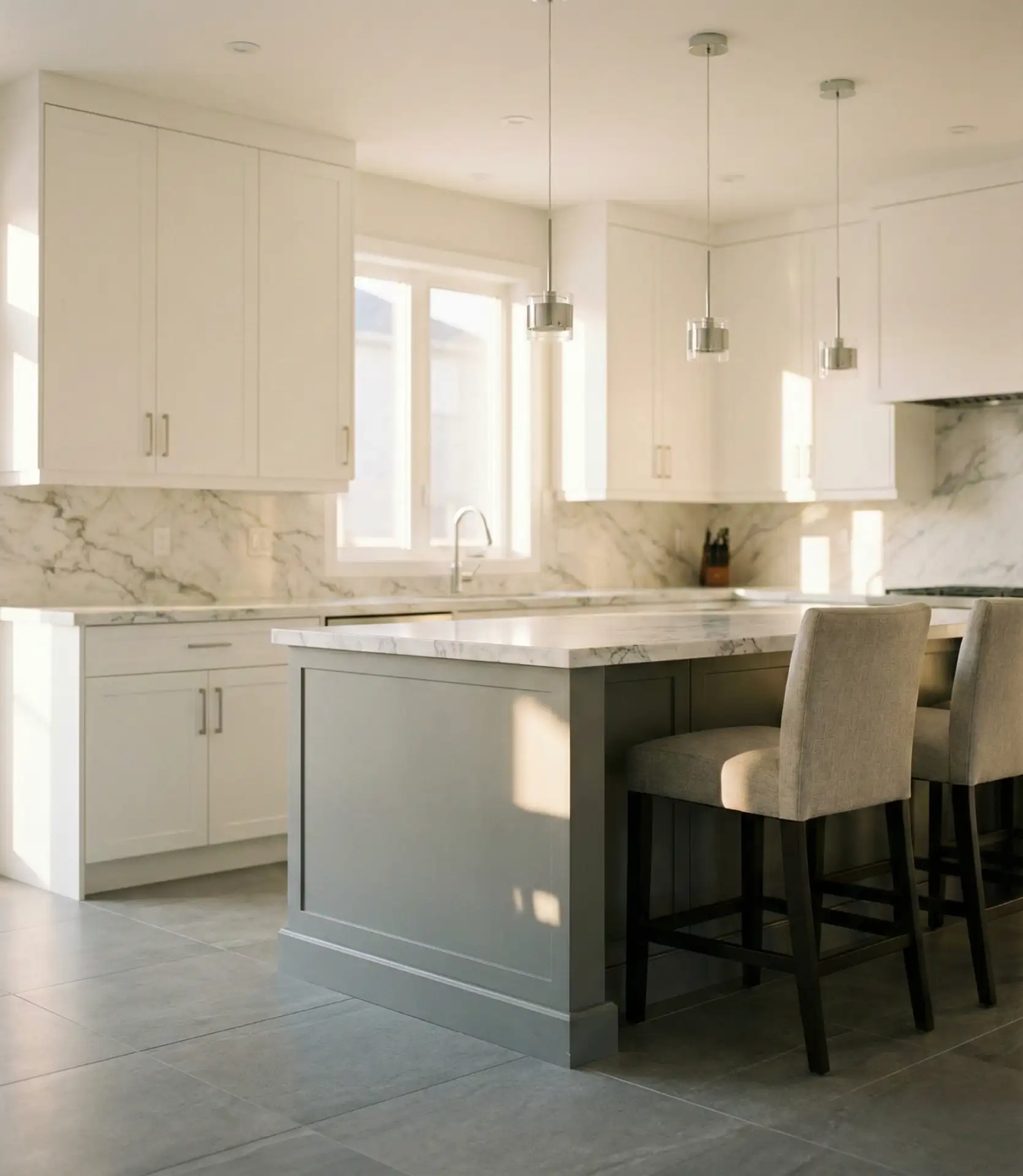
Real estate agents consistently note that white-and-gray kitchens appeal to the broadest range of buyers, making them a smart choice for anyone planning to sell within five to seven years. The neutral palette serves as a backdrop that allows buyers to envision their own belongings and style preferences without having to imagine significant changes. This combination also photographs exceptionally well for listing photos, appearing clean and well-maintained across various lighting conditions.
10. White Kitchen with Oak Flooring
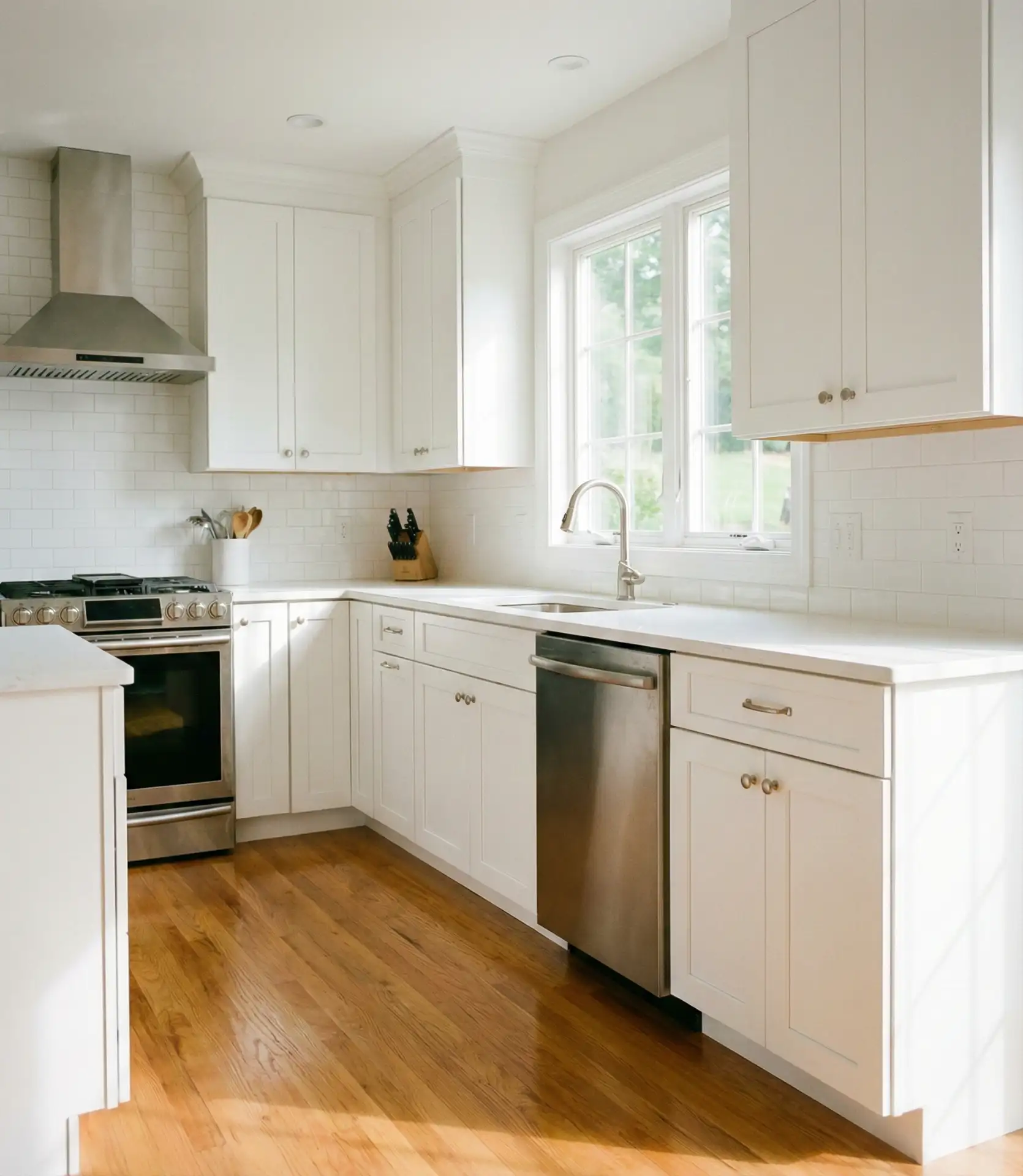
Natural oak flooring brings warmth and character to white kitchens, creating a foundation that prevents the space from feeling cold or institutional. The prominent grain pattern and honey tones of oak add organic texture underfoot while complementing white cabinetry beautifully. Wide-plank oak, in particular, has experienced a resurgence as homeowners move away from gray flooring toward warmer, more traditional wood tones. The durability of oak makes it practical for high-traffic kitchen areas, and its ability to be refinished means the floor can evolve with changing design preferences.
Many homeowners initially worry that oak flooring might appear too traditional or dated, but the finish makes all the difference. Natural or light-stained oak reads as fresh and modern, especially when paired with contemporary cabinet styles and hardware. The warmth of oak also helps white kitchens feel more inviting and livable, particularly in northern climates where creating cozy, comfortable spaces is a priority during long winters.
11. White Kitchen with Wood Island
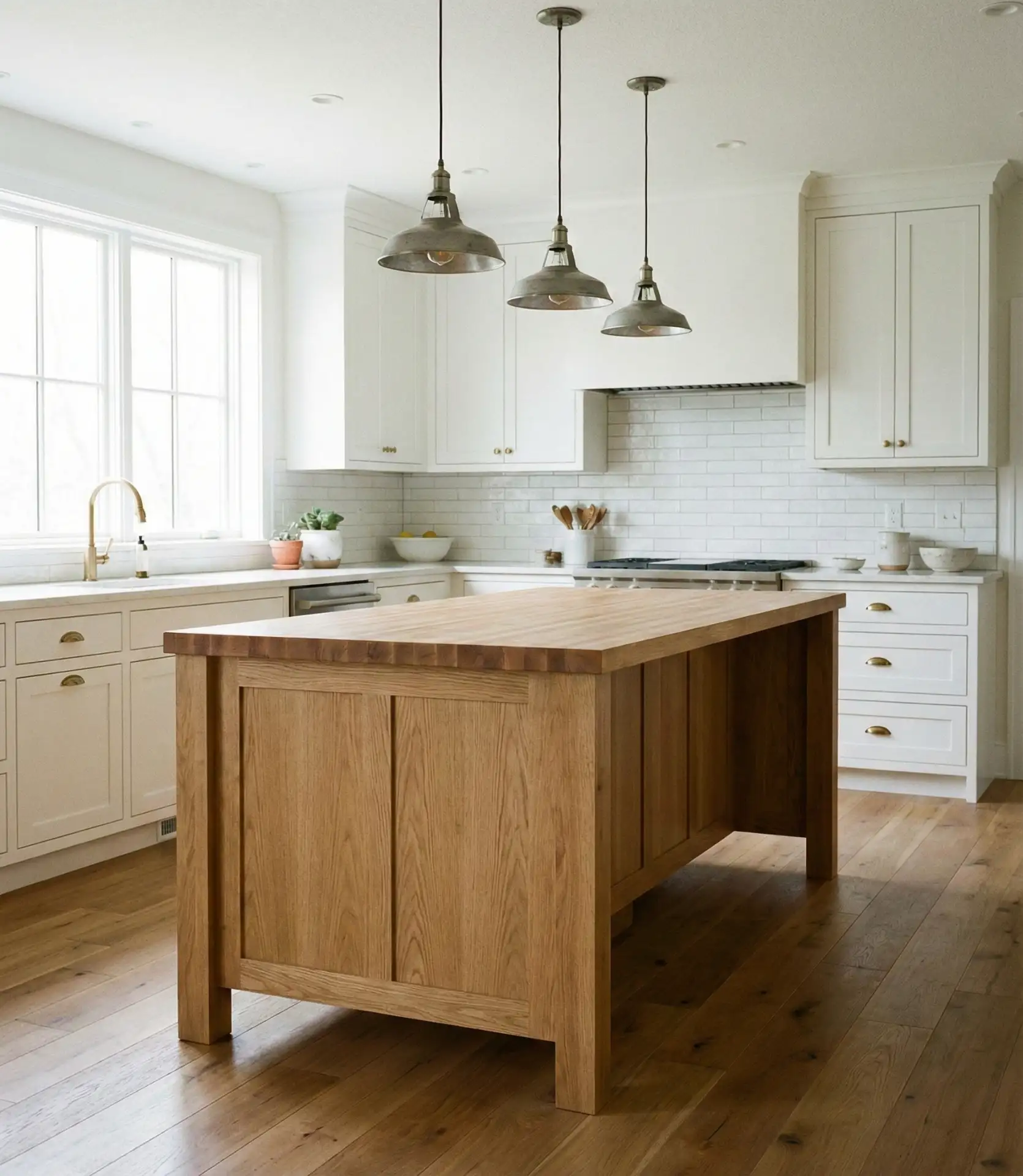
A wood island creates a stunning focal point in an otherwise white kitchen, introducing natural texture and a furniture-like quality to the space. Whether crafted from reclaimed barn wood, rich walnut, or light oak, the wood island establishes the kitchen as a gathering place while providing a warm counterpoint to white cabinets. This approach works particularly well in open-plan homes where the island serves as a transition between kitchen and living areas. The wood can extend to the countertop, the base, or both, depending on the desired level of contrast and warmth.
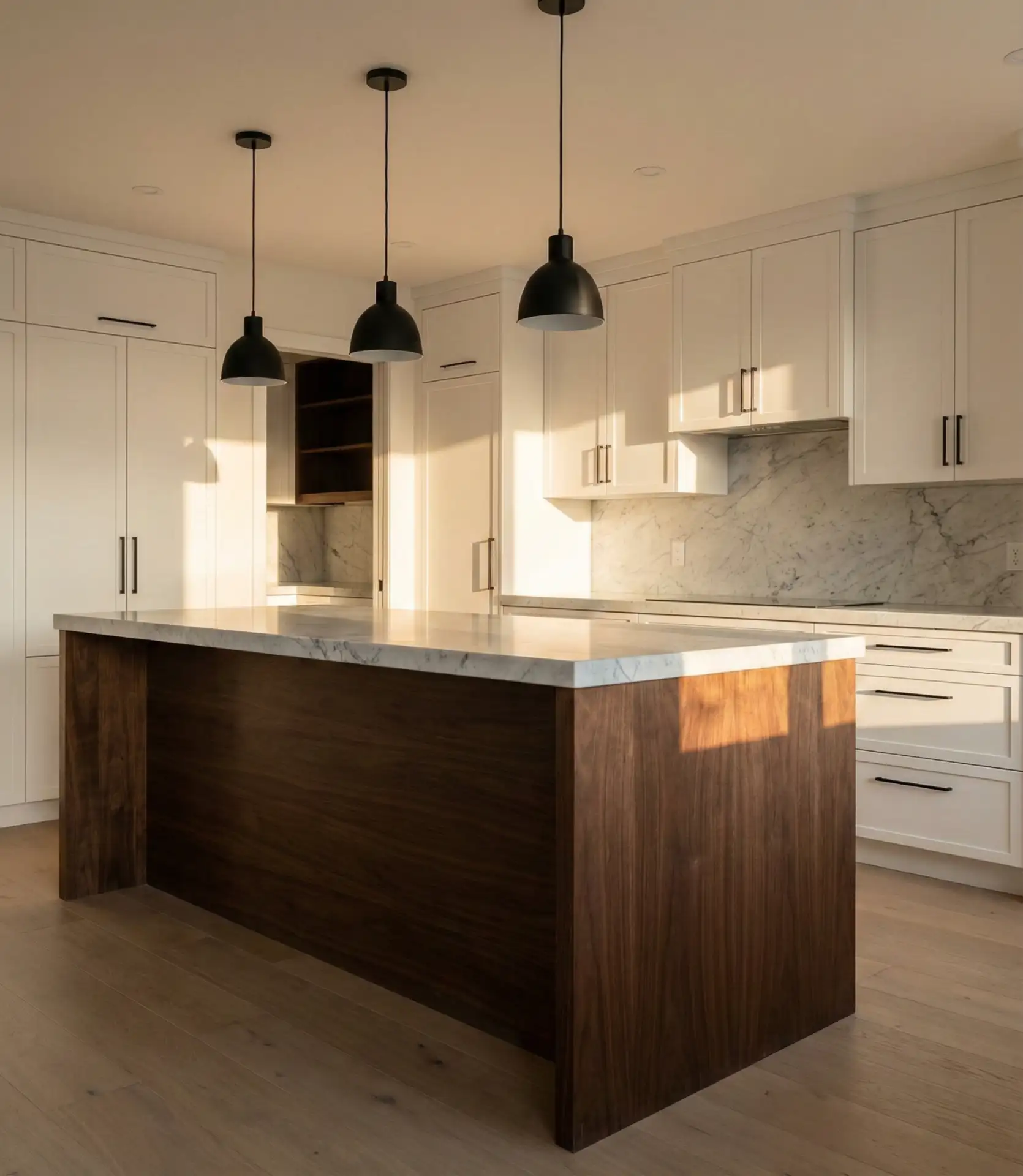
A contractor in Austin mentioned that wood islands have become standard requests in new construction, with homeowners specifically asking for this feature before walls are even framed. The wood element signals that the kitchen is more than just a utilitarian workspace—it’s a central hub designed for family meals, homework sessions, and entertaining. The natural variations in wood grain ensure that each island is unique, adding character that can’t be replicated with painted finishes.
12. White Kitchen with Brown Wood Tones
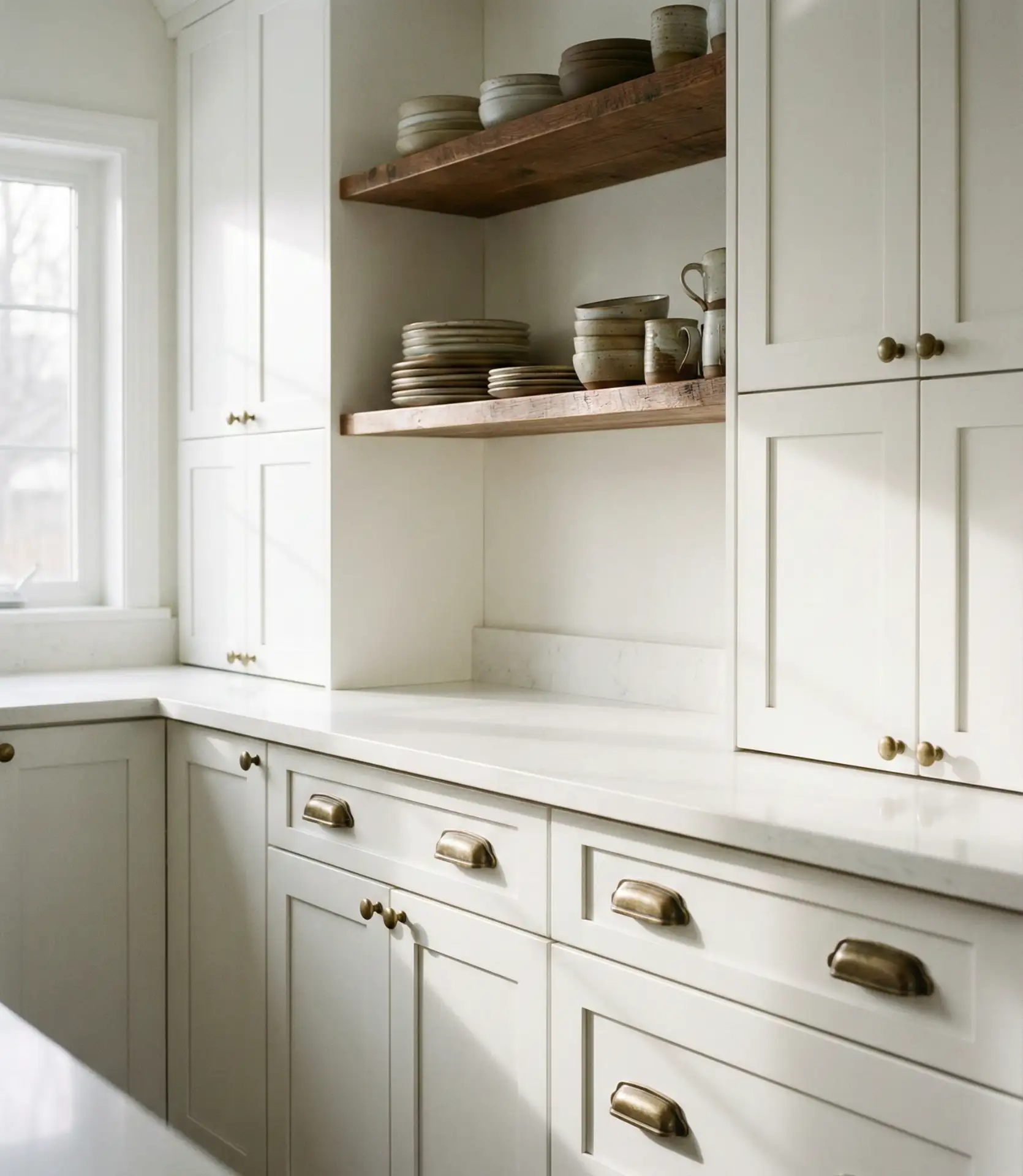
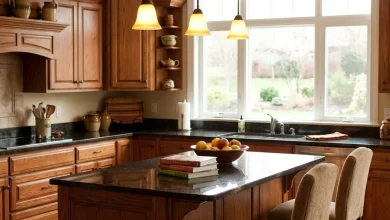
Incorporating brown wood elements into white kitchens creates a warm, inviting atmosphere that feels both timeless and approachable. From medium-toned cherry to deep walnut, brown woods provide depth and richness without competing with the clean simplicity of white cabinetry. These tones work beautifully in open shelving, range hoods, ceiling beams, or as a contrasting material for a kitchen island. The warmth of brown wood makes white kitchens feel more lived-in and less showroom-perfect, which many homeowners find appealing.

In the Southwest, where Spanish Colonial and Adobe influences remain strong, designers often incorporate darker wood tones to reference traditional vigas and create visual weight in high-ceilinged spaces. The brown wood anchors the white and prevents it from feeling too stark against the region’s intense sunlight. This combination also ages gracefully—as the wood develops patina and the white shows gentle wear, the kitchen gains character rather than appearing dated.
13. White Kitchen with Beige Warmth
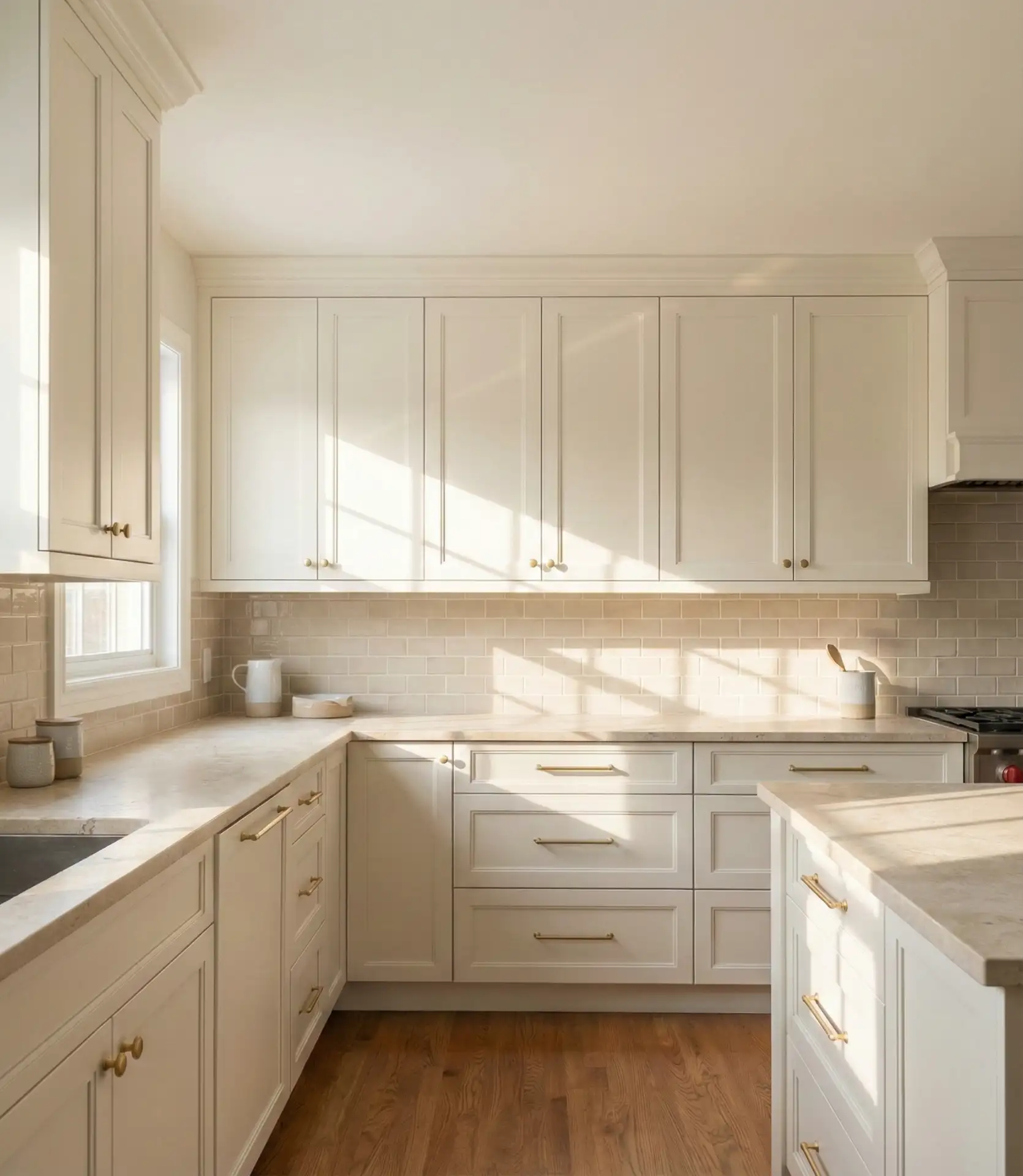
The pairing of white with beige tones creates a soft, sophisticated palette that feels warm and welcoming without relying on stark contrast. Beige can appear in countertops, backsplashes, flooring, or even in warmer-toned white cabinets with cream undertones. This combination works beautifully in traditional and transitional kitchens where a gentle, layered approach is preferred over bold statements. The neutral-on-neutral scheme creates a sense of continuity and calm, making the kitchen feel like a serene retreat rather than a high-energy workspace.
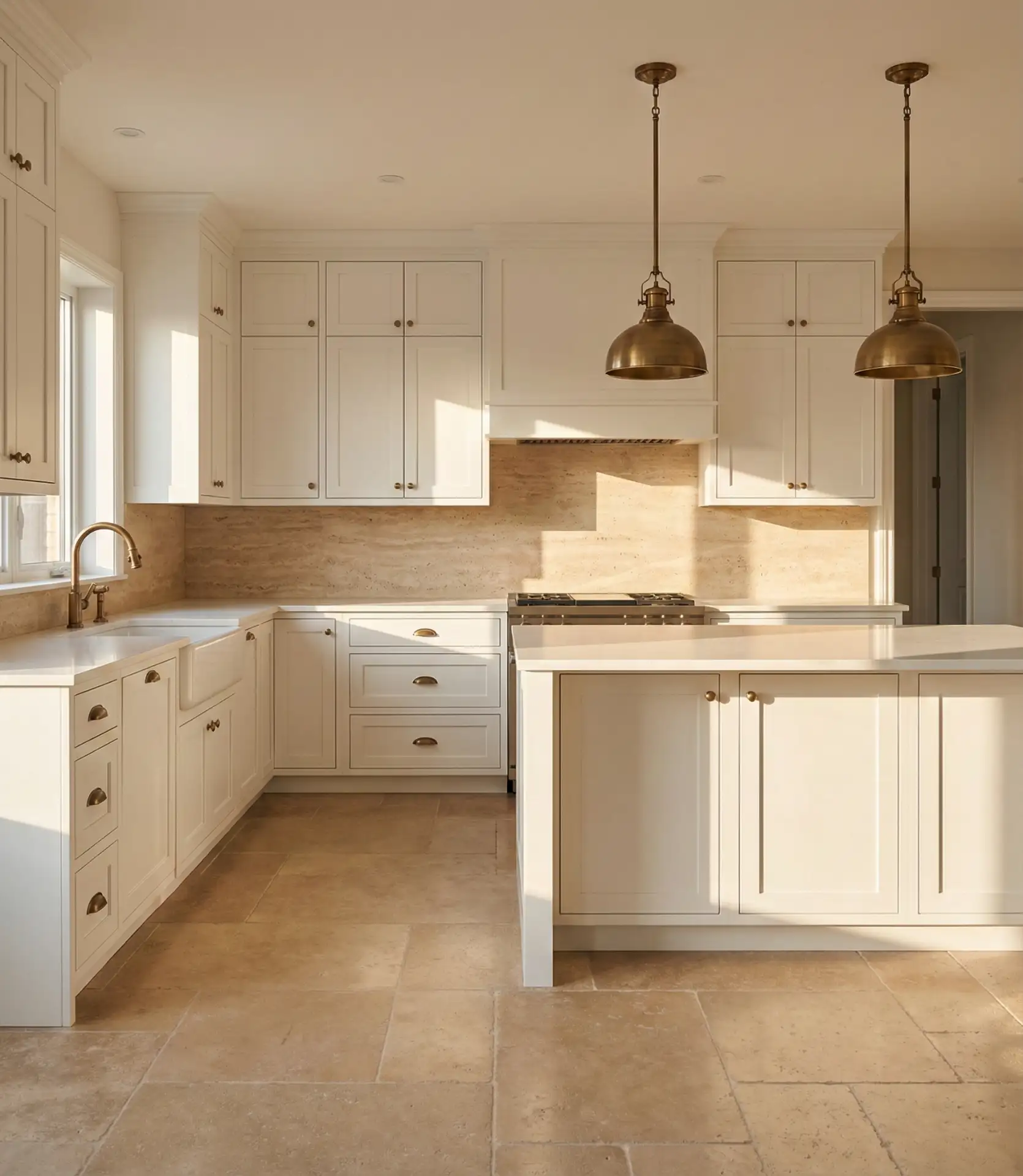
Homeowners frequently underestimate how much warmth matters in a kitchen, especially in northern climates where the space needs to feel cozy during long winter months. Beige tones introduce that warmth without requiring bold color commitments, creating a backdrop that makes people want to linger over morning coffee or weekend meal prep. This palette also complements a wide range of decorating styles, from French country to coastal to modern farmhouse.
14. White Cabinets with Pink Accents
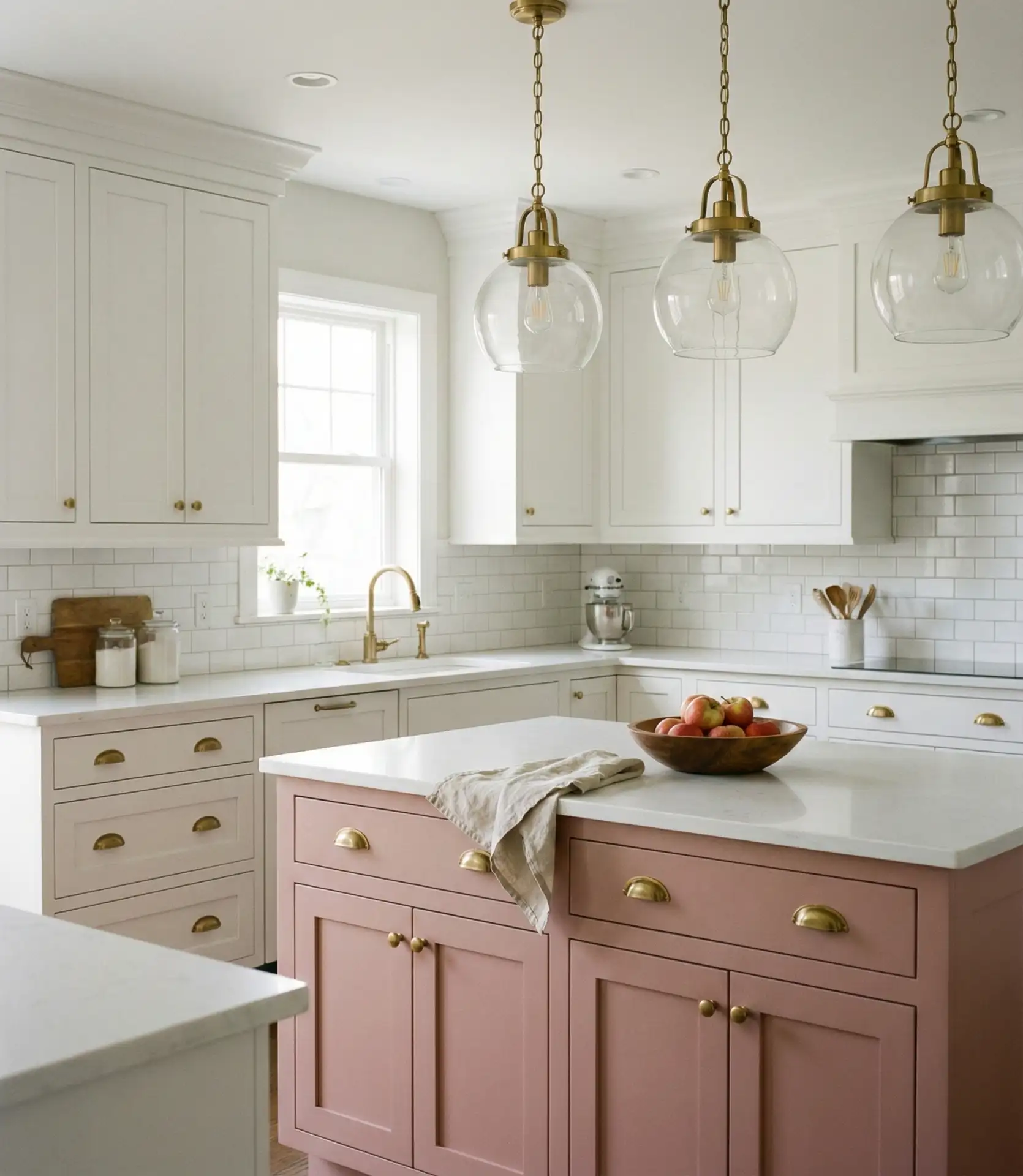
Dusty pink has emerged as an unexpected but sophisticated accent color in white kitchens, bringing a subtle blush that feels both modern and romantic. From terracotta-leaning pinks to cooler mauve tones, this color family adds personality without overwhelming the space. Pink works beautifully as an island color, in backsplash tiles, or through accessories and textiles. The key is choosing muted, complex pinks rather than bright or bubblegum tones—these sophisticated shades pair beautifully with brass hardware, natural wood, and white marble.
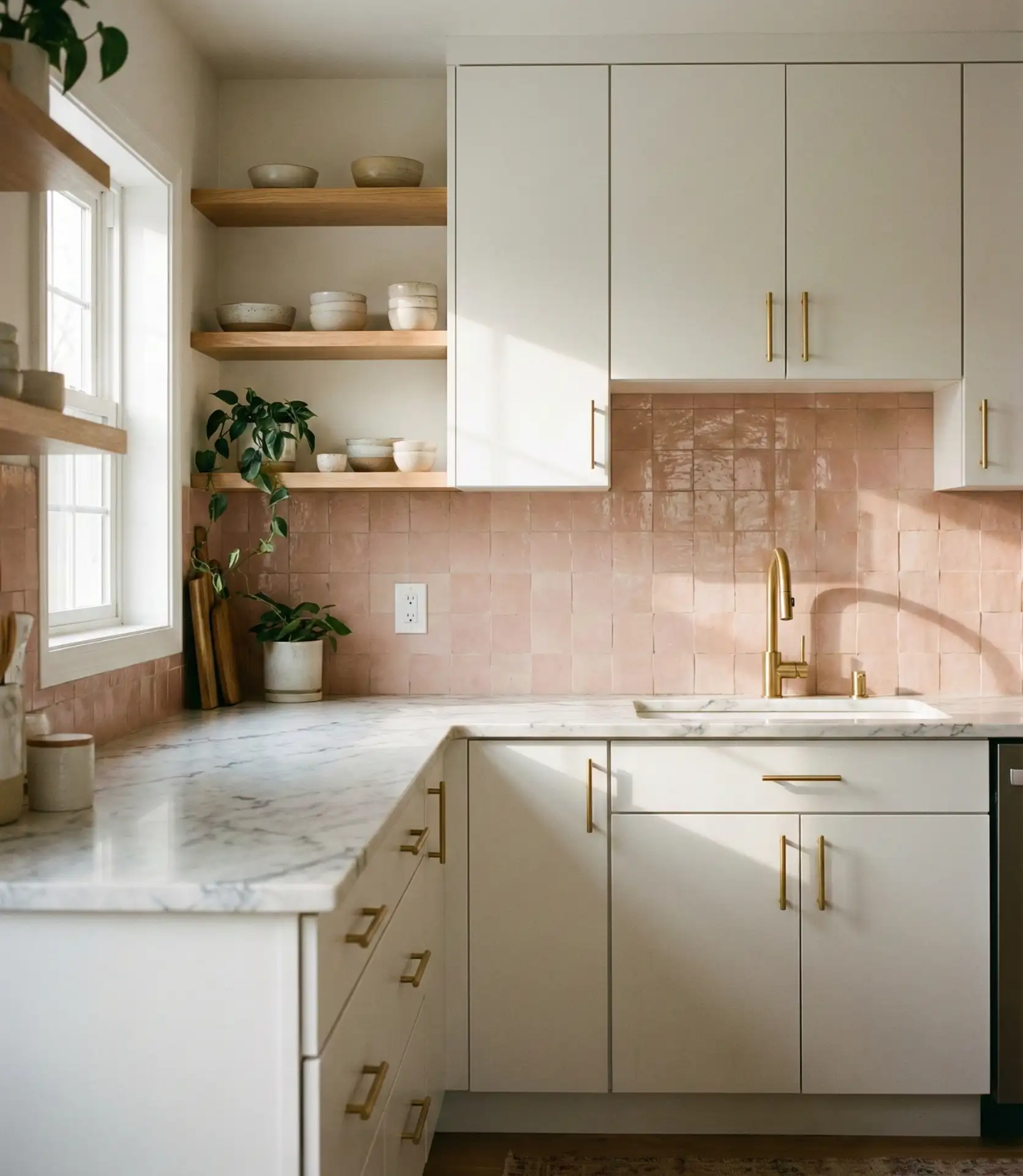
This trend works best in kitchens with abundant natural light, where the pink can shift throughout the day, appearing more coral in morning sun and more mauve in evening light. In California and the Pacific Northwest, where soft, nature-inspired palettes dominate, pink has become increasingly popular as homeowners seek alternatives to the ubiquitous blue and green accents. The color photographs beautifully and adds an element of surprise that makes white kitchens memorable.
15. Minimalist White Kitchen with Integrated Appliances
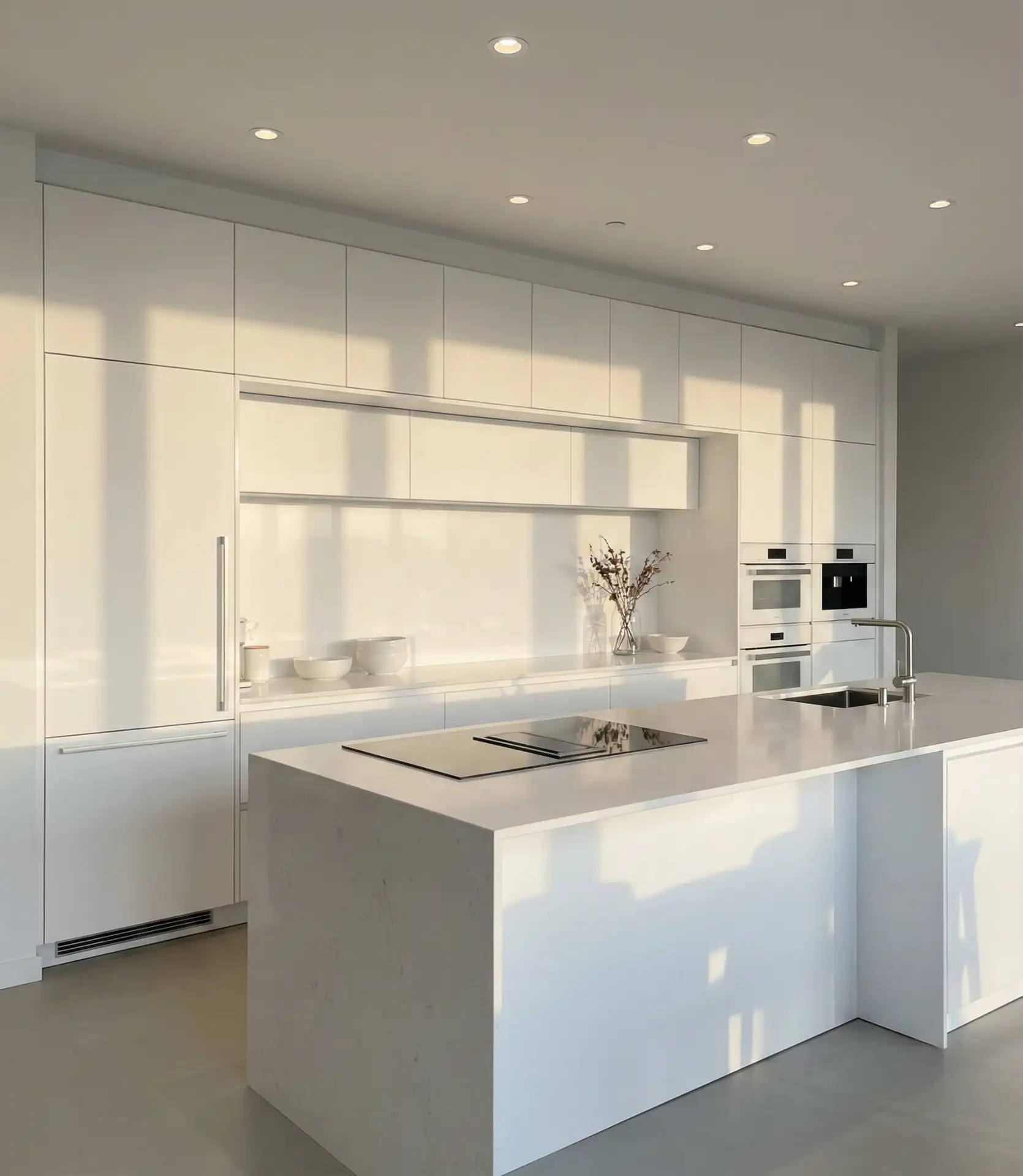
Concealing appliances behind matching white cabinet panels creates a seamless, minimalist aesthetic that emphasizes architectural lines over equipment. Panel-ready refrigerators, dishwashers, and even range hoods disappear into the cabinetry, resulting in a kitchen that feels more like a carefully designed room than a functional workspace. This approach has gained traction in urban lofts and contemporary homes where clean, uninterrupted surfaces are prized. The uniformity of white cabinets creates a calm visual field that allows other elements—a beautiful backsplash, statement lighting, or natural textures—to take center stage.
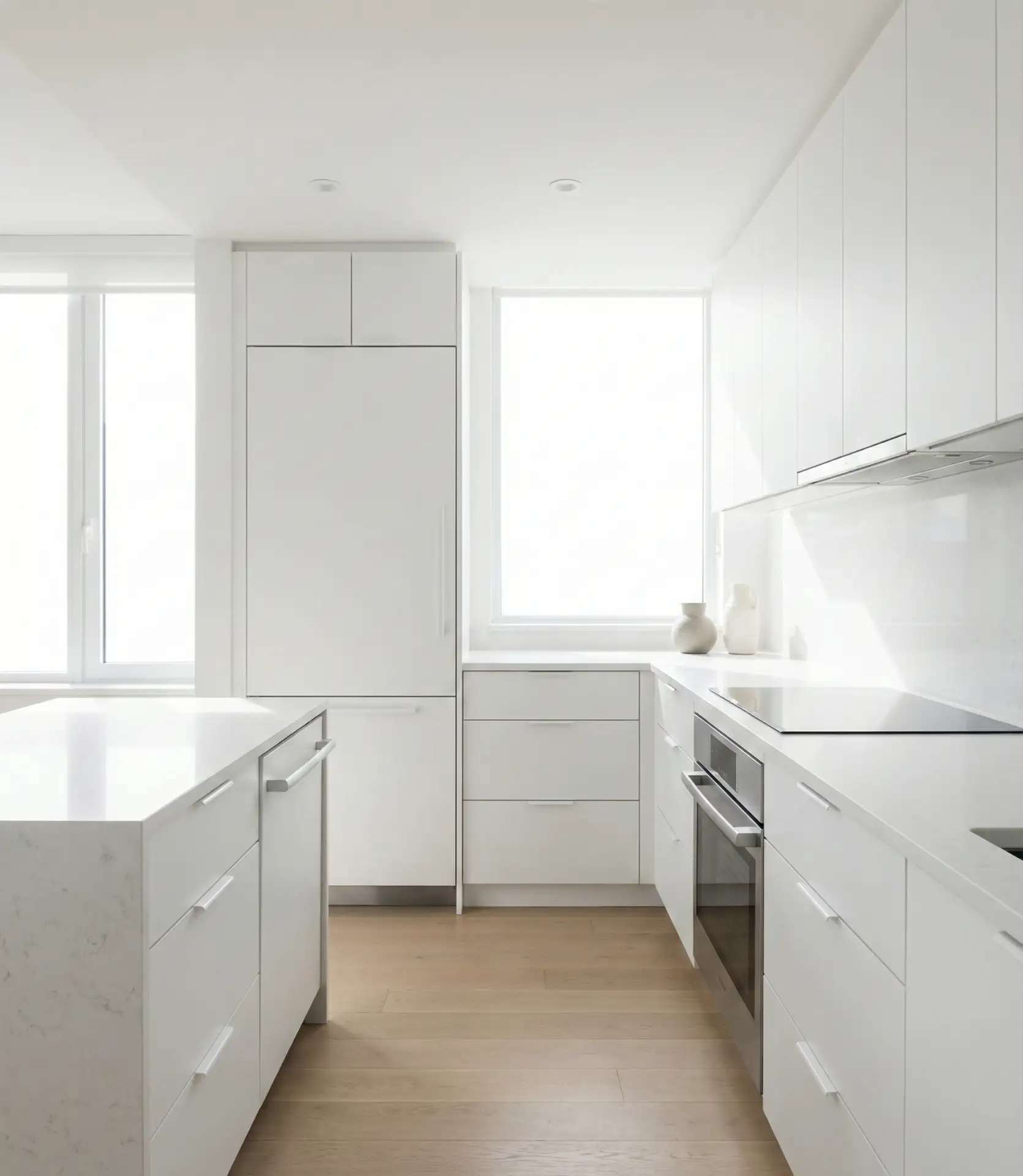
While panel-ready appliances typically cost 20-40% more than standard models, many homeowners consider the investment worthwhile for the cohesive look it creates. The streamlined appearance also makes small kitchens feel larger by eliminating visual clutter and creating continuous lines. In high-end markets like San Francisco and New York, integrated appliances have become expected features in renovation projects, with buyers specifically seeking this level of finish and design integration.
16. White Kitchen with Green and Natural Materials

Combining white cabinets with green elements and natural materials creates a kitchen that feels connected to the outdoors. Think sage green islands paired with white uppers, natural stone countertops, and wood accents that bring organic texture into the space. This approach works particularly well in homes with garden views or in neighborhoods where bringing the outside in is a design priority. The green tones reference foliage and landscape, while the natural materials add authenticity and warmth that prevent the white from feeling sterile.
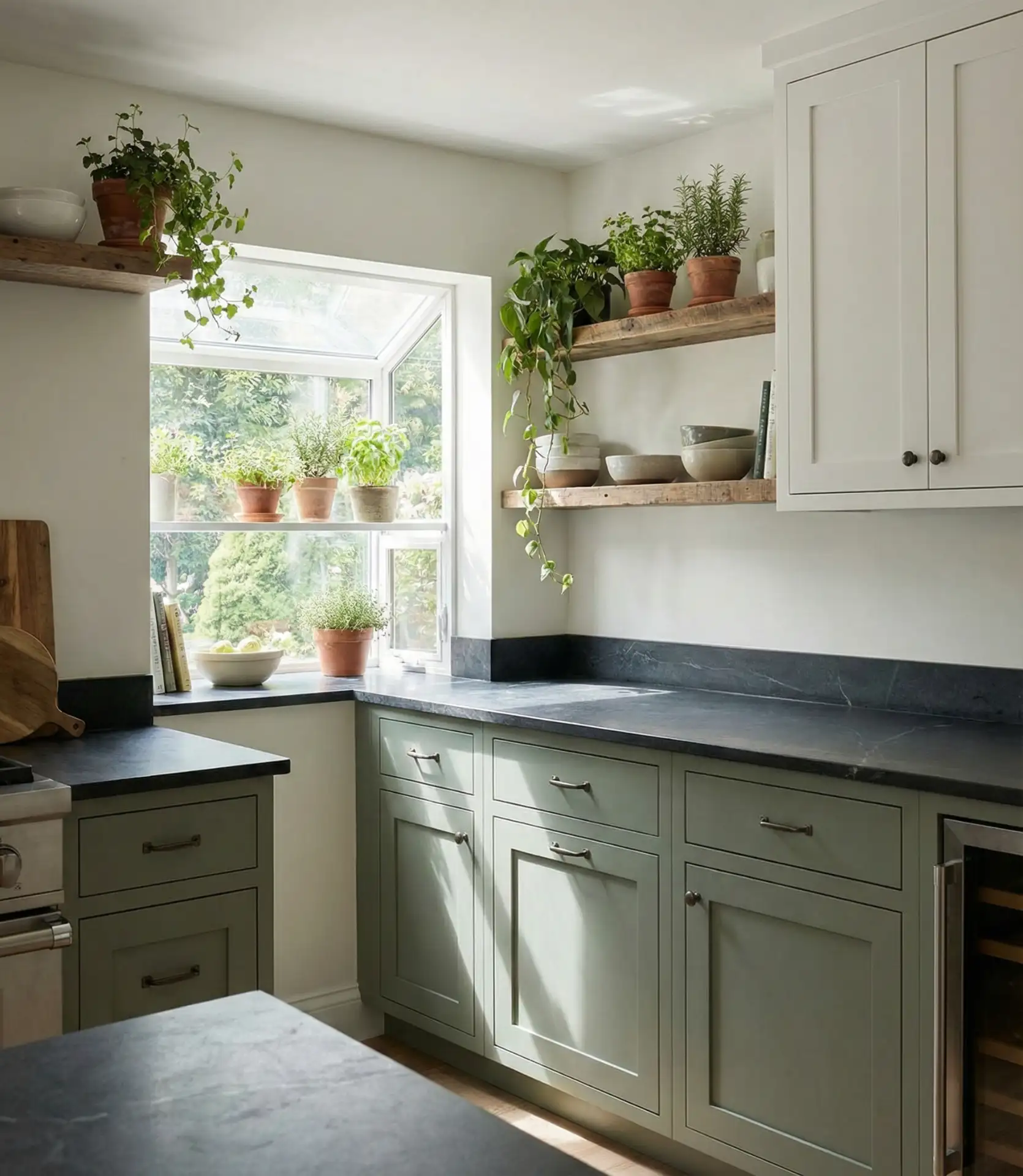
A landscape architect working on kitchen renovations in Vermont notes that clients increasingly request this palette to maintain visual continuity with surrounding forests and fields. The green serves as a bridge between interior and exterior spaces, making the kitchen feel like part of a larger ecosystem rather than a sealed domestic box. Natural materials like limestone, granite, and wood reinforce this connection and introduce texture that makes the white feel layered and intentional.
17. White Shaker Cabinets with Statement Backsplash Ideas
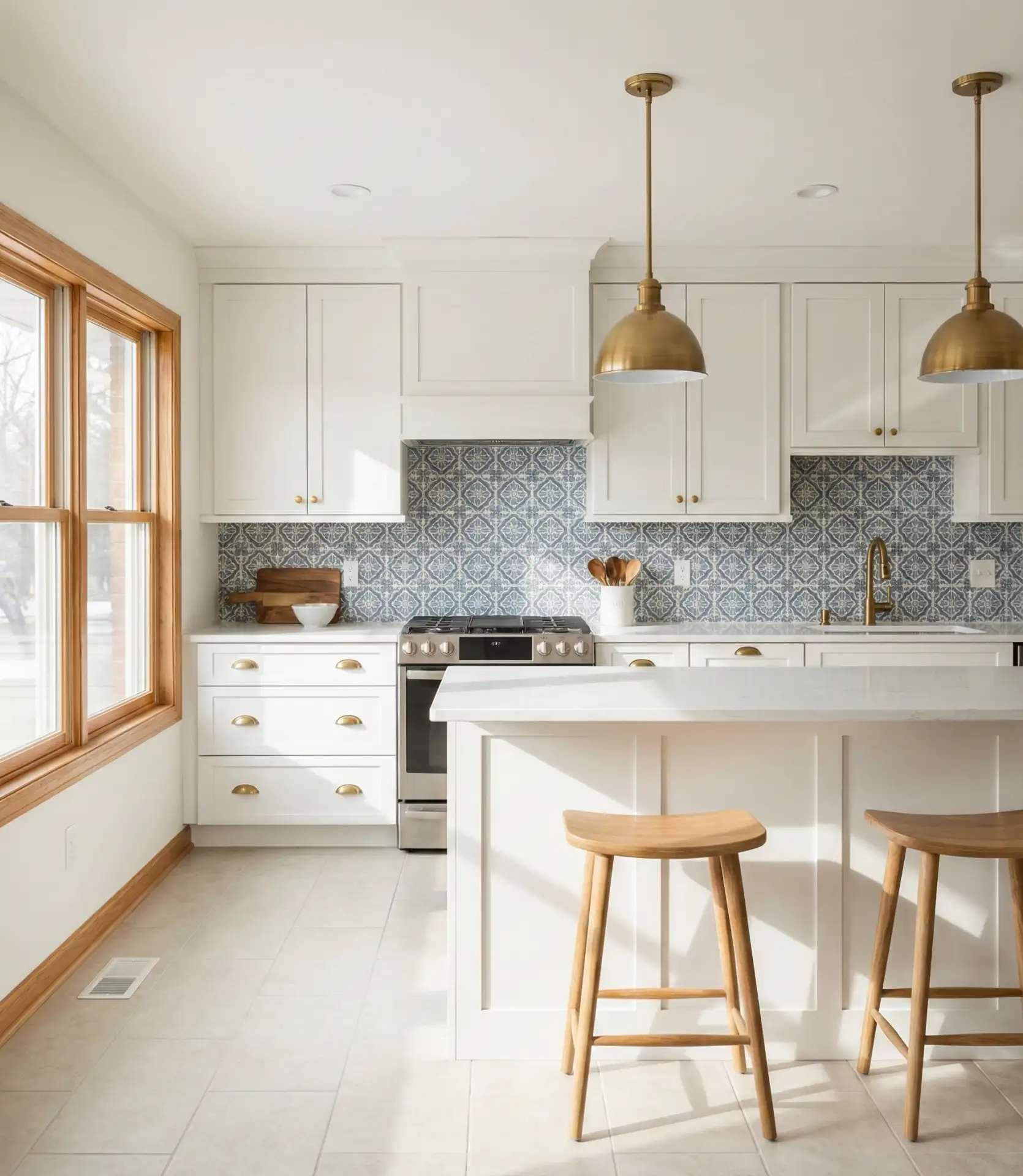
Classic white shaker cabinets provide the perfect neutral backdrop for adventurous backsplash ideas—from patterned cement tiles to dramatic marble slabs to handmade ceramic. The simplicity of shaker doors doesn’t compete with ornate or colorful backsplashes, allowing the tile work to become the kitchen’s focal point. This approach lets homeowners express personality and follow trends without committing to colored cabinetry. When tastes change, replacing a backsplash is far simpler and less expensive than replacing cabinets, making this a smart strategy for those who like to refresh their spaces periodically.
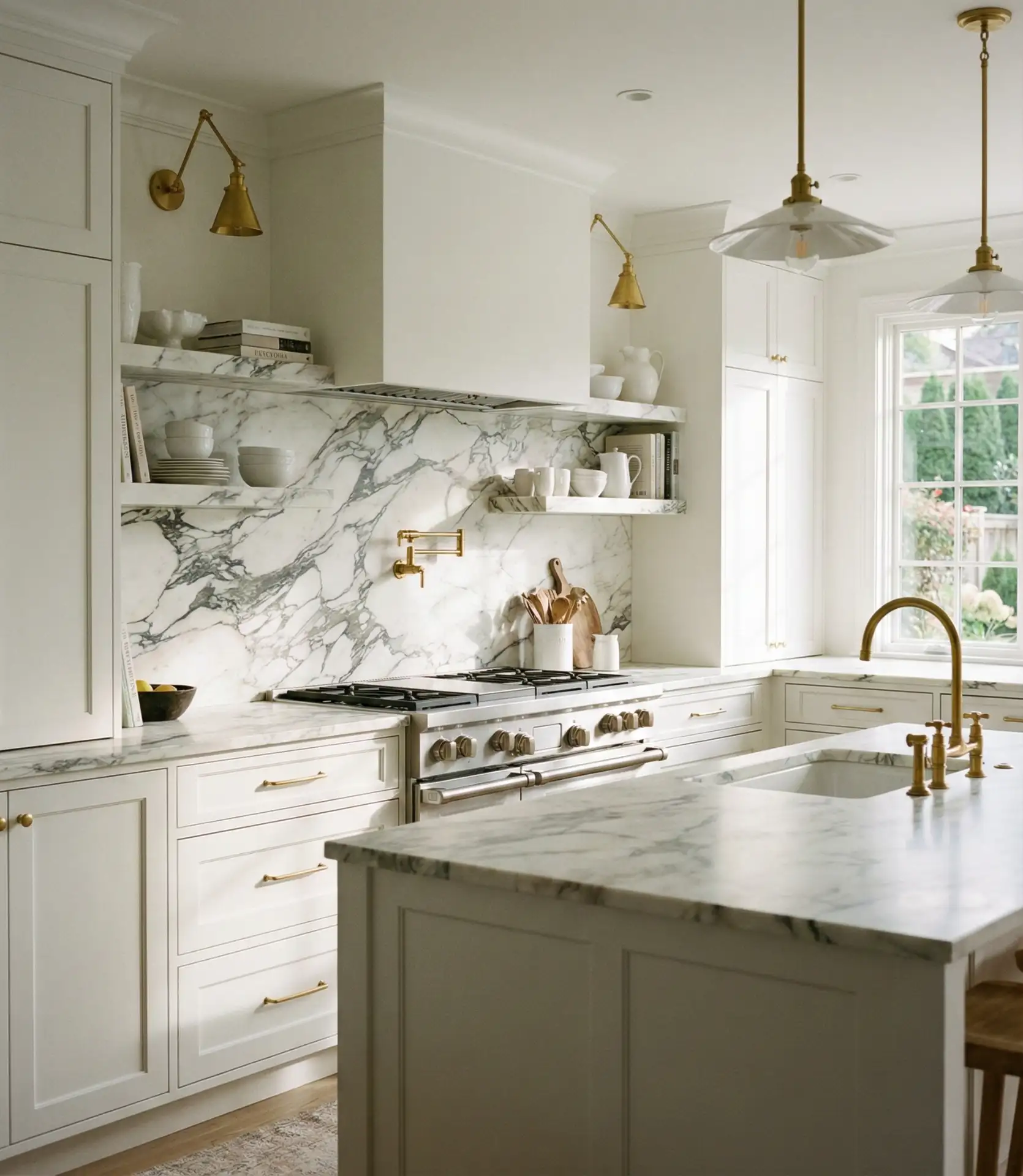
Pinterest saves for white shaker kitchens with bold backsplashes have increased by 68% year-over-year, indicating strong consumer interest in this approach. The backsplash offers an opportunity to incorporate pattern, color, or texture without overwhelming the space, making it ideal for homeowners who want visual interest but want to maintain overall brightness. Consider how the backsplash will read in photographs—many homeowners choose distinctive patterns specifically because they photograph well for social media sharing.
18. White Kitchen with Gray and Wood Balance
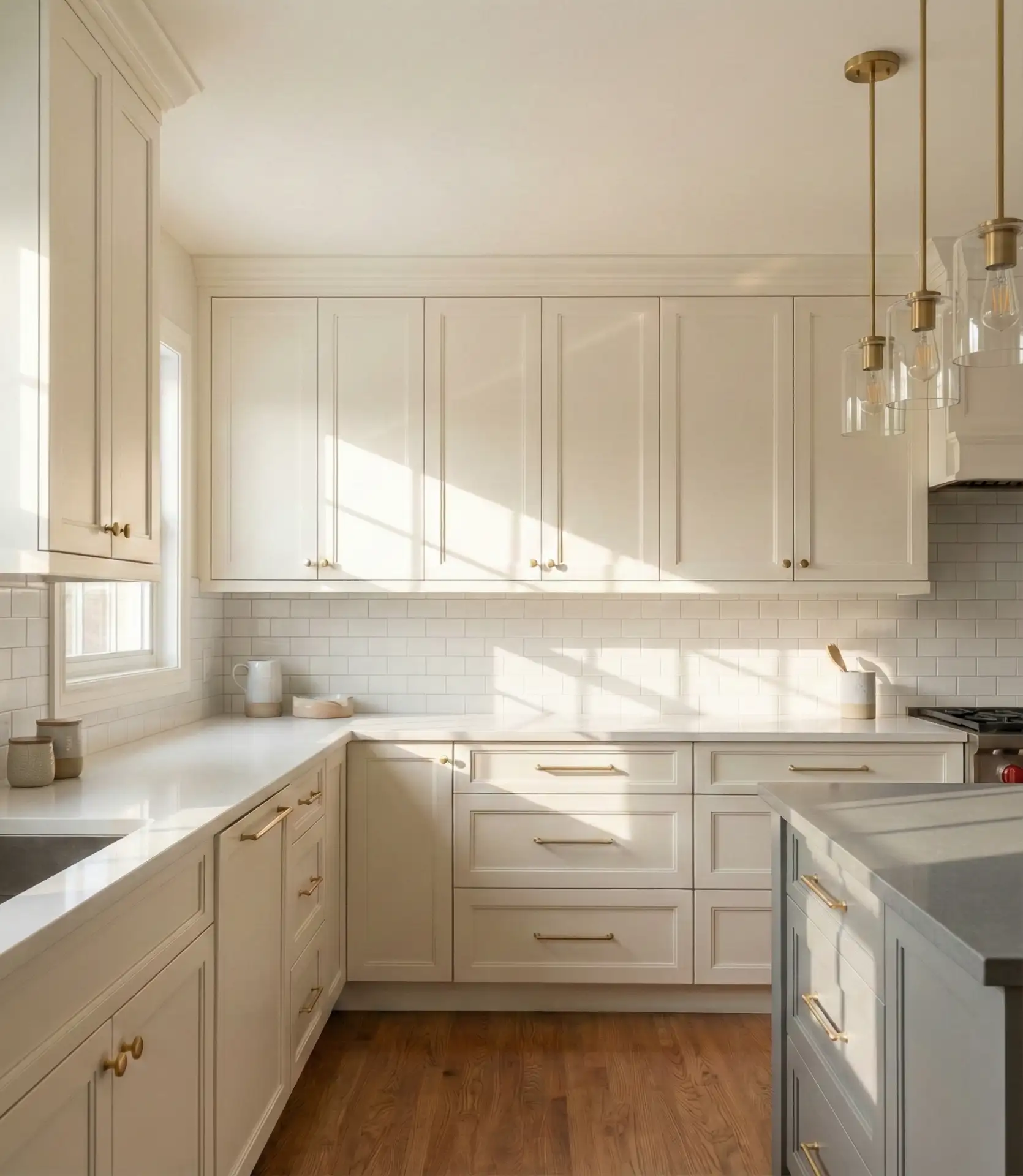
The trio of white, gray, and wood creates a balanced, versatile palette that works across multiple design styles. White cabinets provide brightness, gray adds subtle sophistication through counters or islands, and wood introduces warmth through flooring or accents. This three-part harmony prevents the kitchen from feeling too cool or too warm, too modern or too traditional. The combination is particularly popular in suburban homes where homeowners want a contemporary feel without alienating potential buyers who prefer more traditional aesthetics.
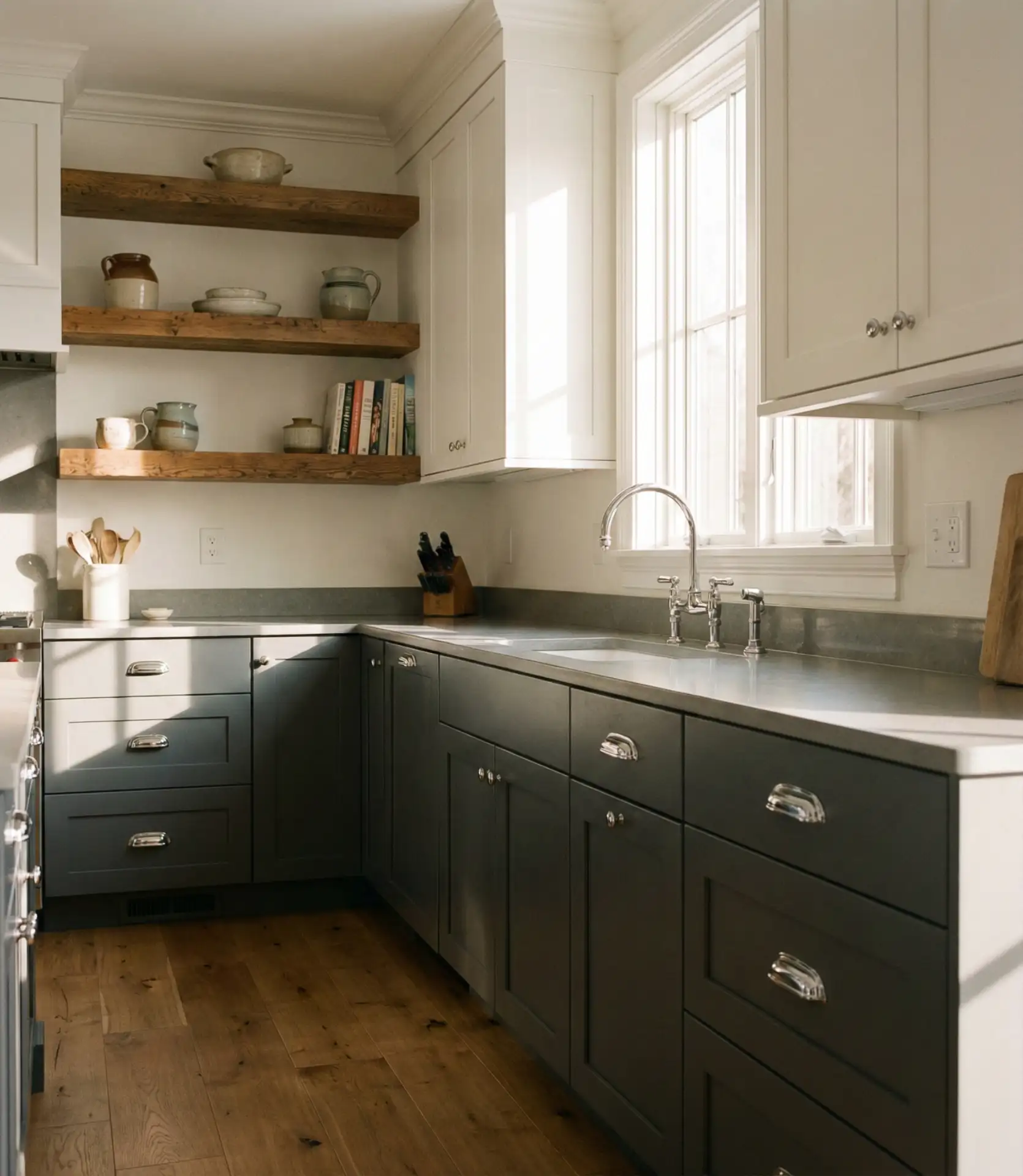
The mistake many homeowners make is choosing grays that are too cool or blue-toned, which can create an uninviting atmosphere when paired with white. Instead, look for grays with subtle warm undertones that harmonize with wood elements rather than fighting them. In the Midwest, where basements and lower-level kitchens are common, this palette works especially well because it maximizes available light while maintaining visual interest through the layering of neutral tones.
19. White Farmhouse Kitchen with Black Accents
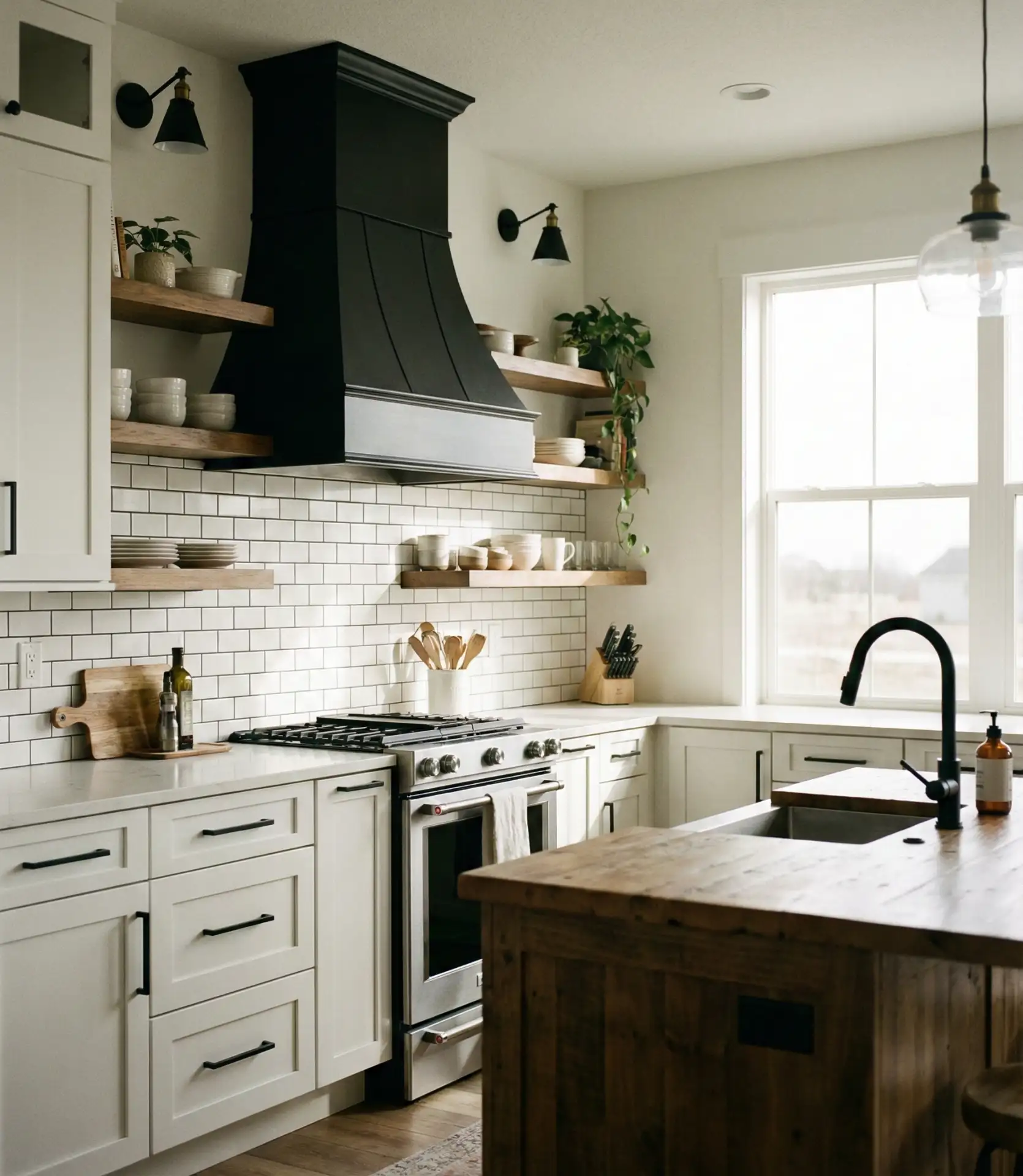
The modern farmhouse aesthetic combines white cabinets with black details to create a look that’s both timeless and current. Black window frames, lighting fixtures, cabinet hardware, and even appliances provide crisp contrast against all-white cabinetry and walls. This high-contrast approach references historic farmhouse kitchens where white-painted wood and black iron were common materials but executes the look with contemporary clean lines and updated proportions. The result feels fresh rather than costume-like, appealing to homeowners who want character without sacrificing modern functionality.
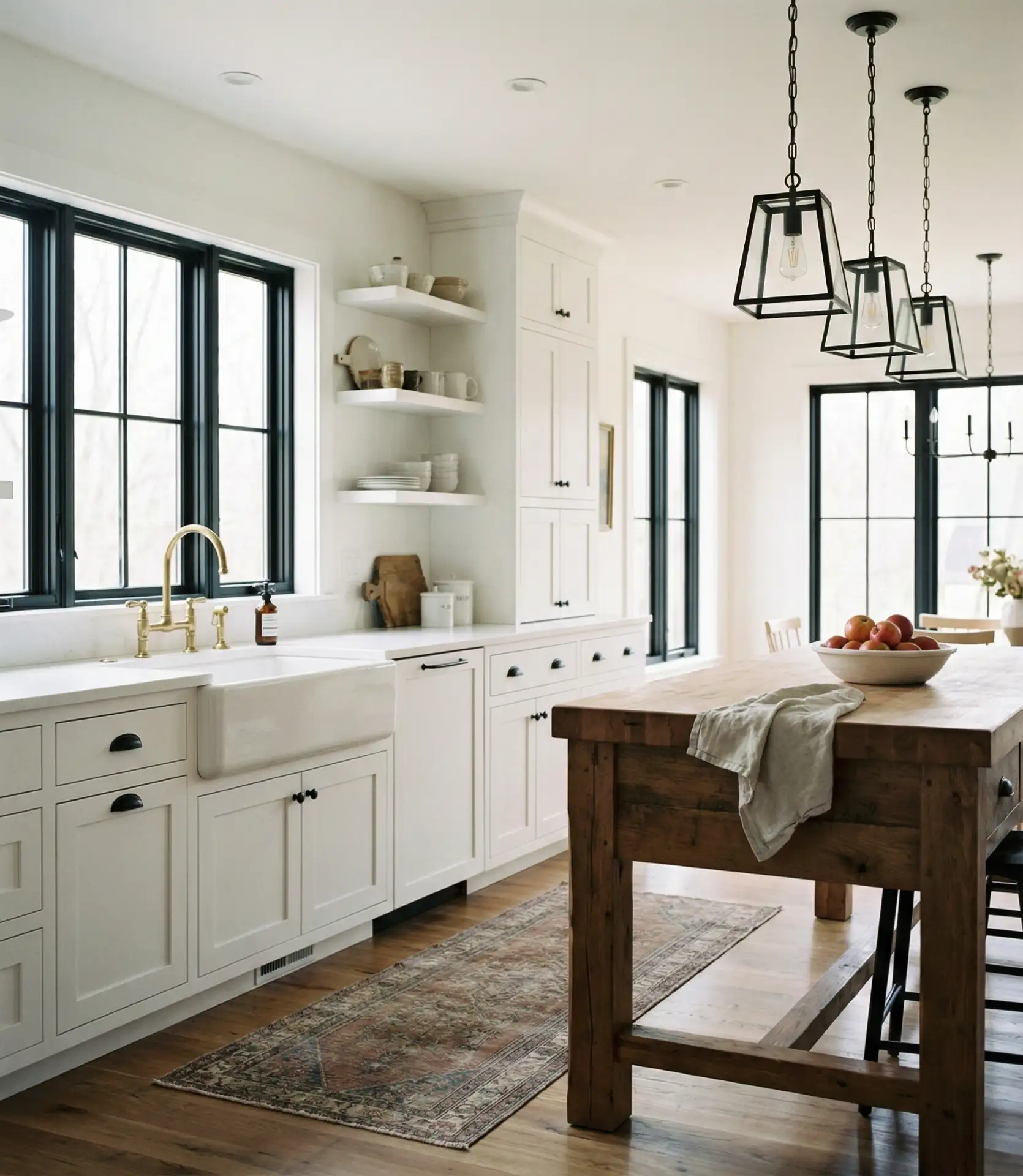
In rural areas across the South and Midwest, this aesthetic has become nearly ubiquitous in new construction, with builders including it as a standard package option rather than an upgrade. The black-and-white palette photographs exceptionally well, which matters in an era where homeowners frequently share their spaces on social media. The crisp contrast also helps define different zones within open-plan layouts, using color to create visual boundaries where walls don’t exist.
20. White Kitchen with Mixed Countertop Materials
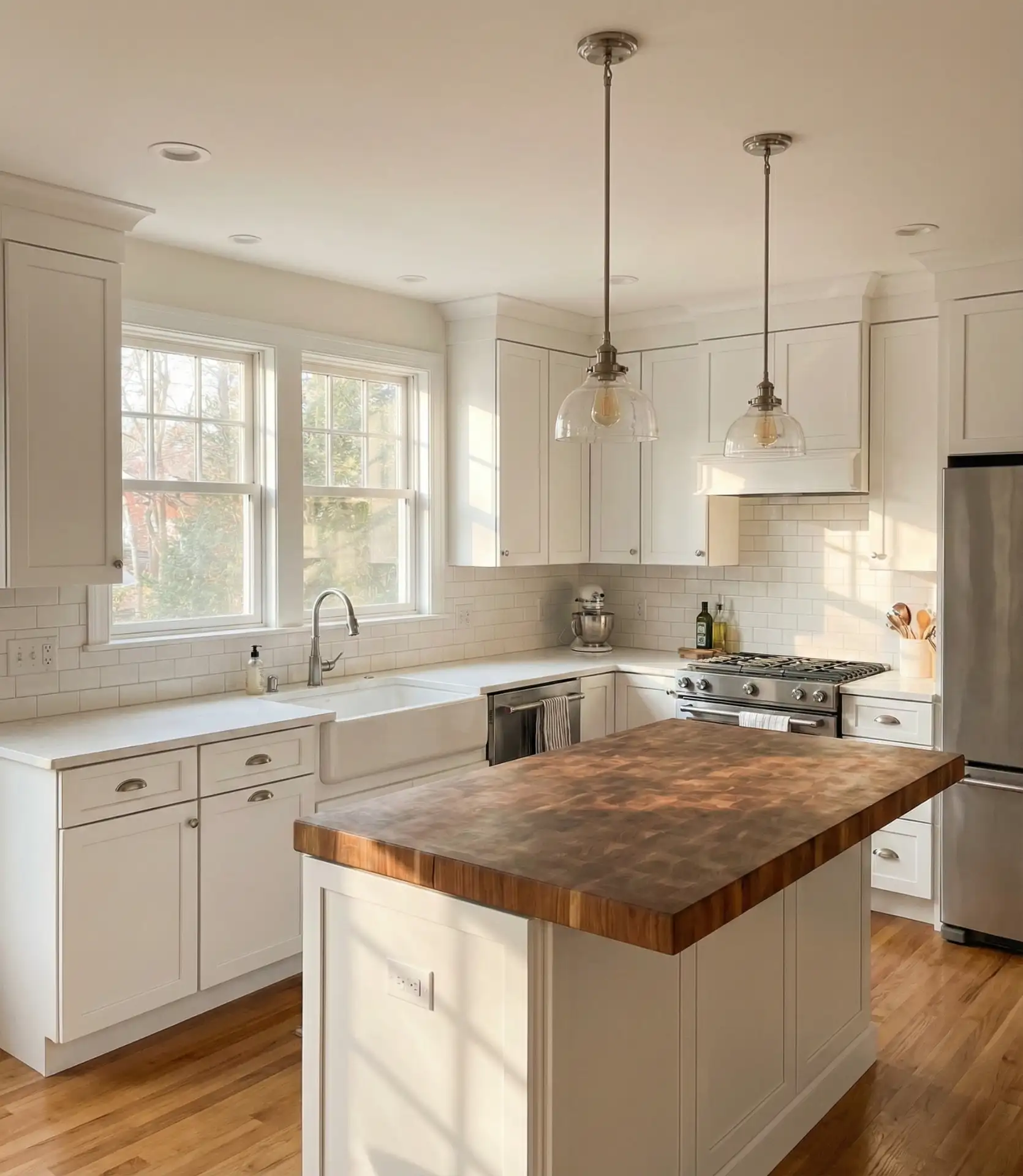
Using different countertops in various areas of a white kitchen creates visual zones while allowing you to maximize each material’s benefits. A durable quartz or granite might cover the main work surfaces, while a warm wood butcher block tops the island and a luxurious marble slab backs the range. This thoughtful mix adds depth and interest to white cabinets while demonstrating design sophistication. The varied materials create natural focal points and conversation starters, making the kitchen feel custom and considered rather than cookie-cutter.
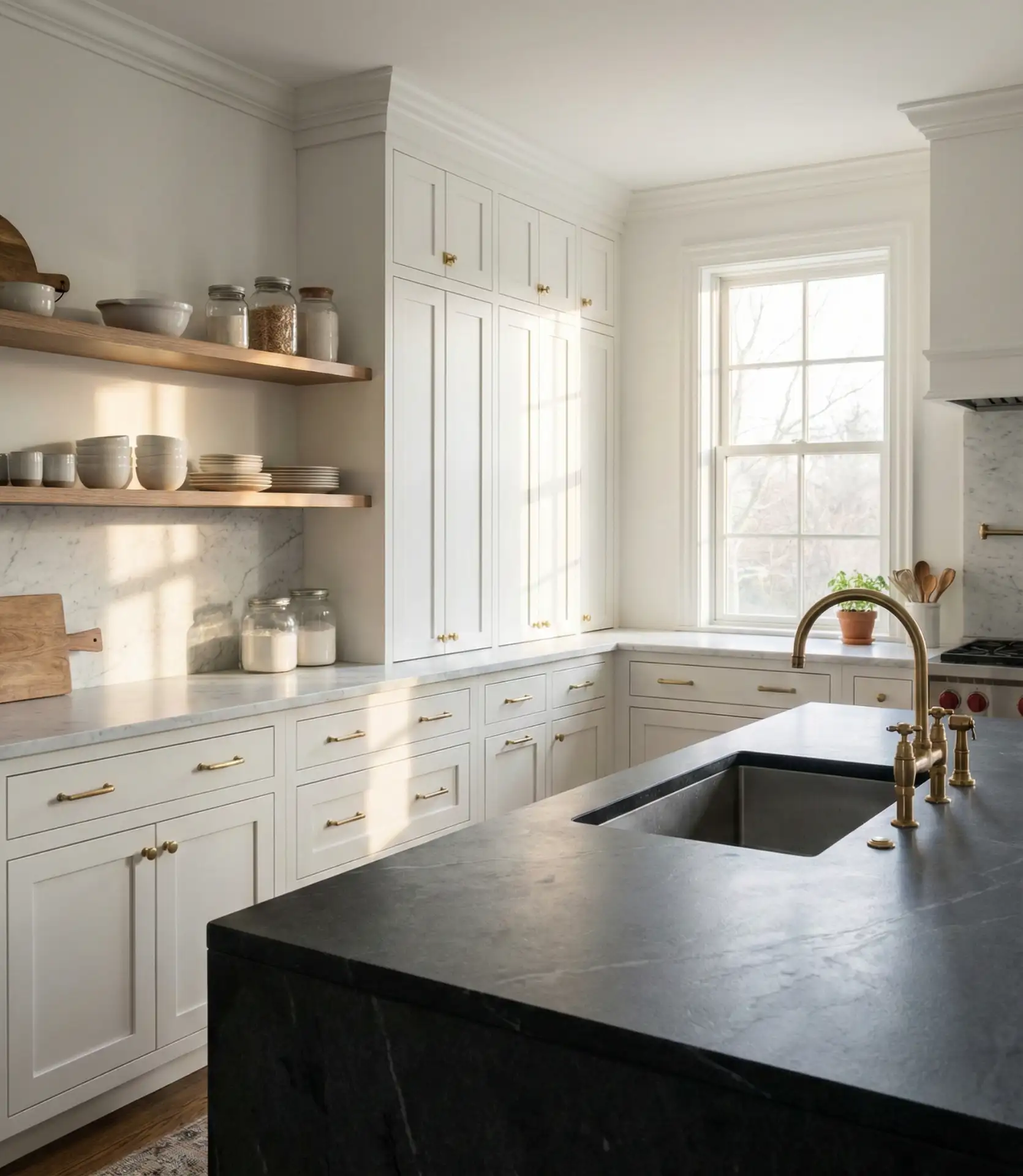
A kitchen designer in Denver shared that clients initially worry about mixing countertop materials, fearing it will look disjointed or confusing. However, when executed thoughtfully with attention to color harmony and edge profiles, the approach creates a curated, high-end look that feels intentional. The key is ensuring that all materials share either warm or cool undertones and coordinating them with the white cabinetry’s specific shade to maintain overall cohesion.
21. White Minimalist Kitchen with Handleless Cabinets
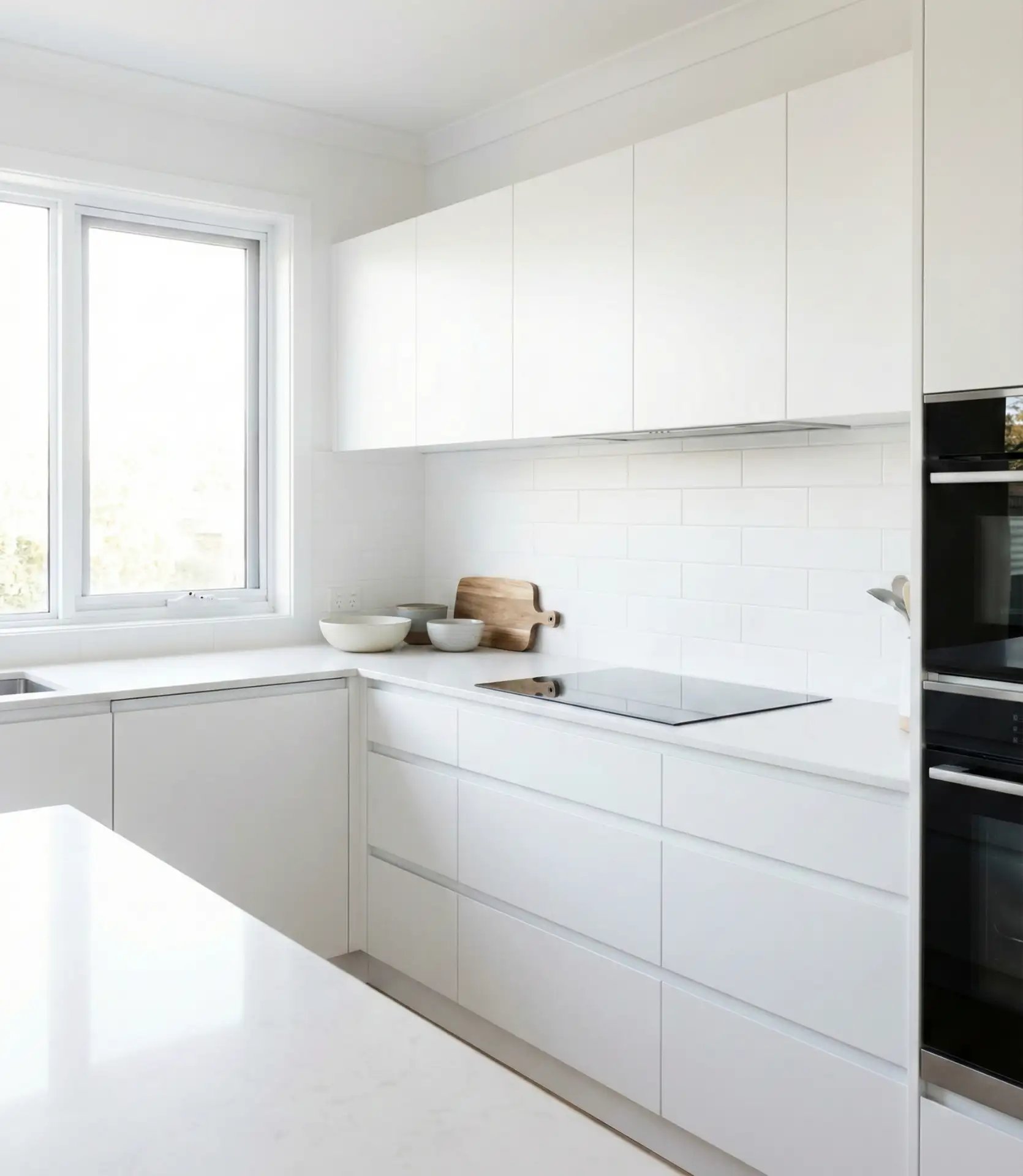
Handleless white cabinets create an ultra-clean, contemporary aesthetic where cabinet faces appear as continuous surfaces. Push-to-open mechanisms or recessed finger pulls eliminate visible hardware, resulting in a streamlined look that emphasizes form and proportion. This approach works particularly well in small kitchens where every detail matters and in modern homes where architectural simplicity is paramount. The absence of hardware creates a calm visual field and makes the kitchen feel more like a composed architectural space than a collection of functional elements.
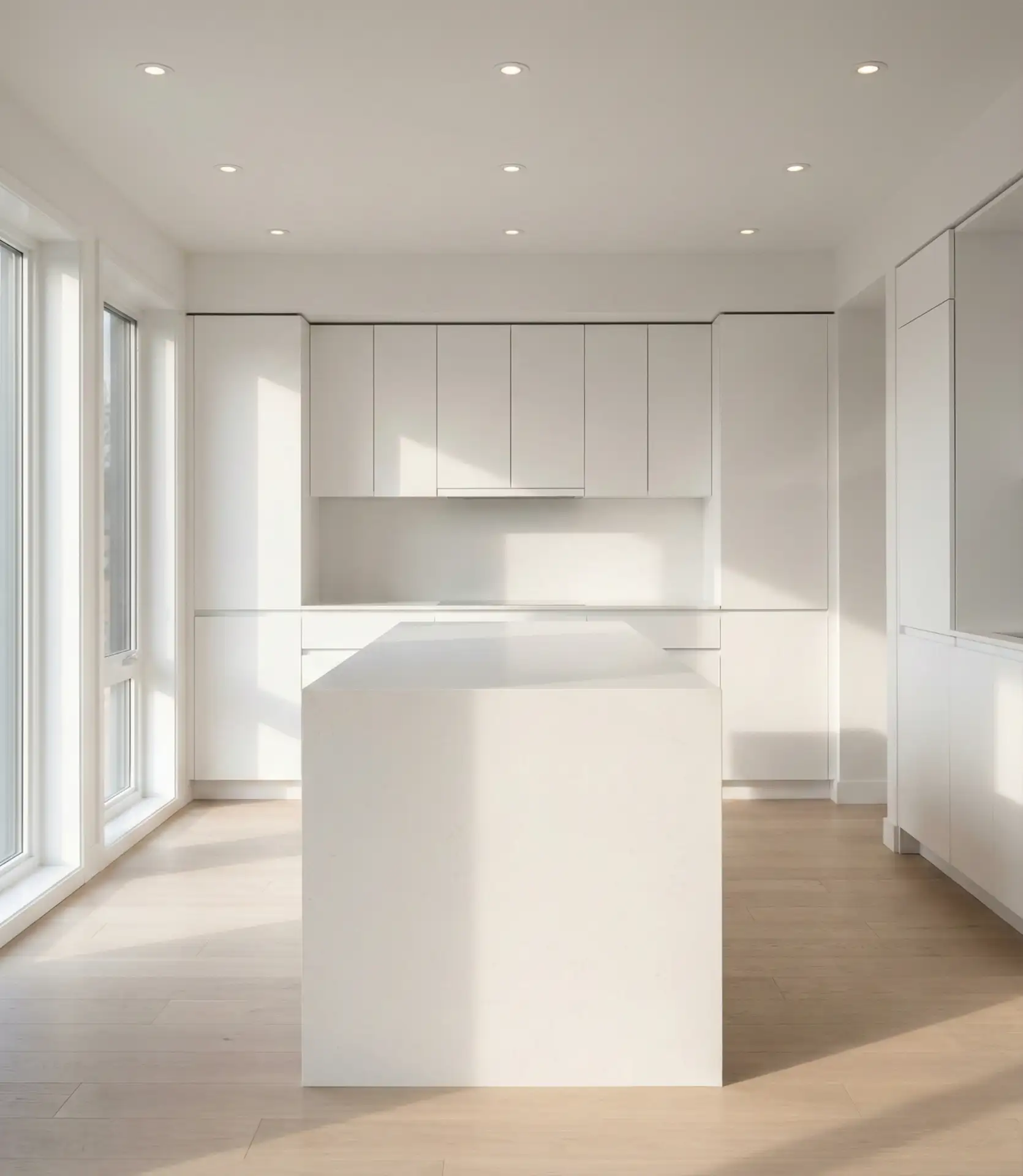
Homeowners should be aware that handleless cabinets require higher-quality construction and hardware to function properly over time. Push-to-open mechanisms can fail if cheaply made, and finger pulls must be precisely milled to remain comfortable and functional. Budget an additional 15-20% for this type of cabinetry compared to traditional face-frame construction, but recognize that the investment creates a distinctive, high-end appearance that significantly differentiates your kitchen from standard builder options.
22. White Traditional Kitchen with Furniture-Style Island
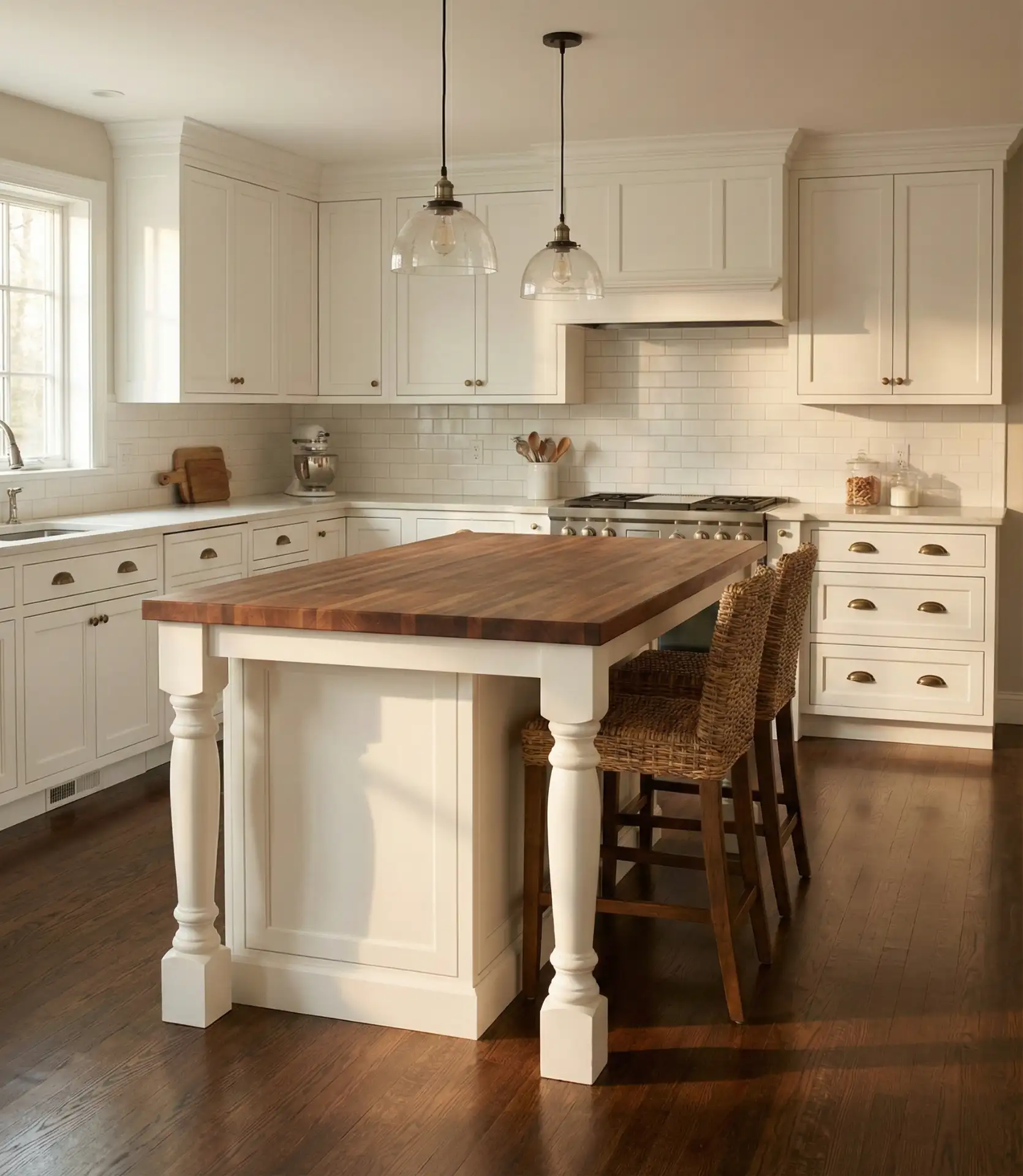
A furniture-style island introduces character and distinction to classic white kitchens, creating a piece that looks like a freestanding table or sideboard rather than built-in cabinetry. These islands often feature turned legs, decorative molding, and a contrasting finish or wood tone that sets them apart from perimeter cabinets. This approach works beautifully in traditional and transitional kitchens where a sense of history and craftsmanship is valued. The furniture-like quality makes the kitchen feel collected and curated rather than installed all at once.
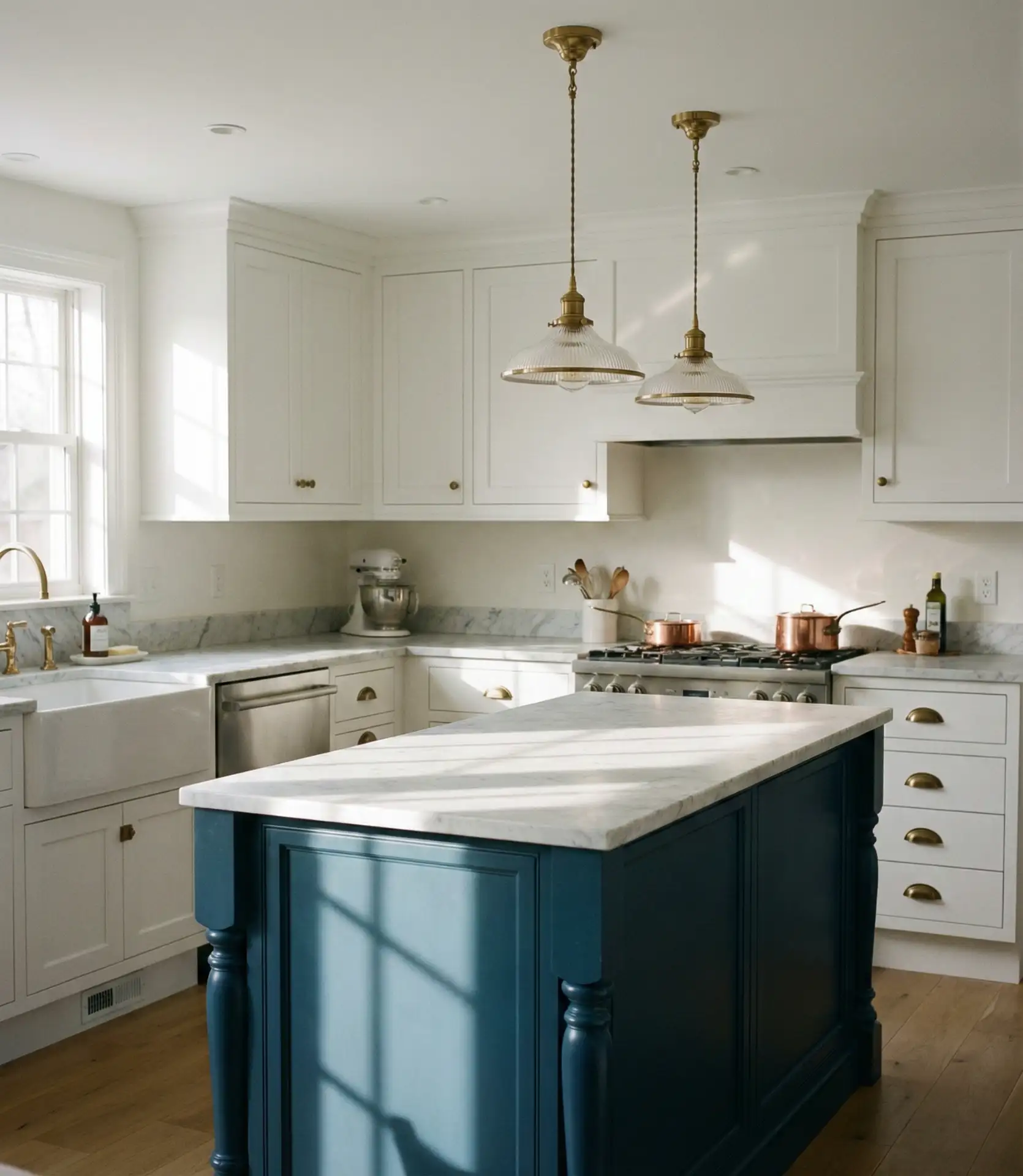
In historic neighborhoods throughout New England and the Mid-Atlantic, where older homes are being updated with modern amenities, furniture-style islands help bridge the gap between contemporary function and traditional aesthetics. The island respects the home’s architectural heritage while providing the storage and workspace that modern cooking requires. Many homeowners report that the island becomes their favorite kitchen feature—a statement piece that guests always notice and comment on.
23. White Kitchen with Layered Lighting Design
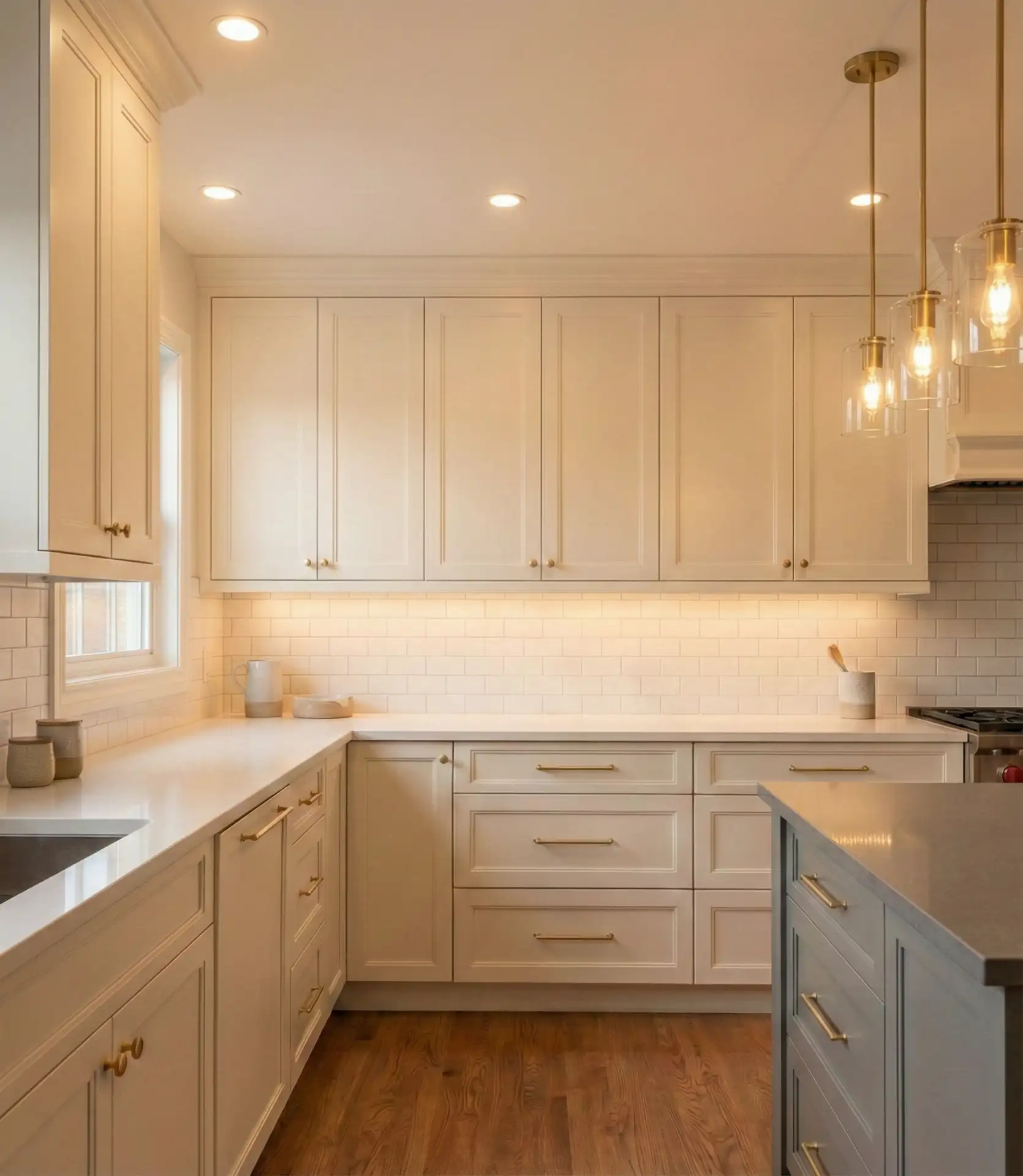
Thoughtful lighting transforms white cabinets from flat surfaces into dimensional architecture. A layered approach combines ambient recessed lighting, task lighting under cabinets and over work surfaces, and decorative pendant or chandelier fixtures that add personality. The white surfaces reflect and amplify light, making the kitchen feel bright and spacious throughout the day. Good lighting also reveals the subtle variations in white tones—showing how cabinet paint differs from countertops and backsplash in flattering ways that add depth to the space.
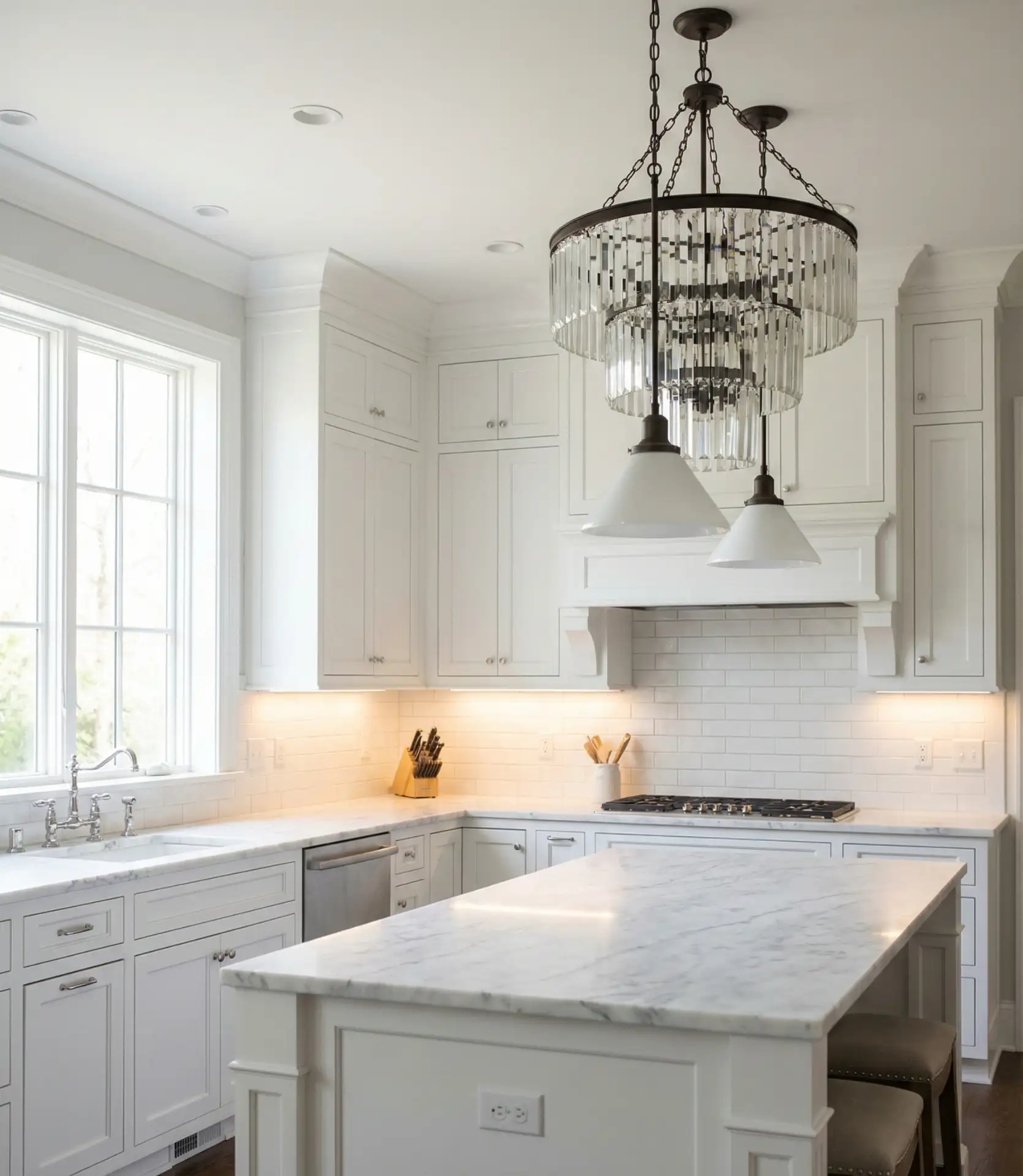
Lighting designers emphasize that white kitchens offer unique opportunities because the light-colored surfaces bounce illumination throughout the space, reducing the number of fixtures needed compared to darker kitchens. However, the same reflective quality means that harsh or poorly placed lighting becomes more obvious and unflattering. Invest in dimmers for all circuits to control the mood and intensity, allowing the kitchen to transition from a bright workspace during meal prep to a softly lit gathering space for evening entertaining.
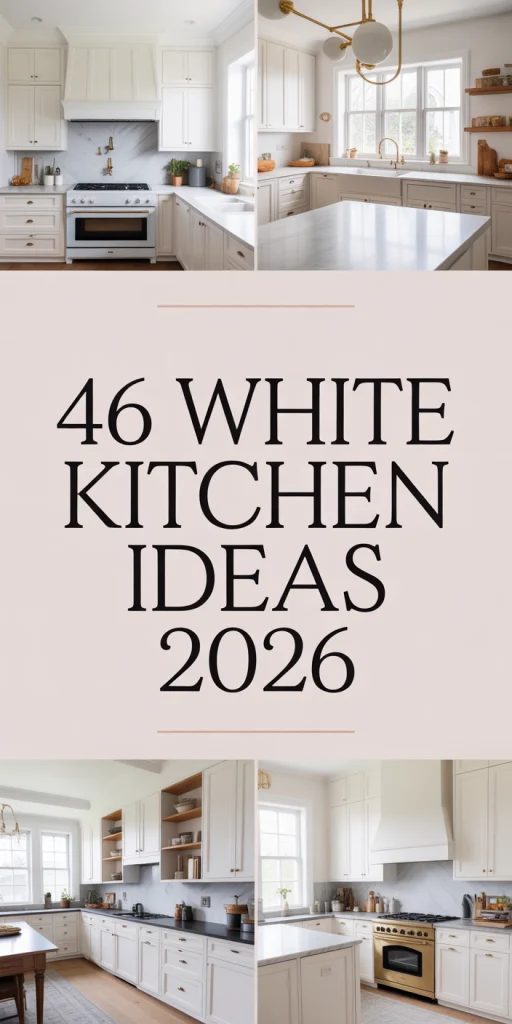
These white kitchen ideas demonstrate the versatility and enduring appeal of this classic palette in 2026. Whether you’re drawn to bold contrasts, warm wood tones, unexpected color accents, or minimalist simplicity, white cabinetry provides a foundation that adapts to your vision. Share your favorite idea in the comments below, or tell us how you’ve personalized your own white kitchen—we’d love to hear what combinations and details have made your space feel like home.