46 Stunning Foyer Ideas & Entryway Designs That Will Transform Your Home in 2026

The entryway is the first impression of your home, and in 2026, homeowners across America are reimagining this often-overlooked space with bold creativity and thoughtful design. Whether you’re working with a narrow hallway in a Chicago brownstone or a soaring two-story foyer in a Texas suburb, the right approach can transform your entrance into a welcoming, functional statement. Pinterest users are searching for fresh inspiration that balances style with everyday practicality—spaces that handle muddy boots, keys, and mail while still looking magazine-worthy. From moody color palettes to streamlined modern layouts, this year’s trends embrace both maximalist elegance and minimalist calm. Here are foyer and entryway ideas that will help you create a stunning first impression in 2026.
1. Grand Two-Story Foyer with Statement Chandelier
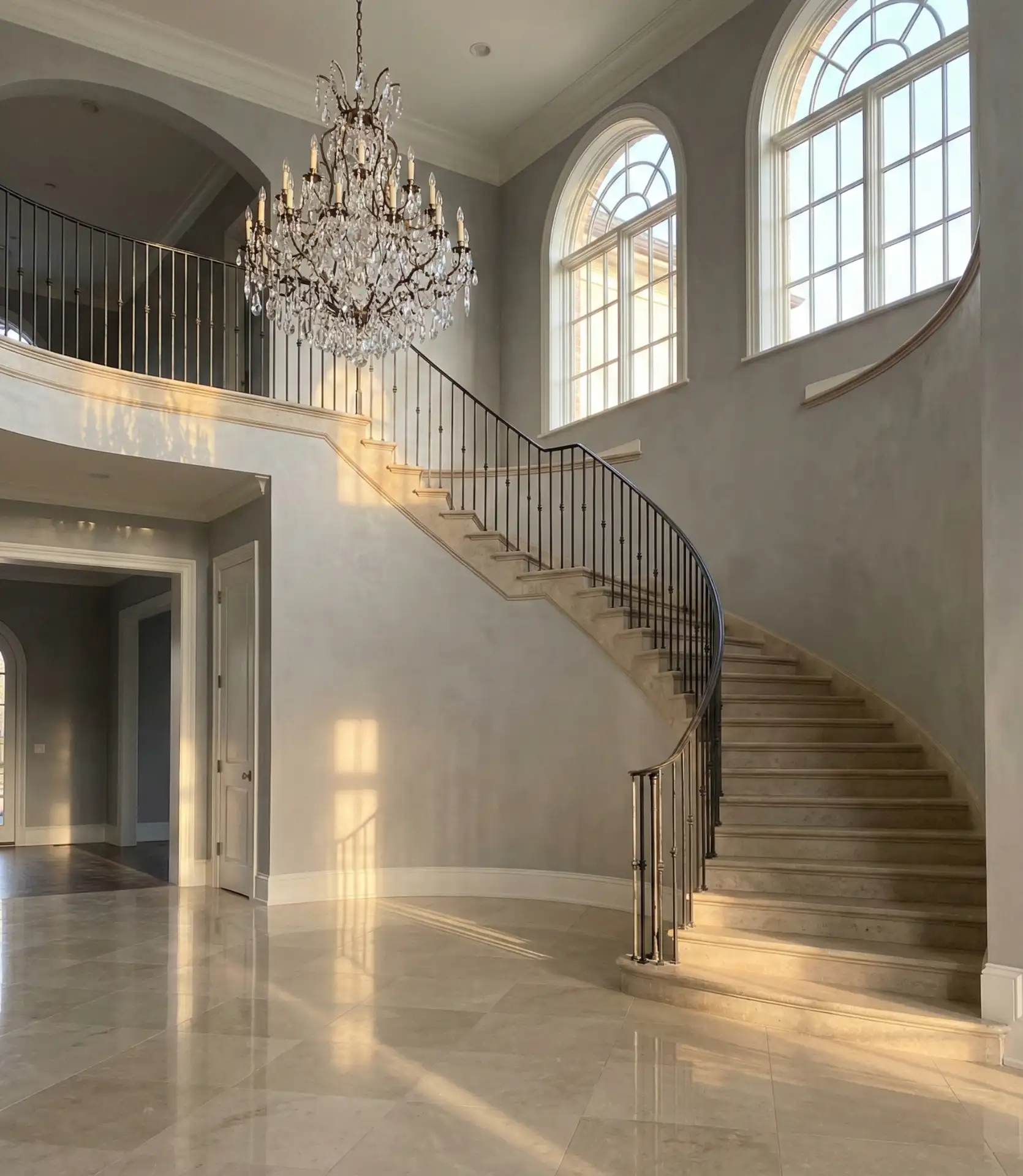
A 2-story entryway offers dramatic vertical space that begs for a showstopping focal point. Installing an oversized chandelier or sculptural pendant draws the eye upward and anchors the high ceiling with warmth and personality. This approach works beautifully in modern luxury homes where architectural volume meets refined taste, creating an immediate sense of grandeur that welcomes guests the moment they step inside.
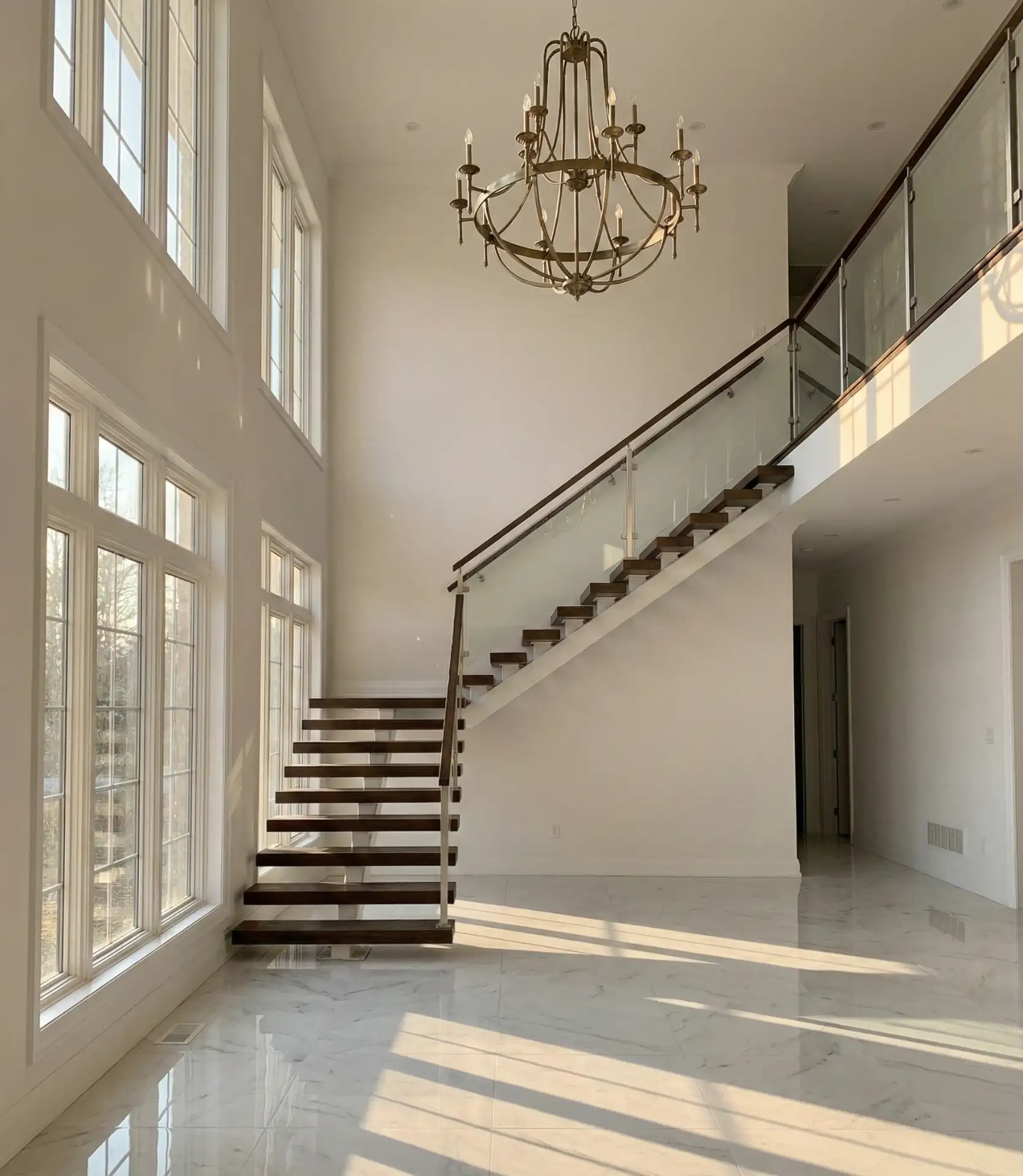
Where it works best: Suburban homes built after 2000 and custom builds in regions like the Southeast and Southwest often feature these soaring entryways. The key is balancing scale—choose lighting that’s proportional to the space, typically 30 to 36 inches in diameter for a standard two-story foyer. Pairing the chandelier with a round console table below creates visual harmony and prevents the space from feeling too vertical or disconnected from everyday life.
2. Narrow Entryway with Vertical Storage
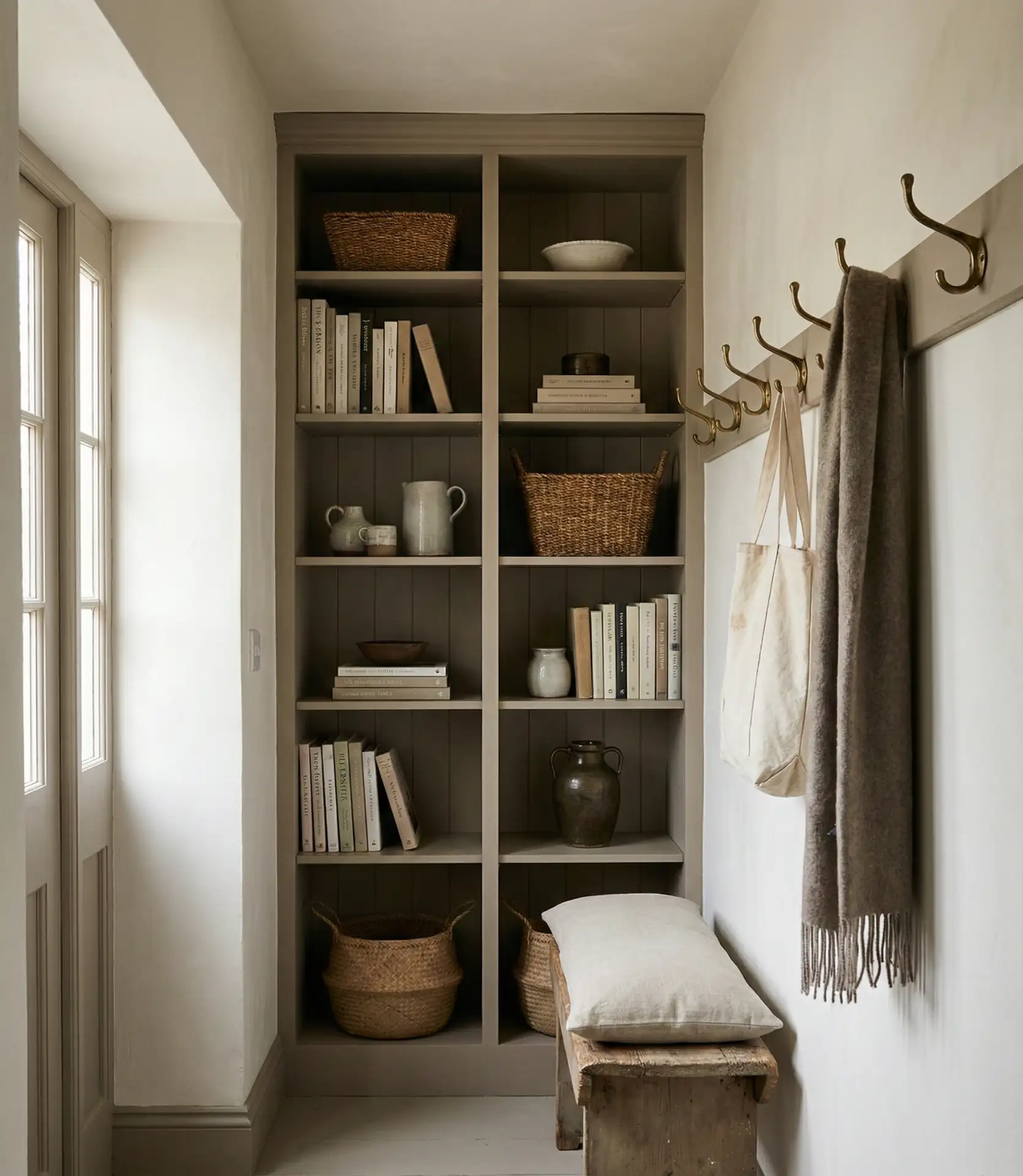
When you’re working with a narrow corridor leading into your home, vertical storage becomes your best friend. Wall-mounted hooks, tall slim cabinets, and floating shelves maximize every inch without crowding the walkway. This strategy is especially popular in older urban apartments and rowhouses where square footage is precious, turning a tight passageway into a hardworking, stylish zone that handles coats, bags, and shoes with ease.
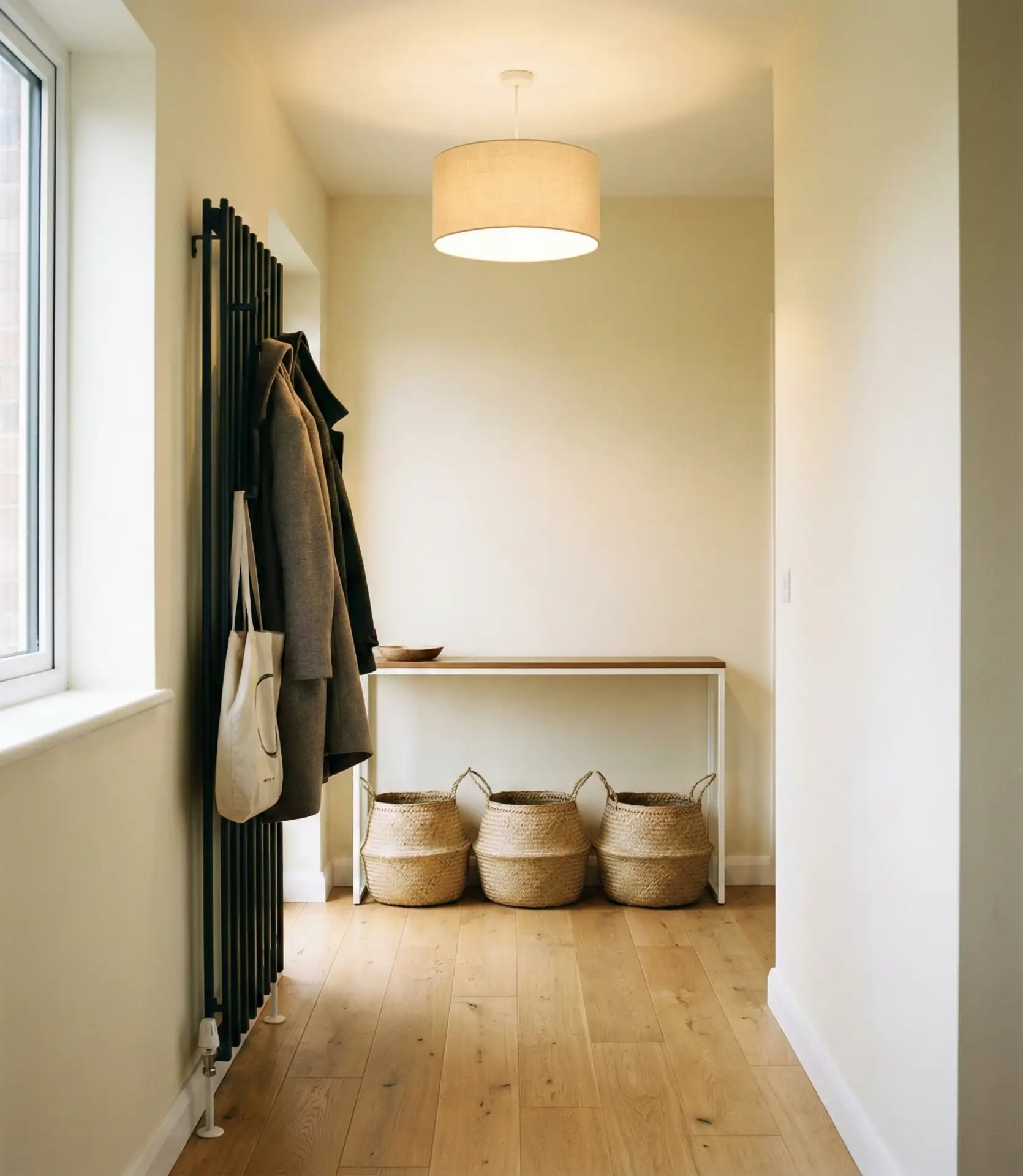
A common mistake here is overcrowding the walls with too many pieces. Stick to one or two statement elements—a mirror paired with hooks or a narrow console with a single shelf above. Light colors and reflective surfaces help the space feel more open. Many East Coast city dwellers swear by this approach, using every vertical inch while keeping the floor clear for easy movement during rushed mornings.
3. Modern Indian Apartment Entryway with Jali Screen
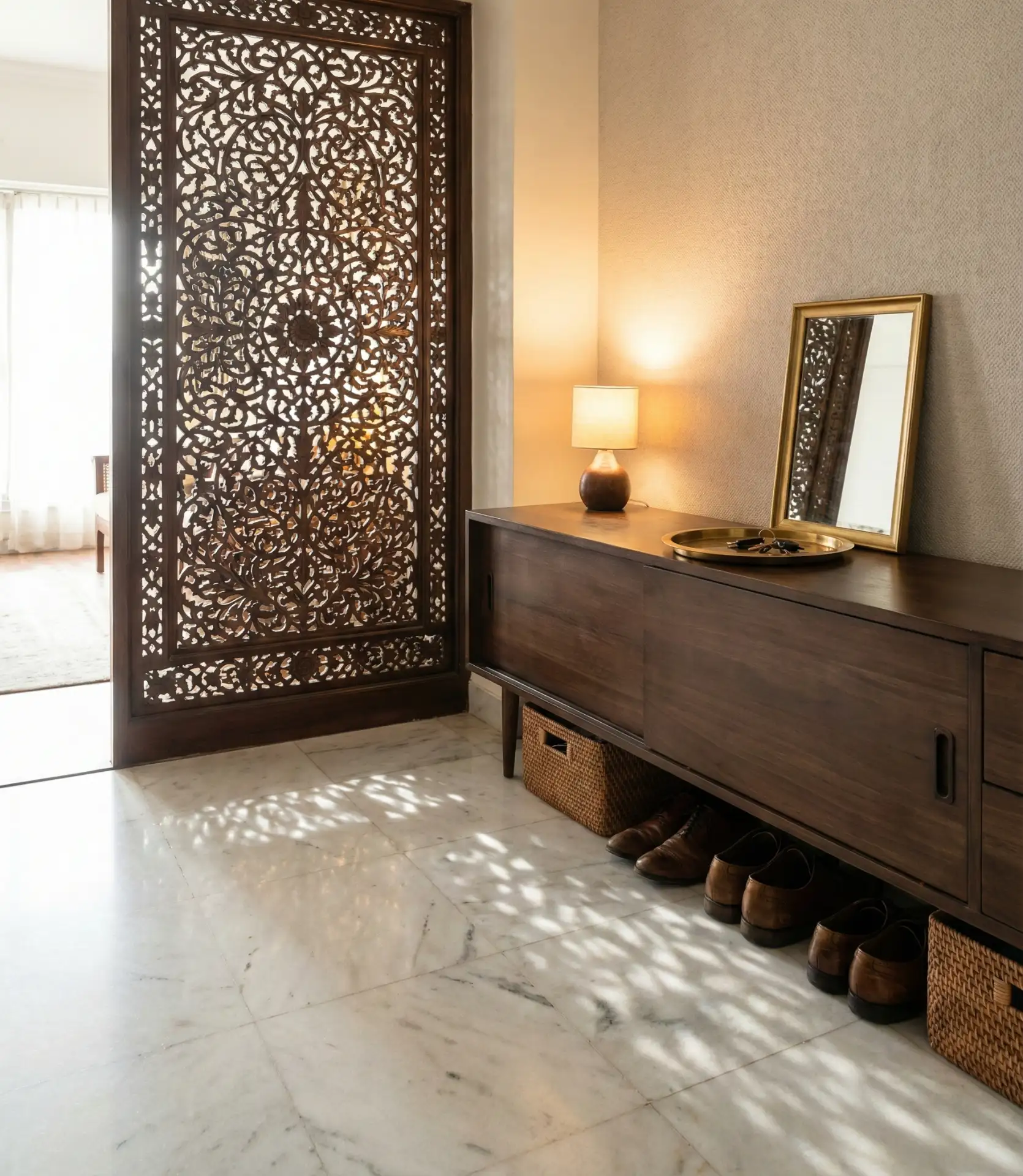
In Indian apartments, the entryway often flows directly into the living area, making a sense of separation essential. A modern jali screen or laser-cut partition creates visual privacy while maintaining airflow and light, honoring traditional craftsmanship with contemporary lines. This design also provides a designated spot for removing shoes—a practical element in Indian homes—while adding an elegant architectural layer that feels both rooted and fresh.
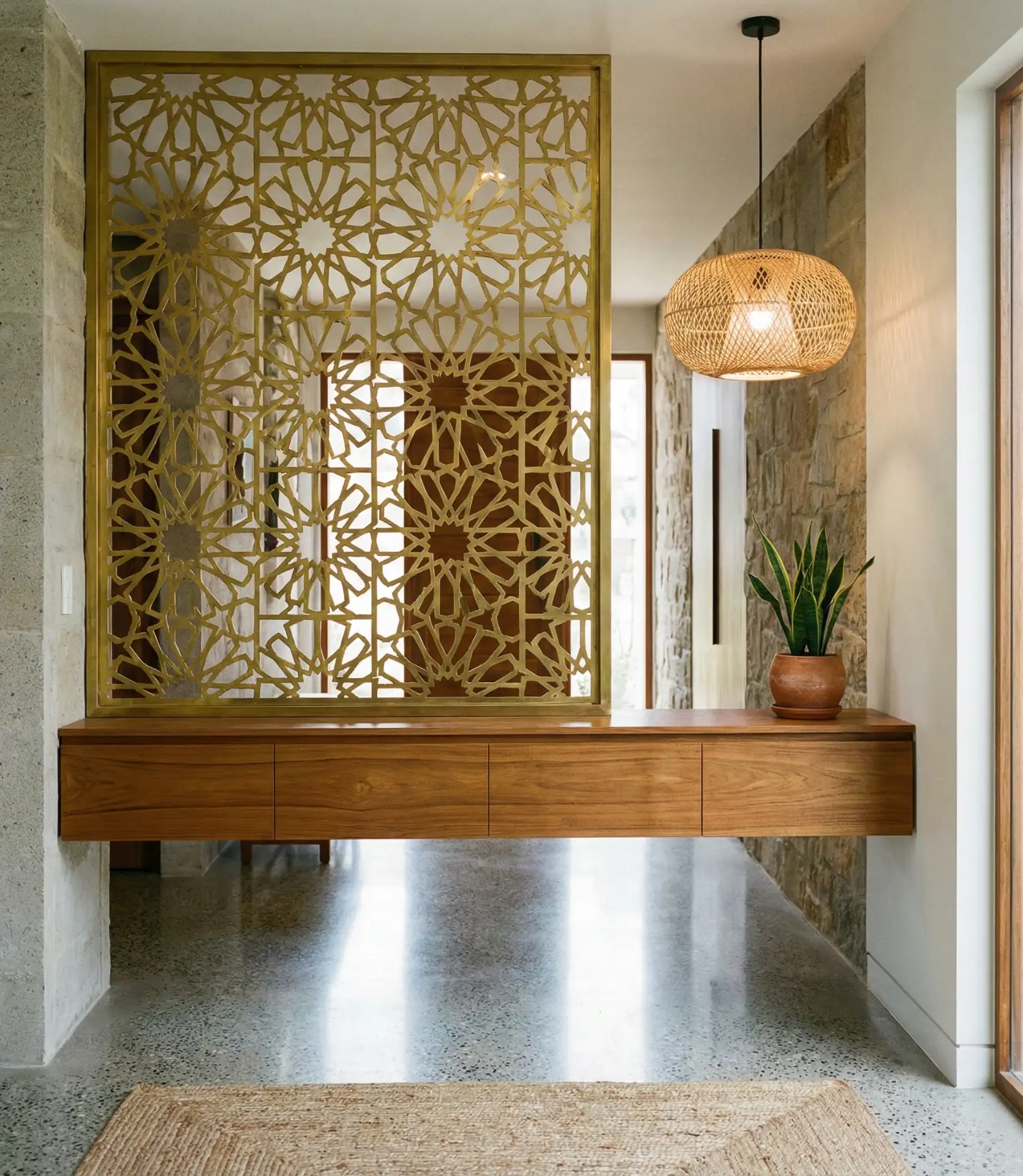
Budget-wise, a custom jali panel typically runs between $300 and $800 depending on material and detail, while ready-made options from Indian furniture retailers start around $150. The investment pays off in both function and beauty, offering a buffer zone that’s especially appreciated in open-concept apartments. Pair the screen with warm wood tones and subtle brass touches to bridge modern minimalism with cultural warmth.
4. Farmhouse Entryway with Reclaimed Wood Bench
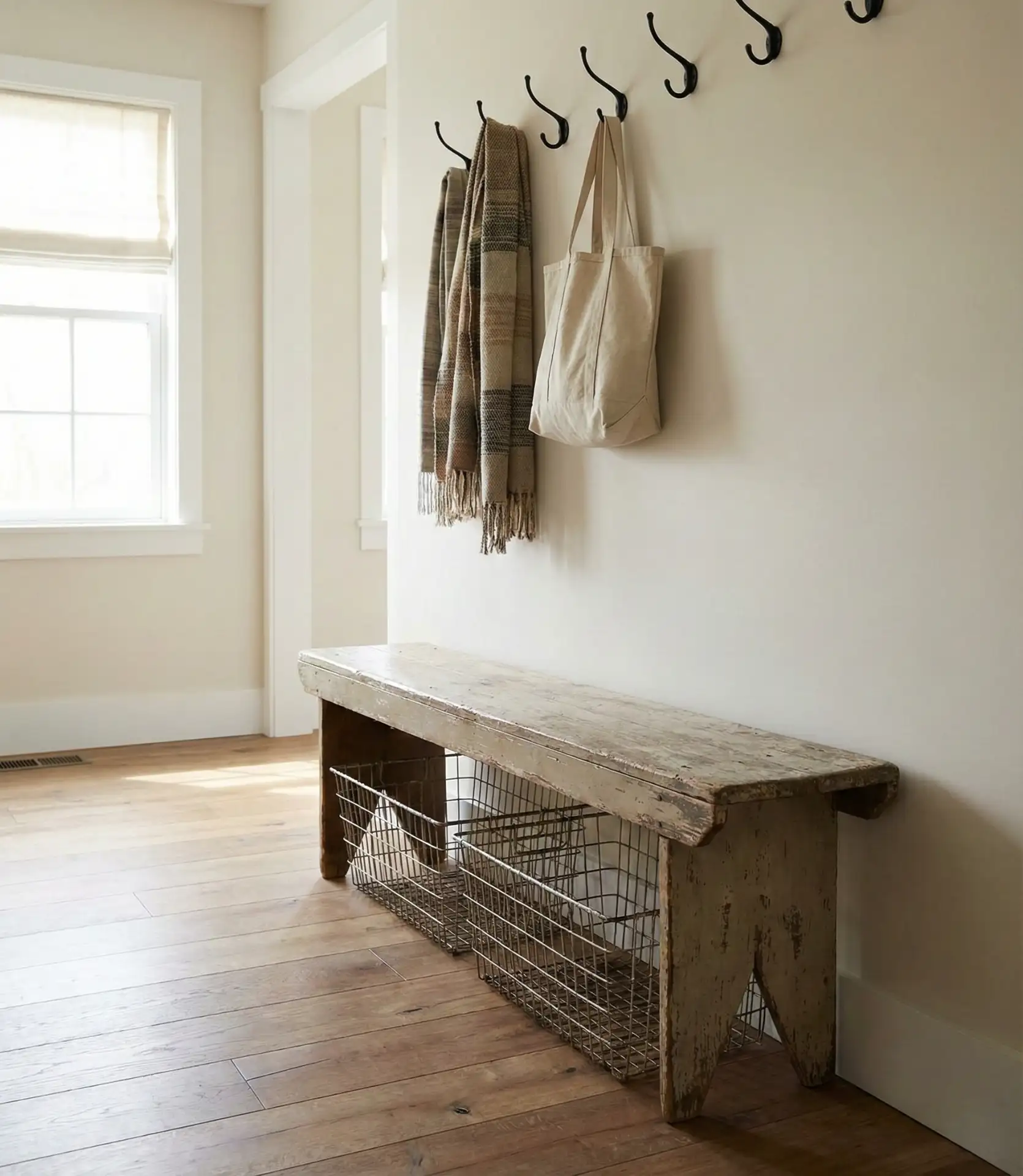
The farmhouse aesthetic continues to resonate in 2026, particularly in rural and suburban American homes where comfort and character take center stage. A chunky reclaimed wood bench anchors the entrance, offering a spot to pull on boots while contributing weathered texture and story. Layer in vintage-style hooks, a woven rug, and a few gathered branches in a galvanized vase, and you’ve created a welcoming landing zone that feels grounded and lived-in.
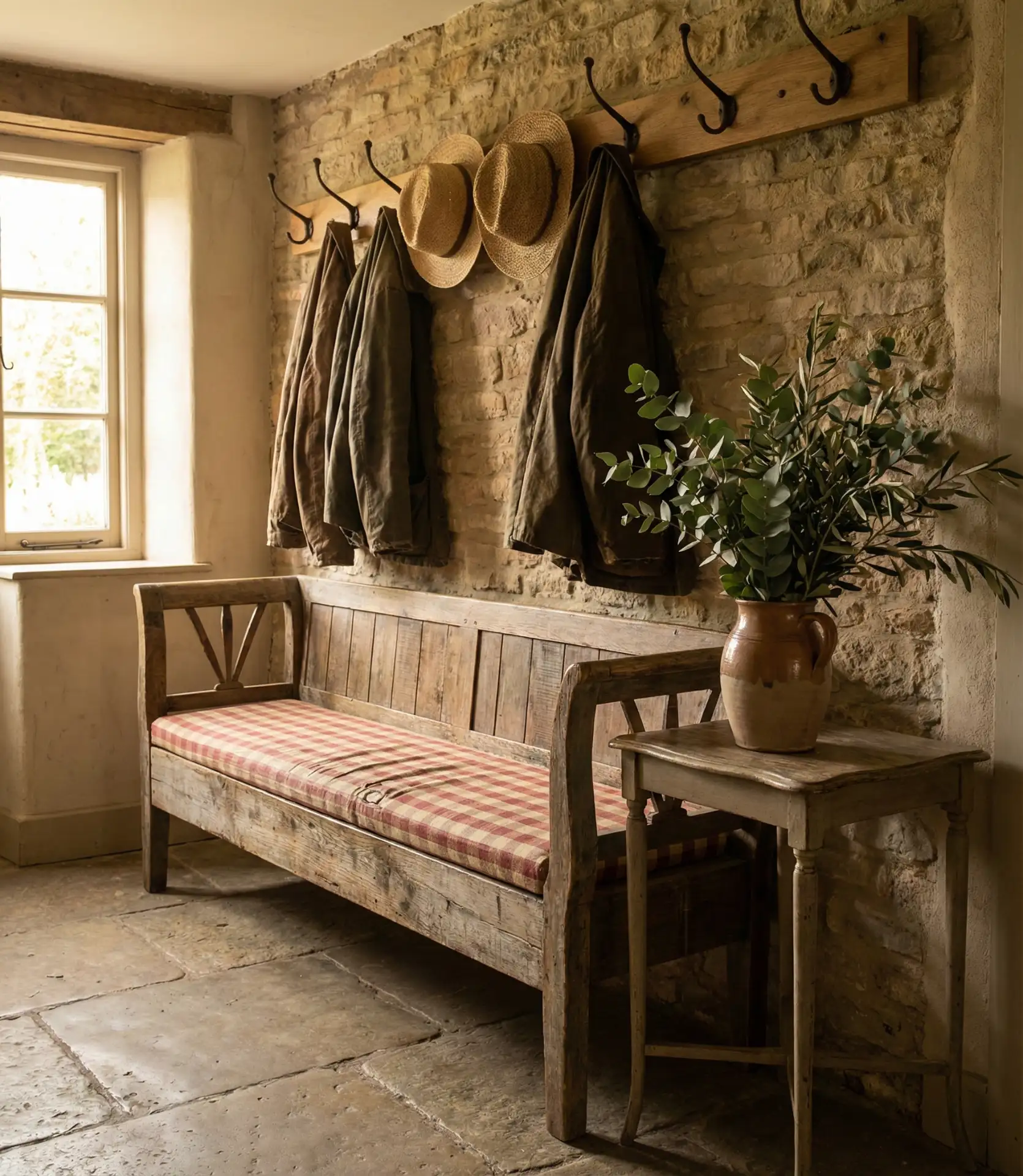
Practical insight: Choose a bench with built-in storage or slide baskets underneath for shoes, gloves, and dog leashes. This keeps everyday clutter contained while maintaining the casual, approachable vibe that defines farmhouse style. The beauty here is that imperfections—scuffs, dents, and uneven finishes—only add to the charm, making this one of the most forgiving entryway designs for busy families.
5. Moody Dark Entryway with Velvet Accents
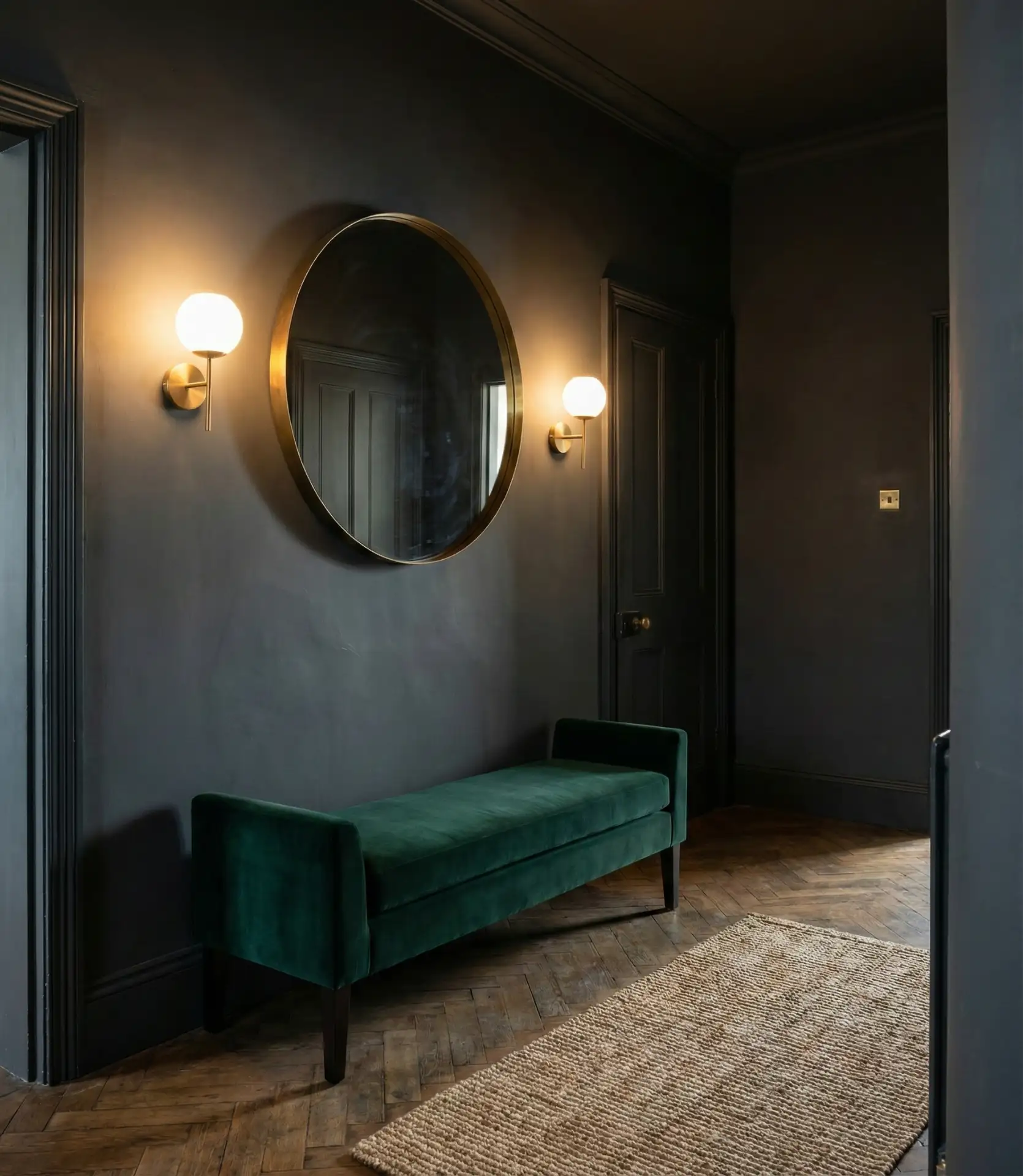
A moody color palette—charcoal, deep navy, or even black—transforms an entryway into a dramatic, cocooning space that feels intentional and sophisticated. Pair dark walls with elegant velvet seating, brass or matte black hardware, and layered lighting to prevent the space from feeling too heavy. This approach is particularly striking in modern townhomes and lofts, where the entry sets a bold tone that carries through to the rest of the interior.
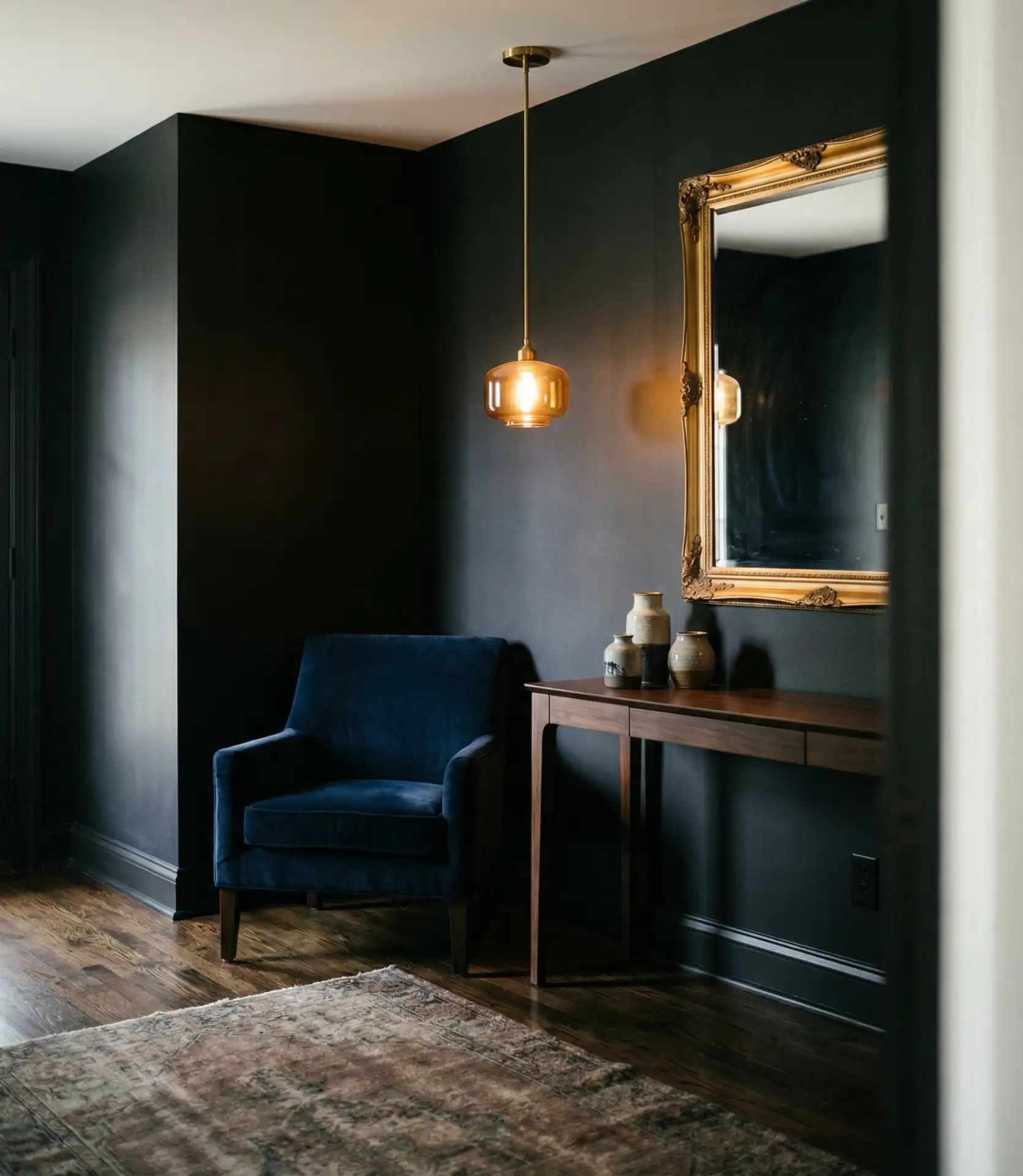
Real homeowner behavior: Many people hesitate to paint small spaces dark, fearing they’ll feel cramped. But a well-executed moody entryway actually creates depth and intimacy, especially when you introduce reflective surfaces and warm lighting. A friend recently painted her narrow Boston entryway a deep plum, and guests consistently call it the most memorable part of her apartment—it’s proof that small spaces can handle big personality.
6. Open Concept Entryway with Zoned Flooring
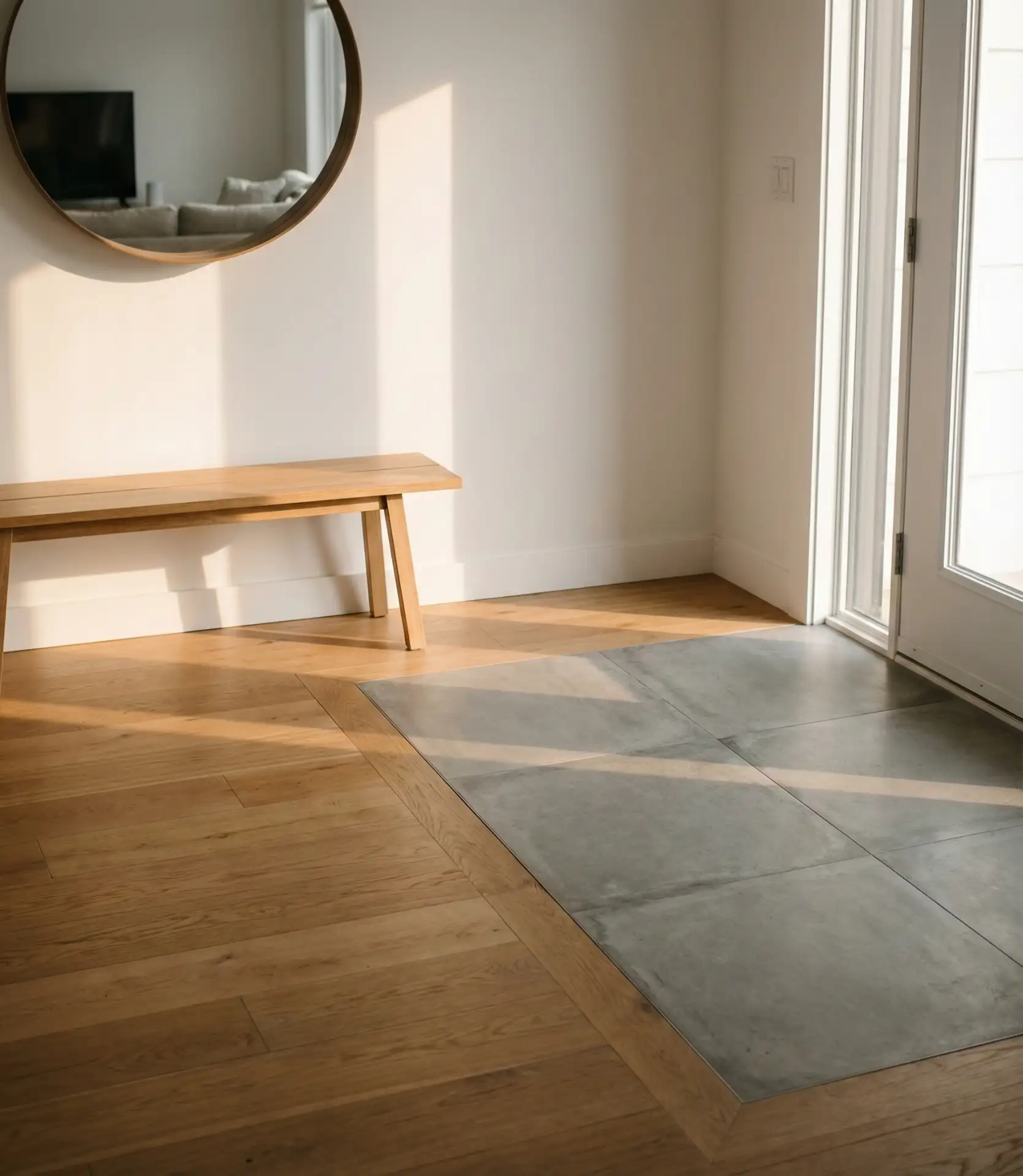
In an open floor plan where the entry flows directly into the living area, defining the boundary with intentional flooring creates a clear sense of arrival. Switching from hardwood to durable tile, or introducing a bold runner rug, signals the transition and protects high-traffic zones. This strategy is popular in modern new builds across the Sunbelt, where large open layouts benefit from subtle zoning that doesn’t interrupt sightlines or natural light.
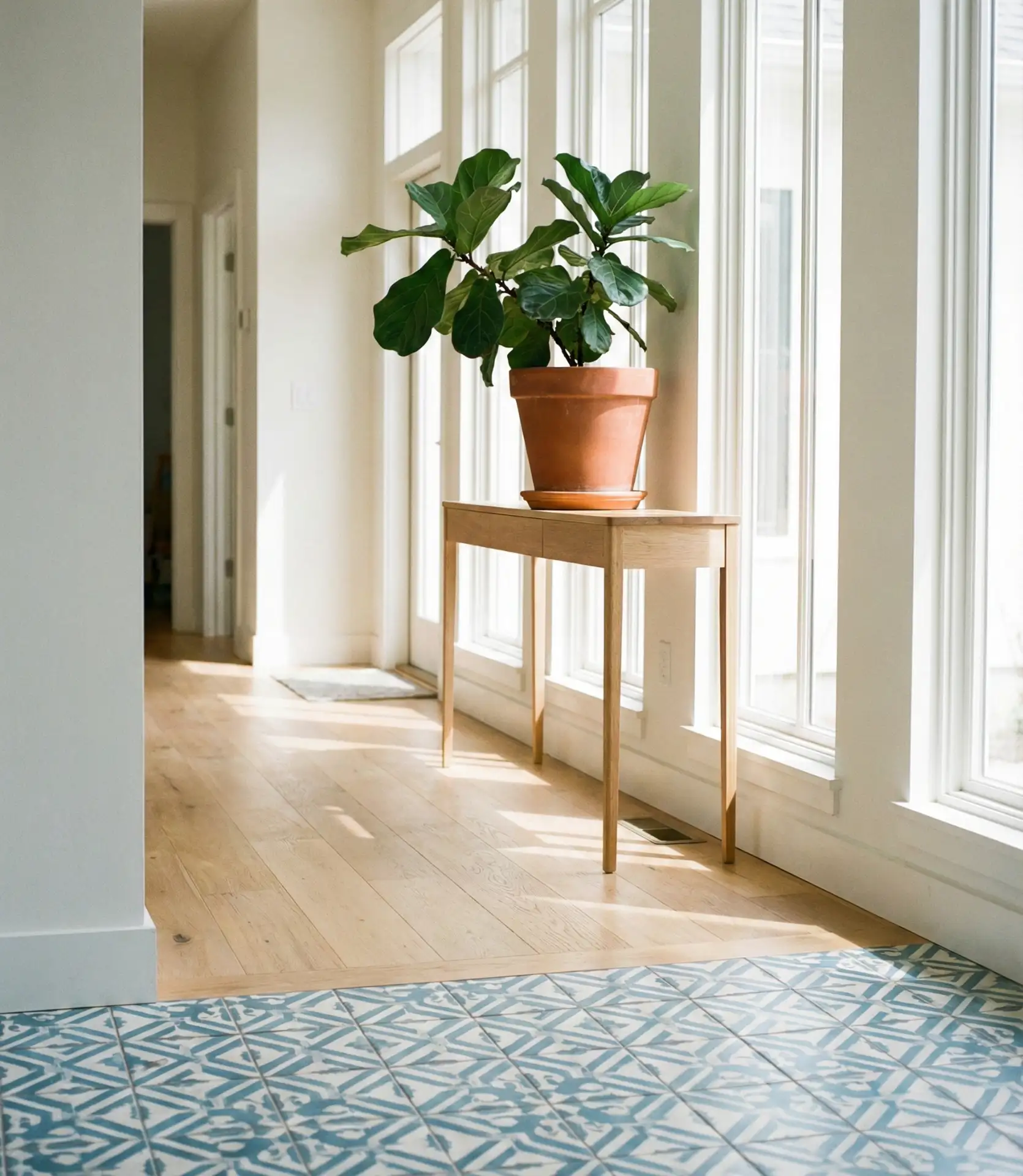
Expert-style commentary: Designers often recommend durable, easy-to-clean materials like porcelain or natural stone for the entry zone, especially in homes with kids or pets. The contrast in texture and pattern visually anchors the space without requiring walls or dividers, maintaining the open feel while adding architectural interest. It’s a subtle move that makes a big difference in how the home feels organized and cohesive.
7. Entryway Table with Layered Decor
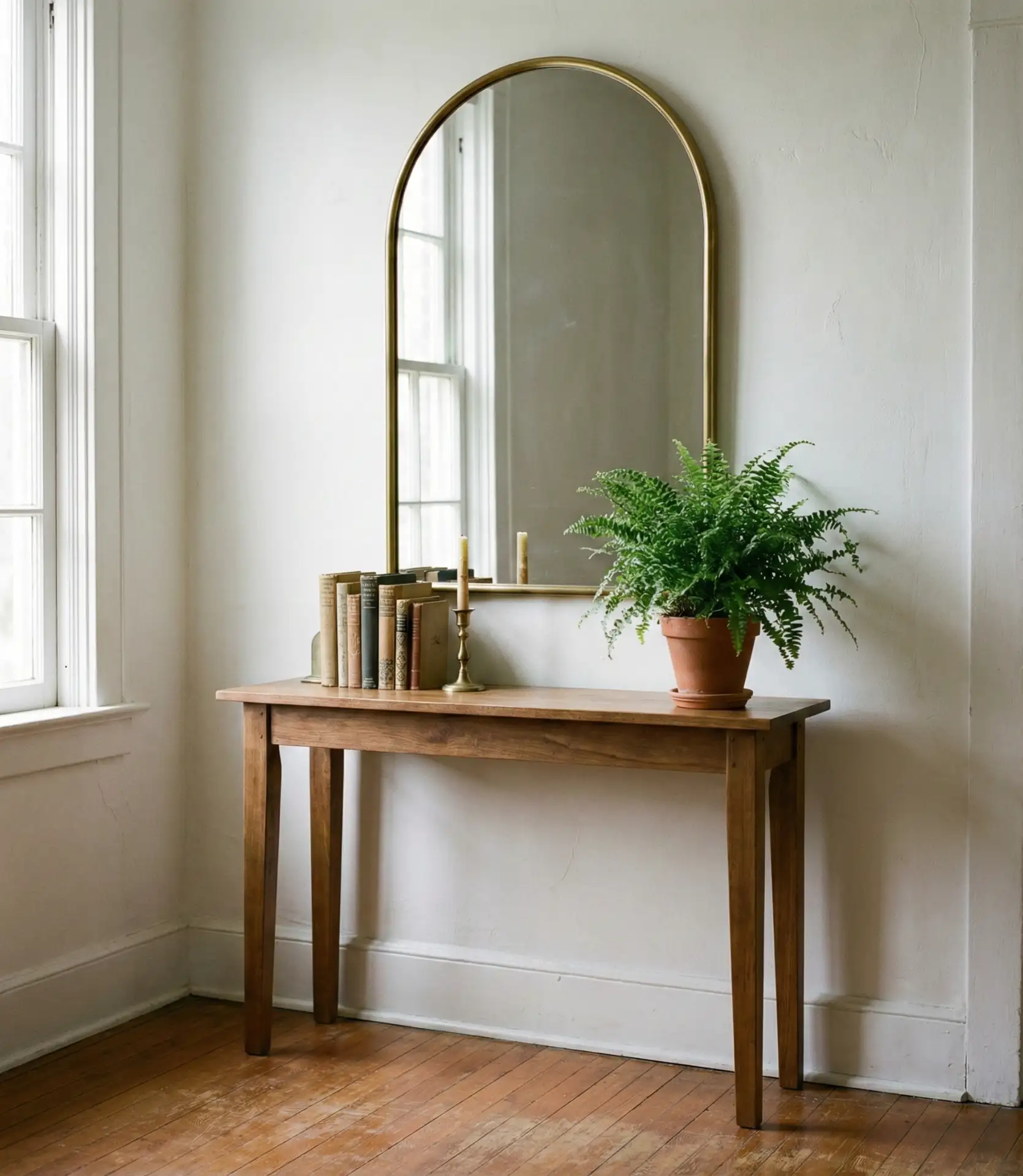
A well-styled table is the heart of many American entryways, offering a practical landing spot for keys and mail while serving as a canvas for personal expression. Layering a mirror above a ceramic dish or small tray, a sculptural lamp, and fresh greenery creates dimension and warmth. This approach works across nearly every style, from traditional to modern, and is endlessly adaptable to the seasons—a few stems of eucalyptus in spring, a cluster of candles in winter.
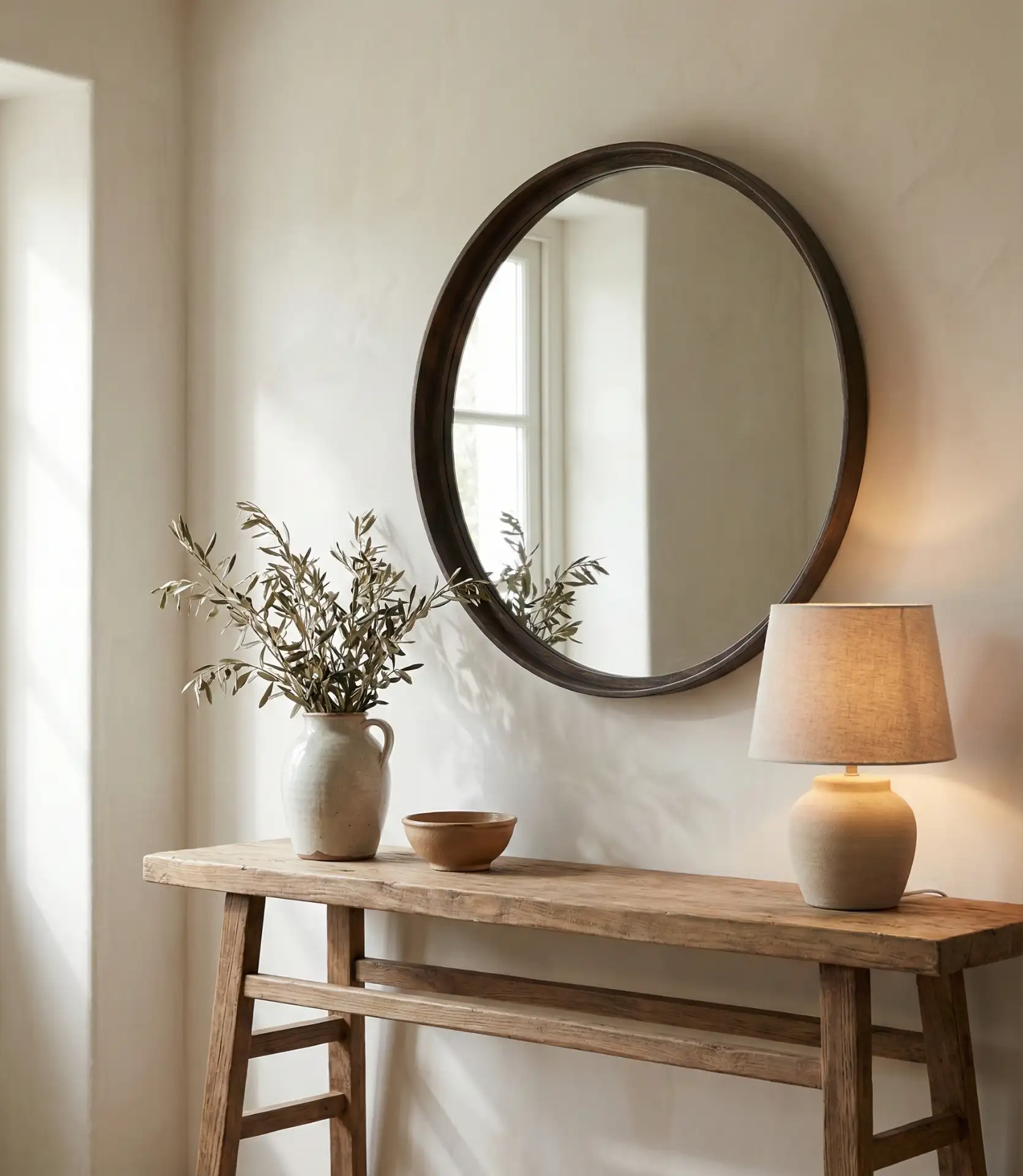
American lifestyle context: In the Midwest and South, entryway tables often double as a greeting station—think a basket for outgoing mail, a small dish for dog leashes, or a framed family photo. The key is balancing function with beauty, keeping surfaces clear enough for everyday use while adding those thoughtful touches that make a house feel like a home. Avoid overcrowding; three to five elements is usually the sweet spot.
8. Split-Level Entry with Defined Zones
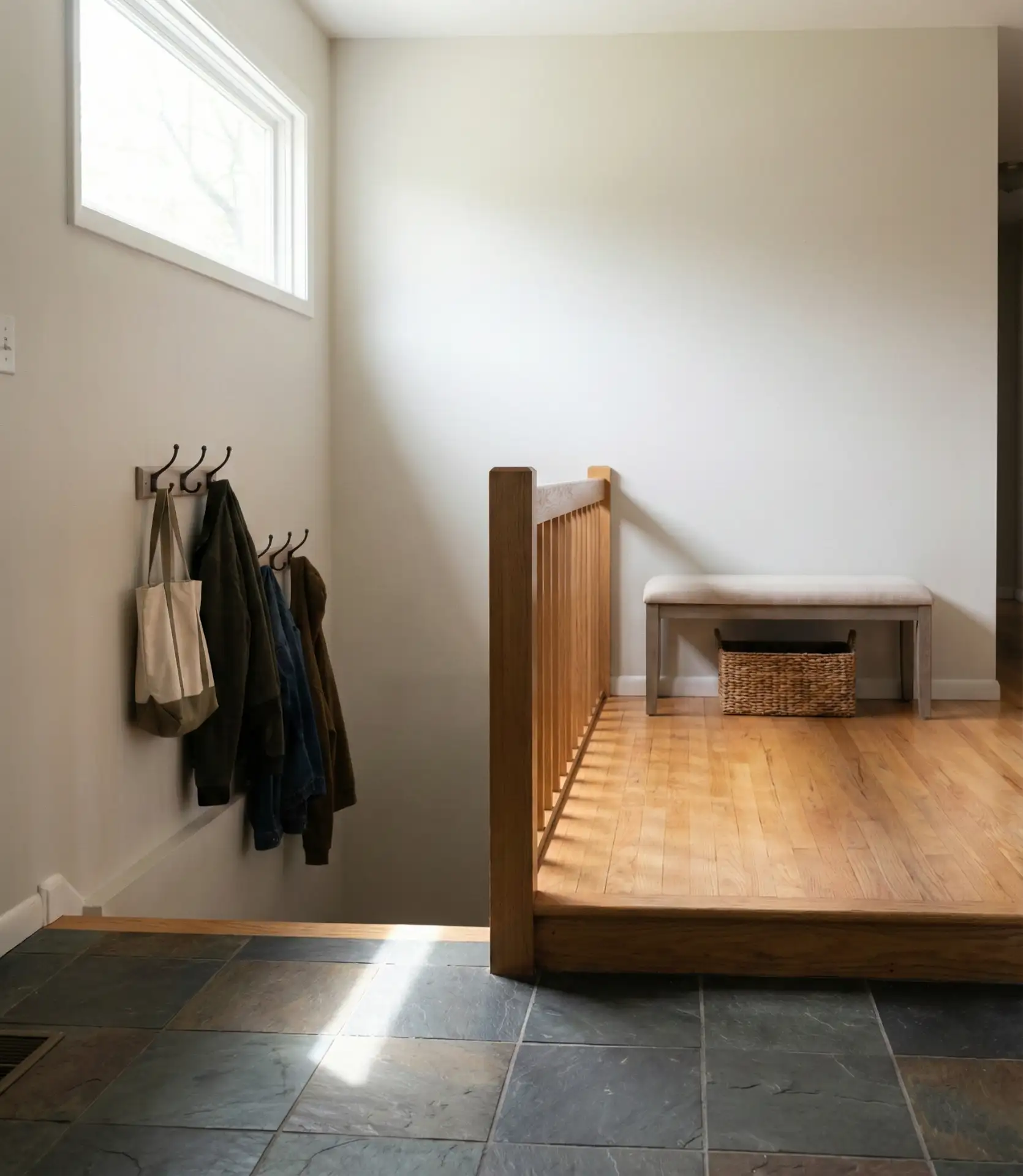
A split-level entryway presents unique challenges—and opportunities. Use the natural breaks in elevation to define distinct zones: a lower landing for shoes and coats and an upper area for display or seating. Consistent materials and lighting help unify the levels, while strategic furniture placement emphasizes the architectural flow. This design is especially relevant in classic American ranch-style homes, where split-level layouts create interesting spatial dynamics that deserve thoughtful styling.
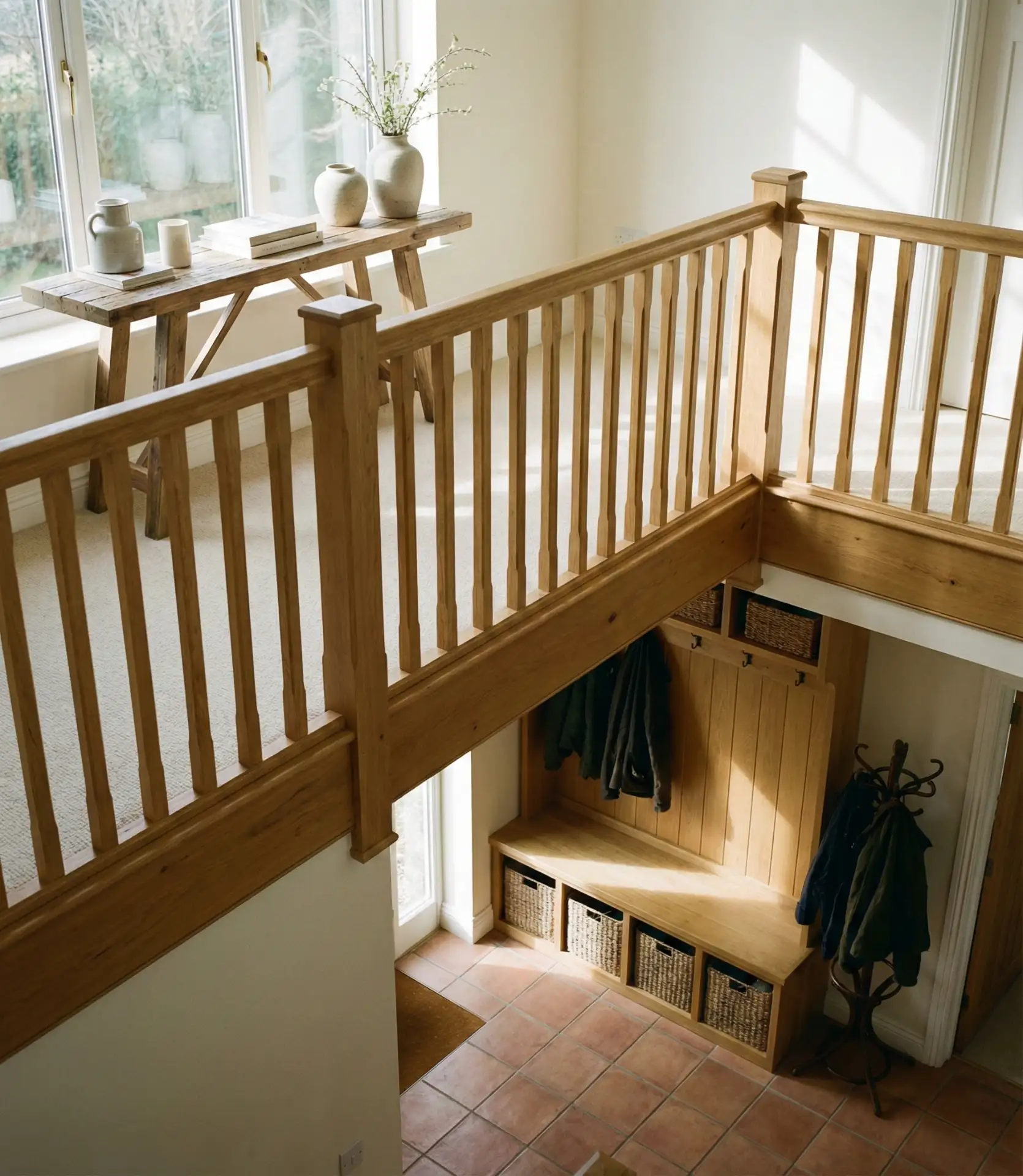
Where it works best: Split-level homes are most common in the Northeast and parts of the West Coast, built primarily in the 1960s and 70s. The lower entry zone naturally becomes a mudroom, perfect for messy gear, while the upper landing can remain more polished. A runner on the stairs and coordinated wall color throughout help the spaces feel connected rather than disjointed, honoring the home’s original design intent while updating it for modern life.
9. Tiny Entryway with Wall-Mounted Solutions
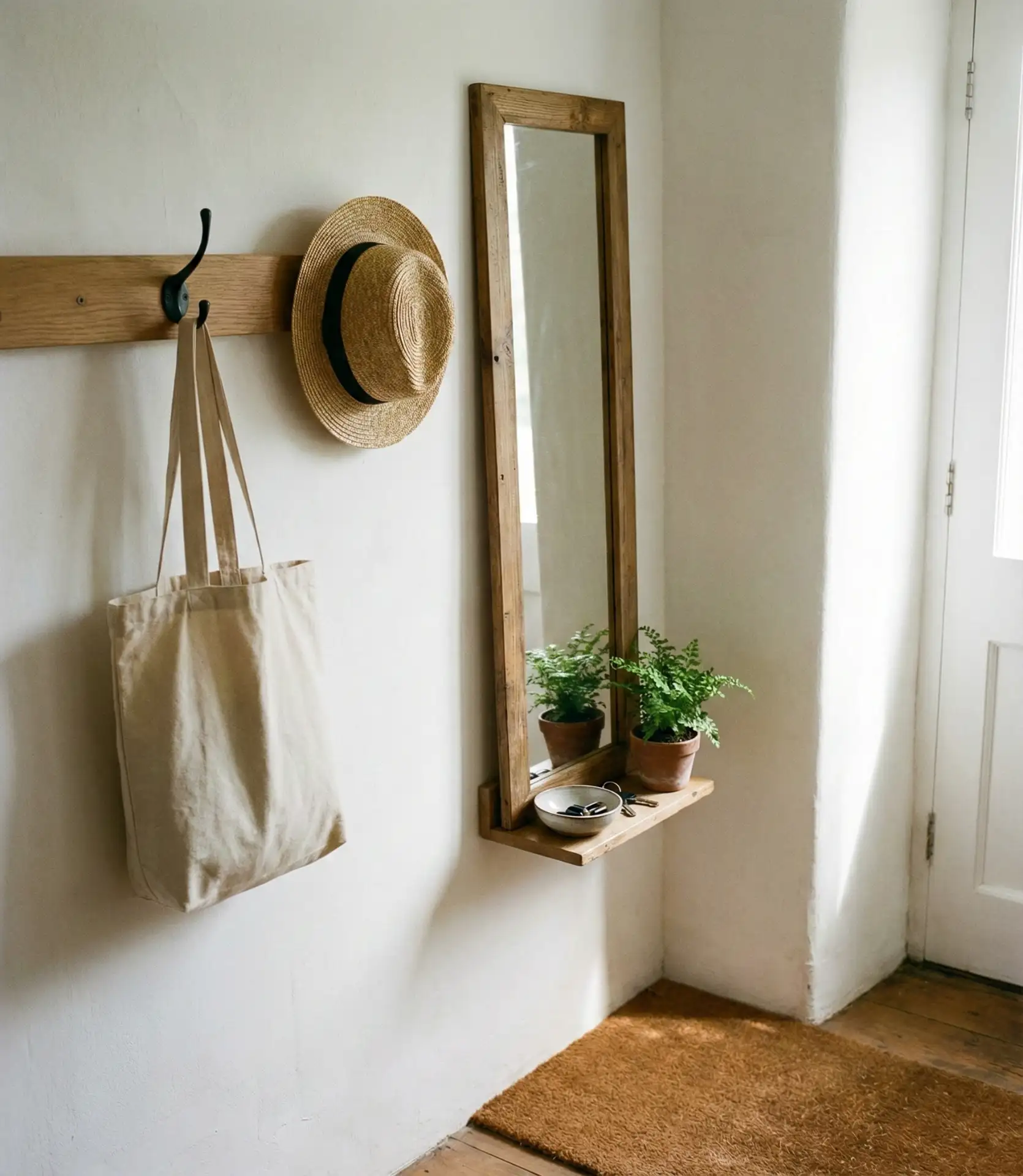
In a tiny or nearly nonexistent entryway, wall-mounted furniture frees up precious floor space while still providing essential function. A floating shelf with hooks underneath, a slim wall-mounted mirror, and perhaps a fold-down bench keep everything within reach without blocking the flow. This solution is ideal for studio apartments and compact city condos, where every square foot counts and traditional furniture simply won’t fit through the door.

Common mistakes and how to avoid them: Don’t try to squeeze in a full console table or bench—it will only make the space feel more cramped. Instead, embrace vertical design and keep everything streamlined. Choose multi-purpose pieces, like a mirror with integrated hooks or a shelf with a magnetic key holder. Light colors and good lighting are your allies here, making even the smallest entry feel more open and intentional.
10. Rustic Entryway with Stone Accent Wall
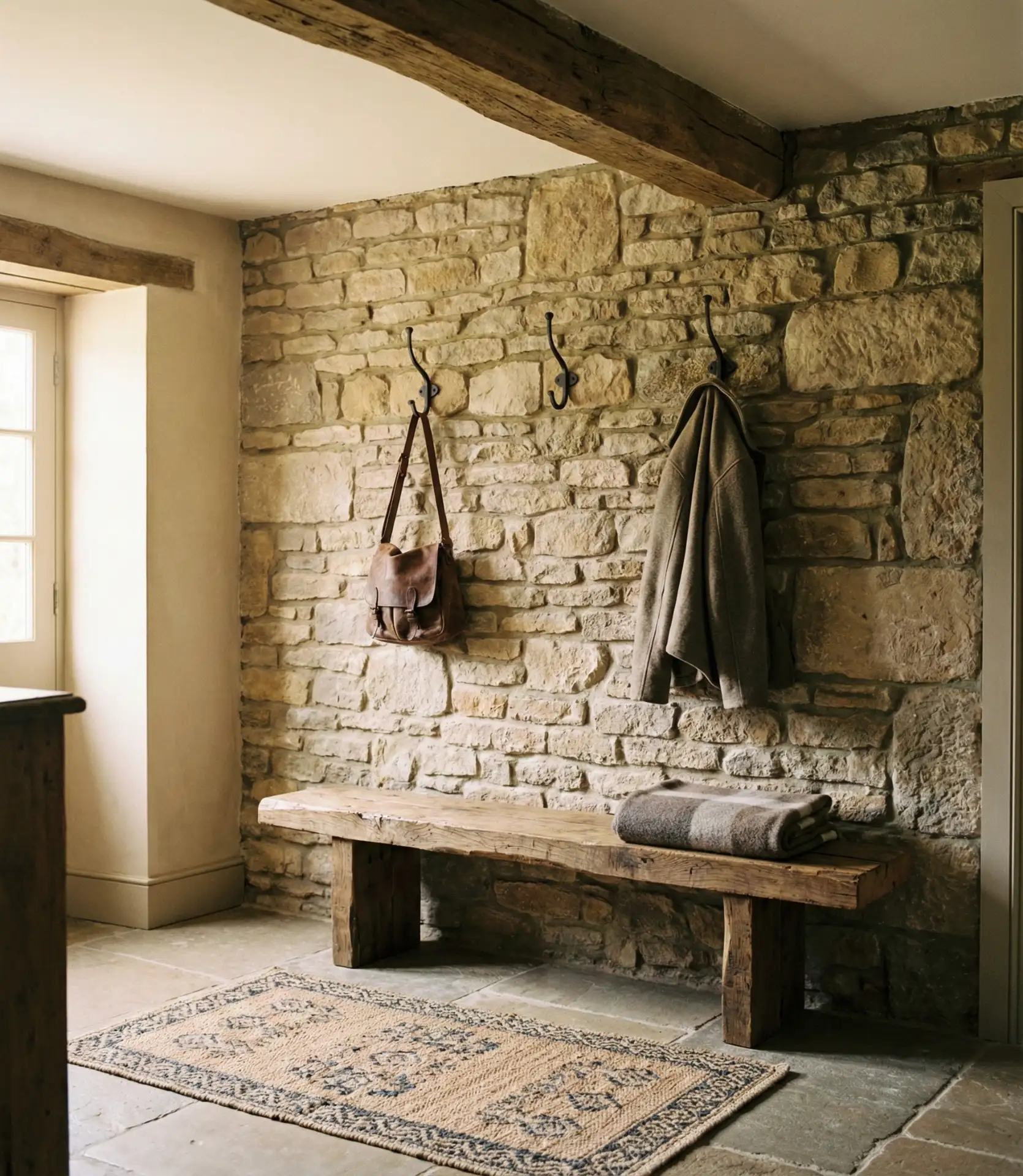
A rustic stone accent wall brings texture, warmth, and a sense of permanence to an entryway, especially in mountain homes and cabins where natural materials connect the interior to the surrounding landscape. Pair the stone with wood beams, wrought iron hooks, and earthy textiles for a look that feels both timeless and grounded. This style resonates strongly in the Rockies, the Pacific Northwest, and New England, where home design often draws inspiration from the outdoors.
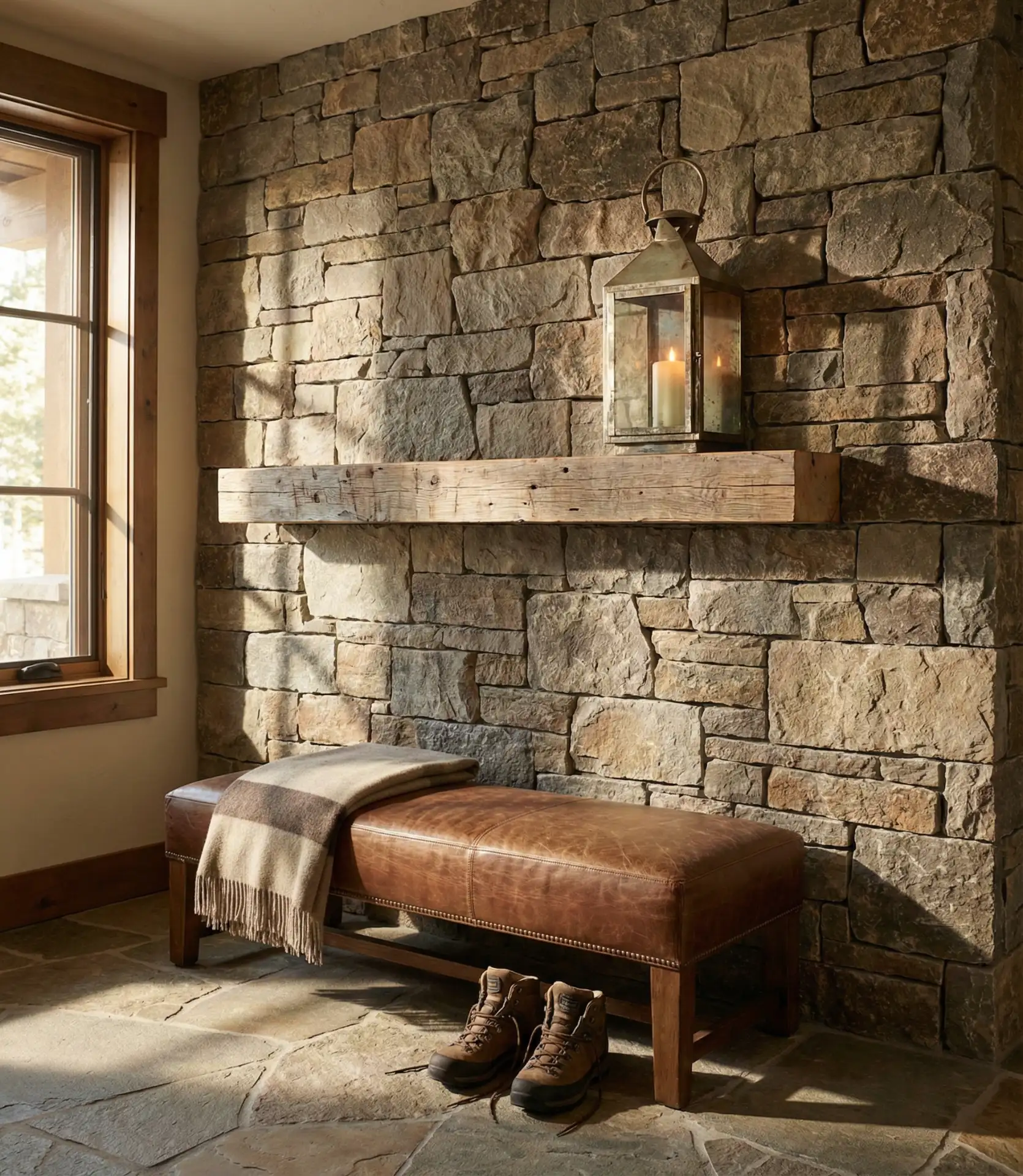
Micro anecdote: A Colorado homeowner I know added a dry-stacked stone wall to her entryway and said it completely changed how her home felt—suddenly, it had a sense of history and place, even though the house was only a few years old. Stone works particularly well in high-traffic areas because it’s durable and forgiving, and it brings a tactile quality that paint simply can’t match.
11. Elegant Entryway with Curved Furniture
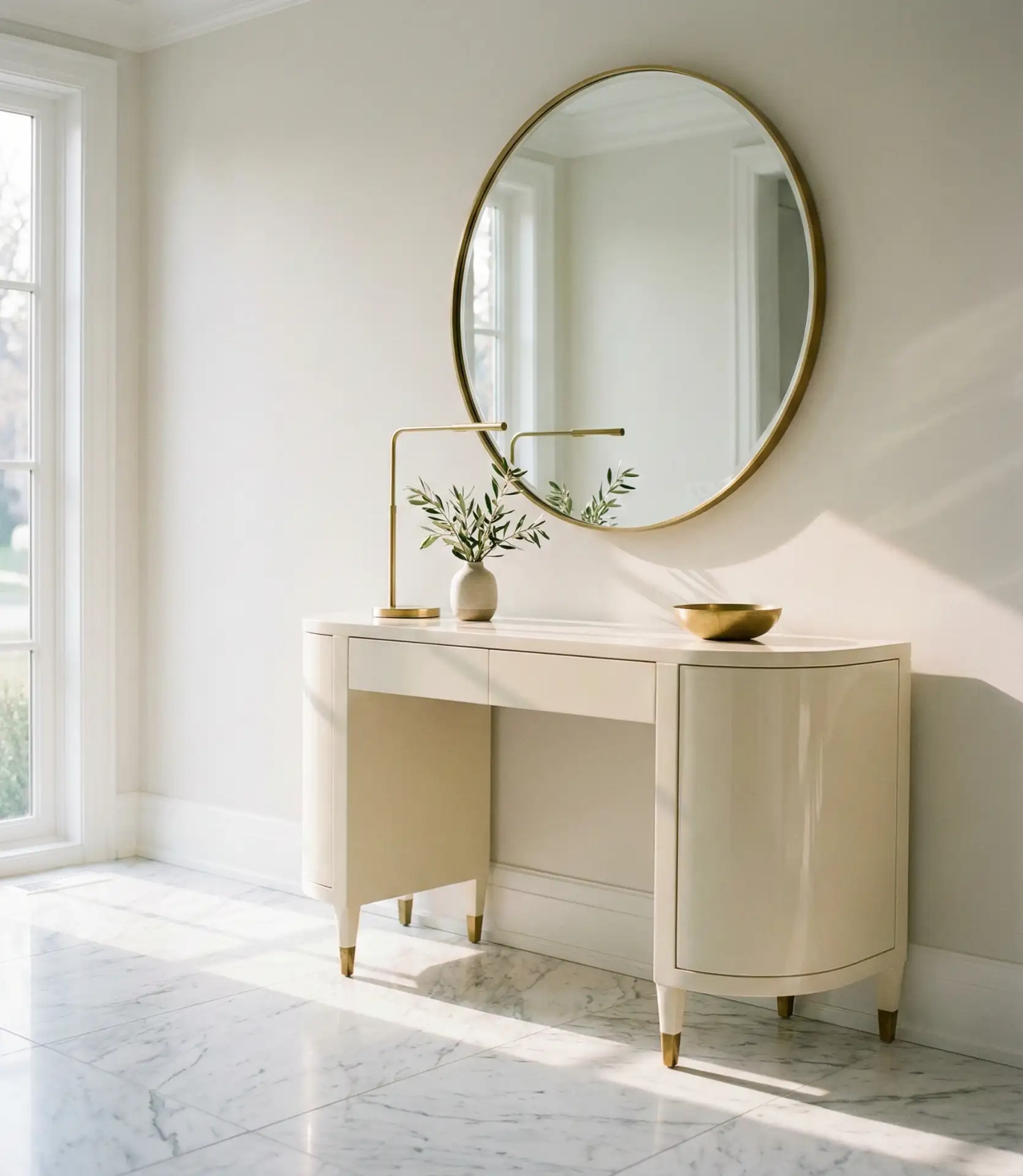
Curves are having a major moment in 2026, softening the hard edges of modern design and introducing a sense of flow and grace. An elegant entryway featuring a curved console or a round upholstered bench invites touch and movement, making the space feel more approachable and refined. This trend pairs beautifully with modern luxury interiors, where sculptural forms and organic shapes replace the rigid geometry of previous decades.
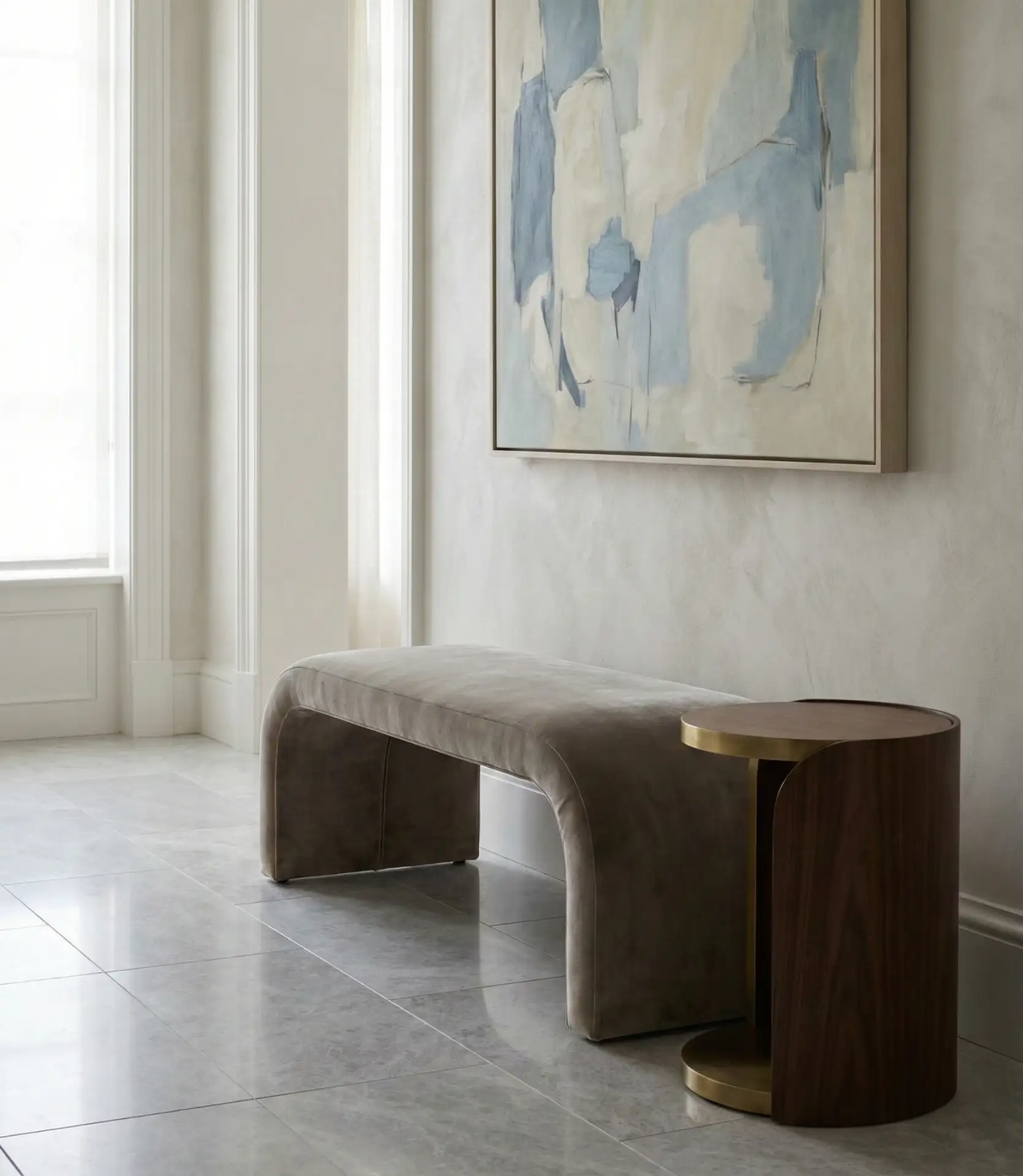
Expert-style commentary: Curved furniture tends to work best in entries with some breathing room—at least 5 to 6 feet of width—where the shape can be appreciated without feeling bulky. The softness of a curved form naturally directs traffic and creates a welcoming embrace, which is why designers often recommend it for front entries in particular. Pair with clean lines elsewhere to keep the look balanced and not overly decorative.
12. Wide Entryway with Symmetrical Layout
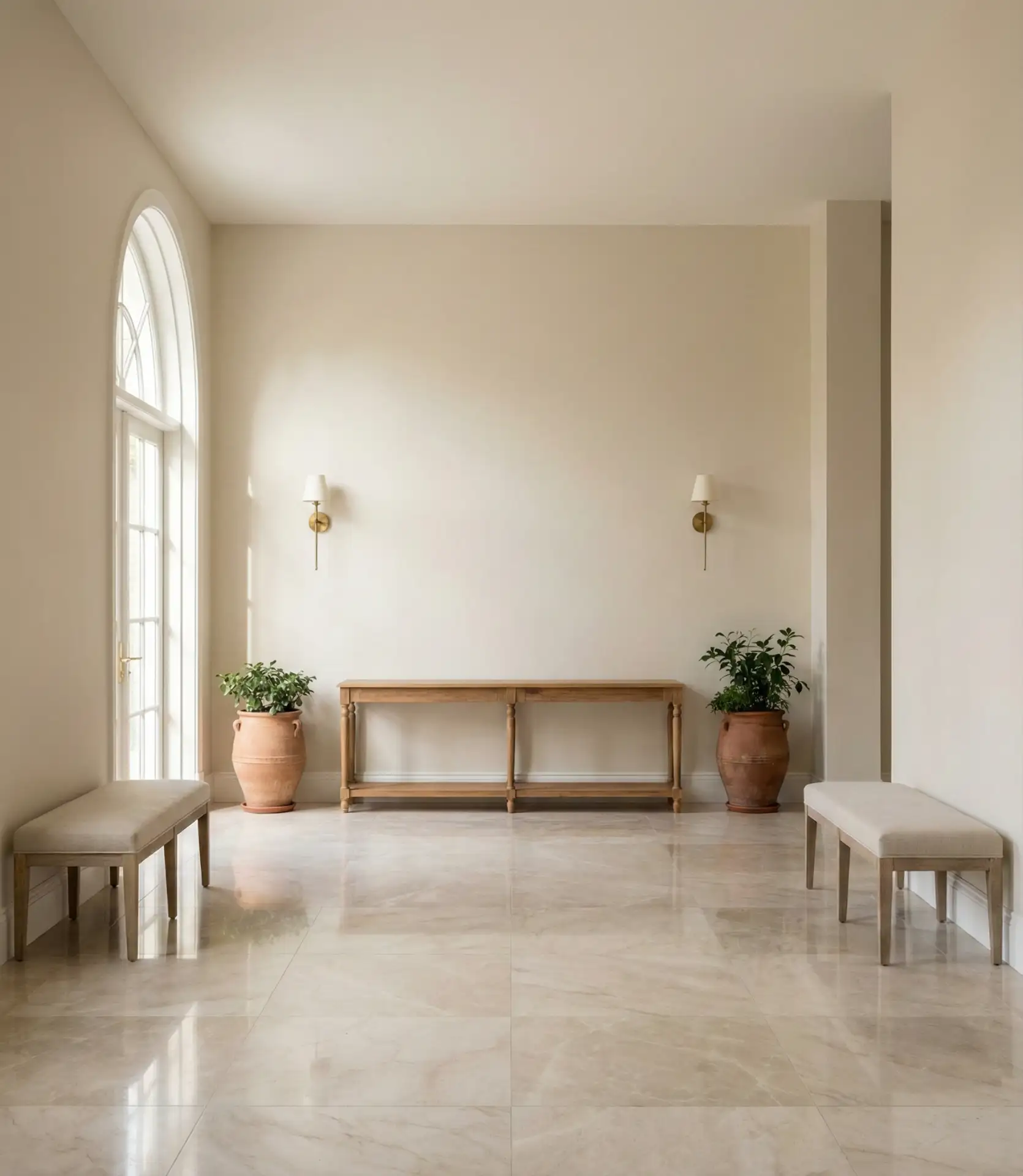
A wide entryway allows for a symmetrical arrangement that feels balanced and stately—matching sconces flanking a console, identical planters on either side, or twin benches creating a formal greeting. This approach is classic in traditional American homes, particularly in the South and Mid-Atlantic, where formal entries have long been a hallmark of hospitality and gracious living. Symmetry creates instant calm and order, making even a busy household feel more put together.
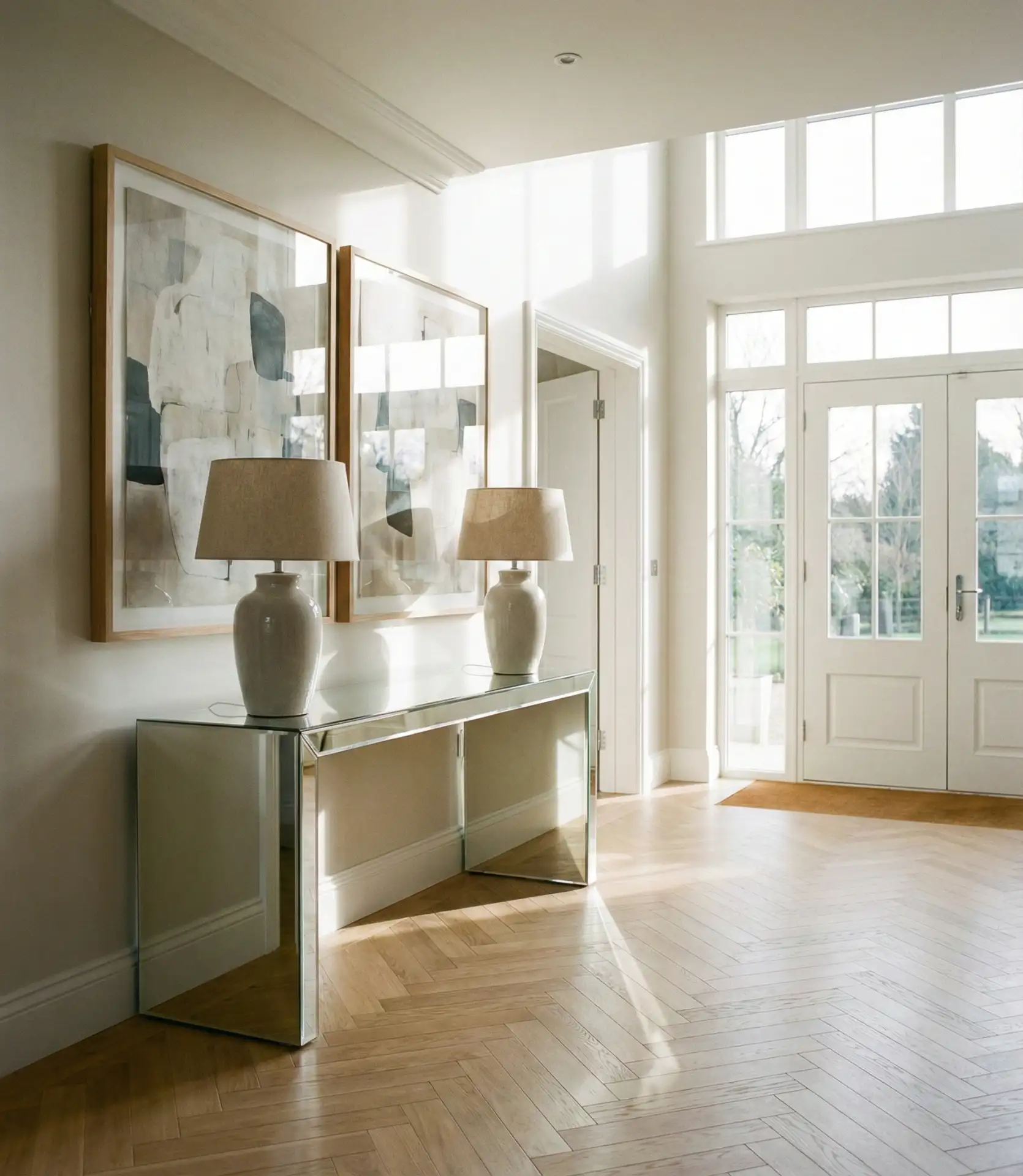
Practical insight: Symmetry works best when you have the space to spare—at least 8 to 10 feet of width. The key is keeping the scale appropriate; oversized furniture in a wide entry can look sparse, while too-small pieces get lost. Measure carefully and use painter’s tape on the floor to visualize placement before committing. Symmetrical layouts also photograph beautifully, which is why they’re Pinterest favorites.
13. Long Entryway Hallway with Gallery Wall
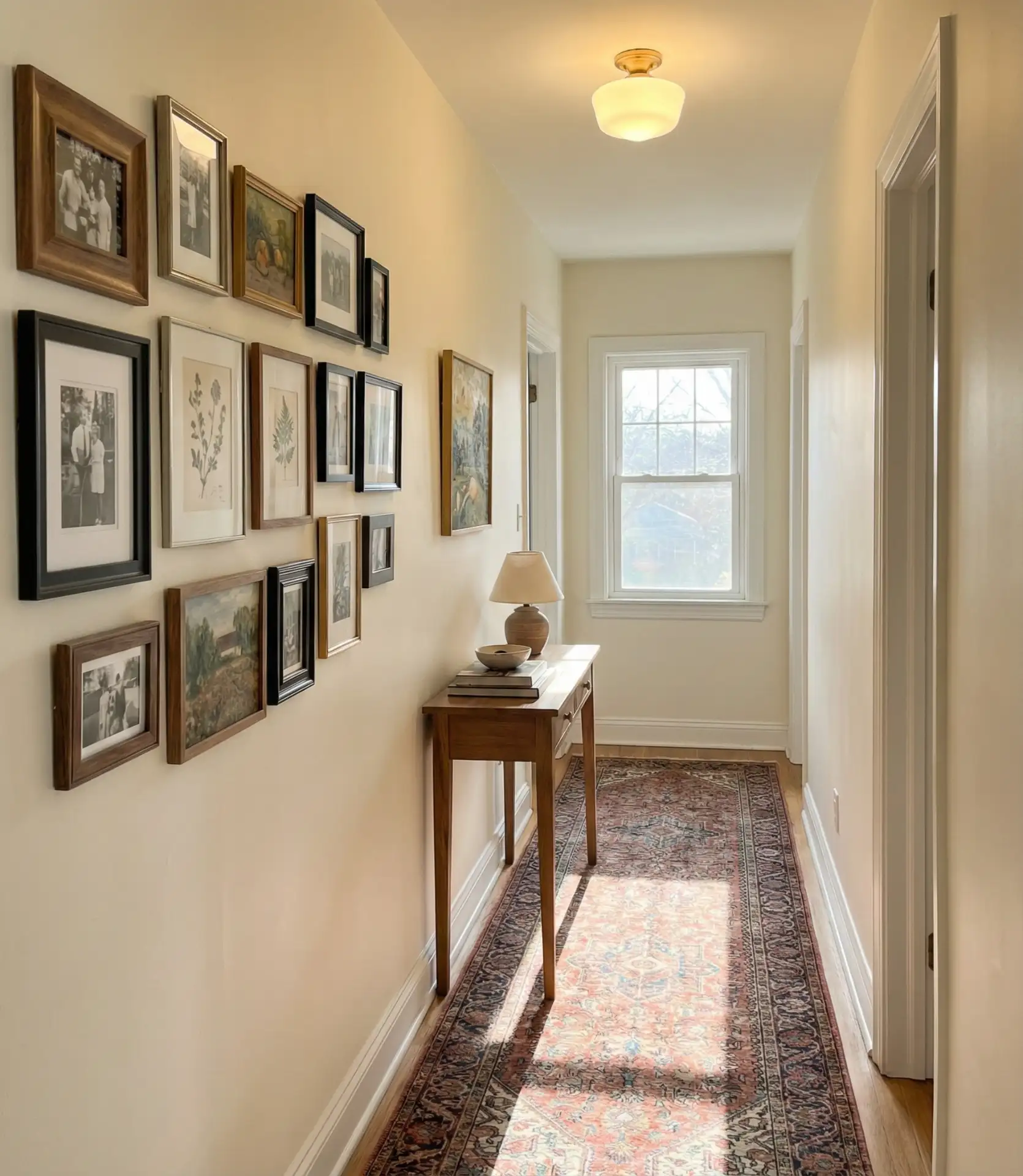
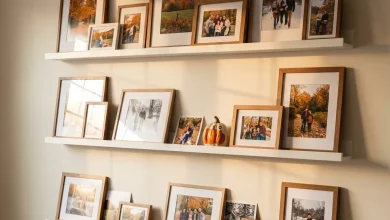
A long entry hallway can feel like a tunnel, but a thoughtfully curated gallery wall transforms it into a journey of discovery. Mix framed family photos, art prints, and personal mementos in a cohesive arrangement that carries the eye forward and invites guests to linger. This approach is especially effective in older home layouts and converted spaces where hallways connect multiple rooms, turning an awkward pass-through into a narrative-driven design moment.

Real homeowner behavior: Many people start with good intentions for a gallery wall but end up with a few lonely frames that never get finished. The trick is to lay everything out on the floor first, mapping the arrangement and making sure the spacing feels right. A Philadelphia friend of mine used removable wall hooks to test placements before committing to nails, and the result was a polished, cohesive look that took the hallway from forgettable to the most-complimented part of her house.
14. Tall Entryway with Floor-to-Ceiling Shelving
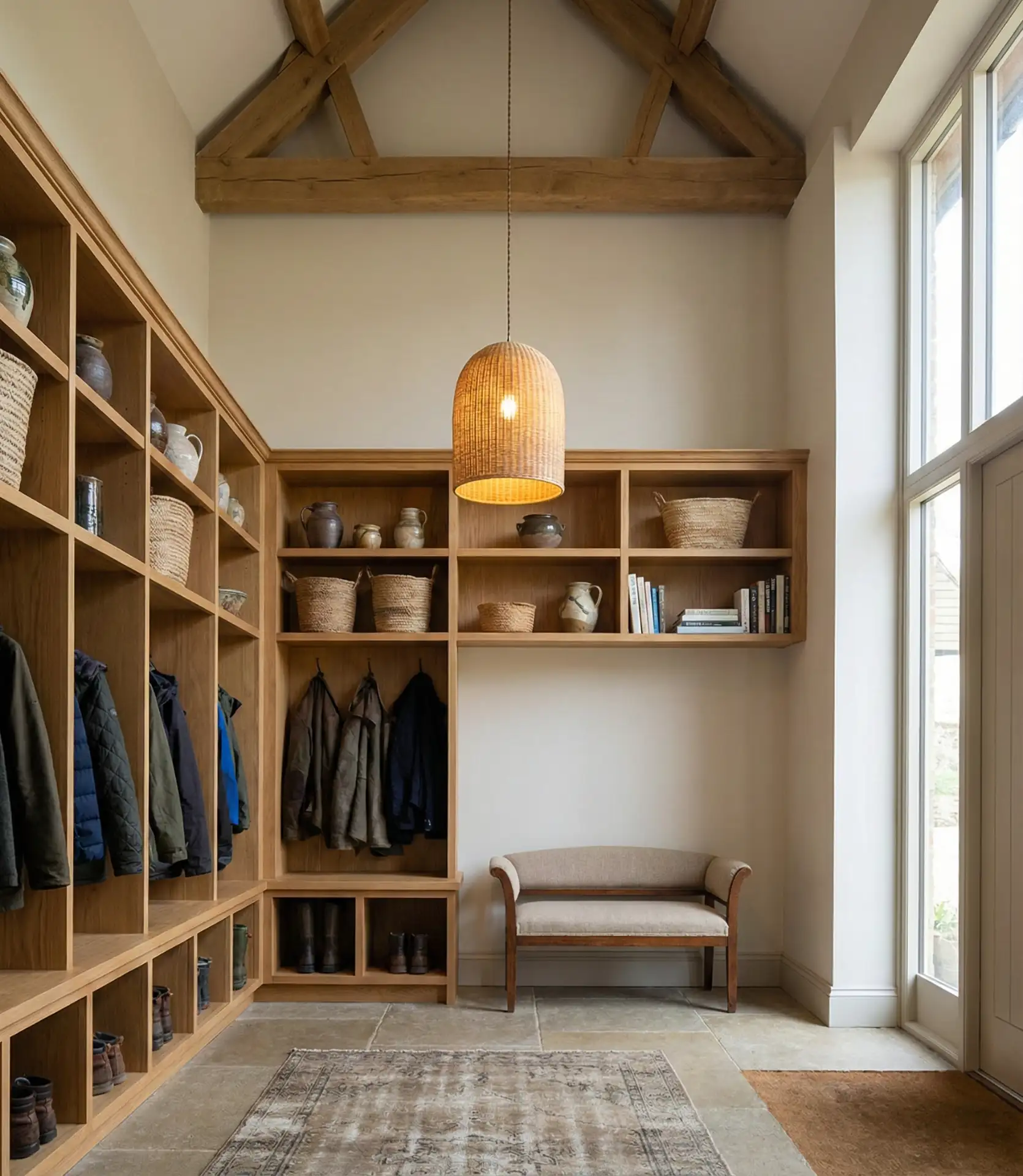
In a tall or high-ceiling entry, floor-to-ceiling built-in shelving maximizes vertical space while adding architectural interest and storage. Lower shelves can hold baskets for shoes and bags, while upper shelves display books, ceramics, or seasonal decor. This design works beautifully in modern lofts and converted industrial spaces, where soaring ceilings are a feature worth celebrating, and built-ins help ground the scale without sacrificing openness.
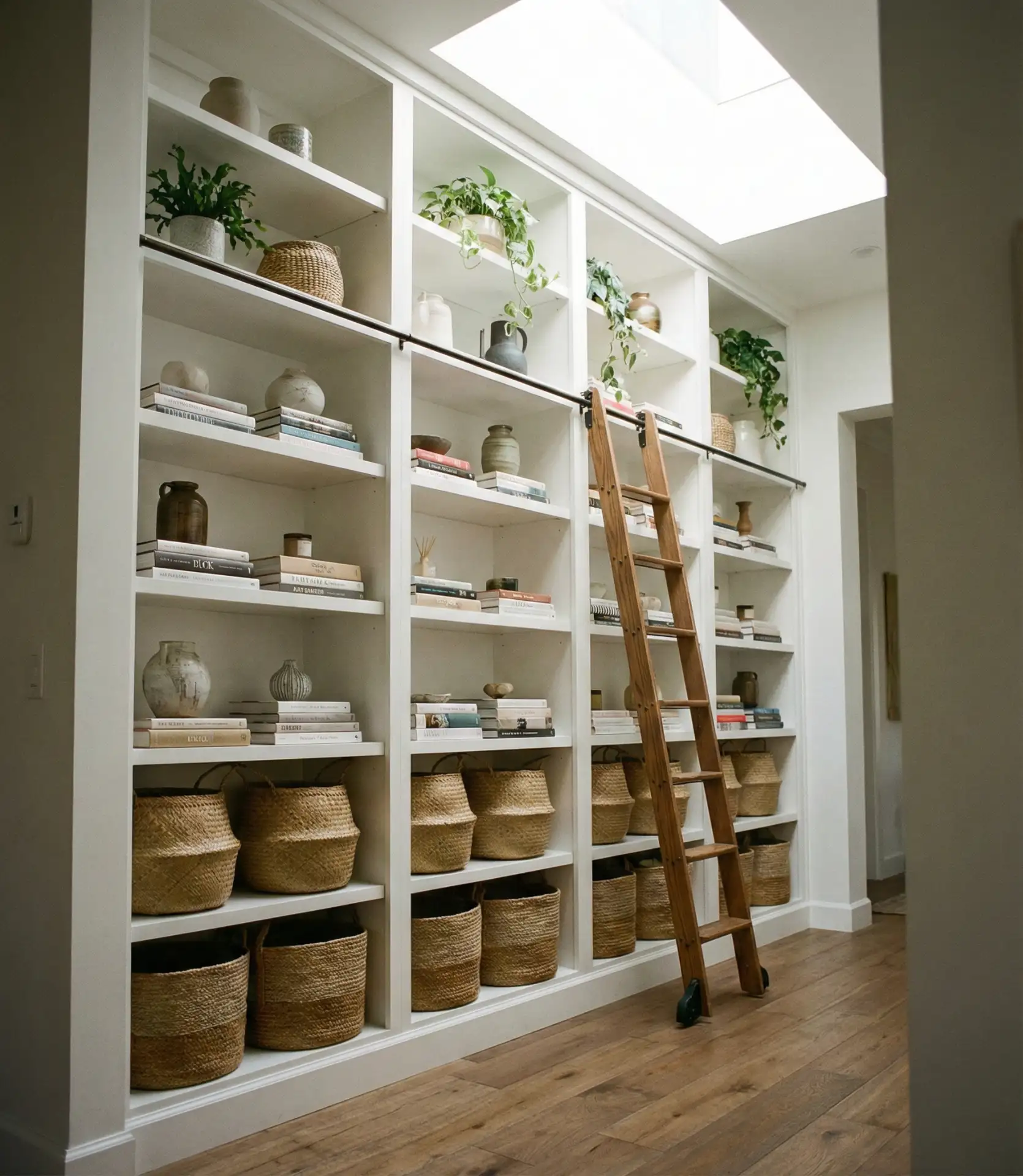
Budget angle: Custom built-ins can run $2,000 to $5,000 depending on materials and complexity, but prefabricated modular systems from retailers like IKEA offer a DIY-friendly alternative starting around $300. The investment adds both function and resale value, especially in homes where storage is limited. Keeping the lower section practical and the upper section more decorative ensures the space works hard without feeling cluttered or overly utilitarian.
15. Indian Story-Style Entryway with Carved Wooden Door
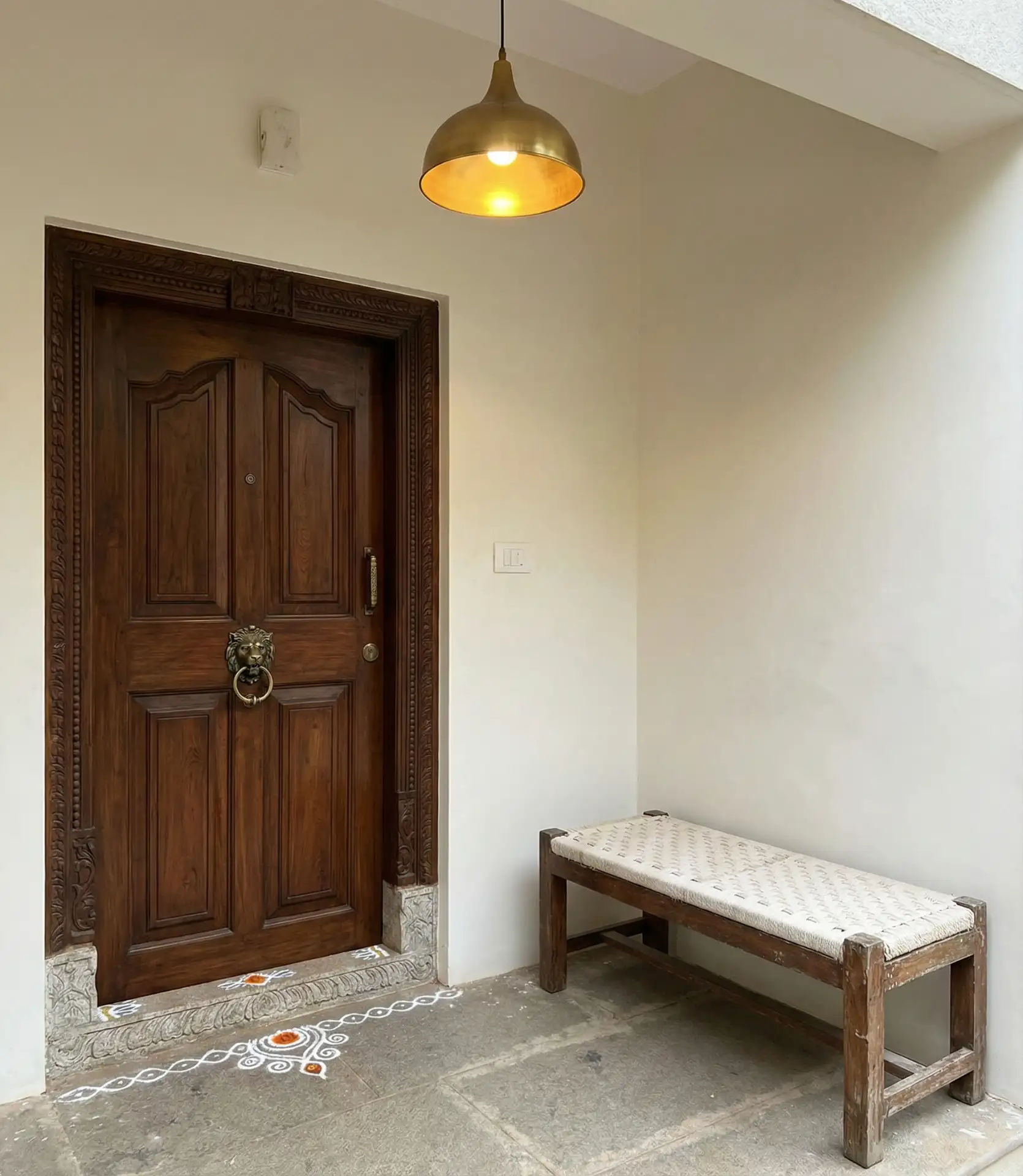
An Indian-style entryway celebrates heritage through intricate carved wooden doors, brass hardware, and symbolic motifs like peacocks or florals. Paired with a low seating nook or a traditional entrance threshold design, this approach brings cultural richness and artistry into the first impression. It’s a style that honors craftsmanship and family history, creating a space that feels deeply personal and rooted in traditional values while fitting comfortably into contemporary homes.
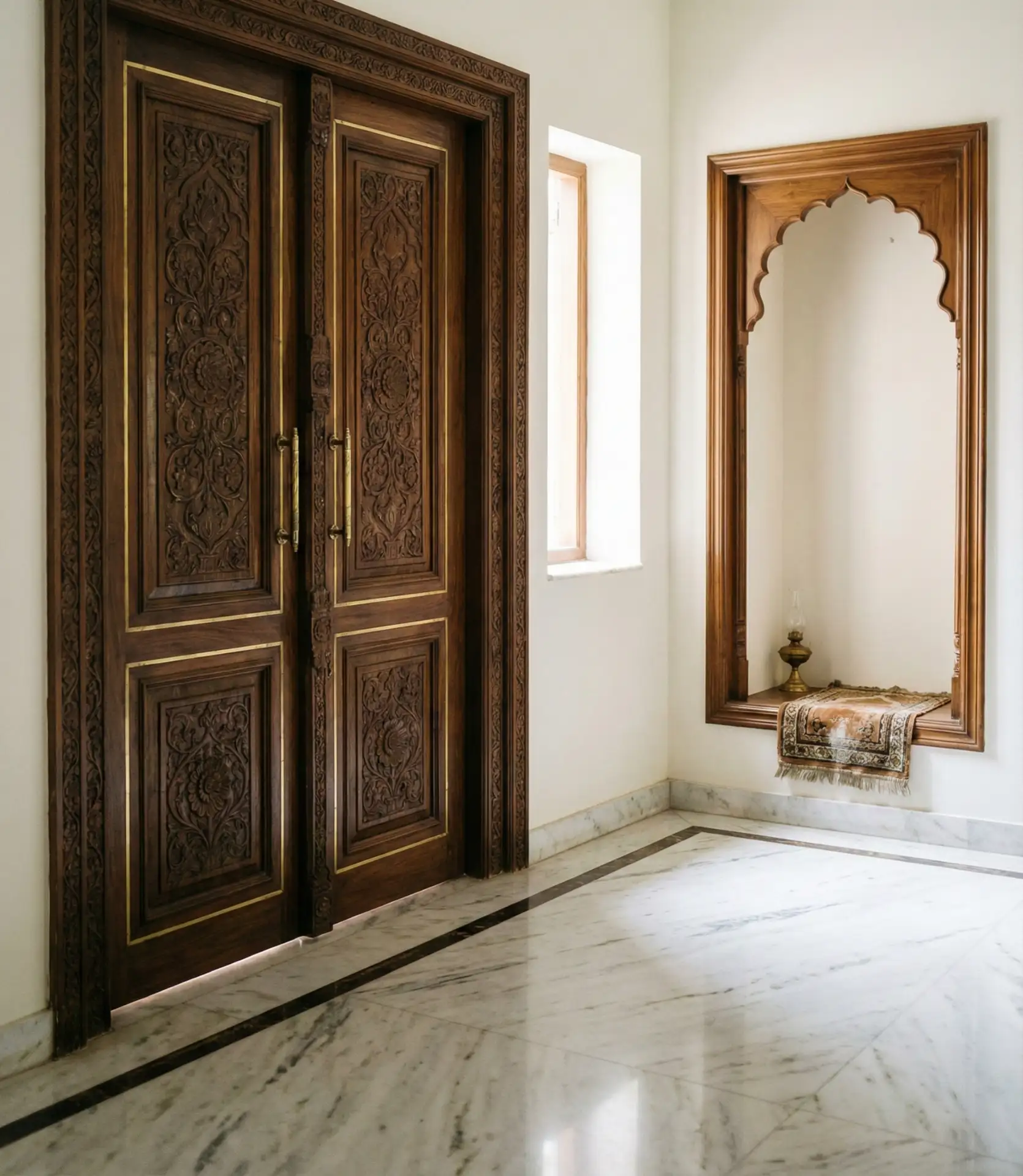
Where it works best: This style is most authentic in homes where the residents have cultural ties to India, but elements like carved wood and brass details translate beautifully into eclectic and globally inspired interiors across the U.S. The key is respecting the symbolism and craftsmanship rather than treating it as purely decorative. Proper lighting is essential—spotlighting the door’s detail helps it become a focal point rather than receding into shadow.
16. Front Entryway with Bold Painted Door
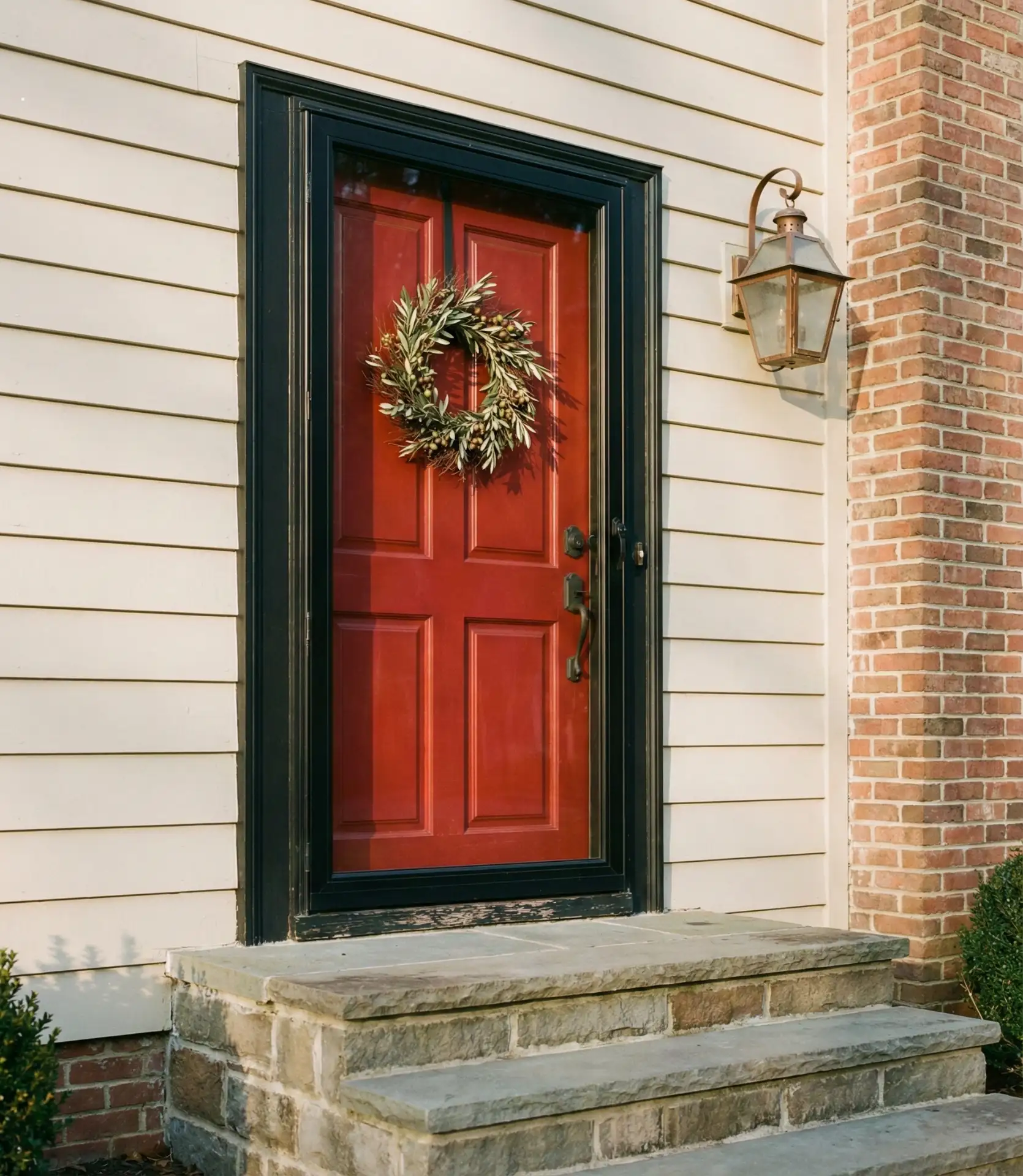
Your front door is a chance to make a statement before anyone even steps inside, and a bold paint color—think deep emerald, burnt orange, or even glossy black—sets an energetic, confident tone. This single design move has an outsized impact and is one of the easiest updates for curb appeal. In neighborhoods from Charleston to Portland, colorful front doors signal personality and warmth, turning a standard entrance into a signature feature that’s immediately recognizable.
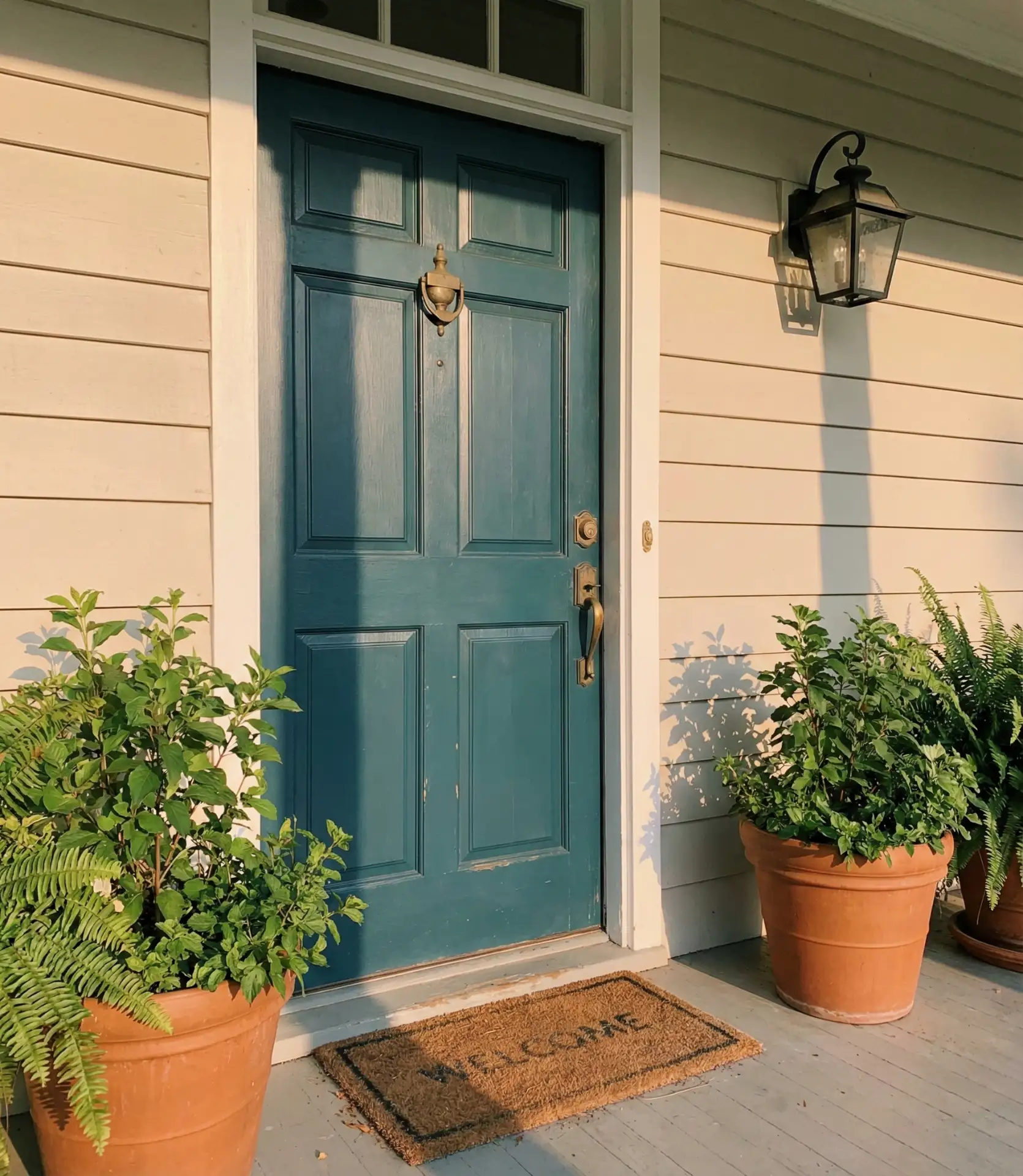
Practical insight: Choose an exterior-grade paint with a semi-gloss or high-gloss finish for durability and easy cleaning. Test your color choice with a sample board placed near the door for a few days to see how it looks in different light. A bold door works with nearly any home style—it just needs to be intentional. Coordinate with hardware and lighting to complete the look, and you’ve created instant curb appeal for under $100 in materials.
17. Staircase Entry with Runner and Artwork
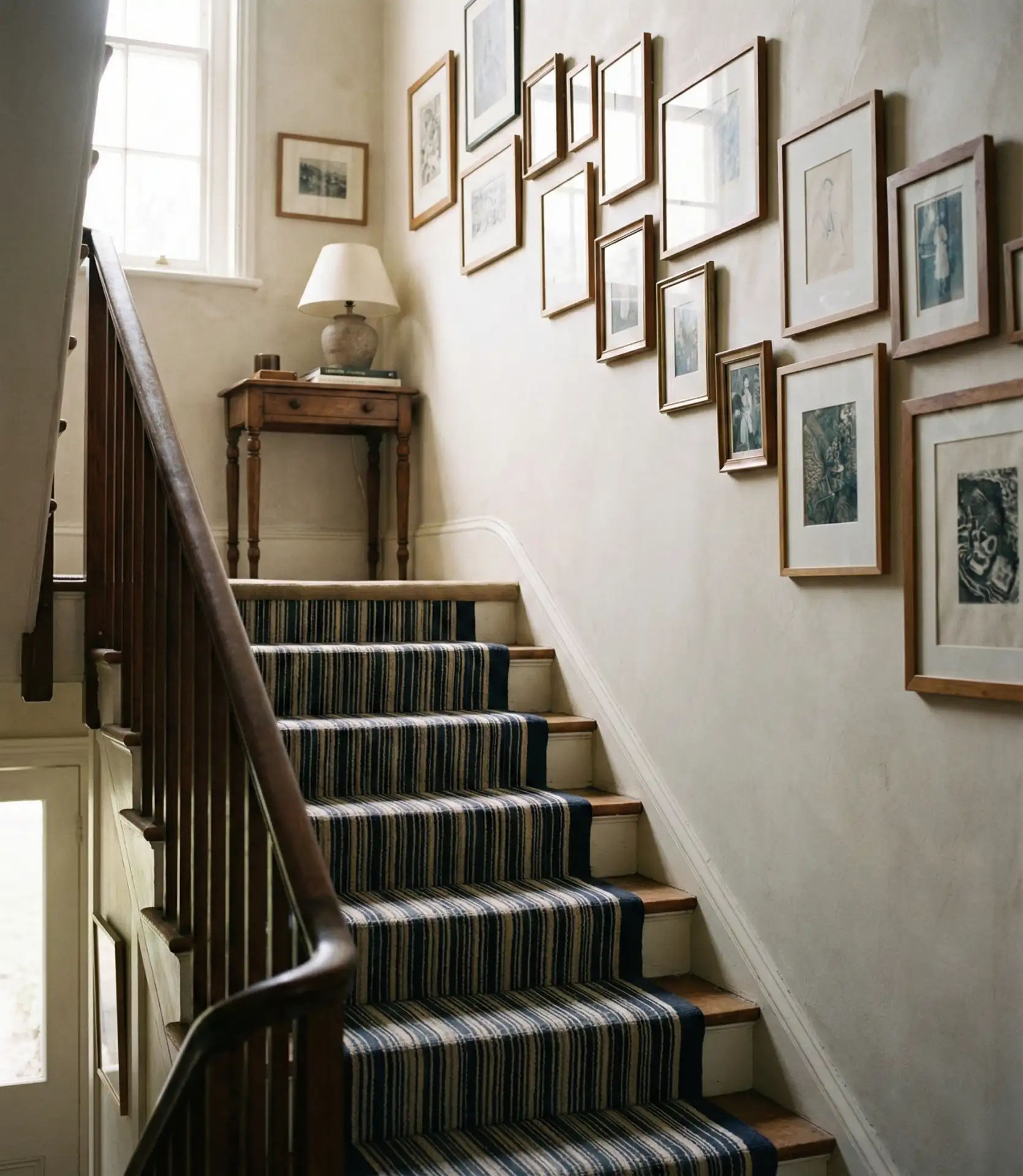
When stairs greet you immediately upon entering, they become the entryway’s focal point by default. A patterned runner softens sound and adds color, while artwork on the adjacent wall draws the eye and creates visual interest as you ascend. This setup is common in townhomes, historic rowhomes, and 2-story bungalows, where a limited footprint means the stairway has to work double duty as both circulation and a design statement.
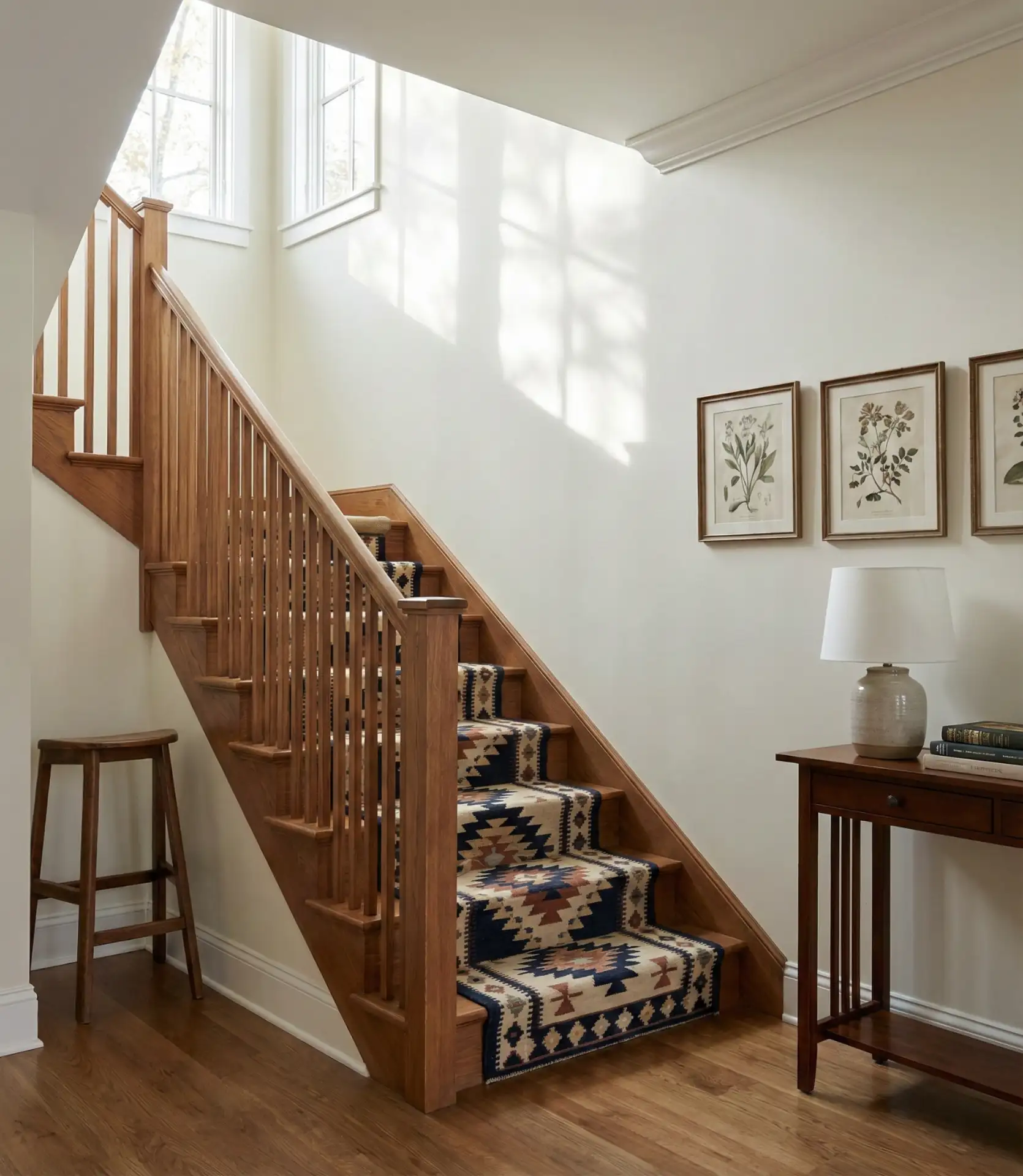
Common mistakes and how to avoid them: Don’t choose a runner that’s too narrow—it should be wide enough to cover the center of each tread with a few inches of exposed wood on either side. Also, avoid hanging art too high; the center of each piece should be at eye level as you’re walking up the stairs, which is typically lower than you’d think. Proper installation of both the runner and the art ensures the space feels finished, not haphazard.
18. Indian Modern Entryway with Floating Console
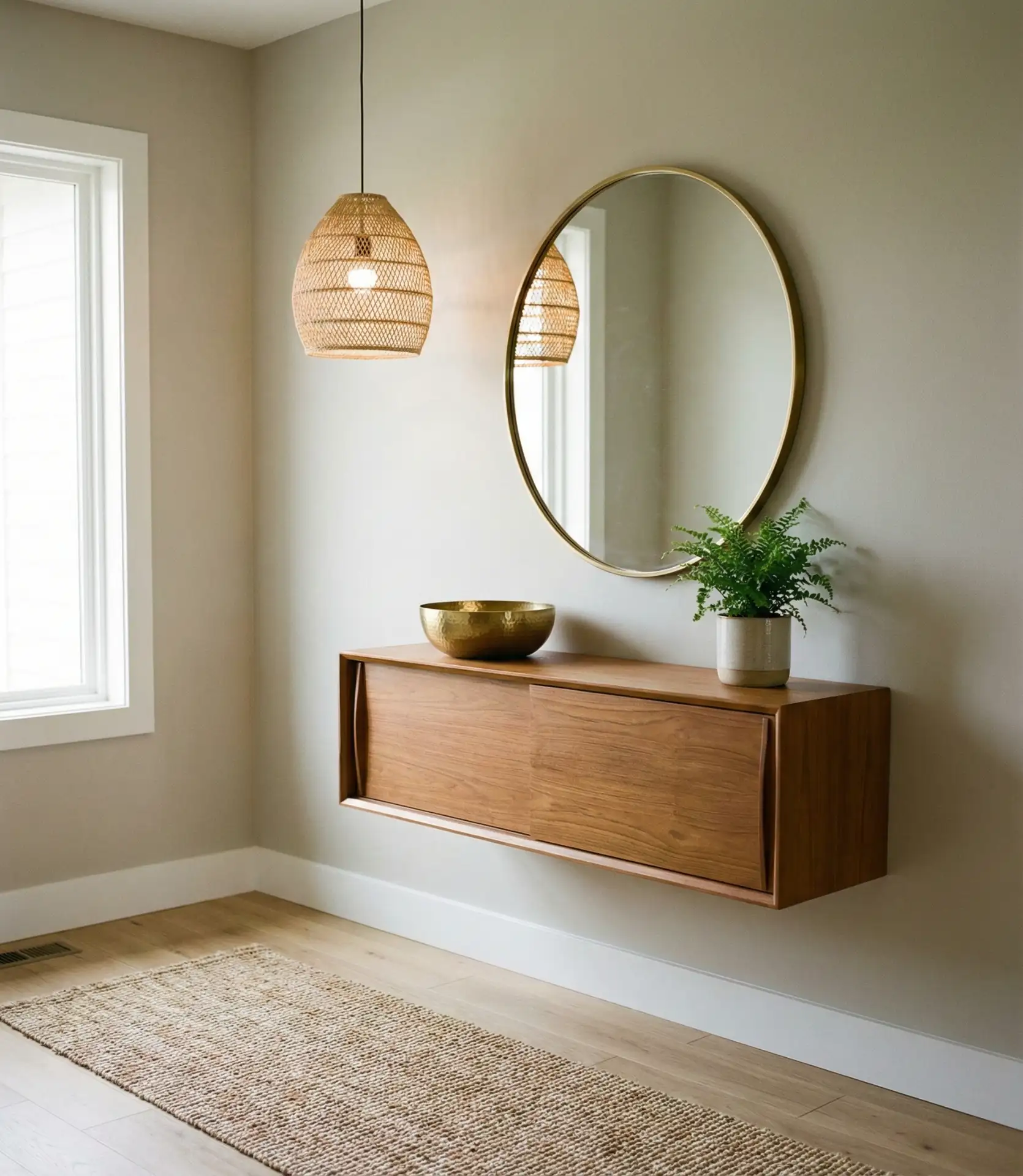
A modern Indian aesthetic blends clean lines and minimalist sensibility with warm wood tones, brass accents, and cultural references like hand-painted pottery or block-printed textiles. A floating console keeps the floor clear and enhances the sense of space—a smart move in compact apartments—while layered decor on top and a large mirror above bring dimension and light. This style resonates with younger urban homeowners looking to honor tradition without sacrificing contemporary simplicity.
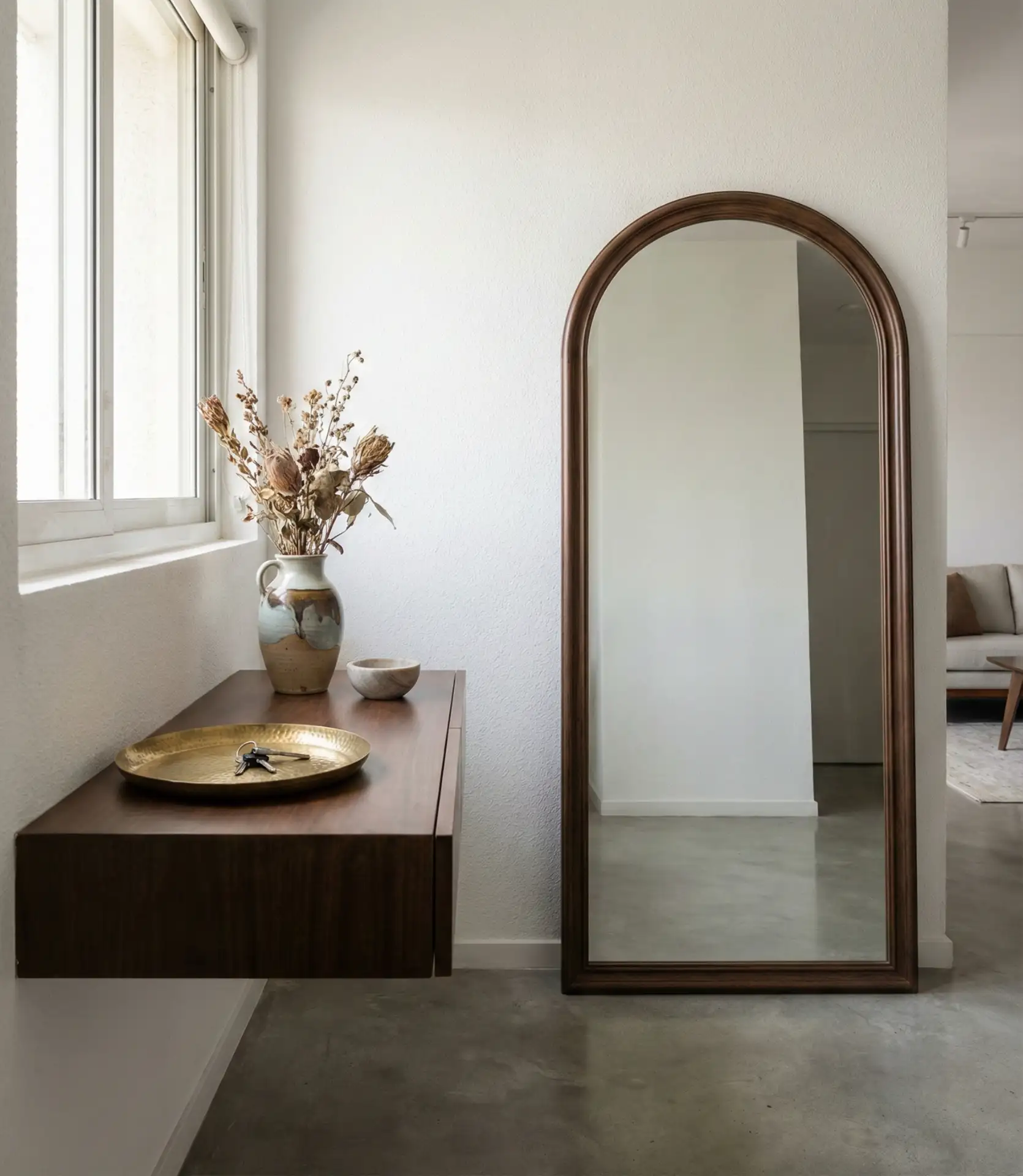
American lifestyle context: Floating furniture is particularly popular in urban centers like New York, San Francisco, and Seattle, where open sightlines and a sense of airiness are prized in smaller homes. The absence of visible legs makes the space feel larger, and it’s easier to sweep or mop underneath—a practical bonus that busy professionals appreciate. Pairing this modern form with culturally meaningful decor creates a bridge between heritage and contemporary life.
19. Bloxburg-Inspired Entryway with Gaming Aesthetic
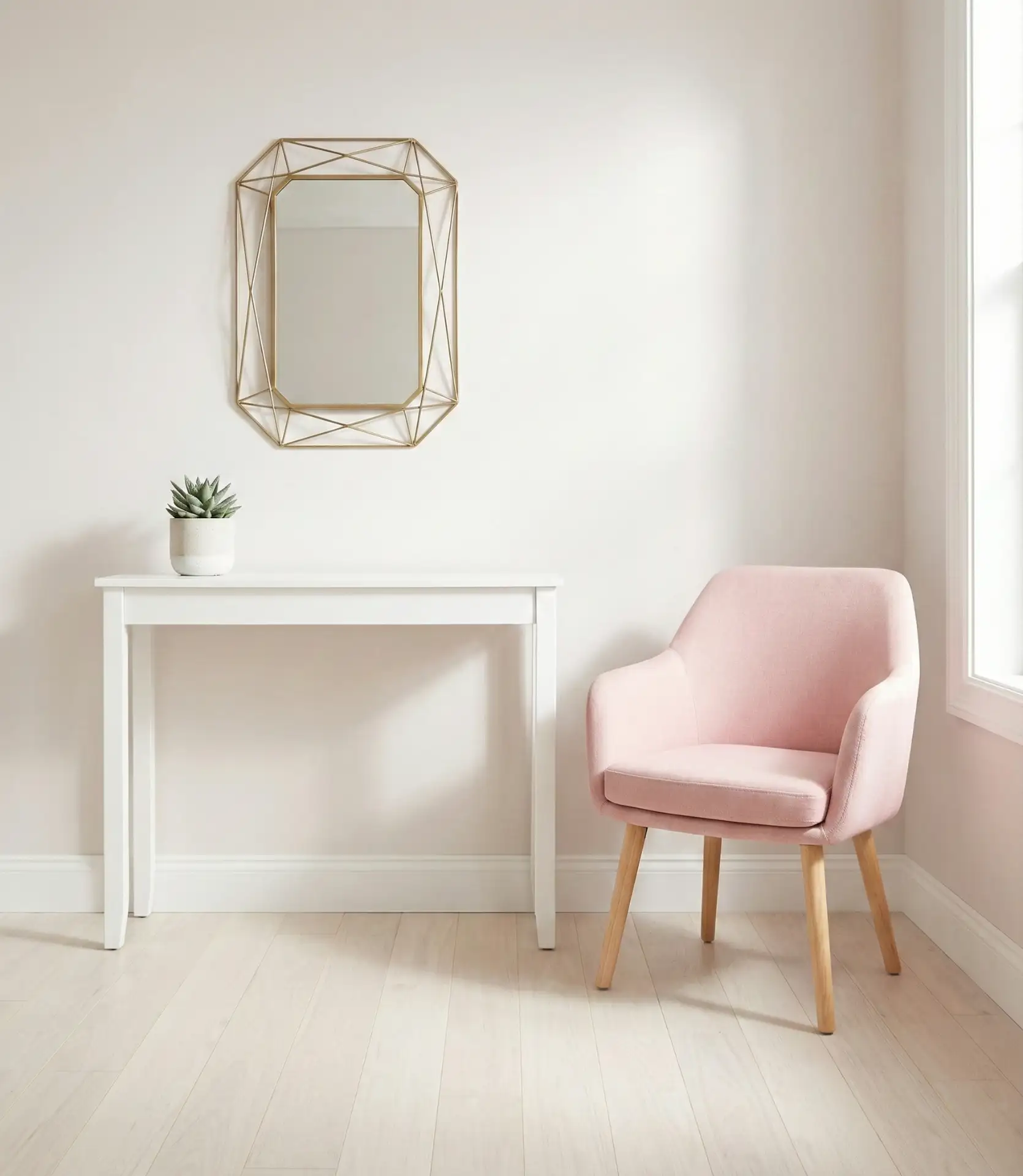
For younger Americans who grew up building virtual homes in Bloxburg, the game’s clean, curated aesthetic—think perfectly symmetrical layouts, pastel palettes, and ultra-organized storage—offers real-world design inspiration. A modern entryway channeling this vibe features sleek white or light wood furniture, pops of soft color, and everything neatly in its place. It’s an approachable, Instagram-friendly style that feels aspirational yet achievable, especially for first-time homeowners and Gen Z renters.
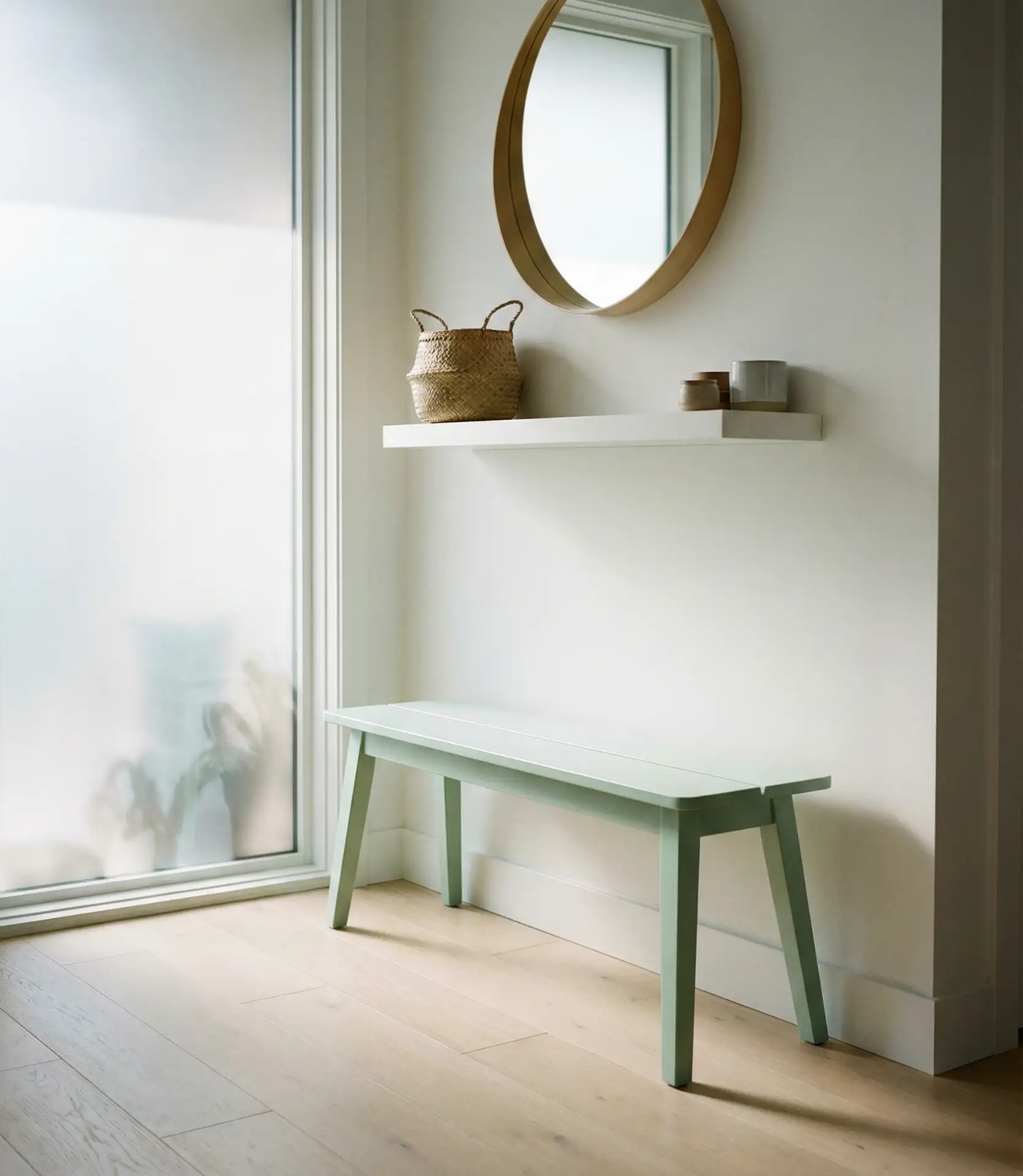
Micro anecdote: A college student I know designed her apartment entryway directly inspired by her Bloxburg builds—matching colors, coordinated containers, and a tiny potted plant on the console. She said it helped her feel more put-together and adult, which is exactly the appeal of this style. It’s low-stakes, budget-friendly, and highly customizable, making it perfect for anyone just starting to figure out their personal design voice.
20. Traditional Entryway with Classic Wainscoting
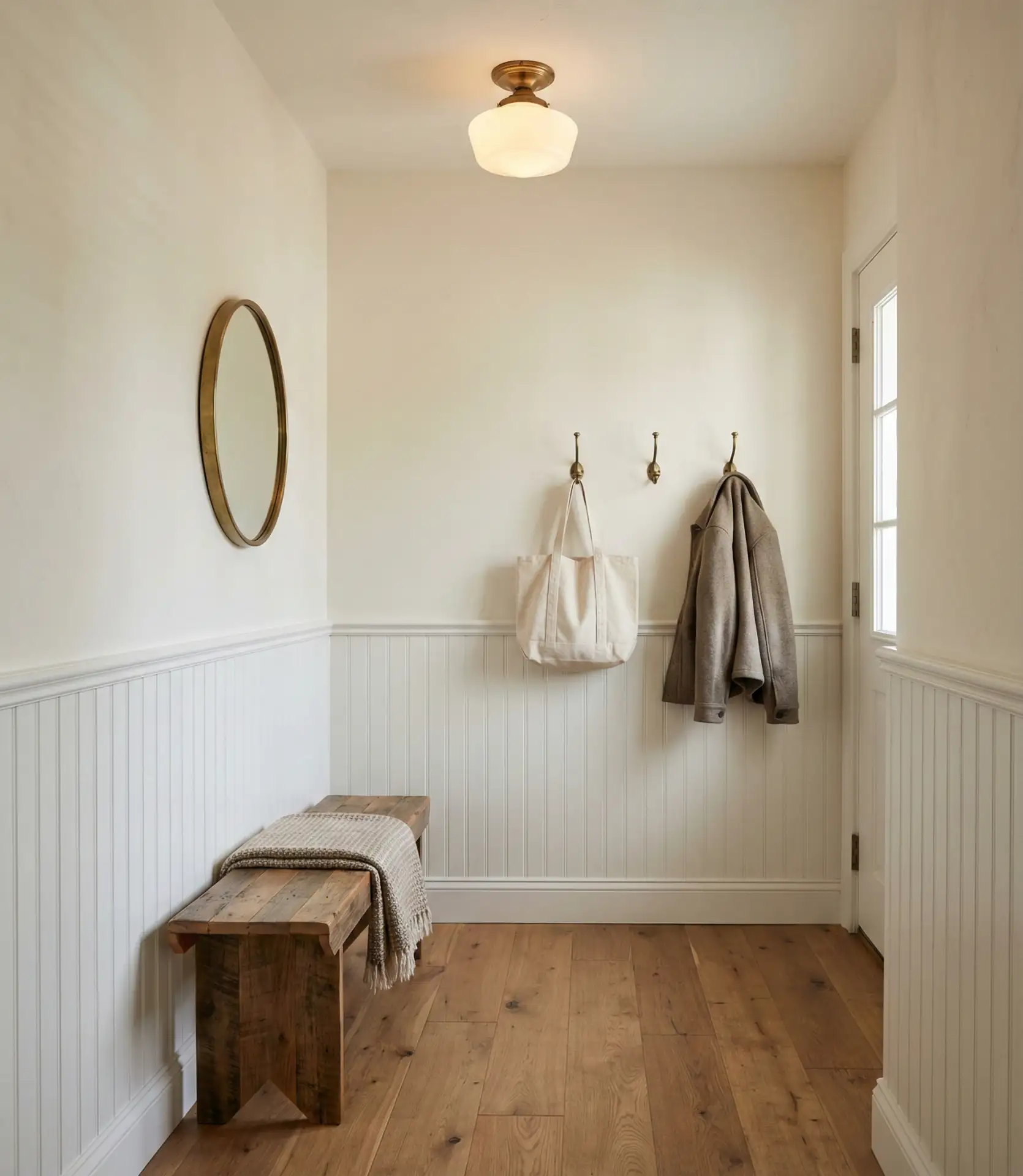
Classic wainscoting brings architectural character and durability to a traditional entryway, protecting walls from scuffs while adding timeless elegant detail. Painted in crisp white or a soft neutral, wainscoting pairs beautifully with period-appropriate lighting and furniture, creating a cohesive look that feels rooted in American design history. This treatment is especially popular in Colonial, Craftsman, and Victorian homes throughout New England and the Mid-Atlantic, where historical integrity and craftsmanship are valued.

Budget angle: Installing wainscoting costs roughly $5 to $12 per square foot for materials if you DIY, or $1,000 to $3,000 for professional installation in an average-sized entry. The investment pays off in both aesthetics and protection—high-traffic entryways take a beating, and wainscoting shields the lower walls from everyday wear. It’s one of those upgrades that makes a home feel more thoughtfully designed and maintained.
21. Modern Luxury Glass Entry with Natural Light
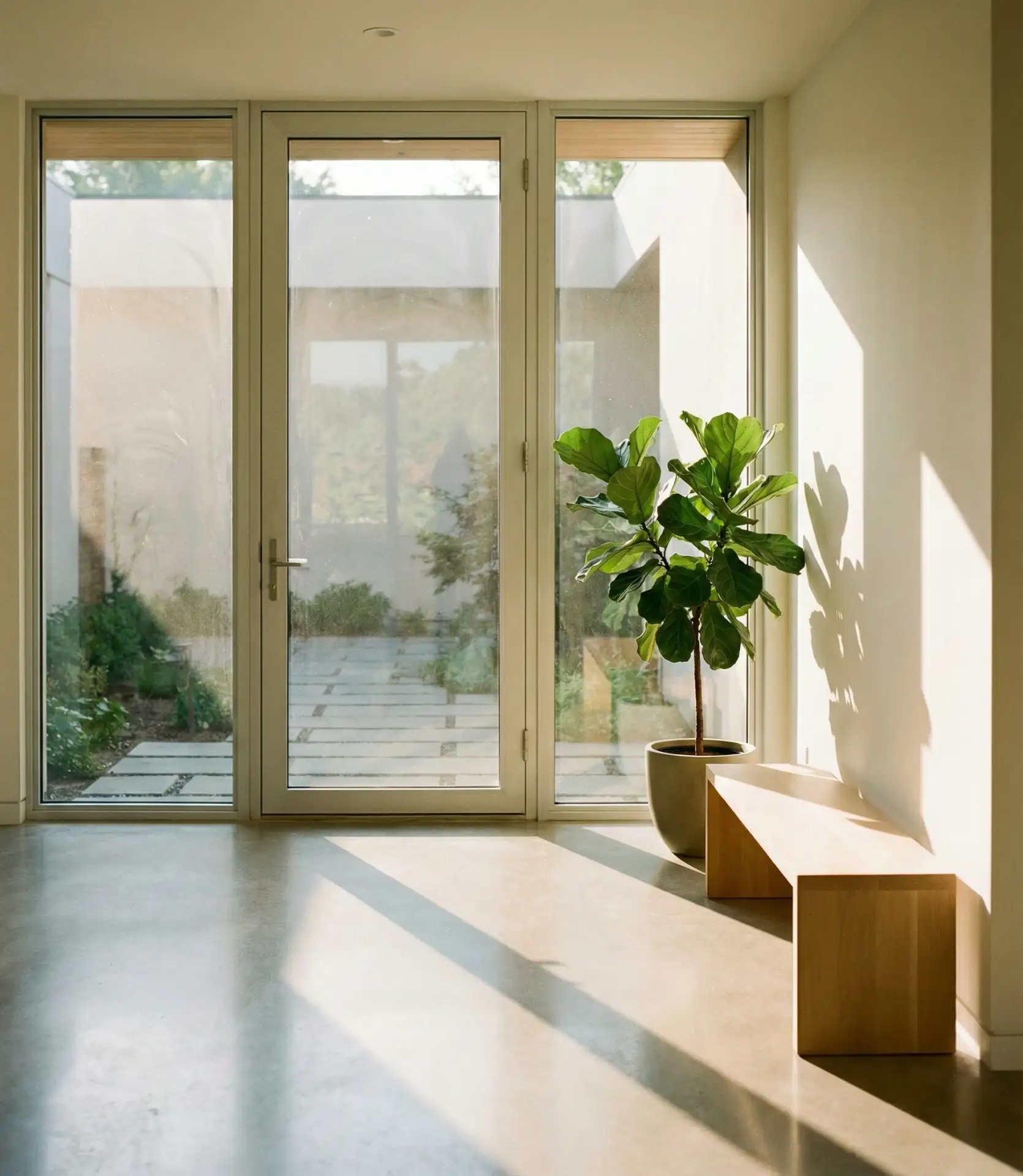
A modern luxury entryway often features expansive glass—either sidelights flanking the door or full-height glass panels—that floods the space with natural light and blurs the line between inside and out. This design creates a welcoming, transparent first impression and works especially well in warm climates like Southern California, Arizona, and Florida, where indoor-outdoor living is a lifestyle. Pair glass with clean architectural lines, minimal furniture, and natural materials like wood and stone for a serene, sophisticated feel.

Expert-style commentary: Privacy can be a concern with glass-heavy entries, so consider frosted or textured glass, strategically placed landscaping, or layered curtains that can be drawn when needed. The beauty of this design is that it makes even a compact entry feel spacious and inviting, and it reduces the need for artificial lighting during the day. It’s a signature element of high-end contemporary architecture and instantly elevates a home’s curb appeal.
22. Large Entryway with Seating Area
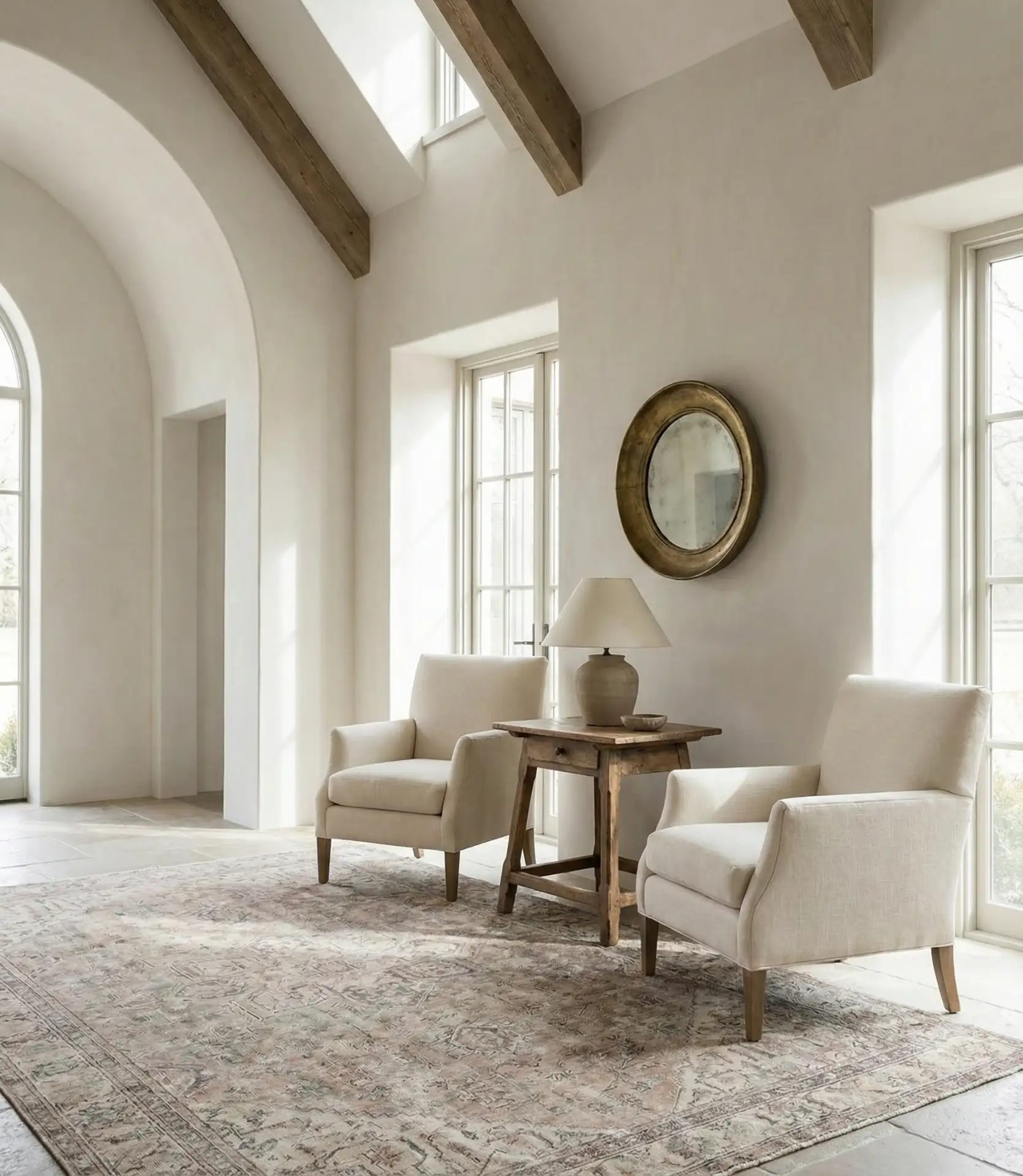
If you’re lucky enough to have a large entryway, consider creating a dedicated seating area—a pair of armchairs, a small settee, or a cushioned bench with throw pillows. This transforms the entry from a pass-through into a functional living space where you can pause to put on shoes, wait for someone, or simply enjoy the morning light. It’s a gracious gesture that’s especially fitting in elegant homes with formal architecture, adding both utility and a sense of occasion.
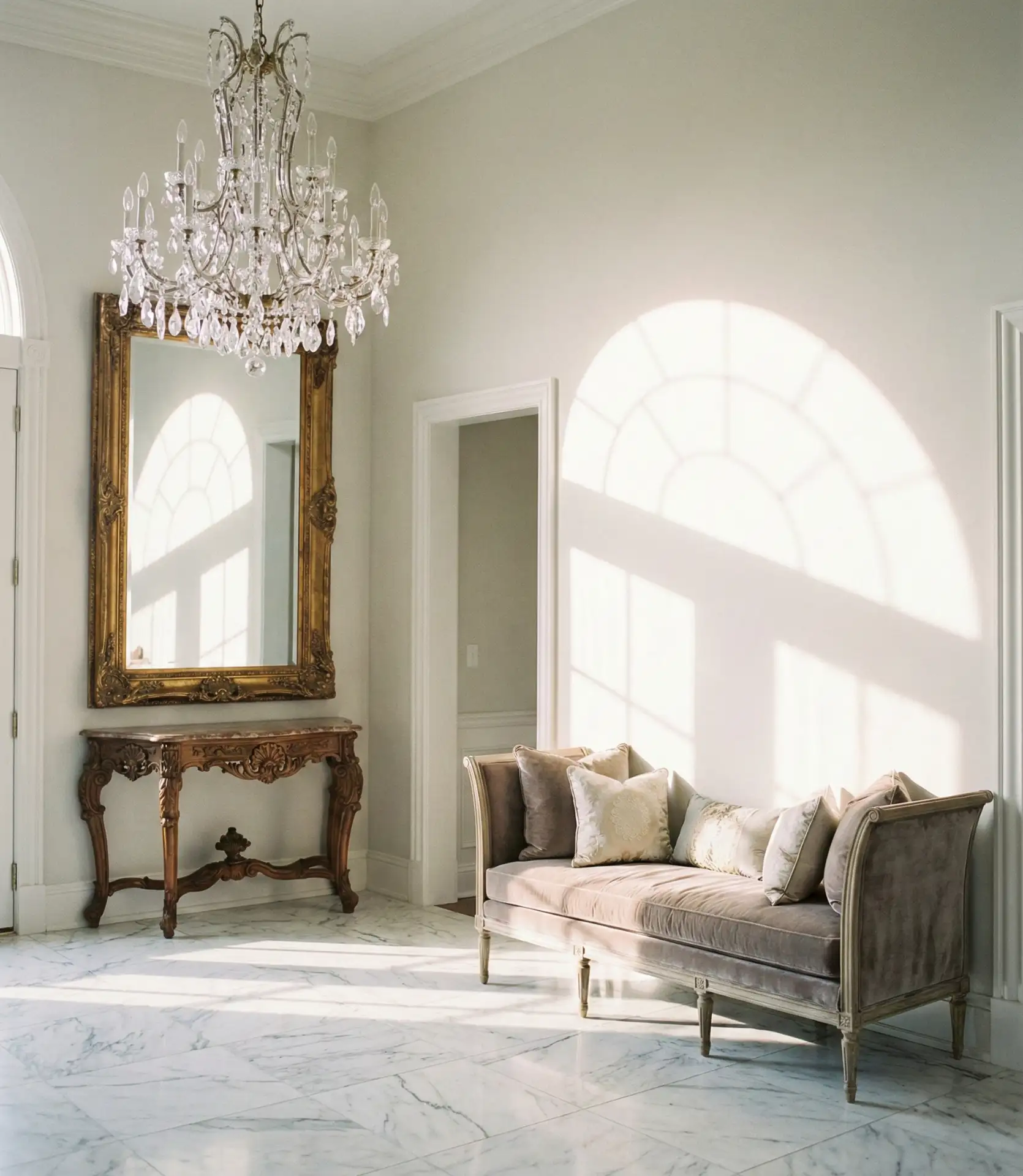
Real homeowner behavior: Many people underutilize large entryways, treating them as wasted space rather than a design opportunity. Adding seating makes the area feel intentional and actually encourages use—guests naturally gravitate to a chair to remove boots, or kids claim the bench as a reading nook. Just ensure the furniture doesn’t block traffic flow; leave at least 3 feet of clearance for comfortable movement through the space.
23. Apartment Entryway with Multi-Functional Furniture
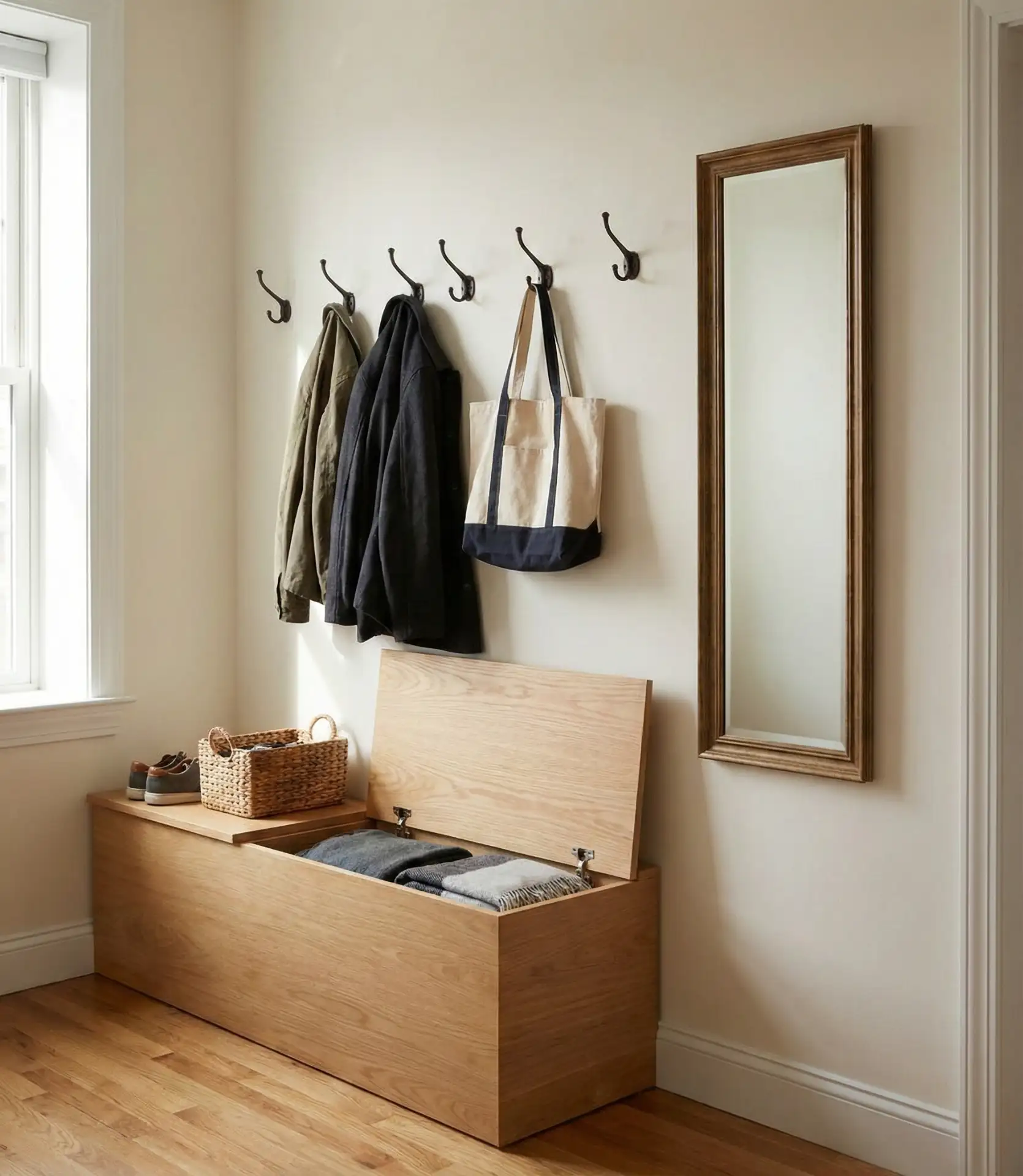
In a compact apartment, multi-functional furniture is essential—a bench with hidden storage, a console that doubles as a desk, or a mirror with integrated shelving. This approach maximizes efficiency without sacrificing style, making every piece earn its place. It’s especially relevant in urban markets like New York, San Francisco, and Boston, where space is at a premium and every square foot needs to work overtime. The result is an entryway that’s both practical and polished.

Practical insight: Look for furniture pieces that stack functions—shoe storage that also provides seating, or a coat rack with a built-in umbrella stand. Measure your space carefully before shopping, and don’t be afraid to mix and match different solutions until you find what works. The best apartment entryways feel thoughtfully curated rather than crammed, with each element chosen deliberately to balance beauty and everyday function.
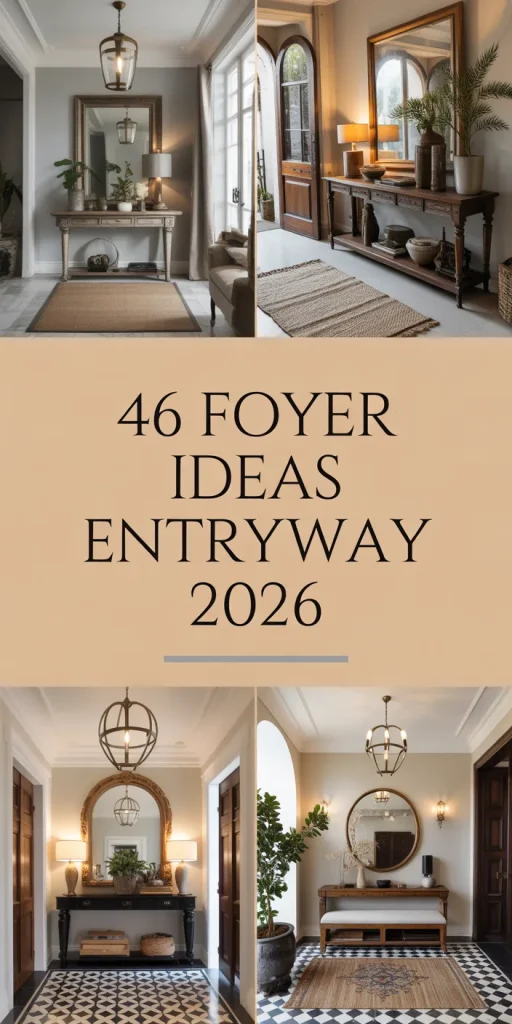
Your entryway sets the tone for your entire home, so it’s worth investing the time to get it right. Whether you’re drawn to the moody drama of dark walls, the rustic warmth of reclaimed wood, or the sleek simplicity of modern minimalism, there’s a foyer idea here that can work for your space and lifestyle. Take what resonates, adapt it to your needs, and don’t be afraid to let your personality shine through. We’d love to hear which ideas you’re planning to try—drop a comment below and share your entryway transformation plans!