
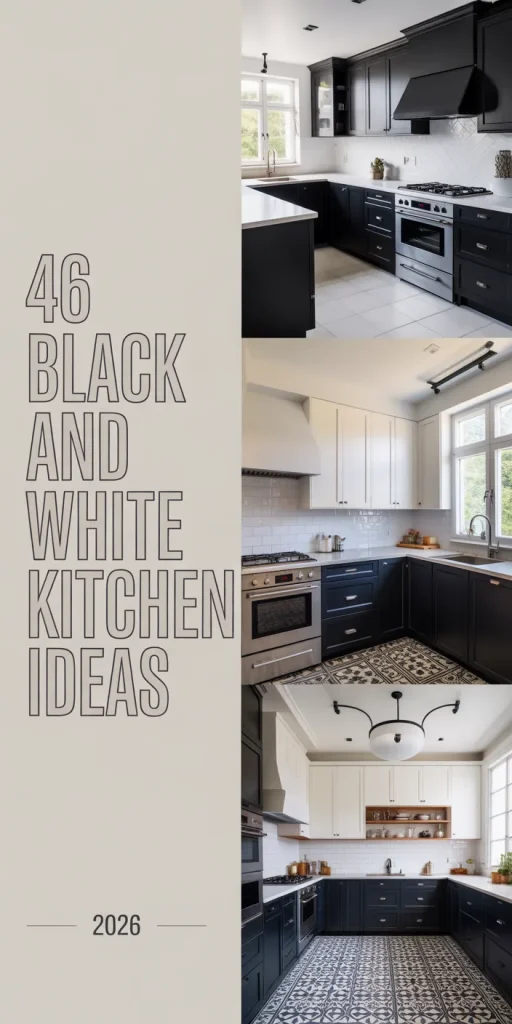
In 2026, a fresh renaissance of black and white kitchens is taking place, blending timeless elegance with bold contemporary choices. American homeowners scrolling through Pinterest are discovering that this classic color pairing offers endless versatility—whether you’re drawn to sleek minimalism, warm traditional charm, or daring modern contrasts. From dramatic cabinet choices to unexpected pops of color, the black and white kitchen has evolved into a canvas for personal expression. In this article, we’re exploring inspiring ideas that showcase how this iconic duo can transform your cooking space into something extraordinary, functional, and uniquely yours.
1. Classic Checkered Floor Tiles with Modern Cabinets
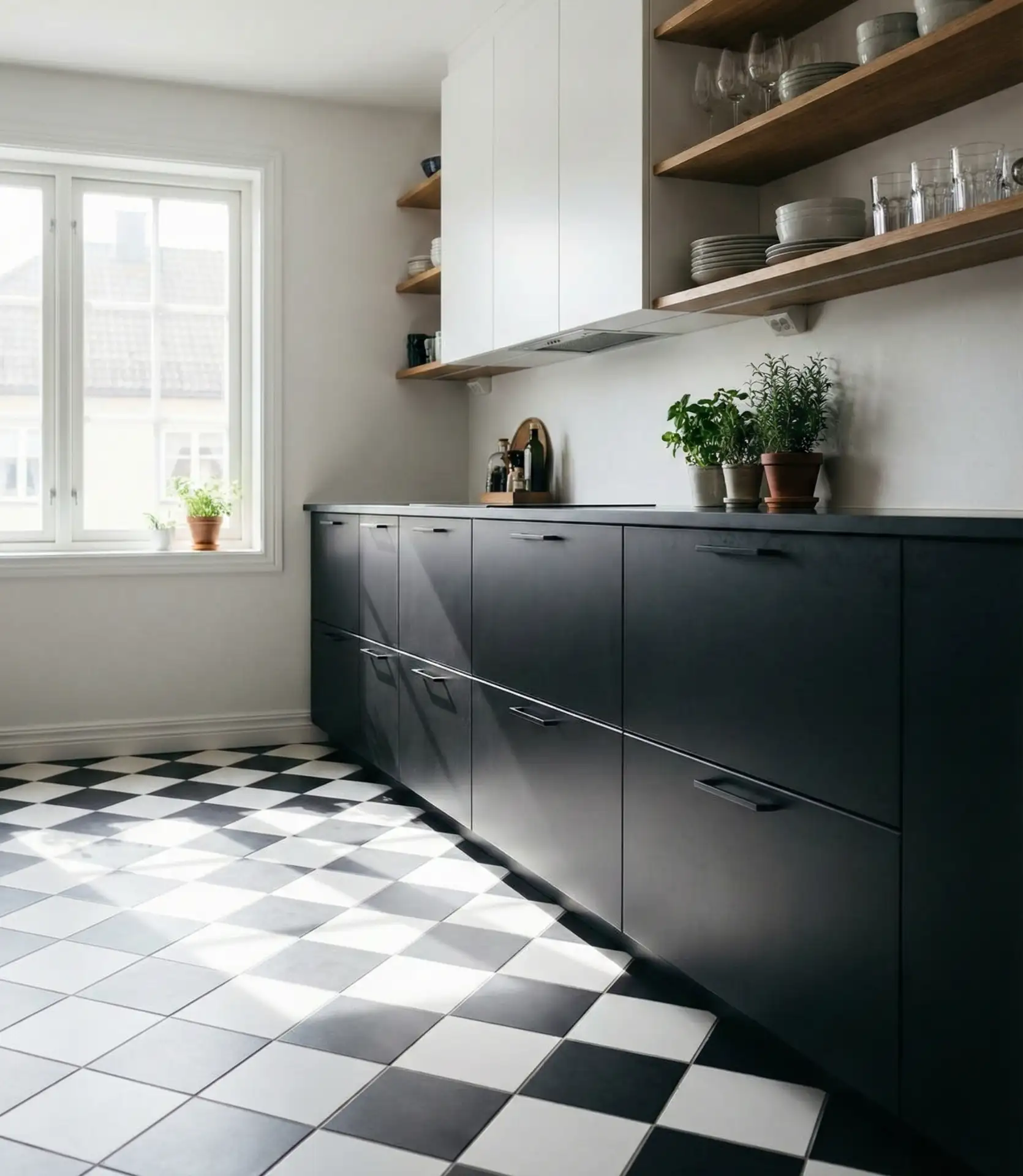
The timeless appeal of black and white floor tiles arranged in a checkered pattern brings instant character to any kitchen. This design works beautifully in both traditional and contemporary spaces, especially when paired with clean-lined cabinets in crisp white or matte black finishes. The geometric floor creates visual interest underfoot while establishing a strong foundation for the rest of your design. Many homeowners appreciate how this pattern disguises everyday spills and scuffs better than solid colors.
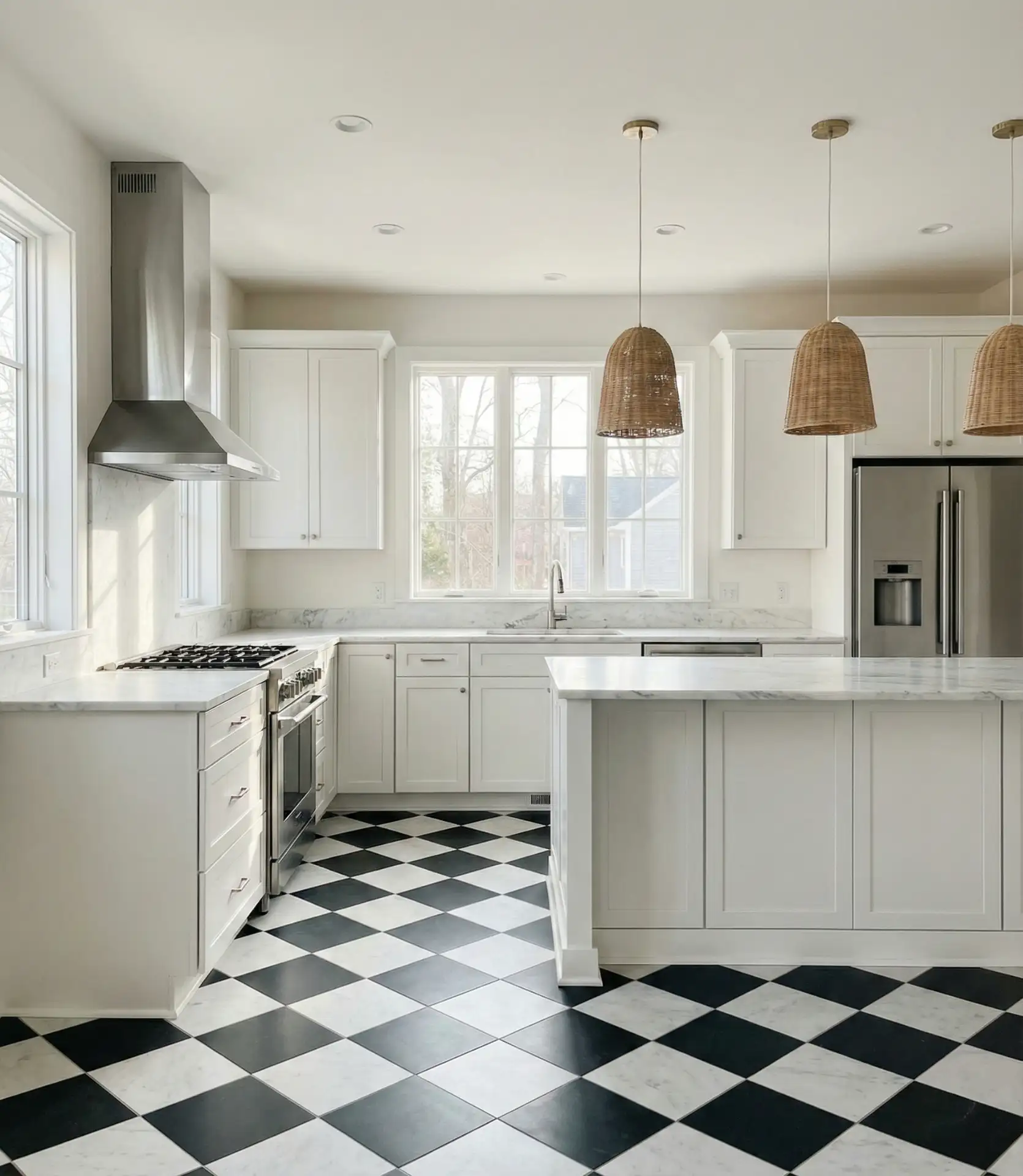
This flooring choice works best in kitchens with ample natural light, where the contrast can truly shine without making the space feel smaller. In suburban homes across the Midwest and Northeast, these floors have become a signature element that connects vintage charm with modern convenience. The pattern also helps define zones in open-concept layouts, subtly separating the cooking area from adjacent dining or living spaces without requiring physical barriers.
2. Matte Black Cabinets with White Marble Countertops
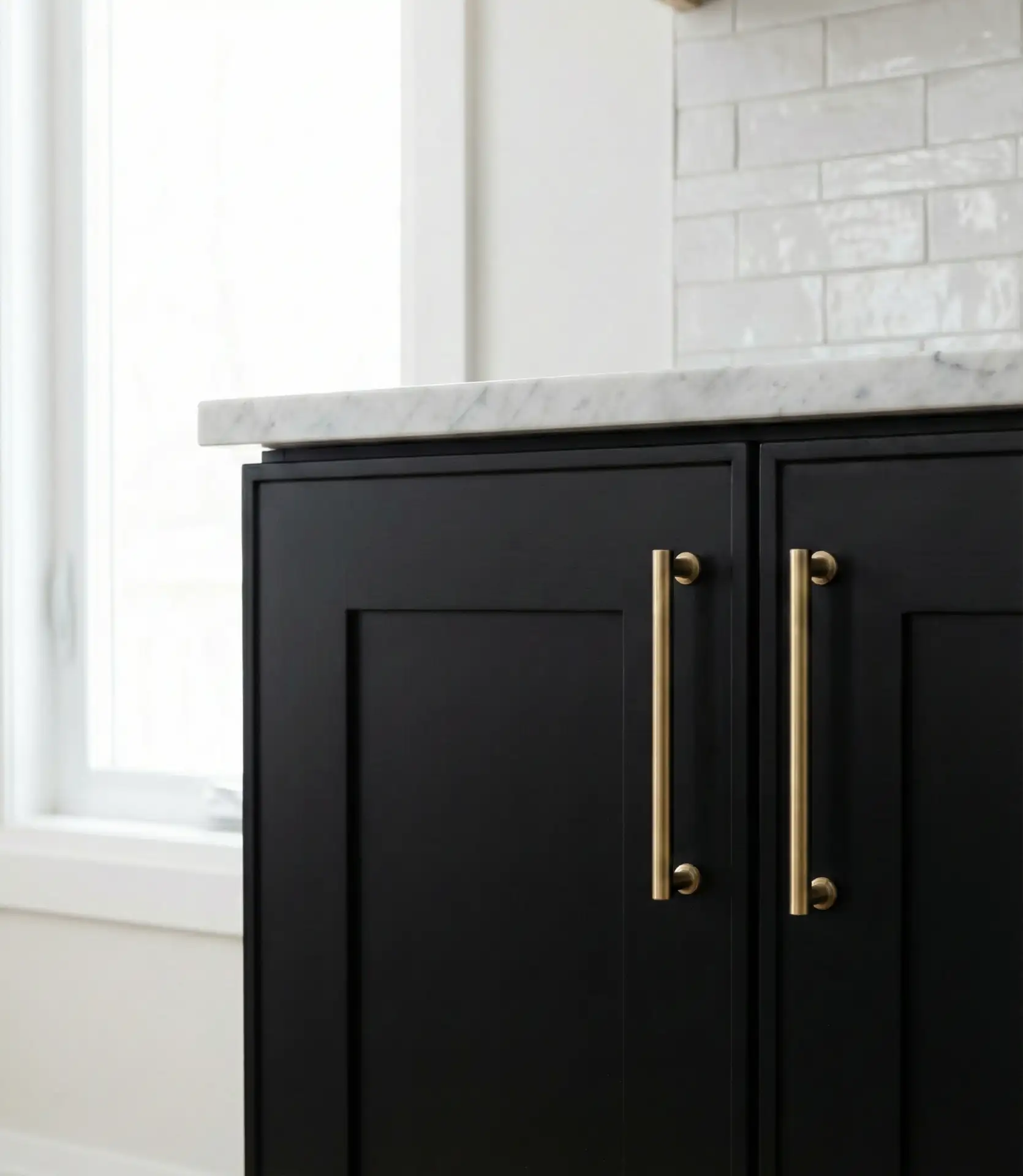
Matte black cabinet ideas have surged in popularity throughout 2025 and into 2026, offering a sophisticated alternative to traditional wood tones. When paired with luxurious white countertops in marble or quartz, the effect is both dramatic and refined. This combination creates a stunning contrast that feels current yet enduring, making it a smart investment for homeowners considering resale value. The dark cabinets provide a striking backdrop for displaying decor and kitchen essentials.
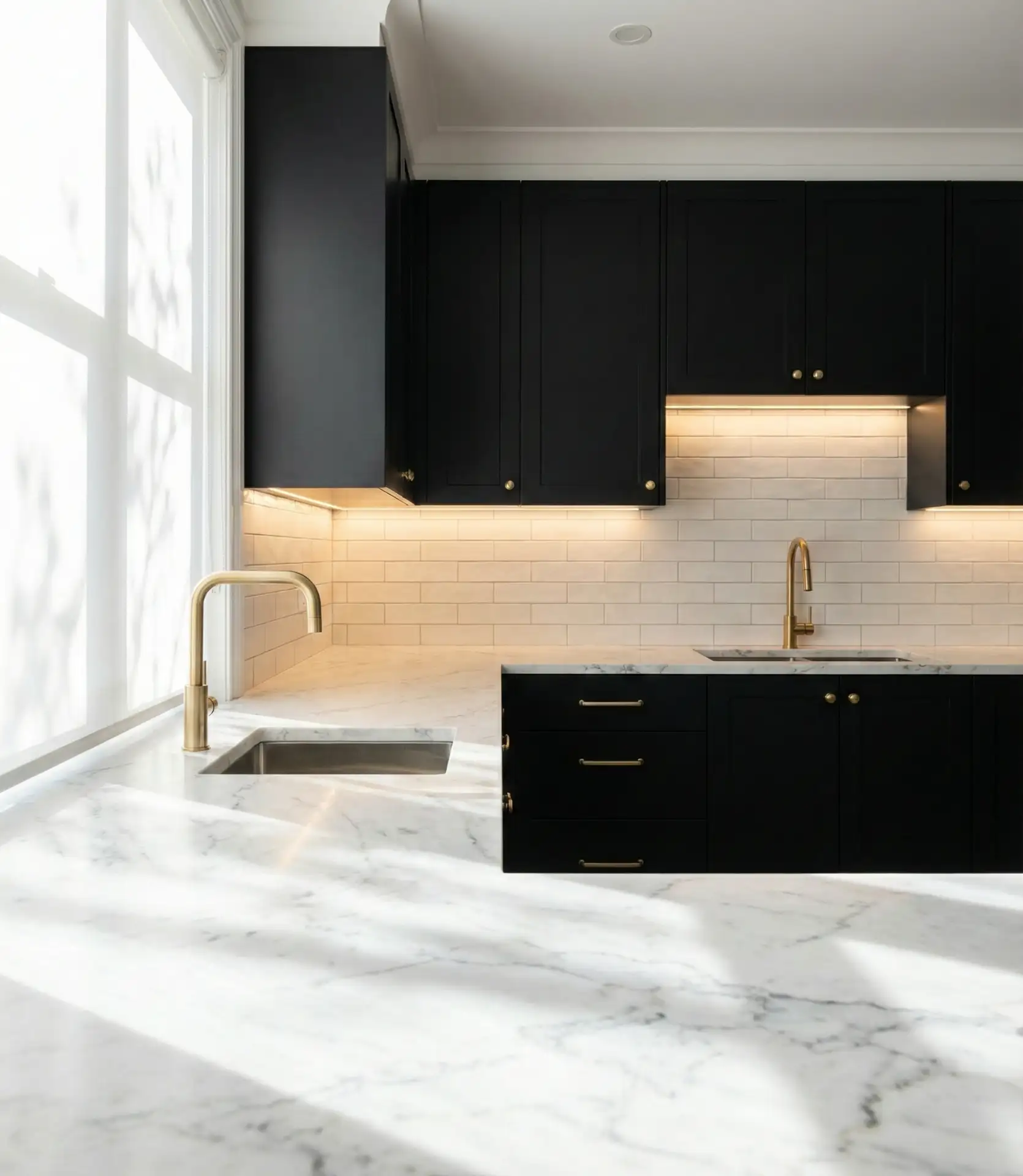
A common mistake is pairing matte black cabinets with inadequate lighting, which can make the kitchen feel cave-like rather than cozy. To avoid this, incorporate multiple light sources, including recessed ceiling lights, under-cabinet LED strips, and statement pendants over the island. This layered approach ensures the dark surfaces absorb light without creating shadows, while the white countertops reflect brightness throughout the space.
3. White Shaker Cabinets with Black Hardware
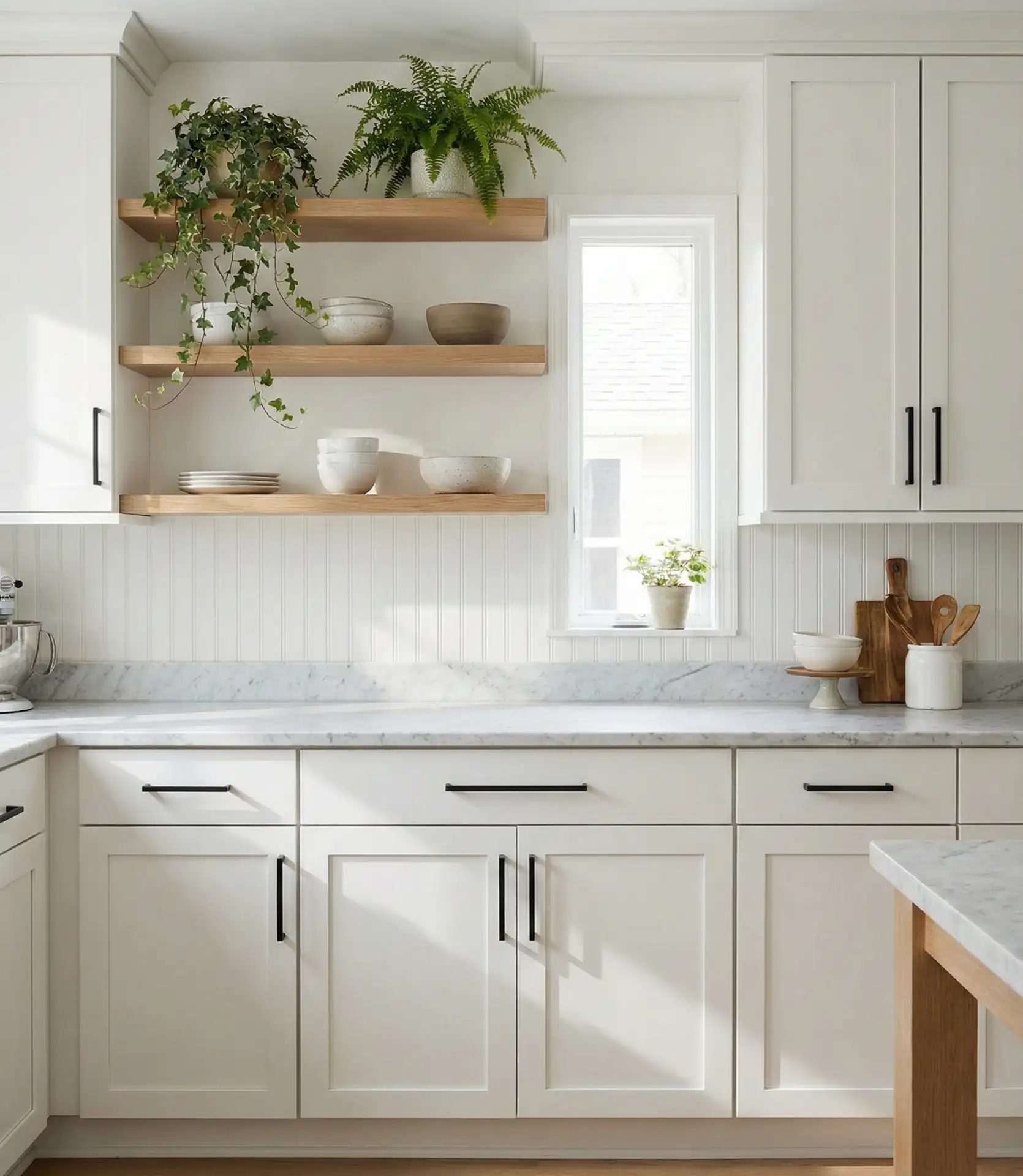
The classic white shaker cabinet receives an instant update when fitted with black hardware, transforming a traditional staple into something decidedly modern. This simple yet effective design choice has become a favorite in apartment renovations and starter homes, where budget-friendly updates can make the biggest impact. The black handles and knobs create visual anchors against the white backdrop, adding definition without overwhelming the space. This approach also allows for straightforward future updates—swapping hardware is far simpler than replacing entire cabinets.
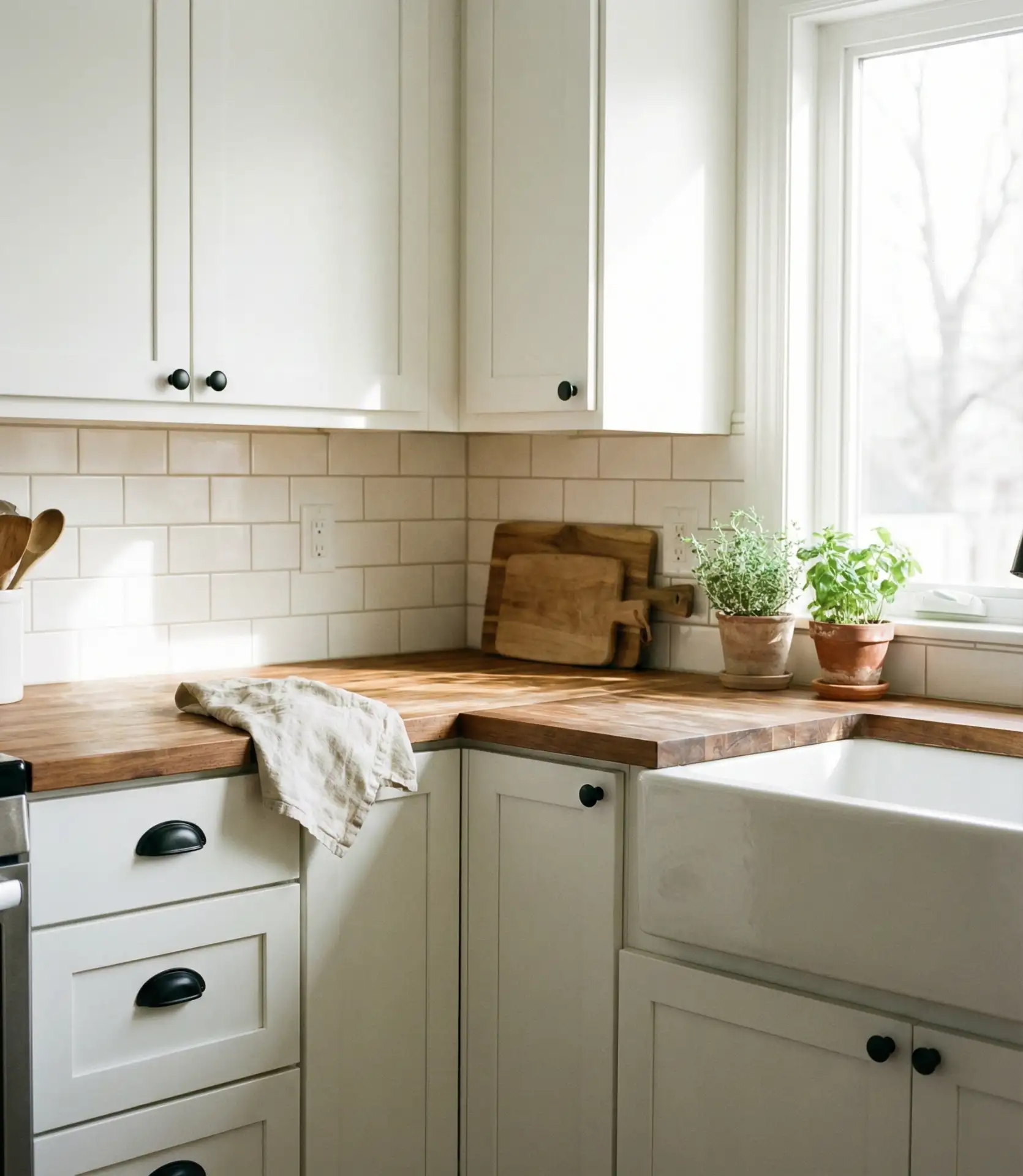
Across American homes from Portland to Charleston, this combination has proven its versatility in kitchens both large and small. The white cabinets reflect light beautifully in compact urban apartments, making tight cooking spaces feel more expansive. Meanwhile, in larger suburban kitchens, the black hardware provides necessary visual weight that prevents the all-white palette from feeling sterile or clinical.
4. Black and White Subway Tile Backsplash
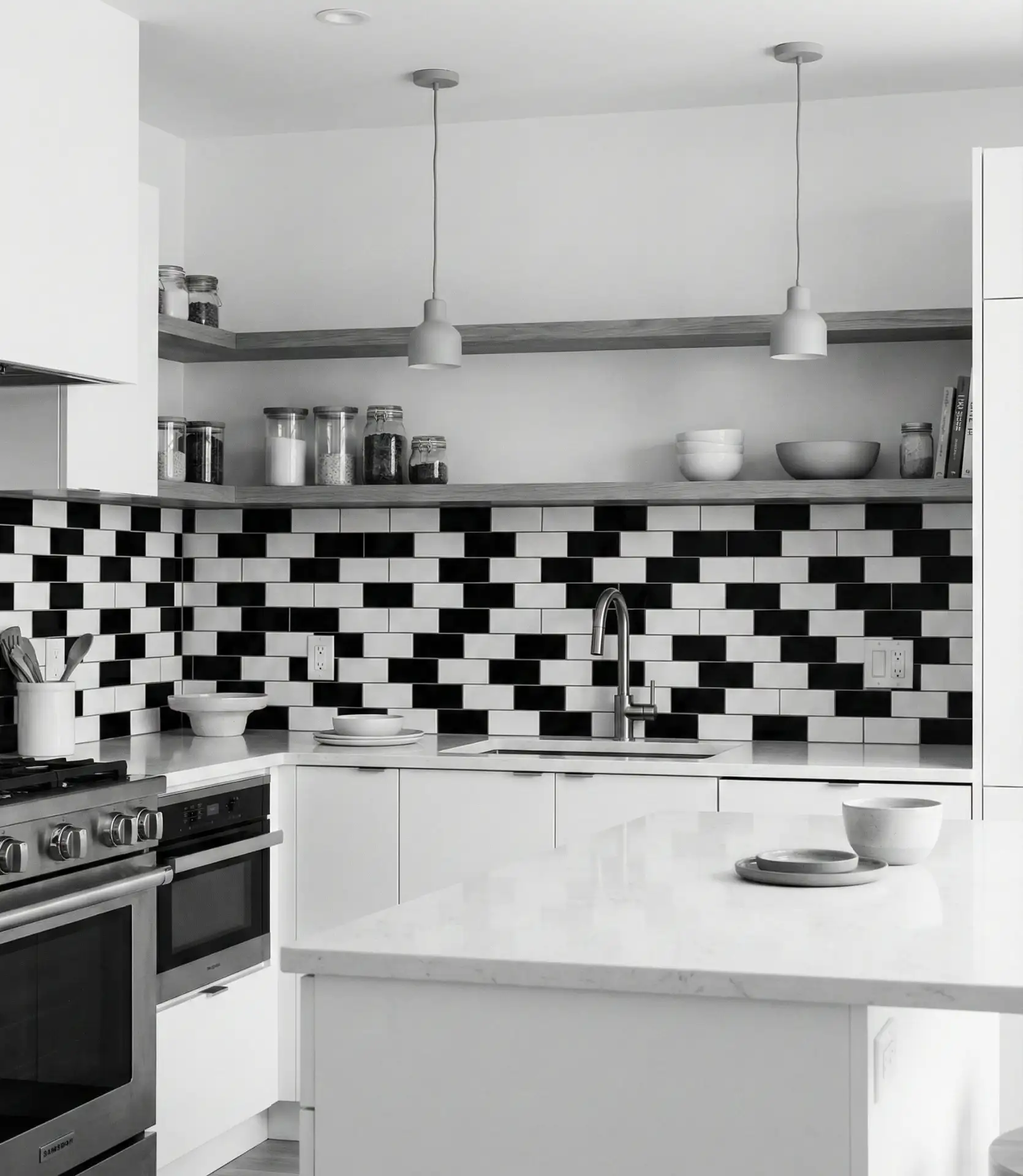
A backsplash composed of alternating black and white subway tiles creates an eye-catching focal point that’s both playful and sophisticated. This backsplash ideas approach works particularly well in modern interior design minimalist kitchens, where the geometric pattern adds interest without introducing additional colors or textures. The classic subway tile shape feels familiar and approachable, while the two-tone application pushes it into contemporary territory. Installation costs remain reasonable compared to more exotic tile choices.
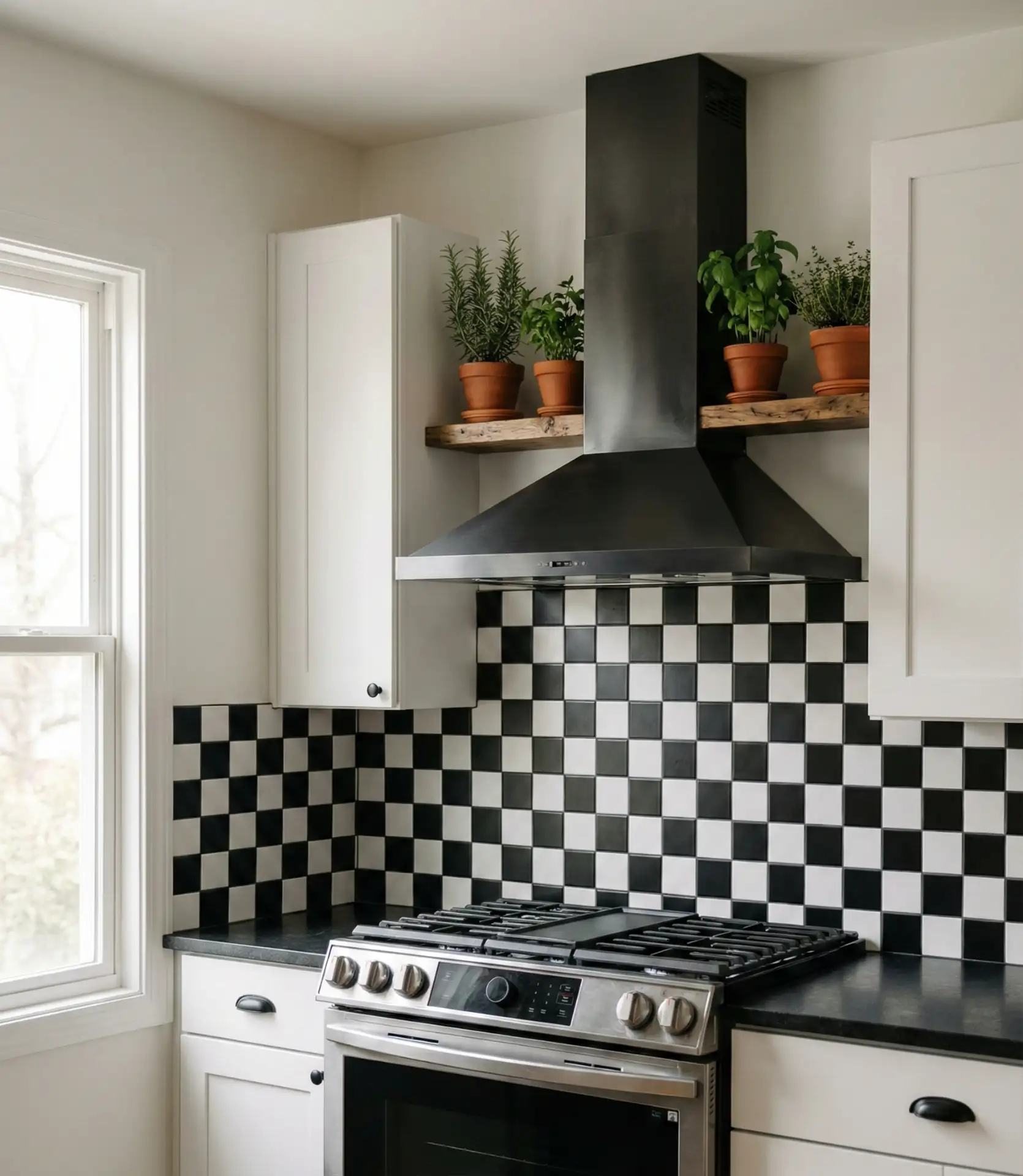
Last spring, a designer friend installed this exact backsplash in her Nashville bungalow kitchen, using a random checkerboard pattern rather than strict alternating rows. The organic, less predictable arrangement gave the space an artisanal quality that felt custom and intentional, proving that even standard materials can yield extraordinary results with thoughtful application.
5. Black Island with White Perimeter Cabinets
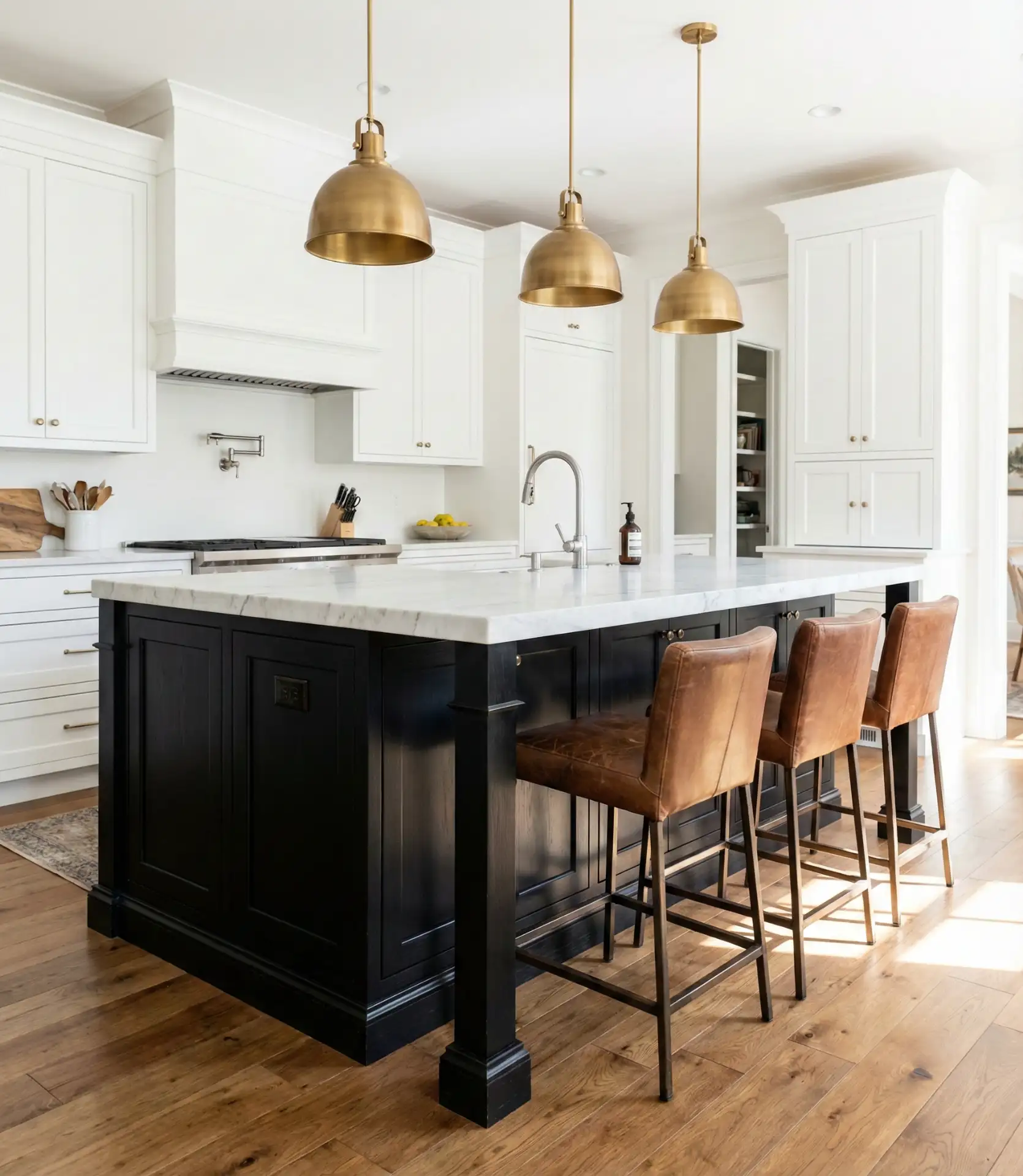
Creating a focal point with a black island while keeping perimeter cabinets white has become one of the most requested modern interior design combinations in American kitchens. This two-tone approach breaks up visual monotony and anchors the room with a statement piece that’s both functional and beautiful. The dark island can withstand heavy use and daily wear better than lighter finishes, making it practical for families. It also provides an opportunity to showcase special details like decorative corbels or contrasting countertop materials.
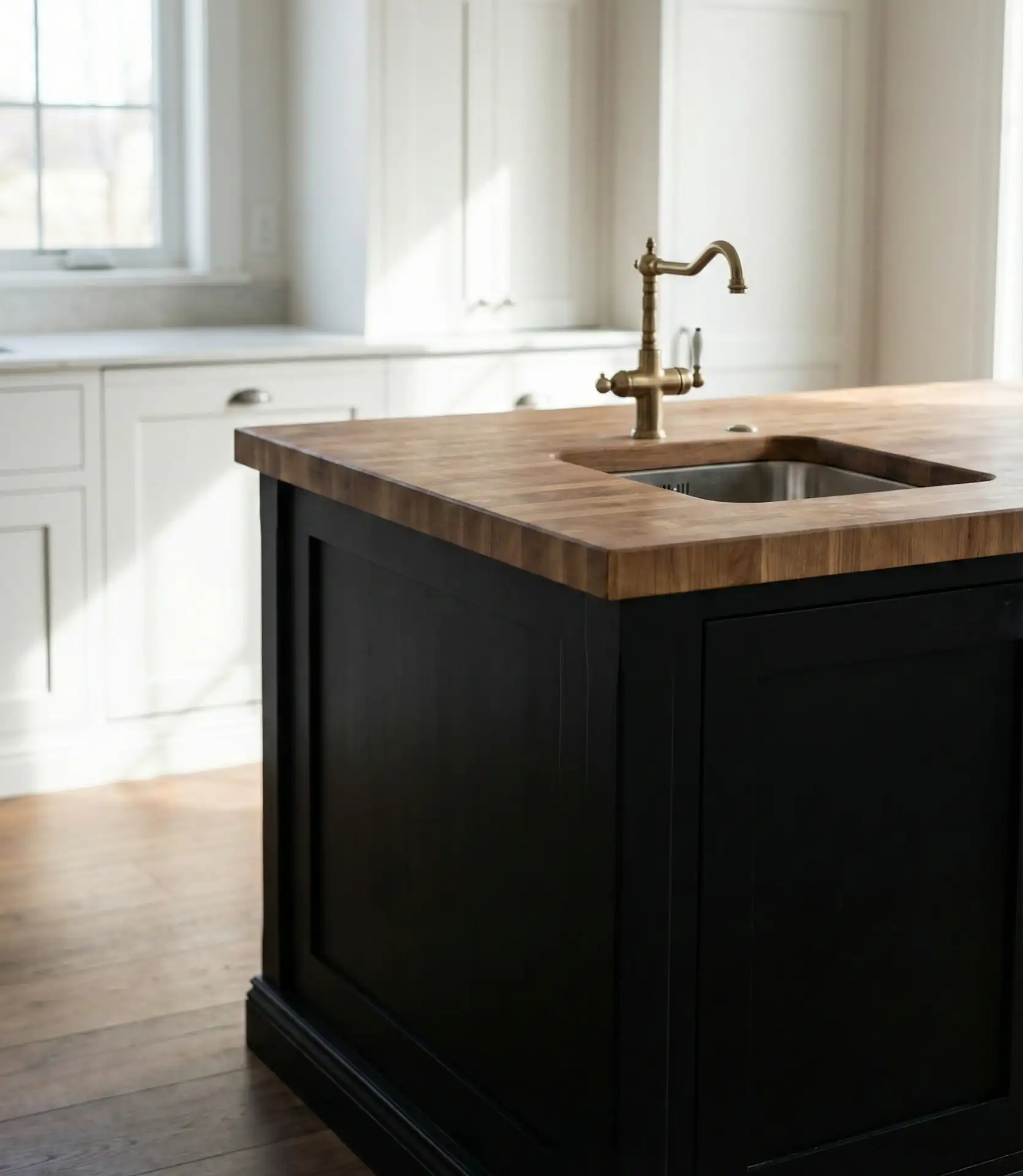
Budget-conscious renovators appreciate that painting just the island black costs significantly less than replacing all cabinetry, yet it delivers maximum visual impact. A quality furniture-grade paint in semi-gloss or satin finish typically runs between $40 and $80 per gallon, enough to cover a standard island with two coats. Adding new hardware and perhaps upgrading the island countertop to marble or butcher block can transform the entire kitchen for under $2,000.
6. Minimalist White Kitchen with Black Accents
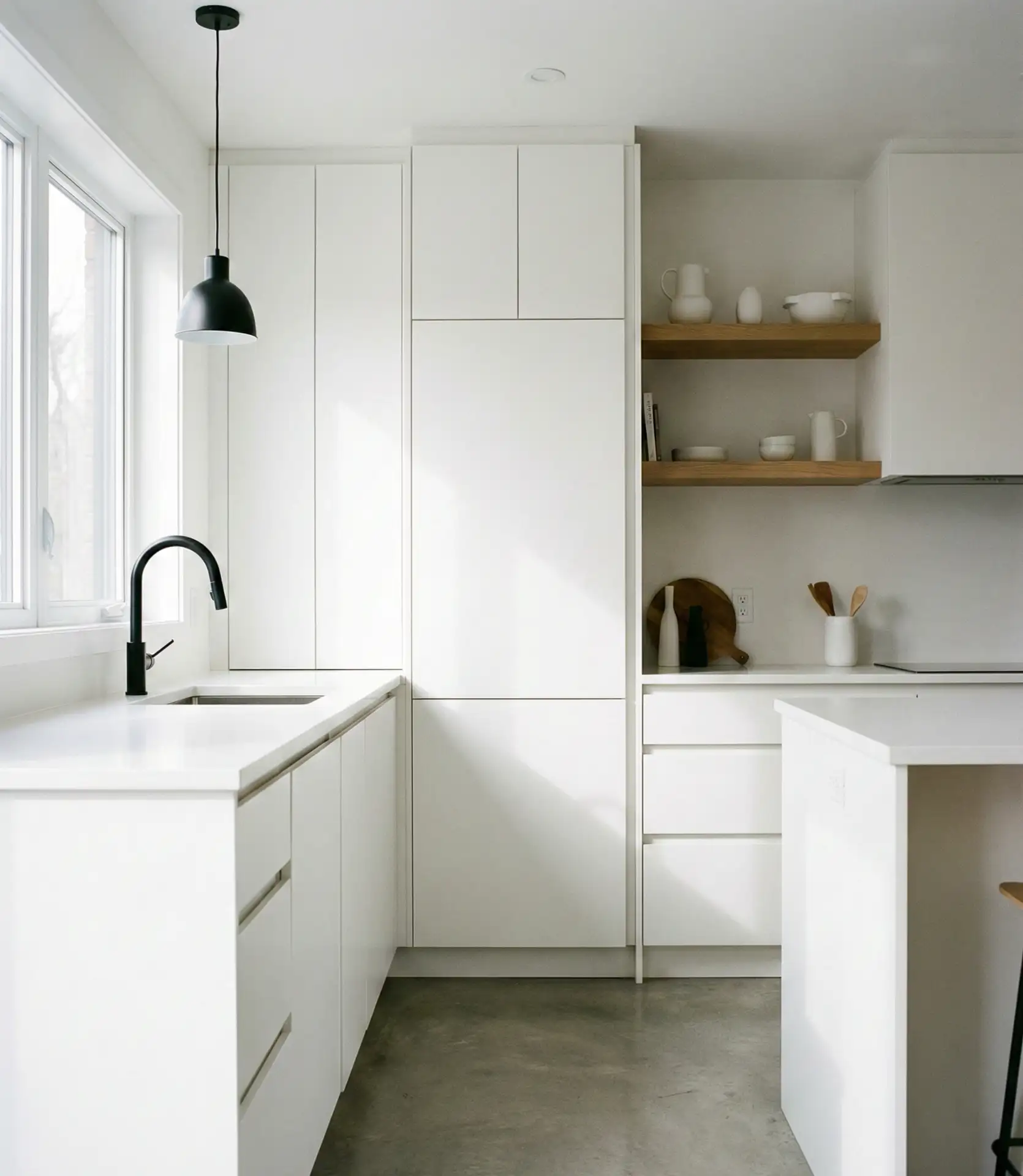
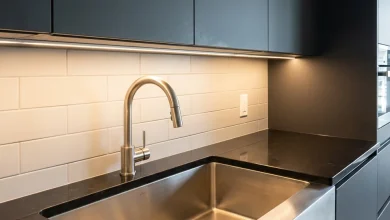
The modern interior design minimalist aesthetic thrives in predominantly white kitchens punctuated by strategic black accents throughout. This restrained approach prioritizes clean lines, hidden storage, and uncluttered surfaces, with black elements—perhaps a faucet, light fixtures, or open shelving brackets—providing just enough contrast. The resulting space feels calm, organized, and intentionally curated. This design philosophy resonates particularly with urban dwellers who crave visual serenity after busy days.
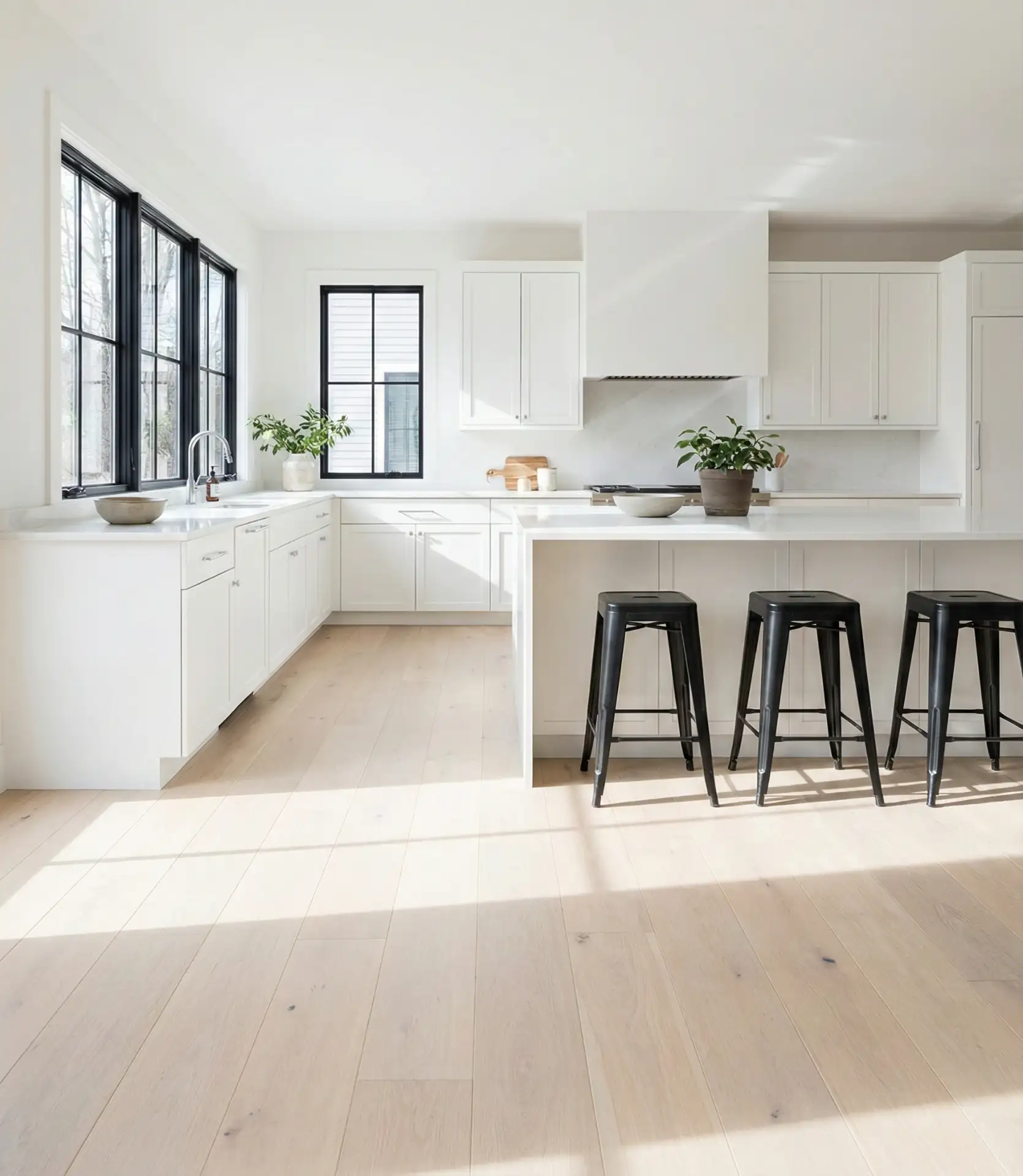
Real homeowners maintaining minimalist kitchens often implement a “one in, one out” rule for countertop items and decor. This discipline prevents clutter creep while preserving the clean aesthetic that makes these spaces so appealing. Small appliances typically live in dedicated cabinets or appliance garages, emerging only during use, then disappearing again to maintain the streamlined appearance.
7. Black Window Frames in White Kitchen
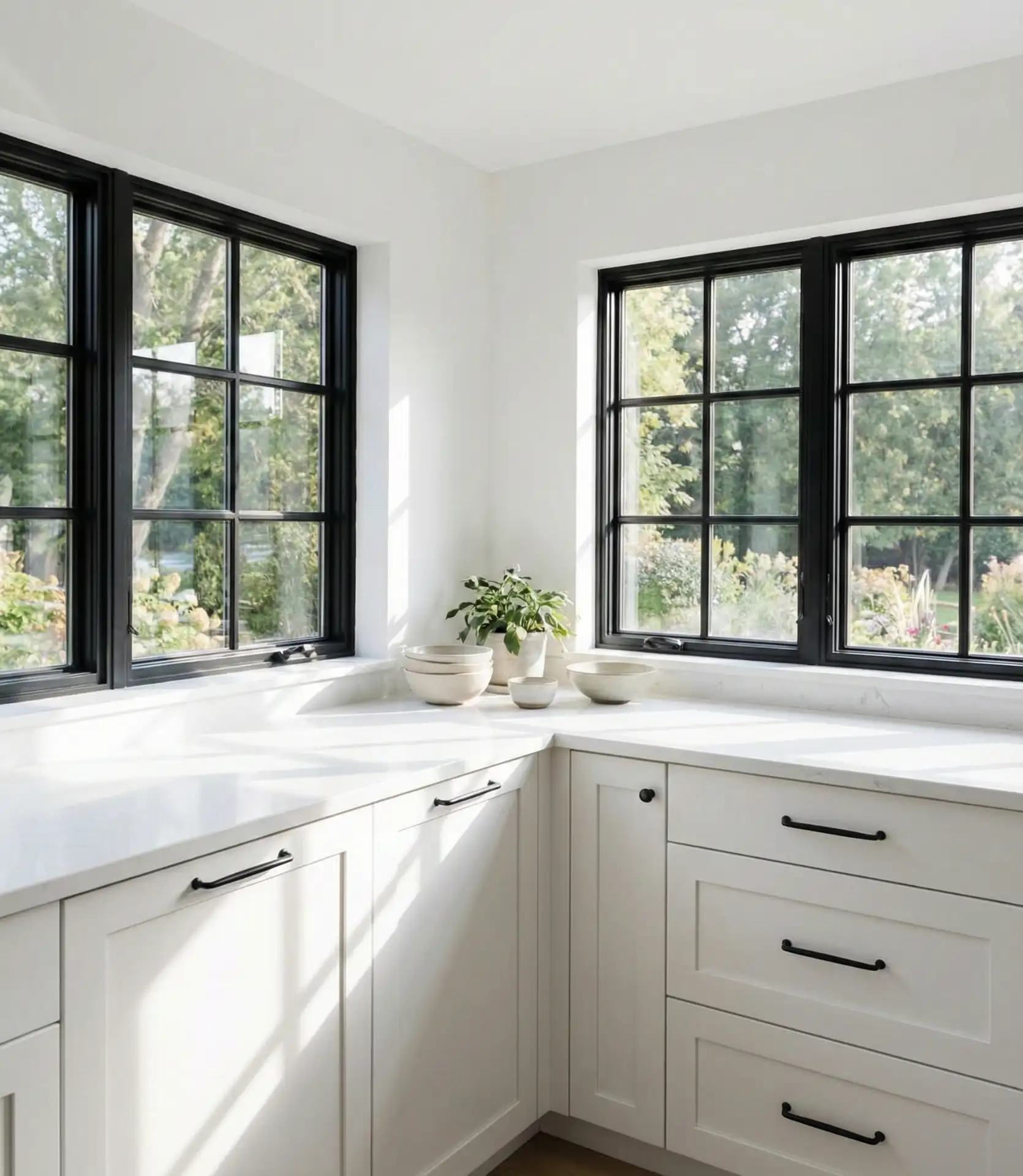
Black window frames have emerged as an architectural detail that elevates any white kitchen from ordinary to extraordinary. This aesthetic choice draws inspiration from industrial lofts and European design, bringing an artful, gallery-like quality to American homes. The dark frames create bold linear elements that emphasize natural light while providing striking contrast against white walls and cabinets. When positioned above a sink or flanking a breakfast nook, these windows become sculptural features that enhance both function and beauty.
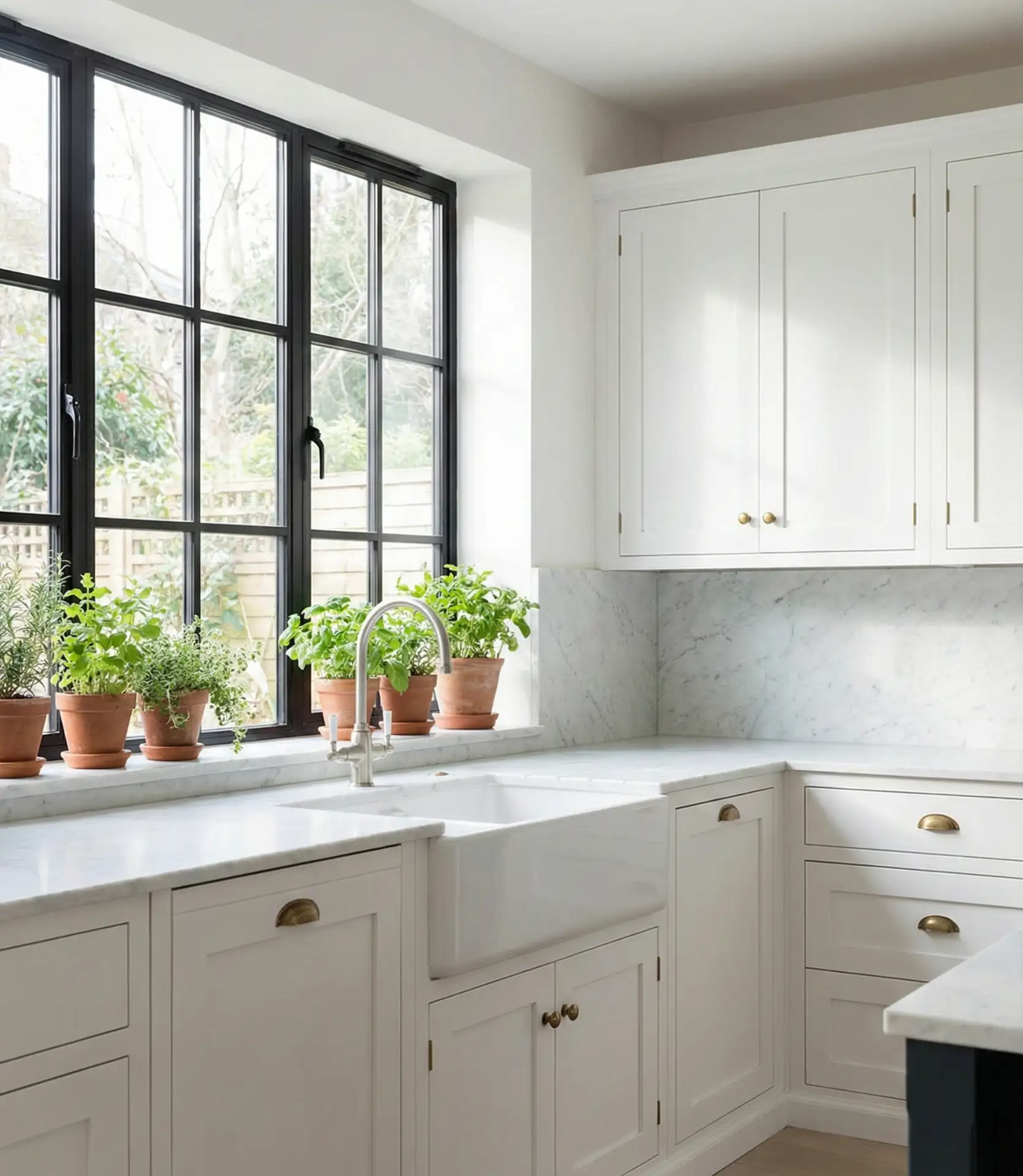
This design element works best in kitchens with generous natural light and appealing outdoor views, where the frames become a literal window to nature. In Pacific Northwest homes surrounded by evergreens or Southwestern properties overlooking desert landscapes, black window frames create a dramatic portal effect that connects interior and exterior spaces. The frames also photograph beautifully, which explains their popularity among design-conscious homeowners documenting their renovations on social media.
8. White Kitchen with Black Range and Hood
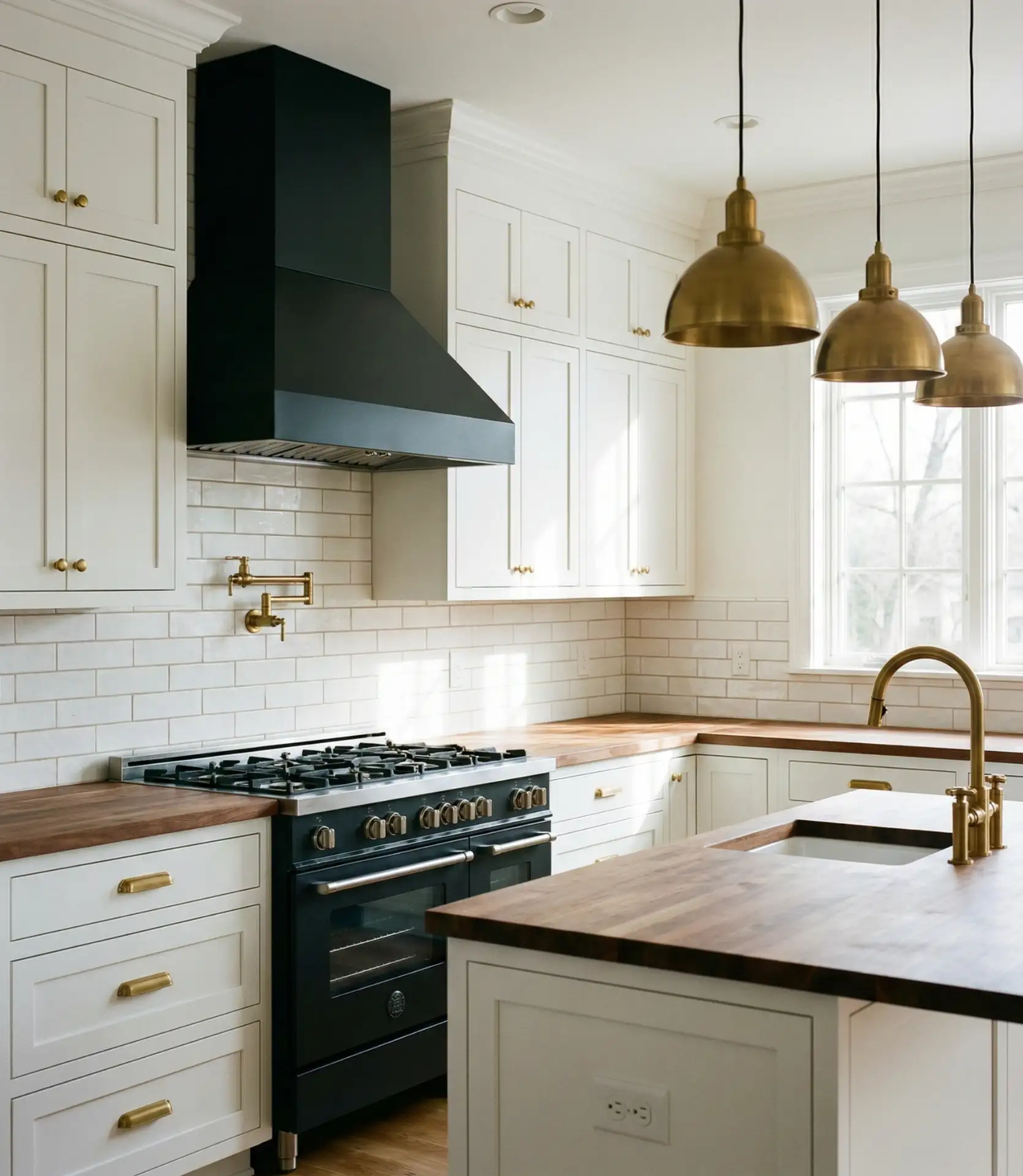
Making the cooking zone a dramatic focal point by installing a black range and hood against white cabinets creates instant visual hierarchy in the kitchen. Professional-style ranges in matte black finishes have become more accessible, with options from brands like Café and Frigidaire bringing this high-end look within reach of average budgets. The dark appliances anchor the space while celebrating the act of cooking as the kitchen’s primary purpose. This design choice also offers practical benefits—black surfaces show fingerprints and smudges less readily than stainless steel.
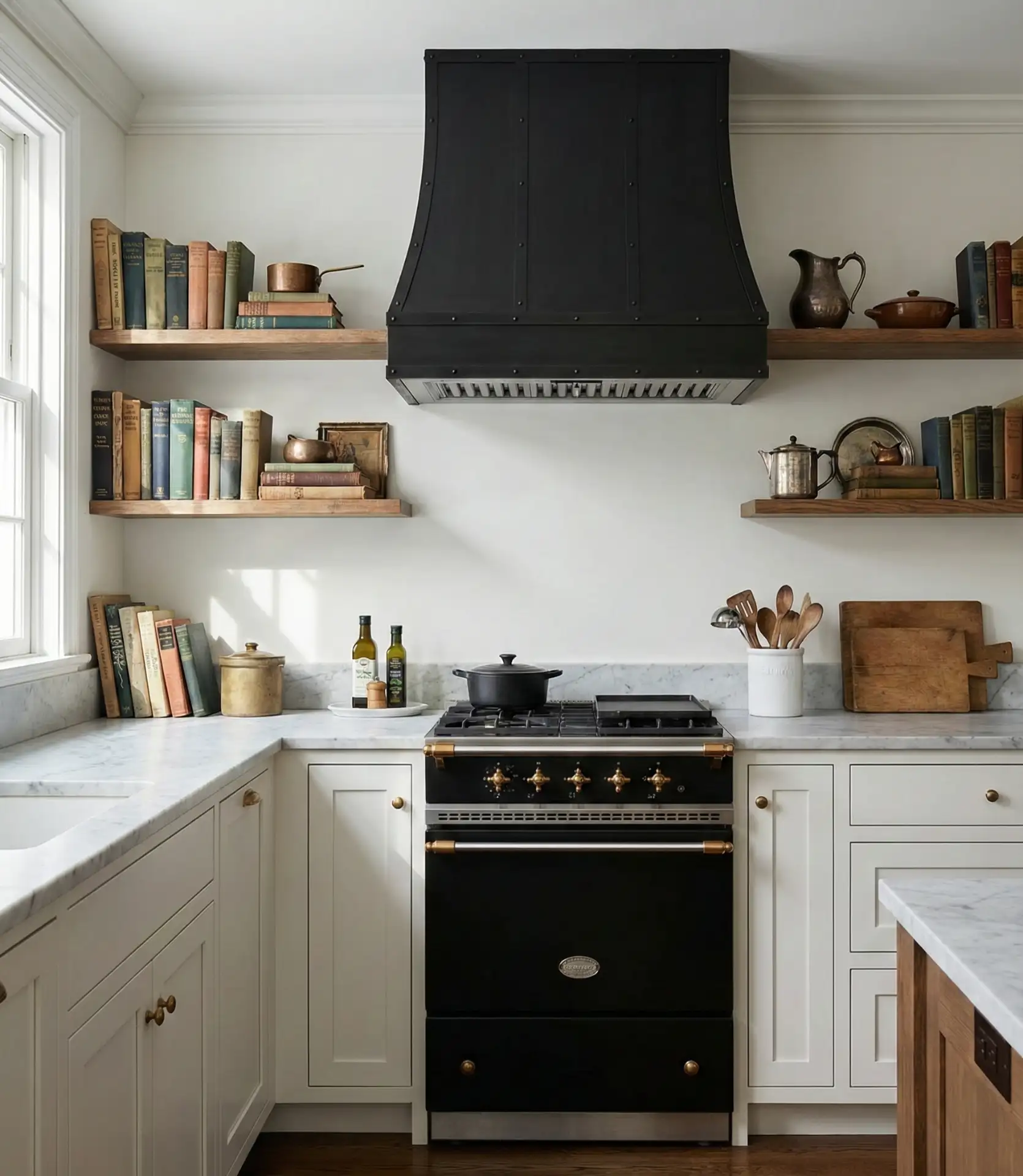
Expert designers recommend balancing a statement range with complementary black elements elsewhere in the room—perhaps black cabinet hardware, black-framed artwork, or black dining chairs visible from the kitchen. This repetition creates cohesion and prevents the range from feeling like an isolated afterthought. The technique works especially well in open-concept homes where the kitchen flows into living areas.
9. Black Hexagonal Floor Tiles with White Grout
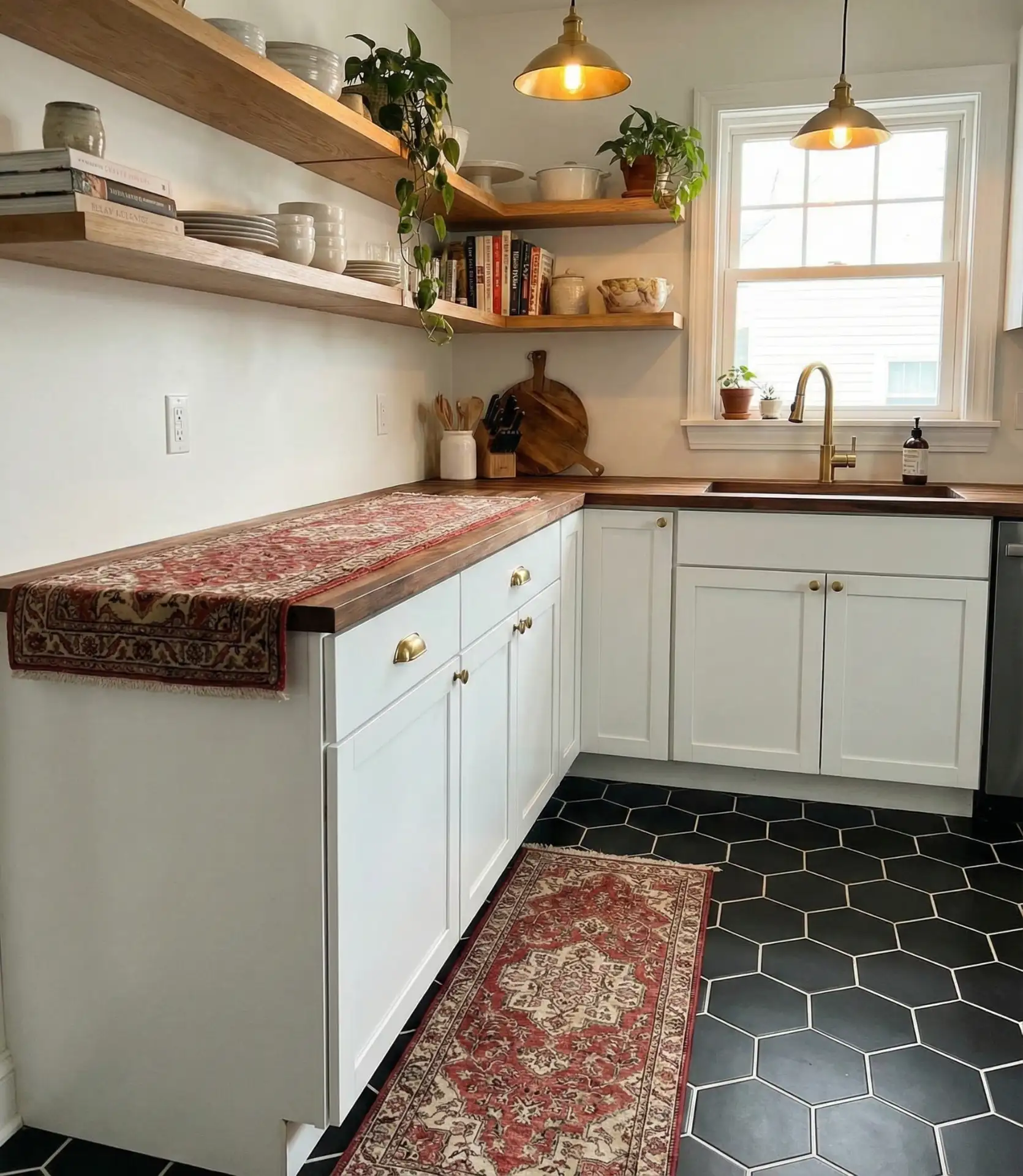
Black hexagonal floor tiles with contrasting white grout deliver pattern and dimension underfoot while maintaining the black and white color story. This geometric floor treatment has vintage roots but feels thoroughly contemporary when executed with modern materials and installation techniques. The hexagon shape creates an organic, honeycomb-like pattern that’s more captivating than squares yet less busy than smaller mosaics. White grout lines form a delicate web across the black tiles, adding intricate detail that rewards closer inspection.
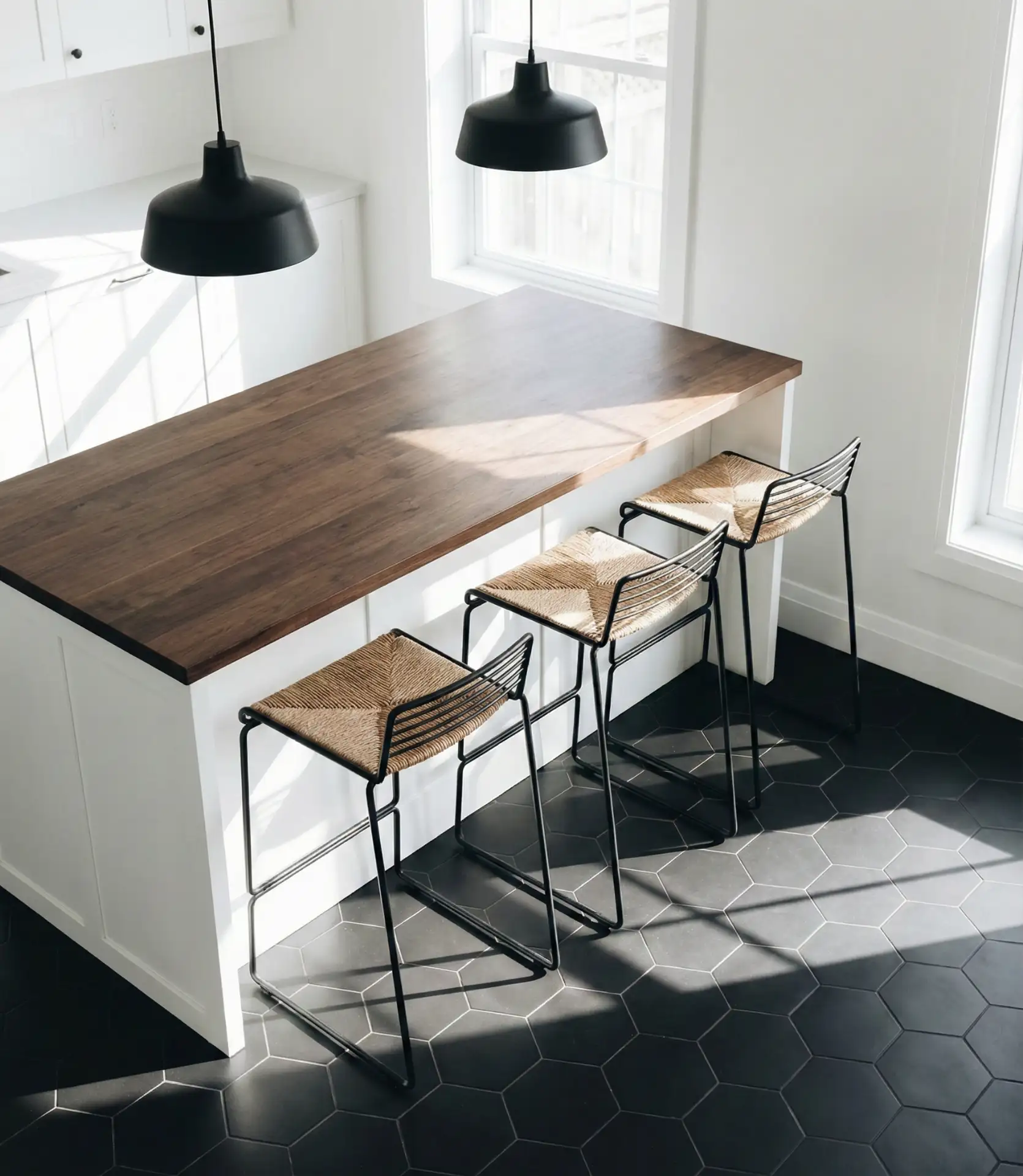
One practical insight: darker floors naturally hide dirt and debris better than white ones, making them ideal for high-traffic family kitchens. However, the white grout requires periodic cleaning to maintain its brightness—sealing the grout every 12-18 months with a quality impregnating sealer protects against staining and simplifies maintenance. This small preventive step saves hours of scrubbing and keeps the floor looking crisp.
10. Two-Tone Cabinets: White Upper, Black Lower
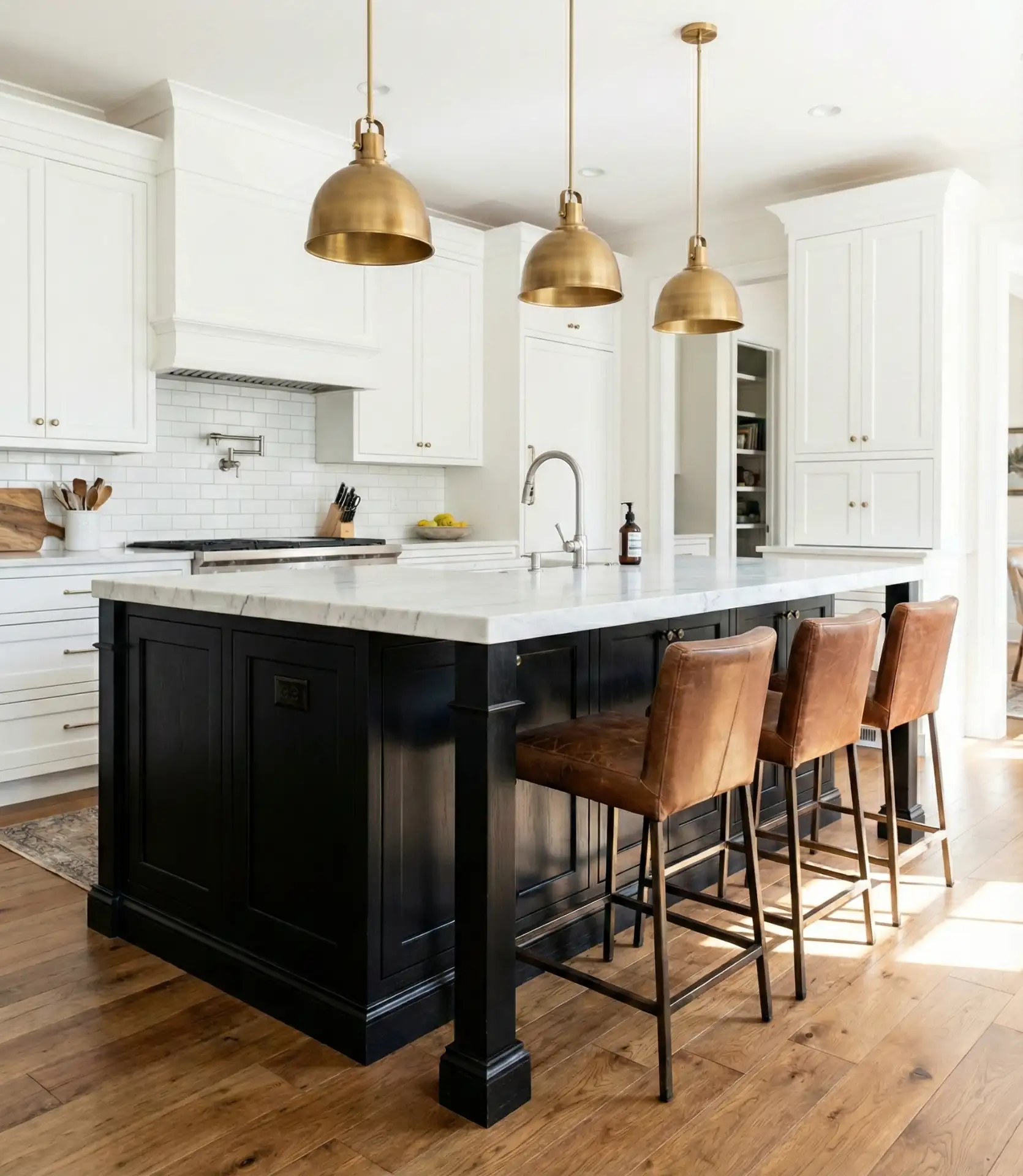
Dividing cabinet ideas horizontally with white uppers and black lowers creates a grounded, balanced composition that works in kitchens of virtually any size. The dark base cabinets visually anchor the room while hiding inevitable scuffs and wear at floor level, while white upper cabinets reflect light and prevent the space from feeling top-heavy. This configuration has gained traction in modern farmhouse and transitional designs, where it bridges traditional and contemporary sensibilities. The horizontal division also subtly lowers the visual ceiling height in kitchens with very tall ceilings.
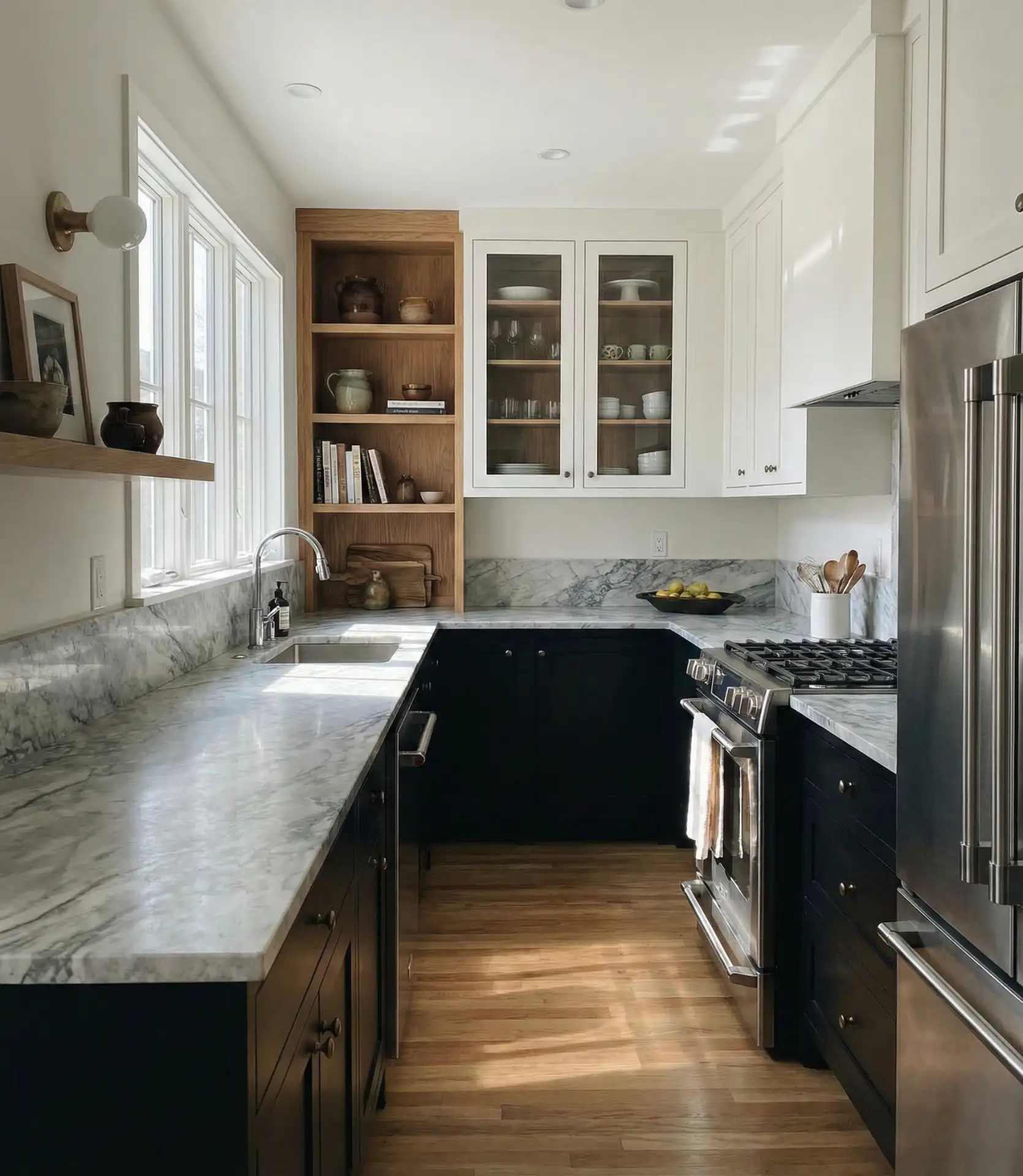
Across American suburbs from Dallas to Denver, homeowners renovating outdated oak kitchens often choose this two-tone approach as a compromise when family members disagree on an all-black or all-white scheme. It satisfies both preferences while creating a distinctive look that feels custom and considered. The strategy also allows flexibility with countertop choices—nearly any material works beautifully as the transition between the two cabinet colors.
11. White Kitchen with Black Open Shelving
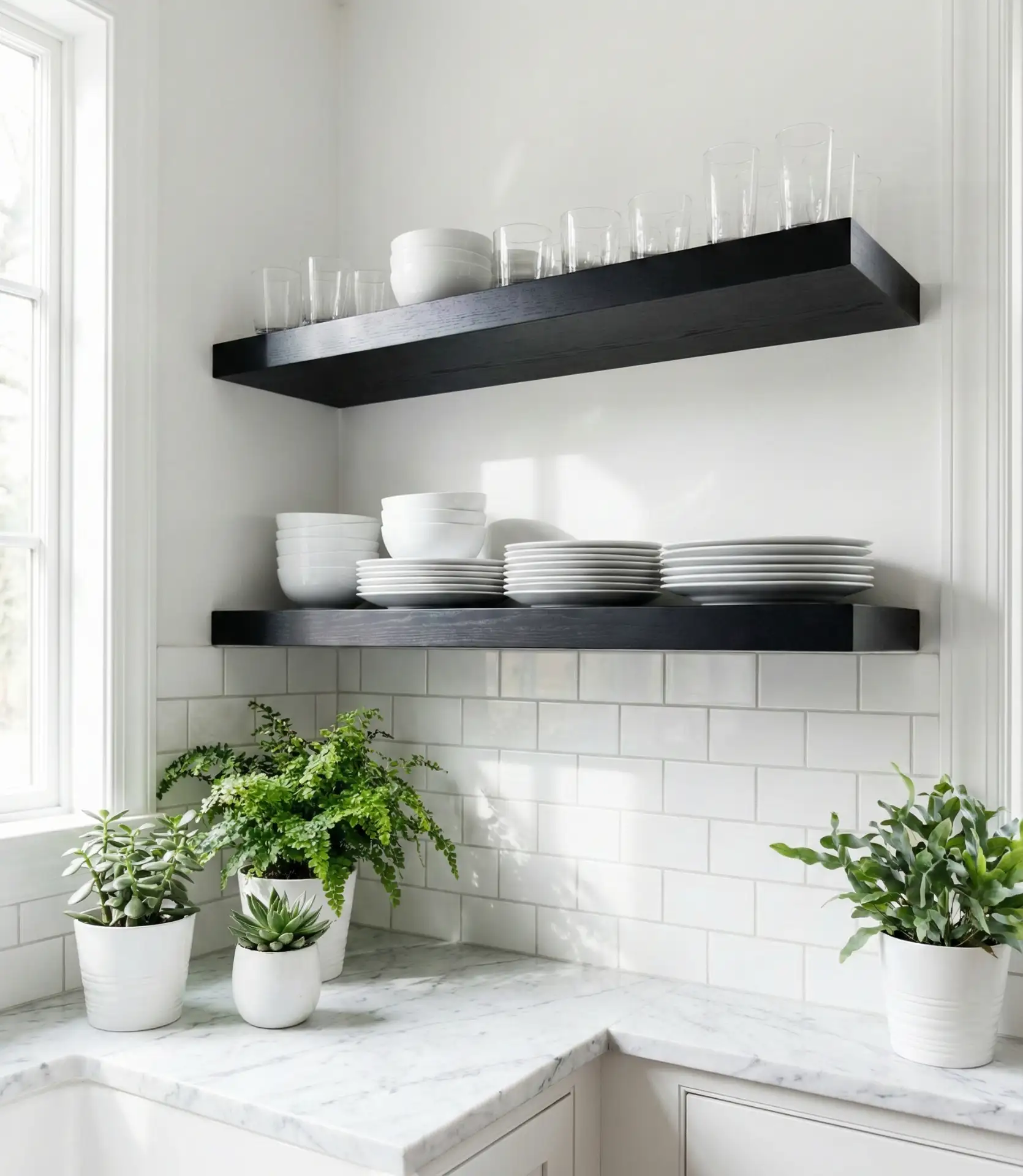
Incorporating black open shelving into an otherwise white kitchen introduces both function and visual interest while showcasing beautiful dishware and decor ideas. The dark shelves create horizontal lines that draw the eye across the wall, making narrow kitchens appear wider. This modern interior design strategy requires curating what appears on the shelves, turning everyday items into display-worthy vignettes. The black material—whether wood stained dark, painted metal brackets, or industrial pipe supports—provides architectural weight that defines the space.
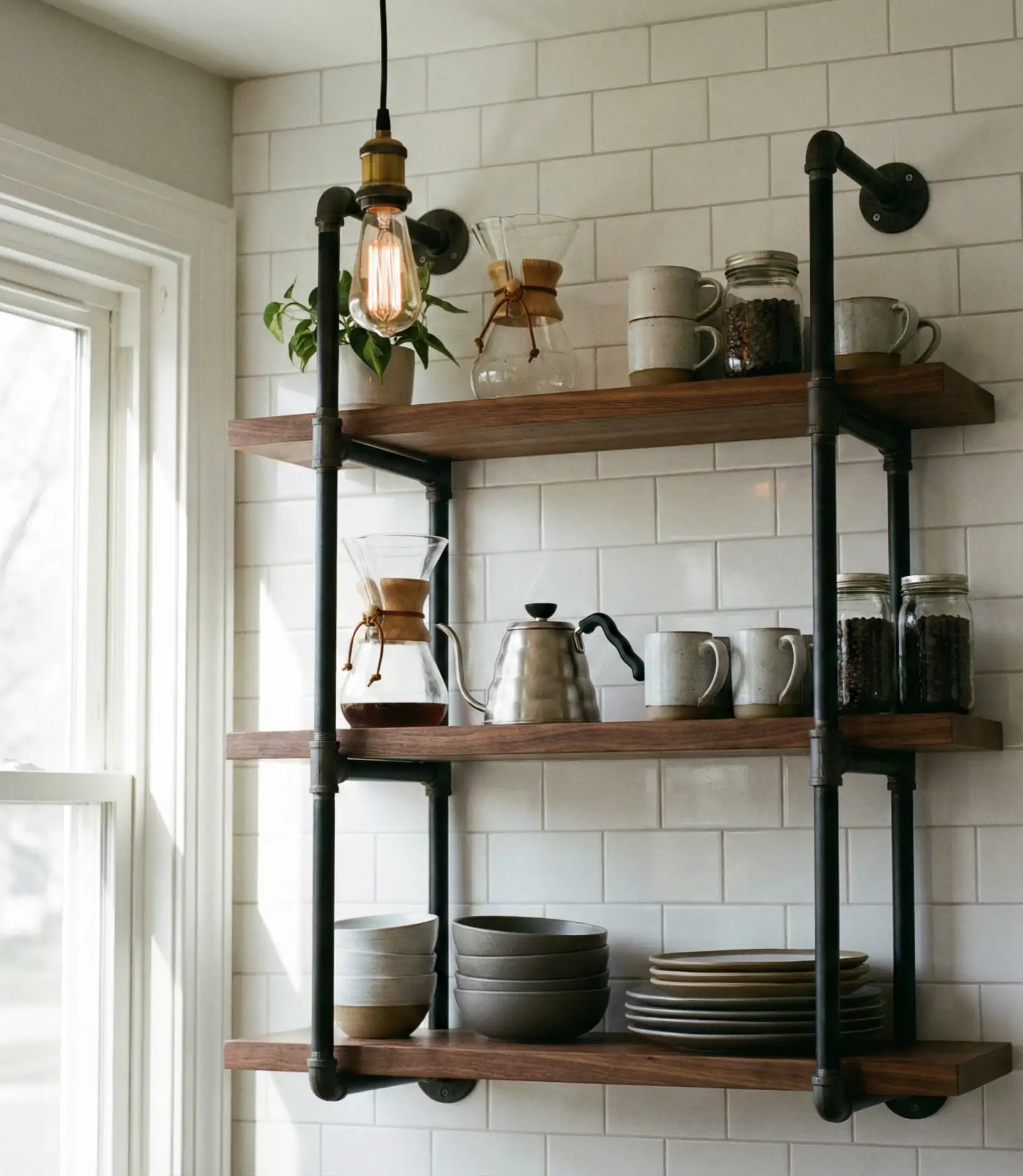
Real homeowners discover that open shelving demands more discipline than closed cabinets—everything remains visible, so organization becomes essential. Many adopt a “best of the best” mentality, displaying only their most attractive dishes and glassware while storing everyday items behind closed doors. This editing process often leads to unexpected benefits, like finally letting go of mismatched mugs or chipped plates that no longer serve the household.
12. Marble Look Backsplash with Black Veining
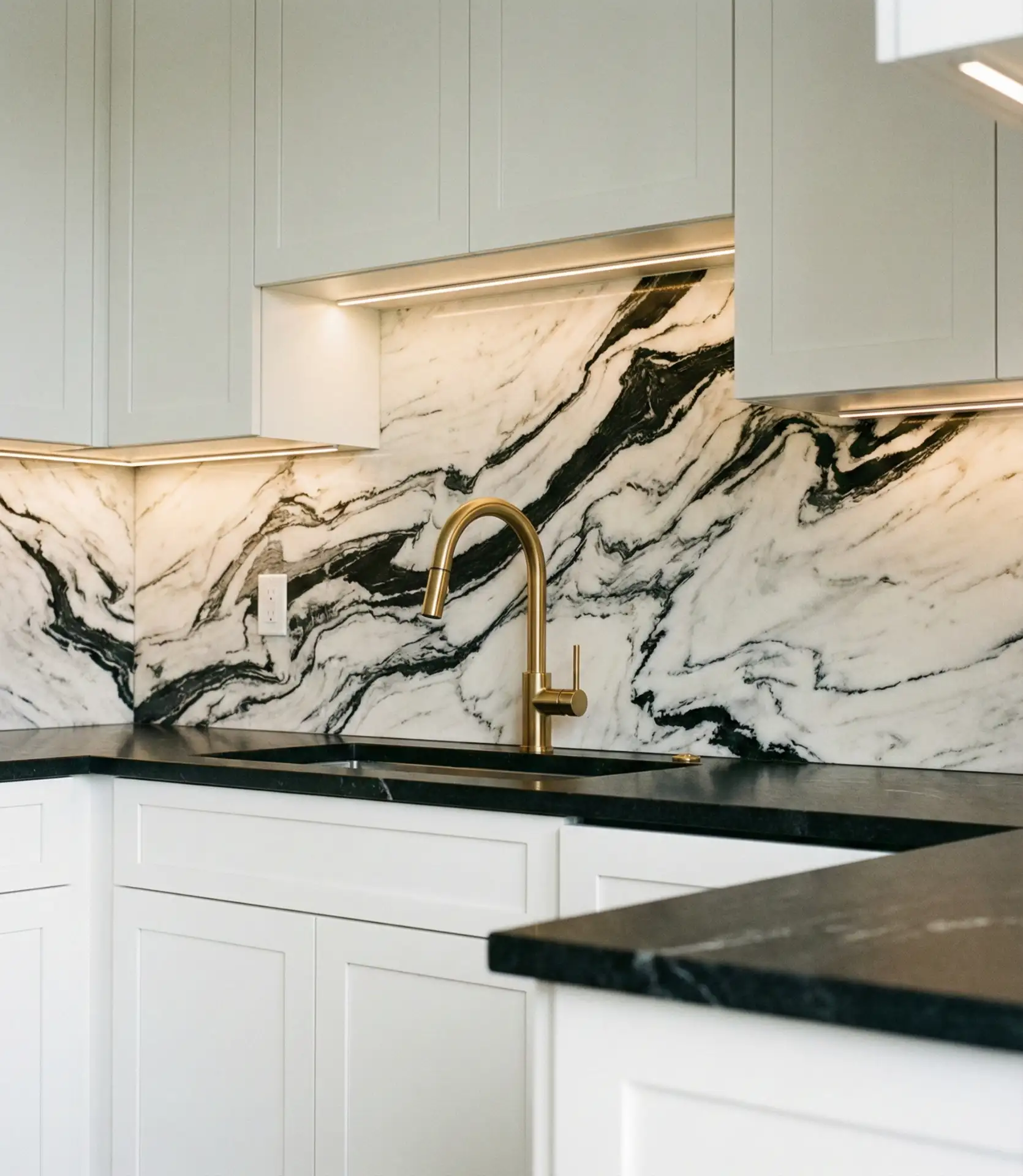
A backsplash idea featuring white marble with dramatic black veining creates an organic, artistic focal point that never looks exactly the same twice. Whether using genuine marble slabs, large-format porcelain tiles, or quality quartz, the natural stone aesthetic brings movement and luxury to the kitchen. The black veining within the white stone provides built-in contrast without introducing additional colors or patterns. This choice pairs beautifully with both white and black cabinets, serving as a neutral yet dynamic backdrop.
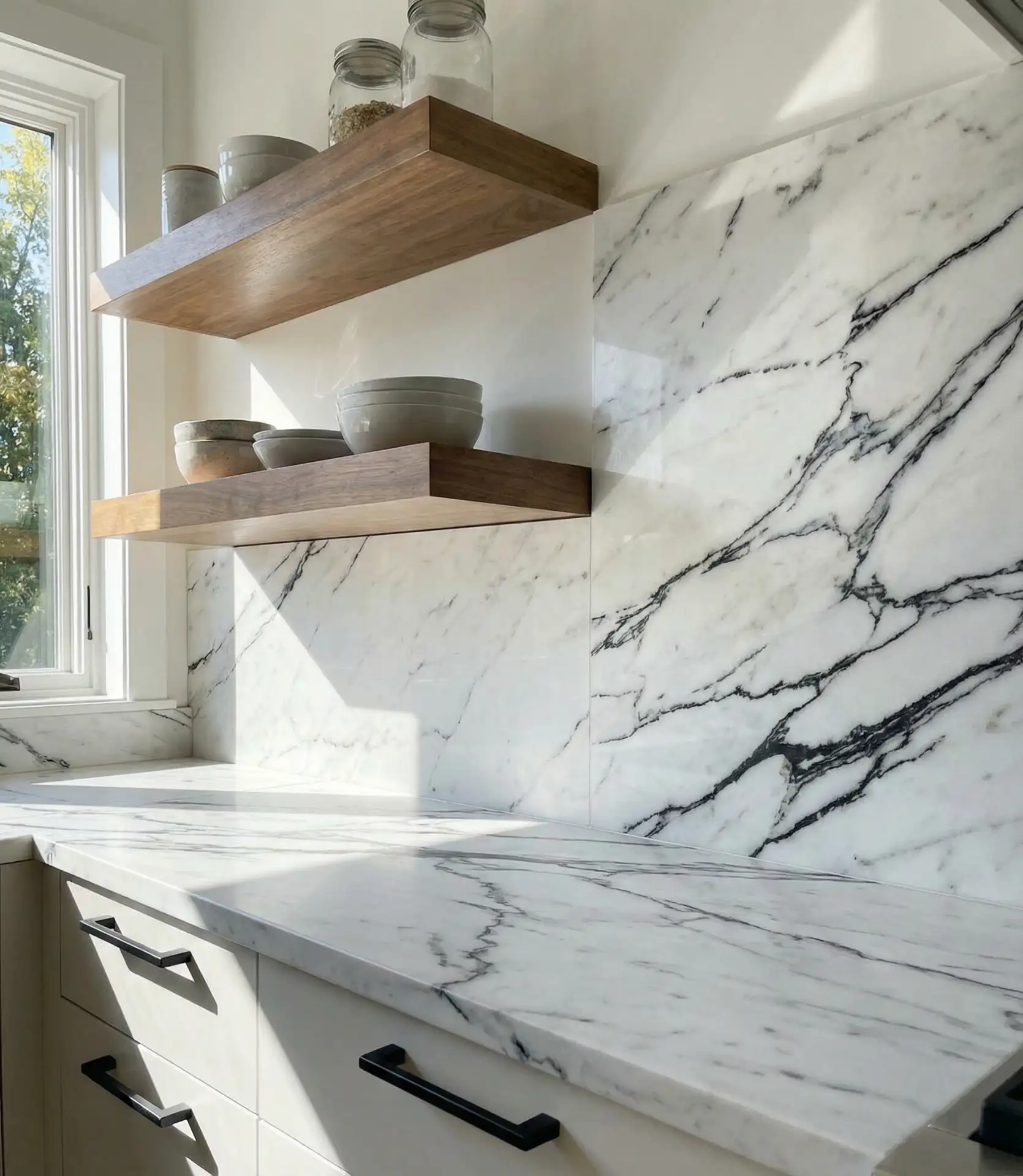
Budget considerations matter here—genuine marble remains expensive and requires sealing and careful maintenance, while porcelain alternatives have become remarkably convincing and nearly indestructible. Large-format porcelain slabs measuring 5×10 feet can be installed with minimal grout lines, creating an almost seamless appearance that mimics book-matched marble at roughly 40%–60% of the cost. Most homeowners find this to be the ideal balance between a luxurious appearance and practical durability.
13. Black Dining Table in White Kitchen
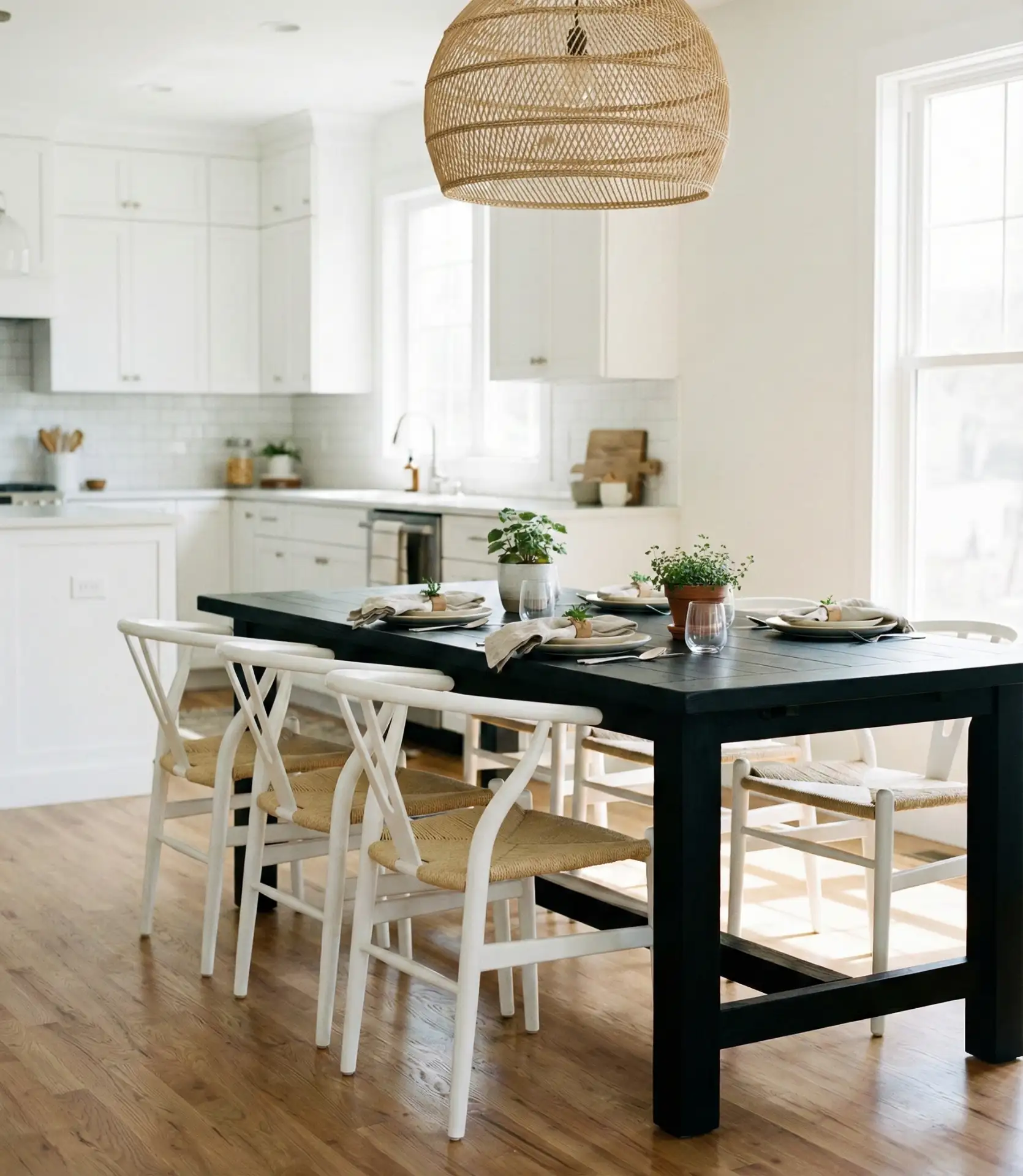
Positioning a black dining table within or adjacent to a predominantly white kitchen creates a defined eating zone while reinforcing the black and white theme. This substantial furniture piece grounds the dining area and provides visual weight that balances white cabinets and light-colored walls. The dark table surface also proves more practical for daily family dining, concealing crumbs and spills better than lighter finishes. In open-concept homes, the table serves as a transitional element between the kitchen and living spaces.
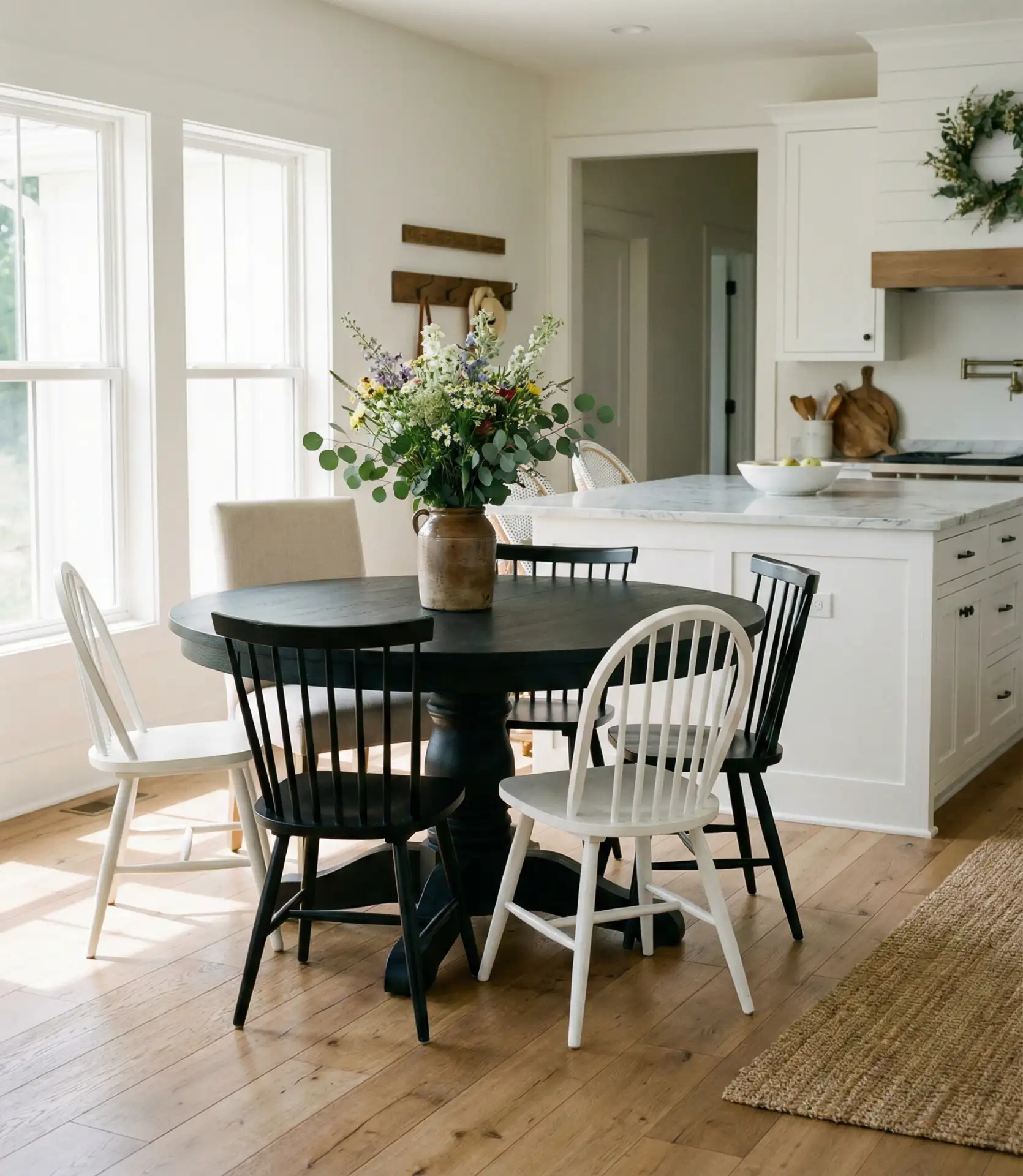
This configuration works best in kitchens where the dining area enjoys direct access to natural light, preventing the dark table from absorbing too much brightness from the room. East-facing breakfast nooks benefit particularly from morning sunlight that illuminates the table surface, while south-facing eating areas remain bright throughout the day. The strategic placement of the space in relation to the windows significantly influences how the space feels during actual use.
14. White Kitchen with Black Ceiling
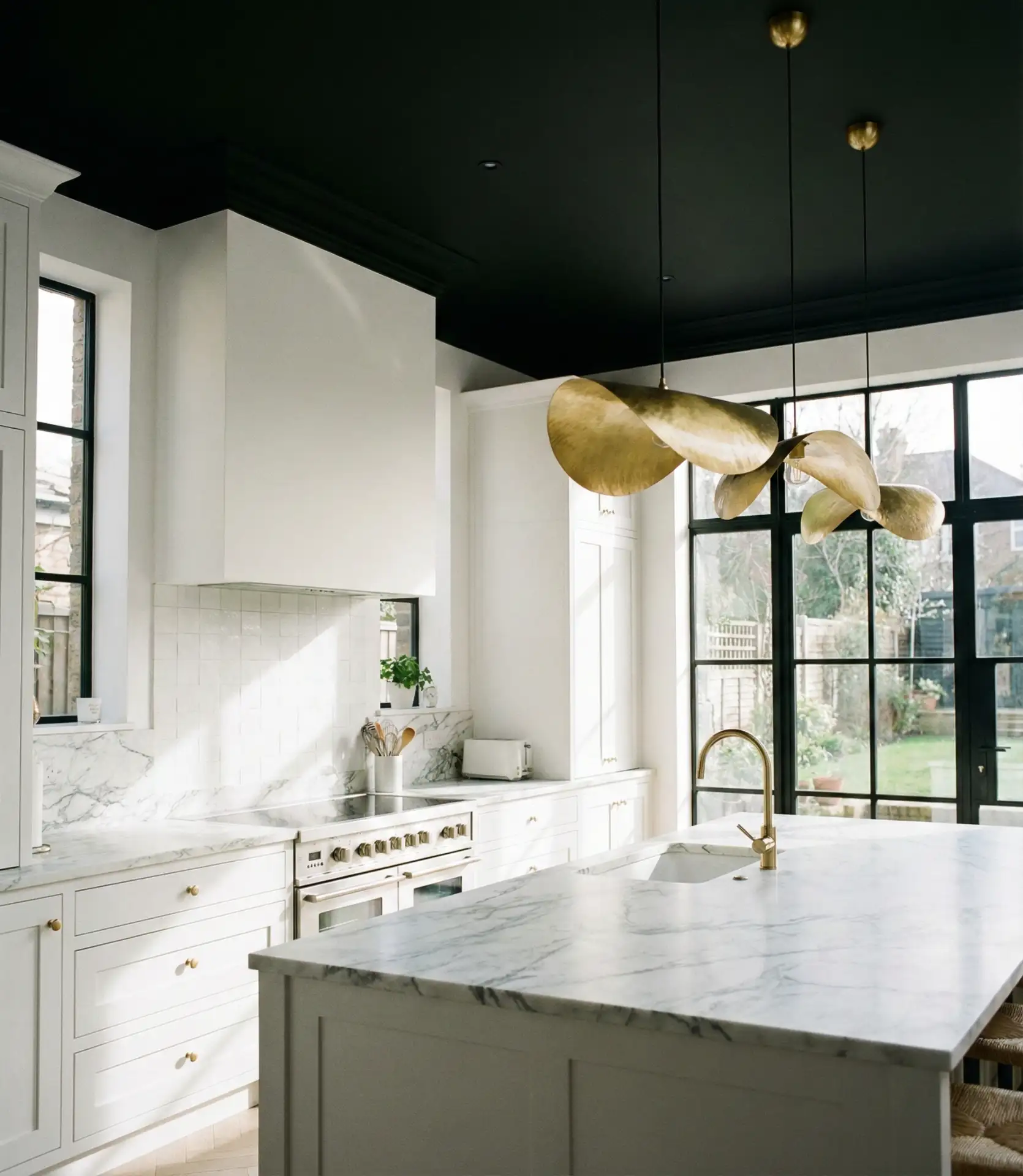
Painting the ceiling black in an all-white kitchen represents a bold design move that creates unexpected drama and intimacy. This “fifth wall” treatment has gained popularity in kitchens with high ceilings, where the painted surface adds coziness without sacrificing square footage. The black ceiling draws the eye upward, making the room feel more enveloping and special. It also provides a perfect backdrop for hanging pendant lights or chandeliers, allowing fixtures to truly shine against the dark surface.
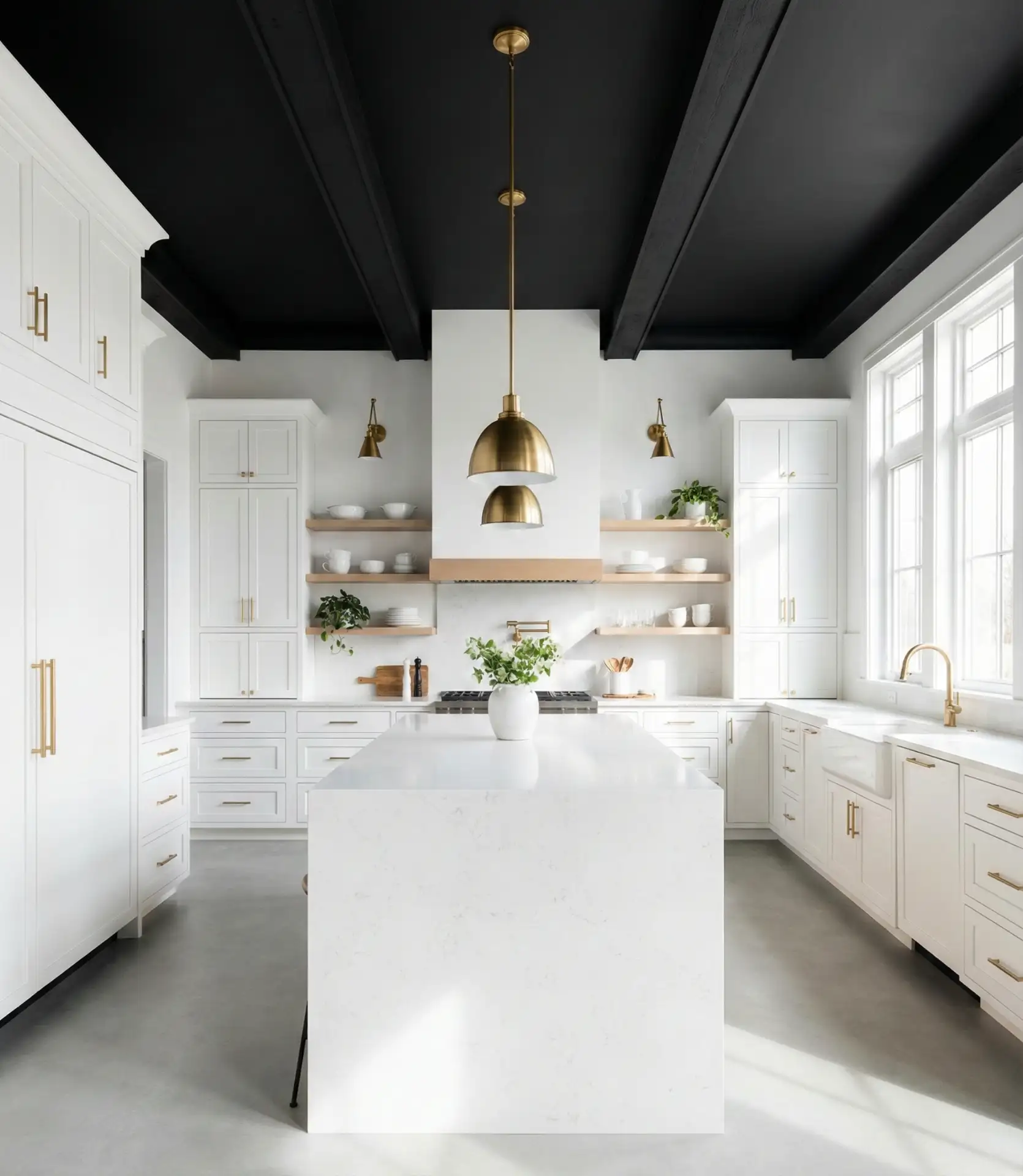
A common mistake when implementing this look is pairing a black ceiling with insufficient lighting, which can make the space feel like a cave rather than a cozy retreat. The solution requires abundant light sources at multiple levels—recessed ceiling cans, under-cabinet LED strips, pendant fixtures over islands, and even toe-kick lighting. With proper illumination, the black ceiling becomes a sophisticated design element rather than an oppressive lid. The investment in lighting pays dividends in both function and ambiance.
15. Black and White Geometric Backsplash
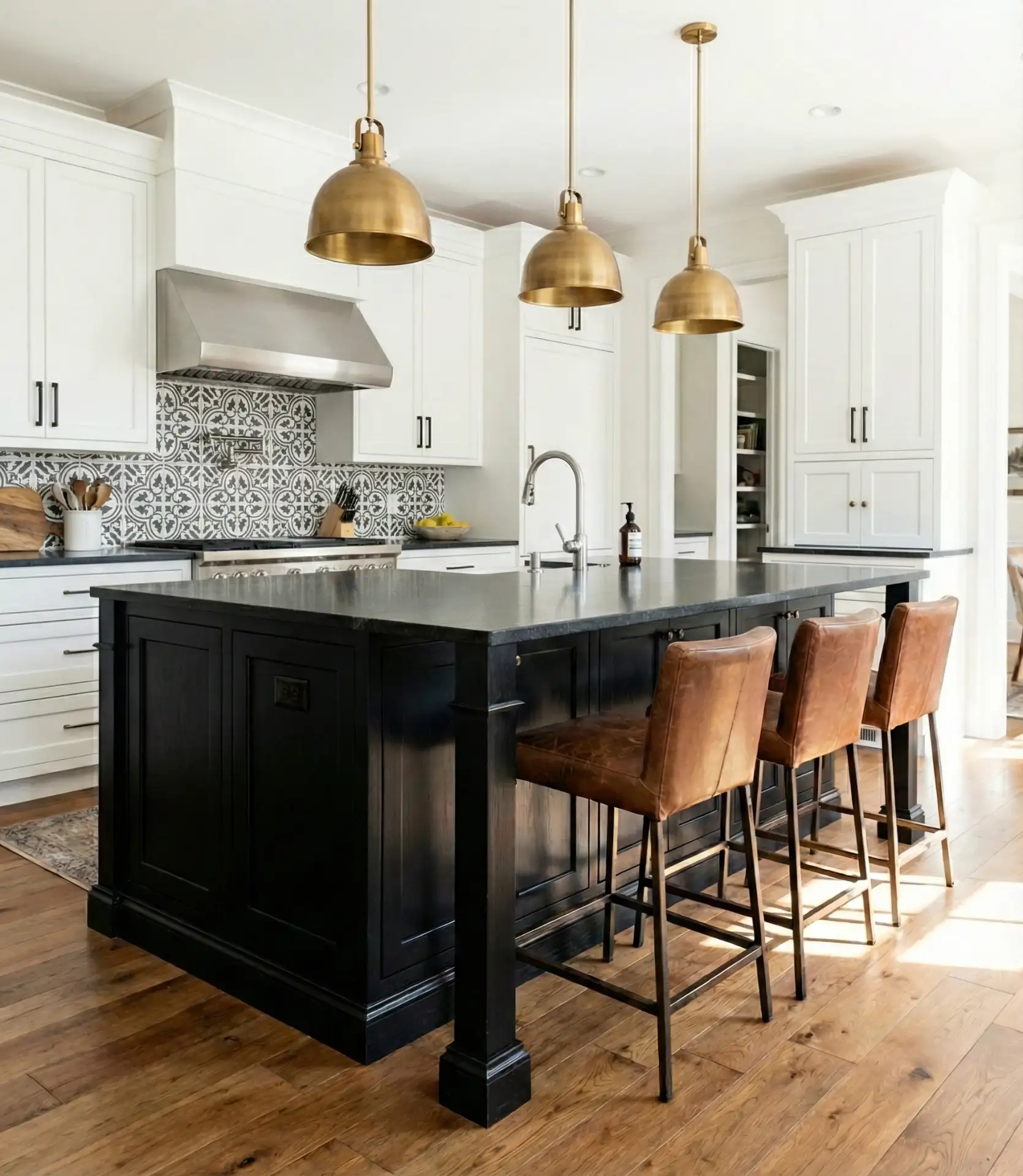
A backsplash featuring geometric patterns in black and white brings playful sophistication to the kitchen without introducing competing colors. Options range from Moroccan-inspired zellige tiles to modern tessellated patterns and bold graphic prints. These backsplash ideas transform the wall behind the stove or sink into artwork that celebrates pattern and contrast. The geometric approach works particularly well in smaller kitchens where large-scale artwork might overwhelm, offering visual complexity in a contained area.
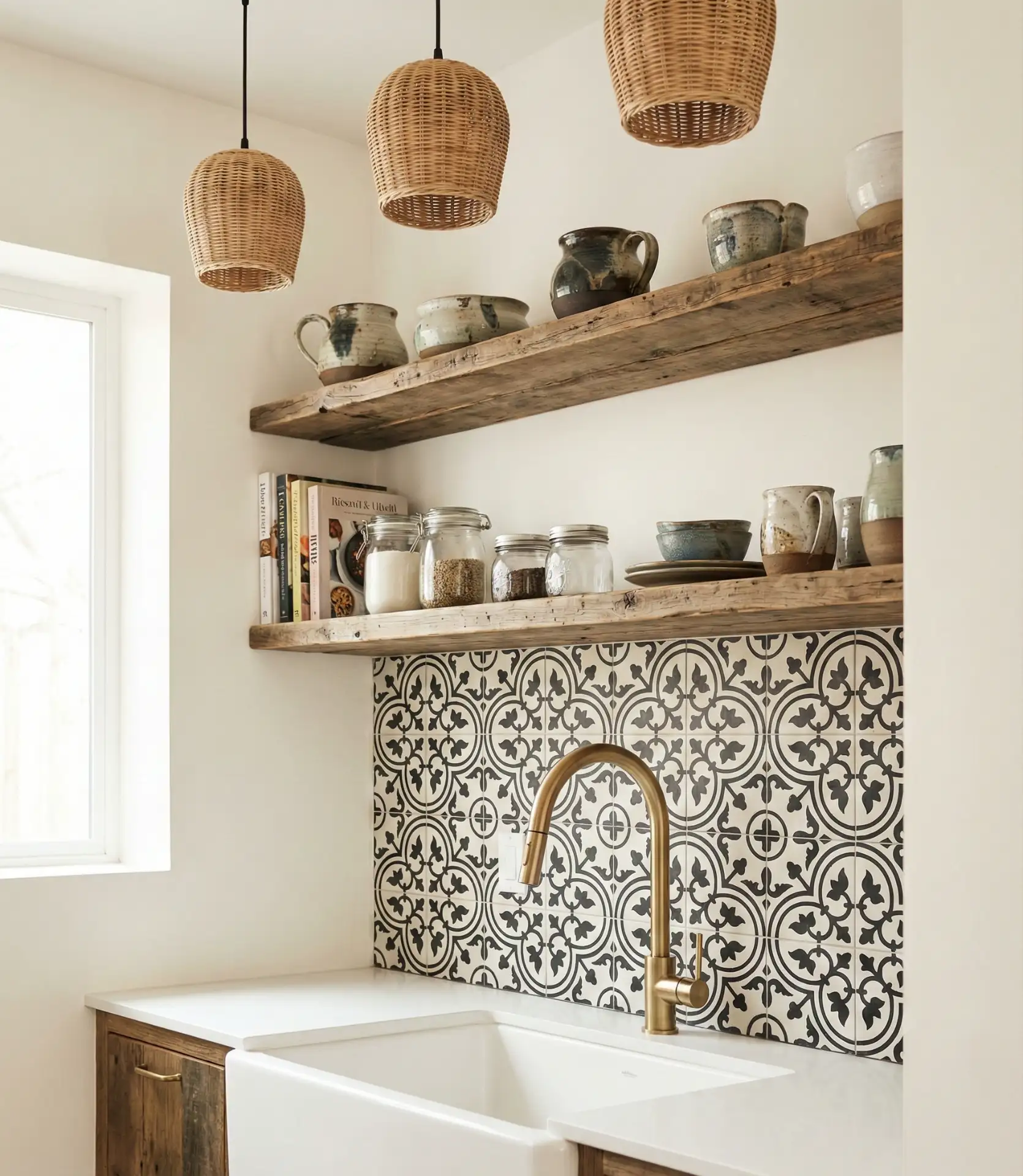
Last summer, a contractor friend installed a cement tile backsplash with an intricate black and white pattern in a client’s historic Boston brownstone. Initially, the homeowner was concerned that the pattern would be too busy. However, once the backsplash was installed alongside plain white cabinets and simple black hardware, it became the kitchen’s focal point, commanding attention without overwhelming the senses. The lesson learned: a single bold pattern statement allows other elements to remain understated.
16. White Kitchen with Black Pendant Lights
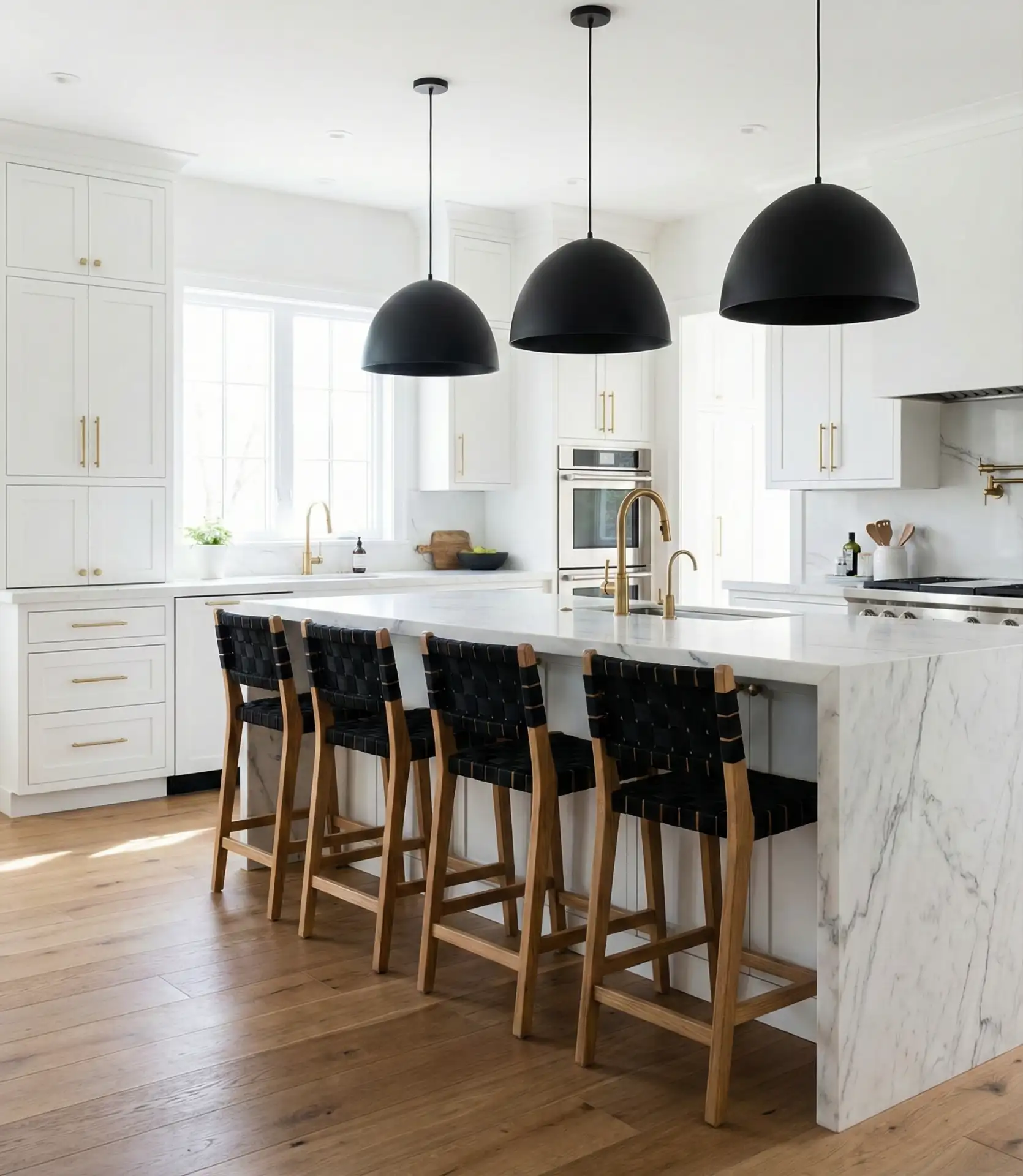
Suspended over a white kitchen island or dining table, black pendant lights provide sculptural interest and focused task lighting where it’s most needed. These fixtures come in countless styles—from industrial cage designs to sleek modern globes—allowing homeowners to inject personality while maintaining the black and white palette. The vertical drop of pendant lights draws the eye upward, emphasizing ceiling height while creating intimate pools of light below. This approach has become a signature element in Pinterest-worthy inspo images.
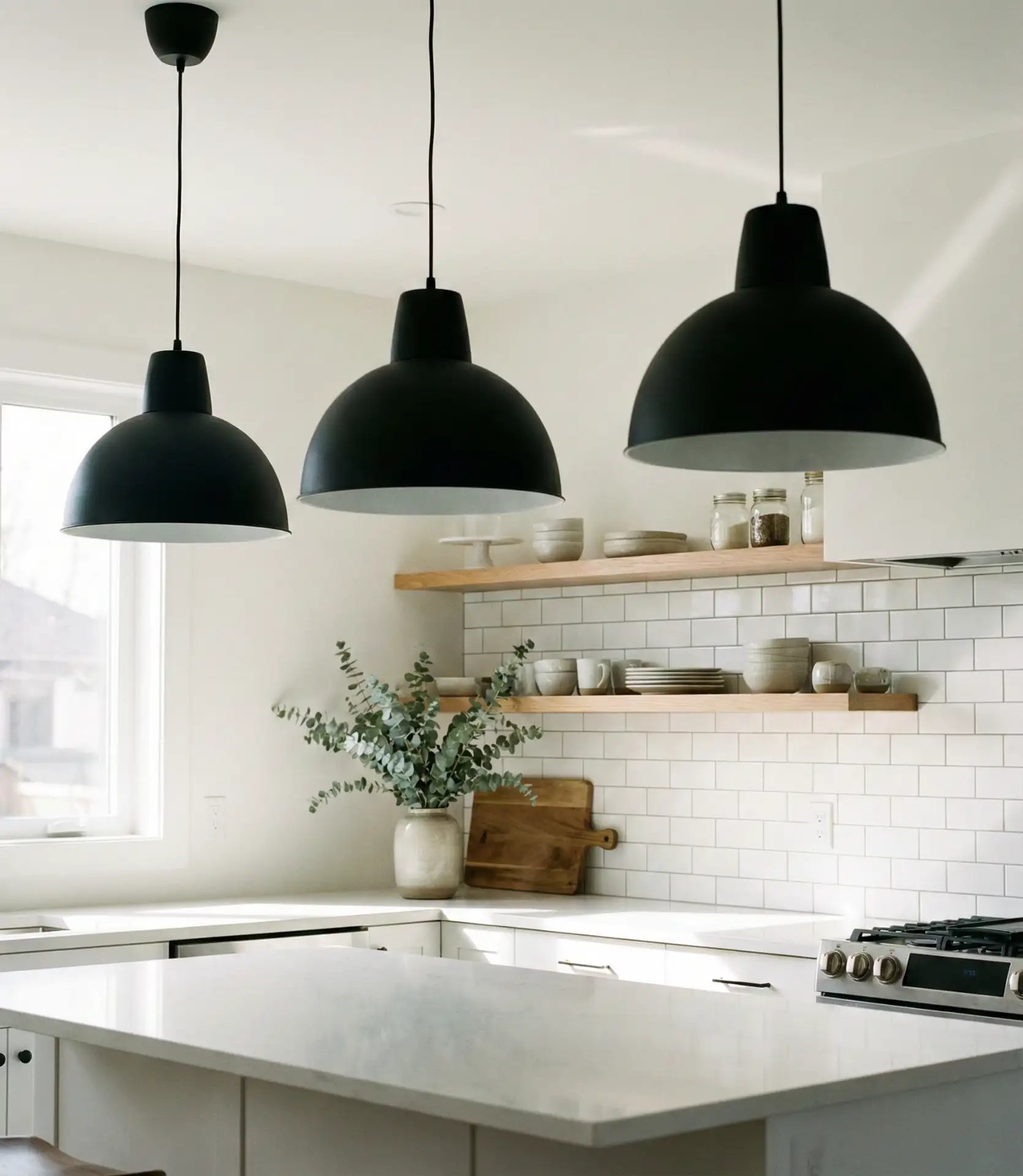
Expert lighting designers suggest hanging pendants approximately 30-36 inches above the counter surface—high enough to avoid head bumps but low enough to provide effective task lighting. In kitchens with 9-foot ceilings, this creates a sweet spot where the fixtures become focal points without overwhelming the space. For islands longer than 6 feet, three pendants typically provide better balance and illumination than two larger ones.
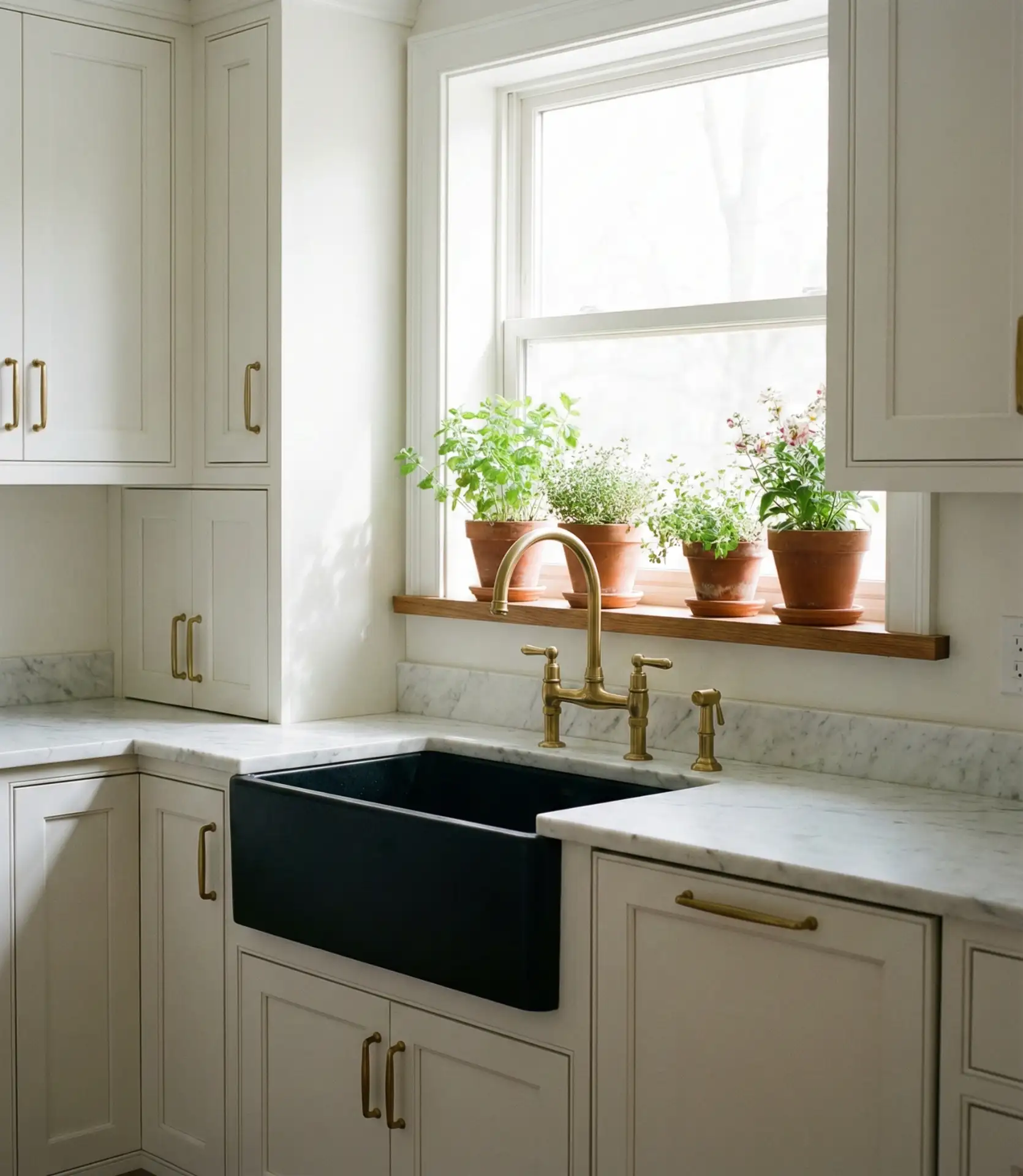
17. Black Farmhouse Sink in White Kitchen
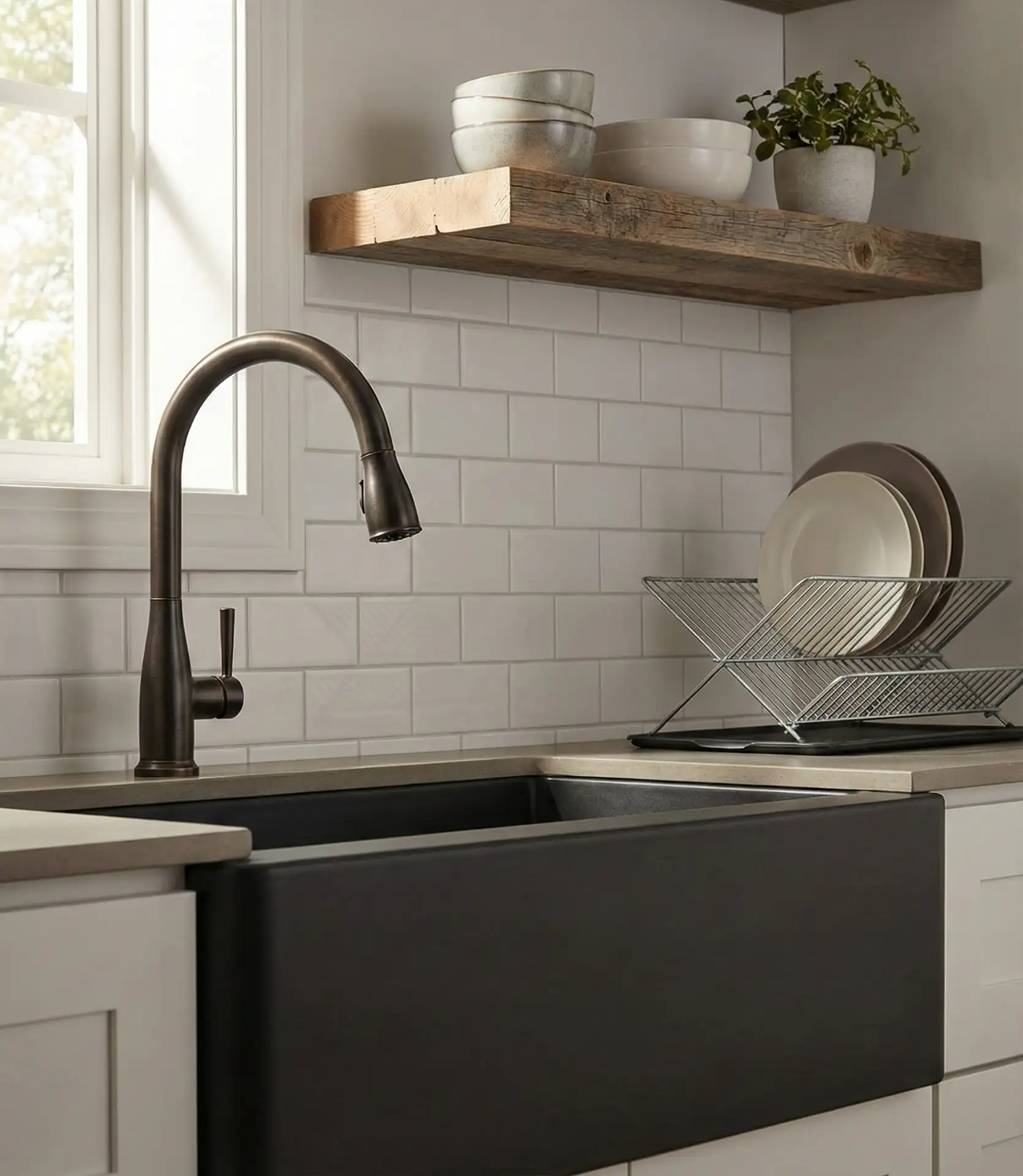
A black farmhouse sink makes a stunning statement against white countertops and cabinets, combining rustic charm with contemporary contrast. These deep, apron-front sinks in matte black fireclay or composite materials bring visual heft to the kitchen while remaining supremely practical for large pots and roasting pans. The black surface hides water spots and mineral deposits that show plainly on white porcelain. This choice particularly resonates in transitional and modern farmhouse design schemes popular throughout the American heartland.
Budget considerations favor composite materials over genuine fireclay—quality composite black sinks from brands like Kraus or Blanco range from $300 to $600, while handcrafted fireclay versions can exceed $1,500. Both offer excellent durability and the coveted matte black finish, but composites provide better resistance to chipping and slightly easier installation. For most homeowners undertaking DIY or contractor-assisted renovations, composite represents the practical choice without aesthetic compromise.
18. White Kitchen with Green Plant Accents
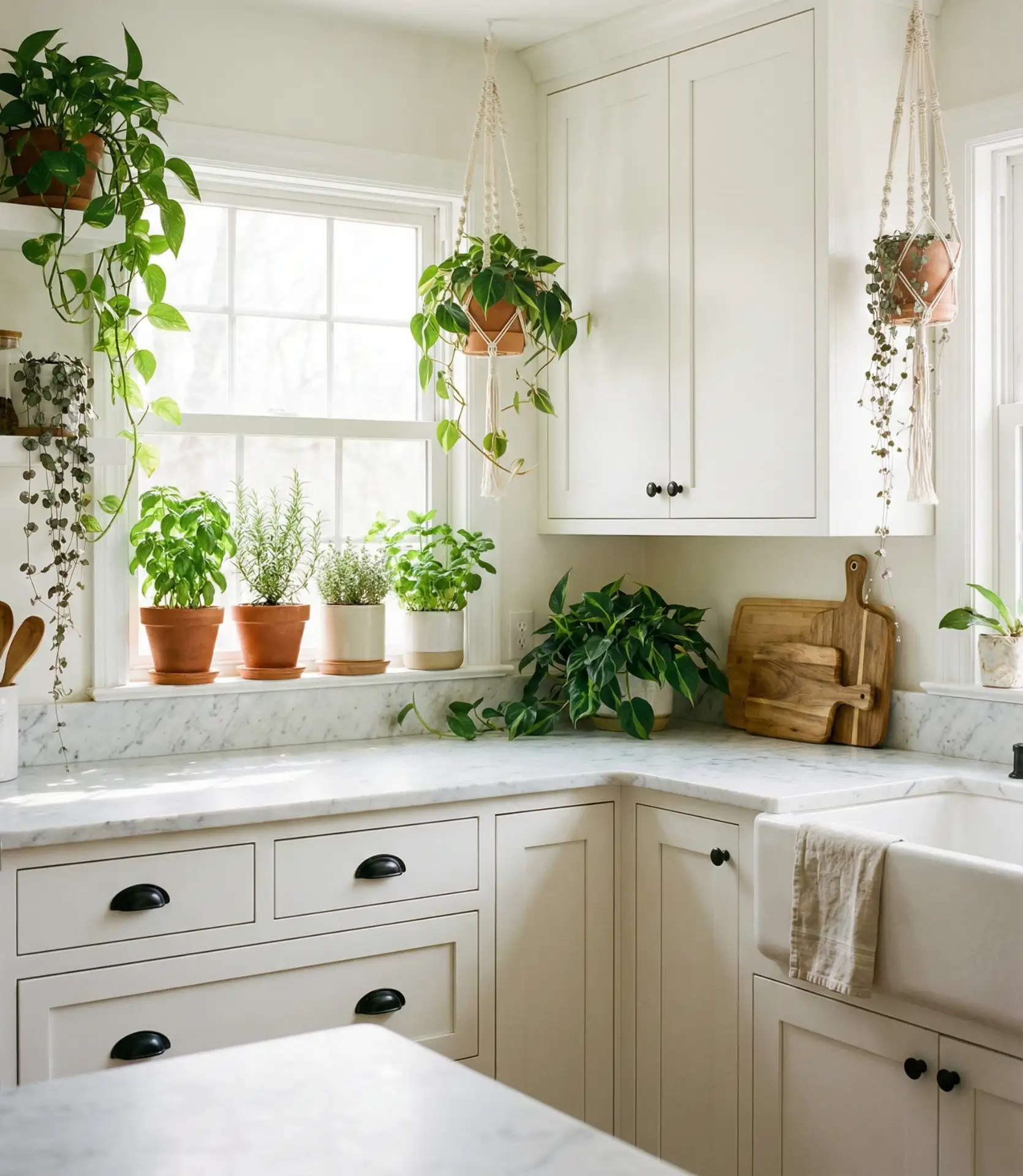
Introducing green plants into a black and white kitchen provides the perfect organic color pop that softens rigid surfaces and architectural lines. Living greenery adds life, improves air quality, and creates a connection with nature—all without disrupting the sophisticated monochrome palette. Popular kitchen-friendly plants include pothos, herbs in white containers, snake plants, and ferns. These natural accessories work particularly well on open shelving, window sills, and as centerpieces on islands or dining tables.
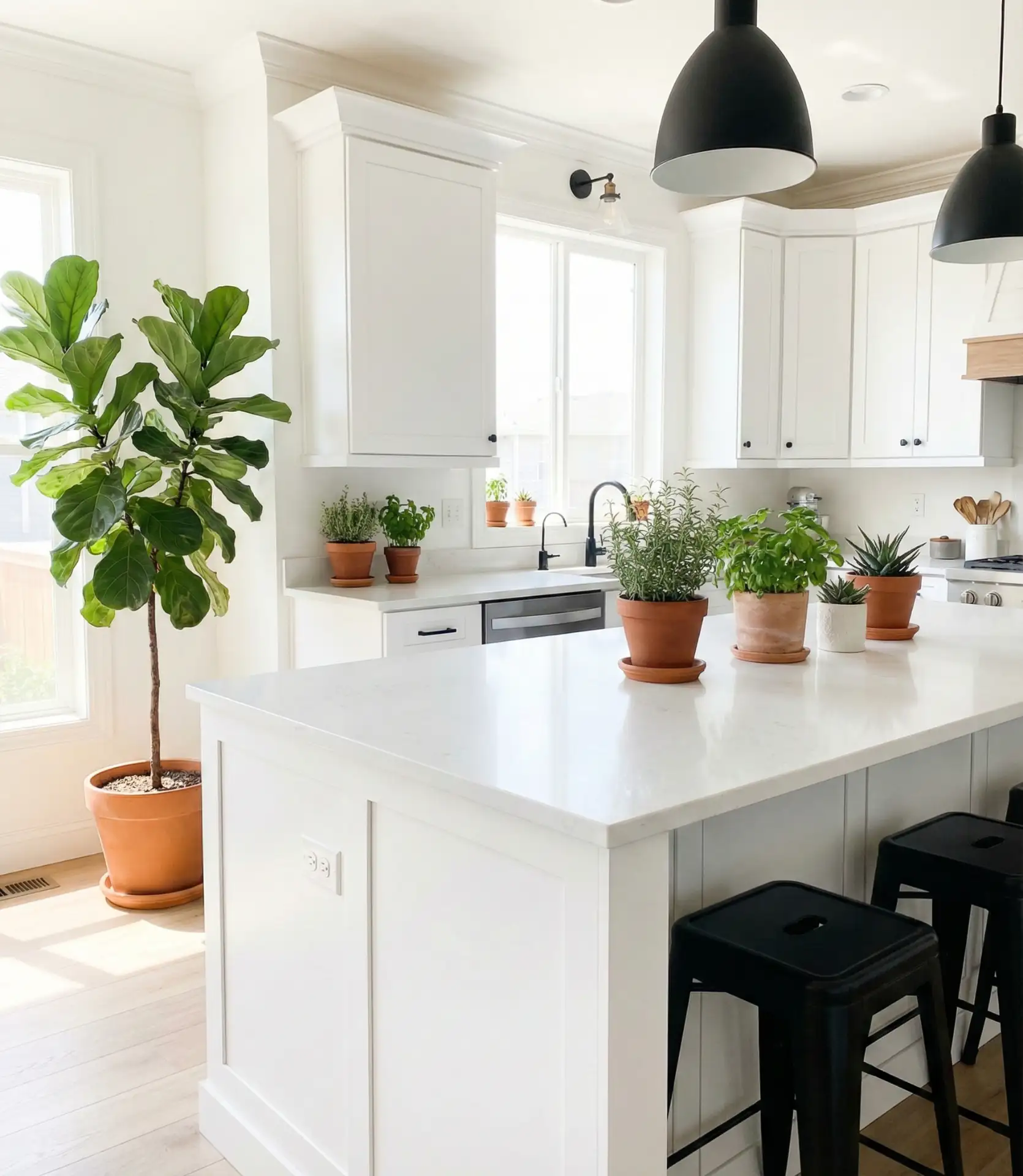
Real homeowners maintaining plant-filled kitchens report that the key to success lies in matching plants to the available light conditions. South- and west-facing kitchens with abundant sunshine support a wider variety of species, while north-facing spaces require low-light-tolerant options like pothos or ZZ plants. Rather than struggling with incompatible plants, successful indoor gardeners accept the limitations of their space and choose accordingly, ensuring lush growth rather than constant replacement.
19. Black and White with Grey Marble Countertops
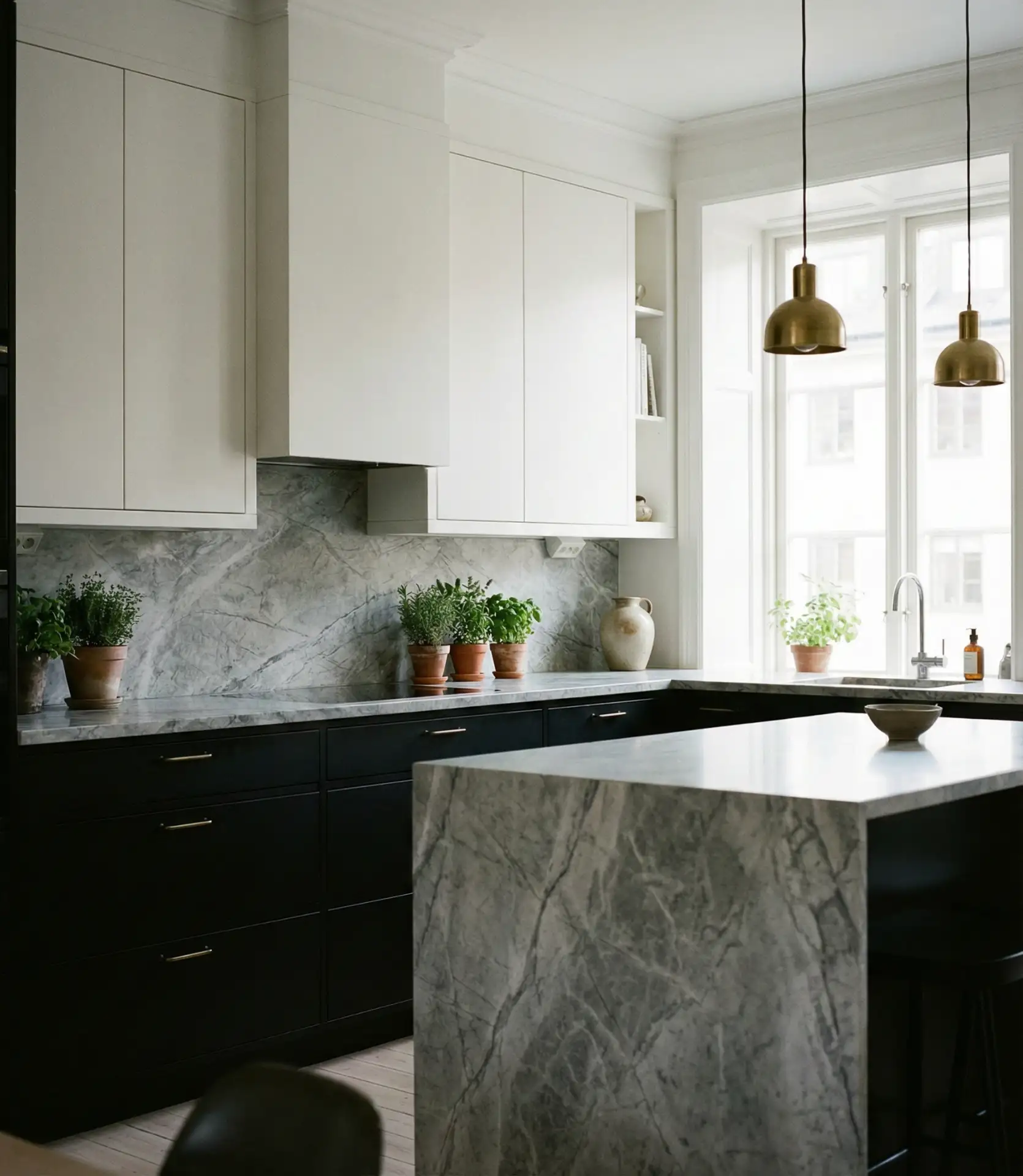
Introducing grey marble countertops into a black and white kitchen provides a sophisticated bridge between the two contrasting tones. The grey naturally complements both black and white cabinets, creating cohesion while adding another layer of visual interest through natural veining patterns. This tertiary neutral softens the stark contrast that can sometimes feel severe, making the space more livable and less clinical. Popular choices include Carrara, Grigio, and Silver Cloud marbles that bring subtle grey undertones.
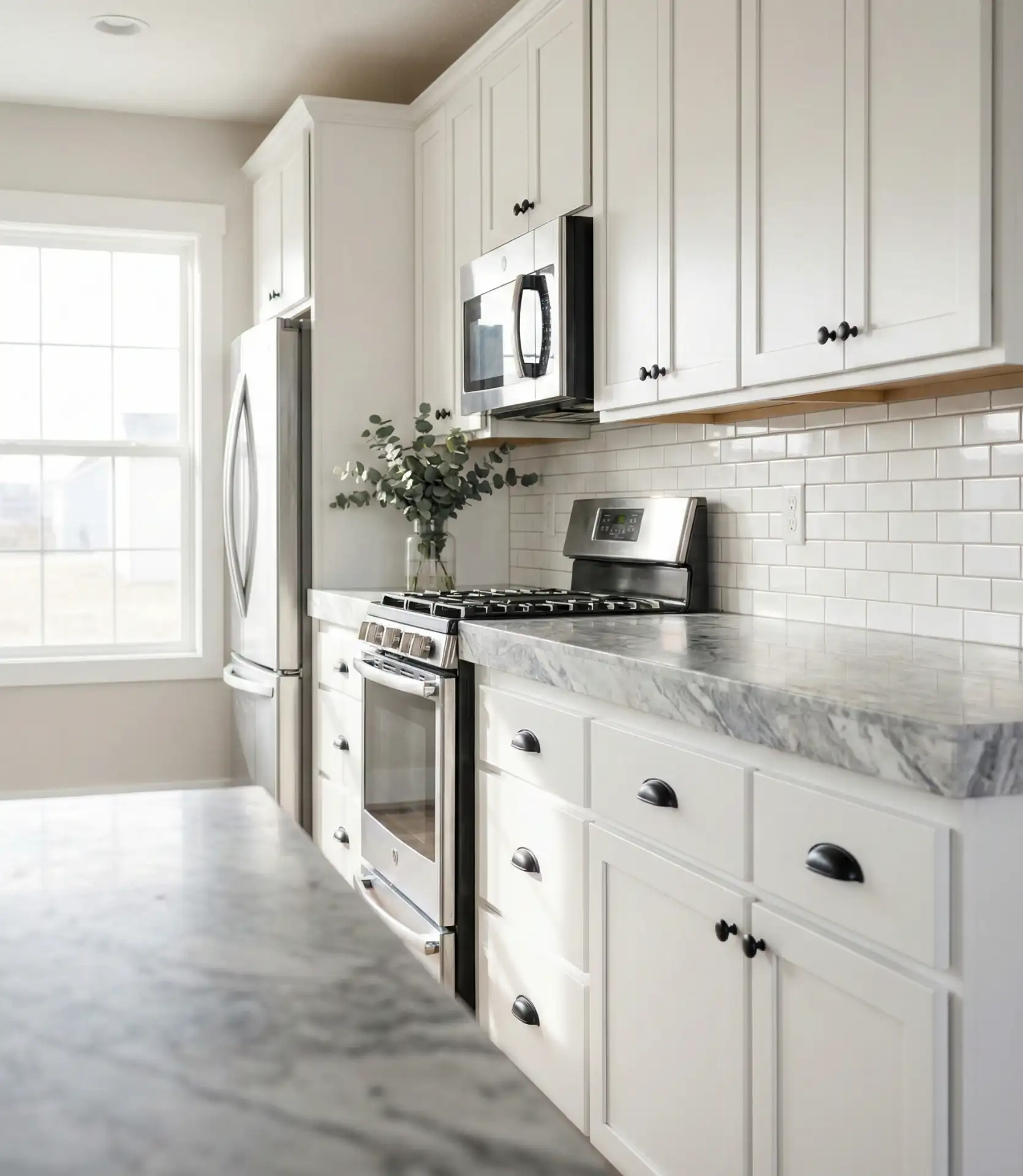
In Charlotte suburbs and Denver neighborhoods where home values matter, grey marble countertops consistently appear in higher-end listings and appeal to broad buyer demographics. Real estate agents note that this material choice signals quality without polarizing potential buyers the way pure black or stark white surfaces sometimes do. The grey marble reads as both classic and current, a combination that supports strong resale values.
20. White Kitchen with Black Bar Stools
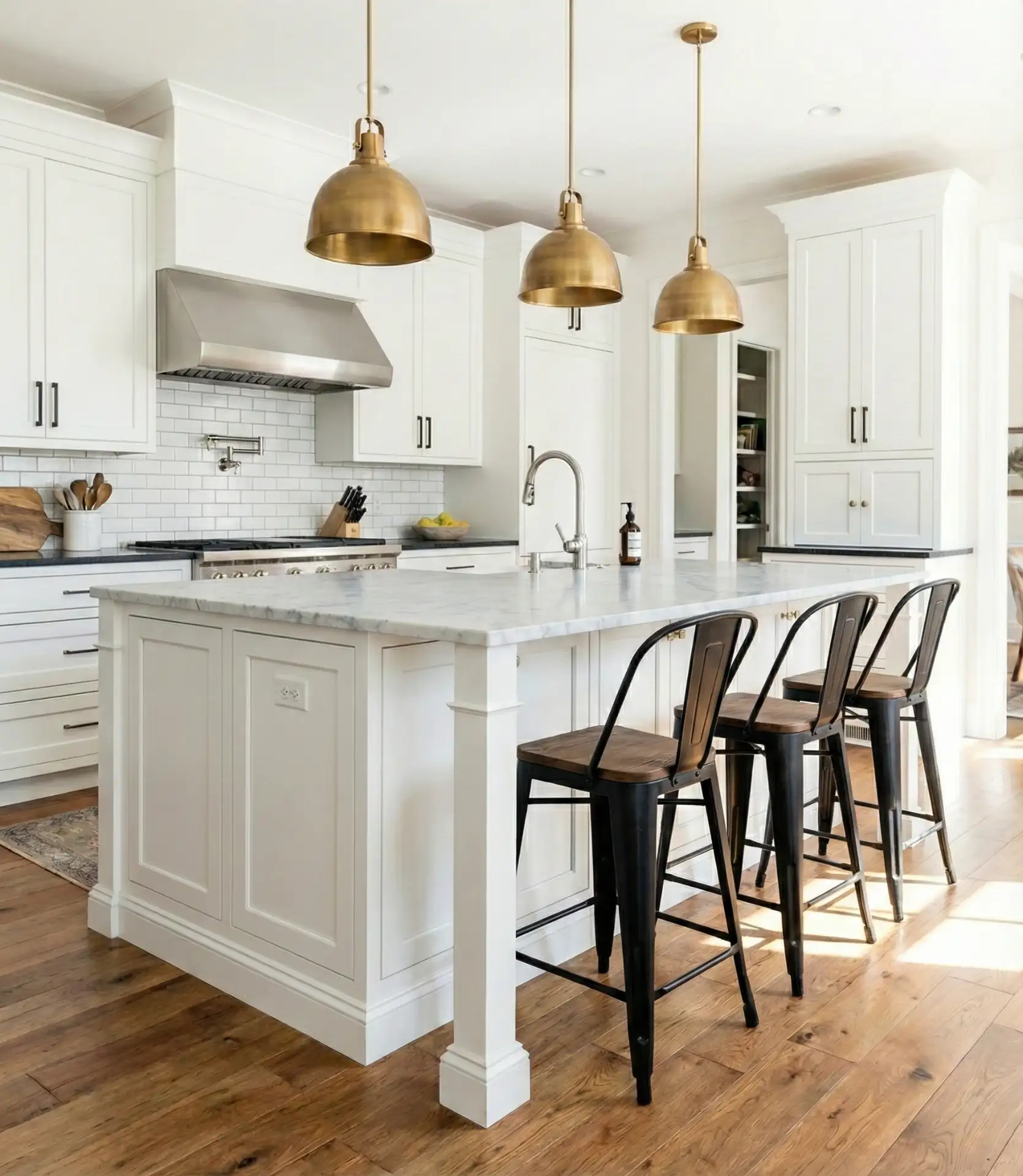
Black bar stools at a white island provide both functional seating and visual punctuation that grounds the space. These furniture pieces can be easily updated or replaced as trends evolve, making them a low-commitment way to incorporate black into the design. Options range from industrial metal designs to upholstered counter-height chairs, allowing homeowners to adjust the formality level. The vertical lines of the stool legs create rhythm and repetition that enhance the kitchen’s architectural quality.
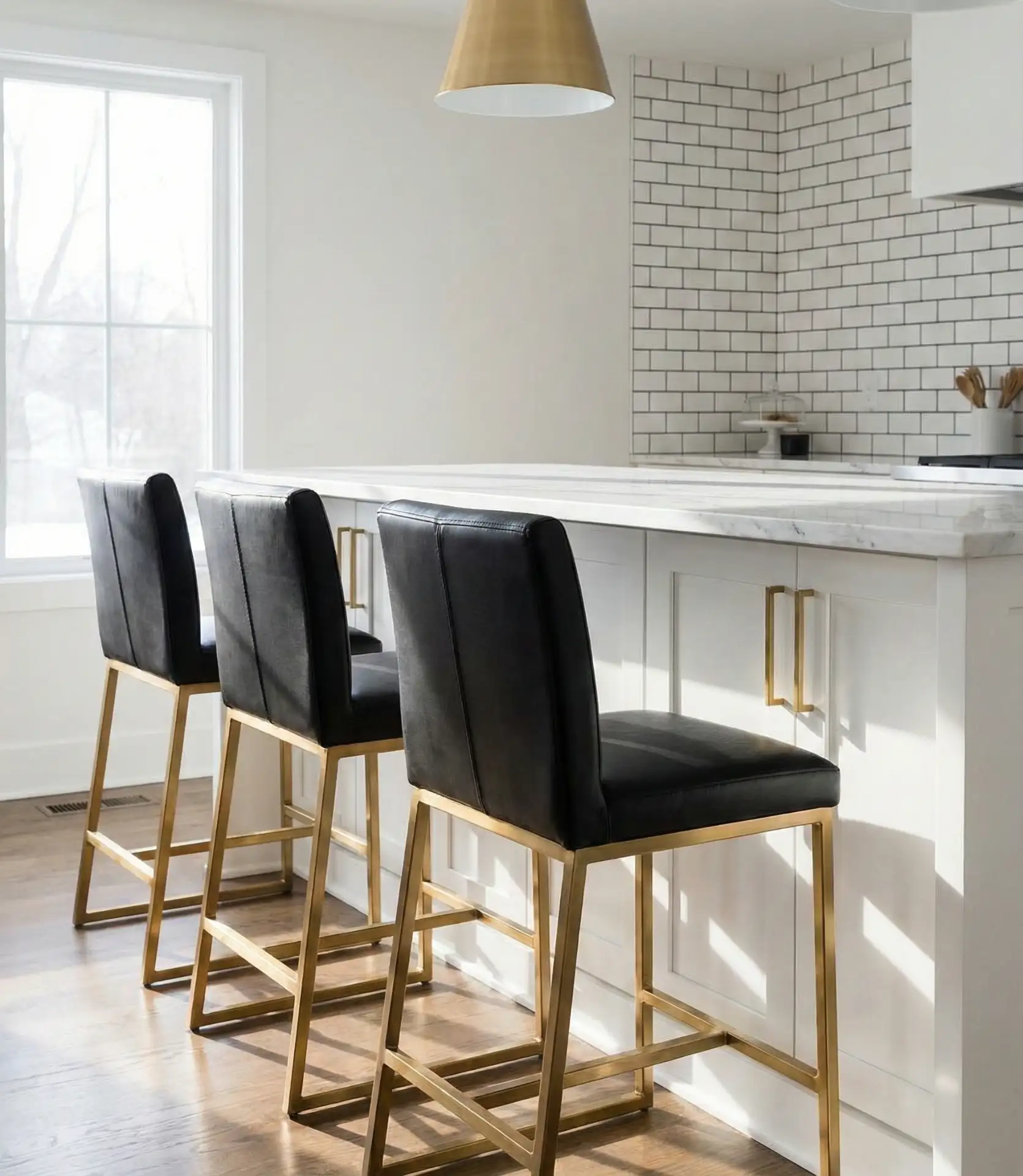
A practical insight from families with young children: stools with backs and footrests prove much more comfortable for extended seating during homework sessions or casual meals. Backless stools may photograph beautifully and tuck completely under the counter, but they’re less suitable for actual daily use by people of varying heights and ages. Prioritizing function alongside aesthetics ensures the kitchen serves the household rather than just looking magazine-ready.
21. Black Appliances in White Kitchen
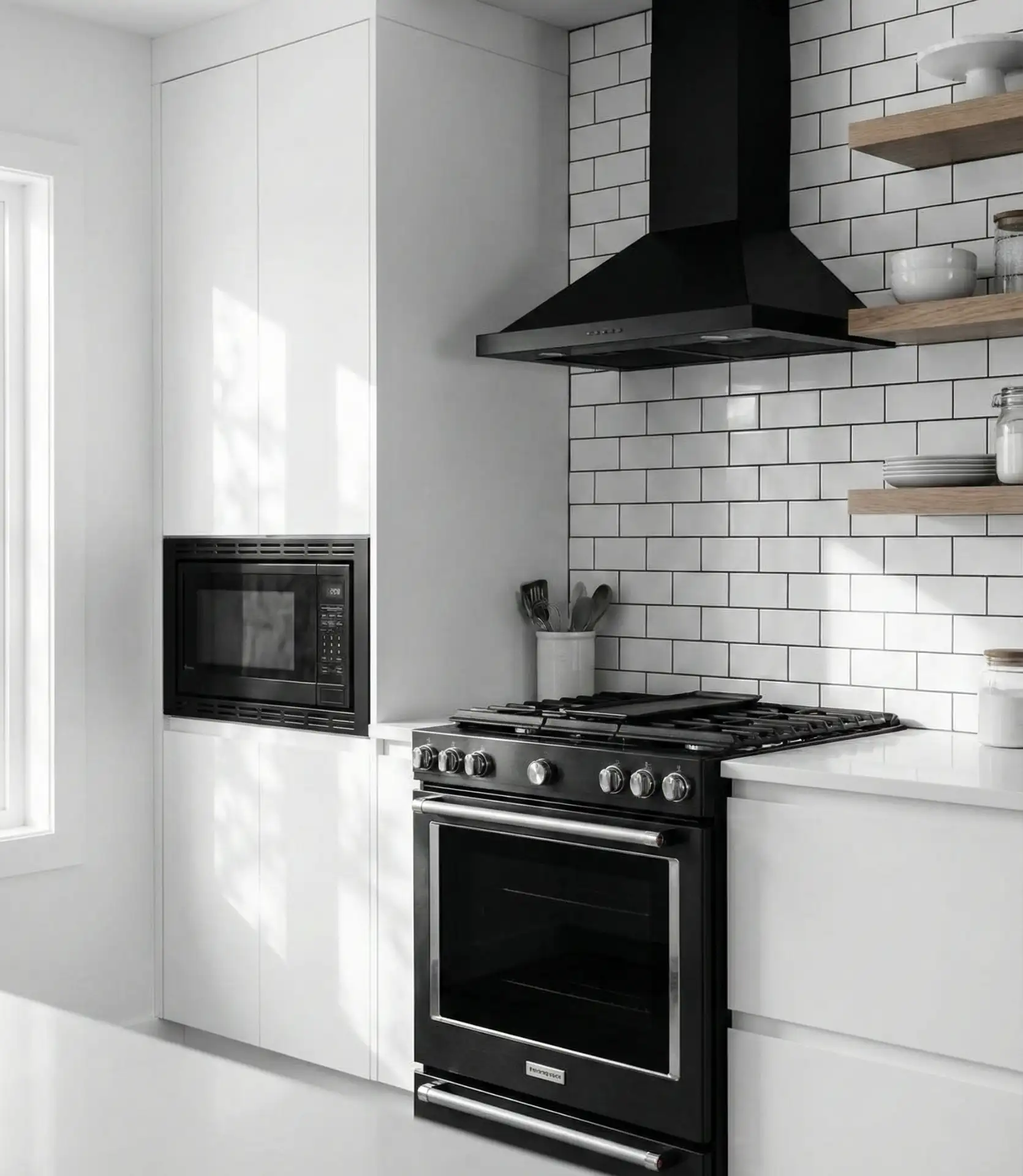
Specifying black appliances in a white kitchen creates built-in contrast while offering practical advantages over stainless steel or white appliances. Black surfaces resist showing fingerprints and smudges, a real benefit in busy family kitchens where the refrigerator gets opened dozens of times daily. The coordinated black appliances—refrigerator, dishwasher, and microwave—create visual cohesion rather than appearing as isolated elements. This choice has gained momentum as appliance manufacturers expand their matte black and black stainless options across all price points.
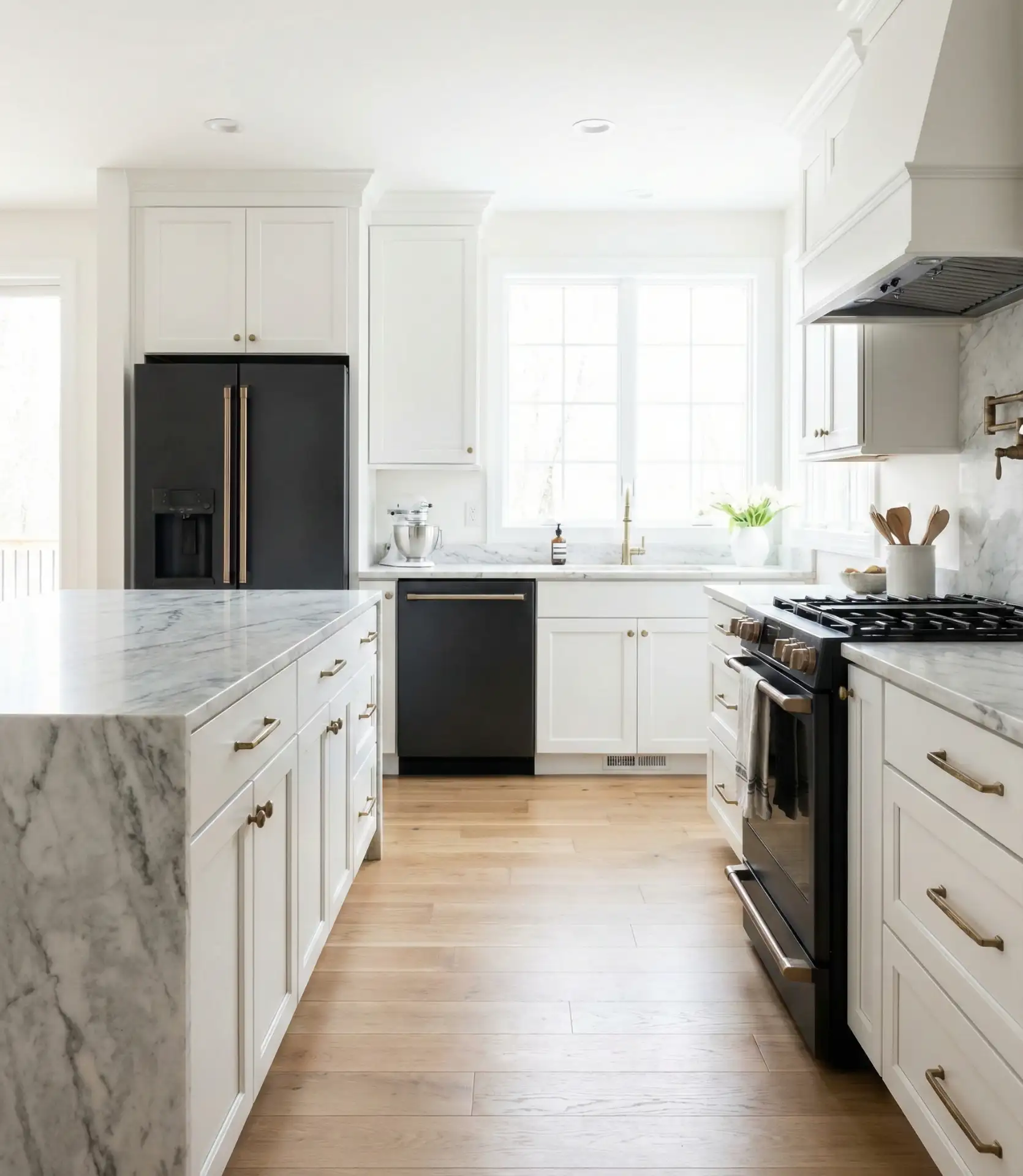
Where this look look works best is in kitchens with excellent natural light, where the dark appliances don’t absorb too much brightness from the room. North-facing kitchens or those with limited windows may find black appliances make the space feel darker, while south- or west-facing rooms easily accommodate the deeper tones. Assessing your specific light conditions before committing to black appliances prevents costly regrets and ensures the final result enhances rather than diminishes your kitchen’s livability.
22. White Kitchen with Wood Accent Ceiling Beams
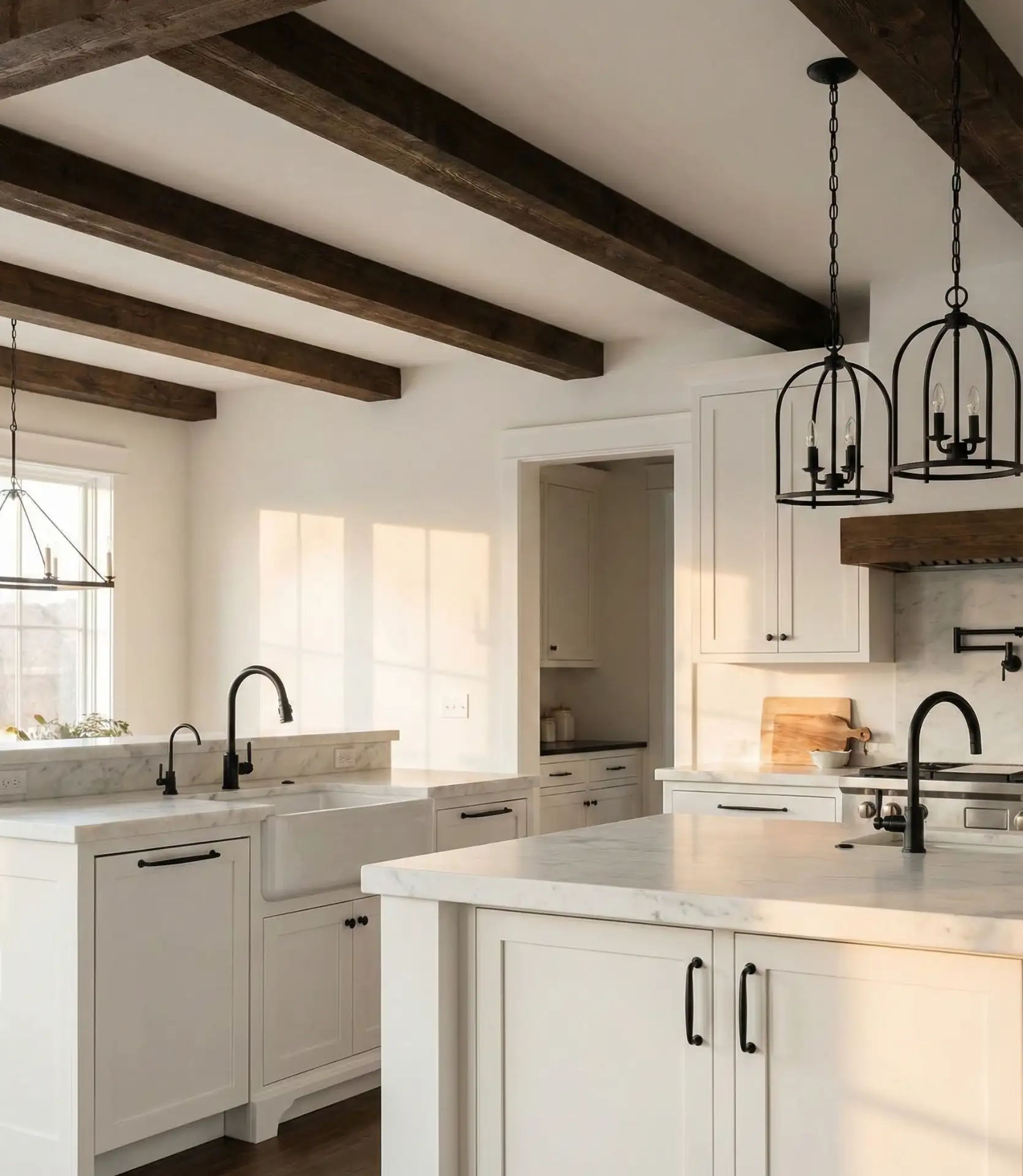
Natural wood ceiling beams in a black and white kitchen introduce organic warmth that softens the potentially stark monochrome palette. The wood provides a third material that reads as neutral while adding textural interest and architectural character. Dark-stained beams echo black elements in the room, while lighter or natural wood finishes complement white surfaces. This approach particularly resonates in homes with vaulted ceilings or open-concept great rooms where the beams help define the kitchen zone within a larger space.
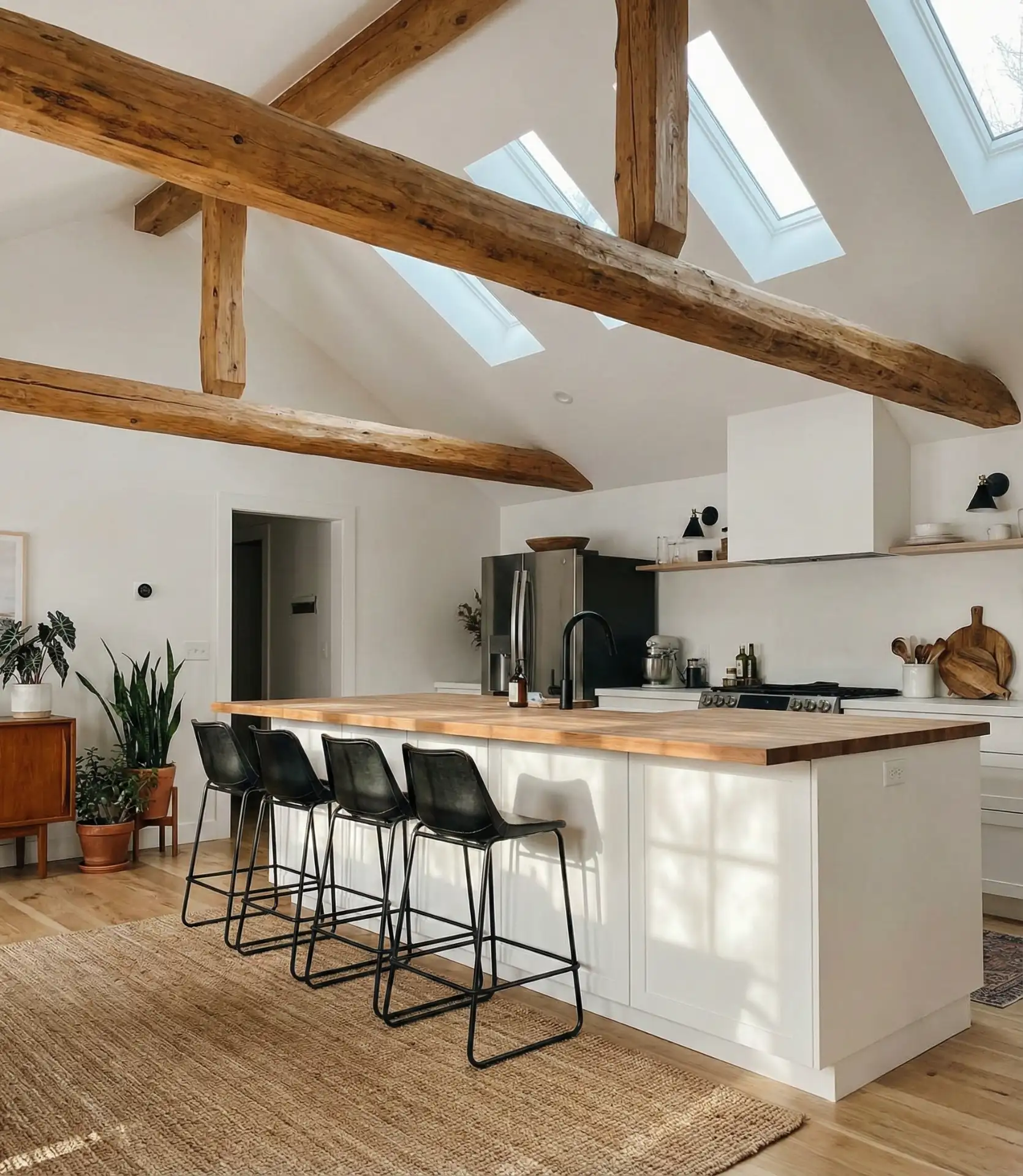
Expert designers caution against mixing too many wood tones in a single space—if your beams are dark walnut, your flooring should either match that tone or provide clear contrast rather than falling somewhere in between. Similarly, if your beams are light oak, coordinate your wood accents like cutting boards, shelving, or furniture pieces to create harmony. This discipline ensures the wood reads as an intentional design element rather than an accidental collection of mismatched lumber.
23. Black and White Kitchen with Red Accent Decor
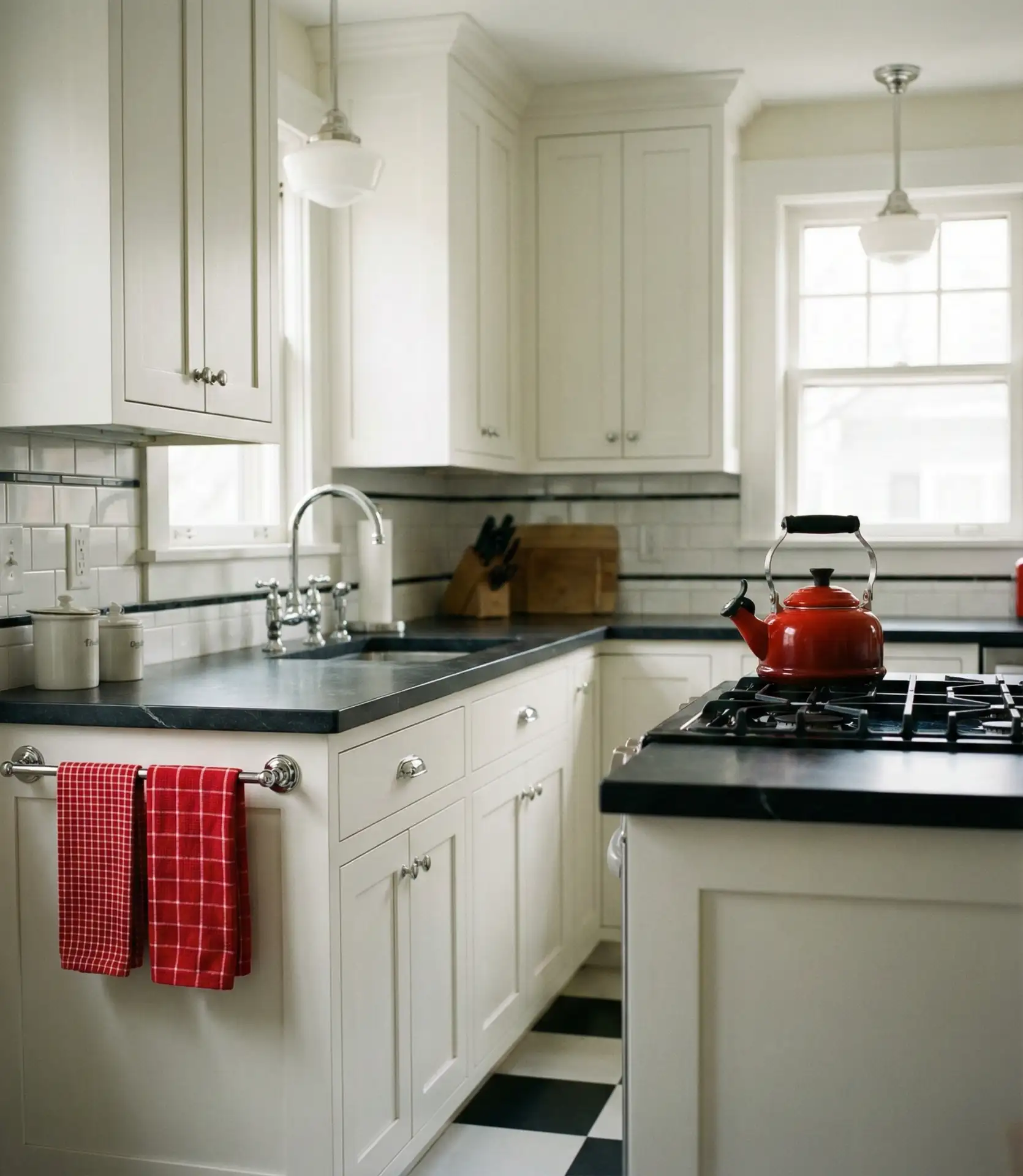
Introducing strategic red accents through decor elements brings unexpected energy to a black and white kitchen without requiring permanent changes. Think red tea kettle, vintage red mixer, red bar stools, or red cookbooks on open shelving. This classic diner-inspired color pop has retro appeal while feeling fresh and decisive. The red provides a warm counterpoint to the cool black and white, making the space feel more inviting and lived-in. These accessories can be swapped seasonally or when design tastes shift, offering flexibility that built-in elements cannot.
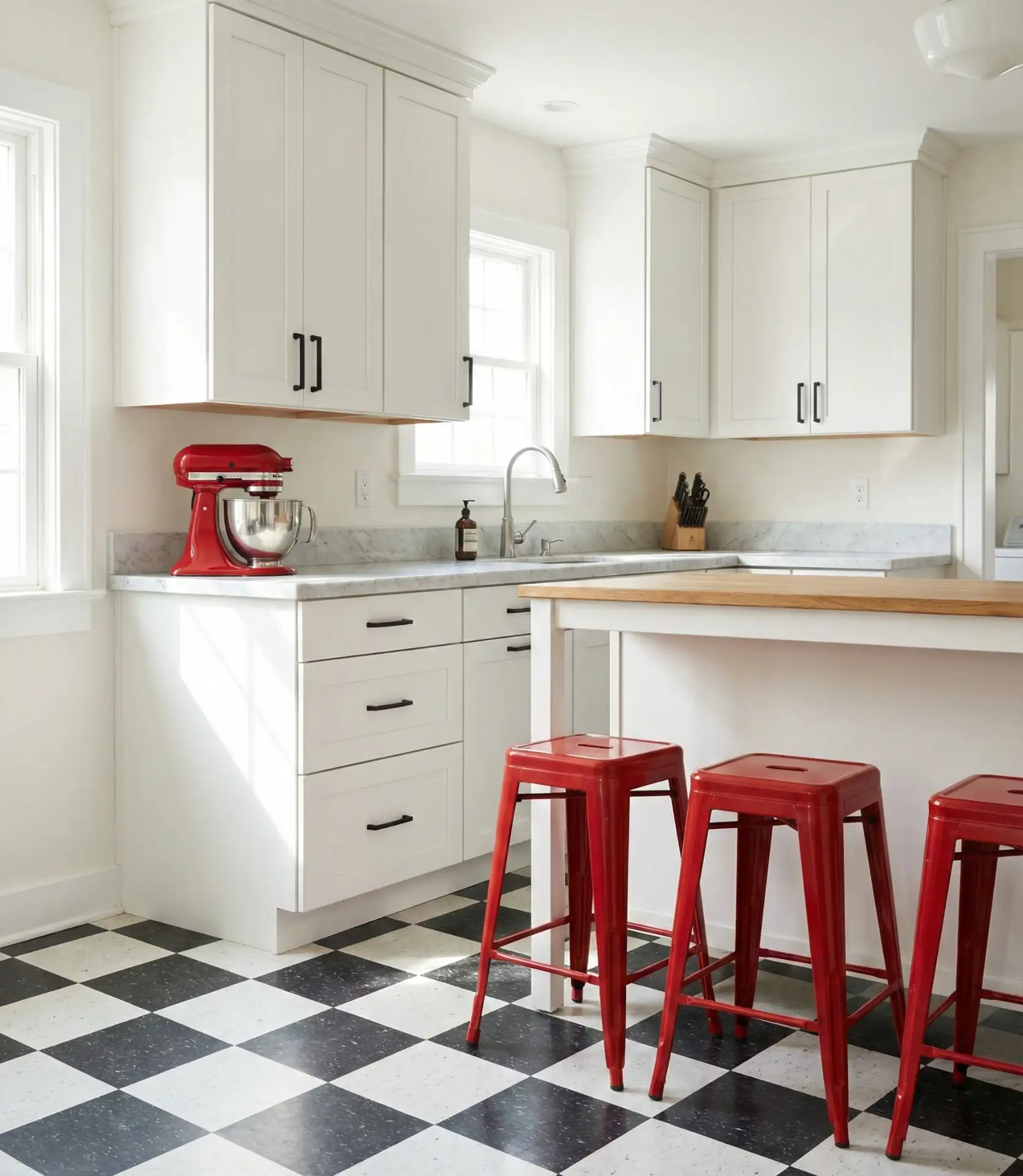
Real homeowners experimenting with accent colors often start conservatively with a single red item, living with it for several weeks before adding more. This cautious approach prevents the common mistake of introducing too much accent color too quickly, which can overwhelm the carefully calibrated black and white foundation. The gradual layering allows you to find the perfect balance—enough red to enliven the space without dominating the monochrome palette that attracted you initially.
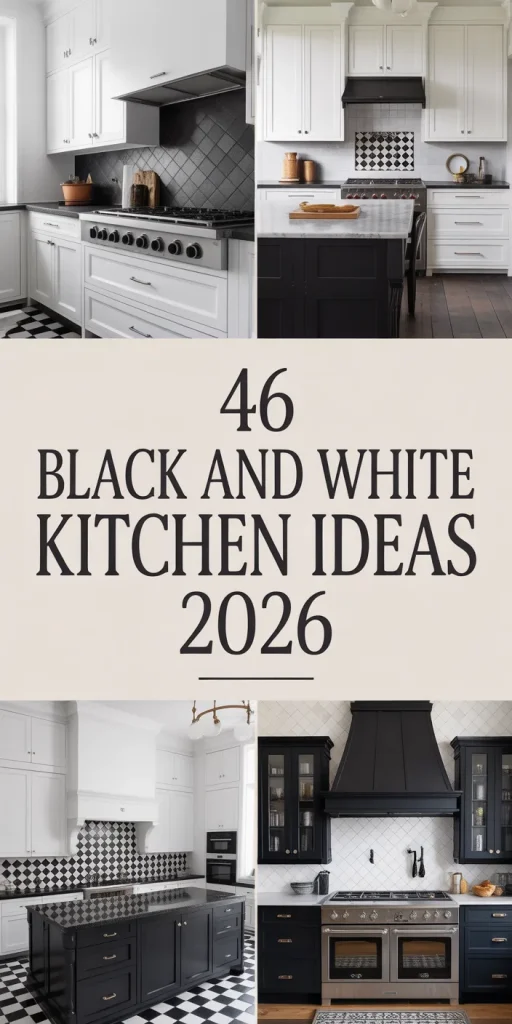
Black and white kitchens in 2026 prove that this timeless pairing still encourages endless creativity and personal expression. Whether you’re drawn to bold contrasts, subtle variations, or unexpected accent colors, the foundation of black and white provides a versatile canvas that adapts to any style—from sleek minimalism to cozy farmhouse warmth. The ideas presented here demonstrate that working within a limited color palette doesn’t mean limiting your imagination; rather, it focuses your design decisions and creates cohesion throughout the space. We’d love to hear which of these black and white kitchen ideas resonates most with your vision, and we invite you to share your experiences and photos in the comments below.