46 Pool Fence Ideas for 2026: Modern, DIY & Budget-Friendly Designs for Every Backyard

Pool fences are no longer just about meeting safety codes—they’re a design statement that surrounds your entire backyard. Whether you’re planning a new build or starting a renovation, look around your neighborhood and see what pool fencing is most common. Whether you’re installing a new inground pool or revamping your current setup, the appropriate fence transforms an outdoor requirement into a focal point in your backyard. This guide will show you creative ways to address it, no matter your budget, yard size, or aesthetic preference—from sleek modern barriers to inexpensive, do-it-yourself solutions.
1. Frameless Glass Panels for Uninterrupted Views

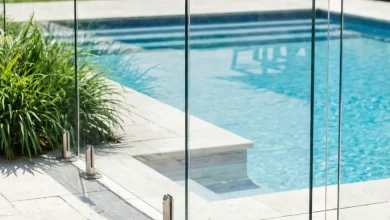
Frameless glass fencing has become the gold standard for modern pool enclosures, especially around inground pools where preserving sightlines matters most. These transparent barriers use tempered glass panels secured with minimal hardware, creating an almost invisible boundary that lets you watch kids swim from anywhere in the backyard while maintaining full safety compliance. The seamless look works particularly well in contemporary homes where clean lines and open spaces define the aesthetic. 
Installation runs from $200 to $350 per linear foot; the more curves and complex its design, the more expensive it will be—perhaps up to double or triple that of a standard containment barrier. The vast majority of building codes will call for 12 mm thick tempered glass with polished edges, and panels are typically six feet long to make them easier to handle. One mistake is not keeping the door and its parts consistently clean—you can get hard water spots even in dry climates, so budget for a squeegee and glass cleaner routine (at least once a week during swim season).
2. Black Aluminum with Horizontal Slats

Powder-coated black aluminum fencing with horizontal slats adds an edge to this industrial-inspired fence in a development in Texas. The dark color makes a dramatic contrast to pool water and foliage, and horizontal bars provide partial privacy (no one can see in from the outside) without obstructing airflow or views. Such a style looks wonderful in urban backyards or amid mid-century modern houses, where you can reflect the linear geometry of other designs. 
Real homeowners in sun-heavy states like Arizona and Texas appreciate that high-quality powder coating lasts much longer without fading than painted options. The horizontal orientation also makes these fences easier to integrate with matching gates that swing smoothly and lock securely. Expect panels to come in standard four- or six-foot widths, and always verify that slat spacing meets your local pool barrier code—most jurisdictions require gaps no wider than four inches to prevent small children from slipping through.
3. Natural Wood Picket with Climbing Vines

An American classic, the wooden picket fence is appreciated for its character as well as its usefulness in creating privacy and weathering all kinds of climates. Structural safety elements include cedar or pressure-treated pine pickets all spaced on 2×4 bands installed at code-approved spacing, while jasmine, honeysuckle, or climbing roses result in a wall of blooms you can take for a walk. This method is especially well suited for traditional and cottage-style homes, where an all-modern fence would look out of place. 
Where this technique is best suited is in any region with distinct growing seasons—the Southeast, Pacific Northwest, and California, for instance—where vines take hold quickly and stay green most of the year. Remember how much fun you had at Dairy Queen as a kid?” My neighbor asked one weekend in late March, and for the record, I don’t exactly consider jumping into a pool full of frigid, chlorinated water while the air is still too cold for even short sleeves to be “fun.” A neighbor in North Carolina planted Carolina jessamine three years ago along her aboveground pool fence, below, and every spring, like clockwork, yellow flowers transform the whole area around the pool into a little aromatic pocket that doesn’t feel anything like any suburban yard I’d ever visited.
4. Mesh Safety Fence for Temporary Needs

When you need safety without permanent commitment, a removable mesh fence offers the ultimate flexibility for families with young children. These systems use reinforced vinyl or polyester mesh stretched between aluminum poles that anchor into sleeves drilled into the deck, allowing you to take down entire sections when kids are older or when you’re hosting an adult gathering. The material is surprisingly durable, with UV-resistant coatings that prevent deterioration even in harsh sun, and most manufacturers offer gates with self-closing, self-latching mechanisms that meet pool codes. 
Professional installers stress, however, that tension matters a great deal—loose mesh sags and appears shoddy on the cheap, while properly rounded fabric remains taut through the years. Installation is generally $15 to $25 per linear foot, so the material is one of the most inexpensive compliant options. The mesh comes in several colors, although black and brown are the most popular because they visually recede better than tan or beige, which against today’s pool designs seem dated.
5. Horizontal Cedar Slat with Integrated Planters

Horizontal wood slat fencing paired with built-in planter boxes creates a privacy-forward design that doubles as a garden feature around your pool. The wooden slats—typically Western red cedar for its natural rot resistance—install with small gaps that allow airflow while blocking sightlines from neighbors, and the integrated planters at the base let you grow ornamental grasses, succulents, or herbs that add texture and movement. This configuration works especially well for in-ground pools in tightly spaced suburban lots where privacy matters, but you don’t want the fortress feel of a solid wall. 
Budget goes something like this: between $75 and $150 per linear foot installed, depending on whether you make custom planter boxes or insert modular ones in metal. The planters should have drainage holes and be lined with landscape fabric to keep soil from washing onto the deck in heavy rain. Resist the temptation to plant aggressive vines in these boxes—instead, opt for tidy, compact varieties that won’t shove slats apart or force you into a pruning regimen necessary to keep horizontal lines clean.
6. Wrought Iron with Decorative Scrollwork

Traditional wrought iron fencing brings Old World elegance to pool areas, with hand-forged scrollwork and finials that elevate the entire backyard aesthetic. While authentic wrought iron is rare and expensive, modern steel alternatives offer similar visual weight and detail at more accessible price points, with powder-coated finishes in black, bronze, or verdigris that resist rust in humid climates. This style particularly complements Spanish Colonial, Mediterranean, and French Country architecture, where ornate metalwork feels historically appropriate rather than affected. 
The approach works best in the southern states along Interstate 10, from Florida through Texas and into Southern California, where it’s suited to architectural styles that are prevalent. (Regular homeowners tend to underestimate the potential for maintenance—intend to inspect welds and joints each year; rust can form, and be sure to touch up any damage to the finish as soon as it appears to slow spread.) A good installer uses gate hinges that are suited to the weight of the gates (decorative panels can be VERY heavy in comparison to a plain picket design).
7. Corrugated Metal for Industrial Aesthetic

Pool fencing with galvanized corrugated metal panels is an eye-catching twist for complete privacy that’s still perfect for modern design. The raised, vertical ridges add texture and resilience, and the material is virtually indestructible—tough enough to withstand weathering, impact, and chlorine damage that can wear down lesser materials. This type of look (let’s just call it that kind of expensive-looking garden style) is perfect for urban gardens or converted warehouse spaces; in fact, any new-build contemporary home, come to that, as raw materials are celebrated and not buried. 
One practical insight: corrugated metal heats up significantly in direct sun, so position it where it won’t create accidental burn hazards if someone brushes against it while walking poolside. The material comes in various finishes beyond plain galvanized—Corten steel develops a controlled rust patina that’s become wildly popular in high-end landscape design, while painted options in charcoal or dark green offer softer visual integration. Expect material costs to range from $30 to $60 per linear foot, with straightforward installation that makes the material a strong DIY candidate for handy homeowners.
8. Living Bamboo Privacy Screen

Clumping bamboo comes in those varieties of densely living privacy fences that grow tall enough to ensure your swimming pool sees neighbors as strangers but also install some movement and natural sound into it. Clumping bamboos are distinct from running bamboos that, for example, grow as a groundcover, because clumpers generally have an organized structure that allows them to be used in home landscapes when planted properly. With its tall, vertical stalks and wafting leaves, windbreak provides all-year-round coverage in warmer climates and is the perfect tropical foil for resort-style poolscapes complete with natural stone and wetland plantings. 
Where this technique technique plays out best is in USDA zones 8 through 11—the majority of the southern United States—an area where bamboo grows robustly and without the need for winter dieback. A landscape architect friend of mine in Austin put Golden Goddess bamboo in around her client’s pool five years ago, and it now makes a lovely twelve-foot privacy wall she wanted, the stalks swaying gently in evening breezes to give them that secluded paradise feeling they desired. Just do bear in mind that bamboo is not a code-compliant pool barrier by itself—you’ll need to pair it with a conventional safety fence installed beside the pool or have it grow outside an existing perimeter.
9. Wire Cable railings with Metal posts.

The horizontal stainless steel cables are stretched through the posts for a semi-invisible contemporary barrier that will not obstruct your view yet meets code. The cables are spaced close together, running parallel and typically spaced between three and four inches apart—so not only do they stay up to code, but they nearly disappear to the naked eye when viewing from a distance. This system is fantastic for properties with views of the water, mountain views, or great landscaping where you would like the pool fence to be less obtrusive in your view. 
Common mistakes include under-tensioning cables, which creates dangerous sag over time, or using inadequate posts that bend under cable tension. Quality installations use posts set in concrete with through-bolted cable attachments, and professional-grade tensioning tools ensure each cable pulls taut to at least 300 pounds of force. Material costs run $40 to $75 per linear foot, and while the hardware is specialized, determined DIY enthusiasts can handle installation with proper tools and patience. The result is a fence that genuinely disappears into the landscape while keeping everyone safe.

10. The design features a mixed-material fence with a stone base and a metal top.

Combining a low wall made from stone or stucco and topped with metal will add heft where it’s most needed—around the deck level—but keep the upper parts light for air, openness, and views. The masonry base, which is typically 24 to 36 inches high, gives a strong foundation that supports the design and offers places to sit, while the gray powder-coated aluminum or steel panels above ensure safety without making the area feel too closed off. This blended method complements both traditional and transitional backyards, where all modern can feel stark against the existing lines of home architecture. 
Budgets tend to fall in the range of $100-$200 per linear foot installed with thin stone veneers priced below full-thickness masonry while still providing genuine looks. The design flexibility of exterior walls is vast: indigenous fieldstone imparts welcoming roughness; smooth stucco that’s painted to match the rest of your home aesthetically all ties together; or contemporary concrete block with integral color provides an industrial minimalist interpretation. Drainage behind the wall ensures that water pressure doesn’t build up, and over time it can cause cracking or failure.
11. Vertically Slatted Wood with Alternating Widths

With alternating board widths installed vertically, you don’t just obtain partial privacy and temporal rhythm around the edges of your pool without the mind-numbing repetition seen in standard picket installation. The pattern—often a blend of three-inch pieces for the bottom rail and six-inch for everything else—adds architectural interest as well as code-compliant gaps that keep kids from slipping through. It’s specifically a good fit in contemporary homes that feature geometric designs and clean lines, due to its verticality, which elongates the room rather than making it feel wider. 
This approach works best in coastal areas and the Pacific Northwest, where natural wood aesthetics align with regional design preferences. My cousin in Seattle installed this exact style last summer using sustainably harvested cedar, and the pattern creates just enough screening that poolside conversations feel private while still letting breezes flow through. The alternating widths also disguise minor installation imperfections better than uniform spacing, making this slightly more forgiving for confident DIYers willing to tackle the project themselves.
12. White Vinyl Picket for Classic Americana

Traditional white vinyl picket fencing delivers timeless curb appeal around aboveground and inground pools, channeling classic American backyard aesthetics without the maintenance headaches of painted wood. Modern vinyl formulations resist yellowing, cracking, and warping far better than earlier generations, and the material never requires painting or staining—just occasional washing with a garden hose keeps it looking fresh. This style particularly suits Colonial, Cape Cod, and cottage-style homes where a formal garden fence aesthetic feels appropriate. 
It’s important to know that the quality of vinyl can be very different from one manufacturer to another—higher-end products use new vinyl with UV protection throughout, while cheaper ones only have UV protection on the top layer that can wear off over time Expect to invest $25 to $50 per linear foot installed for quality materials that will last twenty years or more. The gates should have stainless steel parts because cheaper ones rust quickly in pool areas with chlorine, and self-closing spring hinges are important for safety while keeping a neat traditional look.
13. Rustic Split Rail with Wire Mesh Insert
 The classic three-rail design is simple to install, and this type of construction requires locally sourced materials, such as wood or metal, for the posts and rails; metal (wire) fencing material prevents livestock from becoming entangled between rails. This configuration maintains the open look of a ranch-style fence and is more contemporary in feel compared to split rail fences, with the rails also running horizontally rather than vertically.
“This is when it works for suburban, larger lots or semi-rural properties because that casualness and openness is what feels natural for the setting—whether this may be in Montana, Wyoming, or (as well as certain parts of) Hill Country, Texas,” he said, where architectural formality would feel out of place. This kind of fencing kind of fencing is one of the least expensive (cheap and inexpensive aren’t the same!) compliant choices, given material costs lower than $15 to $30 per linear foot, plus an easy installation that demands very few special tools. It should be wire mesh that is welded in a heavy gauge, not chicken wire, which within months of weather and pool chemicals will droop and look ramshackle.
14. Powder-Coated Steel with Geometric Cutouts

Laser-cut steel panels featuring geometric patterns transform pool fencing into sculptural art, offering privacy while allowing light and shadow play throughout the day. The cutout designs range from subtle circles or squares to elaborate Mid-Century Modern sunburst patterns, all precisely executed through computer-controlled cutting that ensures crisp edges and consistent repetition. Powder-coated finishes in matte black, charcoal, or bronze protect the steel from rust while enhancing the contemporary aesthetic, making these panels particularly striking around modern pools with minimalist hardscaping. 
Professional designers say pattern density makes a huge difference—too many cutouts make privacy near impossible, but too few can weigh panels down and feel suffocating. Aim for about 30 to 40 percent open space in your pattern to get the best balance. For those homeowners willing to invest in a singular look, the expressive aesthetics are well worth the cost of custom fabrication—$100 to $200 per linear foot for intricate patterns. Six feet is a standard panel height, and customarily most fabricators provide matching gate designs with continuity of pattern throughout the fence line.
15. Glass Block Wall with Decorative Bond

Glass block construction creates luminous barriers that transmit light while obscuring views, offering complete privacy around your swimming pool without the dark, closed-in feeling of solid masonry. The individual blocks—typically eight inches square—stack with mortar joints or modern silicone systems, creating walls that glow beautifully when backlit by afternoon sun or landscape lighting after dark. This technique works particularly well in urban backyards where neighbors are close and traditional fencing feels too transparent, or in courtyard pool settings where light quality matters as much as privacy. 
Budget considerations typically reach $60 to $120 per linear foot installed, placing this process firmly in the mid-to-upper price range for pool barriers. An interior designer I know in Phoenix used clear wave-pattern blocks for her client’s courtyard pool, and the way afternoon sun creates rippling light patterns on the water has become the property’s signature feature. Common mistakes include inadequate reinforcement—glass block walls need horizontal rebar or joint reinforcement every two courses to prevent cracking from ground settlement or temperature swings that occur in regions with dramatic seasonal changes.
16. Living Green Wall with Trellis Support

Vertical garden systems mounted on temporary or permanent trellis structures create a living privacy wall that evolves seasonally while filtering air and absorbing noise around your pool. Modular planters are stacked on top of each other with built-in watering systems, allowing ferns, hanging succulents, or flowering vines to grow downwards, turning a simple wall into a This approach particularly appeals to environmentally conscious homeowners who want their pool area to support beneficial insects and contribute to local ecosystems rather than just consume resources. 
It works best in mild climates—consider coastal California, the Gulf Coast, or the Southeast—where plants stay green year-round and food production is more easily managed. Living walls are also at least somewhat high maintenance: they’ll need watering checks weekly during high summer and quarterly fertilizing to keep things lush. Keep in mind that foliage is not a stand-alone pool safety measure, so to bring the wall up to code, fence it in with a barrier (in front of or set off from the living wall) and let the greenery serve as an attractive shield.
17. Composite-board fence with modern trim

Wood-polymer composite boards offer the natural appearance of wood with virtually zero maintenance, making them ideal for pool fencing where humidity and chemical exposure accelerate traditional lumber deterioration. The boards—manufactured from recycled wood fibers and plastic—resist rot, insects, warping, and fading while providing solid privacy screening around your backyard pool. Modern profiles come in sleek contemporary styles with integrated trim channels that create shadow lines and architectural detail without the complexity of traditional carpentry. 
Practical insight for pool environments: choose composite formulations specifically rated for high-moisture applications, as some cheaper products retain water and develop mold in constantly humid conditions. Quality brands like Trex or TimberTech offer twenty-five-year warranties against fading and staining, and installation costs run $50 to $90 per linear foot—roughly splitting the difference between pressure-treated wood and premium hardwoods. The material comes in earth tones that blend naturally with landscaping, plus contemporary grays and charcoals that suit modern design schemes.

18. Chain Link with Privacy Slats in Bold Colors

Standard chain-link fencing gains personality and privacy when you weave brightly colored slats through the mesh, transforming the cheapest barrier option into a vibrant backdrop for your swimming pool. The slats—available in virtually any color from classic forest green to bold turquoise or sunny yellow—insert vertically or diagonally through the chain-link diamonds, blocking 80 to 90 percent of sightlines while adding UV-resistant color that lasts for years. This approach works particularly well for families seeking maximum safety on minimal budgets or for rental properties where landlords need code compliance without major capital investment. 
Real homeowner behavior is that these things go up way faster than you think,” River says of installing slats yourself. Most people finish the job for their average residential pool perimeter in a weekend while working at a leisurely pace. Base chain link costs $8 to $15 per linear foot installed, and slats add $3 to $6 per foot; at a total cost of less than $25 each, well-installed ballparks were under that target number. One of my neighbors, who has three young children, installed this same setup around her swim spa in Tennessee (she chose the forest green slats that blend in with the mature trees behind), and five years later, it still looks almost brand new with only occasional hosing off to remove pollen.
19. Corten Steel Panels with Weathered Patina

Corten steel—the material that rusts to a protective patina—stands out for pool fencing that is visually arresting and requires not even a single additional act of maintenance beyond the period during which it rusts. Starting as standard gray metal, the steel will oxidize into beautiful rich orange and brown hues over several months, retaining its patina indefinitely without further corrosion, while providing organic groundwork colors. The material is best known for application in modernist and contemporary desert architecture, as well as landscapes with natural tones where the warm rust color of this hardscape material won’t fight other materials or plant species. 
Common errors include placing Corten where runoff will stain concrete or pavers as it weathers—always slope drainage away from light-colored surfaces, or install a gravel strip at the fence base to catch rust-stained water during the first year. The costs are in the $75 to $150 per lineal foot range for material and fabrication, which makes all of these products very much a premium category. The investment is long-term with this material; a well-installed piece of Corten has a lifespan of 50 or more years between maintenance, with zero painting, sealing, or refinishing to be done straight through its lifetime.
20. Retractable Motorized Fence System

Motorized removable fencing systems, with the push of a button, reveal themselves from hidden enclosures, providing children pool barriers in seconds, then retracting out of sight when not needed for adult entertaining or landscape photography. These engineered inventions are mounted on tracks installed in the deck, with fence components that slide or fold away into a storage pocket, remaining code-compliant when in use while disappearing when not. The technology is most popular with what Prescott calls “empty-nesters who have the grandkids over occasionally” or people who are adamant about having a full range of sight in their backyard for much of their pool time. 
Professional installers stress that these systems need professional-grade electrical work and extreme precision in deck integration—budget about $150 to $300 per linear foot installed, especially for motorized opening and closing; remote controls and smartphone apps will tack thousands of dollars onto your final cost. The mechanisms have to be serviced every year to keep the motors running and tracks working smoothly, and most manufacturers advocate keeping manual override features for when the power goes out. Owners say it is worth it, given the convenience and maintenance of neat lines, especially as these behemoths increasingly make upscale homes where the visual has nearly as much of a say in how things are done as what needs to be done.
21. Stacked Horizontal Logs for Rustic Appeal

Half-round logs that lie flush with the ground create a smooth log fence for a pool in mountain terrain. The logs—which are cut from cedar or pine, split lengthwise, and installed with galvanized spikes, or with large lag screws if you need to put the wall together in pieces—build a solid barrier that never shows through, provides absolute privacy, and celebrates the natural character of wood in knots, grain patterns, and color variation. This look is especially nice around ground-level pools in places like Colorado, Montana, or Appalachia, where cabin charm holds sway and modern materials are far too modern. 
This approach is most effective in locations prone to seasonal freeze-thaw cycles, where natural expansion and contraction of wood isn’t going to lead to structural failure as it could with more rigid fence systems. Prices range from $40 to $75 per linear foot, based mainly on log diameter and wood species, with installation best left to skilled DIYers who are comfortable tackling the carpentry work. The wood origami is available in all but two recyclable colors—silver gray and brown; it needs to be coated with a clear preservative every couple of years to prevent excessive weathering, or you can choose to let the cedar remain untreated. The untreated look: Actually, that might not be a bad way to do it.
22. Brick columns and metal rail combinations

Traditional brick columns at regular distances with decorative metal railing between can create a formal, estate-quality barrier around inground pools of classic or traditional homes. The masonry columns, which are generally 16 to 24 inches square, offer anchoring weight as well as visual weight (the powder-coated aluminum or wrought iron panels keep it from looking monster-fortress-y). This union is particularly apt with regard to Colonial, Georgian, or English Tudor design, where authenticity counts and a solid brick build represents quality and long-term investment in curb appeal. 
The regional context matters a lot—this style flourishes in the mid-Atlantic, throughout the South, and in older neighborhoods all over the Midwest, where folks favor traditional architecture and formal landscapes. There are such things as budget expectations of $125 to $225 per linear foot installed, the cost determined more by masonry labor than materials. The columns need to go down below the frost line on decent footings so that they do not heave and crack and should be built with electrical conduit running through them if you want to add lighting—retrofitting wiring for light fixtures is done by cutting into finished brick, and even if it’s done carefully, it never looks quite right.
23. Modular Plastic Panels for Easy Installation

An interlocking plastic panel barrier system is the fastest way to install a temporary or semi-inground pool with sections that are lightweight and simply snap together; no tools or professionals are needed. These modern panels, made from UV-stabilized polyethylene or polypropylene, come in neutral colors and look like more expensive materials while meeting safety standards at a much lower price than regular fencing. It’s a modular system that’s perfect for renters, seasonal pool owners, or anyone who needs a barrier that can be easily removed, disassembled, stored, and moved. 
Where this technique holds the most appeal is in places with shorter swimming seasons—perhaps the upper Midwest, Northeast, or mountain states—where pools may be unused for six months or more and permanent fencing seems cluttered in those off-seasons. Material costs run between $10 and $25 per linear foot, and most homeowners install their fencing in a single afternoon without any specific knowledge or tools apart from a rubber mallet. The only real downside you need to worry about is looks—these certainly won’t look as refined as pricier glass, wood, or metal panels do, but if your family finds value in low cost and high customization options above all else, the compromises are more than worth it.

Choosing the right pool fence means balancing safety regulations with your personal style, budget realities, and how your family actually lives outdoors. Whether you’re drawn to the clean transparency of frameless glass, the rustic warmth of stacked logs, or the budget-friendly practicality of modular panels, there’s a solution that fits your specific backyard situation. The best fence disappears into your overall design while quietly doing its job—keeping loved ones safe and giving you peace of mind every time someone takes a swim. What’s your favorite approach from this list, or have you discovered a creative fencing solution we haven’t covered here? Share your thoughts and experiences in the comments below.