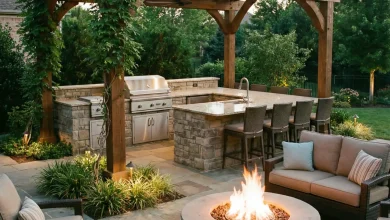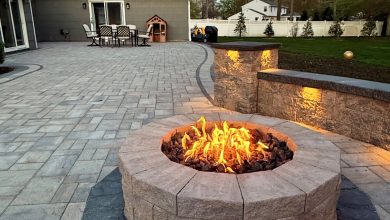

Fire pits have become quintessential to American backyards, transforming simple outdoor areas into usable spaces for year-round entertainment. Whether it be for DIY inspiration on Pinterest or finding fire pits for major remodels, a great firepit can change the functionality and purpose of your outdoor area. From cozy compact setups to expansive lounge areas, 2026 brings new visions for this backyard staple. Here are ideas that incorporate warm ambiance and post-sunset glow.
1. Sunken Stone Pit with Built-In Bench Seating
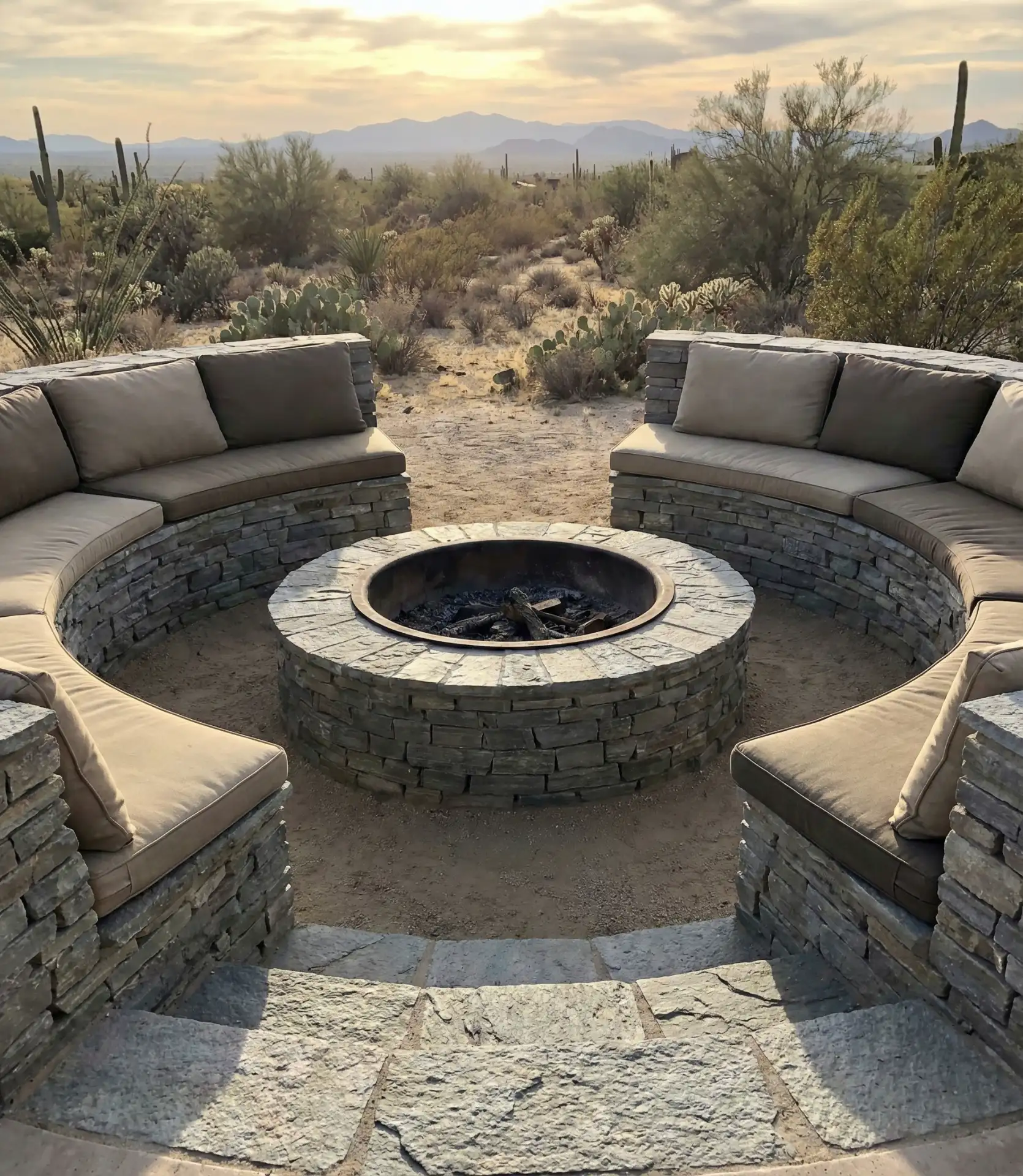
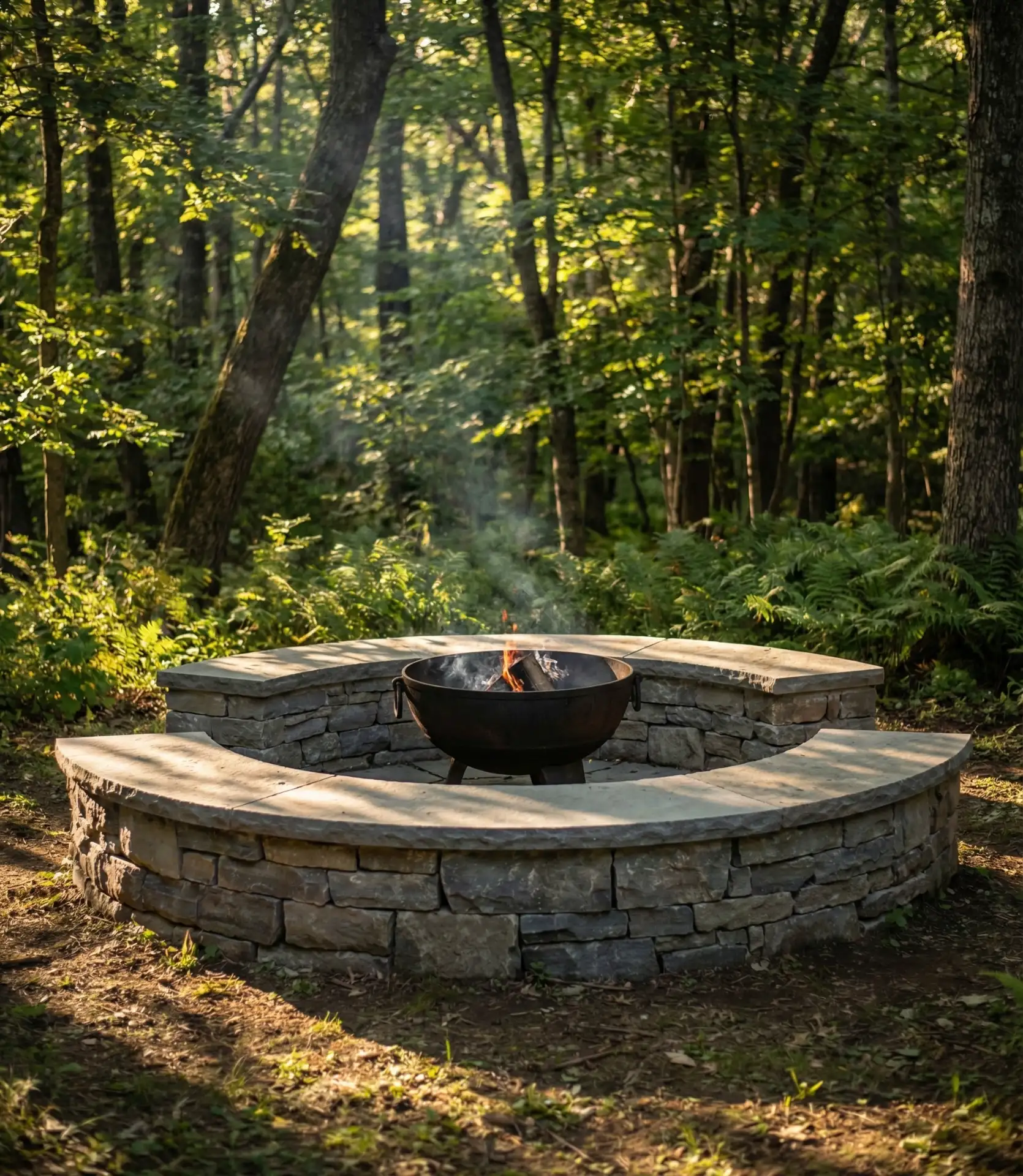
One of the most intimate designs for a fire pit area is a sunken fire pit, which feels thoughtful and well designed. Digging 12–18 inches down to the grade and surrounding the pit with stone walls or natural walls creates a definitional space and a natural windbreaker for the area. The seat walls, which are built into the stone walls, create a snug gathering area, which makes movable chairs and space for extra chairs obsolete. This type of construction type of construction is great for larger spaces as well as compact backyard spaces. 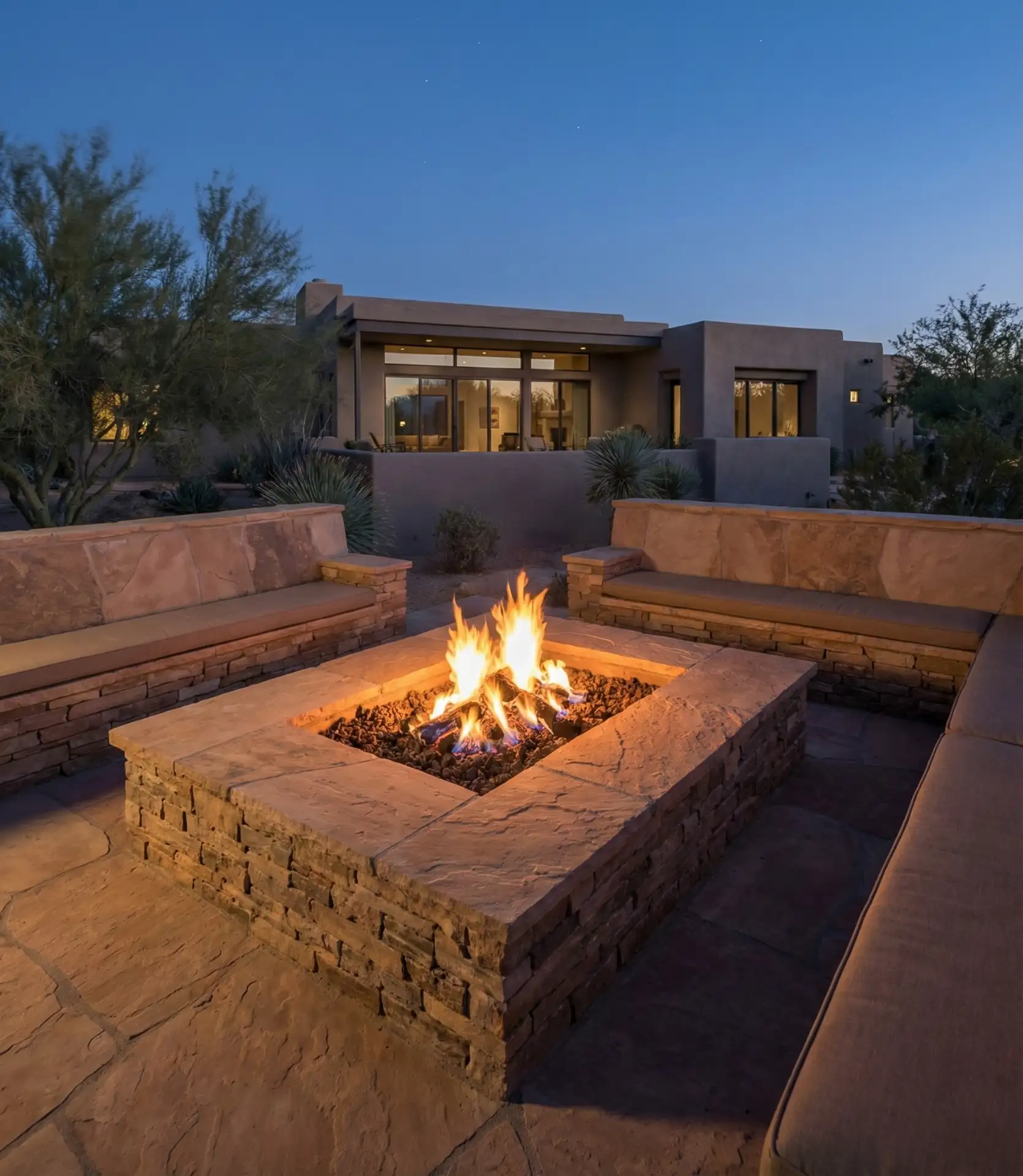
This particular style is ideal for sloped yards, as you can build into a hillside rather than having to dig down. The change in elevation also provides natural drainage so you avoid water pooling during storms.
You could construct a small gravel drainage pit beneath the fire pit. Furthermore, consider angling the benches a little for comfort during long evening talks.
2. The Rustic Barrel Ring Fire Pit is set on a gravel base.
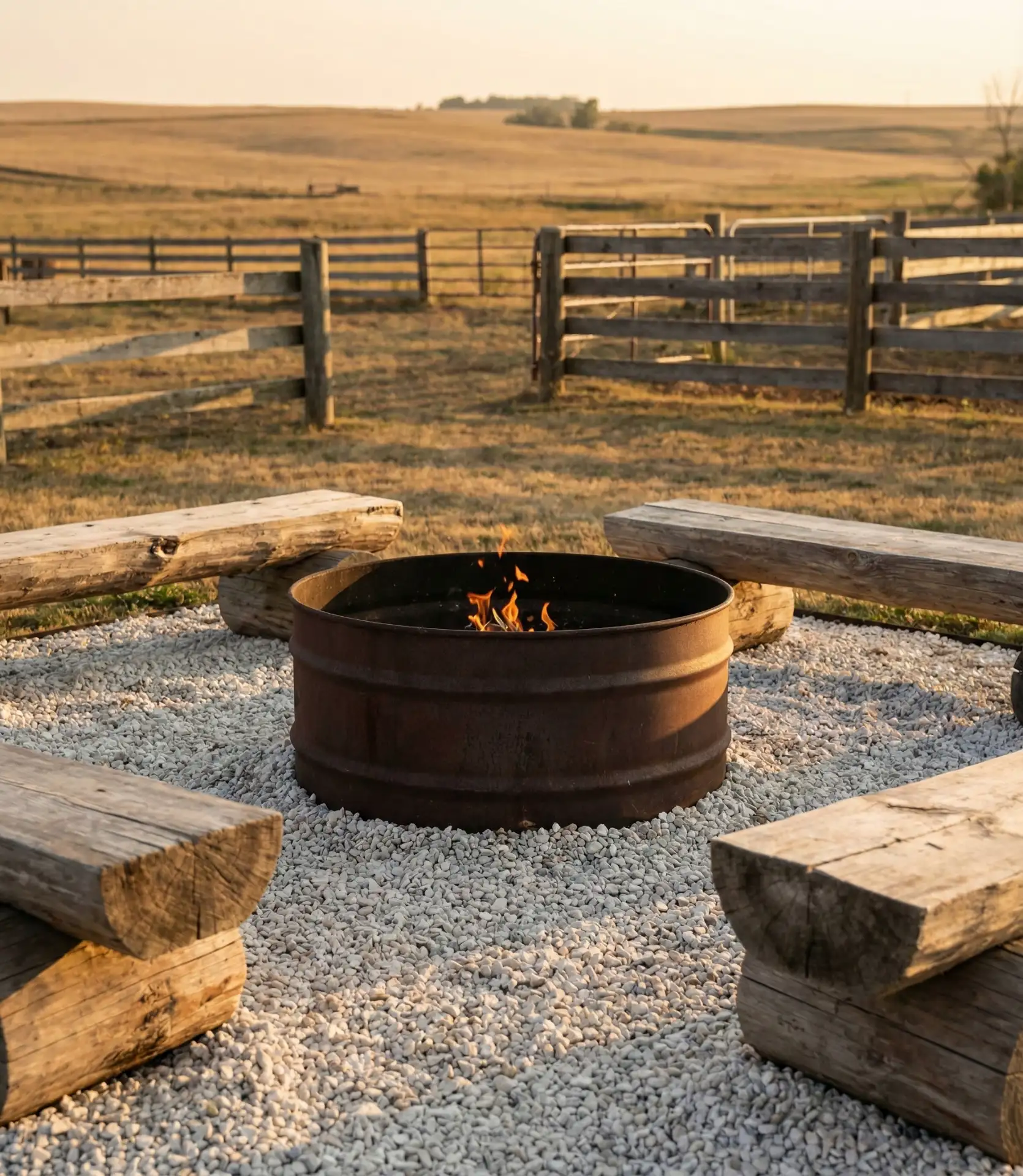
Surprisingly effective rustic fire pits, at a fraction of the cost of custom masonry, are made from salvaged wine barrel rings or sections of steel culverts. This type of fire pit is simple to set up, as it can be placed directly on a small bed of pea gravel or crushed stone. This way, you can establish a fire feature in an afternoon. The metal will develop a rich patina, the gravel will provide excellent drainage and safety, and it will outline the fire zone. 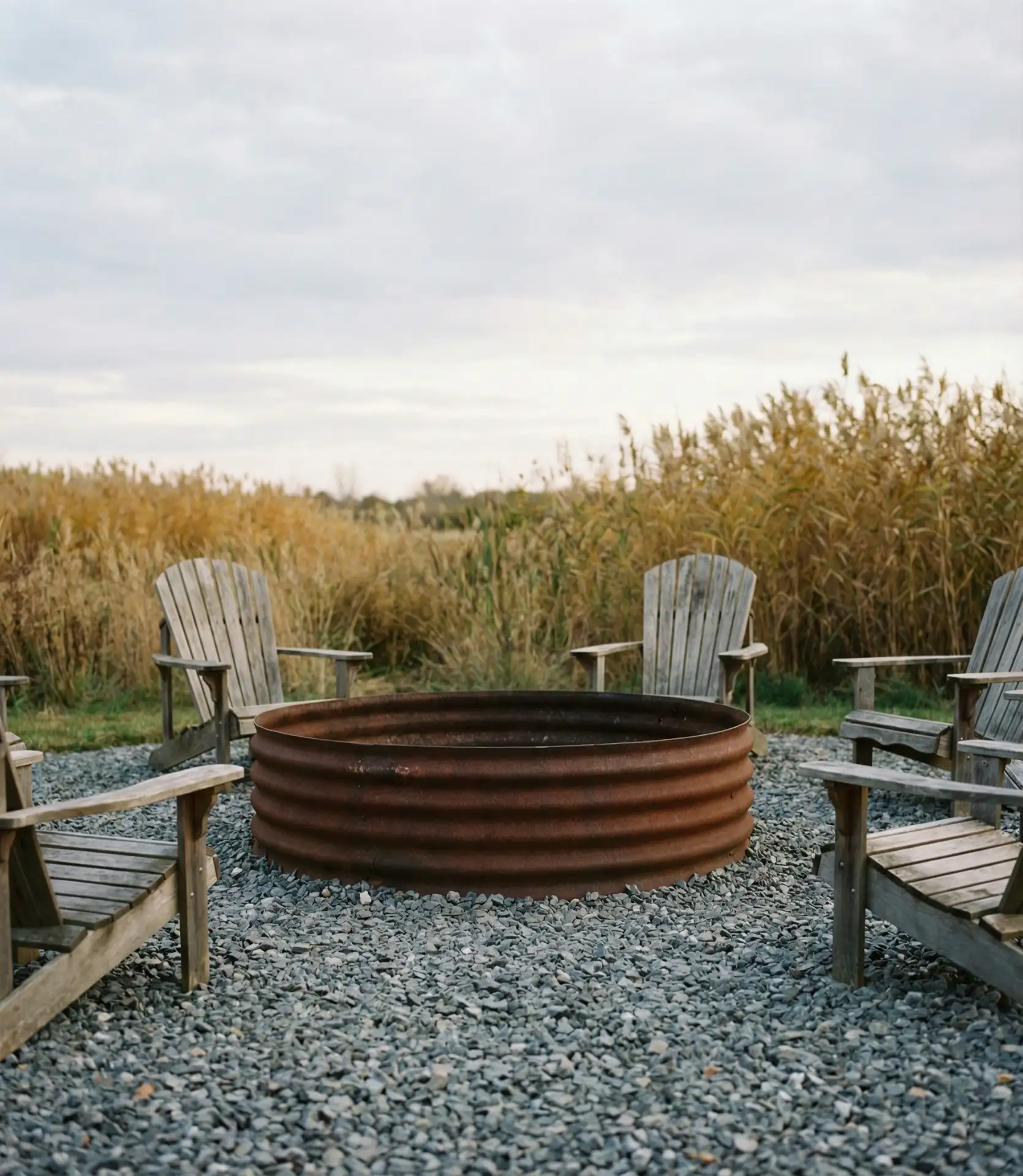
Where it works best: Rural properties, farmhouse aesthetics, and anywhere you want an authentic worn-in look without waiting years for weathering. If you wish to redesign your yard layout, the loose gravel allows you to change or move the pit’s seasonal position.
3. Square Modern Concrete Fire Table
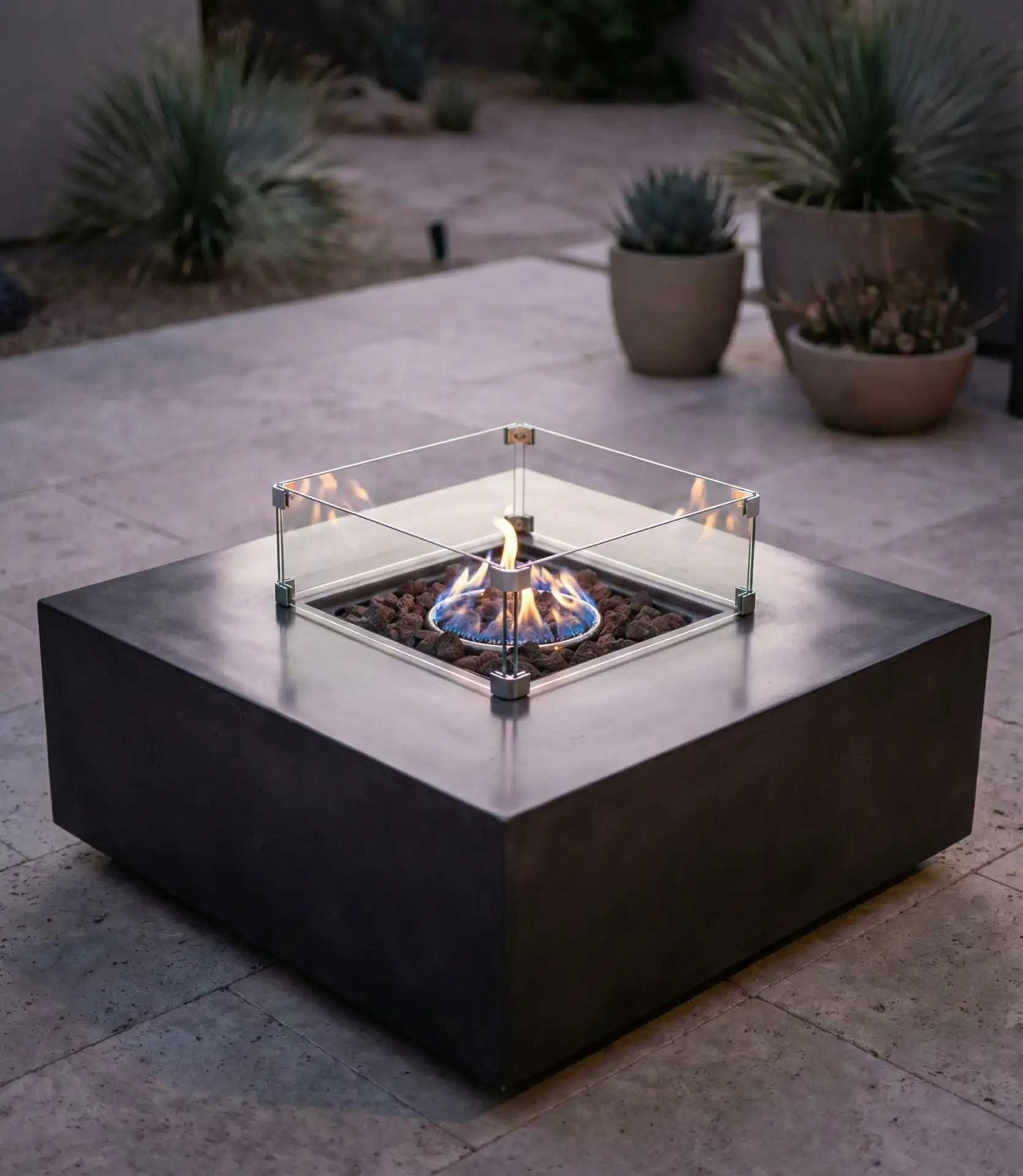
Adding a square concrete fire table brings additional architectural structure to the outdoor space and additional functionality as a gathering surface table. Finished concrete allows for the contemporary selection of materials for modern backyards and requires little maintenance except for the occasional sealing. 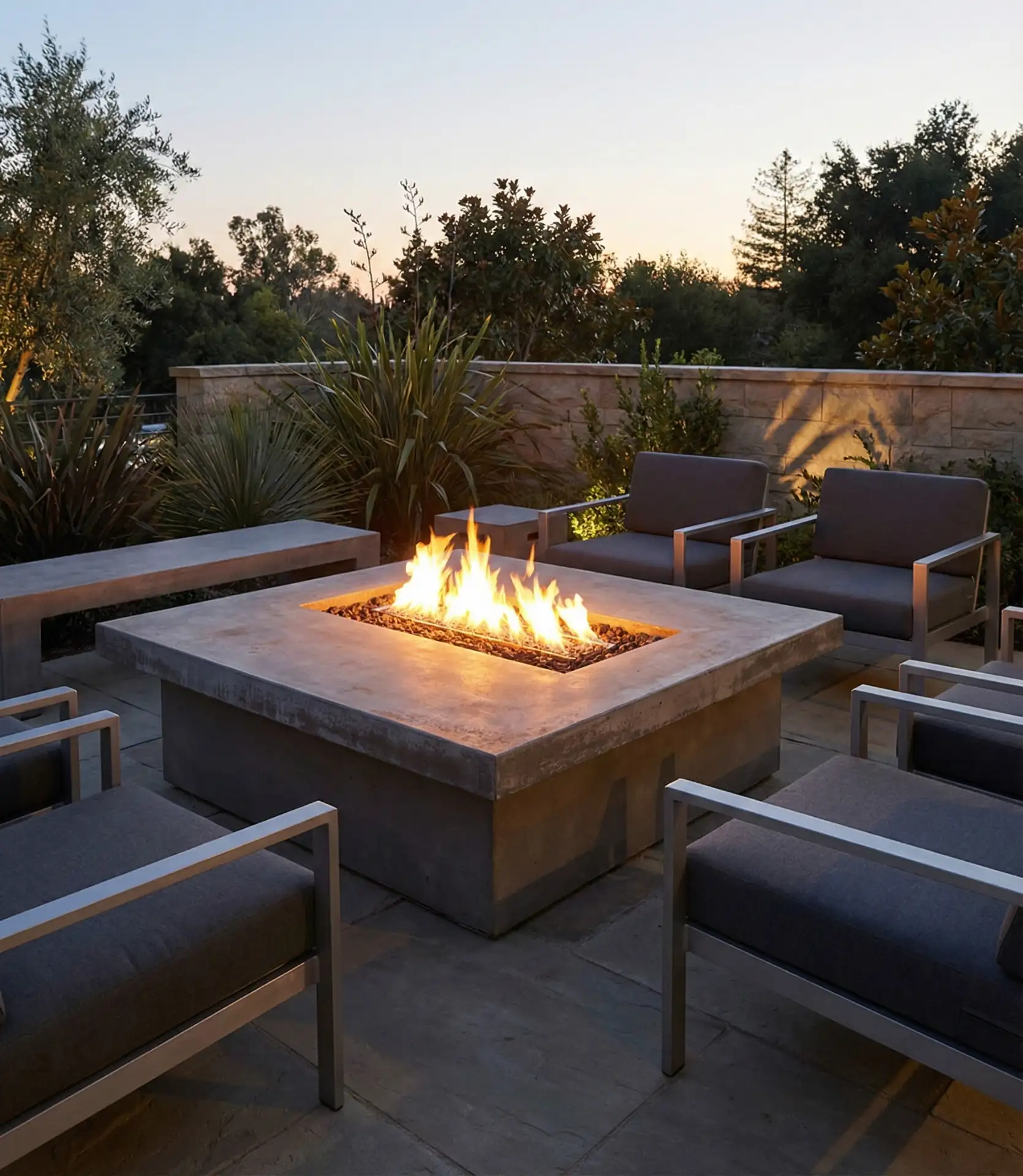
A landscape architect in Phoenix once told me that square fire features solve a persistent layout problem. They align with architecture and hardscape, making furniture arrangement convenient. Unlike circular pits that create dead zones, square tables let you position seating in a circle, which eliminates that dead zone and allows you to fully use the patio space.
4. DIY Cinder Block Fire Pit with Pizza Oven Extension
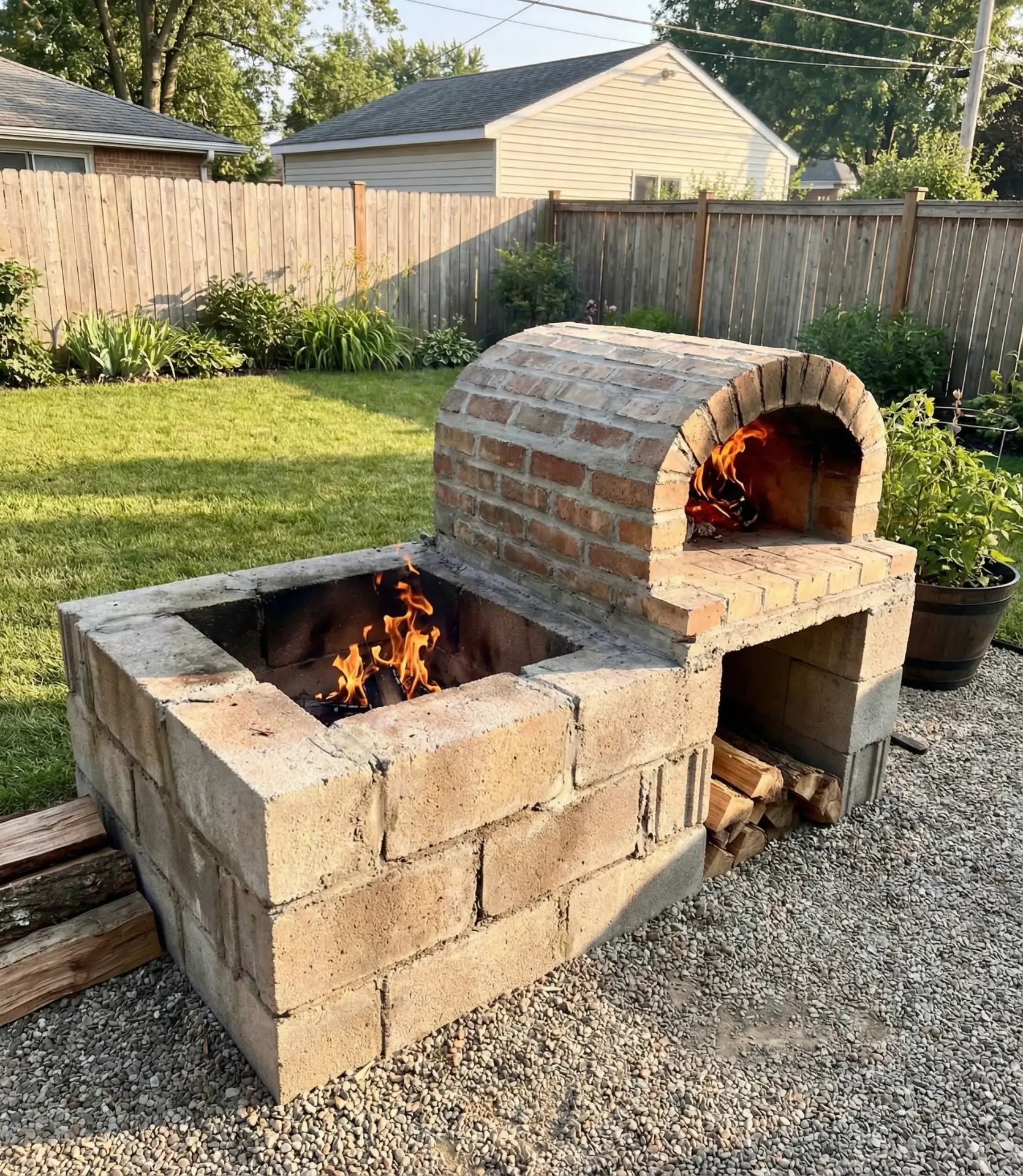
For under fifty dollars, a stack of standard cinder blocks set in a square or rectangle creates a sturdy firepit base. One side can be transformed with a simple arched extension to convert it into a basic pizza oven, allowing you to cook flatbreads while the main pit keeps warm. This design is functional for people who want to use their backyards for more than just a place to relax. 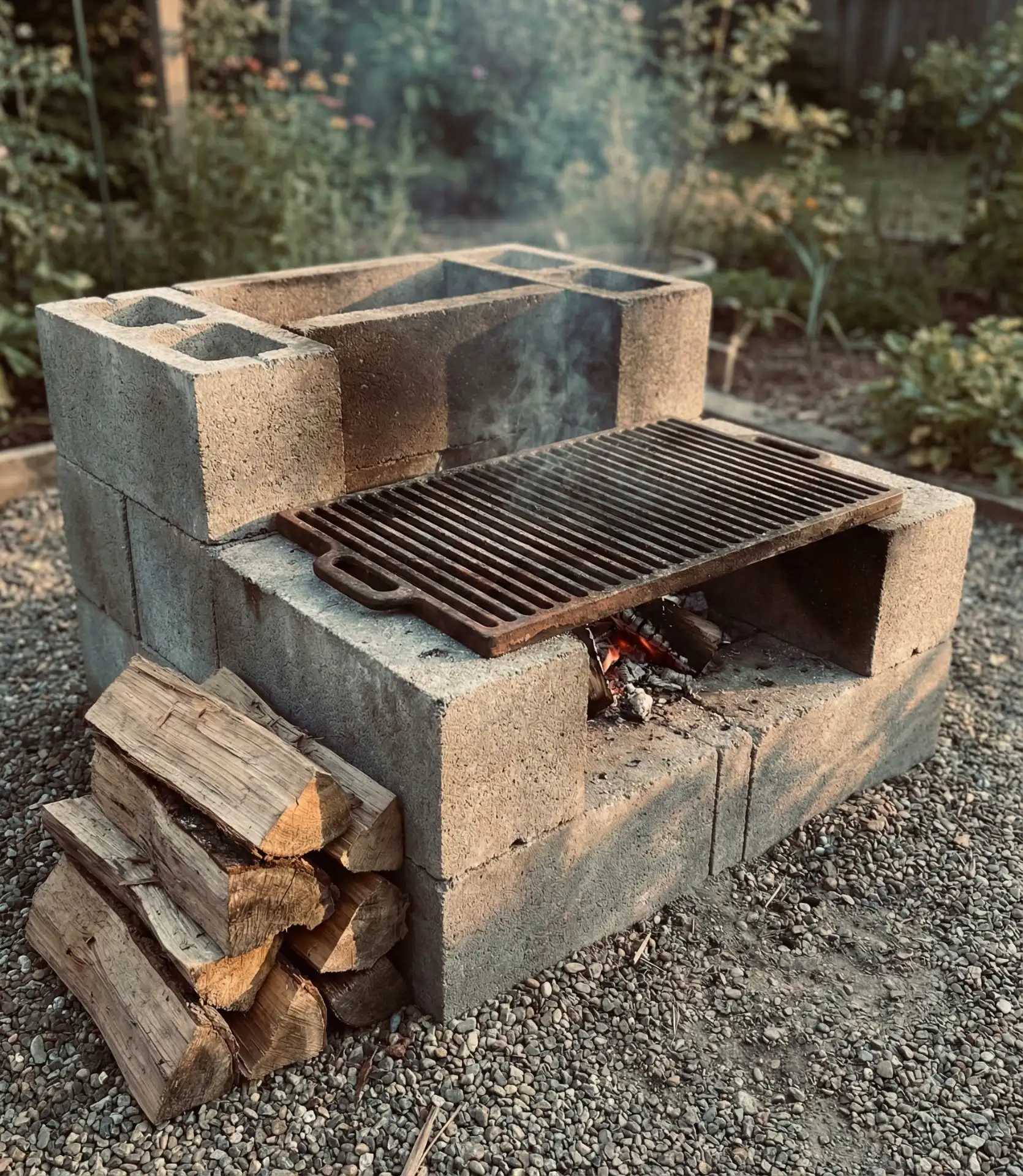
This approach is appealing to homeowners, for cinder blocks are fire safe, available everywhere, and economically friendly. The blocks have a hollow center that provides insulation, preventing surrounding grass or pavers from burning. Just avoid painting the blocks—most coatings will fail after just one season due to extreme heat.
5. River Rock Circle with Swing Bench Seating
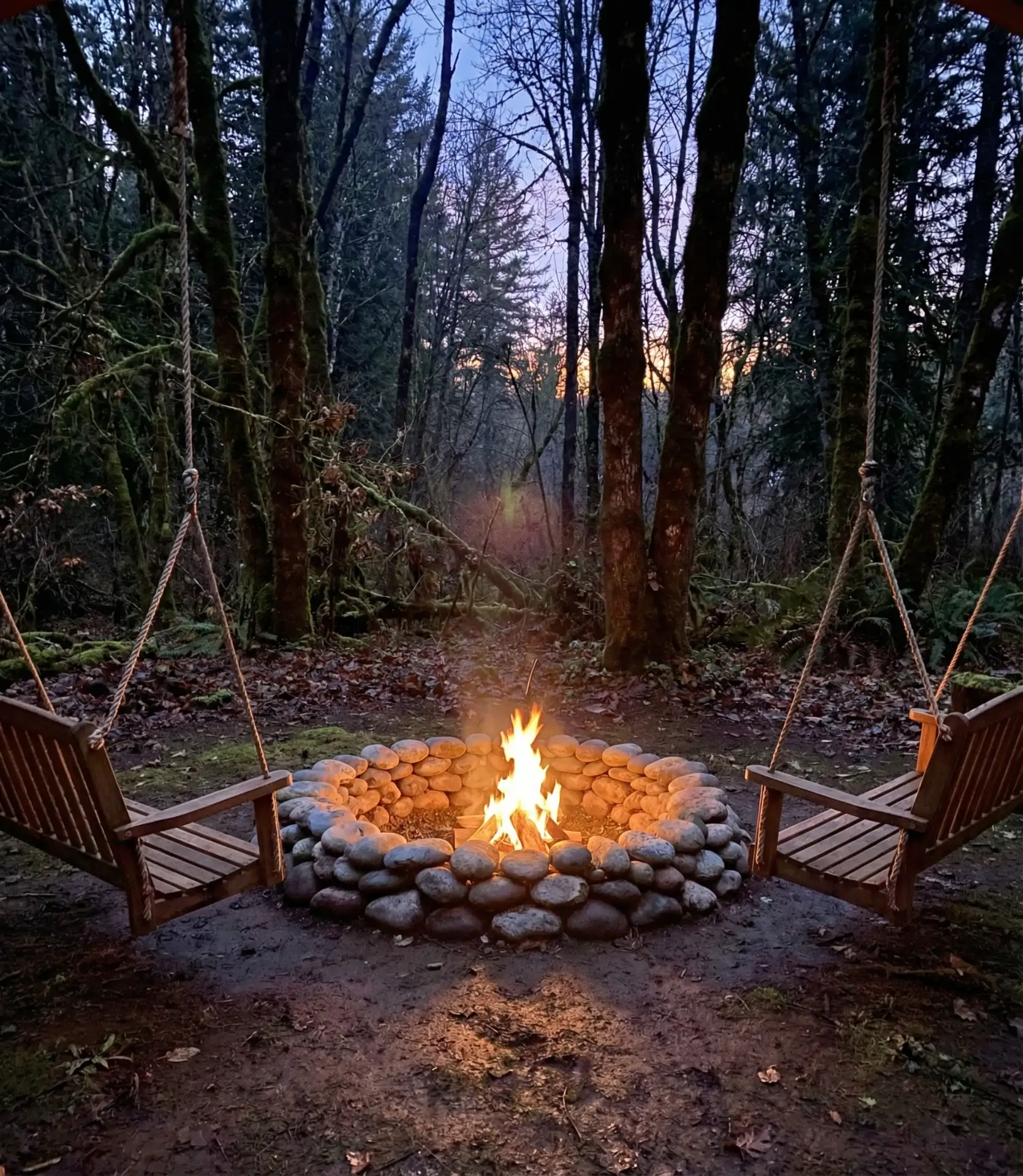
A circle of smoothly mortared river rocks makes a fire pit that works well with wooded and organic material landscapes. A suspended swing bench made from wood adds a gentle motion and a fun element for little ones when combined with adult entertaining zones. This combination works well for families with children. 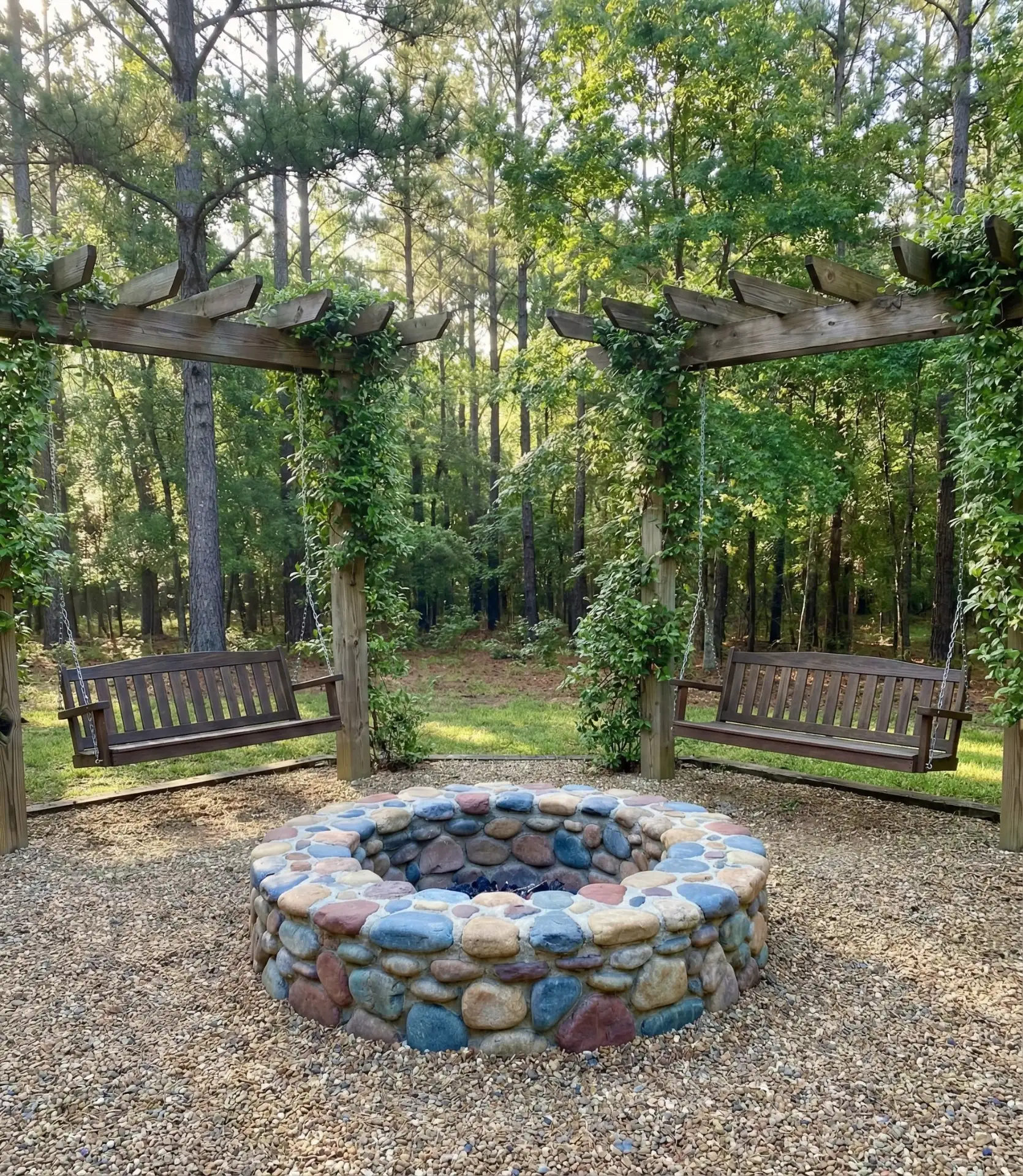
Real homeowner behavior shows that swing seating gets used more consistently than static benches, especially during non-fire hours. The motion naturally encourages lingering, making your fire pit area a destination even when flames aren’t burning. Ensure swing supports can handle at least 500 pounds per seat for safety.
6. The Corner Patio Fire Feature includes L-shaped seating.
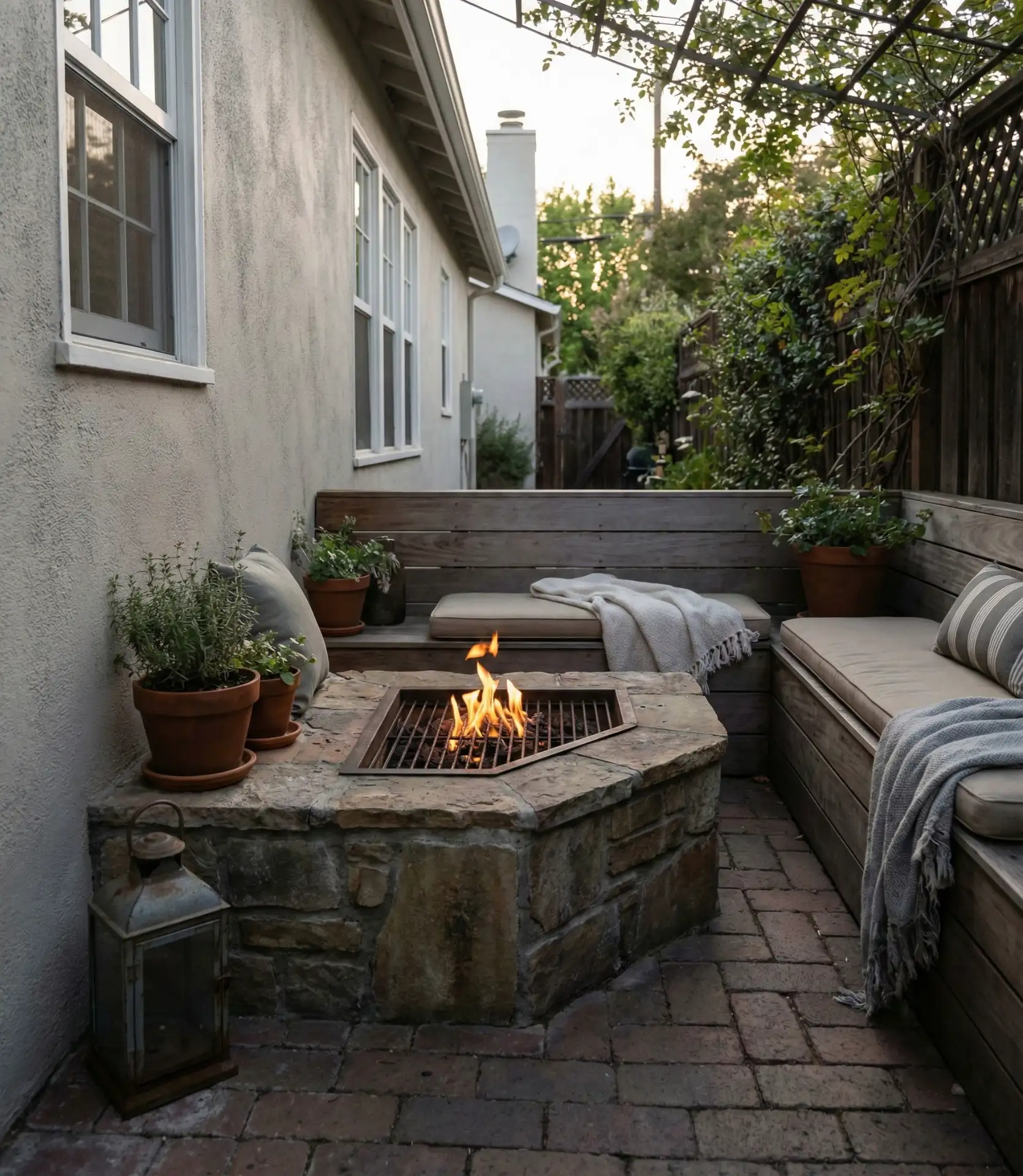
Tucking a fire pit into a patio corner maximizes usable space while creating an anchored gathering zone. Built-in L-shaped seating wraps two sides, providing ample room for guests without consuming the central patio area. This layout works exceptionally well in small backyard settings where every square foot matters and you need furniture arrangements that don’t feel cramped. 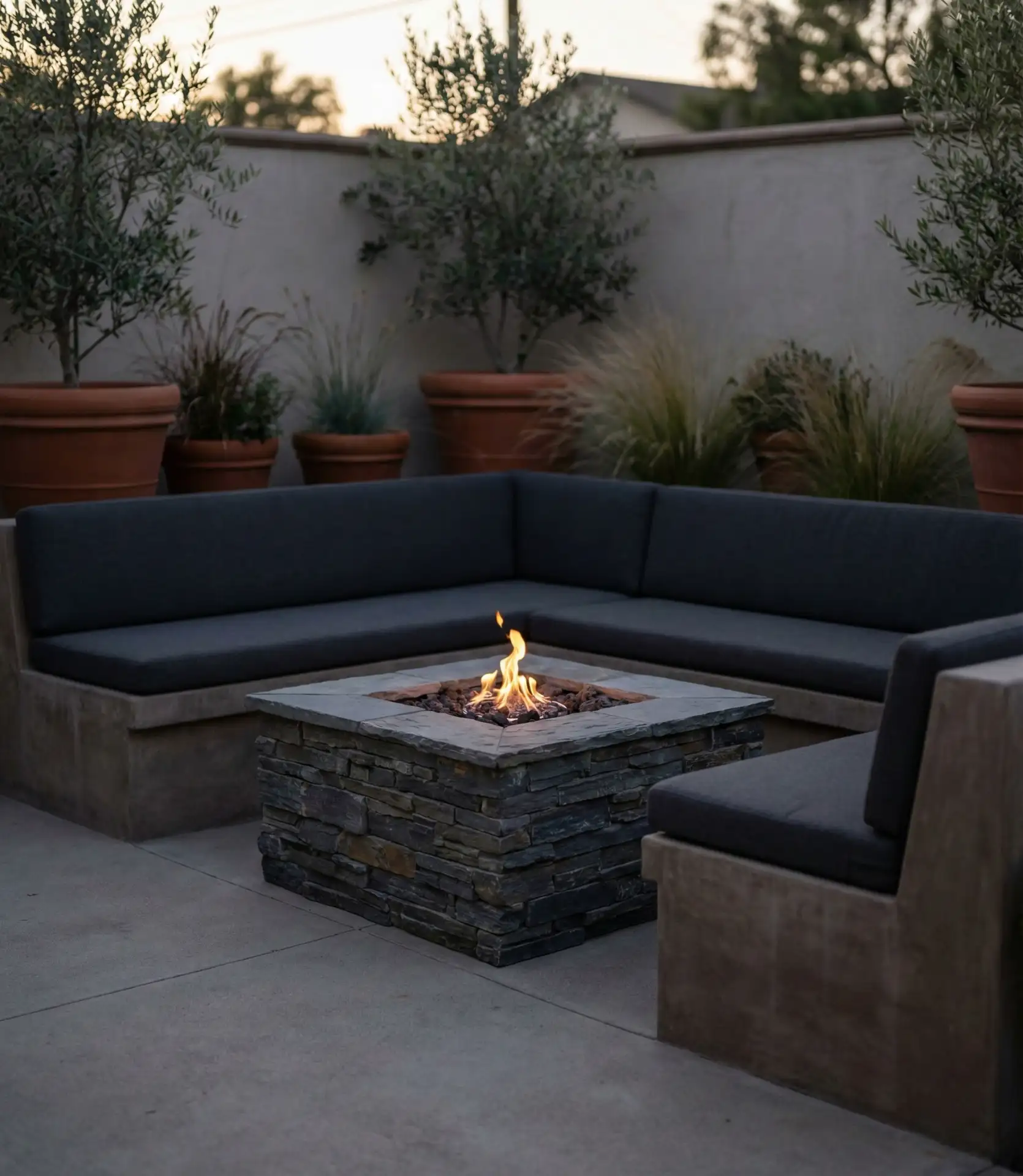
Practical insight: Corner placements create natural windbreaks from two directions, keeping smoke management easier and flames more stable. You’ll burn less wood maintaining consistent heat, and guests naturally face each other rather than competing for “good” seats around a center pit.
7. Farmhouse Style with String Light Canopy
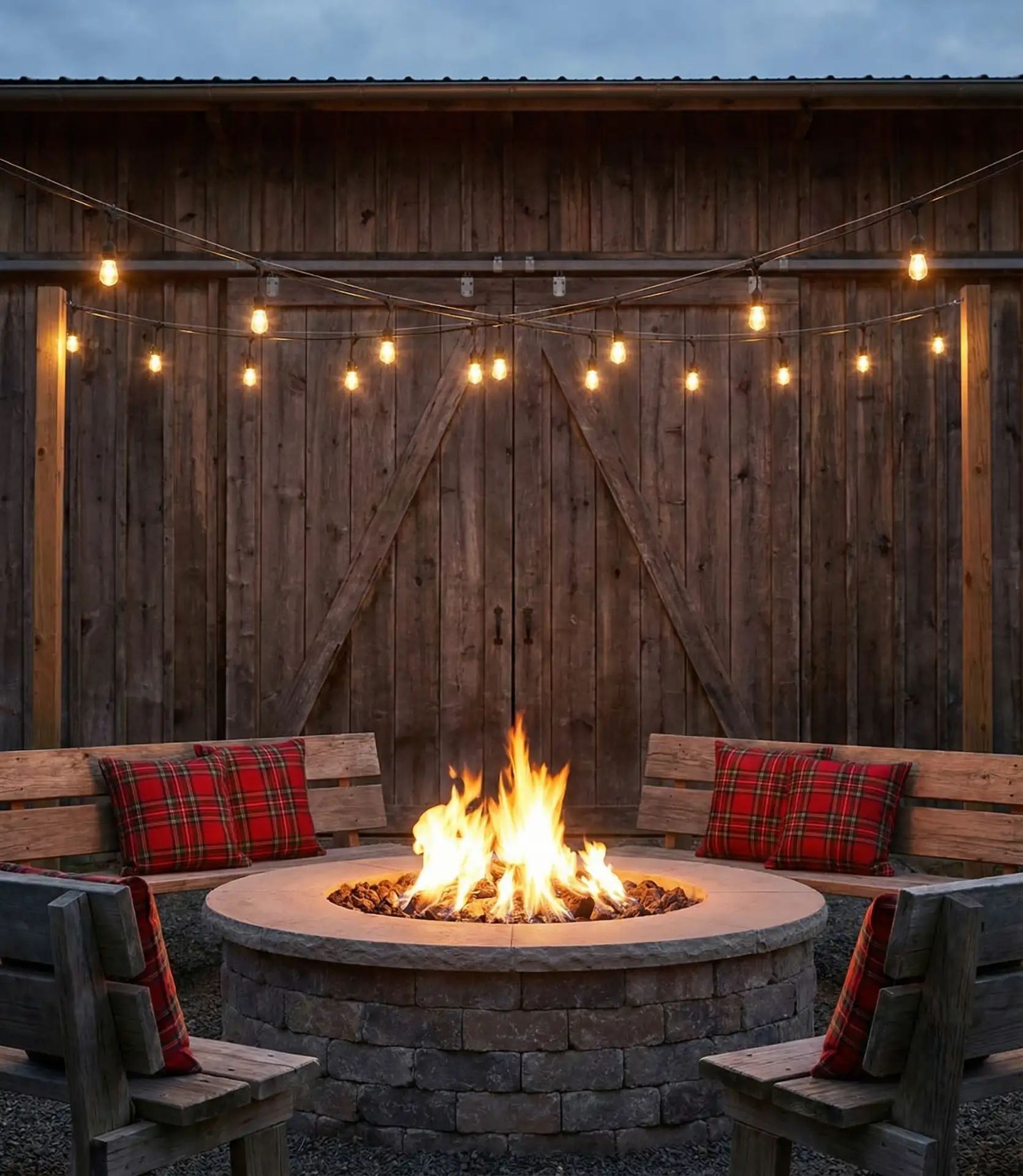
A brick or stone fire pit beneath a canopy of bistro string lights creates layered evening illumination that extends usable hours. The overhead lights provide functional visibility for conversation and drinks, while firelight offers warmth and focal ambiance. This combination defines seating areas clearly and photographs beautifully, explaining its massive popularity on Pinterest among homeowners seeking that farmhouse-chic aesthetic. 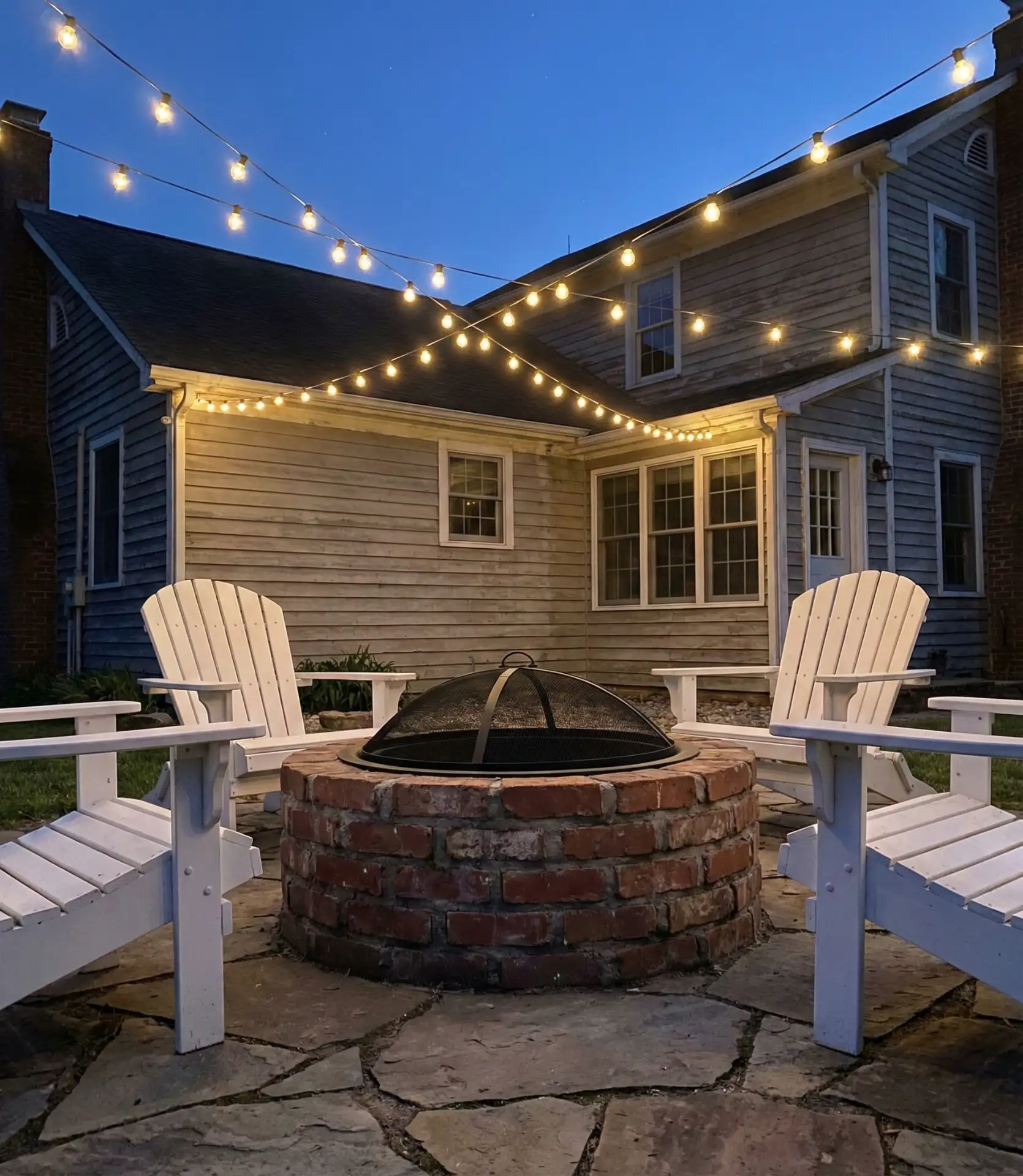
In the Pacific Northwest, where summer evenings stay light until nine or ten, string lights serve a different purpose than in southern states. They signal “gathering space” visually, marking the transition from yard to outdoor room. Dimmer switches let you adjust brightness as natural light fades, maintaining perfect ambiance without harsh illumination.
8. Minimal Steel Bowl on Concrete Pad
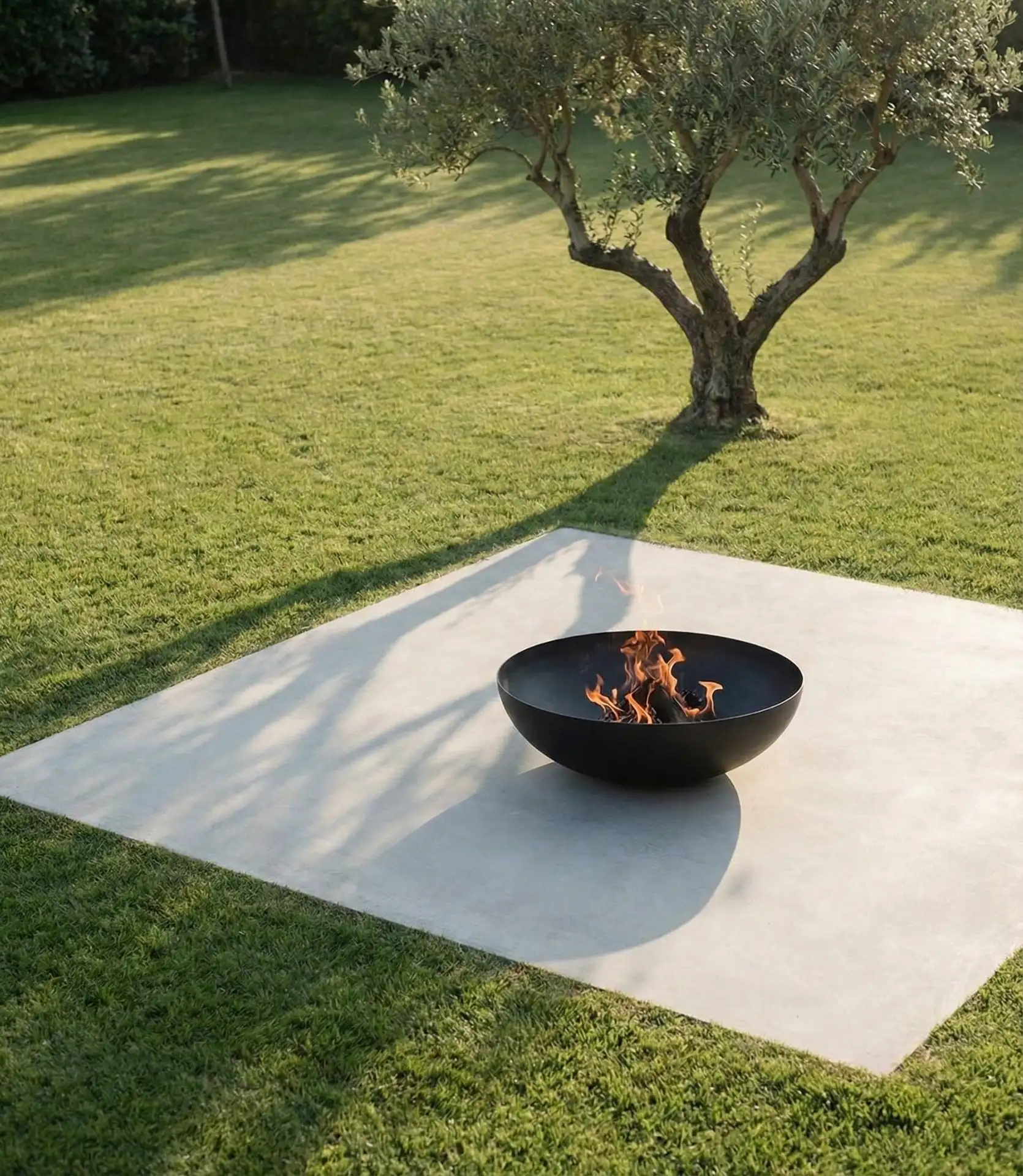
A simple steel bowl sitting on a poured concrete pad epitomizes the less-is-more approach gaining traction in modern landscape design. No surrounding walls, no built-in seating—just the essential fire vessel and clean hardscape. This minimalist strategy works brilliantly in backyards where you want flexibility to rearrange furniture seasonally or host varying group sizes without fixed constraints. 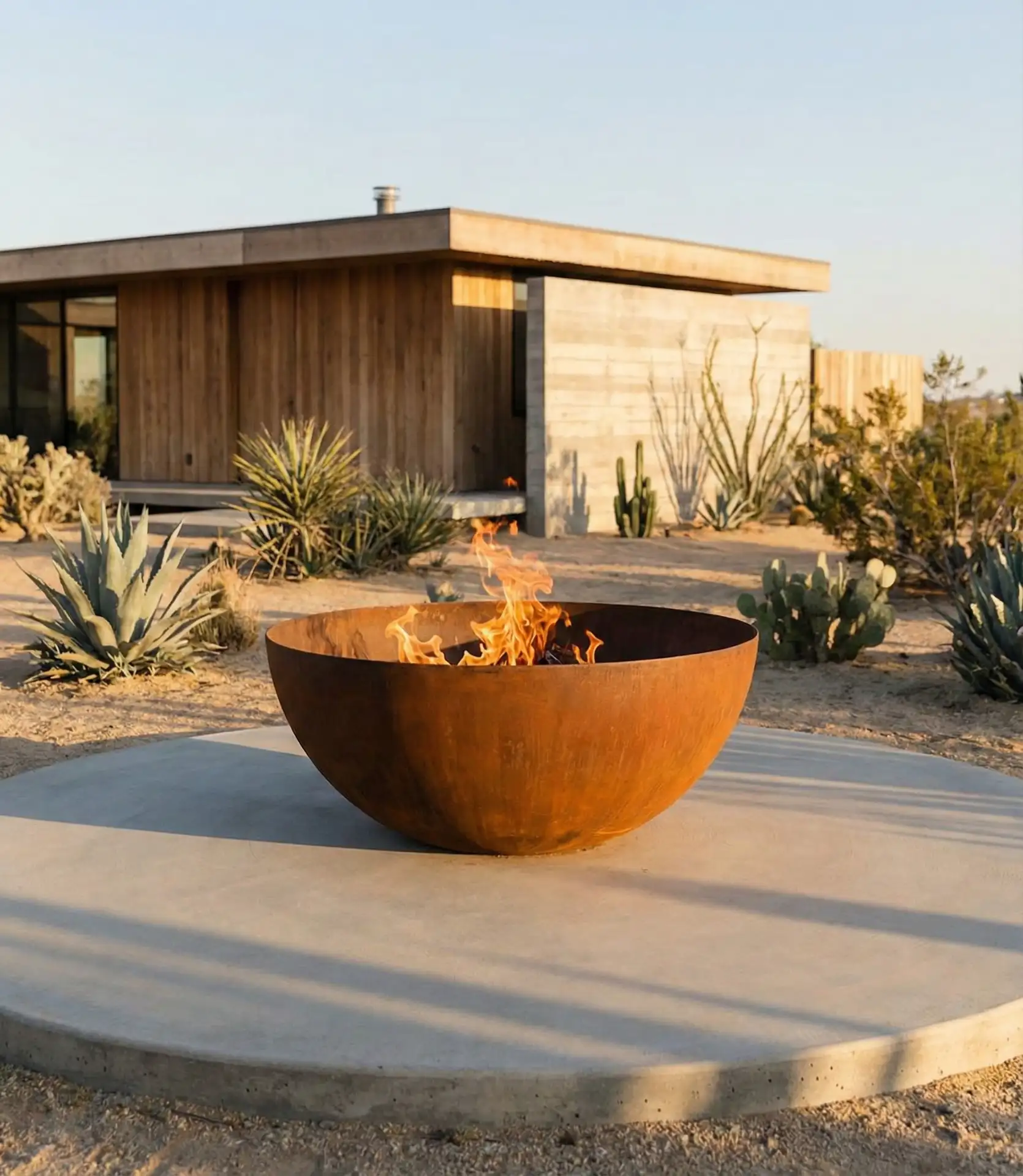
Placing a fire bowl on grass without a base is a common mistake. The heat radiates downwards, and an unprotected fire bowl will kill the grass and create dead patches. A concrete pad will provide a permanent surface to walk on that won’t shift or settle and will ensure you thermal dissipation and safety.
9. Raised Stone Platform with Fire Bowl Center: A raised platform made of stacked flagstone or cut stone creates an elevated fire zone that serves multiple functions.
A raised platform from stacked flagstone or cut stone provides an elevated fire zone that multifunctions. The platform edges give informal seating for big gatherings, while the flame source is at a comfortable level. This design is exceptional for backyards with grade changes, where you want to define a clear zone transition from lawn to patio to fire. 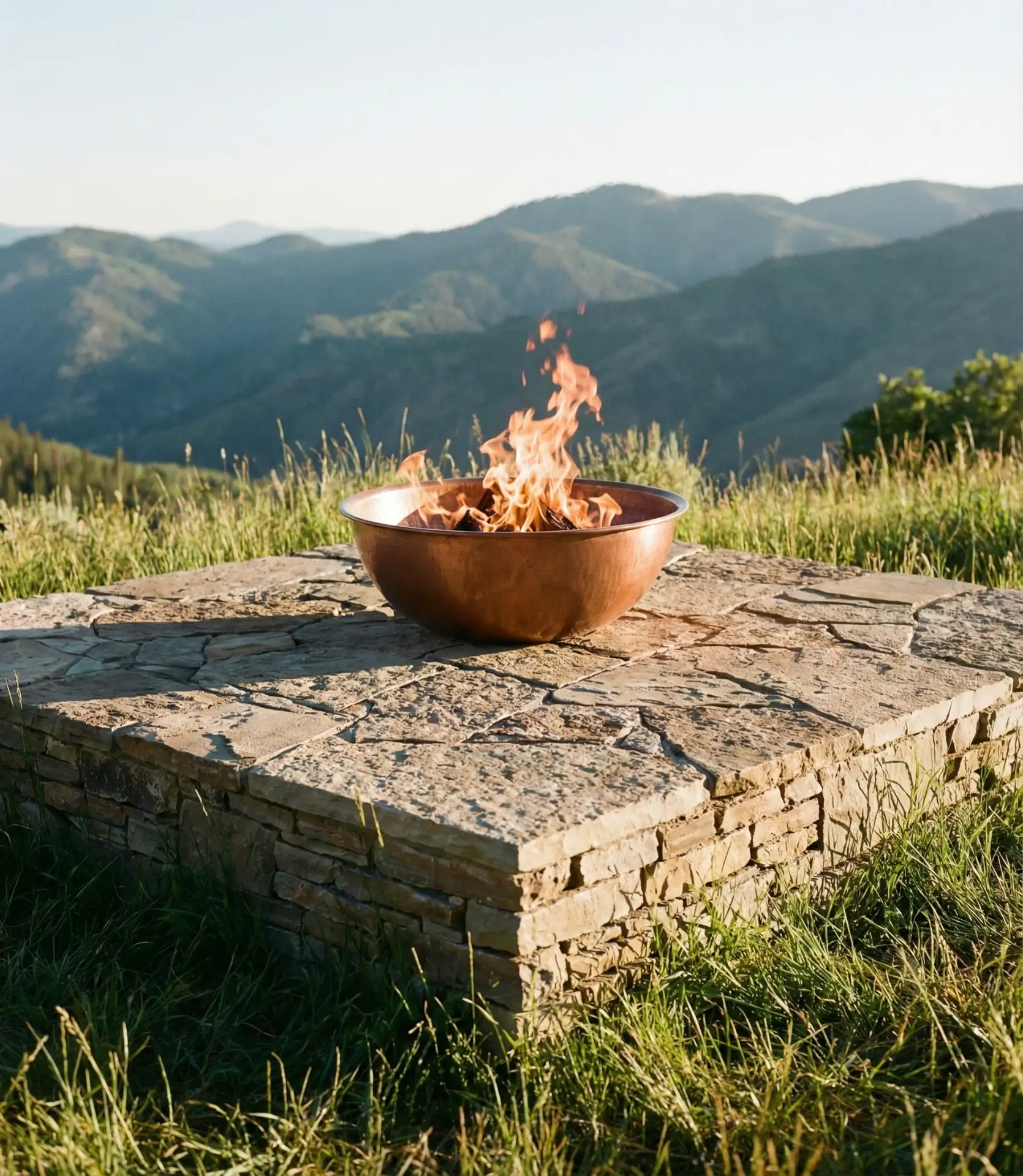
Seating on the platform is said to be best at 16 to 20 inches—just the right height to define the space and provide seating. Any higher and it becomes a tripping hazard, especially in the dark.
Recessed lighting within the stone courses of the platform adds safety and drama without the need for overhead fixtures.
10. Gravel Courtyard with Central Fire Ring
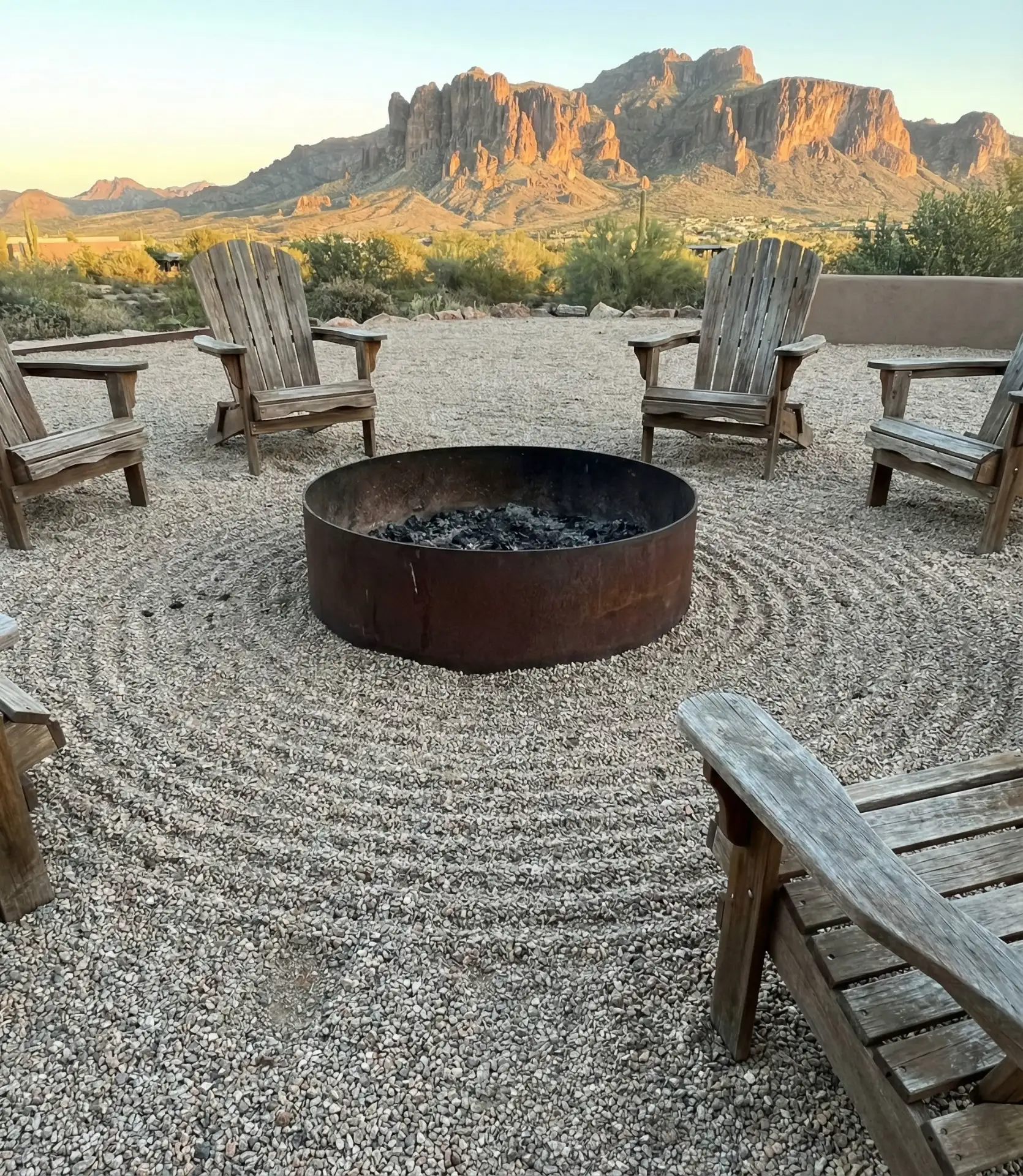
A gravel courtyard designed specifically for a fire ring provides a durable and low-maintenance space that withstands sparks, ash, and foot traffic. With a simple steel or stone ring at the center and some movable seating, flexible arrangements can be made. This method especially favors homeowners who like low-cost and easy approaches, without the need for skilled masonry or permanent add-ons. 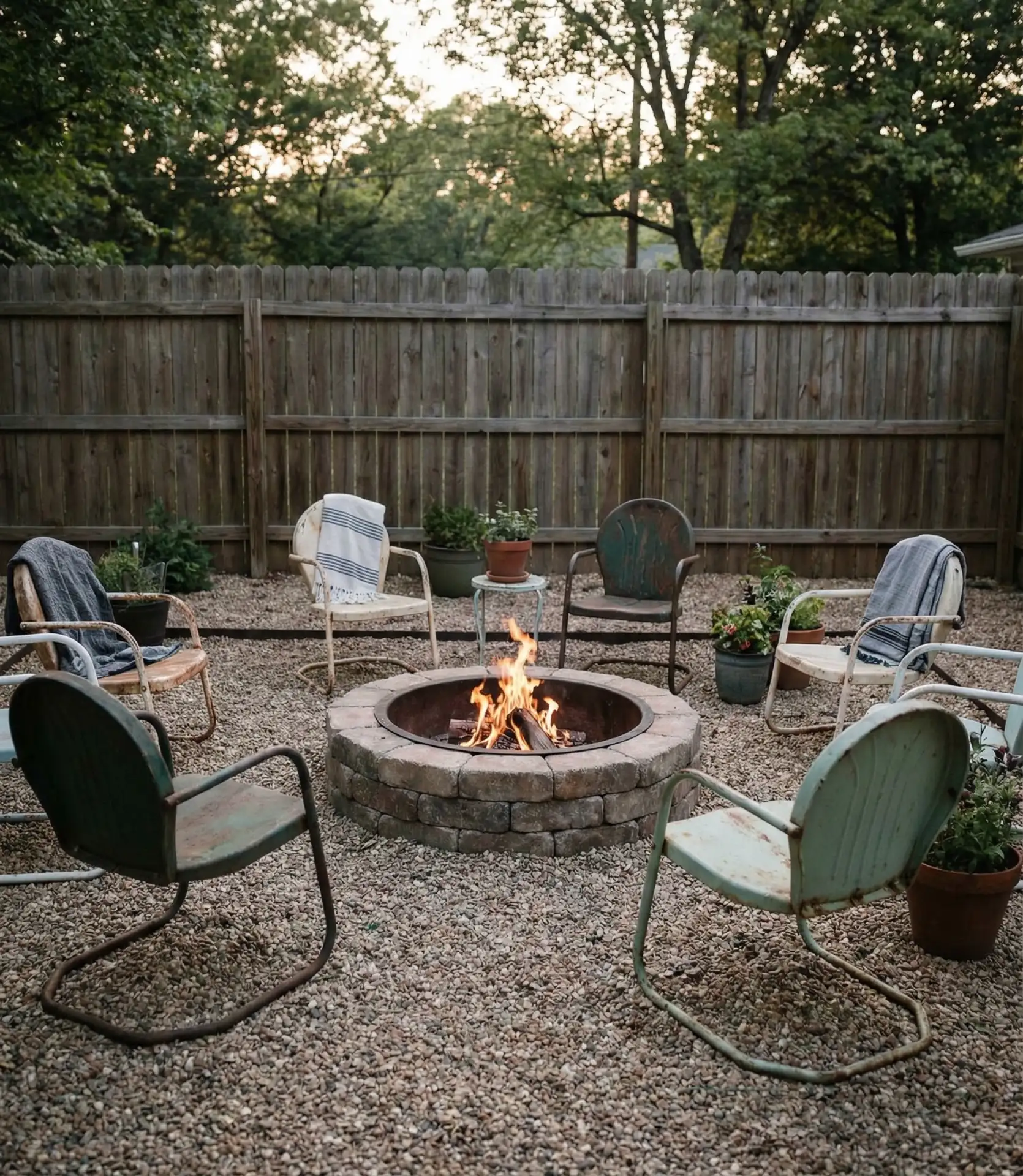
Ideal for sandy, rocky, or dry areas where grass doesn’t grow, particularly the arid western states. Gravel areas need no irrigation and eliminate mud. It gets better with use as it compacts over time. Use steel or wood edging to keep the gravel from migrating into the surrounding landscaping.
11. Built-In Corner Fire Feature with Storage Cabinets
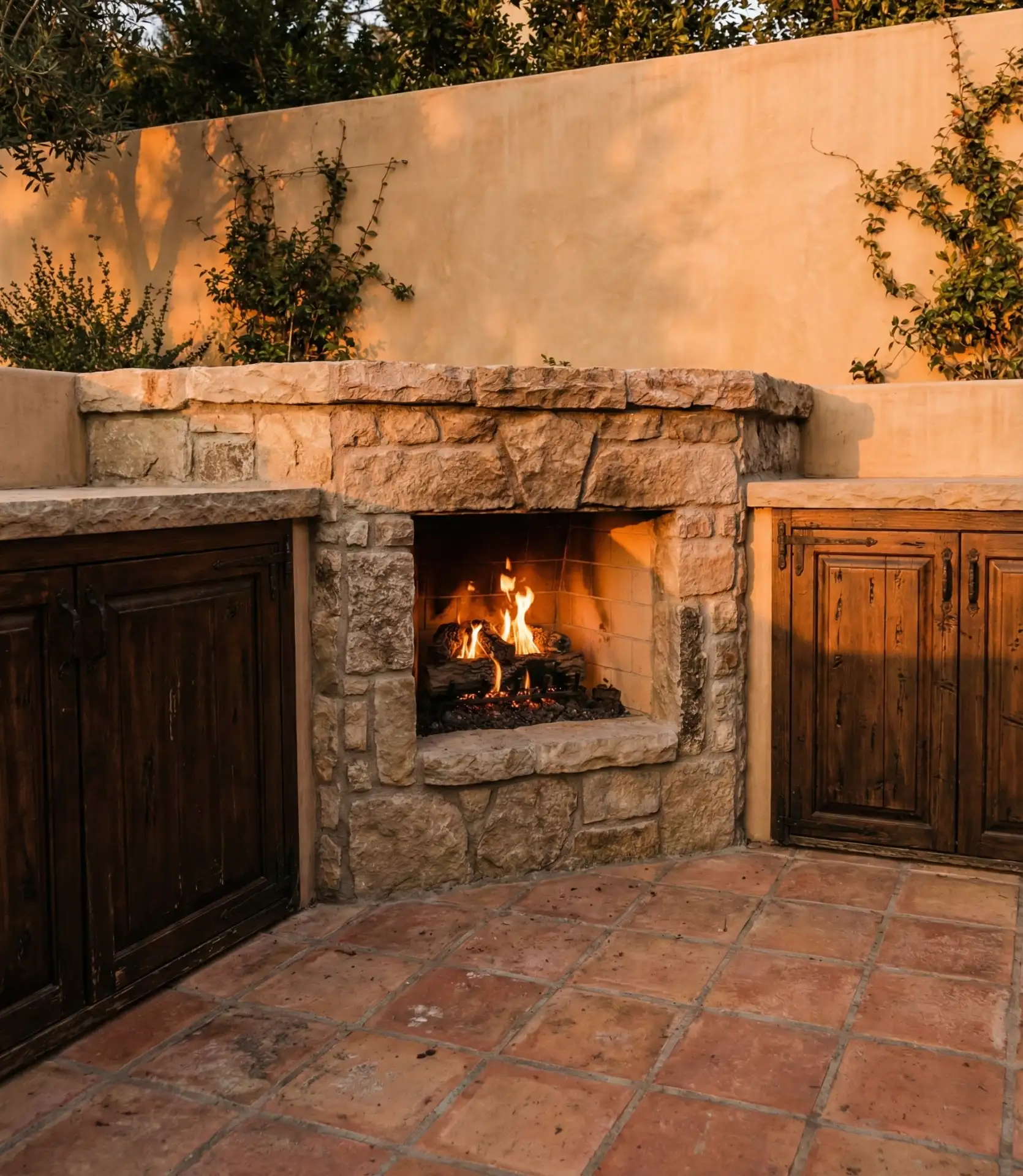
Fully custom masonry that creates a corner fire pit and capping storage cabinets transforms the unused angles of the patio into highly functional areas. The cabinets can be used to conceal and store propane tanks, firewood, or cushions, keeping essentials accessible and uncluttered.
The integrated design creates a refined, upscale look for the seating areas without the seasonal hassle of freestanding furniture needing to be stored. 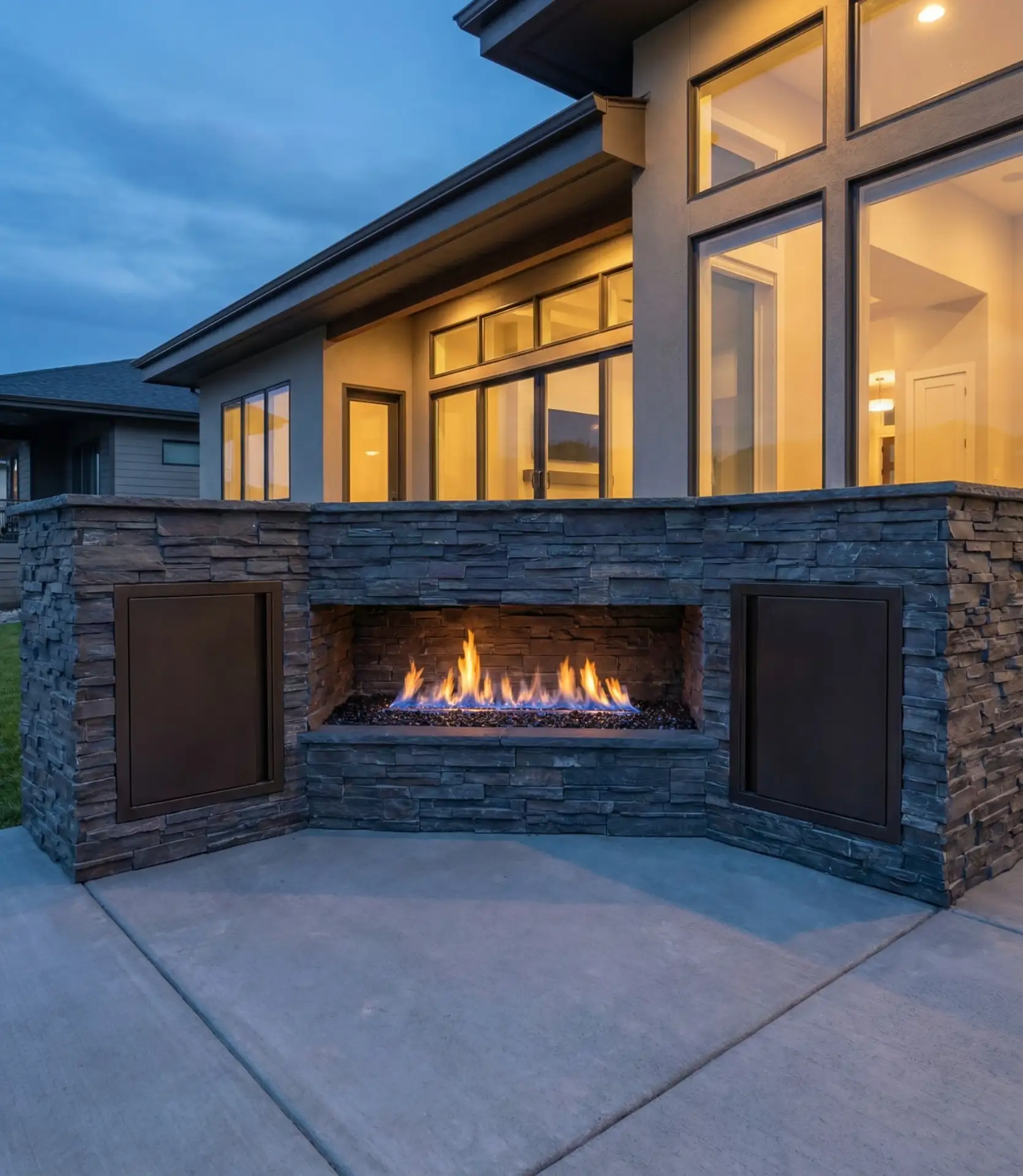
Custom cabinet and masonry work typically runs between $4,000 and $8,000, and this ranks among the more expensive options. However, it provides more value to your home than portable fire pits and reduces recurring purchases of outdoor furniture. Early in the planning stages, be sure to include the masonry work in your budget to avoid sticker shock.
12. Half-Wall Surround with Wide Ledge Seating
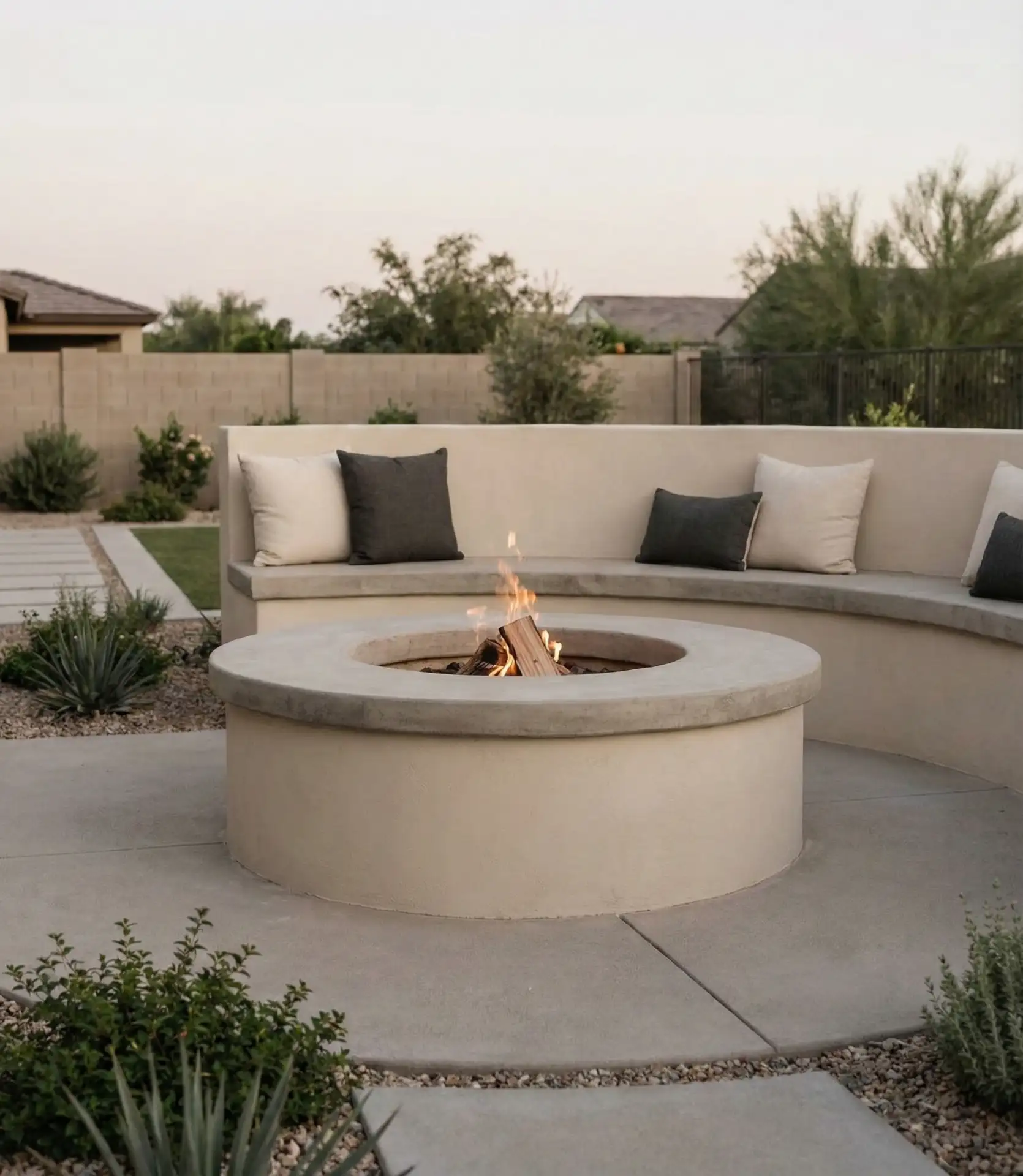
Fire pits surrounded by knee-high walls with wide ledge caps create informal seating areas in such a way that square layouts can accommodate a surprisingly high number of people. The caps serve as ledges for plates and glasses, which reduces the need for side tables. This design provides a gentle separation from surrounding lawn and garden areas while maintaining open lines of sight across the yard. 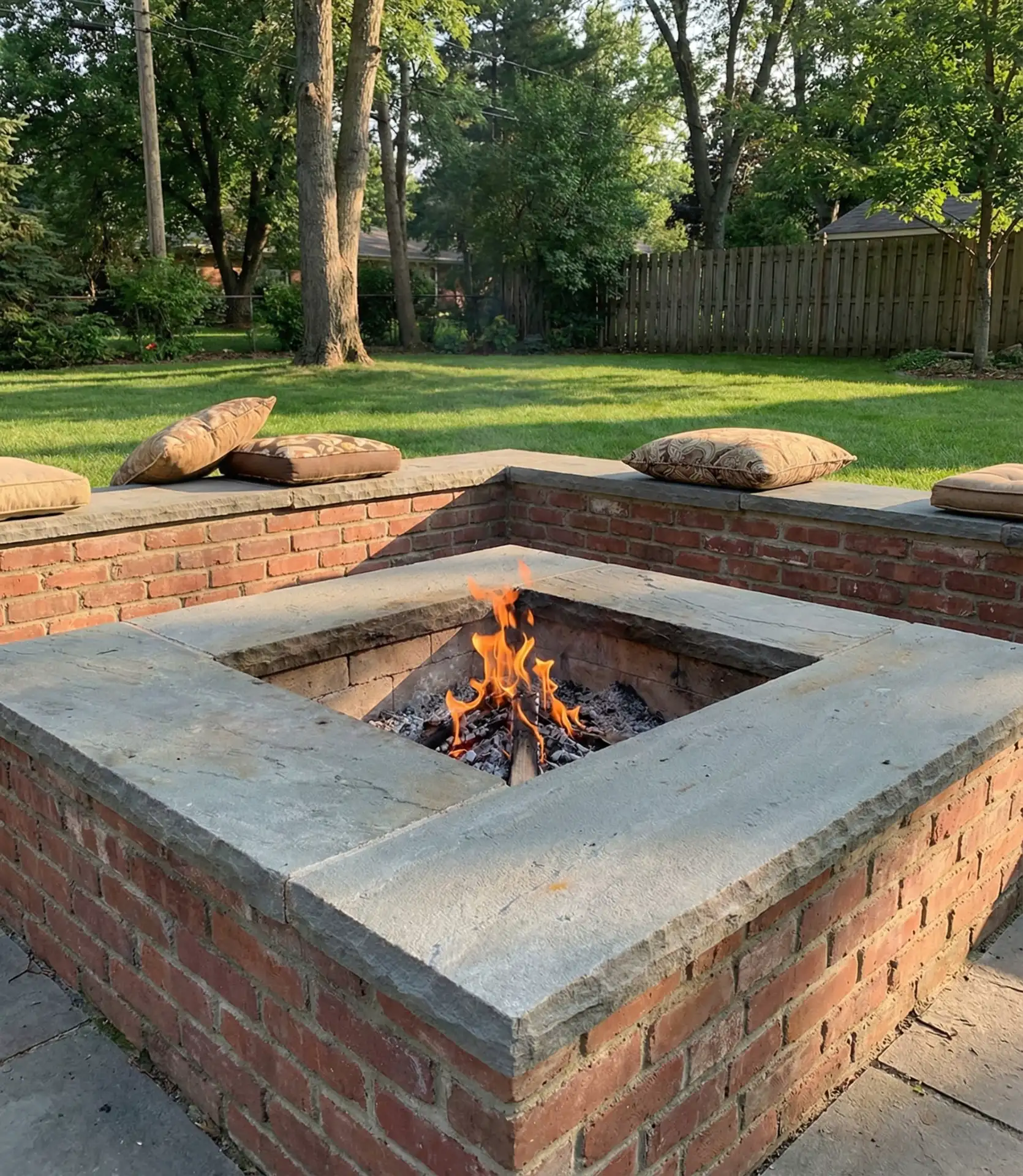
A contractor in Atlanta said half-wall designs solve the “where do I put my drink” problem that traditional fire pits come with. The continuous ledge makes side tables unnecessary and encourages guests to face it, deepening the conversation during gatherings.
13. Reclaimed Brick Circle on Grass
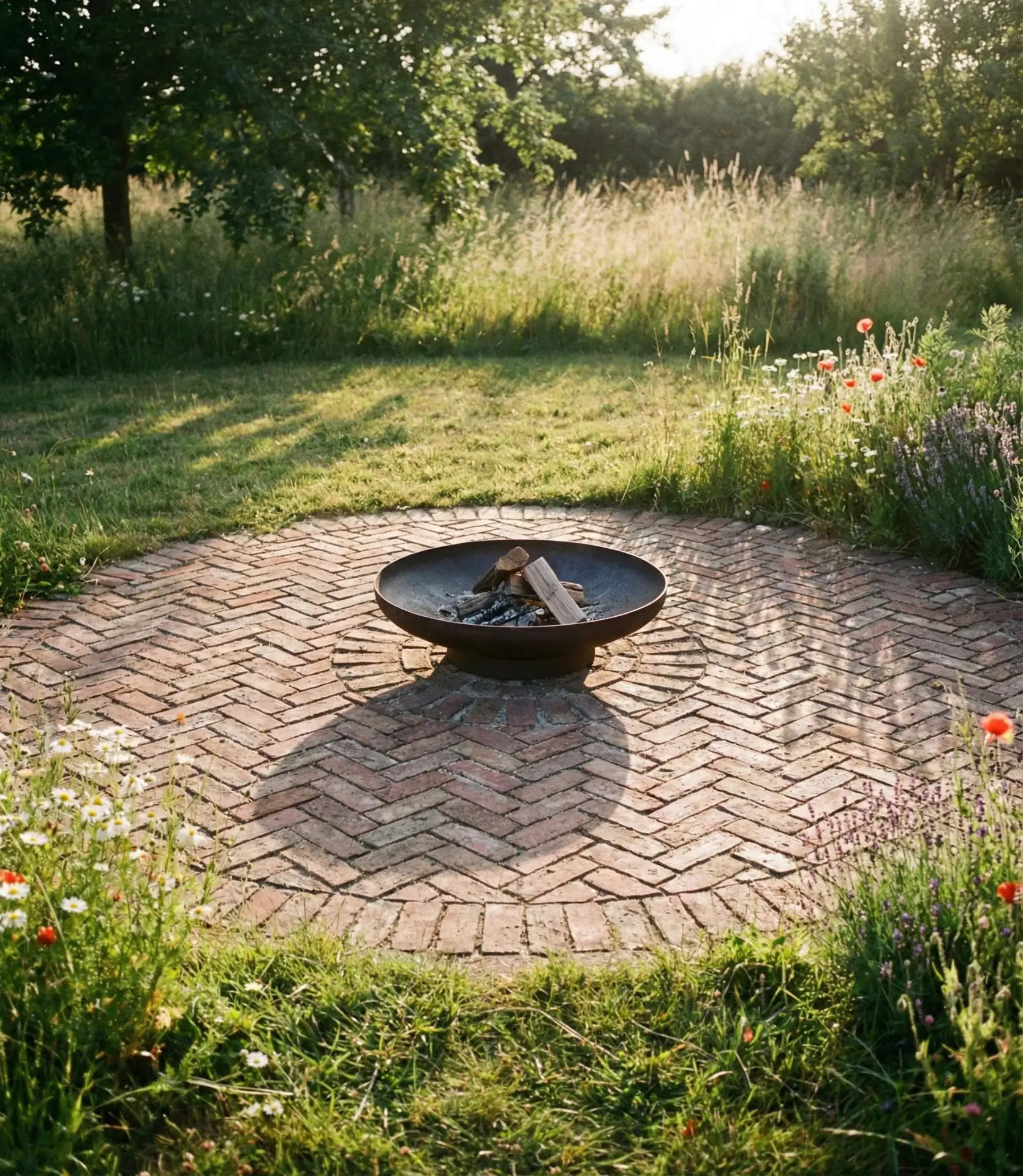
Lay reclaimed bricks in a circular pattern directly on leveled grass to create a rustic, permeable fire zone that allows rainwater to drain. This approach is ideal for homeowners who want to enjoy a more DIY alternative to formal hardscaping while also appreciating the rustic touch of a more patinated, textured brick. The temperature of the turf will be protected by the thermal barrier that the brick provides, and the pattern will be loose-laid, allowing for easy repairs and adjustments in case any bricks settle unevenly during the seasons. 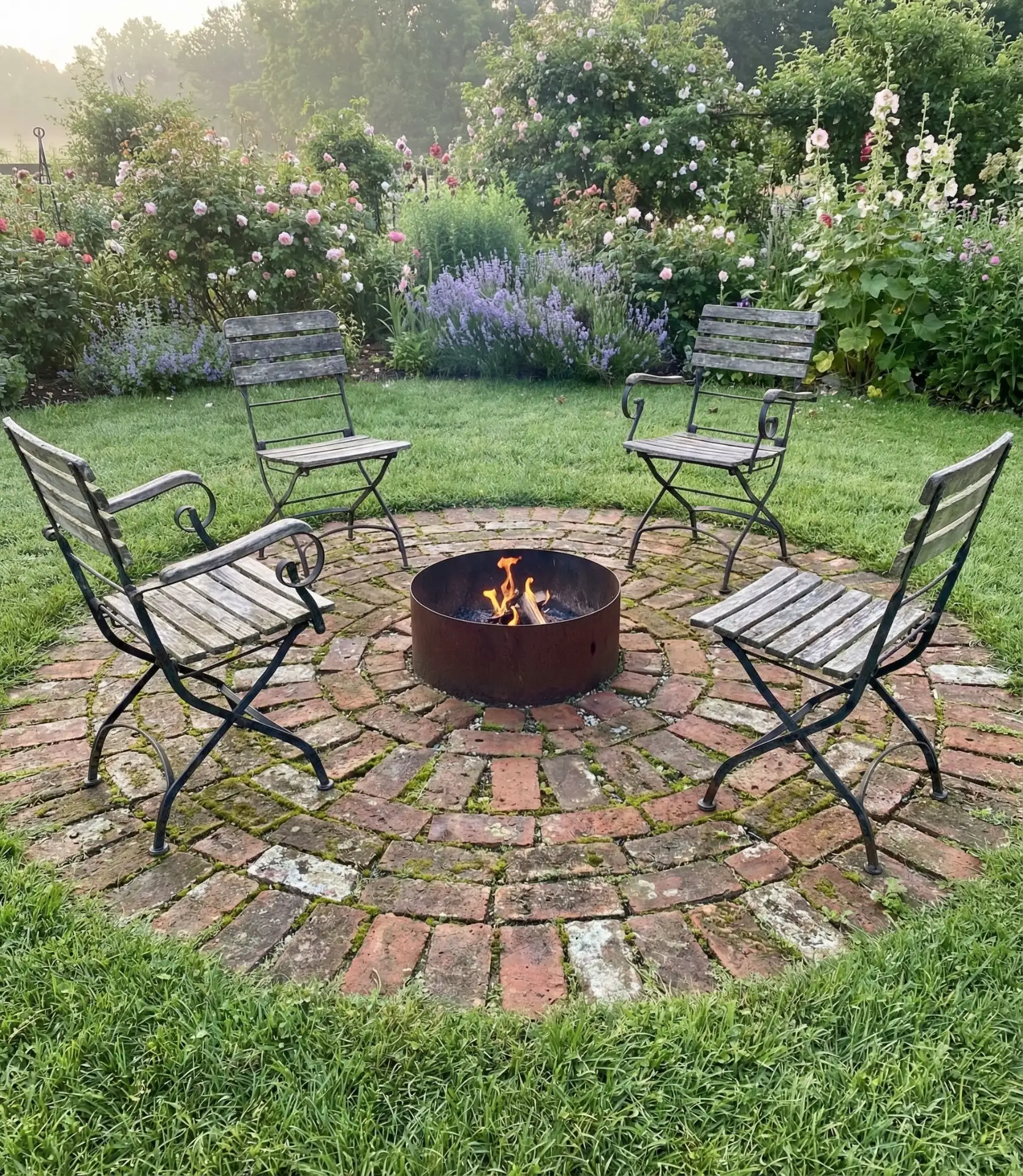
Homeowners will inform you that fire pits situated on grass necessitate additional ember management and attentiveness. Keep a hose handy, and establish a no-feet rule, as embers can sit in grass and hide for hours, making them dangerous. A small six-inch moat of gravel surrounding the brick circle will collect embers and serve as a visual edge between the lawn and fire zone.
14. Multi-Level Flagstone Terraces with Fire Focal Points
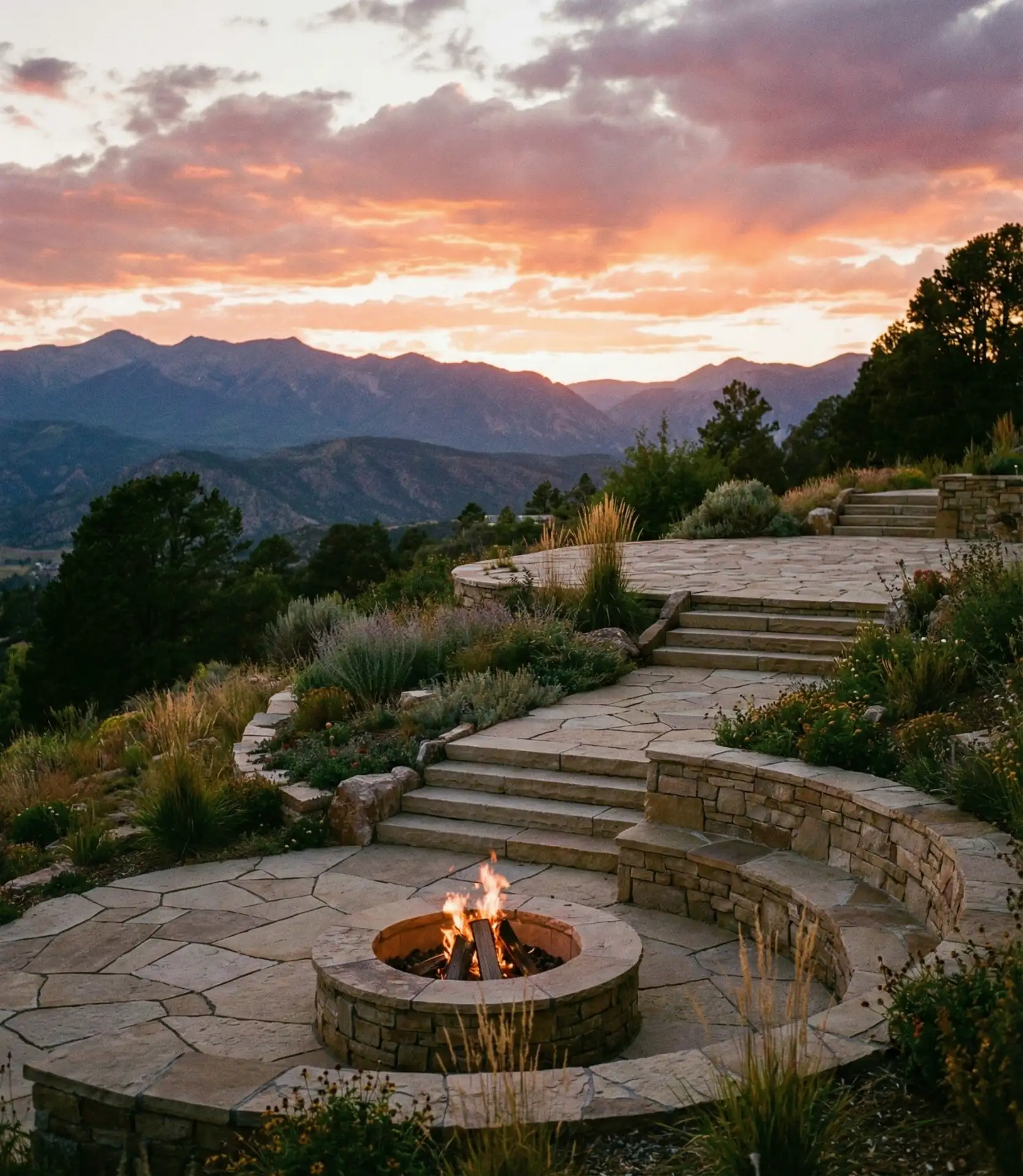
Stepped flagstone terraces that culminate in a fire pit level effectively address the challenge of sloped backyards while creating distinct outdoor rooms. Each terrace serves different functions—dining, lounging, and fire gathering—connected by stone steps or gradual grade transitions. This design is especially effective in hillside properties that have elevation changes, allowing you to turn a potential liability into a valuable landscape feature.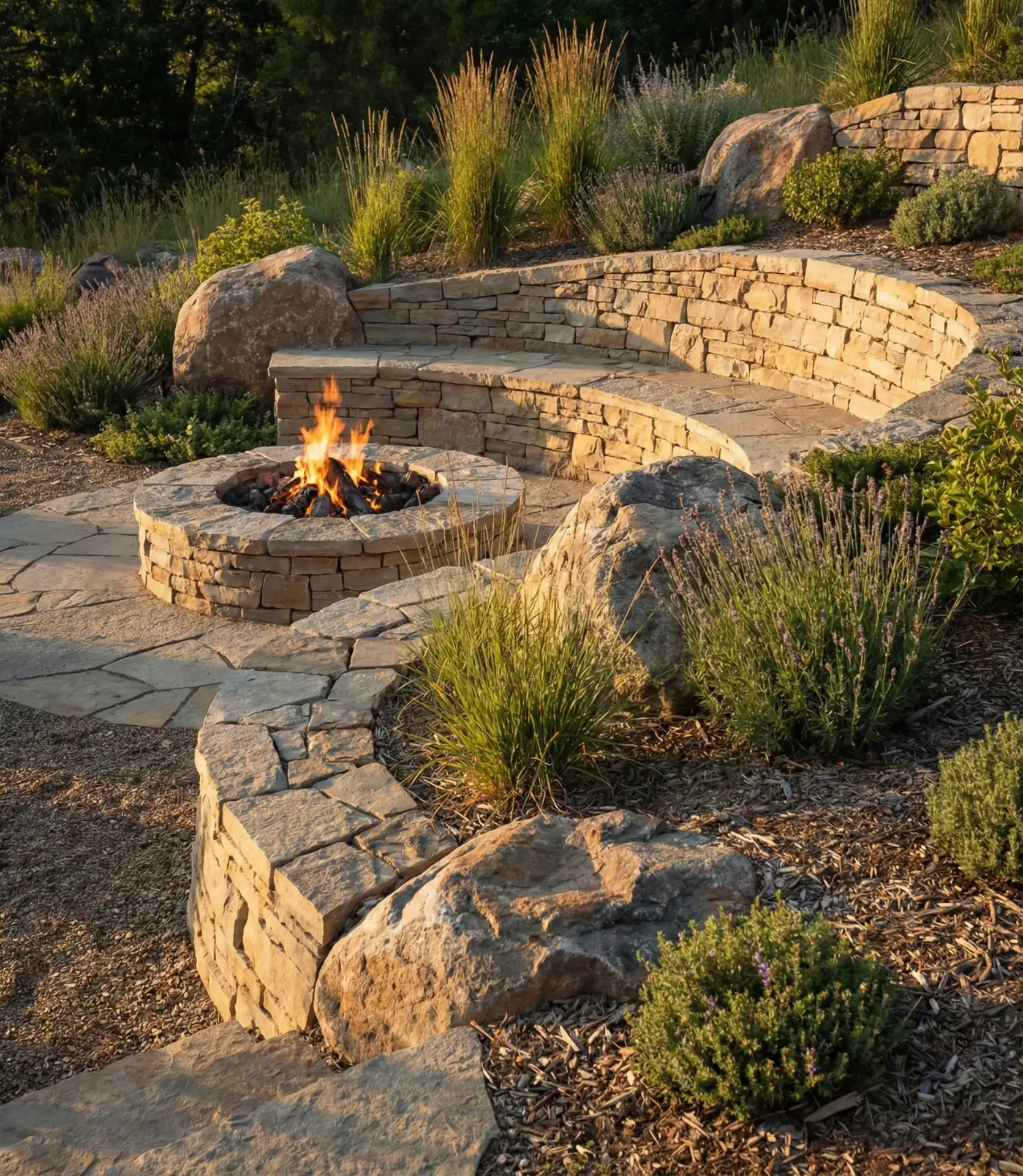
Practical insight: multi-level designs require proper engineering to prevent settling and erosion. Each terrace needs a compacted gravel base, drainage considerations, and retaining support appropriate to height. This isn’t weekend DIY territory—hire professionals who understand soil mechanics and can obtain necessary permits for structural retaining walls.
15. Portable Propane Table on Composite Deck
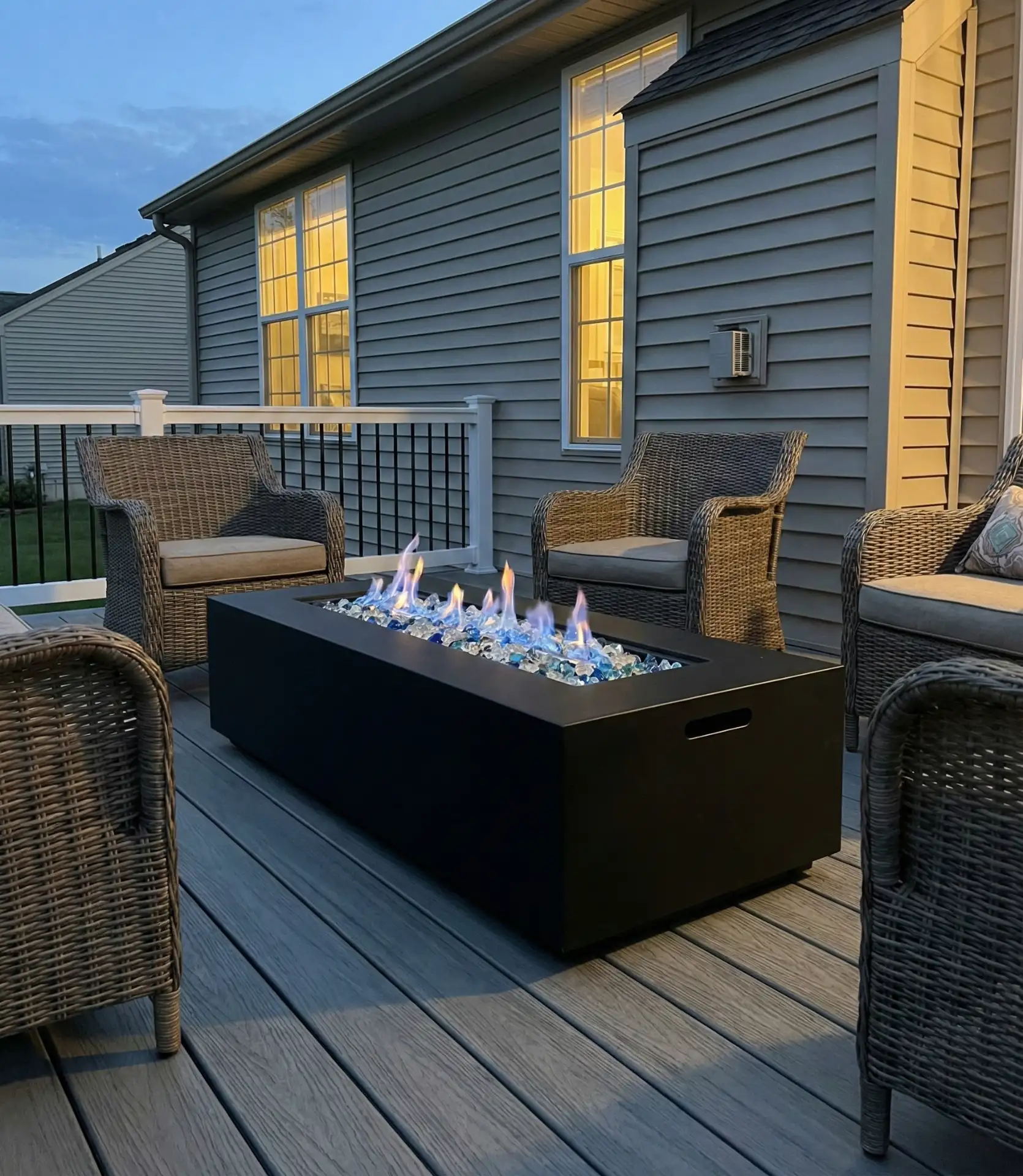
A propane-fueled fire table solves the wood-burning restrictions many municipalities impose on decks while providing easy on-demand flame. Modern composite decking tolerates heat well when you maintain proper clearances, making this setup accessible to homeowners without yards. The portability means you can store the table during the off-season or move it for deck furniture rearrangements, appealing to renters and frequent redecorators. 
Chiminea installation is ideal for urban and suburban residential areas where a wood-burning fireplace may become a nuisance and also for areas where wildfires are a concern and wood burning is seasonally restricted. Propane is a safer alternative because it does not produce sparks and is better insulated than wood. It is also more user-friendly, as it has a quick shutoff. Store propane tanks inside screened boxes that comply with storage regulations for aesthetic purposes.
16. Adobe-Style Clay Chiminea in Southwestern Patio
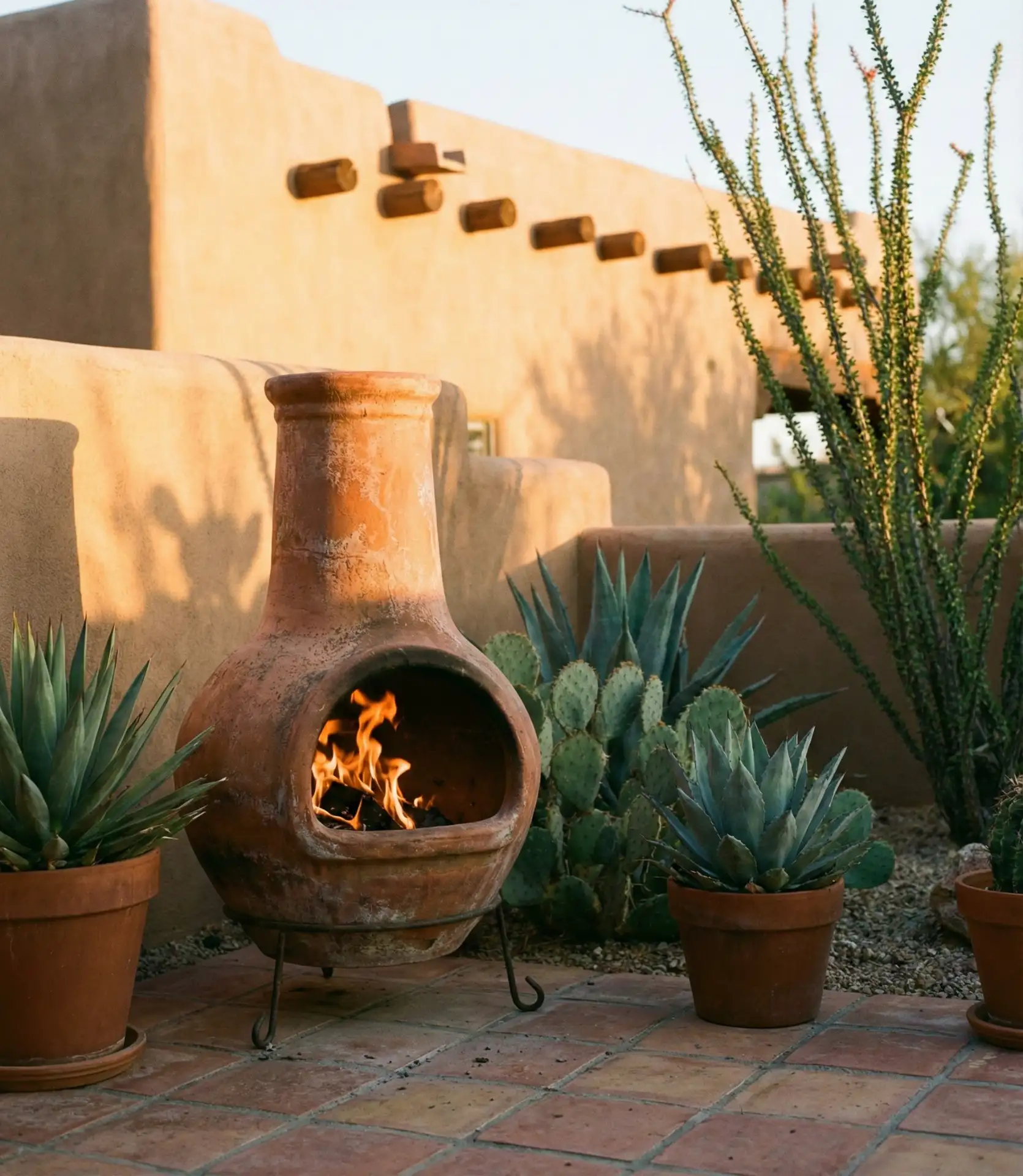
For budget-friendly options to permanent fire features, traditional clay chimineas are a sculptural focal point to gathering areas. They are also super affordable. With suburban settings, these personalized accents provide localized heat without large bulky features. They are gaining popularity in the Southwest and Mediterranean areas; however, the adobe clay look supports these landscapes nicely. They are gaining popularity as accent features that provide localized heat without large, bulky fire features. 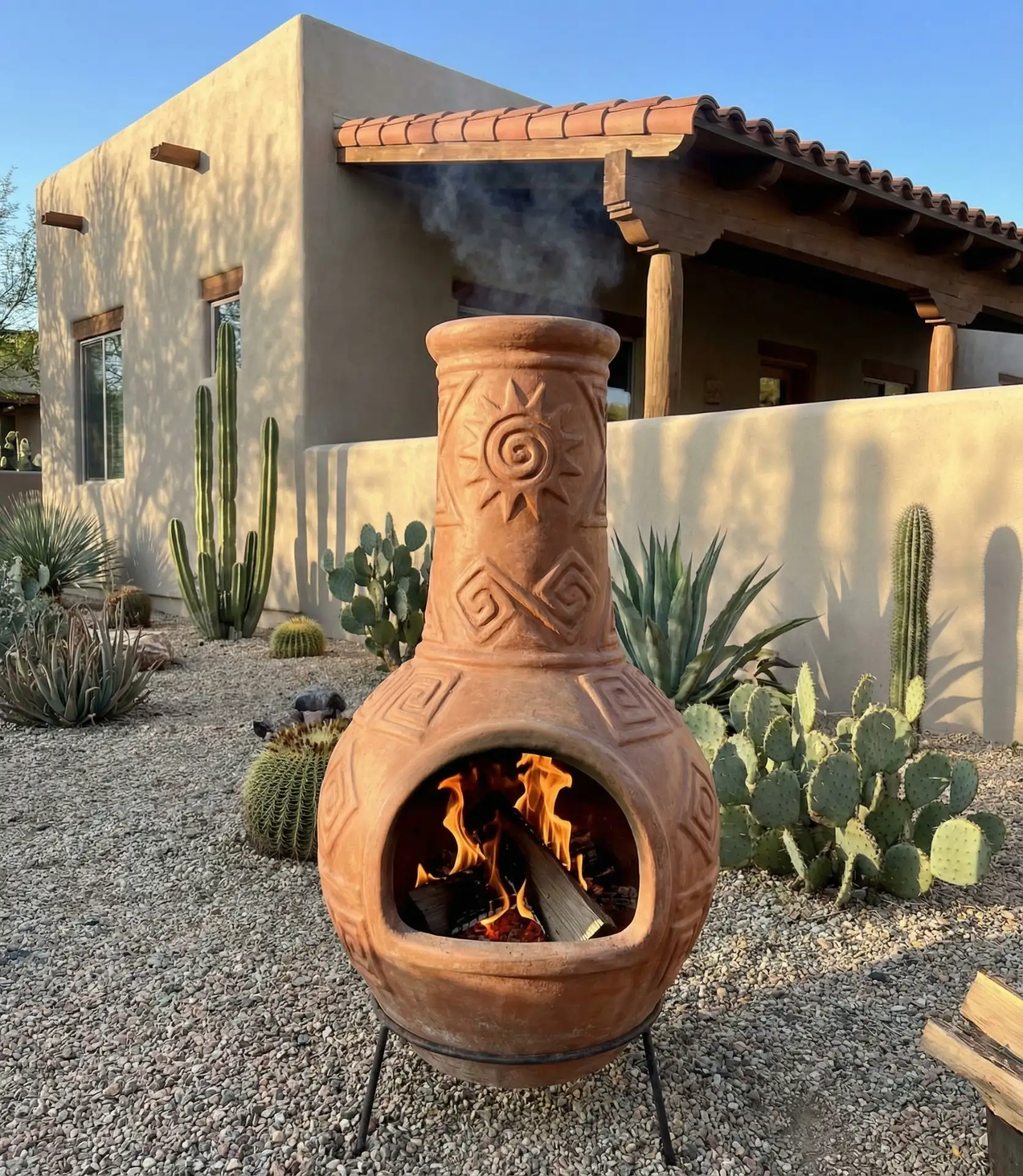
Common mistake: placing chimineas directly on wood decks or too close to siding. The ceramic base gets extremely hot, and thermal shock from rain after firing can crack the clay. Always use a fireproof pad underneath, cover when not in use, and position at least three feet from structures. Quality chimineas last decades with proper care; cheap imports often crack within a season.
17. Gas Fire Fixture in Concrete Planter Wall
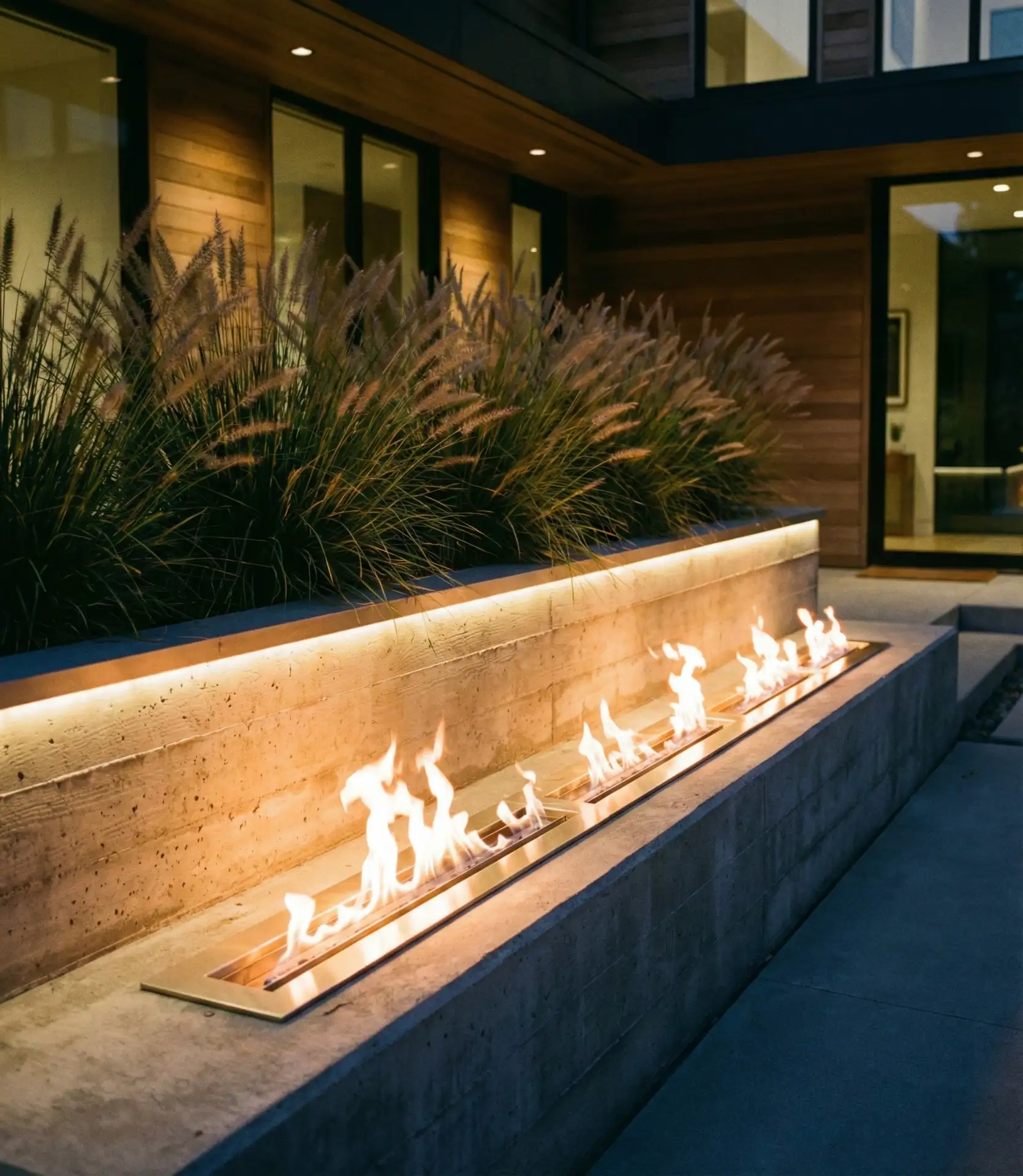
Planter walls can be designed with contemporary landscape architecture by embedding a linear gas burner in a low concrete wall. Between the gas burner and the concrete wall, modern material continuity is achieved, particularly with the house and the hardscape. Backyards seeking low-maintenance and sophisticated fire options, without the traditional aesthetics of a round fire pit, find this design particularly successful.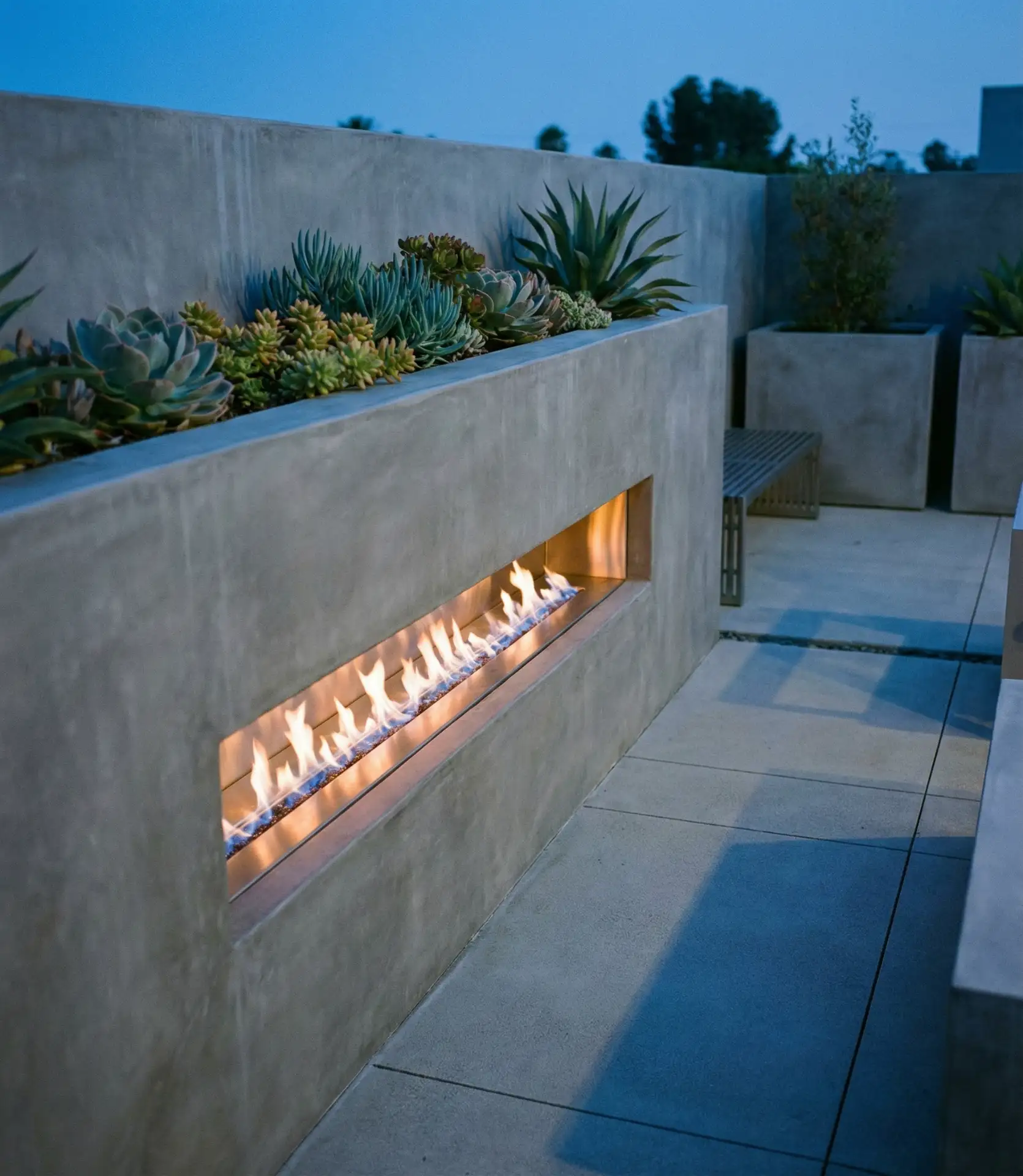
Budget planners note that linear features are most successful in modern architecture where the design is heavy on horizontal lines. Budget $3,000 to $6,000 for professional installation that includes gas lines and burner systems, along with additional custom concrete work.
18. Fire Pit Under Pergola with Retractable Canopy
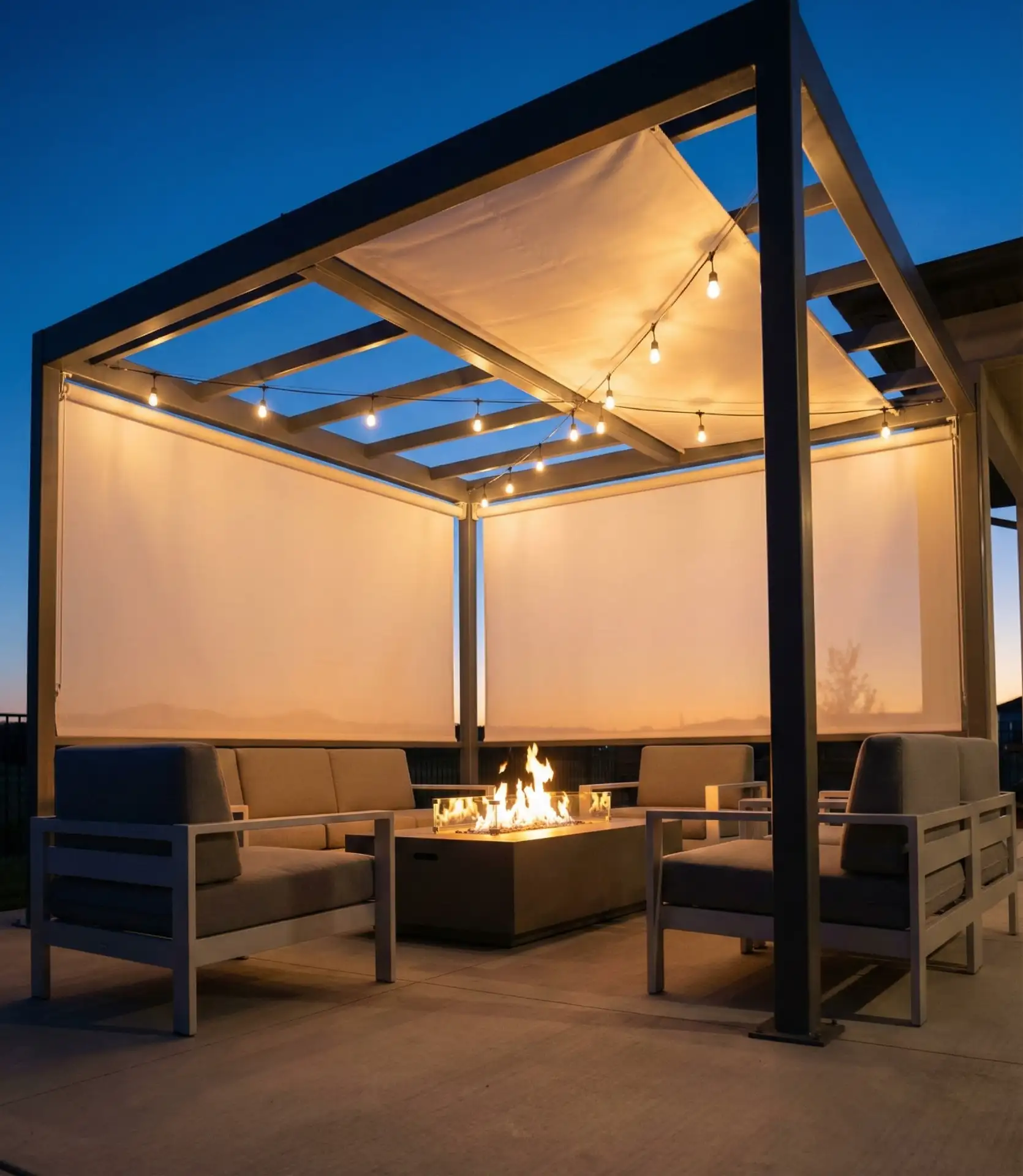
Pergola systems with a retractable canopy can provide fire characteristics to allow for all-weather fire and smoke ventilation. When the canopy is opened, the pergola outlines the frame with string lighting and vine plants, while the smoke is directed upward. The canopy of the retractable system will prevent rain and sun from hitting the guests, which will increase the comfort of the gathering. By creating additional usable spaces that can integrate with traditional seating, this design approach enhances the outdoors. These arrangements encourage year-round use. 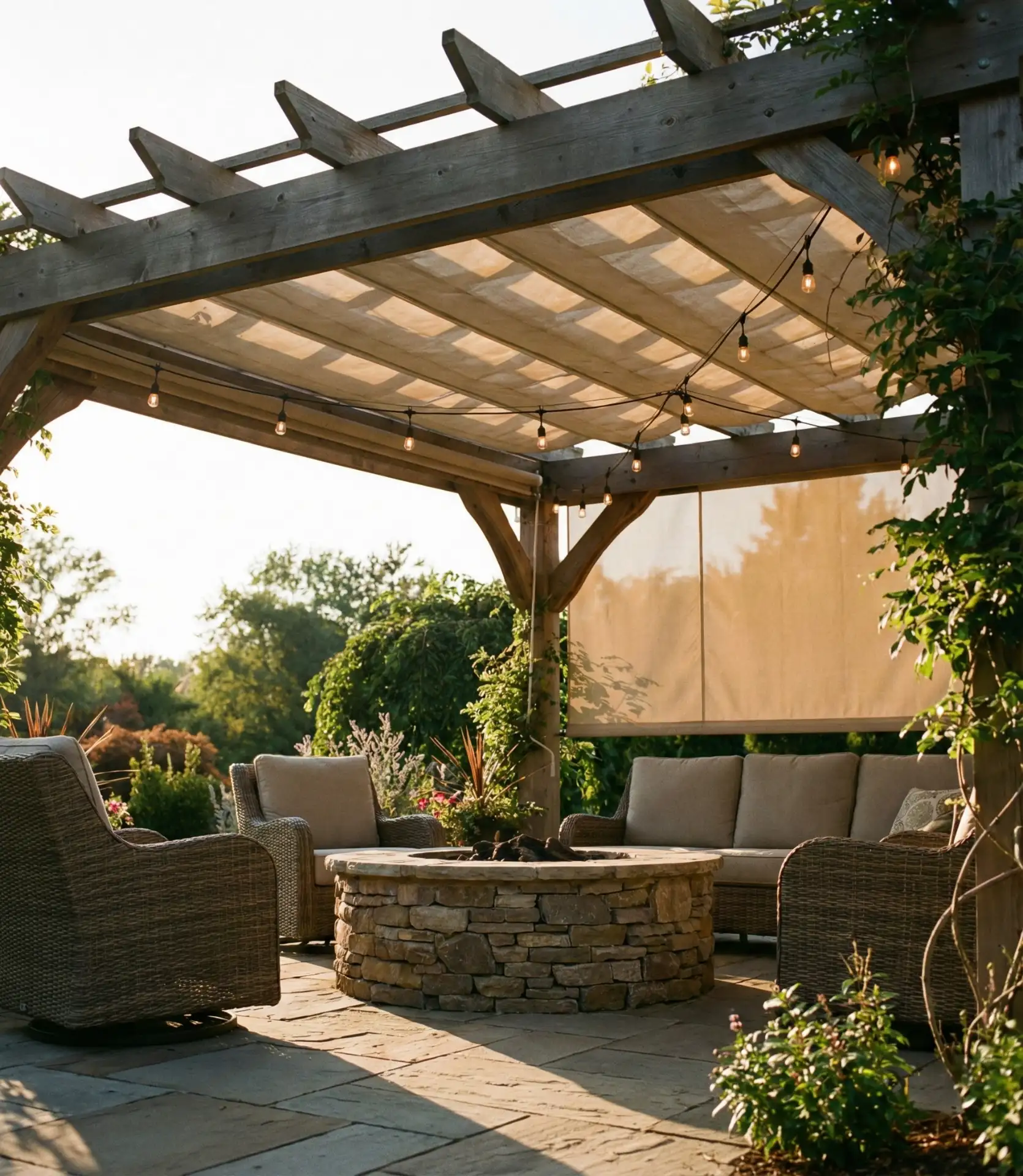
In locations with retractable canopies, temporary fire pits can become usable all three seasons. Make sure your fabric is marine grade to avoid mildew and fading. Furthermore, ensure your pergola structure extends 18 inches past the side the open fabric is on for smoke clearance.
19. The Boulder Ring Fire Pit is designed to blend seamlessly into a mountain landscape.
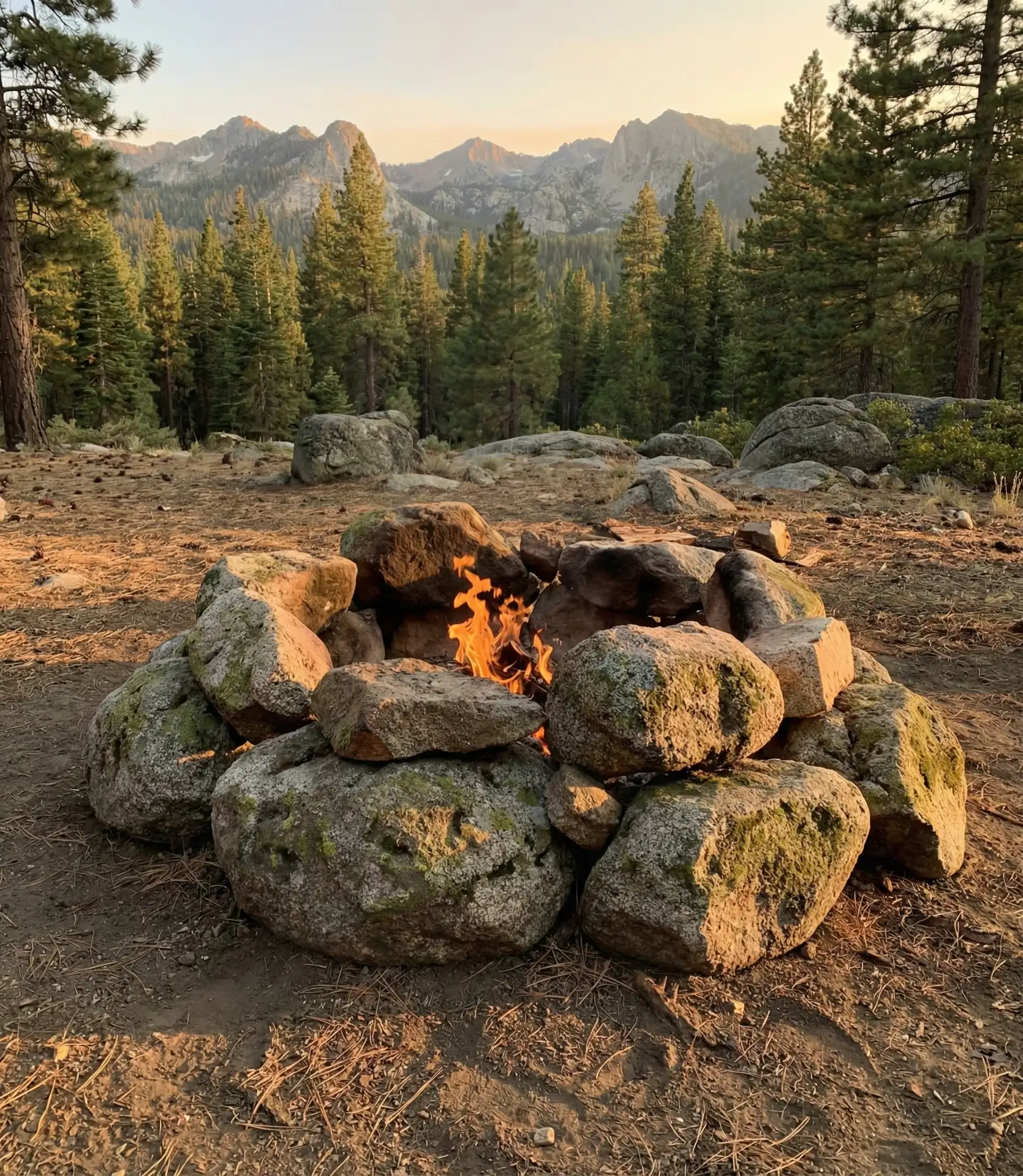
A rustic fire pit with large native boulders arranged in an irregular circle looks like it is part of the natural landscape rather than human-made. This design is ideal for mountain properties and wooded settings where you want the fire feature to blend seamlessly with the surrounding geography. Because there is no need for mortar or specialized masonry, the large stone mass also provides excellent heat retention and wind protection. 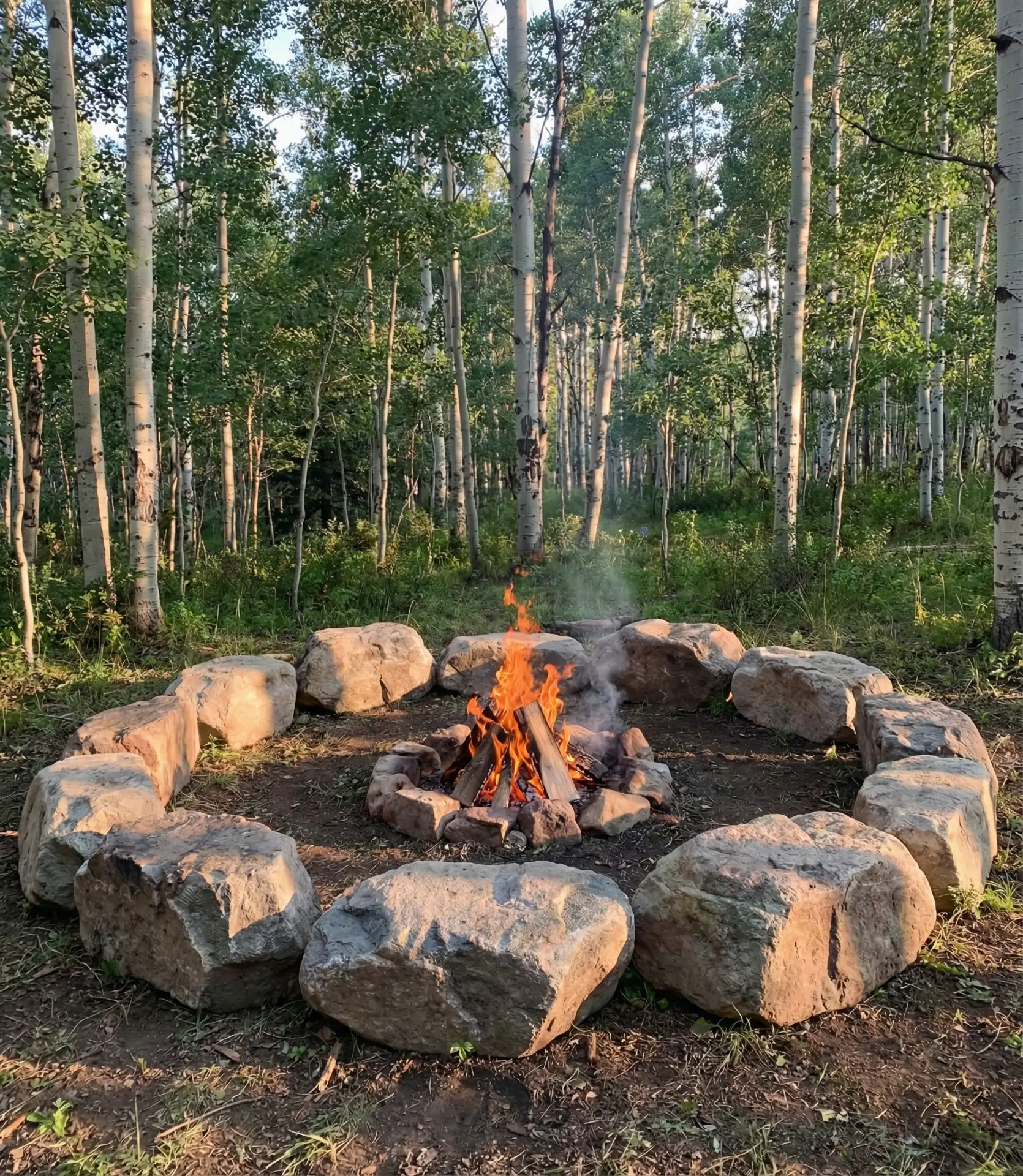
The placement of boulder pits is very context sensitive. In the Colorado or Montana foothills, using boulders can feel integrated, while in the Florida or coastal regions, it can feel forced. If boulders are not naturally found in your area, using locally stacked stone or brick is preferable, as it can be a more suitable option than importing geology that feels overly theatrical.
20. The fire pit features a built-in bench with storage underneath.
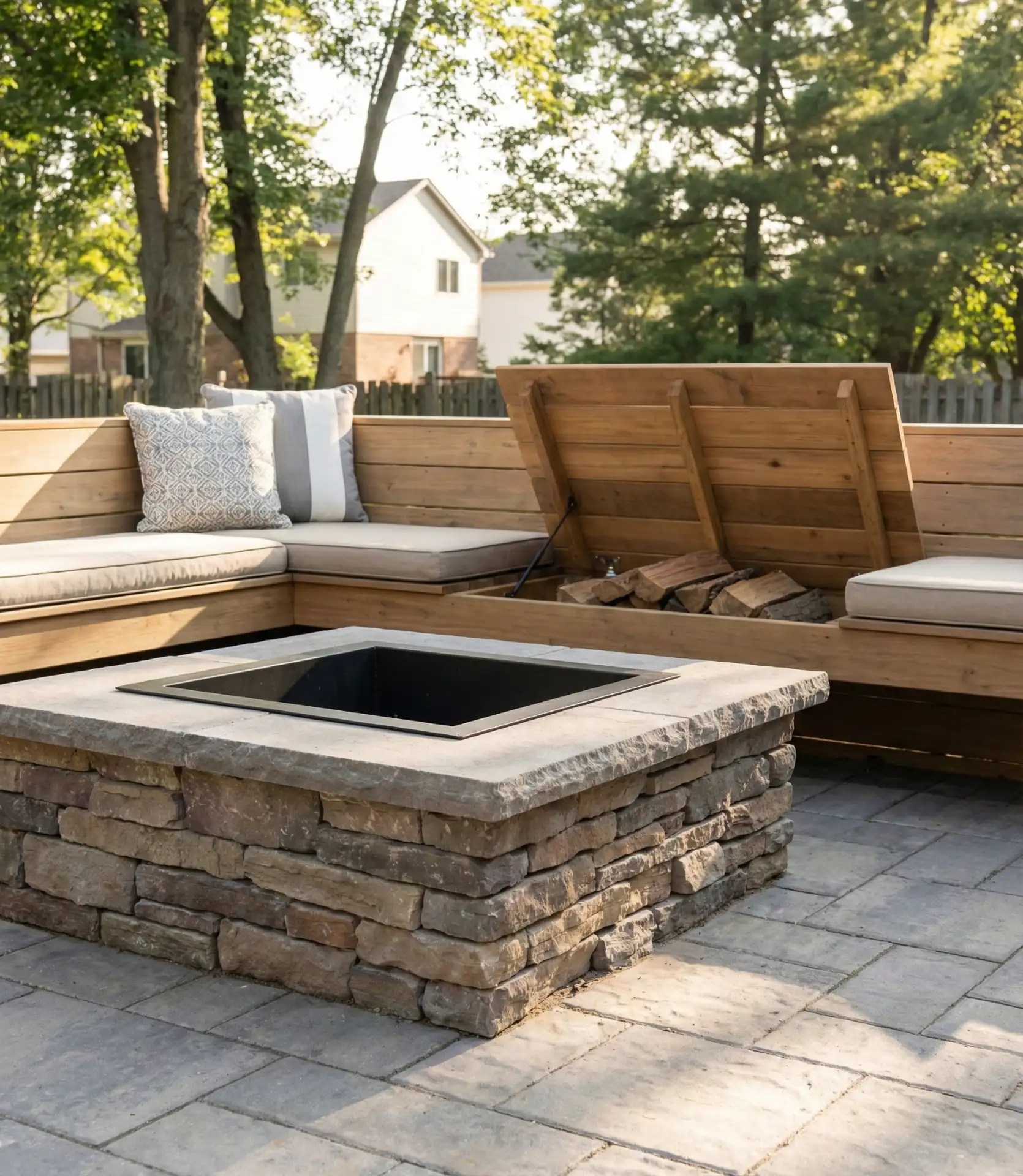
Custom masonry that integrates both seating and below-bench storage maximizes utility in compact backyards and DIY projects. The bench lids flip up to reveal compartments for firewood, fire starters, blankets, or propane tanks, keeping essentials out of view yet readily available. This all-in-one approach eliminates the need for separate storage components while creating a cohesive hardscape that offers a designed look rather than an assembled look from disparate pieces. 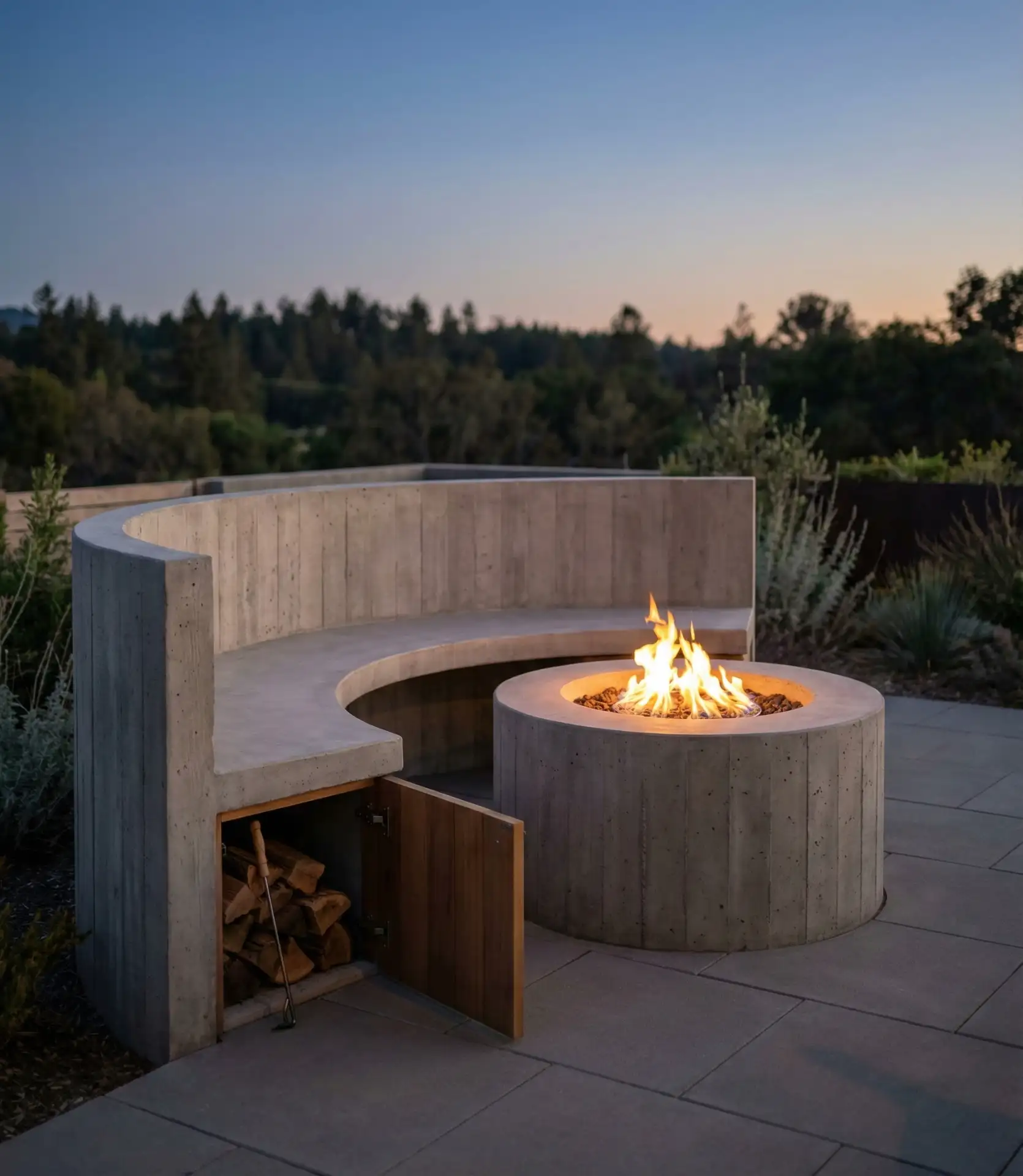
A landscape designer from Seattle shared that waterproofing below-bench storage properly adds $800 to $1,200 but prevents chronic moisture problems. Include drain holes, seal wood components with marine varnish, and consider removable liners that can air out. Damp firewood smokes excessively, and damp cushions develop mildew—proper storage design prevents both issues.
21. Fire Bowl on Decomposed Granite Patio
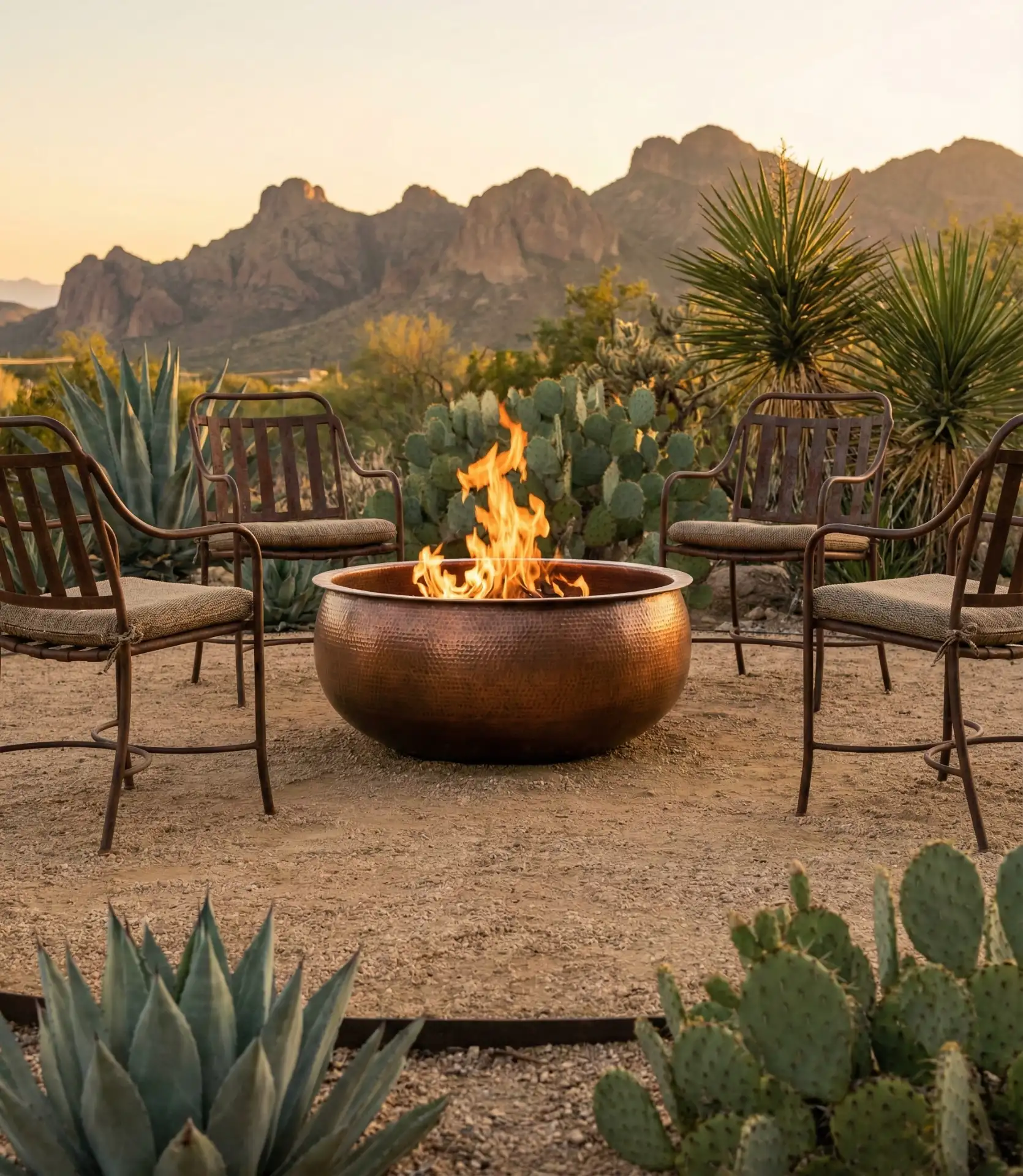
Decomposed granite surfaces provide permeable, low-cost hardscape that drains beautifully while offering firm footing for fire pit installations. A central fire bowl on this natural-looking base creates simple, cheap fire zones that suit xeriscape and desert-adapted landscapes. The granite compacts to near-concrete hardness yet allows rainwater penetration, solving drainage issues that plague conventional paving in heavy clay soils. 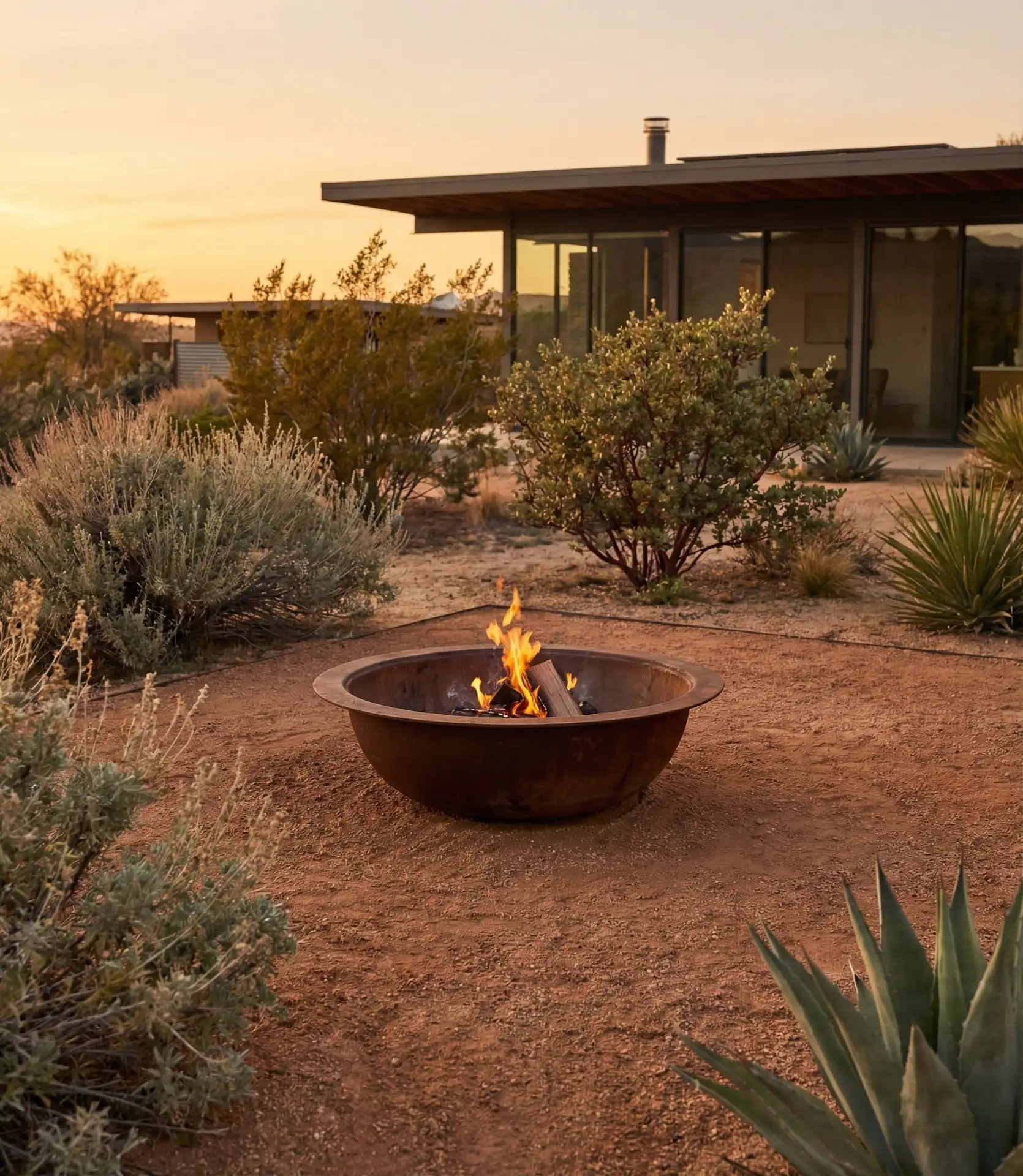
Where it works best: It’s best applied in dry, western states with landscaping that is costly and restricted due to water access. Crushed stone is $0.50 per square foot and is much cheaper than concrete or pavers. Structures that hold edges in place keep it from shifting, and a smooth surface is easy to maintain. Compaction and erosion controls from a stabilizer may need to be redone every few years.
22. Double-Sided Fire Feature as Property Divider

A tall, double-sided fire feature serves as a functional divider between distinct outdoor zones, e.g., separating the dining area from the lounging area. Because the flames are visible from both sides, the fire feature provides ambience to multiple areas and is great for large properties. This architectural style is ideal for homeowners who prefer fire elements to be along with the other landscape rather than as focal points on their own. 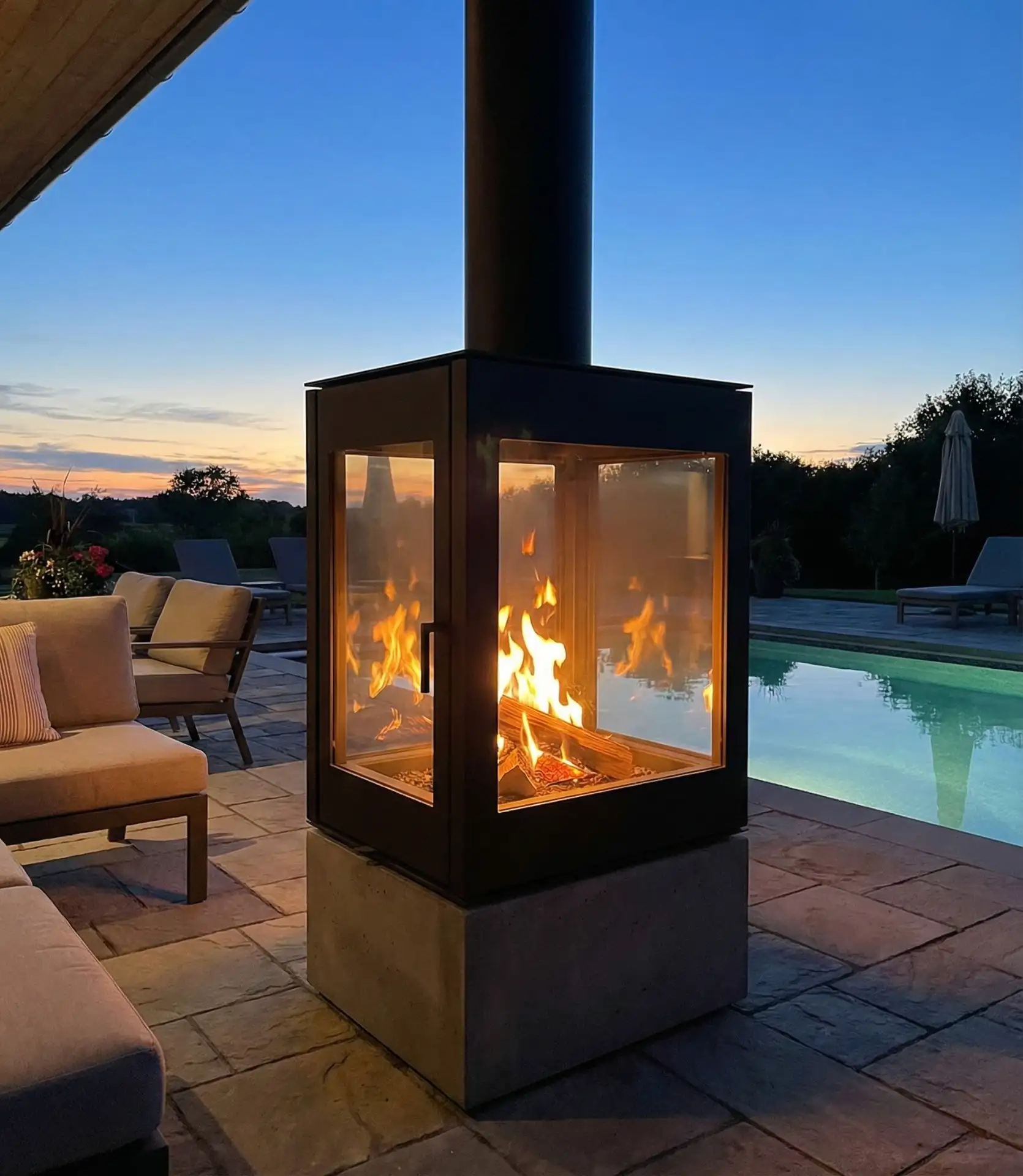
It is practical to use gas instead of wood for double-sided features because it avoids ash management issues that come with servicing two zones. Since there is no solid backdrop for leaning seating, the design without sides requires more intentional furniture placement. It is best to finalize your layouts before the design and installation are done.
23. Hanging Fire Basket with Swing Chain
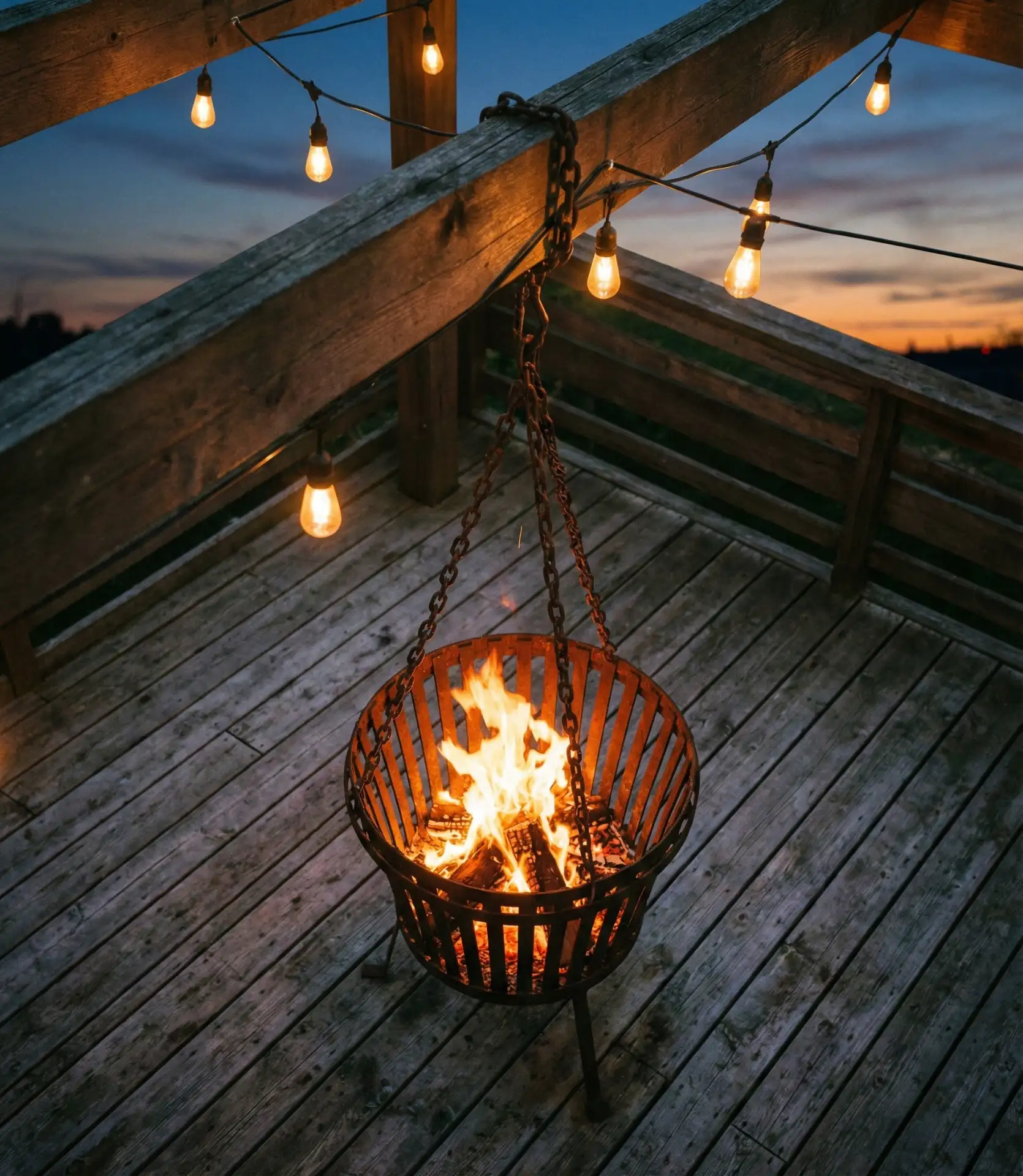
Suspended fire baskets hanging from sturdy pergola beams or tree limbs create dramatic focal points that save ground space. The elevation provides better heat distribution and fascinating visual drama as flames dance above eye level. This unconventional approach particularly resonates with lights strung in the same overhead structure, creating layered lighting that transforms ordinary backyards into enchanting evening destinations. 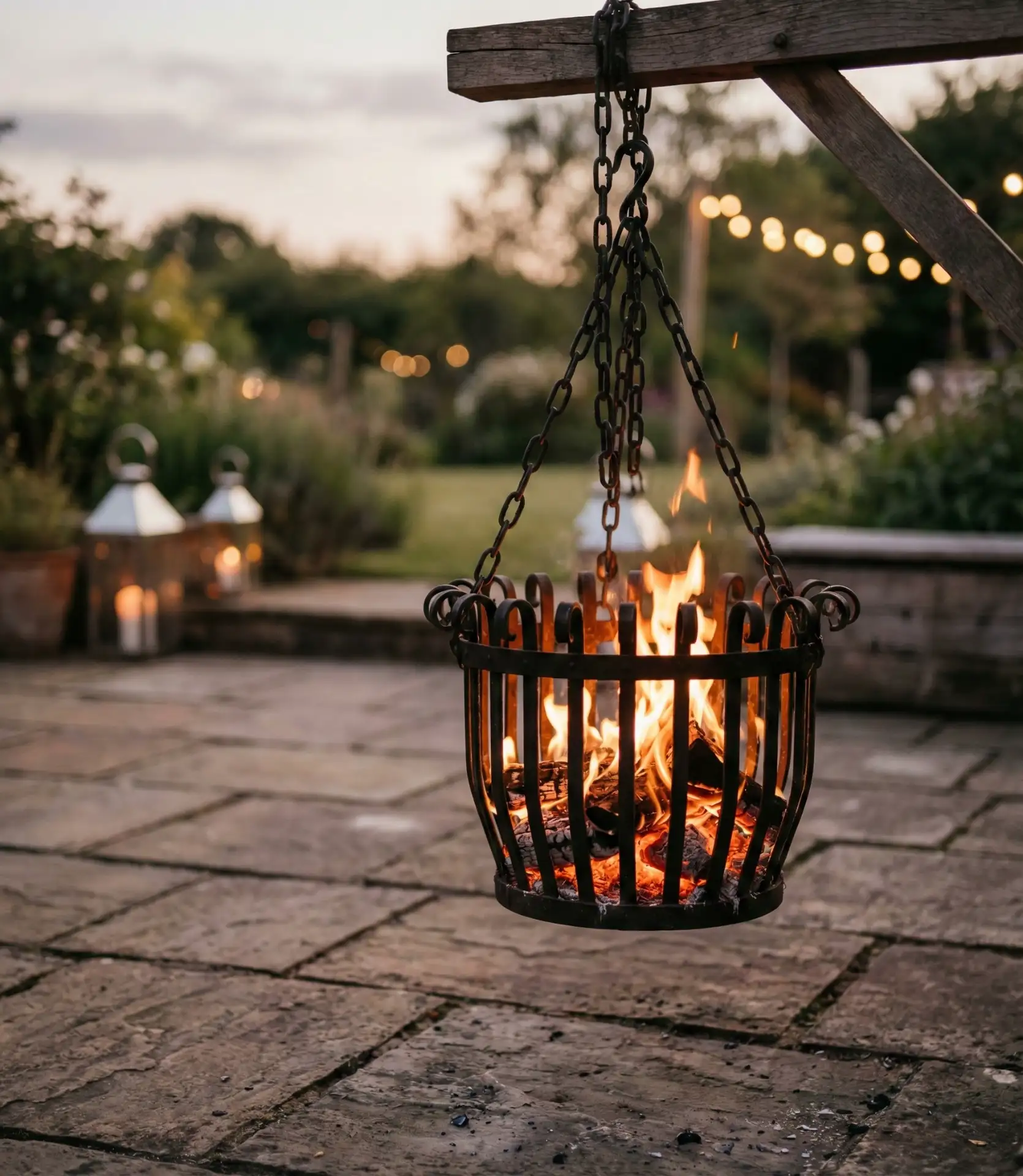
Safety demands absolute attention with hanging fire features—support structures must handle not just the basket weight but also dynamic loads as wind moves the suspended mass. Engineering typically requires beams capable of supporting 500 pounds with a significant safety margin. Most building codes won’t permit hanging fires, so verify legality in your jurisdiction before investing in this striking but regulated option.

These 46 fire pit ideas demonstrate how versatile outdoor fire features have become, adapting to every budget, yard size, and aesthetic preference. Whether you have a preference for rustic stone circles, modern linear gas features, or space-saving corner installations, there is a solution that perfectly suits your property and lifestyle. Which concept resonates with your backyard vision? Drop a comment sharing your favorite idea or any fire pit experiences you’ve had—the community would love to hear what’s worked in your outdoor space.