46 Kitchen Sink Ideas 2026: Styles, Materials & Designs to Transform Your Kitchen

The kitchen sink is having a serious moment. What used to be a purely functional fixture has become one of the most talked-about design choices in the entire home—and if your Pinterest feed is any indicator, Americans are deeply invested in getting it right. Whether you’re renovating a century-old craftsman or outfitting a brand-new build, the sink sets the tone for the whole kitchen. In this guide, we’re walking through fresh, inspiring kitchen sink ideas for 2026 that blend beauty with real-world practicality—from sleek undermount sinks, which are installed beneath the countertop for a seamless appearance, to bold statement farmhouses, small-space solutions, and everything in between.
1. Undermount Sink with Quartz Waterfall Counter
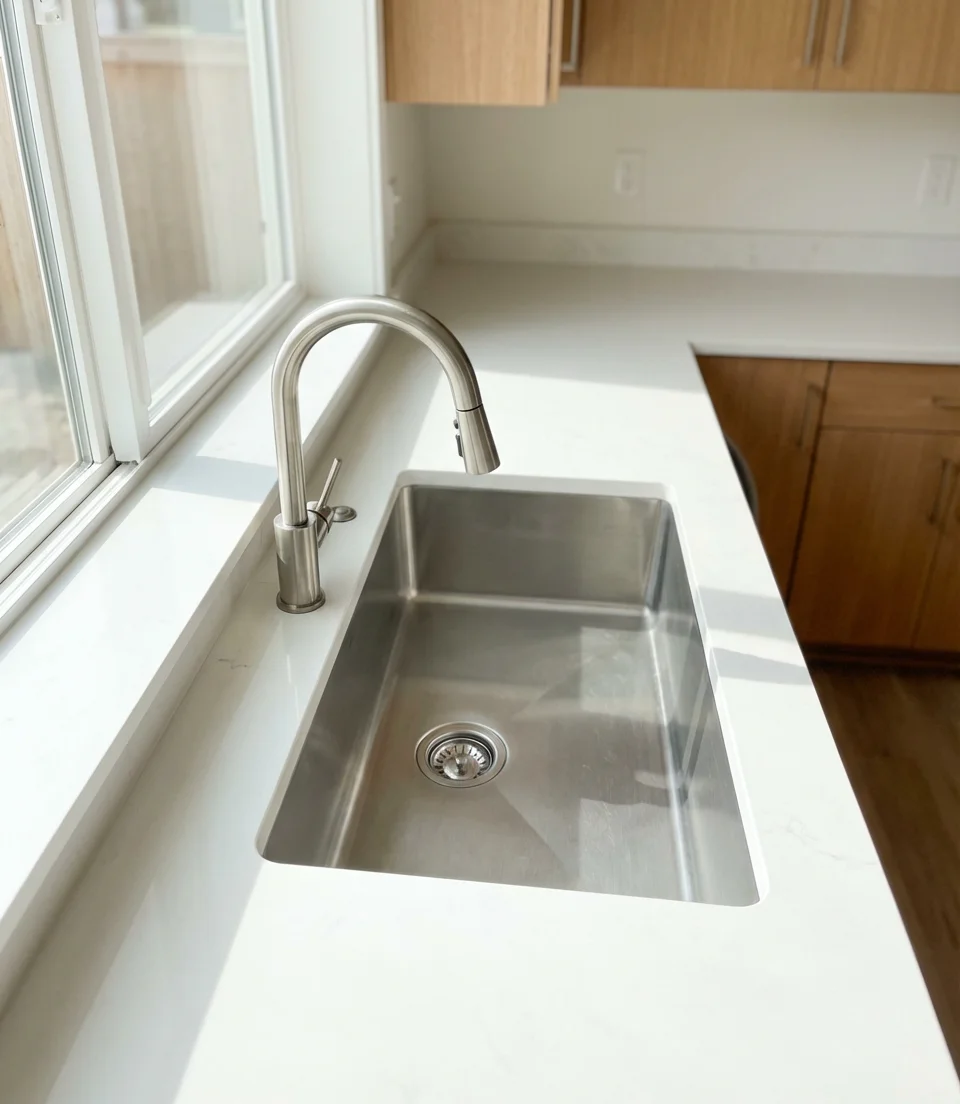
There’s a reason the undermount sink remains one of the most searched styles on Pinterest year after year—it delivers a genuinely seamless look that makes even modest kitchens feel elevated. Paired with a quartz waterfall countertop, this configuration creates a continuous visual line that reads as both modern and timeless. The sink sits flush below the counter, making cleanup effortless since crumbs sweep directly into the basin. It works especially well in open-plan kitchens where the counter edge is visible from multiple angles.
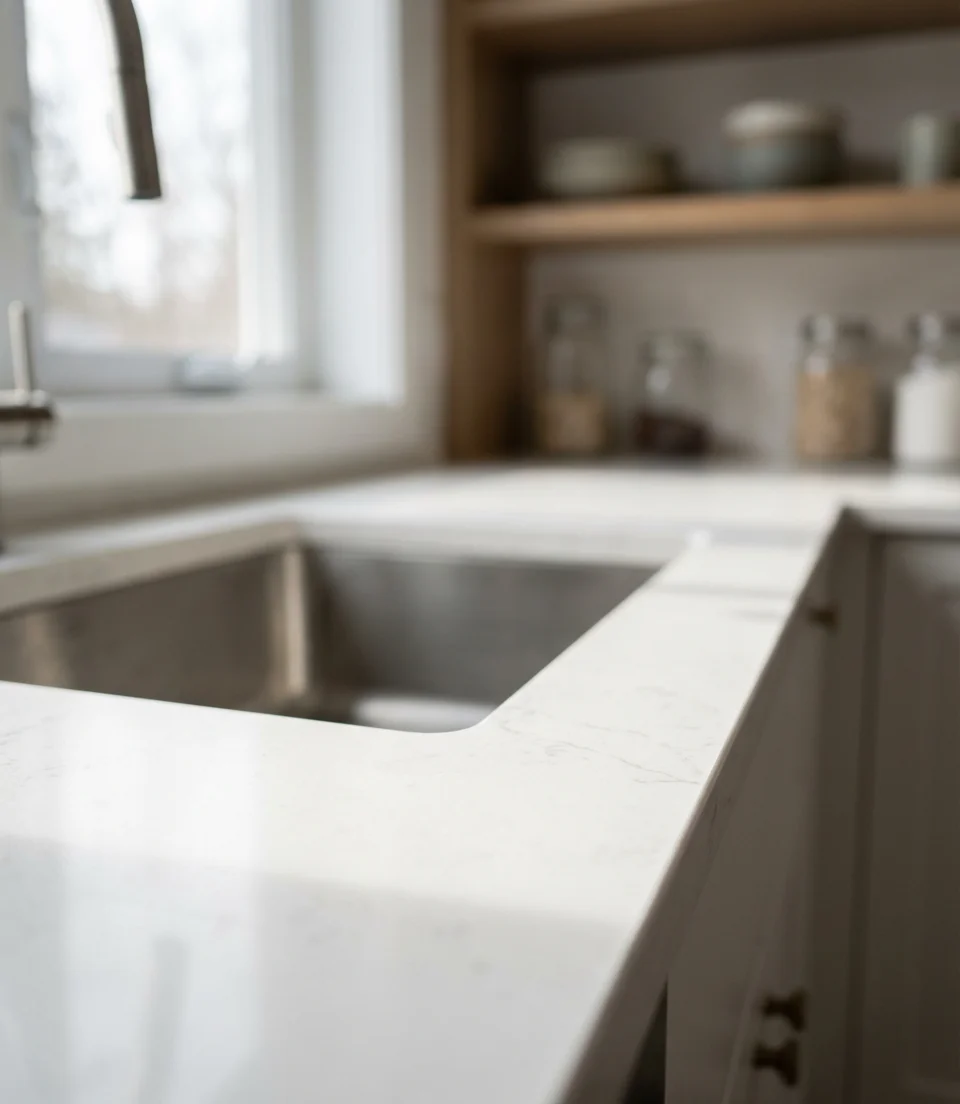
If you’re budgeting for a kitchen remodel, this combination sits in the mid-to-upper range—expect to spend between $800 and $2,500 for a quality undermount sink, which is a sink installed beneath the countertop, made of either stainless steel or composite materials, not including installation. The quartz waterfall edge typically adds $300–$600 to your stone fabrication costs. That said, the return on resale is significant. Real estate agents consistently flag high-end sink-and-counter combos as features buyers notice immediately. It’s one of the smarter splurges in a kitchen renovation.
2. Black Kitchen Sink in a Matte Two-Tone Kitchen
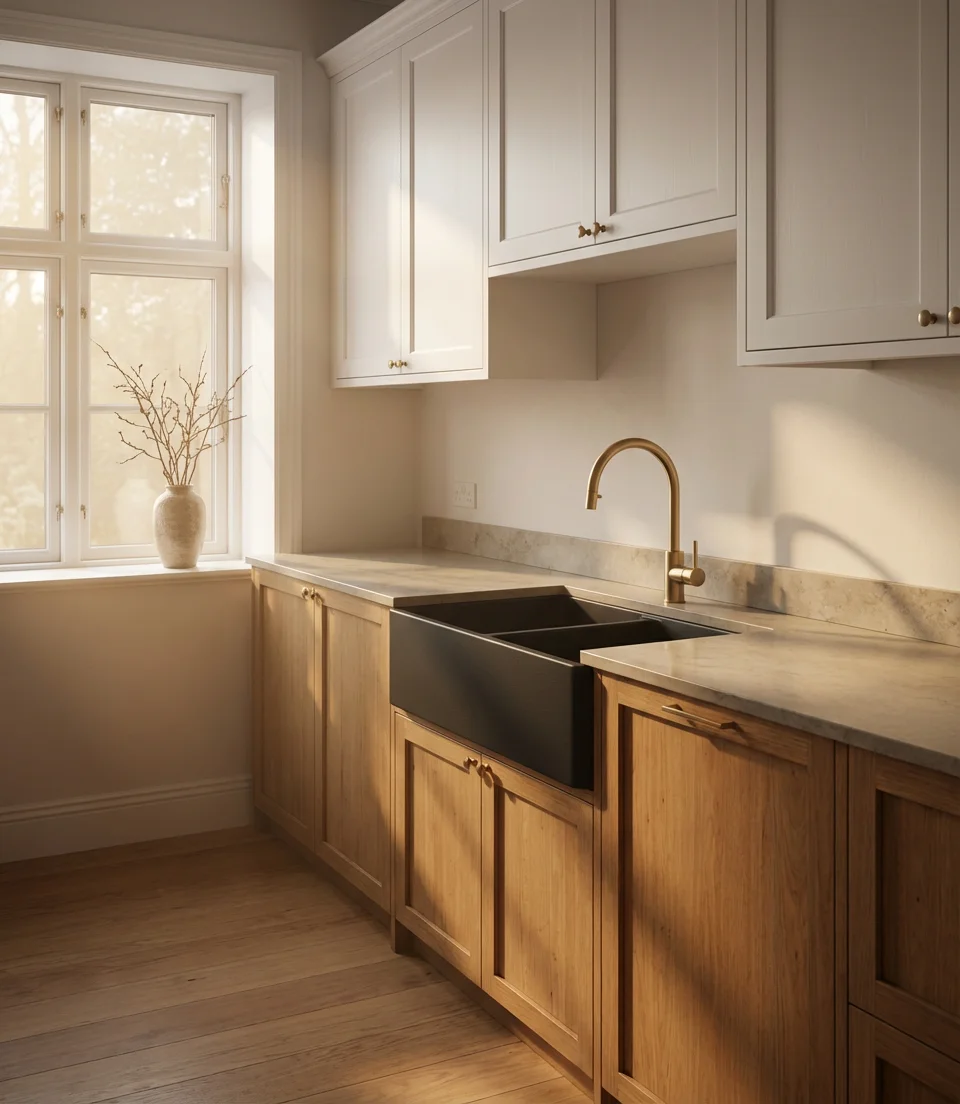
A black sink makes an unmistakable design statement—especially when it’s positioned against a two-tone cabinet layout with warm wood lowers and painted uppers. The matte finish absorbs light beautifully, lending the kitchen a moody, sophisticated quality that’s showing up all over interior design feeds in 2026. Unlike stainless, black composite granite sinks resist showing water spots and minor scratches, which makes them surprisingly practical for busy households. They pair especially well with brushed gold or matte black hardware for a cohesive, curated look.
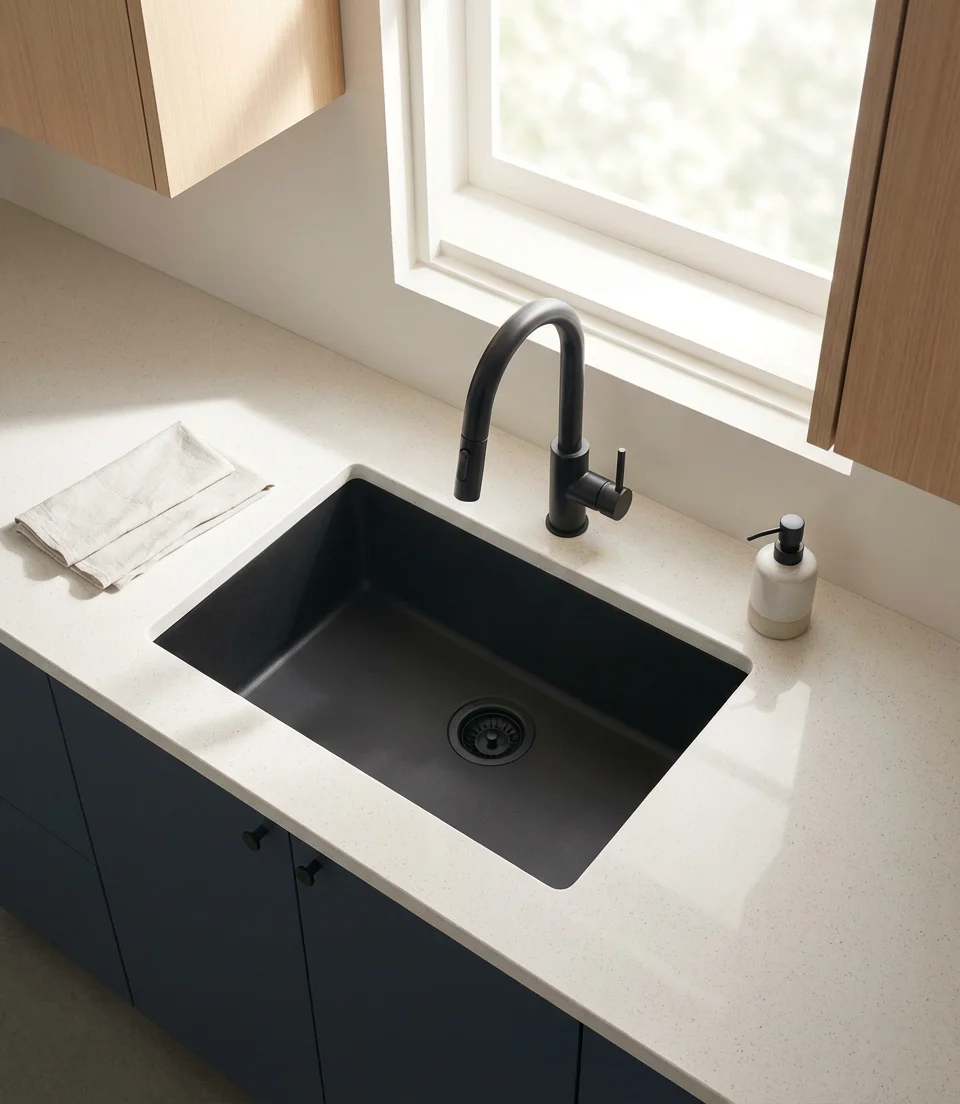
One thing homeowners consistently underestimate with black sinks is that mineral deposits from hard water can show more obviously than expected, especially in regions with high calcium content like the Southwest or Midwest. The fix is simple—a quick wipe with diluted white vinegar keeps the surface looking its best. Designers recommend pairing a black sink with a pull-down faucet in the same finish to avoid the common mistake of mixing too many metal tones in a small kitchen space.
3. Double Bowl Sink for Busy Family Kitchens
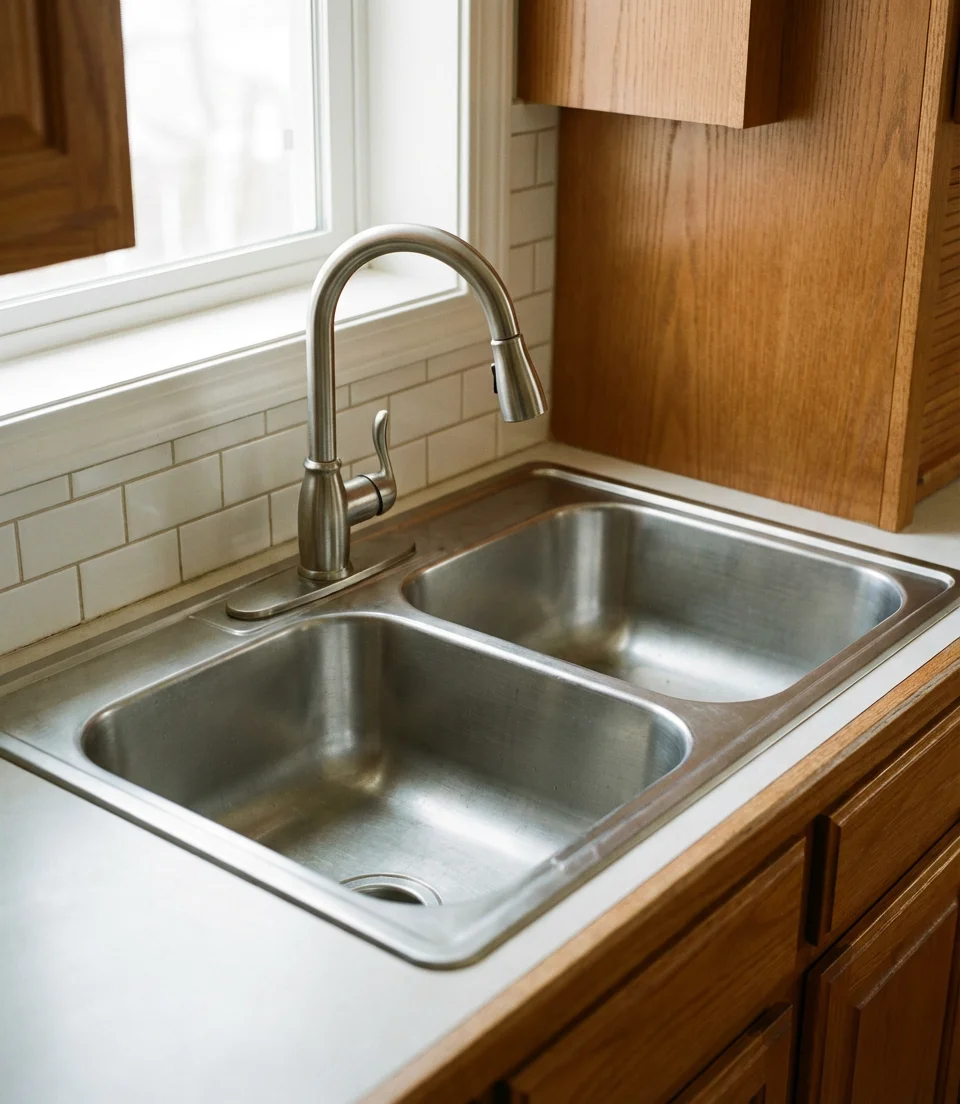
For families who cook seriously—and that’s a lot of American households—a double-bowl sink is less of a luxury and more of a daily necessity. The dual-basin setup lets you soak dishes on one side while rinsing vegetables on the other, which anyone who’s tried to prep a salad next to a soaking roasting pan knows is absolutely invaluable. The stainless steel version remains the most popular choice, largely because it’s durable, affordable, and compatible with virtually every kitchen aesthetic, from farmhouse to ultra-modern.
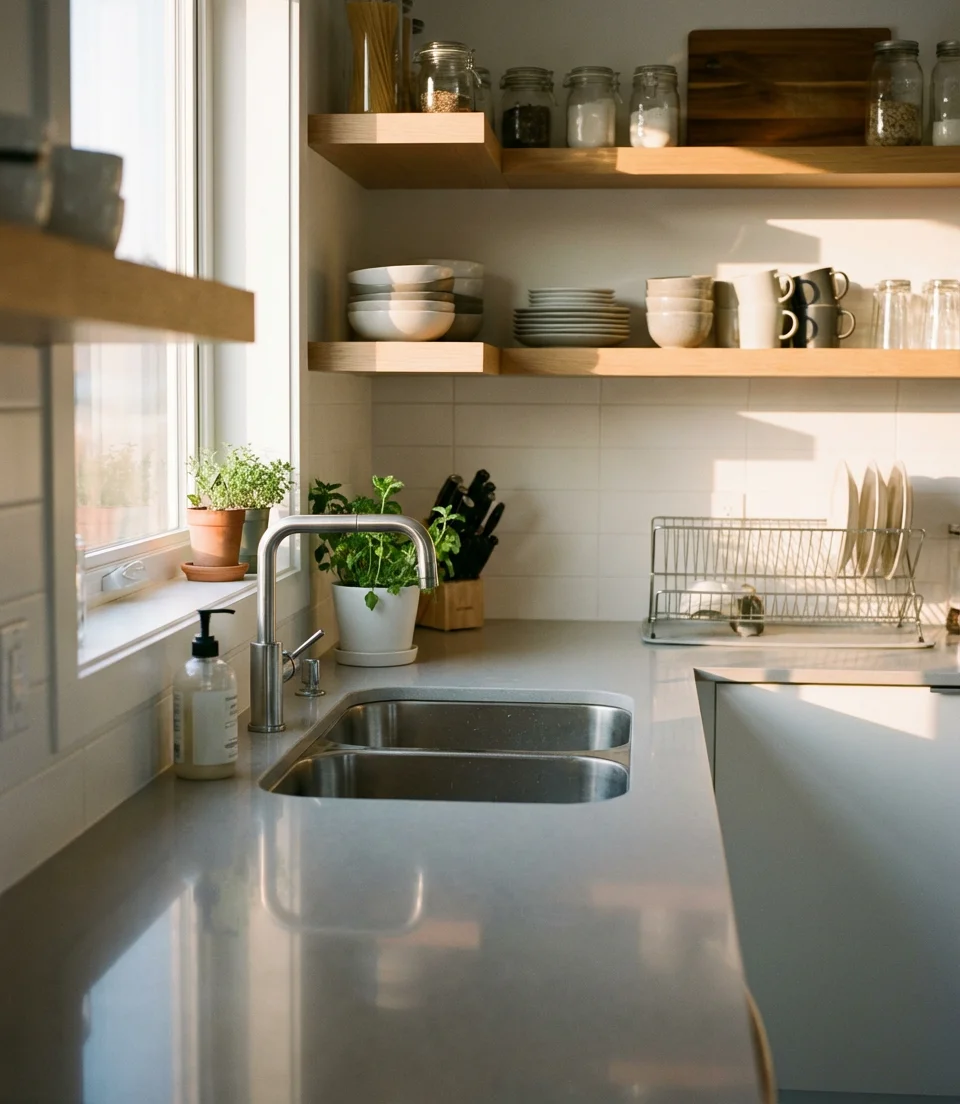
A wonderful friend once told me she didn’t realize how much she needed a double-bowl sink until she moved into a home that had one—and then couldn’t imagine going back. That kind of quiet, functional joy is exactly what outstanding kitchen design is about. When shopping, pay attention to bowl depth: anything under 8 inches will frustrate you when washing tall pots. Most designers recommend 9–10 inch depth for family households. Equal-sized bowls work best for multitasking; a 60/40 split suits those who prefer one dominant workspace.
4. Window Over the Sink with Garden Views
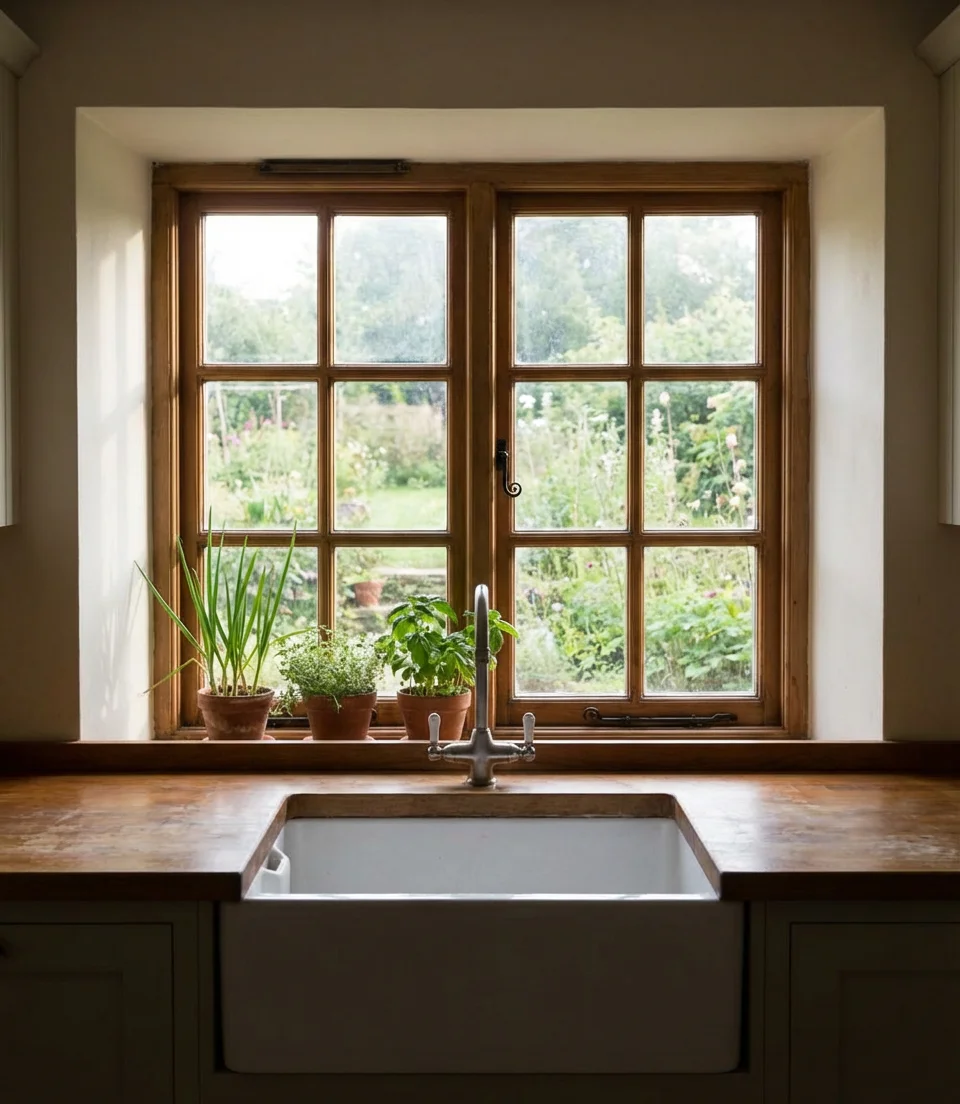
Few kitchen features carry the emotional weight of a window over the sink. There’s something almost nostalgic about standing at the basin, hands in warm water, looking out at a backyard garden or a quiet neighborhood street. In 2026, designers are leaning into this classic moment by making the window bigger—casement windows, picture windows, and even transom additions are all trending as a way to bring the outdoor world into the heart of the home. Natural light flooding across a clean counter is endlessly photogenic and genuinely mood-lifting.
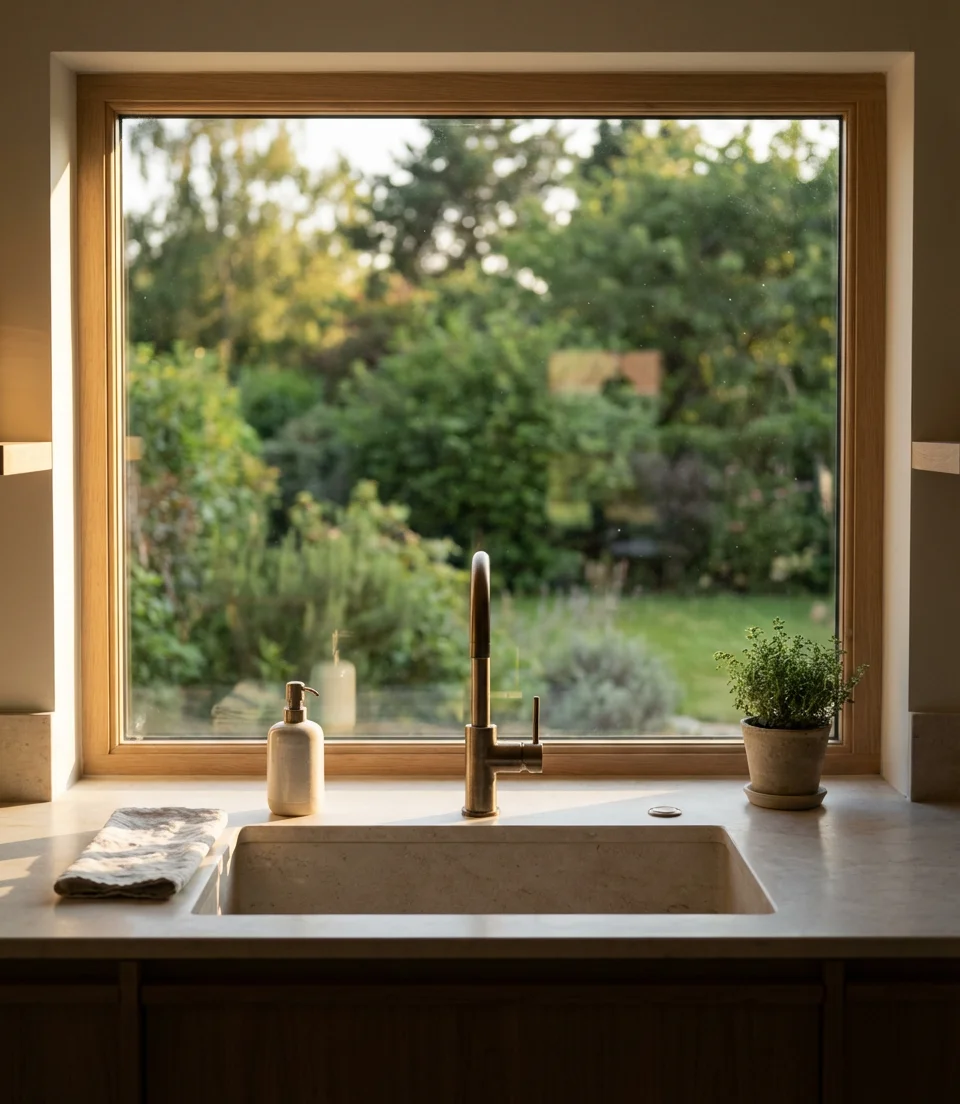
This setup works best in homes where the kitchen faces east or south—morning light through a garden-view window is one of the most universally beloved experiences in residential design. If your kitchen faces north or is shaded by mature trees, consider adding a slim pendant or under-cabinet light to compensate. Interior designers often note that a kitchen with a window sink feels more spacious and connected than a comparable layout without one—it’s a case where architecture and mood directly intersect in the everyday domestic experience.
5. Drop-In Sink in a Retro Kitchen Refresh
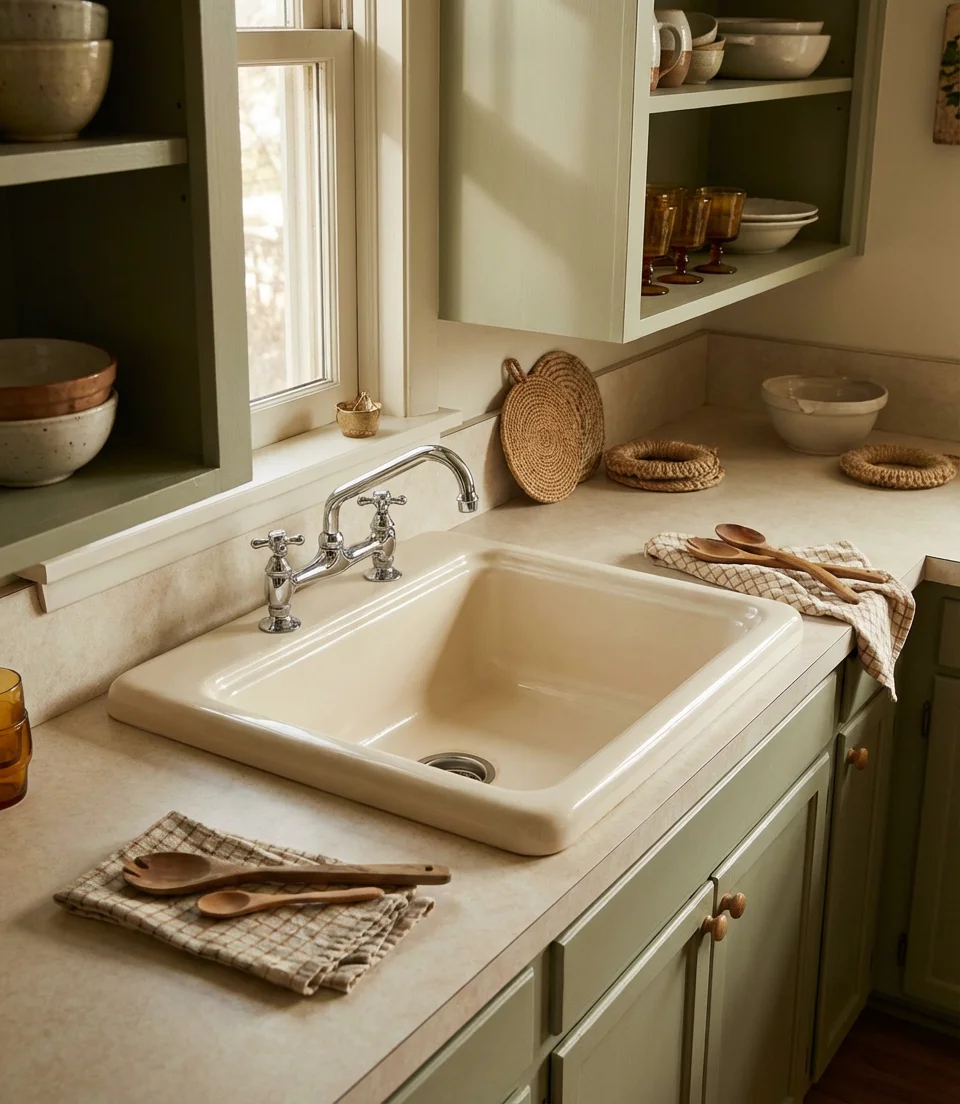
The drop-in sink is making a quiet comeback, and it deserves more credit than it gets. Long dismissed as the budget option, today’s drop-in sinks come in bold colorways, apron-front profiles, and sophisticated composite materials that look far more intentional than their reputation suggests. For anyone renovating a 1950s or 1960s home who wants to honor the period architecture while still getting modern performance, a retro-styled drop-in in cream, dusty sage, or terracotta is a genuinely inspired choice. It celebrates the sink’s presence rather than hiding it.
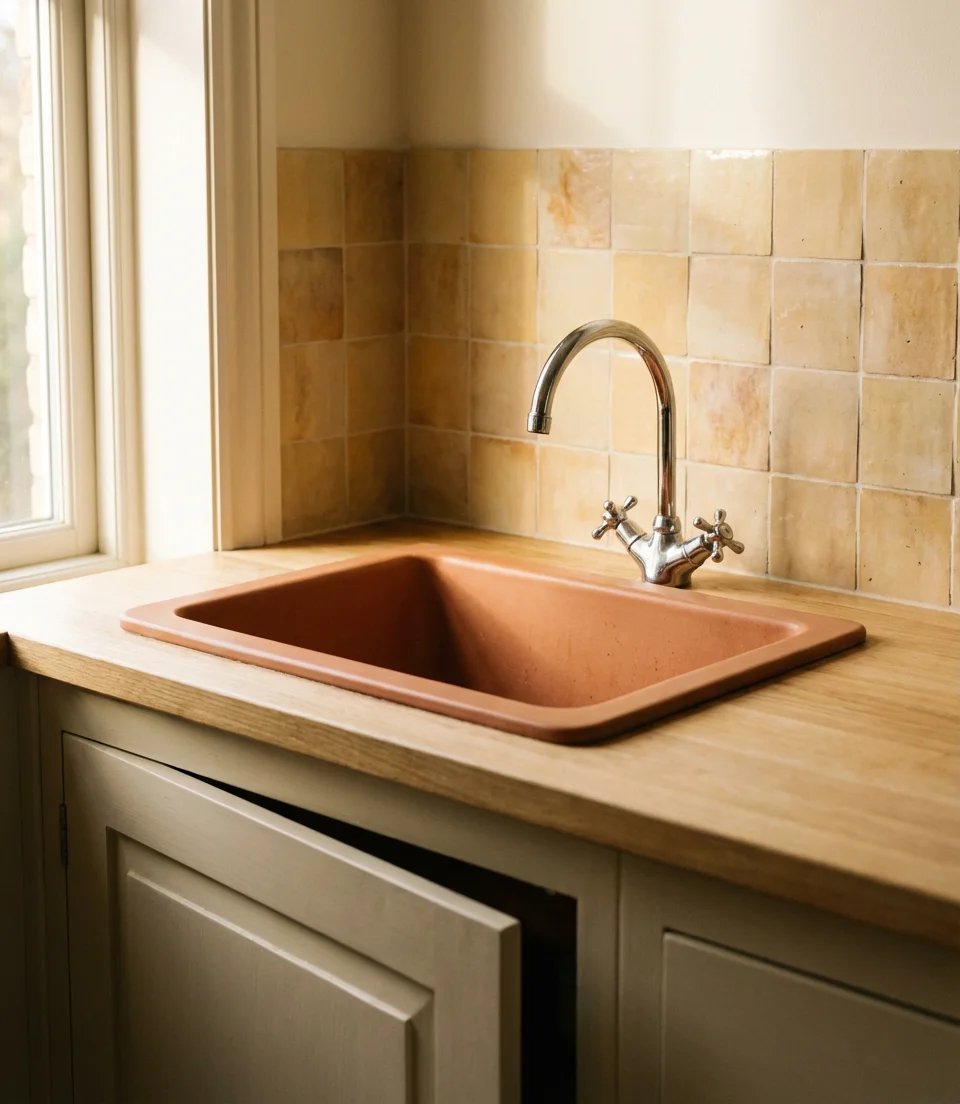
The practical advantage of a drop-in sink is its installation simplicity—it drops into a cutout and rests on the counter rim, meaning replacement or upgrades are significantly easier than with undermount configurations. This makes it a smart choice for renters who own their homes but prefer lower-commitment renovations, or for anyone working on a tight DIY budget. The rim does collect crumbs and moisture, so a quick daily wipe along the edge keeps things hygienic. Silicone sealant around the perimeter, replaced every few years, prevents moisture from seeping under the counter.
6. White Farmhouse Sink as a Kitchen Focal Point
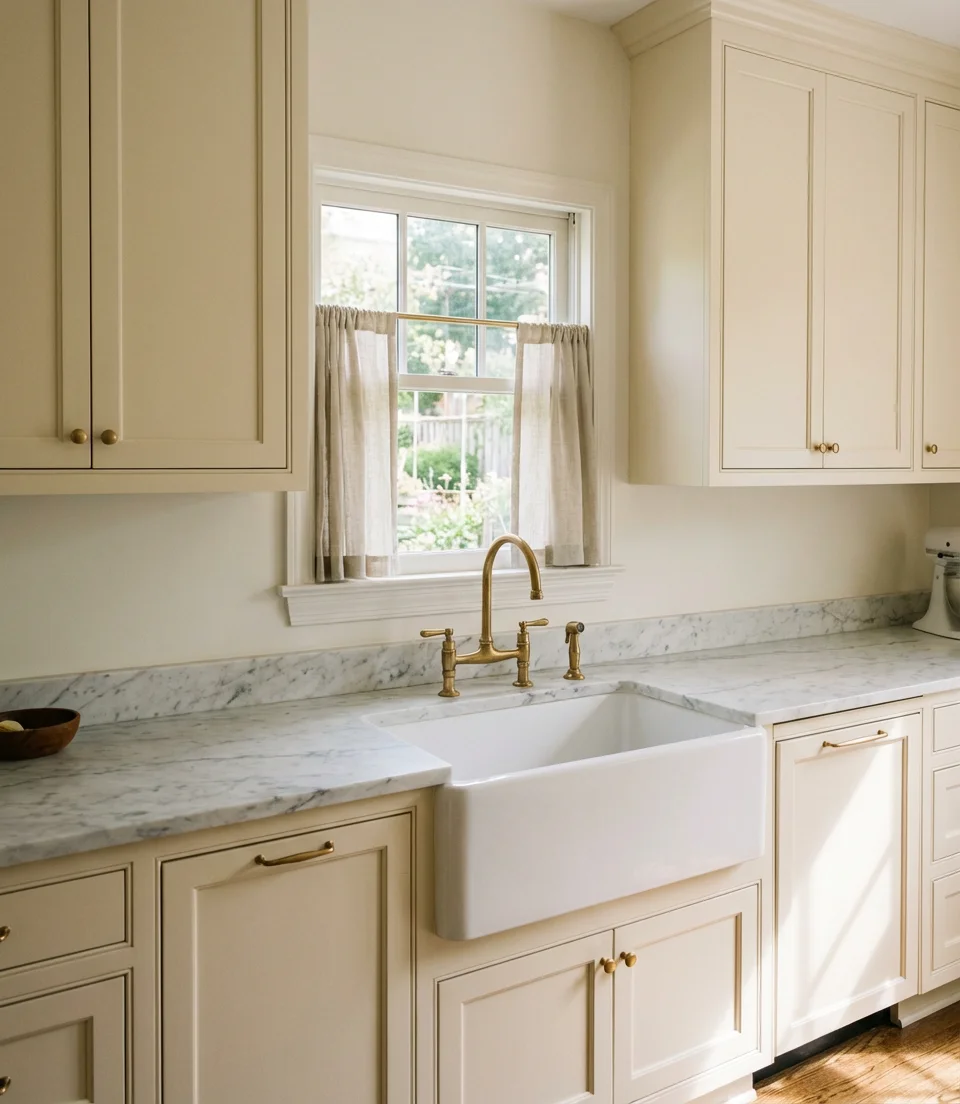
Nothing anchors a kitchen quite like a white apron-front farmhouse sink. It’s the kind of fixture that stops guests mid-tour—there’s a generosity to its scale and a warmth to its silhouette that makes a kitchen feel genuinely lived-in and welcoming. Whether paired with shaker cabinets in a coastal cottage or a more rustic open-shelf setup, a white fireclay farmhouse sink adds an effortless, heirloom-like quality that is always in style. In 2026, the trend is pairing it with unlacquered brass or aged bronze faucets for a time-worn, collected aesthetic.
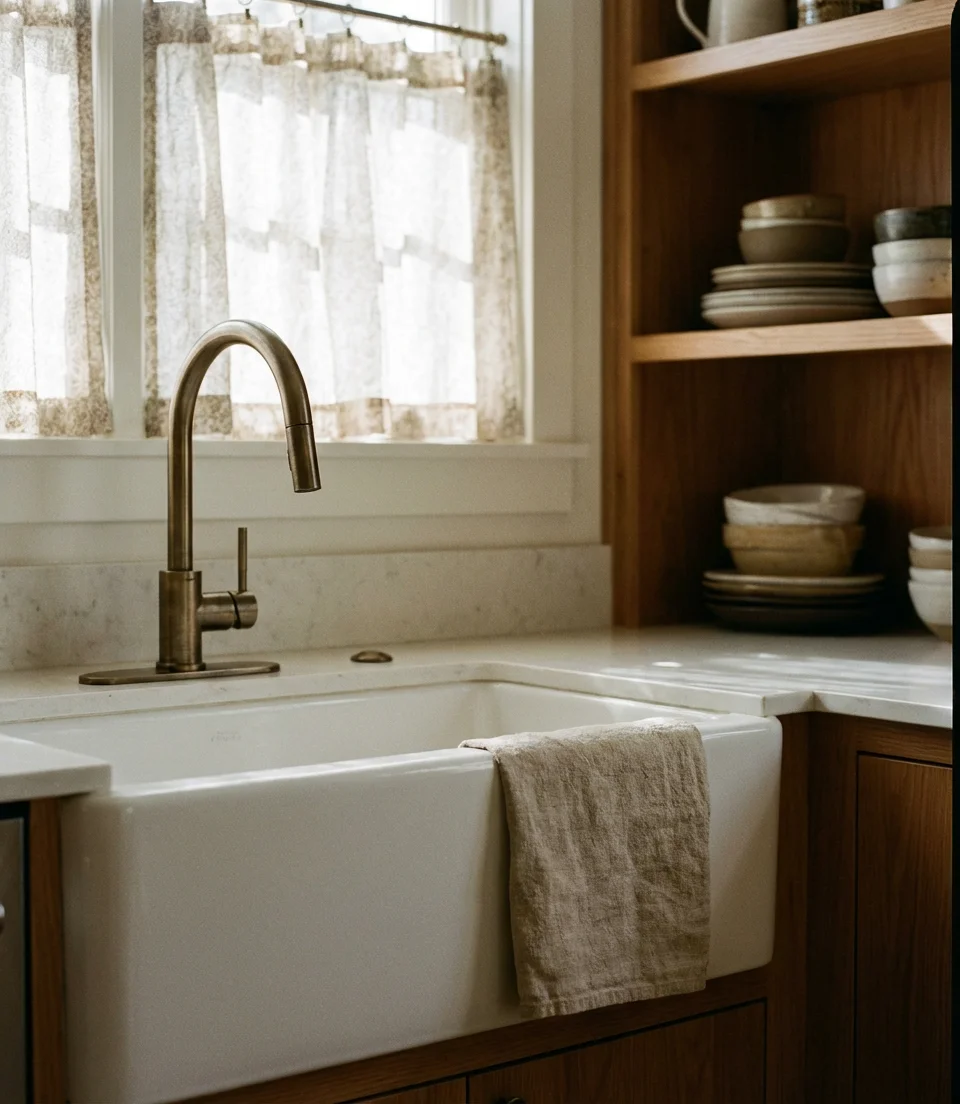
Fireclay is heavier than cast iron and significantly more resistant to chipping and staining—it’s the material of choice for serious cooks who want beauty without fragility. A quality farmhouse sink made of fireclay runs between $700 and $1,800 depending on size and brand. It’s worth noting that the apron front requires modified cabinetry—a standard base cabinet won’t accommodate the protruding front panel, so factor in a custom or semi-custom cabinet into your budget if you’re retrofitting an existing kitchen.
7. Small Spaces Sink Solutions for Studio and Galley Kitchens
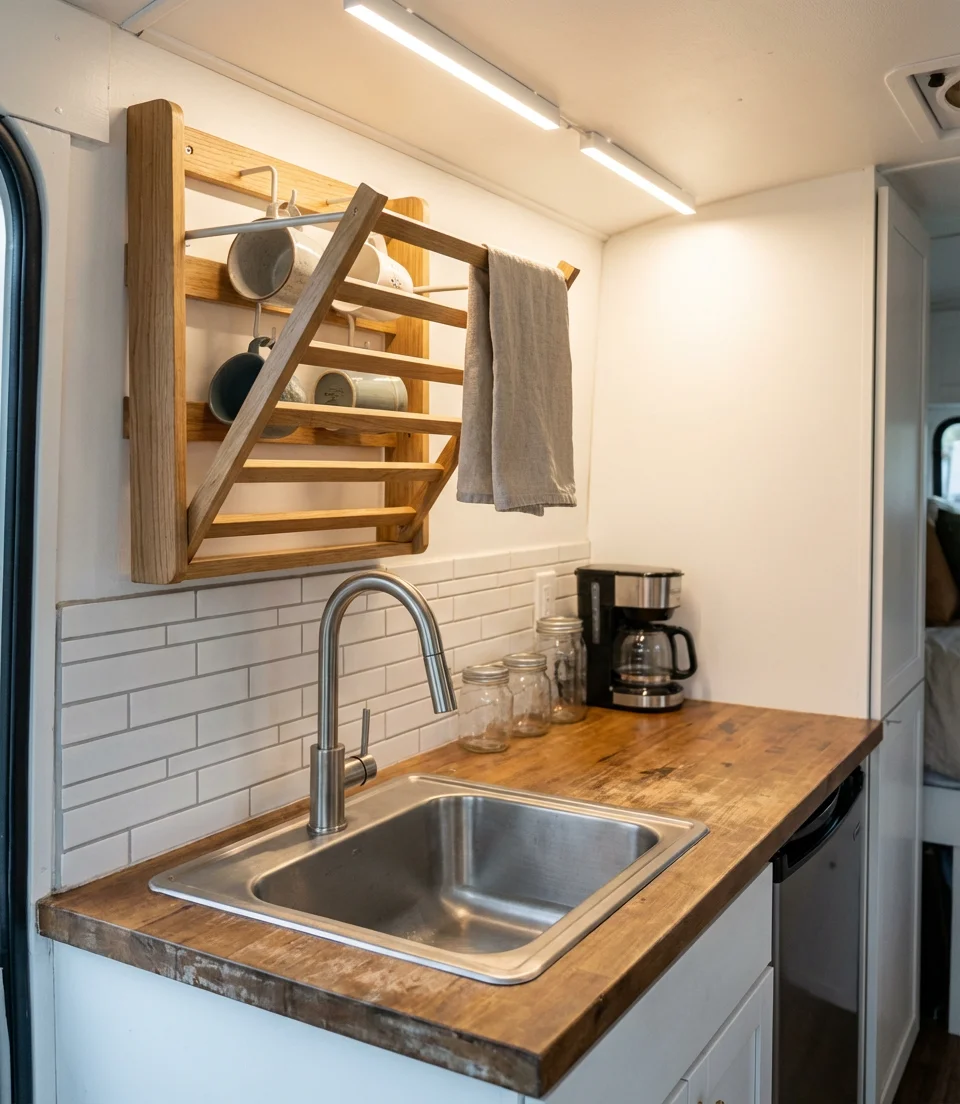
Designing a functional kitchen in a small apartment or studio requires real ingenuity, and the sink is often where that challenge is most acute. Compact single-bowl bar sinks, typically measuring 15 to 18 inches wide, can significantly transform small spaces by freeing up counter space without compromising basic functionality. Pair it with a fold-down drying rack mounted directly above, and you’ve essentially created a tiny kitchen ecosystem that punches well above its square footage. Brushed nickel or matte finishes keep the look from feeling institutional.
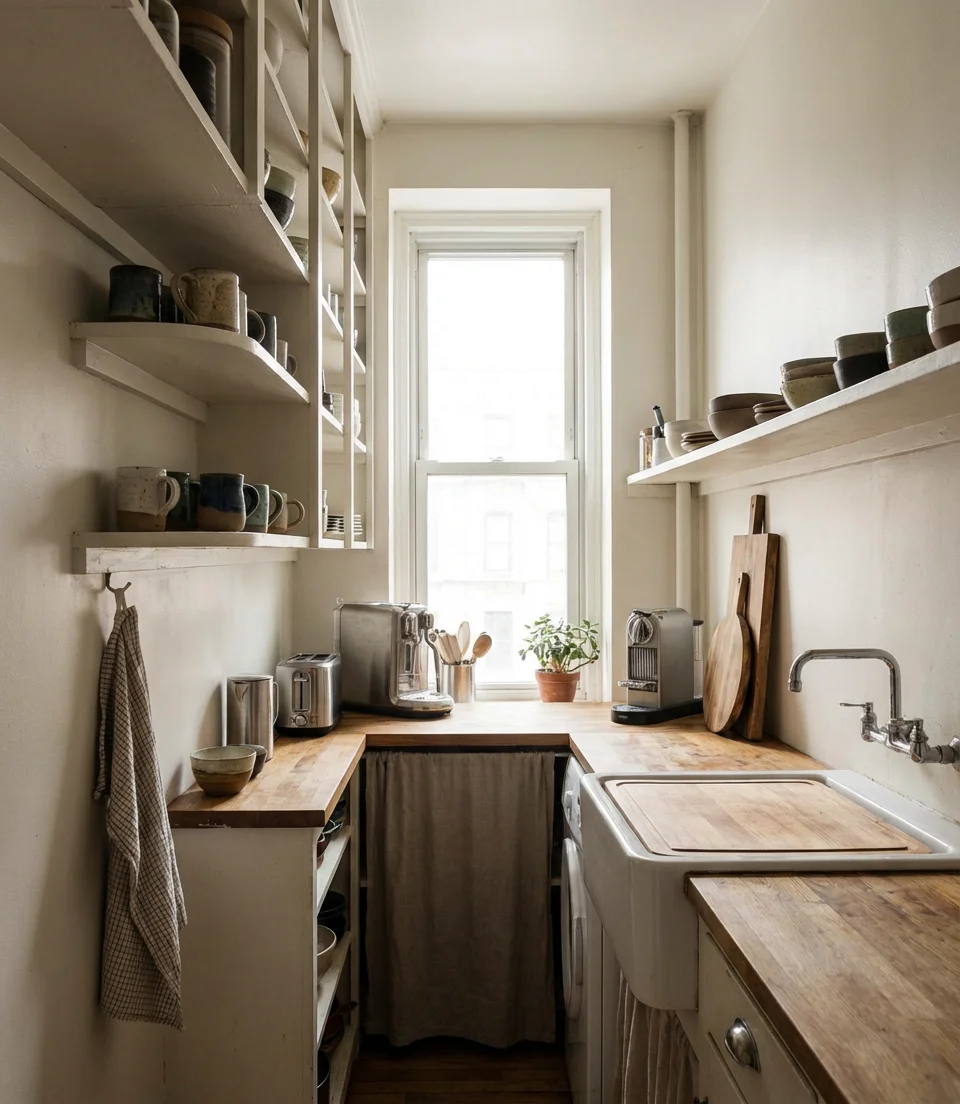
Urban renters in cities like New York, Chicago, and San Francisco have turned small-kitchen design into an art form—and the sink is central to their thinking. One common behavior among compact kitchen dwellers: they rely on over-the-sink cutting board inserts to essentially double their workspace. These slide directly over the basin and transform the sink zone into a legitimate prep area. It’s a $40–$80 upgrade that makes a real difference in daily kitchen life, especially for those who cook more than takeout menus might suggest.
8. Gold Faucet Pairing with a Neutral Stone Sink
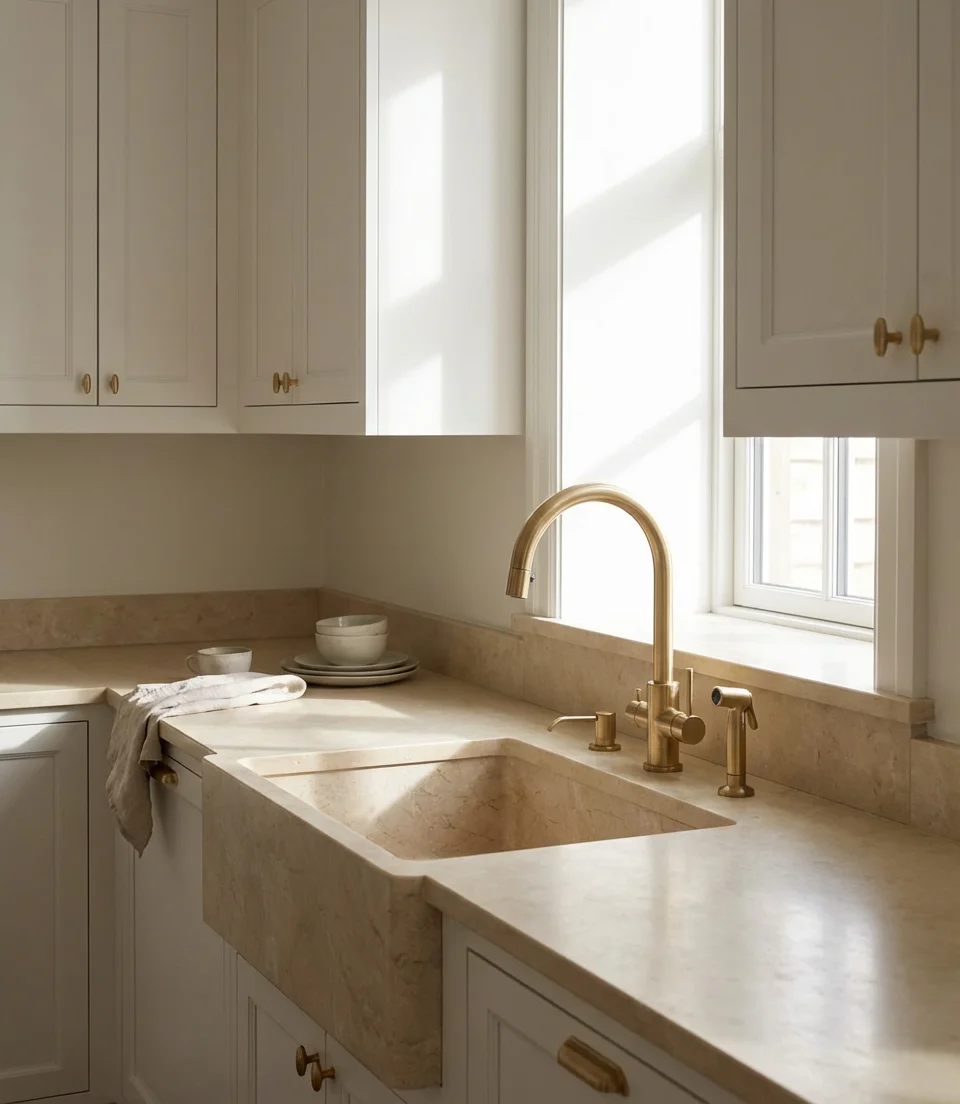
The gold faucet is a hardware trend that has defined the past few years and shows no signs of slowing down in 2026. Brushed gold—warmer and less flashy than polished brass—adds a layer of richness to any sink configuration, particularly when paired with a neutral stone or concrete basin. The contrast between the soft metallic warmth of the fixture and the cool, matte texture of honed marble or limestone is genuinely stunning. It works whether your kitchen runs traditional or contemporary, which explains its enduring appeal across very different design aesthetics.
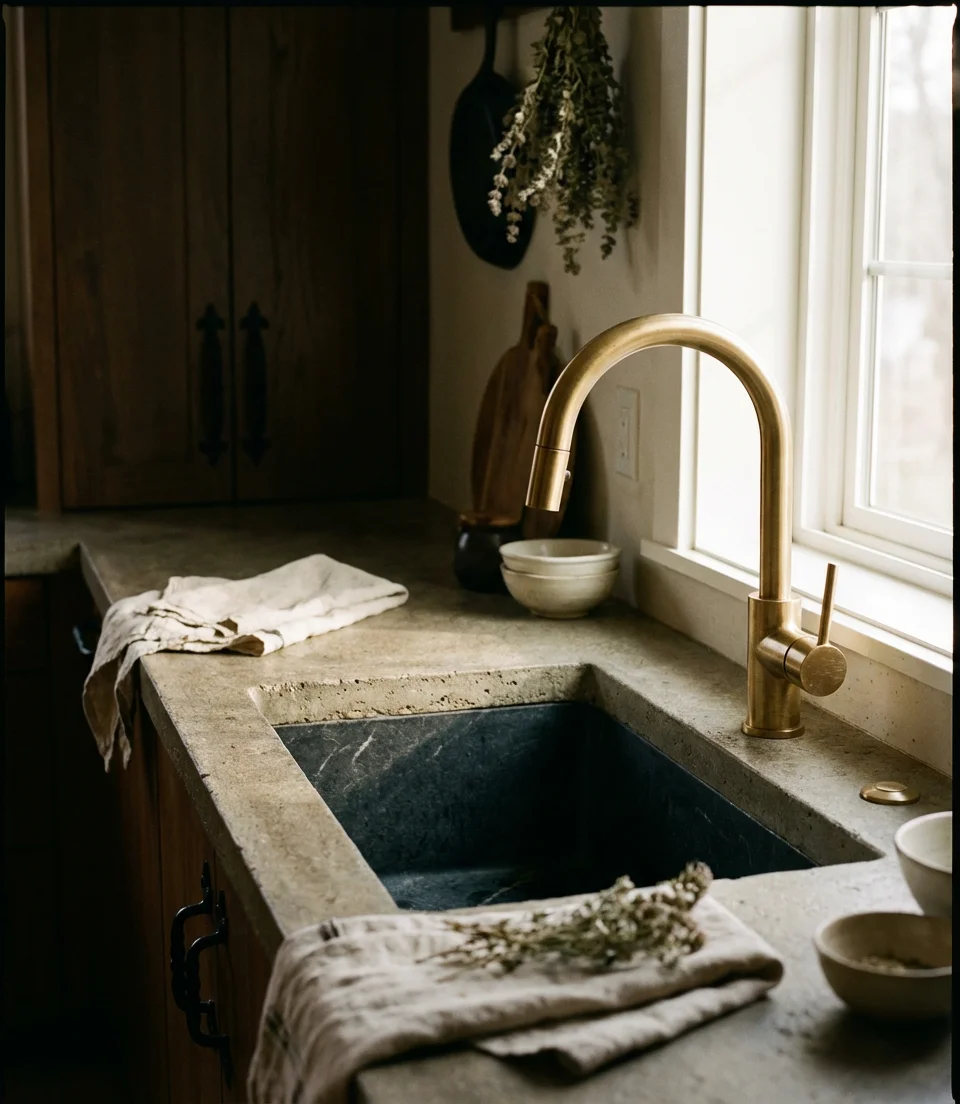
Expert kitchen designers often note that mixing metal tones thoughtfully—rather than matching everything to one finish—creates a far more sophisticated result. A brushed gold faucet paired with matte black cabinet pulls and a satin nickel soap dispenser reads as intentionally layered rather than mismatched. The key is keeping the dominant metal consistent (gold in this case) while allowing one or two accent finishes for depth. It mirrors the way fashion stylists think about accessories—a rule that translates beautifully into interior design.
9. Rustic Copper Sink in a Farmhouse Kitchen
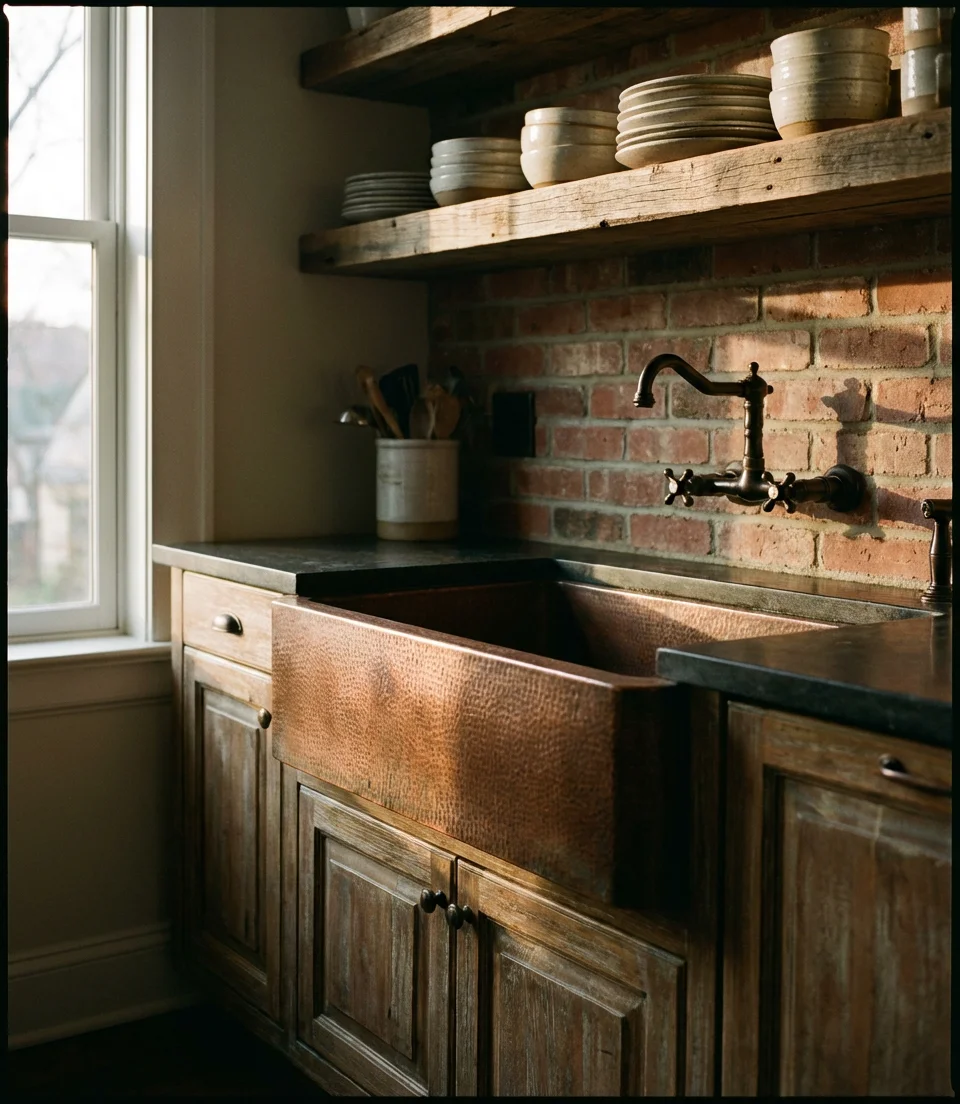
A rustic copper sink brings something no other material can quite replicate—a living, evolving patina that deepens and shifts over time, becoming more beautiful with every year of use. Southwestern kitchens, mountain lodge retreats, and Texas Hill Country farmhouses particularly suit hammered copper sinks, as their warm, earthy tones blend seamlessly with the architecture. The antimicrobial properties of copper are a genuine functional bonus, especially relevant in a space where food prep happens daily. Pair with weathered wood open shelving for maximum visual warmth.
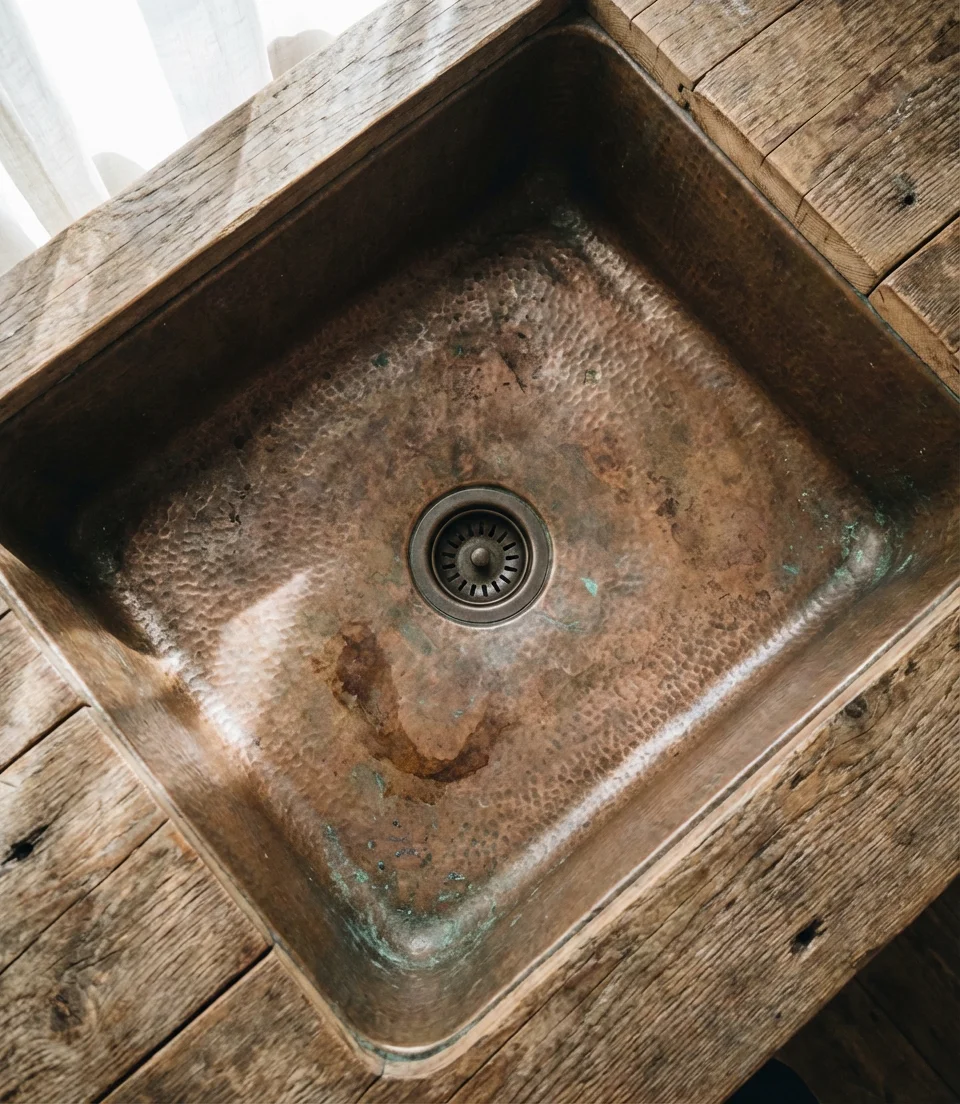
The most common mistake people make with copper sinks is using harsh cleaning products that strip the patina. Copper care is simple but specific: mild dish soap, a soft cloth, and a periodic application of paste wax to protect the surface. Avoid anything acidic—even citrus juice left in the basin can etch the finish. Once homeowners learn the rhythm of copper care, they almost universally love it. It’s the kitchen equivalent of breaking in a luxurious leather bag—the effort is minimal, and the reward is character that synthetic materials simply can’t replicate.
10. Island Sink with Waterfall Prep Station
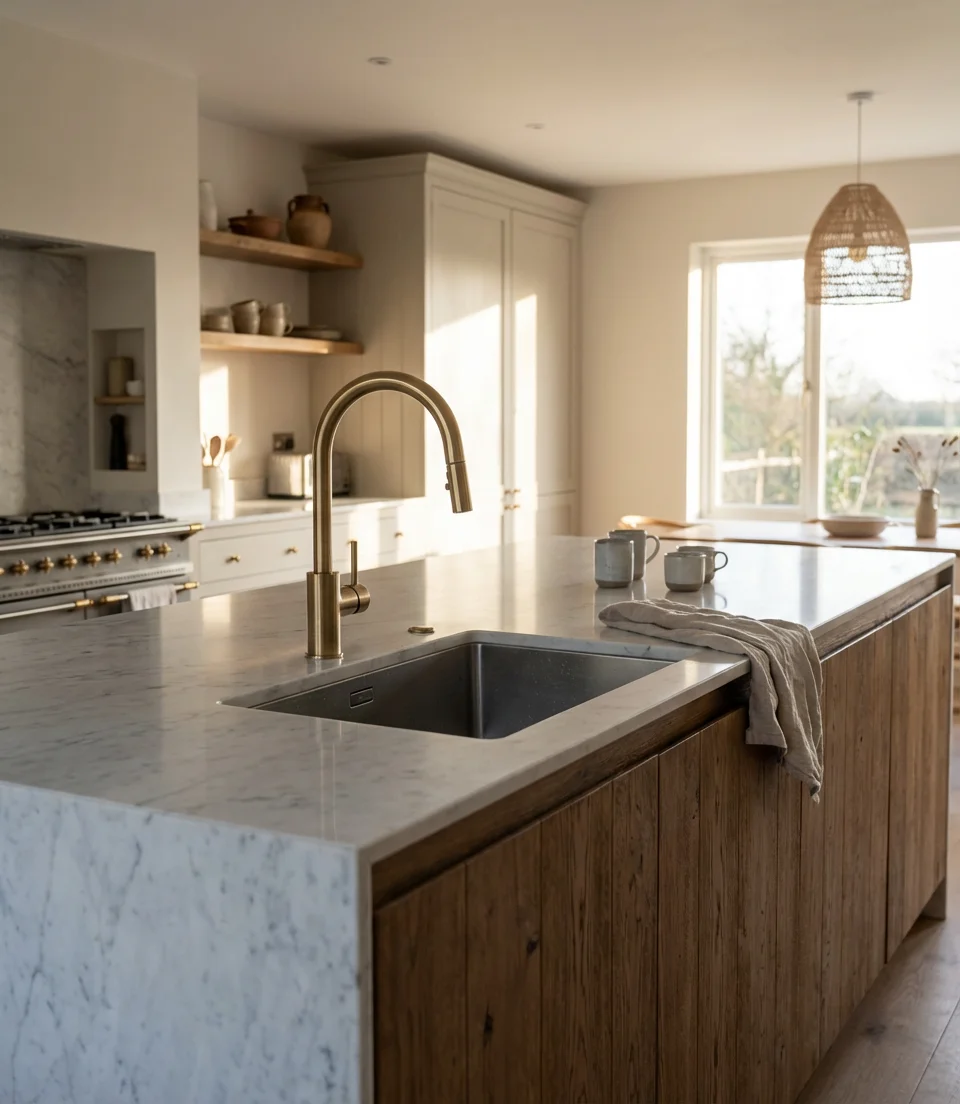
Adding a sink to a kitchen island transforms the entire workflow of the space—and it’s one of the most requested features in new construction and high-end renovation projects across the country. An island sink creates a secondary prep zone that keeps the main perimeter counter clear for cooking, and it’s a natural gathering point when guests are in the kitchen. In 2026, the most compelling versions feature a built-in waterfall edge beside the sink, combining the functional and the sculptural into one cohesive element. The layout speaks directly to how Americans actually use their kitchens socially.
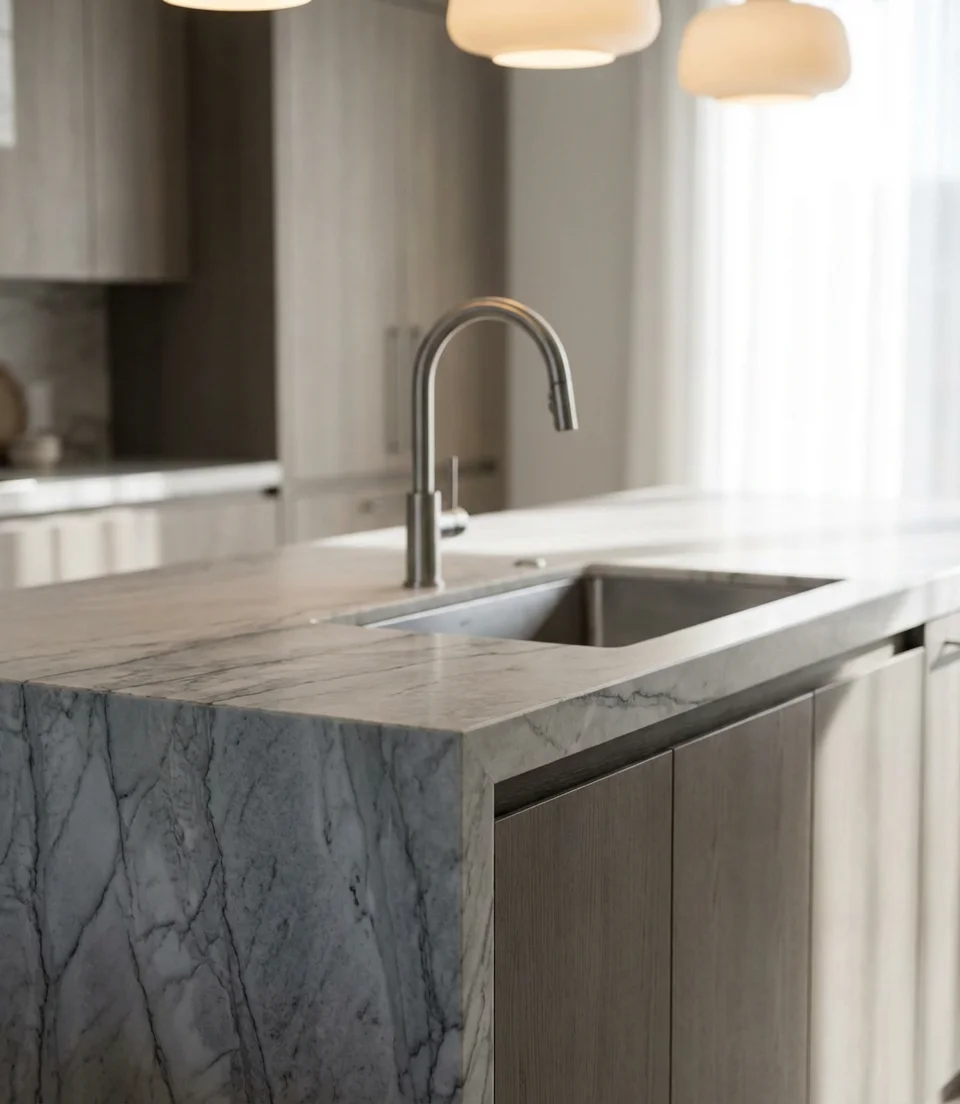
Where this setup works best: kitchens over 200 square feet with islands at least 4 feet long. Adding plumbing to an island requires running supply and drain lines under the floor, which adds cost—typically $500 to $1,500 for the plumbing work alone, depending on how far the island is from existing supply lines. That said, most designers consider it money well spent in a kitchen that sees heavy daily use. If you frequently host guests, an island sink is a must-have as it maintains the cook’s connection to the guests without compromising the functionality of the workspace.
11. Stainless Steel Sink in a Sleek Professional Kitchen
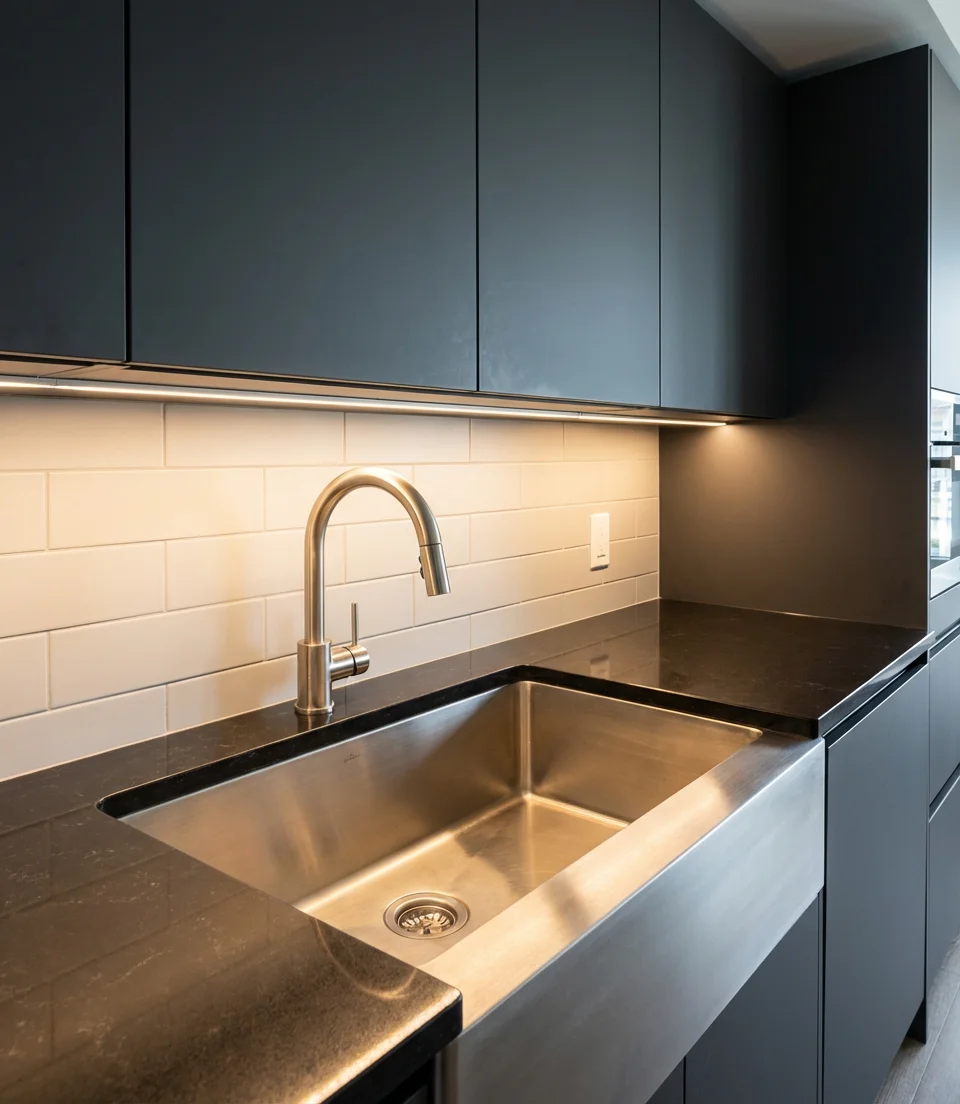
The stainless steel sink has anchored professional kitchens for decades, and its residential appeal shows no signs of fading. In 2026, there will be a shift towards thicker gauge steel (16 gauge is the ideal size) paired with sound-dampening pads underneath, a minor enhancement that significantly lessens the loud clanging sound that thin stainless steel produces every time a pot hits the basin. A deep single-bowl stainless sink with a low-profile grid at the bottom keeps the sink looking clean even when it’s working hard. It’s the sink equivalent of a well-made chef’s knife—unpretentious and completely reliable.
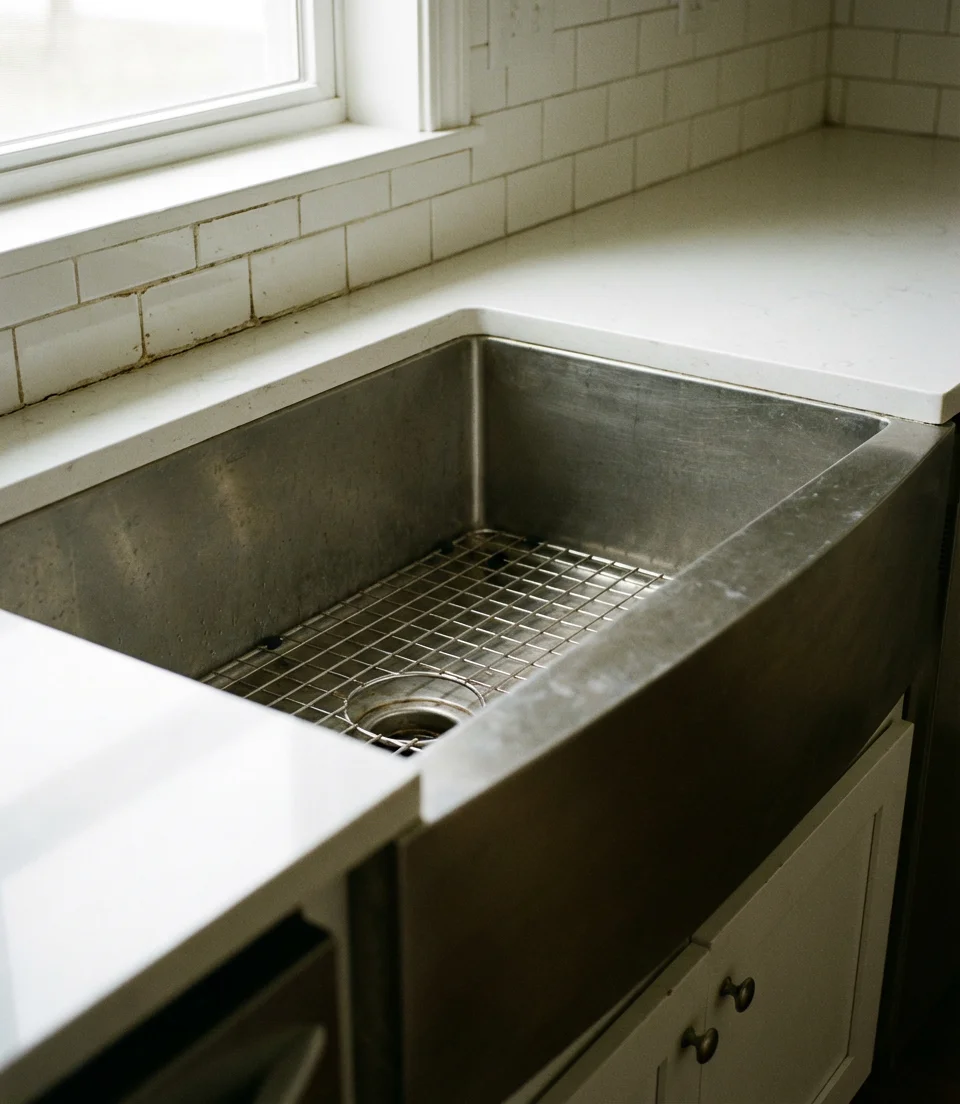
Real homeowners who cook seriously almost always circle back to stainless, even after experimenting with trendier materials. The reasoning is consistent: it’s heat-resistant, doesn’t stain from coffee or wine, and cleans up in seconds. The main concern—fine scratching over time—is actually embraced by many as an attractive patina rather than damage. Satin or brushed stainless finishes hide hairline scratches far better than polished versions, so that’s the spec most designers recommend for a sink that’s actually going to be used daily.
12. Undermount Modern Sink with Integrated Ledge
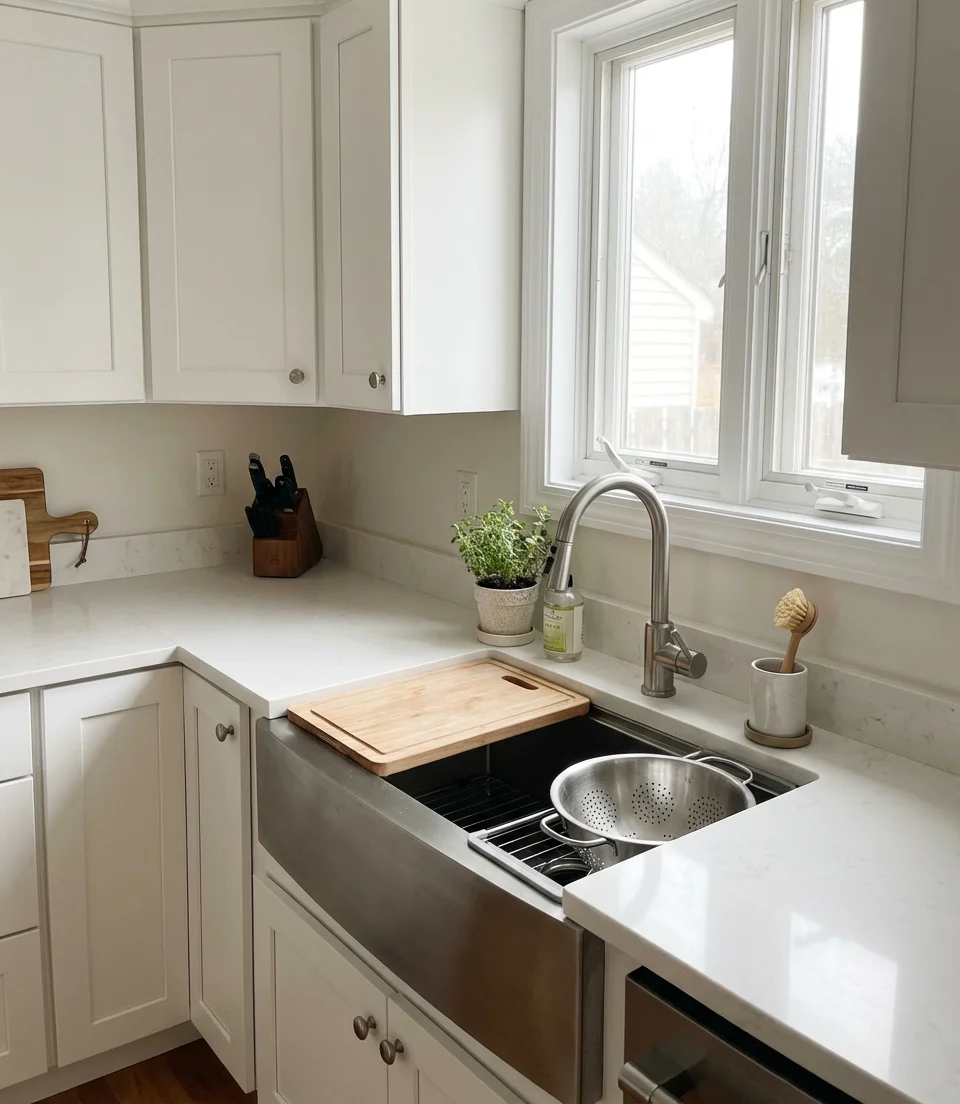
The undermount modern sink with an integrated ledge system represents one of the most significant functional evolutions in kitchen sink design over the past decade. The ledge—a recessed rail built into the top edge of the sink—allows cutting boards, colanders, and drying racks to slide across the basin, essentially turning the sink zone into a full prep and processing station. Brands like Kohler, Blanco, and Rohl have made this system increasingly accessible at various price points. It’s the kind of feature that seems minor in a showroom and becomes indispensable within 48 hours of actual use.
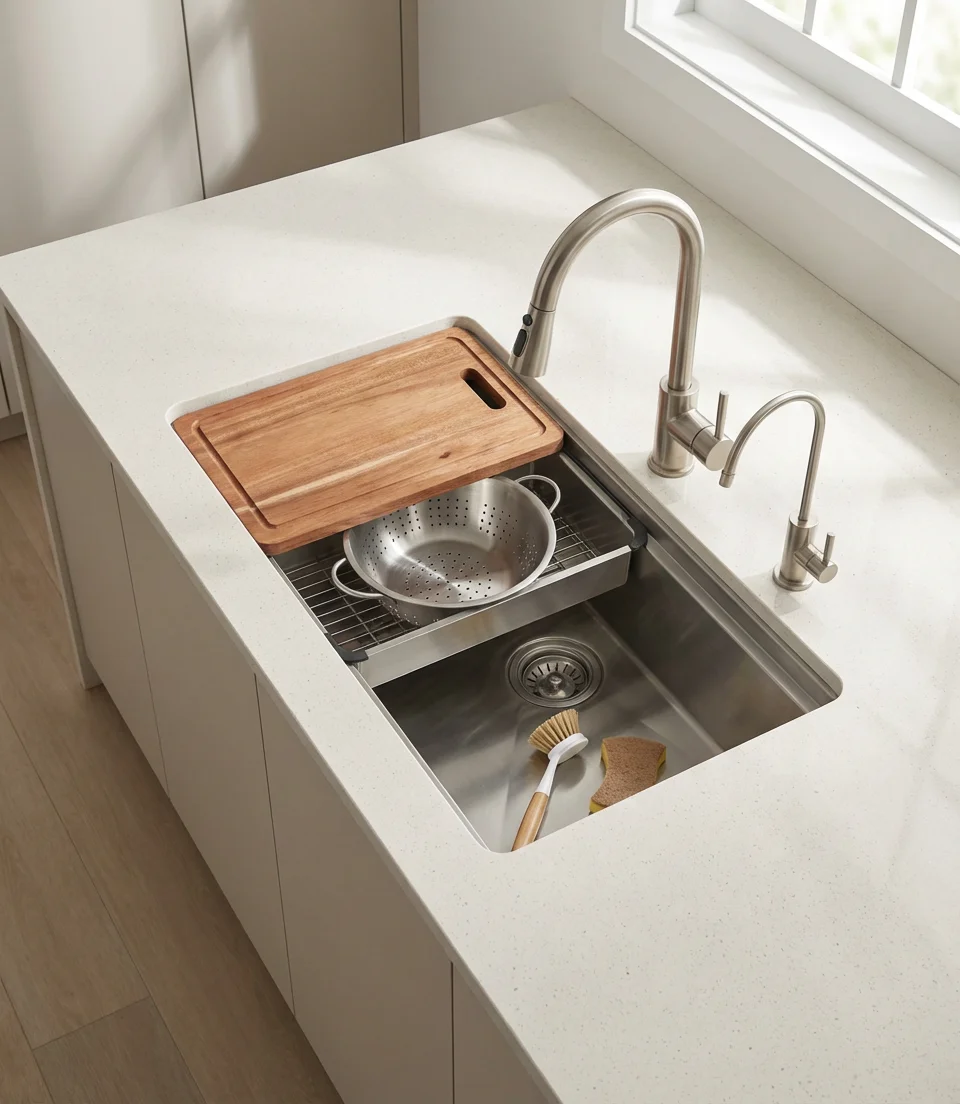
This feature is a genuinely smart solution for anyone who does serious meal prep but doesn’t have the luxury of extra counter space. The ledge system effectively expands your workspace over the sink footprint—arguably the most underutilized real estate in any kitchen. Kitchen designers often call it a “workstation sink,” and the term has stuck because it accurately describes how it changes the room’s function. If you’re choosing between this option and a traditional undermount at a similar price point, the integrated ledge wins on practical merit almost every time.
13. Above-Counter Vessel Sink in an Eclectic Kitchen
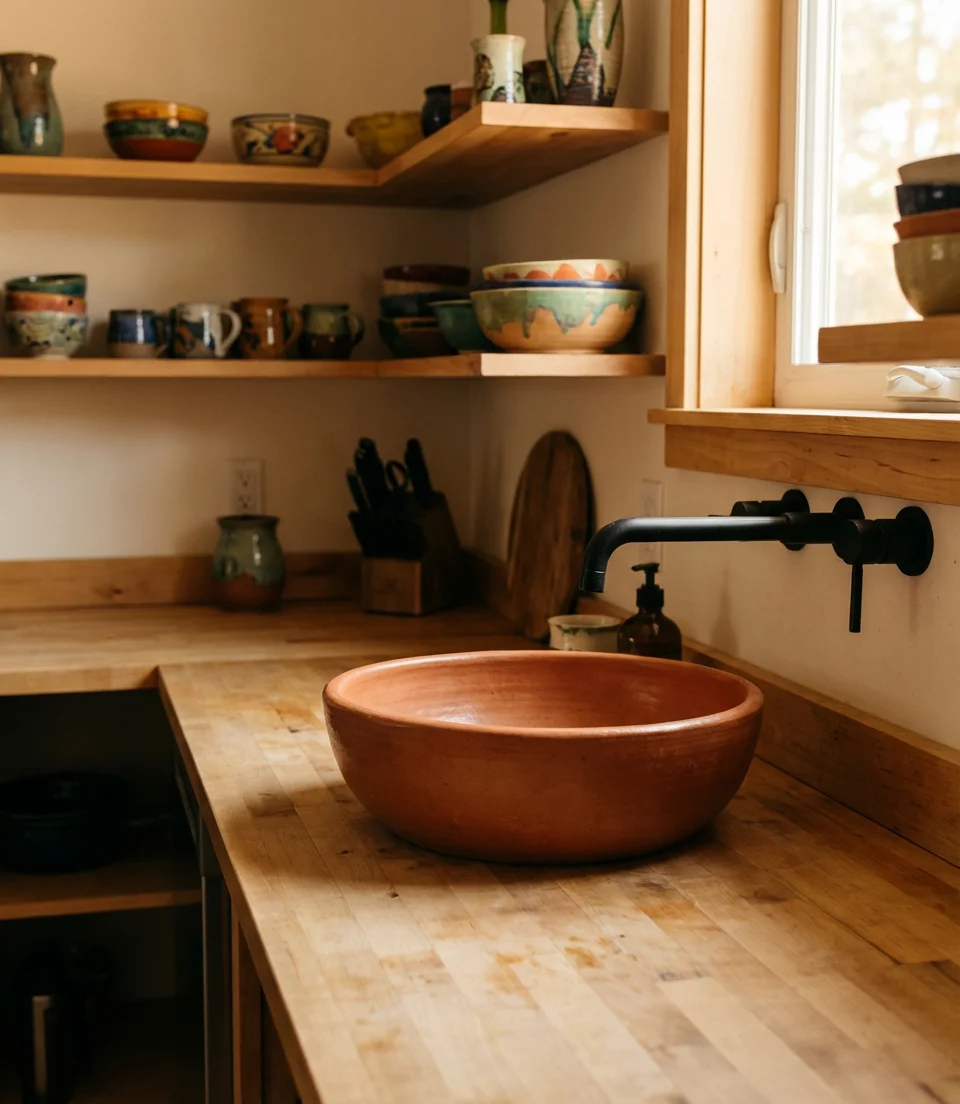
The above-counter vessel sink, more commonly associated with bathrooms, is making a bold crossover into eclectic and artisan kitchens in 2026. When executed thoughtfully—a hand-thrown ceramic vessel in a warm terracotta or celadon glaze, positioned on a butcher-block or marble counter—it reads less like a quirky choice and more like a deliberate, confident design statement. This type of design works particularly well in kitchens that lean artistic or bohemian, where the unexpected presence of an artisan vessel invites conversation and signals that this space belongs to someone with a genuine aesthetic perspective.
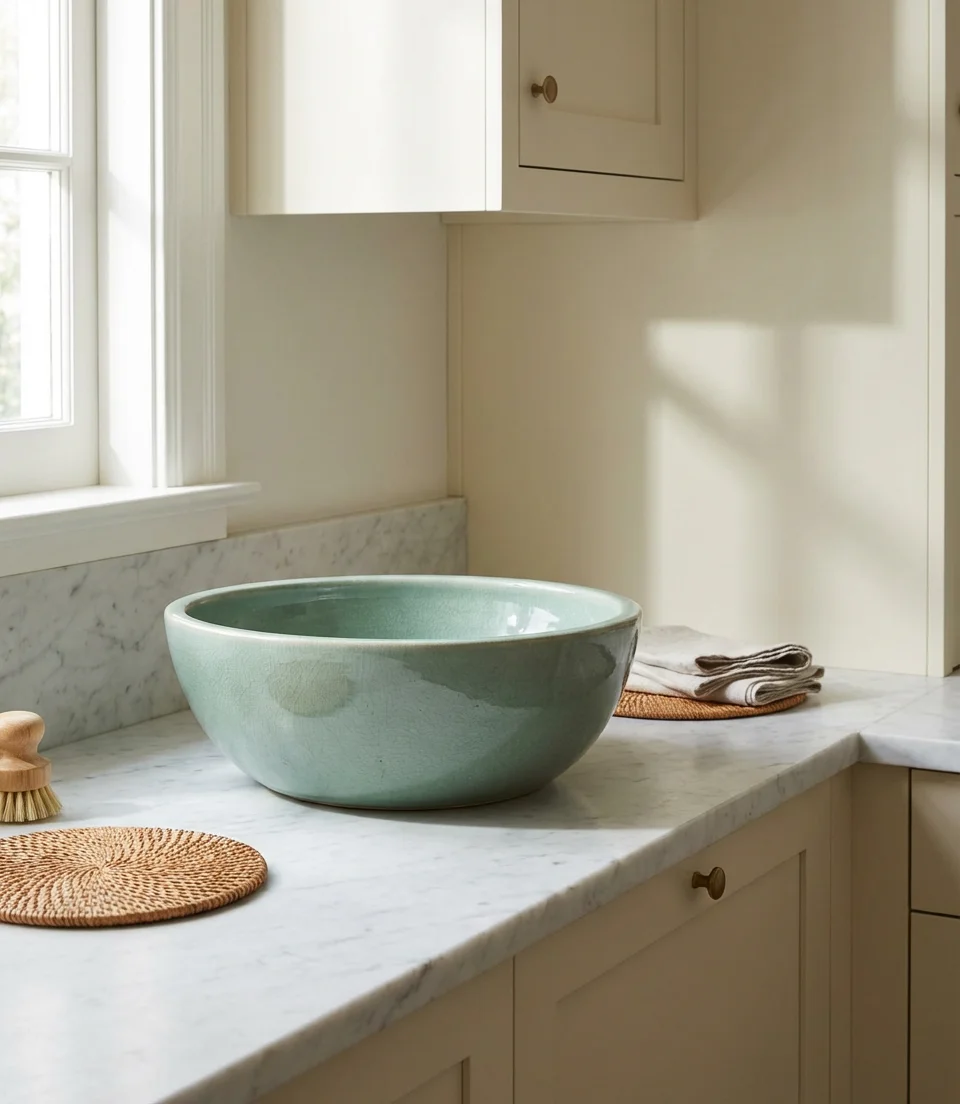
The practical considerations are worth addressing upfront. A vessel sink sits higher than a standard basin, which means your faucet needs to be a tall, wall-mounted, or deck-mounted style to clear the rim comfortably. The drain configuration also differs from recessed sinks—make sure your plumber is familiar with vessel installations before committing. For a secondary kitchen sink or a wet bar situation, these caveats matter less. As a primary kitchen sink, it’s best reserved for those who entertain more than they cook marathon Sunday dinners.
14. Large Single Bowl Sink for Open Kitchen Living
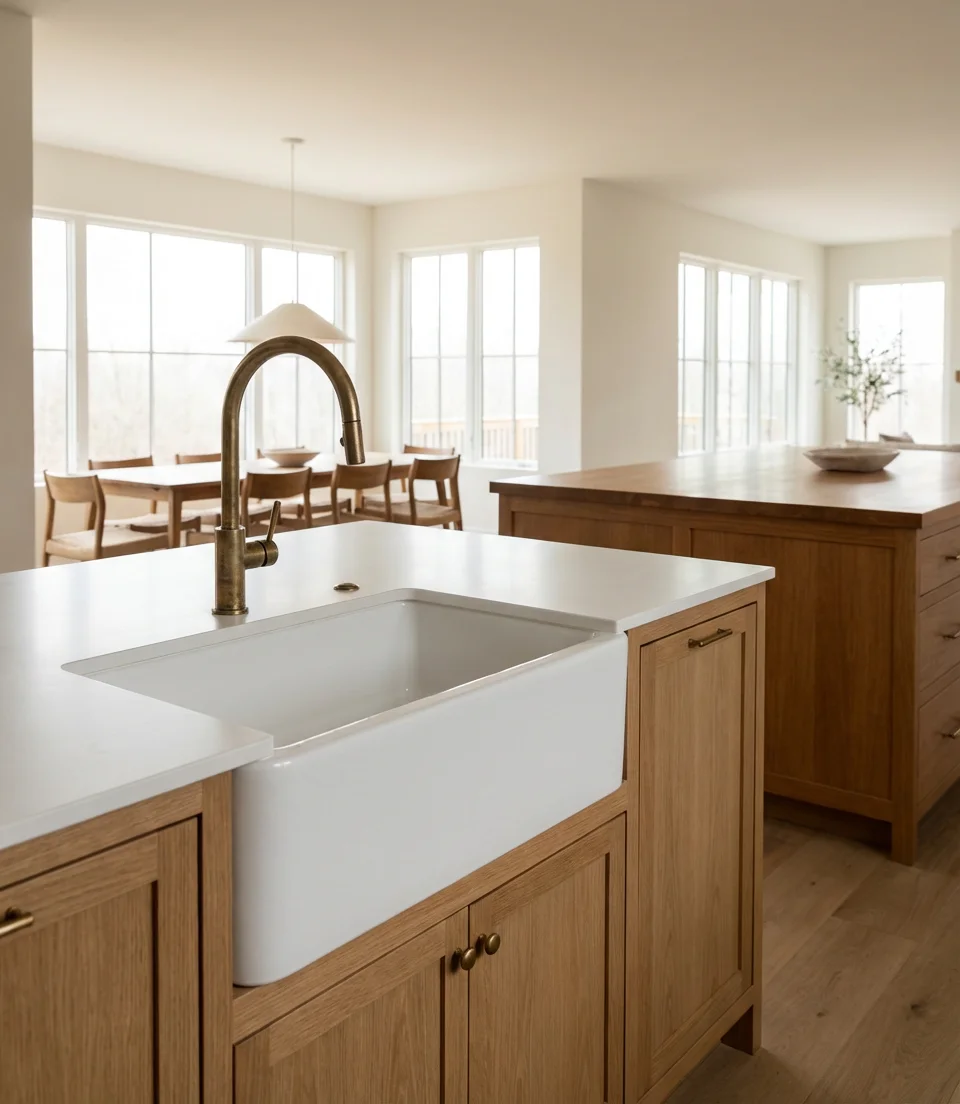
A large single-bowl sink makes architectural sense in a kitchen designed around the open-plan living philosophy, where the kitchen flows into dining and living areas without visual barriers. Its generous proportions match the scale of the room, and its simplicity prevents the sink from becoming a cluttered, visually busy element in a space that’s meant to feel airy and spacious. A 36-inch single bowl in white fireclay or matte granite composite can anchor a large island without competing with the surrounding design. Scale matters enormously in open kitchens, and an undersized sink always looks like an afterthought.
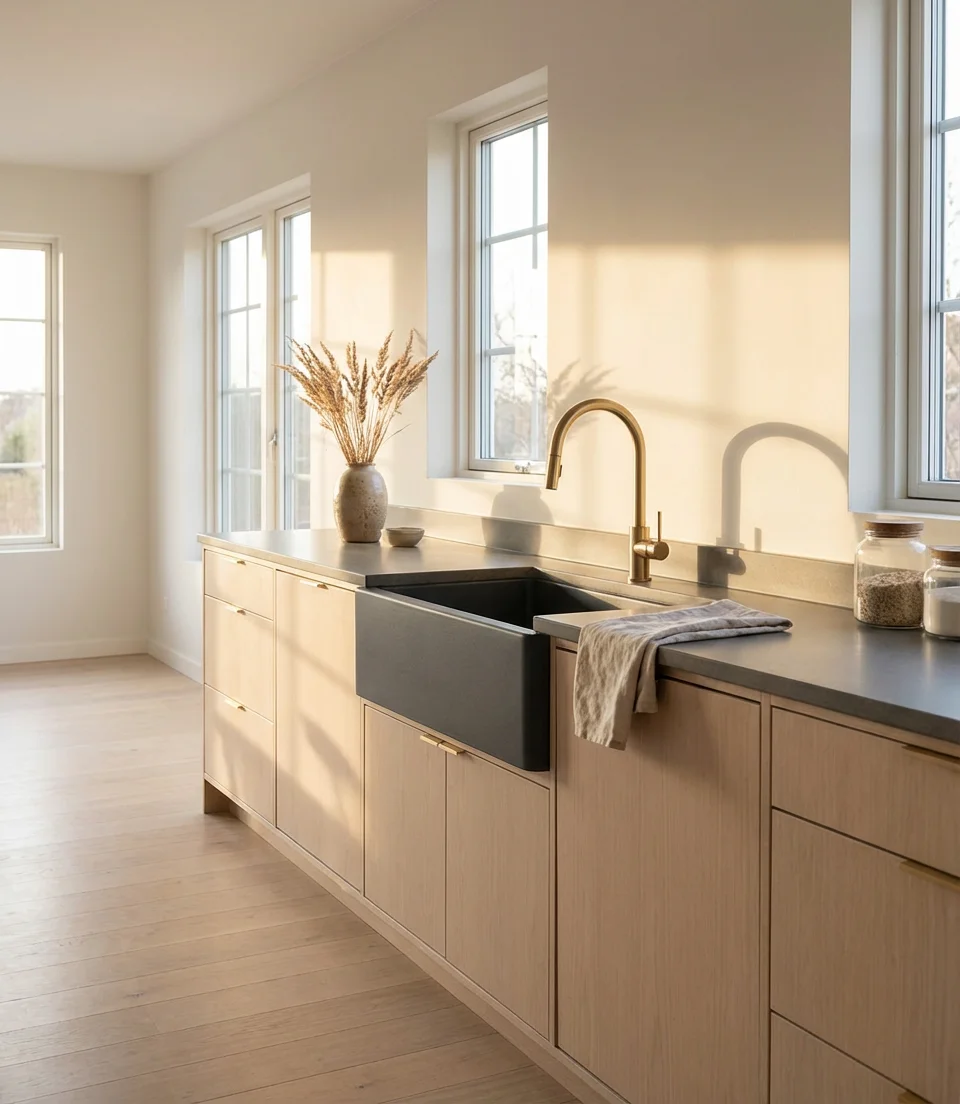
American families who’ve made the open kitchen transition often discover that visibility from the sink becomes surprisingly important—being able to see the TV in the living room or keep an eye on kids at the dining table is a quality-of-life upgrade that’s hard to articulate in a design brief but immediately obvious once you experience it. A large single bowl keeps the sightlines clear because there’s no dividing wall between basins. Interior designers note that single bowls photograph better, which is important for resale or rental listing photos.
15. Hidden Sink Behind a Cabinet Panel
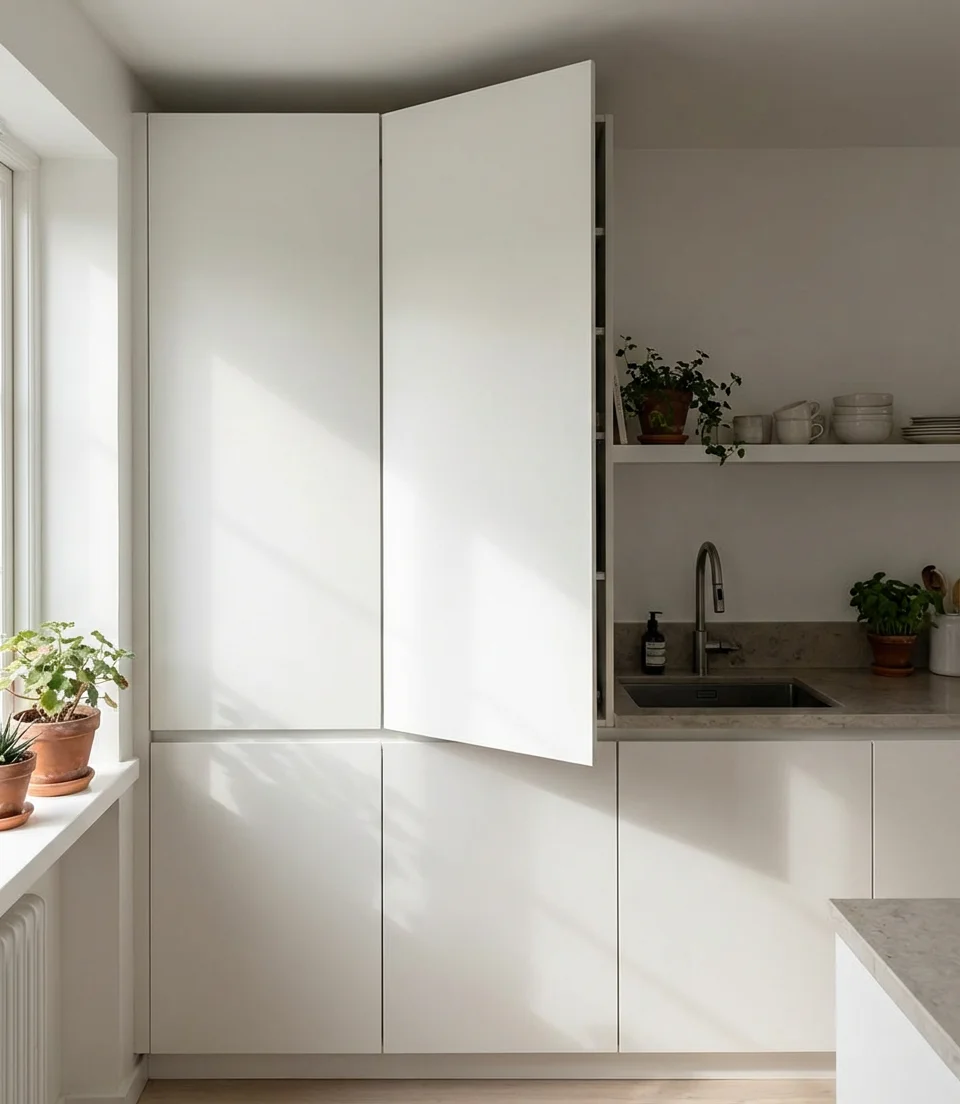
The hidden sink—concealed behind a flush cabinet panel that swings or slides open to reveal the basin—is one of the most compelling ideas in contemporary kitchen design. The concept emerged from European minimalist kitchens and has since found a receptive audience among American homeowners who want their kitchens to look like a living space rather than a service area. When the panel closes, the kitchen appears as a seamless wall of cabinetry. Opening it reveals a fully functional, beautifully detailed sink zone. It’s theatrical in the best possible sense.
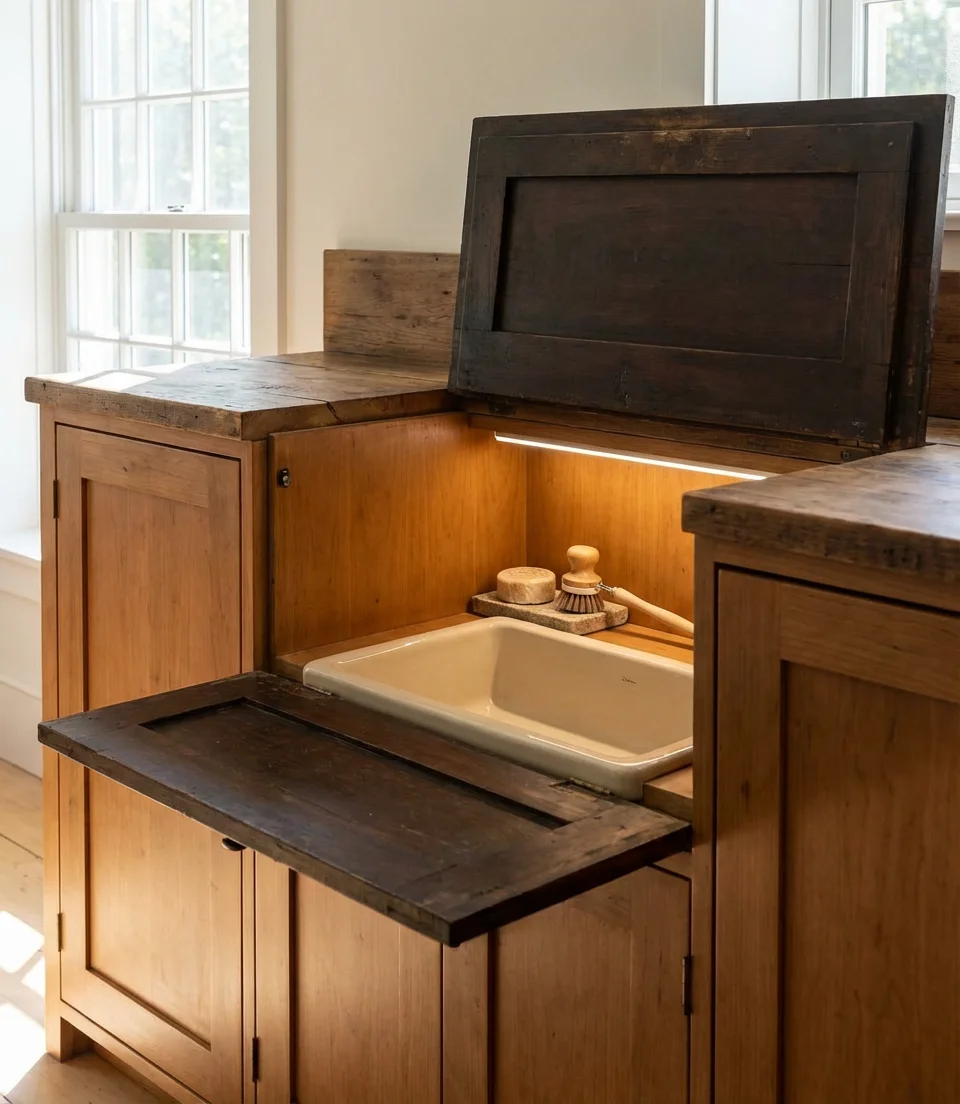
This type of design works best in kitchens where the owners entertain frequently and want the space to transition from kitchen to living room without visual interruption. The joinery and mechanism quality are critical—a hidden sink panel needs to open and close smoothly thousands of times without warping or sticking. High-humidity environments like Florida or the Pacific Northwest require extra attention to material selection, specifically moisture-resistant MDF or marine-grade plywood for the panel. It’s a high-investment, high-reward feature that’s worth budgeting carefully for if the aesthetic appeals to you.
16. Unfitted Kitchen with a Freestanding Sink Unit
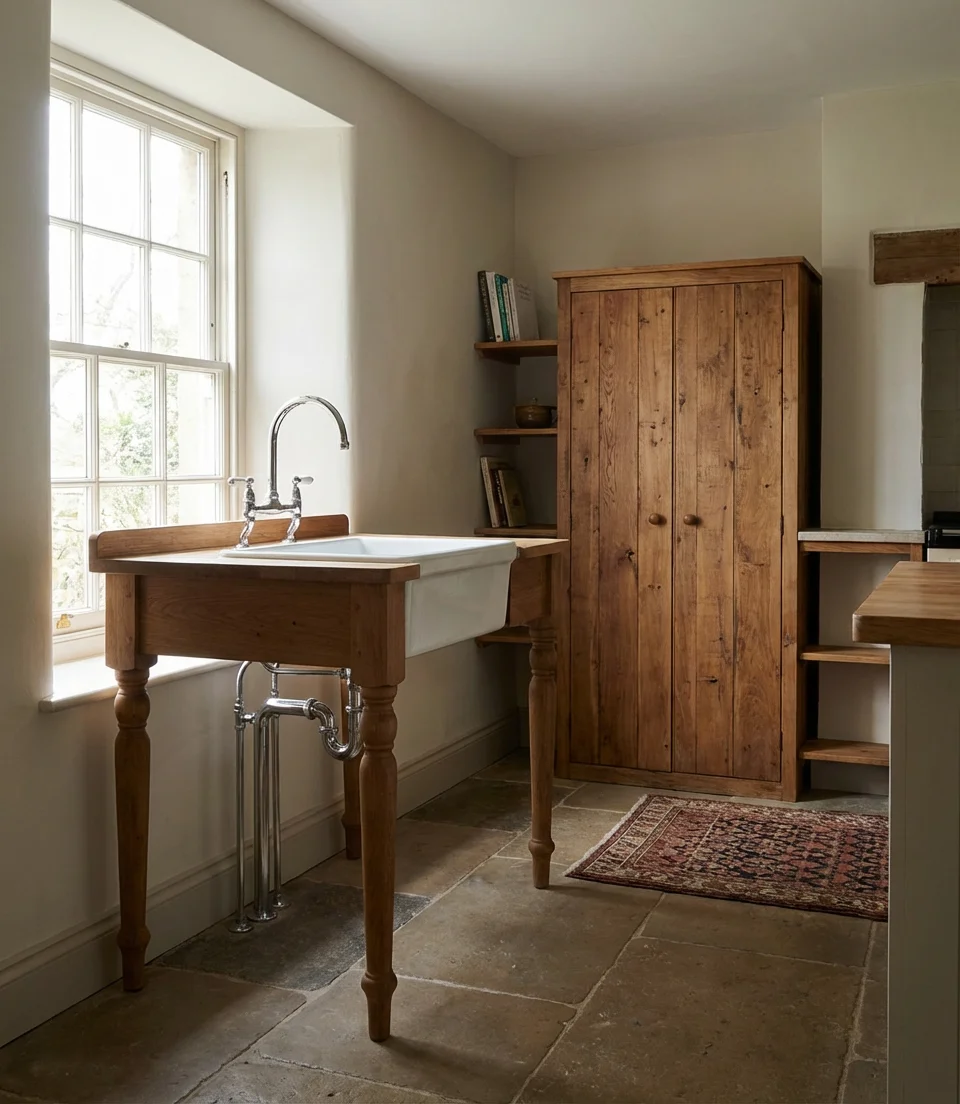
The unfitted kitchen—a design philosophy where furniture-style pieces replace built-in cabinetry—is having a genuine renaissance in 2026, and the sink unit is its centerpiece. A freestanding sink console, typically featuring legs (turned wood, tapered steel, or cast iron) with an exposed plumbing configuration, brings an entirely different energy to the kitchen. It suggests permanence for furniture rather than fixtures, which appeals deeply to homeowners who want their kitchens to feel curated rather than installed. Vintage industrial and English country kitchens inspire most of the strongest examples.
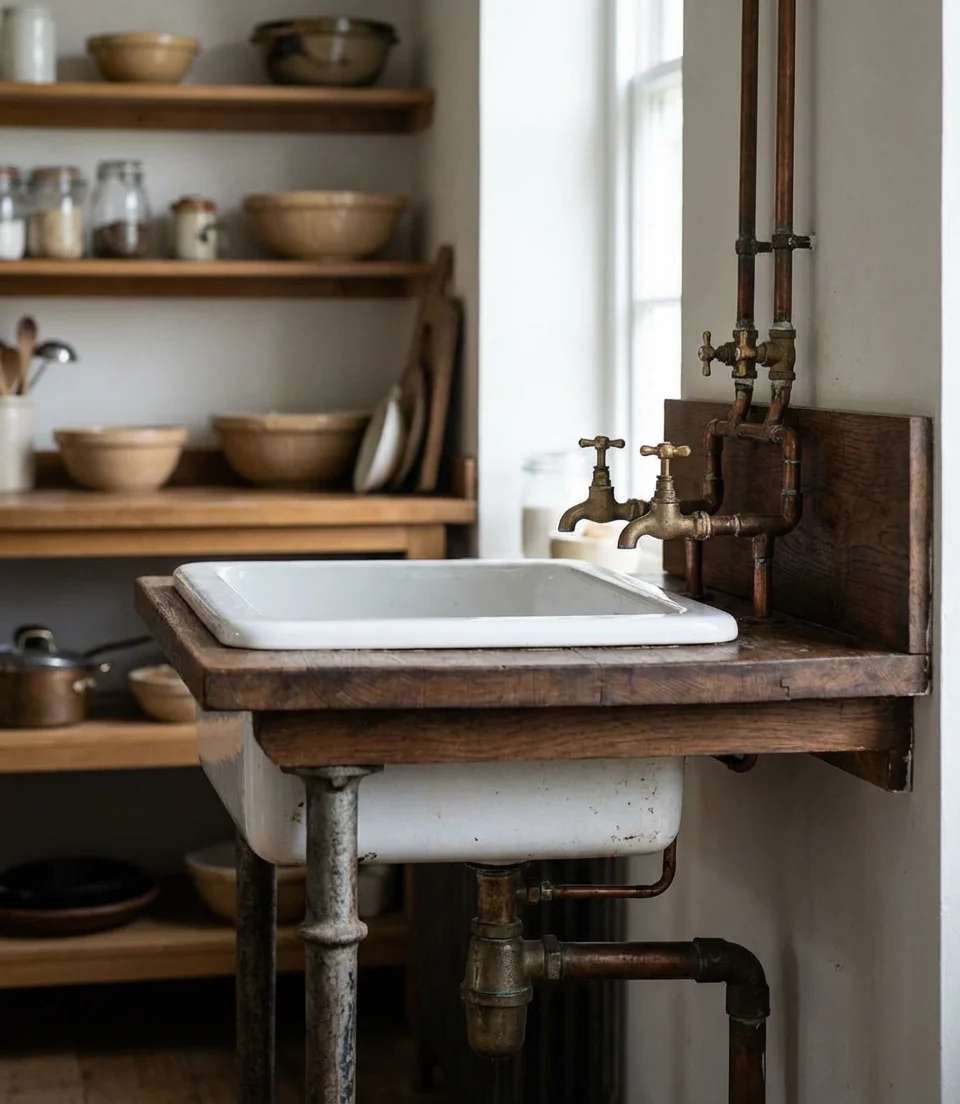
American homeowners in older homes—particularly those in the Northeast and Midwest, where Victorian or Craftsman architecture dominates—find that unfitted kitchens feel more harmonious with the original character of the house than standard cabinetry ever could. The freestanding sink reads as furniture-as-architecture, which is exactly what it is. One practical note: exposed plumbing under a freestanding sink should be high quality and aesthetically considered—cross-handle valves, copper supply lines, and a well-made p-trap are worth the upgrade when they’ll be on display every single day.
17. Smart Sink with Touchless Technology and Built-In Filtration
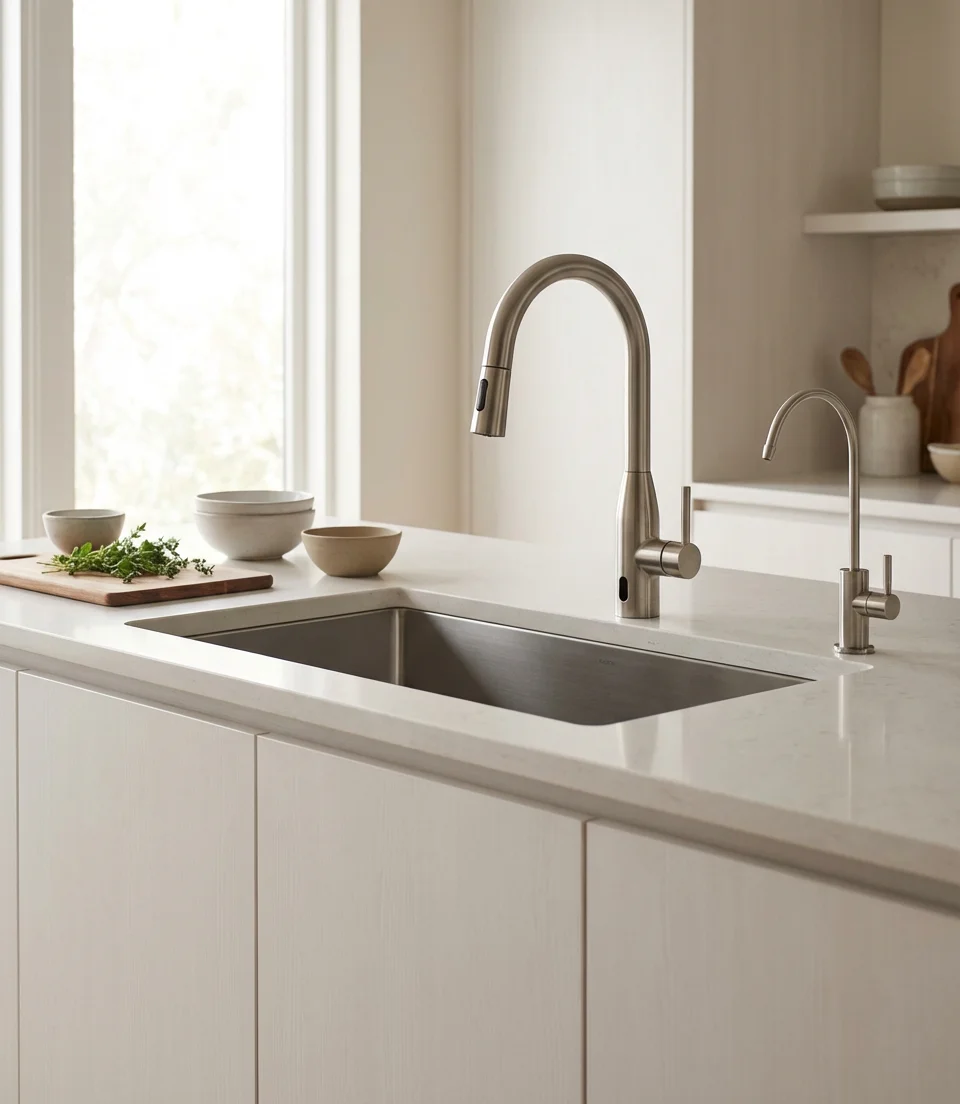
The smart kitchen is no longer a concept—it’s a category, and the sink has become a genuine part of the conversation. Touchless faucets with voice activation, integrated hot water dispensers, and under-sink filtration systems connected to a dedicated third faucet at the basin are all features that are moving from luxury to mainstream in 2026. For families concerned about water quality—particularly those in older homes with aging pipes or municipalities managing lead (a toxic metal) or PFAS (per- and polyfluoroalkyl substances, which are harmful chemicals)—the built-in filtration faucet is less a luxury item and more a health investment.
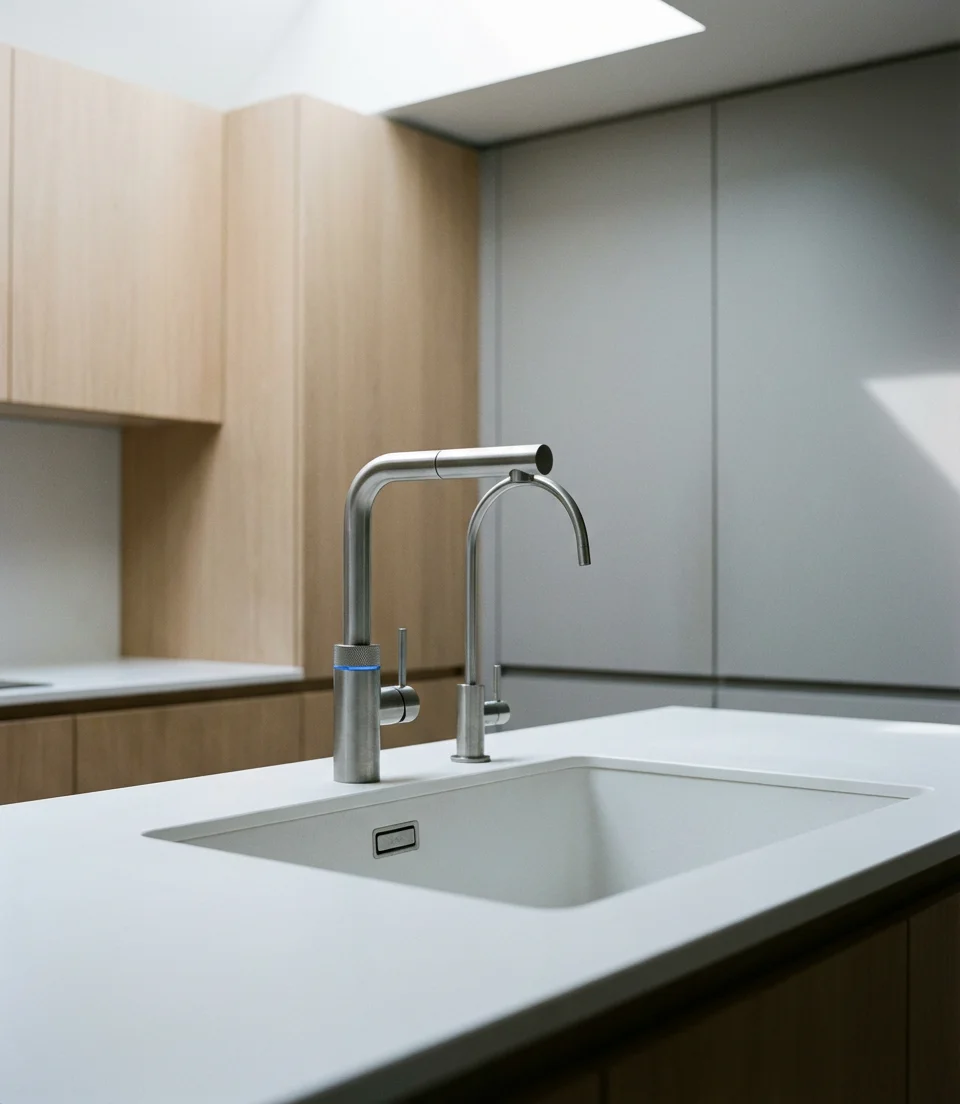
Touchless faucet technology has improved dramatically in the past three years—the motion sensors on current models are precise enough to distinguish between an intentional hand wave and a passing dish towel, which was a genuine frustration with earlier generations of the technology. Brands like Delta, Moen, and Kohler now offer smart faucets that remember your preferred water temperature and flow rate, which sounds minor until you realize how many times a day you adjust the same settings at the sink. It’s the kind of quiet upgrade that makes a kitchen feel genuinely contemporary without shouting about it.
18. Indian-Style Kitchen Sink with Granite Platform
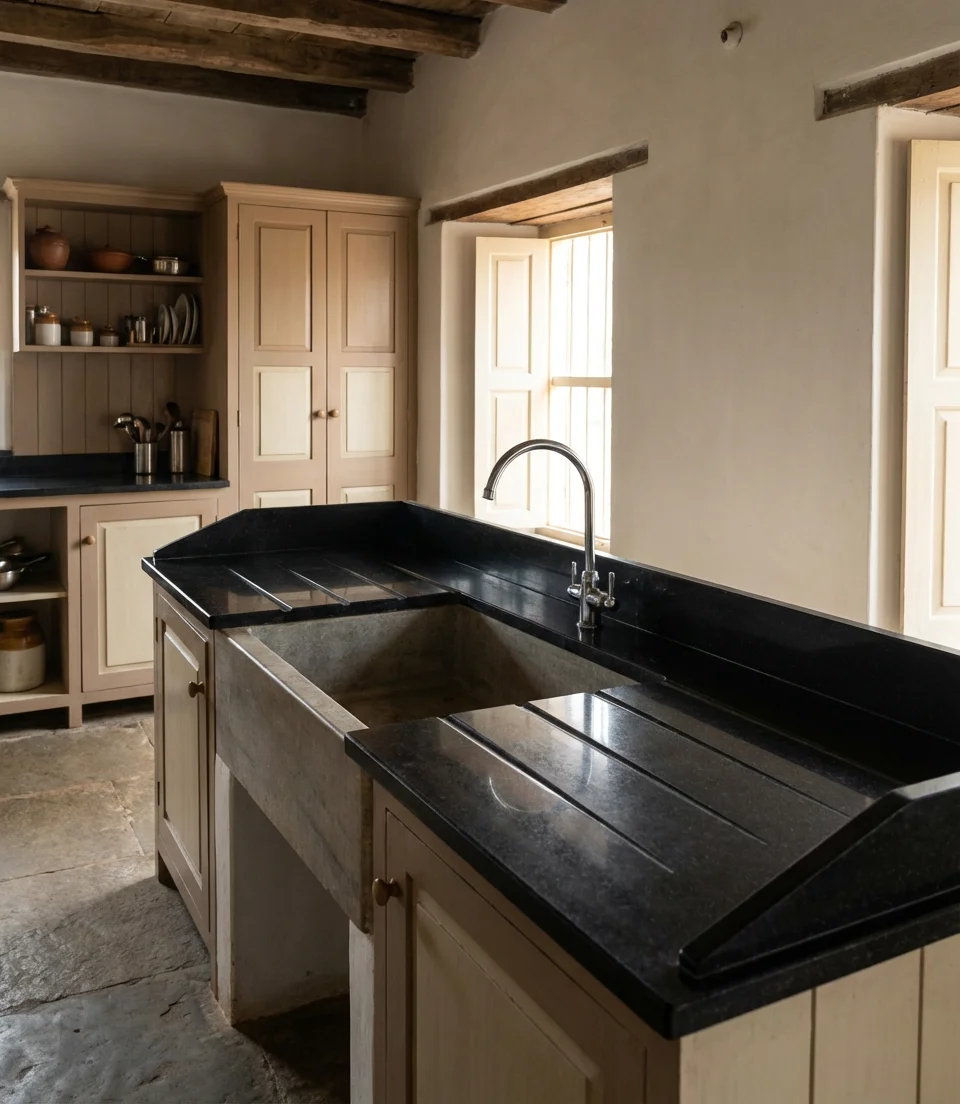
The Indian kitchen design tradition offers a deeply practical approach to the sink that’s gaining admirers well beyond South Asian communities in America. The hallmark is a broad granite platform surrounding the sink—typically a deep single or double basin—that provides generous draining space and a prep surface that handles heavy, wet cooking tasks without complaint. Indian kitchens prioritize function above all else: deep basins for large vessels, broad counters for draining, and durable stone that survives decades of serious cooking. It’s a philosophy that resonates with any American household that cooks from scratch regularly.
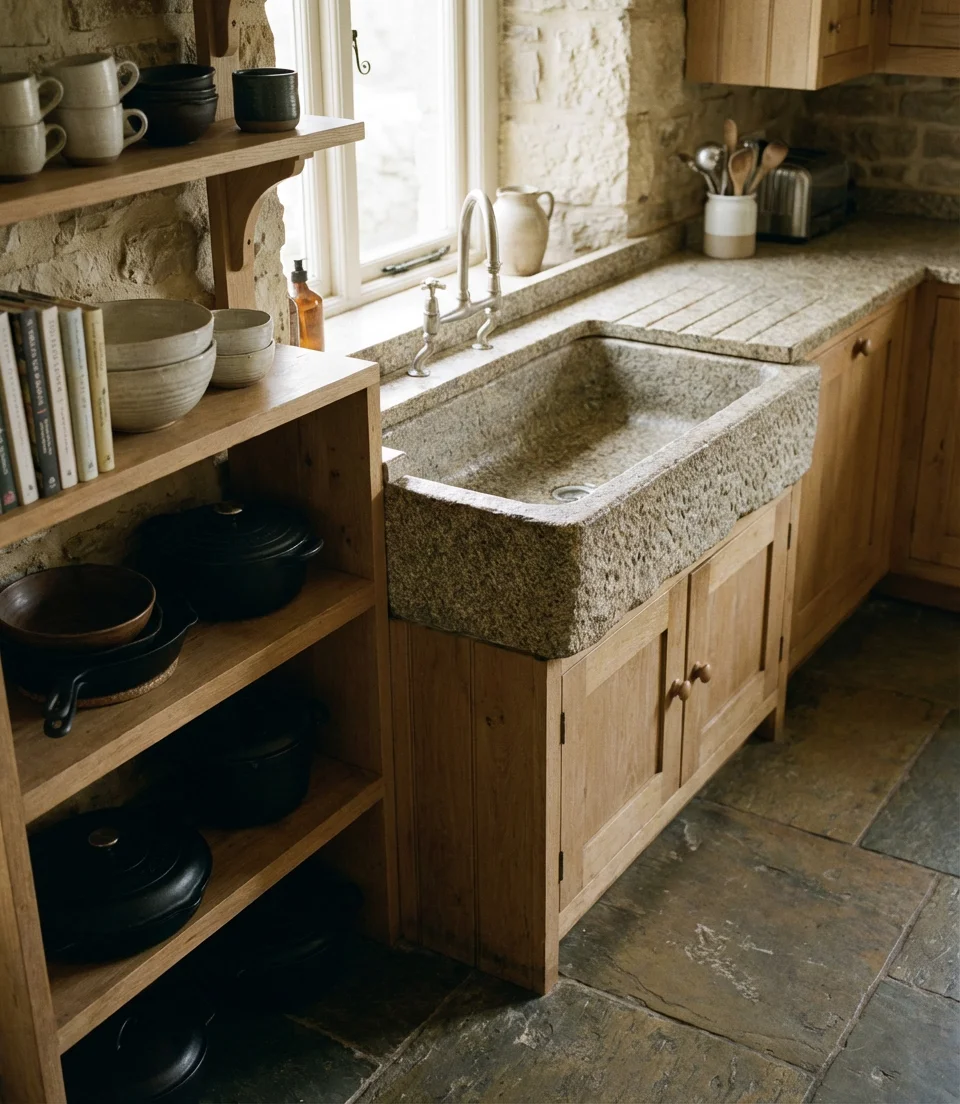
As South Asian design sensibilities continue to influence American interiors—a cross-pollination that’s been accelerating notably in the design press—the granite-platform sink is finding its audience. It’s especially well-suited to multi-generational households where the kitchen sees near-constant use across multiple cooking styles and meal times. The granite is naturally heat-resistant, hard-wearing, and available in colors that complement virtually any cabinet palette. If you’re building a kitchen designed for real, daily, enthusiastic cooking, this configuration deserves serious consideration.
19. Unique Concrete Sink as an Artistic Statement
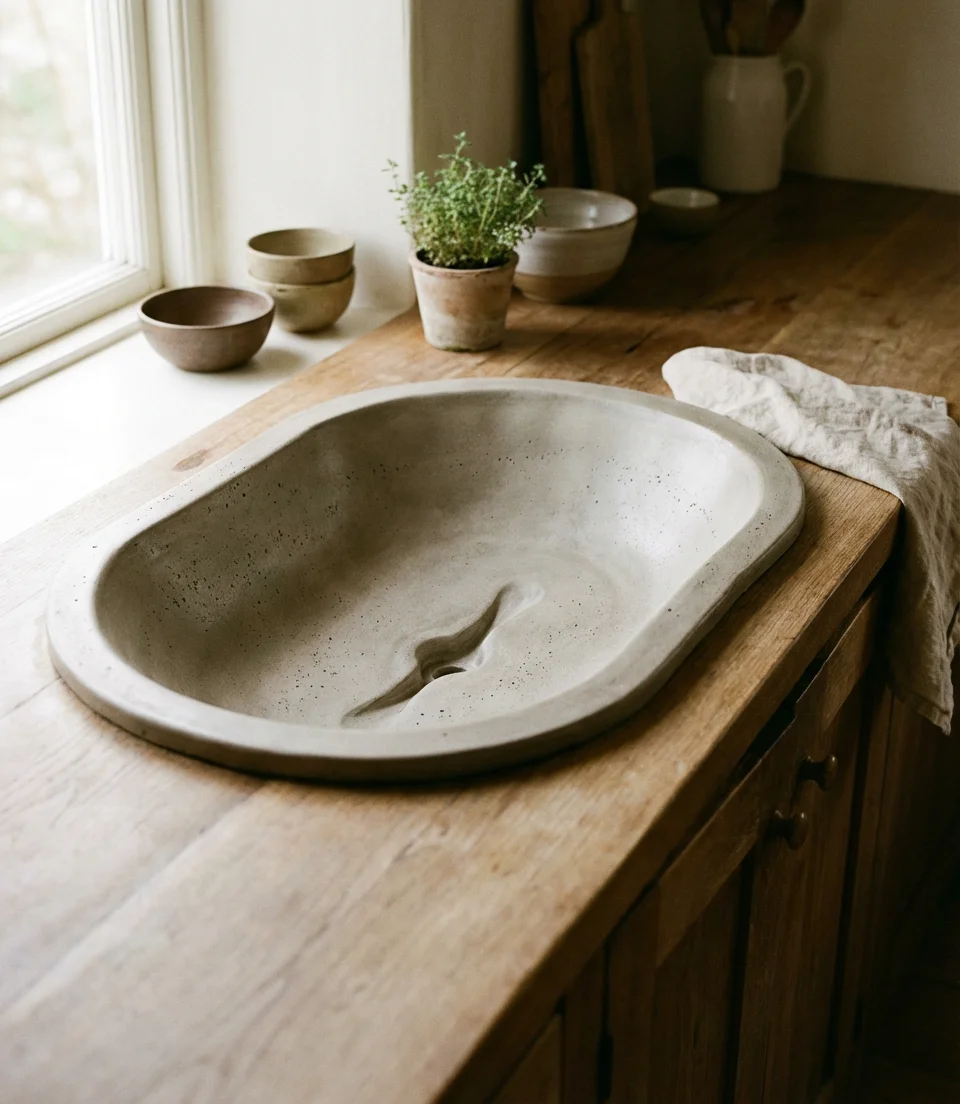
For homeowners who want something genuinely unique—not just different from their neighbor’s kitchen but different from anything in a showroom—a cast concrete sink is in a category of its own. Concrete can be shaped into nearly any shape, tinted to any color, and textured to any finish, thereby making each concrete sink a unique piece. The current direction in 2026 is toward soft organic forms—irregular oval basins, gently sloped edges, and integral drain grooves pressed directly into the surface. The result is sculptural in a way that no off-the-shelf sink can approach.
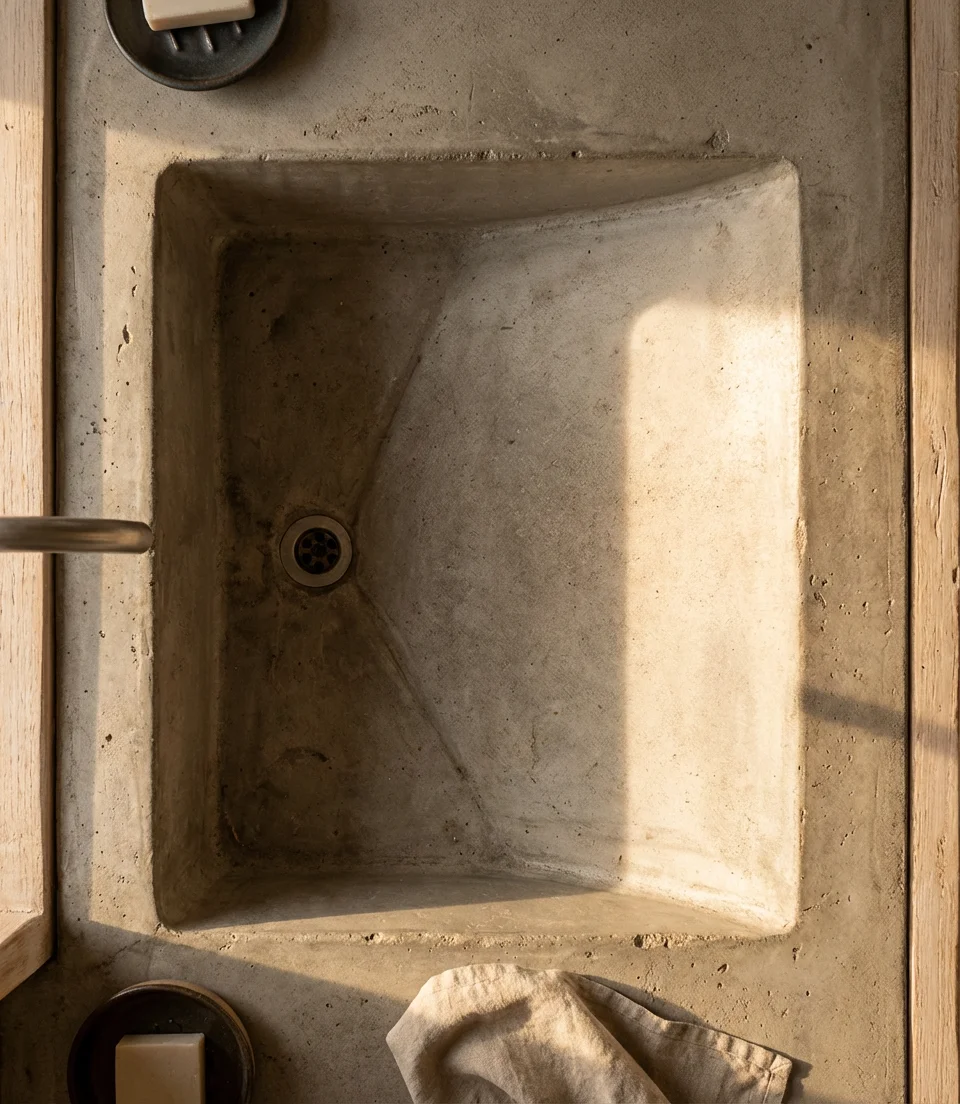
Concrete does require sealing—typically once every one to two years depending on use—and it can stain if acidic substances are left in contact with the surface for extended periods. But designers who work with concrete regularly note that most homeowners find the maintenance genuinely manageable once they understand what the material requires. The bigger consideration is weight: a cast concrete sink can weigh 150 pounds or more, which means cabinet and countertop support structures need to be engineered accordingly. Work with a fabricator who has done kitchen applications specifically—bathroom concrete experience doesn’t always translate.
20. Windowless Kitchen Sink with Dramatic Backsplash
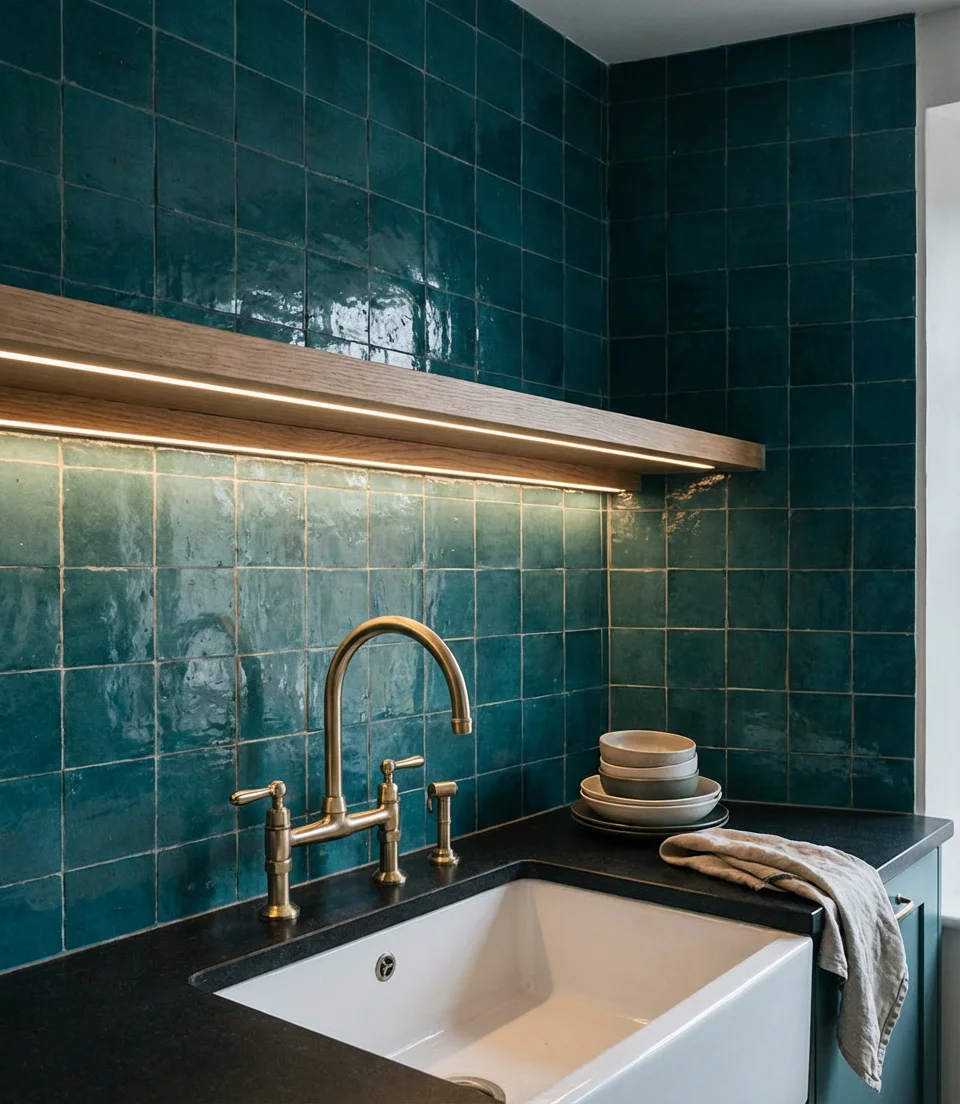
Not every kitchen has the luxury of a windowless kitchen wall over the sink—but rather than lamenting the absence of a view, the smartest designers treat it as an opportunity. A dramatic backsplash becomes the visual anchor where a window might otherwise be, and when it’s done well, the result is actually more striking. Floor-to-ceiling slab stone, large-format handmade zellige tile in an unexpected color, or a mirrored panel that reflects light back into the room are all approaches that turn a structural limitation into a design signature. The sink becomes a destination rather than a utility stop.
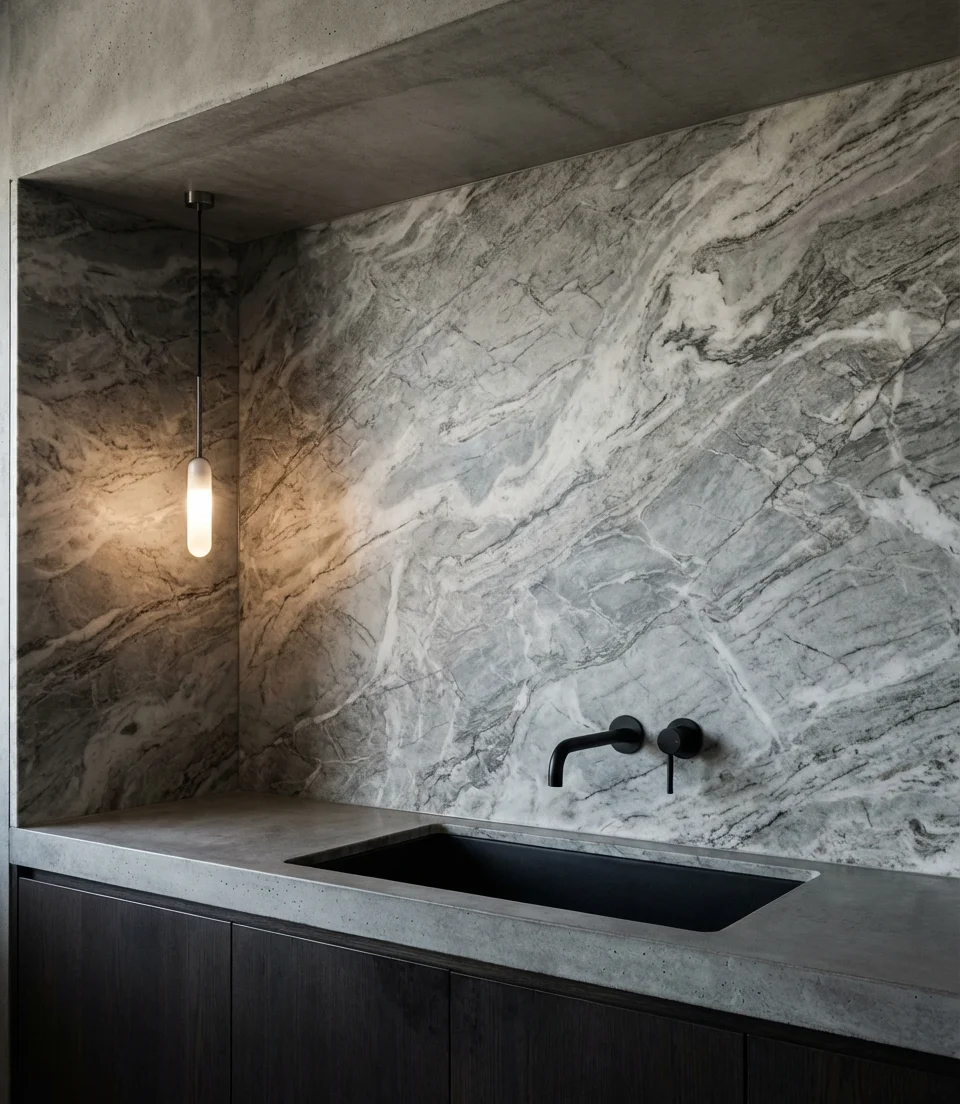
Lighting strategy becomes especially important in a windowless sink situation. Under-cabinet LED strips pointed downward illuminate the basin and backsplash effectively, while a sculptural pendant hung slightly to one side of the sink zone adds visual warmth and personality. Interior designers working in urban apartments—where exterior windows are often reserved for living rooms and bedrooms, leaving kitchens interior-facing—have refined this approach into a genuine specialty. The result can be some of the most compelling kitchen designs in any city, precisely because the constraints forced more creative thinking.
21. Outdoor Kitchen Sink Station for Backyard Entertaining
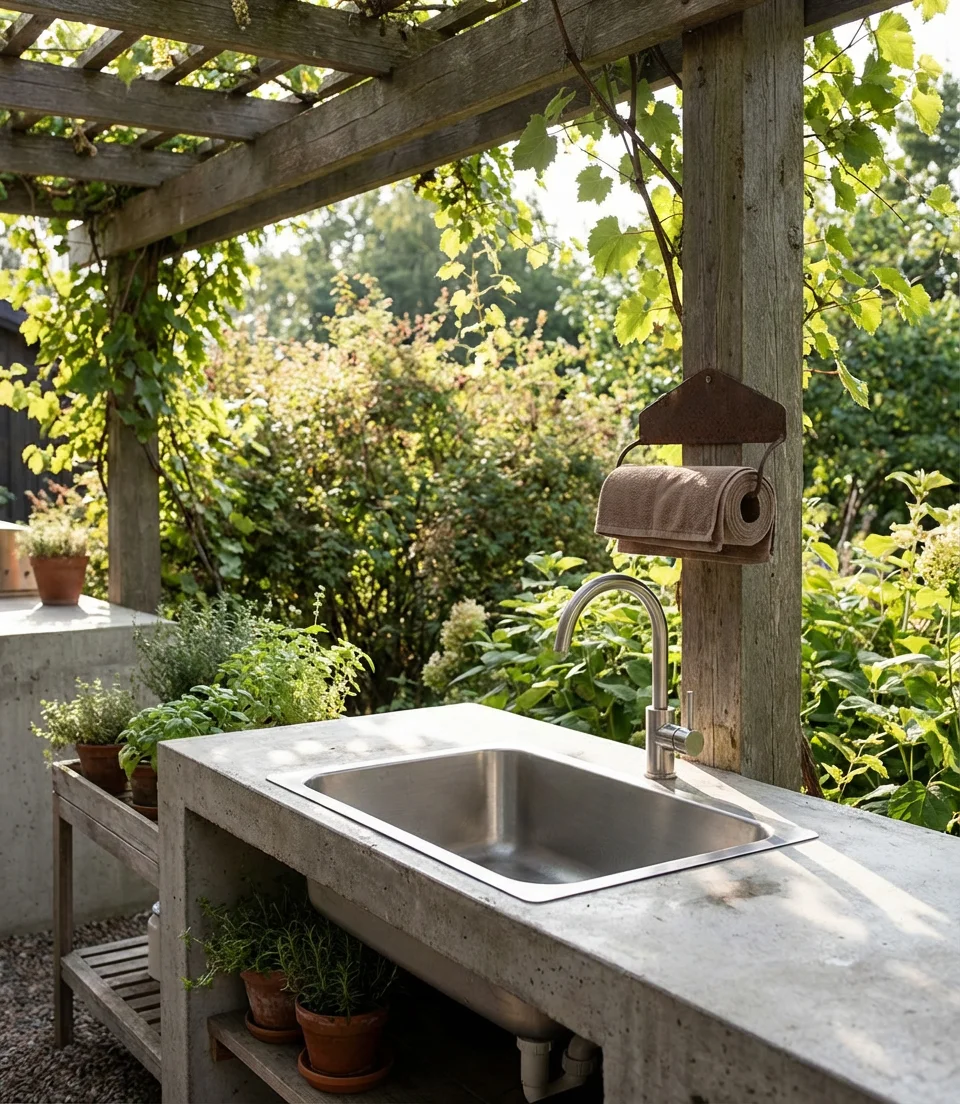
The outdoor kitchen has evolved from a simple grill setup to a fully equipped cooking and entertaining environment—and a dedicated sink station is increasingly considered essential to that vision. An outdoor sink eliminates the constant parade back and forth to the indoor kitchen for hand washing, vegetable rinsing, and drink preparation. In 2026, the most functional configurations include a deep stainless basin, a paper towel holder mounted on the side, and a built-in trash chute directly beside the sink. It’s a level of organization that makes outdoor cooking genuinely effortless rather than just scenic.
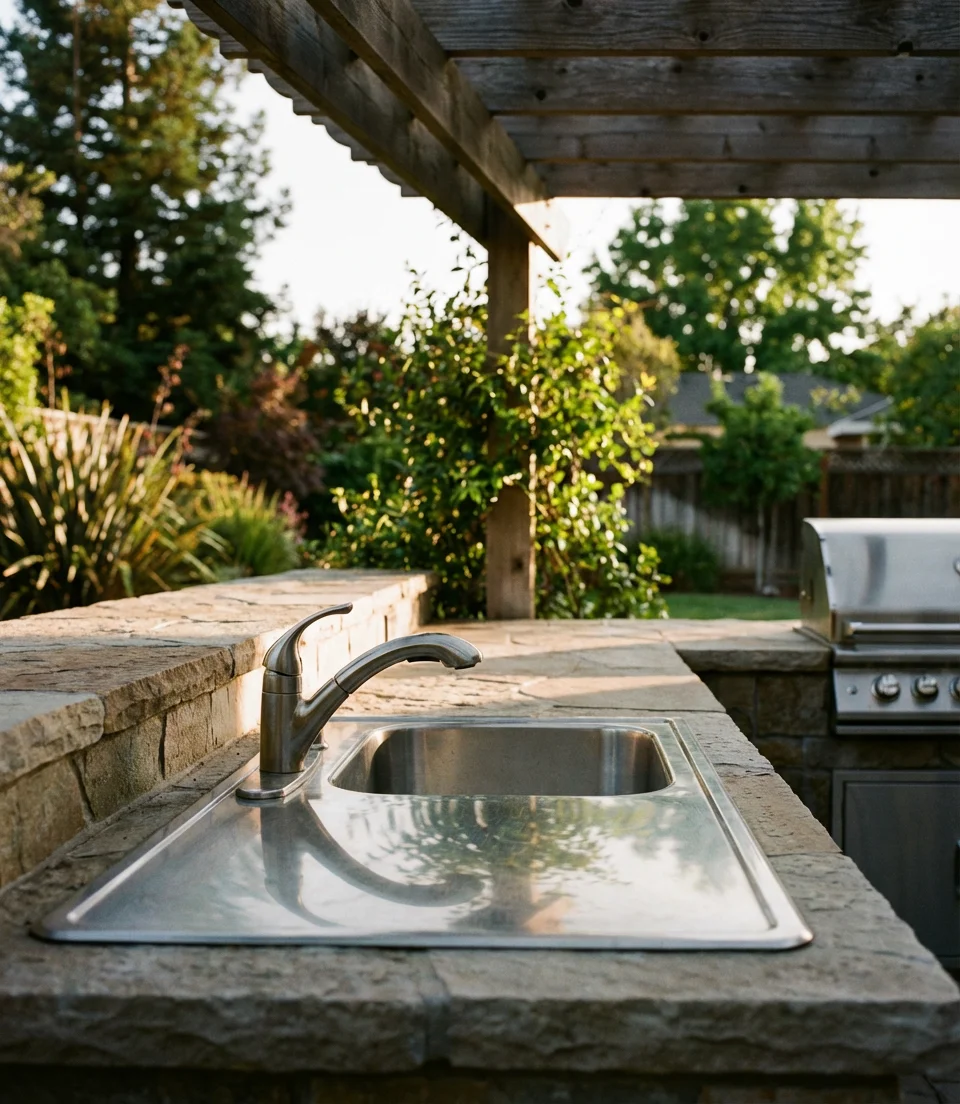
This configuration works best in climates where outdoor entertaining extends across multiple seasons—the Sun Belt states, the Pacific Coast, and the mid-Atlantic region with covered patios all see excellent return on outdoor kitchen investment. For homeowners in cold climates, winterizing the plumbing is essential: the supply lines must be drainable or protected from freezing, necessitating the inclusion of a shutoff valve and blowout port in the setup. Marine-grade stainless rated 316 or better handles outdoor exposure without rusting, and it’s worth the slight premium over standard 304 stainless for any fixture that will live outside year-round.
22. Smart Sink-Adjacent Prep Zone with Integrated Cutting Board
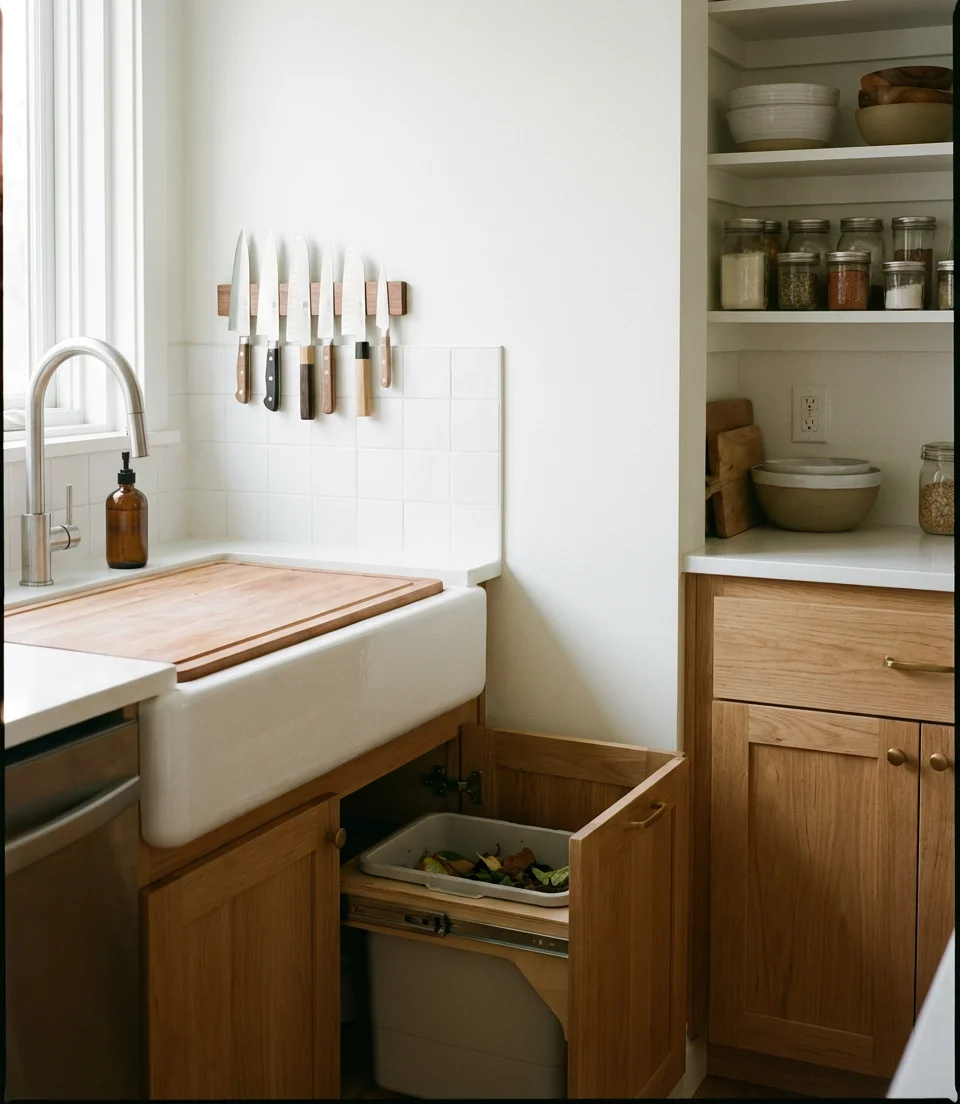
One of the most practical kitchen trends of 2026 is designing not just the sink itself but the entire zone around it as an integrated prep system. This means the counter immediately adjacent to the basin—traditionally dead space used for soap dispensers and drying racks—is now being planned as a functional extension of the sink. A flush-mounted cutting board that slides over a draining groove, a dedicated knife strip at the back, and an integrated compost bin that pulls out from the cabinet below the board: together, these elements create a prep-to-sink workflow that’s as efficient as anything in a professional kitchen.
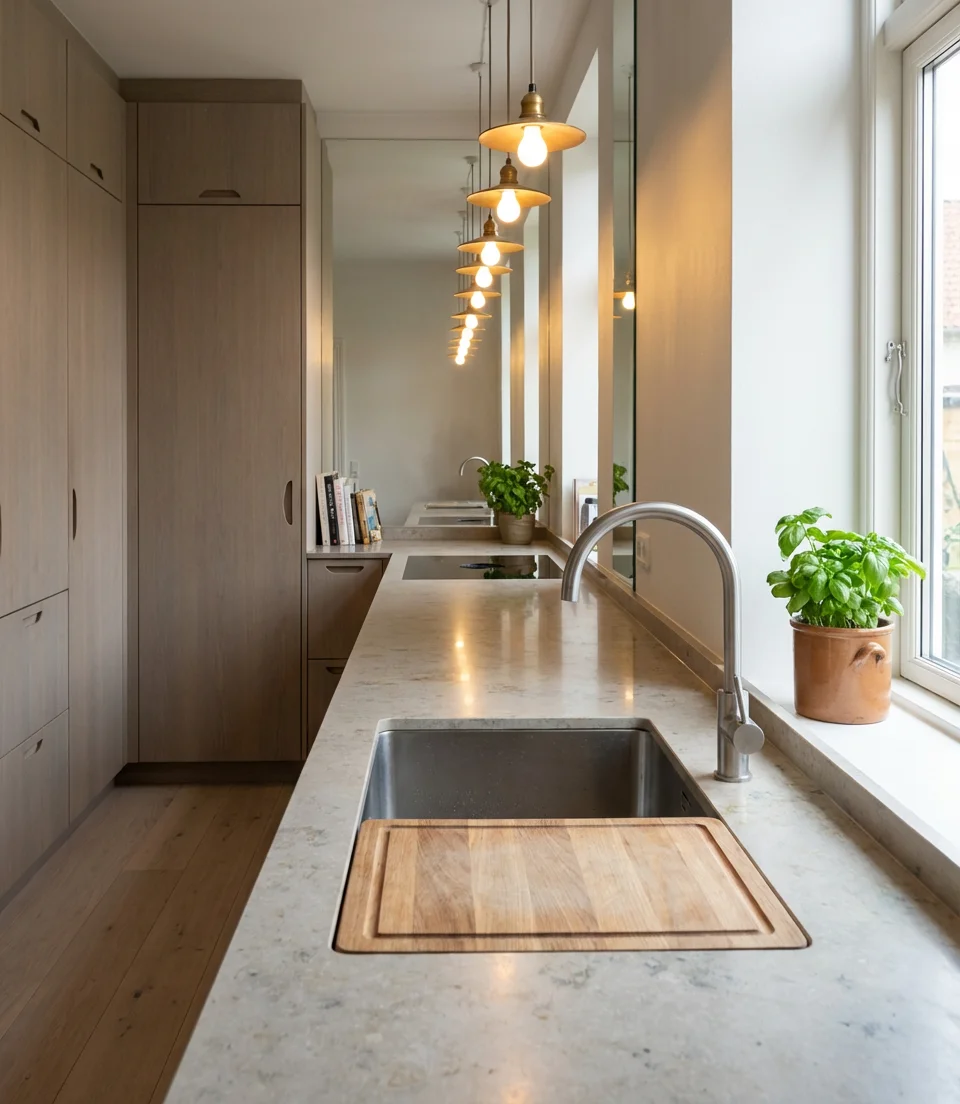
Homeowners who cook daily almost universally report that the transition from a standard sink setup to an integrated prep zone is one of the most impactful changes they’ve made in a renovation—not the most dramatic visually, but the most felt in everyday life. The design works best when it’s planned holistically from the beginning: counter depth, cabinet placement, and sink orientation all need to coordinate. Retrofitting an integrated prep zone into an existing kitchen is possible but more limited; if you’re in the early stages of a remodel, the present is the moment to build it in properly.
23. Vintage-Style Kitchen Sink with Exposed Plumbing
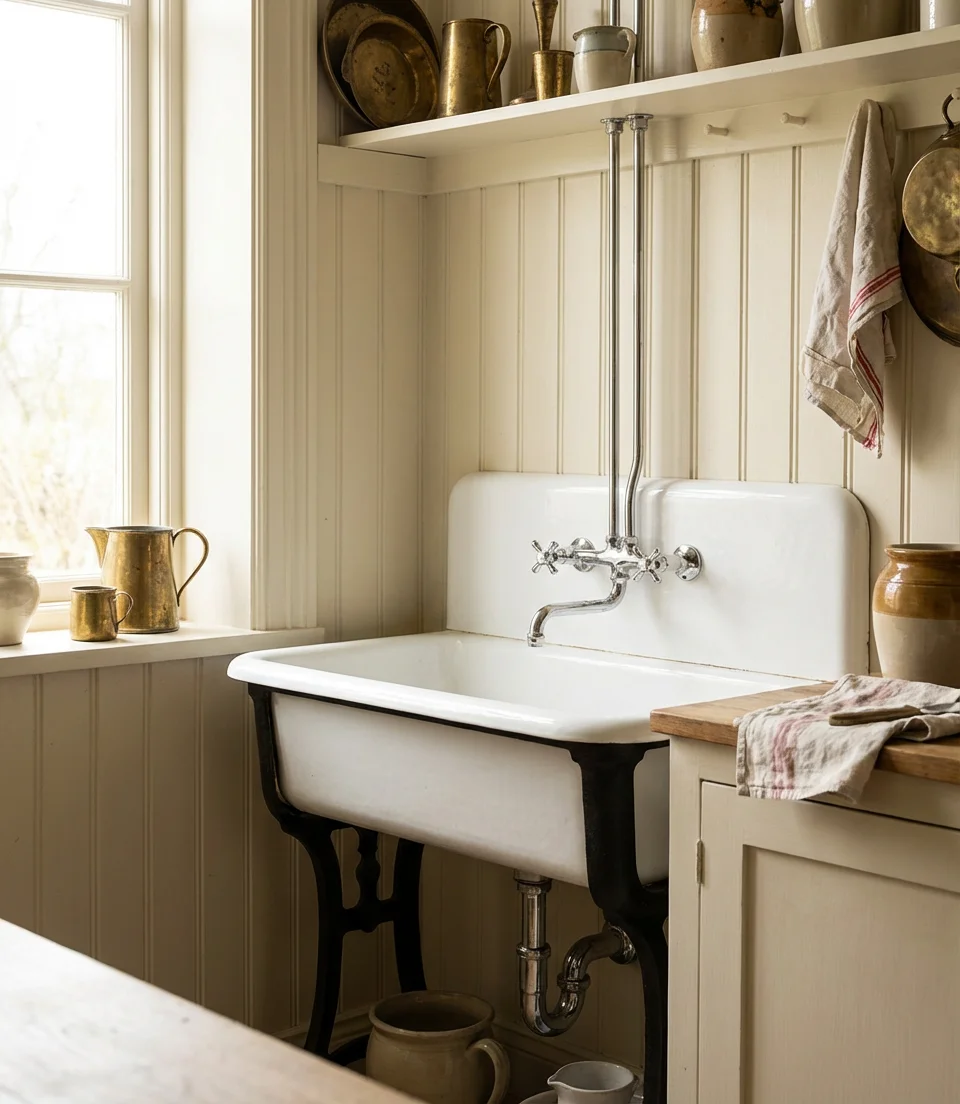
A vintage-style kitchen sink with purposefully exposed plumbing exudes a unique charm, demonstrating the homeowner’s willingness to showcase the house’s structural integrity. A deep white enamel basin on cast iron legs, with polished chrome or unlacquered brass crosshead valves and a visible p-trap, is genuinely beautiful in the right kitchen. In 2026, this aesthetic is finding new life in modern farmhouse and industrial loft kitchens alike, particularly in homes where original architectural details have been preserved and the design philosophy honors the building’s history rather than erasing it.
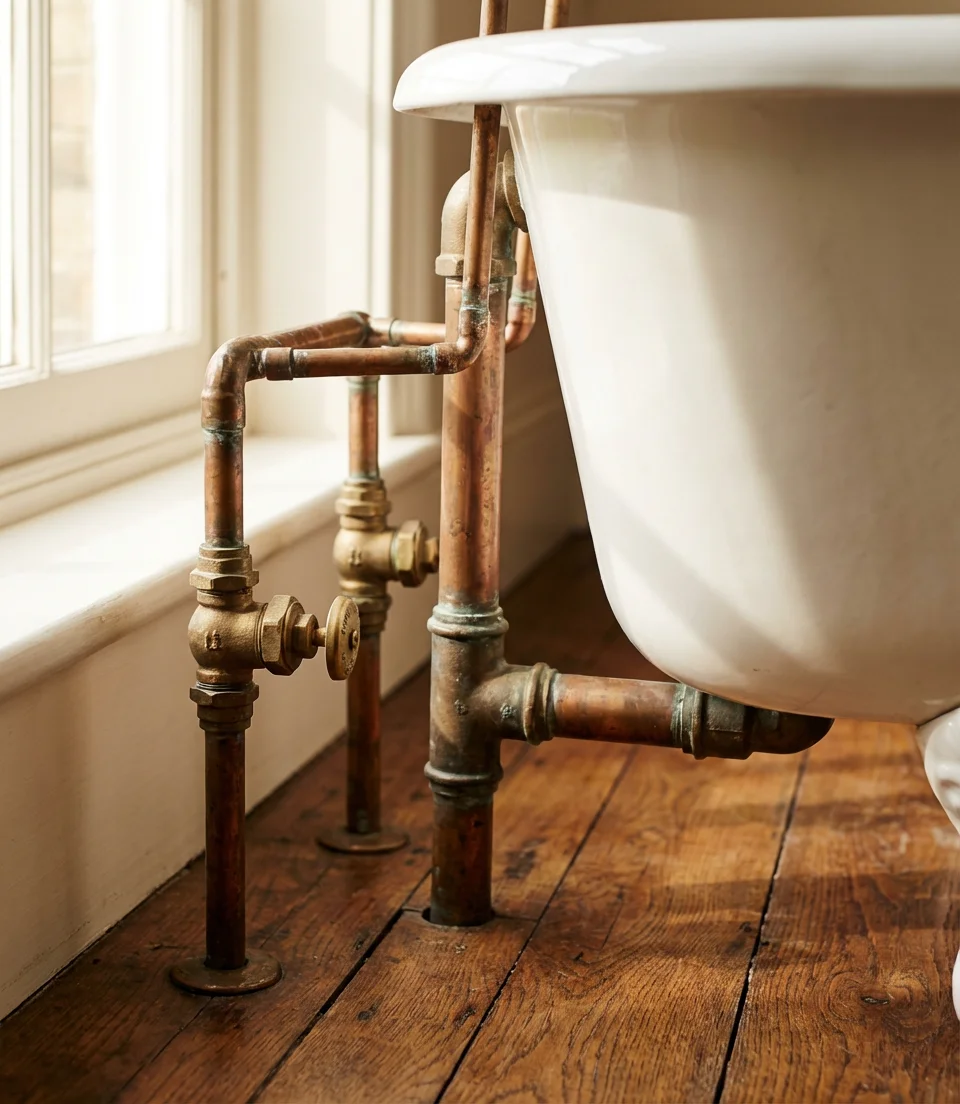
The key to pulling this concept off without it looking unfinished: every element of the exposed plumbing needs to be high quality and intentional. This isn’t the place for generic hardware-store pipe fittings. Seek specialty plumbing suppliers or vintage salvage sources for crosshead valves, period-appropriate faucet bodies, and supply line escutcheons that look as considered as the sink itself. Interior designers who specialize in this aesthetic often note that the exposed plumbing becomes one of the most photographed features of the kitchen—it has a narrative quality that modern concealed plumbing simply can’t replicate.
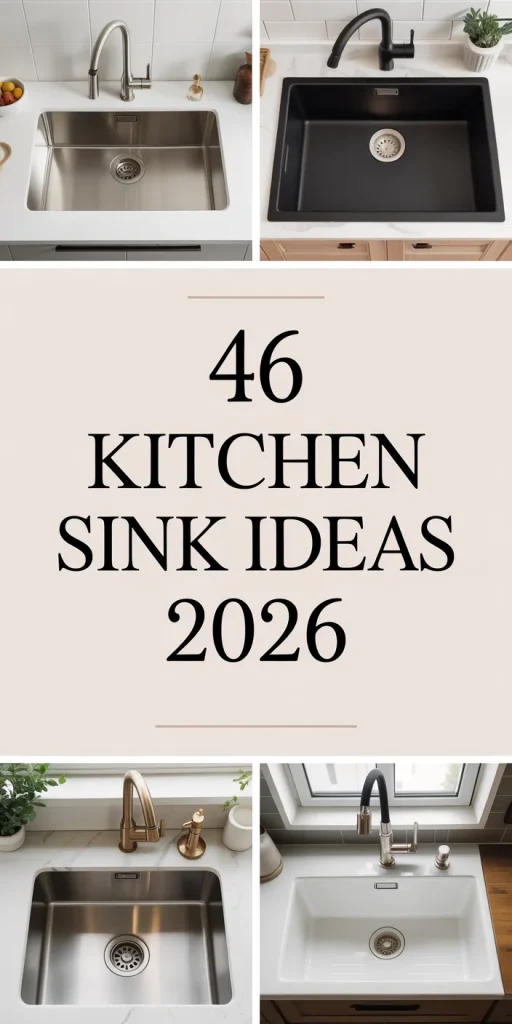
Whether you’re drawn to the clean logic of an integrated workstation sink, the warmth of a copper farmhouse bowl, or the drama of a concrete sculpture in your kitchen, there’s never been a better moment to think seriously about this often-overlooked fixture. The sink is where you start your morning, wind down your evening, and spend more time than you probably realize—it deserves to be chosen with genuine care. We’d love to hear which of these ideas resonated most with you, or if you’re already living with a wonderful sink setup, drop a comment below and tell us about it. Your real-world experience is always the most valuable inspiration.