
Kitchen design in 2026 is all about blending visual impact with everyday practicality. Americans are turning to Pinterest in record numbers to discover spaces that balance bold aesthetics with real-life function—whether that means rethinking a cramped galley layout, bringing organic modern warmth into a contemporary space, or exploring luxury finishes that don’t blow the budget. This year’s ideas reflect a shift toward personalized, layered environments that feel collected rather than decorated. From Scandinavian minimalism to richly textured rustic retreats, the following concepts offer inspiration for every style, space, and timeline.
1. Streamlined Galley with Integrated Appliances
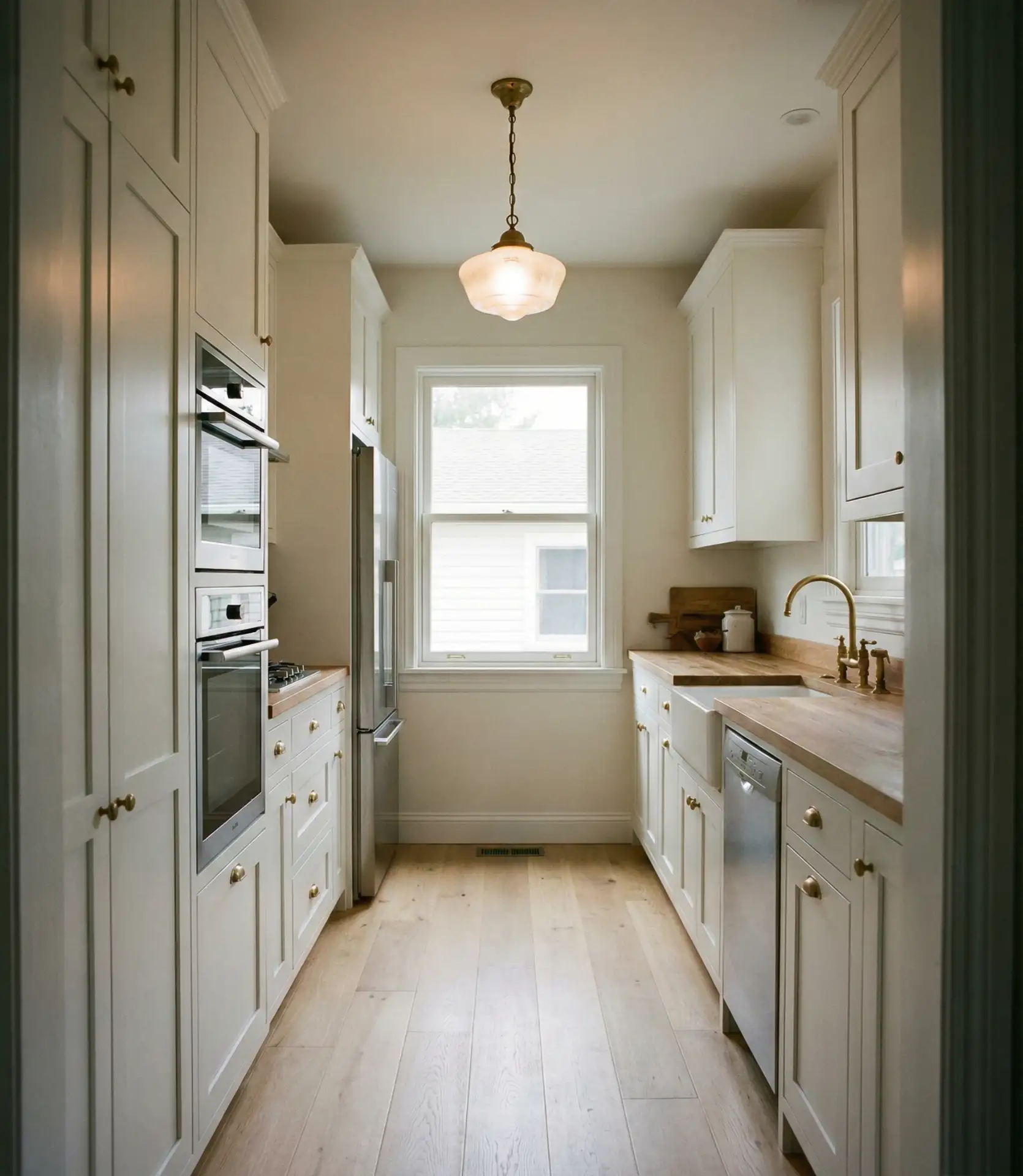
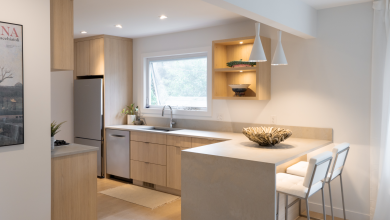
A galley kitchen doesn’t have to feel like a hallway. By embedding appliances flush with cabinetry and using handleless panels, you create a seamless corridor that maximizes every inch. Modern 2025 updates lean heavily on integrated dishwashers, refrigerators, and even range hoods concealed behind matching cabinet fronts. The result is a clean, uninterrupted visual plane that works especially well in small spaces where clutter can quickly overwhelm the senses.
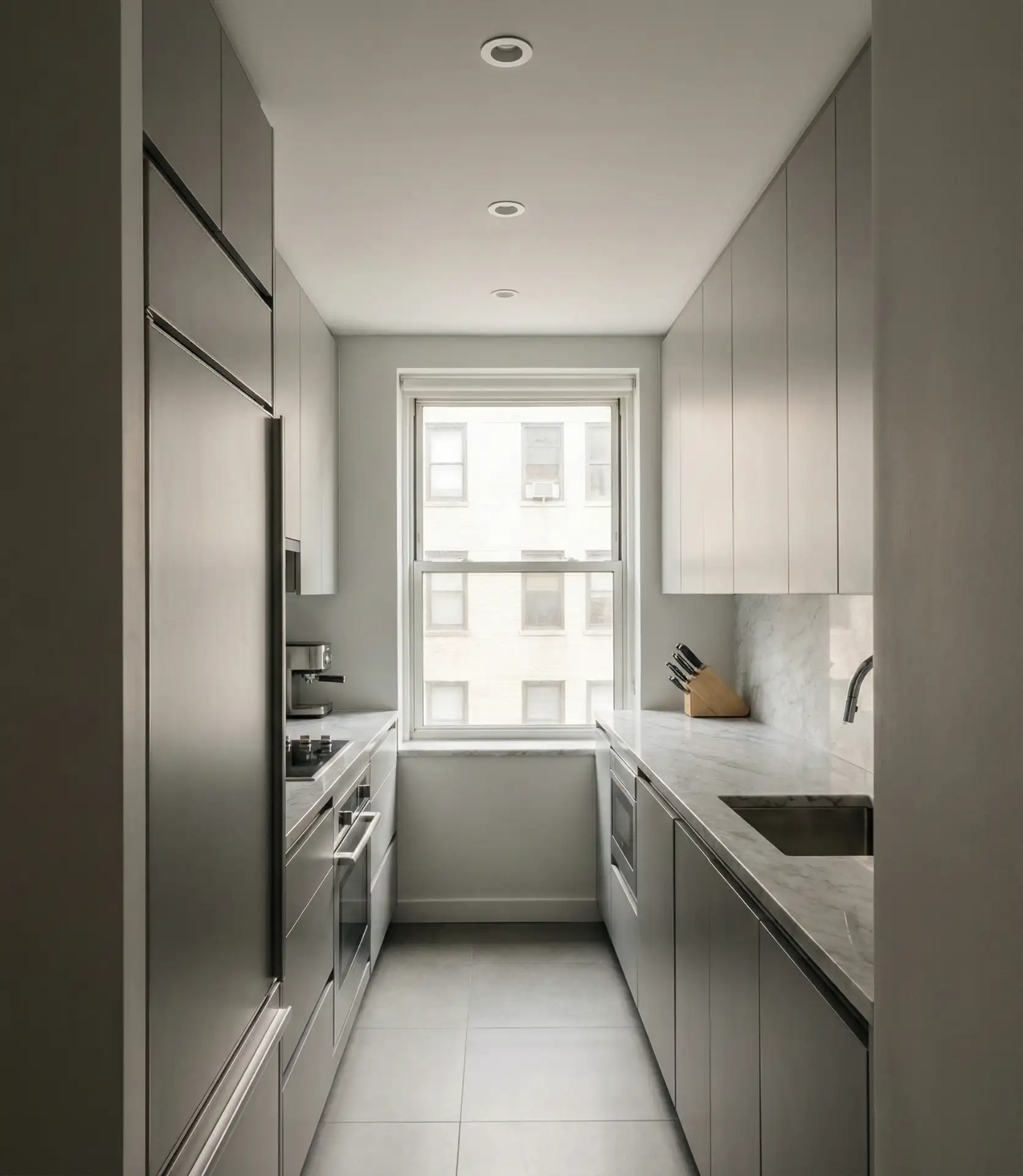
In American homes, especially older apartments and townhouses, galley layouts are the norm. The key mistake is treating them as purely functional—adding open shelving or glass-front uppers at one end instantly softens the tunnel effect and gives you a display opportunity without sacrificing storage. Pair that with under-cabinet LED strips to brighten work zones, and suddenly a space that felt tight becomes efficient and inviting.
2. Japandi Harmony in Natural Wood and Stone
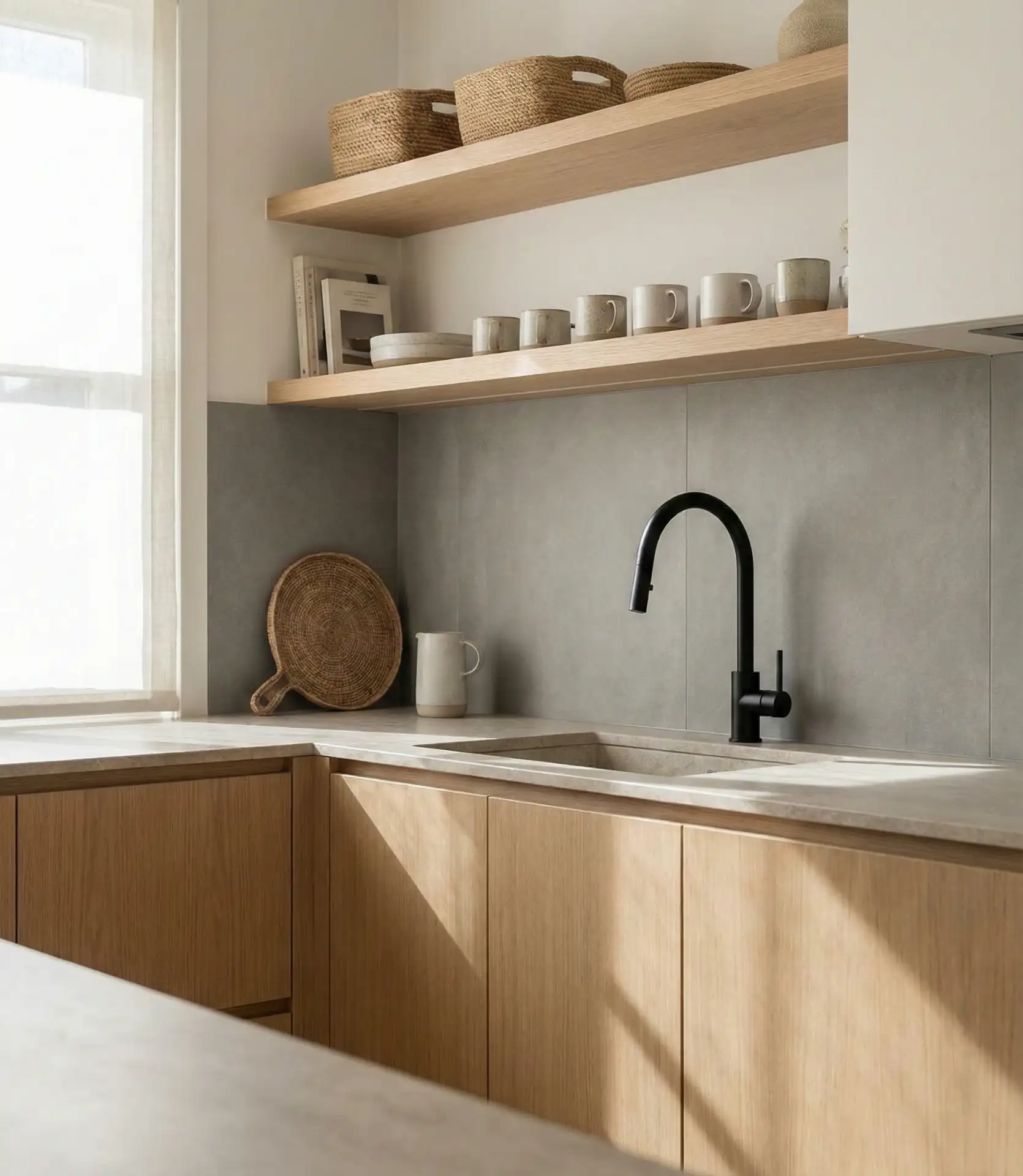
Japandi kitchens merge Japanese restraint with Scandinavian warmth, resulting in spaces that feel both minimal and inviting. Light oak or ash cabinetry pairs with matte black fixtures, honed stone countertops, and open shelving that displays only the essentials. The palette stays neutral—whites, grays, and warm browns—and every object earns its place. This approach works beautifully in home renovations where homeowners want calm without coldness.
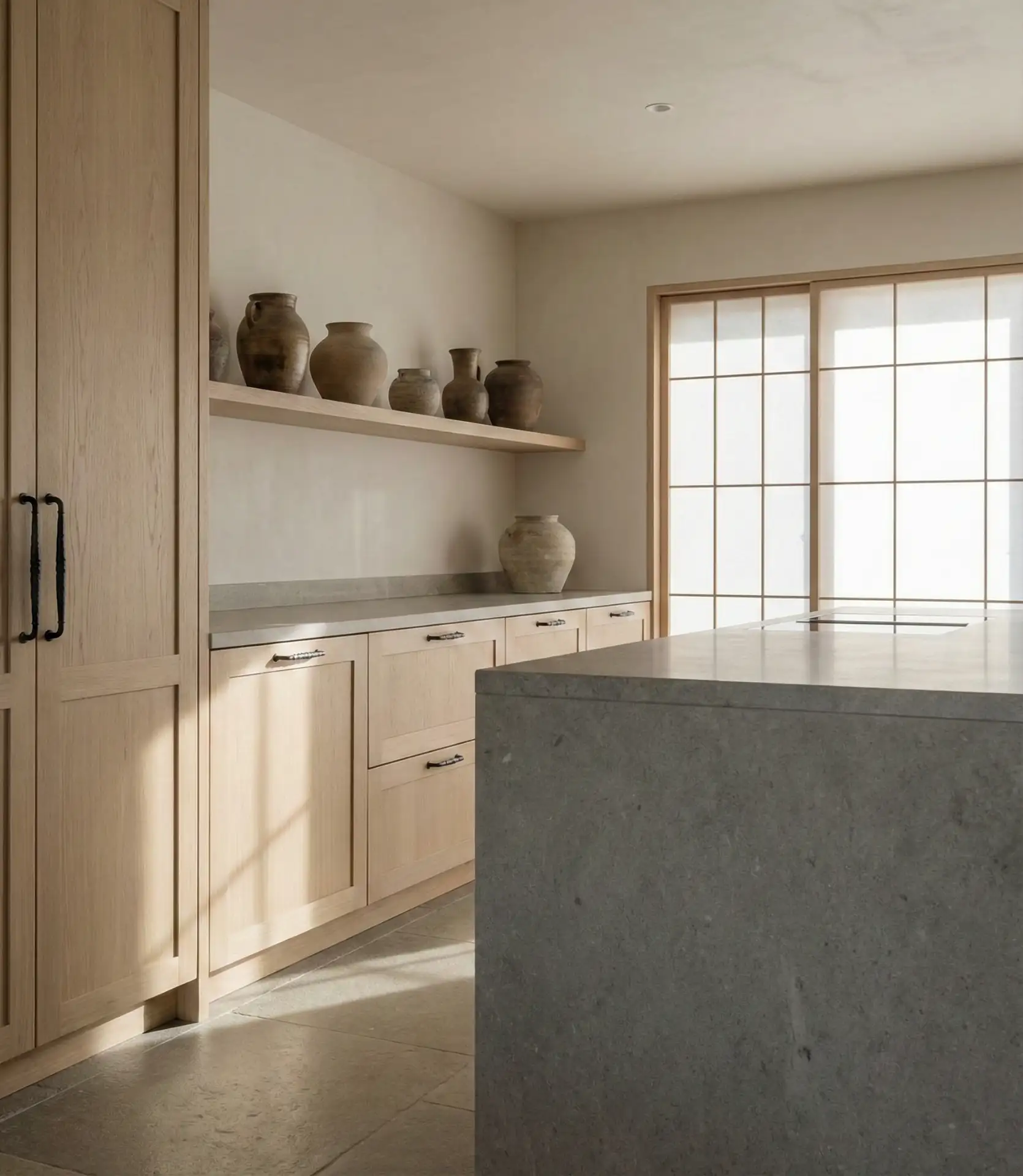
This style works best in homes with abundant natural light—think California bungalows or Pacific Northwest renovations—where large windows let the outdoors in. A common pitfall is over-styling the shelves; Japandi thrives on restraint, so limit displays to a few handmade ceramics or a single green branch in a simple vase. The less you add, the more powerful the space becomes.
3. Industrial Loft with Exposed Brick and Metal
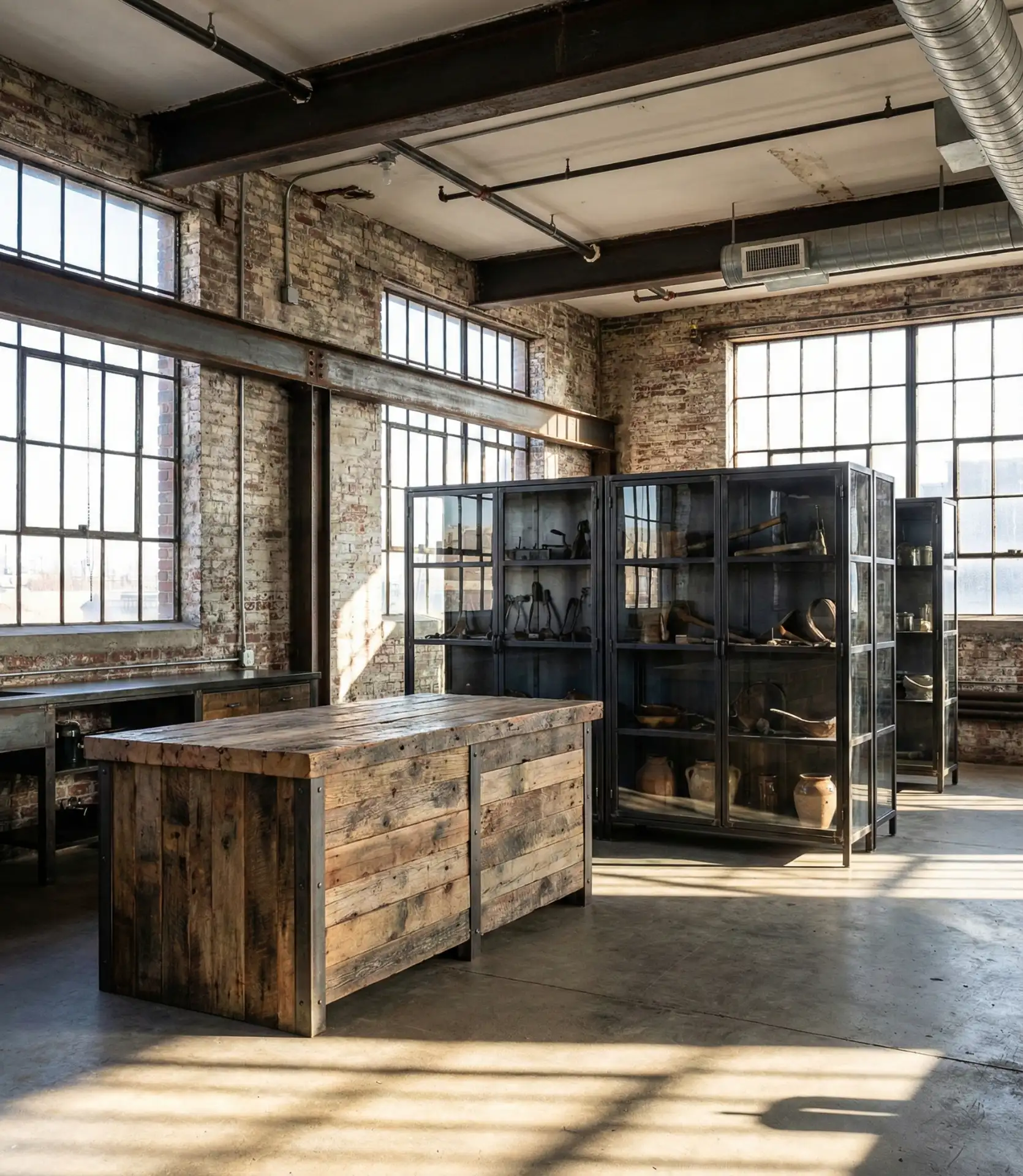
Industrial kitchens tap into the raw materiality of urban lofts—exposed brick, steel I-beams, concrete floors, and open shelving fashioned from reclaimed wood and iron pipe. This aesthetic celebrates the unfinished, turning structural elements into focal points rather than hiding them. 2026 trends add warmth through brass or copper accents, vintage Edison bulbs, and softer textiles like linen dish towels or woven bar stools.
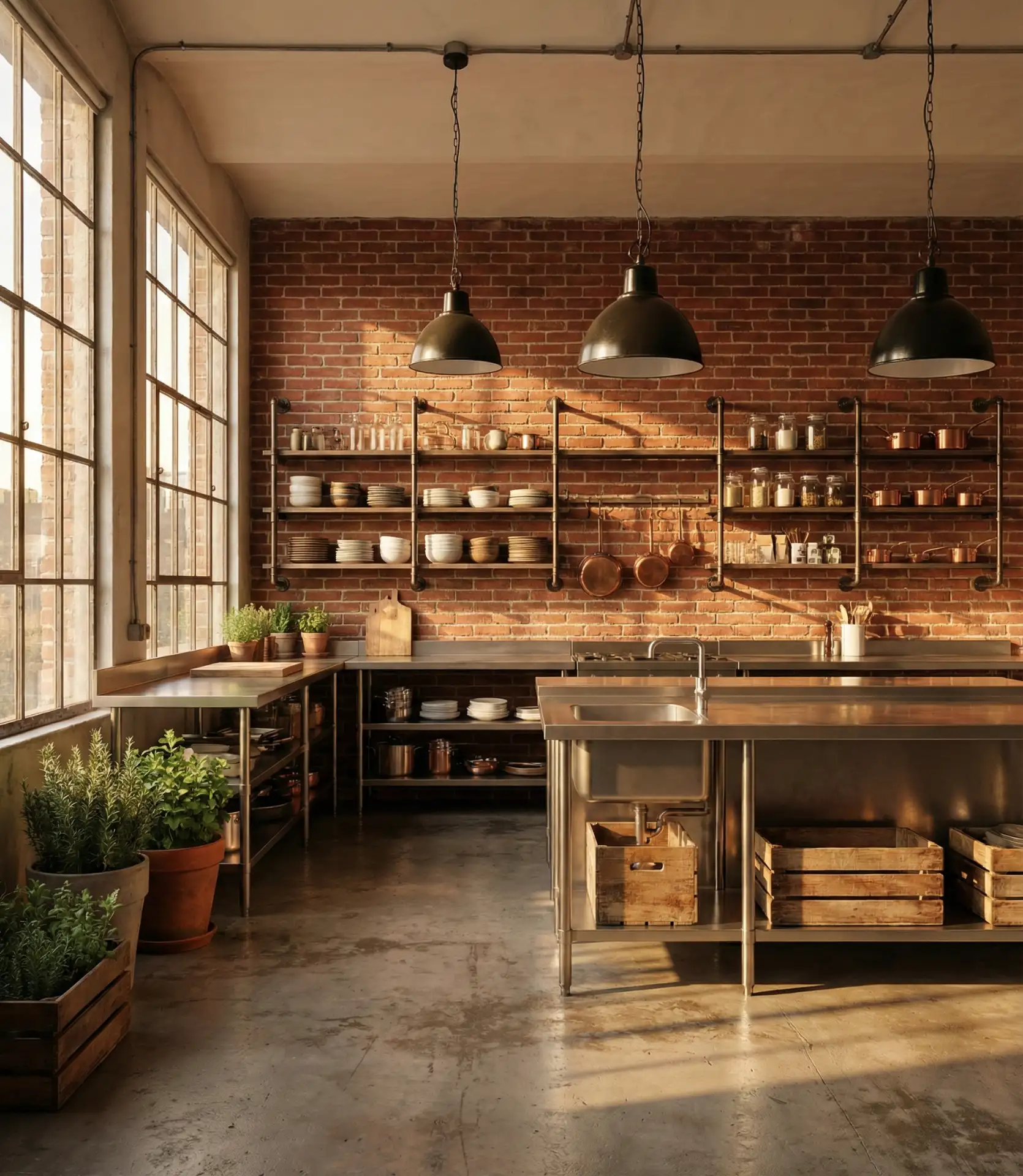
A designer in Brooklyn once noted that industrial kitchens feel most authentic when they honor the building’s history—don’t fake the patina. If your home lacks original brick or beams, consider a single statement wall or a metal hood rather than forcing the look. Budget-conscious renovators can find salvaged materials at architectural salvage yards, where reclaimed wood and vintage fixtures often cost less than new counterparts and bring genuine character.
4. White Minimalism with Marble Accents
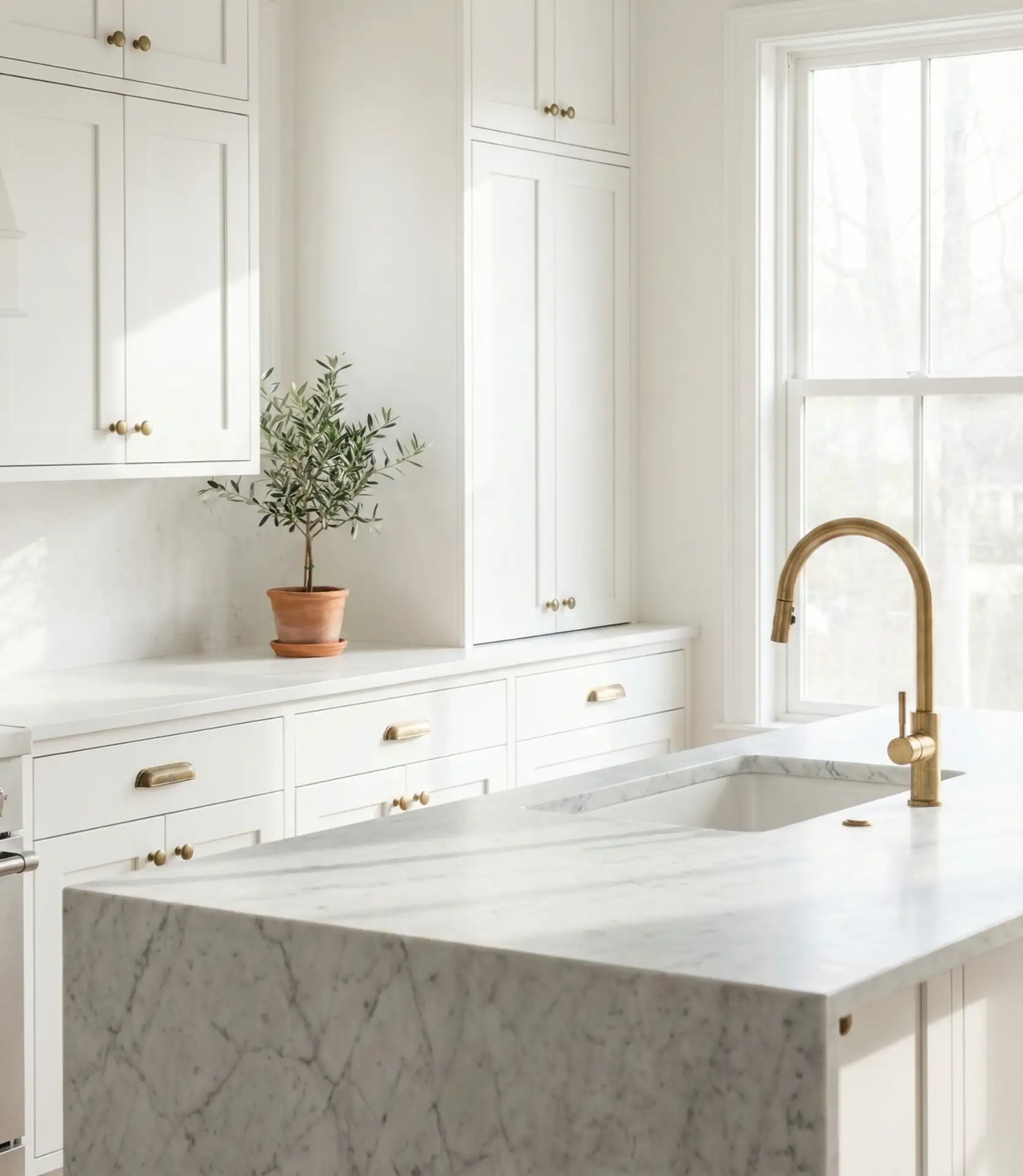
All-white kitchens remain a Pinterest favorite because they amplify light and create a blank canvas for styling. Pair matte white cabinets with polished Carrara or Calacatta marble countertops, and the veining becomes the room’s artwork. Modern luxury iterations layer in subtle texture—fluted cabinet fronts, ribbed glass uppers, or a honed finish on the backsplash—to prevent the space from feeling sterile or flat.
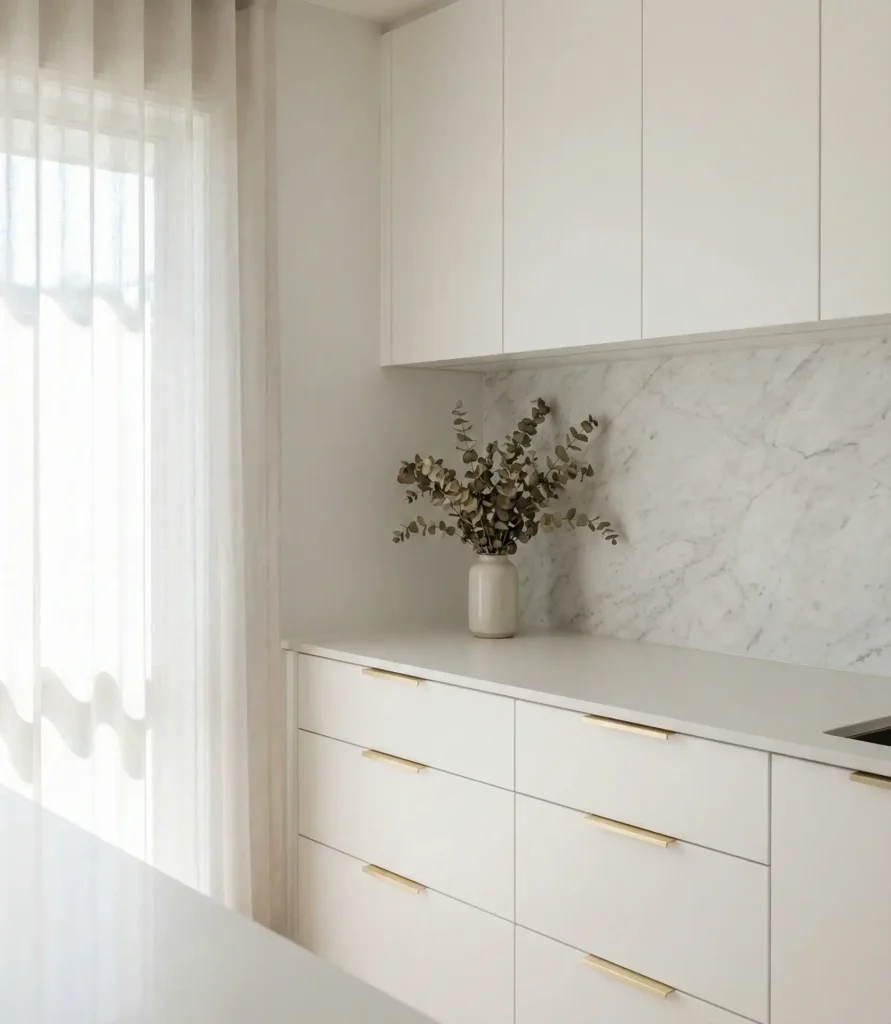
In American homes, this style thrives in open-plan layouts where the kitchen flows into the living area—white expands the sense of space and keeps sight lines uninterrupted. Practical insight: choose a honed or leathered marble finish for high-traffic zones to hide etching from acidic spills, and always seal the stone every six months. White kitchens require discipline, yet they yield a serene, gallery-like atmosphere that remains timeless.
5. Rustic Farmhouse with Reclaimed Timber
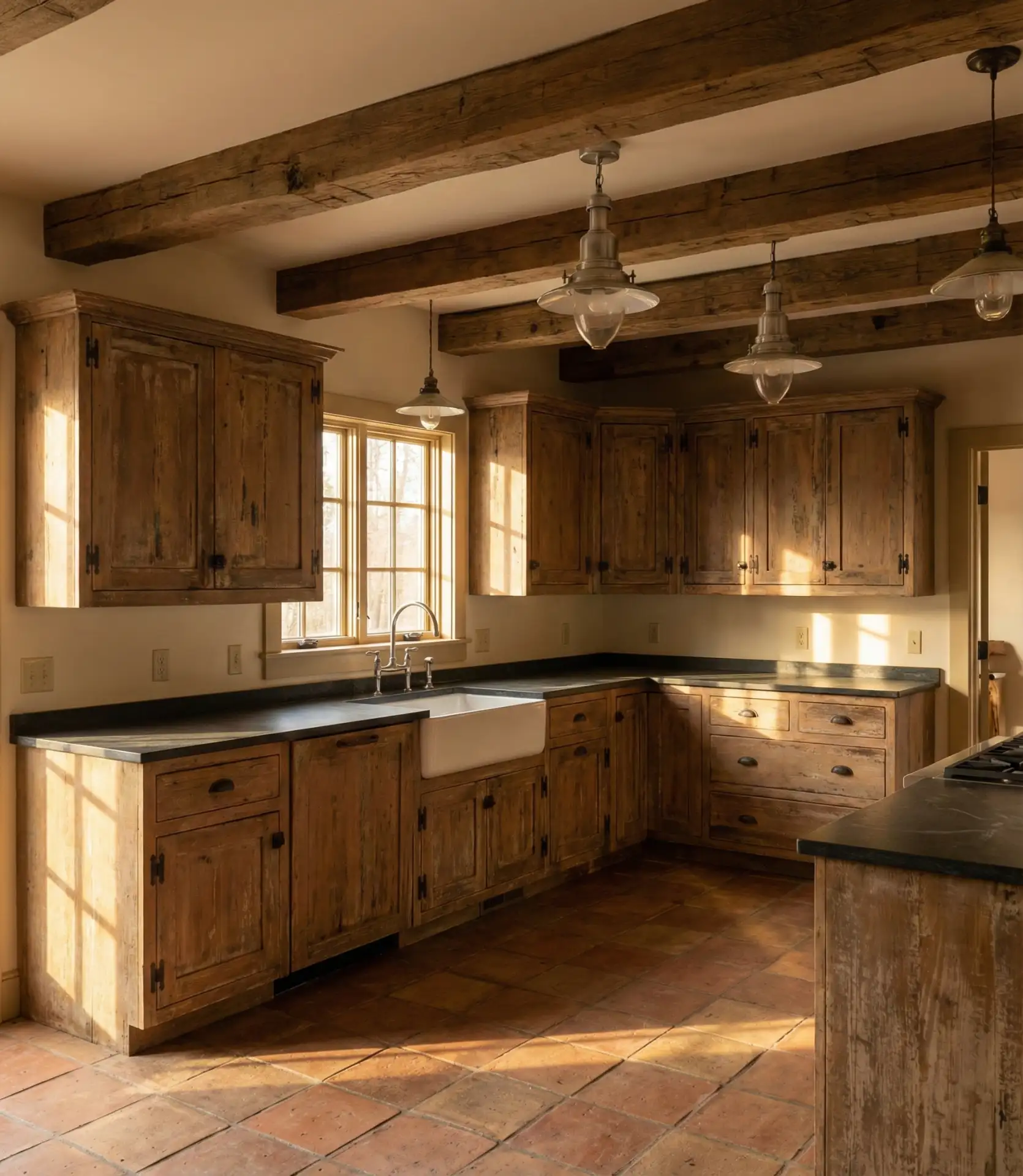
Rustic kitchens draw on agrarian roots, featuring weathered wood beams, wide-plank flooring, and cabinetry built from reclaimed barn siding. The palette leans warm—honey, cream, and soft gray—and details like apron-front sinks, butcher-block islands, and open shelving stocked with ironstone dishes reinforce the farmhouse narrative. Cabins or country homes naturally suit this aesthetic, but suburban remodels can adopt it with the right material choices.
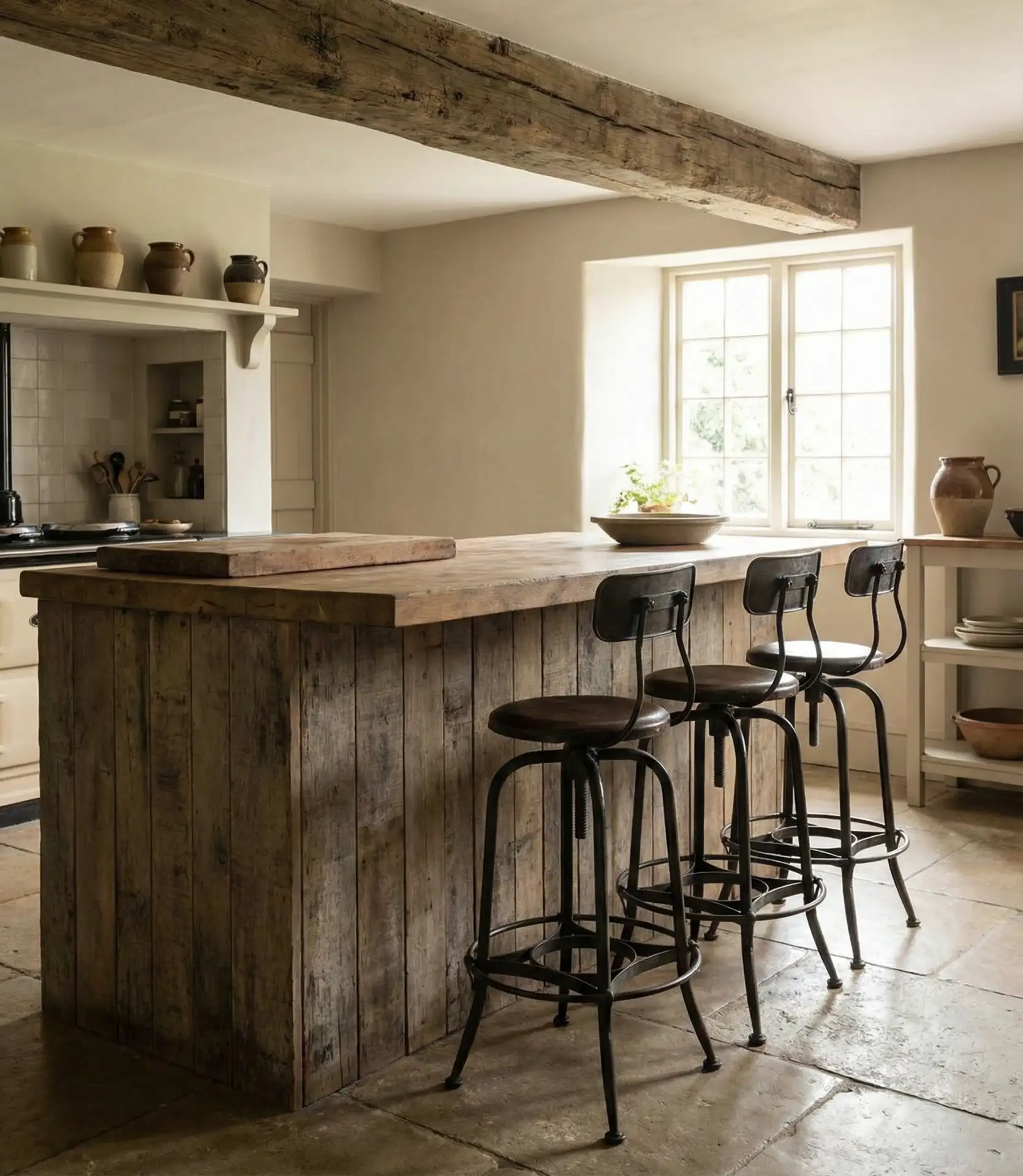
Where it works best: rural properties, renovated barns, or any home where the architecture already hints at history. Homeowners often overdo the “shabby” part—too many distressed finishes can read as neglected rather than charming. Balance weathered wood with crisp white walls or modern lighting, and keep hardware simple. The goal is curated rusticity, not a flea market explosion.
6. Tiny Kitchen with Foldable Features
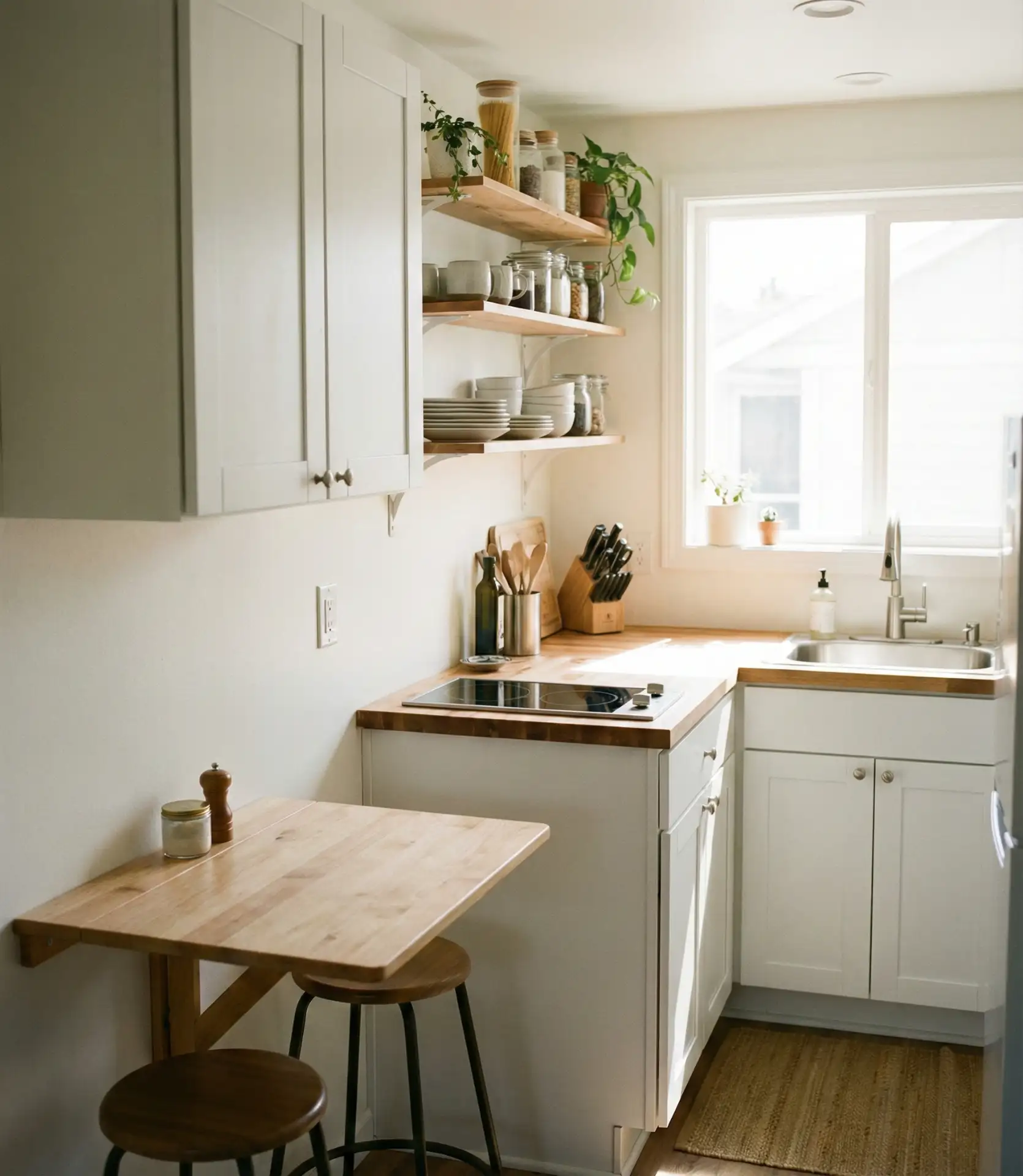
In tiny kitchens, every square foot counts. Wall-mounted drop-leaf tables, pull-out cutting boards, and fold-down dish racks transform static surfaces into multi-use zones. Modular storage systems let you reconfigure as needs change, and slim appliances—18-inch dishwashers and counter-depth refrigerators—free up precious floor space. The key is vertical thinking: use the full height of the walls with tall cabinets or magnetic strips for knives.
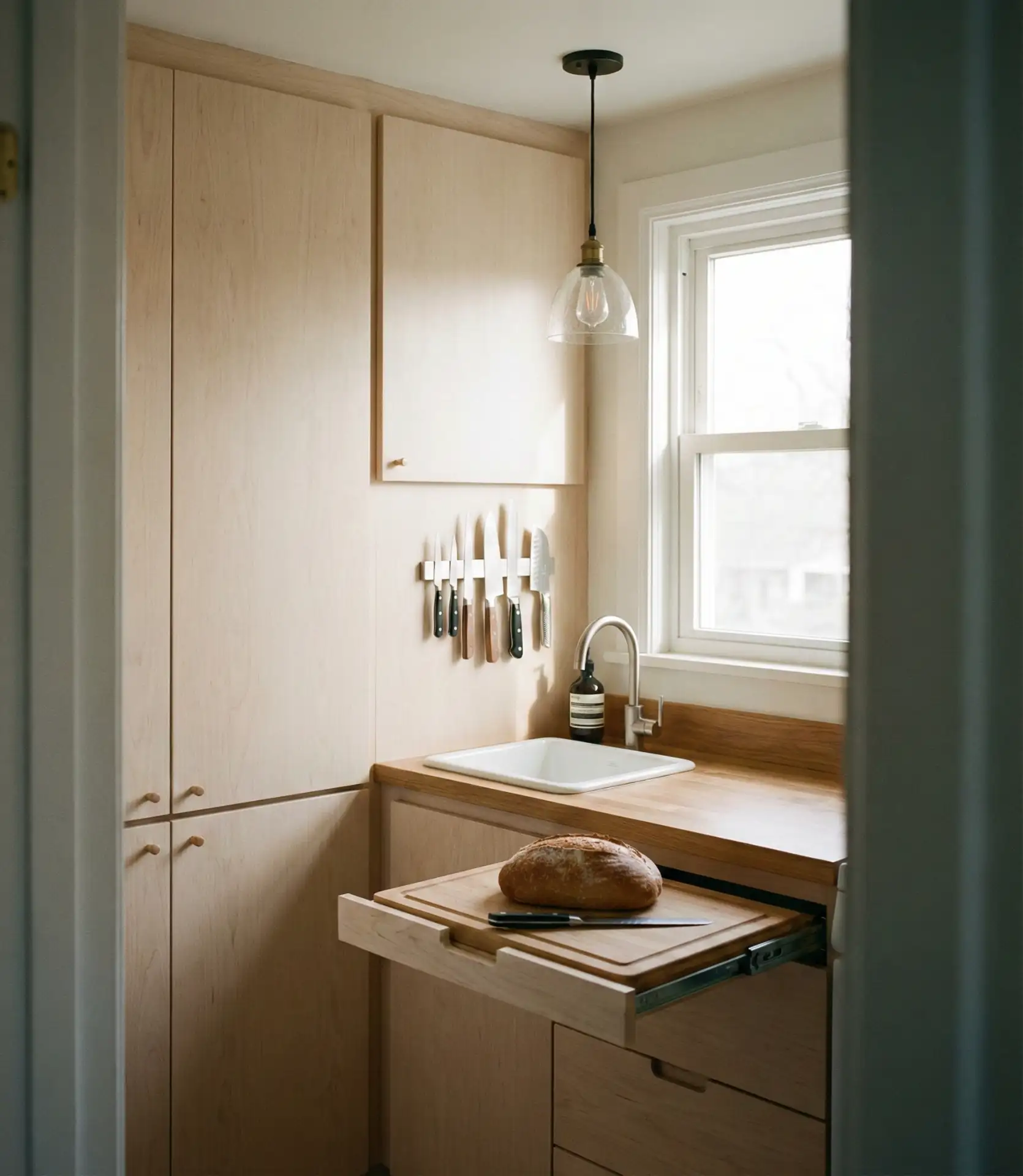
Real homeowner behavior: renters and urban dwellers often skip permanent changes, so adhesive hooks, tension rods, and portable islands become essential. Budget angle—many foldable accessories cost under fifty dollars and install without tools, making them ideal for apartment living. The mistake to avoid is over-cluttering counters; in a tiny space, clear surfaces are the ultimate luxury.
7. Modern Open Layout with Island Seating
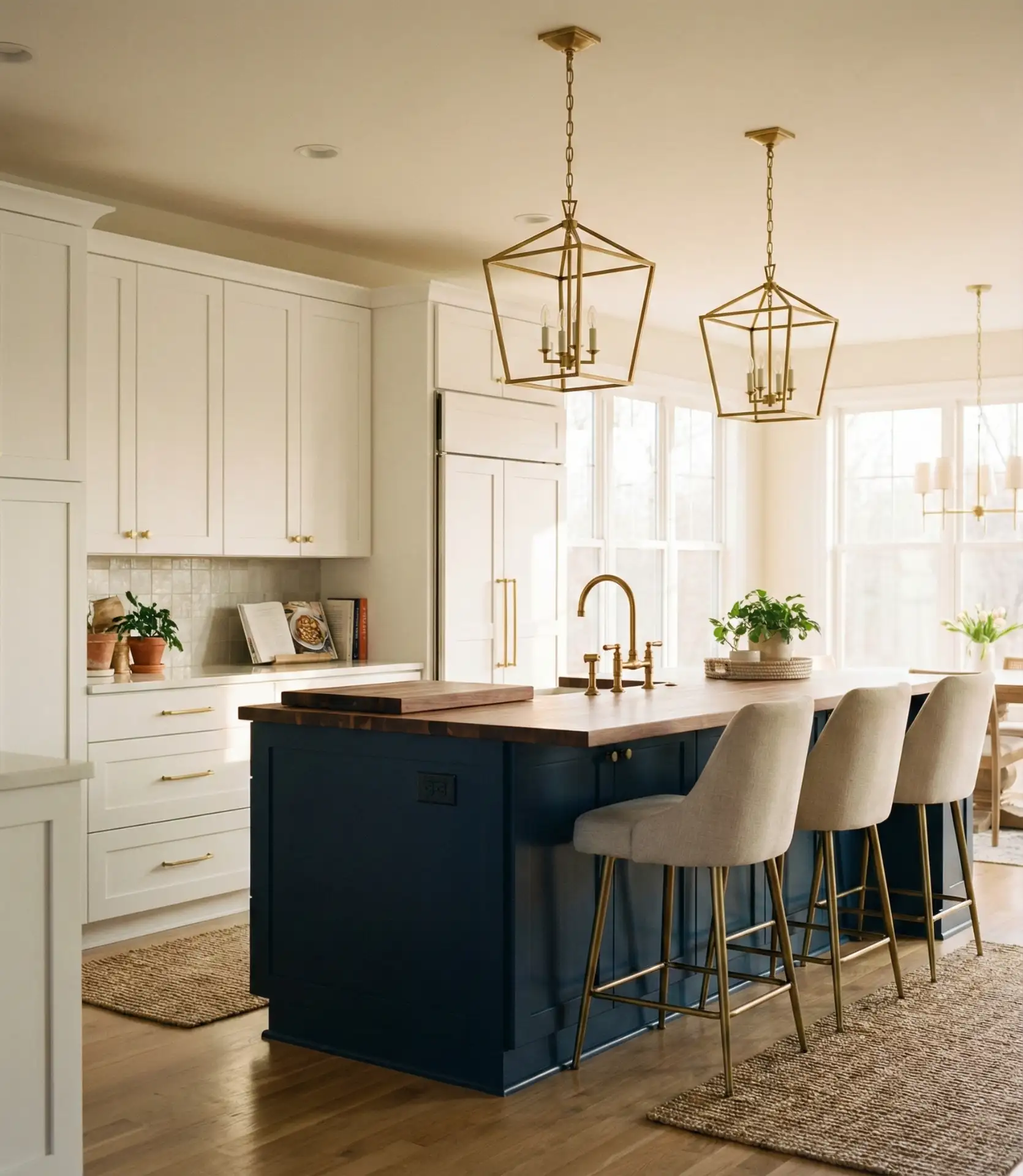
An open kitchen anchored by a large island creates a natural gathering spot that blurs the line between cooking and socializing. Modern open designs favor clean lines, flat-panel cabinets, and waterfall countertops in quartz or marble. Bar stools line one side of the island, while the opposite side houses a cooktop or sink, keeping the cook engaged with guests. Pendant lights suspended above define the zone without closing it off.
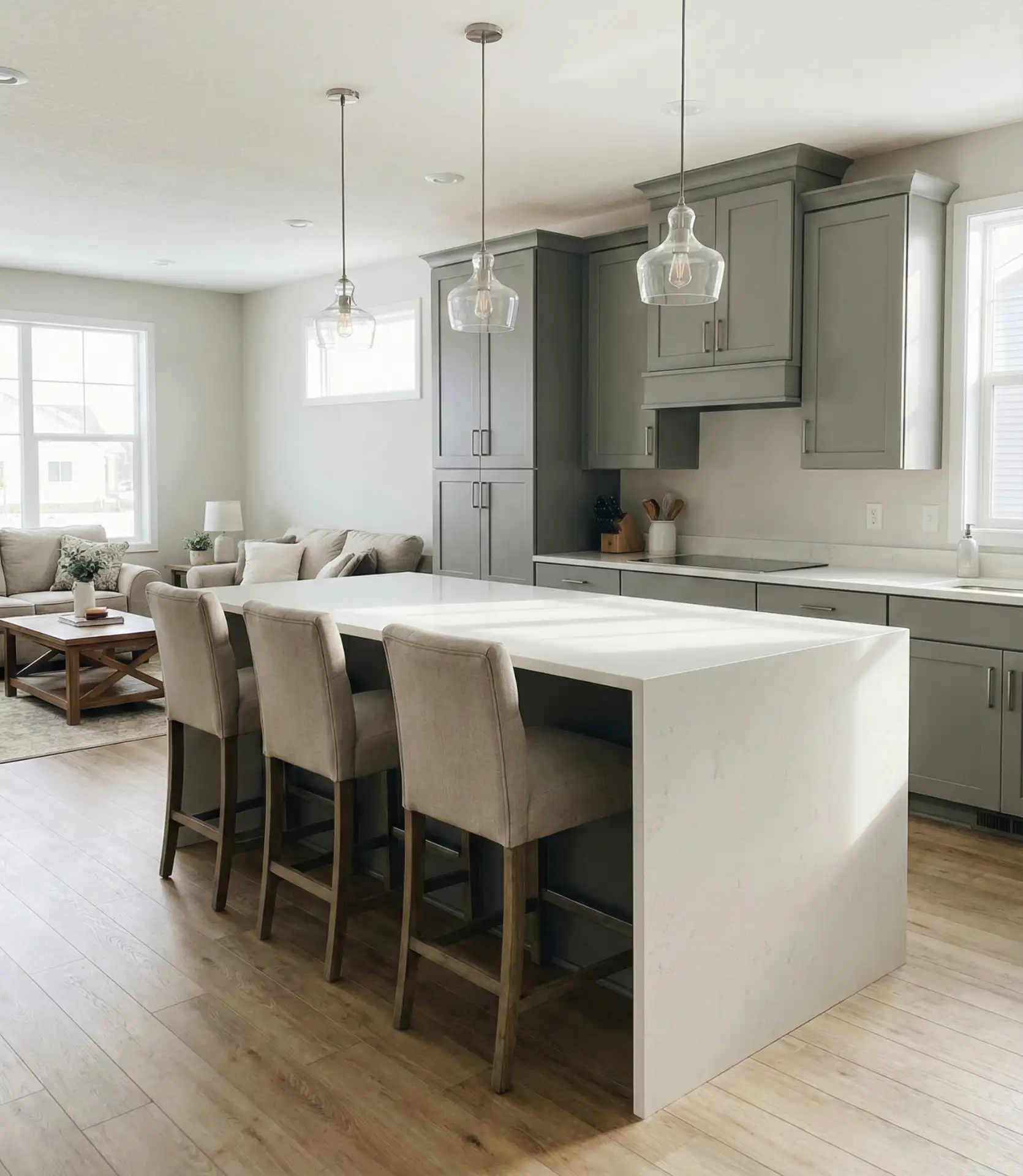
In suburban American homes, open-layout kitchens support everything from homework sessions to dinner parties. The common mistake is neglecting sightlines—if the kitchen is visible from the living room, clutter becomes a visual distraction. Install deep drawers for appliances, use hidden trash pull-outs, and keep counters clear. A well-planned island becomes the home’s social heart, not just another prep surface.
8. Outdoor Cooking Station with Built-In Grill
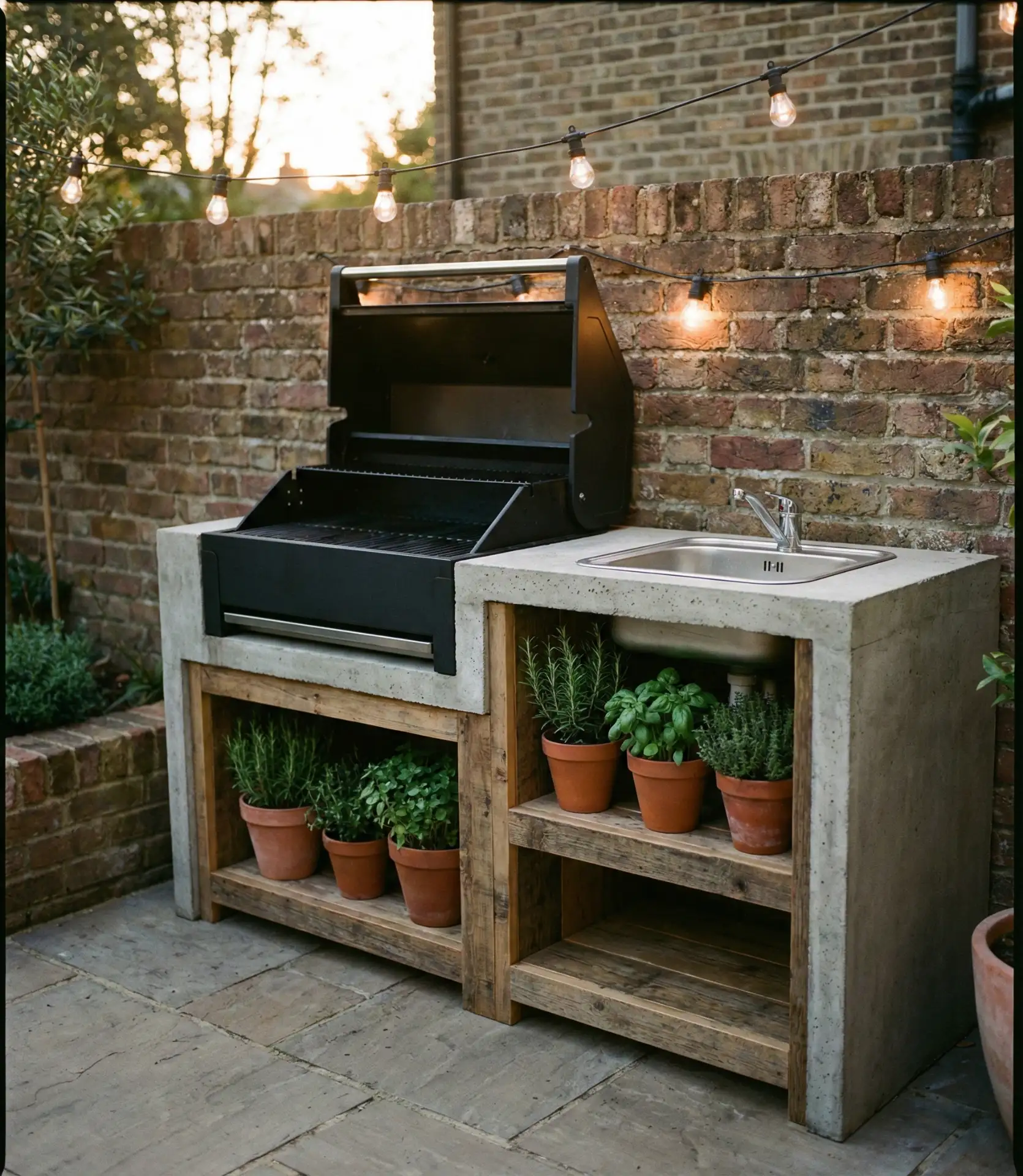
Outdoor kitchens extend living space into the backyard, turning patios and decks into full-service cooking zones. Built-in grills, weatherproof cabinetry, and durable countertops in granite or concrete withstand the elements while offering the functionality of an indoor kitchen. Add a small refrigerator, sink, and storage for utensils, and you eliminate the endless trips back inside. 2026 trends favor natural materials—stacked stone, teak, and powder-coated steel—that age gracefully.
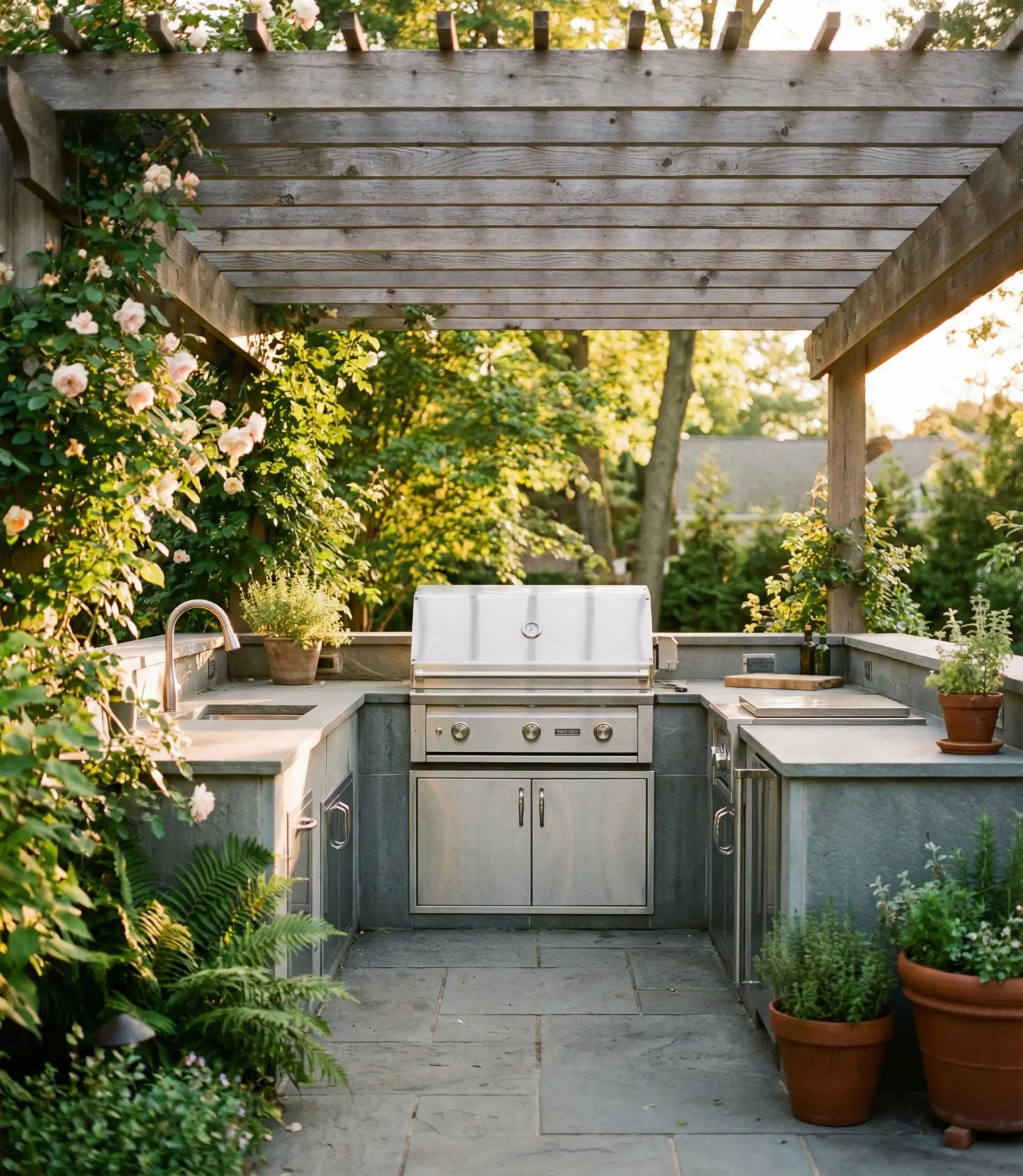
Regional context matters: in the Southwest and Southeast, outdoor kitchens are nearly year-round assets, while in the Midwest and Northeast, they’re seasonal luxuries. Budget-conscious homeowners can start with a simple grill island and add components over time—a modular approach spreads costs and lets you test what you actually use. The key is weatherproofing: choose marine-grade hardware and seal stone annually to prevent cracking.
9. Indian-Inspired Spice Storage and Ventilation
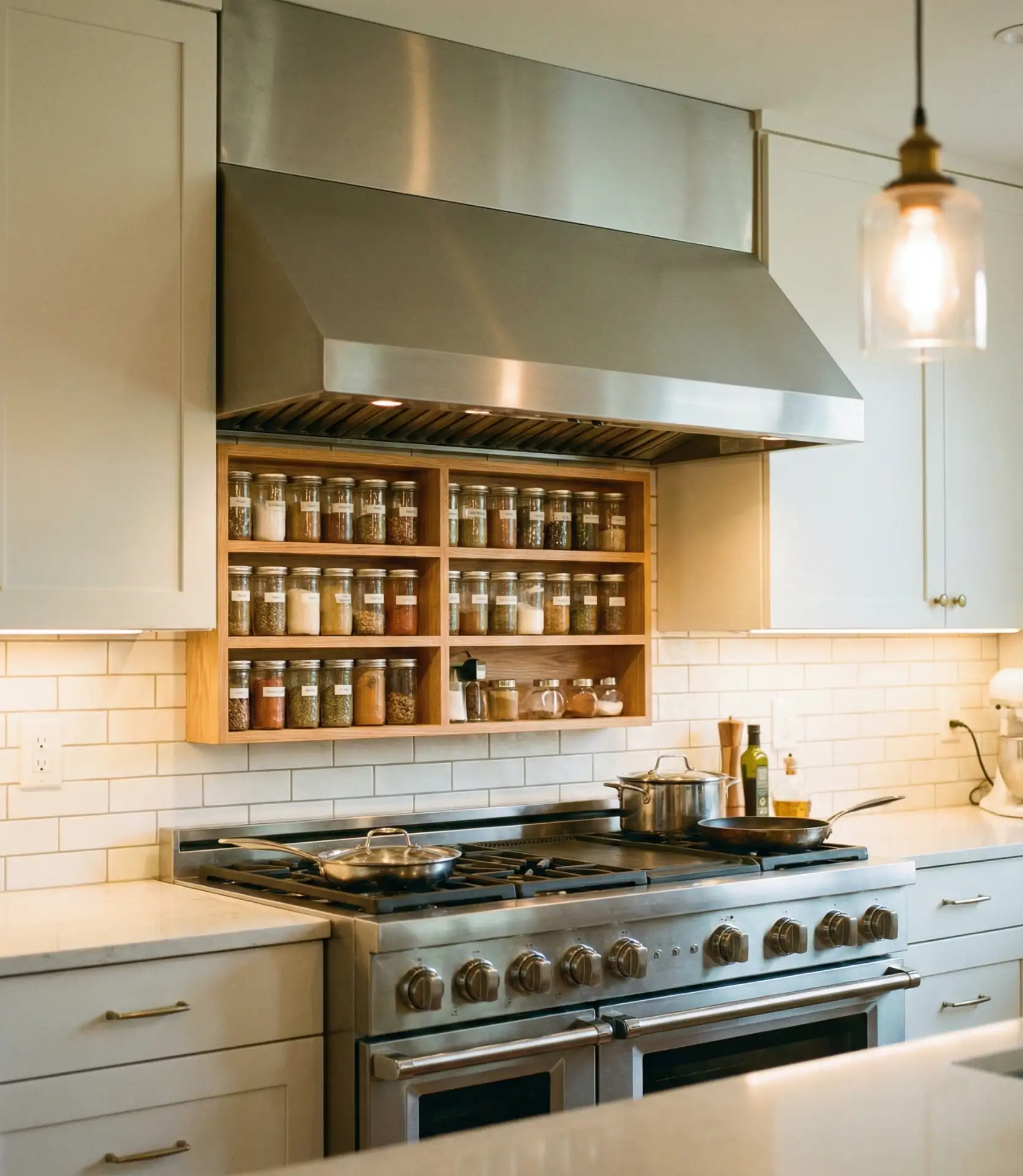
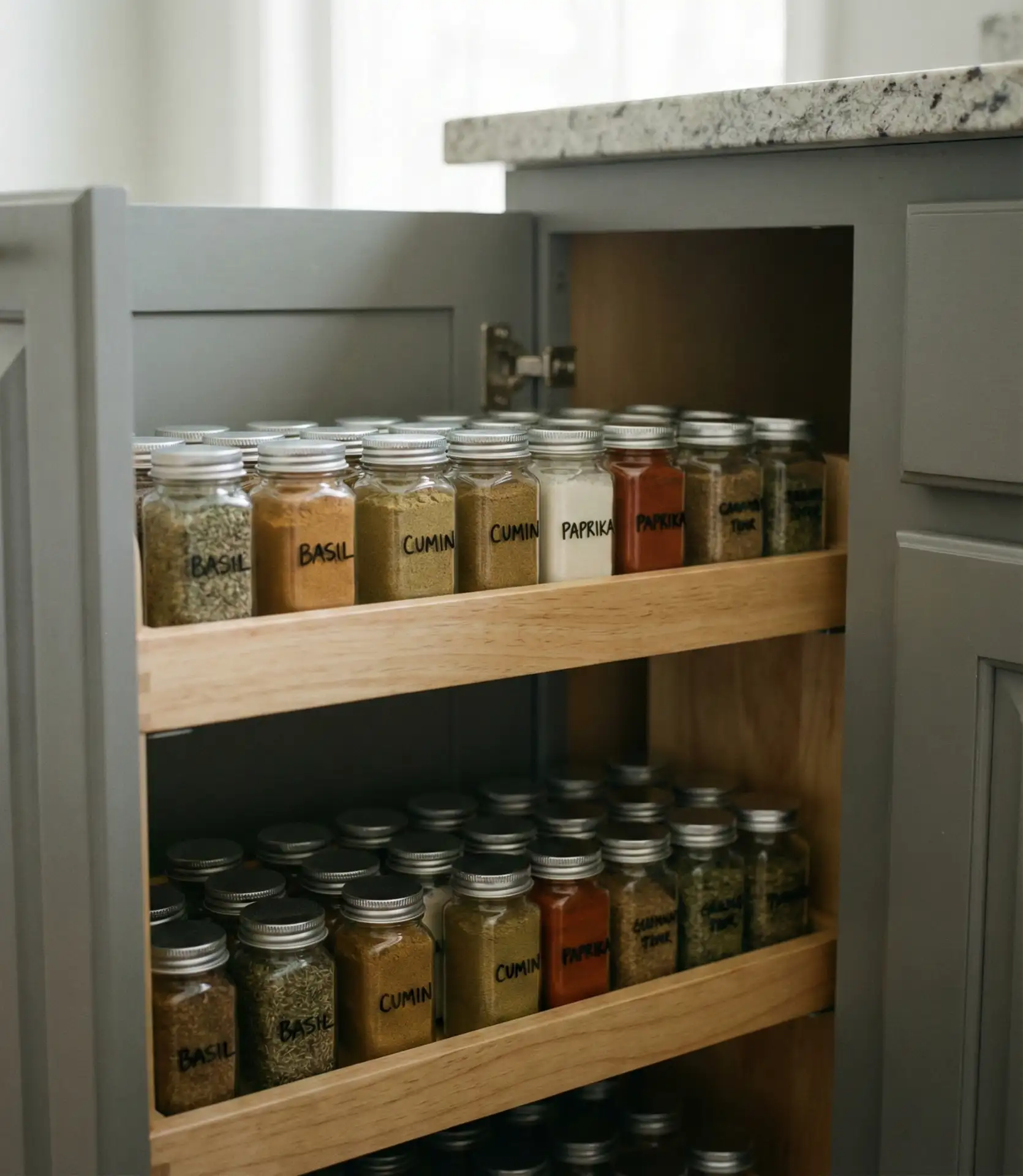
Indian kitchens in American homes often prioritize robust ventilation and organized spice storage to accommodate aromatic, high-heat cooking. An 800 CFM or higher powerful range hood efficiently manages smoke and oil vapor, while pull-out spice racks or wall-mounted magnetic tins conveniently store dozens of masalas within easy reach. Contemporary designs integrate these practical needs with sleek cabinetry, using drawer dividers and labeled jars to maintain order and accessibility.
One Indian-American homeowner in New Jersey shared that investing in a commercial-grade hood transformed her cooking experience—no more lingering smells or greasy film on cabinets. Expert-style commentary: if you cook with turmeric, mustard seeds, and curry leaves regularly, choose backsplash materials that wipe clean easily, like porcelain or stainless steel, and avoid porous stone that can stain.
10. Transitional Blend of Classic and Modern
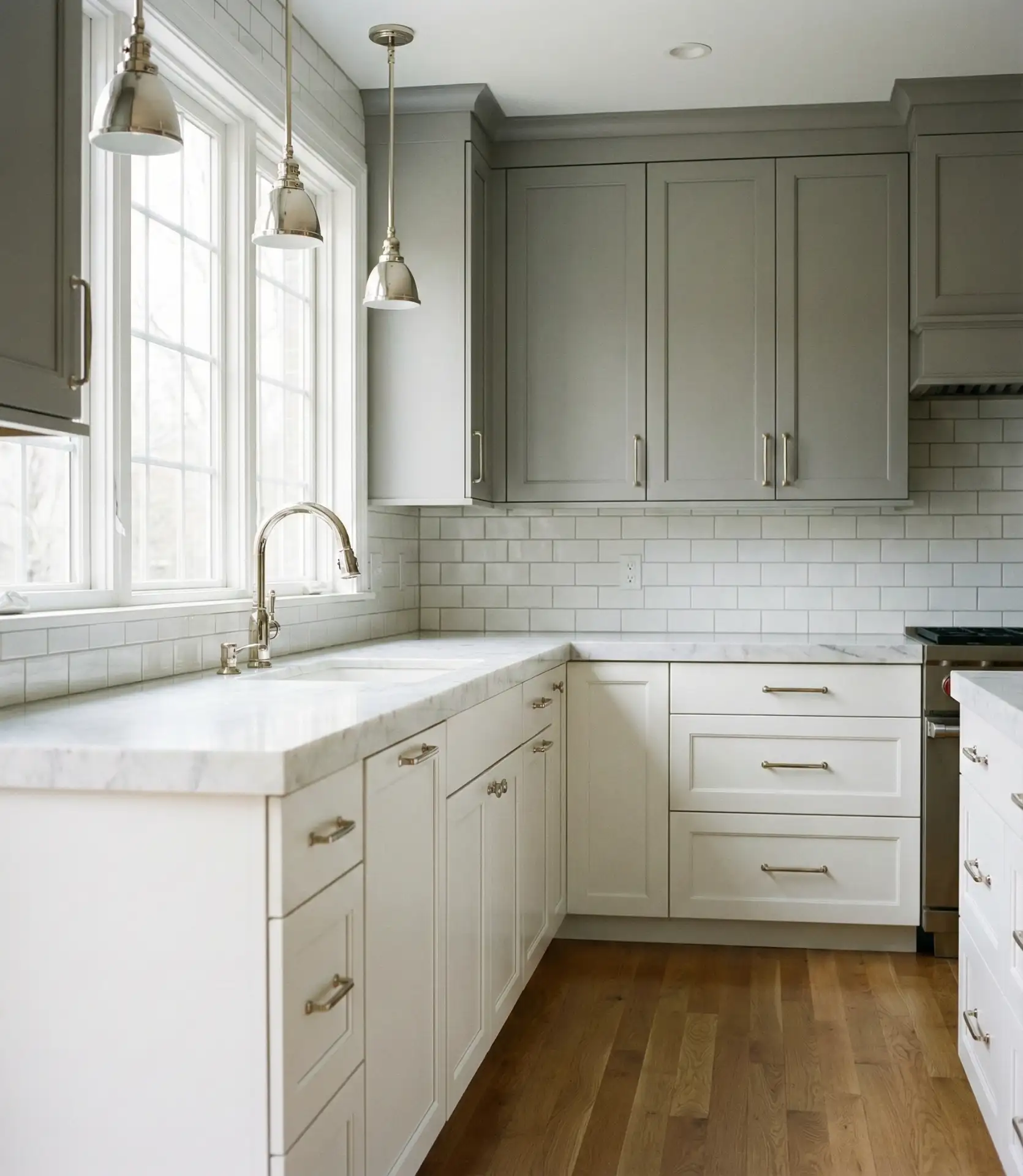
Transitional kitchens marry traditional warmth with contemporary simplicity, appealing to homeowners who want timeless style without the stuffiness of full-blown traditional or the austerity of pure modernism. Shaker cabinets merge with flat-panel uppers, subway tile blends seamlessly with quartz countertops, and hardware, such as brushed nickel pulls on inset doors, blurs the boundaries. The palette stays neutral, letting materials and proportions do the talking.
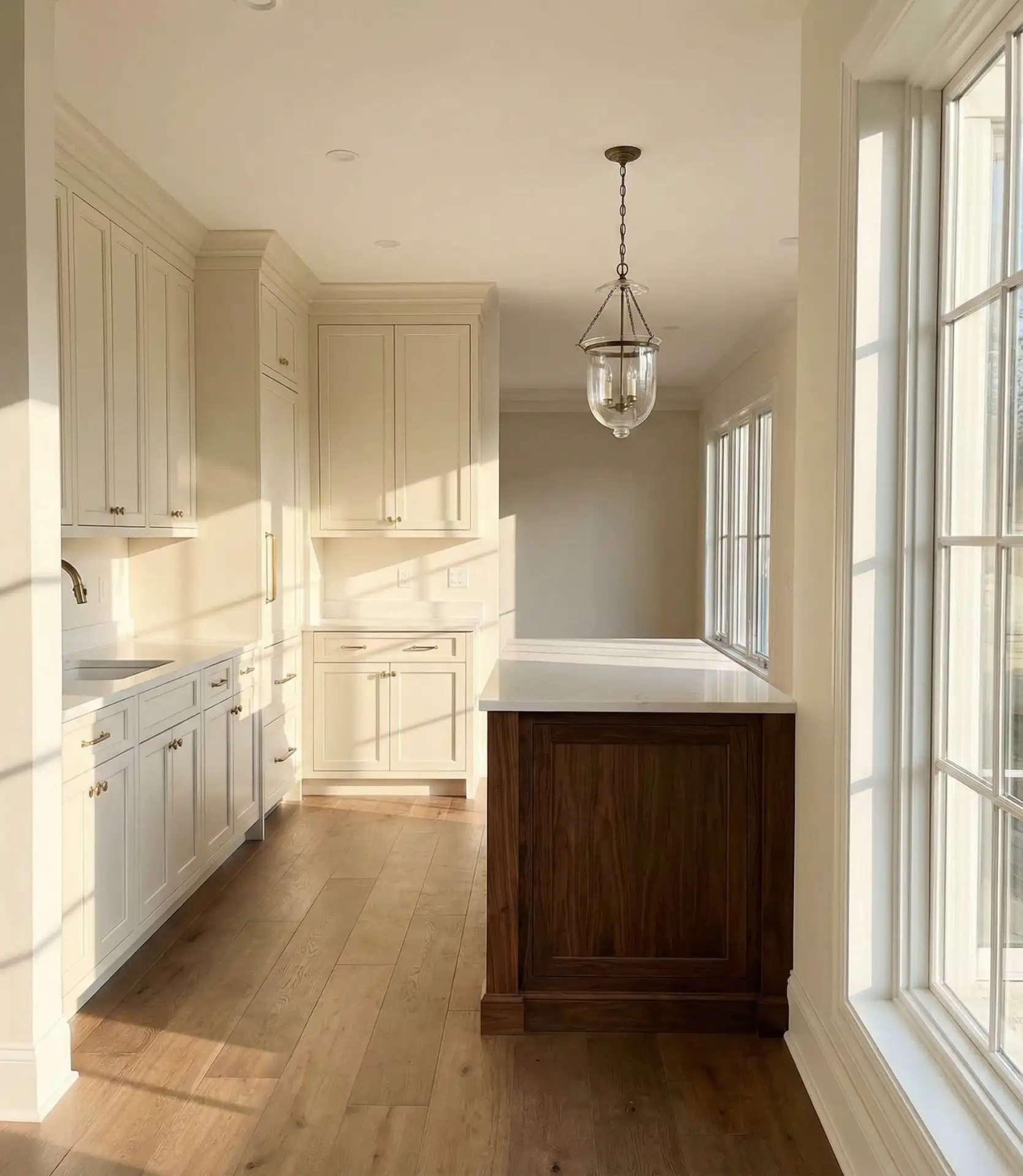
This approach works best in homes with varied architectural details—colonial revivals, Craftsman bungalows, or suburban builders’ homes where homeowners want to update without erasing character. Avoid mixing too many eras at once; stick to two or three material families and let restraint guide your choices. The outcome is a kitchen that exudes a sense of familiarity and freshness, ensuring it doesn’t overtly display its construction date in five years.
11. Luxury Double-Island Configuration
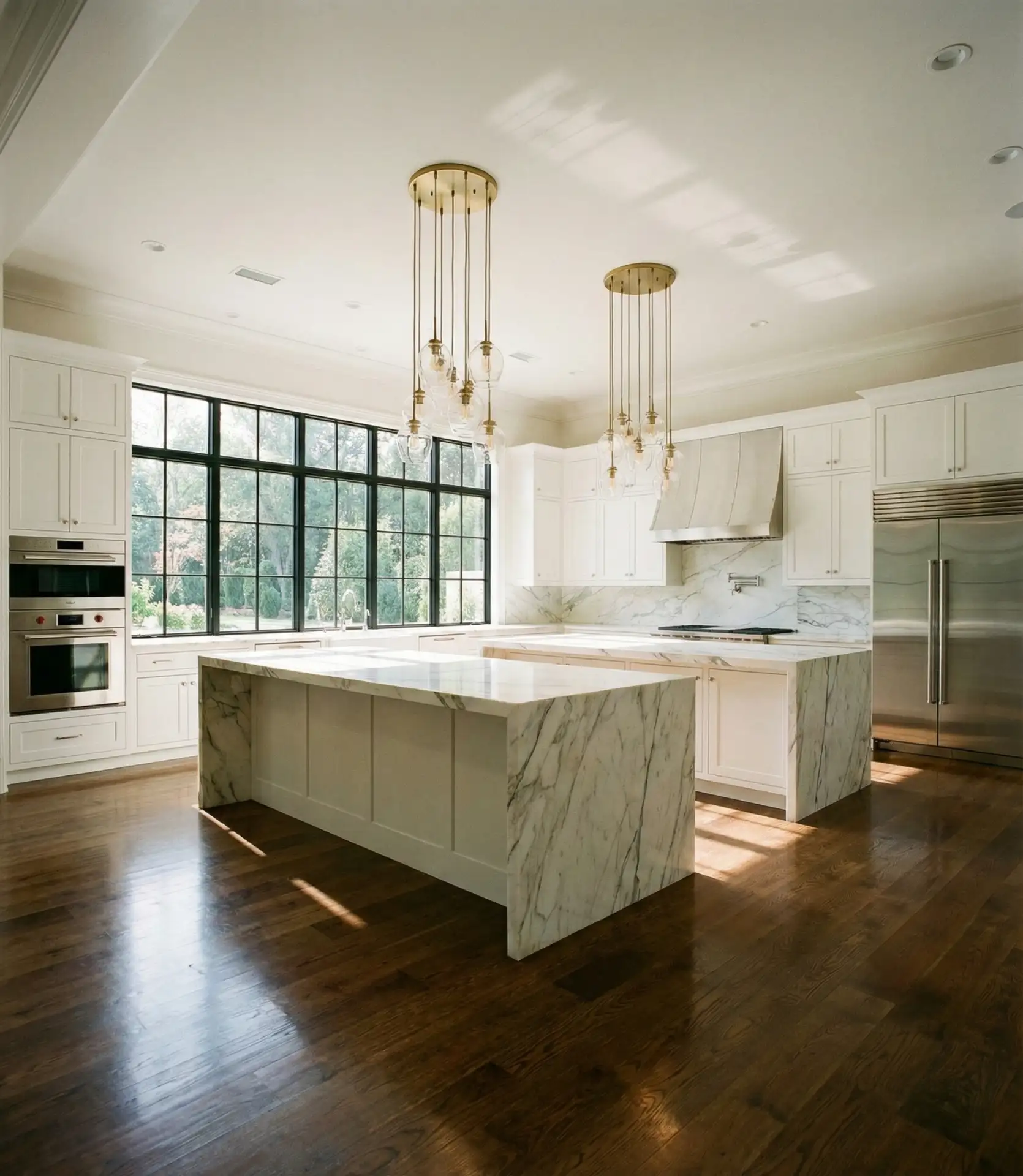
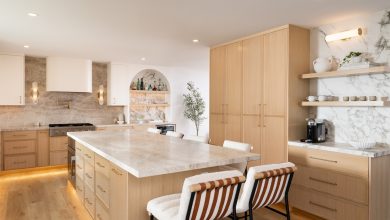
In luxury kitchens with ample square footage, a double-island setup separates cooking from entertaining. One island houses the cooktop and primary prep zone, while the second functions as a bar or buffet with seating and wine storage. This configuration demands at least 400 square feet but rewards serious home chefs with dedicated work zones and a dramatic, hotel-like presence. Modern luxury finishes—waterfall marble, integrated sinks, custom cabinetry—elevate the design.
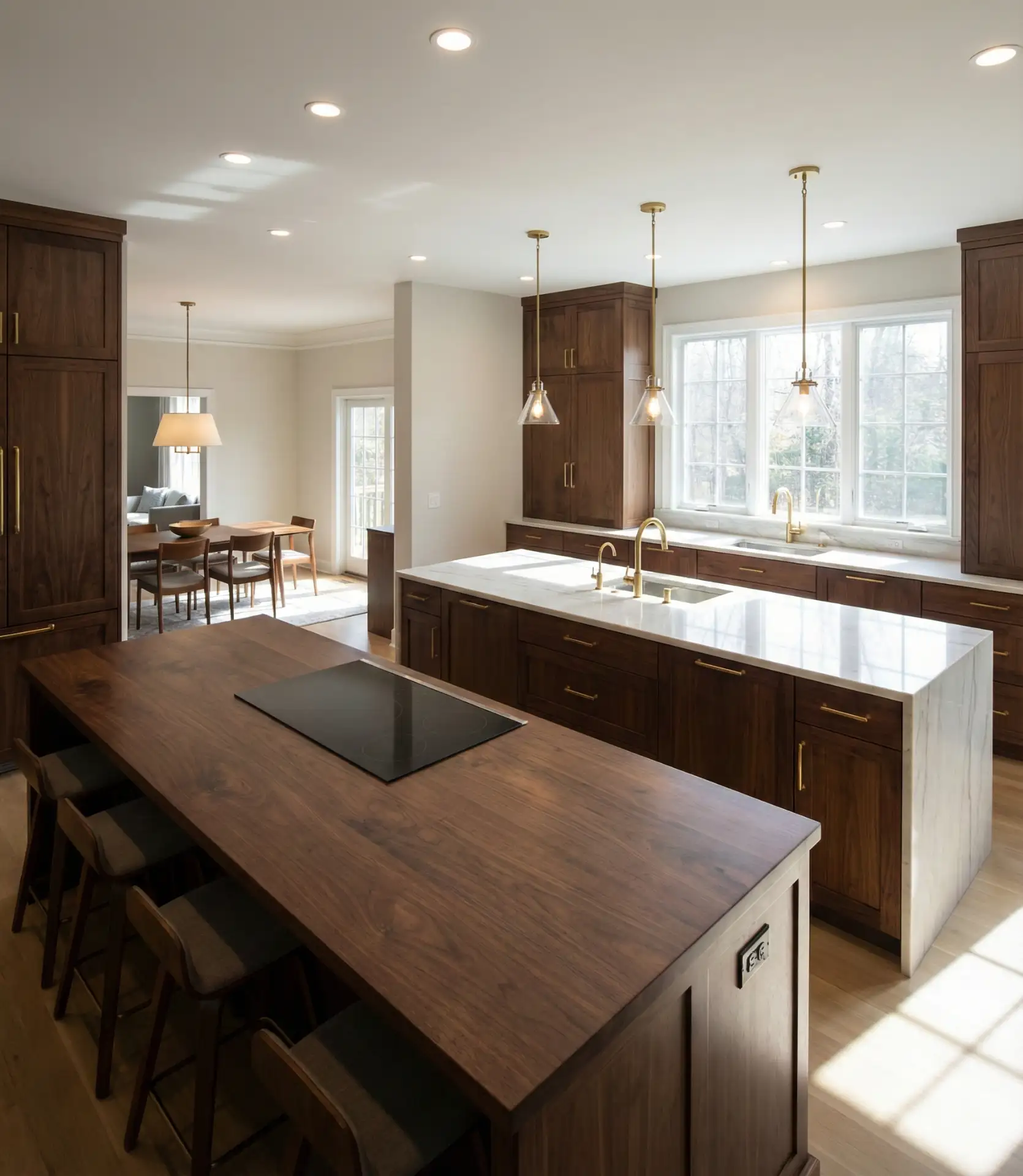
Budget angle: while a full double-island renovation can easily exceed six figures, you can achieve a similar effect by using a large central island plus a standalone butcher-block cart on casters. The cart provides extra prep space during parties and tucks away when not needed. Wealthy clients in California and Texas often commission custom pieces that match the main island’s finish, creating visual continuity without the cost of permanent construction.
12. Organic Modern with Live-Edge Wood
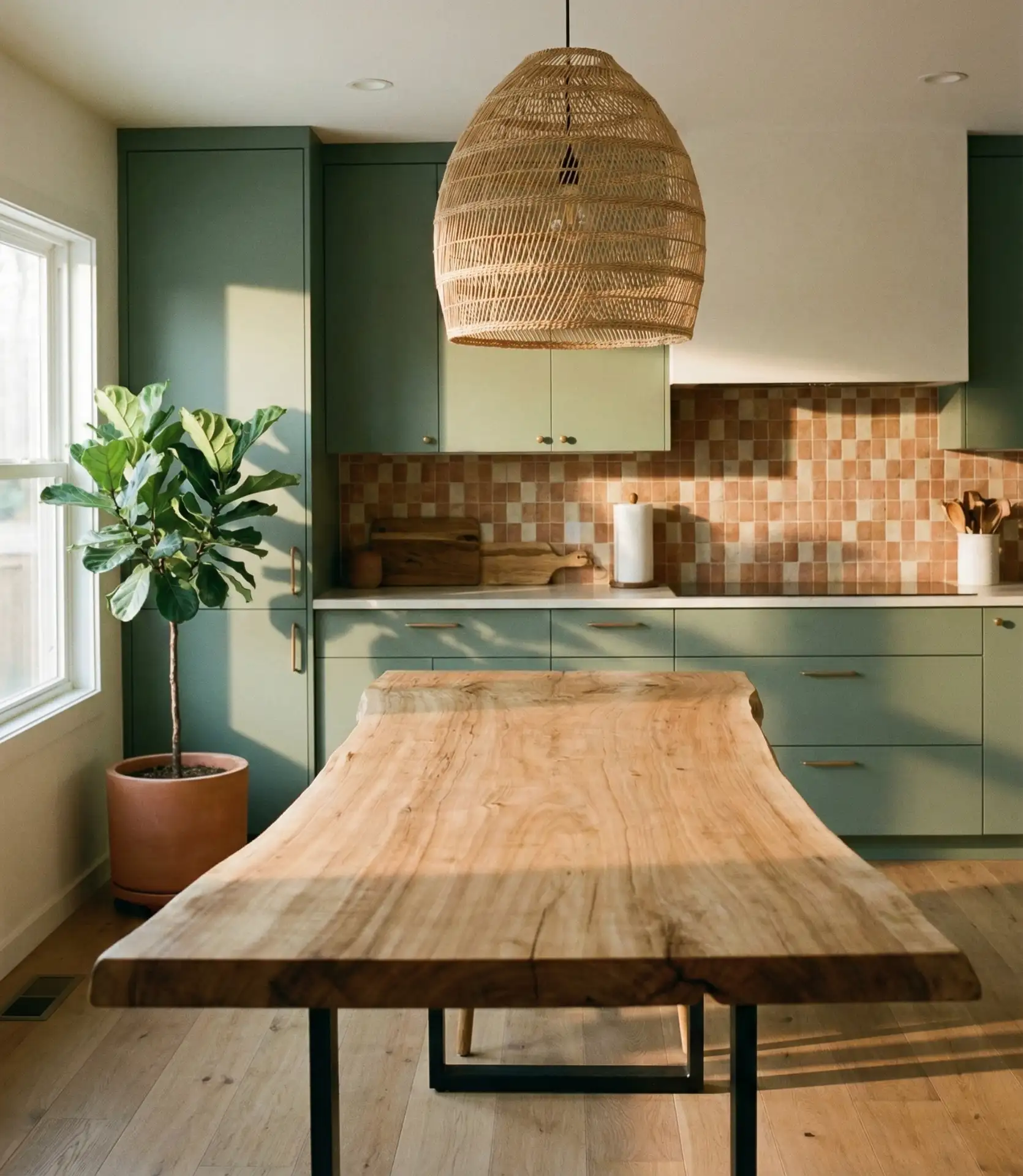
Organic modern kitchens celebrate natural materials in refined forms—live-edge walnut islands, handmade ceramic tiles, linen curtains, and matte black fixtures. The aesthetic rejects stark minimalism in favor of warmth, texture, and imperfection. Cabinetry might be flat-panel but finished in a soft sage or terracotta, and open shelving displays handcrafted pottery rather than mass-produced dishware. This style is especially suitable for contemporary renovations, where homeowners seek modern functionality without sacrificing warmth.
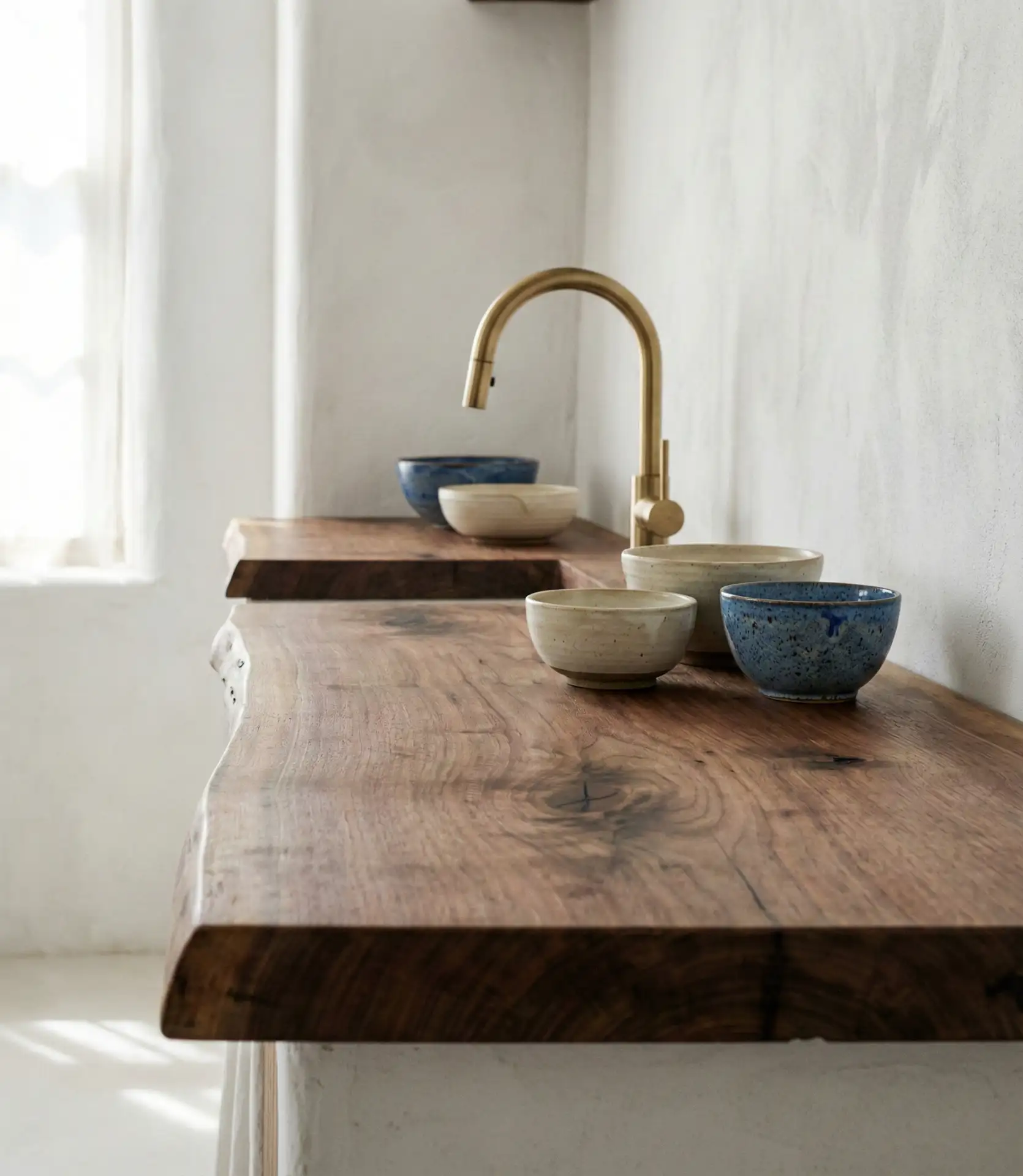
A Chicago homeowner mentioned that sourcing a live-edge slab locally cost less than imported stone and gave her kitchen a unique focal point. Practical insight: seal live-edge wood with a food-safe finish and expect some movement over time—wood is a living material. Pair it with durable, low-maintenance surfaces elsewhere, like quartz or stainless, so the organic element remains the star without adding maintenance headaches.
13. Small Space Vertical Storage Solutions
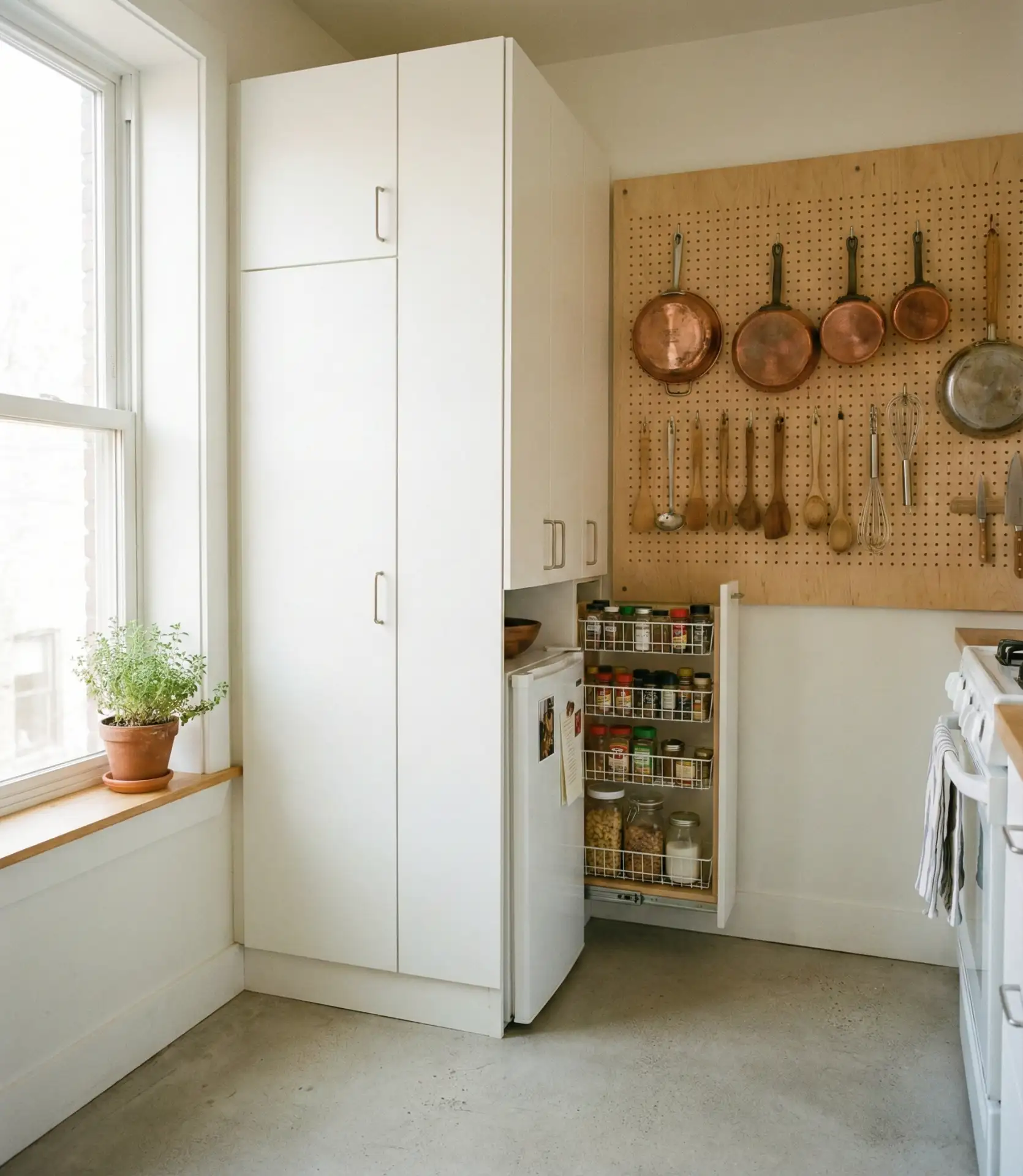
In small spaces, vertical storage solutions are essential. Floor-to-ceiling cabinets, pegboard walls for utensils, and ceiling-mounted pot racks reclaim wasted height. Modular systems let you add or subtract components as needs evolve, and narrow pull-out pantries—just six inches wide—squeeze into gaps between appliances. The visual trick is to keep the upper cabinets the same color as the walls so they recede rather than loom.
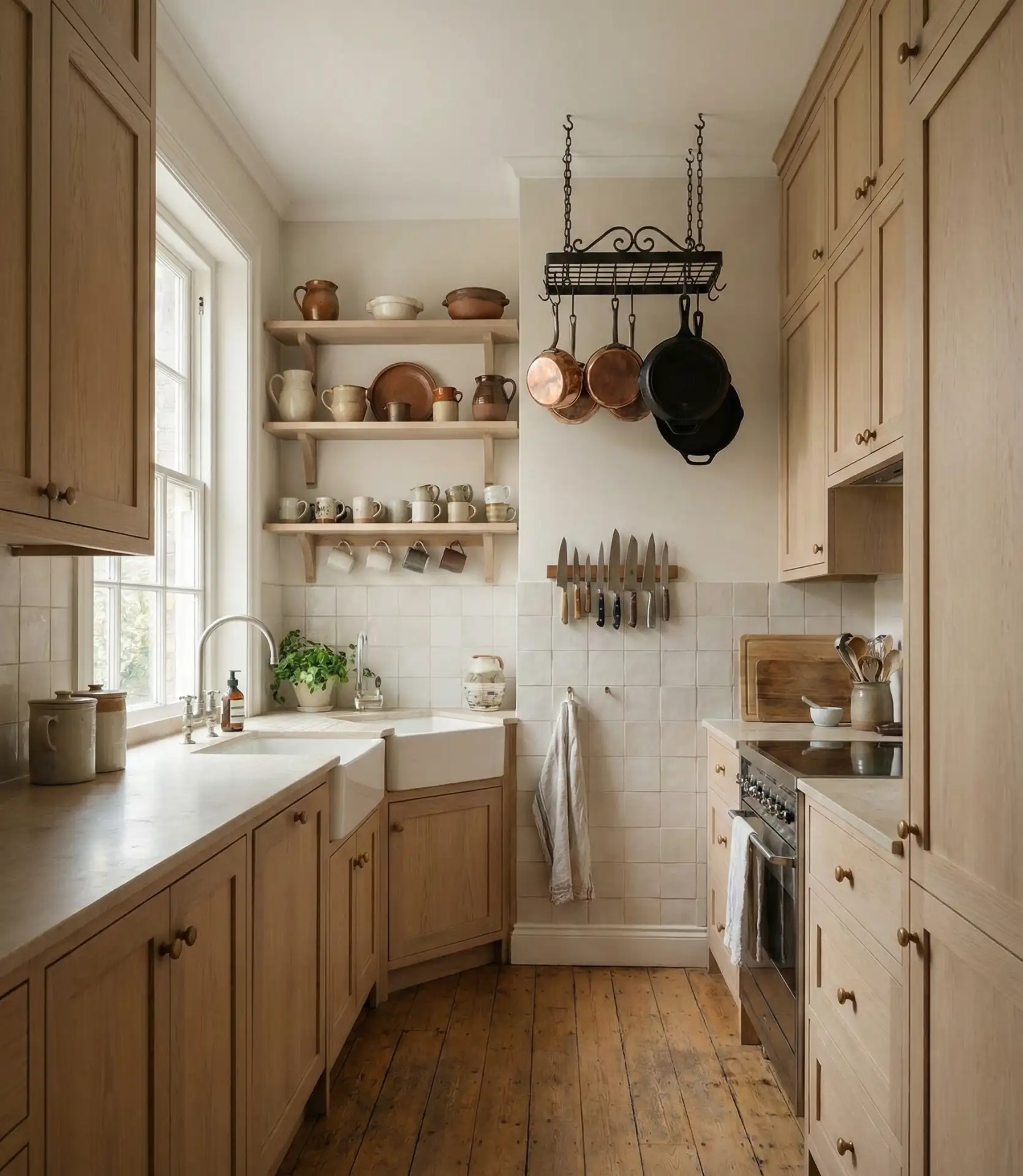
Common mistakes: homeowners often install upper cabinets too low, which makes the ceiling feel oppressive. Mount them 18 inches above the counter and extend them to the ceiling for a grander, more spacious effect. Keep a small step stool handy for the highest shelves—they’re perfect for seldom-used items like holiday platters or specialty appliances. The result is a kitchen that feels organized and airy, not cramped.
14. Restaurant-Style Prep Zone with Stainless Steel
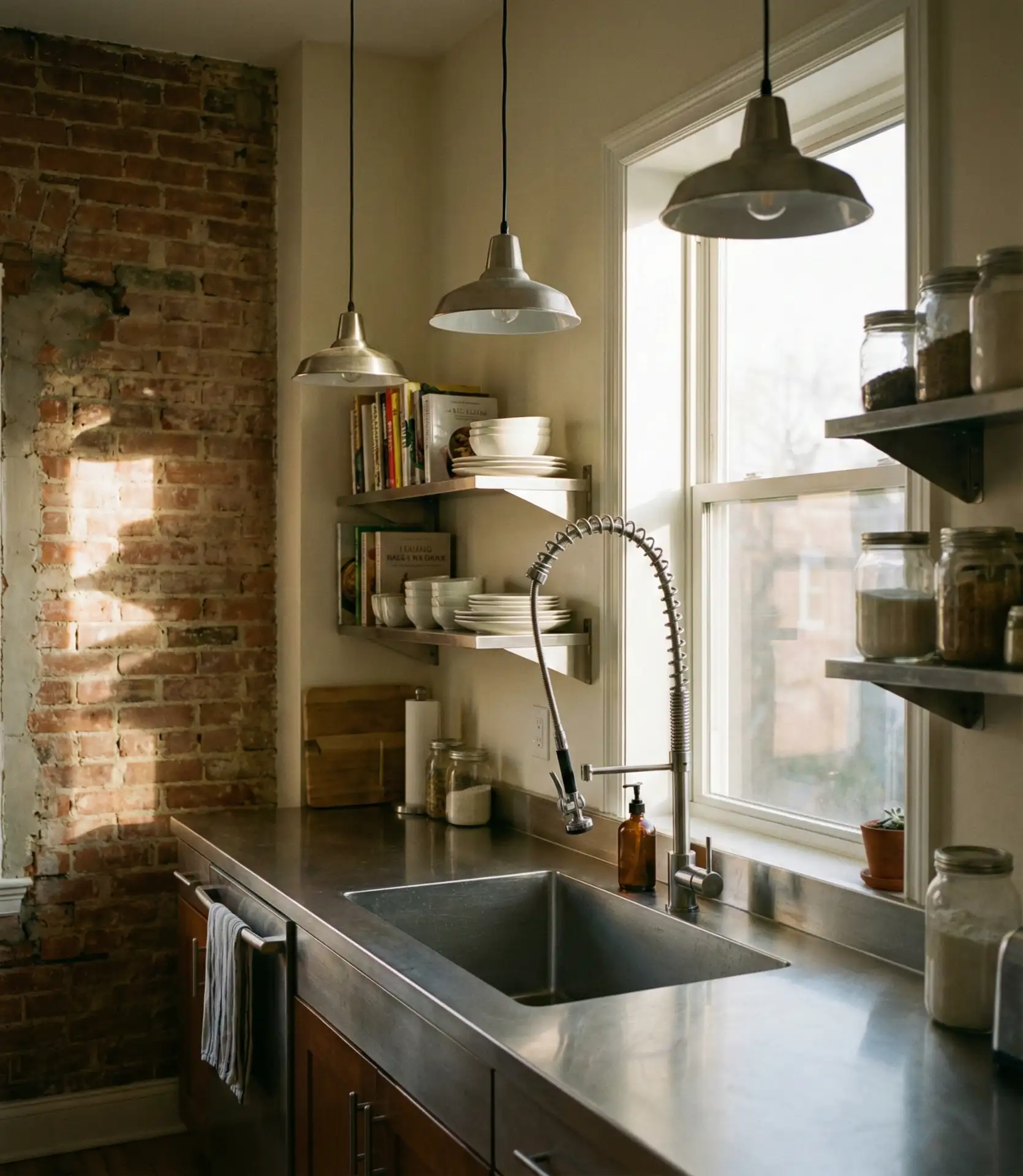
Restaurant kitchens inspire home cooks who value efficiency and durability. Stainless steel countertops, backsplashes, and shelving create a professional prep zone that wipes clean instantly and never stains. Commercial-grade faucets with pull-down sprayers, deep undermount sinks, and overhead pot racks echo the setup in professional kitchens. The aesthetic is utilitarian but can be softened with wood cutting boards, warm lighting, and a few well-chosen textiles.
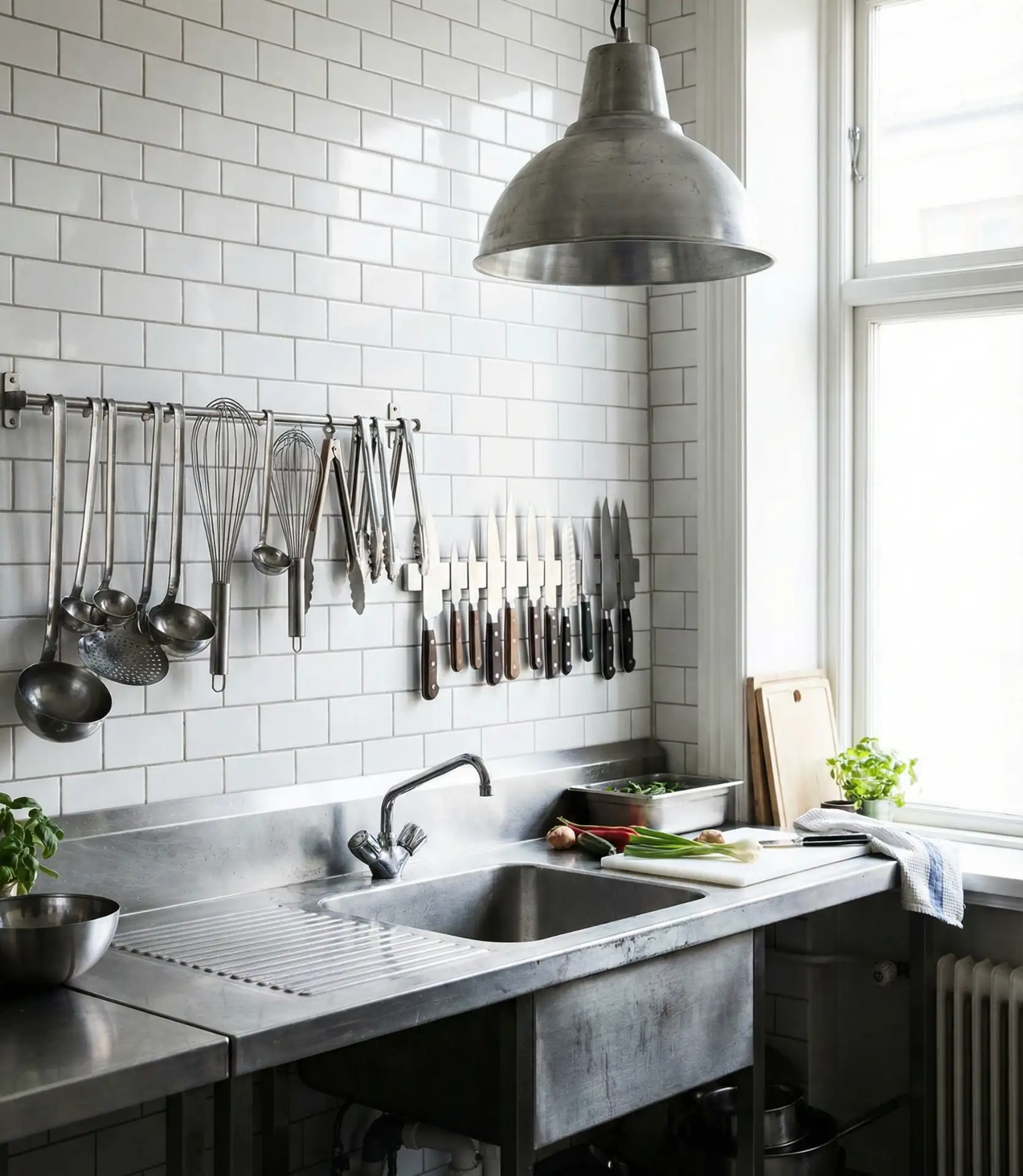
Where it works best: loft apartments, urban homes, or anywhere serious cooking happens. A sous chef in Portland reported that the stainless surfaces in her home kitchen reduced her cleaning time by half when compared to her previous laminate setup. Budget angle: restaurant supply stores sell commercial-grade sinks, faucets, and shelving at a fraction of residential showroom prices, and the quality often exceeds high-end home brands.
15. Cabin Kitchen with Stone Fireplace Focal Point
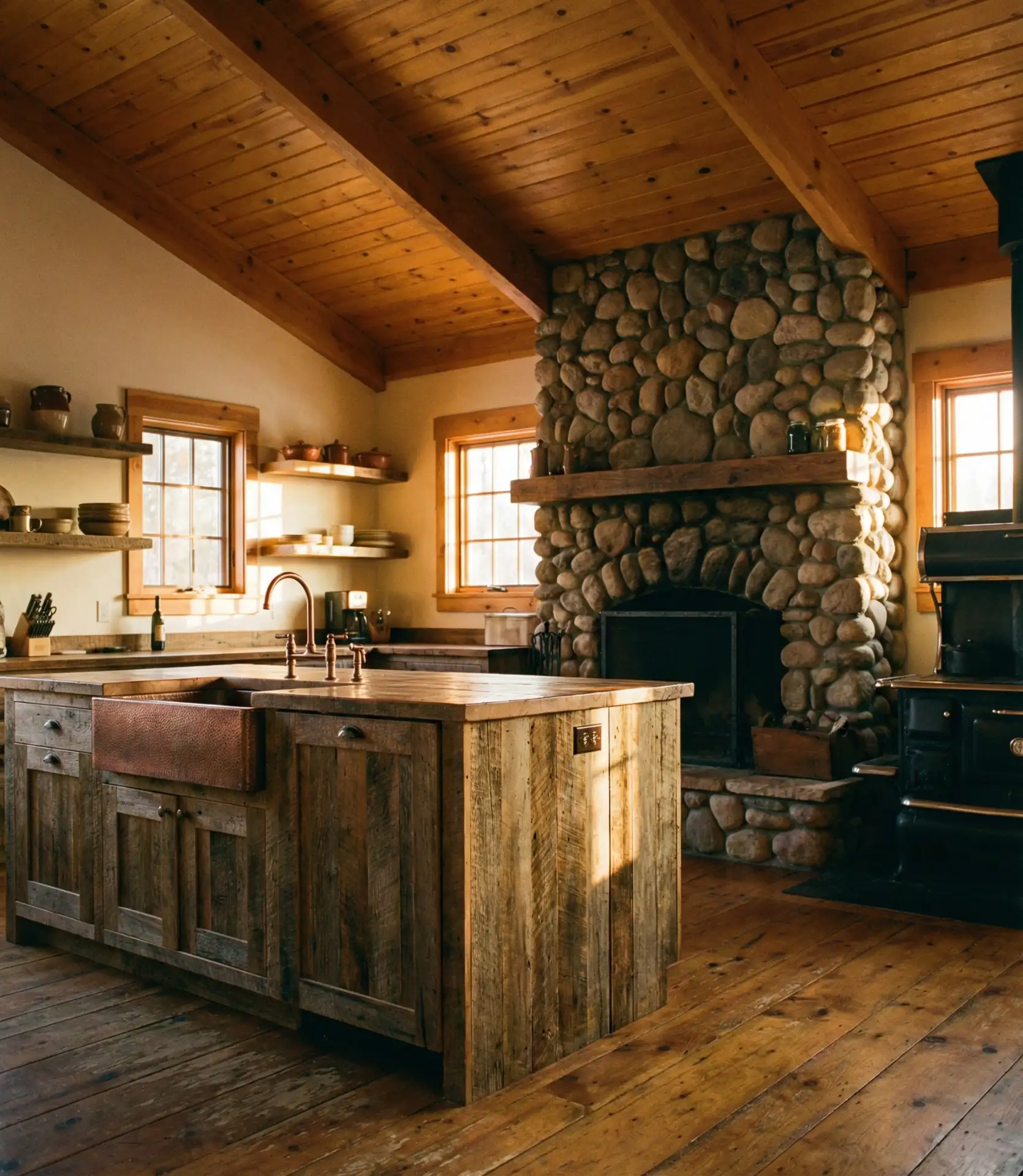
In mountain cabin kitchens, a stone fireplace or hearth anchors the room, providing warmth and ambiance that electric ranges can’t match. Log walls, wide-plank pine floors, and cabinetry built from reclaimed barn wood reinforce the alpine setting. Open shelves show off enamelware and cast iron, and pendant lights made of antler or wrought iron give the room a rustic-luxe feel. The palette stays earthy—browns, greens, and creams—to harmonize with the surrounding landscape.
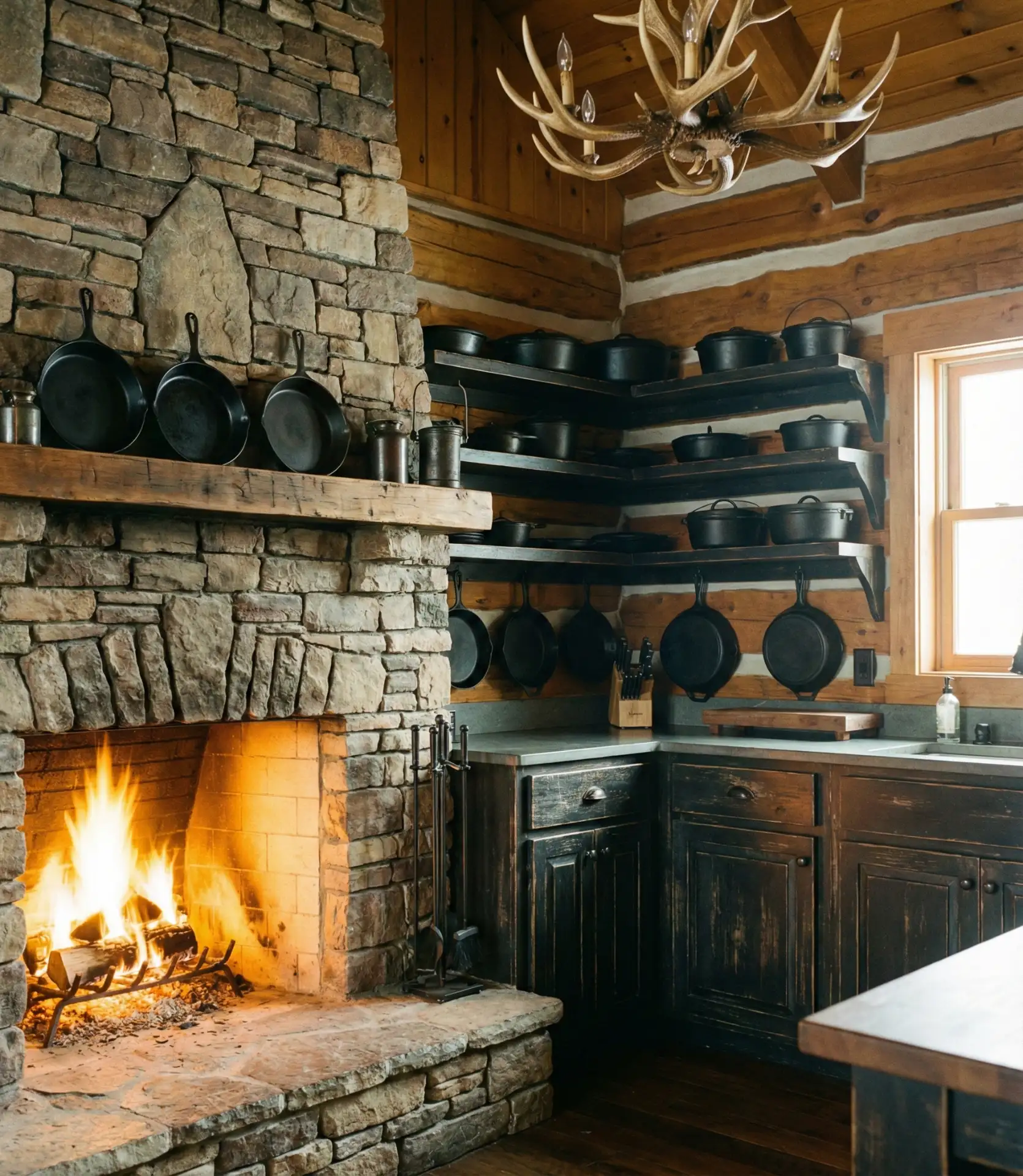
Real homeowner behavior: many cabin owners use the kitchen year-round, so insulation and heating matter. A well-placed fireplace provides supplemental heat in winter, reducing reliance on forced air. Treating the kitchen as a decorative afterthought is a common mistake—cabins benefit from robust, easy-to-clean finishes that withstand muddy boots and wet gear. Choose sealed wood or tile floors, and keep open shelving minimal to avoid dust accumulation.
16. Scandinavian Light Wood and White Contrast
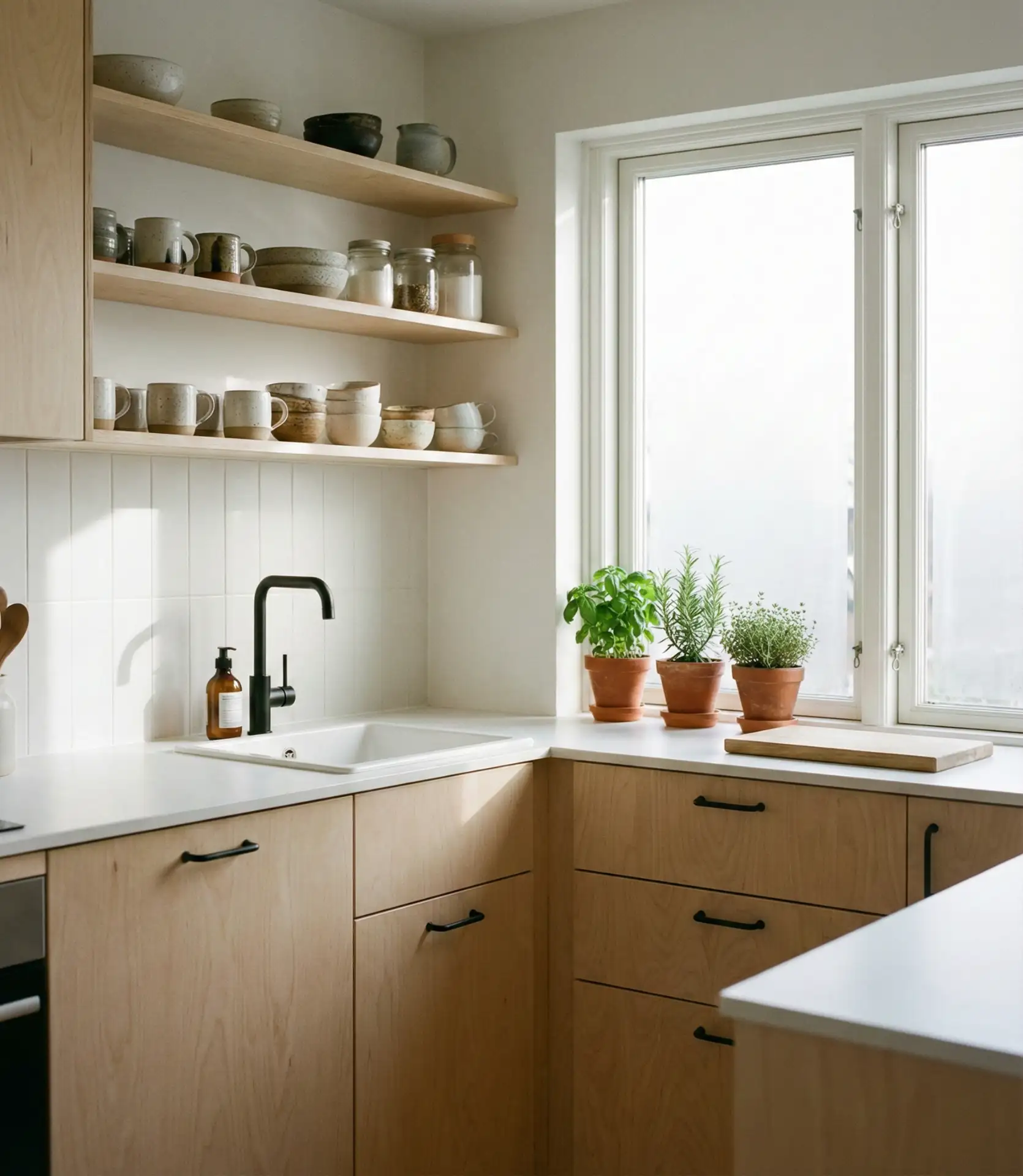
Scandinavian kitchens pair pale wood—birch, ash, or light oak—with crisp white surfaces to maximize brightness in low-light climates. The aesthetic is minimal but never cold, thanks to natural textures, handmade ceramics, and plants. Modern 2025 iterations add matte black fixtures for contrast, and open shelving displays a curated collection of tableware. The goal is hygge—a sense of coziness and contentment that makes even mundane tasks feel pleasant.
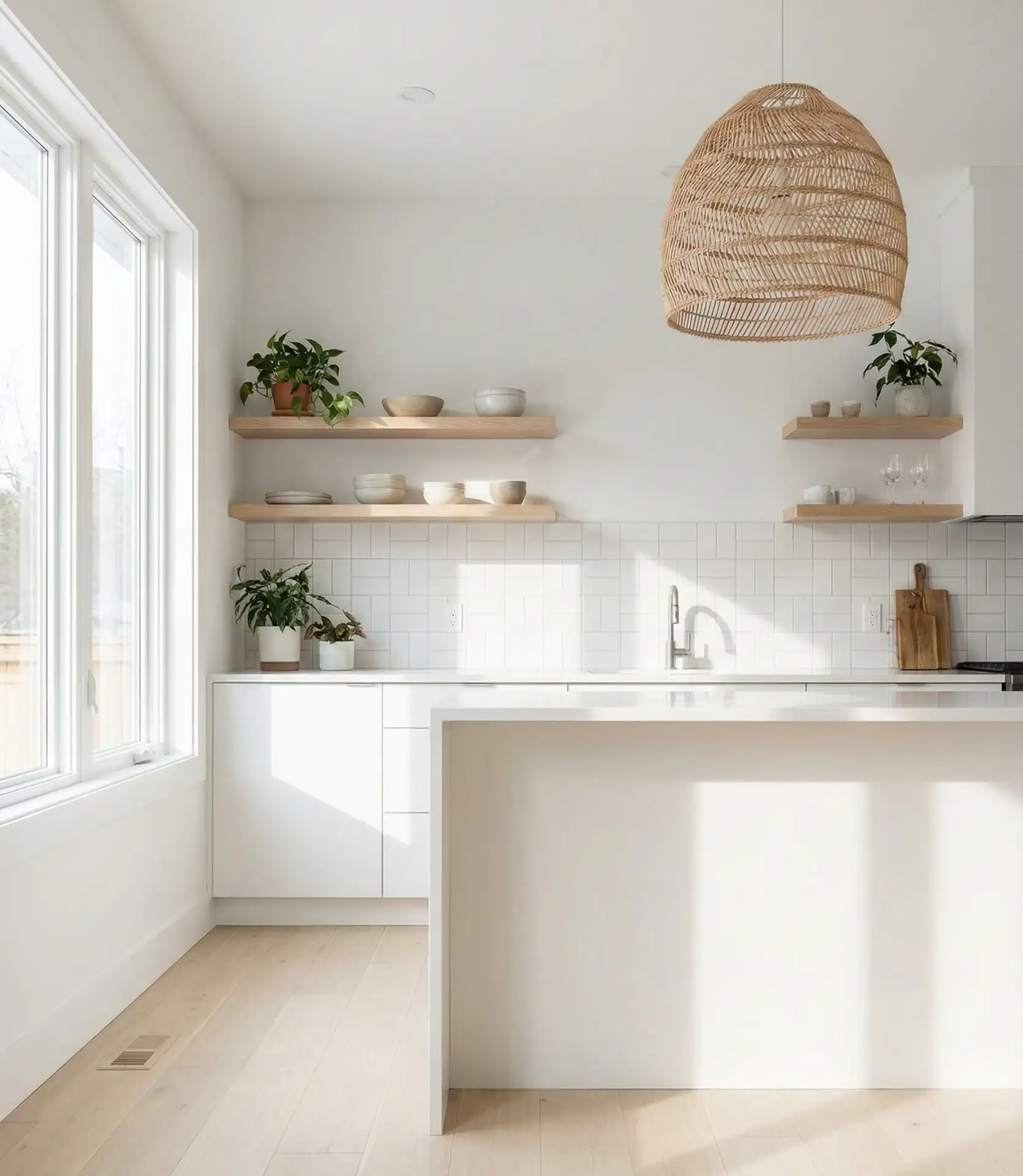
This style thrives in northern climates—New England, the Pacific Northwest—where natural light is precious. Expert-style commentary: Scandinavian design prioritizes function, so every object should earn its place. Avoid tchotchkes and keep counters clear except for daily essentials like a kettle and cutting board. The restraint creates a serene, low-stress environment where cooking becomes a meditative practice rather than a chaotic scramble.
17. Modular Cabinetry for Flexible Configurations
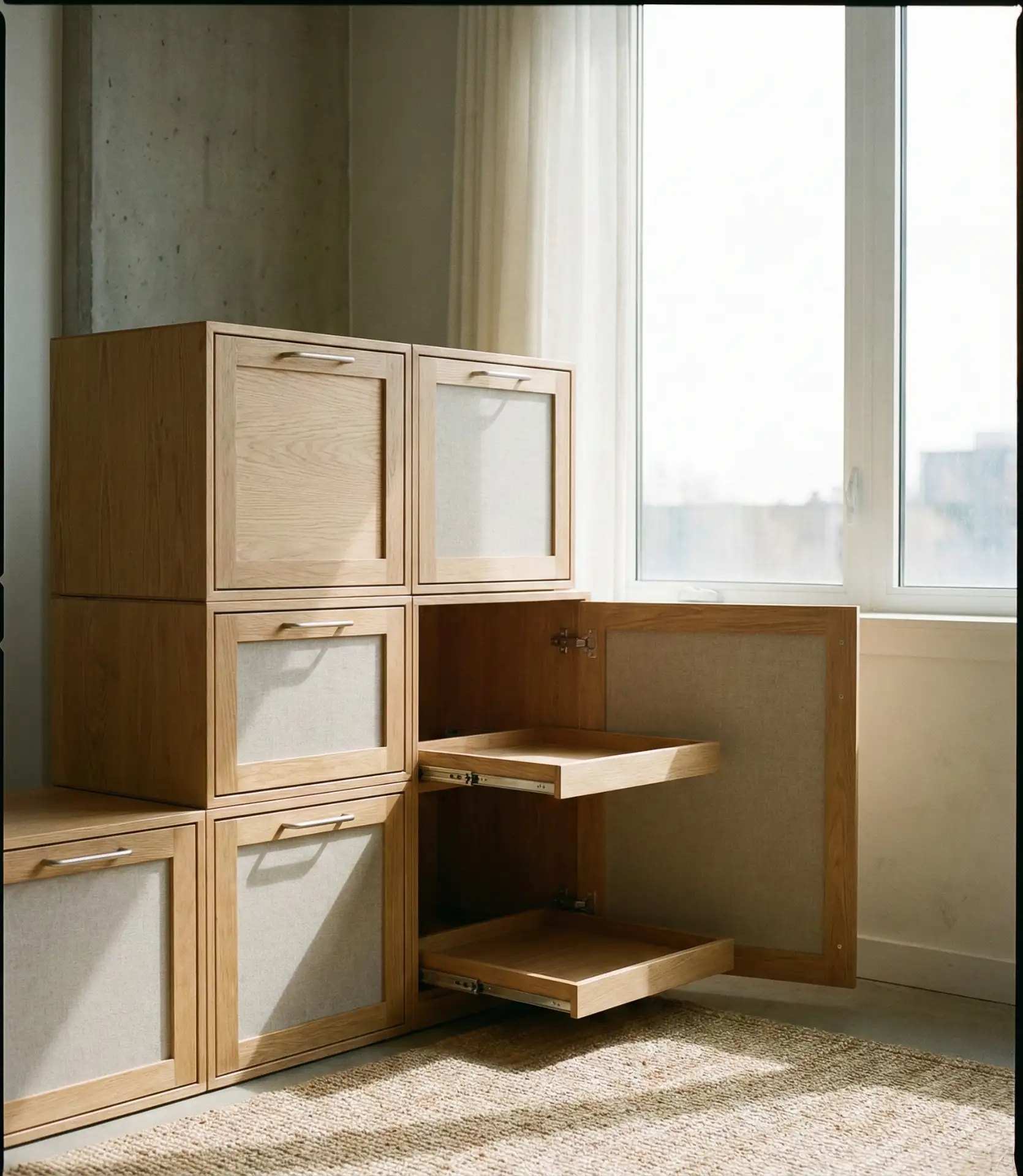
Modular systems allow homeowners to reconfigure their kitchen as needs change—add a wine rack, swap a drawer for a pull-out trash bin, or insert a spice organizer without replacing entire cabinet runs. Brands now offer standardized units that snap together, making DIY installation feasible even for novices. Home renovators appreciate the flexibility, especially in rental properties or starter homes where a full custom kitchen isn’t justifiable.
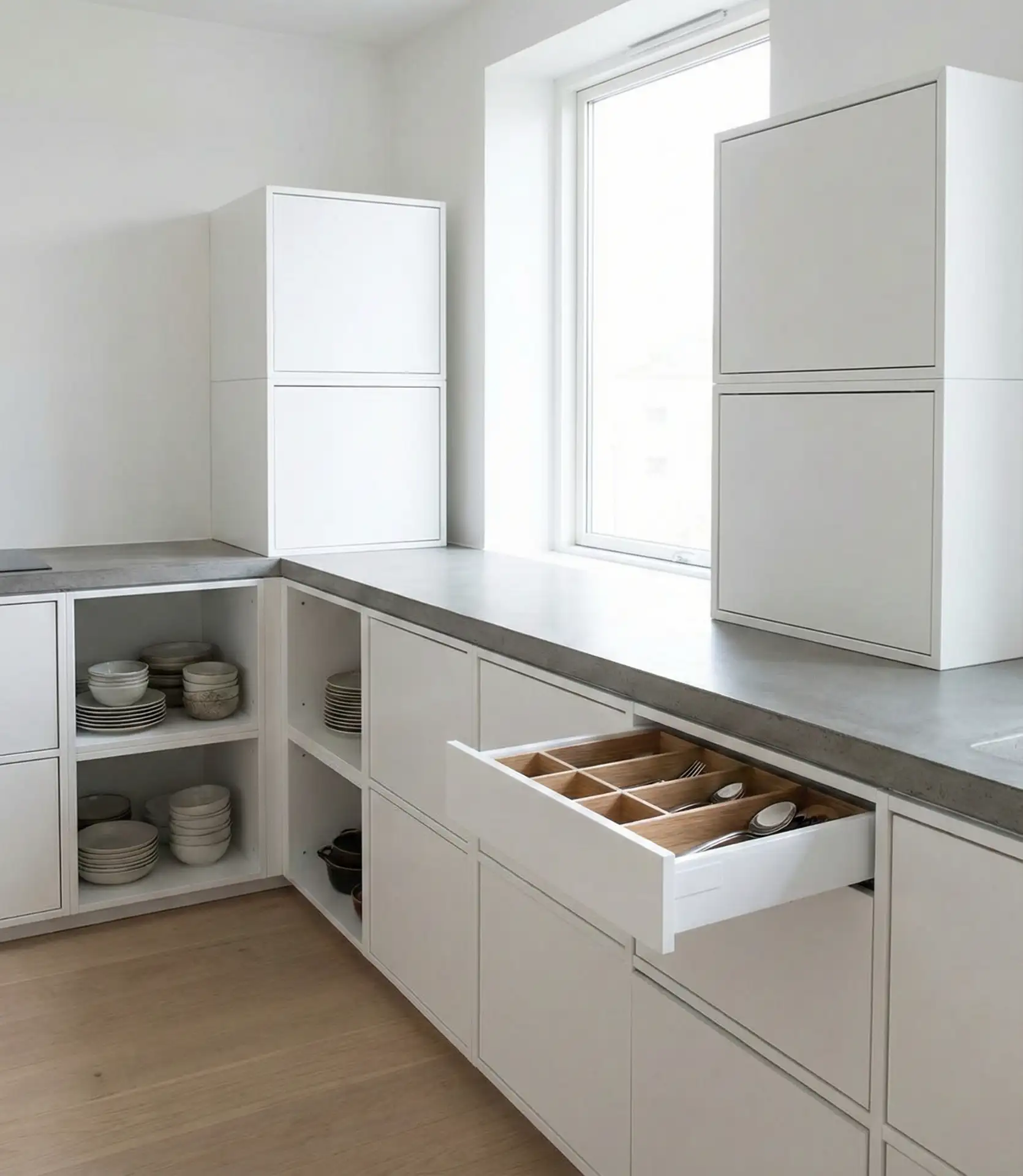
Budget angle: Modular systems start at a fraction of custom cabinetry costs, often under $3,000 for a small kitchen, and allow for gradual phased installation. A couple in Austin installed the perimeter cabinets first, then added an island and upper cabinets six months later as funds allowed. The key is choosing a system with a long product life so you can add pieces years down the line without worrying about discontinued finishes.
18. Contemporary Monochrome with Bold Hardware
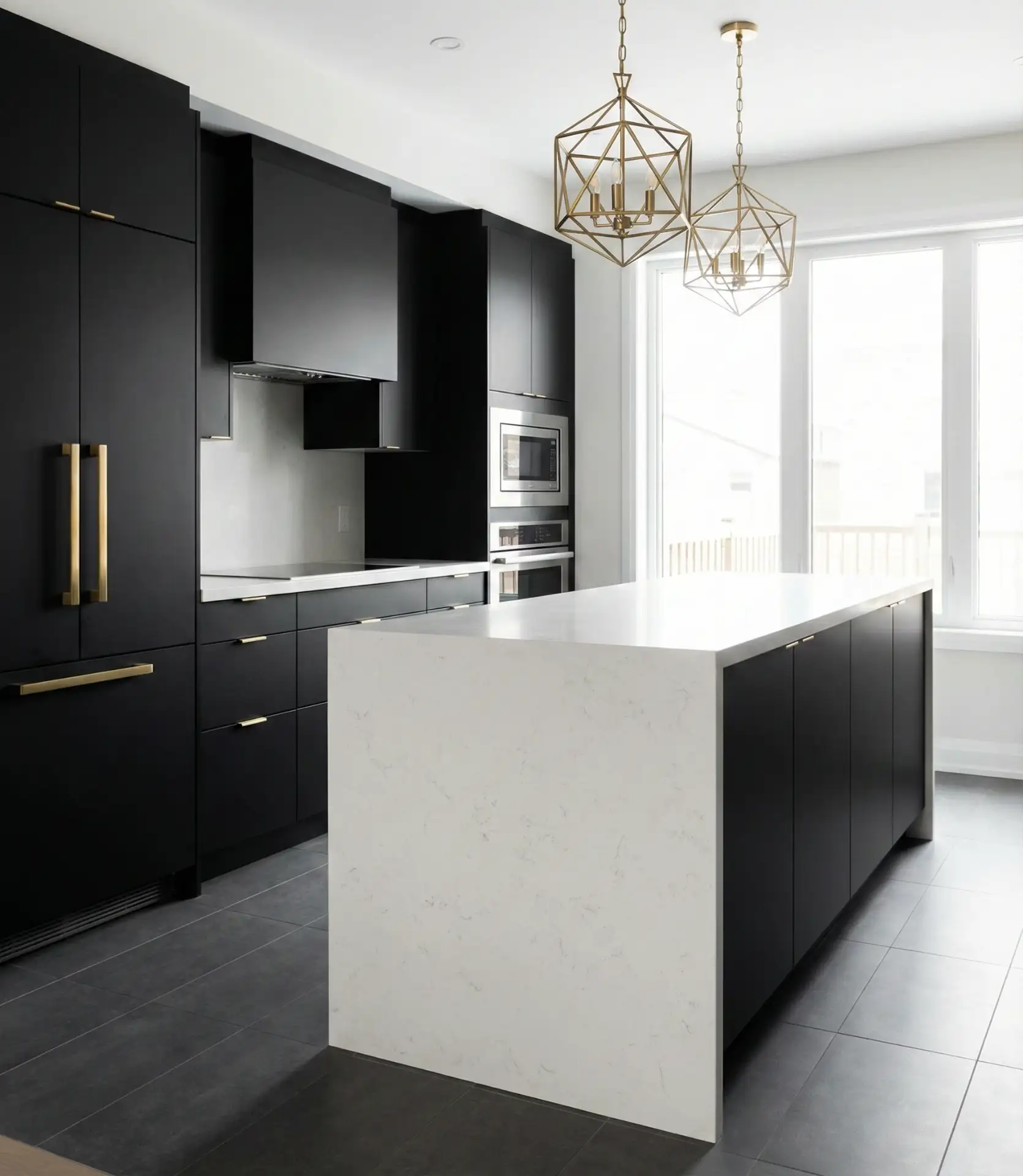
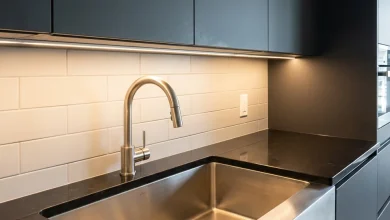
Contemporary kitchens in monochrome—black, white, or gray—gain personality through oversized hardware, sculptural lighting, and unexpected textures. Think matte black cabinets with chunky brass pulls, white quartz counters with a leather finish, or gray concrete tile paired with polished chrome fixtures. The restrained palette lets each material choice shine, and the overall effect is sophisticated without feeling sterile.
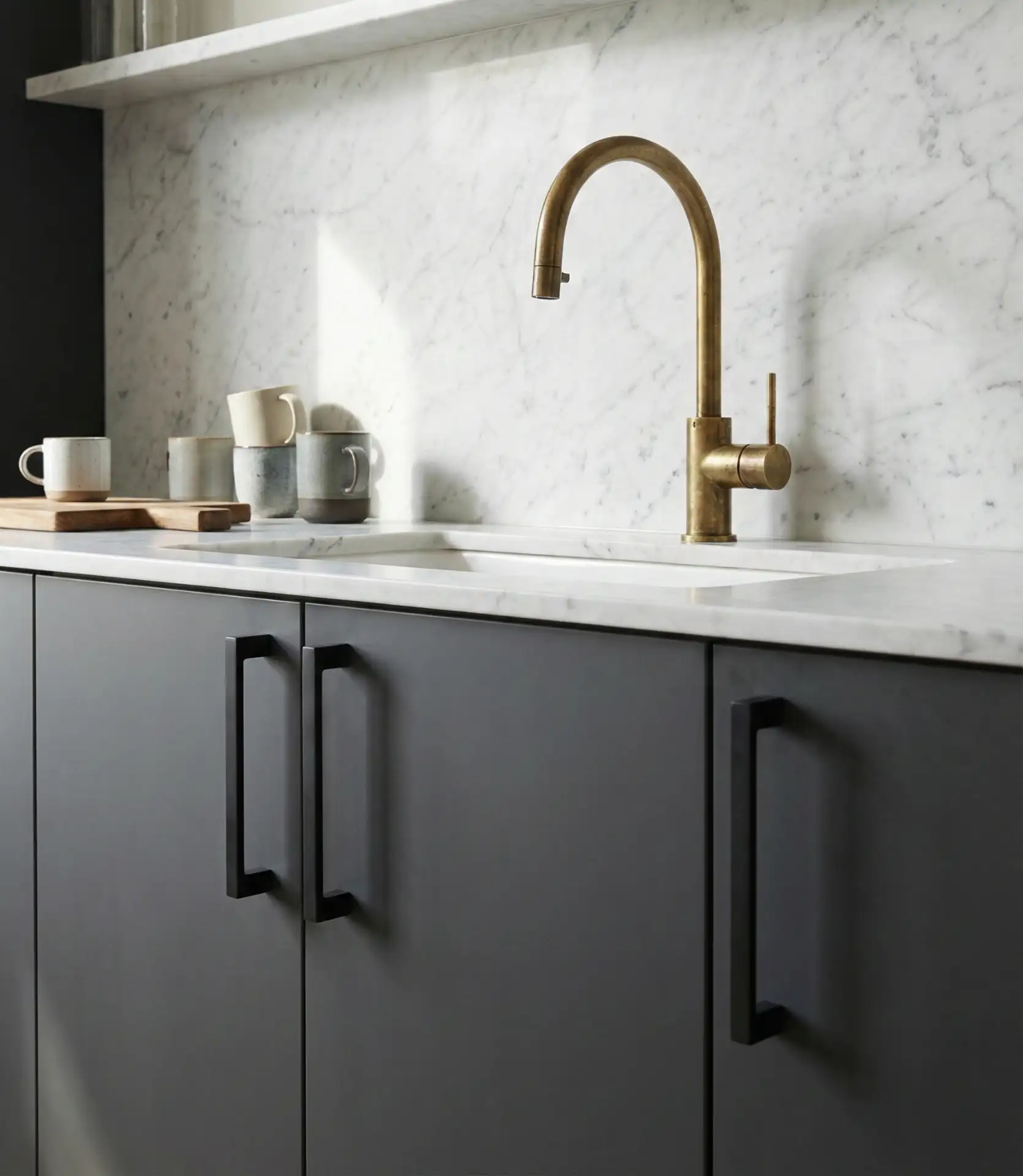
A New York designer noted that monochrome schemes simplify decision-making—once you pick your three tones, every subsequent choice becomes easier. Practical insight: use texture to differentiate surfaces in a limited palette. Matte versus gloss, rough versus smooth, warm versus cool—these subtle shifts keep the eye engaged. The mistake to avoid is going completely flat; add depth through layered finishes and varied materials.
19. 2026 Trend: Integrated Appliance Garages
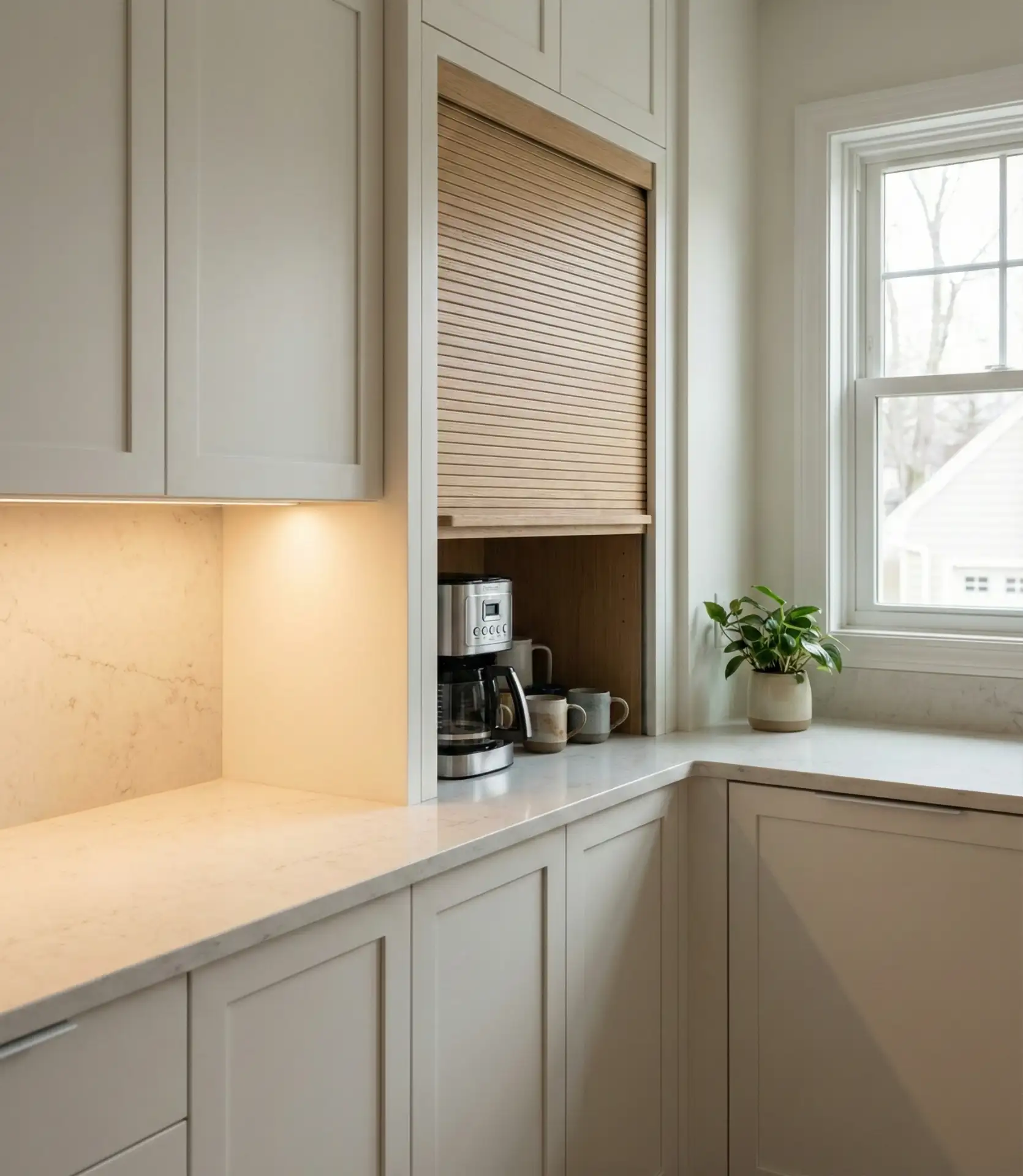
One of the top 2026 trends is the appliance garage—a roll-up, slide-back, or lift-door cabinet that hides toasters, blenders, and coffee makers when not in use. These built-in nooks keep counters clear while keeping appliances plugged in and ready. Luxury versions include electrical outlets, under-cabinet lighting, and even ventilation for steam-producing machines. The result is a showroom-clean workspace that doesn’t sacrifice convenience.
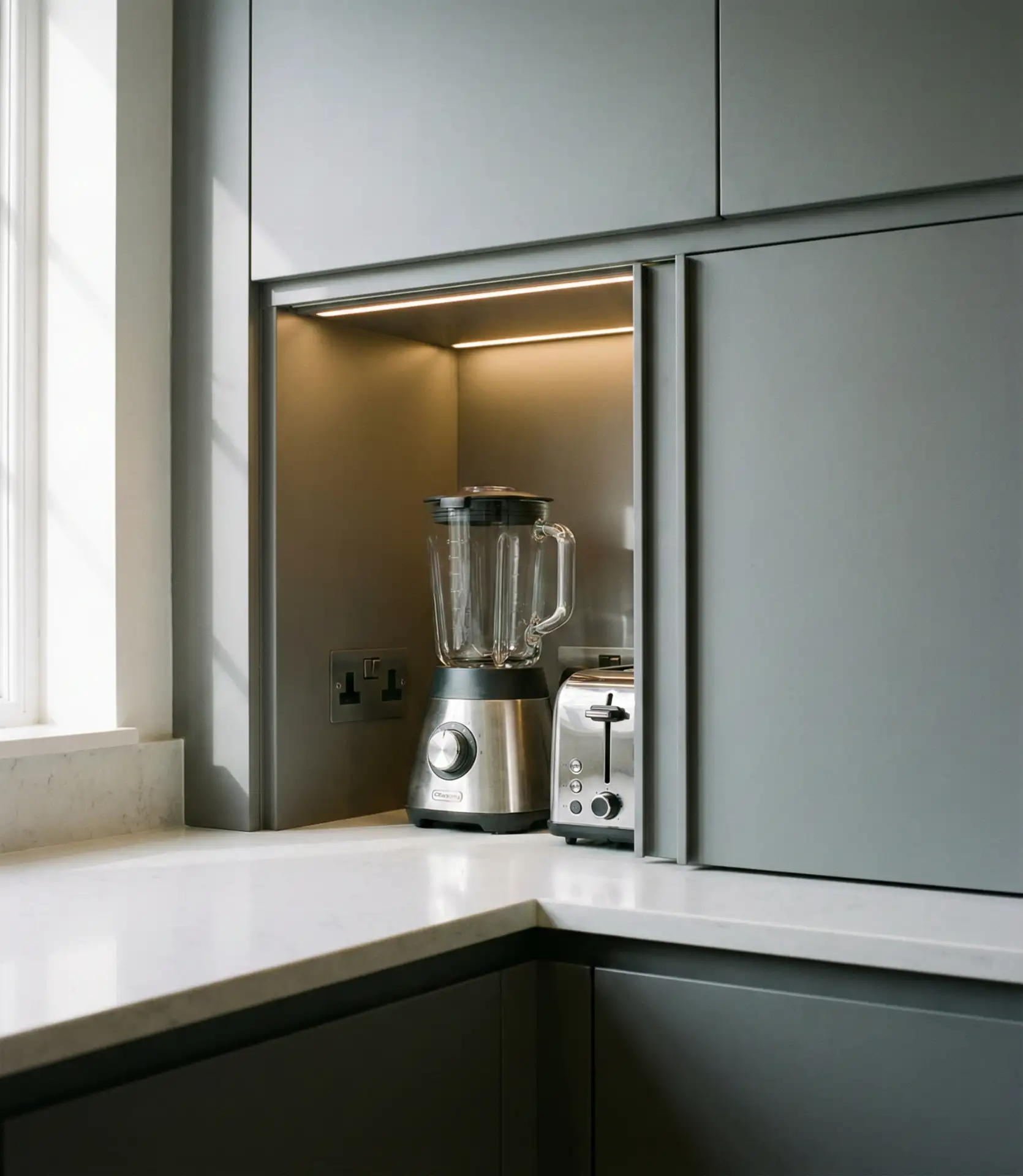
Where it works best: any kitchen where counter space is at a premium or where visual simplicity is a priority. Homeowners who entertain frequently appreciate the ability to stash appliances quickly before guests arrive. Budget-conscious renovators can retrofit a standard base cabinet with a tambour door kit for under $200, creating a DIY appliance garage without custom cabinetry.
20. Layout Optimization with the Work Triangle
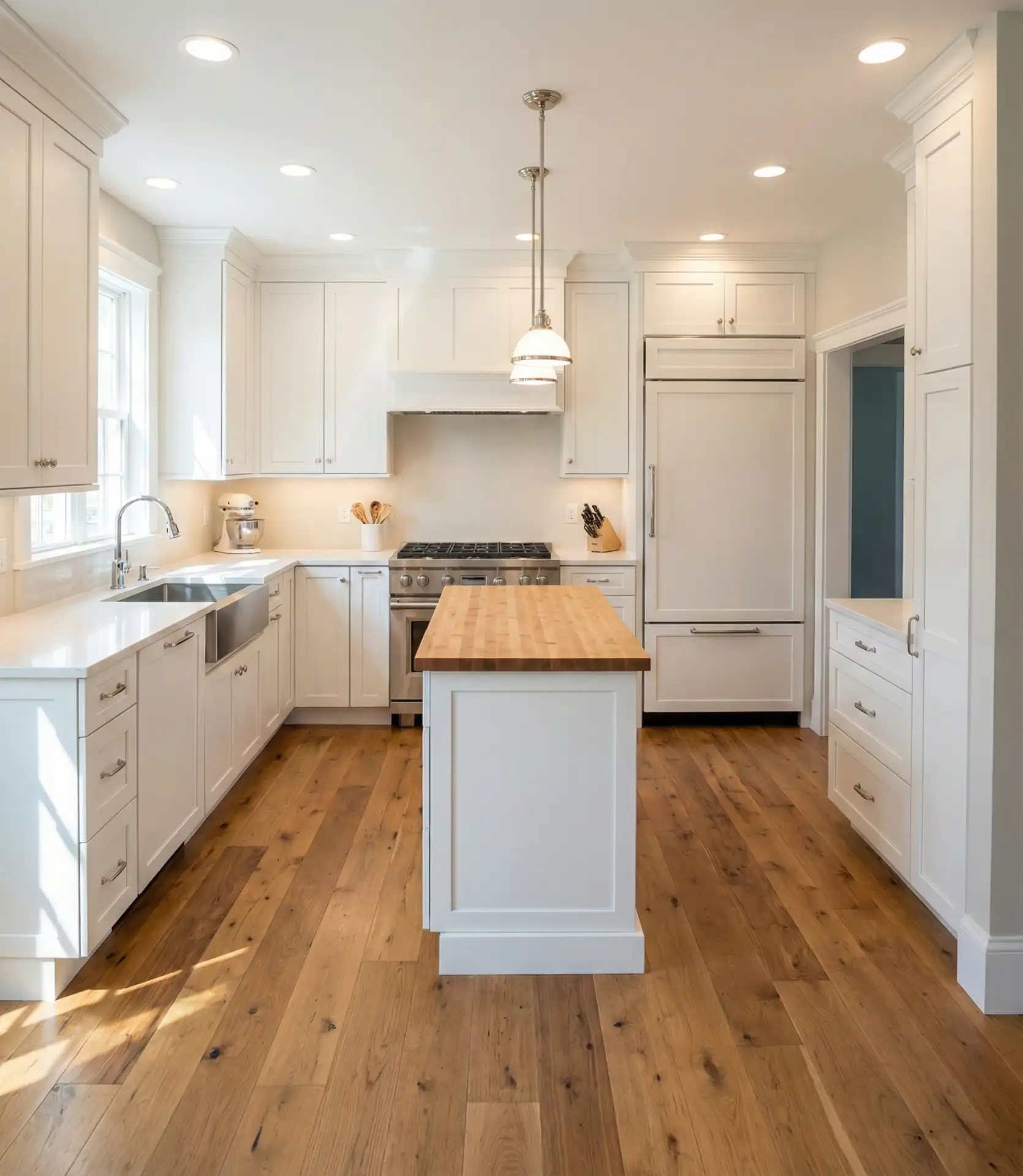
Efficient layout planning still relies on the work triangle—positioning the sink, stove, and refrigerator within a 15- to 22-foot perimeter to minimize steps during cooking. Modern 2025 kitchens adapt this principle to accommodate islands and open plans, sometimes using a work zone approach instead. The goal remains the same: reduce wasted motion and create intuitive flow, whether you’re cooking for one or hosting a crowd.
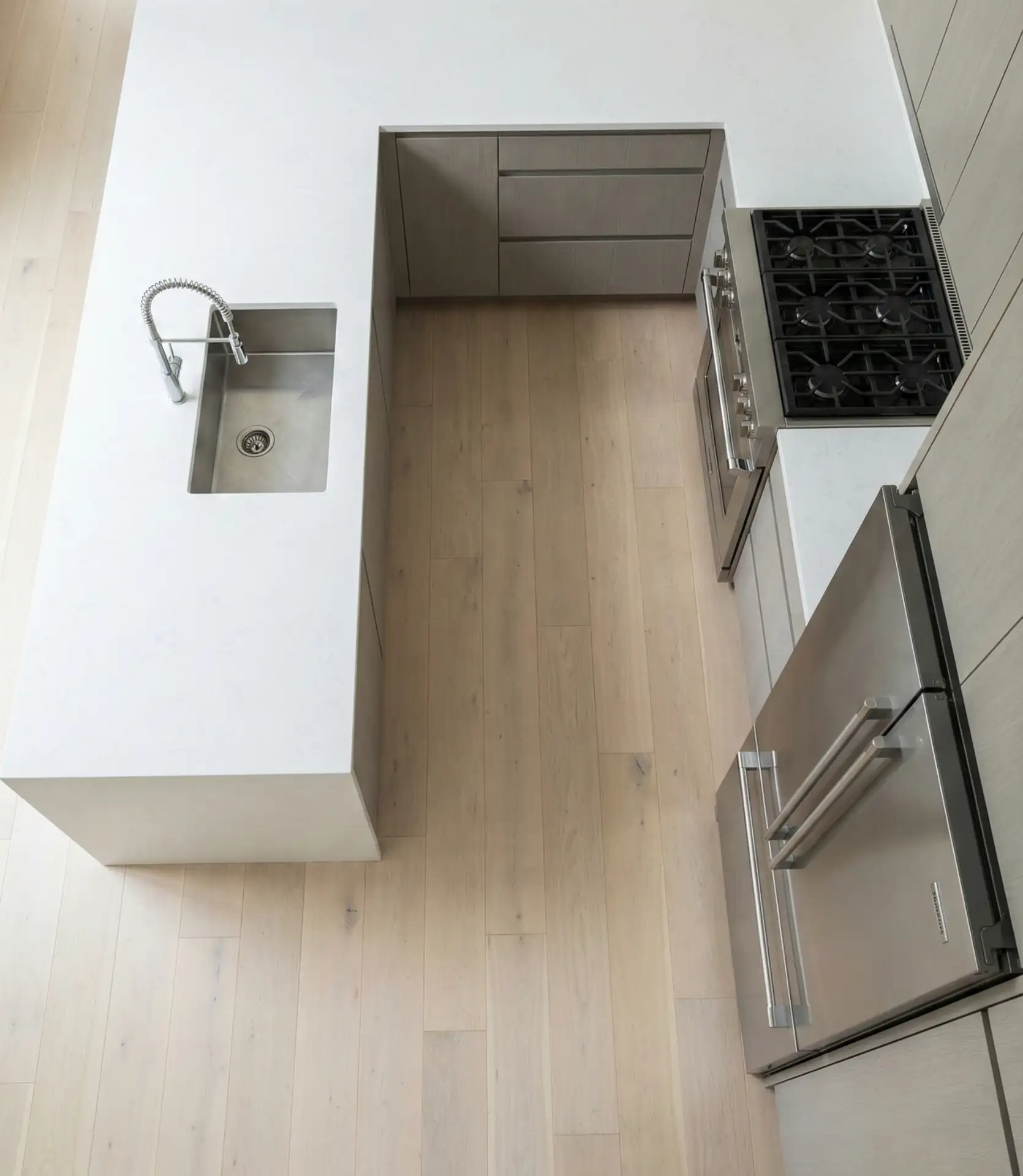
Expert-style commentary: while the triangle is a useful starting point, don’t let it dictate every decision. If you rarely use the oven, positioning it farther from the sink might free up prime real estate for a larger prep zone. The key is understanding your cooking habits and tailoring the layout accordingly. Many homeowners realize too late that they’ve optimized for an idealized cooking style rather than the one they actually practice.
21. Tiny Galley with Mirrored Backsplash
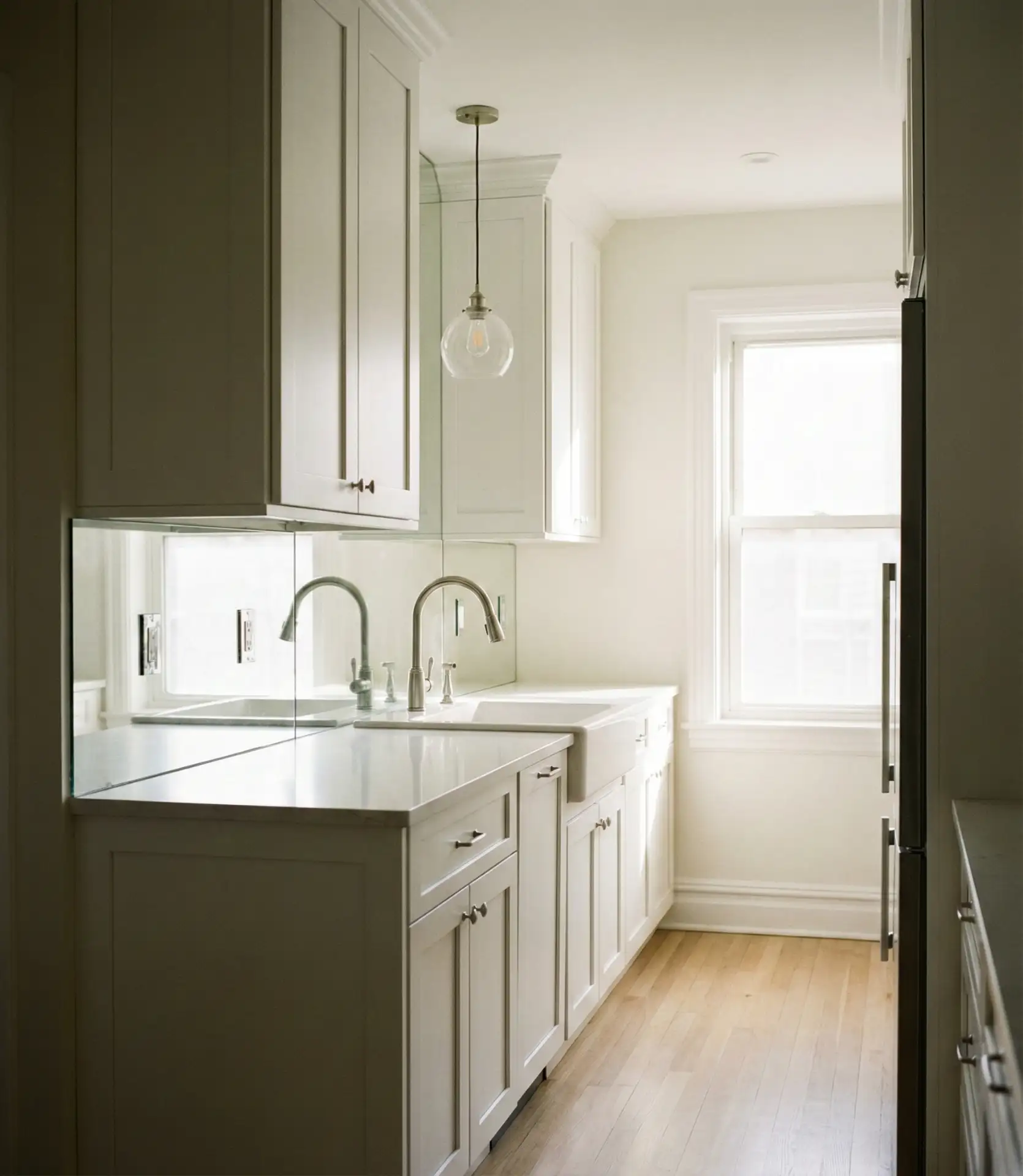
In tiny galley kitchens, a mirrored backsplash reflects light and visually doubles the space. The effect is dramatic—what feels like a corridor suddenly opens up, and task lighting bounces around the room. Pair the mirror with pale cabinetry and minimal upper storage to avoid blocking the reflection. Small spaces benefit from every trick that manipulates perception, and mirrors are among the most effective.
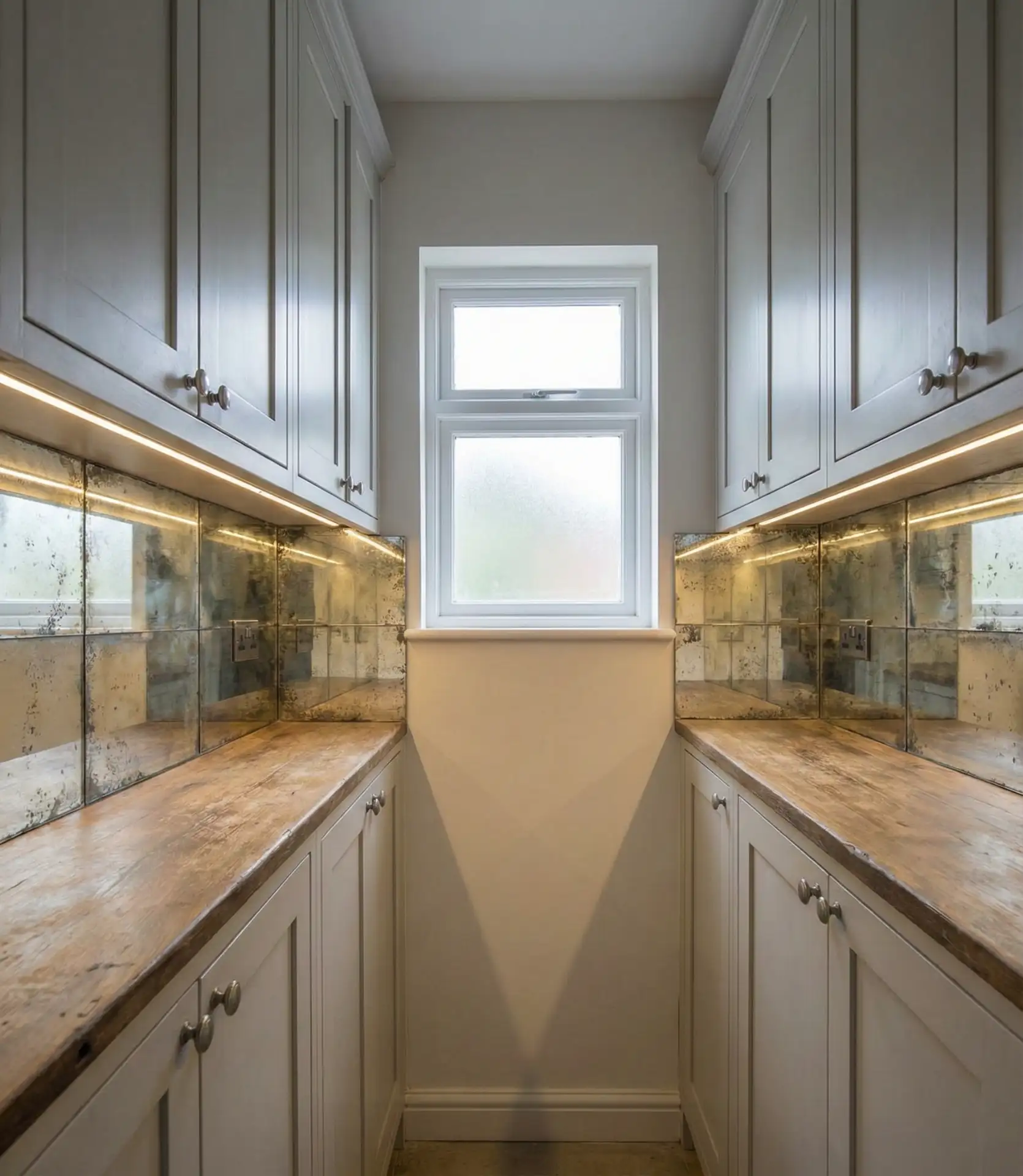
A common mistake is using mirrors everywhere—it becomes overwhelming and maintenance-intensive. Limit it to the backsplash between the counter and upper cabinets, where it amplifies light without creating a funhouse effect. Use an easy-clean glass cleaner and a microfiber cloth to keep it smudge-free. The result is a kitchen that appears twice its actual size, a transformative experience for urban apartments and tiny homes alike.
22. Home Chef’s Pantry with Walk-In Storage
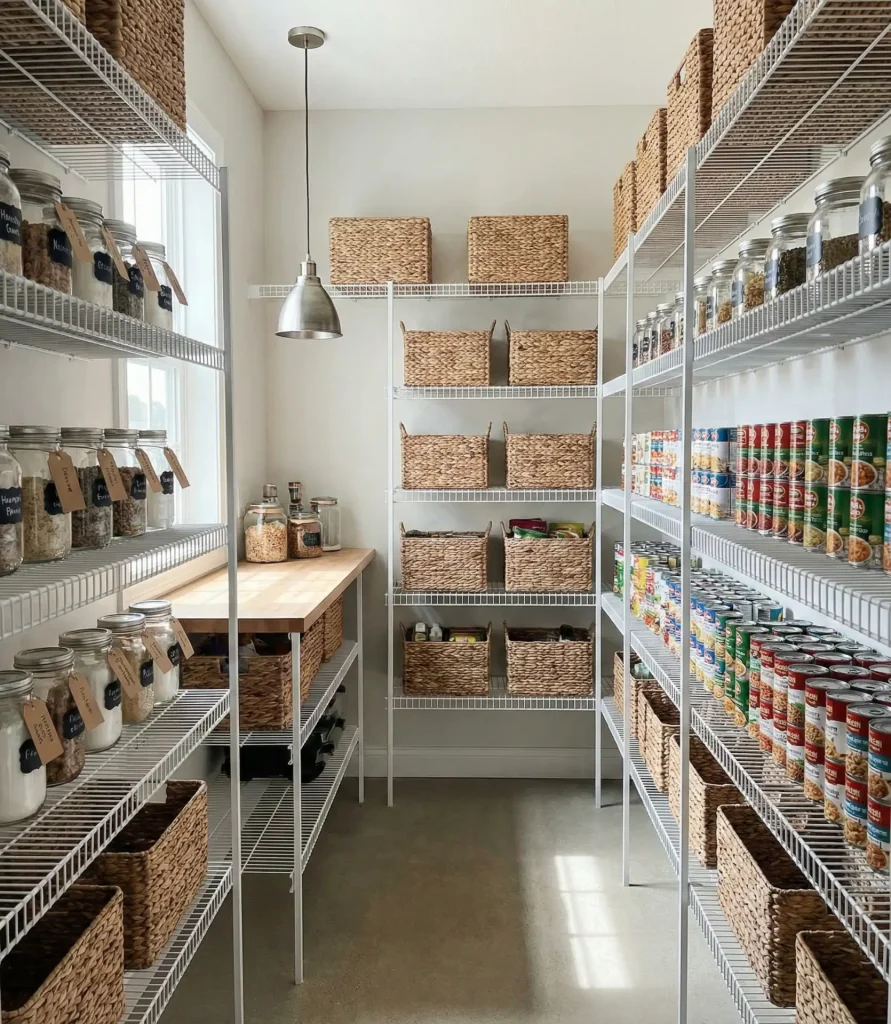
Serious home cooks invest in walk-in pantries that function as mini warehouses—floor-to-ceiling shelving, labeled baskets, and bulk storage for grains, canned goods, and baking supplies. Modular shelving systems adapt to changing needs, and a countertop or butcher block inside the pantry provides extra prep space. Good lighting and ventilation prevent moisture buildup, and clear containers let you see inventory at a glance.
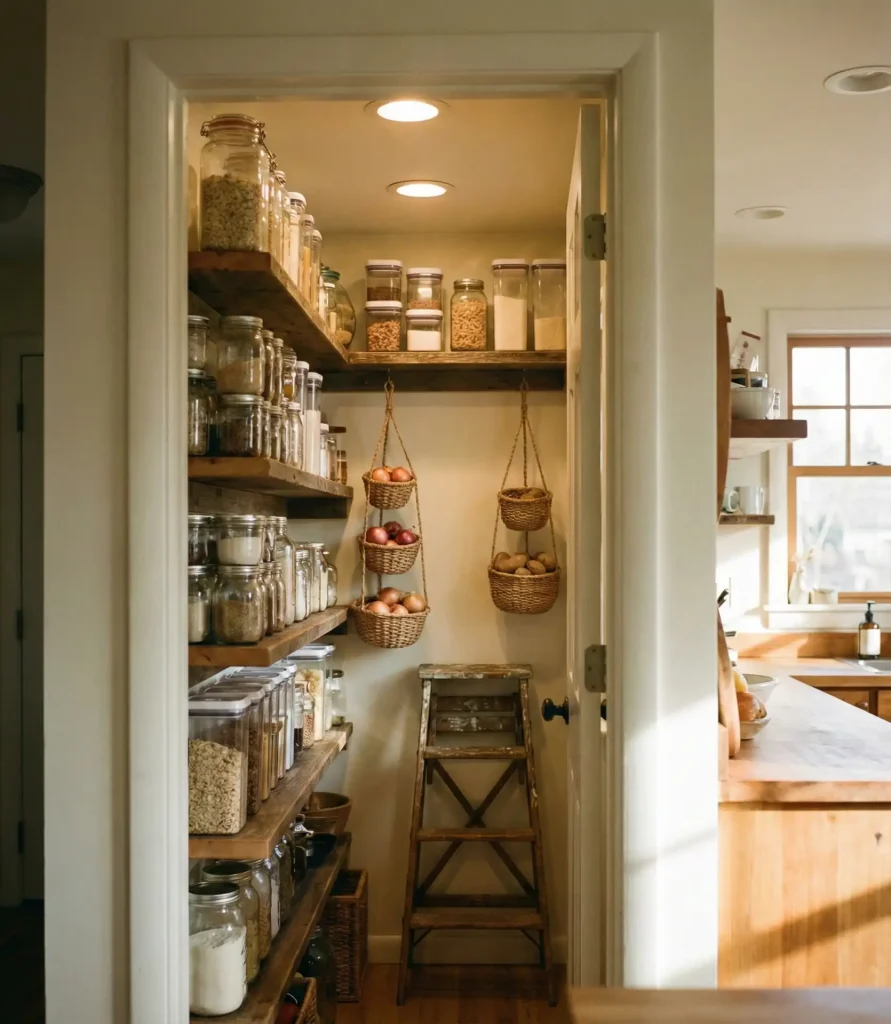
Regional context: in the Midwest and South, walk-in pantries are common in newer builds, while coastal urban homes often lack the square footage. Budget angle—if you don’t have a dedicated room, convert a reach-in closet with adjustable shelving and a lighting upgrade for under $500. Real homeowner behavior: many people overbuy at warehouse stores, so a well-organized pantry prevents duplication and waste, ultimately saving money.
23. White and Wood Warmth in Open Concept
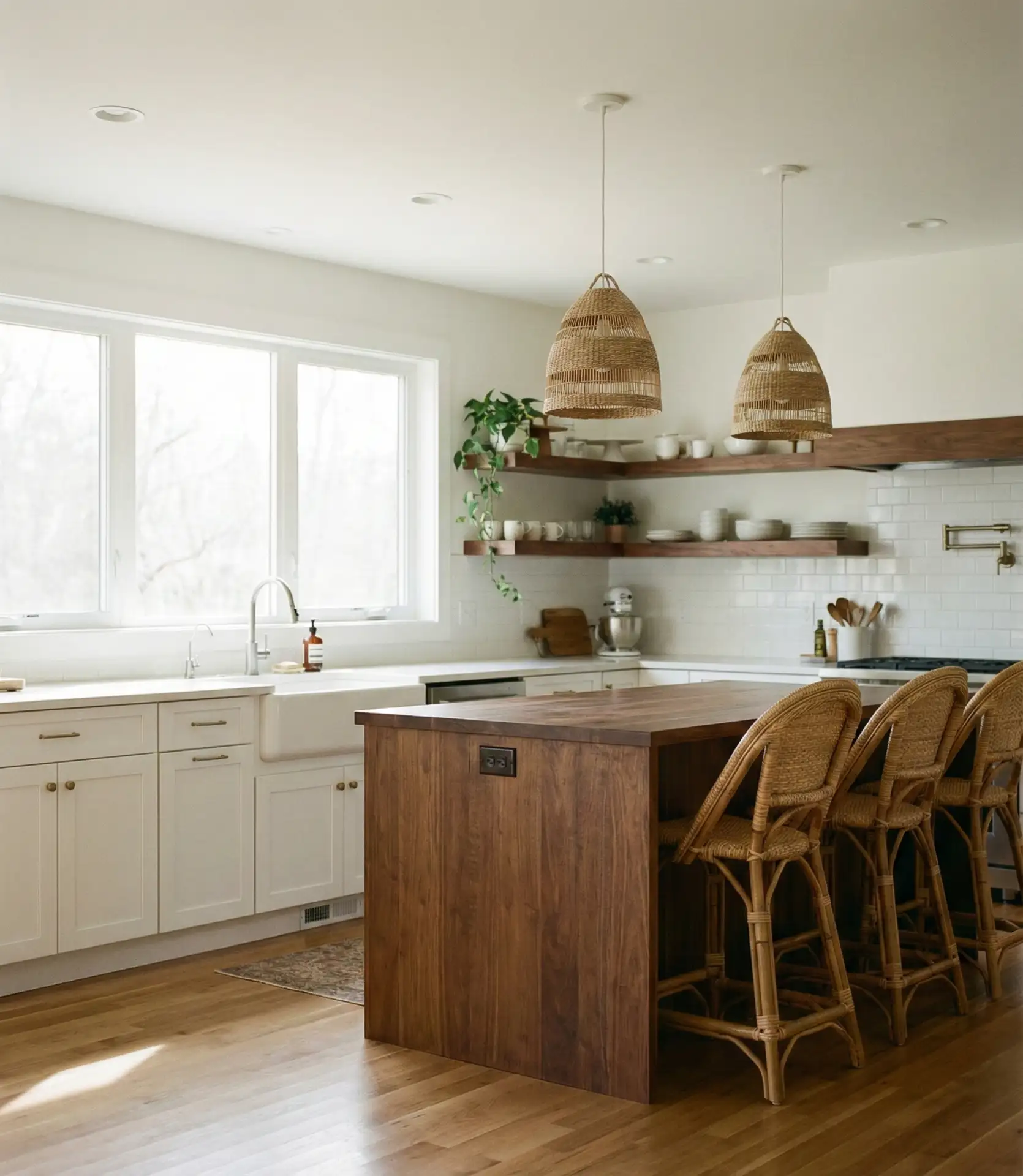
White cabinetry paired with warm wood tones—oak, walnut, or teak—creates a balanced, inviting aesthetic in open-concept homes. The white keeps the space bright and modern, while wood adds texture and prevents coldness. Contemporary designers layer in natural elements—linen stools, woven pendants, greenery—to soften the look further. Homeowners seeking a fresh look without the sterility of all-white décor find this combination appealing.
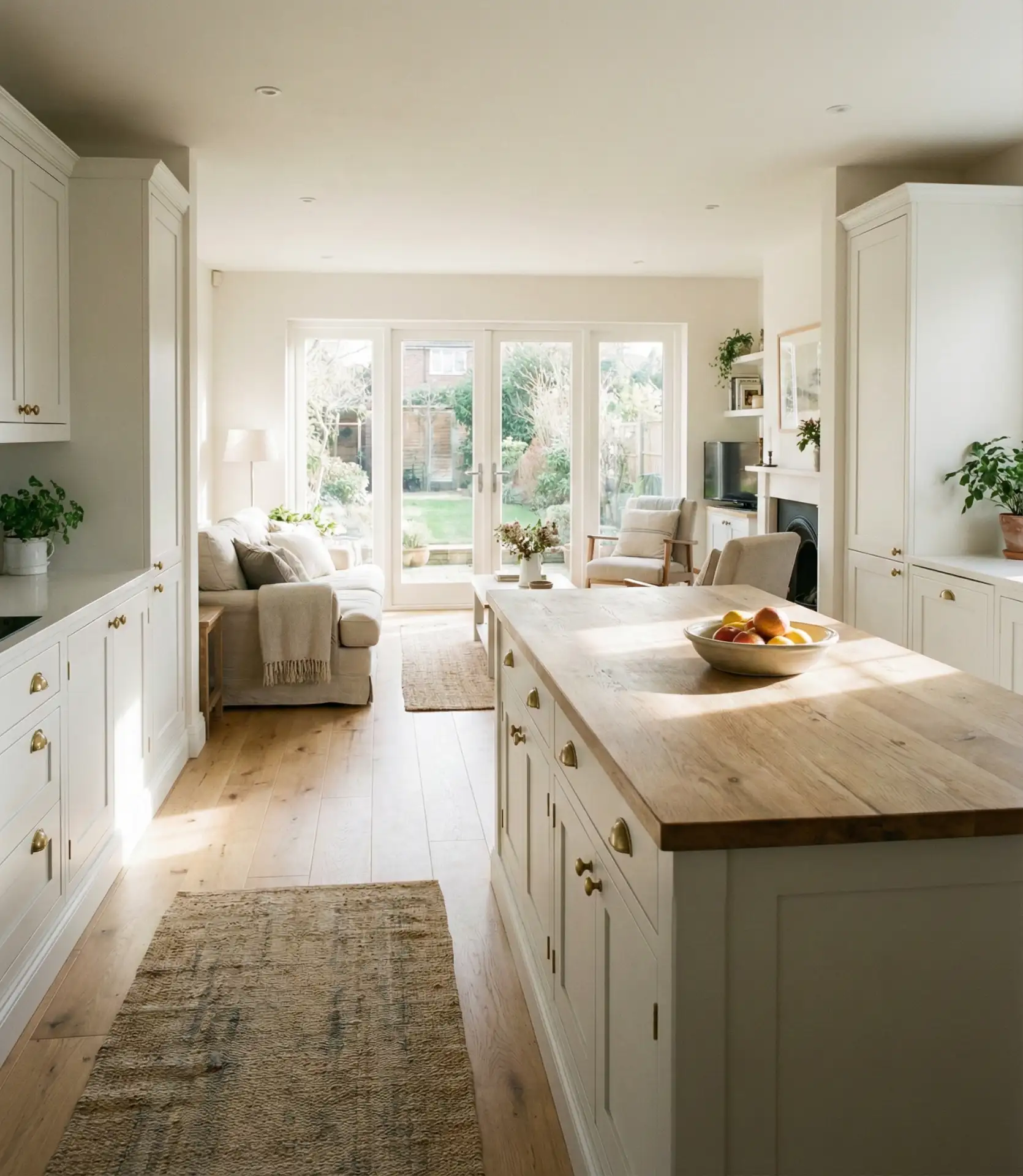
Practical insight: choose wood tones that complement your flooring—if you have cool-toned gray floors, opt for walnut or darker woods; if your floors are honey oak, lighter woods like ash or maple work better. A designer in Denver mentioned that mismatched wood tones are the fastest way to make a space feel disjointed. Keep it simple: pick one wood species and one white shade, then repeat them throughout the kitchen and adjacent living areas.
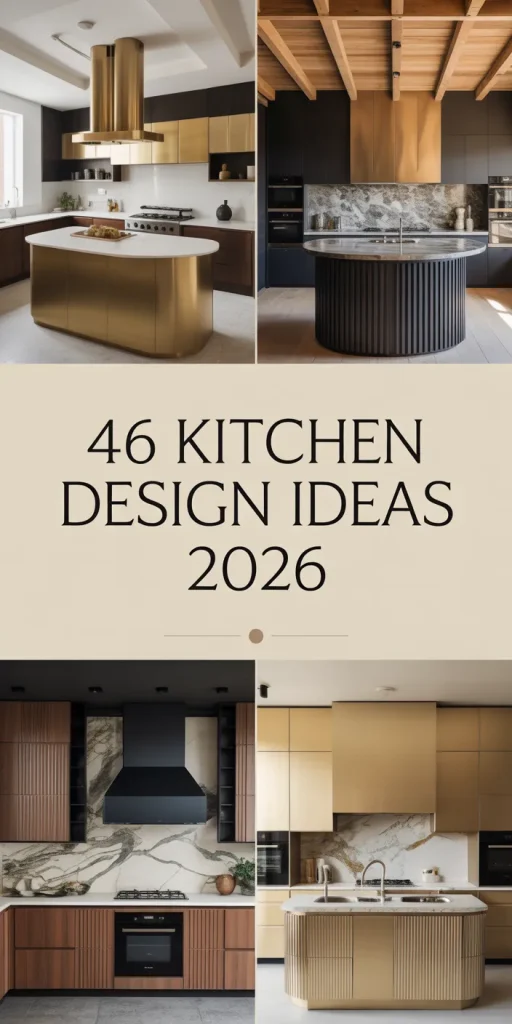
From galley efficiency to luxury double islands, these kitchen design ideas for 2026 offer inspiration for every style, budget, and square footage. Whether you’re drawn to the clean lines of Scandinavian minimalism, the texture-rich warmth of organic modern, or the industrial edge of exposed brick and steel, there’s a path forward that honors your home’s architecture and your cooking habits. Share your favorite concept in the comments—we’d love to hear which idea you’re planning to bring into your space this year.